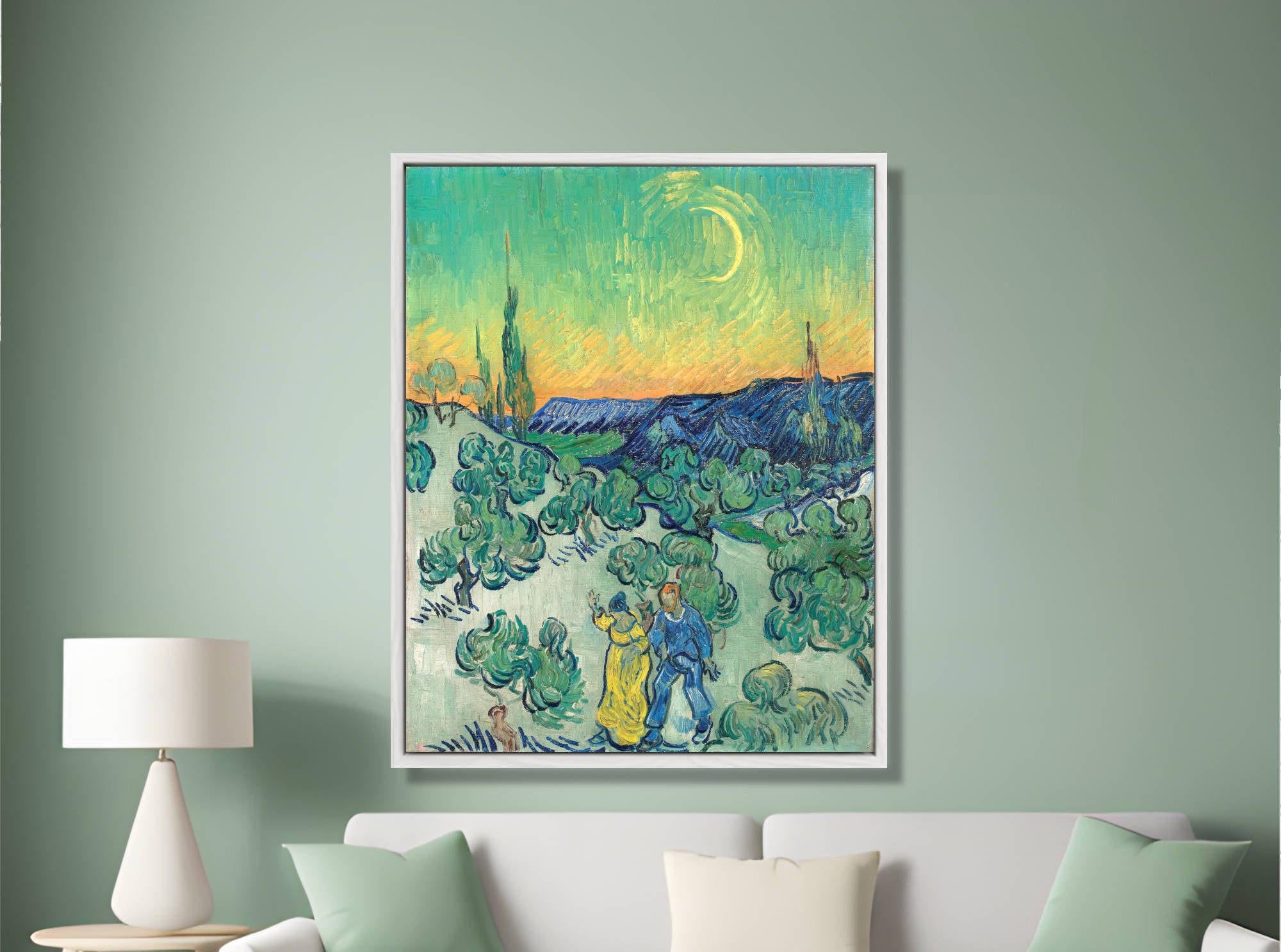
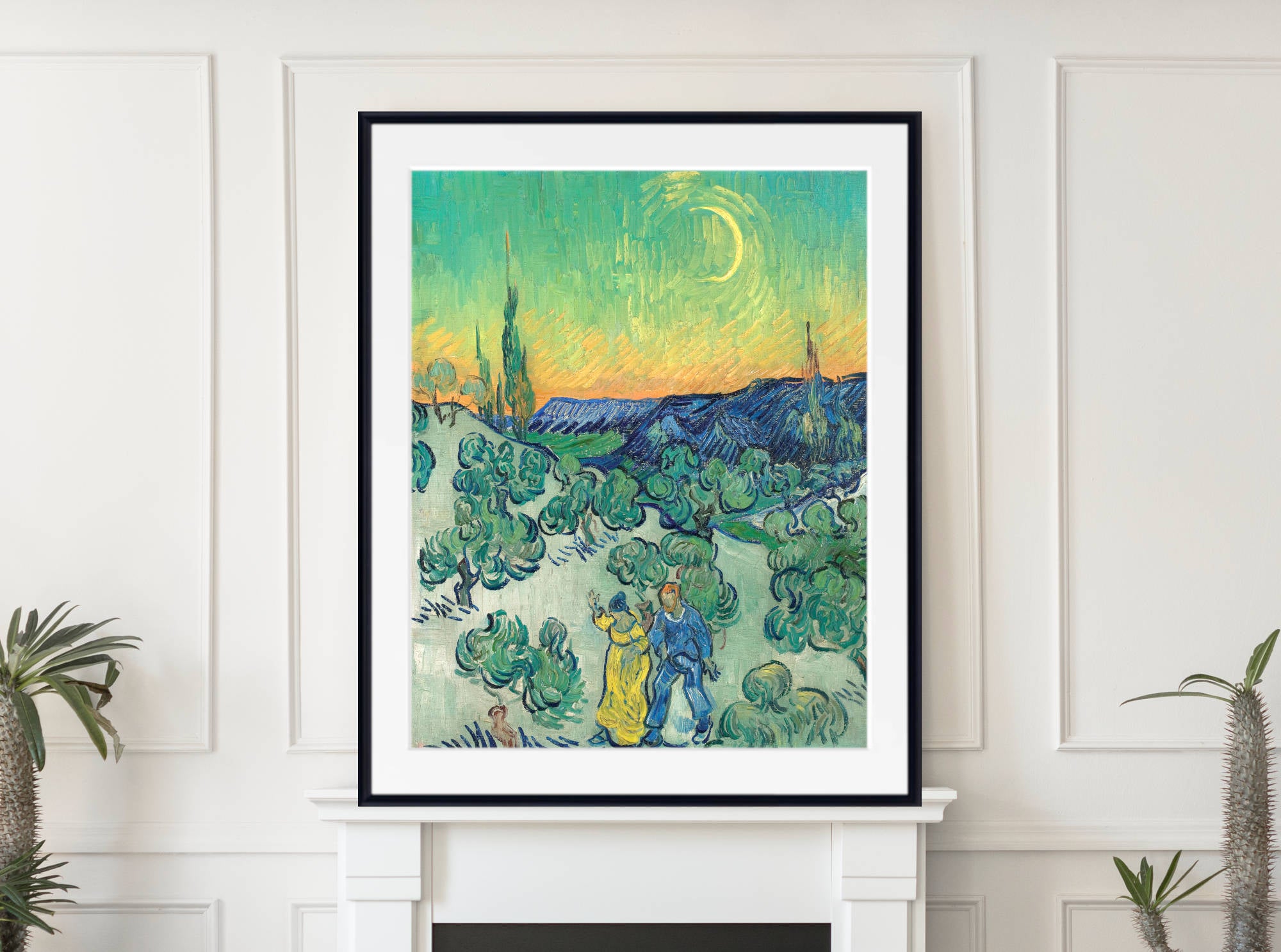
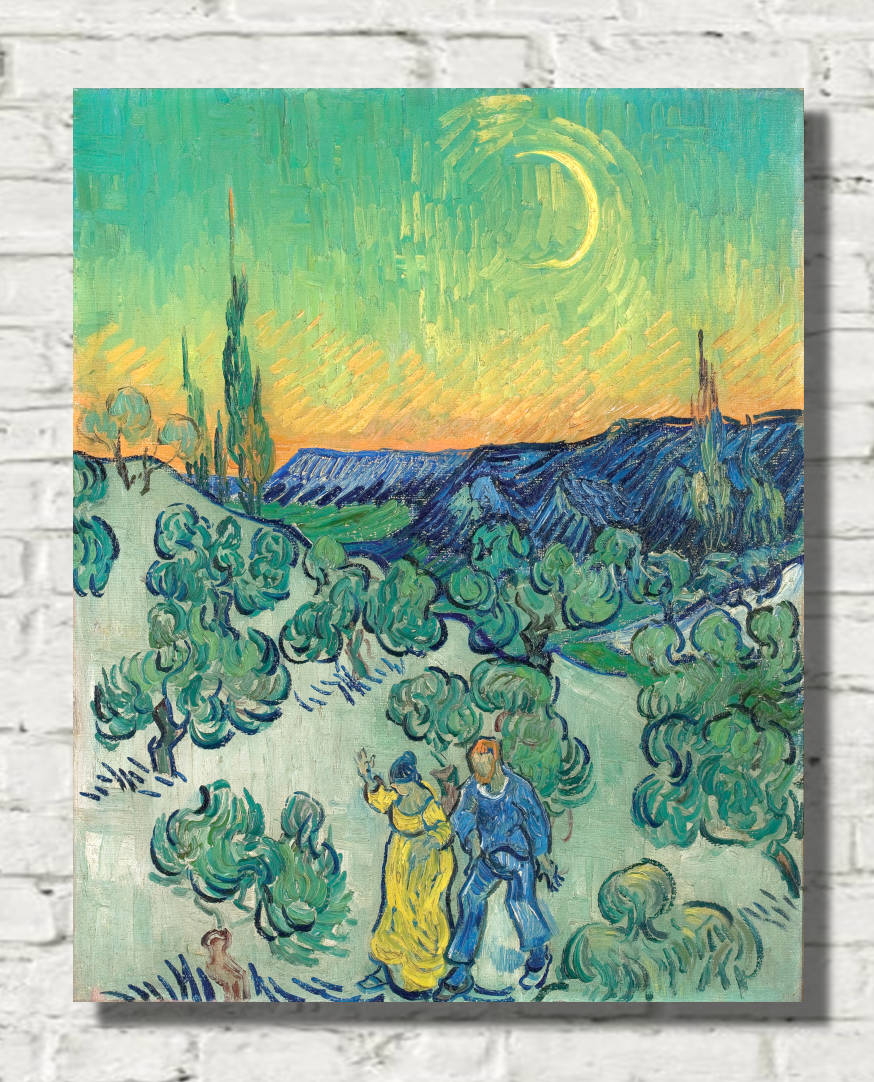
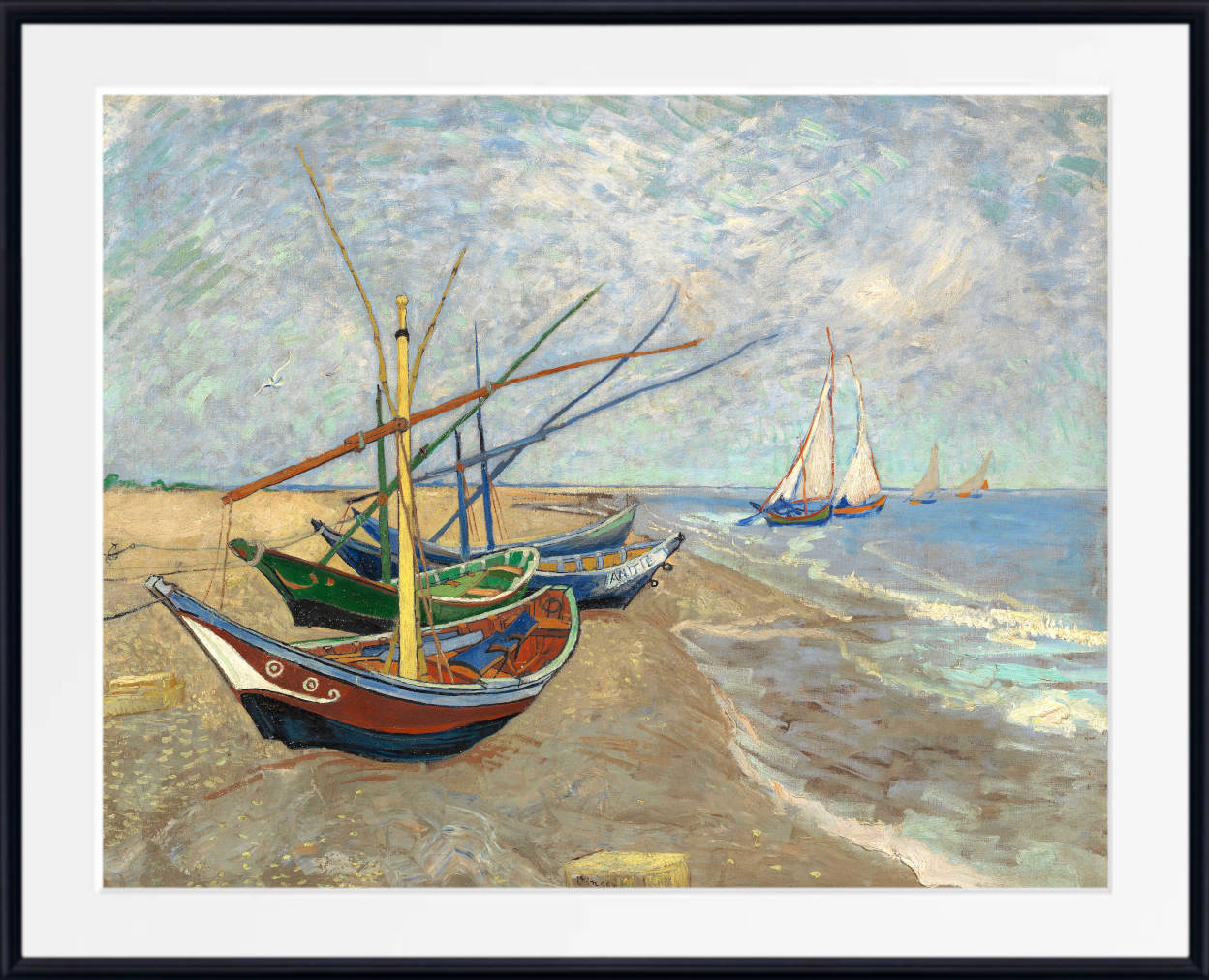
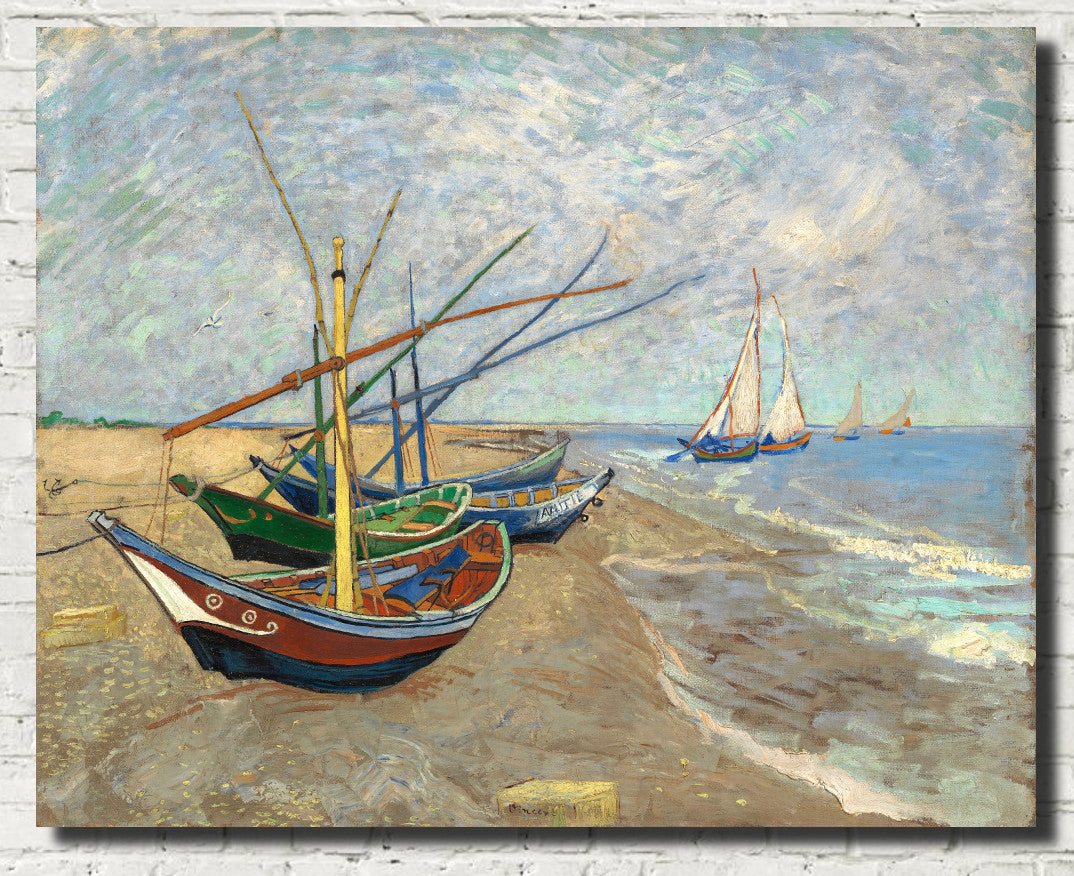
Vincent van Gogh Prints: Colour, Landscape and Expression
Vincent van Gogh (1853–1890) created one of the most immediately recognisable bodies of work in modern art. Across landscapes, portraits, flowers, still lifes and scenes of everyday life, he developed a visual language in which colour, brushwork and rhythm became powerful means of expression.
Van Gogh’s mature paintings are particularly admired for their physical surfaces and energetic marks. Trees twist, stars appear to pulse, fields move beneath changing skies and flowers become intensely coloured arrangements of shape and texture. His paintings remain rooted in observation, yet the world he depicts is transformed through his highly individual response to colour and form.
GalleryThane’s Vincent van Gogh collection brings together works from different stages of his career, from his earlier Dutch paintings and Paris experiments to the brilliant landscapes of Arles, Saint-Rémy and Auvers-sur-Oise.
Vincent van Gogh and Post-Impressionism
Van Gogh is one of the artists most closely associated with Post-Impressionism, the broad development in late nineteenth-century art that followed Impressionism and opened new possibilities for colour, structure and personal expression.
Although Van Gogh learned from Impressionist painters and their interest in modern colour, he increasingly pushed beyond the direct observation of changing light. Colour could be intensified, brushwork made more visible and natural forms simplified or exaggerated to communicate a particular atmosphere or emotional response.
His approach was very different from those of fellow Post-Impressionists such as Cézanne, Gauguin and Seurat. That individuality is one reason the term Post-Impressionism covers such a diverse range of painting rather than one single unified style.
From the Netherlands to Paris
Van Gogh’s earliest paintings were considerably darker than the colourful works for which he is now best known. In the Netherlands he concentrated on rural labourers, domestic interiors and landscapes, often using deep browns, greens and earth tones.
His move to Paris in 1886 brought him into direct contact with contemporary French painting. He encountered Impressionism, Neo-Impressionism and Japanese prints, and his palette became substantially brighter.
During this period Van Gogh experimented with complementary colour, broken brushwork and increasingly simplified forms. These developments prepared the way for the extraordinary transformation of his painting after he moved south to Provence.
Arles and the Colours of Provence
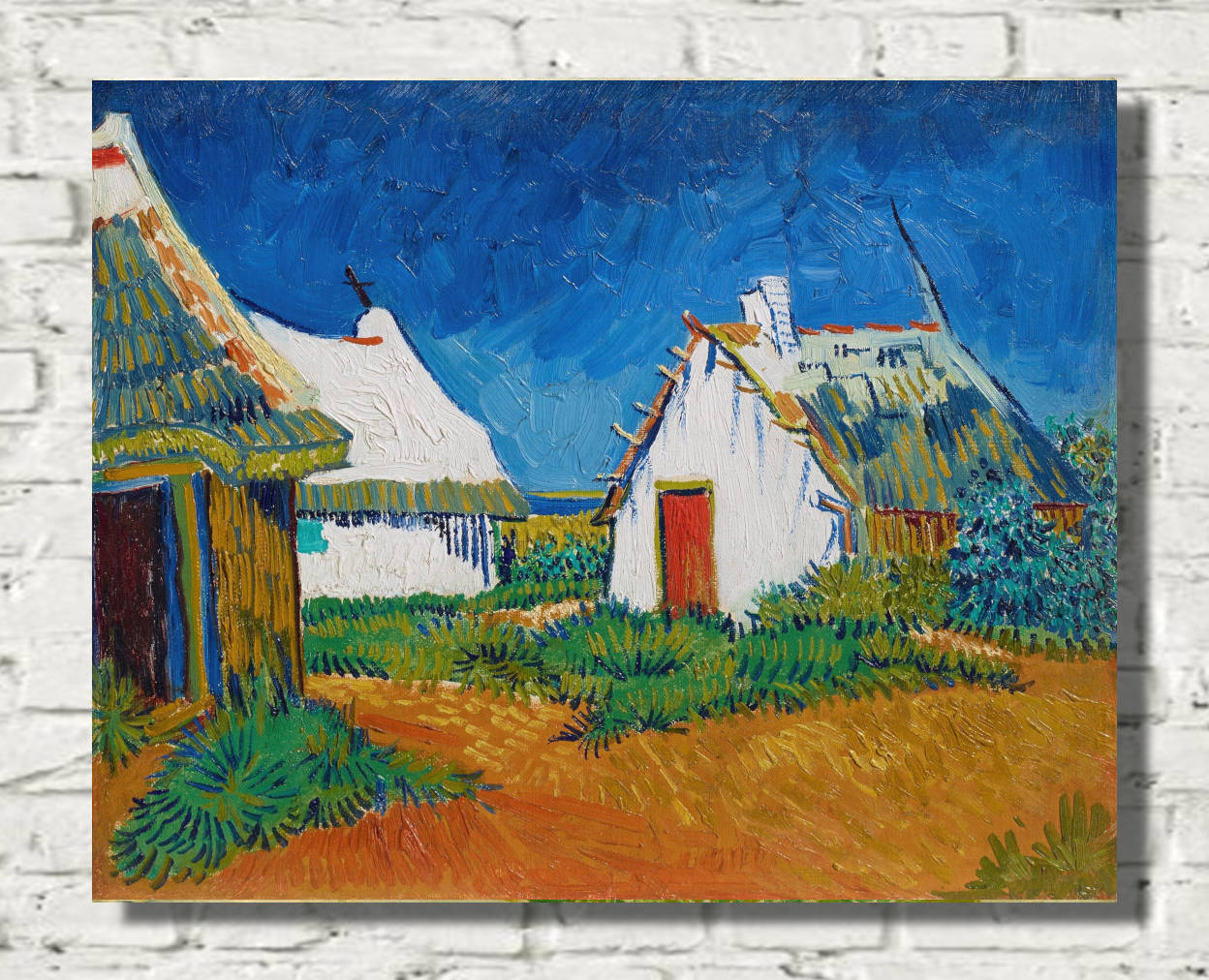
Van Gogh arrived in Arles in February 1888. The intense light, orchards, wheat fields and brilliant colours of southern France provided the setting for one of the most productive periods of his career.
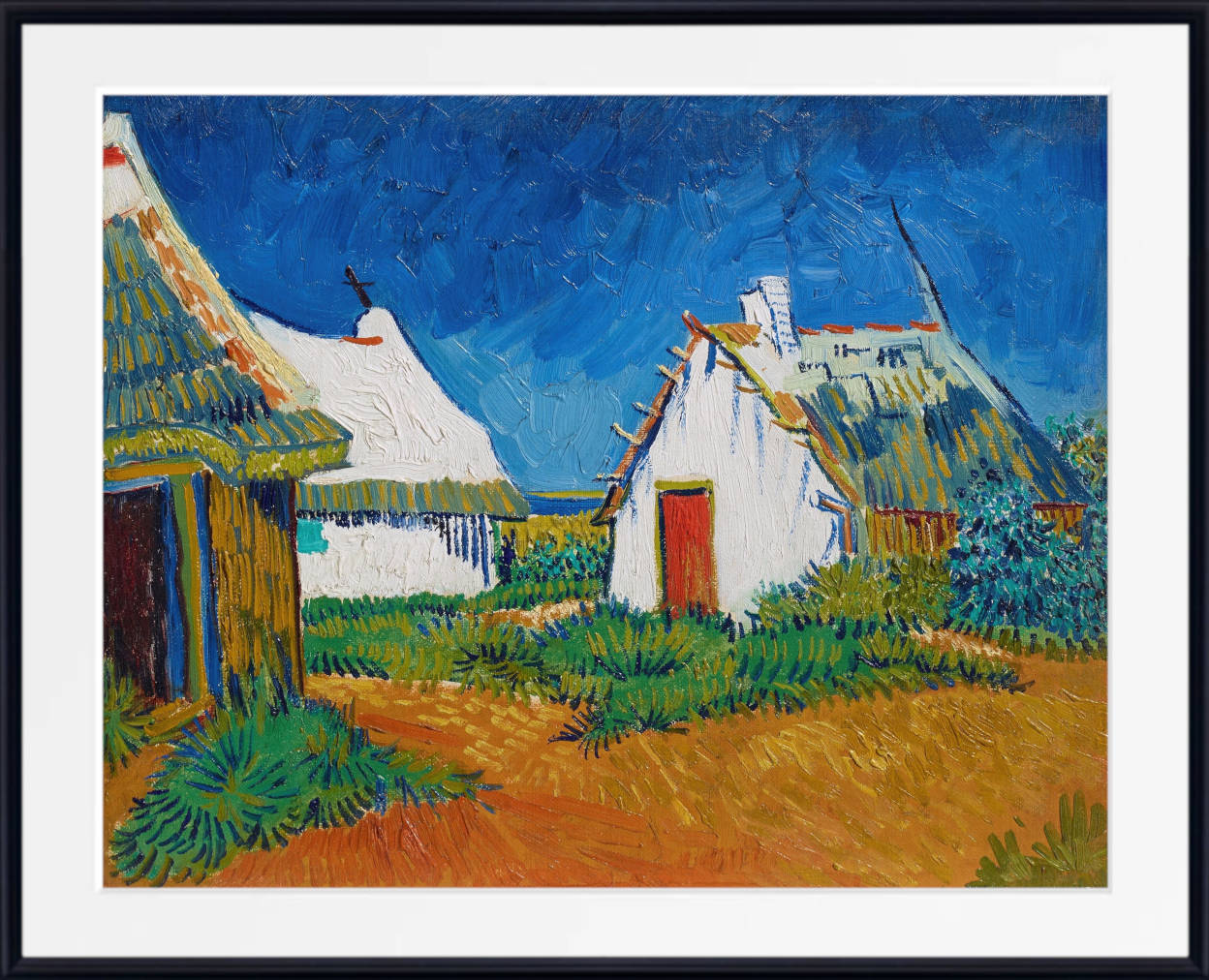
Yellow became particularly important: sunflowers, fields, houses and furniture could be set against intense blues, greens and violets. Van Gogh frequently used complementary colours to strengthen one another rather than attempting to reproduce the landscape through restrained naturalistic tones.
Arles also encouraged him to work repeatedly with groups of related subjects. Flowering fruit trees occupied him during spring, wheat and harvest landscapes during summer, while portraits, cafés and night scenes explored very different aspects of life in the town.
Van Gogh’s Flowering Orchards
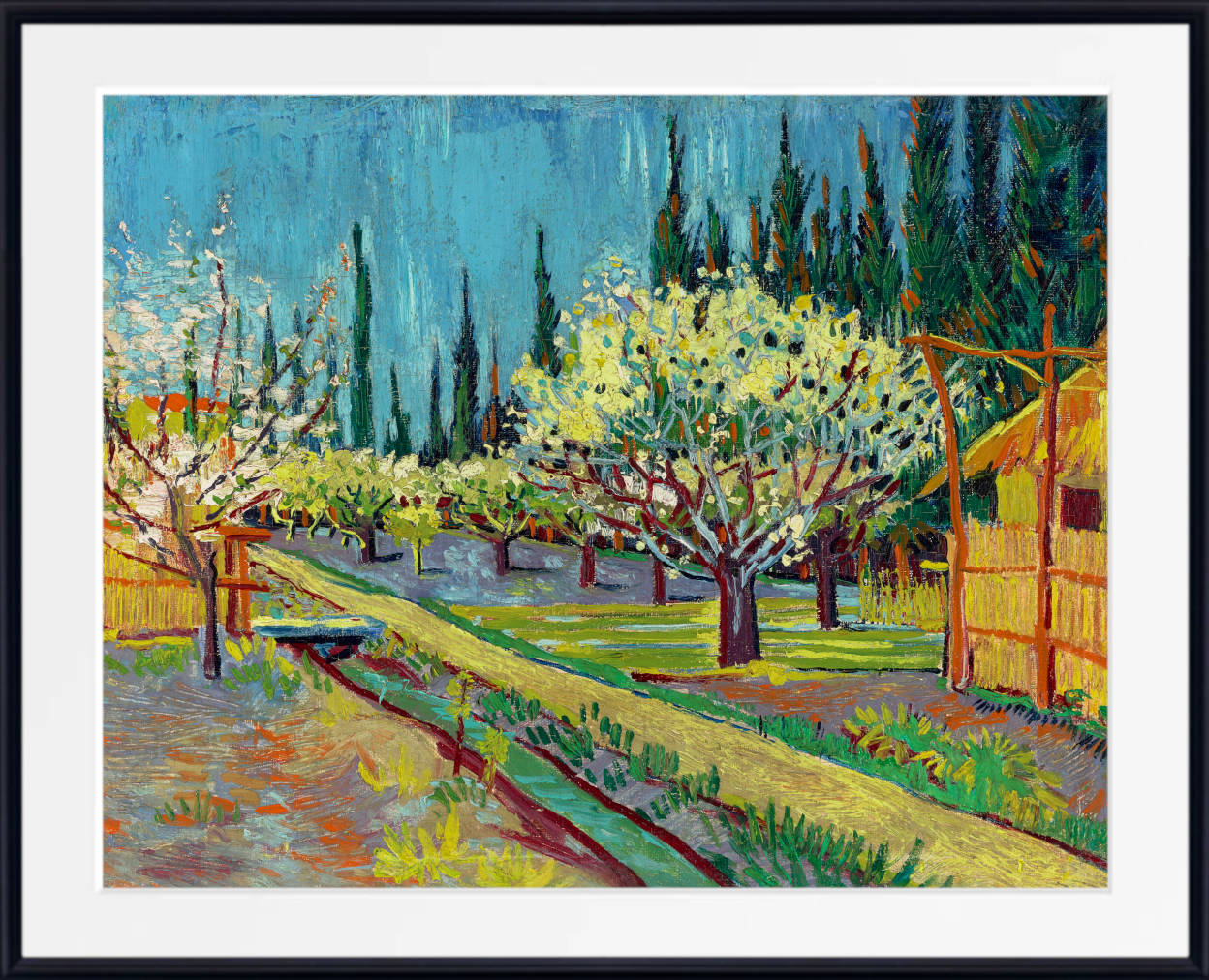
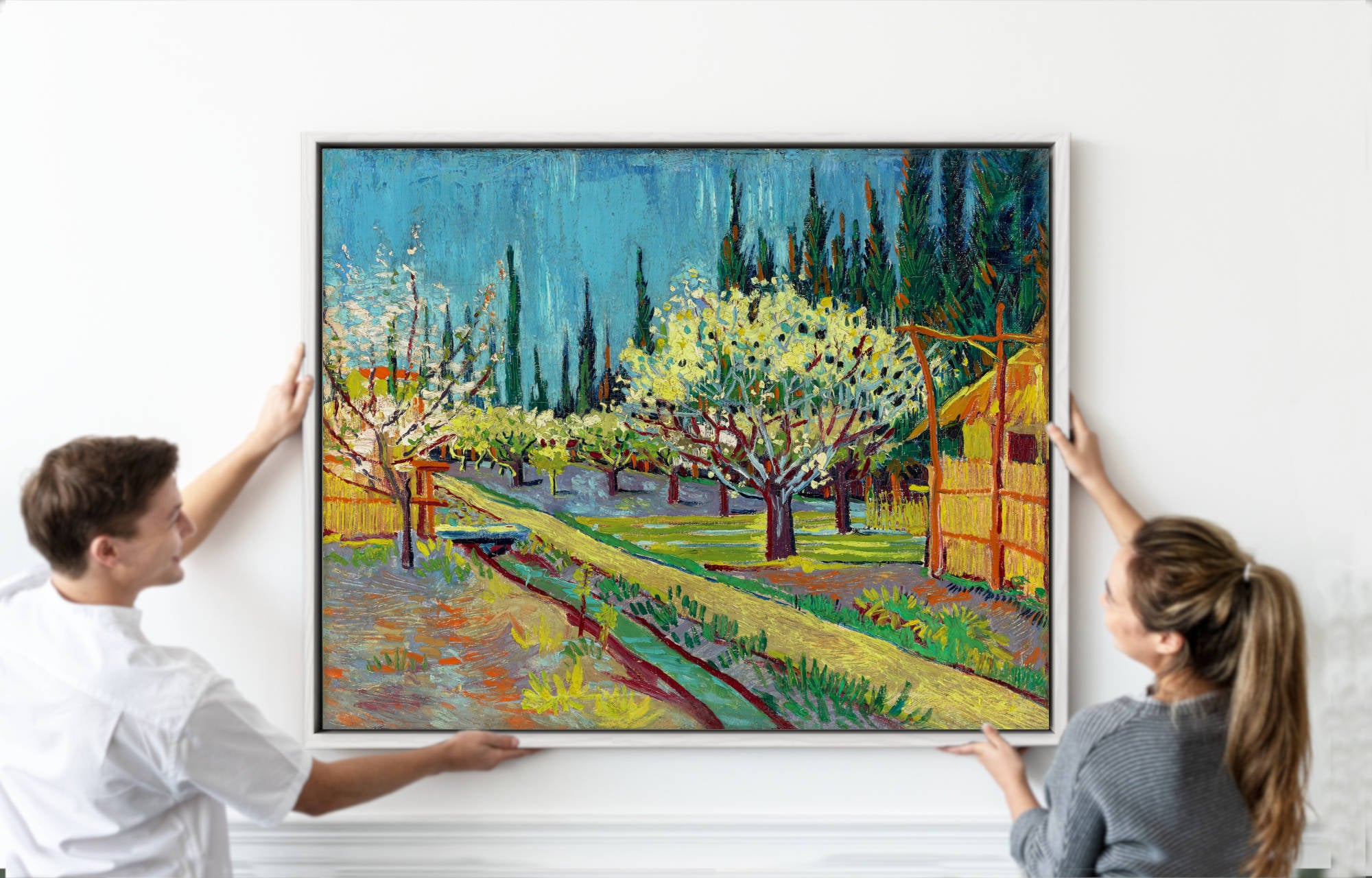
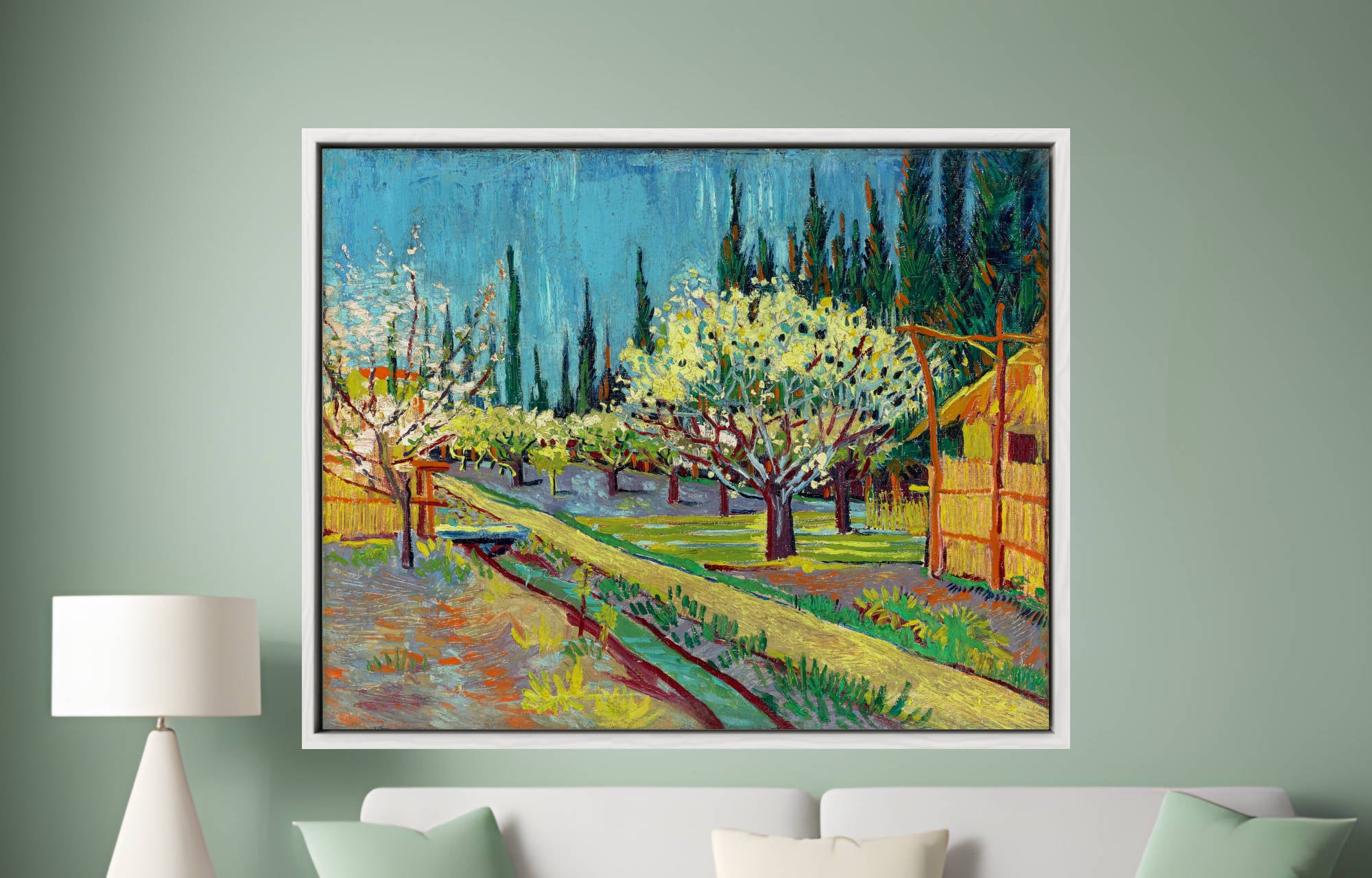
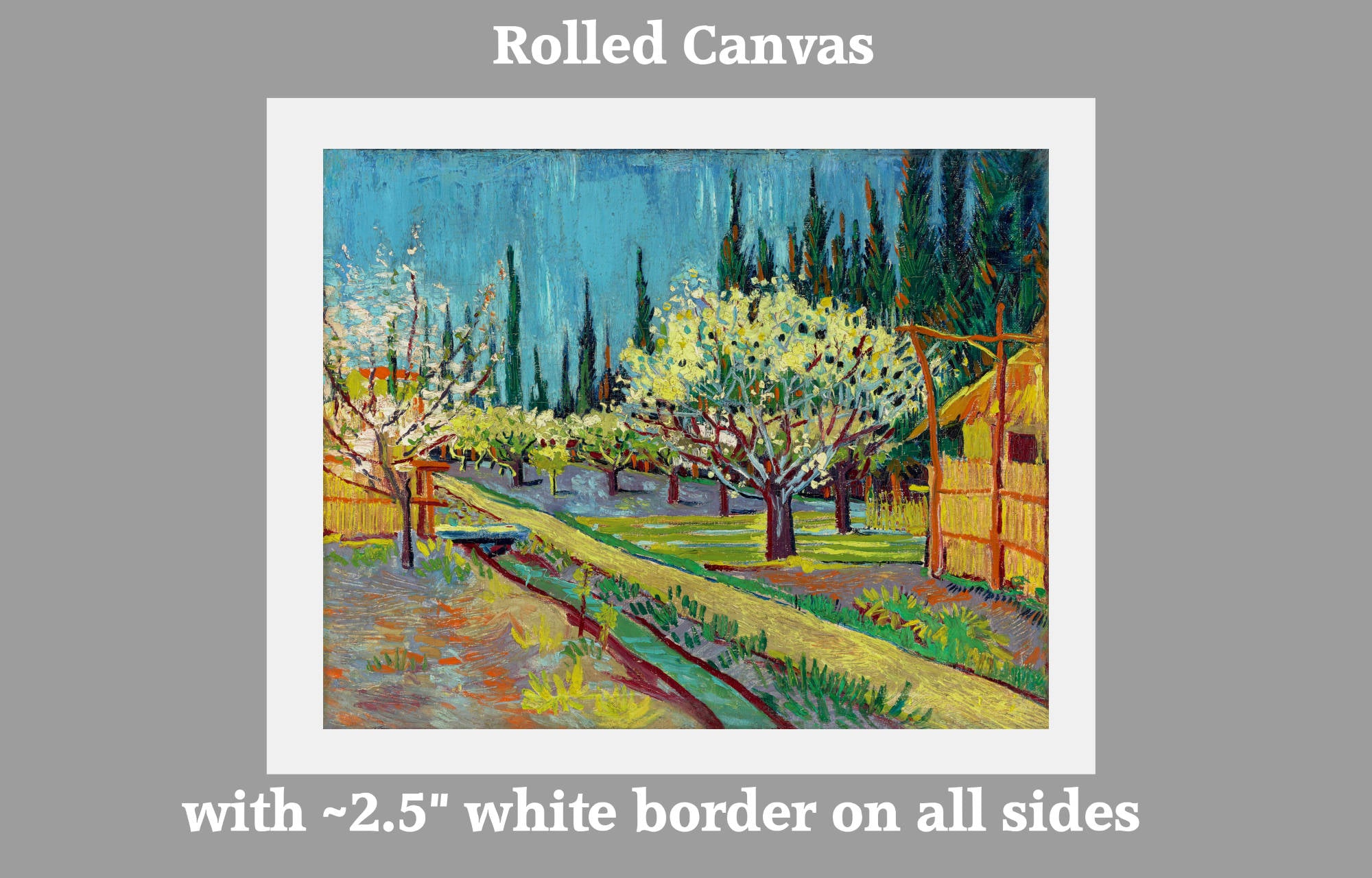
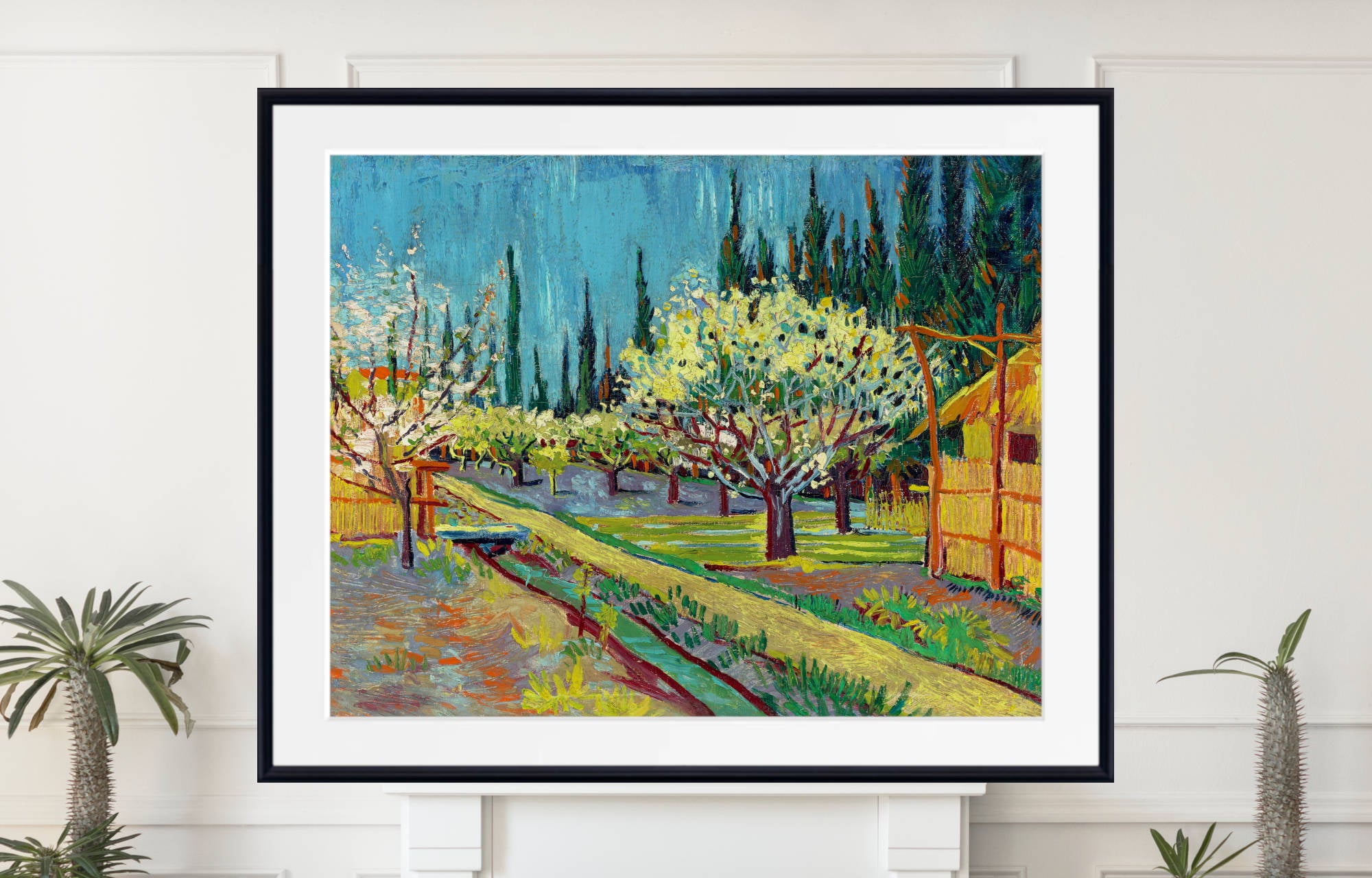
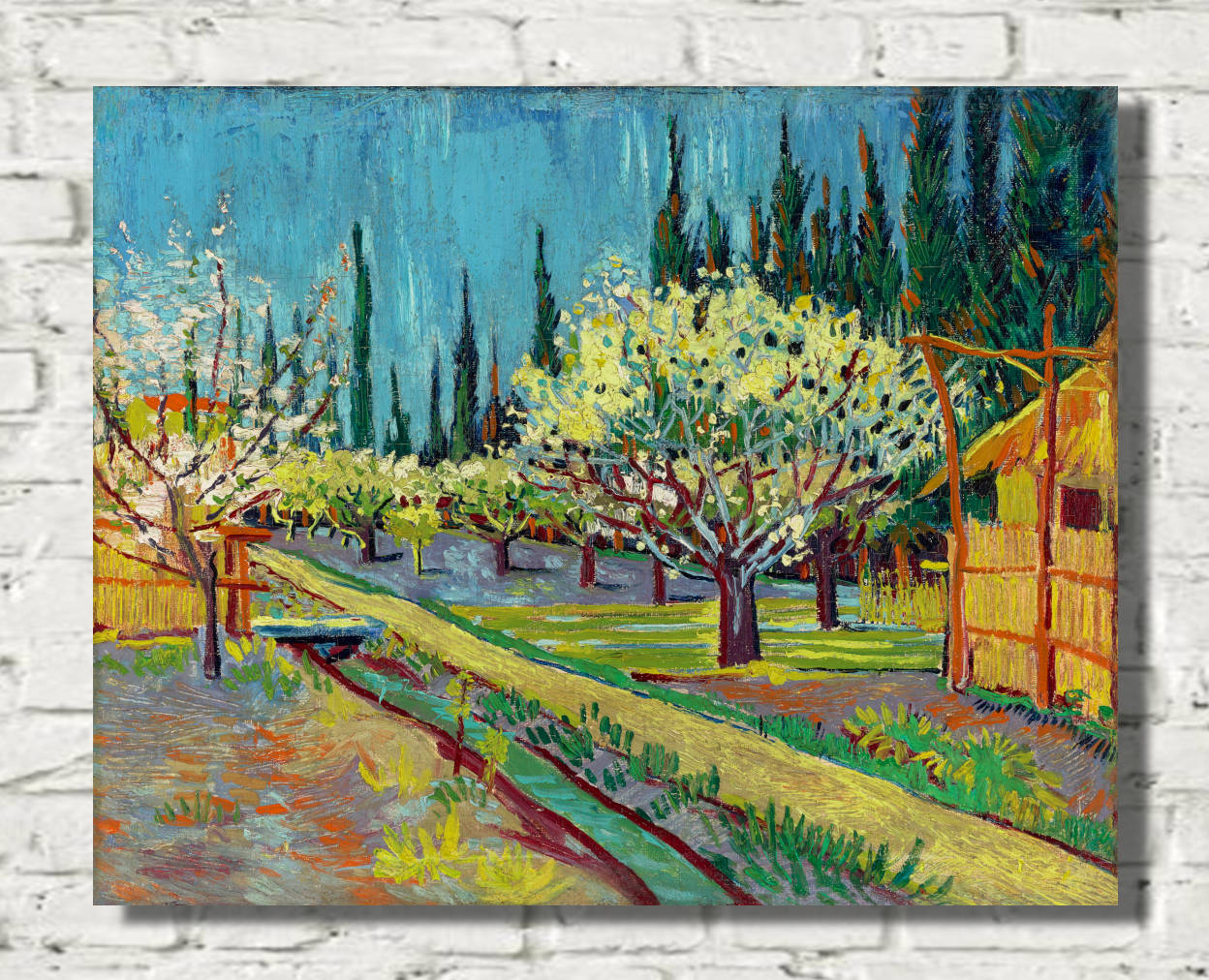
During the spring of 1888 Van Gogh became fascinated by the orchards surrounding Arles as peach, pear, apricot and other fruit trees came into blossom.
The paintings often combine delicate blossom with strong blue skies, fresh green vegetation and carefully organised tree trunks. Their lighter palette and sense of renewal make them markedly different from many of Van Gogh’s later Saint-Rémy landscapes.
Explore the dedicated Vincent van Gogh Flowering Orchards Prints collection to see works including orchard landscapes, blossom-covered fruit trees and related Provençal scenes.
Wheat Fields and Harvest Landscapes
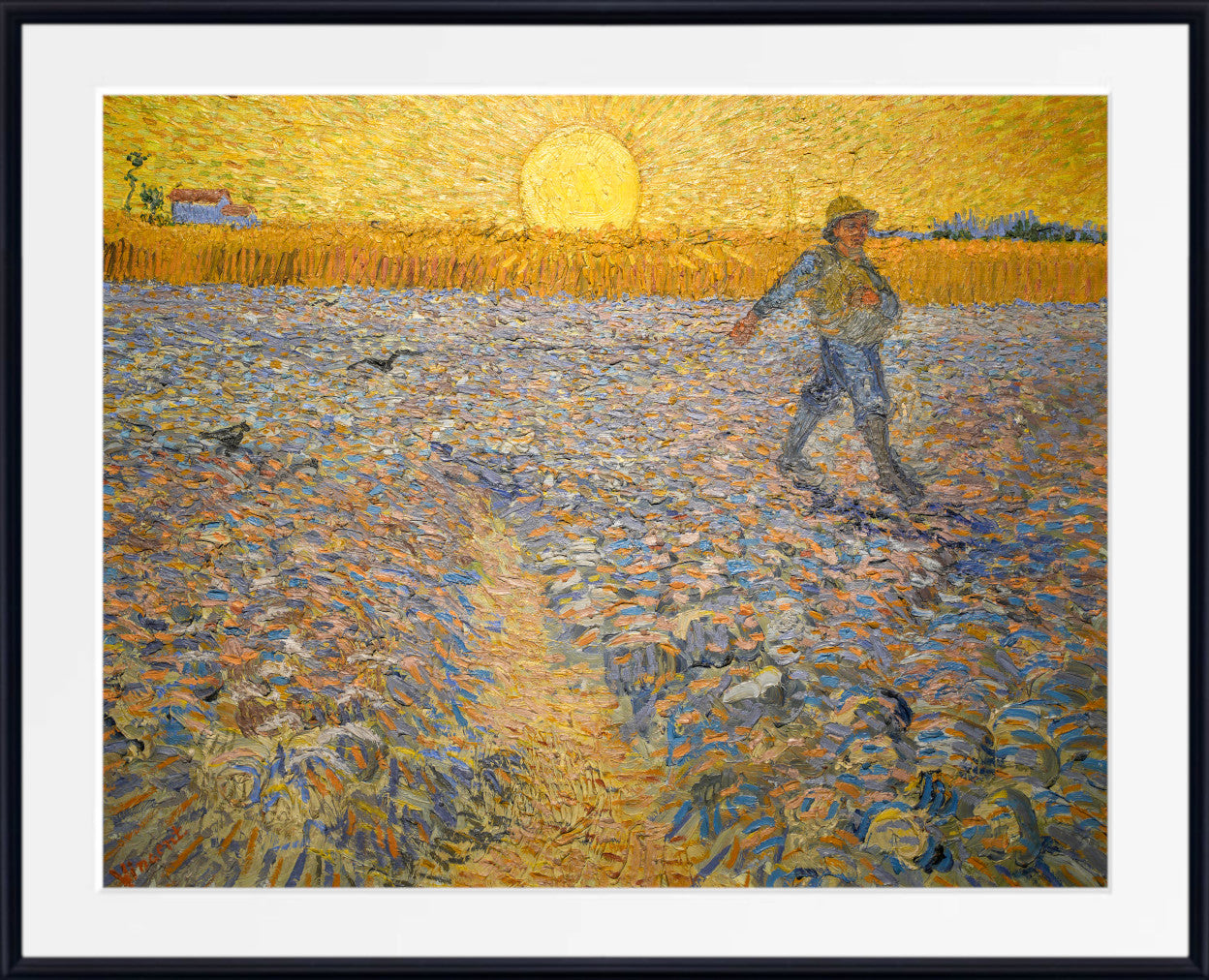
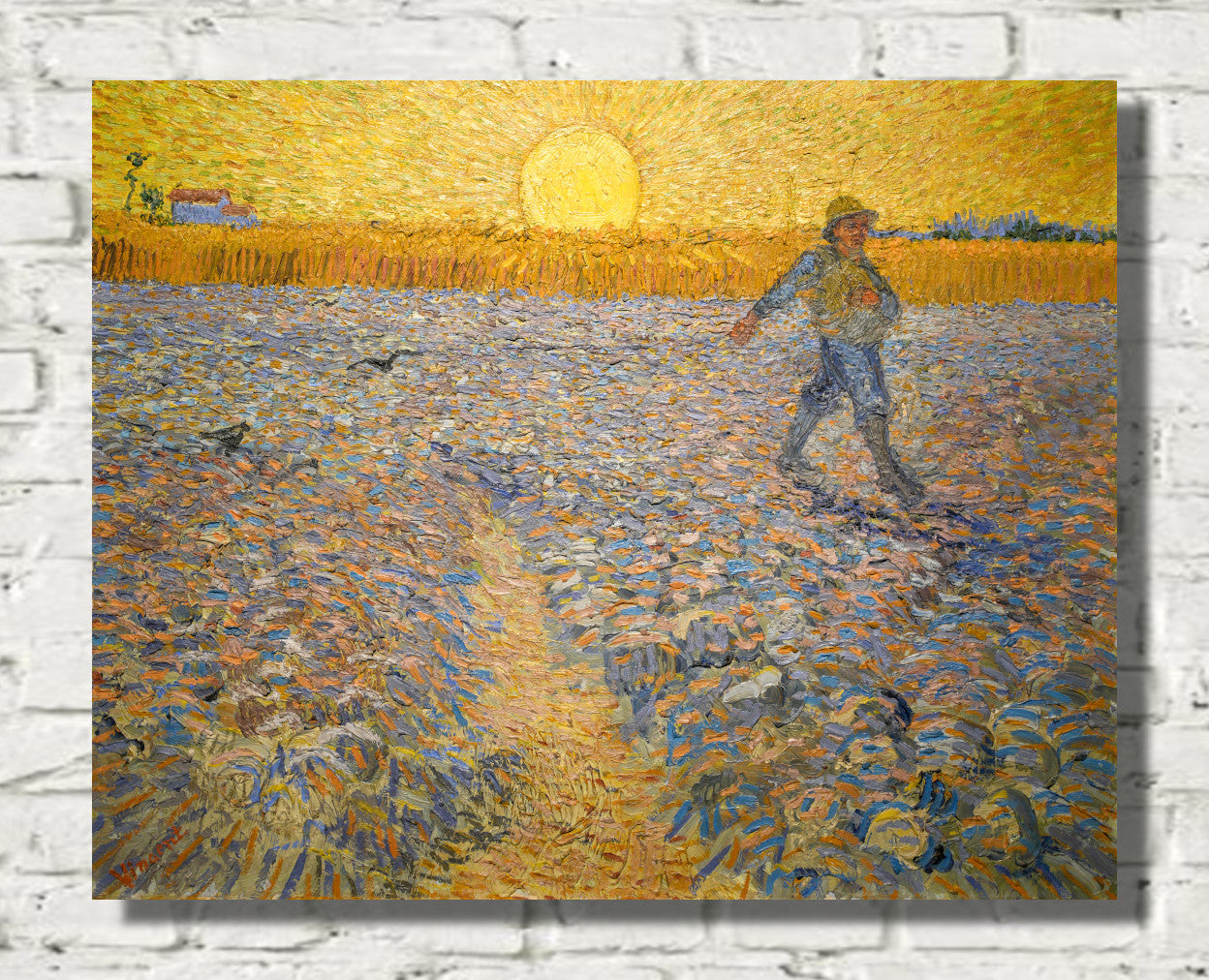
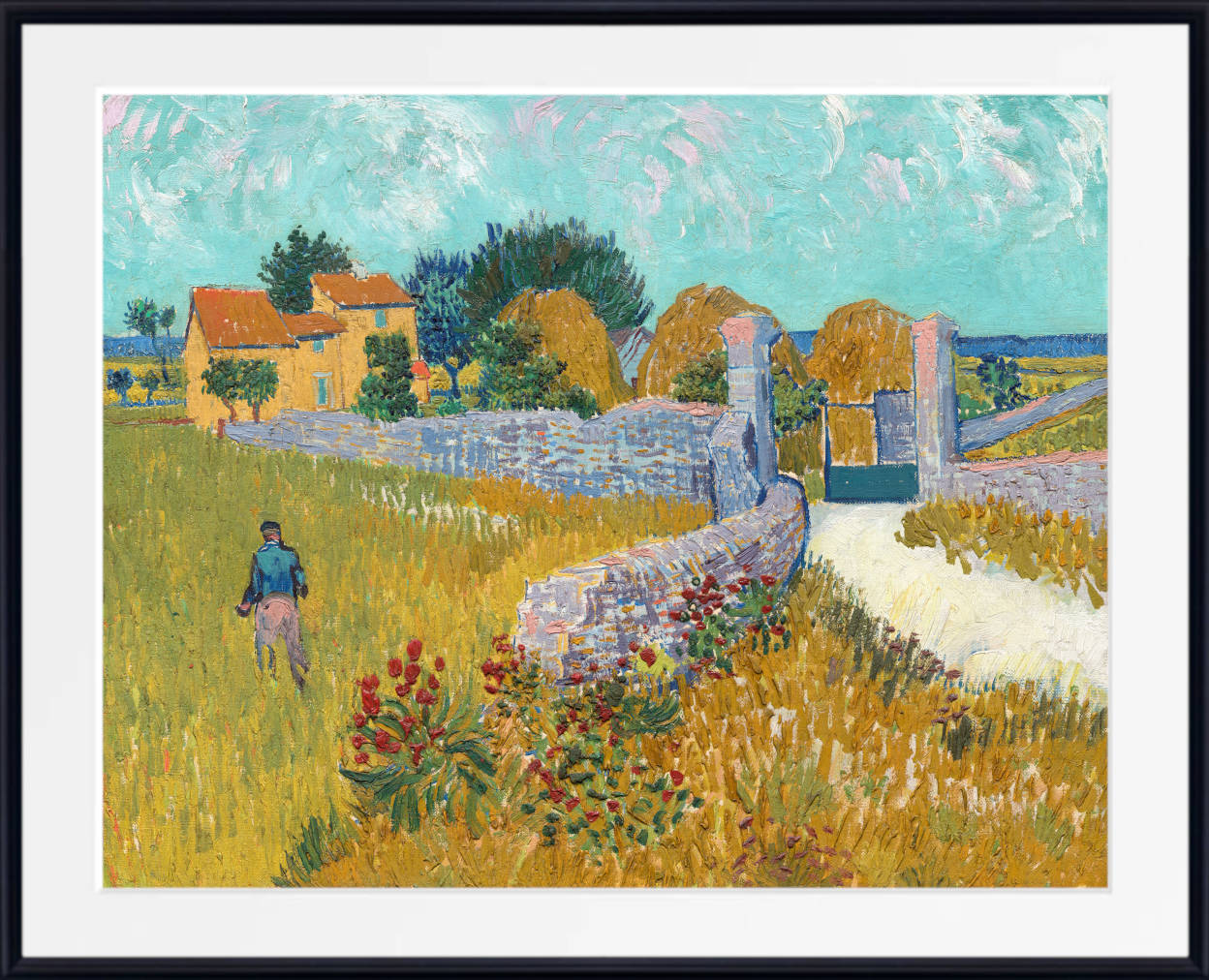
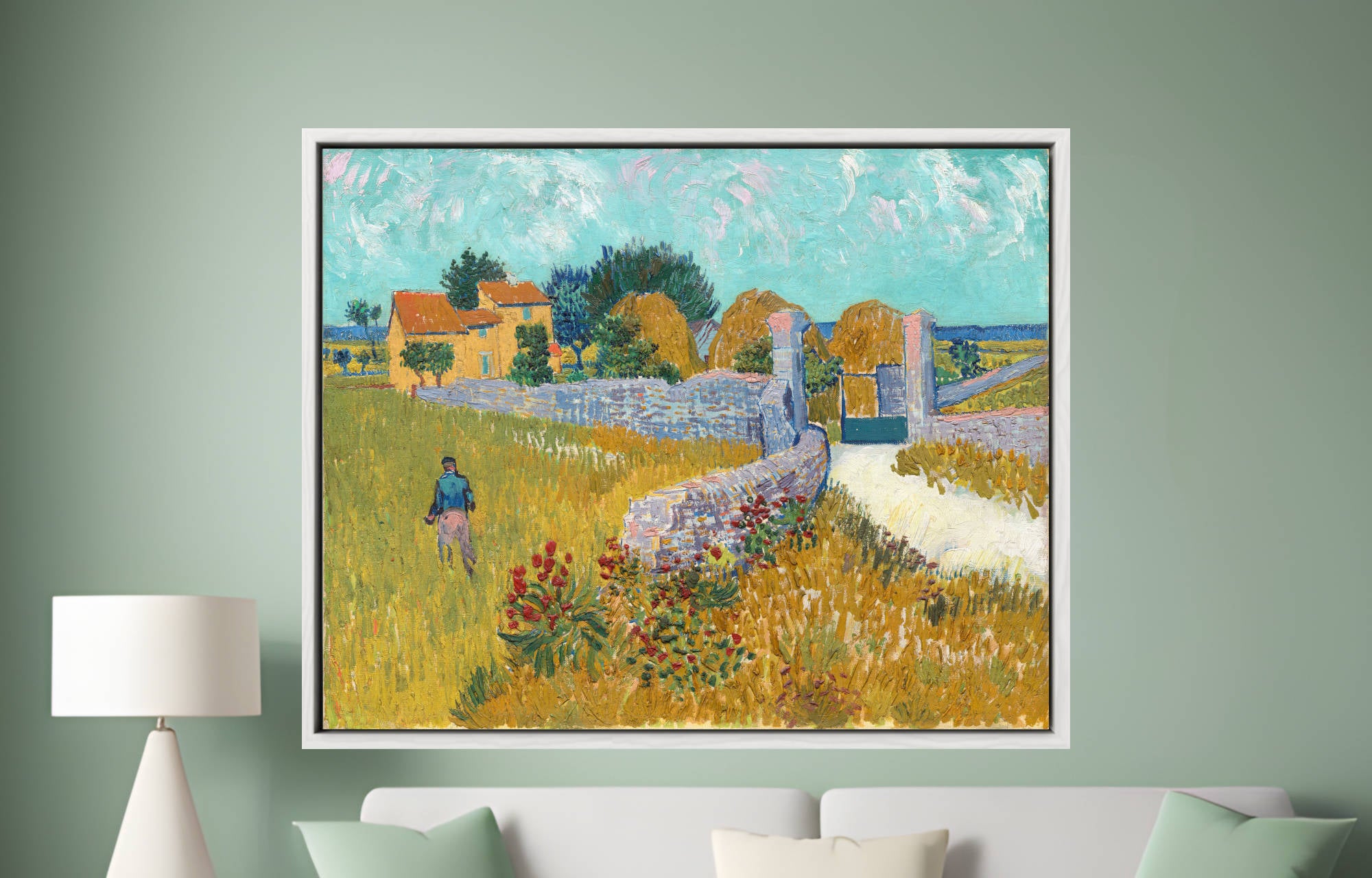
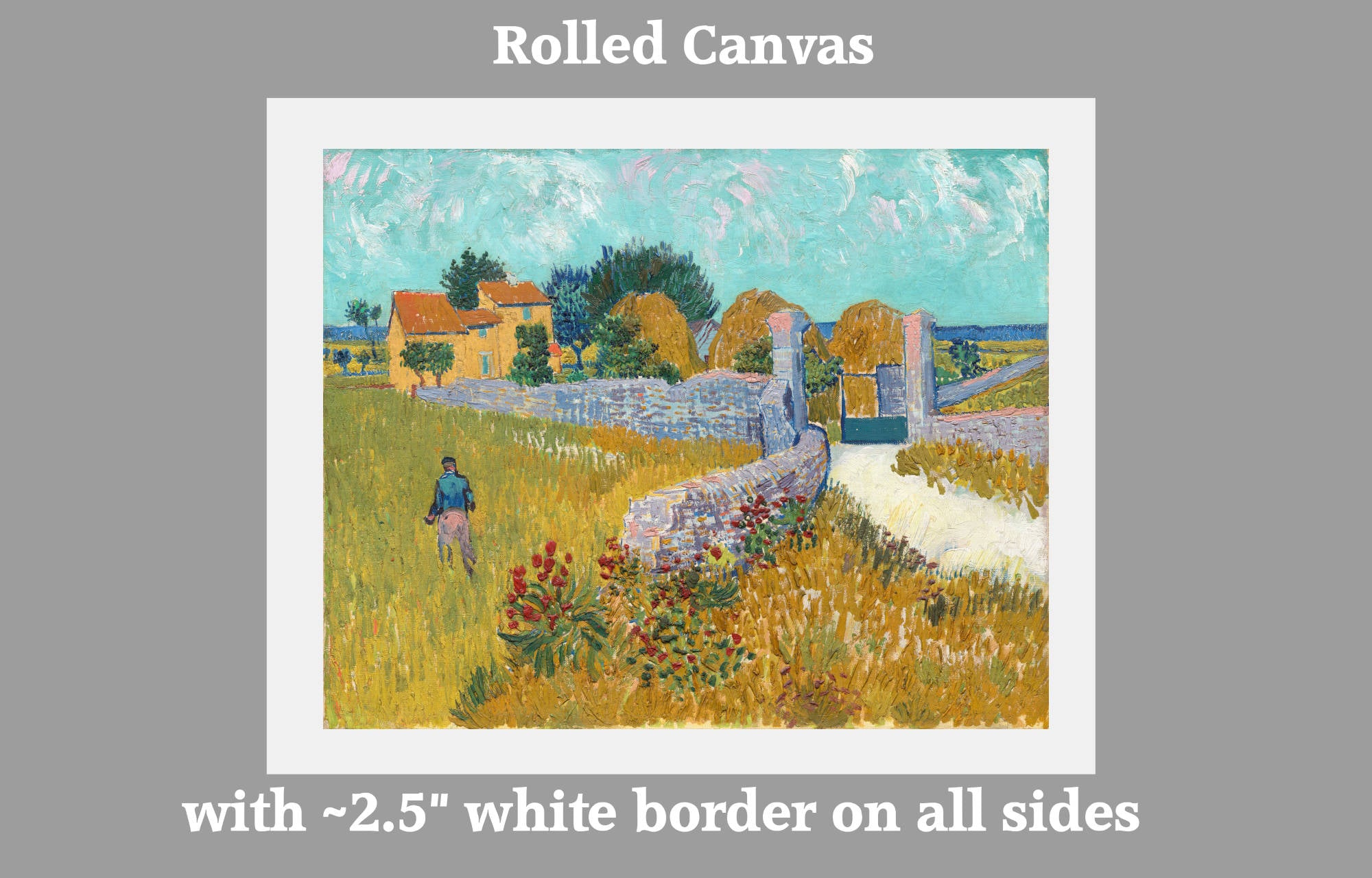
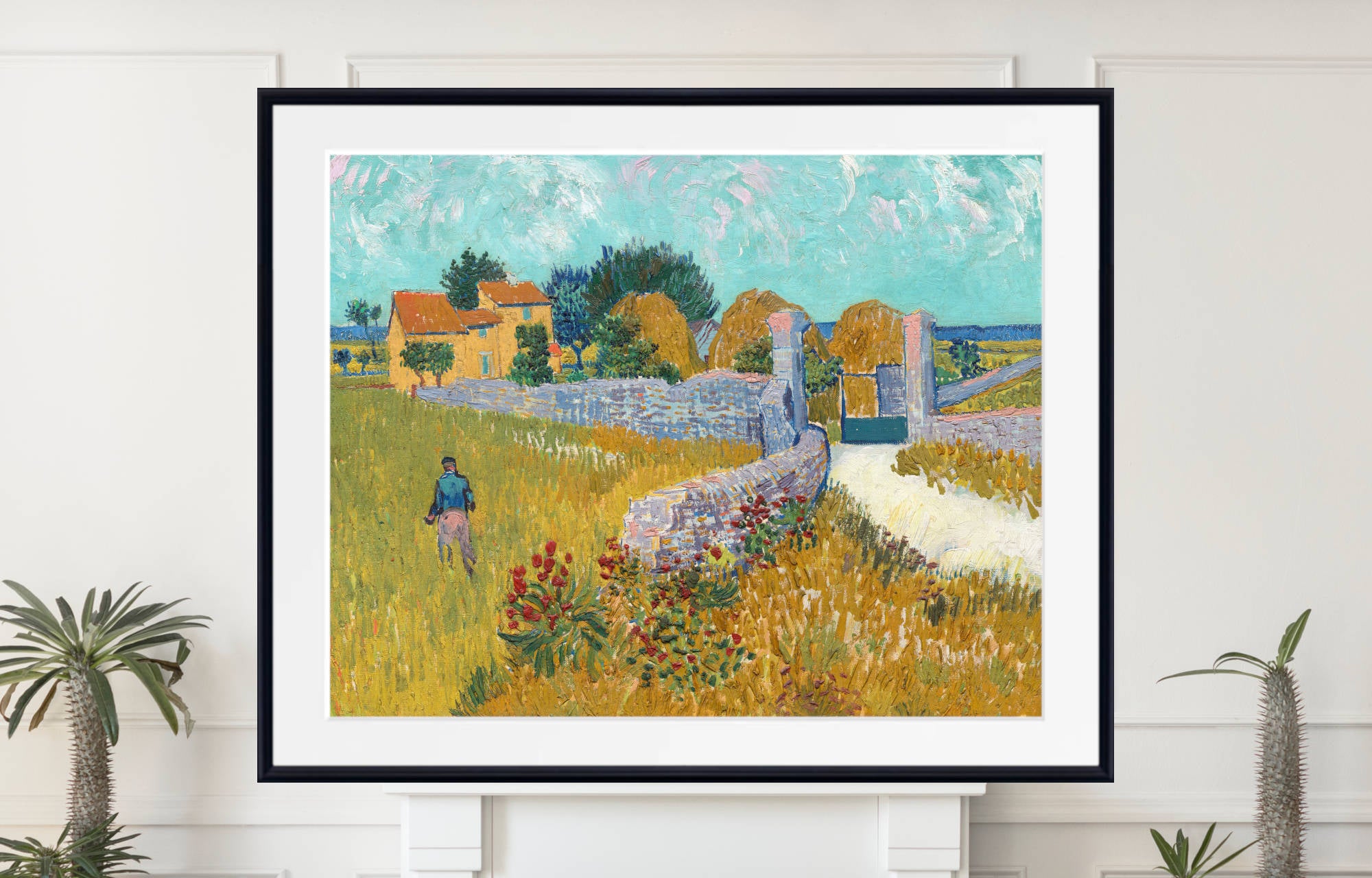
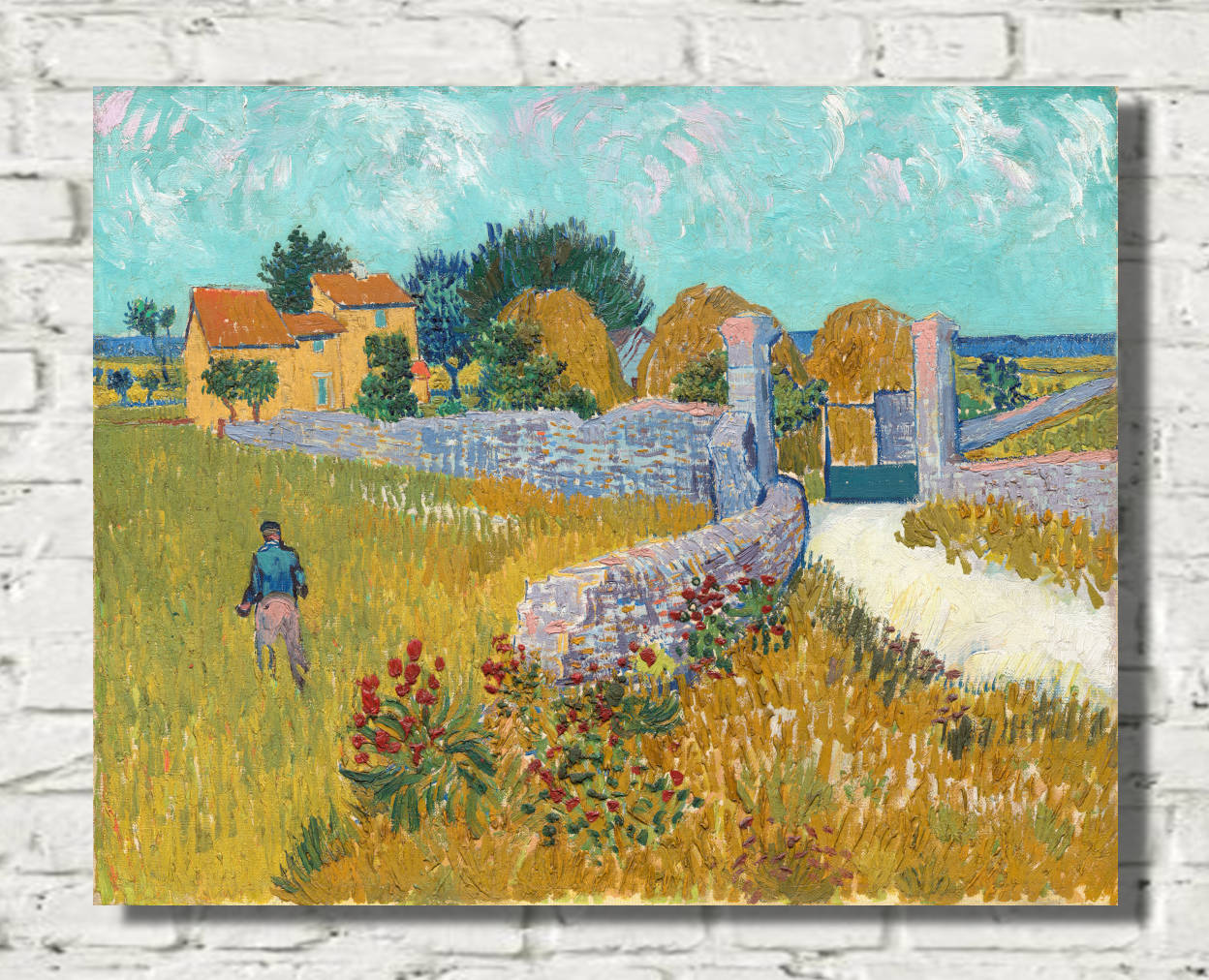
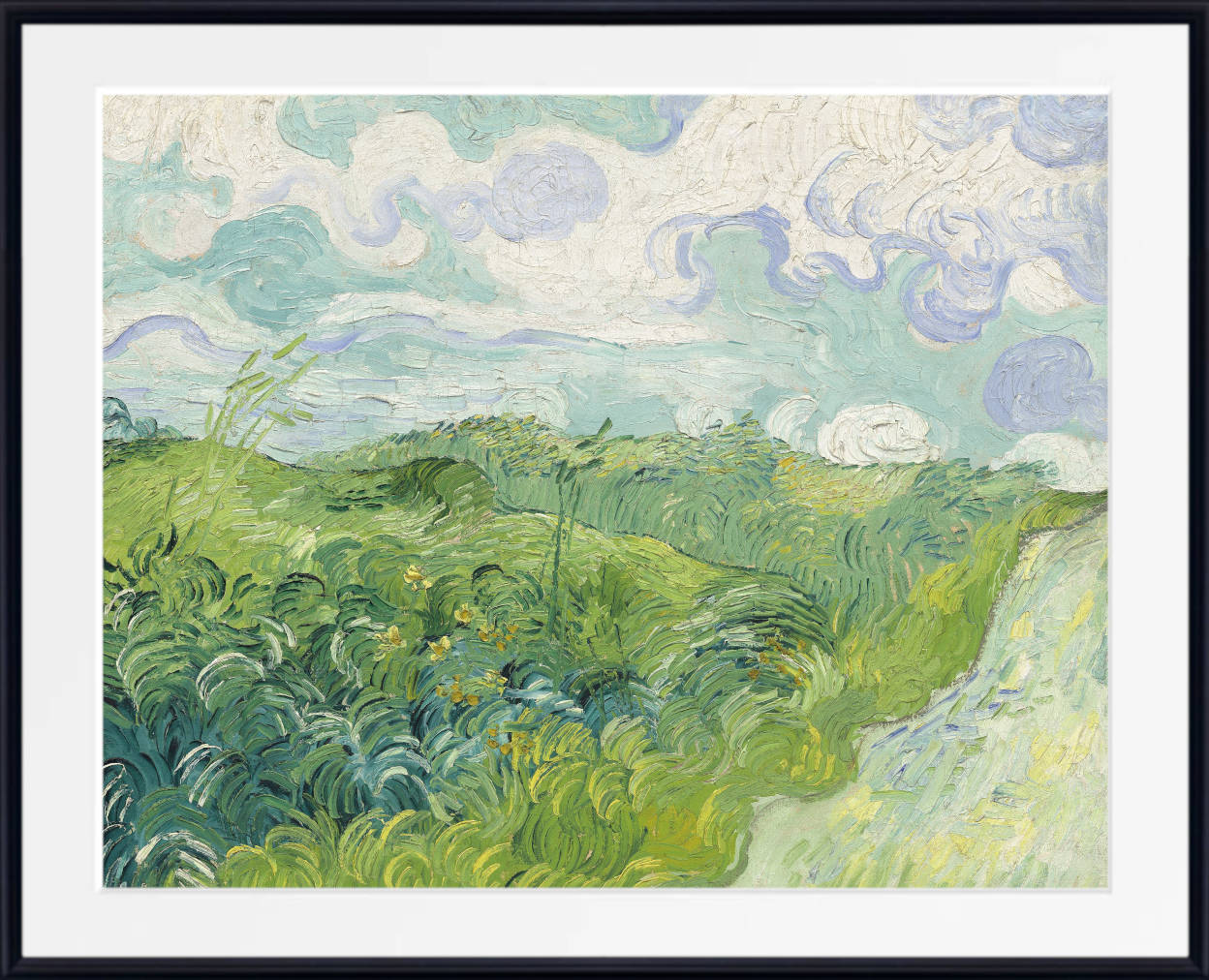
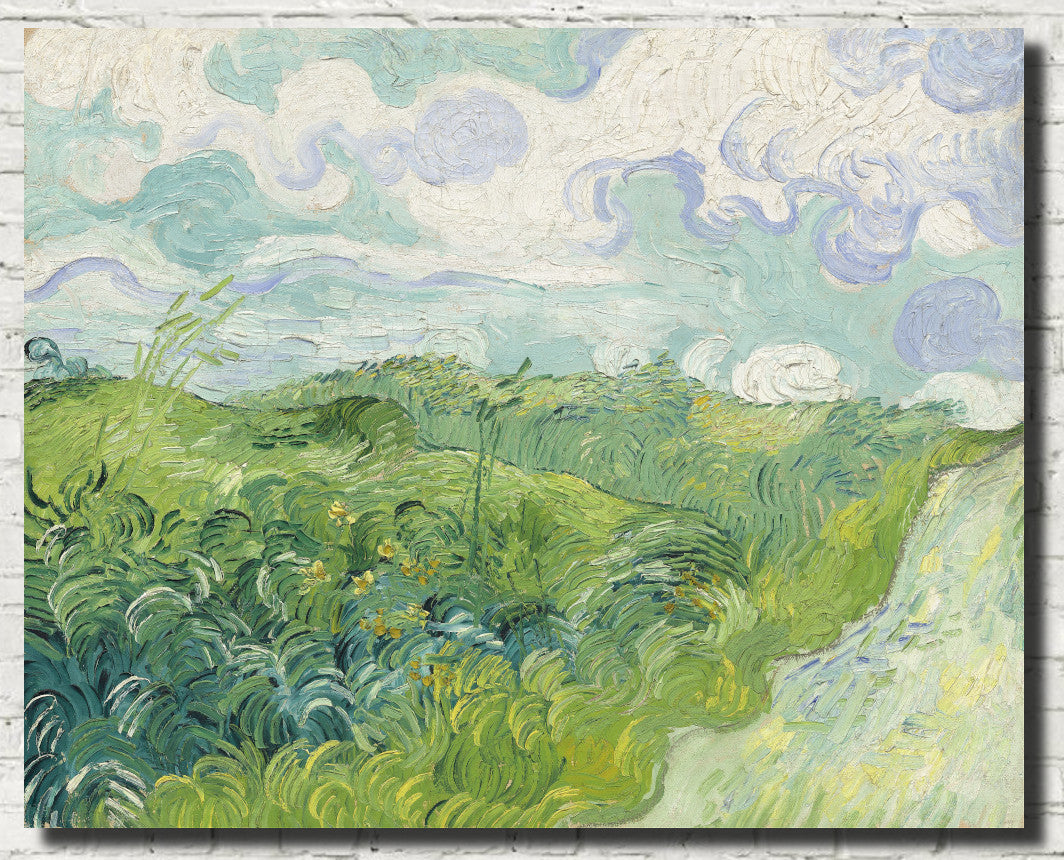
Wheat fields became another of Van Gogh’s major recurring subjects. In Arles he painted golden harvests, farmhouses, wheat stacks and agricultural labour beneath intense Provençal skies.
The theme continued at Saint-Rémy and later at Auvers-sur-Oise, but its character changed considerably. The brilliant harvest scenes of 1888 gave way to landscapes in which reapers, enclosed fields, turbulent skies and expansive horizons became increasingly important.
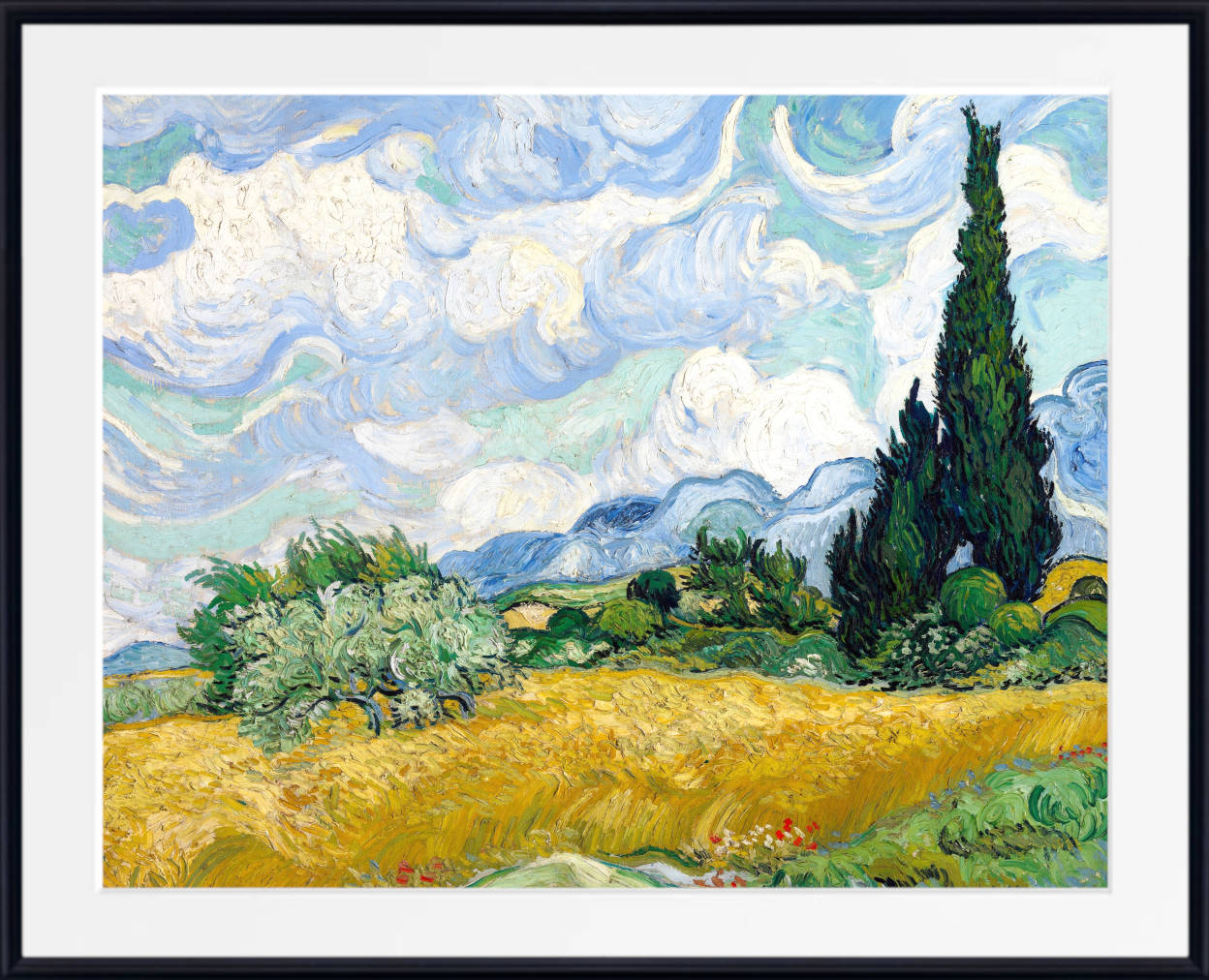
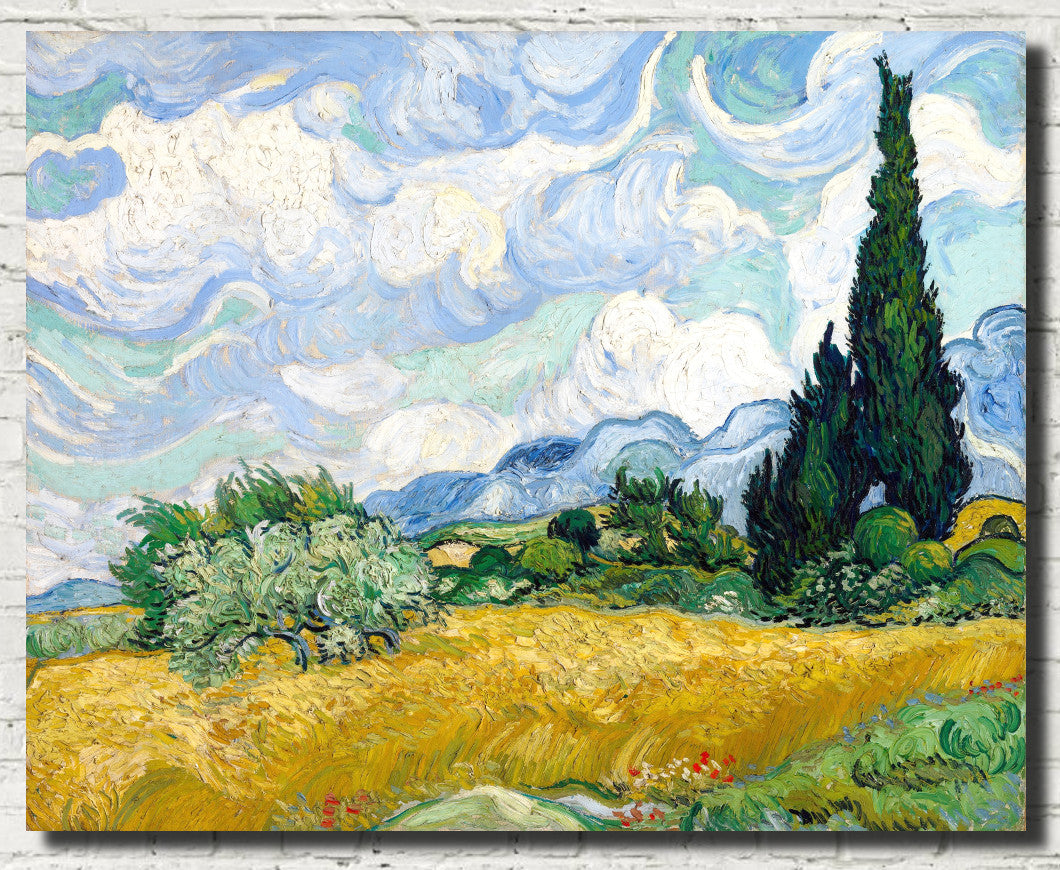
Among the best-known examples are Wheat Field with Cypresses, Wheatfield with Crows and Wheatfield under Thunderclouds, alongside numerous paintings of harvests, wheat stacks and reapers.
GalleryThane’s dedicated Vincent van Gogh Wheat Field & Harvest Prints collection brings these related works together, tracing the subject from Arles through Saint-Rémy to Auvers.
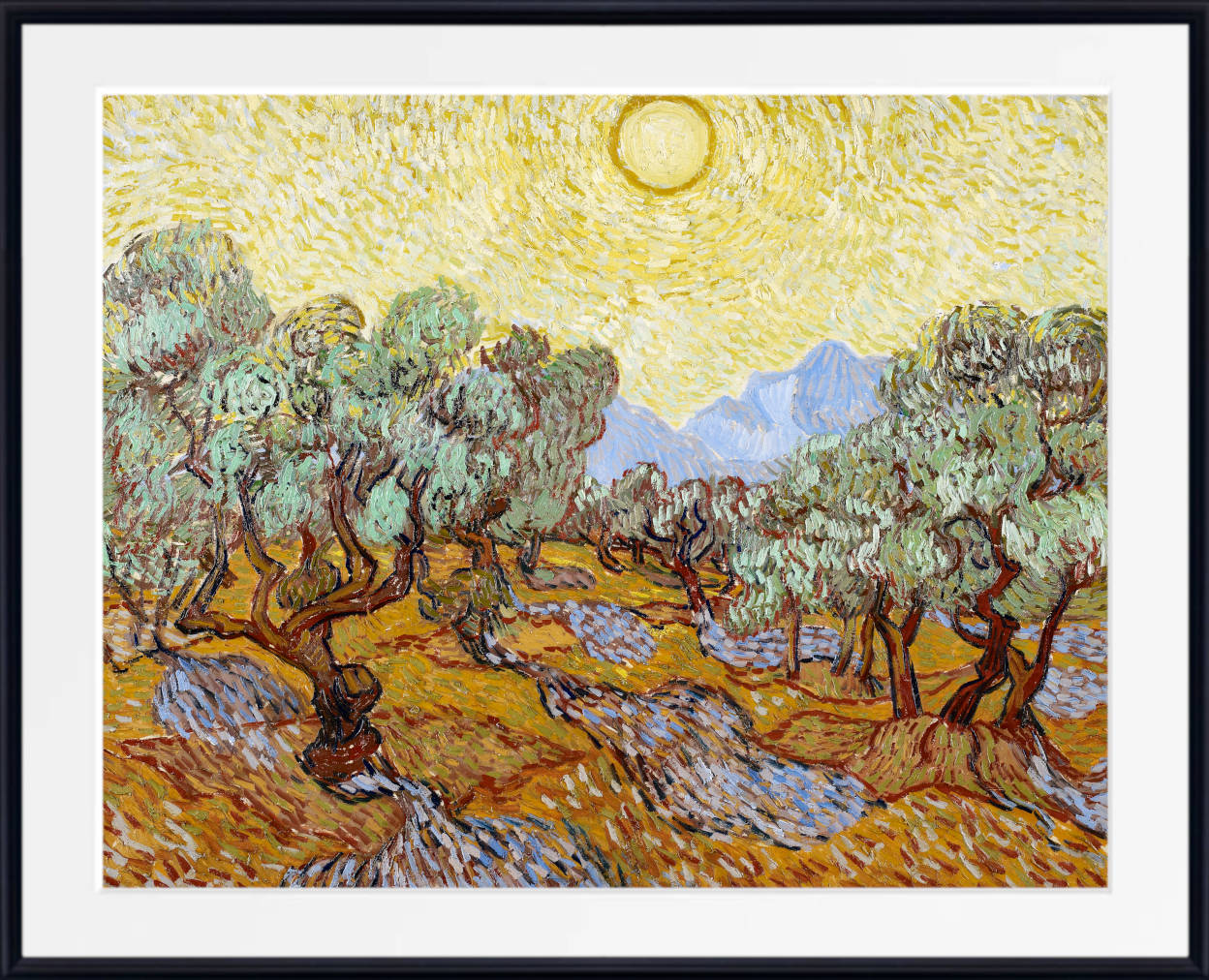
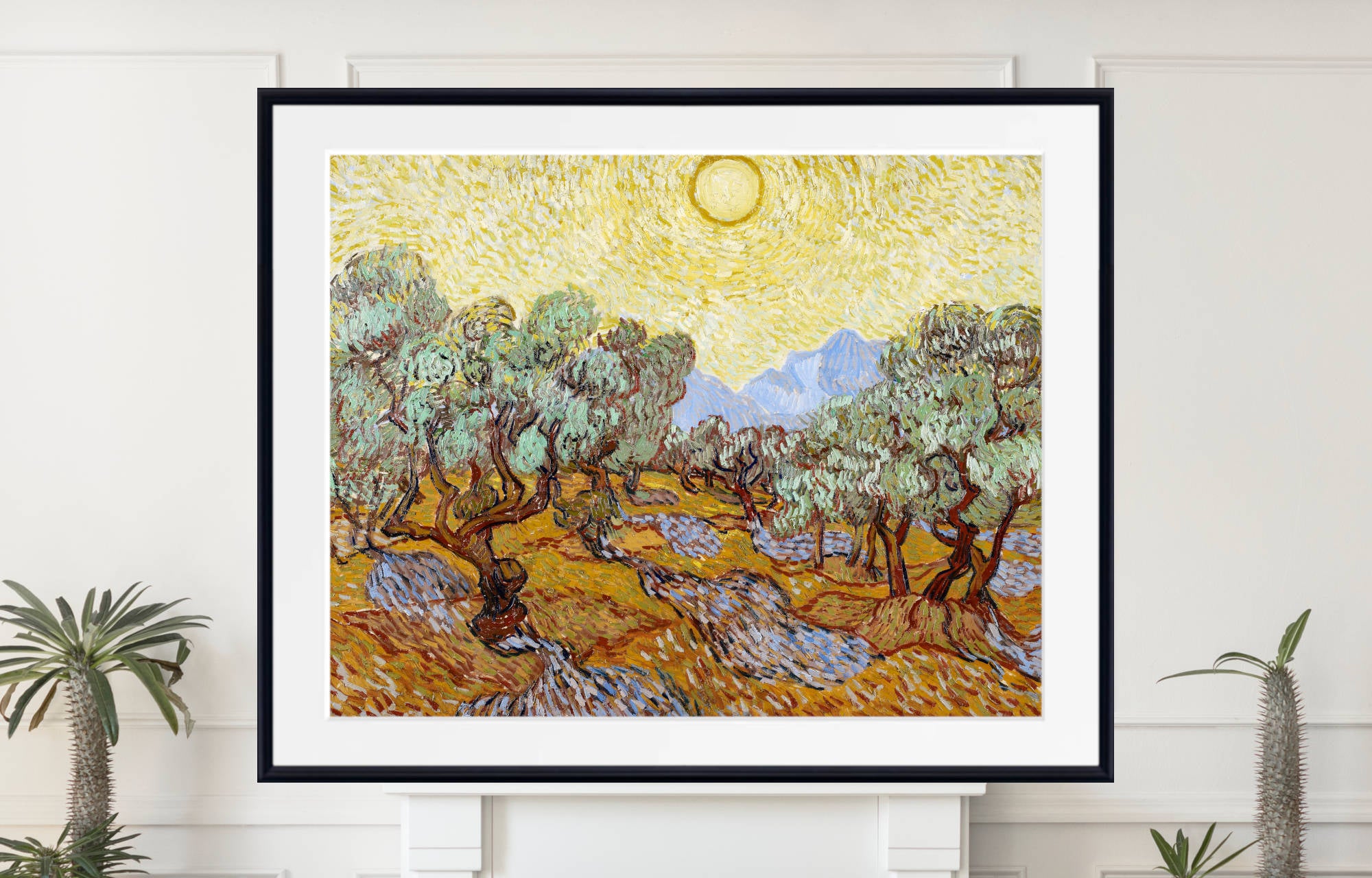
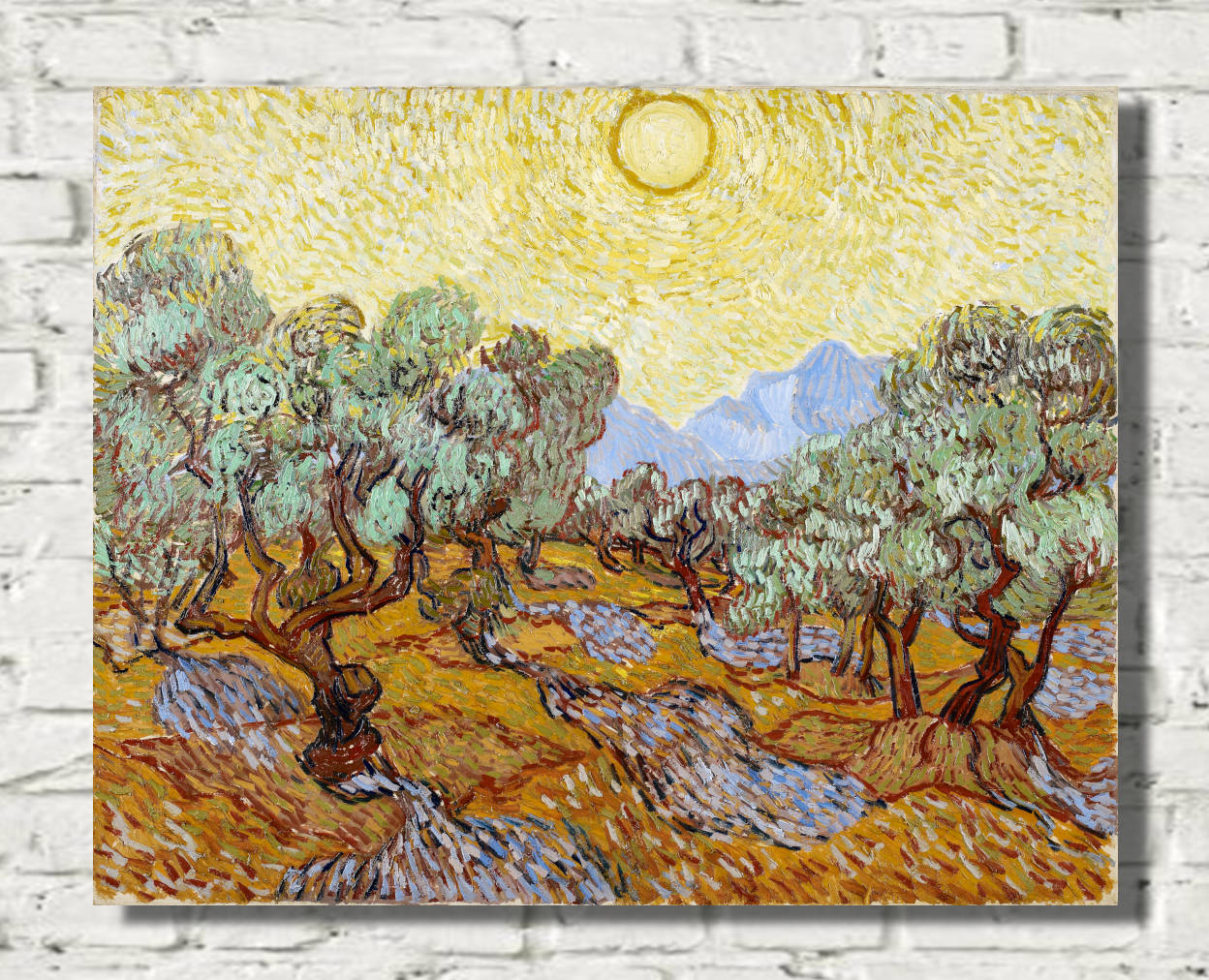
Olive Trees at Saint-Rémy
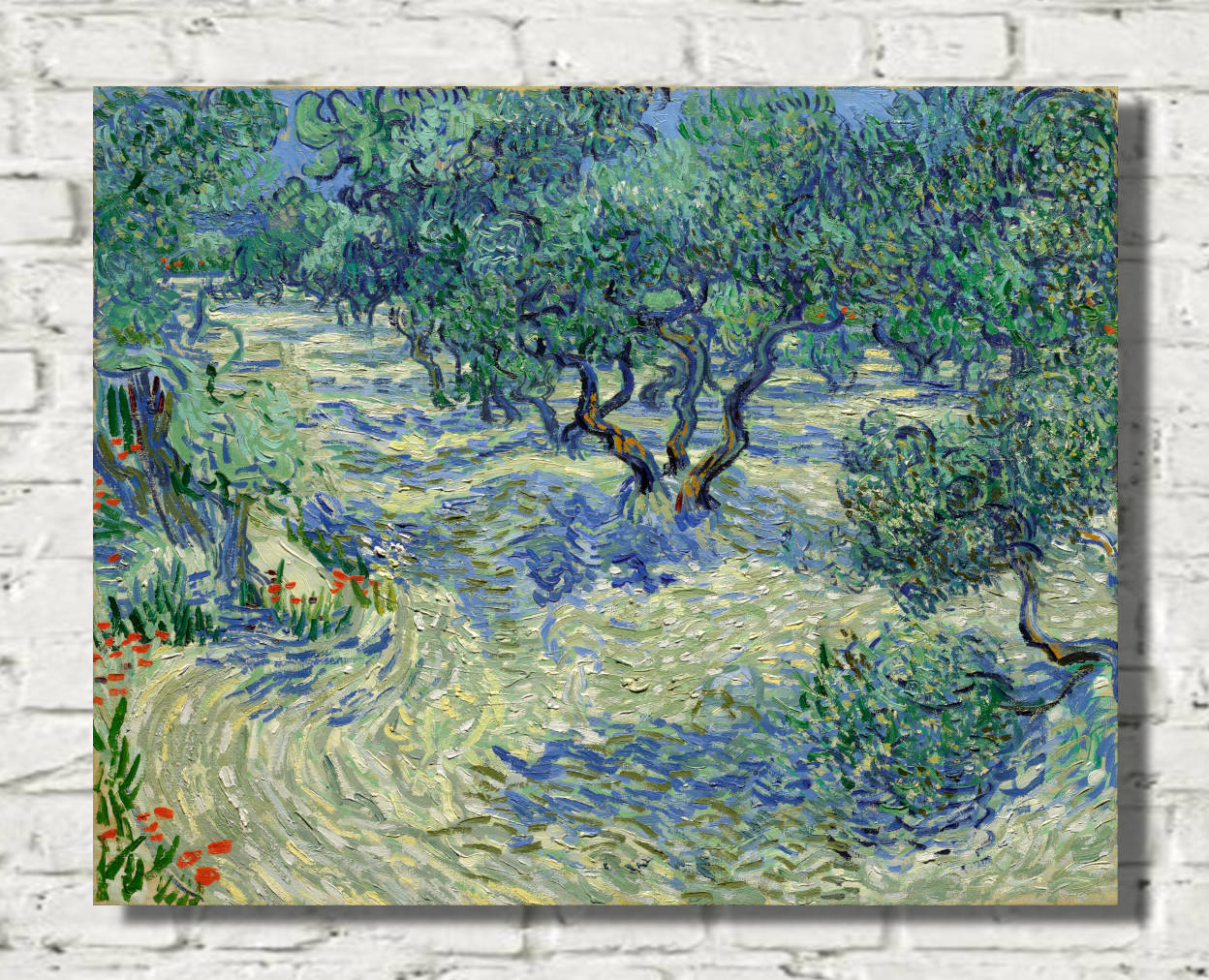
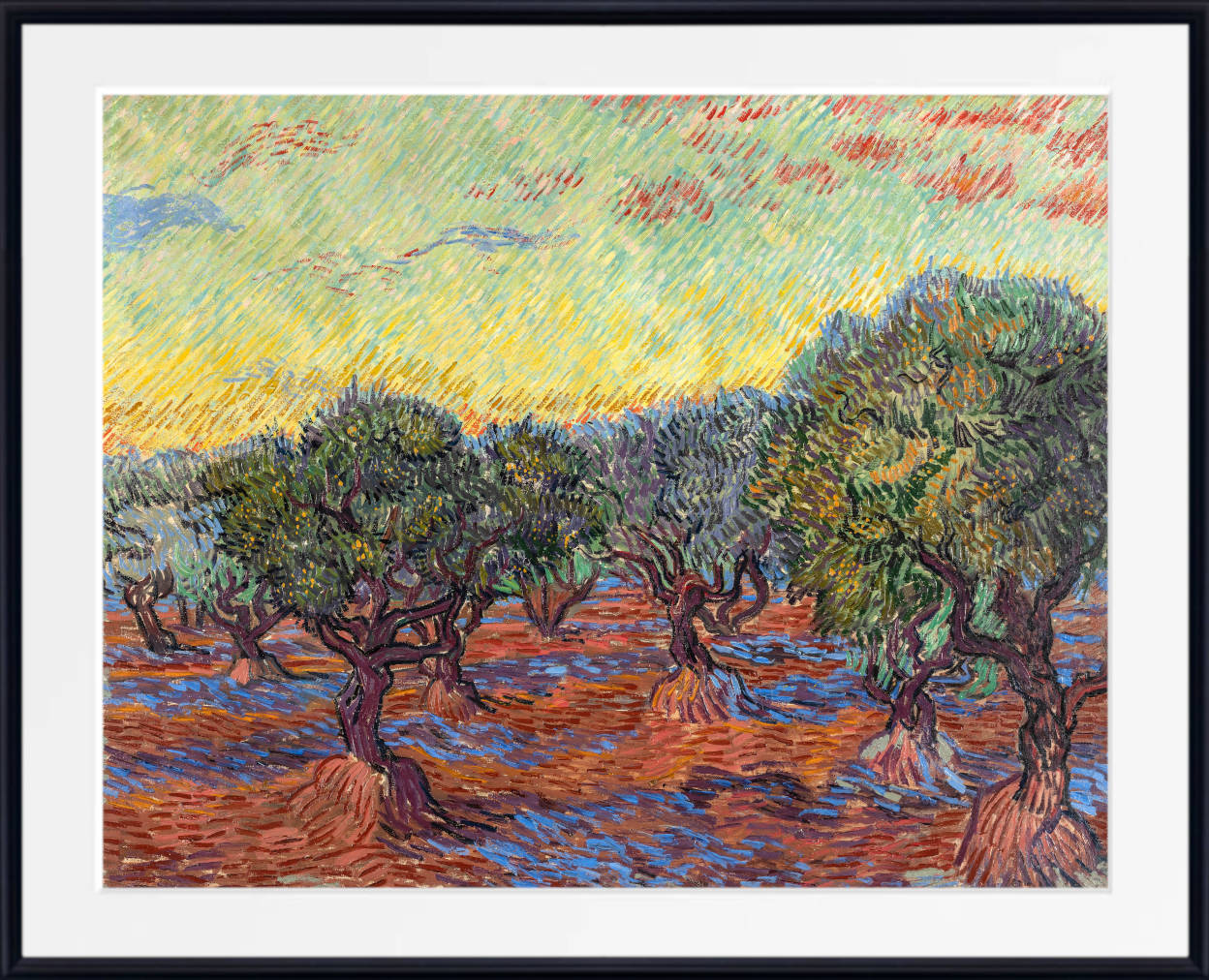
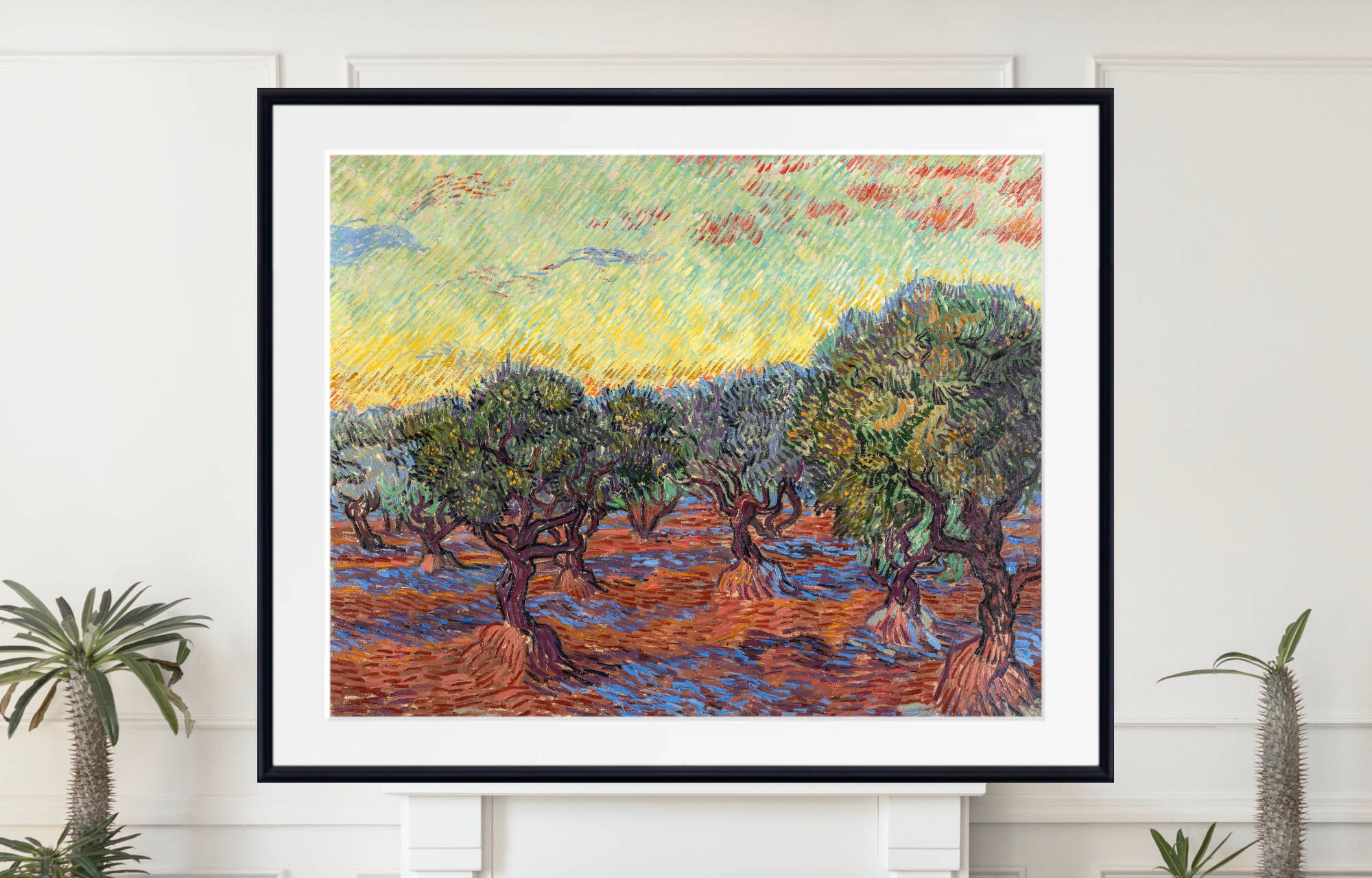
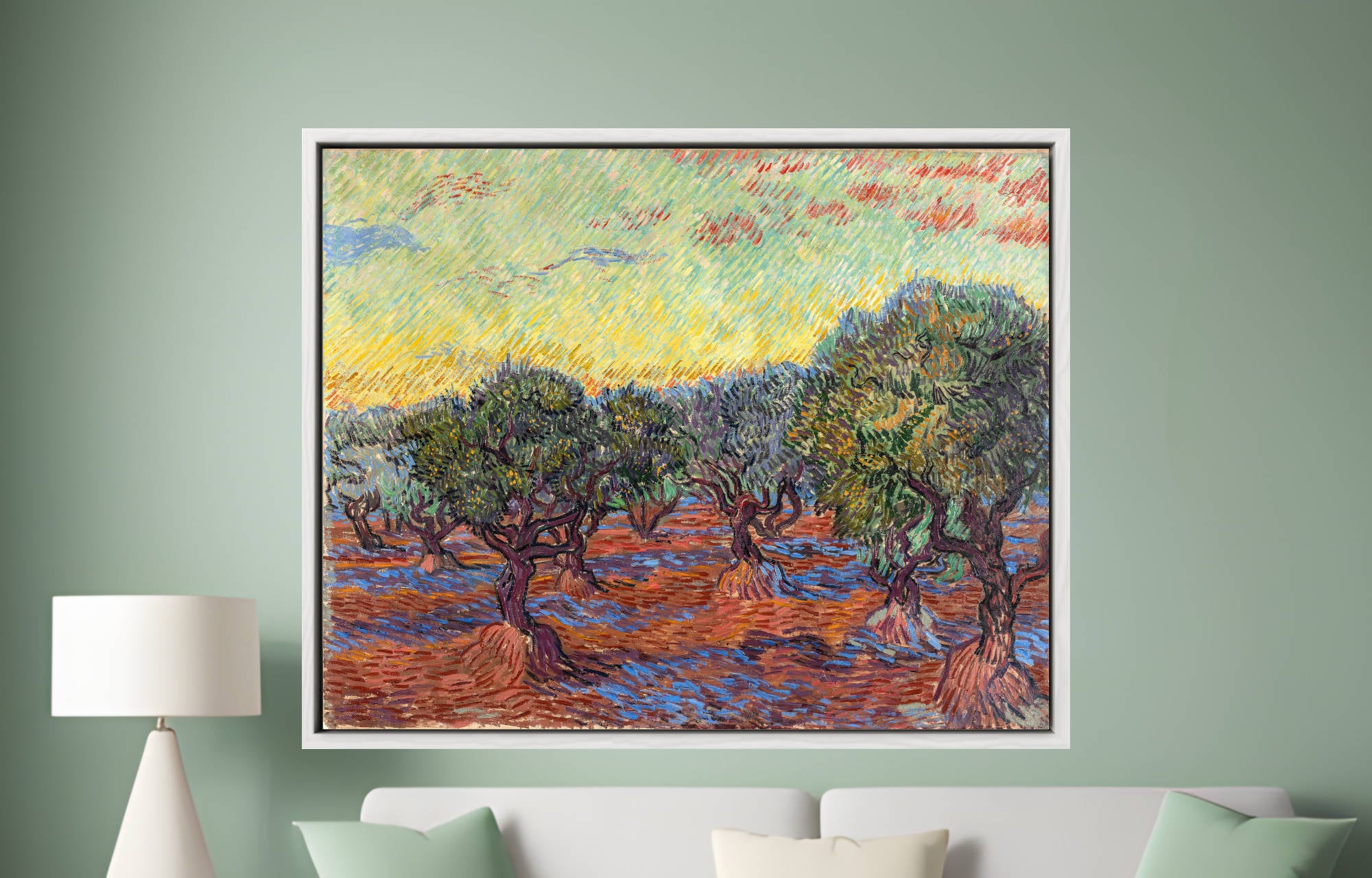
After entering Saint-Paul-de-Mausole at Saint-Rémy in 1889, Van Gogh repeatedly painted the olive groves surrounding the institution.
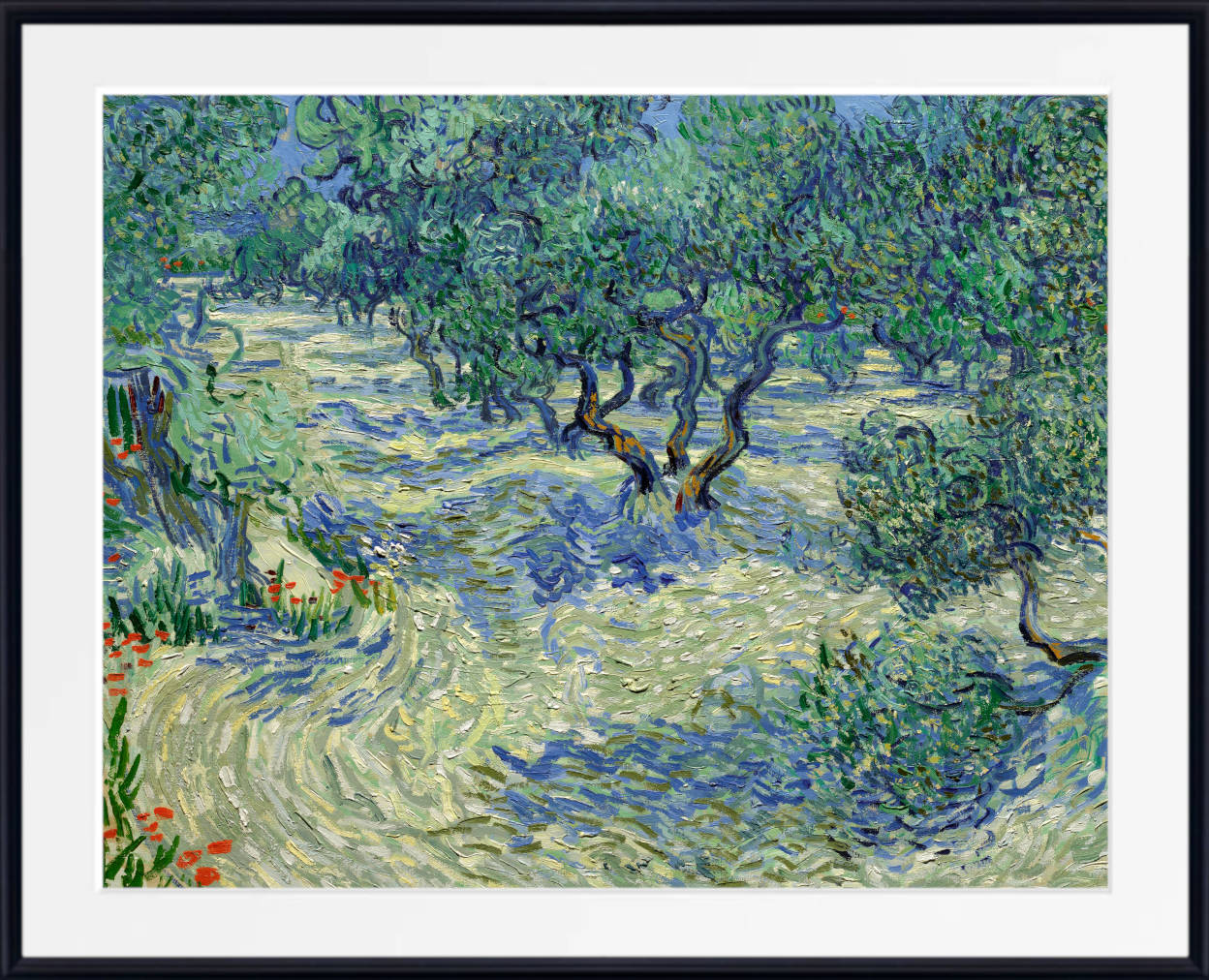
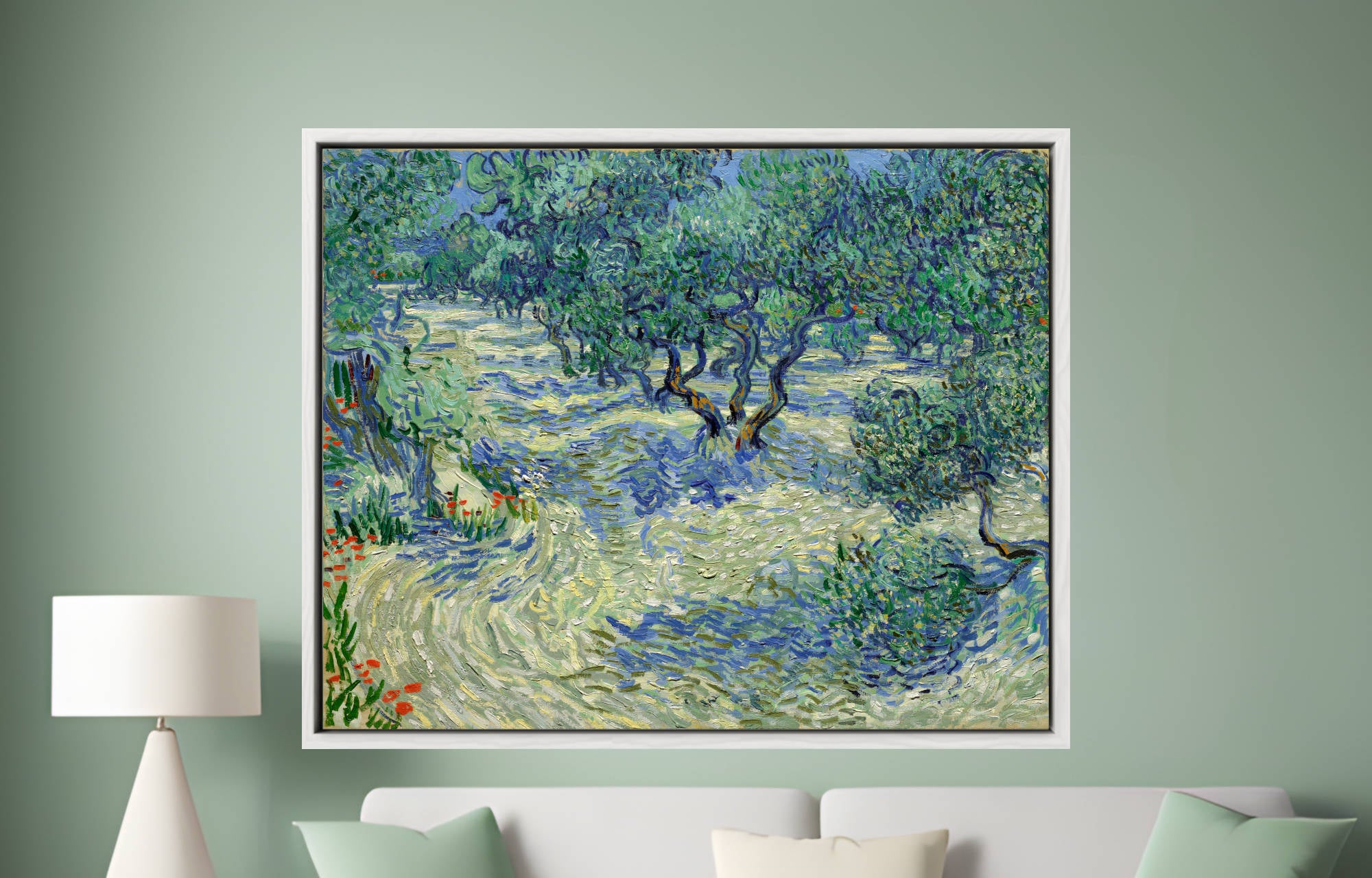
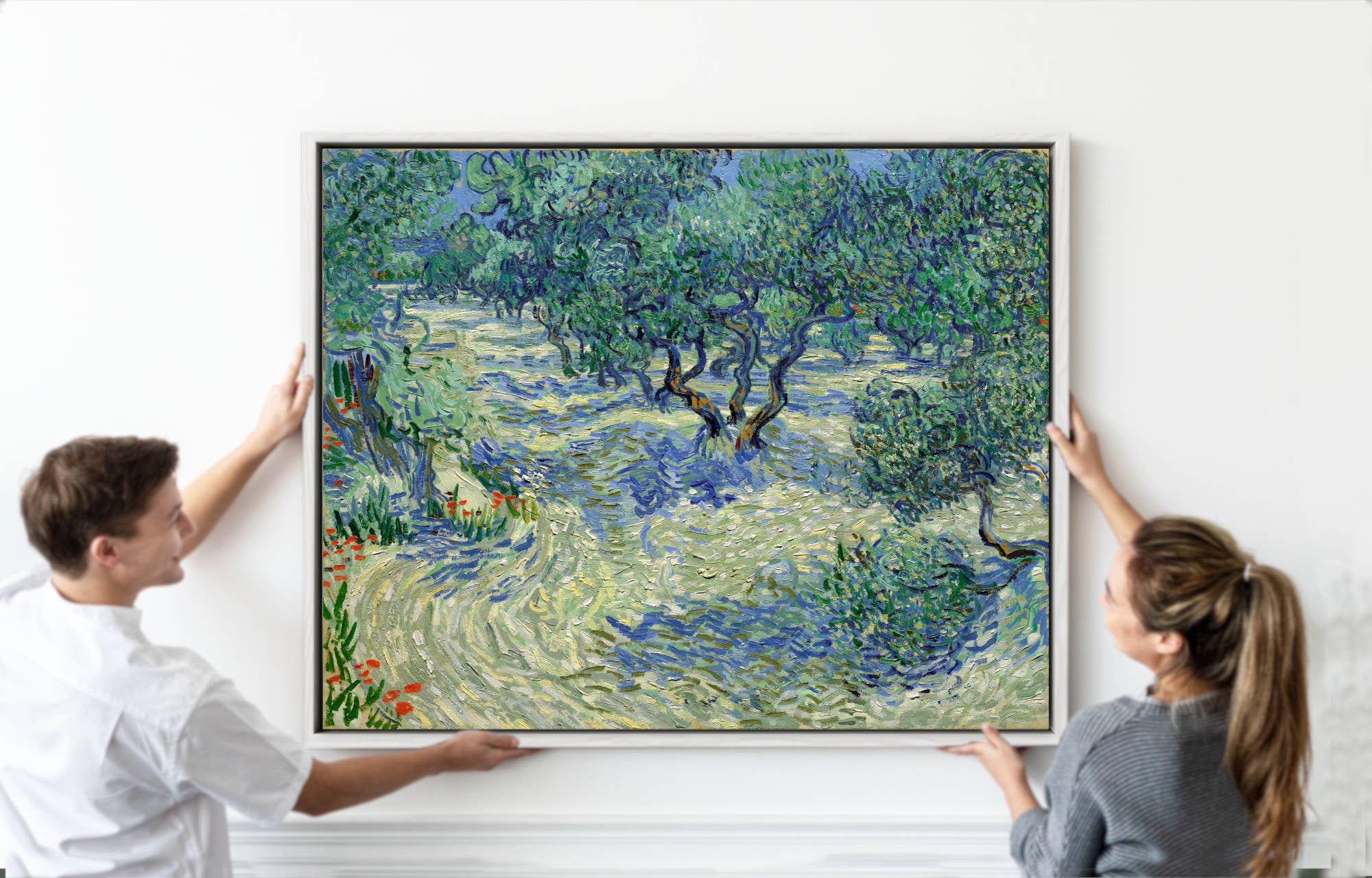
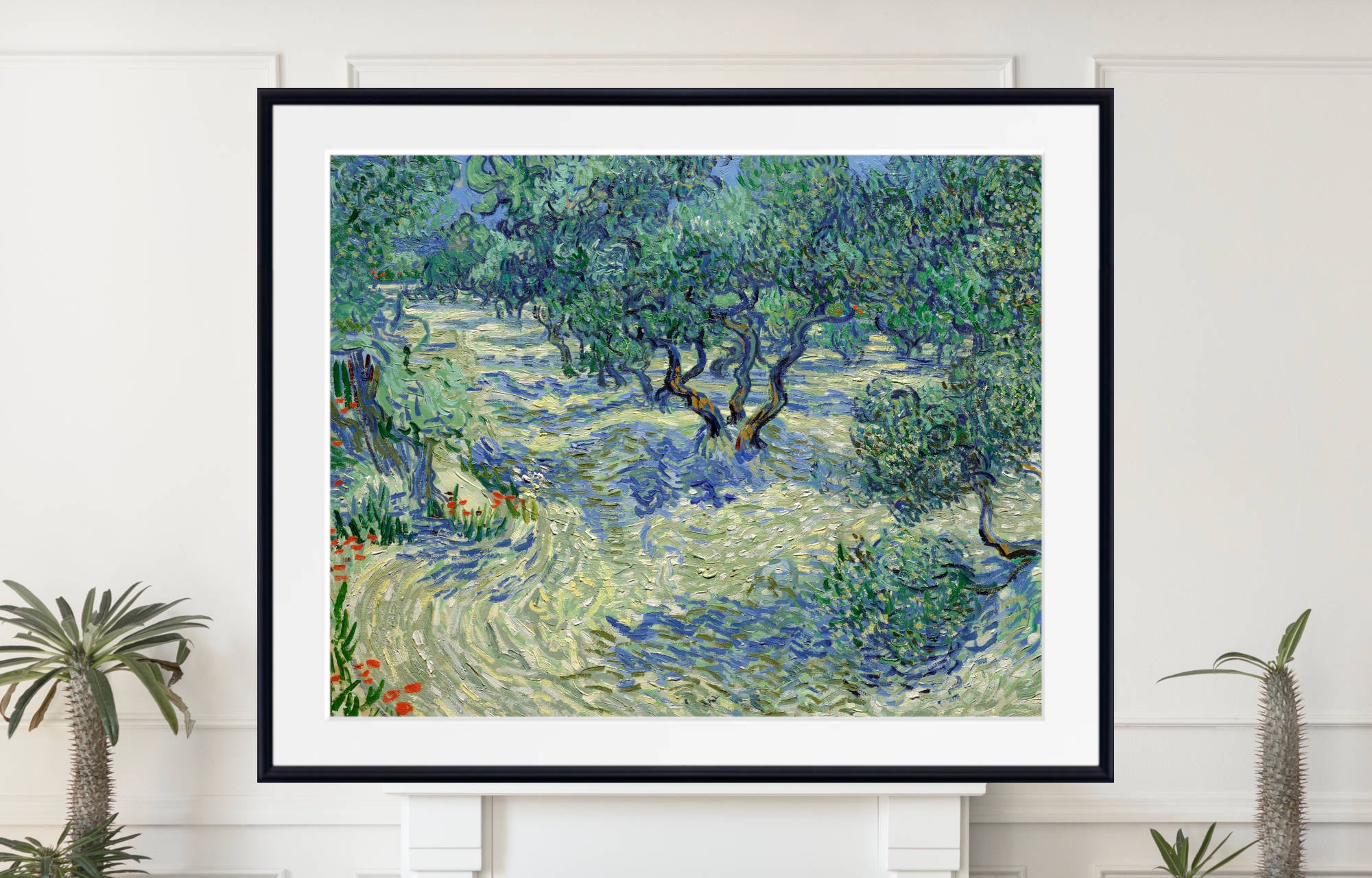
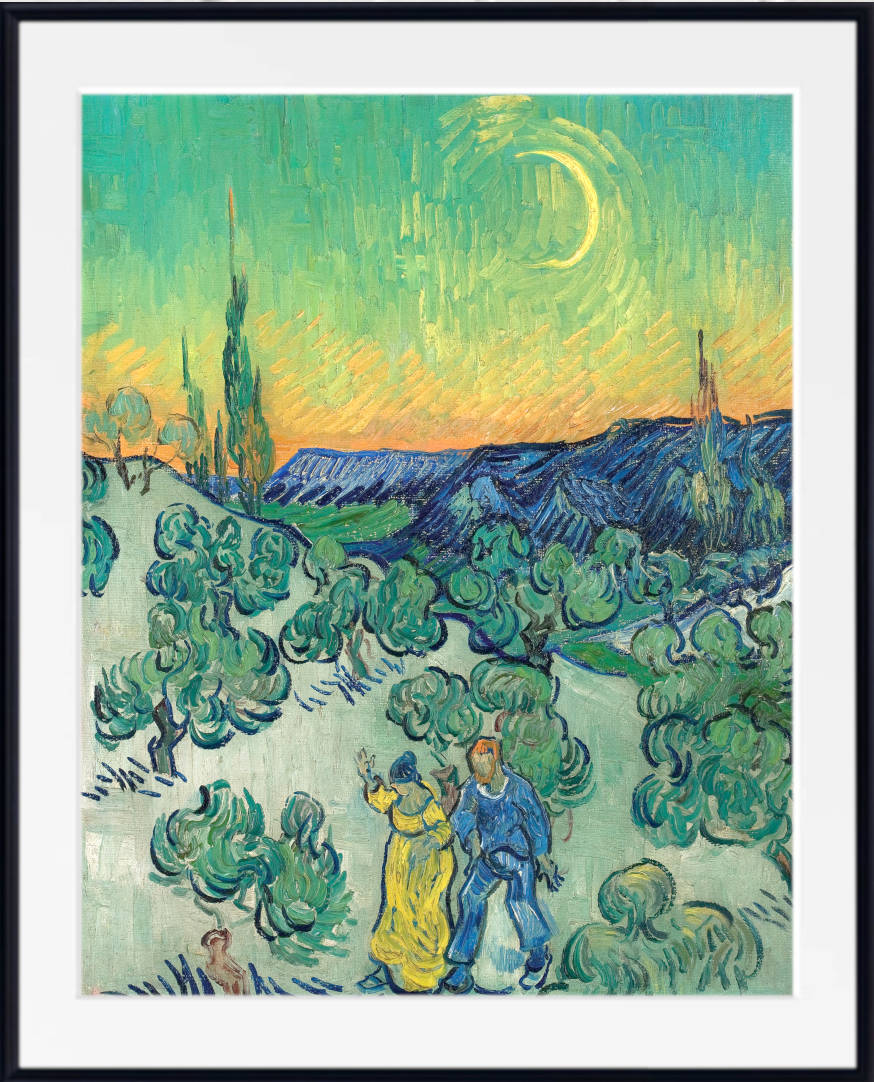
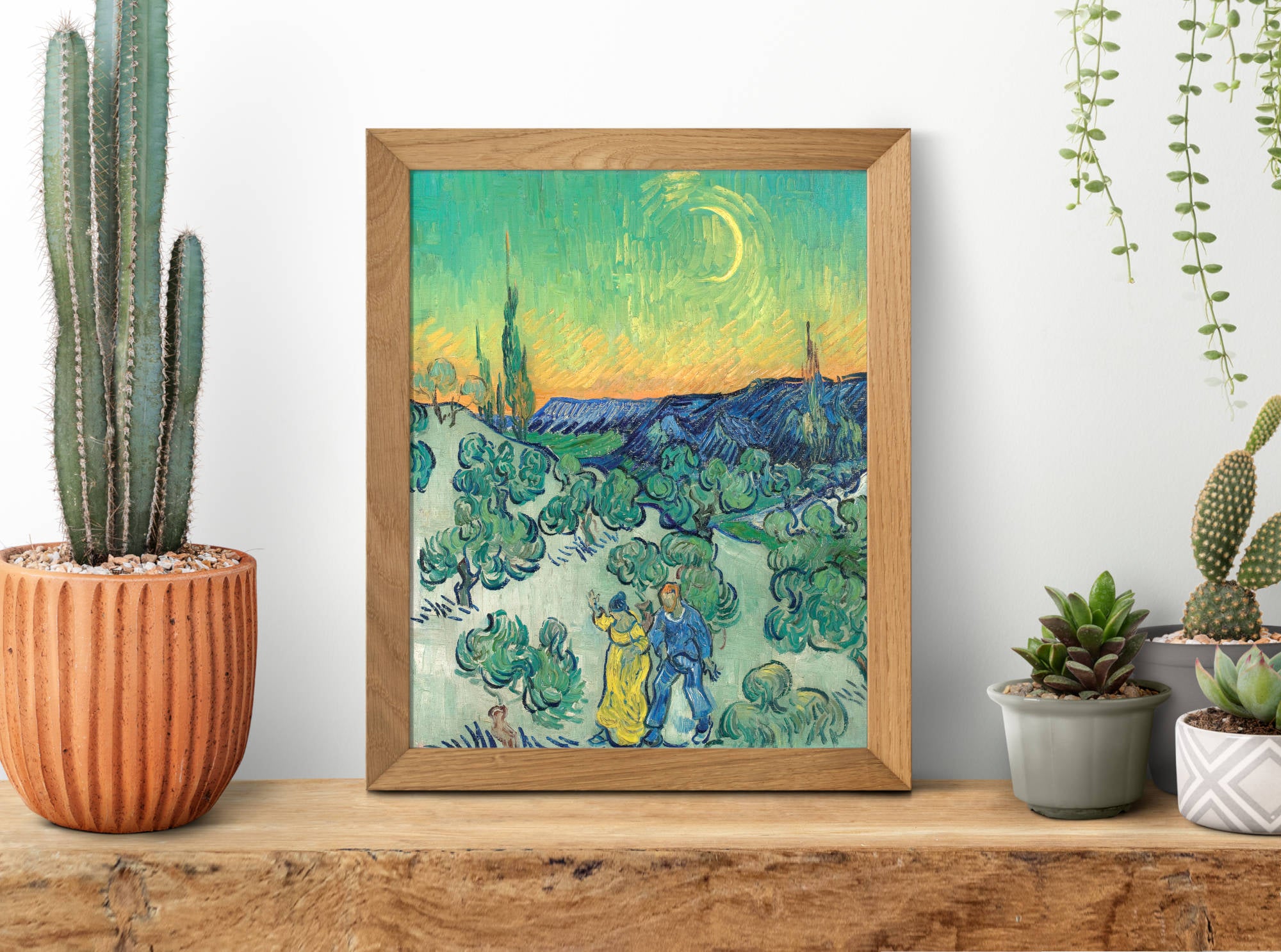
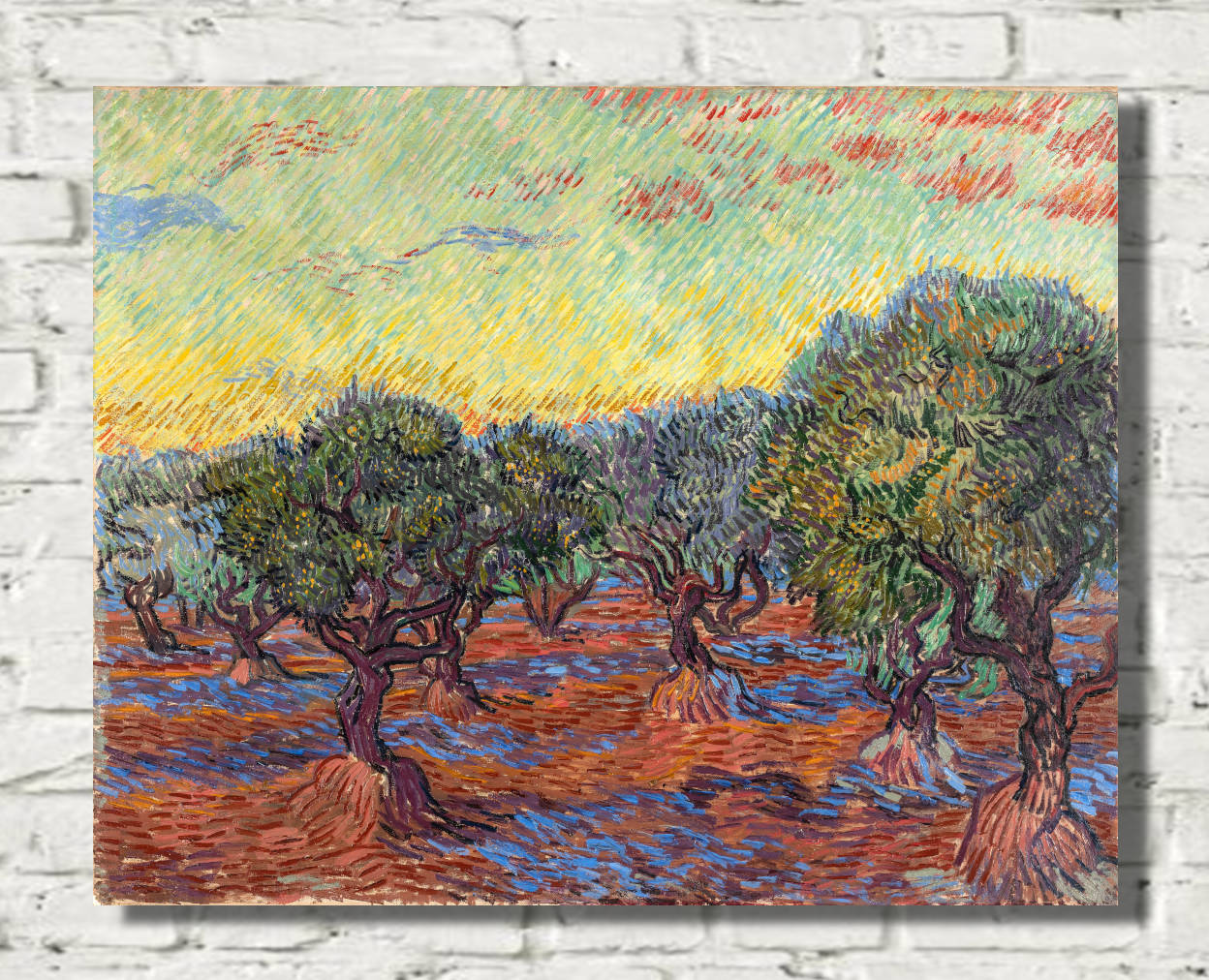
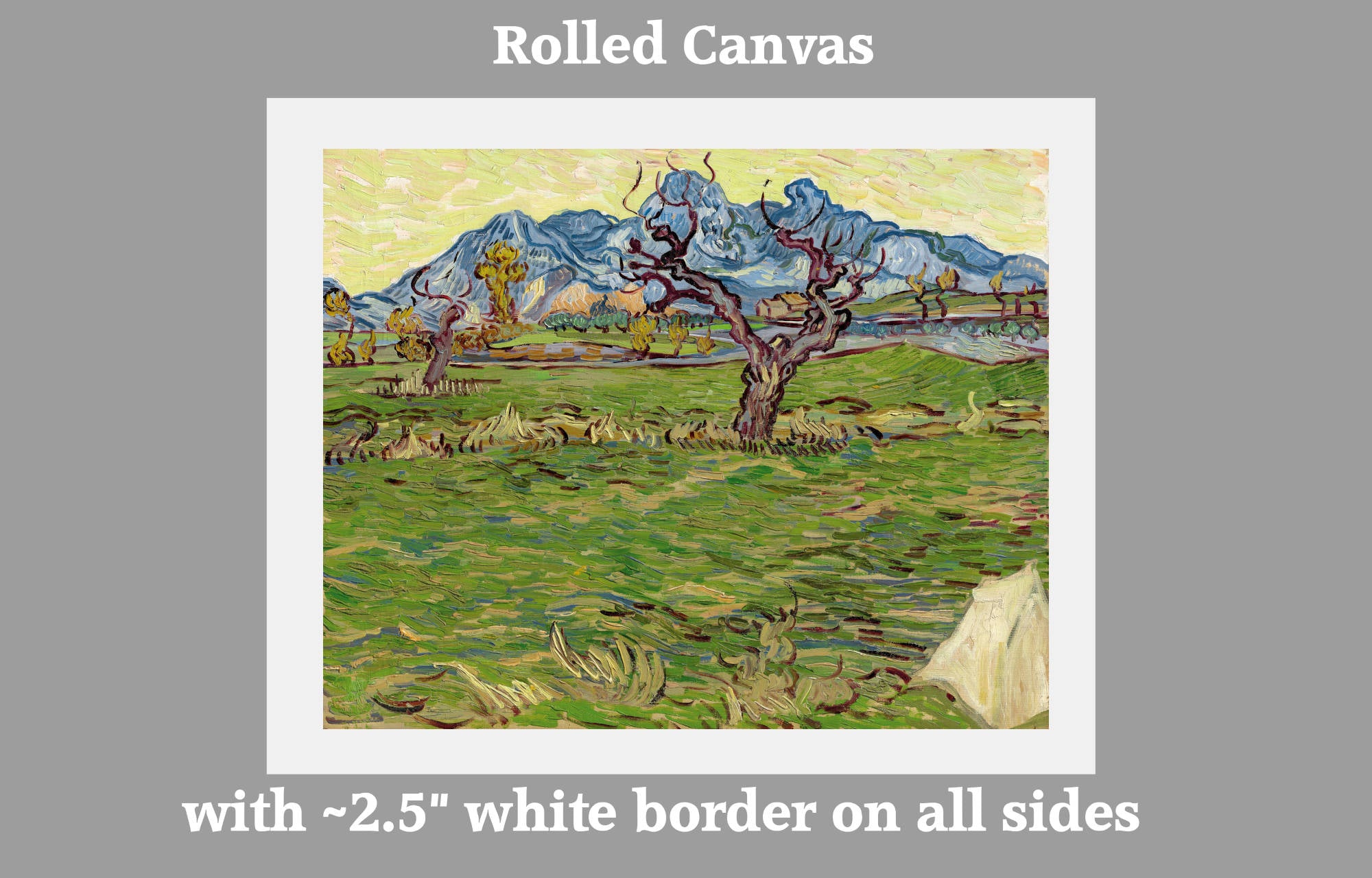
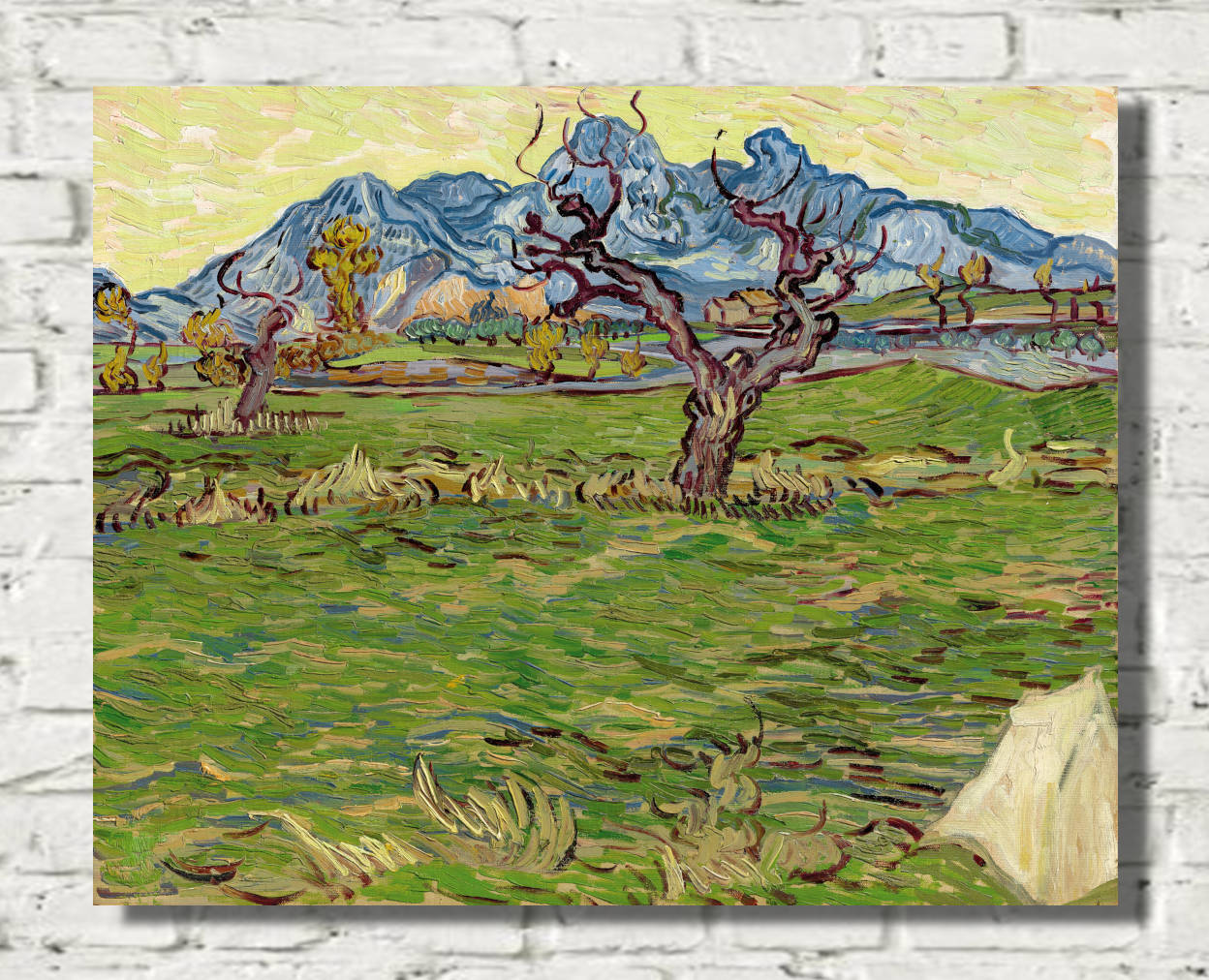
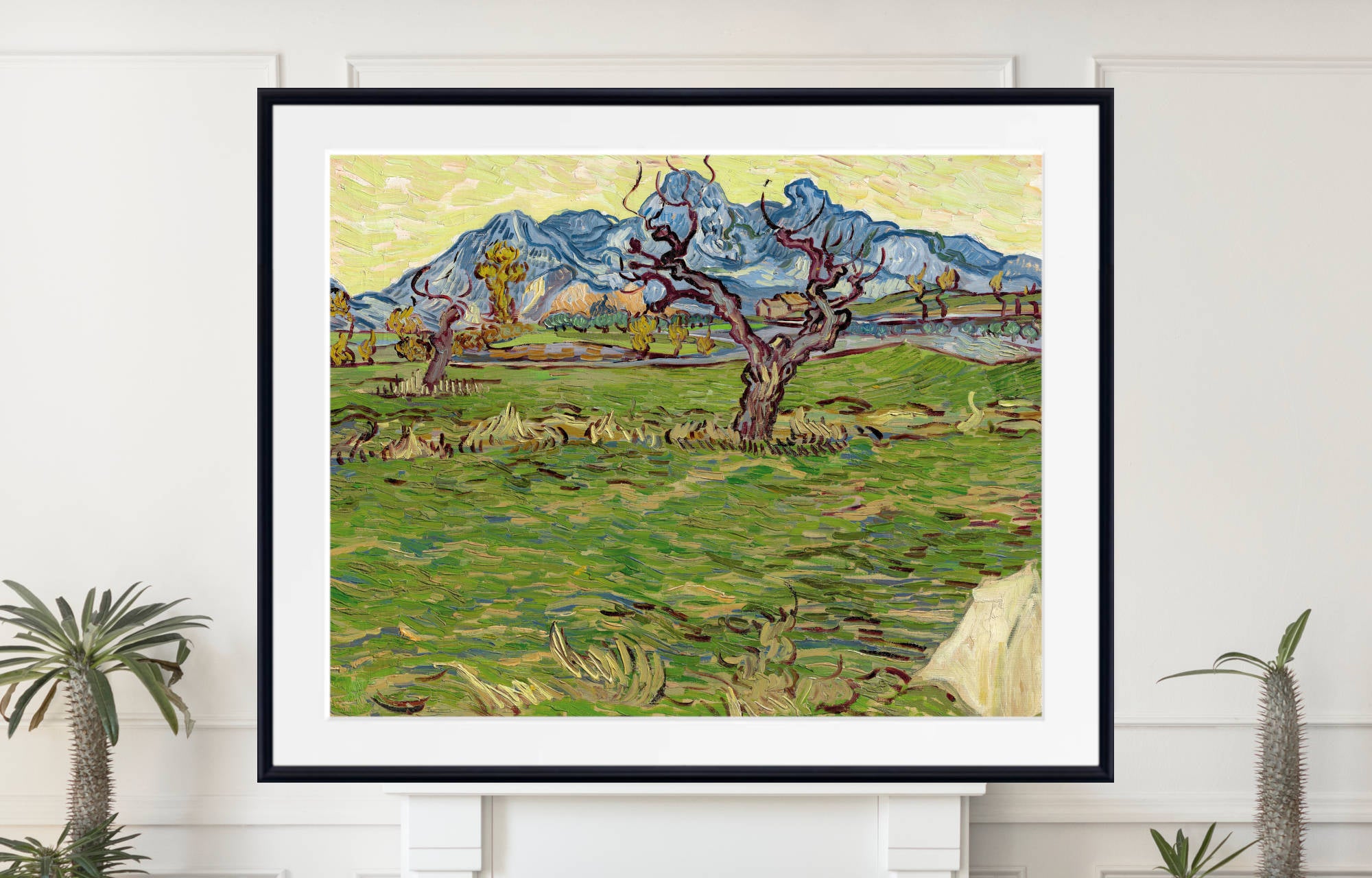
Their twisted trunks, irregular branches and silver-green foliage suited his increasingly rhythmic approach to landscape. Rather than treating an olive tree as a fixed object, Van Gogh often built the entire composition from repeated curves and directional strokes, connecting trees, ground, mountains and sky.
Changes in weather and time of day allowed him to approach the same subject repeatedly. Some olive-grove paintings are dominated by brilliant greens and blues, while others use more muted or unusual combinations of violet, ochre and orange.
Explore the complete Vincent van Gogh Olive Trees Series for focused views of this important Saint-Rémy subject.
Van Gogh’s Cypress Paintings
Cypress trees became another defining motif during Van Gogh’s stay at Saint-Rémy. Their tall, dark forms provided powerful vertical accents against fields, mountains and the brilliant Provençal sky.
In paintings such as Cypresses the trees dominate the composition, their dense foliage built from curving, energetic brushwork. Elsewhere they become part of a wider landscape, as in Wheat Field with Cypresses, or provide a dramatic connection between earth and sky in The Starry Night.
See the dedicated Vincent van Gogh Cypress Prints collection for works in which these distinctive trees play a central visual role.
The Starry Night and Van Gogh’s Night Paintings
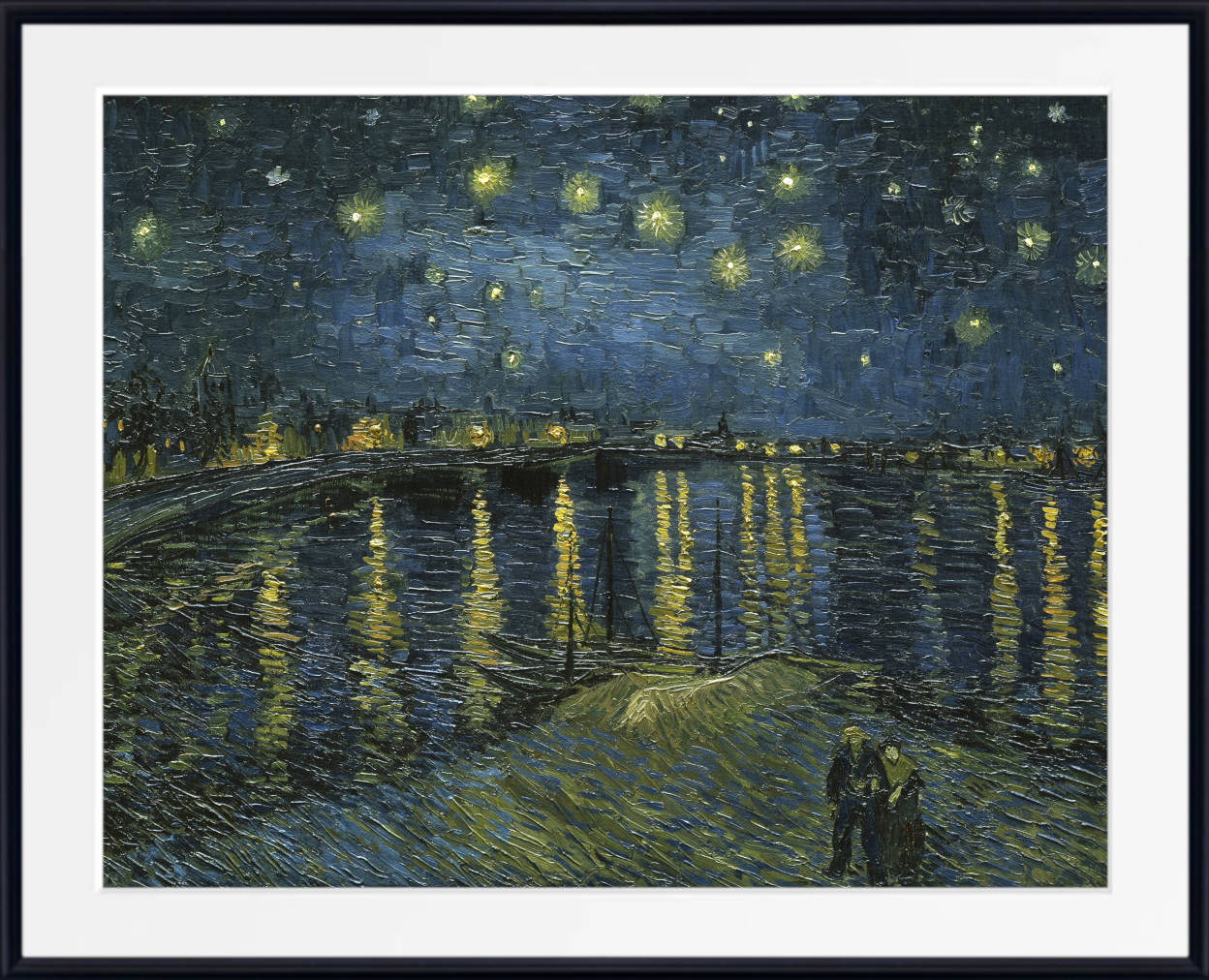
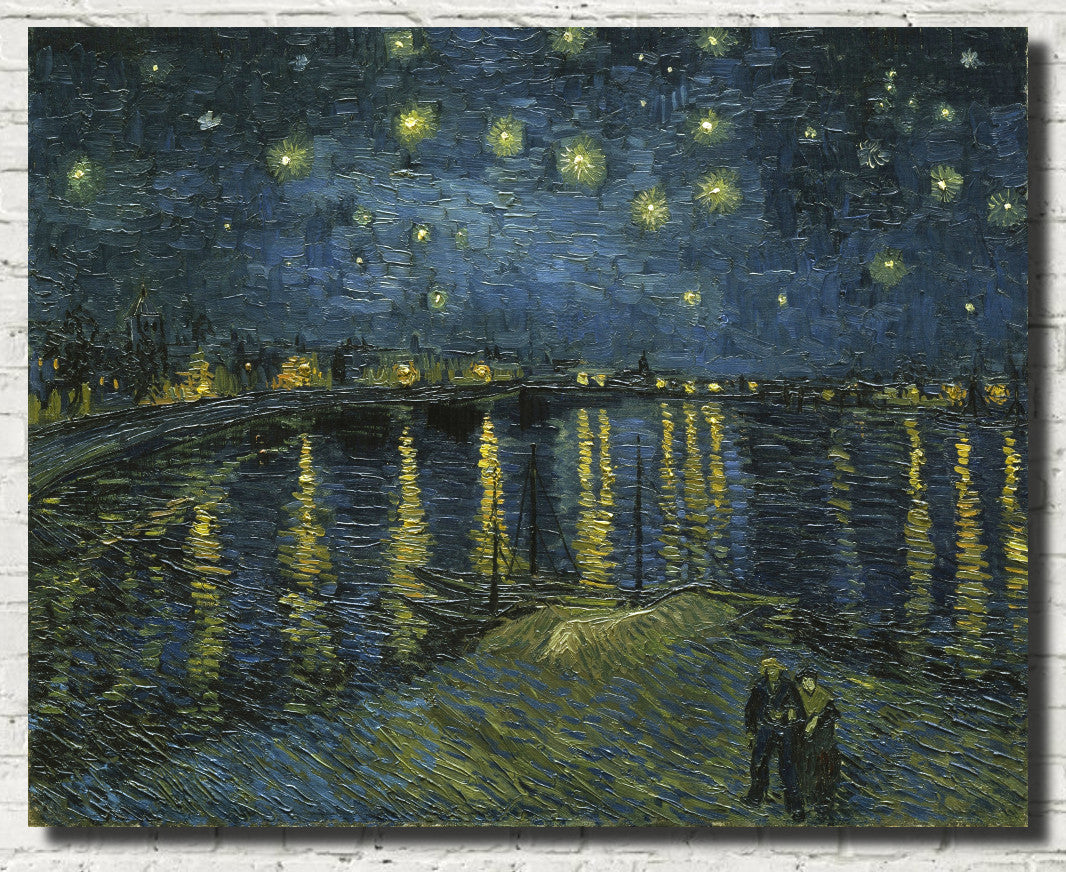
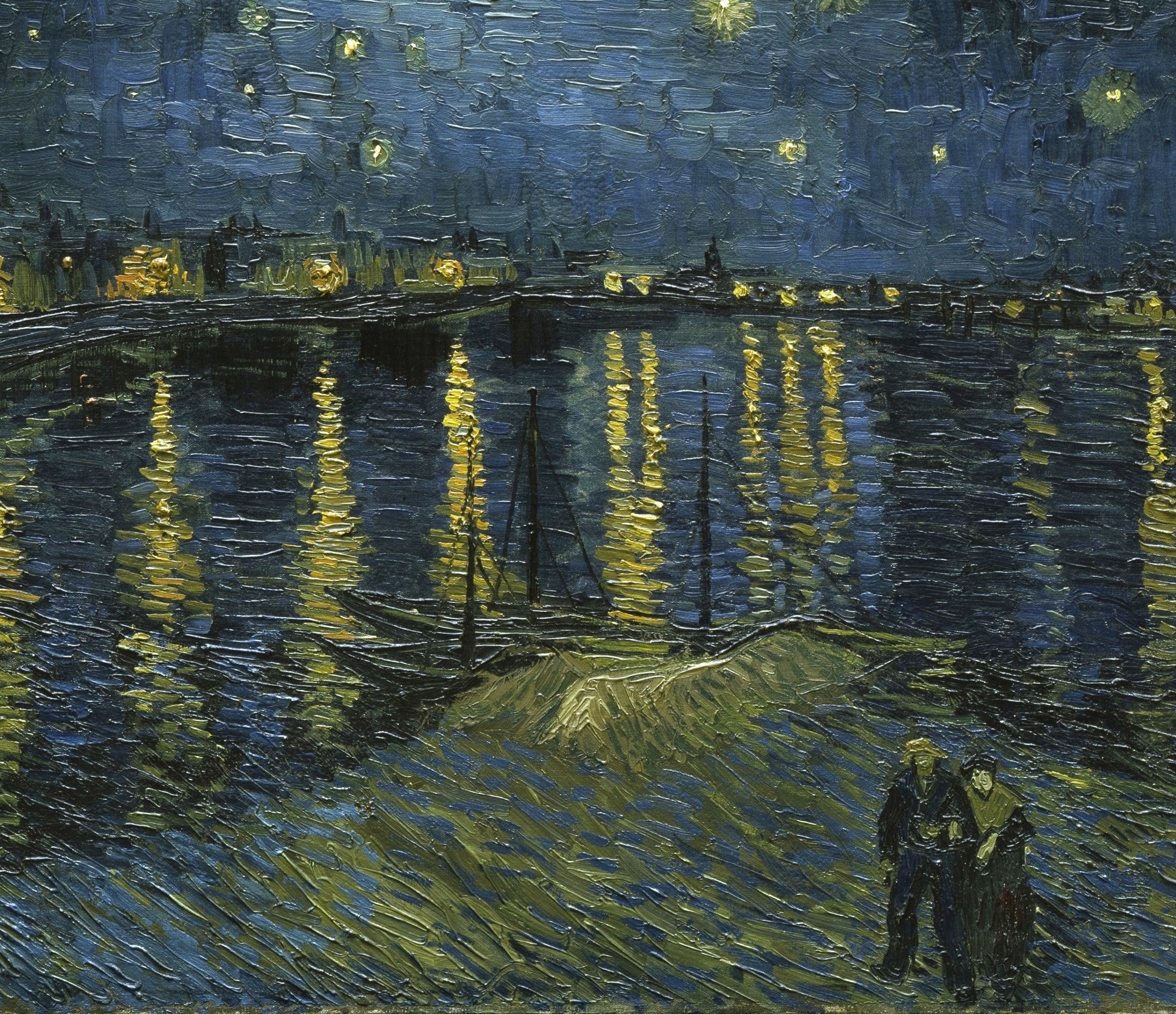
Night provided Van Gogh with some of his most memorable opportunities to explore colour. Rather than representing darkness simply through black or grey, he frequently used deep blues, greens, yellows and oranges to create luminous nocturnal scenes.
The Starry Night is the most famous example. Its swirling sky, bright celestial forms, rolling landscape and enormous foreground cypress combine observation with an intensely rhythmic treatment of nature.
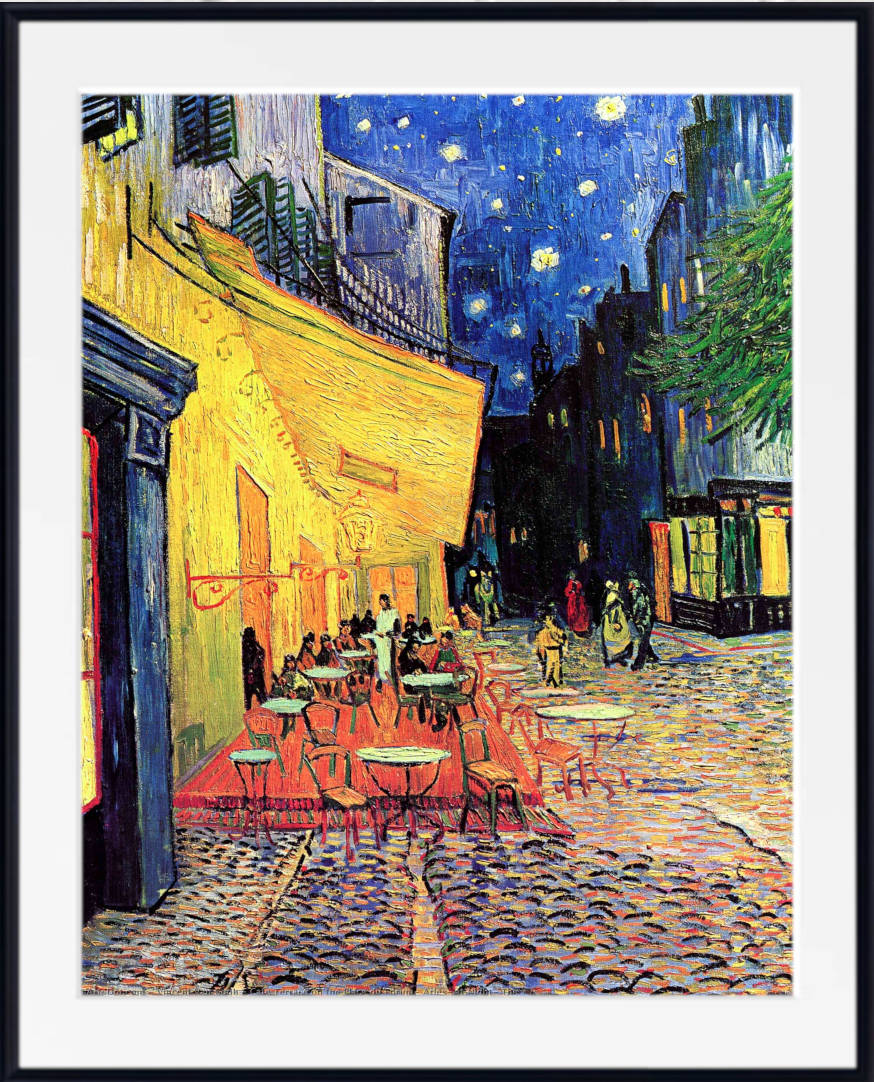
Other night subjects, including Starry Night over the Rhône, Café Terrace at Night and Road with Cypress and Star, demonstrate the variety Van Gogh could achieve within a nocturnal palette.
Sunflowers and Van Gogh’s Flower Paintings
Van Gogh’s flower paintings range from carefully observed still lifes to some of the most iconic images in modern art.
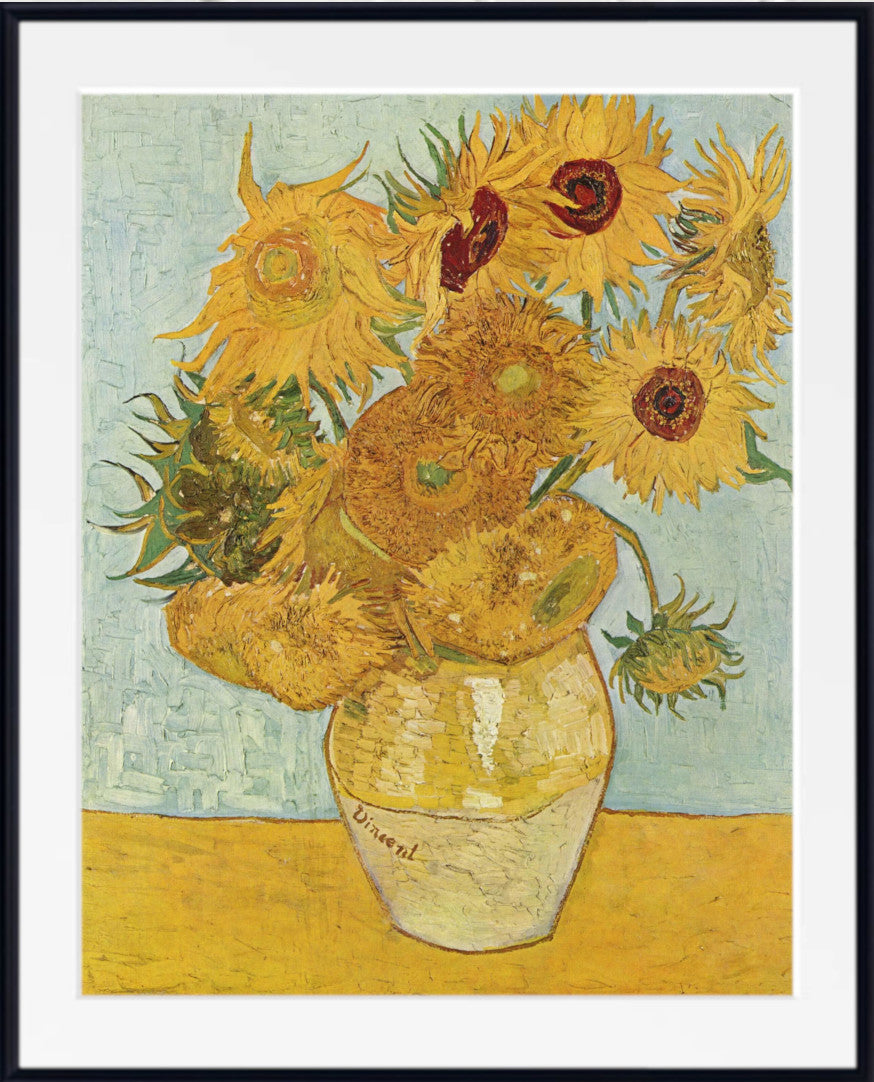
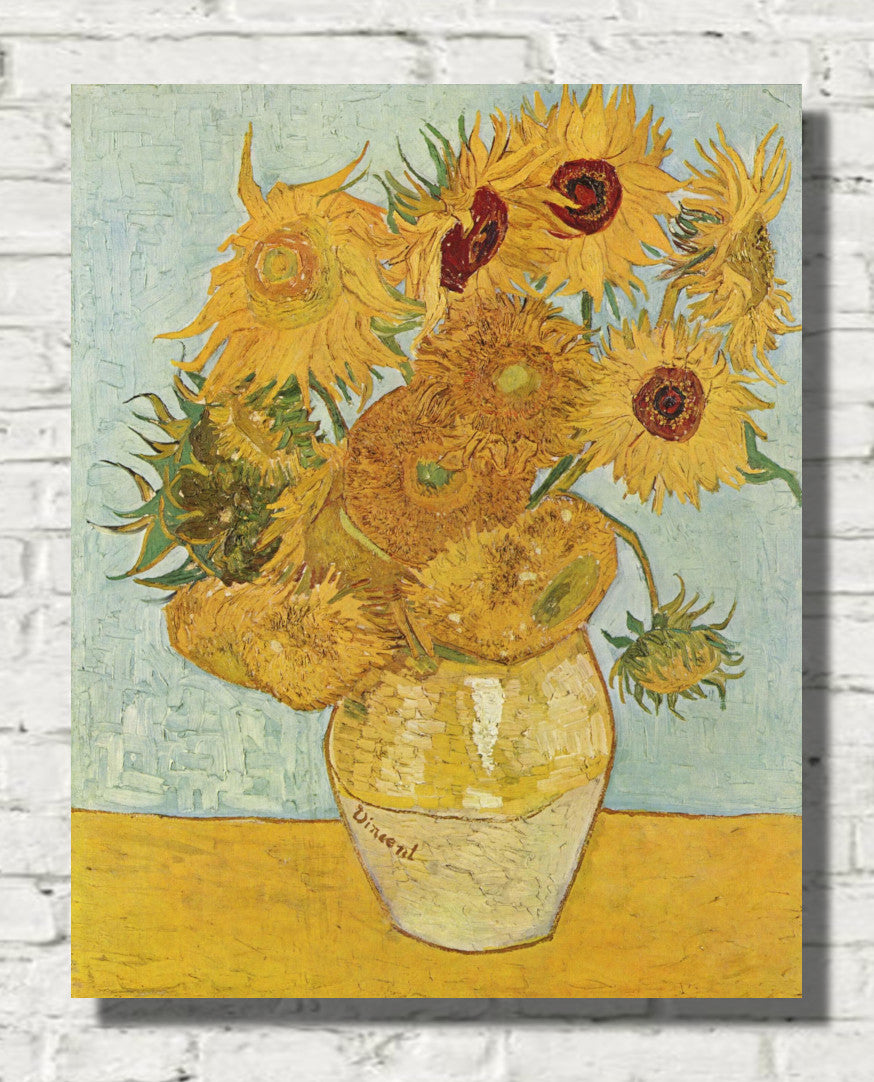
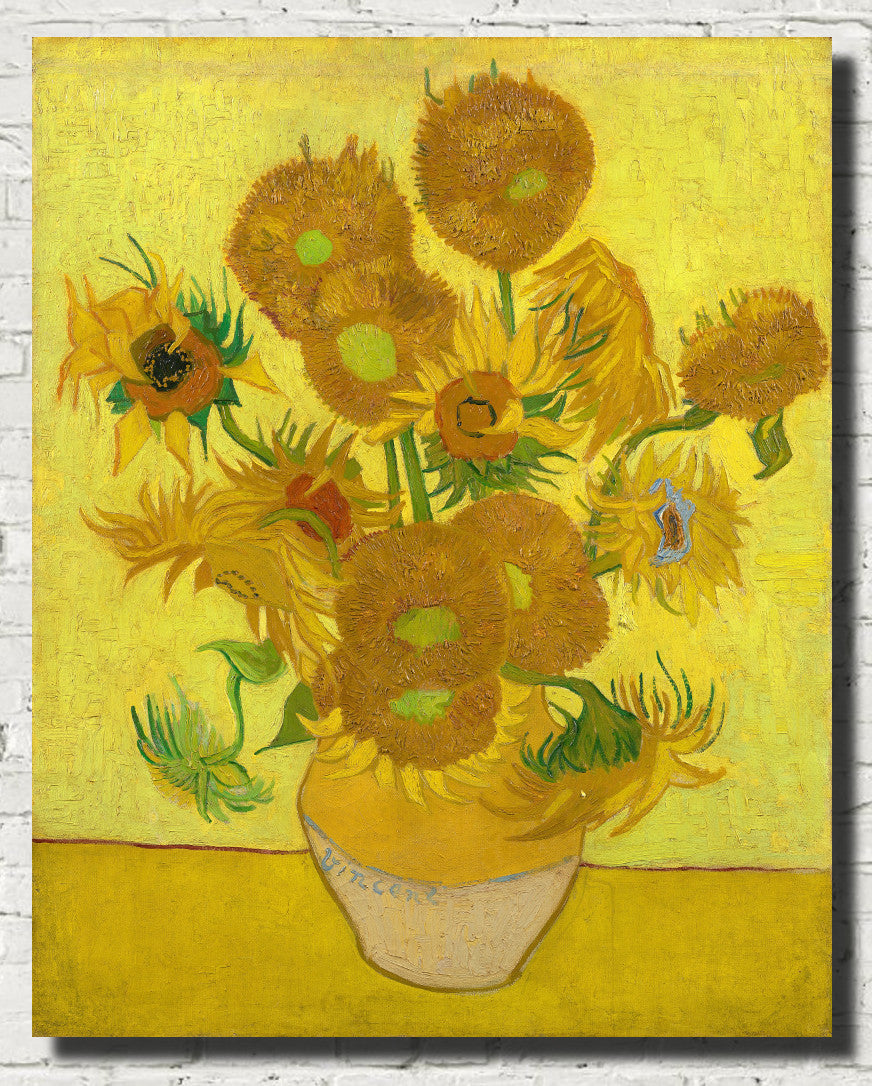
The Sunflowers paintings created in Arles are particularly closely associated with his name. Using variations of yellow, ochre, green and brown, Van Gogh explored how a restricted palette could produce extraordinary visual intensity.
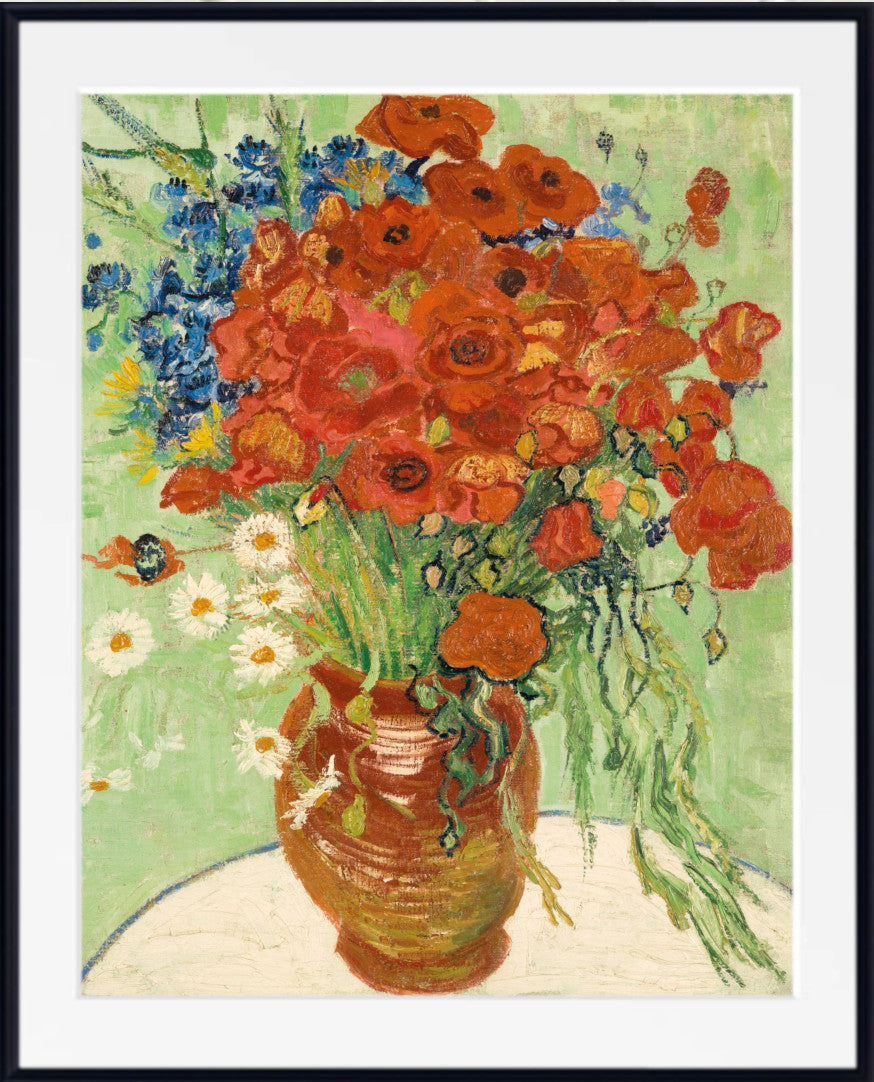
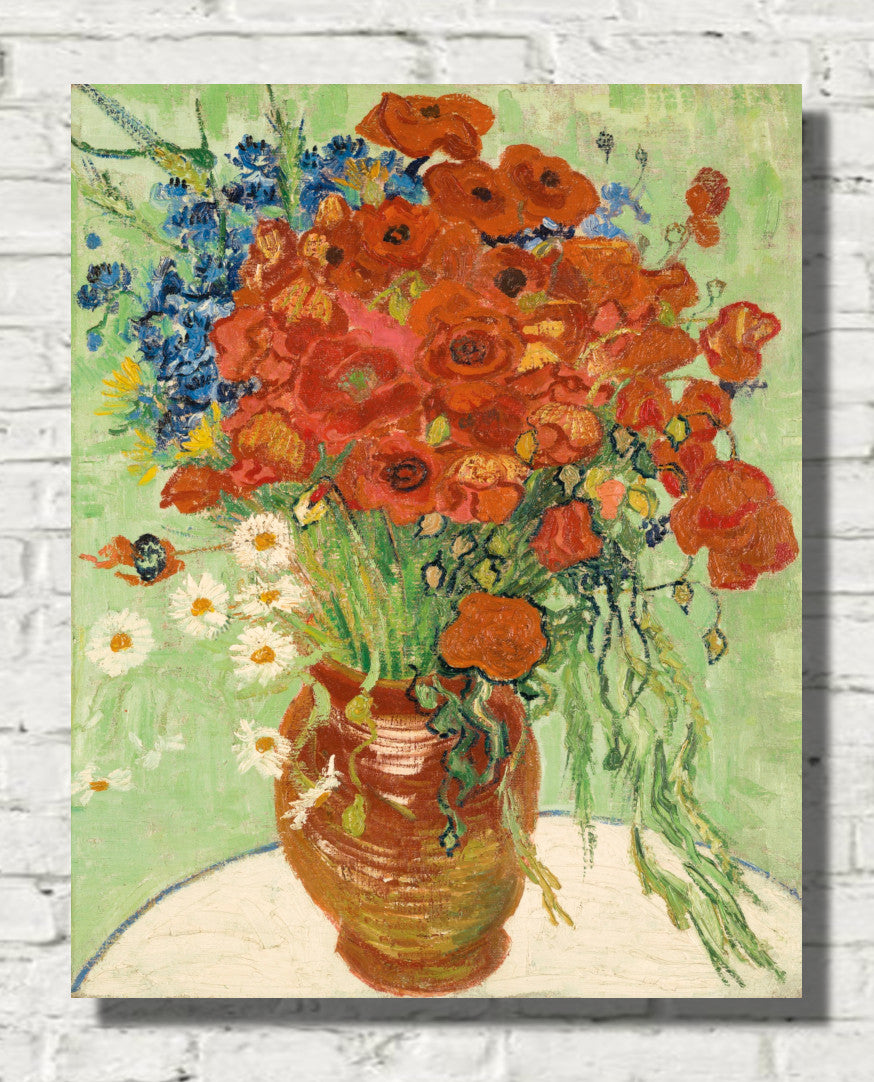
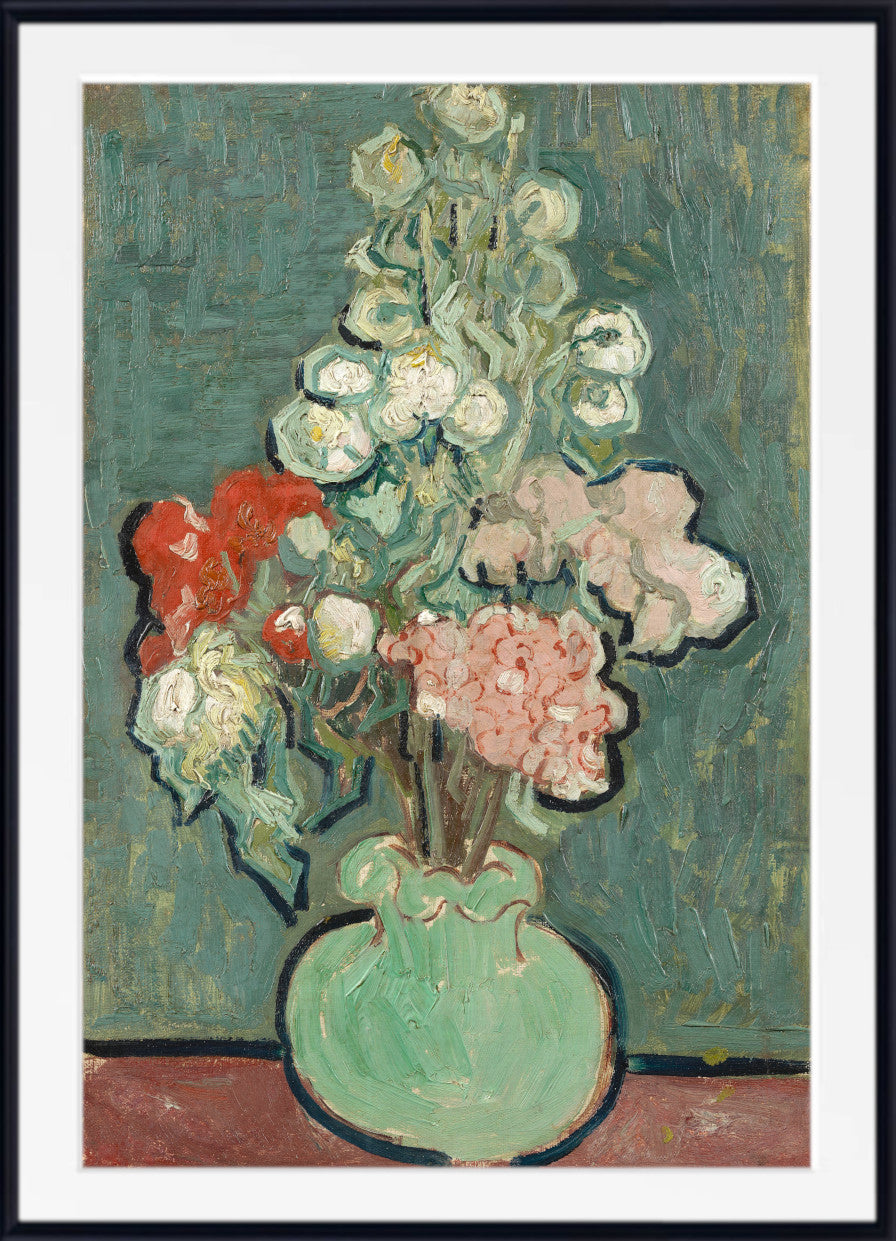
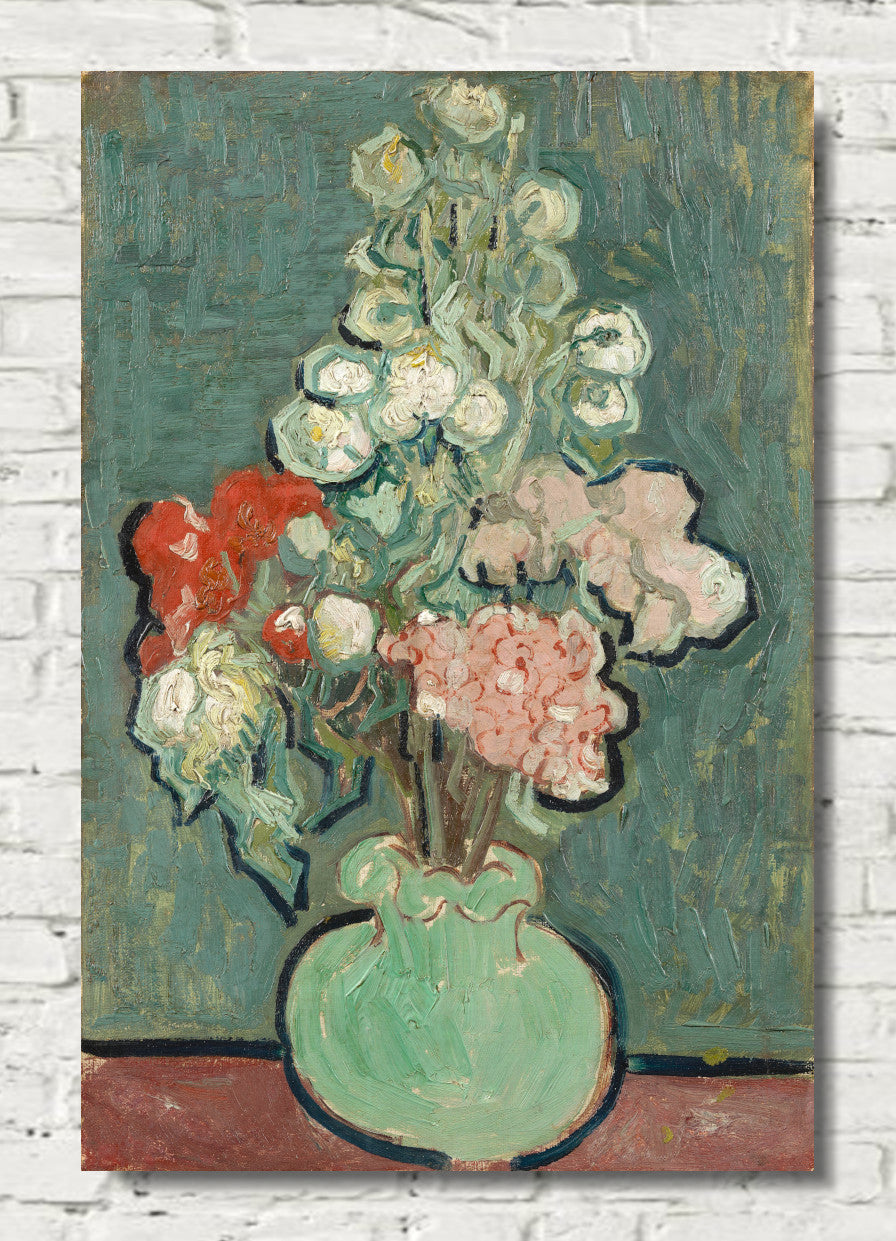
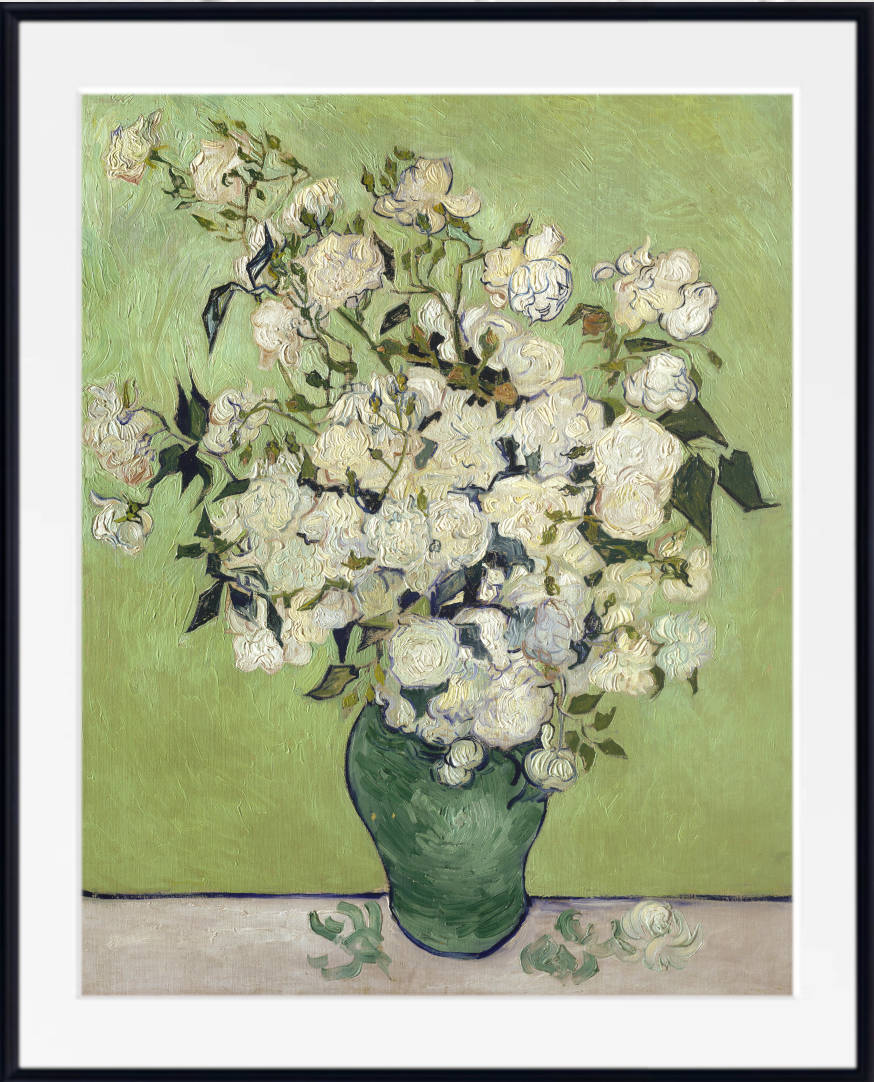
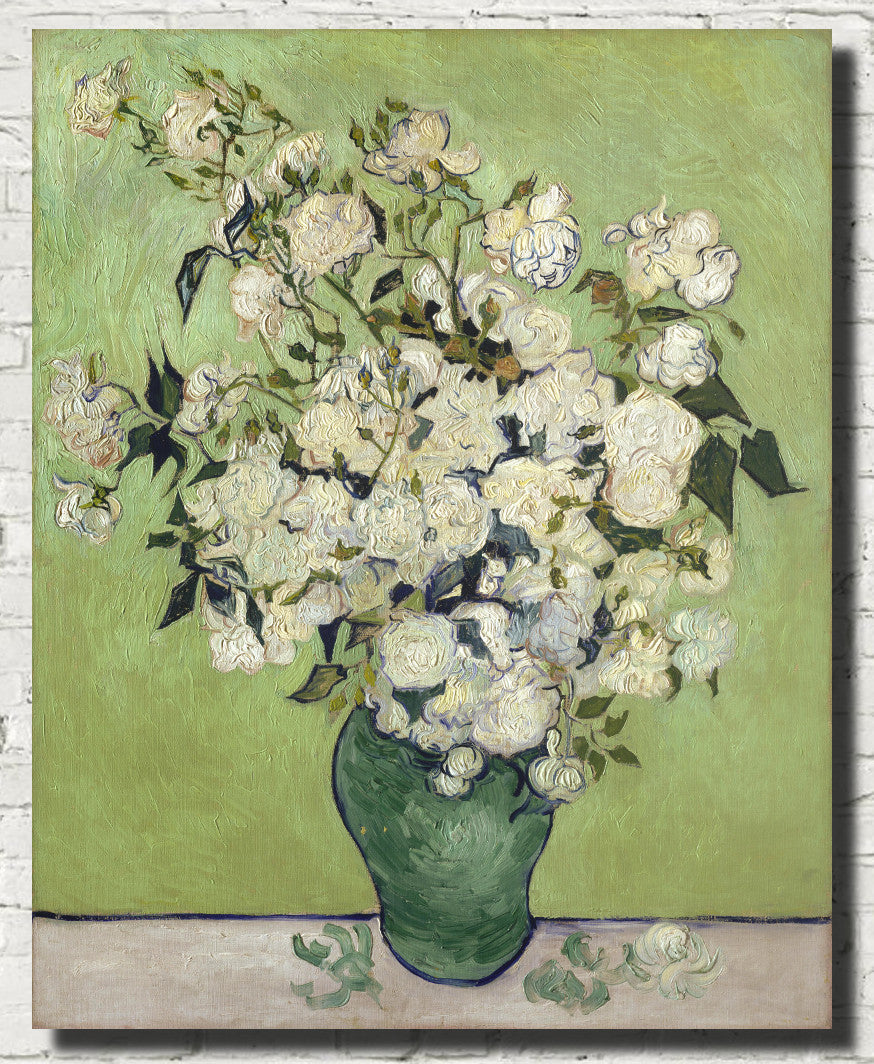
His flower subjects were far broader than sunflowers alone. Irises, roses, oleanders, poppies and blossom all provided opportunities to investigate colour, shape and the physical character of paint.
Almond Blossom, painted at Saint-Rémy in 1890, presents an especially different mood. Dark branches covered in pale blossom extend across a clear blue background, creating one of Van Gogh’s most spacious and decorative compositions.
Portraits and Self-Portraits
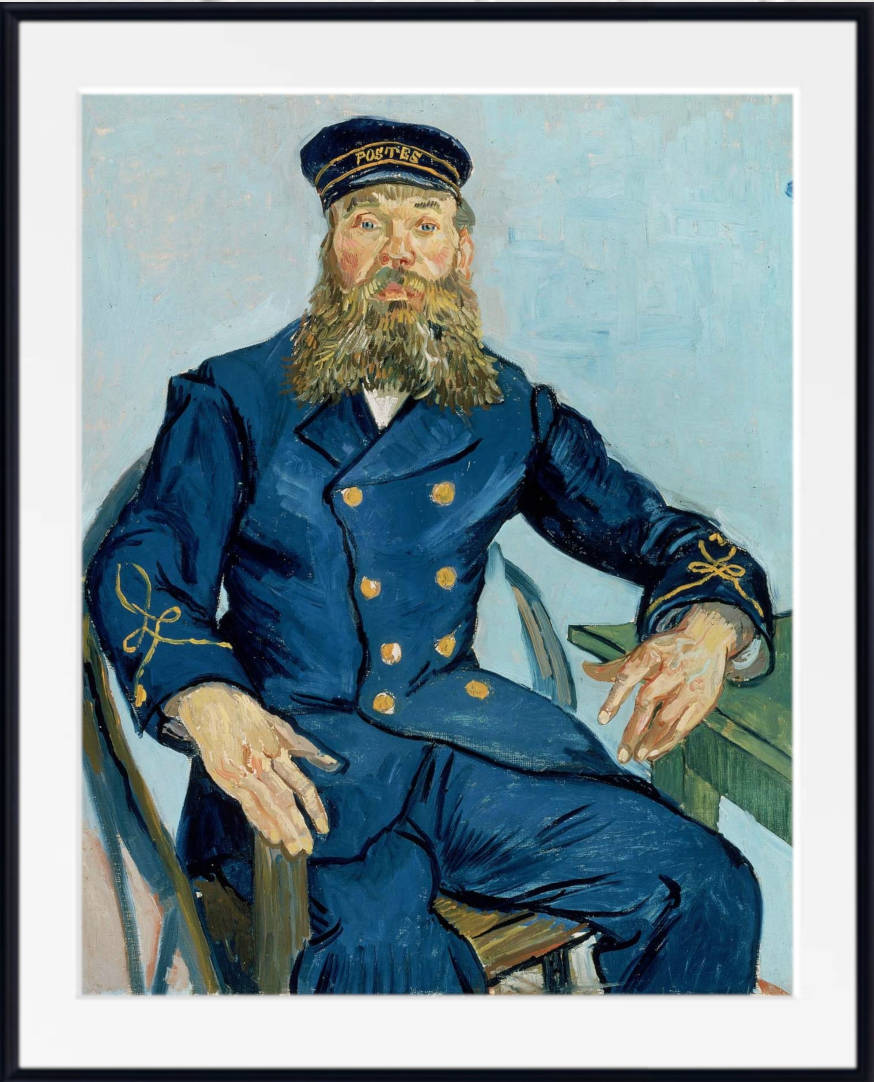
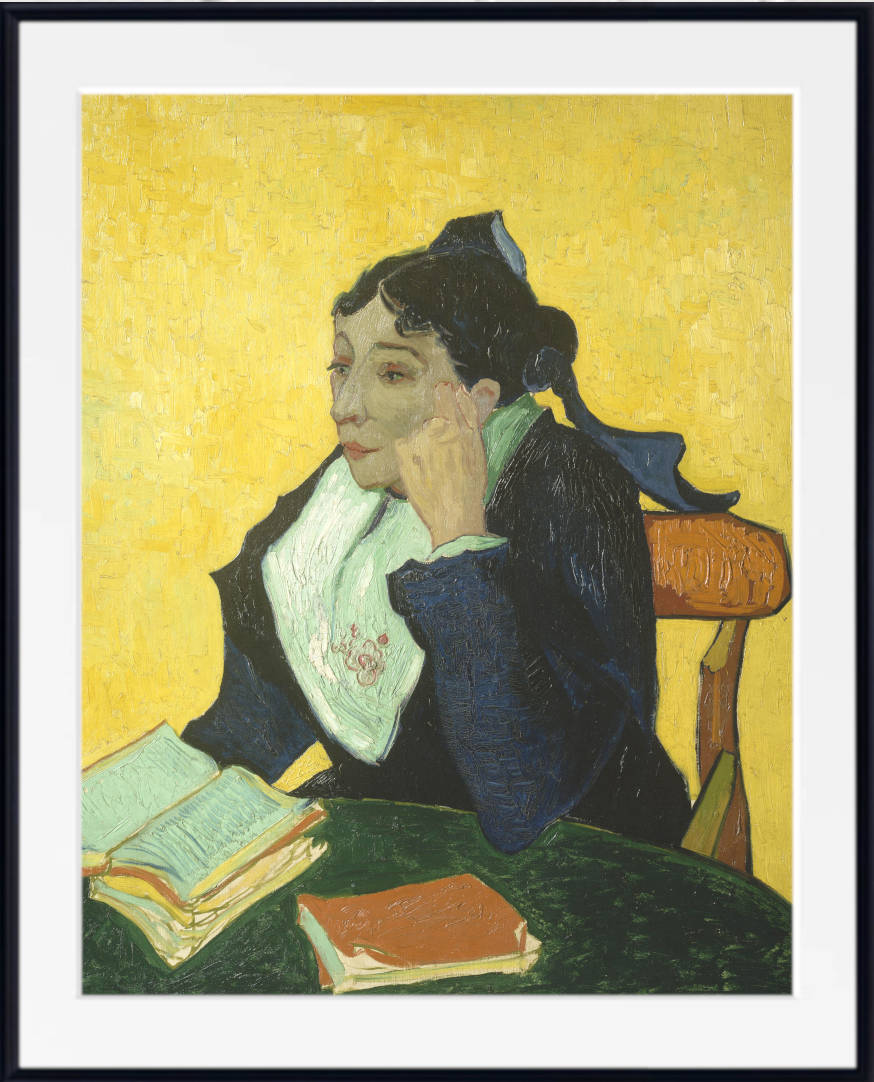
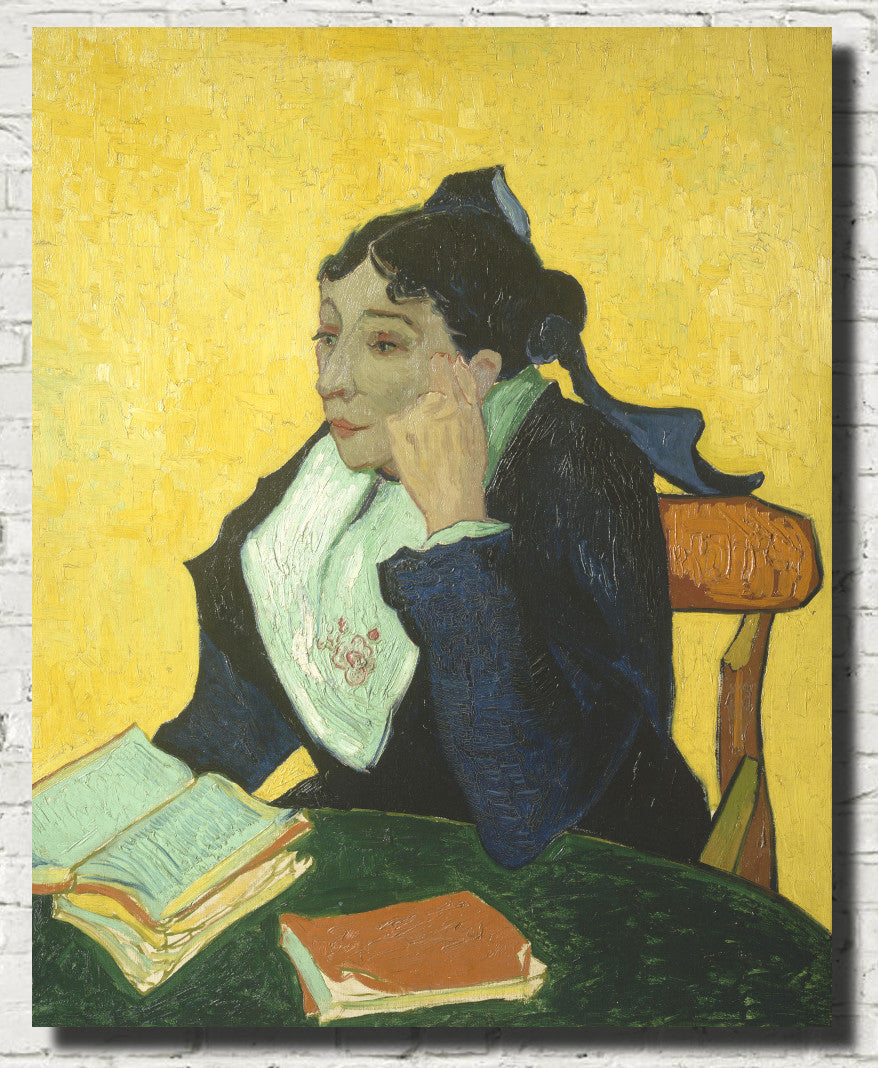
Van Gogh also produced an important body of portraits and self-portraits. Sitters range from friends and local residents to doctors, workers and members of families he came to know during his travels.
His portraits rarely depend on elaborate settings. Colour, facial expression, clothing and background often provide enough information to establish the character and mood of the sitter.
Van Gogh’s numerous self-portraits allowed him to experiment directly with different combinations of colour and brushwork while recording his own changing appearance during the years in Paris and southern France.
Japanese Art and Van Gogh
Japanese ukiyo-e prints had an important influence on Van Gogh’s developing visual language. He admired their bold outlines, flattened areas of colour, unconventional cropping and ability to create visually powerful compositions from apparently simple natural subjects.
Van Gogh collected Japanese prints and copied or adapted compositions by artists such as Hiroshige. Their influence can also be felt more indirectly in the simplified forms, strong silhouettes and heightened colour of his mature landscapes.
Rather than merely imitating Japanese art, Van Gogh absorbed selected principles and combined them with Impressionism, contemporary French painting and his own increasingly physical approach to brushwork.
Saint-Rémy and a New Landscape Language
Van Gogh entered Saint-Paul-de-Mausole at Saint-Rémy in May 1889. The surrounding landscape quickly became central to his work.
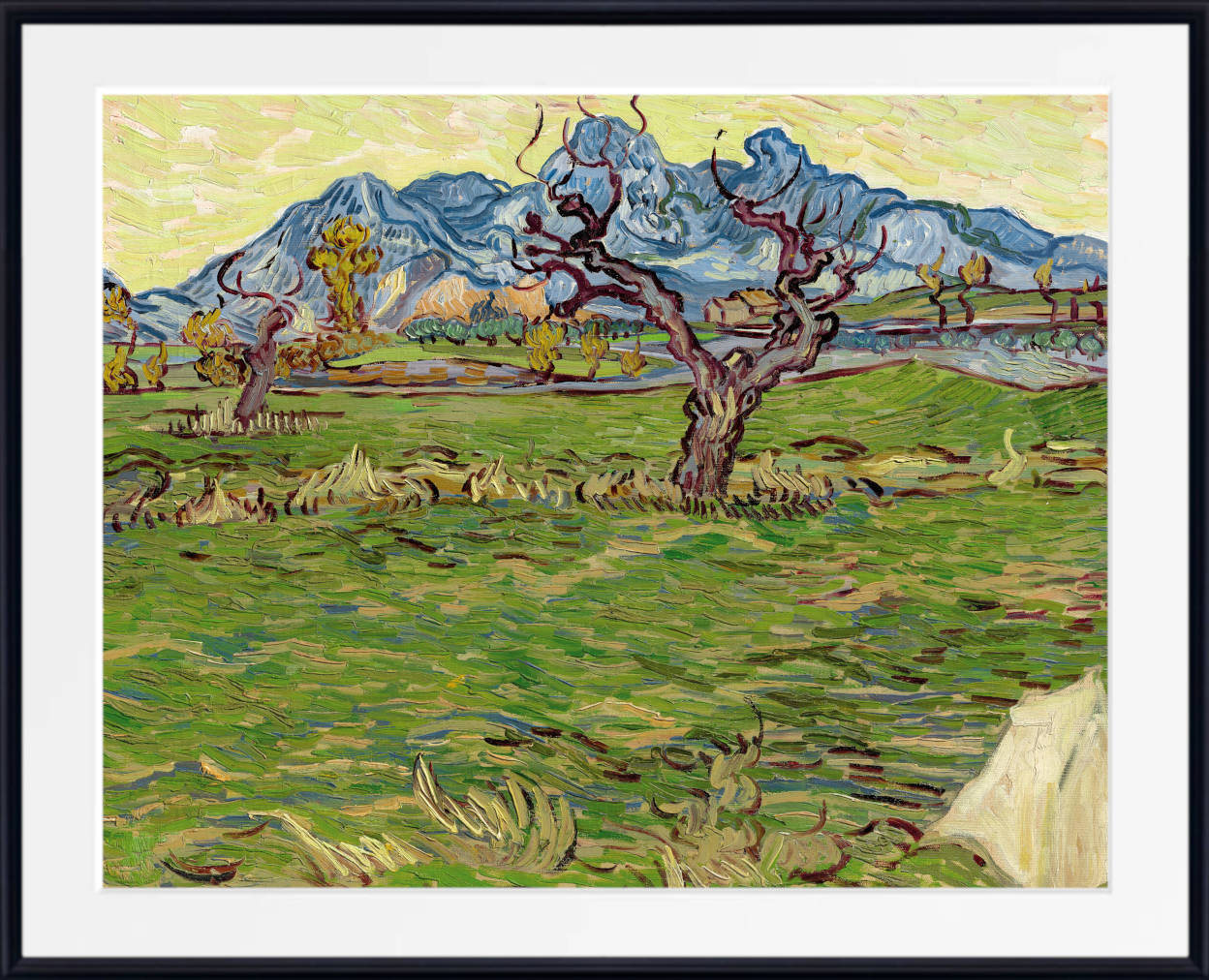
The gardens, nearby mountains, olive groves, wheat fields and cypress trees gave him a relatively concentrated group of subjects that he could revisit repeatedly.
During this period his brushwork often became increasingly rhythmic. Curves and repeated strokes move through clouds, hills, trees and fields, giving many Saint-Rémy landscapes a sense that every part of nature belongs to the same energetic system.
The close relationship between wheat fields, cypresses and olive trees makes these paintings particularly interesting when viewed together.
The Final Landscapes at Auvers-sur-Oise
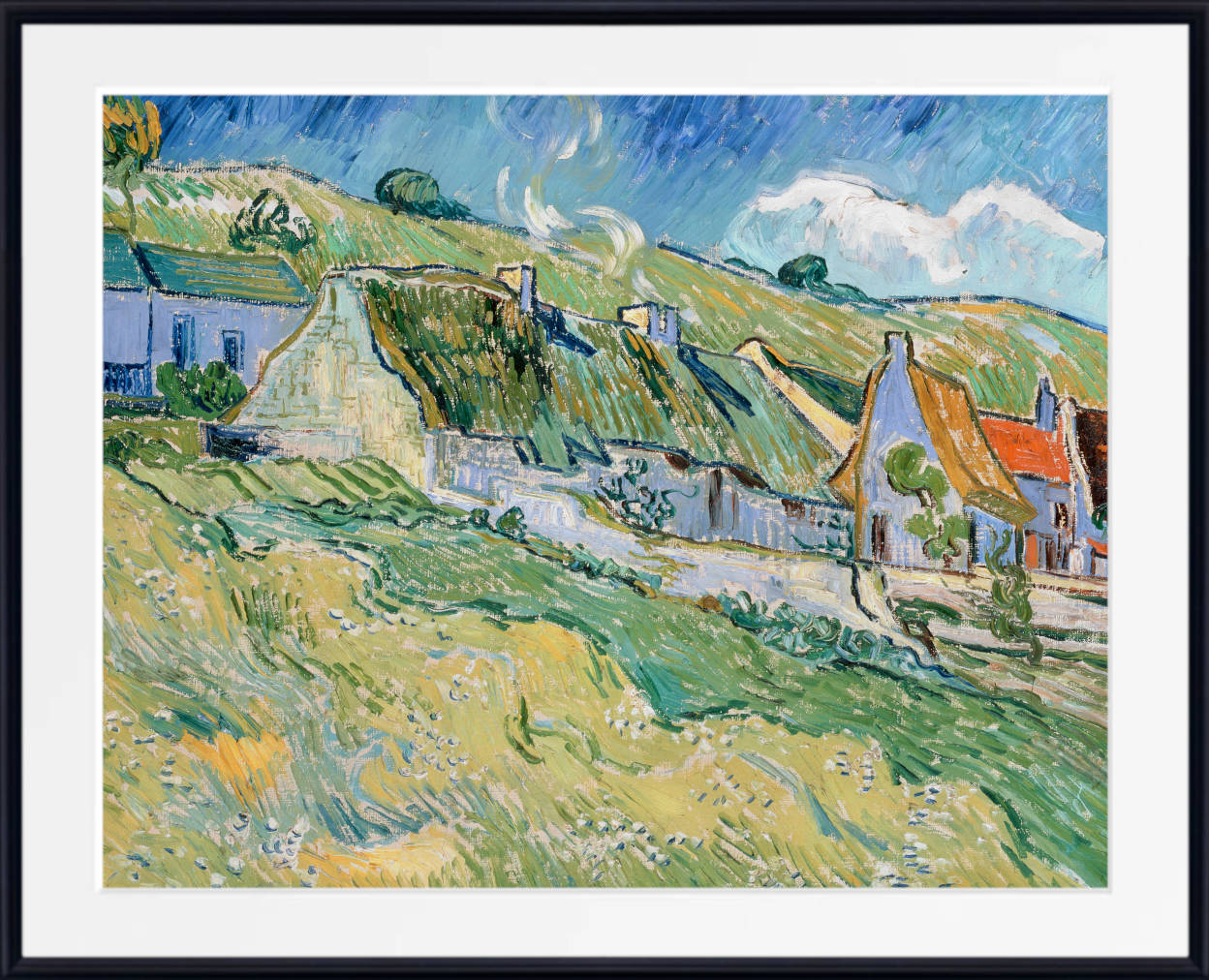
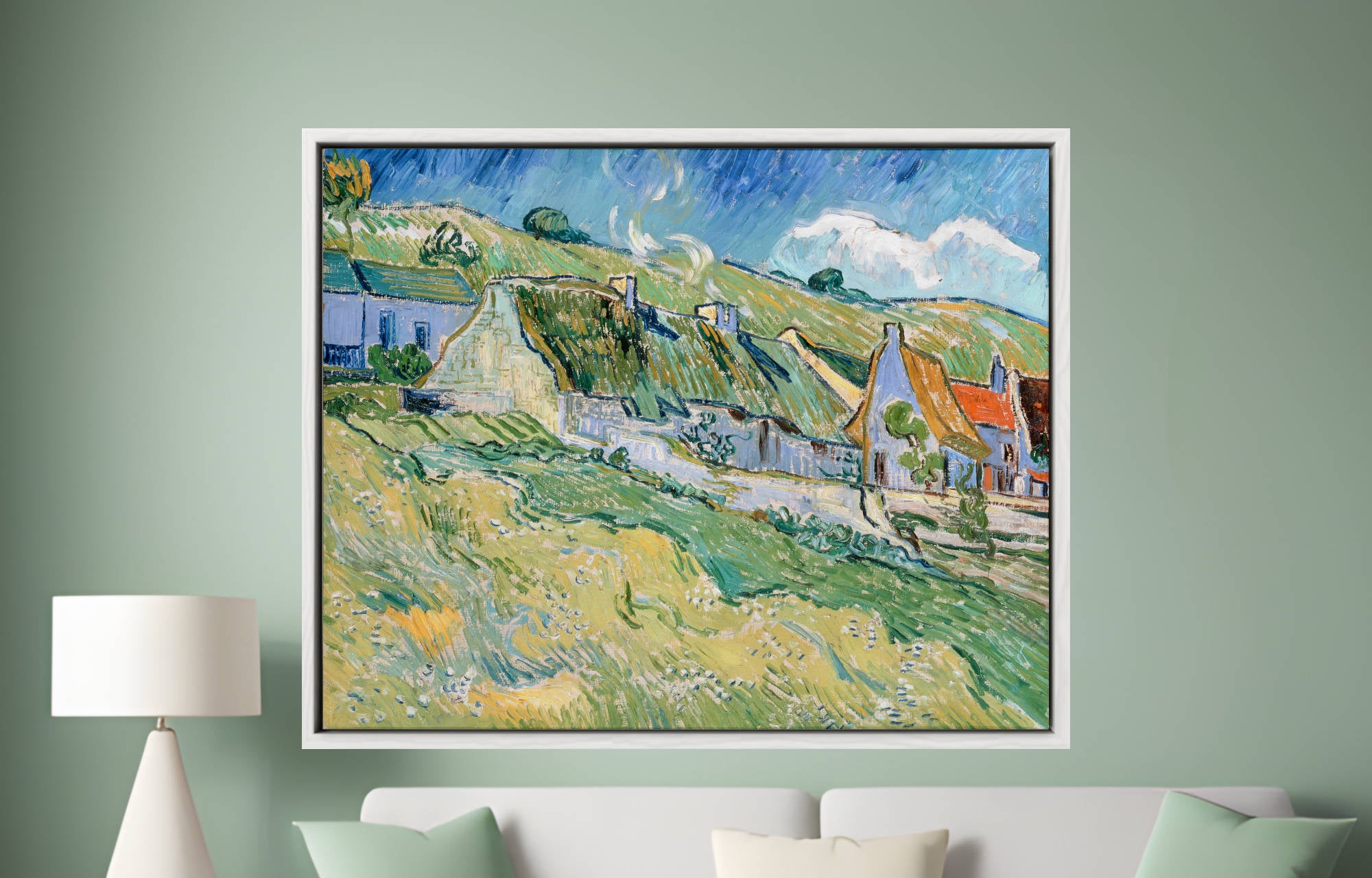
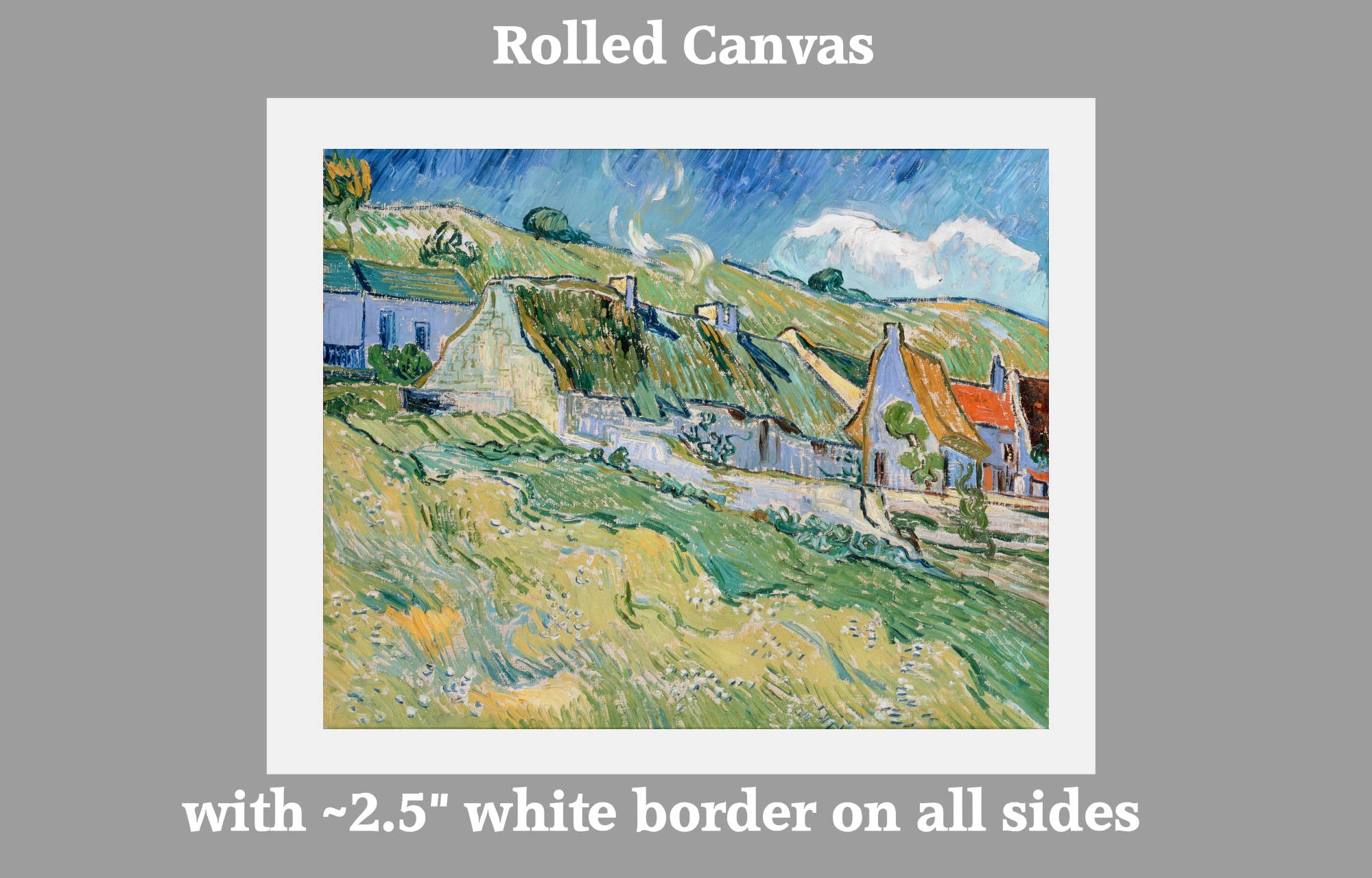
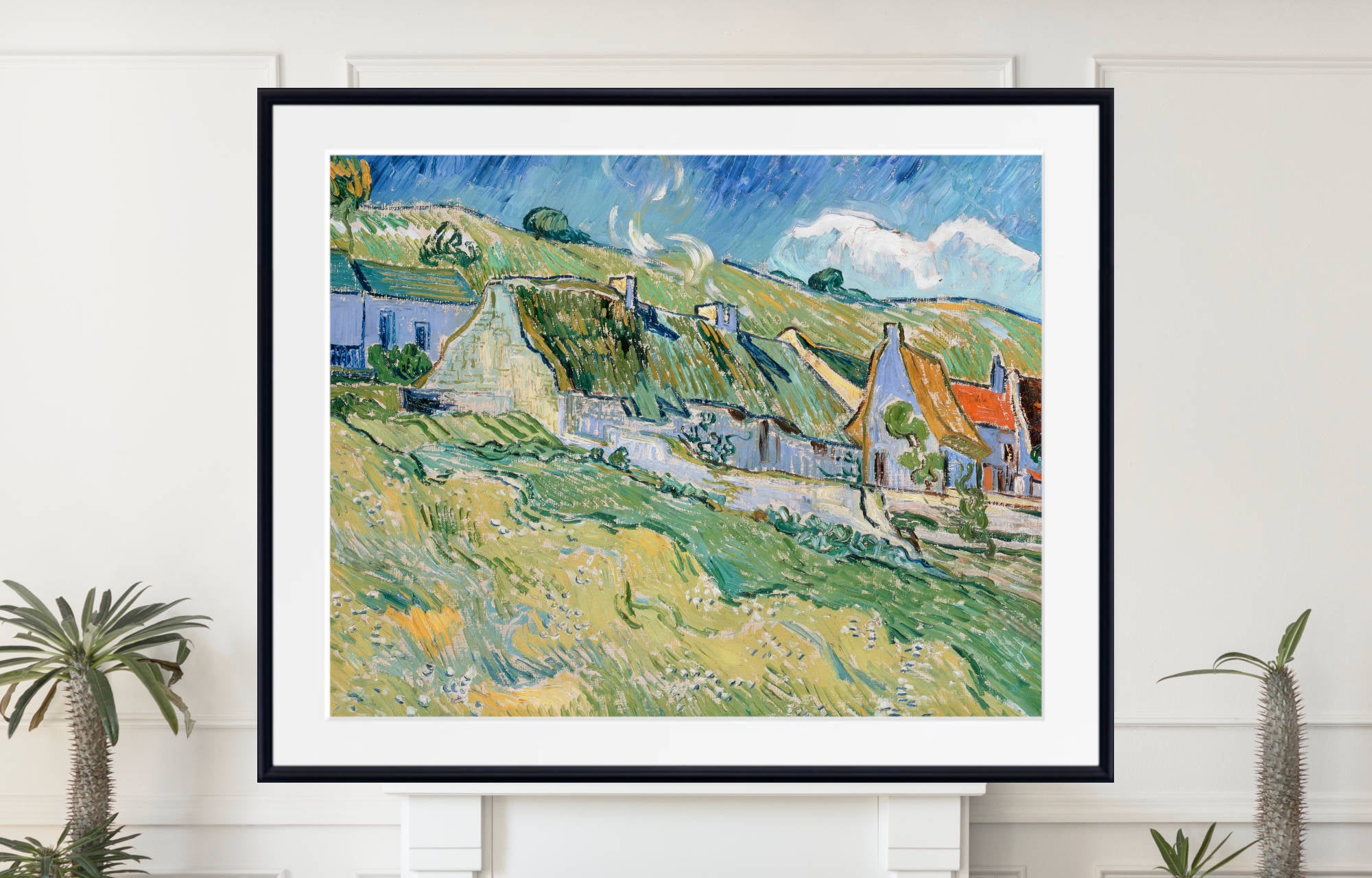
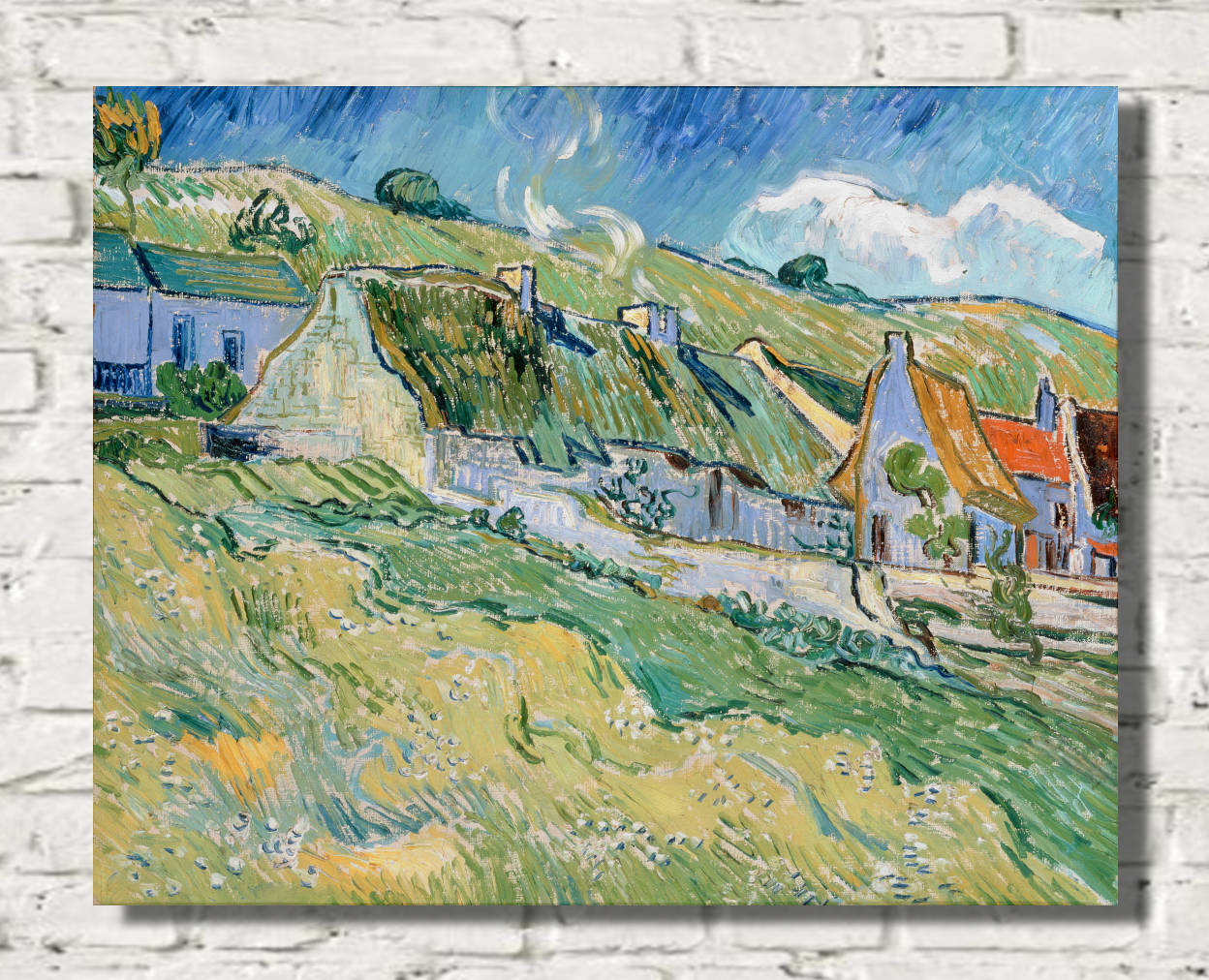
Van Gogh moved to Auvers-sur-Oise in May 1890. During the final months of his life he painted the village, surrounding countryside, houses, gardens and broad wheat fields with extraordinary productivity.
Several of the landscapes use unusually wide formats that emphasise the horizontal sweep of the countryside. Fields stretch beneath immense skies, producing compositions that can feel simultaneously open, vigorous and emotionally charged.
Wheatfield with Crows and Wheatfield under Thunderclouds belong to this remarkable late group. Although these works have sometimes been interpreted solely through the circumstances of Van Gogh’s final weeks, they also continue his long-standing fascination with agricultural landscape, weather and the changing character of nature.
Colour and Brushwork in Van Gogh’s Paintings
Van Gogh’s colour became progressively less dependent on straightforward naturalistic description. Yellow could become more brilliant, blue deeper and complementary combinations more pronounced if doing so strengthened the effect of the painting.
Brushwork became equally important. Individual strokes frequently remain visible and may follow the shape or movement of the subject: short marks build grasses and foliage, curving strokes describe trees, while longer directional marks sweep across fields and skies.
This combination of colour and visible mark-making gives Van Gogh’s paintings an immediacy that remains powerful when reproduced as fine art prints and canvas panels.
Choosing Vincent van Gogh Prints for Your Interior
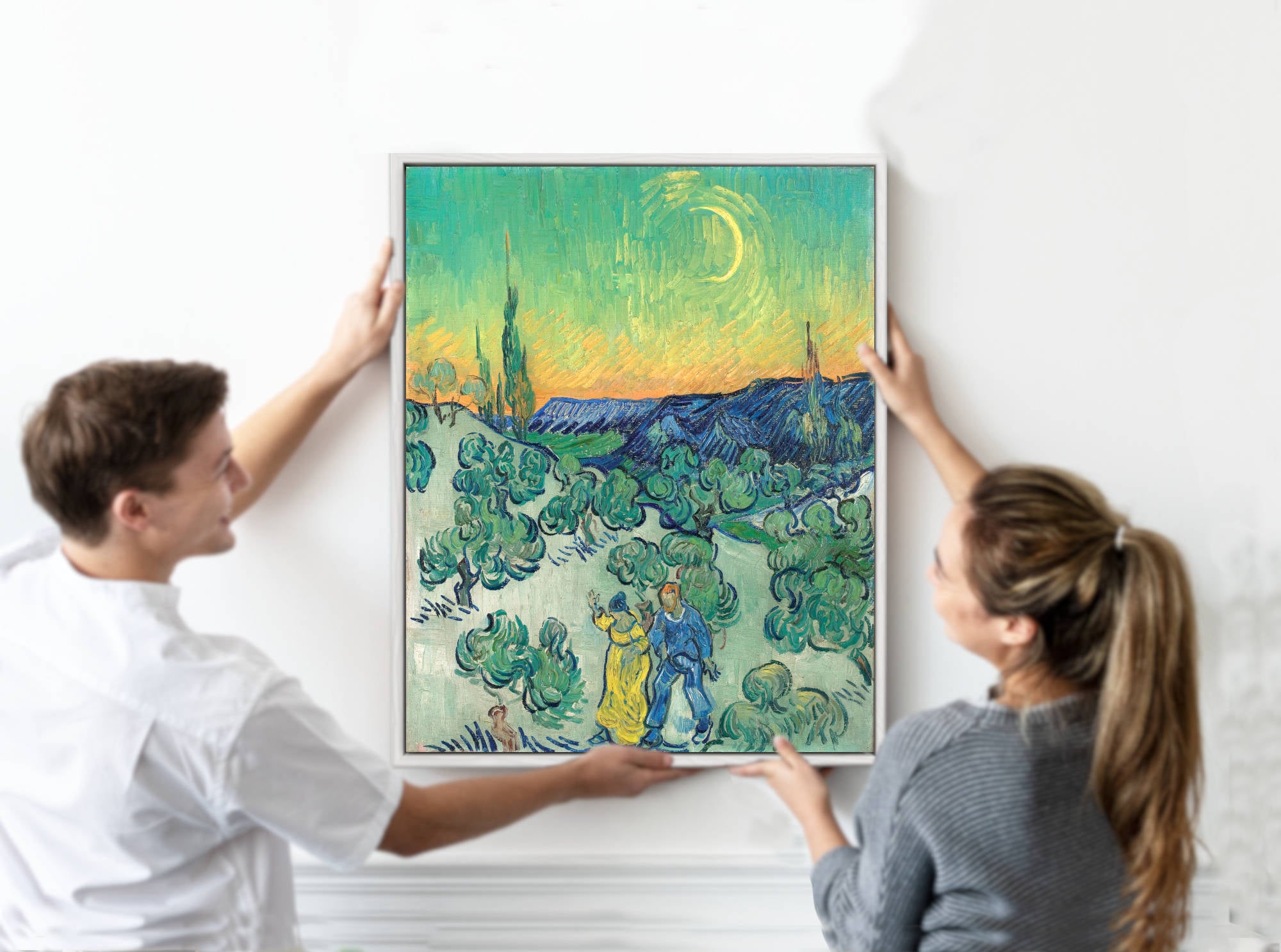
The breadth of Van Gogh’s work makes it possible to select prints for very different interiors and colour schemes.
For bright, high-impact wall art, Sunflowers, wheat-field landscapes and many of the Arles paintings combine saturated yellow with complementary blue and green.
For cooler interiors, The Starry Night, cypress landscapes and several Saint-Rémy works offer deeper blue and green palettes. Flowering orchards and Almond Blossom provide lighter alternatives that work particularly well with soft neutrals and pale timber.
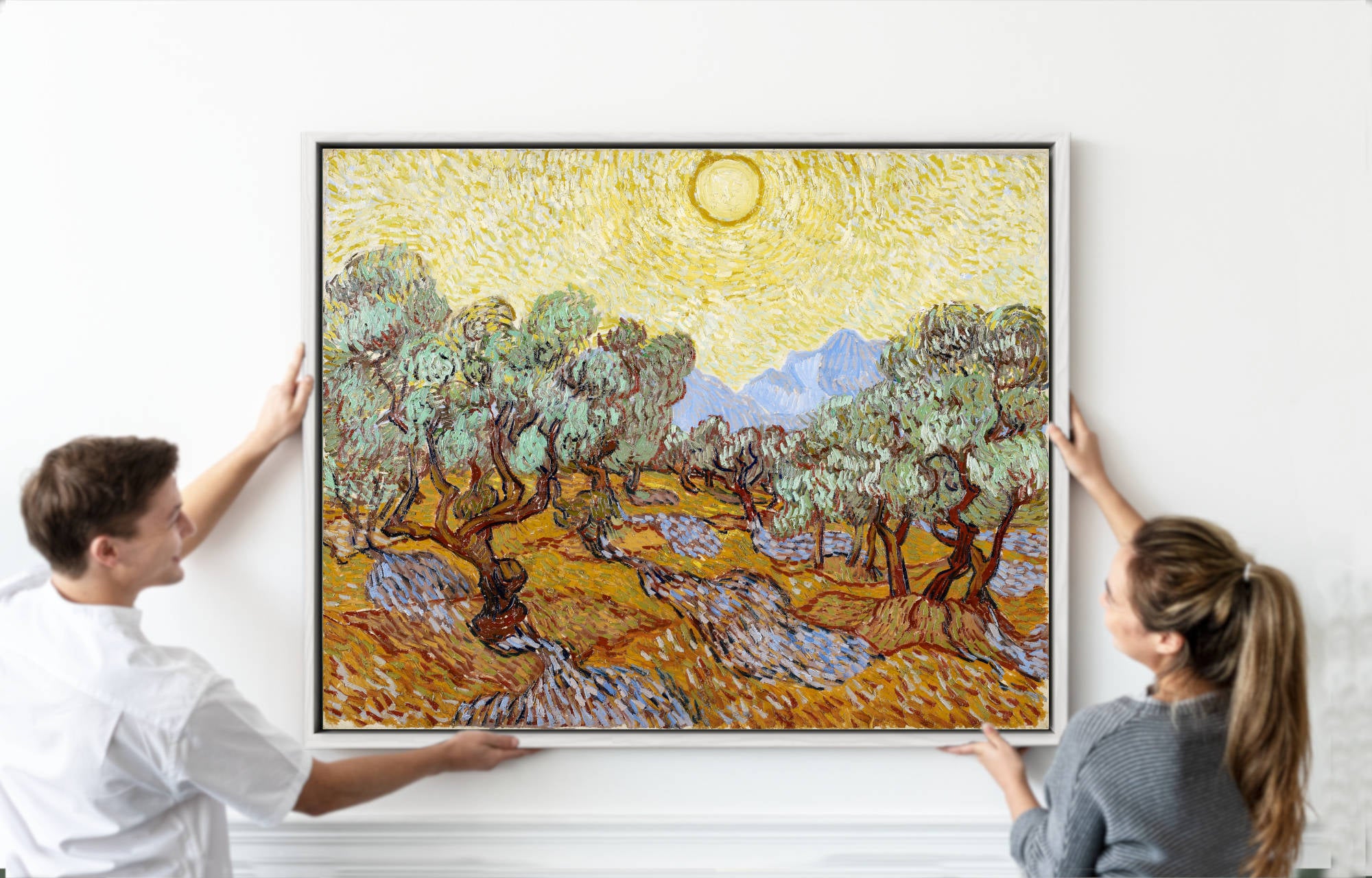
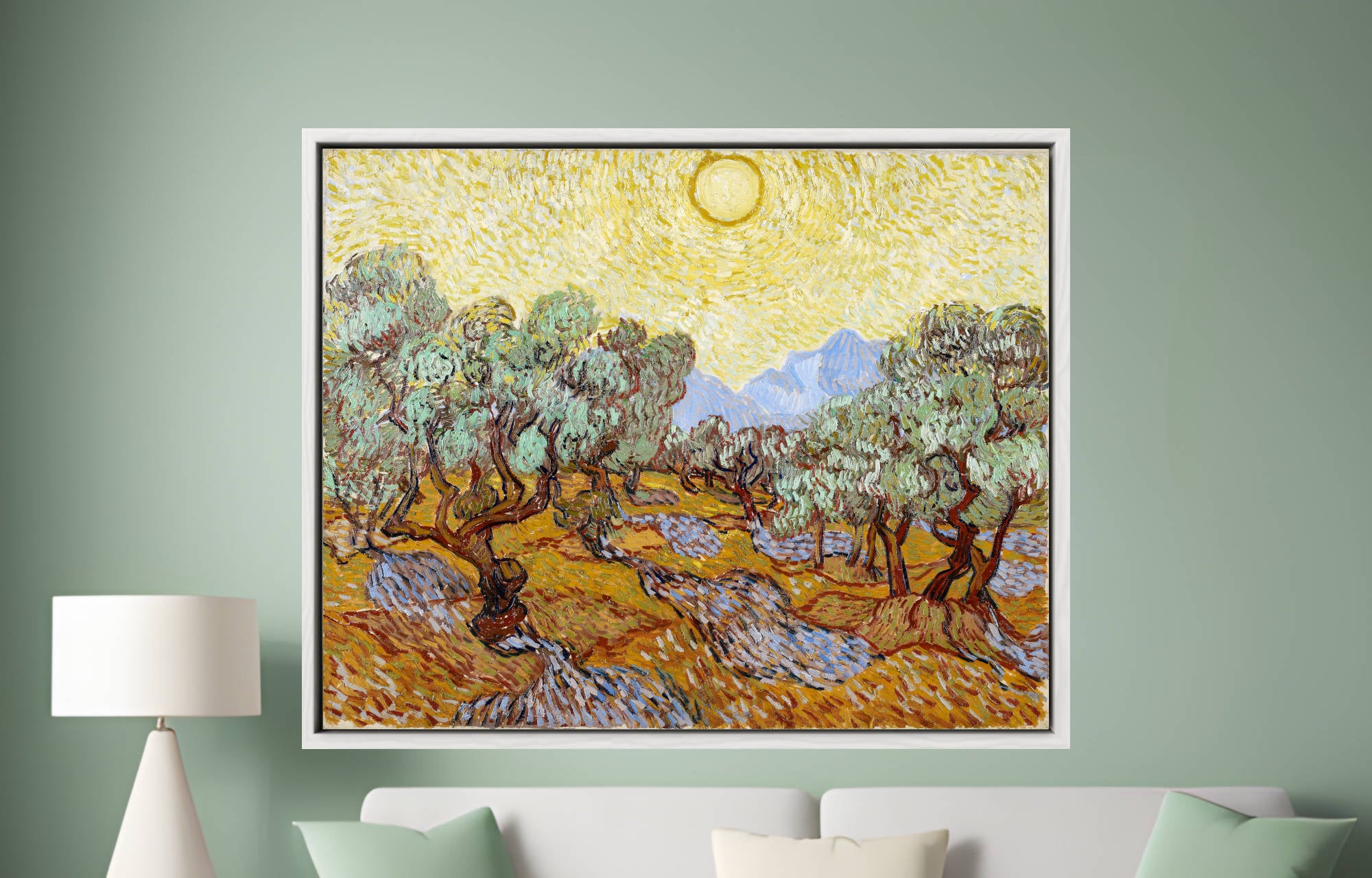
Olive groves and Provençal landscapes pair naturally with earth tones, putty, sage, cream and natural materials, making them especially effective in Scandinavian, Japandi and relaxed contemporary spaces.
Creating a Vincent van Gogh Gallery Wall
A Van Gogh gallery wall can be organised by subject, colour or period.
For a landscape-focused arrangement, combine wheat fields and harvest landscapes with cypress paintings and olive groves. Their repeated yellows, blues and greens create continuity while the changing compositions prevent the display from feeling repetitive.
For a lighter botanical display, combine flowering orchard prints with irises, almond blossom and other flower paintings.
A broader gallery wall can mix landscapes, flowers and portraits while using consistent framing to create visual unity.
Fine Art Prints, Framed Prints and Canvas Panels
GalleryThane’s Vincent van Gogh collection includes reproductions in a wide range of sizes and formats.
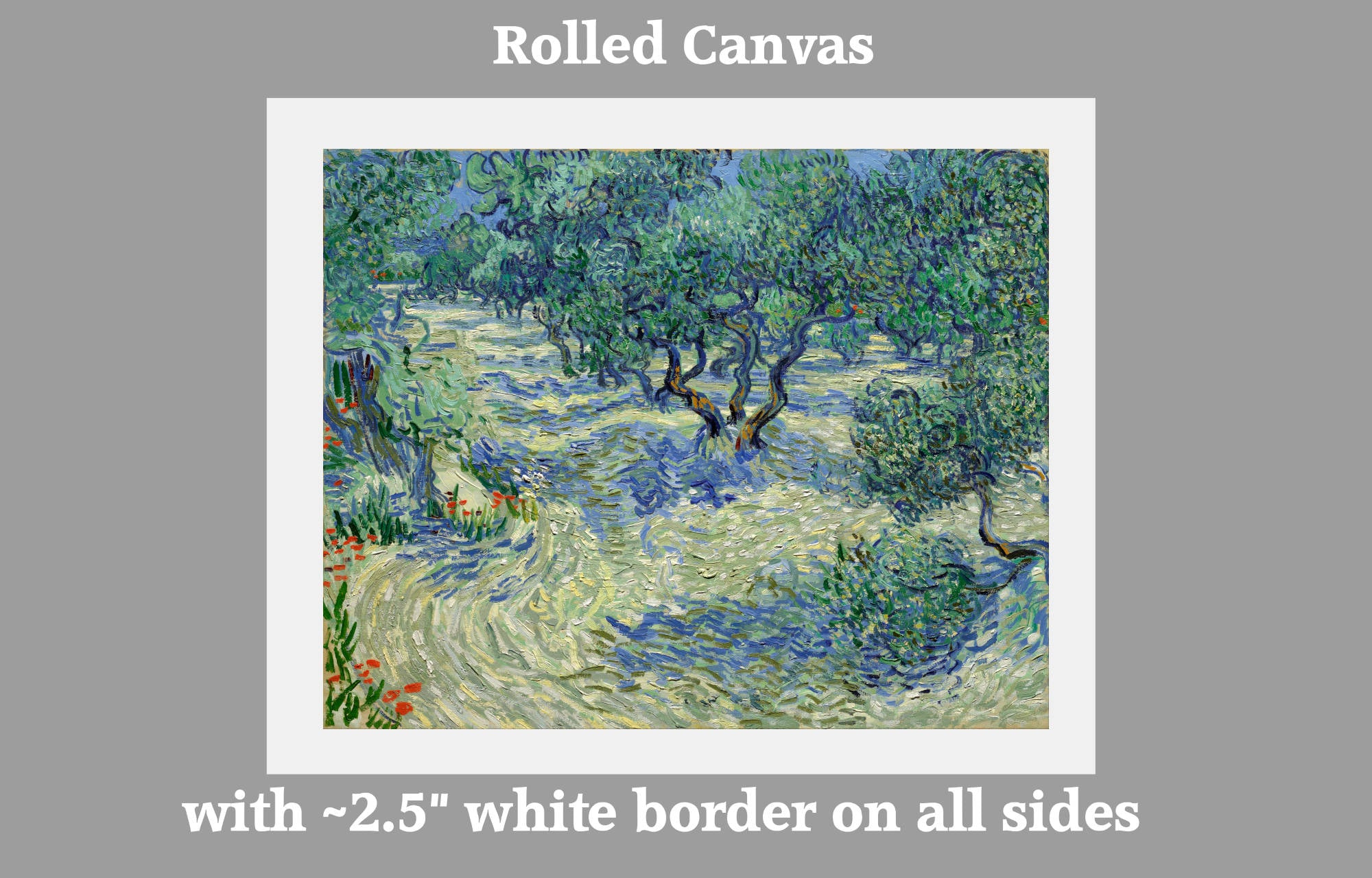
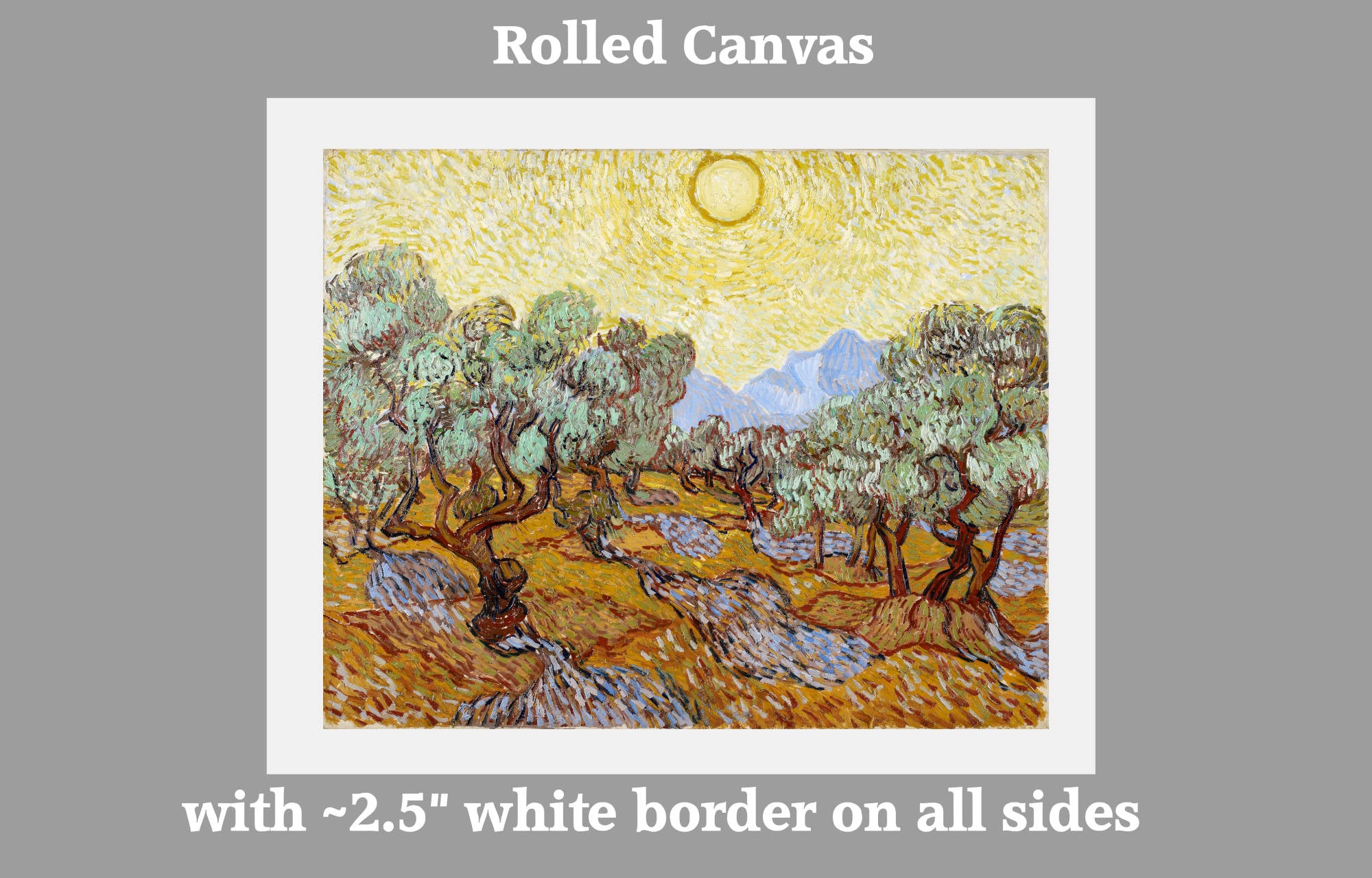
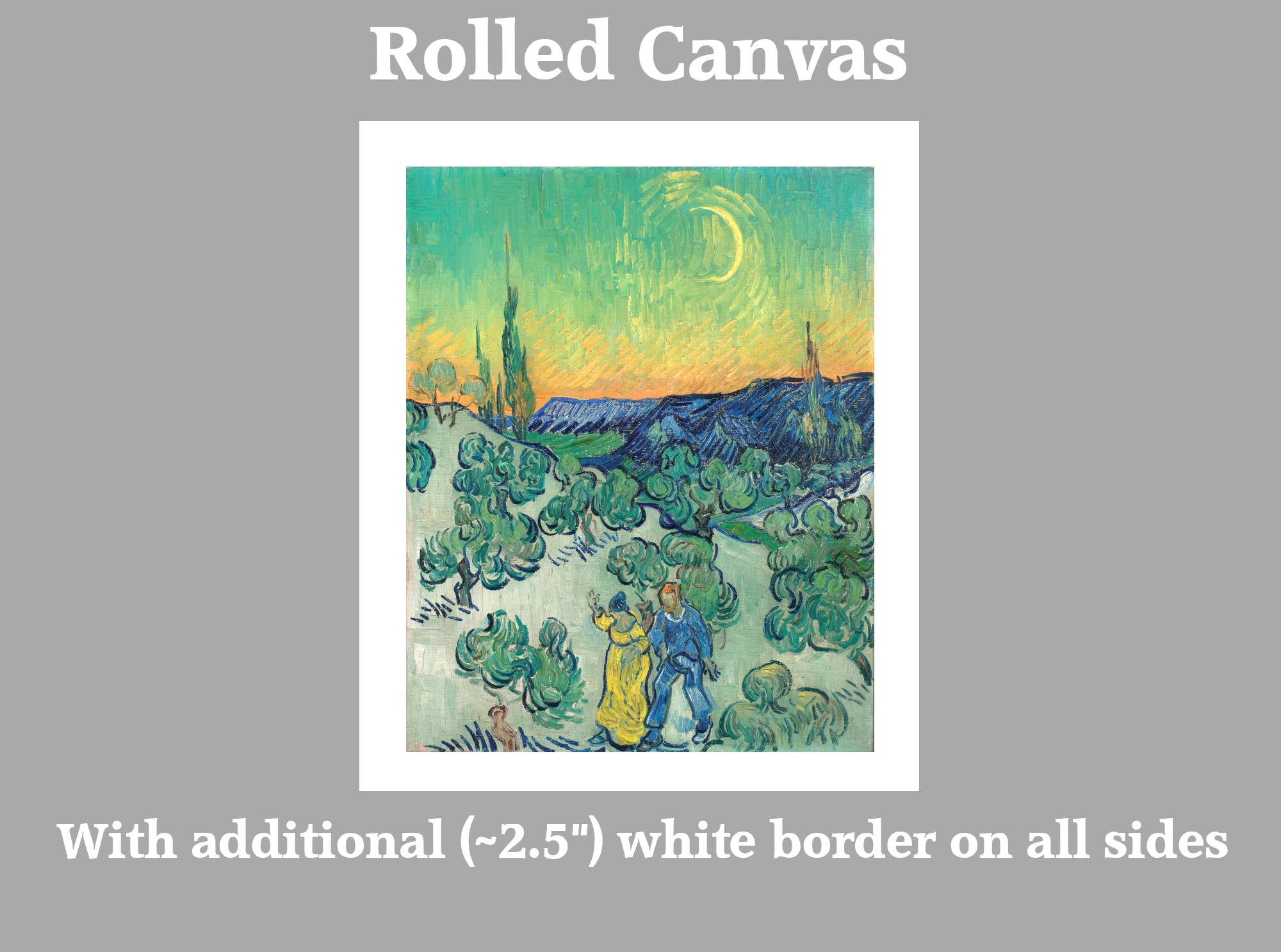
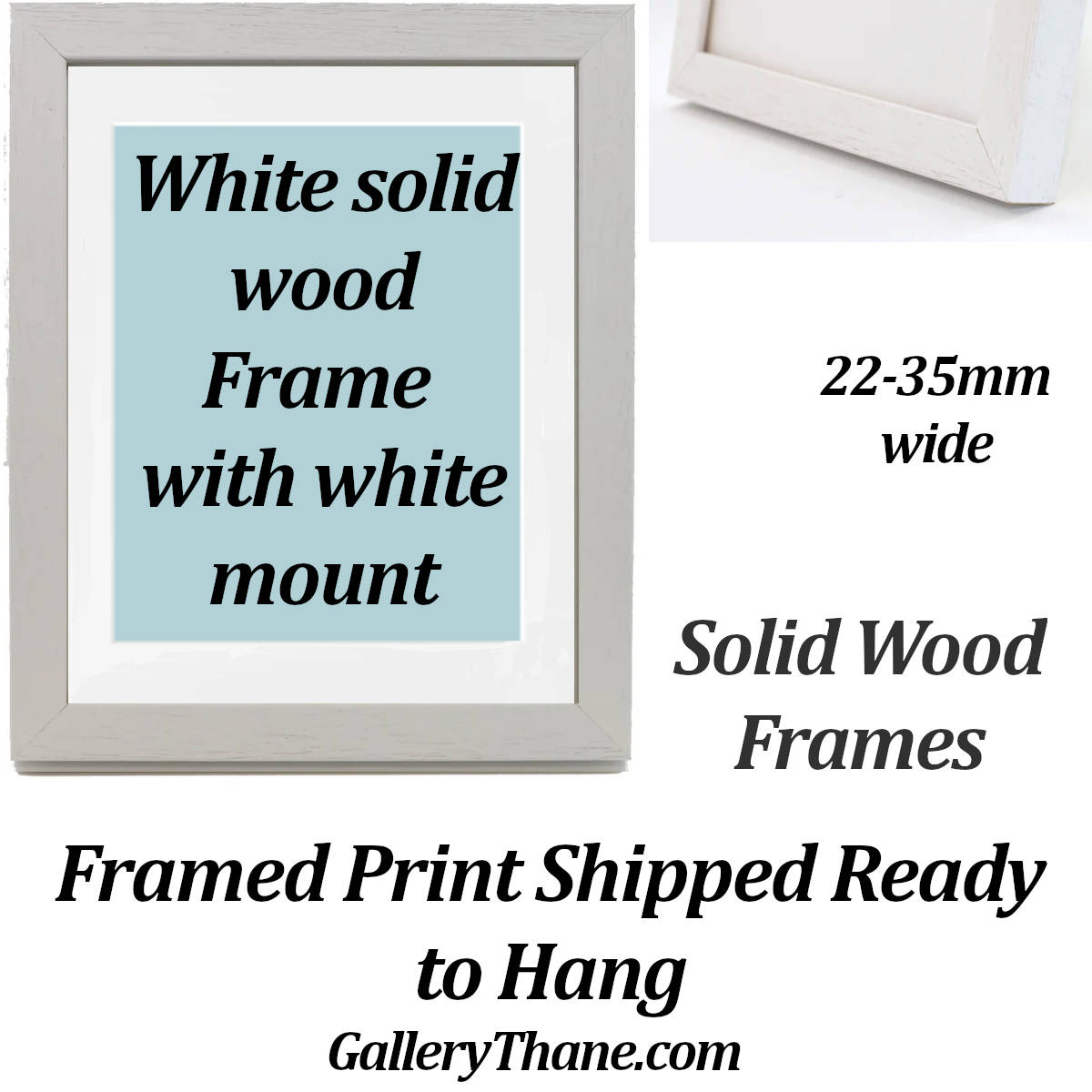
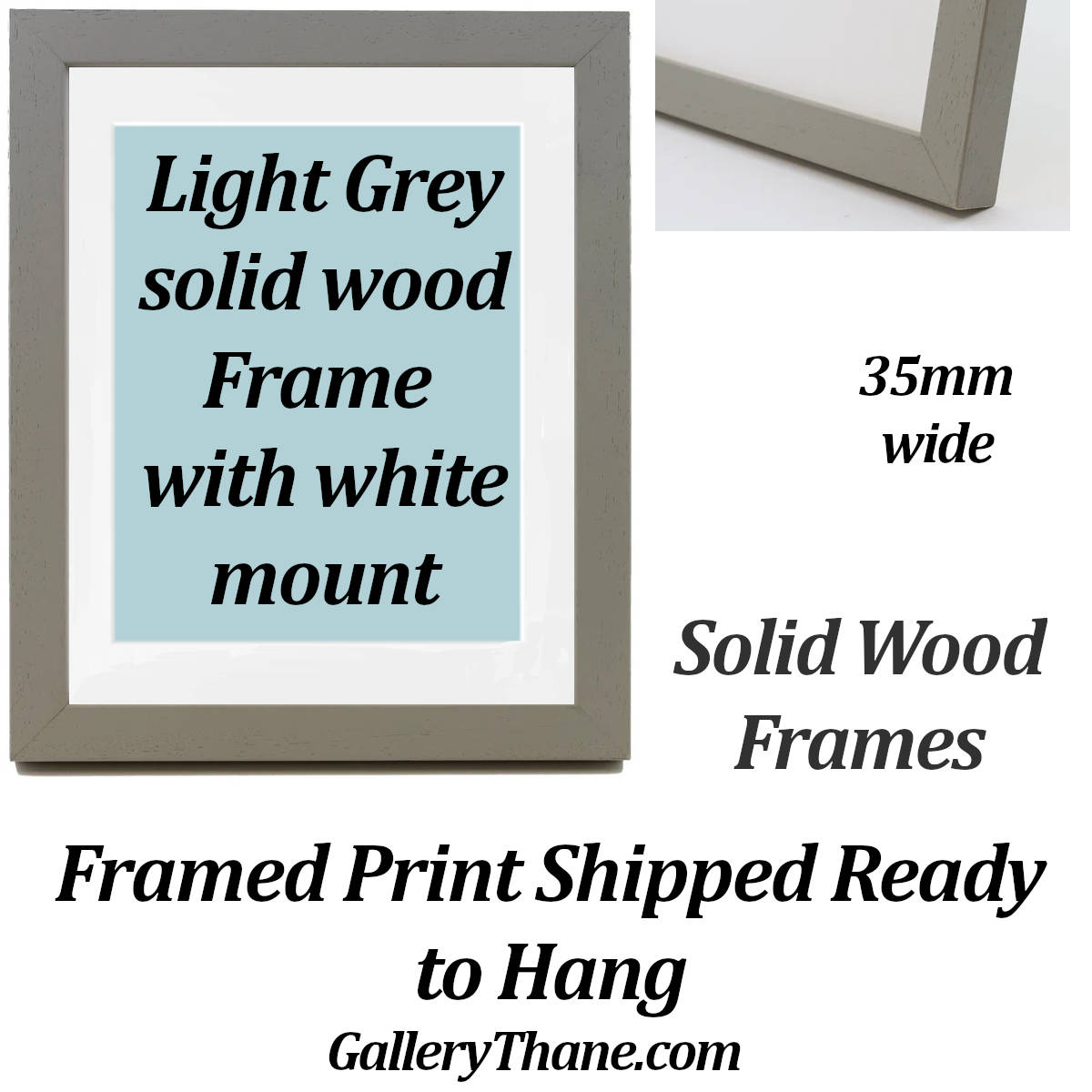
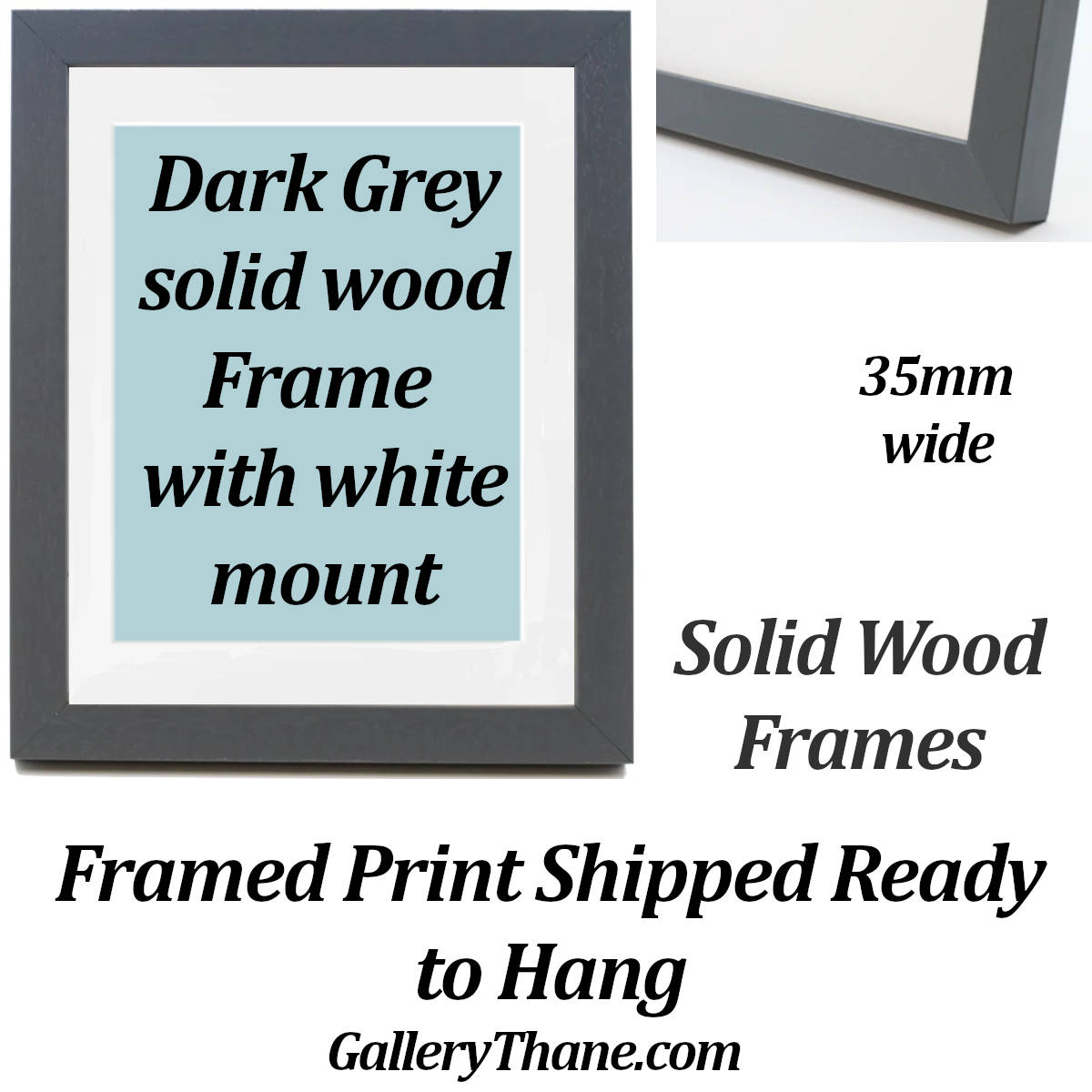
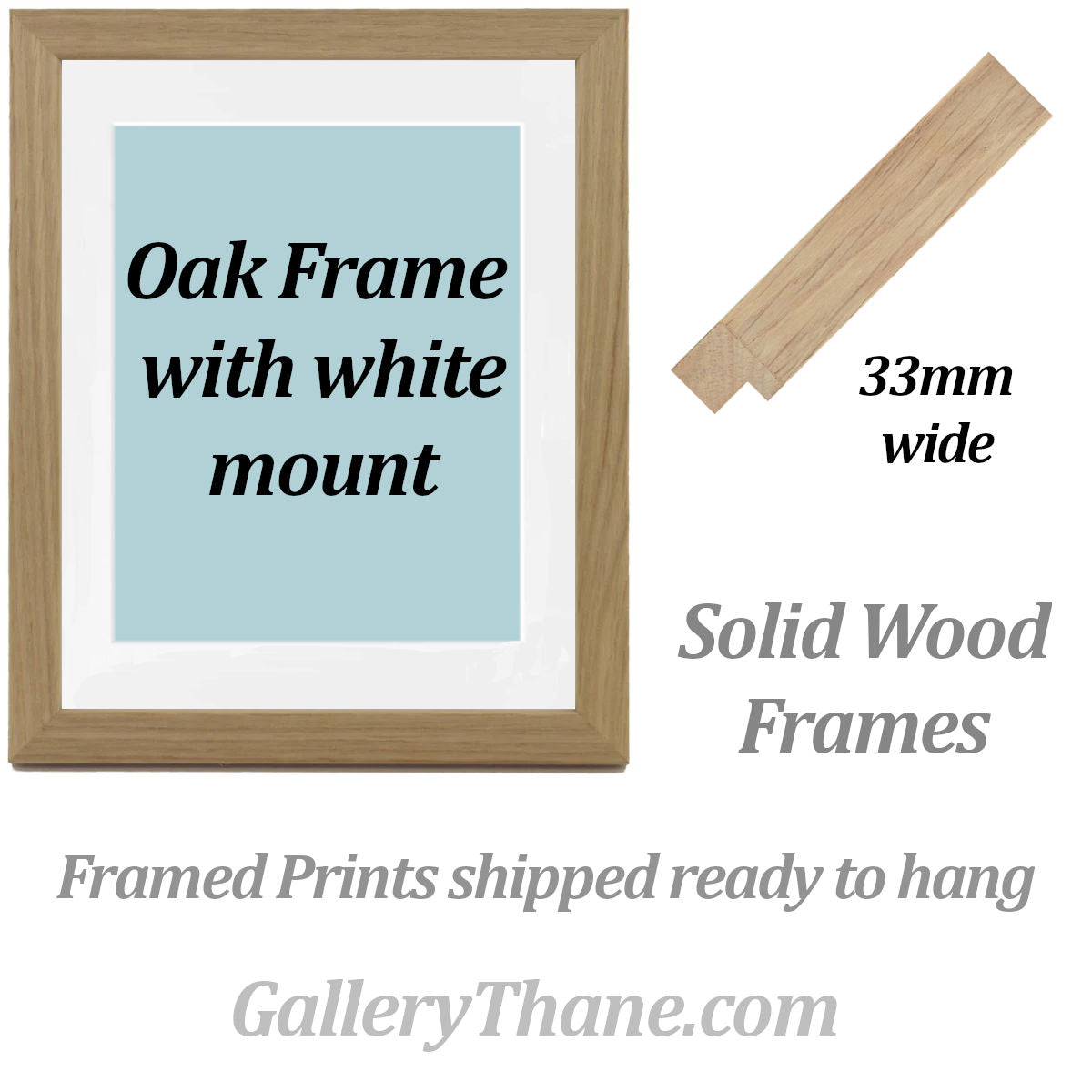
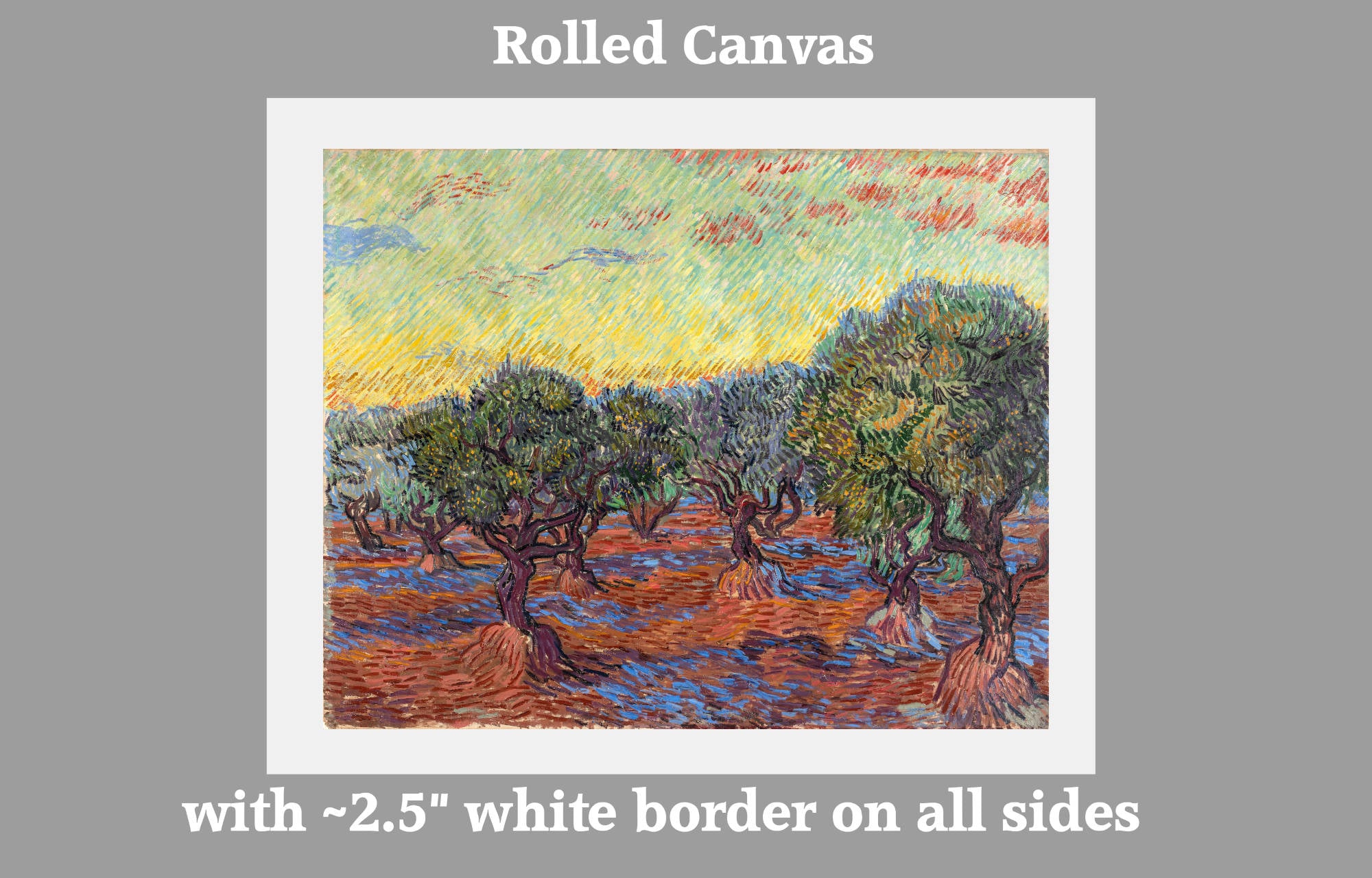
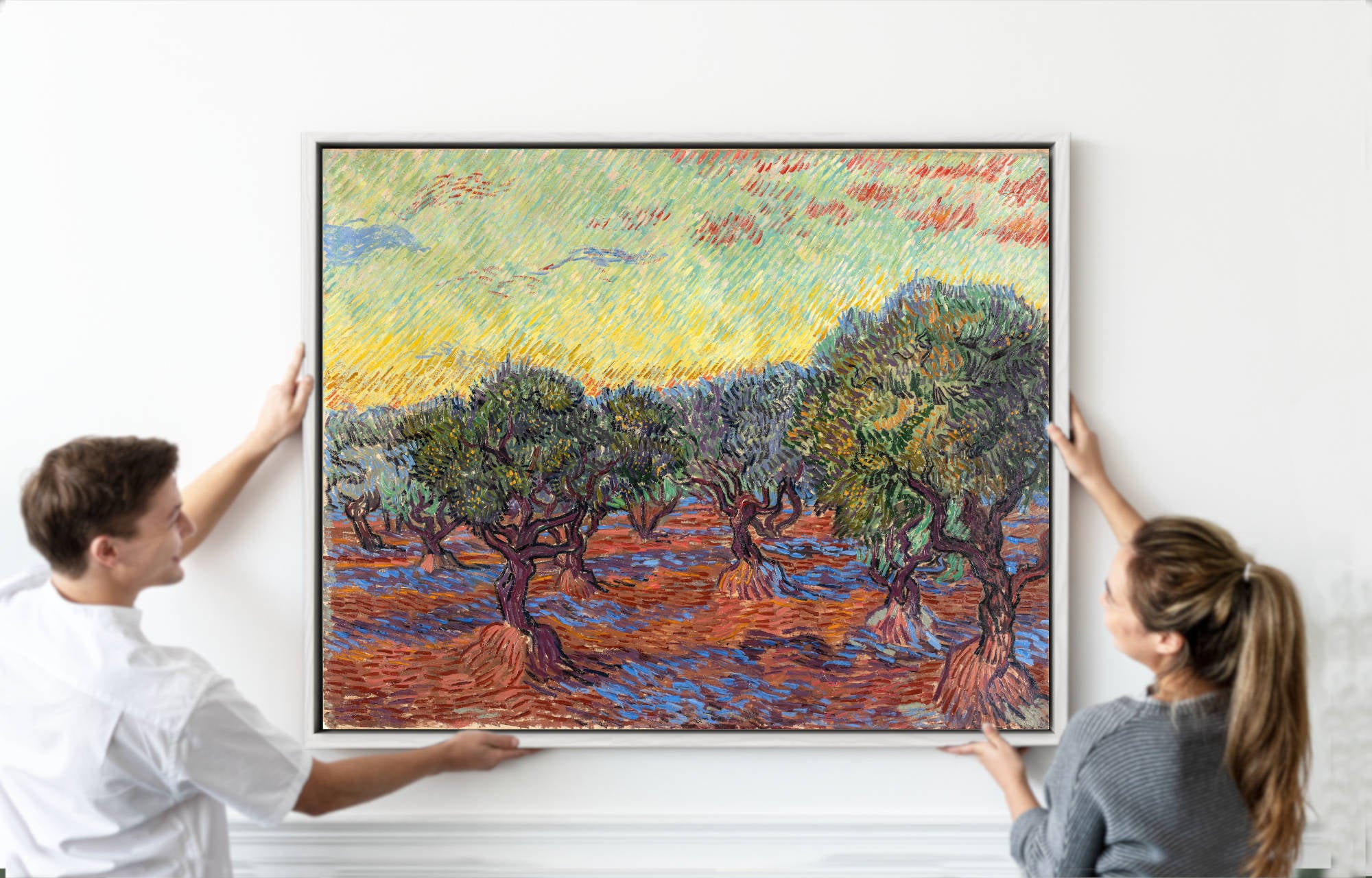
Choose fine art paper prints for flexible framing, professionally framed prints for a complete gallery-style presentation, or canvas panels for a clean contemporary alternative. The collection includes portrait, square and landscape compositions suitable for individual statement pieces or coordinated multi-print displays.
Frequently Asked Questions
Who was Vincent van Gogh?
Vincent van Gogh was a Dutch painter who lived from 1853 to 1890 and became one of the defining artists associated with Post-Impressionism. His paintings are especially recognised for expressive colour, visible brushwork and highly individual landscapes, portraits and still lifes.
What are Vincent van Gogh’s most famous paintings?
His best-known works include The Starry Night, Sunflowers, Irises, Almond Blossom, Wheat Field with Cypresses, Café Terrace at Night and numerous self-portraits and Provençal landscapes.
Why are Van Gogh’s paintings so colourful?
Van Gogh increasingly used colour expressively rather than simply reproducing the colours he observed. Strong yellows, blues, greens, reds and complementary combinations allowed him to intensify the atmosphere and visual impact of a subject.
Was Van Gogh an Impressionist?
Van Gogh was influenced by Impressionism after moving to Paris, but he is generally associated with Post-Impressionism. He developed a more individual approach in which colour, brushwork and simplified form became increasingly expressive.
Why did Van Gogh paint so many wheat fields?
Agricultural landscapes surrounded Van Gogh during his periods in Arles, Saint-Rémy and Auvers. Wheat fields allowed him to explore seasonal change, colour, rural labour, weather and the relationship between earth and sky.
Why were olive trees important to Van Gogh?
The olive groves around Saint-Rémy provided Van Gogh with highly distinctive natural forms. Their twisting trunks and irregular foliage suited his rhythmic brushwork and allowed him to study the same landscape under different conditions of weather and light.
Why did Van Gogh paint cypress trees?
Van Gogh became fascinated by the tall, dark cypresses of Provence during his stay at Saint-Rémy. Their strong silhouettes offered dramatic contrast against wheat fields, mountains and bright skies and became one of his most recognisable landscape motifs.
Which Van Gogh prints work well in modern interiors?
Wheat-field and sunflower prints create strong colourful focal points, while cypress and night scenes suit deeper blue and green palettes. Flowering orchards, almond blossom and selected landscapes work particularly well in lighter Scandinavian and contemporary interiors.
Can Van Gogh prints be combined in a gallery wall?
Yes. His repeated subjects and colour relationships make Van Gogh particularly suitable for gallery walls. Collections can be organised around landscapes, flowers, blue and yellow palettes or specific periods such as Arles and Saint-Rémy.
What Van Gogh print formats does GalleryThane offer?
GalleryThane offers Vincent van Gogh reproductions as fine art prints, professionally framed prints and canvas panels in a range of sizes, allowing artworks to be selected for individual statement displays or larger gallery walls.