Vincent van Gogh’s Flowering Orchards in Arles
Vincent van Gogh’s flowering orchards belong to one of the most concentrated and joyful painting campaigns of his career. Soon after arriving in Arles in southern France in February 1888, Van Gogh witnessed the arrival of spring and became fascinated by the fruit trees blossoming throughout the surrounding countryside.
Between late March and late April he devoted fourteen canvases to flowering orchards, repeatedly painting peach, pear, apricot and other fruit trees under the brilliant Provençal sky. Rather than treating the pictures as simple botanical studies, Van Gogh experimented with colour, composition, viewpoint and brushwork from one painting to another.
This GalleryThane collection brings together selected flowering-orchard works within the wider Vincent van Gogh Prints collection.
Spring 1888: Van Gogh Discovers Provence
Van Gogh left Paris for Arles hoping to find stronger sunlight, clearer colour and a landscape that would stimulate a new direction in his painting. The flowering fruit trees he encountered during his first Provençal spring provided exactly that opportunity.
The orchards transformed rapidly as different trees came into bloom. Because blossom is short-lived, Van Gogh worked quickly outdoors, attempting to capture each stage of spring before it disappeared.
The resulting paintings are filled with pale pink, white and cream blossom, fresh green vegetation and clear blue skies. Compared with many of his later Saint-Rémy landscapes, they often possess a particularly light and spacious atmosphere.
Fourteen Flowering Orchard Paintings
The flowering-orchard paintings were not repetitions of a single composition. Van Gogh experimented constantly across the group.
Some paintings bring an individual blossoming tree close to the viewer. Others open into wider orchard landscapes, with rows of trunks leading into fields and distant countryside. He also varied the dimensions and orientation of his canvases, producing both horizontal and vertical compositions.
This approach allowed Van Gogh to study not only the appearance of blossom but also the structure of trees, the organisation of the orchard and the relationship between foreground branches, open ground and sky.
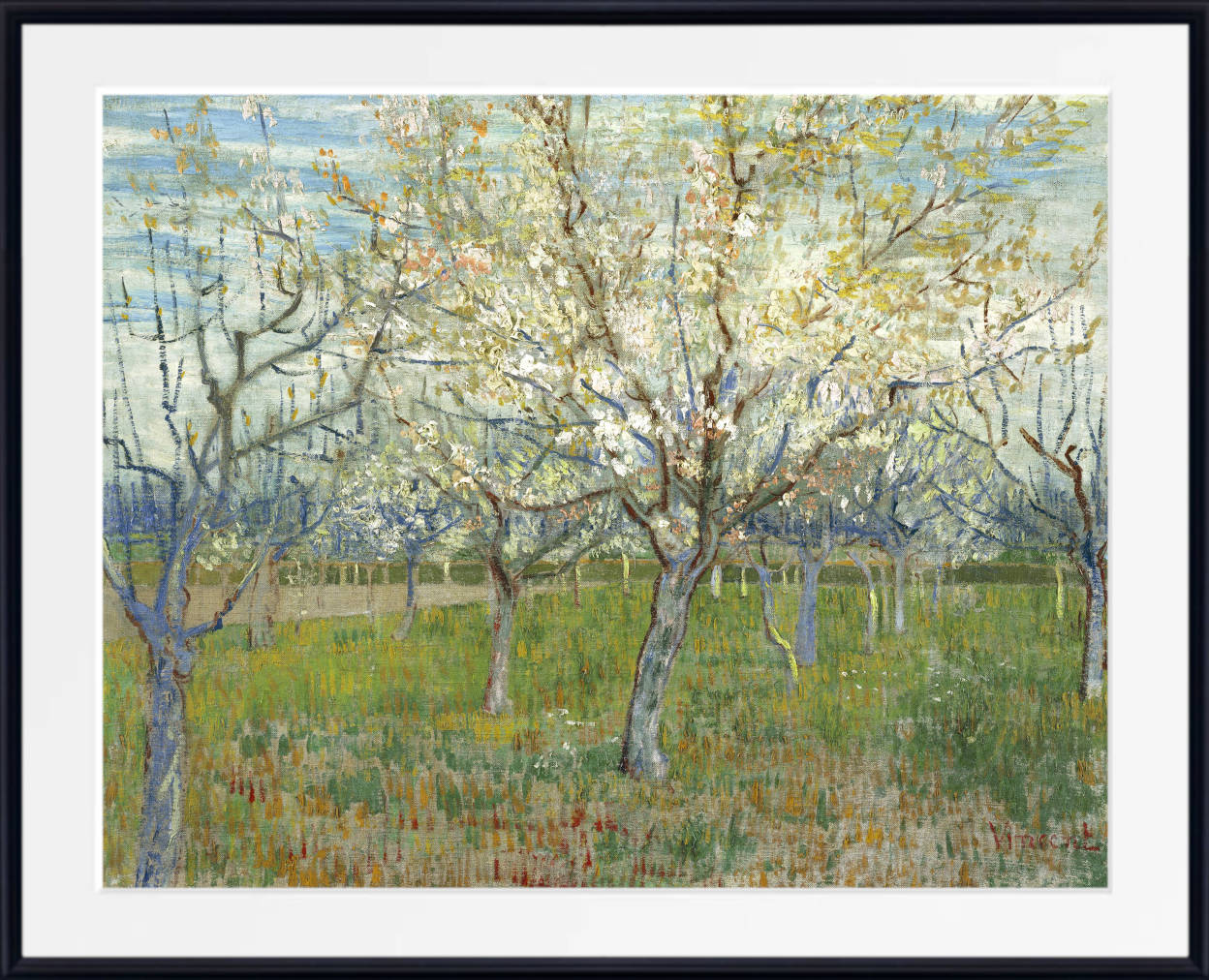
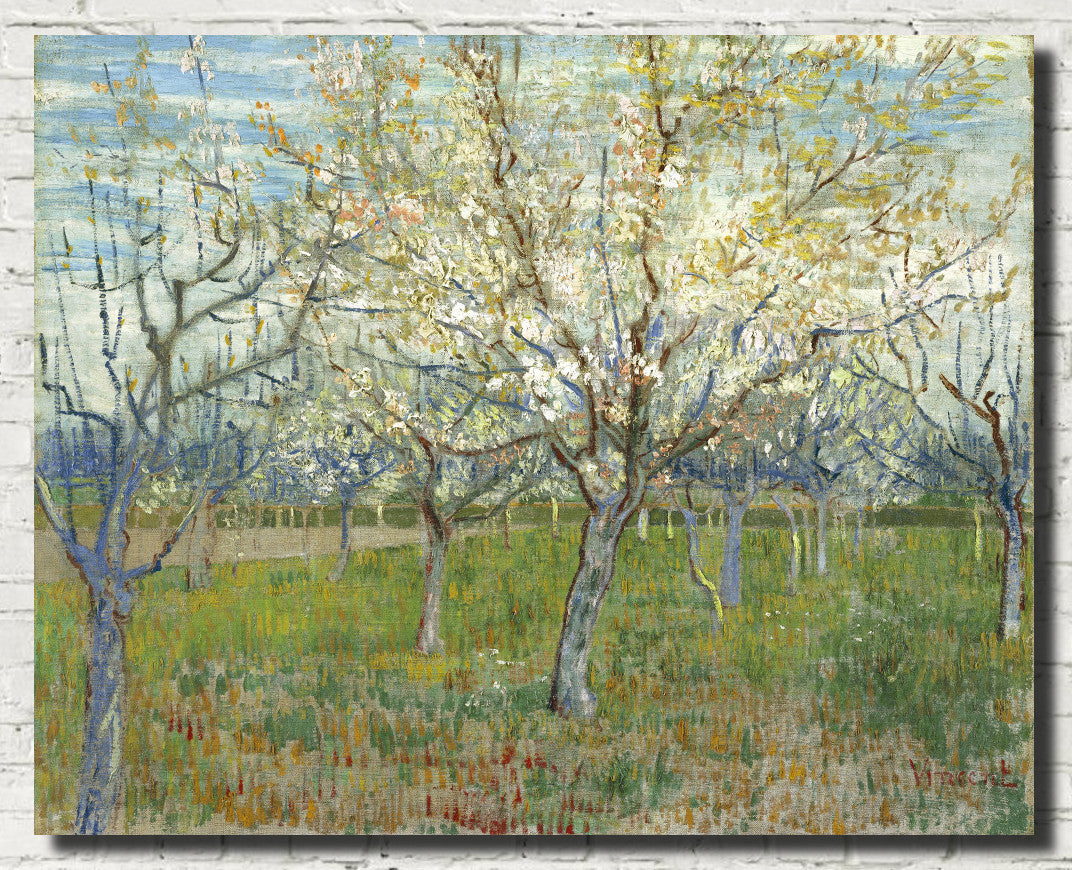
Orchard with Blossoming Apricot Trees
Orchard with Blossoming Apricot Trees belongs directly to Van Gogh’s spring 1888 orchard campaign in Arles.
The pale blossom creates a delicate network across the composition while the stronger colours of trunks, grass and distant landscape provide structure. Rather than painting every flower individually, Van Gogh uses repeated touches of colour to create the impression of blossom spreading across the branches.
The result combines close observation with increasingly free brushwork, demonstrating the direction his painting was taking only weeks after leaving Paris.
Pink Peach Tree
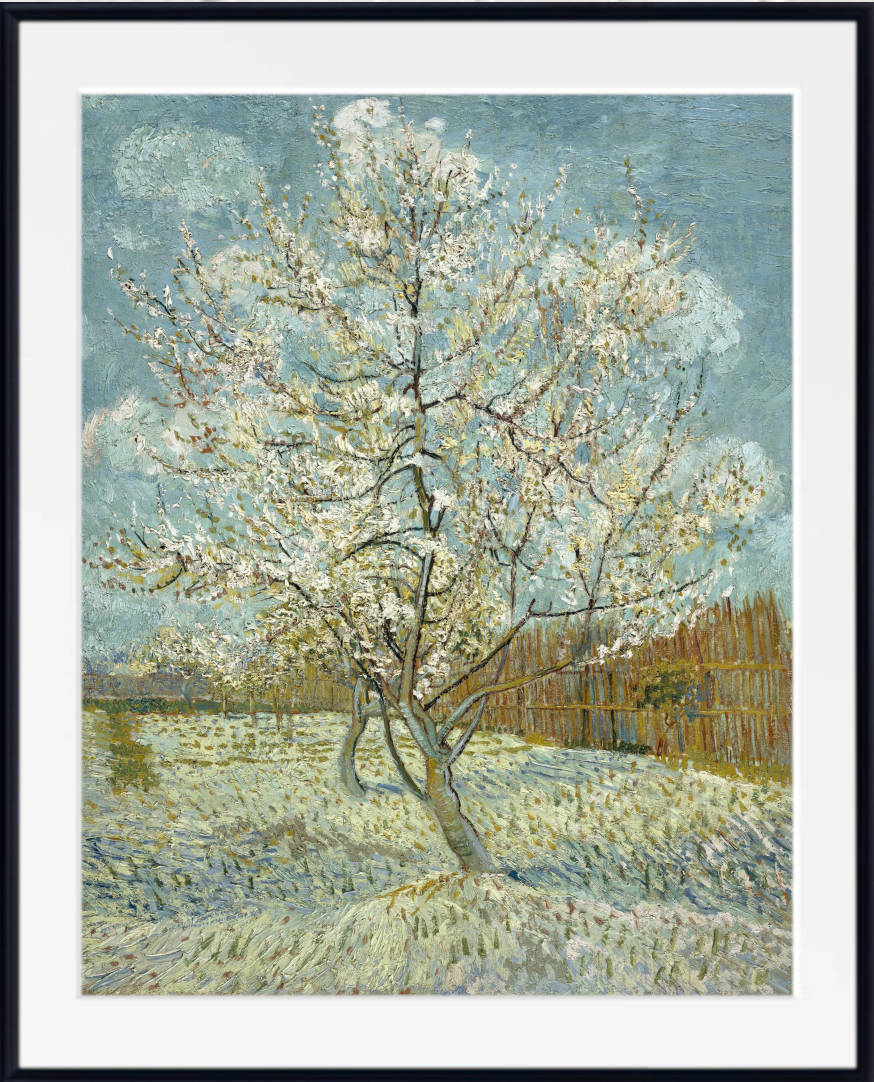
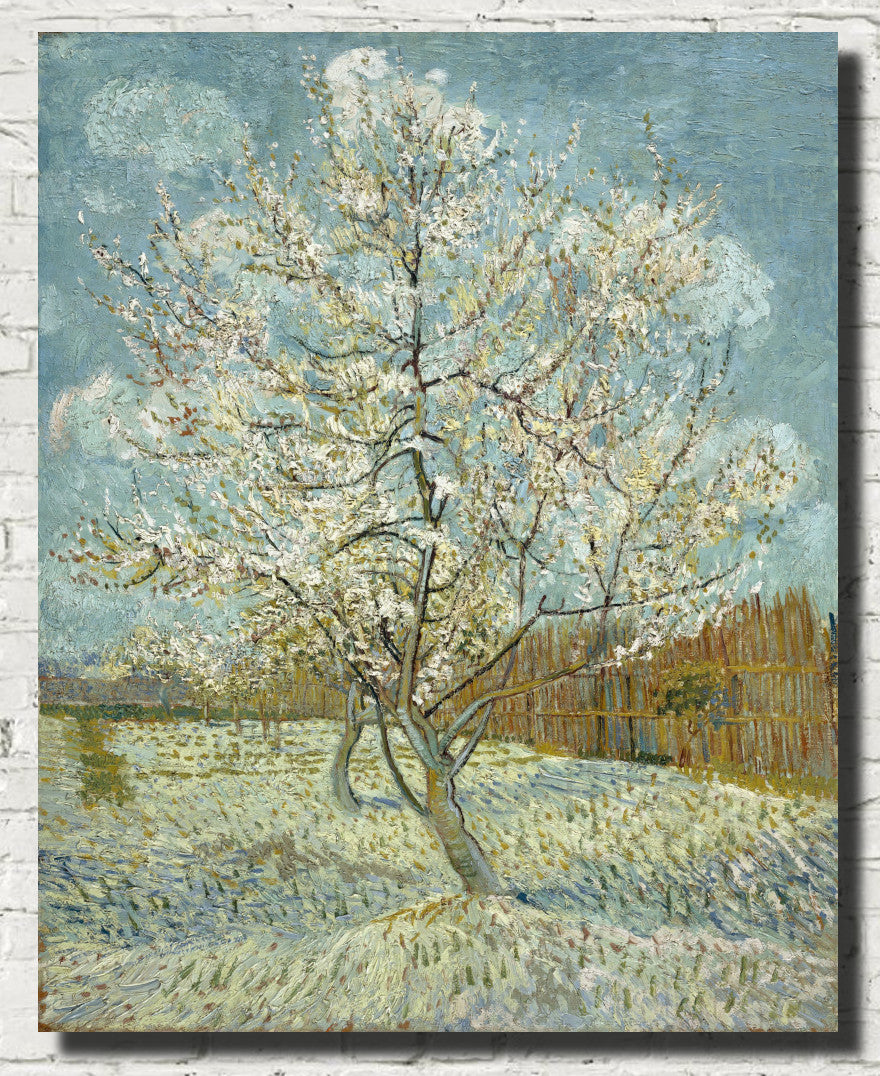
Peach trees were among the subjects that particularly attracted Van Gogh during the Provençal spring.
In his peach-tree paintings, delicate pink blossom is set against stronger areas of blue, green and earth colour. The contrast gives the flowering tree an intensity that would be difficult to achieve through a more restrained naturalistic palette.
Van Gogh’s interest was not simply in reproducing the precise colour of blossom. He was increasingly concerned with relationships between colours and with the emotional effect produced when complementary tones were placed together.
Small Pear Tree in Blossom
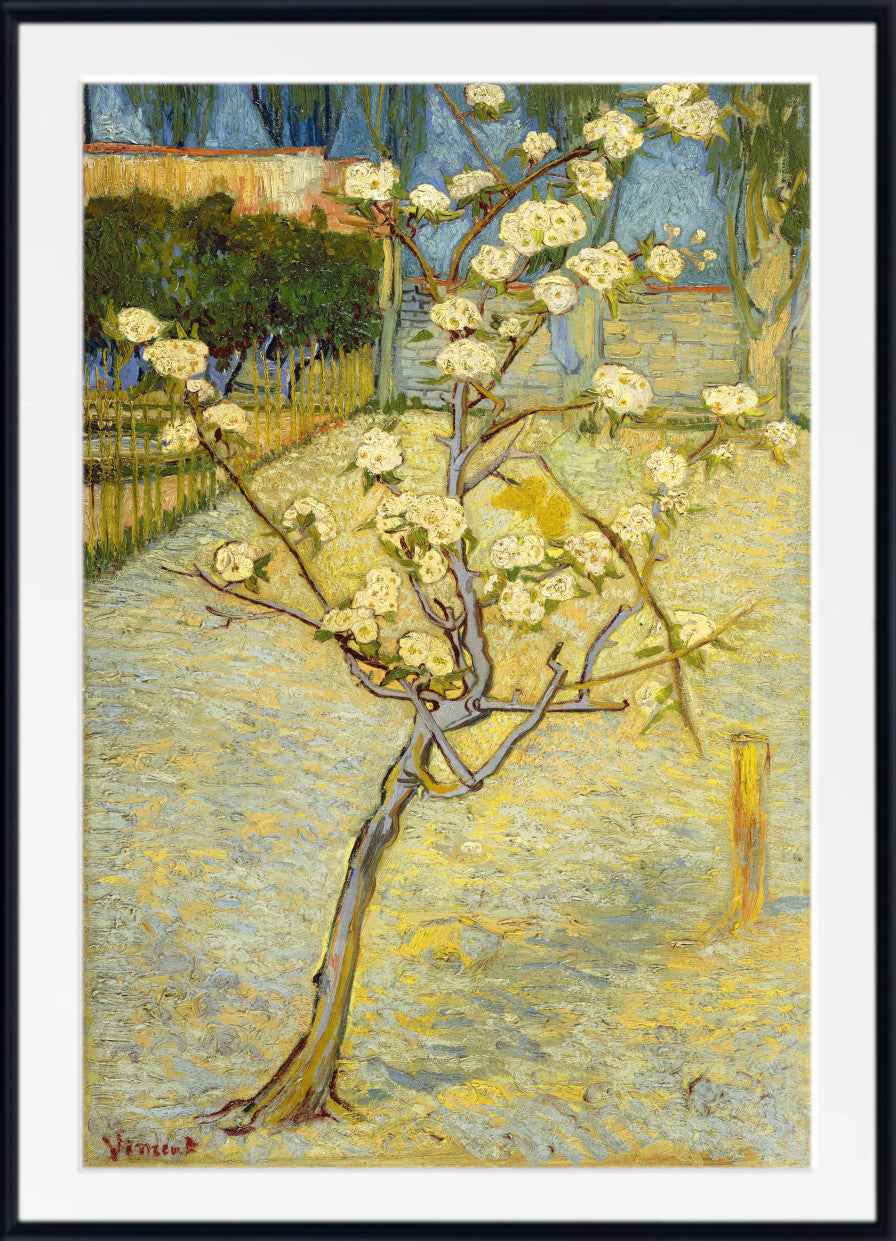
Small Pear Tree in Blossom was painted in Arles in 1888 as part of Van Gogh’s sustained study of flowering fruit trees.
The tree occupies much of the composition, allowing its branching structure to become a strong visual pattern. Pale blossom contrasts with the surrounding landscape while the energetic treatment of grass and ground prevents the image from becoming static.
Seen alongside the peach and apricot subjects, the painting demonstrates Van Gogh’s determination to explore subtle differences between individual trees while maintaining the larger theme of spring renewal.
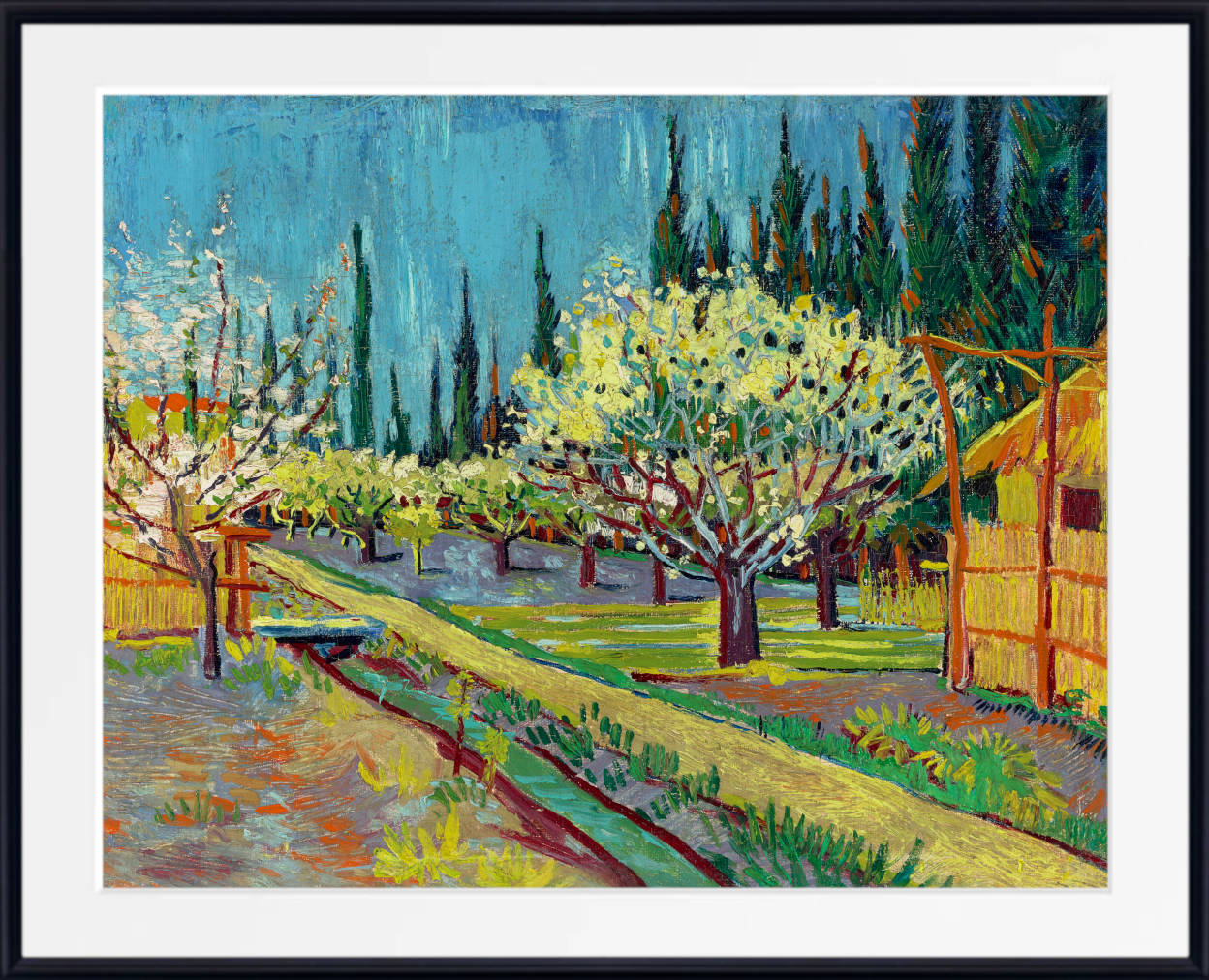
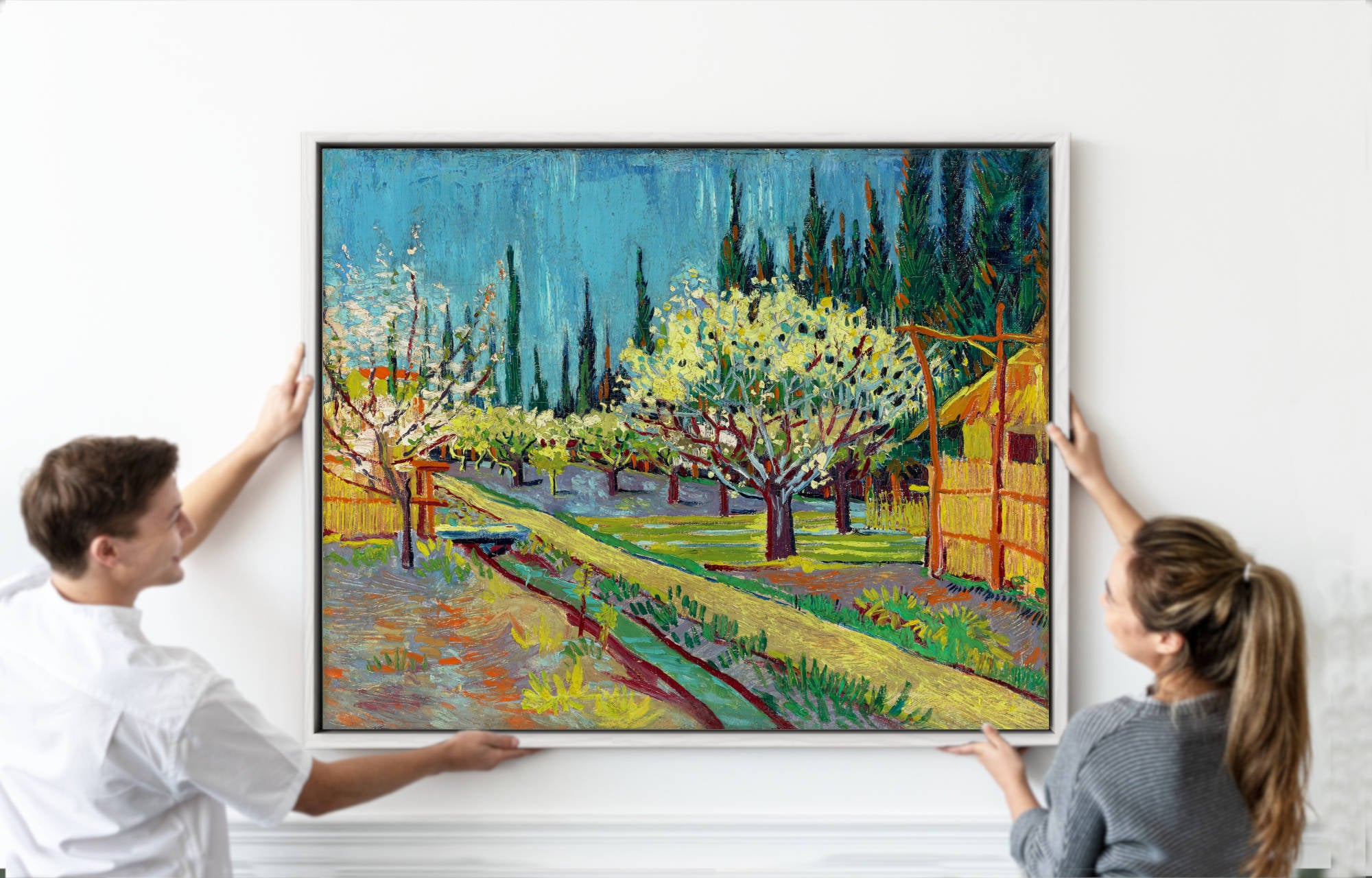
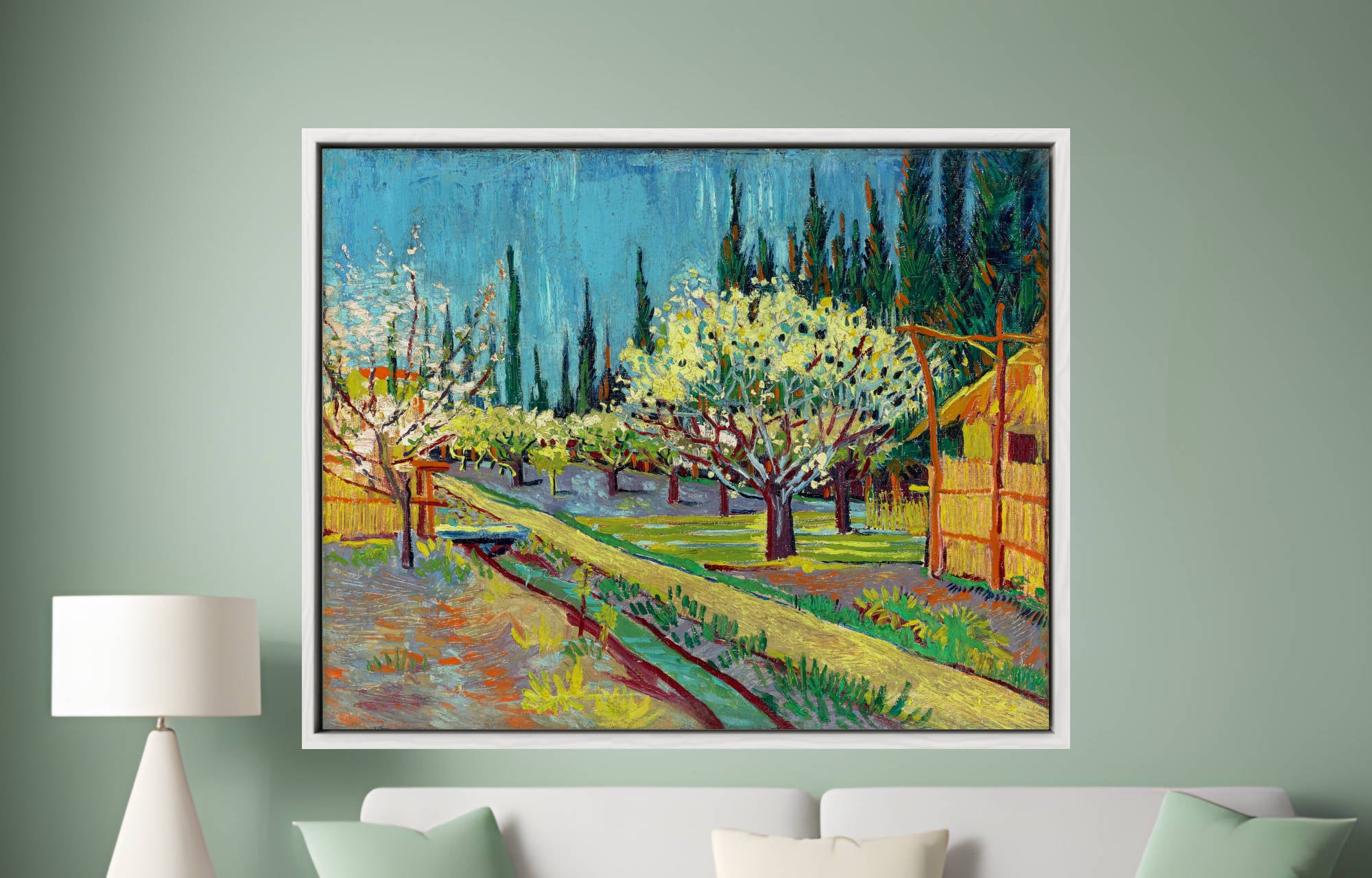
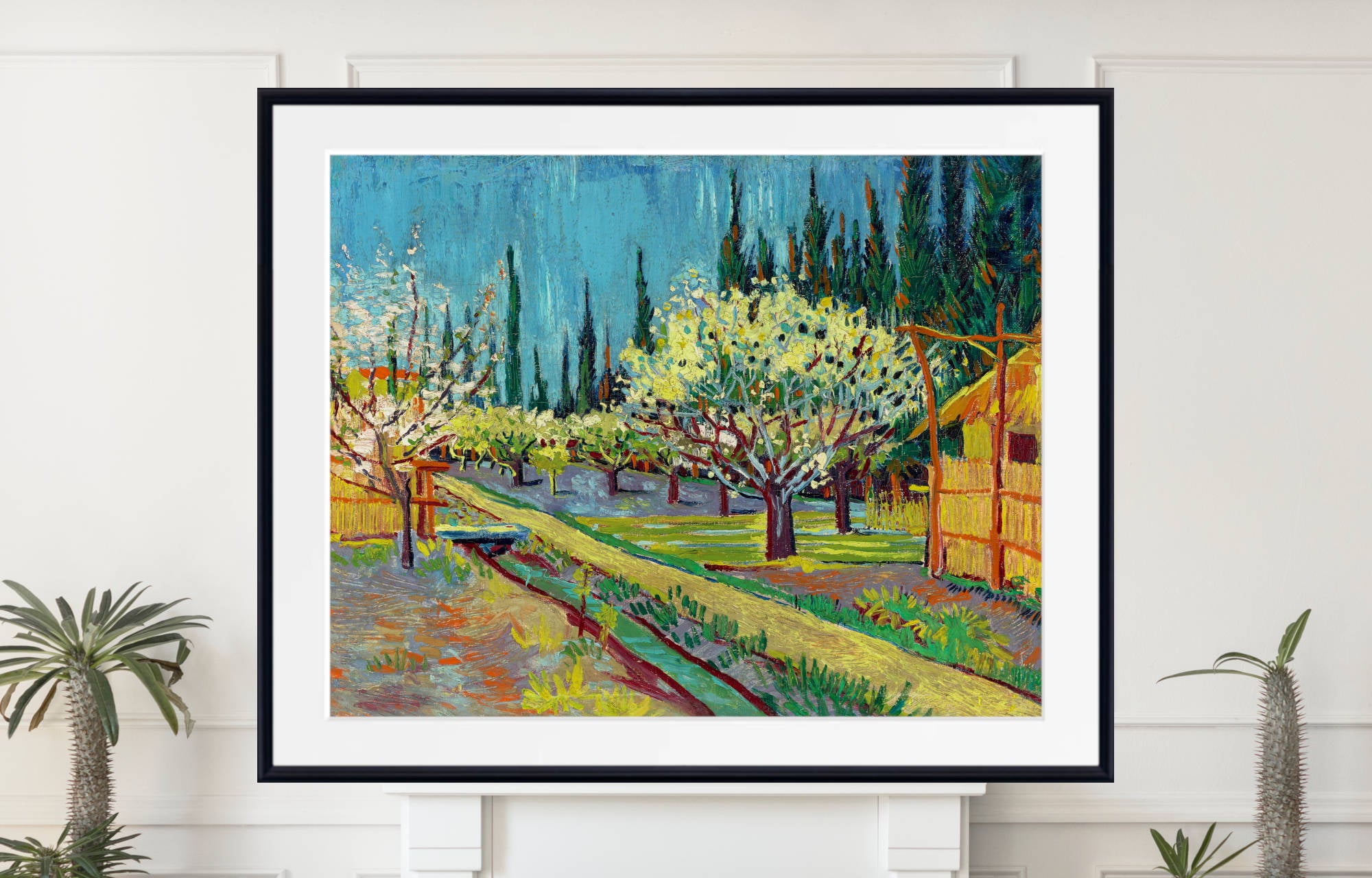
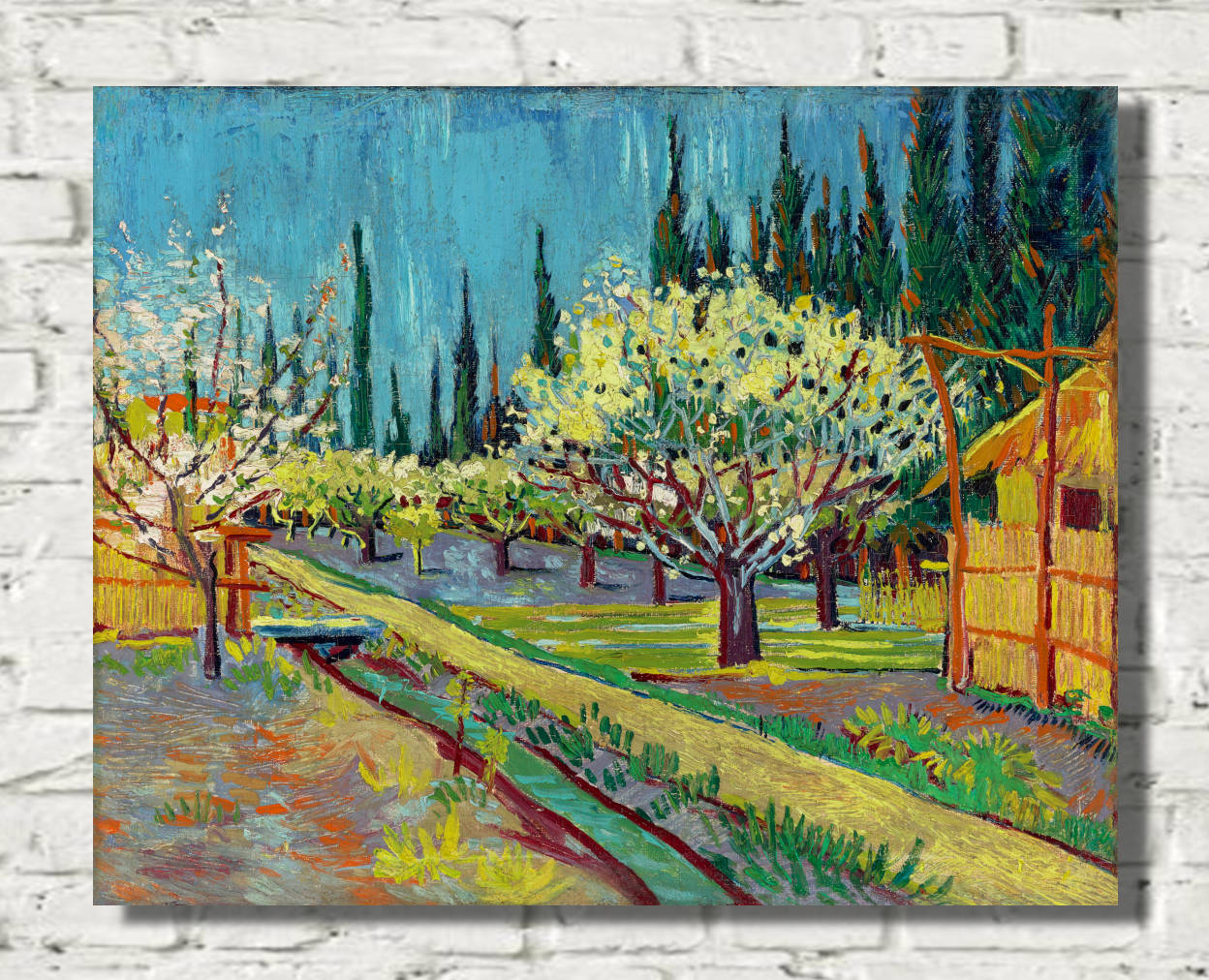
Orchard Bordered by Cypresses
Orchard Bordered by Cypresses is especially interesting because it connects two important strands of Van Gogh’s landscape painting.
The flowering fruit trees establish the spring orchard theme, while the darker vertical forms of cypresses provide contrast and structure. The painting therefore anticipates the much more concentrated attention Van Gogh would later give cypress trees during his stay at Saint-Rémy.
The work belongs naturally to this flowering-orchard collection while also forming part of GalleryThane’s Vincent van Gogh Cypress Prints collection.
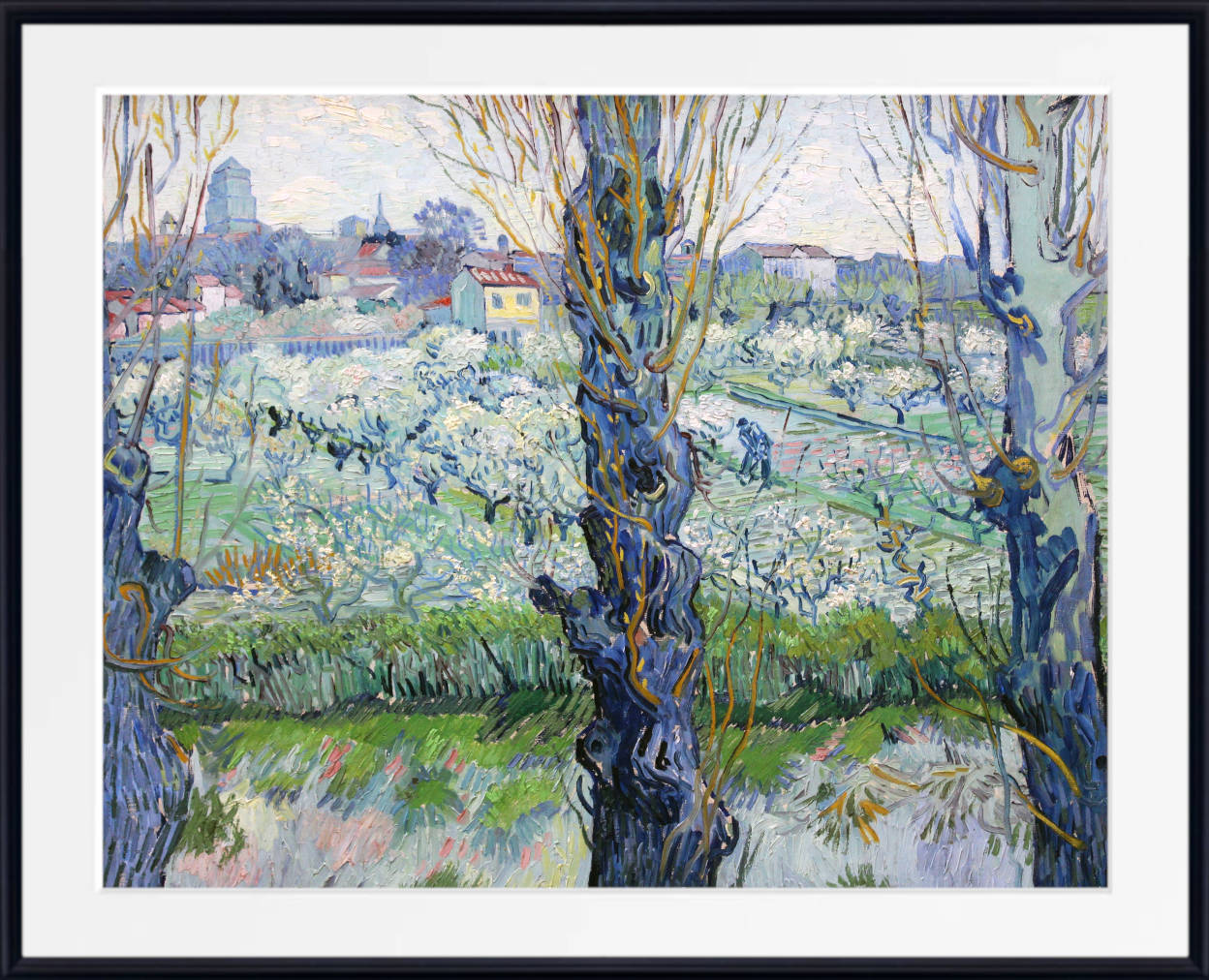
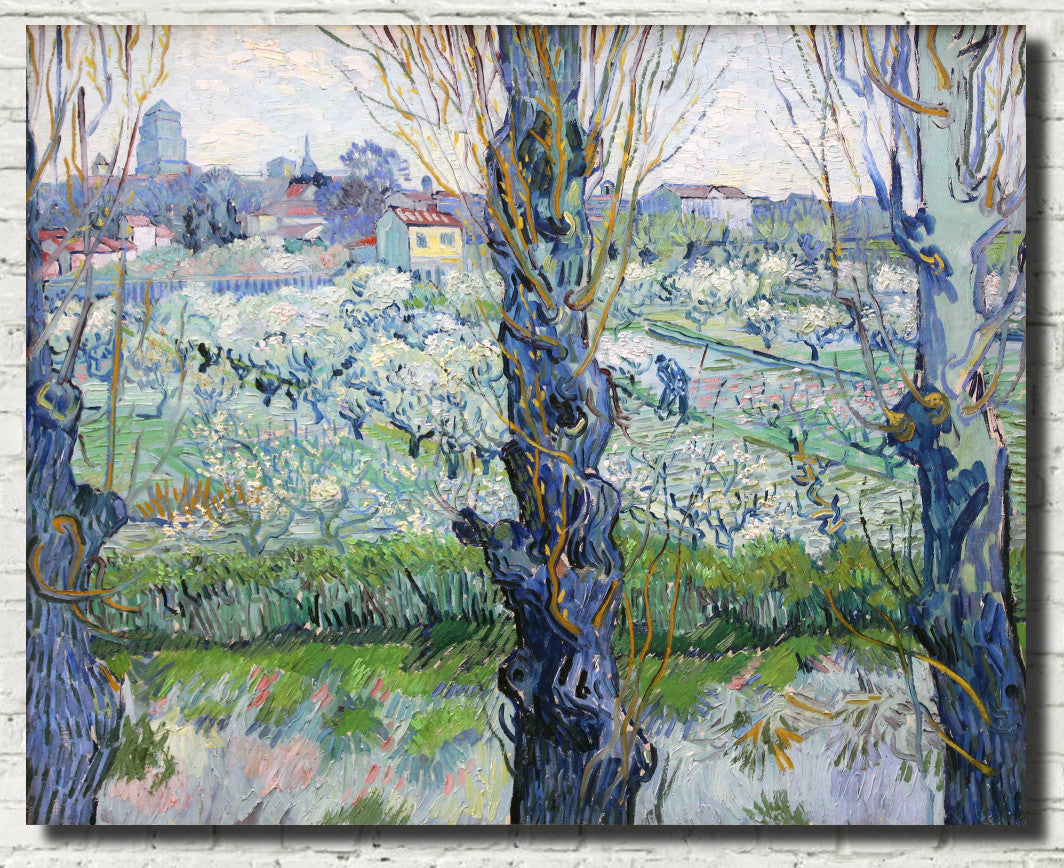
View of Arles, Flowering Orchards
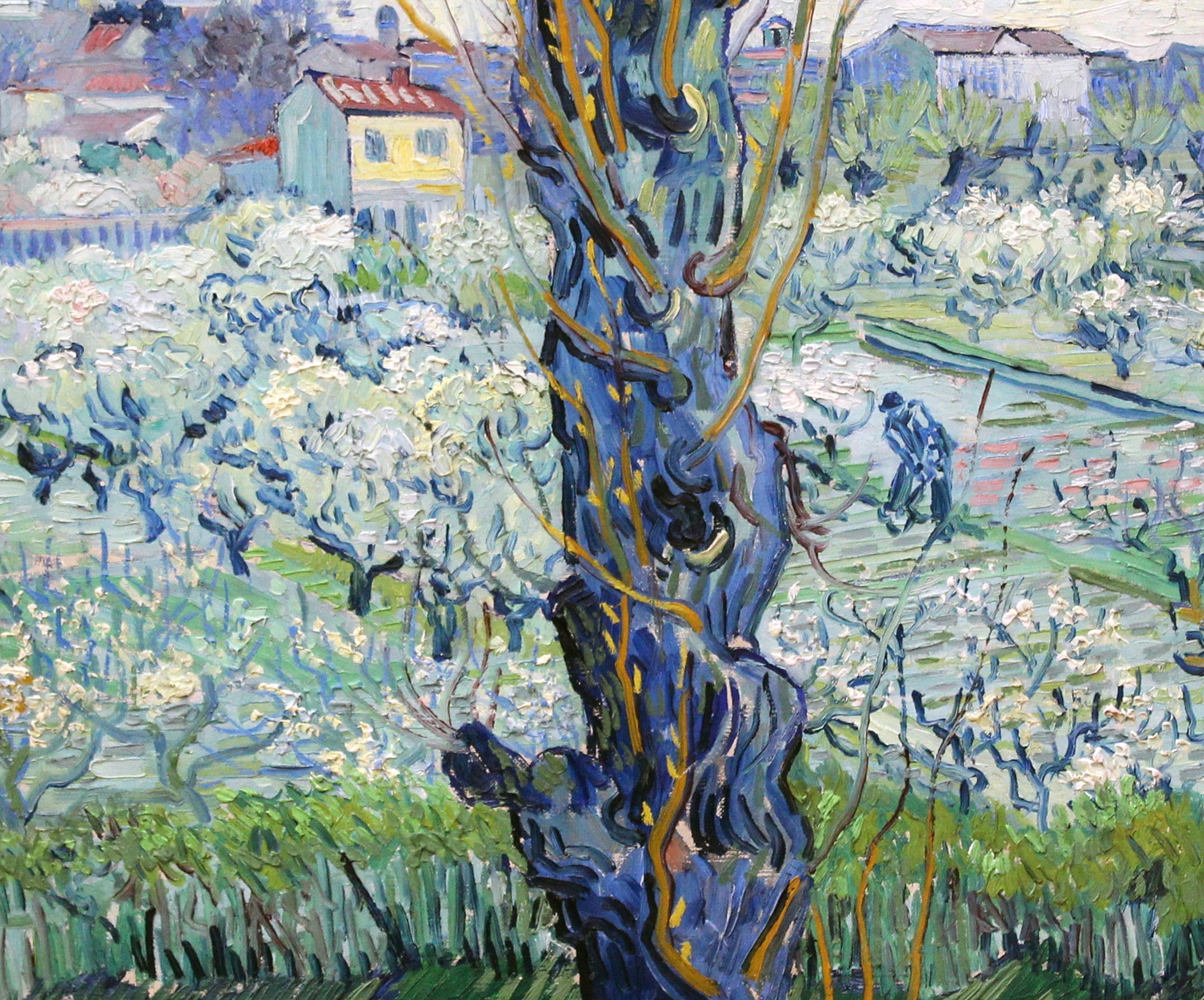
View of Arles, Flowering Orchards extends the theme beyond Van Gogh’s original spring 1888 orchard campaign.
Painted in 1889, it should not be confused with the fourteen canvases created during the concentrated flowering-orchard series of the previous year. Instead, it demonstrates Van Gogh’s continued interest in blossom, cultivated landscape and the countryside around Arles.
Its inclusion here broadens the collection from the specific 1888 series to Van Gogh’s wider treatment of flowering orchards while preserving the historical distinction between the two periods.
Japanese Prints and Van Gogh’s Flowering Orchards
Japanese ukiyo-e prints were an important influence on Van Gogh’s orchard paintings. He had collected Japanese prints in Paris and admired their strong outlines, flattened areas of colour, unusual viewpoints and ability to make natural subjects visually powerful through simplification.
In the flowering orchards, branches can become calligraphic lines against open skies, while areas of ground and vegetation are often organised through relatively clear zones of colour.
Van Gogh did not simply copy Japanese compositions. He absorbed aspects of their visual language and combined them with direct observation of Provence, contemporary French painting and his own increasingly energetic brushwork.
Blossom, Colour and the Provençal Light
The flowering orchards provided Van Gogh with an ideal subject for exploring the brighter palette he had developed after encountering Impressionism and Neo-Impressionism in Paris.
Pale pink and white blossom could be intensified by clear blue skies, while fresh greens, yellows and touches of complementary colour created additional vibrancy.
These colour relationships give the orchard paintings their distinctive freshness. Even when the composition is structurally complex, the overall impression can remain light, open and strongly associated with spring.
From Flowering Orchards to Wheat Fields
The flowering orchards were only the beginning of Van Gogh’s engagement with the agricultural landscape around Arles.
As spring moved towards summer, blossom gave way to growing crops and ultimately to the golden wheat and harvest scenes that became another major painting campaign during 1888.
Explore GalleryThane’s Vincent van Gogh Wheat Field & Harvest Prints to follow this seasonal progression from blossoming spring orchards to wheat fields, reapers and harvested landscapes.
From Arles Orchards to the Trees of Saint-Rémy
Trees remained central to Van Gogh’s work after he left Arles. During his stay at Saint-Rémy in 1889, olive groves and cypresses replaced flowering fruit trees as some of his most frequently repeated natural subjects.
The contrast is striking. The orchards of Arles often emphasise pale blossom, fresh colour and spring light, while the later olive and cypress paintings frequently use stronger rhythms, darker greens and more dramatic interactions between trees, mountains and sky.
Compare these different approaches in the Vincent van Gogh Olive Trees Prints and Vincent van Gogh Cypress Prints collections.
Flowering Orchards and Post-Impressionism
Van Gogh’s orchard paintings help explain his place within Post-Impressionism.
Although based directly on the landscape, the paintings move beyond straightforward naturalistic description. Colour is intensified, brushwork remains visible and the arrangement of branches, trunks and open spaces becomes an expressive part of the composition.
Van Gogh’s approach was highly individual, differing considerably from the structural landscapes of Cézanne, the symbolic colour of Gauguin or the systematic techniques of Seurat. Together, these varied approaches illustrate the breadth of Post-Impressionist painting.
Vincent van Gogh Flowering Orchard Prints for Interiors
Van Gogh’s flowering-orchard paintings are particularly versatile as wall art because many combine strong colour with an unusually light, natural atmosphere.
Pale pink and white blossom works well with putty, cream, warm white and soft grey walls, while green vegetation and clear blue skies introduce fresh complementary colour.
The paintings pair naturally with light timber, linen, stone and muted furnishings, making them especially effective in Scandinavian, Japandi, contemporary and relaxed traditional interiors.
They are also an attractive alternative for anyone who enjoys Van Gogh’s landscapes but wants something lighter than the dramatic night scenes, cypresses or late Auvers wheat fields.
Creating a Van Gogh Landscape Gallery Wall
Flowering orchard prints can provide a lighter element within a broader Van Gogh gallery wall.
Combine flowering orchard landscapes with wheat fields, olive groves and cypress paintings to trace Van Gogh’s changing treatment of the landscape from Arles to Saint-Rémy and Auvers.
The complete Vincent van Gogh Prints collection provides additional flower paintings, portraits, still lifes and night scenes for creating a more varied display.
Fine Art Prints, Framed Prints and Canvas Panels
GalleryThane’s Vincent van Gogh Flowering Orchards collection is available in a range of sizes and presentation formats.
Choose fine art paper prints for flexible framing, professionally framed prints for a complete presentation, or canvas panels for a contemporary alternative. The collection includes both portrait and landscape compositions suitable for individual statement pieces or coordinated Van Gogh gallery walls.
Frequently Asked Questions
When did Vincent van Gogh paint his flowering orchards?
Van Gogh created his principal flowering-orchard series in Arles between late March and late April 1888, shortly after moving from Paris to southern France.
How many flowering orchard paintings did Van Gogh make?
Van Gogh devoted fourteen canvases to flowering orchards during his concentrated spring 1888 campaign in Arles.
What fruit trees did Van Gogh paint?
His flowering-orchard subjects included peach, pear and apricot trees as well as broader orchard landscapes containing fruit trees in bloom.
Why did Van Gogh paint flowering orchards?
The arrival of spring in Provence gave Van Gogh an opportunity to study blossom, changing seasonal colour and brilliant southern light while developing a brighter and increasingly expressive approach to landscape.
Were Van Gogh’s orchard paintings influenced by Japanese art?
Yes. Van Gogh greatly admired Japanese ukiyo-e prints, and their simplified forms, strong outlines, unusual compositions and clear areas of colour influenced several of his flowering-orchard paintings.
Is View of Arles, Flowering Orchards part of the original 1888 series?
No. View of Arles, Flowering Orchards dates from 1889 and is therefore a later continuation of Van Gogh’s interest in flowering landscapes rather than one of the fourteen canvases of the spring 1888 orchard campaign.
What colours are typical of Van Gogh’s flowering orchard paintings?
The paintings frequently combine pale pink or white blossom with fresh greens, blue skies, yellow and ochre earth and touches of stronger complementary colour.
Which Van Gogh collections complement the Flowering Orchards?
The Wheat Field & Harvest collection follows the seasonal development of the Arles countryside, while the Olive Trees and Cypress Prints collections show how Van Gogh’s treatment of trees evolved during his later Saint-Rémy period.