Vincent van Gogh Cypress Prints: The Trees of Saint-Rémy
Cypress trees became one of Vincent van Gogh’s most powerful landscape motifs during the final phase of his career. Tall, dark and immediately recognisable, they provided a dramatic contrast to the brilliant wheat fields, blue skies, olive groves and rolling hills of Provence.
Van Gogh had noticed cypresses before arriving at Saint-Rémy, but during 1889 they became a concentrated artistic subject. He explored them as individual monumental forms, as dark accents within wheat fields and olive groves, and as vertical shapes linking earth and sky in some of his most famous paintings.
This GalleryThane collection brings together works in which the cypress plays a significant visual role, creating a focused route through an important strand of the wider Vincent van Gogh Prints collection.
Why Did Van Gogh Paint Cypress Trees?
Van Gogh was fascinated by the distinctive appearance of Provençal cypresses. Their tall, narrow silhouettes were unlike the trees he had known in northern Europe, and their intensely dark green colour created a striking contrast within the sunlit landscape of southern France.
In June 1889, shortly after entering Saint-Paul-de-Mausole at Saint-Rémy, Van Gogh wrote enthusiastically about the challenge of painting cypresses. He admired their extraordinary proportions and the way their dark forms stood against bright Provençal surroundings.
The cypress therefore offered him both a compelling natural subject and an unusually strong compositional device. A single tree could anchor a landscape, divide the sky, create dramatic scale or provide a dark counterpoint to yellow fields and brilliant blues.
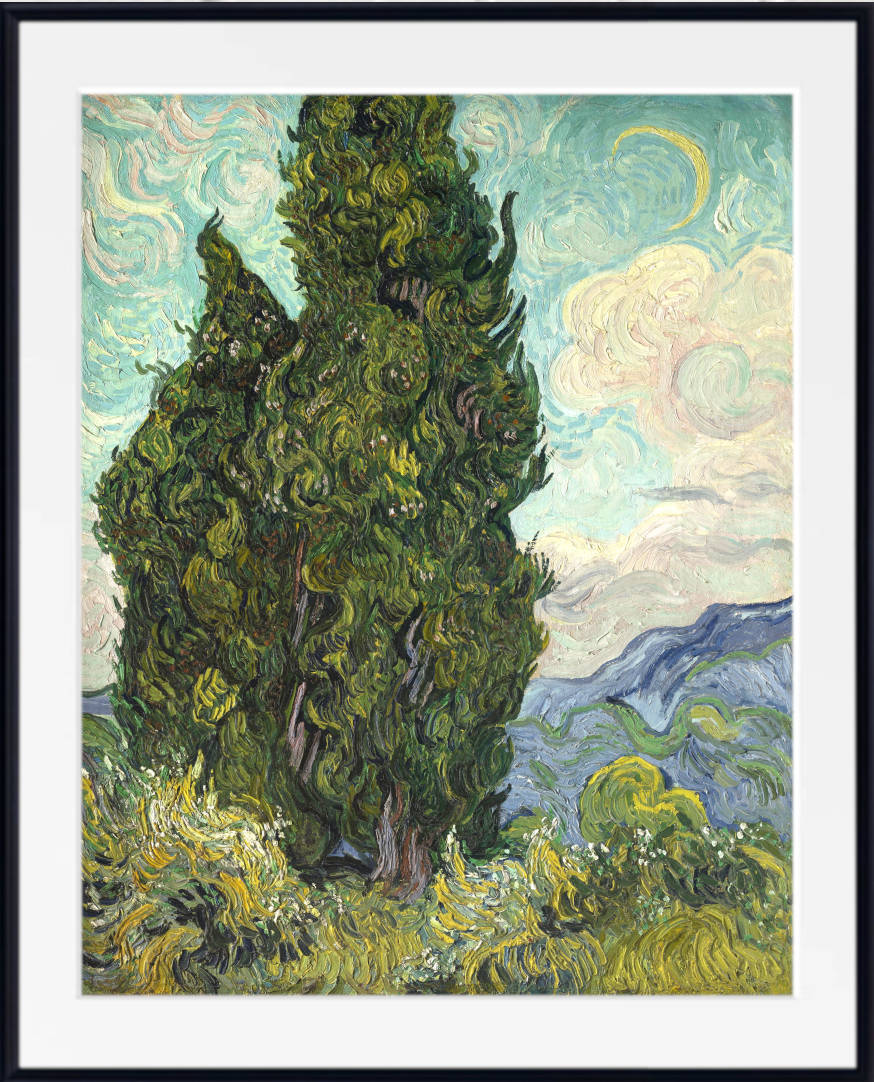
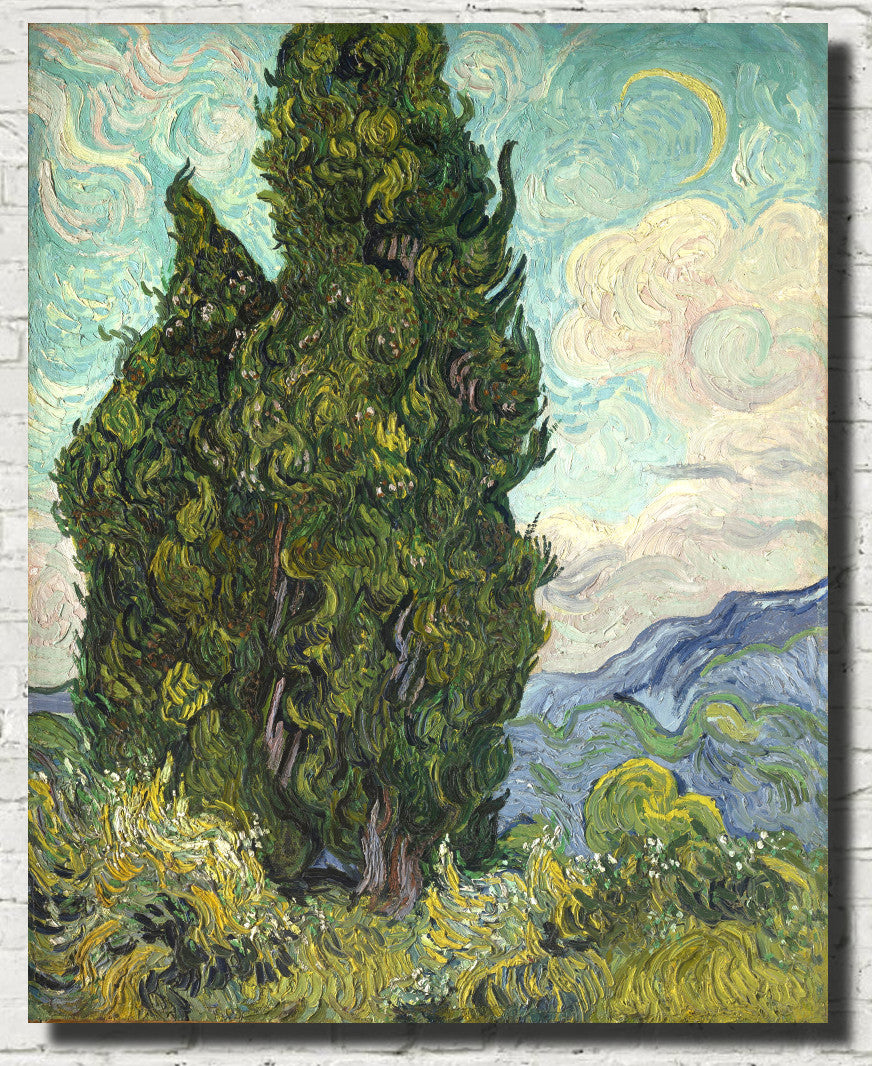
Cypresses, 1889
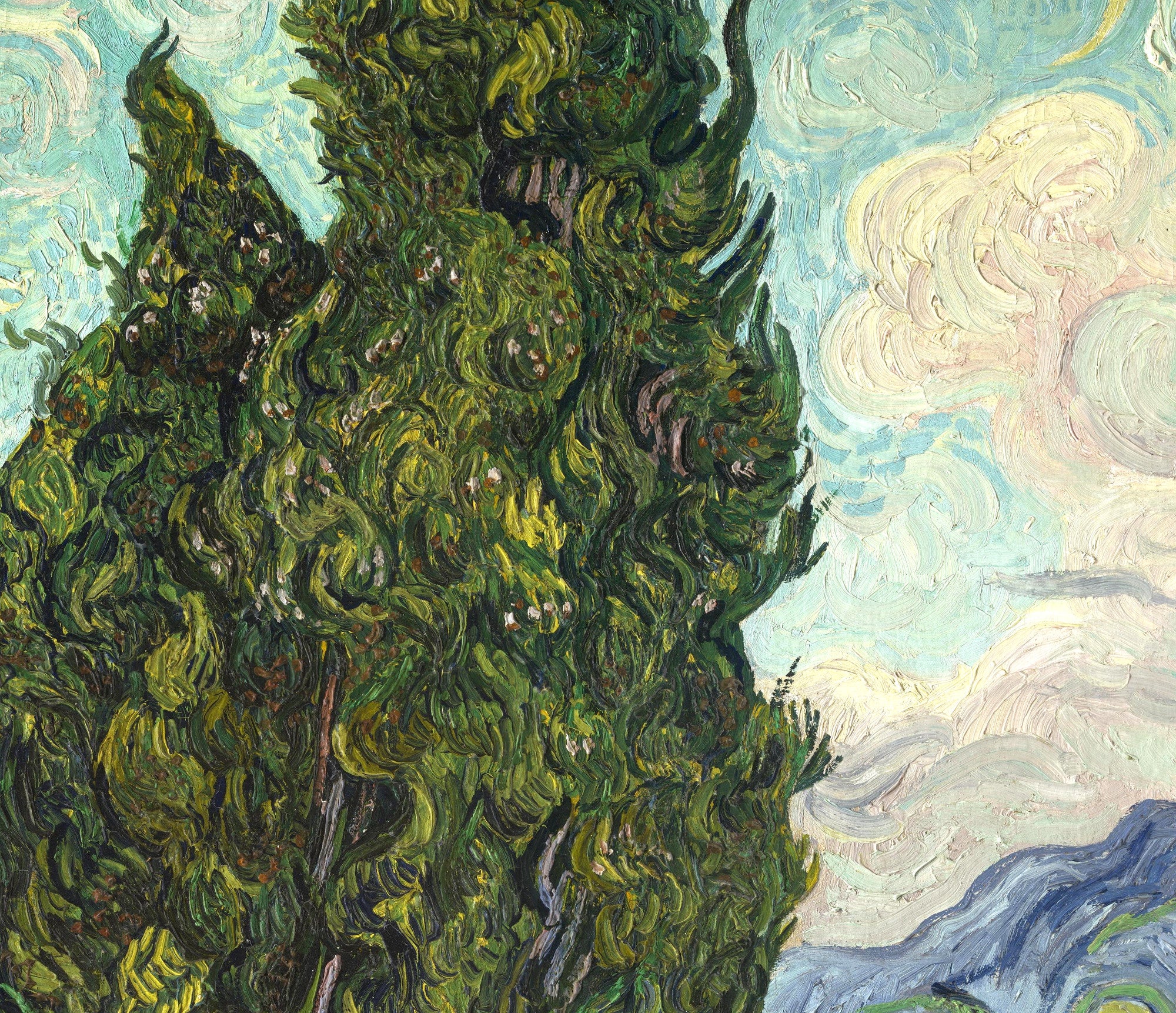
Cypresses is one of Van Gogh’s most concentrated studies of the motif. Painted at Saint-Rémy in June 1889, the work brings enormous trees close to the viewer so that their twisting branches and dense foliage fill much of the composition.
Rather than treating the trees as static vertical forms, Van Gogh builds them from energetic, curving strokes. Their outlines seem to twist upward, while the surrounding sky, clouds and landscape continue the same rhythmic movement.
The dark green cypresses stand against a much lighter landscape, making them appear simultaneously solid and animated. Their scale gives the painting a monumental character despite the familiarity of the natural subject.
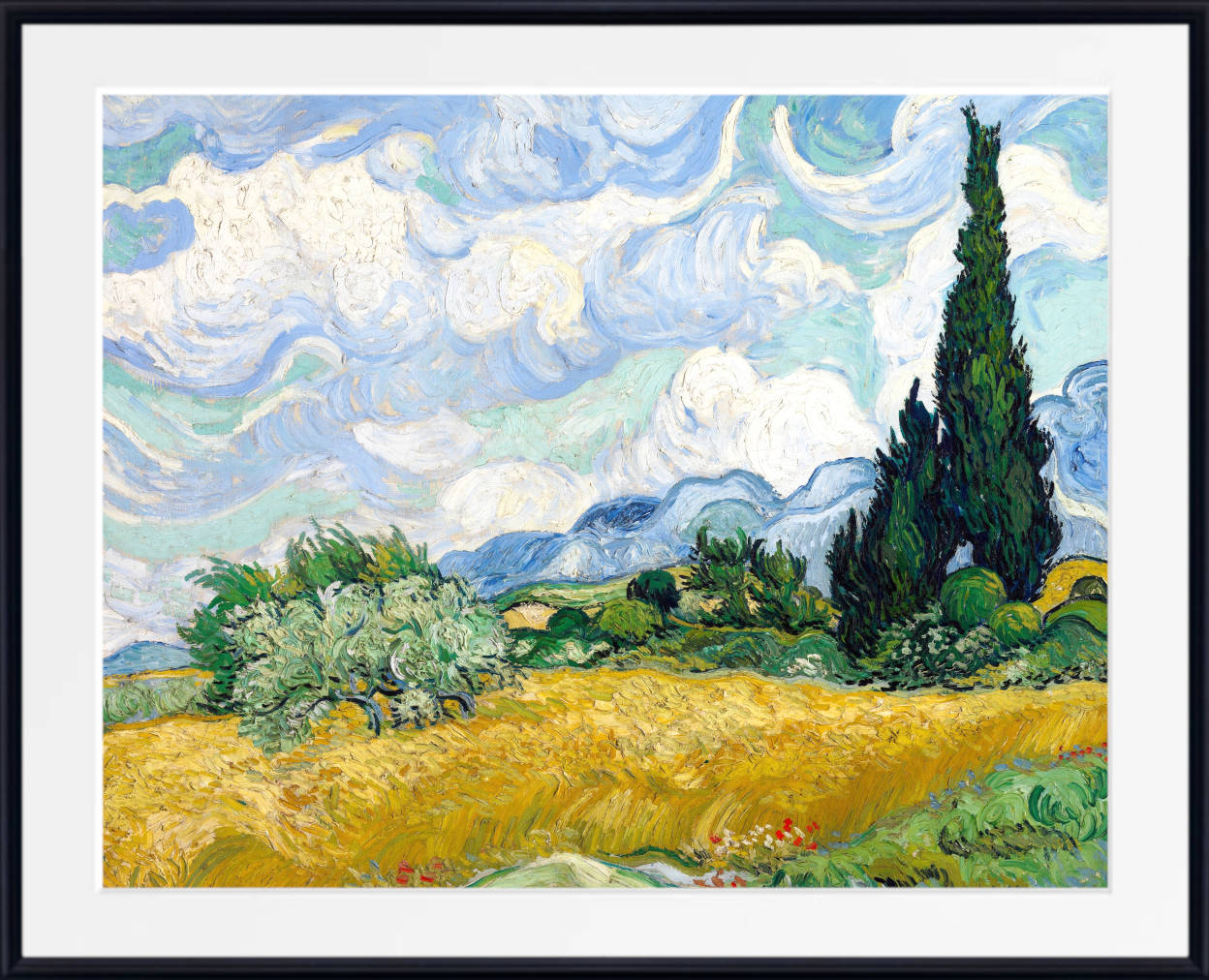
Wheat Field with Cypresses
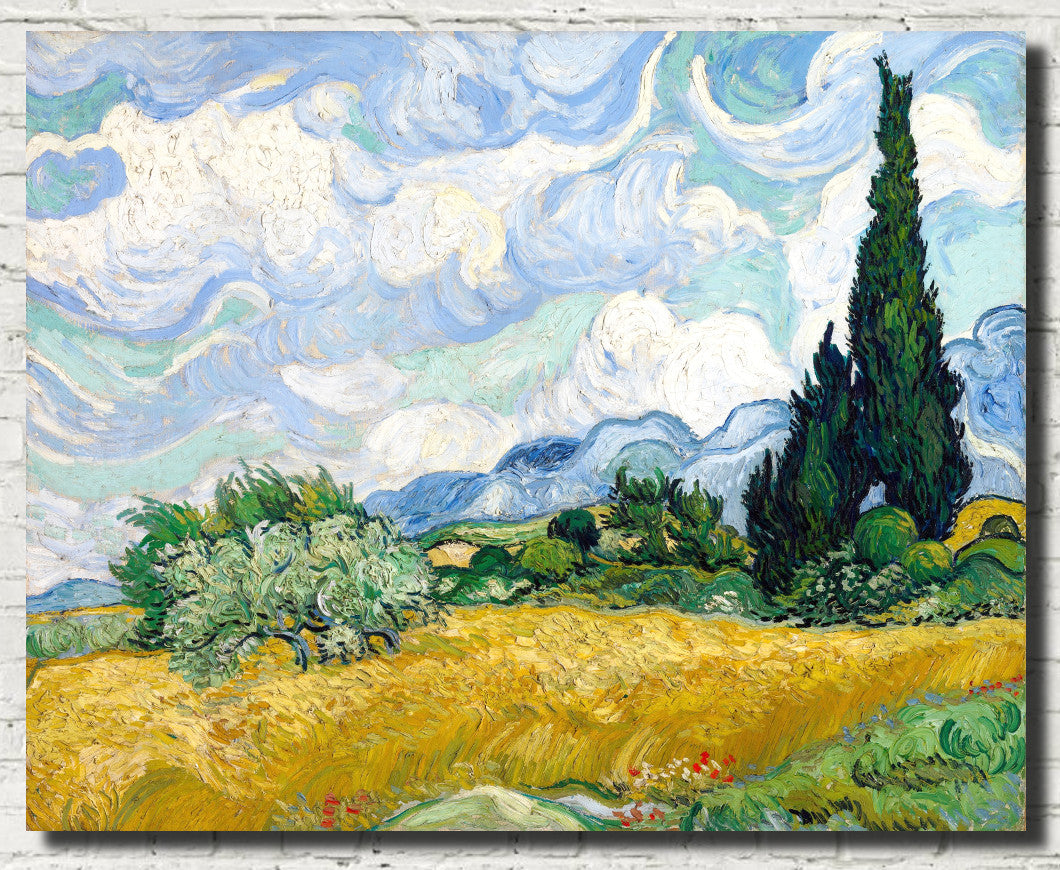
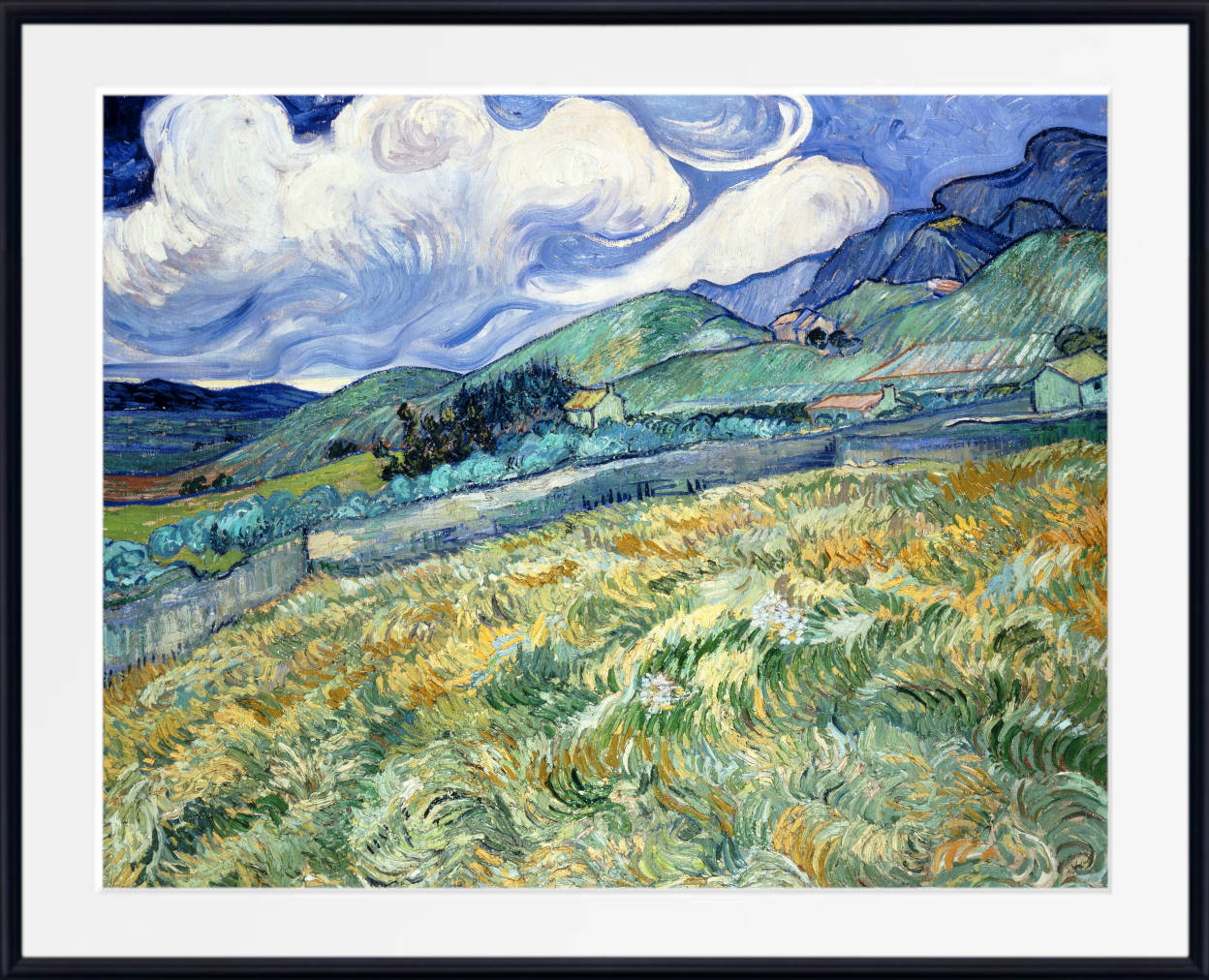
Wheat Field with Cypresses combines two of Van Gogh’s defining Saint-Rémy subjects: golden wheat and towering evergreen trees.
A brilliant yellow field stretches across the foreground, while dark cypresses rise towards a turbulent blue sky. Behind them, the blue Alpilles mountains create another layer of colour and movement. Wheat, trees, hills and clouds all appear to respond to the same sweeping rhythms.
Van Gogh produced several versions of this composition during 1889. He regarded the subject highly, and the finished landscape has become one of the clearest examples of his ability to transform direct observation of nature into intensely expressive painting.
The work also demonstrates the deliberate overlap between GalleryThane’s thematic Van Gogh collections. Wheat Field with Cypresses belongs naturally here while also forming part of the Vincent van Gogh Wheat Field & Harvest Prints collection, which explores his wheat fields, harvest scenes, reapers and agricultural landscapes from Arles through Saint-Rémy to Auvers.
The Starry Night and the Cypress
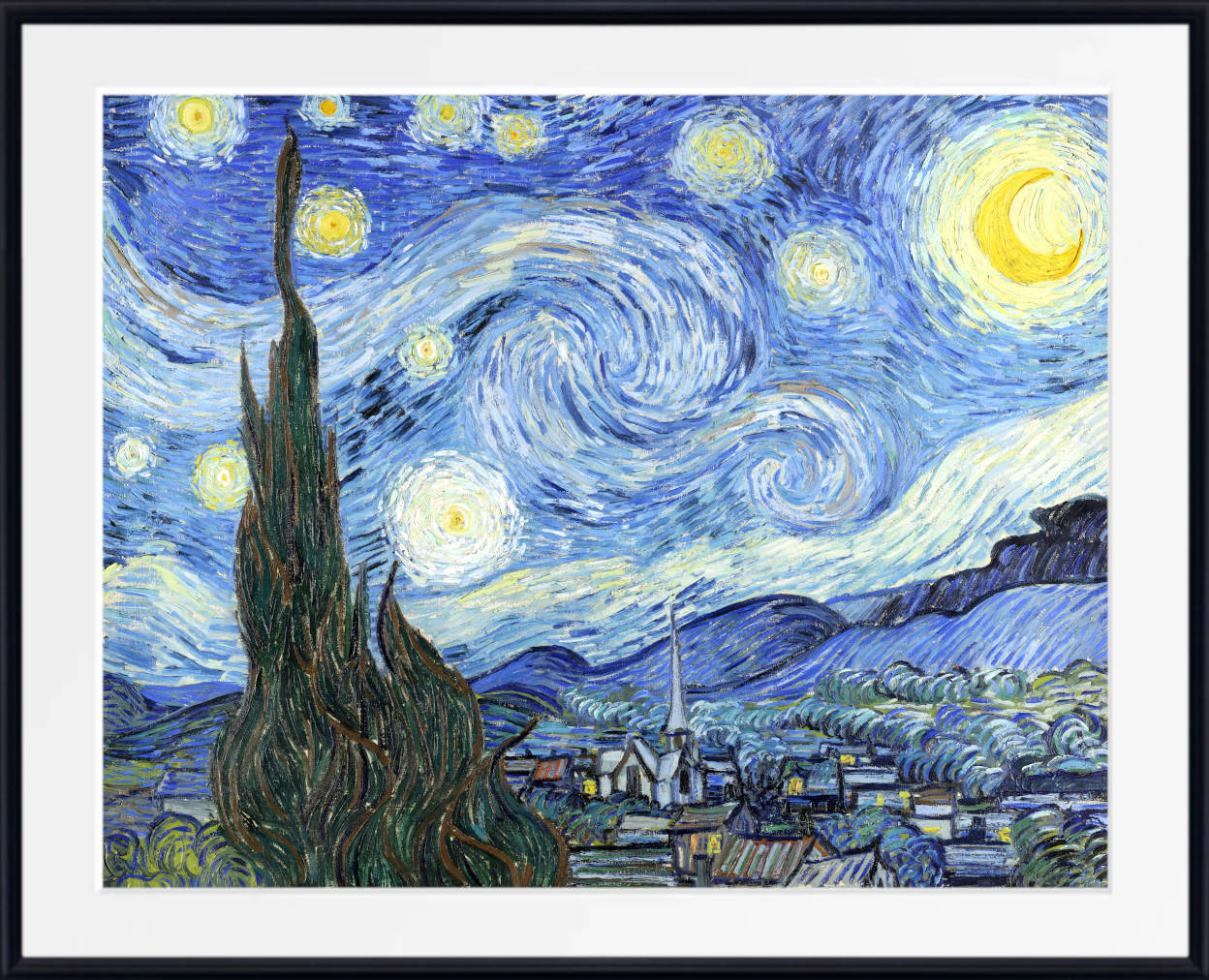
The cypress in The Starry Night is sometimes overshadowed in popular discussion by the painting’s extraordinary swirling sky, yet it is essential to the composition.
A huge dark tree rises from the foreground at the left, extending almost to the upper edge of the canvas. Its flame-like silhouette creates a powerful vertical counterpoint to the horizontal village and rolling mountains below.
Visually, the cypress links the earthly landscape with the immense night sky. Its dark form also provides the strongest tonal contrast in a painting dominated by luminous blues and yellows.
The Starry Night was painted at Saint-Rémy in June 1889, during the same period in which Van Gogh was actively exploring the pictorial possibilities of cypress trees.
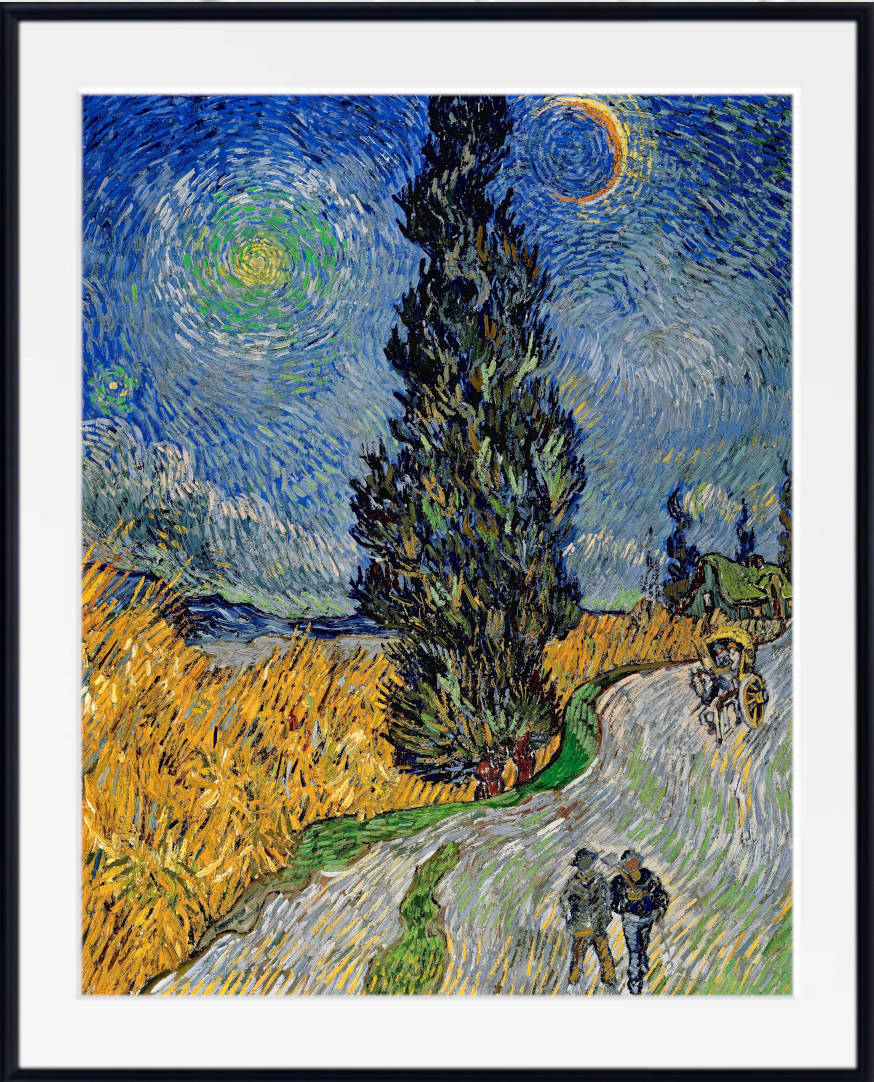
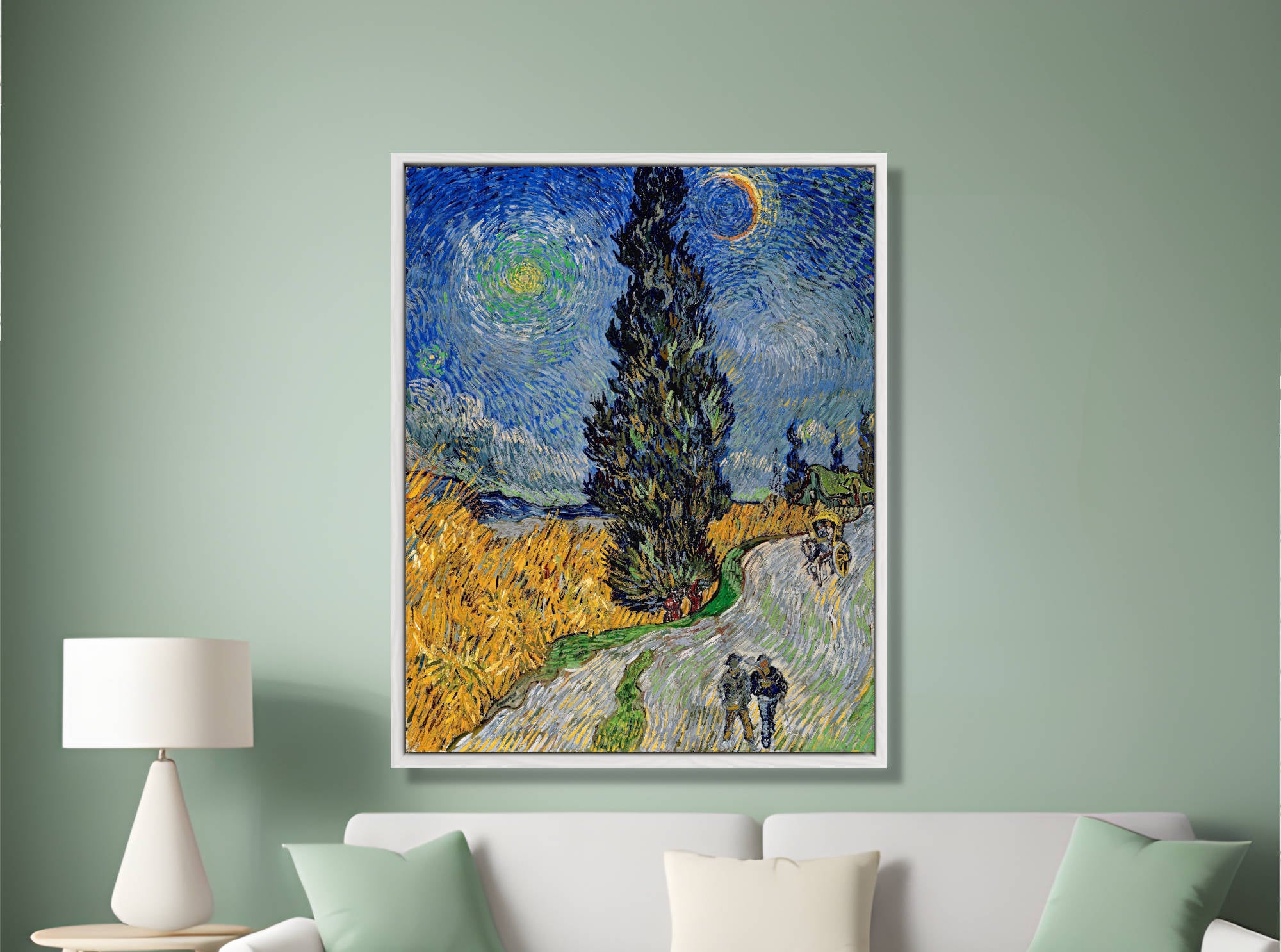
Road with Cypress and Star
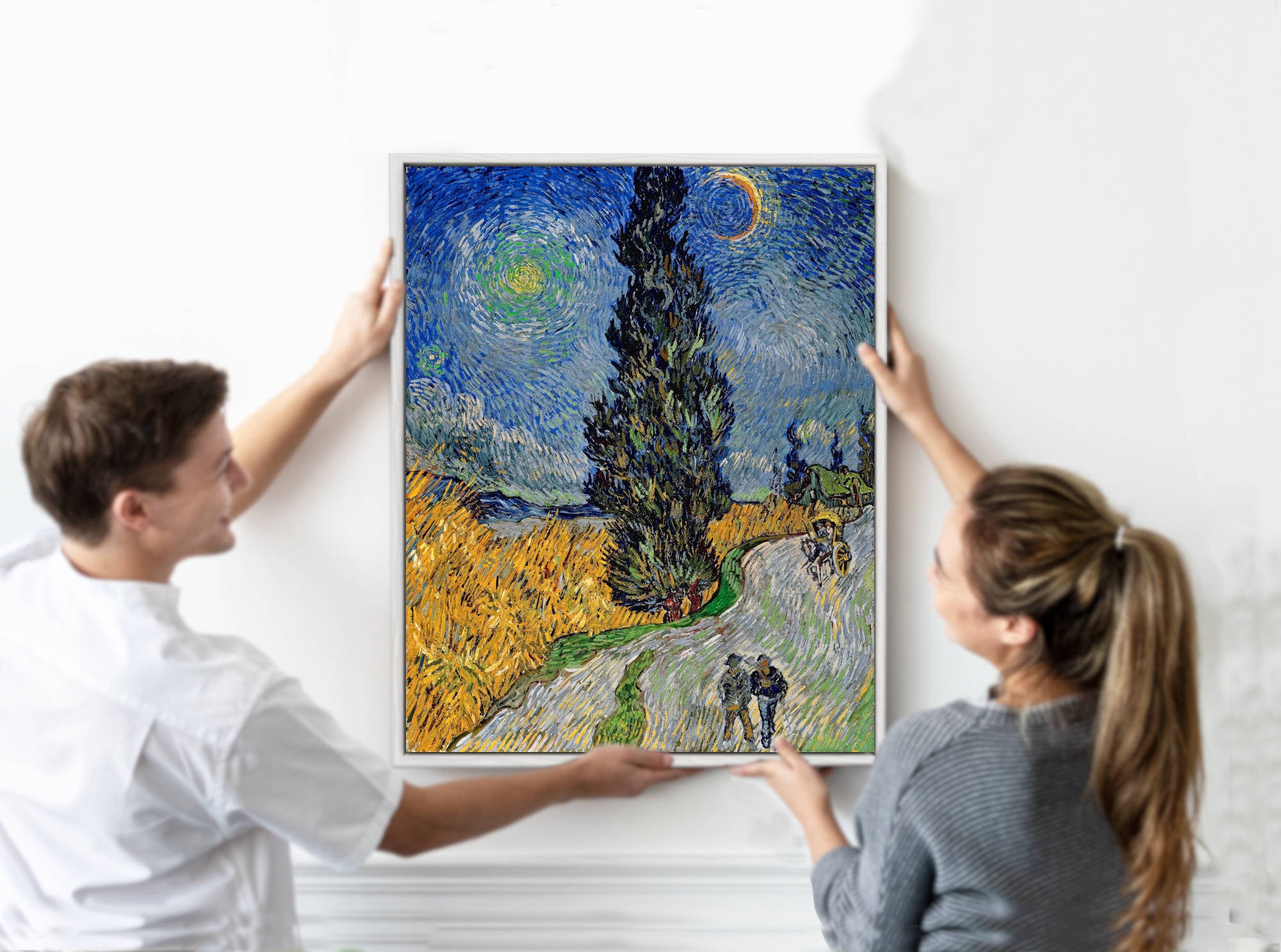
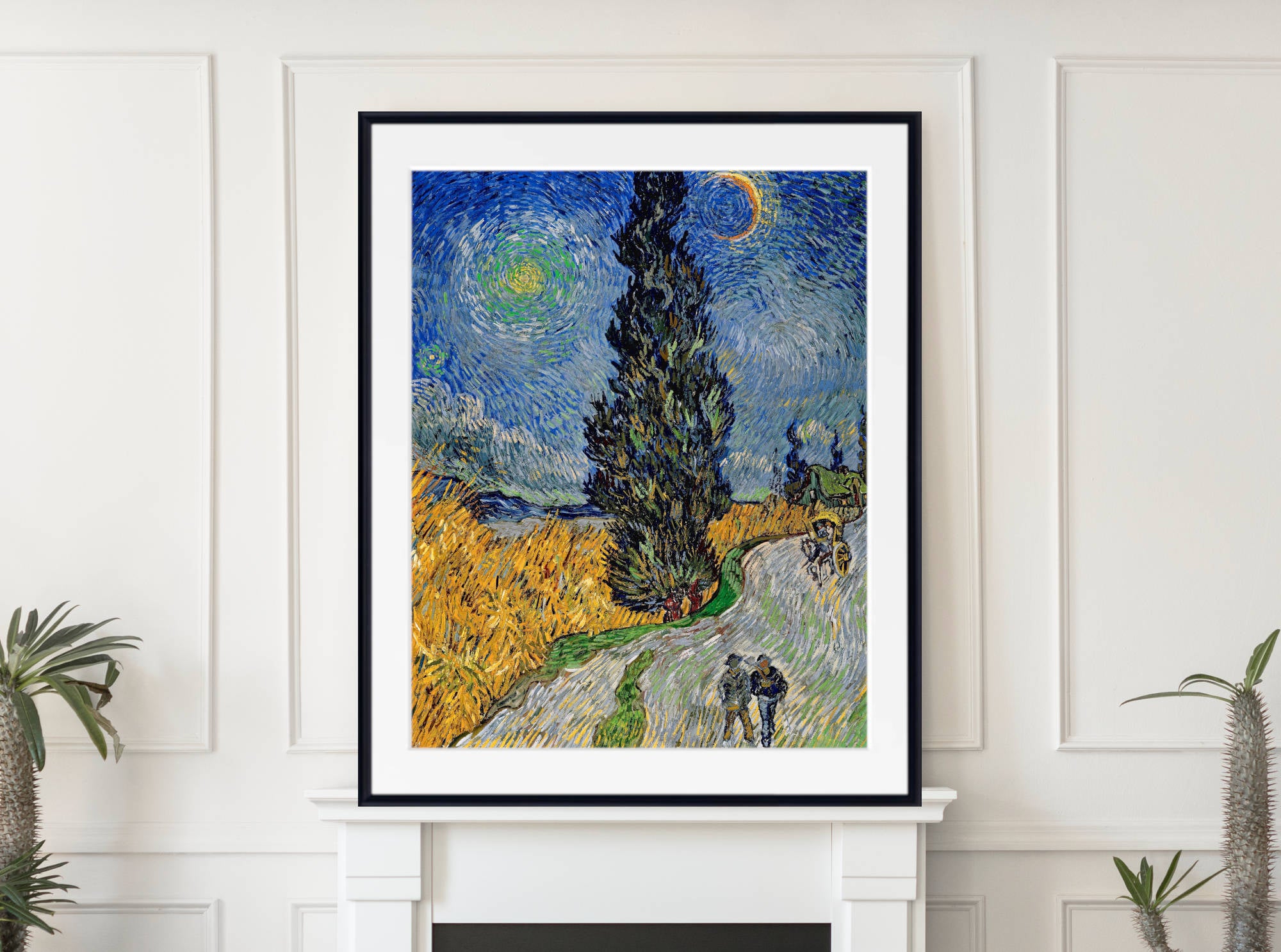
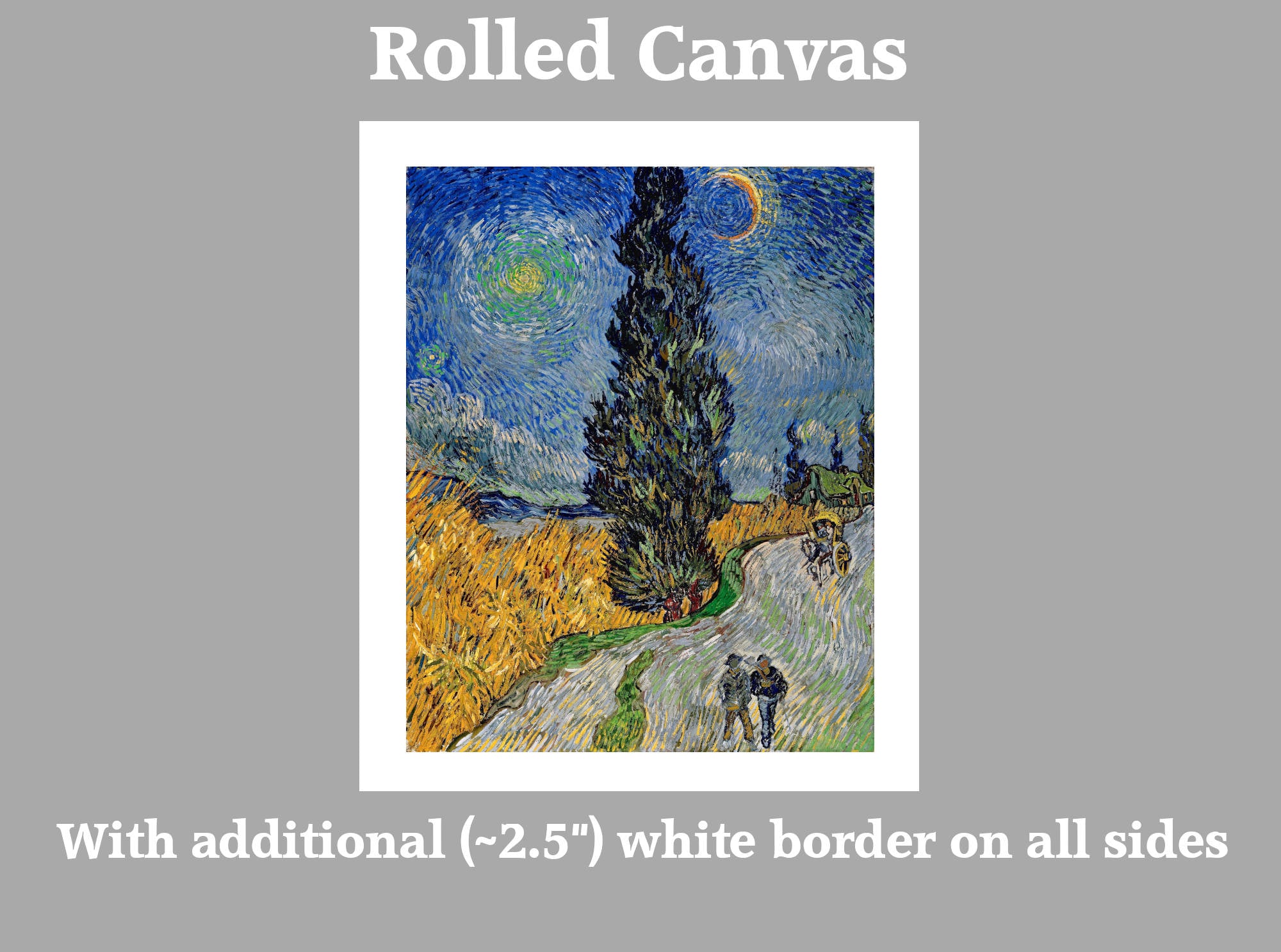
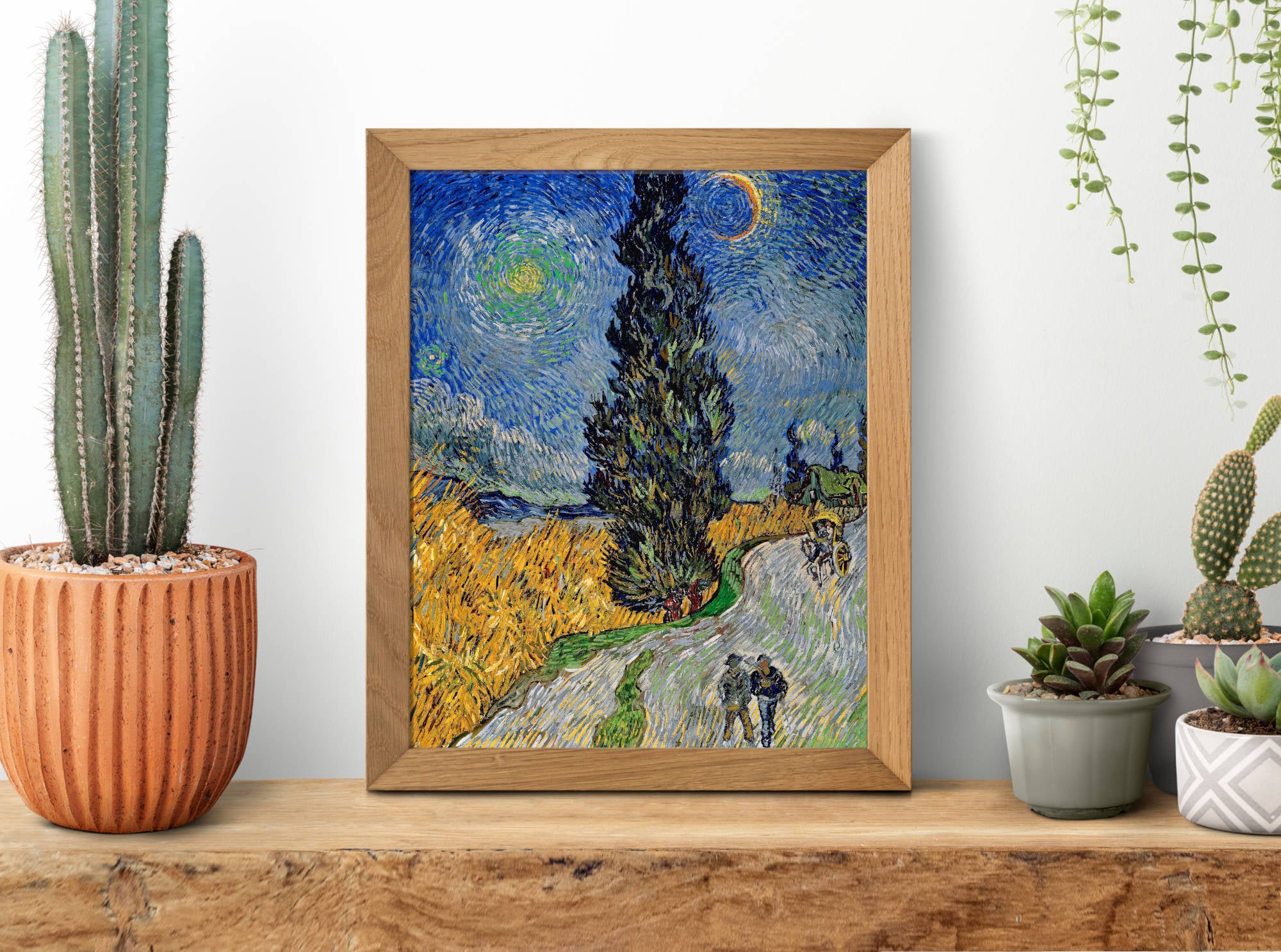
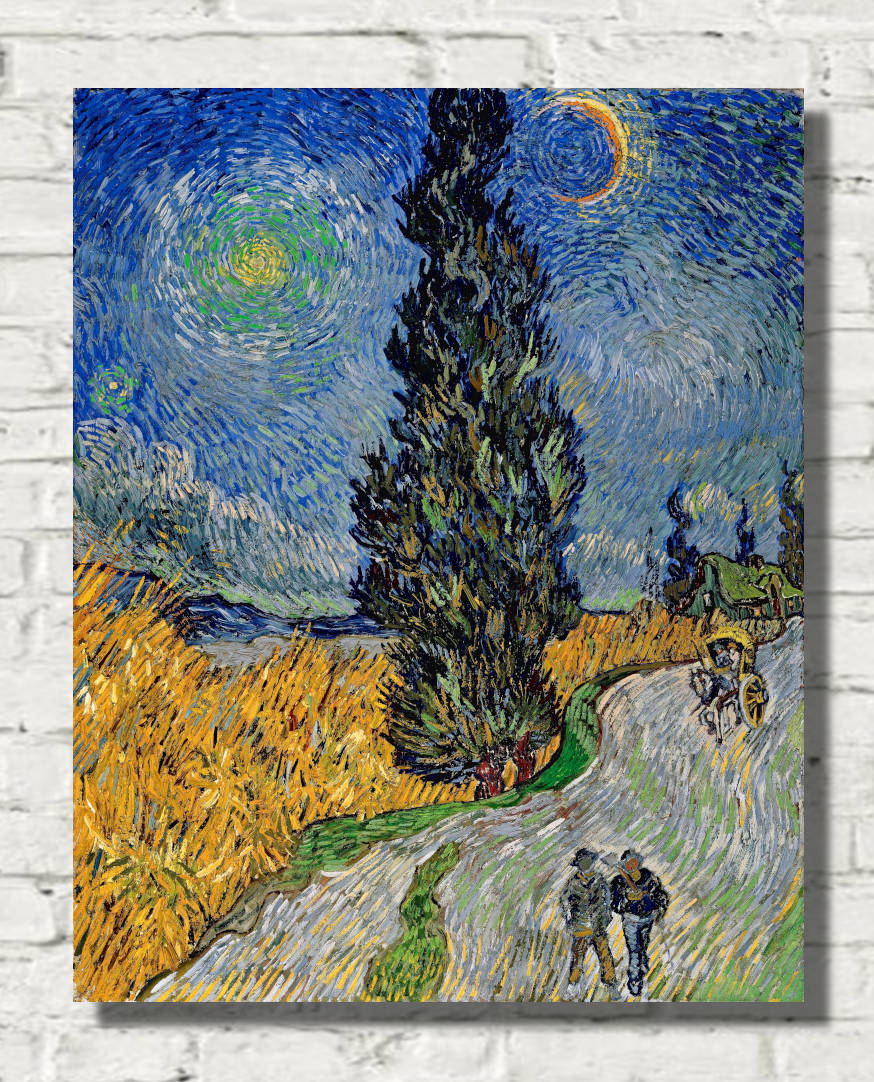
In Road with Cypress and Star, Van Gogh again uses a towering cypress as the central vertical element of a nocturnal landscape.
The tree divides the composition while a road curves through the foreground and figures travel beneath the evening sky. Above them, celestial forms provide brilliant points of light against deep blue.
The painting combines several themes central to Van Gogh’s late work: the Provençal landscape, night, movement, travelling figures and the dramatic cypress silhouette.
Unlike the broad horizontal structure of Wheat Field with Cypresses, the road scene gives the tree an almost architectural presence, reinforcing how many different compositional possibilities Van Gogh discovered within the same natural motif.
Cypresses, Wheat Fields and Harvest Landscapes
Cypress trees frequently appear beside the wheat fields that became another of Van Gogh’s defining landscape subjects at Saint-Rémy. Their dark vertical silhouettes provide a dramatic counterpoint to broad expanses of yellow grain, harvested fields and rolling Provençal countryside.
This relationship is particularly evident in Wheat Field with Cypresses, where wheat, mountain, tree and cloud appear connected by the same rhythmic brushwork.
Explore the wider Vincent van Gogh Wheat Field & Harvest Prints collection for landscapes spanning the golden harvests of Arles, the enclosed fields and reapers of Saint-Rémy and the dramatic wheatfields of Auvers-sur-Oise.
Cypresses, Olive Trees and the Landscape of Provence
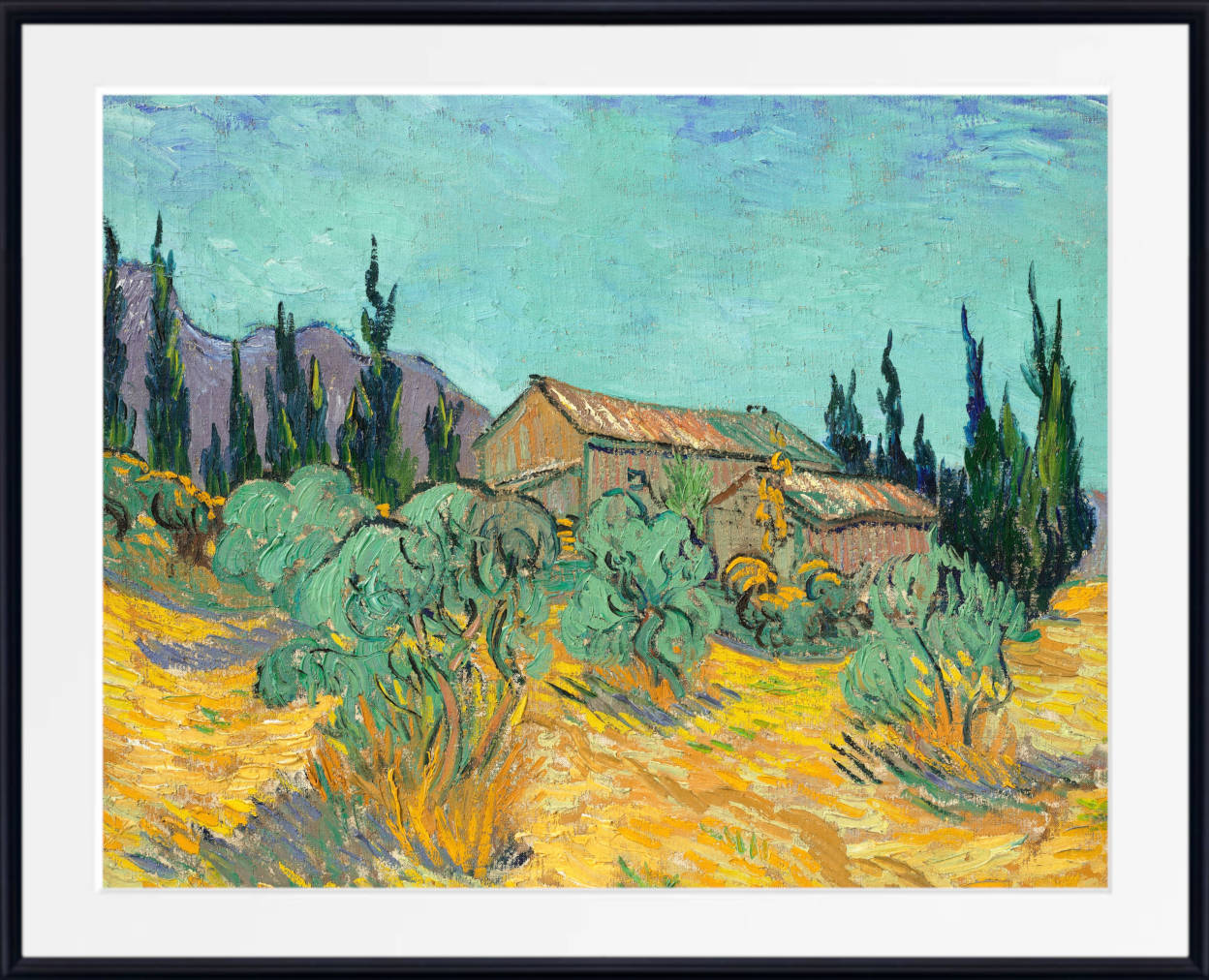
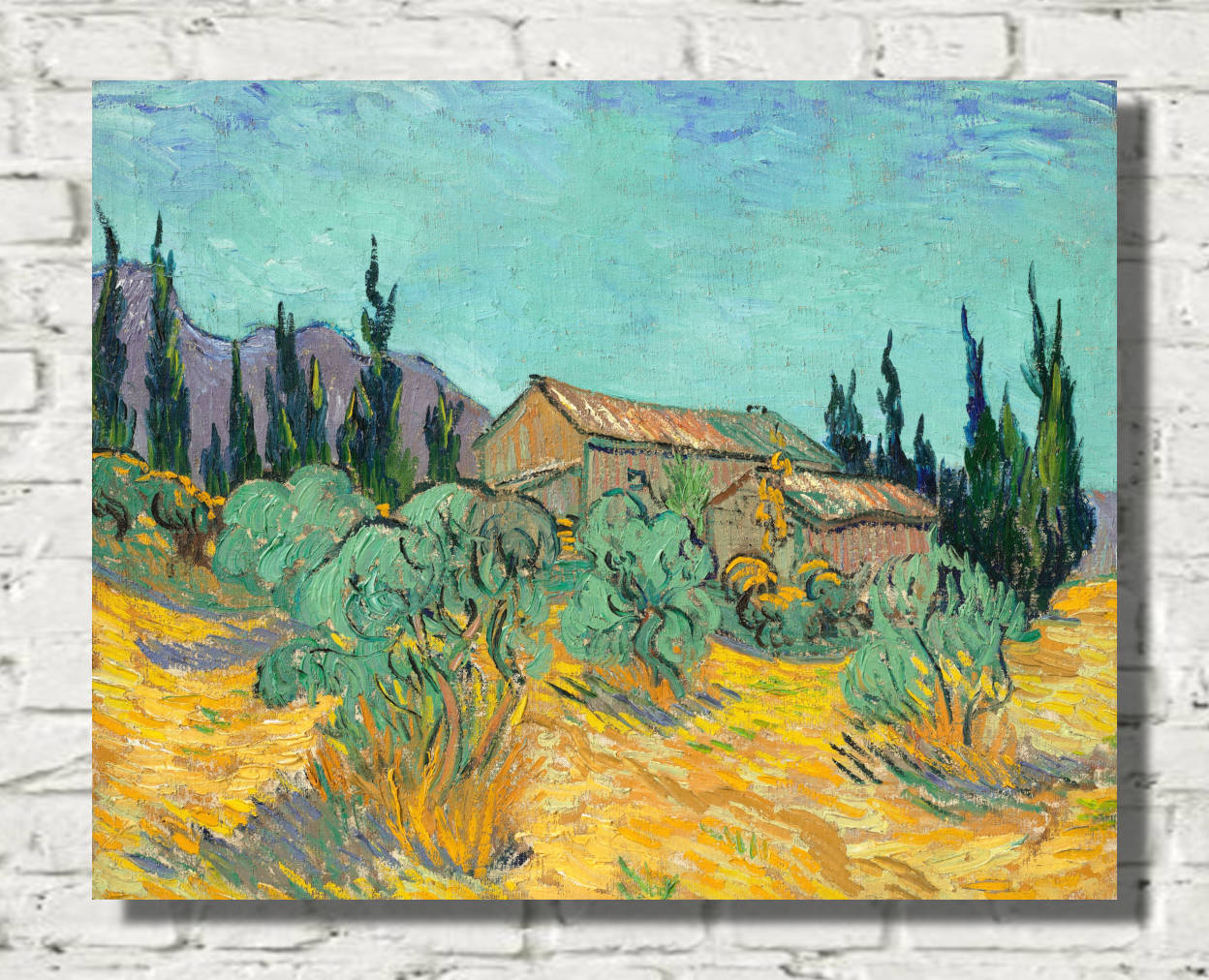
Cypresses rarely existed in isolation within Van Gogh’s Provençal landscapes. They appear beside wheat fields, olive groves, farm buildings, mountains and garden paths, creating connections between several of his major recurring subjects.
The relationship between cypress and olive trees is particularly interesting. Olive trees spread outward in twisting, irregular forms, while cypresses frequently rise vertically above them. Their contrasting shapes allowed Van Gogh to create landscapes with powerful internal rhythms.
Explore GalleryThane’s Vincent van Gogh Olive Trees collection to see how he approached another characteristic Provençal tree during the same Saint-Rémy period.
Cypresses and Van Gogh’s Flowering Landscapes
Van Gogh’s interest in trees was not limited to cypresses and olives. During his earlier stay in Arles, flowering fruit trees had become one of his most important spring subjects.
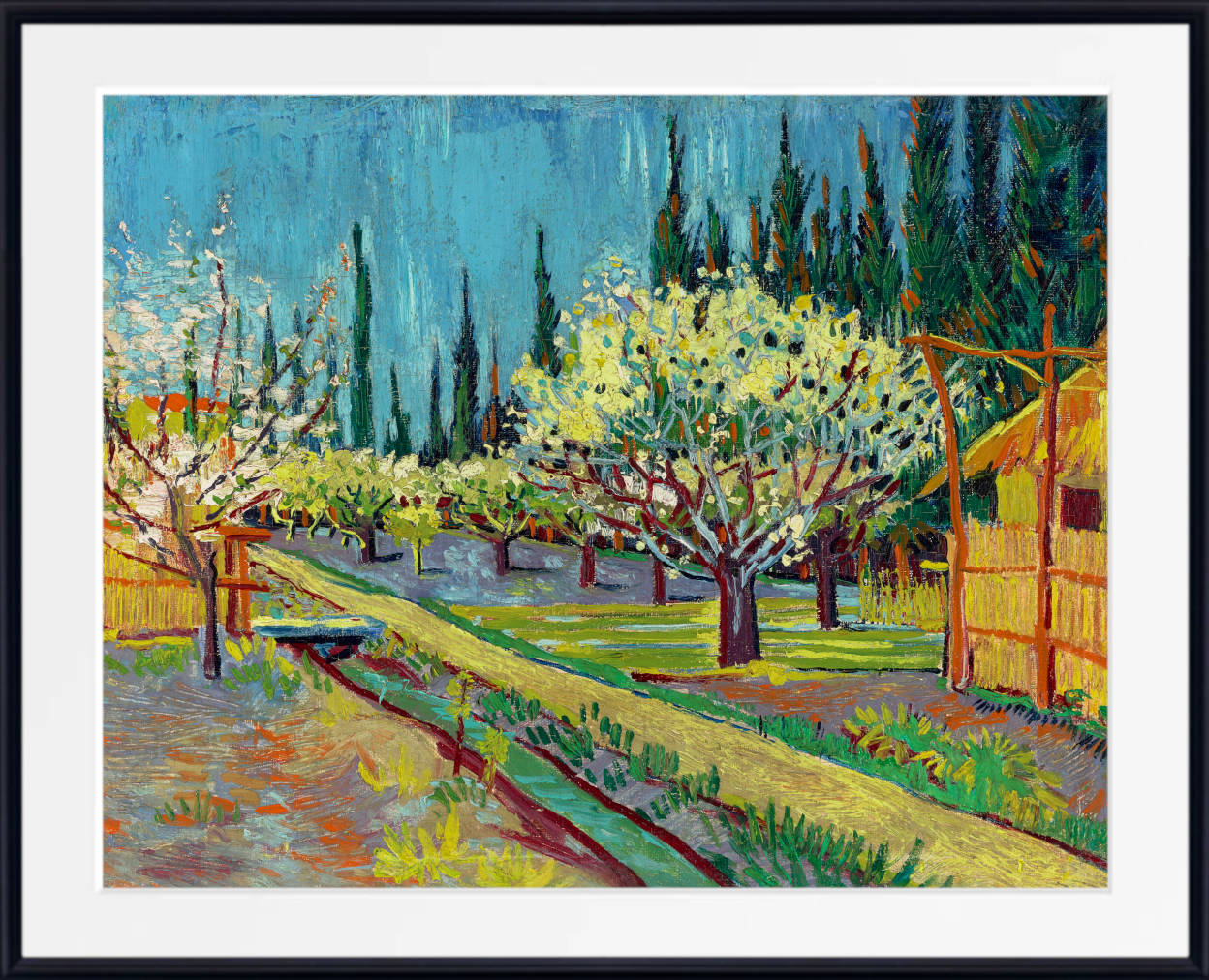
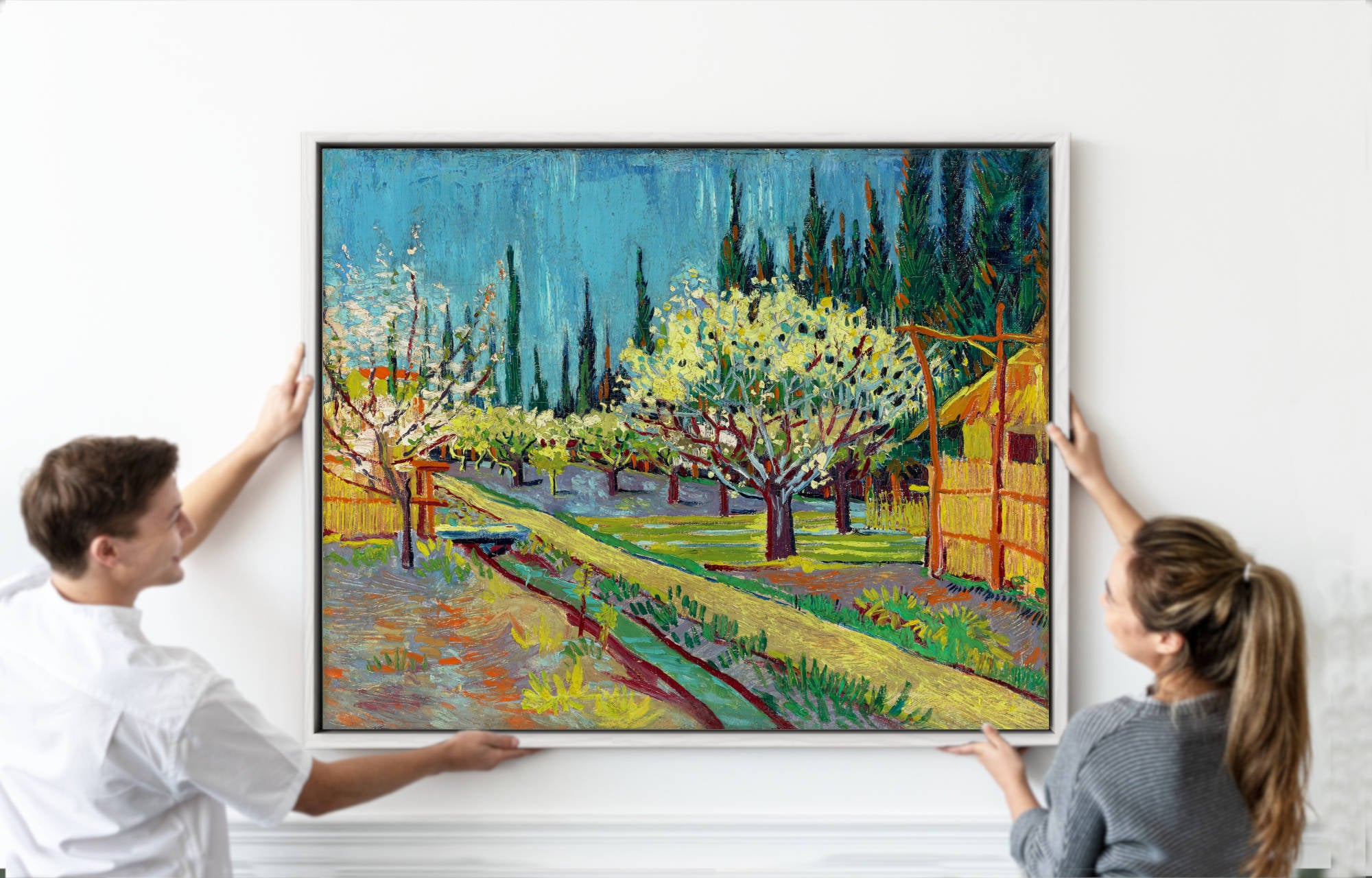
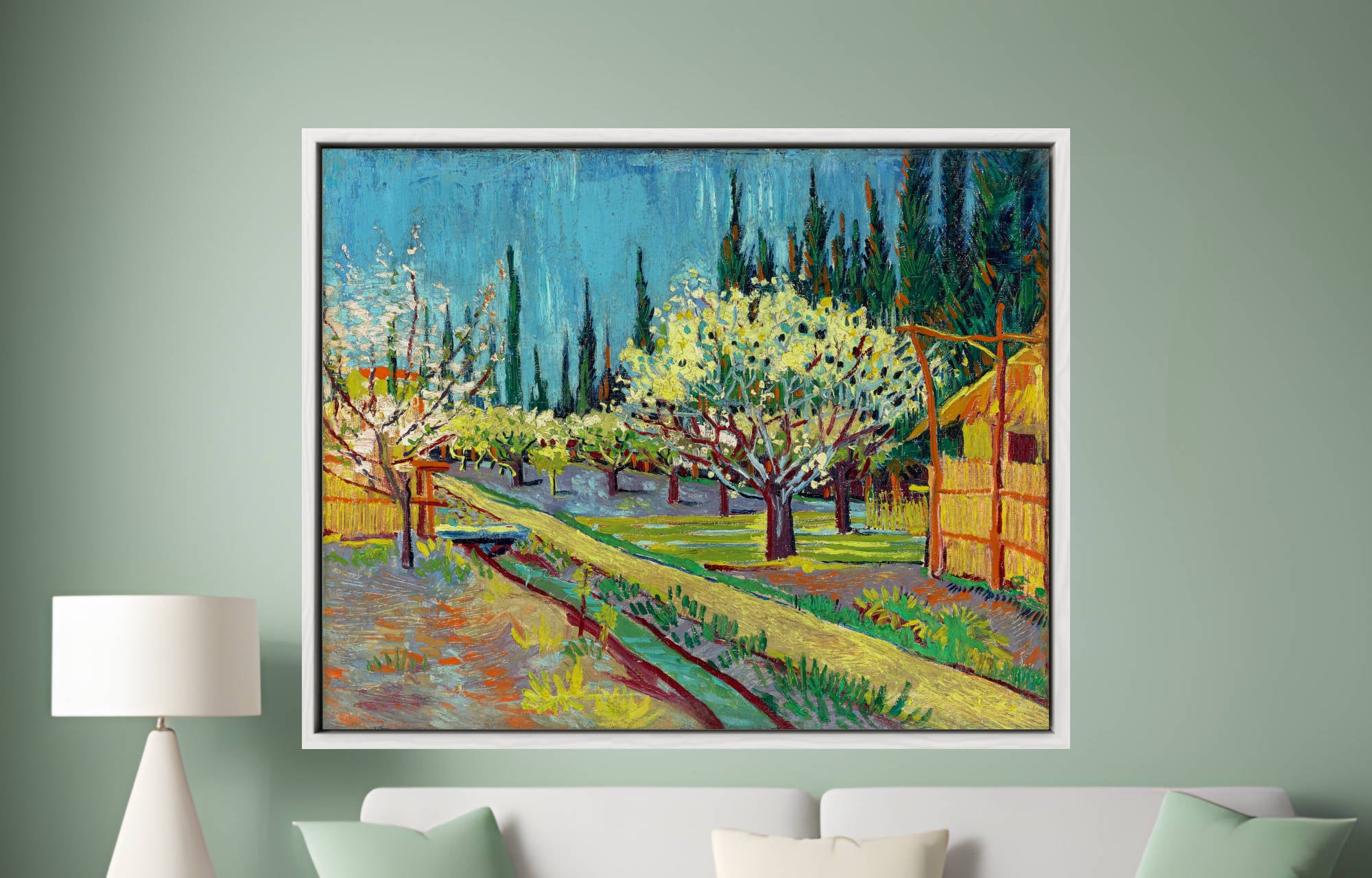
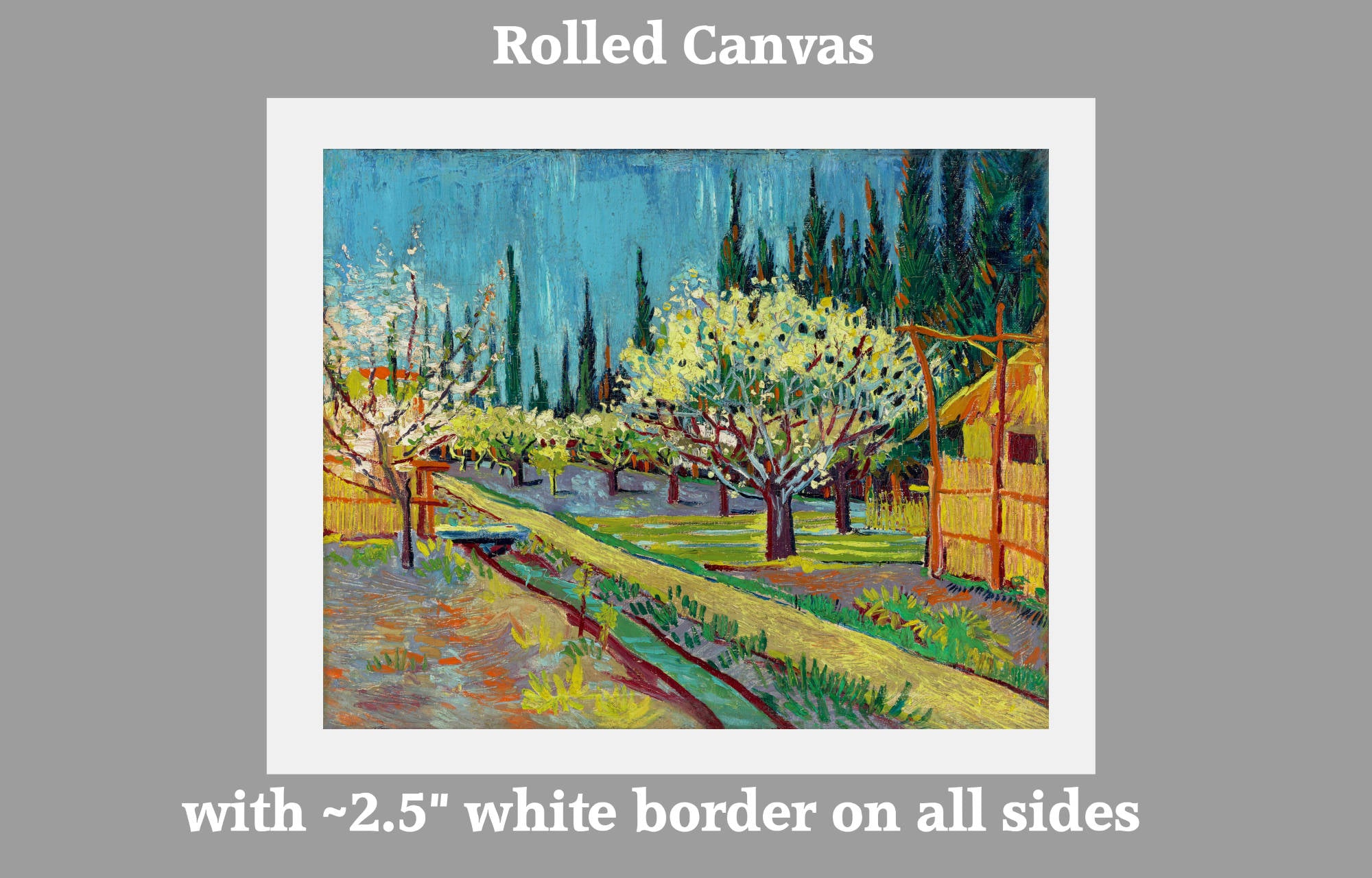
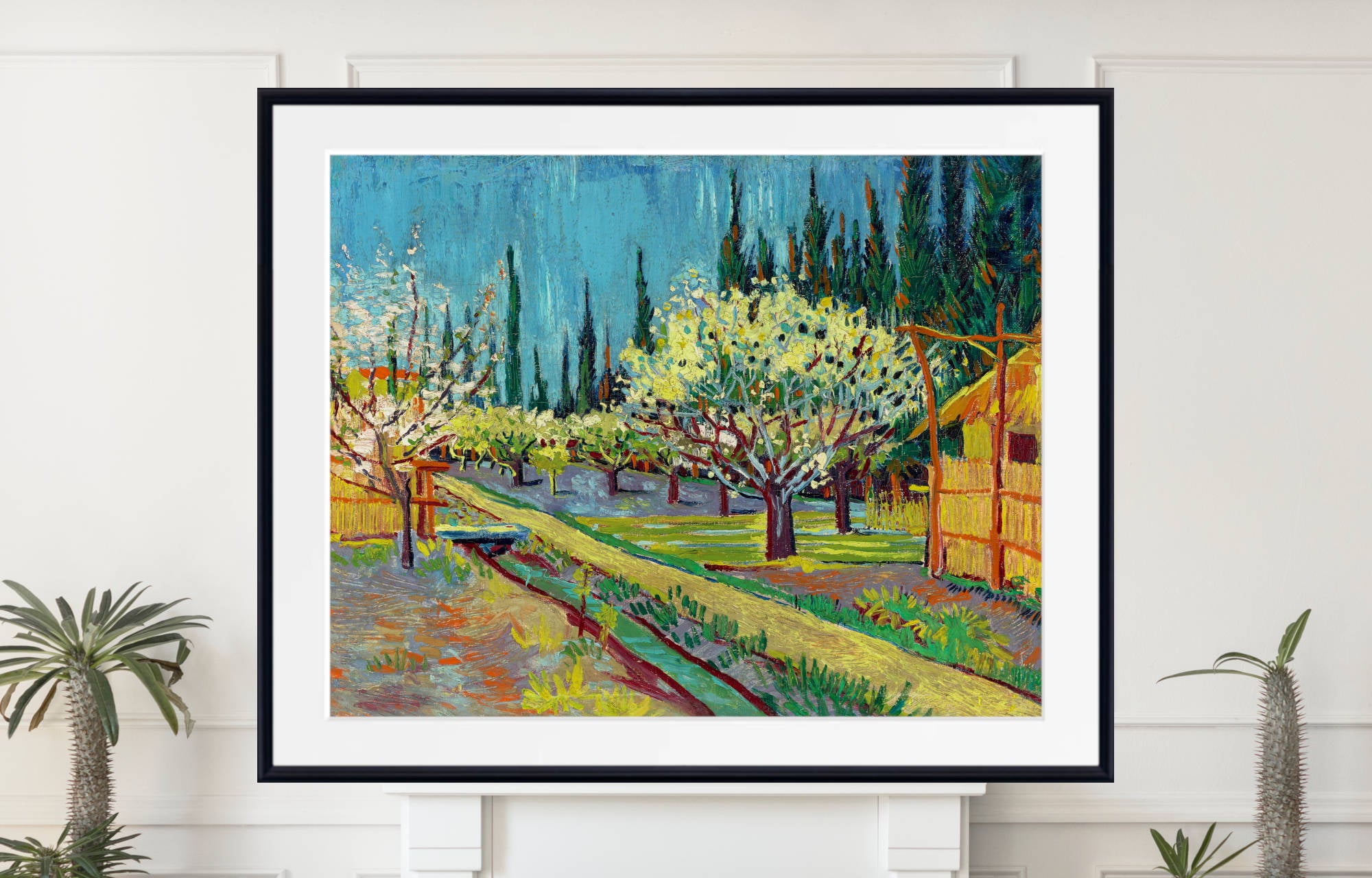
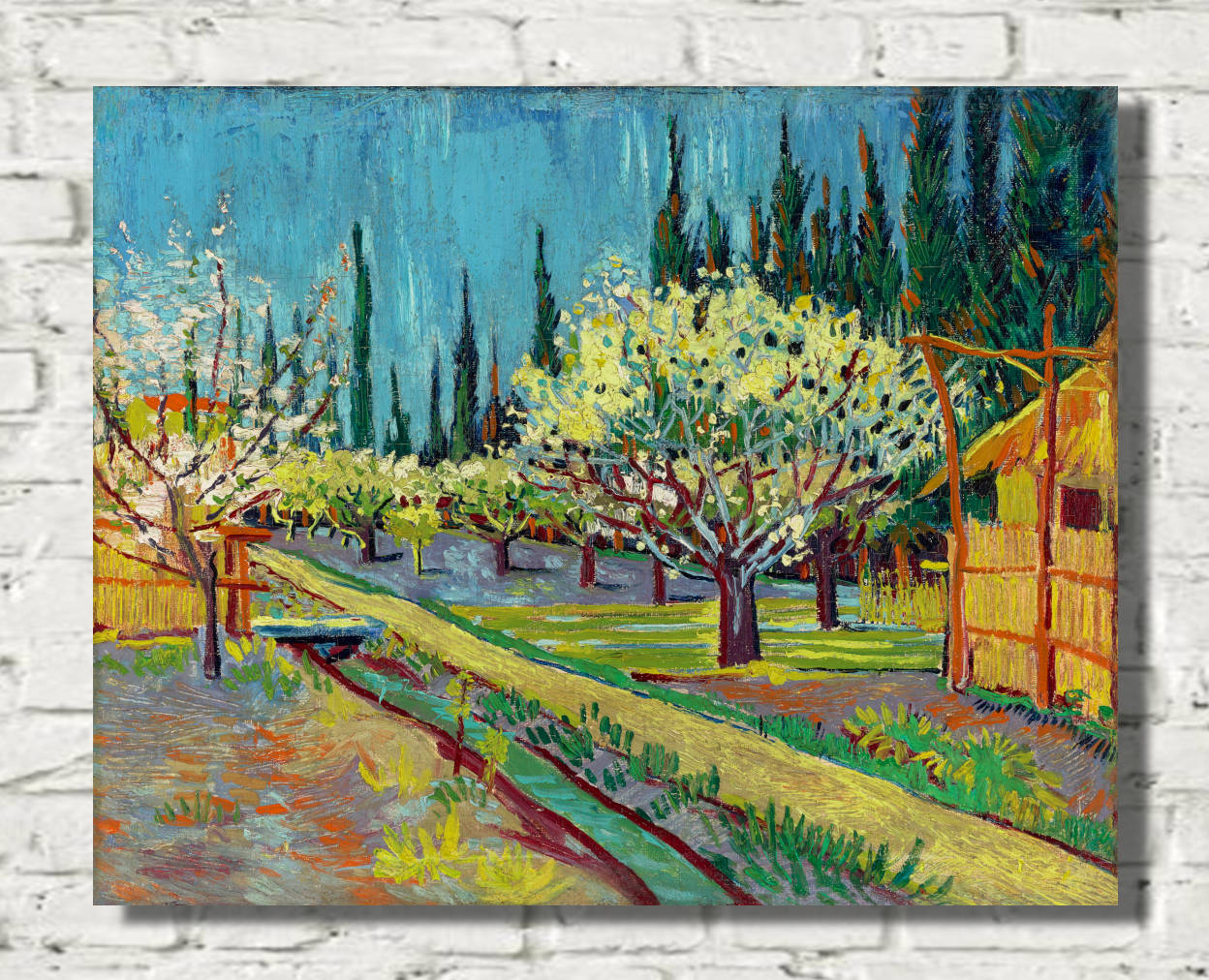
Orchard Bordered by Cypresses is especially useful in tracing this development because it brings the flowering-orchard theme into direct contact with the distinctive dark forms of the cypress.
GalleryThane’s Vincent van Gogh Flowering Orchards Prints collection explores another concentrated group of landscapes in which trees, season and the changing Provençal countryside became central subjects.
Colour and Movement in Van Gogh’s Cypress Paintings
Van Gogh’s cypress paintings demonstrate how effectively he could build a composition through contrasting colour.
The trees are frequently rendered in very dark green, blue-green or almost black tones. Against brilliant yellow wheat, pale earth and intense blue skies, their forms immediately command attention.
Yet colour is only part of their effect. Van Gogh’s brushwork gives the trees extraordinary movement. Short, curving strokes describe dense foliage, while larger directional rhythms connect cypress, cloud, mountain and field.
The resulting landscapes do not merely record what Provence looked like. They communicate something of the energy Van Gogh perceived within nature itself.
Van Gogh, Japanese Prints and Simplified Landscape Form
Van Gogh’s mature landscapes developed from several artistic influences, including Impressionism, contemporary French painting and his admiration for Japanese prints.
He valued Japanese art for its strong outlines, unusual viewpoints, flattened areas of colour and ability to reduce natural forms to visually powerful essentials. These qualities helped encourage his increasingly direct approach to landscape.
In the cypress paintings, dark trees frequently function almost as graphic silhouettes against broad areas of yellow, blue or green. At the same time, Van Gogh’s physical brushwork and highly individual colour make the images unmistakably his own.
Cypress Trees and Post-Impressionism
Van Gogh is one of the defining figures associated with Post-Impressionism, a broad term covering artists who developed increasingly individual approaches beyond Impressionism during the late nineteenth century.
His cypress landscapes demonstrate that shift particularly clearly. Colour does not merely describe natural appearance, brushwork remains visibly active across the surface, and trees can become expressive structural forms rather than neutral landscape details.
Explore the wider Post-Impressionist Prints collection to compare Van Gogh’s expressive landscapes with the very different approaches of Cézanne, Gauguin, Seurat and other artists working beyond Impressionism.
Vincent van Gogh Cypress Prints for Contemporary Interiors
Cypress paintings are especially effective as wall art because their dark vertical forms create strong focal points within otherwise colourful landscapes.
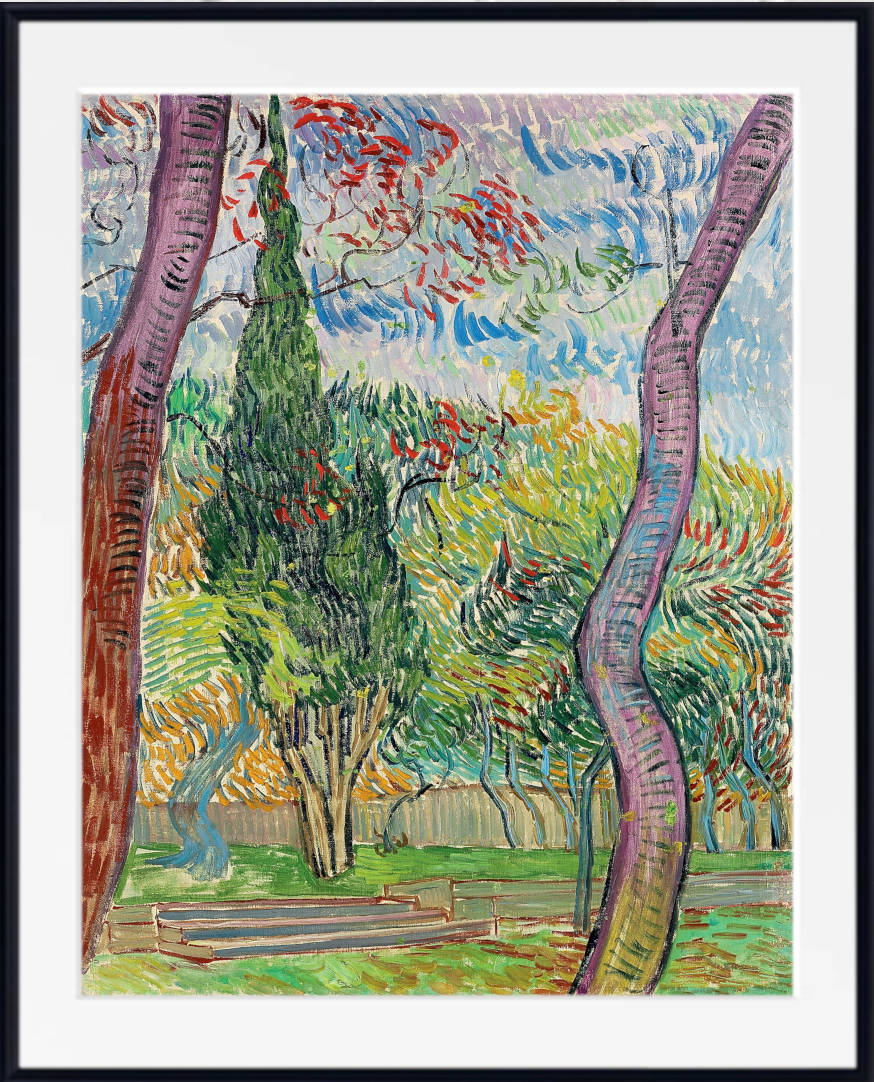
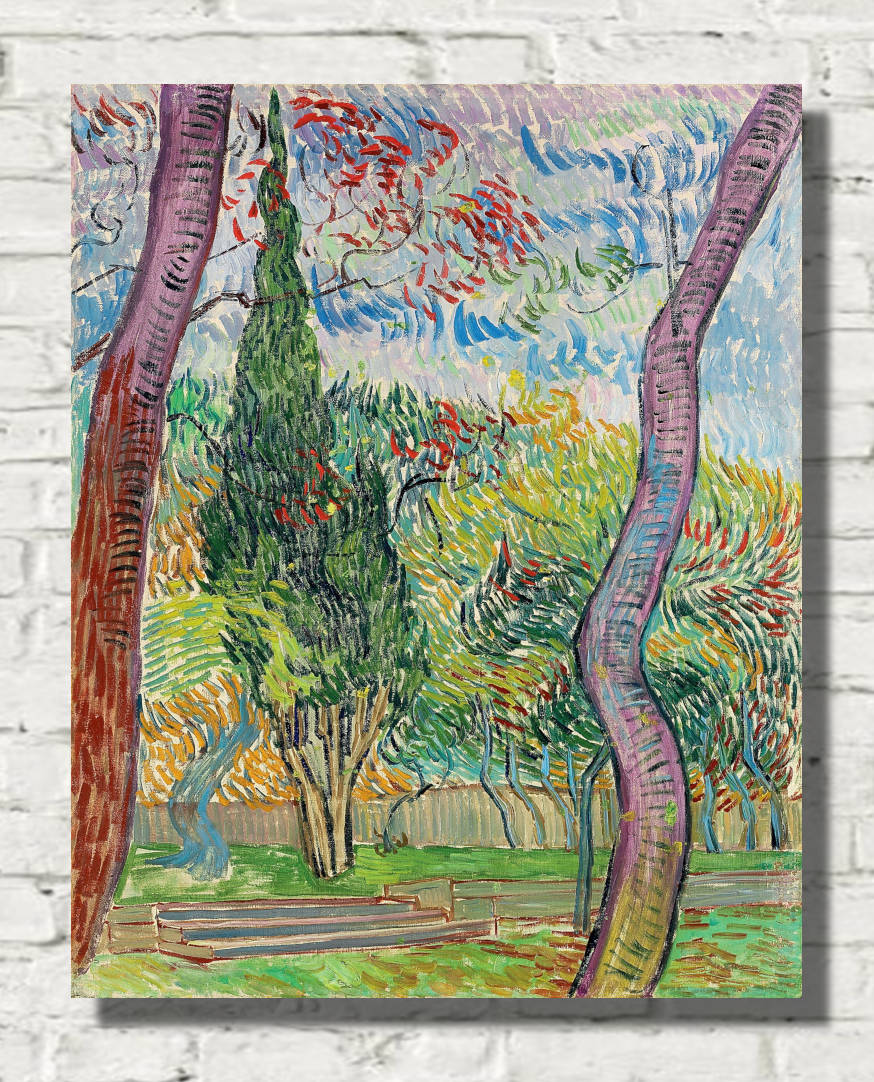
Cypresses is particularly suited to a narrow or vertical wall space, where its towering composition can provide considerable visual impact. Wheat Field with Cypresses works beautifully above sofas, sideboards and beds because its horizontal format combines bright golden wheat with deep green and blue.
The Starry Night and Road with Cypress and Star offer deeper nocturnal palettes, making them effective in rooms where stronger blue and dark green tones are desirable.
Van Gogh’s cypress prints work particularly well with natural timber, putty, cream, ochre, dark green and blue furnishings and can complement Scandinavian, eclectic, traditional and contemporary interiors.
Creating a Van Gogh Gallery Wall
A cypress print can provide a useful visual anchor within a wider Van Gogh gallery wall.
For a landscape-led arrangement, combine cypress imagery with wheat fields and harvest landscapes, olive groves and flowering orchards. Repeating colours such as yellow, blue and green help connect works painted at different moments while variations in orientation prevent the display from becoming overly uniform.
Alternatively, pair a nocturnal work such as The Starry Night or Road with Cypress and Star with brighter daytime landscapes to create stronger tonal contrast.
The main Vincent van Gogh Prints collection provides the widest selection for building a coordinated display around colour, subject or period.
Fine Art Prints, Framed Prints and Canvas Panels
GalleryThane’s Vincent van Gogh Cypress Prints collection brings together reproductions of these celebrated landscapes in a range of sizes and presentation formats.
Choose fine art paper prints for flexible framing, professionally framed prints for a complete presentation, or canvas panels for a contemporary alternative. The mixture of portrait and landscape compositions makes the collection suitable for individual statement pieces as well as multi-print gallery walls.
Frequently Asked Questions
Why was Vincent van Gogh interested in cypress trees?
Van Gogh admired the distinctive shape, proportions and dark green colour of Provençal cypresses. During his stay at Saint-Rémy in 1889 he became particularly determined to develop them into an important painting subject.
When did Van Gogh paint Cypresses?
Van Gogh painted Cypresses in June 1889, shortly after beginning his stay at Saint-Paul-de-Mausole in Saint-Rémy-de-Provence.
Where did Van Gogh paint Wheat Field with Cypresses?
The subject was developed at Saint-Rémy in 1889. Van Gogh produced several versions combining golden wheat, dark Provençal cypresses and the blue Alpilles mountains.
Is there a cypress tree in The Starry Night?
Yes. A large dark cypress dominates the left foreground of The Starry Night, rising almost to the top of the composition and visually linking the landscape with the swirling night sky.
Was the cypress an important motif for Van Gogh?
Yes. His correspondence from Saint-Rémy shows that he was consciously trying to develop the cypress into a significant recurring subject, much as sunflowers had become associated with his work in Arles.
Which Van Gogh paintings feature cypress trees?
Important examples include Cypresses, Wheat Field with Cypresses, The Starry Night, Road with Cypress and Star and several Saint-Rémy landscapes in which cypresses appear alongside fields, olive trees and gardens.
What colours appear in Van Gogh’s cypress paintings?
Dark greens and blue-greens frequently define the cypress trees, contrasted against golden wheat, bright blue skies, pale earth, olive greens and, in his night scenes, deep blues and luminous yellow stars.
Which interiors suit Van Gogh cypress prints?
The strong shapes and rich green, blue and yellow palettes work well in contemporary, Scandinavian, eclectic and traditional interiors. Horizontal landscapes suit spaces above furniture, while vertical cypress compositions are especially effective on narrower walls.