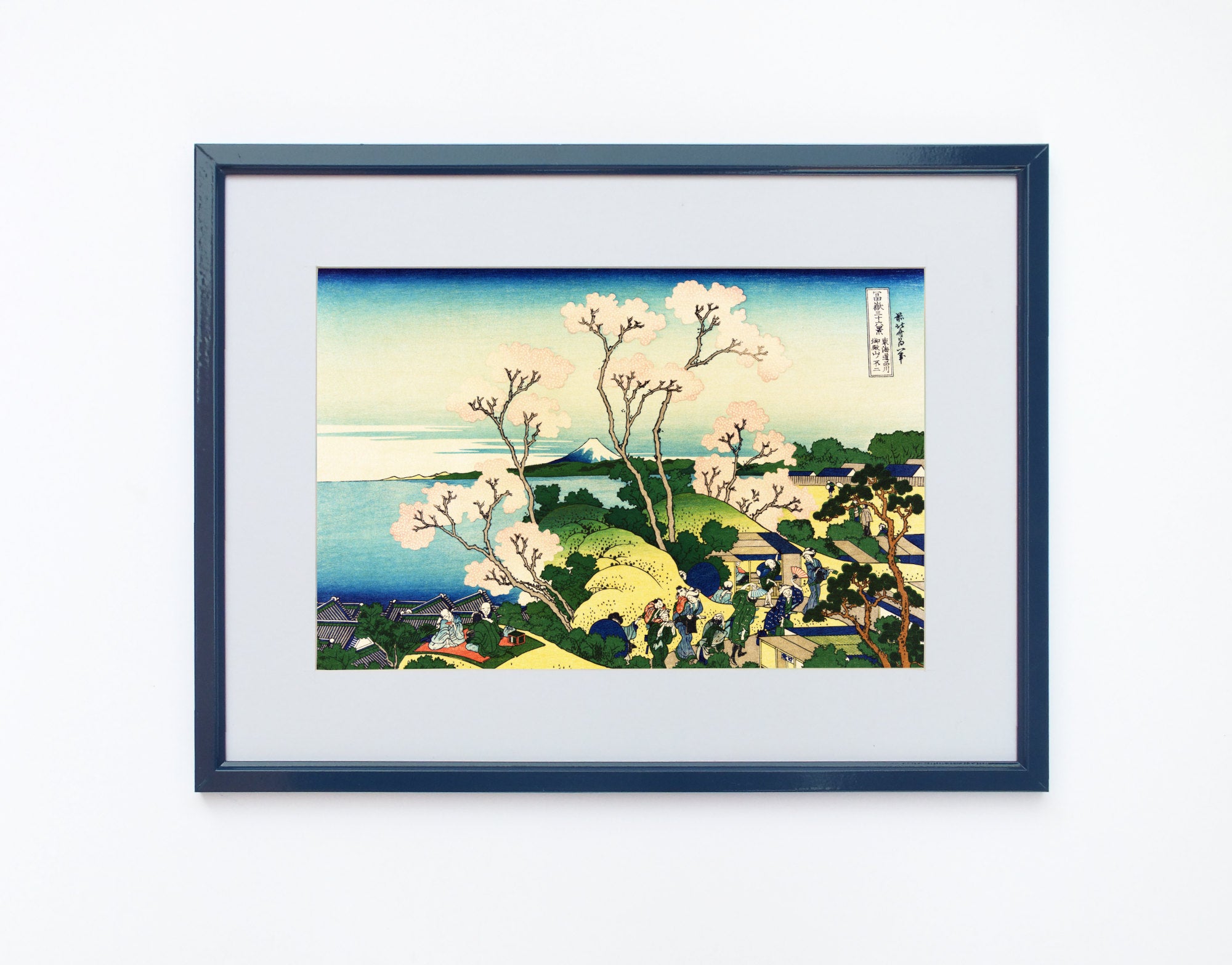
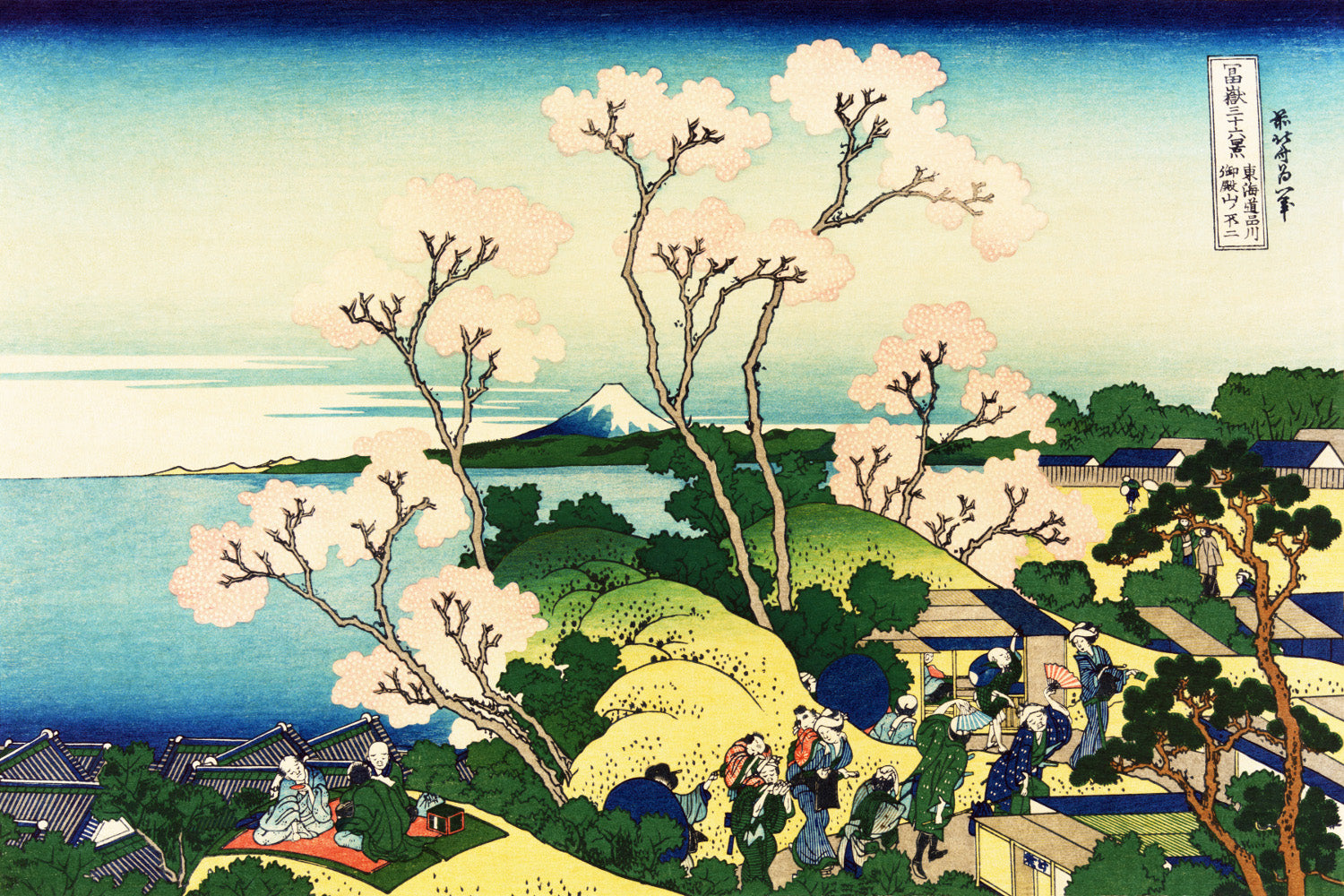
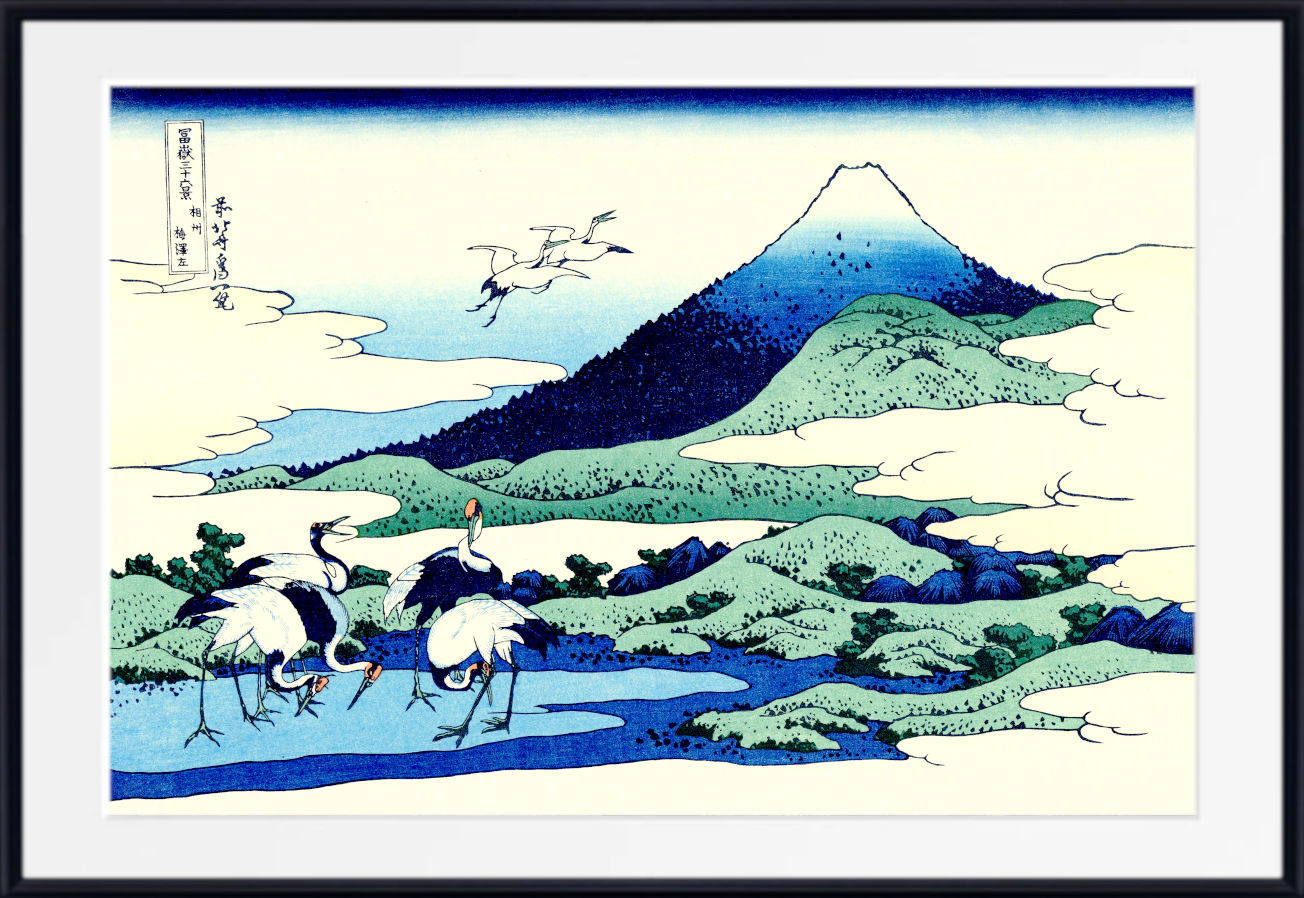
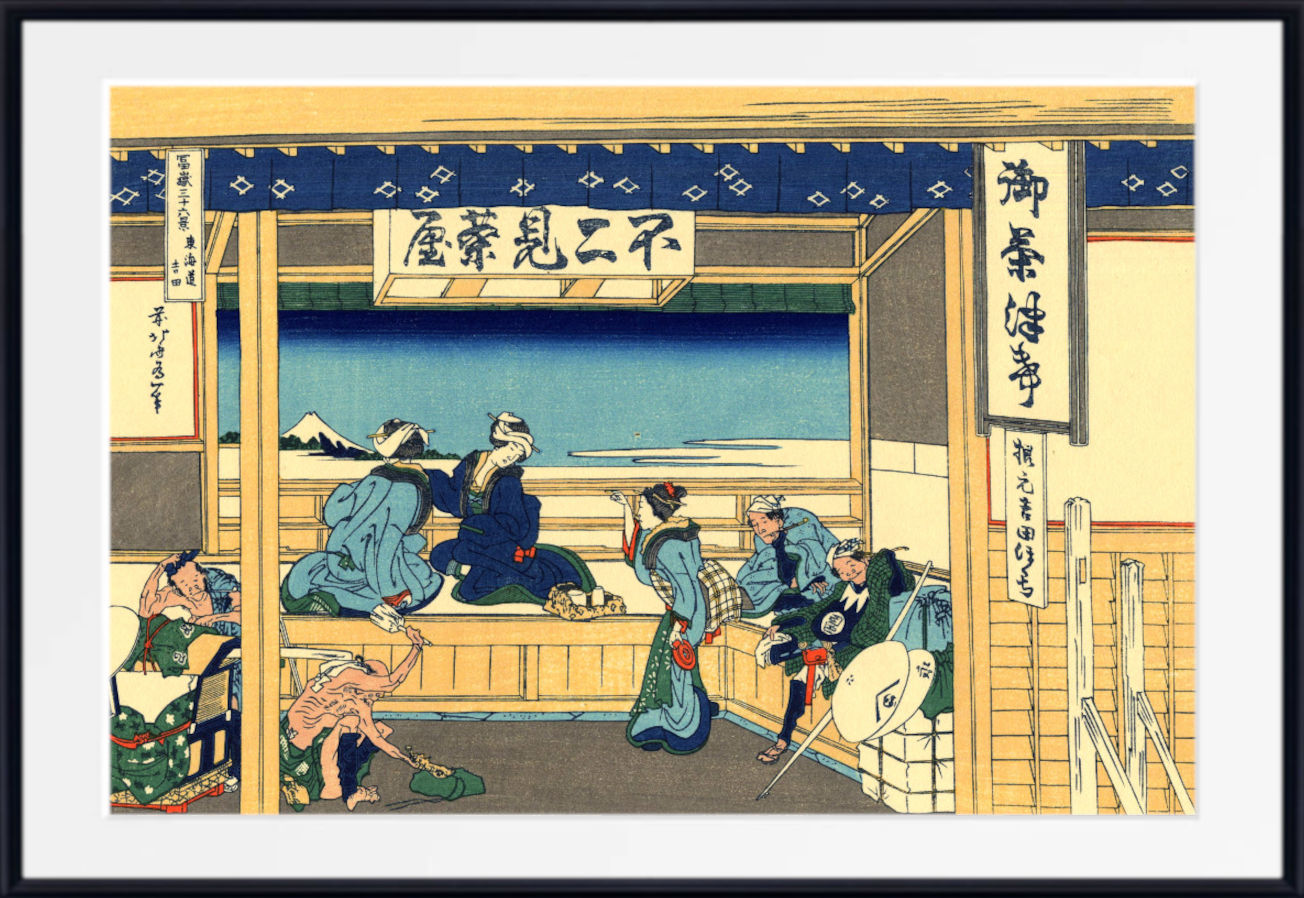
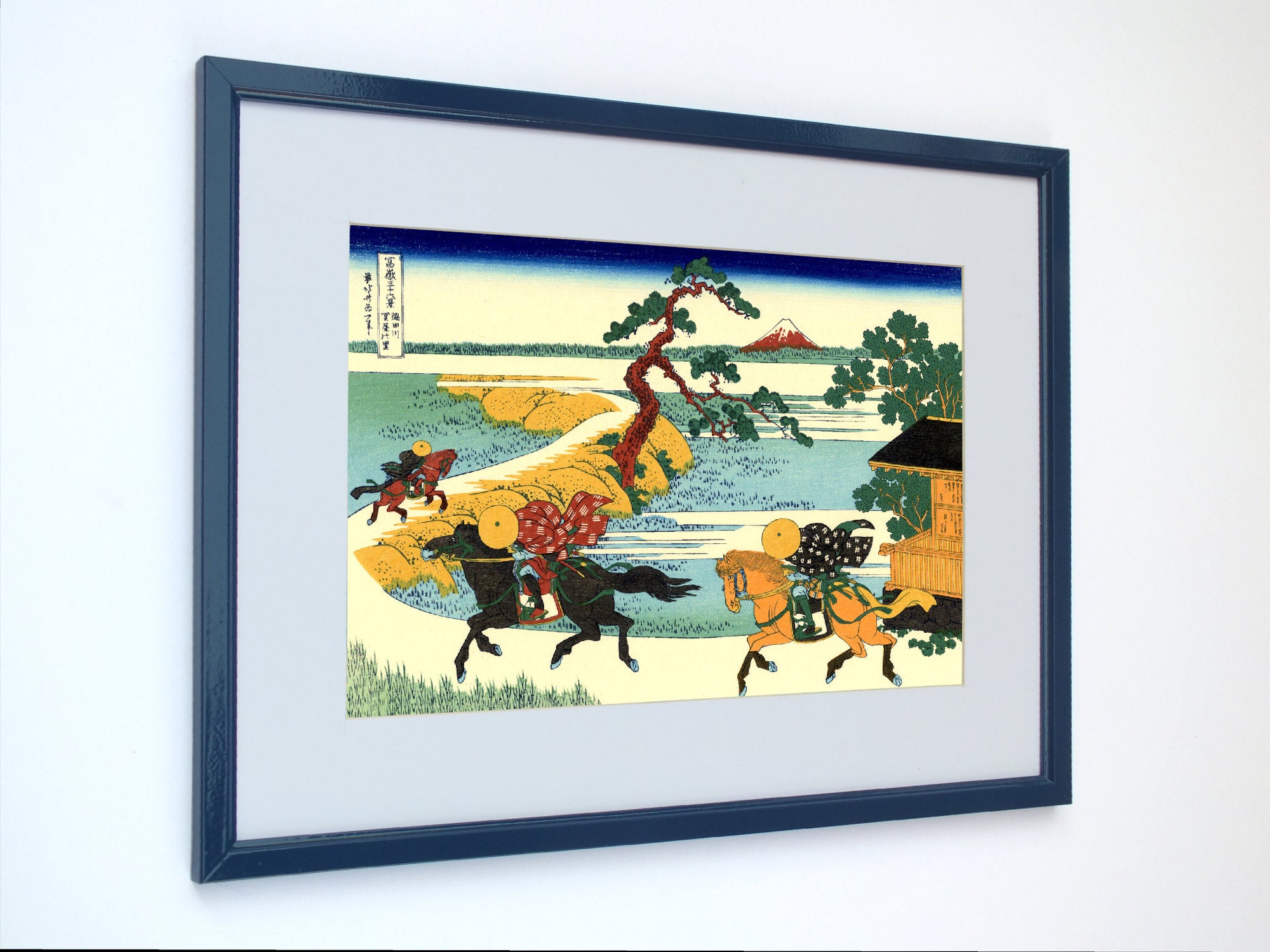
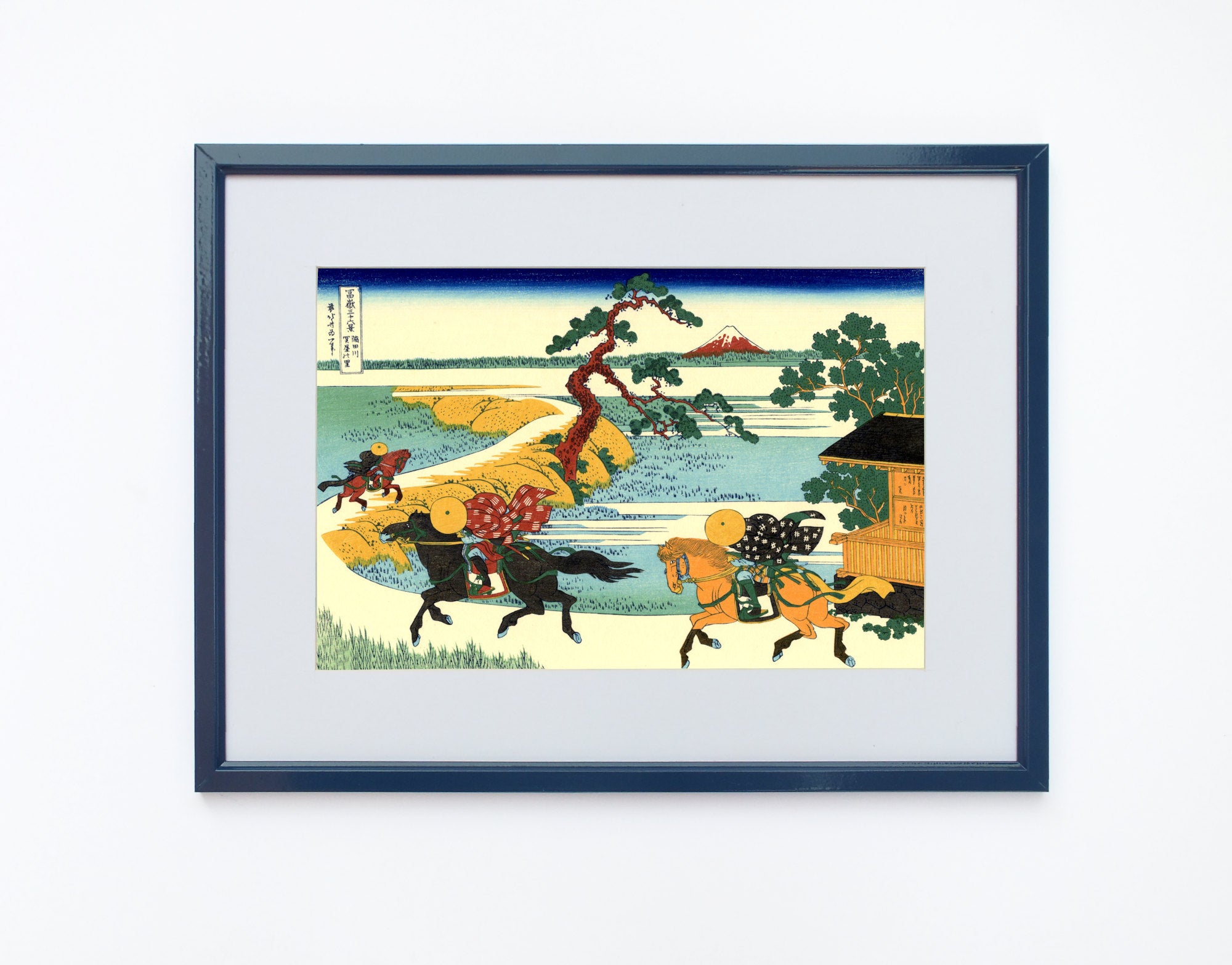
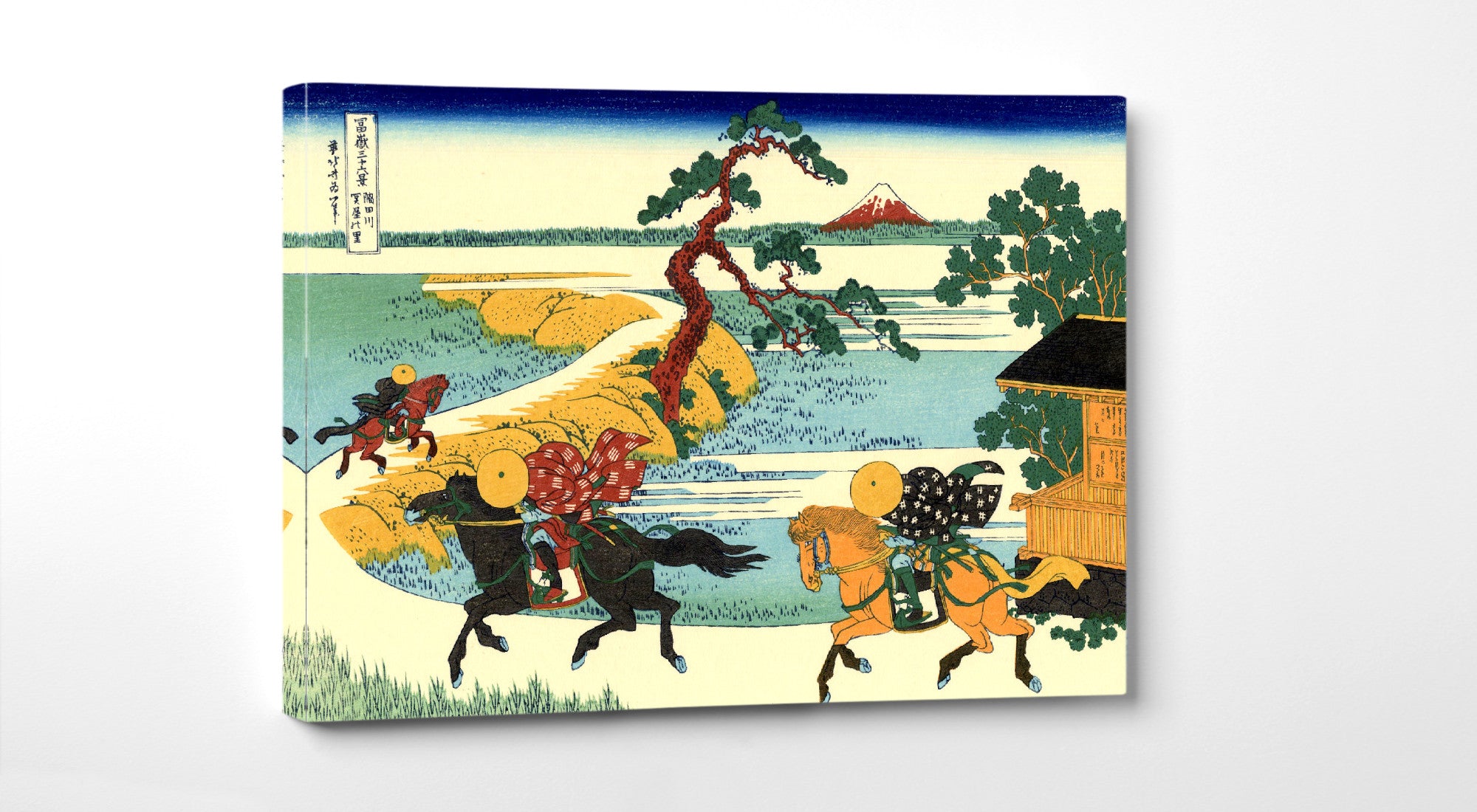
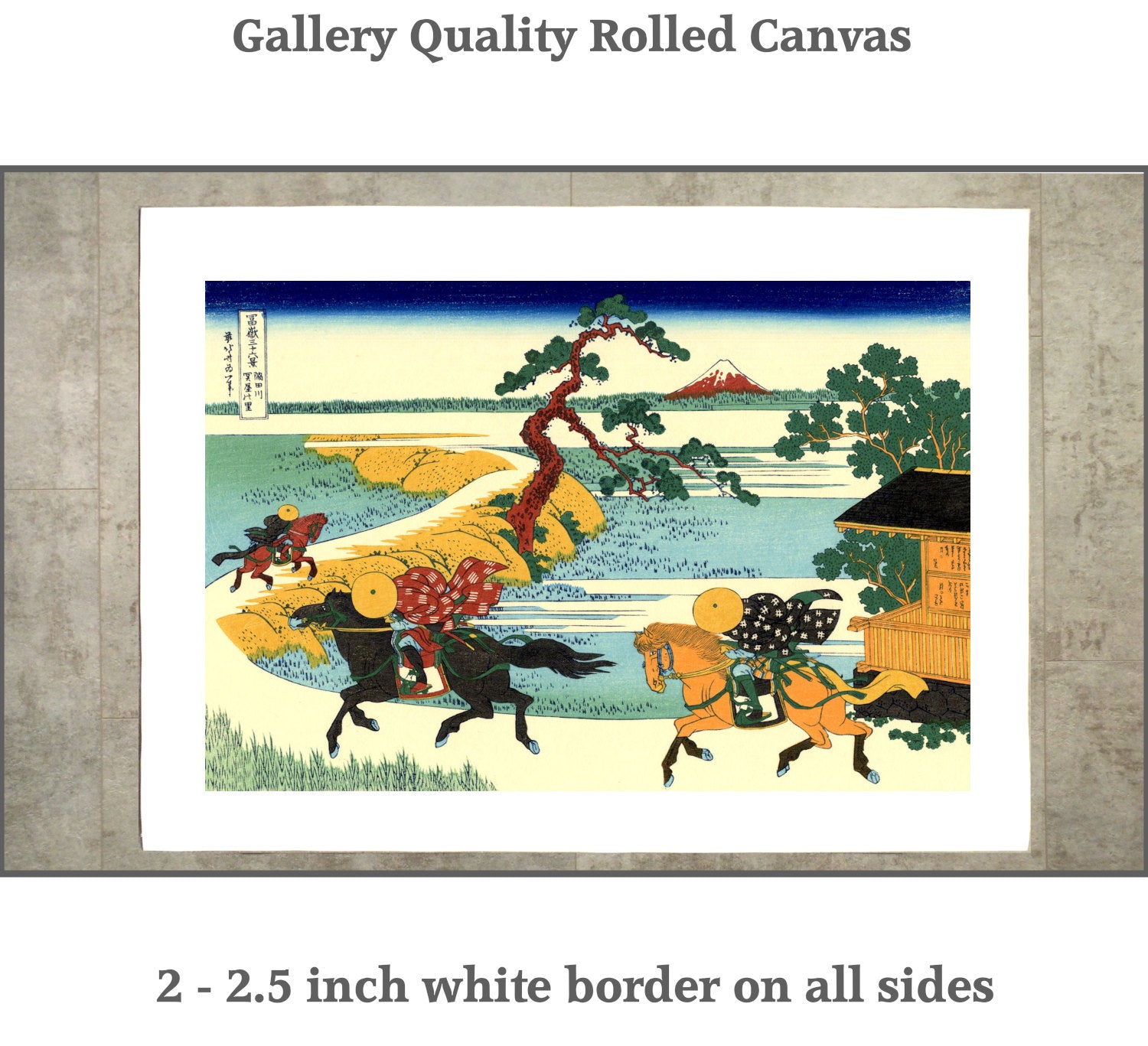
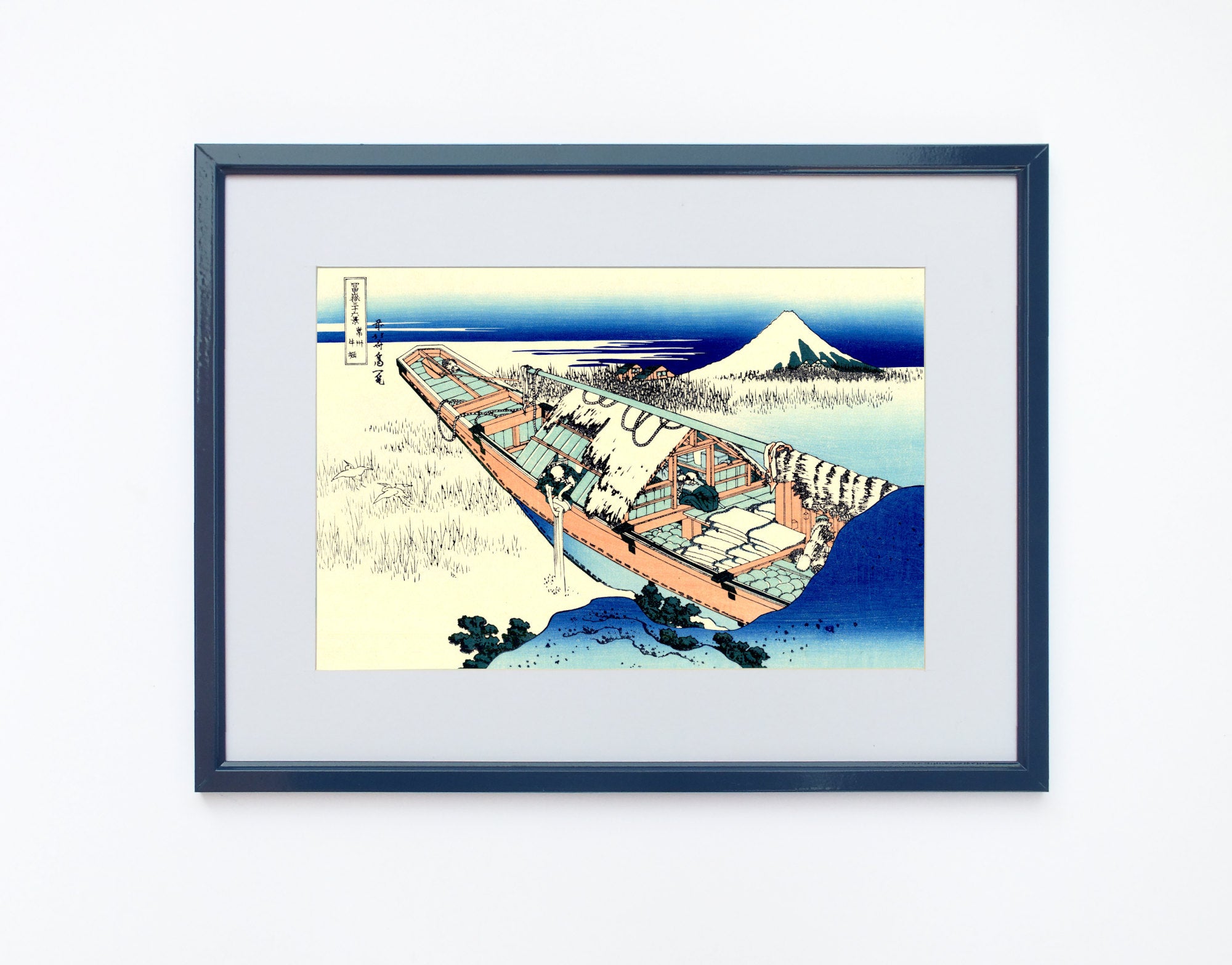
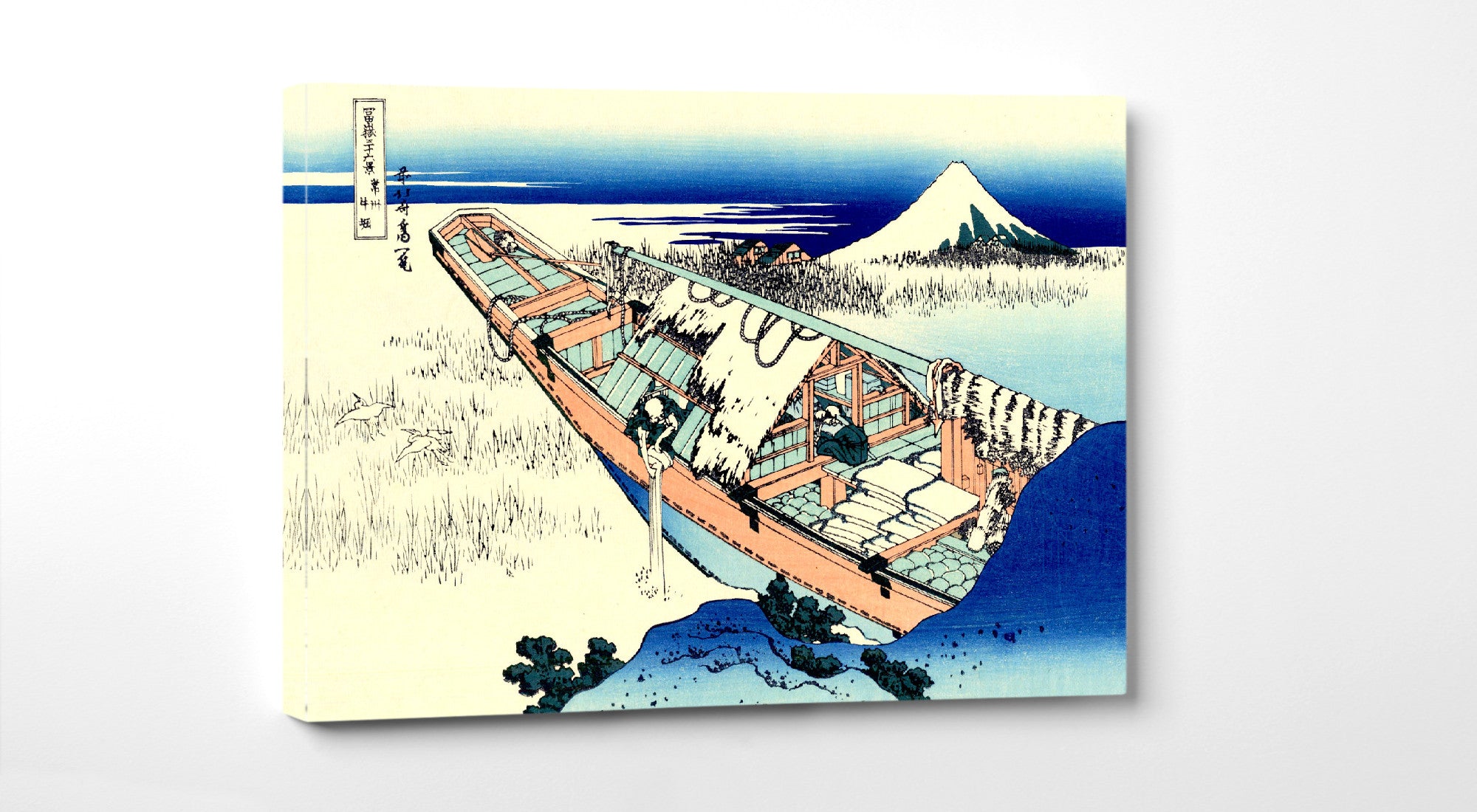
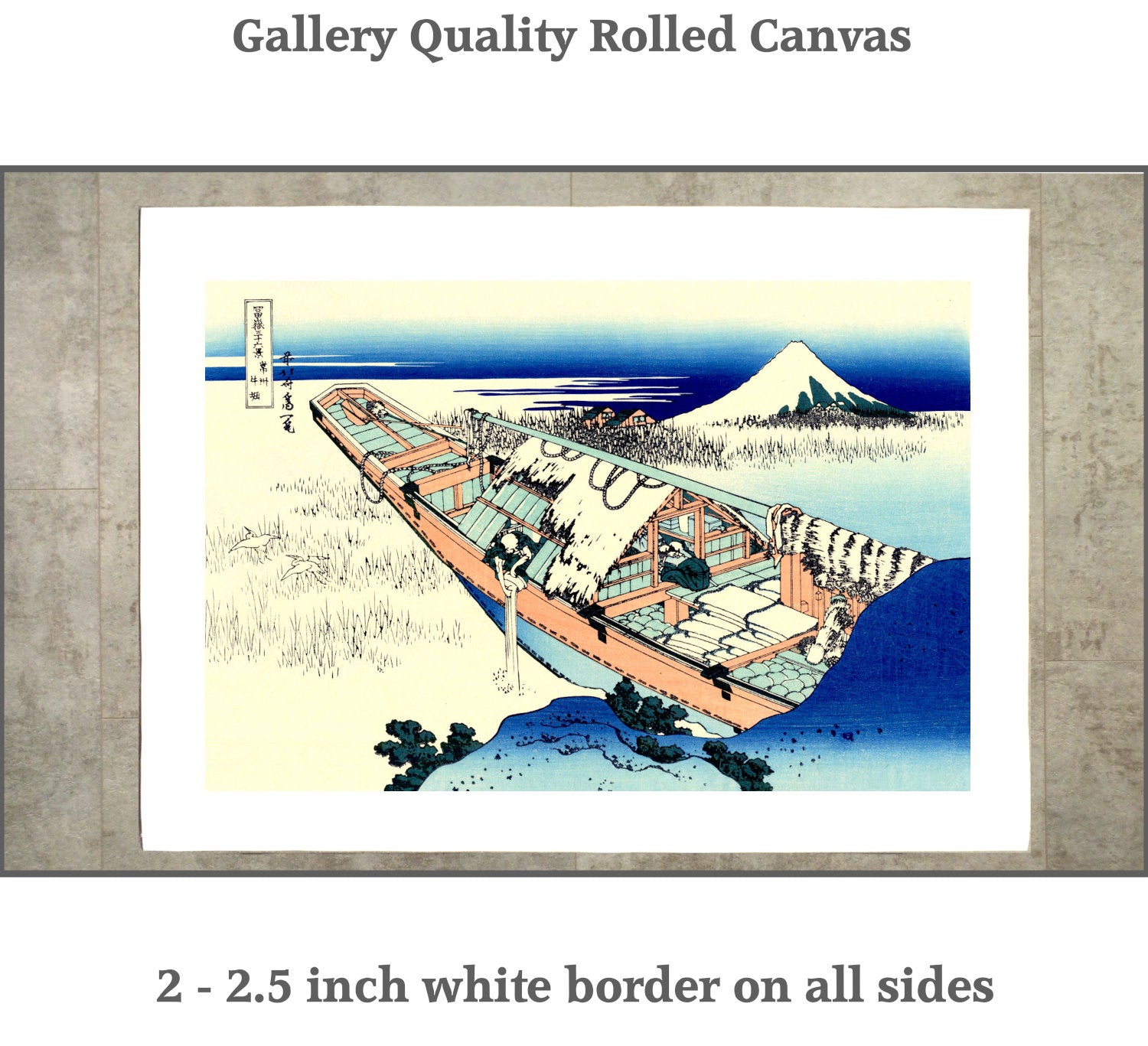
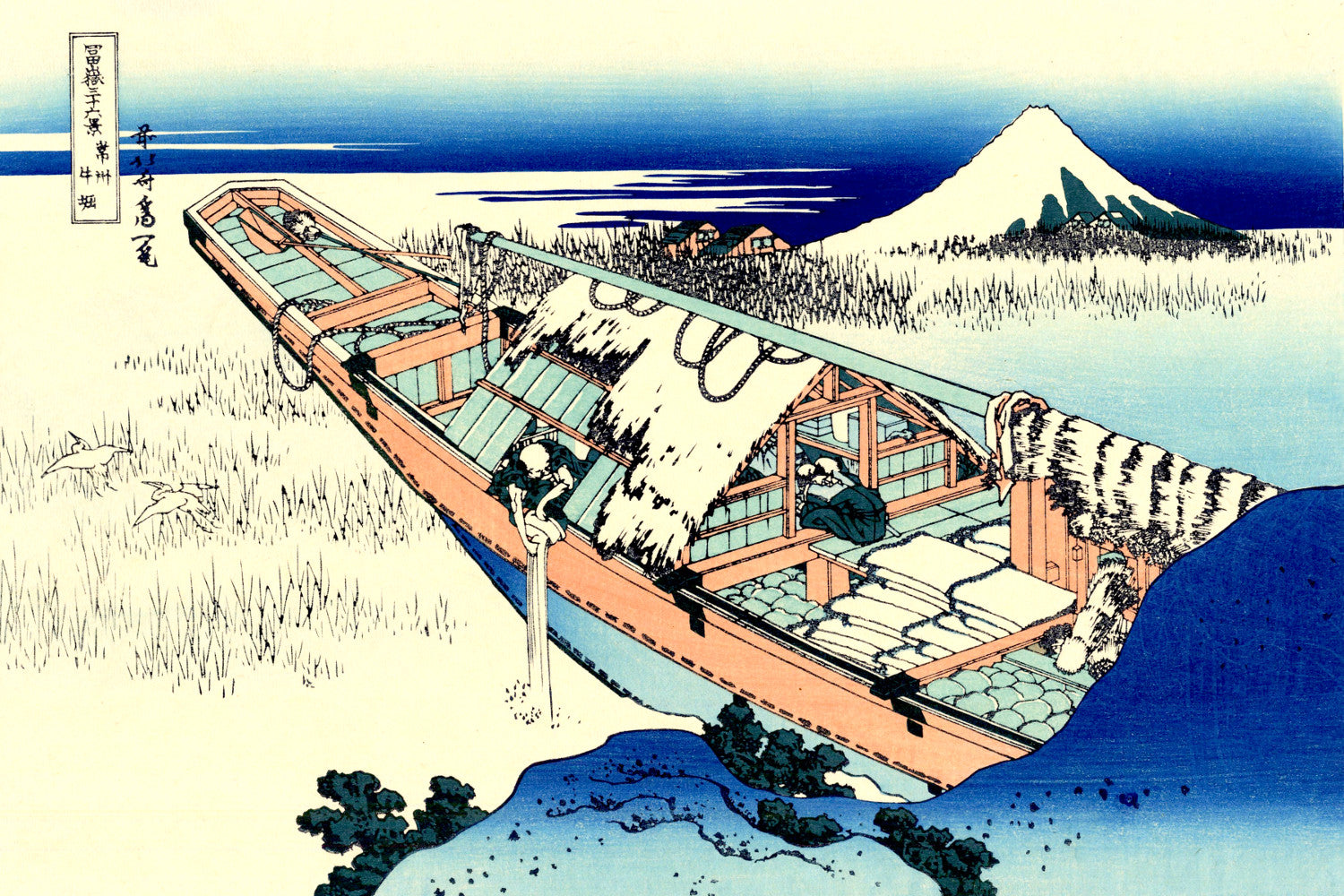
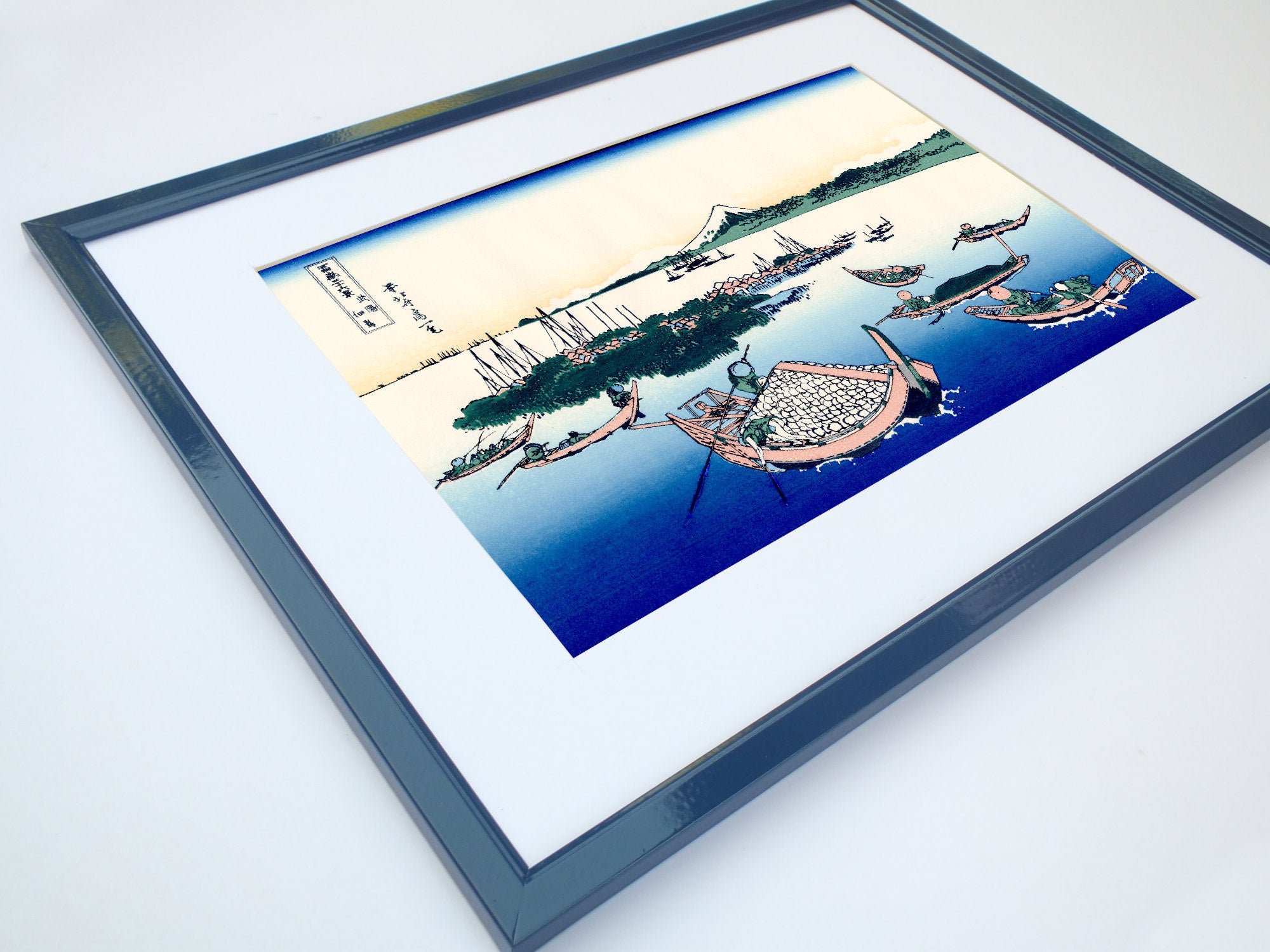
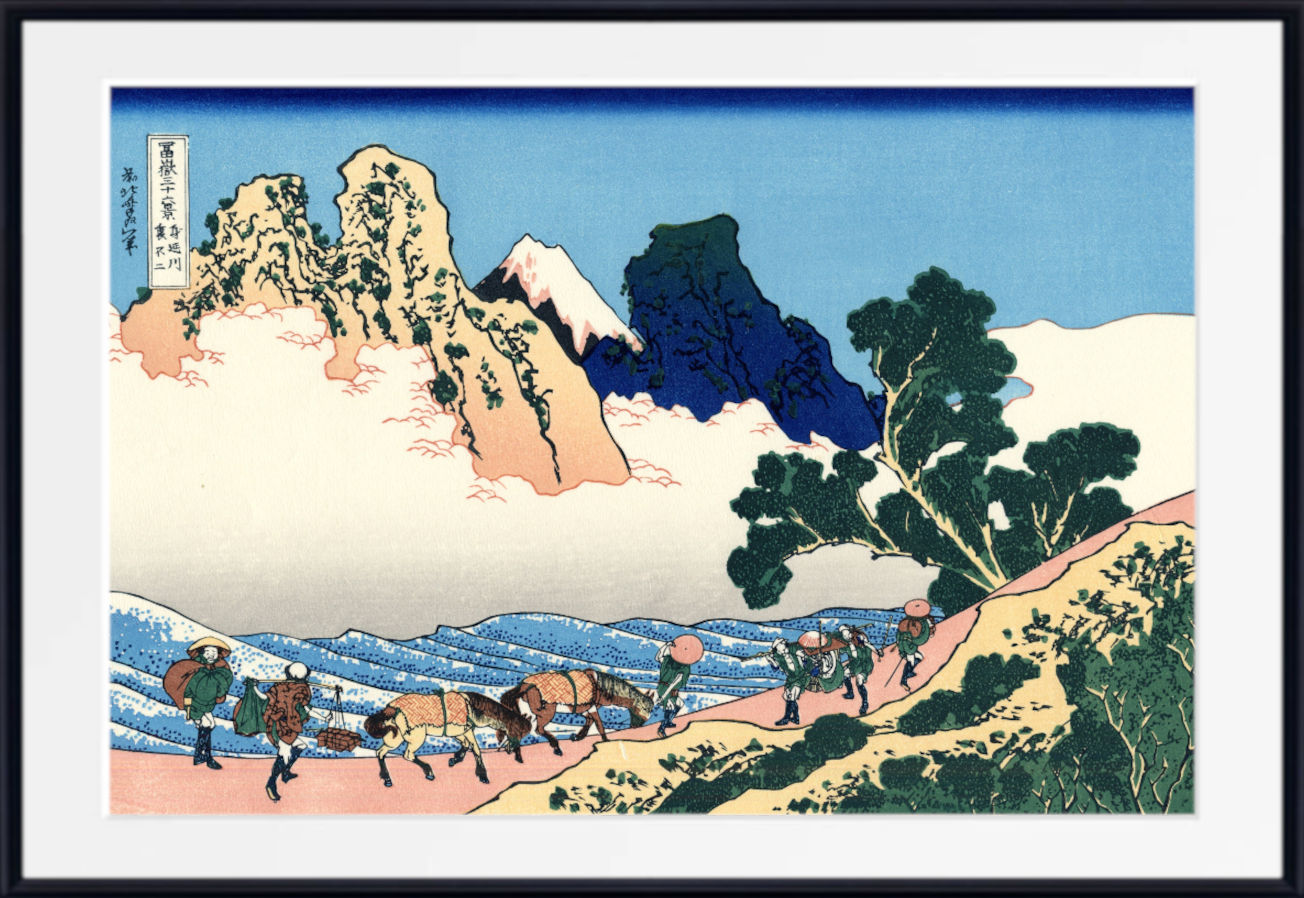
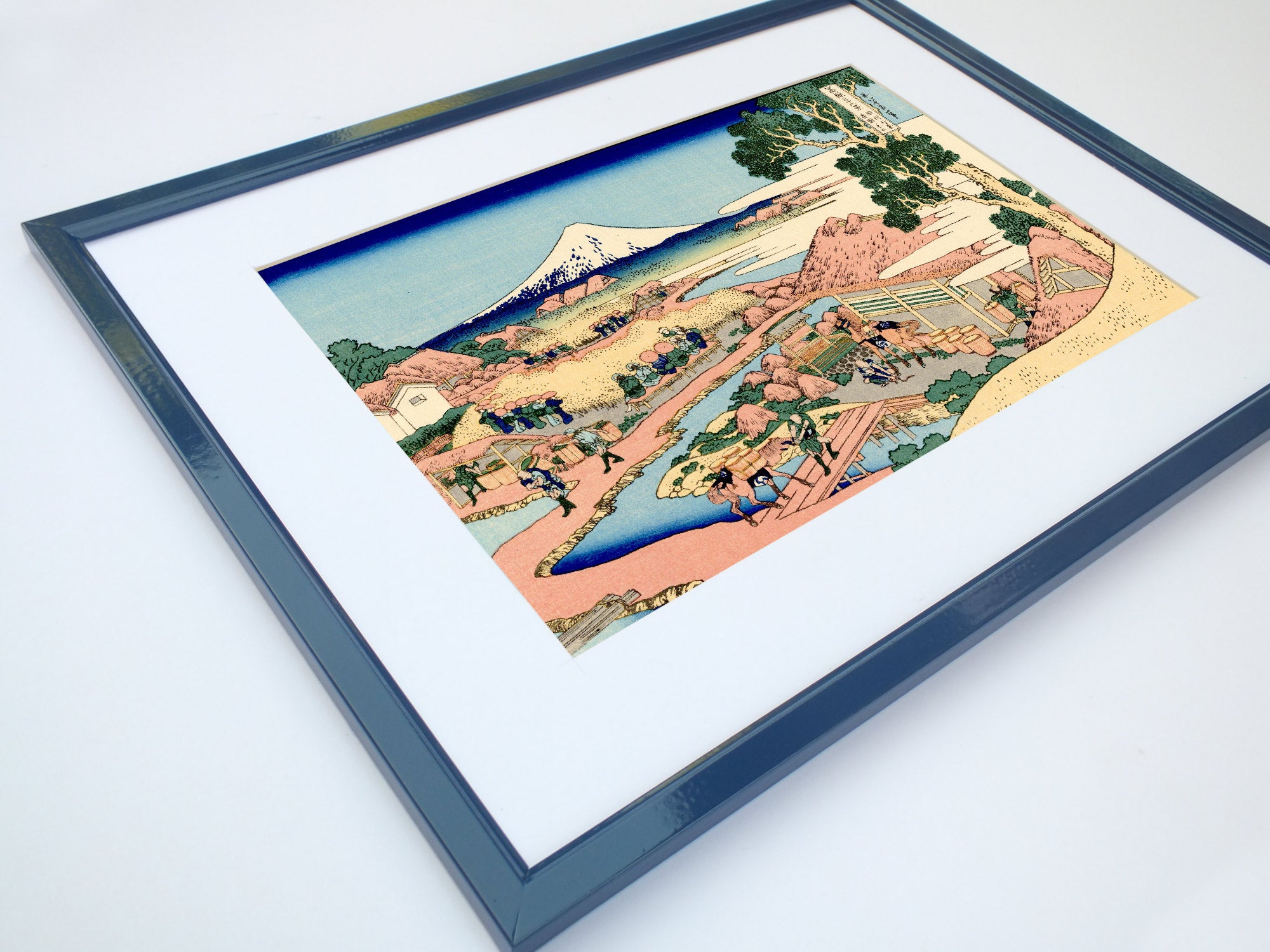
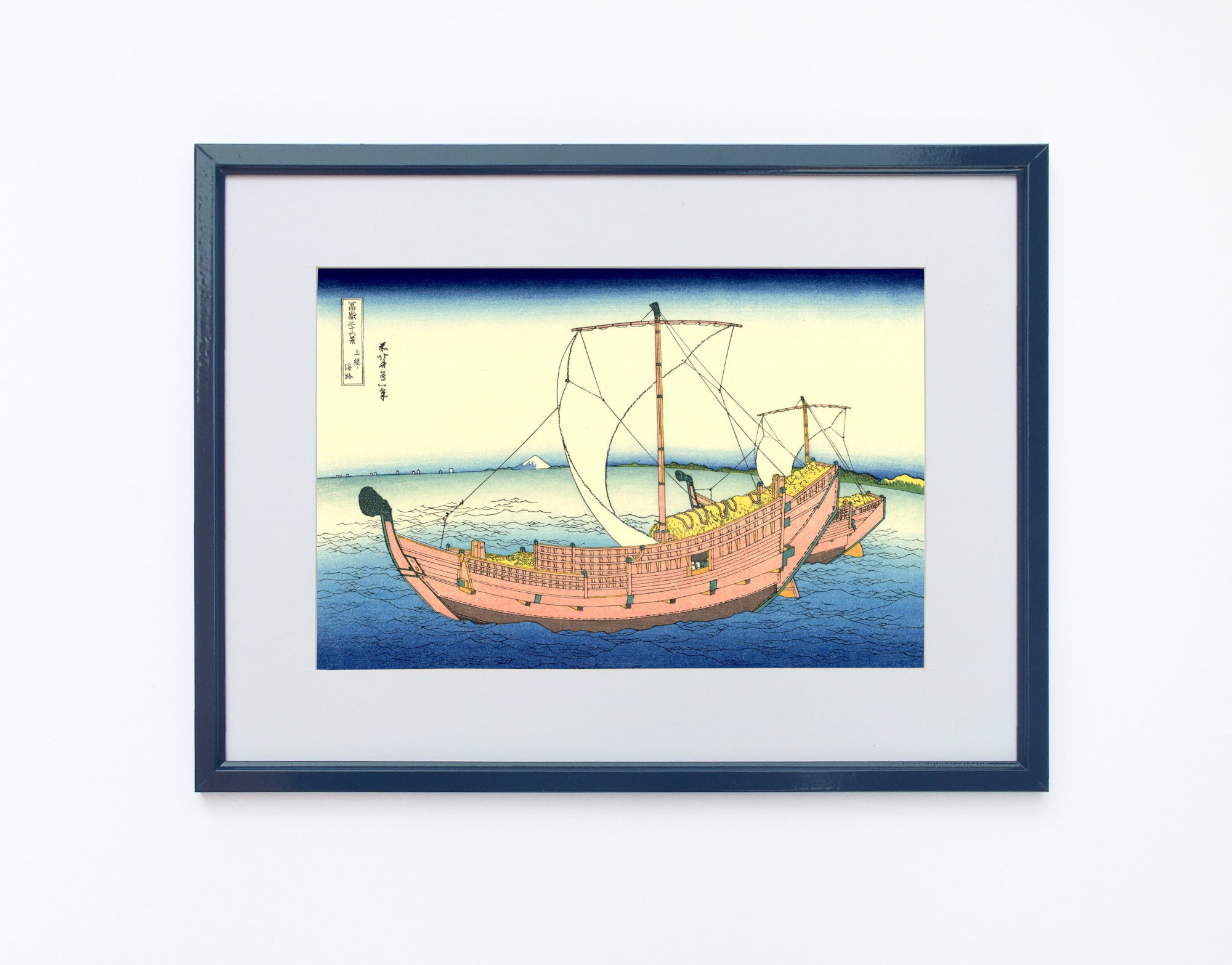
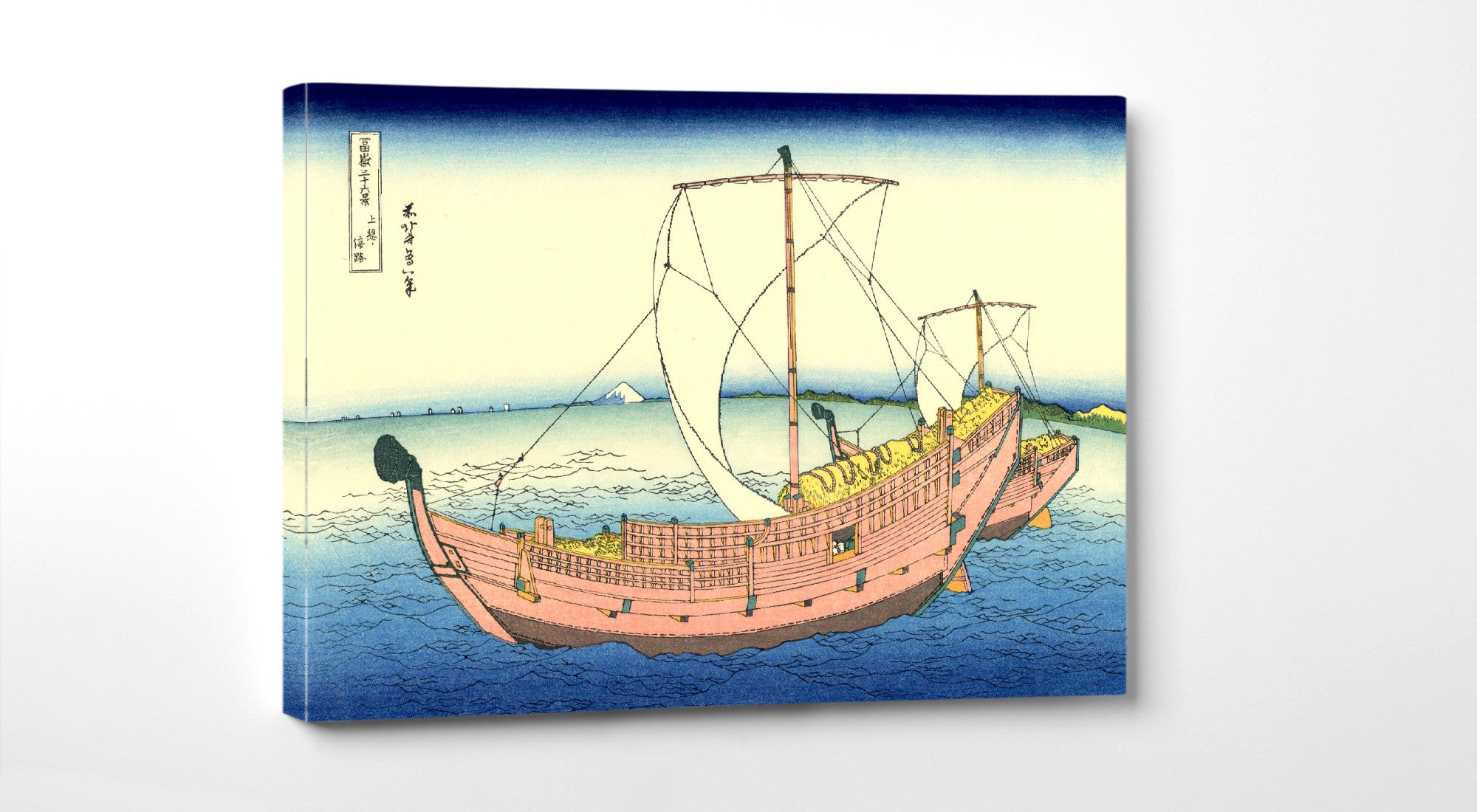
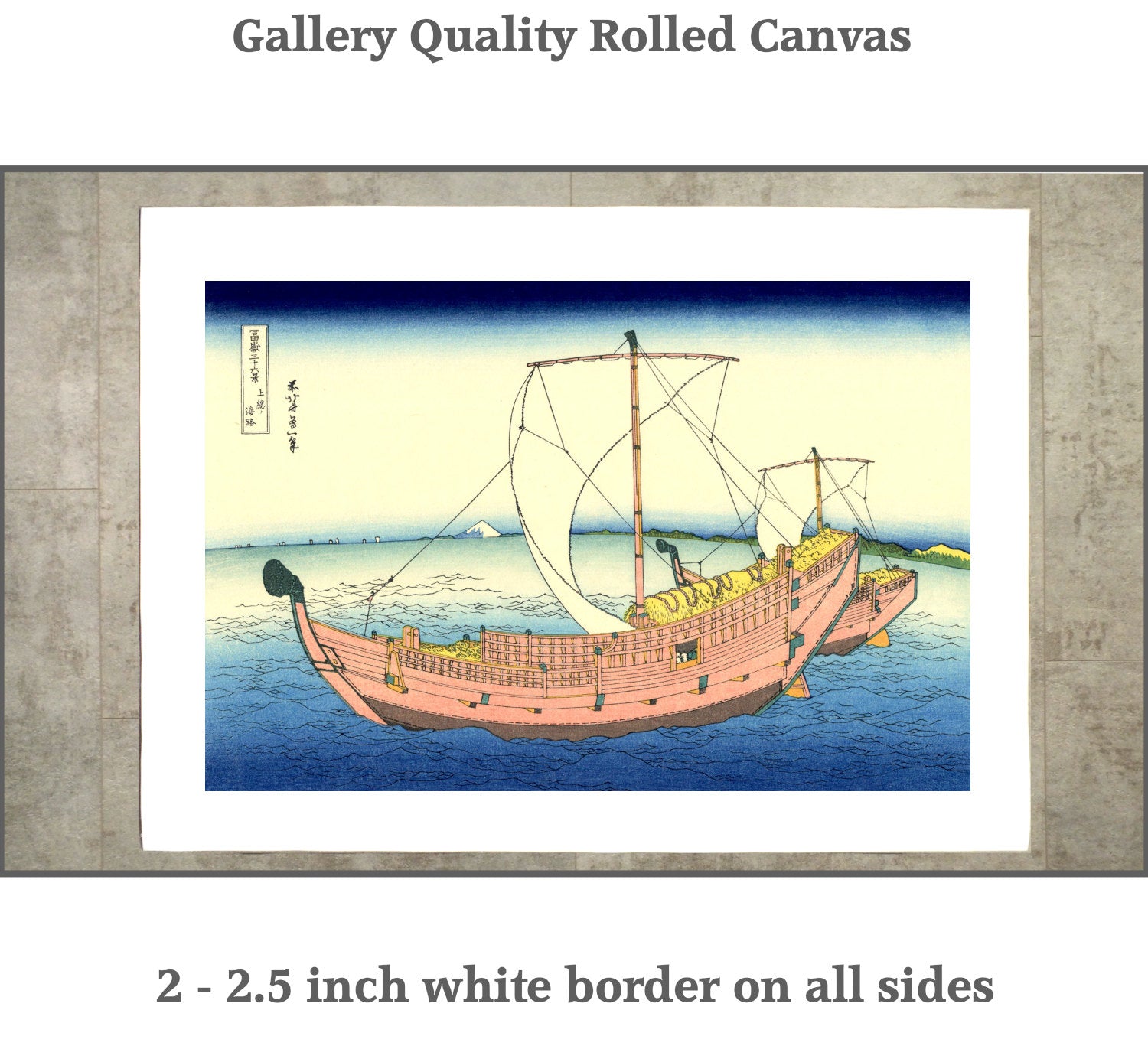
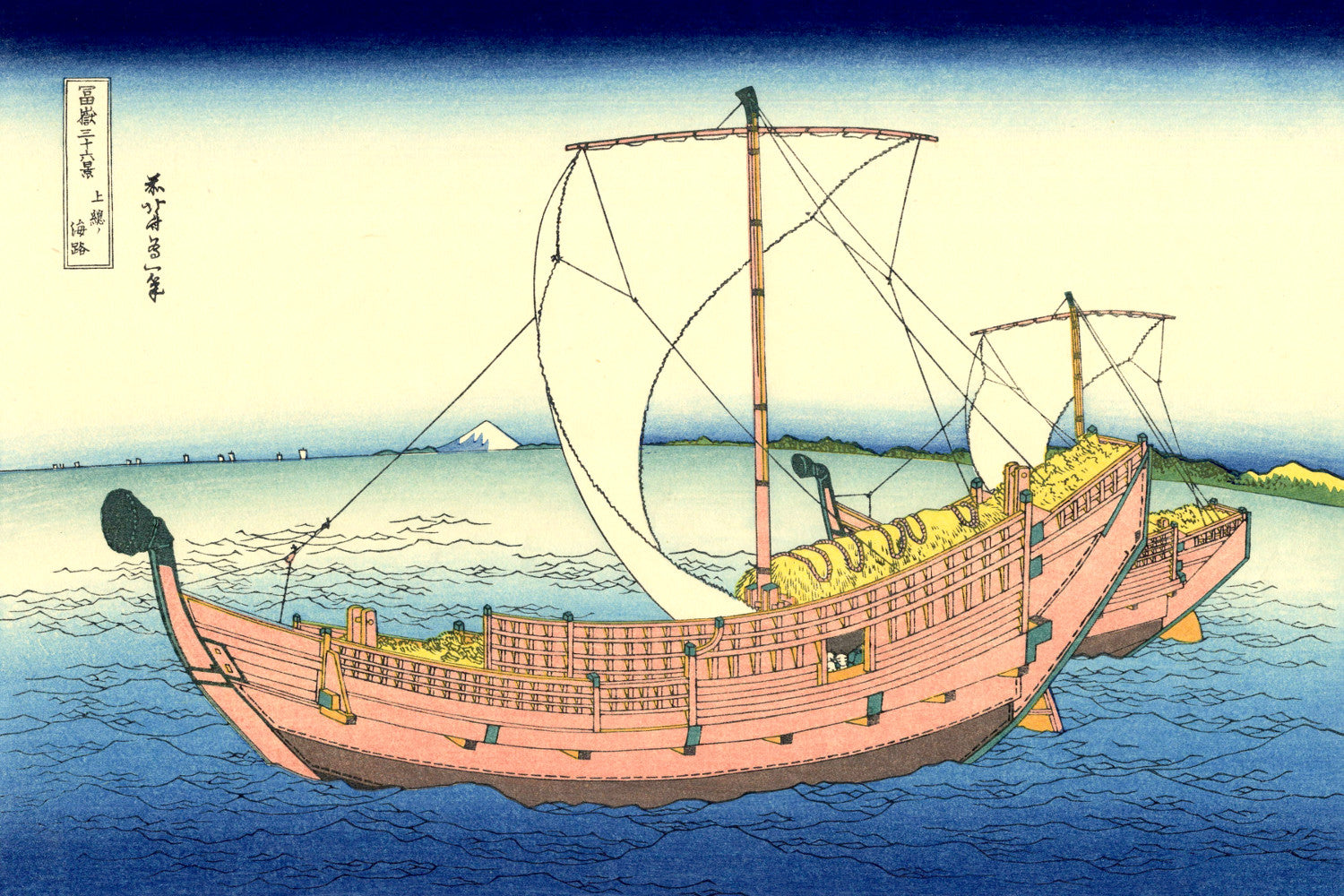
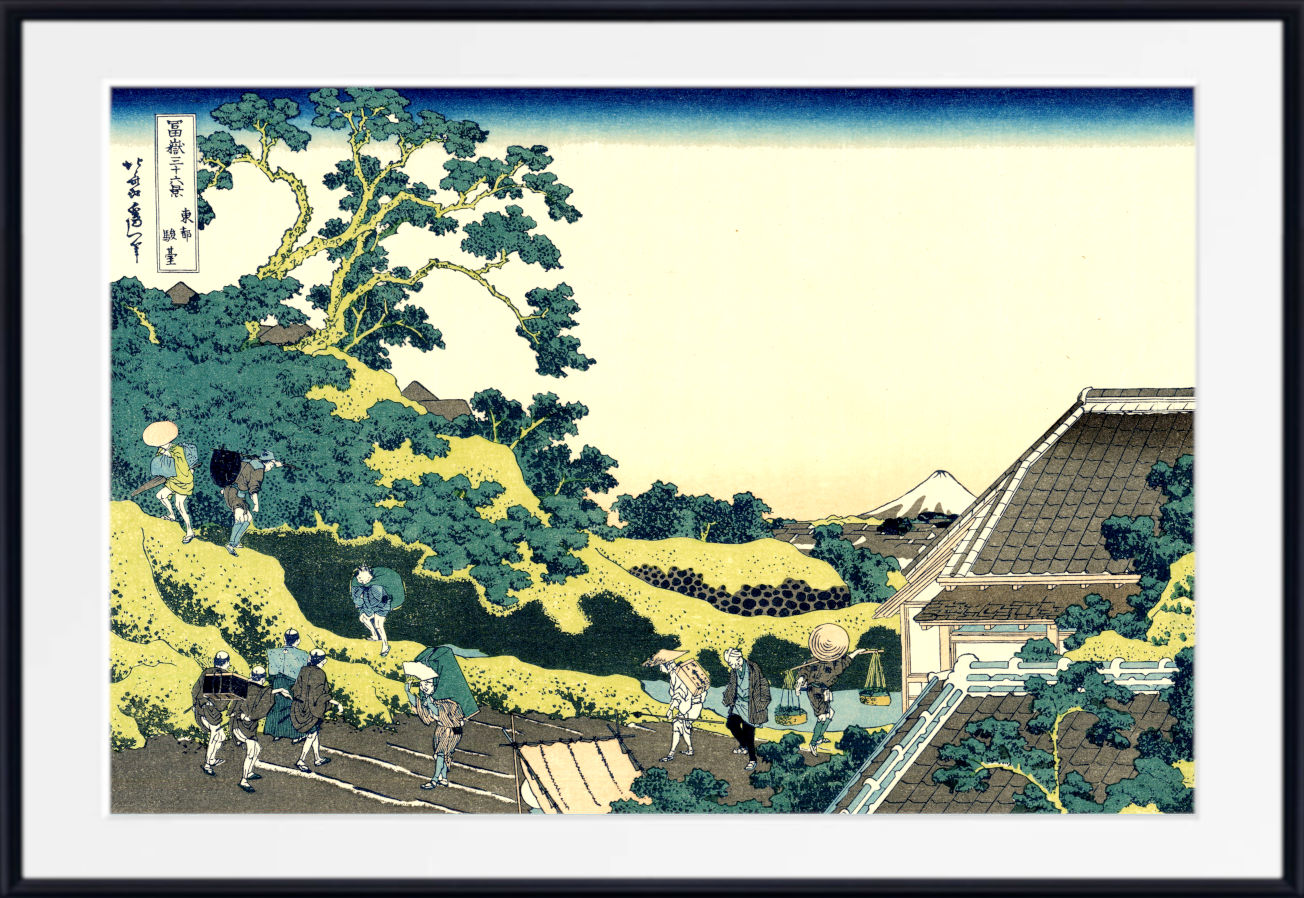
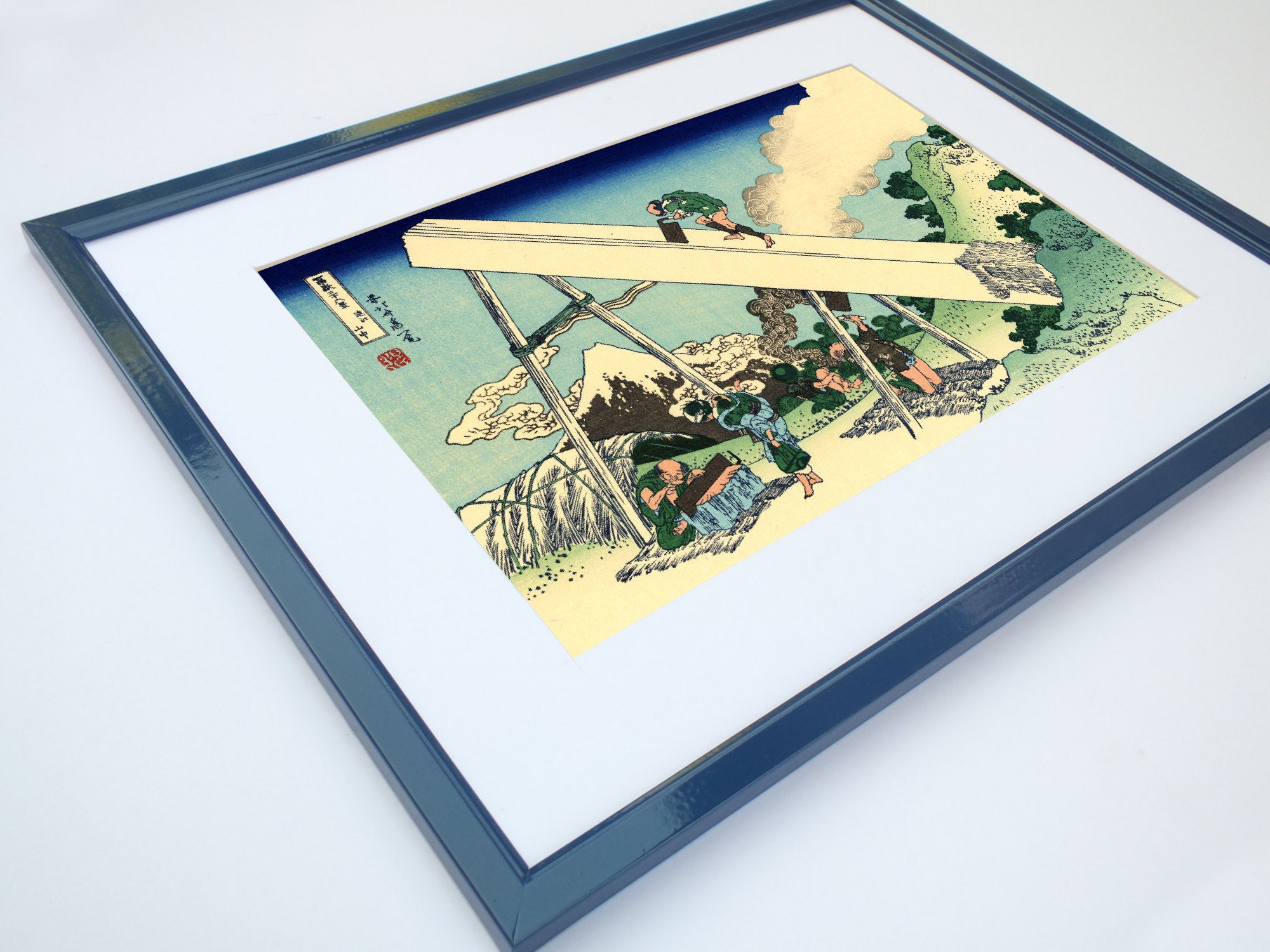
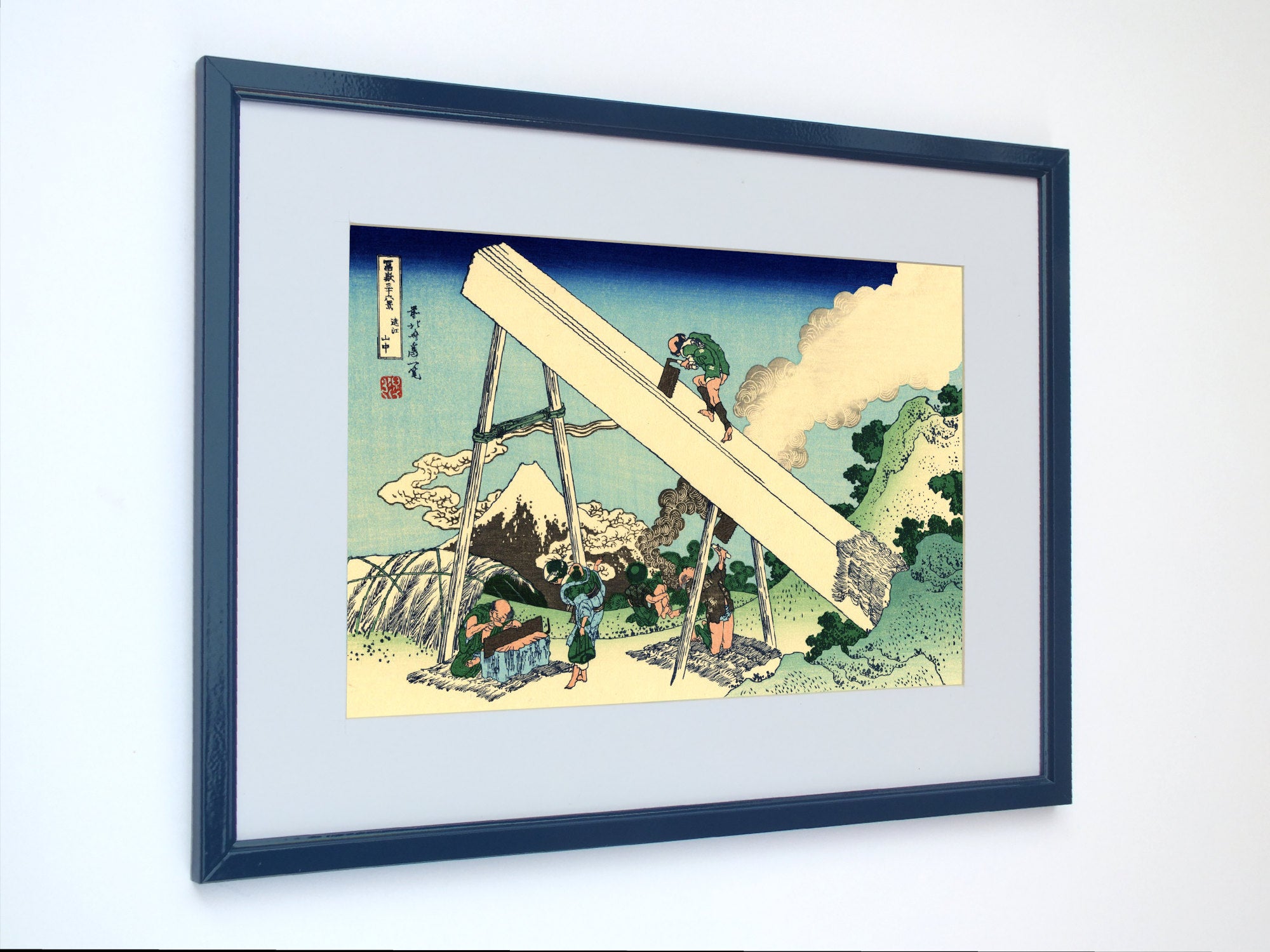
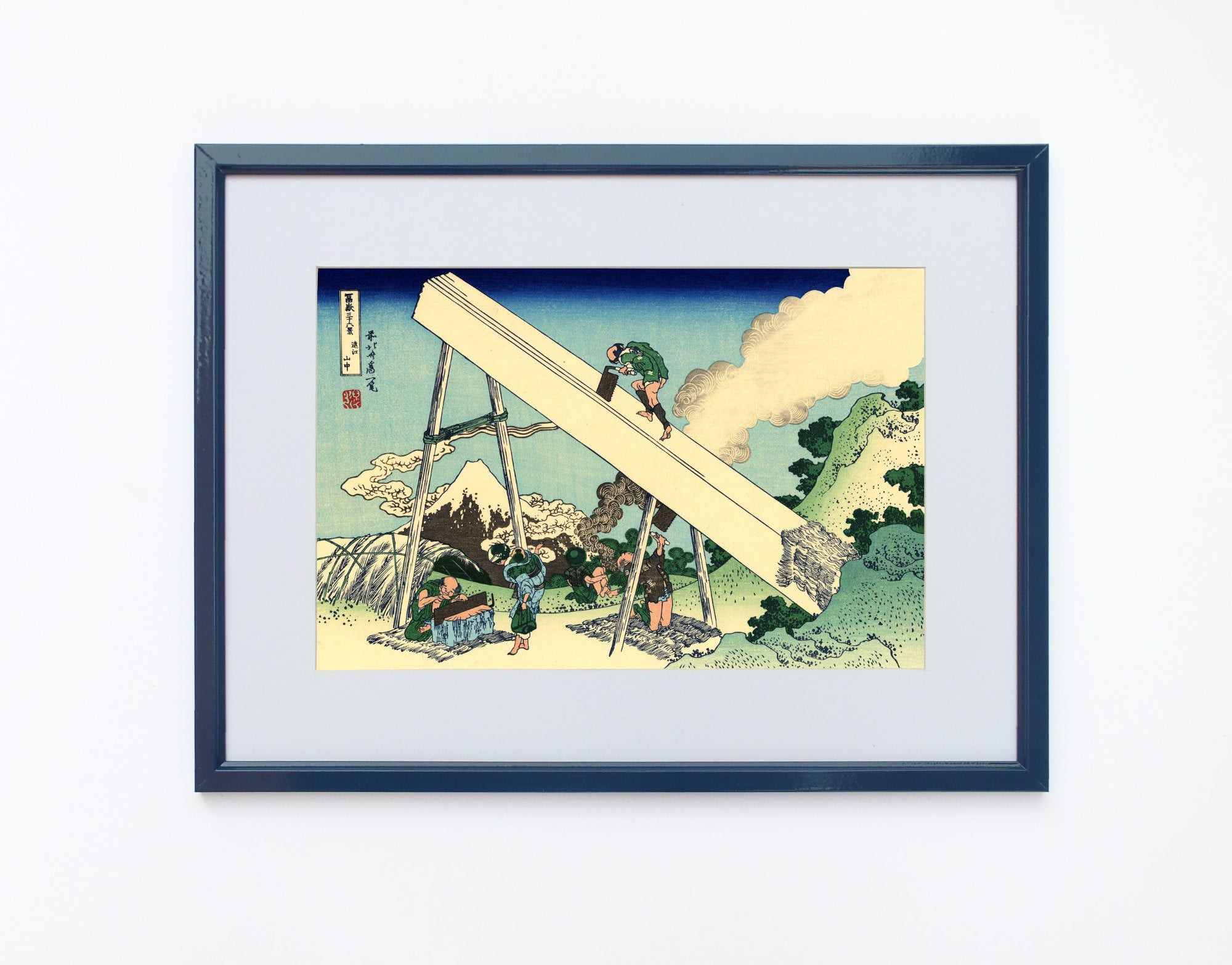
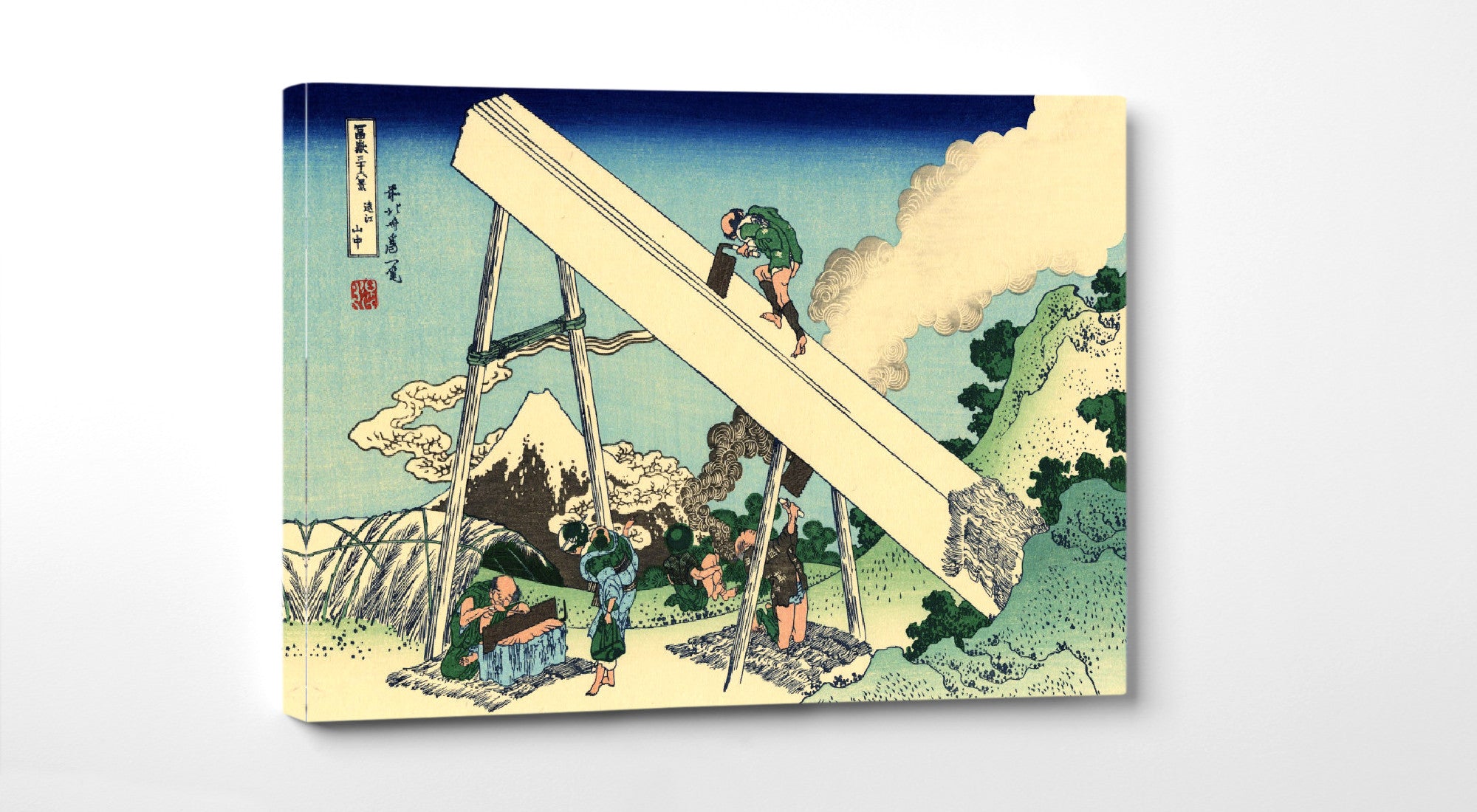
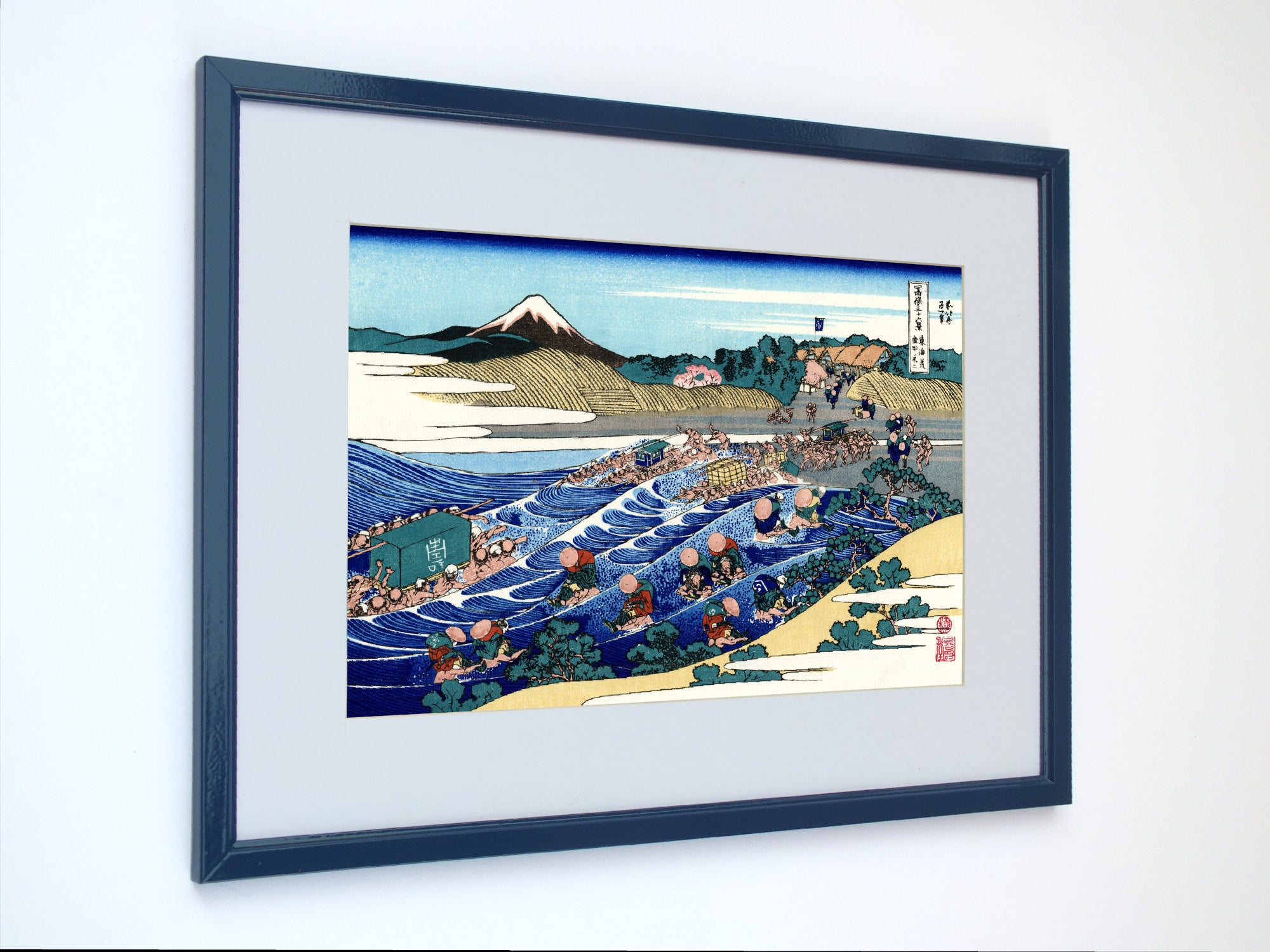
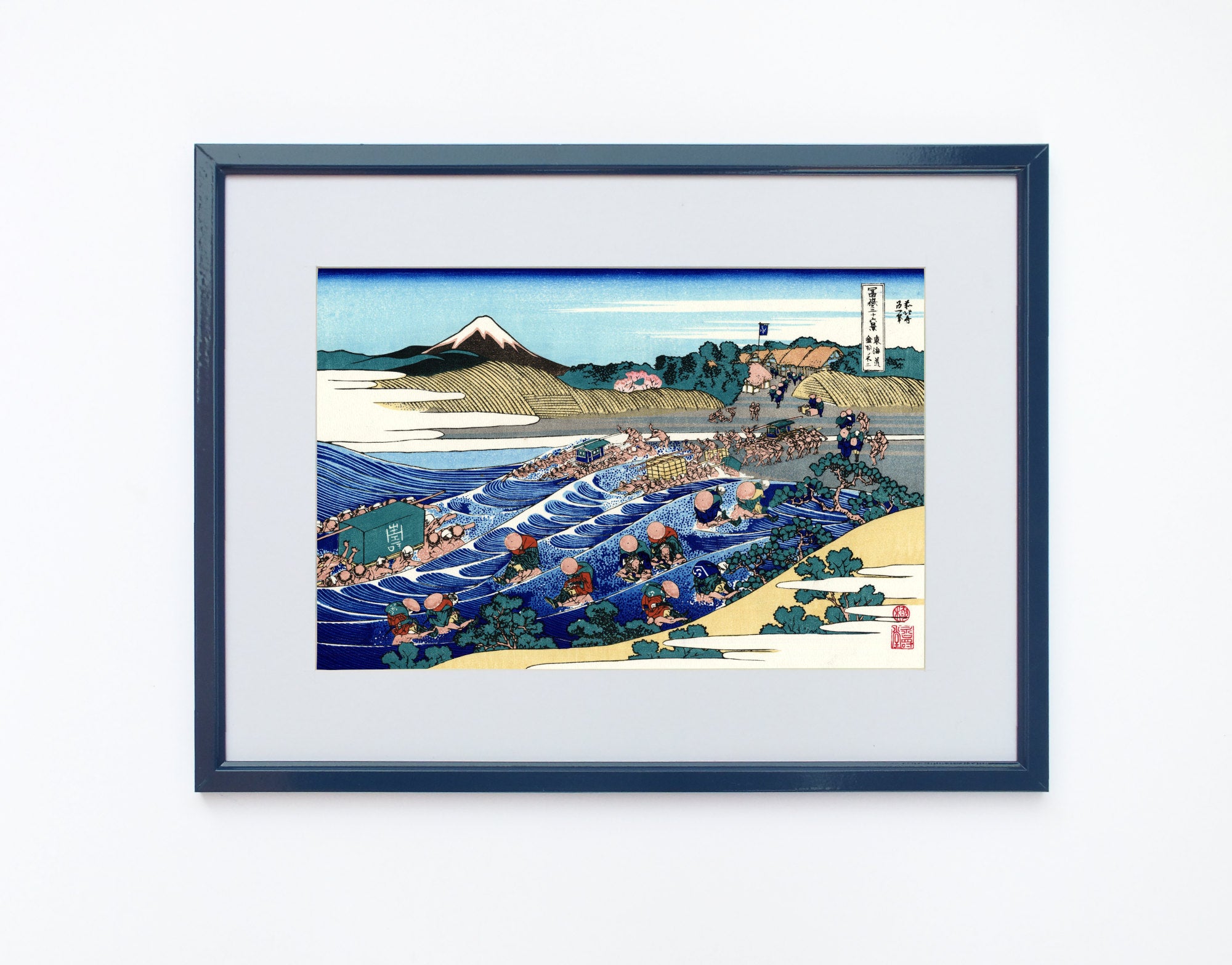
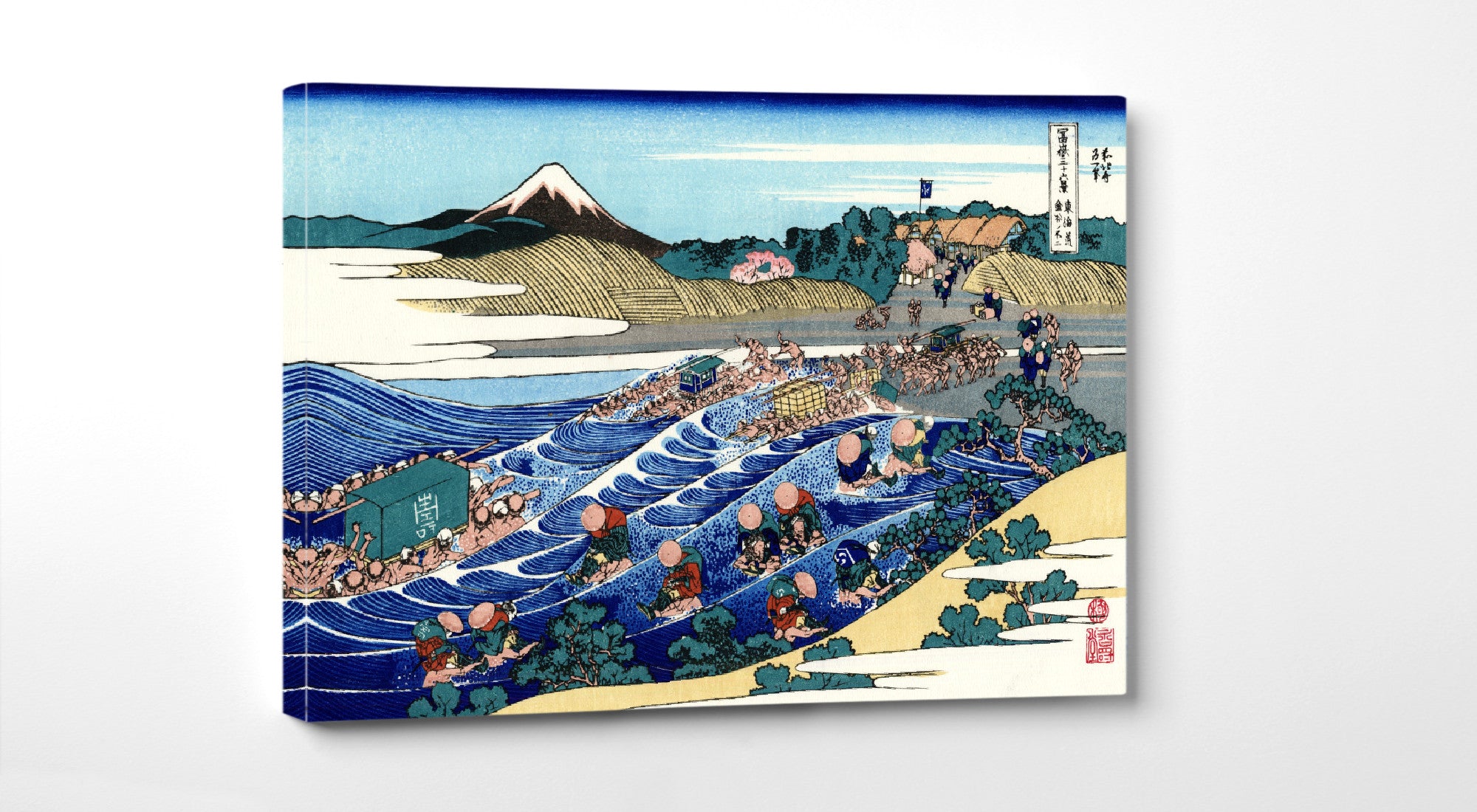
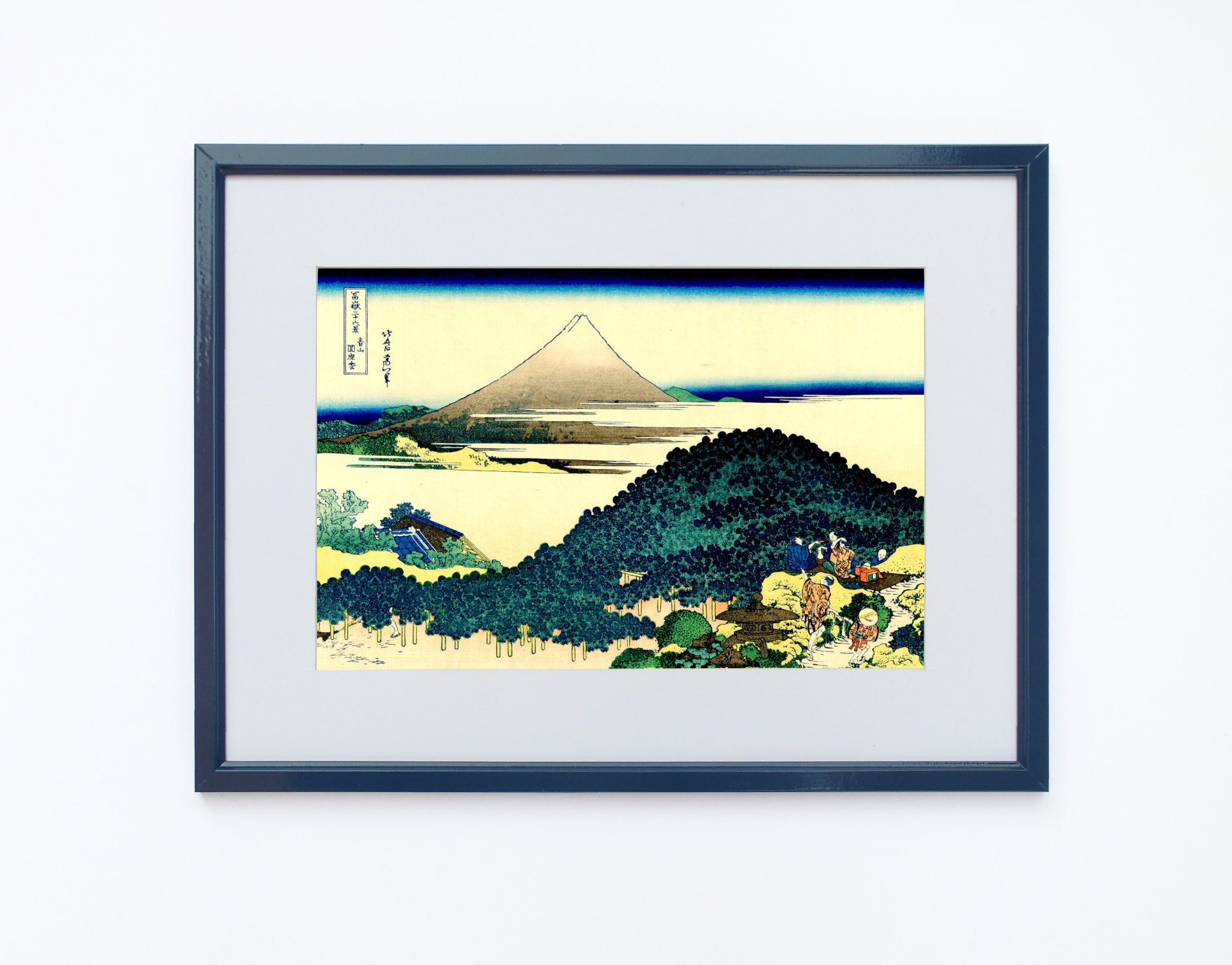
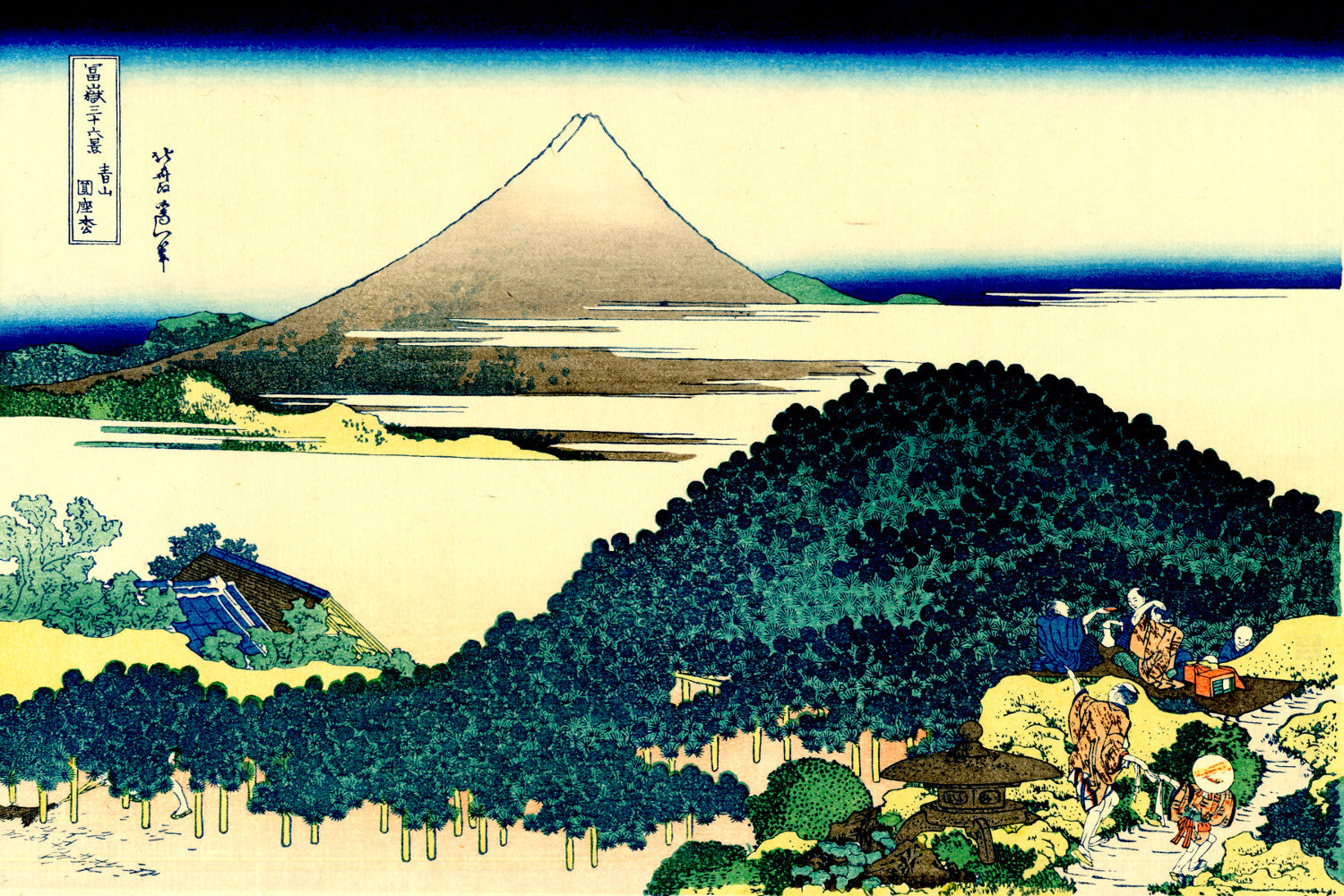
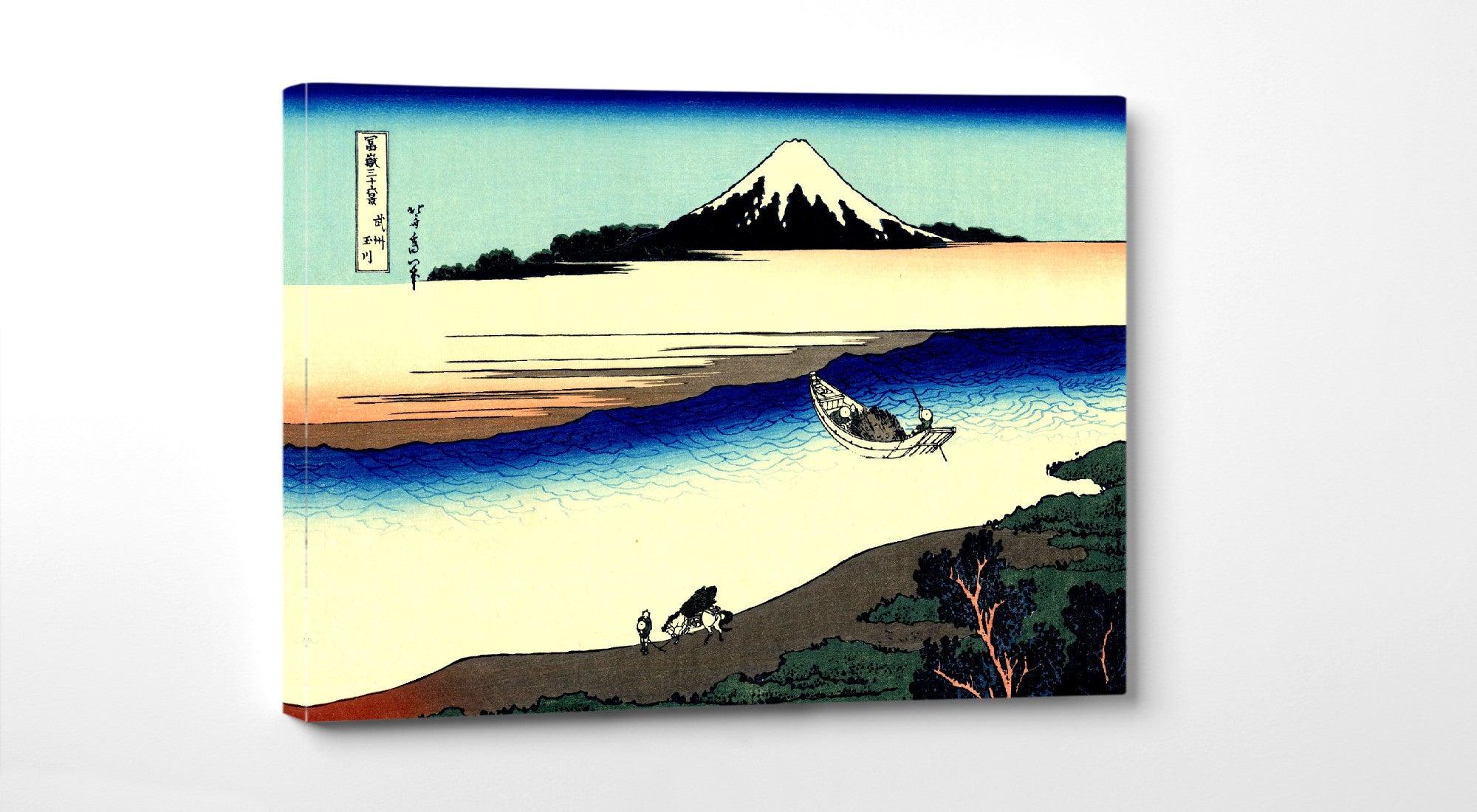
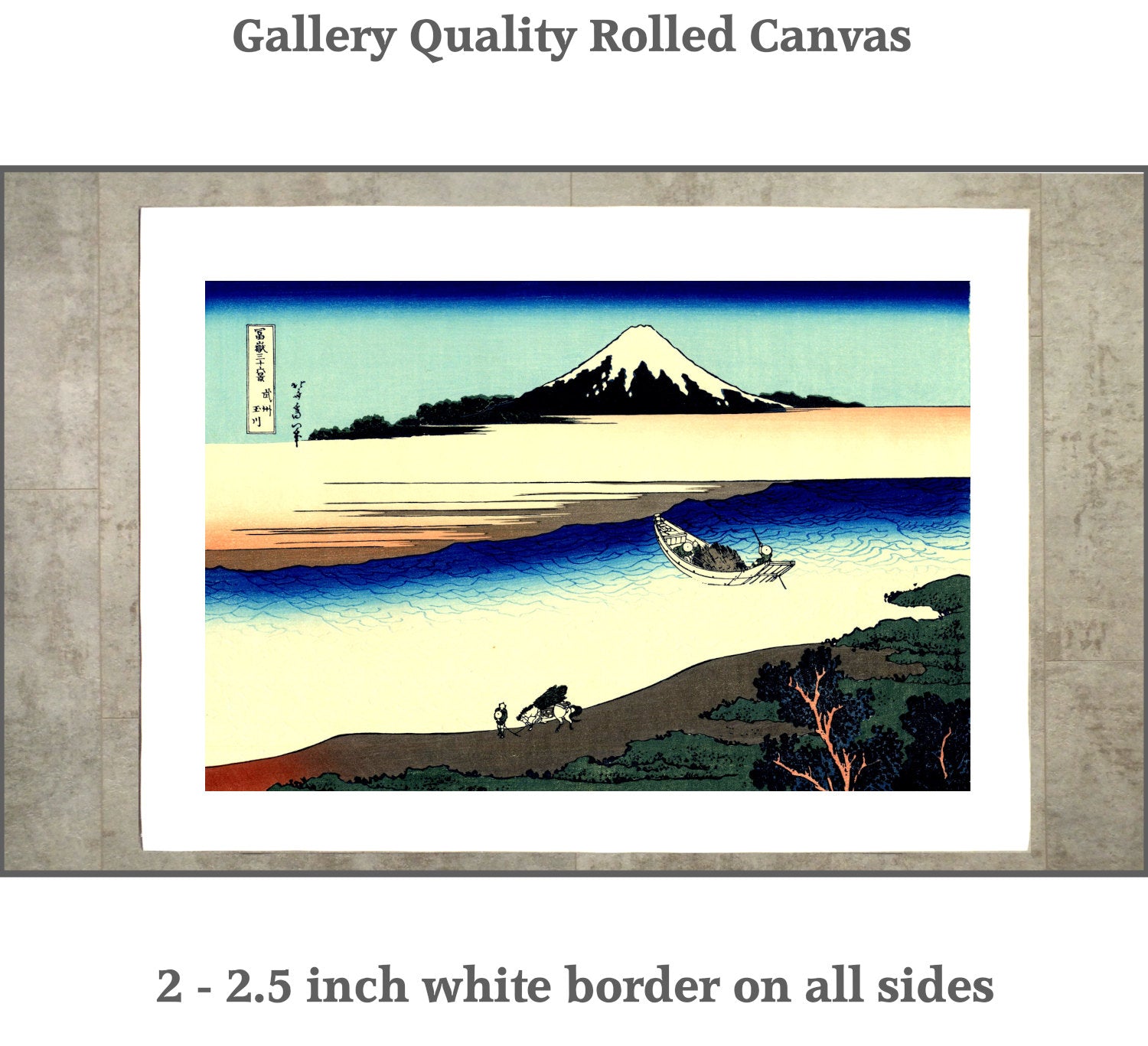
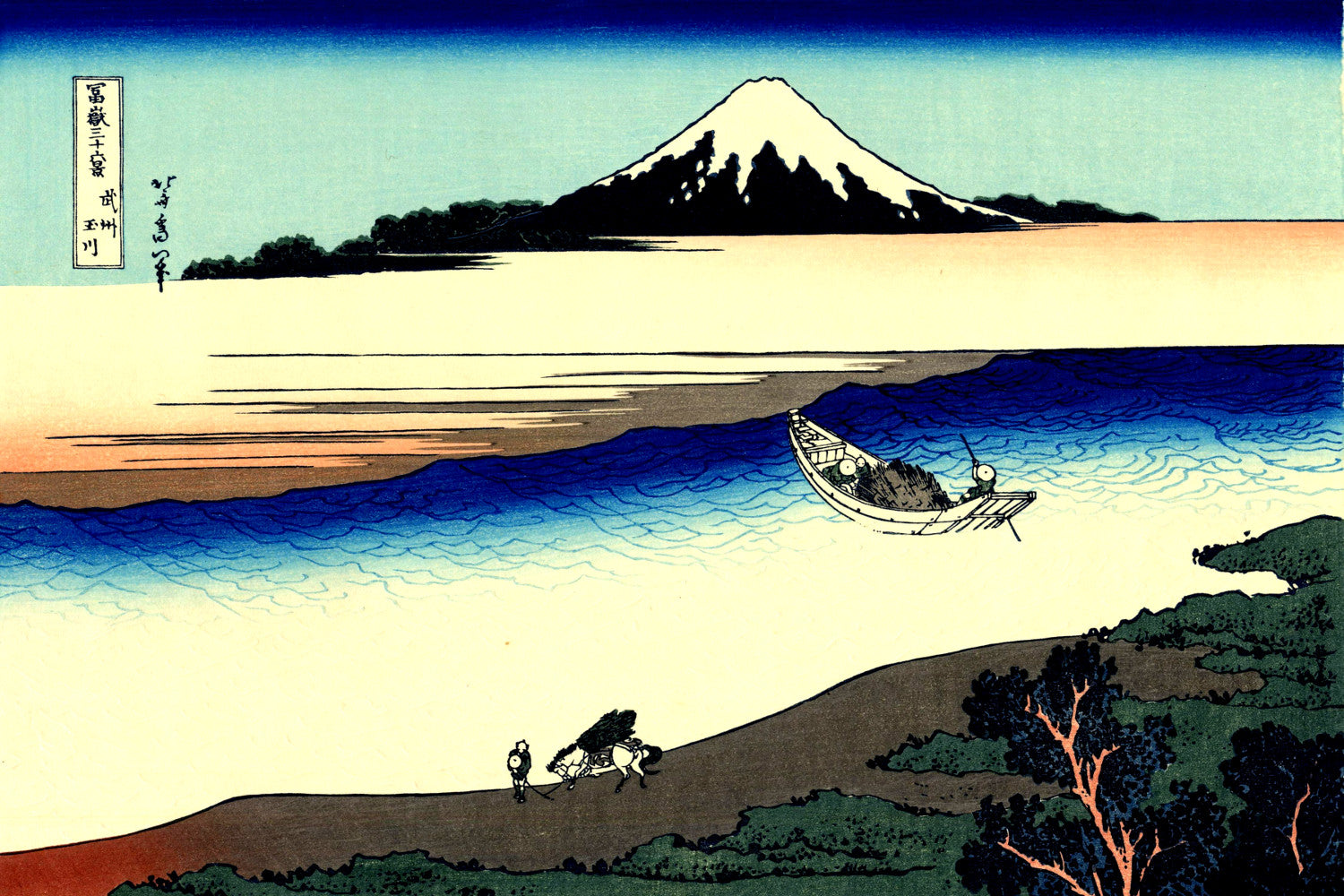
Hokusai's Thirty-Six Views of Mount Fuji Prints
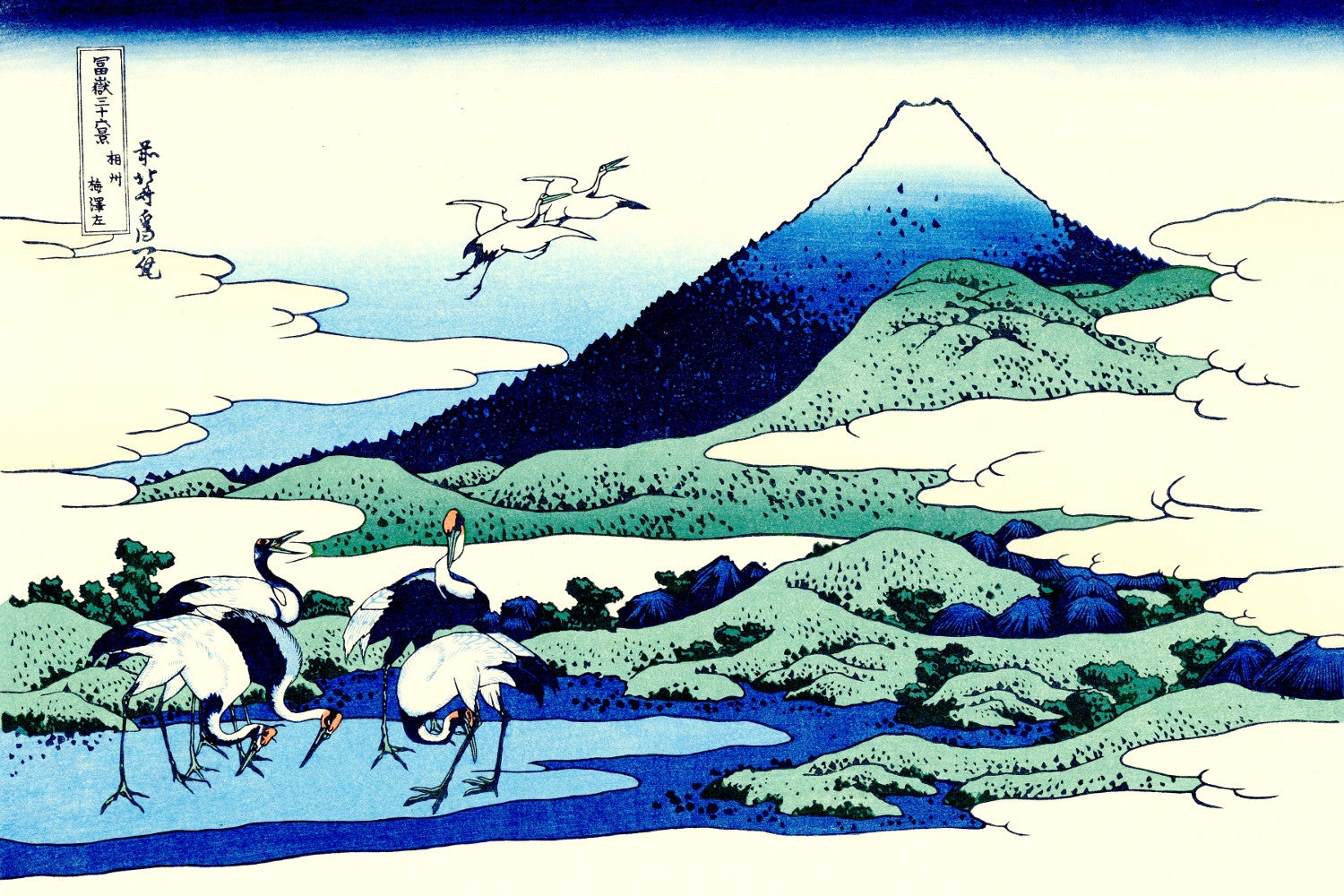
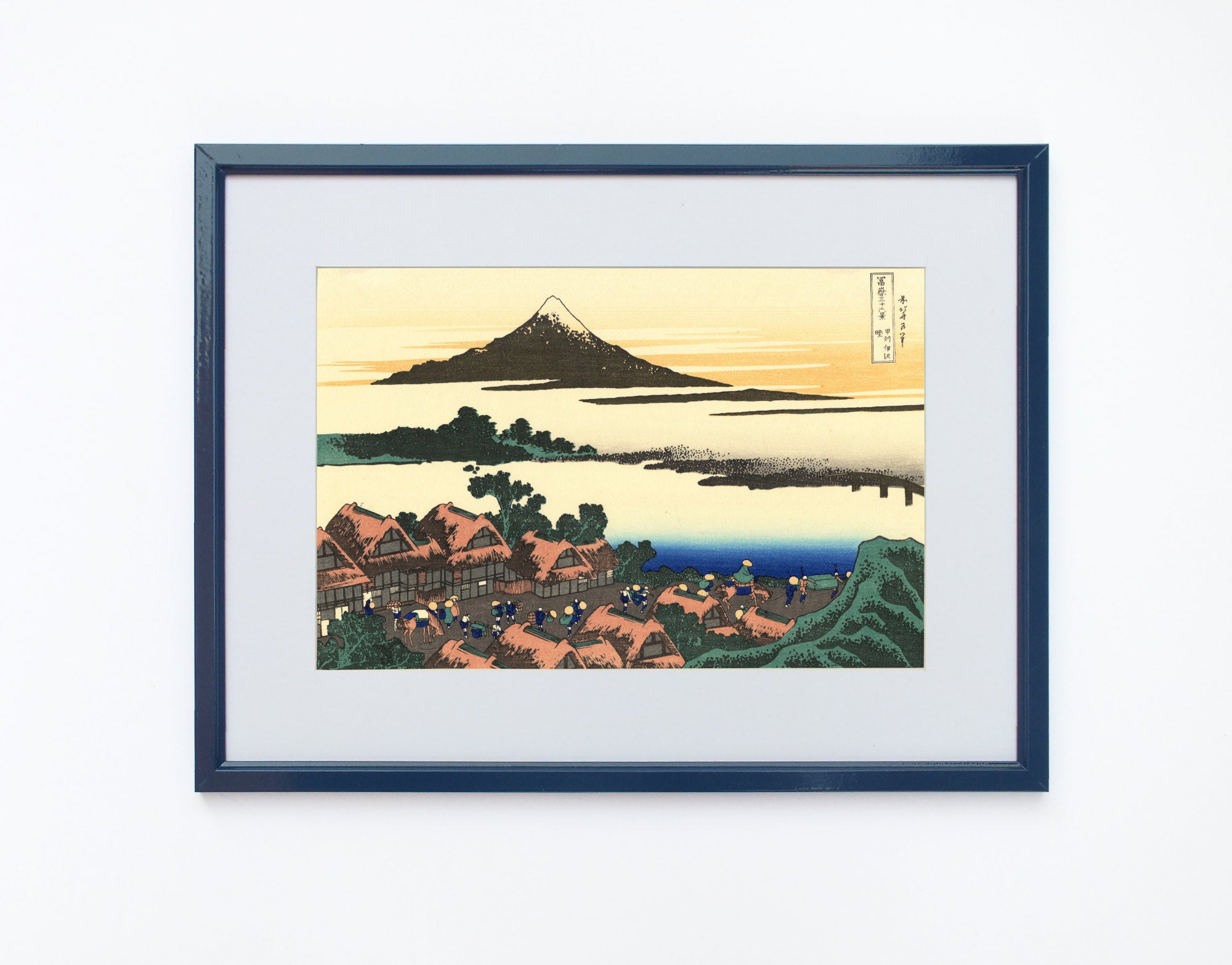
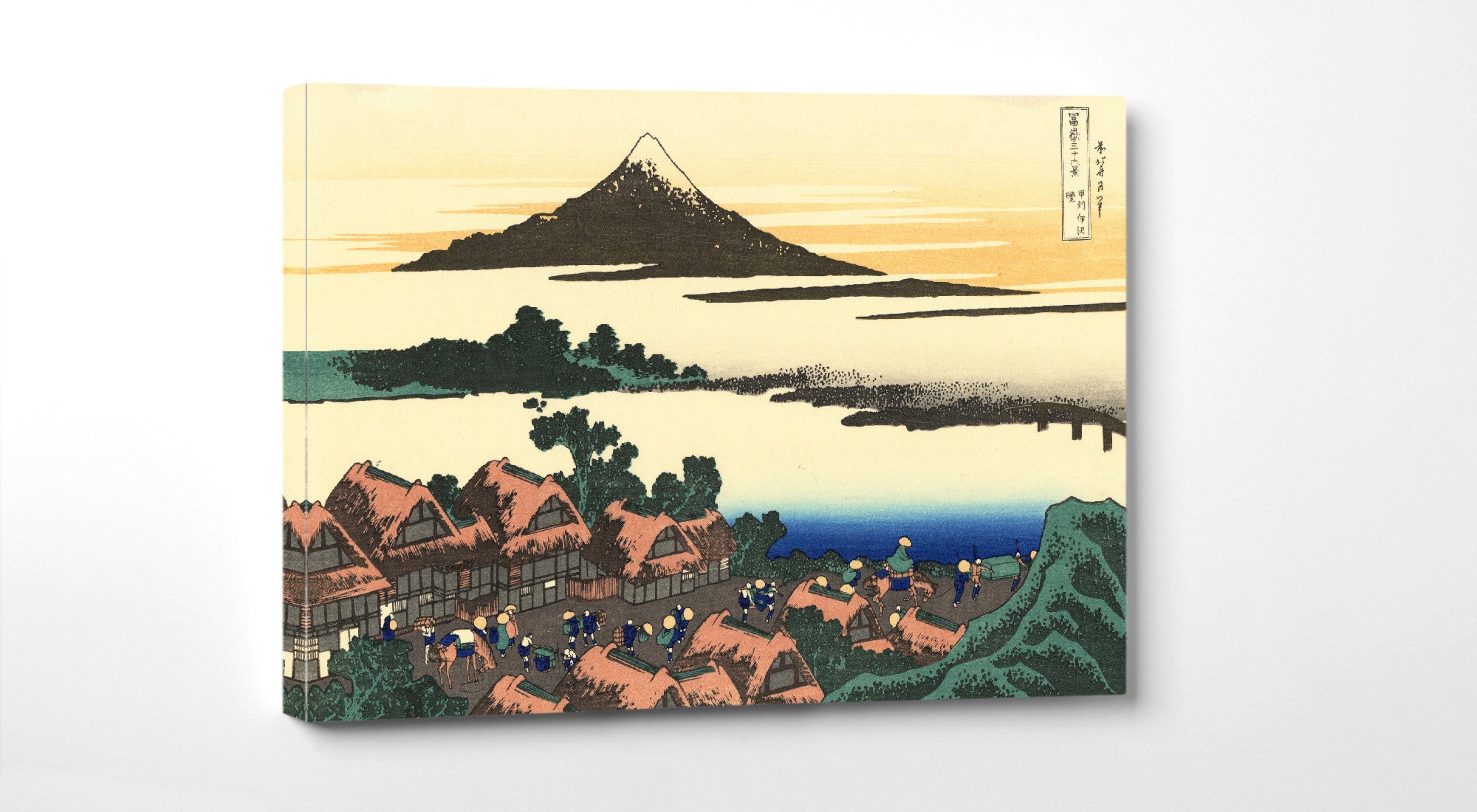
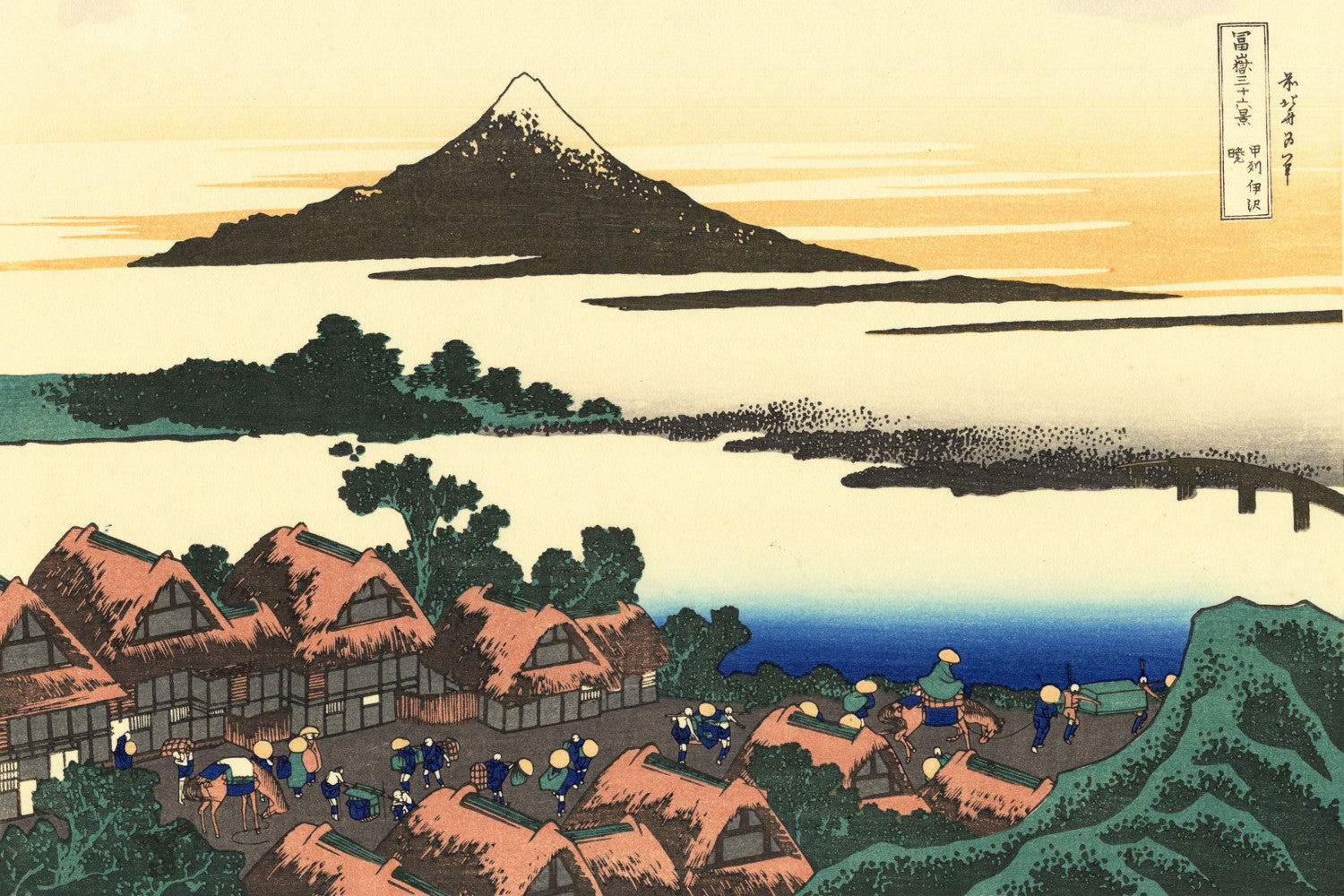
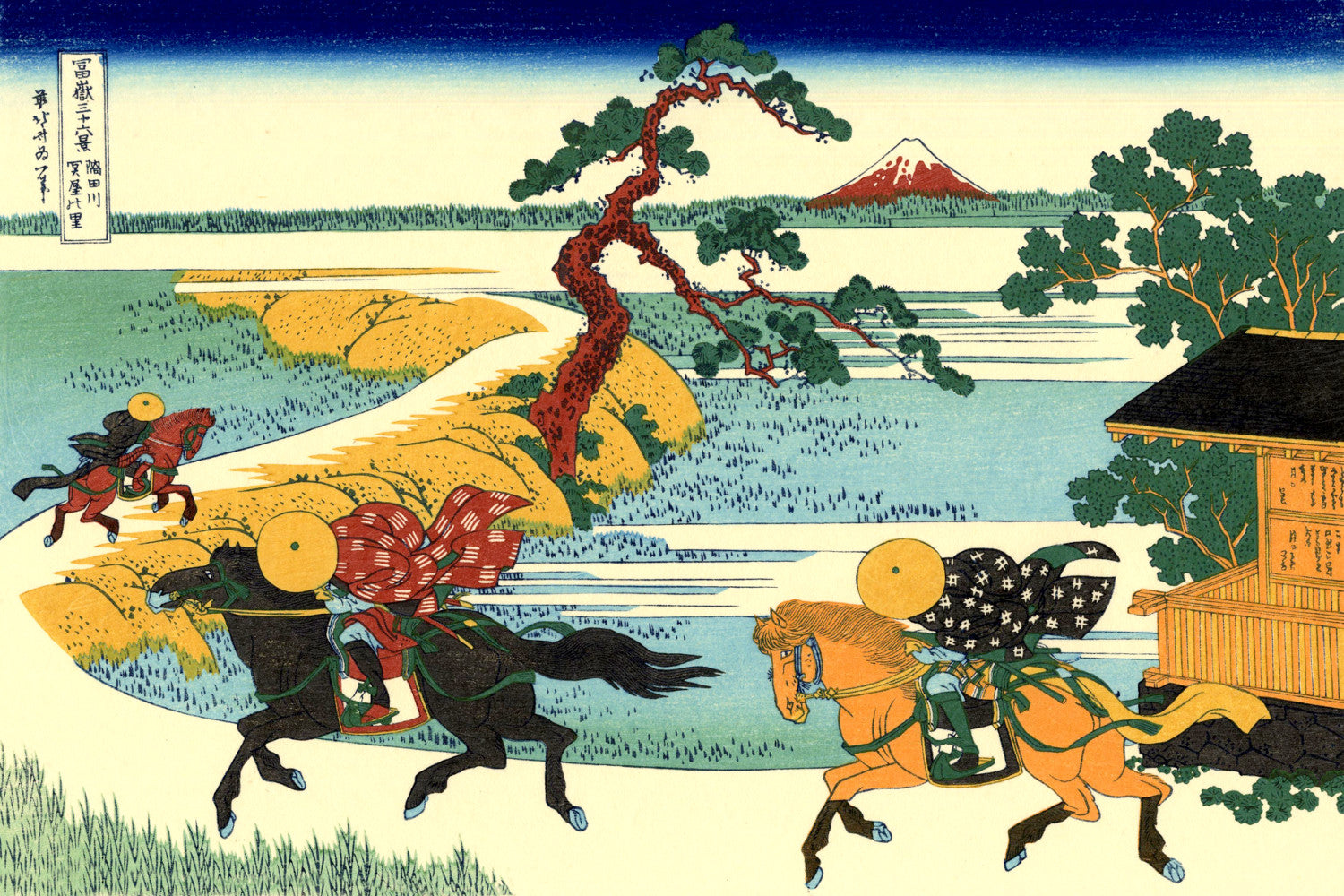
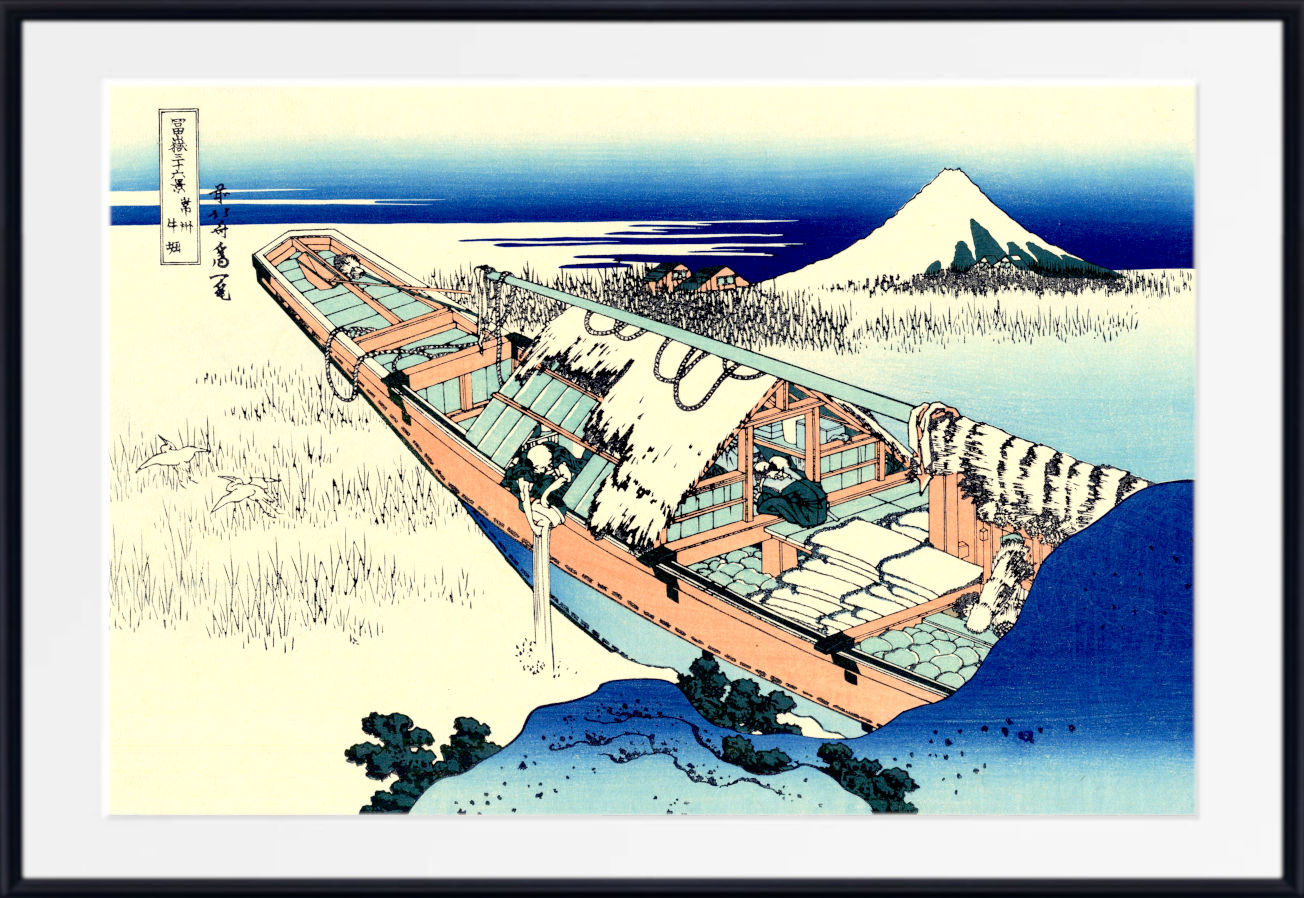
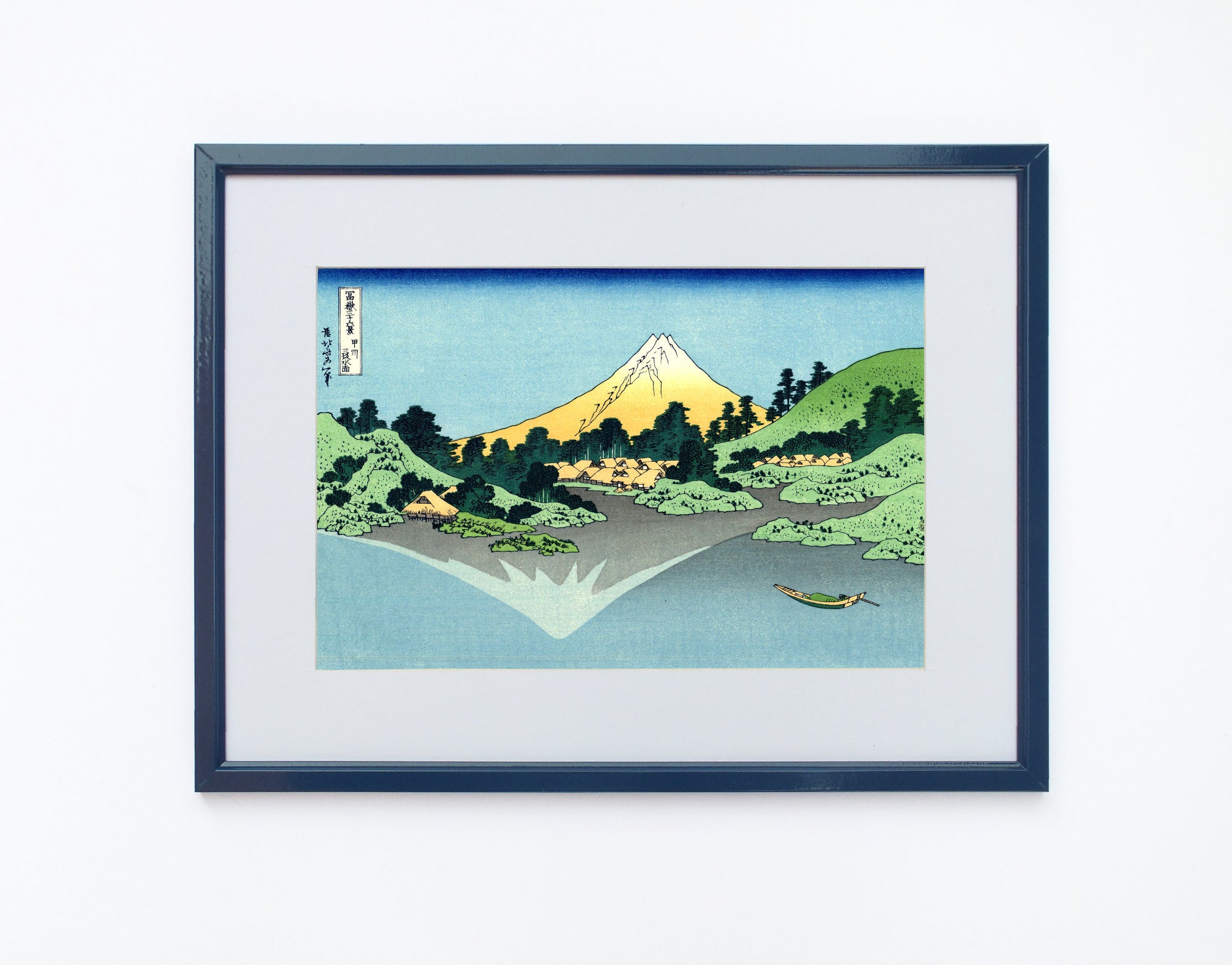
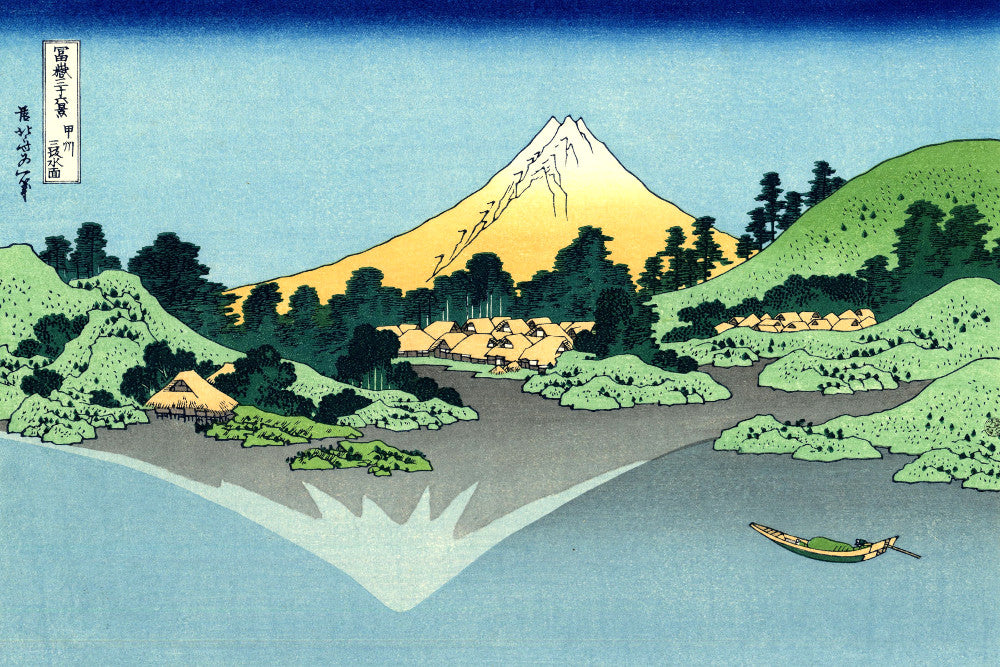
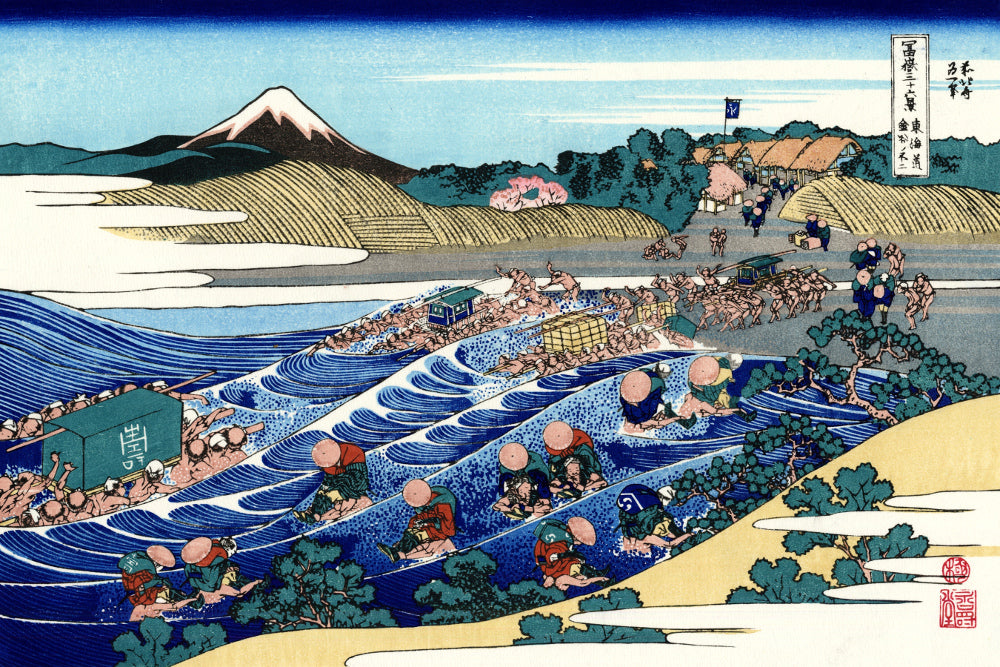
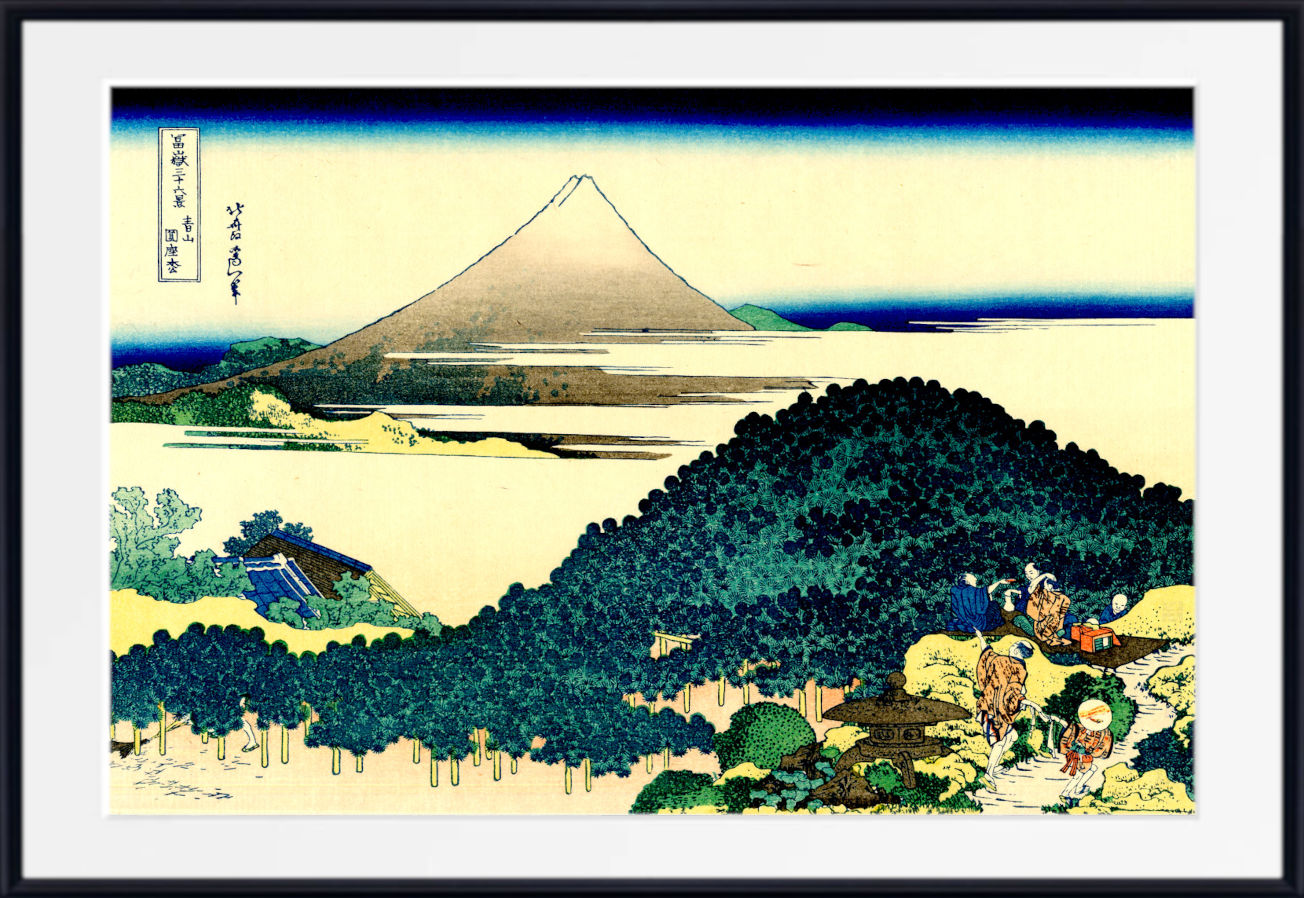
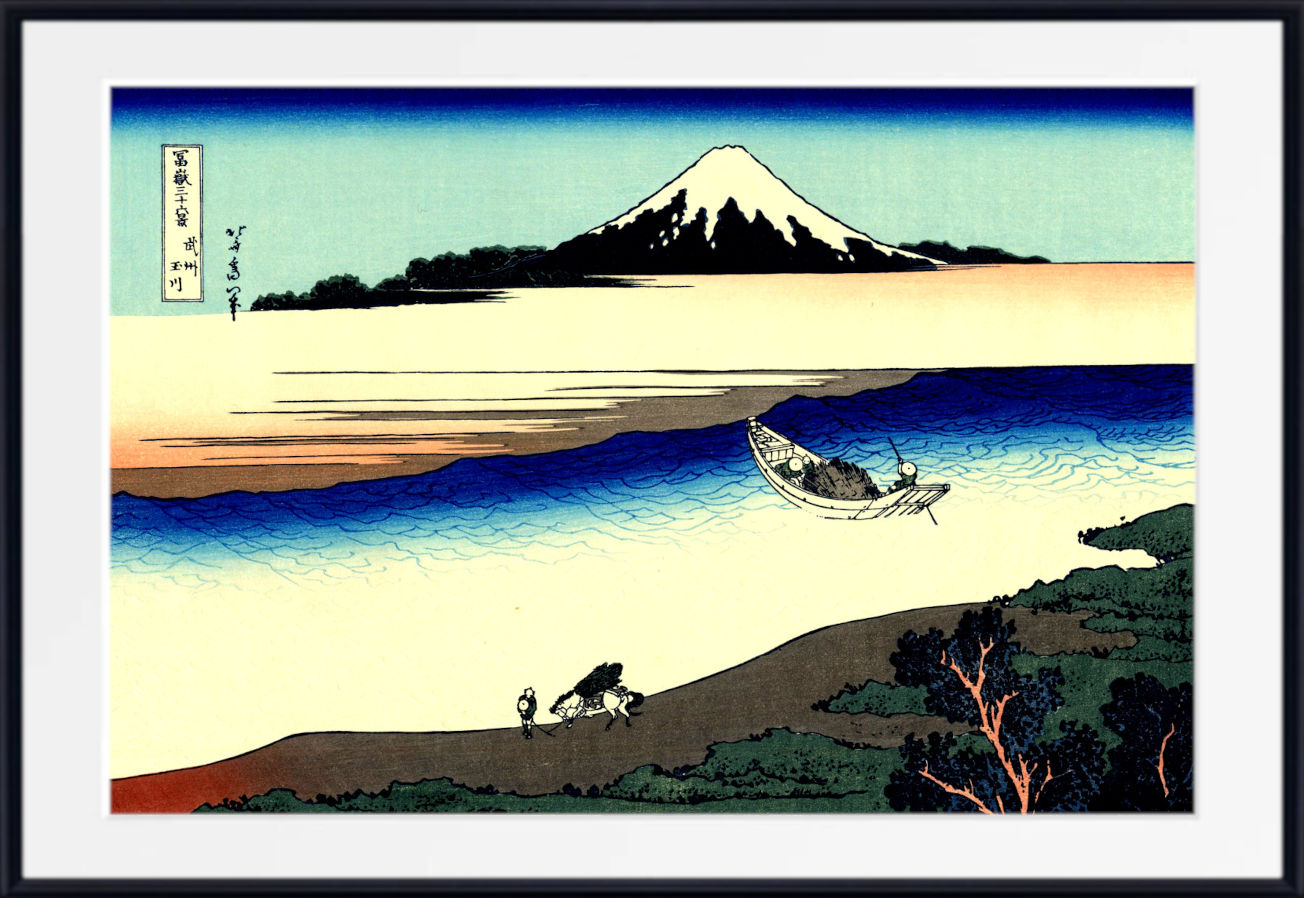
Thirty-Six Views of Mount Fuji – Fugaku Sanjūrokkei – transformed landscape printmaking in nineteenth-century Japan and contains some of the most recognisable images ever produced through the woodblock medium.
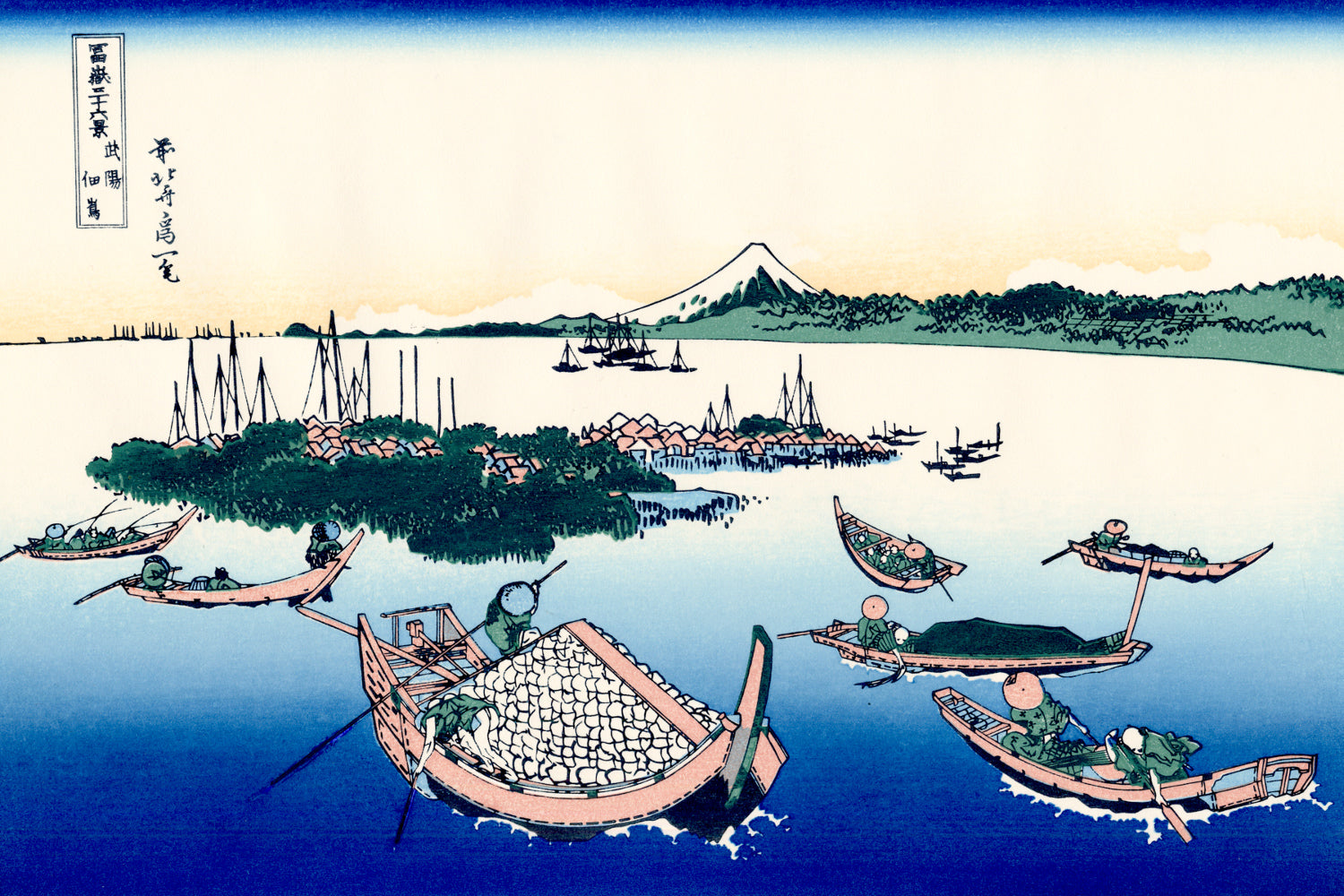
Created by Katsushika Hokusai during the early 1830s, the series presents Mount Fuji from an extraordinary variety of places and perspectives.
In some prints the mountain towers over the entire landscape.
In others it appears almost hidden: a small triangle beyond waves, buildings, bridges, trees or people going about their daily lives.
This continuous reinvention of a single subject is one of the great achievements of the series.
GalleryThane's dedicated Thirty-Six Views of Mount Fuji collection brings these landscapes together so they can be explored as a coherent group rather than simply as individual Hokusai prints.
For Hokusai's broader work and biography, visit the Katsushika Hokusai Prints collection.
Why Is It Called Thirty-Six Views If There Are 46 Prints?
Despite its famous title, the complete series ultimately contains 46 designs.
The project was originally planned and issued as thirty-six views.
Its success encouraged the publisher to extend it with ten additional designs, producing the forty-six works now associated with the complete series.
The original title remained unchanged.
This explains why a complete collection of Thirty-Six Views of Mount Fuji contains more than thirty-six individual images.
When Was Thirty-Six Views of Mount Fuji Created?
The series was produced during the early 1830s, when Hokusai was already in his seventies.
Rather than representing an artist at the beginning of his career, these prints emerged after decades of drawing, painting and designing woodblock images.
That experience is evident in the extraordinary confidence of the compositions.
Hokusai could reduce landscapes to simple geometric structures, manipulate perspective and make apparently insignificant everyday details essential to the overall design.
The series was published in Edo by Nishimuraya Yohachi, one of the publishers associated with some of Hokusai's greatest landscape prints.
Why Mount Fuji?
Mount Fuji is Japan's highest mountain and one of the country's most powerful cultural symbols.
Long before Hokusai created the series, Fuji had associations with religion, pilgrimage, immortality and longevity.
The mountain also possessed an exceptionally recognisable shape.
Its symmetrical cone could remain identifiable even when reduced to a tiny silhouette in the distance.
Hokusai exploited this endlessly.
Fuji can be red, white, blue or almost invisible.
It may be framed by a bridge, repeated by the shape of a wave or echoed by the triangular arrangement of a fisherman's lines.
The mountain provides continuity while everything around it changes.
The Great Wave off Kanagawa
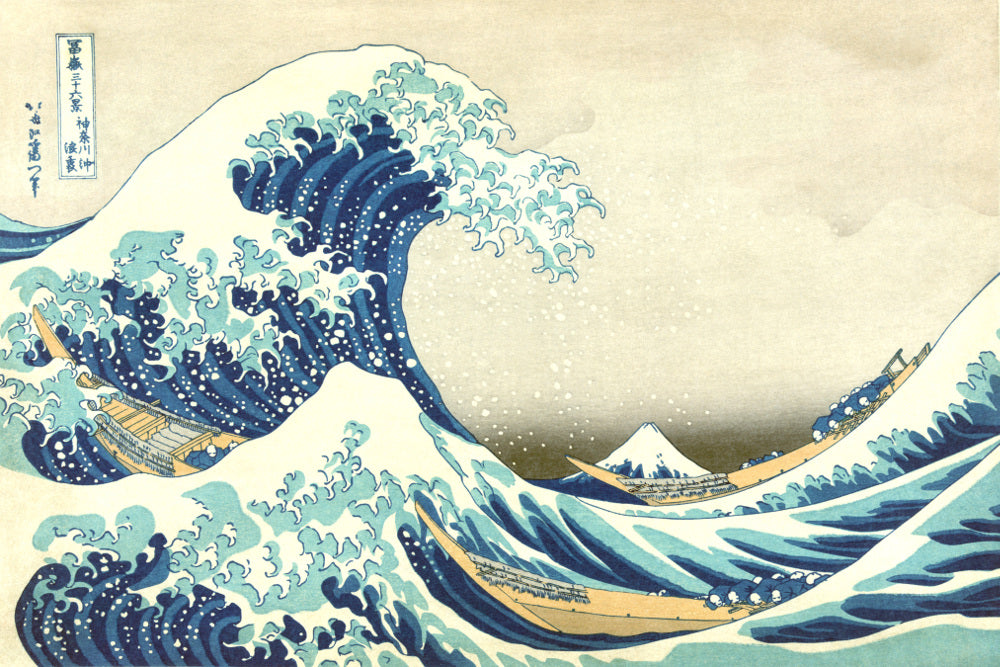
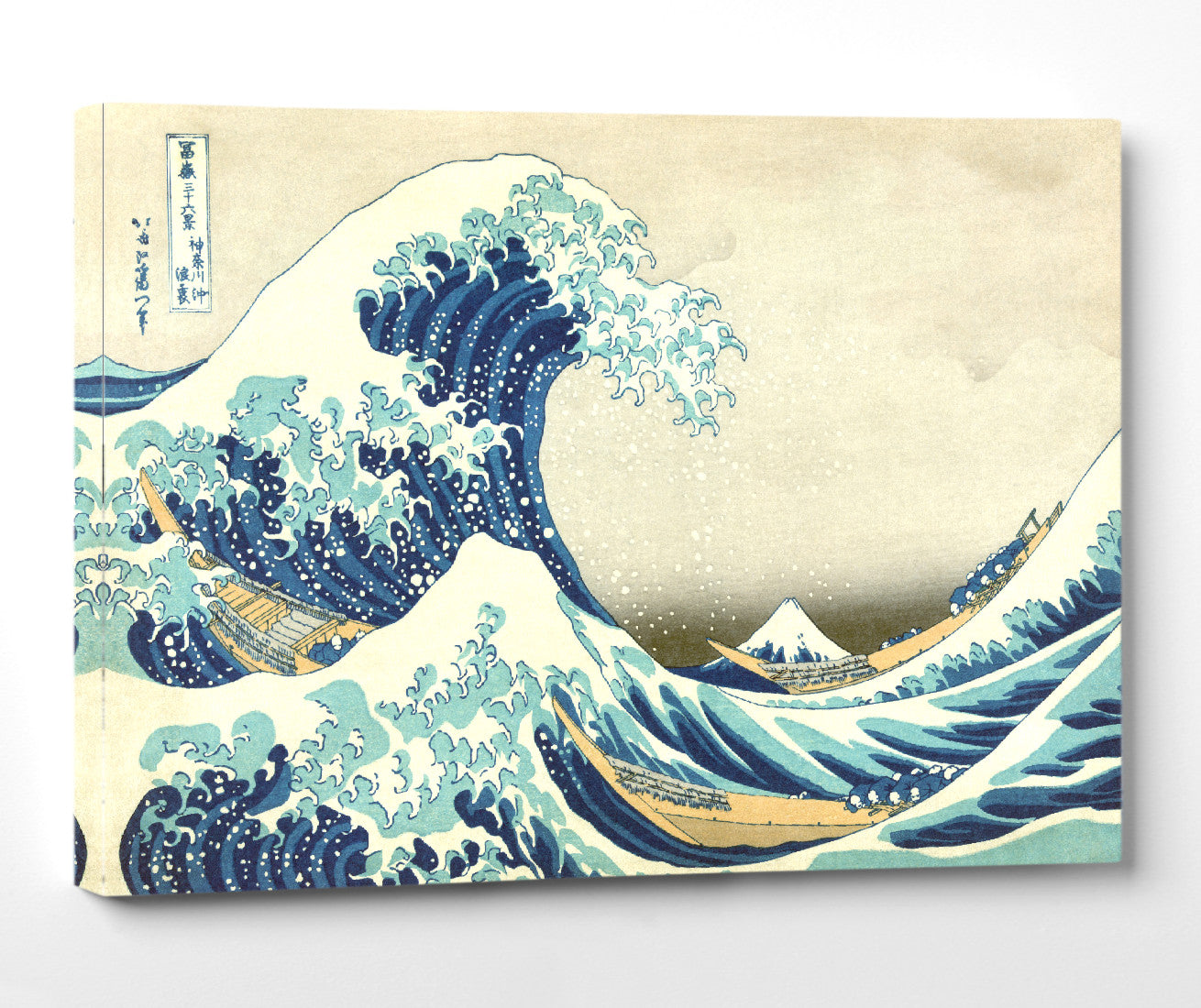
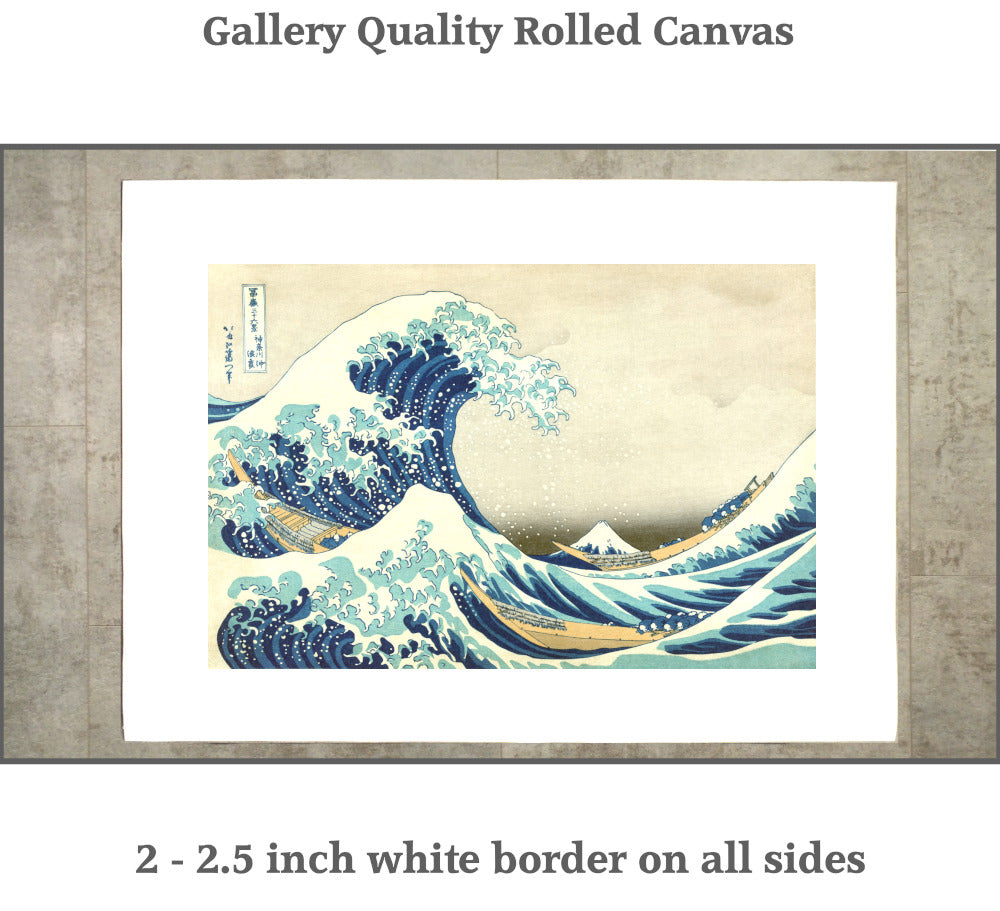
The most famous design in the series is Under the Wave off Kanagawa, universally known as The Great Wave.
Three long boats cross rough water while an immense wave rises over them.
The wave occupies most of the composition, yet Hokusai places Mount Fuji directly beneath its curling crest in the distance.
This creates one of the most remarkable manipulations of scale in art.
A temporary wave appears enormous.
A mountain that has endured for millennia appears tiny.
The wave's curving outline also frames Fuji while its white spray seems to break into claw-like fragments above the boats.
The design combines mathematical clarity with an extraordinary feeling of imminent movement.
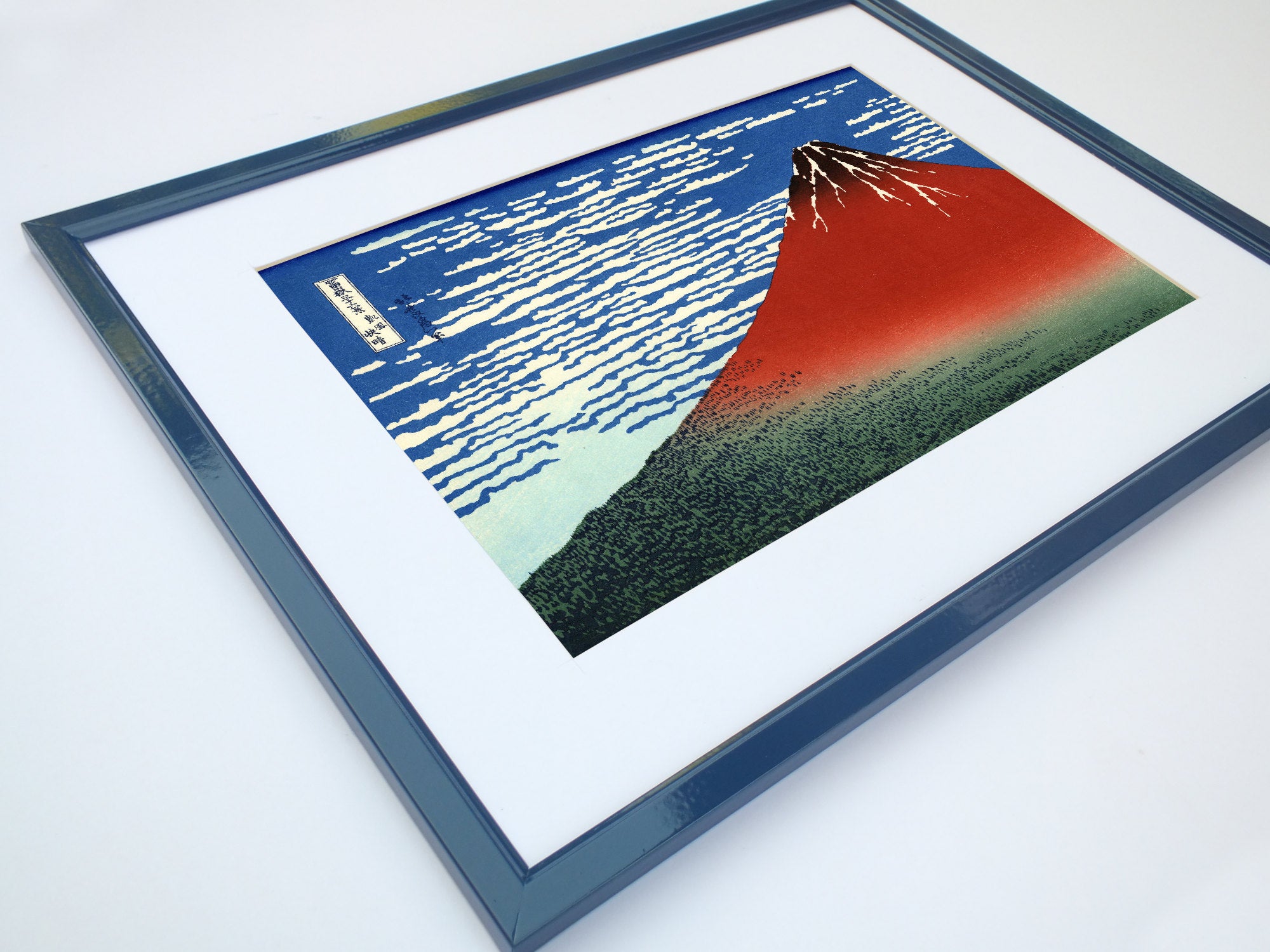
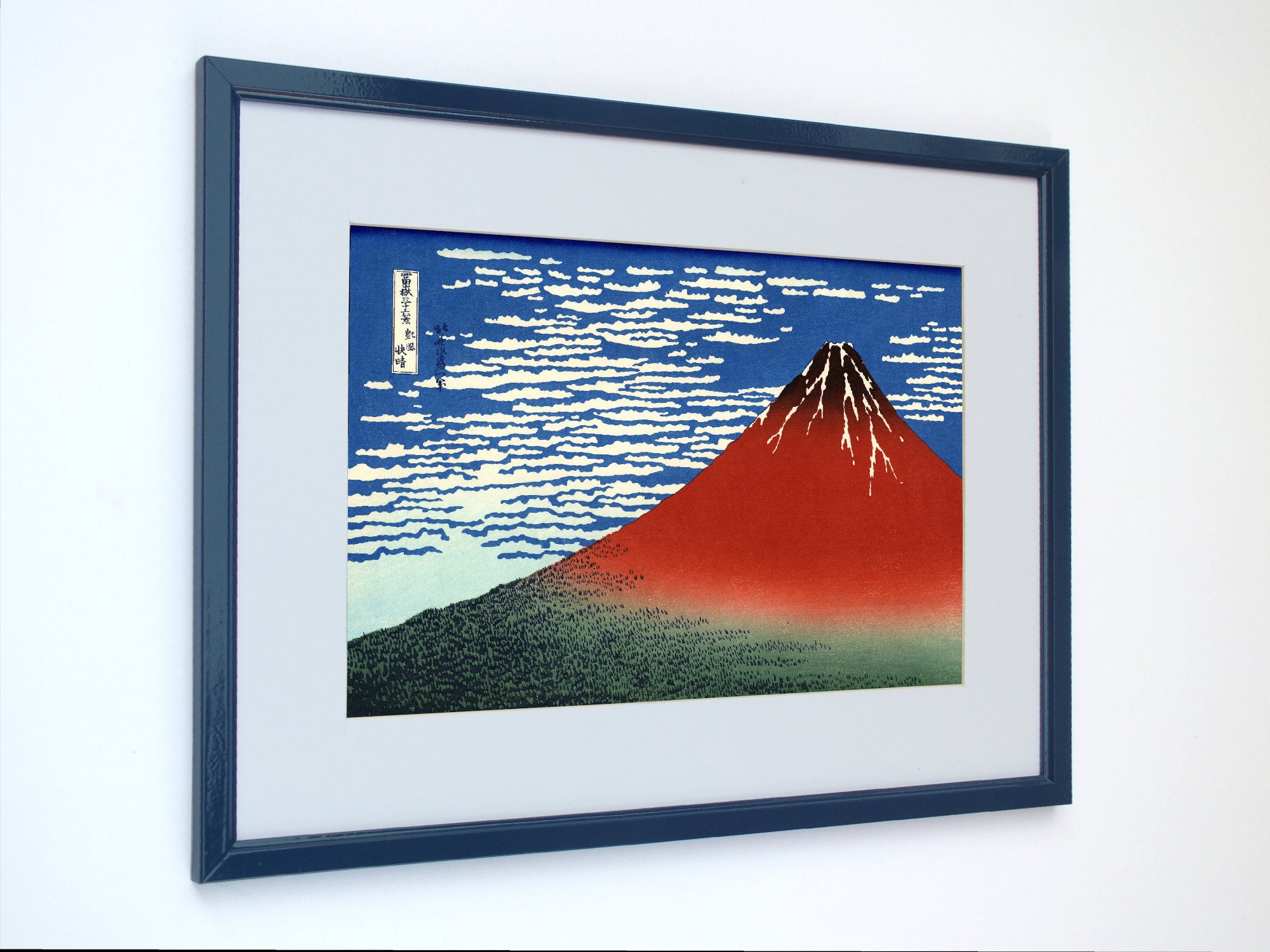
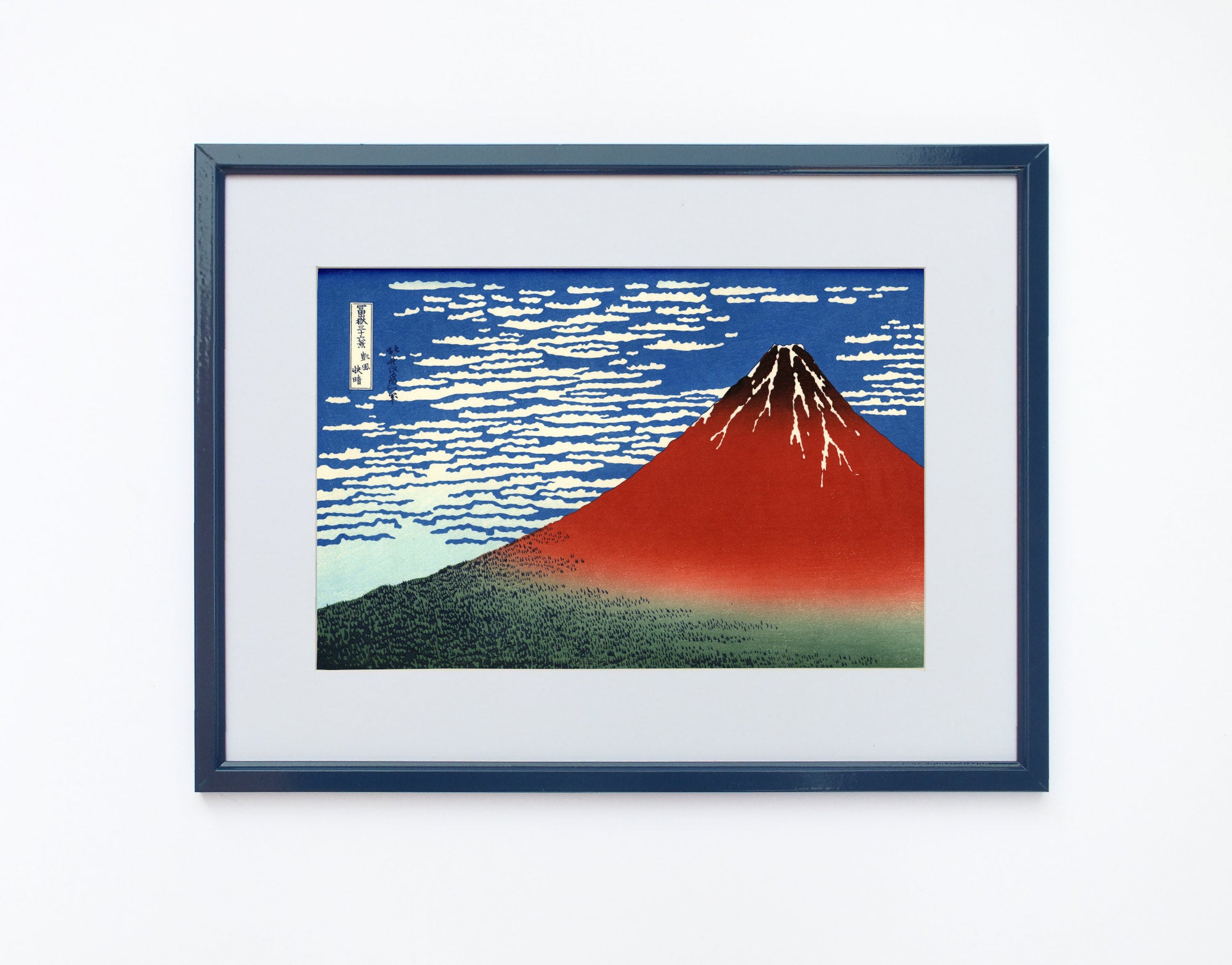
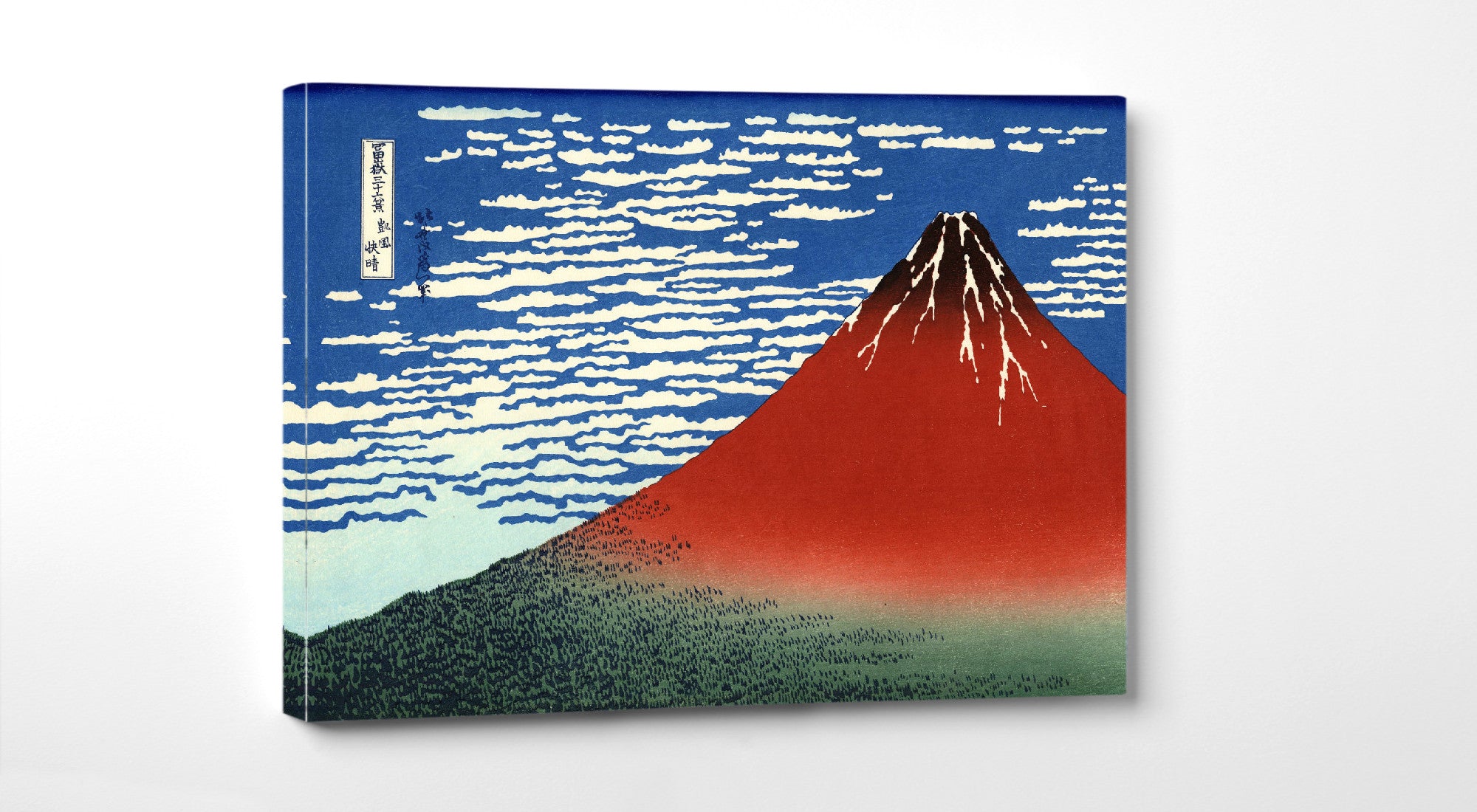
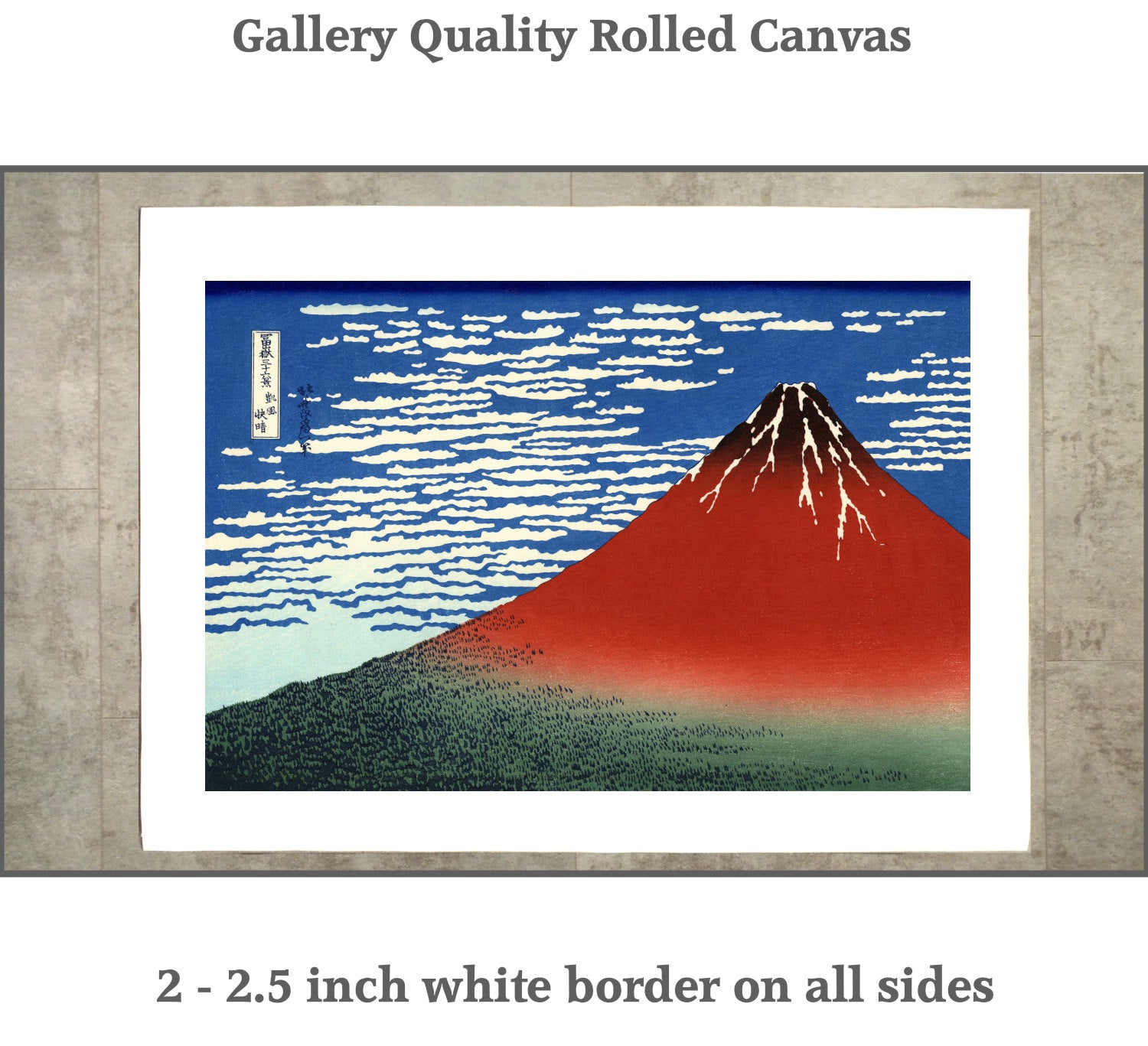
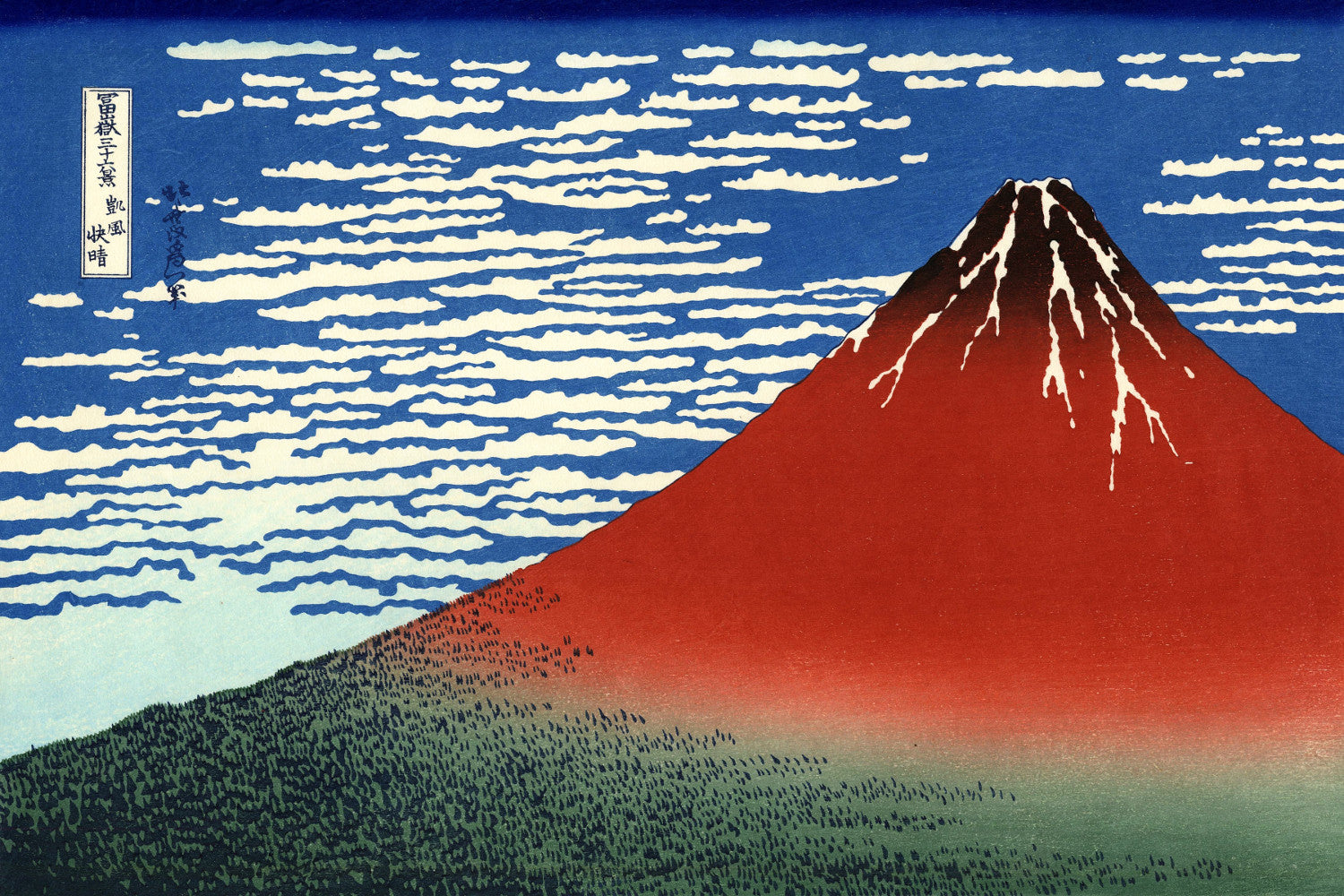
Red Fuji – Fine Wind, Clear Morning
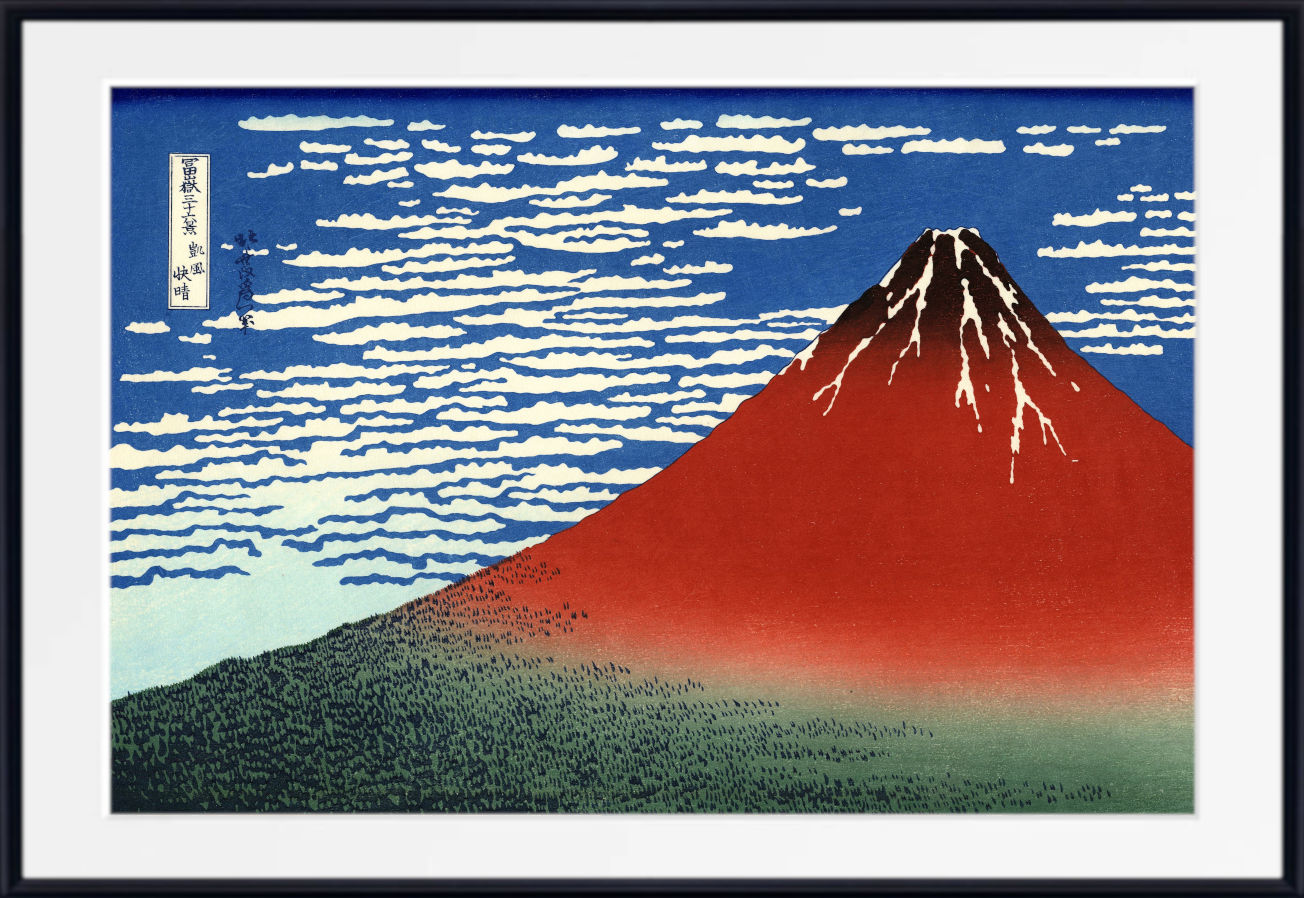
If The Great Wave is based on violent movement, Fine Wind, Clear Morning, usually called Red Fuji, achieves its effect through extreme simplicity.
Fuji itself dominates the design.
The mountain's great red-brown slopes rise diagonally against a blue sky crossed by delicate clouds.
Near the summit, traces of snow remain within the mountain's gullies.
There are no travellers, boats or buildings competing for attention.
Hokusai reduces the landscape almost entirely to mountain, sky and cloud.
This simplicity has made Red Fuji one of the most famous images in Japanese art and an ideal counterpart to the turbulent Great Wave.
Lightning Below the Summit
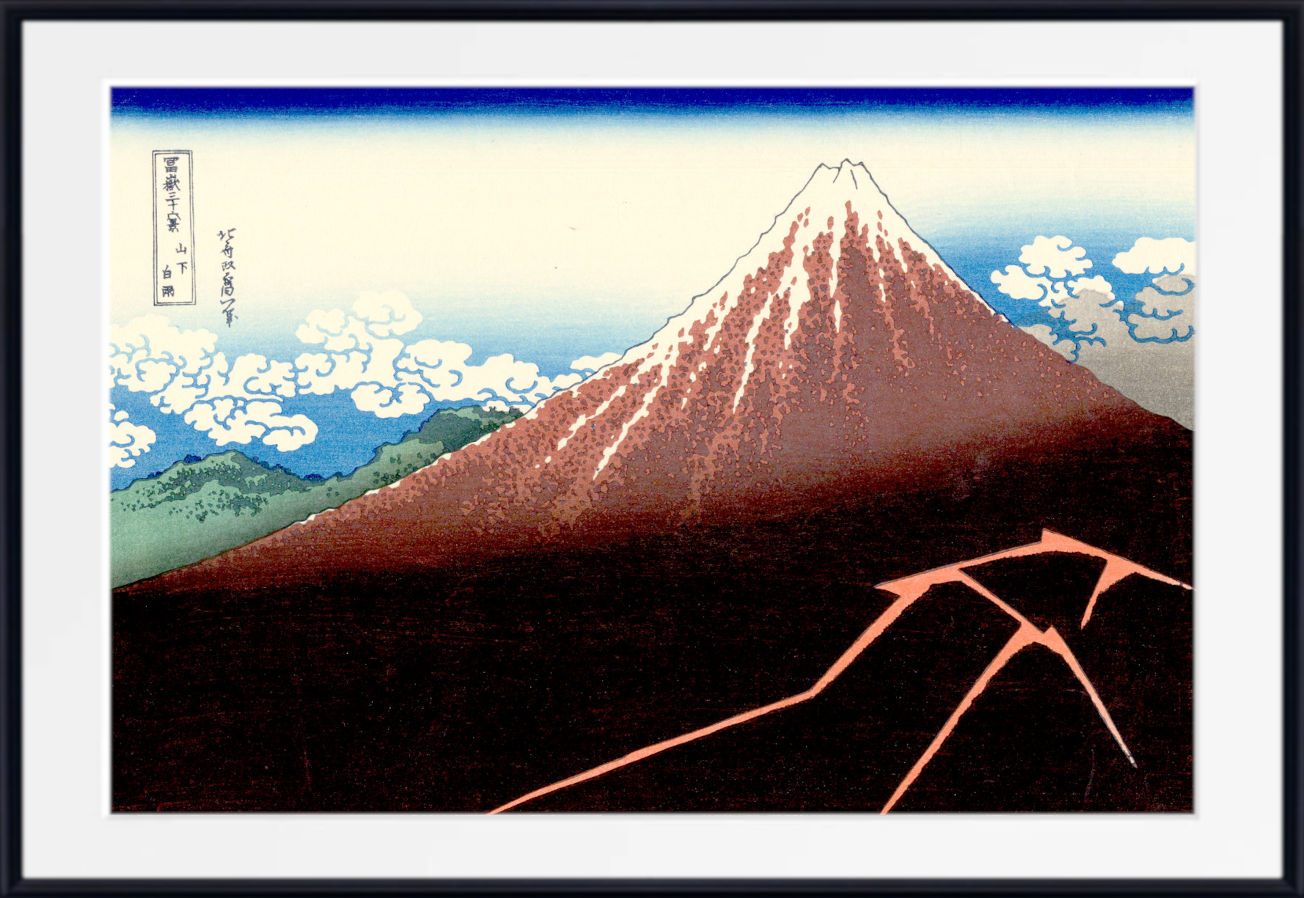
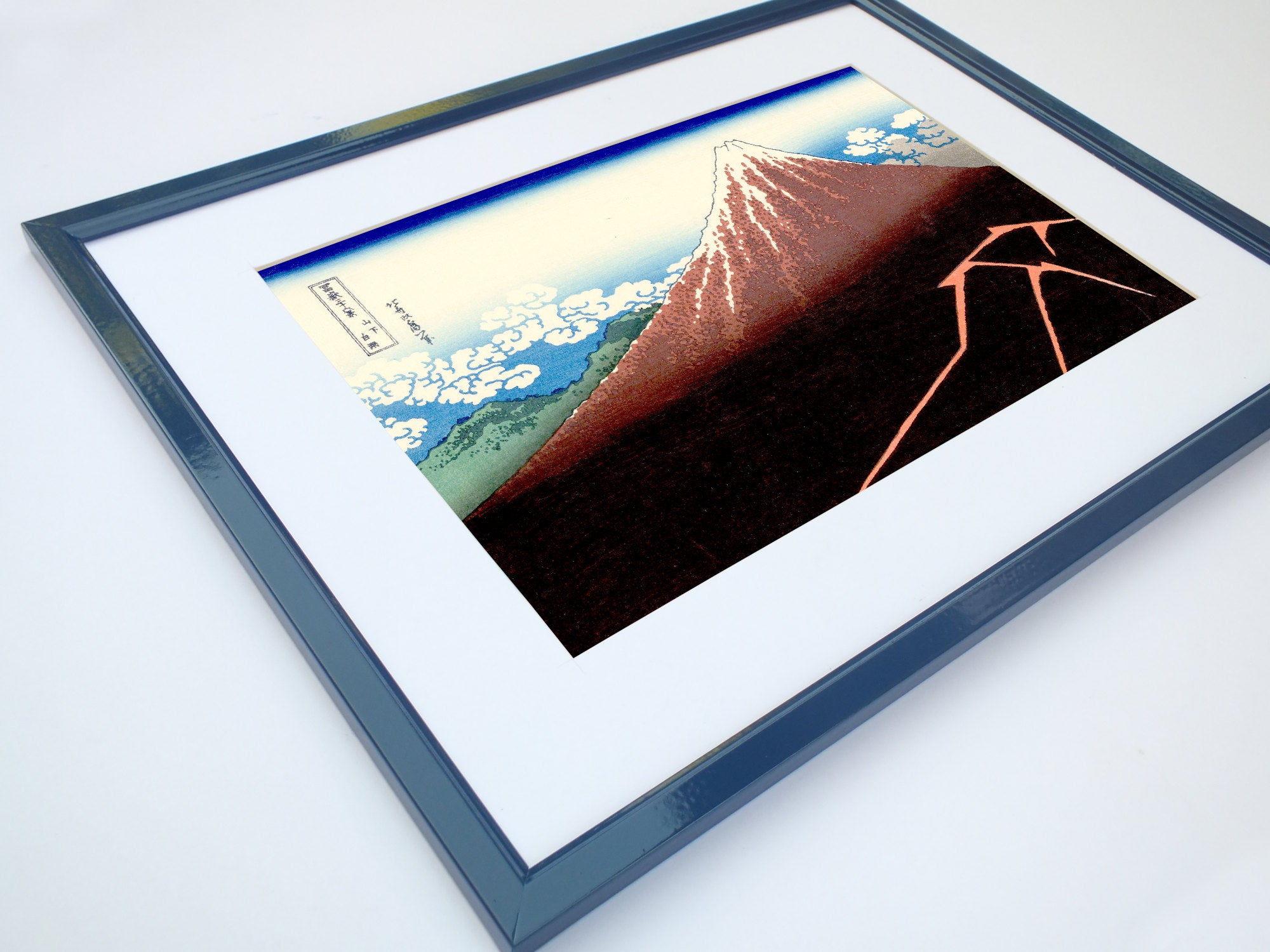
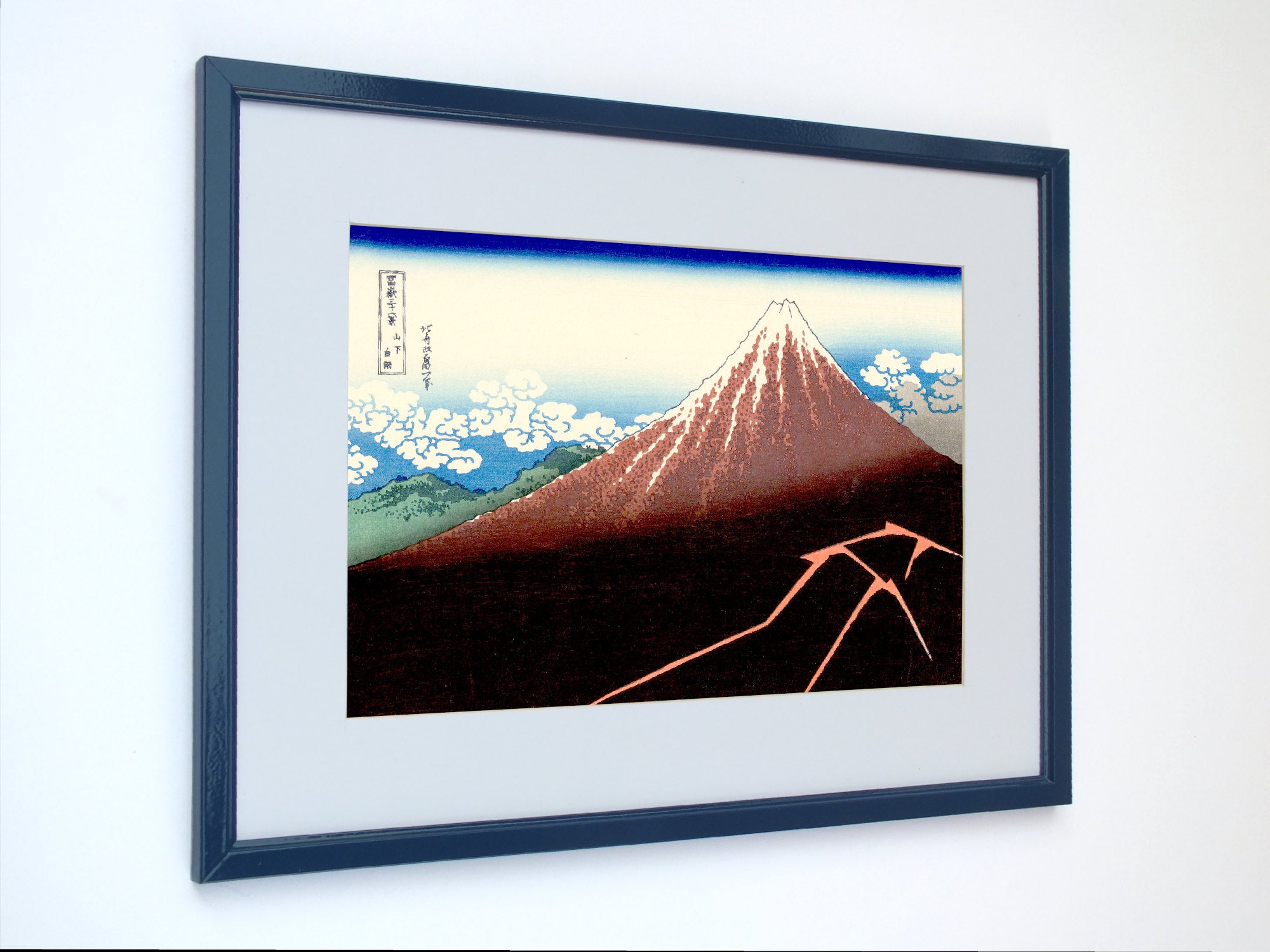
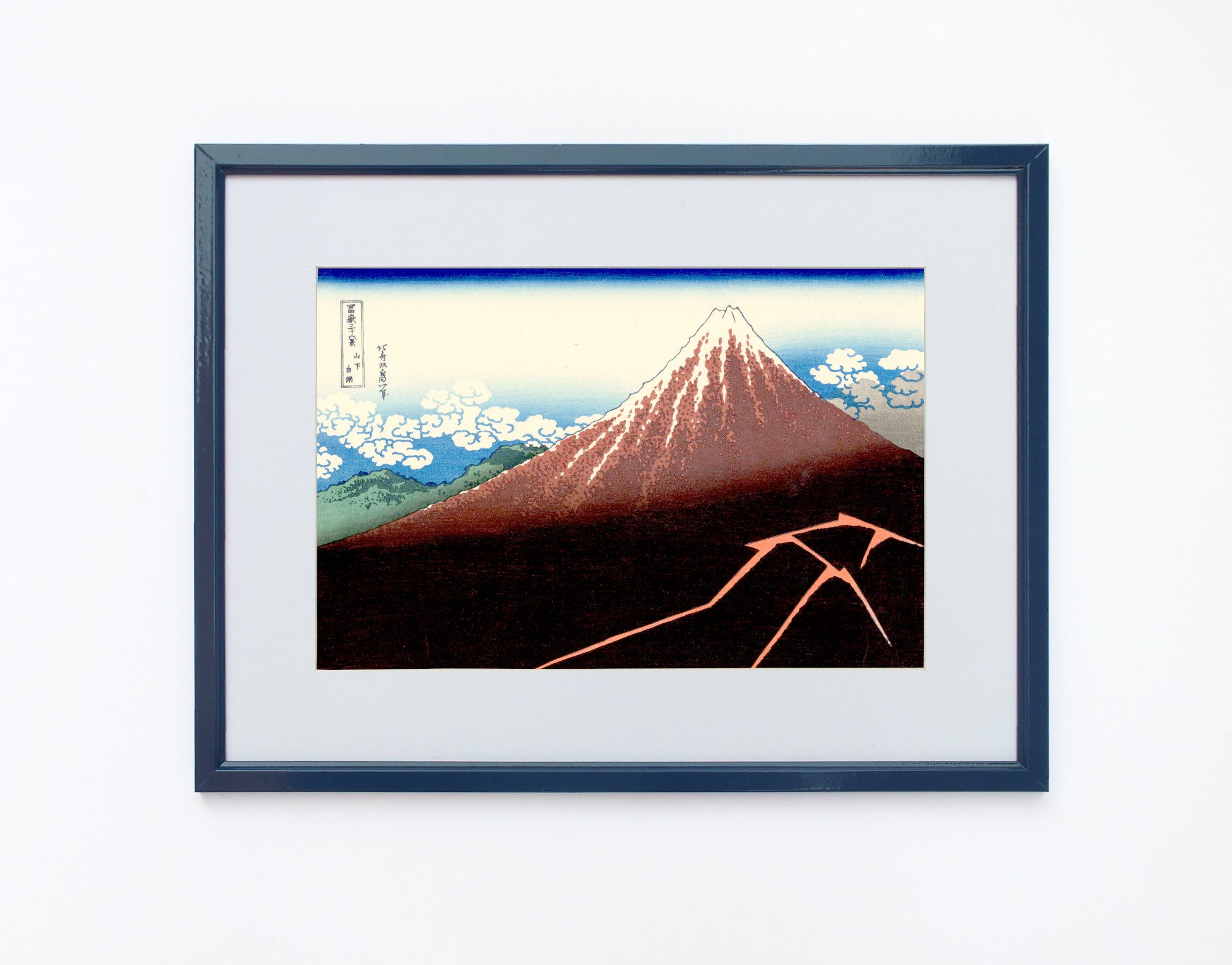
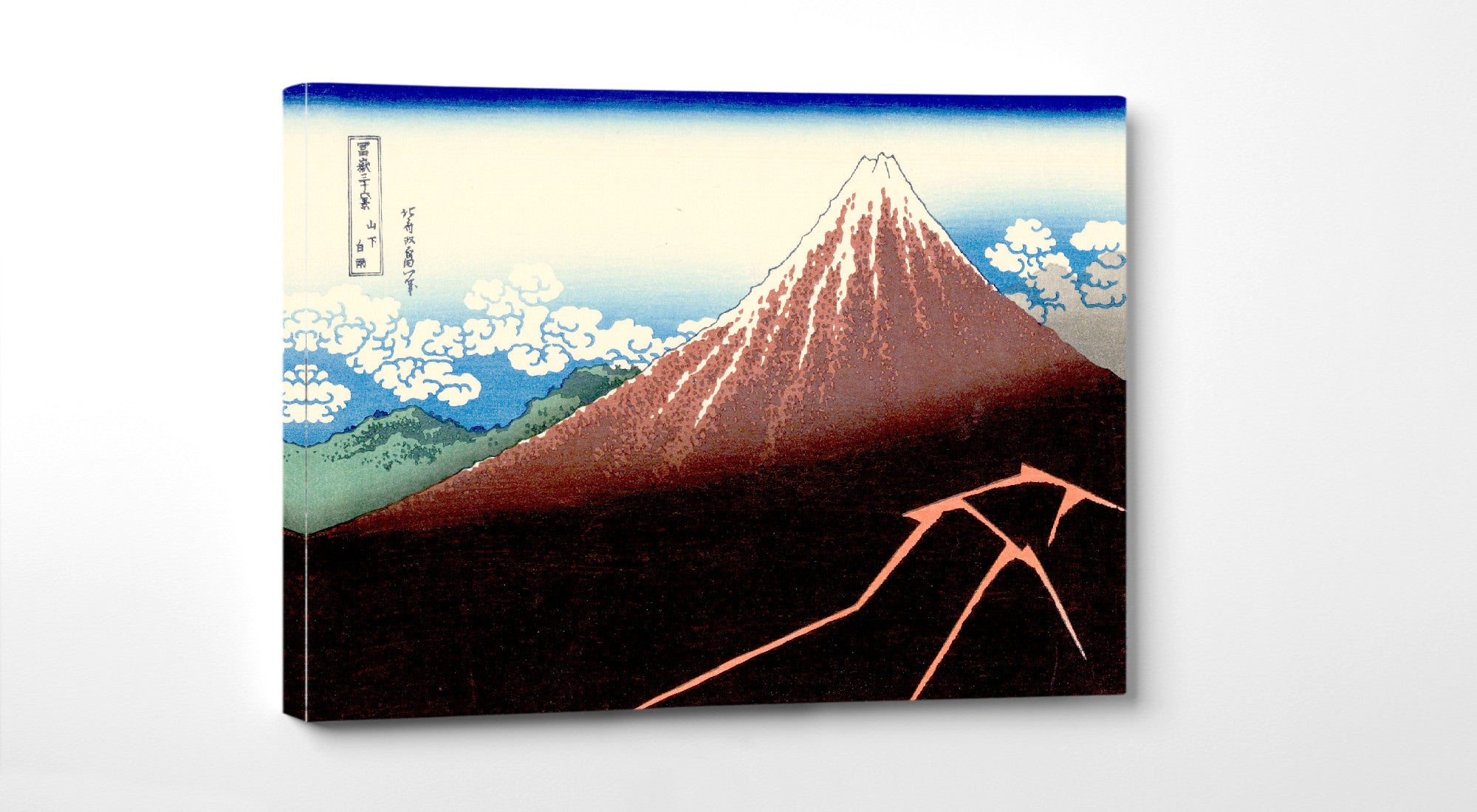
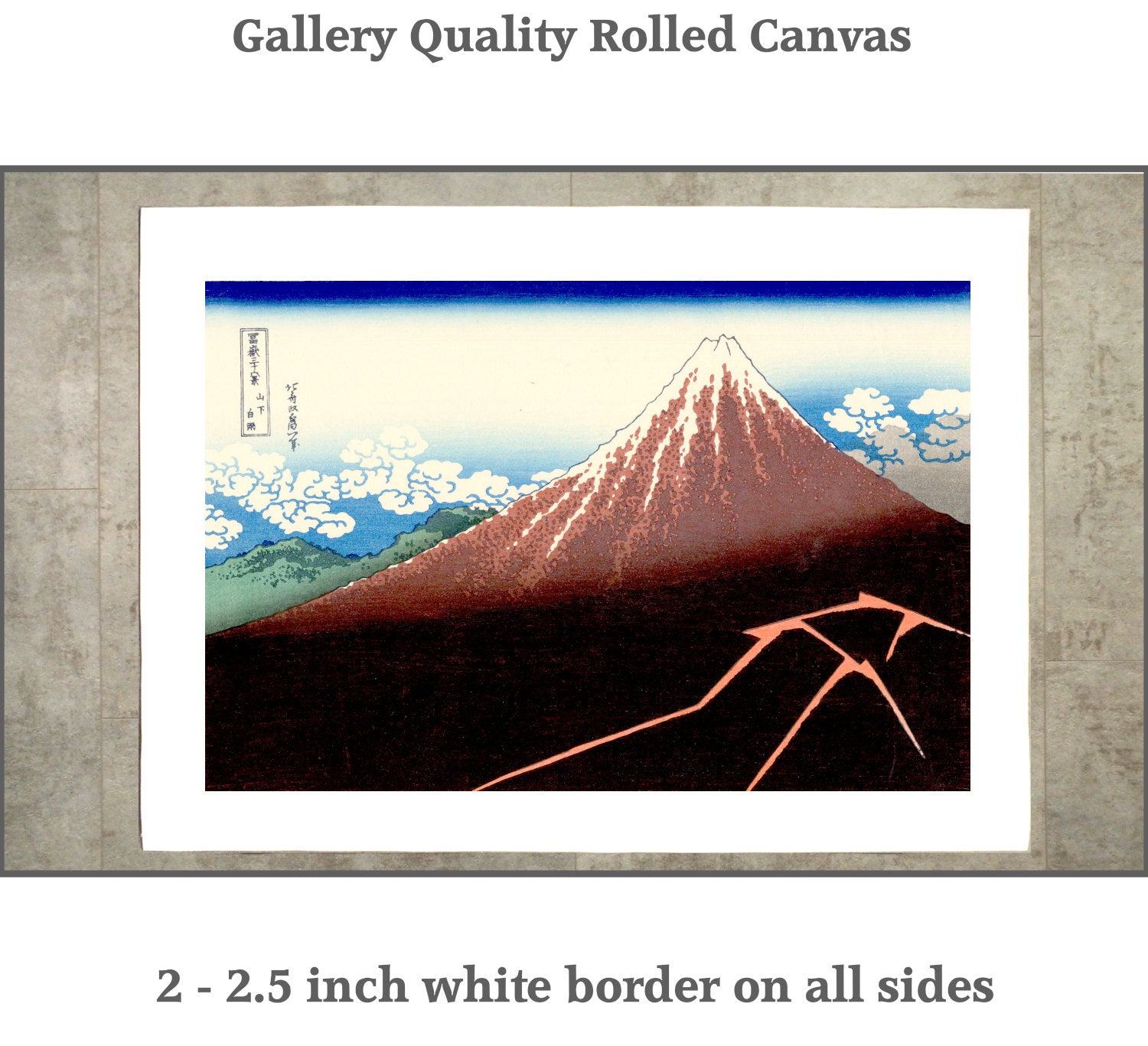
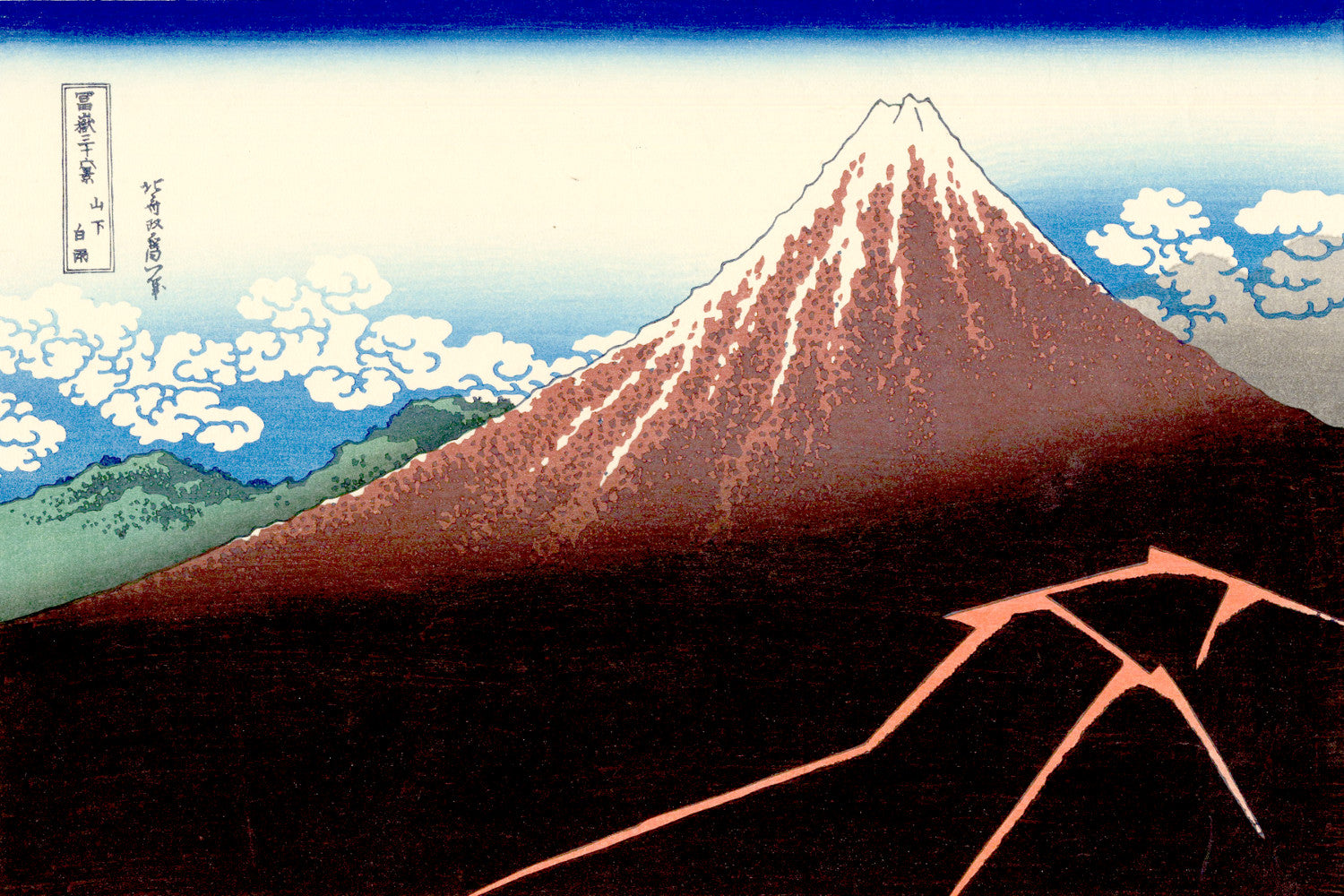
Another celebrated design is Rainstorm Beneath the Summit, represented in GalleryThane's collection as Lightning Below the Summit.
Again Fuji fills much of the image, but the mood is completely different from Red Fuji.
The upper mountain rises calmly above the clouds while jagged lightning flashes across its darker lower slopes.
Hokusai divides the mountain into two climatic worlds.
Above the cloud layer, Fuji appears clear and permanent.
Below it, violent weather briefly transforms the landscape.
The contrast encapsulates one of the central ideas running throughout the series: nature is simultaneously enduring and constantly changing.
Ejiri in Suruga Province – Hokusai Paints the Wind
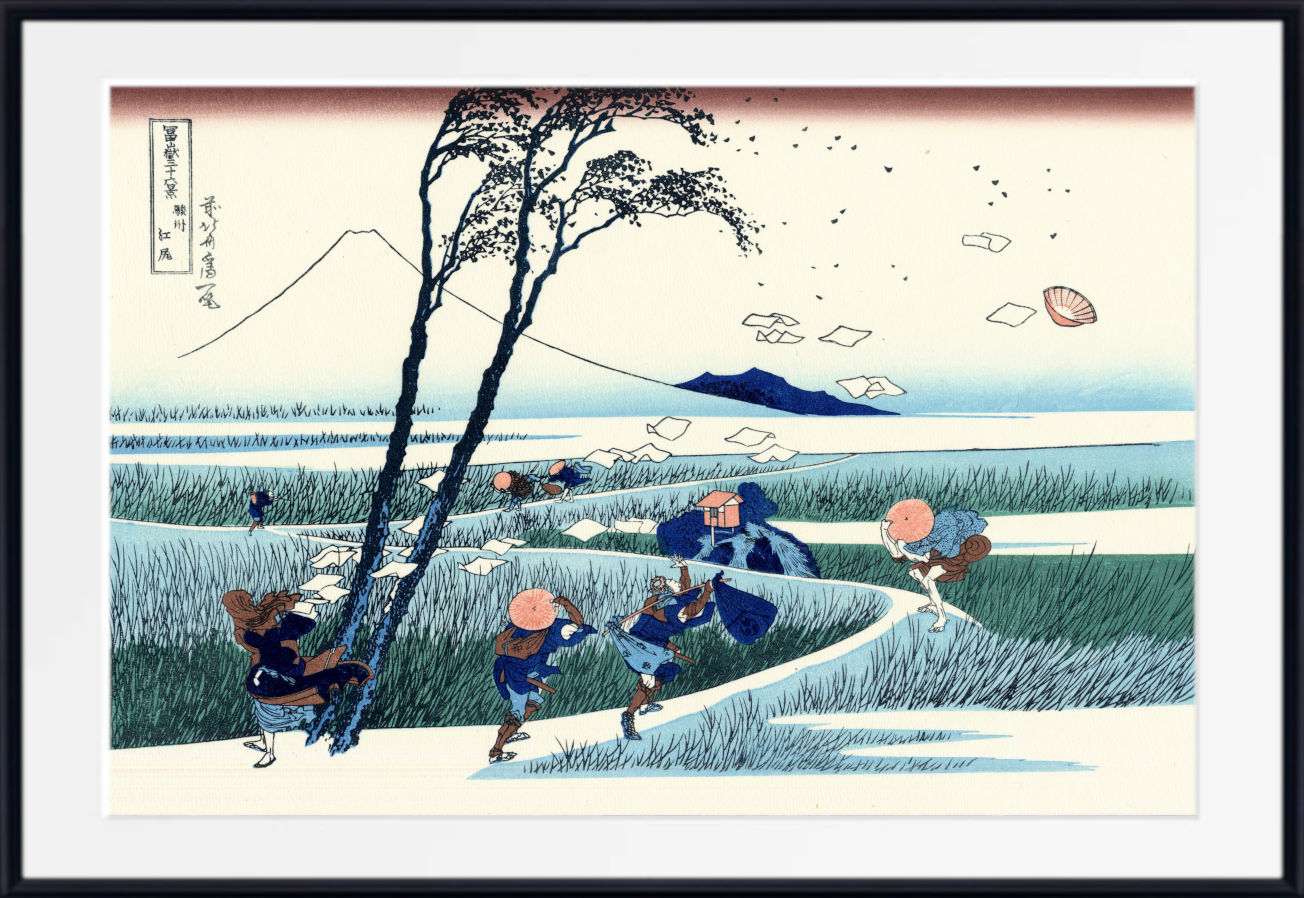
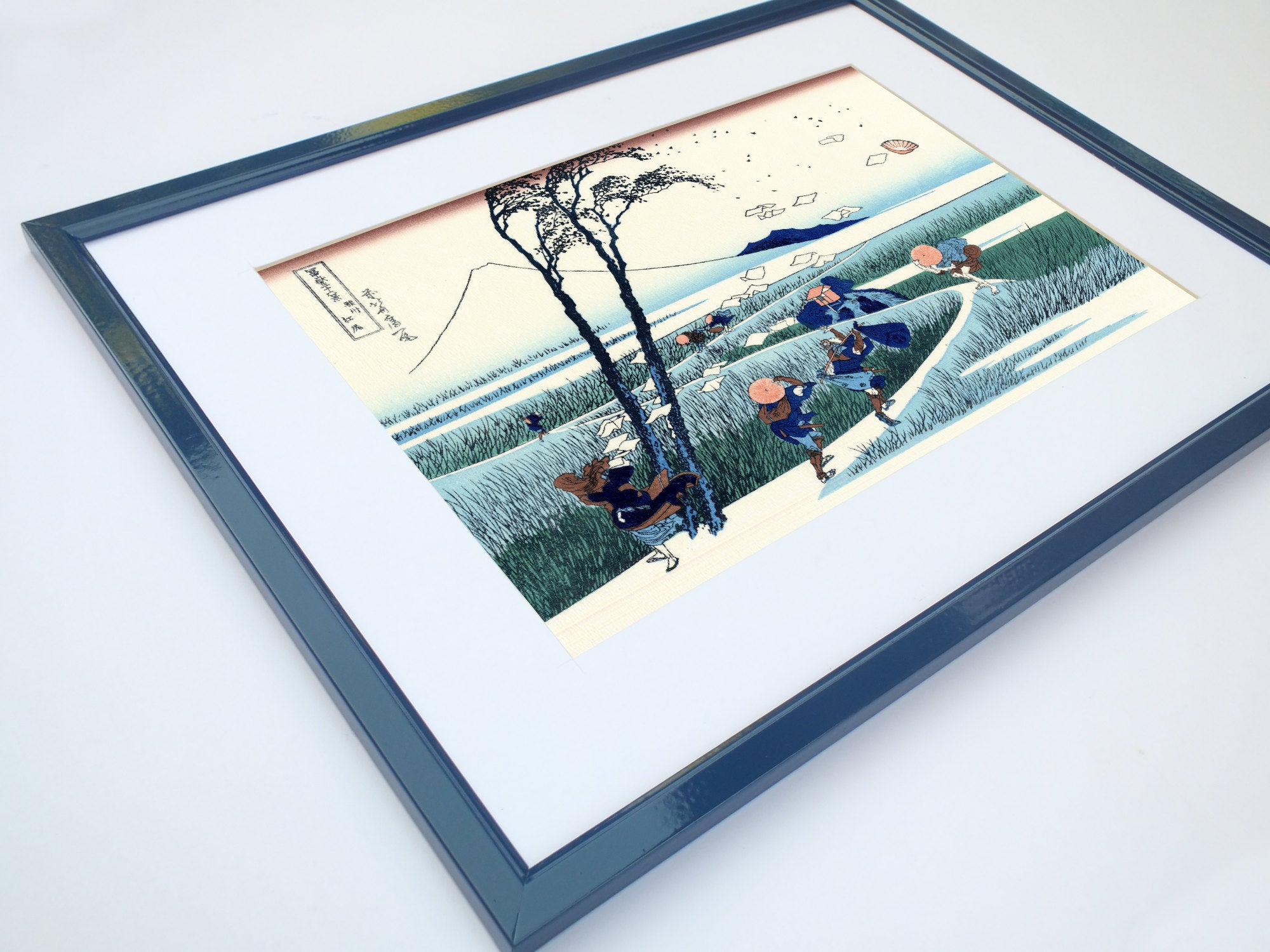
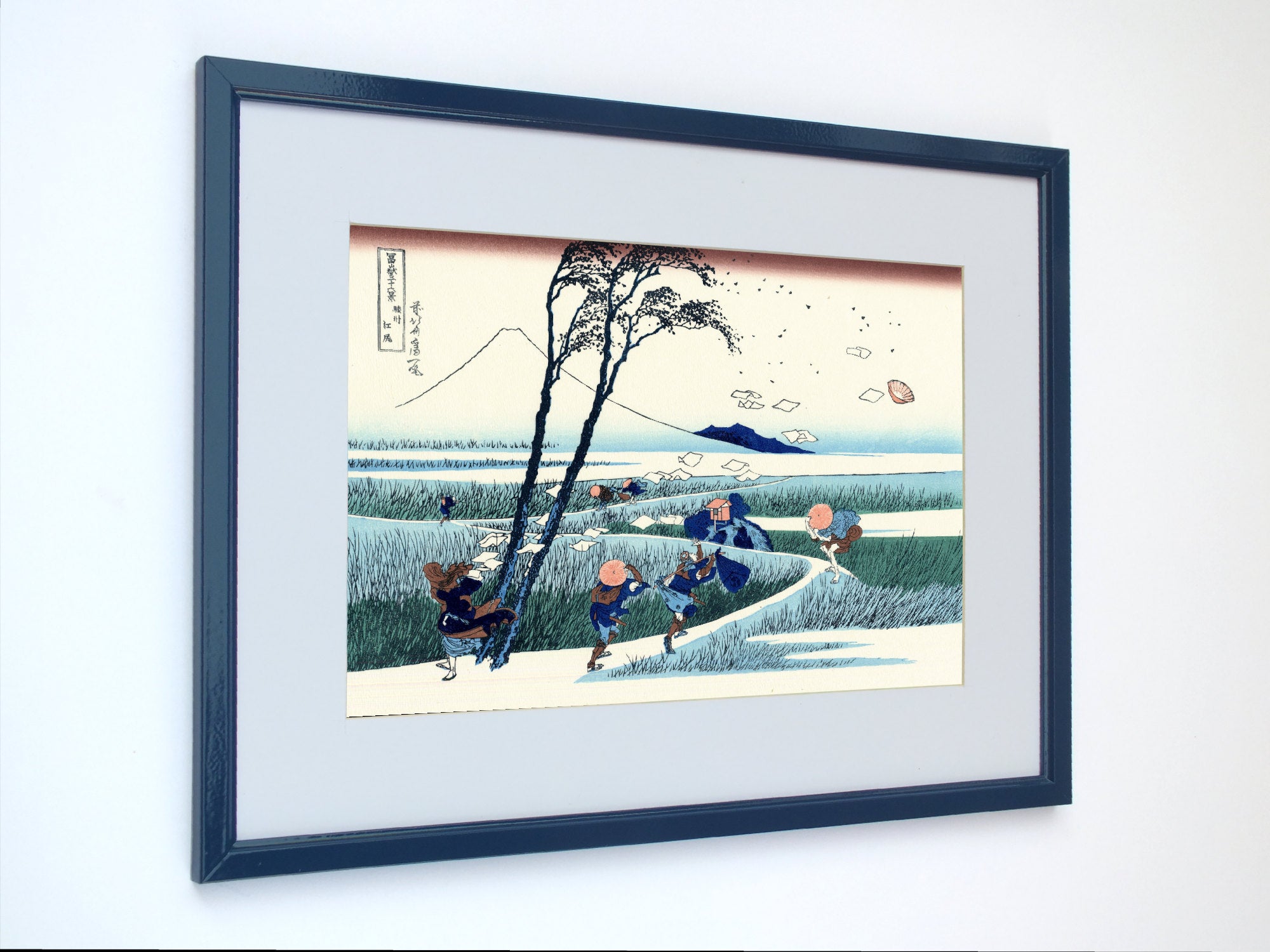
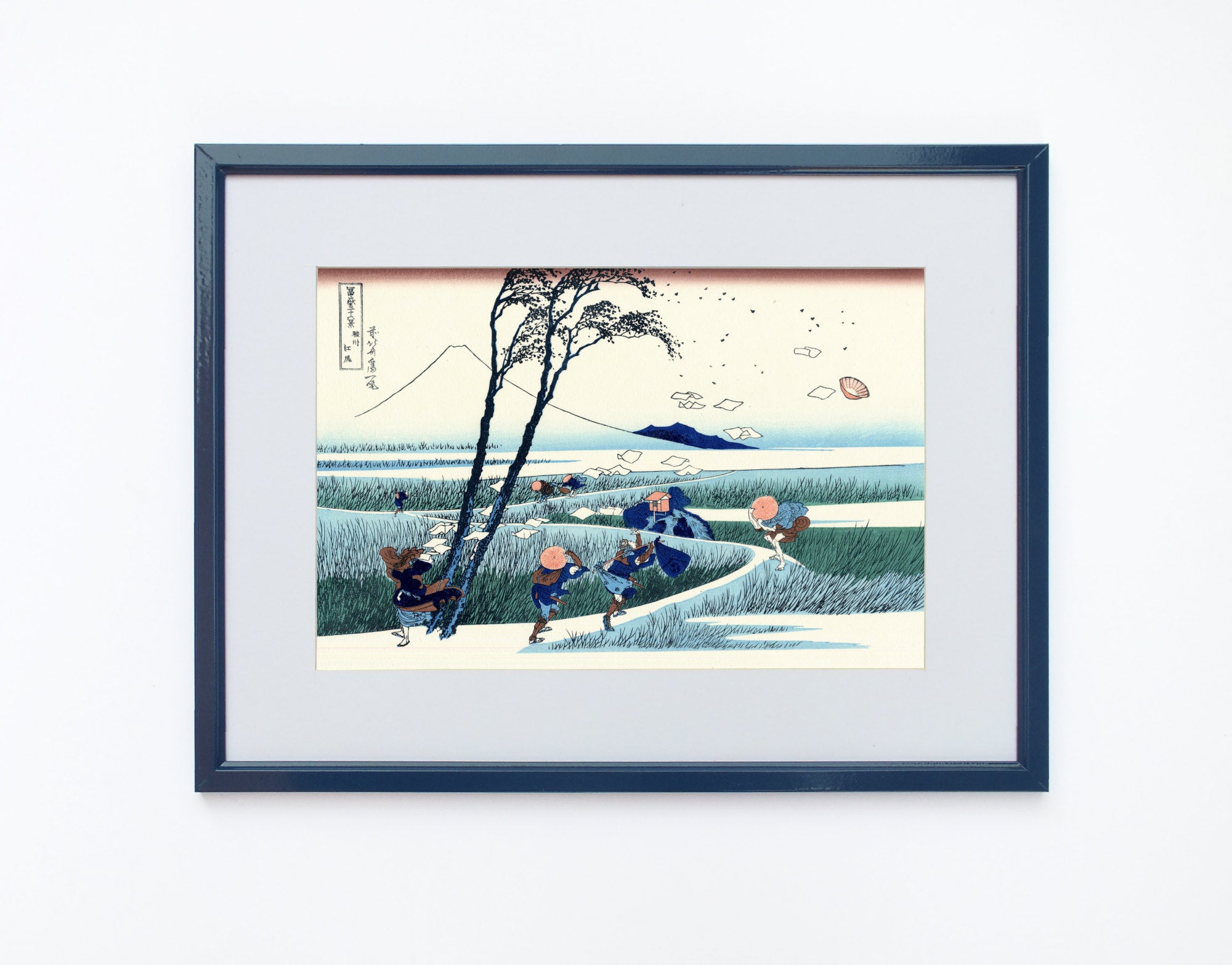
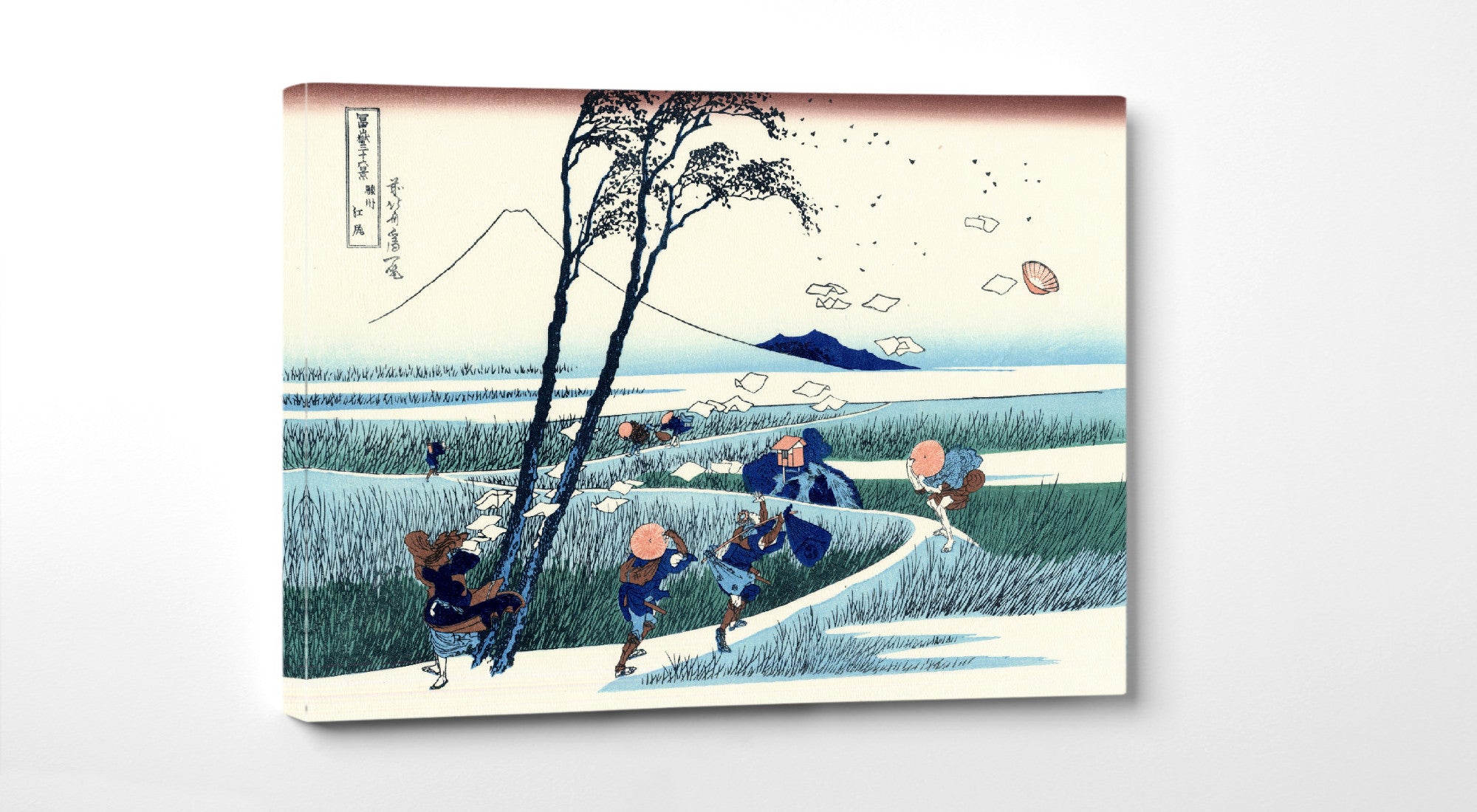
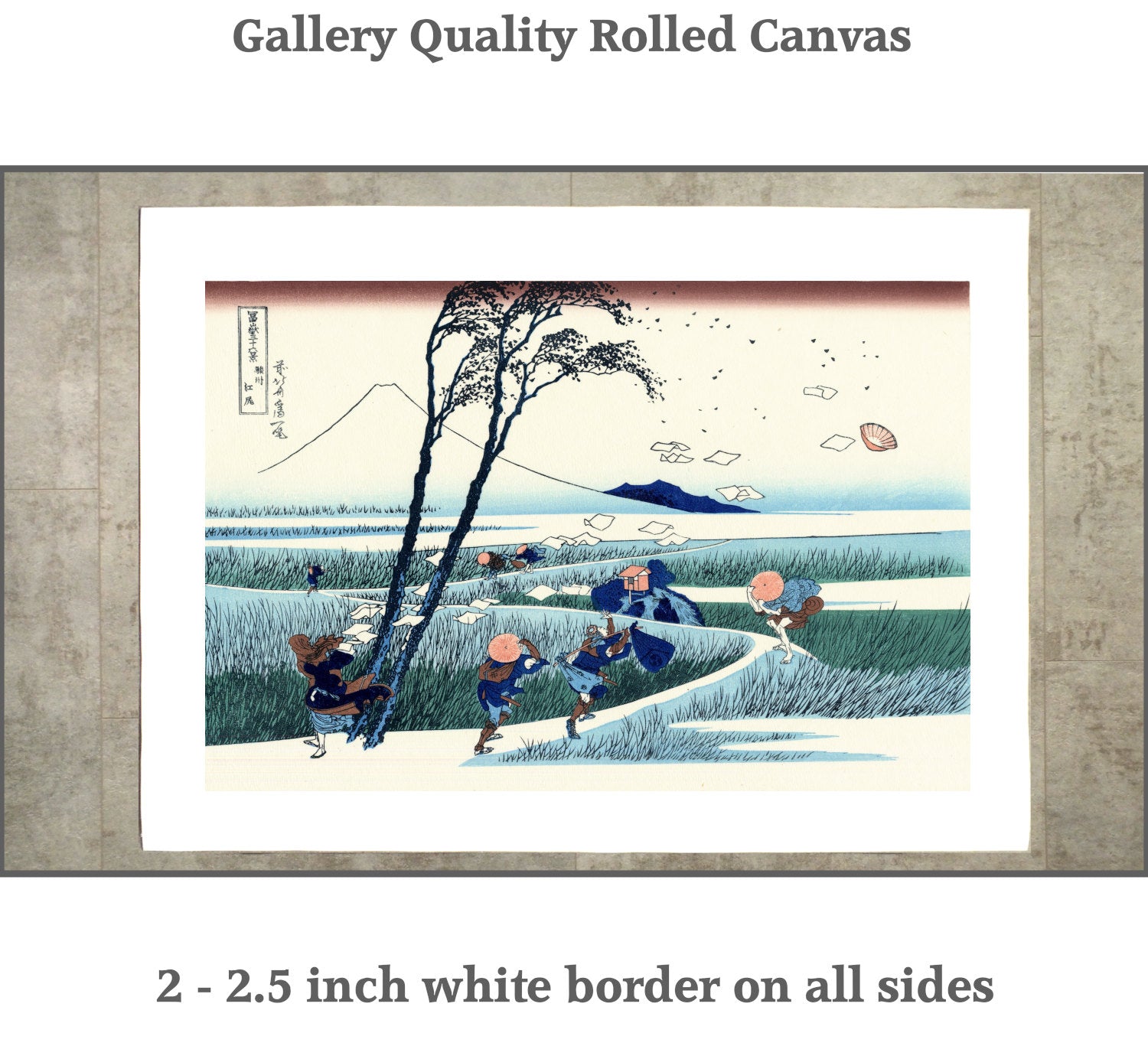
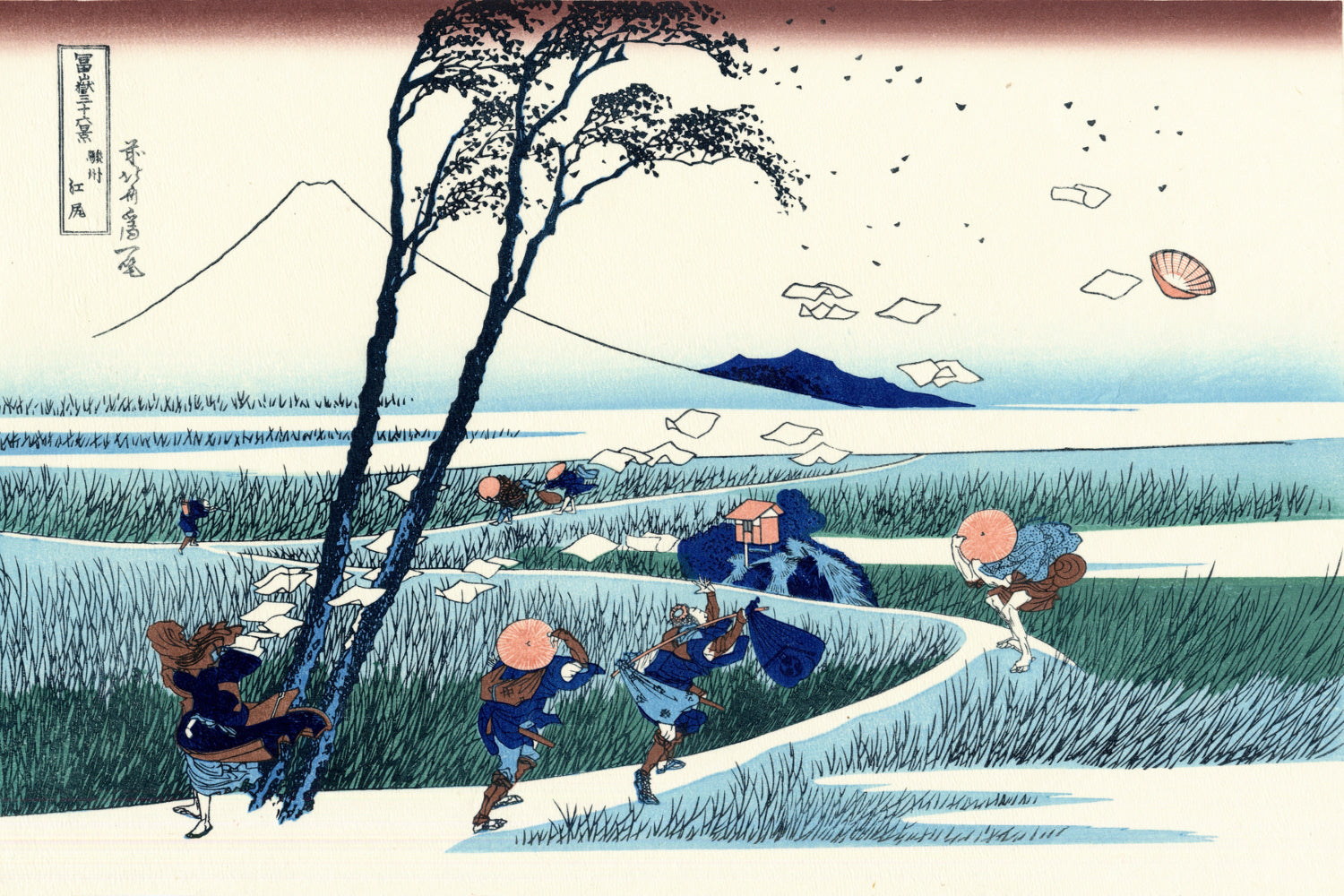
In Ejiri in Suruga Province, Fuji is quiet and distant while the foreground is overwhelmed by wind.
Travellers attempt to hold onto their hats and clothing.
Sheets of paper fly into the sky.
Trees bend beneath the force of the gust.
The wind itself is invisible, yet every element in the print reveals its direction and strength.
It is one of Hokusai's finest demonstrations of his ability to represent movement through still images.
The distant mountain provides the perfect contrast.
People and loose objects are thrown into confusion while Fuji remains unchanged on the horizon.
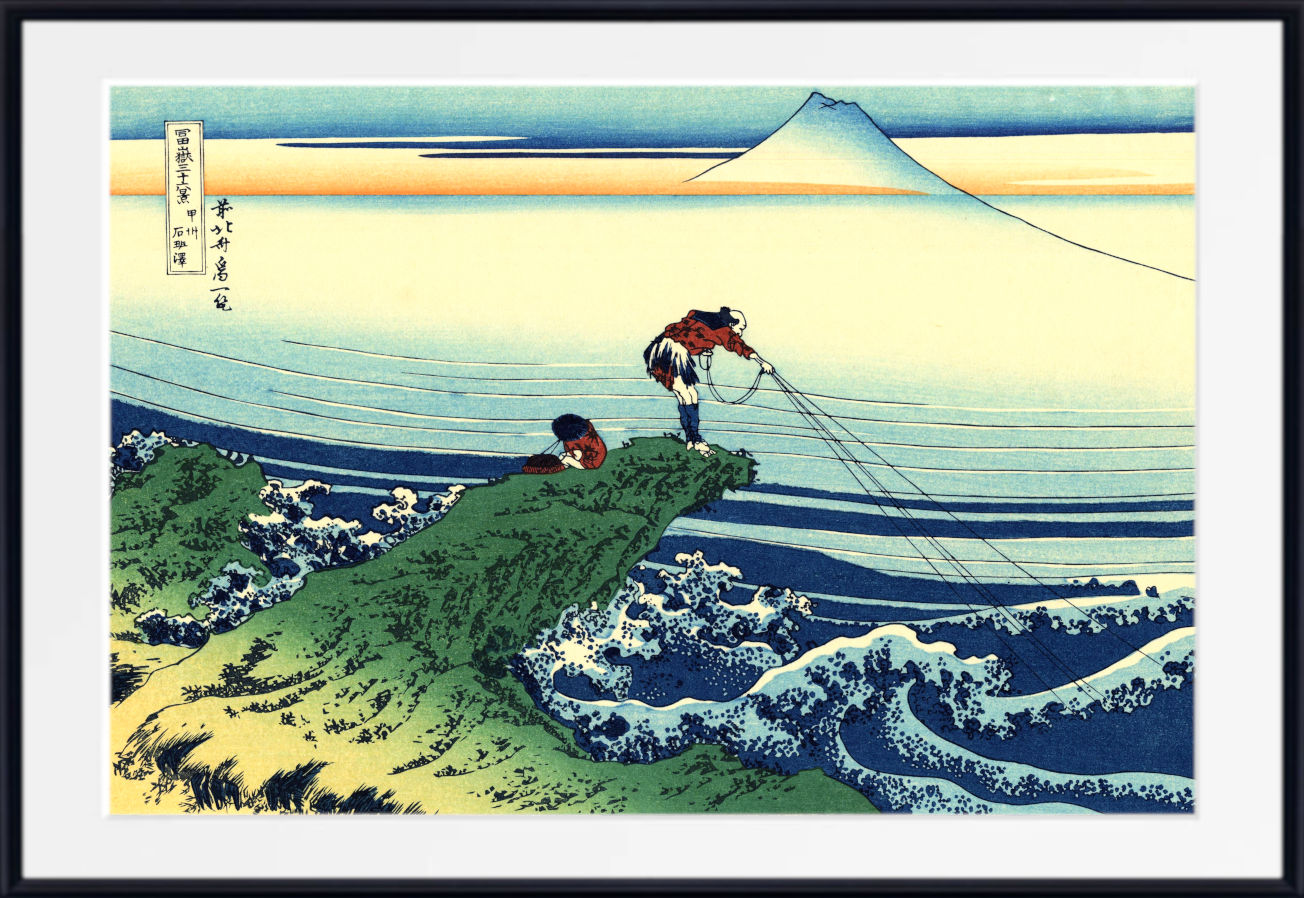
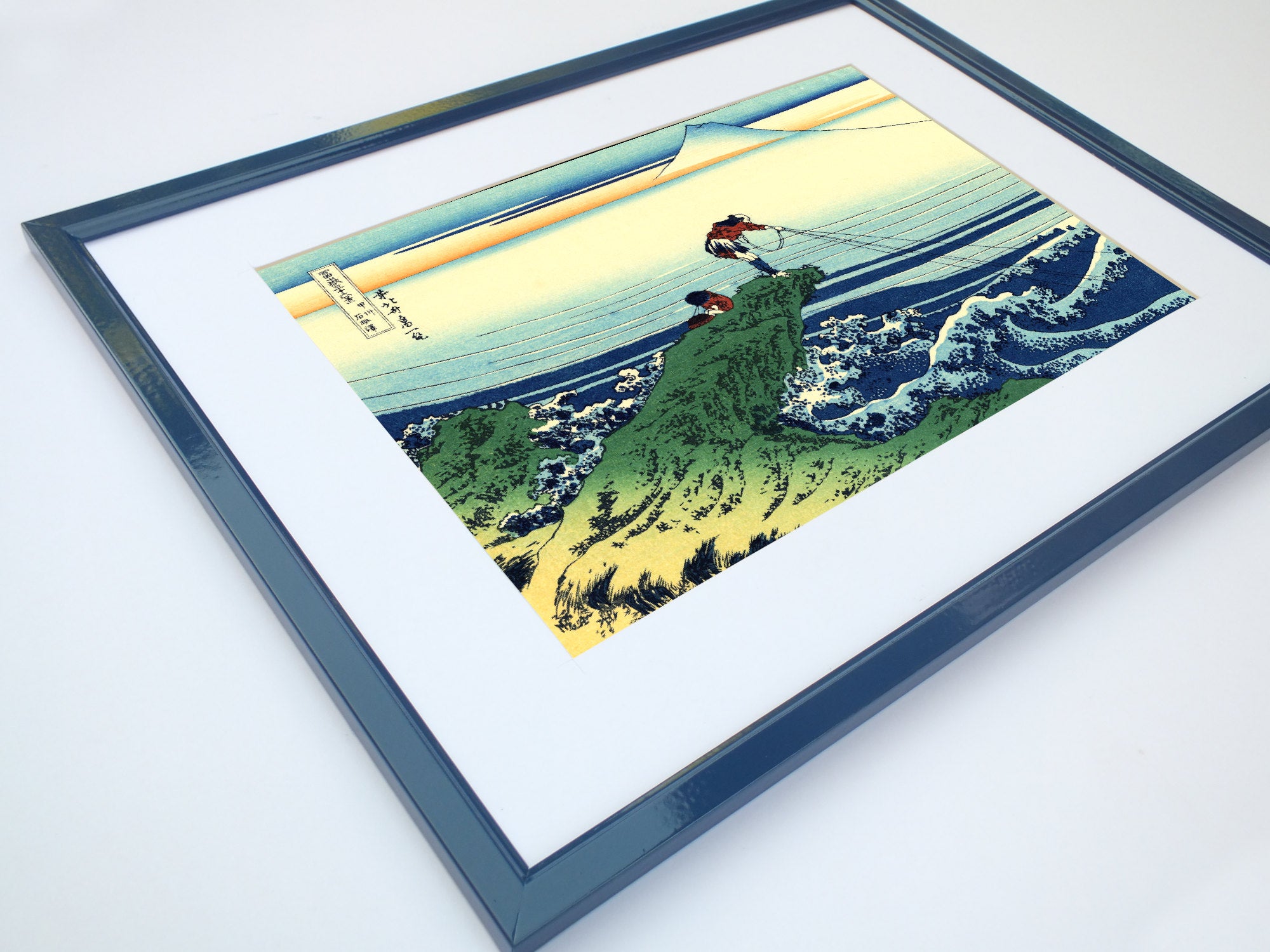
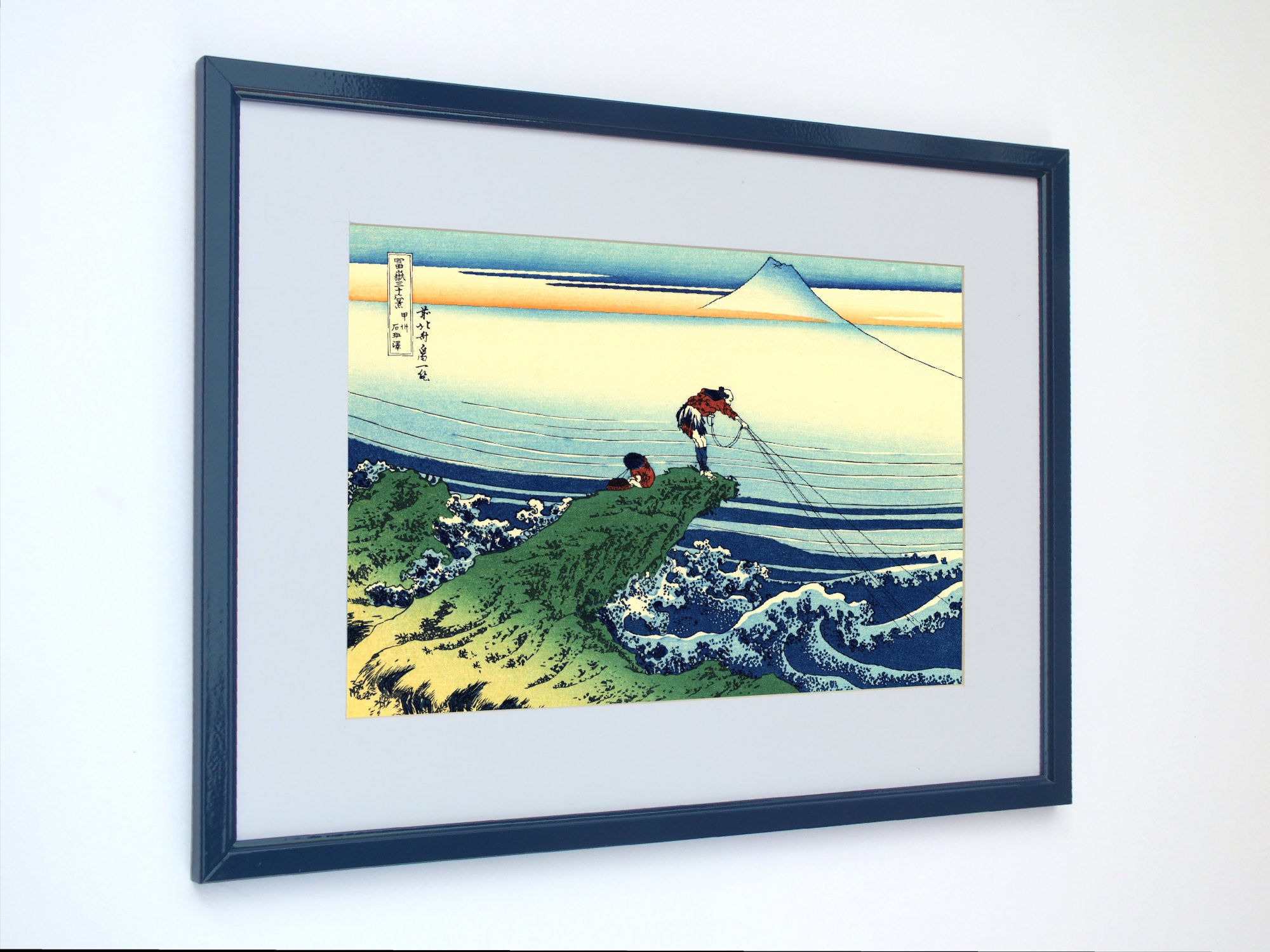
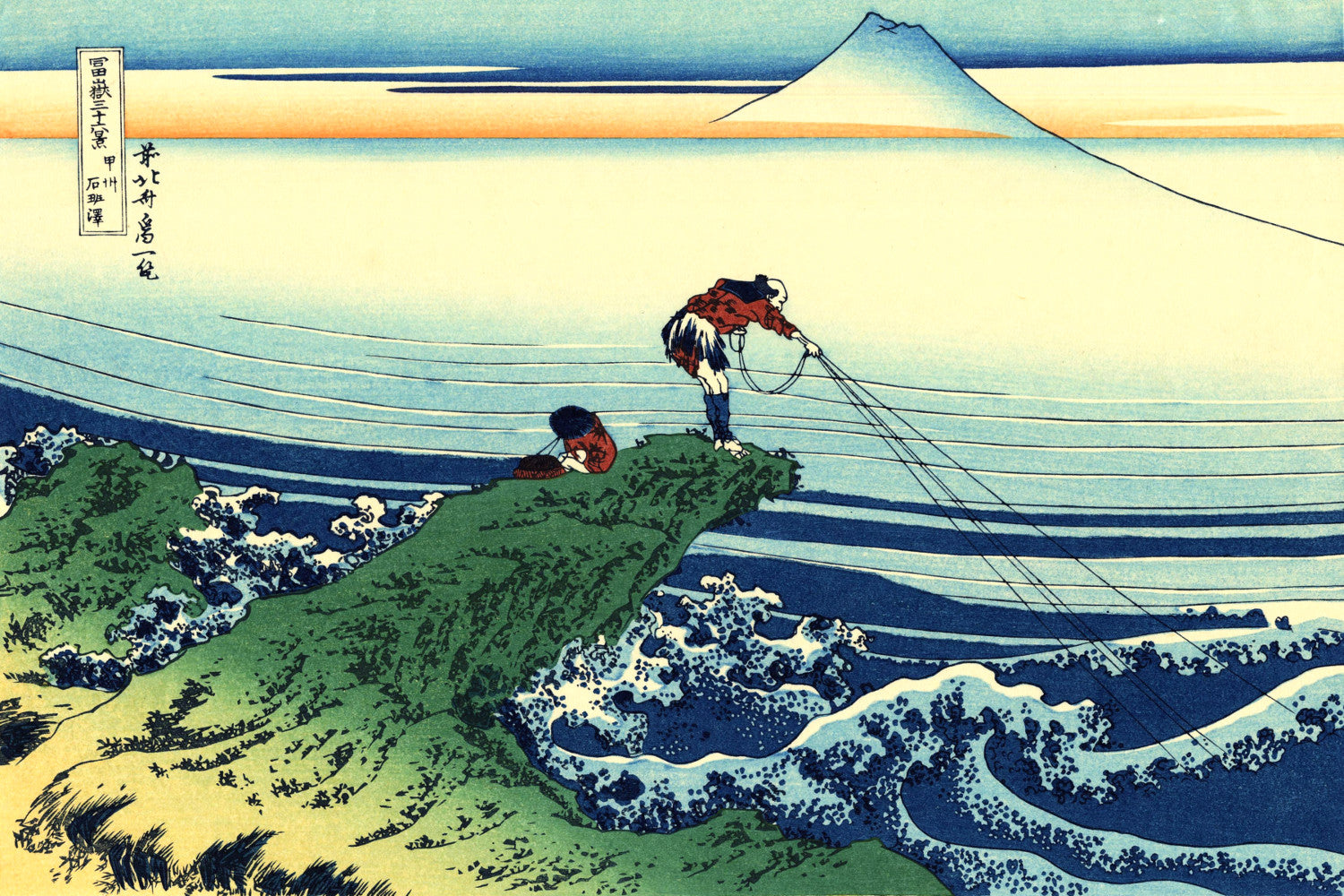
Kajikazawa in Kai Province
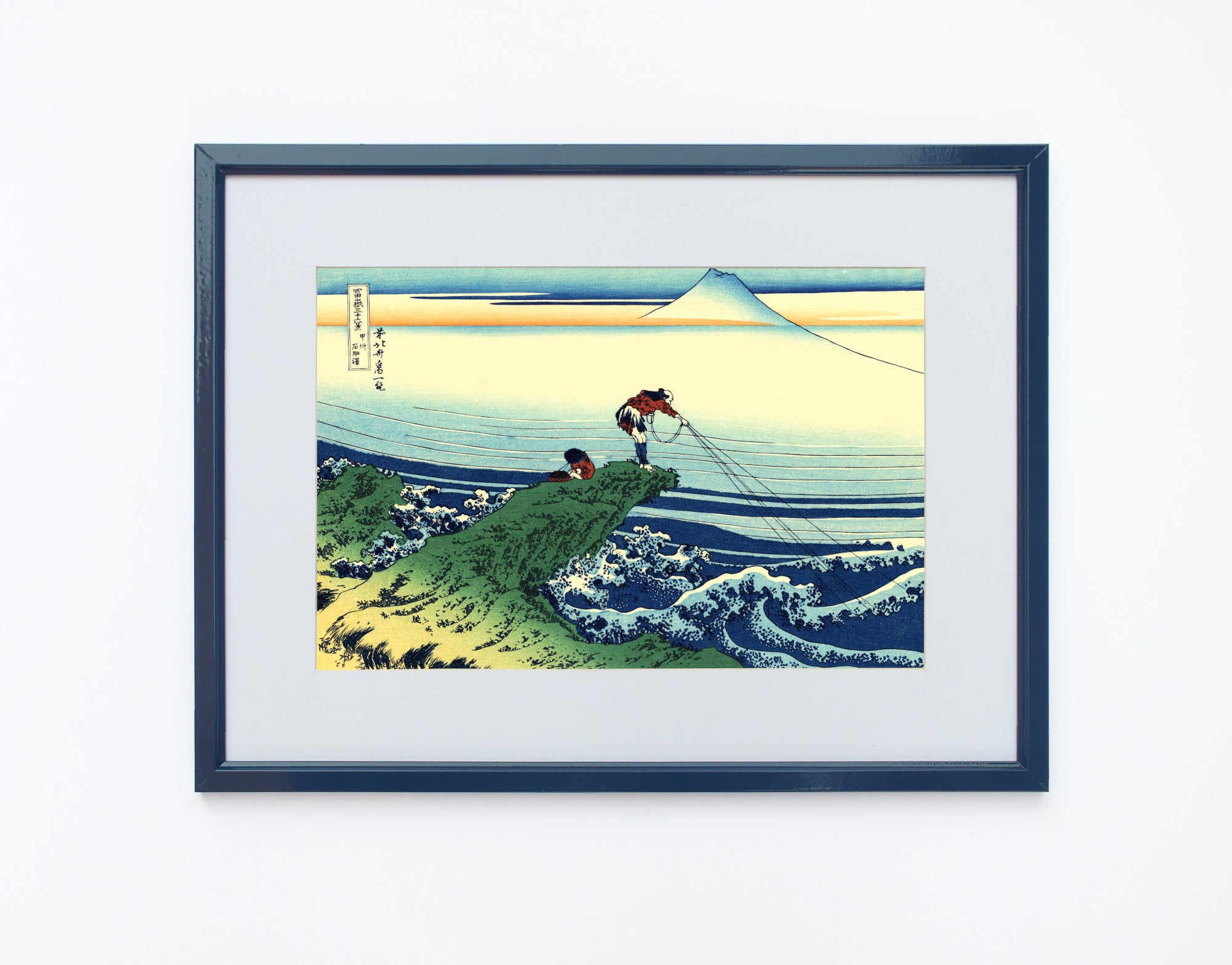
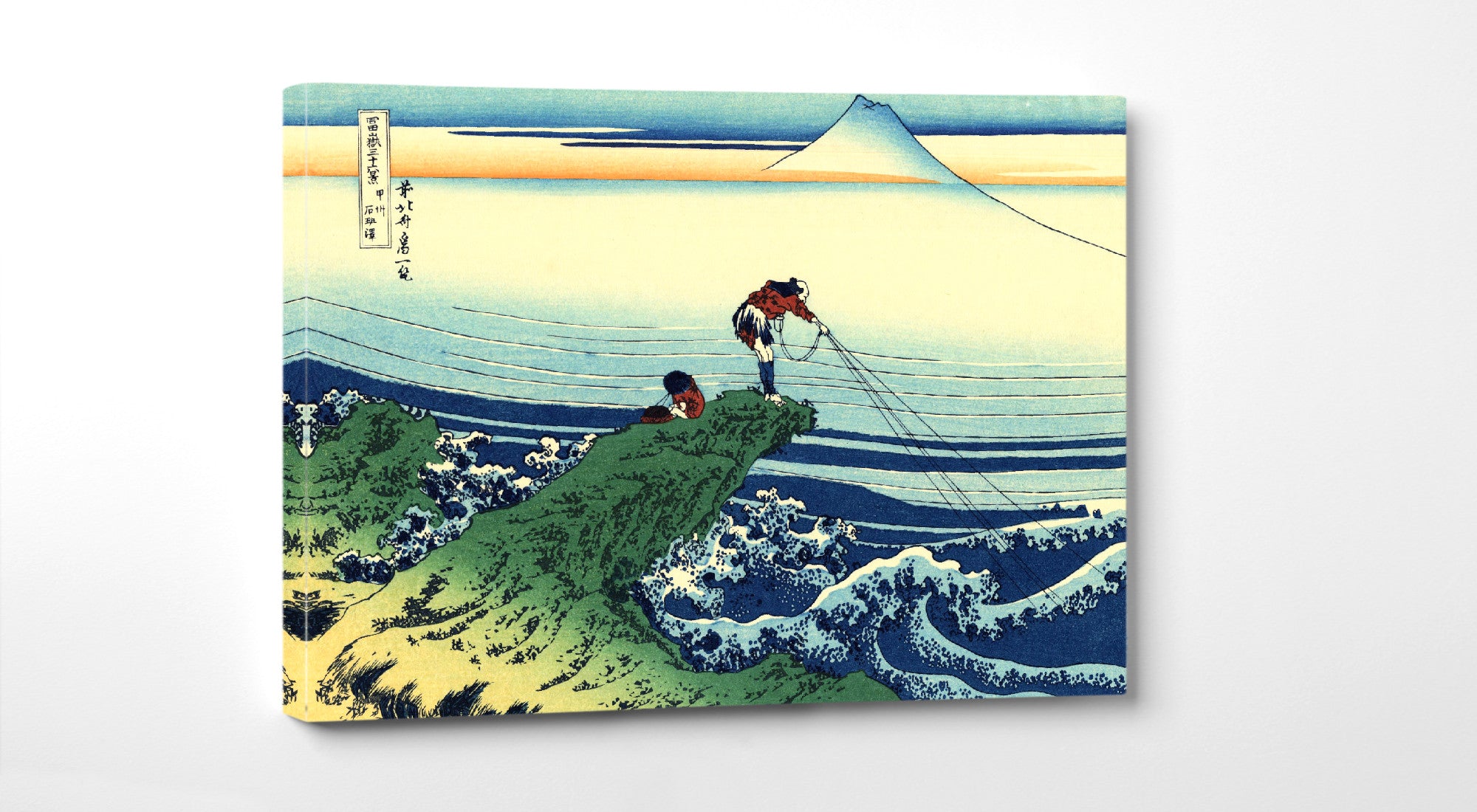
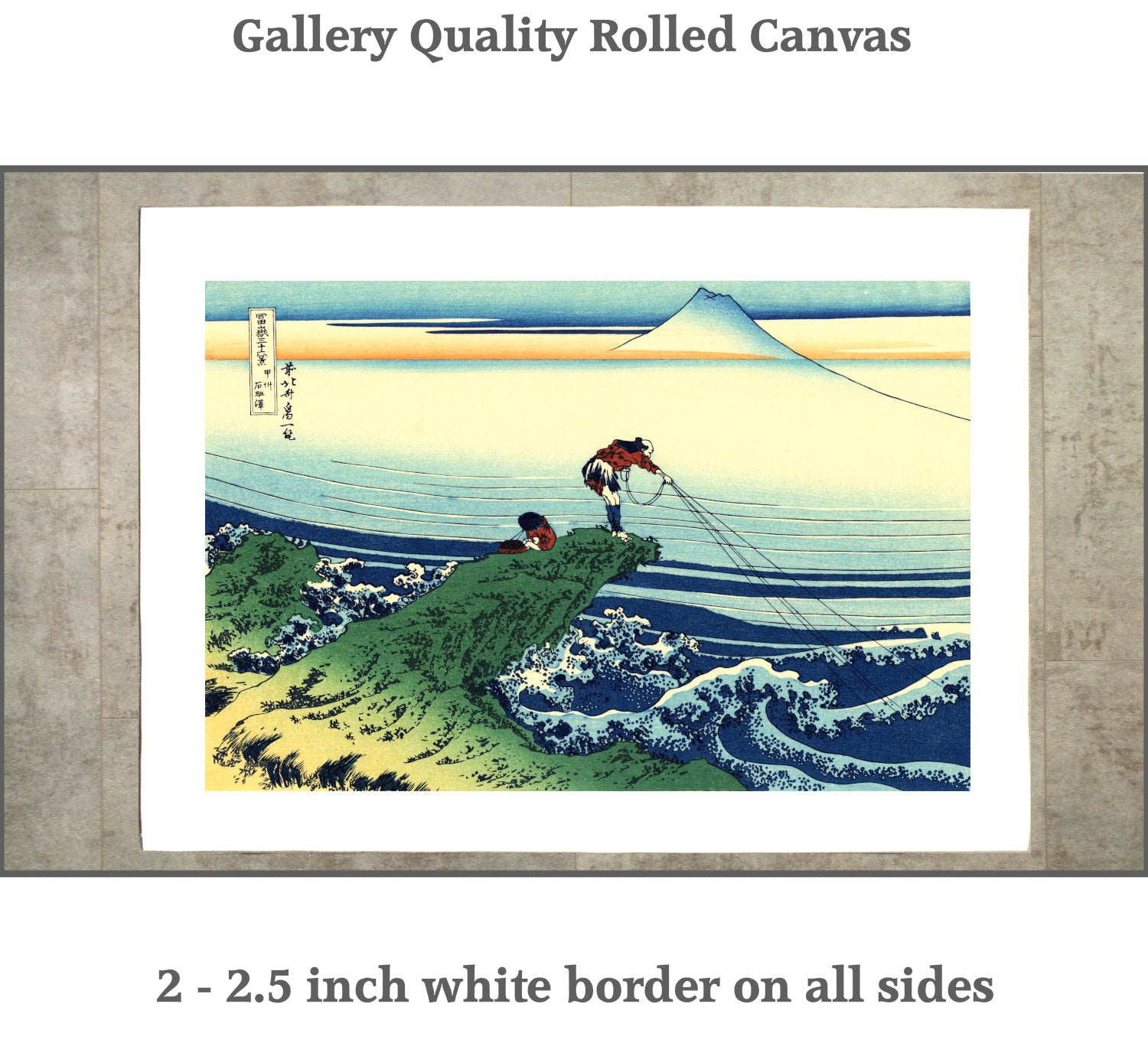
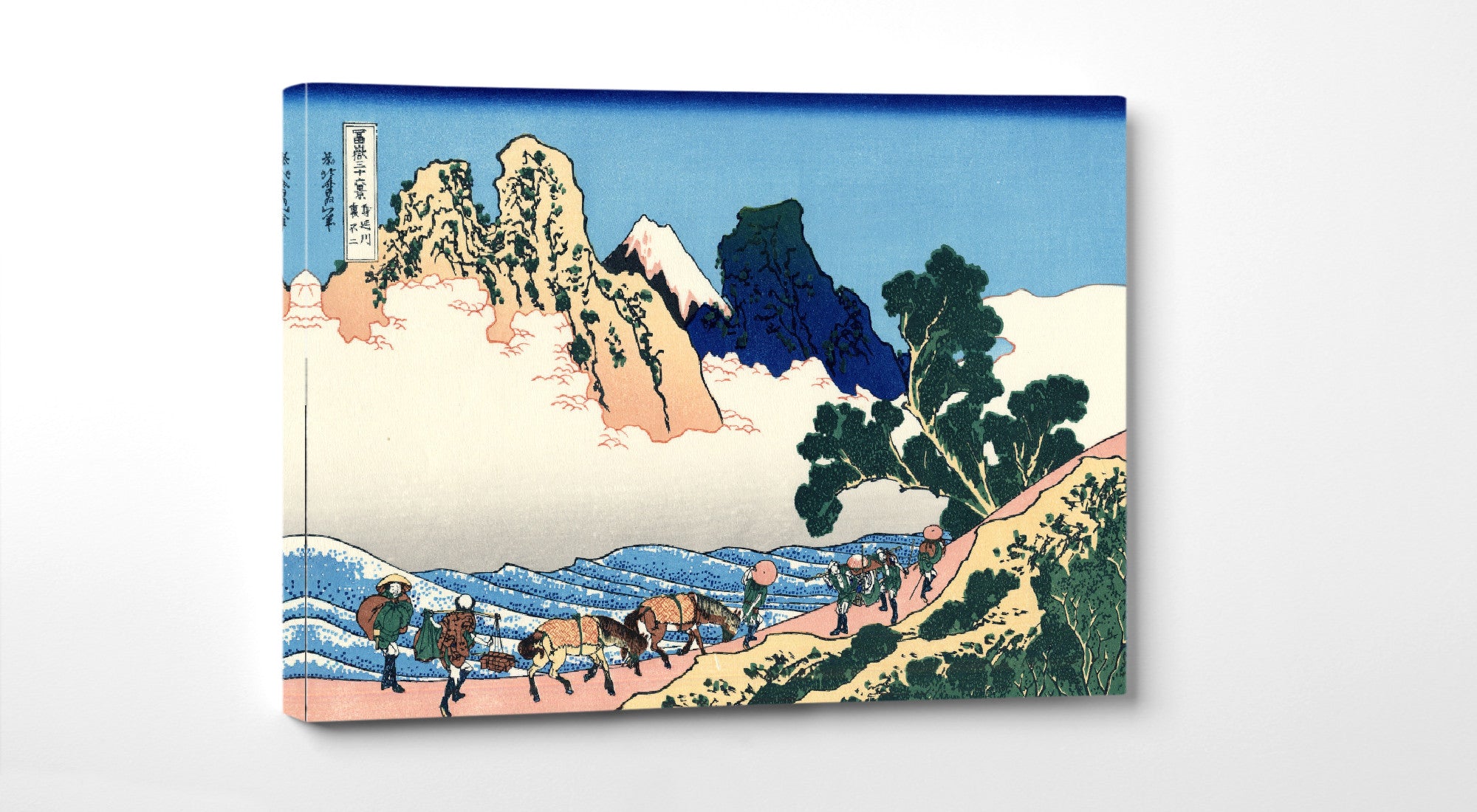
Kajikazawa in Kai Province is another ingenious interpretation of Fuji's triangular form.
A fisherman leans over turbulent water while his fishing lines create a strong diagonal structure.
The shape formed by the fisherman, rock and lines visually echoes Mount Fuji beyond him.
This repetition binds foreground and background together.
Rather than simply placing a famous mountain behind a picturesque activity, Hokusai constructs the entire composition around relationships of shape.
The result demonstrates how carefully designed many of the apparently spontaneous Thirty-Six Views actually are.
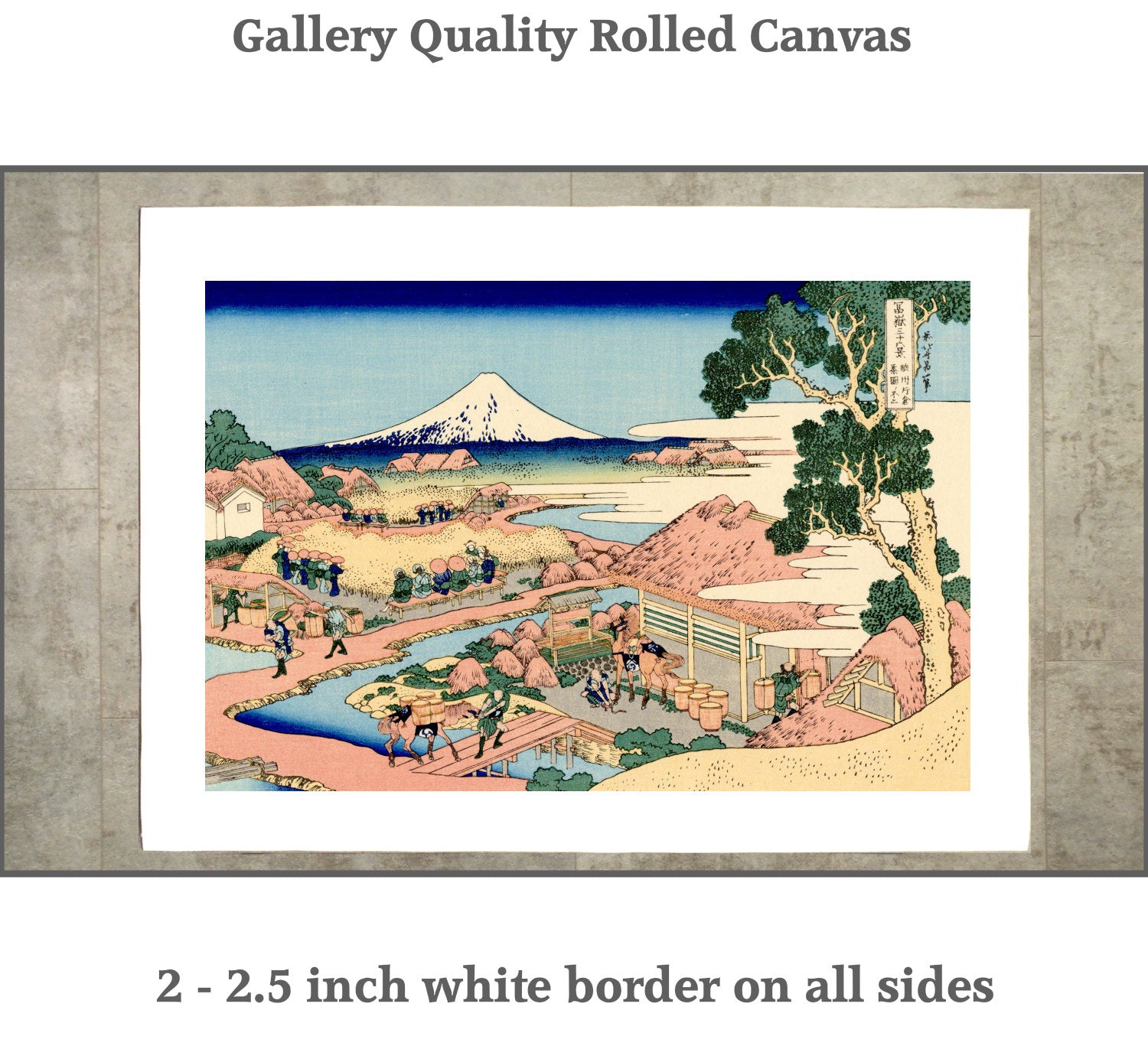
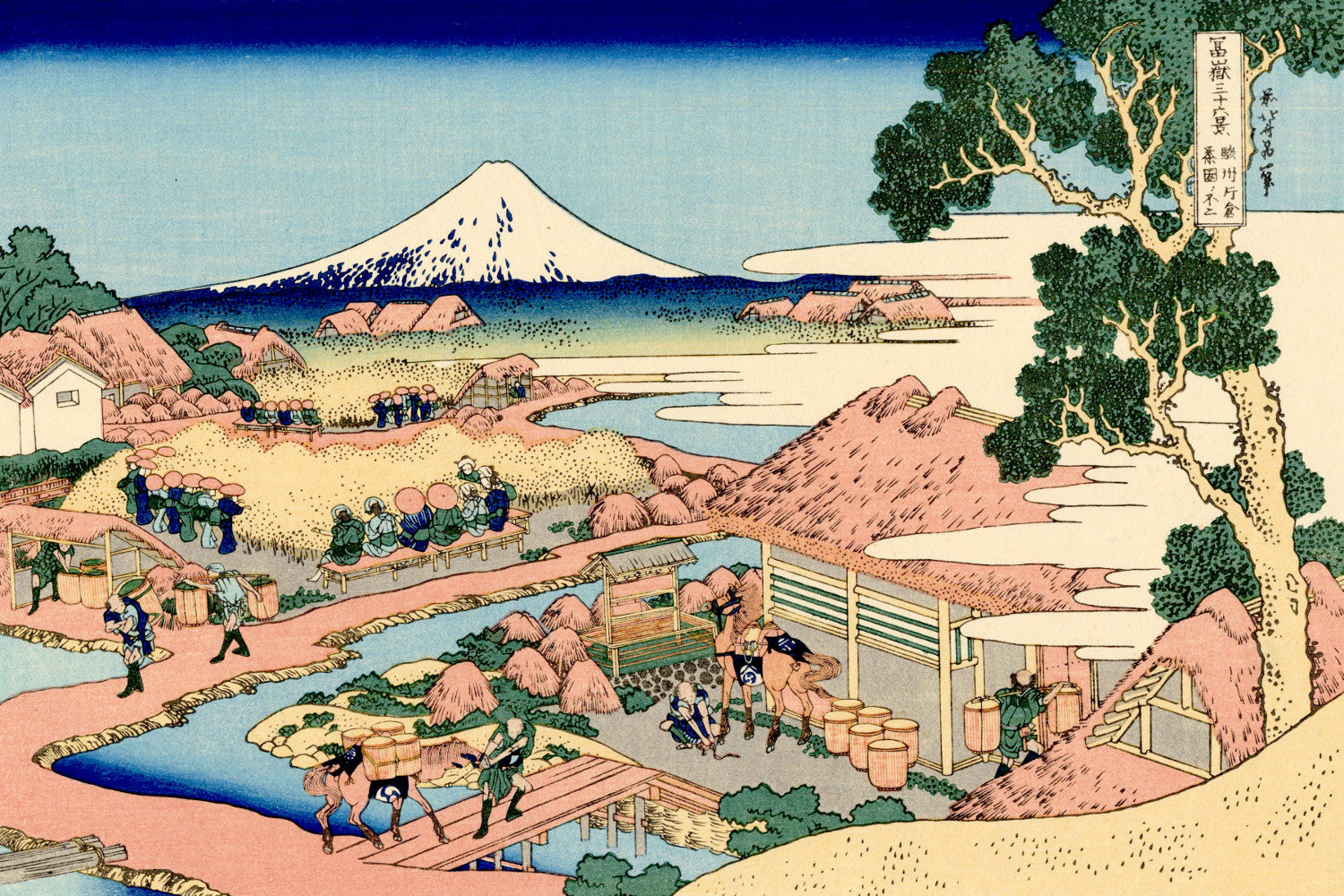
Workers, Travellers and Everyday Edo Japan
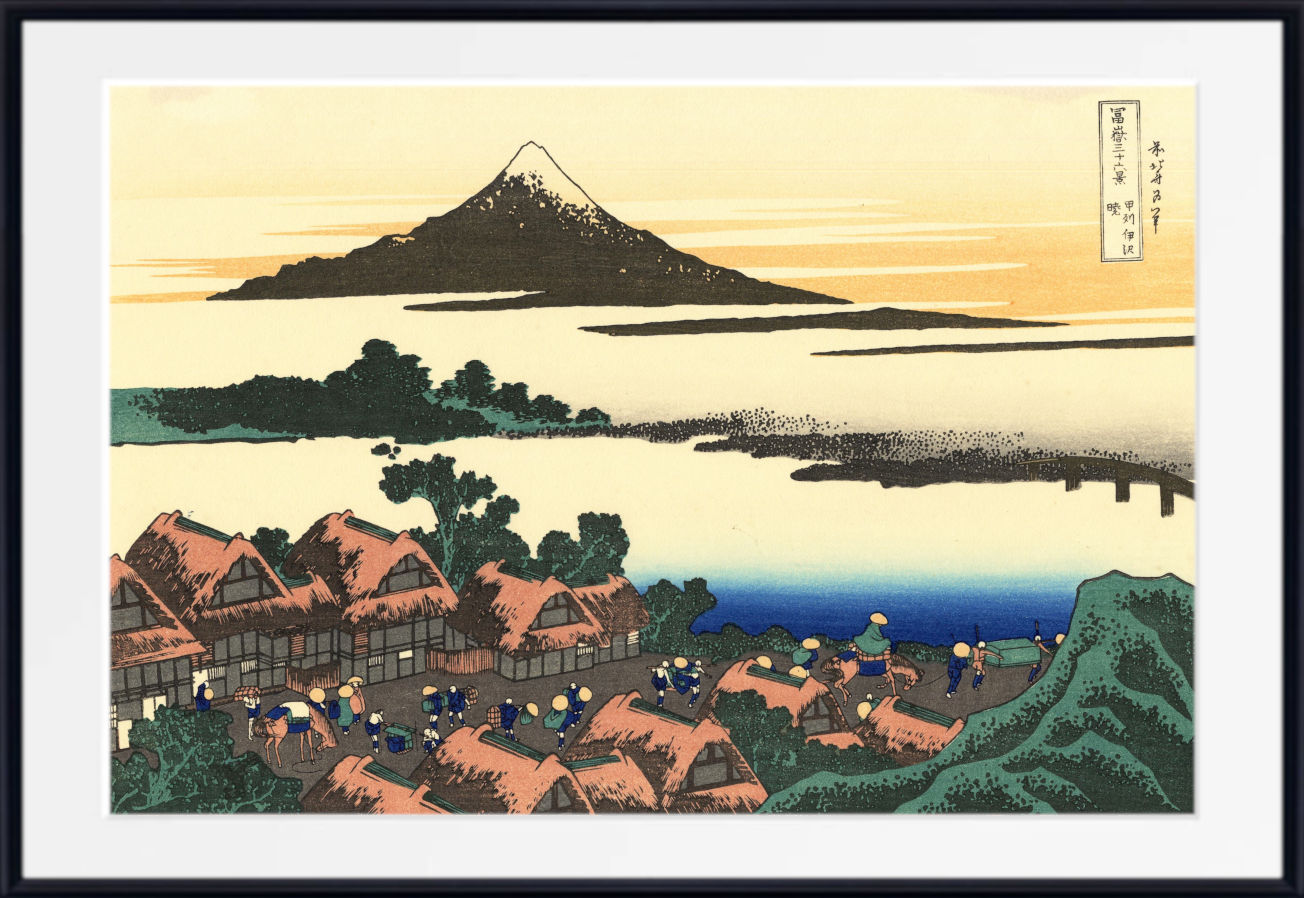
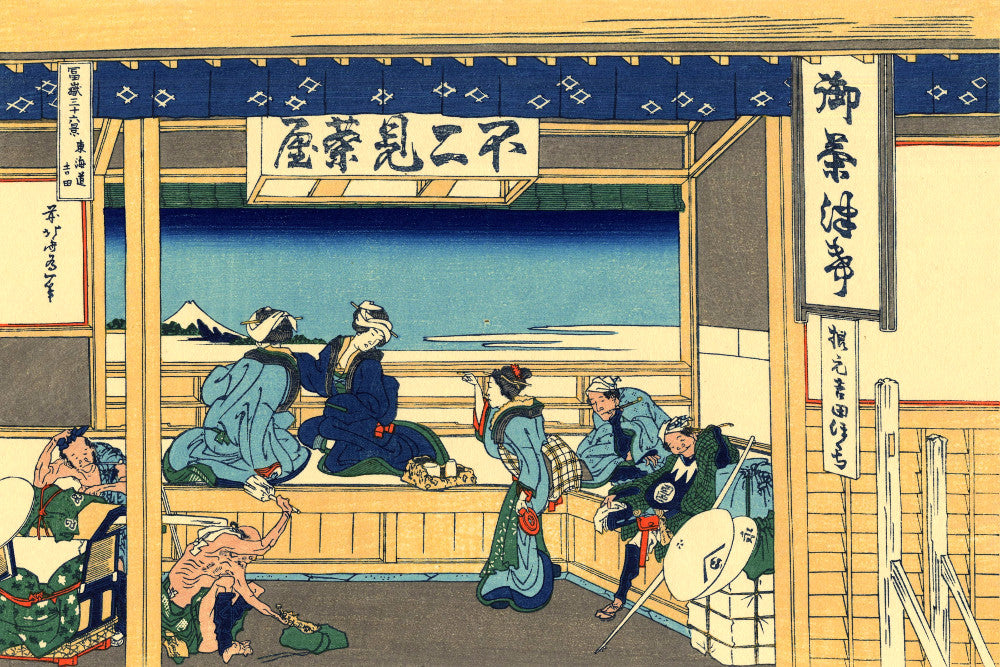
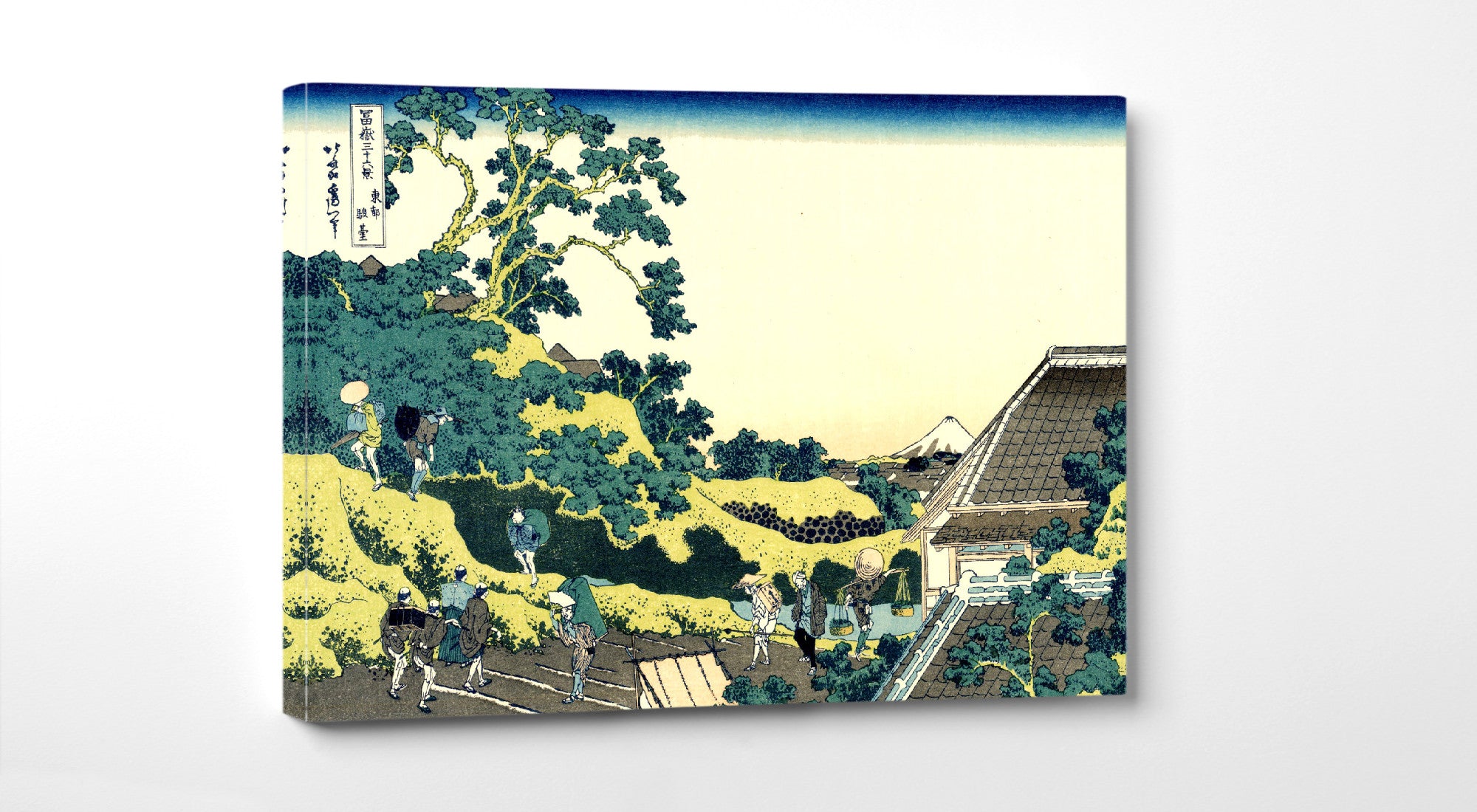
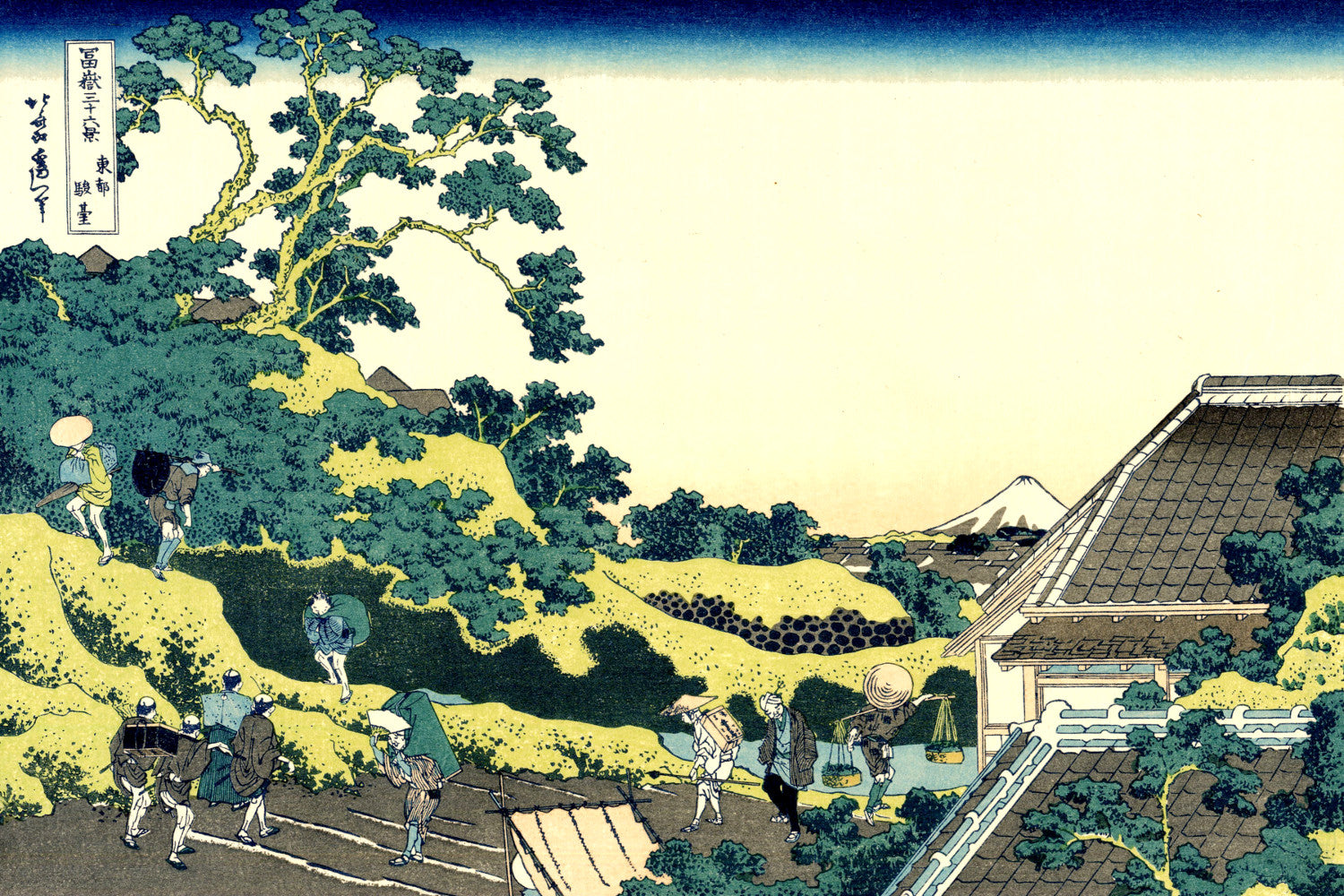
One of the great pleasures of the series is its attention to everyday life.
Mount Fuji may provide the unifying subject, but much of the foreground action belongs to ordinary people.
Farmers work.
Fishermen cast lines.
Travellers follow roads.
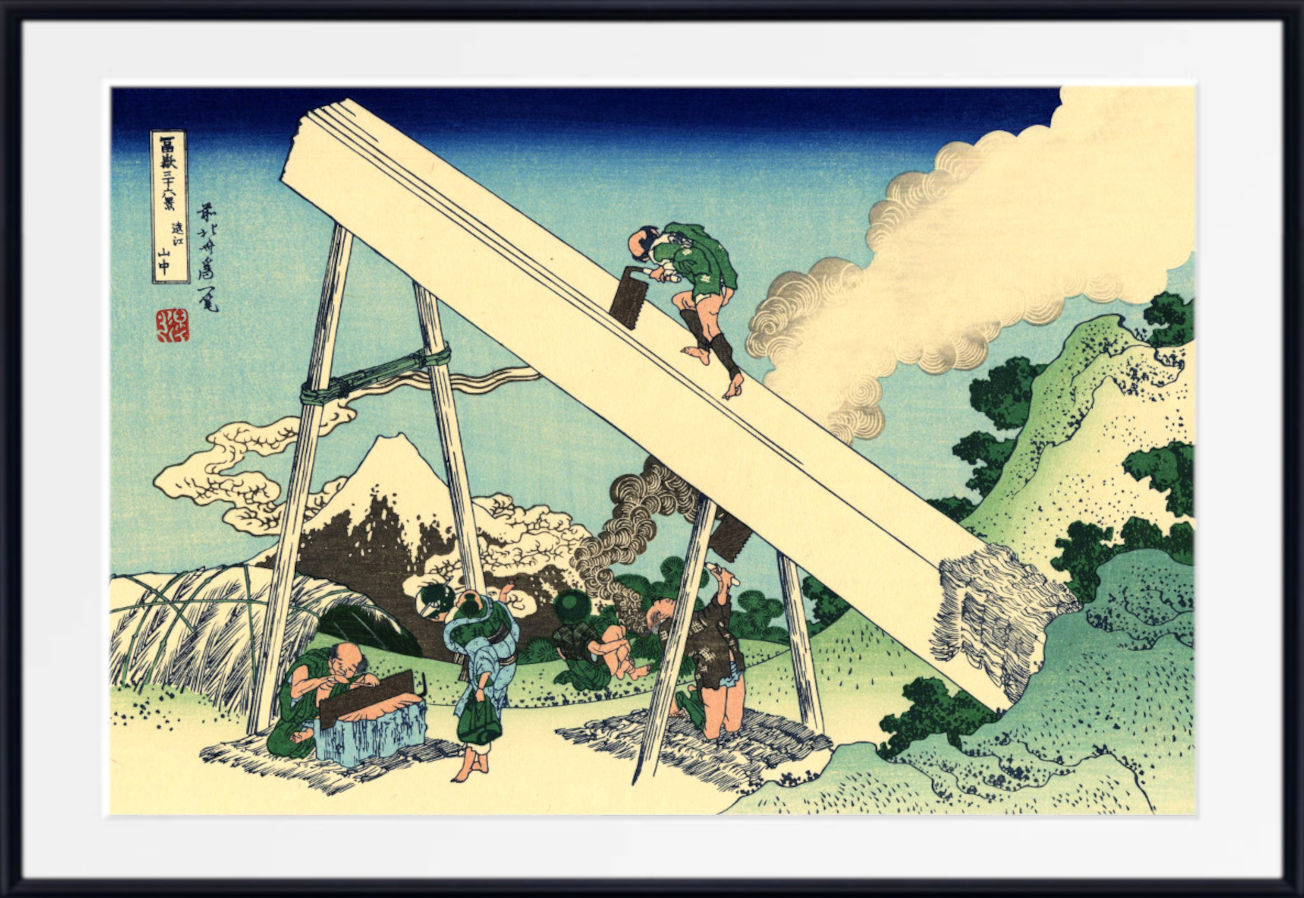
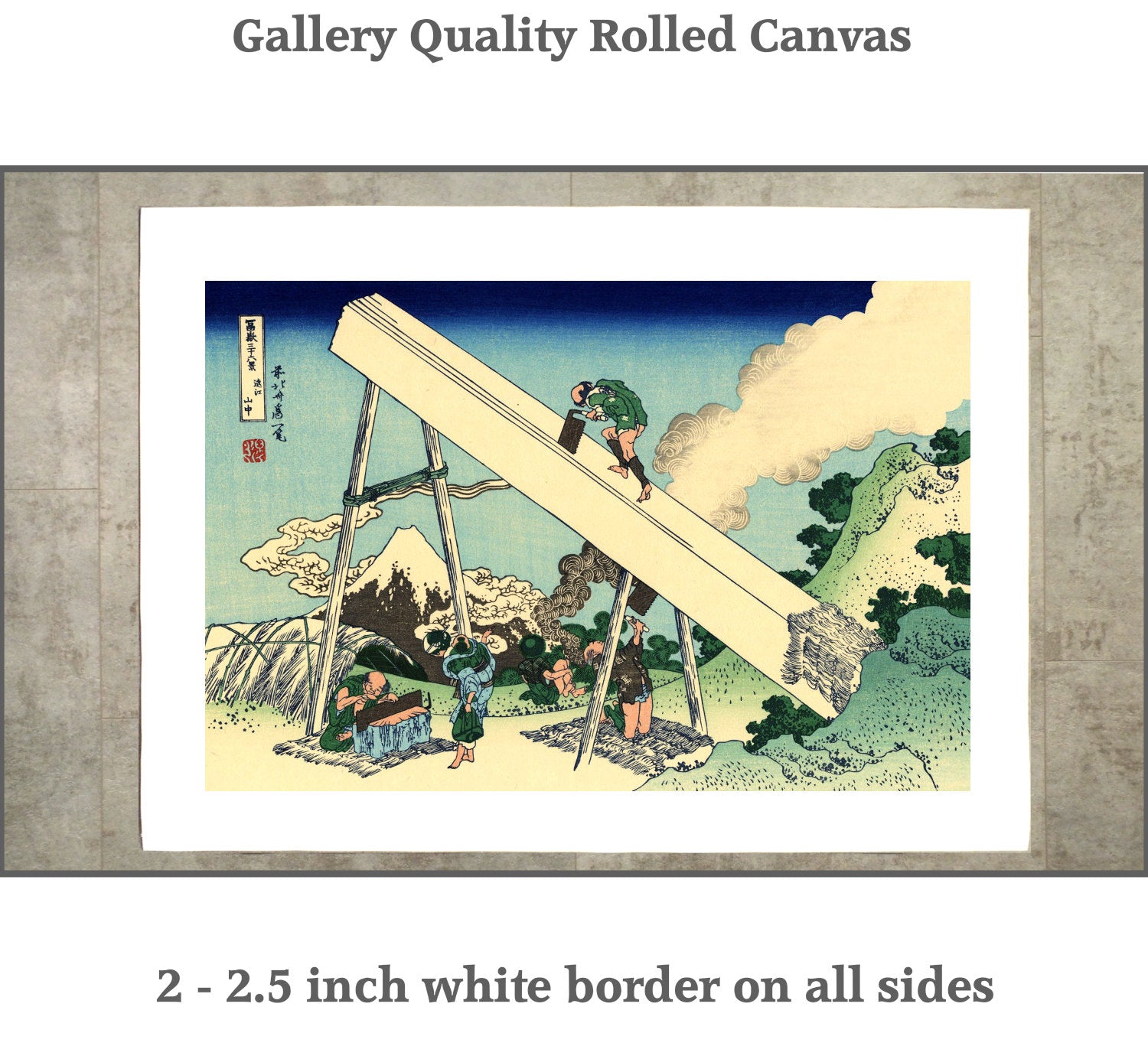
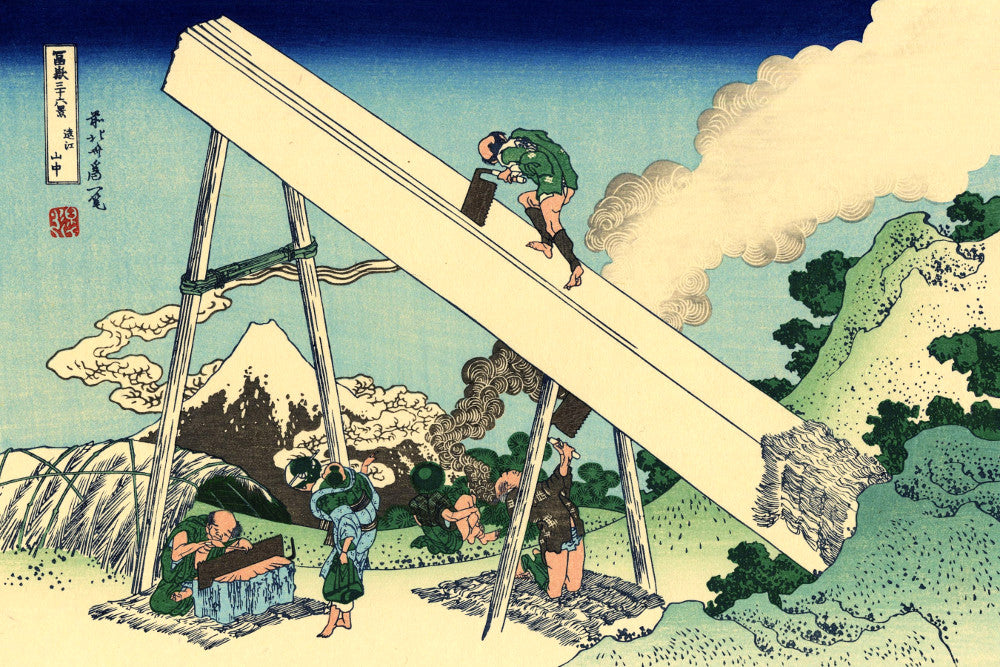
Craftsmen build barrels.
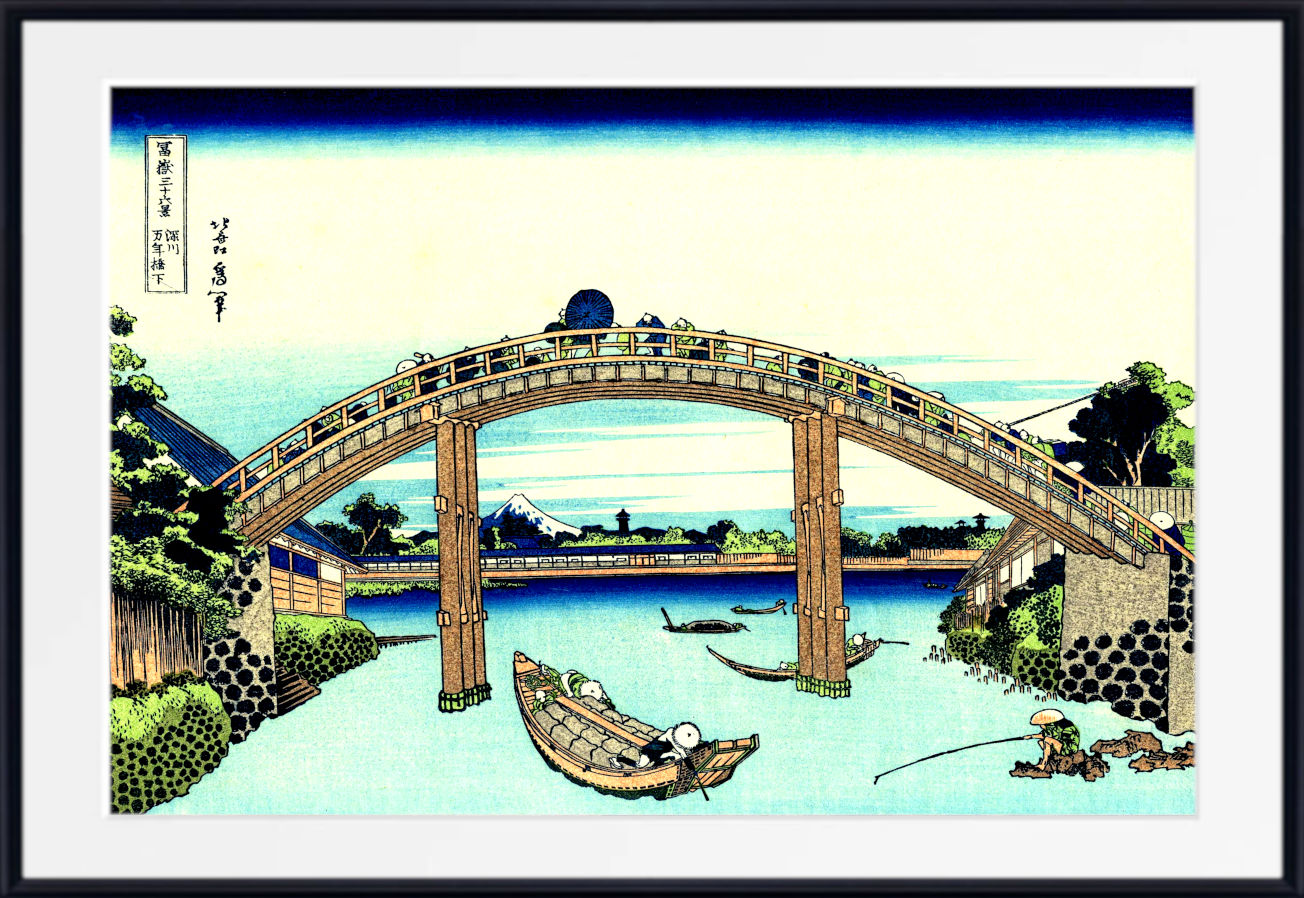
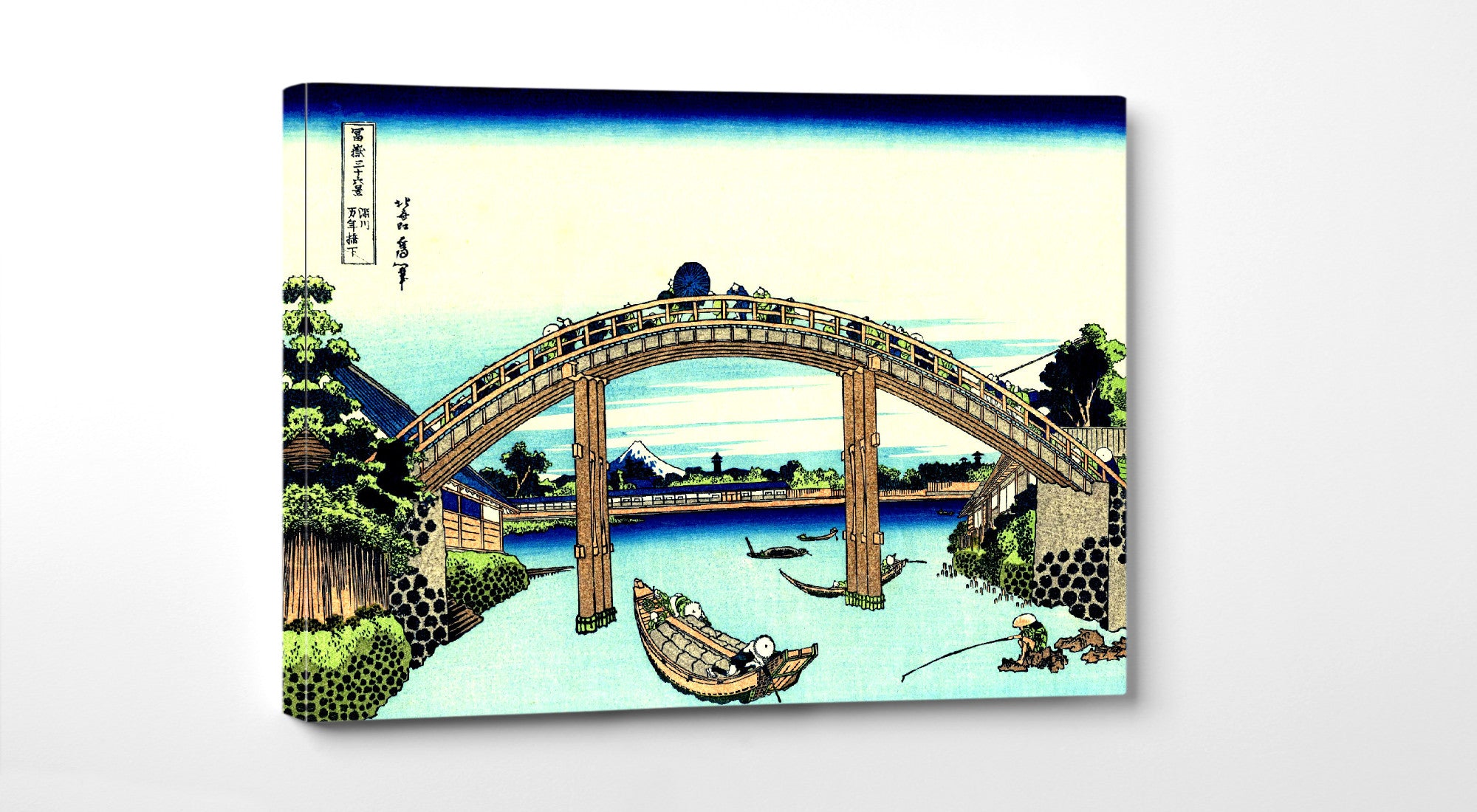
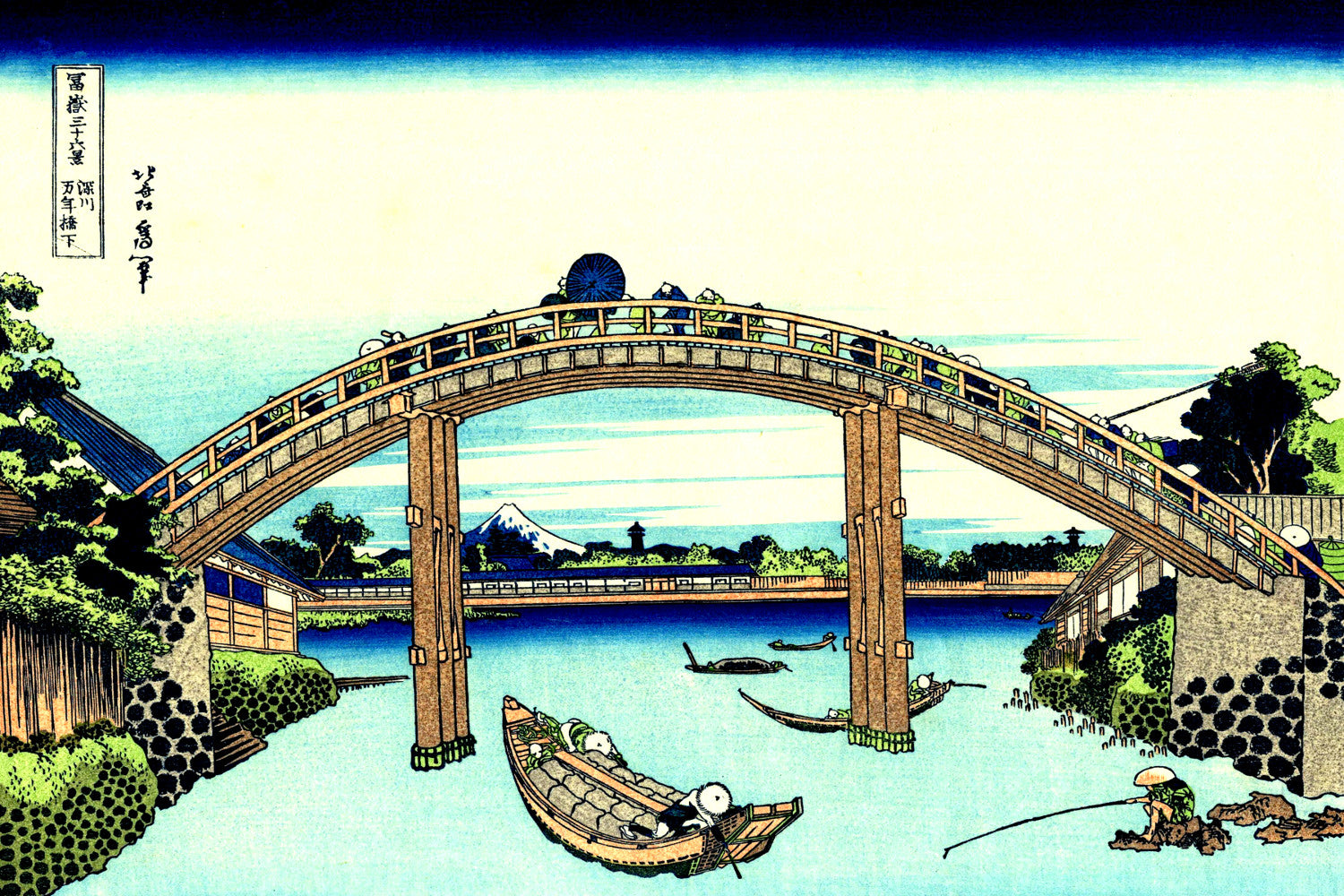
People cross bridges and rivers.
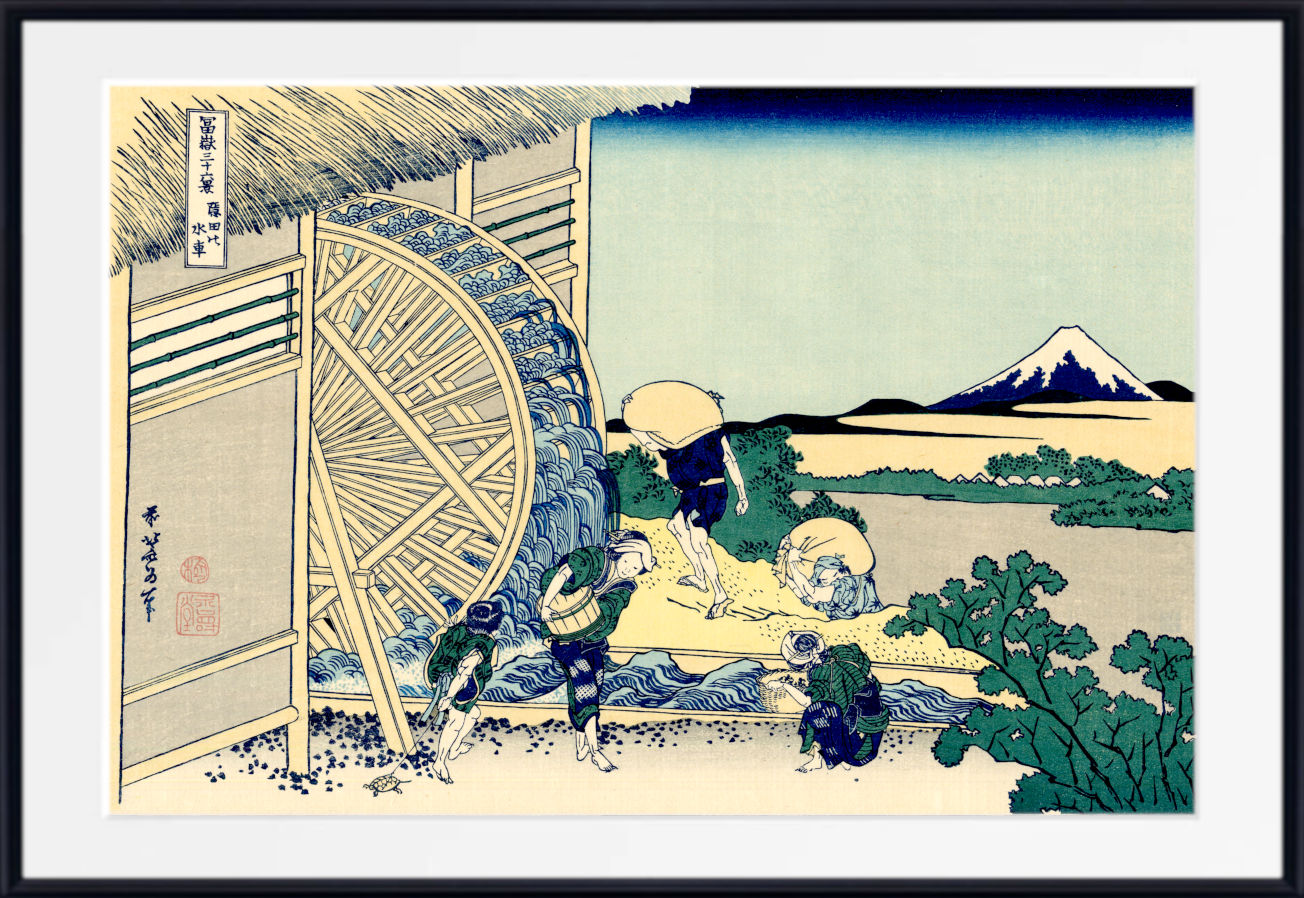
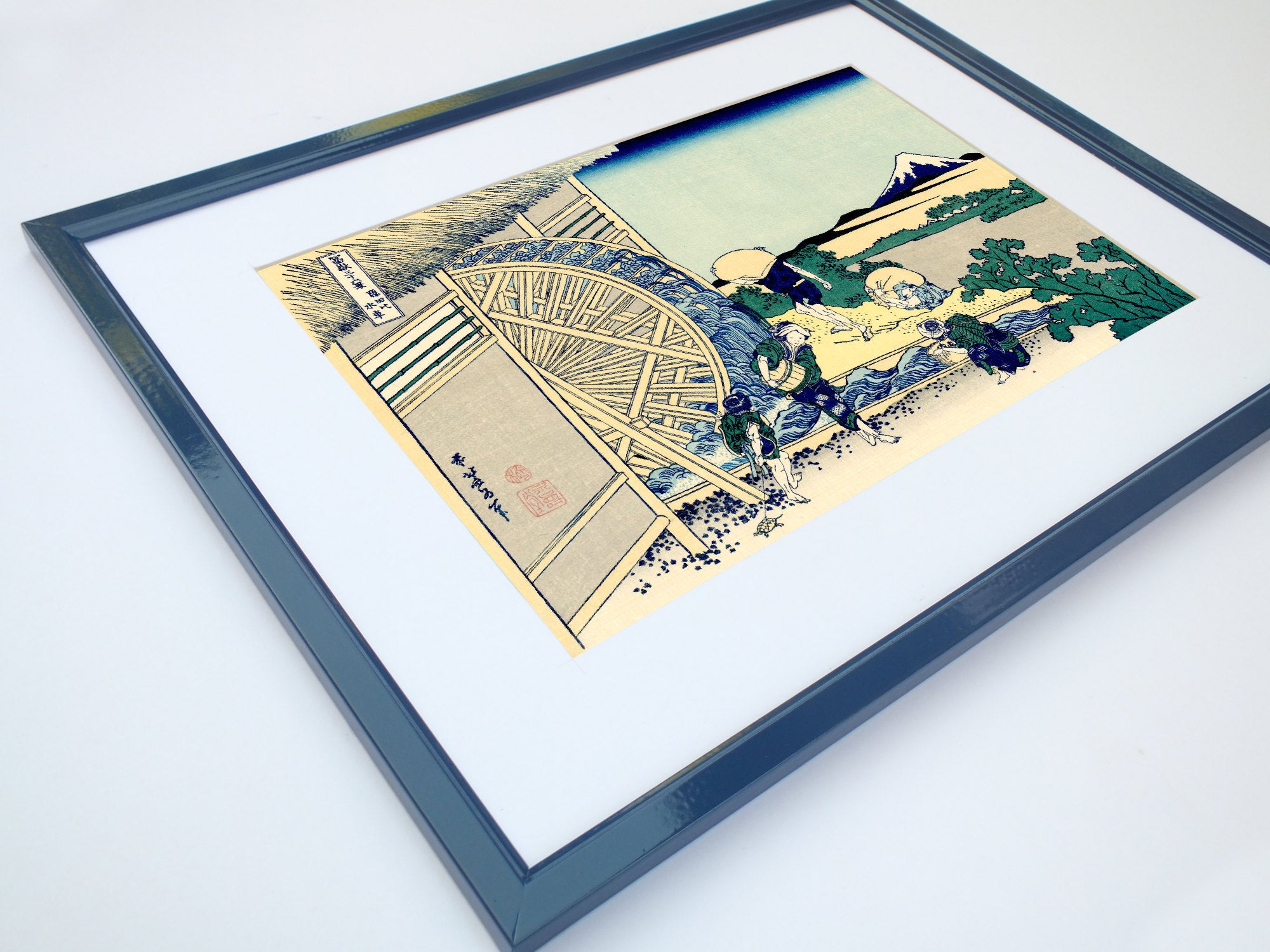
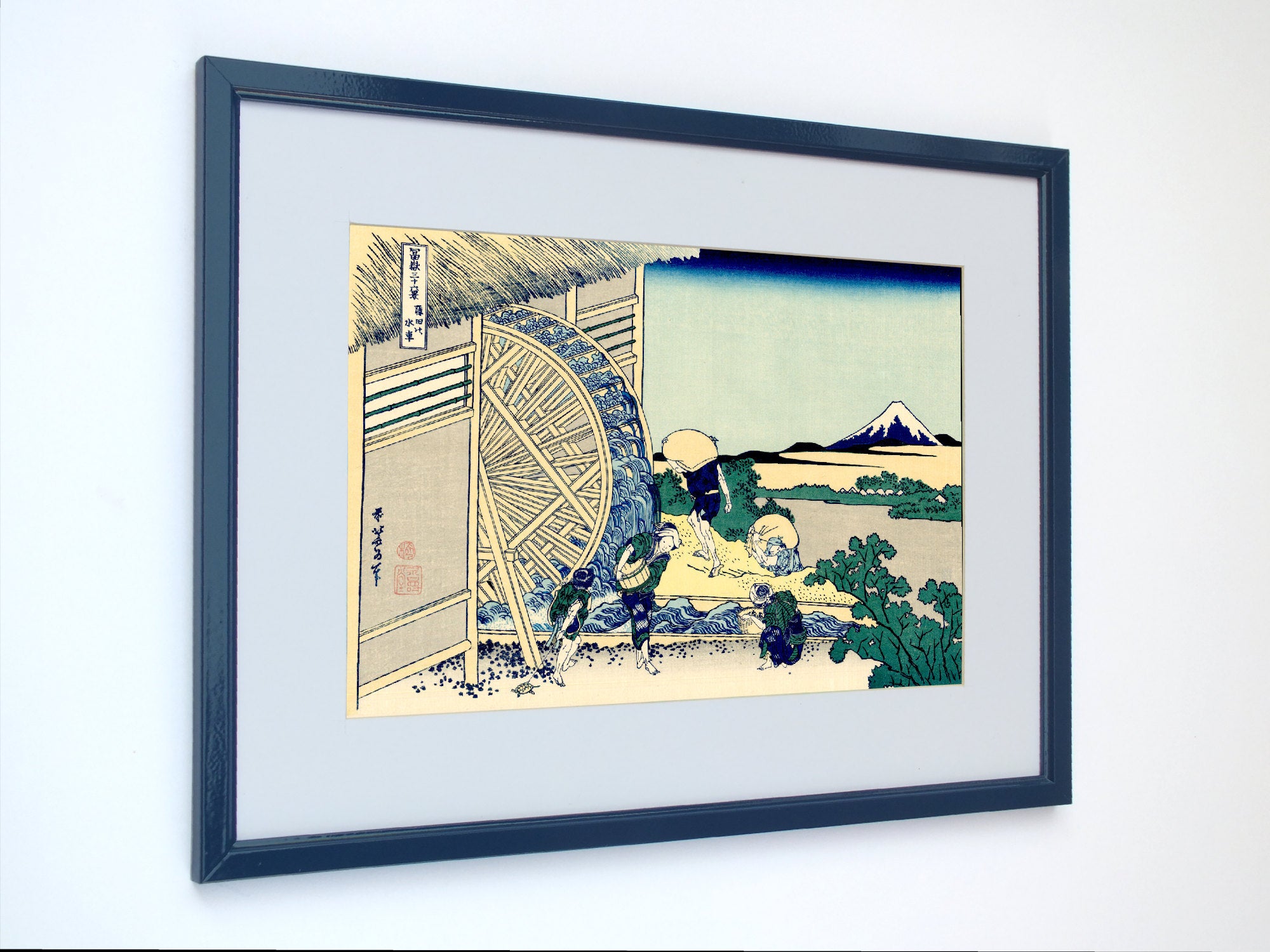
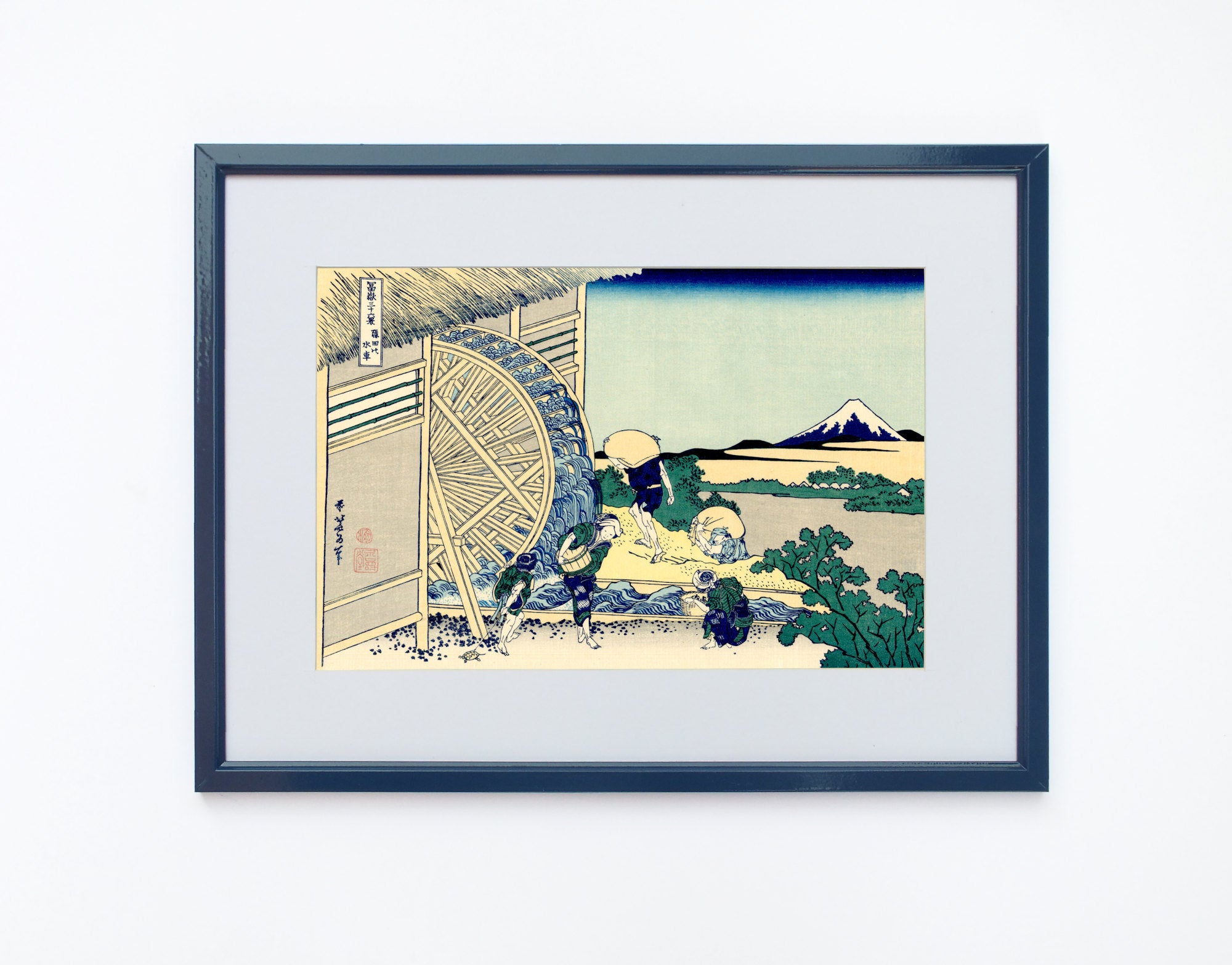
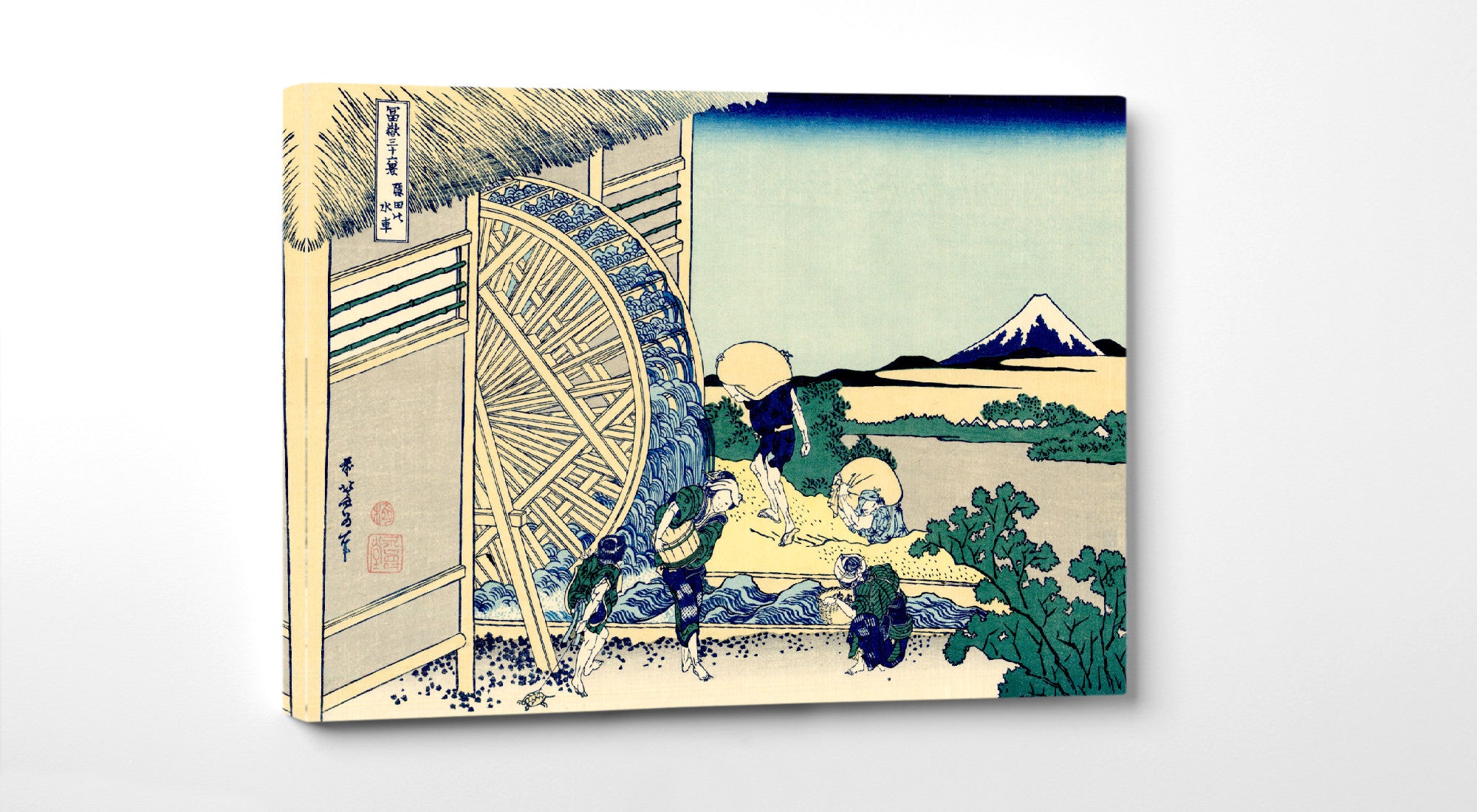
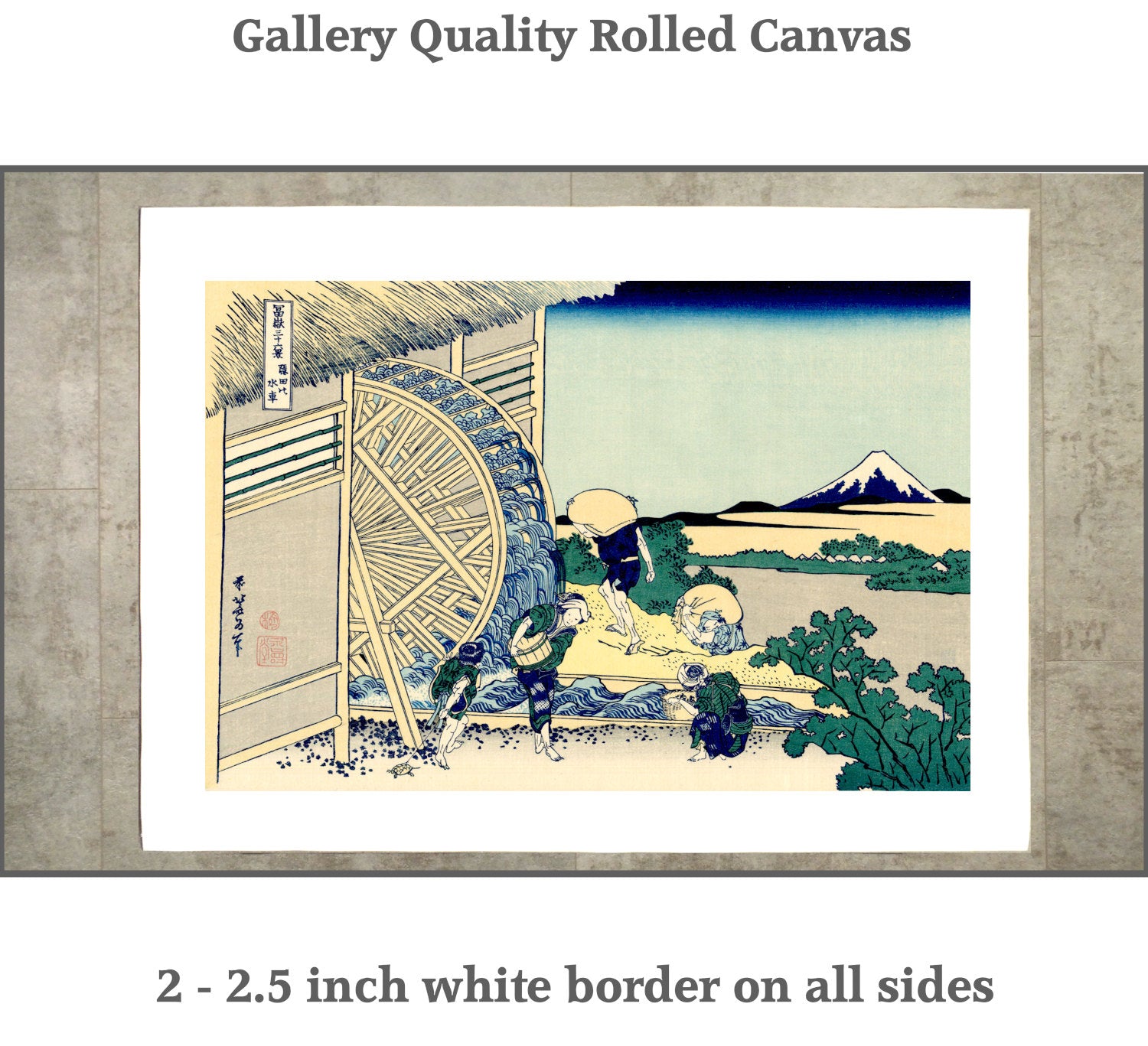
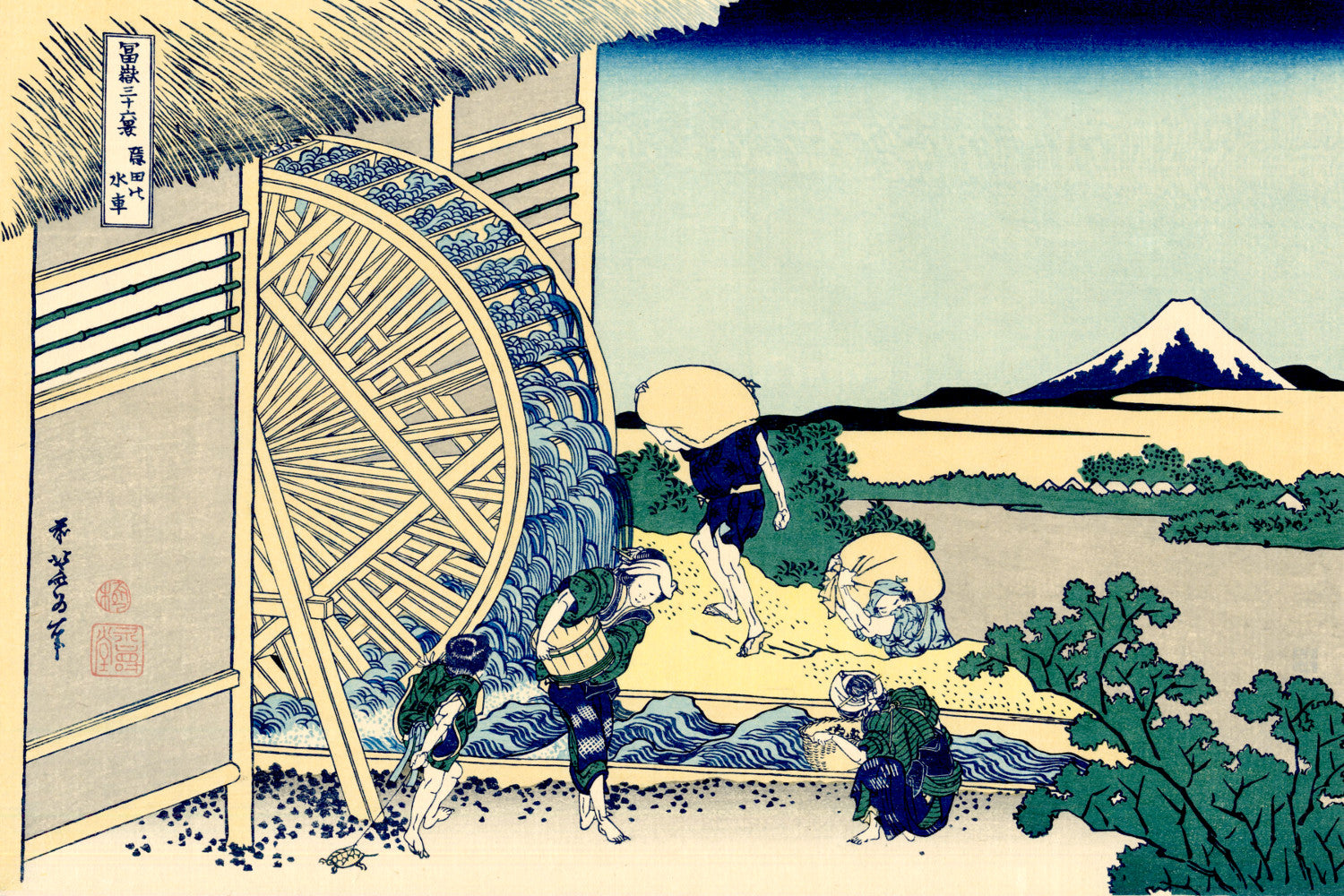
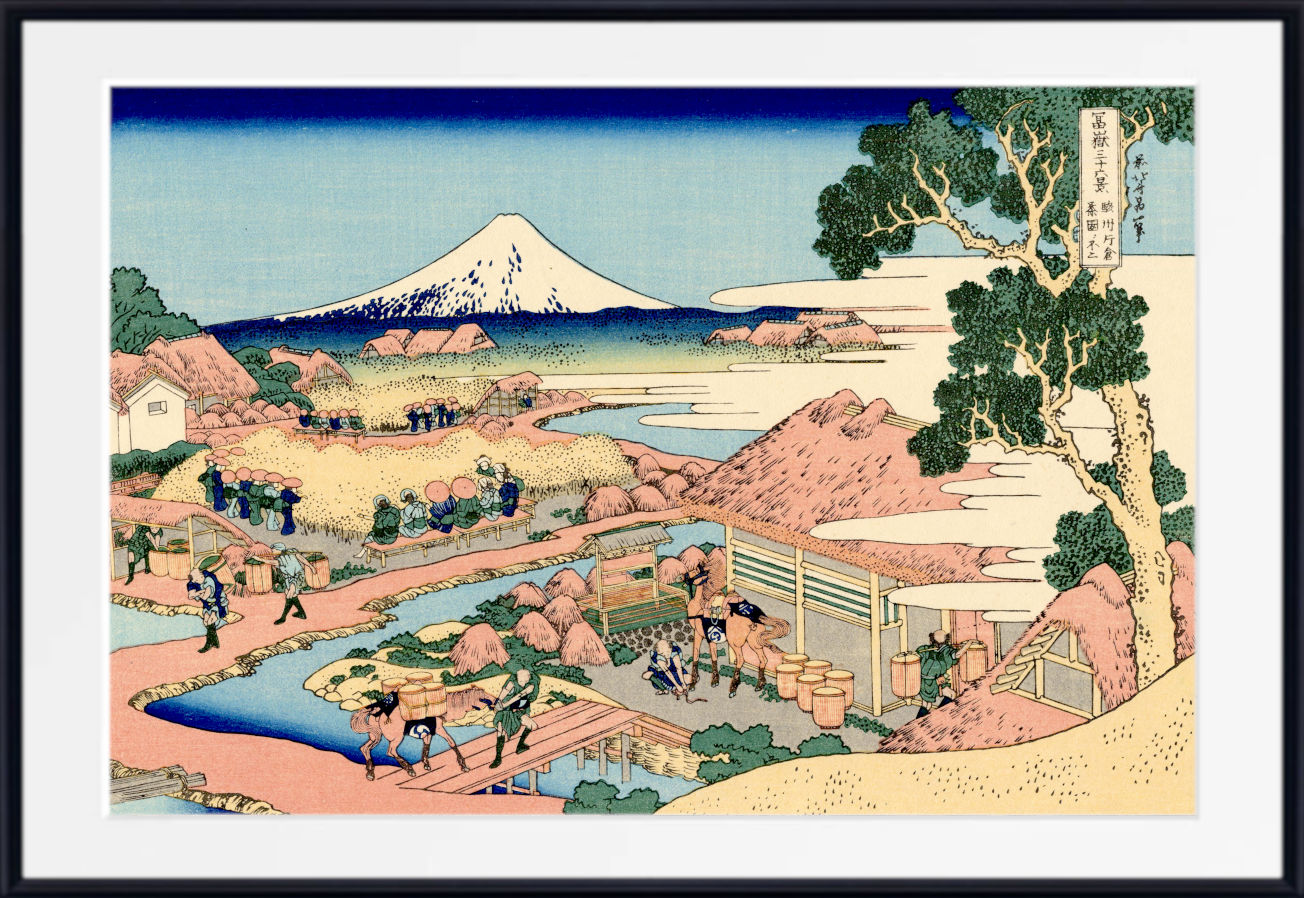
Women wash produce beside a watermill.
Pilgrims climb the mountain itself.
These details connect the monumental landscape with daily human experience.
The British Museum has noted this contrast particularly clearly in works such as Watermill at Onden, where people remain absorbed in their work while Fuji sits unchanged in the distance.
Bridges, Roads and Journeys
Travel is one of the recurrent themes of the series.
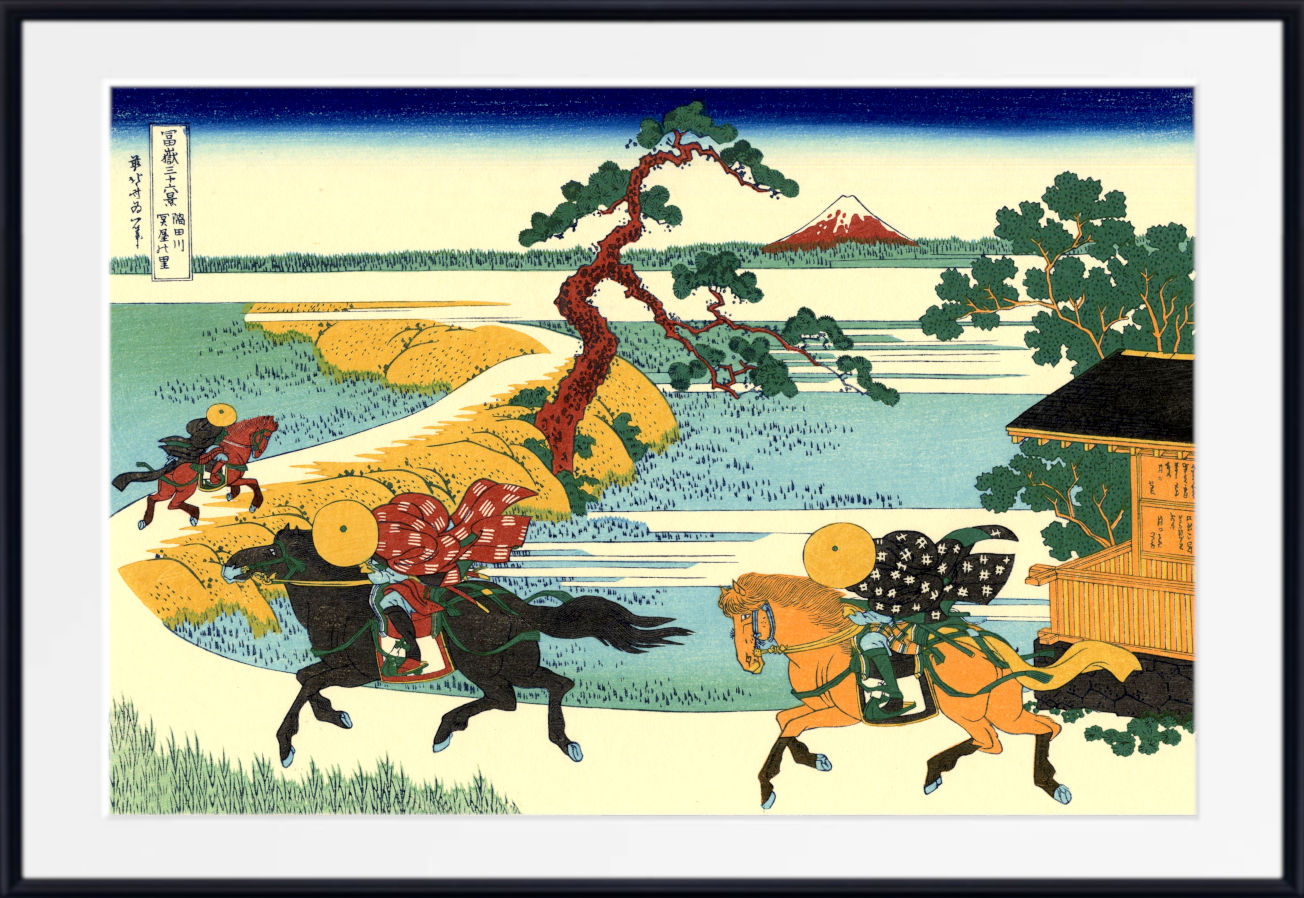
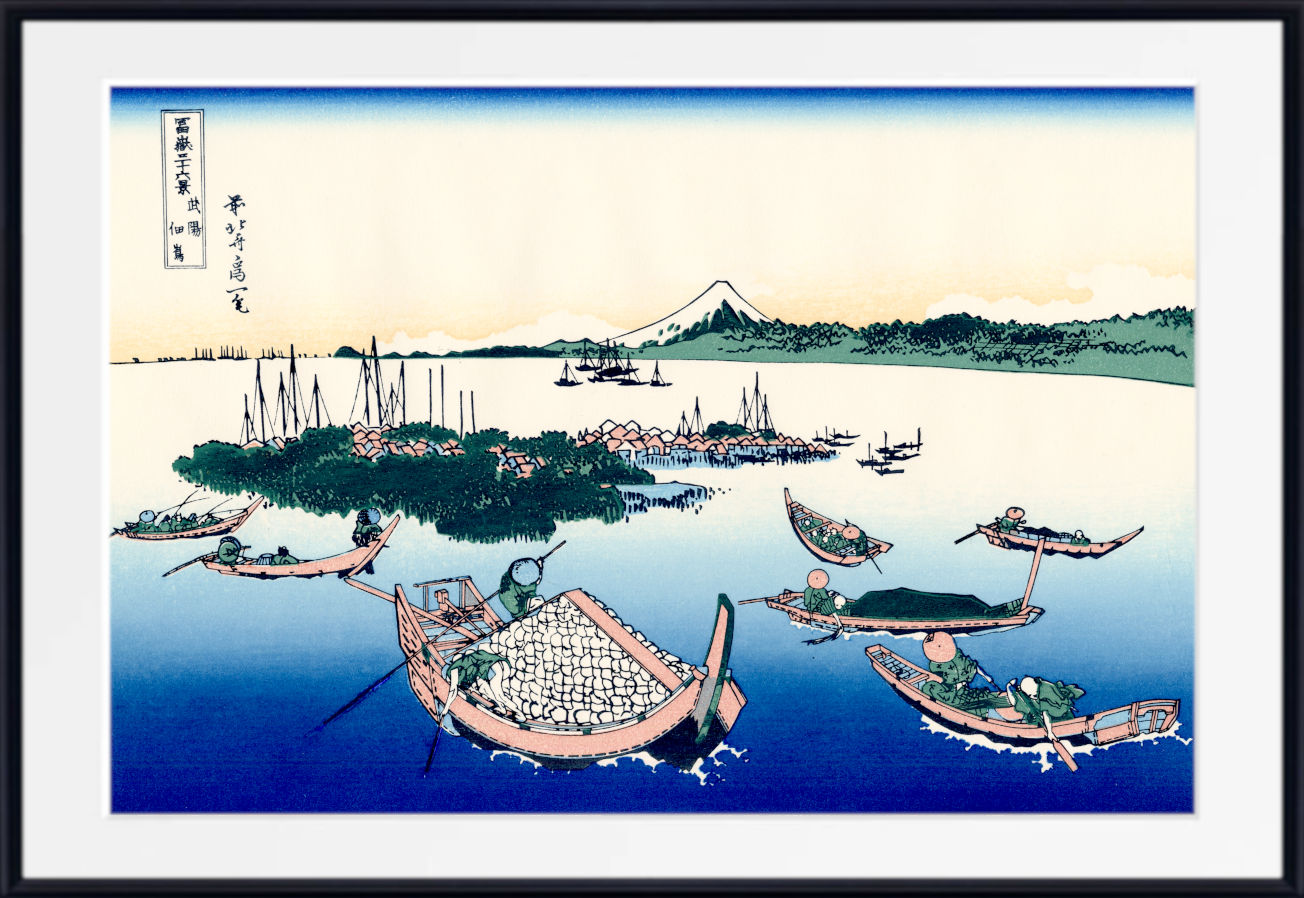
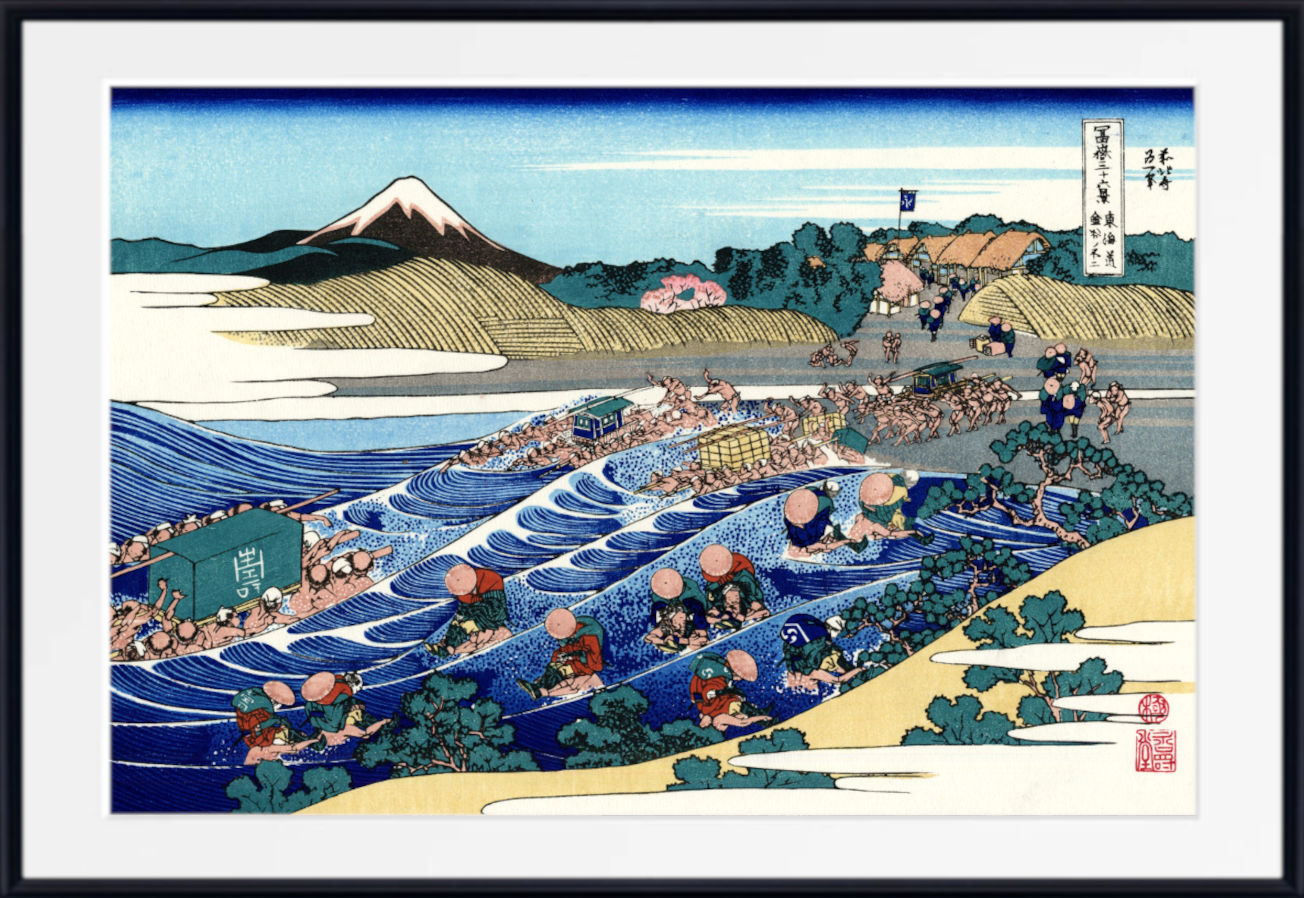
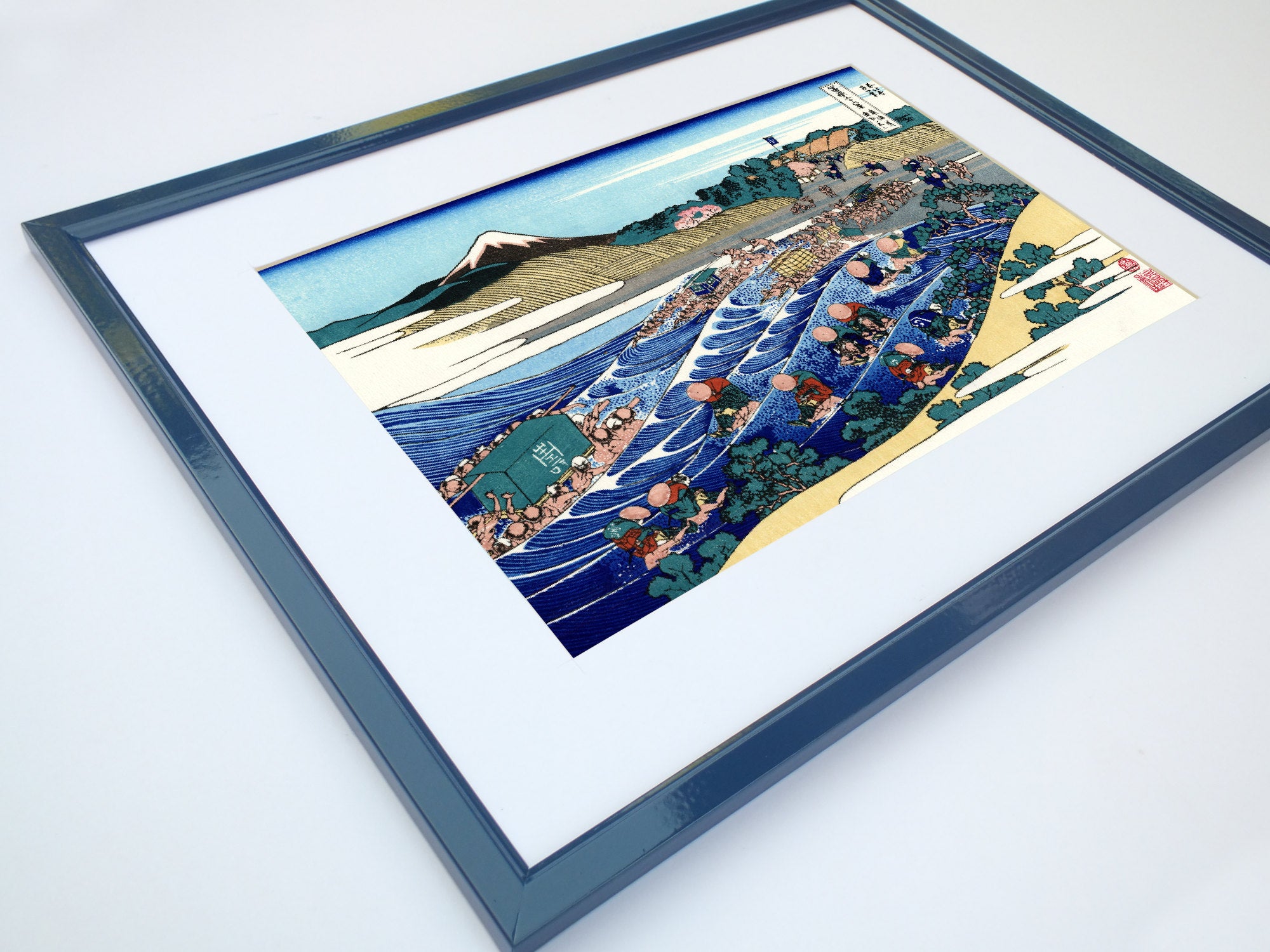
Hokusai shows roads leading towards and away from Fuji, travellers resting along the Tōkaidō, bridges carrying people across water and boats linking communities around Edo.
These structures also provide compositional opportunities.
A bridge can cut sharply across a river.
A road can pull the viewer deep into the landscape.
A circular barrel can frame distant Fuji.
Hokusai repeatedly turns elements of everyday infrastructure into bold visual geometry.
Fuji Seen Through Other Shapes
Hokusai delighted in hiding or reframing the mountain.
In Fuji View Field in Owari Province, a craftsman works inside an enormous circular barrel.
The viewer sees the distant triangular Fuji directly through the barrel's opening.
The simple contrast between circle and triangle creates one of the most memorable designs in the series.
Elsewhere trees, buildings, bridges and slopes perform similar framing functions.
This visual play prevents the forty-six views from becoming repetitive.
Each print asks a new question: how differently can the same mountain be seen?
Prussian Blue and a New Landscape Palette
The colour blue is inseparable from the identity of the series.
Hokusai was working at a moment when Prussian blue, a synthetic European pigment, had become available to Japanese printmakers.
Unlike some traditional blue pigments, it could produce intense, deep and relatively stable colour.
The publisher explicitly promoted blue in connection with the new Mount Fuji landscapes.
Hokusai used the pigment for seas, rivers, skies, distant mountains and even outlines.
Several early designs exploit blue so extensively that they belong to the fashion for aizuri-e, or predominantly blue prints.
The Great Wave's extraordinary seas owe much of their visual identity to this new colour technology.
Hokusai and the Transformation of Landscape Prints
The Thirty-Six Views helped establish landscape as a major subject within commercial Japanese woodblock printing.
Hokusai combined Japanese traditions with unusual perspective, low horizons and spatial devices influenced partly by his knowledge of Western visual techniques.
The result was neither conventionally Japanese nor simply European.
Instead, he created a highly individual approach in which dramatic cropping, exaggerated scale, geometric framing and flat areas of colour could coexist with convincing spatial depth.
These innovations make the series feel remarkably modern.
Seasons and Changing Weather
Hokusai never treats Fuji as a static monument.
Weather continually alters how it is experienced.
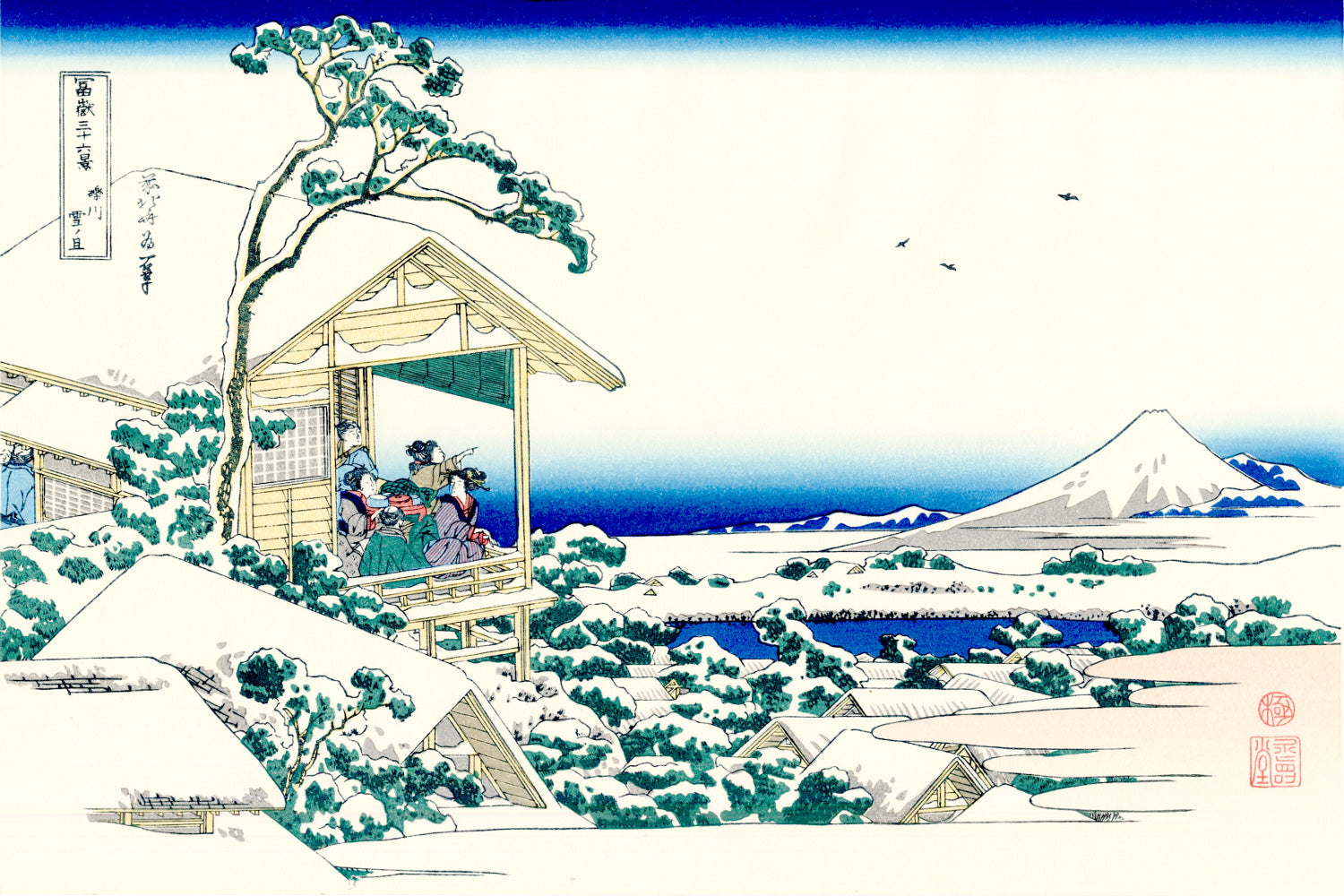
Snow covers surrounding landscapes.
Clouds wrap around the mountain.
Thunderstorms strike its slopes.
Wind transforms apparently ordinary roads.
Sunrise colours Fuji red.
Mist makes it recede into the distance.
Changing conditions ensure that the mountain is never quite the same from one print to the next.
For collectors, this variety makes the series particularly rewarding to display in groups.
Mount Fuji and Human Scale
A central tension throughout the series is the contrast between the scale of nature and human life.
People appear tiny beneath mountains, beside rivers and beneath waves.
Yet Hokusai does not portray them merely as helpless.
His fishermen work, travellers continue their journeys and craftsmen remain absorbed in their tasks.
Human life is temporary and small compared with Fuji, but it is also energetic and persistent.
That balance between monumental nature and ordinary life gives many of the prints their emotional depth.
Choosing a Thirty-Six Views of Mount Fuji Print
For the most iconic composition, choose The Great Wave off Kanagawa.
For a bold image dominated by Mount Fuji itself, Red Fuji – Southern Wind, Clear Morning is an exceptional choice.
Lightning Below the Summit offers a darker and more dramatic interpretation of the mountain.
Ejiri in Suruga Province is particularly compelling for its extraordinary depiction of wind and movement.
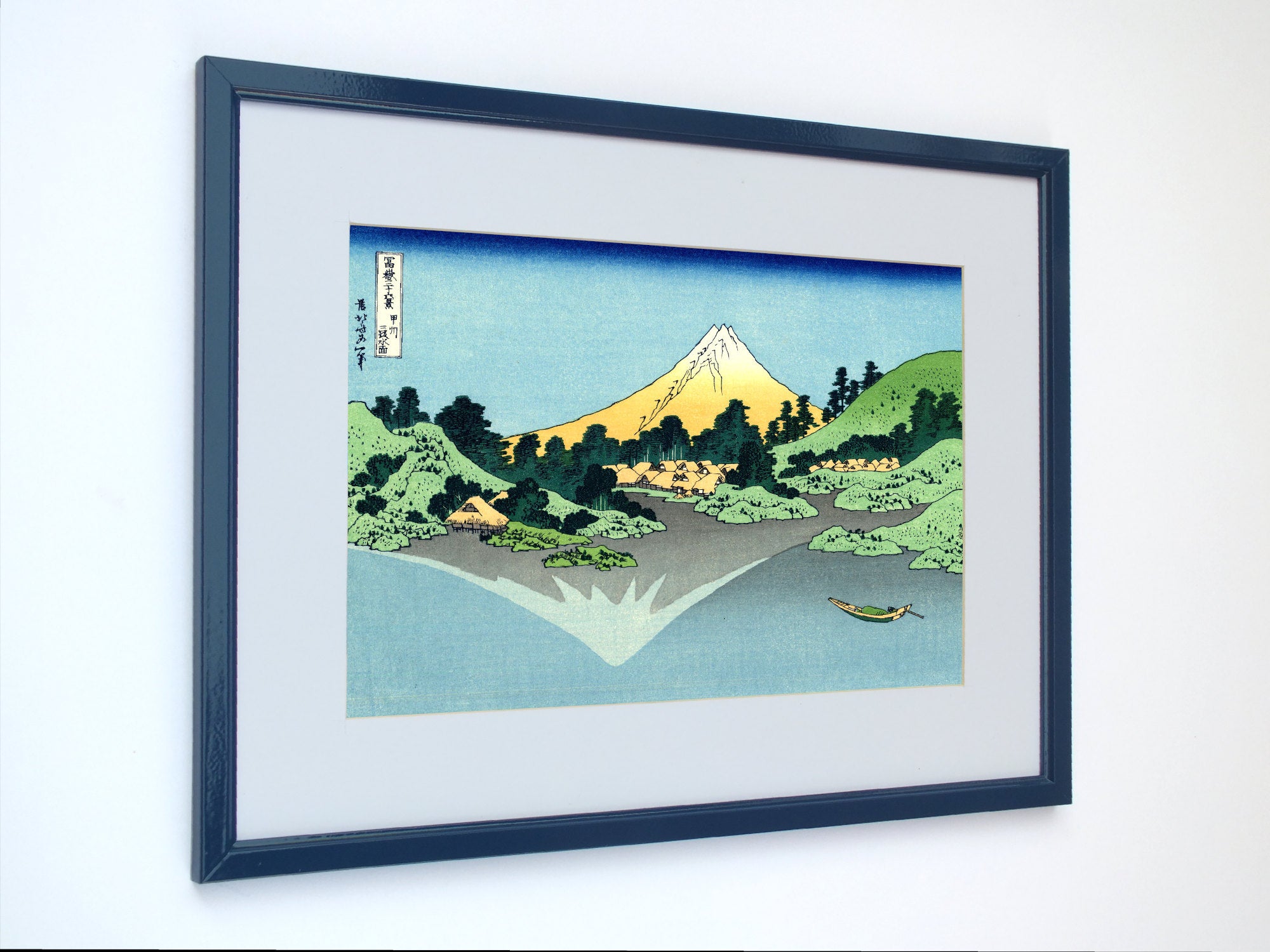
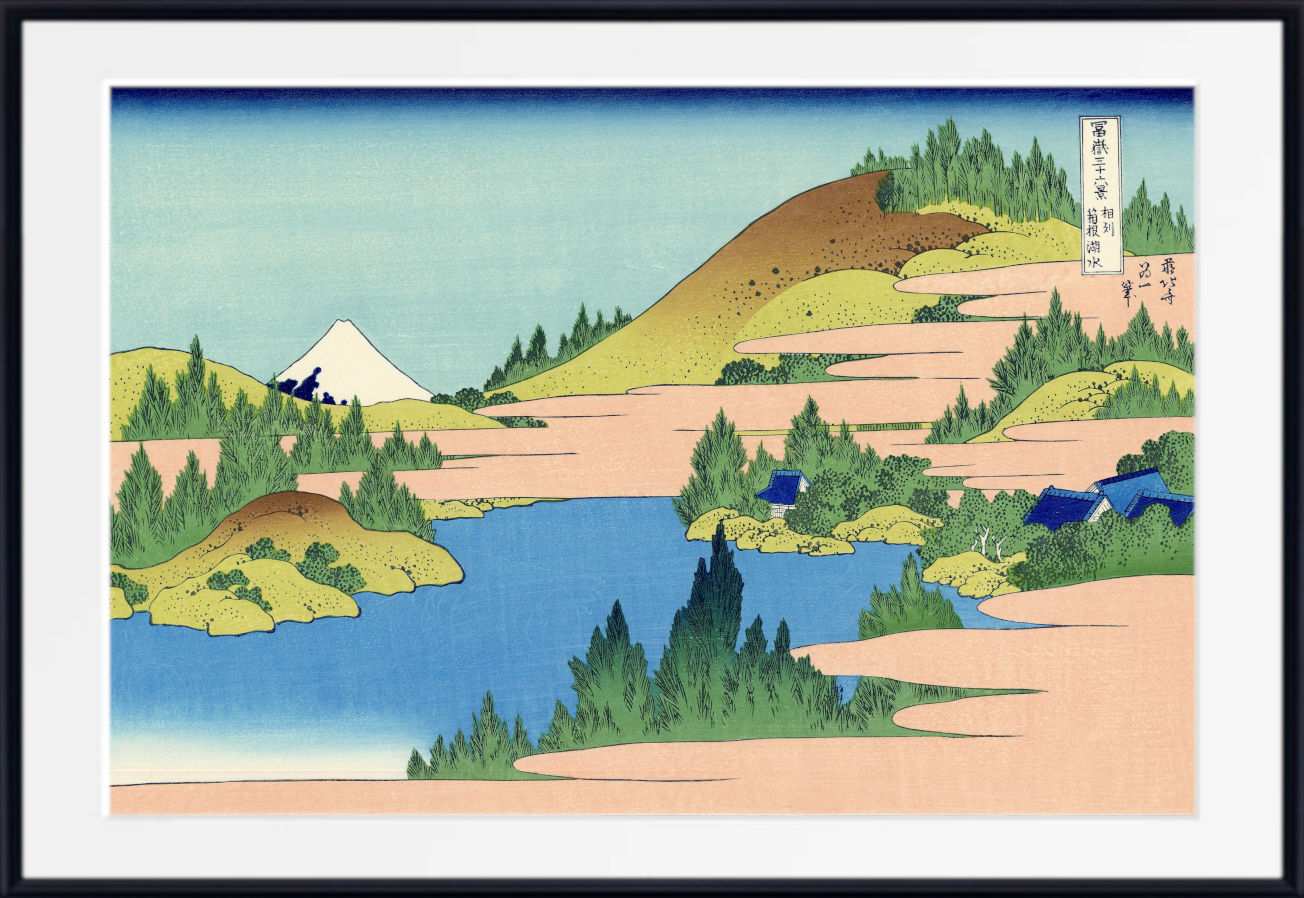
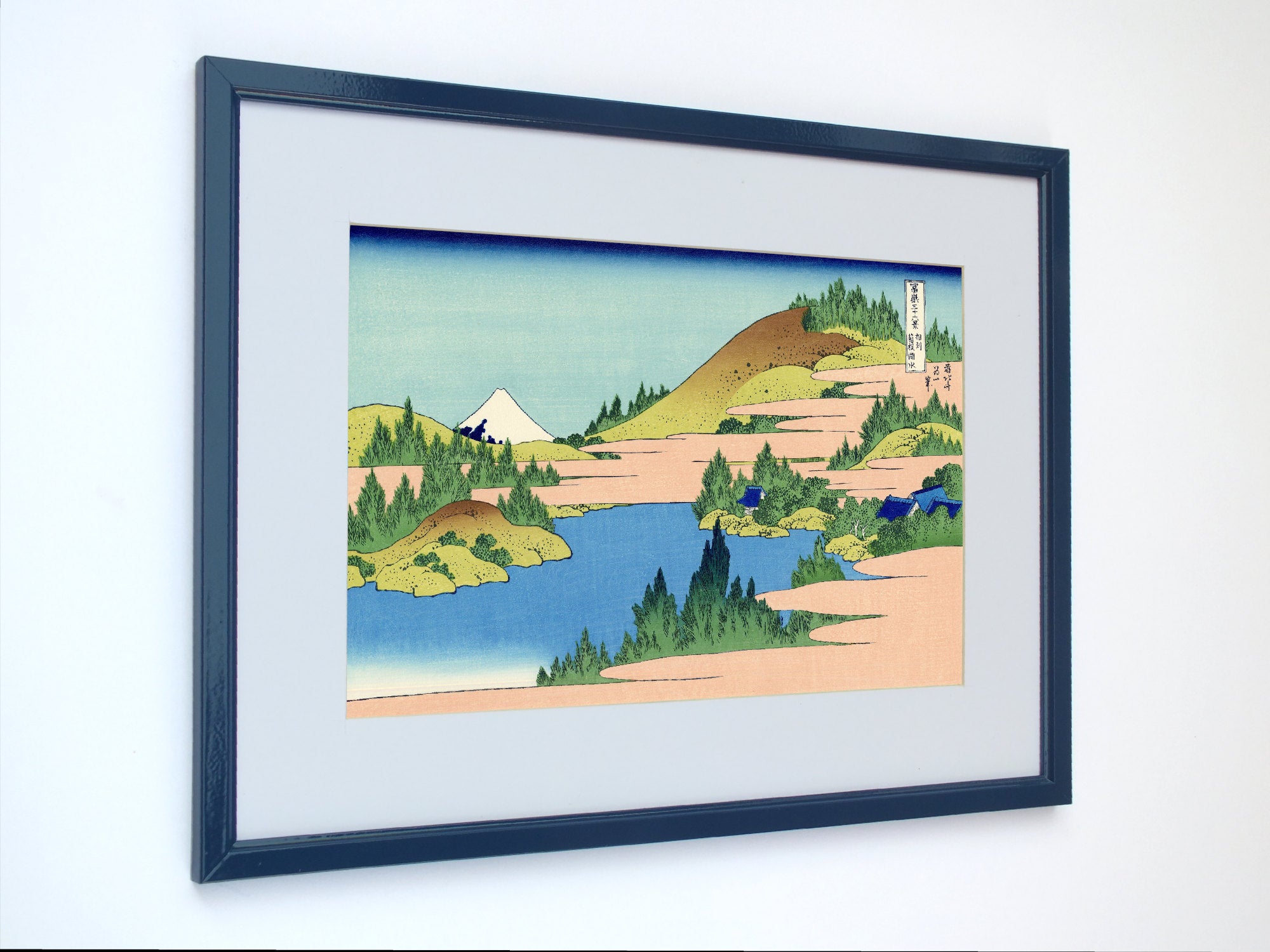
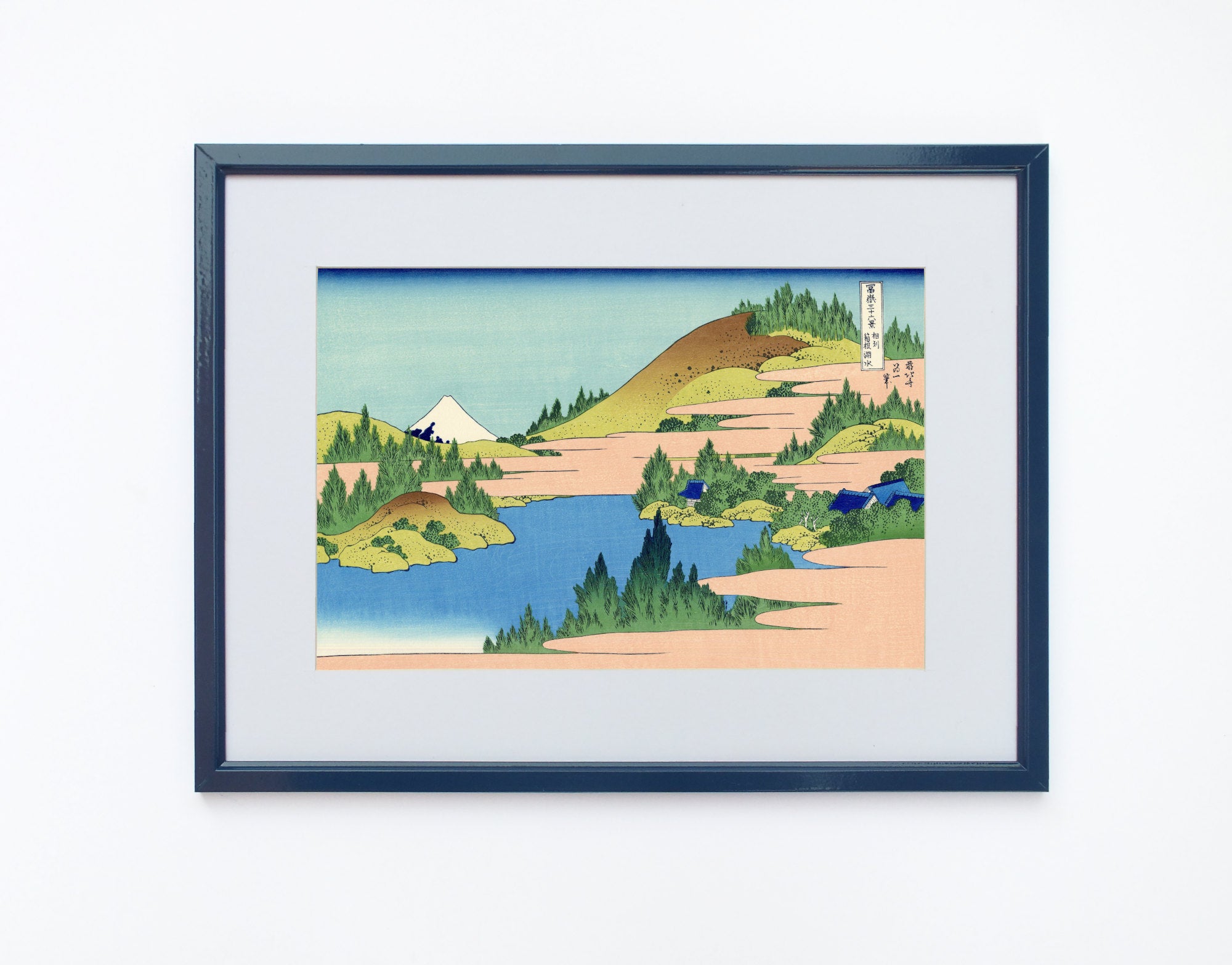
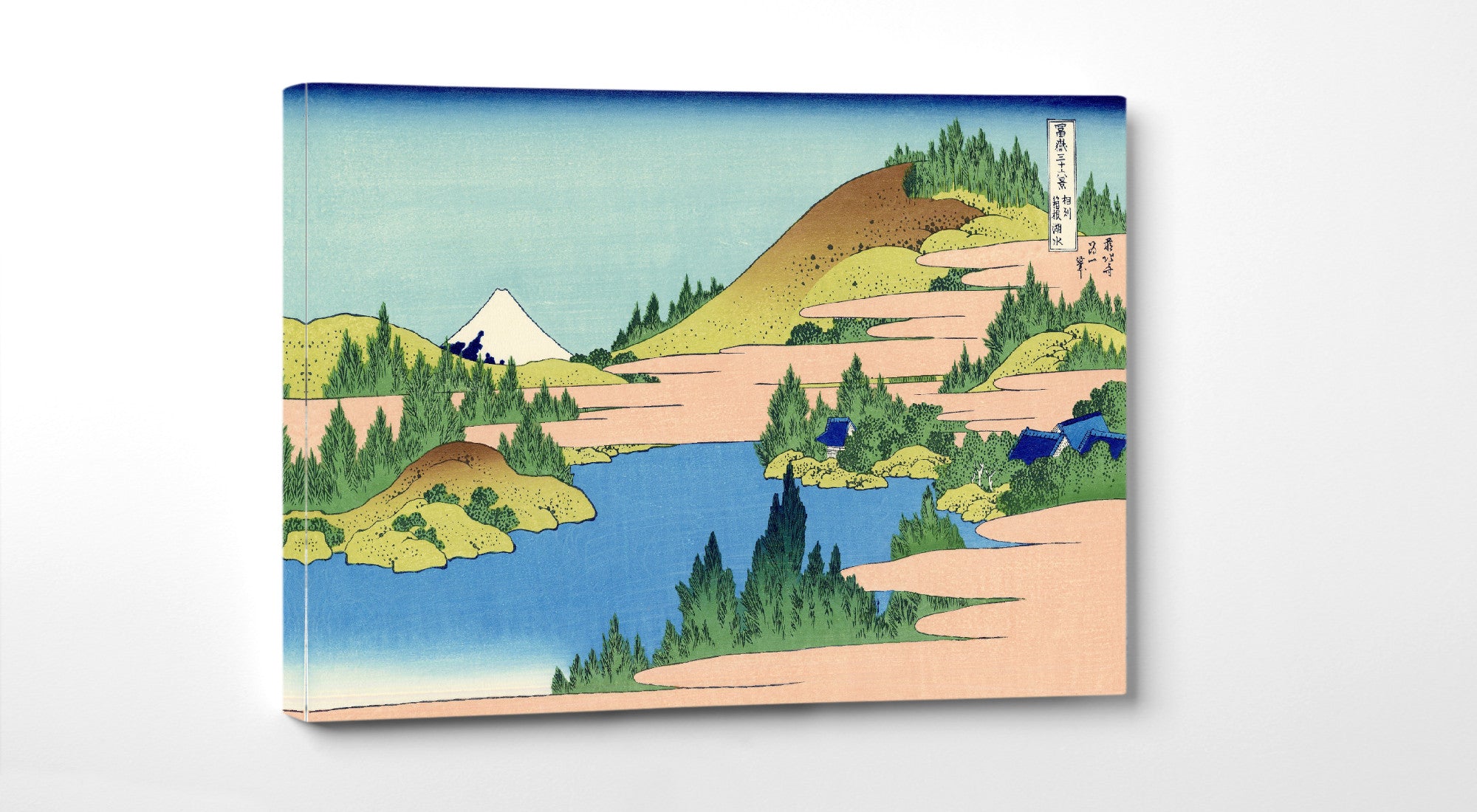
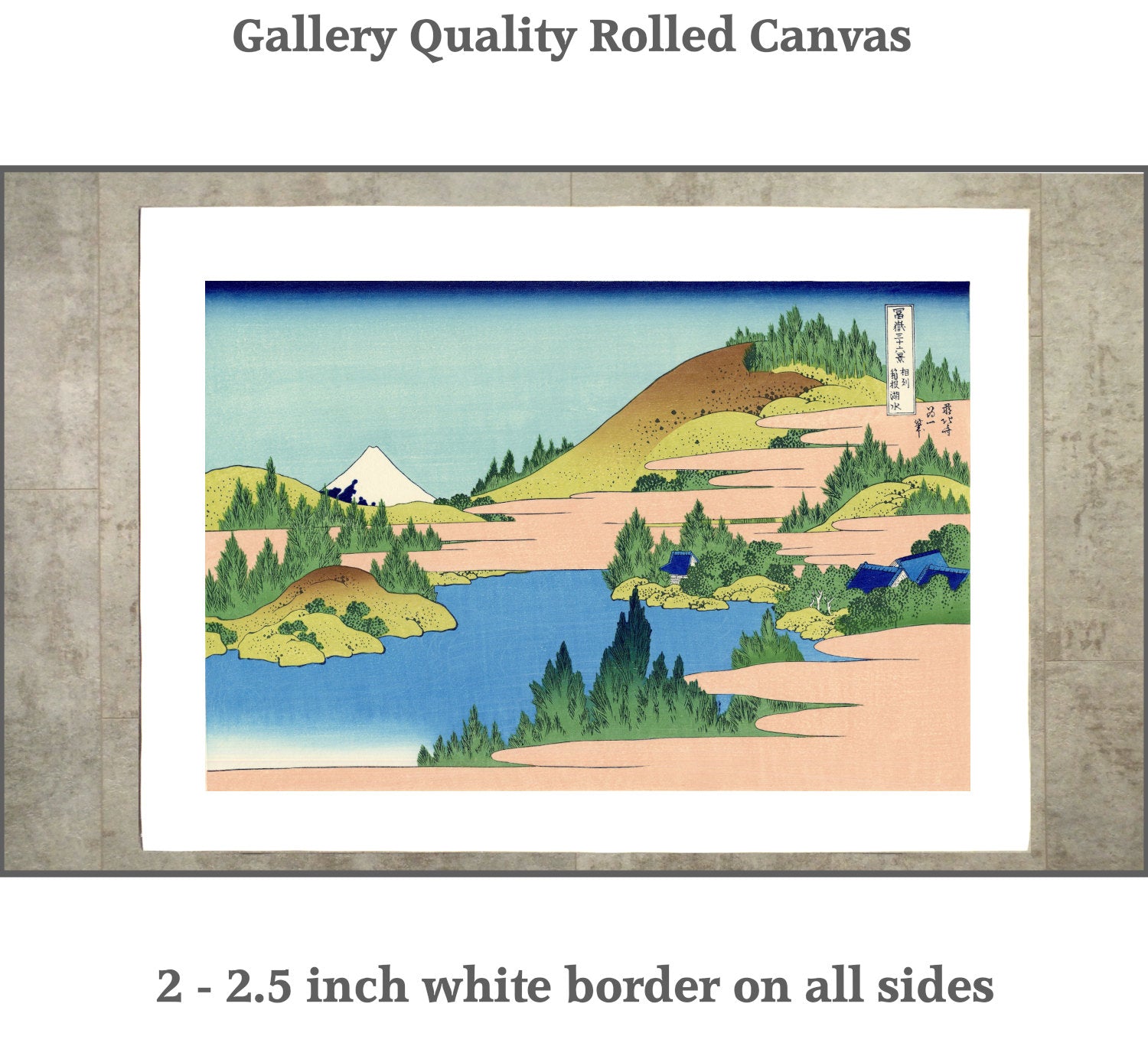
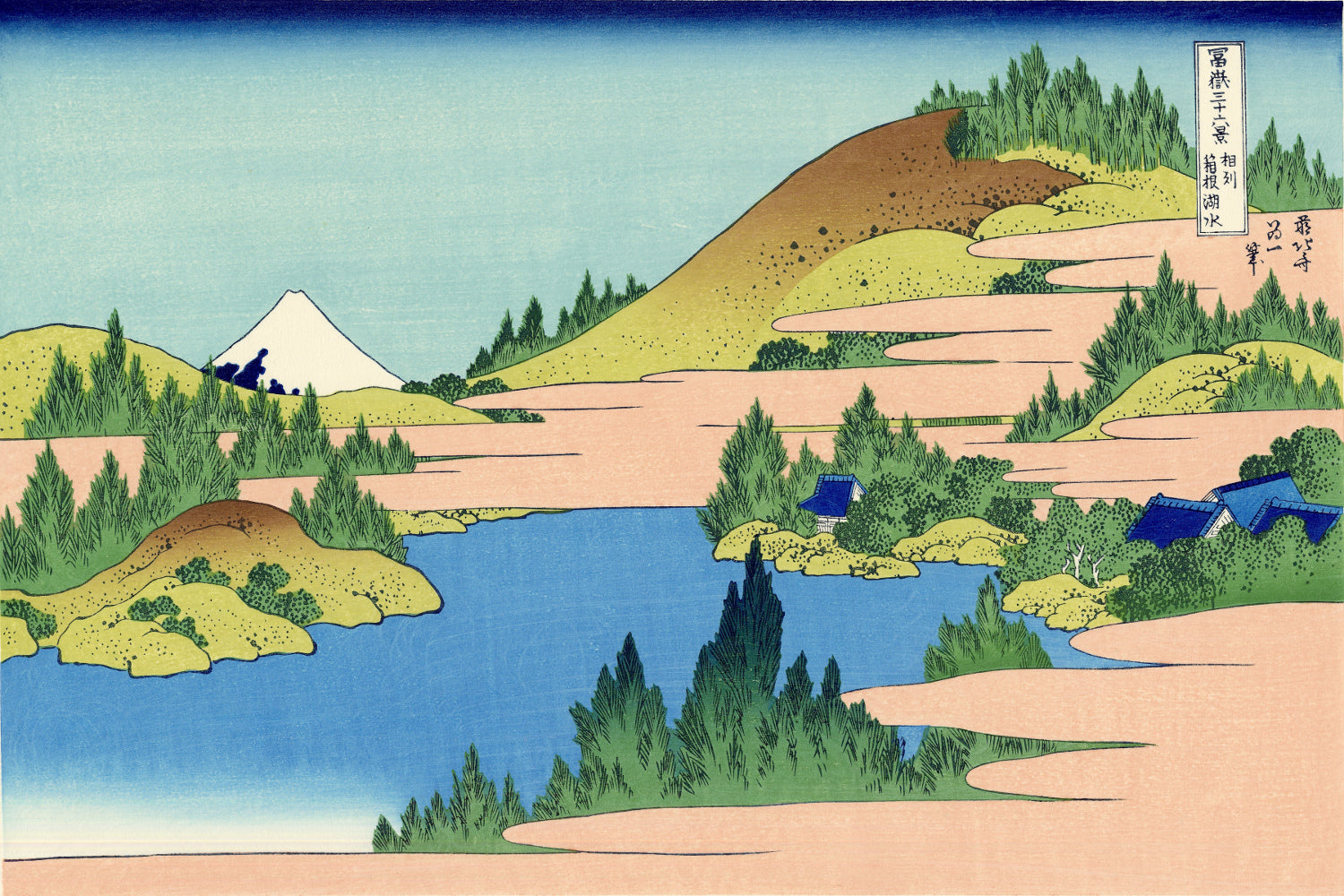
Kajikazawa in Kai Province is ideal for viewers interested in Hokusai's sophisticated geometry, while quieter designs showing lakes, bridges and villages offer more contemplative alternatives.
Creating a Hokusai Mount Fuji Gallery Wall
The consistent horizontal proportions and recurring image of Fuji make the series particularly suitable for displaying several prints together.
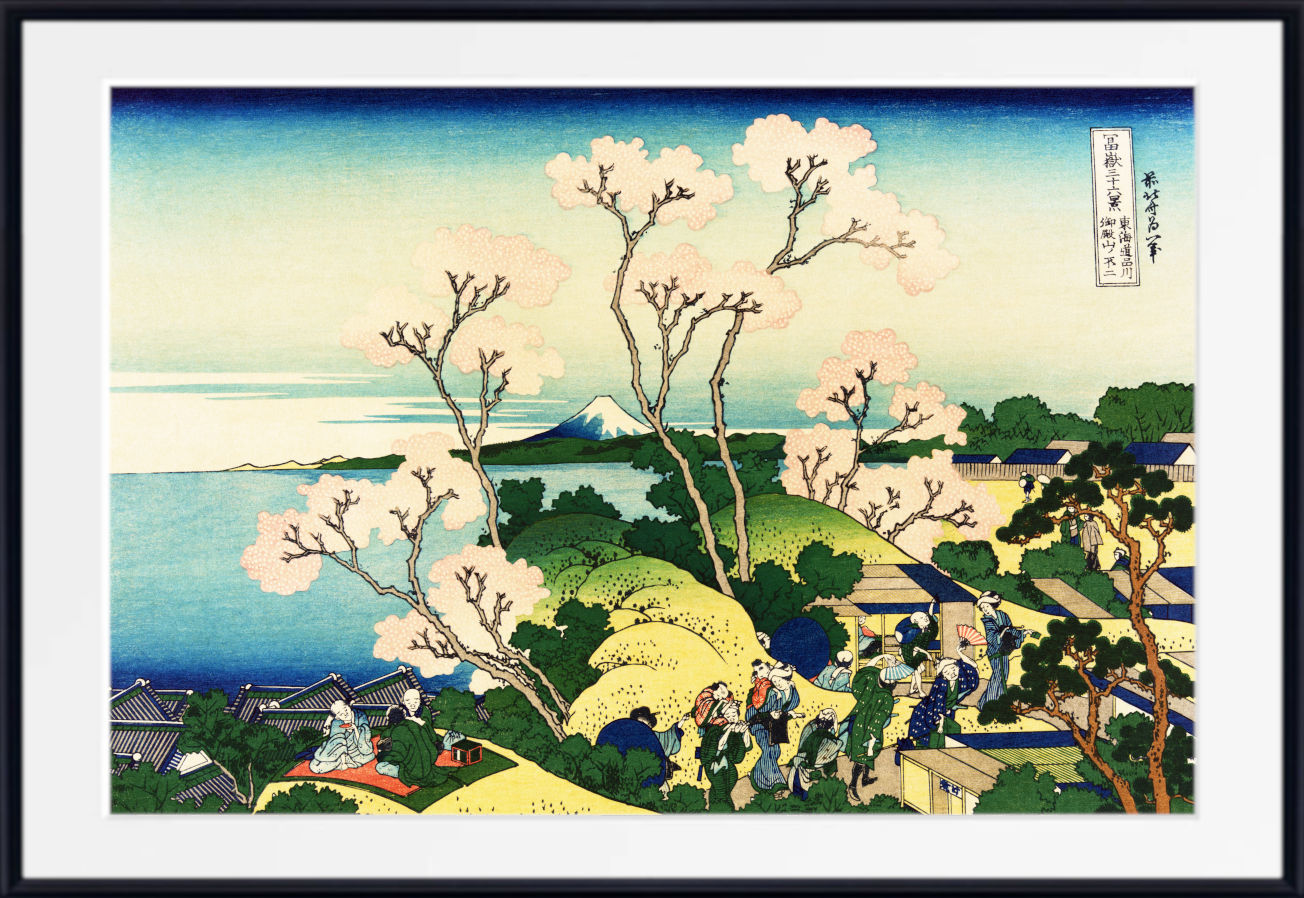
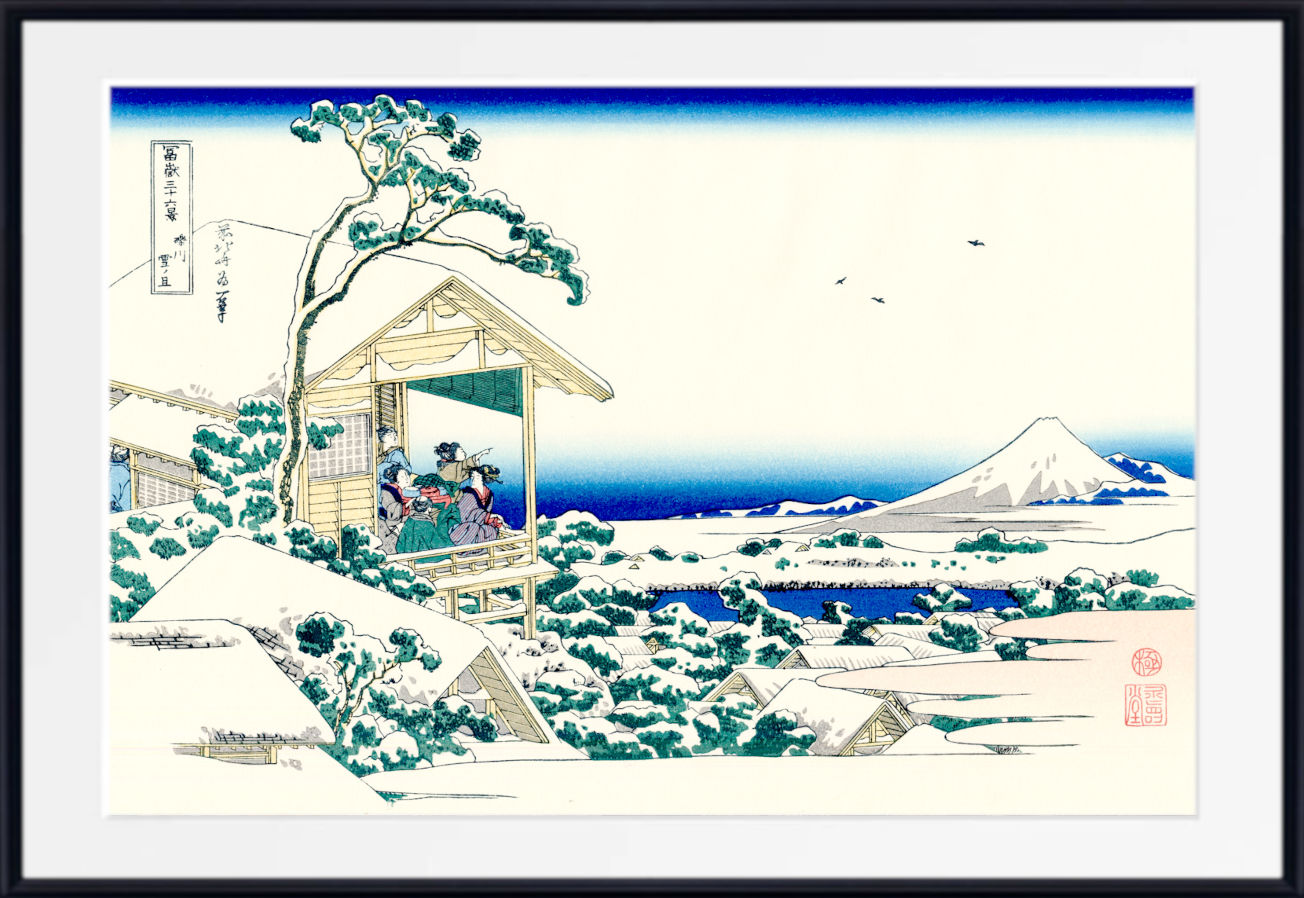
A group might combine contrasting weather conditions – Red Fuji, Lightning Below the Summit and a snowy landscape.
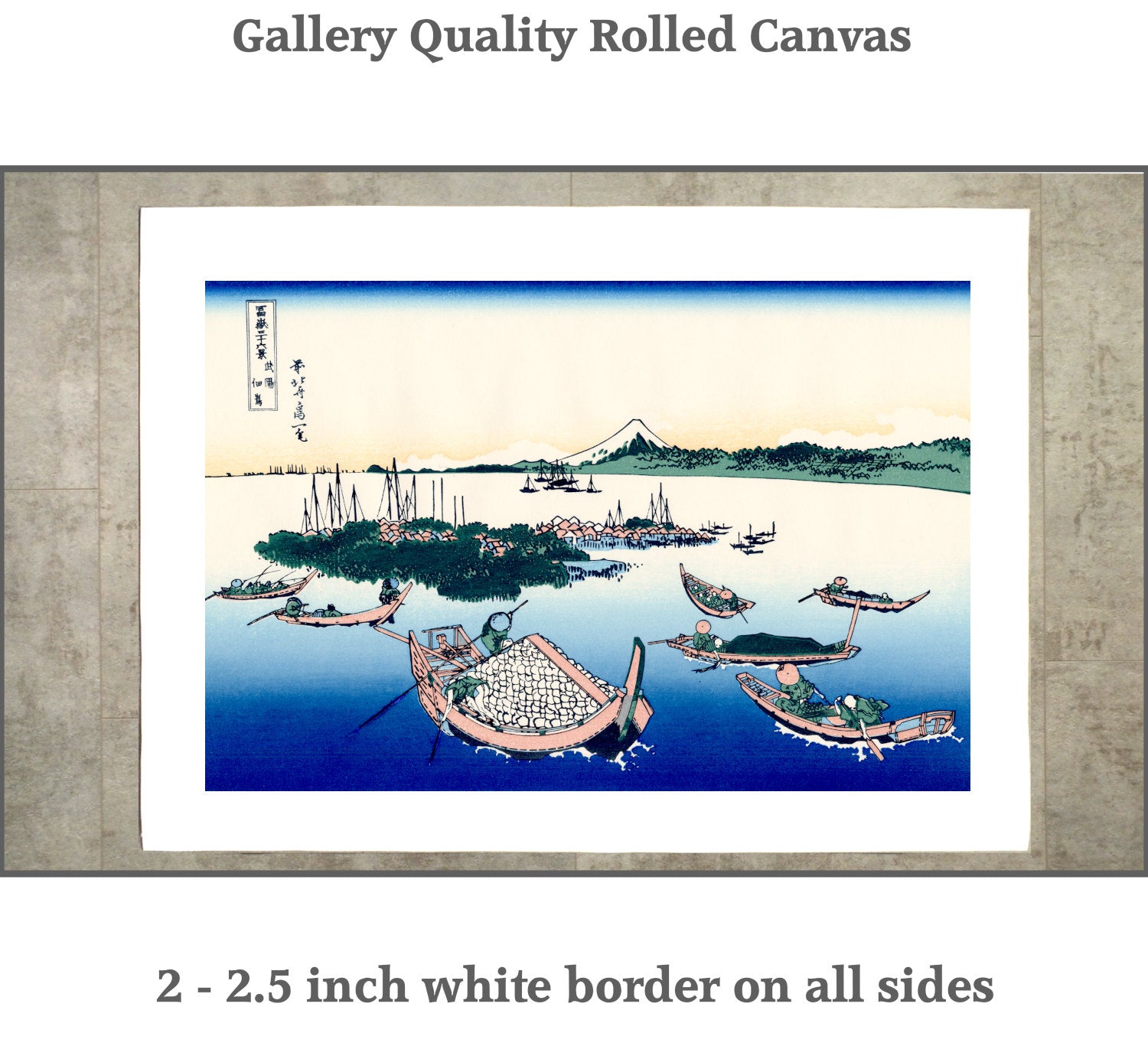
Another approach is to combine prints centred on water, such as The Great Wave, Kajikazawa and the various lake and river views.
Because the mountain reappears throughout the series, even very different compositions retain a strong visual connection.
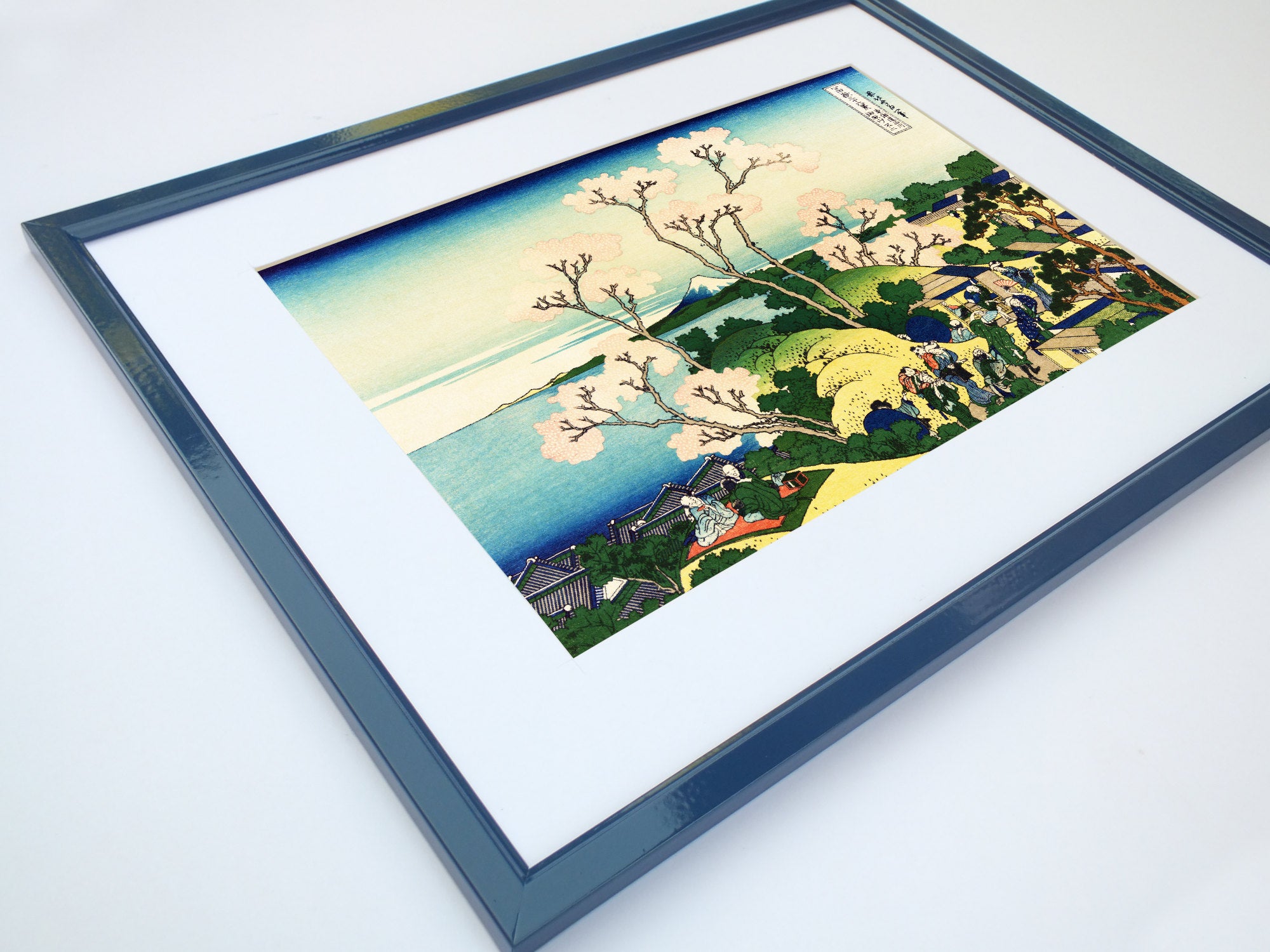
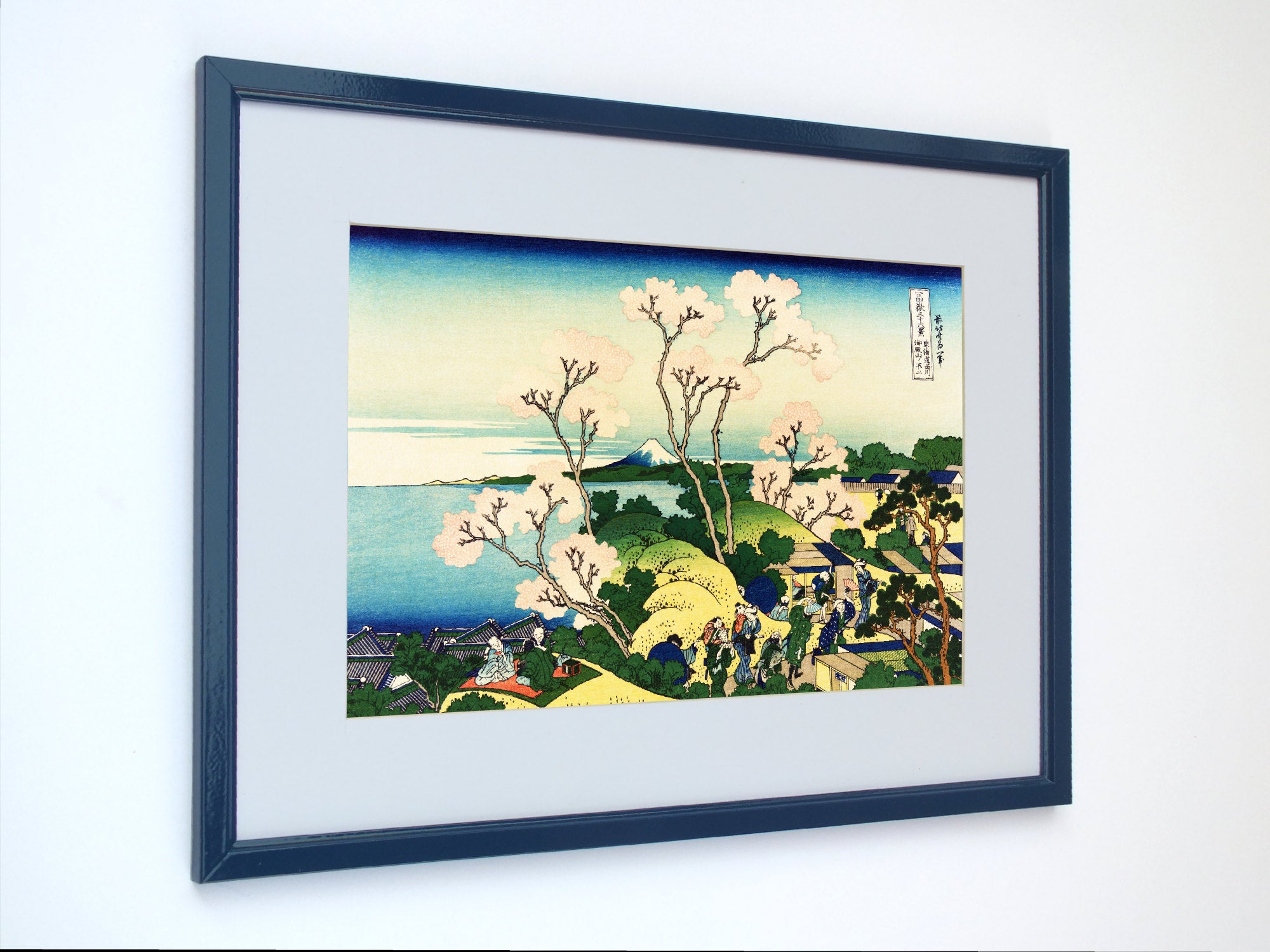
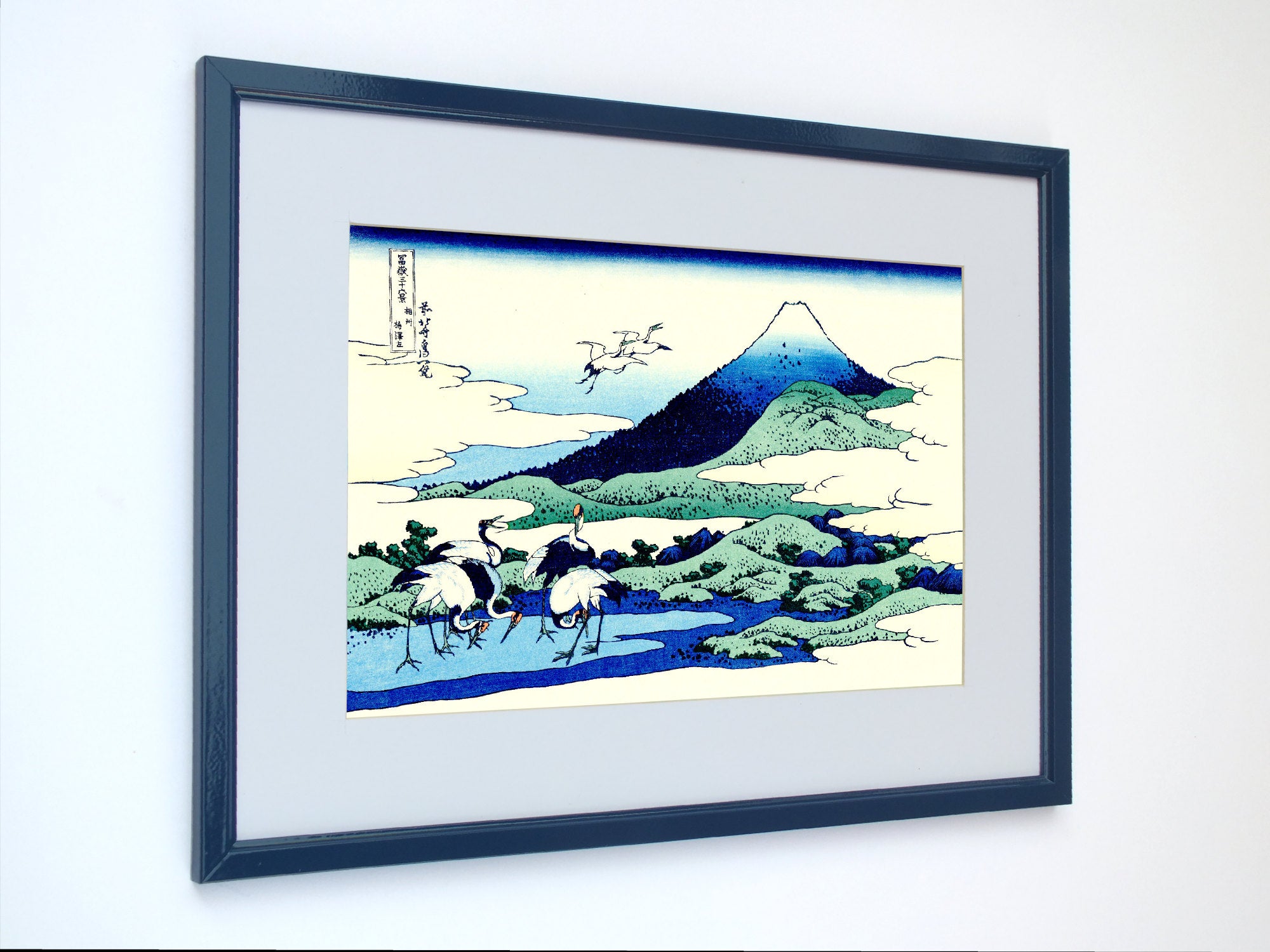
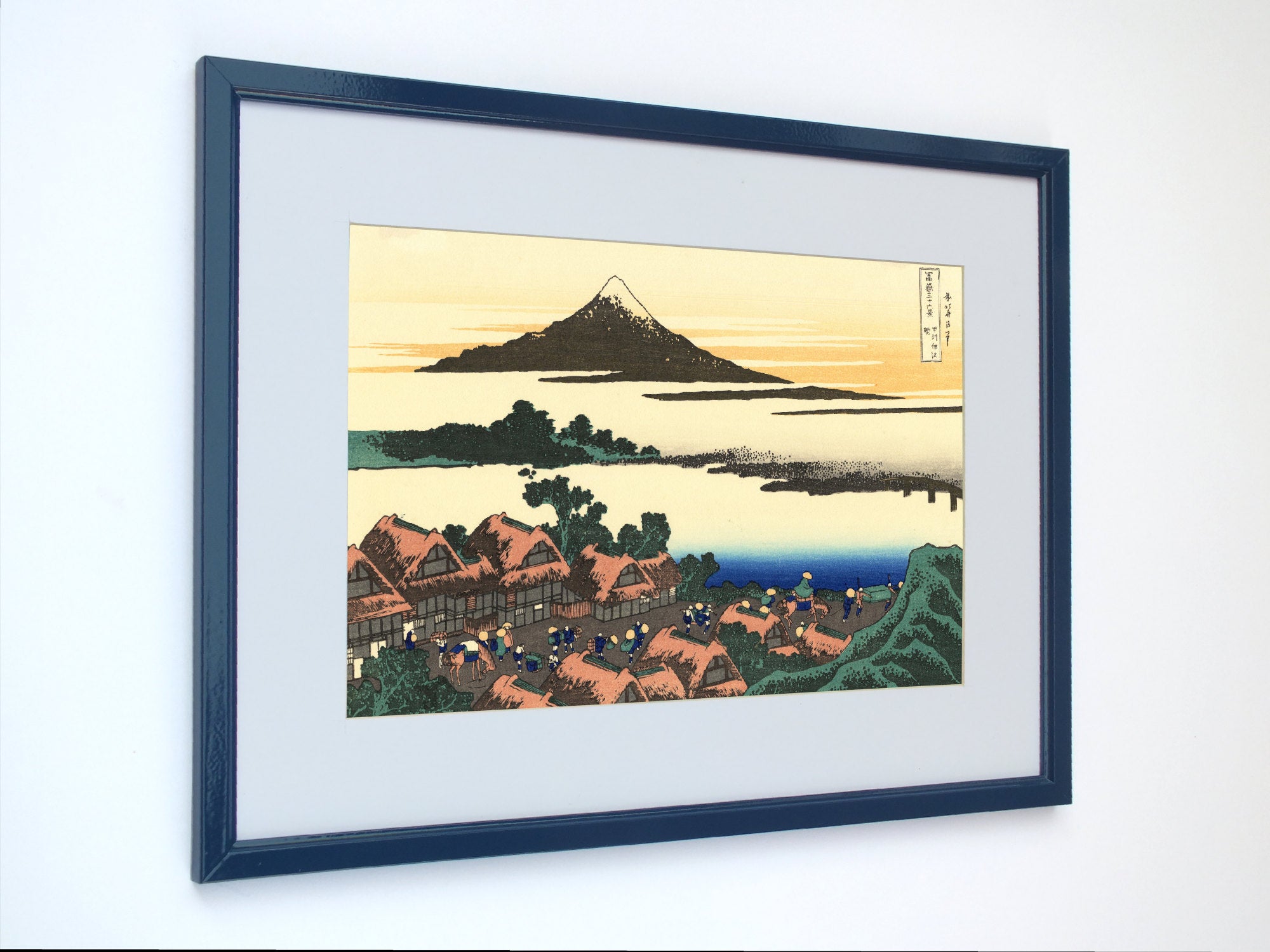
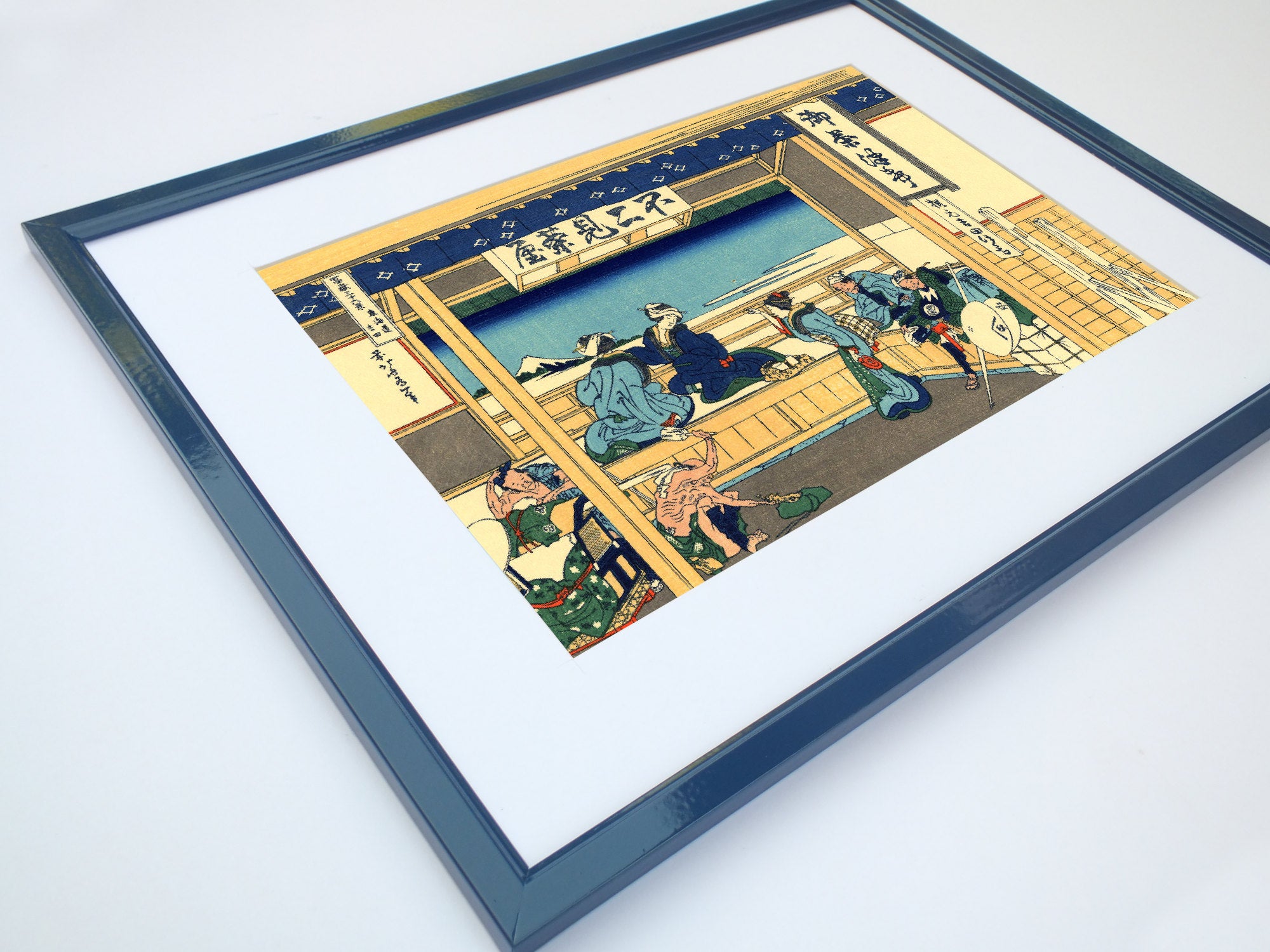
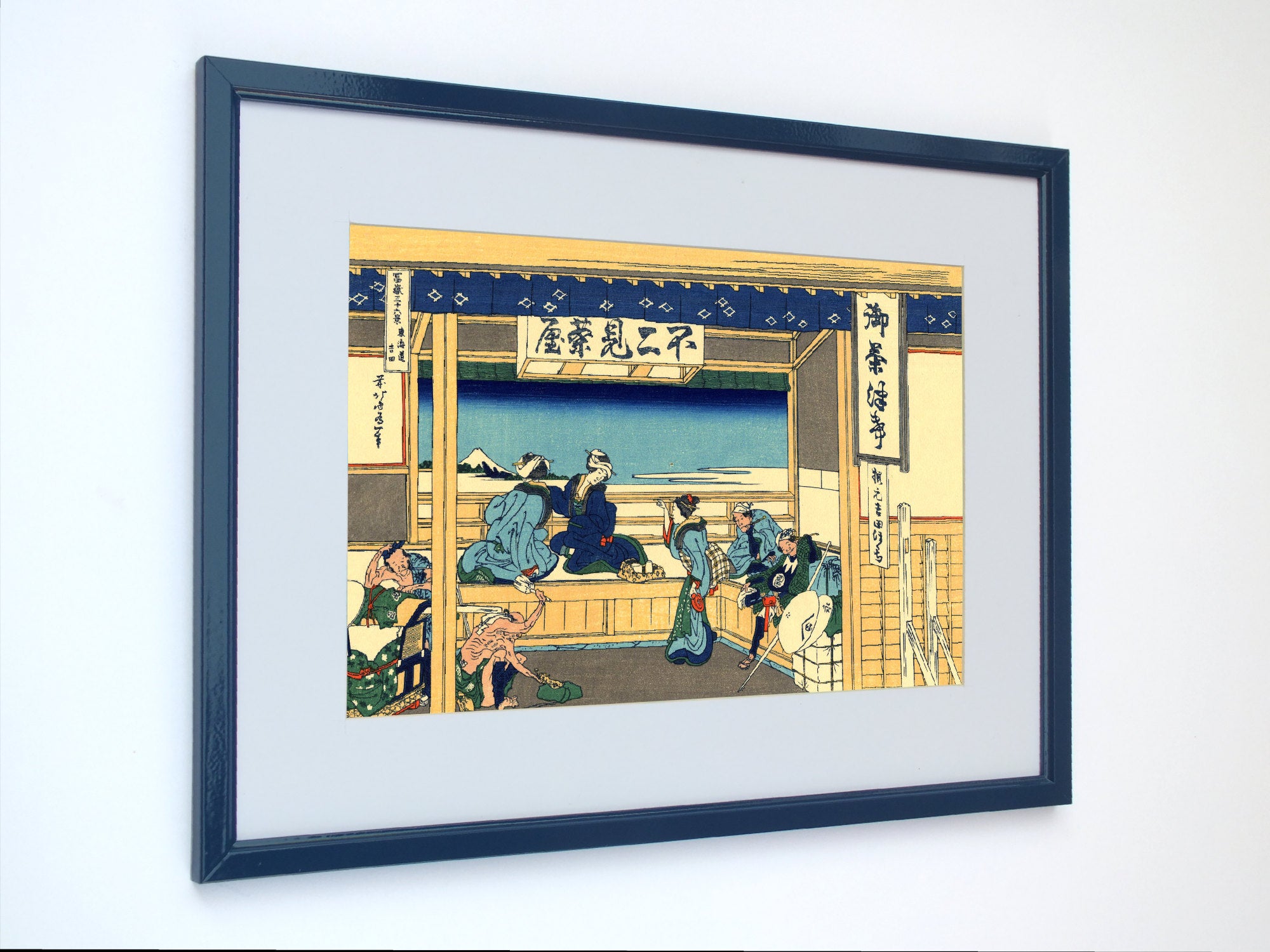
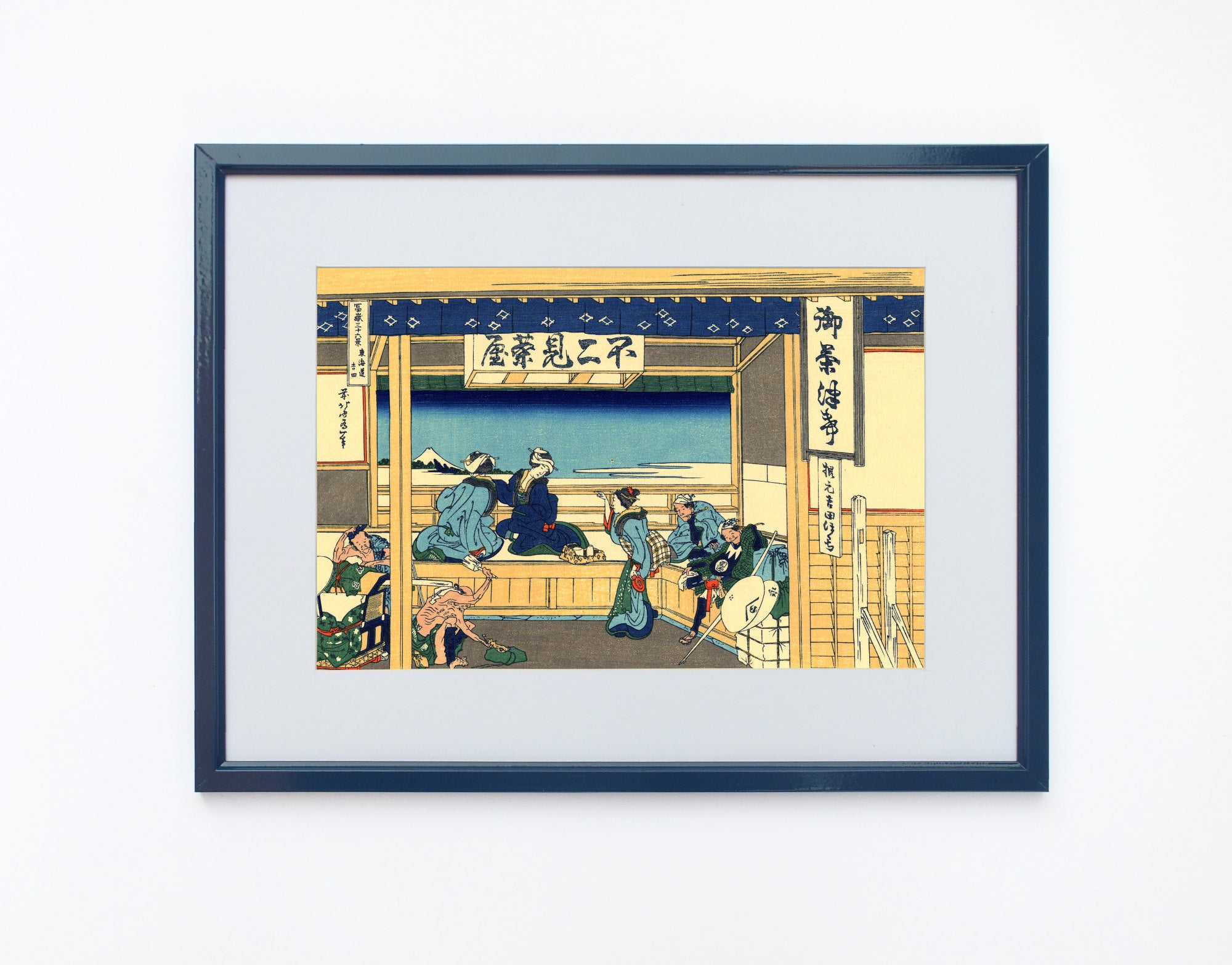
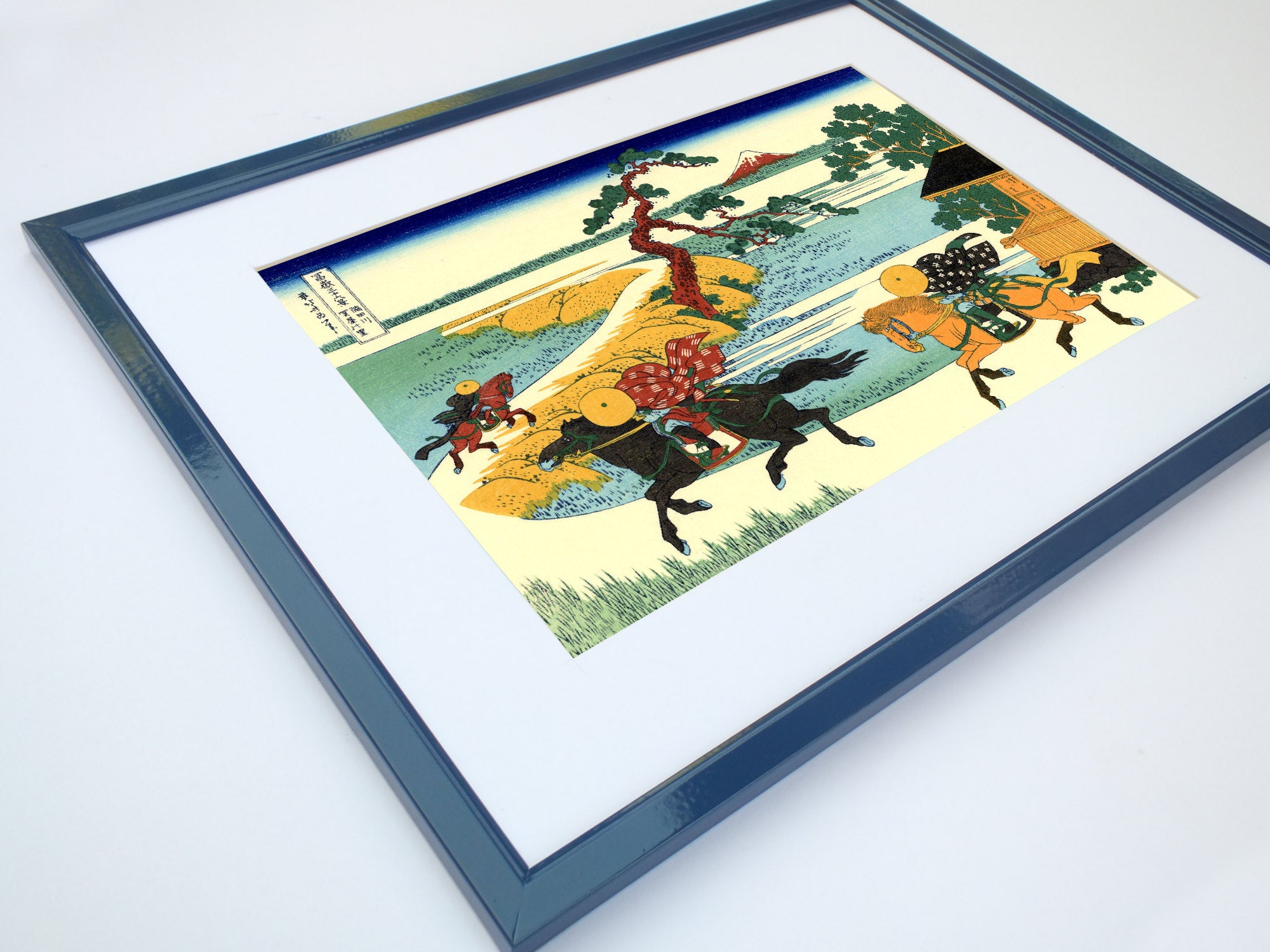
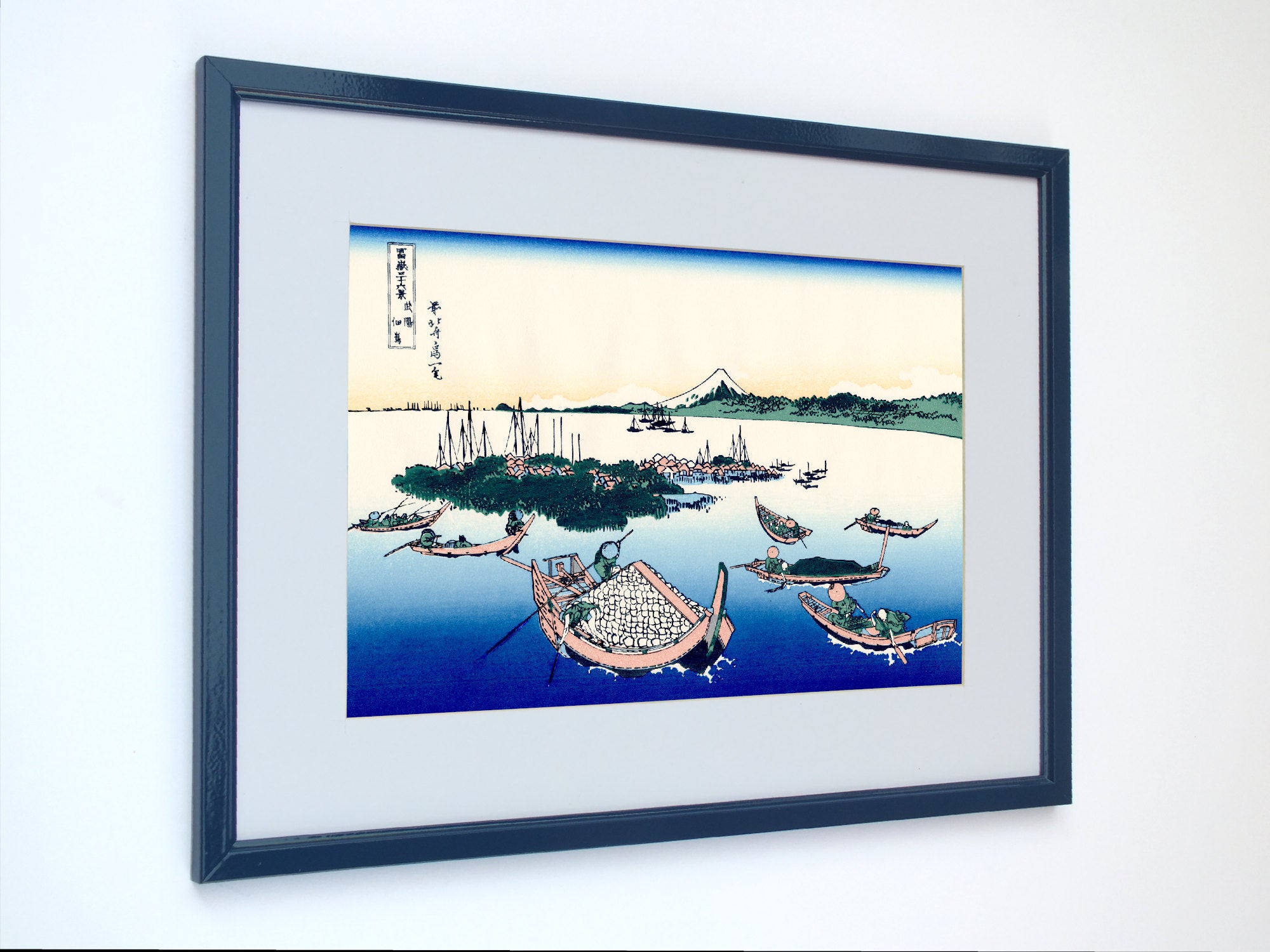
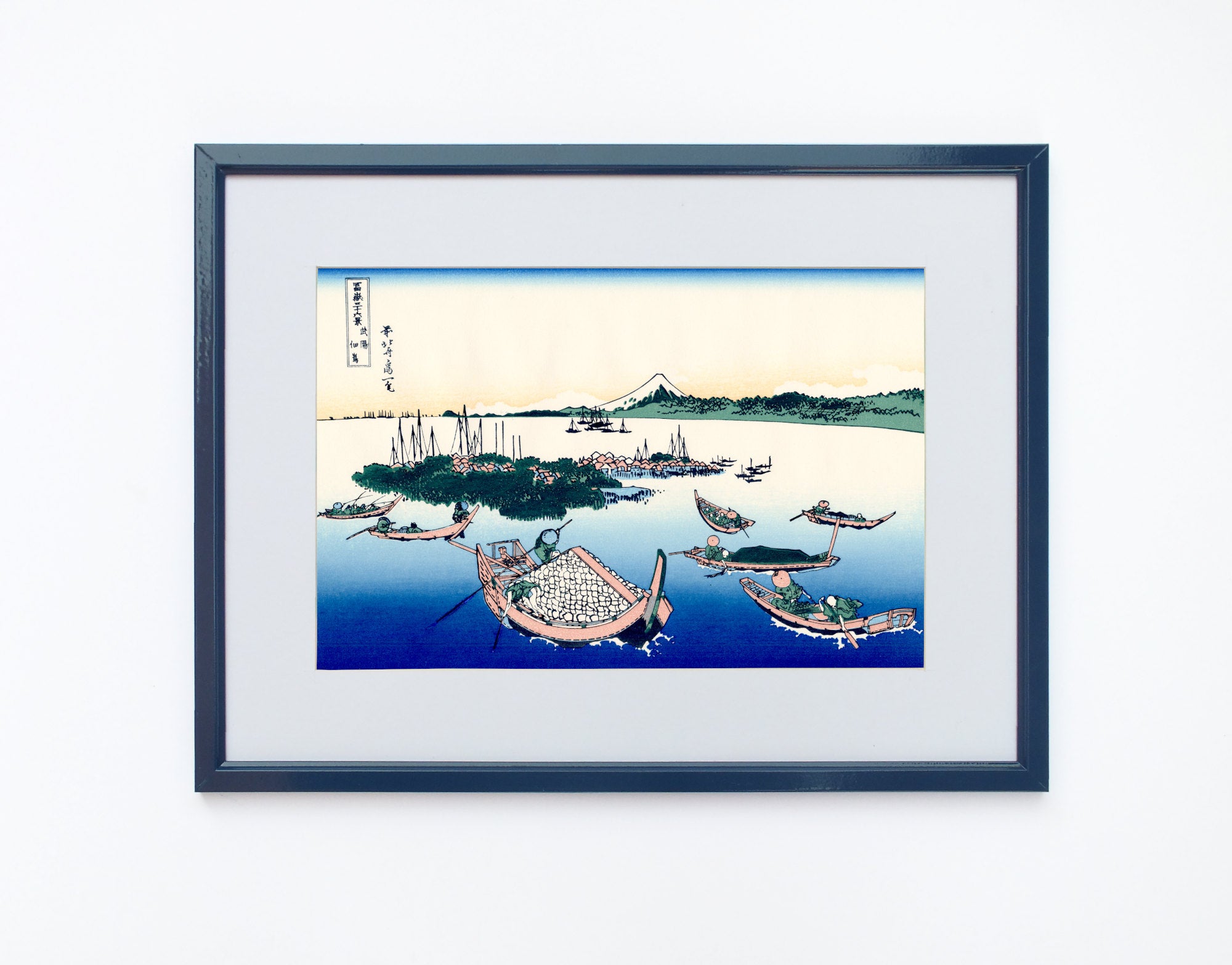
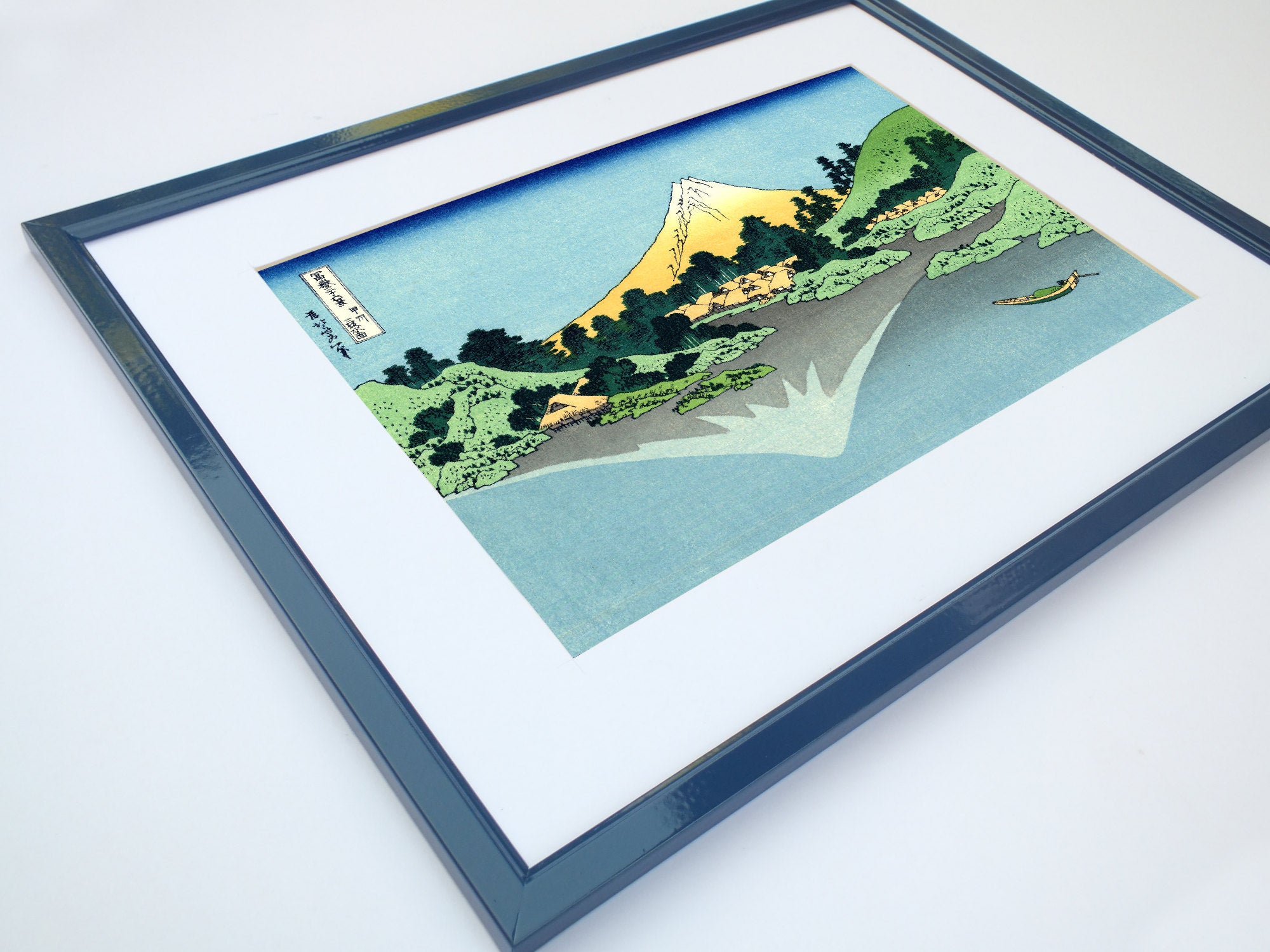
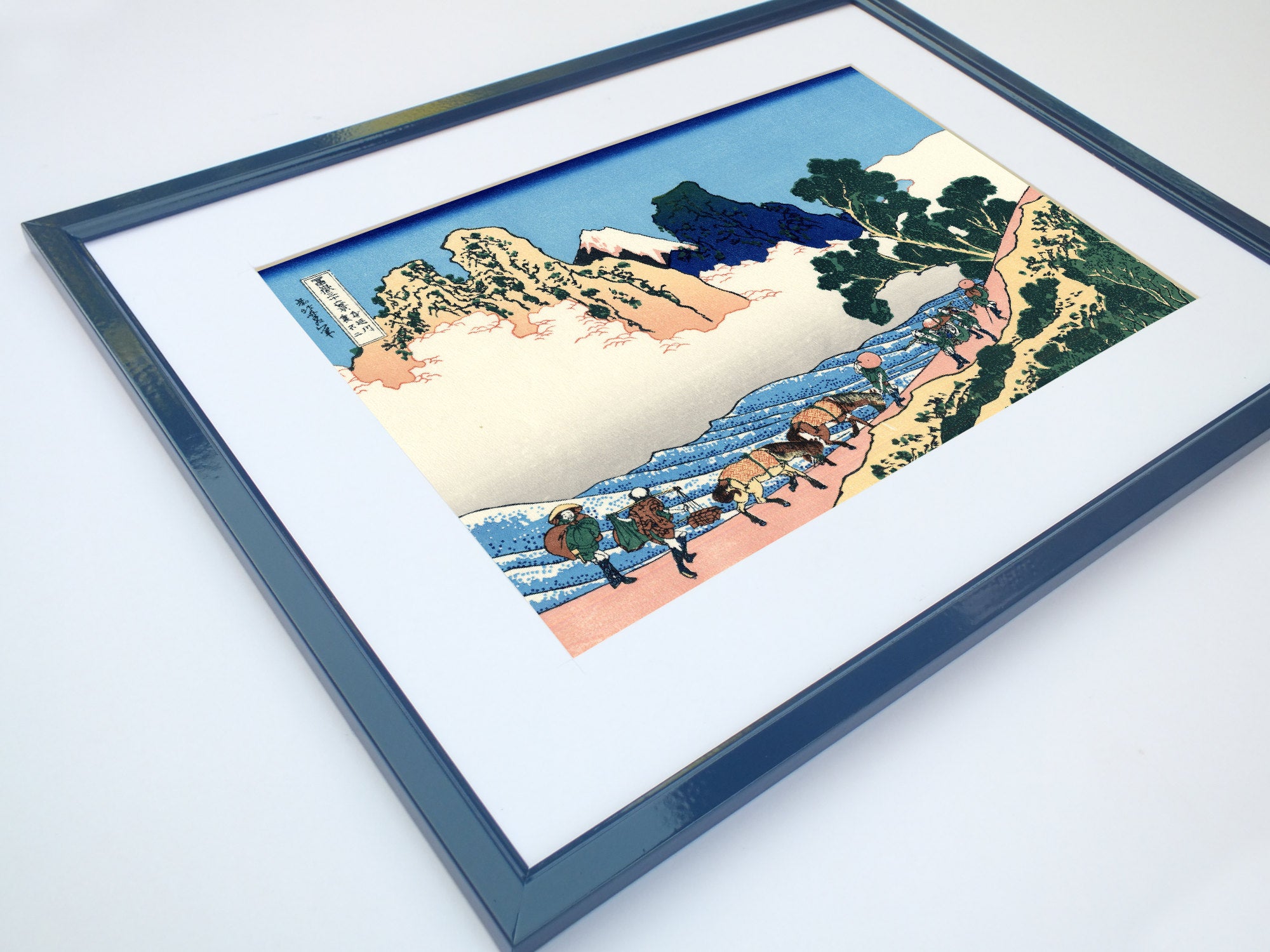
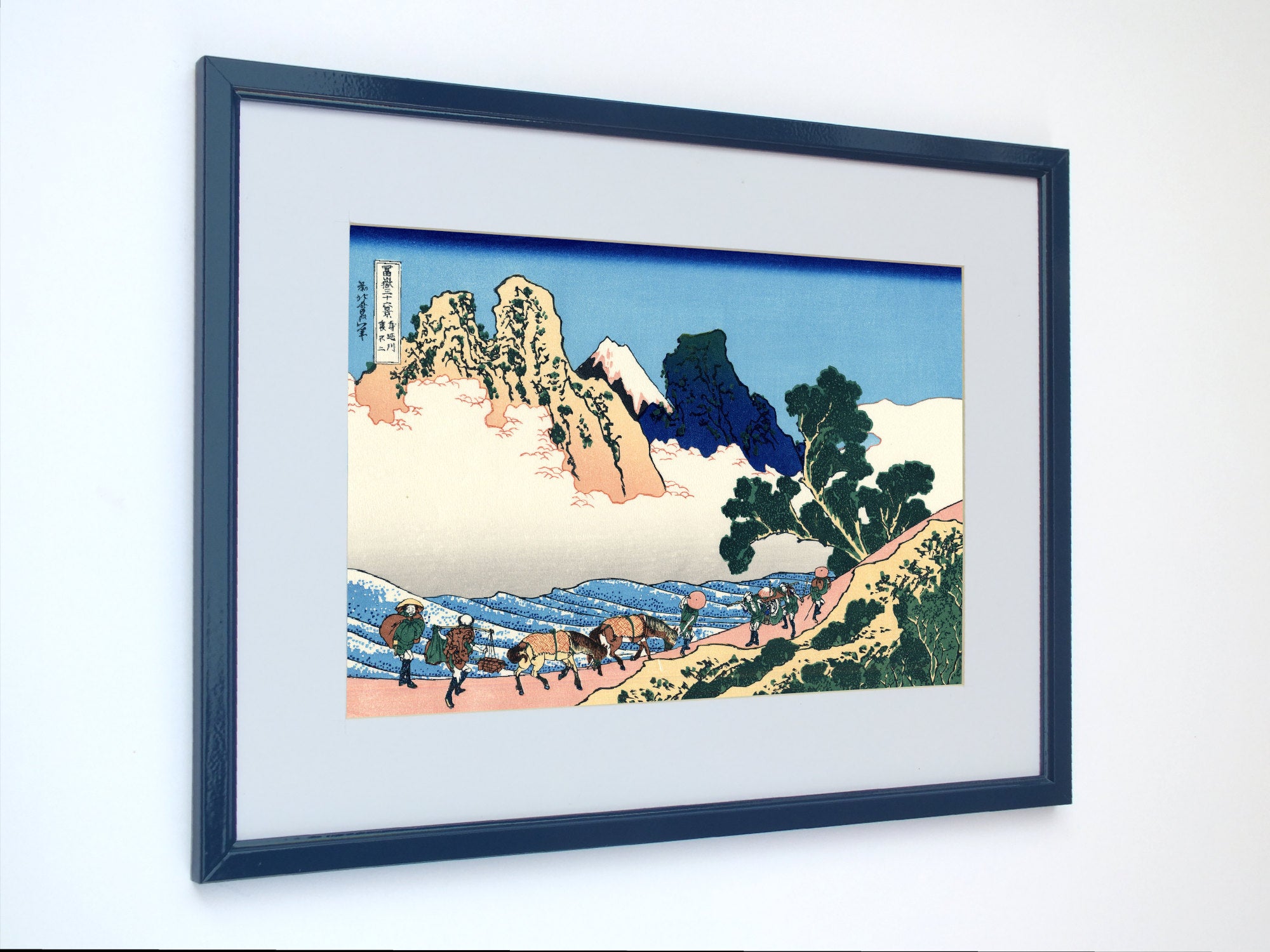
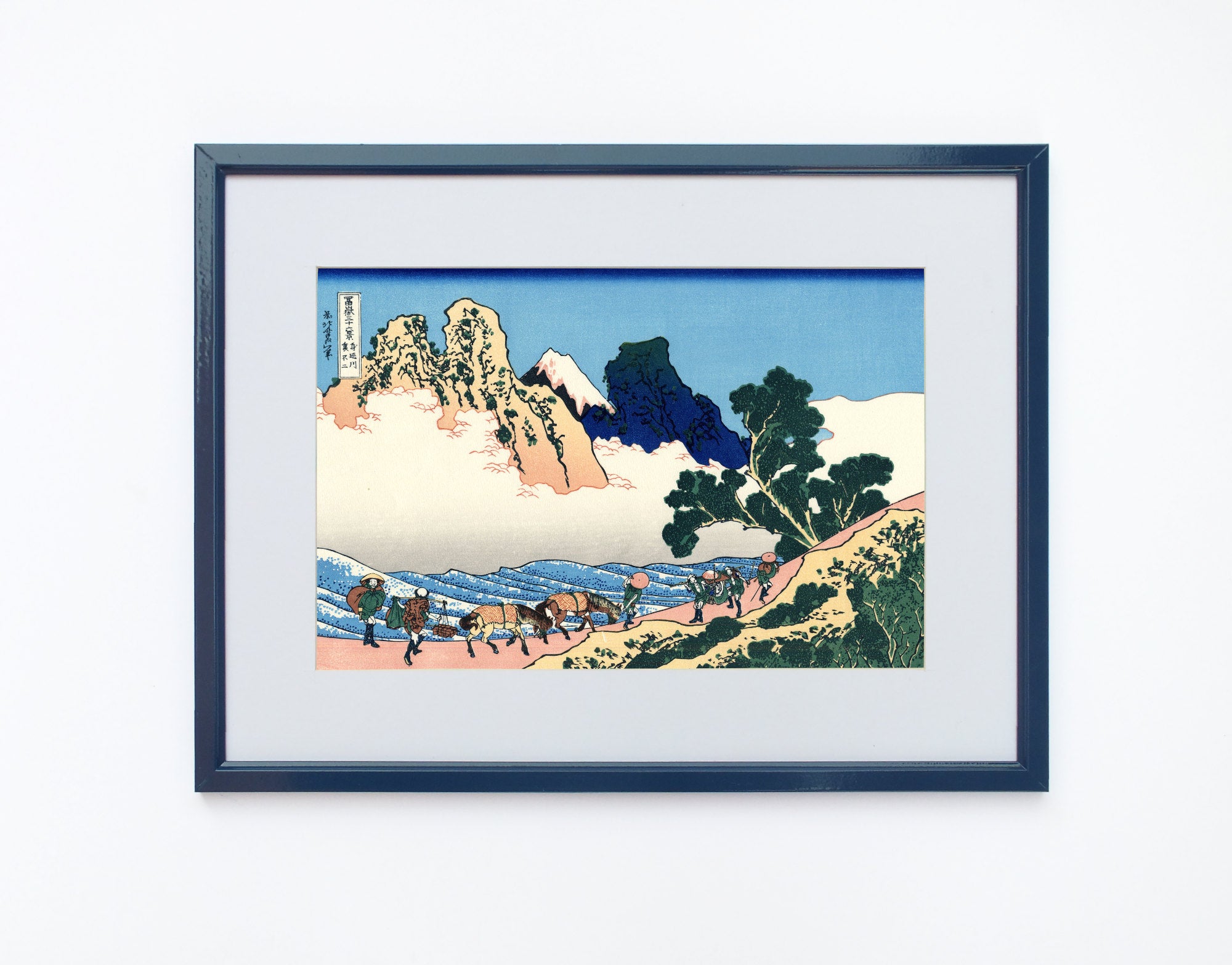
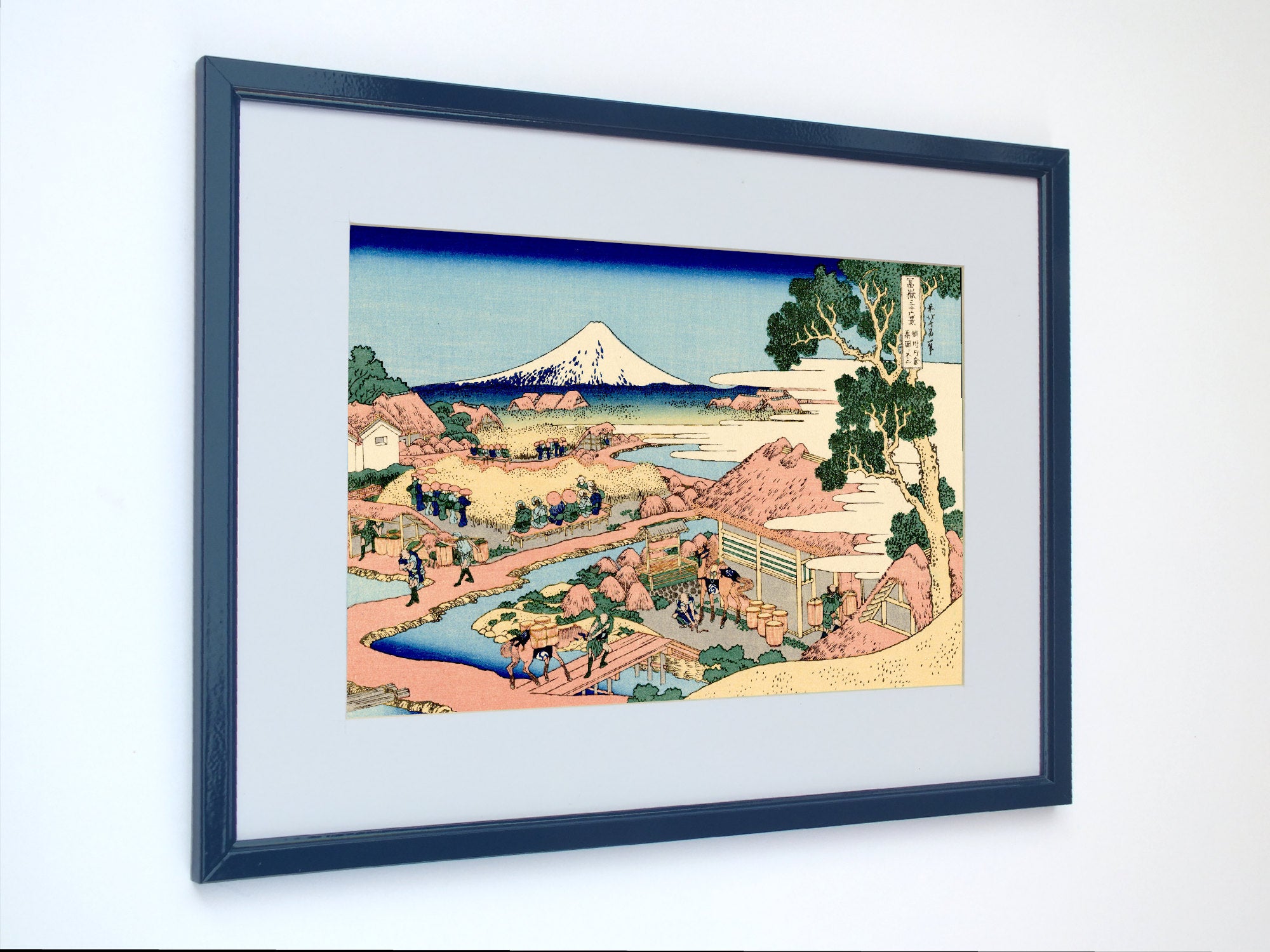
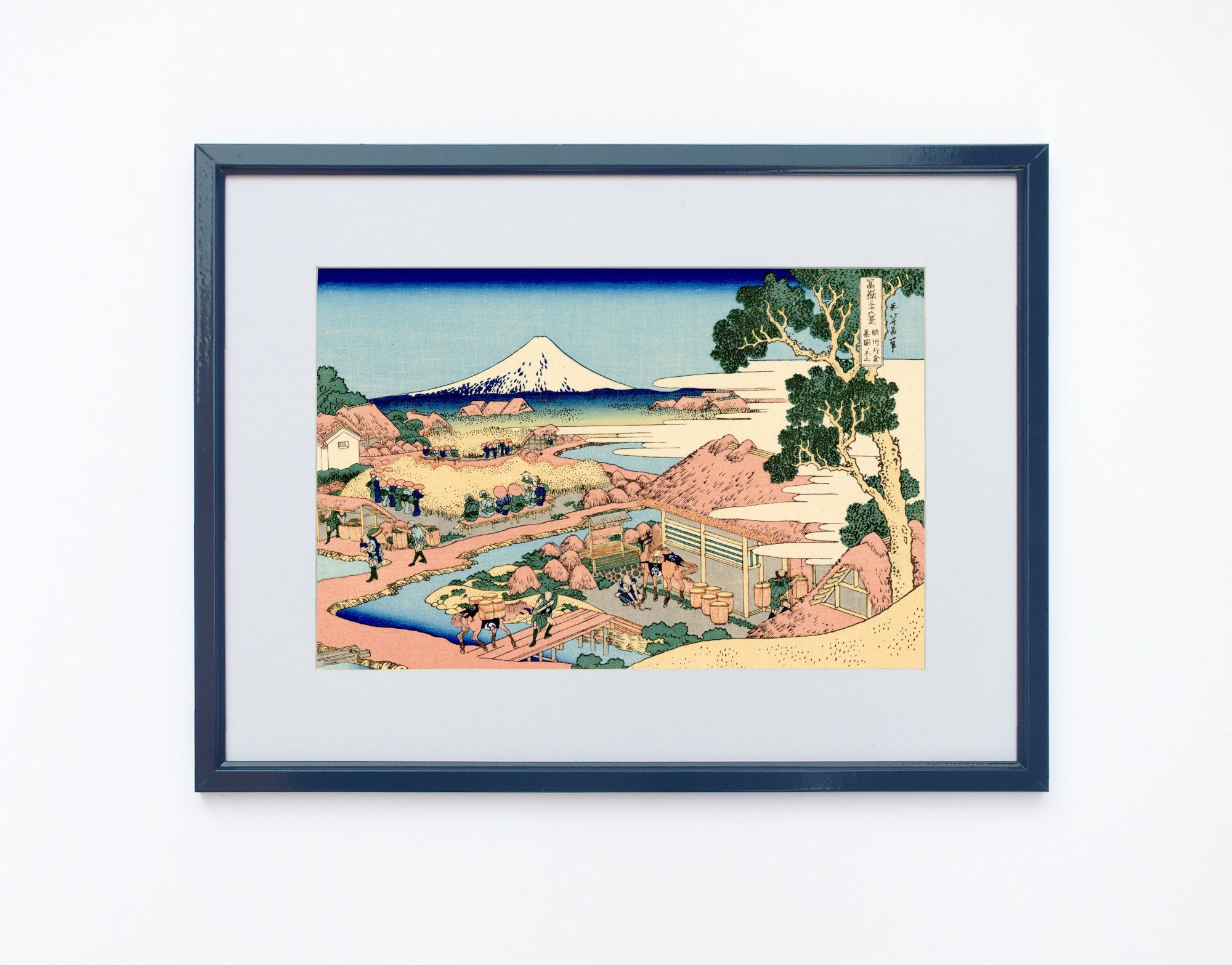
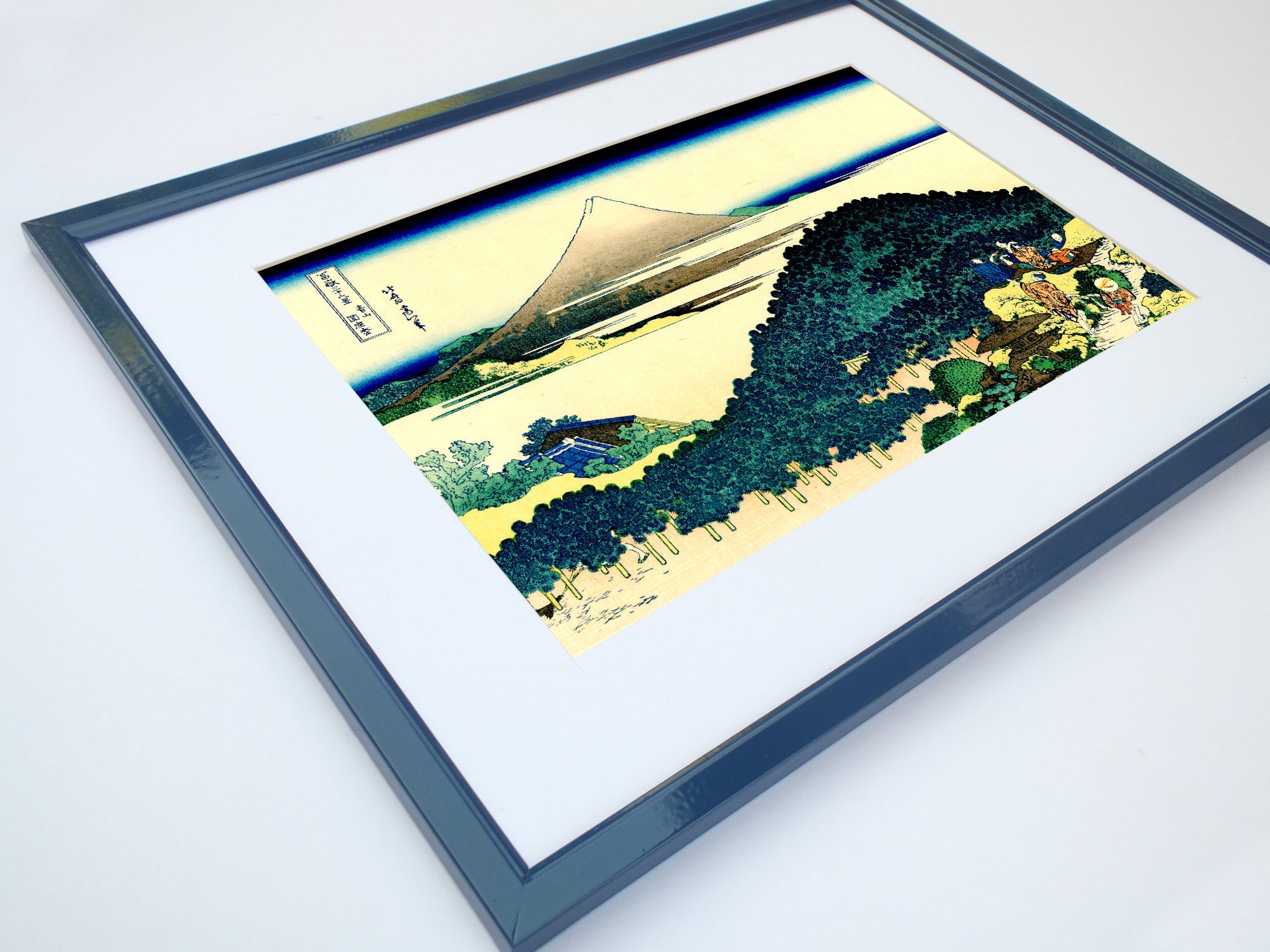
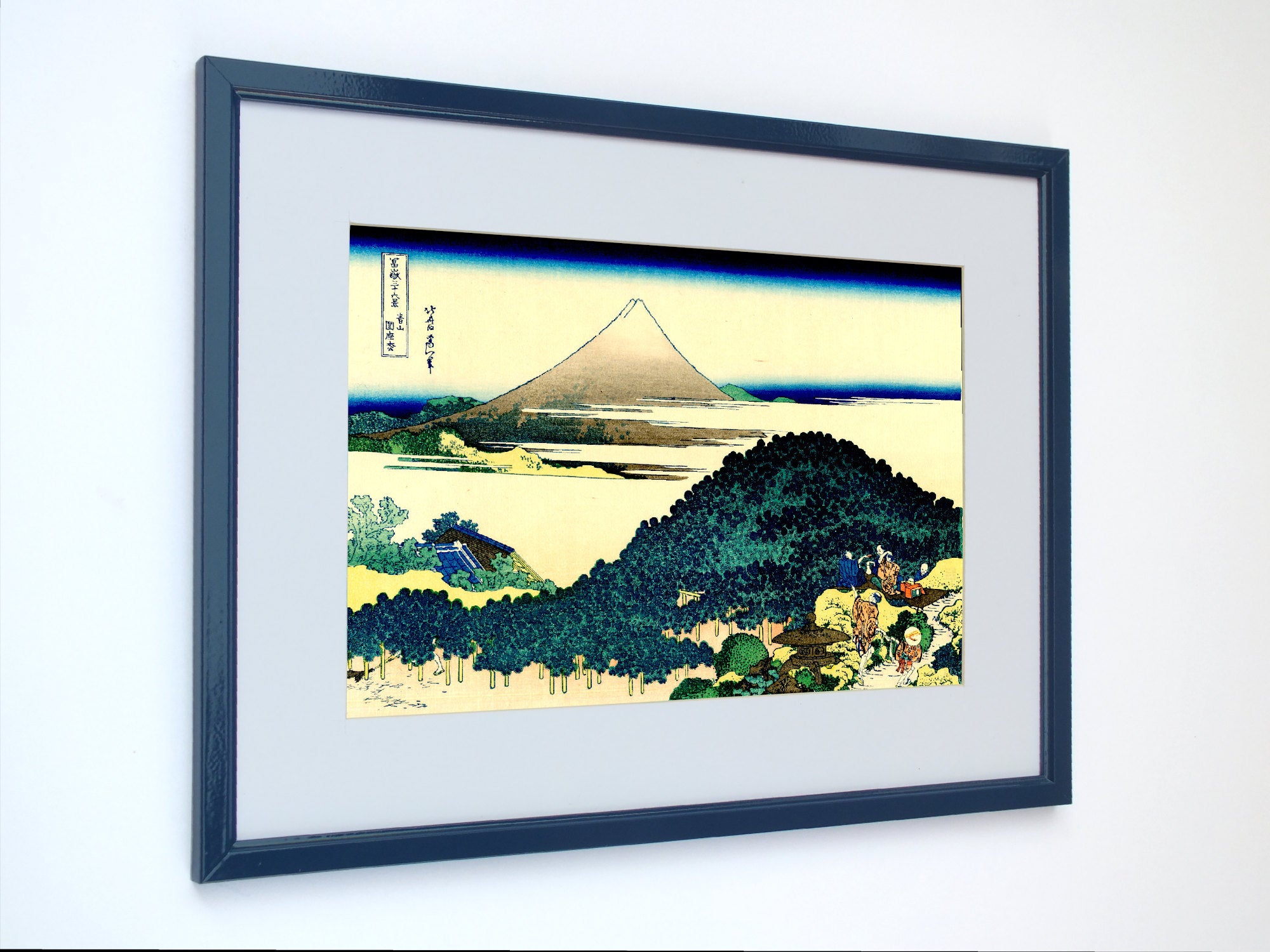
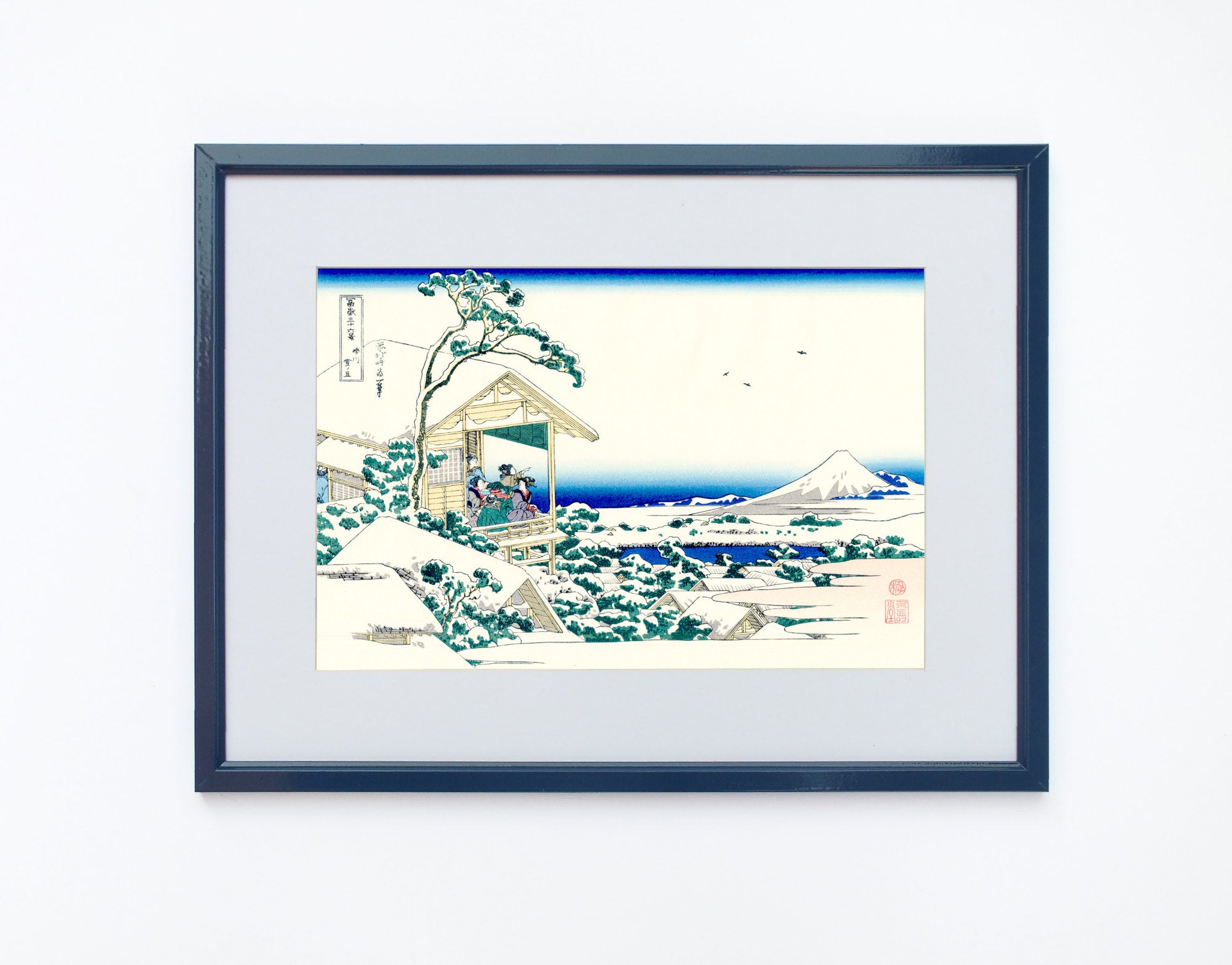
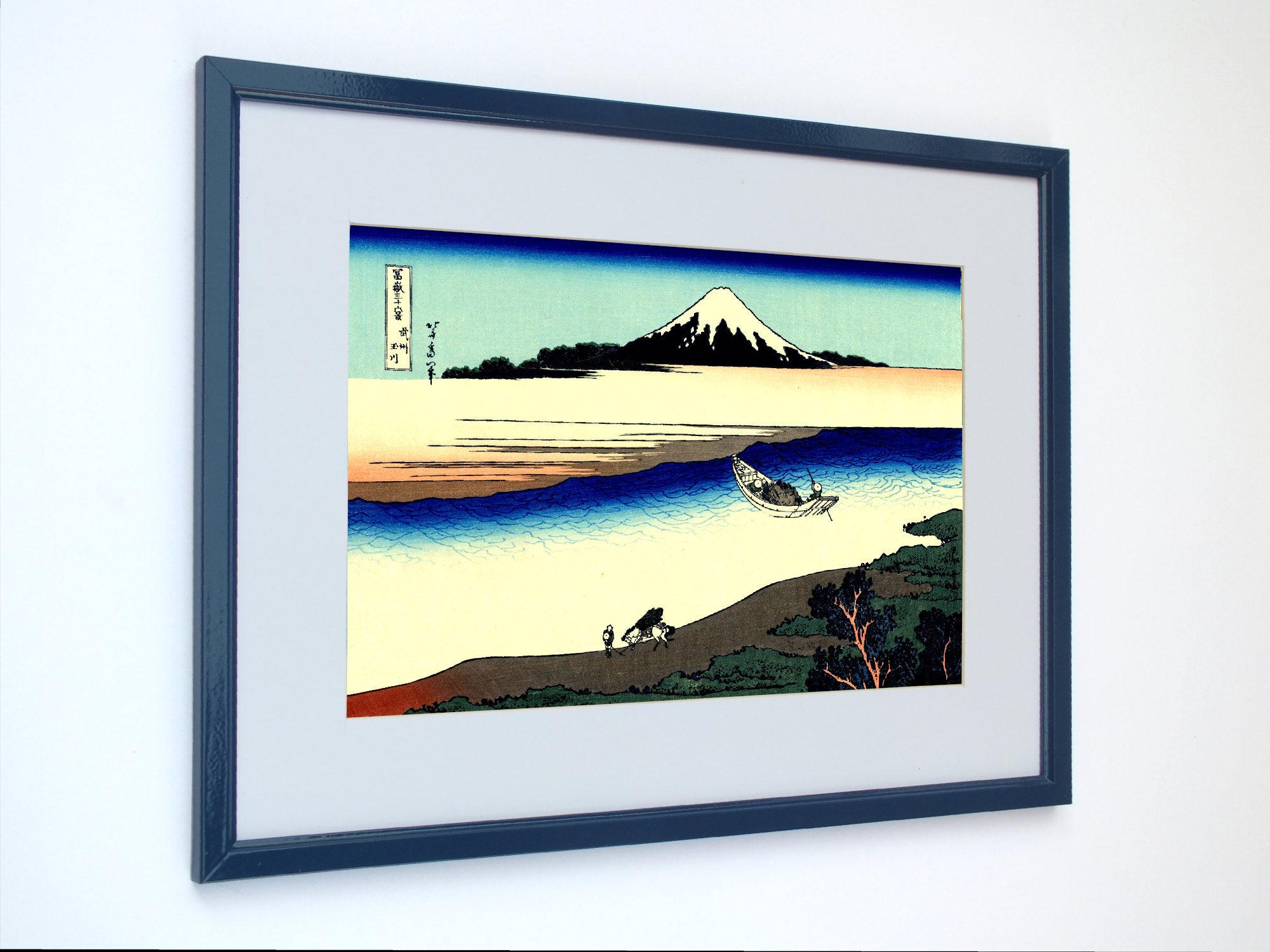
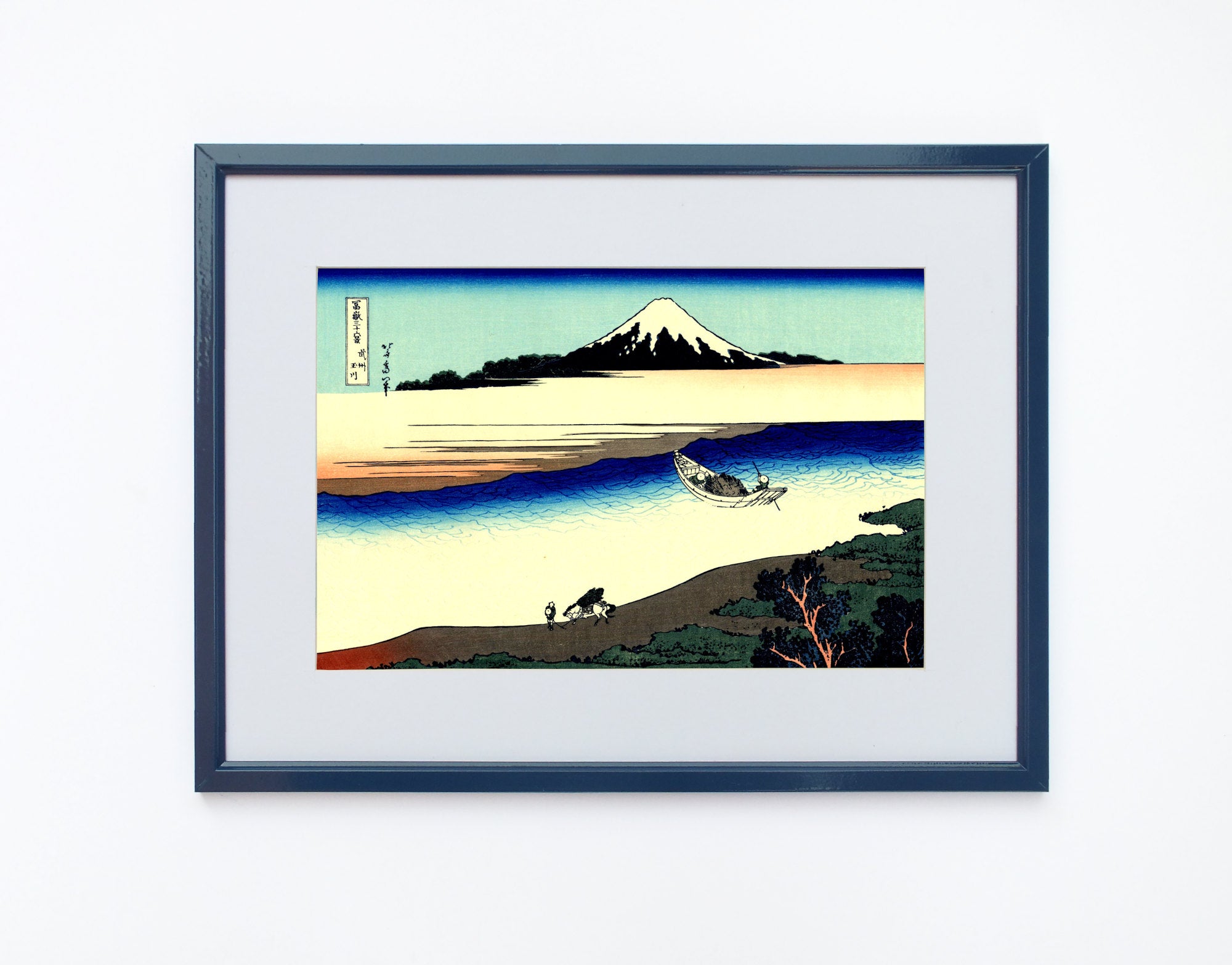
Black, natural wood or dark-blue frames can reinforce the graphic character of the prints, while white mounts give each landscape visual space.
Thirty-Six Views Prints for Modern Interiors
Hokusai's Mount Fuji landscapes work particularly well in contemporary and Scandinavian interiors.
Their strong outlines and relatively flat areas of colour remain clear against simple neutral walls.
Blue-dominated prints complement white, pale grey and natural timber, while Red Fuji can introduce a warmer accent.
The horizontal format suits placement above sofas, beds, sideboards and console tables.
A single large print can function as a statement work, while sets of three or more are particularly effective for creating a Japanese-inspired gallery wall.
Fine Art Prints, Framed Prints and Canvas Panels
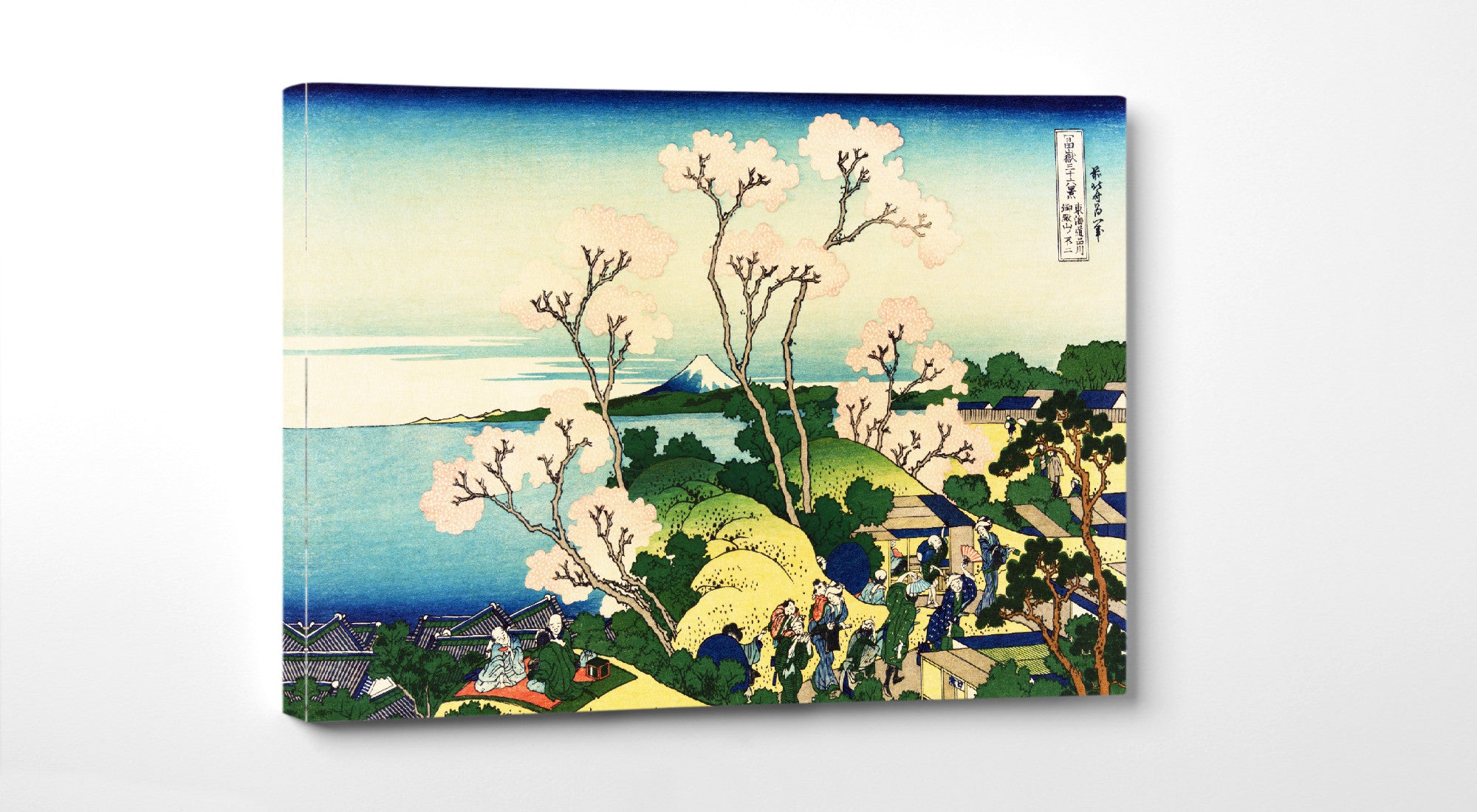
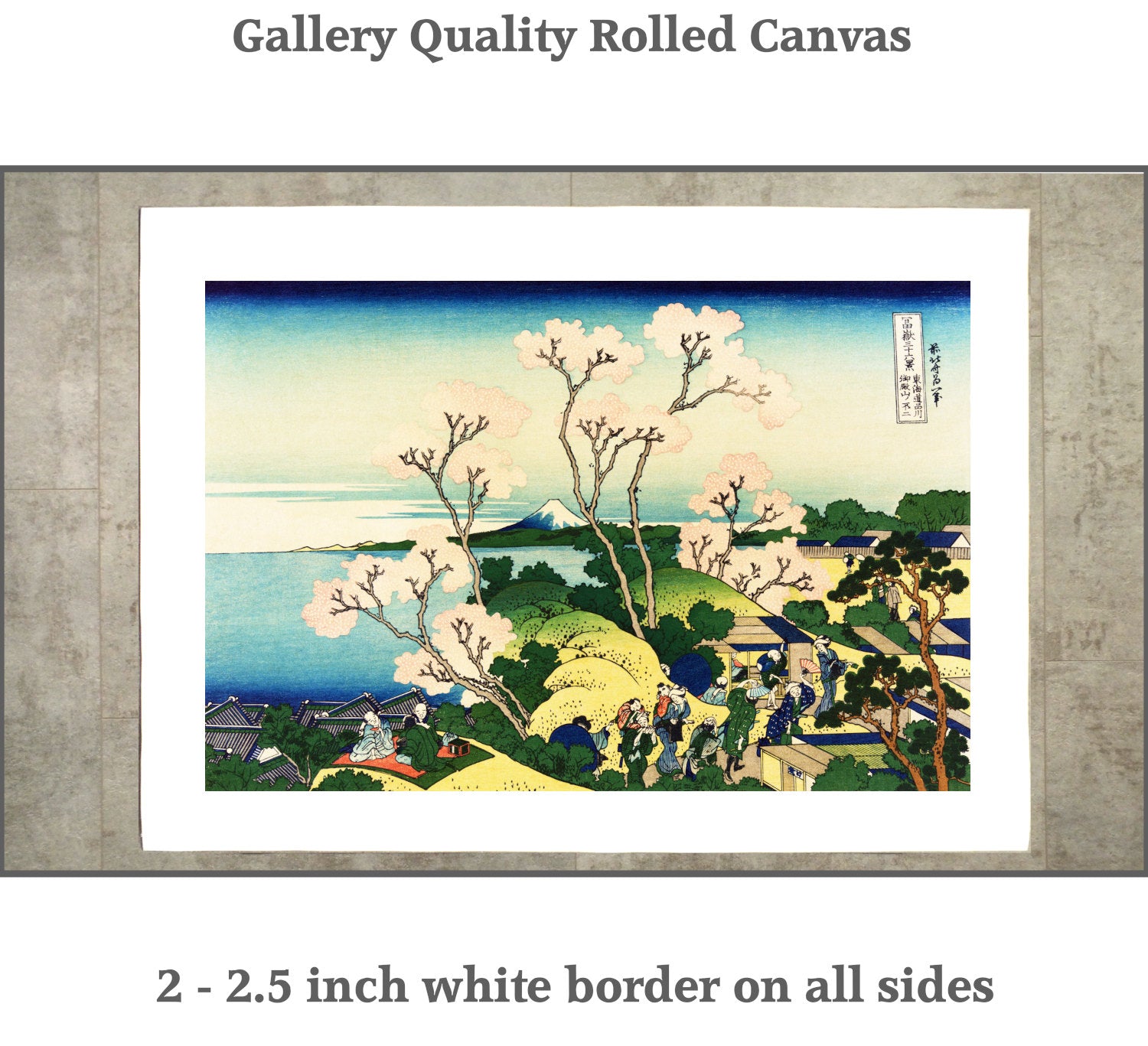
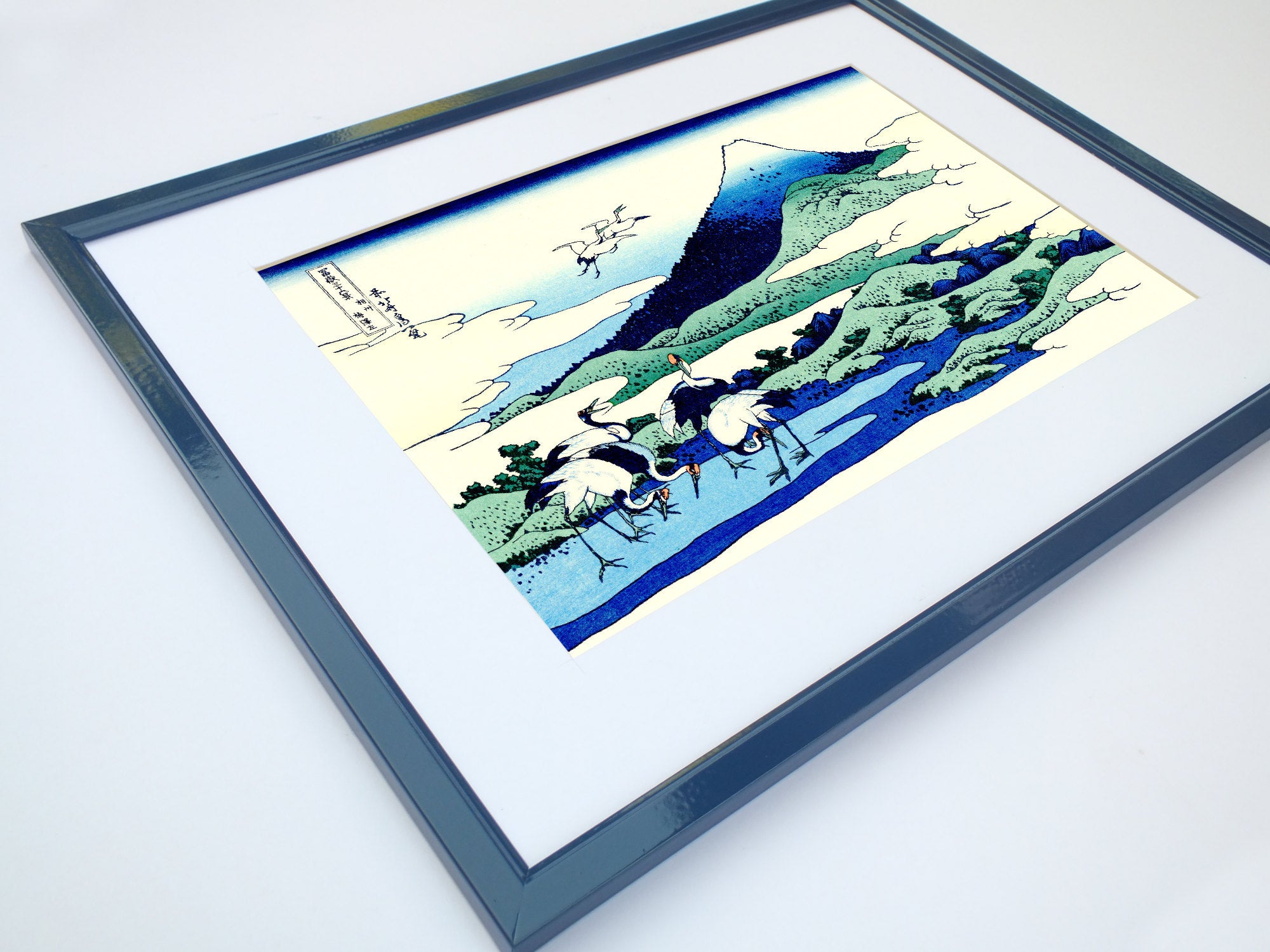
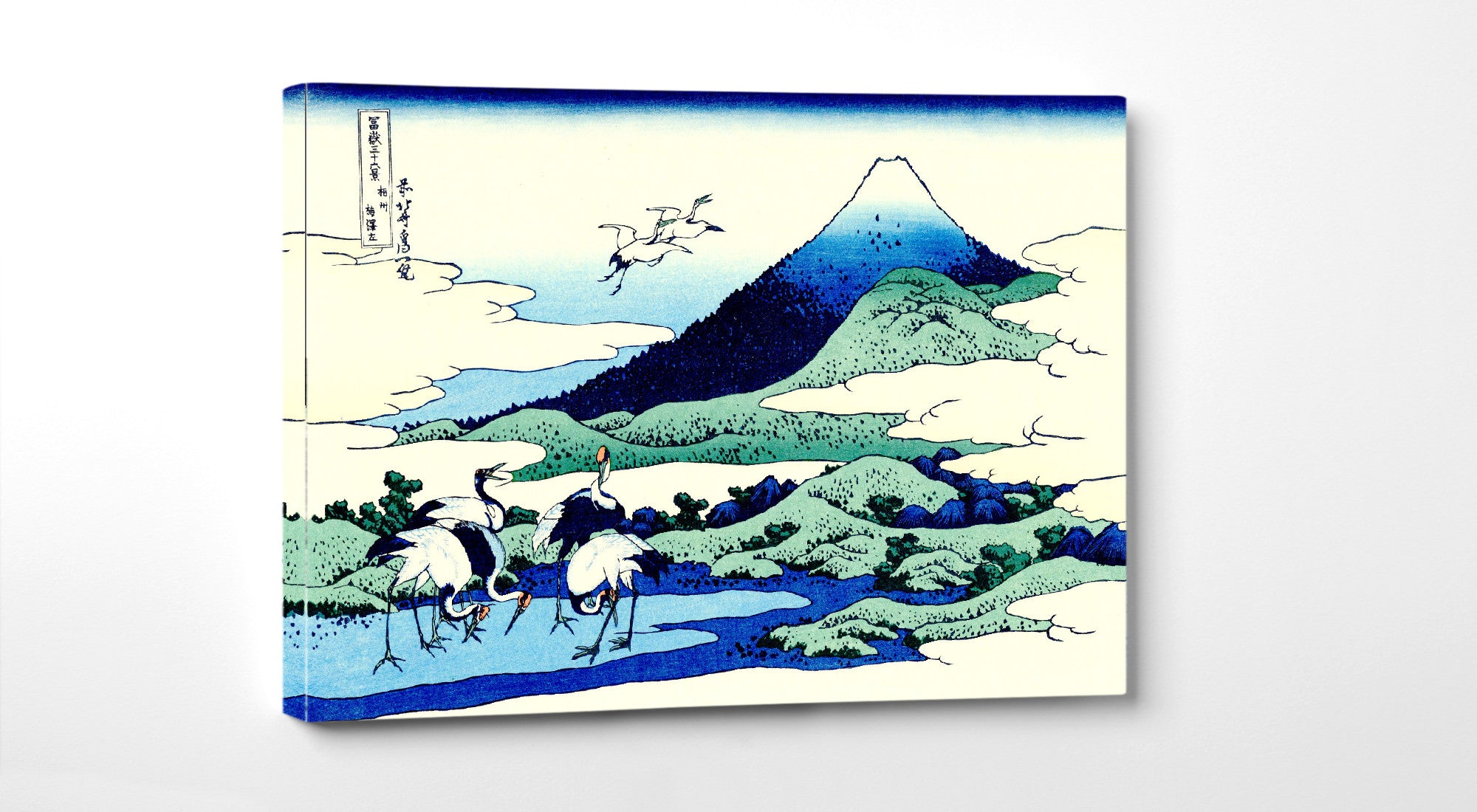
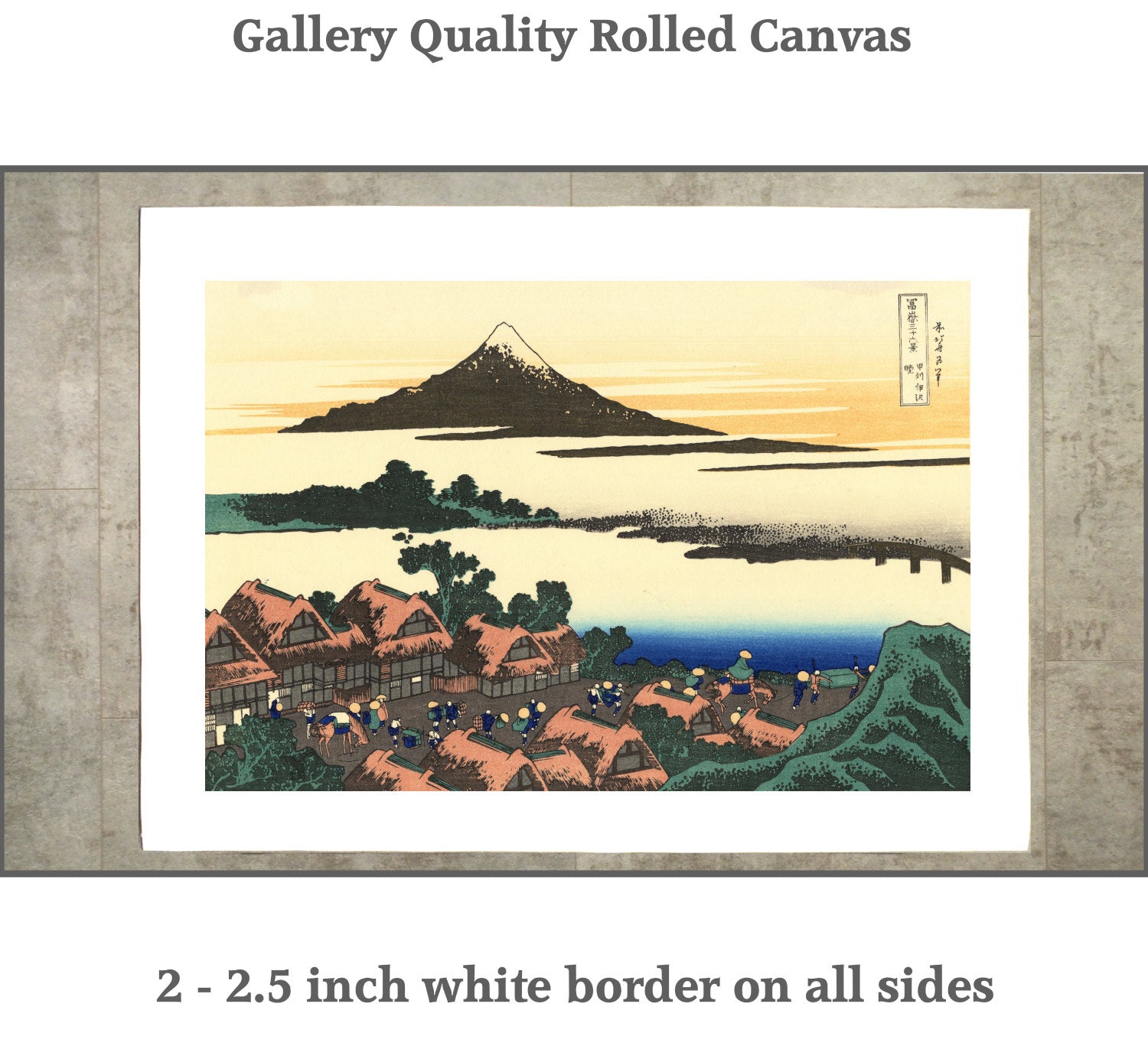
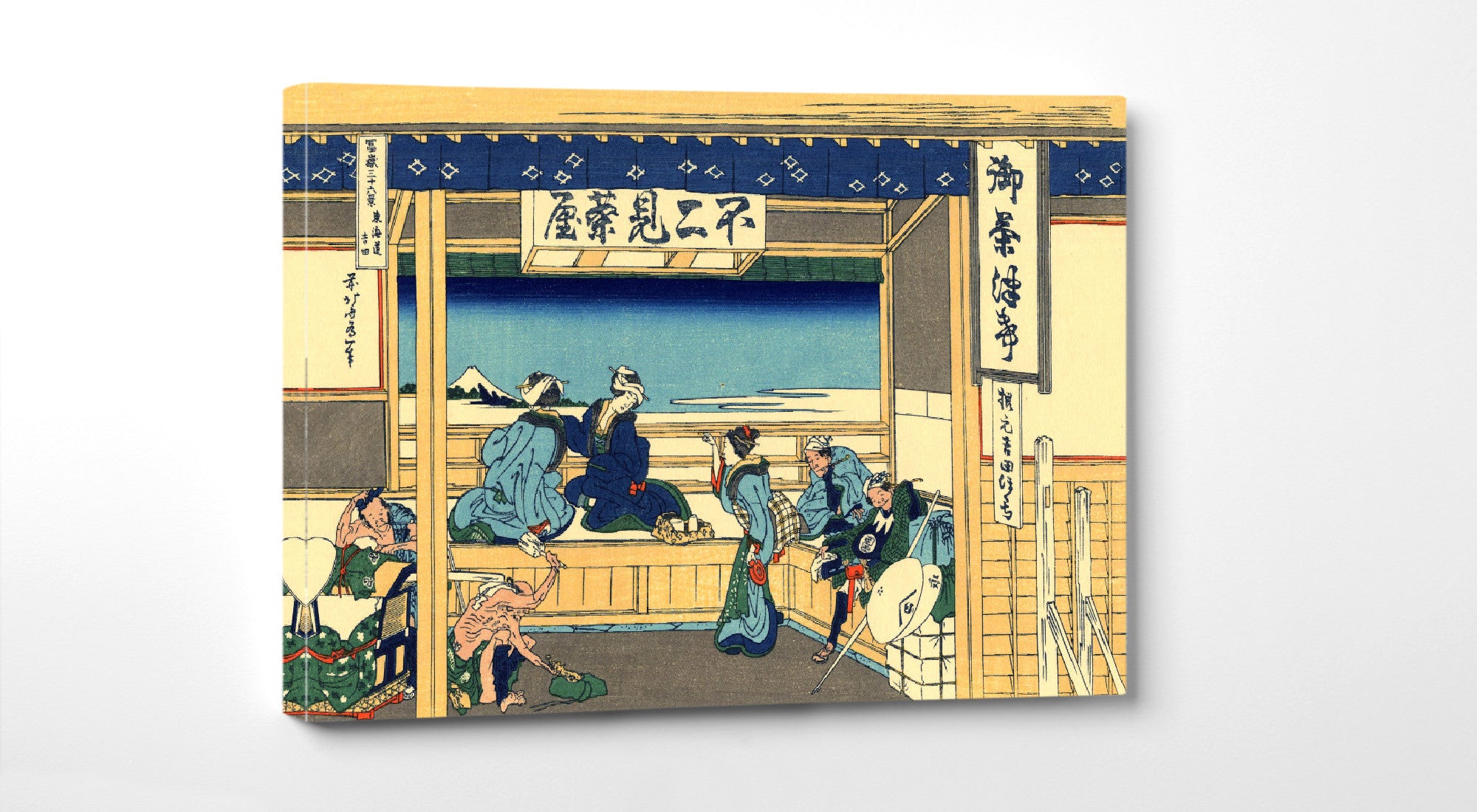
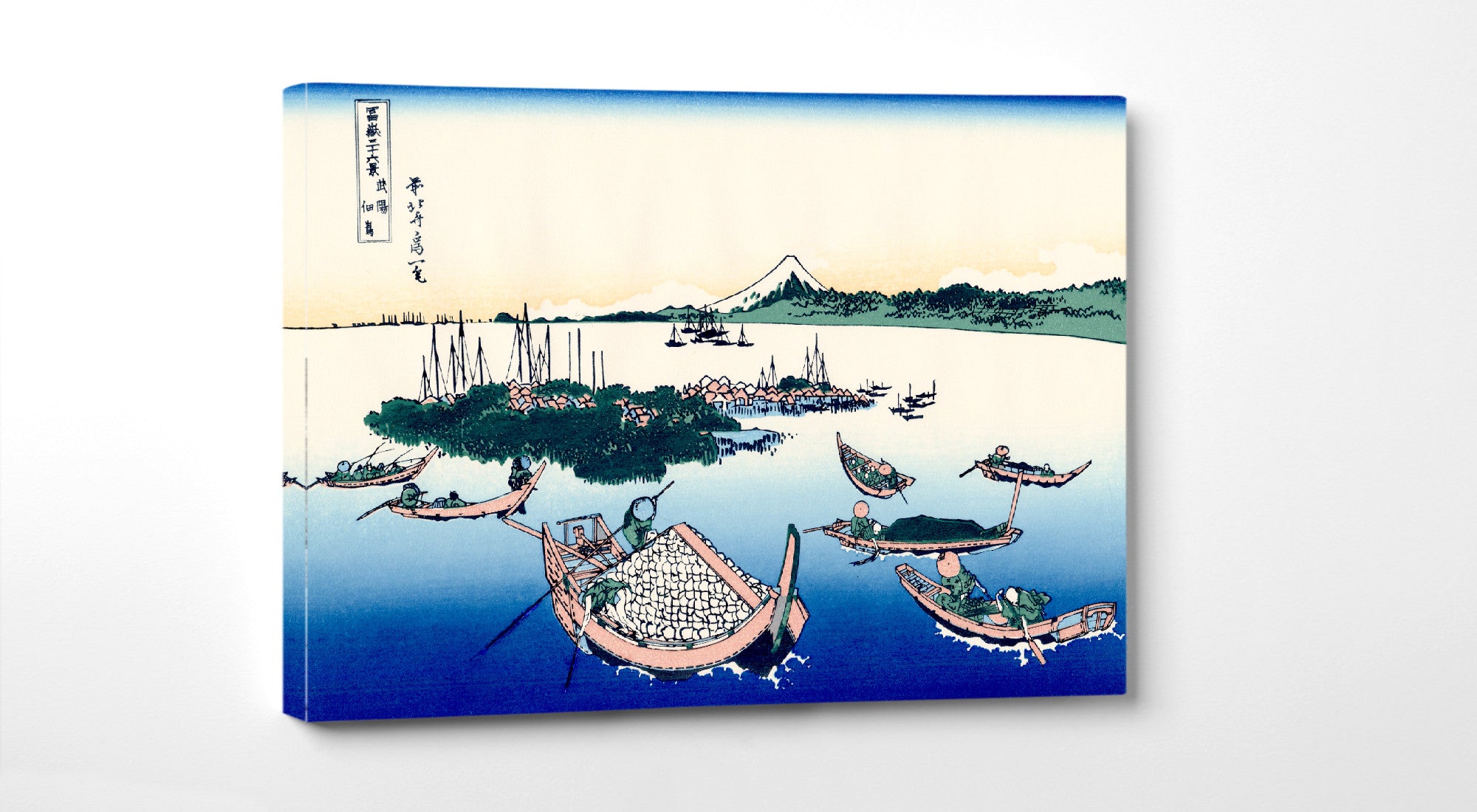
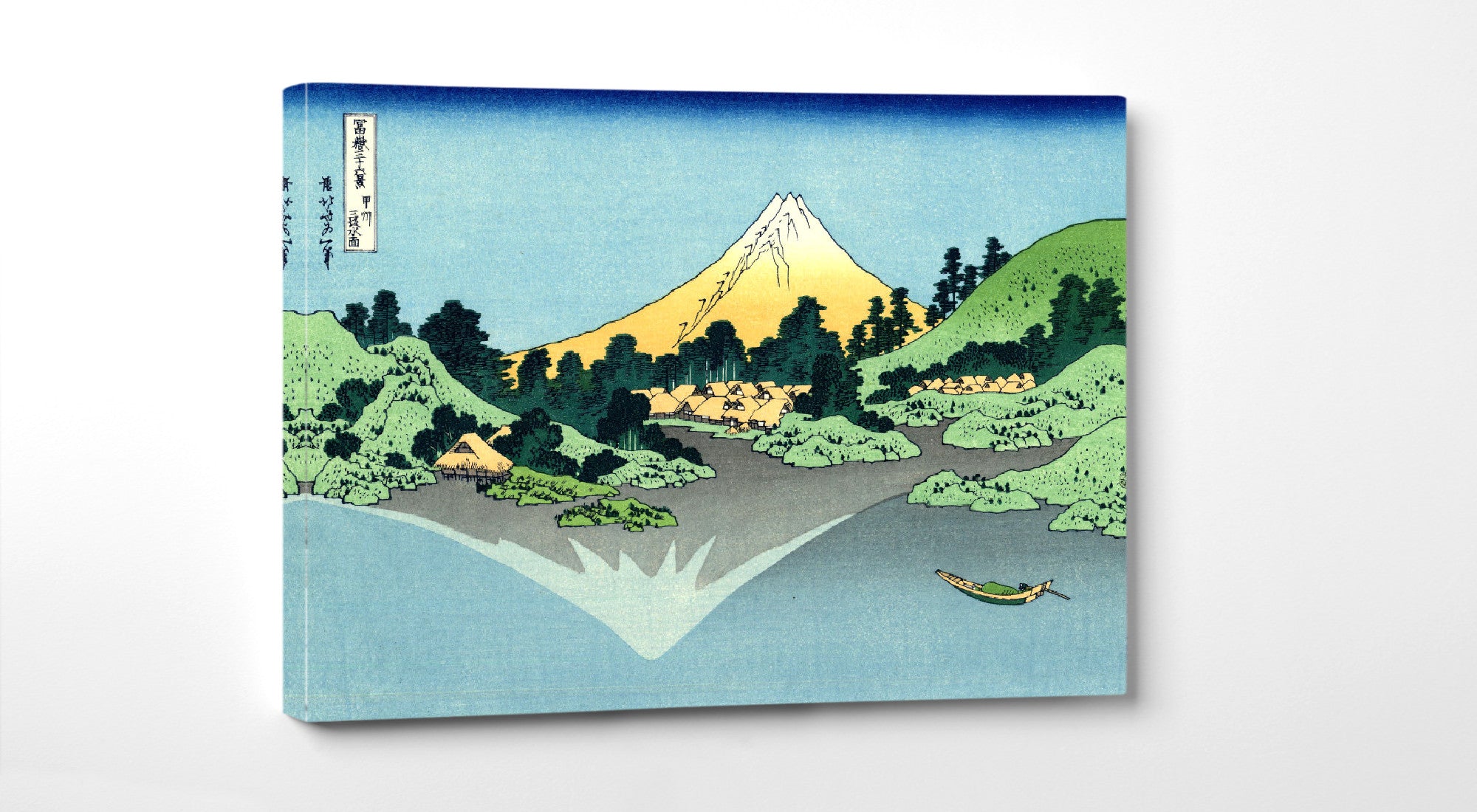
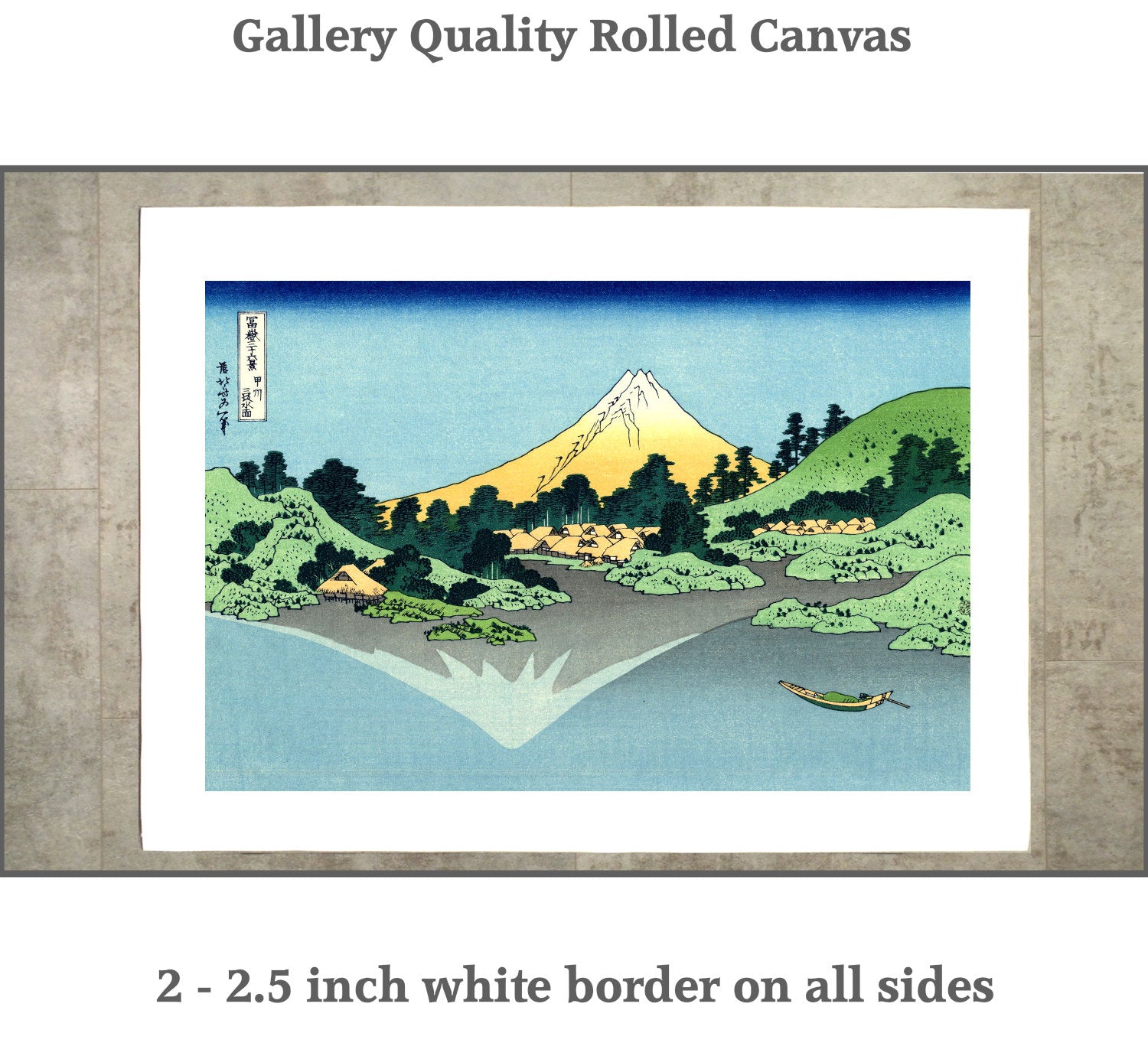
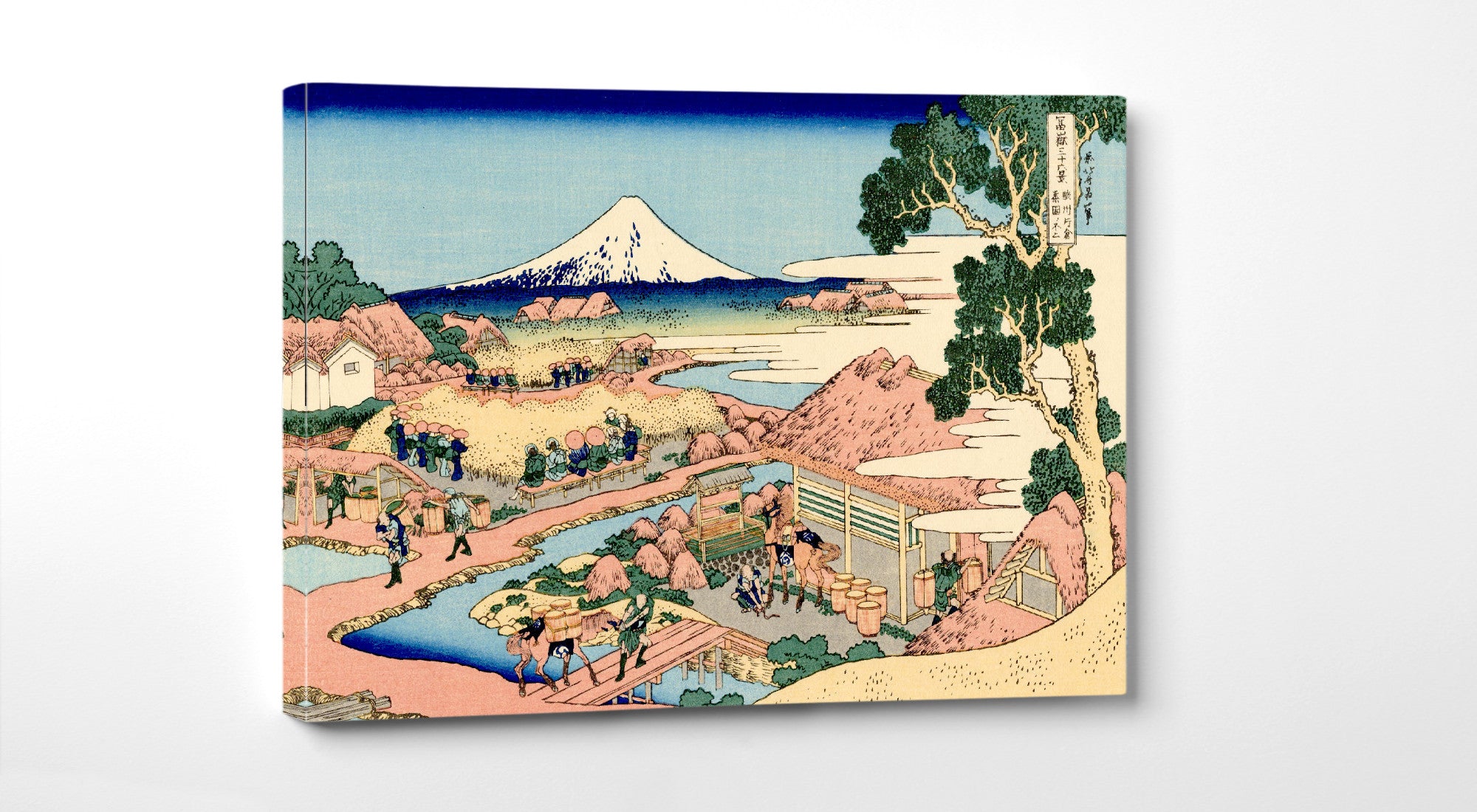
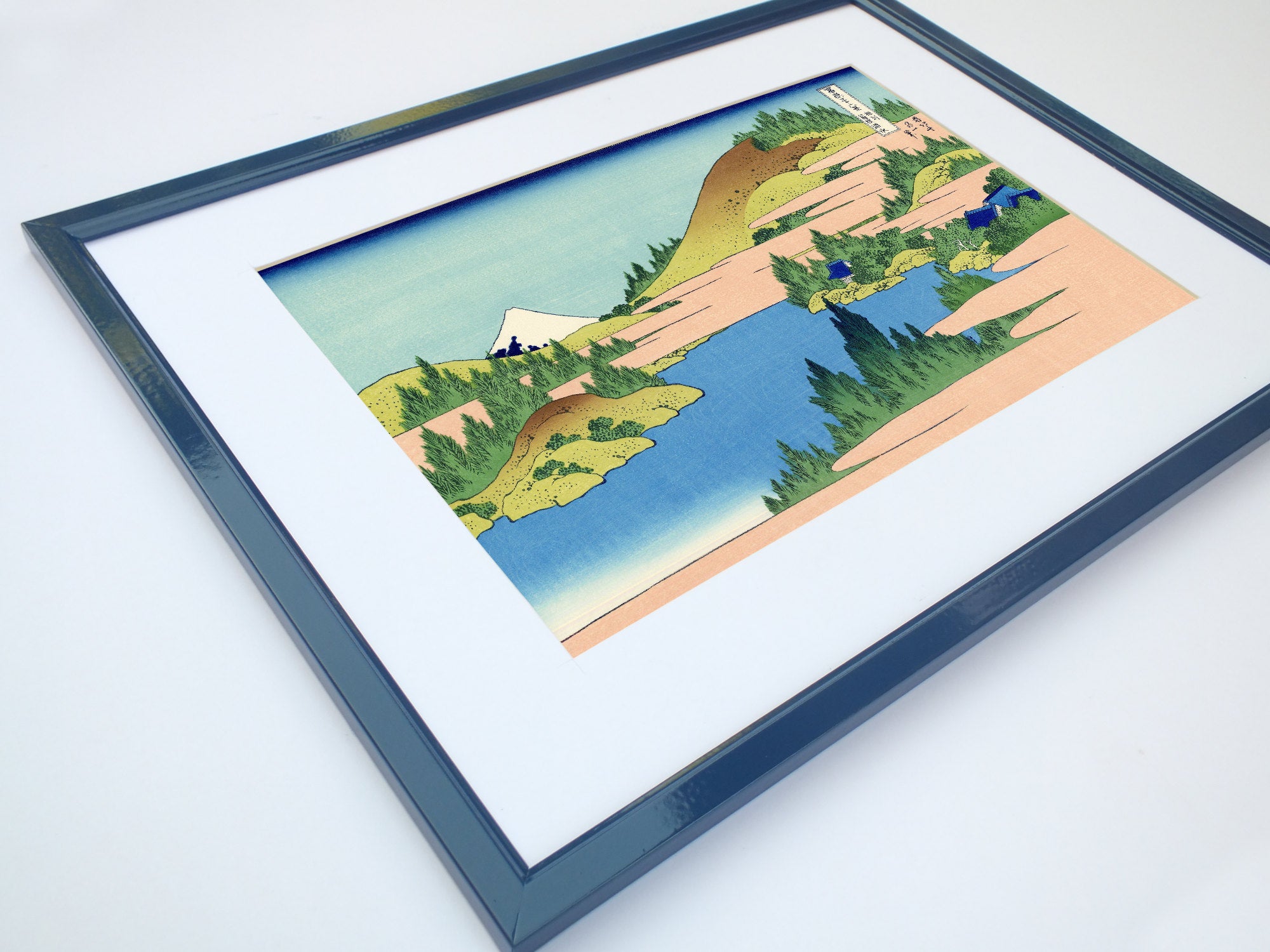
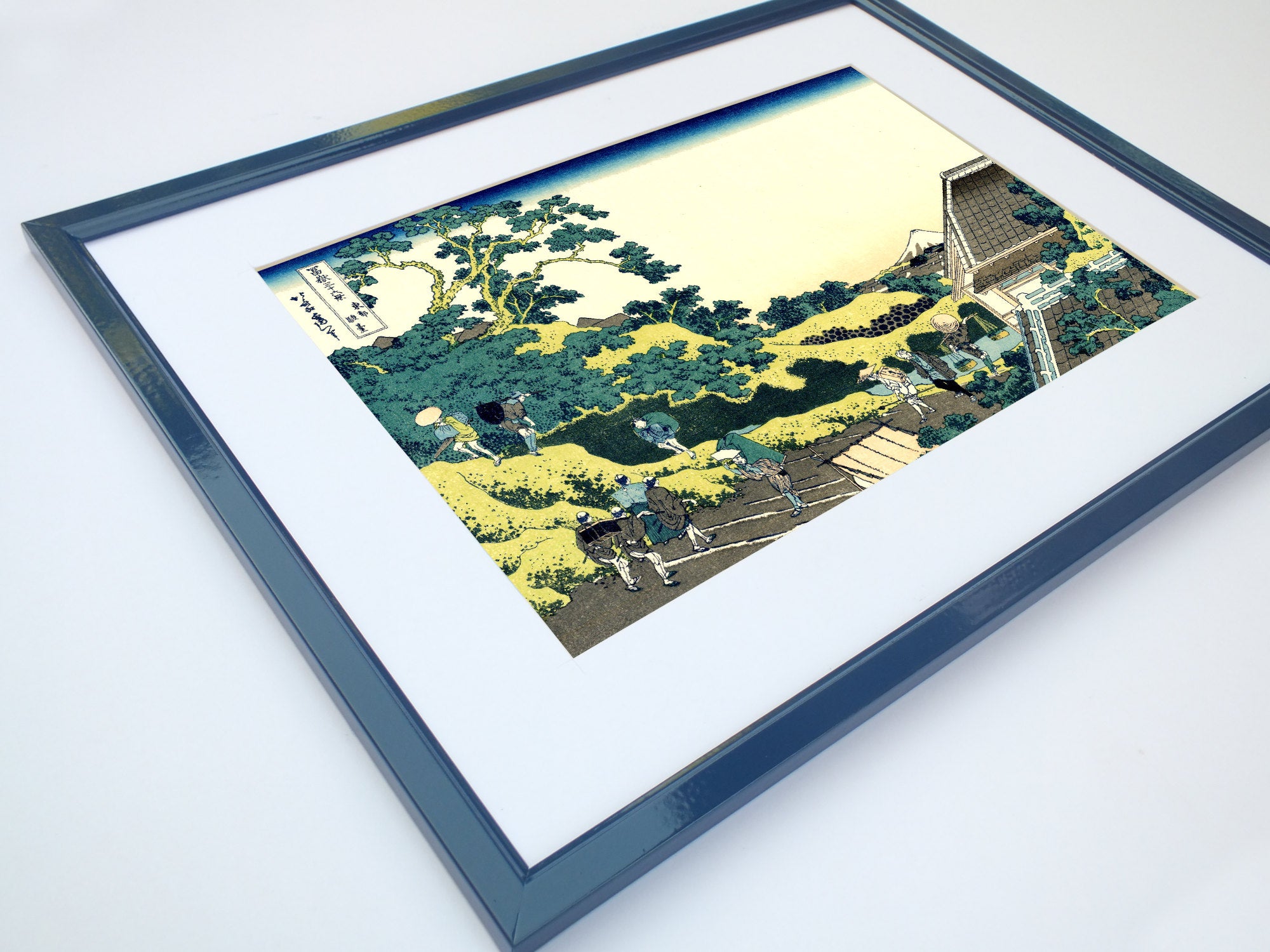
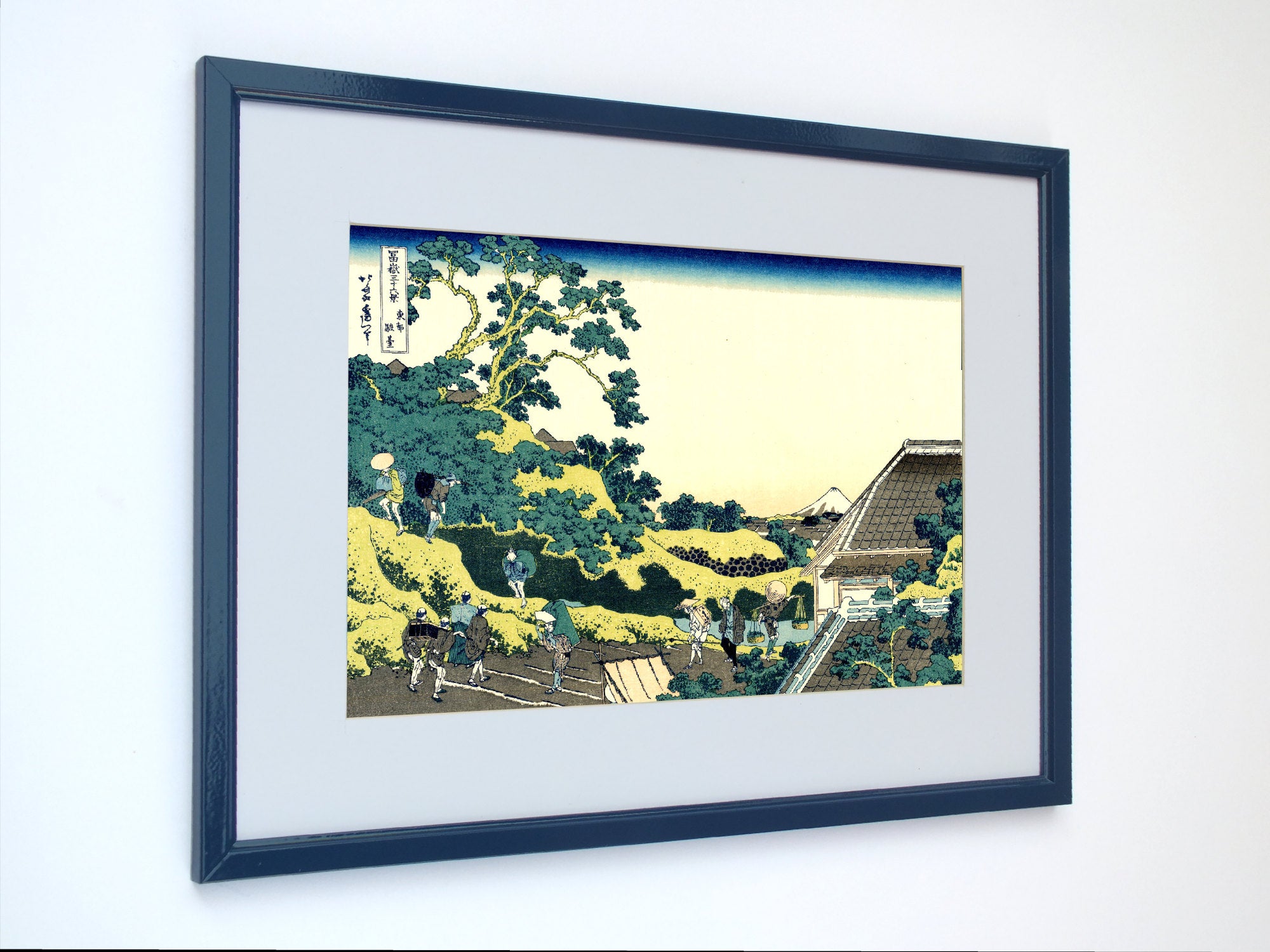
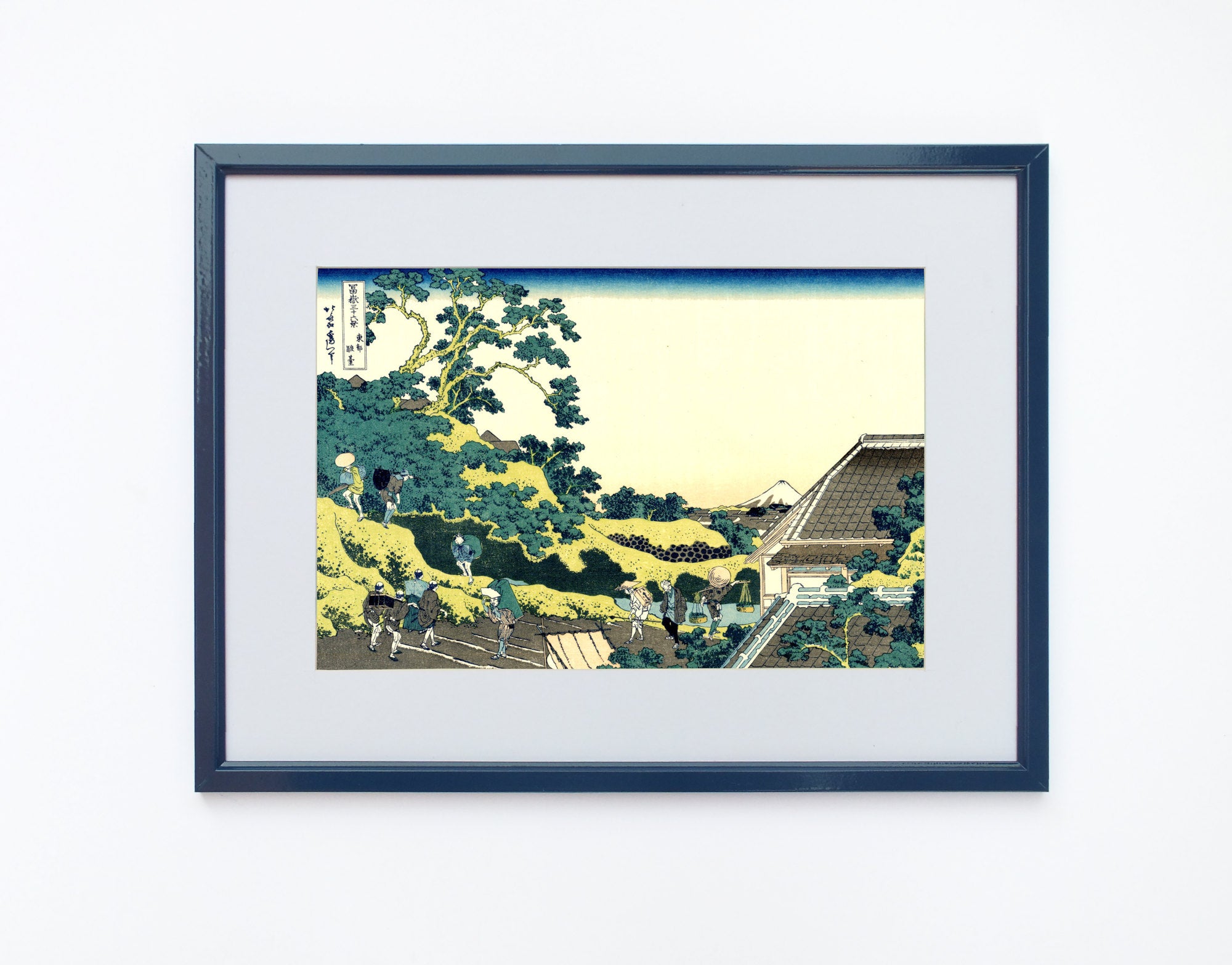
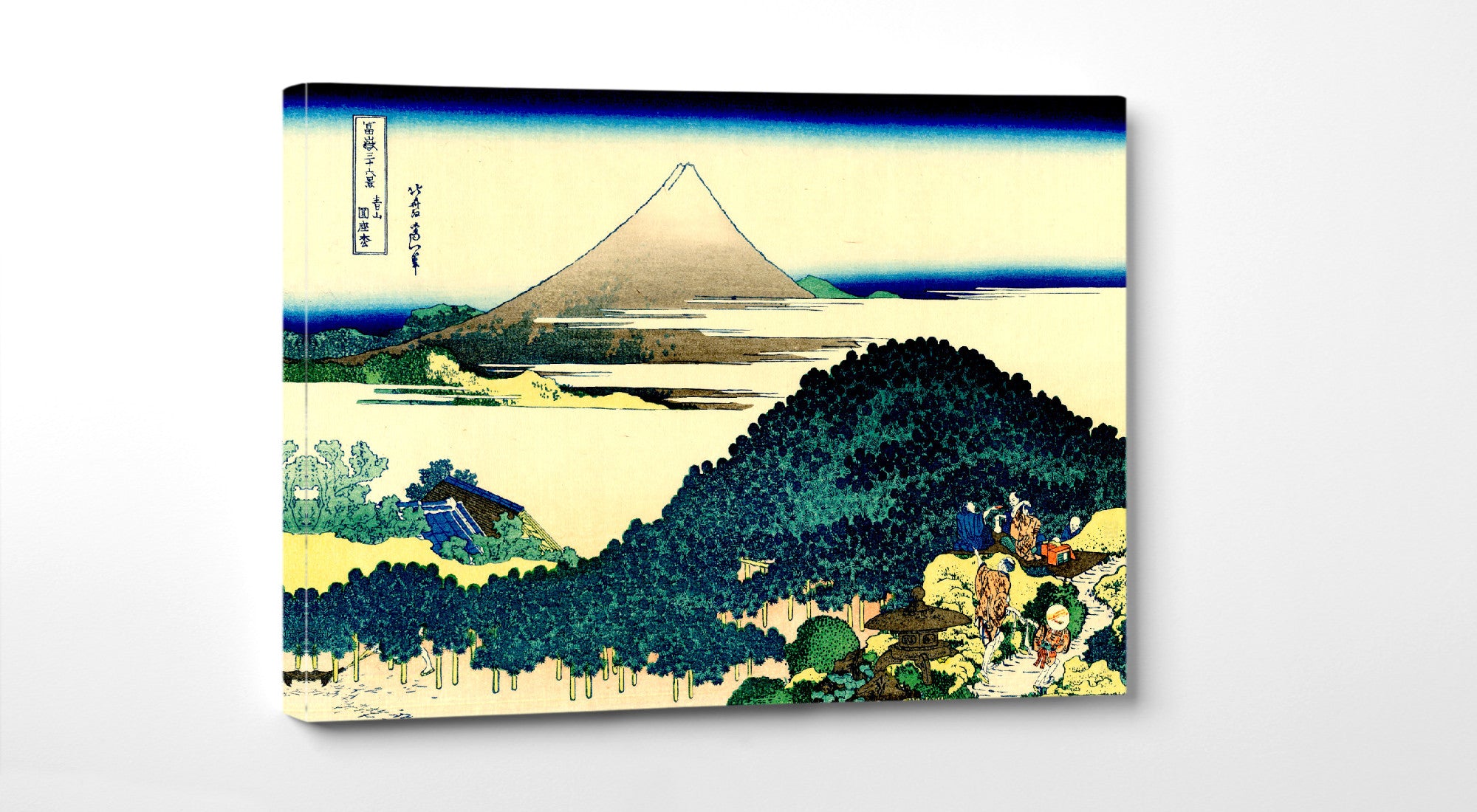
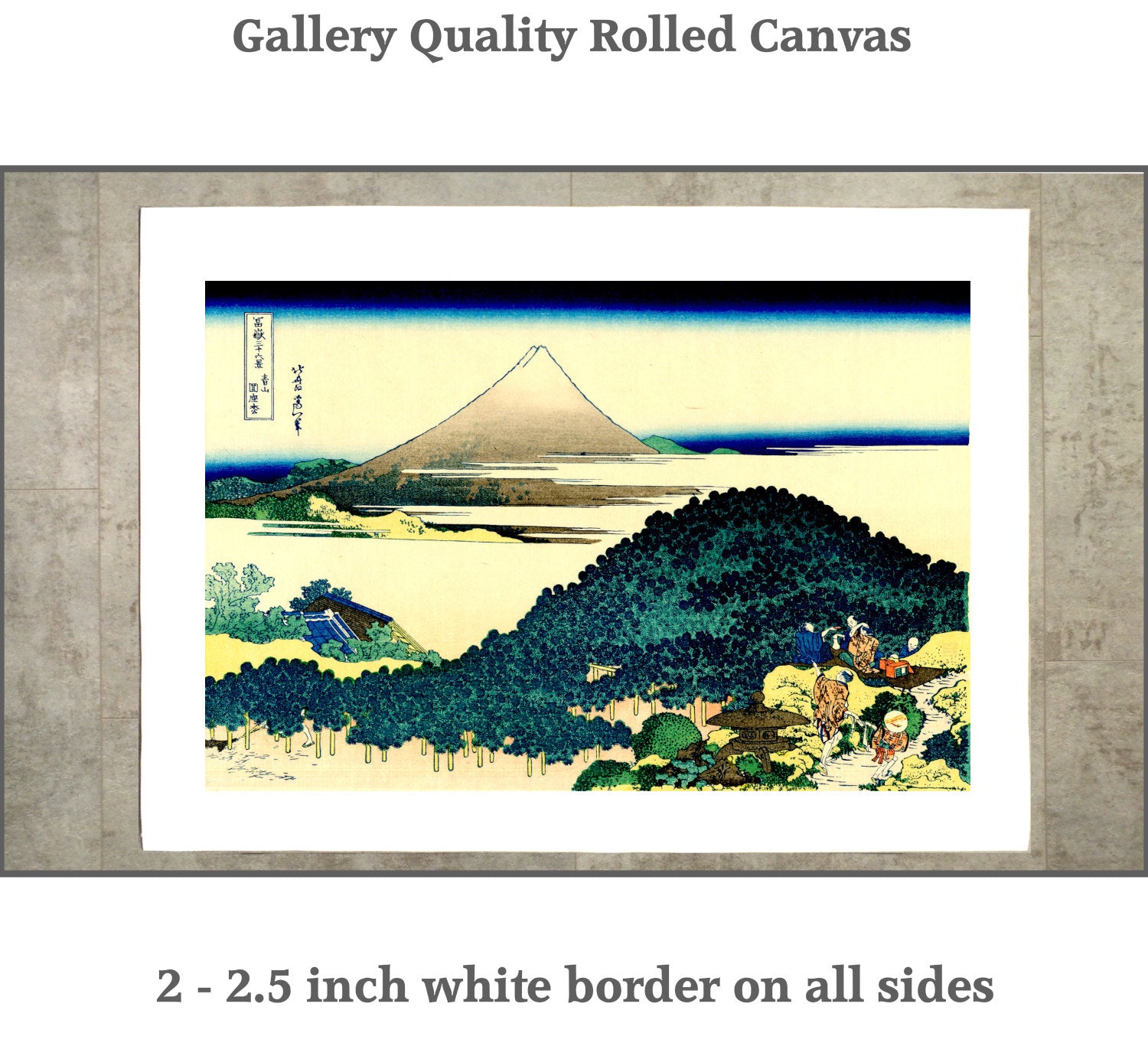
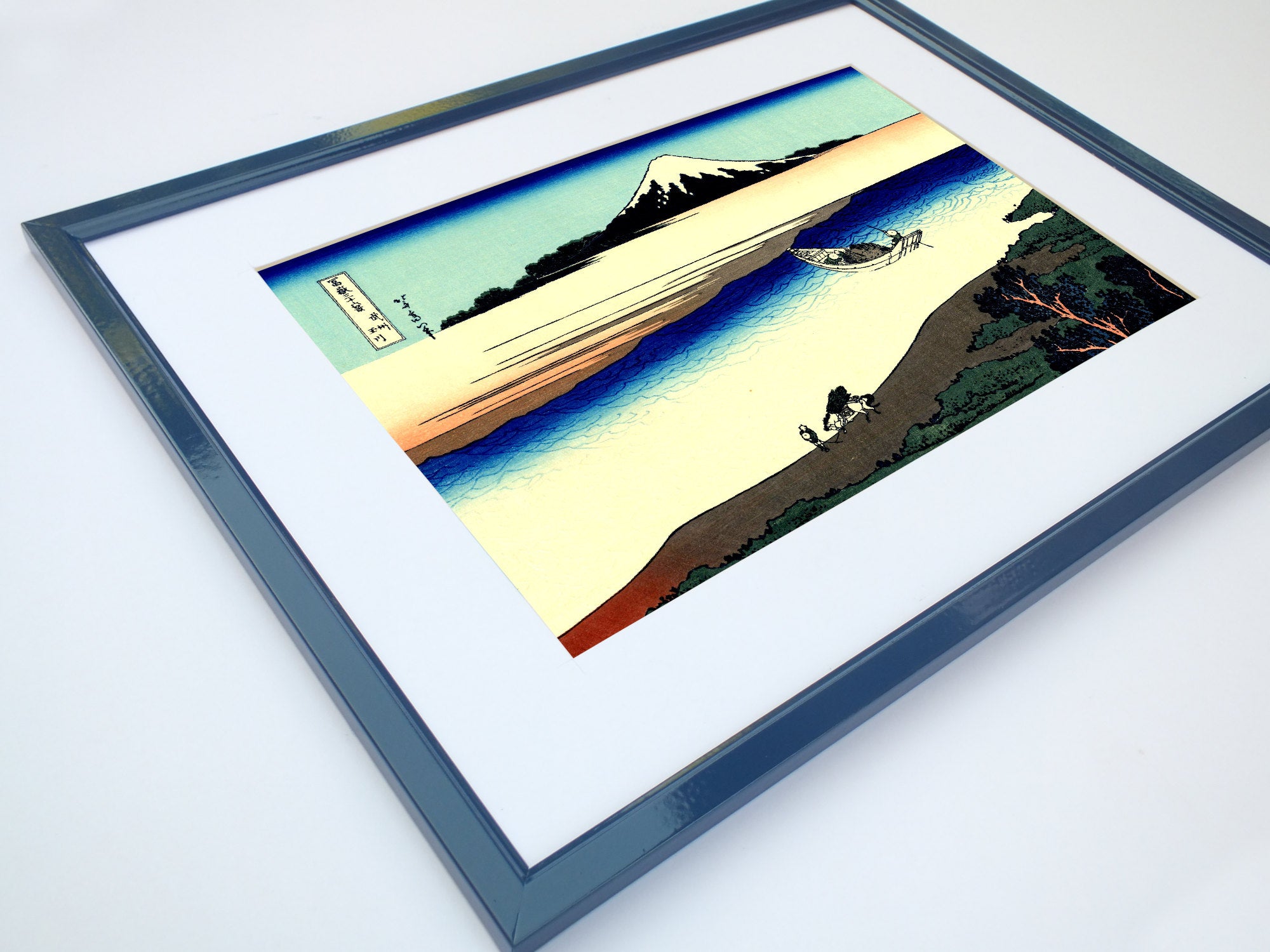
GalleryThane's Thirty-Six Views of Mount Fuji artworks are available in a choice of fine art print, framed print and canvas formats depending on the individual design.
Fine art prints provide flexibility for custom framing.
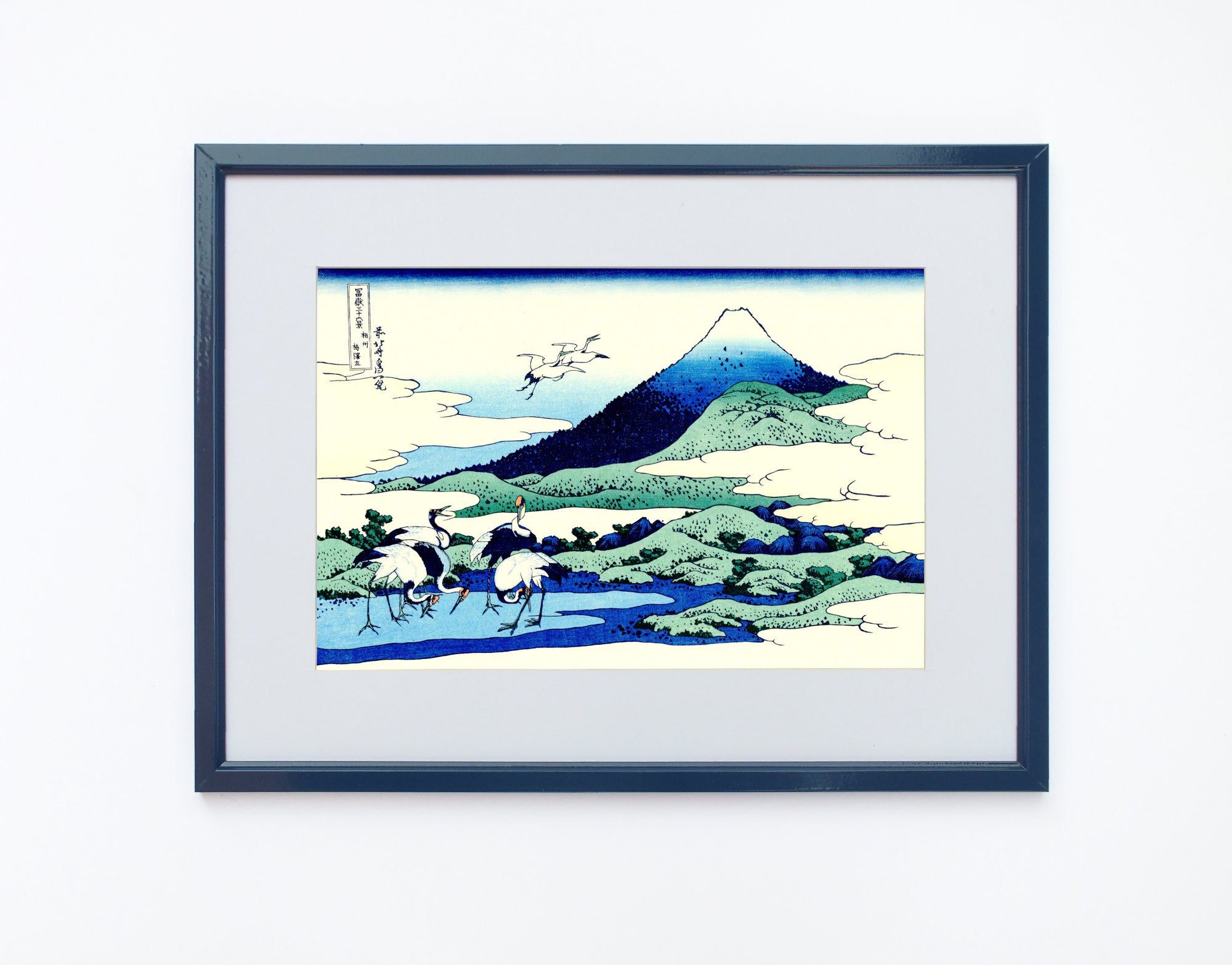
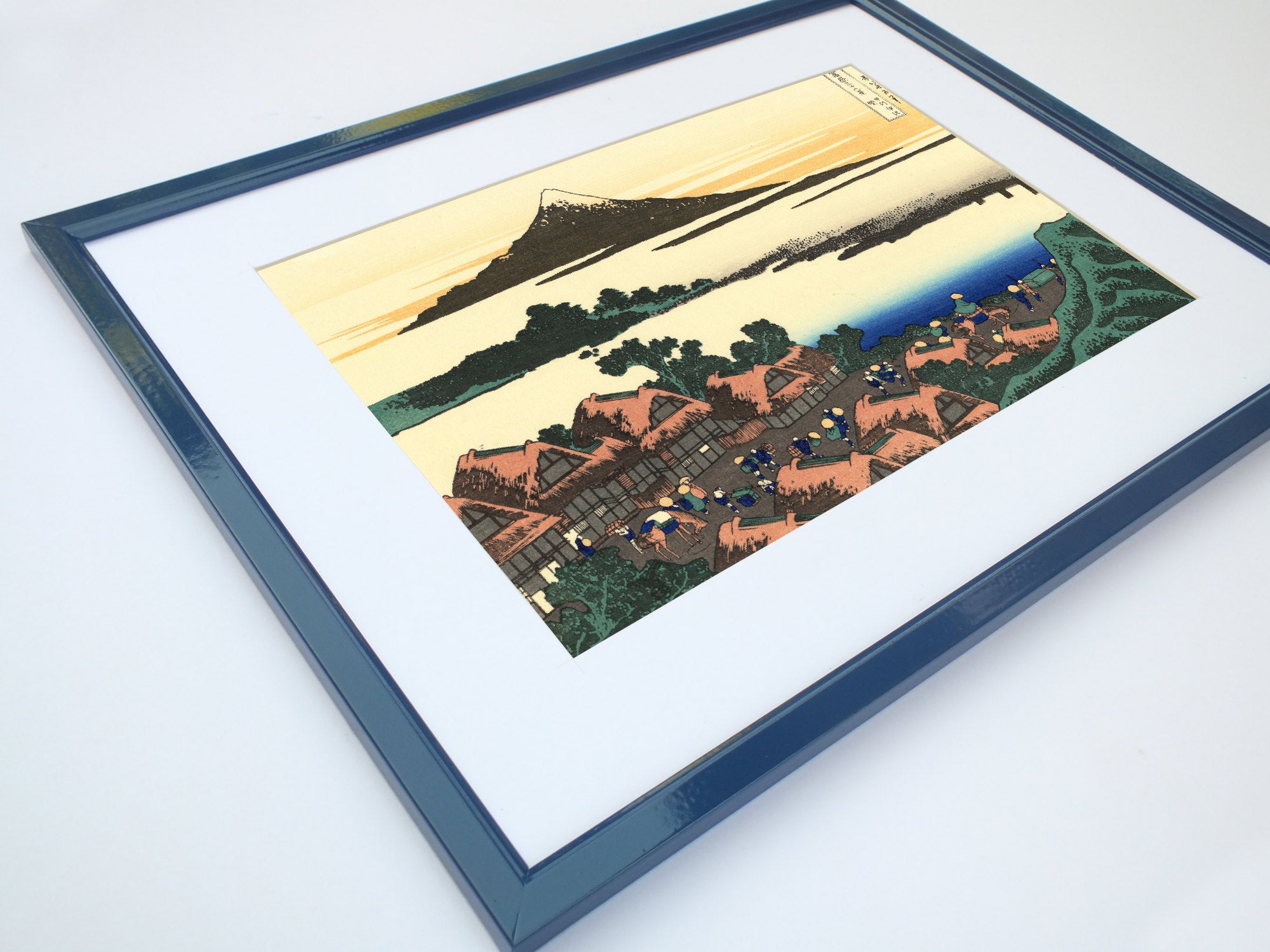
Framed options create a finished presentation ready to integrate with existing interiors.
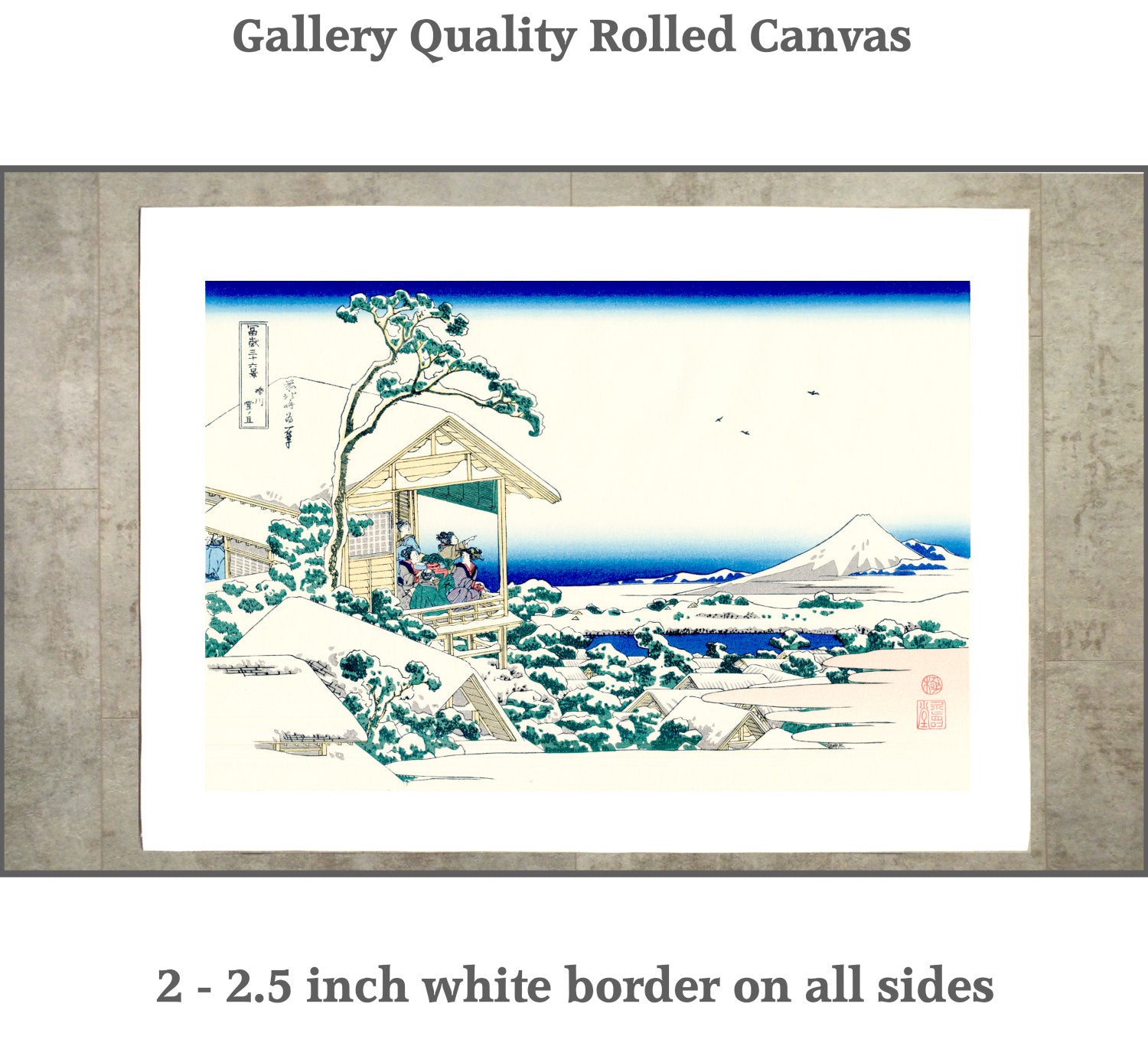
Canvas formats offer a contemporary way to display Hokusai's powerful outlines and broad areas of blue.
GalleryThane prints and frames are produced in our Nottinghamshire workshop using carefully selected printing and framing materials.
Frequently Asked Questions
Who created Thirty-Six Views of Mount Fuji?
The series was designed by Japanese artist Katsushika Hokusai during the Edo period.
When was Thirty-Six Views of Mount Fuji created?
The series was produced during the early 1830s, with individual designs generally dated between approximately 1830 and 1833.
Why are there 46 prints in Thirty-Six Views of Mount Fuji?
The project originally consisted of thirty-six designs. Its popularity led to ten additional prints being produced, bringing the complete series to forty-six while retaining the original title.
Is The Great Wave part of Thirty-Six Views of Mount Fuji?
Yes. The Great Wave off Kanagawa is one of the original designs from the series.
Is Red Fuji part of the series?
Yes. Fine Wind, Clear Morning, commonly known as Red Fuji, is one of the most celebrated prints in Thirty-Six Views of Mount Fuji.
Where is Mount Fuji in The Great Wave?
Fuji appears in the distance beneath the curling wave, deliberately made small through Hokusai's manipulation of perspective.
Why did Hokusai use so much blue?
The newly available pigment Prussian blue allowed Hokusai and other Japanese print designers to use intense, durable blue in seas, skies and landscapes.
What is the Japanese title of the series?
The Japanese title is Fugaku Sanjūrokkei.
Why was Mount Fuji important to Hokusai?
Fuji carried strong cultural and spiritual associations in Japan and became a major personal artistic subject for Hokusai. He continued exploring the mountain beyond this series, including in his later One Hundred Views of Mount Fuji.
Do all the prints show Mount Fuji prominently?
No. This is one of the series' most inventive features. In some designs Fuji dominates the composition; in others it is a tiny or partially framed form in the distance.
Are Thirty-Six Views of Mount Fuji prints suitable for a gallery wall?
Yes. Their recurring Fuji motif, horizontal format and related colour palettes make different designs particularly effective when displayed together.
Are Hokusai's Mount Fuji prints available framed?
GalleryThane offers selected works from the series as fine art prints, framed prints and canvas options in a range of sizes.