


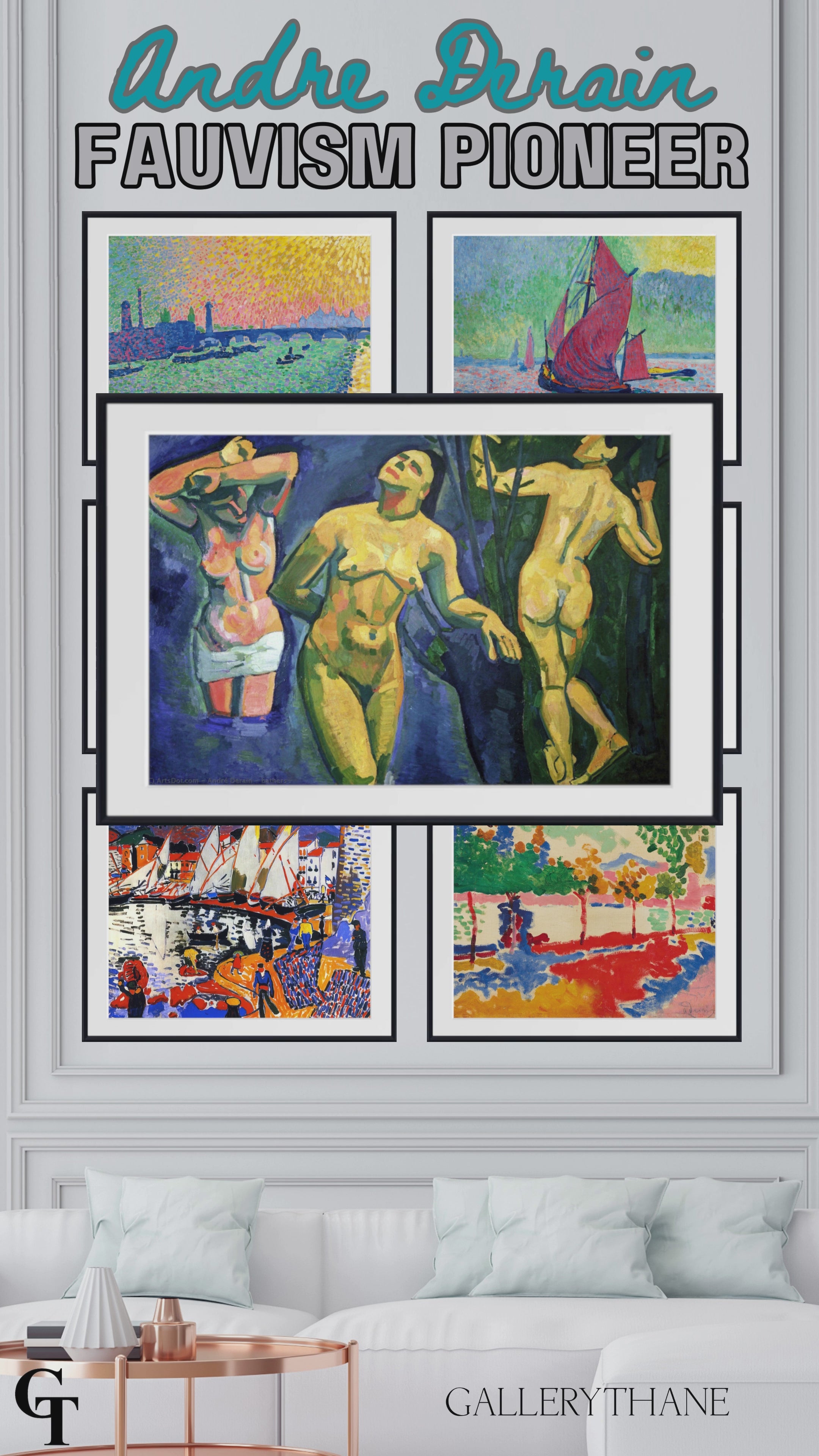

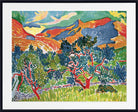
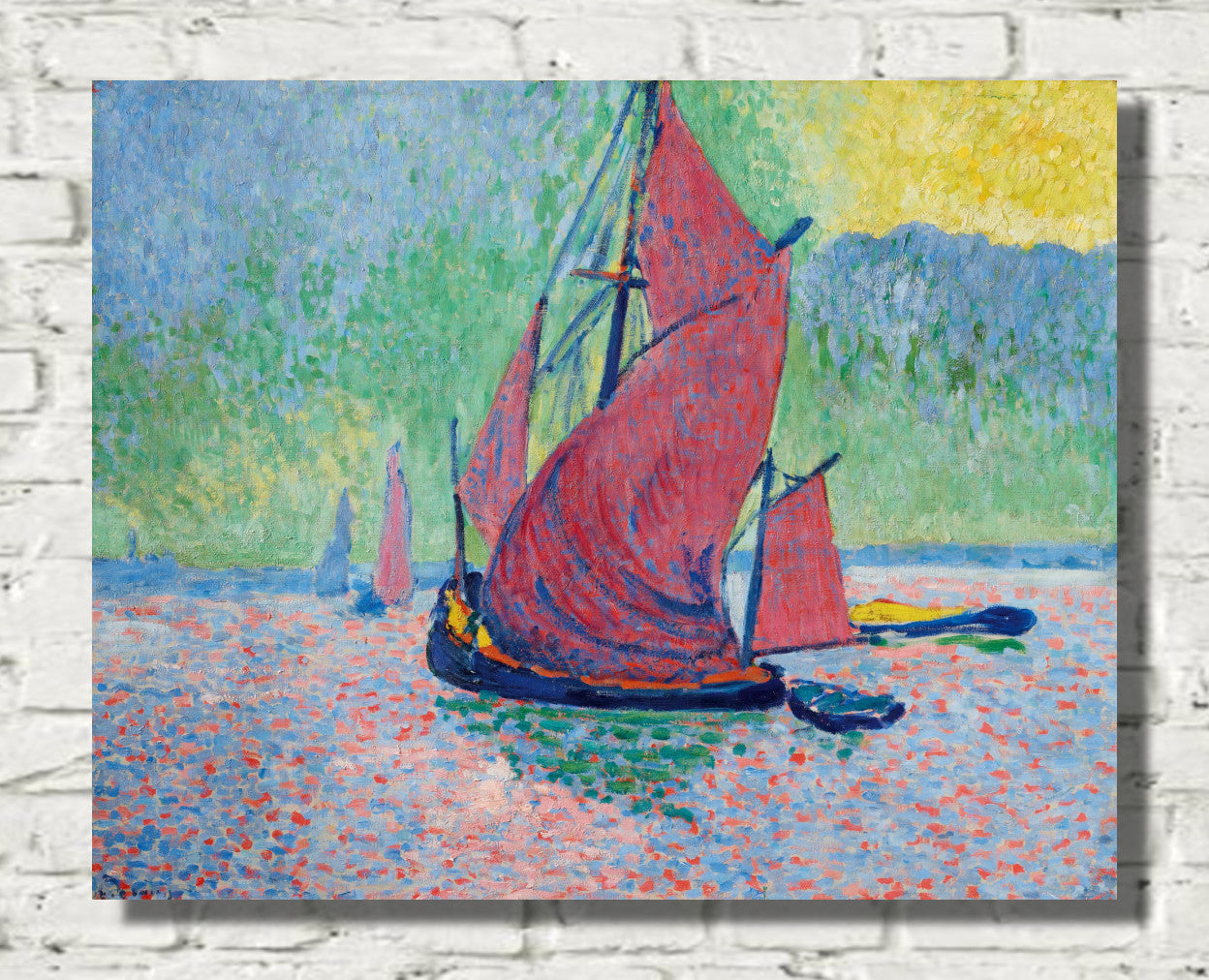
Mountains at Collioure, by André Derain
Couldn't load pickup availability
BUY WITH CONFIDENCE
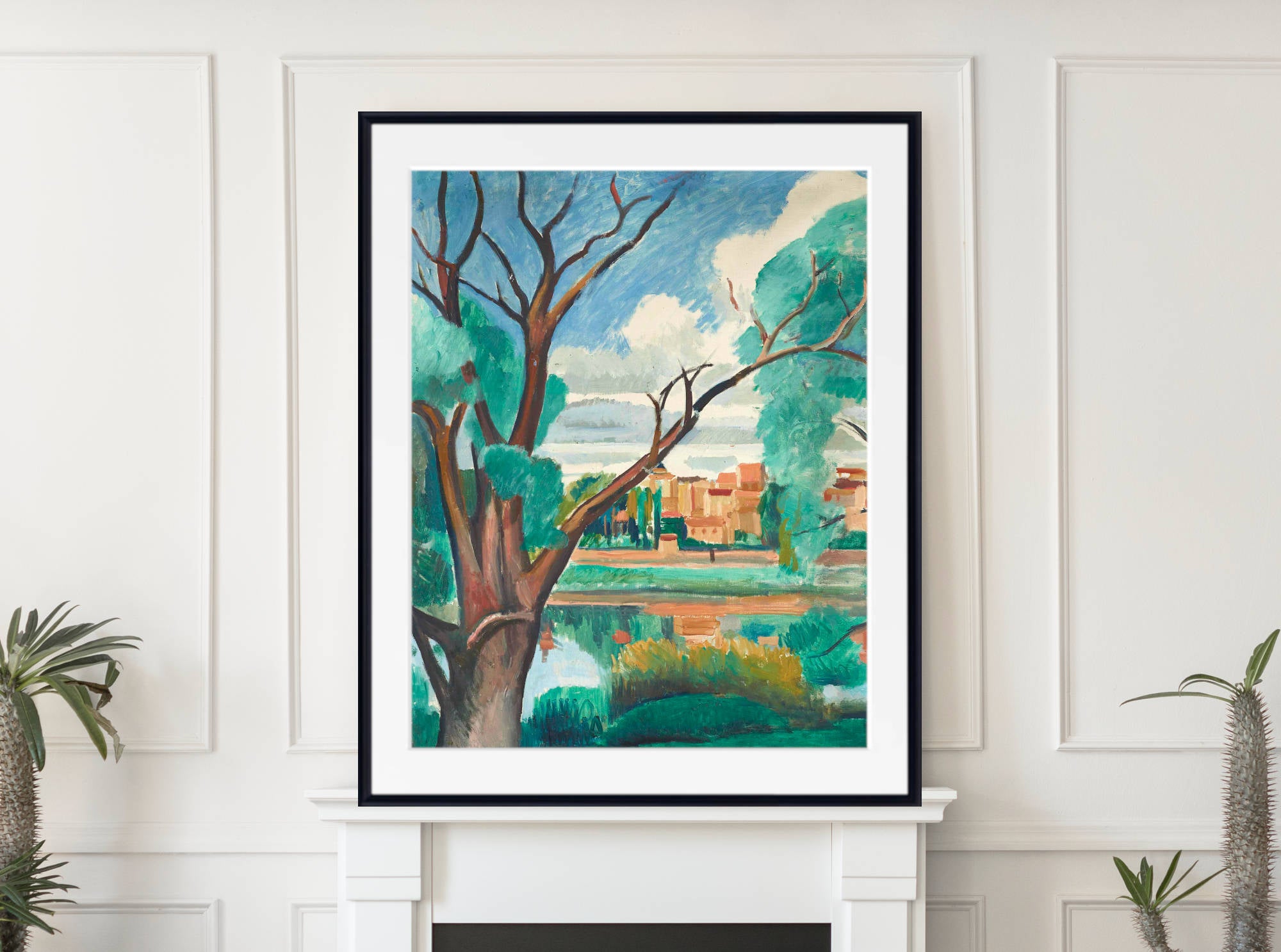
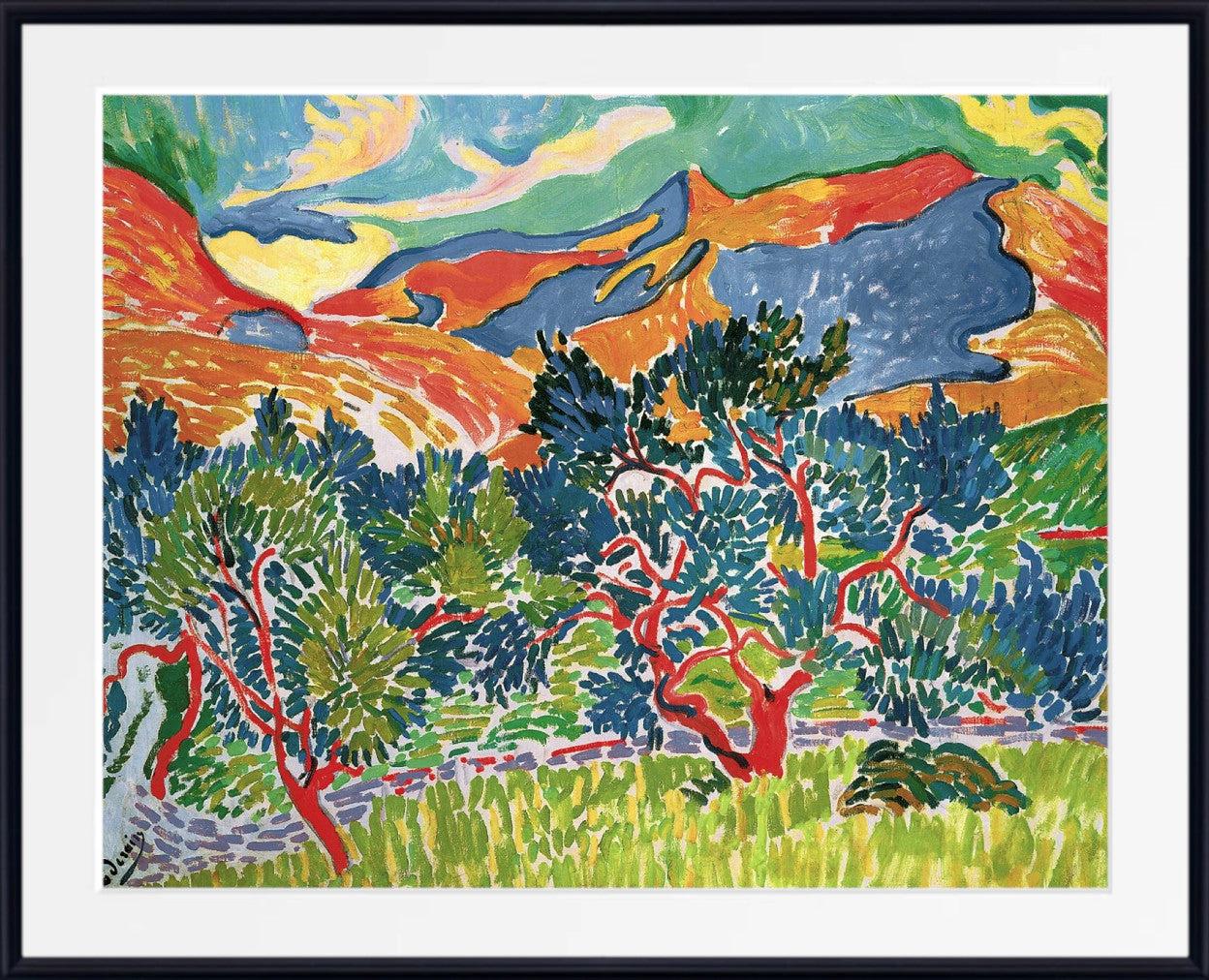
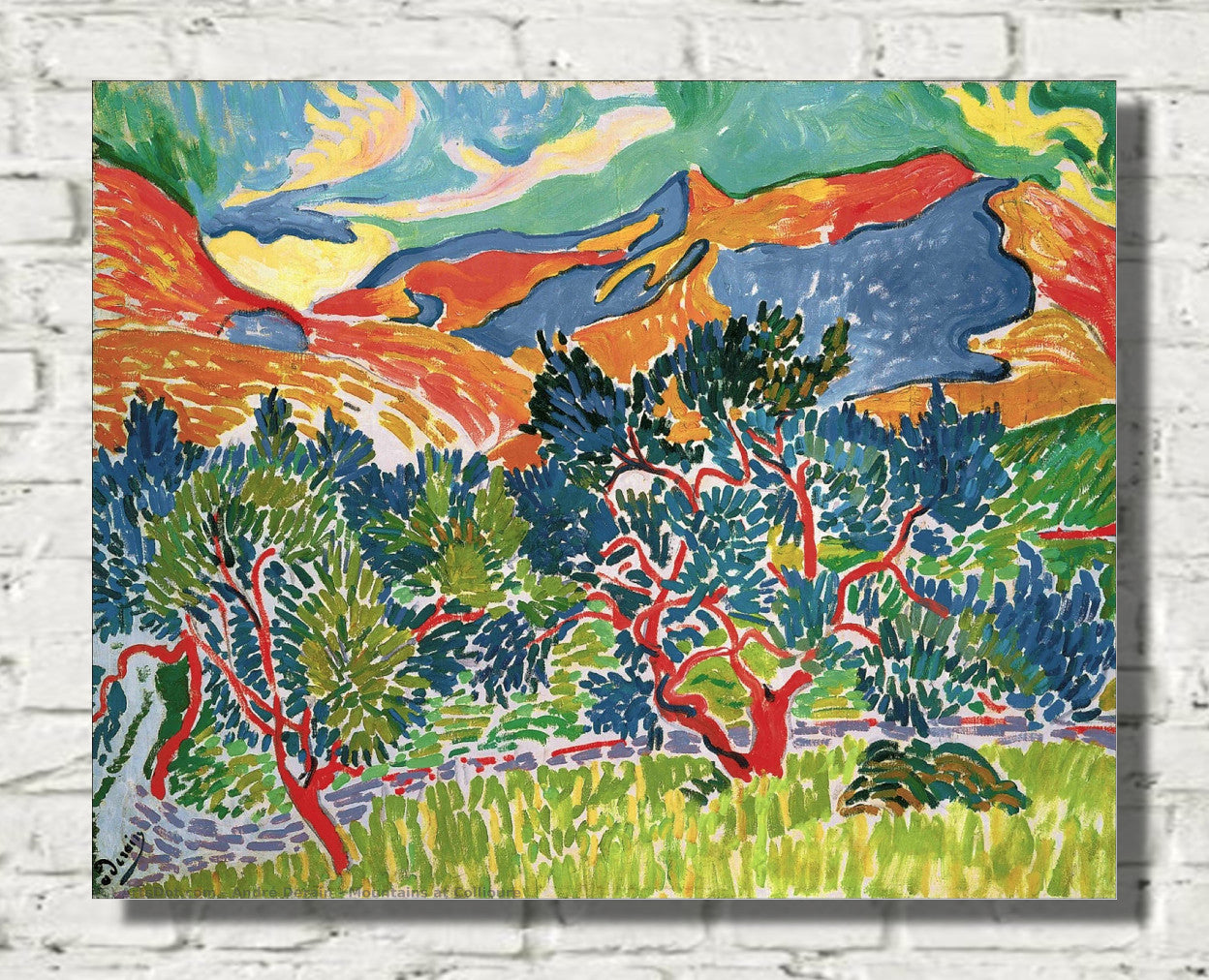
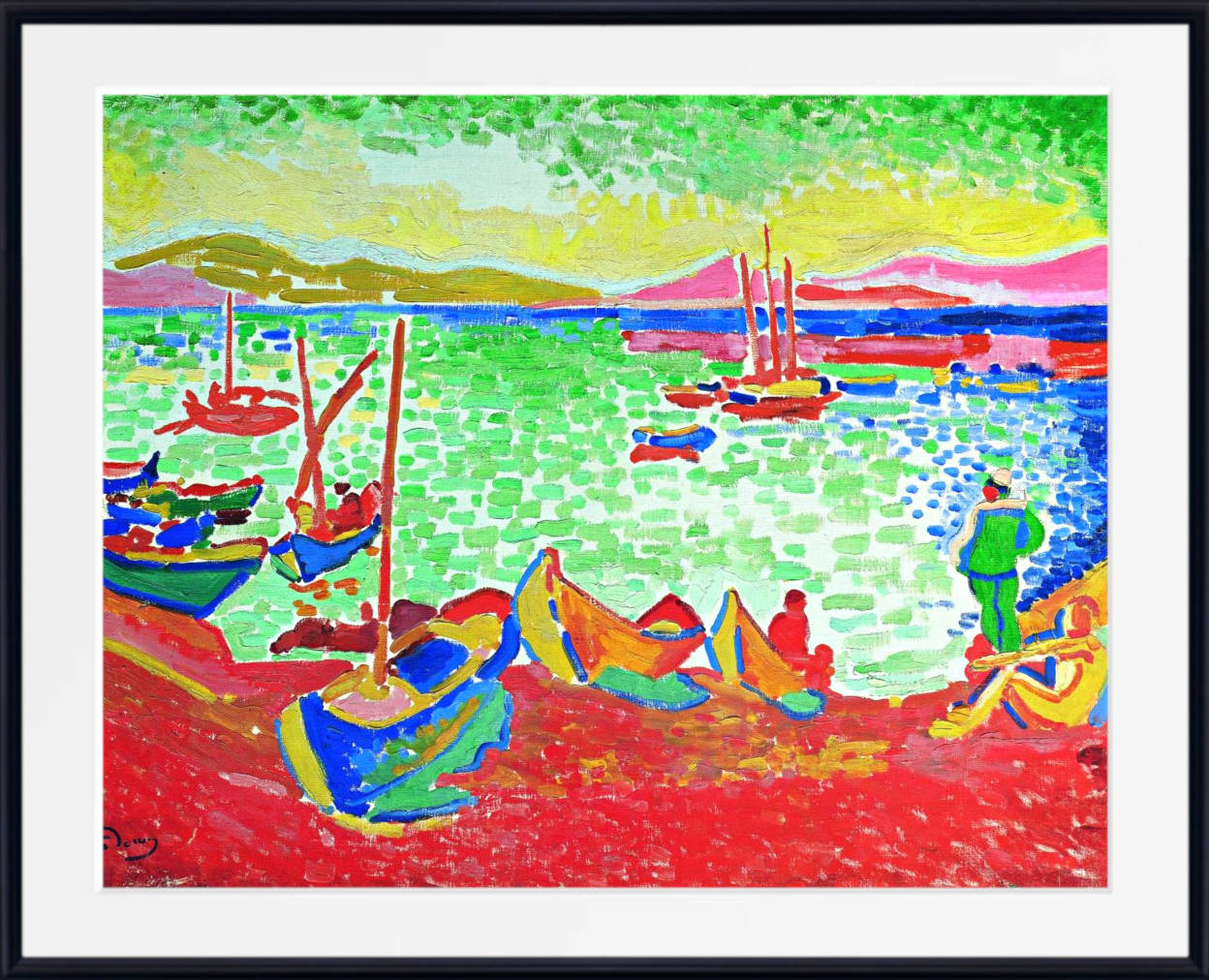
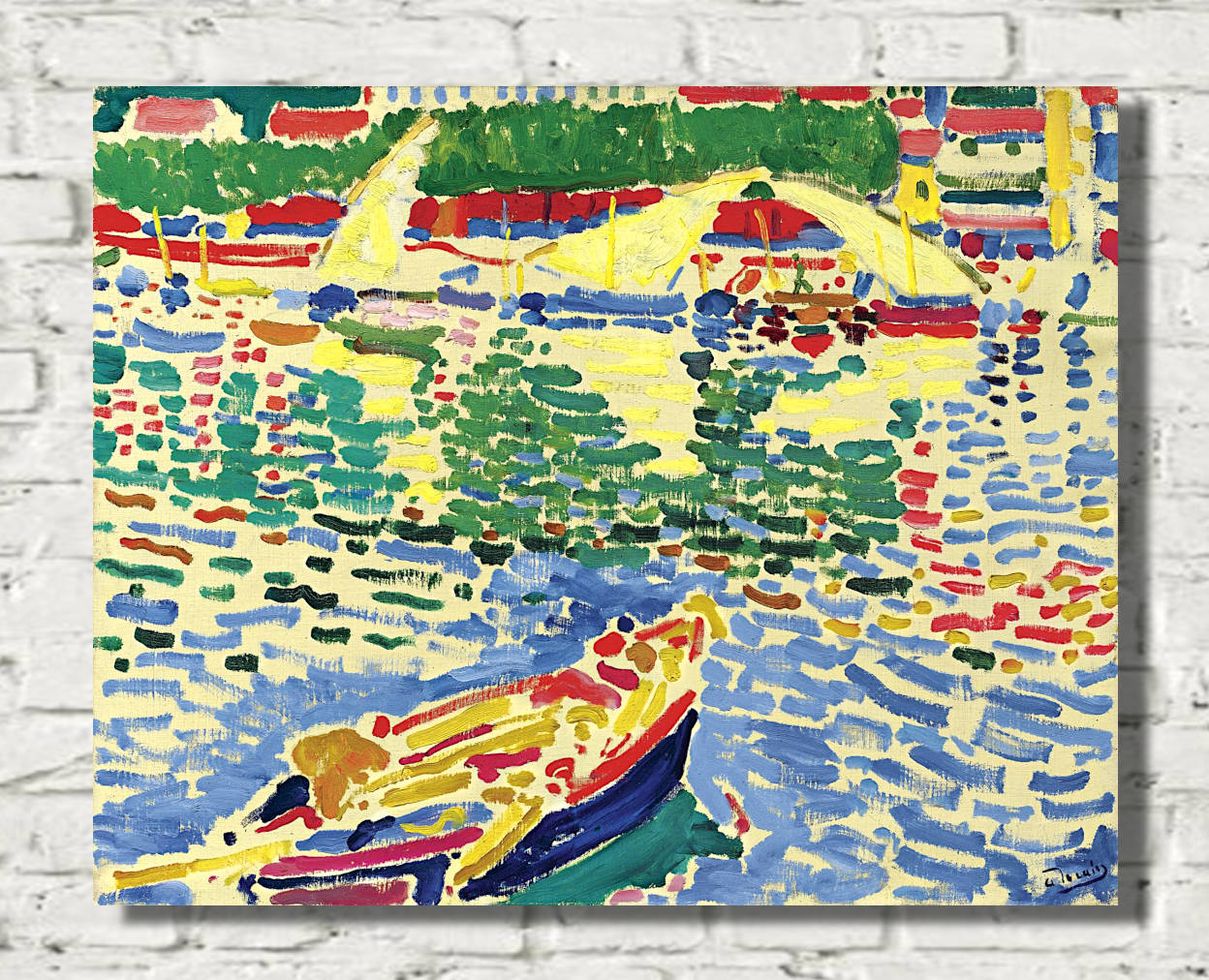
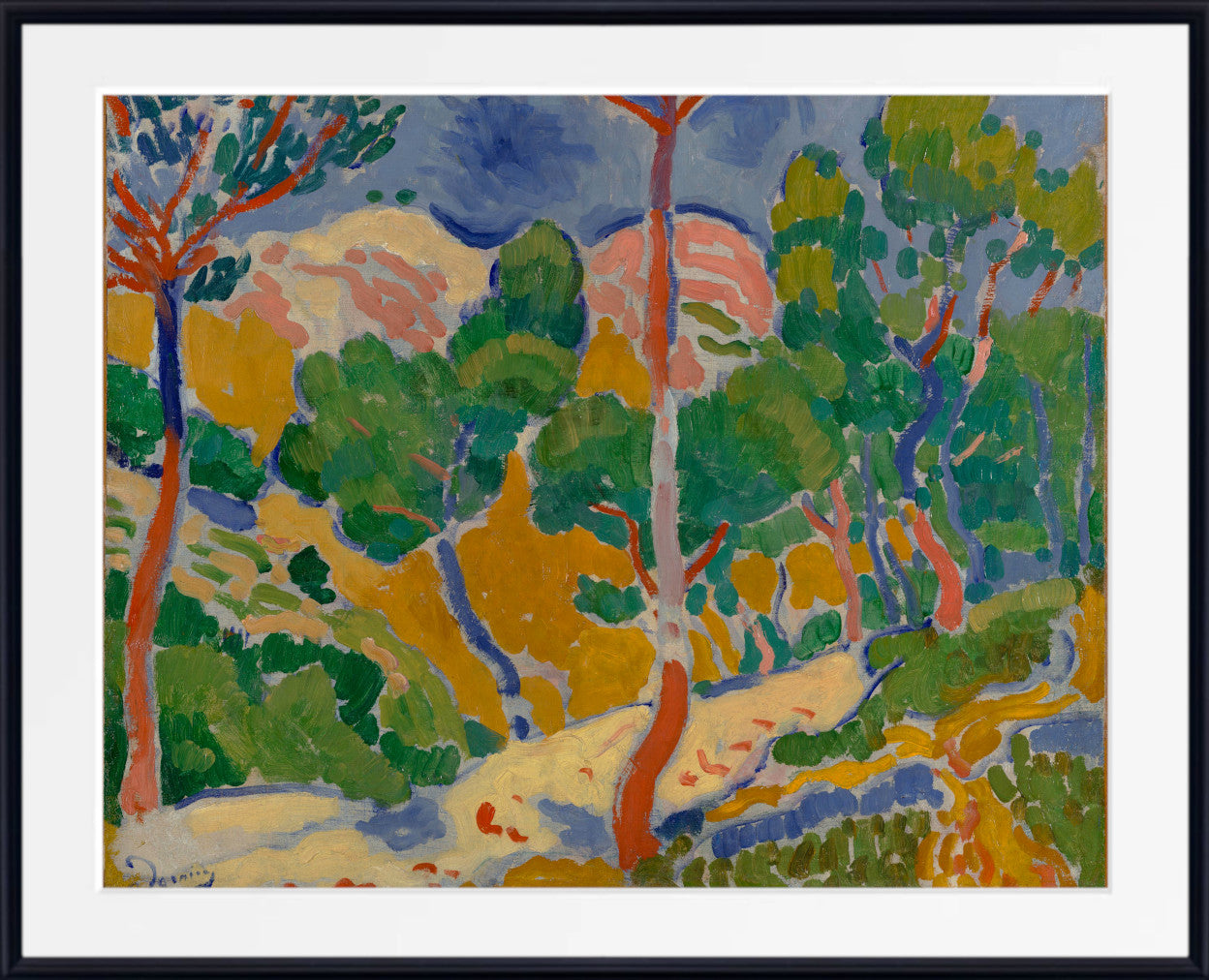
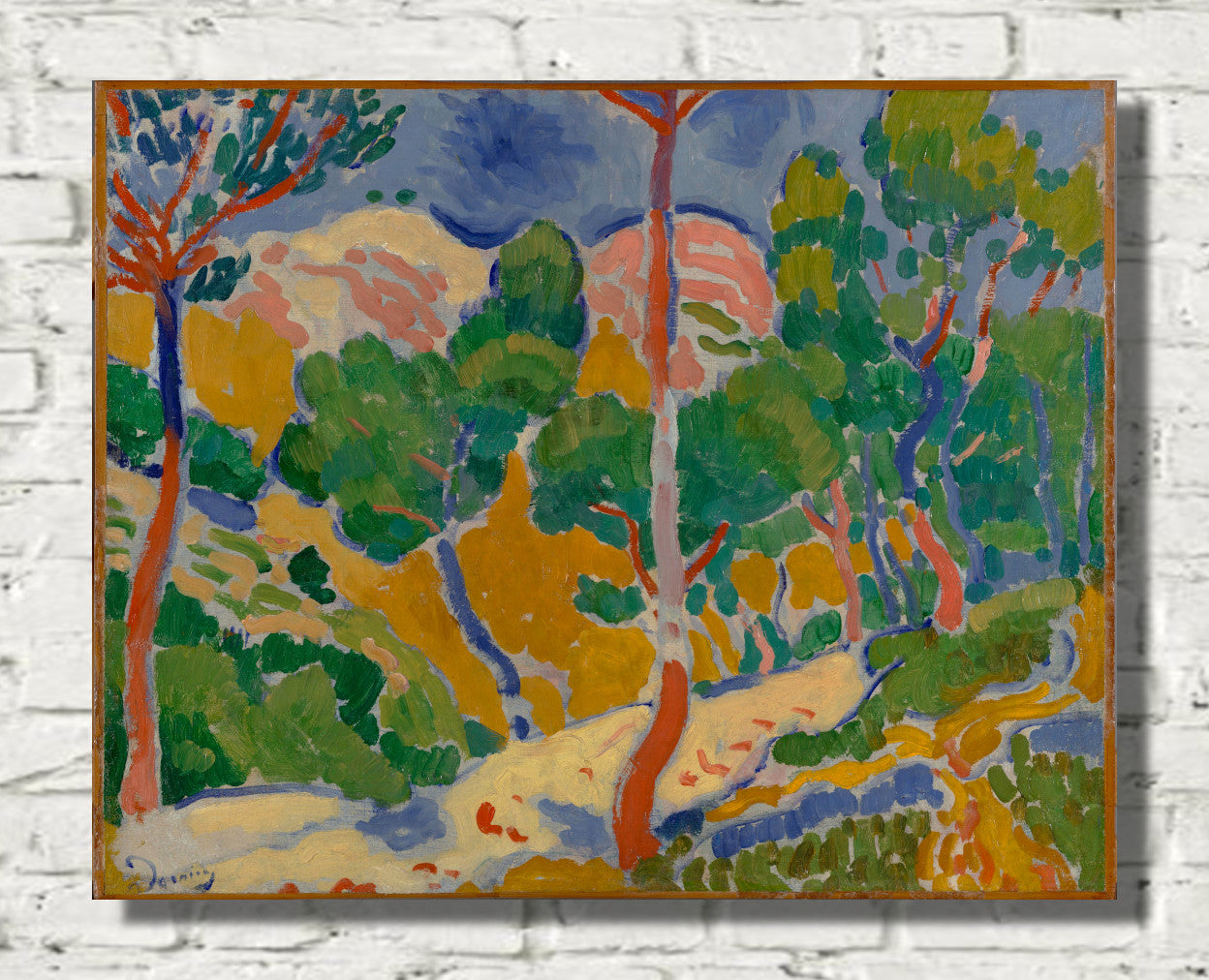
Mountains at Collioure (1905) by André Derain, known in French as Les montagnes à Collioure, is one of the defining landscapes from the extraordinary summer in which Derain and Henri Matisse helped create the visual language of Fauvism. Trees rise on vivid coral-red trunks, the ground glows with lemon and yellow-green, a lavender path winds into the landscape and distant mountains are transformed into broad areas of orange, coral and cobalt blue beneath a pale turquoise sky.
This André Derain Mountains at Collioure print captures the radical liberation of colour that made Fauvism one of the first great movements of twentieth-century modern art. Derain does not attempt to reproduce the Mediterranean landscape through conventional natural tones. Instead, colour, brushwork and simplified form communicate the intensity of Collioure's light and landscape. Available as a fine art print, framed print or canvas panel, Mountains at Collioure is an outstanding choice for admirers of Fauvist art, colourful landscapes and early modern French painting.
Mountains at Collioure – A Landmark Fauvist Landscape
Derain painted Mountains at Collioure in 1905, during one of the most important episodes in the development of modern European painting.
Collioure is a small Mediterranean port in southern France close to the Spanish border. The town is surrounded by steep hills, vineyards and rugged landscape, while the intense southern sunlight creates dramatically different conditions from the softer atmosphere Derain knew around Paris and the Seine.
In this painting, however, Derain does not simply record those surroundings.
The trees, pathway and mountains become the foundations for an experiment in colour. Tree trunks are rendered in coral red rather than conventional brown. Foliage is constructed with long strokes of blue and green. The ground becomes luminous yellow-green, while the pathway is articulated with lavender and purple.
The distant mountains are equally unconventional, shifting between coral, apricot orange and cobalt blue.
Nature remains recognisable, but Derain has completely rewritten its colour.
Derain and Matisse at Collioure in 1905
The summer of 1905 at Collioure occupies a central position in the history of Fauvism.
Henri Matisse had travelled to the Mediterranean town and strongly encouraged André Derain to join him. Derain, then only twenty-five, accepted the invitation and spent an intensely productive period working alongside the older artist.
The two painters repeatedly explored the port, surrounding hills, fishing boats, beaches and nearby countryside.
More importantly, they discussed fundamental questions about colour, light and the purpose of painting.
Both artists had absorbed lessons from Impressionism, Post-Impressionism and Neo-Impressionism, but at Collioure they began moving increasingly beyond those earlier systems.
Instead of asking how accurately colour represented what they could see, Matisse and Derain explored how colour could create its own pictorial logic.
A mountain could be orange. A tree trunk could be red. A shadow might become blue or violet.
Mountains at Collioure is one of the clearest products of this breakthrough.
The Mediterranean Light of Collioure
Derain was profoundly affected by the intensity of the light in southern France.
The Mediterranean sun reduced the soft atmospheric shadows familiar from northern French landscape painting and produced sharper contrasts between illuminated surfaces and coloured forms.
Rather than trying to imitate this light through conventional modelling, Derain responded by intensifying his palette.
In Mountains at Collioure, light seems to originate from the colours themselves.
The lemon-yellow ground appears almost luminous beside the darker blues and greens of the trees. Coral-red trunks become more intense when surrounded by cooler foliage. Orange and cobalt areas in the mountains create a similar contrast in the distance.
Even the turquoise sky participates actively in the colour structure rather than functioning merely as a neutral background.
The result is a landscape that seems saturated with Mediterranean sunlight without depending on conventional highlights and shadows.
Colour in Mountains at Collioure
The radical colour of Mountains at Collioure is central to its historical importance.
Derain deliberately departs from the local colours of the landscape. He is not trying to convince us that the mountains were literally coral and cobalt or that the pathway was physically lavender.
These colours have been selected because of the relationships they establish across the canvas.
Warm oranges and reds are placed against cooler blues and greens. Yellow-green areas intensify the purple and lavender marks nearby. The turquoise sky provides another cool zone against which the warmer landscape becomes more vivid.
This use of complementary and contrasting colours gives the painting exceptional visual energy.
Colour is therefore performing several functions at once. It identifies forms, establishes space, creates light, directs the viewer's attention and generates emotional intensity.
This freedom became one of Fauvism's most important contributions to modern art.
Brushwork and the Fauvist Surface
Derain's brushwork is just as important as his palette.
The trees and foliage are constructed with long, clearly visible strokes. Instead of blending these marks together to create a smooth illusion of leaves, bark or grass, Derain allows each brushstroke to remain evident.
The surface of the painting therefore records the physical act of painting.
Long blue and green dashes suggest foliage. Red vertical strokes establish trunks. Lavender marks define the pathway, while flatter areas of orange and blue construct the mountains.
The different directions of these brushstrokes help create rhythm throughout the composition.
The result has an immediacy very different from traditional landscape painting. The viewer is constantly aware both of the landscape and of the coloured marks from which it has been constructed.
The Path Through the Landscape
The pathway is an important compositional device within Mountains at Collioure.
Picked out through lavender-purple strokes, it enters the foreground and draws the eye between the trees towards the distant mountains.
This creates a sense of depth even though Derain deliberately reduces conventional perspective and tonal modelling.
The path therefore performs two functions.
It belongs to the observed landscape, but it is also a structural device guiding the viewer through the painting.
The surrounding trees frame this route and create strong vertical accents, while the mountains establish a broad band across the distance.
Despite the apparent spontaneity of the brushwork, the composition is therefore carefully organised.
Van Gogh, Neo-Impressionism and the Road to Fauvism
Derain's work at Collioure did not develop in isolation.
The younger artist had absorbed the achievements of several important painters from the previous generation.
Vincent van Gogh demonstrated how heightened colour and directional brushwork could transform landscape into an intensely expressive experience.
Paul Cézanne showed how natural scenery could be simplified and reorganised through underlying pictorial structure.
Neo-Impressionist artists including Georges Seurat and Paul Signac had explored the interaction of separate areas and touches of pure colour.
Matisse and Derain initially learned from these approaches but increasingly rejected rigid systems of colour application.
At Collioure, their marks became broader, more variable and more instinctive.
Mountains at Collioure retains the idea that separate colours can intensify one another, but Derain applies them with considerably greater freedom.
The result is no longer Neo-Impressionism. It is recognisably Fauvist.
The Birth of Fauvism
The paintings produced by Derain and Matisse around Collioure became central to the emergence of Fauvism.
Later in 1905, brilliantly coloured paintings by Matisse, Derain, Henri Manguin, Albert Marquet and other like-minded artists attracted considerable attention at the Salon d'Automne in Paris.
Critic Louis Vauxcelles famously referred to the painters as les fauves — “the wild beasts”.
The name captured the reaction of viewers confronted by colour that seemed dramatically liberated from conventional artistic restraint.
Fauvism was never a formal organisation with a manifesto or fixed membership. It was a relatively loose association of painters exploring related ideas about colour and representation.
Nor did the movement last long. Its most concentrated period extended only a few years.
Its influence, however, was enormous.
Once painters had demonstrated that colour could operate independently of the natural appearance of objects, one of the fundamental assumptions of traditional European painting had been permanently challenged.
Why Mountains at Collioure Matters
Mountains at Collioure is especially significant because it combines several defining characteristics of the Fauvist breakthrough:
- brilliant non-naturalistic colour
- strong complementary colour contrasts
- visible and directional brushwork
- simplification of landscape forms
- reduced conventional modelling
- flattened areas of colour
- colour used to communicate light and sensation
- a recognisable landscape transformed by the artist's subjective response
It is also directly associated with the summer in which Matisse and Derain worked together at Collioure.
That historical context gives the painting significance beyond its immediate visual appeal. It is evidence of one of the decisive moments in the transition from nineteenth-century landscape painting towards twentieth-century modernism.
André Derain's Fauvist Painting Style
André Derain was one of the principal founders of Fauvism alongside Henri Matisse and Maurice de Vlaminck.
His early experiments with Vlaminck around Chatou had already encouraged an increasingly powerful palette, but the summer at Collioure enabled Derain to investigate colour under dramatically different conditions.
His 1905 landscapes frequently combine strong pure colours with highly visible brushstrokes and simplified forms.
During the following year he continued these experiments at L'Estaque and in his celebrated series of London paintings.
Derain's Fauvist period was nevertheless relatively brief.
By around 1907–08 he was becoming increasingly interested in greater pictorial structure, the example of Cézanne and aspects of traditional European painting.
His palette became more restrained and his artistic direction changed considerably.
The paintings of 1905 therefore capture Derain during one of the most radical and influential periods of his career.
About André Derain
André Derain (1880–1954) was a French painter, sculptor, printmaker and designer and one of the leading figures in the development of early twentieth-century modern art.
Born in Chatou near Paris, Derain initially studied engineering while also pursuing artistic training.
His friendship with Maurice de Vlaminck encouraged early experimentation with vivid colour and vigorous brushwork. His subsequent relationship with Henri Matisse placed him at the centre of the emerging Fauvist movement.
The summer of 1905 at Collioure became one of the defining moments of his career.
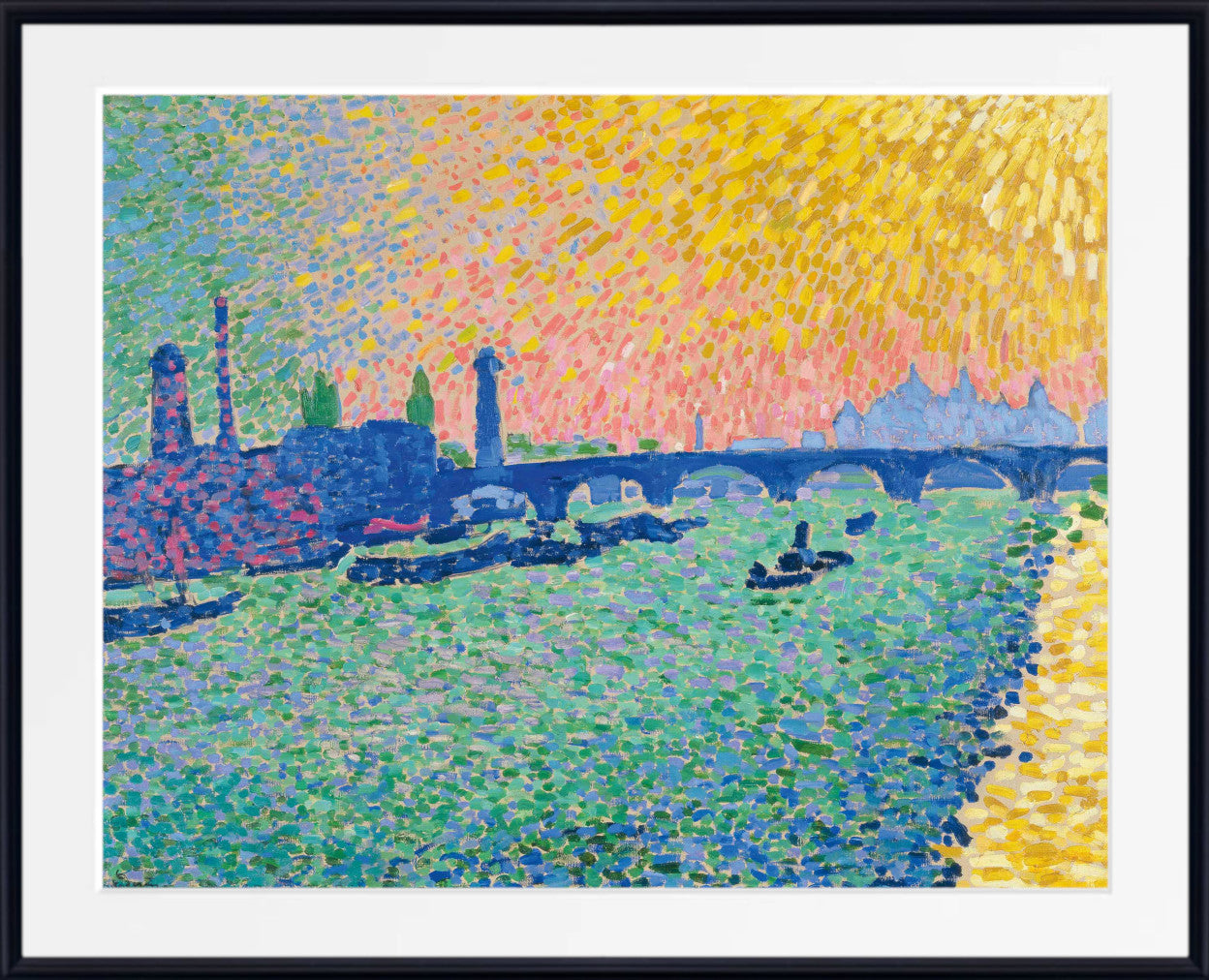
Derain later produced major Fauvist landscapes in southern France and a celebrated series of London views in which bridges, the Thames and surrounding architecture were transformed through highly imaginative colour.
His artistic direction changed after the Fauvist years as he developed a greater interest in structure, classical art and the European Old Master tradition.
Although his long career encompassed many styles, the radical paintings of Collioure remain among his most influential achievements.
The Original Mountains at Collioure
The original Mountains at Collioure, or Les montagnes à Collioure, was painted in 1905.
Derain created the work in oil on canvas.
It measures approximately 81.3 × 100.3 cm.
The painting is held by the National Gallery of Art in Washington, D.C., where it forms part of the John Hay Whitney Collection. Its accession number is 1982.76.4.
The work has an important documented provenance. It may originally have been purchased from Derain by the influential Parisian dealer Ambroise Vollard and later passed through Galerie Paul Pétridès, M. Knoedler & Co. and the Sidney Janis Gallery before being acquired by John Hay Whitney in 1951.
The painting was given to the National Gallery of Art in 1982.
It has been included in numerous major exhibitions devoted to Fauvism and Derain, including Les Fauves at the Museum of Modern Art in 1952, The Fauve Landscape in 1990–91, Matisse-Derain: Collioure 1905, un été fauve in 2005 and exhibitions examining the radical early years of Derain's career.
It is also recorded in Michel Kellermann's catalogue raisonné of Derain's paintings as a work from the artist's crucial 1905 Collioure period.
An André Derain Mountains at Collioure Print for Your Interior
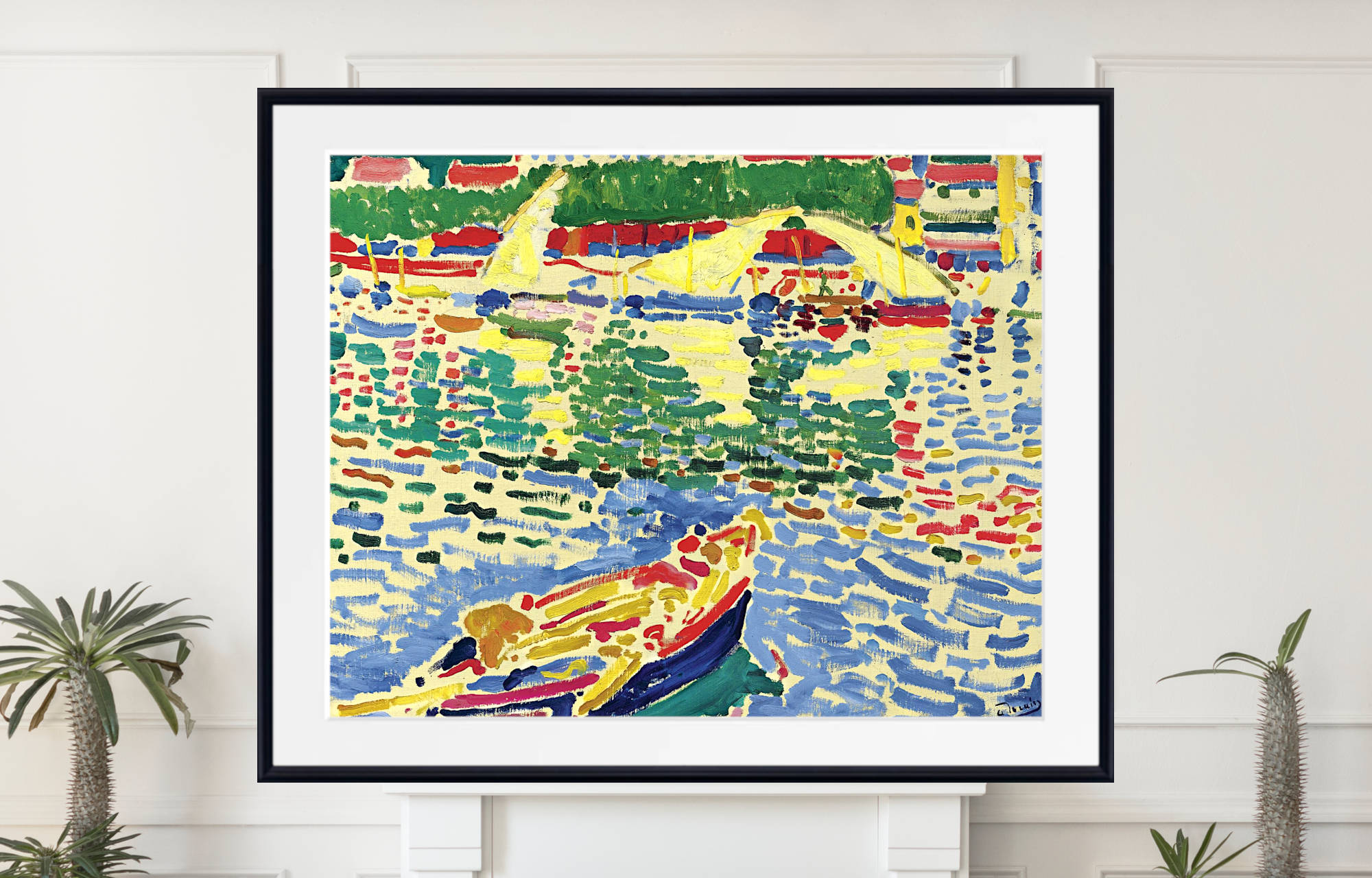
An André Derain Mountains at Collioure print combines a recognisable Mediterranean landscape with some of the most adventurous colour of early modern art.
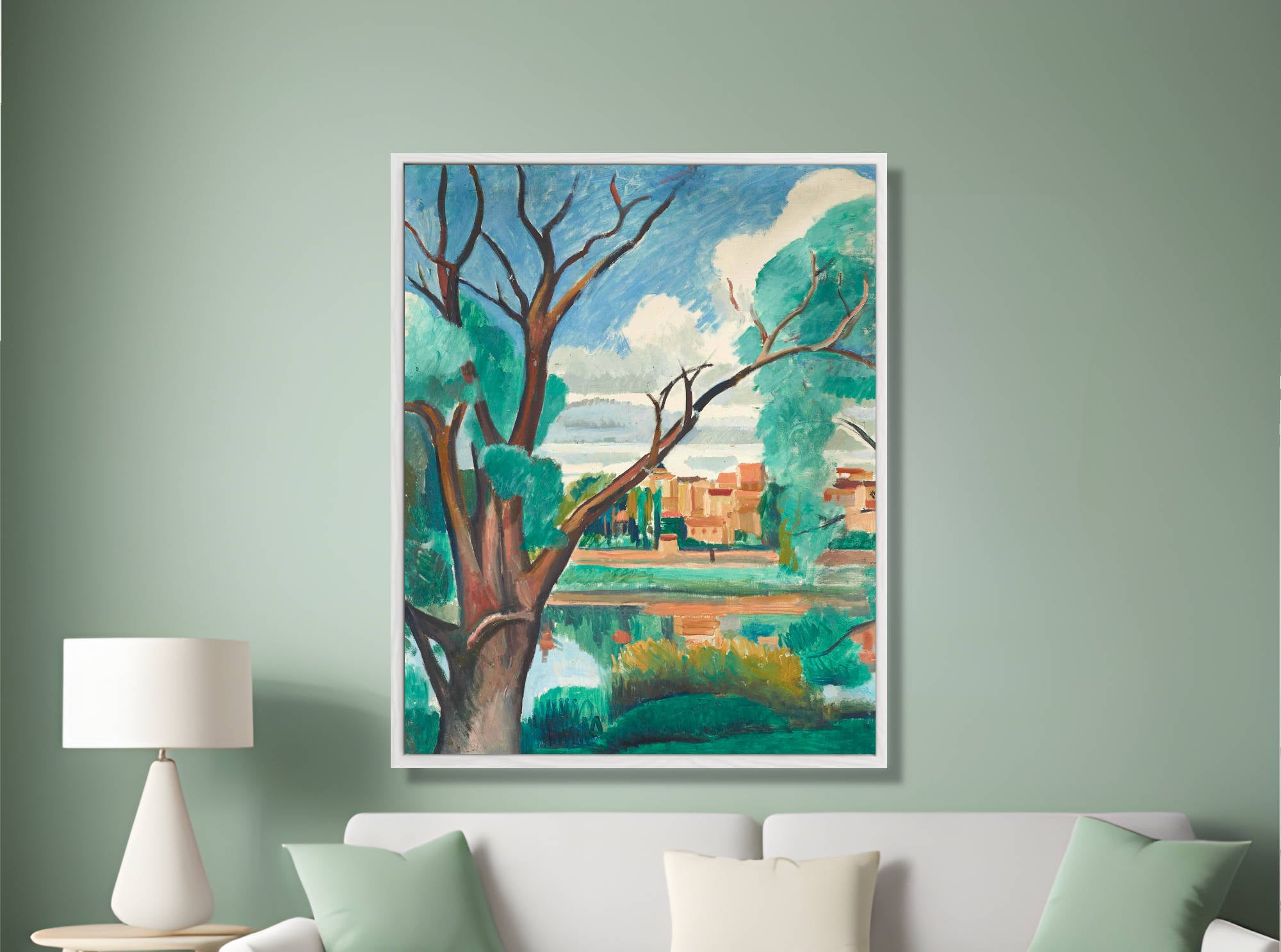
The painting's broad palette makes it particularly effective where wall art is intended to become a focal point. Coral reds, orange, cobalt blue, turquoise, yellow-green and lavender provide numerous opportunities to connect the artwork with surrounding furnishings and accessories.
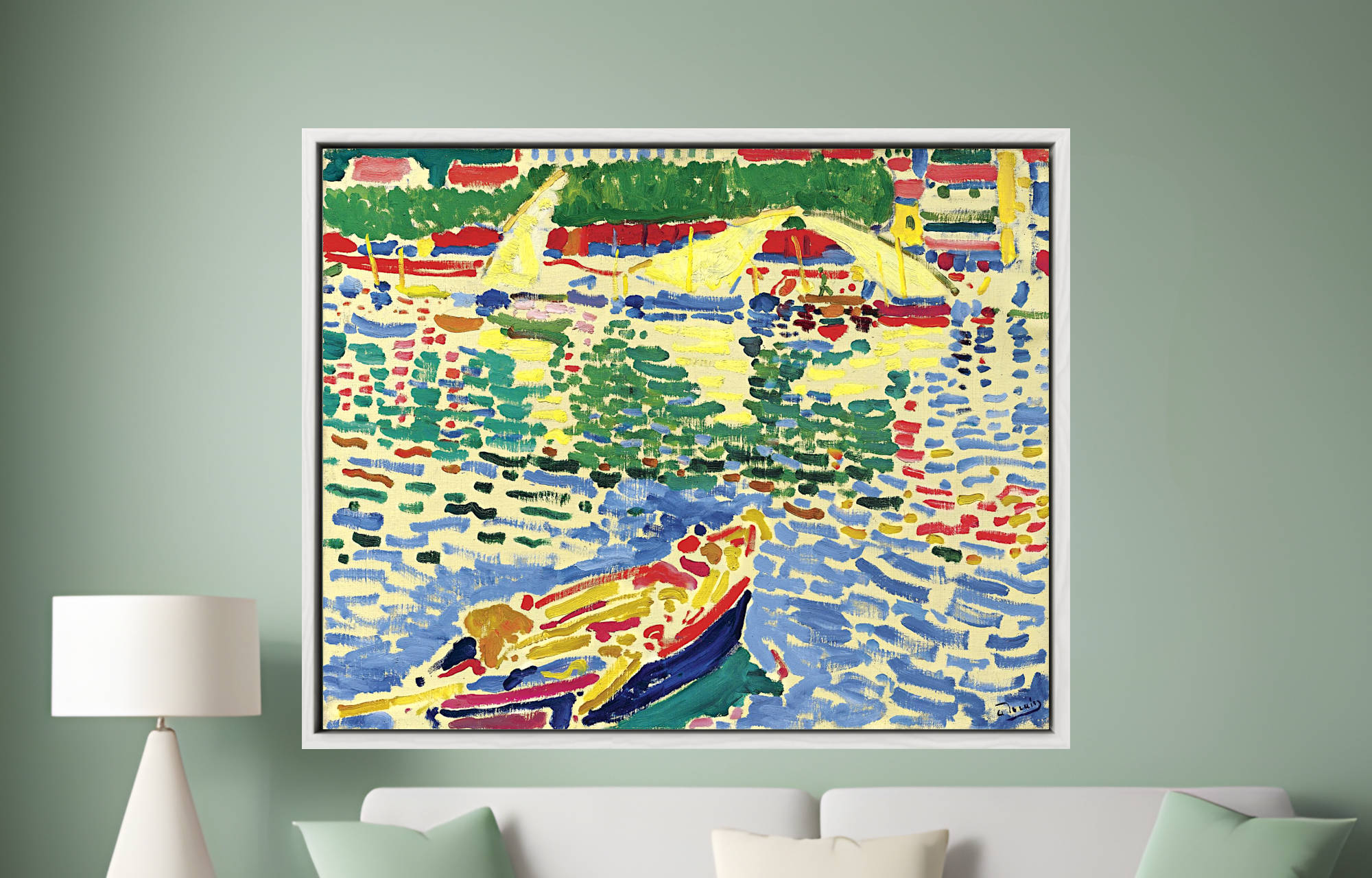
Against white, cream, putty, pale grey and other neutral walls, the stronger Fauvist colours can appear especially vivid.
Natural timber furniture and Scandinavian-inspired interiors also provide an effective setting because their restrained materials allow the painting's colour to dominate without competition.
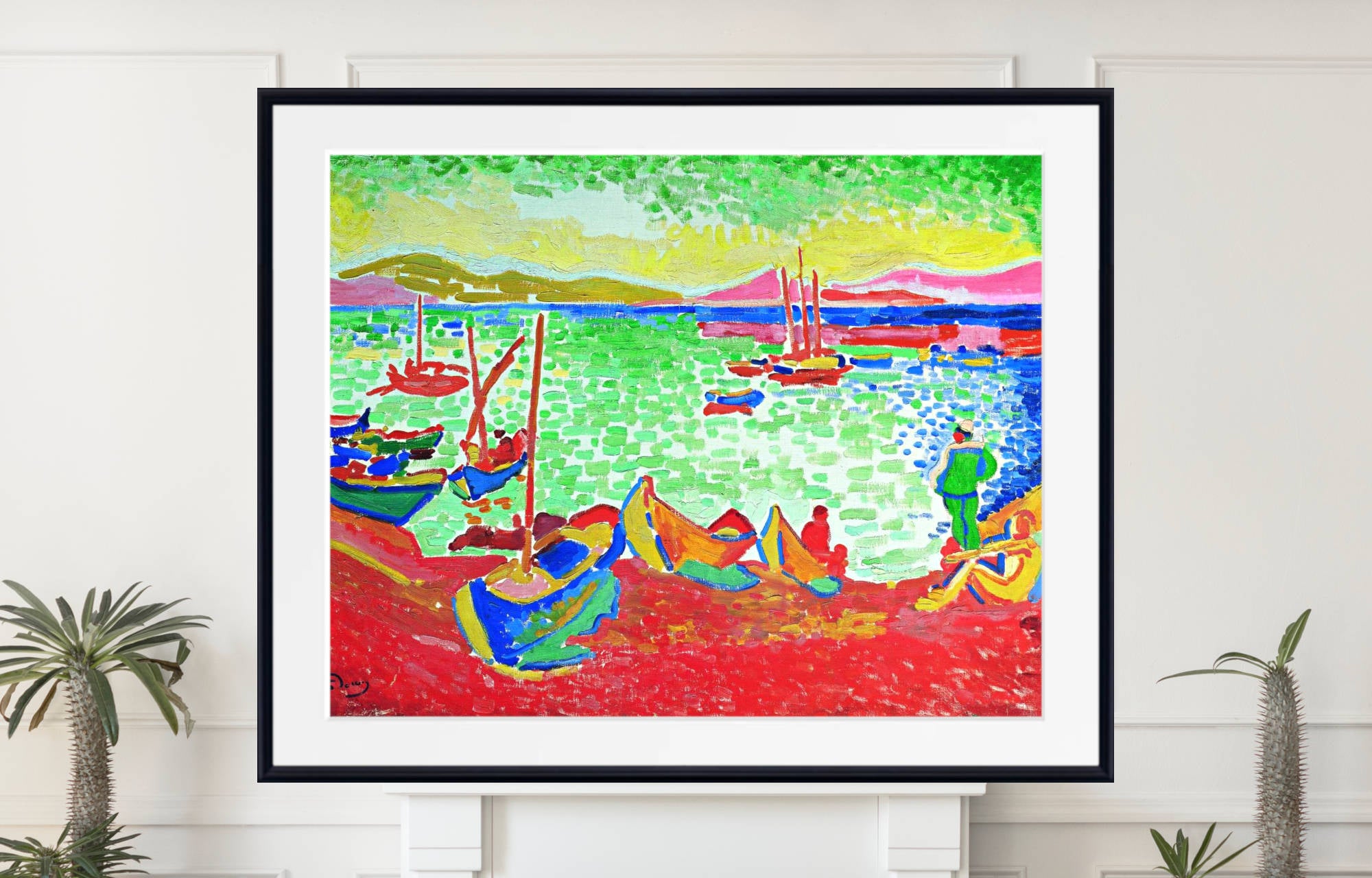
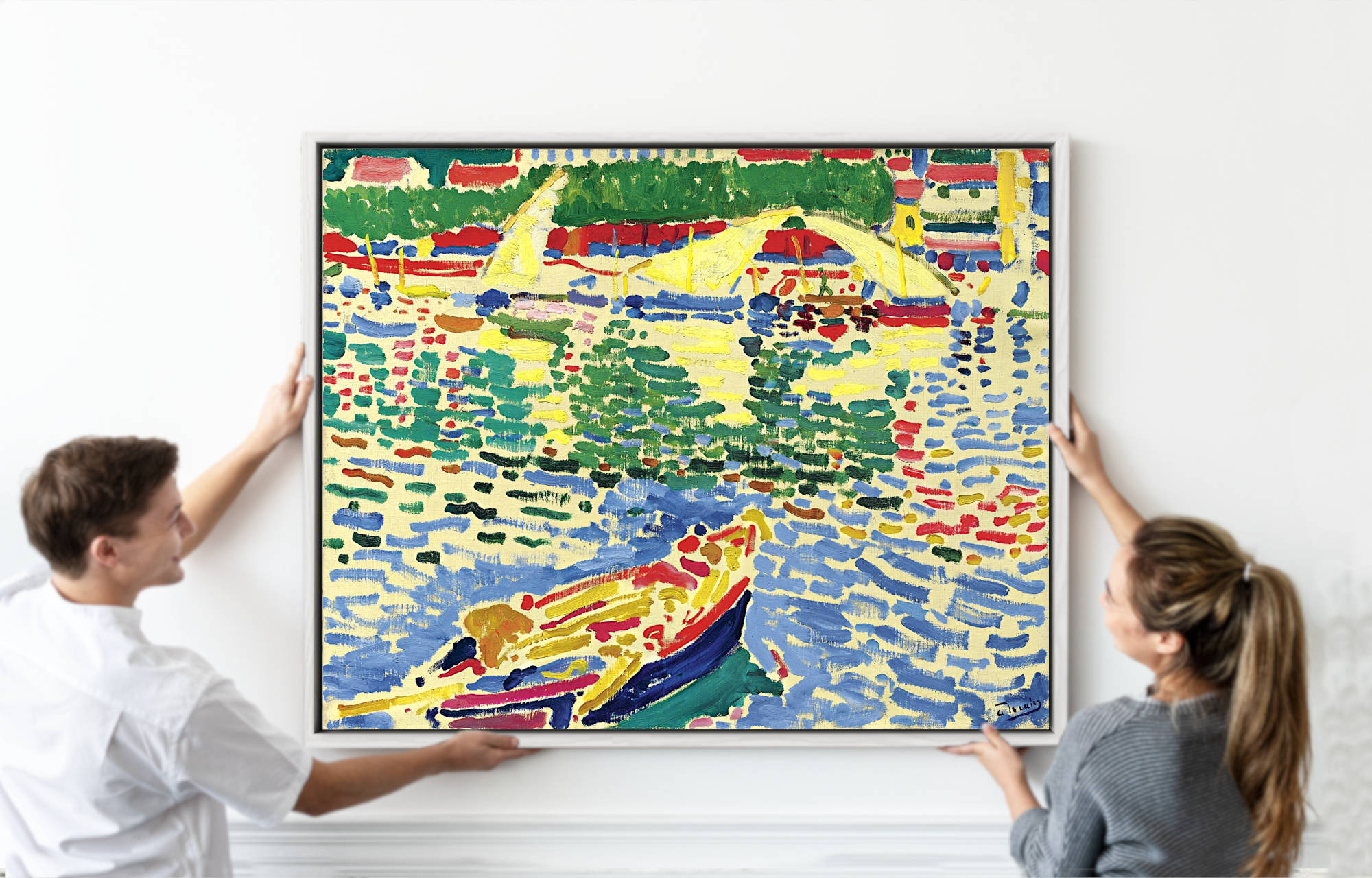
The horizontal composition makes the work particularly suitable for display above sofas, sideboards, console tables and beds.
It can work effectively in living rooms, dining rooms, bedrooms, hallways and home offices, as well as modern, mid-century and eclectic interiors.
For collectors of Fauvism and modern landscape painting, however, Mountains at Collioure offers more than decorative colour. It represents the extraordinary summer in which Derain and Matisse helped change the course of modern painting.
All orders for unframed fine art prints and original paintings are dispatched within 2 working days of receipt of payment.
Orders for custom framed prints are dispatched within 4 working days.
All orders are fully tracked from dispatch to delivery at your home or business.
All print and original painting orders are fully insured against loss or damage in transit. We refund or replace any damaged or lost orders.
Buy with confidence - read what our satisfied customers have to say - Reviews
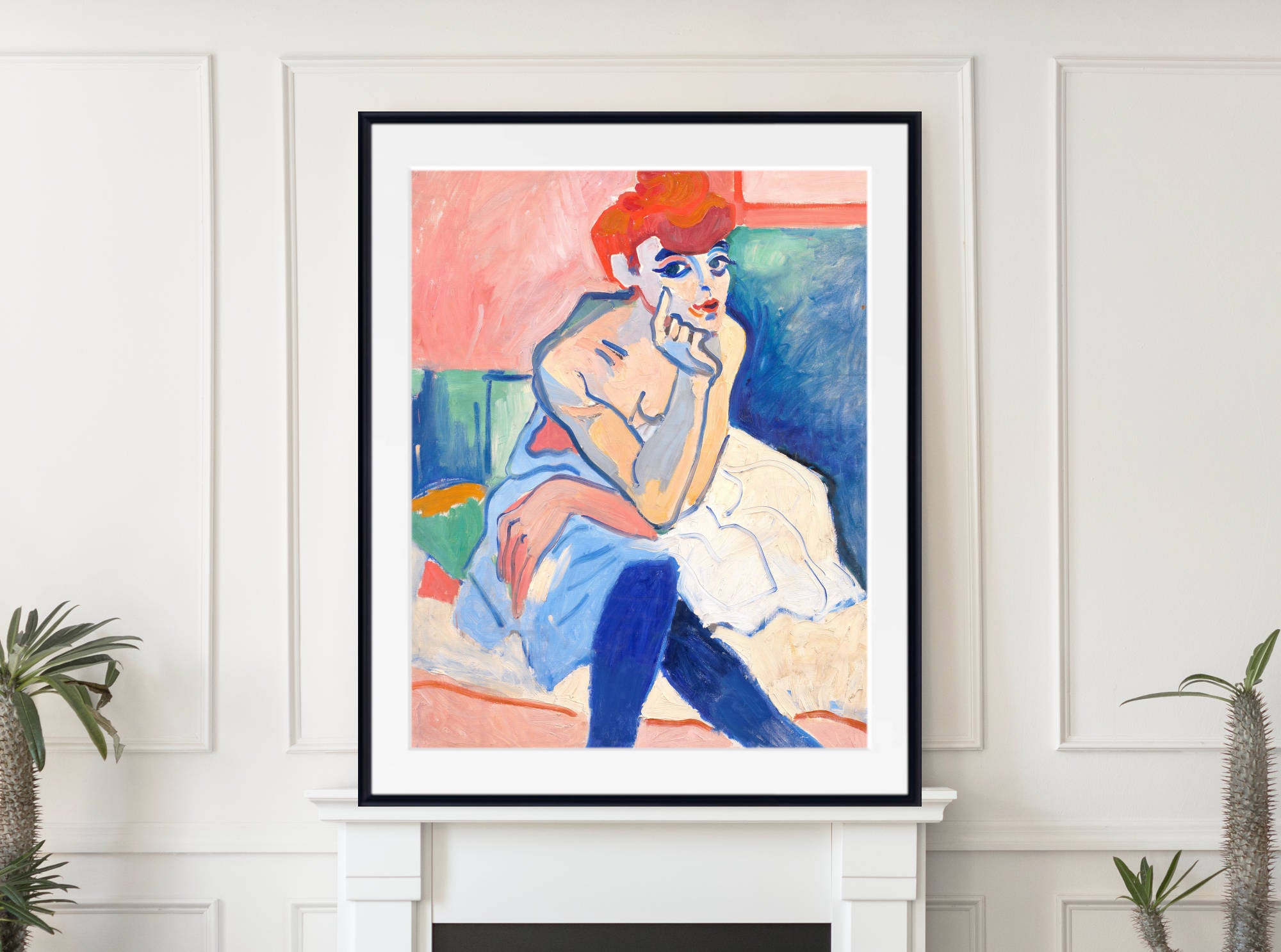
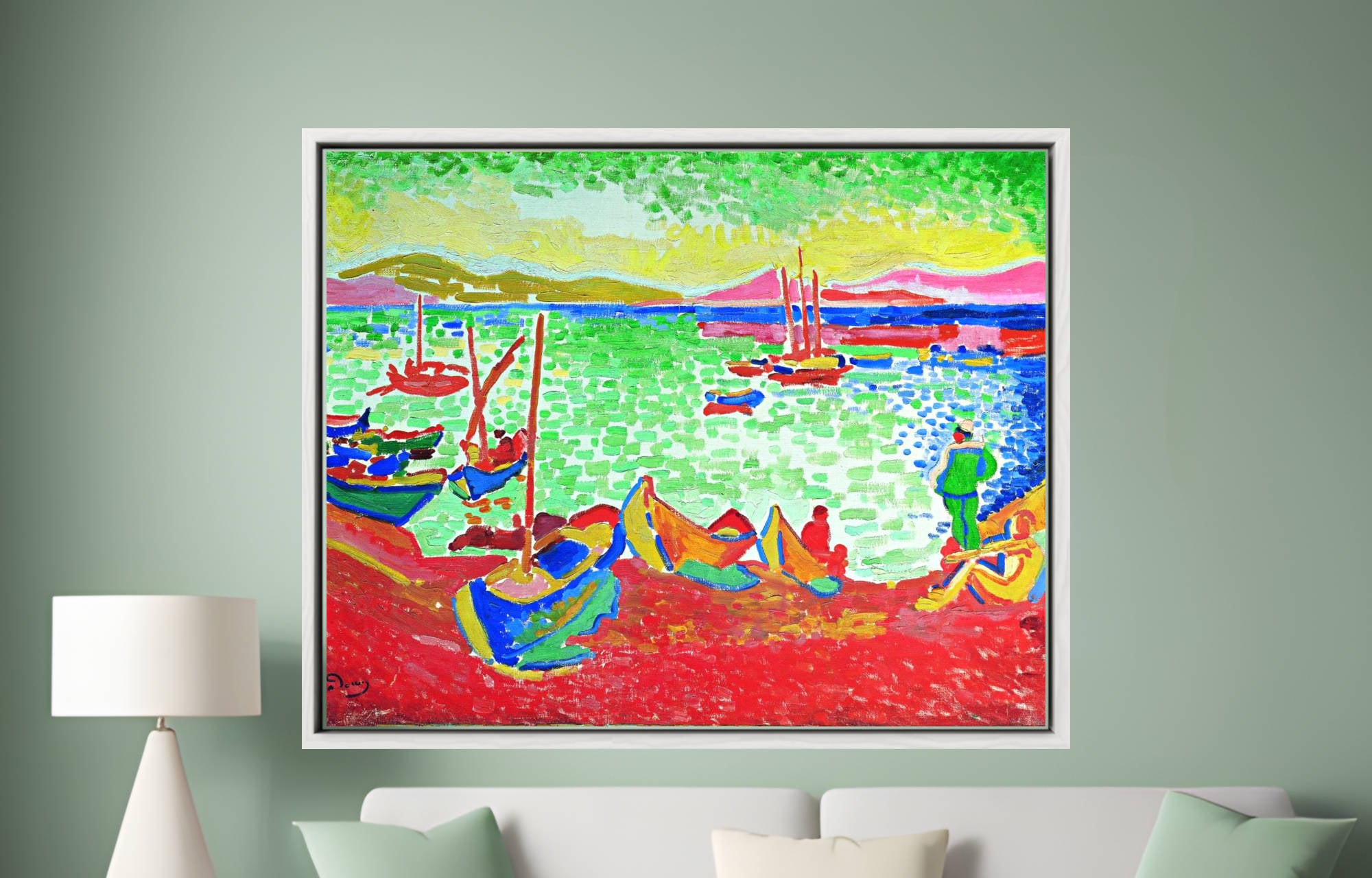
Fine art papers are printed without any additional white border Please let us know at the time of ordering if you would like a small additional white border.
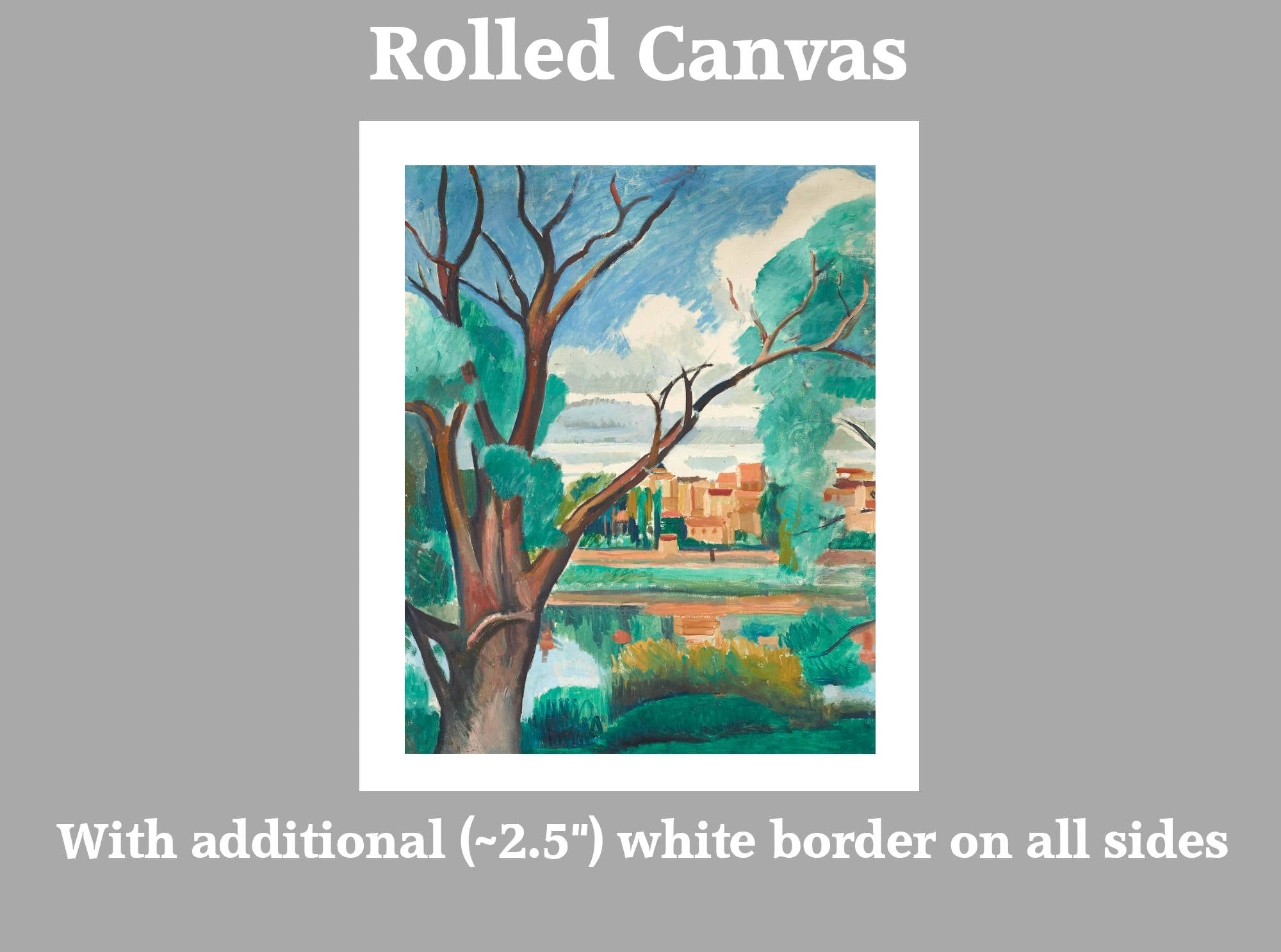
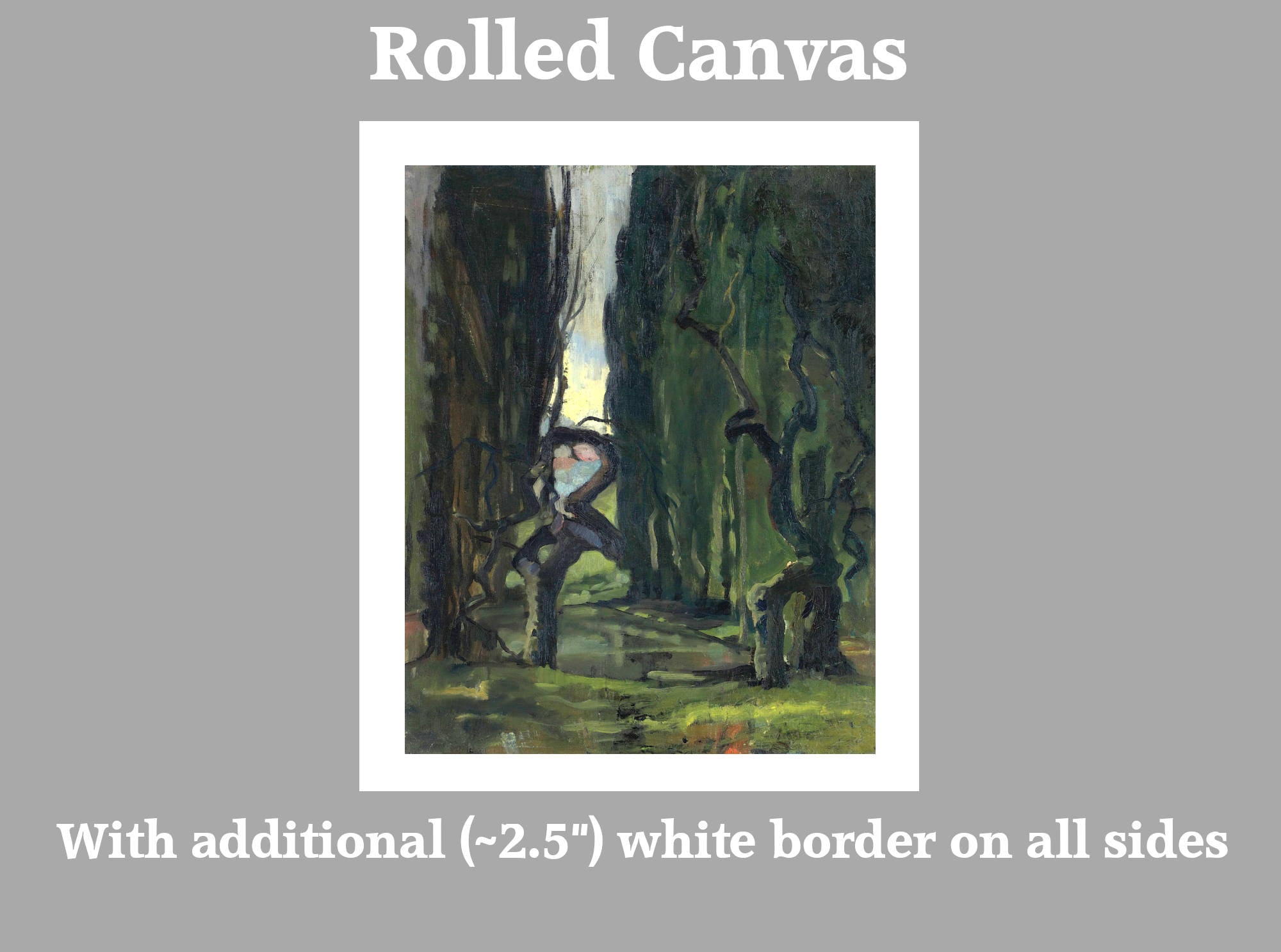
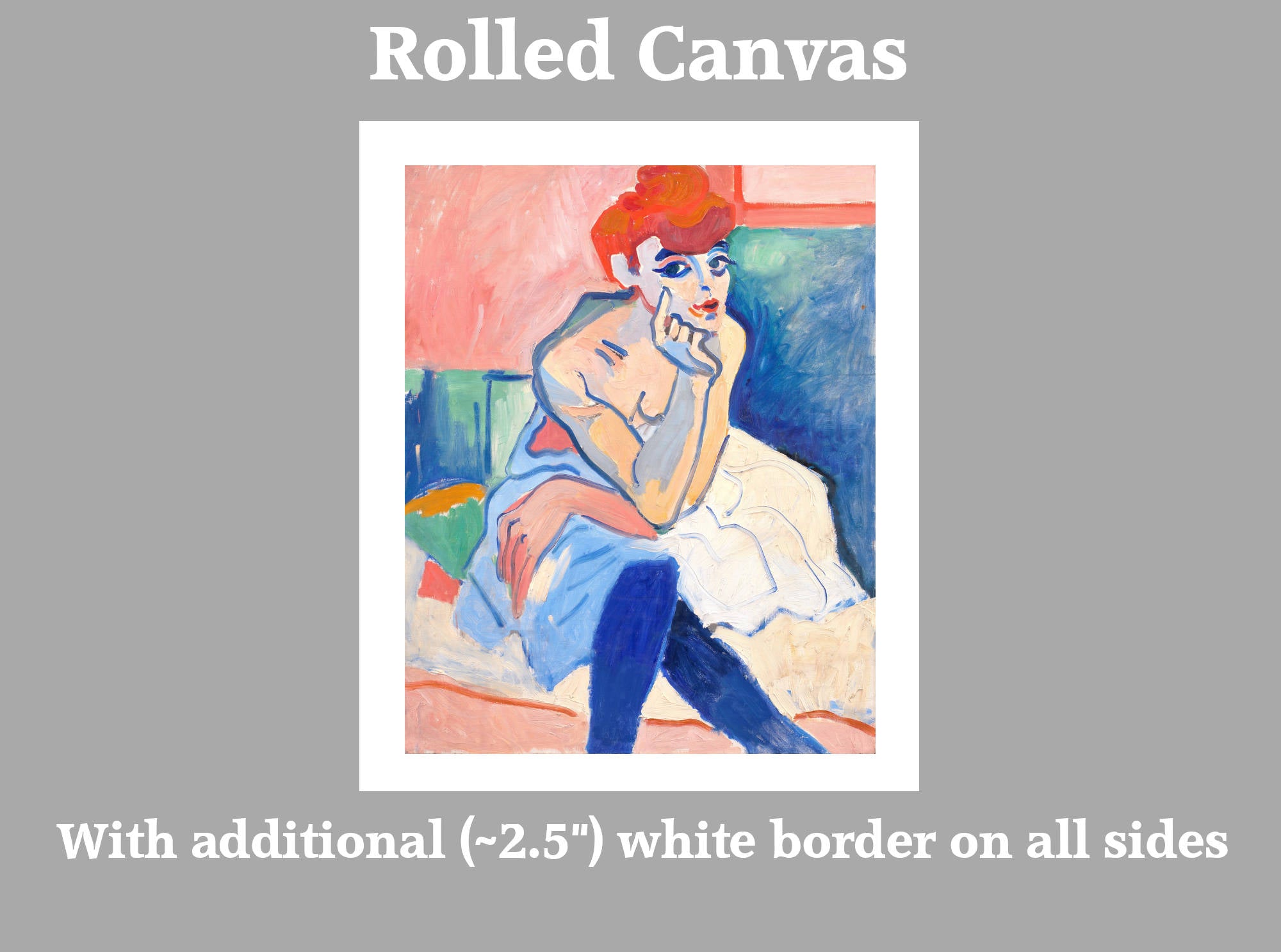
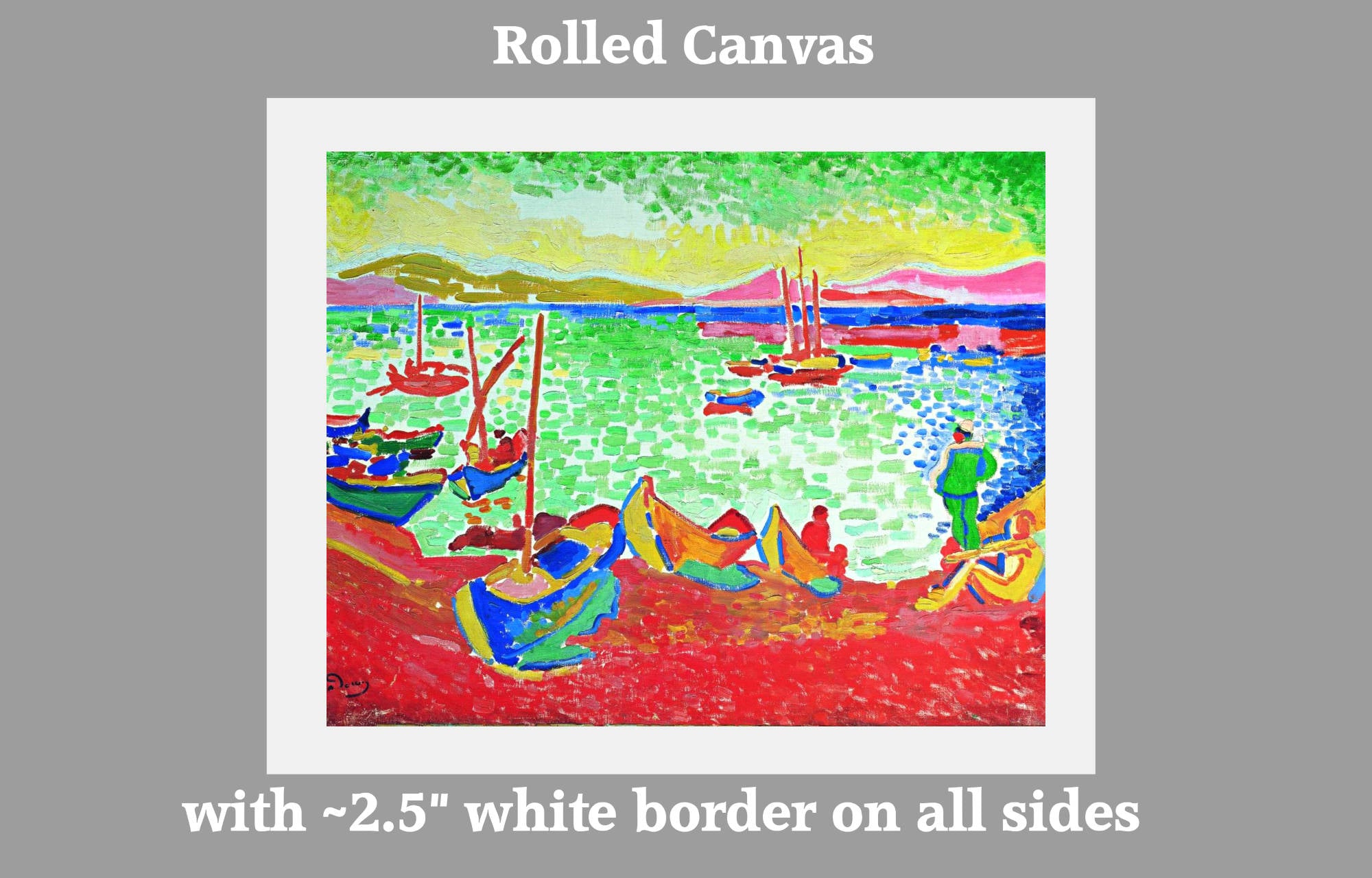
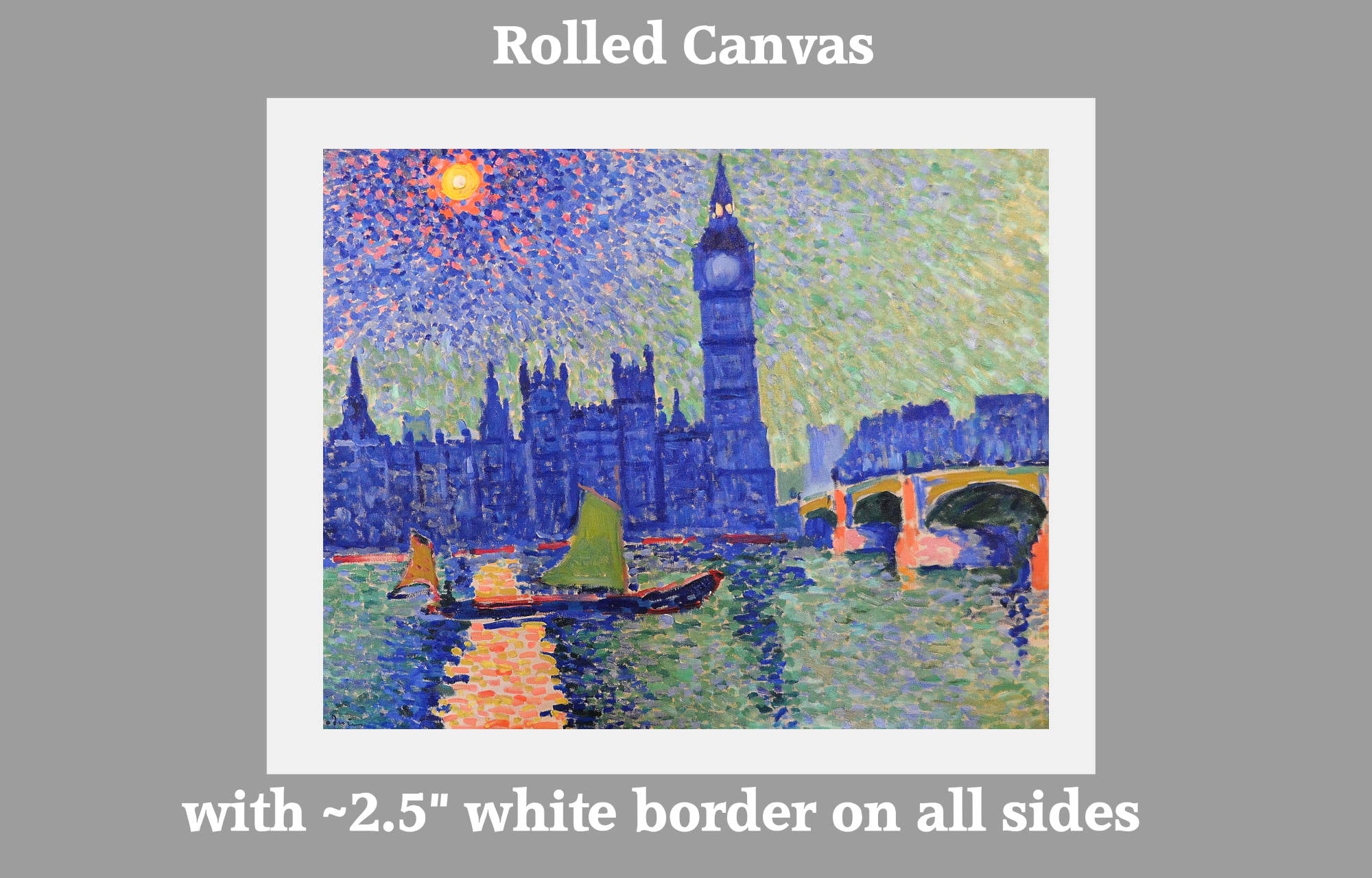
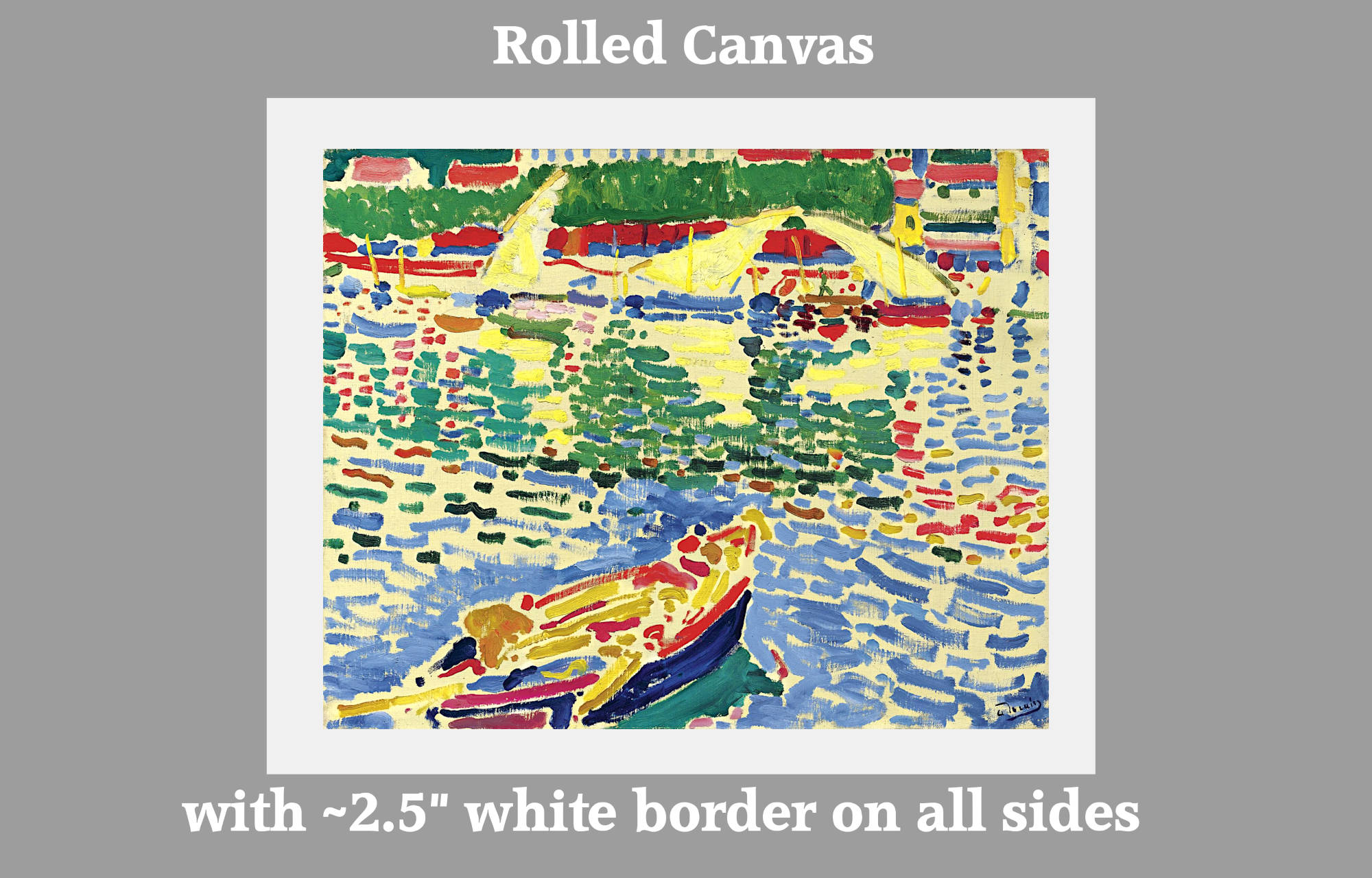
Rolled canvas options have an additional white border of approximately 2.5 inches (7cm) on all 4 sides to aid stretching.
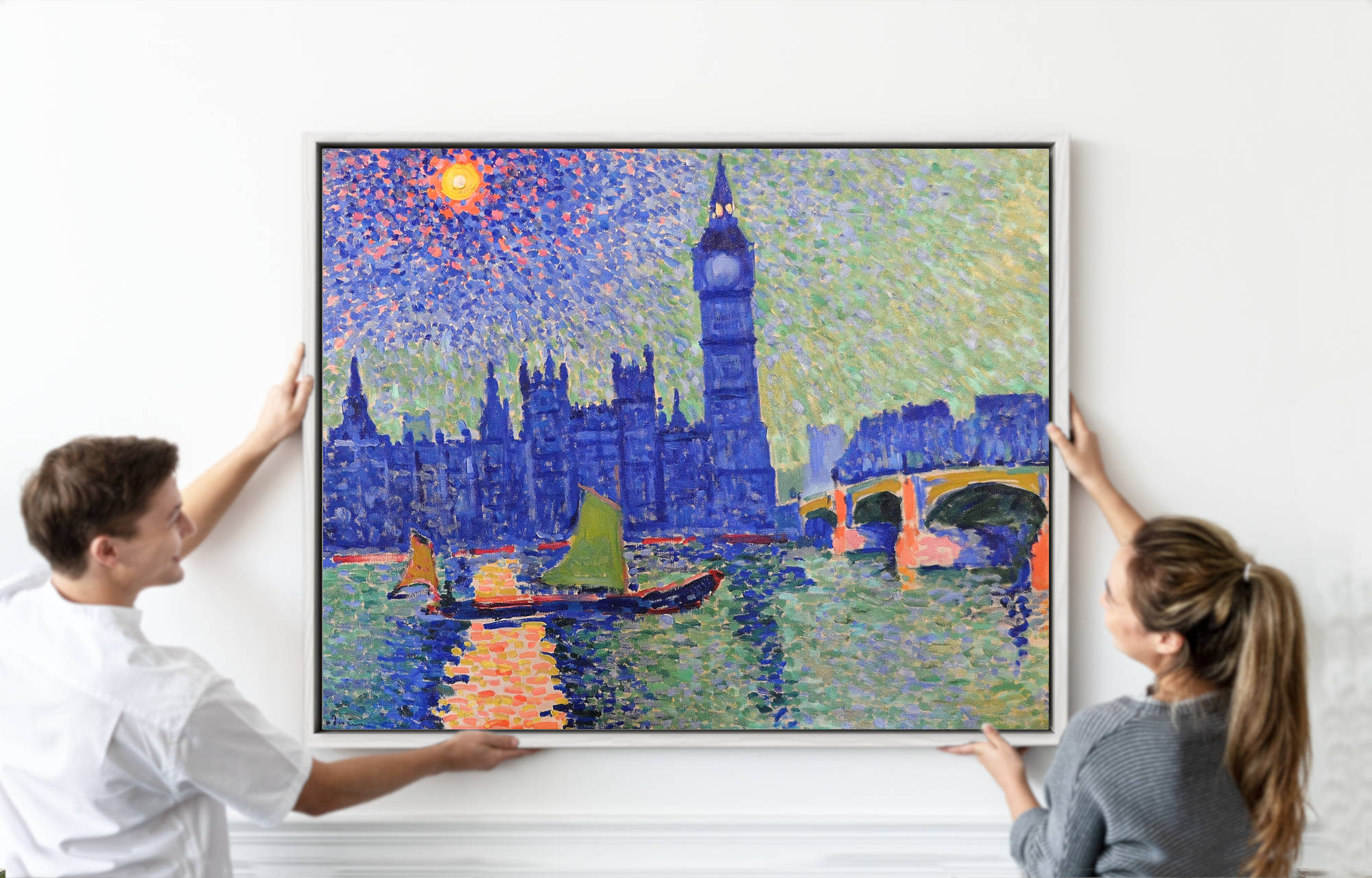
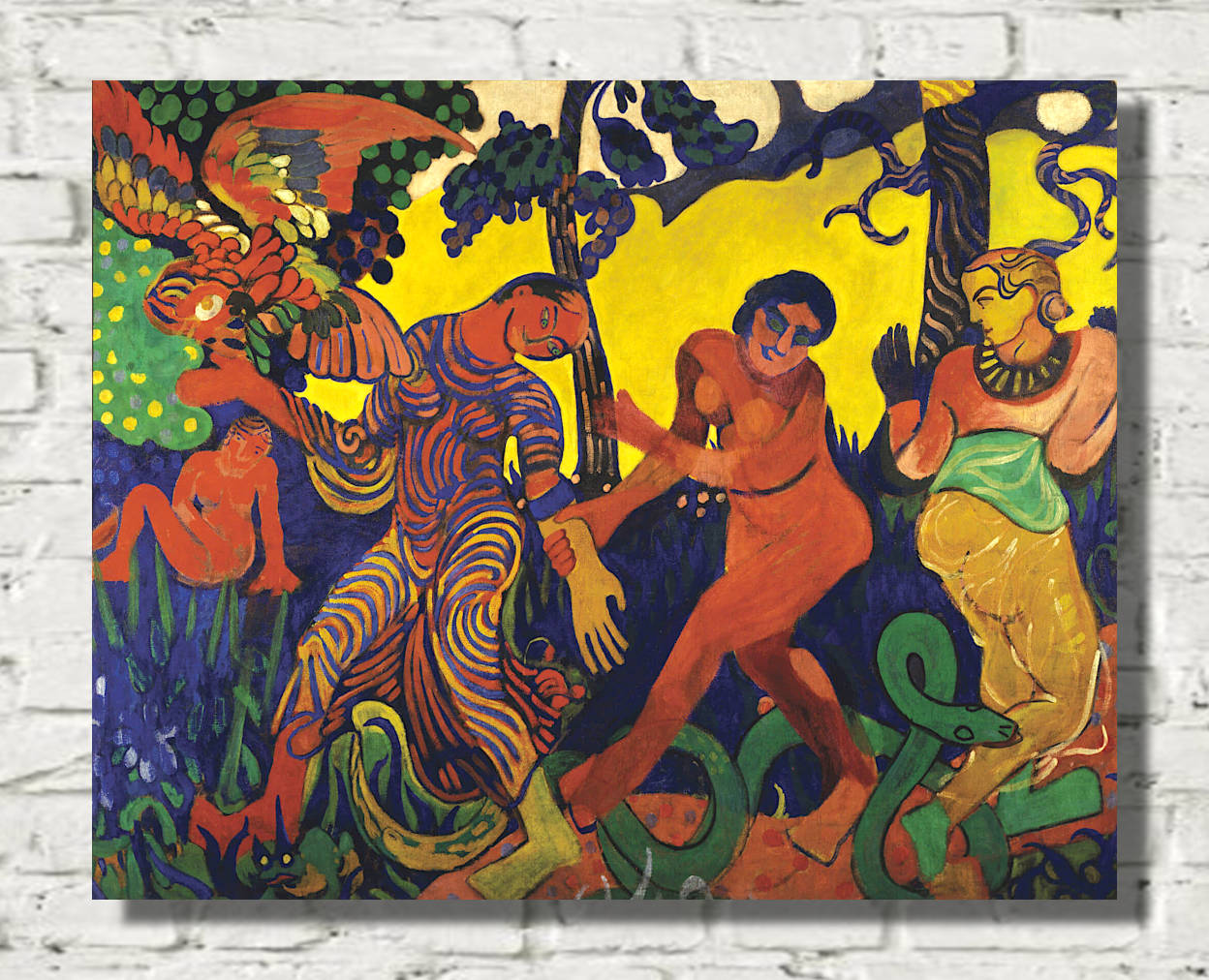
Ready to hang canvas panels are stretched on 1.5 inch deep solid pine frames from sustainable forestry sources. The image is mirrored on all 4 sides to give an aesthetically pleasing finish.
Why not have us gift wrap your order and attach a personalised message to the recipient. Available for all orders. Each order is hand wrapped in high quality gift wrap with meatllic ribbon and bow. Your personalised message is printed on a card which is included with your order.
Have your hand wrapped gift delivered directly to the recipient.
Full tracking and insurance included with every order.
Please note design may vary depending upon availability
Just purchase the gift wrap option HERE
We have a wide range of frames in standard sizes and we also make custom size frames.
To order a framed print:
1. select the print size you would like along with the print materials (matte paper, fine art paper).
2. Add your print choice to the basket.
3. Choose from our range of frames
4. Select the same size as the print you have added to your basket. If the frame size you want is not listed please contact us
5. Choose from the mount or no-mount option
6. Add your frame choice to the basket
7. Proceed to checkout.
Why Choose GalleryThane?
- Printed and framed in-house
- Free UK delivery
- Free EU and USA delivery on orders over £200
- Tracking and insurance included in every order
- Fast 1-3 day dispatch
- Gift wrapping service available
- Gallery quality materials
- Sustainable, eco-friendly packaging
- Great customer support
Explore related collections

What makes our Prints and Canvas Panels so special

Latest Giclee Printing Technology
We have invested in the latest wide format print technology to produce museum quality giclee prints utilising the highest quality pigment inks to give outstanding colour reproduction.

Museum Quality Archival Fine Art Papers
We print on the finest quality fine art papers with textured, smooth and lustre finishes for prints which last a lifetime.
From aceo miniatures to 40x80 inch large format, every print has our lifetime quality guaranteee.

Solid Wood Frames, Cotton Canvas
All of the wood for our canvas panels and frames is responsibly sourced from manages forests. Our cotton canvas is completely seedless for the highest quality reproduction possible.

Have Your Gift Wrapped


Choose a Custom Frame
Popular Collections


EU Representative
Manufacturer
LucasAbstract t/a GalleryThane
15 Campion Way, Bingham NG13 8TR UK
sales@gallerythane.com
EU Authorised Representative
Westwood Sourcing
Fellenoordstraat 52, Unit 2.38
4811 TJ Breda, Netherlands
info@westwoodsourcing.com