


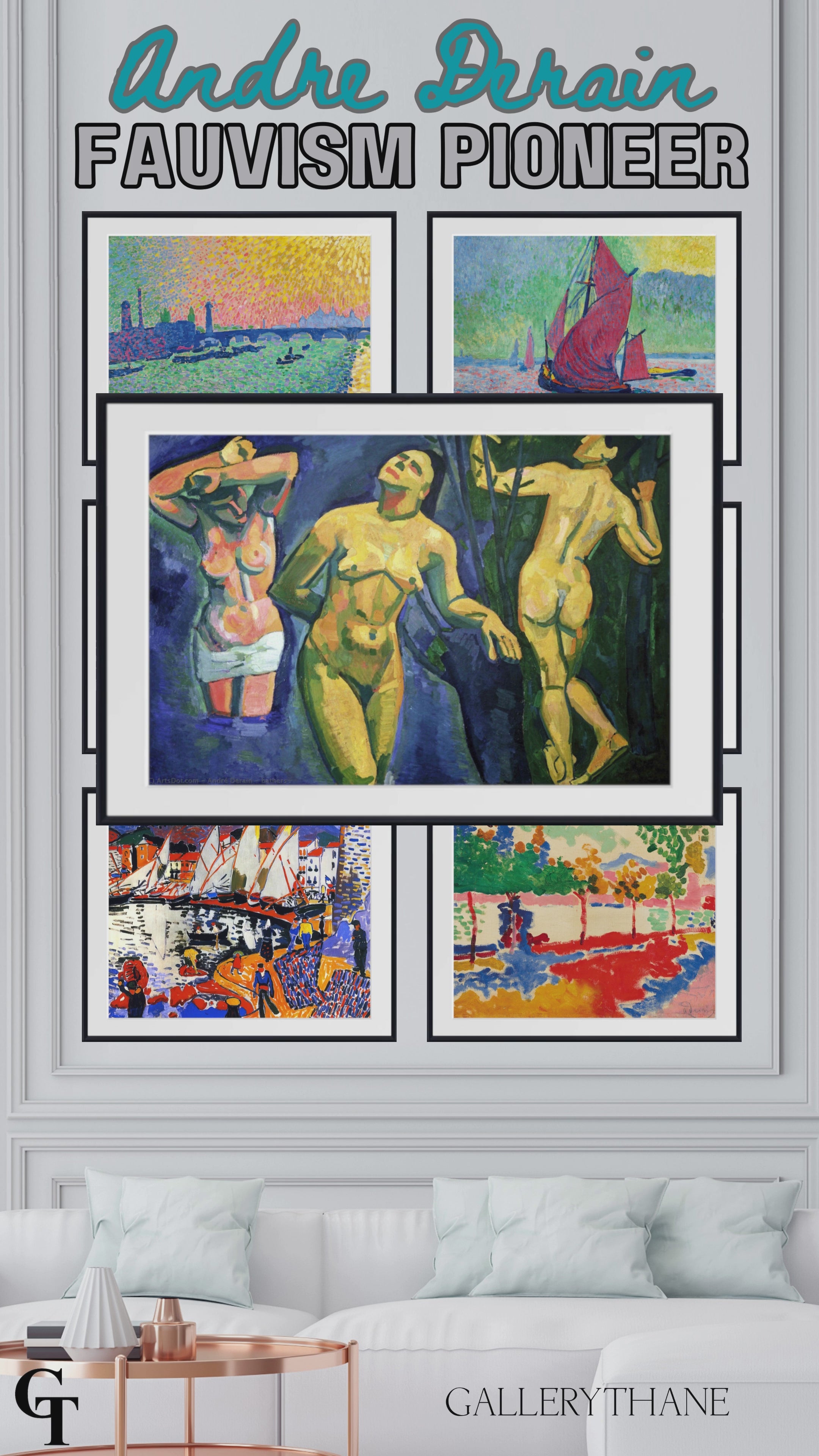


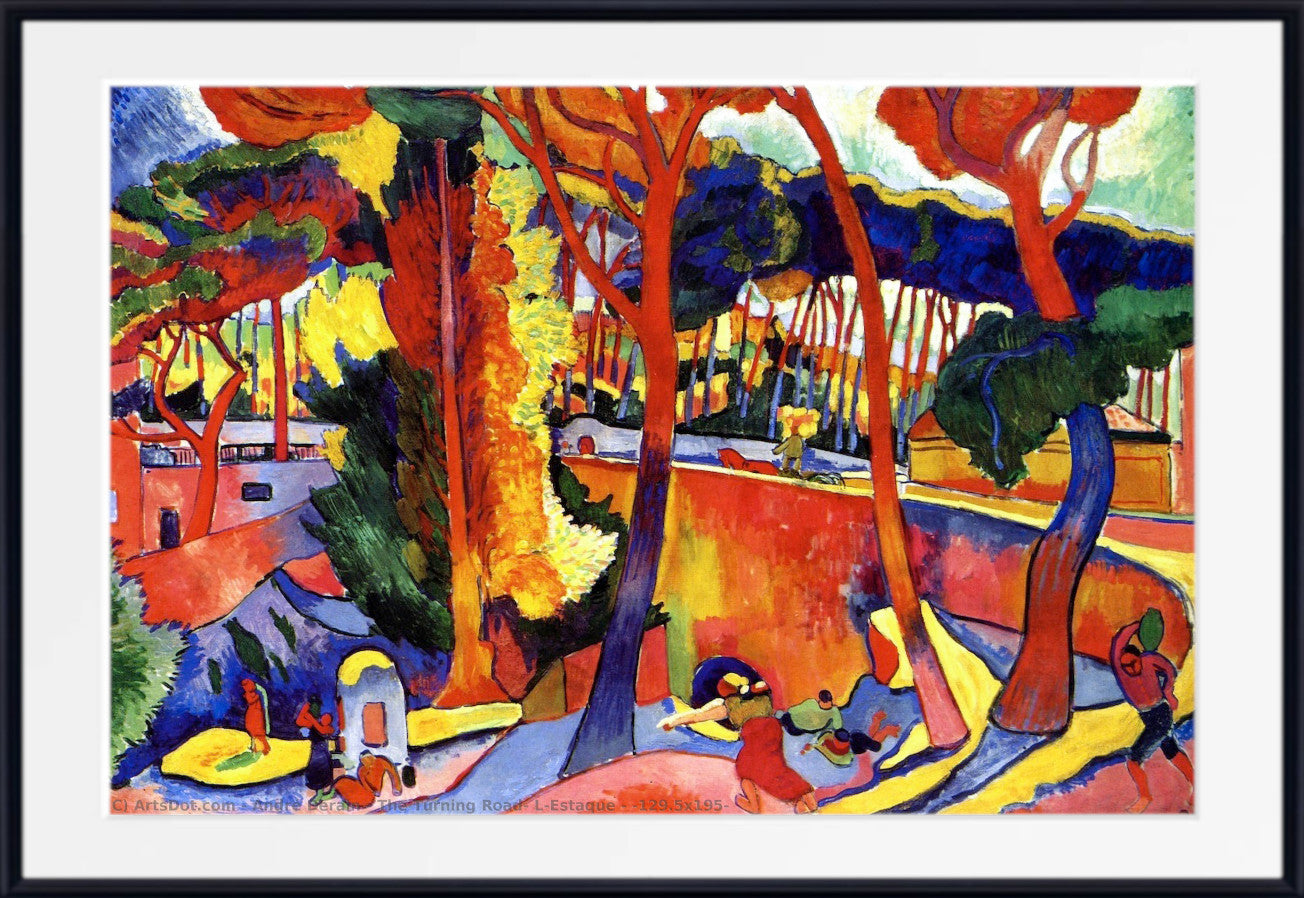
The Turning Road, L'Estaque by Andre Derain
Couldn't load pickup availability
BUY WITH CONFIDENCE
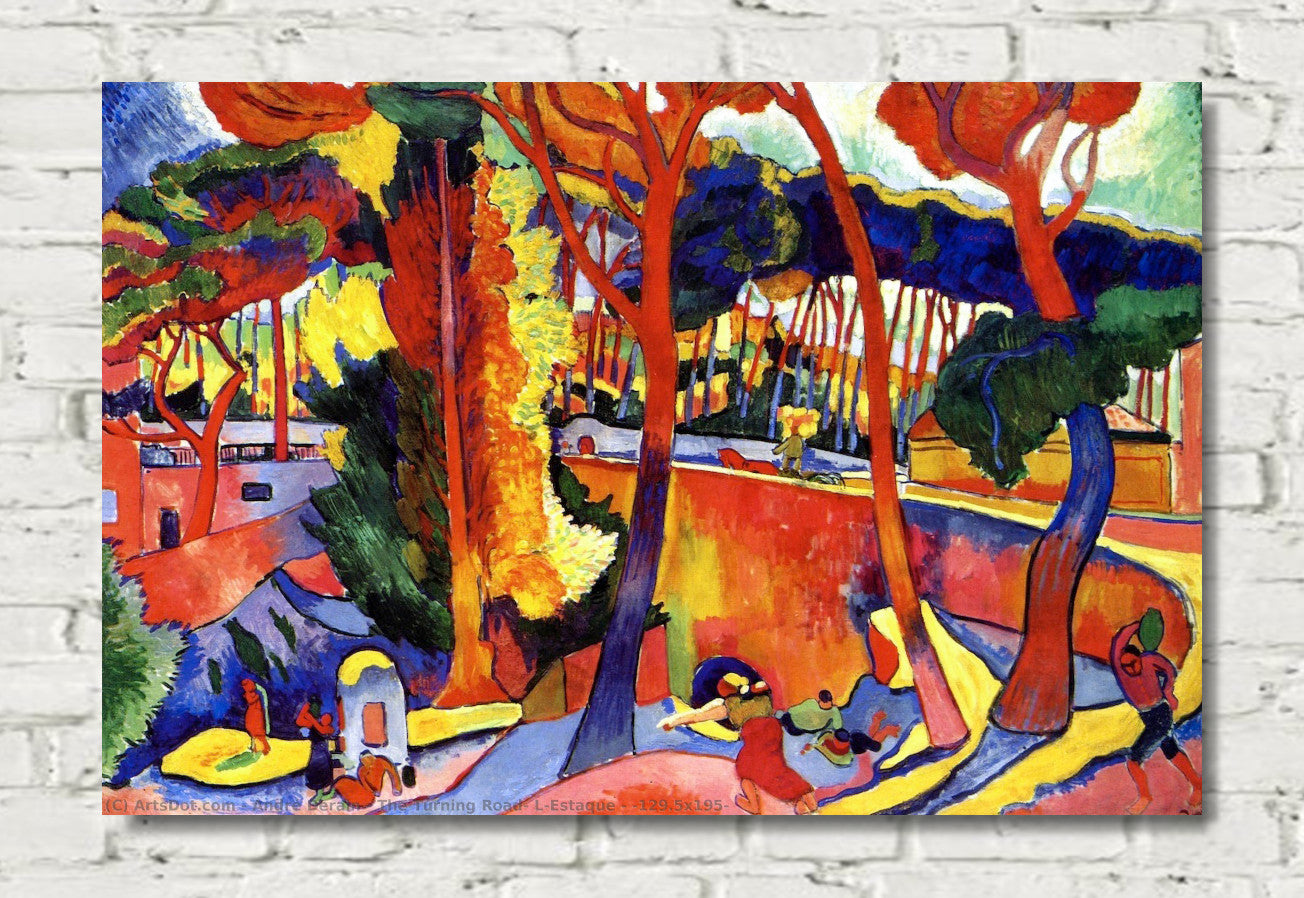
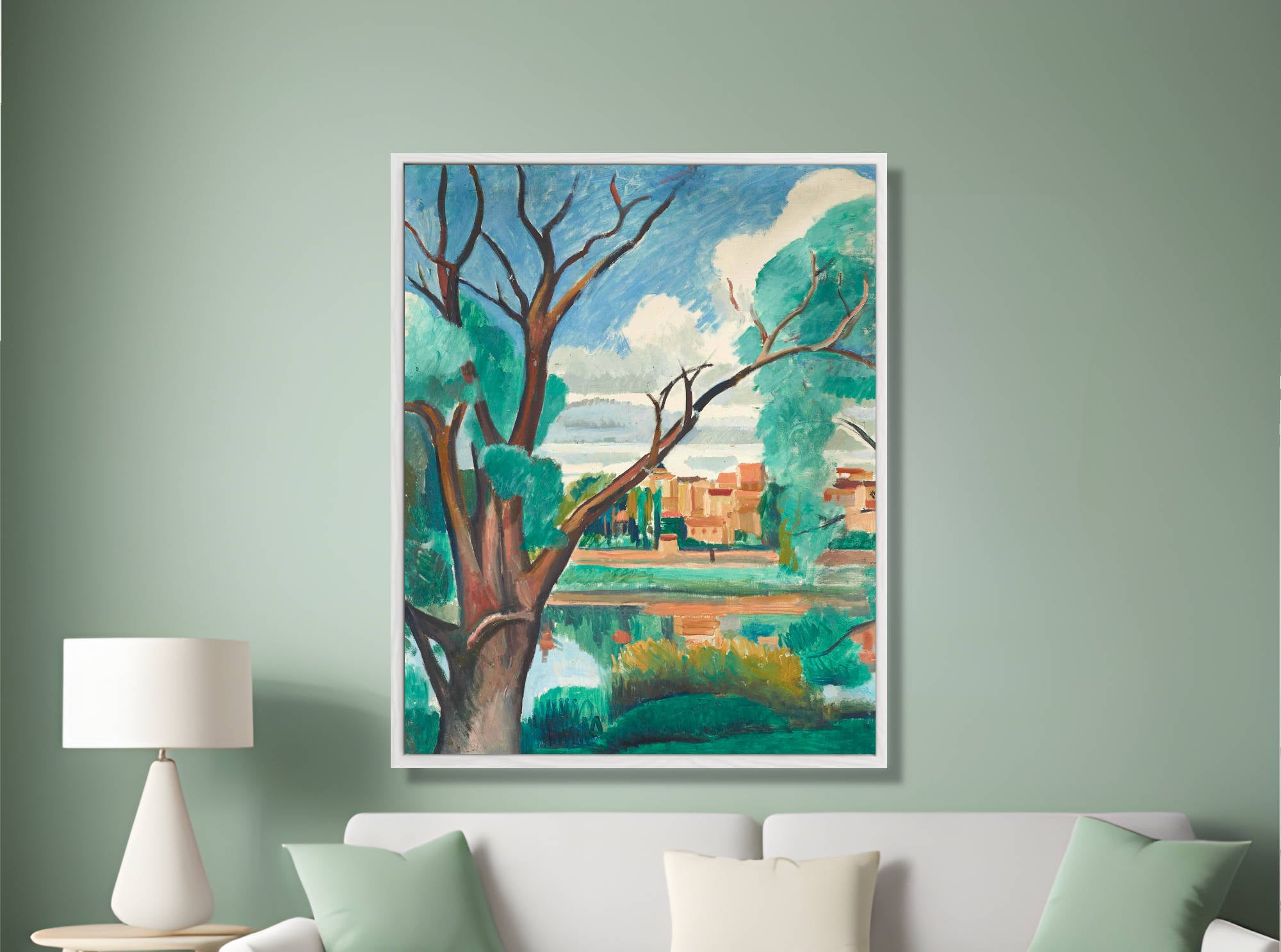
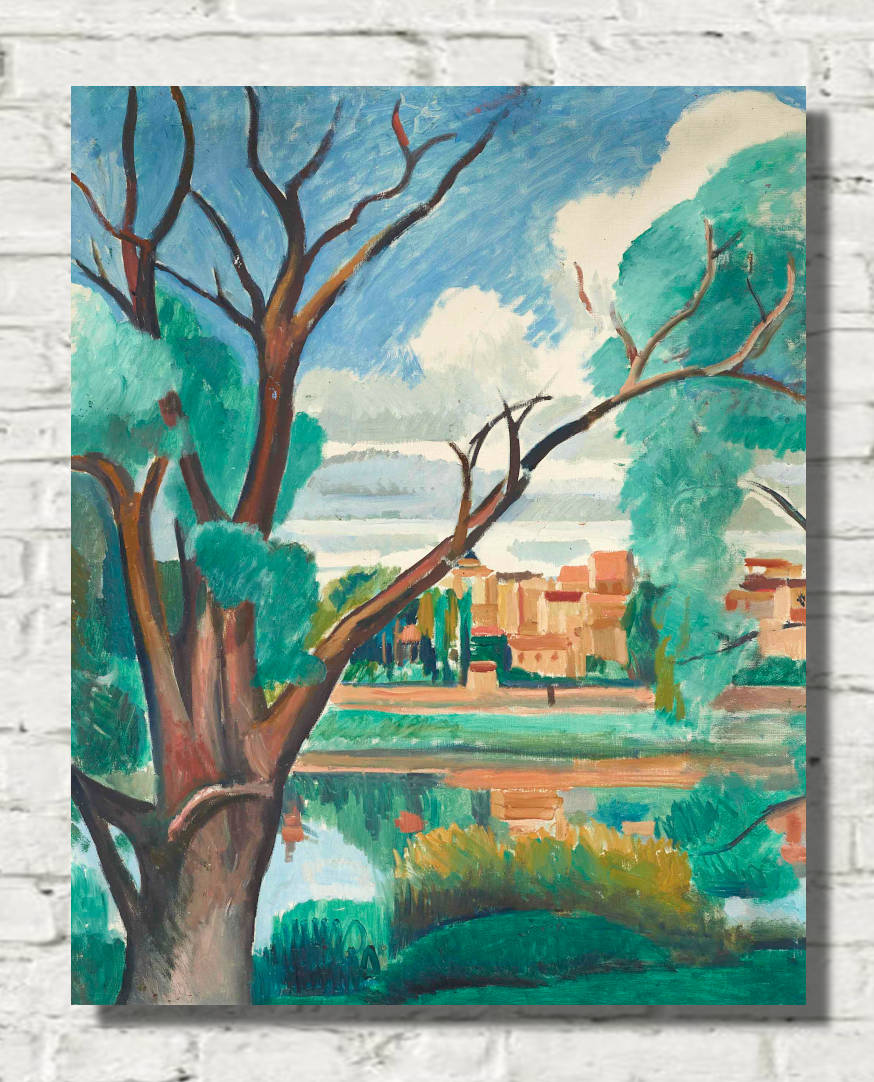
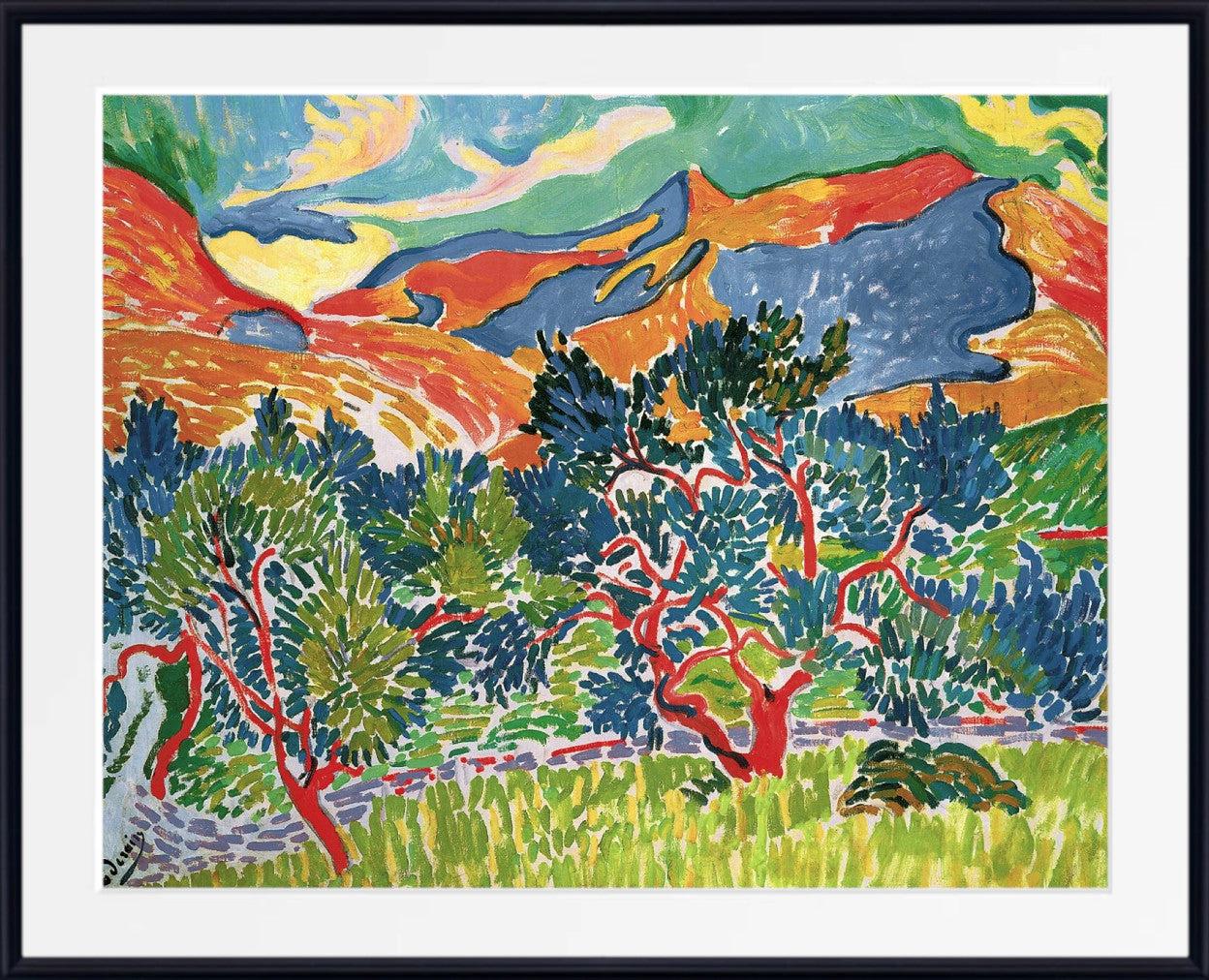
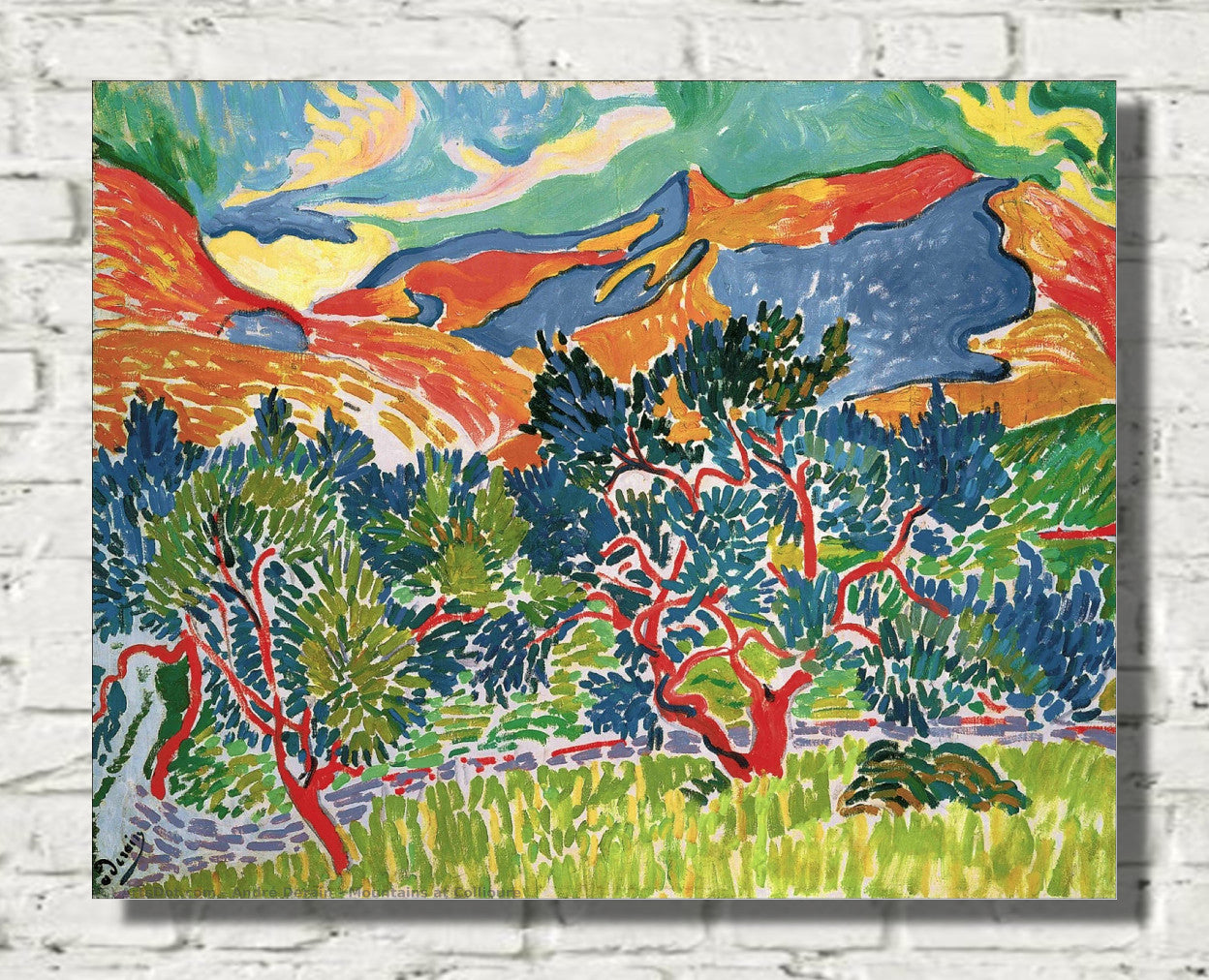
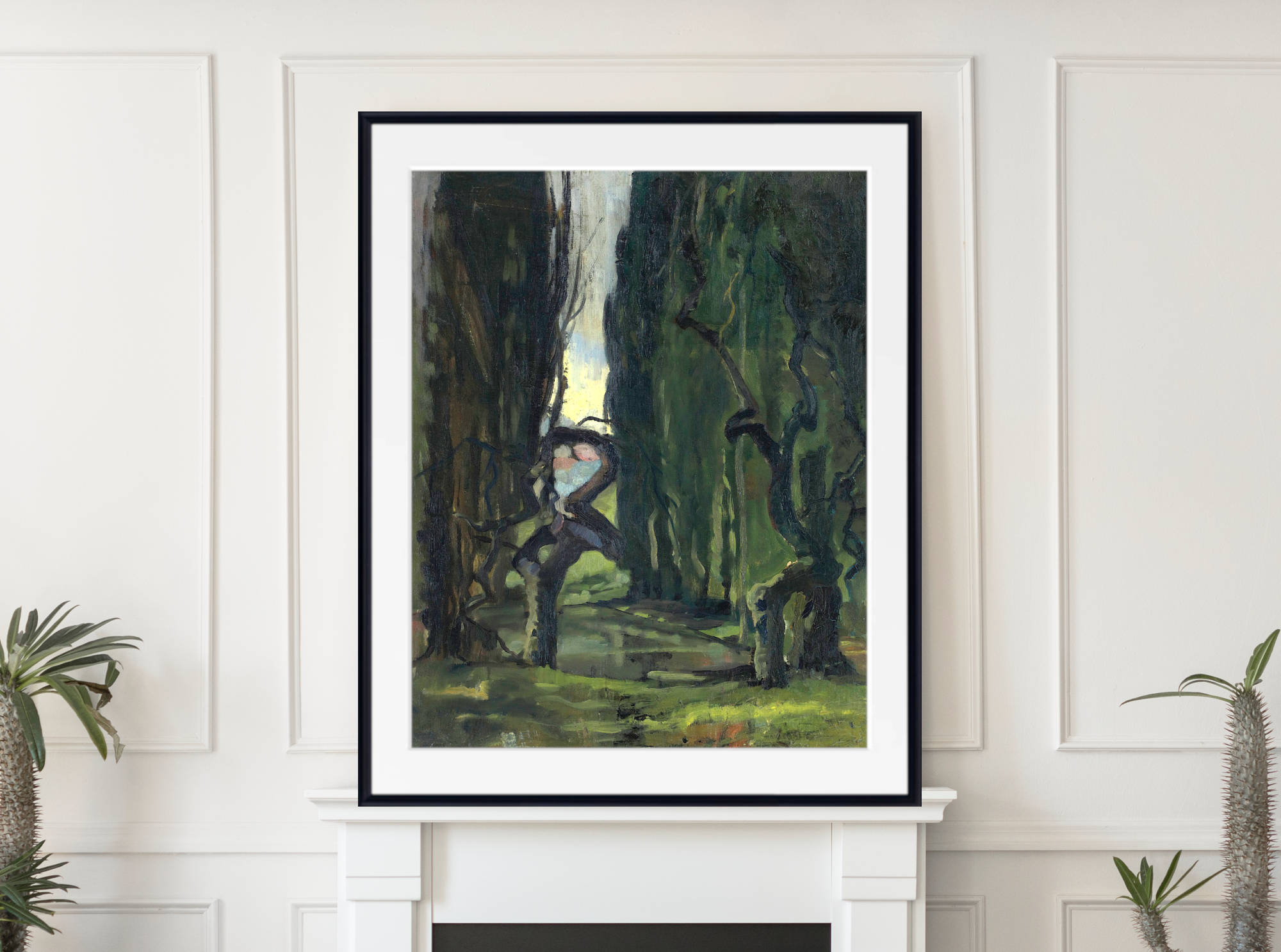
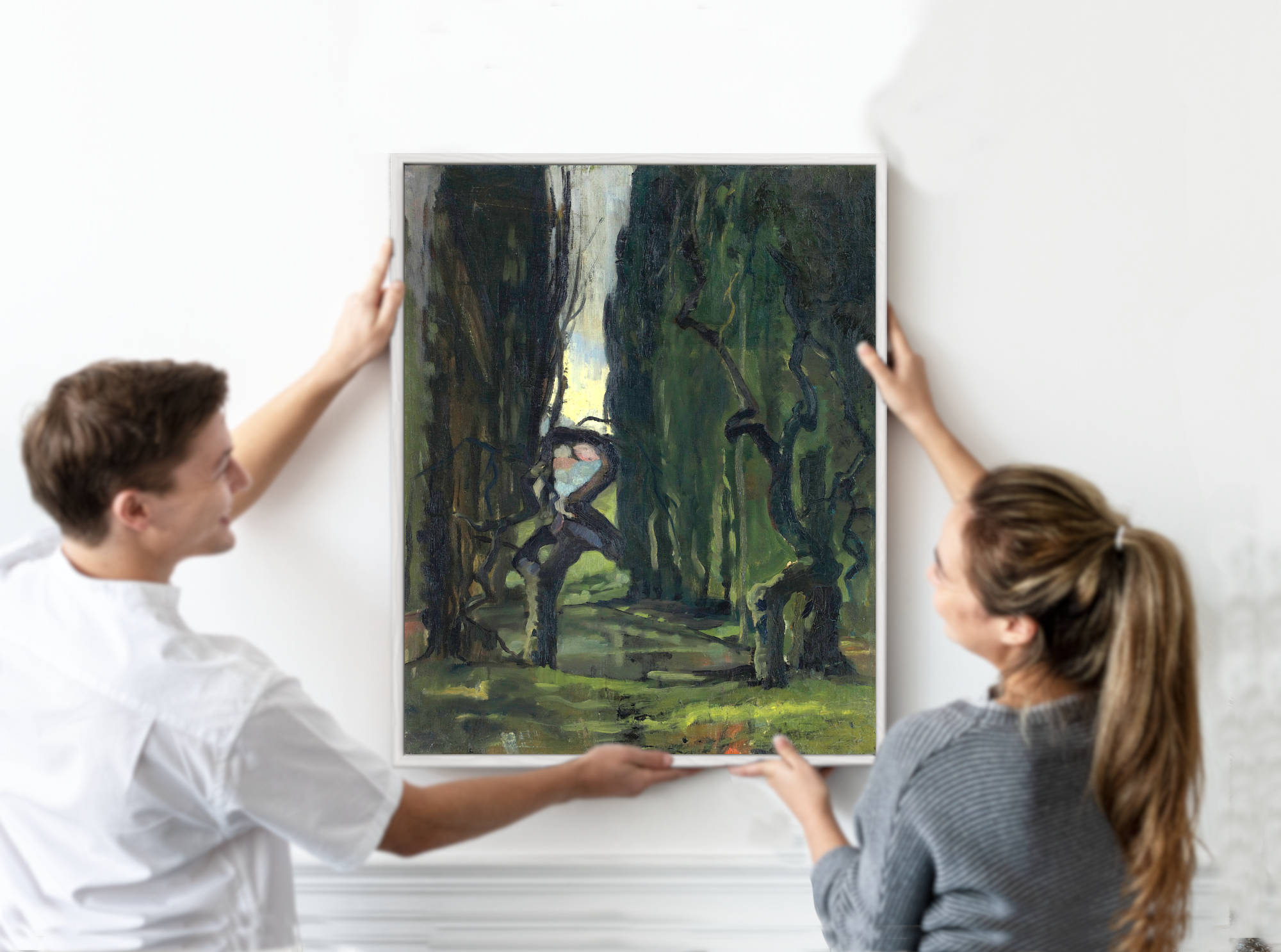
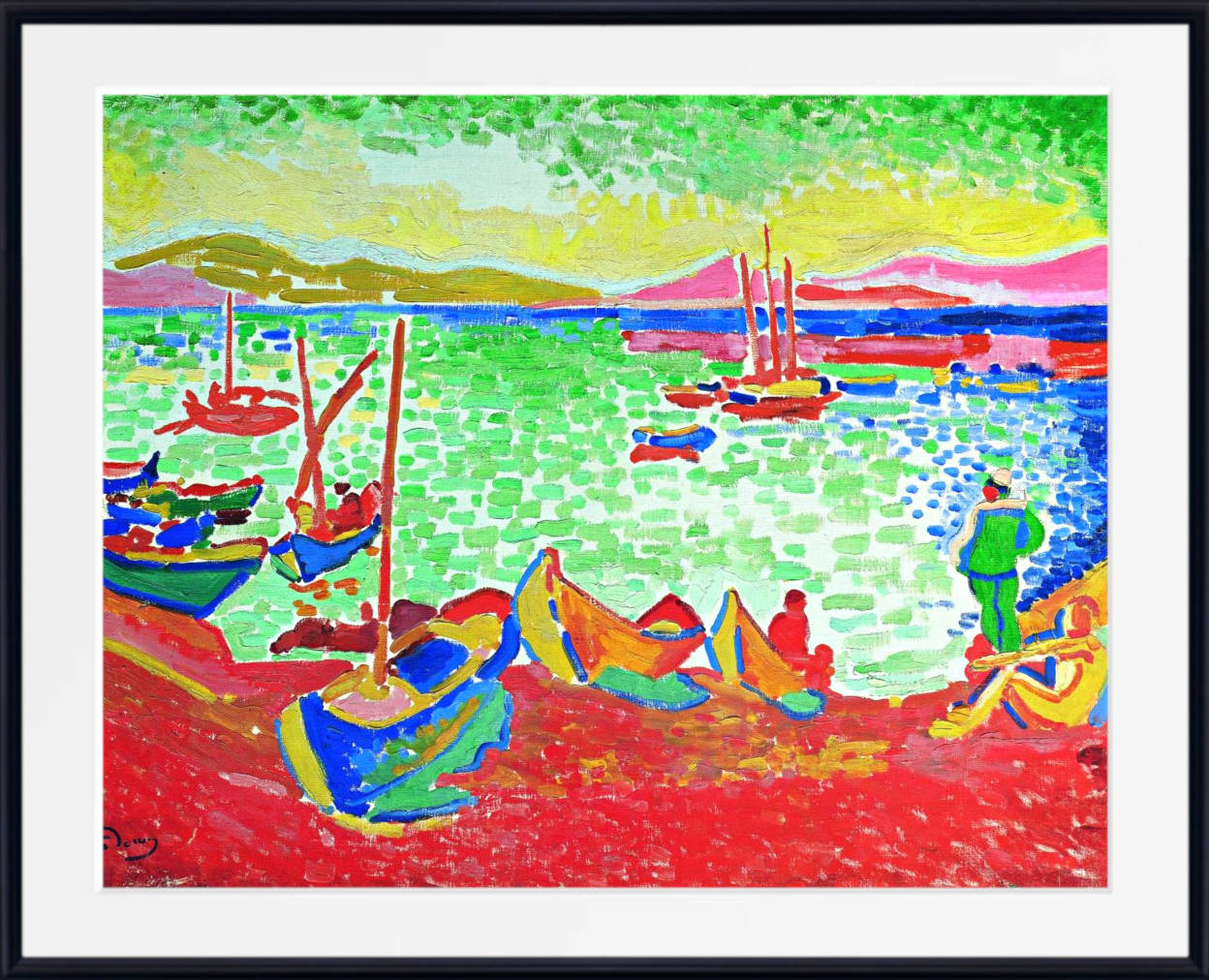
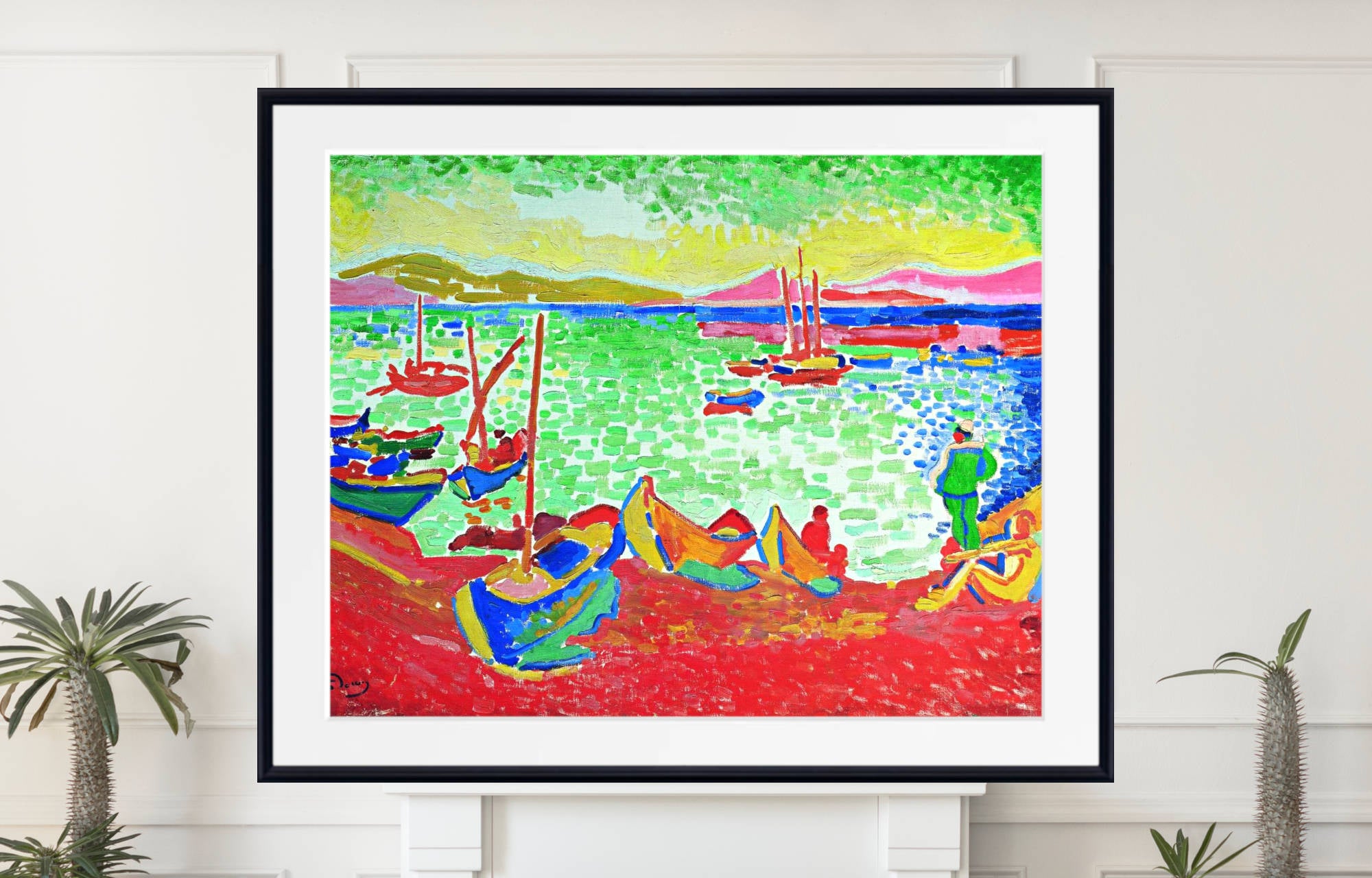
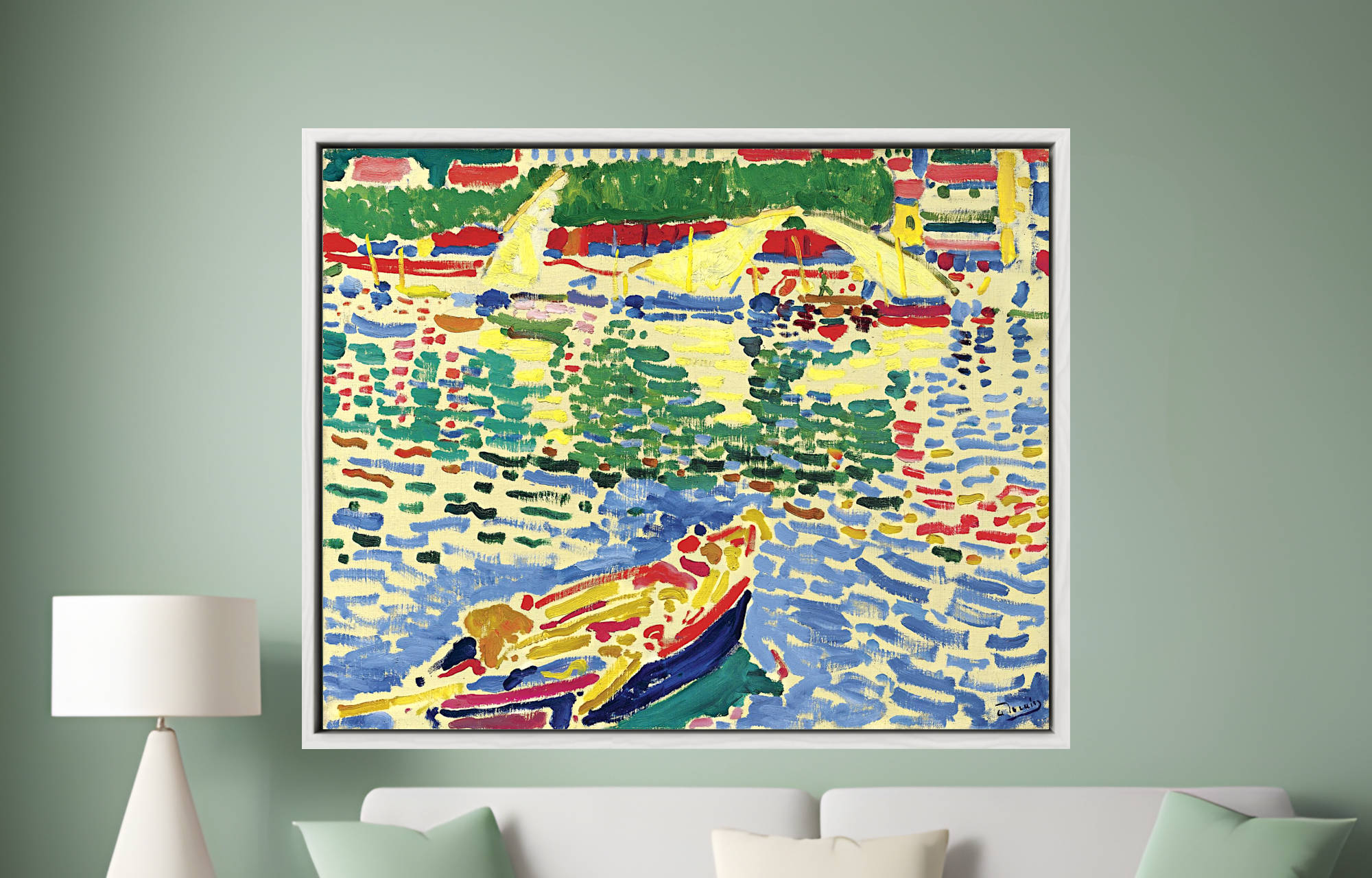
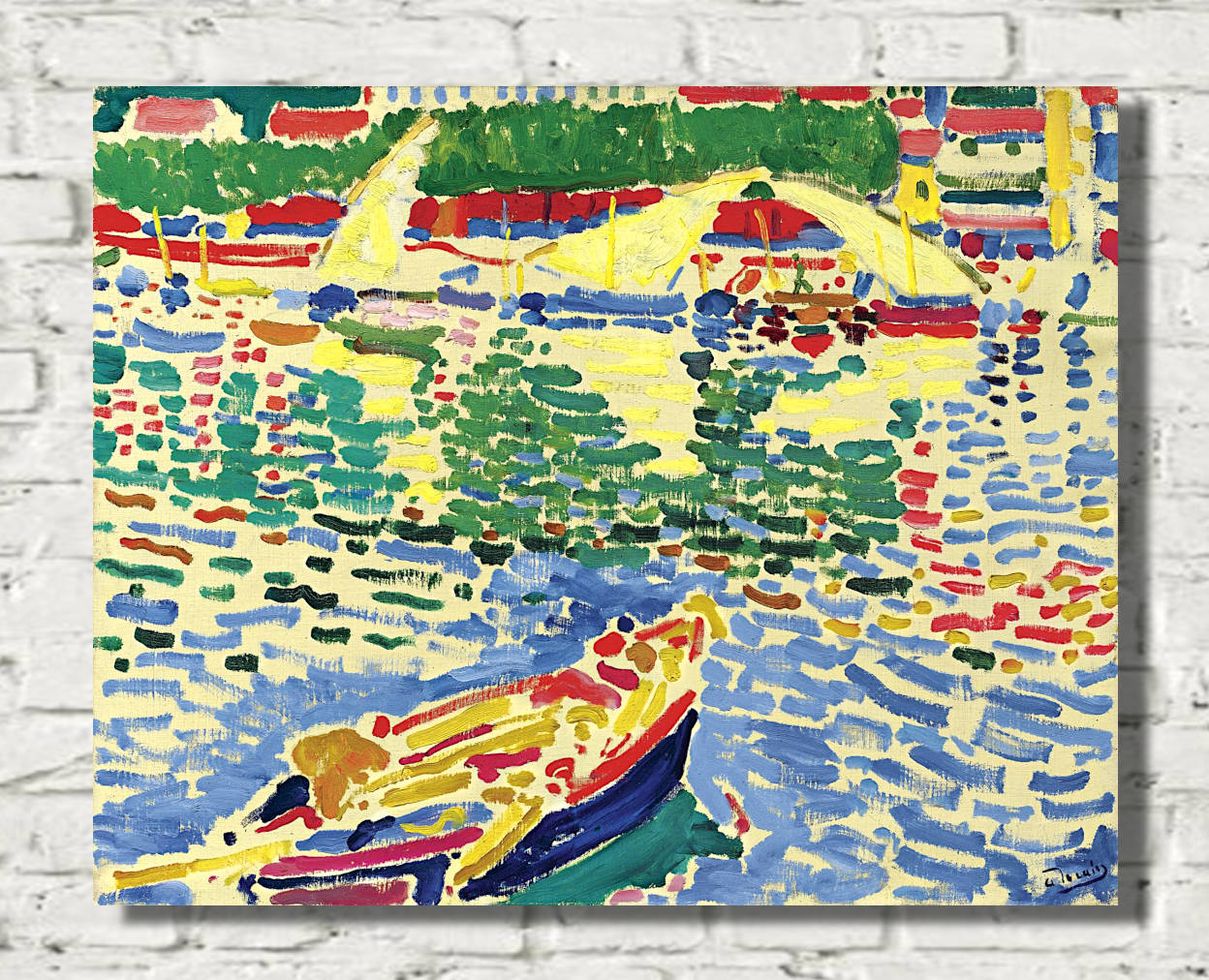
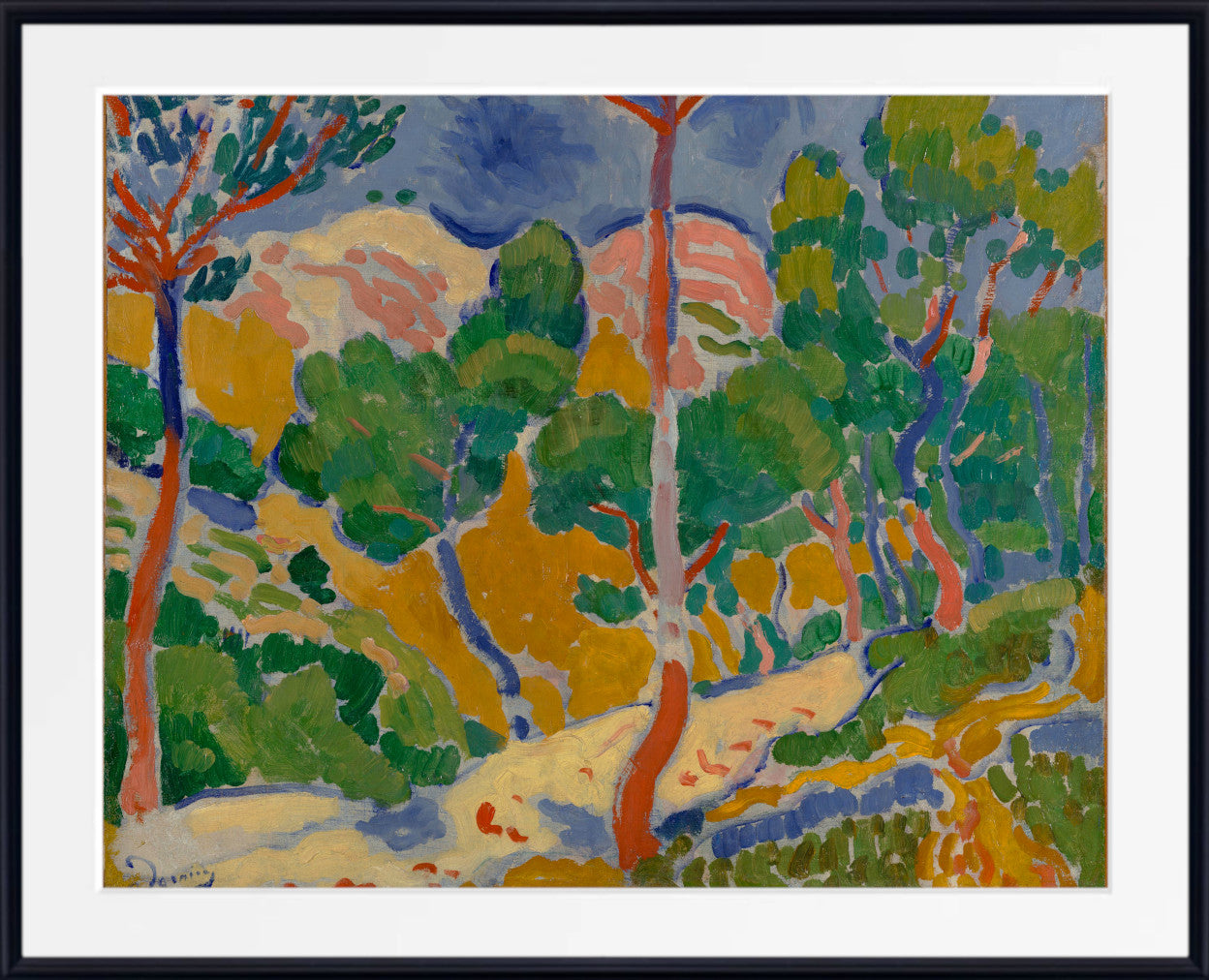
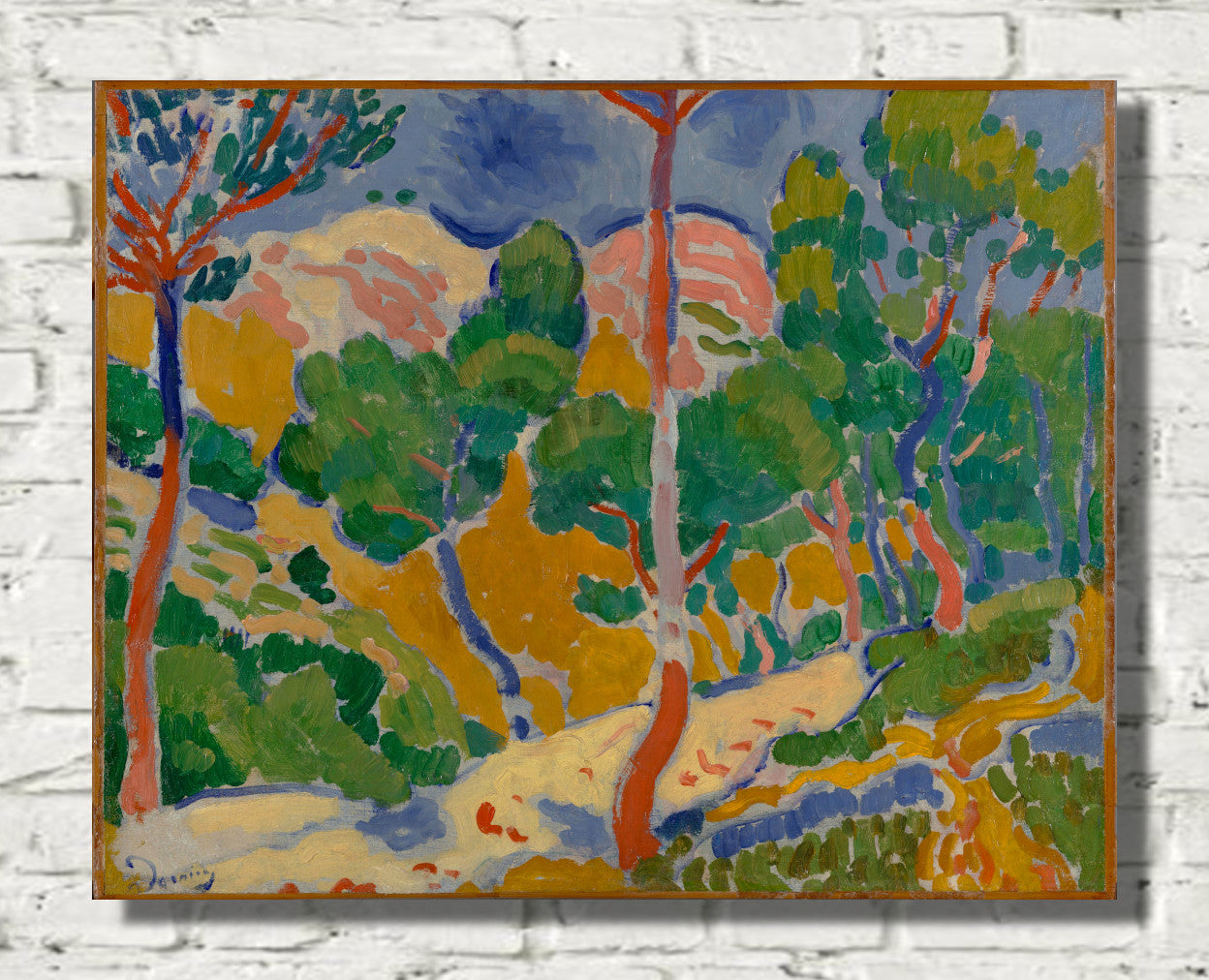
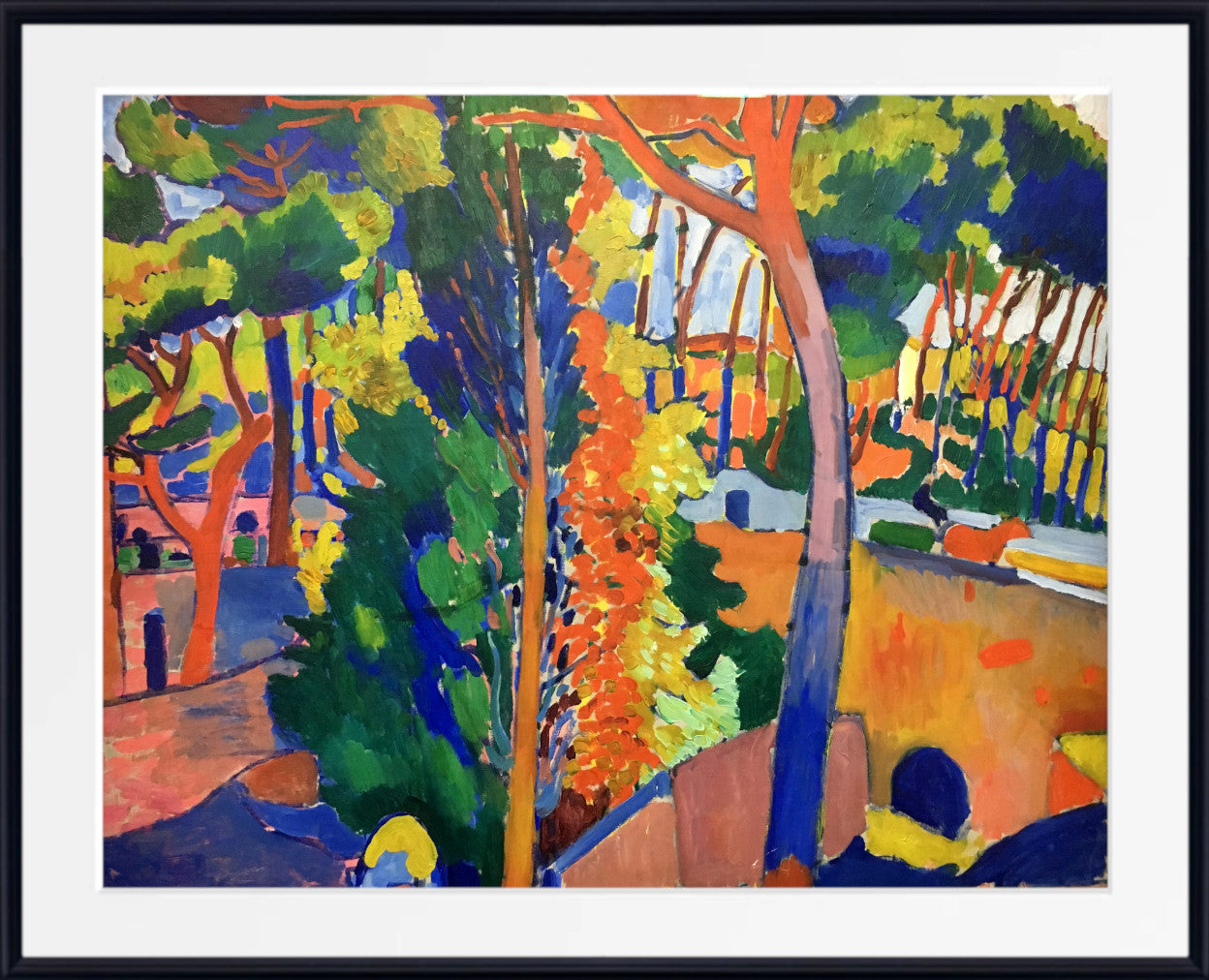
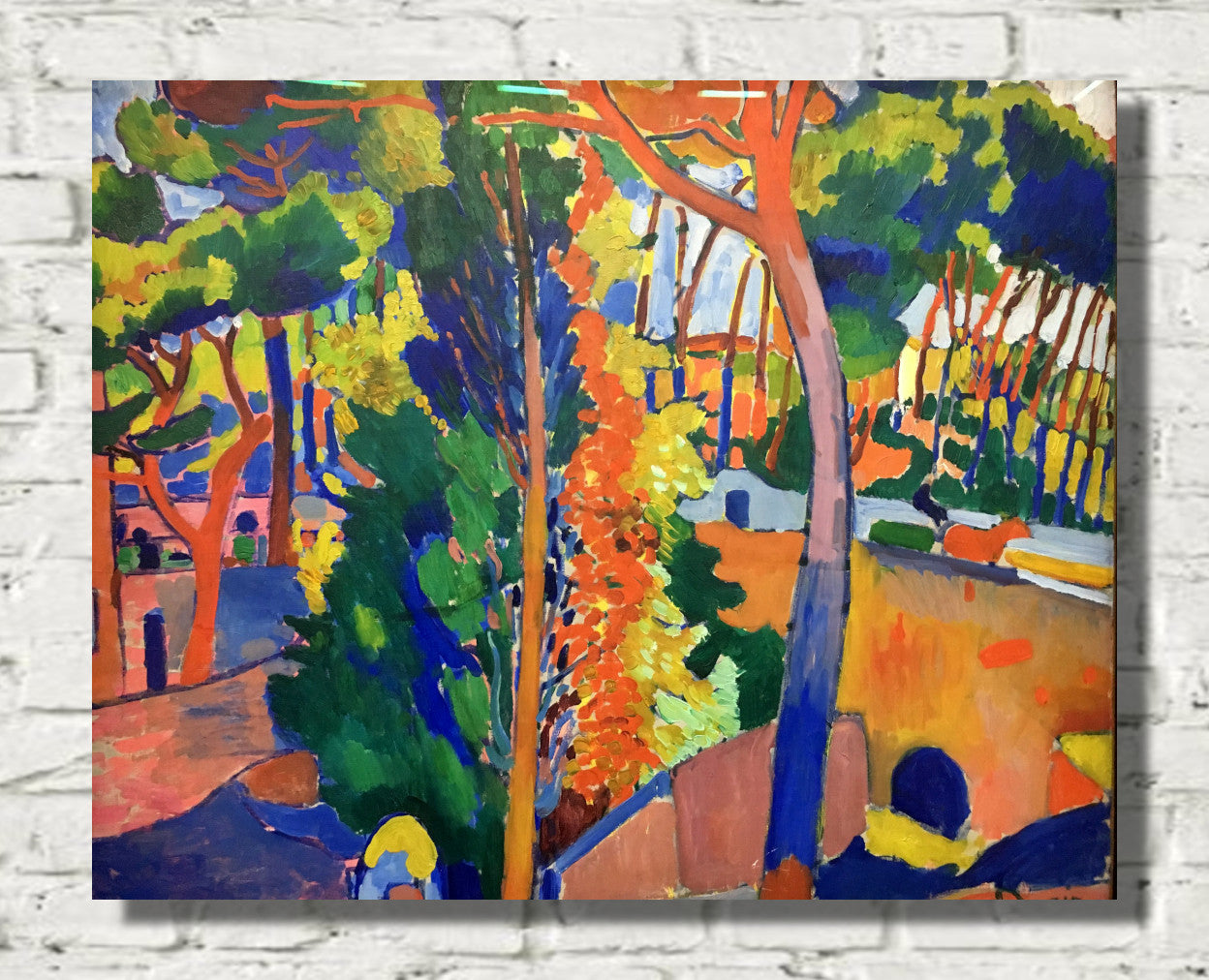
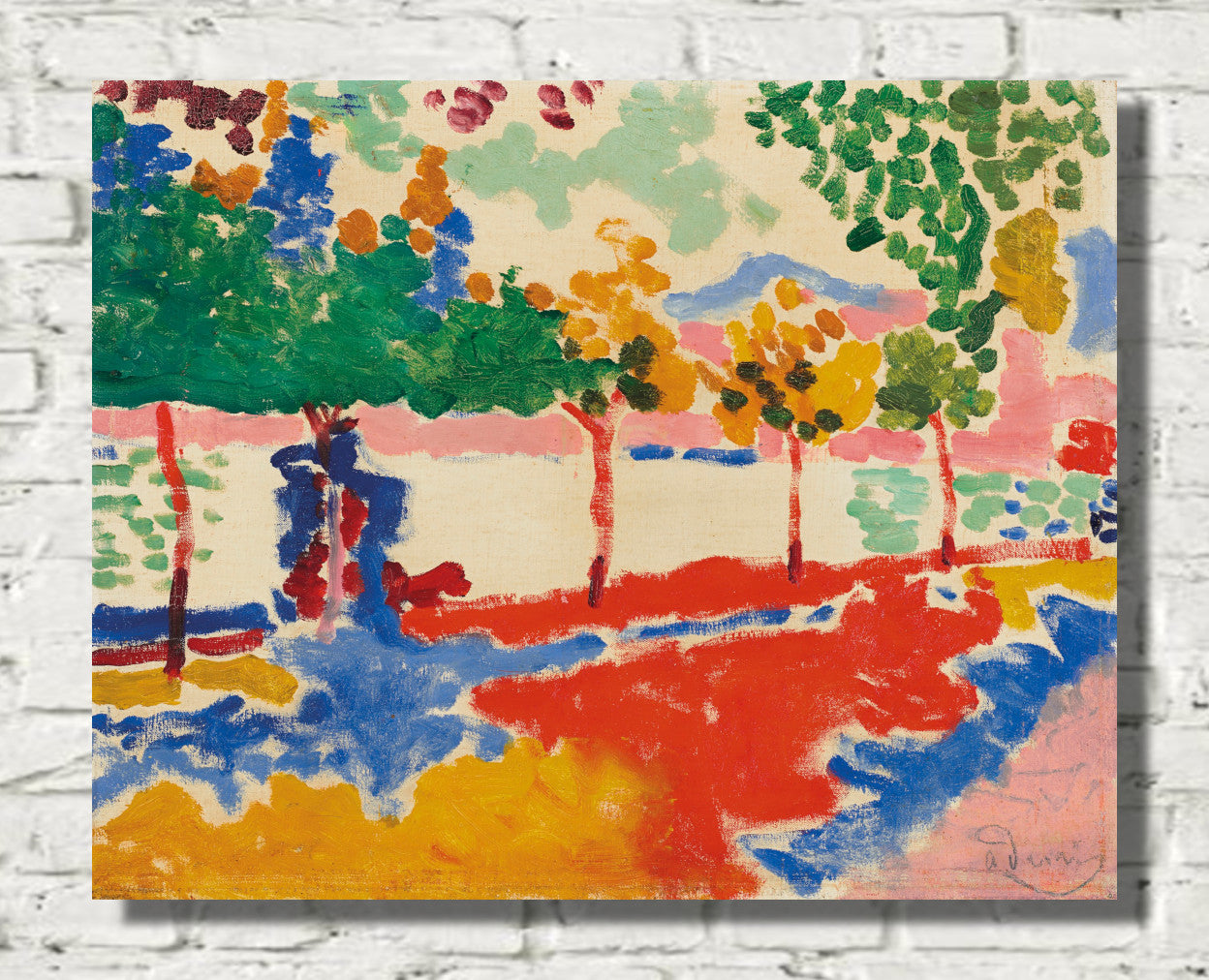
The Turning Road, L'Estaque (1906) by André Derain is one of the defining landscapes of Fauvism. Painted in the south of France during the height of Derain's Fauvist period, the work transforms the village of L'Estaque into an extraordinary arrangement of blazing reds, oranges, yellows, blues and greens. Trees, figures, buildings and the curving road remain recognisable, yet natural colour has been replaced by an expressive palette designed for visual impact rather than literal description.
This André Derain L'Estaque print captures the radical freedom that made Fauvism one of the most influential movements in early modern art. Available as a fine art print, framed print or canvas panel, The Turning Road, L'Estaque brings intense colour, powerful rhythm and one of Derain's most celebrated compositions into contemporary and traditional interiors.
The Turning Road, L'Estaque – A Landmark of Fauvism
Derain painted The Turning Road, L'Estaque in July 1906 while working in L'Estaque, a village on the Mediterranean coast near Marseille. The location already had an important place in modern French painting because Paul Cézanne had repeatedly painted the surrounding landscape, but Derain approached the scenery in a radically different way.
The composition is organised around the road that curves through the landscape from the lower right. Tall trees rise dramatically through the scene, while small figures, buildings and patches of vegetation are distributed across a landscape that appears to pulse with colour.
Derain does not attempt to reproduce the natural appearance of L'Estaque. Tree trunks become intense reds and blues, foliage burns with orange and yellow, and the ground is constructed from contrasting passages of colour. The landscape is recognisable, but it has been transformed into something much more decorative and expressive.
The result demonstrates one of the fundamental ideas of Fauvism: a painting did not need to imitate nature faithfully in order to communicate the experience of a place. Colour, line and brushwork could create their own visual reality.
Colour and Movement in The Turning Road
Colour is the dominant force in The Turning Road, L'Estaque. Derain places vivid complementary colours beside one another so that they intensify each other across the canvas.
Reds and oranges contrast with blues and greens, while brilliant yellows suggest the force of Mediterranean sunlight. Rather than using gradual tonal modelling to create depth, Derain allows large areas of colour and strong outlines to define trees, buildings and figures.
The curving road provides a powerful sense of movement. It draws the viewer into the landscape, while the leaning trees and repeated vertical forms create a vigorous rhythm throughout the composition.
This combination of sweeping movement and intense colour gives the painting an almost dreamlike quality. L'Estaque is no longer simply a geographical location; it becomes a landscape reconstructed through Derain's imagination.
André Derain at L'Estaque
Derain travelled to southern France during an exceptionally important period in his career. In the summer of 1905 he had worked alongside Henri Matisse at Collioure, where the two artists developed many of the ideas that came to define Fauvism.
By the following year Derain's use of colour had become even more confident. During July and August 1906 he worked at L'Estaque and created a relatively small group of landscapes exploring the village and its surroundings.
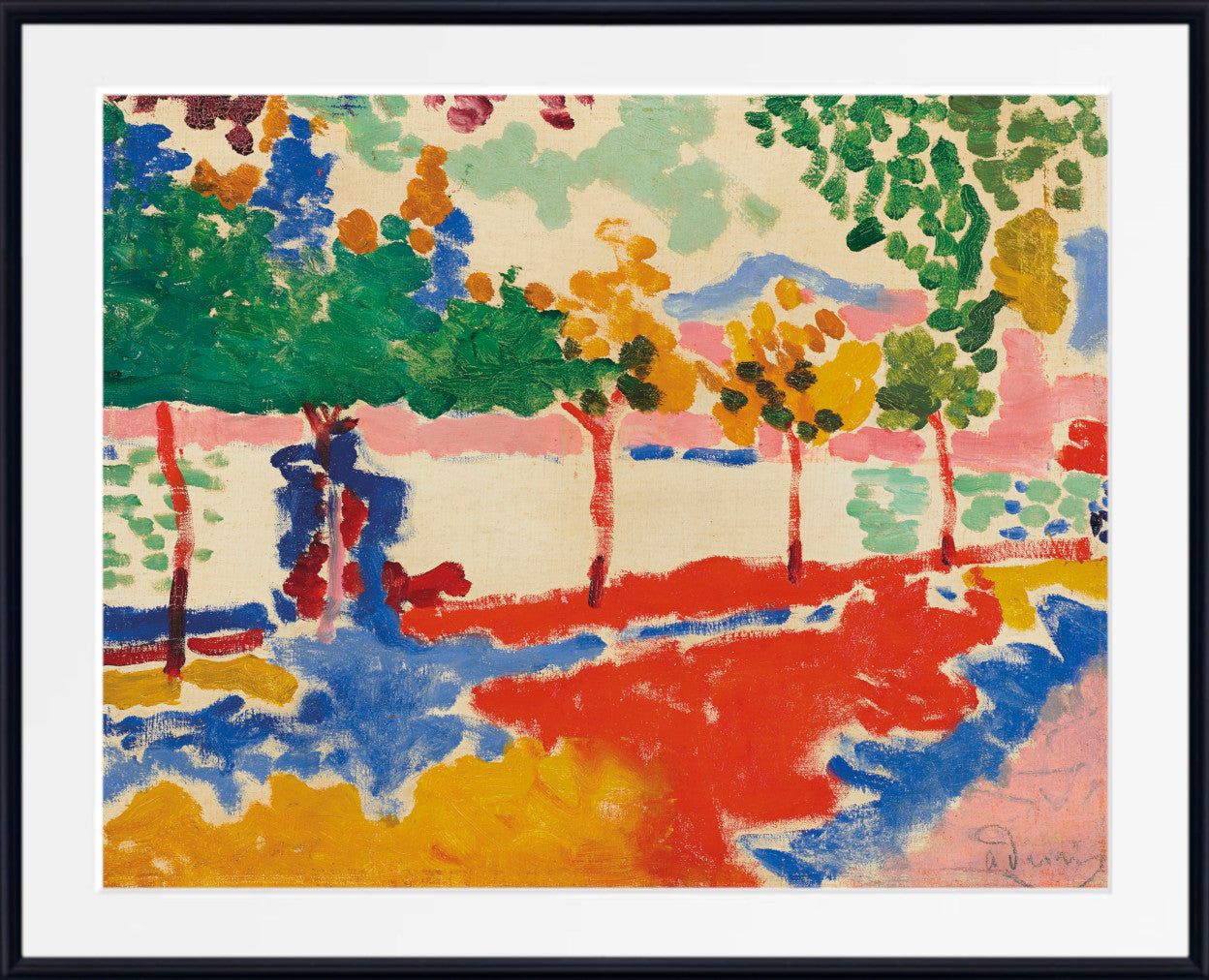
The Turning Road, L'Estaque represents the culmination of these experiments. Derain had produced several smaller paintings and a watercolour study based on related motifs before completing the large final composition.
The scale of the painting is significant. At approximately 129.5 × 194.9 cm, it is Derain's largest Fauvist composition and gives his radical treatment of landscape an unusually monumental presence.
Fauvist Painting Style
Fauvism emerged in France around 1905 and became known for brilliant non-naturalistic colour, simplified forms and energetic brushwork. Henri Matisse and André Derain were its central figures, joined by artists including Maurice de Vlaminck, Henri Manguin, Albert Marquet, Raoul Dufy and Othon Friesz.
The movement's name came from the French phrase les fauves, meaning “the wild beasts”, after critic Louis Vauxcelles encountered their intensely coloured paintings at the 1905 Salon d'Automne in Paris.
The Turning Road, L'Estaque demonstrates the Fauvist approach particularly clearly. Derain rejects local colour, simplifies spatial relationships and allows the visible marks of the brush to remain part of the finished image.
The painting also reveals an increasing concern with structure. Despite the apparent wildness of its palette, the composition is carefully organised around the road, trees and repeated vertical forms. This balance between expressive freedom and structural control makes the work one of the most accomplished landscapes of the Fauvist period.
About André Derain
André Derain (1880–1954) was a French painter, sculptor and printmaker and one of the principal founders of Fauvism. Born in Chatou near Paris, he formed an important early friendship with Maurice de Vlaminck before working closely with Henri Matisse.
Derain's collaboration with Matisse at Collioure in 1905 became one of the decisive episodes in the development of modern painting. Together they experimented with pure colour, simplified forms and increasingly direct brushwork.
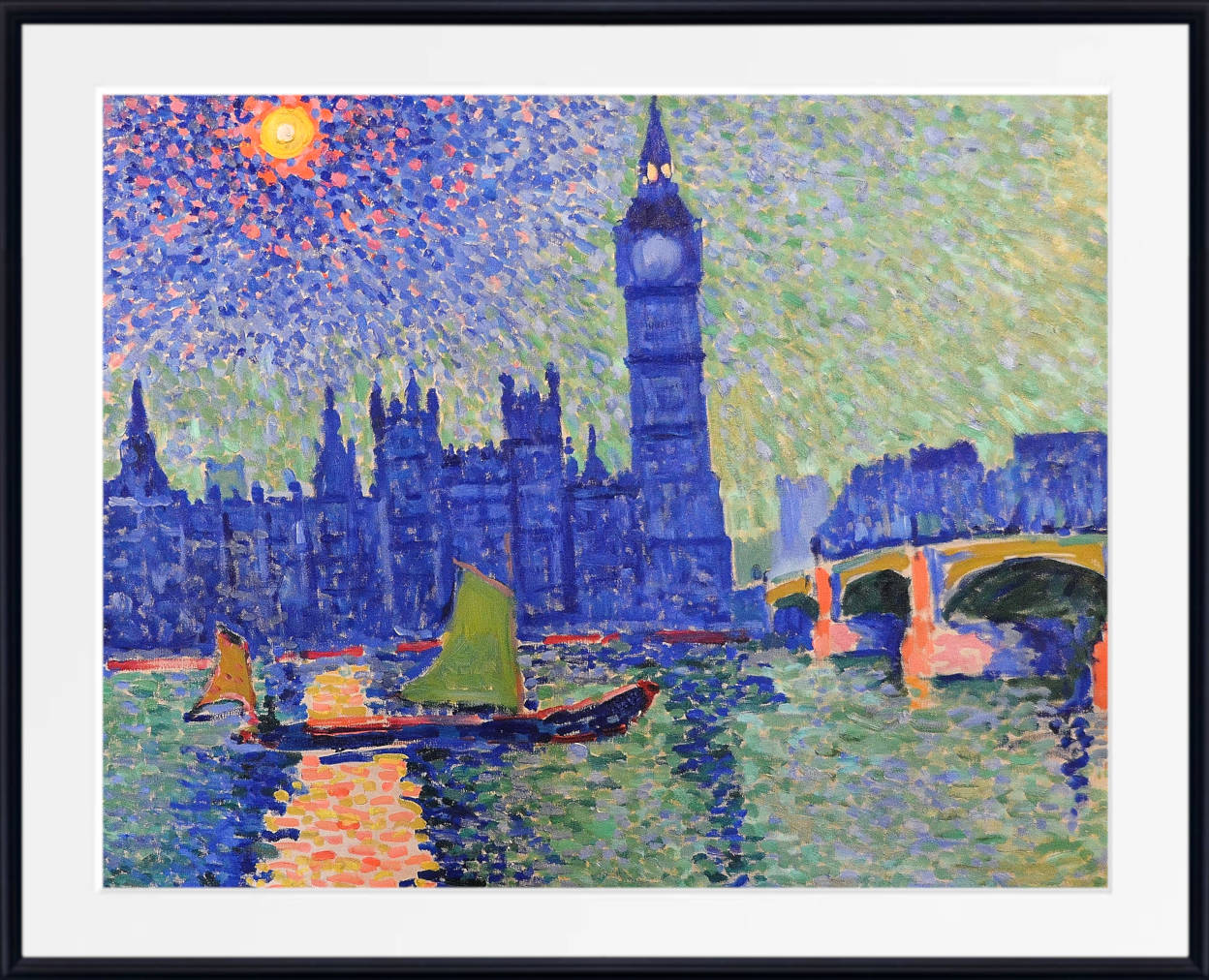
Derain subsequently produced celebrated Fauvist landscapes in southern France and a remarkable series of paintings of London, transforming the Thames, bridges and city architecture into brilliant arrangements of non-naturalistic colour.
His artistic direction changed rapidly after the Fauvist period. Increasing interest in Cézanne, traditional European painting and greater structural order led him towards a more restrained style. This relatively short Fauvist phase nevertheless produced some of the most important works of his career.
The Original The Turning Road, L'Estaque
The original The Turning Road, L'Estaque was painted in July 1906 in oil on canvas.
It measures approximately 129.5 × 194.9 cm, making it unusually large for Derain's Fauvist landscapes and his largest composition in the style.
The painting is now held by the Museum of Fine Arts, Houston, as part of the John A. and Audrey Jones Beck Collection. It has been widely exhibited and published as a key work in the history of Fauvism.
An André Derain Fauvist Print for Your Interior
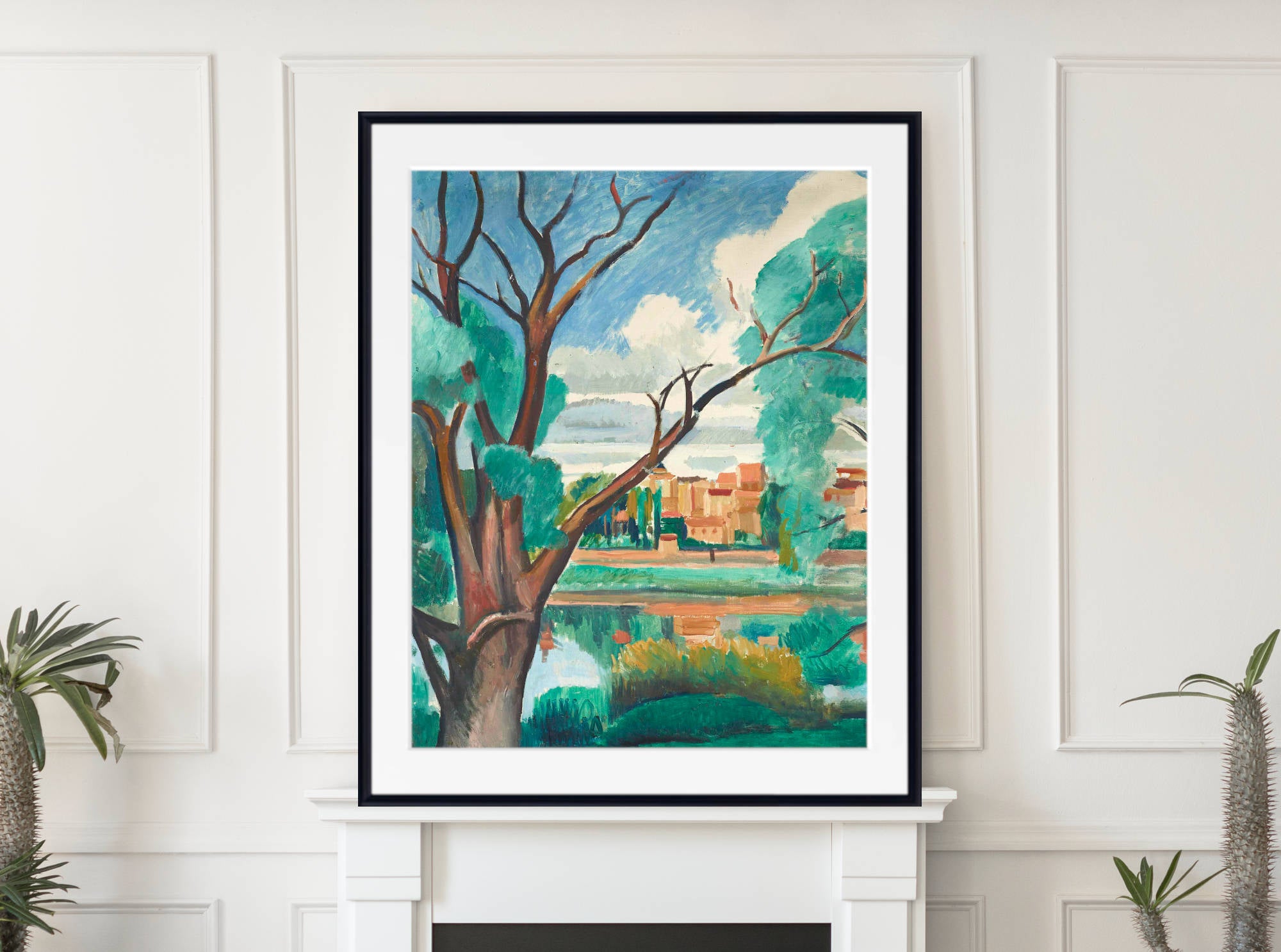
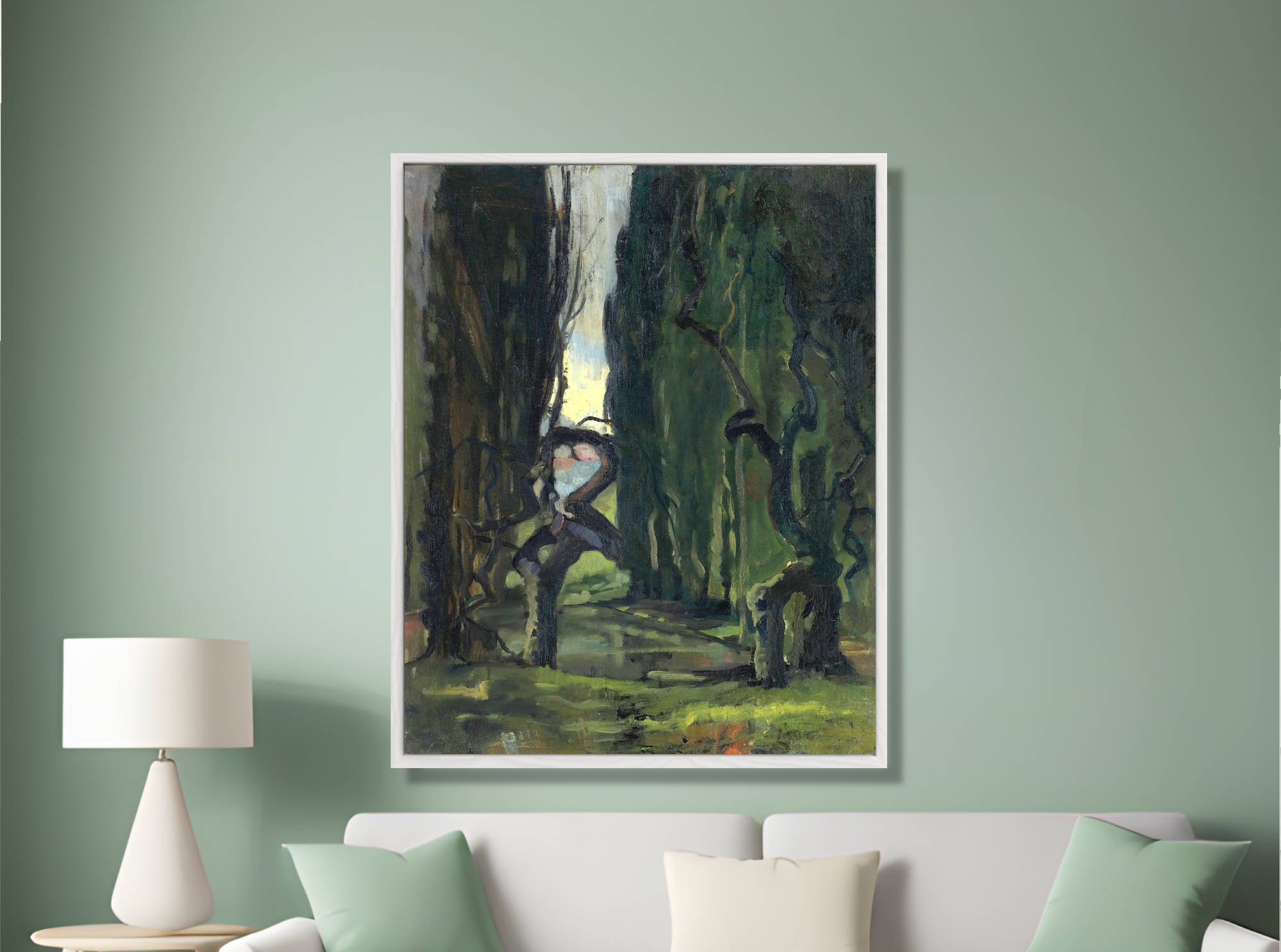
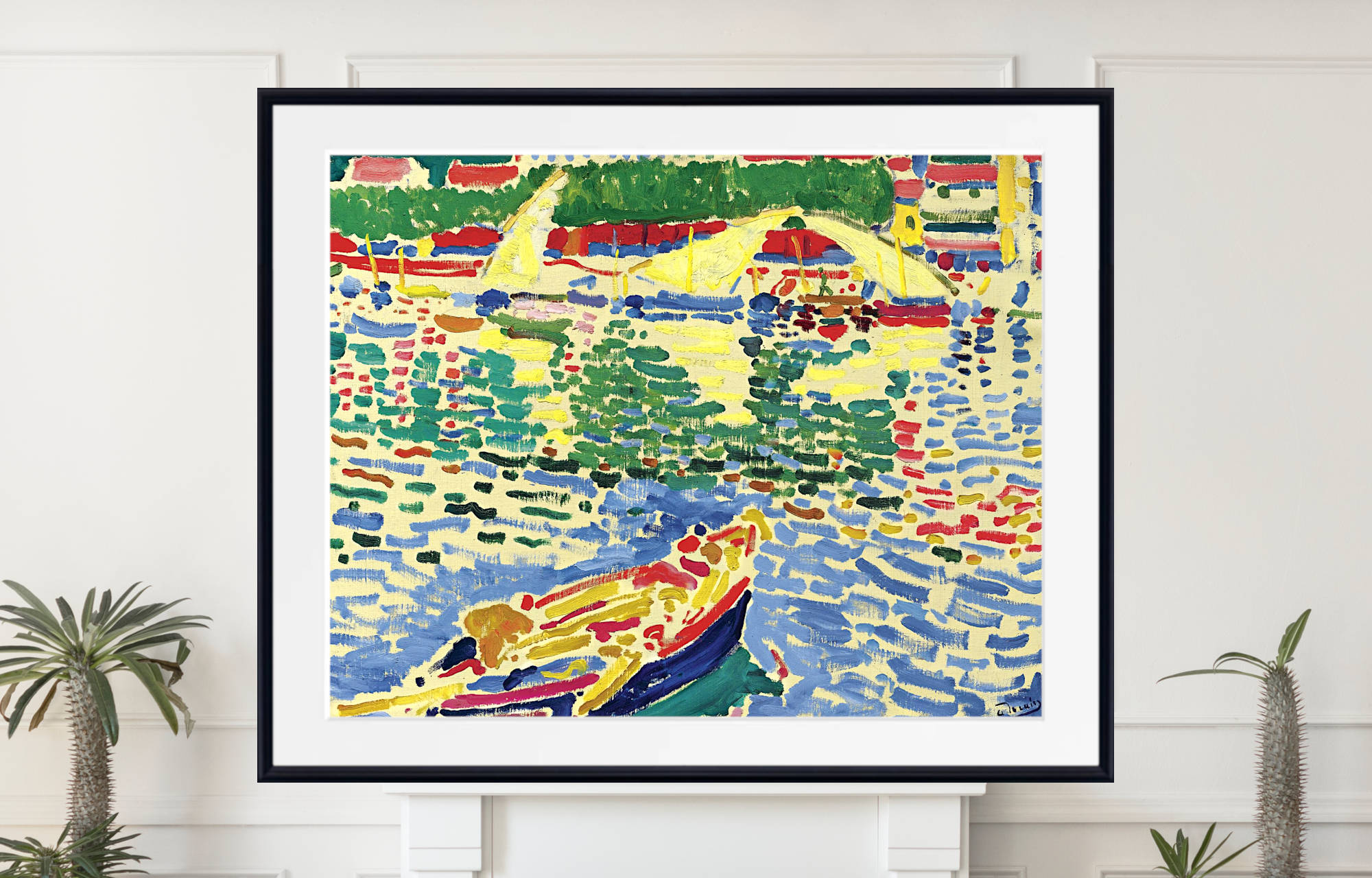
A The Turning Road, L'Estaque print by André Derain is particularly effective where strong colour is needed to create a focal point. The painting's combination of landscape imagery and radical modern colour allows it to work in a wide variety of interiors.
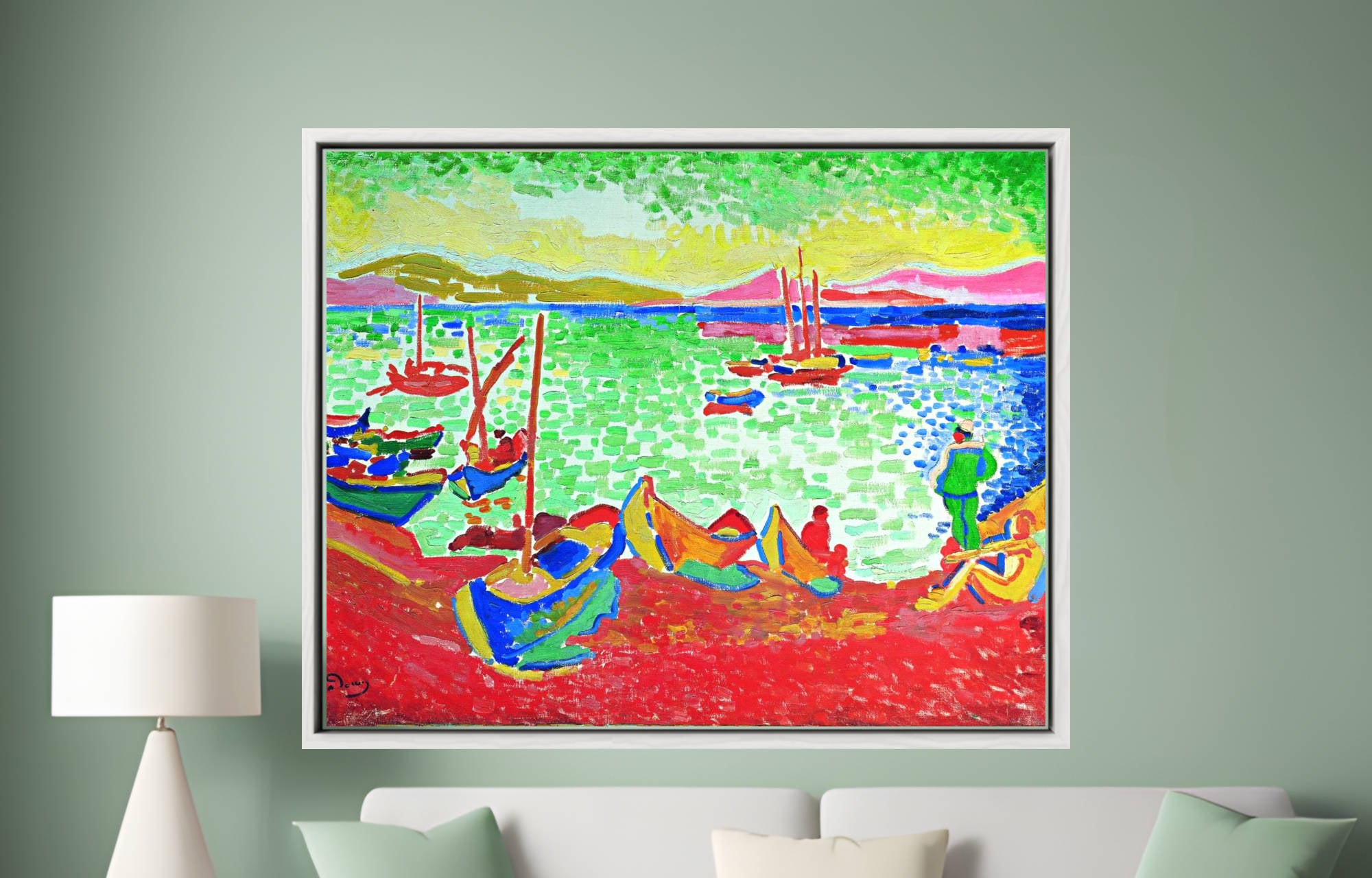
Against white, cream, putty or other neutral walls, its reds, oranges, yellows and blues can provide an immediate visual lift. The simplified forms also complement contemporary and Scandinavian-inspired rooms, while the historical importance of the painting gives it equal appeal in more traditional interiors.
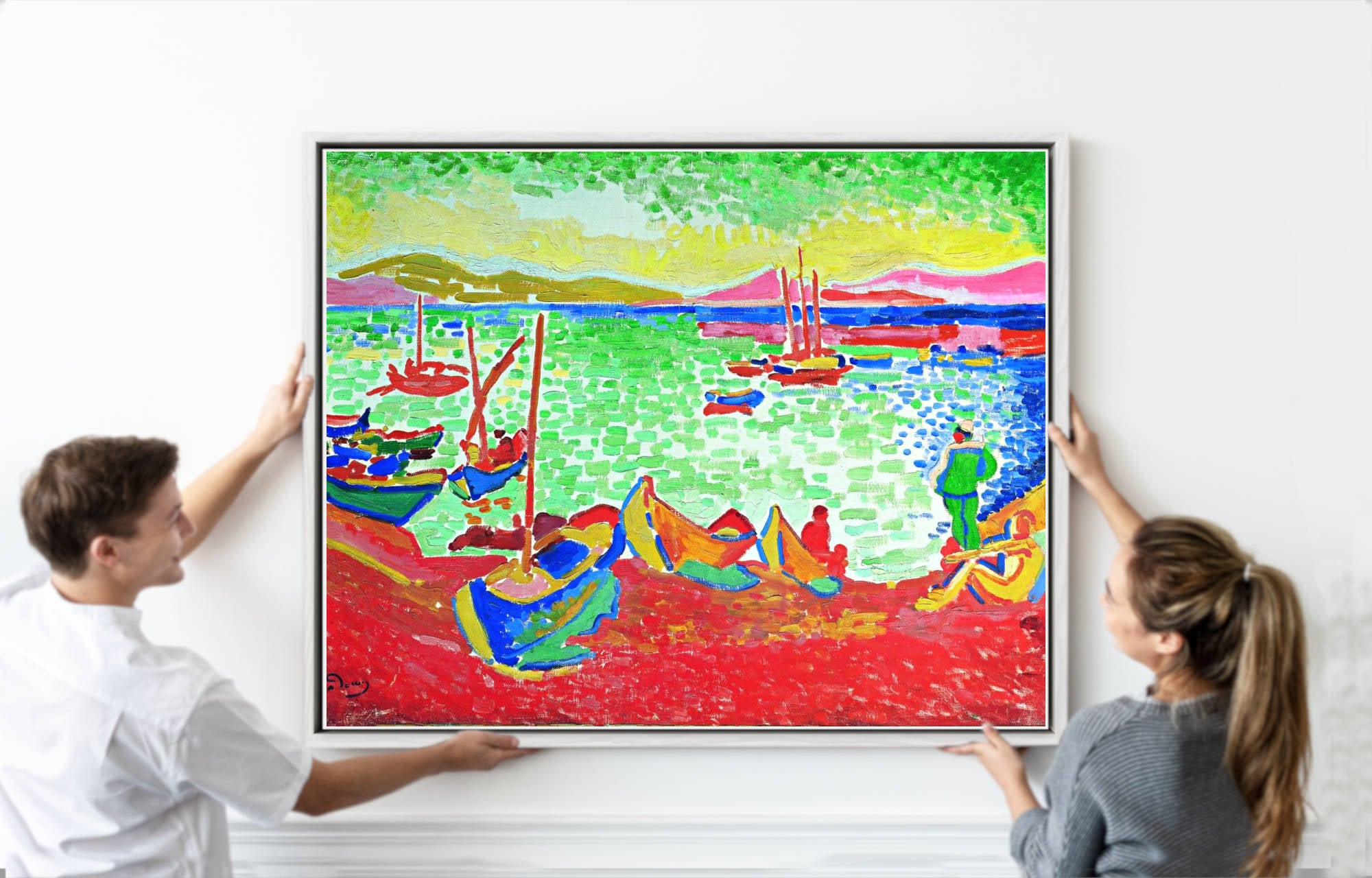
The work can be particularly effective in living rooms, dining rooms, hallways, bedrooms and home offices. Larger framed versions or canvas panels allow the sweeping horizontal landscape and monumental trees to become a dominant decorative feature.
For collectors of Fauvist art, French landscapes or early modern painting, The Turning Road, L'Estaque represents one of the clearest expressions of the movement's revolutionary approach to colour.
All orders for unframed fine art prints and original paintings are dispatched within 2 working days of receipt of payment.
Orders for custom framed prints are dispatched within 4 working days.
All orders are fully tracked from dispatch to delivery at your home or business.
All print and original painting orders are fully insured against loss or damage in transit. We refund or replace any damaged or lost orders.
Buy with confidence - read what our satisfied customers have to say - Reviews
Fine art papers are printed without any additional white border Please let us know at the time of ordering if you would like a small additional white border.
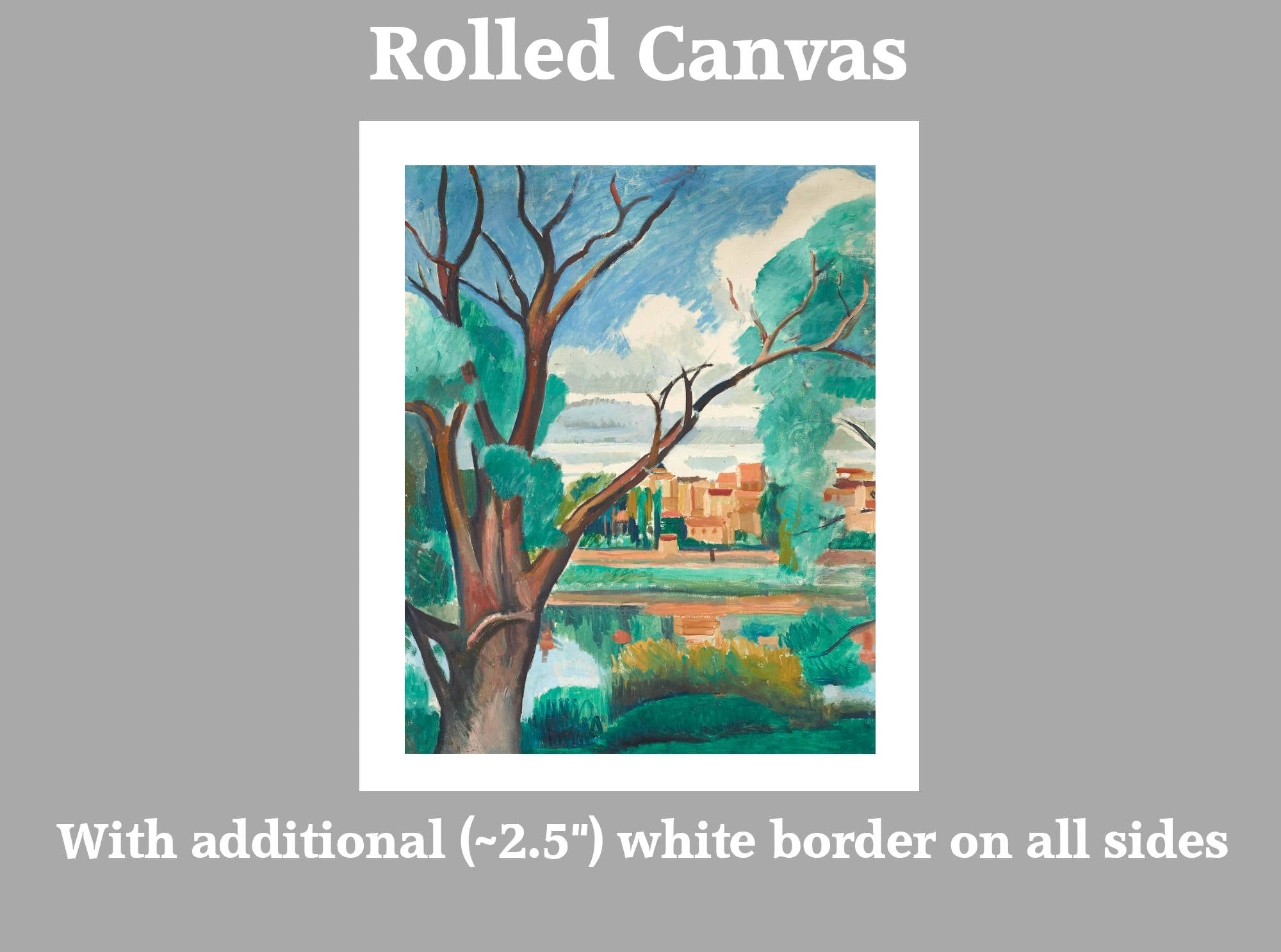
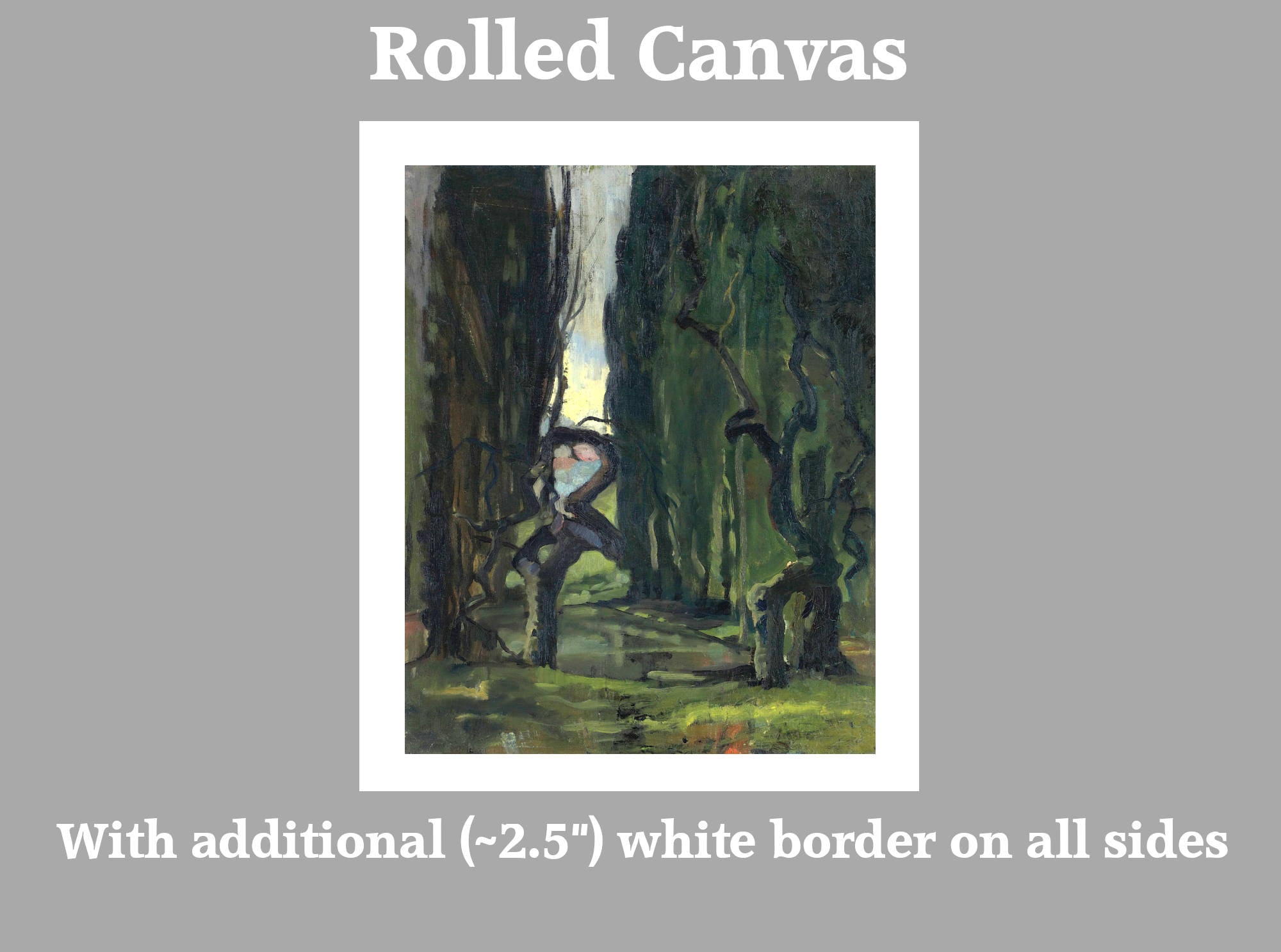
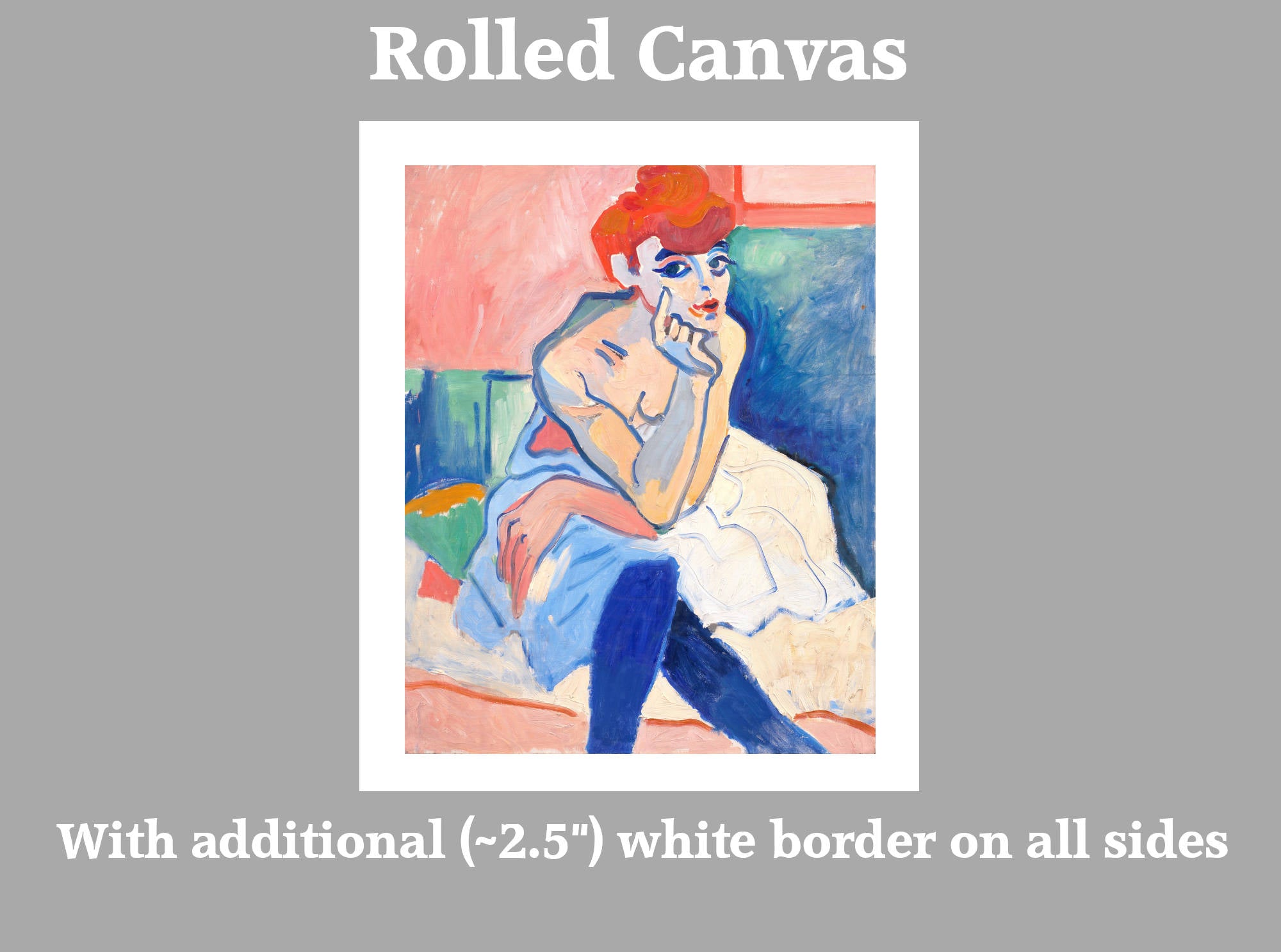
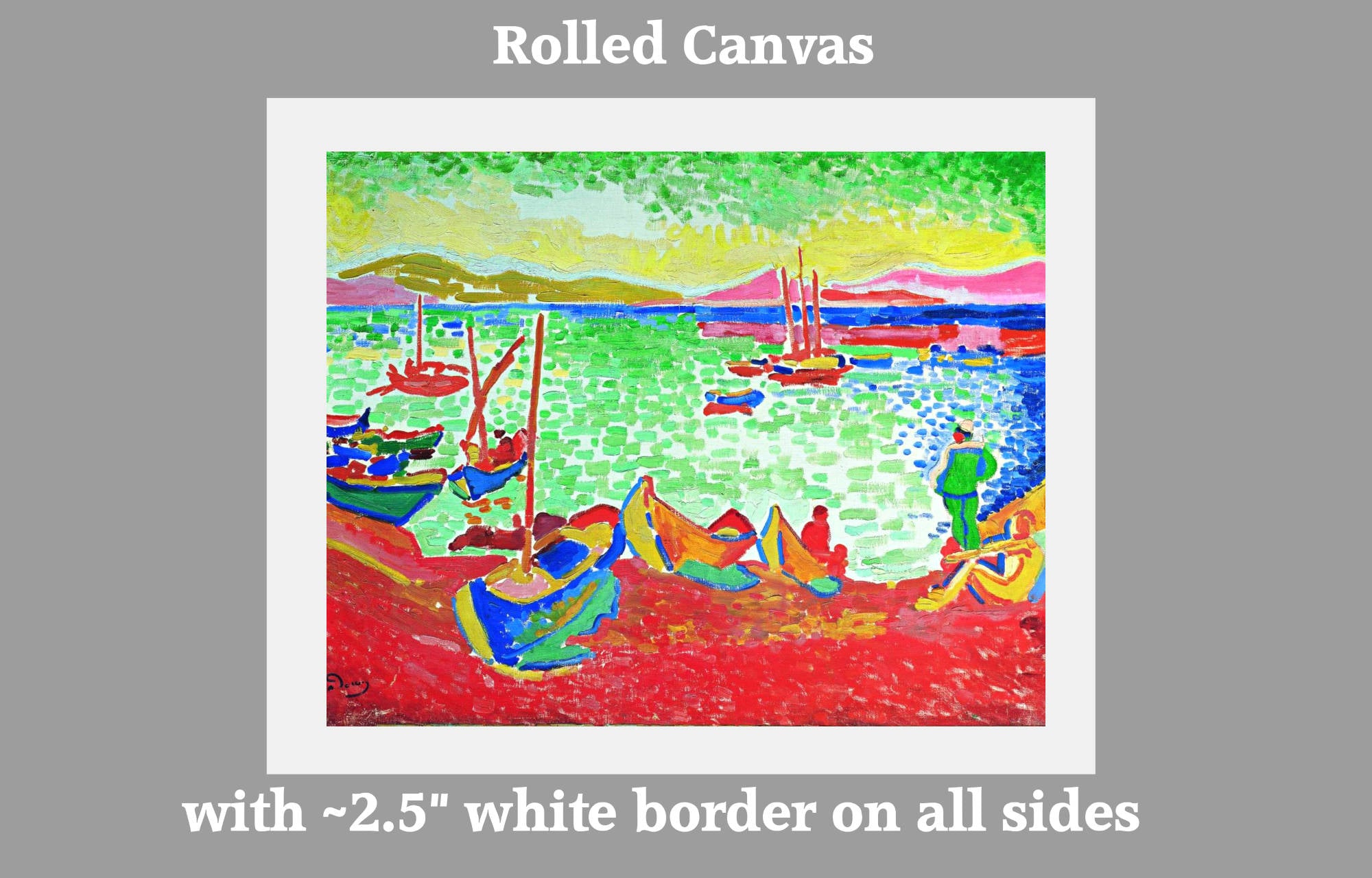
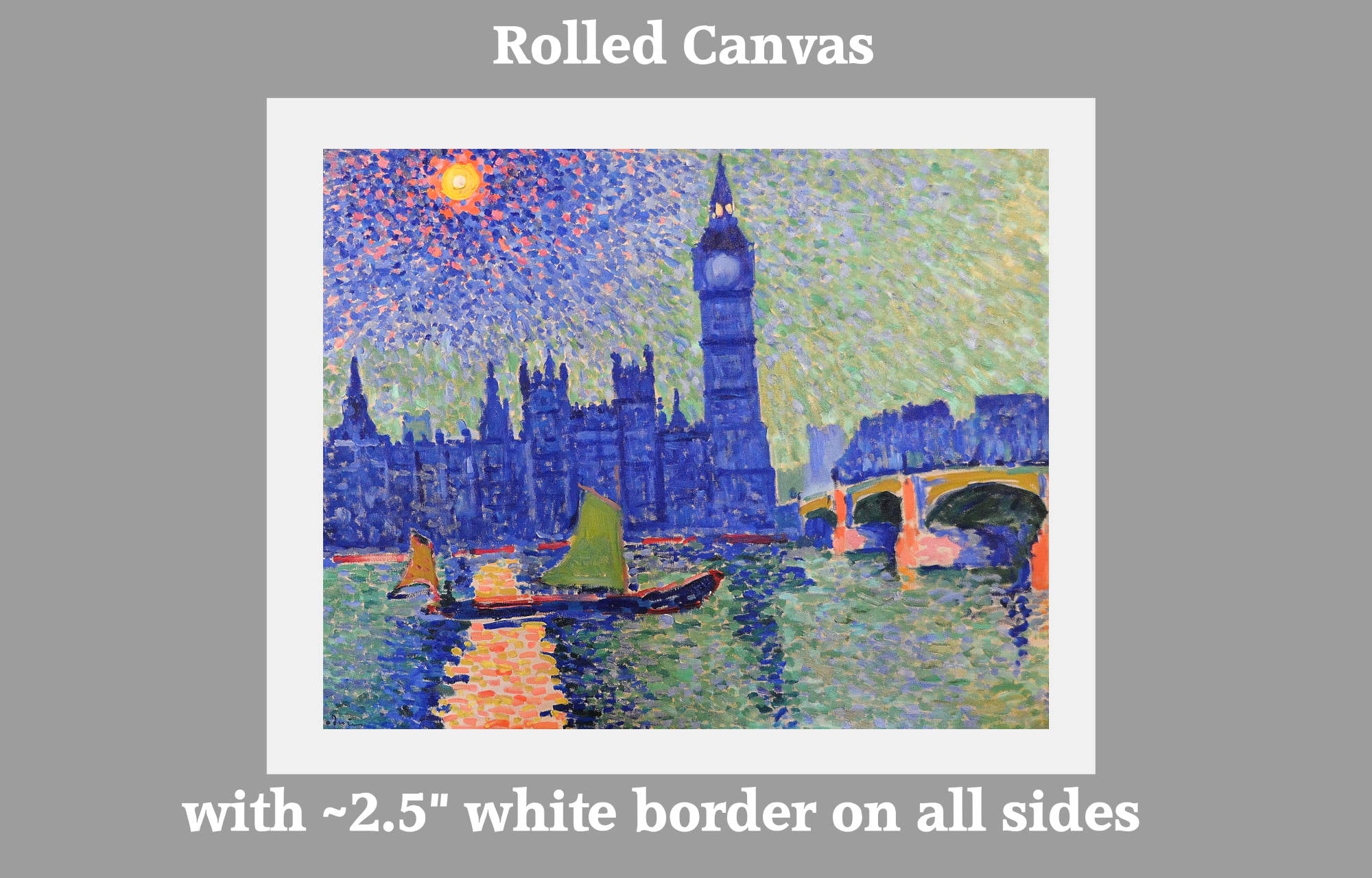
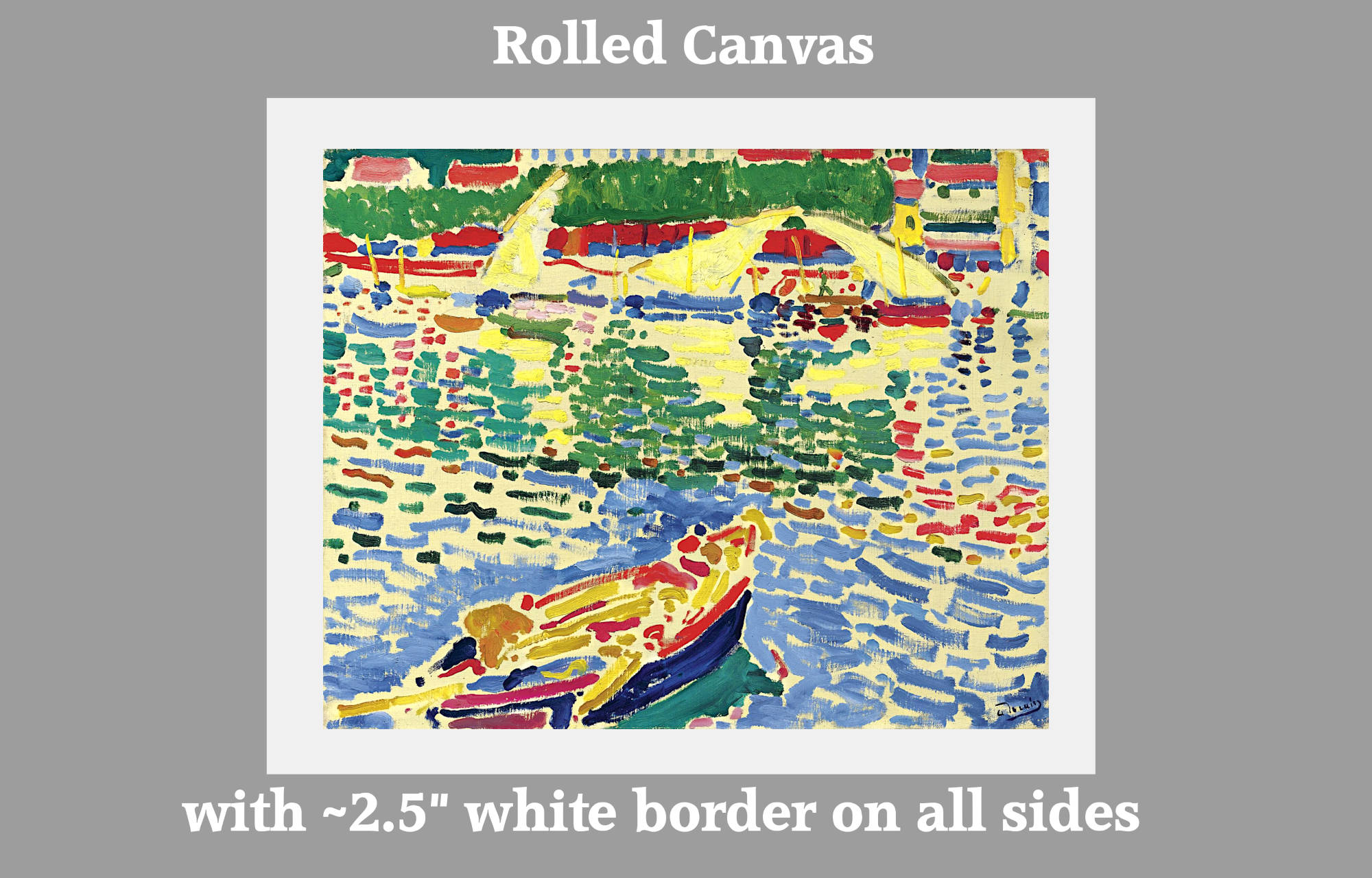
Rolled canvas options have an additional white border of approximately 2.5 inches (7cm) on all 4 sides to aid stretching.
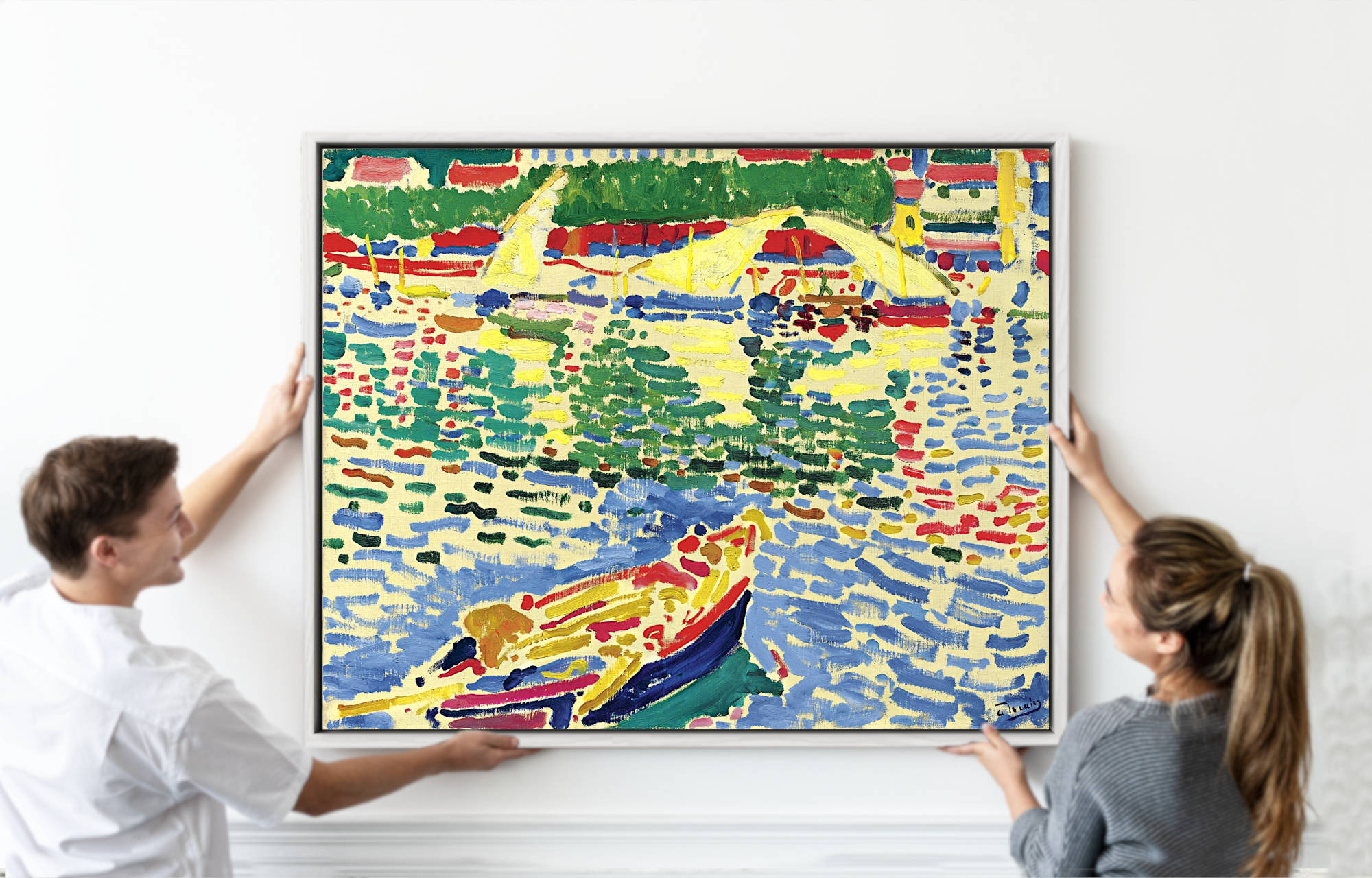
Ready to hang canvas panels are stretched on 1.5 inch deep solid pine frames from sustainable forestry sources. The image is mirrored on all 4 sides to give an aesthetically pleasing finish.
Why not have us gift wrap your order and attach a personalised message to the recipient. Available for all orders. Each order is hand wrapped in high quality gift wrap with meatllic ribbon and bow. Your personalised message is printed on a card which is included with your order.
Have your hand wrapped gift delivered directly to the recipient.
Full tracking and insurance included with every order.
Please note design may vary depending upon availability
Just purchase the gift wrap option HERE
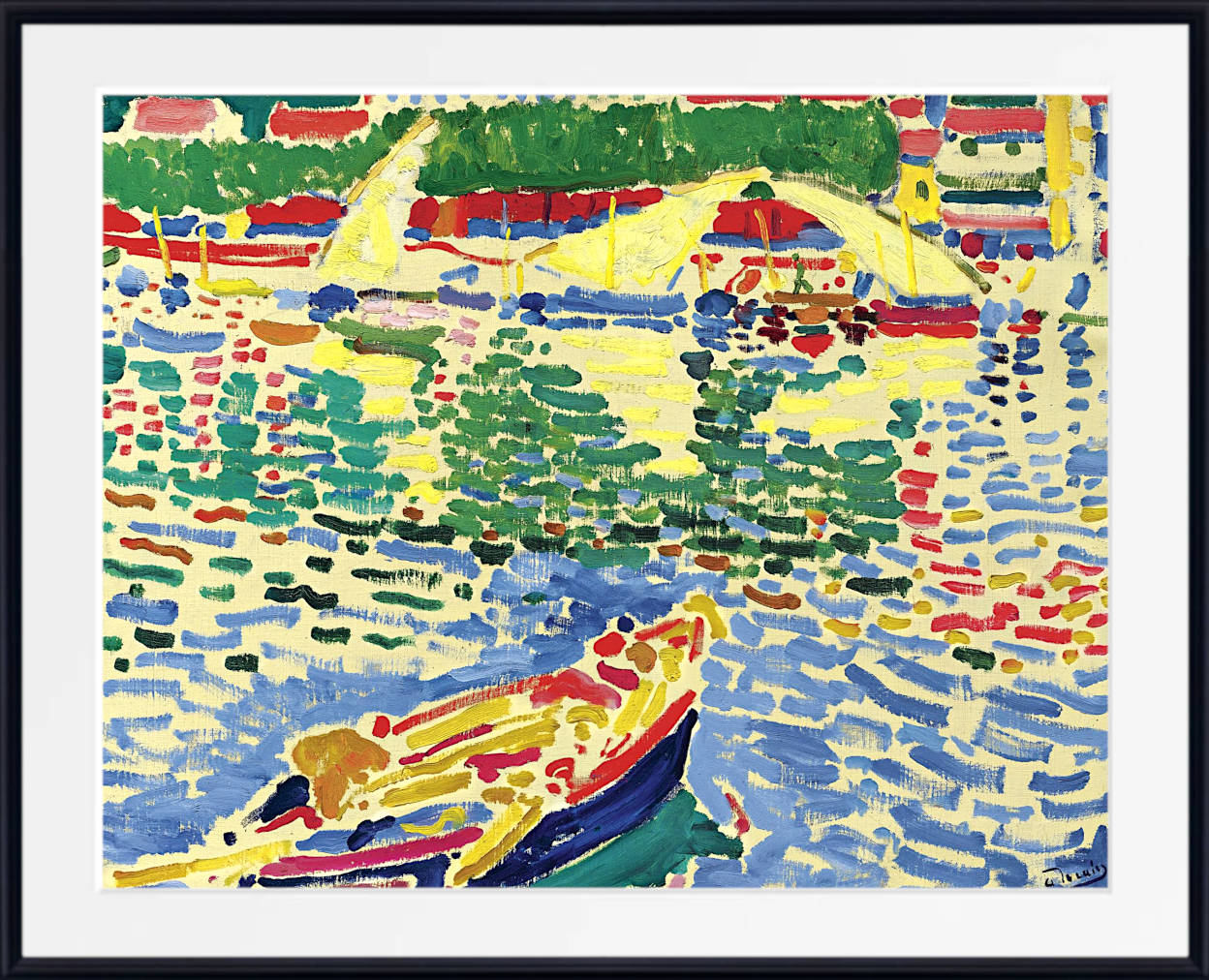
We have a wide range of frames in standard sizes and we also make custom size frames.
To order a framed print:
1. select the print size you would like along with the print materials (matte paper, fine art paper).
2. Add your print choice to the basket.
3. Choose from our range of frames
4. Select the same size as the print you have added to your basket. If the frame size you want is not listed please contact us
5. Choose from the mount or no-mount option
6. Add your frame choice to the basket
7. Proceed to checkout.
Why Choose GalleryThane?
- Printed and framed in-house
- Free UK delivery
- Free EU and USA delivery on orders over £200
- Tracking and insurance included in every order
- Fast 1-3 day dispatch
- Gift wrapping service available
- Gallery quality materials
- Sustainable, eco-friendly packaging
- Great customer support
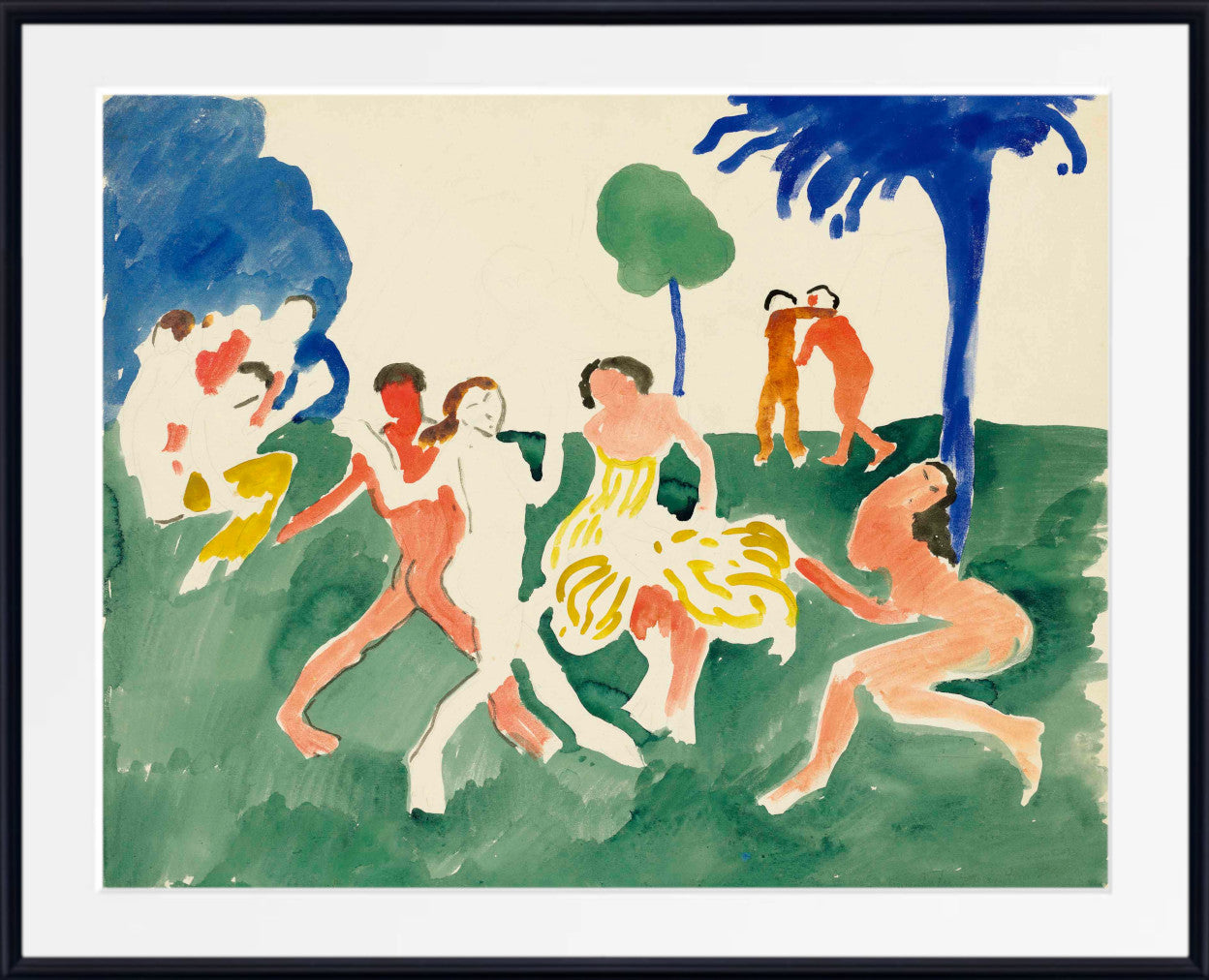
Explore related collections

What makes our Prints and Canvas Panels so special

Latest Giclee Printing Technology
We have invested in the latest wide format print technology to produce museum quality giclee prints utilising the highest quality pigment inks to give outstanding colour reproduction.

Museum Quality Archival Fine Art Papers
We print on the finest quality fine art papers with textured, smooth and lustre finishes for prints which last a lifetime.
From aceo miniatures to 40x80 inch large format, every print has our lifetime quality guaranteee.

Solid Wood Frames, Cotton Canvas
All of the wood for our canvas panels and frames is responsibly sourced from manages forests. Our cotton canvas is completely seedless for the highest quality reproduction possible.

Have Your Gift Wrapped


Choose a Custom Frame
Popular Collections


EU Representative
Manufacturer
LucasAbstract t/a GalleryThane
15 Campion Way, Bingham NG13 8TR UK
sales@gallerythane.com
EU Authorised Representative
Westwood Sourcing
Fellenoordstraat 52, Unit 2.38
4811 TJ Breda, Netherlands
info@westwoodsourcing.com