


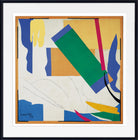
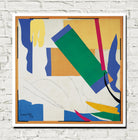
Henri Matisse Print, Memory of Oceania (1952–53)
Couldn't load pickup availability
BUY WITH CONFIDENCE
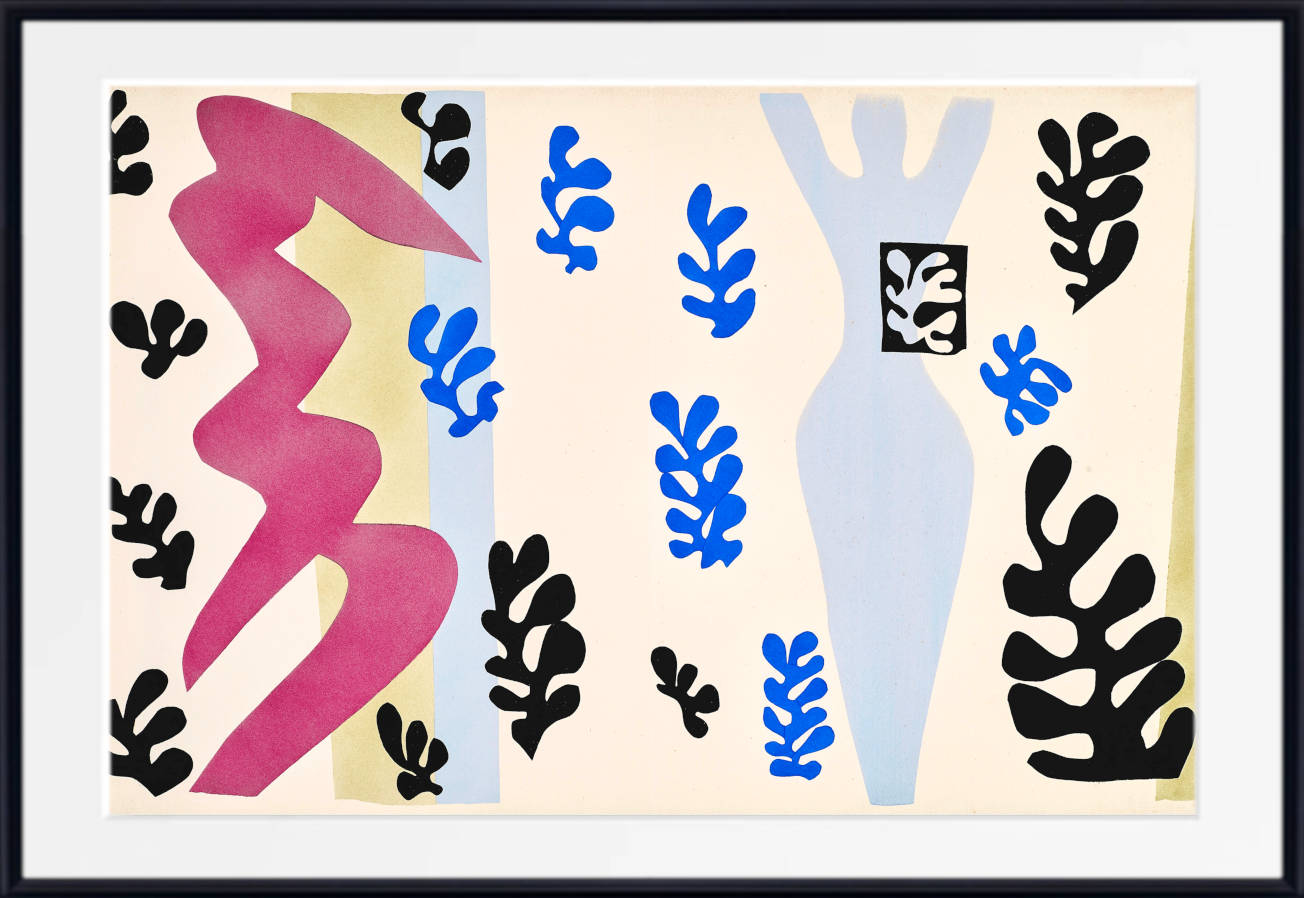
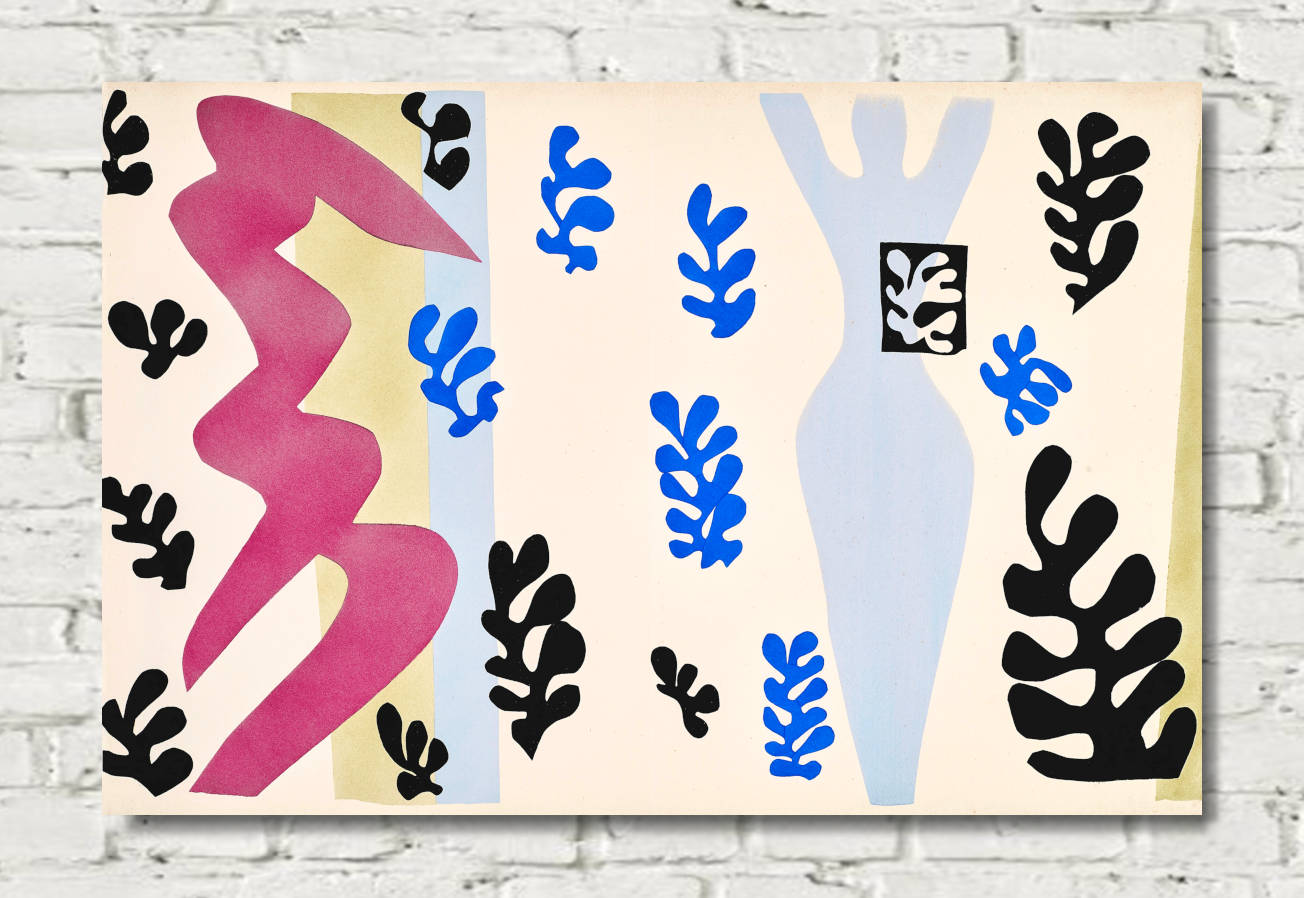
Memory of Oceania (1952–53) by Henri Matisse
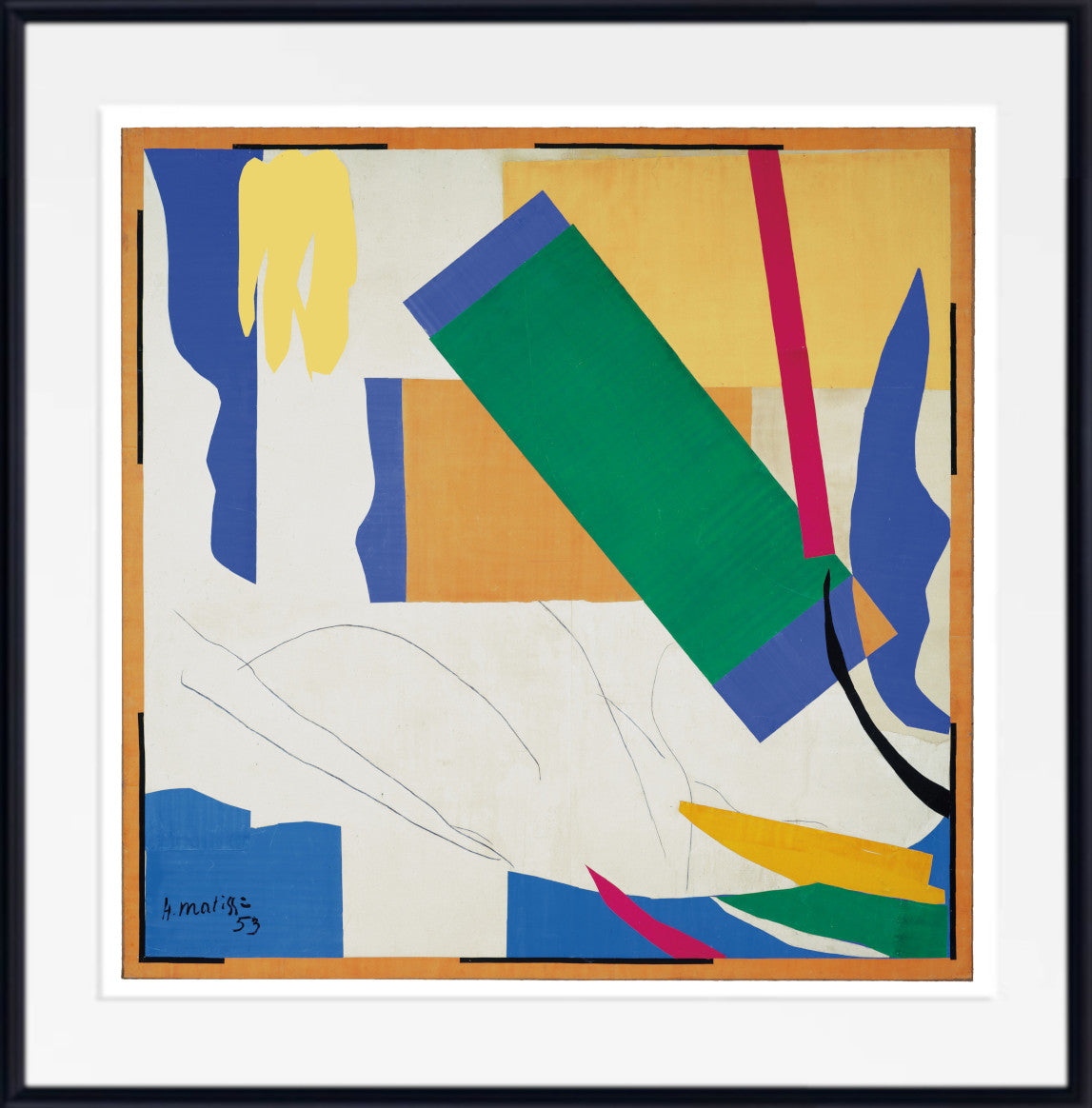
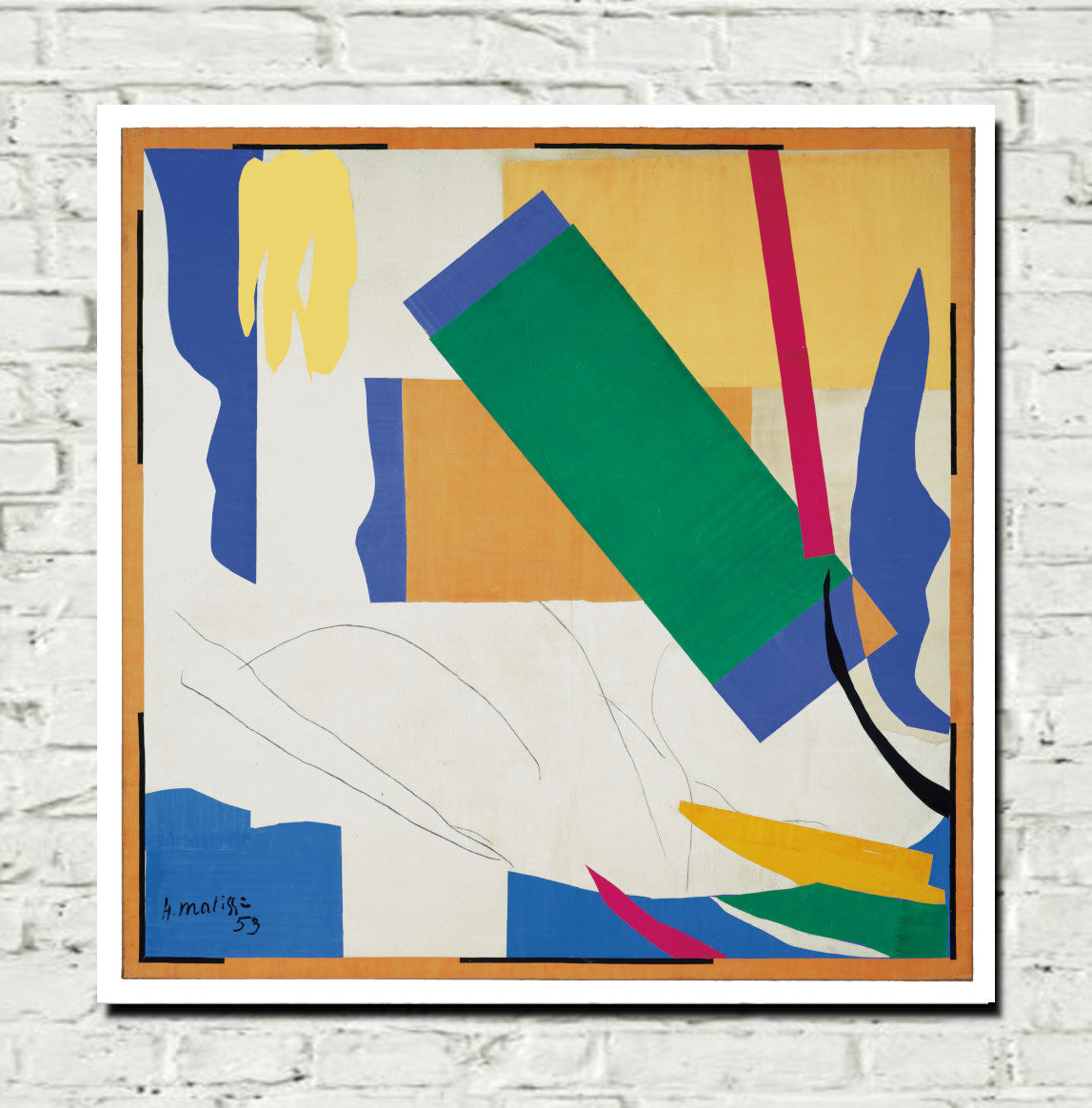
Henri Matisse's Memory of Oceania (Souvenir d'Océanie) (1952–53) is one of the monumental masterpieces of his late cut-out period. Nearly three metres square, the original transforms memories of Matisse's 1930 journey to Tahiti into an extraordinary arrangement of blue, green, yellow, pink, black and white shapes.
Created more than twenty years after Matisse visited the South Pacific, Memory of Oceania is not a conventional landscape or literal record of Tahiti. Instead, fragments of remembered boats, water, vegetation, bodies and brilliant Pacific light appear to have been distilled into an image poised between representation and abstraction.
Available as a Henri Matisse fine art print, framed print or canvas wall art, Memory of Oceania brings together the intense colour, simplified form and remarkable visual freedom that defined the final years of Matisse's career.
One of Matisse's Great Late Cut-Outs
By the early 1950s, Matisse had developed the paper cut-out into an independent artistic medium of extraordinary ambition.
Sheets of paper were painted with gouache before Matisse cut directly into them with scissors. The resulting coloured shapes could then be moved, pinned, adjusted and rearranged until the composition reached the balance he wanted.
Matisse famously thought of this process as a way of drawing directly into colour.
Instead of drawing an outline and subsequently filling it with paint, the movement of the scissors simultaneously created both contour and coloured form.
What had begun as an experimental method eventually enabled Matisse to create some of the largest and most radical works of his career.
Memory of Oceania is among the most impressive examples.
An Enormous Composition
The original Memory of Oceania measures approximately 284.4 × 286.4 cm — more than nine feet in both height and width.
This enormous square format gives individual shapes a physical scale that can be difficult to appreciate when the work is reproduced in books or online.
Blue curves, broad green areas, black lines and brightly coloured geometric forms occupy a field almost architectural in scale.
The size was deliberate.
Late in his career, Matisse increasingly treated the cut-out not simply as a sheet of paper to be viewed at close range but as a way of transforming entire walls and rooms through colour.
A Memory of Tahiti
The title refers to one of the most memorable journeys of Matisse's life.
In 1930, more than two decades before creating this work, Matisse travelled across the United States and onward into the Pacific to Tahiti.
He was fascinated by the extraordinary quality of South Pacific light, the sea, tropical vegetation and the experience of swimming among coral reefs.
Yet relatively few major finished works resulted immediately from the journey.
The experience remained within his visual memory.
More than twenty years later, the radically simplified language of the paper cut-outs appears to have given Matisse a new means of returning to it.
Memory of Oceania is therefore precisely what its title suggests: not a photographic record of Tahiti, but a reconstruction of sensations remembered across decades.
The Schooner in Memory of Oceania
One important source for the composition appears to have been a photograph Matisse took from his window while staying in Tahiti.
The photograph showed a schooner.
Several shapes on the right-hand side of Memory of Oceania may derive from this image.
A slanting green rectangle can be interpreted as the vessel itself, while neighbouring pink, black and blue forms have been associated with elements such as the mast, mooring line and the curtain beside the window.
Matisse does not reproduce any of these objects literally.
They have been reduced to coloured signs.
The work consequently invites recognition without requiring it.
A viewer may sense boat, sea, window and landscape while simultaneously experiencing the composition simply as colour and shape.
What Do the Shapes Represent?
One of the pleasures of Memory of Oceania is that its imagery remains deliberately uncertain.
Some forms suggest identifiable things, while others resist precise interpretation.
MoMA has noted that shapes in the upper-left area may suggest a woman seen from behind. A sharp vertical element can be read as the line of a spine, surrounded by blue and white curves suggesting the contours of a body.
Other interpretations have associated a yellow form with tropical vegetation such as a banana tree.
None of these readings turns the work back into a conventional scene.
Matisse allows memory to operate in the way memory often does: through fragments, sensations and incomplete associations rather than exact visual reconstruction.
Between Figuration and Abstraction
Memory of Oceania occupies a fascinating position between recognisable imagery and abstract art.
Look at individual elements and many appear completely abstract.
There are rectangles, crescents, curves, lines and irregular pieces of colour.
Yet taken together they begin to suggest place and experience.
A green shape may become a boat.
A blue crescent may suggest water or a curtain.
A sequence of curves may evoke a human body.
The work never settles completely into either description or abstraction.
This ambiguity is central to its power.
Colour and Pacific Light
Colour had been fundamental to Matisse since his revolutionary experiments with Fauvism nearly fifty years earlier.
In Memory of Oceania, however, colour has become even more independent.
There is no need for brushwork to describe an object.
Each cut piece of paper is itself a complete area of colour.
Blue, white, black, green, yellow and pink interact directly across the surface.
Large white areas are equally important. They are not simply empty background but active spaces defined by the coloured forms around them.
The resulting contrast gives the composition an exceptional sense of luminosity.
Rather than painting Pacific sunlight, Matisse creates an equivalent sensation through the relationship between brilliant colour and open white space.
Drawing with Scissors
Matisse's cut-outs represented the culmination of ideas he had pursued throughout his career.
As a young Fauvist, he had discovered that colour did not need to imitate nature.
In later paintings he simplified bodies, landscapes and interiors into increasingly broad shapes.
His drawings reduced figures to extraordinarily economical lines.
With the cut-outs these ideas converged.
A movement of the scissors could simultaneously establish shape, line and colour.
The method appears simple, but the compositions were carefully developed.
Pieces could be moved repeatedly, altered, replaced or pinned in different positions as Matisse refined the relationships between them.
Memory of Oceania demonstrates just how monumental this apparently modest technique could become.
Created at the Hôtel Régina in Nice
Matisse created Memory of Oceania at the Hôtel Régina in Nice-Cimiez between the summer of 1952 and early 1953.
During his later years he occupied a large apartment and studio space there.
The walls provided an important working surface for increasingly ambitious paper compositions.
Cut shapes could be temporarily pinned in position and rearranged while Matisse judged their relationships from a distance.
This way of working allowed compositions to grow beyond the dimensions normally associated with drawings or paintings and become almost architectural.
Memory of Oceania, The Snail and Matisse's Monumental Decorations
Memory of Oceania belongs to an extraordinary group of very large late cut-outs.
During 1953 it was temporarily installed in Matisse's studio alongside The Snail and Large Decoration with Masks, creating an immense three-part arrangement.
The Snail and Memory of Oceania are particularly closely related in scale. Both are enormous, nearly square compositions in which numerous separate colours play a fundamental structural role.
Other monumental projects from this phase include The Swimming Pool, The Parakeet and the Mermaid and The Sheaf.
Together these works demonstrate that the cut-out was not a minor activity undertaken at the end of Matisse's life.
It became one of the principal mediums through which he produced some of his most ambitious art.
Memory, Rather Than Illustration
The word “memory” in the title is particularly important.
Matisse was not trying to reconstruct Tahiti topographically.
More than twenty years separated the Pacific journey from the creation of the work.
Specific details had been transformed by time.
What remained were impressions: brilliant light, water, boats, vegetation, bodies, colour and movement.
The cut-out method allowed Matisse to convert those impressions into visual equivalents.
That is why Memory of Oceania can appear simultaneously personal and abstract.
It is a representation not simply of a place, but of what remembering that place felt like.
Original Artwork Details
- Artist: Henri Matisse (1869–1954)
- Title: Memory of Oceania
- French title: Souvenir d'Océanie
- Date: Summer 1952–early 1953
- Created at: Nice-Cimiez, Hôtel Régina, France
- Medium: Gouache on paper, cut and pasted, and charcoal on paper mounted on canvas
- Dimensions: 284.4 × 286.4 cm (9 ft 4 in × 9 ft 4⅞ in)
- Collection: The Museum of Modern Art, New York
- Credit: Mrs. Simon Guggenheim Fund
- MoMA object number: 224.1968
About Henri Matisse
Henri Matisse was born in Le Cateau-Cambrésis, France, in 1869 and became one of the most influential artists of twentieth-century modernism.
Originally trained in law, Matisse turned to painting and studied in Paris, eventually entering the studio of Gustave Moreau at the École des Beaux-Arts.
His breakthrough came during the first years of the twentieth century.
Working alongside artists including André Derain, Matisse increasingly rejected conventional naturalistic colour. Their brilliantly coloured paintings exhibited at the 1905 Salon d'Automne became associated with the movement known as Fauvism.
Matisse's career subsequently underwent repeated transformations.
He produced monumental figure paintings, richly patterned interiors, still lifes, portraits, Moroccan subjects and increasingly experimental works during the 1910s before developing the celebrated Nice-period interiors and figures of the 1920s.
During his final years he transformed painted paper and scissors into an entirely new artistic language.
Works such as Jazz, the Blue Nudes, The Snail, The Swimming Pool and Memory of Oceania made the cut-out one of the defining achievements of his career.
Explore GalleryThane's complete collection of Henri Matisse prints.
Henri Matisse's Late Artistic Style
Pure Colour
The cut-outs allowed Matisse to work with almost uninterrupted areas of gouache colour. Each coloured paper shape becomes both an object and a structural component of the composition.
Simplified Shapes
Boats, bodies, plants and other forms could be reduced to crescents, rectangles, curves and irregular silhouettes while remaining suggestive of recognisable experience.
Positive and Negative Space
The white areas between coloured shapes are as carefully organised as the coloured paper itself. Empty space becomes active rather than incidental.
Rhythm
Repeated curves and contrasting blocks of colour move the eye across the composition. Individual shapes behave almost like notes within a visual rhythm.
Monumental Scale
Late works such as Memory of Oceania demonstrate Matisse's increasing desire to allow colour to occupy entire walls and transform architectural space.
Displaying Memory of Oceania in Your Home
A Memory of Oceania print by Henri Matisse is particularly effective within contemporary interiors because its imagery sits naturally between modern abstraction and recognisable form.
The combination of blue, green, yellow, pink, black and white works especially well against white, cream, soft grey and putty-coloured walls.
Natural oak and other pale timbers complement the work's clean modern character, making it an excellent choice for Scandinavian-inspired interiors.
The varied palette also works with mid-century furniture, where saturated accent colours and simple silhouettes can echo the visual language of the cut-out.
Because the original composition is almost square, it works particularly well above a sofa, console, sideboard or low cabinet where sufficient surrounding wall space allows the composition to breathe.
It can also act as the principal artwork within an abstract or modernist gallery wall.
A Natural Choice for Abstract Art Interiors
Although inspired by identifiable memories, Memory of Oceania has much of the visual power of abstract art.
This makes it particularly versatile for interiors where a conventional landscape or portrait might feel too representational.
The eye can enjoy the work simply as an arrangement of colour and shape while gradually discovering possible references to boats, figures, tropical vegetation and water.
For related modern compositions, explore GalleryThane's wider Abstract Art Prints collection.
Memory of Oceania Prints, Framed Prints and Canvas Wall Art
GalleryThane offers Memory of Oceania by Henri Matisse in a range of sizes and presentation formats.
Choose a fine art paper print for a traditional presentation, add a professionally made frame and mount for ready-to-display wall art, or select a canvas option for a more contemporary finish.
The work's strong square composition makes it especially effective at larger sizes, where Matisse's arrangement of coloured forms can make a substantial visual impact.
GalleryThane prints and frames its artwork in-house using archival art stocks, pigment inks and carefully selected framing materials.
Frequently Asked Questions
When did Henri Matisse create Memory of Oceania?
Matisse created Memory of Oceania between the summer of 1952 and early 1953.
What is the French title of Memory of Oceania?
The French title is Souvenir d'Océanie.
Is Memory of Oceania a painting?
Not in the conventional sense. The original is a monumental cut-out made from paper painted with gouache, cut and pasted into position, with charcoal on paper mounted on canvas.
Is Memory of Oceania a collage?
It can broadly be described as a collage-like work, but Matisse's preferred late technique is more specifically known as the papier découpé, or paper cut-out.
What inspired Memory of Oceania?
The work was inspired by Matisse's memories of his 1930 journey to Tahiti and the South Pacific. It may also draw partly upon a photograph he took of a schooner from his window while in Tahiti.
Did Matisse create Memory of Oceania while he was in Tahiti?
No. Matisse visited Tahiti in 1930 but created Memory of Oceania more than twenty years later at the Hôtel Régina in Nice, France.
What does Memory of Oceania depict?
The imagery is intentionally ambiguous. Shapes have been associated with a schooner, mast, mooring line, window curtain, tropical vegetation and possibly a woman's body, but the composition remains deliberately poised between memory, representation and abstraction.
Is there a boat in Memory of Oceania?
Several forms on the right-hand side of the composition appear to derive from a schooner photographed by Matisse in Tahiti. He simplified these elements so dramatically that they also function as independent abstract shapes.
Why is Memory of Oceania important?
It is one of Matisse's largest and most ambitious cut-outs and demonstrates how his late technique allowed him to combine colour, memory, abstraction and monumental scale.
How large is the original Memory of Oceania?
The original measures approximately 284.4 × 286.4 cm, making it more than nine feet high and nine feet wide.
Where was Memory of Oceania created?
Matisse created the work at the Hôtel Régina in Nice-Cimiez in southern France.
Where is the original Memory of Oceania?
The original belongs to The Museum of Modern Art in New York.
What is MoMA's object number for Memory of Oceania?
The Museum of Modern Art catalogues the work as object 224.1968.
What colours appear in Memory of Oceania?
The composition combines blue, green, yellow, pink, black and white, with the unoccupied white ground playing an important role in creating luminosity and visual space.
Is Memory of Oceania abstract art?
The work sits between abstraction and representation. Its forms can be enjoyed as independent shapes and colours, but several also suggest boats, people, vegetation and other memories associated with Tahiti.
How does Memory of Oceania relate to The Snail?
Both are monumental, almost square cut-outs from Matisse's final years. In 1953 they were temporarily displayed in his studio as part of a large three-work arrangement together with Large Decoration with Masks.
What interior styles suit a Memory of Oceania print?
Its clean shapes and saturated colours work especially well in contemporary, Scandinavian-inspired, mid-century and eclectic interiors, as well as rooms featuring abstract or modernist art.
Can I buy Memory of Oceania as a framed print?
Yes. GalleryThane offers Memory of Oceania as a fine art print with framing options and in canvas formats across a range of sizes.
All orders for unframed fine art prints and original paintings are dispatched within 2 working days of receipt of payment.
Orders for custom framed prints are dispatched within 4 working days.
All orders are fully tracked from dispatch to delivery at your home or business.
All print and original painting orders are fully insured against loss or damage in transit. We refund or replace any damaged or lost orders.
Buy with confidence - read what our satisfied customers have to say - Reviews
Fine art papers are printed without any additional white border Please let us know at the time of ordering if you would like a small additional white border.
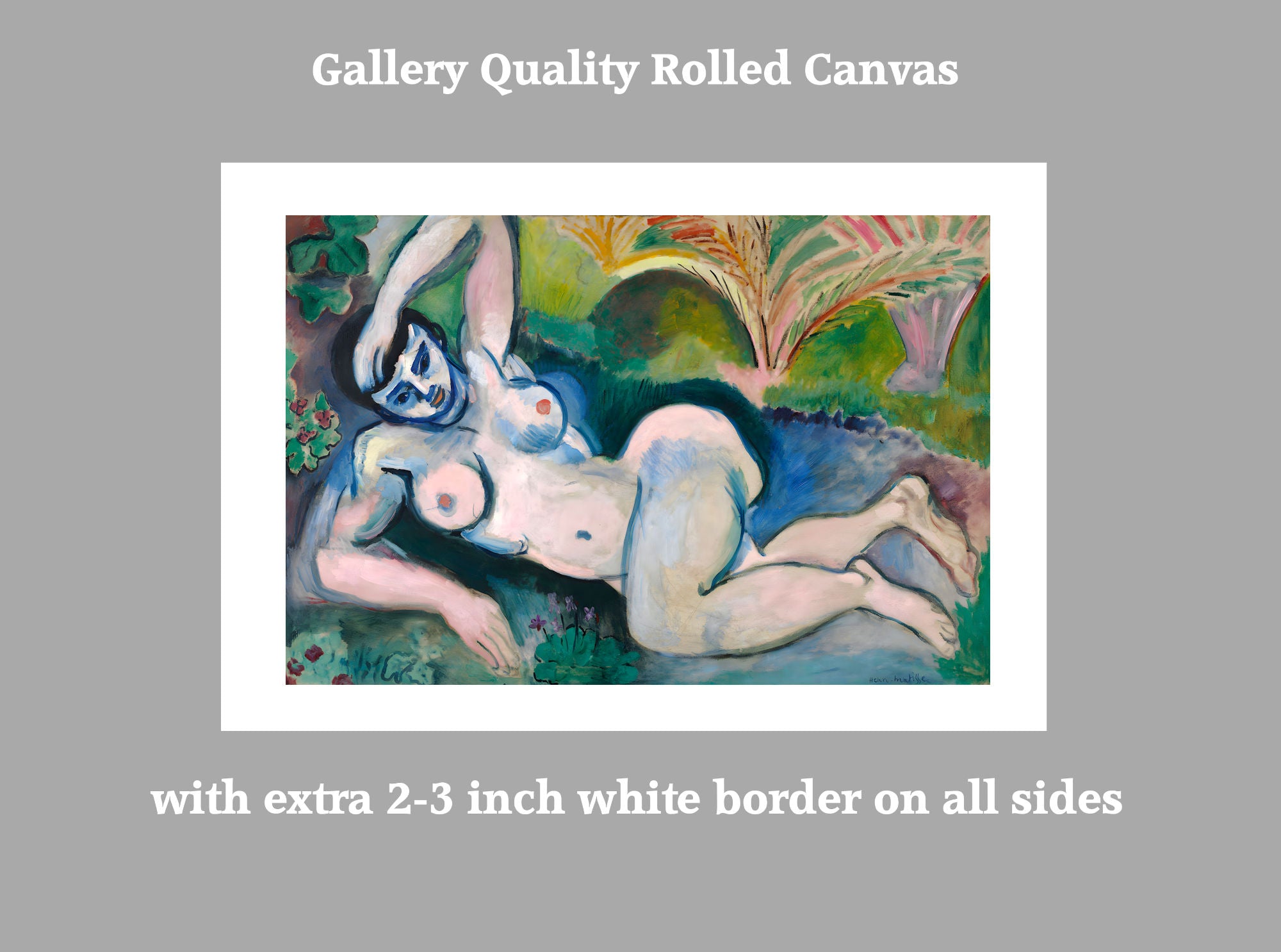
Rolled canvas options have an additional white border of approximately 2.5 inches (7cm) on all 4 sides to aid stretching.
Ready to hang canvas panels are stretched on 1.5 inch deep solid pine frames from sustainable forestry sources. The image is mirrored on all 4 sides to give an aesthetically pleasing finish.
Why not have us gift wrap your order and attach a personalised message to the recipient. Available for all orders. Each order is hand wrapped in high quality gift wrap with meatllic ribbon and bow. Your personalised message is printed on a card which is included with your order.
Have your hand wrapped gift delivered directly to the recipient.
Full tracking and insurance included with every order.
Please note design may vary depending upon availability
Just purchase the gift wrap option HERE
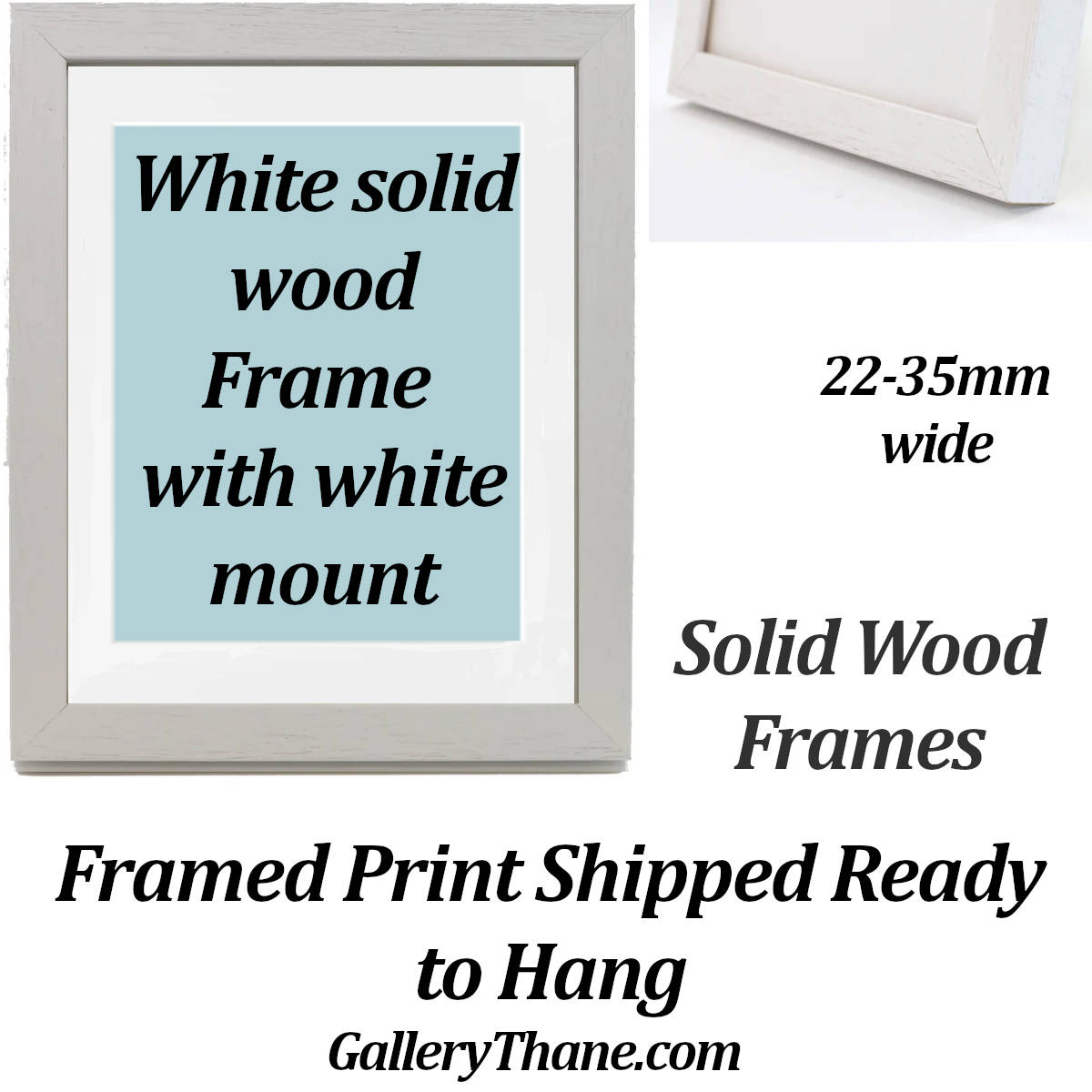
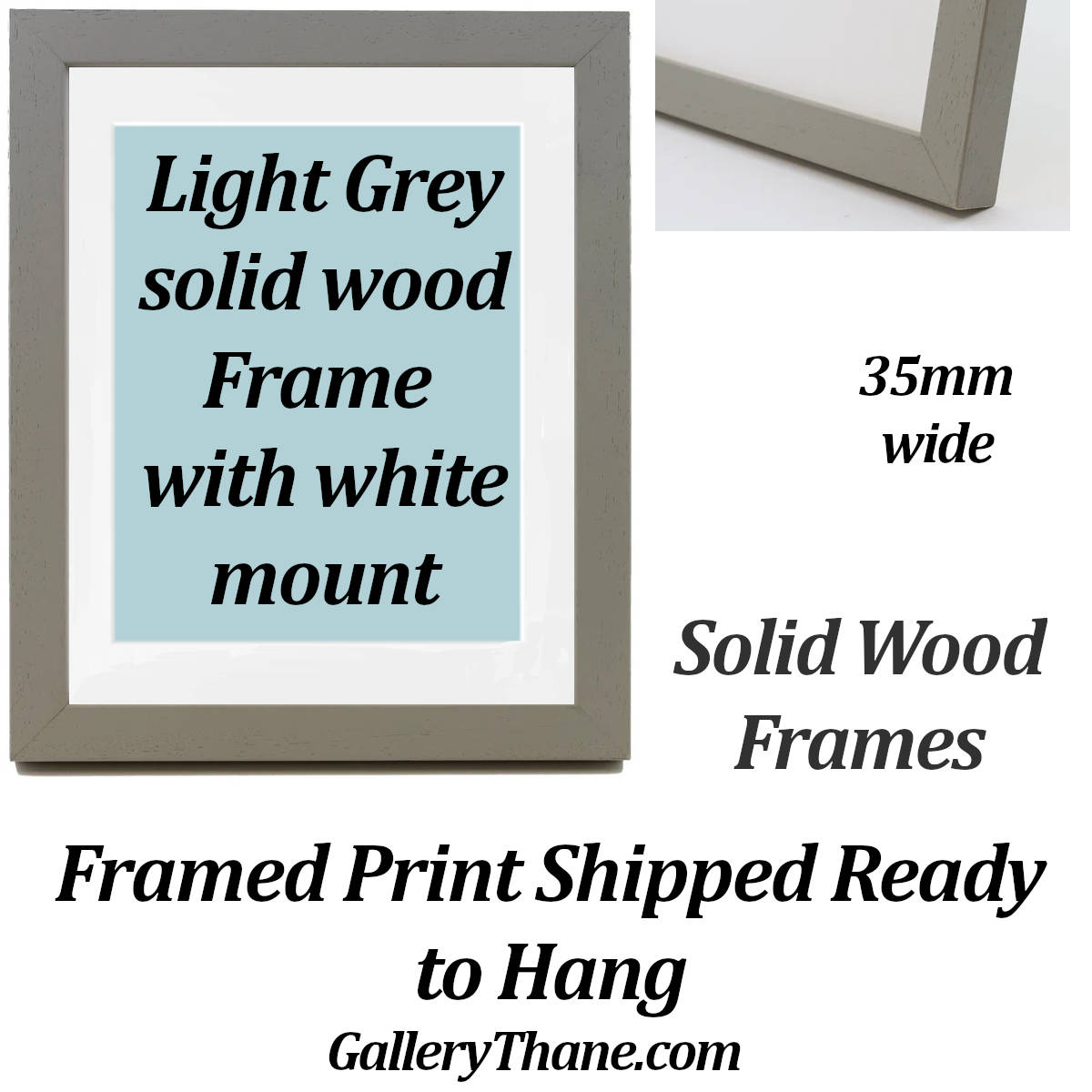
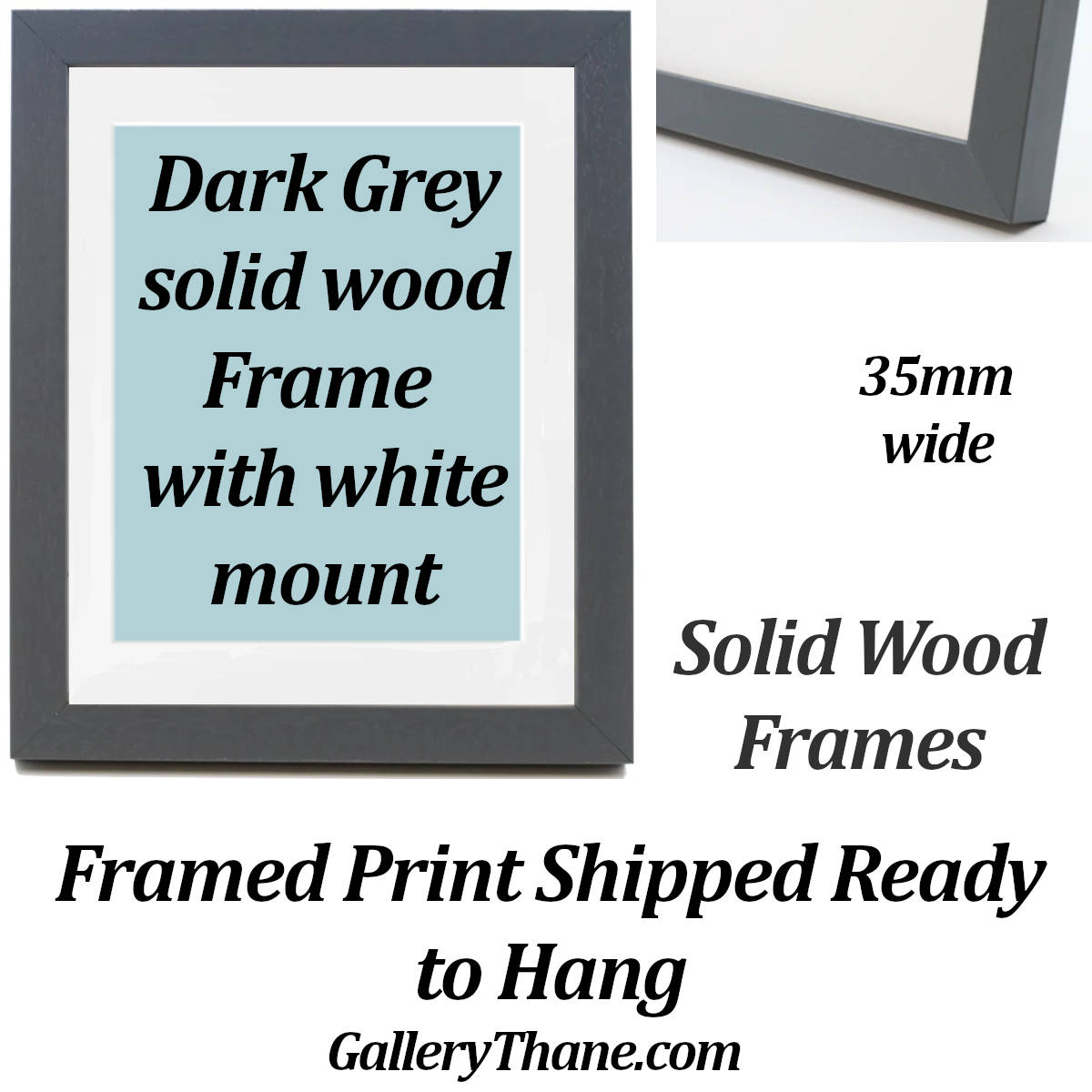
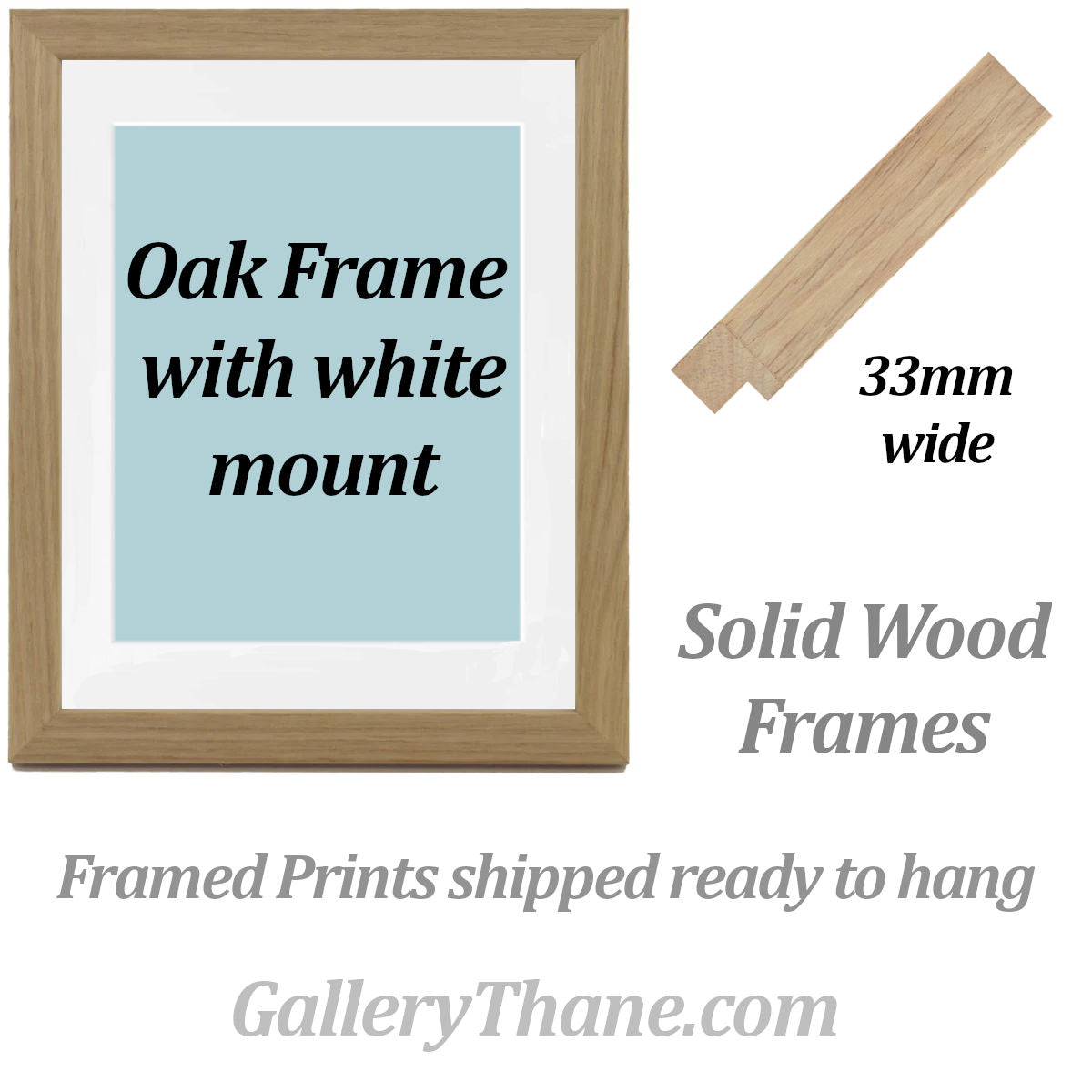
We have a wide range of frames in standard sizes and we also make custom size frames.
To order a framed print:
1. select the print size you would like along with the print materials (matte paper, fine art paper).
2. Add your print choice to the basket.
3. Choose from our range of frames
4. Select the same size as the print you have added to your basket. If the frame size you want is not listed please contact us
5. Choose from the mount or no-mount option
6. Add your frame choice to the basket
7. Proceed to checkout.
Why Choose GalleryThane?
- Printed and framed in-house
- Free UK delivery
- Free EU and USA delivery on orders over £200
- Tracking and insurance included in every order
- Fast 1-3 day dispatch
- Gift wrapping service available
- Gallery quality materials
- Sustainable, eco-friendly packaging
- Great customer support
Explore related collections

What makes our Prints and Canvas Panels so special

Latest Giclee Printing Technology
We have invested in the latest wide format print technology to produce museum quality giclee prints utilising the highest quality pigment inks to give outstanding colour reproduction.

Museum Quality Archival Fine Art Papers
We print on the finest quality fine art papers with textured, smooth and lustre finishes for prints which last a lifetime.
From aceo miniatures to 40x80 inch large format, every print has our lifetime quality guaranteee.

Solid Wood Frames, Cotton Canvas
All of the wood for our canvas panels and frames is responsibly sourced from manages forests. Our cotton canvas is completely seedless for the highest quality reproduction possible.

Have Your Gift Wrapped


