


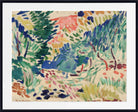
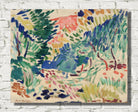


Henri Matisse Print, Landscape at Collioure
Couldn't load pickup availability
BUY WITH CONFIDENCE
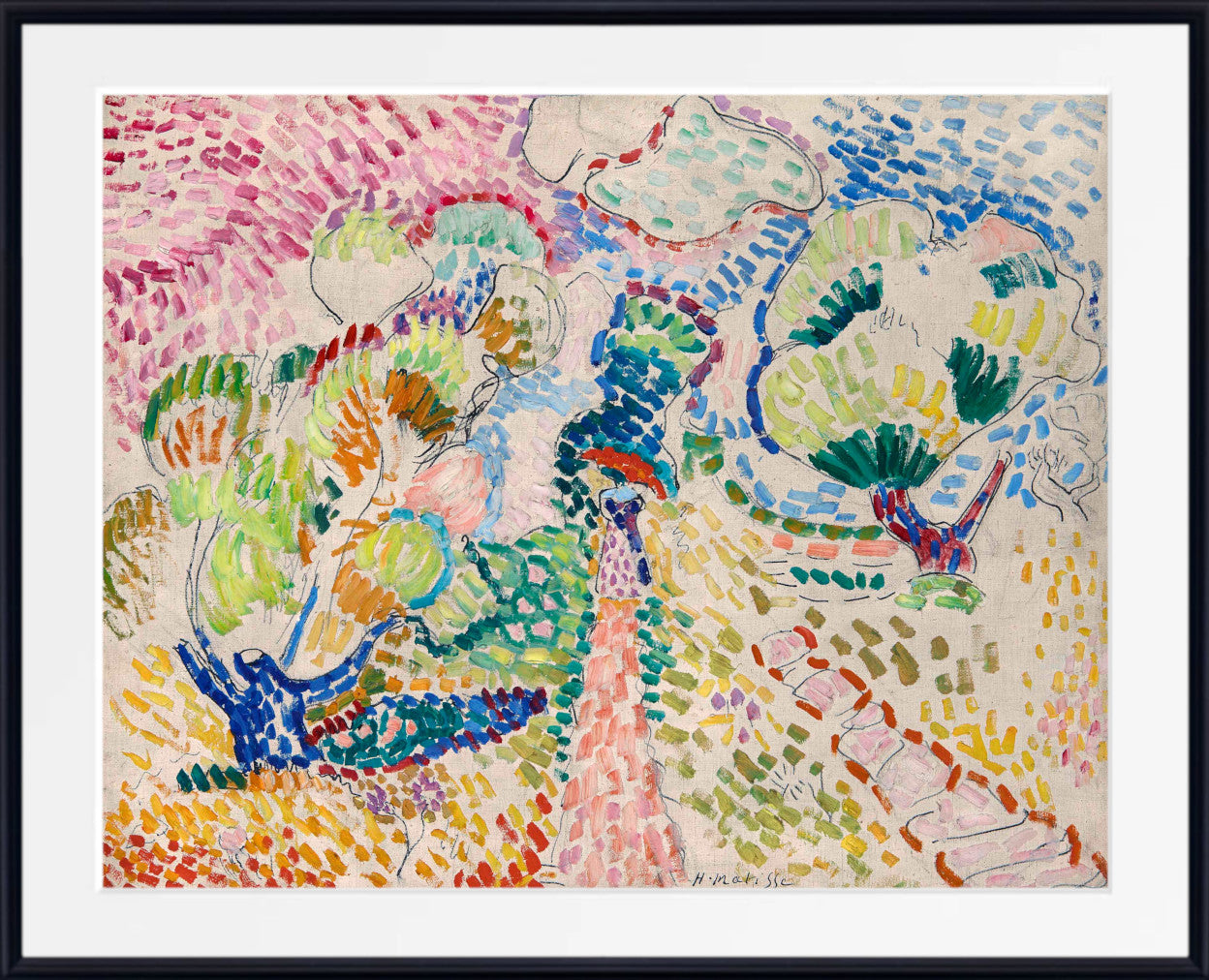
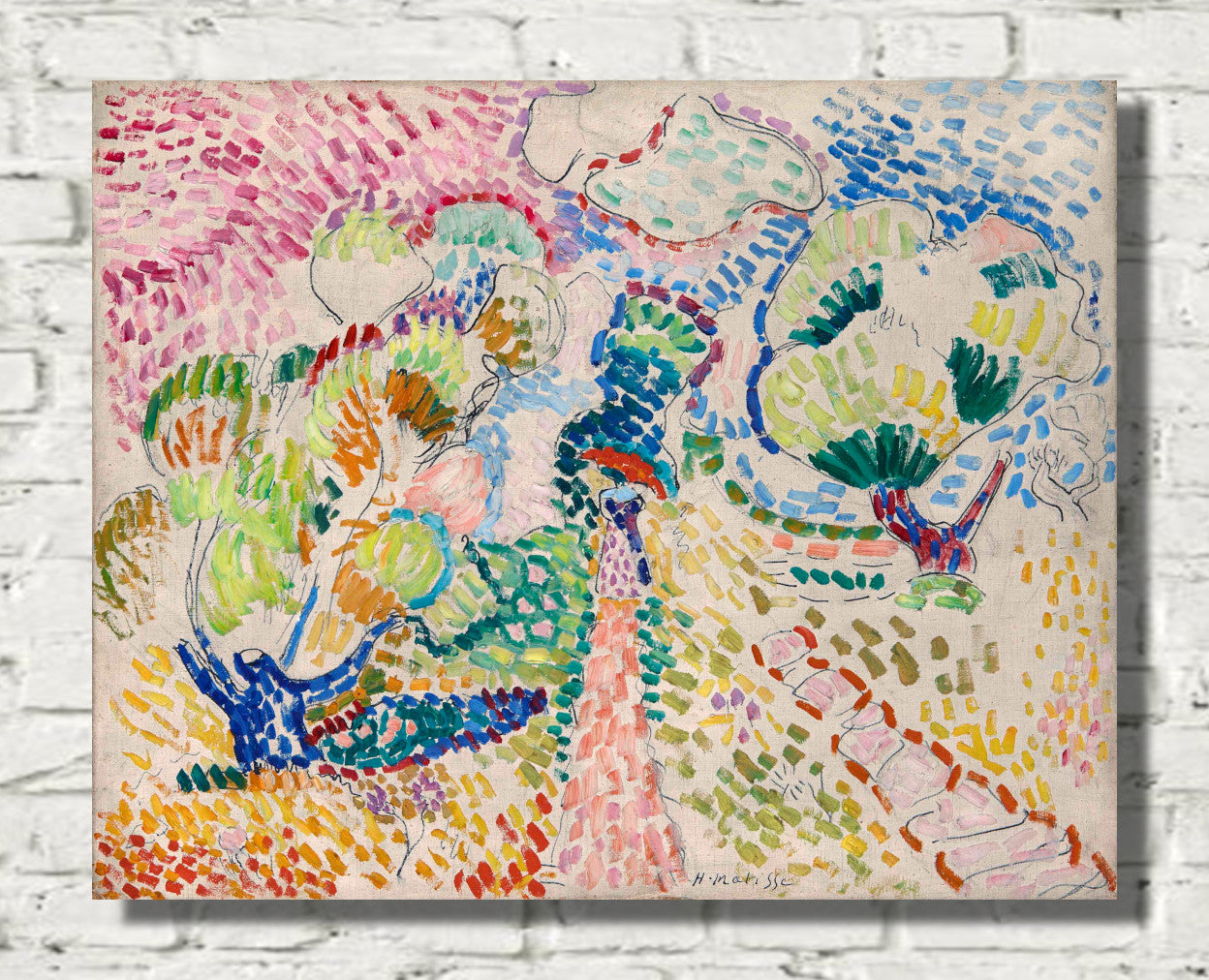
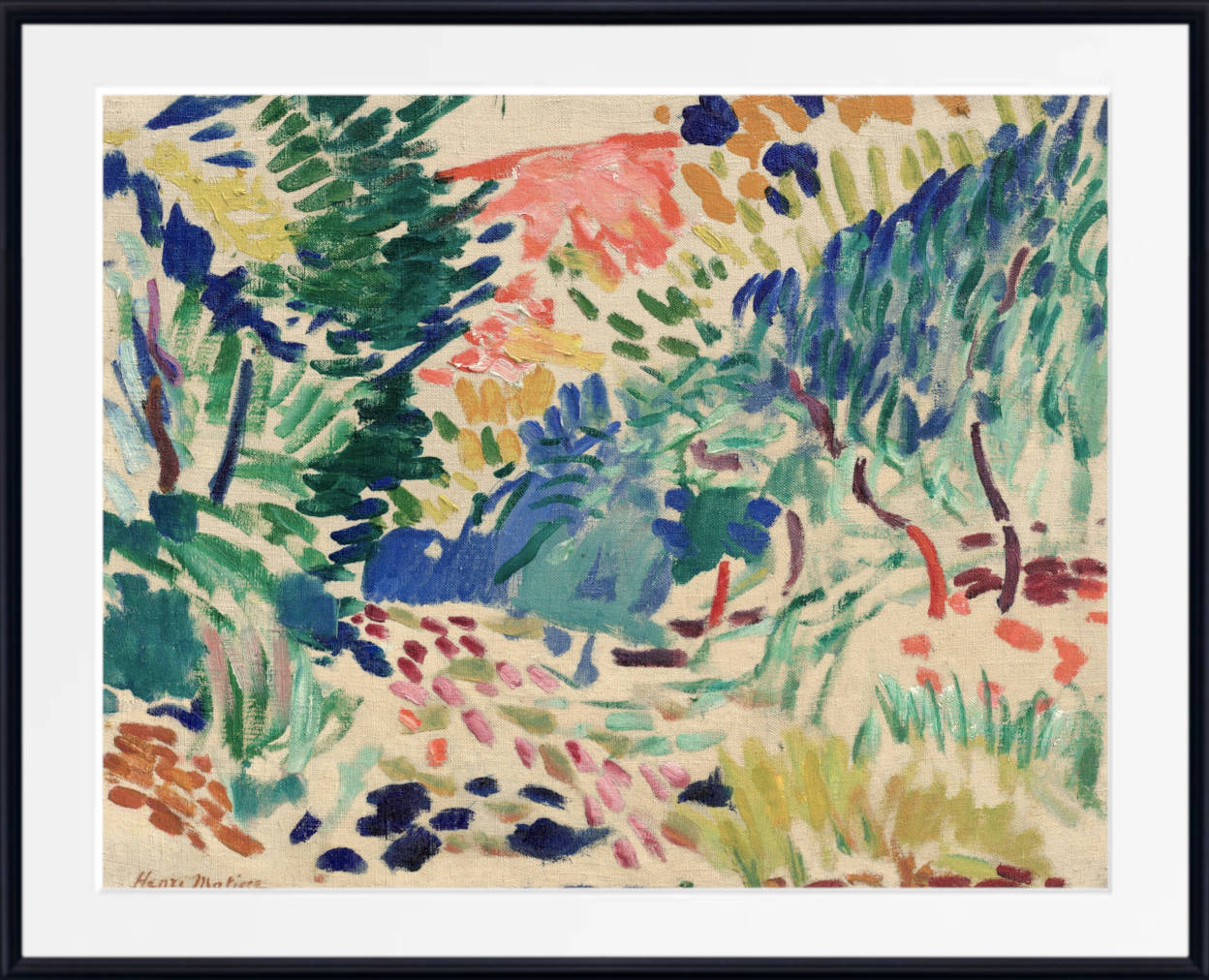
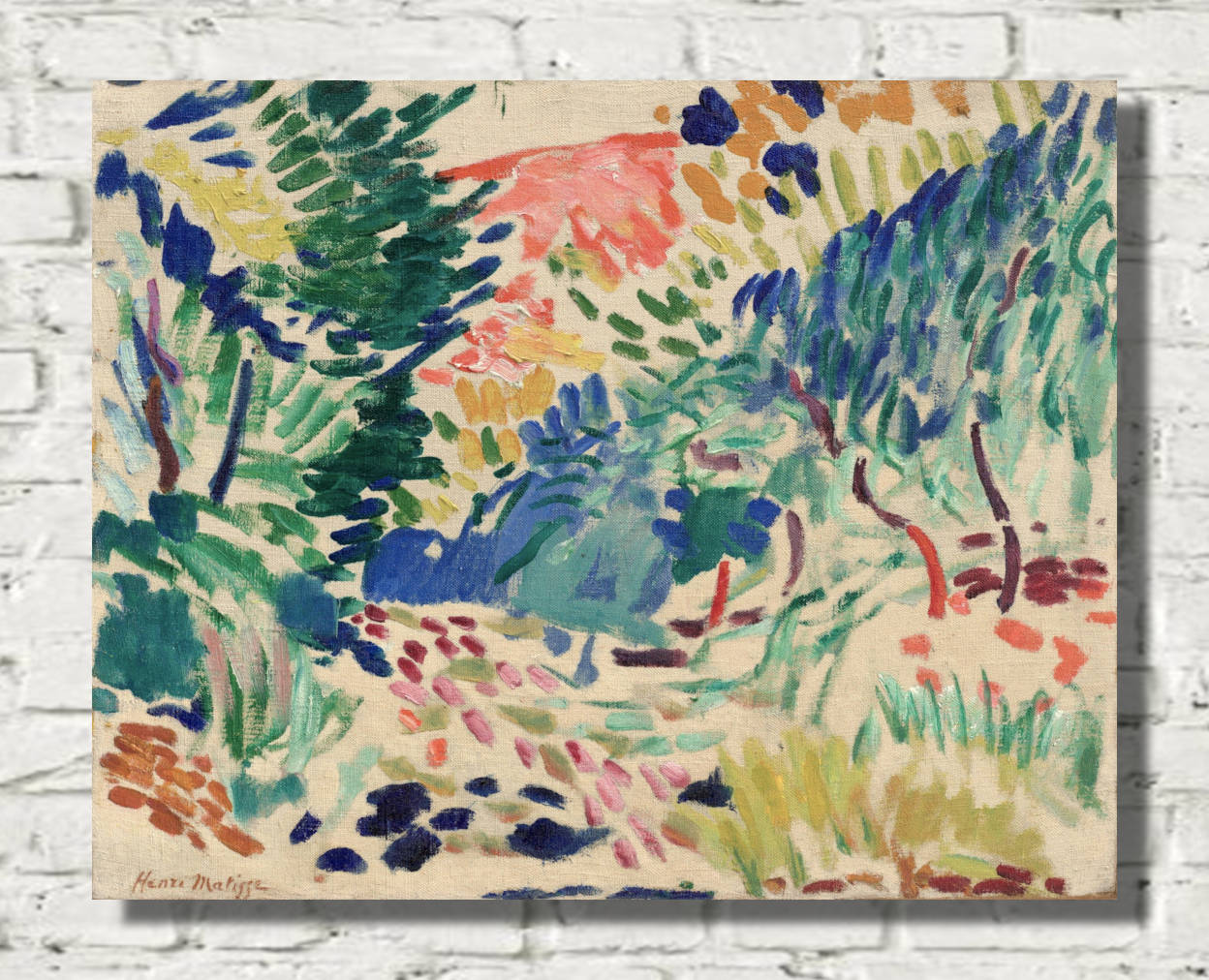
Landscape at Collioure (1905) by Henri Matisse is one of the pivotal landscapes in the development of Fauvism. Painted during the extraordinary summer Matisse spent at Collioure on the Mediterranean coast of southern France, the work abandons conventional naturalistic colour in favour of rapid strokes of brilliant blue, green, yellow, orange and red. Trees, hills and vegetation remain recognisable, yet colour itself becomes the principal subject of the painting.
This Henri Matisse Landscape at Collioure print captures a decisive moment in modern art, when Matisse began moving beyond the controlled technique of Neo-Impressionism towards a much freer and more instinctive way of painting. Available as a fine art print, framed print or canvas panel, Landscape at Collioure is an outstanding choice for admirers of Fauvism, colourful landscape art and the revolutionary early work of Henri Matisse.
Landscape at Collioure – A Breakthrough in Modern Colour
Matisse painted Landscape at Collioure during the summer of 1905, a year that proved transformational both for his own career and for the history of twentieth-century painting.
The scene depicts the landscape around Collioure, a small Mediterranean fishing town near the French-Spanish border. Rather than presenting the location through carefully modelled trees, hills and atmospheric distance, Matisse reduces the countryside to an energetic network of coloured marks.
A central opening leads the eye into the landscape between groups of trees and vegetation. Beyond them, the terrain rises towards the horizon, with a suggestion of the Mediterranean landscape visible in the distance.
The underlying composition is straightforward, but Matisse's handling is radical. Conventional modelling is almost entirely abandoned. Individual brushstrokes remain visible and areas of raw canvas show between them.
Instead of concealing the physical process of painting, Matisse makes it central to the finished work.
Matisse and Derain at Collioure in 1905
The summer of 1905 at Collioure is one of the defining episodes in the history of Fauvism.
Matisse travelled to the Mediterranean town and invited the younger painter André Derain to join him. Working in close proximity, the two artists painted the harbour, hills, beaches, fishing boats and surrounding countryside while discussing new approaches to colour and technique.
Both had been influenced by Neo-Impressionism and its method of placing separate touches of colour beside one another. Matisse had worked particularly closely with Paul Signac and had adopted aspects of the Divisionist method in earlier paintings.
At Collioure, however, both painters became increasingly dissatisfied with a system governed by prescribed colour theory.
The small, methodical marks associated with Neo-Impressionism began giving way to broader, more spontaneous strokes. Colours became less dependent on observed reality and increasingly responsive to the artists' emotional experience of the landscape.
Landscape at Collioure captures Matisse at the heart of this transformation.
From Neo-Impressionism to Fauvism
Immediately before visiting Collioure, Matisse had been thinking intensely about several competing directions within Post-Impressionist painting.
The work of Georges Seurat and Paul Signac suggested a disciplined system in which separate colours could interact optically. Vincent van Gogh, by contrast, demonstrated how brushwork and intensified colour could communicate a far more direct emotional response.
Paul Gauguin and Paul Cézanne also provided important alternatives to conventional naturalism, encouraging artists to simplify forms and reconsider the relationship between observed reality and the painted surface.
At Collioure these influences began to merge into something new.
In Landscape at Collioure, Matisse retains the idea of separate colour marks but frees them from the systematic discipline of Divisionism. Brushstrokes differ in size, direction and intensity. Some are little more than rapid dashes, while others become broader planes of colour.
The result feels immediate and spontaneous rather than methodically constructed.
Colour in Landscape at Collioure
The revolutionary quality of the painting comes primarily from Matisse's treatment of colour.
Greens and blues suggest foliage and shadow, while yellows, reds and oranges intensify the warmth of the Mediterranean landscape. Yet the colours do not attempt to correspond precisely to what Matisse could see before him.
Instead, each colour acquires meaning through its relationship with the colours surrounding it.
A blue can suggest shadow because of the orange beside it. A red mark may define a tree trunk or simply introduce visual energy. Yellow can evoke sunlight without being tied to a single illuminated surface.
This liberation of colour was fundamental to Fauvism.
The Fauvist painter no longer needed to ask, “What colour is this object?” The more important question became, “What colour does this painting need?”
That shift gave Matisse extraordinary freedom and became one of his most important contributions to modern art.
The Importance of the Unpainted Canvas
One of the most distinctive features of Landscape at Collioure is the amount of unpainted canvas visible between Matisse's brushstrokes.
The original was painted on unprimed canvas, and Matisse deliberately allowed its raw woven surface to remain exposed across substantial portions of the composition.
This was not evidence that the painting had been left unfinished.
The pale canvas actively participates in the image. It separates individual strokes of colour, prevents the surface becoming visually heavy and contributes to the impression of brilliant Mediterranean light.
The technique also makes the process of painting exceptionally visible. Each stroke retains its identity rather than disappearing into a continuous painted surface.
This openness gives the work a remarkable freshness. It feels less like a carefully constructed imitation of landscape and more like a direct record of Matisse's response to colour, light and place.
An Apparently Simple but Carefully Structured Landscape
The freedom of Matisse's brushwork can make Landscape at Collioure appear almost improvised, but the underlying composition is carefully organised.
Trees and foliage create strong masses on either side of the picture, opening towards a central passage that leads the viewer into the distance.
This arrangement gives the painting depth without relying heavily on traditional perspective.
The structure also became significant in Matisse's subsequent work. The basic landscape arrangement contributed to the setting of his monumental composition Le Bonheur de vivre or The Joy of Life, painted during 1905–06.
Landscape at Collioure can therefore be understood not only as an important Fauvist landscape in its own right but also as part of Matisse's development towards one of the major masterpieces of his early career.
Collioure and the Birth of Fauvism
Collioure provided Matisse and Derain with ideal conditions for their experiments.
The intense Mediterranean sunlight produced strong contrasts, while the town offered a rich mixture of fishing boats, harbour architecture, mountains, beaches and vegetation.
The two artists repeatedly painted the same surroundings but interpreted them through increasingly different combinations of colour and brushwork.
When paintings created during and around this period were shown at the Salon d'Automne in Paris in 1905, their brilliant palettes attracted considerable attention.
Critic Louis Vauxcelles famously used the expression les fauves — “the wild beasts” — in response to the intensely coloured works exhibited by Matisse, Derain and their associates.
The name Fauvism subsequently became attached to the brief but enormously influential movement.
Landscape at Collioure belongs directly to the creative breakthrough that preceded that public recognition.
Henri Matisse's Fauvist Painting Style
Henri Matisse became the central figure of Fauvism and the artist who most consistently explored the idea that colour could operate independently of natural appearance.
Several defining characteristics of Fauvism are clearly visible in Landscape at Collioure:
- brilliant and intensified colour
- rapid, clearly visible brushwork
- simplified landscape forms
- limited conventional modelling
- areas of exposed canvas
- colour used expressively rather than purely descriptively
- a flattened relationship between foreground and background
The painting is especially important because it captures Matisse during the transition into this new language rather than after the Fauvist style had become established.
There is still evidence of his earlier interest in separate colour marks, but these are becoming increasingly spontaneous and independent.
The work therefore records the process by which a carefully controlled Post-Impressionist technique was transformed into something far freer.
About Henri Matisse
Henri Matisse (1869–1954) was a French painter, draughtsman, sculptor and printmaker and one of the most influential figures in twentieth-century art.
Born in Le Cateau-Cambrésis in northern France, Matisse initially trained in law before deciding to pursue painting. His early development took him through academic art, Impressionism, Post-Impressionism and Neo-Impressionism before he became the leading figure of Fauvism.
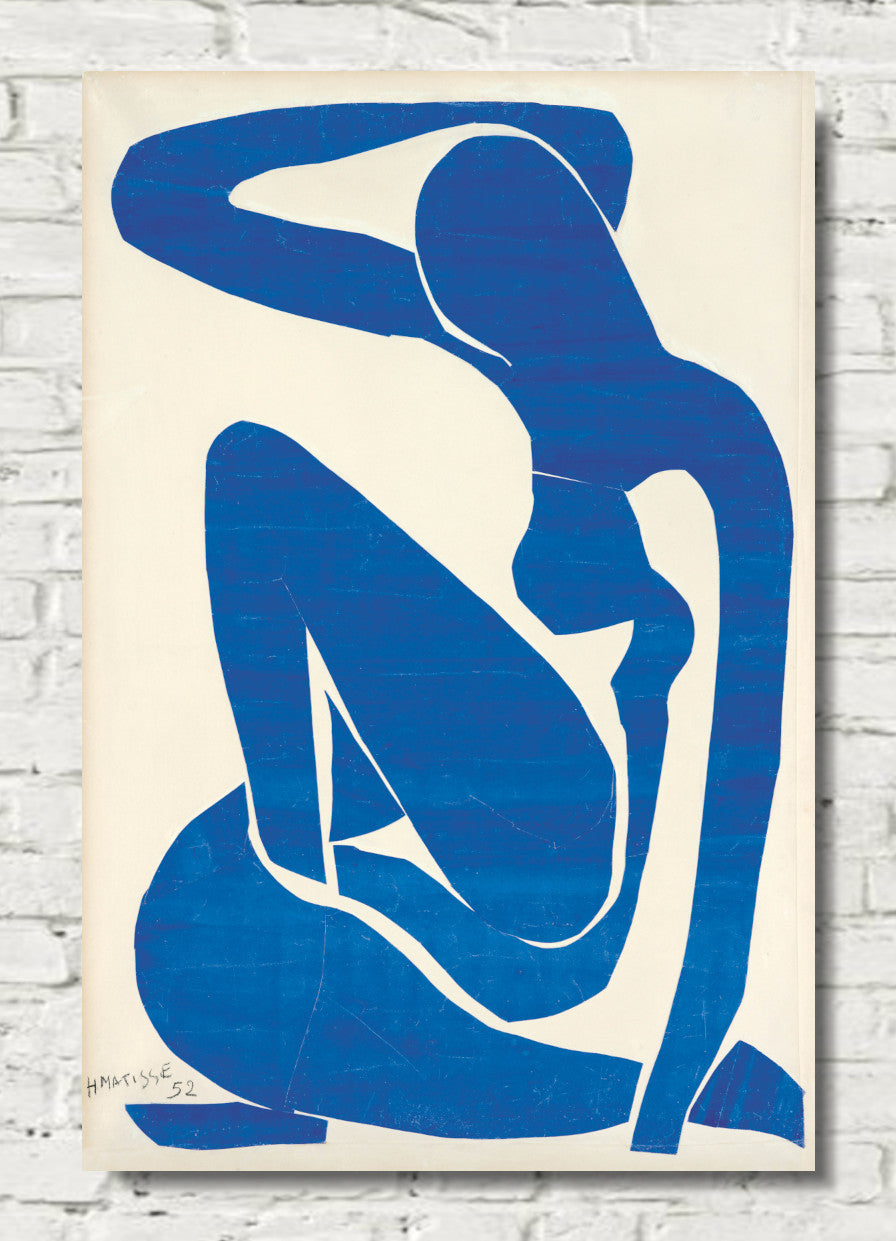
The years around 1905–07 produced some of his most radical early works. Paintings including Landscape at Collioure, Woman with a Hat, The Green Line, The Joy of Life and Blue Nude challenged traditional expectations about colour, space and representation.
Although Fauvism itself lasted only a few years, Matisse continued developing its fundamental discoveries throughout his career.
Colour, pattern, simplified form and the relationship between figure and surrounding space remained central to his paintings, interiors, drawings and eventually his celebrated paper cut-outs.
The Original Landscape at Collioure
The original Landscape at Collioure was painted during the summer of 1905 in Collioure, southern France.
Matisse created the work in oil on canvas. It measures approximately 38.8 × 46.6 cm.
The paint was applied directly to unprimed canvas, with areas of the raw woven surface deliberately left visible between the brushstrokes.
The painting is now held by The Museum of Modern Art in New York, where it forms part of the museum's collection of major works from the development of twentieth-century modernism.
Despite its relatively modest dimensions, the painting occupies an important position in Matisse's career because it records the moment when his landscape painting became substantially freer, more instinctive and more dependent upon the independent power of colour.
A Henri Matisse Landscape at Collioure Print for Your Interior
A Henri Matisse Landscape at Collioure print combines the appeal of colourful landscape art with the historical importance of one of Fauvism's breakthrough paintings.
Its compact landscape format and exceptionally varied palette make it versatile for contemporary interiors. Blues and greens interact with warmer yellows, oranges and reds, allowing the artwork to introduce colour without being dominated by a single hue.
Against white, cream, putty, pale grey or other neutral walls, the painting can become an immediate focal point. Its energetic marks also complement natural timber, restrained Scandinavian furniture and modern or mid-century interiors.
The work is particularly effective in living rooms, dining rooms, bedrooms, hallways, home offices and gallery walls.
Its relatively abstract treatment of landscape also makes it an excellent choice for interiors where completely representational scenery may feel too traditional but fully abstract art is not desired.
For admirers of Henri Matisse and Fauvism, Landscape at Collioure has additional significance as a direct product of the summer in which the modern liberation of colour accelerated dramatically.
Frequently Asked Questions
When did Henri Matisse paint Landscape at Collioure?
Matisse painted Landscape at Collioure during the summer of 1905, when he was working in Collioure on the Mediterranean coast of southern France.
Where is Collioure?
Collioure is a coastal town in southern France close to the Spanish border. Its harbour, mountains, beaches and intense Mediterranean light attracted both Henri Matisse and André Derain in 1905.
Is Landscape at Collioure a Fauvist painting?
Yes. The painting is one of Matisse's important early Fauvist landscapes and belongs to the breakthrough period immediately associated with the emergence of Fauvism in 1905.
Why is Landscape at Collioure important?
The work records a decisive transition in Matisse's painting from the more systematic colour technique of Neo-Impressionism towards a freer, more spontaneous approach in which colour became increasingly independent of natural appearance.
Did André Derain work with Matisse at Collioure?
Yes. Derain joined Matisse at Collioure during the summer of 1905. Their experiments with intense colour and simplified form played a central role in the development of Fauvism.
Why did Matisse leave areas of the canvas unpainted?
The exposed canvas was deliberate. Its pale surface separates individual brushstrokes and contributes to the sensation of brilliant light while keeping the composition visually open and energetic.
Was Landscape at Collioure painted on primed canvas?
No. Matisse painted directly onto unprimed canvas and allowed substantial areas of its natural woven surface to remain visible.
What medium did Henri Matisse use?
The original Landscape at Collioure was painted in oil on canvas.
What size is the original Landscape at Collioure?
The original measures approximately 38.8 × 46.6 cm.
Where is the original Landscape at Collioure?
The painting is held by The Museum of Modern Art in New York.
Did Landscape at Collioure influence other Matisse paintings?
Yes. Elements of its landscape structure contributed to the setting of Matisse's major 1905–06 composition The Joy of Life, making the Collioure painting important within his broader artistic development.
What colours are characteristic of Landscape at Collioure?
The painting uses vivid blues, greens, yellows, oranges and reds in rapid separate strokes. These colours do not simply imitate nature but work together to communicate Matisse's response to Mediterranean light and landscape.
Is Landscape at Collioure available as a framed Henri Matisse print?
Yes. GalleryThane offers Landscape at Collioure in a choice of sizes and formats, including fine art paper prints, framed prints and canvas options.
Where would a Landscape at Collioure print work well?
Its colourful horizontal composition makes it particularly suitable for living rooms, bedrooms, dining rooms, hallways and home offices. It works especially well with contemporary, Scandinavian-inspired, mid-century and eclectic interiors.
All orders for unframed fine art prints and original paintings are dispatched within 2 working days of receipt of payment.
Orders for custom framed prints are dispatched within 4 working days.
All orders are fully tracked from dispatch to delivery at your home or business.
All print and original painting orders are fully insured against loss or damage in transit. We refund or replace any damaged or lost orders.
Buy with confidence - read what our satisfied customers have to say - Reviews
Fine art papers are printed without any additional white border Please let us know at the time of ordering if you would like a small additional white border.
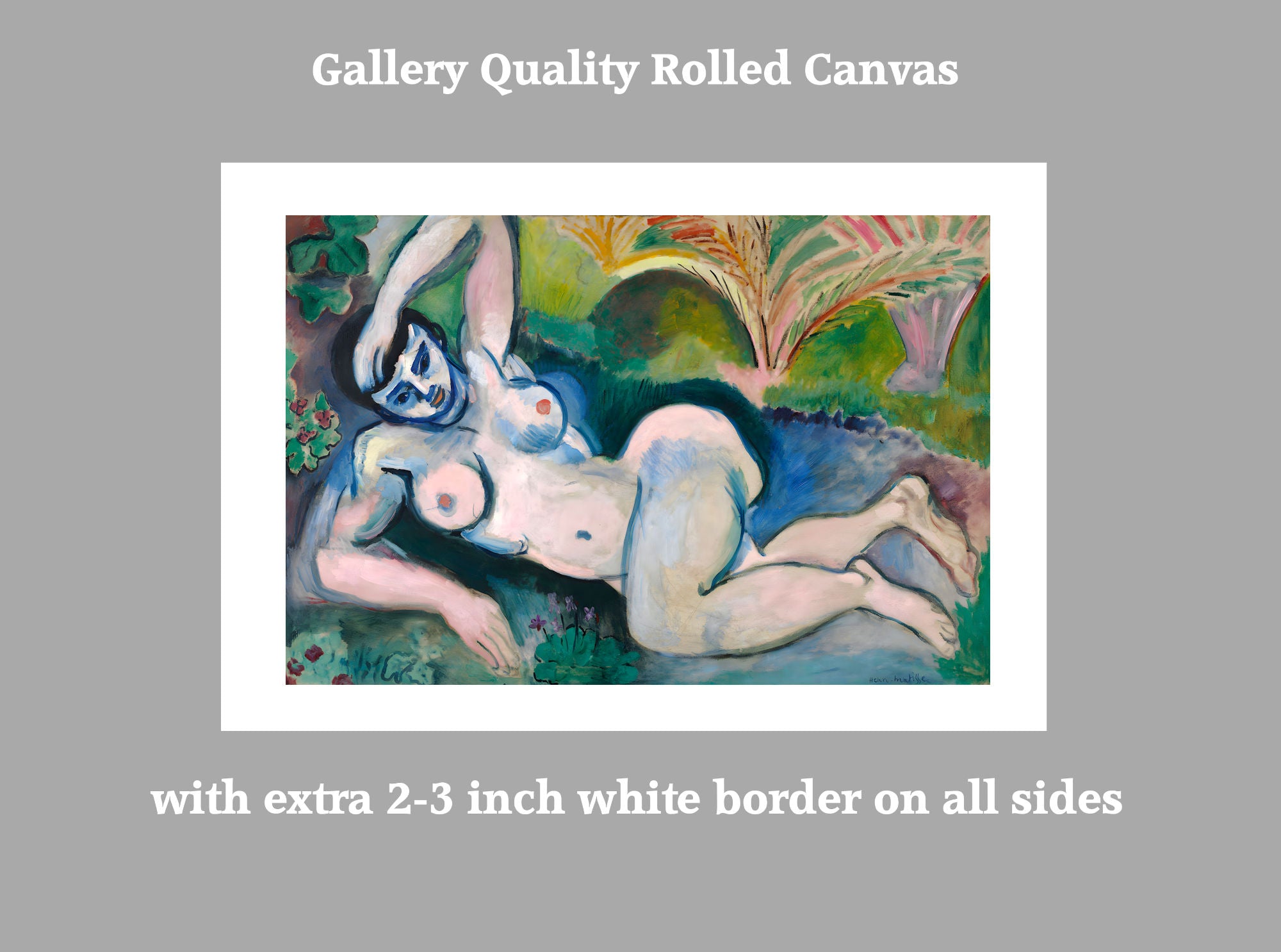
Rolled canvas options have an additional white border of approximately 2.5 inches (7cm) on all 4 sides to aid stretching.
Ready to hang canvas panels are stretched on 1.5 inch deep solid pine frames from sustainable forestry sources. The image is mirrored on all 4 sides to give an aesthetically pleasing finish.
Why not have us gift wrap your order and attach a personalised message to the recipient. Available for all orders. Each order is hand wrapped in high quality gift wrap with meatllic ribbon and bow. Your personalised message is printed on a card which is included with your order.
Have your hand wrapped gift delivered directly to the recipient.
Full tracking and insurance included with every order.
Please note design may vary depending upon availability
Just purchase the gift wrap option HERE
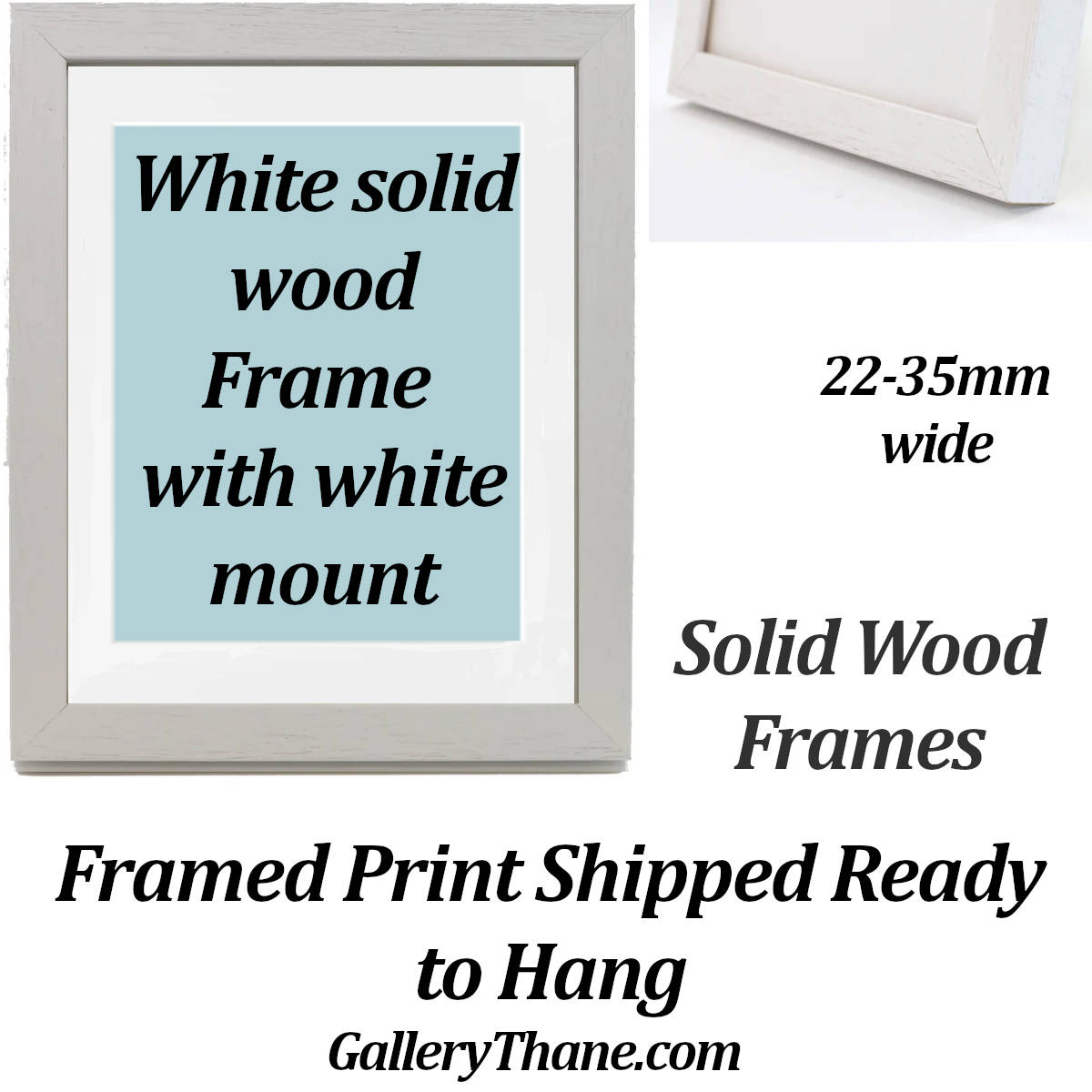
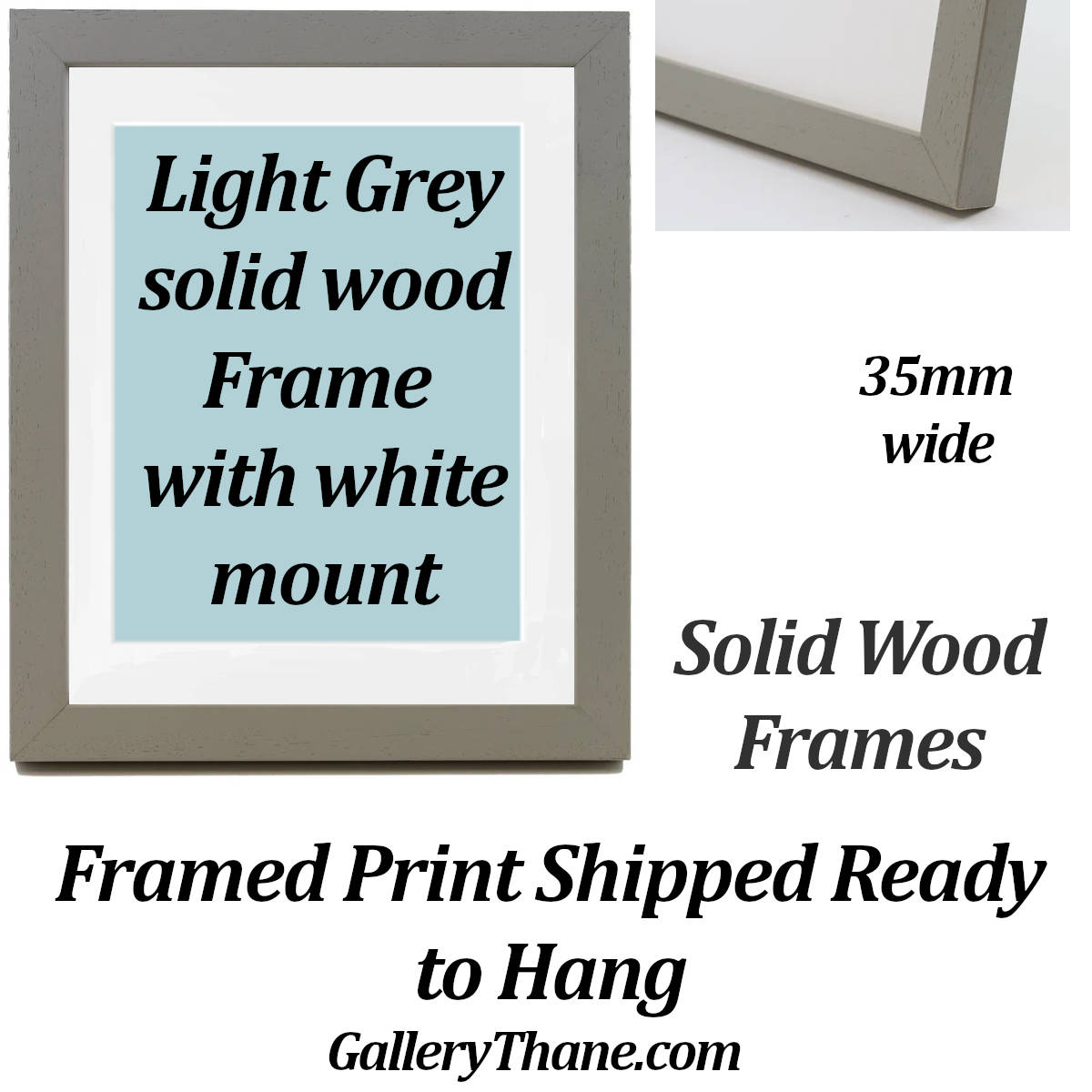
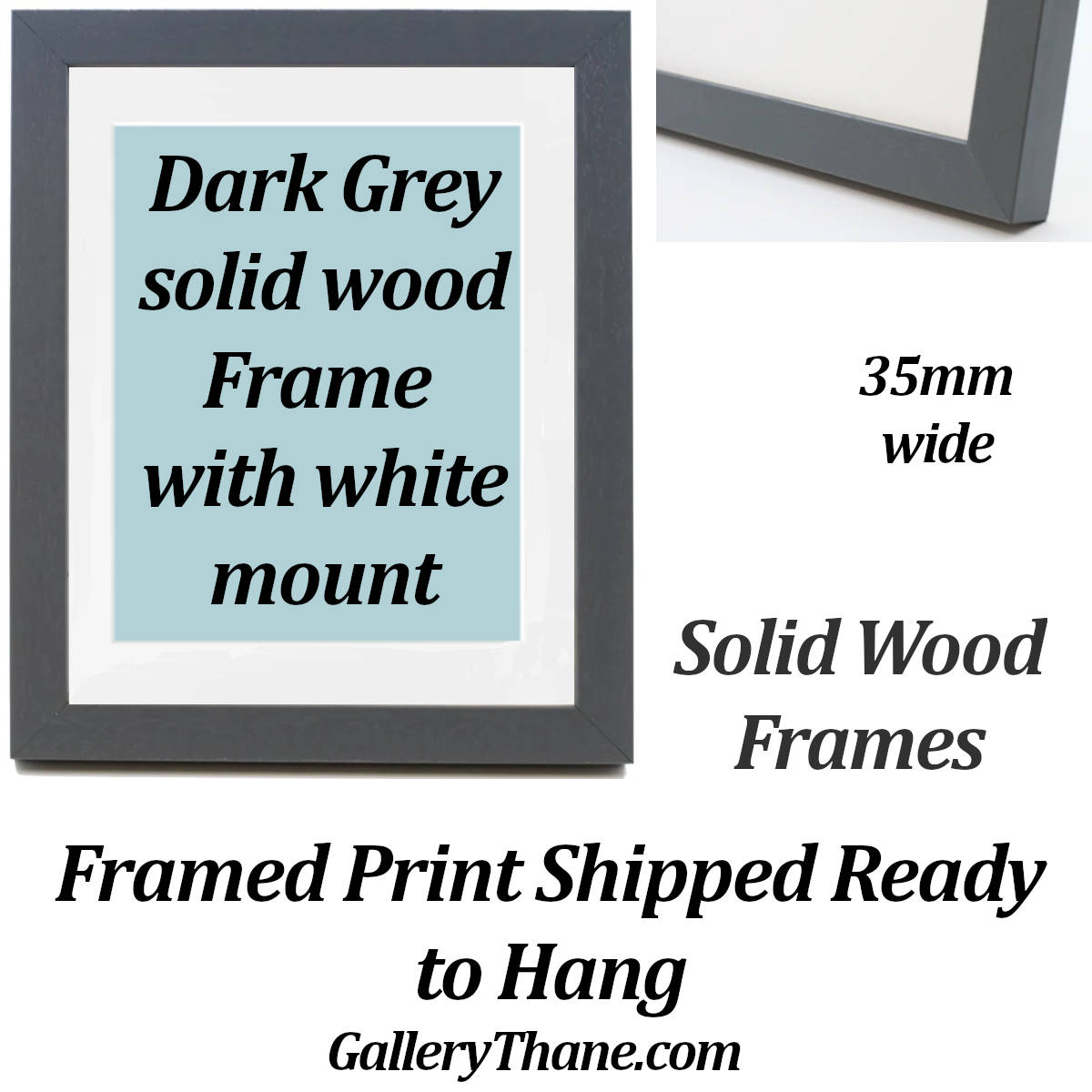
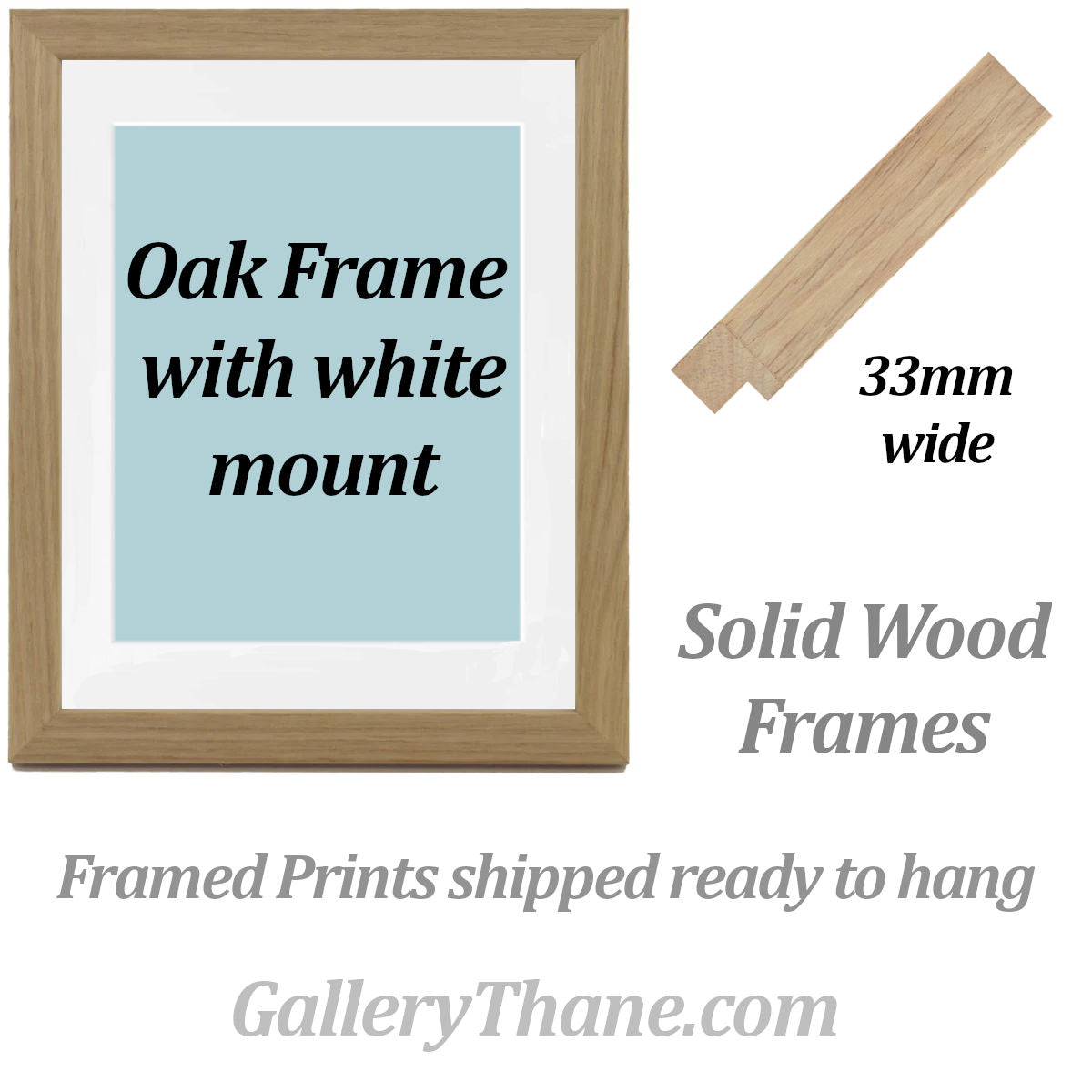
We have a wide range of frames in standard sizes and we also make custom size frames.
To order a framed print:
1. select the print size you would like along with the print materials (matte paper, fine art paper).
2. Add your print choice to the basket.
3. Choose from our range of frames
4. Select the same size as the print you have added to your basket. If the frame size you want is not listed please contact us
5. Choose from the mount or no-mount option
6. Add your frame choice to the basket
7. Proceed to checkout.
Why Choose GalleryThane?
- Printed and framed in-house
- Free UK delivery
- Free EU and USA delivery on orders over £200
- Tracking and insurance included in every order
- Fast 1-3 day dispatch
- Gift wrapping service available
- Gallery quality materials
- Sustainable, eco-friendly packaging
- Great customer support
Explore related collections


What makes our Prints and Canvas Panels so special

Latest Giclee Printing Technology
We have invested in the latest wide format print technology to produce museum quality giclee prints utilising the highest quality pigment inks to give outstanding colour reproduction.

Museum Quality Archival Fine Art Papers
We print on the finest quality fine art papers with textured, smooth and lustre finishes for prints which last a lifetime.
From aceo miniatures to 40x80 inch large format, every print has our lifetime quality guaranteee.

Solid Wood Frames, Cotton Canvas
All of the wood for our canvas panels and frames is responsibly sourced from manages forests. Our cotton canvas is completely seedless for the highest quality reproduction possible.

Have Your Gift Wrapped


Choose a Custom Frame
Popular Collections


EU Representative
Manufacturer
LucasAbstract t/a GalleryThane
15 Campion Way, Bingham NG13 8TR UK
sales@gallerythane.com
EU Authorised Representative
Westwood Sourcing
Fellenoordstraat 52, Unit 2.38
4811 TJ Breda, Netherlands
info@westwoodsourcing.com