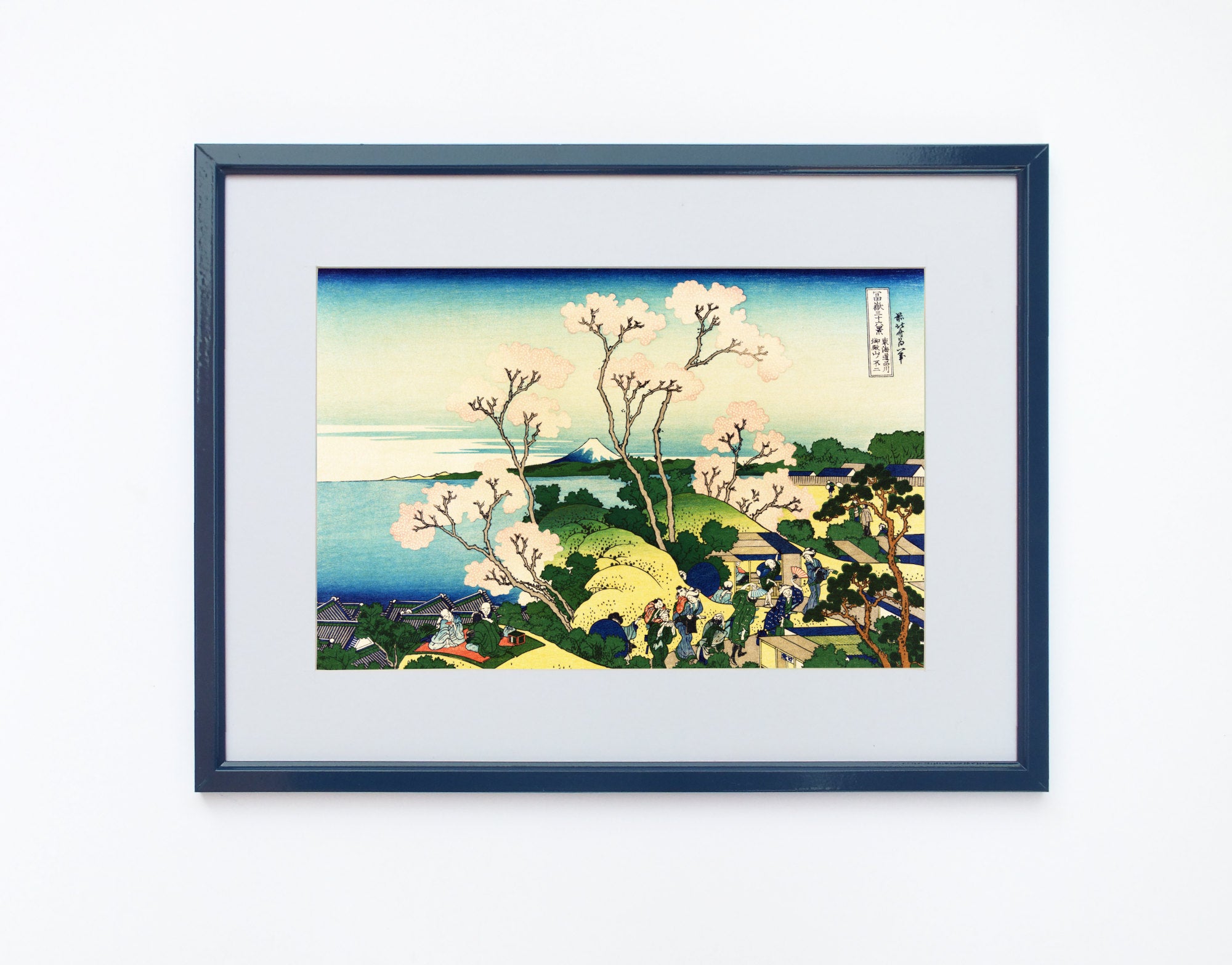
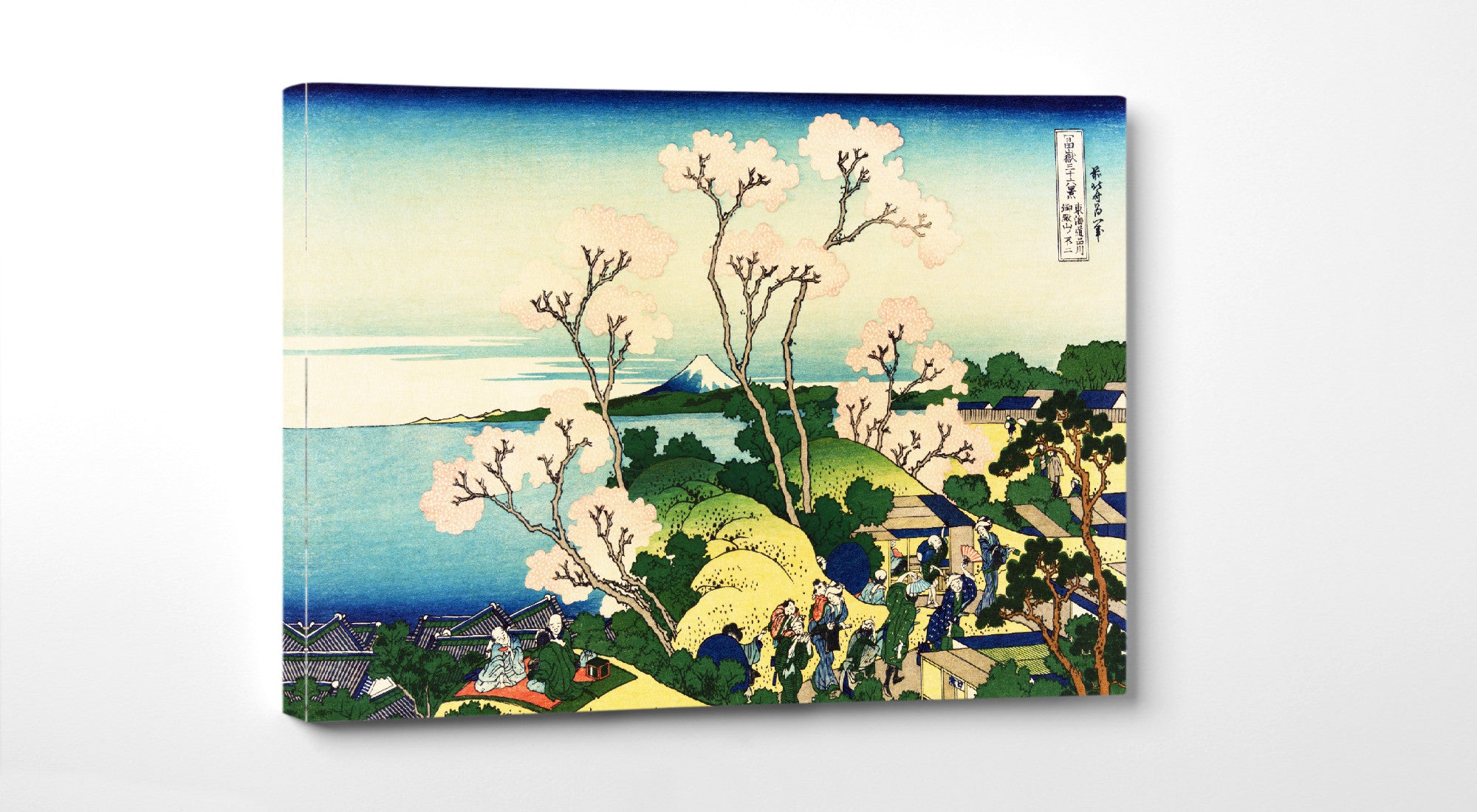
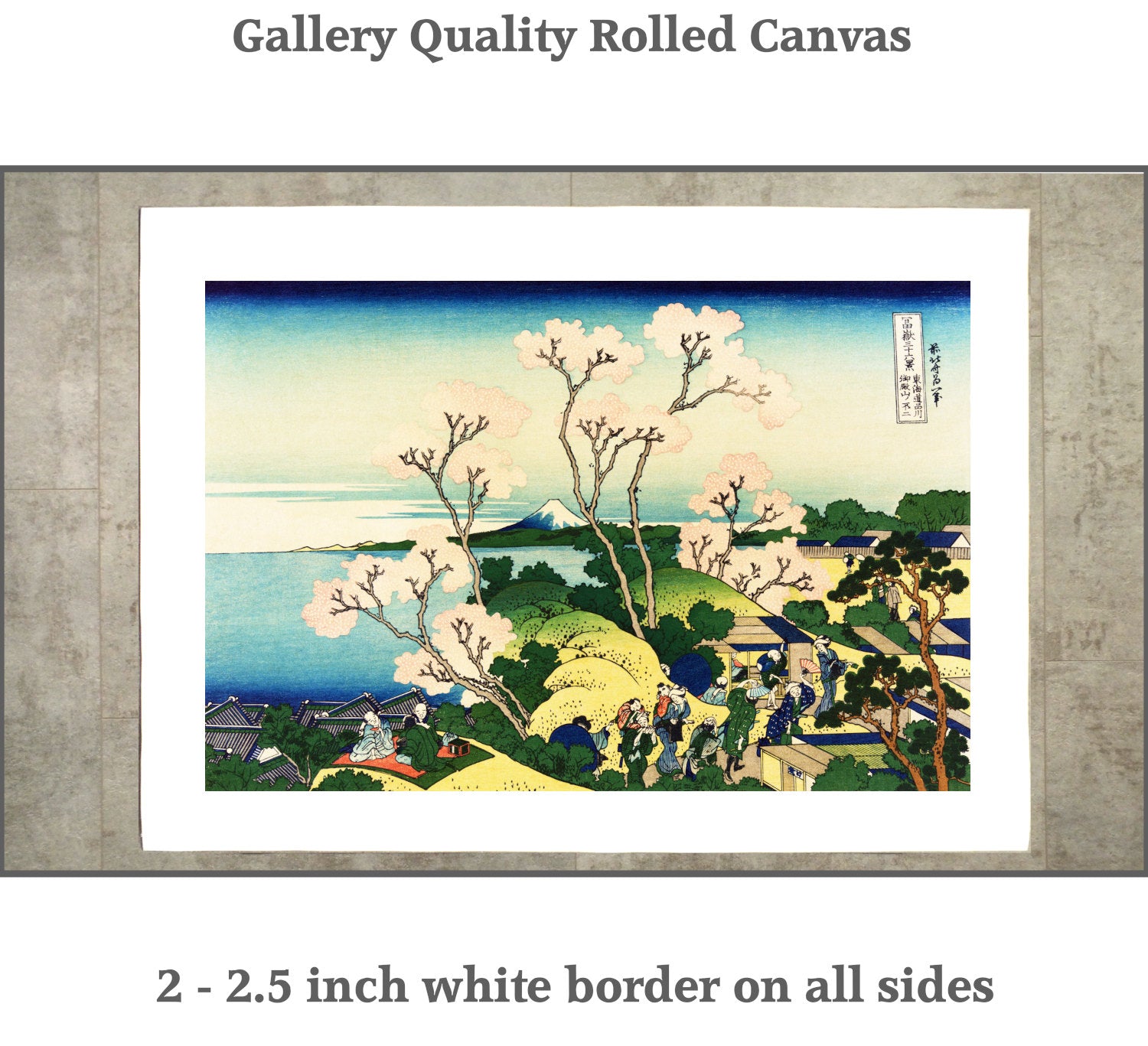
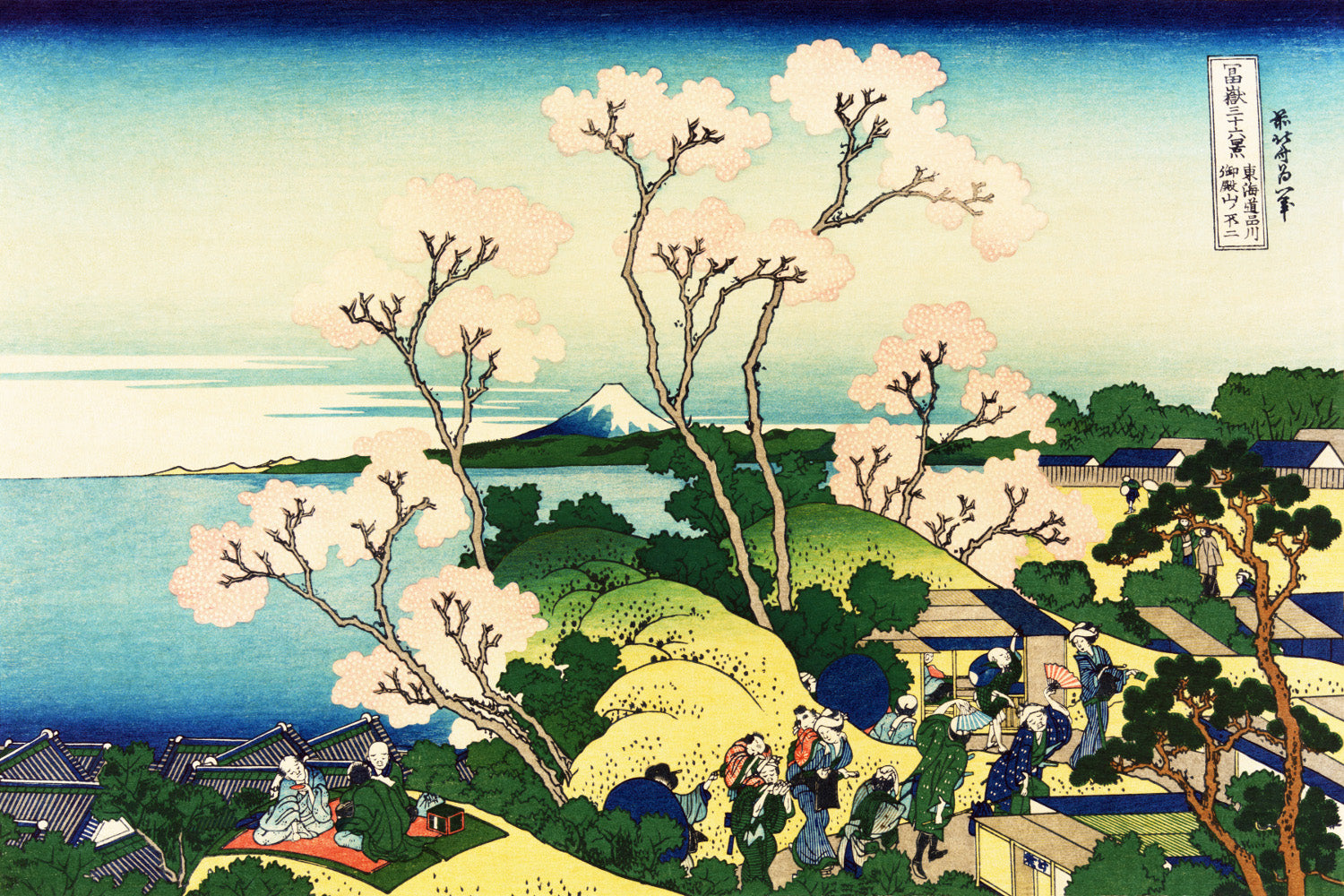
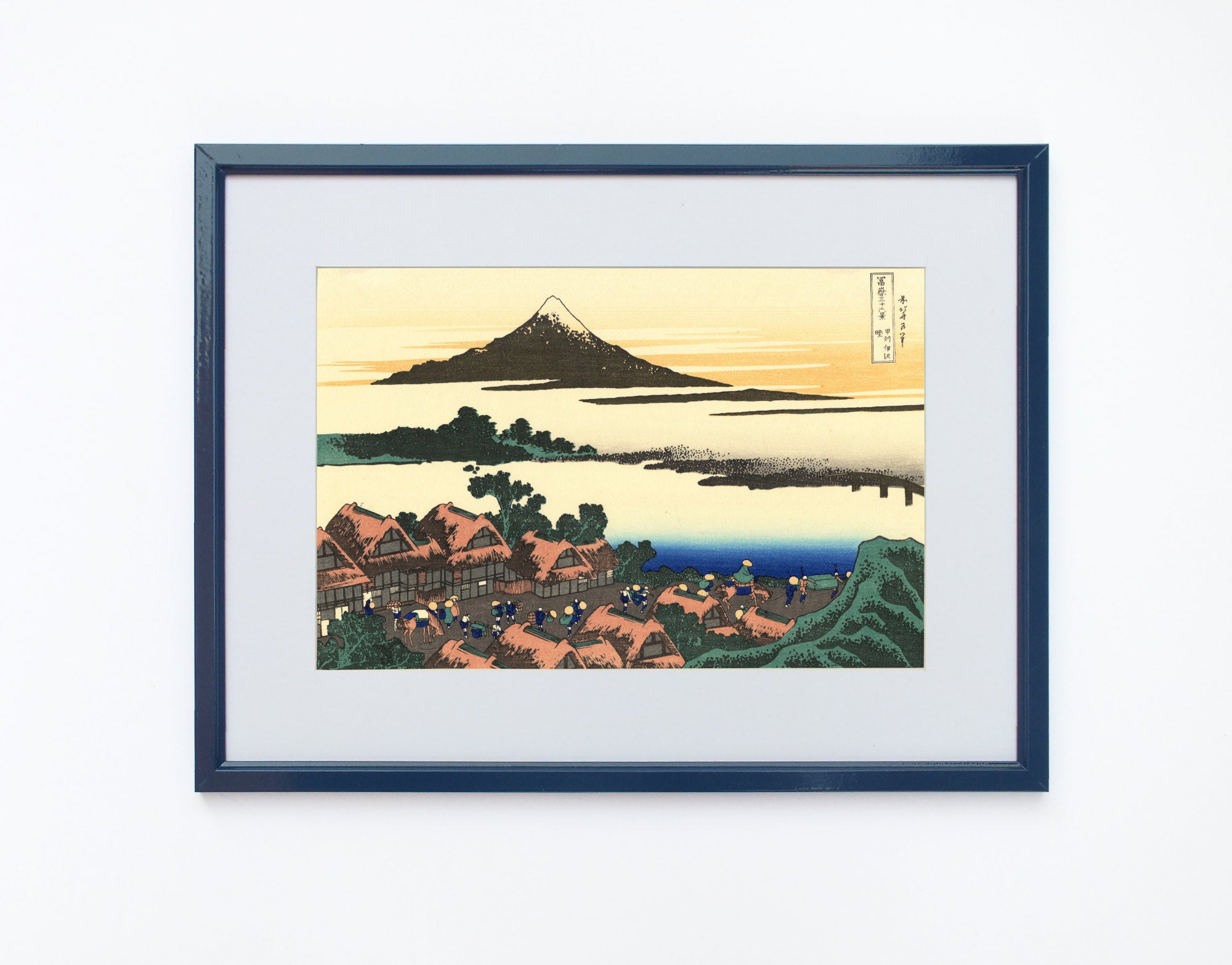
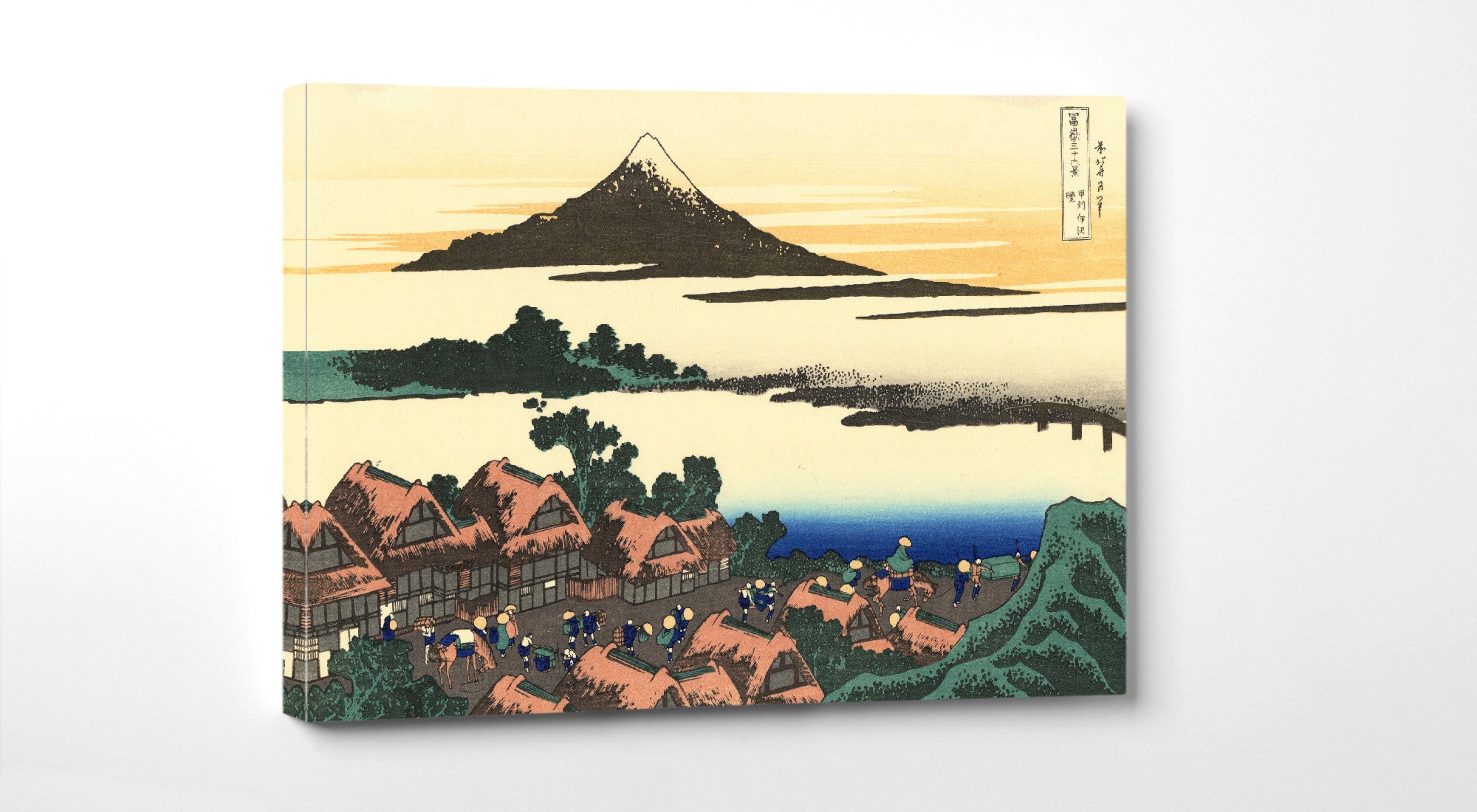
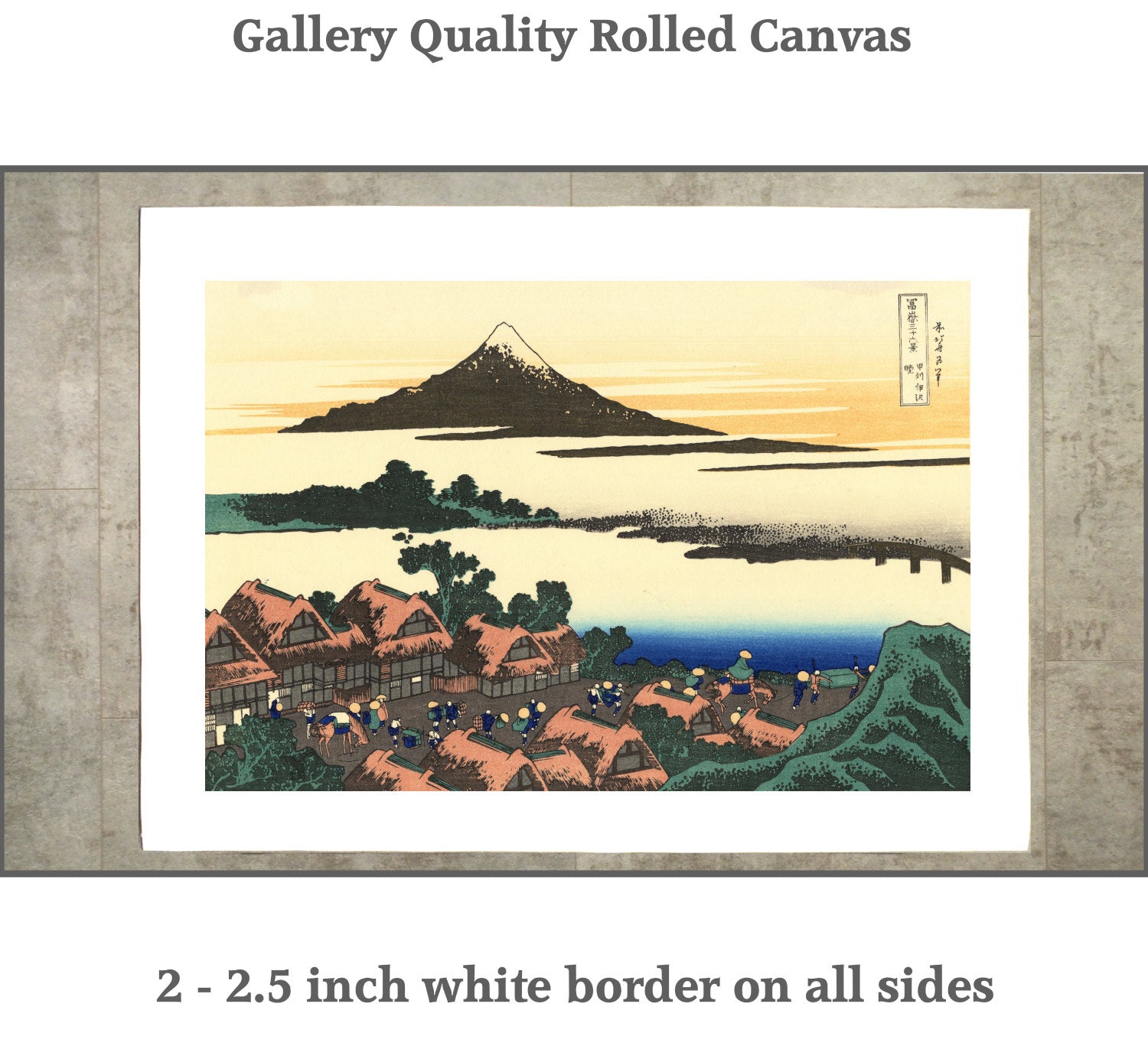
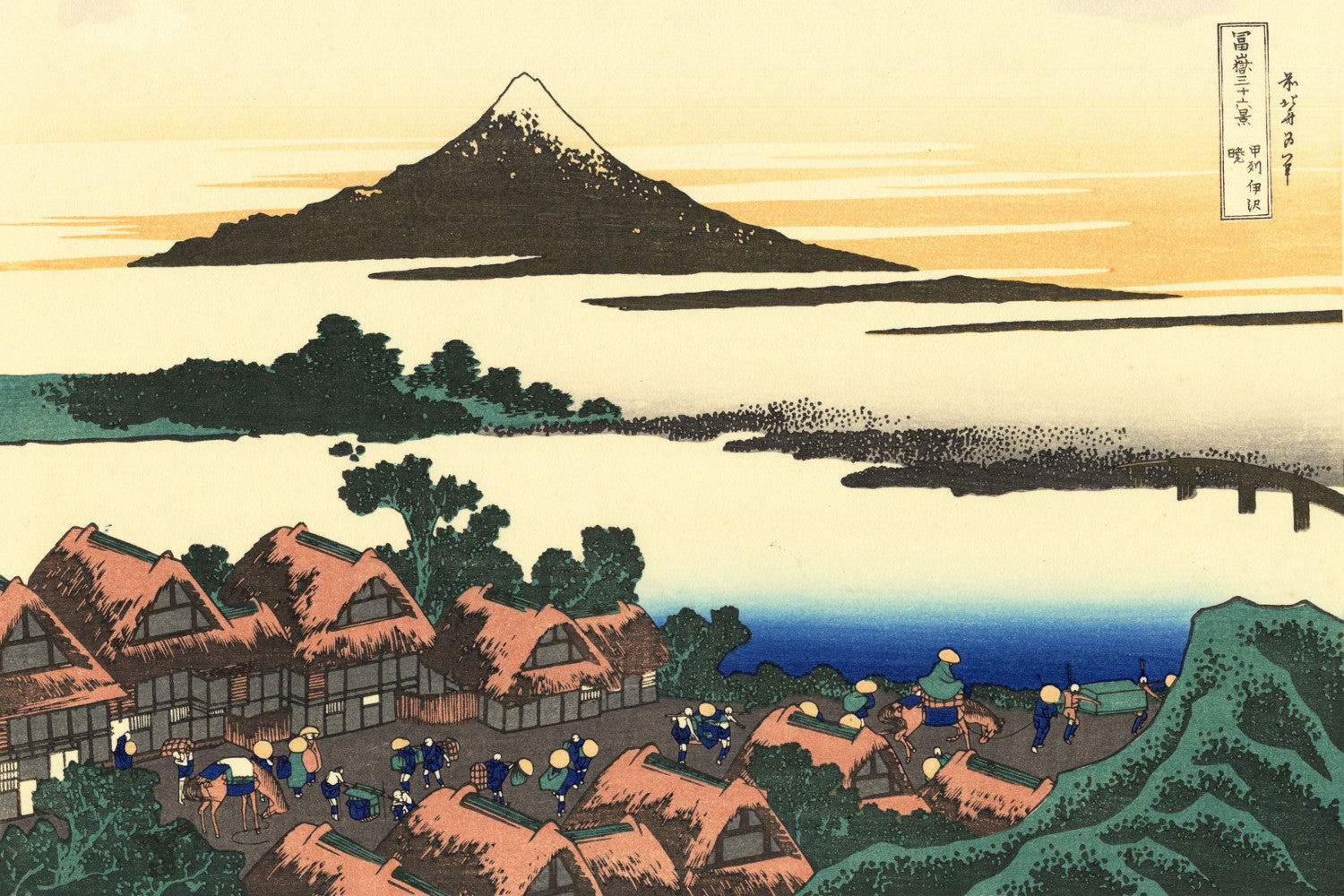
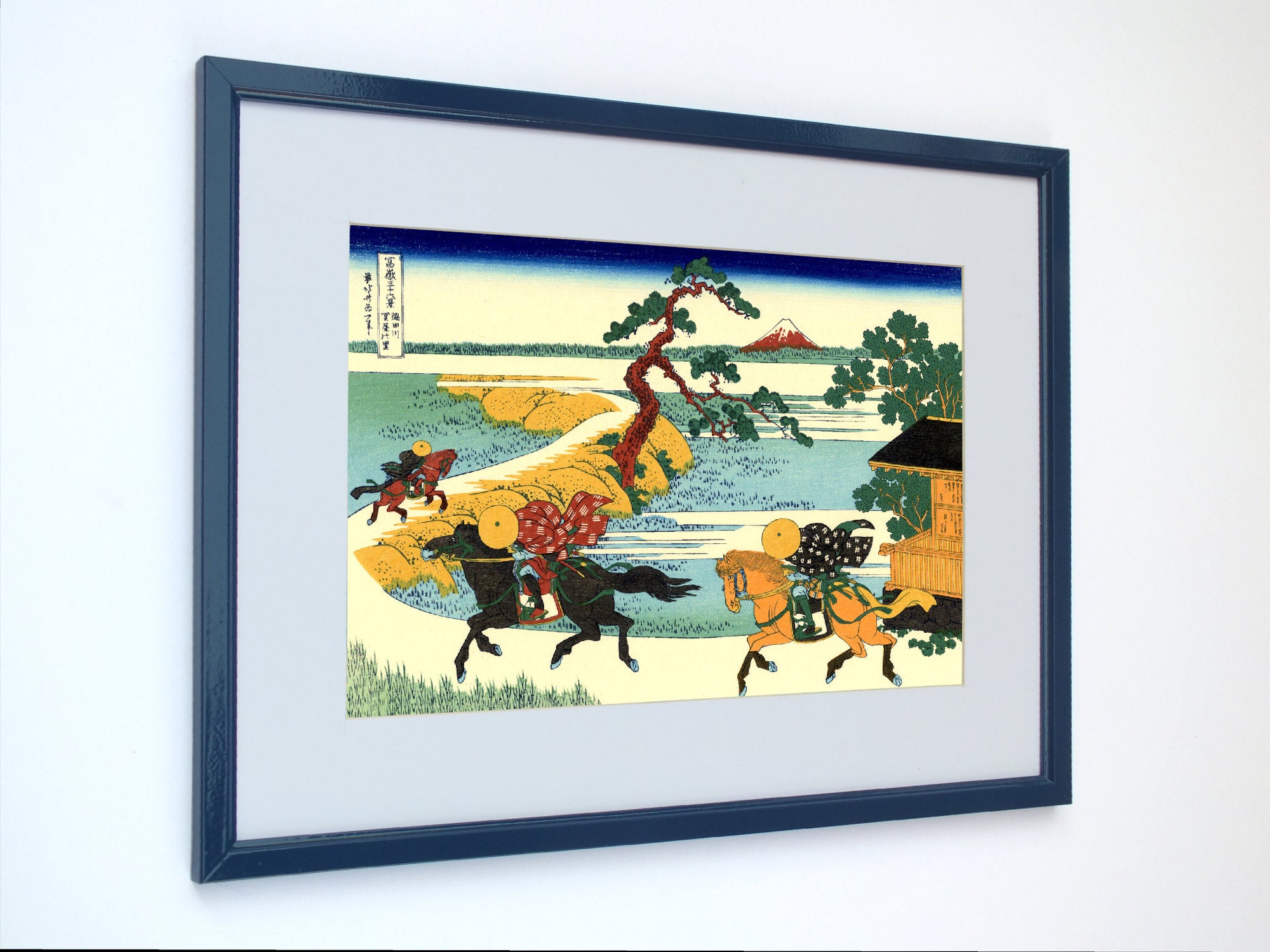
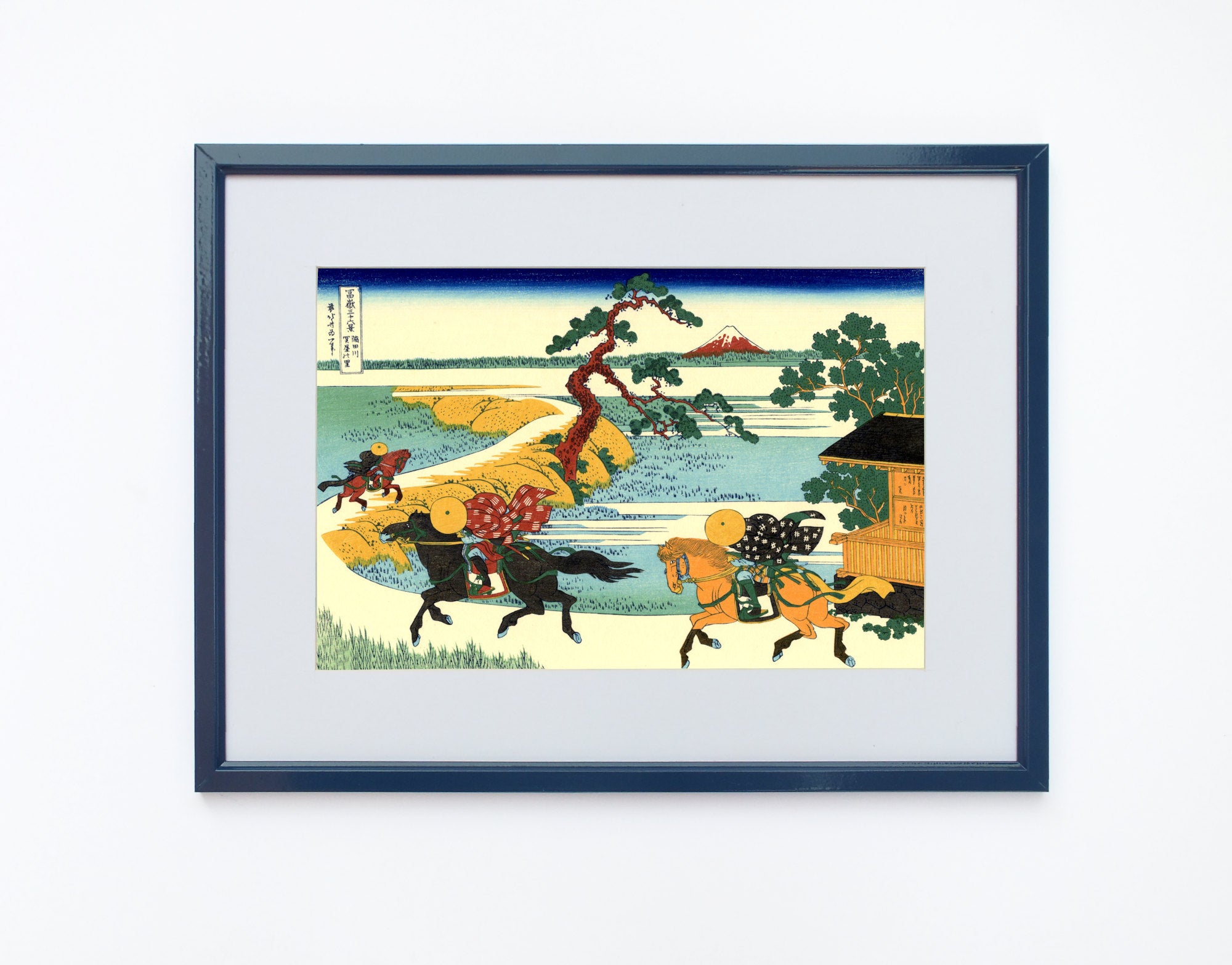
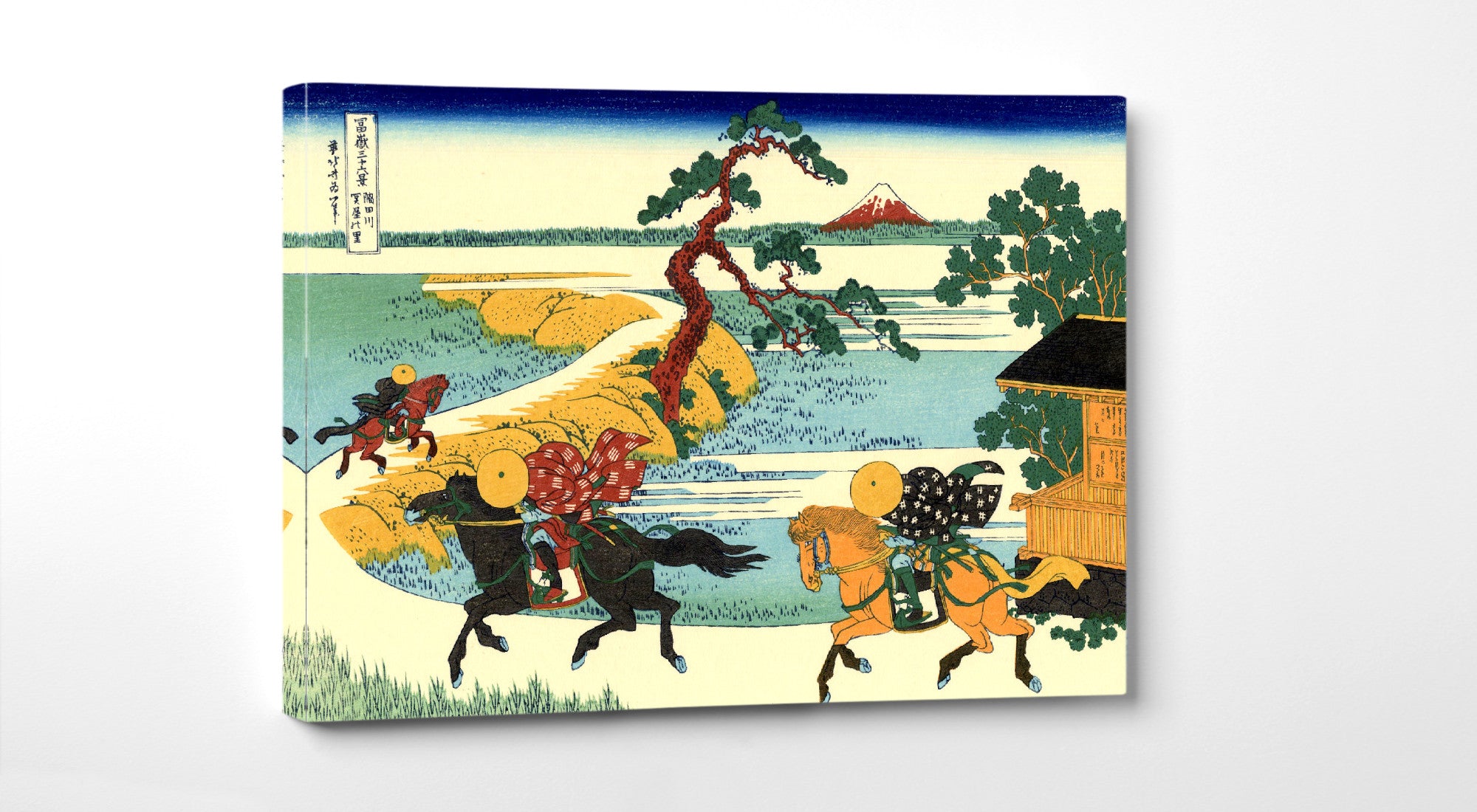
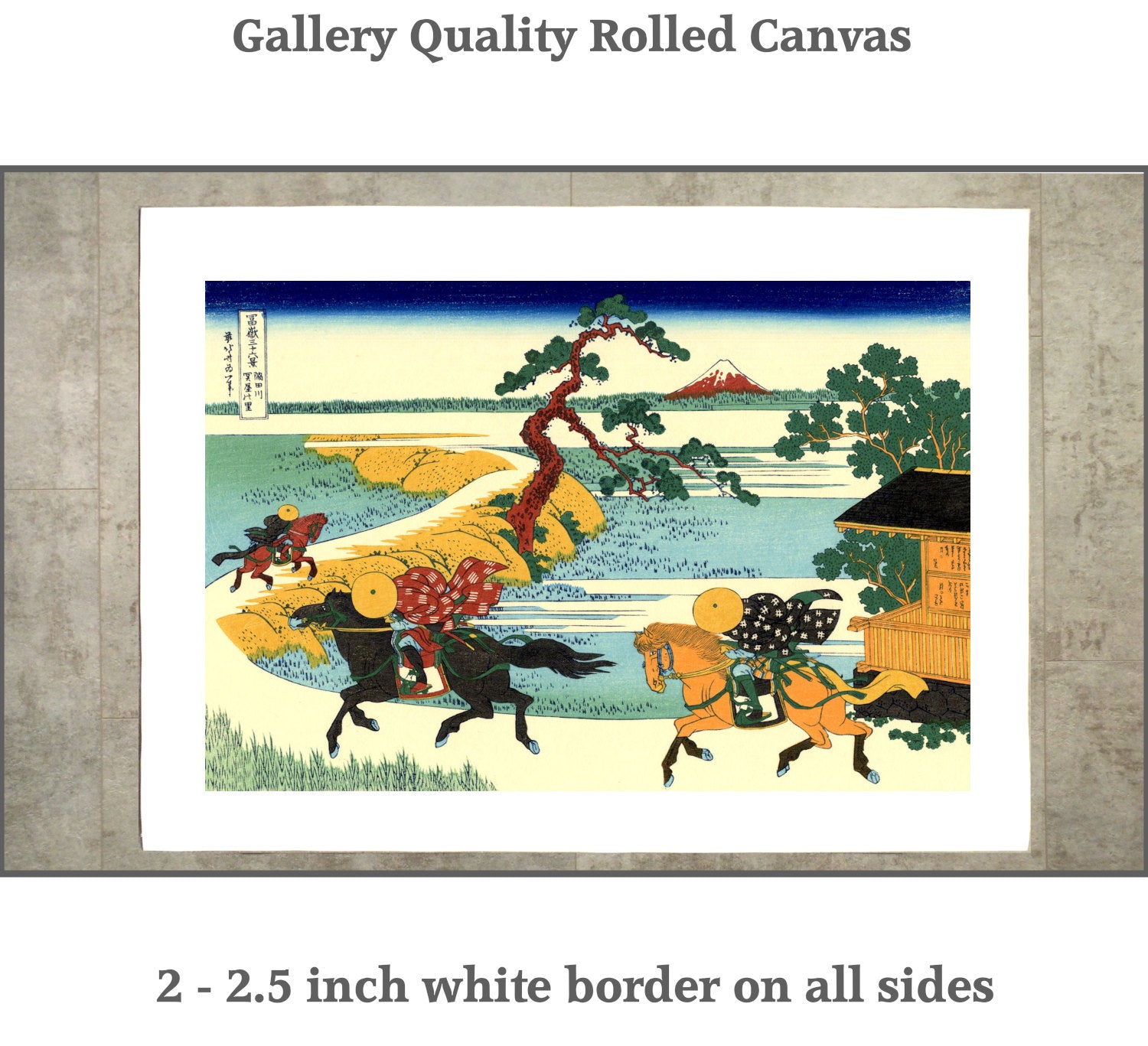
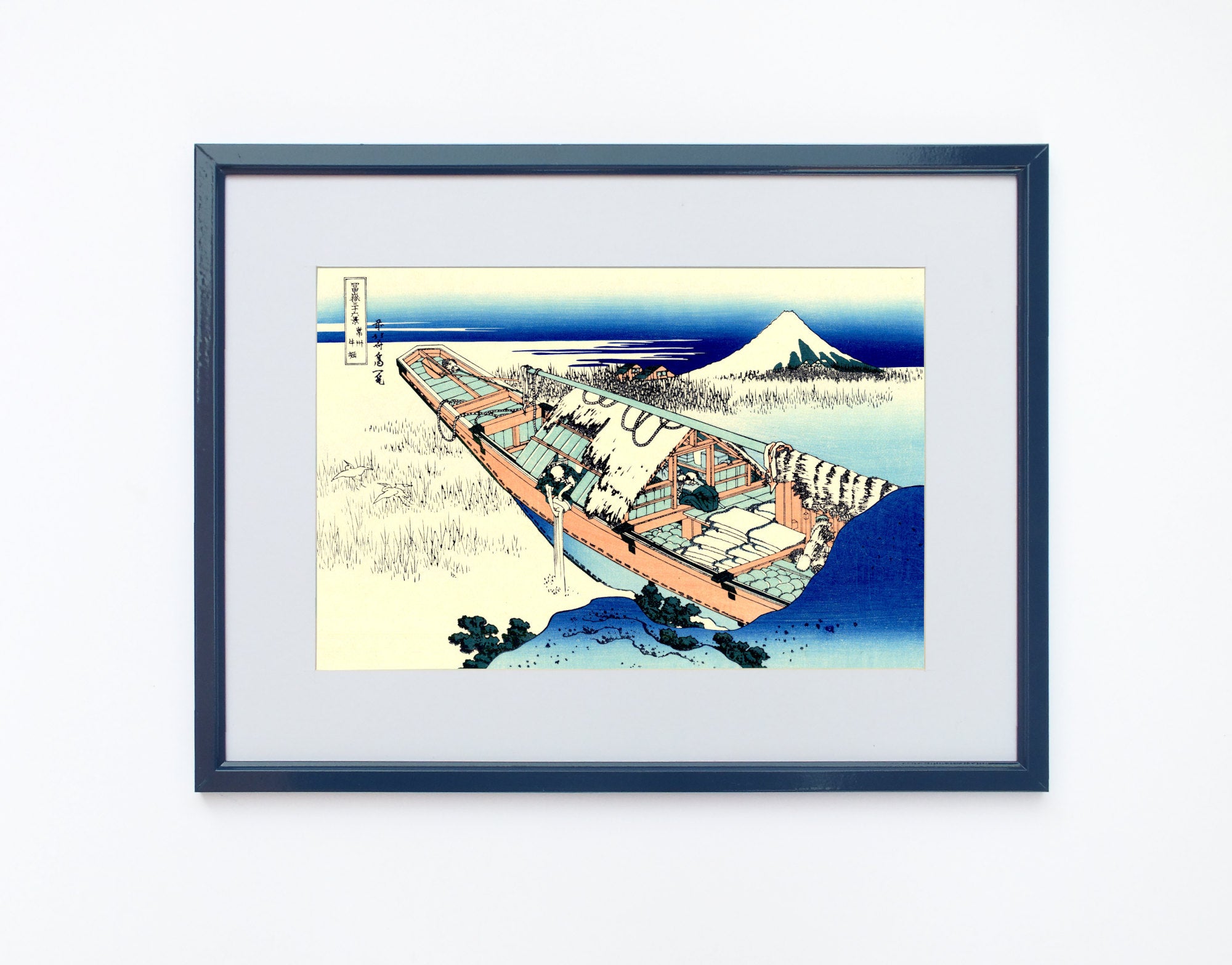
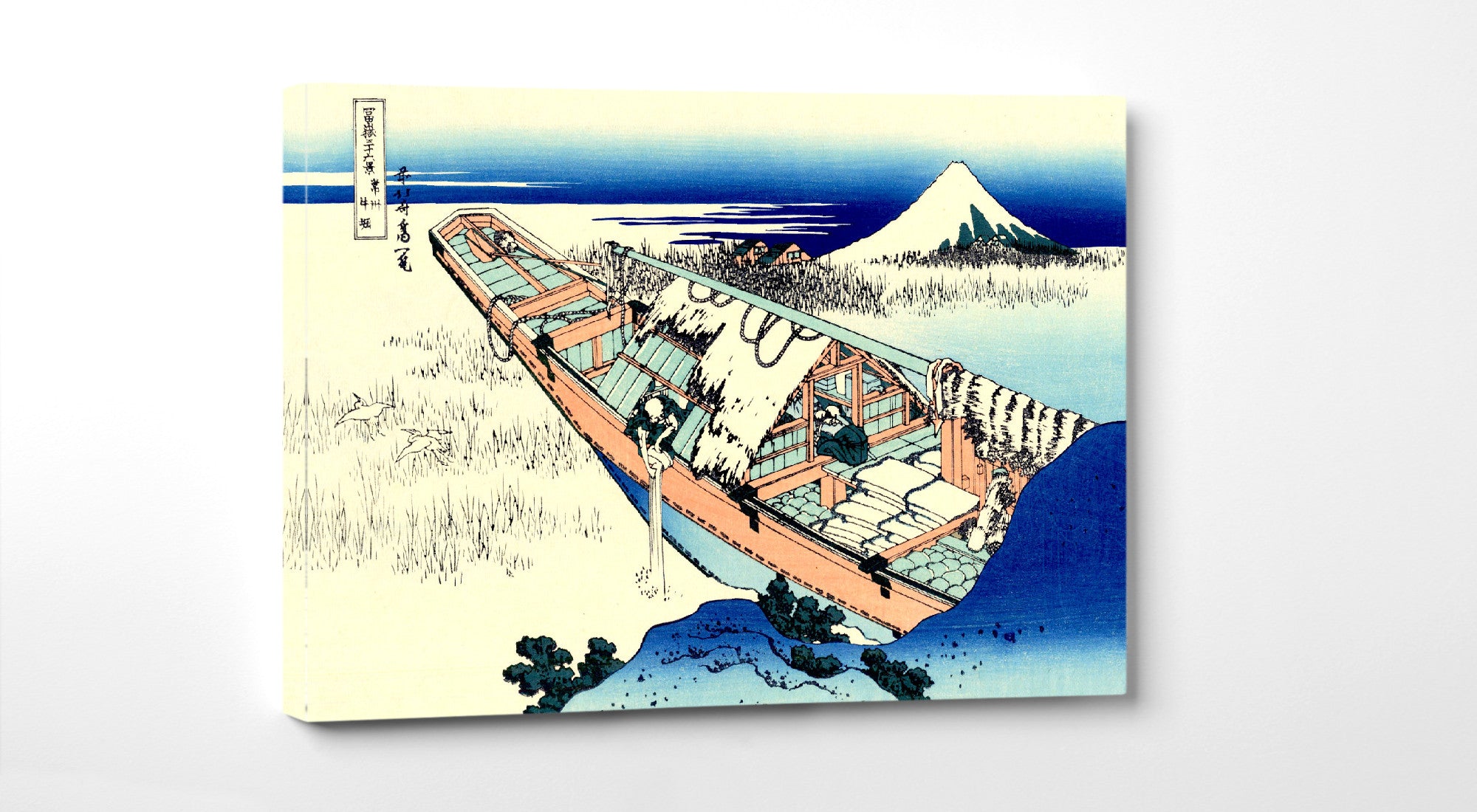
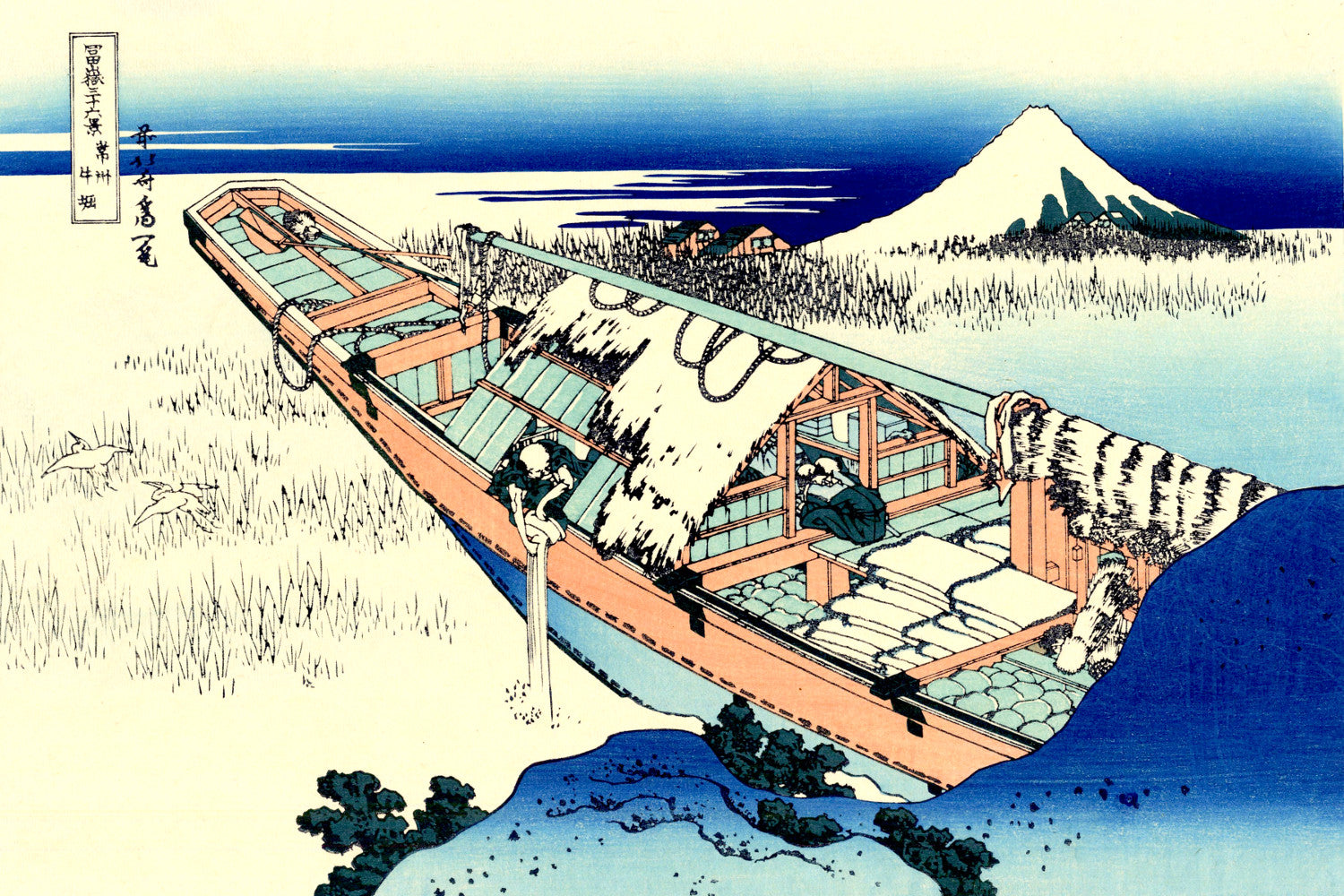
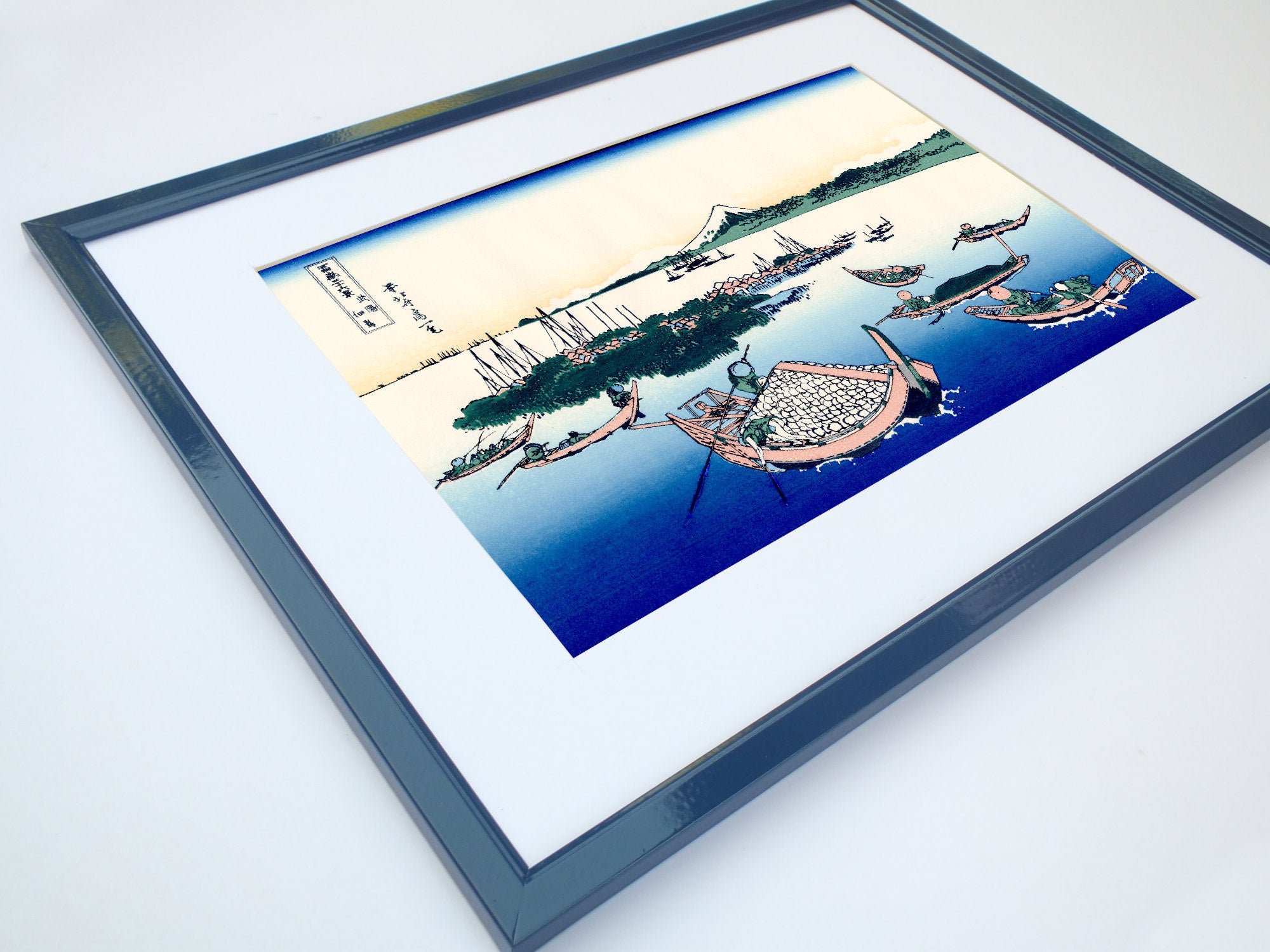
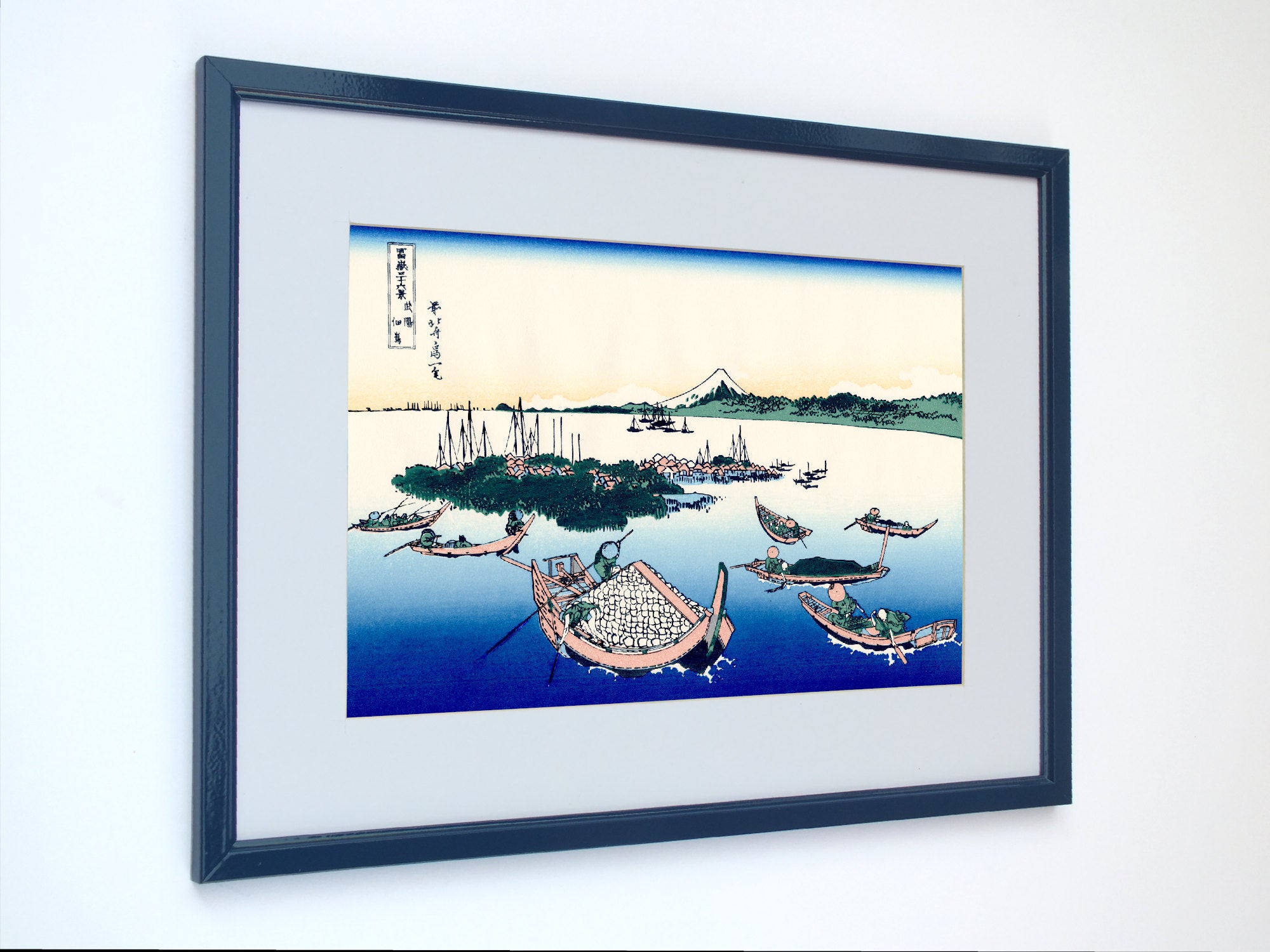
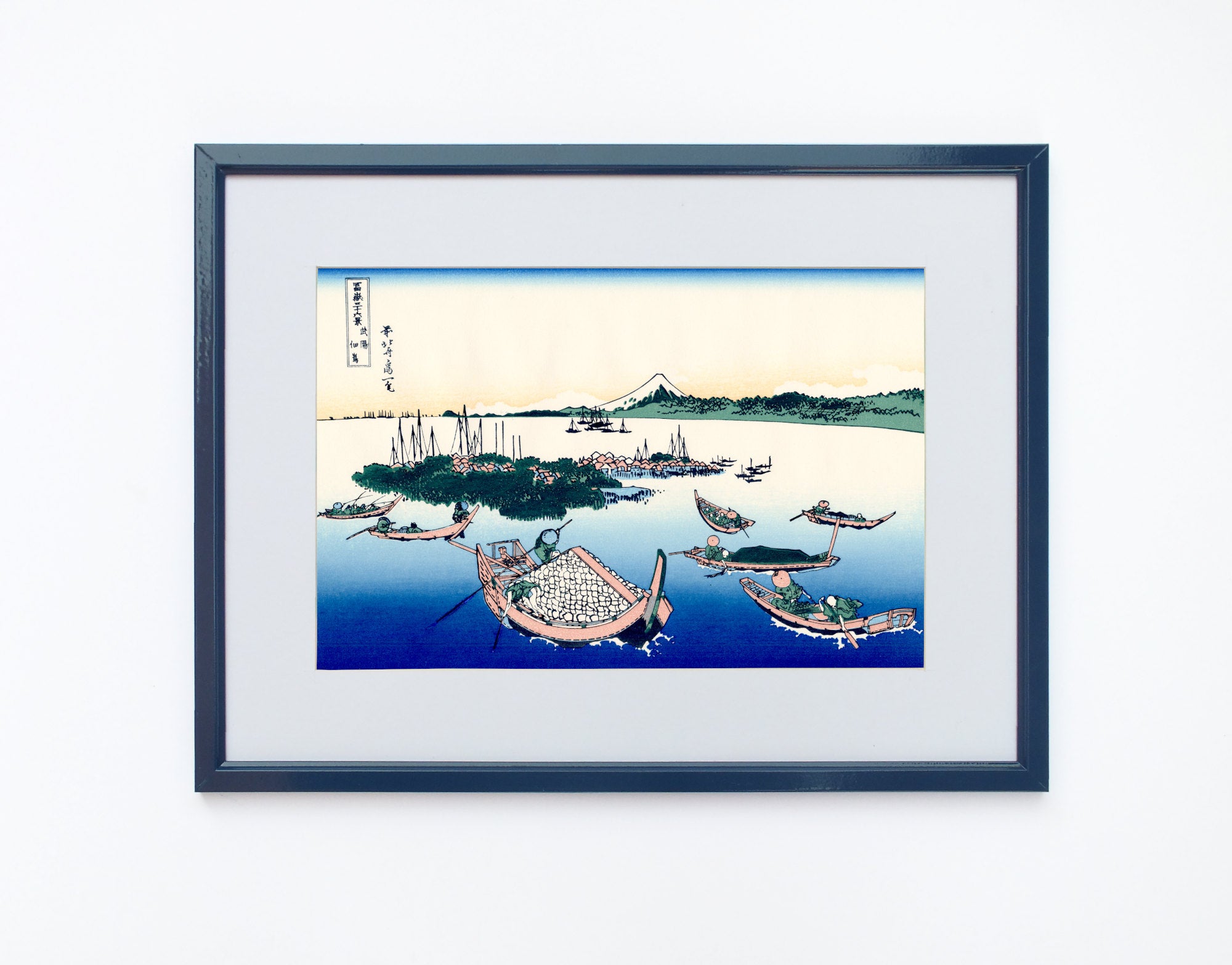
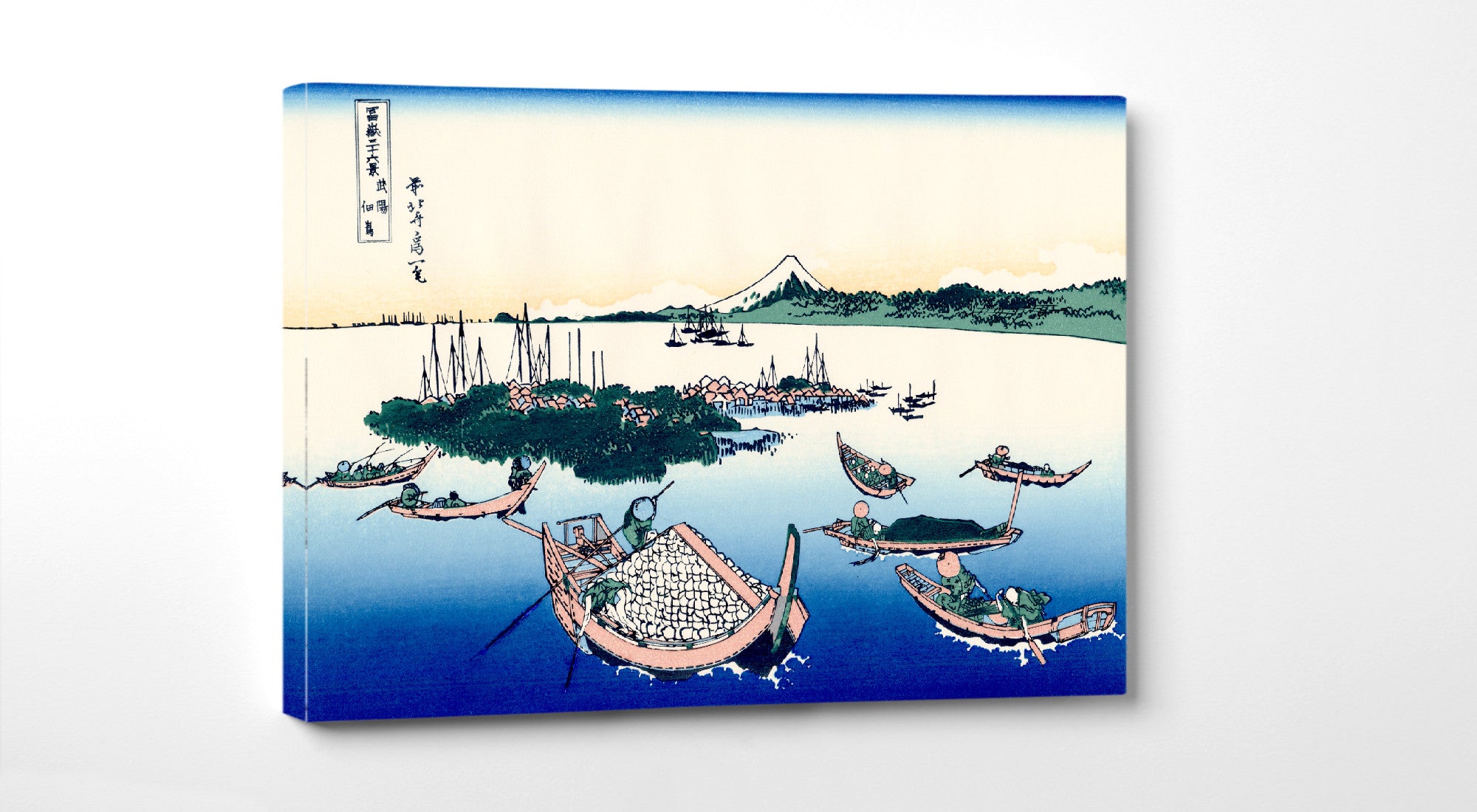
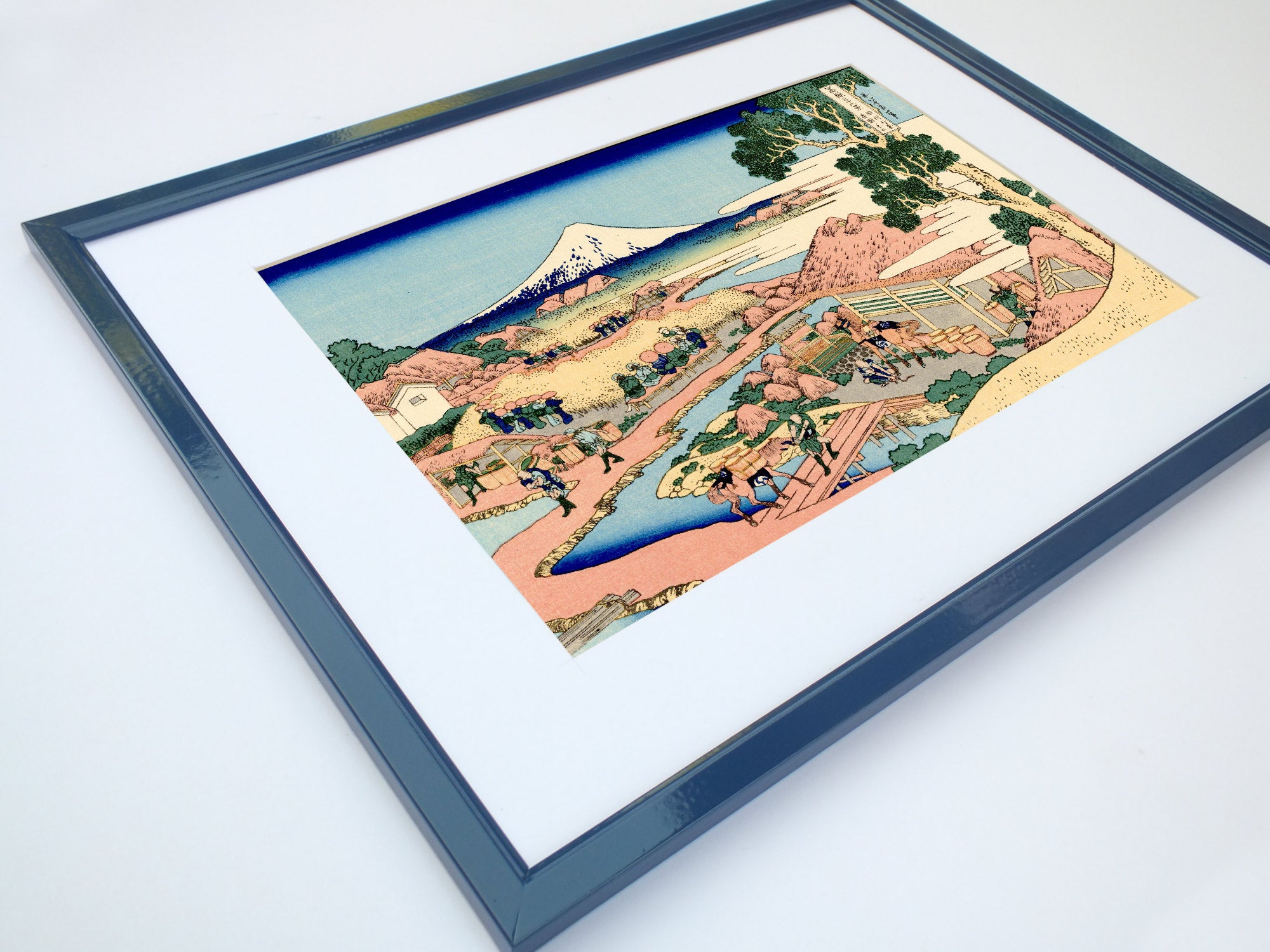
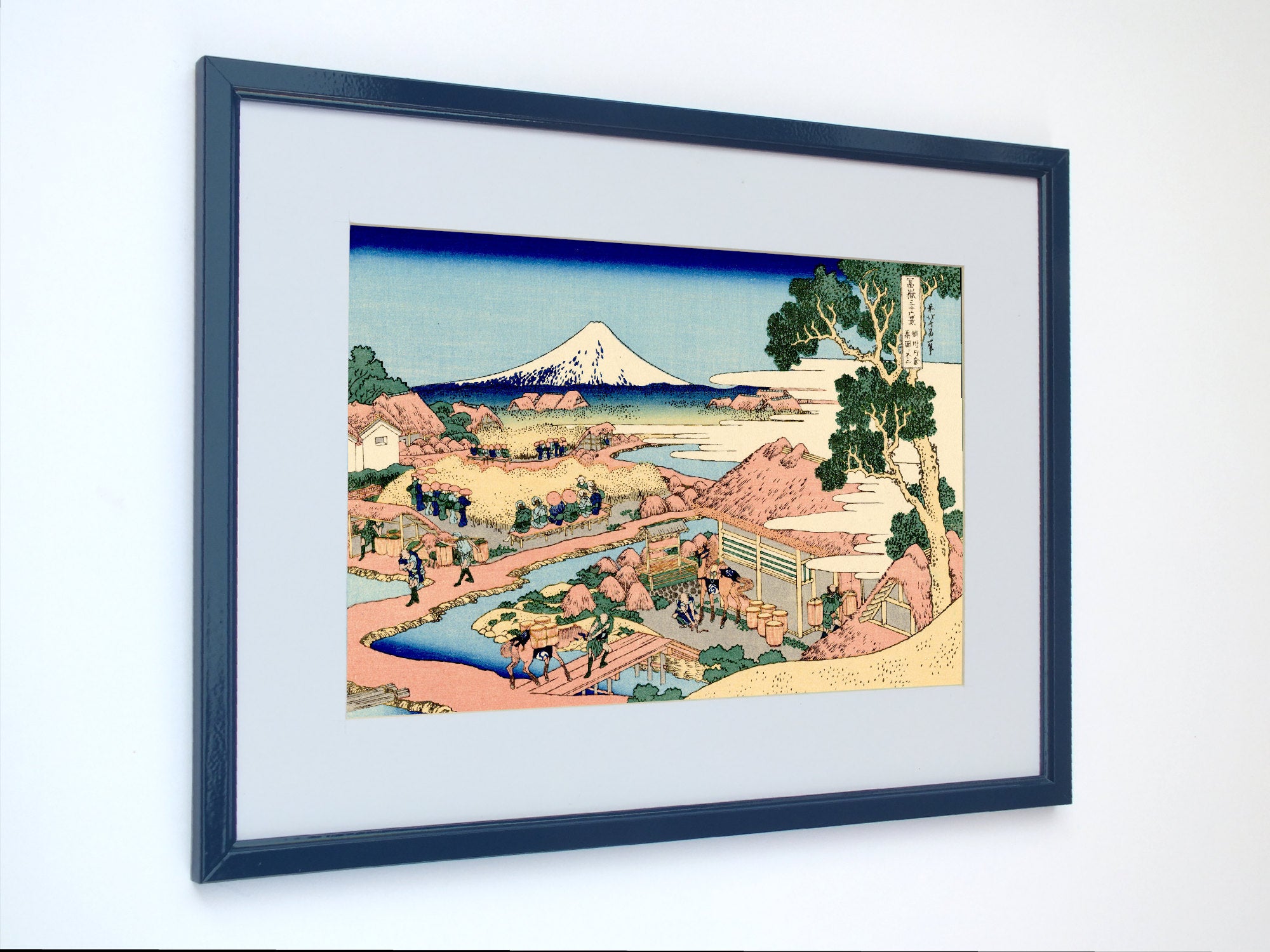
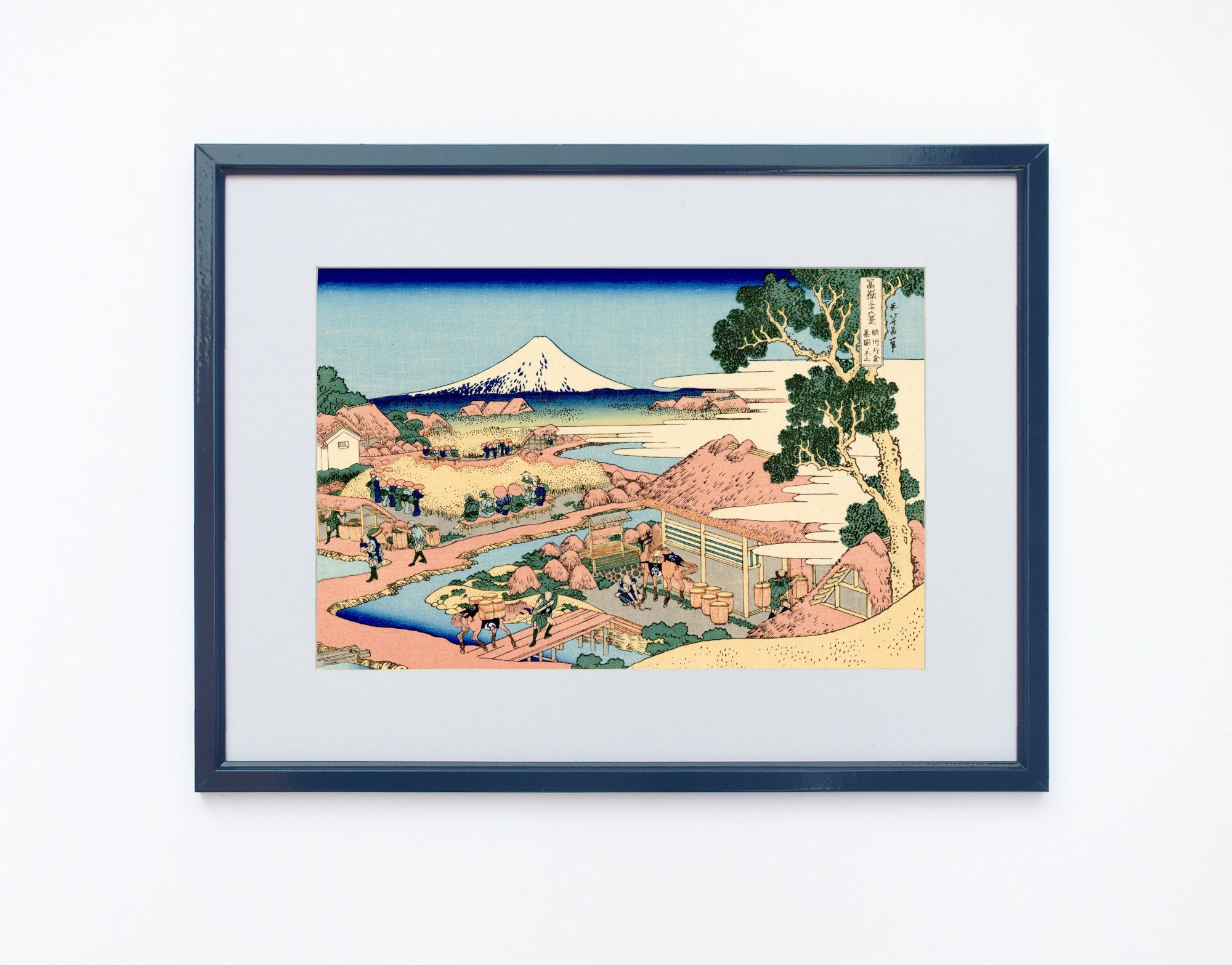
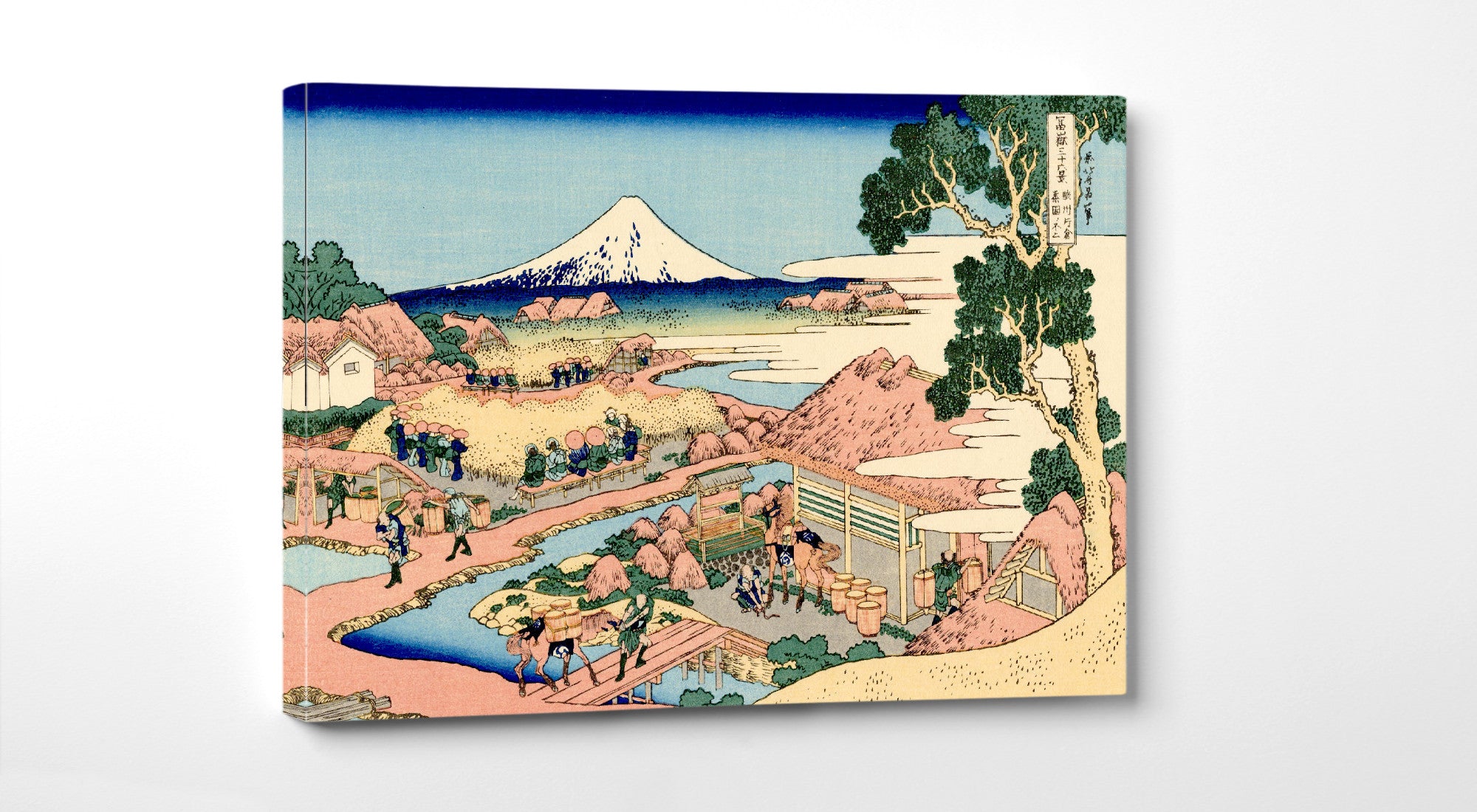
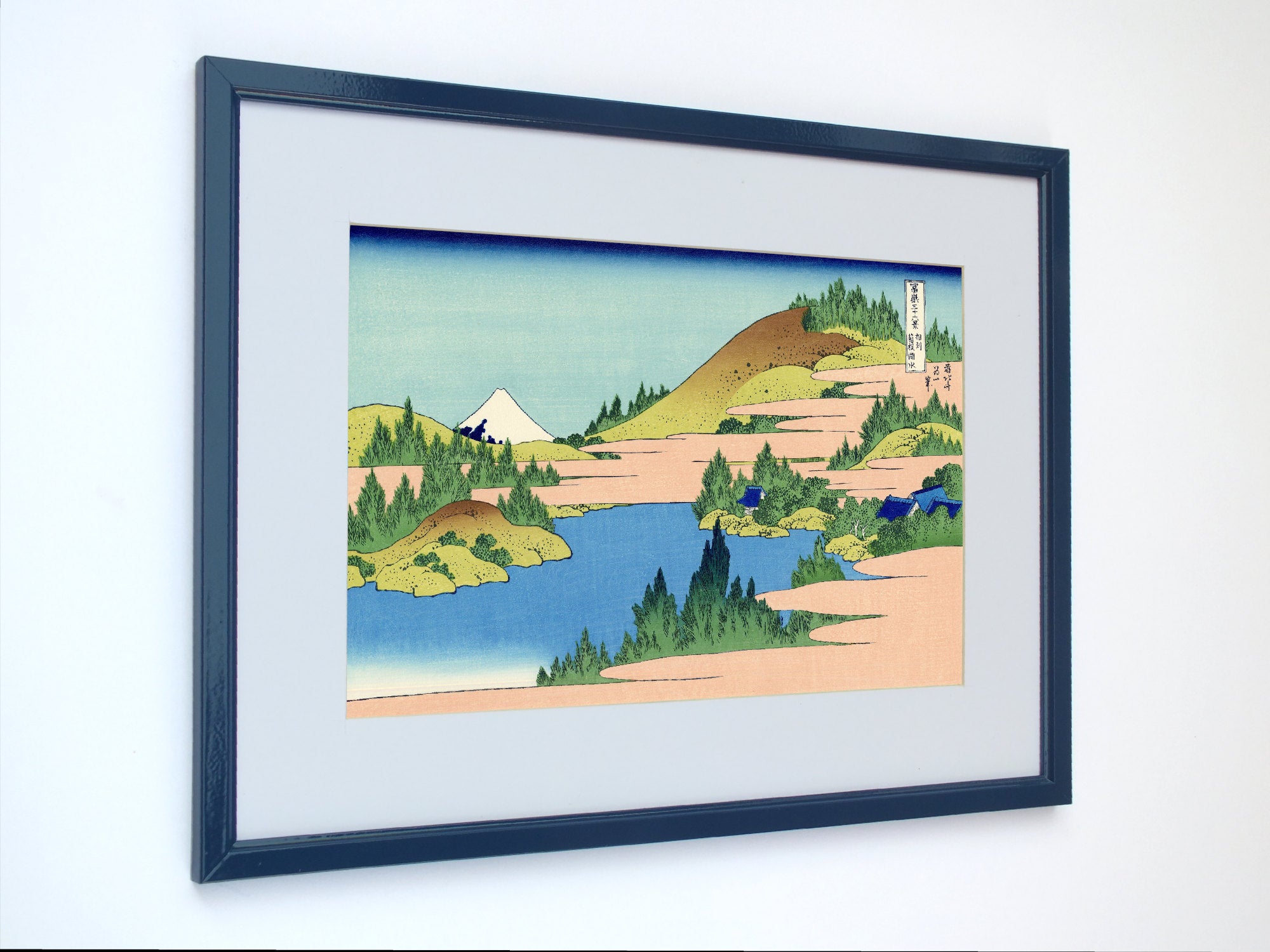
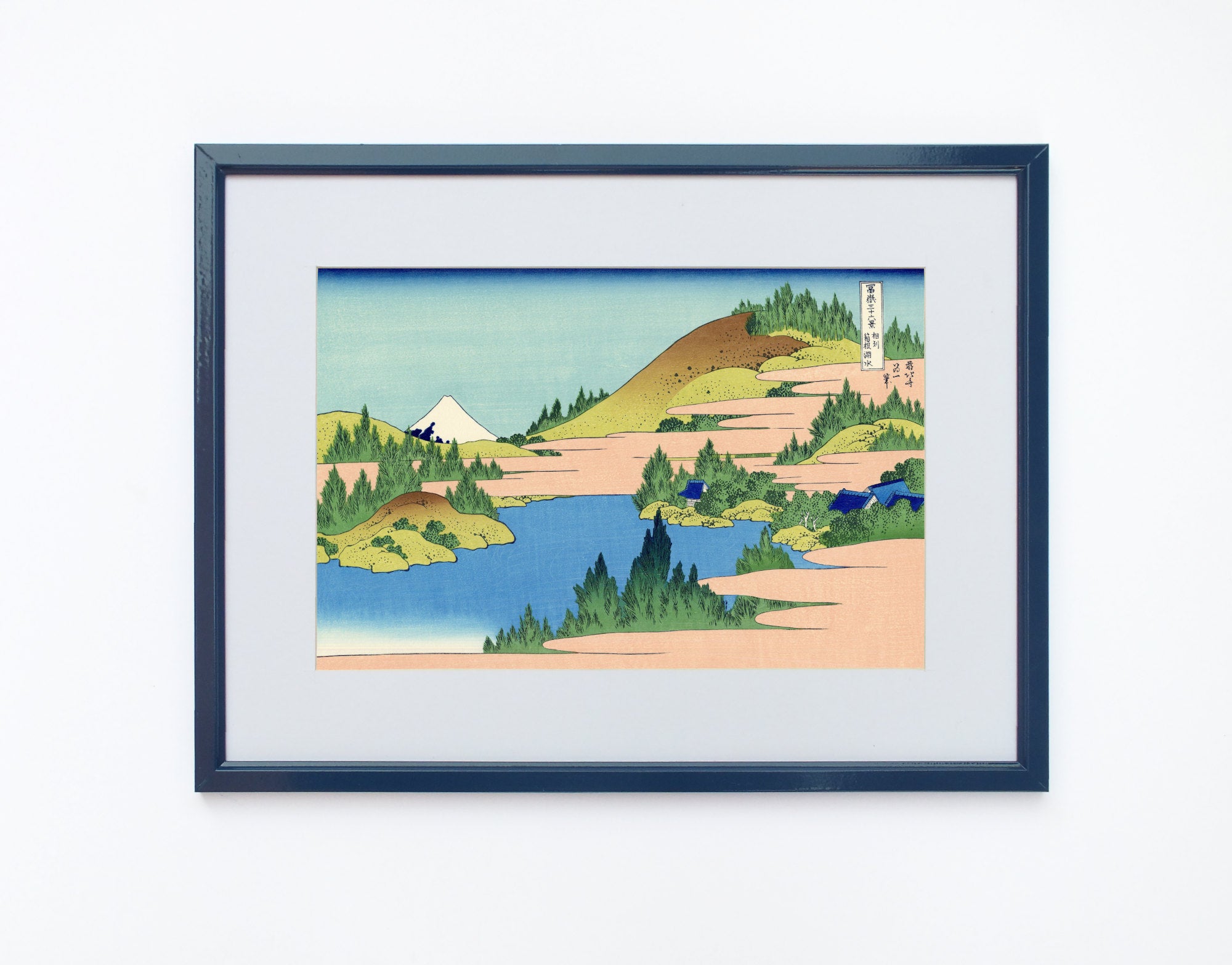
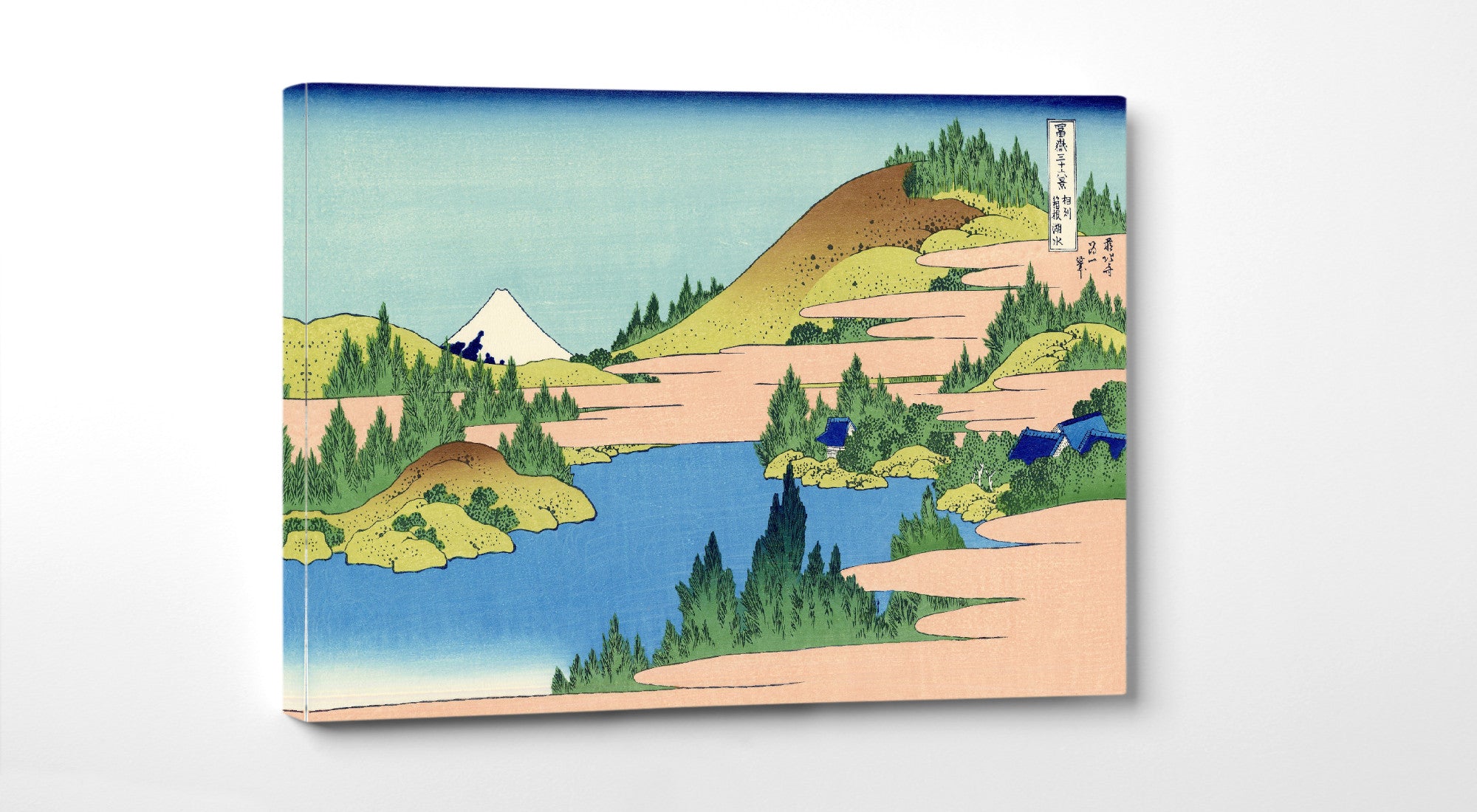
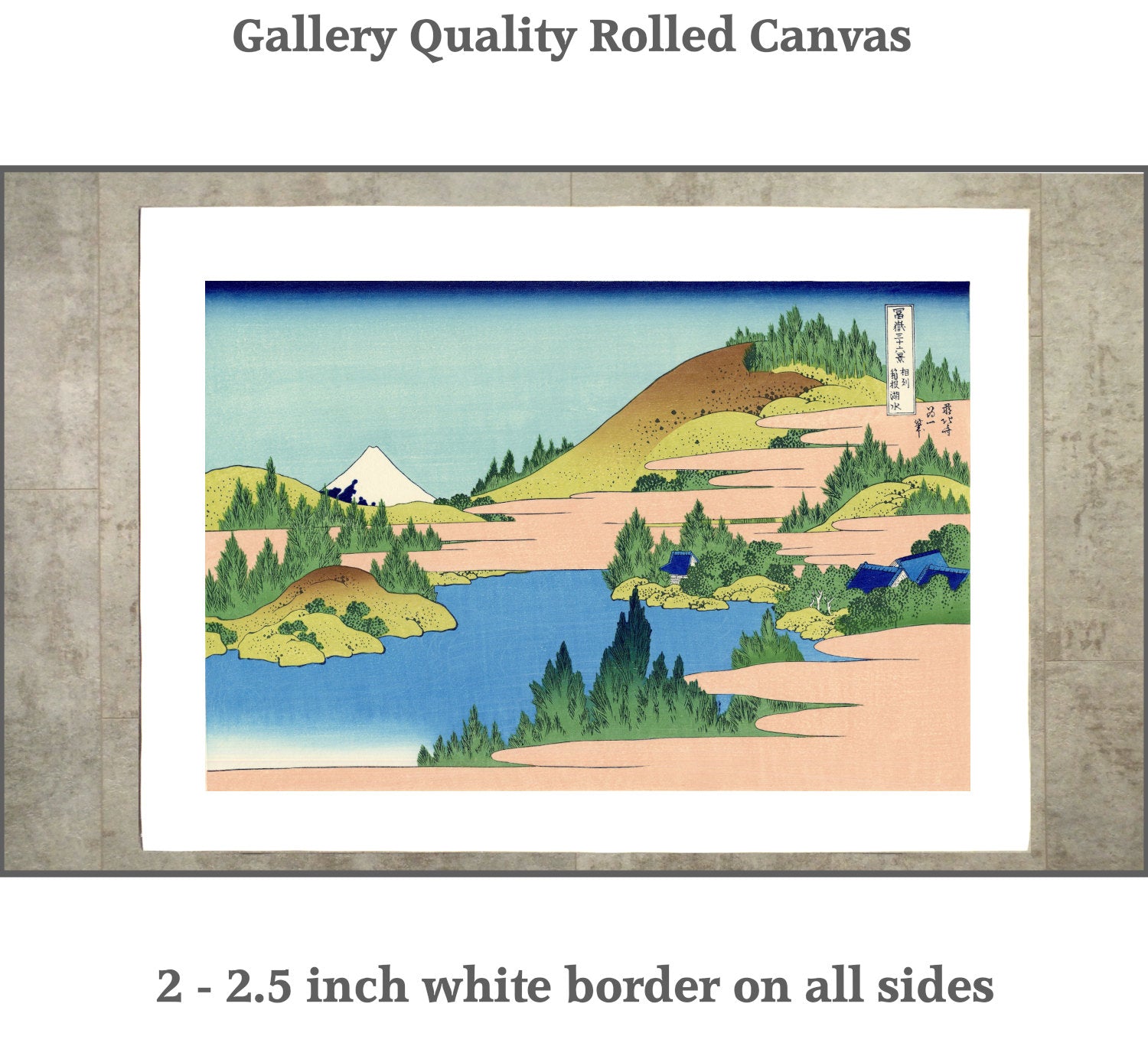
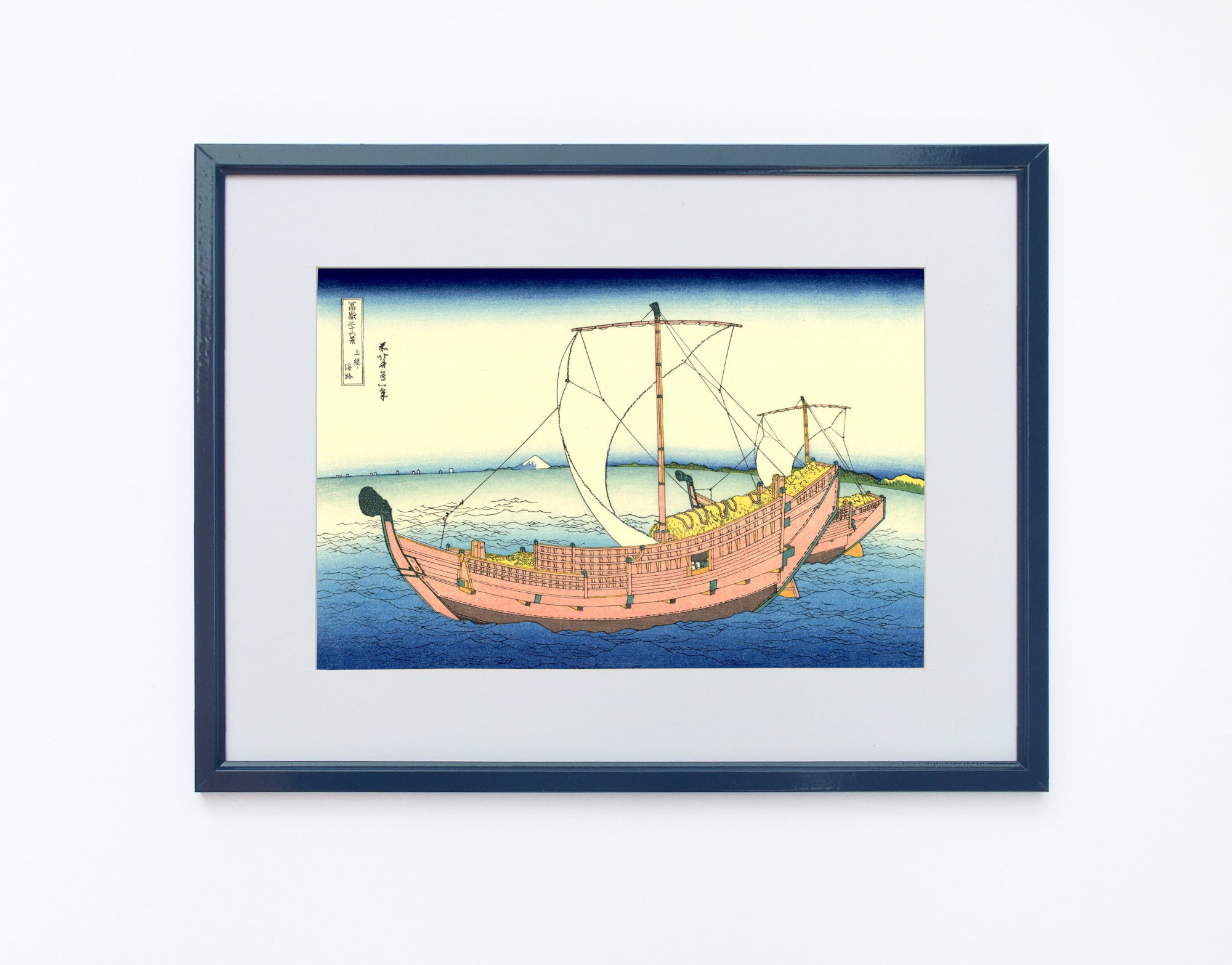
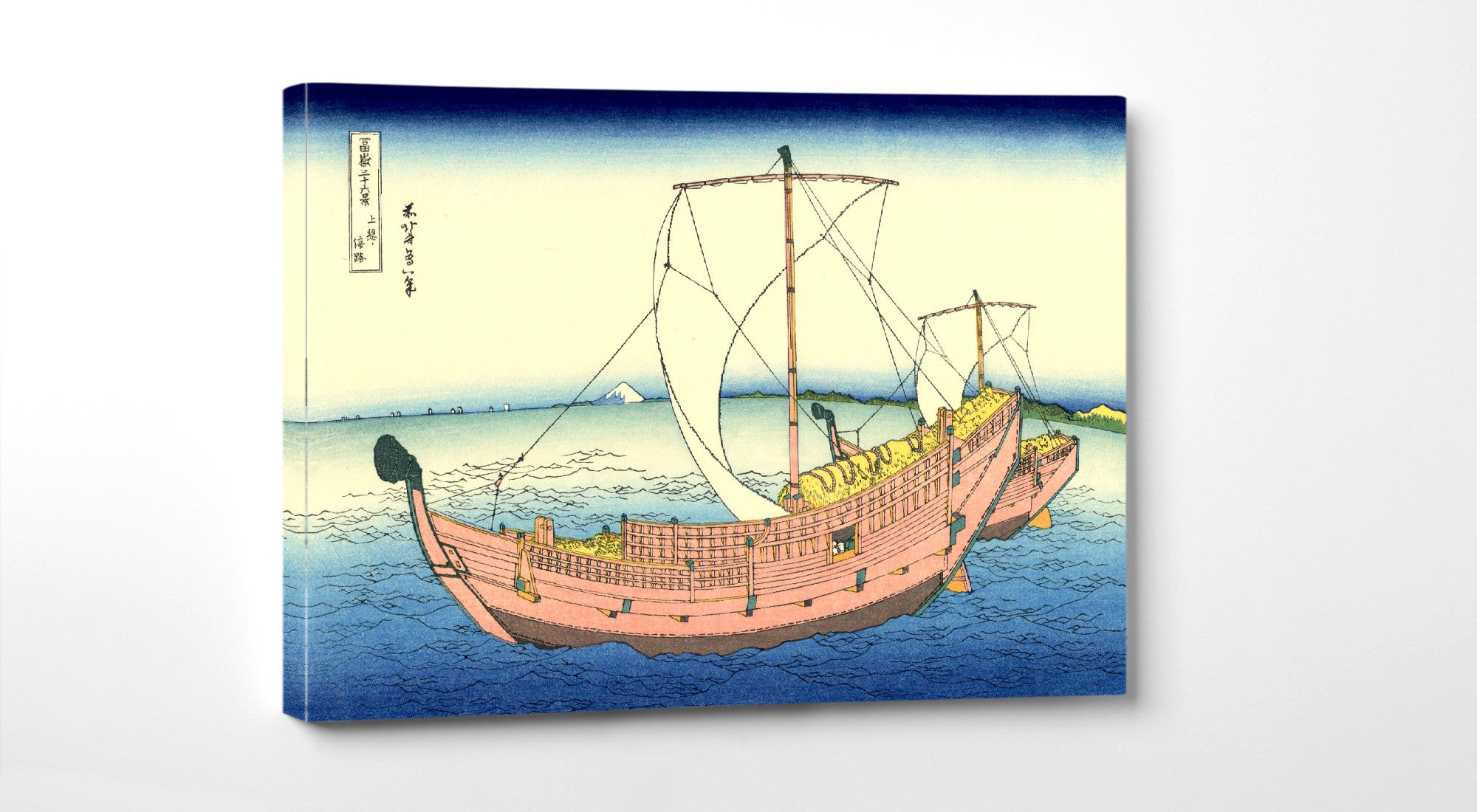
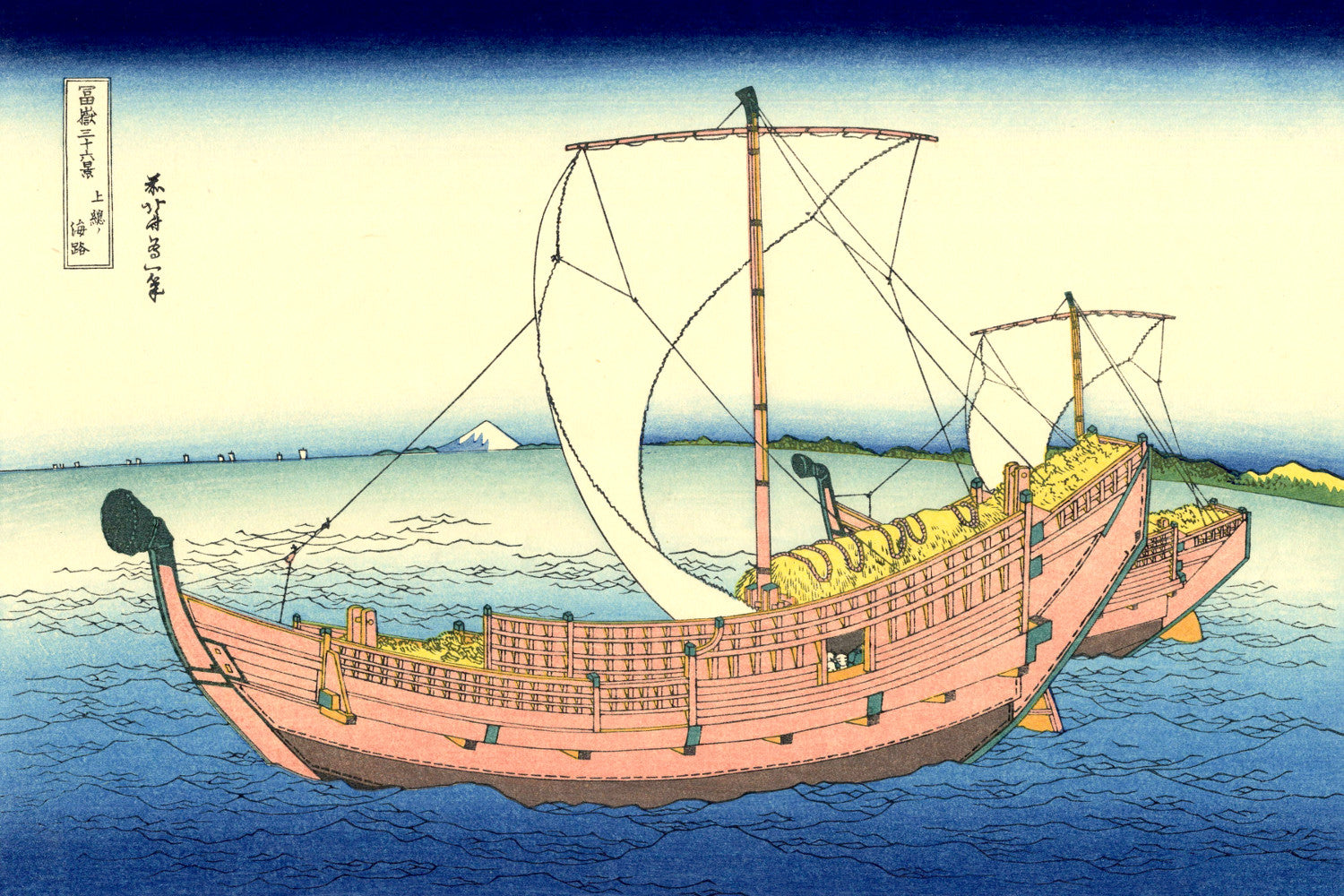
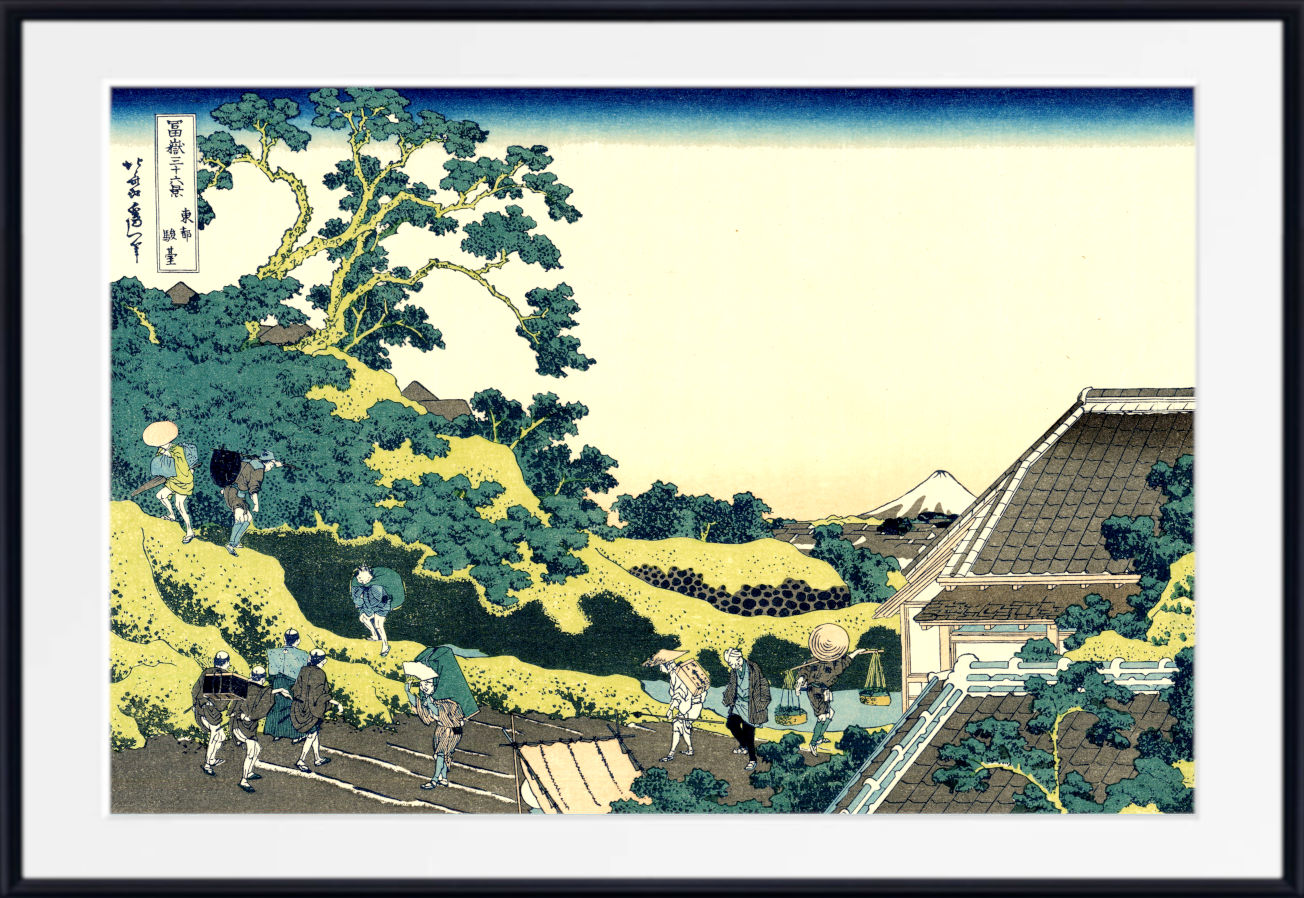
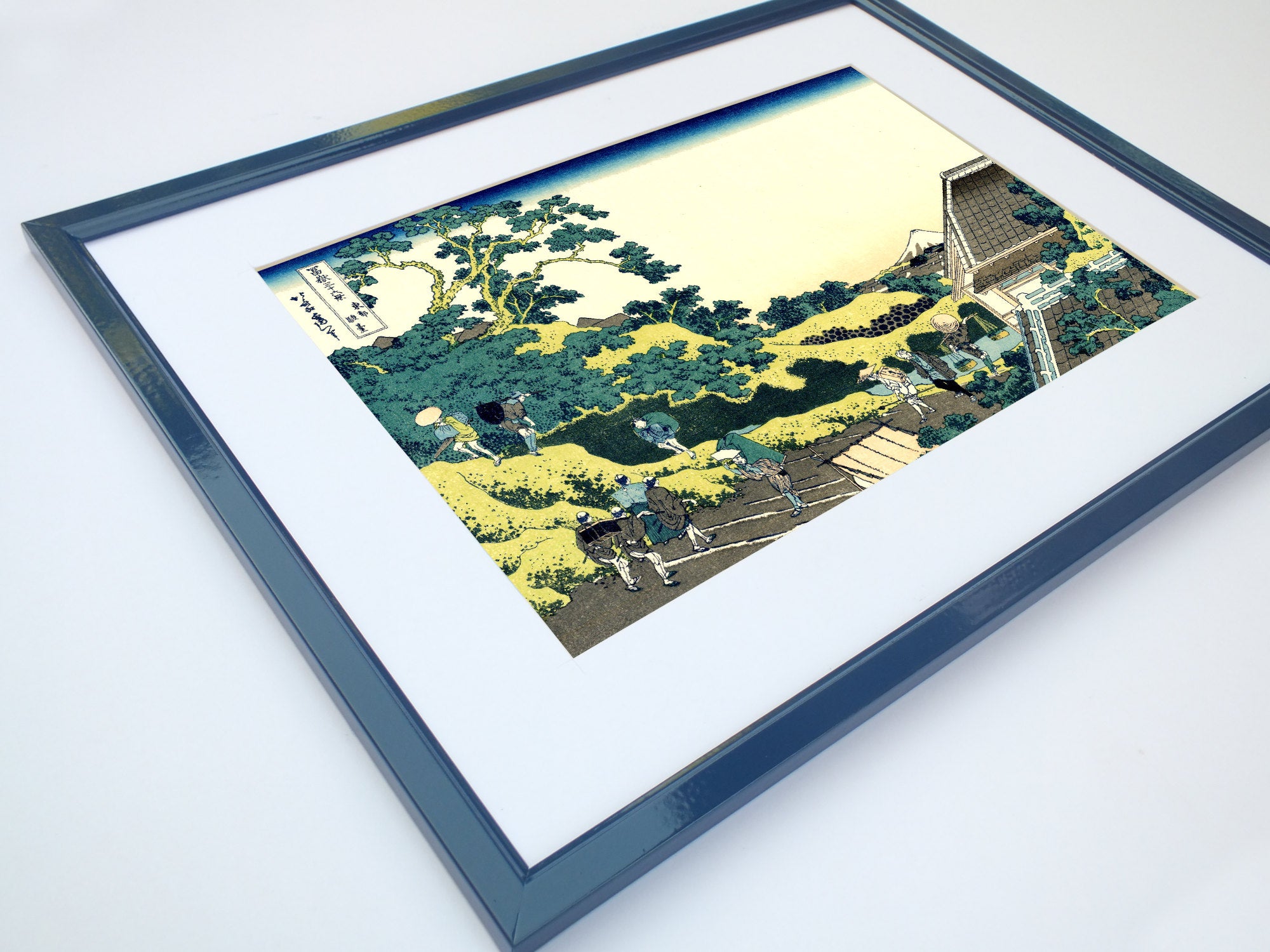
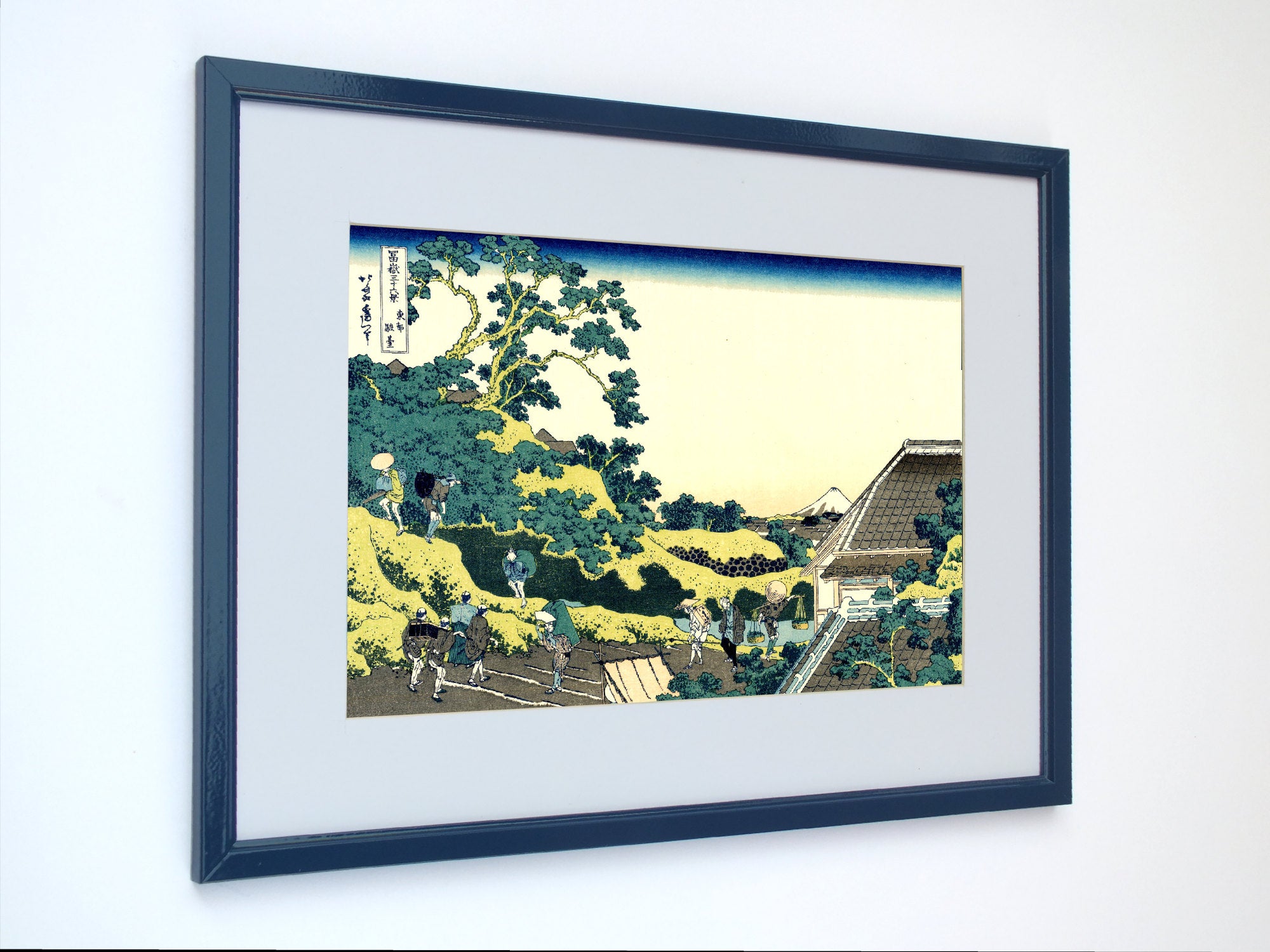
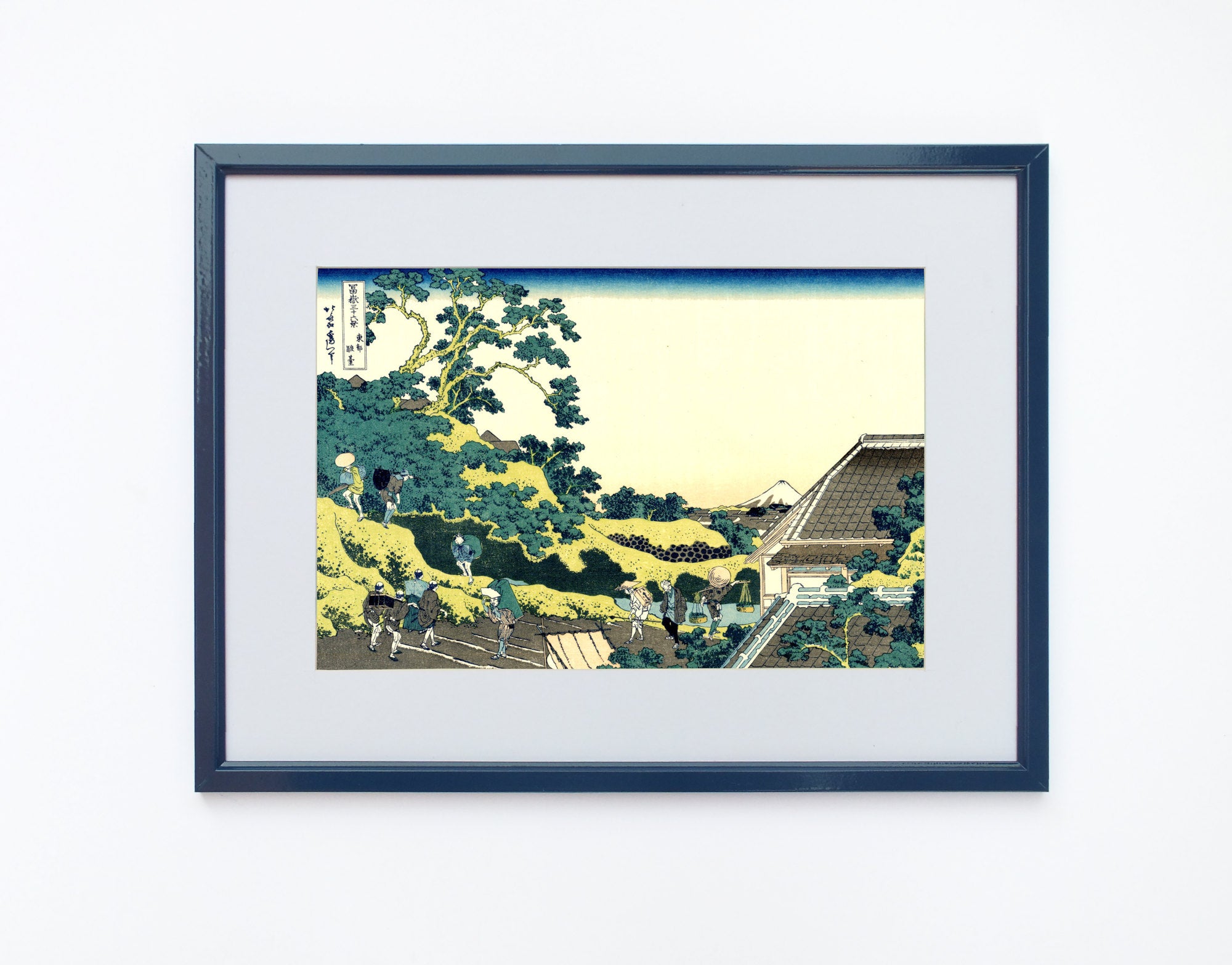
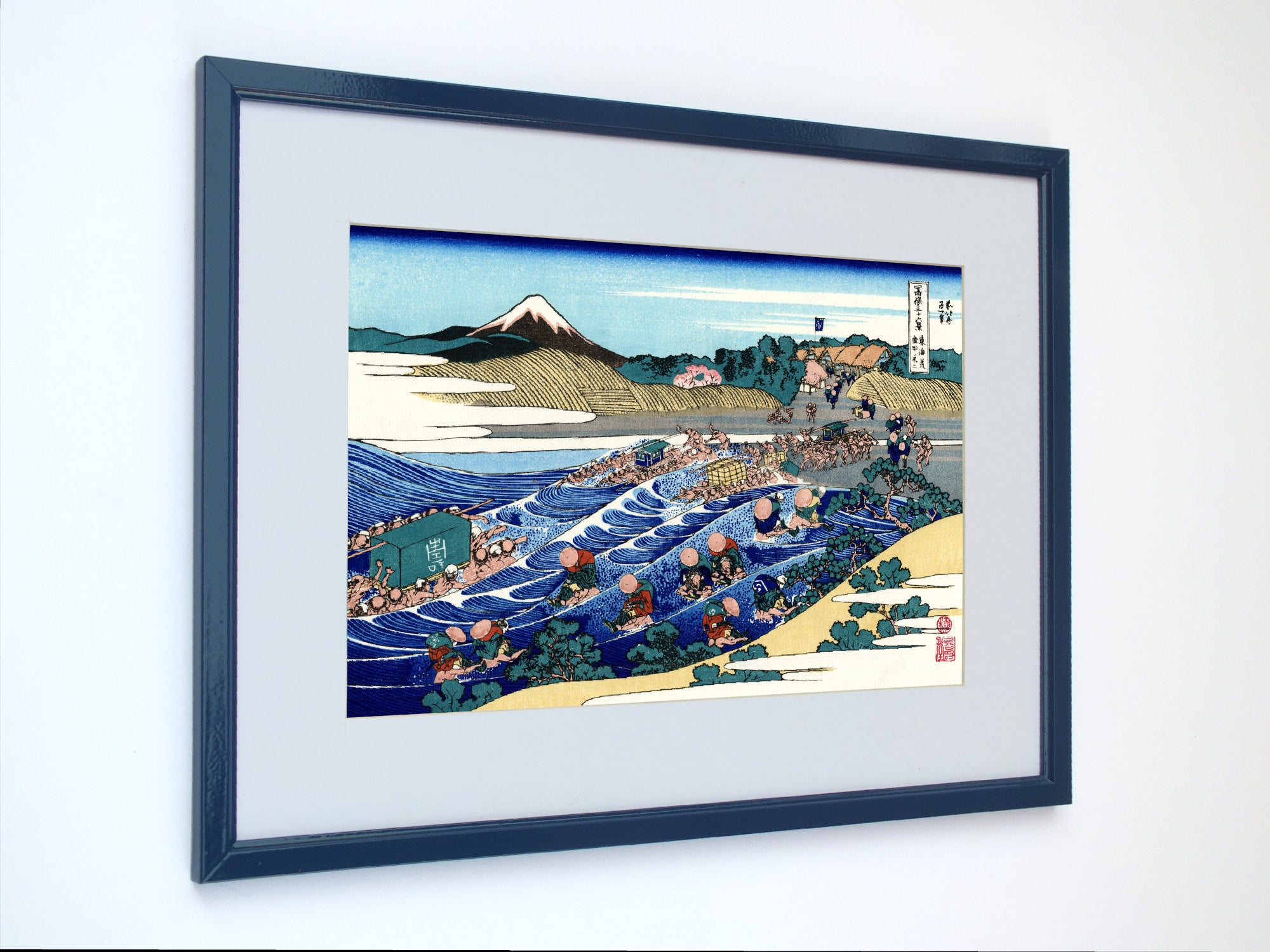
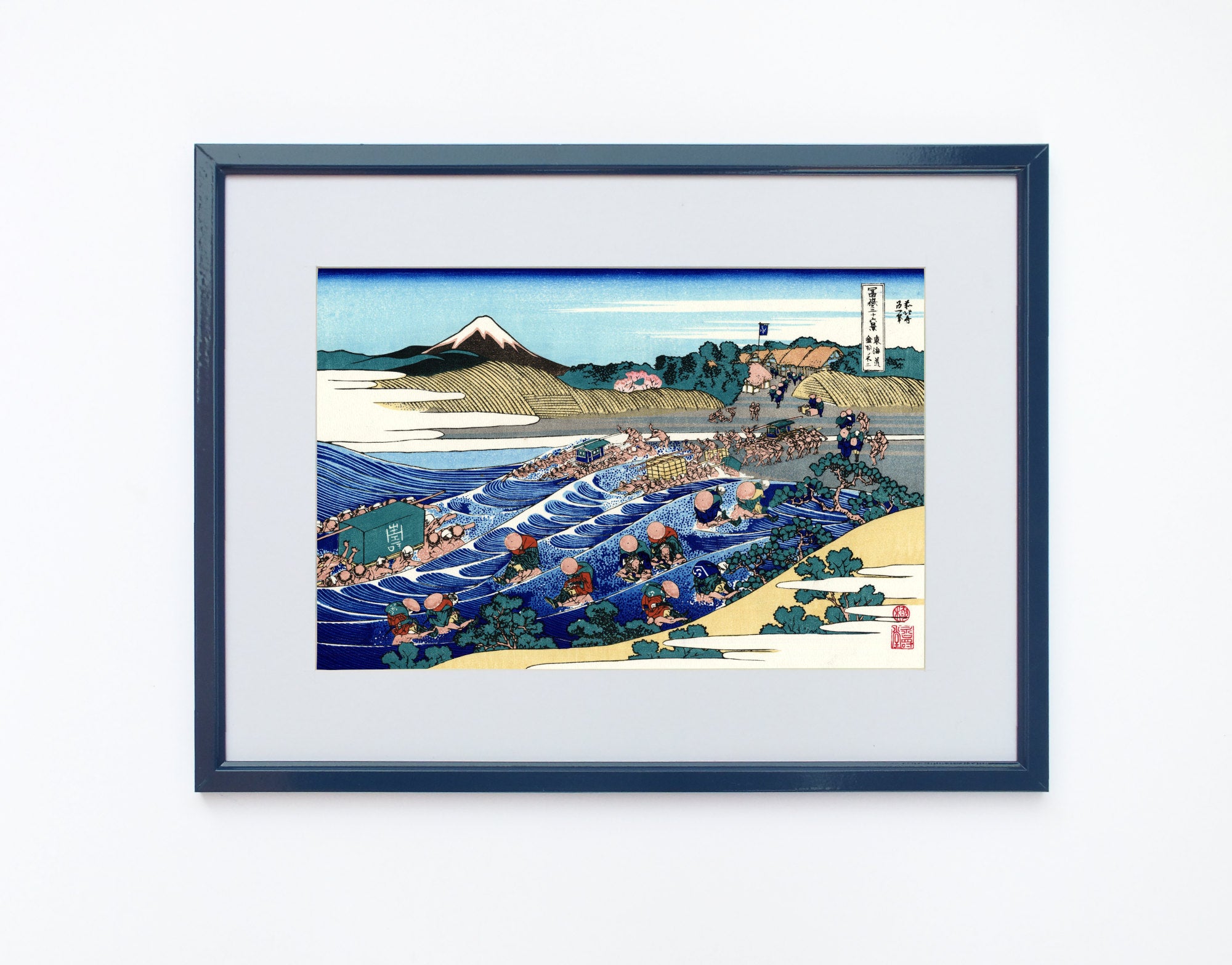
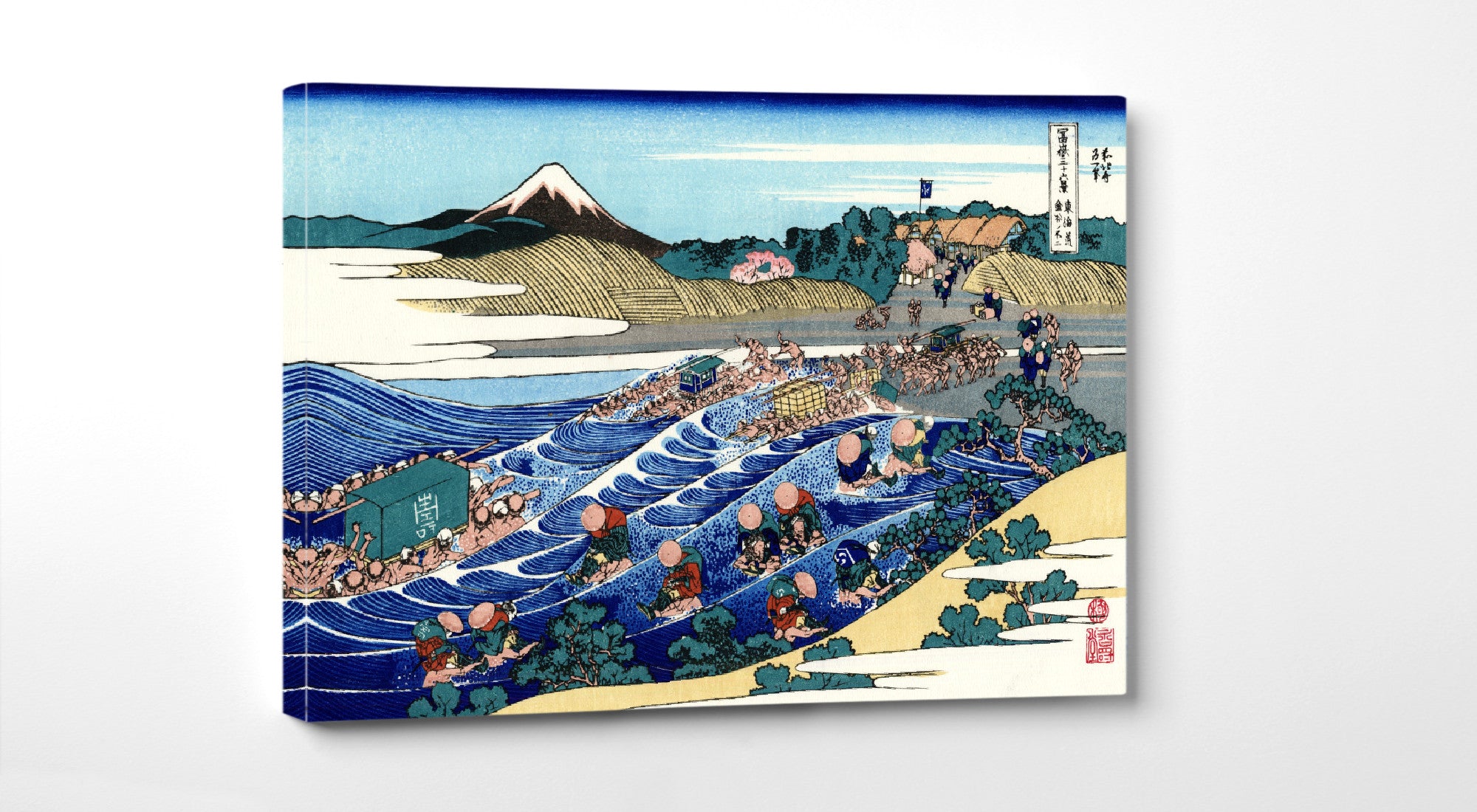
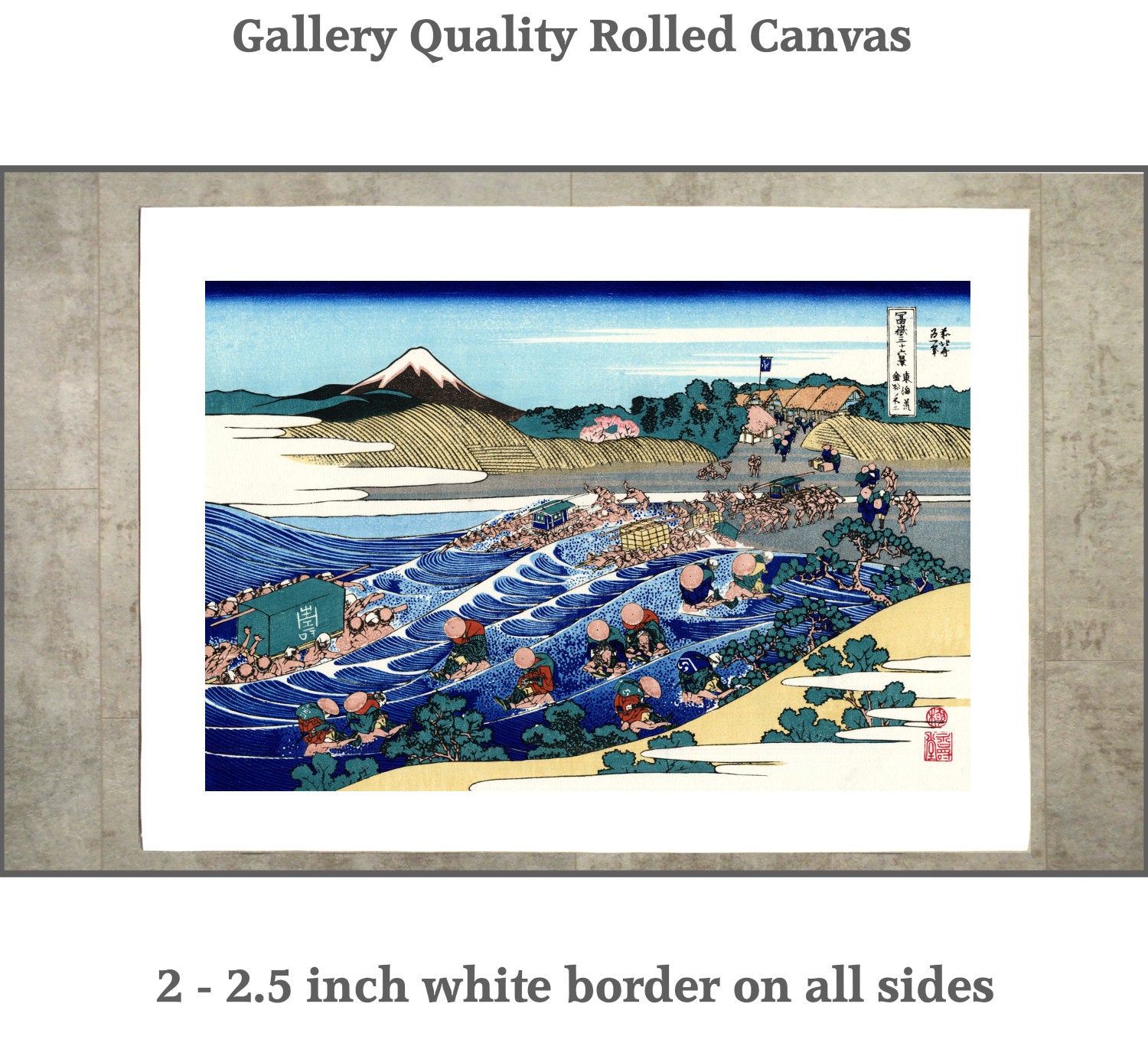
Katsushika Hokusai Prints – Japanese Ukiyo-e, Landscapes and Mount Fuji
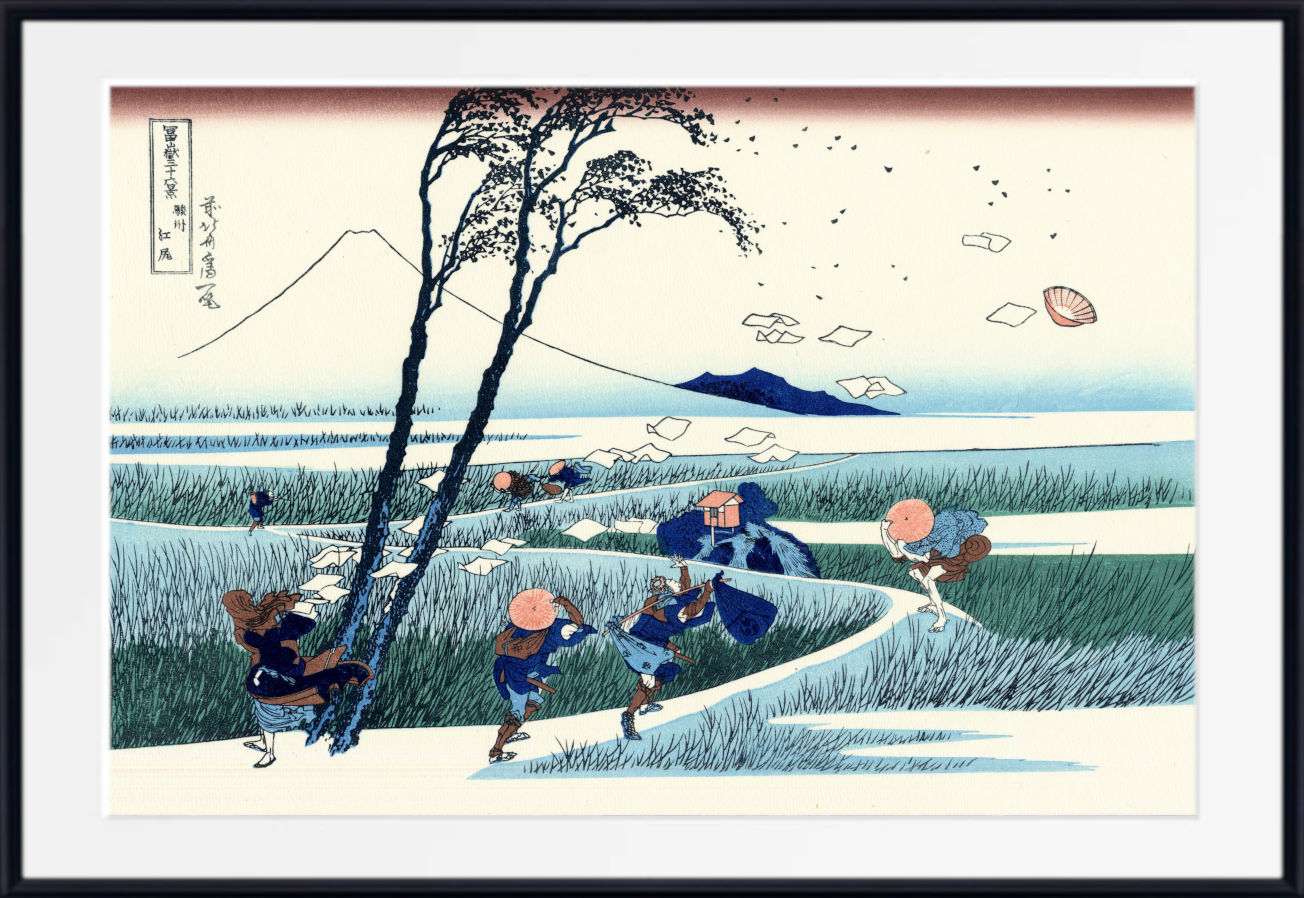
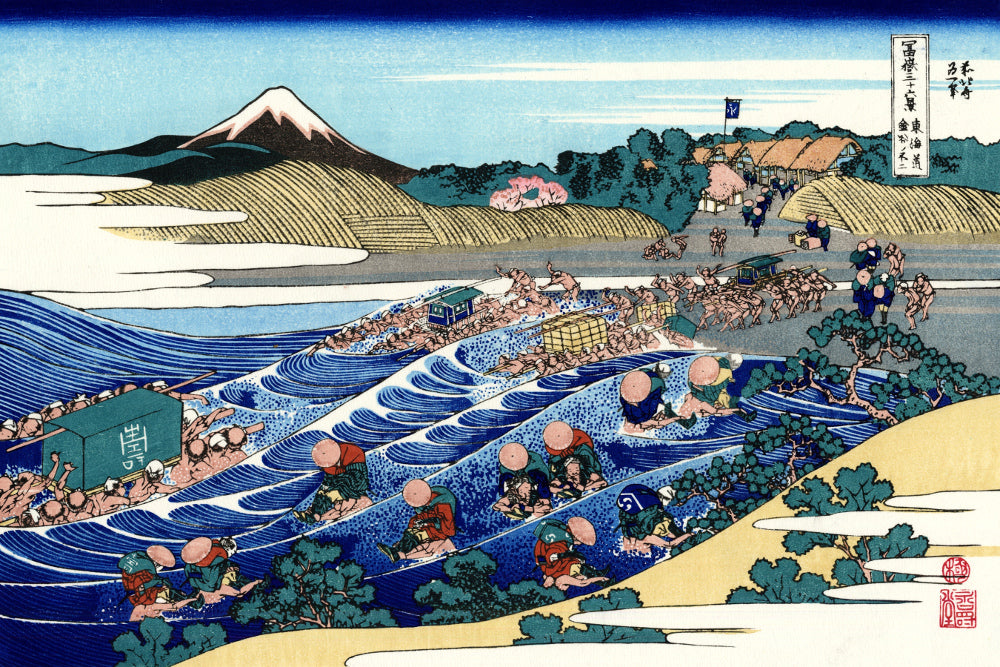
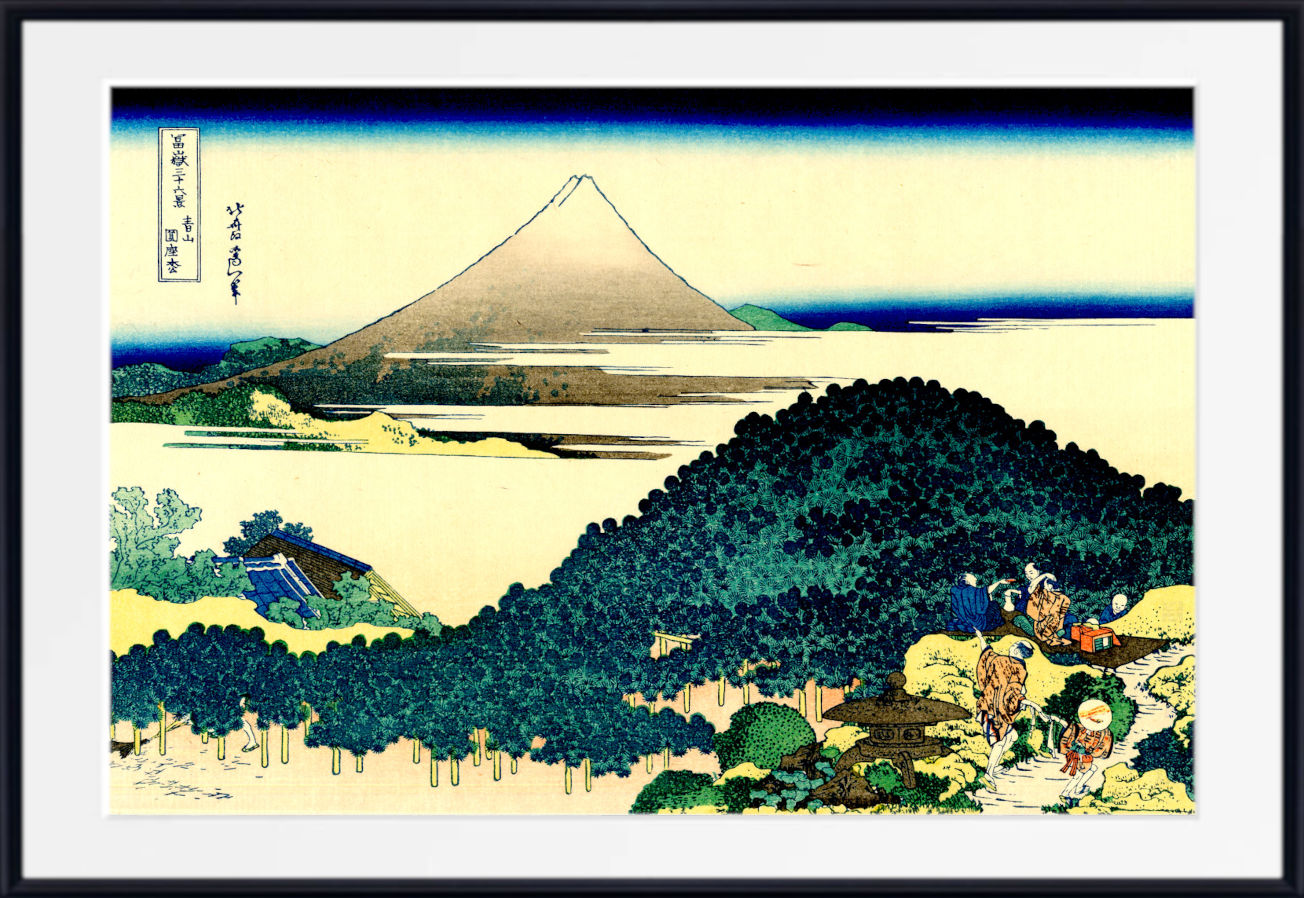
Few artists have created images as instantly recognisable as Katsushika Hokusai. His towering wave, distant Mount Fuji, windswept travellers and dramatically simplified landscapes have become some of the defining images of Japanese art.
Yet The Great Wave off Kanagawa represents only one part of an exceptionally long and inventive career.
Hokusai worked as a print designer, painter, draughtsman and book illustrator, continually experimenting with landscape, nature, human activity, mythology and new ways of representing movement and space.
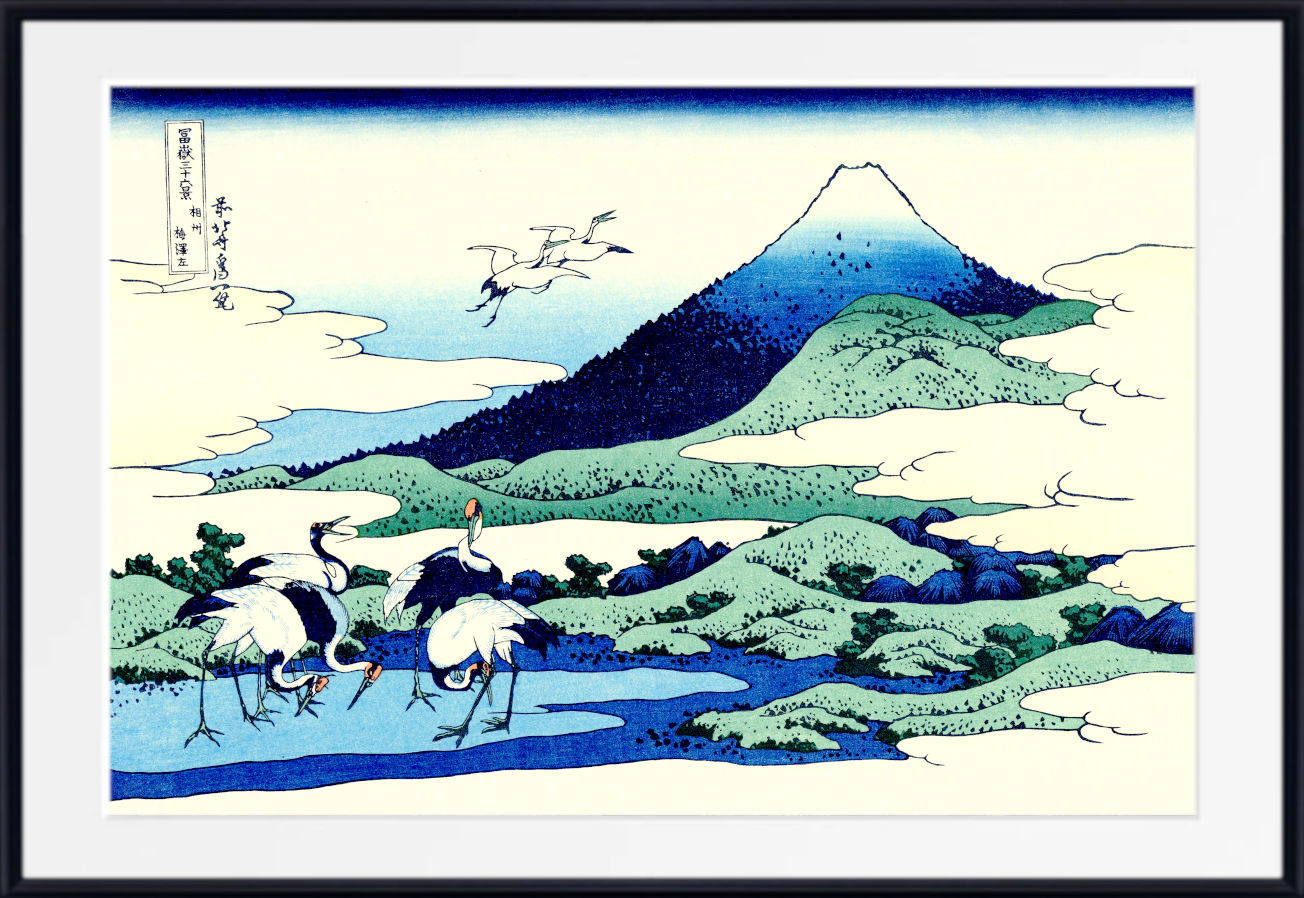
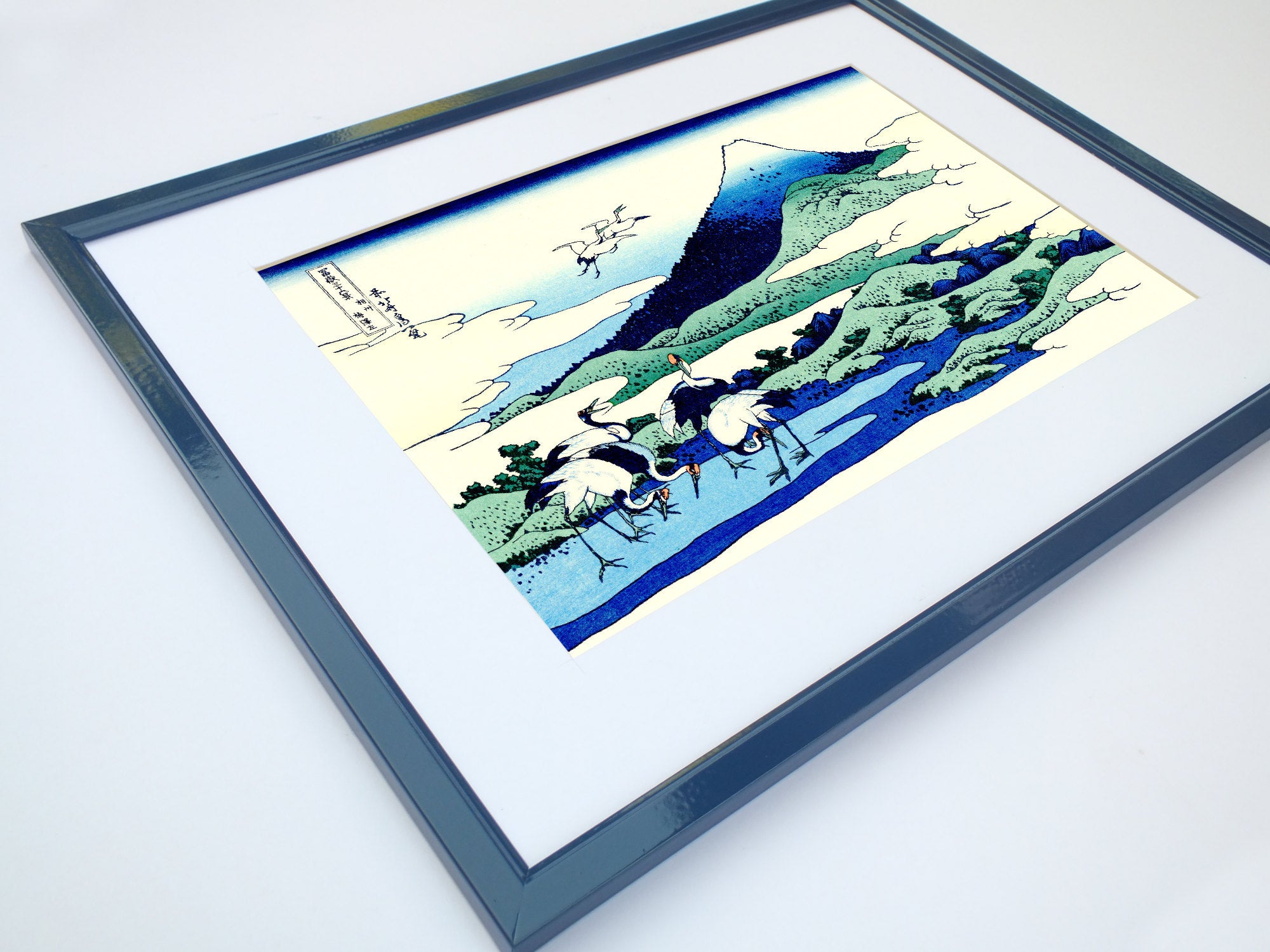
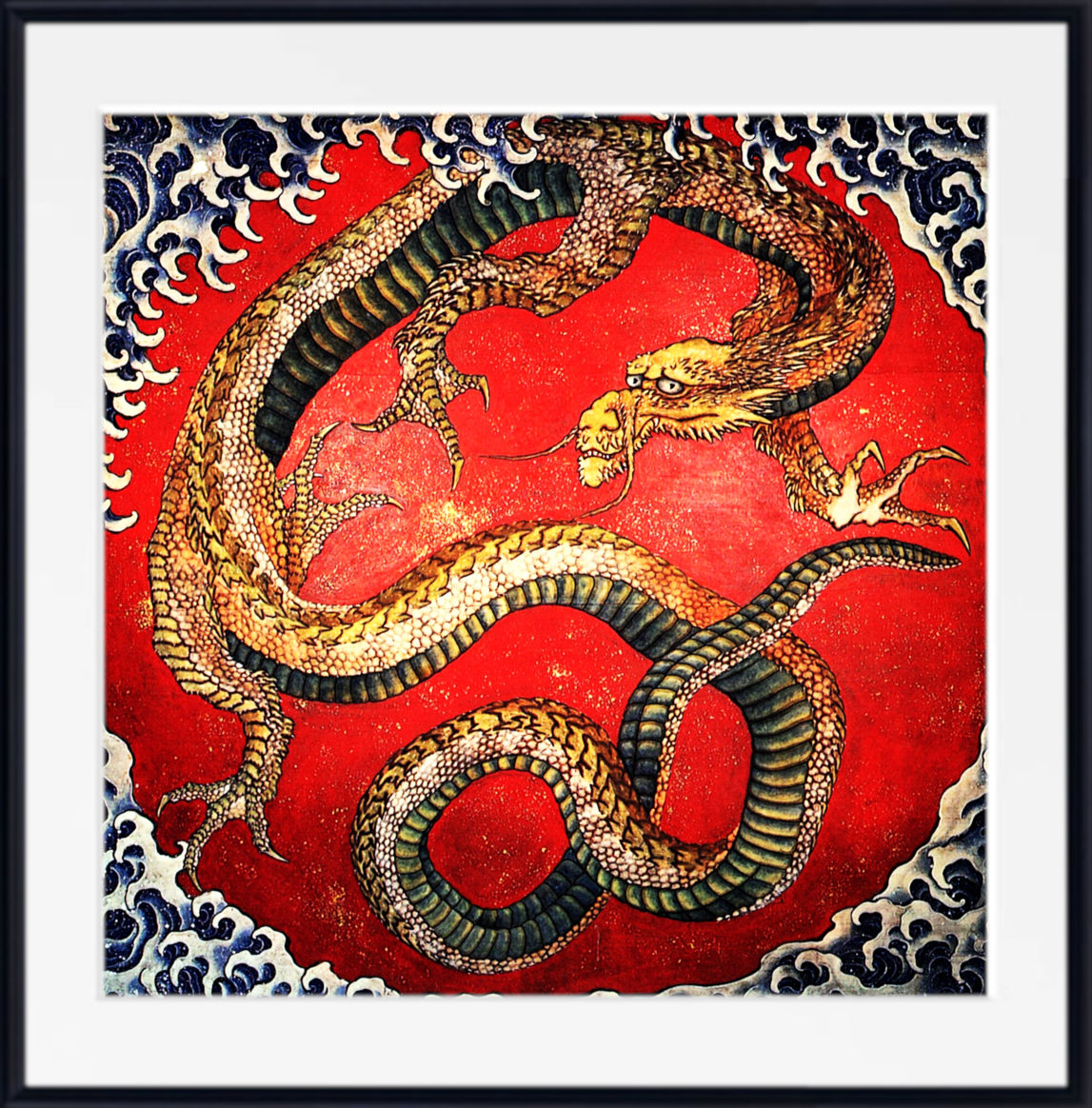
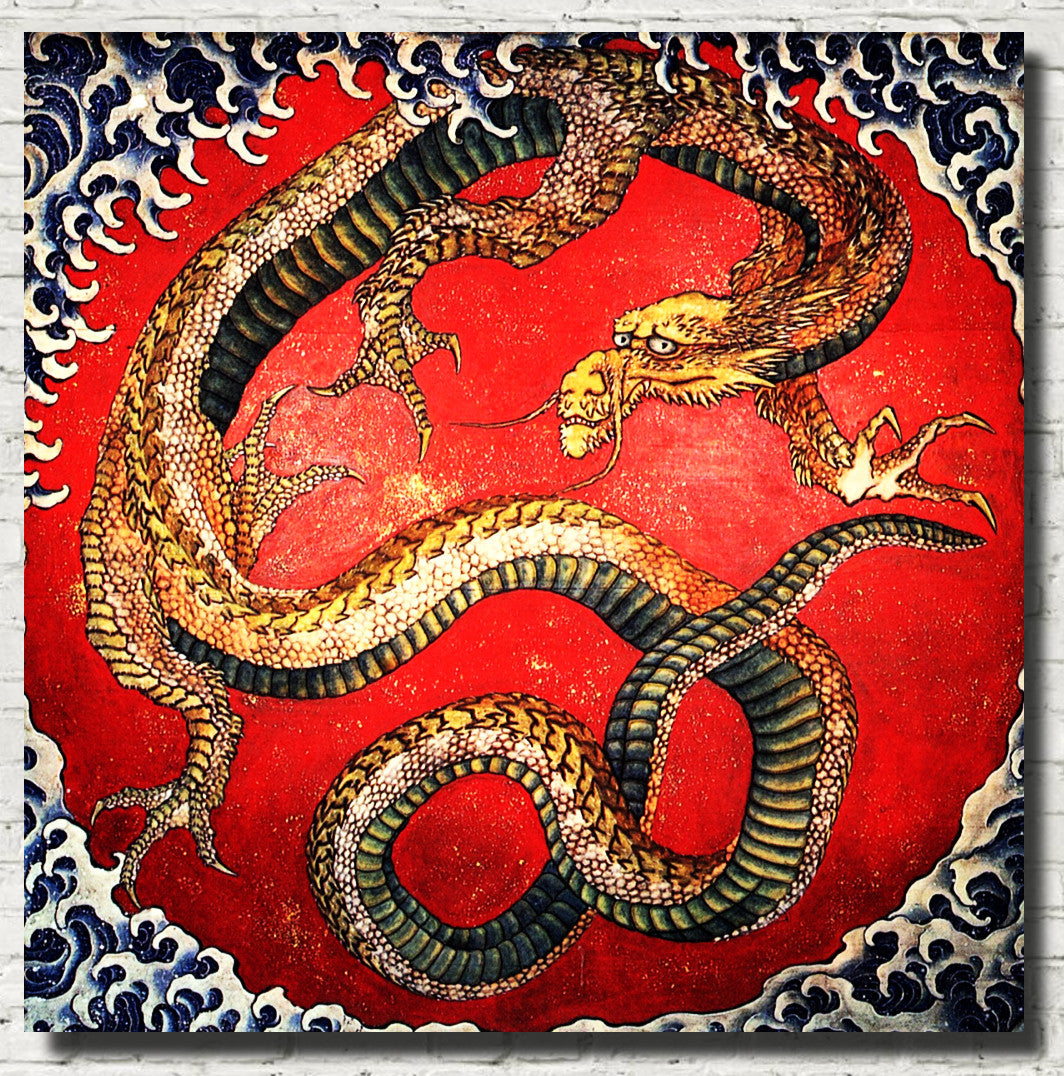
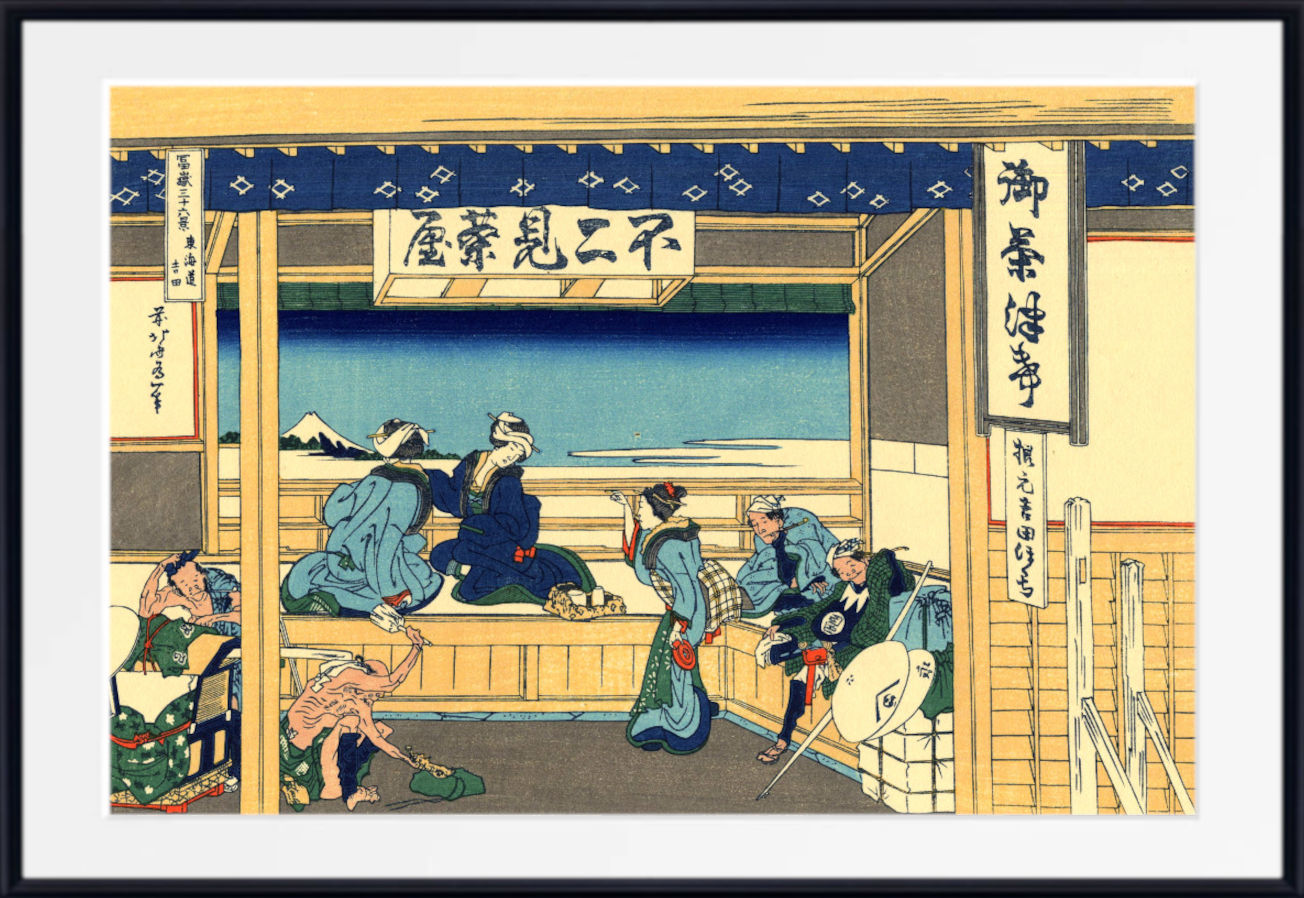
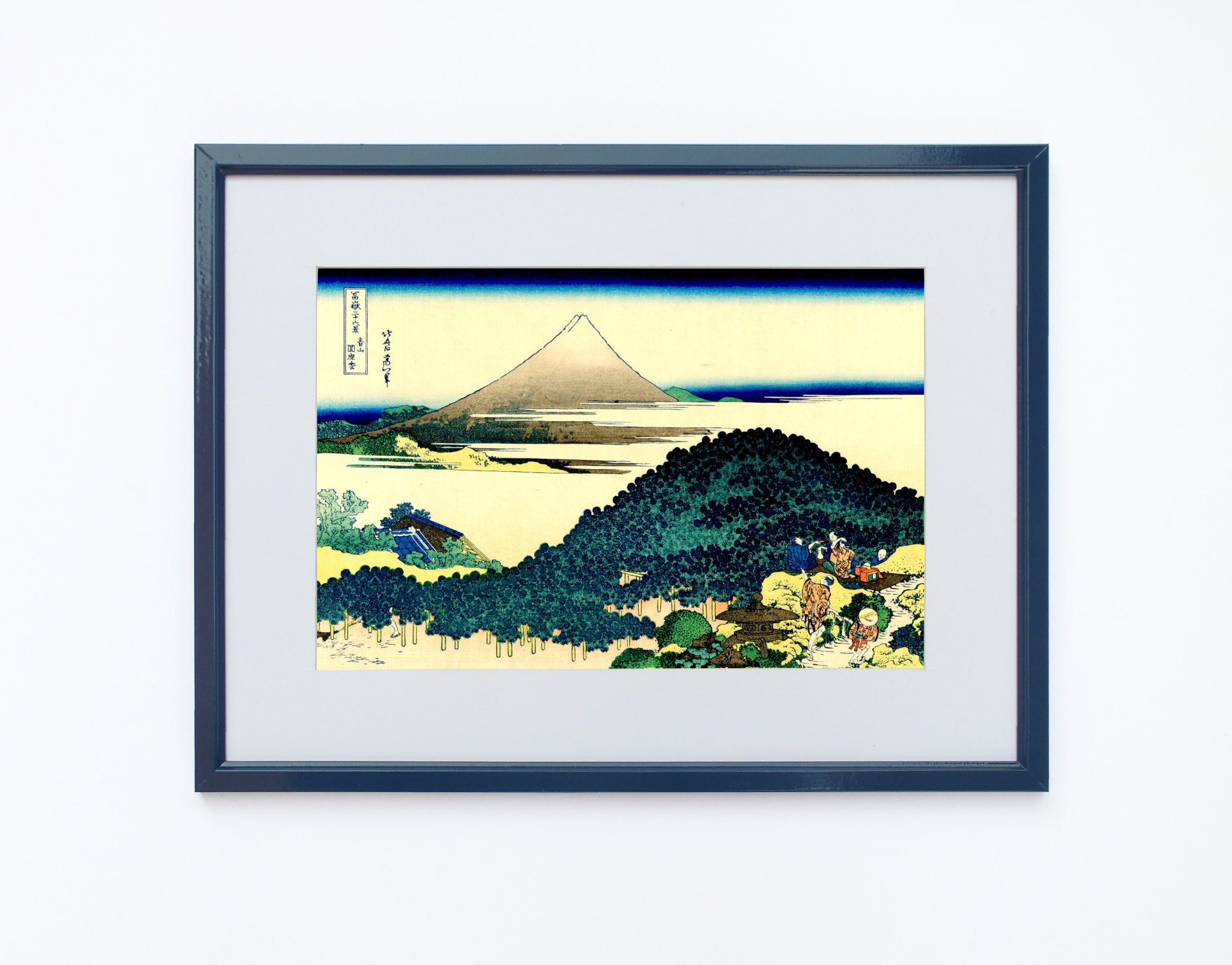
GalleryThane's collection of Hokusai prints includes many of the landscapes for which he is best known, together with distinctive designs such as the Matsuri Yatai Dragon.
For the Mount Fuji series specifically, explore GalleryThane's dedicated Thirty-Six Views of Mount Fuji collection.
Who Was Katsushika Hokusai?
Katsushika Hokusai was born in Edo, present-day Tokyo, in 1760 and lived until 1849.
His career extended across more than seven decades, during which he continually reinvented both his art and his artistic identity.
Hokusai used numerous names during his lifetime, often adopting a new name to mark a change in artistic direction. Among the best known are Shunrō, Hokusai, Iitsu and Manji.
This constant reinvention reflects one of the defining characteristics of his career: Hokusai never regarded himself as having finished learning.
He produced thousands of paintings and prints and supplied illustrations for hundreds of books, remaining intensely productive into his eighties.
Hokusai and Ukiyo-e
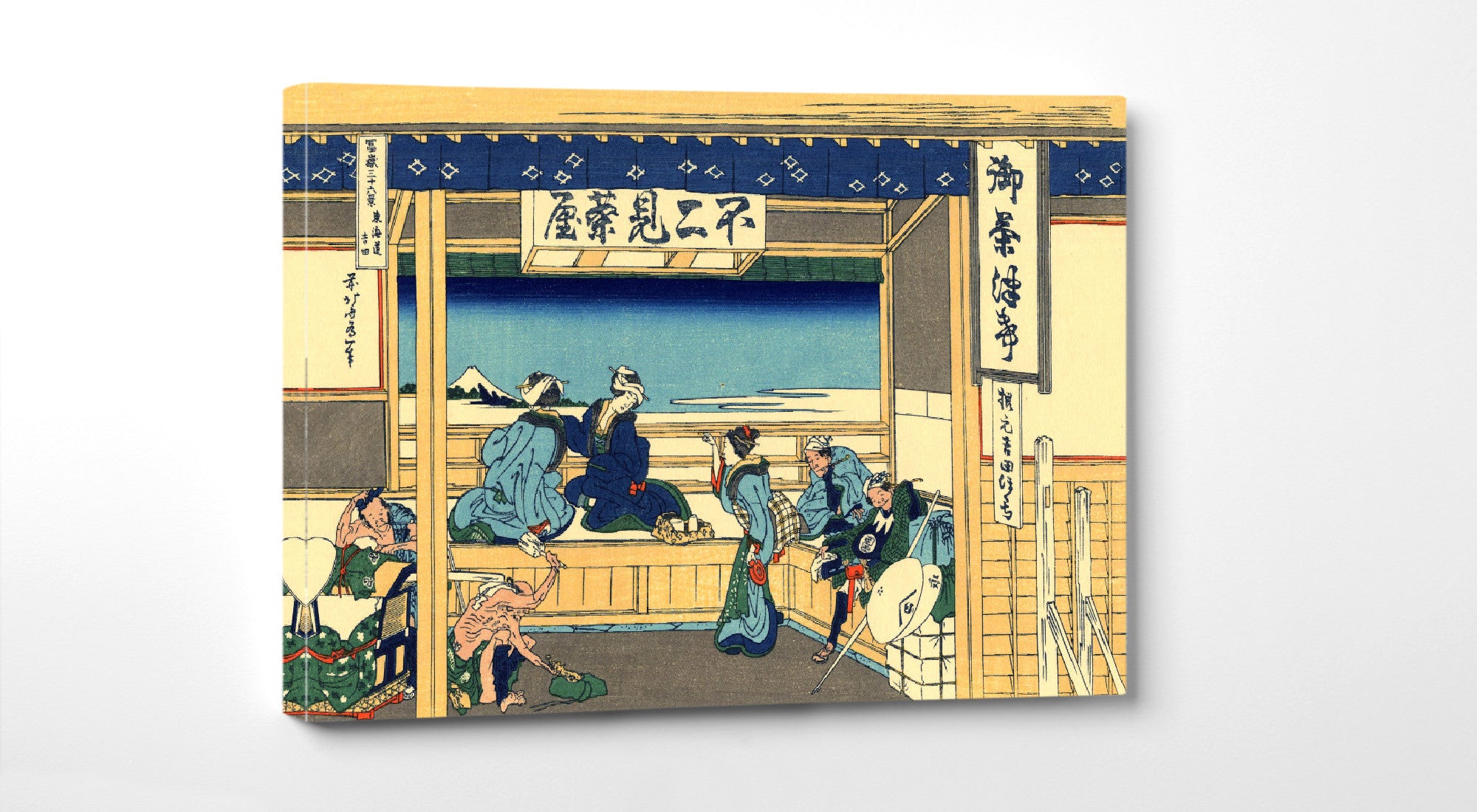
Hokusai is usually associated with ukiyo-e, the Japanese tradition of woodblock prints and paintings that flourished during the Edo period.
Earlier ukiyo-e artists had frequently concentrated on actors, fashionable women and the entertainment districts of Japanese cities.
Hokusai greatly expanded the possibilities of the medium.
Landscapes, waterfalls, bridges, craftspeople, fishermen, travellers, plants, animals, legendary figures and dramatic natural forces all became worthy subjects.
His work helped establish landscape as one of the great subjects of Japanese colour woodblock printing.
The Great Wave off Kanagawa
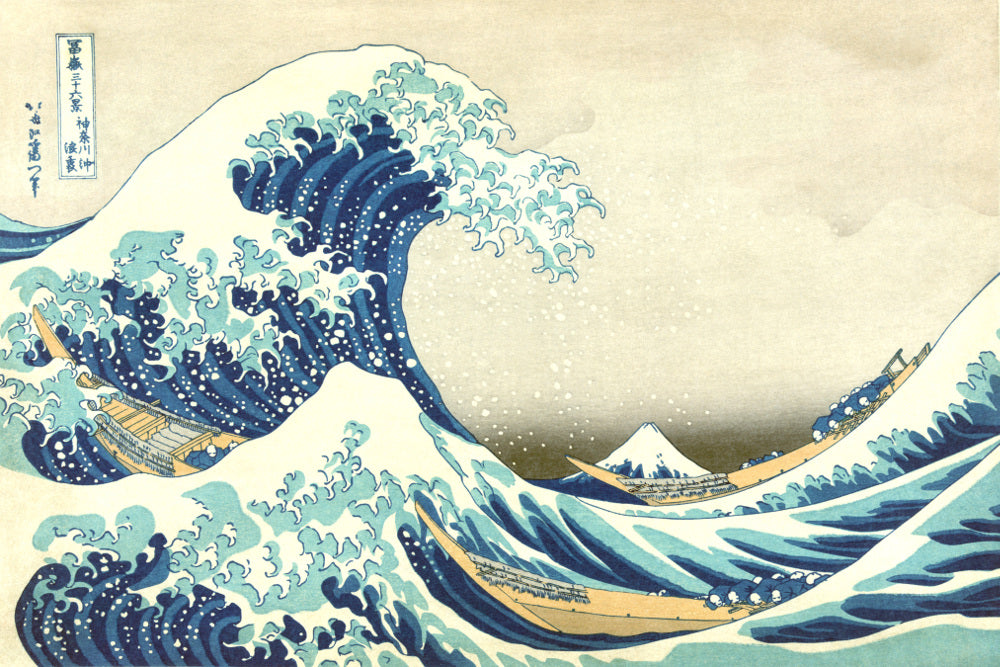
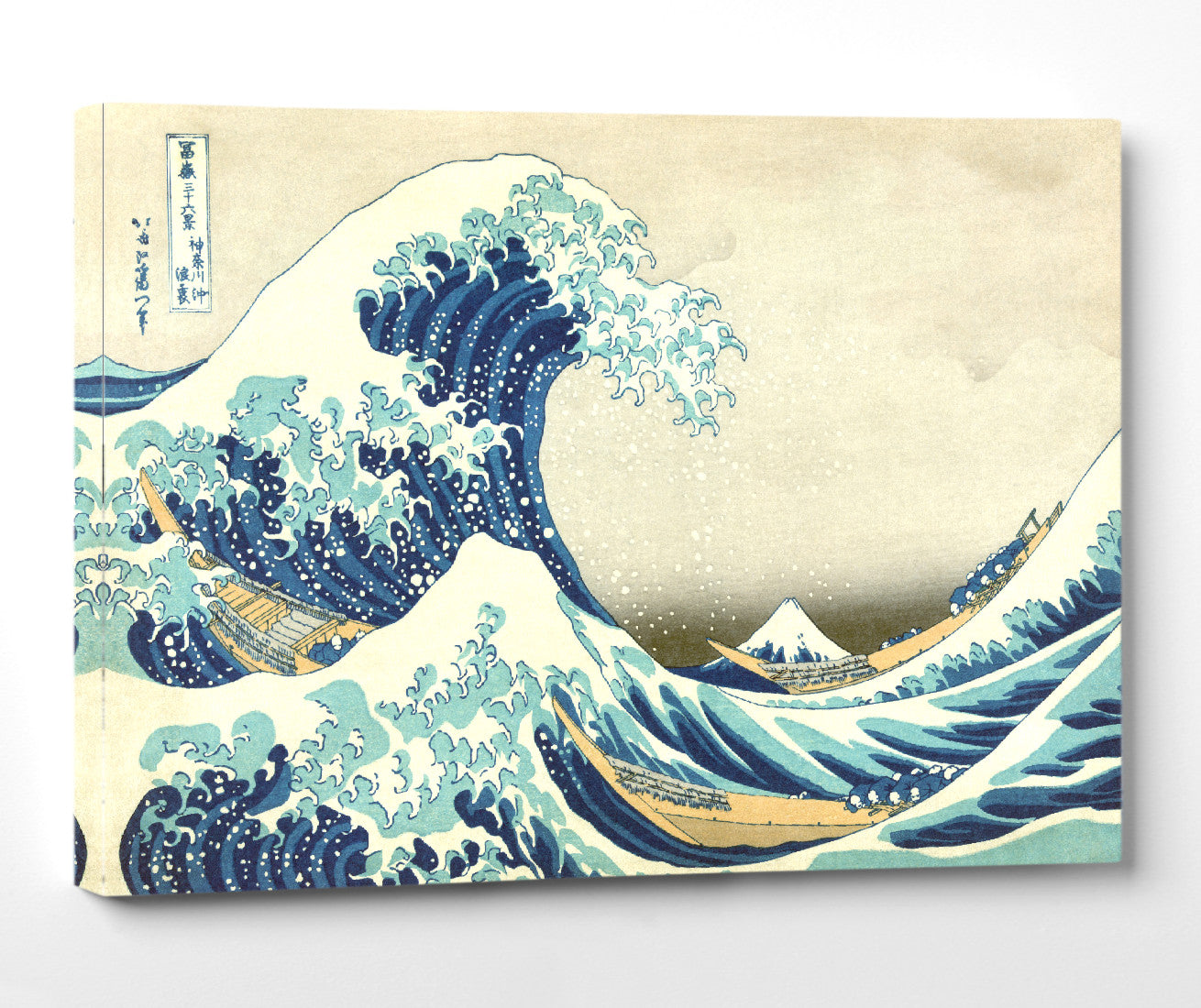
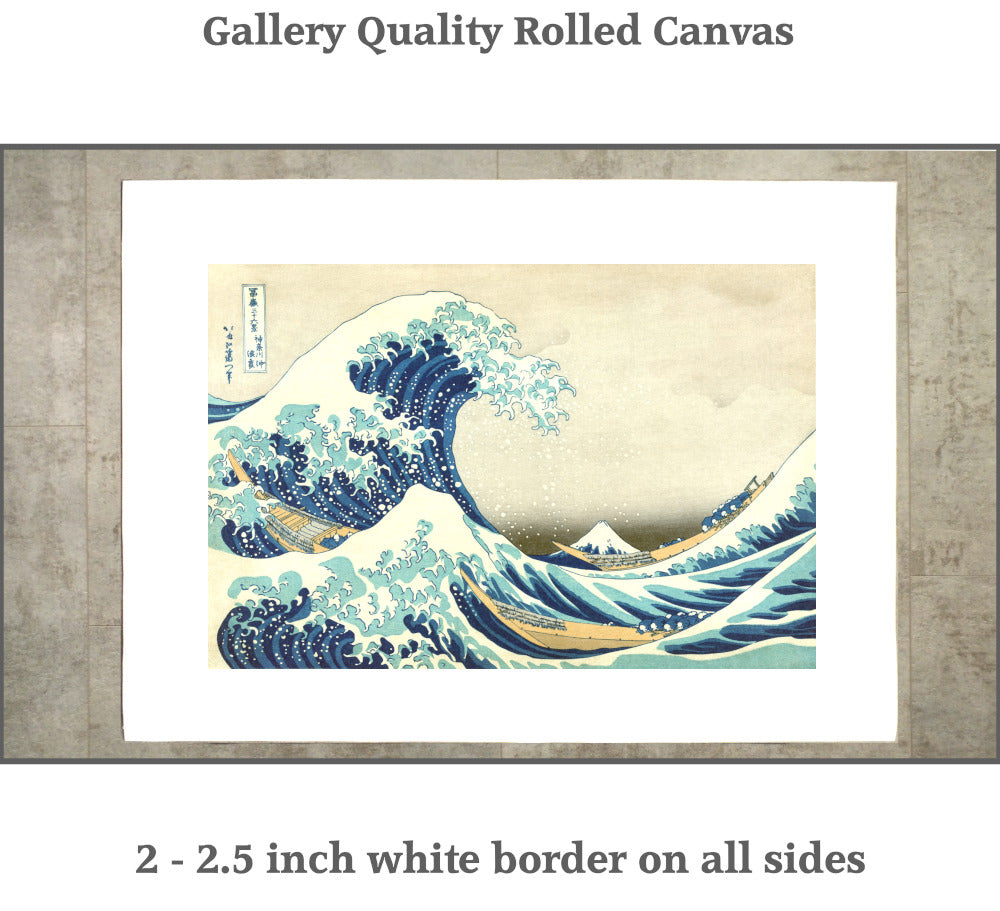
Hokusai's most famous image is unquestionably The Great Wave off Kanagawa, created around 1830–32.
Three fast boats struggle beneath an enormous curling wave while Mount Fuji appears unexpectedly small in the distance.
The composition is extraordinary because Hokusai reverses the expected hierarchy of the scene.
Japan's highest and most sacred mountain appears tiny, while the temporary movement of a wave dominates the image.
The curling crest seems almost alive, its white spray breaking into claw-like forms immediately before the wave collapses.
The combination of movement, danger, geometry and unusually strong blue gives the print a visual power that has allowed it to transcend its original period and become one of the world's best-known works of art.
Thirty-Six Views of Mount Fuji
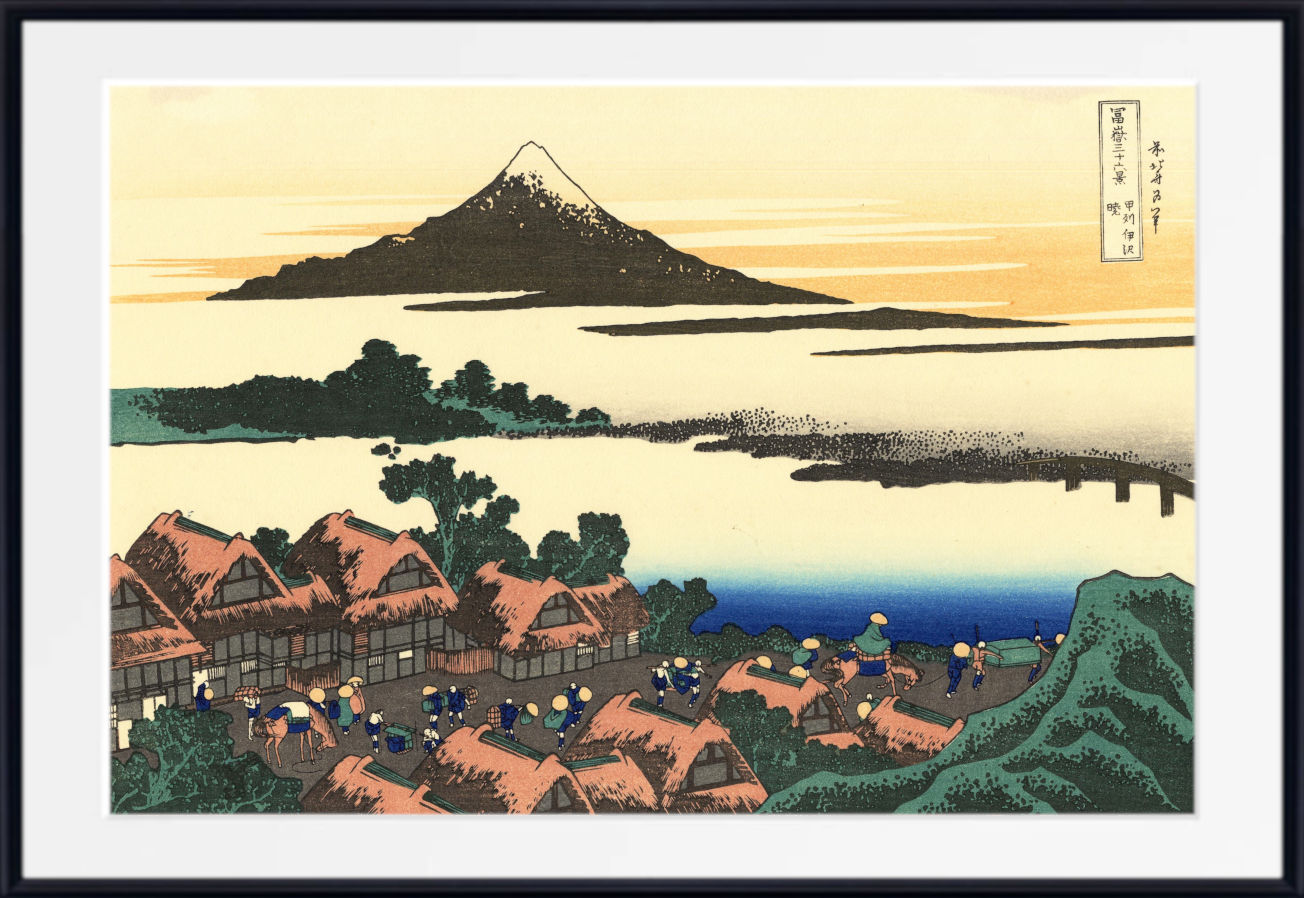
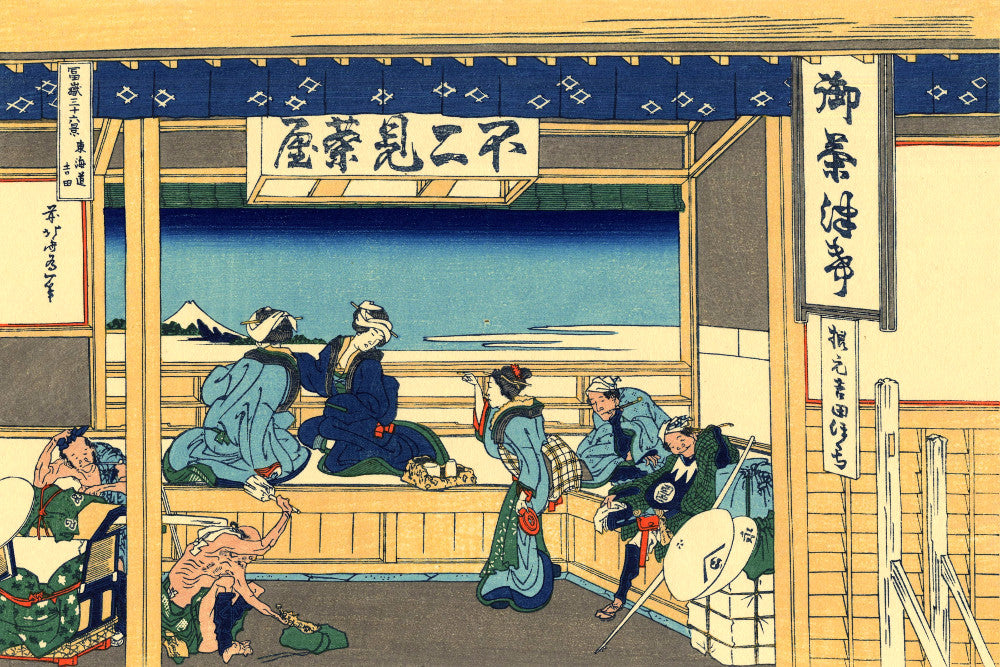
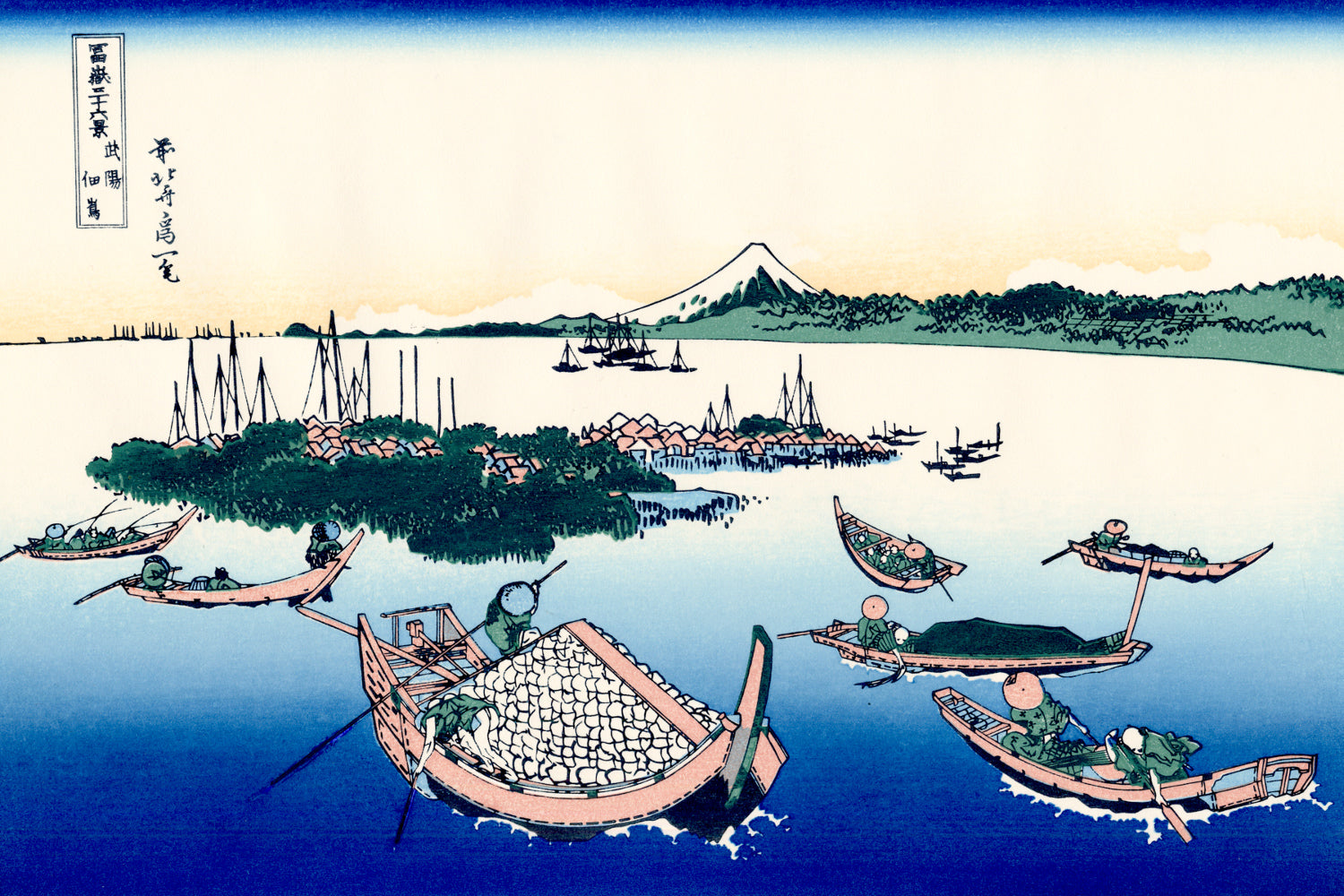
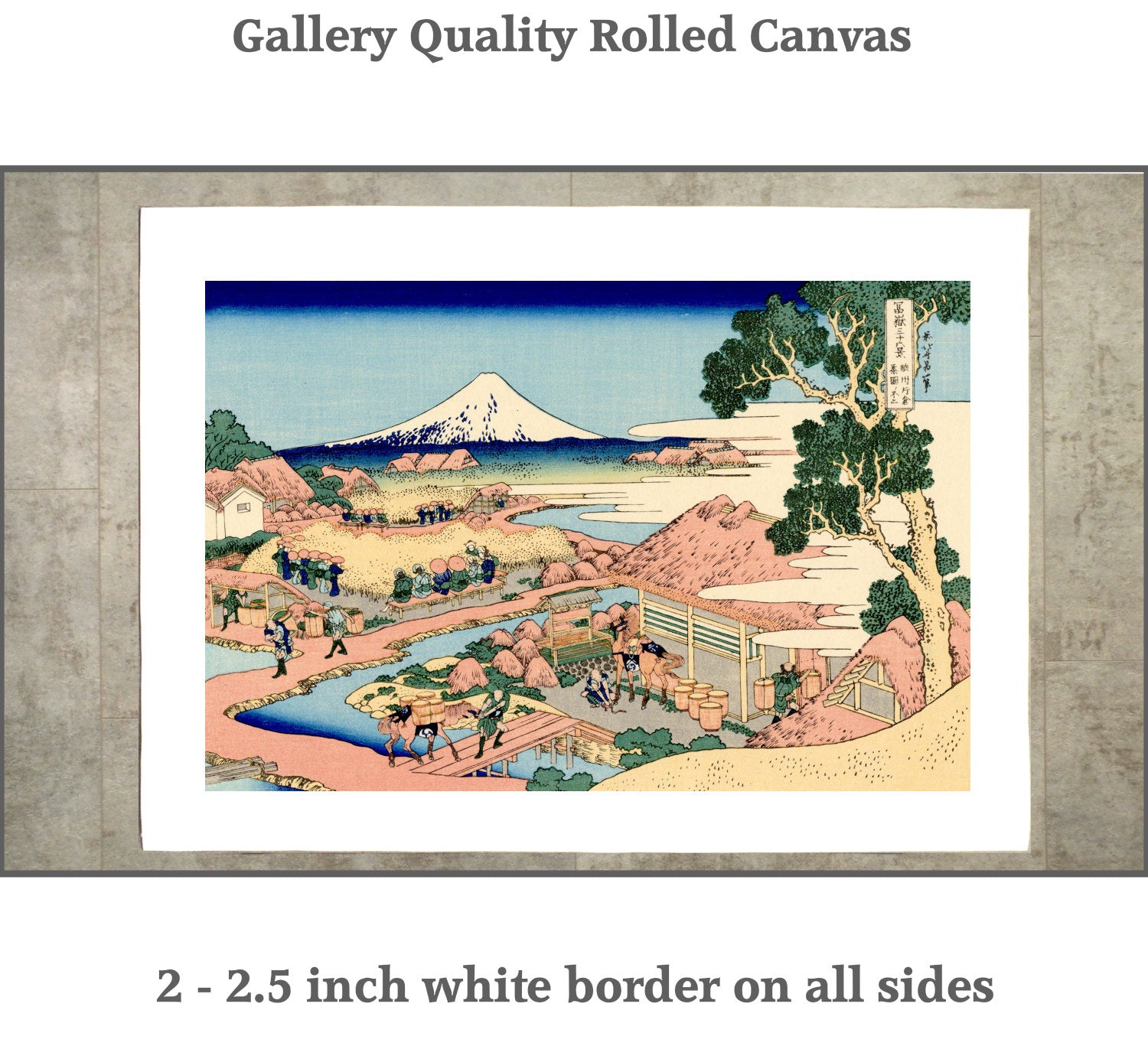
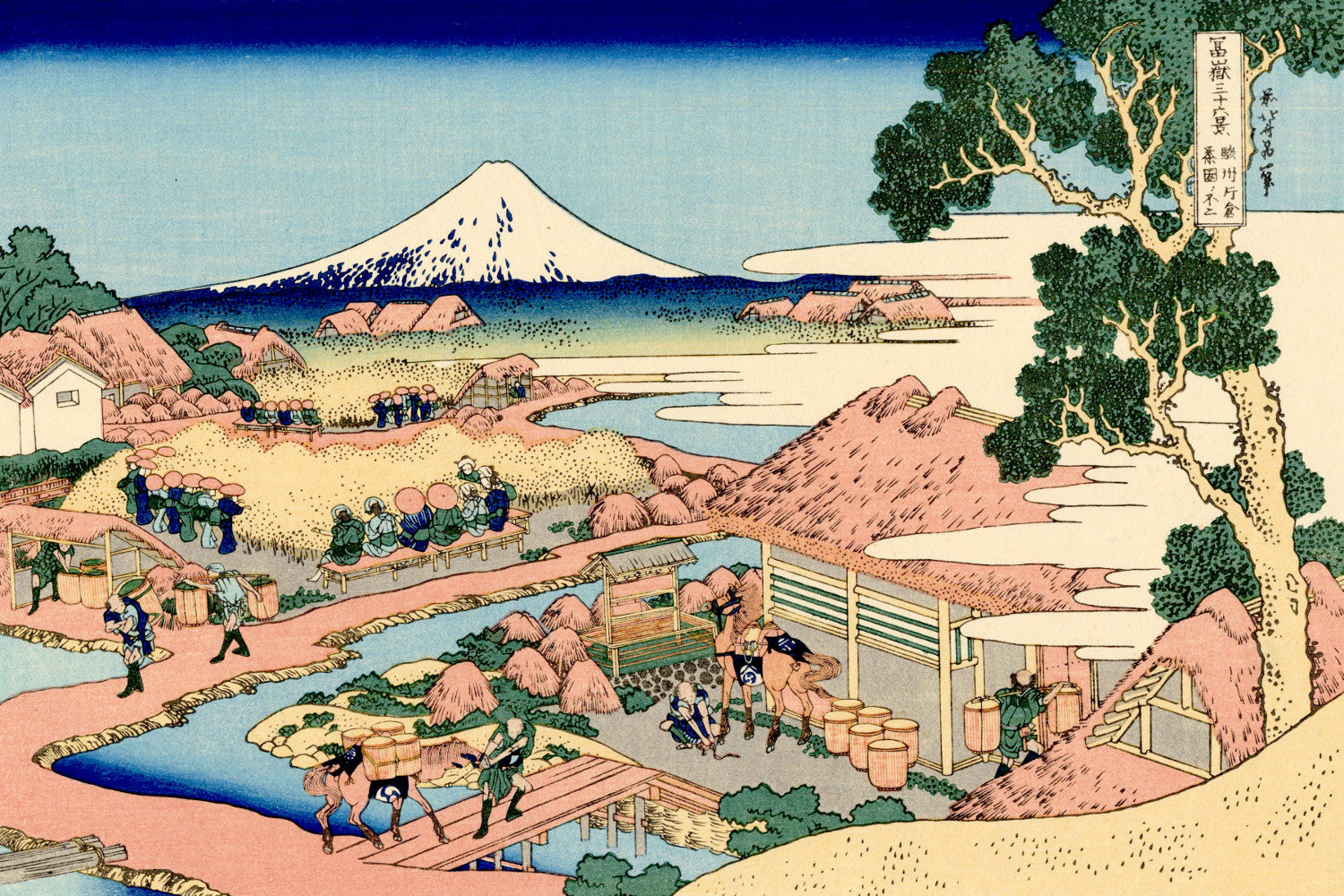
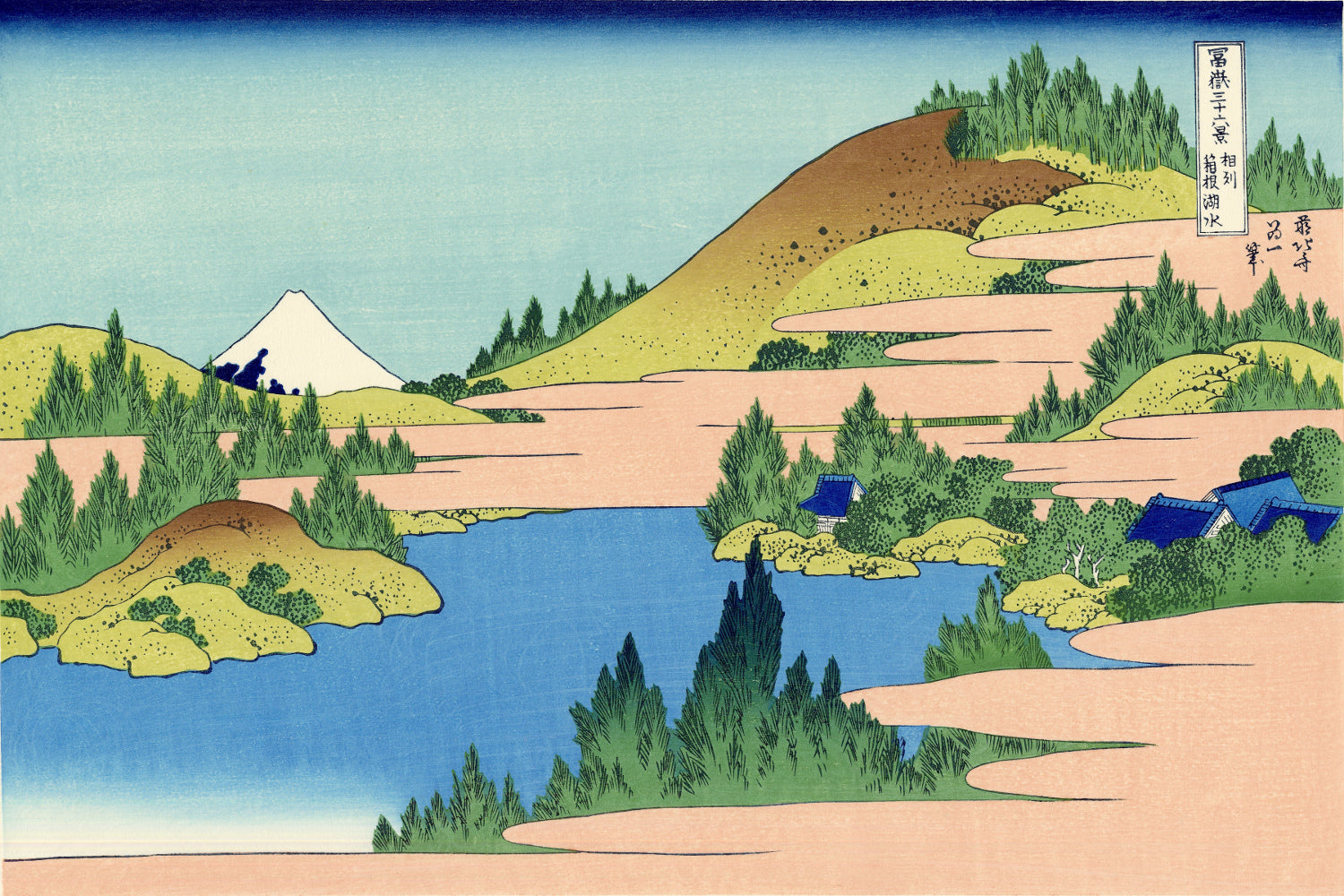
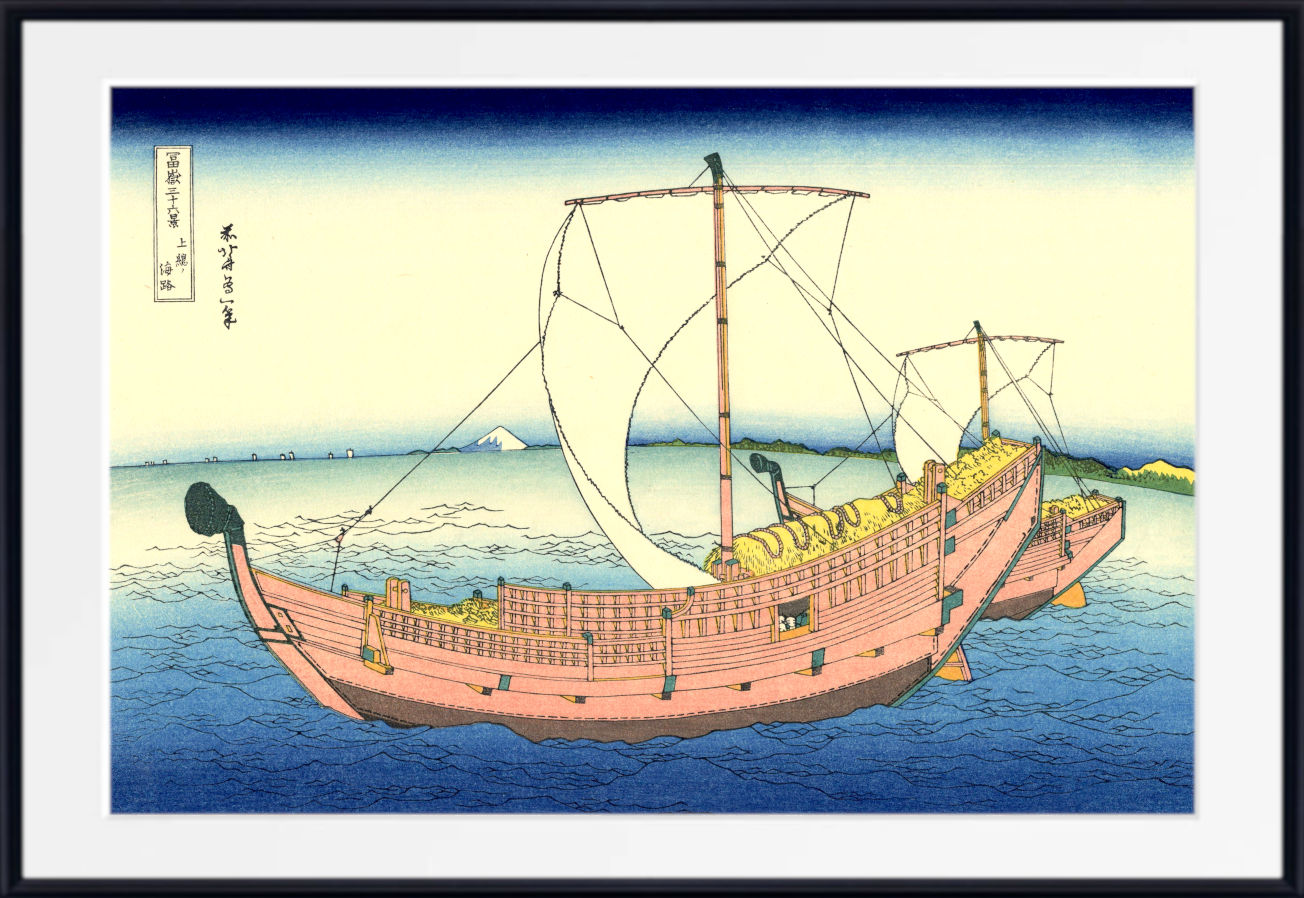
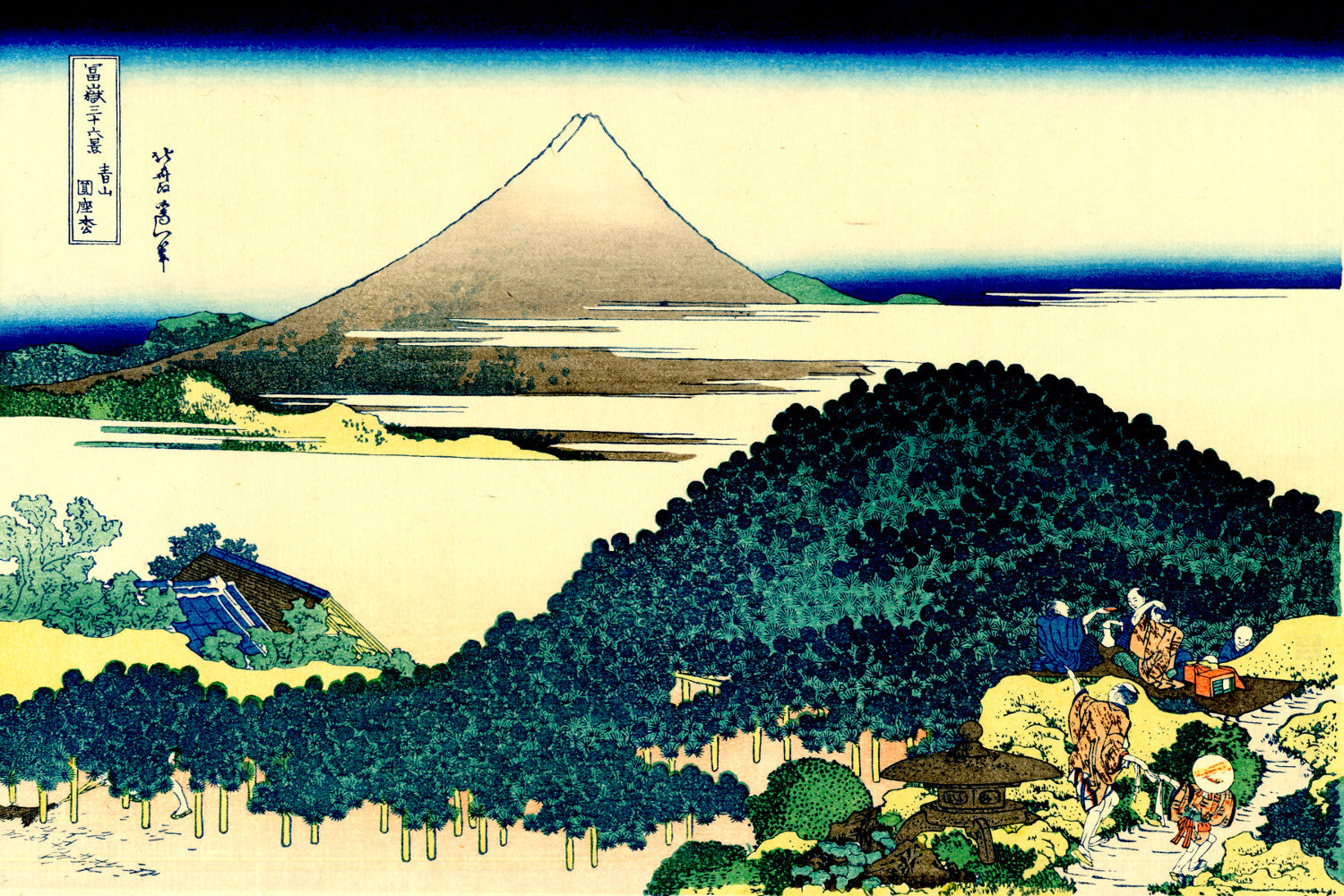
The Great Wave belongs to Hokusai's celebrated series Thirty-Six Views of Mount Fuji, created during the early 1830s.
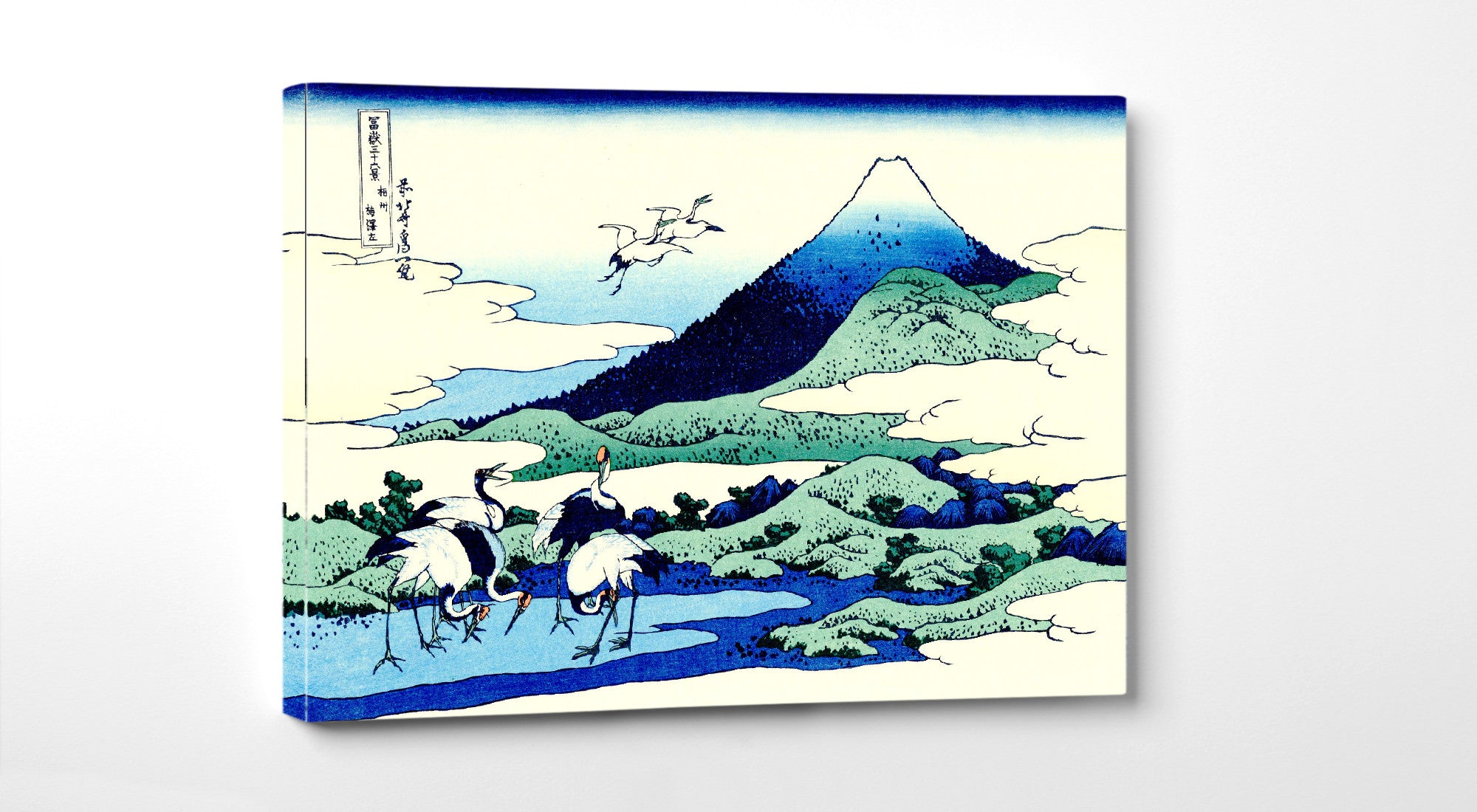
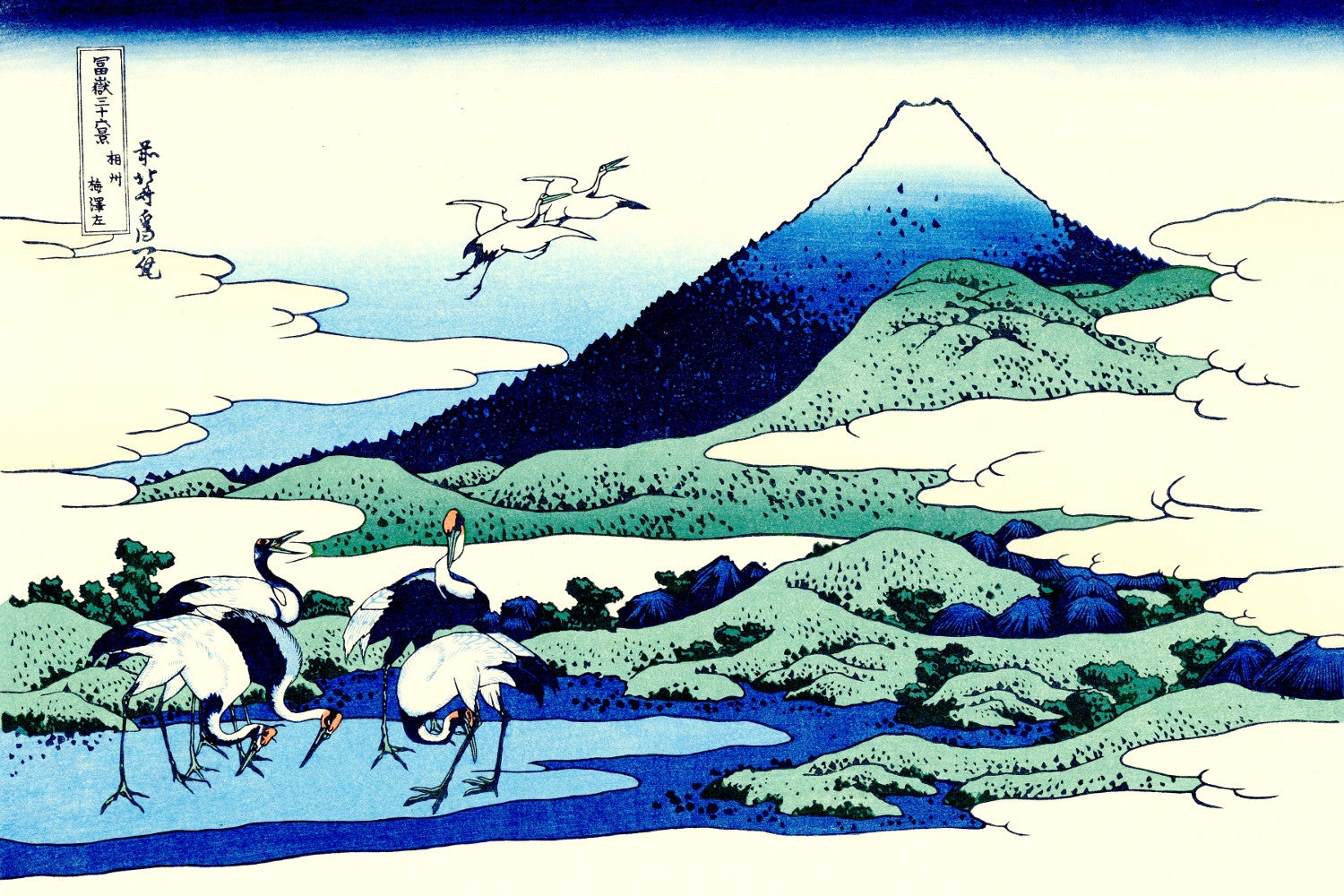
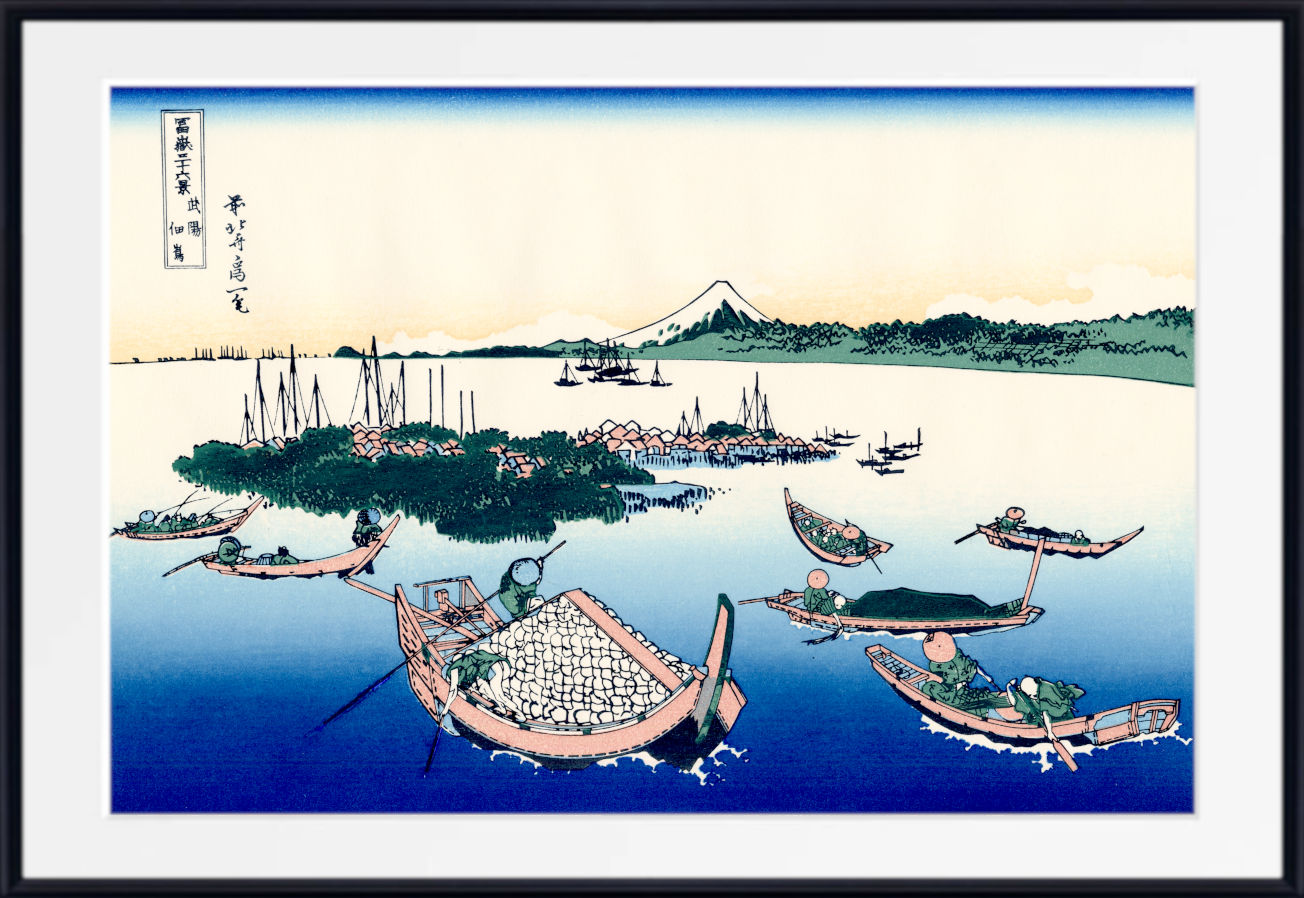
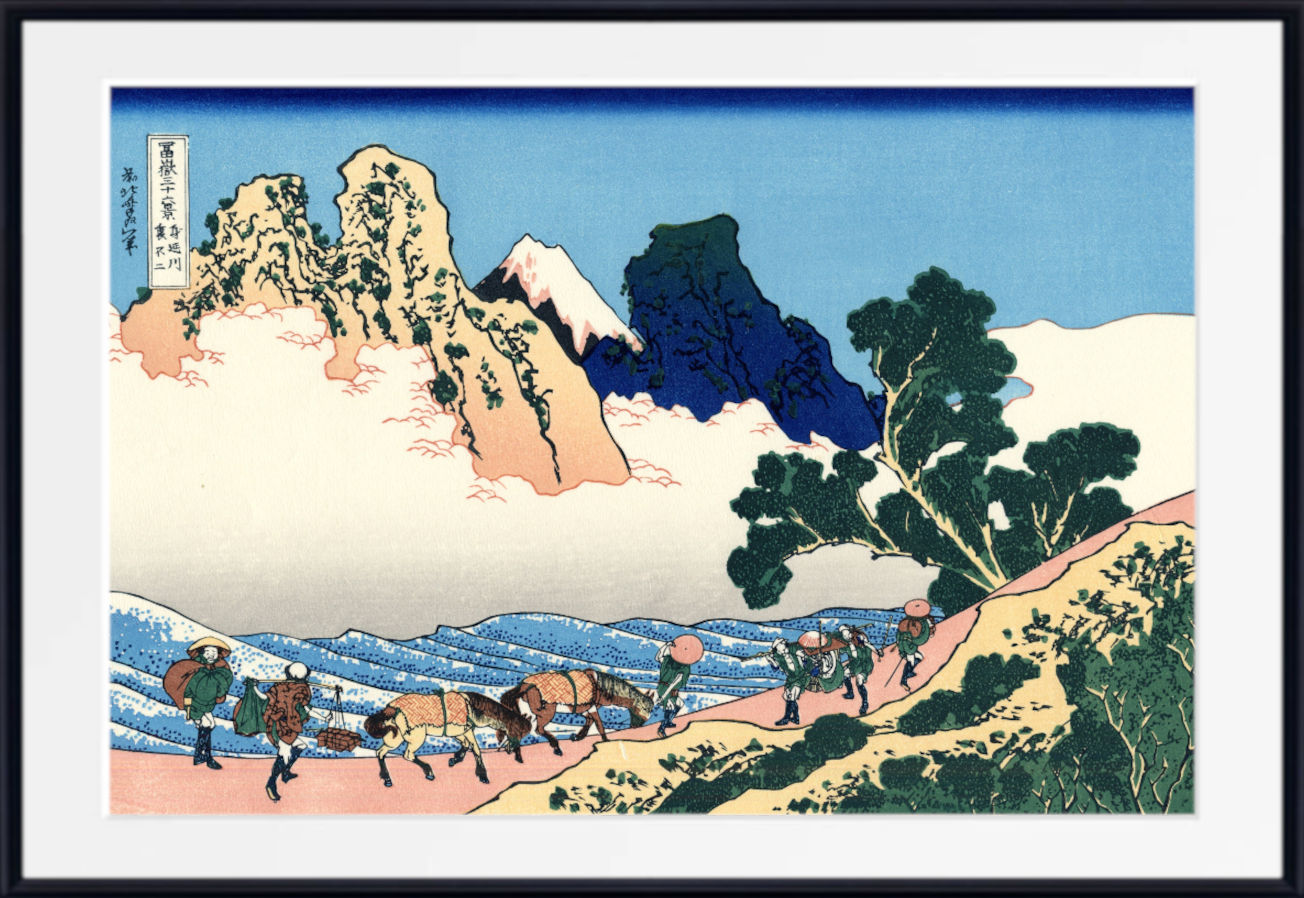
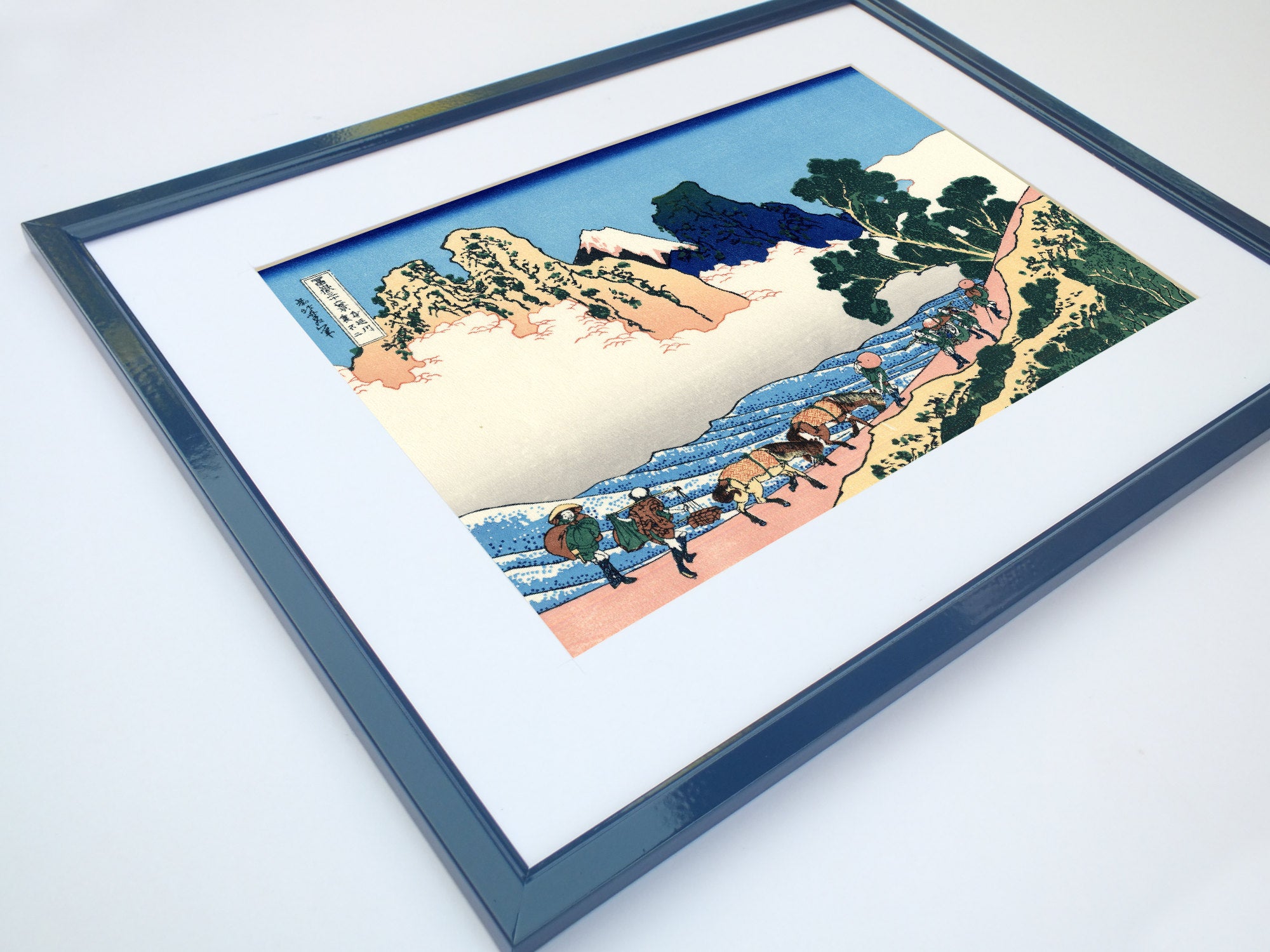
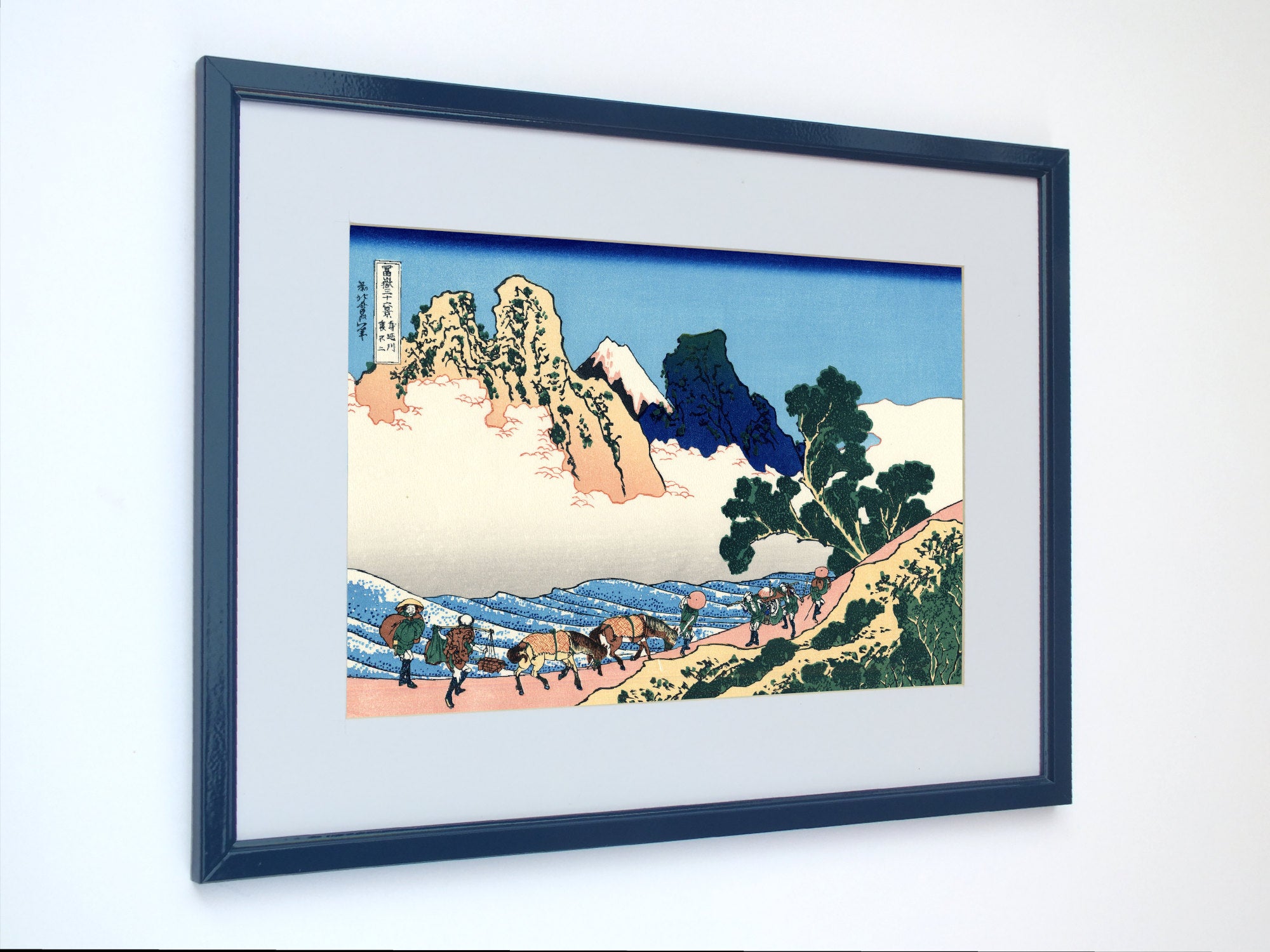
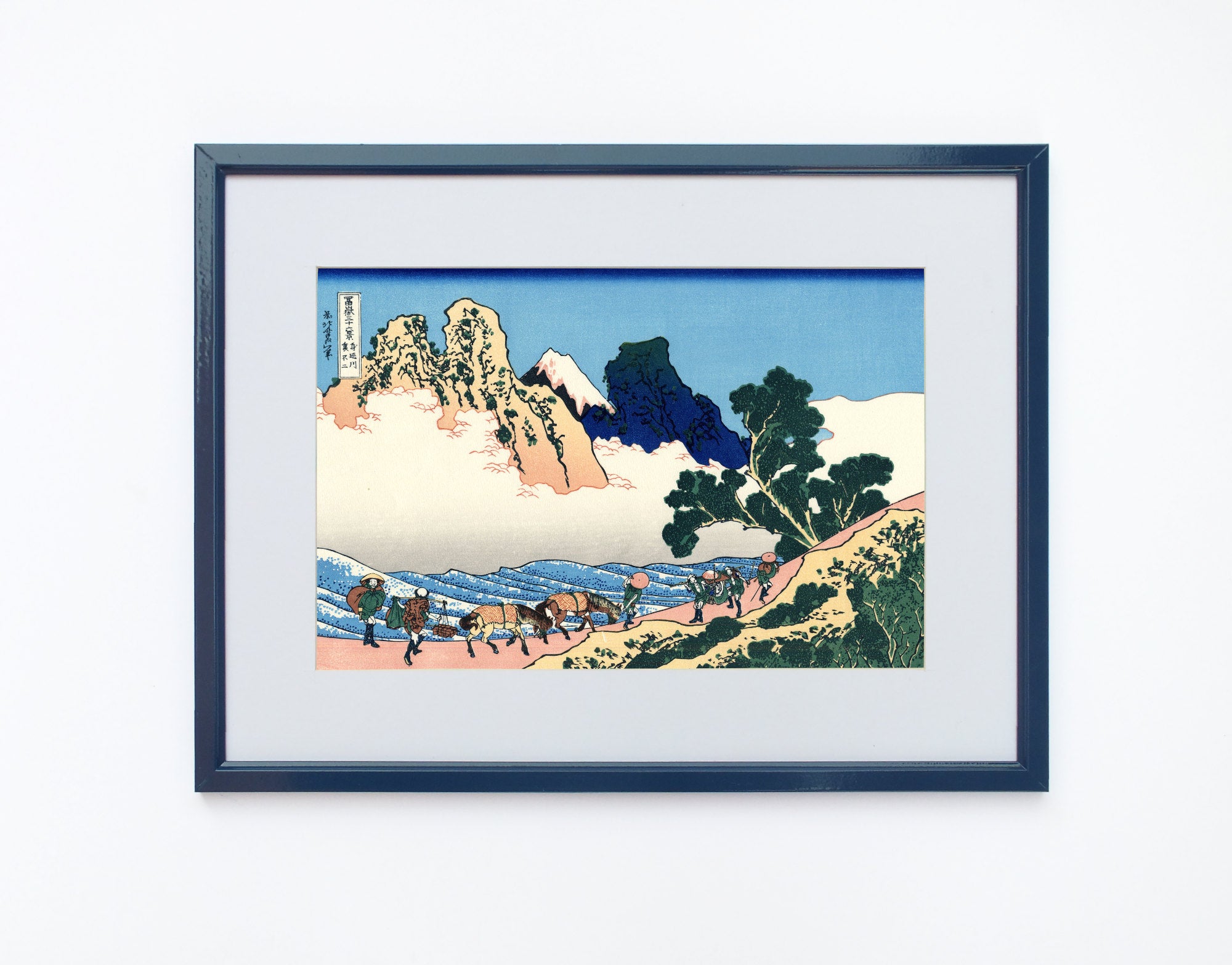
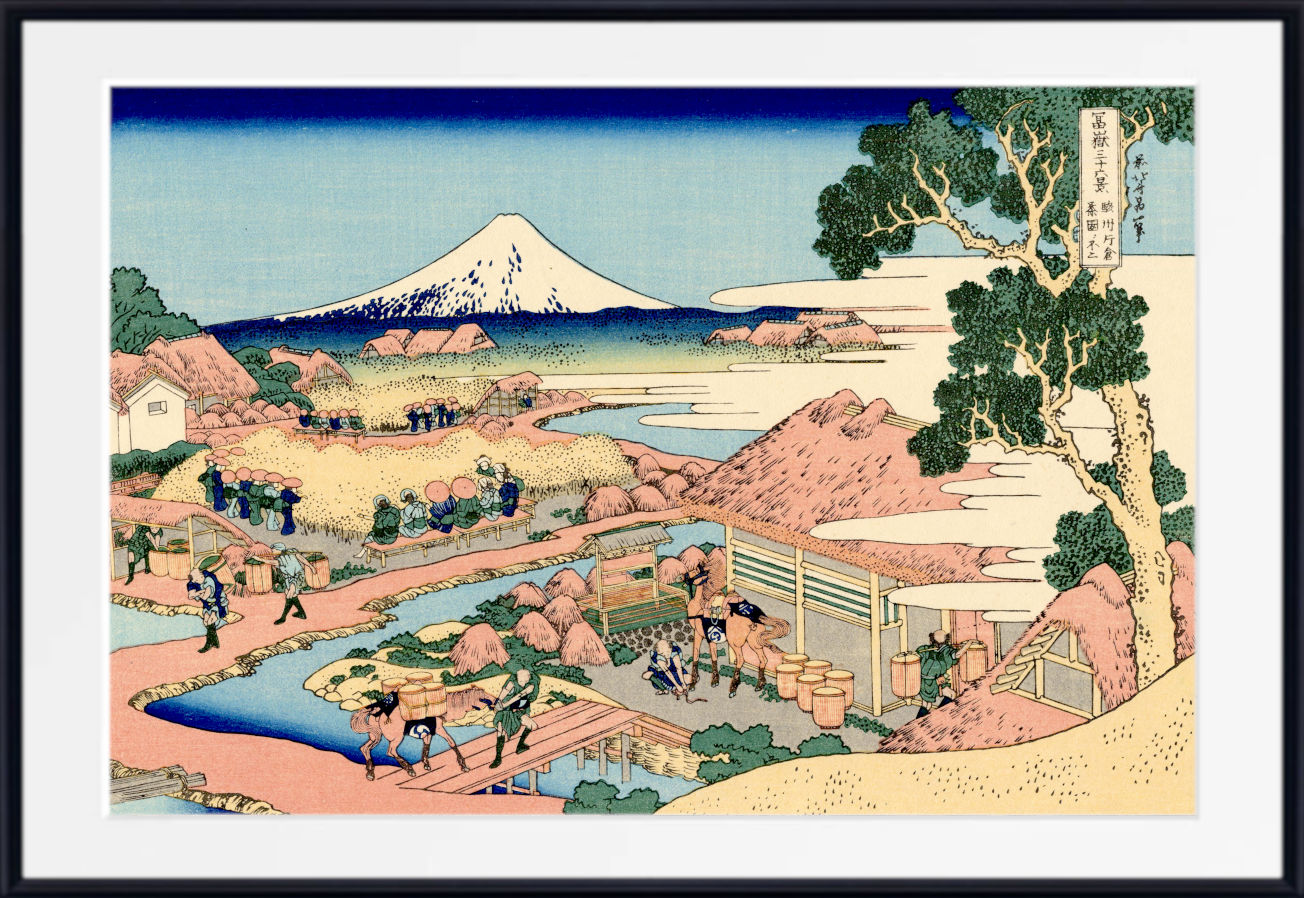
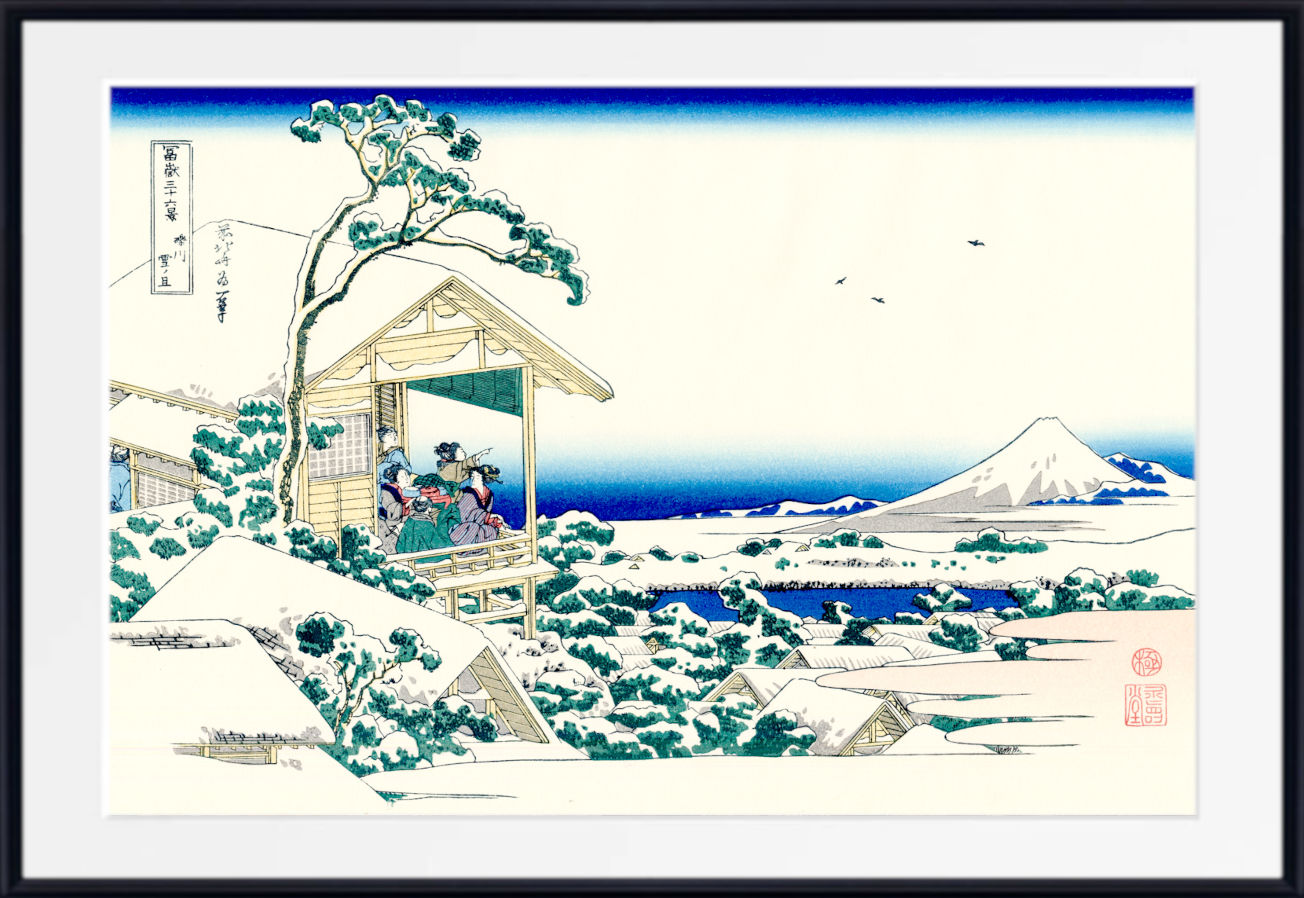
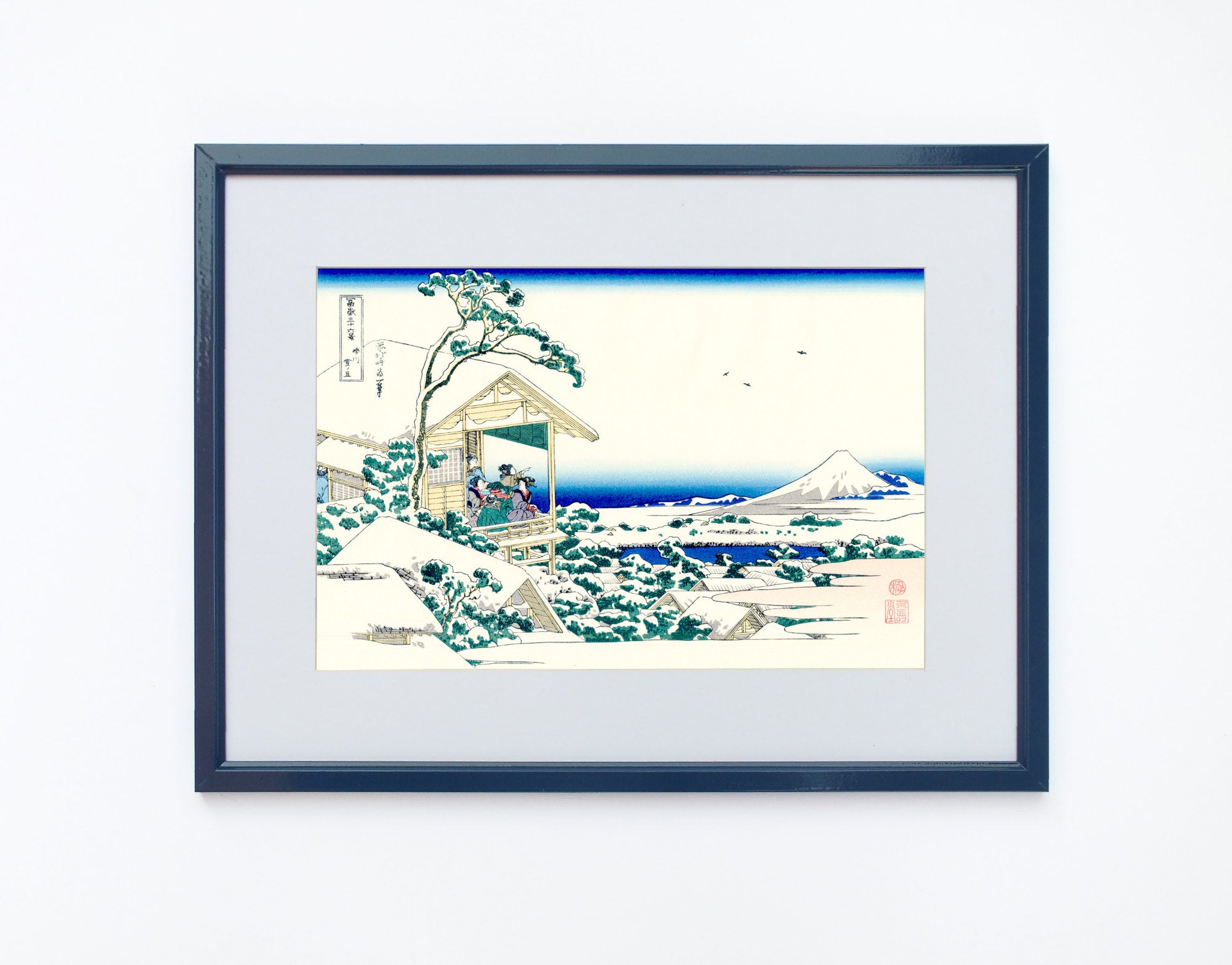
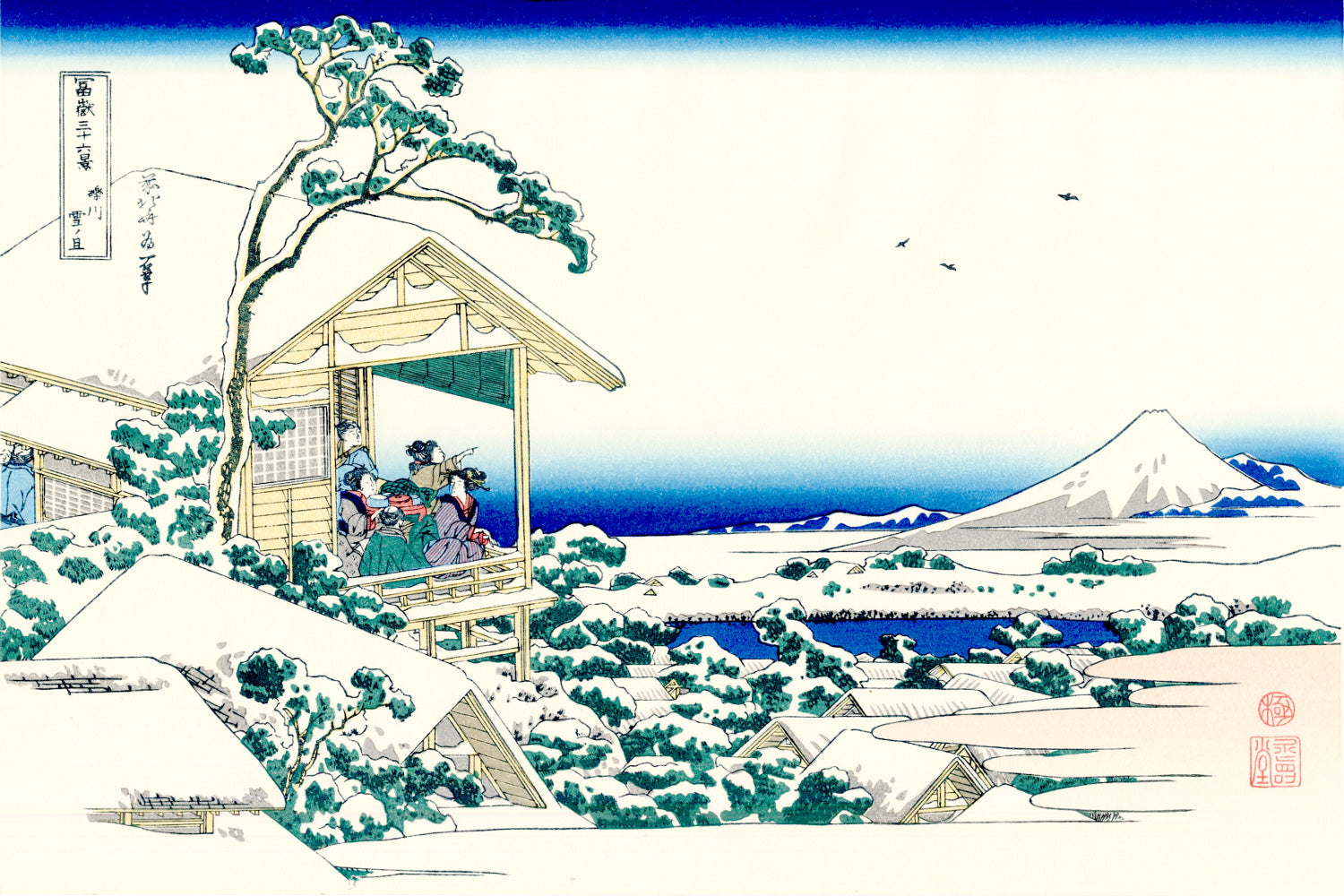
The series explores Fuji from numerous locations and under dramatically different conditions.
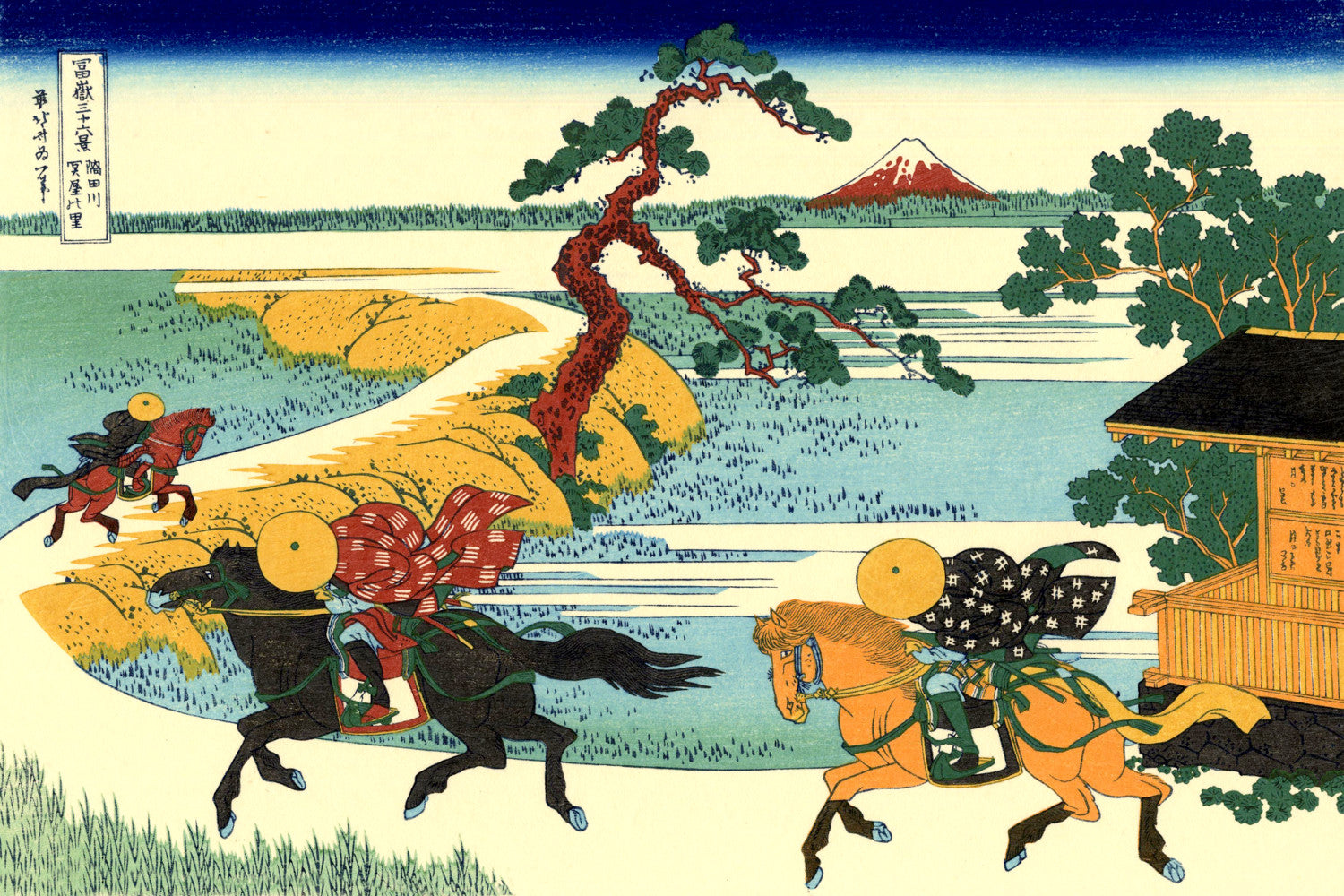
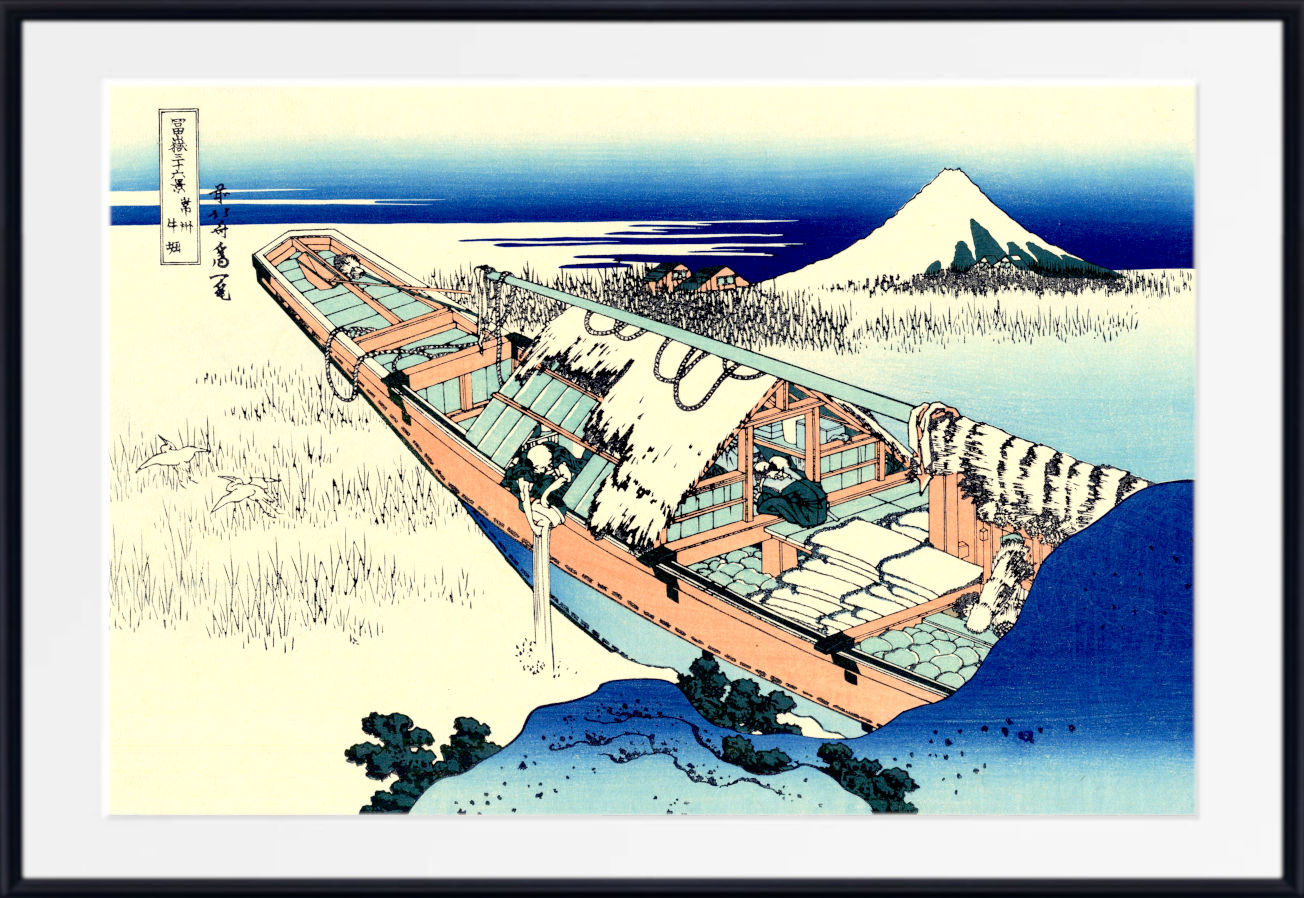
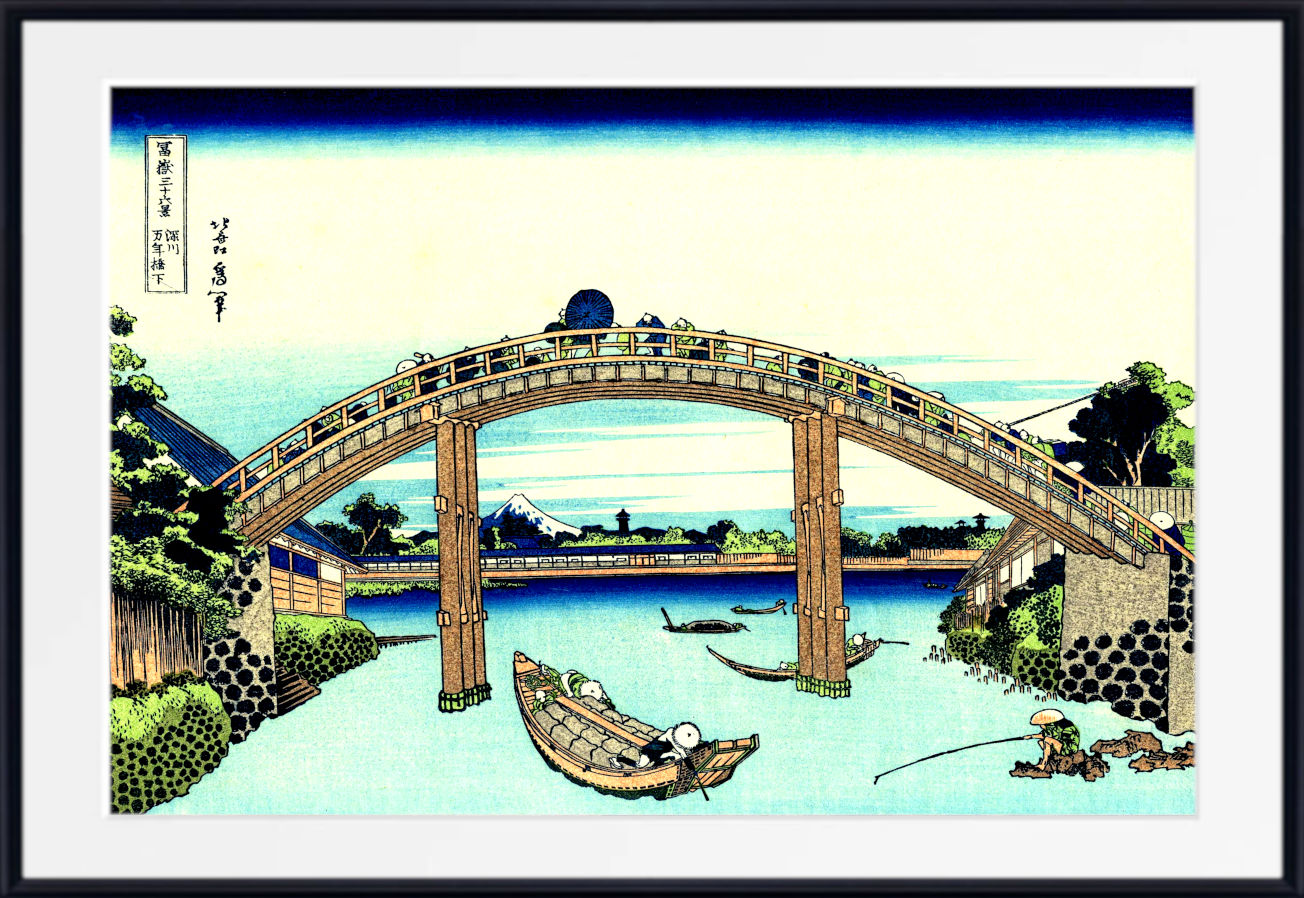
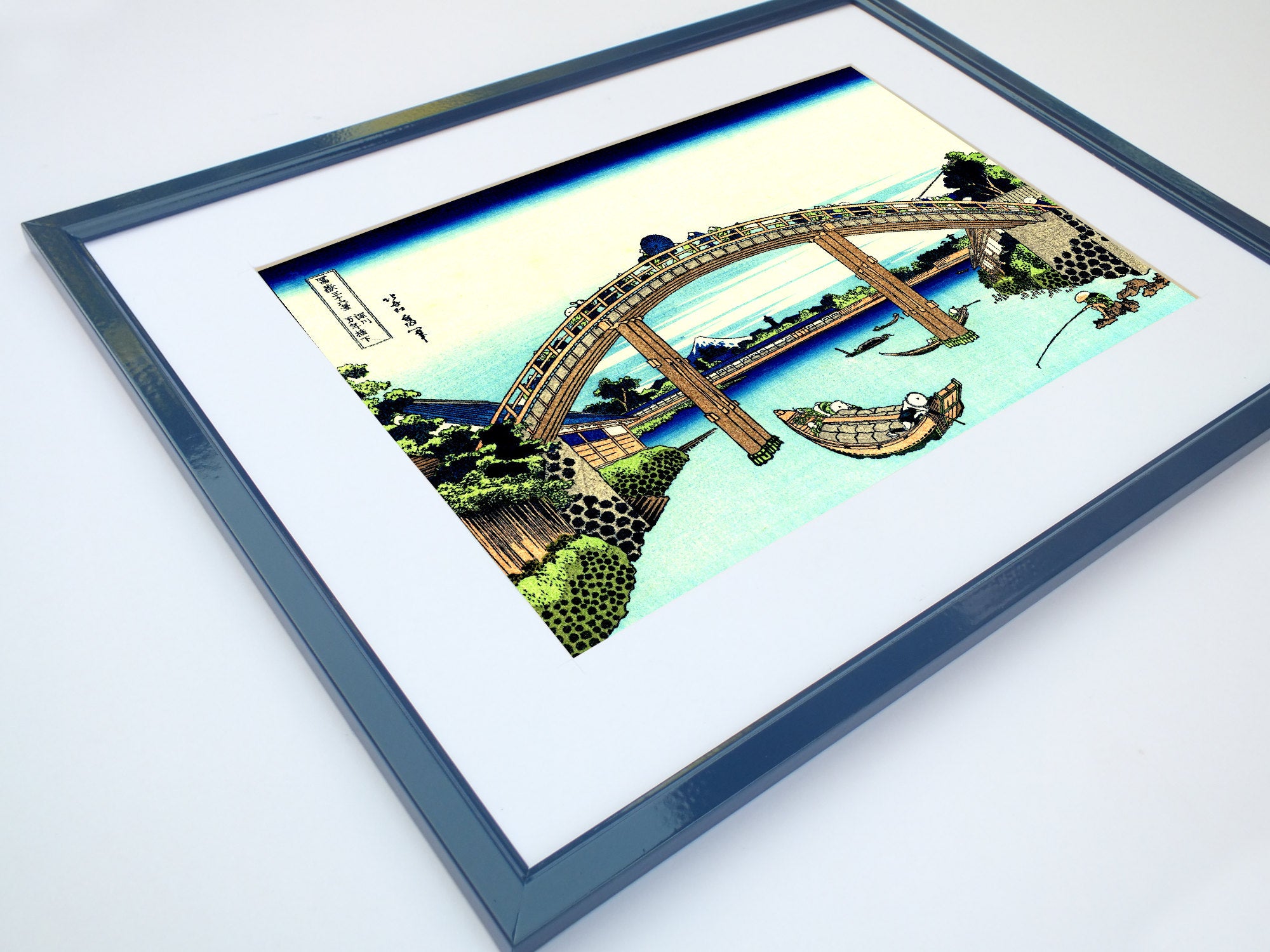
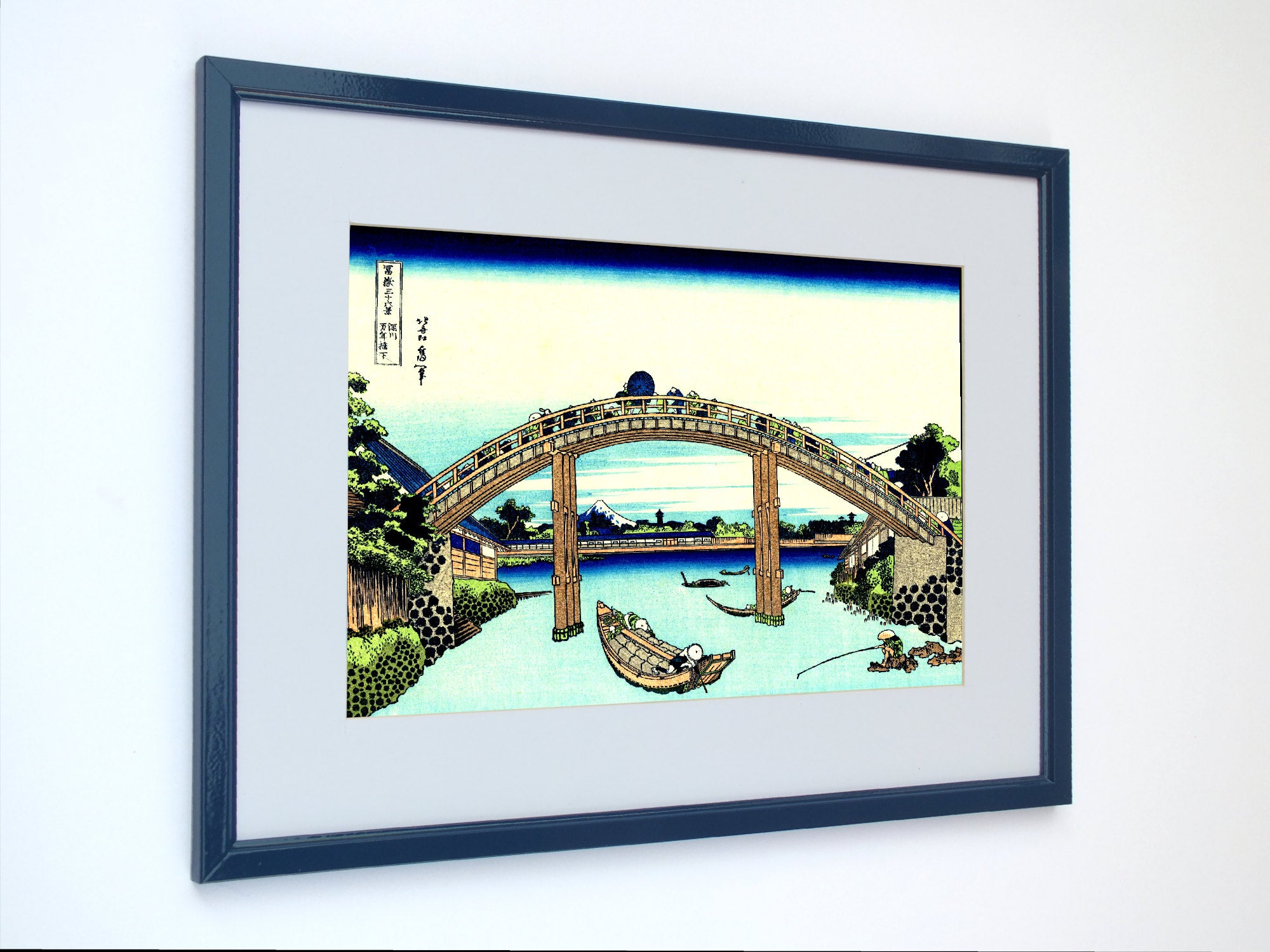
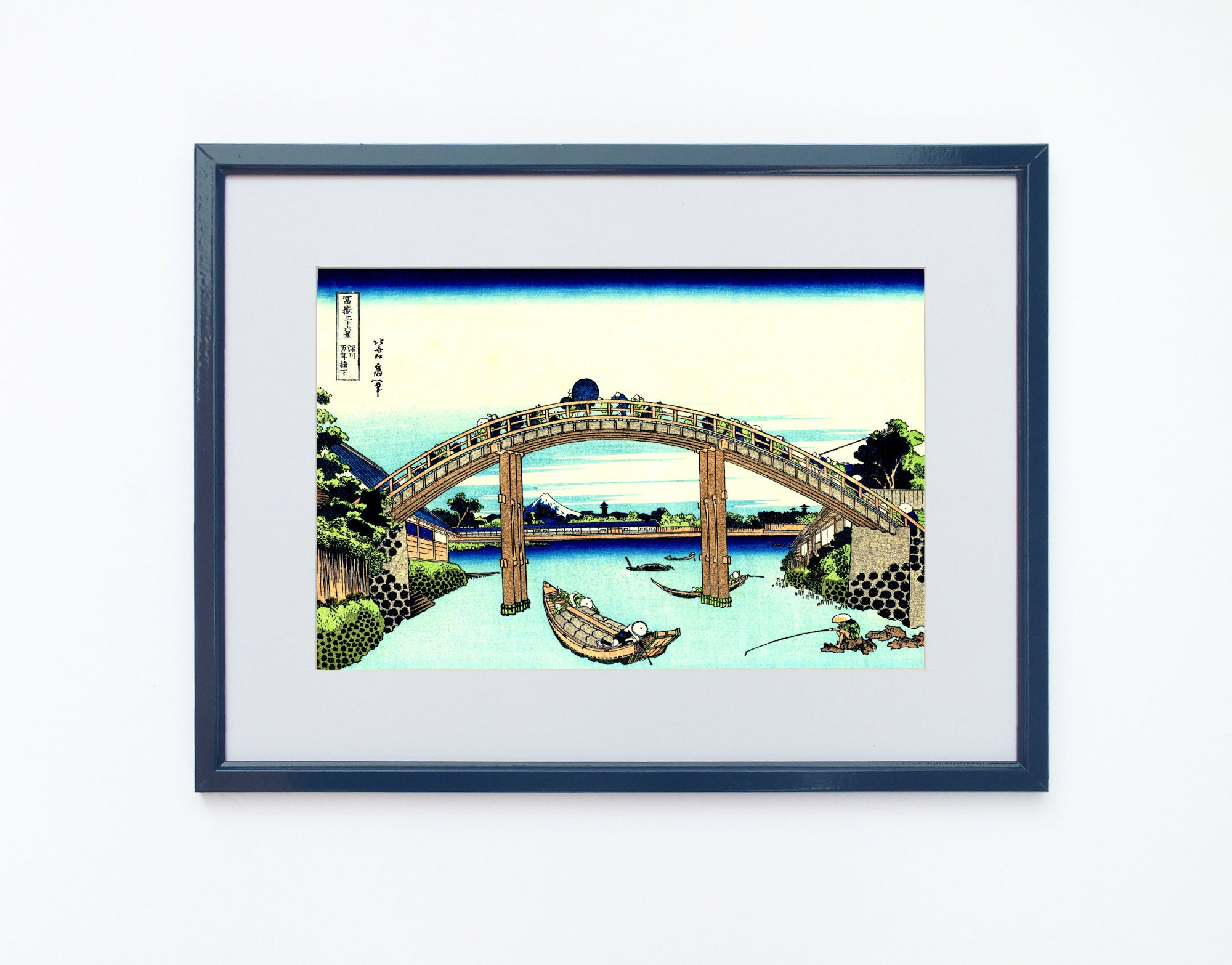
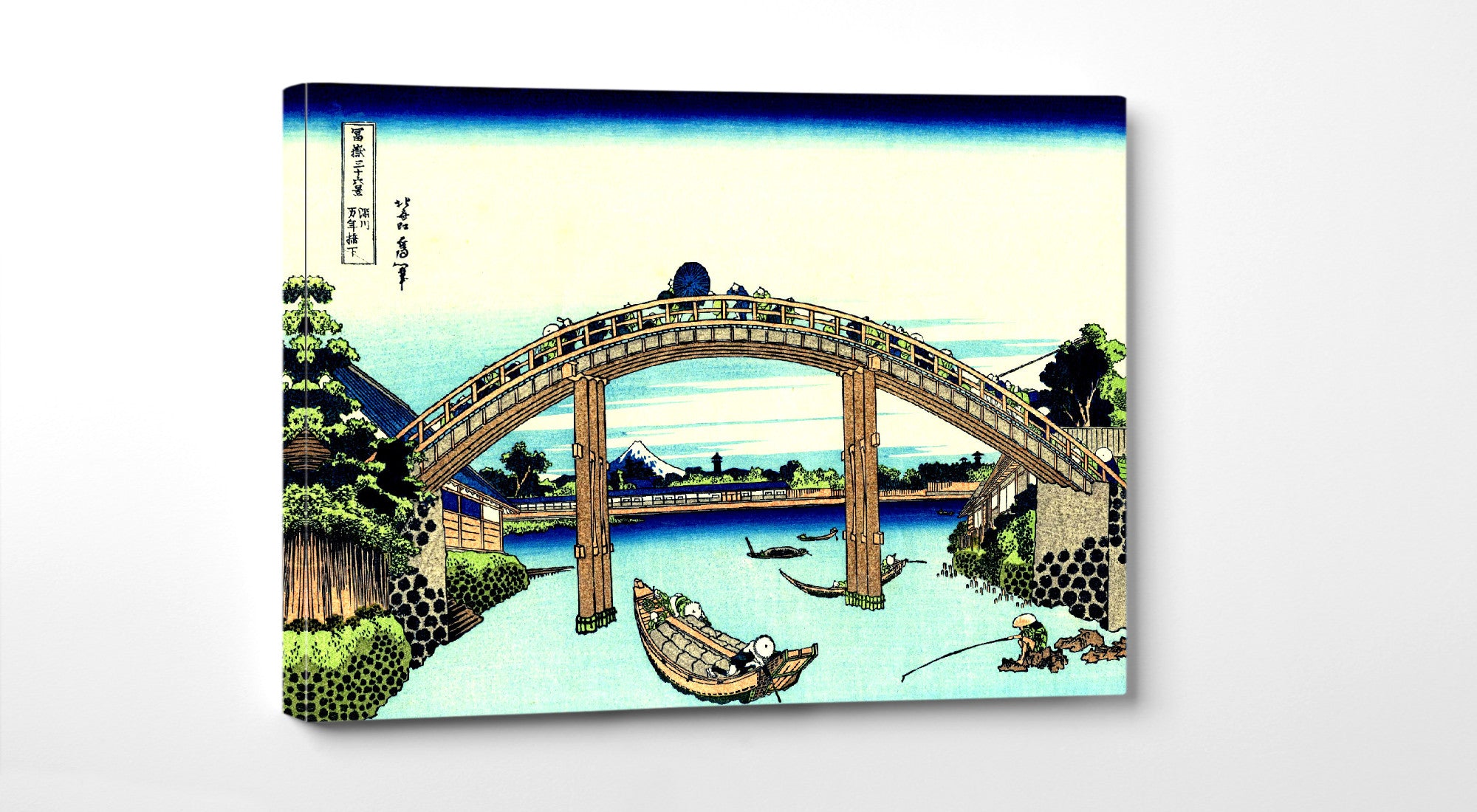
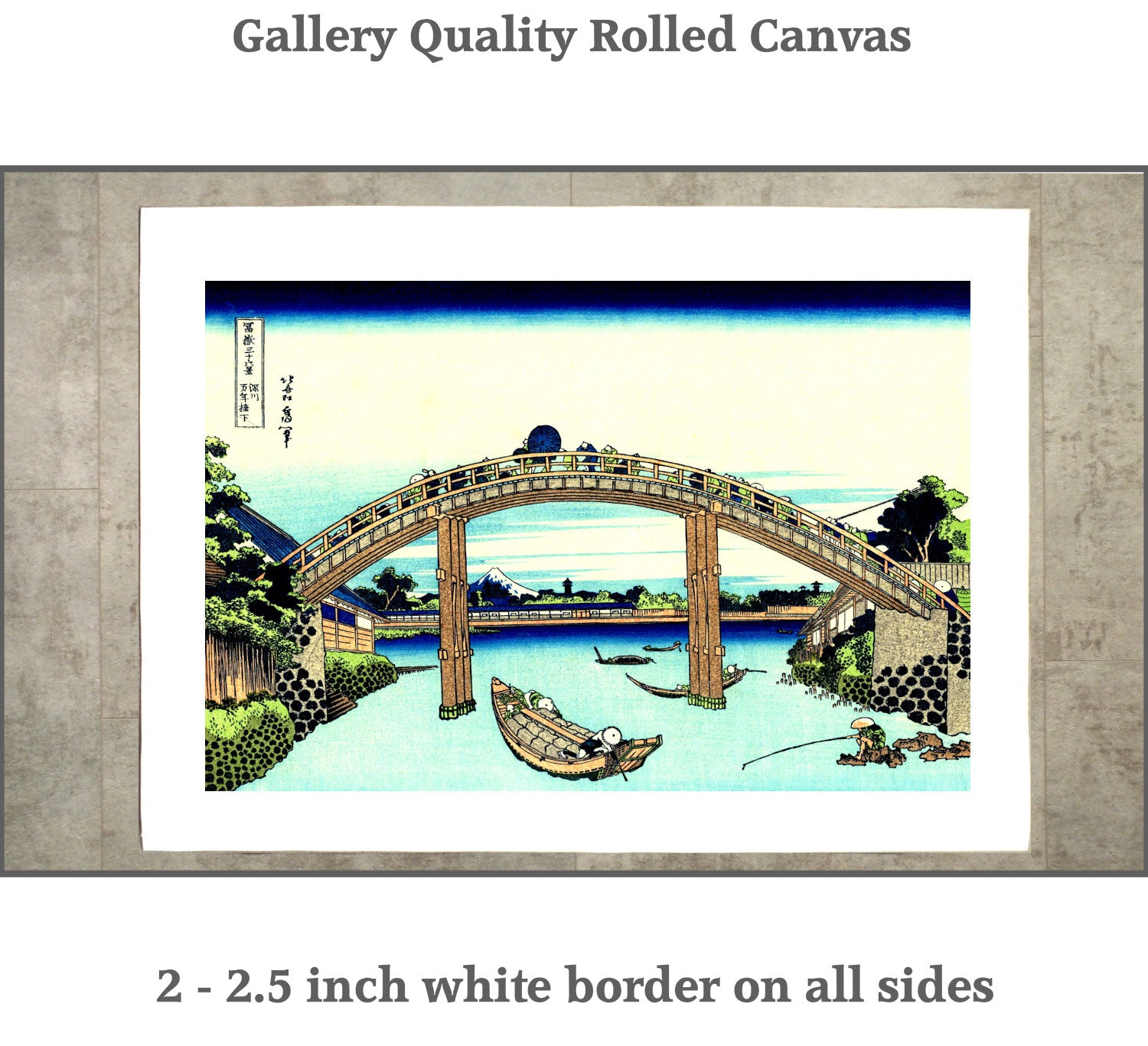
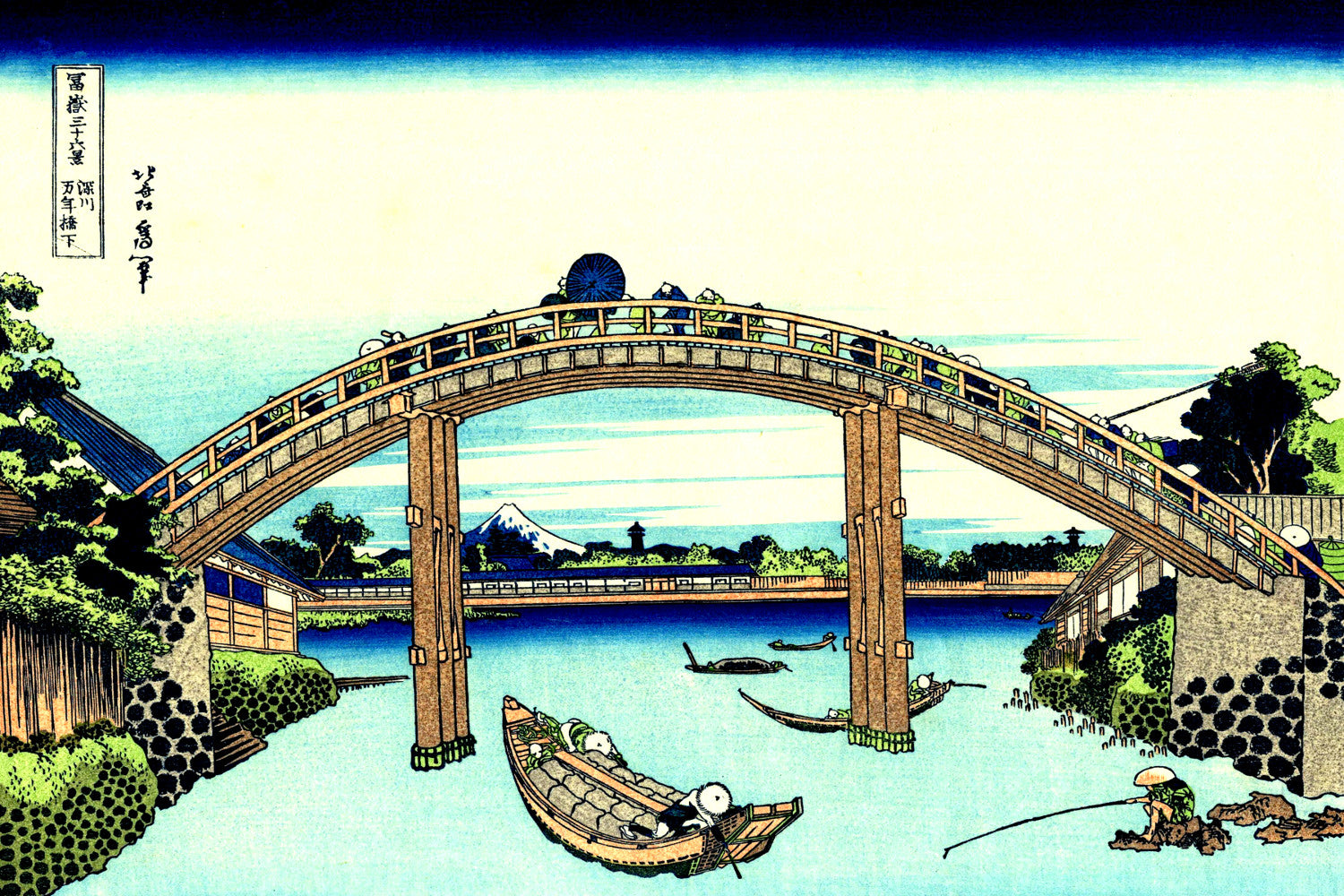
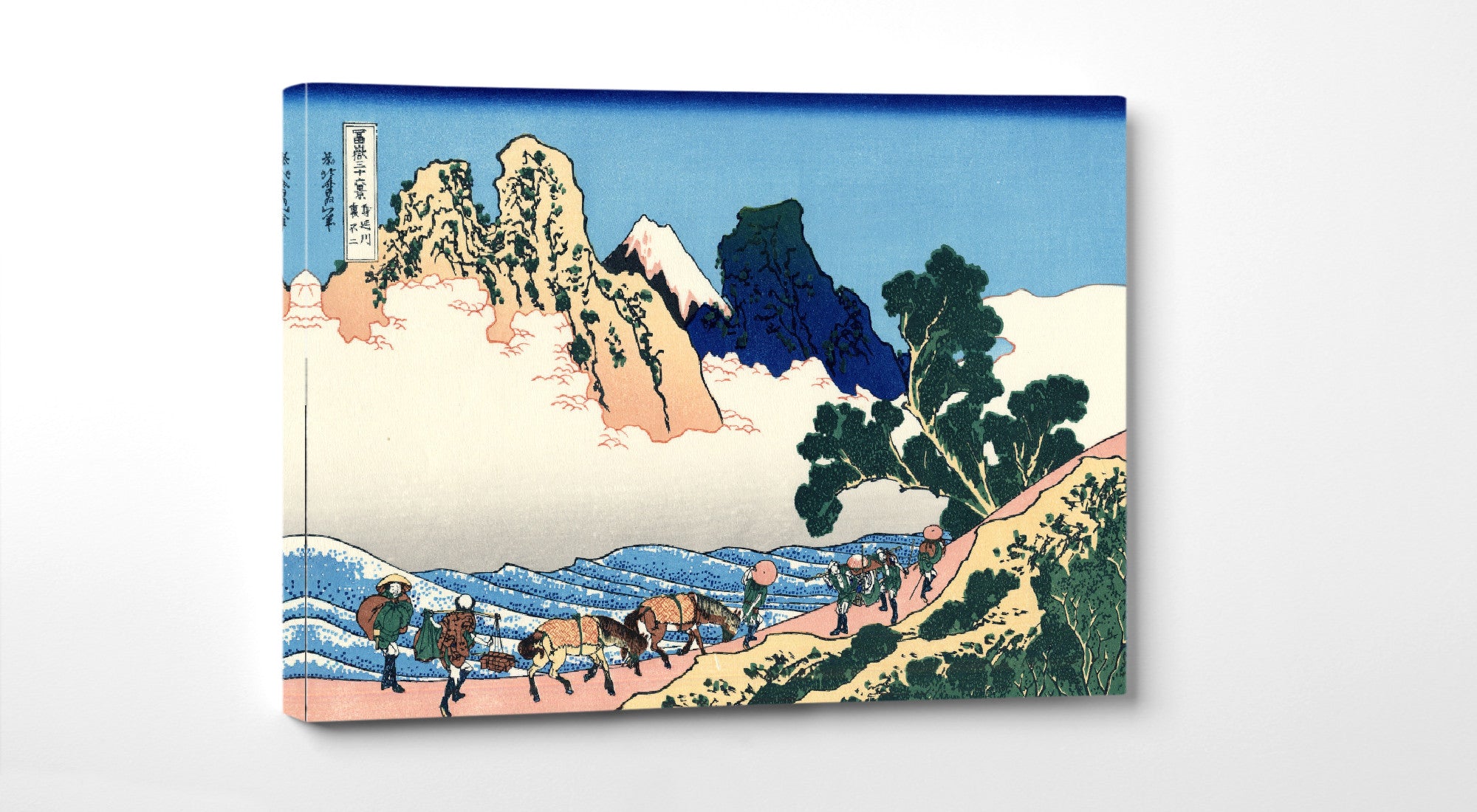
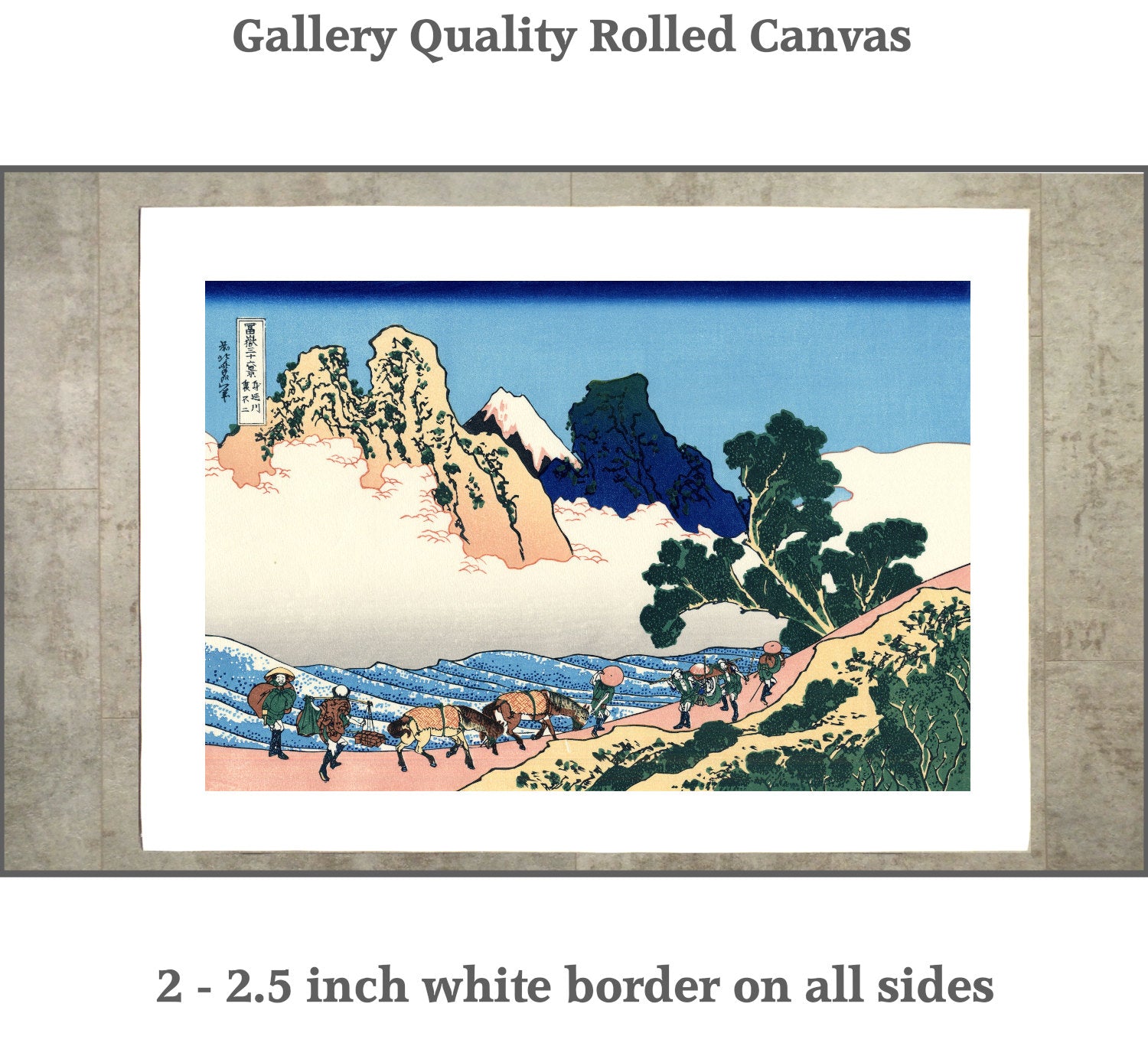
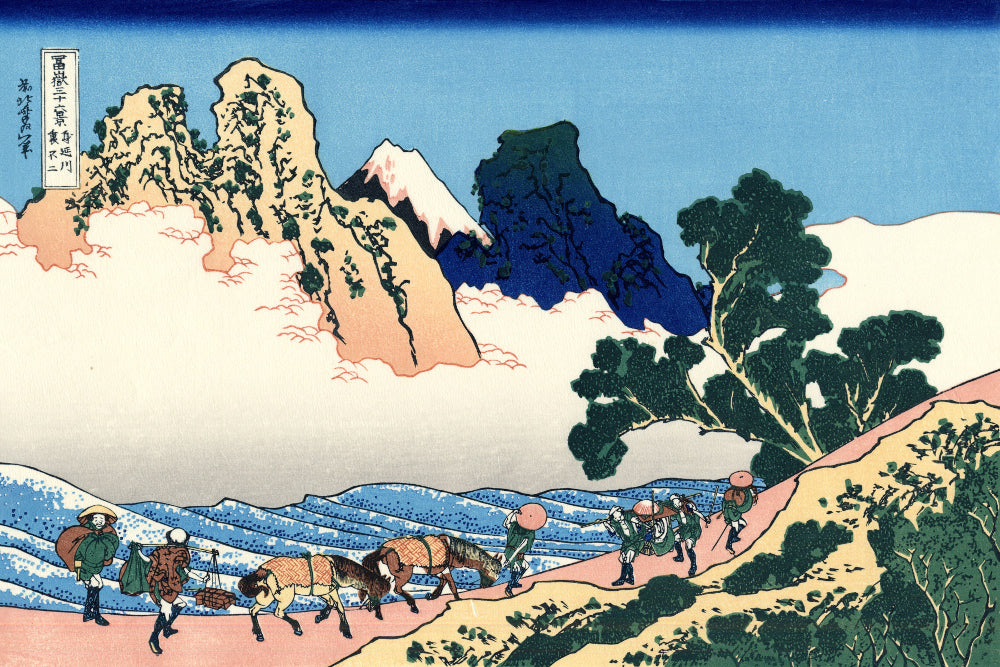
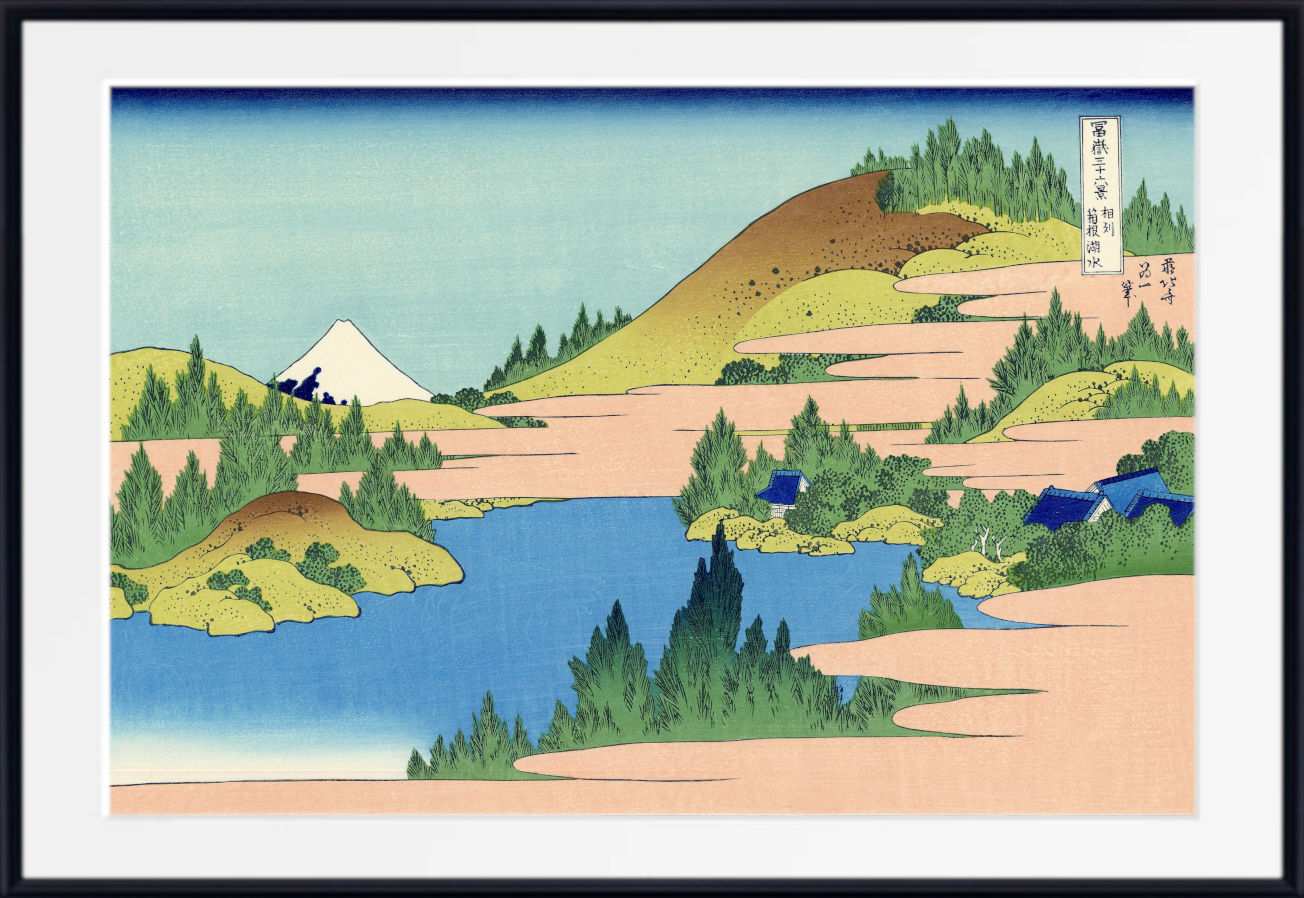
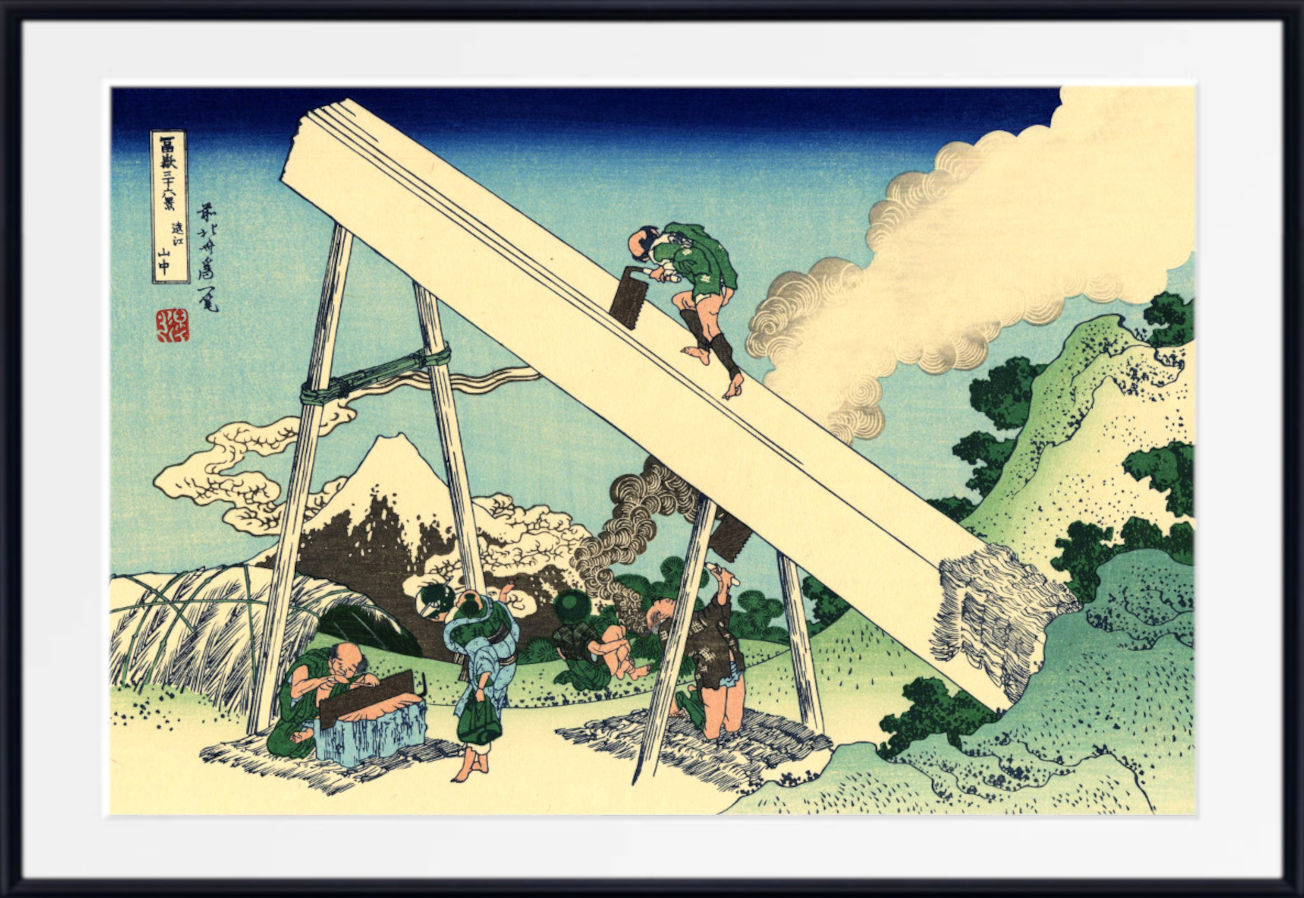
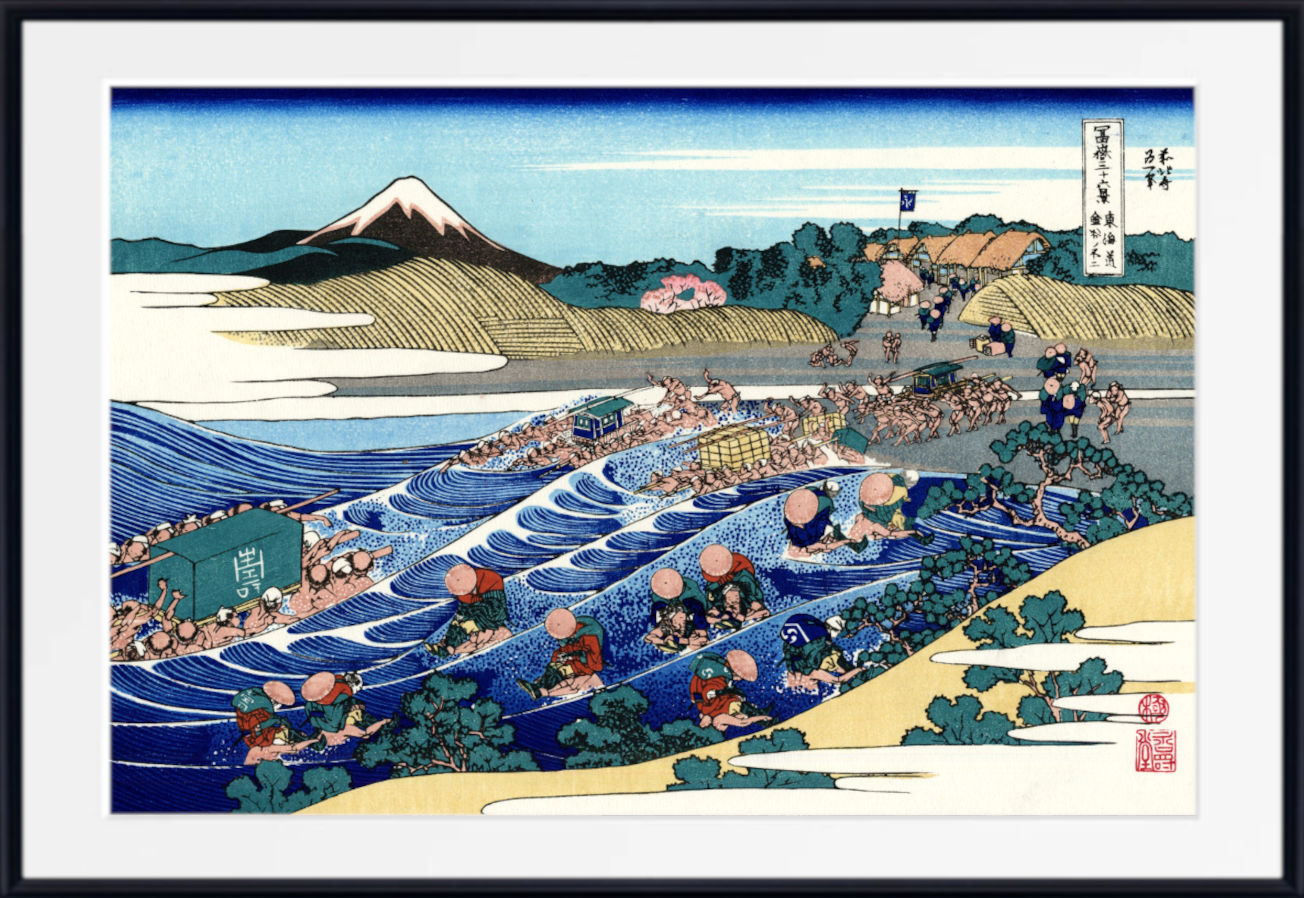
Sometimes the mountain dominates the landscape. Elsewhere it becomes a tiny triangular shape glimpsed through a bridge, barrel, trees or distant clouds.
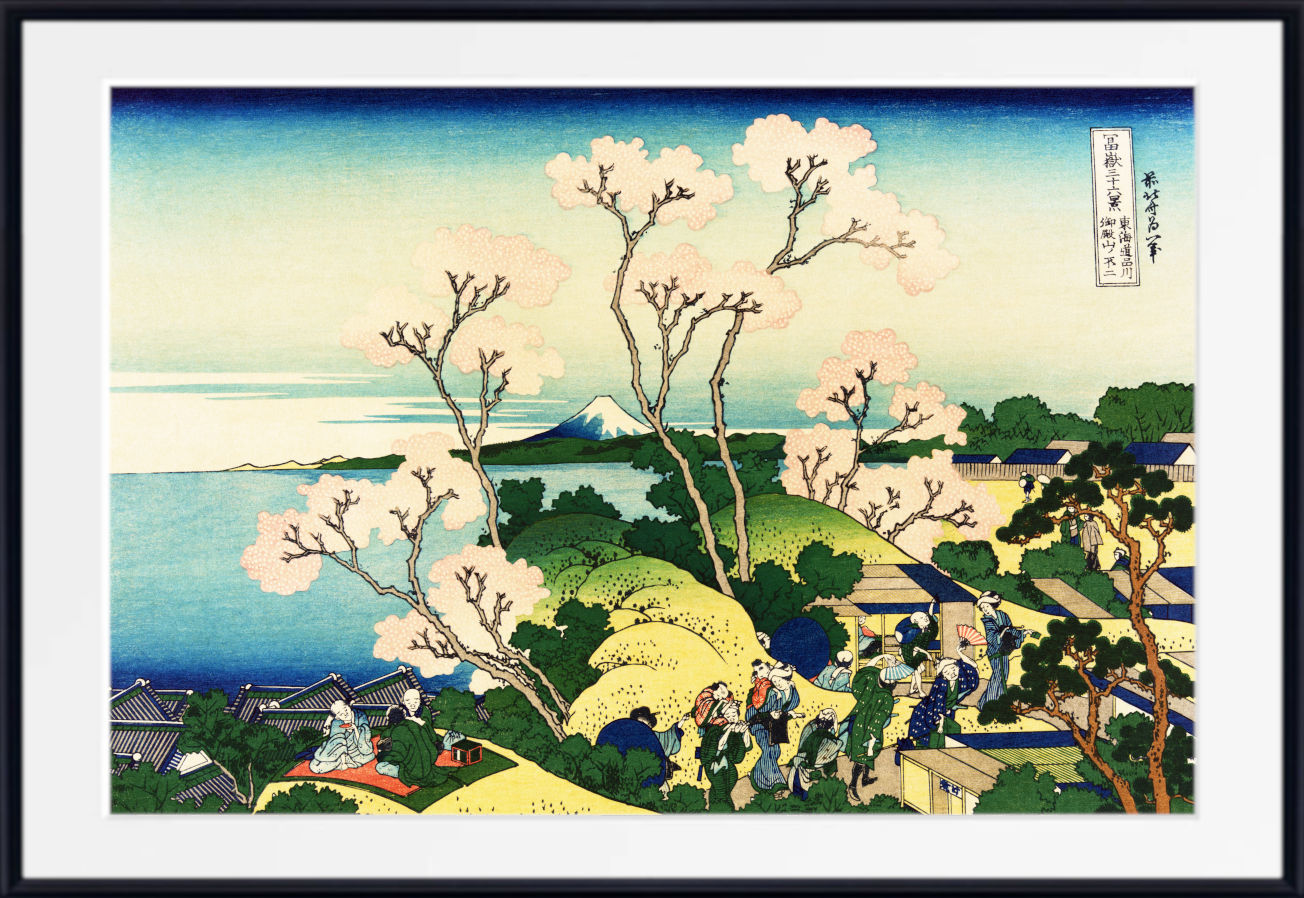
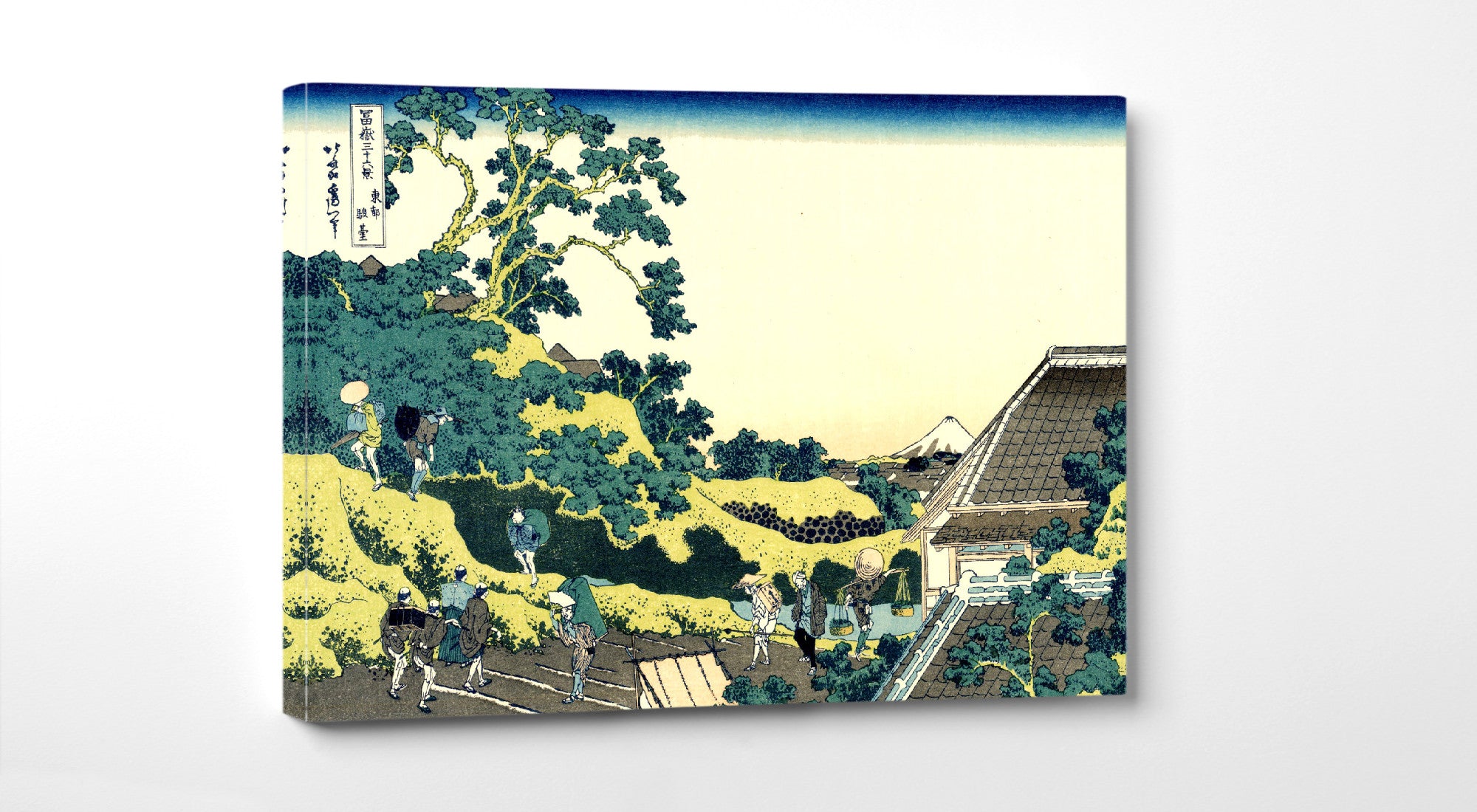
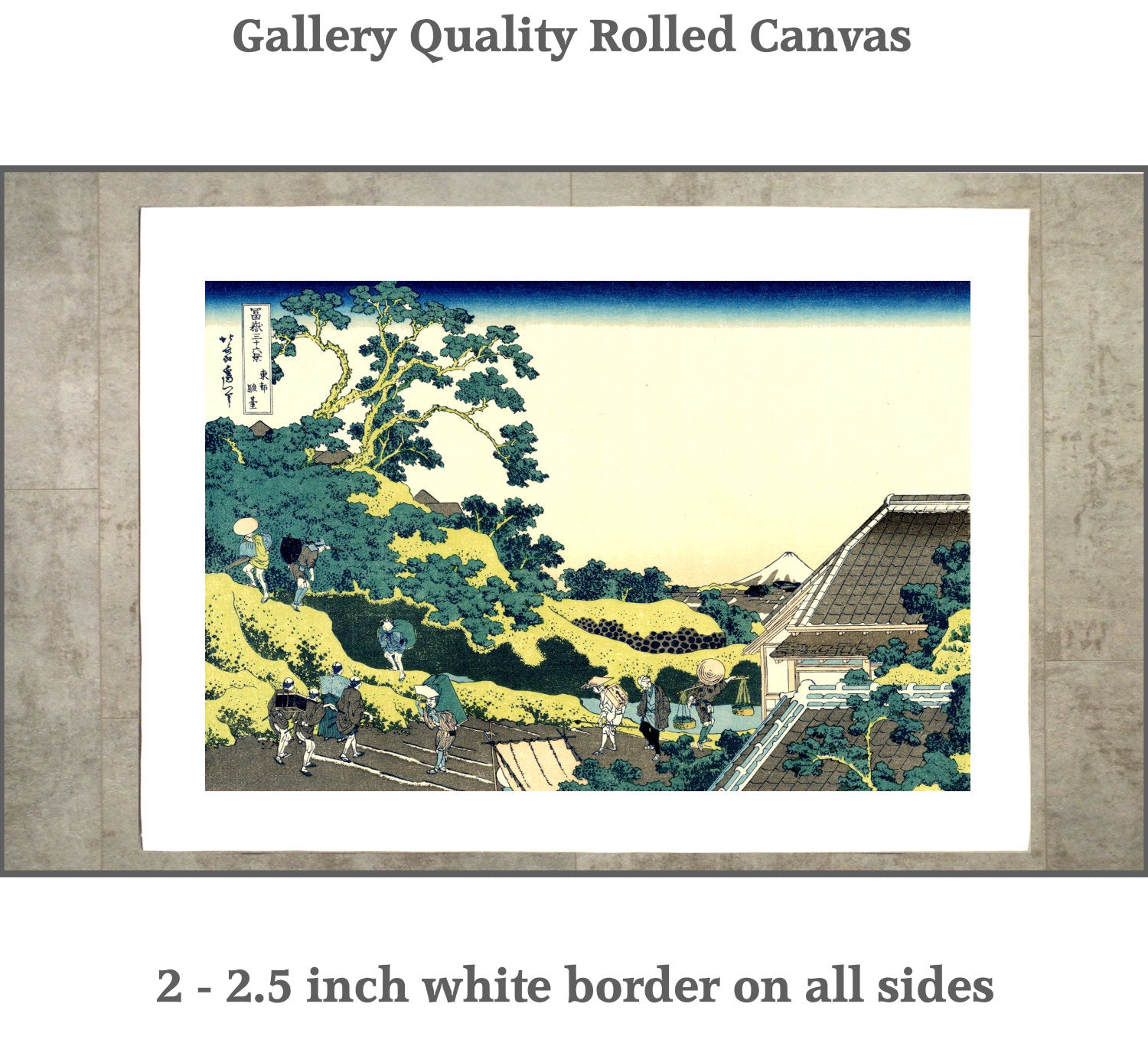
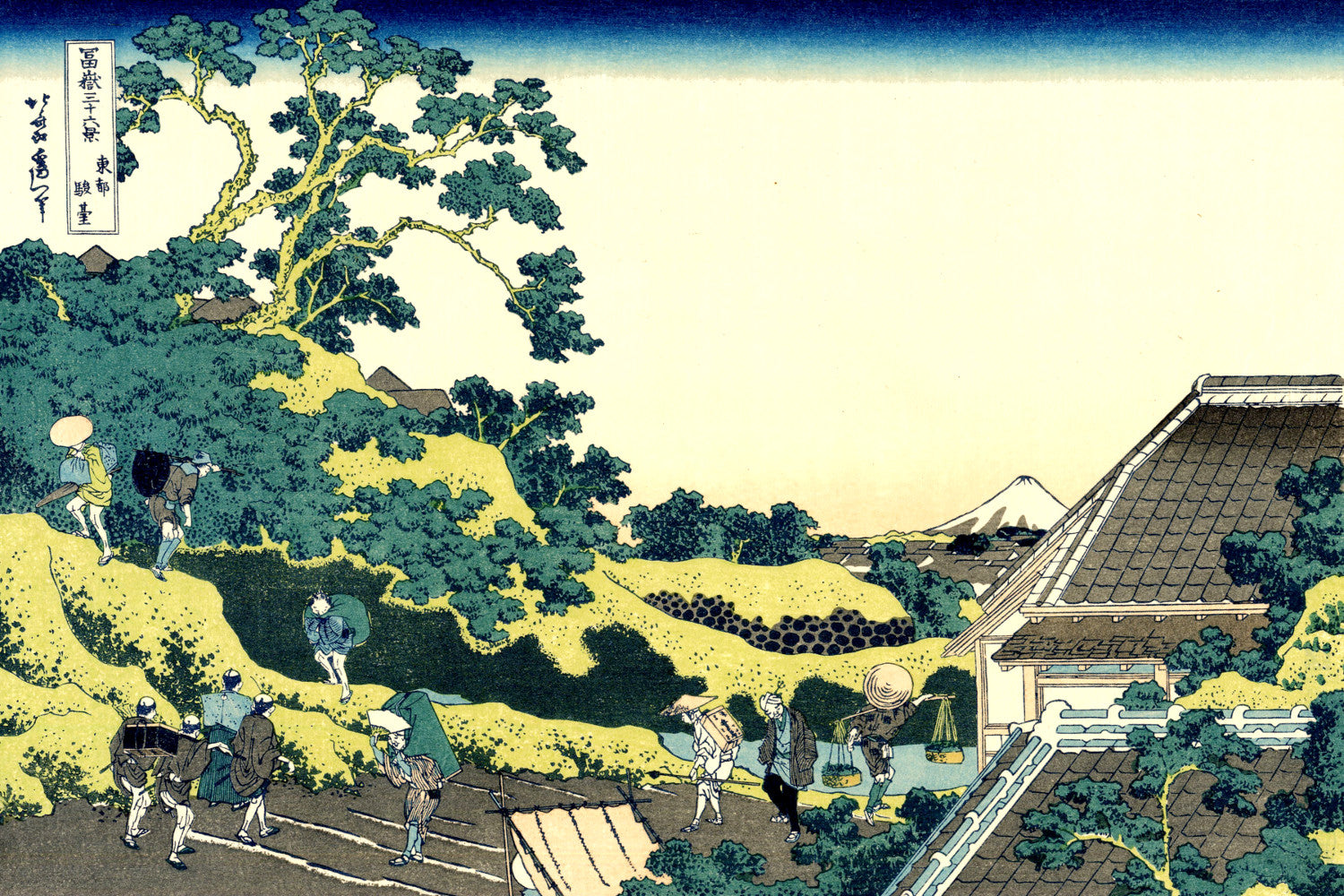
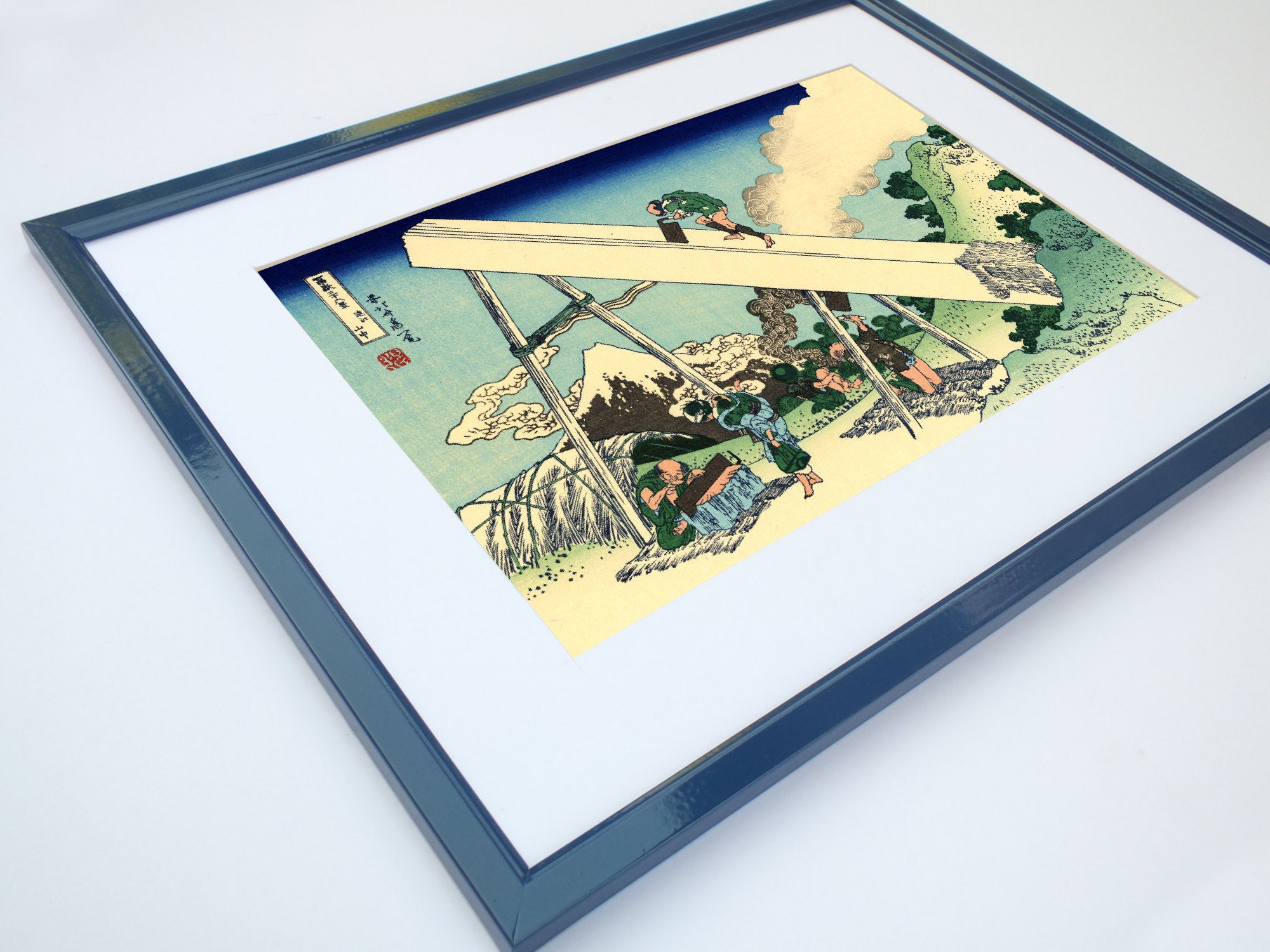
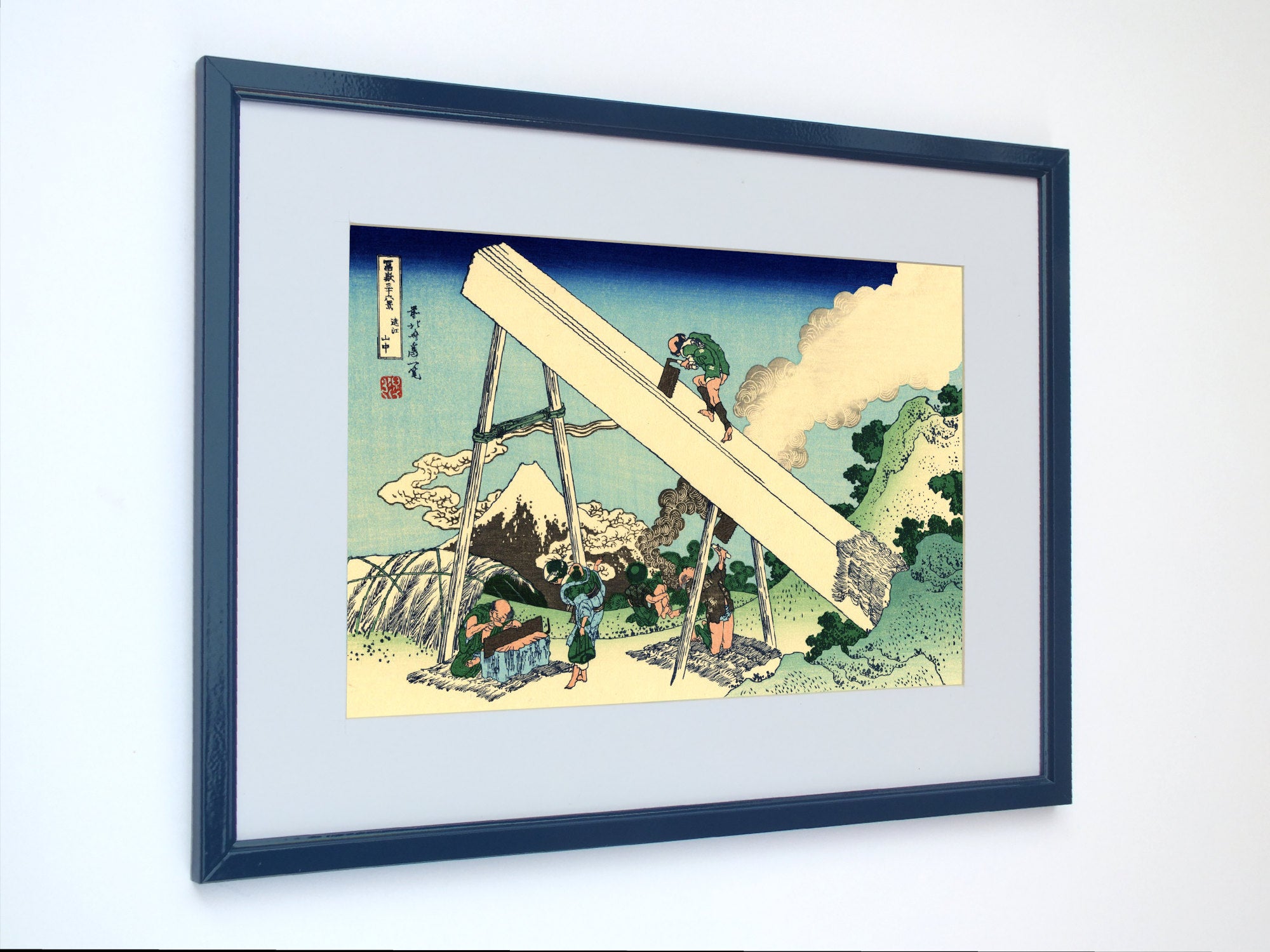
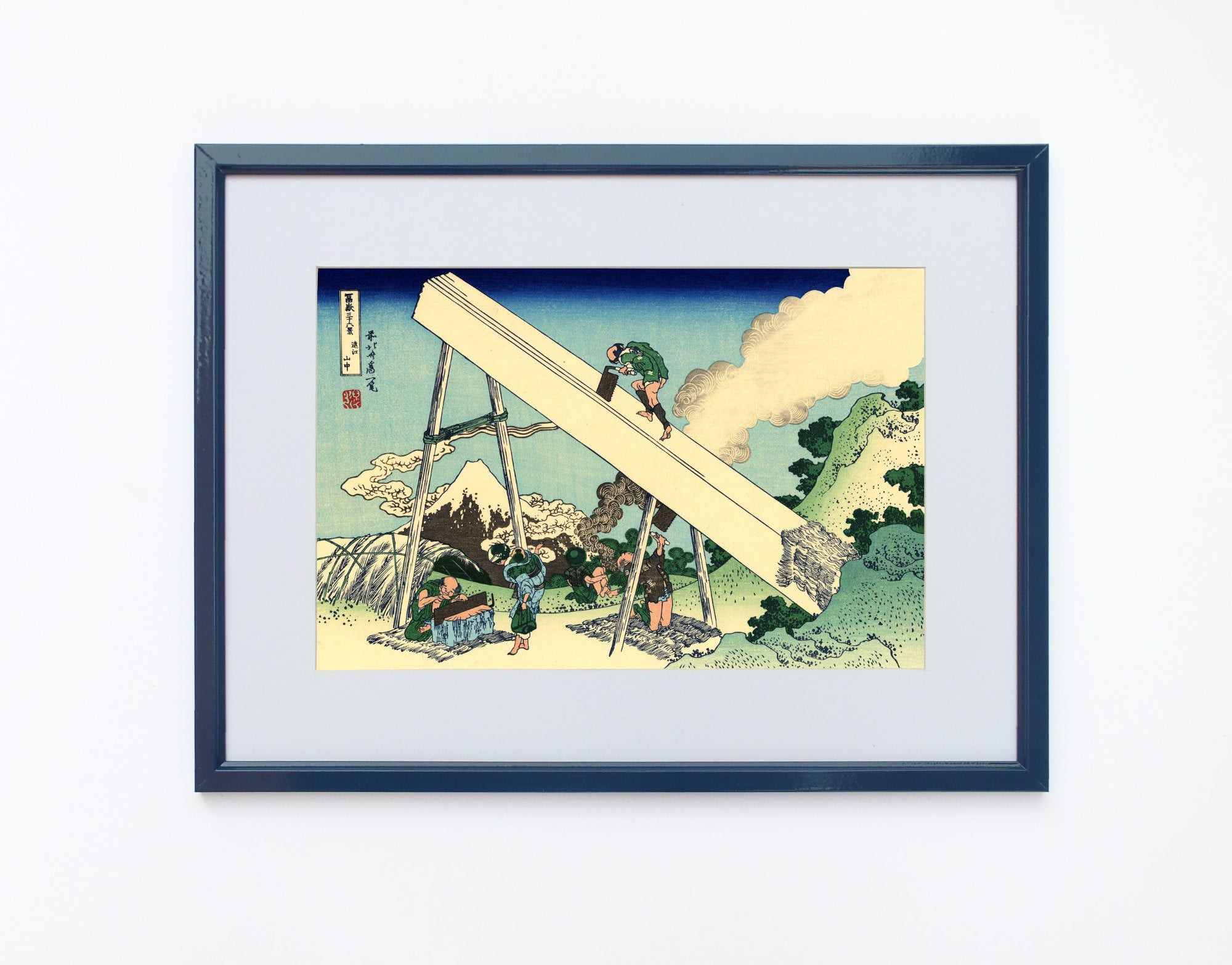
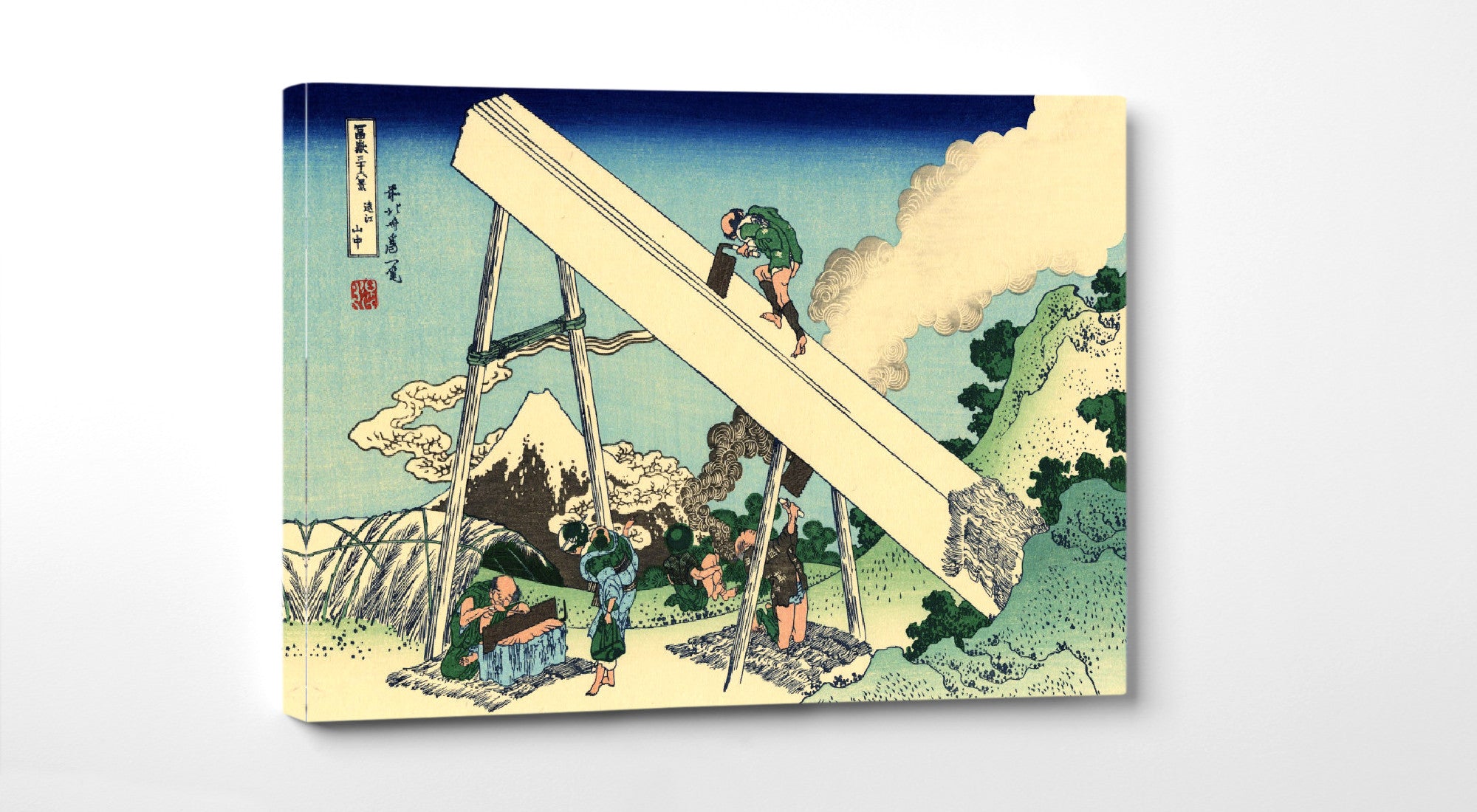
Hokusai repeatedly contrasts the permanence of Fuji with the changing activities of everyday life.
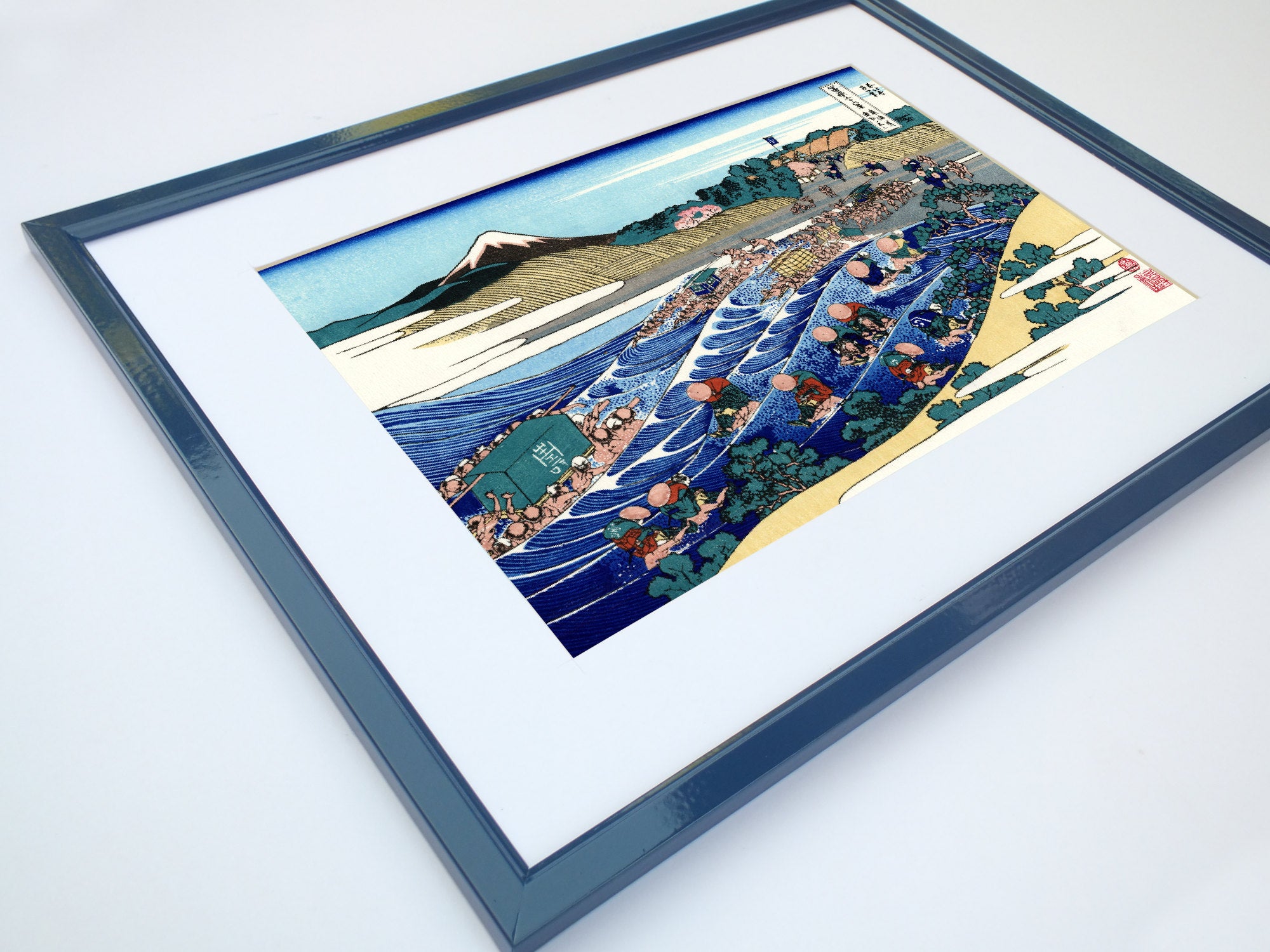
Fishermen cast lines, travellers walk along roads, craftsmen work, boats cross rivers and sudden weather transforms the landscape while the mountain remains in the distance.
The series proved so successful that it ultimately expanded beyond its original thirty-six designs.
GalleryThane maintains a separate collection devoted specifically to these works so the broader Hokusai collection can remain focused on the artist rather than competing for the same series-level search intent.
Mount Fuji in Hokusai's Art
Mount Fuji had profound cultural and spiritual significance in Japan and became one of Hokusai's most enduring subjects.
The mountain is associated with permanence, spiritual power and longevity – themes that became increasingly important to the artist as he grew older.
Hokusai did not simply repeat a standard image of Fuji.
He continually changed its scale, colour and position.
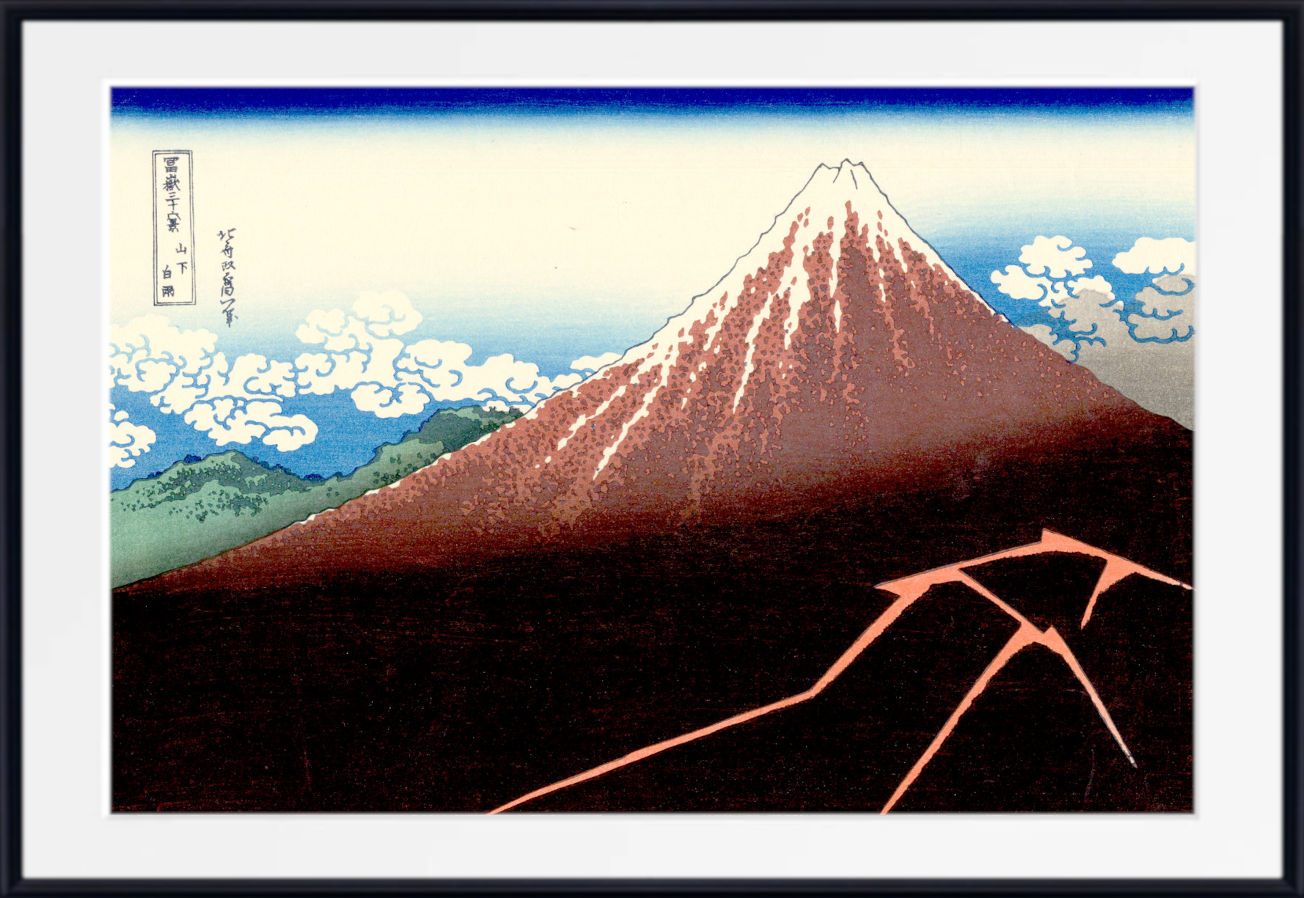
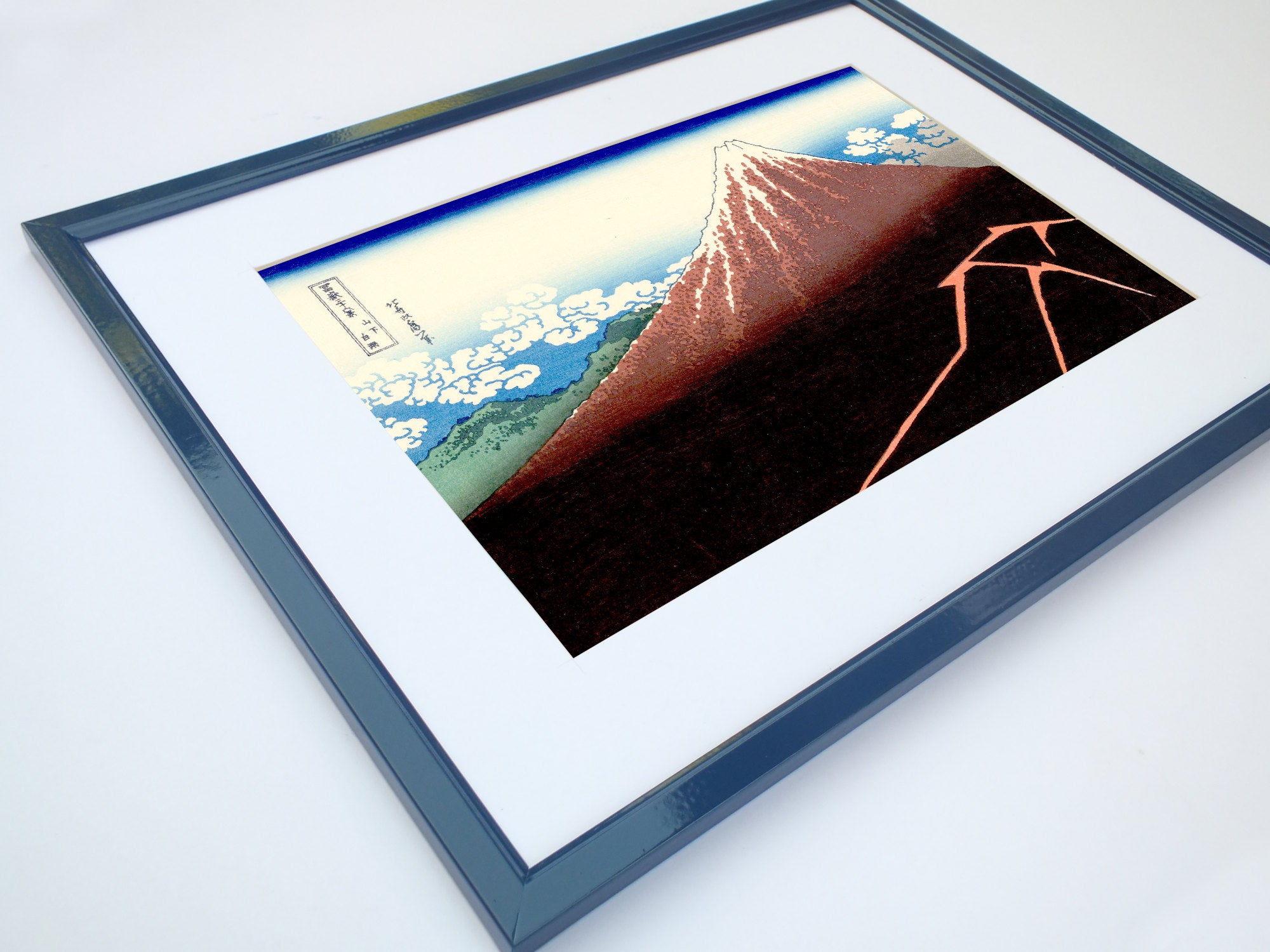
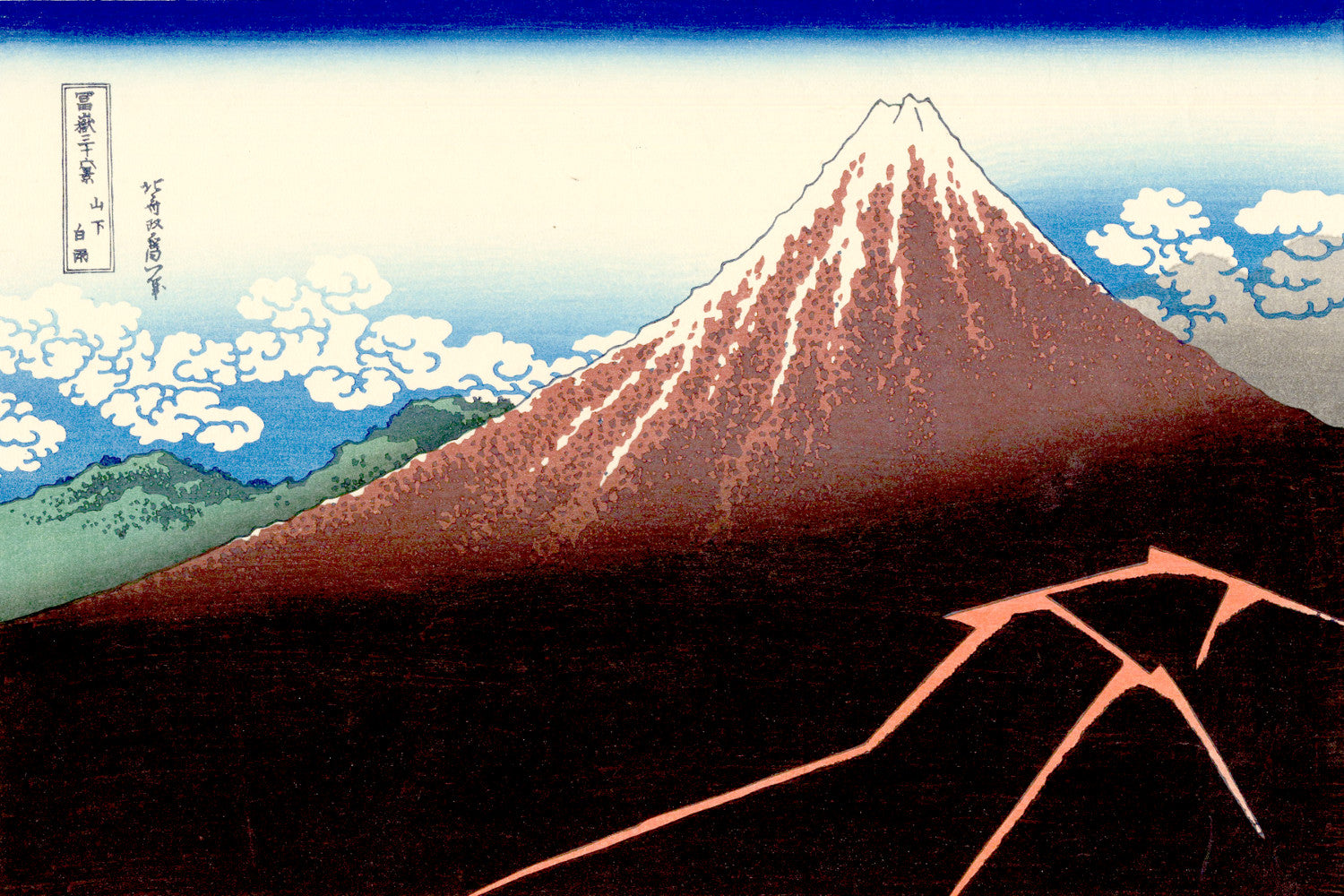
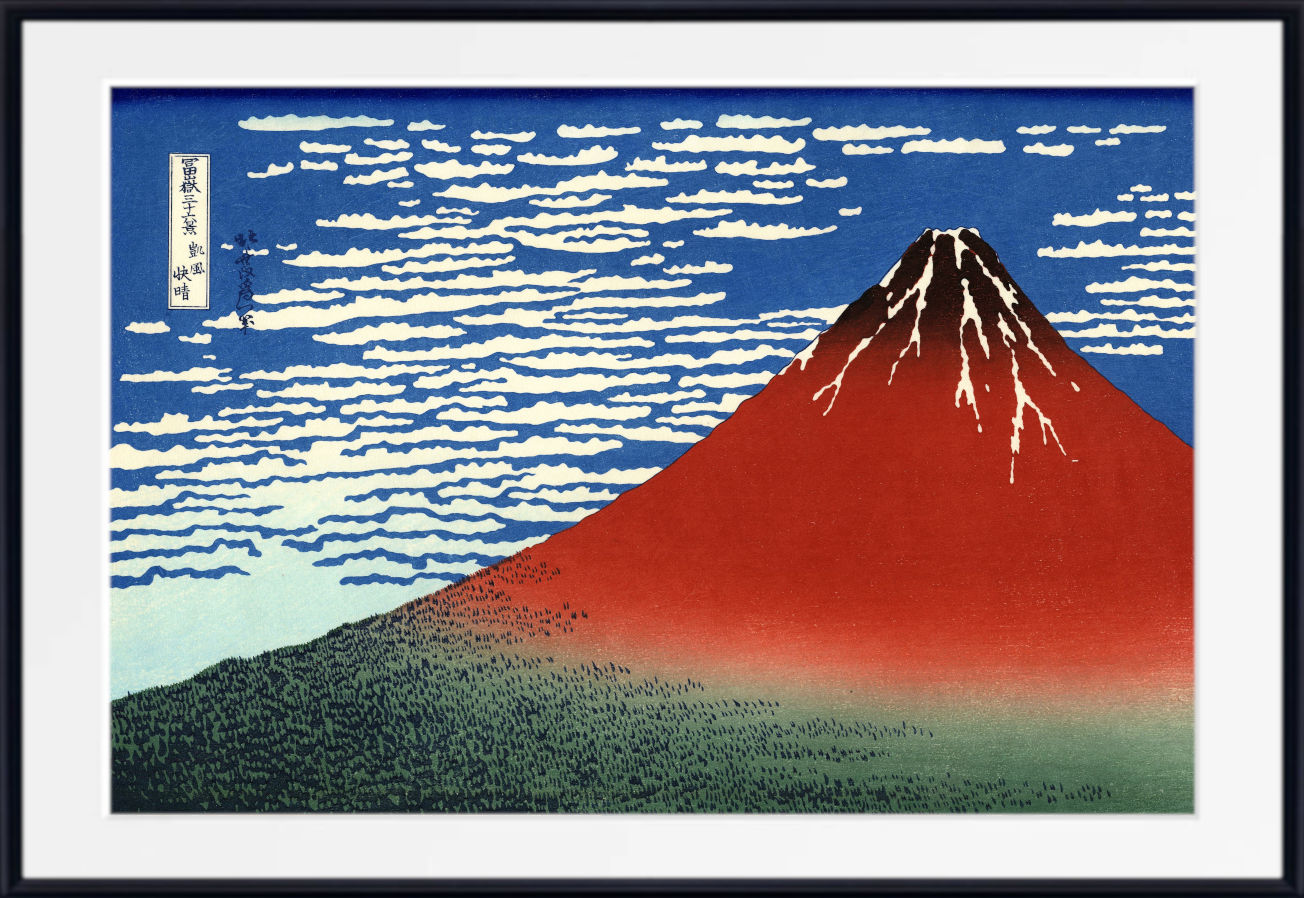
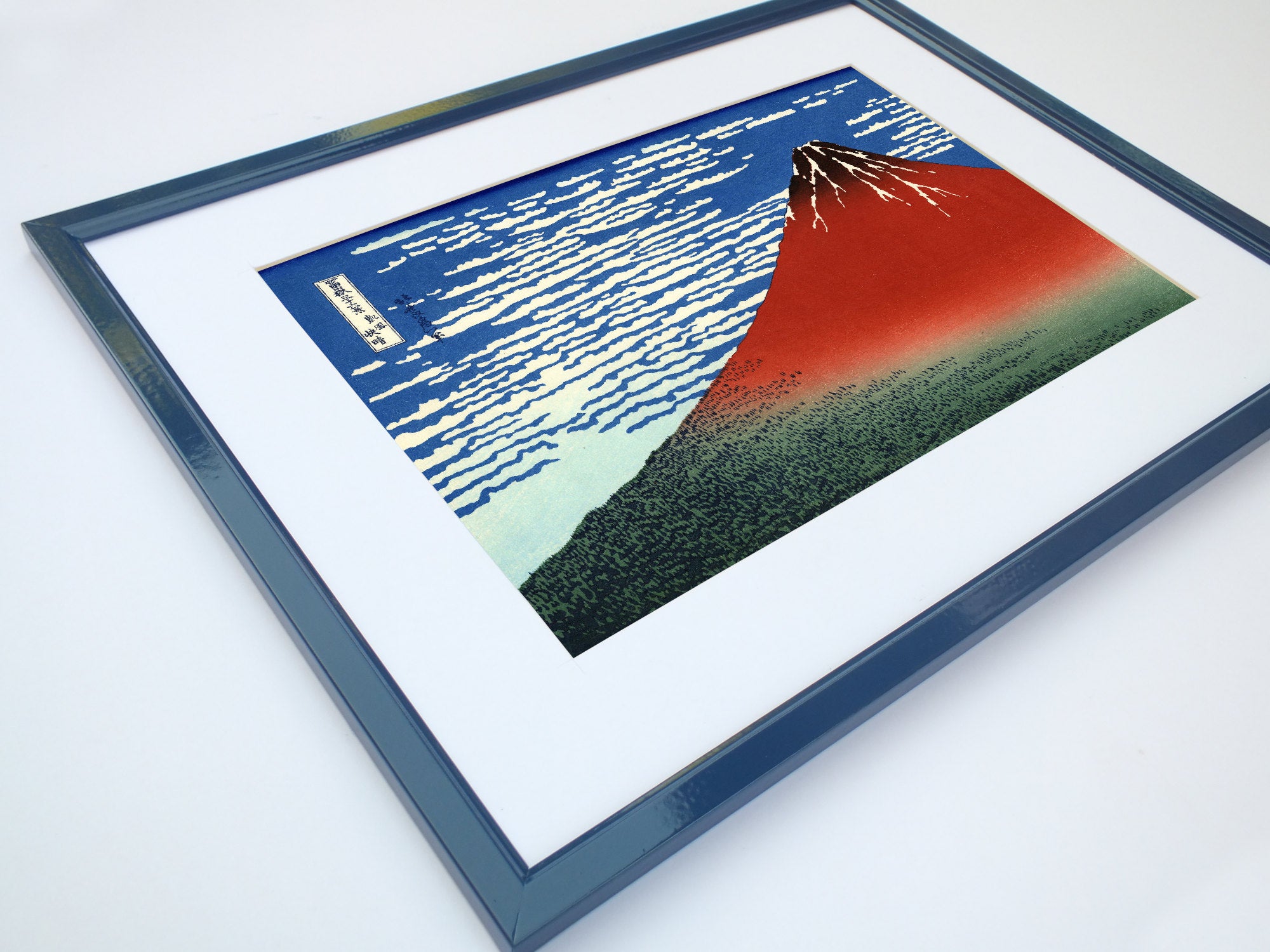
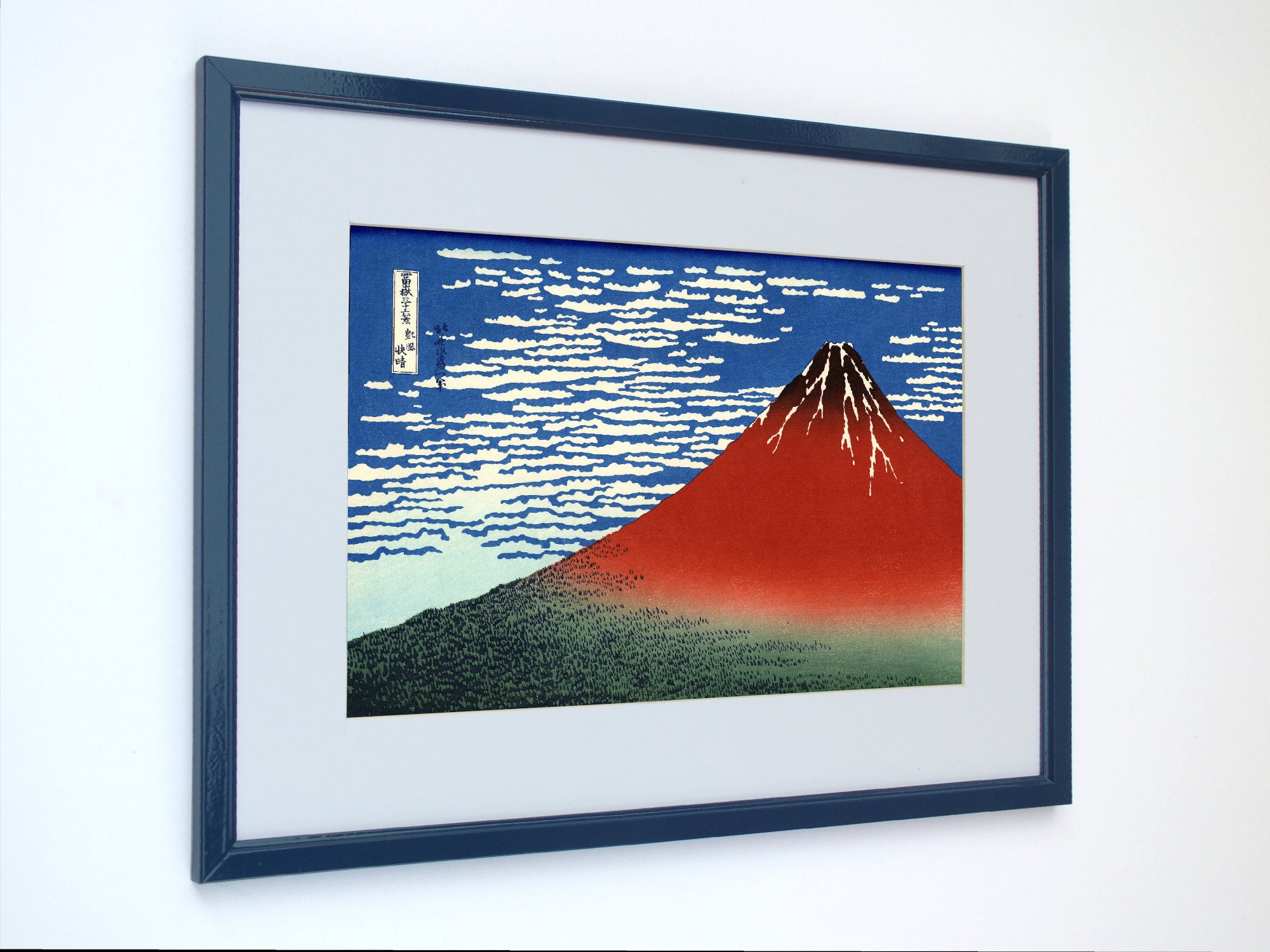
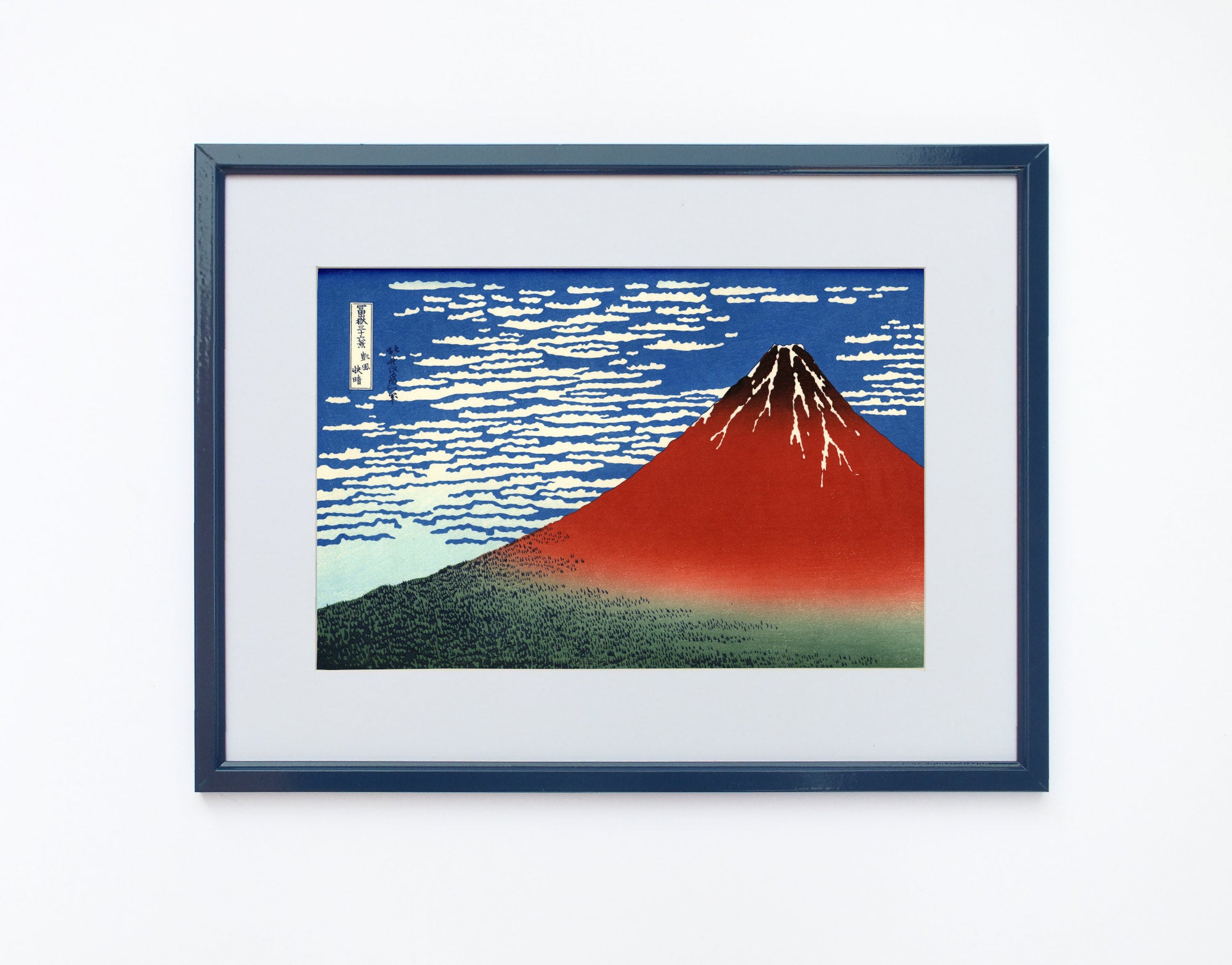
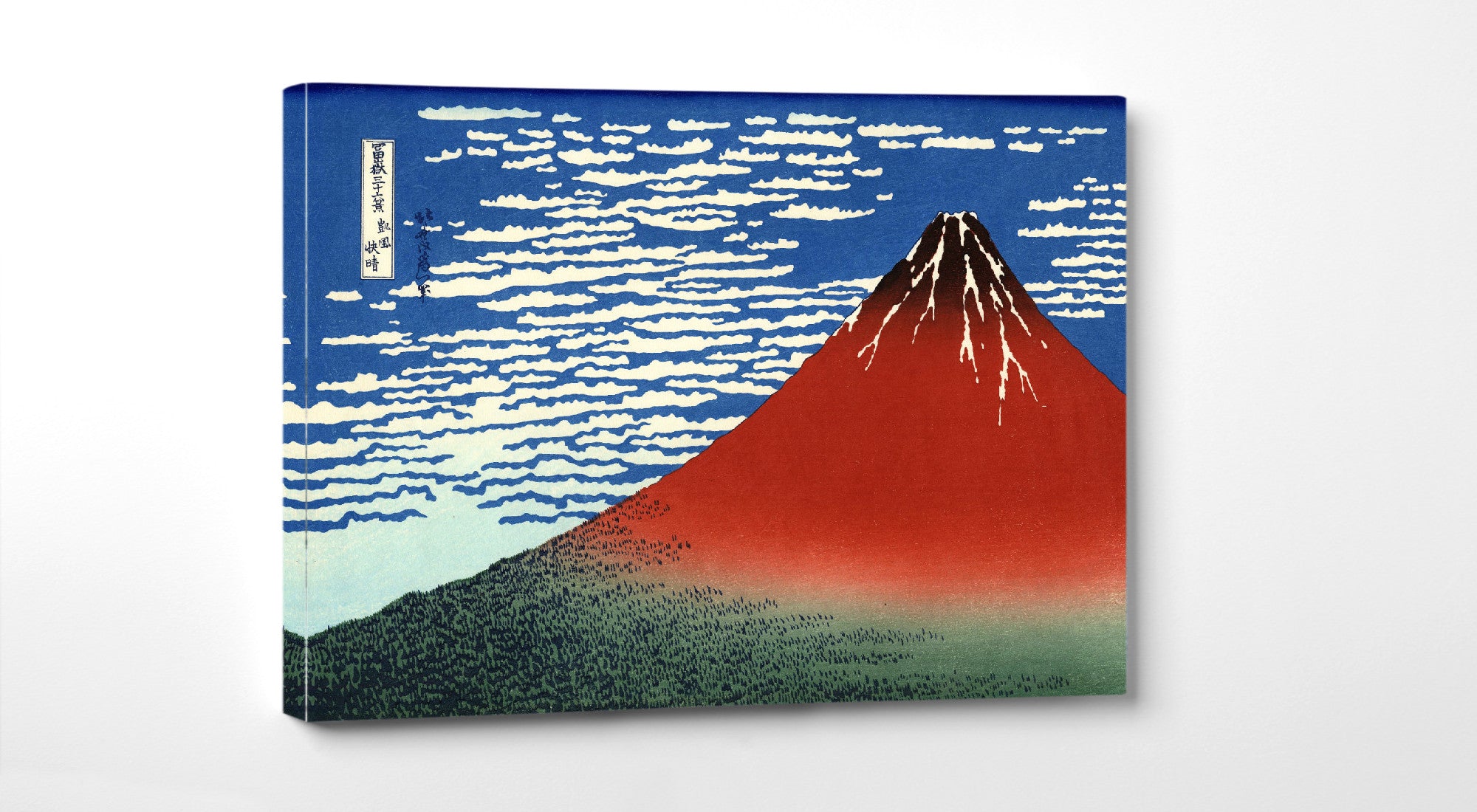
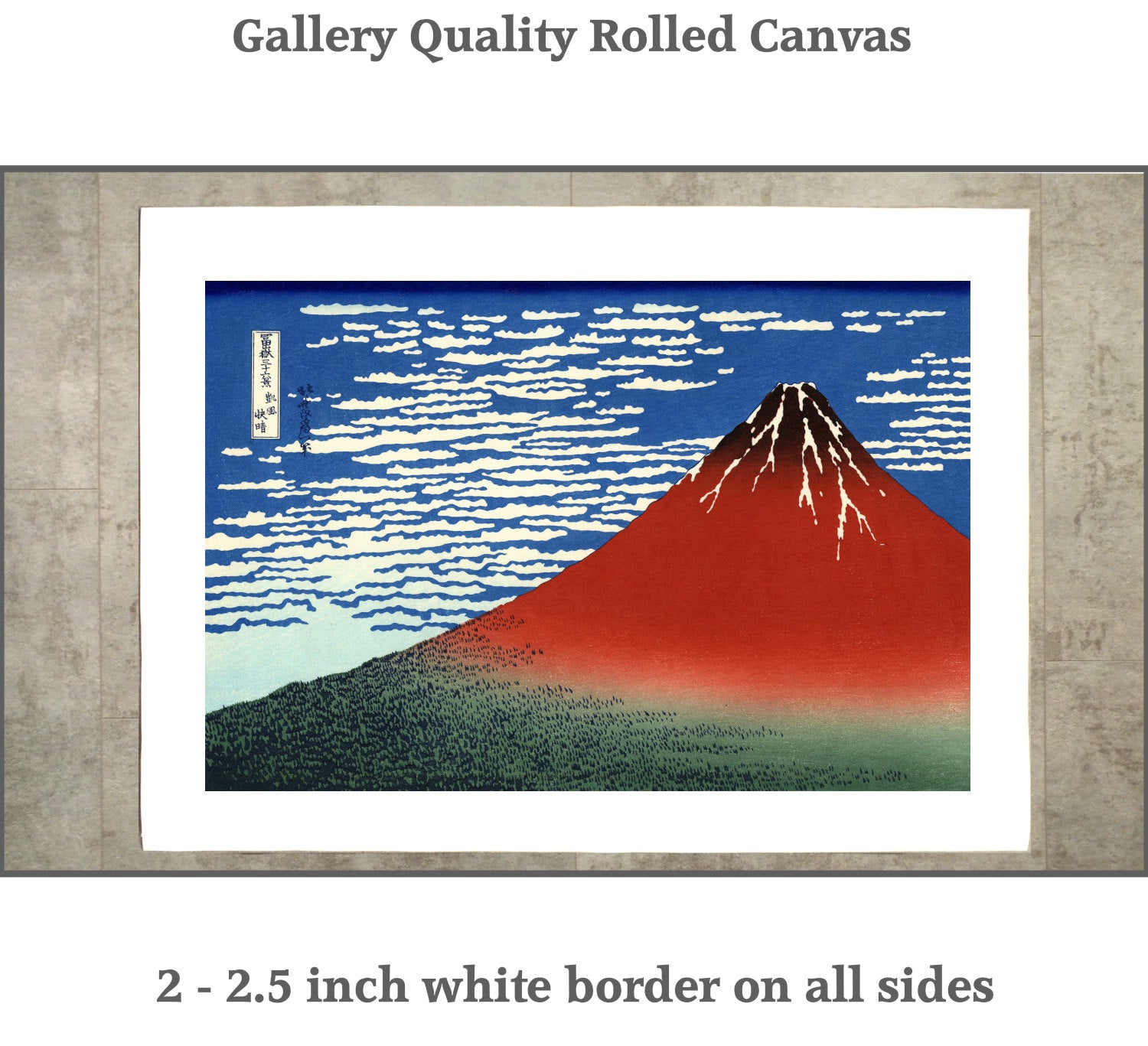
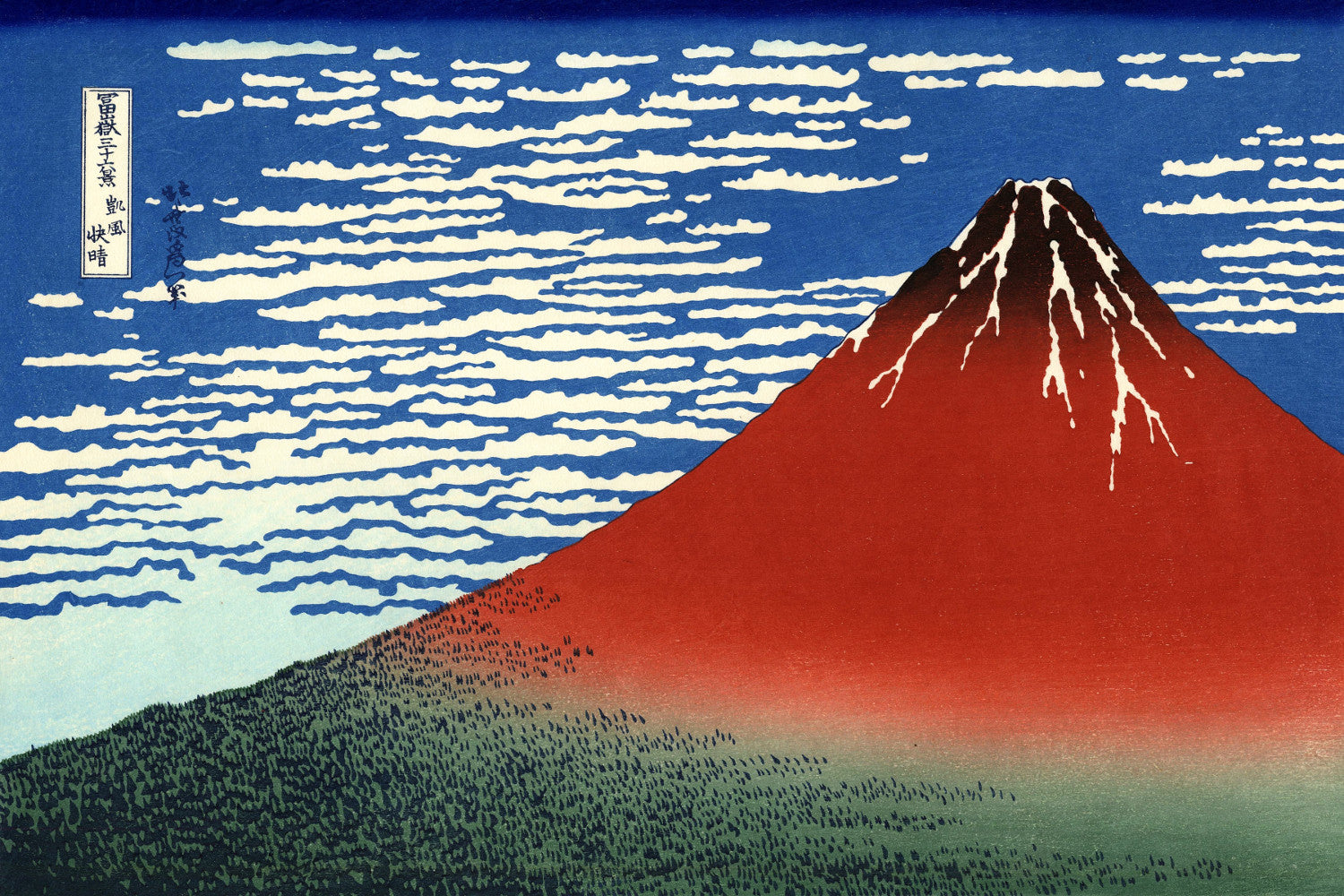
In Red Fuji – Southern Wind, Clear Morning, the mountain fills the composition.
In The Great Wave, it appears far beyond the boats.
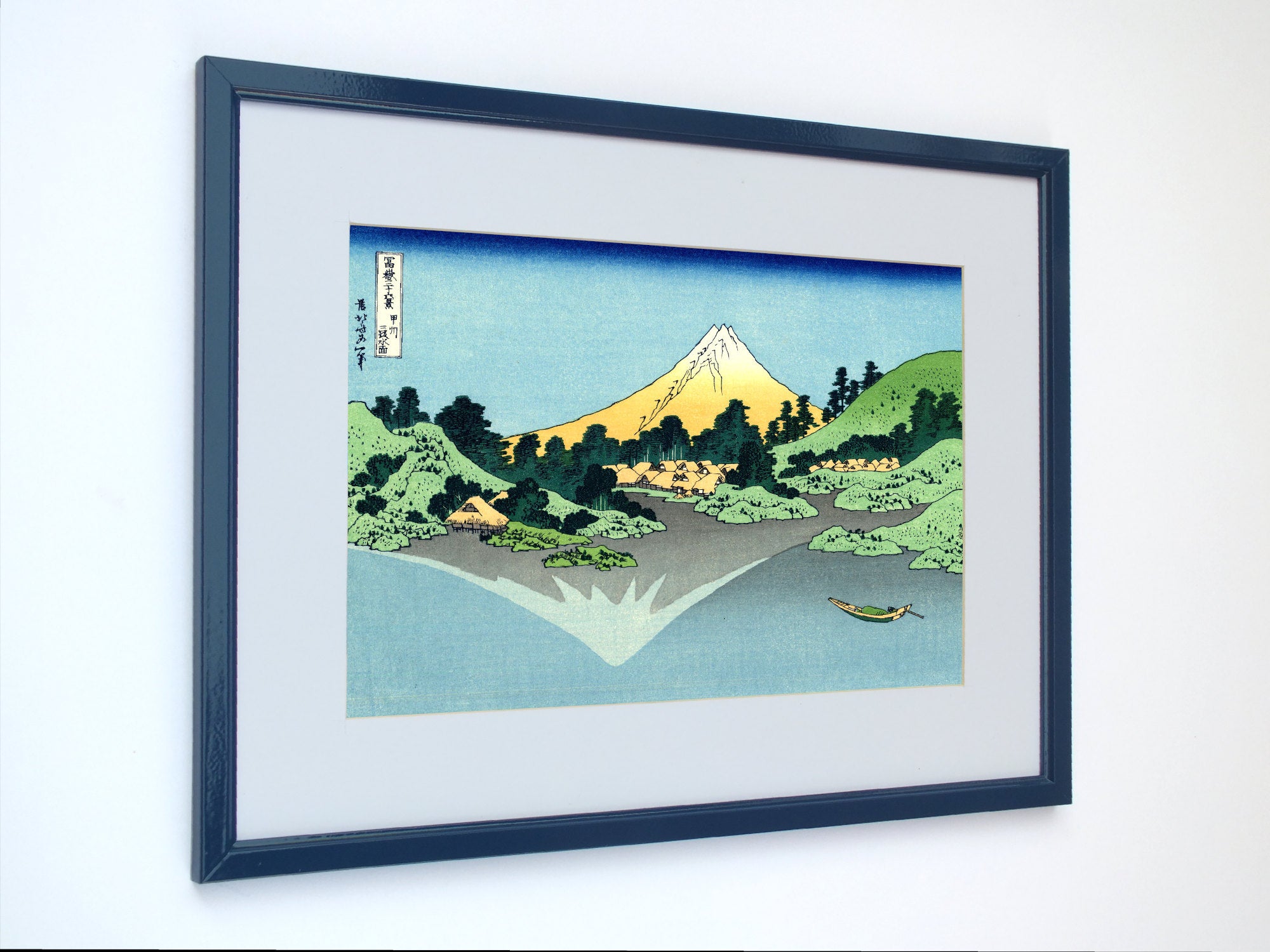
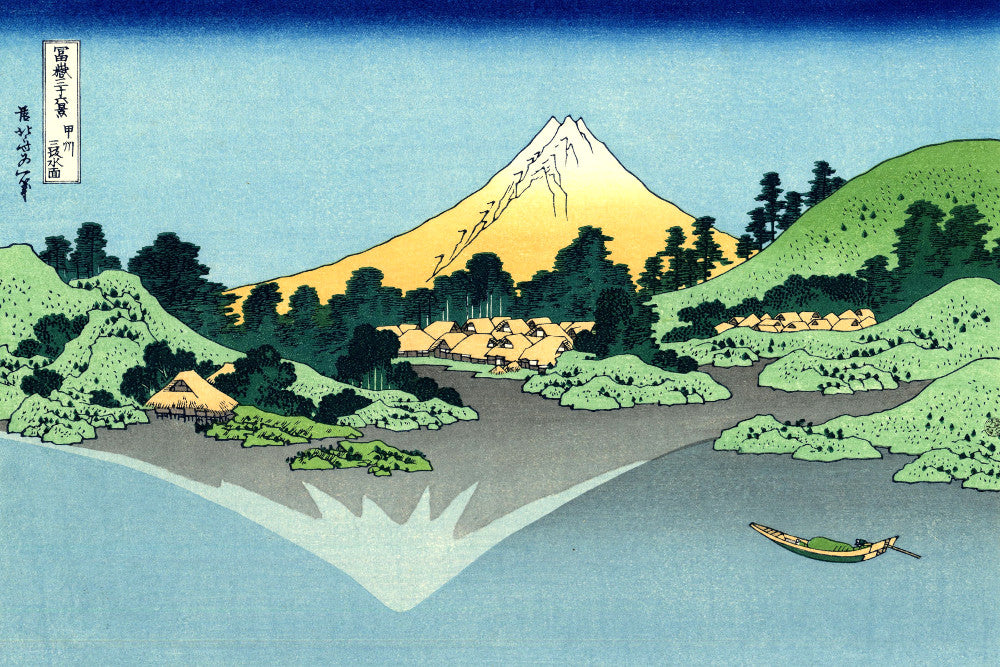
Elsewhere it is seen through the enormous circular opening of a barrel, behind trees, beyond bridges or across lakes and fields.
This constant experimentation allowed one mountain to generate an extraordinary variety of compositions.
Weather, Movement and the Forces of Nature
Hokusai possessed an exceptional ability to make natural forces visible.
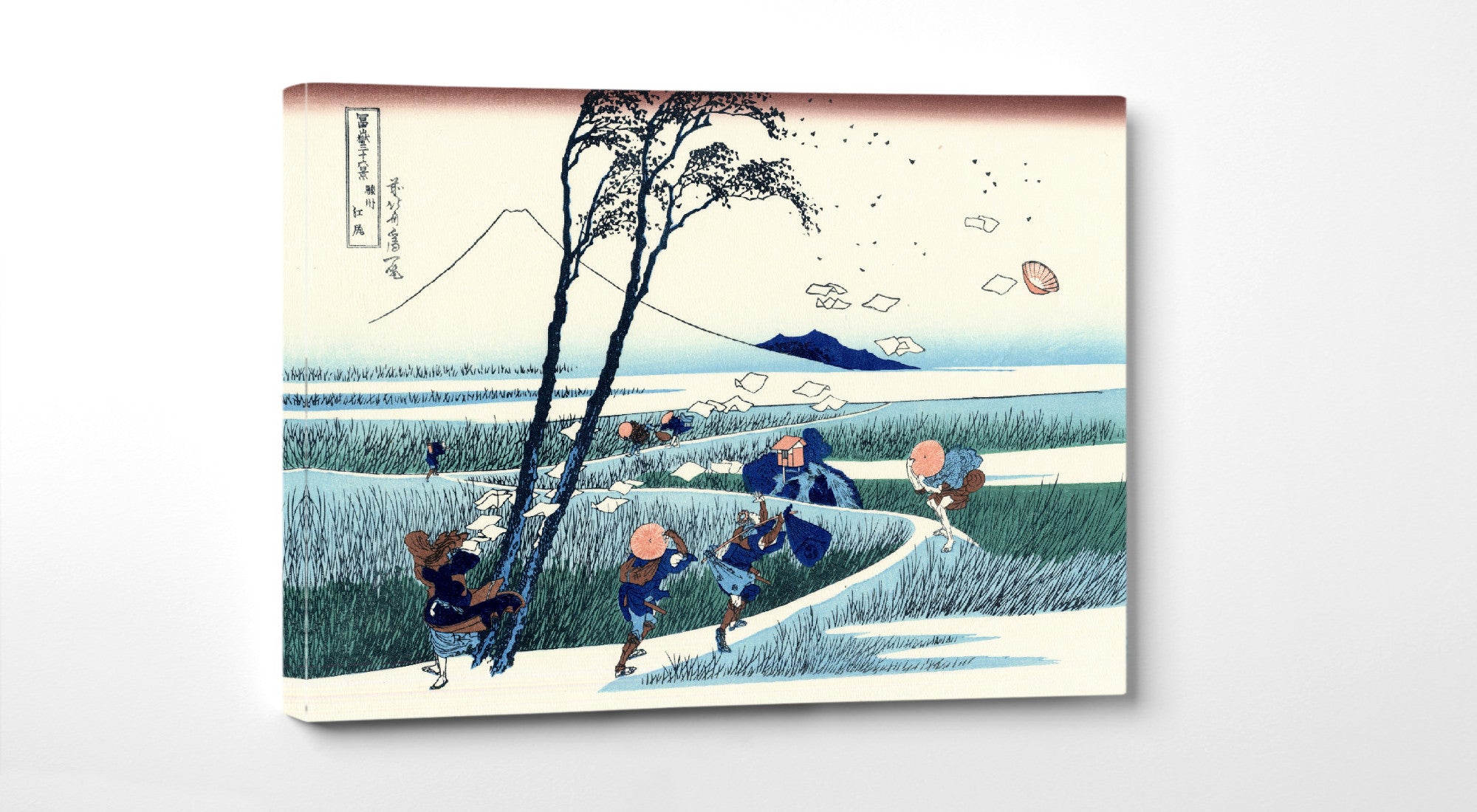
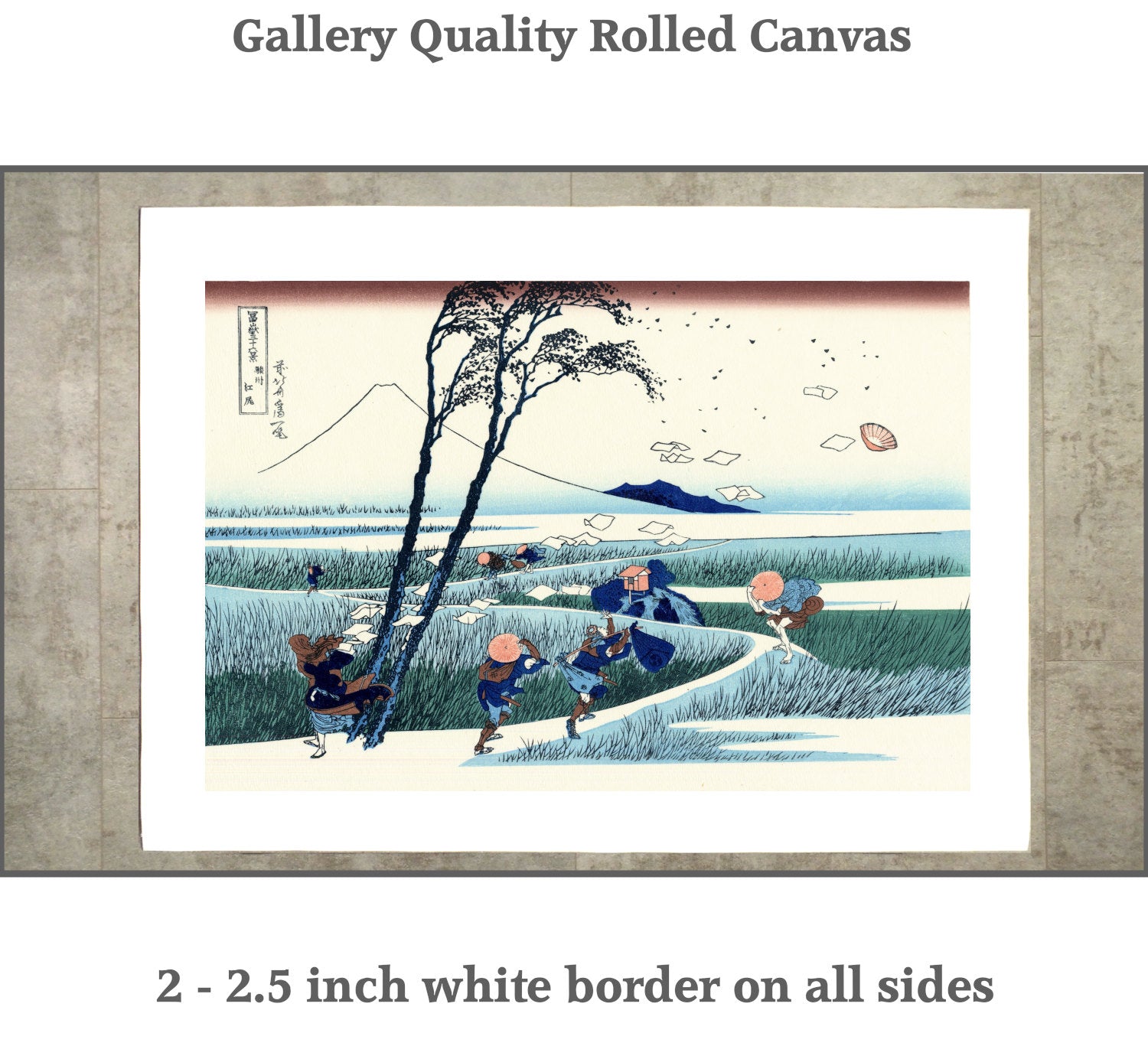
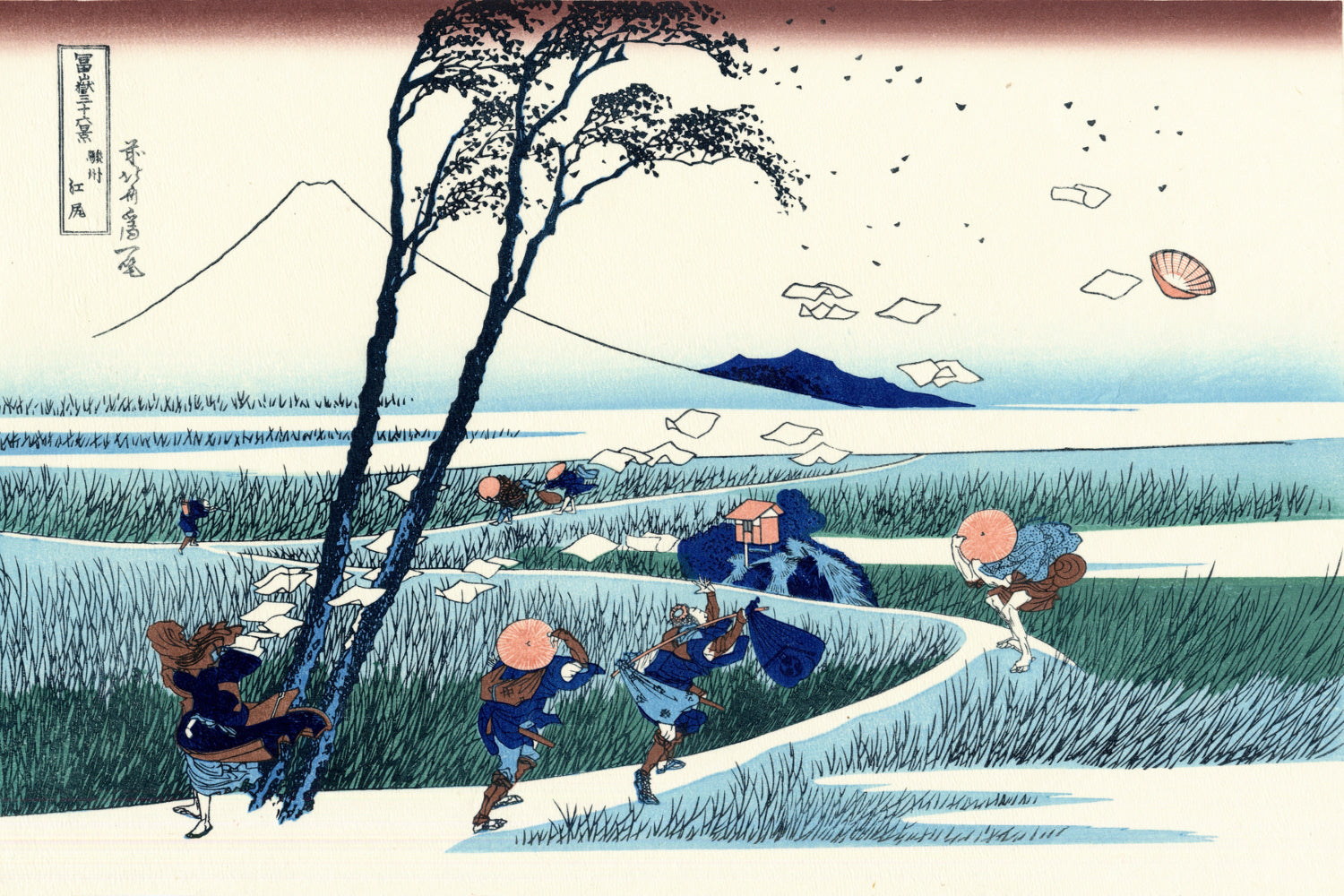
Wind bends trees and sends sheets of paper spinning across a landscape.
Rain falls in strong graphic lines.
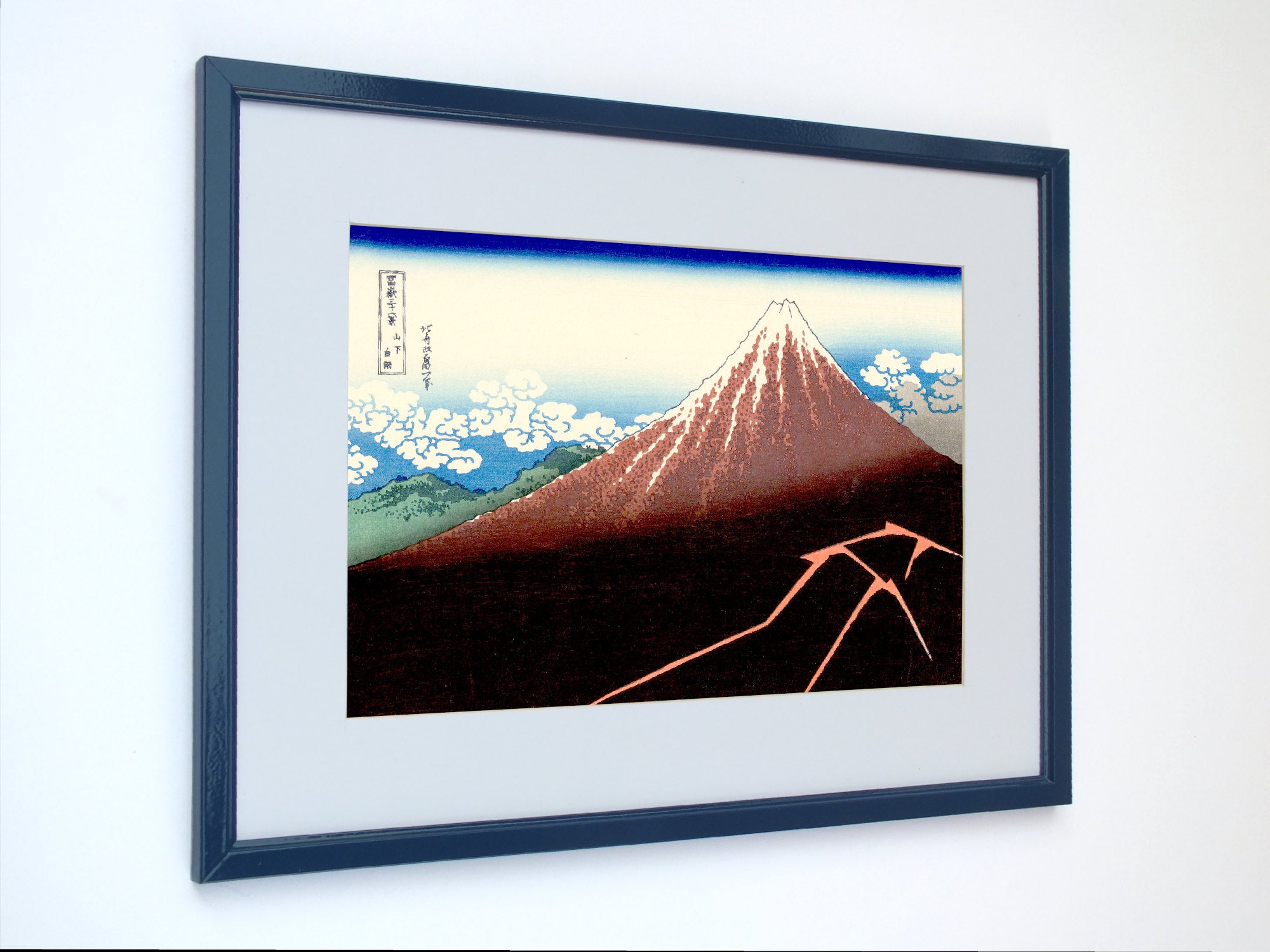
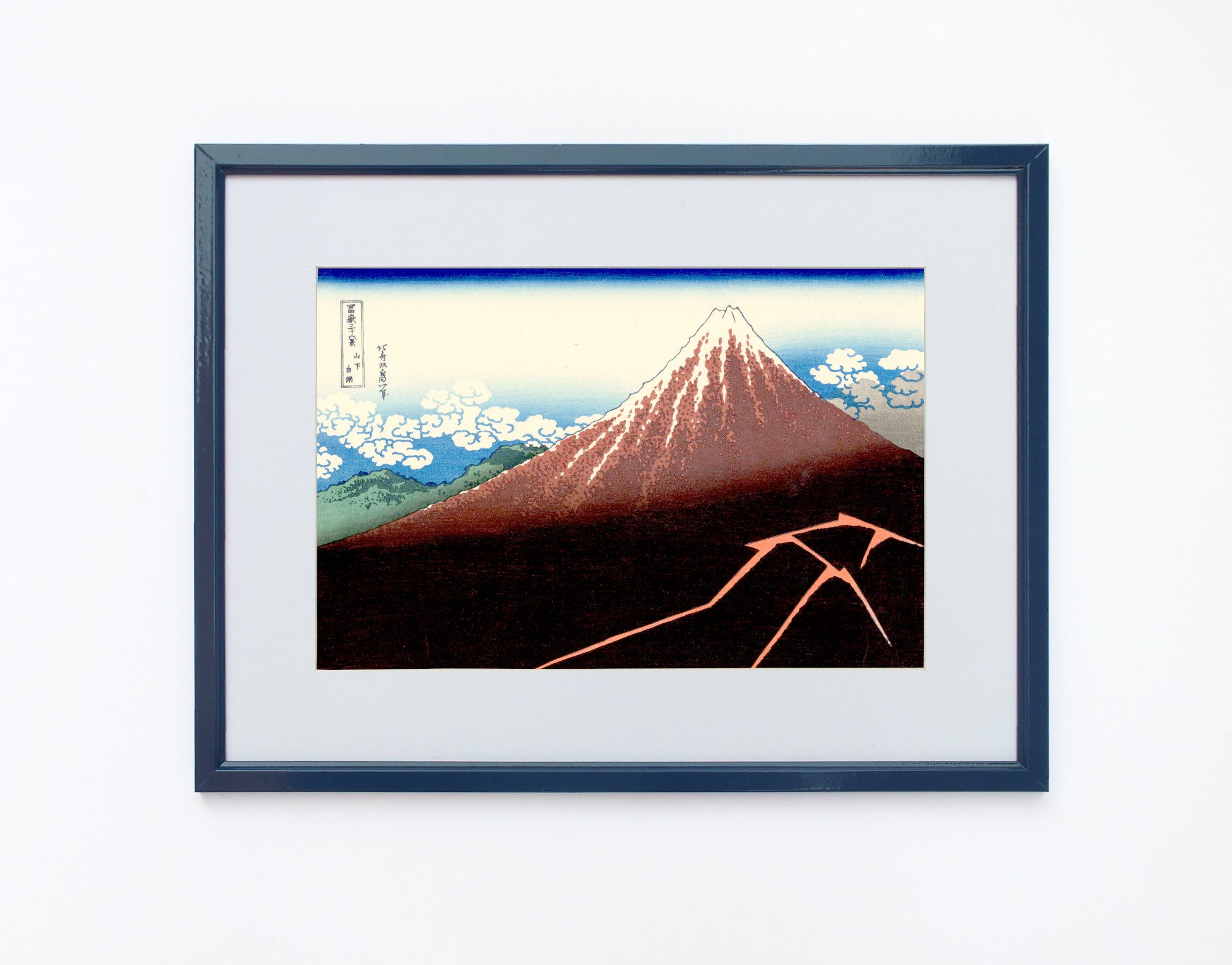
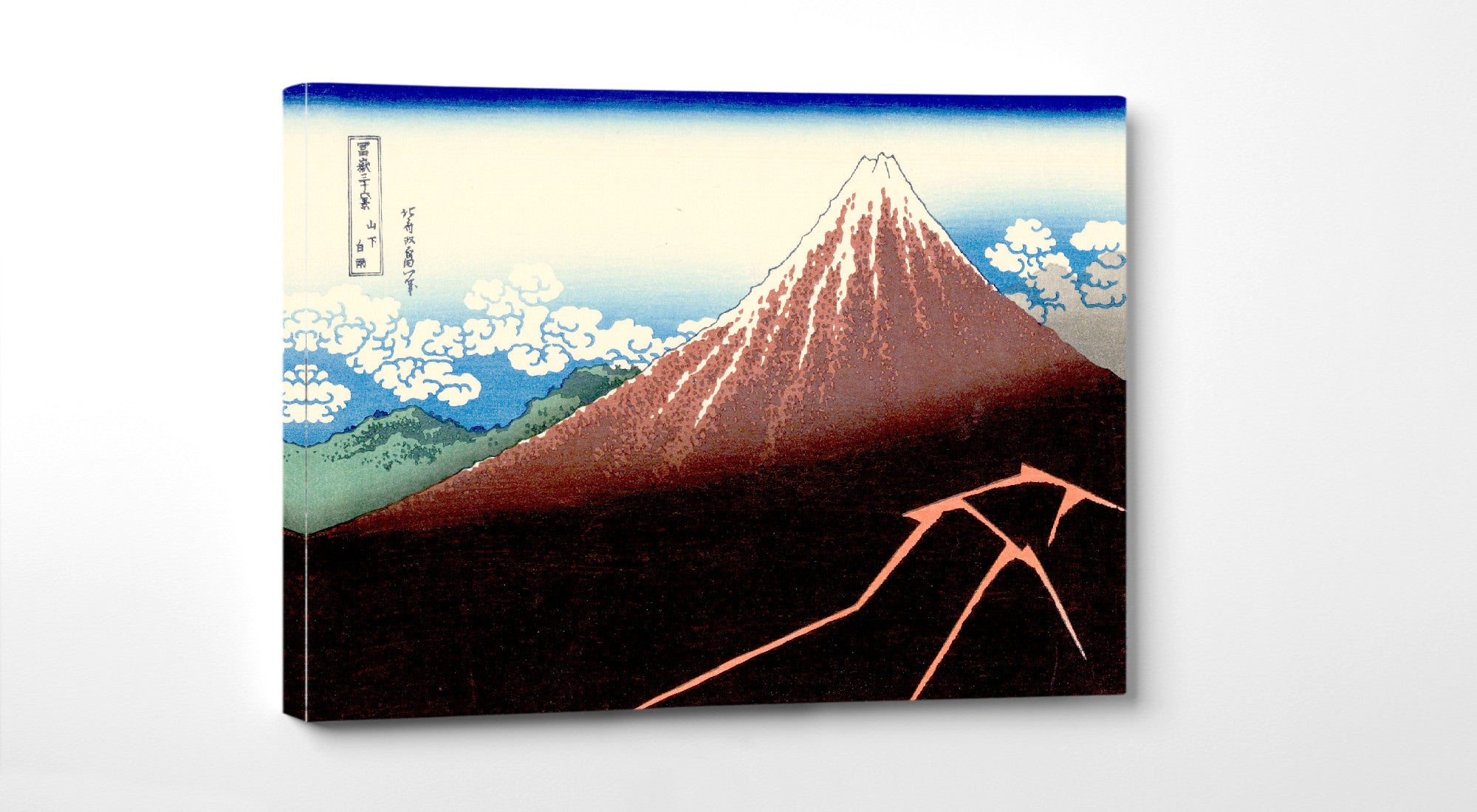
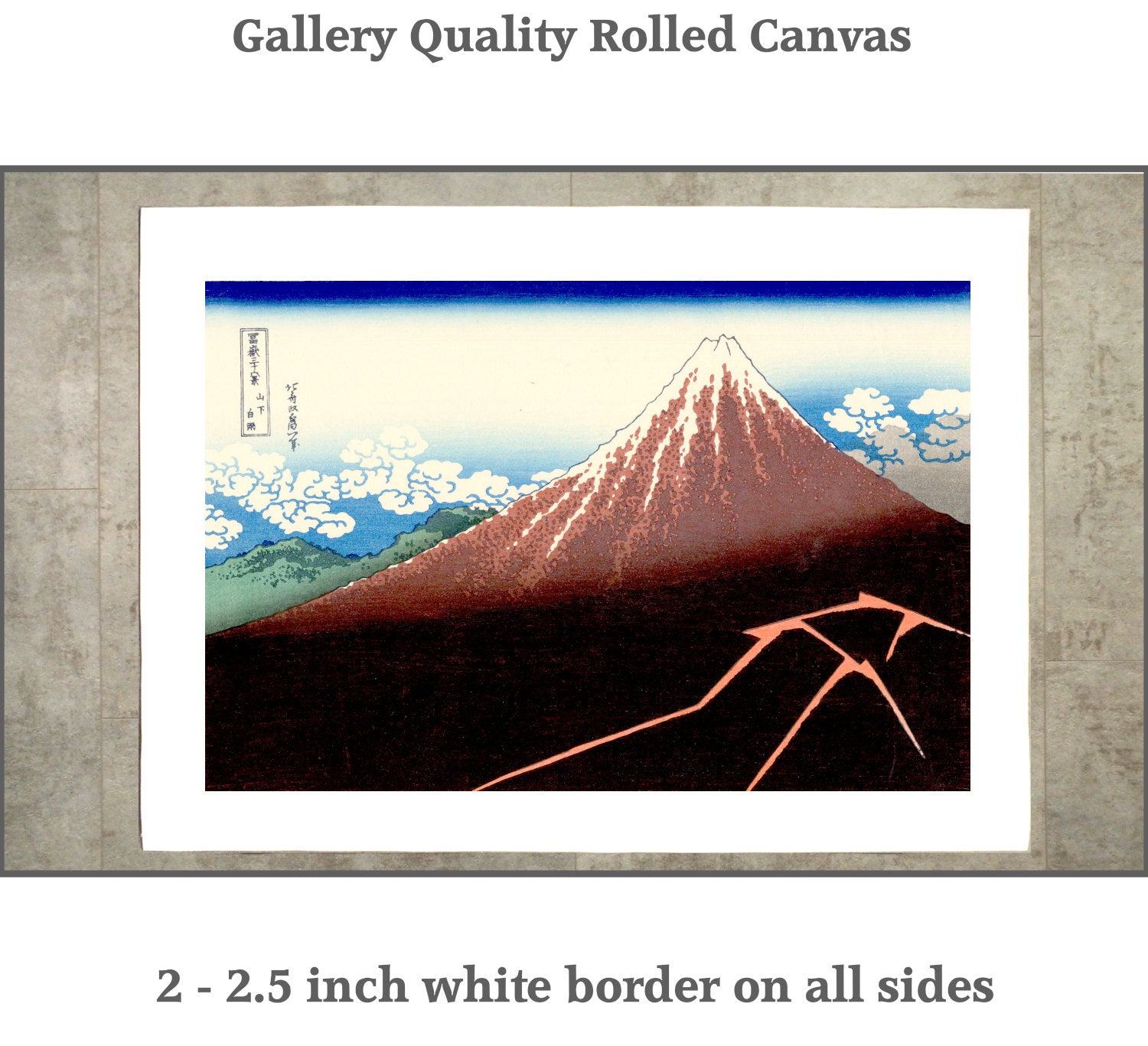
Lightning tears across the lower slopes of Mount Fuji.
Waves rise and collapse.
Clouds gather around mountains.
Instead of treating weather as background atmosphere, Hokusai often makes it one of the principal subjects of the print.
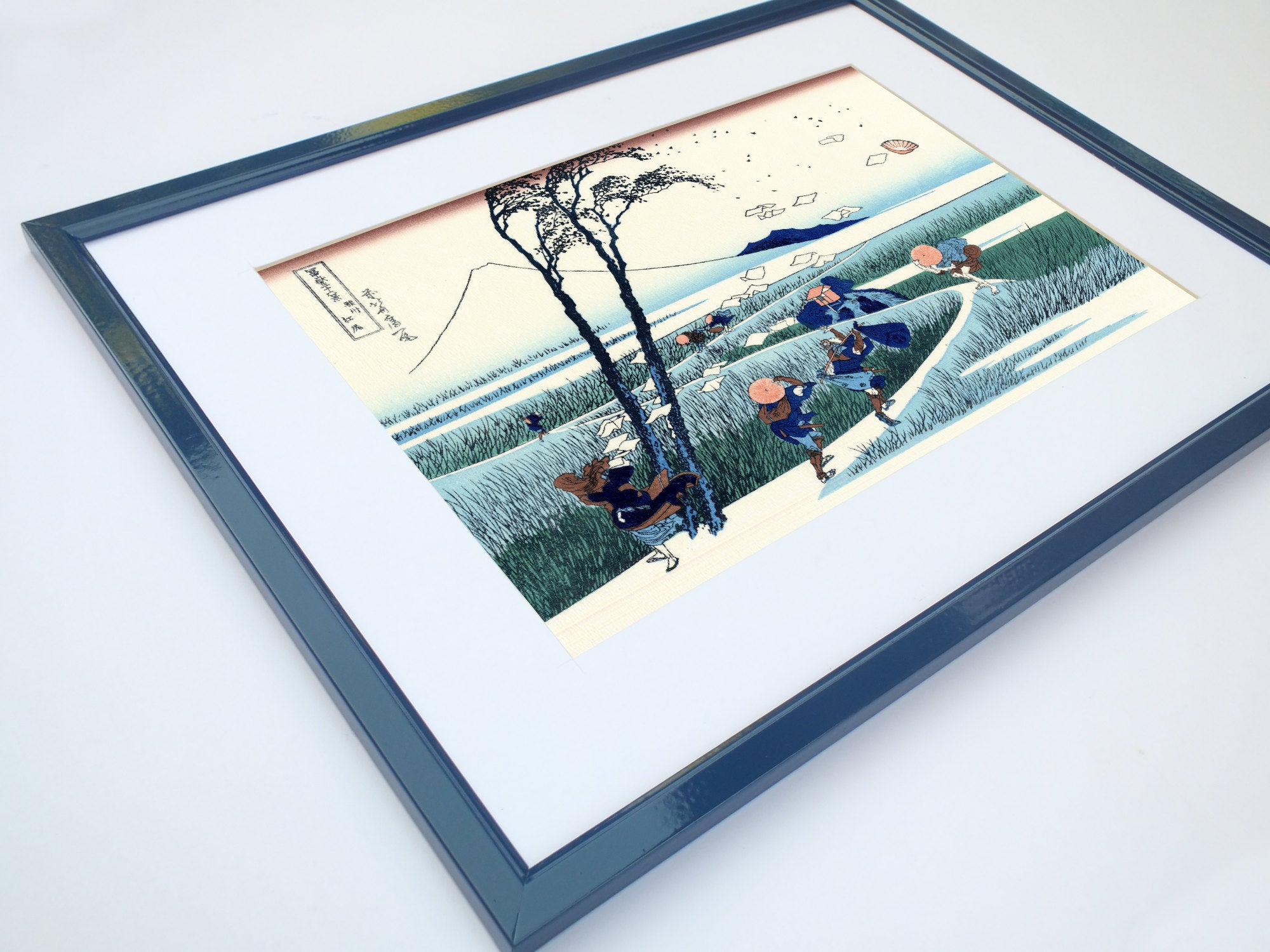
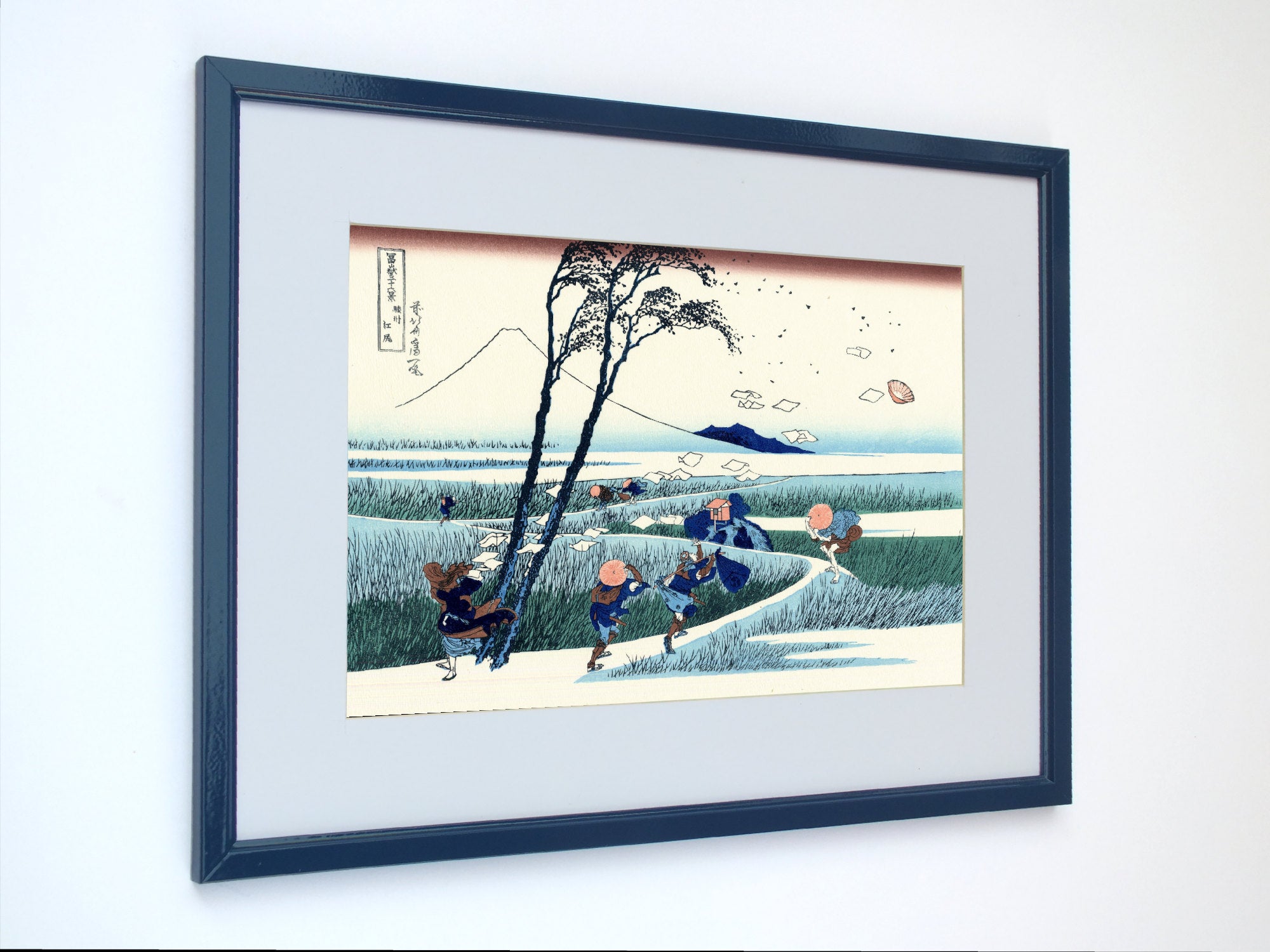
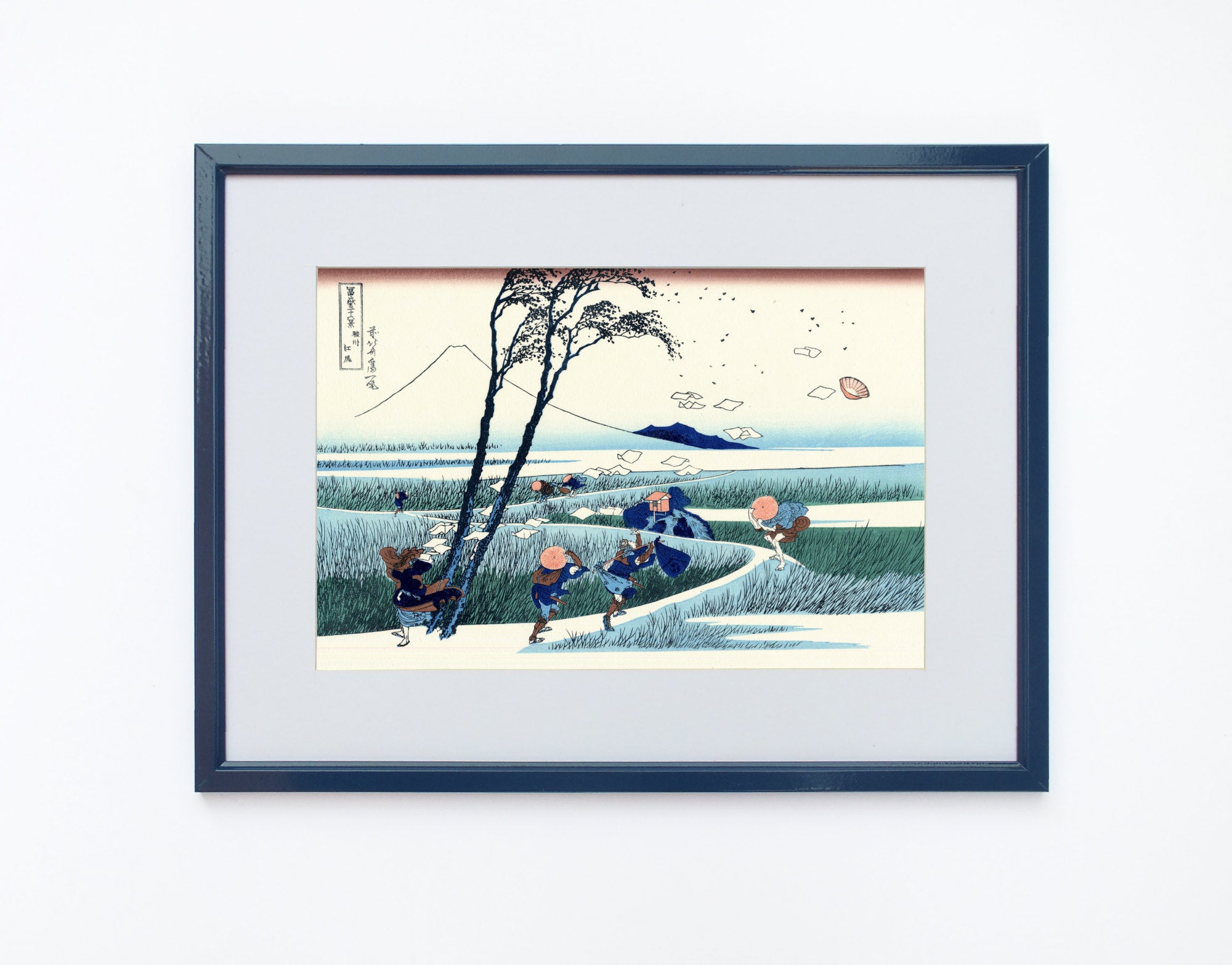
Ejiri in Suruga Province is an excellent example. Travellers struggle against a violent gust of wind as hats, paper and clothing are swept through the air.
The result feels remarkably immediate despite having been designed almost two centuries ago.
Hokusai's People – Travellers, Workers and Everyday Life
The landscapes are rarely empty.
Hokusai frequently populated them with fishermen, porters, farmers, craftsmen, pilgrims and travellers.
These figures give scale to mountains and rivers, but they also record the everyday activity of Edo-period Japan.
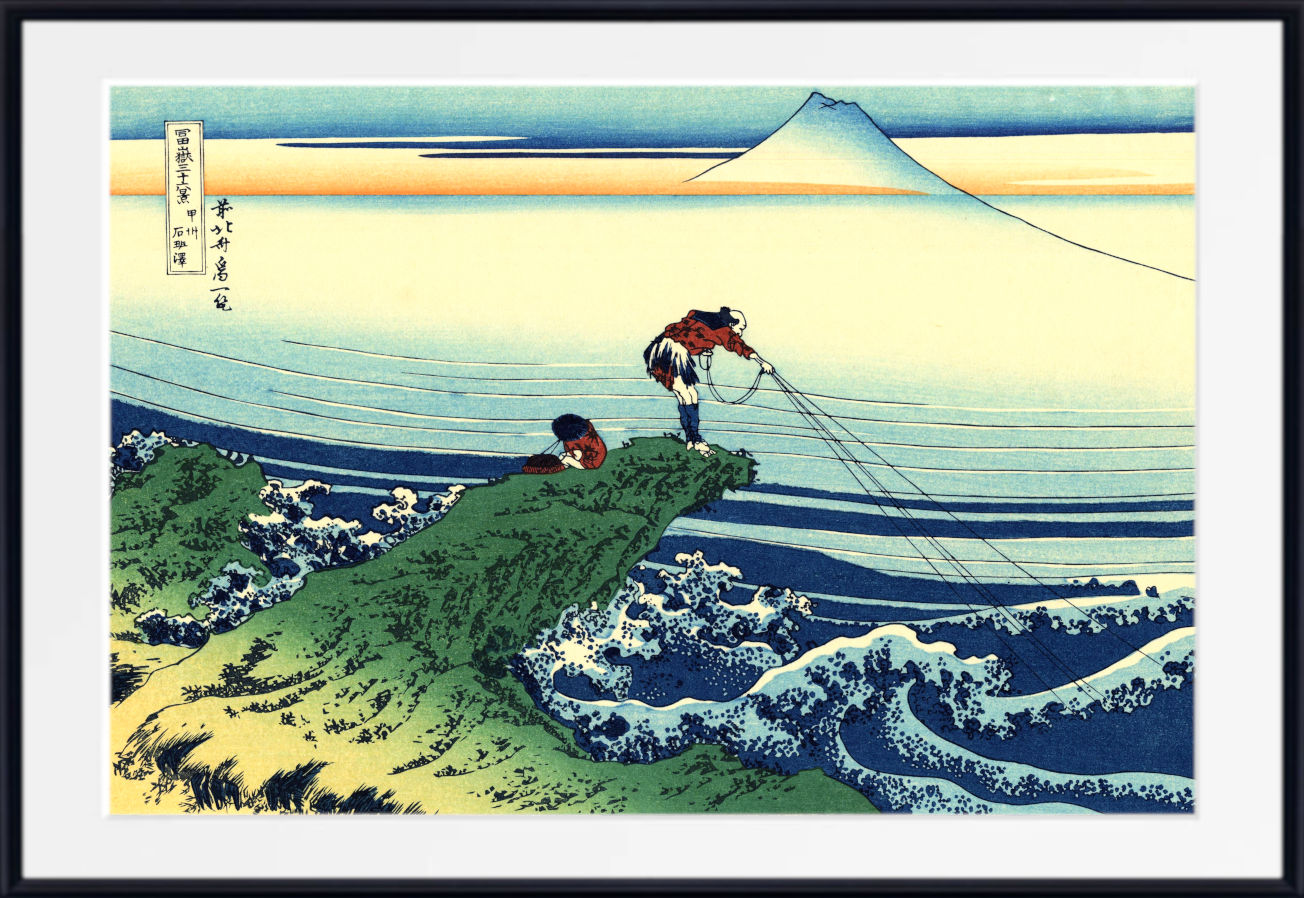
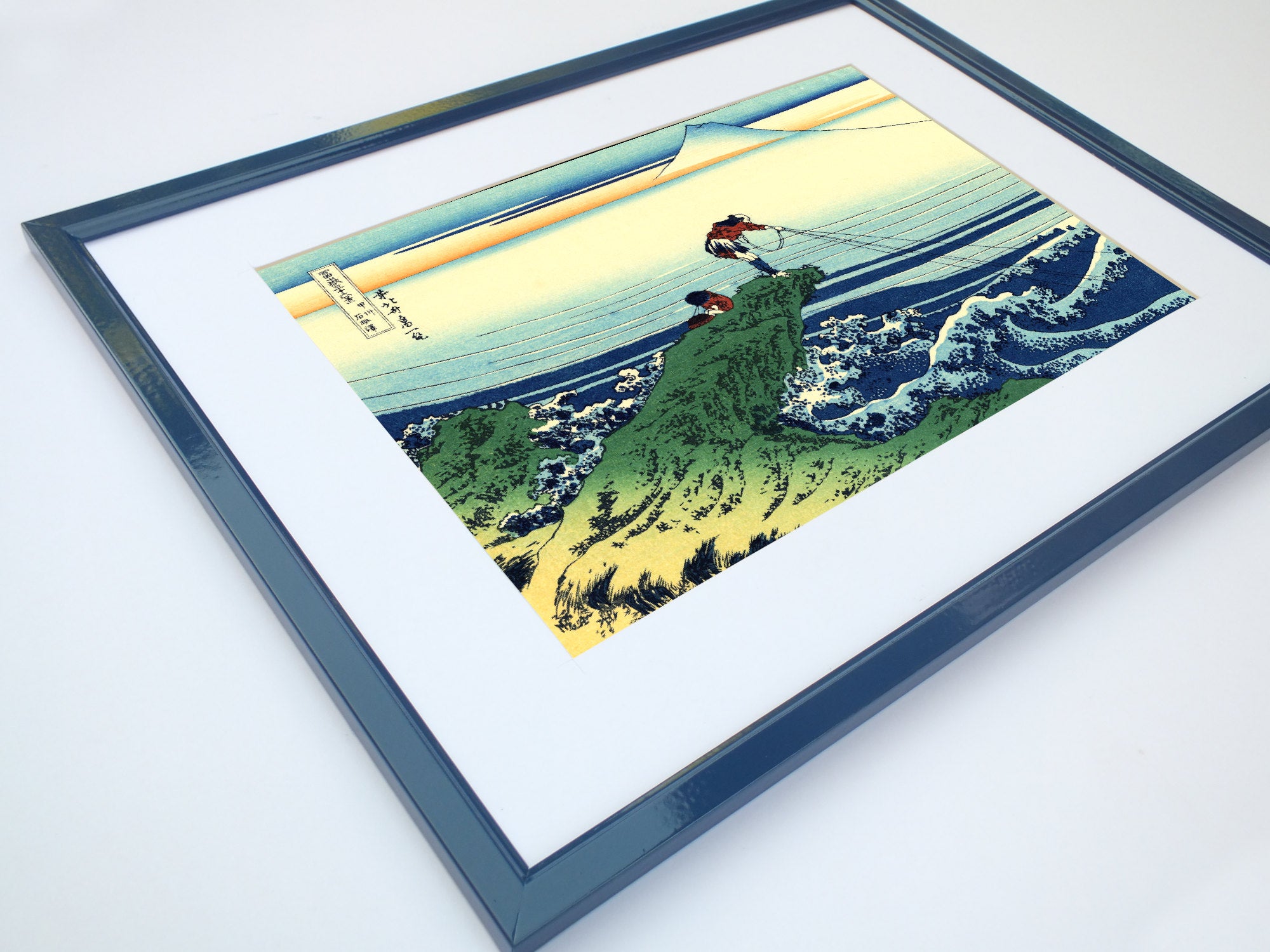
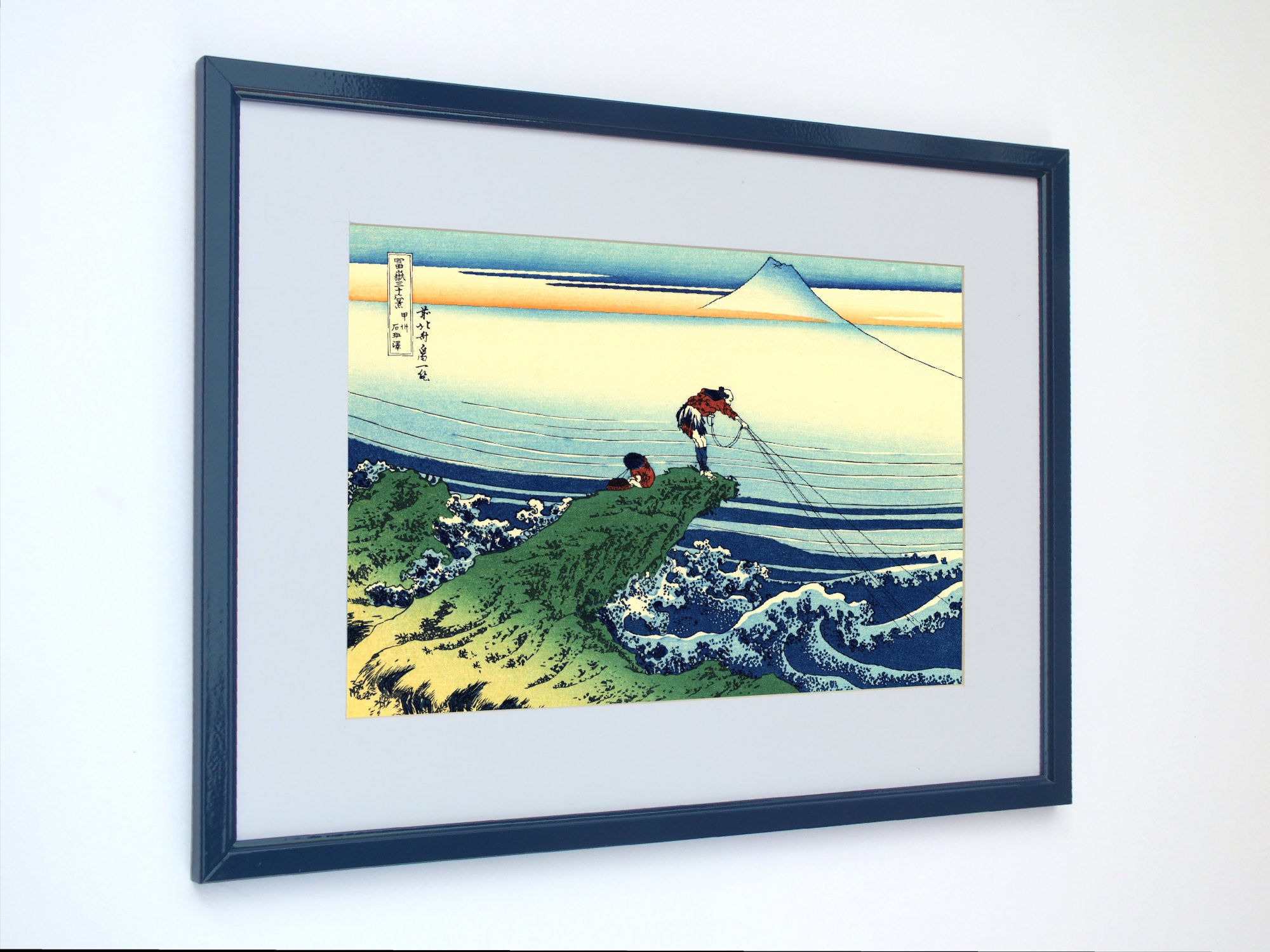
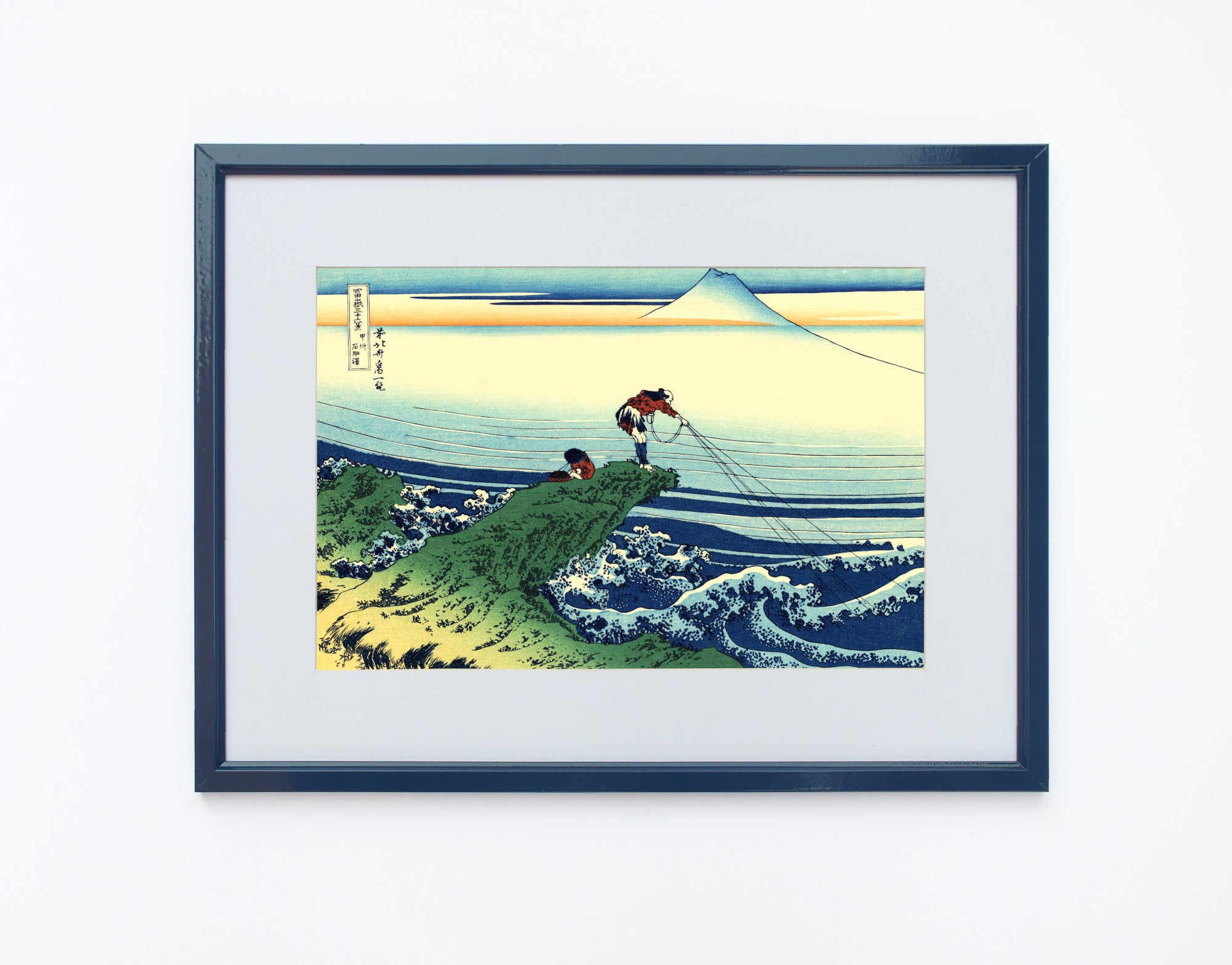
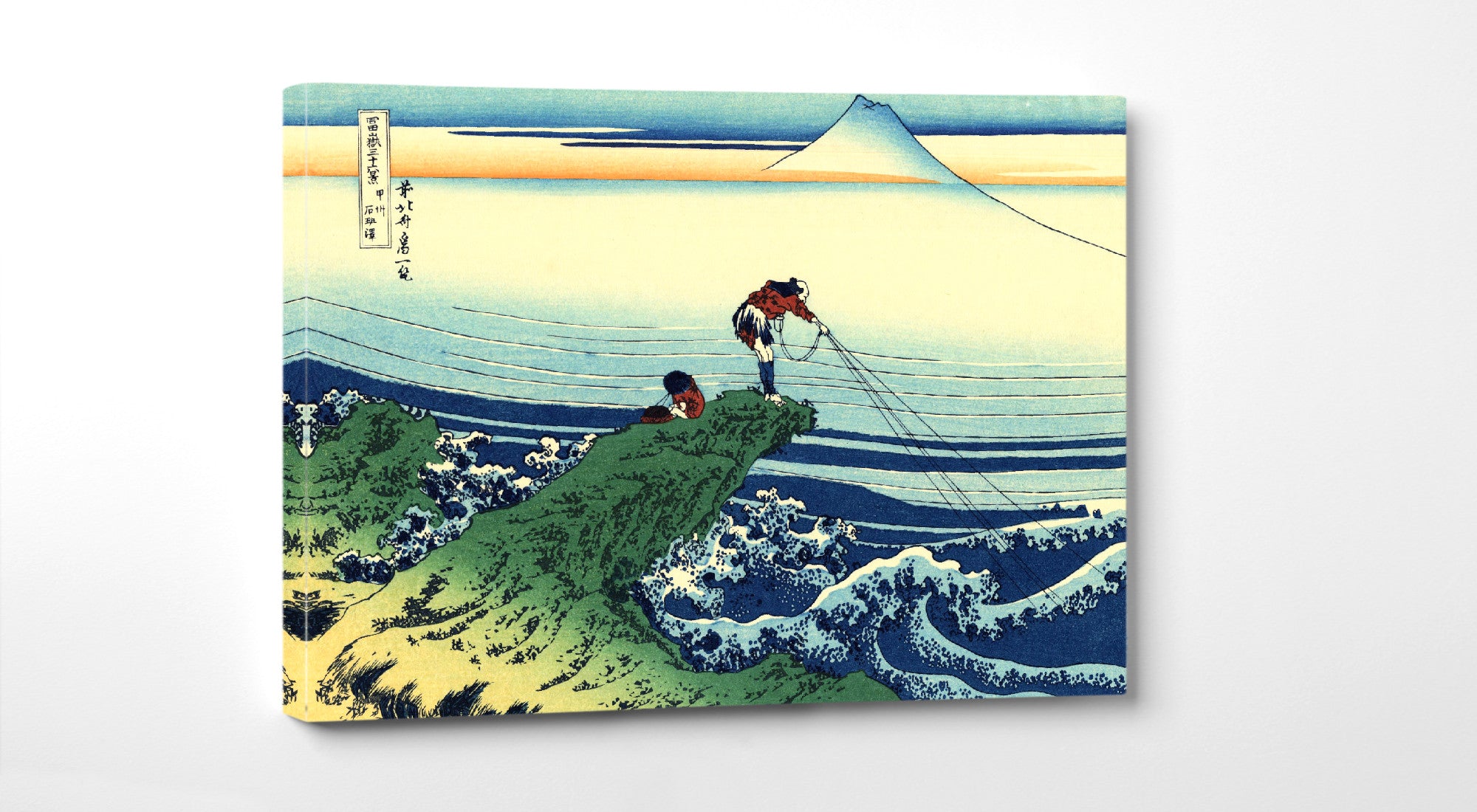
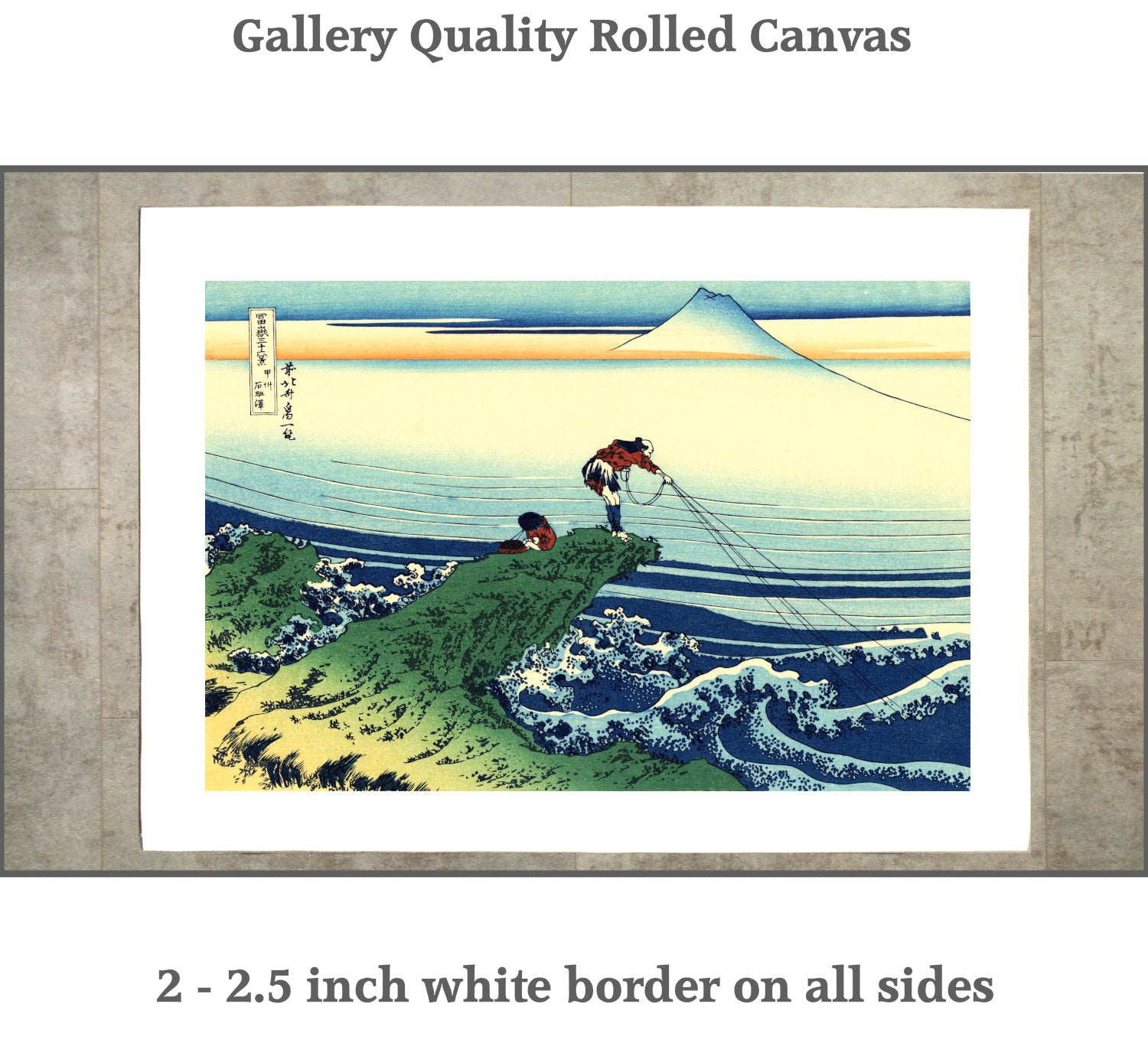
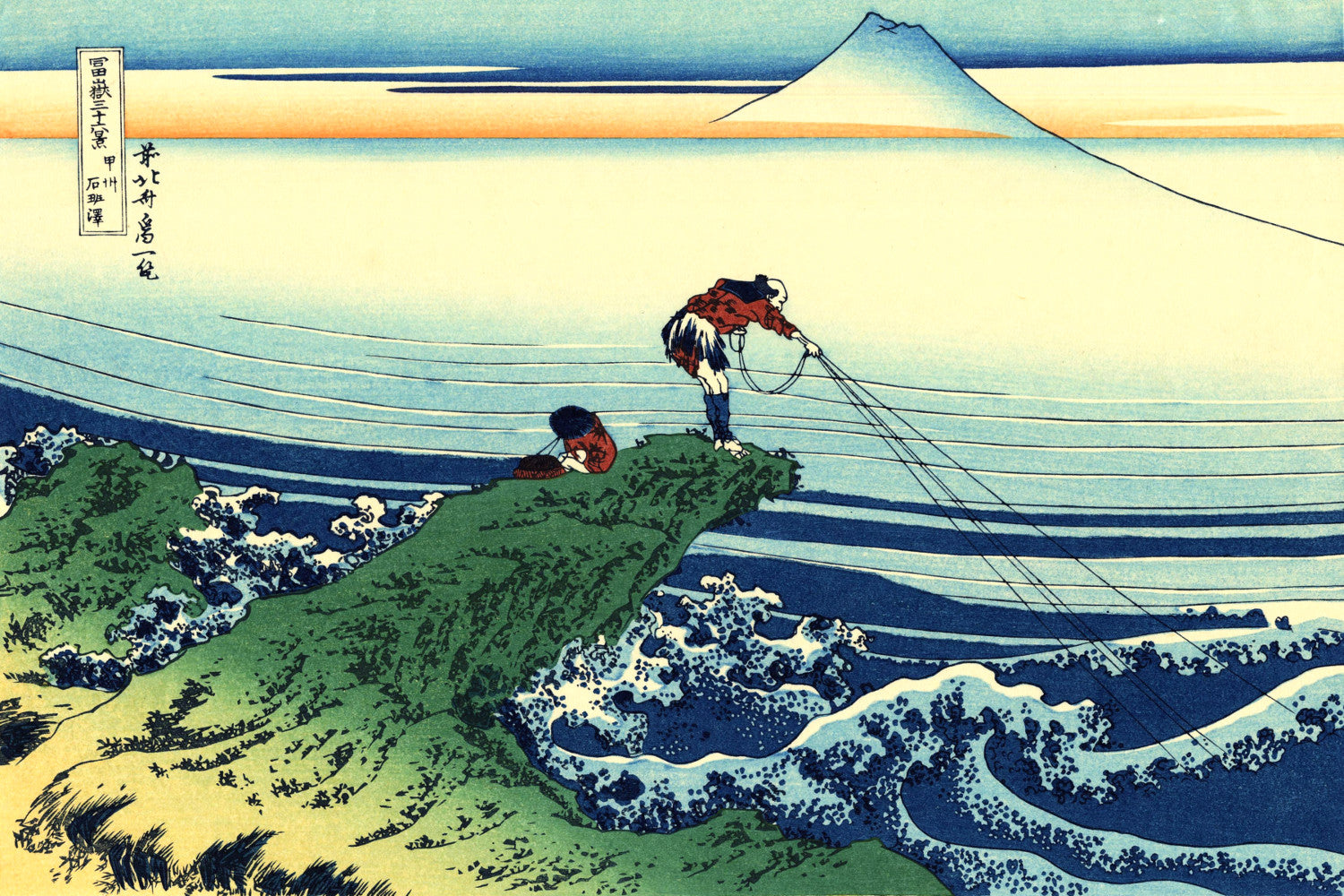
In Kajikazawa in Kai Province, a fisherman bends towards the turbulent river while the lines of his fishing equipment echo the triangular form of distant Fuji.
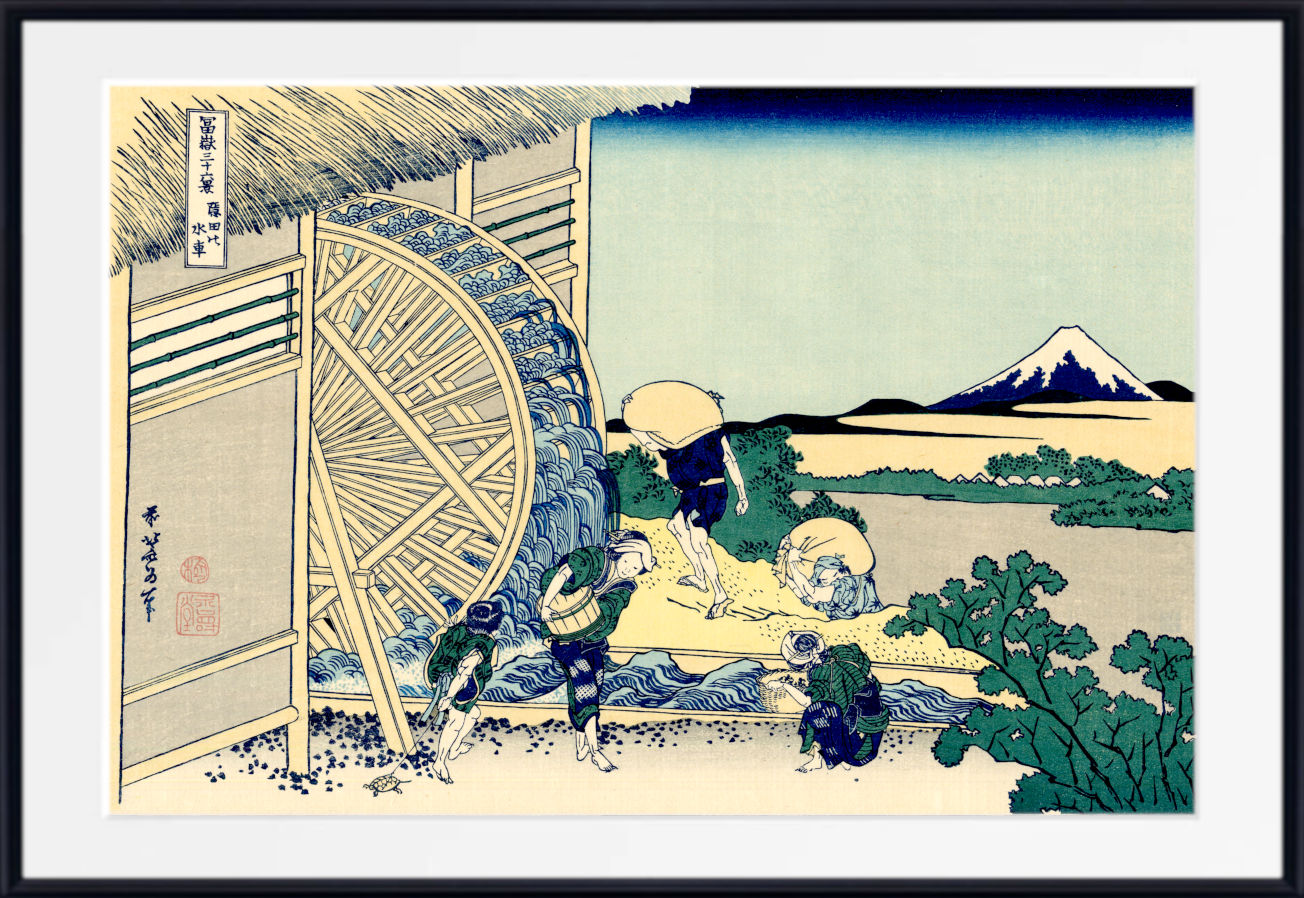
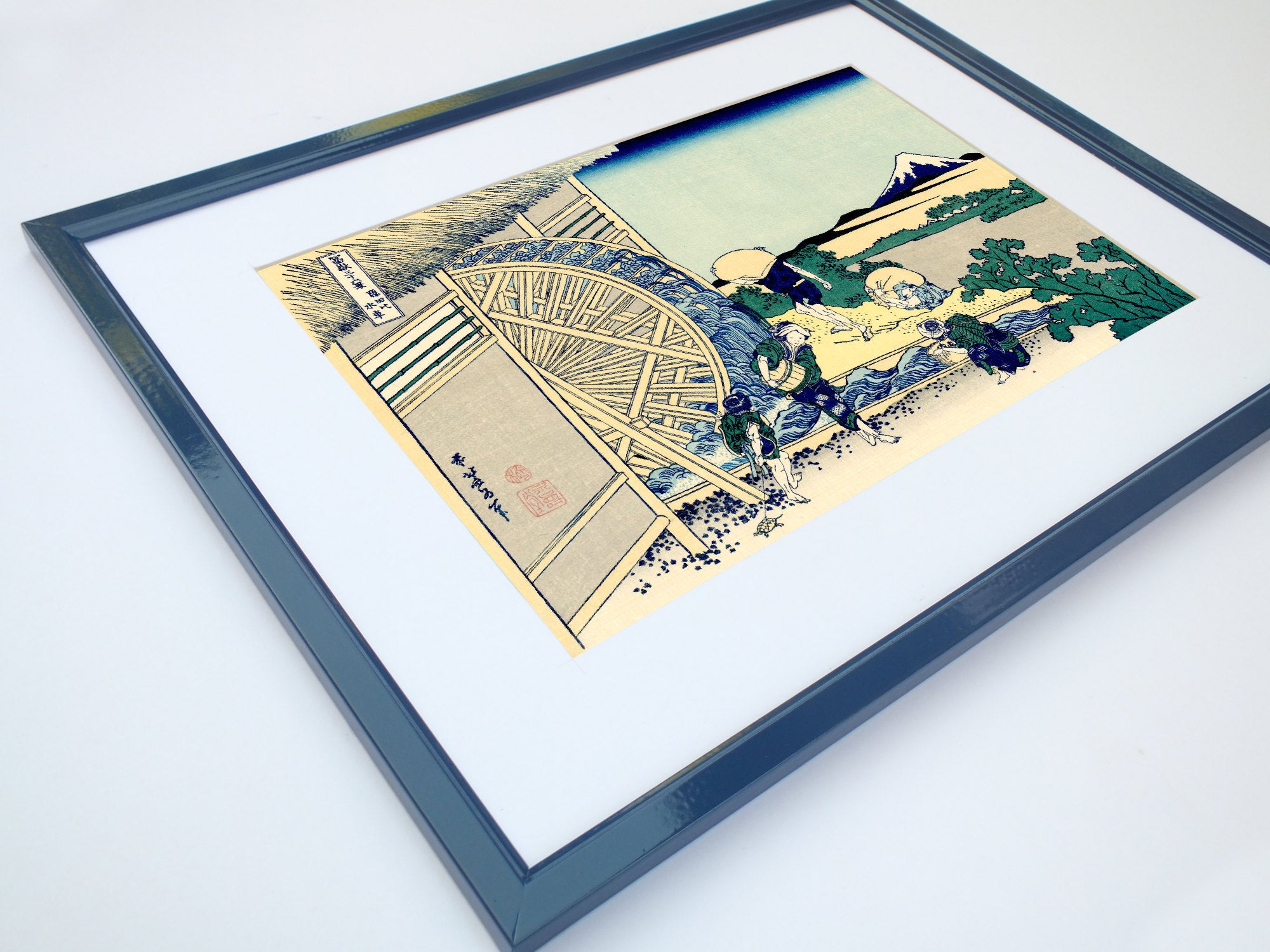
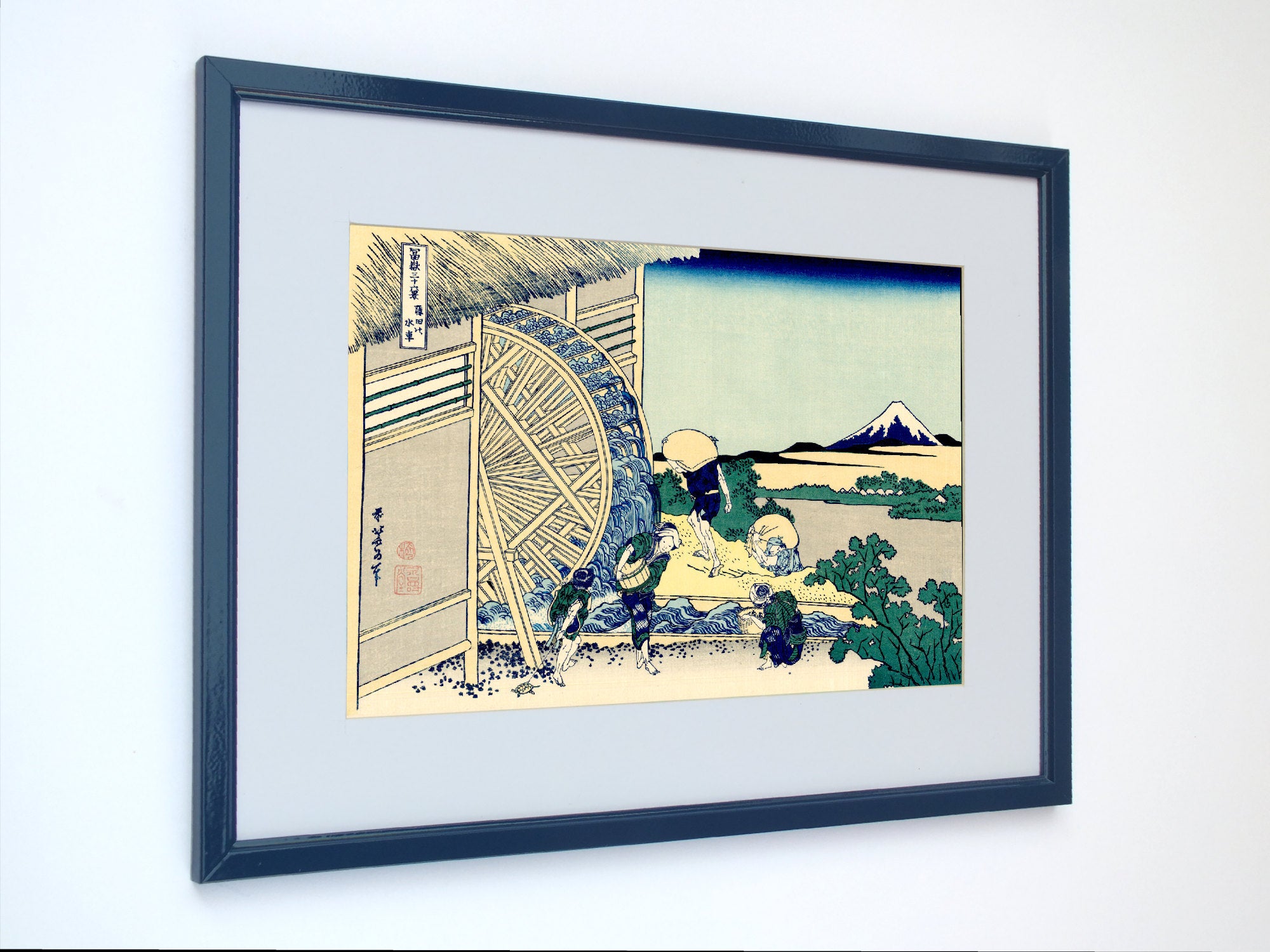
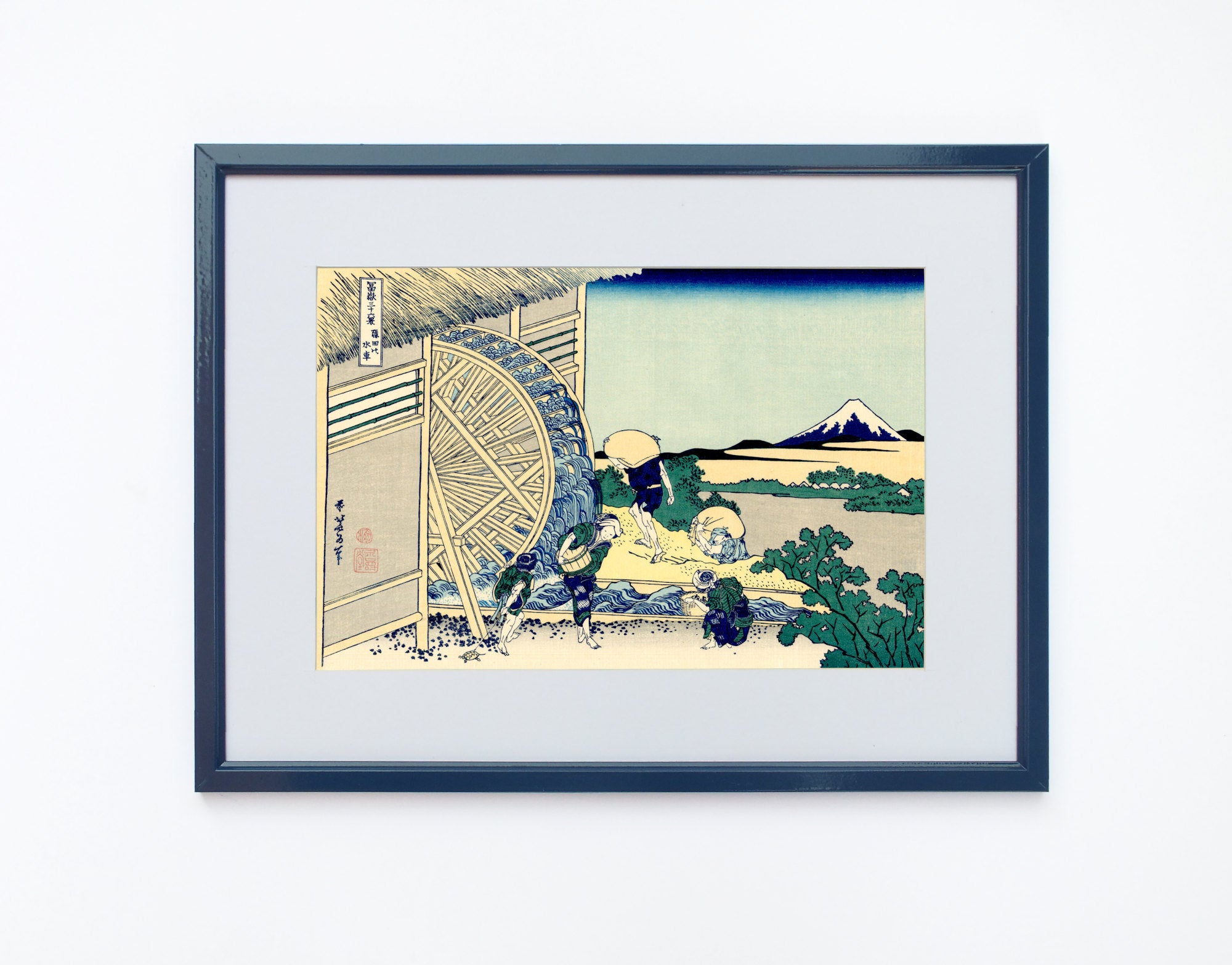
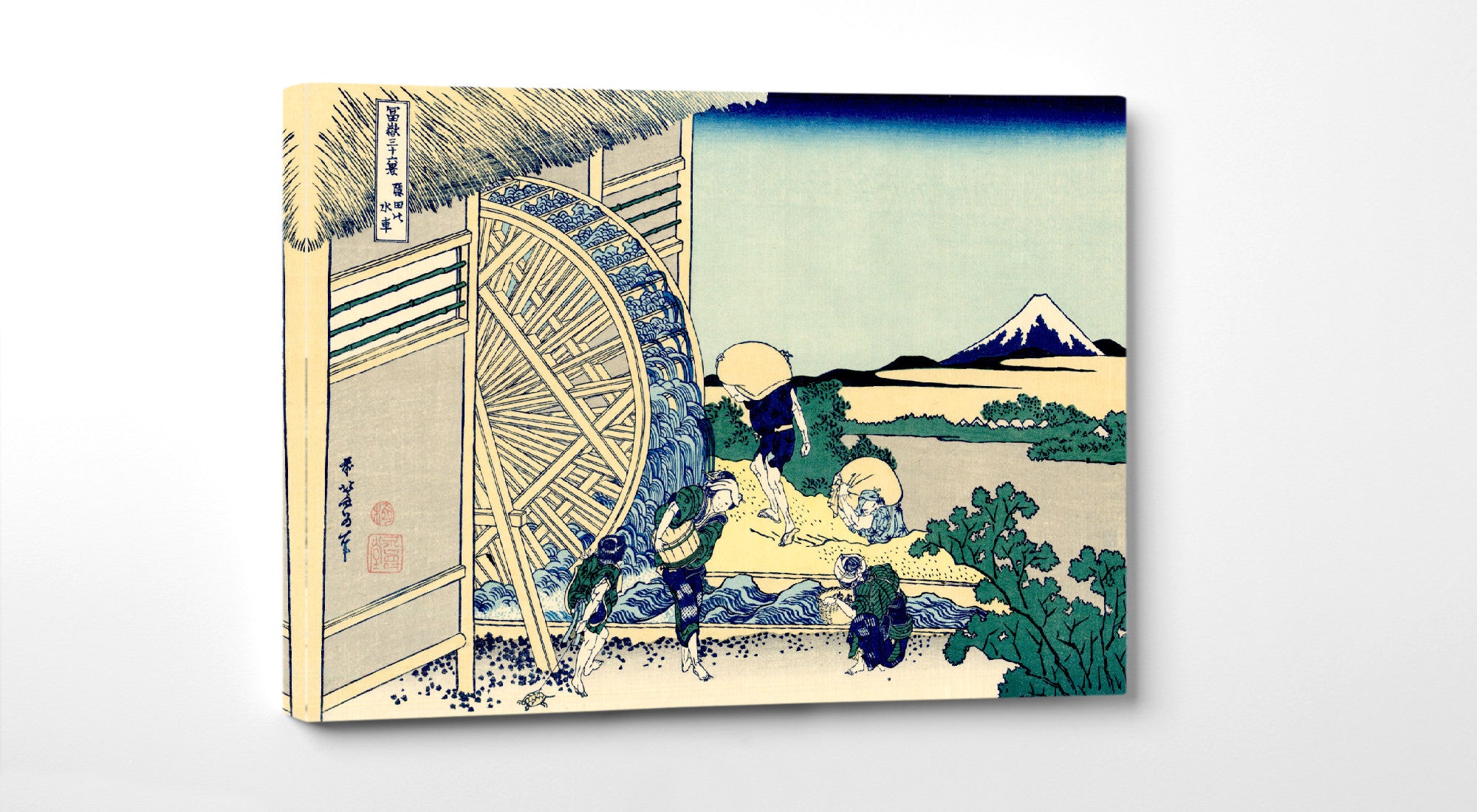
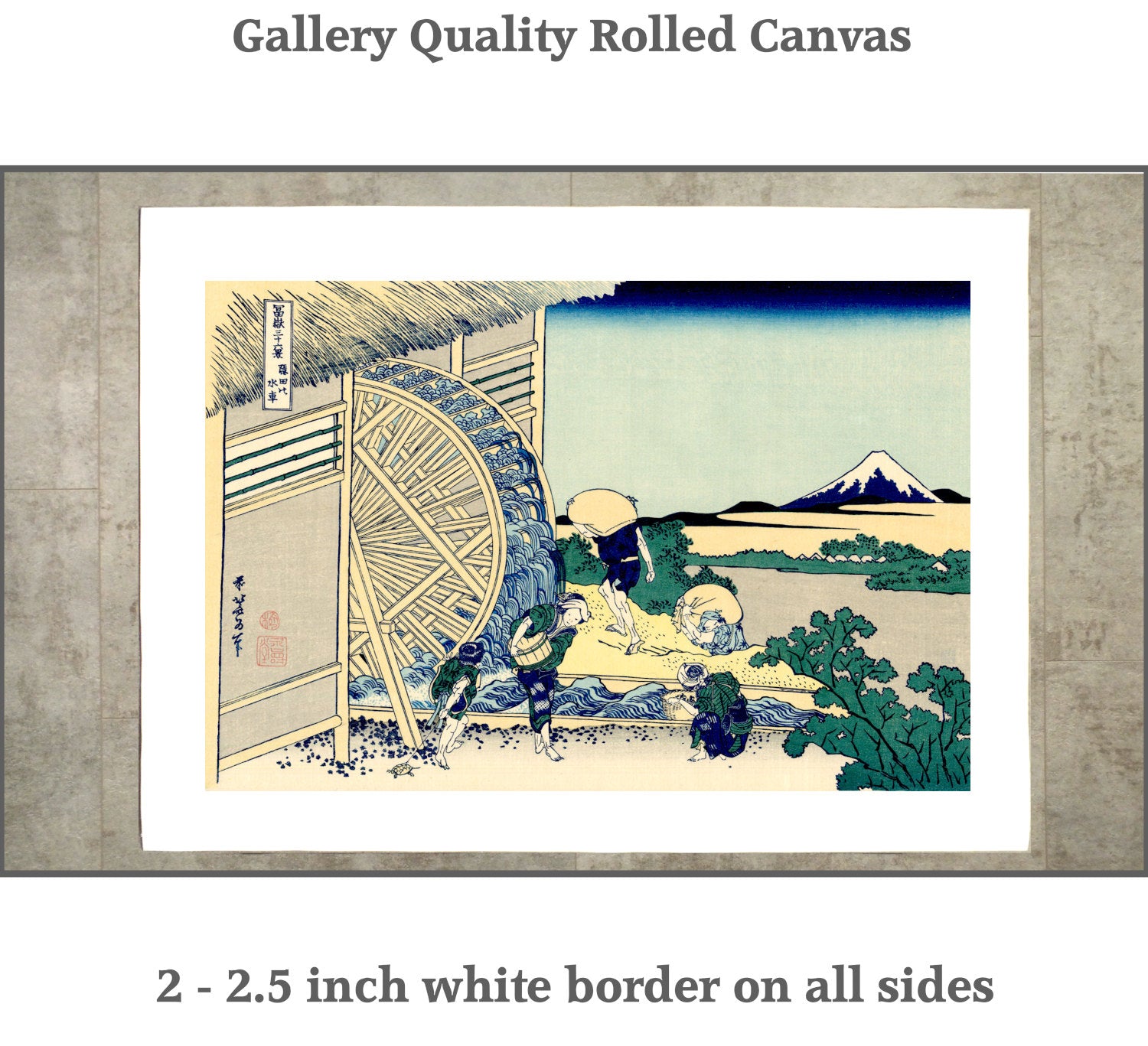
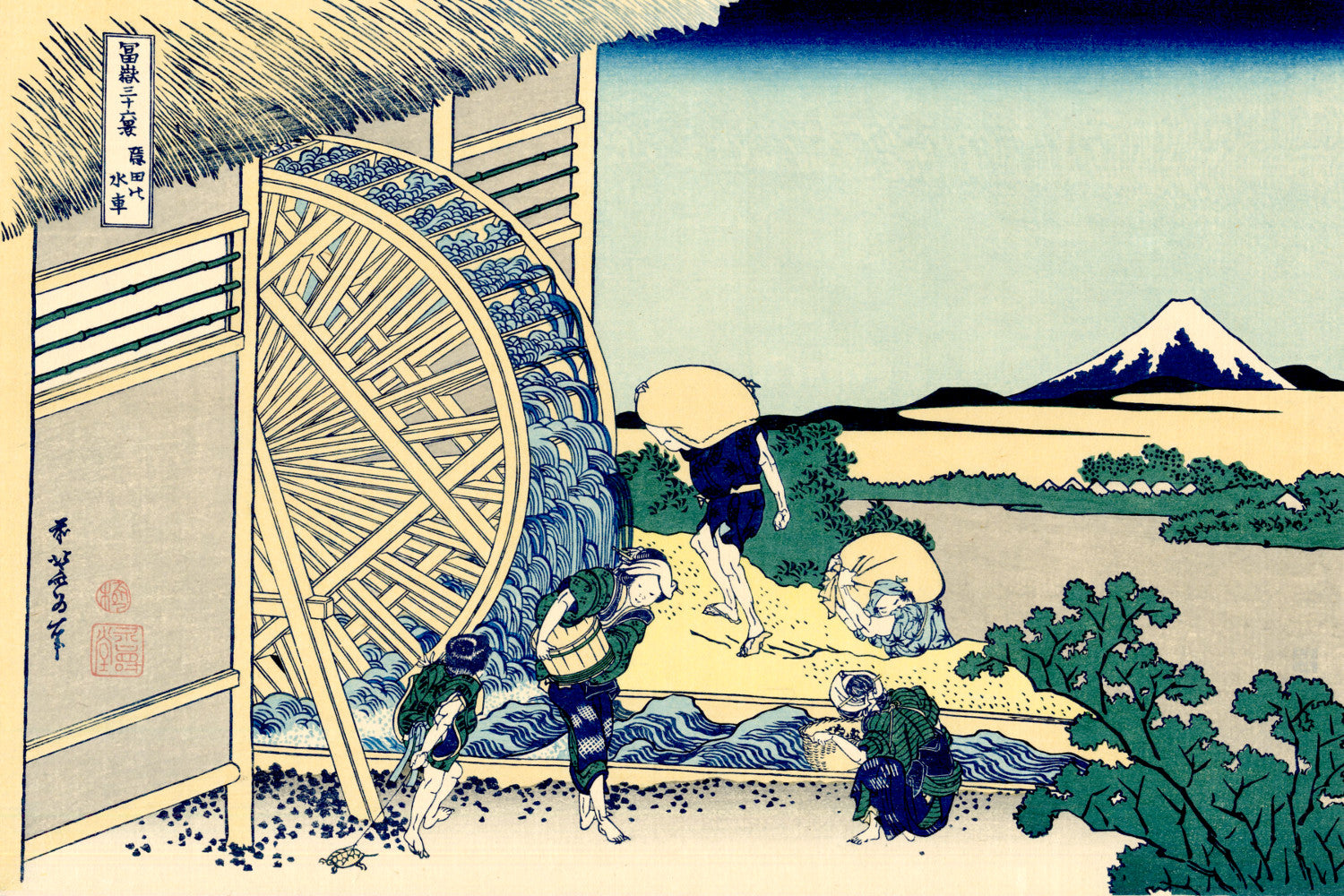
In Watermill at Onden, people continue their daily work while Mount Fuji sits quietly beyond them.
Hokusai repeatedly brings together monumental nature and ordinary human life.
Red Fuji and the Power of Simplicity
Fine Wind, Clear Morning, commonly known as Red Fuji, demonstrates the other extreme of Hokusai's landscape art.
There is little narrative action.
The mountain itself fills most of the design.
Its red-brown slopes rise against a deep blue sky while small traces of snow remain near the summit.
The extraordinary simplicity of the image allows shape and colour to dominate.
Together with The Great Wave, Red Fuji has become one of the most celebrated designs in the entire Thirty-Six Views series.
Hokusai and the Colour Blue
Blue plays an important role in Hokusai's most famous landscapes.
During the early nineteenth century, the synthetic pigment Prussian blue became newly available to Japanese printmakers.
It provided a deep, relatively stable blue capable of producing effects that were difficult to achieve with traditional pigments alone.
Hokusai exploited its possibilities enthusiastically.
The sea in The Great Wave, distant mountains, rivers and skies throughout the Fuji series demonstrate how strongly blue became associated with his landscape prints.
Its arrival contributed to a broader fashion for predominantly blue Japanese prints known as aizuri-e.
Dragons, Myth and Imagination
Landscape was only one part of Hokusai's artistic world.
He also produced extraordinary images of dragons, ghosts, legendary figures and supernatural subjects.
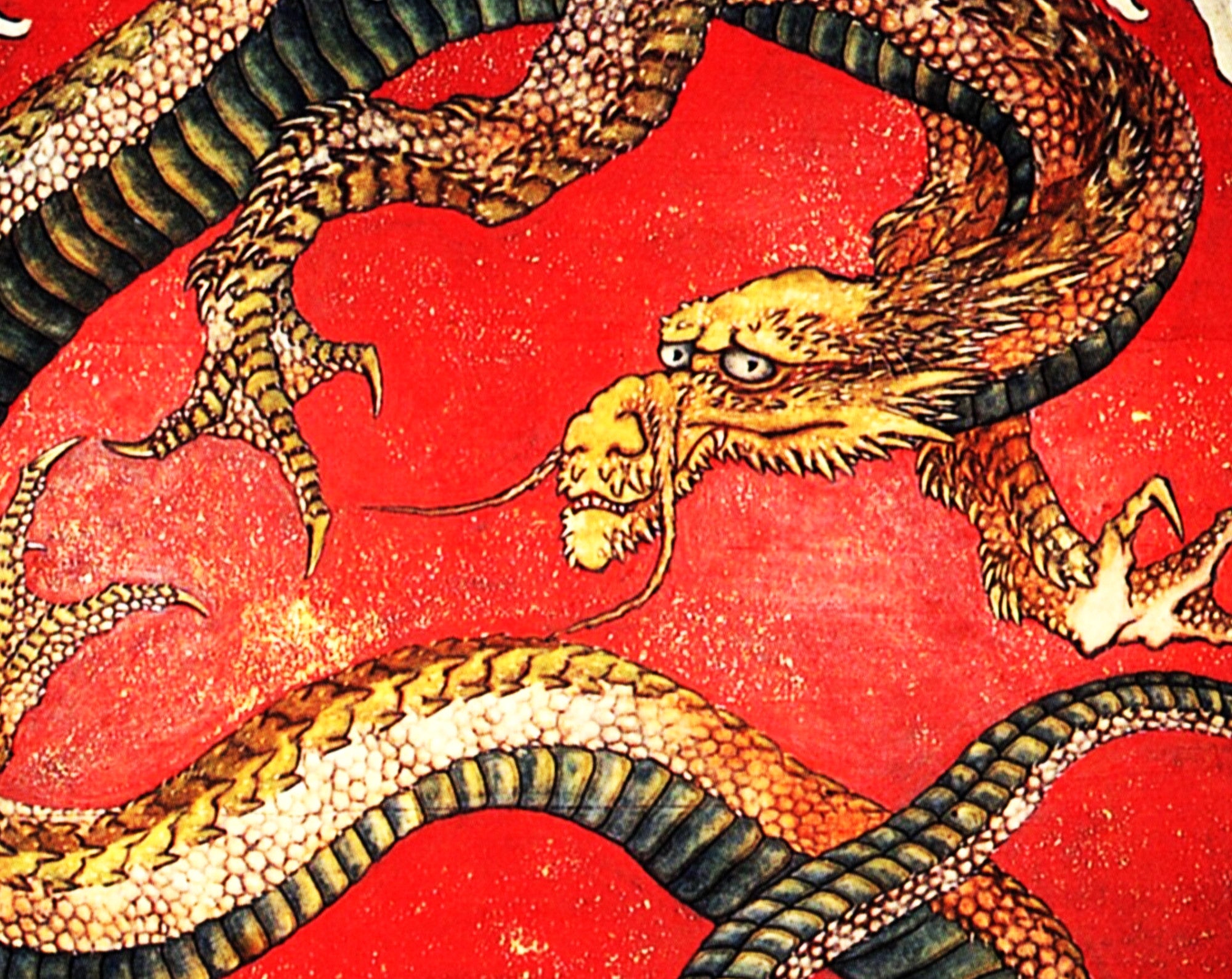
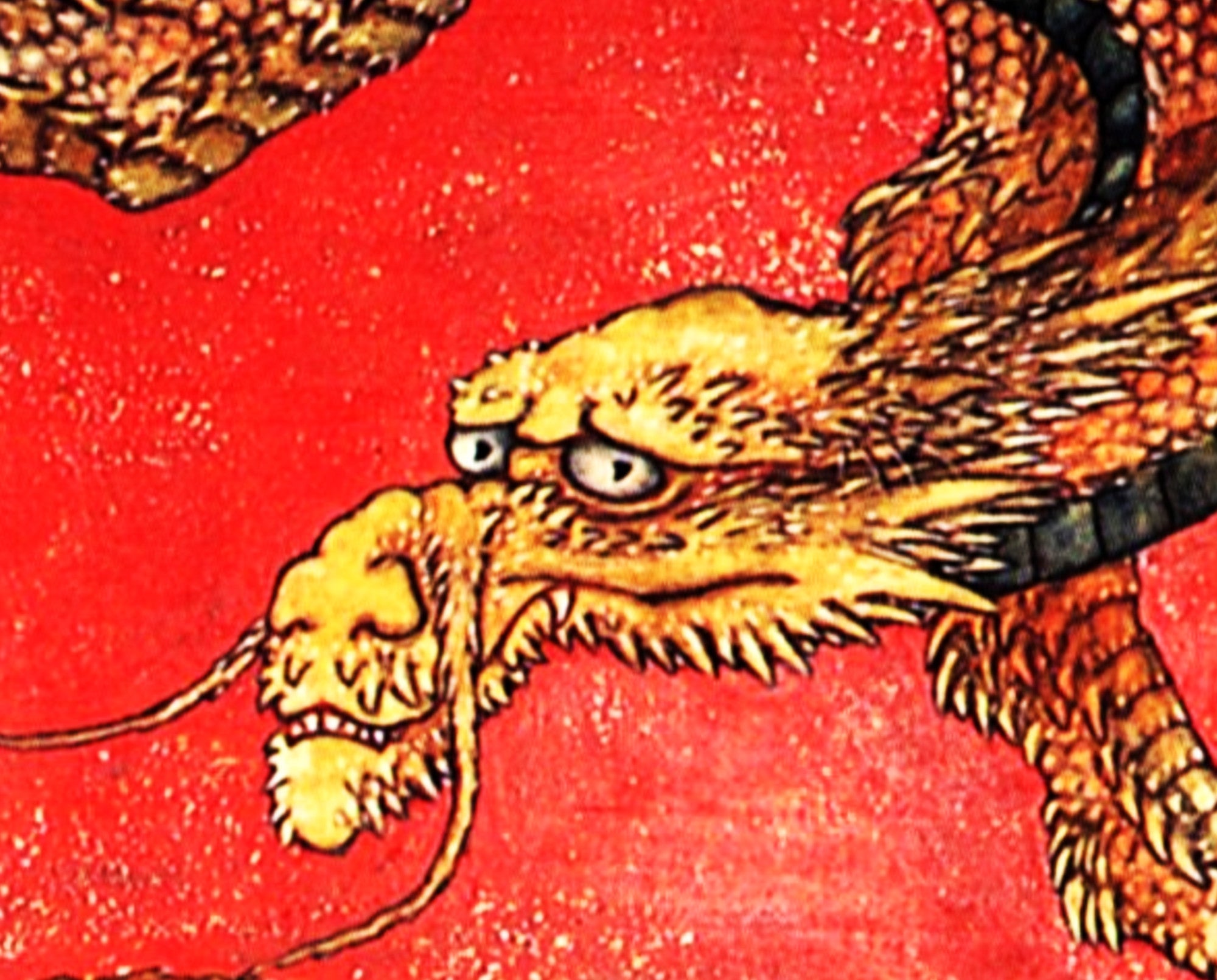
The Matsuri Yatai Dragon represented in the GalleryThane collection demonstrates this very different side of his imagination.
The dragon has deep associations within East Asian culture with water, weather and supernatural power.
Hokusai's ability to describe twisting bodies, scales and sweeping movement made such subjects ideally suited to his exceptional drawing skills.
The result is markedly different from the quiet landscapes of Mount Fuji but unmistakably Hokusai.
The Hokusai Manga
Hokusai's fascination with drawing also produced the famous Hokusai Manga.
Beginning in the 1810s, these volumes brought together enormous numbers of sketches covering people, animals, landscapes, movement, occupations and comic observations.
The word manga in this context should not be confused directly with modern Japanese narrative comics.
Hokusai's volumes were collections of freely drawn sketches and visual studies intended both to entertain and demonstrate ways of drawing the world.
Their breadth illustrates his extraordinary curiosity.
Almost nothing seemed too ordinary or too strange to become a subject.
Why Hokusai's Compositions Look So Modern
One reason Hokusai continues to appeal to contemporary viewers is his unusual approach to composition.
He frequently crops forms unexpectedly, uses dramatic diagonals, shifts the horizon, exaggerates scale and introduces framing devices within the image.
A bridge, tree, wave or circular barrel can become the structure through which the entire landscape is seen.
These devices create compositions that can appear surprisingly modern despite originating in nineteenth-century Edo.
Hokusai also combined Japanese artistic traditions with ideas derived from Chinese and European visual culture, producing a language that was unmistakably his own.
Hokusai and the Wider Influence of Japanese Art
During the nineteenth century, Japanese prints increasingly reached Europe and became an important part of the phenomenon later described as Japonisme.
Western artists encountered unfamiliar approaches to cropping, flat areas of colour, asymmetrical composition and unusual viewpoints.
Hokusai became one of the most famous Japanese artists outside Japan, and The Great Wave in particular developed into an international visual icon.
His continuing popularity demonstrates how effectively his work communicates beyond its original cultural and historical setting.
Explore more woodblock prints and Japanese artists in GalleryThane's Japanese Art Prints collection.
Choosing a Katsushika Hokusai Print
For the most immediately recognisable Hokusai image, The Great Wave off Kanagawa remains the obvious choice.
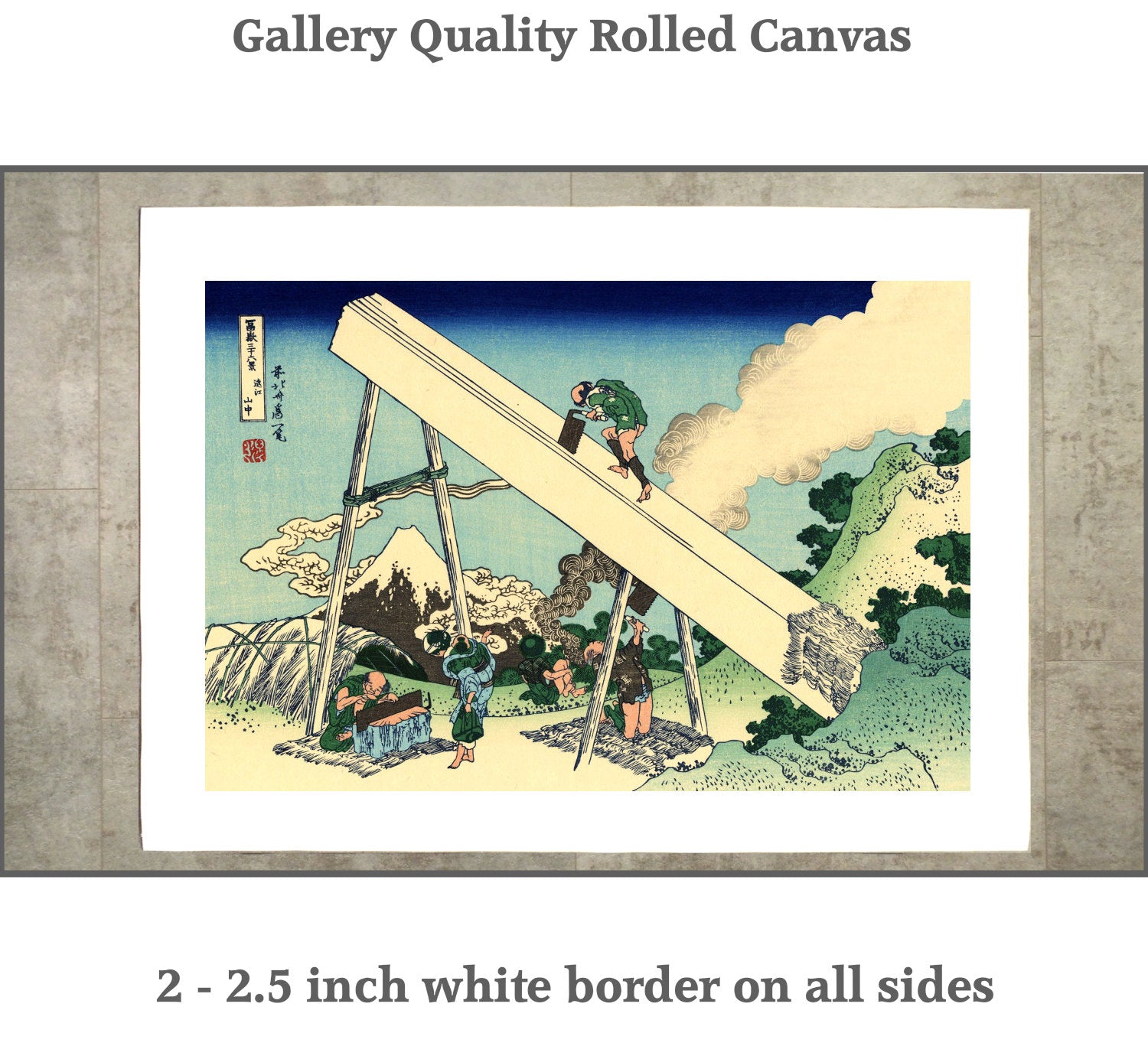
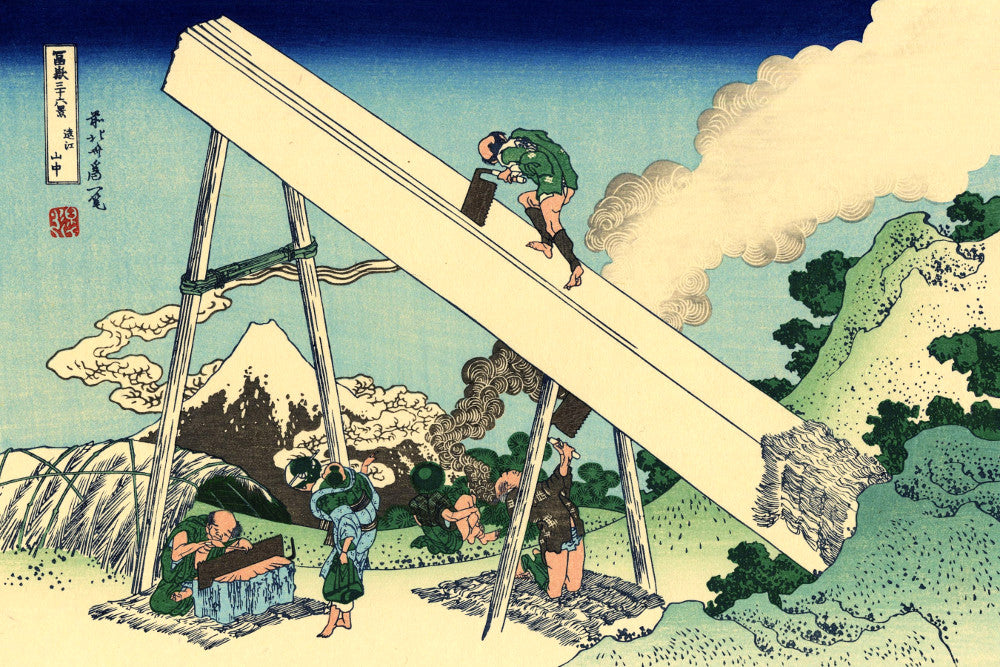
Collectors drawn to Mount Fuji can explore Red Fuji, Lightning Below the Summit, Kajikazawa in Kai Province, Ejiri in Suruga Province and the many other landscapes of the Thirty-Six Views series.
Those looking for movement and human activity may prefer prints featuring travellers, fishermen, watermills, bridges or boats.
For something markedly different from Hokusai's landscapes, the Matsuri Yatai Dragon introduces the dramatic mythology and expressive drawing found elsewhere in his work.
Hokusai Prints for Modern Interiors
Hokusai prints work exceptionally well in contemporary interiors because their strong shapes remain visually clear even from a distance.
The blues of The Great Wave and many Mount Fuji landscapes complement Scandinavian, minimalist and coastal interiors particularly well.
Red Fuji introduces warmer red and brown tones, while more restrained rural landscapes can suit natural timber, linen and neutral walls.
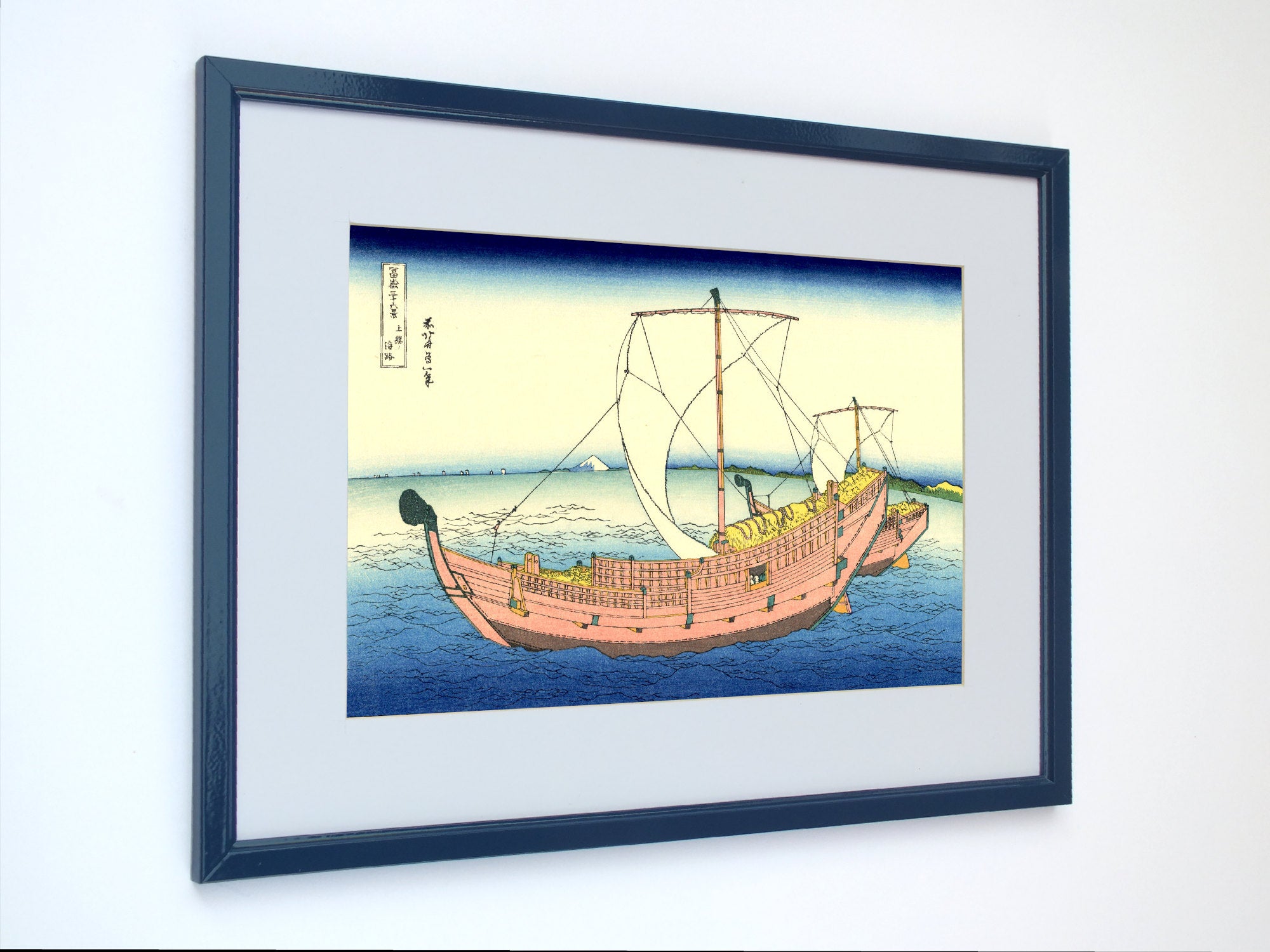
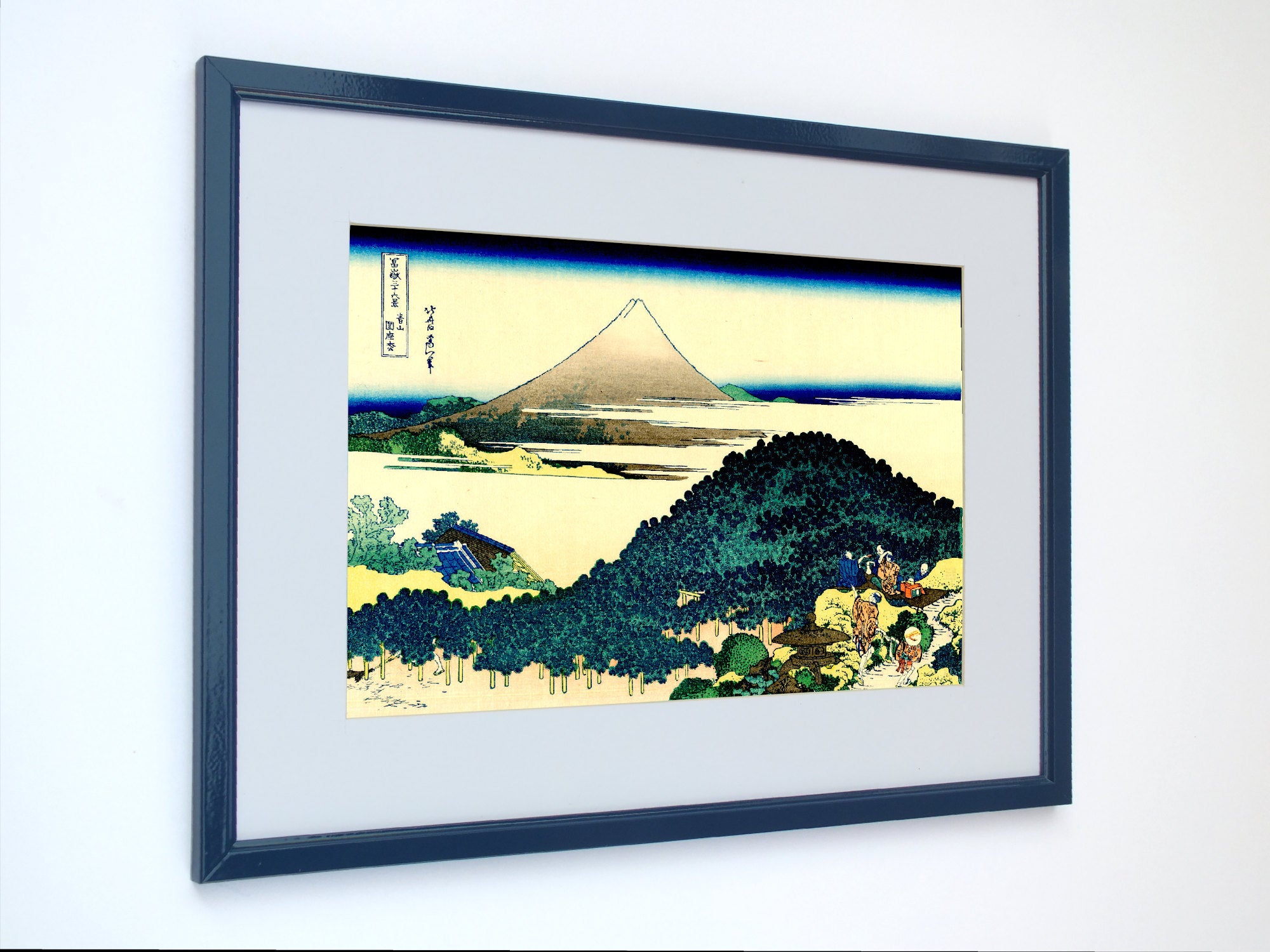
A single larger Hokusai print can provide a powerful focal point above a sofa, fireplace, bed or sideboard.
Alternatively, several Fuji landscapes can be displayed together to create a gallery wall unified by Japanese woodblock art, repeated horizon lines and Mount Fuji.
Fine Art Prints, Framed Prints and Canvas Panels
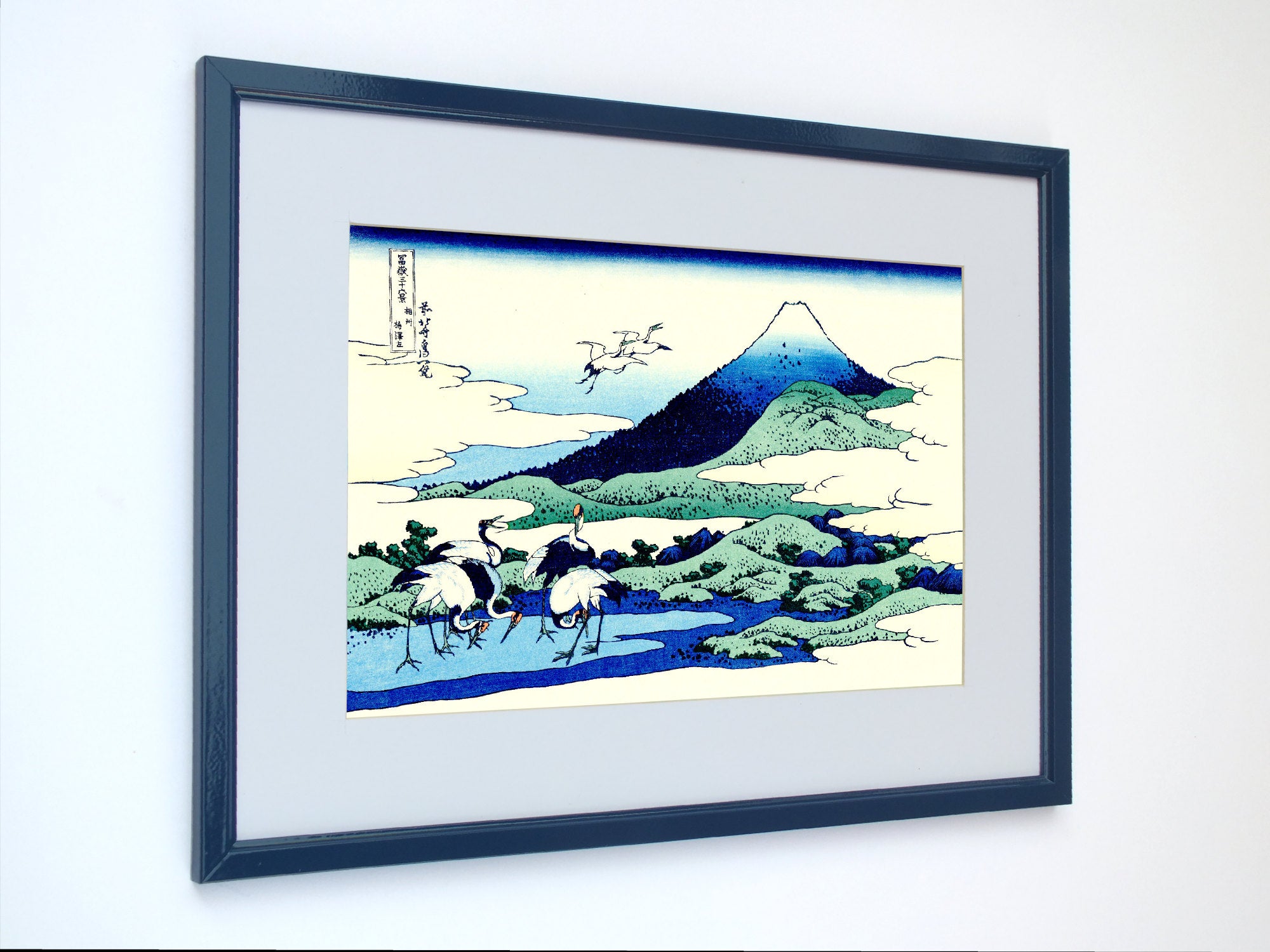
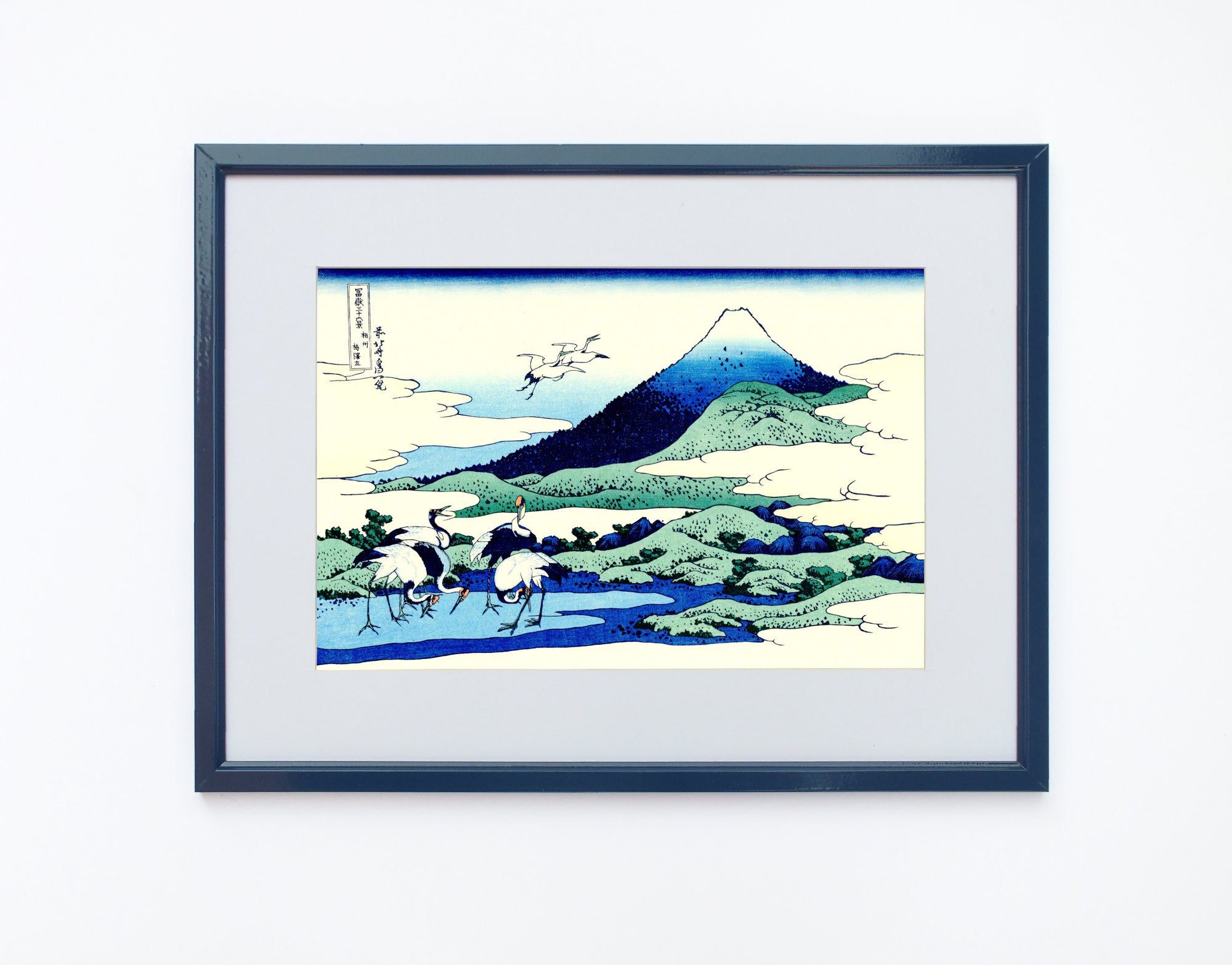
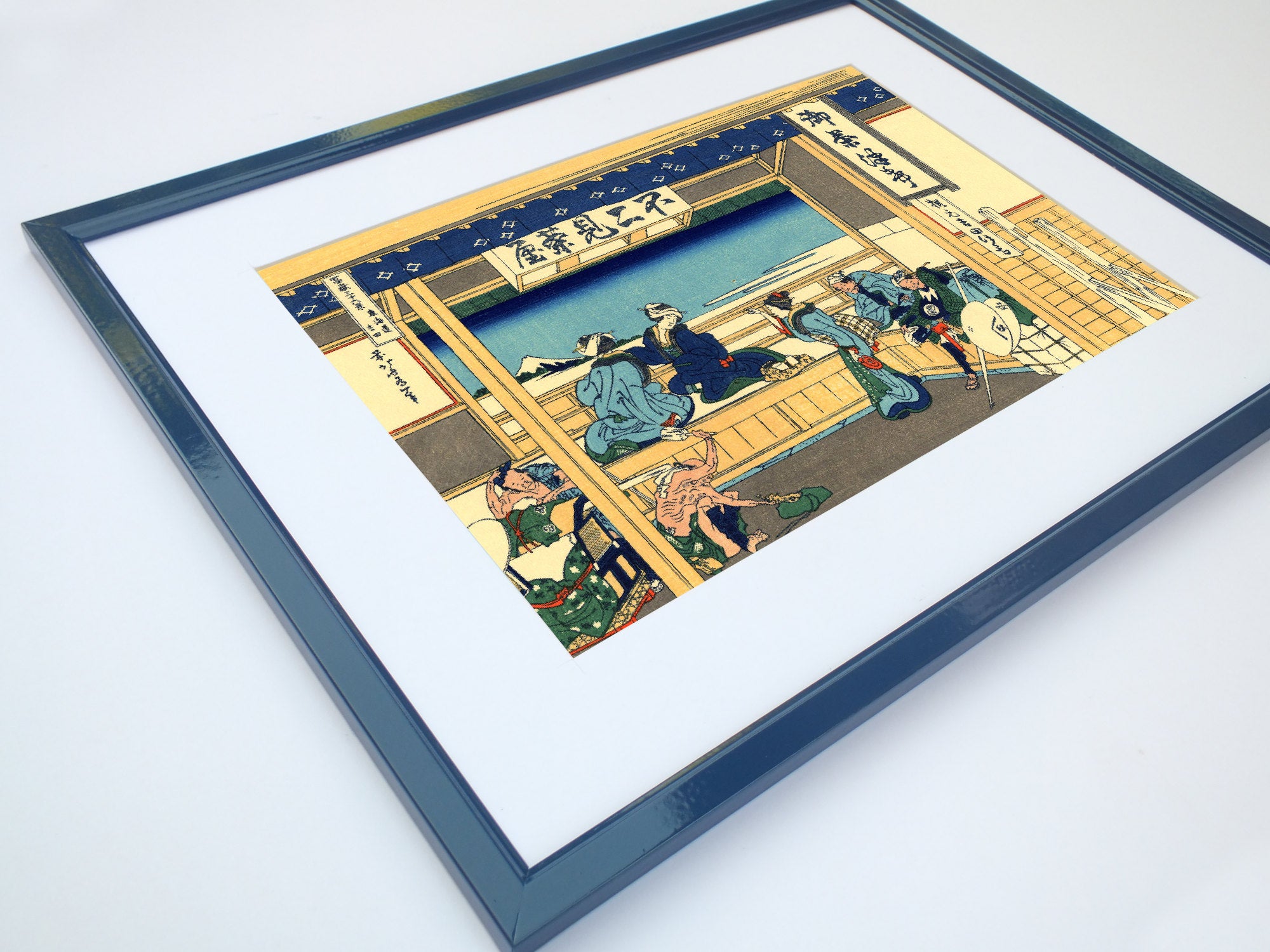
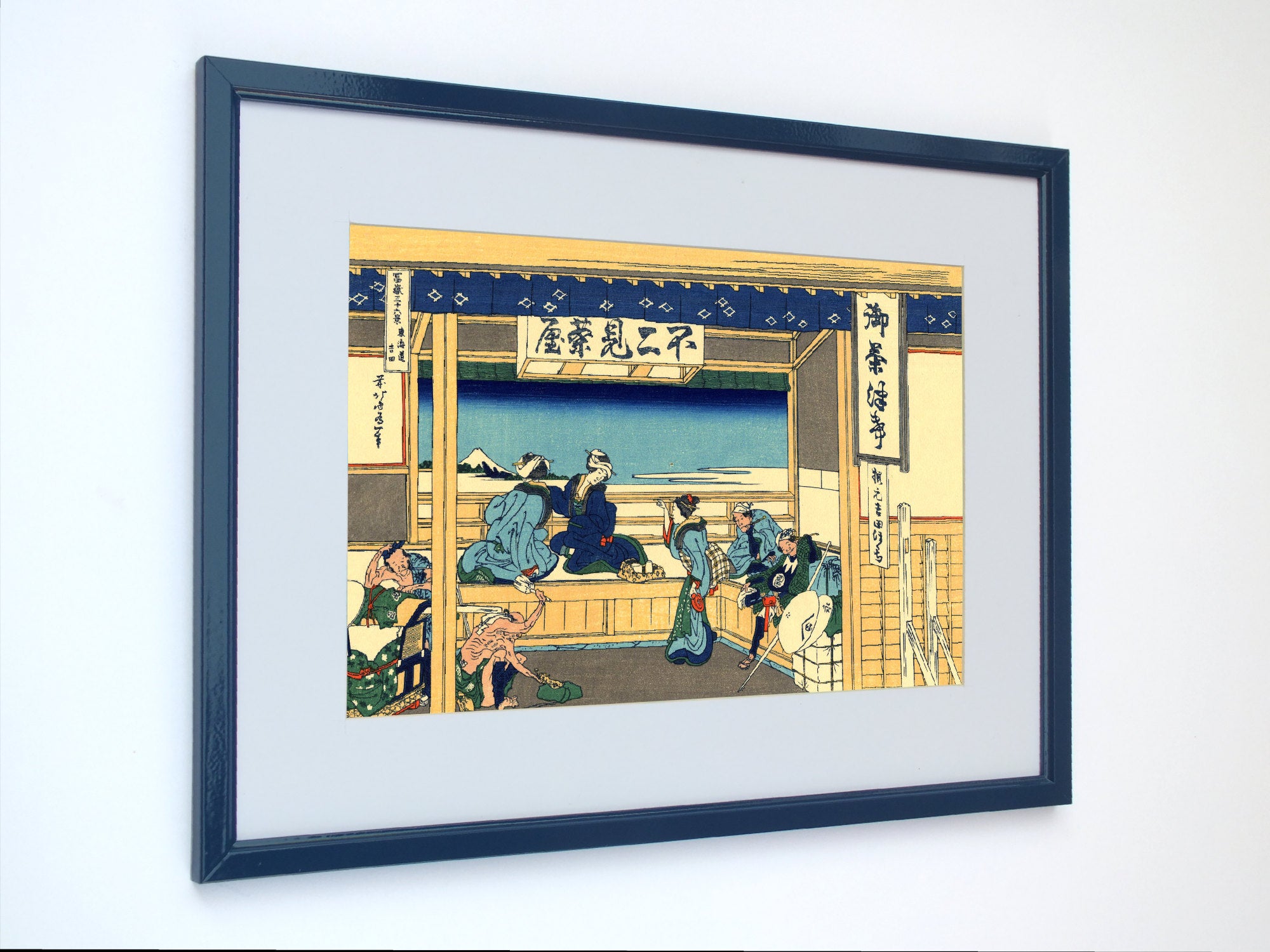
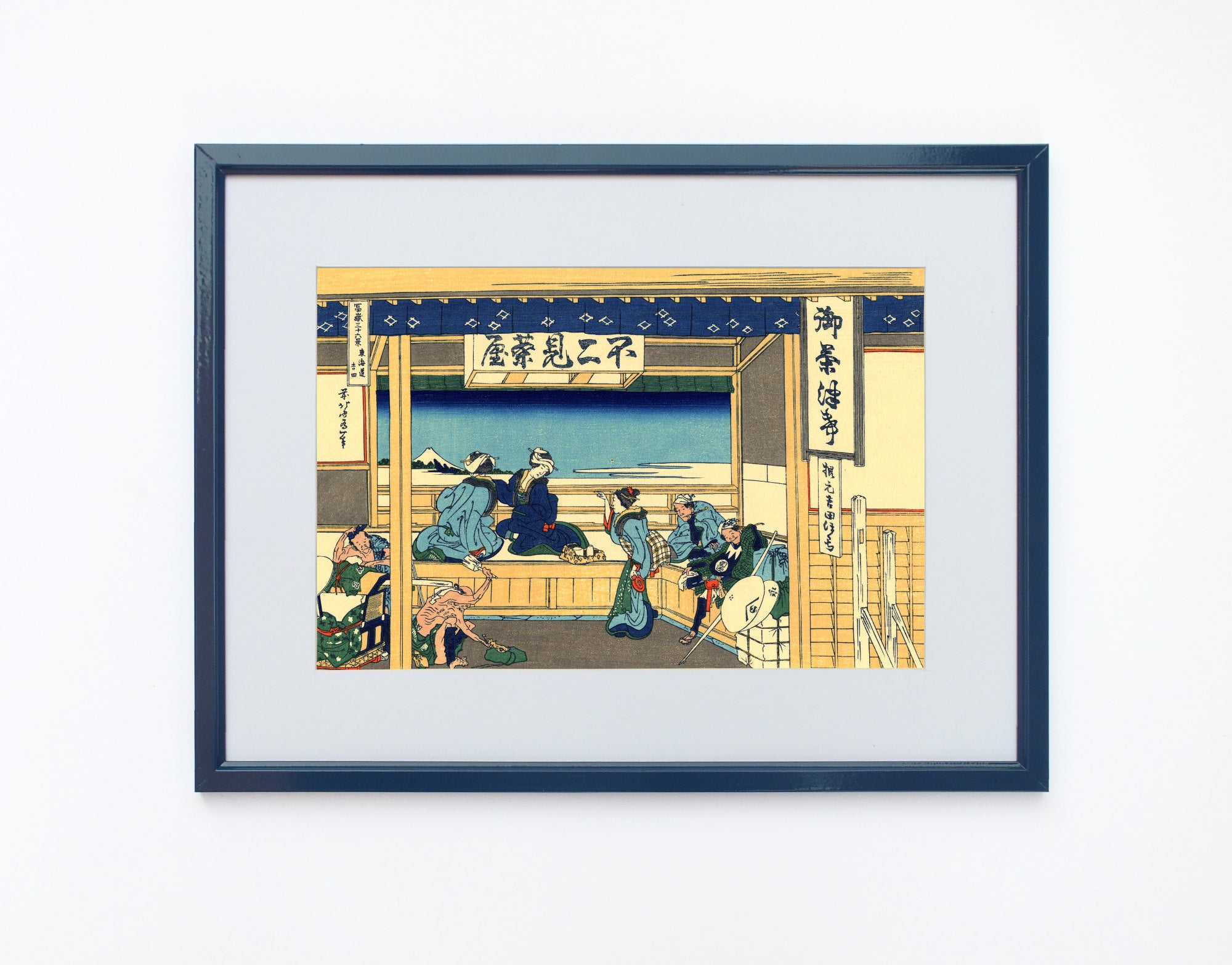
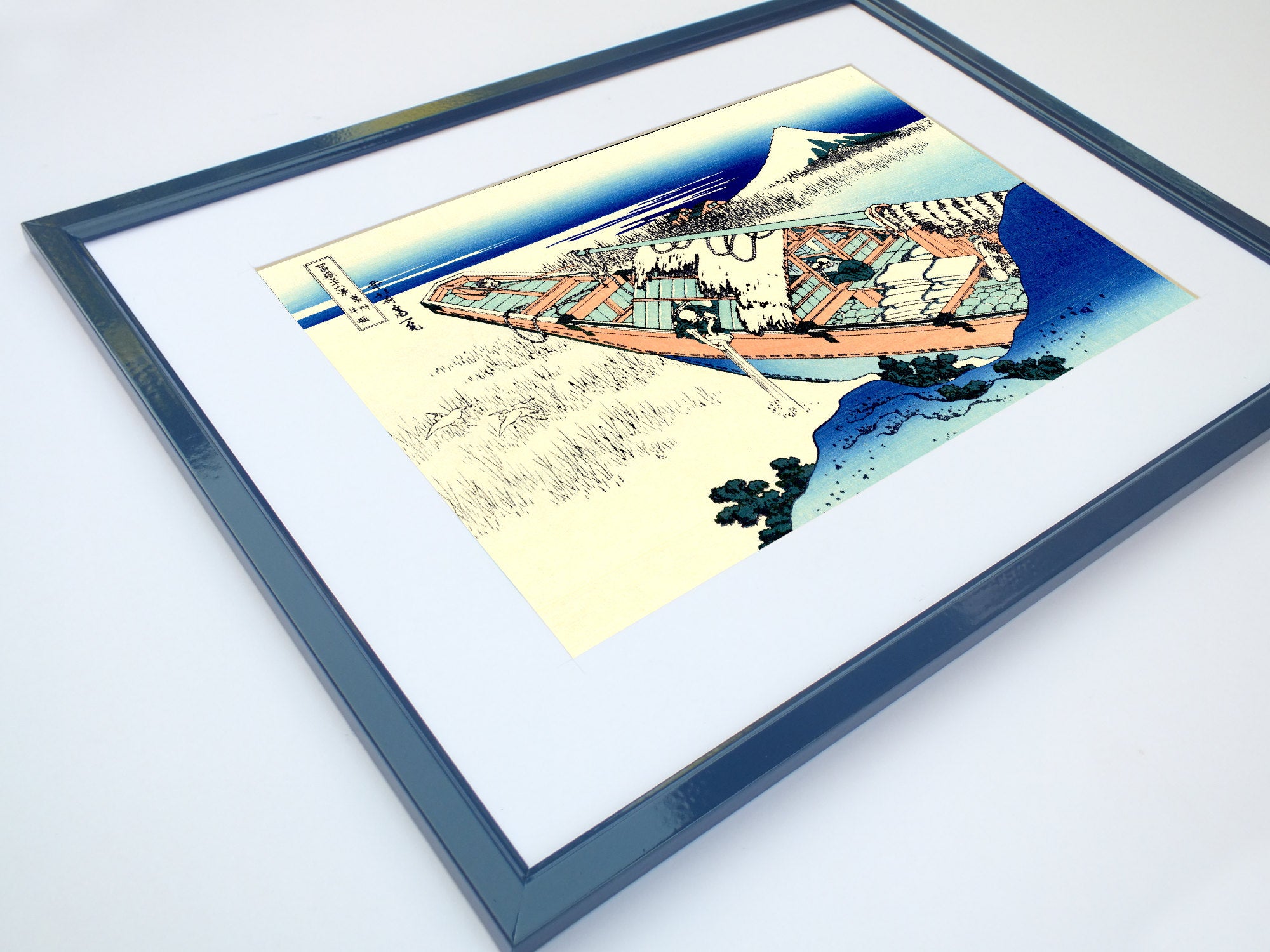
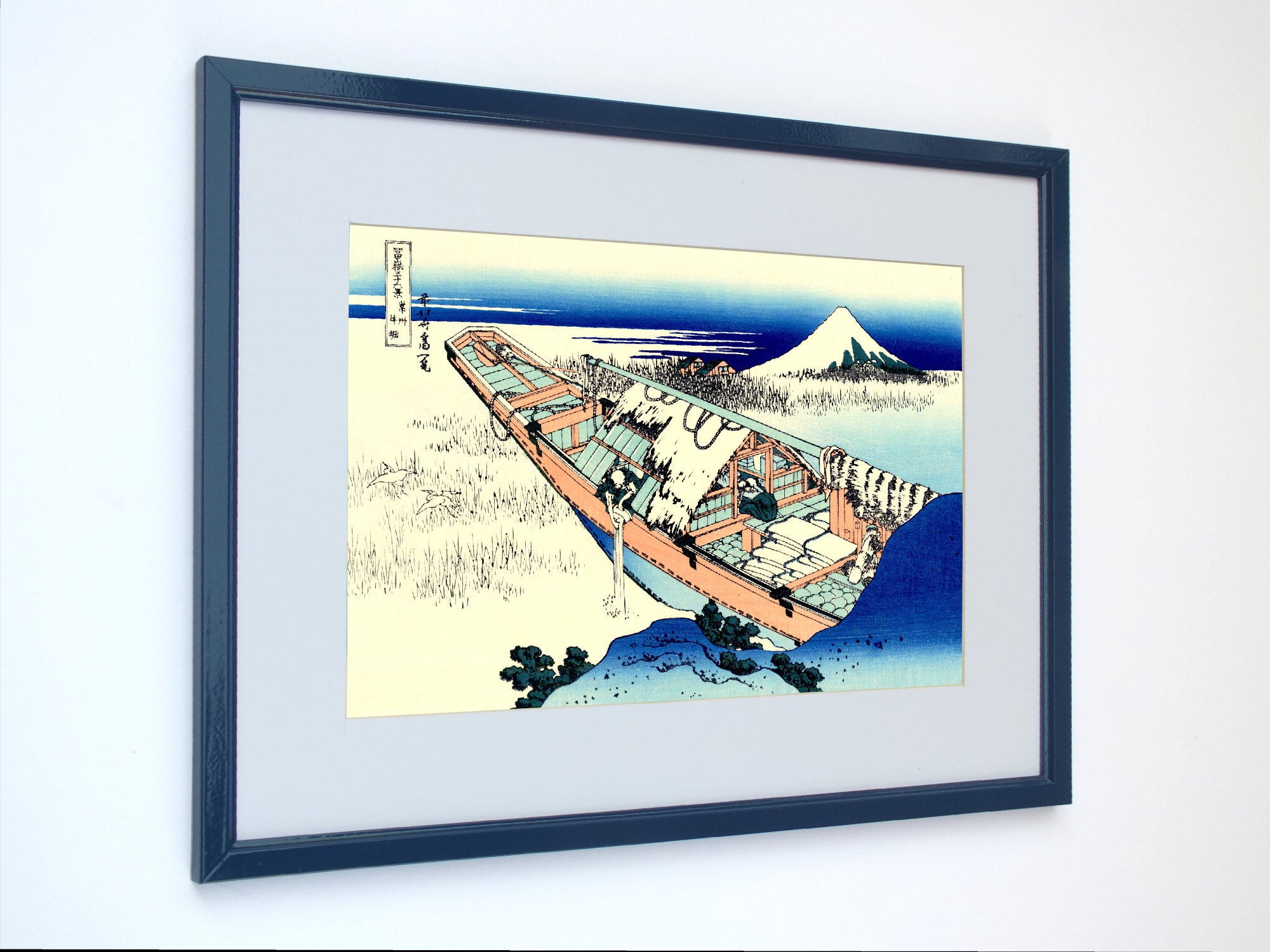
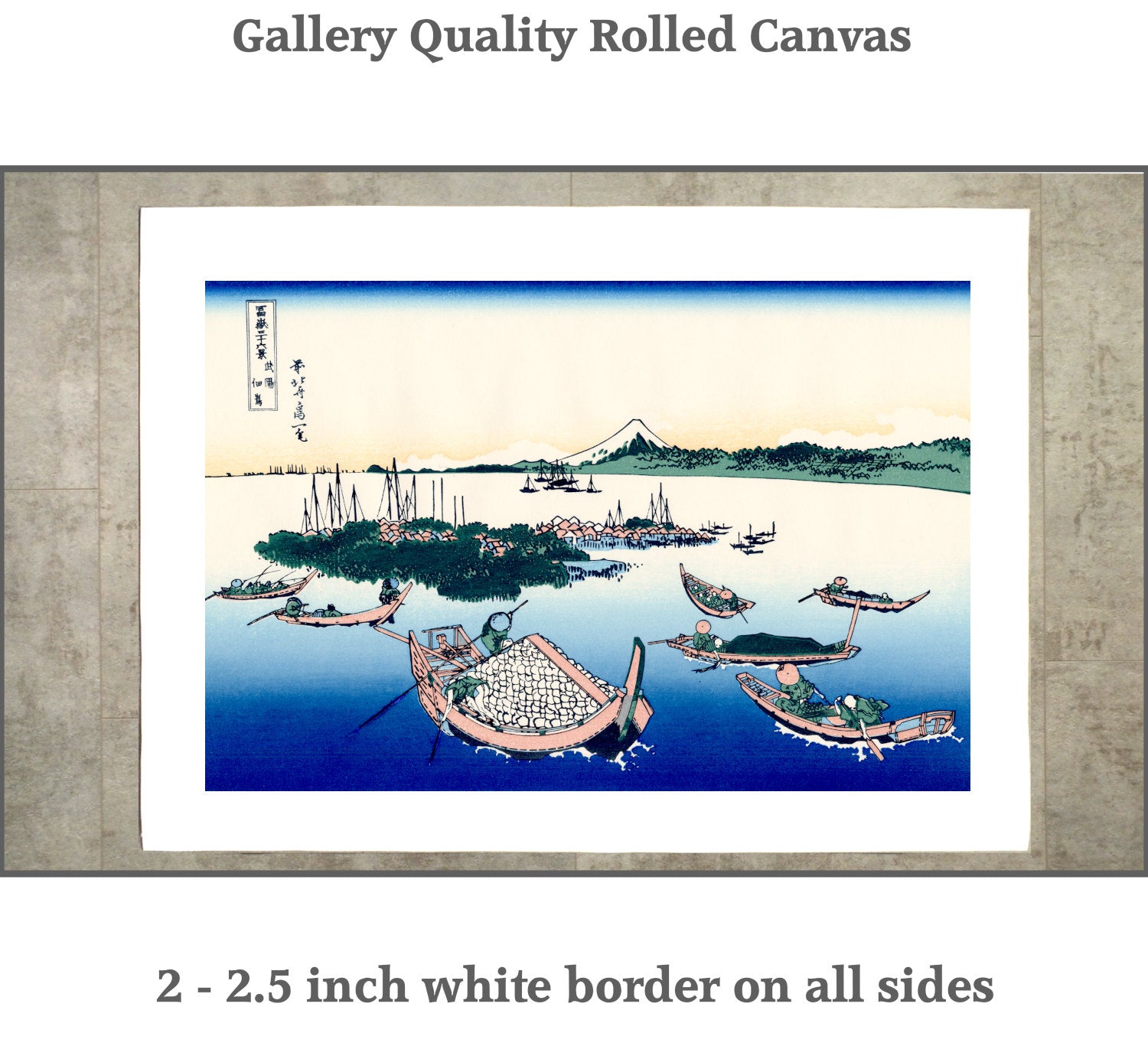
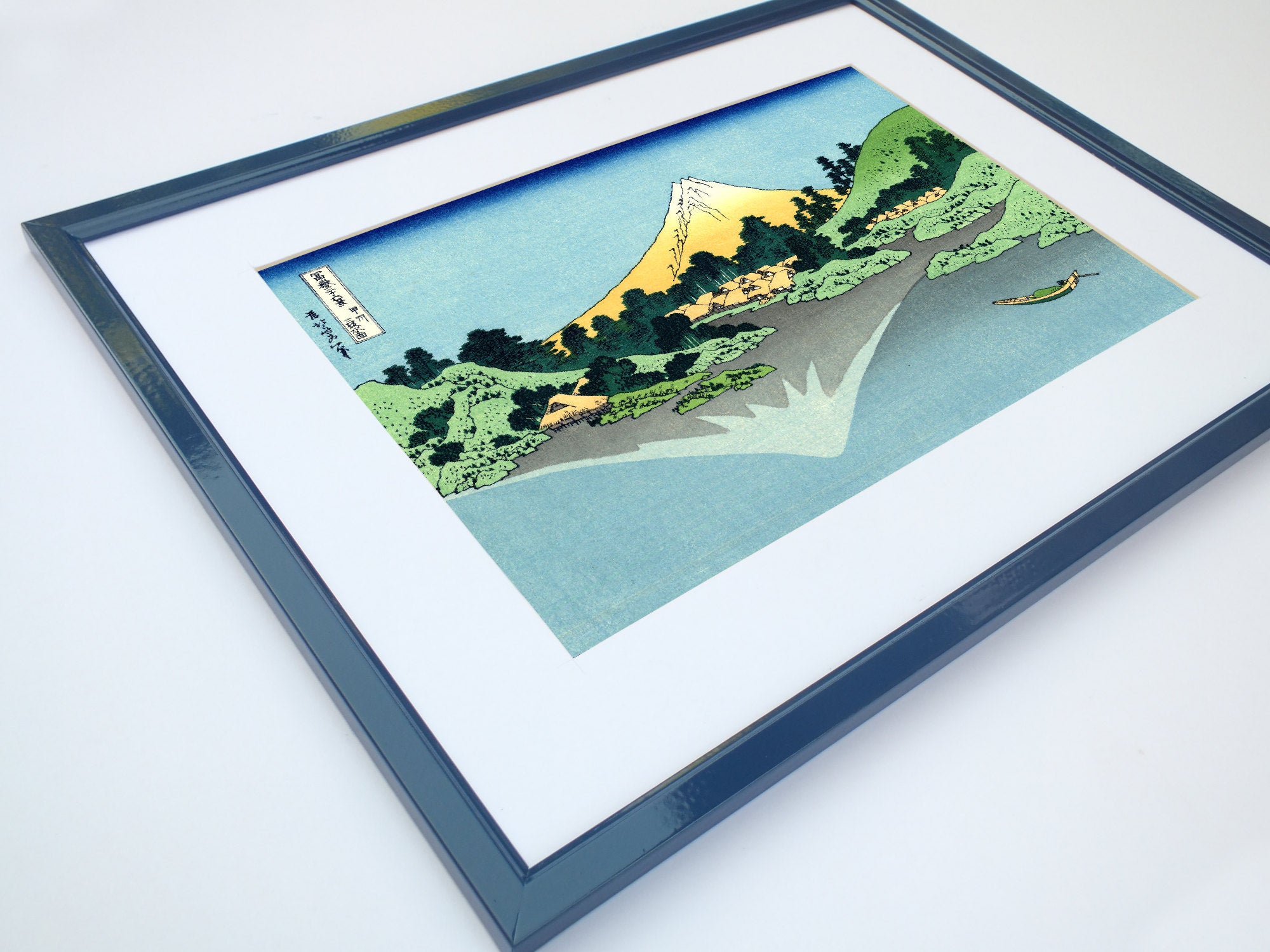
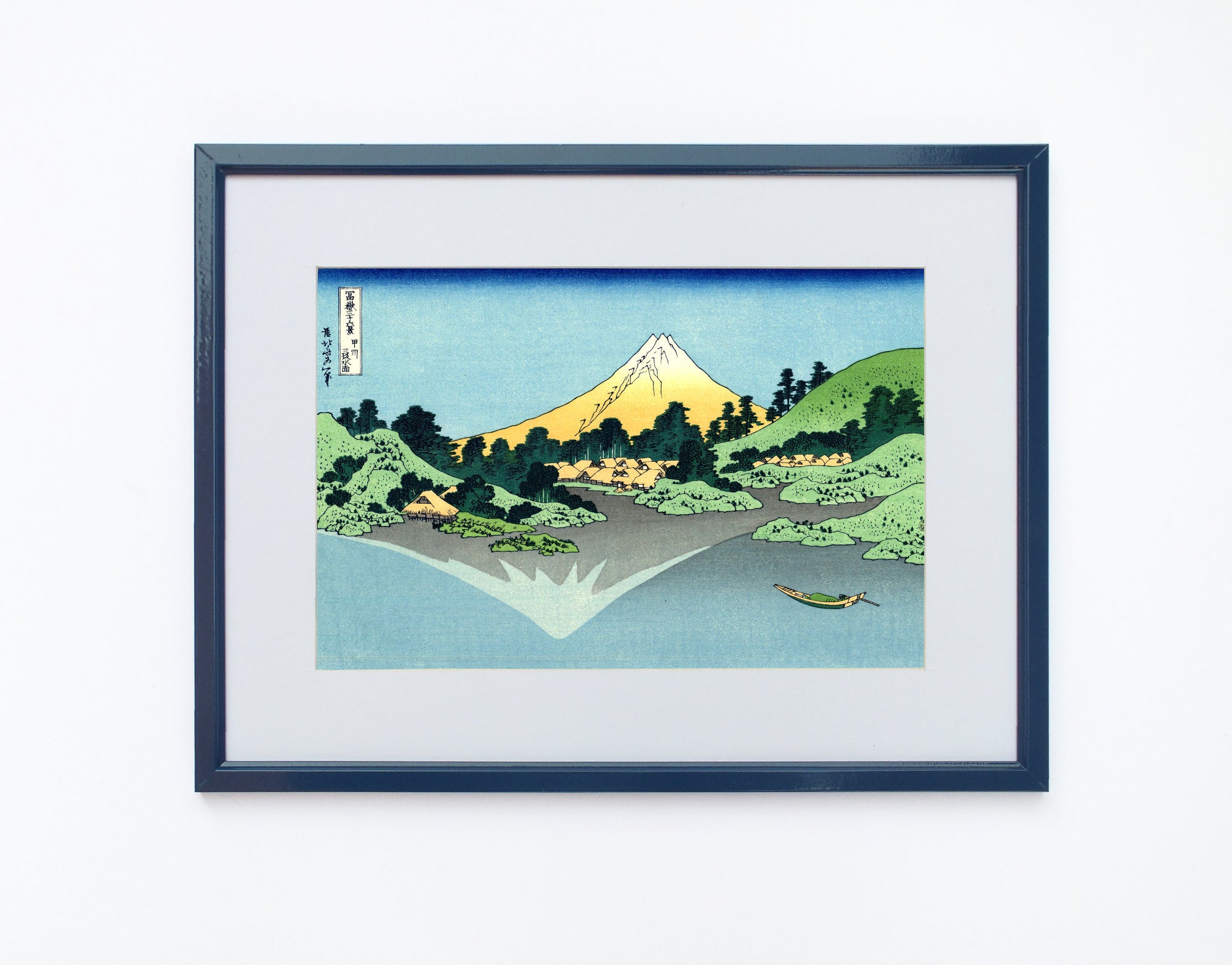
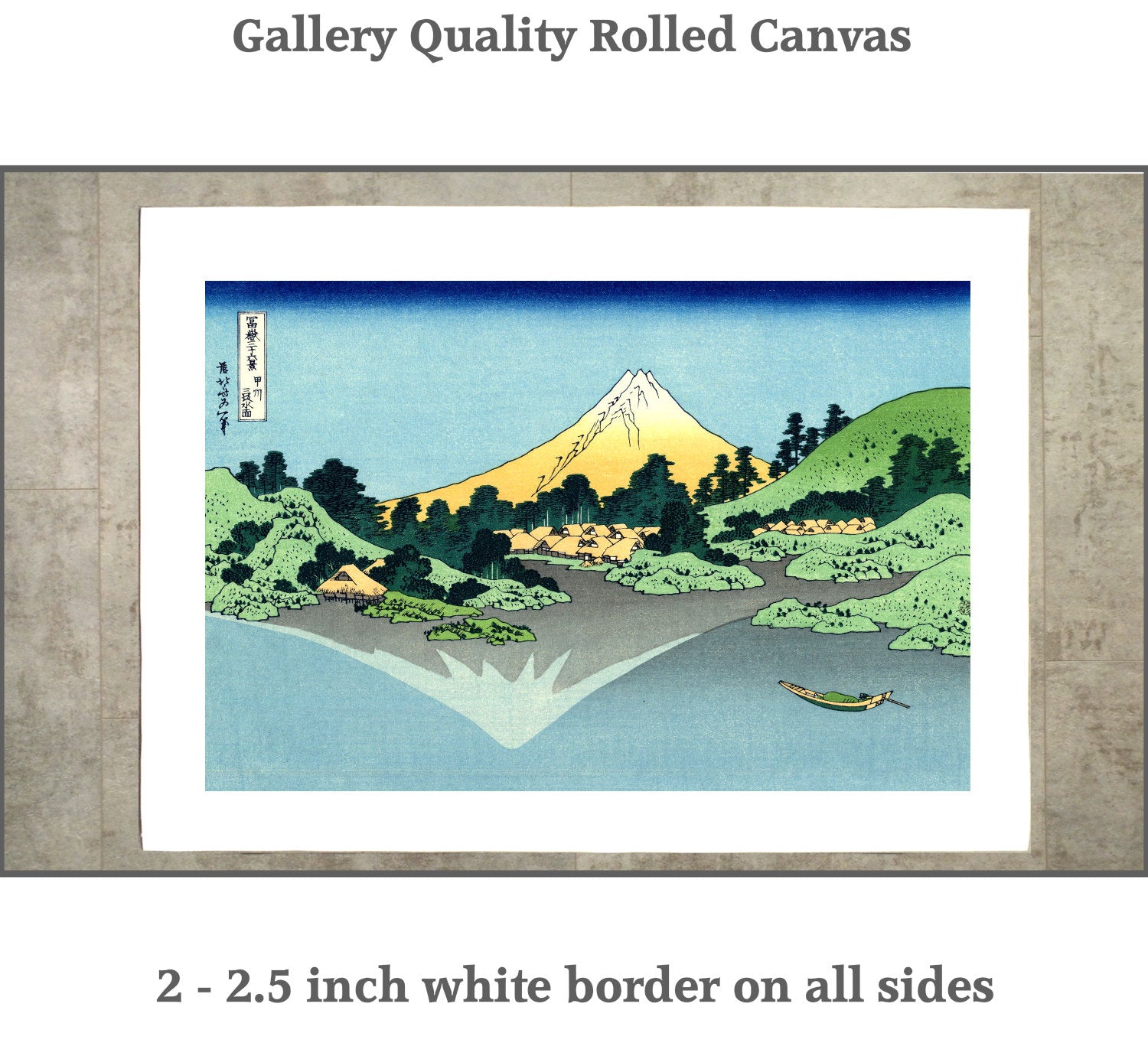
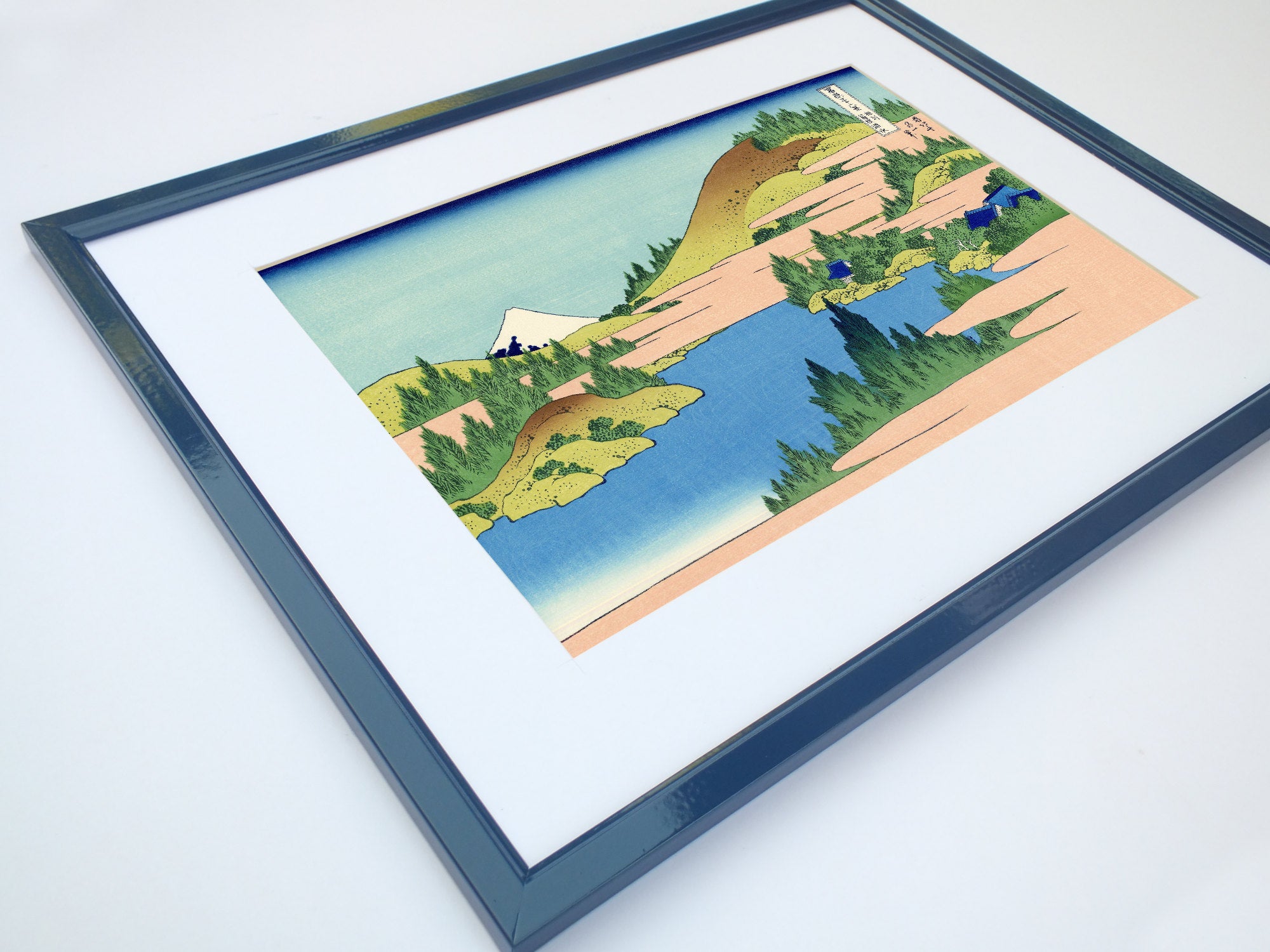
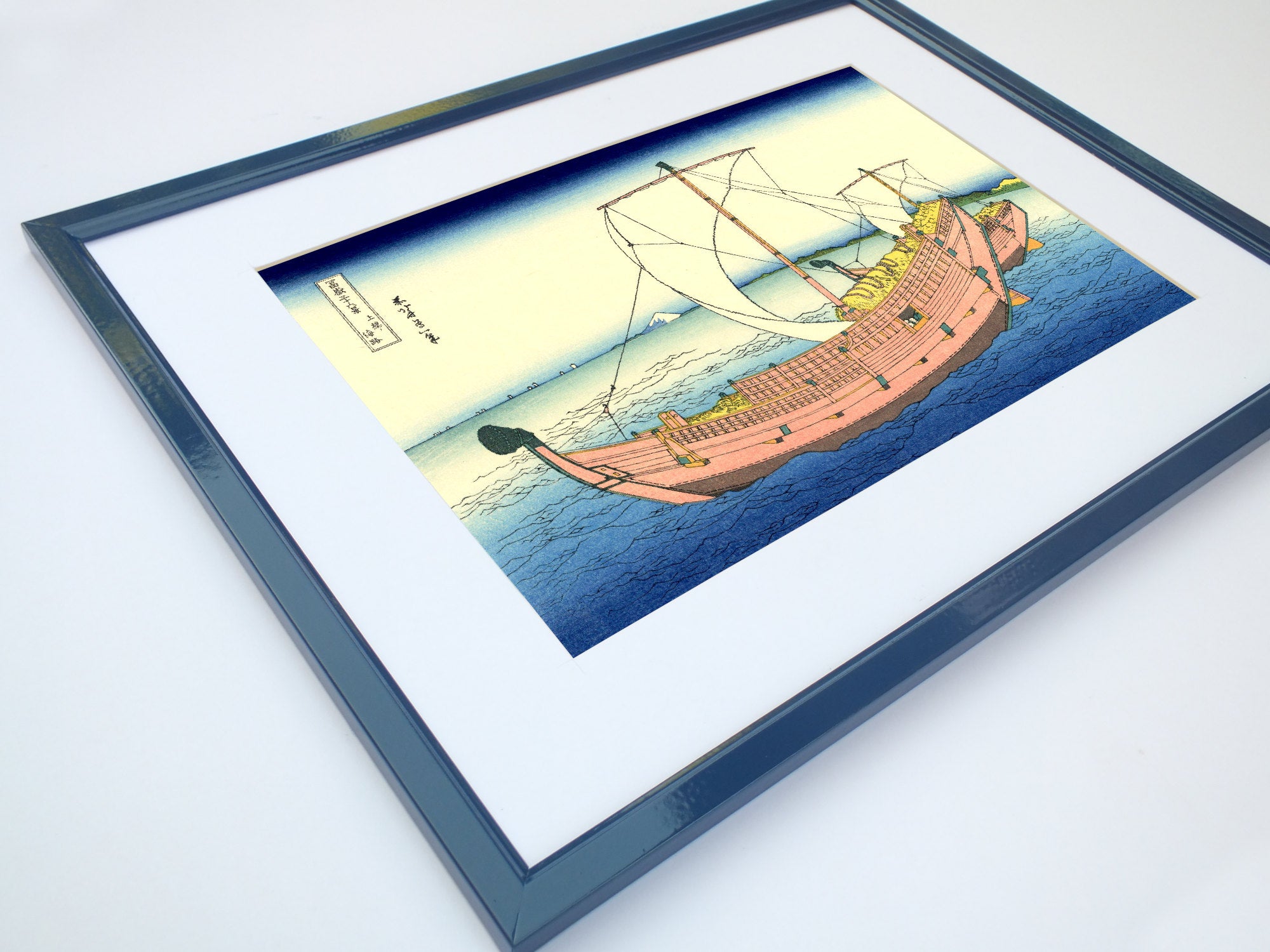
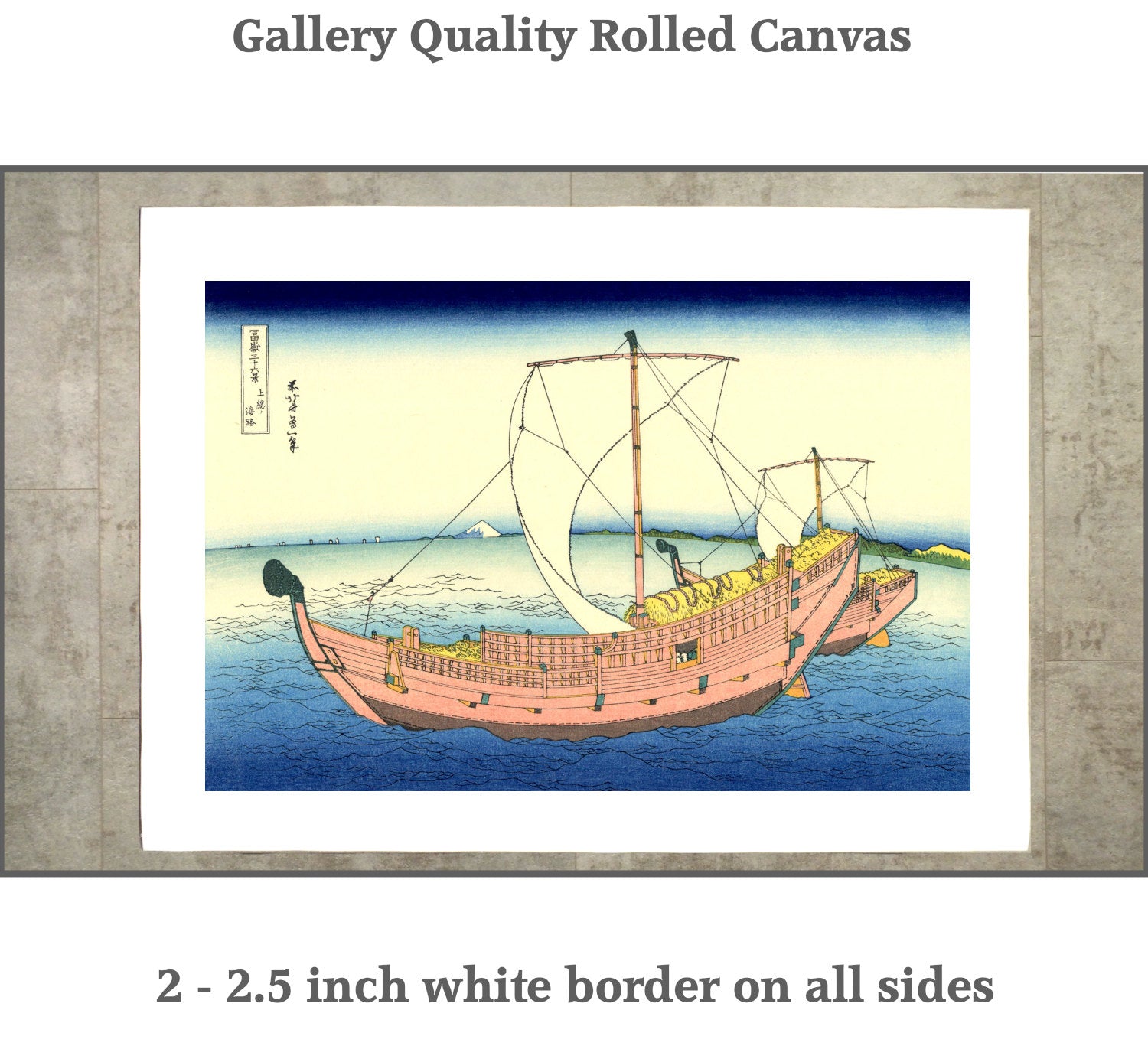
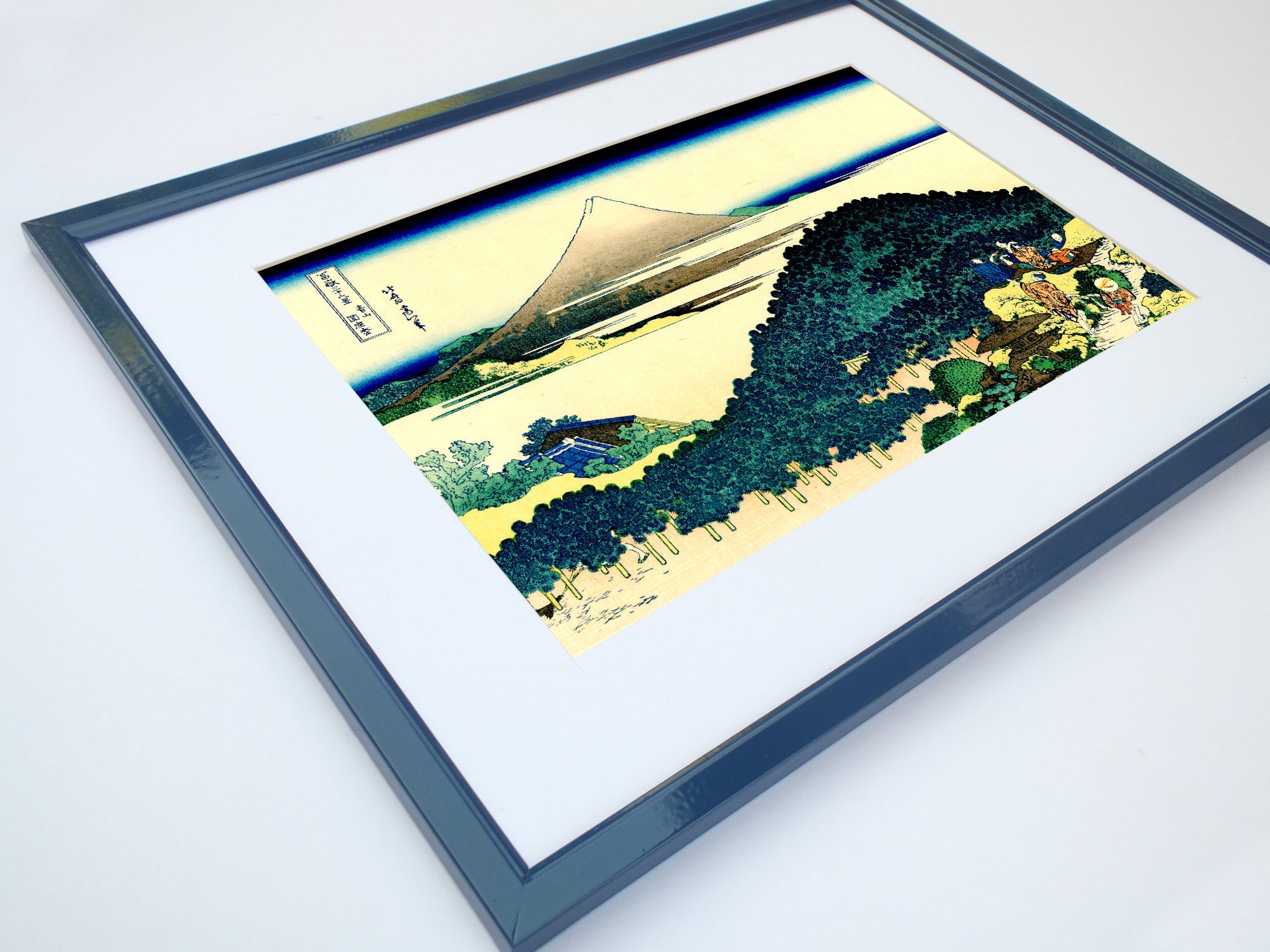
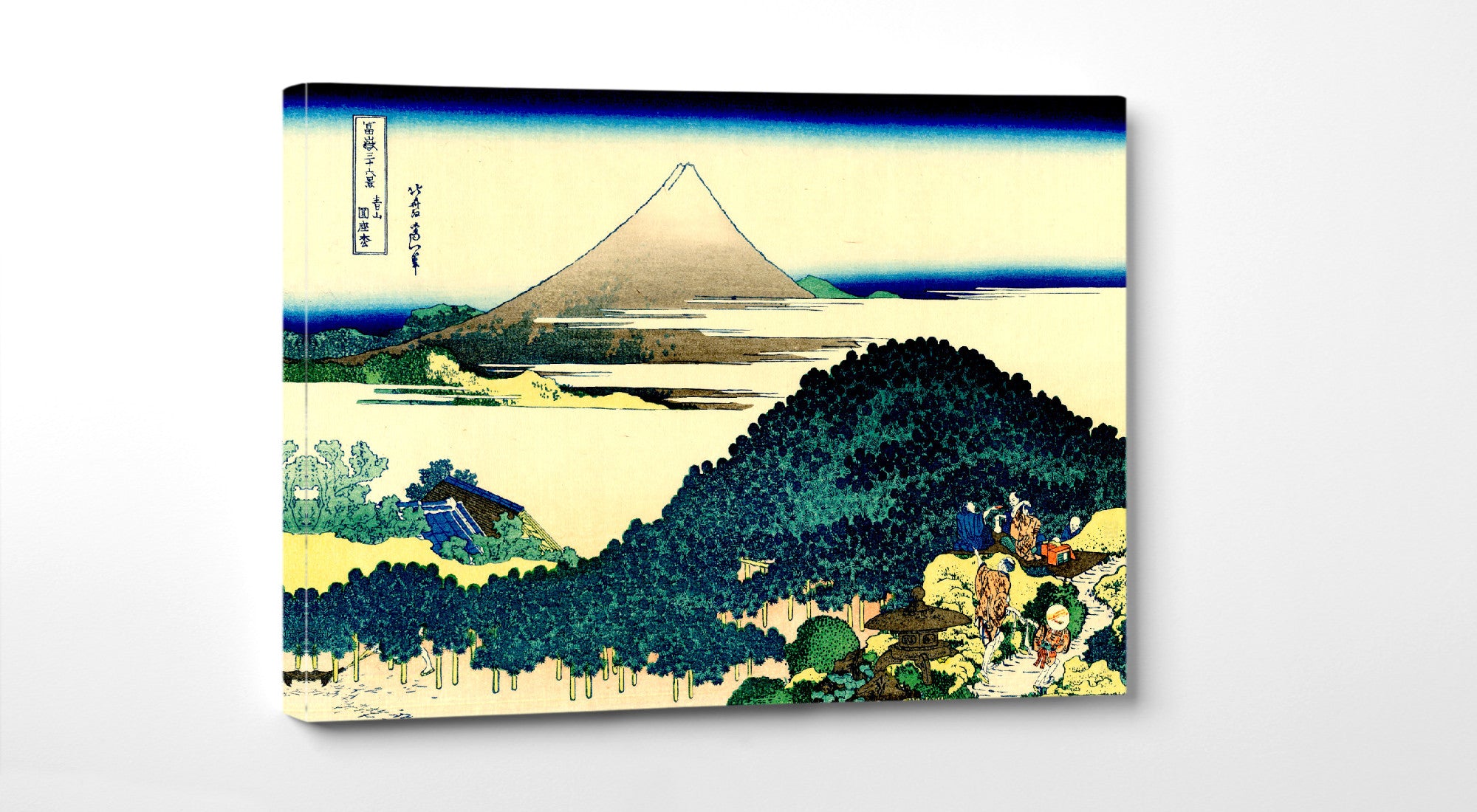
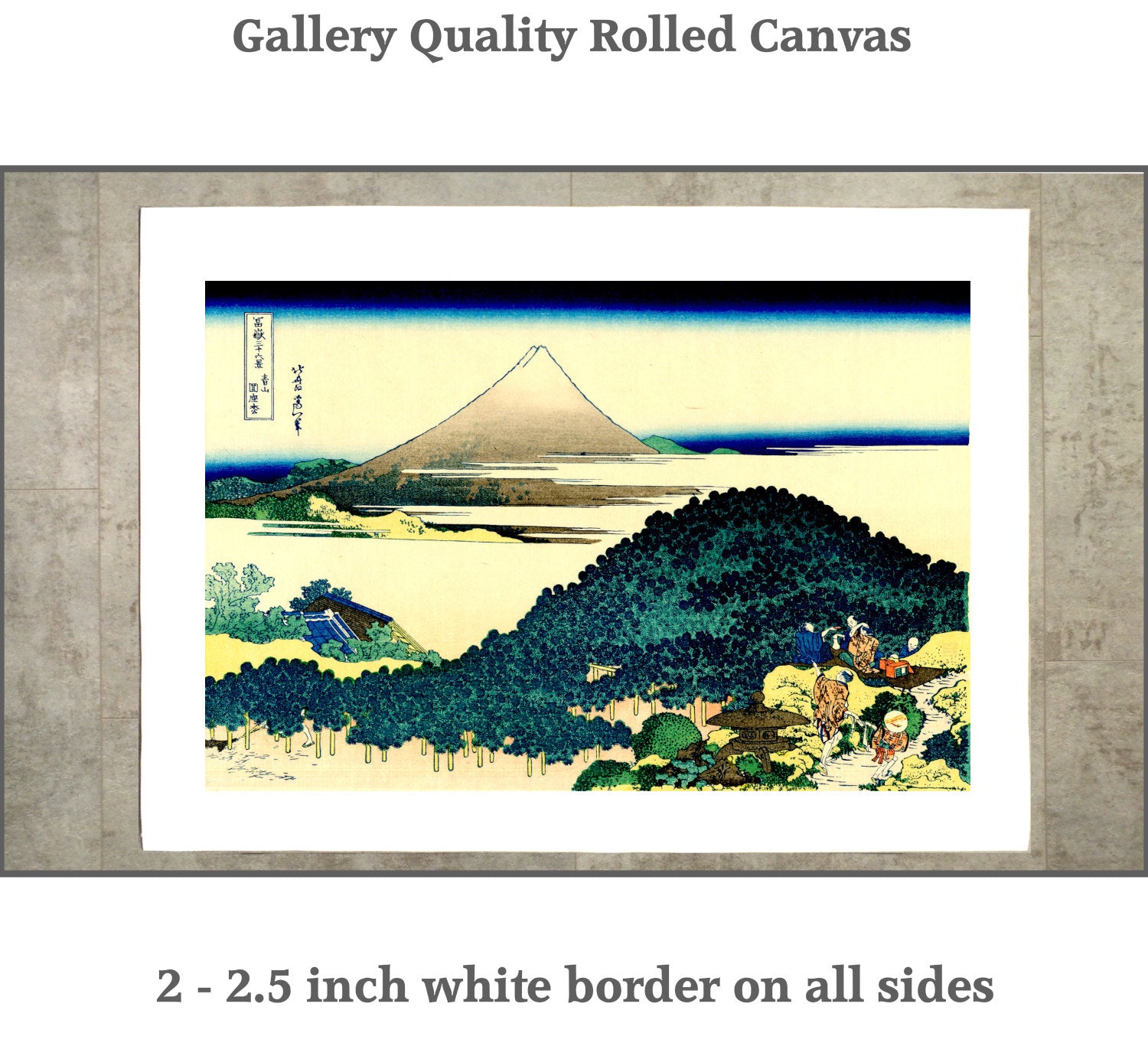
GalleryThane's Katsushika Hokusai artworks are available in a choice of fine art print, framed print and canvas formats depending on the individual product.
Fine art prints offer flexibility for customers with their own framing plans, while framed prints provide a complete presentation.
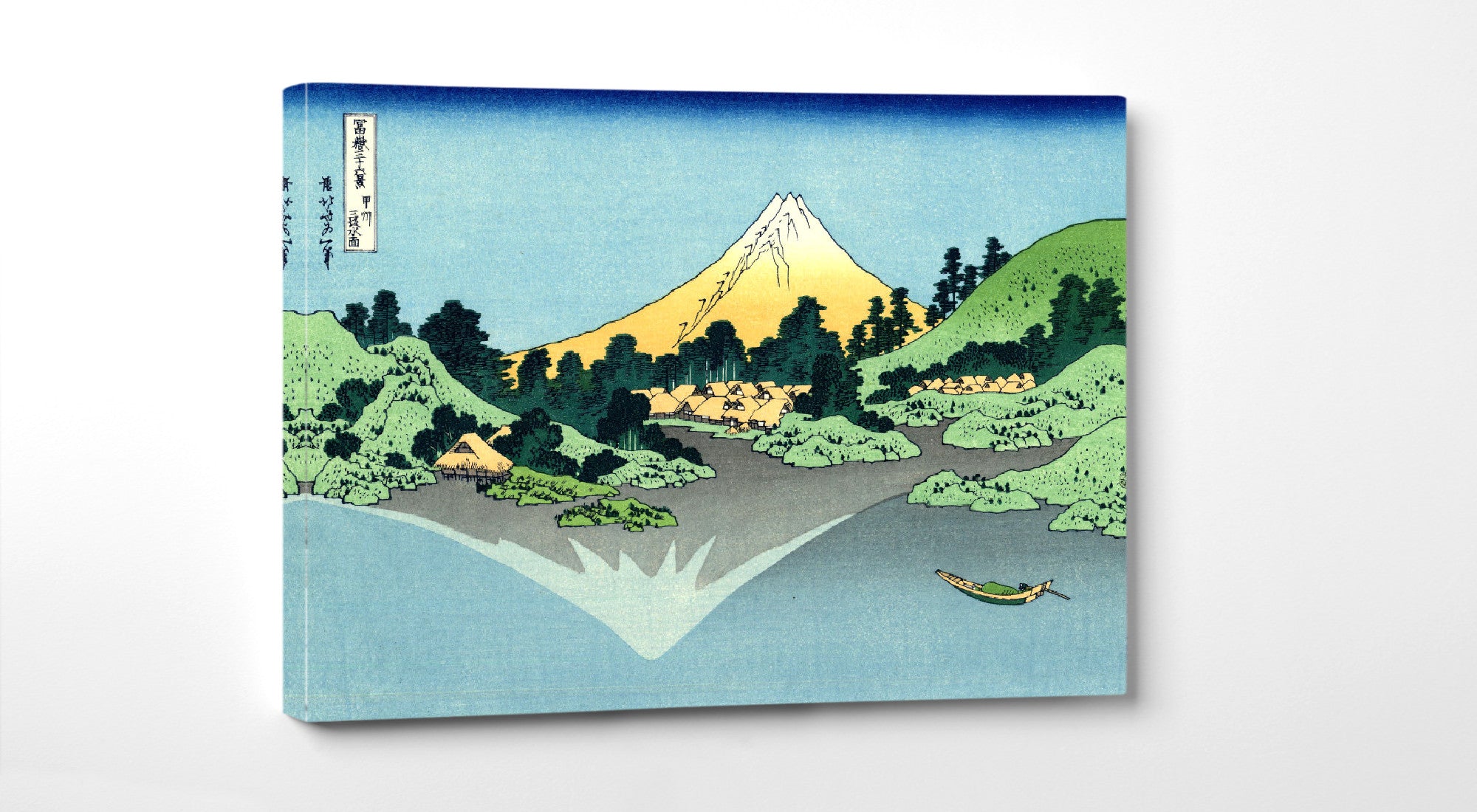
Canvas options provide a clean contemporary alternative particularly suited to Hokusai's bold outlines and large areas of colour.
GalleryThane prints and frames are produced in our Nottinghamshire workshop using carefully selected printing and framing materials.
Frequently Asked Questions
Who was Katsushika Hokusai?
Katsushika Hokusai was a Japanese artist, print designer, painter and book illustrator who lived from 1760 to 1849. He became one of the most celebrated artists of the ukiyo-e tradition.
What is Hokusai most famous for?
Hokusai is best known internationally for The Great Wave off Kanagawa, part of his Thirty-Six Views of Mount Fuji series.
Was The Great Wave a painting?
No. The Great Wave off Kanagawa was designed as a colour woodblock print rather than an oil painting.
What does ukiyo-e mean?
Ukiyo-e is a Japanese artistic tradition particularly associated with colour woodblock prints and paintings produced during the Edo period. Its subjects ranged from actors and fashionable life to landscapes, travel and nature.
Why did Hokusai paint and draw Mount Fuji so often?
Mount Fuji held major cultural and spiritual importance in Japan. Hokusai was deeply fascinated by the mountain and repeatedly explored how its shape changed when viewed from different locations, seasons and weather conditions.
What is Red Fuji?
Red Fuji is the popular English name for Hokusai's Fine Wind, Clear Morning, one of the most famous prints from the Thirty-Six Views of Mount Fuji.
Why is blue so important in Hokusai's prints?
Hokusai made innovative use of Prussian blue, a synthetic pigment that became available to Japanese printmakers during the early nineteenth century. It features prominently in many of his celebrated landscapes.
What is the Hokusai Manga?
The Hokusai Manga is a multi-volume collection of Hokusai's sketches of people, animals, landscapes and numerous other subjects. It is not the same format as modern narrative manga comics.
Did Hokusai only create landscapes?
No. His enormous body of work also included figures, animals, plants, supernatural subjects, dragons, book illustration and paintings.
What interiors suit Hokusai prints?
Hokusai's clear outlines and strong compositions work particularly well in Scandinavian, contemporary, minimalist, Japanese-inspired and eclectic interiors.
Are Hokusai prints available framed?
GalleryThane offers selected Hokusai works as fine art prints, framed prints and canvas options in a range of sizes.