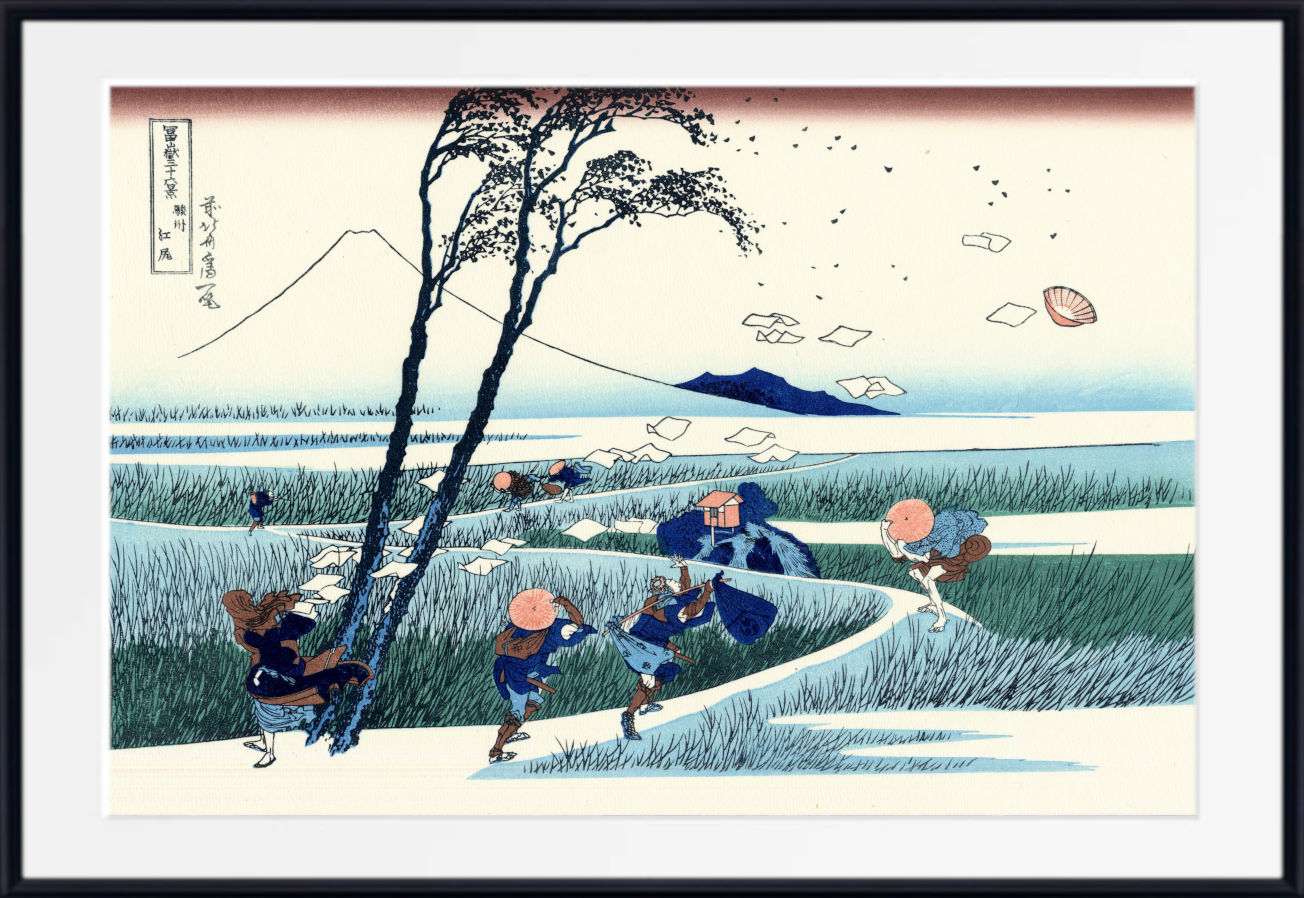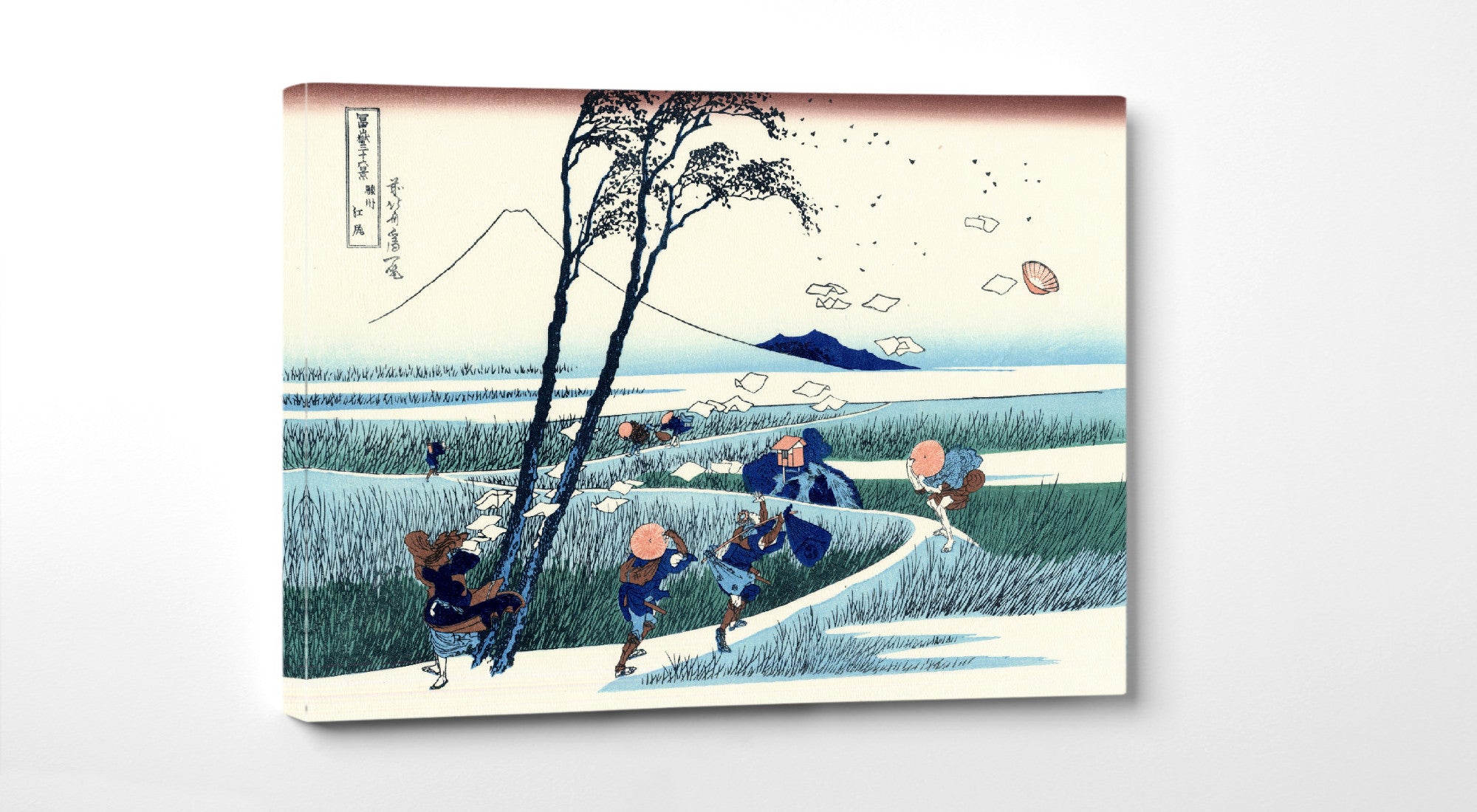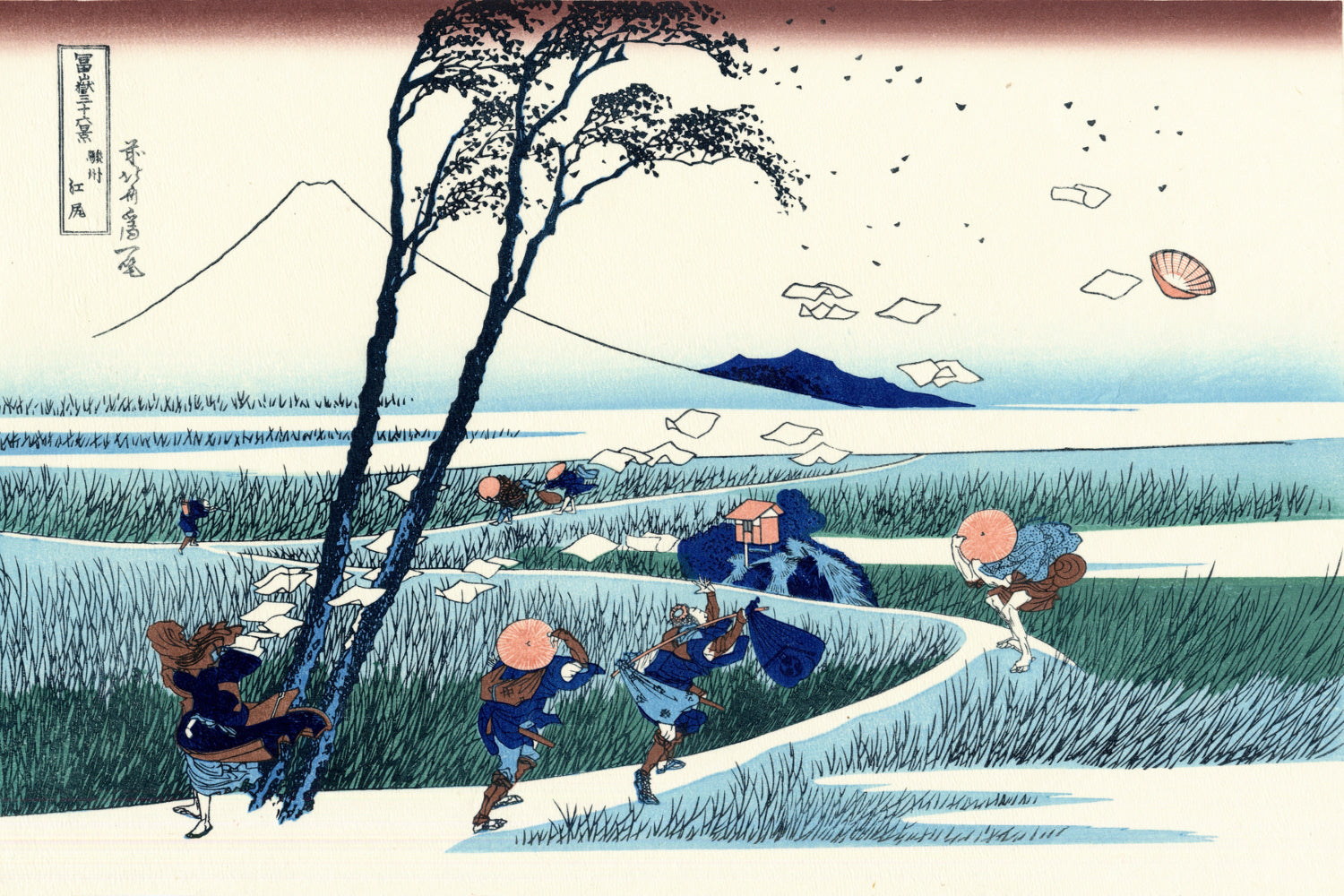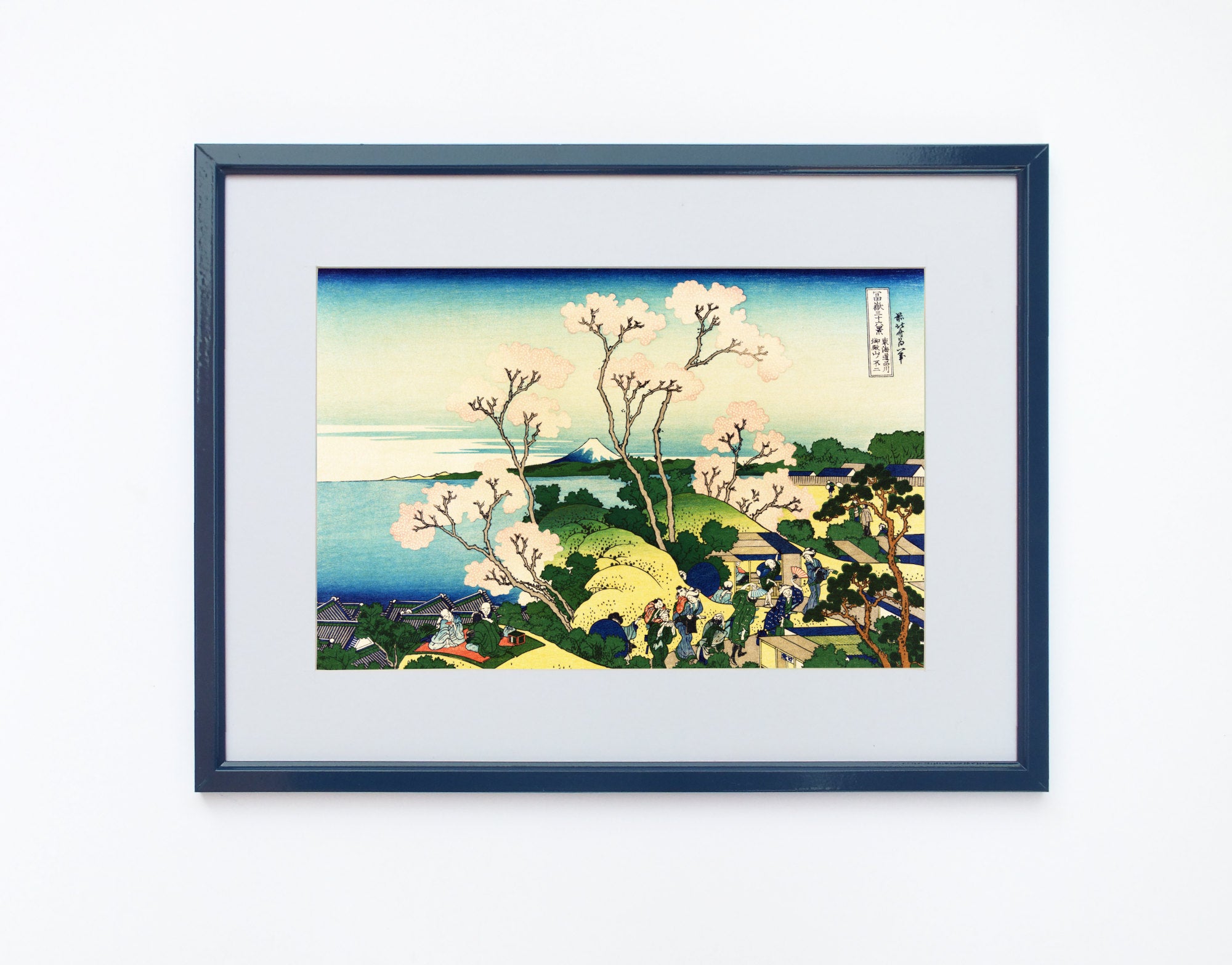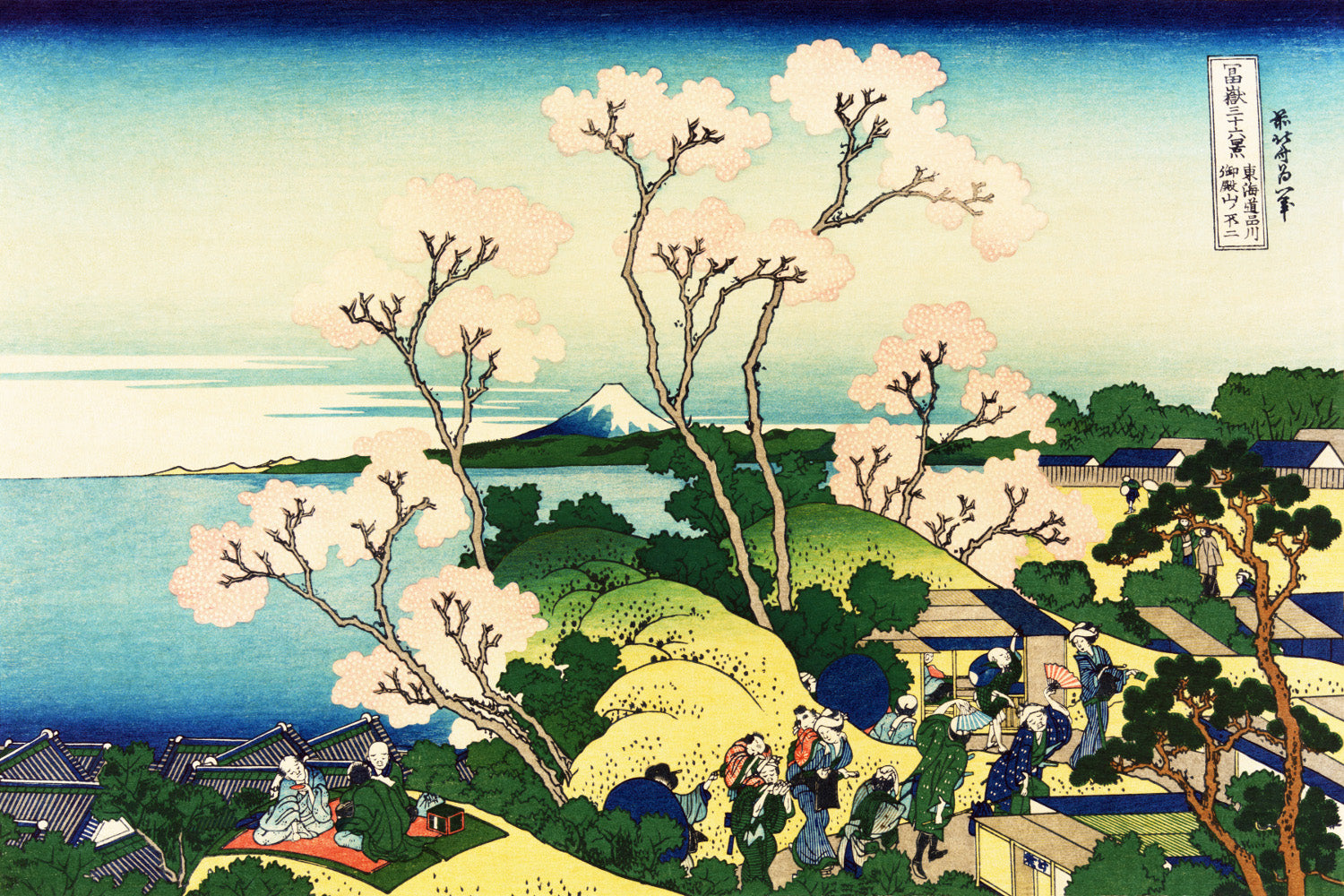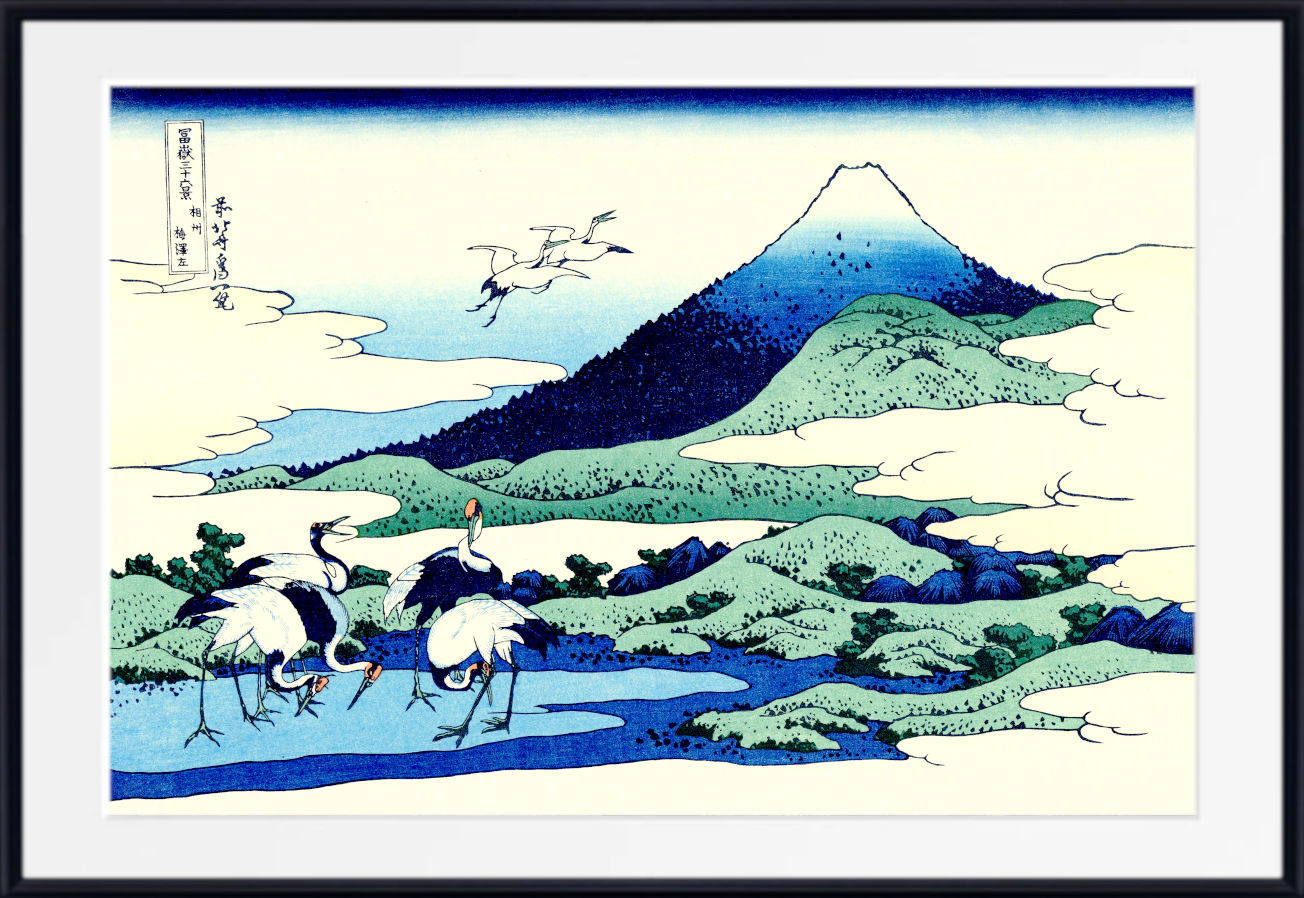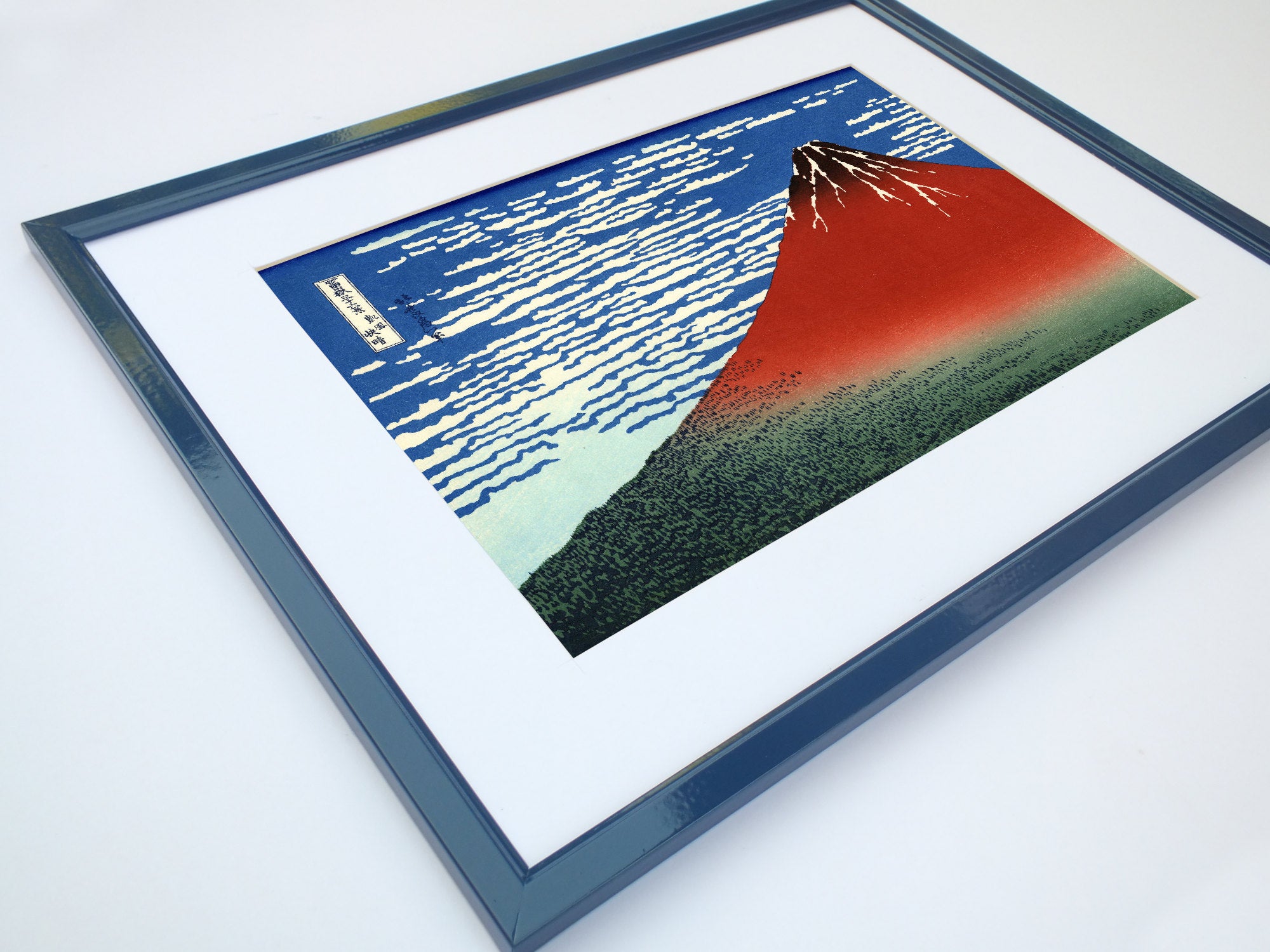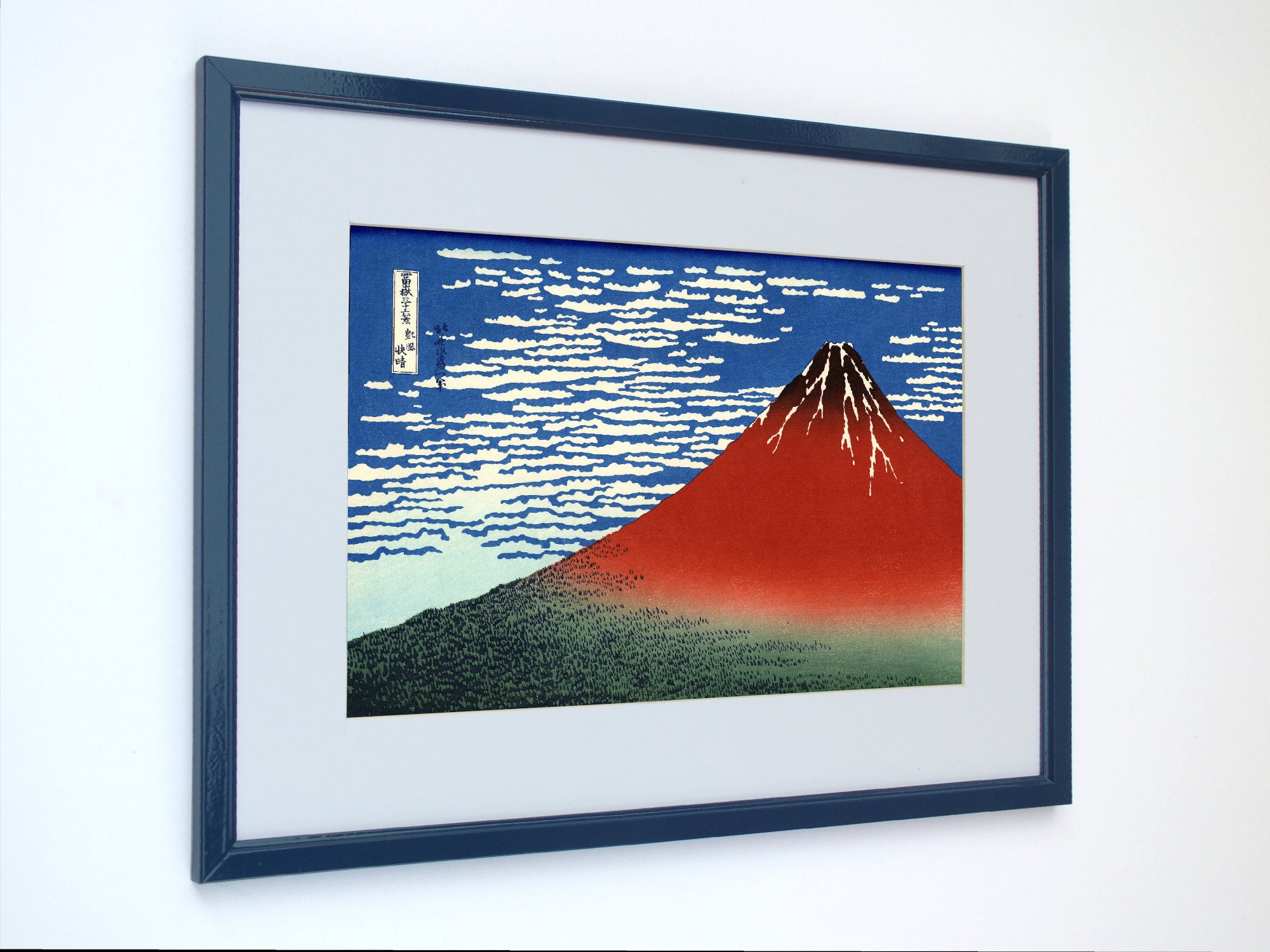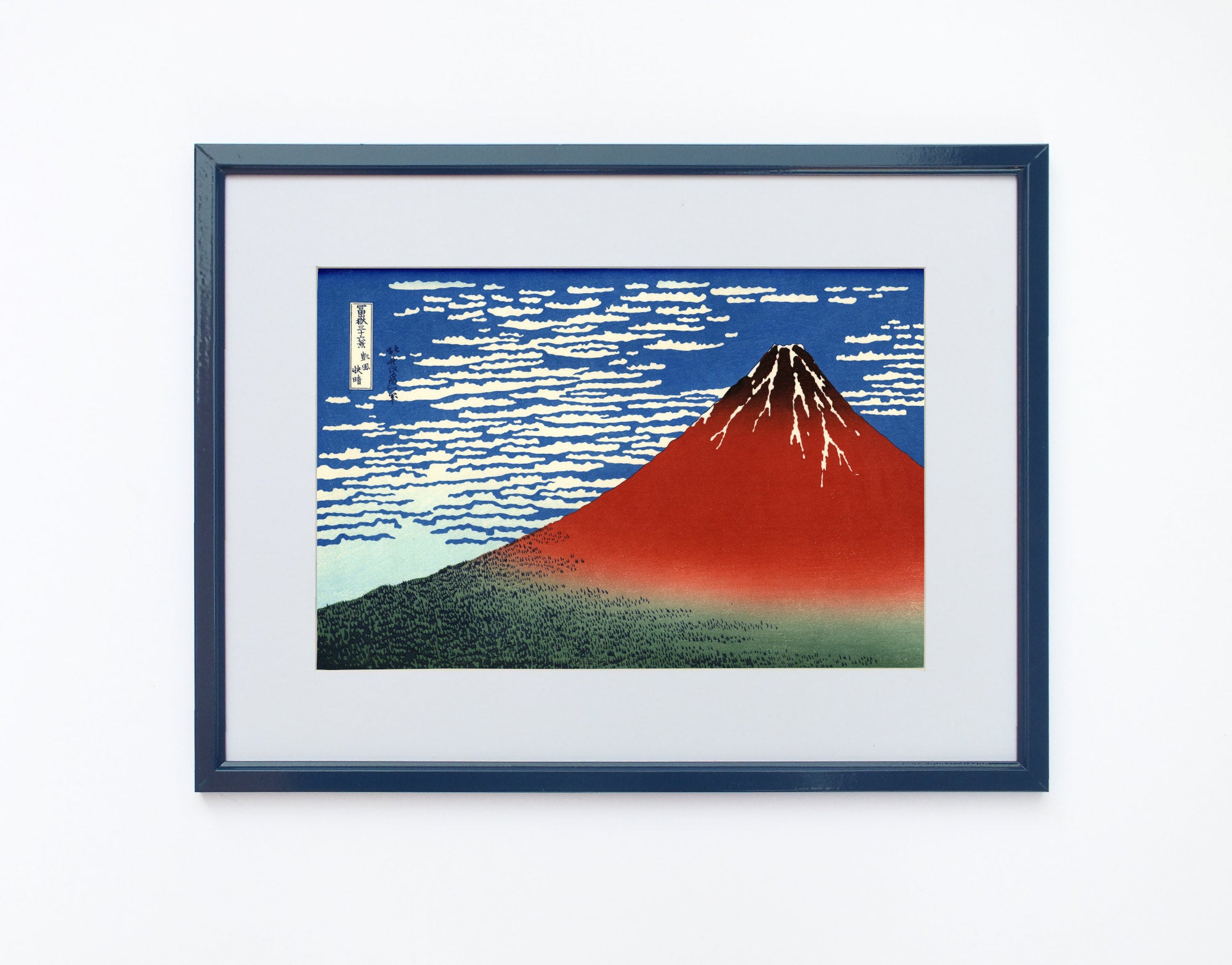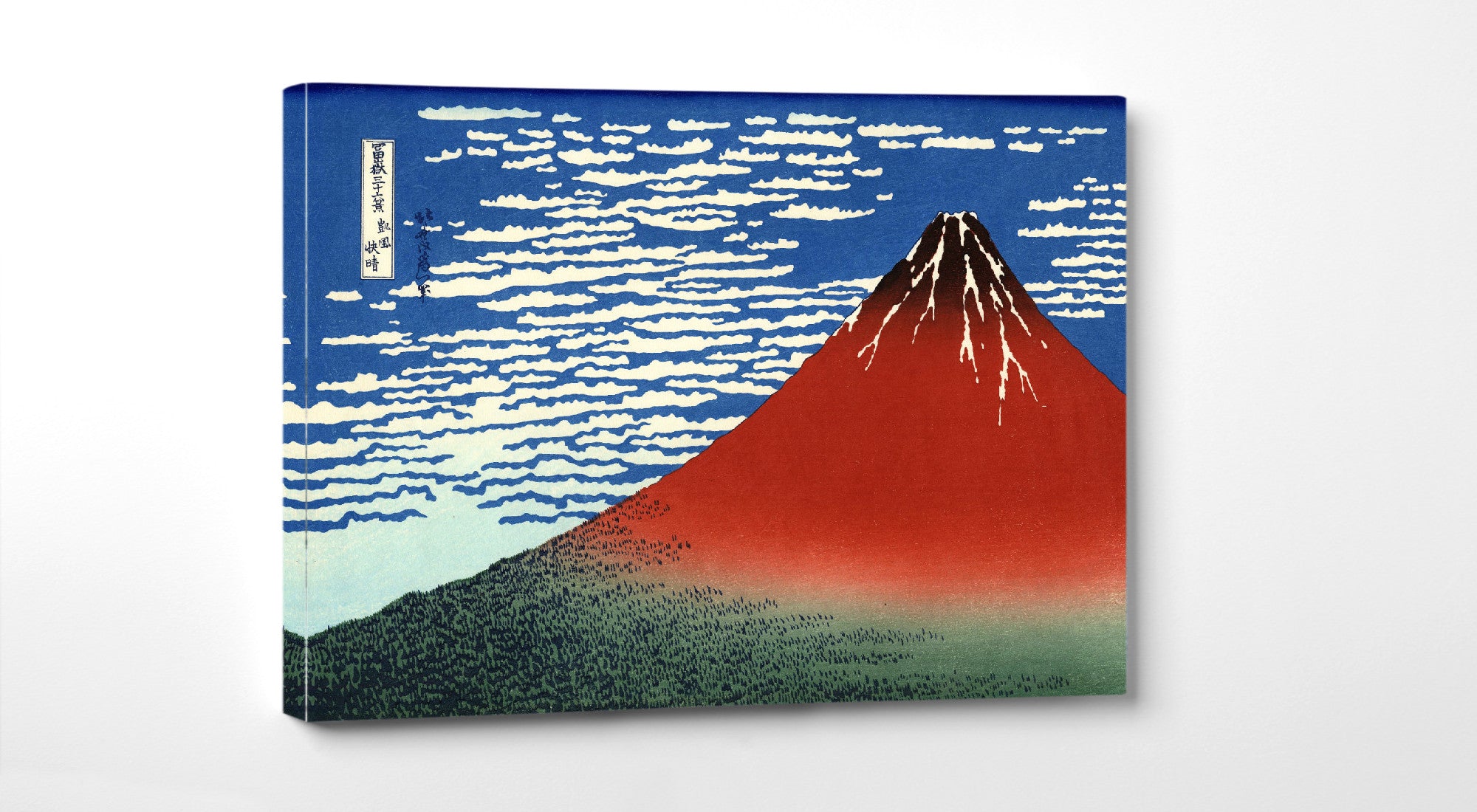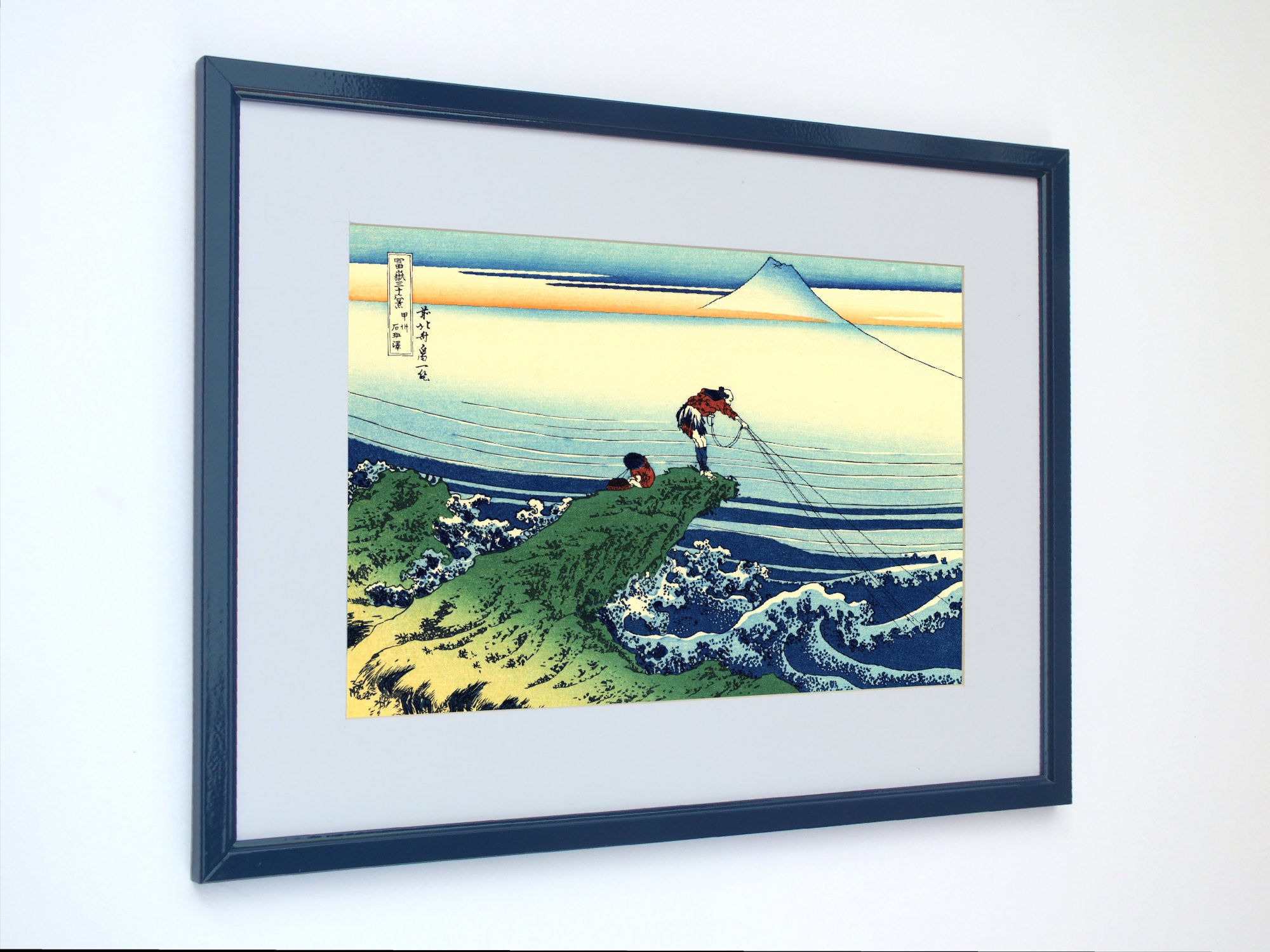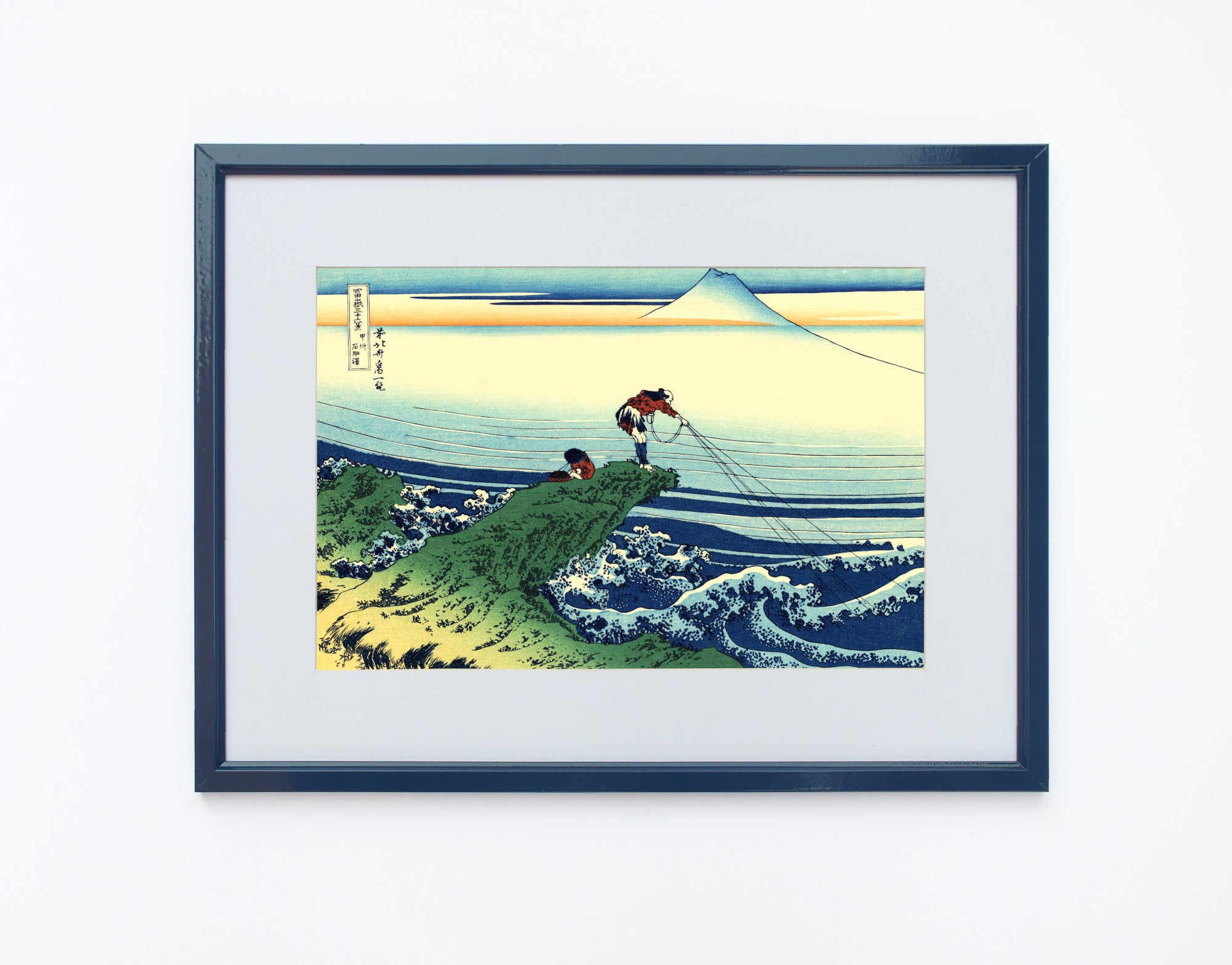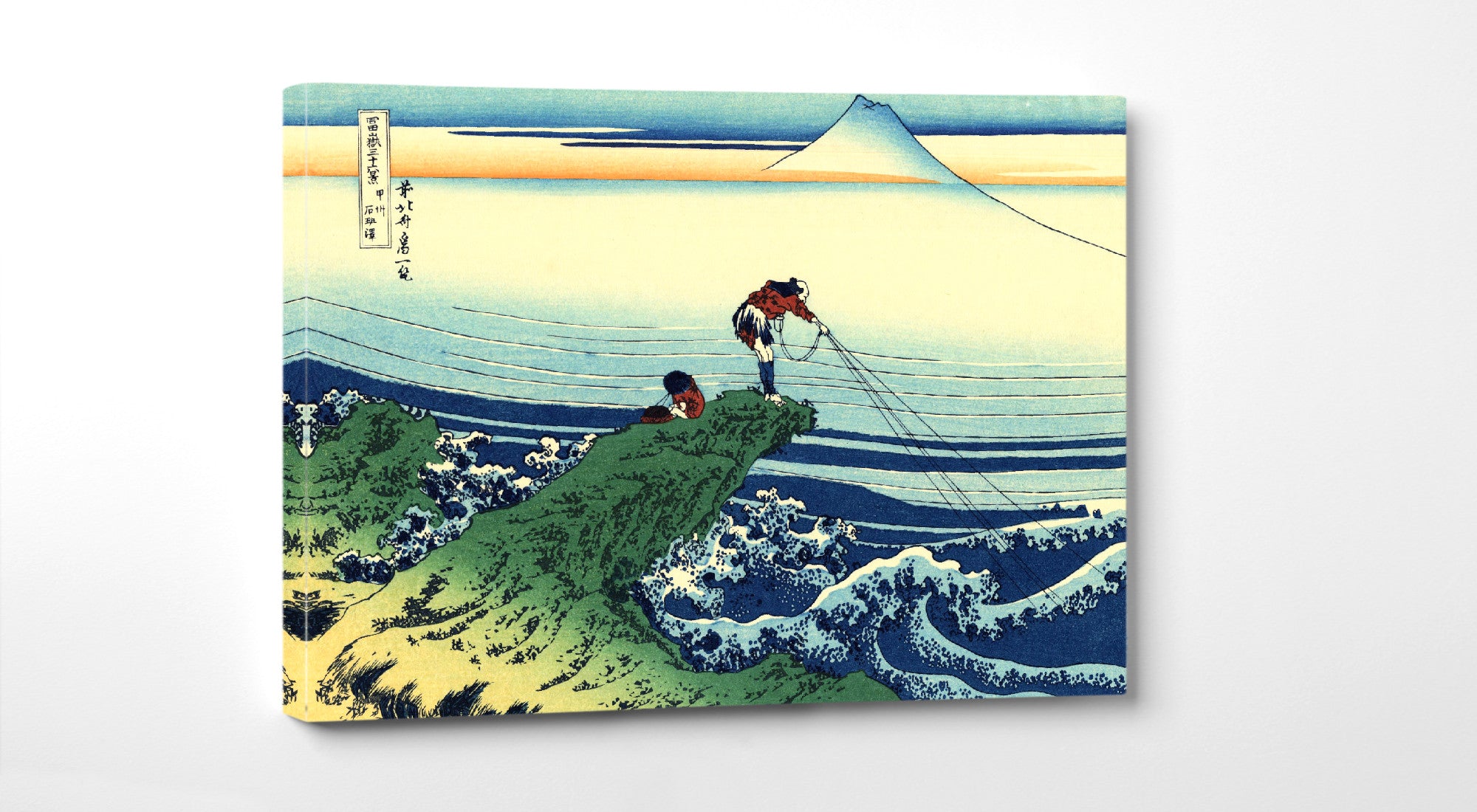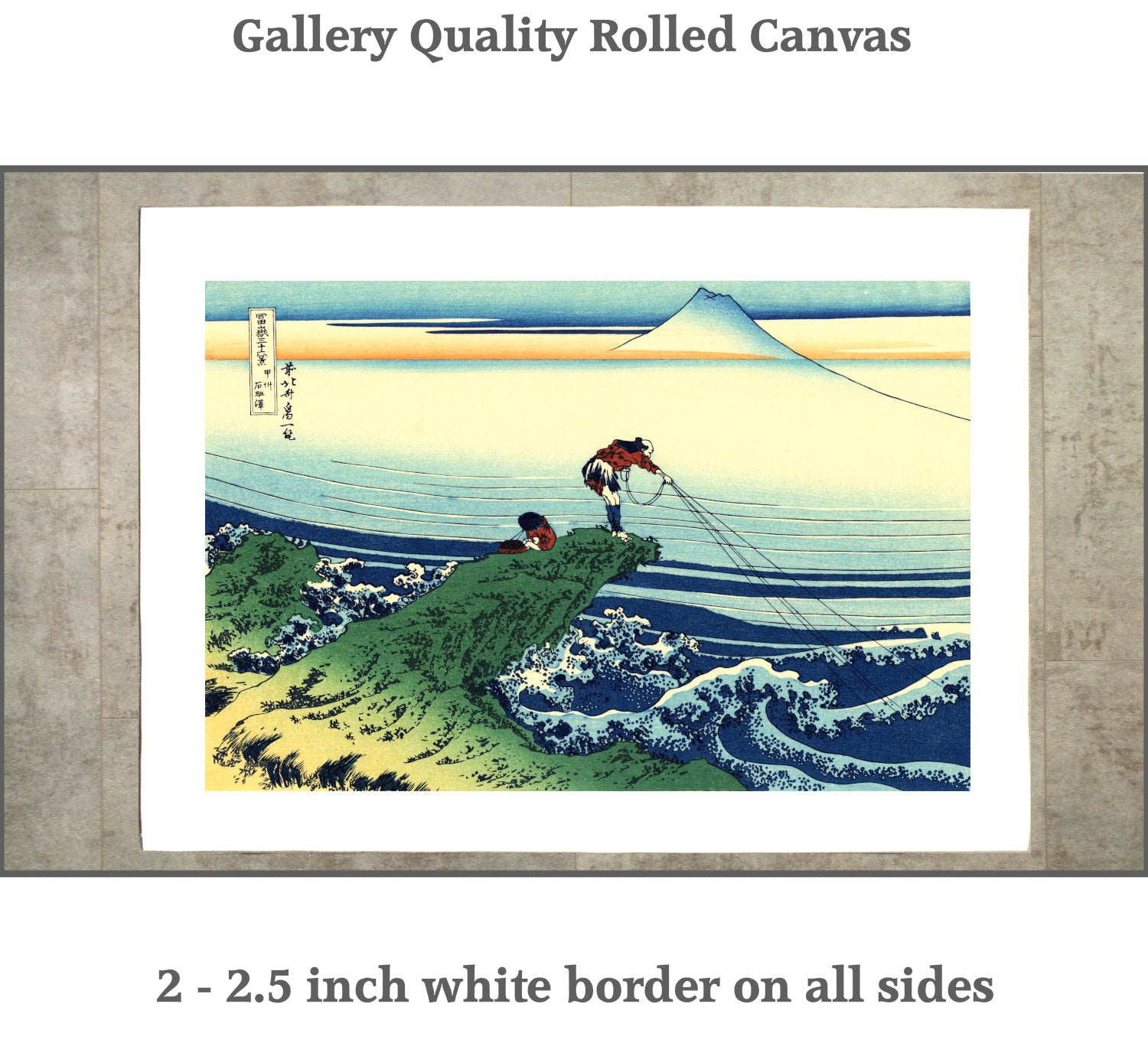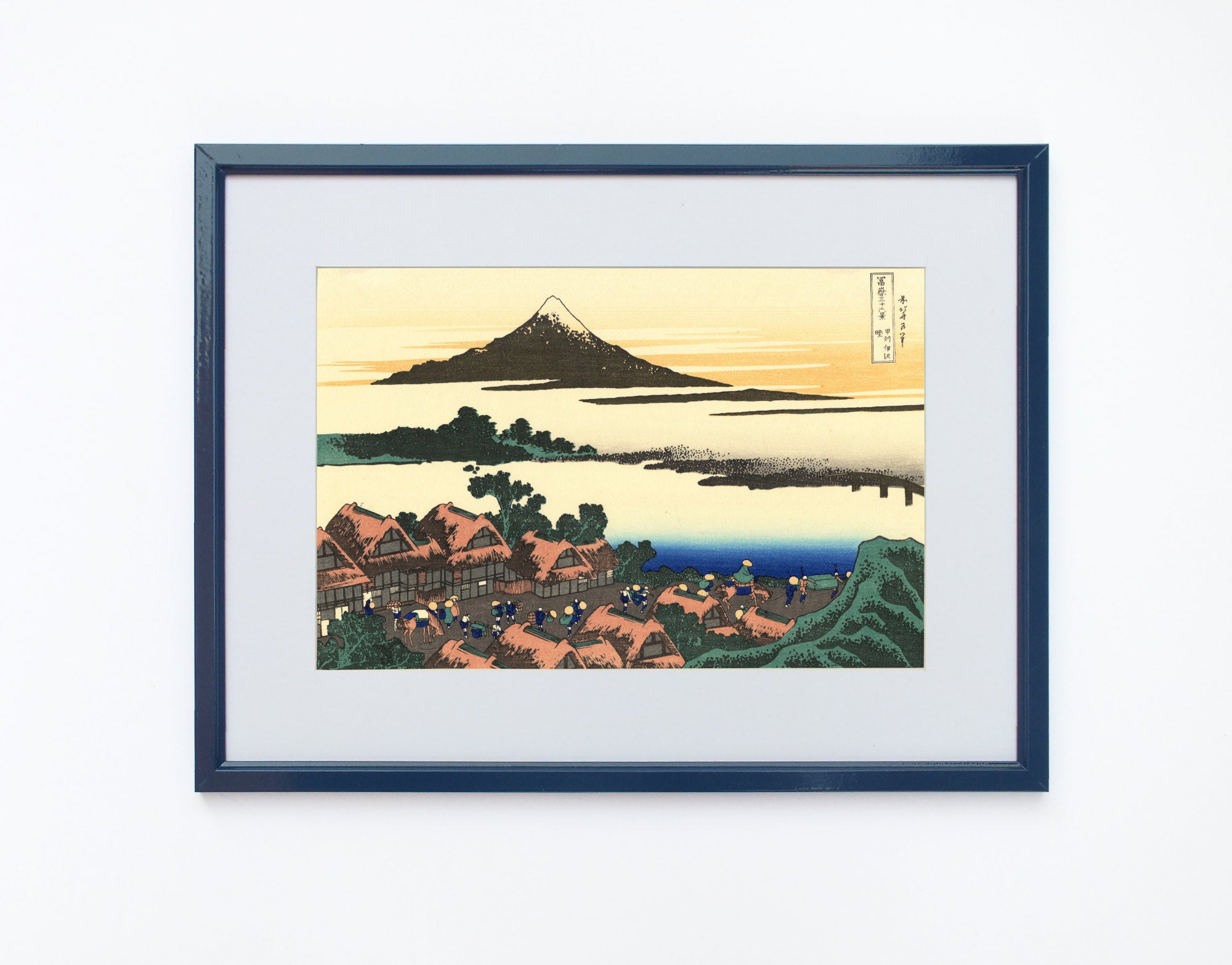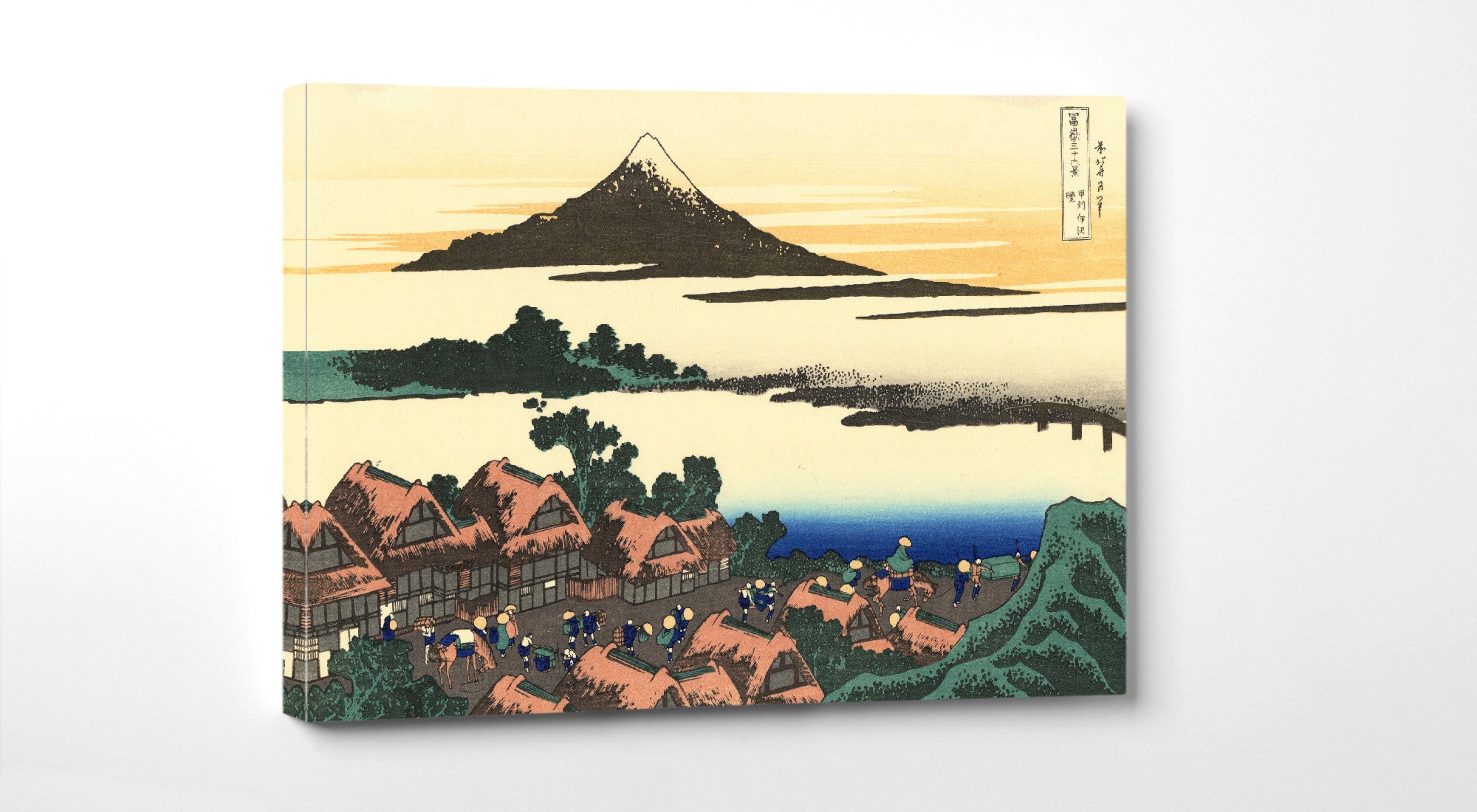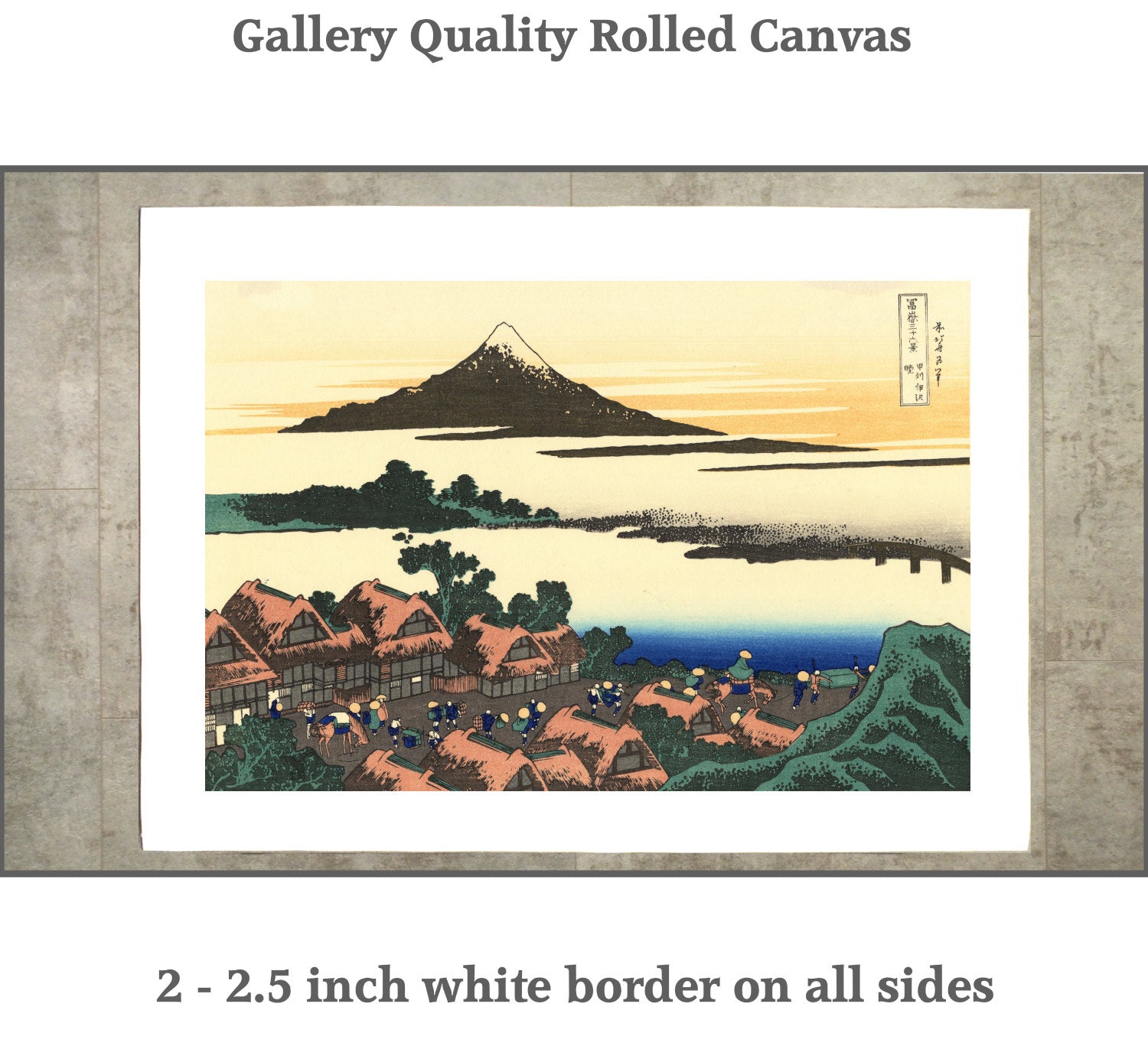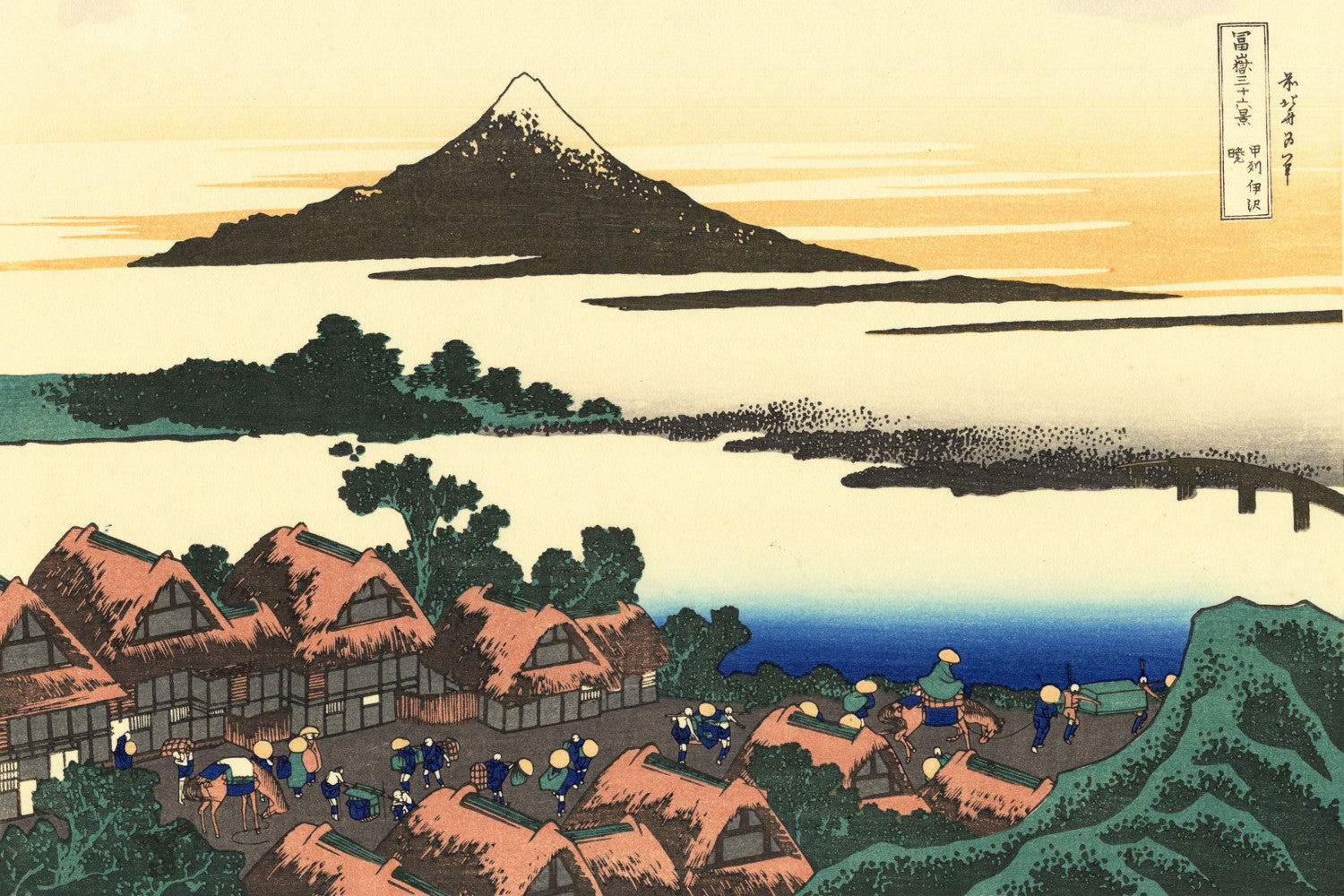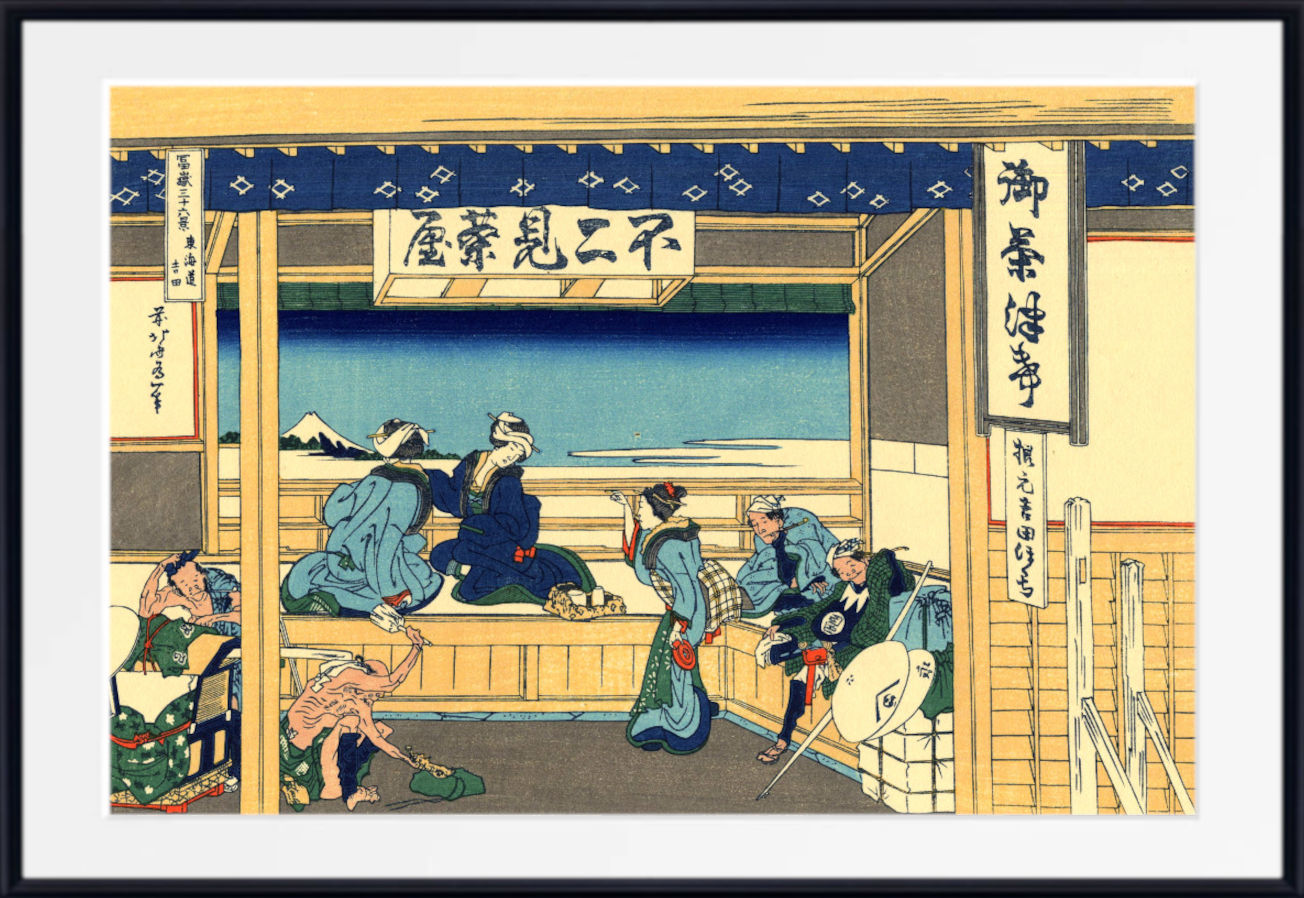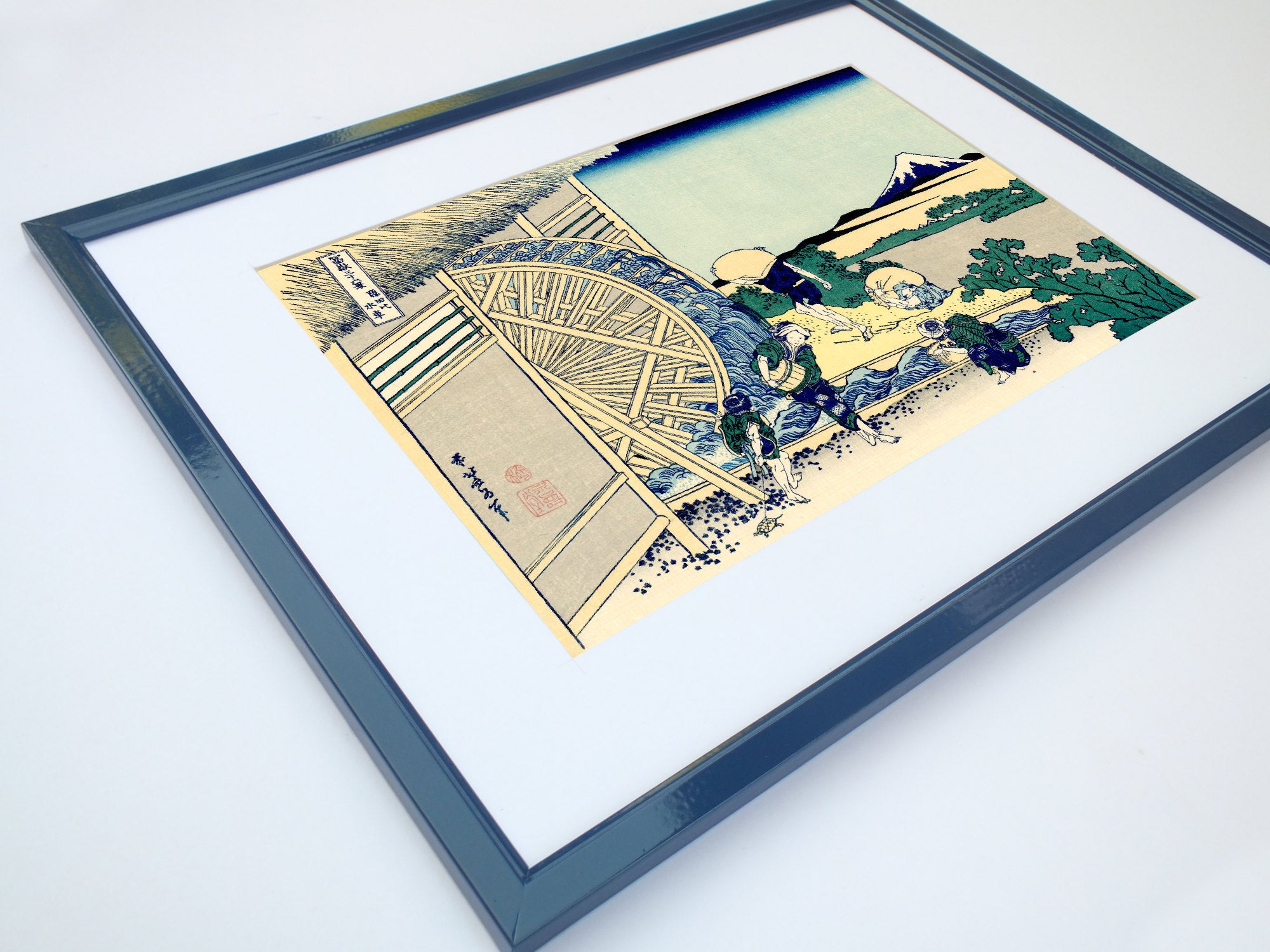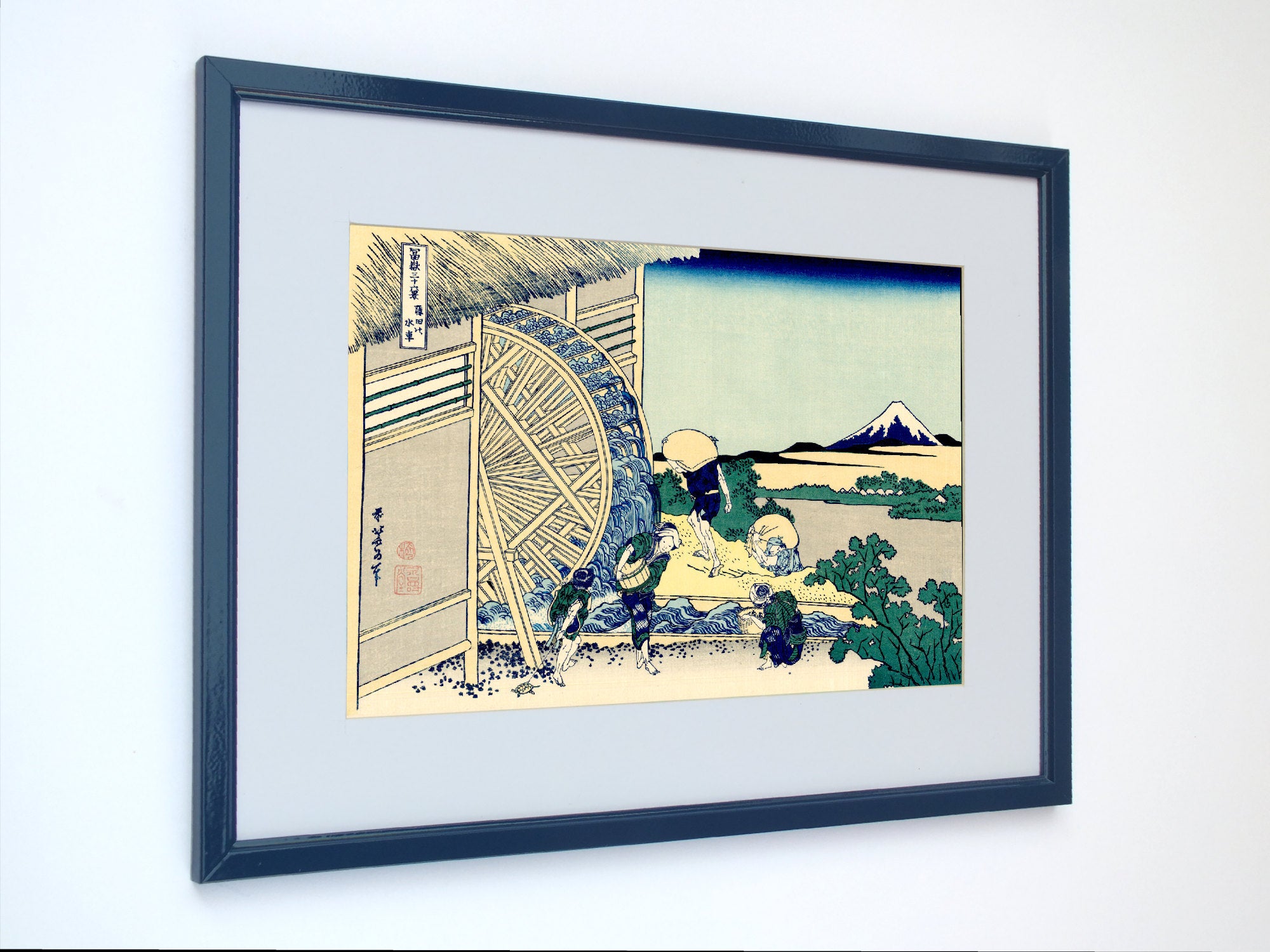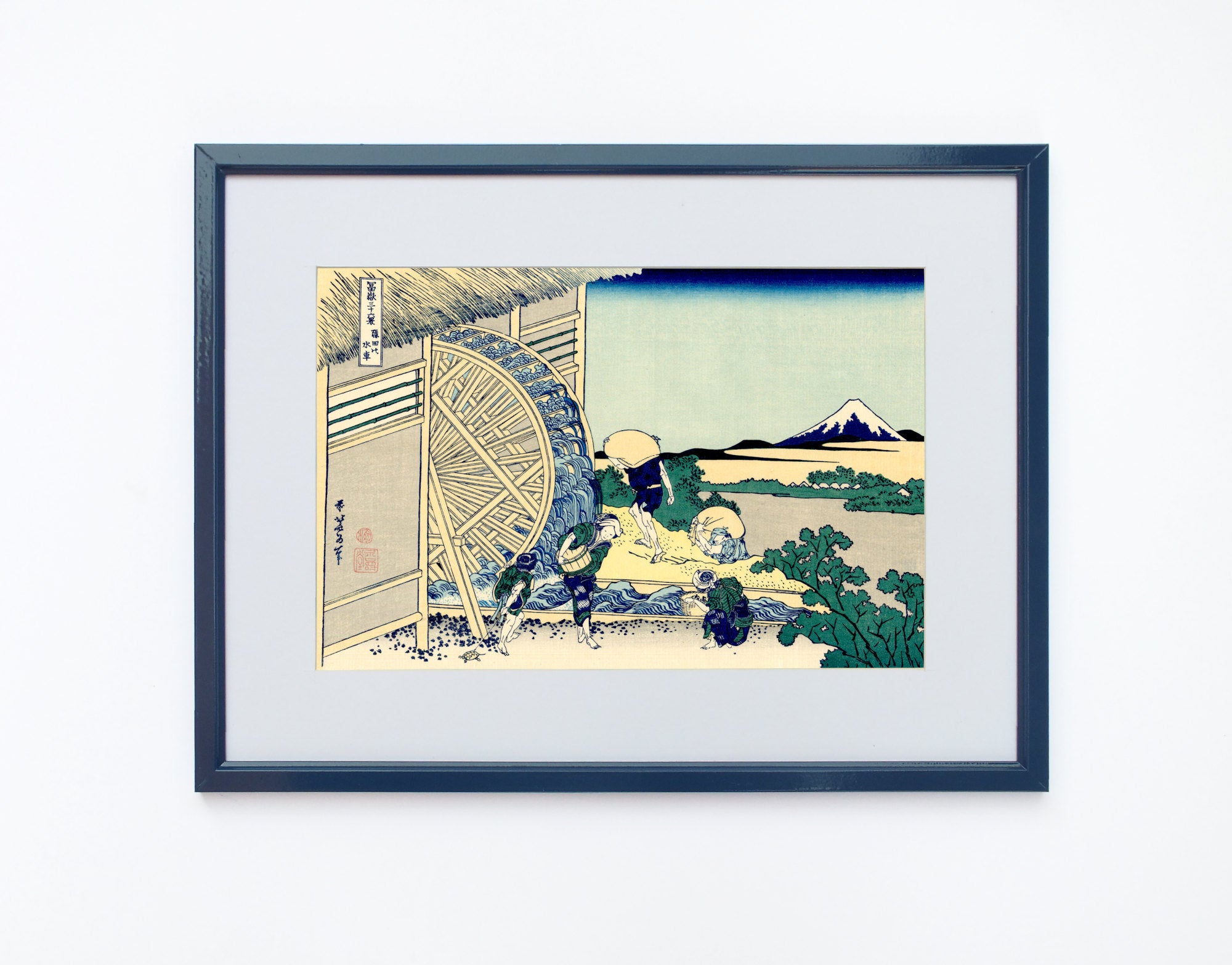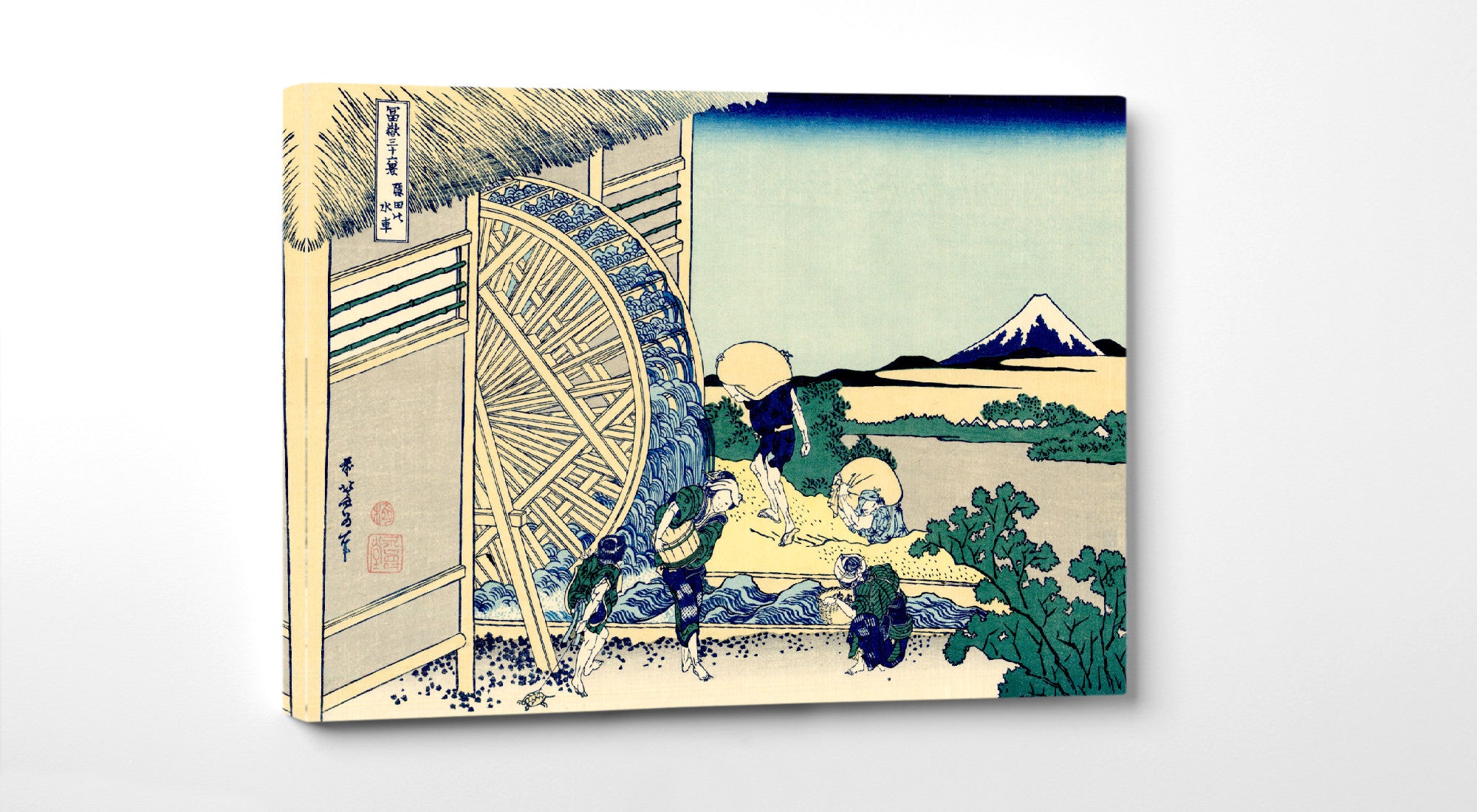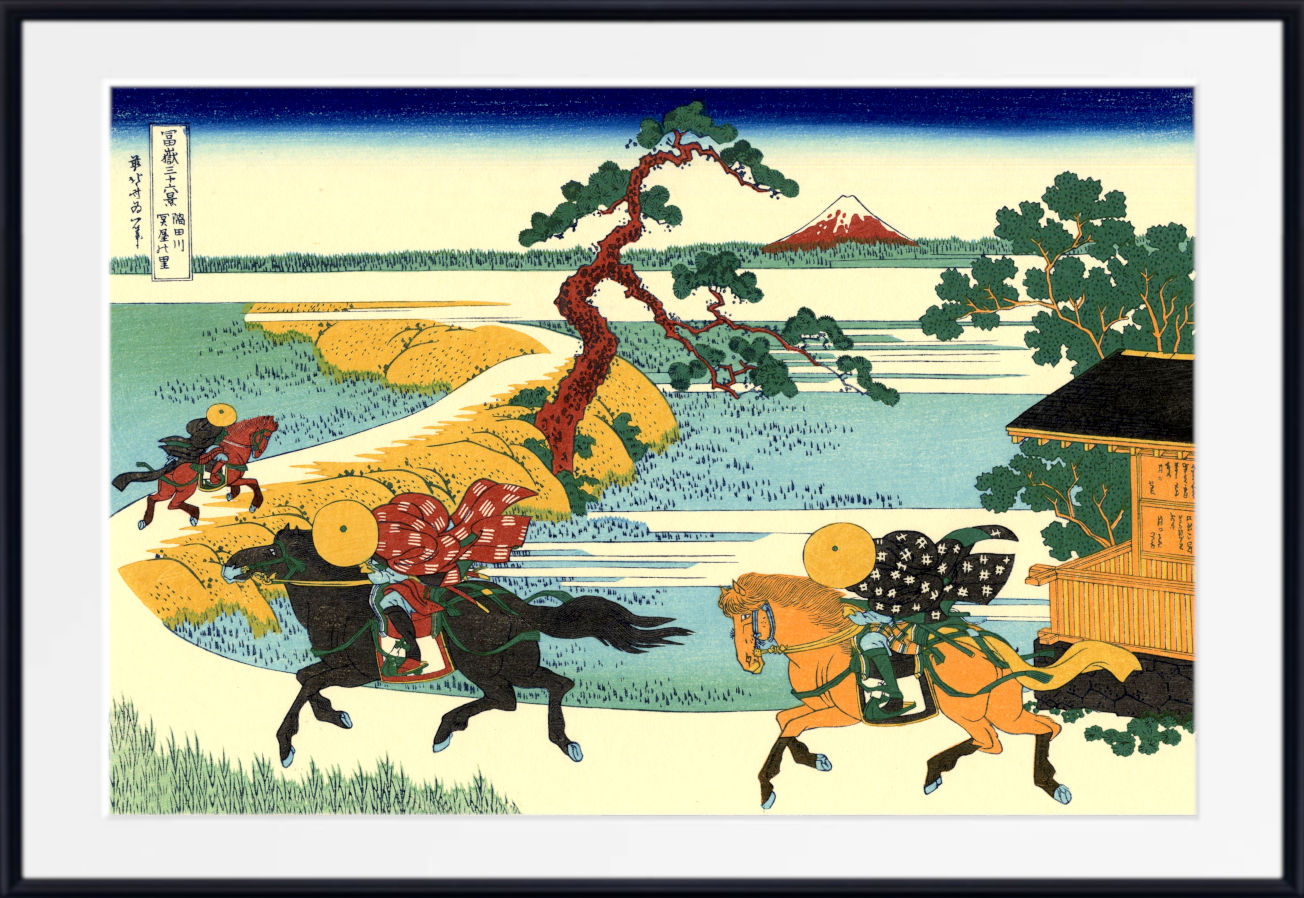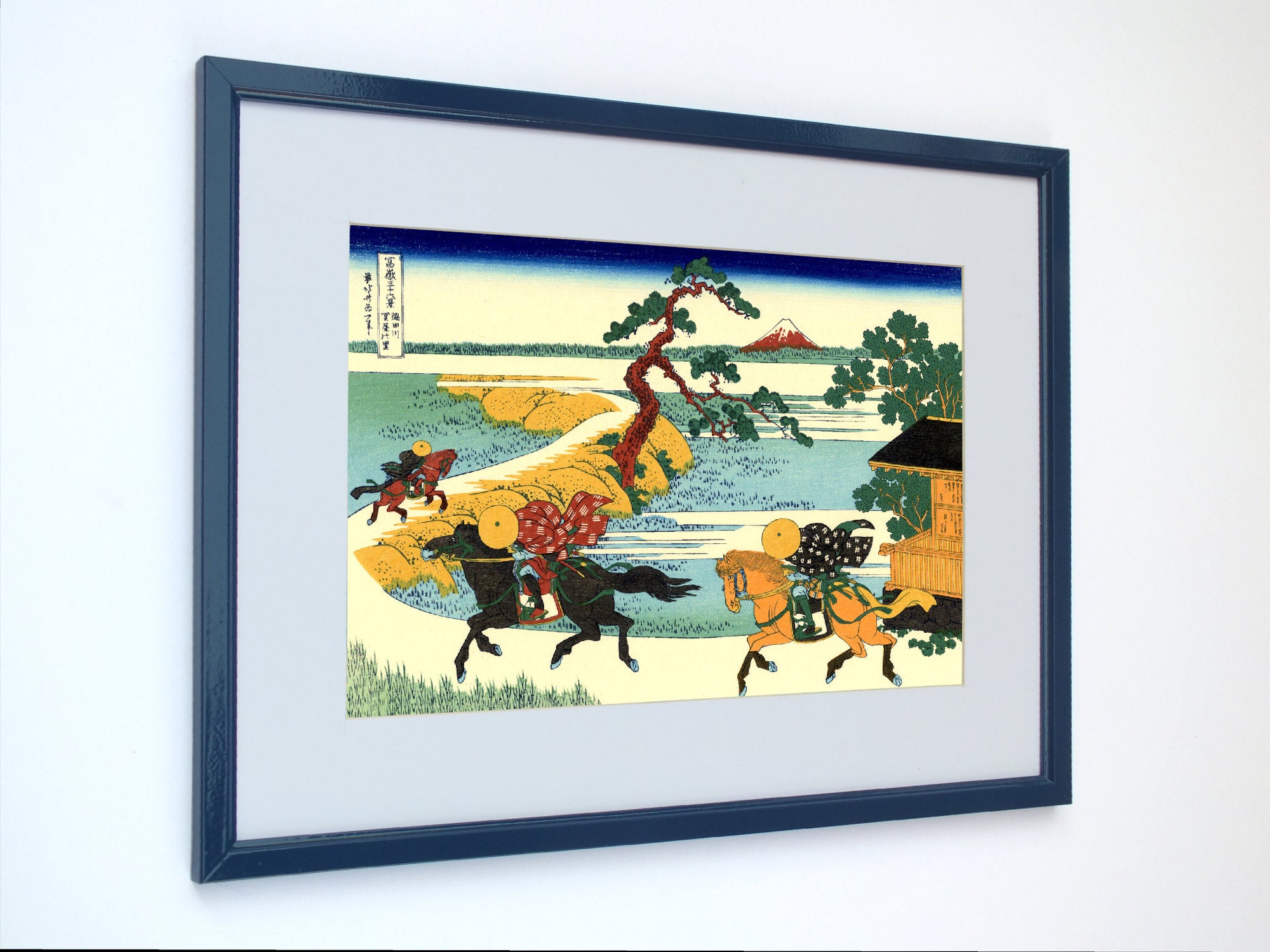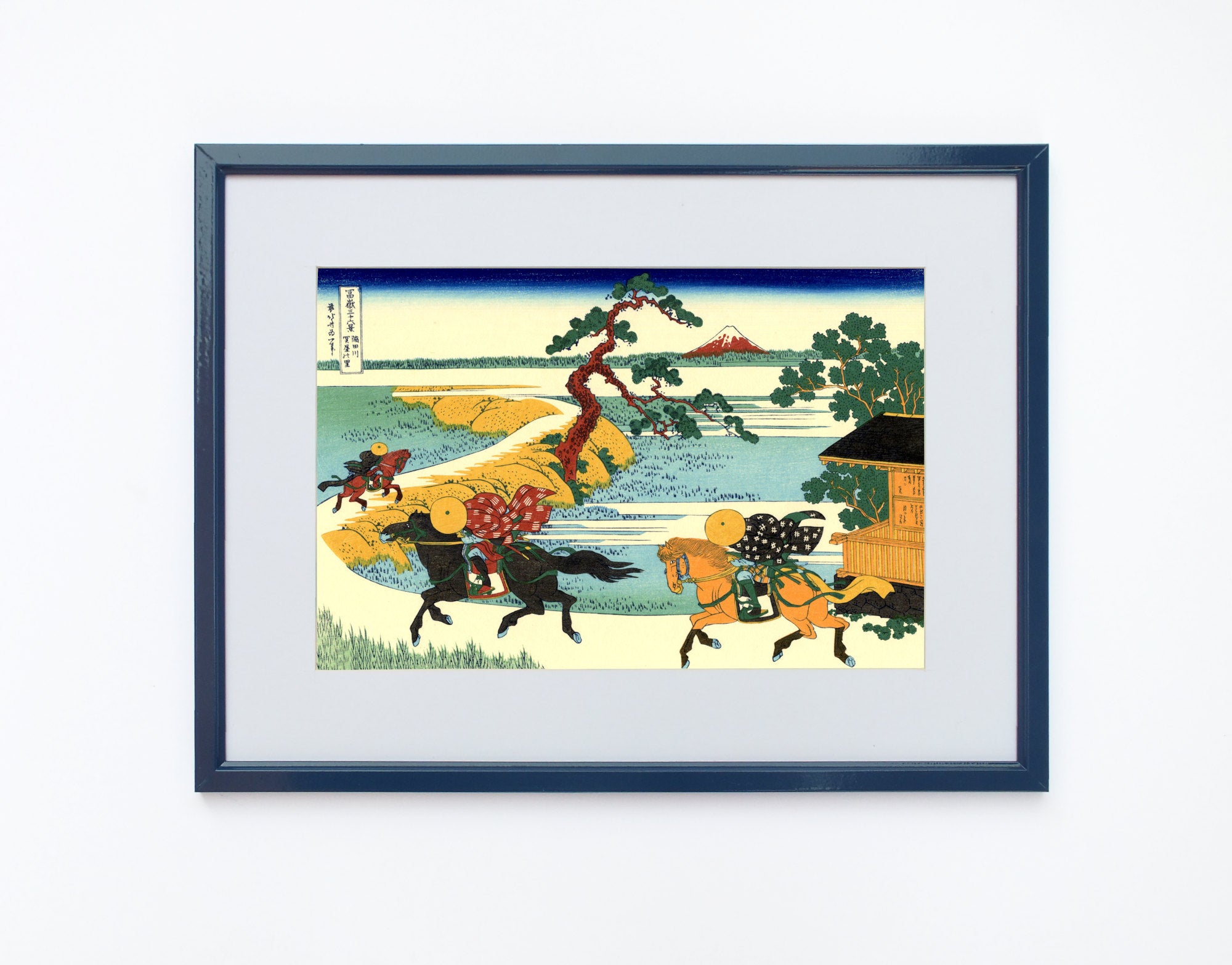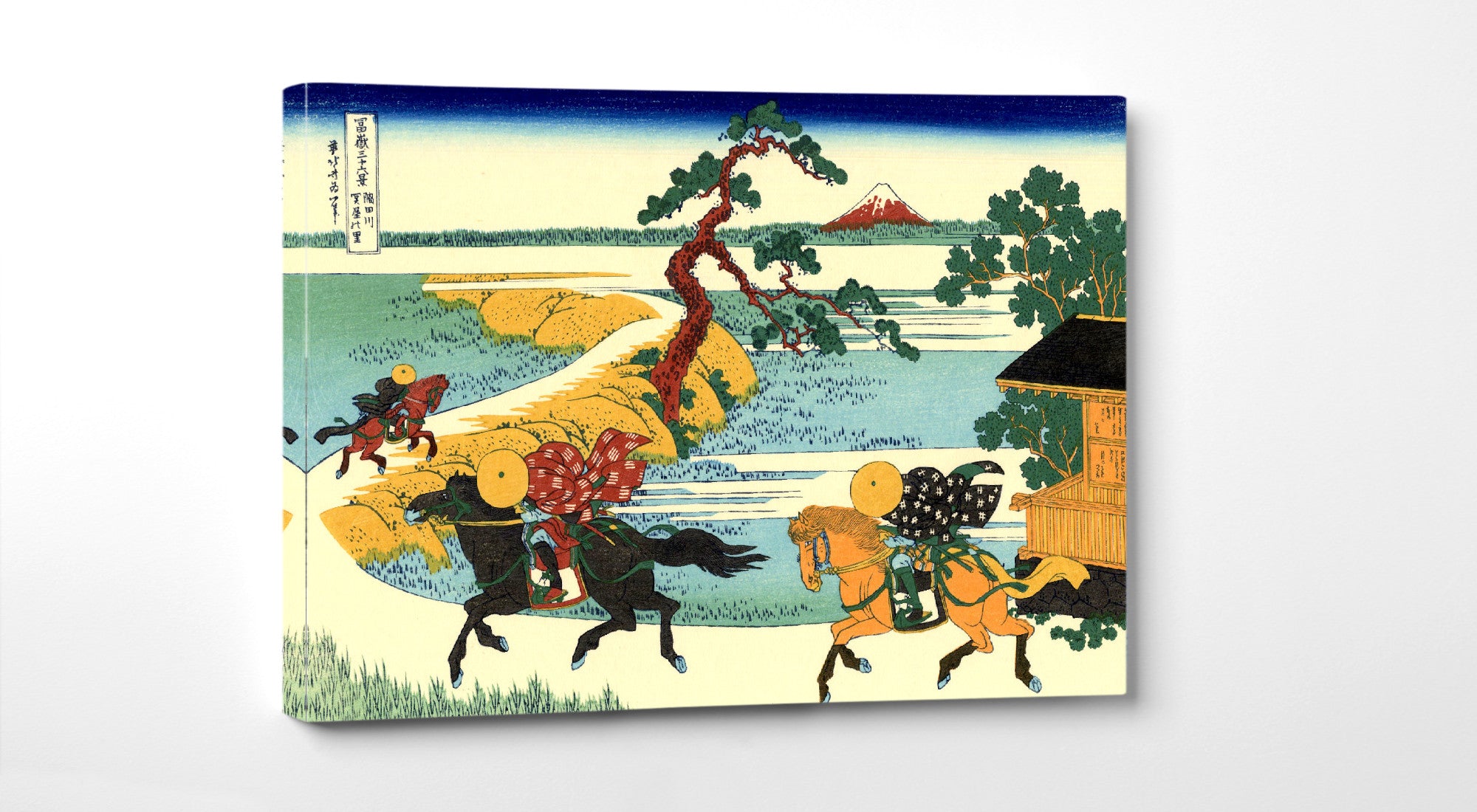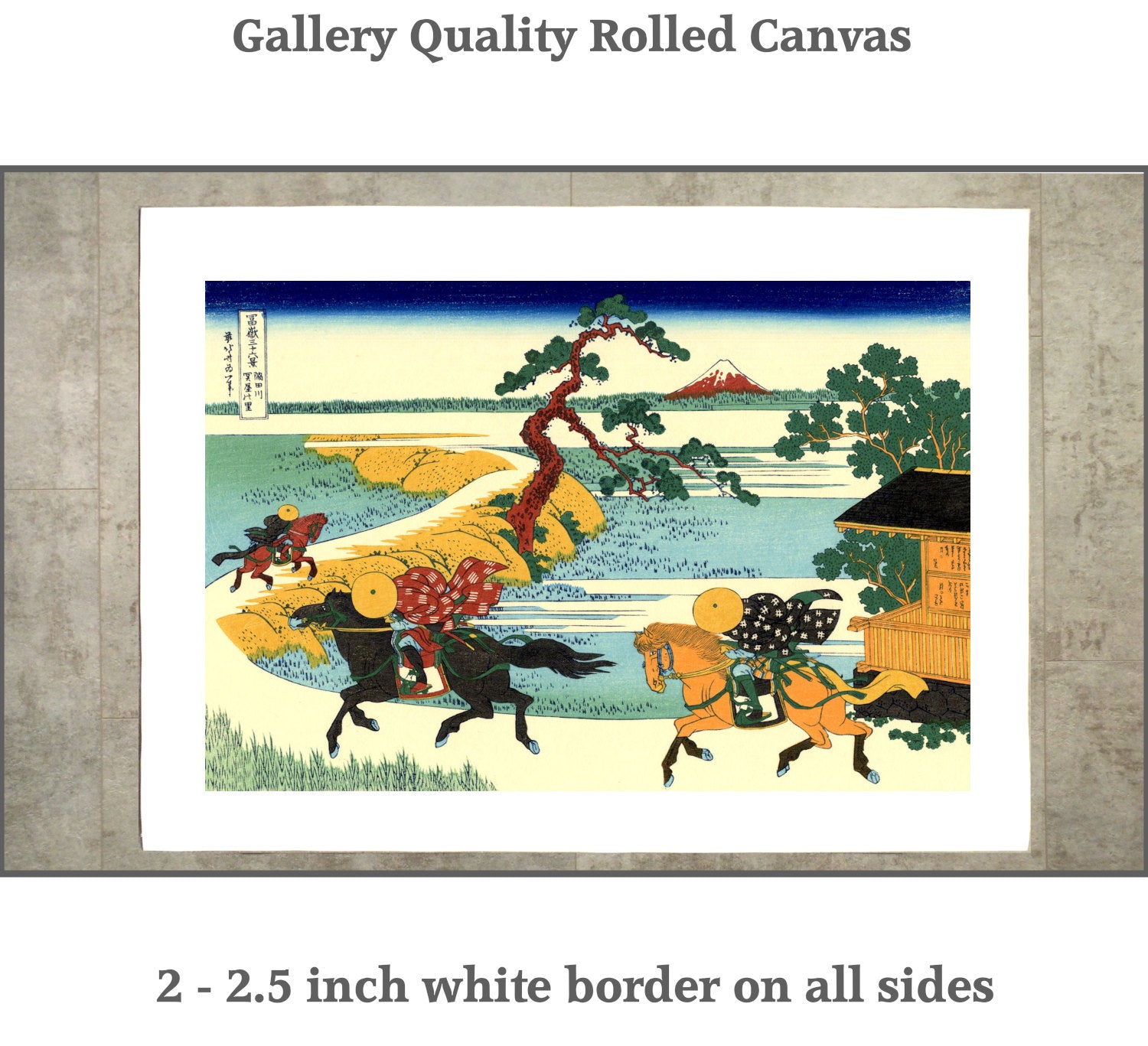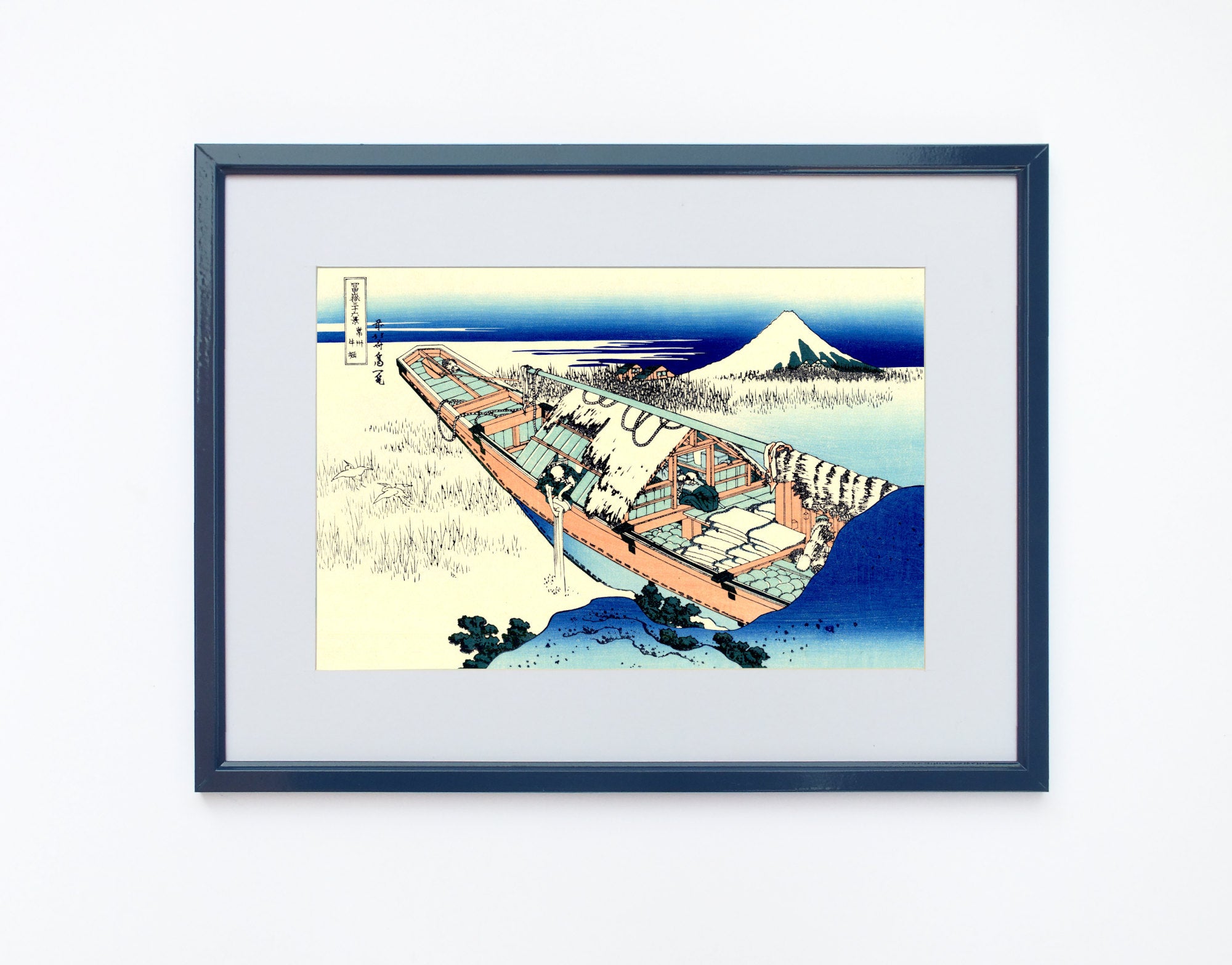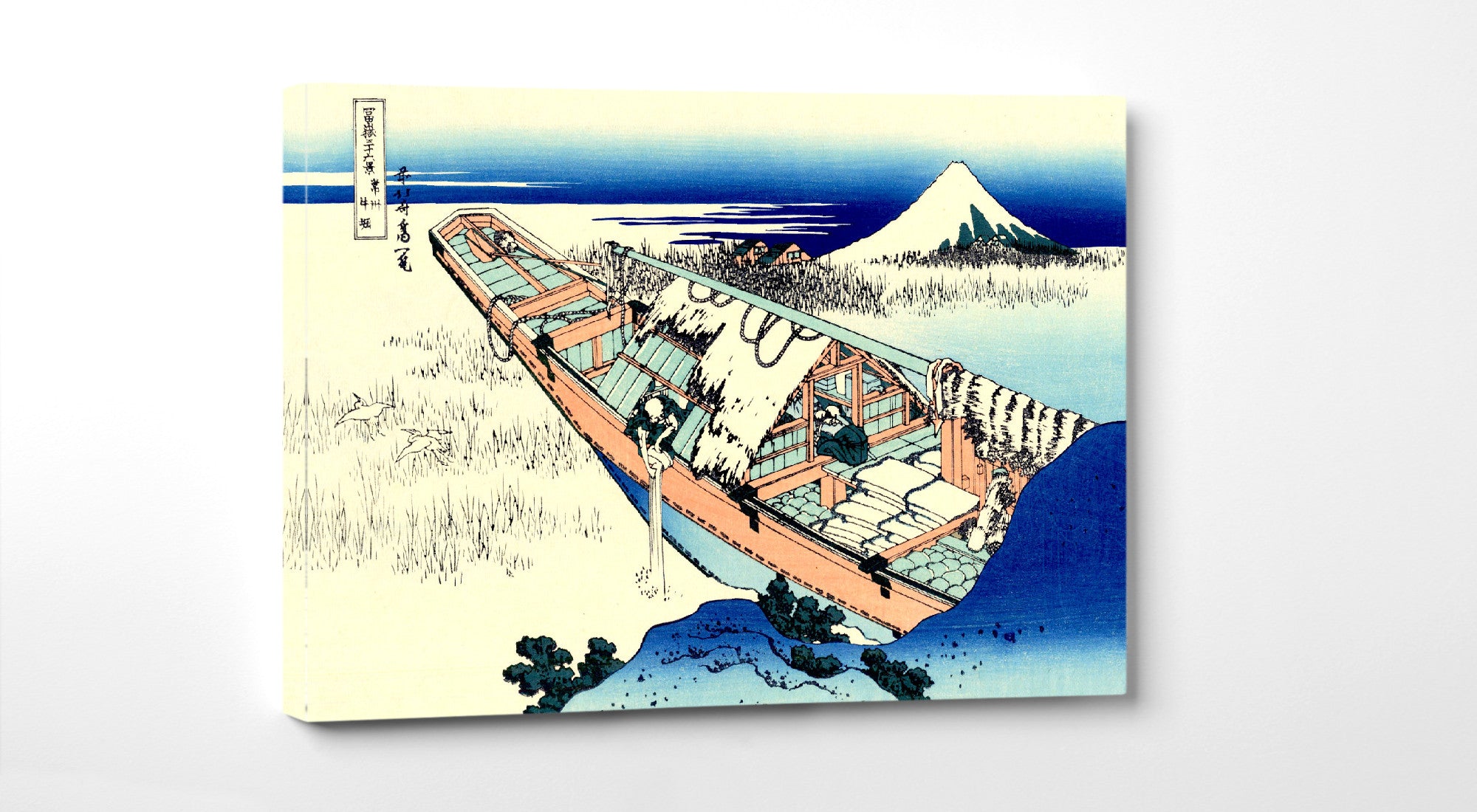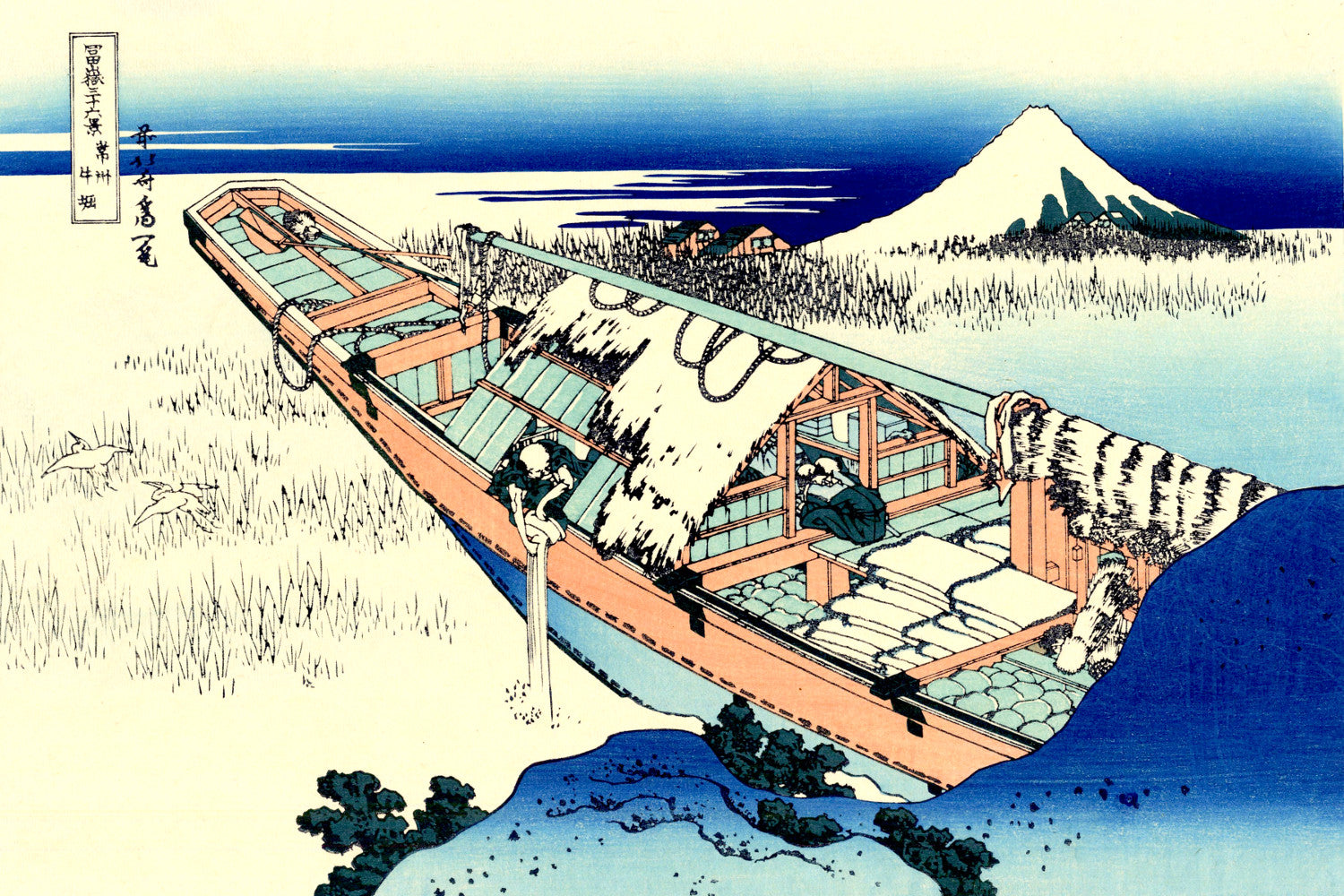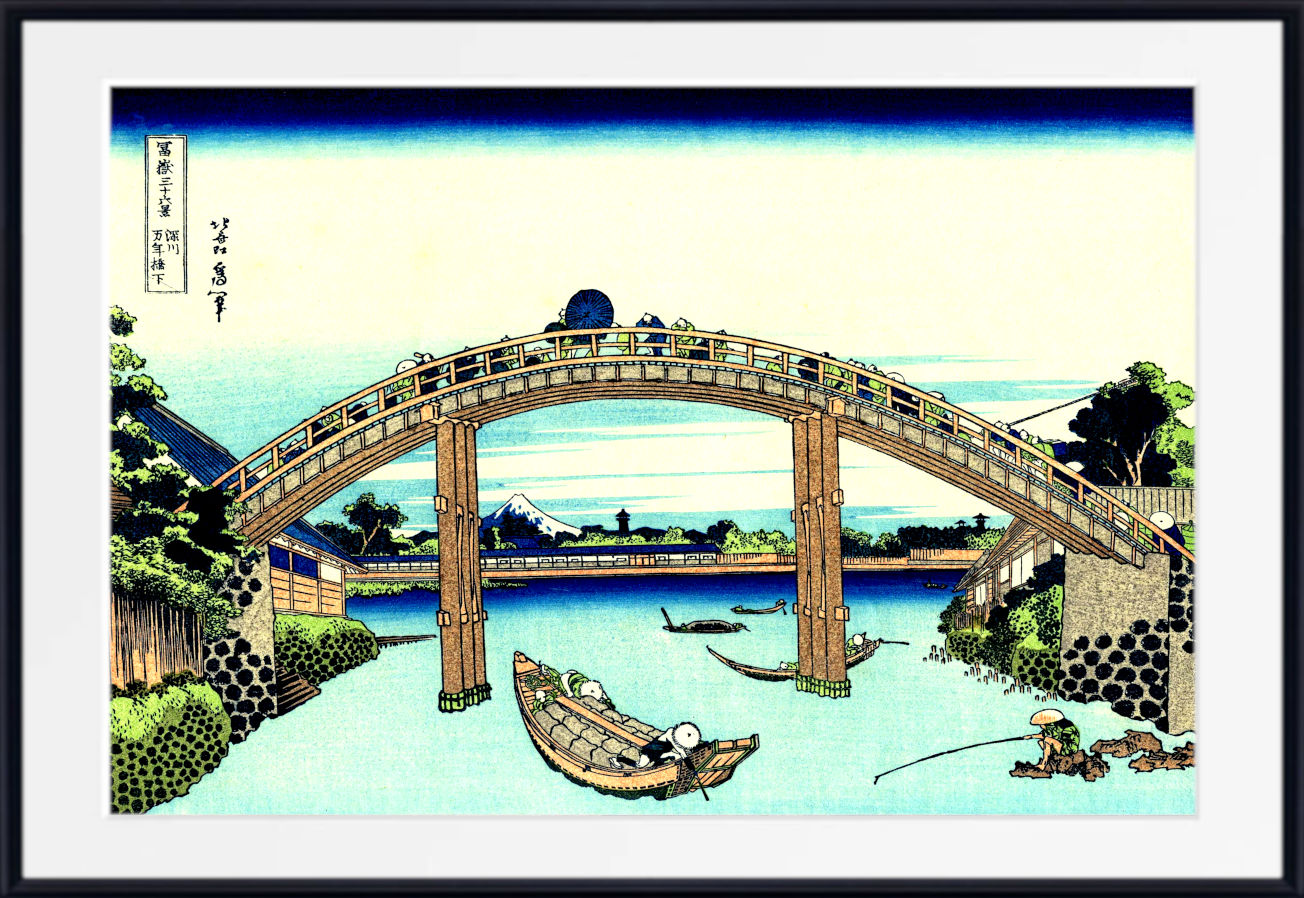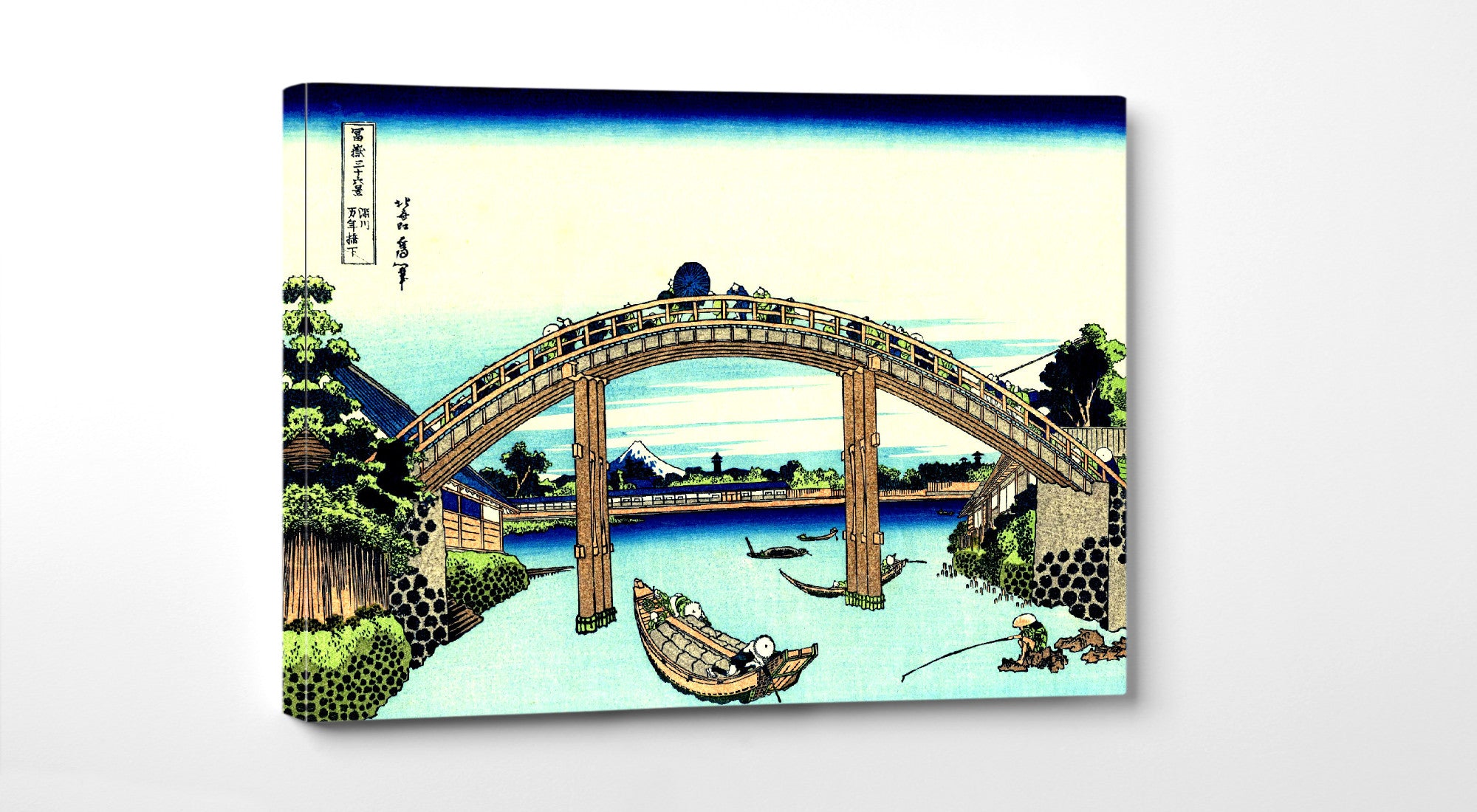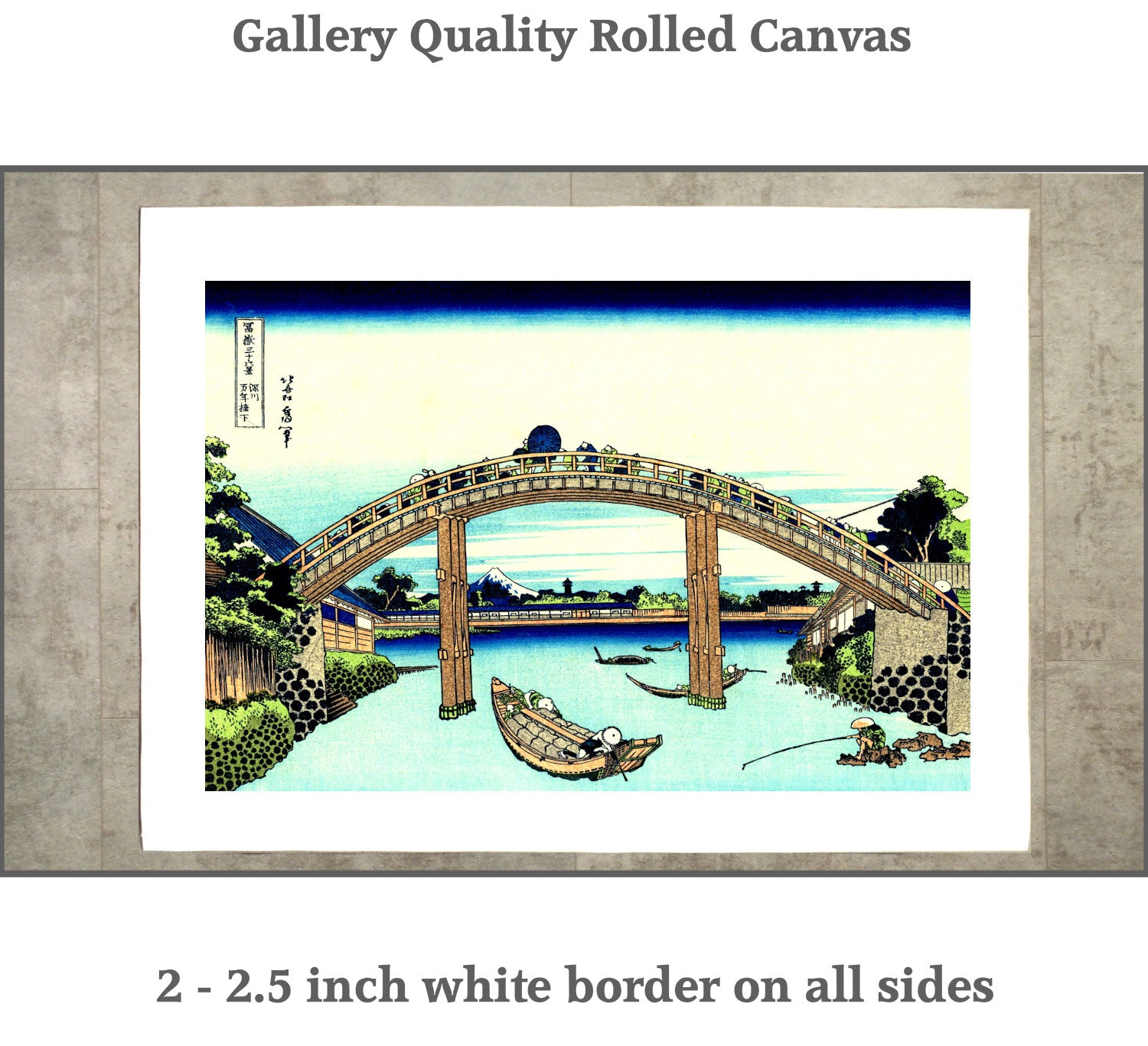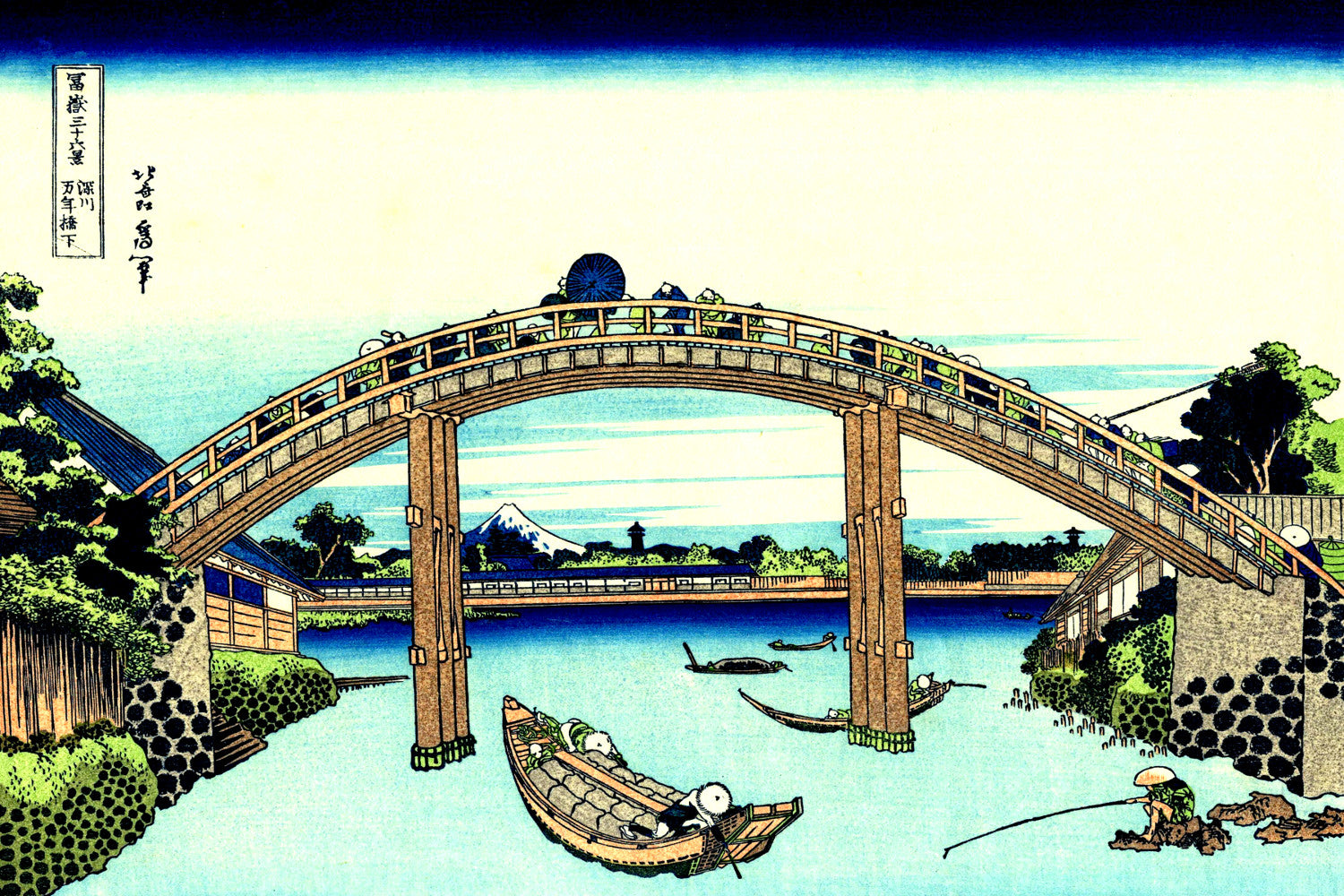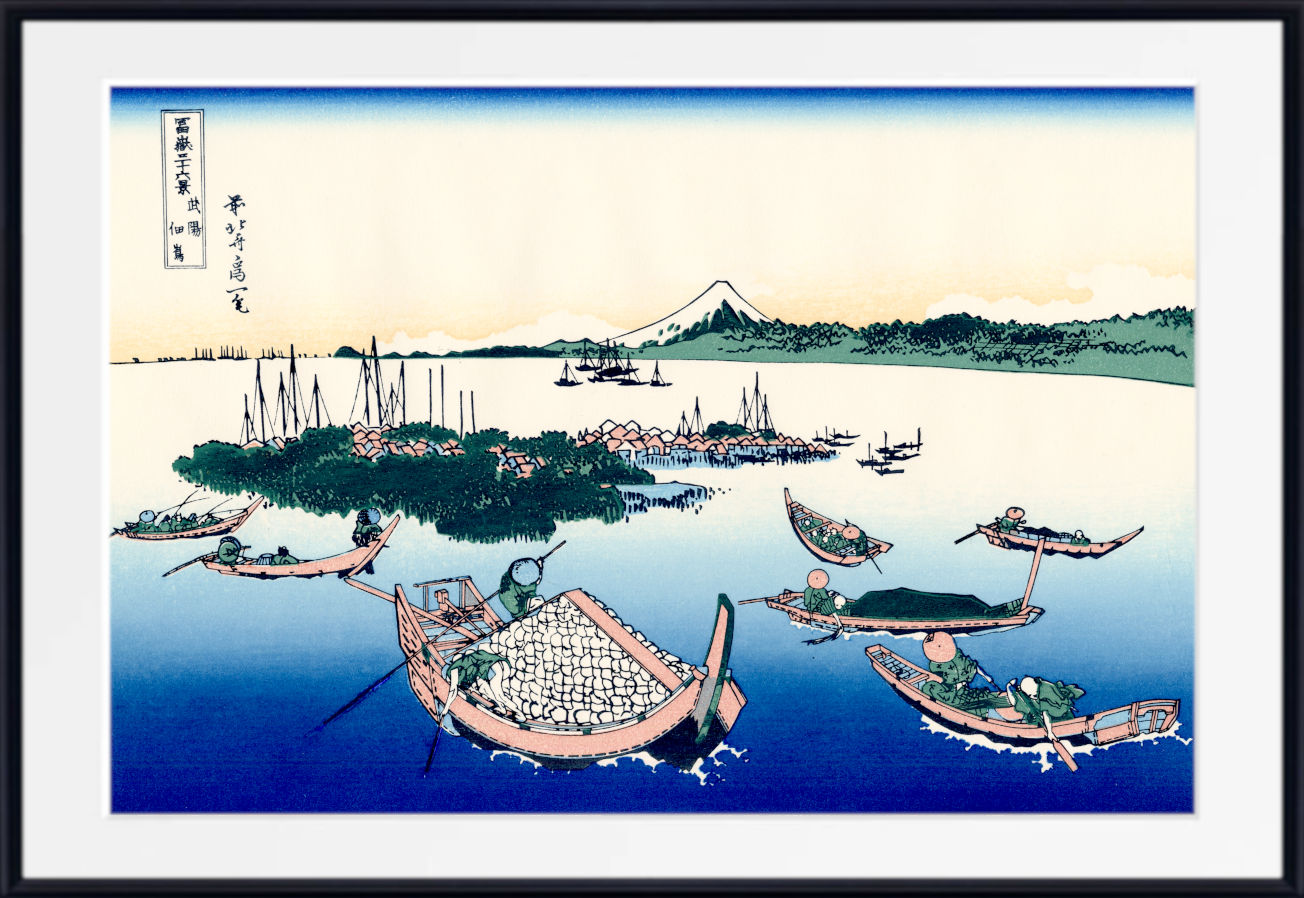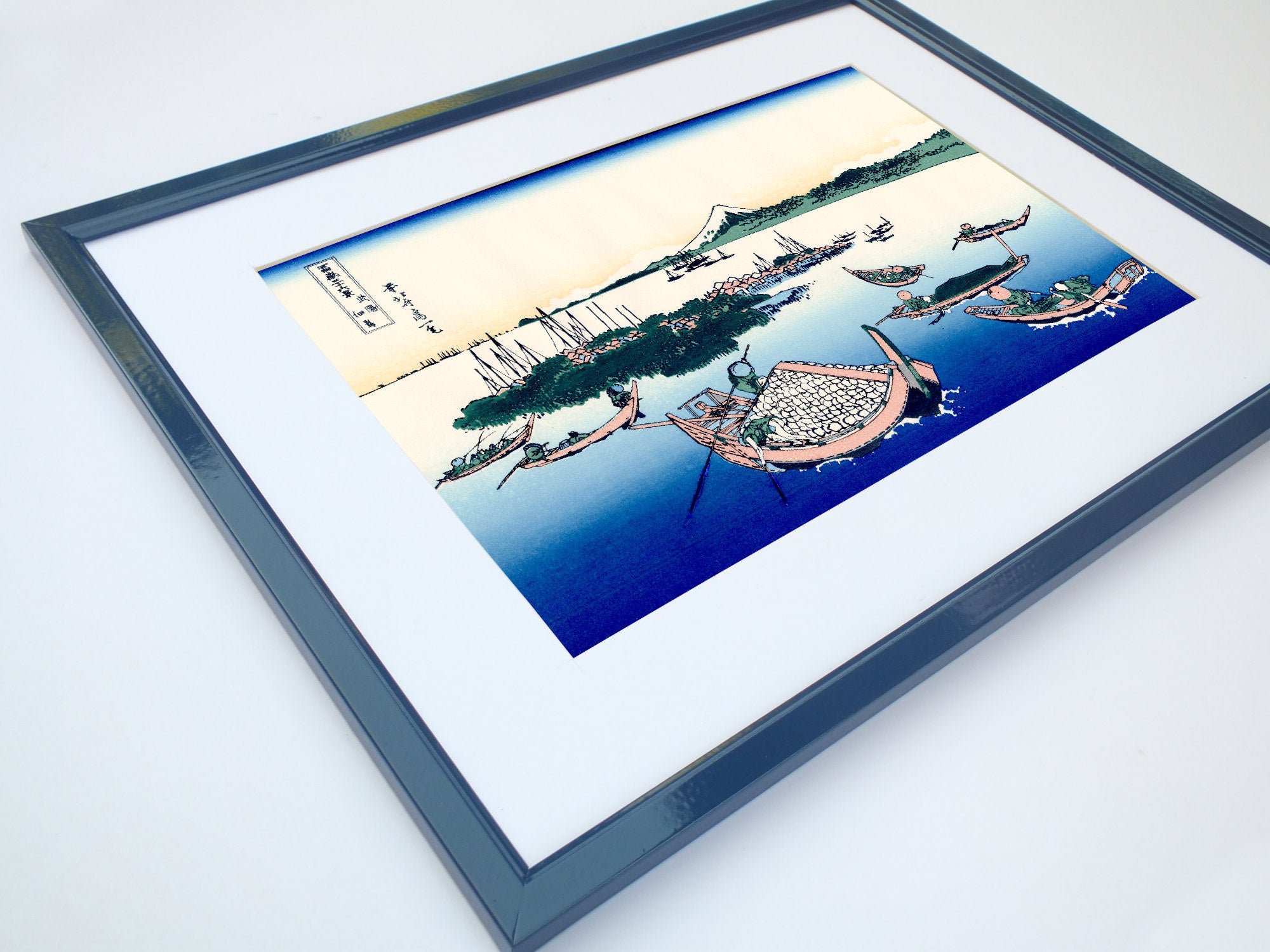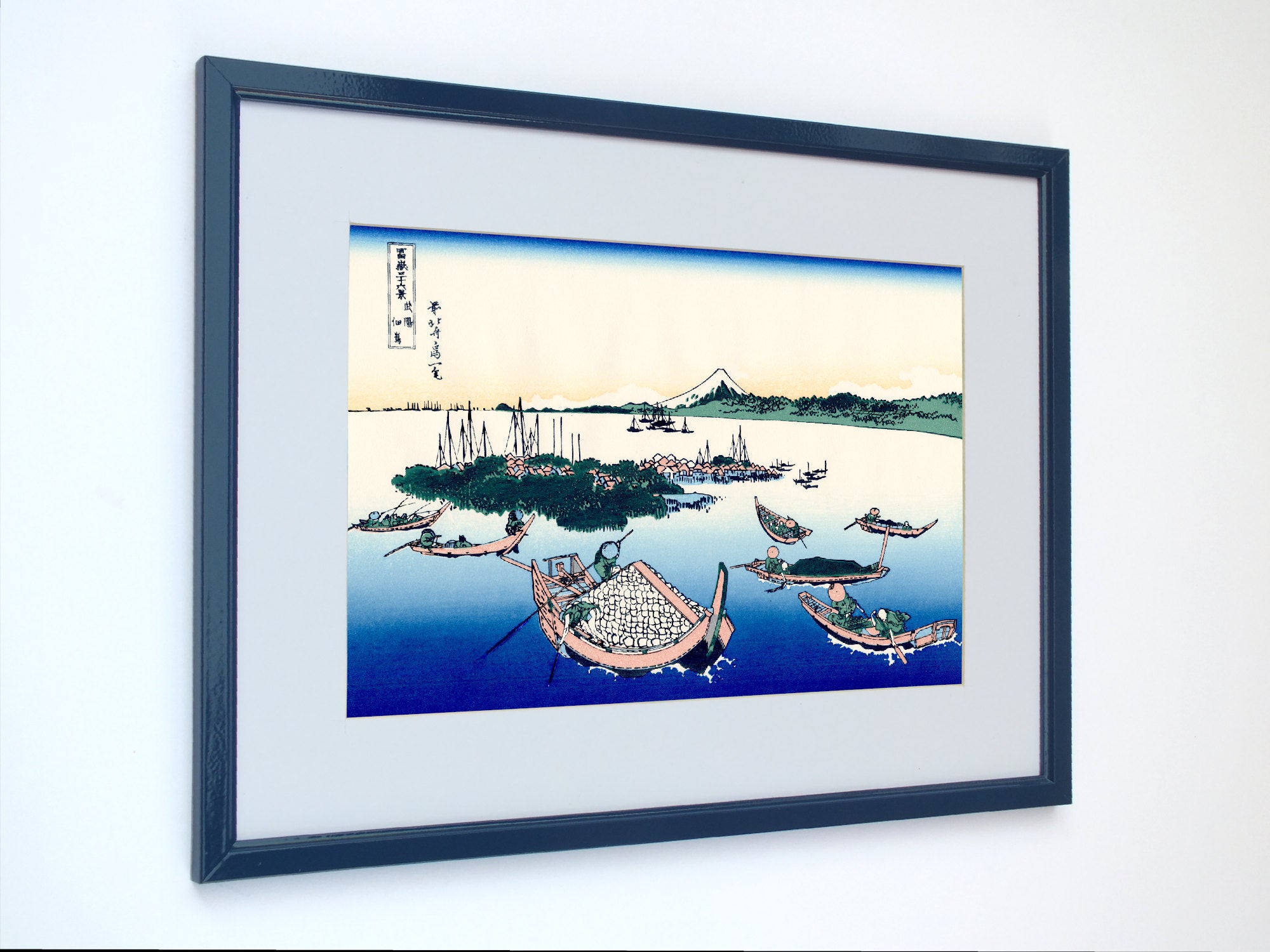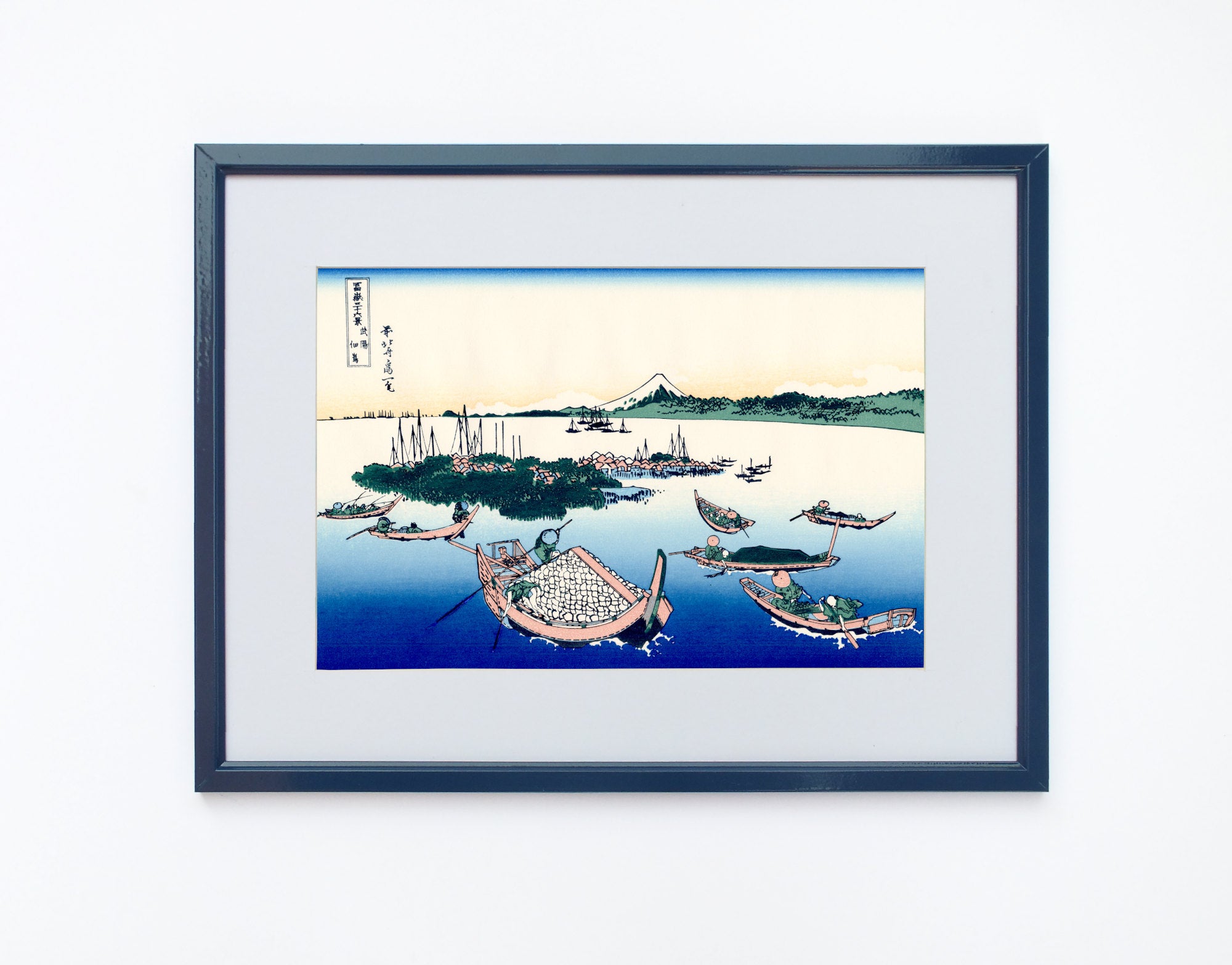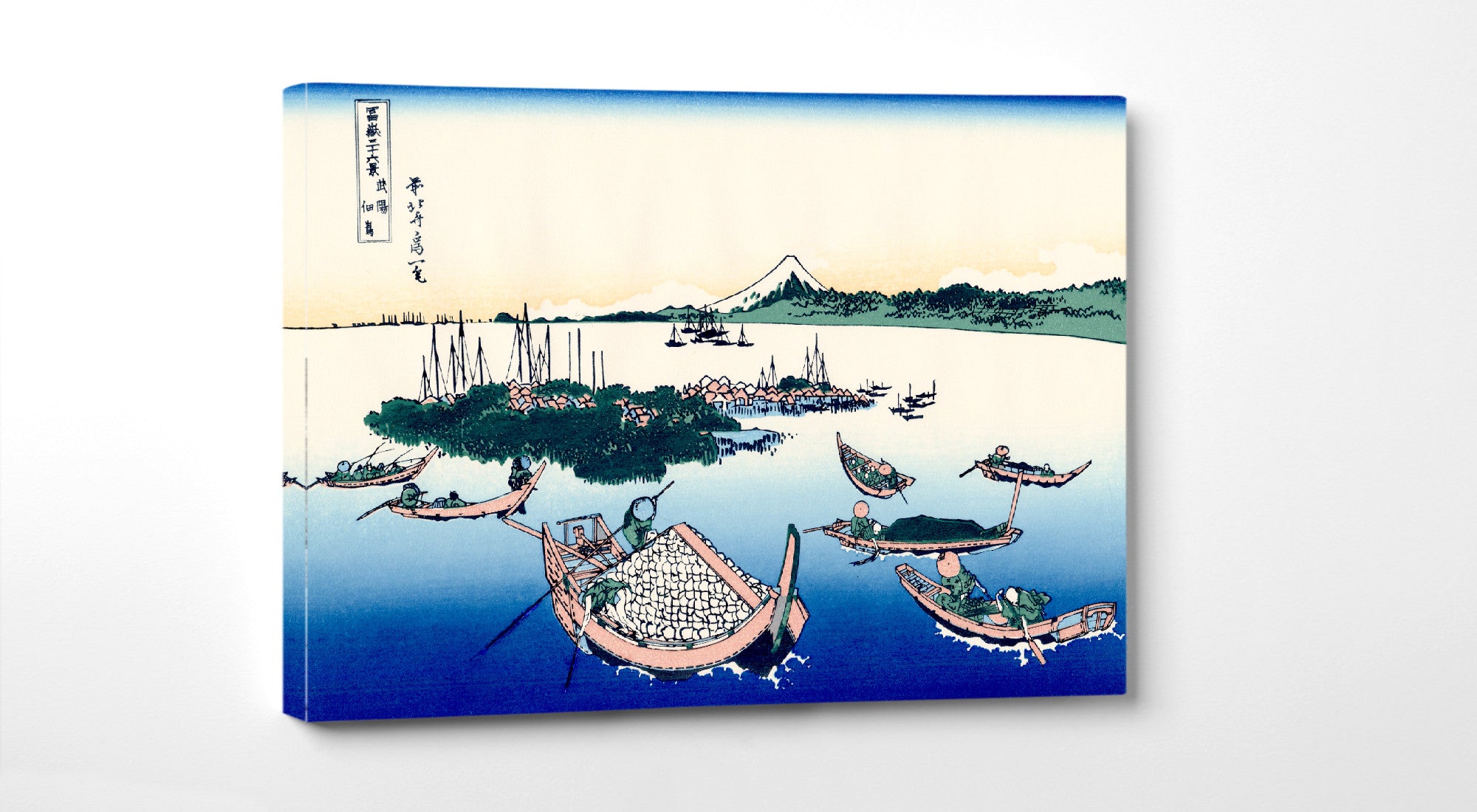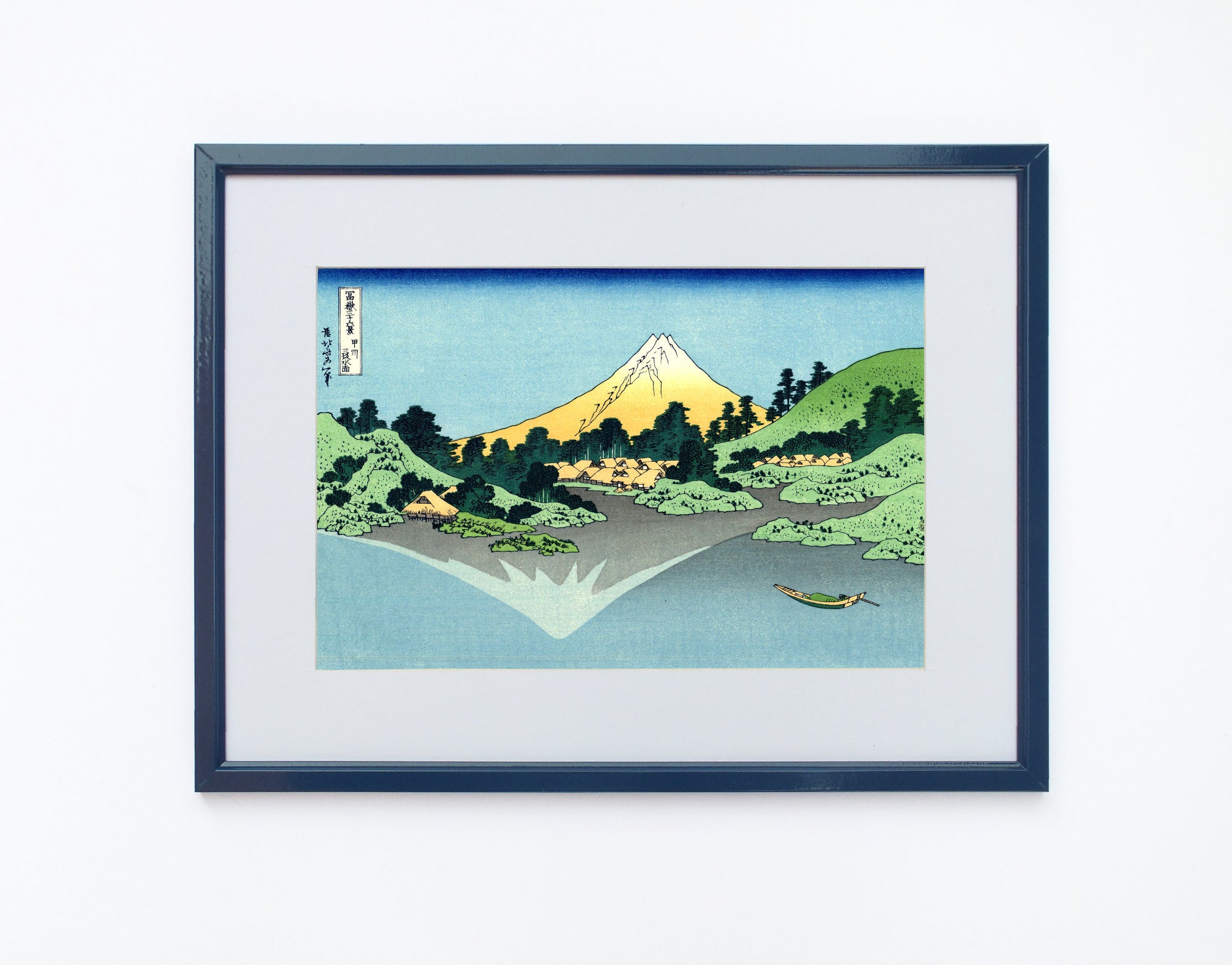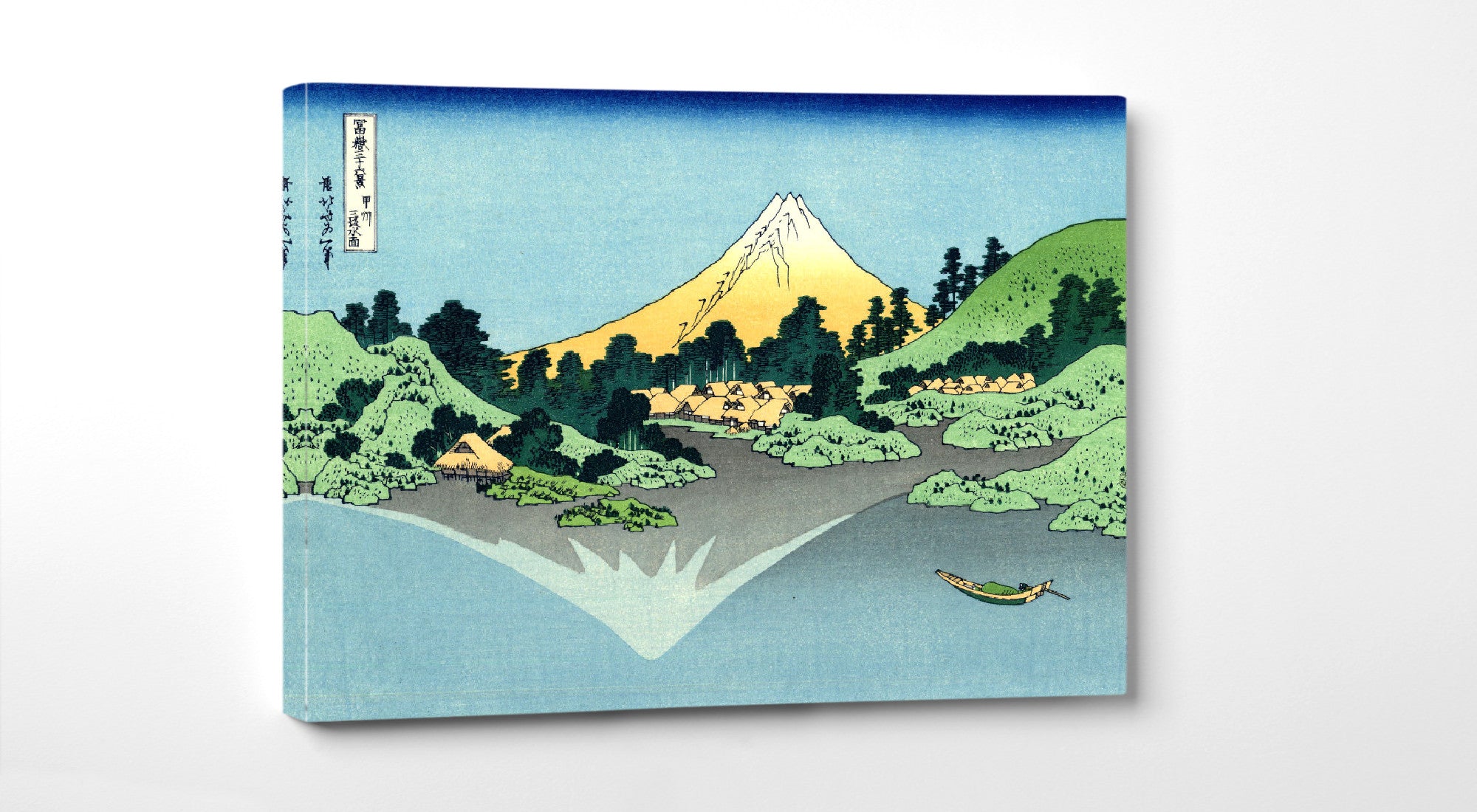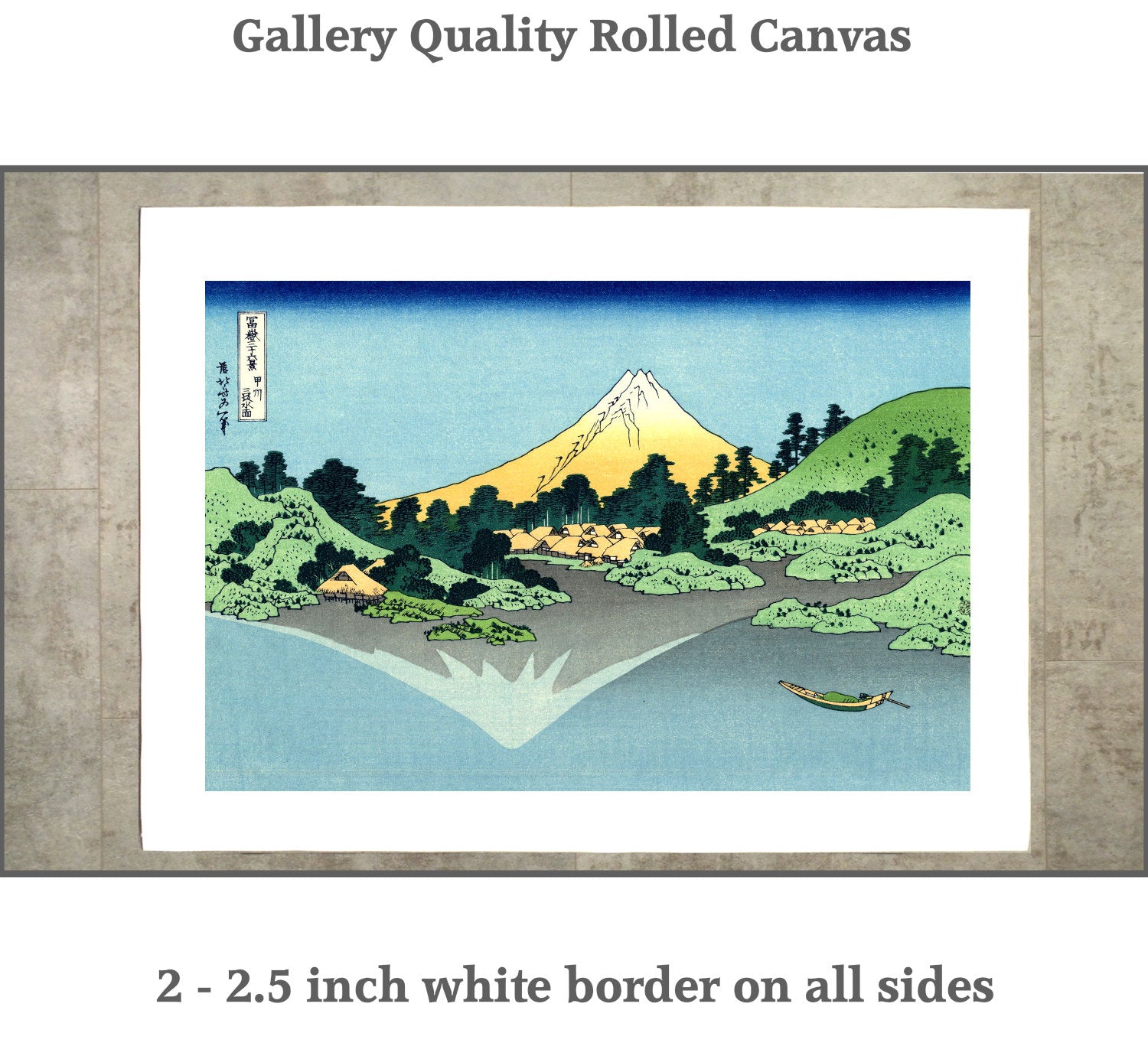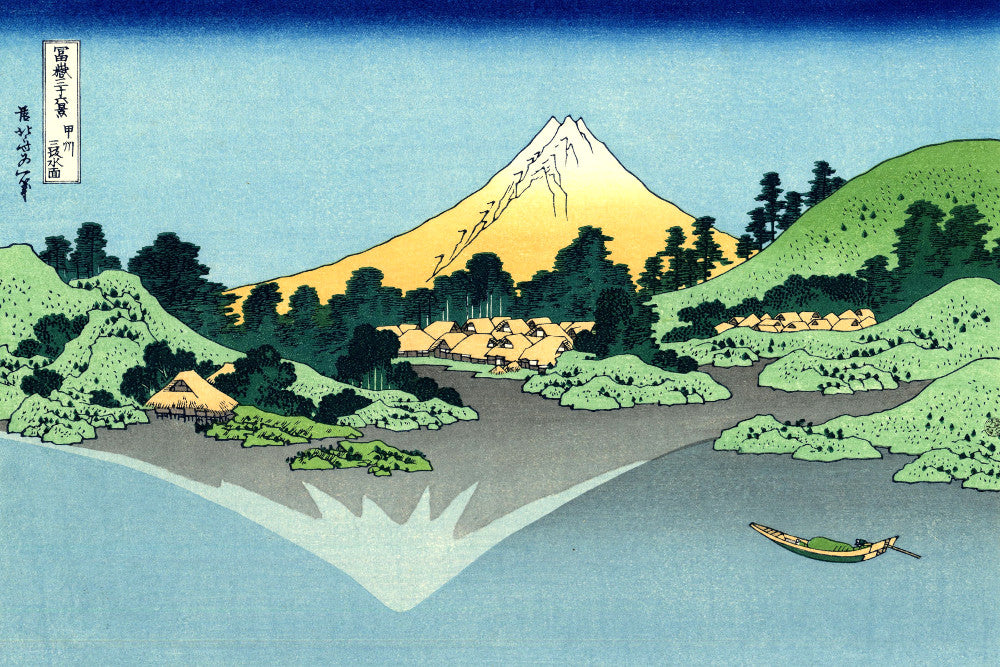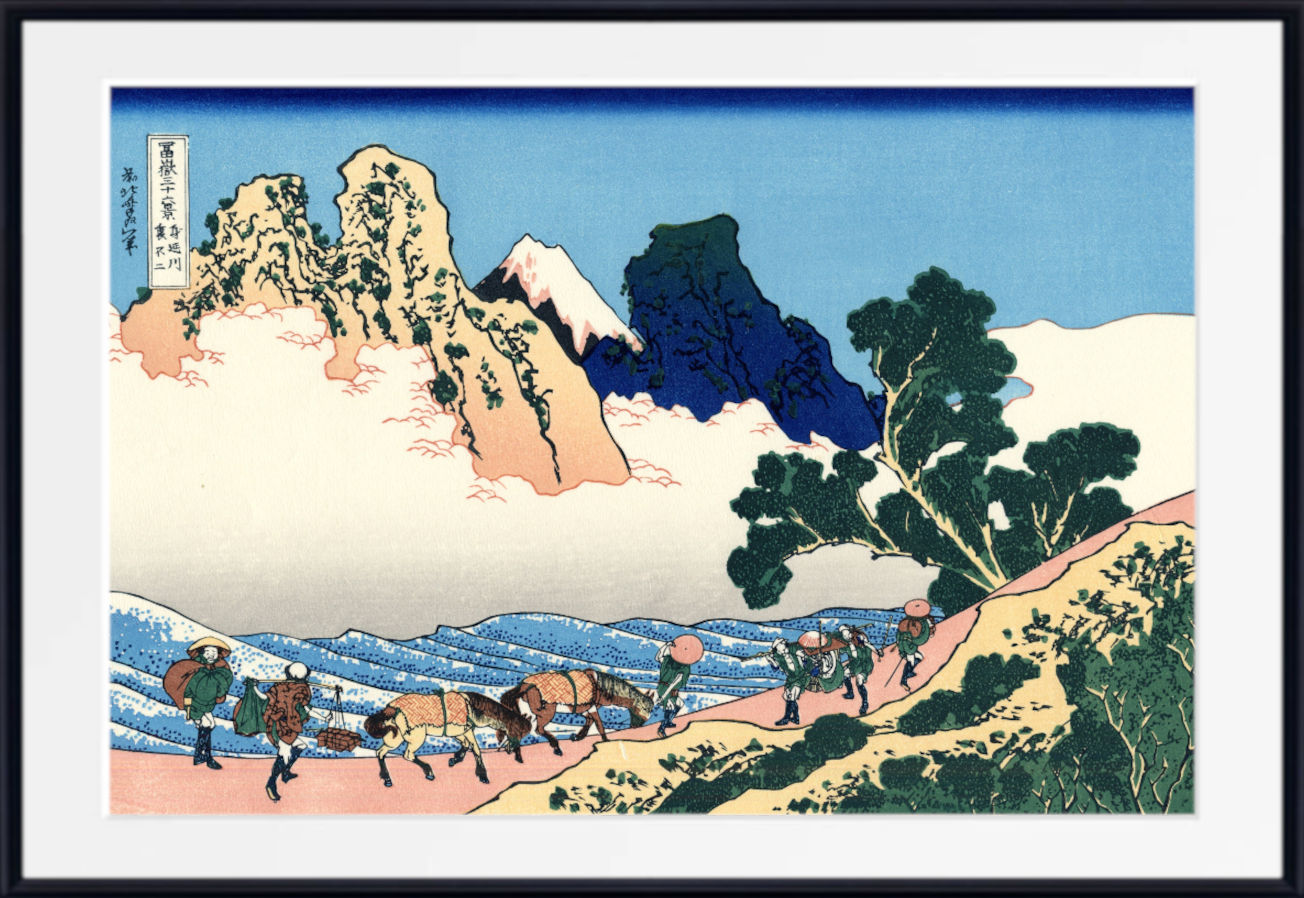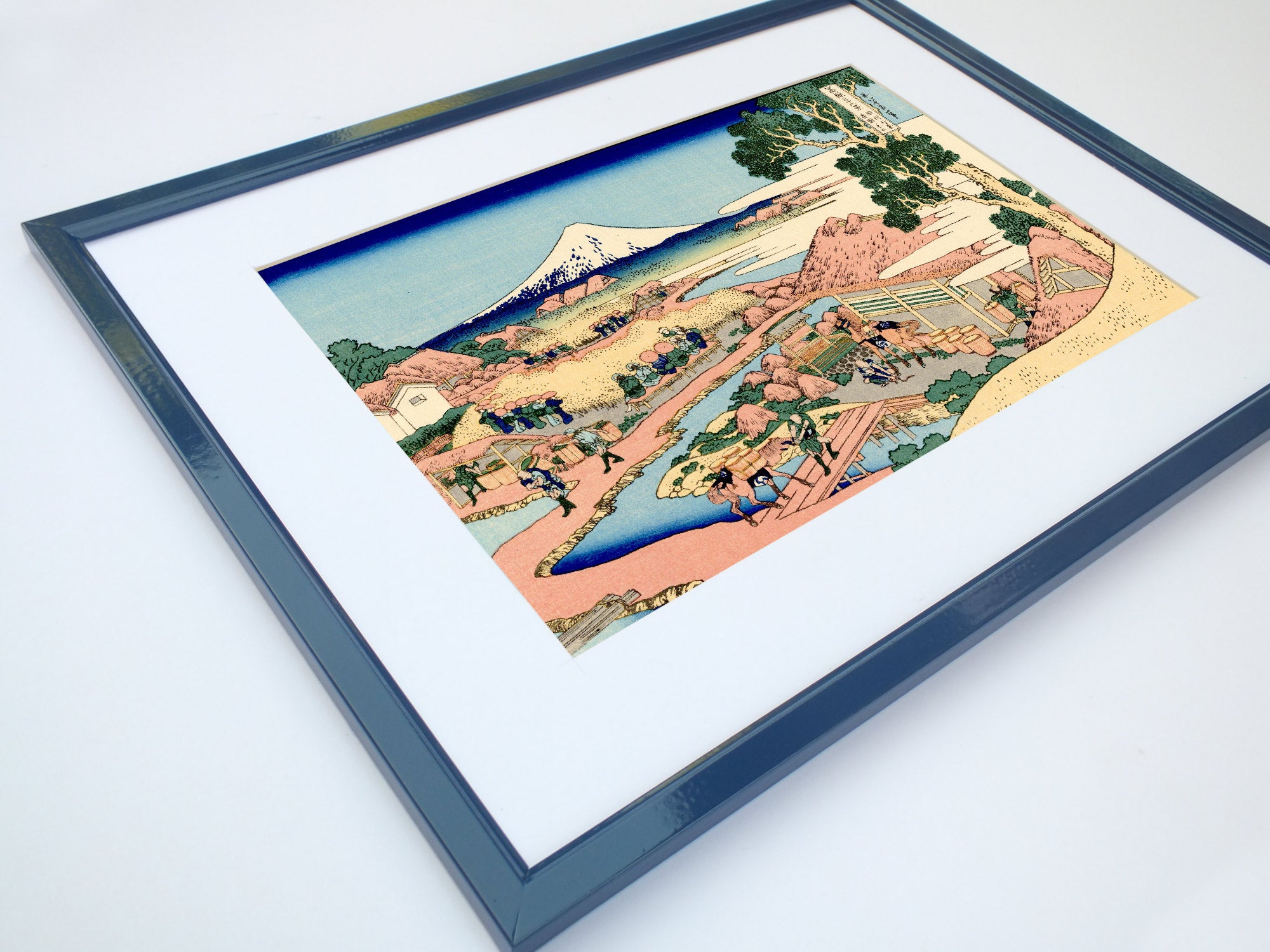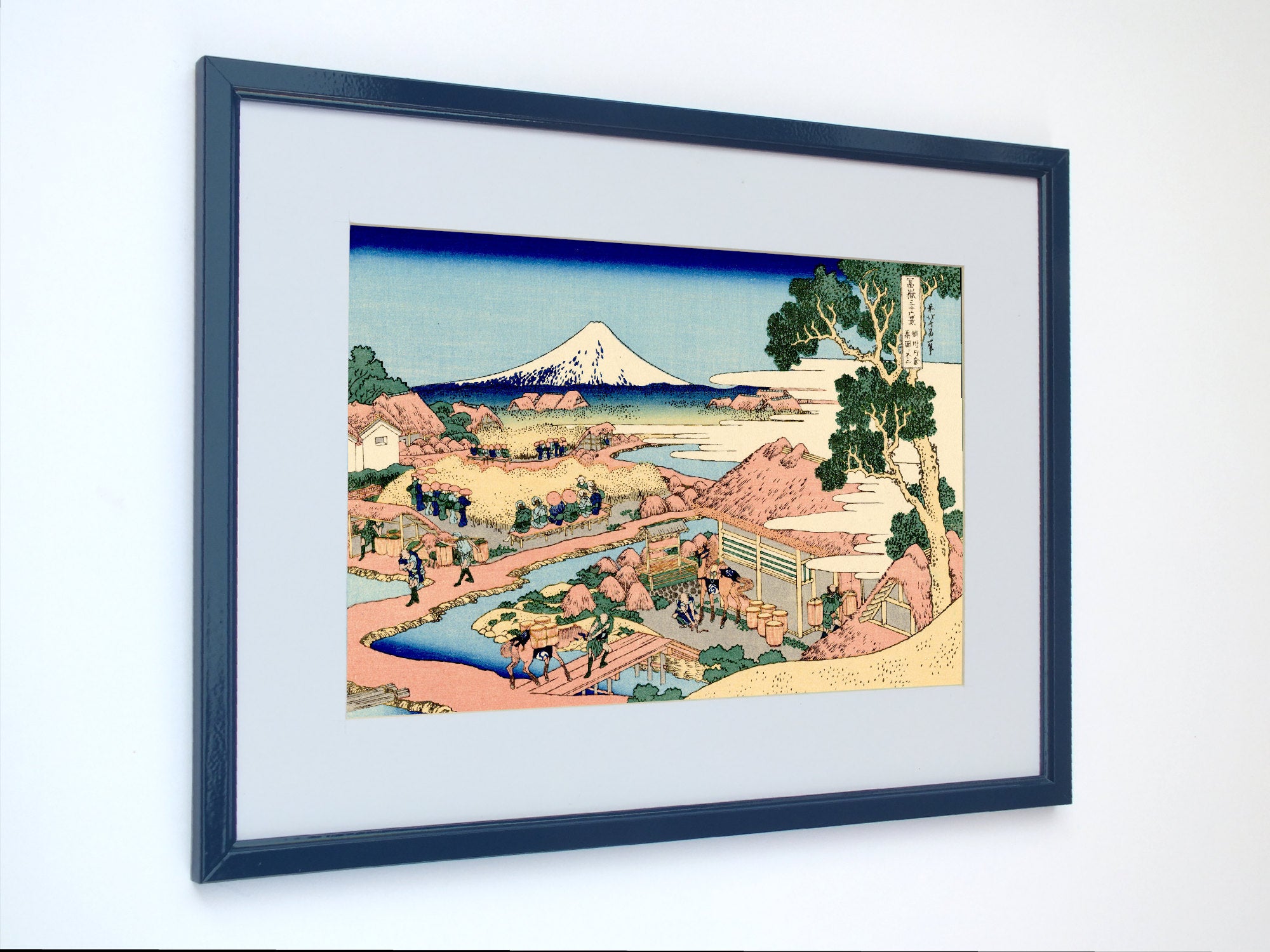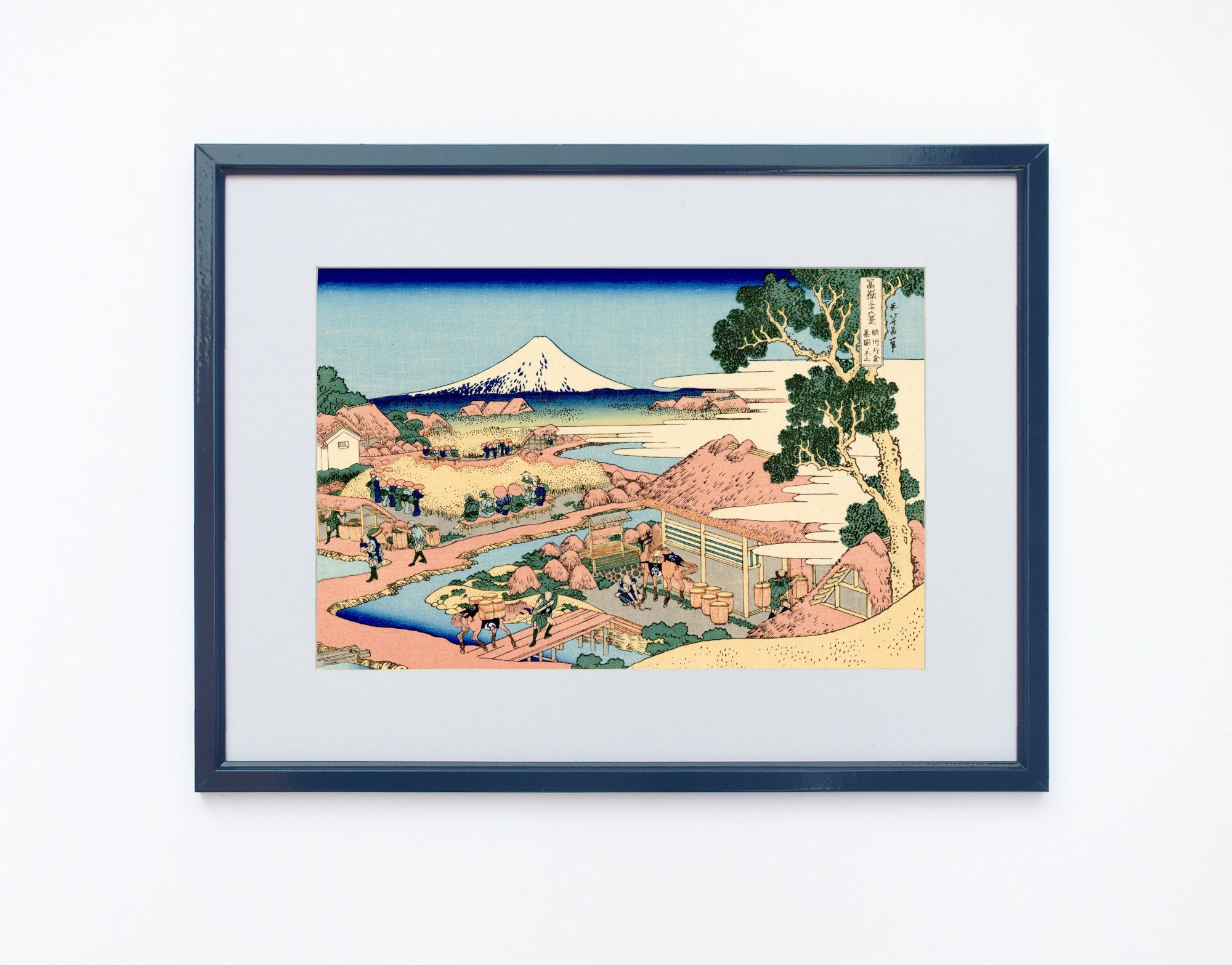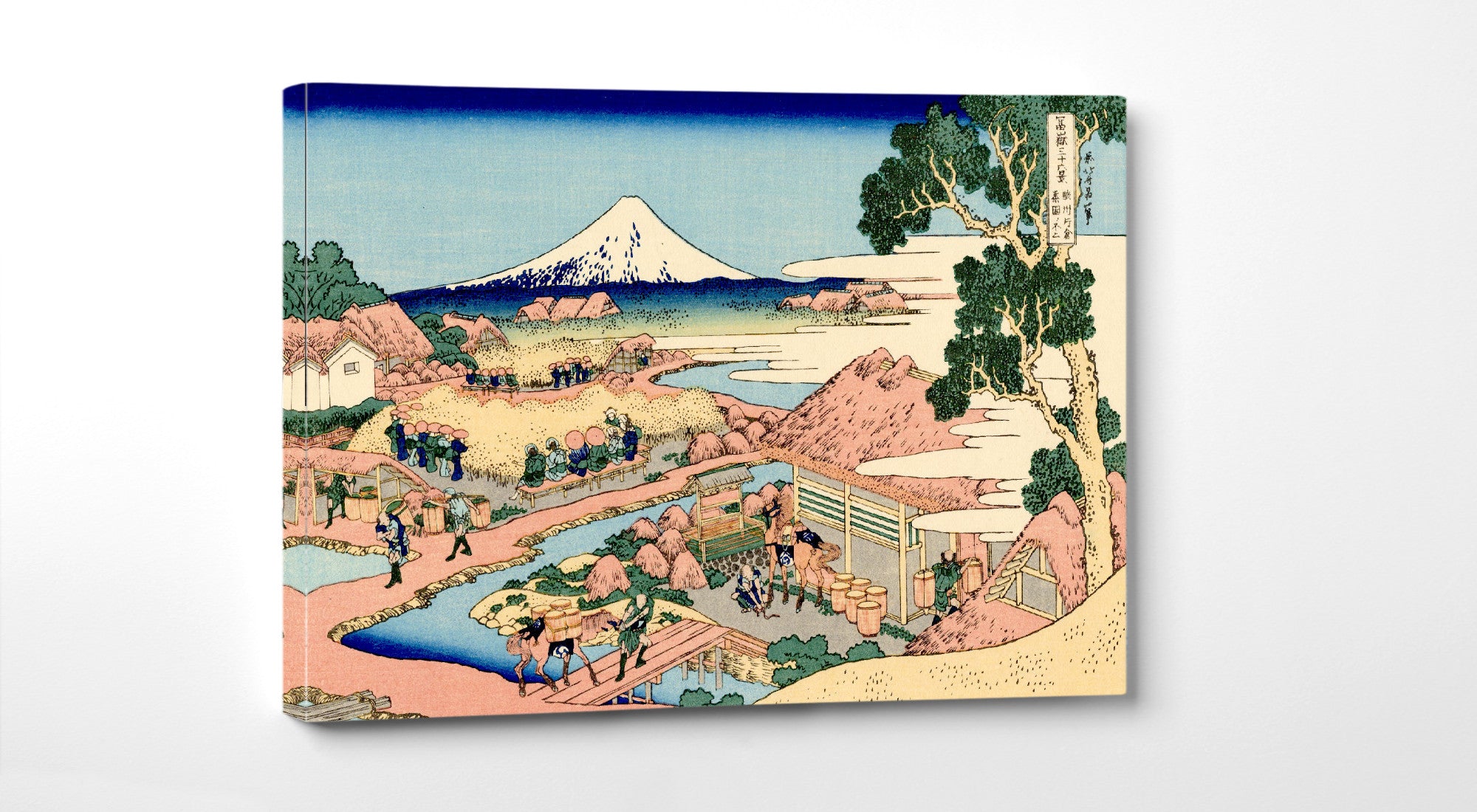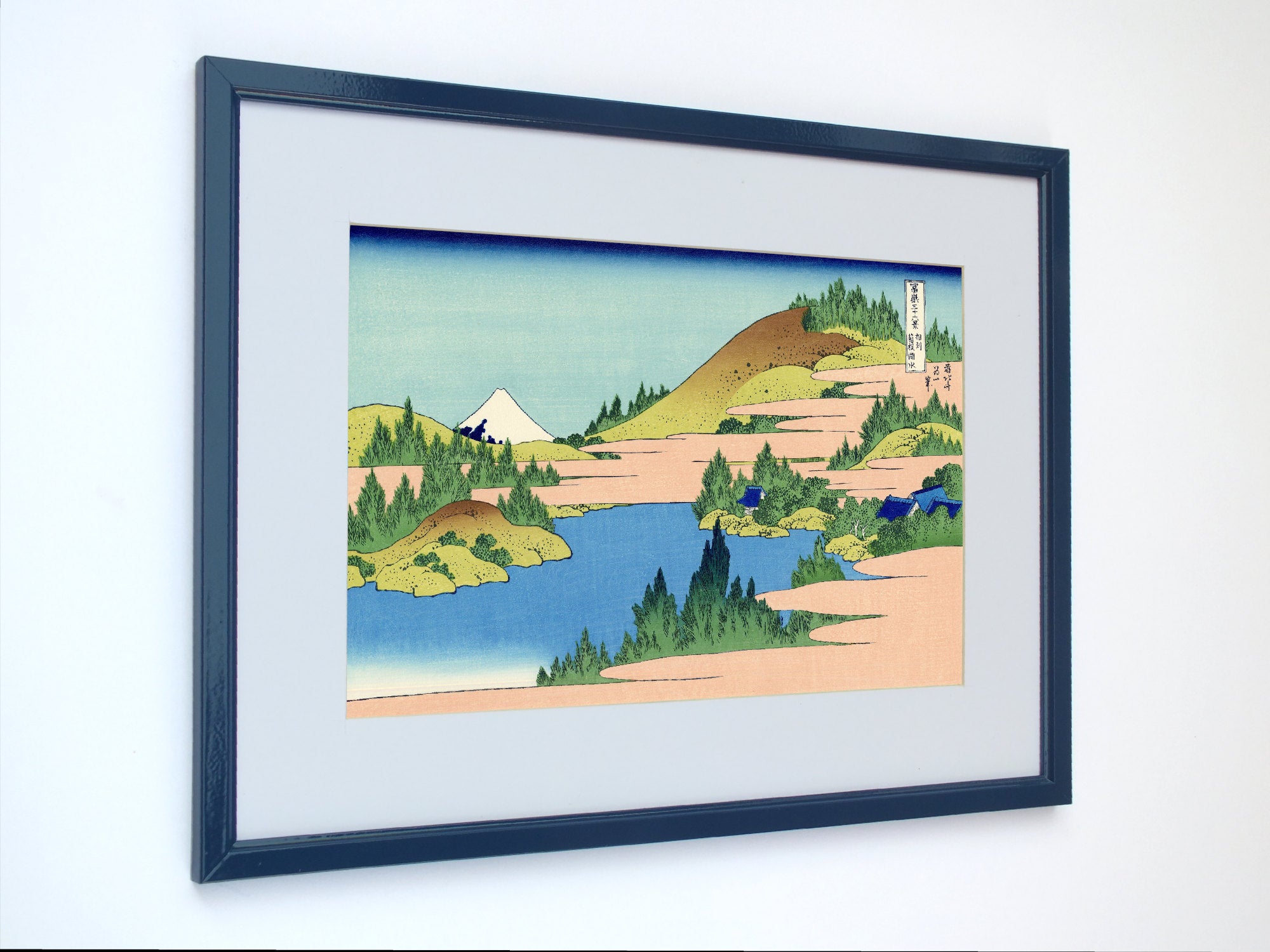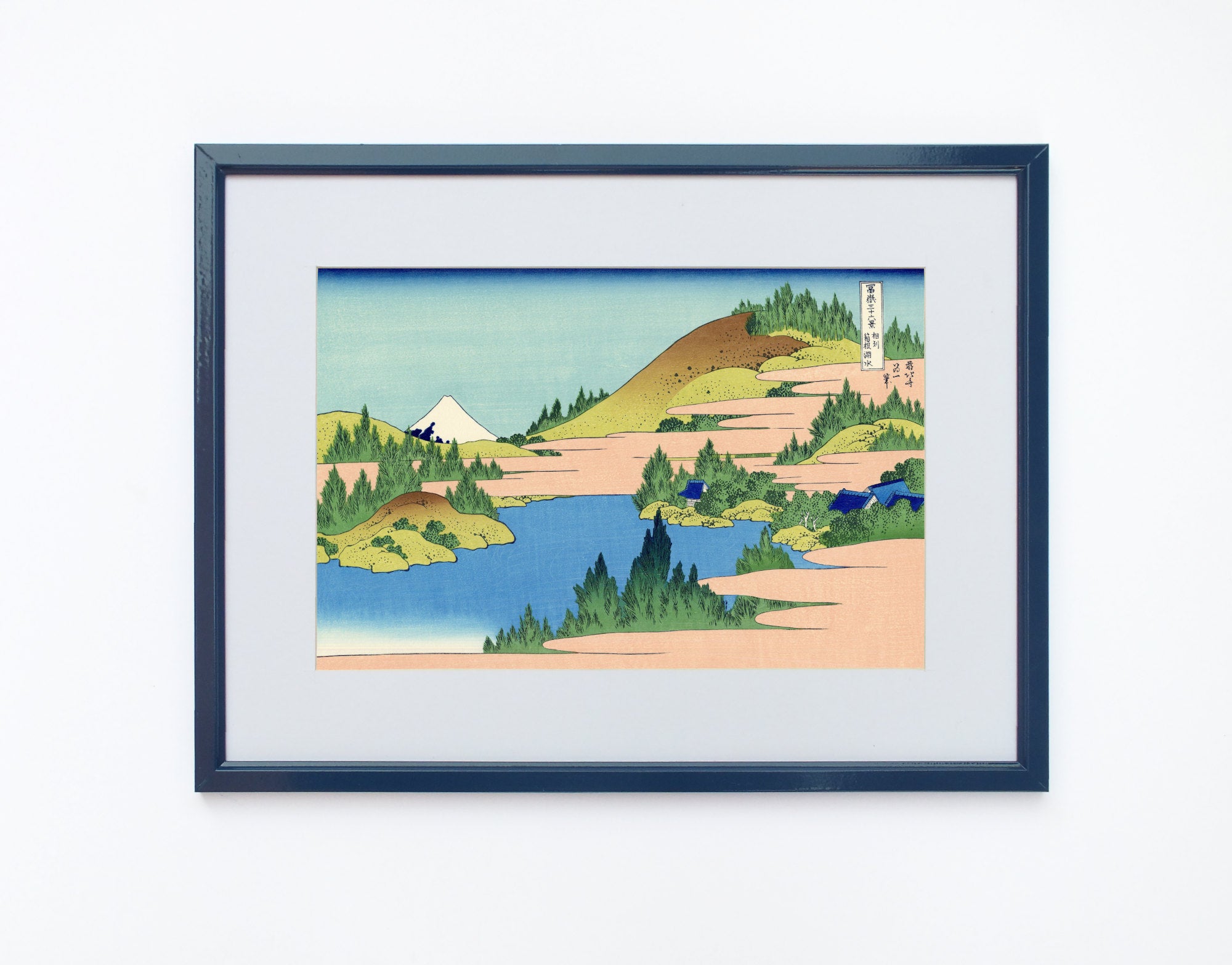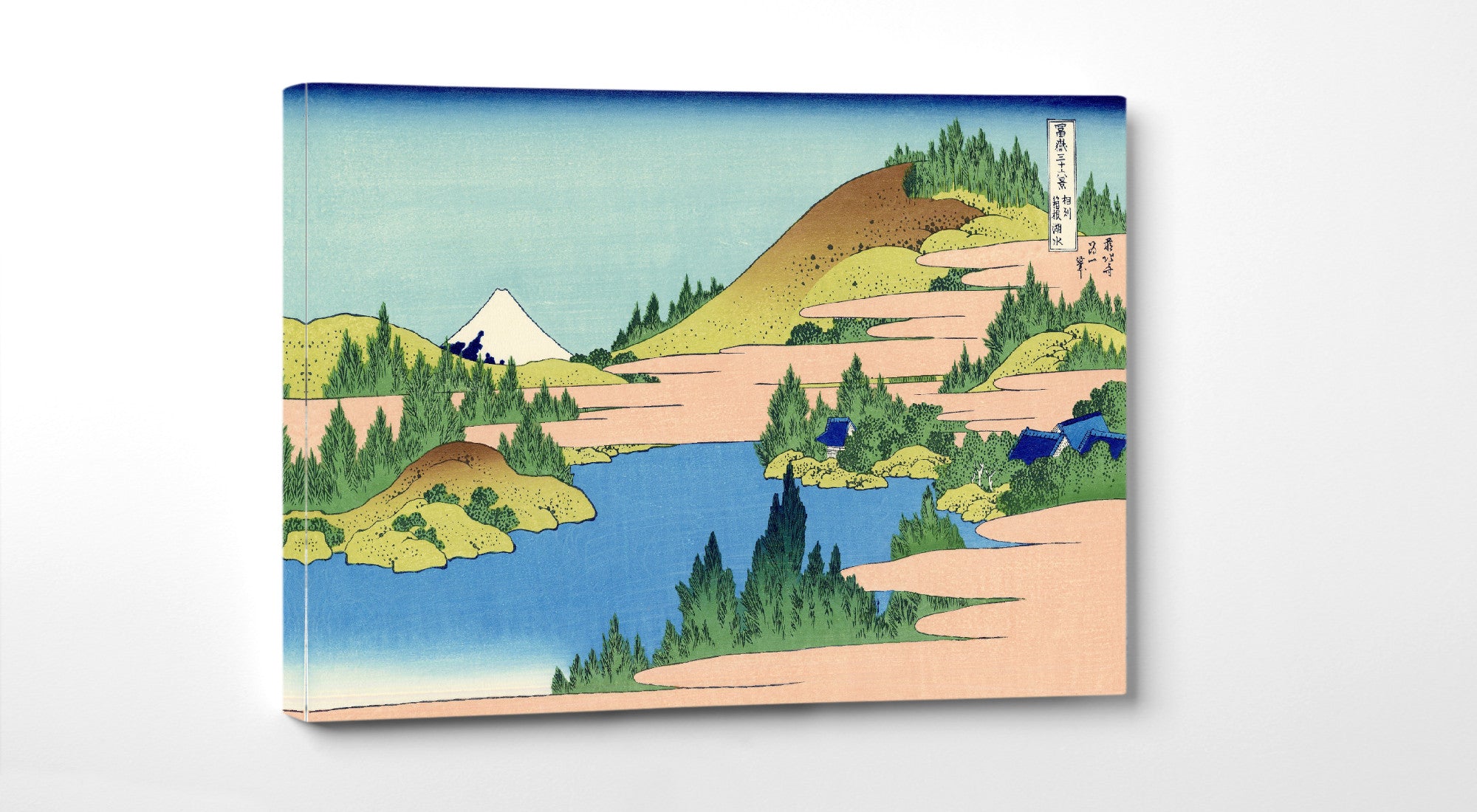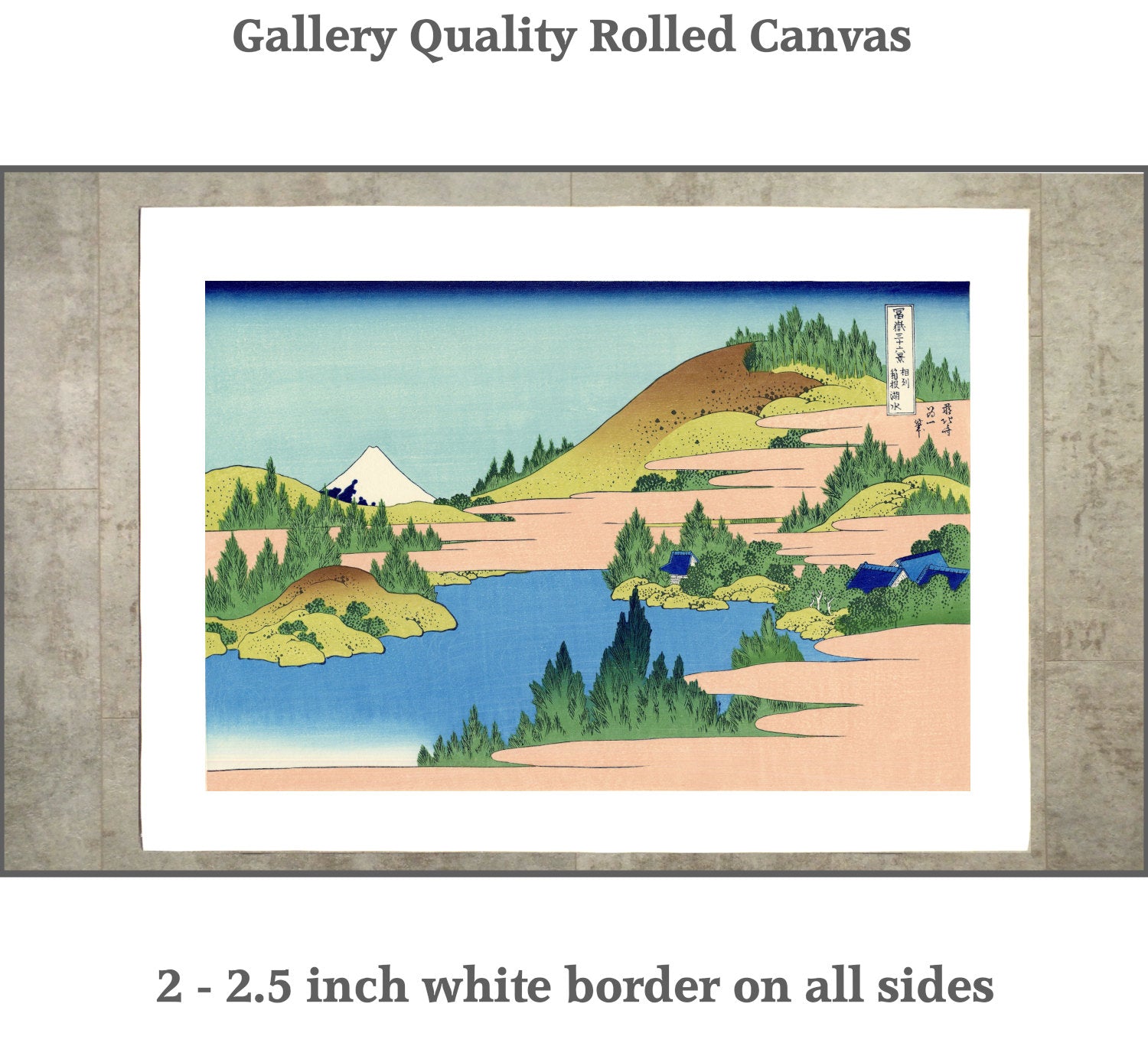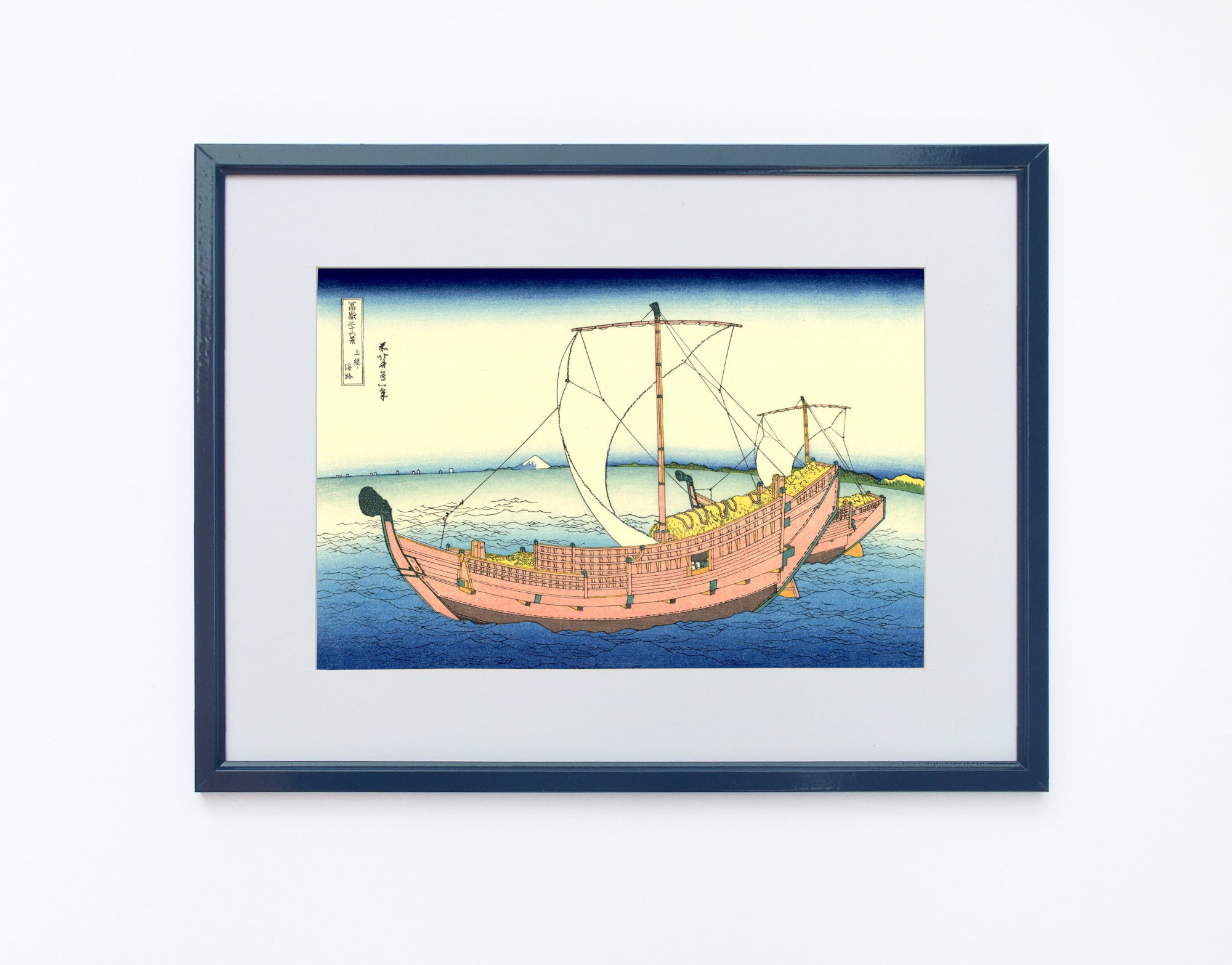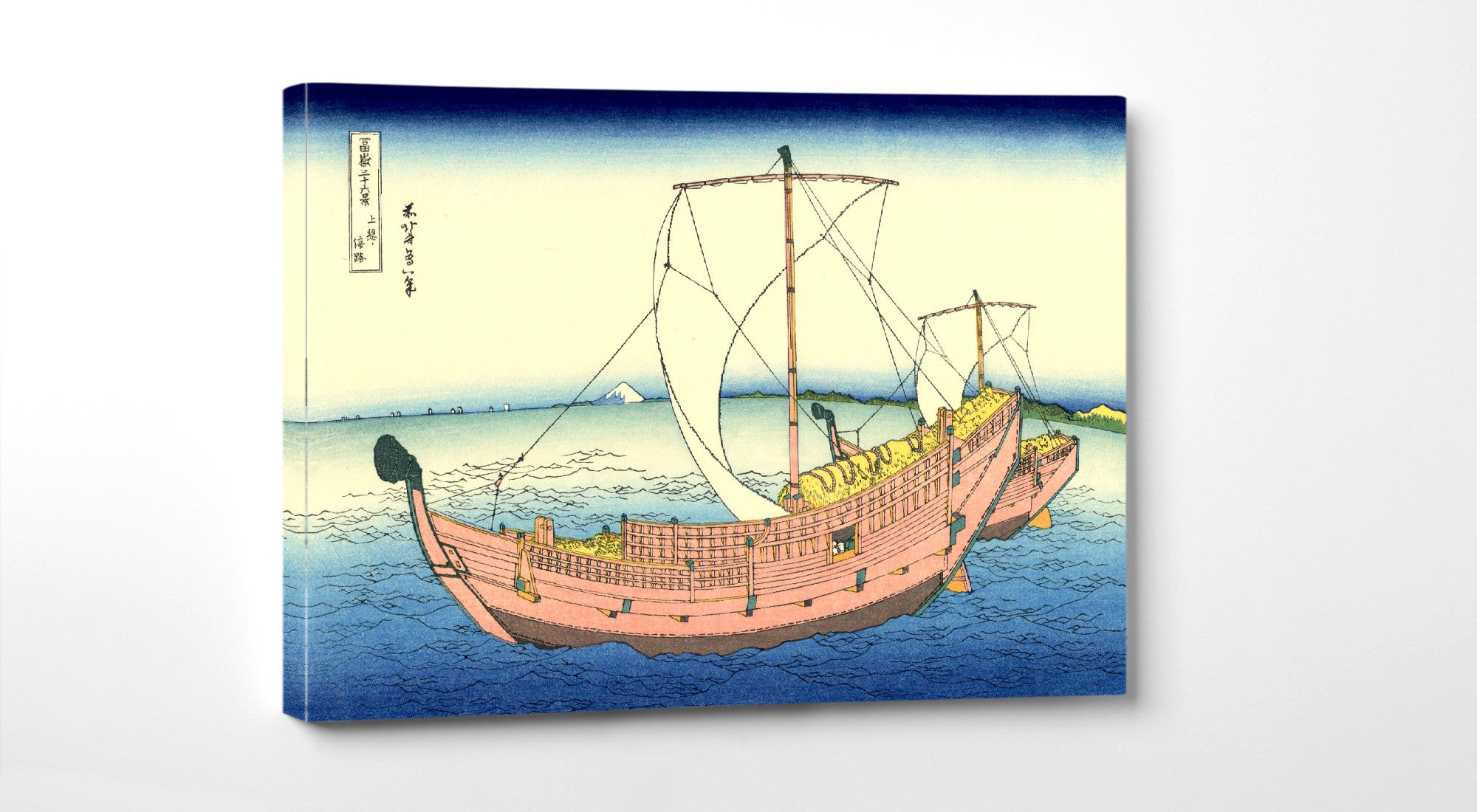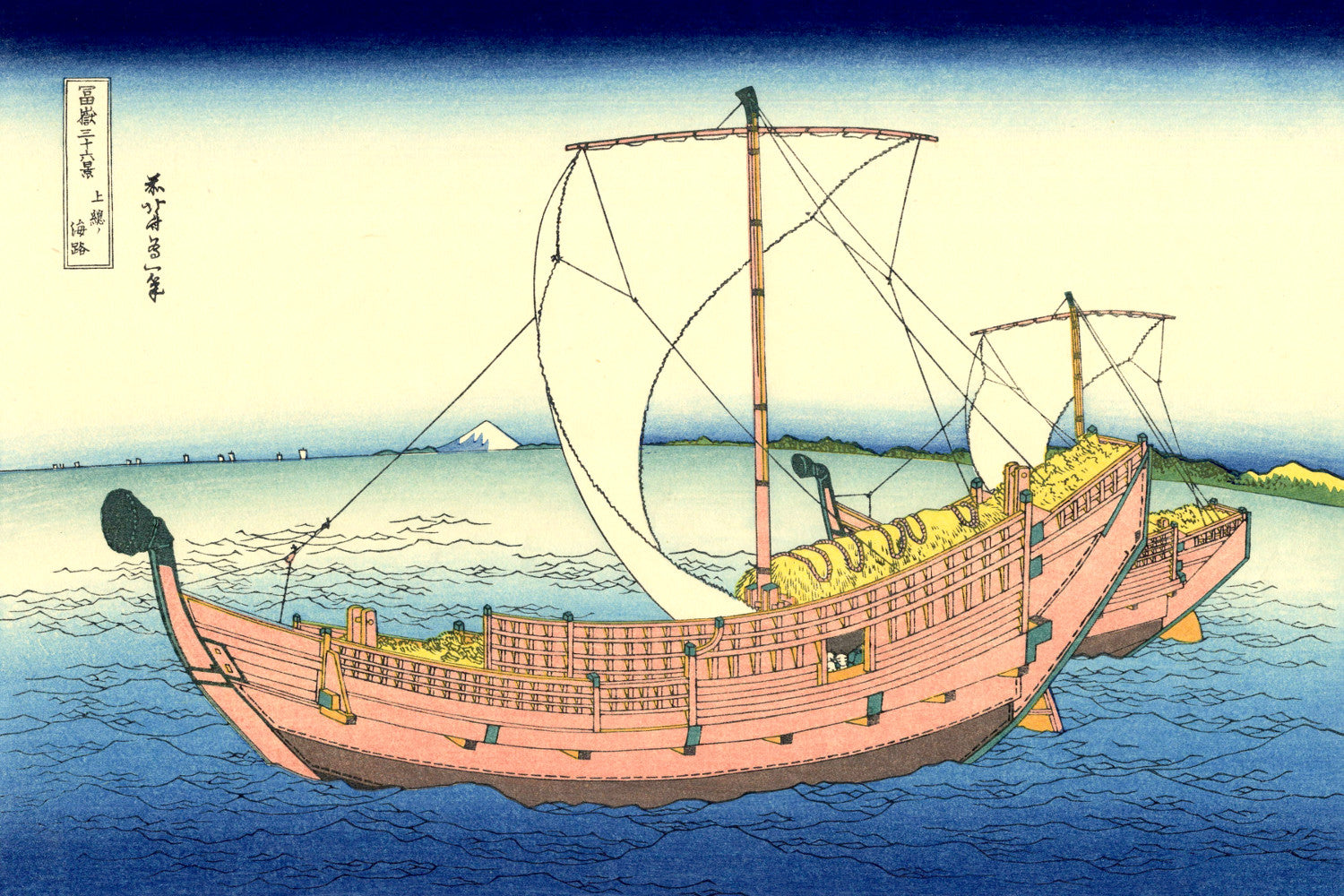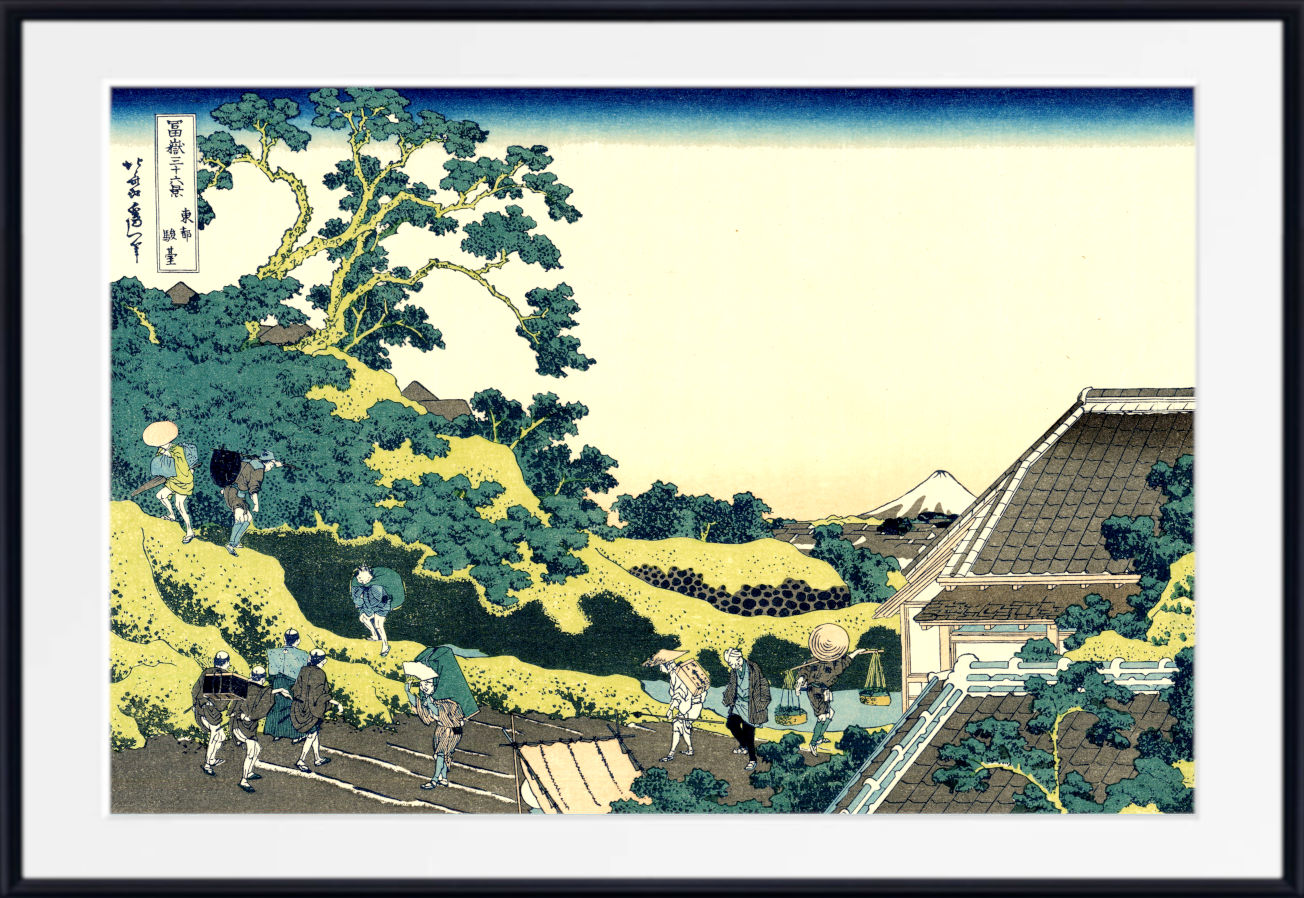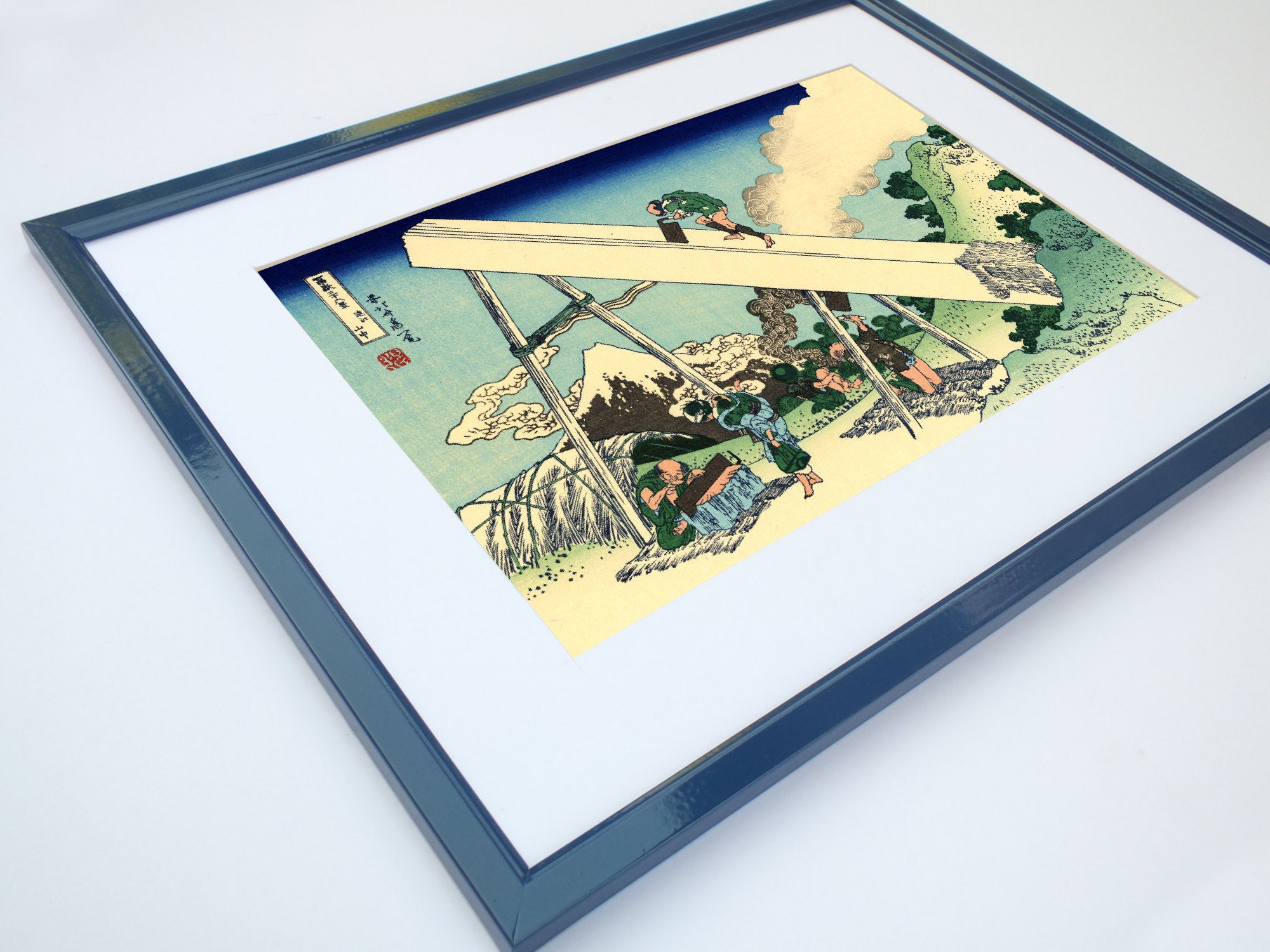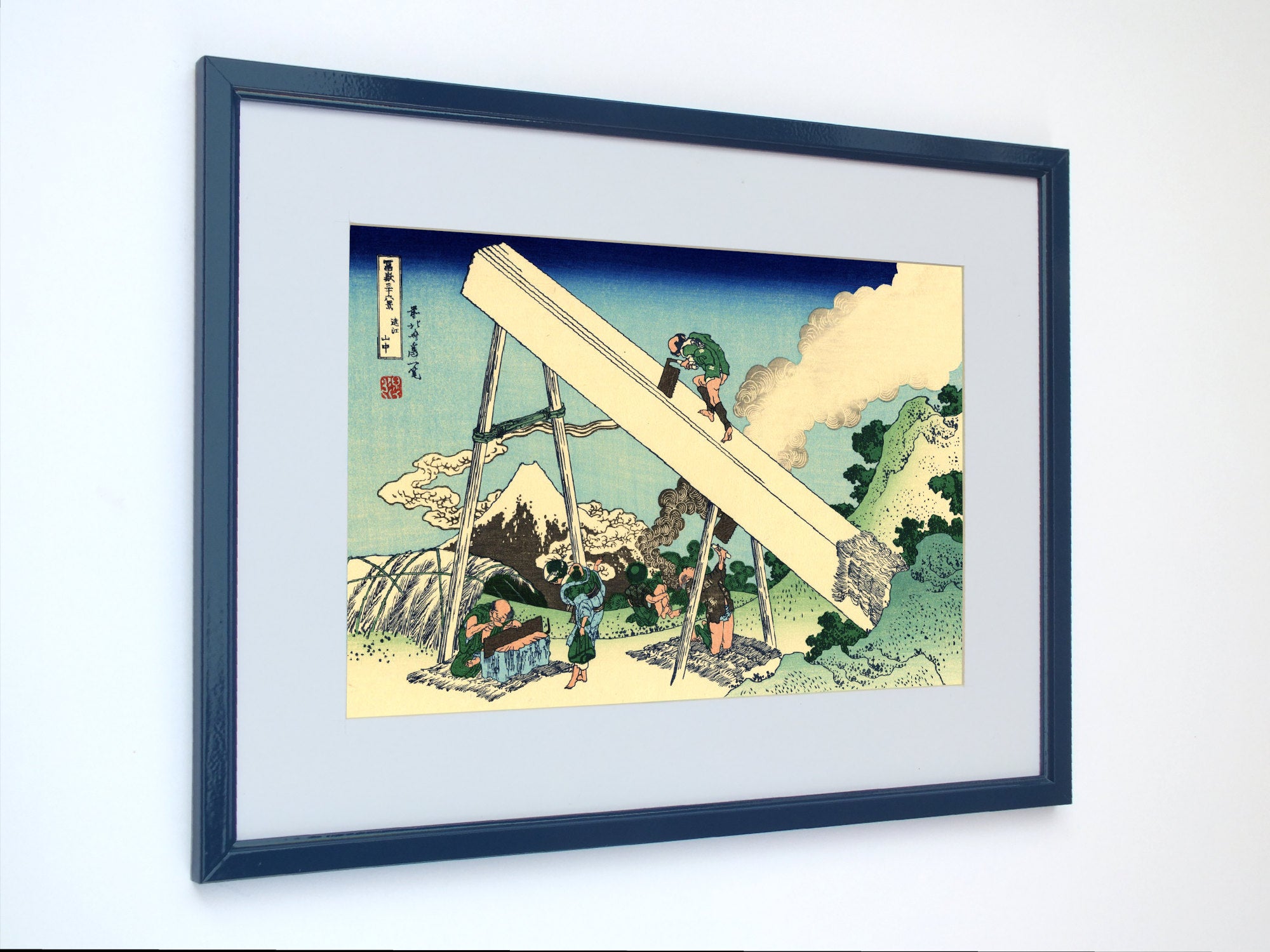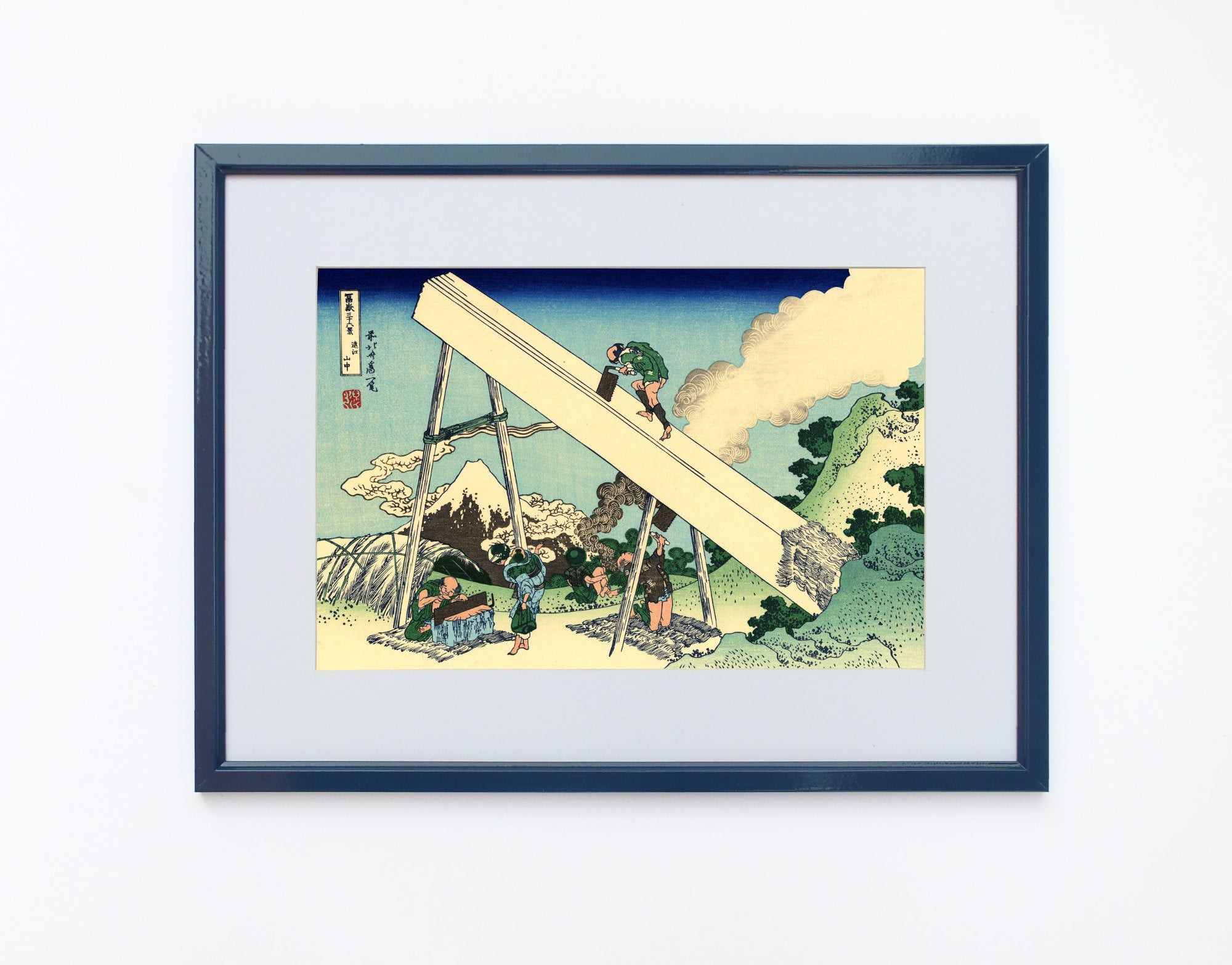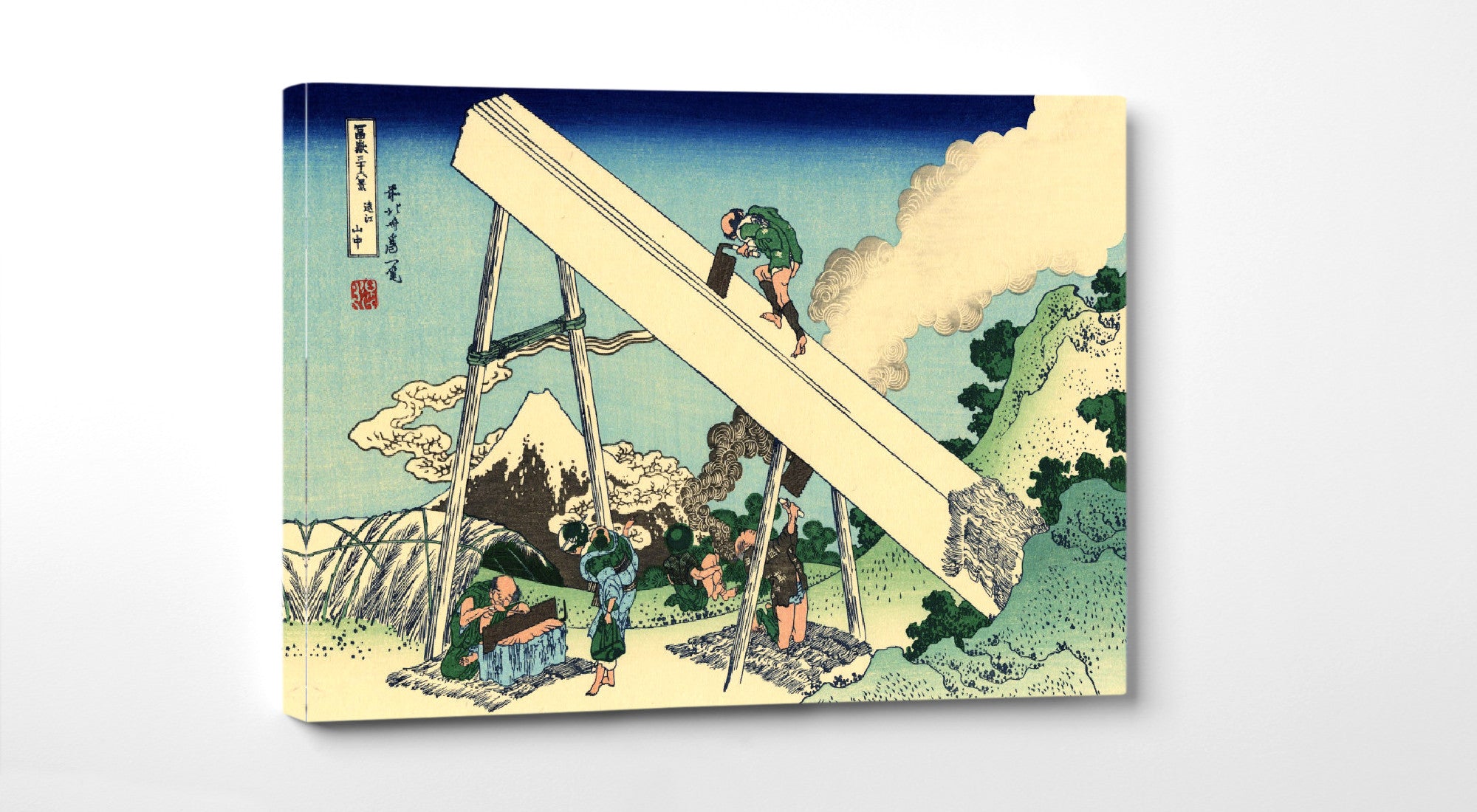
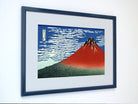
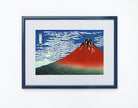
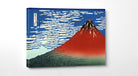
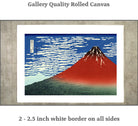
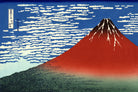
36 Views of Mount Fuji, Red Fuji, Southern Wind Clear Morning, Katsushika Hokusai, Japanese Print
Couldn't load pickup availability
Details
Katsushika Hokusai – Red Fuji Prints
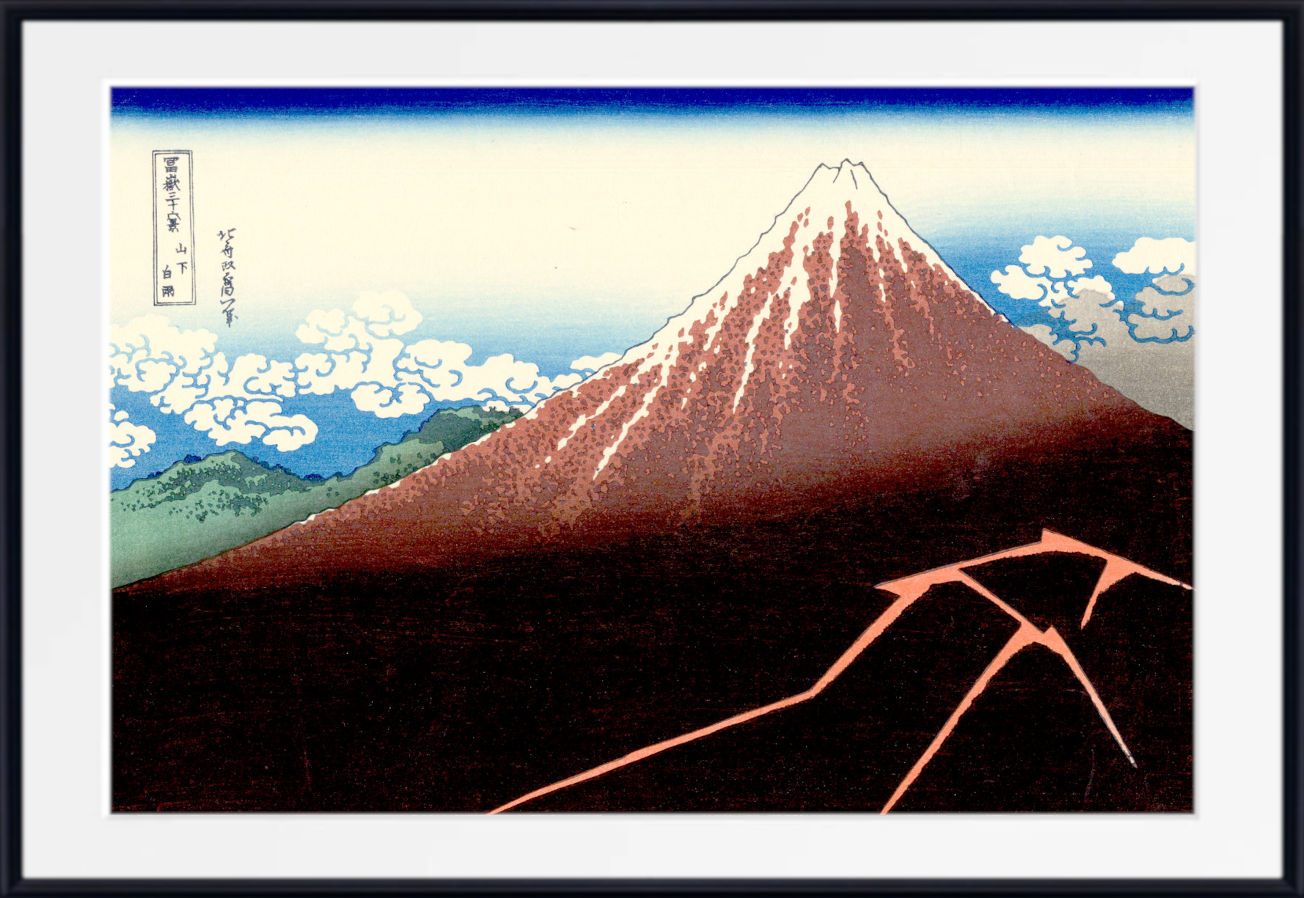
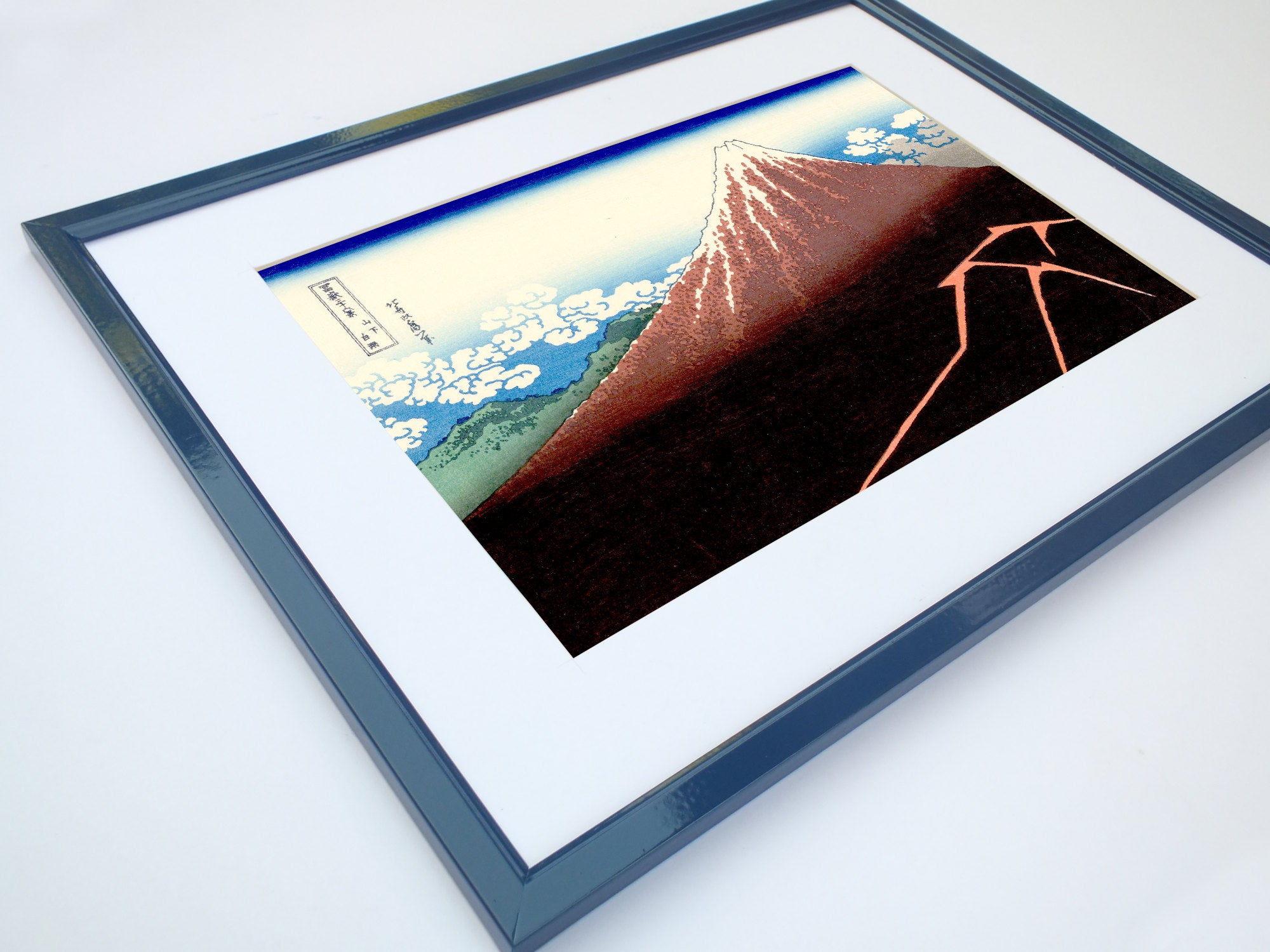
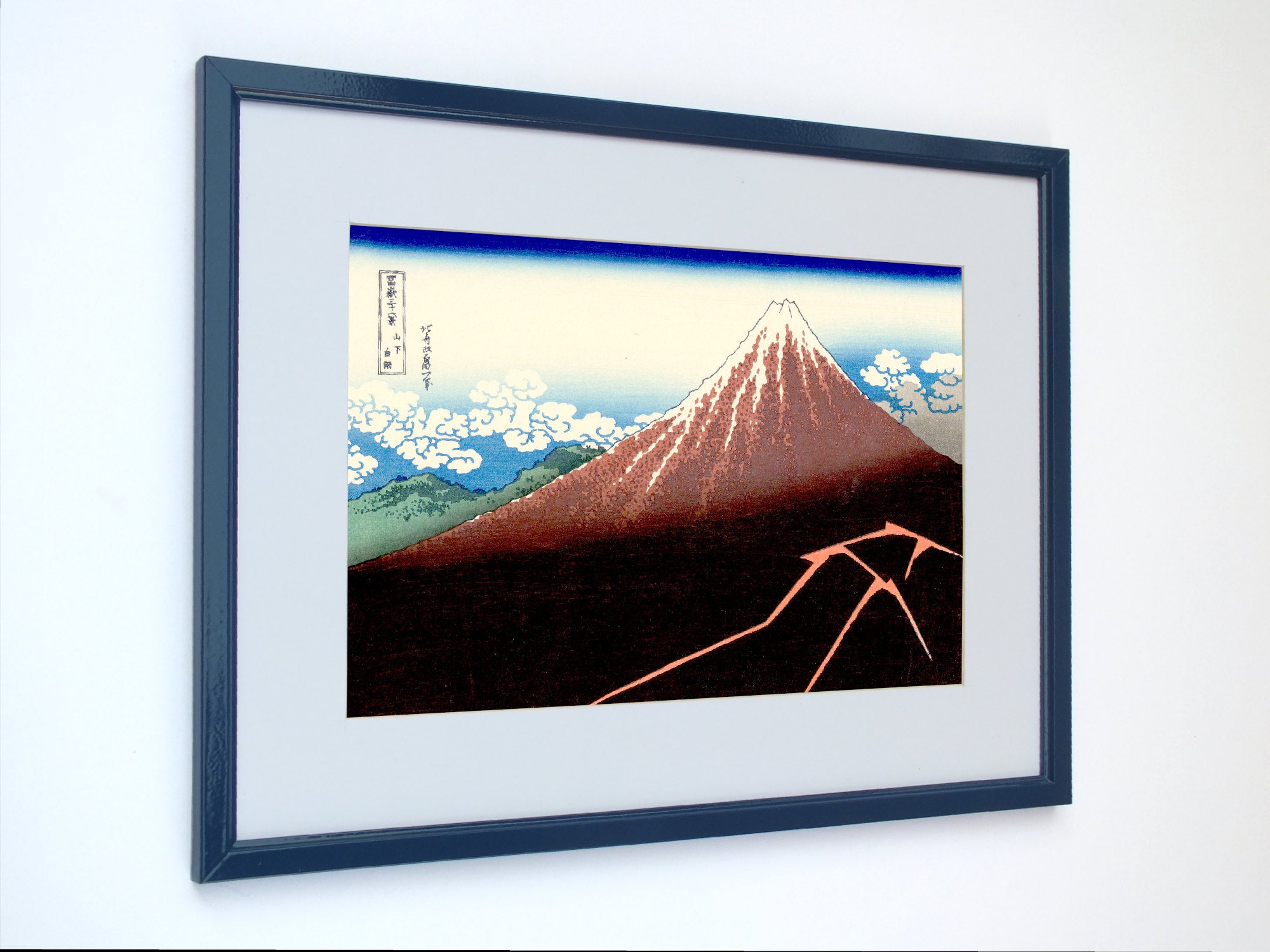
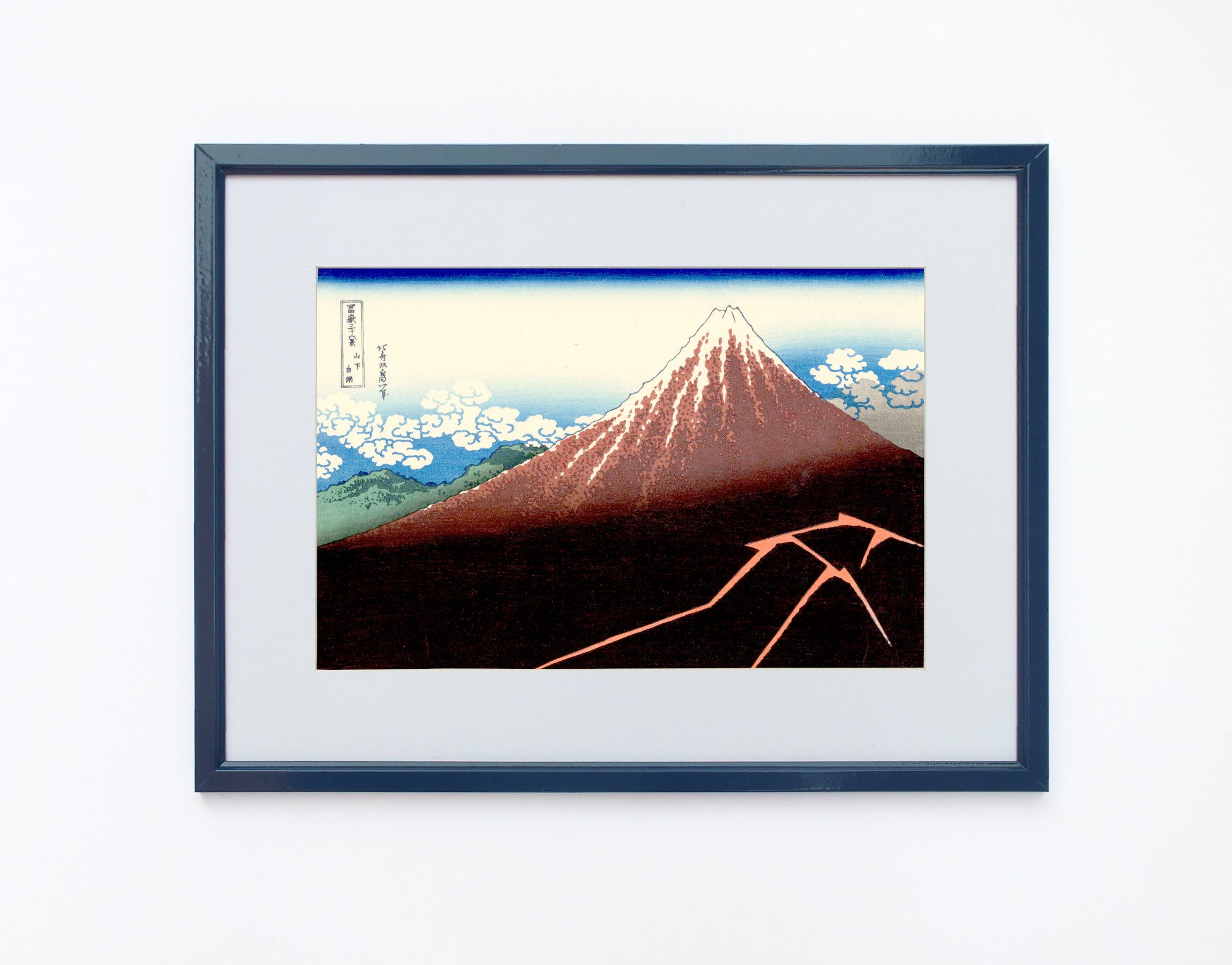
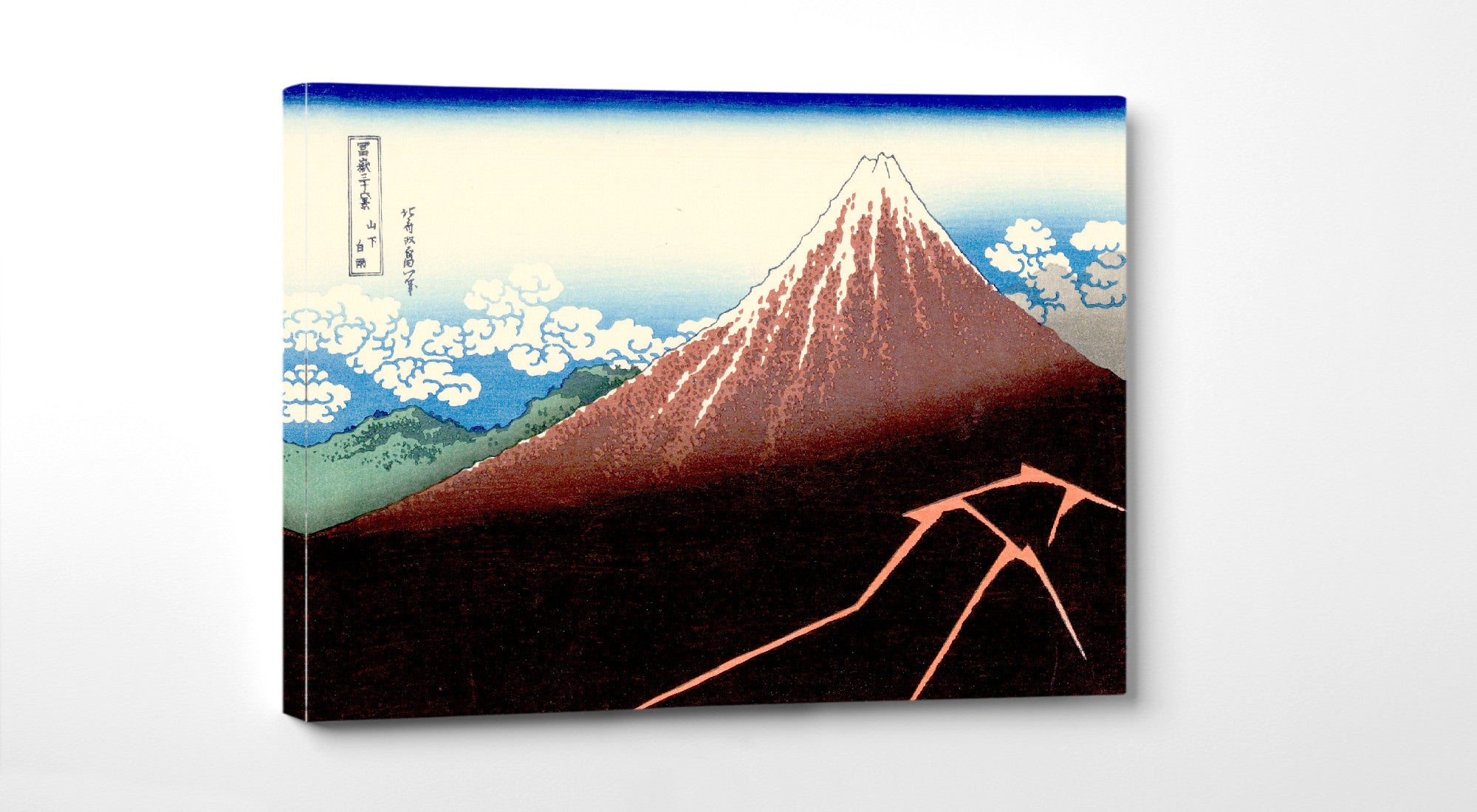
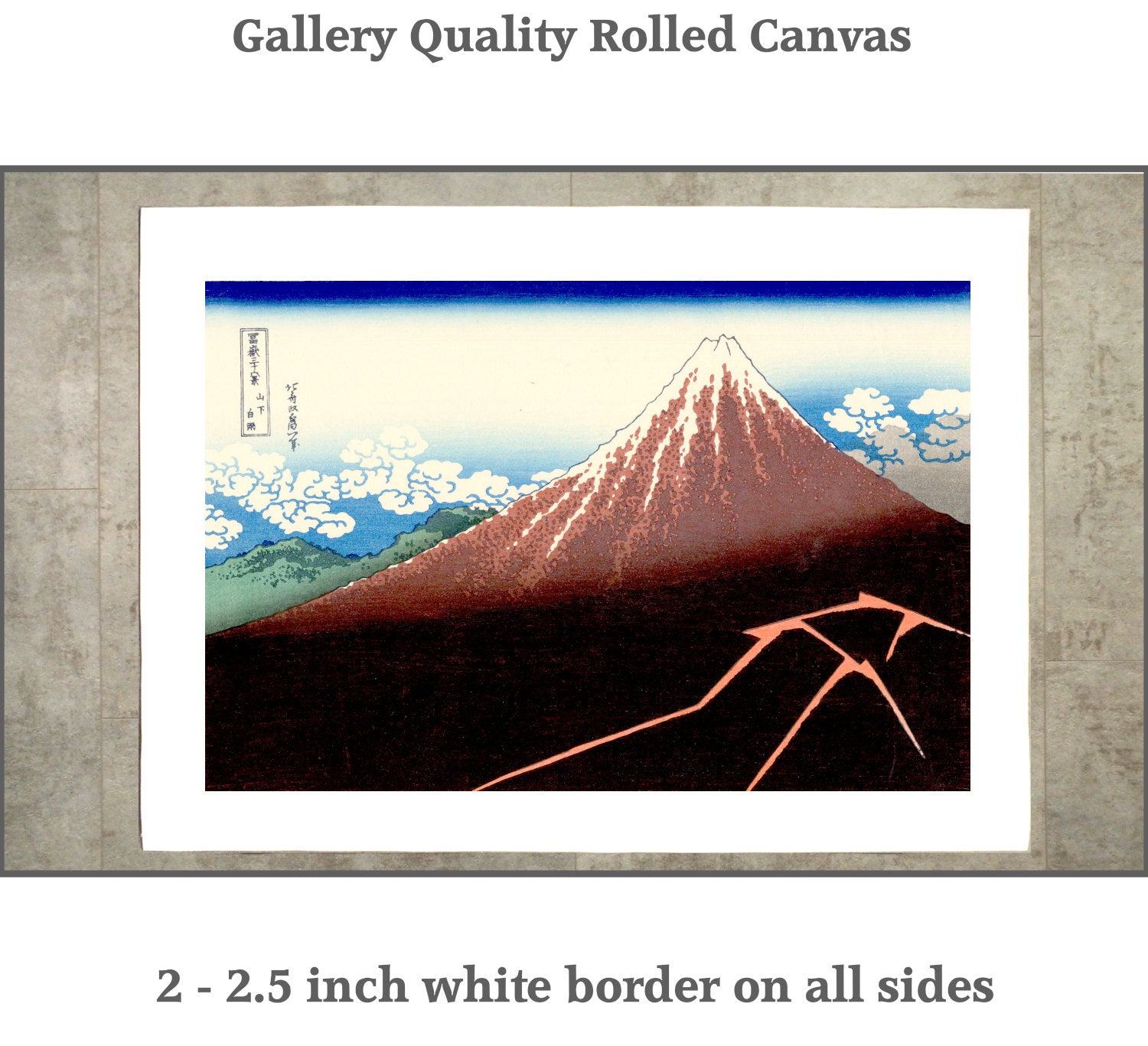
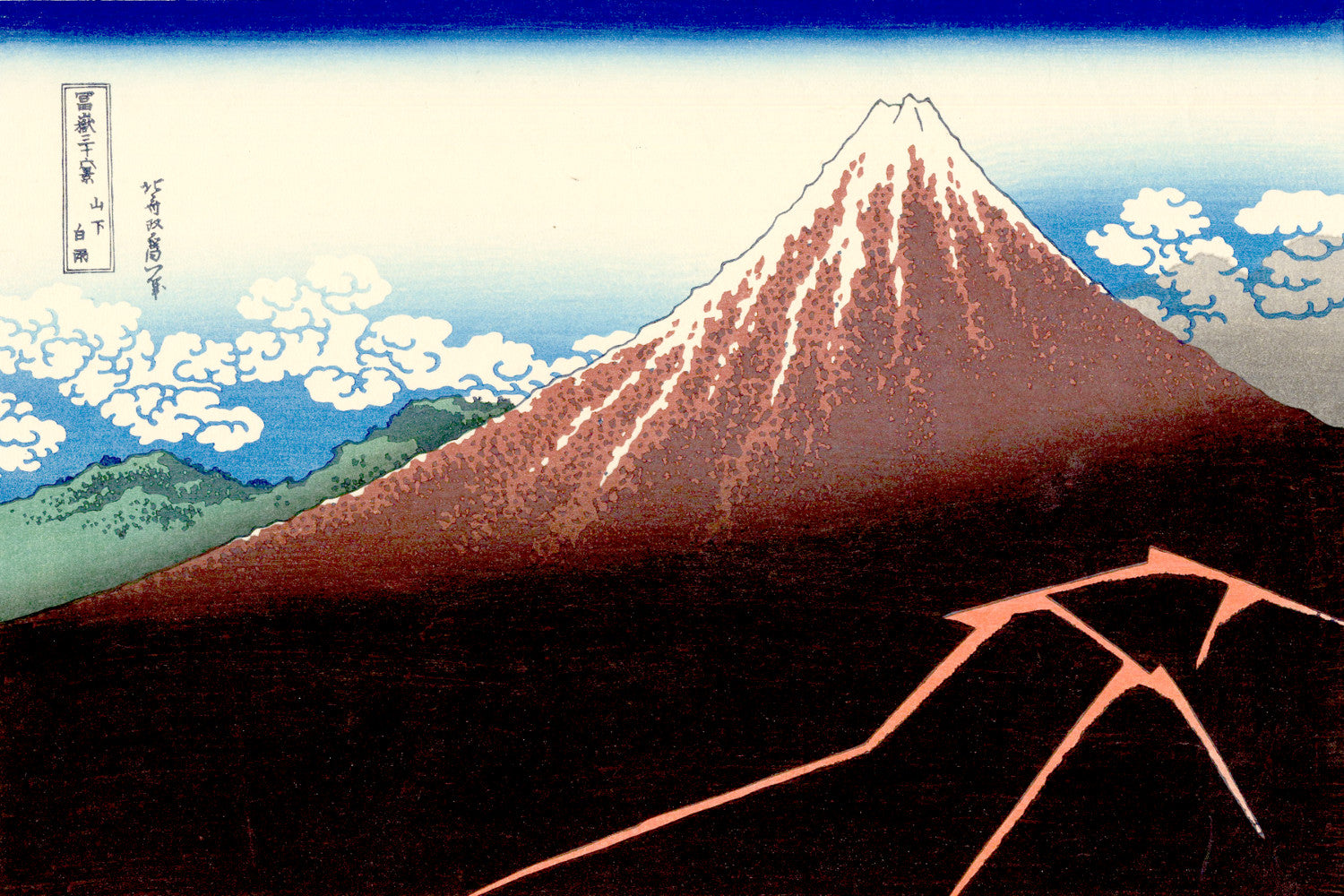
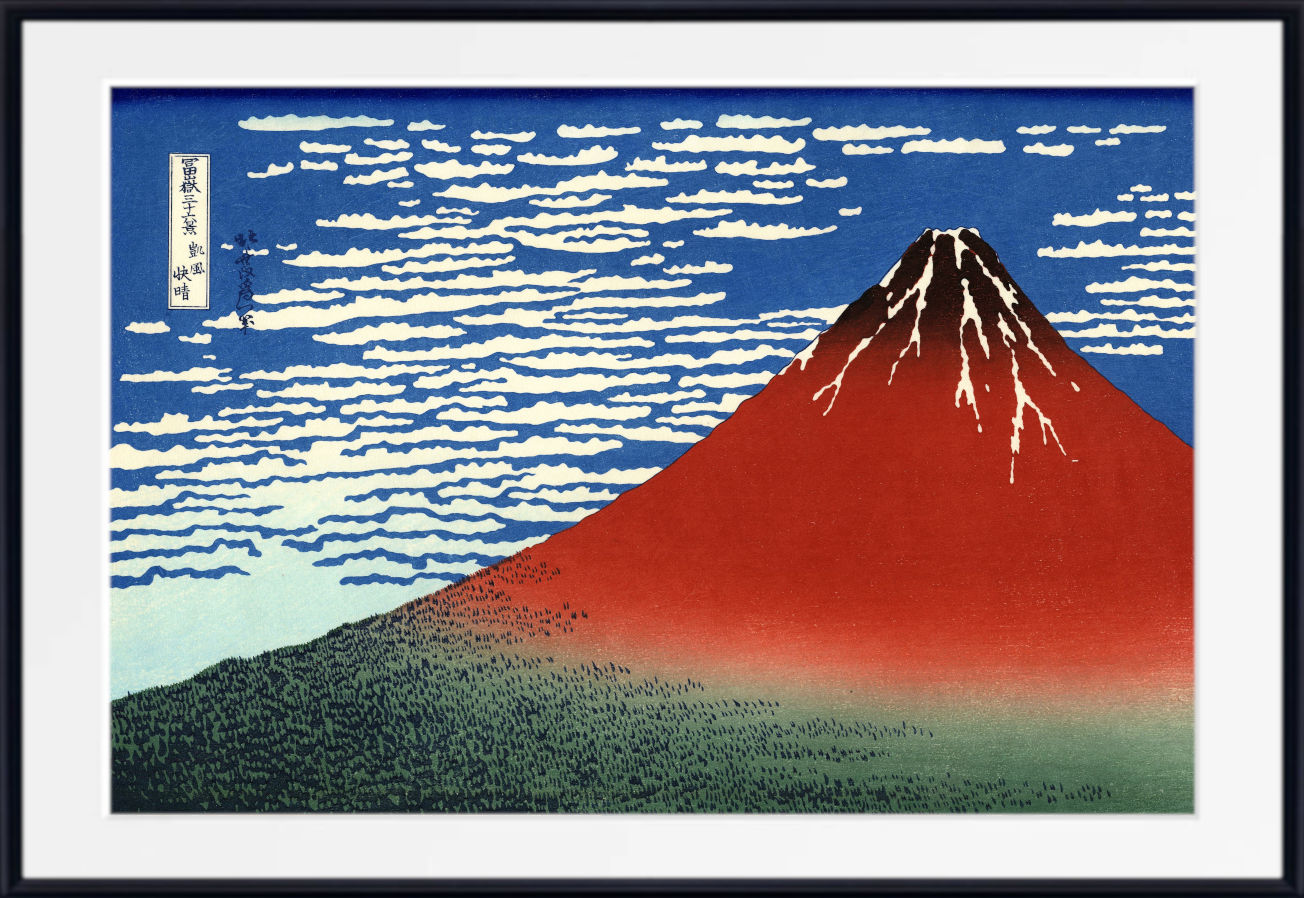
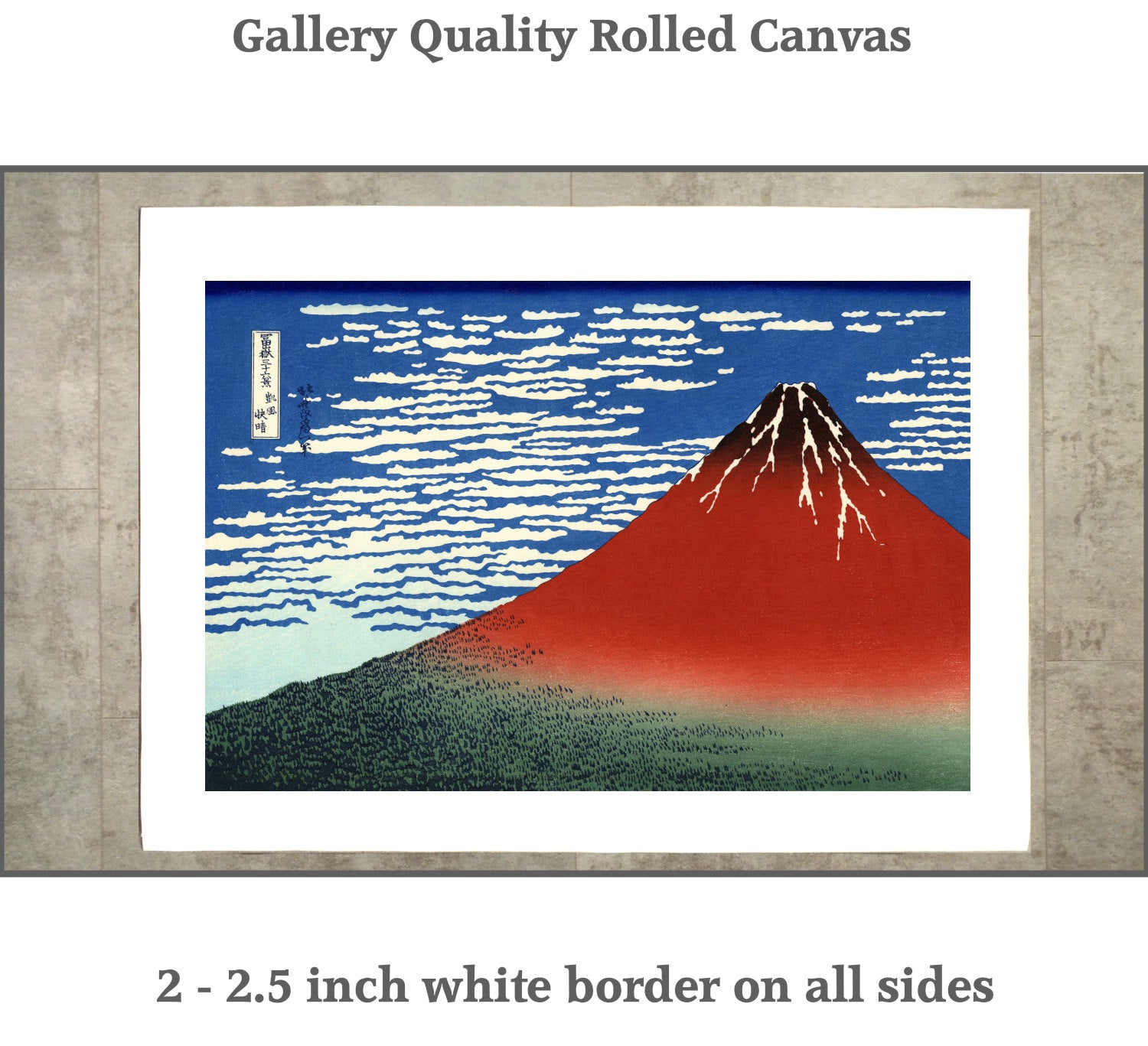
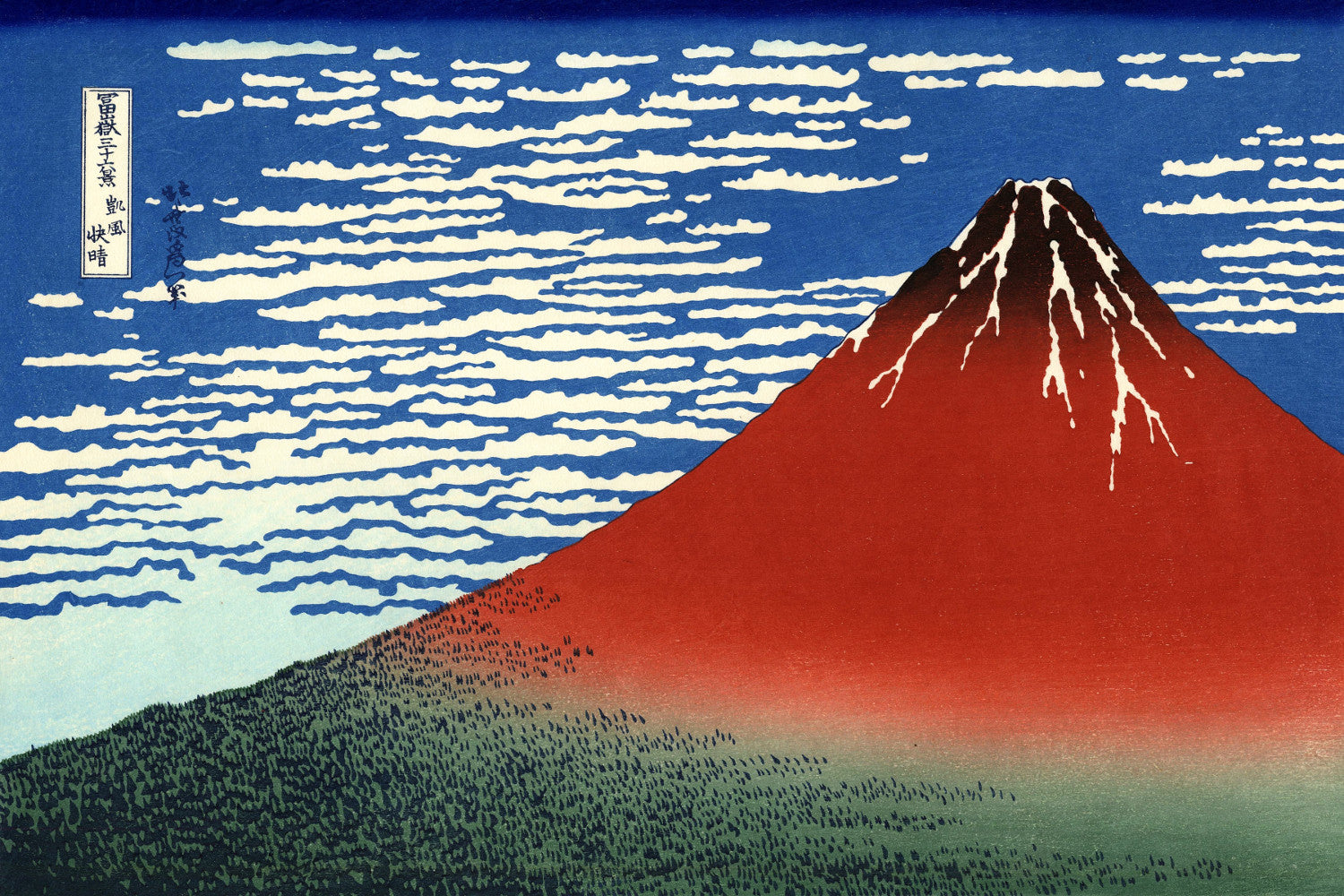
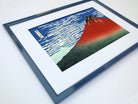
Celebrate one of Hokusai's most powerful and beautifully simplified landscapes with a Red Fuji print. Created around 1830–32, South Wind, Clear Sky – also widely known as Fine Wind, Clear Morning or simply Red Fuji – presents Mount Fuji glowing reddish-brown beneath a clear blue sky.
Part of Katsushika Hokusai's Thirty-Six Views of Mount Fuji, the image achieves extraordinary visual impact with remarkably few elements. Mountain, sky, cloud and a narrow band of forest are sufficient to create one of the most enduring images in Japanese ukiyo-e.
Why Is It Called Red Fuji?
Under particular conditions around dawn, especially in late summer and early autumn, the rising sun can give Mount Fuji's slopes a reddish appearance.
Hokusai transforms this fleeting natural effect into a monumental image.
The mountain occupies most of the composition, rising diagonally across the print. Its warm slopes contrast dramatically with the deep blue sky while traces of snow remain close to the summit.
The popular title Red Fuji comes directly from this extraordinary treatment of the mountain's colour.
Painting Style and Composition
The Power of Simplicity
Unlike many works in Thirty-Six Views of Mount Fuji, this print contains no travellers, fishermen, boats, bridges or buildings.
Mount Fuji itself is the subject.
Hokusai reduces the surrounding landscape almost completely, leaving only a narrow line of green trees at the mountain's base and delicate clouds crossing the sky.
This reduction gives the image its authority. Nothing distracts from Fuji's distinctive triangular profile.
Colour and Contrast
The success of Red Fuji depends heavily on the relationship between relatively few colours.
The warm red-brown mountain contrasts with the cool blue sky, while dark green vegetation anchors the lower edge of the composition. White snow and clouds provide smaller highlights.
These broad areas of colour make the design particularly striking from a distance and contribute to its remarkably modern appearance.
Red Fuji and The Great Wave
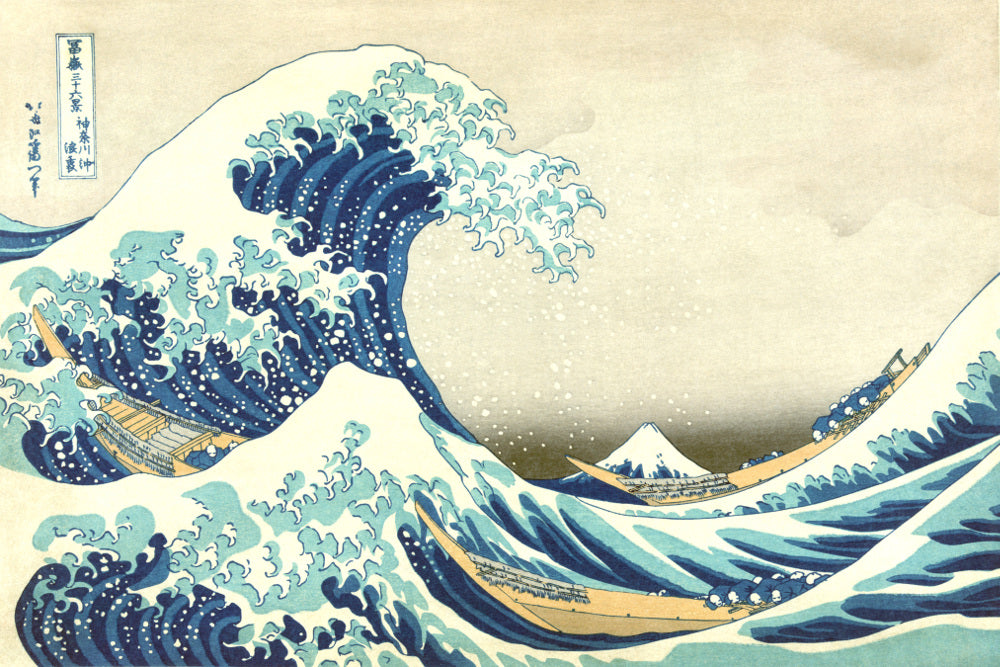
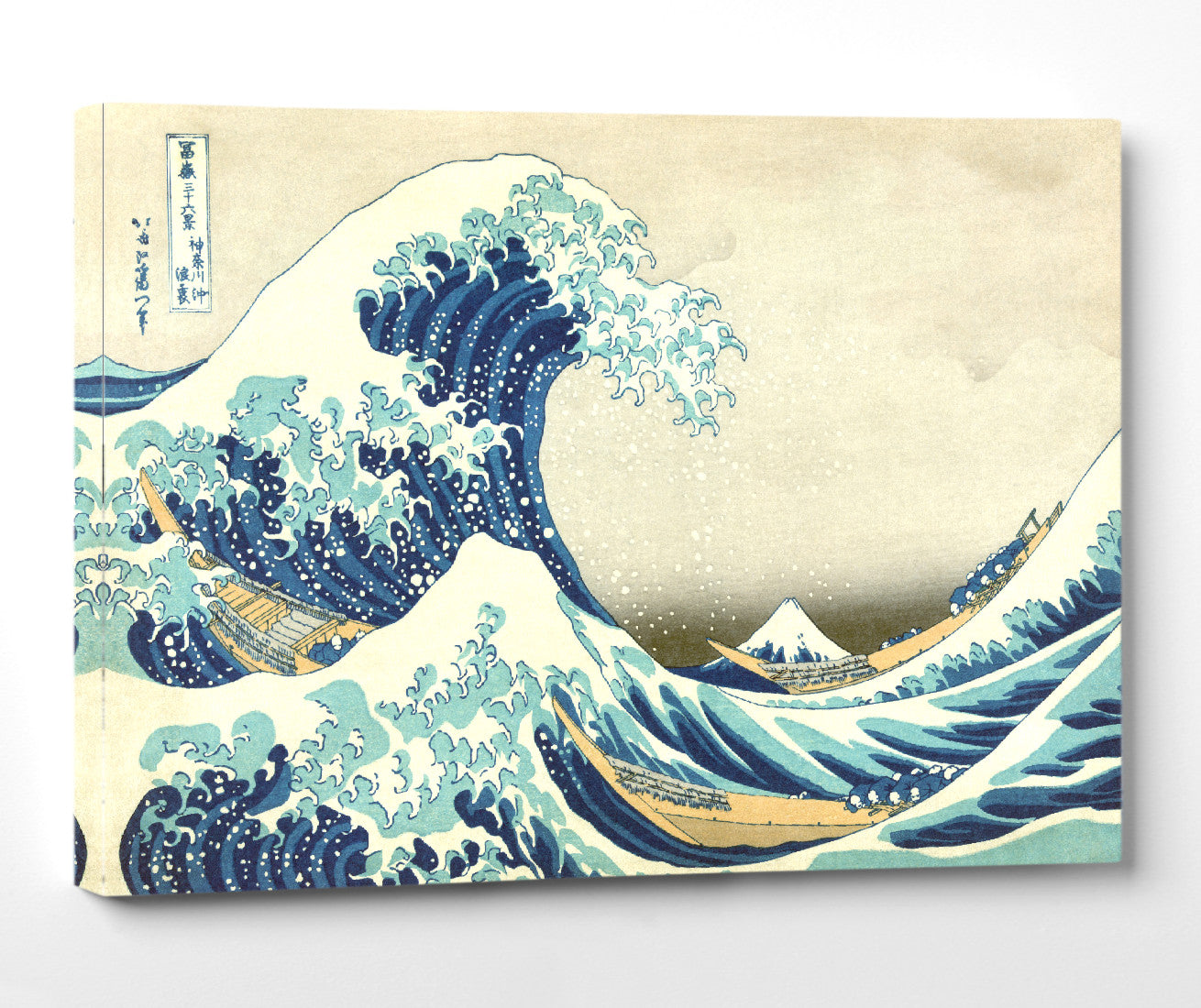
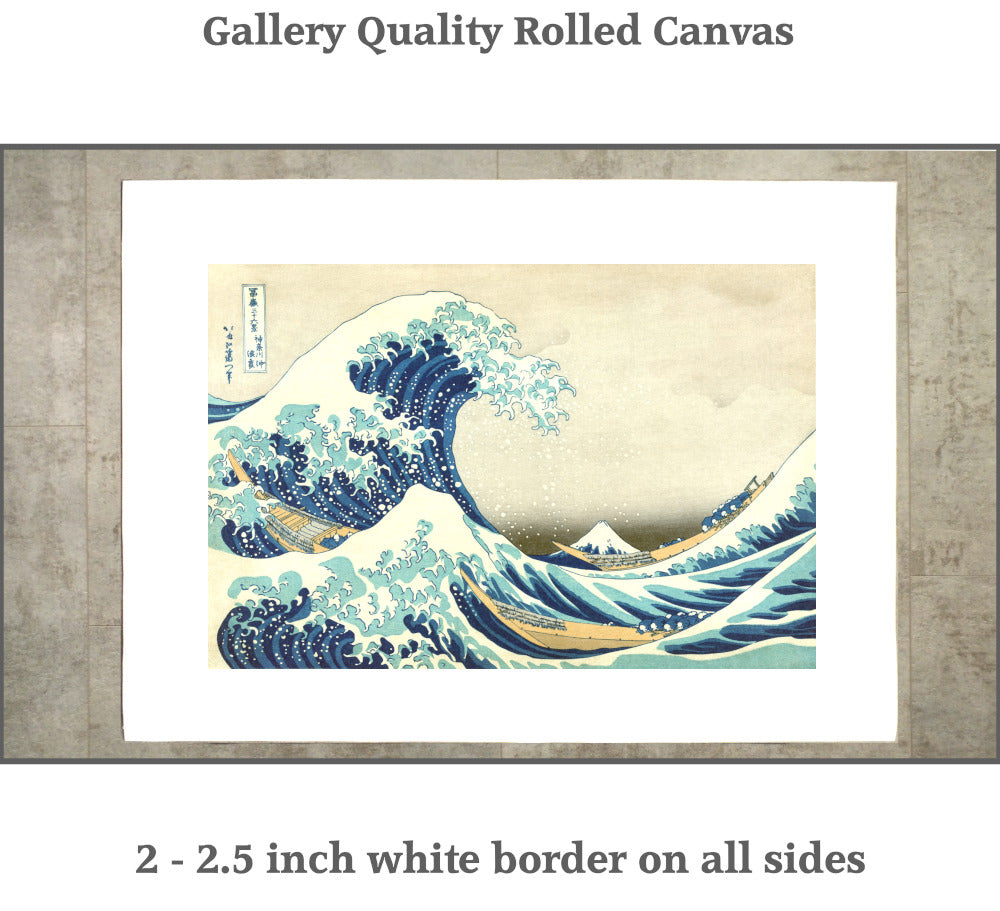
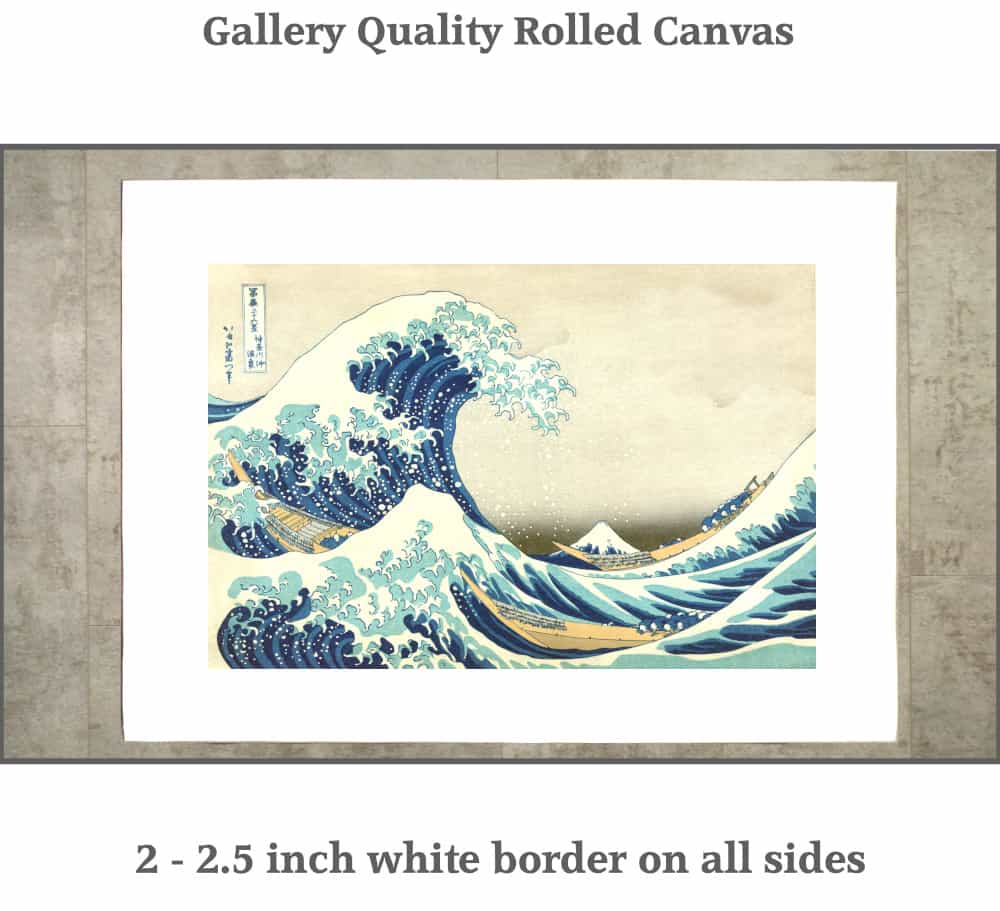
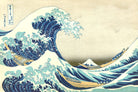
Red Fuji is often discussed alongside The Great Wave off Kanagawa because both belong to the same series and have become international icons.
Yet the two prints could hardly be more different.
The Great Wave is filled with danger, movement and human vulnerability. Red Fuji contains no people and almost no action.
One represents violent change; the other presents extraordinary stillness.
Together they demonstrate the remarkable range Hokusai achieved while repeatedly depicting the same mountain.
Mount Fuji as a Symbol
Mount Fuji had long possessed profound cultural and spiritual significance in Japan.
For Hokusai, it also became an inexhaustible visual subject.
Its easily recognisable shape allowed him to experiment with viewpoint, scale, weather and season while maintaining a unifying motif across an entire series.
Here there is no elaborate framing device. Fuji is presented directly and monumentally, giving the mountain a presence that is both natural and symbolic.
Red Fuji Wall Art for Modern Interiors
A Hokusai Red Fuji wall art print can introduce warmer colour than the predominantly blue landscapes for which the artist is often known.
The red, terracotta, blue and green palette complements neutral walls, natural timber, warm brown furniture and Japanese-inspired interiors particularly well.
Its clear geometric structure also makes it suitable for Scandinavian, minimalist and mid-century rooms.
Displayed with The Great Wave, the work creates a particularly effective pair: one dominated by blue movement and the other by red stillness.
About Katsushika Hokusai
Katsushika Hokusai (1760–1849) was one of the most inventive artists of Edo-period Japan.
During a career lasting more than seventy years he worked as a print designer, painter and book illustrator, exploring subjects ranging from everyday life and landscape to plants, animals, mythology and supernatural imagery.
Hokusai's landscape prints became especially influential. Through dramatic cropping, unusual perspectives, strong geometry and innovative colour, he helped transform the status of landscape within ukiyo-e.
His Thirty-Six Views of Mount Fuji series was so successful that ten additional designs were ultimately added to the original thirty-six.
Frame Details
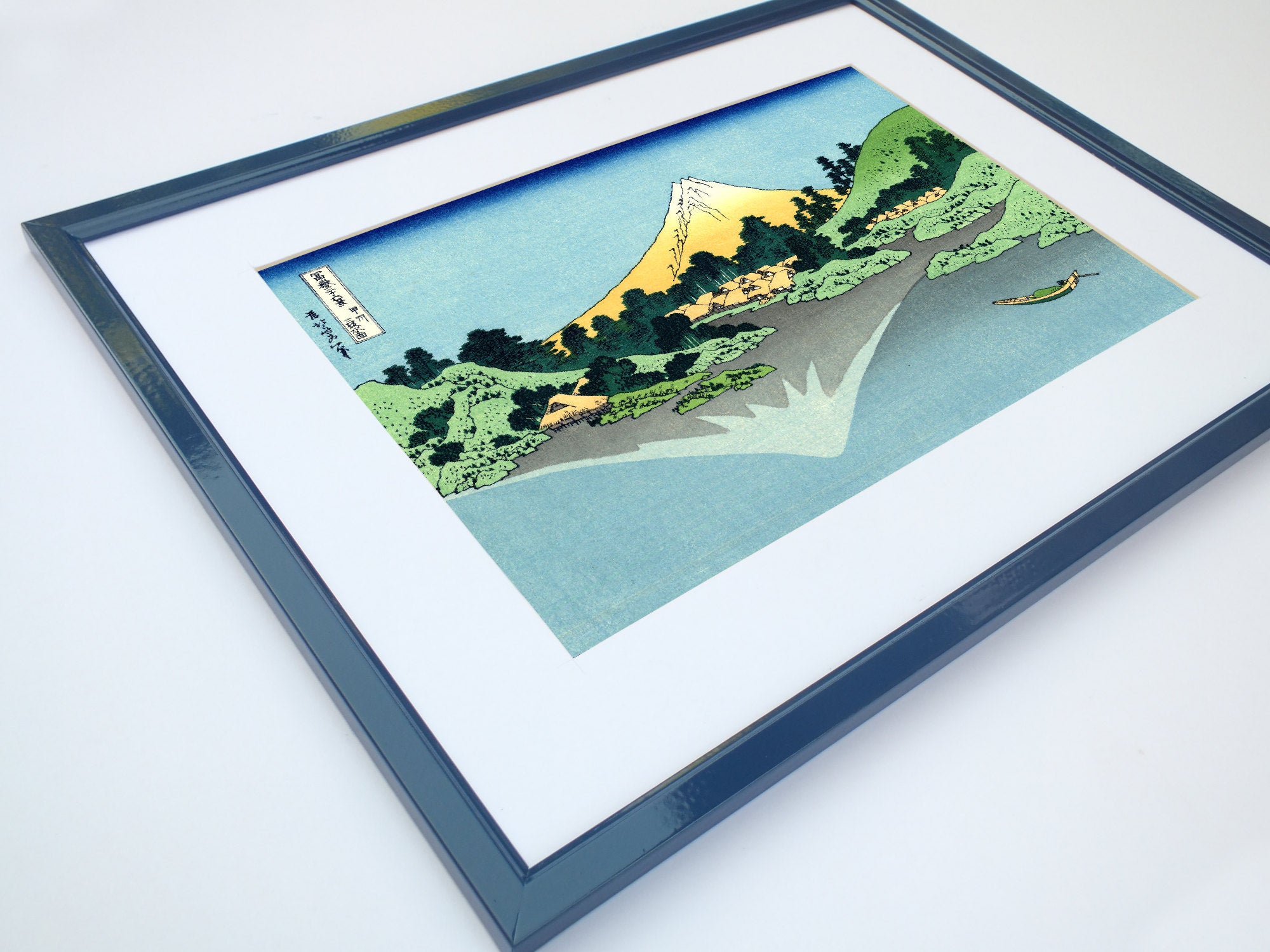
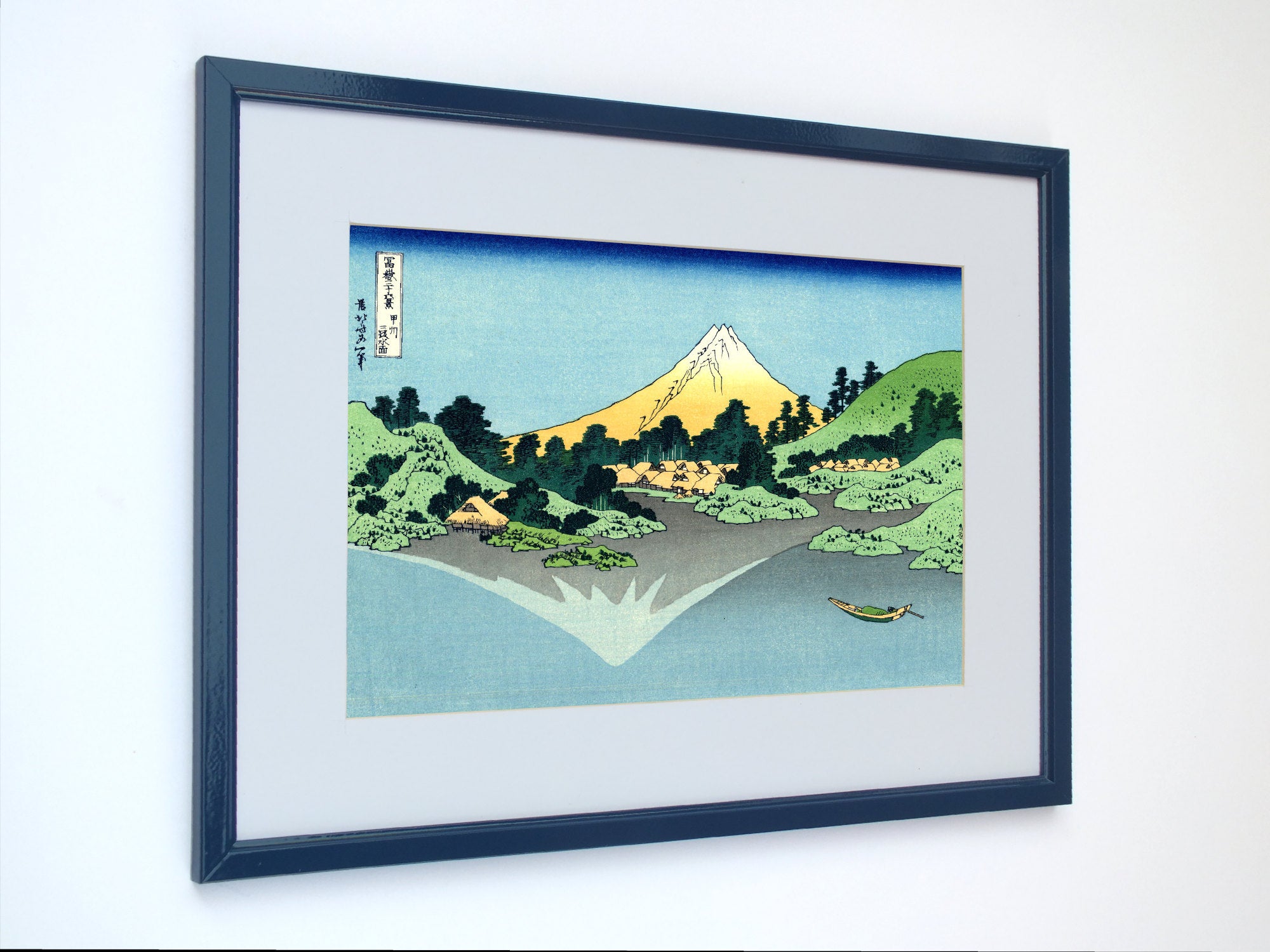
SIZING - FRAMED PRINTS:
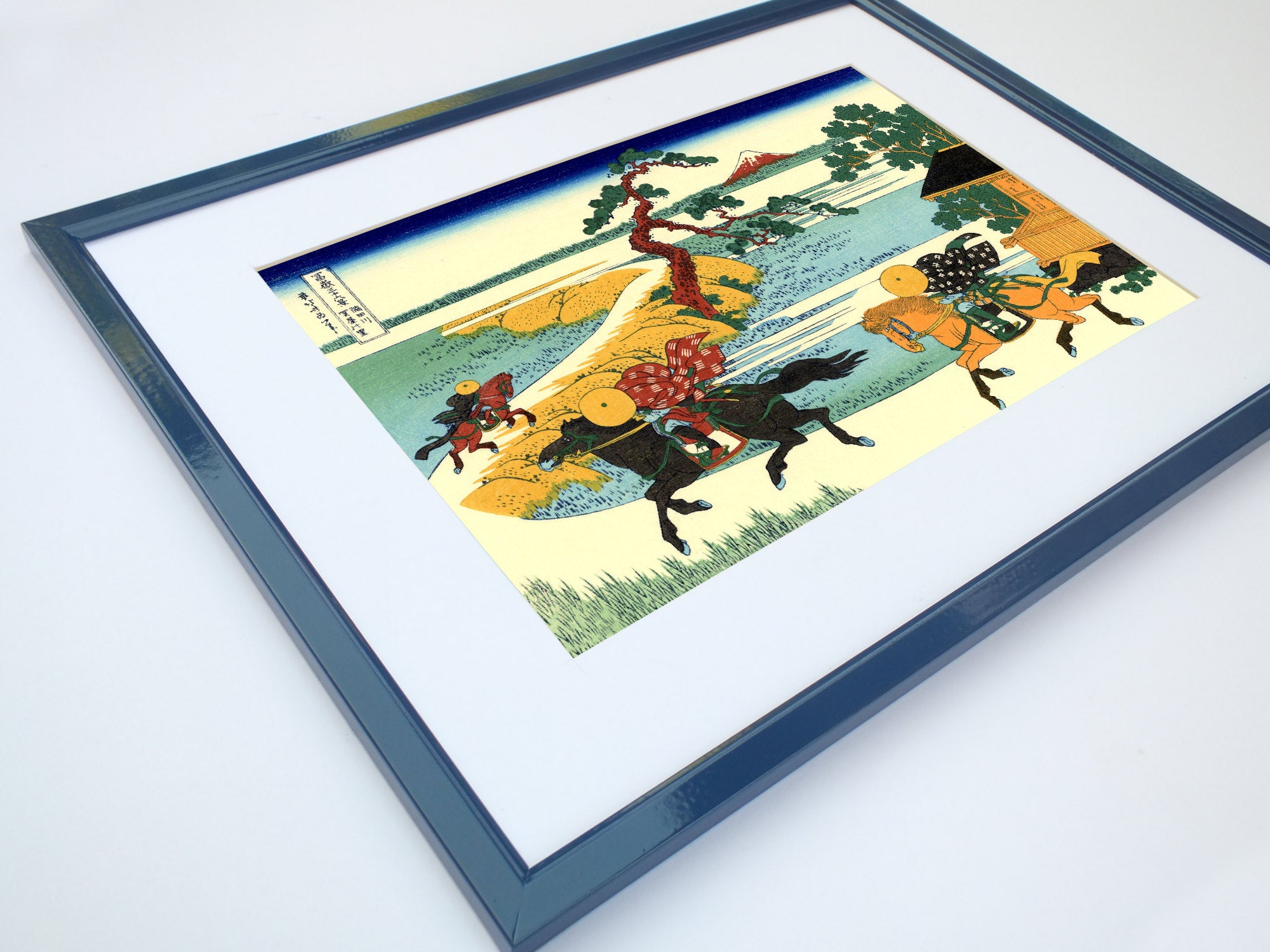
The sizes refer to the print area - framed prints have approx 2 inch wide white mount and approx 1 inch wide frame
Frames are made from responsibly sourced wood and gallery quality acrylic glazing.
Shipping
All orders for unframed fine art prints and original paintings are dispatched within 2 working days of receipt of payment.
Orders for custom framed prints are dispatched within 4 working days.
All orders are fully tracked from dispatch to delivery at your home or business.
All print and original painting orders are fully insured against loss or damage in transit. We refund or replace any damaged or lost orders.
Buy with confidence - read what our satisfied customers have to say - Reviews
Size Chart
SIZING - EUROPEAN A7 - A0:
A7 2-15/16 x 4-1/8 in 74 x 105 mm
A6 4-1/8 x 5-7/8 in 105 x 148 mm
A5 5-7/8 x 8-1/4 in 148 x 210 mm
A4 8-1/4 x 11-3/4 in 210 x 297 mm
A3 11-3/4 x 16-1/2 in 297 x 420 mm
A2 16-1/2 x 23-3/8 in 420 x 594 mm
A1 23-3/8 x 33-1/8 in 594 x 841 mm
A0 33-1/8 x 46-13/16 in 841 x 1188 mm
Explore related collections