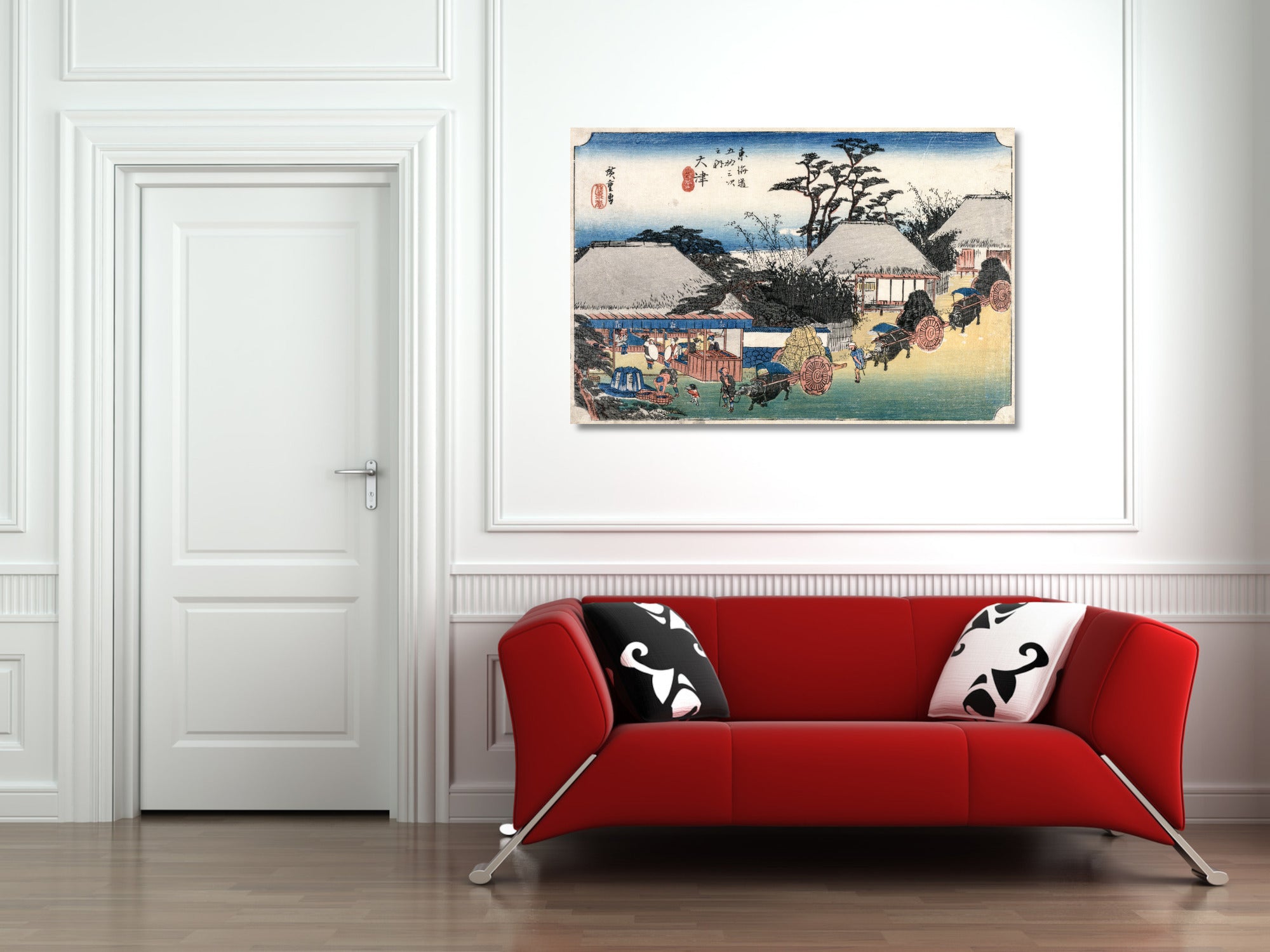
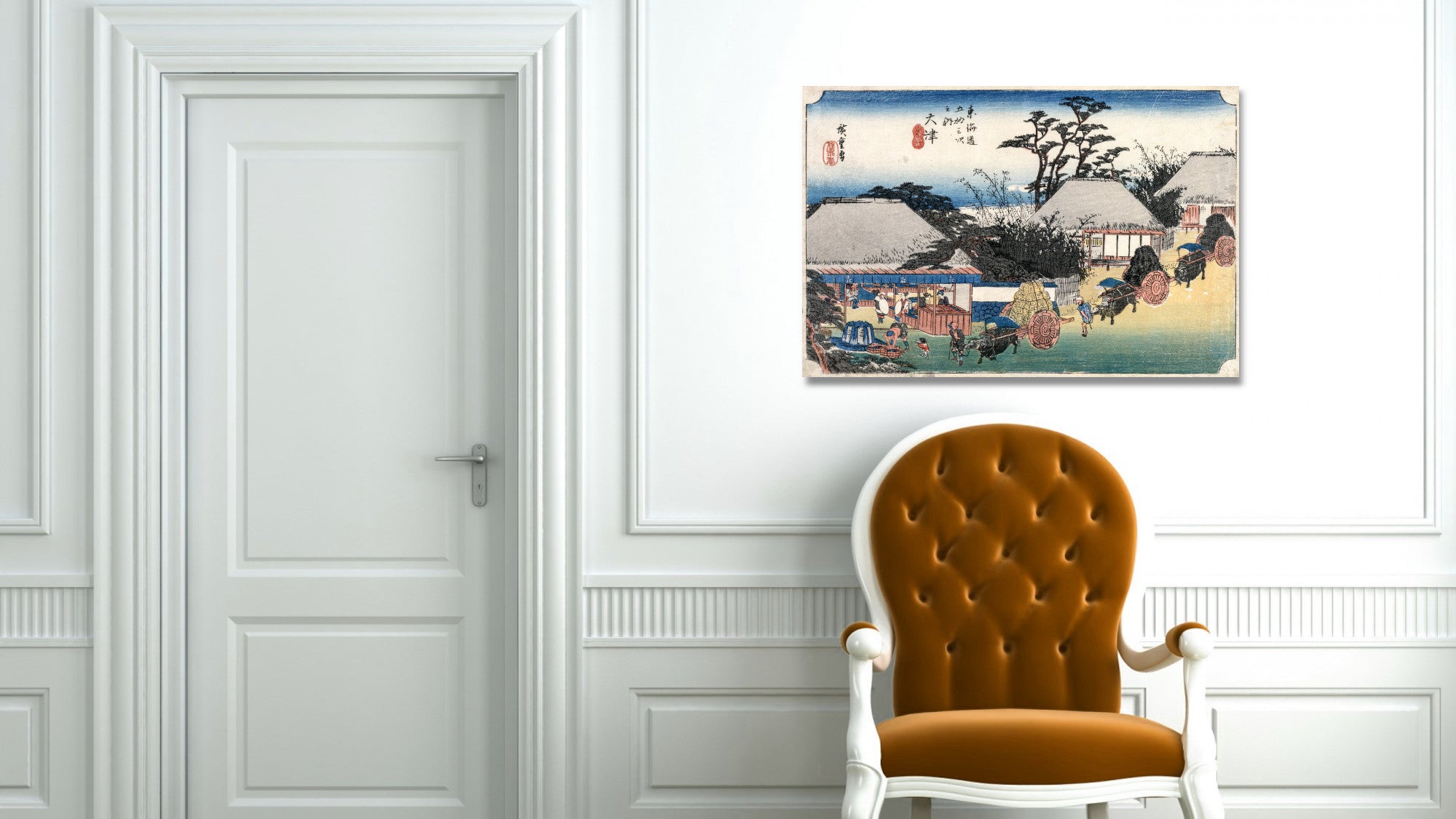
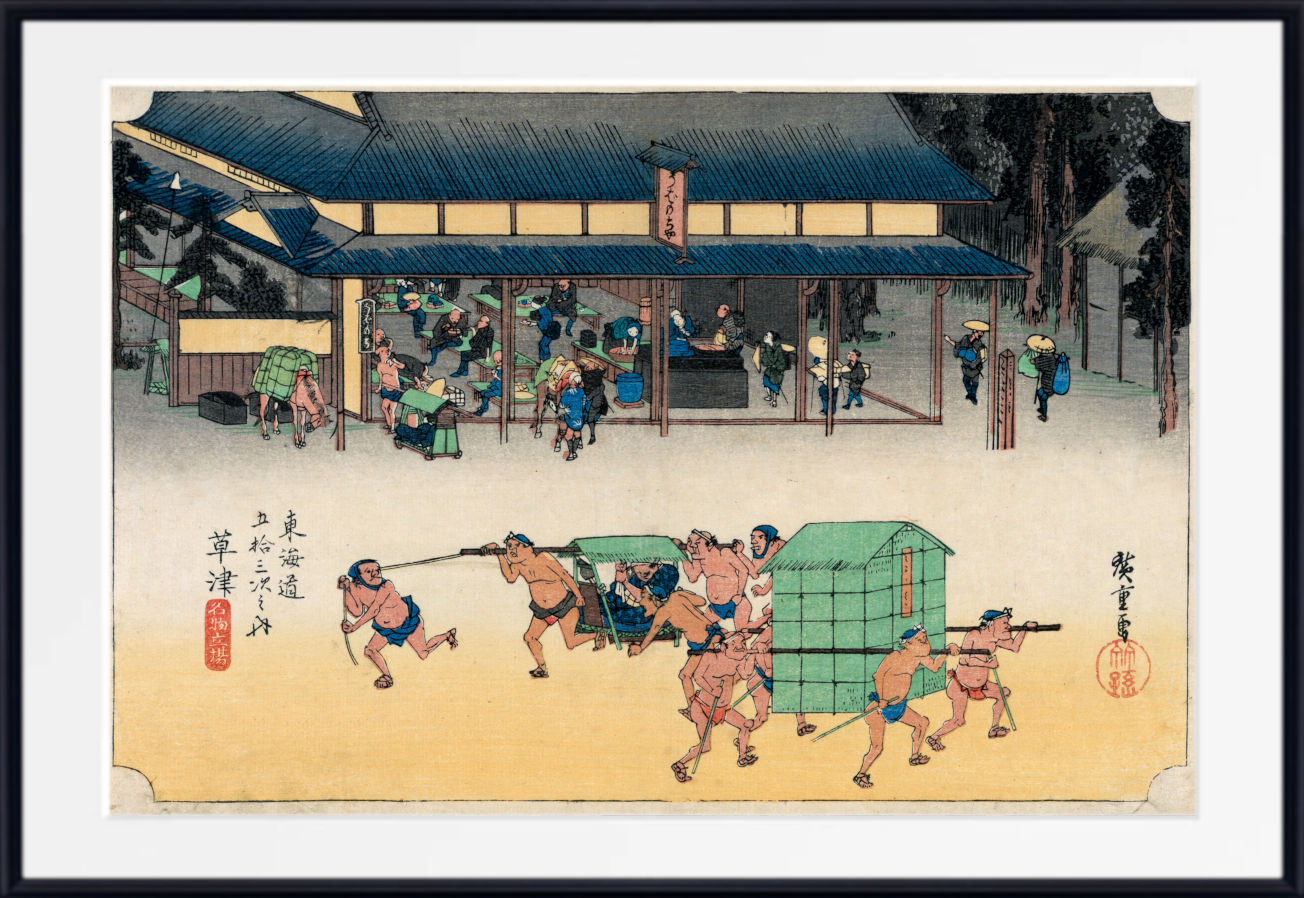
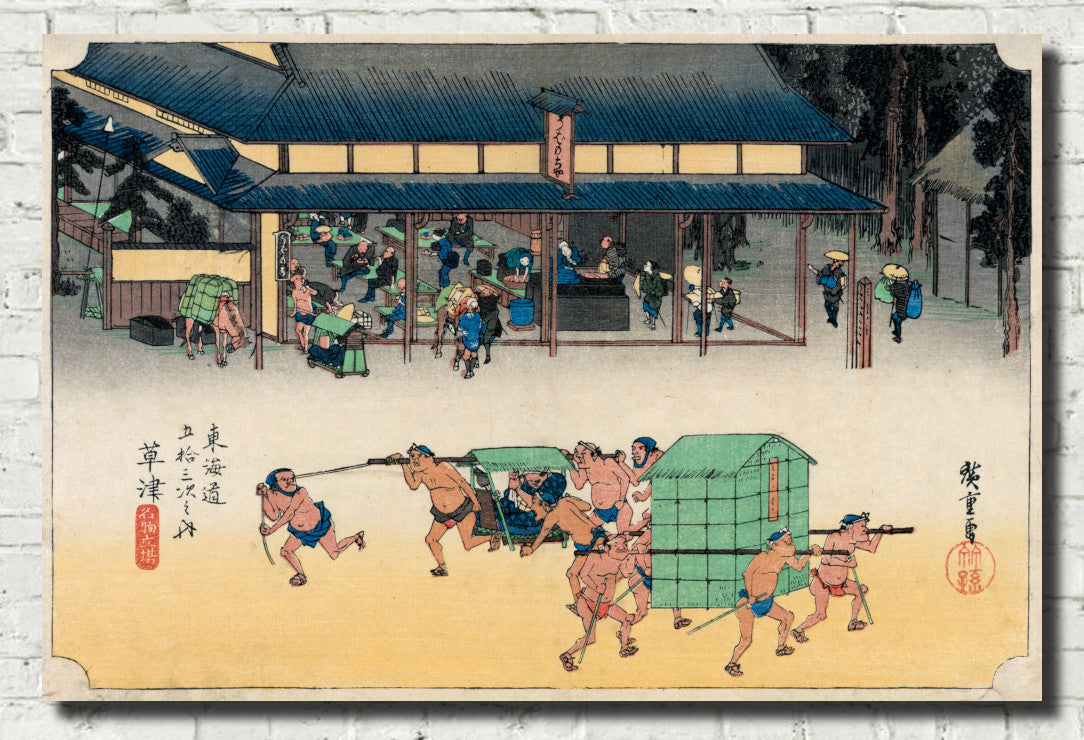
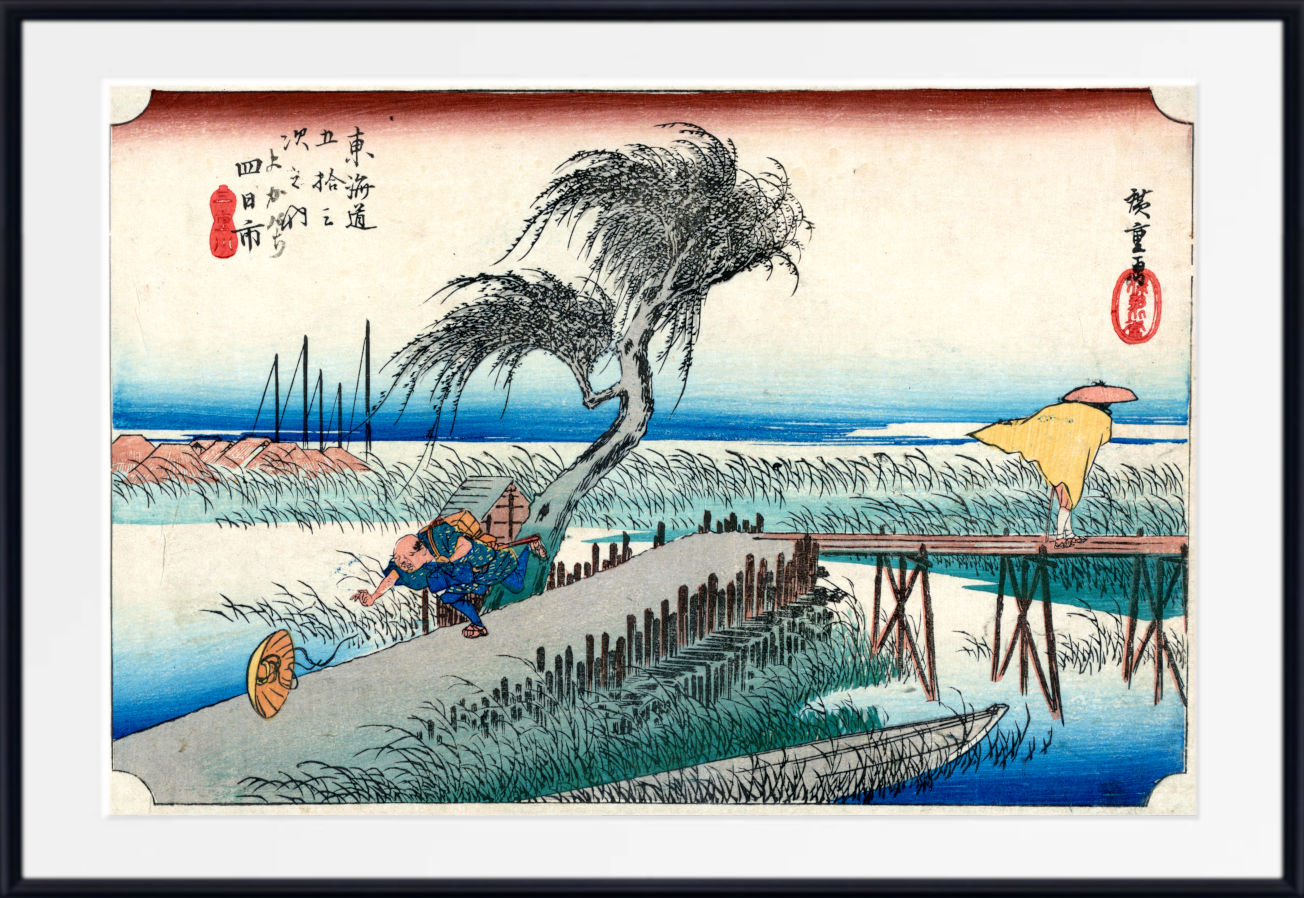
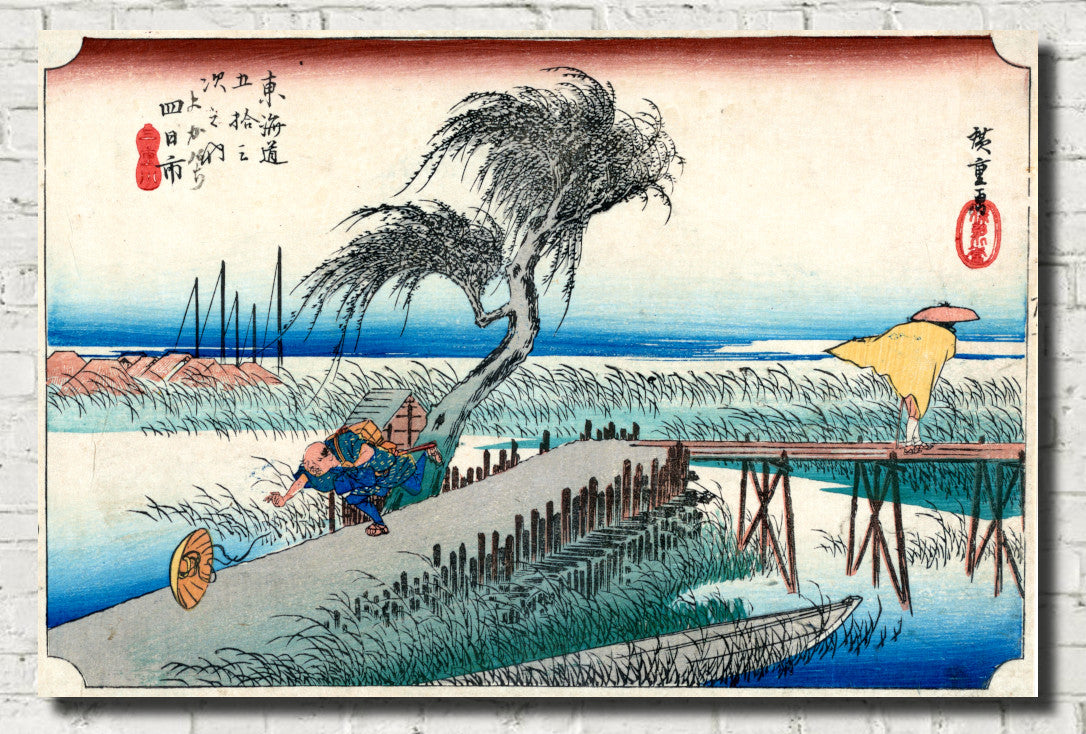
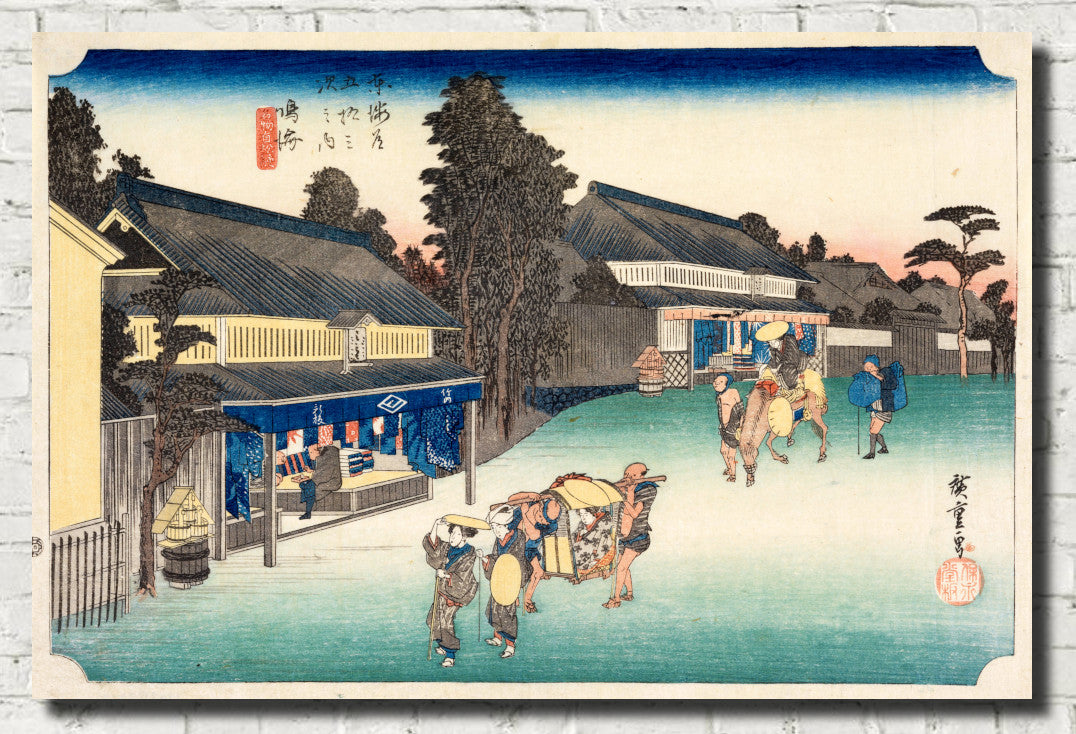
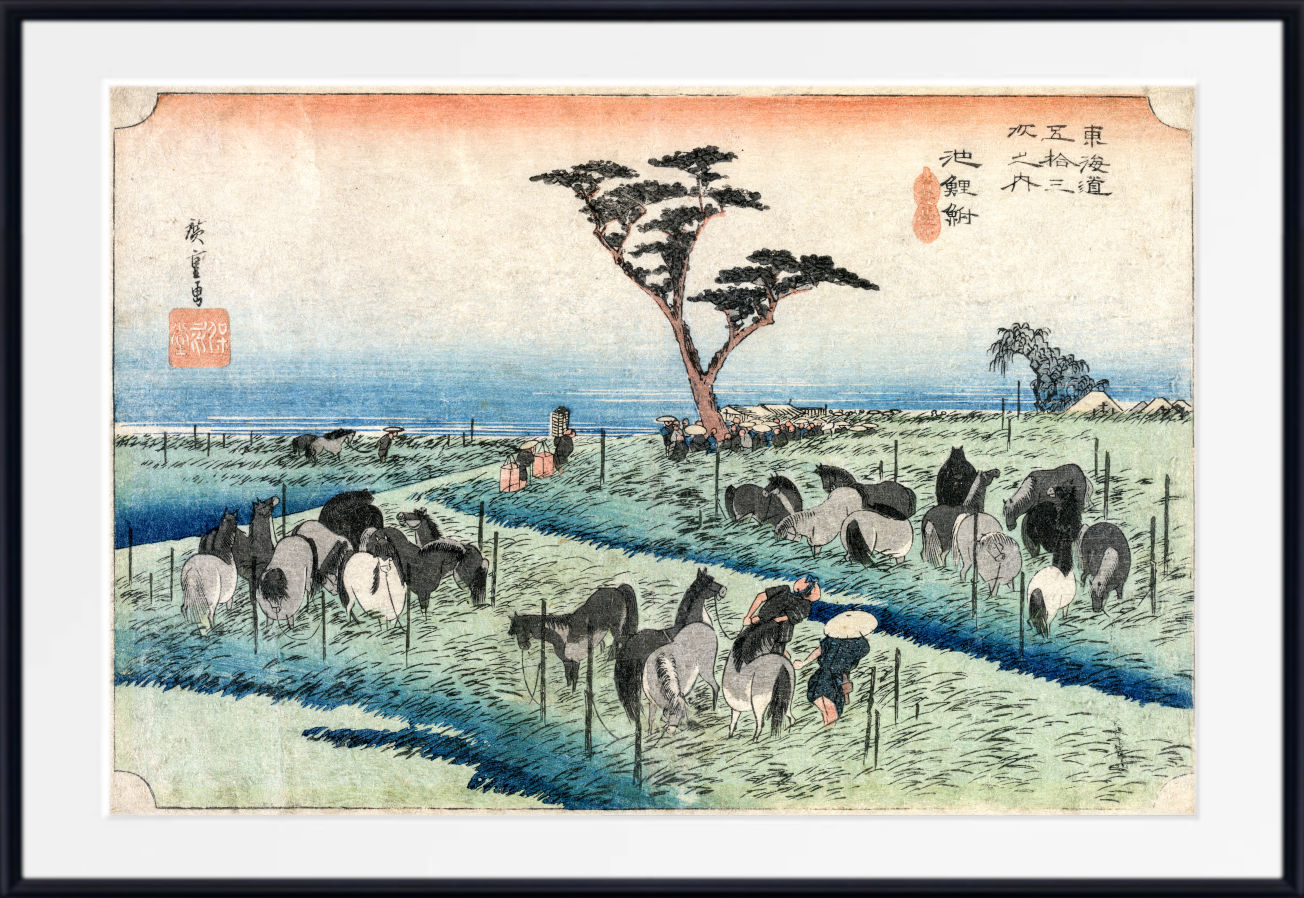
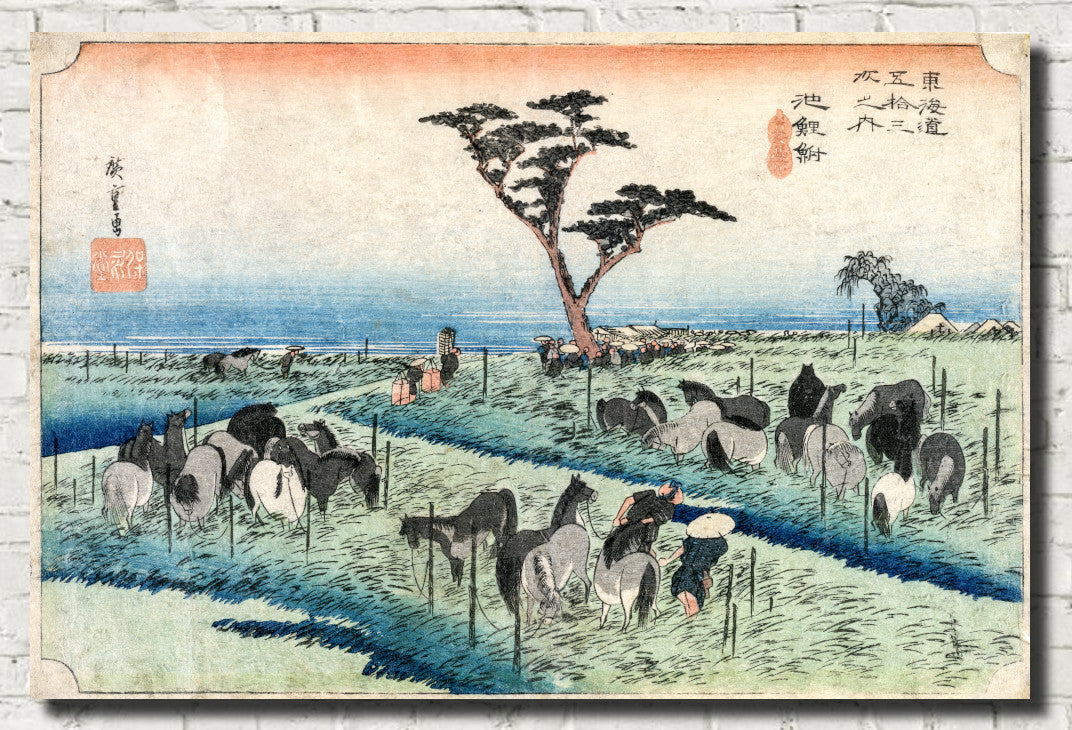
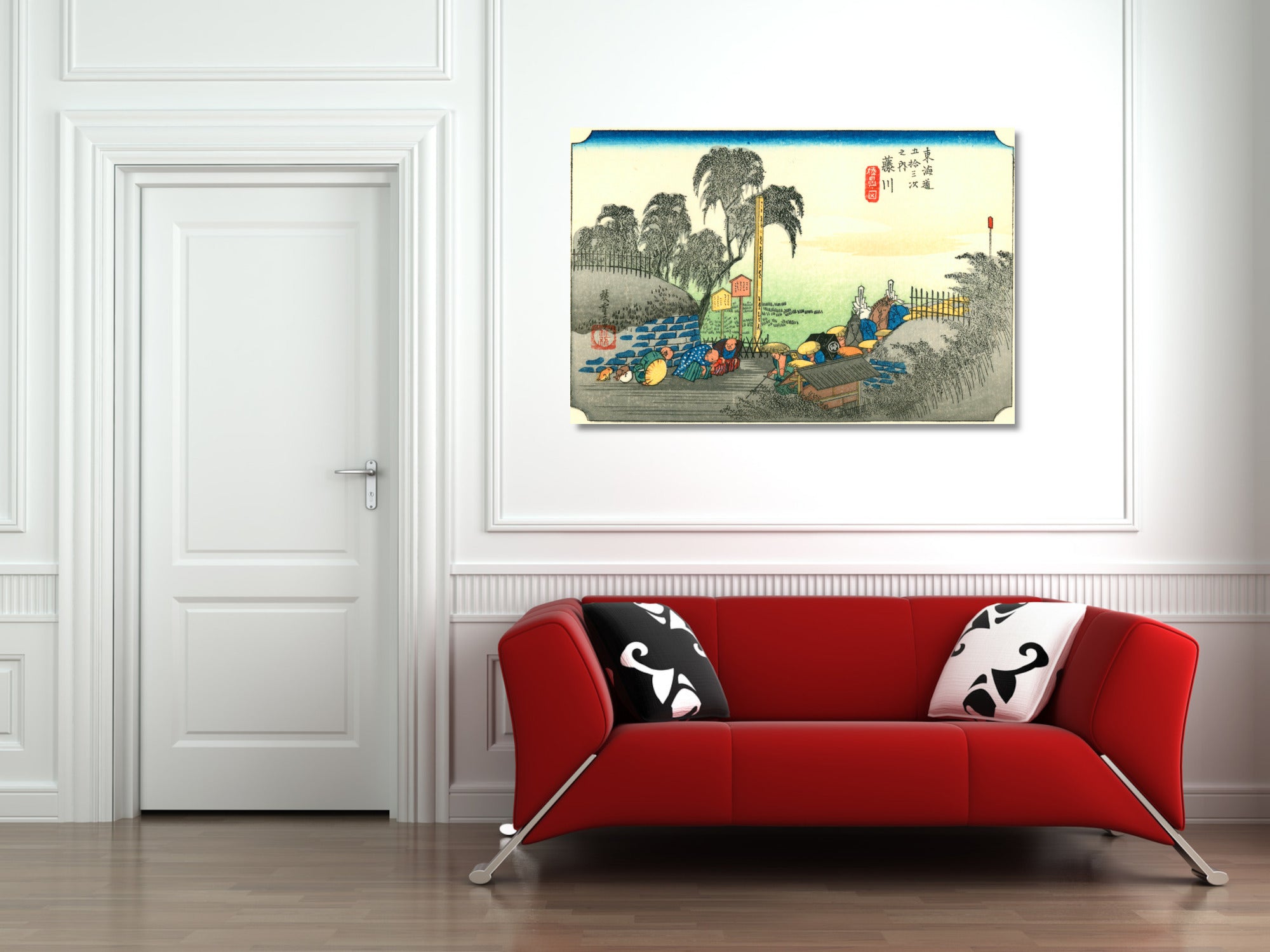
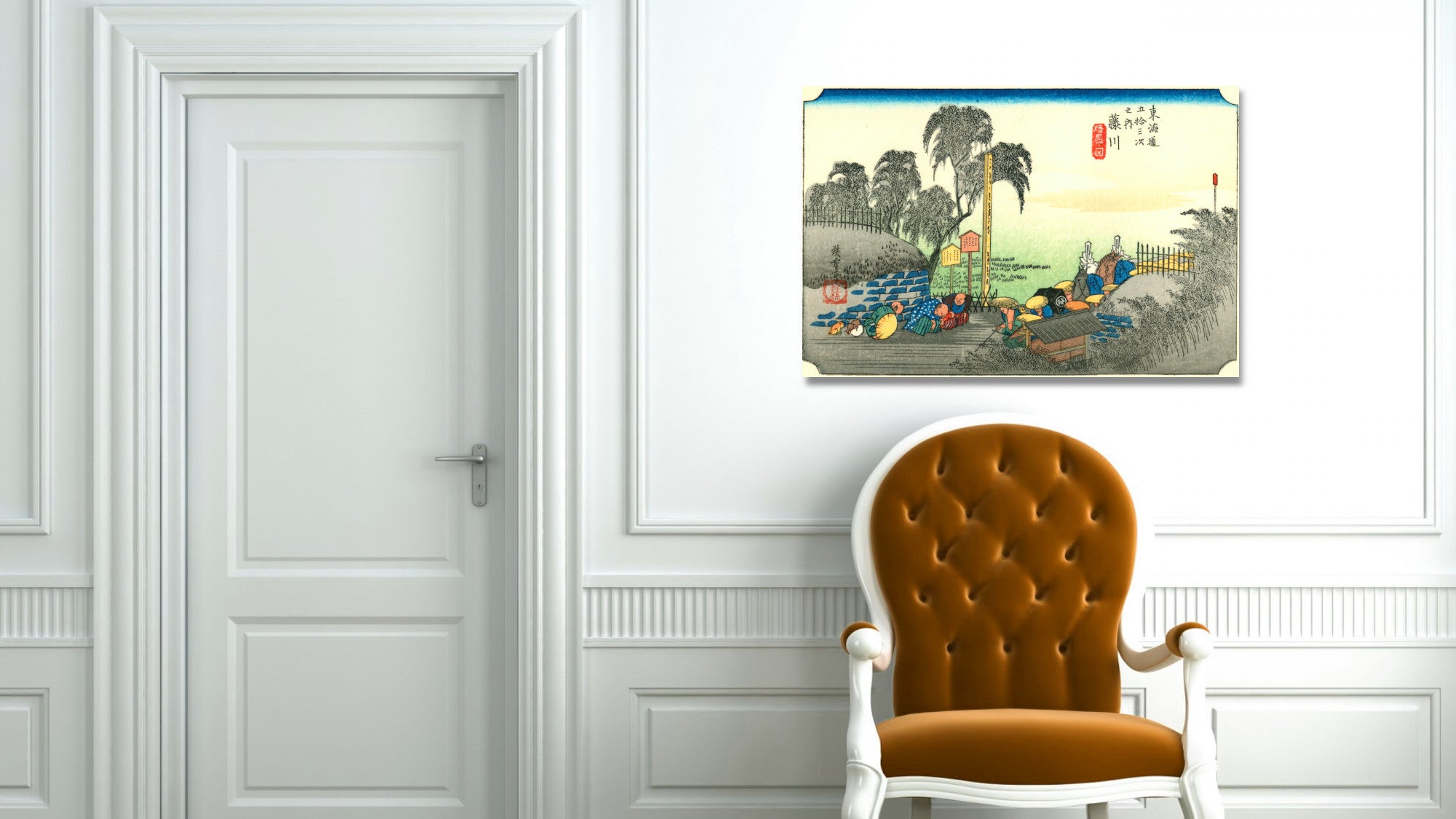
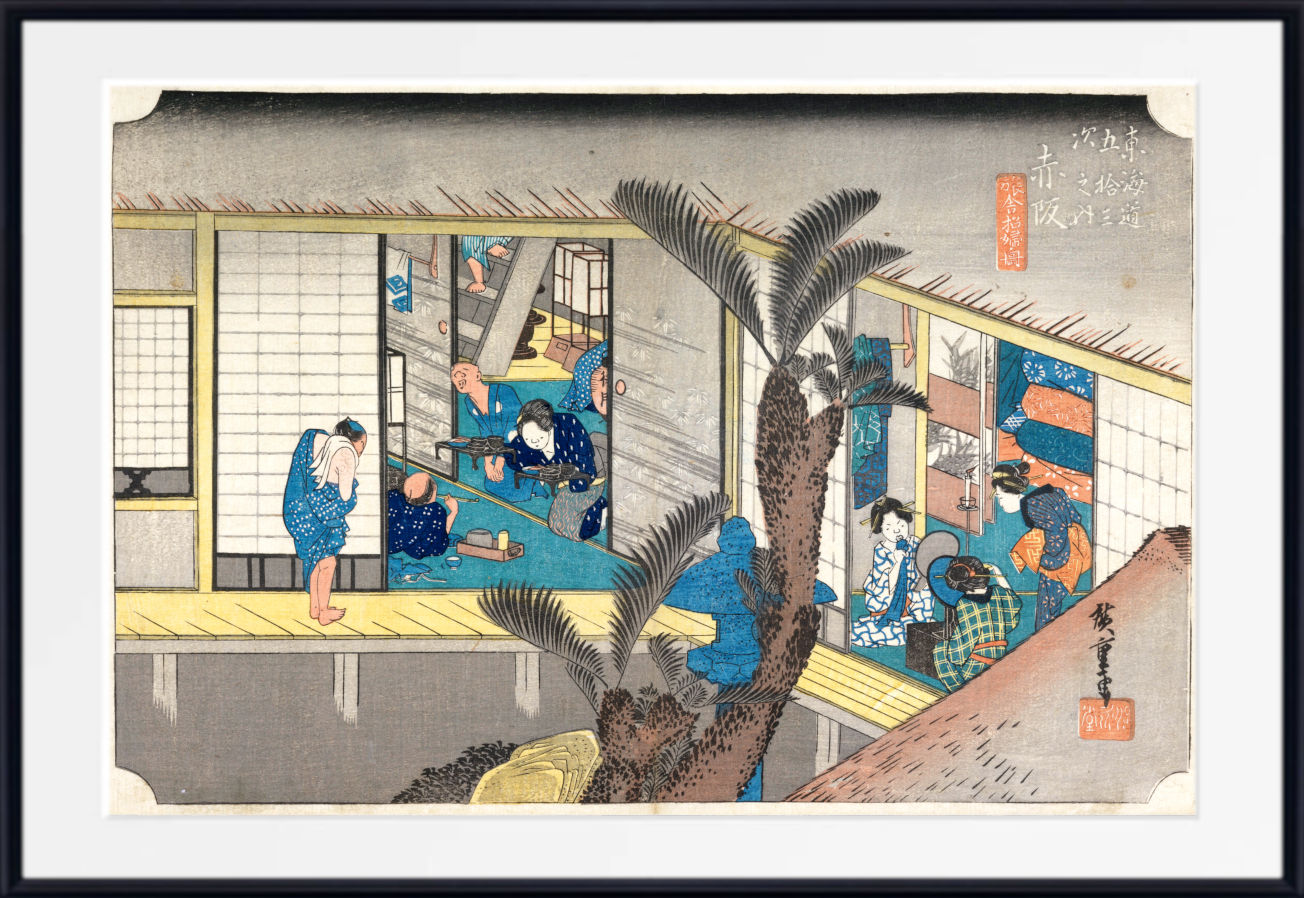
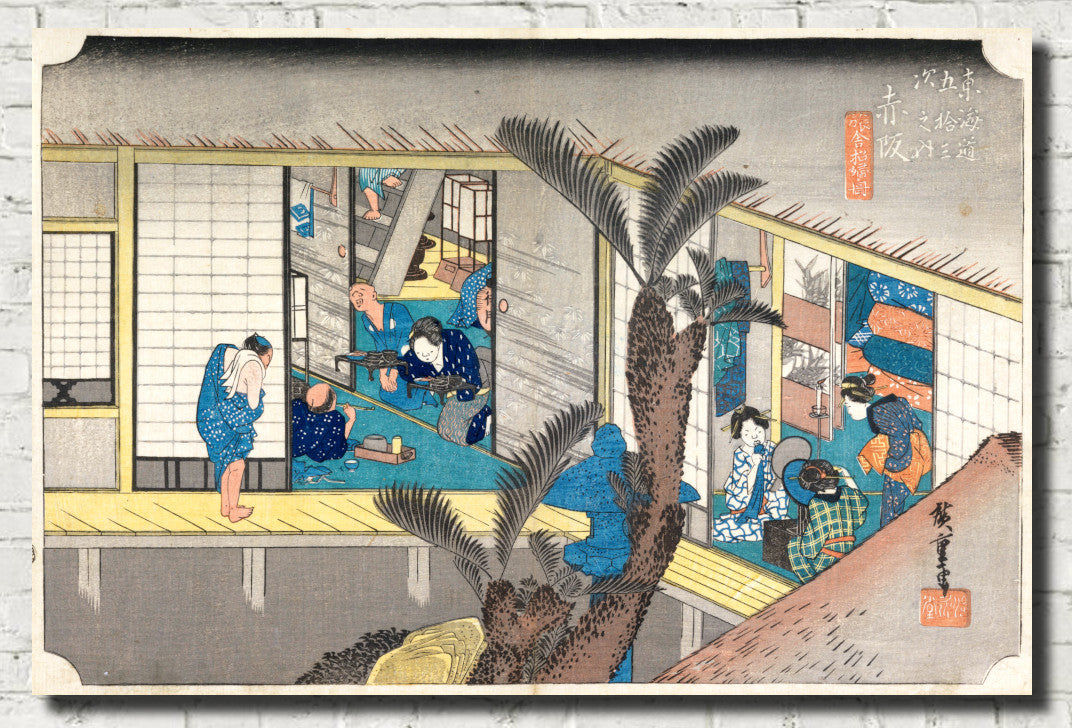
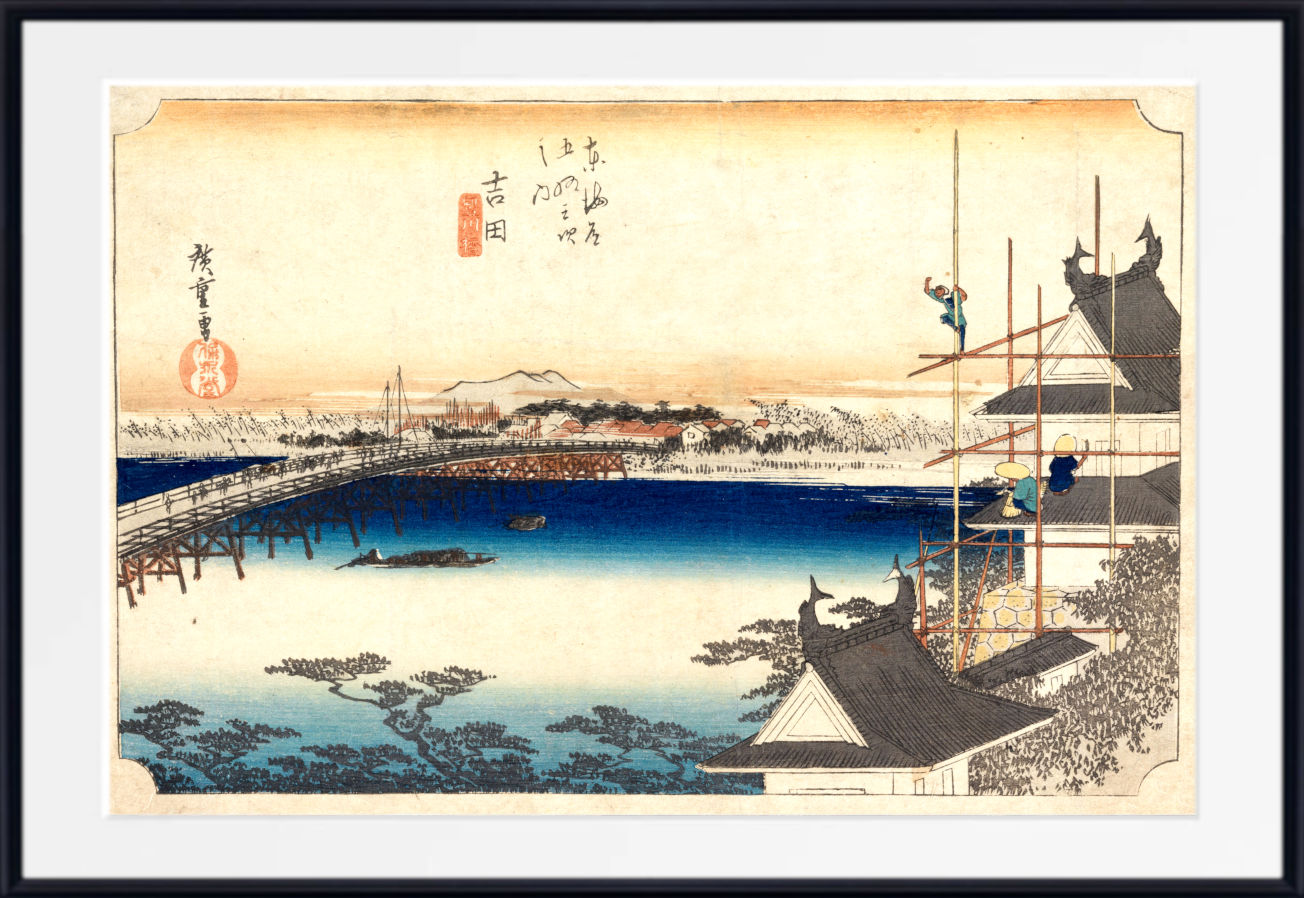
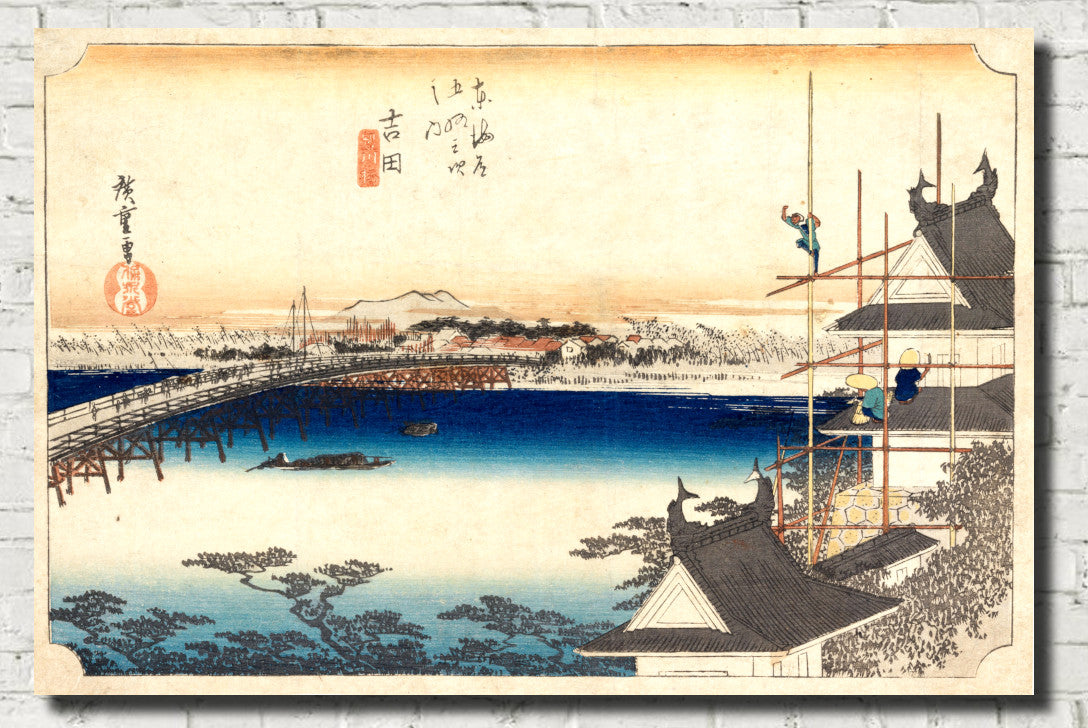
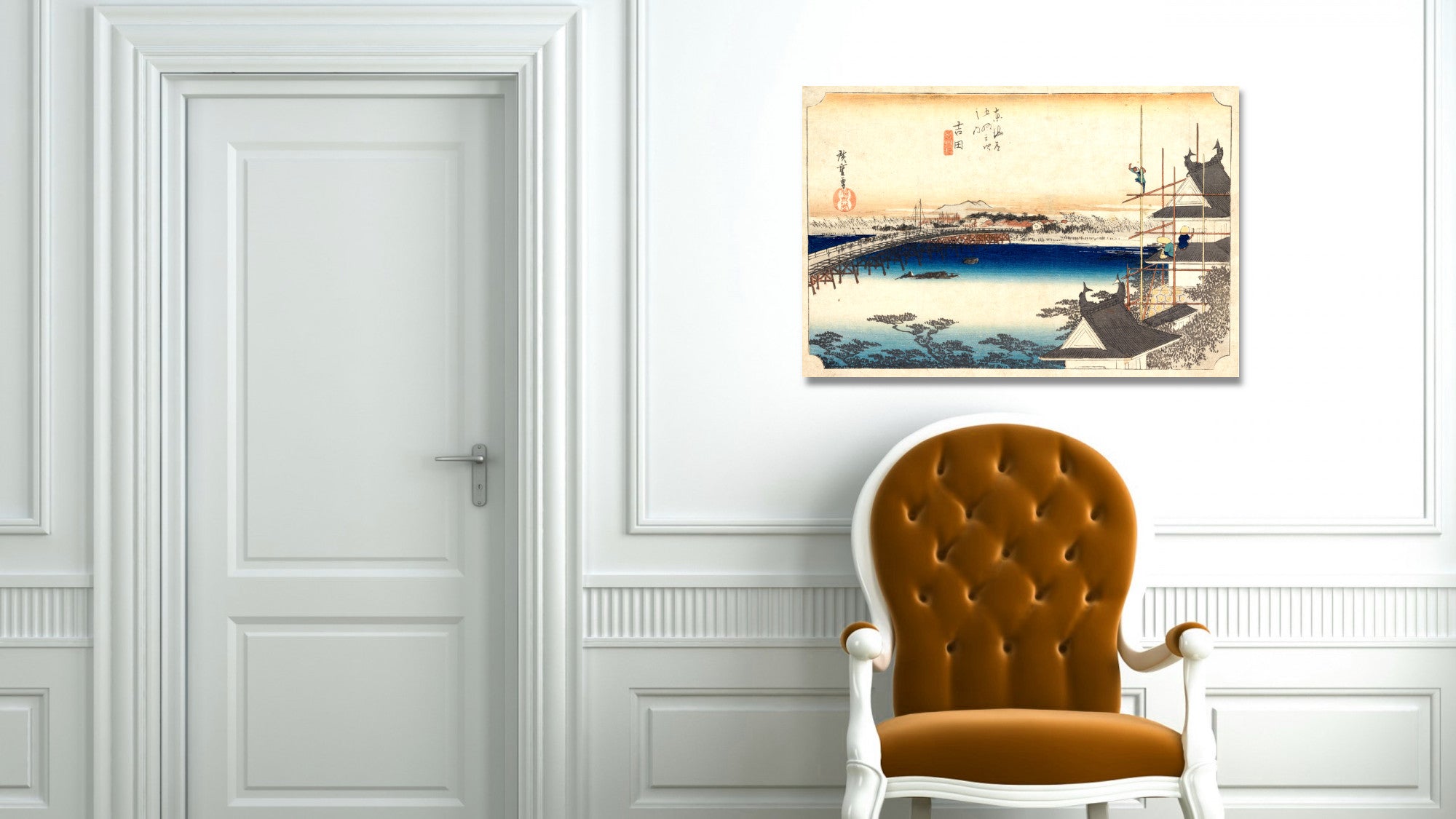
Hiroshige's Fifty-Three Stations of the Tōkaidō Prints
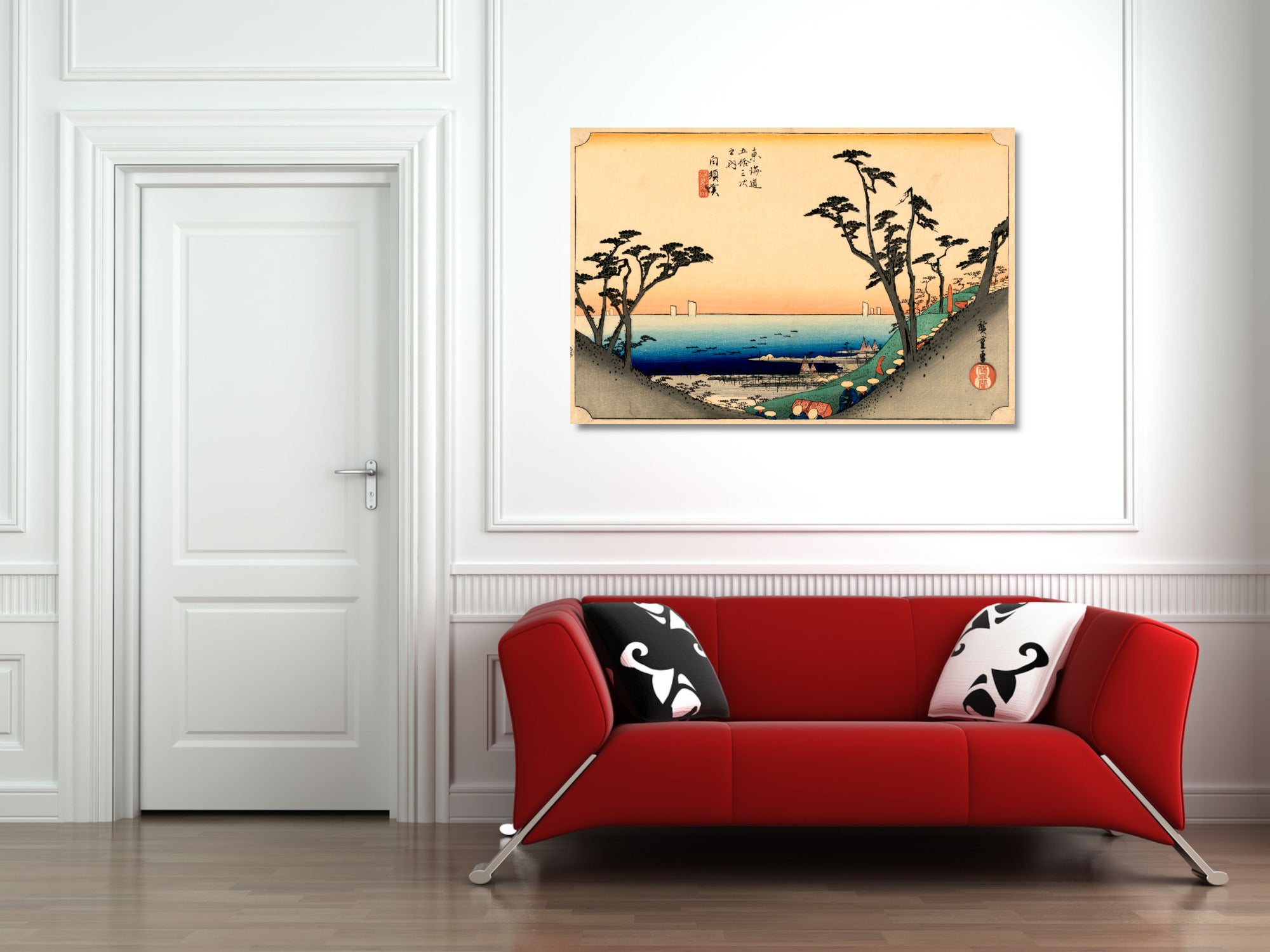
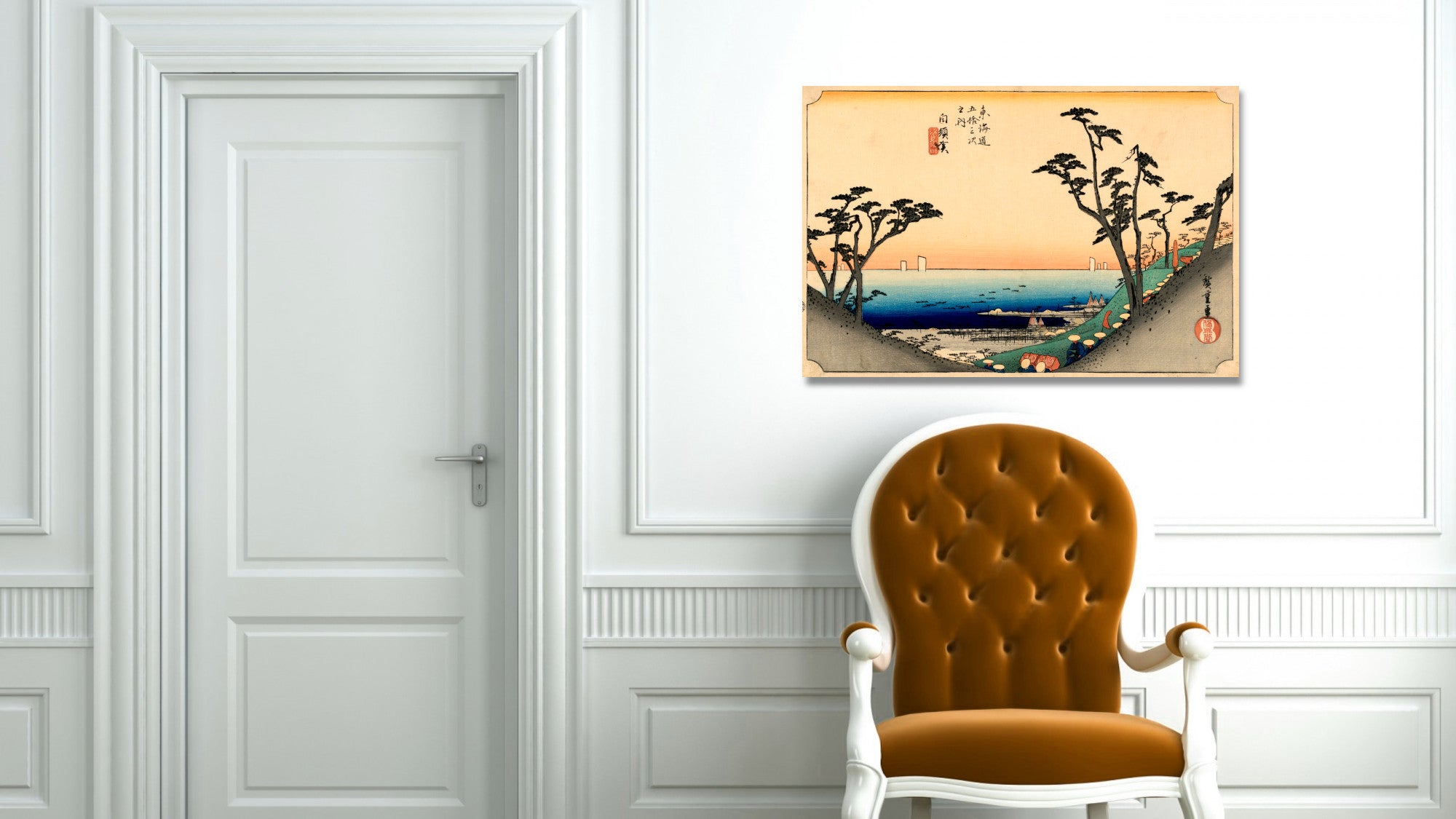
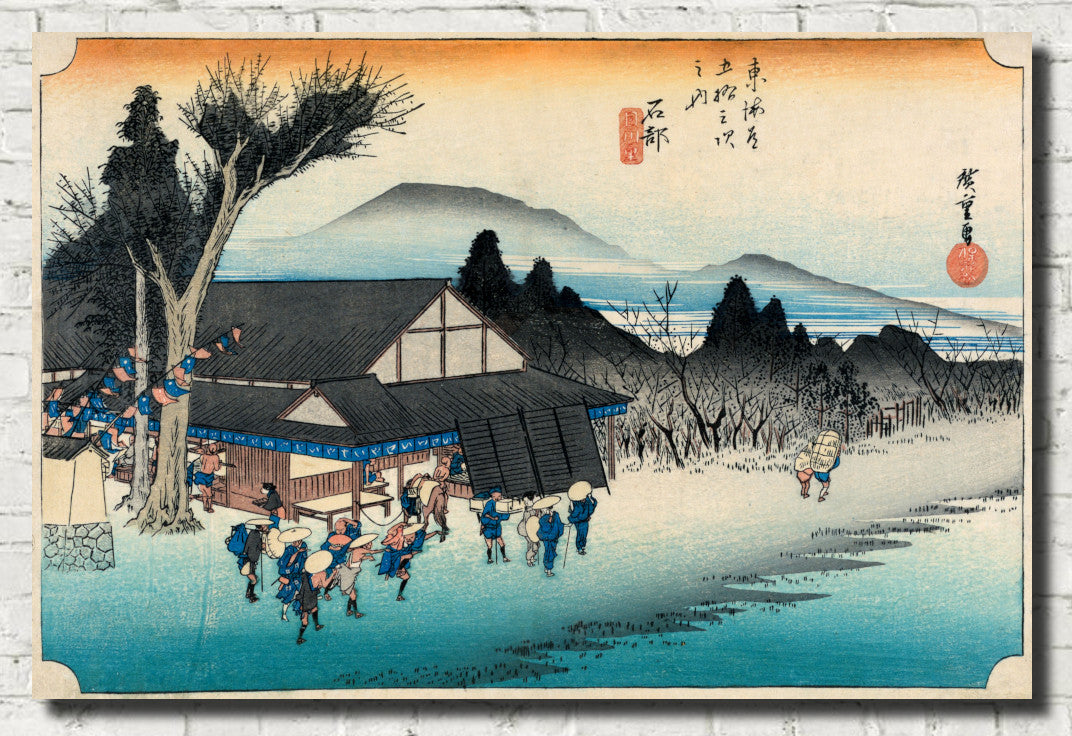
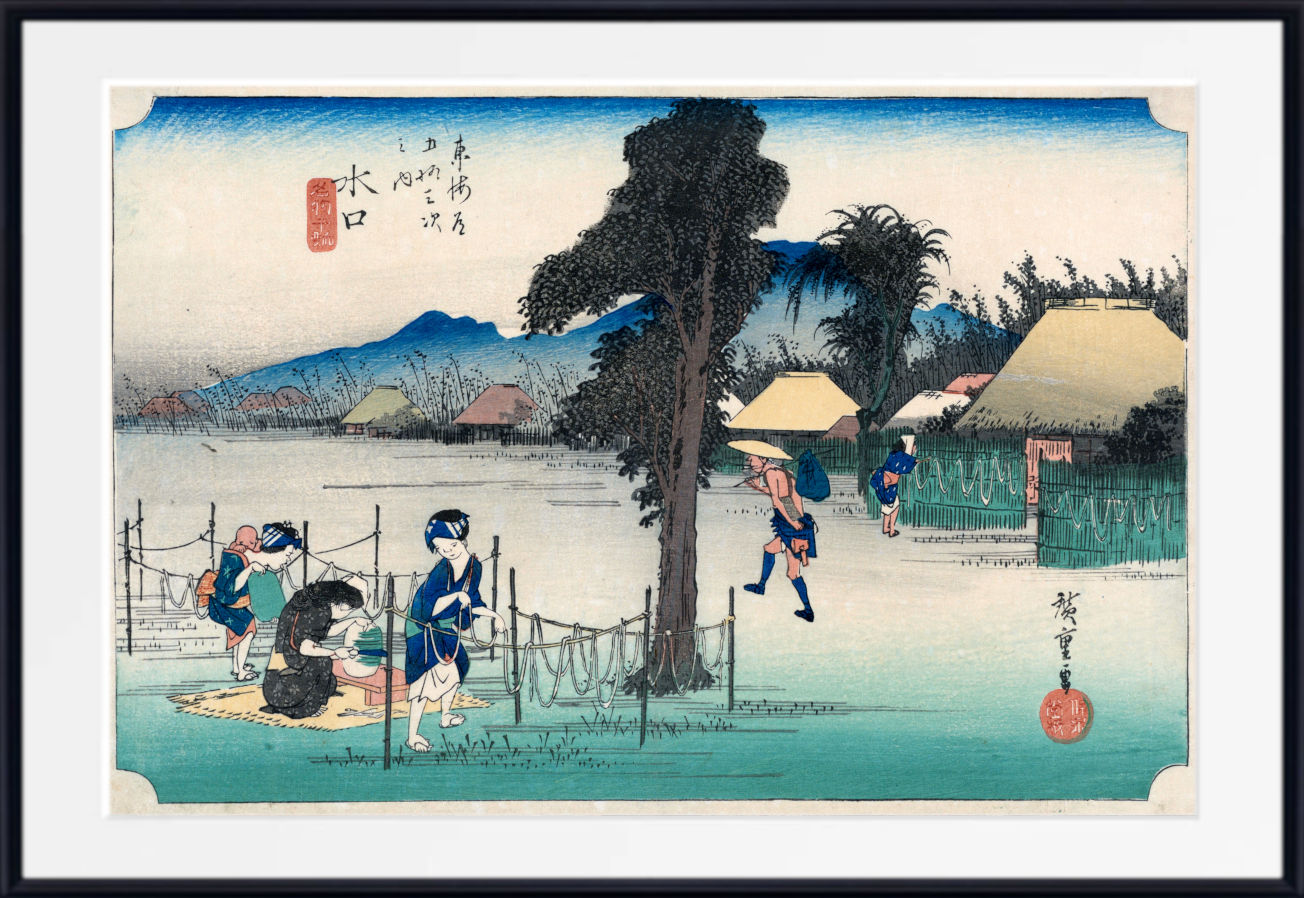
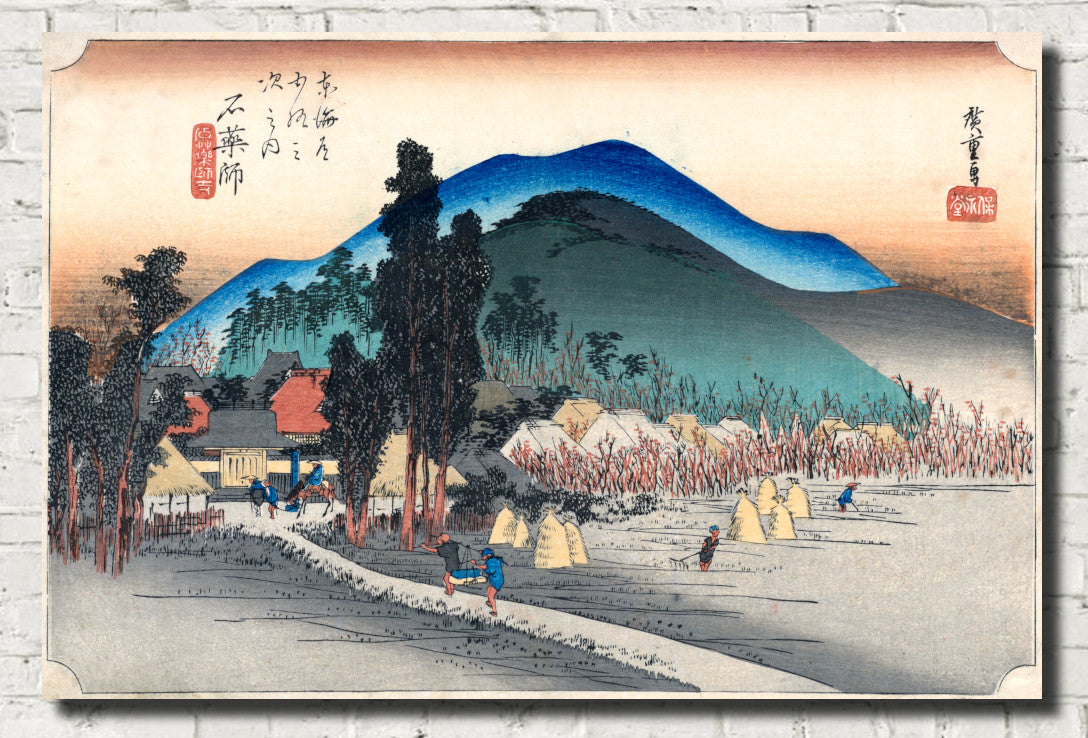
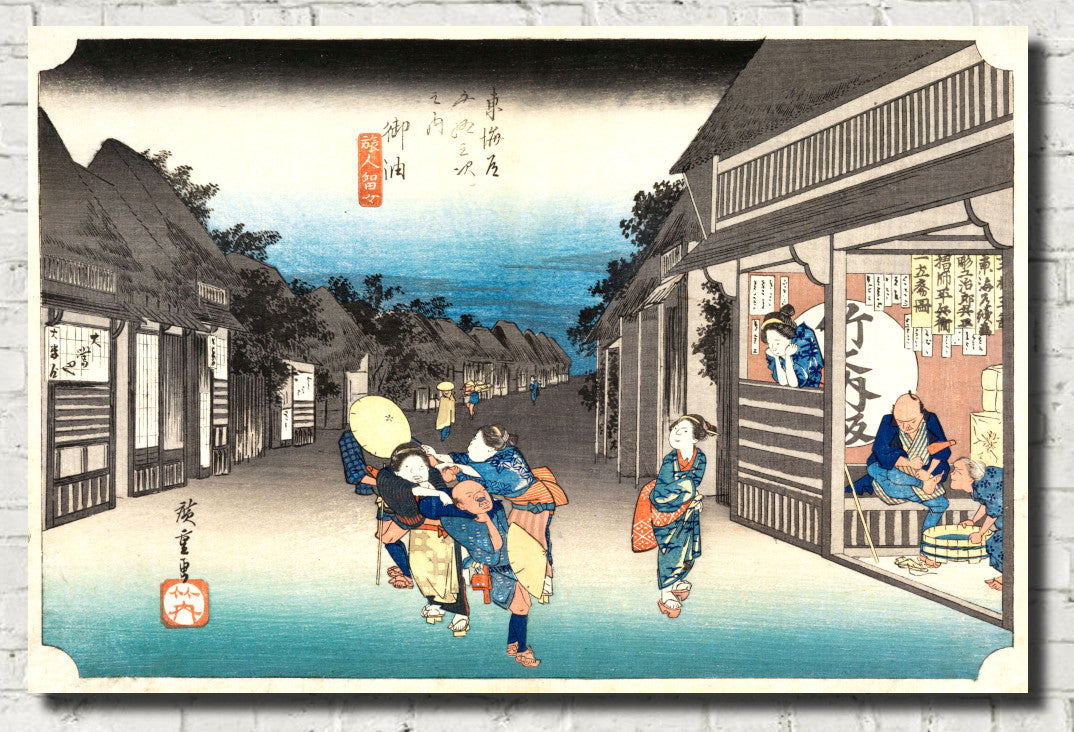
The Fifty-Three Stations of the Tōkaidō is one of the great landscape series of Japanese ukiyo-e.
Designed by Utagawa Hiroshige during the early 1830s, the prints follow the historic Tōkaidō highway between Edo, present-day Tokyo, and Kyoto.
The journey passes through changing landscapes of mountains, coastlines, rivers, villages and post towns, but Hiroshige was interested in much more than simply recording geography.
Travellers hurry through rain, walk beneath snow-covered mountains, cross ferries, rest at roadside inns and negotiate steep passes.
Weather and human activity continually transform the road.
GalleryThane's dedicated Fifty-Three Stations of the Tōkaidō collection brings these travel prints together as a coherent series.
For Hiroshige's wider landscapes, Edo scenes, fish and nature designs, explore the Andō Hiroshige Prints collection.
What Was the Tōkaidō?
The Tōkaidō was the great coastal highway linking Edo, the political centre of Tokugawa Japan, with Kyoto, the imperial capital.
Along the route were fifty-three official post stations where travellers could obtain lodging, food, horses, porters and other services.
The road was used by many different kinds of traveller, including merchants, pilgrims, samurai and official processions.
For Edo-period audiences, the Tōkaidō was therefore both a real transport route and a subject filled with associations of travel, adventure and famous places.
Why Does the Series Contain 55 Prints?
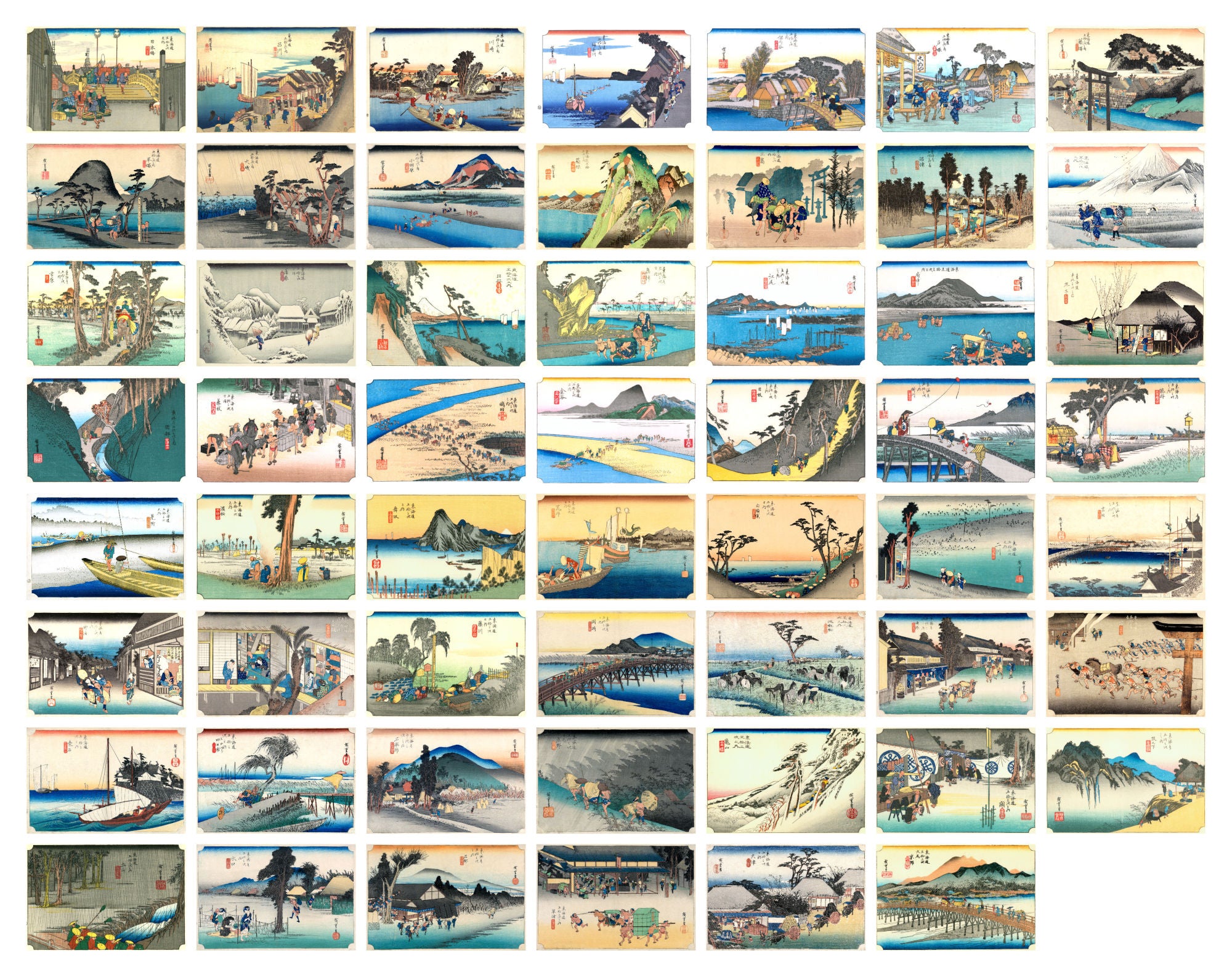
Although the title refers to fifty-three stations, Hiroshige's famous Hōeidō series contains 55 designs.
The fifty-three official post stations are joined by the departure point at Nihonbashi in Edo and the final arrival in Kyoto.
The complete visual journey therefore runs:
Edo departure → 53 post stations → Kyoto arrival.
This is why complete sets of The Fifty-Three Stations of the Tōkaidō contain 55 individual scenes.
The Hōeidō Tōkaidō
Hiroshige produced several different Tōkaidō series during his career.
The version represented here is commonly known as the Hōeidō Tōkaidō, after its principal publisher.
Created around 1833–34, it became Hiroshige's breakthrough success and remains the best-known interpretation of the route.
The series was extraordinarily popular and established Hiroshige as one of the leading landscape artists of ukiyo-e.
Its success also encouraged him to return repeatedly to travel and famous-place subjects throughout his career.
Beginning the Journey – Nihonbashi
The journey begins at Nihonbashi, the bridge in central Edo from which major Japanese road distances were measured.
Hiroshige shows the city waking early in the morning.
A daimyō procession begins its journey while fishmongers move through the foreground carrying fresh produce into Edo.
Rather than presenting the road as an empty landscape, Hiroshige begins with activity, trade and movement.
This establishes one of the central themes of the series: landscape is experienced through people travelling within it.
Shinagawa and the Road Out of Edo
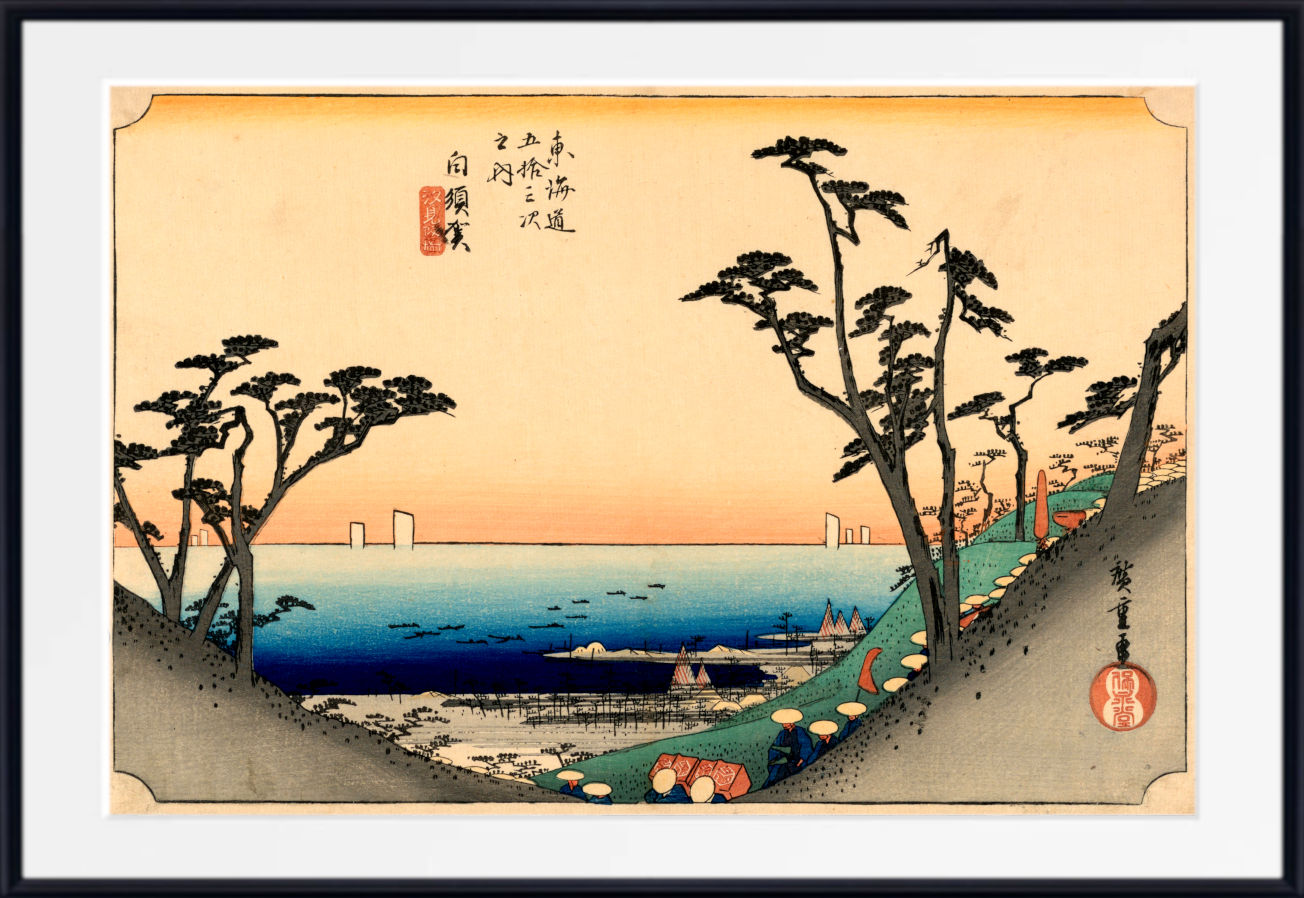
At Shinagawa the journey begins to leave the dense city behind.
Processions, buildings and sailing vessels create a scene that combines the road with the waters of Edo Bay.
As the traveller moves westwards through subsequent stations, urban activity gradually gives way to fields, rivers, mountains and coastal landscapes.
The sequence therefore has a strong visual rhythm even when individual prints are viewed independently.
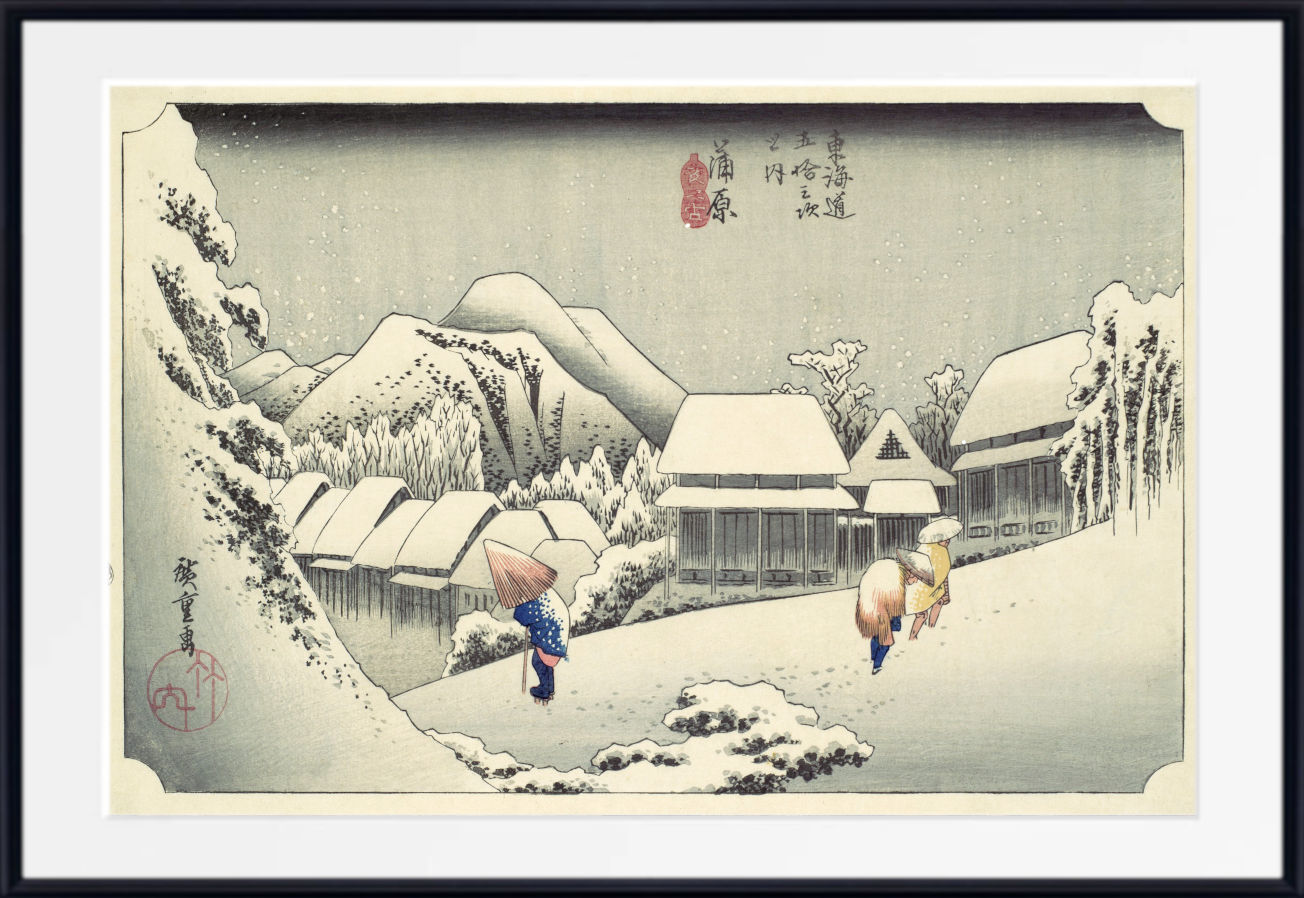
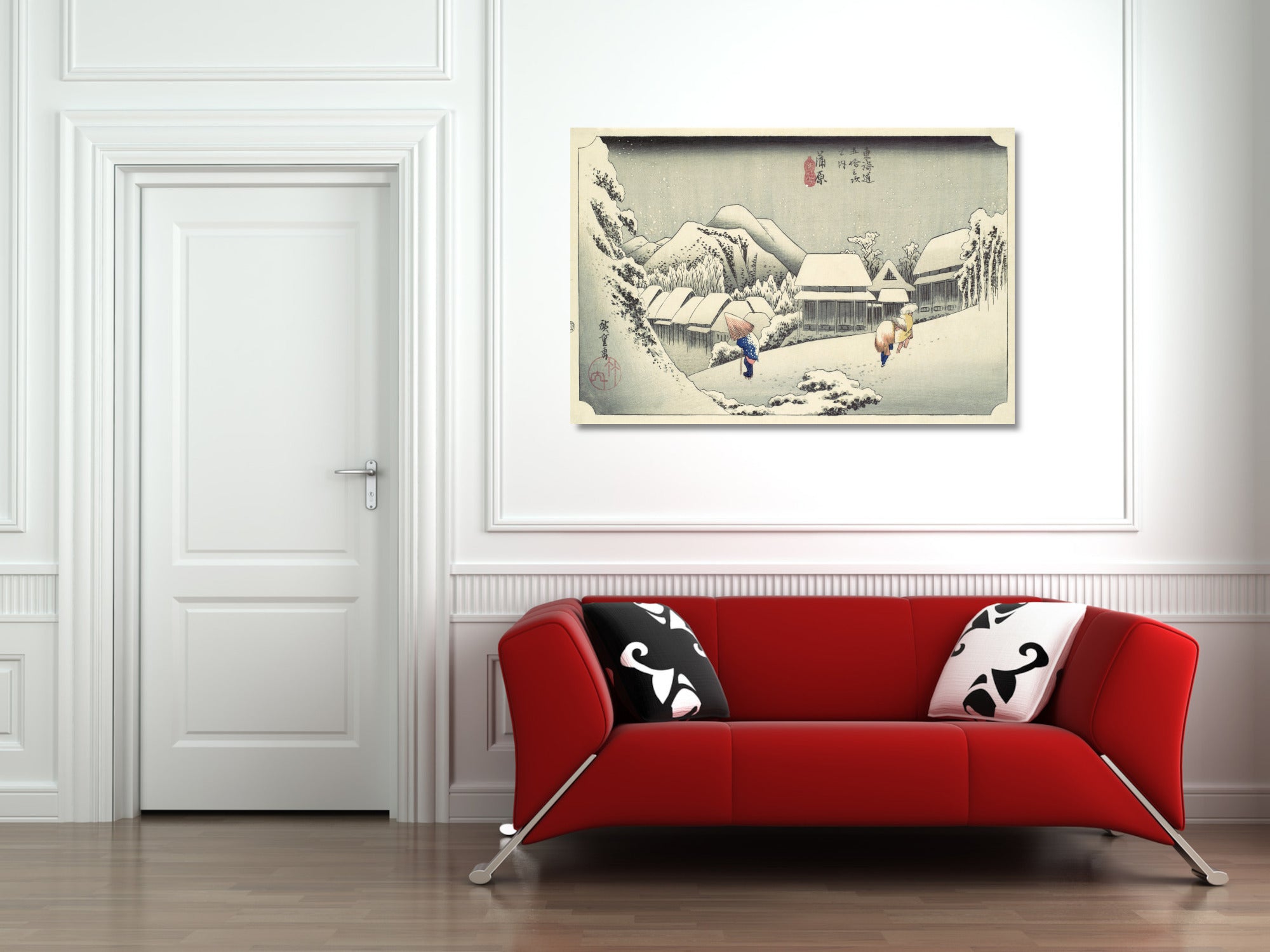
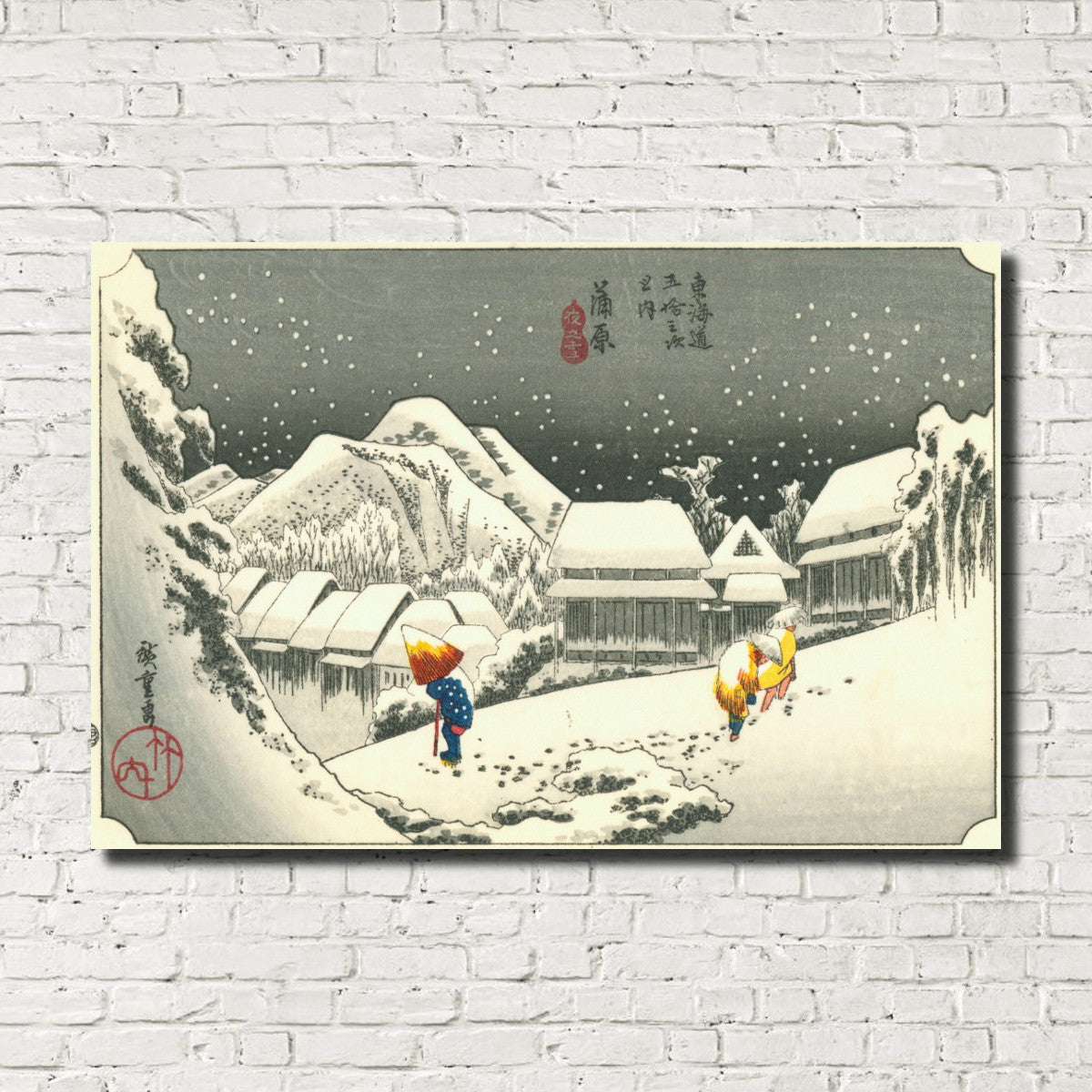
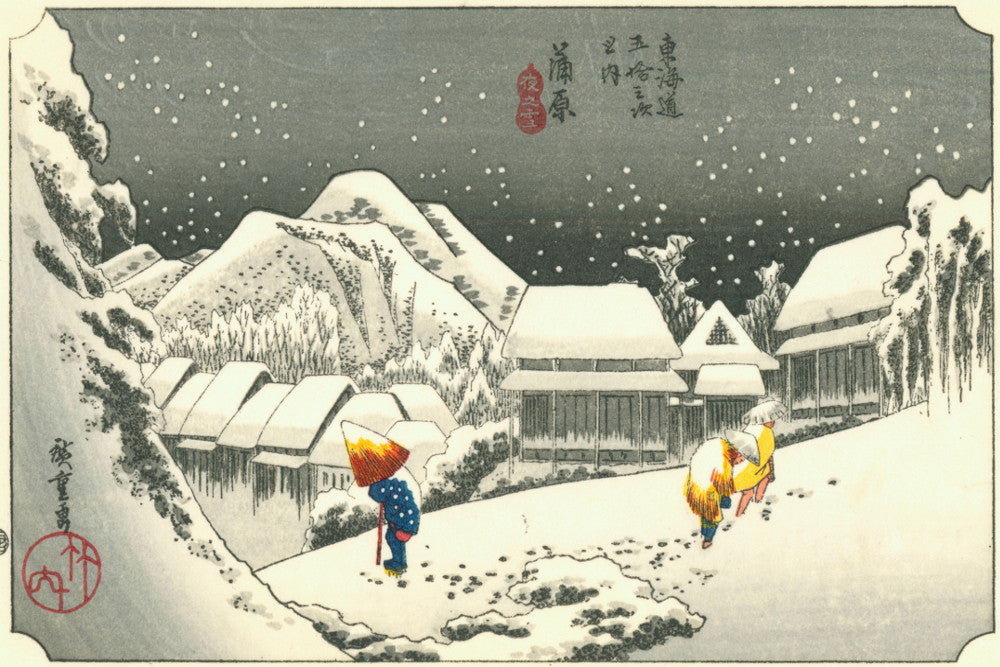
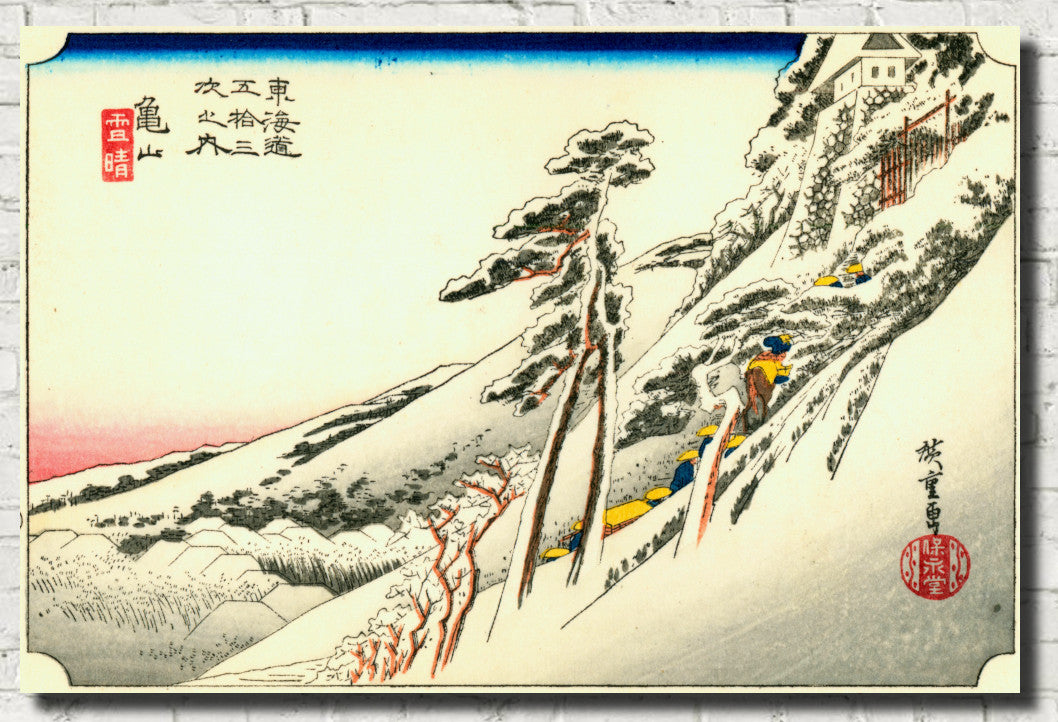
Kanbara – Evening Snow
Kanbara is one of the most celebrated prints in the entire series.
Deep snow covers houses, trees and mountain slopes as three travellers walk quietly through the village.
The landscape is reduced to a small range of subdued tones.
Snow softens detail and sound, creating an atmosphere very different from the busy opening scenes around Edo.
Interestingly, such heavy snowfall would have been unusual at Kanbara.
The image demonstrates that Hiroshige was interested in poetic atmosphere rather than producing purely documentary records of each location.
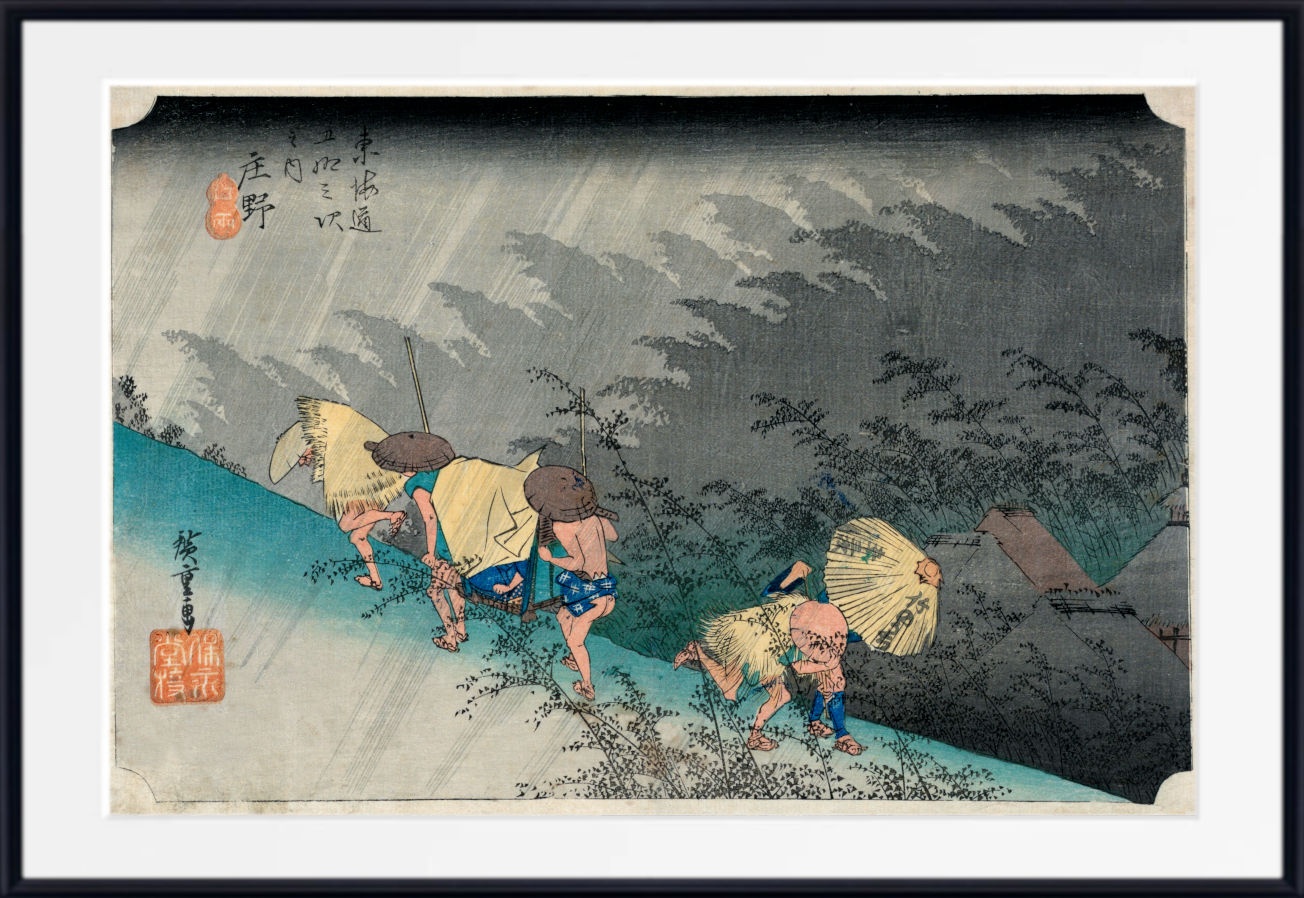
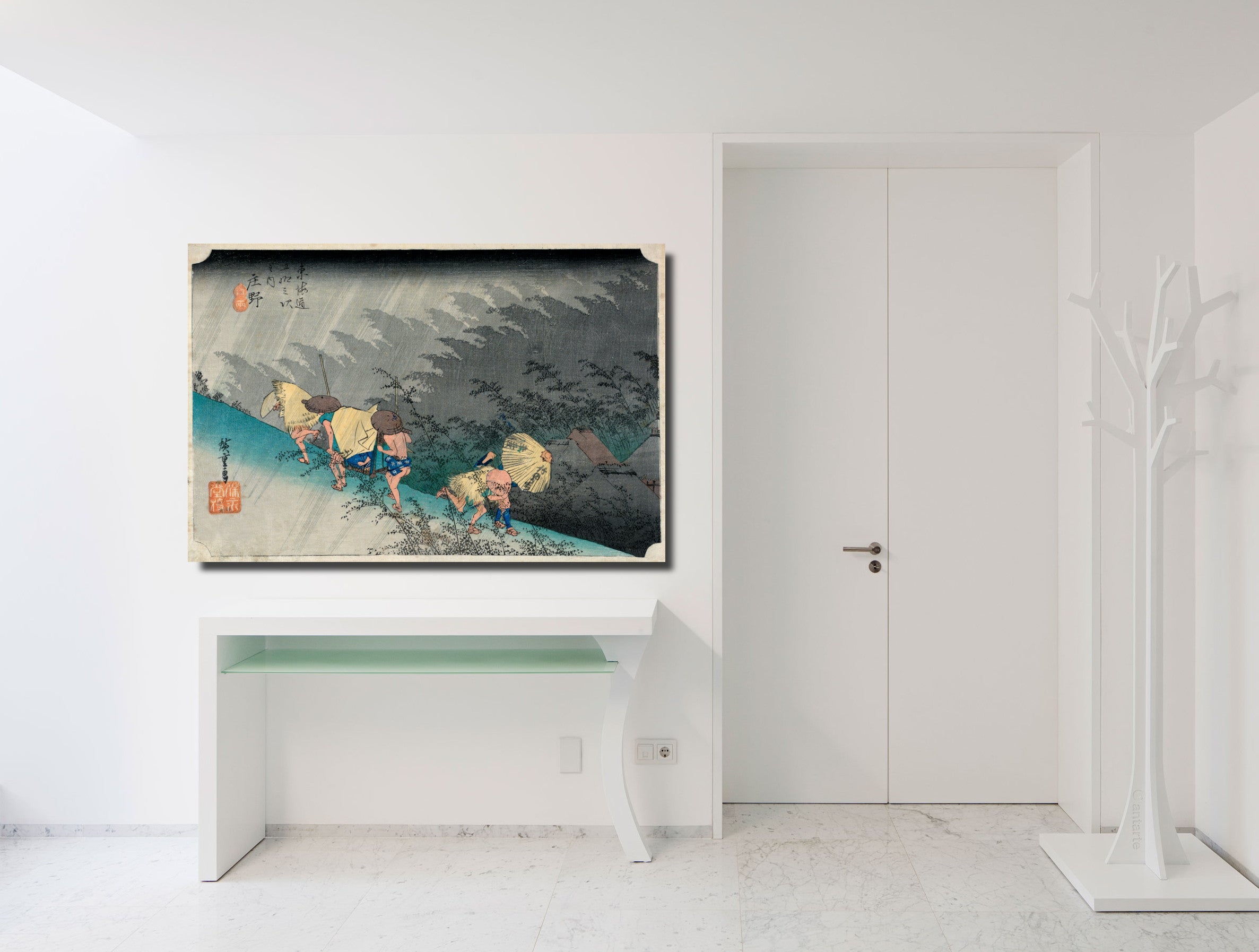
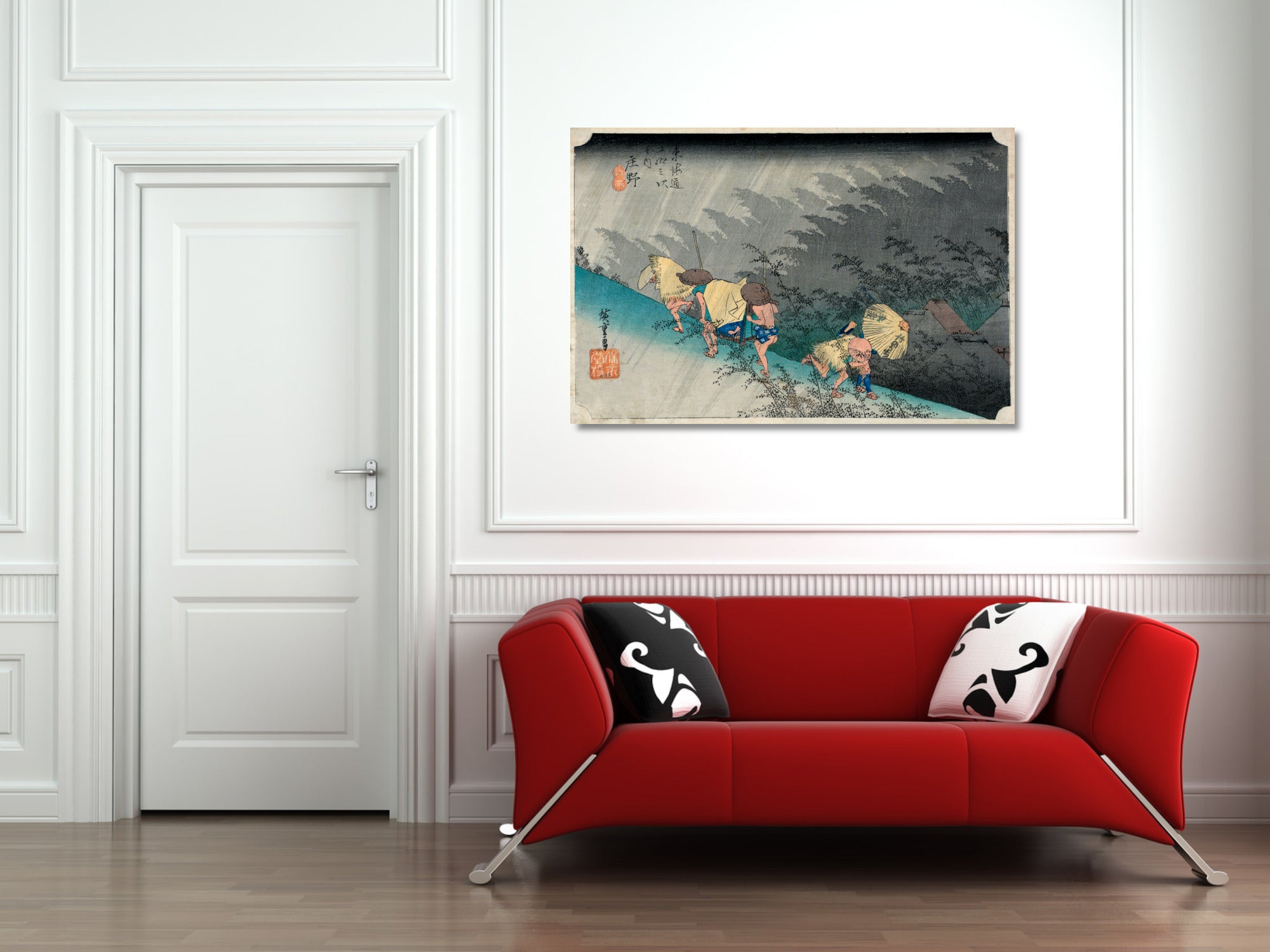
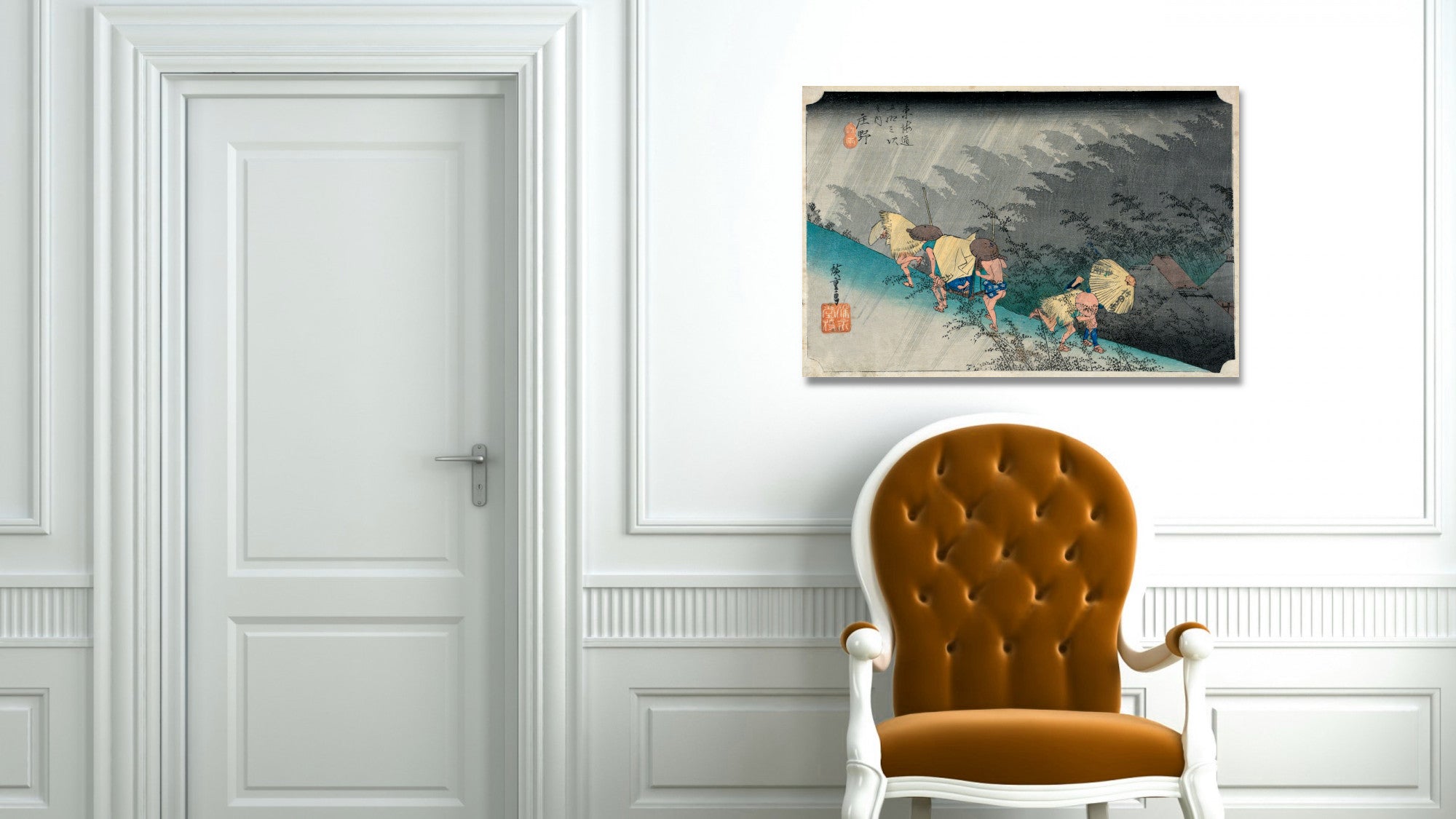
Shōno – Sudden Rain
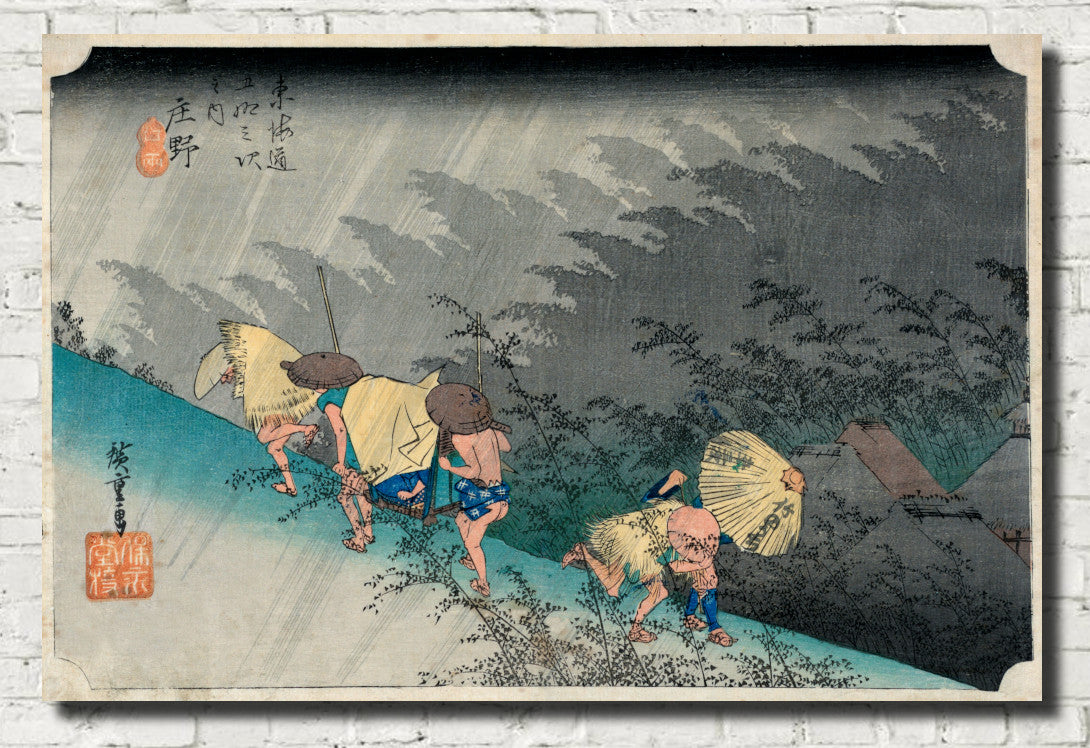
If Kanbara is defined by silence, Shōno is defined by movement.
Travellers race through a sudden downpour, bending beneath hats and coverings as diagonal rain sweeps across the landscape.
The slope of the road and the direction of the figures reinforce the violent weather.
Hiroshige makes the rain itself one of the dominant visual elements of the design.
Shōno demonstrates his exceptional ability to communicate weather through simple graphic means.
Hara – Mount Fuji in the Morning
At Hara, Mount Fuji dominates the composition.
The mountain is so large that its summit extends beyond the upper edge of the print.
By allowing Fuji to exceed the frame, Hiroshige makes the viewer feel its immense scale rather than reducing it to a distant landmark.
Travellers below provide a human measure against the extraordinary mountain.
This is one of several places where the Tōkaidō route brings the traveller into visual contact with Fuji.
Hakone and the Mountain Pass
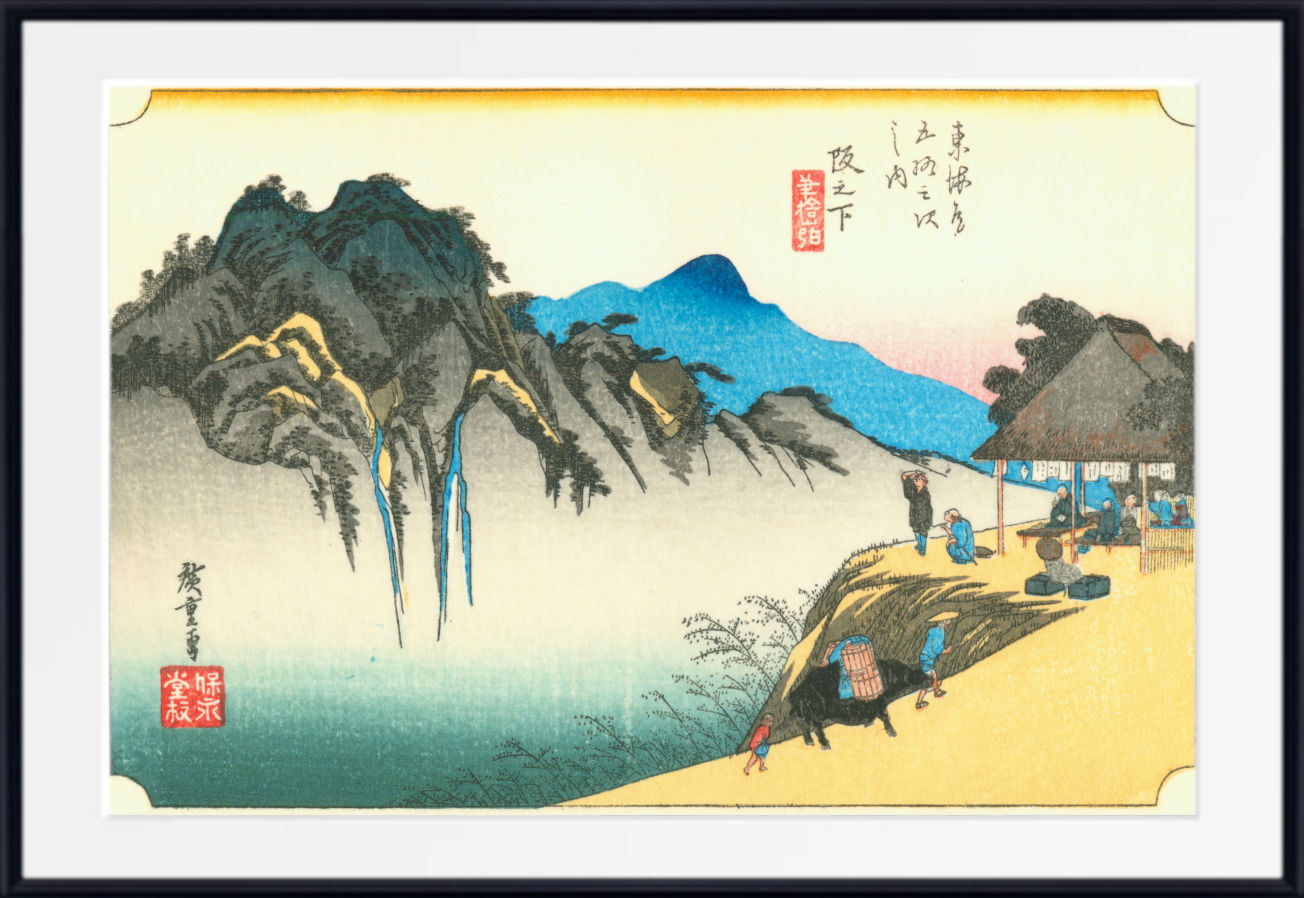
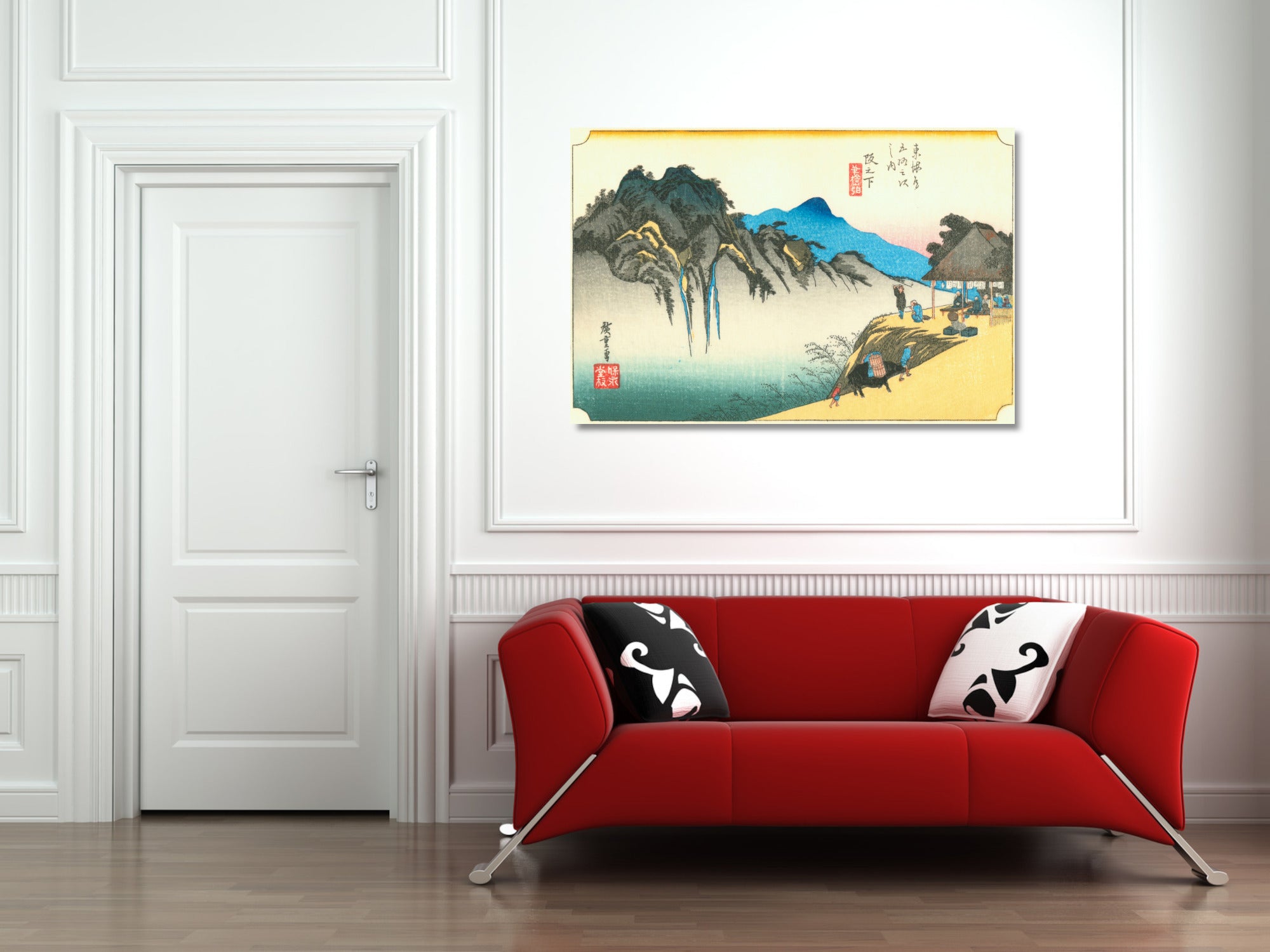
Hakone was one of the more demanding sections of the route.
Hiroshige responds with an unusually dramatic landscape of steep mountains, layered forms and travellers moving along the pass.
The composition feels compressed and monumental.
Rather than offering the viewer a comfortable distant panorama, the mountains crowd around the road.
The print conveys the physical difficulty of travel through the terrain.
Rivers and Ferry Crossings
Travel on the Tōkaidō involved repeated interaction with water.
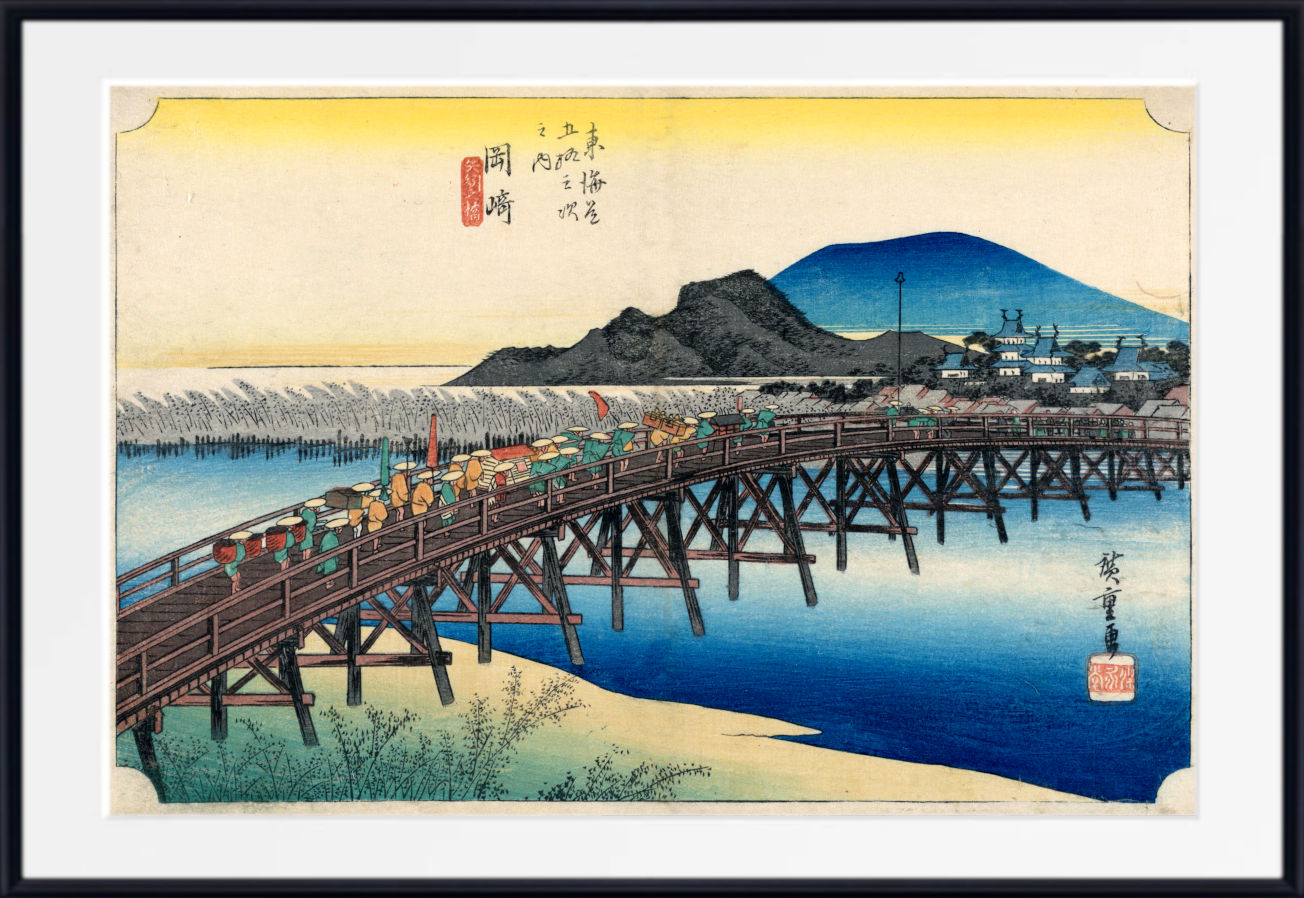
Some rivers could be crossed by bridge, while others required ferries or the assistance of professional river porters.
Hiroshige repeatedly uses these crossings as opportunities for strong compositions.
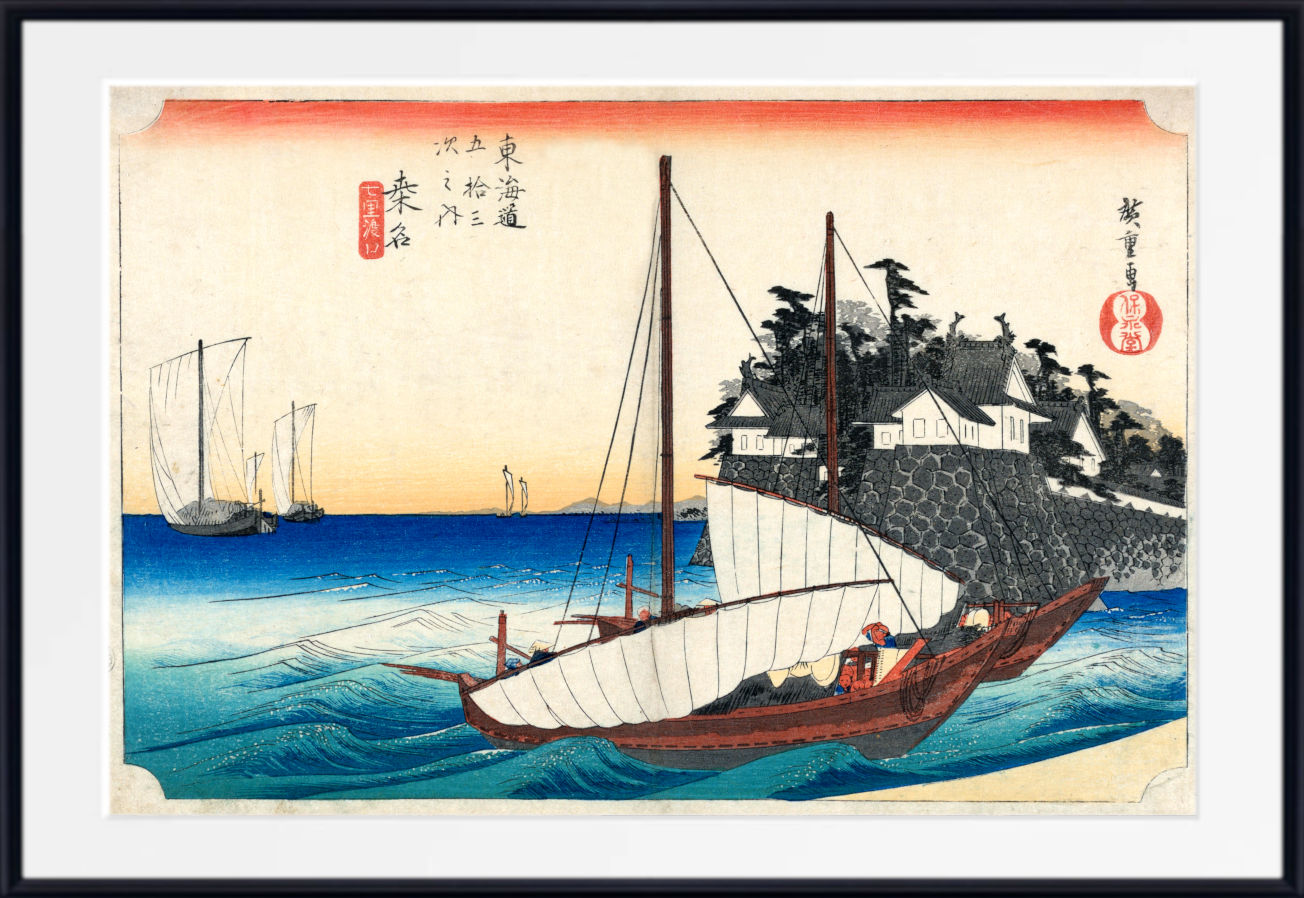
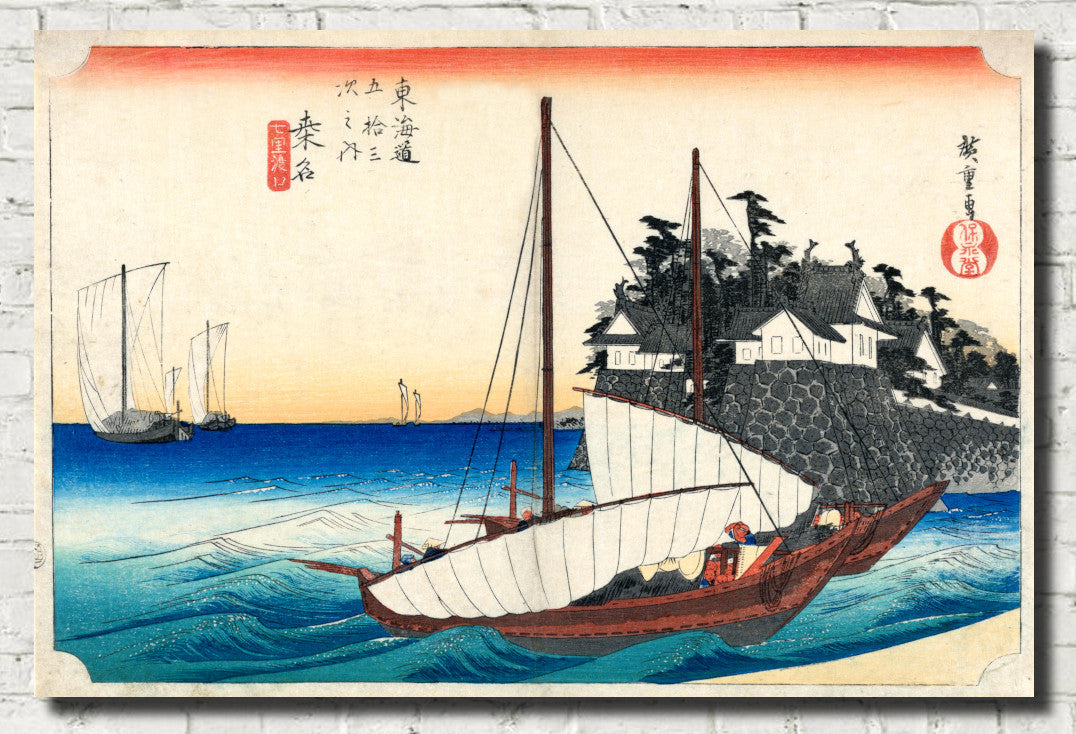
Boats, rafts, palanquins and travellers appear against broad areas of water, while distant banks establish depth.
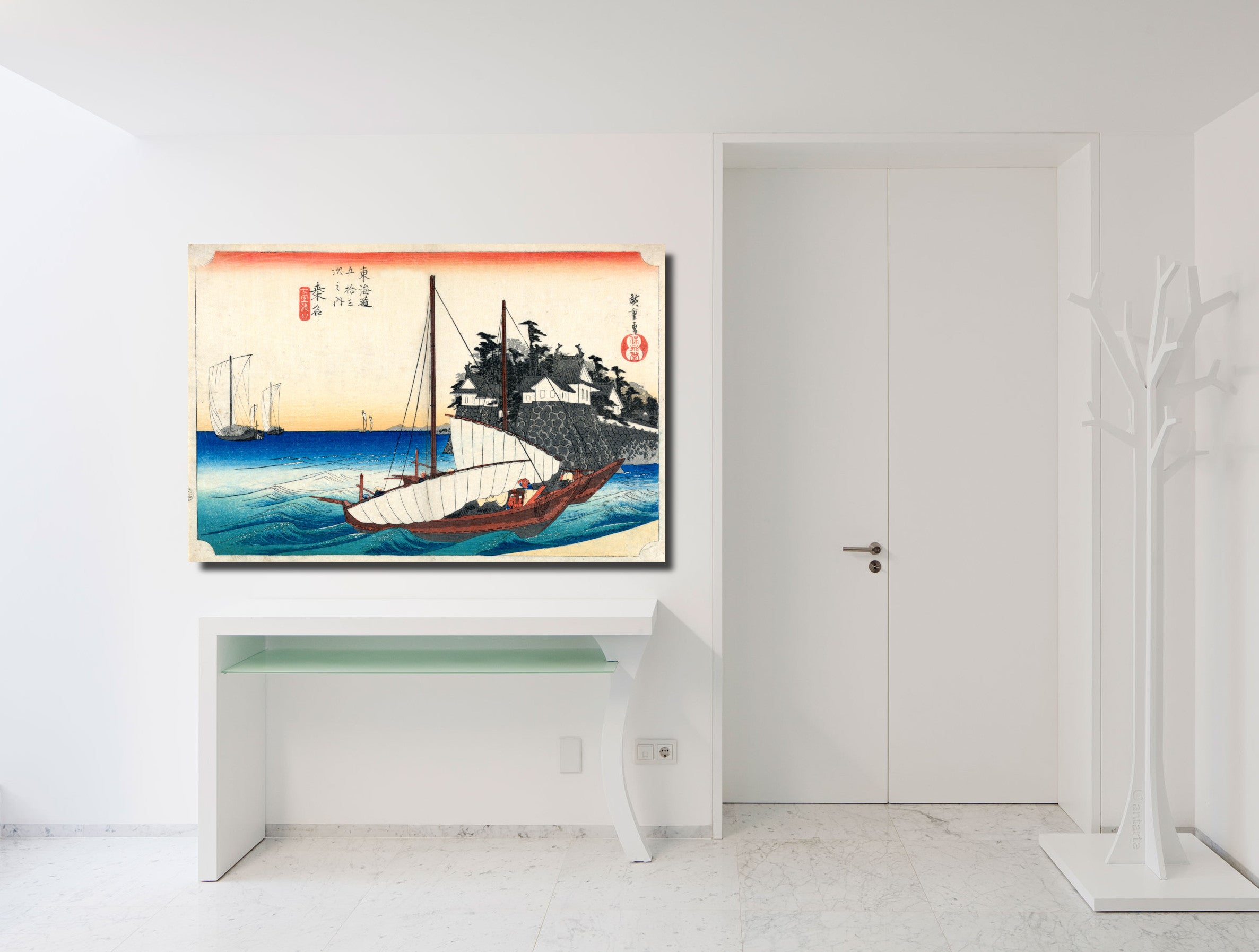
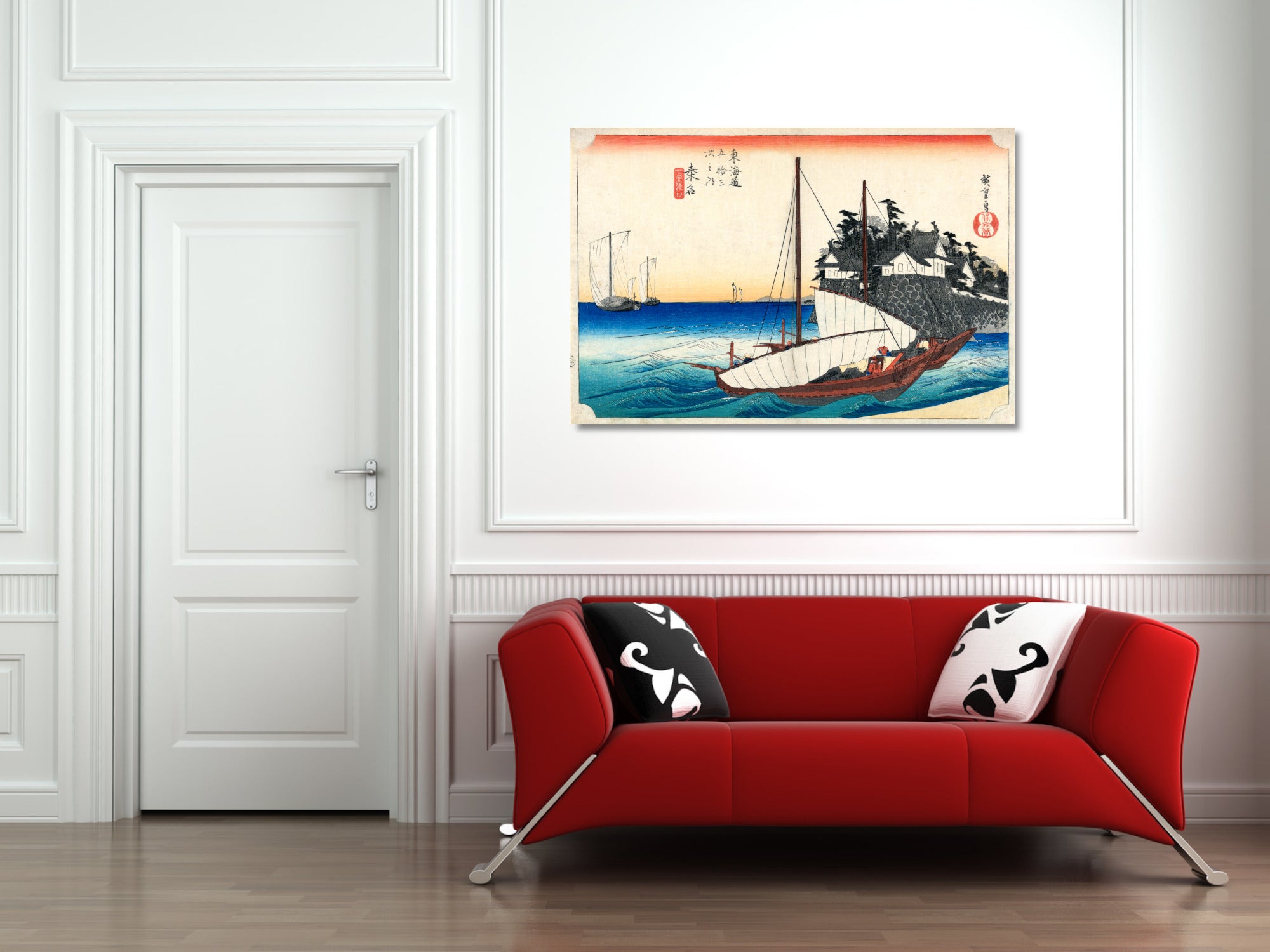
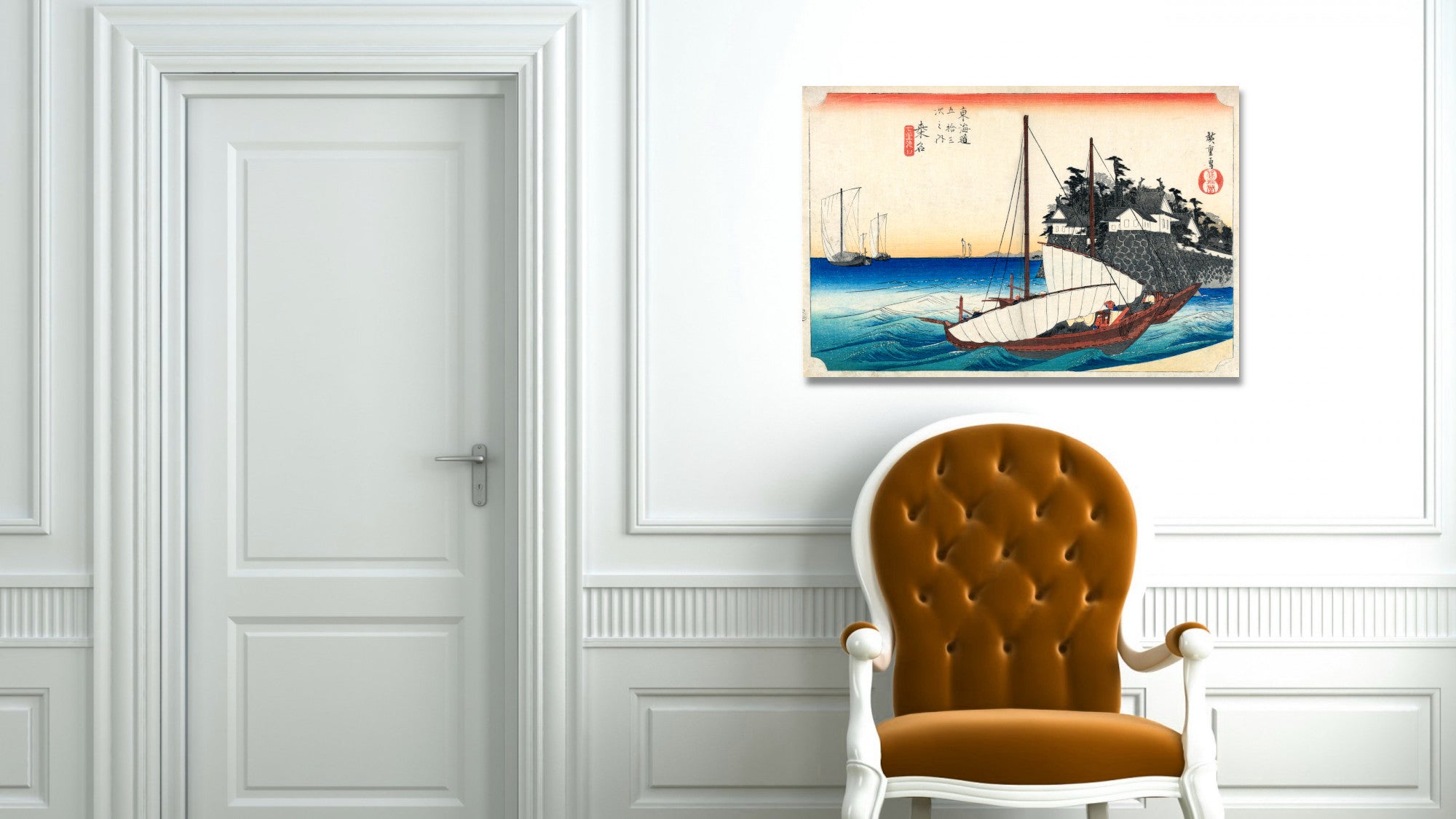
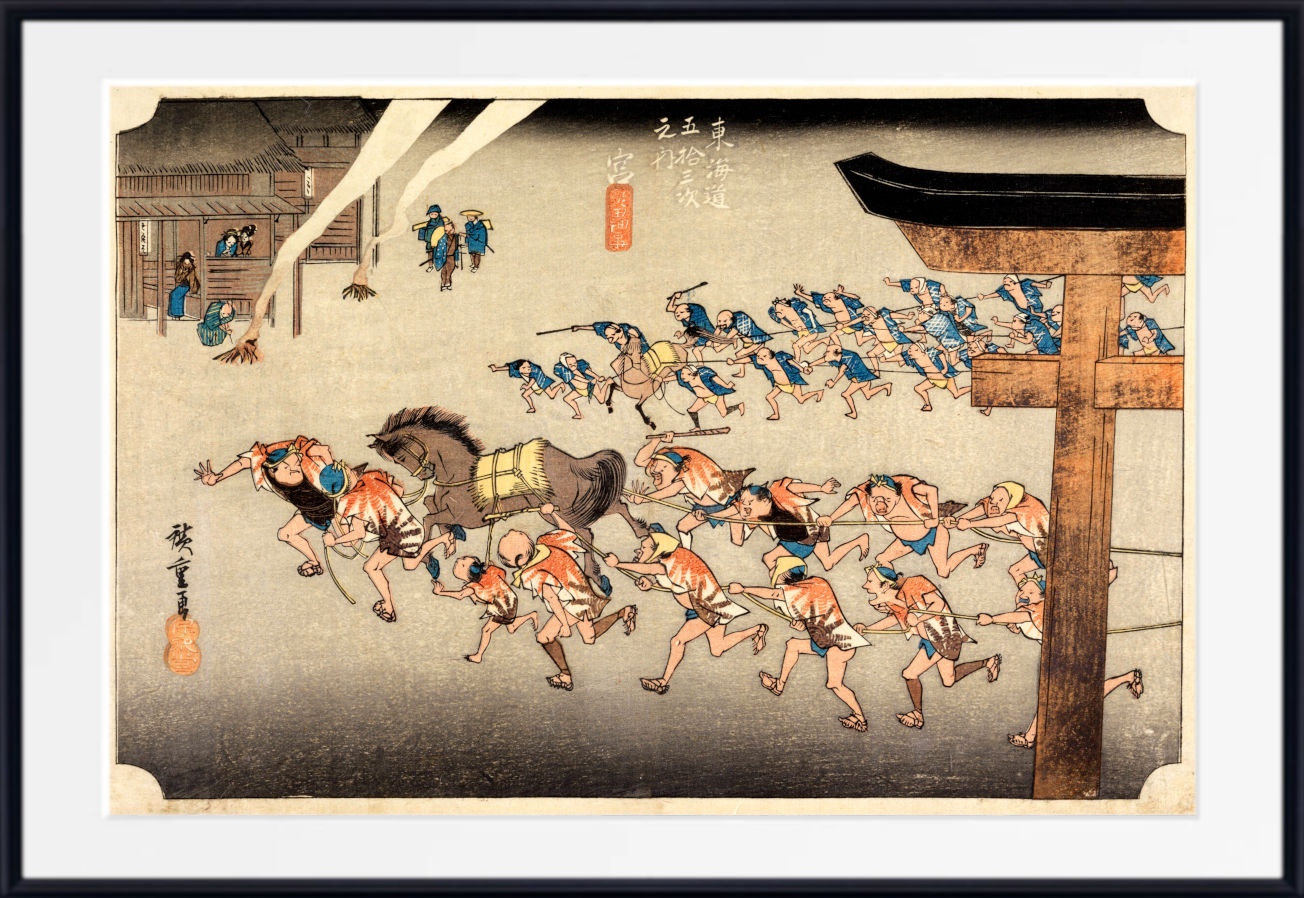
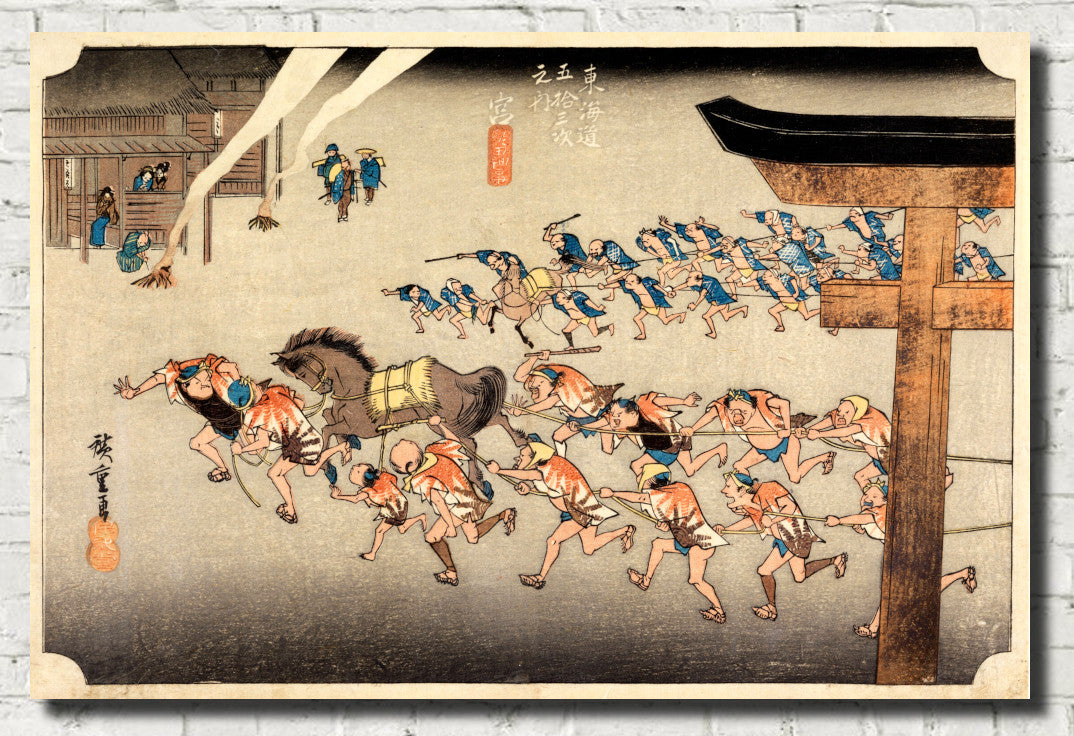
At Kuwana, boats approach the port after the ferry journey from Miya.
At Okitsu, porters carry travellers across the river while Mount Fuji and ships appear beyond.
These scenes reveal the complexity of nineteenth-century travel long before the railway transformed movement across Japan.
Inns, Horses and Post Stations
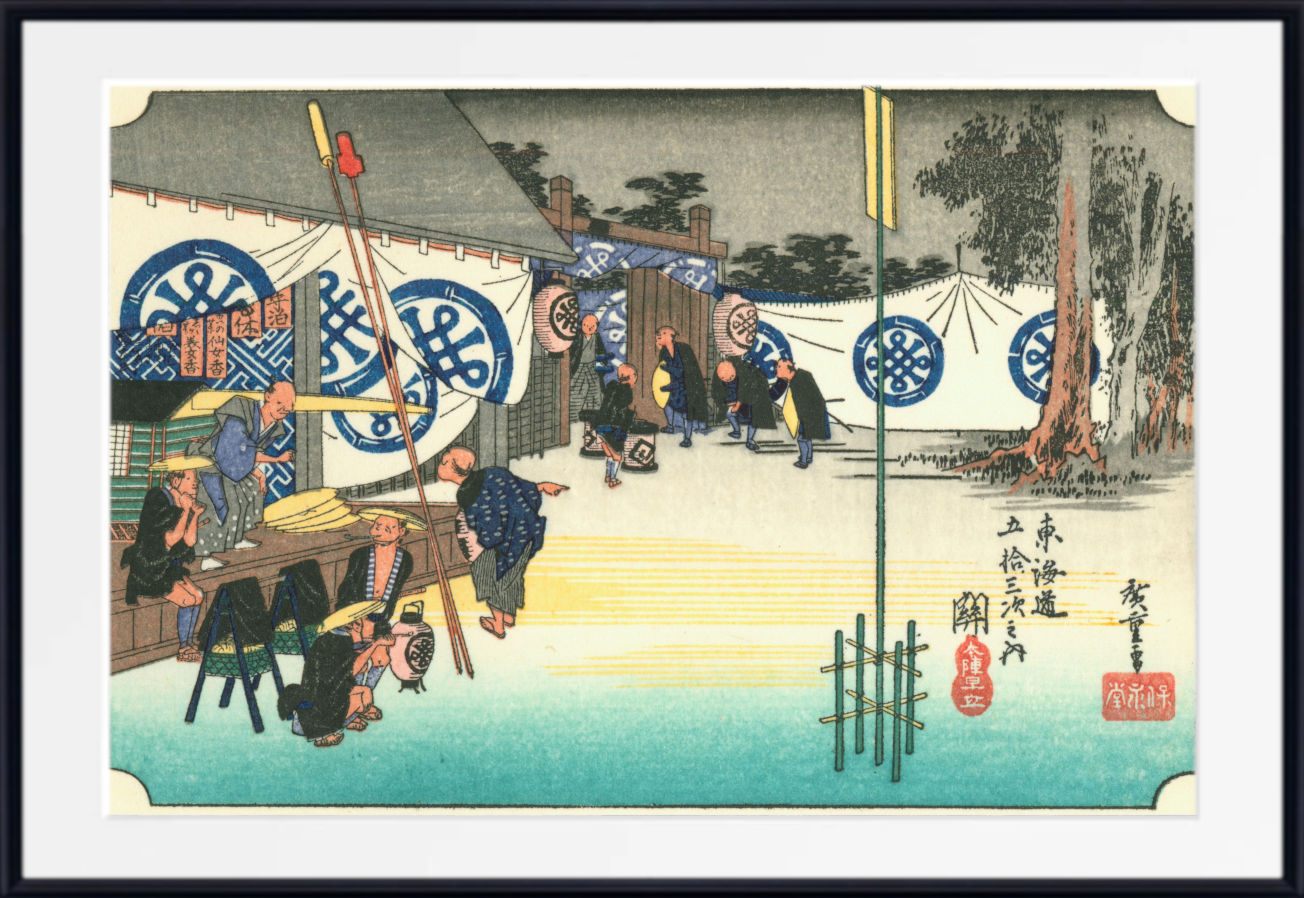
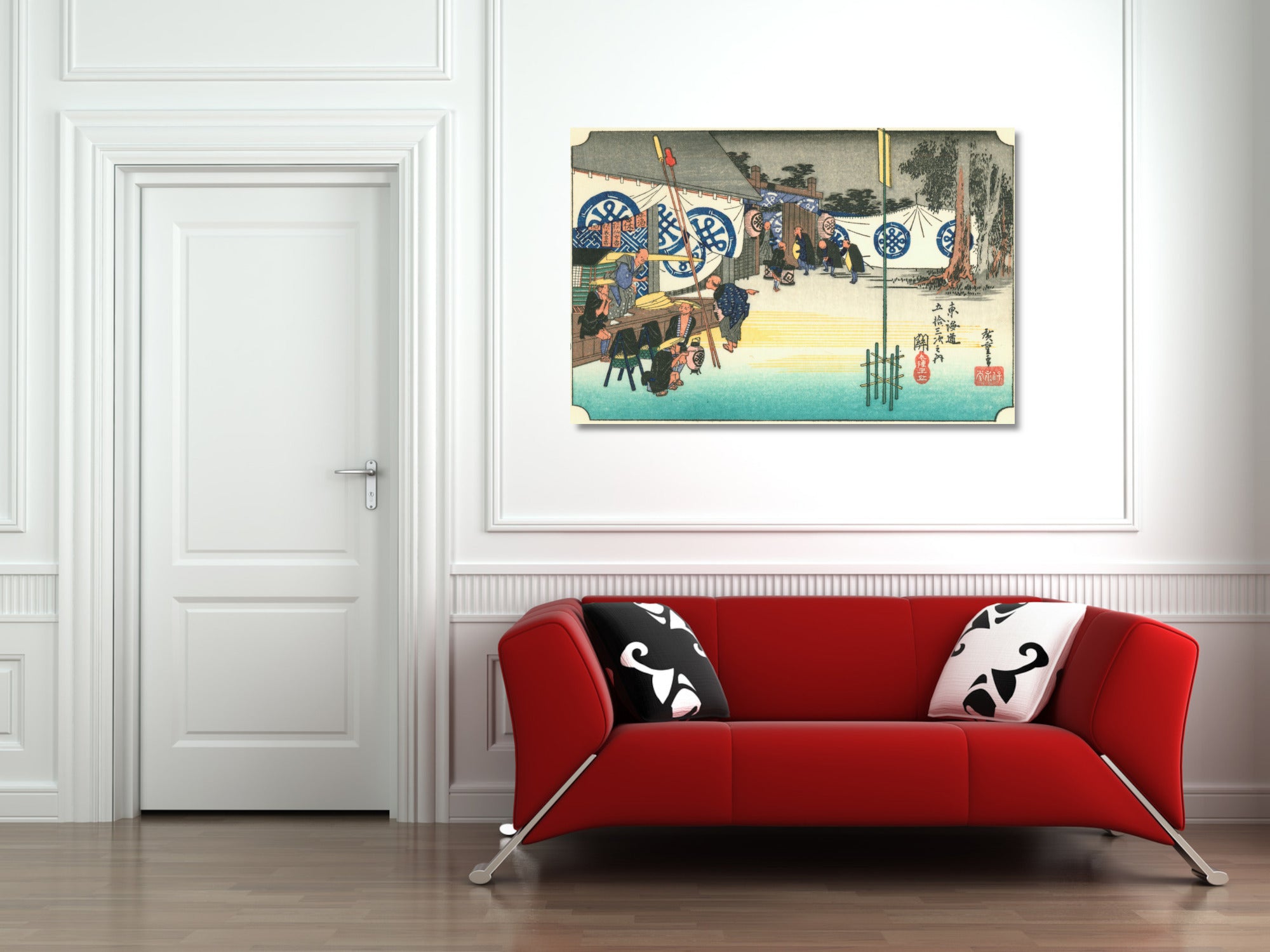
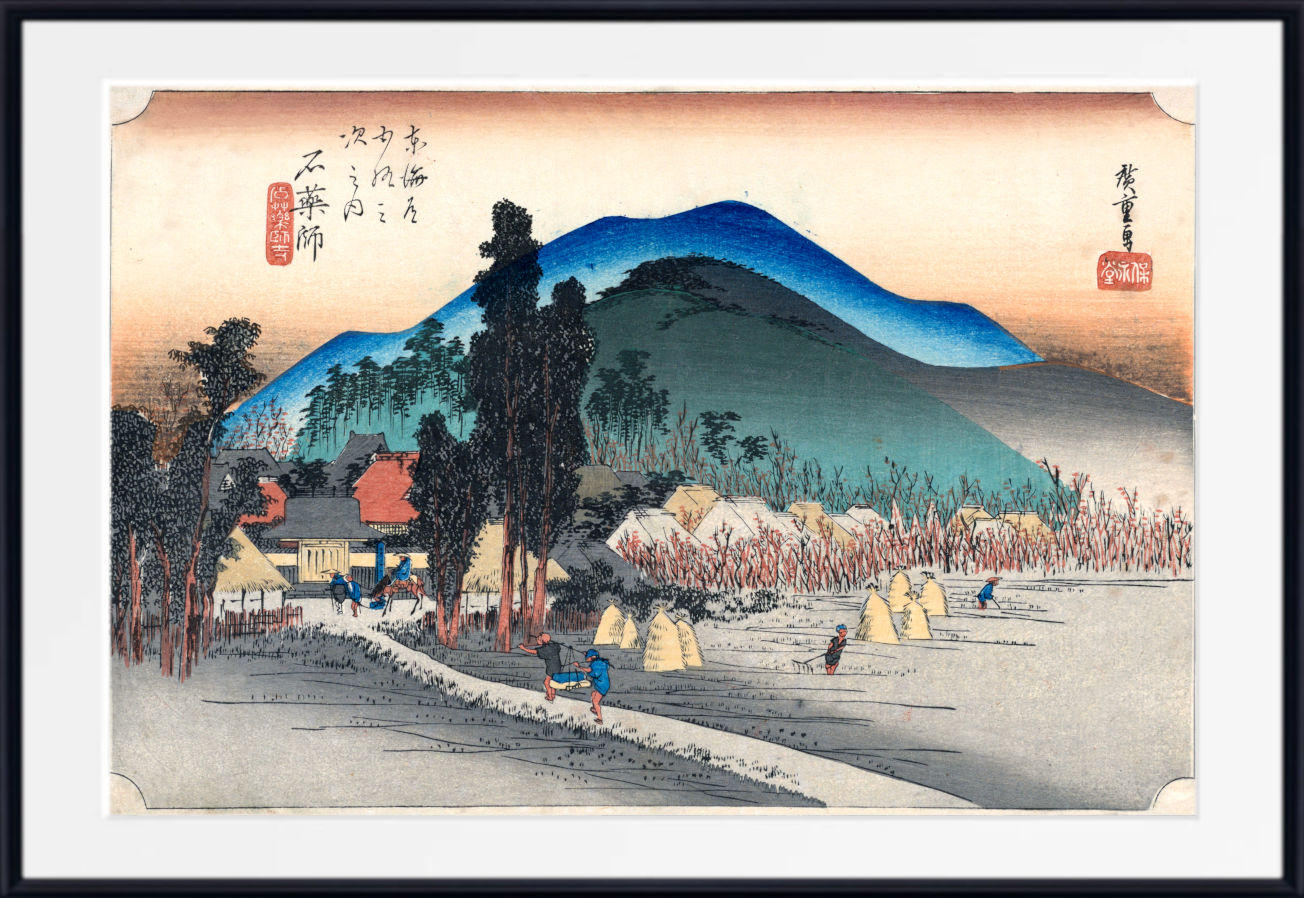
The fifty-three stations were practical stopping places as well as geographic markers.
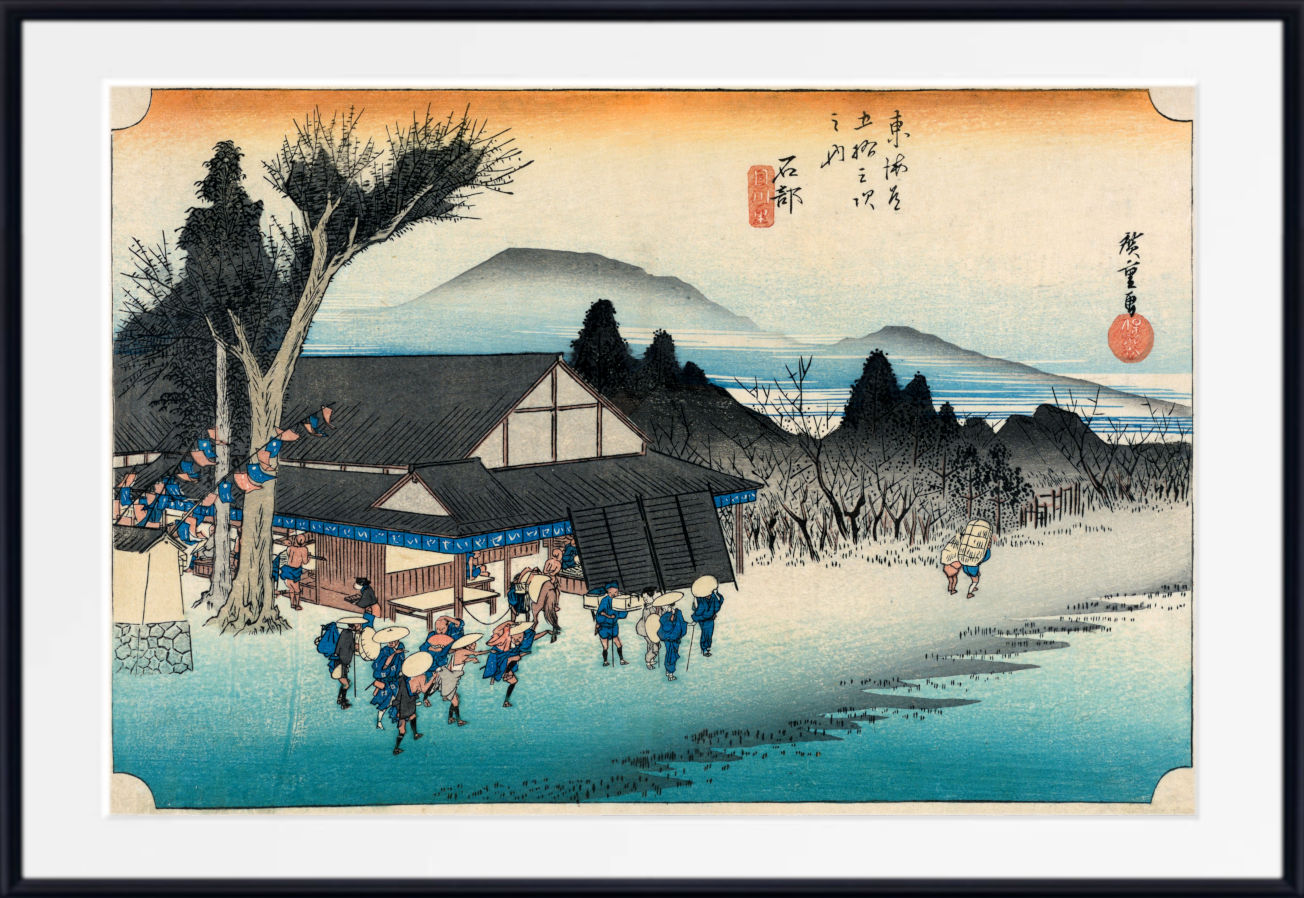
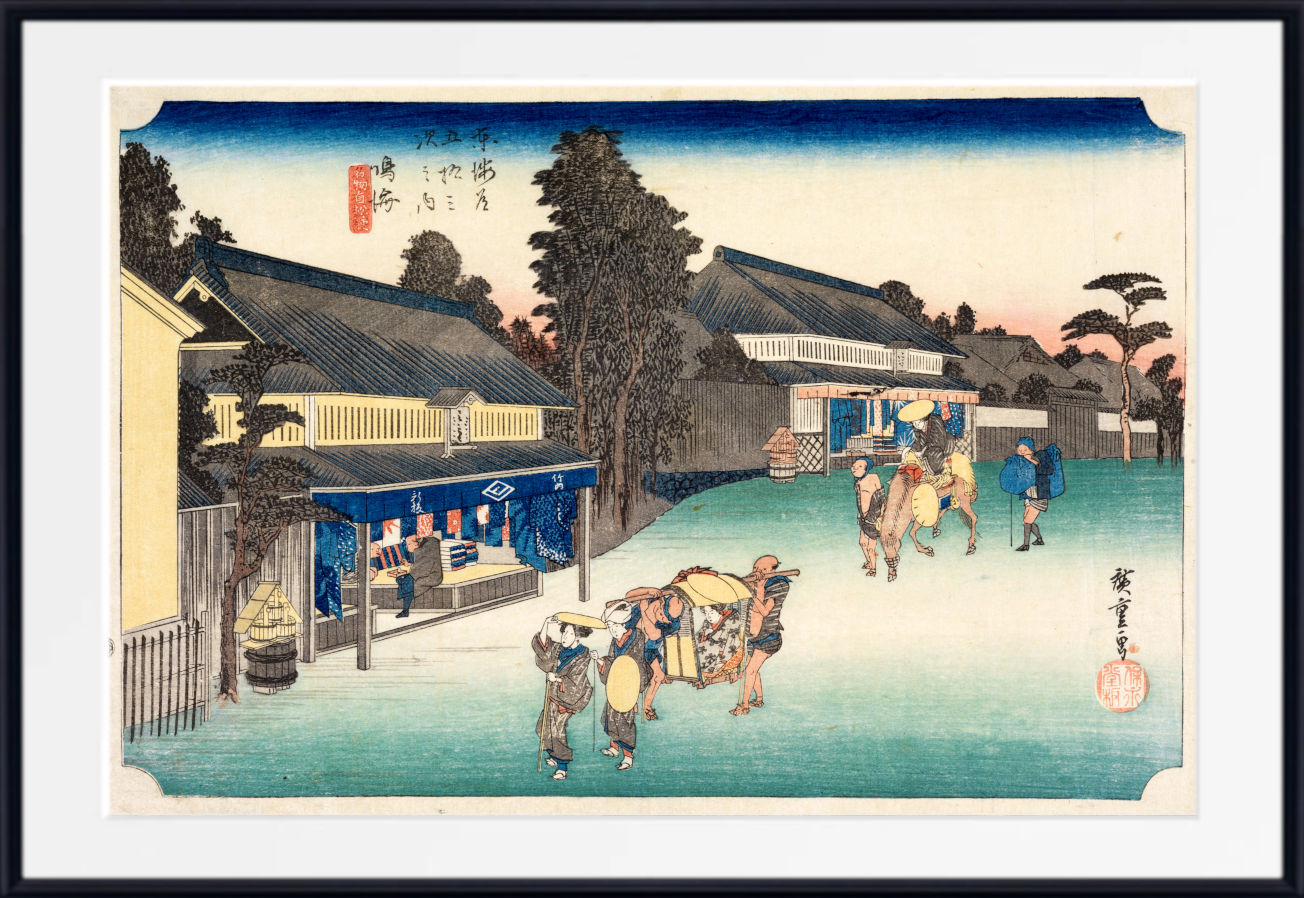
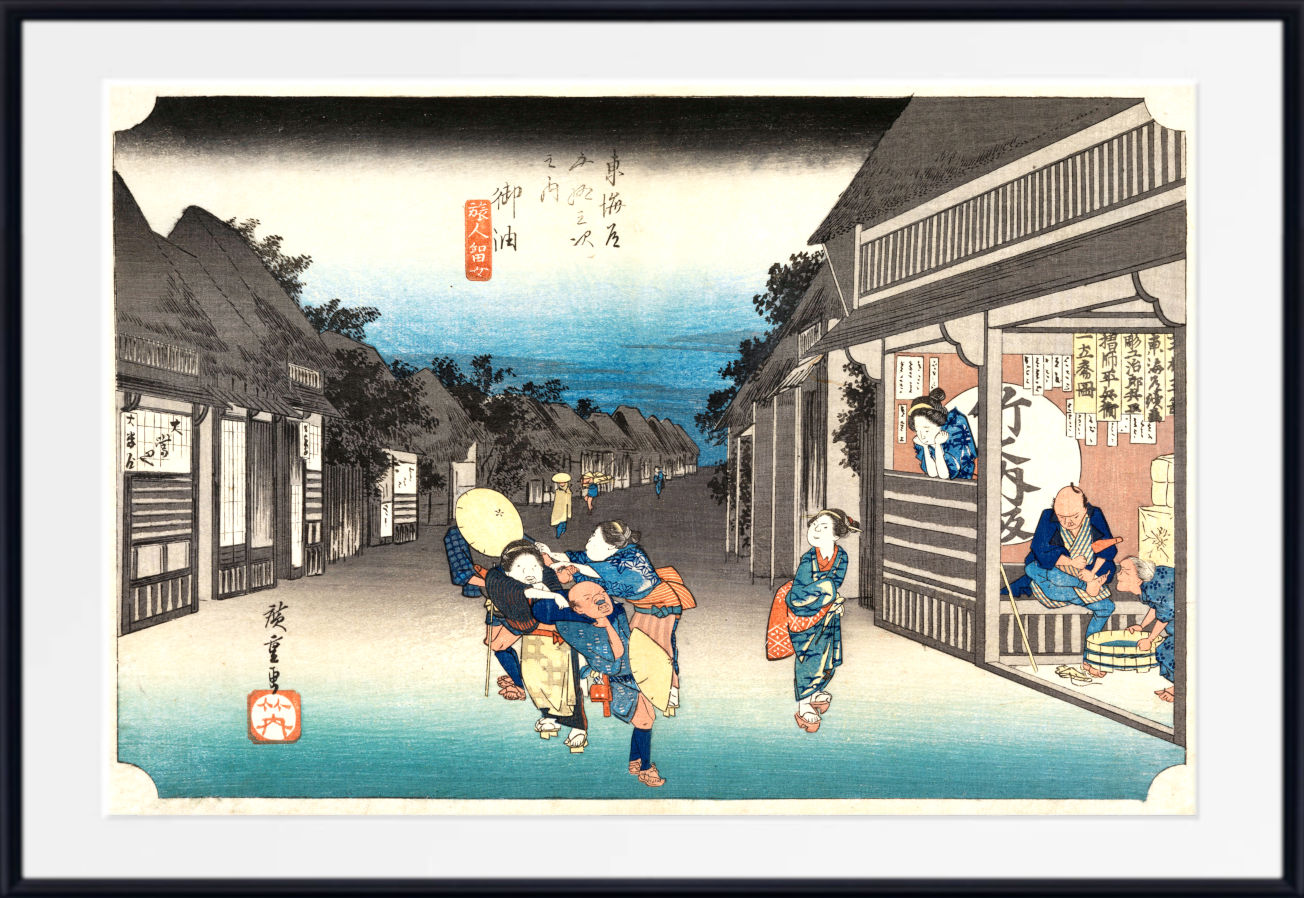
Hiroshige shows travellers arriving, departing, eating, changing horses and continuing along the road.
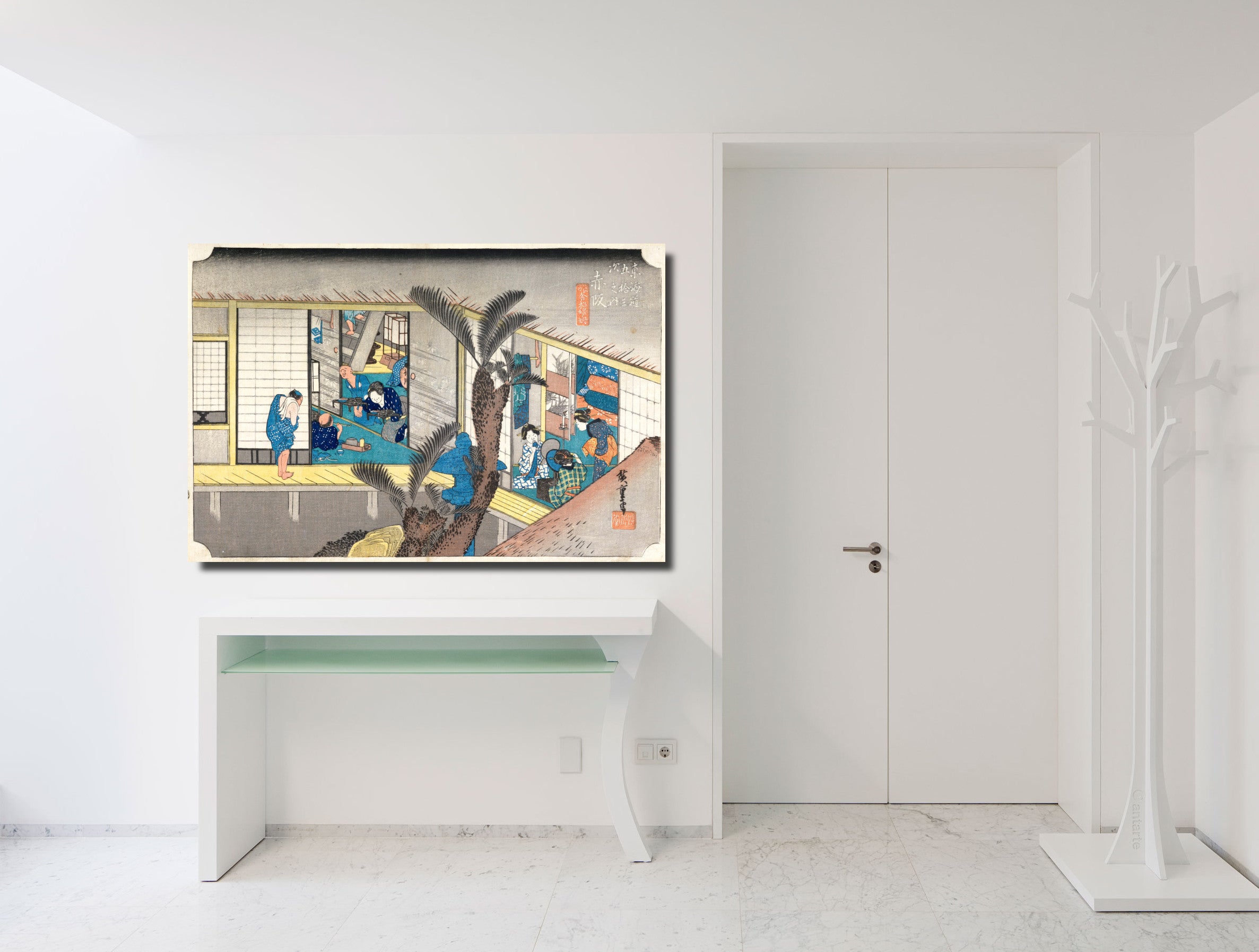
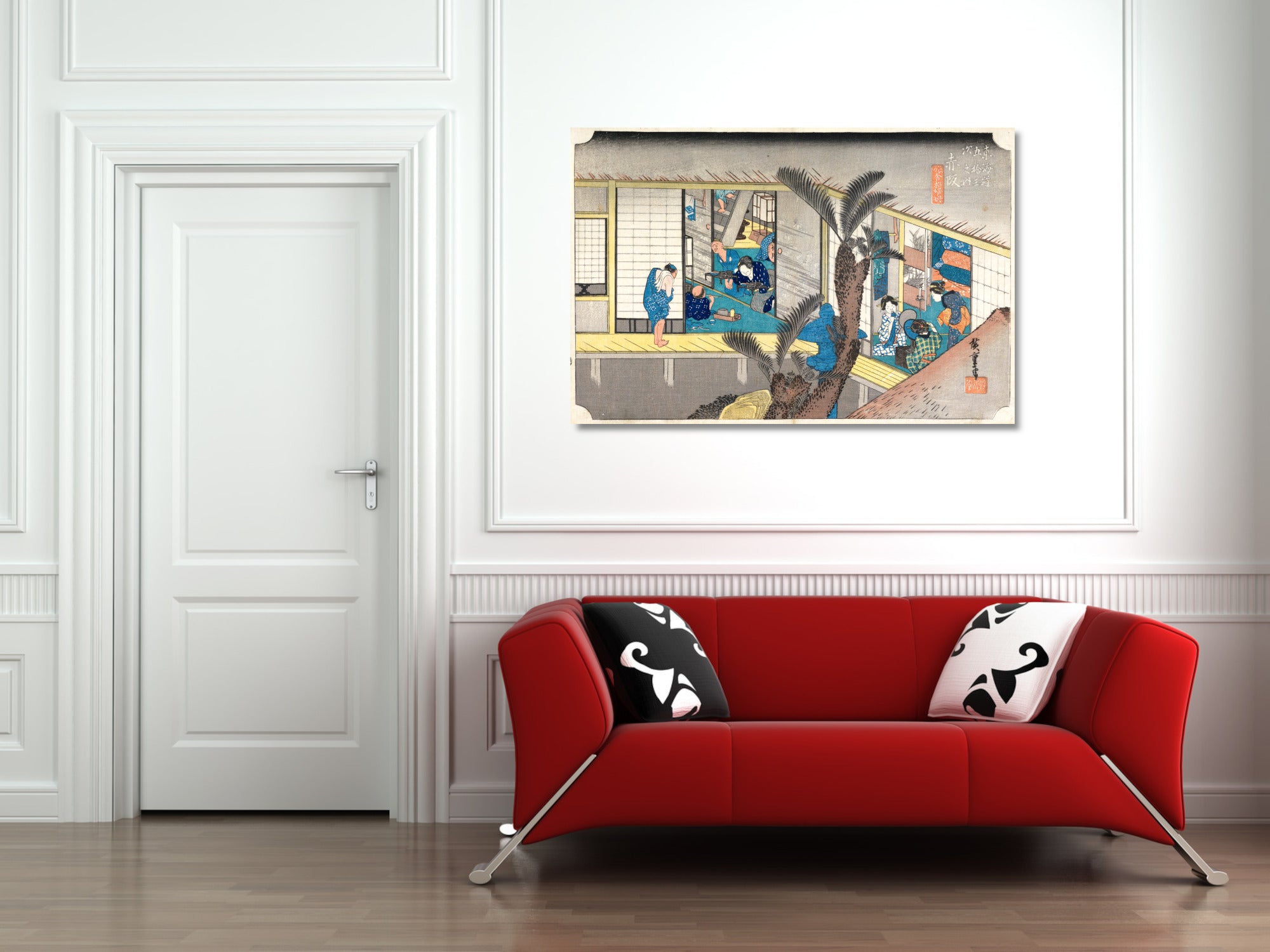
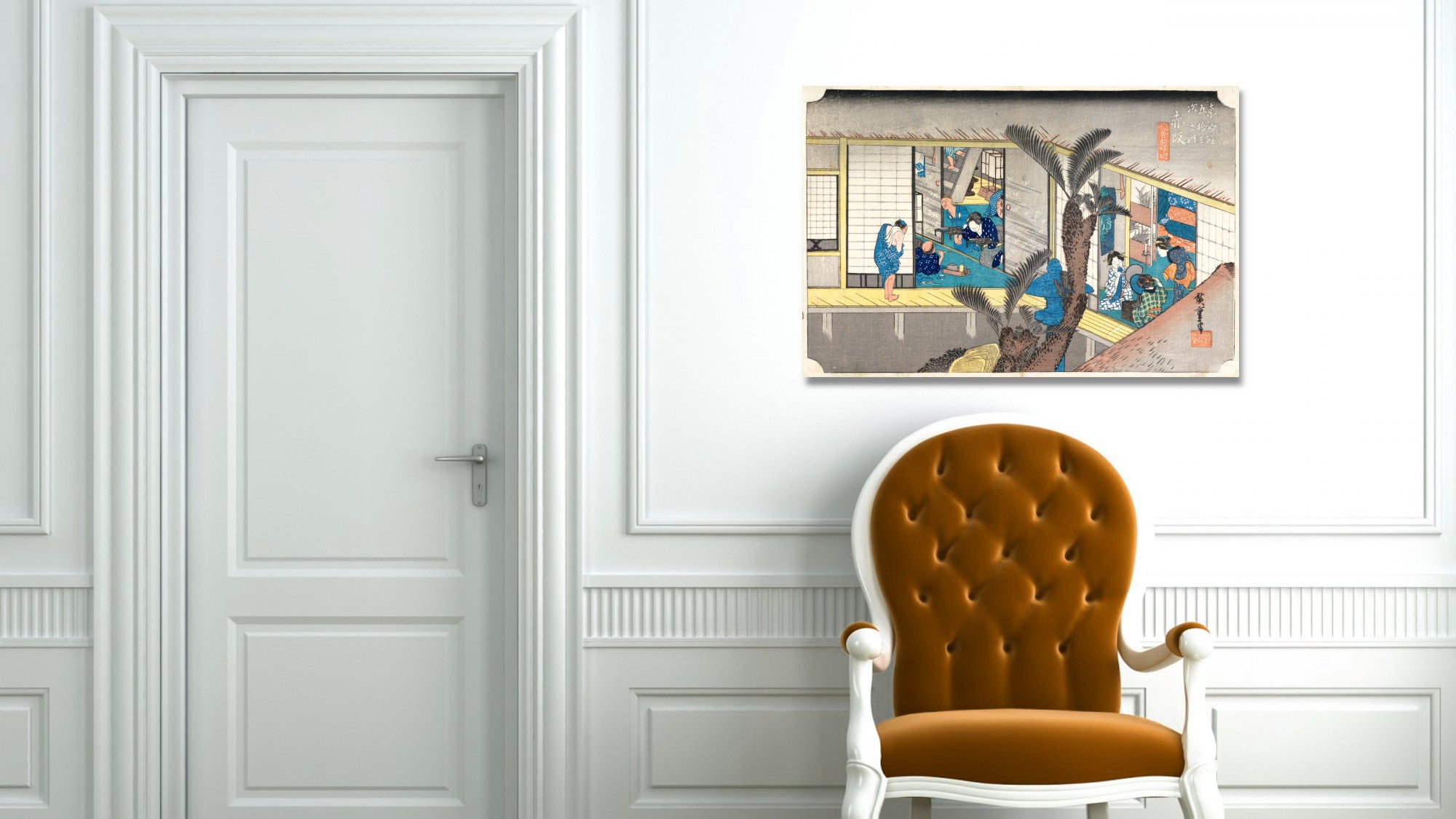
At some stations, inns and teahouses become important parts of the scene.
Elsewhere the town itself appears only briefly while the surrounding landscape dominates.
This variety prevents the series from becoming repetitive.
Each station has its own weather, terrain and human activity.
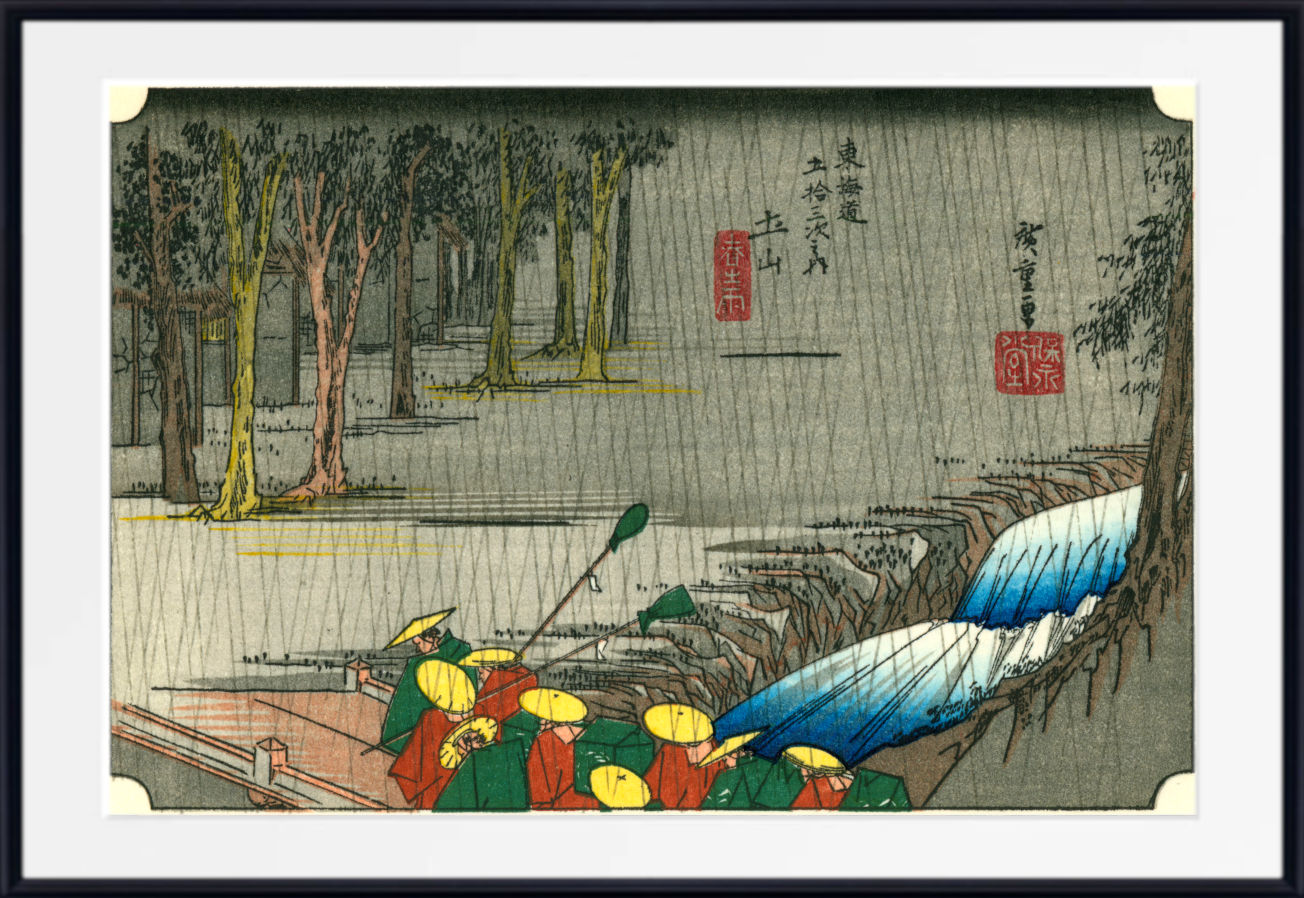
Travel Through Rain
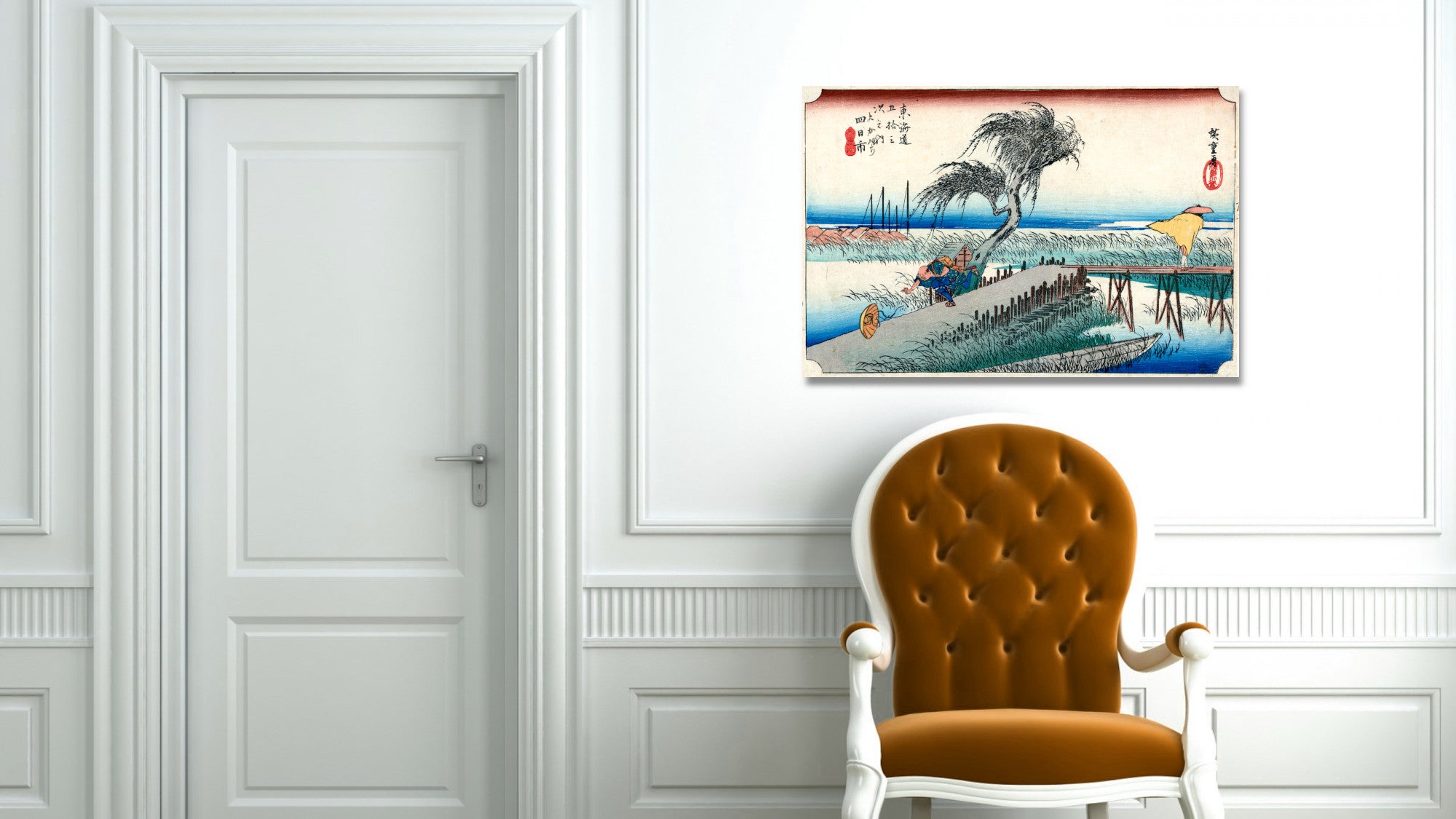
Rain is one of Hiroshige's most characteristic subjects.
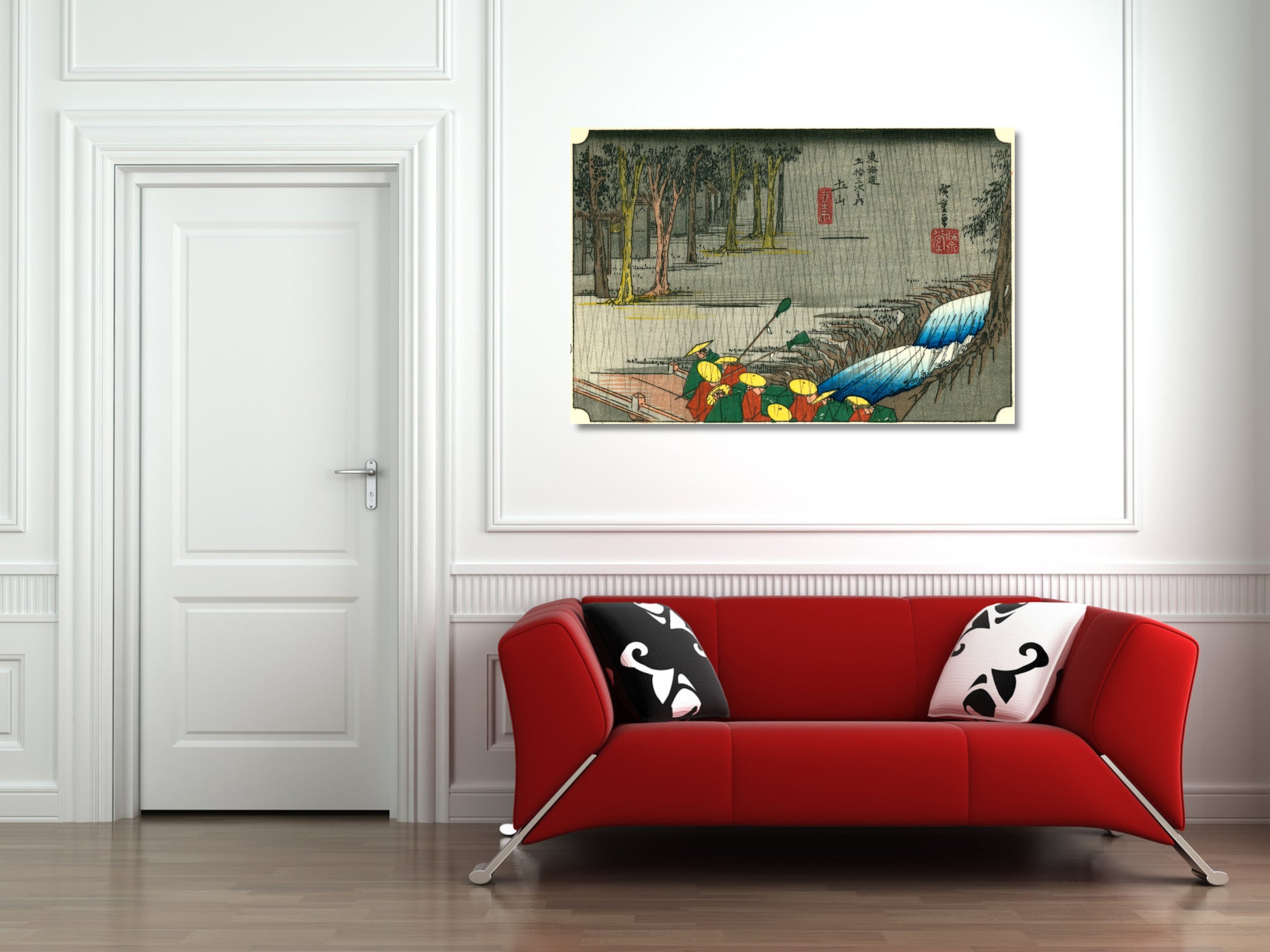
At Tsuchiyama, a procession moves through persistent spring rain beneath trees and mountains.
At Shōno, the effect is much more sudden and violent.
By changing the angle, density and relationship of the rain lines to the landscape, Hiroshige could create very different emotional effects from the same basic weather phenomenon.
The result helped establish his reputation as one of the great interpreters of atmospheric landscape.
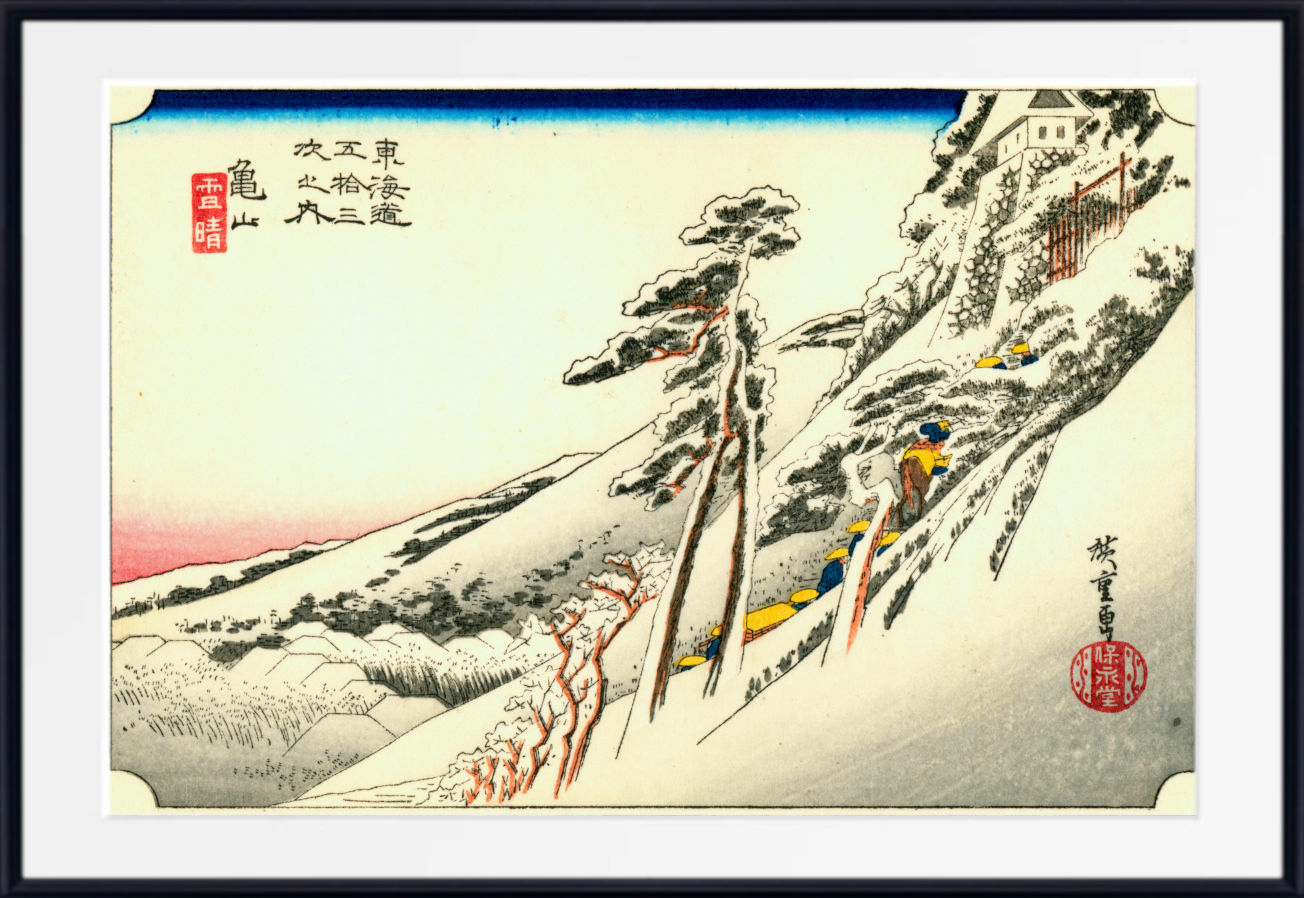
Travel Through Snow
Snow also provided Hiroshige with opportunities for radical simplification.
In Kanbara, much of the landscape becomes white or pale grey.
Dark silhouettes of figures, trees and buildings become especially important because colour is restricted.
Rather than making the composition visually empty, the reduced palette creates exceptional stillness and depth.
Snow scenes remain among Hiroshige's most admired works precisely because of this restraint.
Hiroshige's Use of Bokashi
Many atmospheric effects within the series depend upon bokashi, the gradation of colour achieved during the printing process.
Printers could soften one colour gradually into another across sky, water or landscape.
This allowed subtle transitions at dawn or dusk and helped distant forms recede into mist.
Hiroshige's designs therefore depended not only on drawing but also on sophisticated collaboration with the craftsmen who cut and printed the woodblocks.
Well-executed bokashi contributes significantly to the poetic character associated with the Hōeidō Tōkaidō.
People on the Road
Hiroshige's travellers give the series much of its humanity.
Some are wealthy enough to travel by palanquin.
Others walk.
Porters carry luggage.
Horses transport people and goods.
Officials move in formal processions while ordinary travellers stop at teahouses or cross rivers.
Hiroshige rarely treats these figures as individual portraits.
Instead, their poses and activities communicate the experience of travelling.
They bend beneath rain, climb hills, wait at ferries and hurry along roads.
Reality and Imagination
The Tōkaidō prints should not be read as photographs of nineteenth-century Japan.
Hiroshige could exaggerate geography, alter scale and invent weather when doing so created a stronger composition.
Kanbara's extraordinary snow is one well-known example.
His landscapes combine observation, memory, visual convention and artistic imagination.
That balance helps explain why the series feels convincing without being constrained by strict documentary accuracy.
Ending the Journey in Kyoto
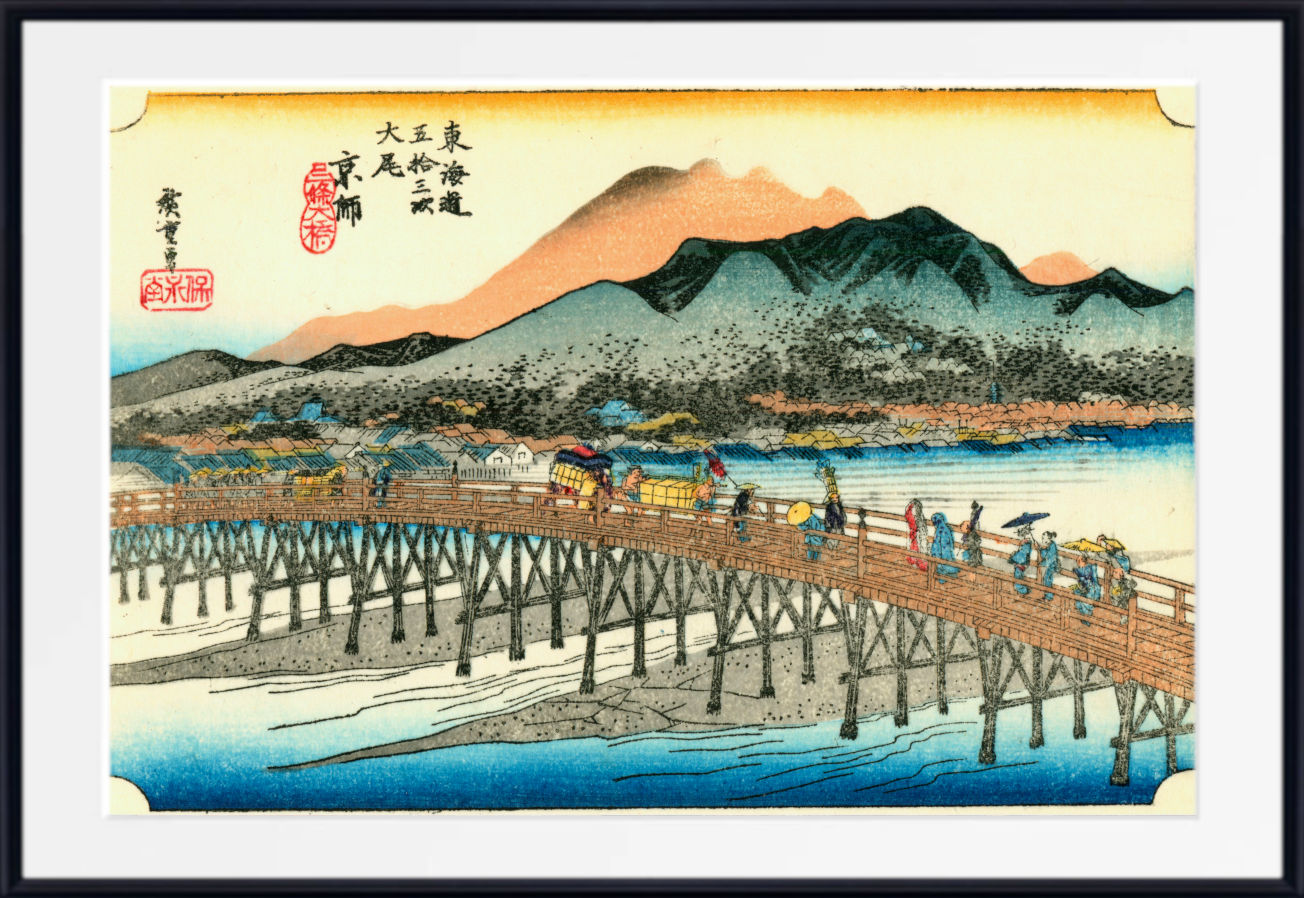
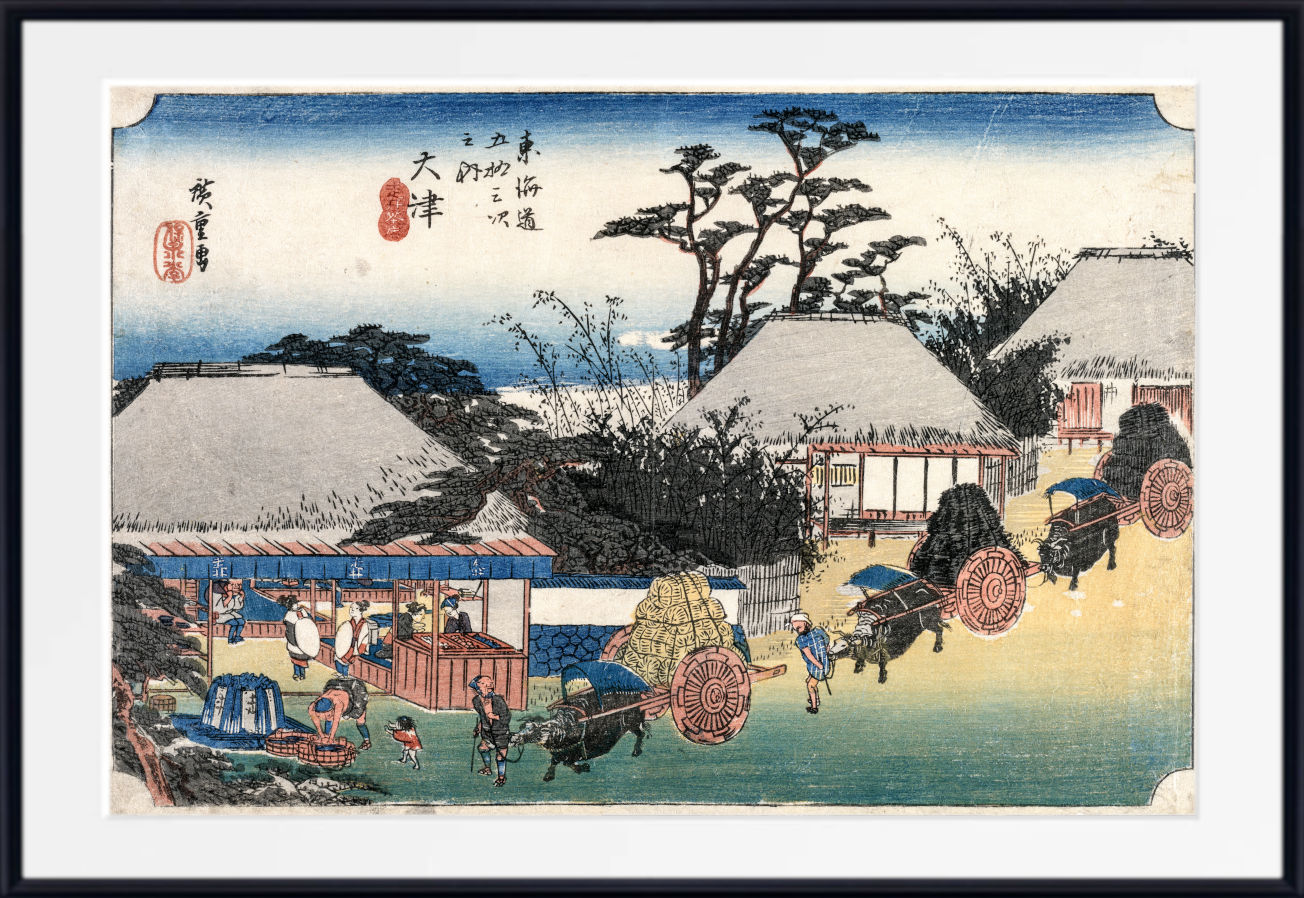
The visual journey concludes at Kyoto, where travellers reach the great Sanjō Bridge over the Kamo River.
After the changing landscapes and post stations of the road, the bridge marks the arrival in the imperial capital.
Houses, temples and distant mountains spread beyond the river, giving the series a clear destination rather than simply ending at the fifty-third post station.
The complete route from Nihonbashi to Kyoto therefore forms a narrative as well as a collection of individual landscapes.
Why the Tōkaidō Series Became So Popular
The series brought together several subjects that fascinated Edo-period audiences:
travel, famous places, seasonal landscape, local customs and ordinary people.
Hiroshige's compositions were also immediately readable.
Even complex landscapes are organised around strong shapes, clear routes and memorable weather effects.
His ability to transform familiar places into poetic images helped make the series an enormous success.
The Hōeidō Tōkaidō subsequently became one of the most enduring achievements of Japanese printmaking.
Hiroshige's Later Tōkaidō Series
The Hōeidō edition was not Hiroshige's final treatment of the road.
He returned to the Tōkaidō repeatedly in later series, altering the format, viewpoint and composition.
This means prints bearing the same station name do not necessarily belong to the same series.
For GalleryThane's dedicated collection, the focus is on bringing together Hiroshige's celebrated Tōkaidō travel imagery while preserving the identity of individual stations and scenes.
For a complete station-by-station exploration, read GalleryThane's guide to The Fifty-Three Stations of the Tōkaidō.
Choosing a Fifty-Three Stations of the Tōkaidō Print
For an atmospheric winter landscape, Kanbara – Evening Snow is one of the strongest choices.
For dramatic weather and movement, Shōno captures travellers caught in a sudden rainstorm.
Hakone offers mountainous drama, while Hara places Mount Fuji at the centre of the landscape.
Nihonbashi is particularly meaningful as the starting point of the route, while Arriving at Kyoto completes the journey.
A complete set allows the changing landscapes of the entire Tōkaidō to be experienced together.
Creating a Tōkaidō Gallery Wall
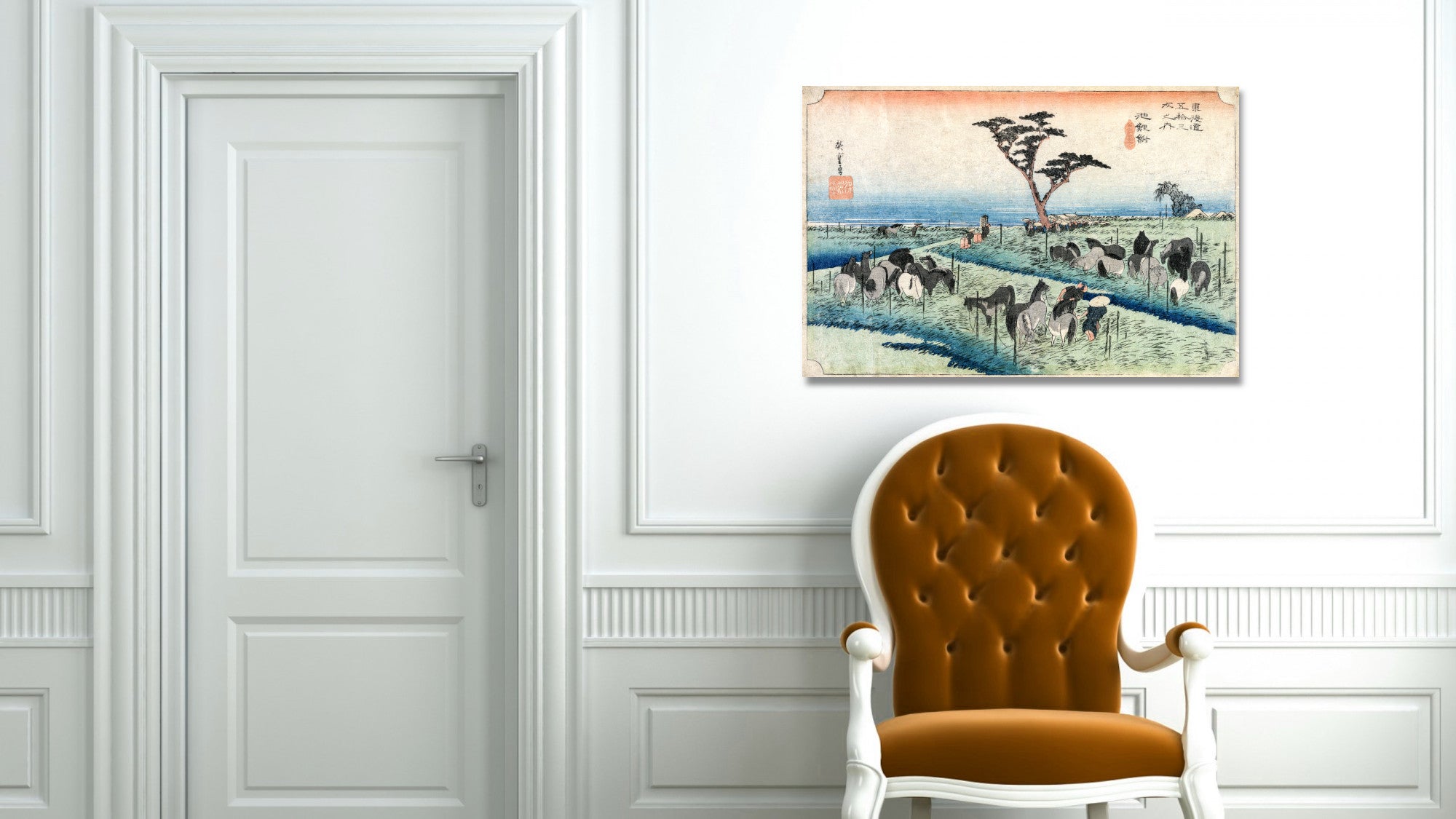
The horizontal format and related subject matter of the series make the prints particularly suitable for displaying in groups.
A weather-themed arrangement might combine Kanbara, Shōno and Tsuchiyama.
A travel sequence could bring together Nihonbashi, several intermediate stations and Kyoto.
Another approach is to group mountain or coastal landscapes.
Because all of the works belong to a single journey, even prints with different colour palettes retain a strong conceptual connection.
Tōkaidō Prints for Modern Interiors
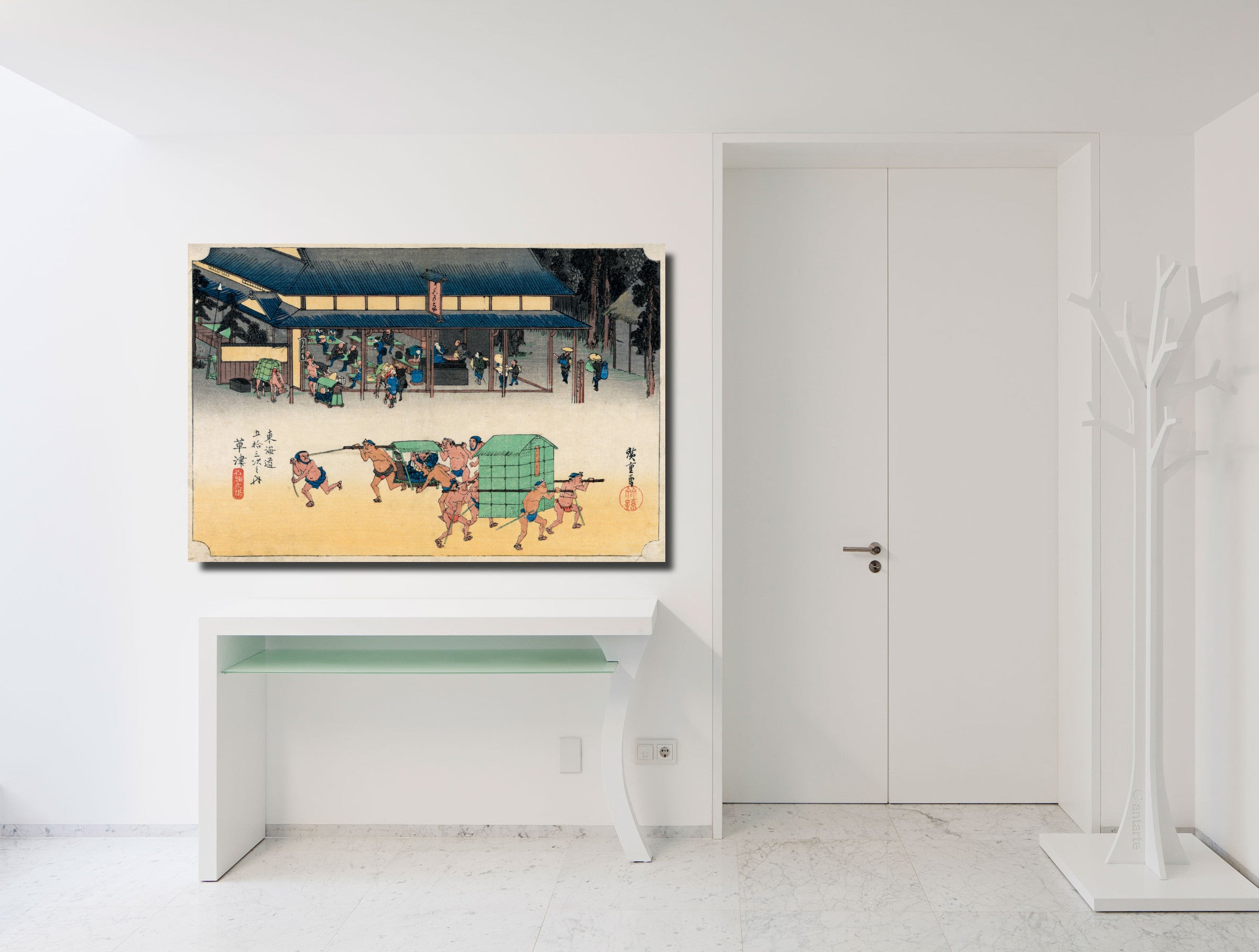
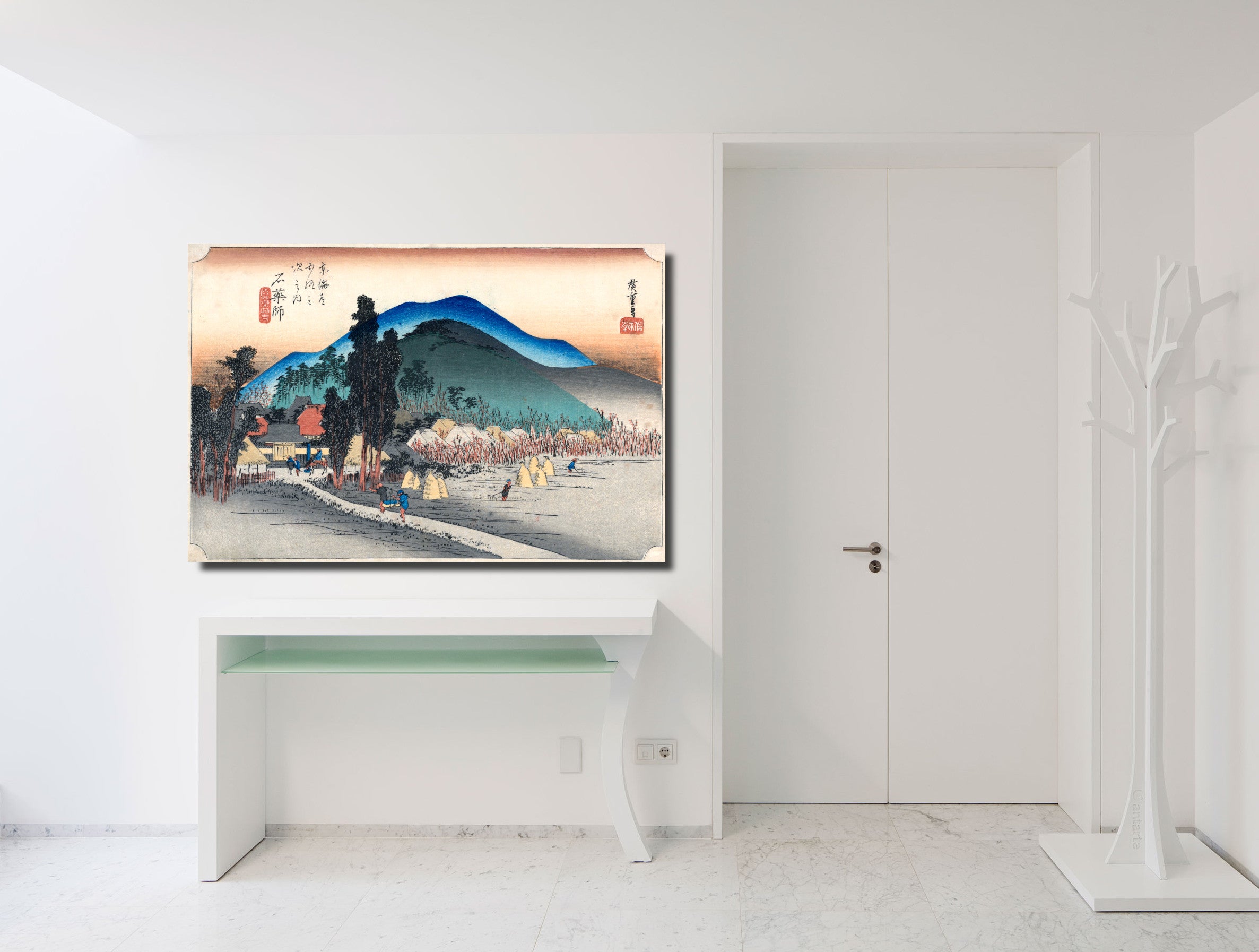
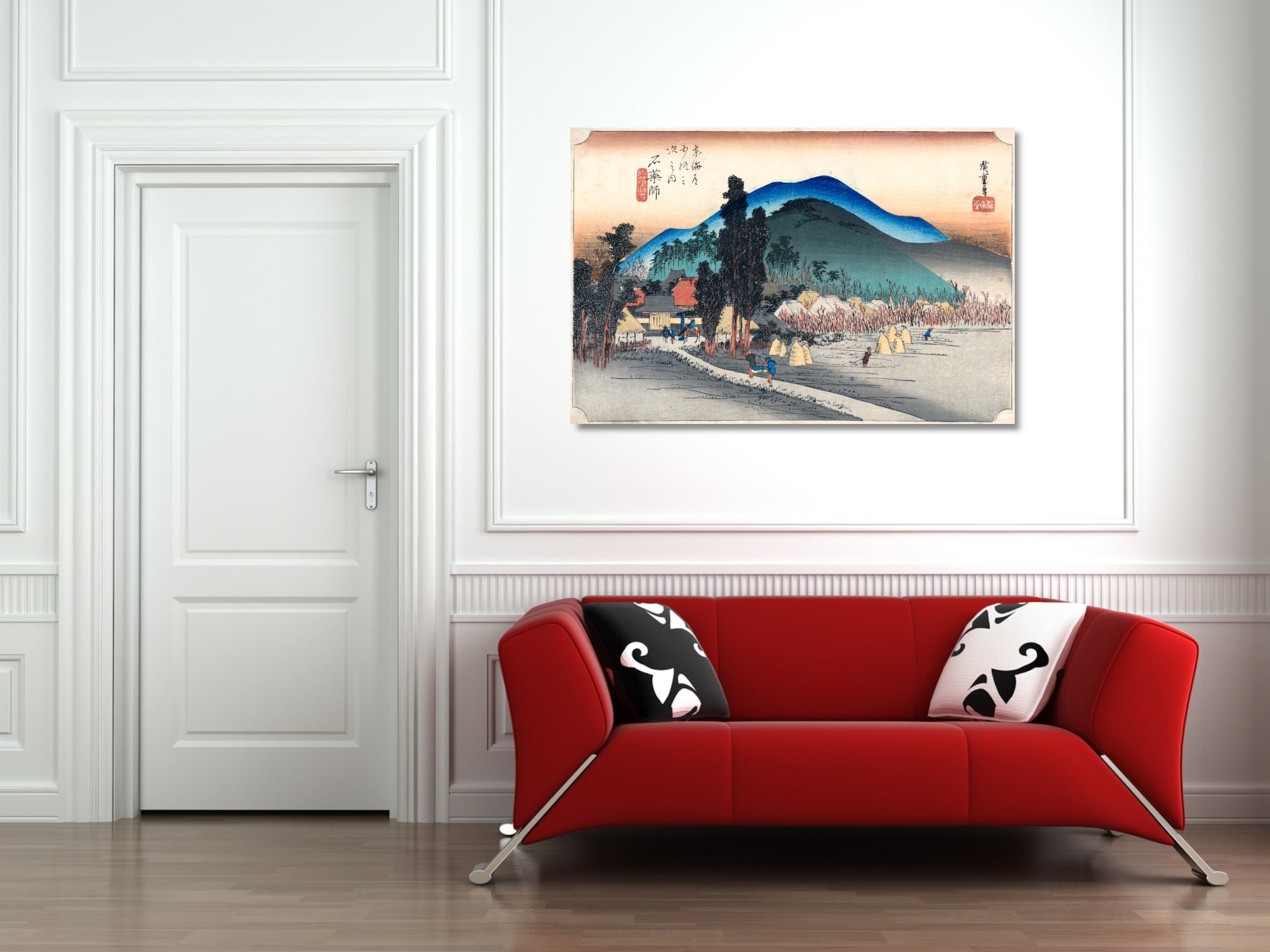
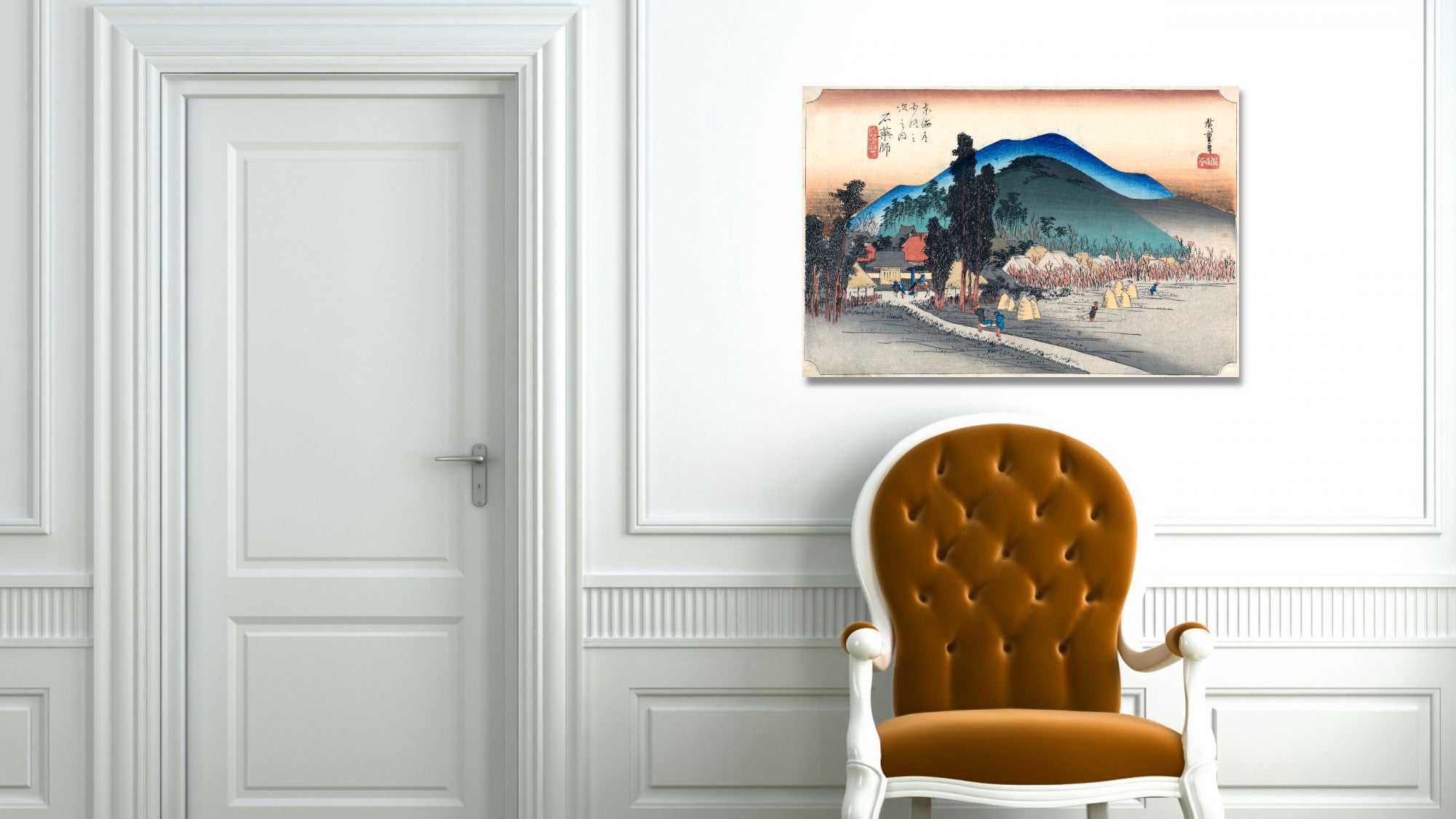
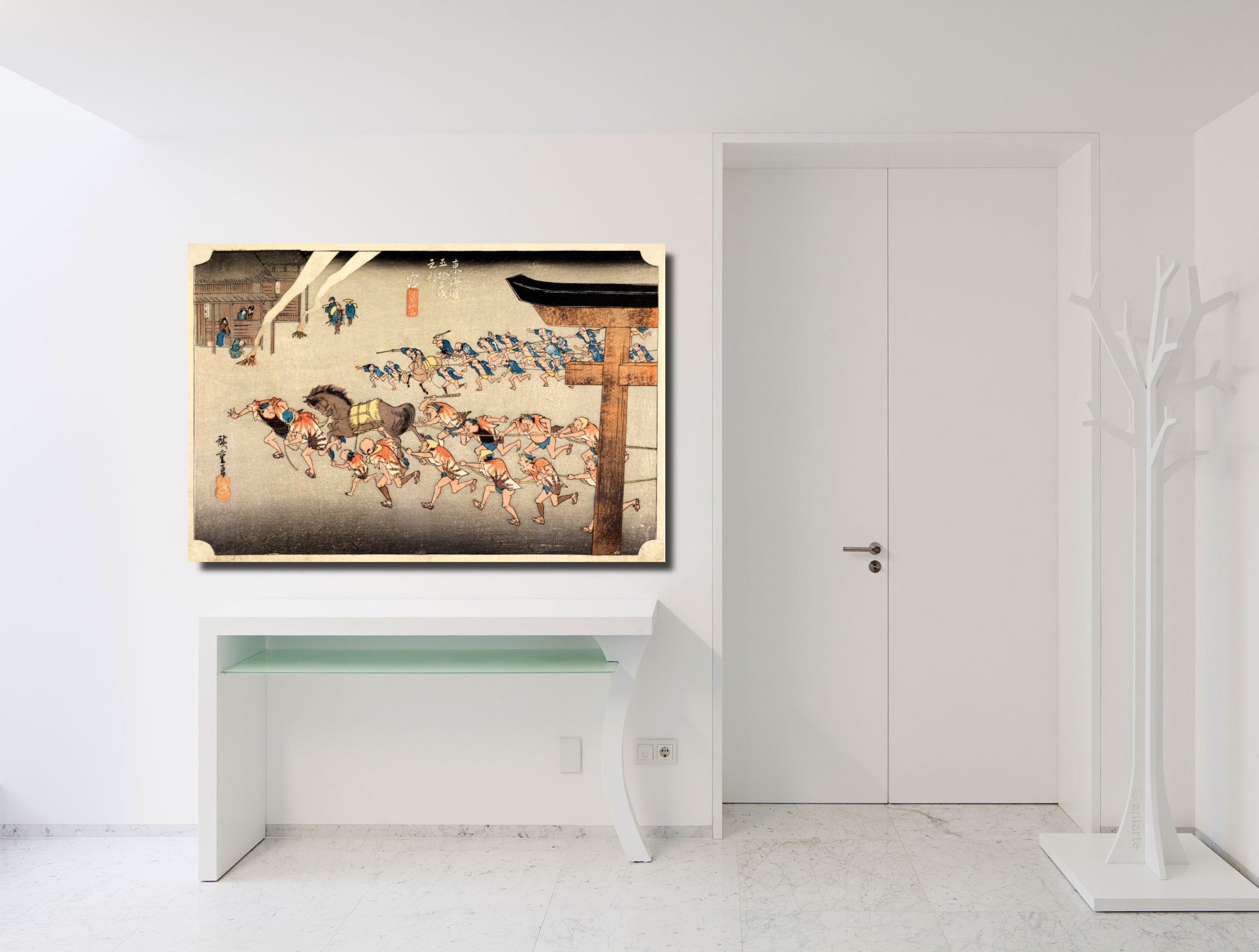
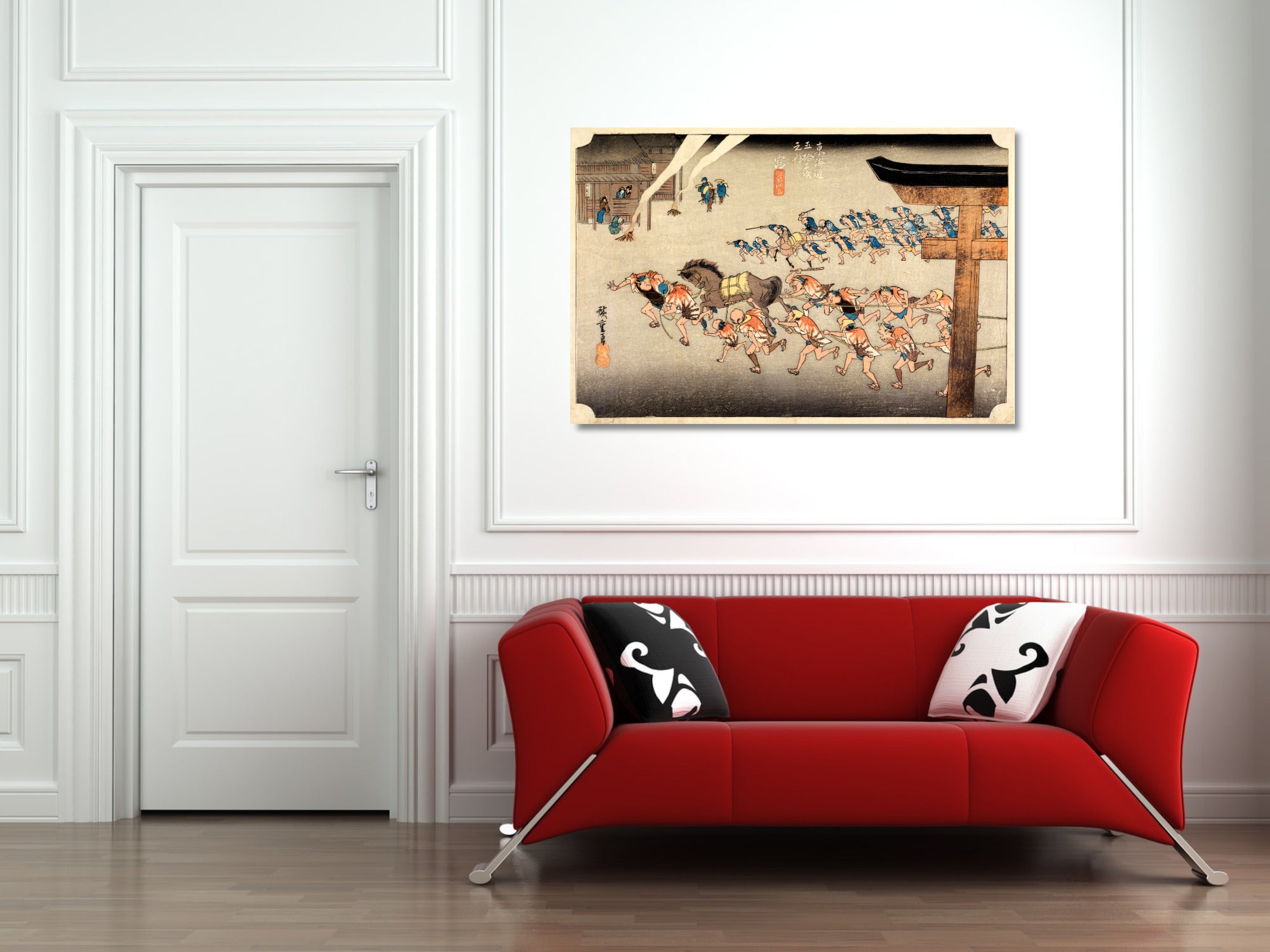
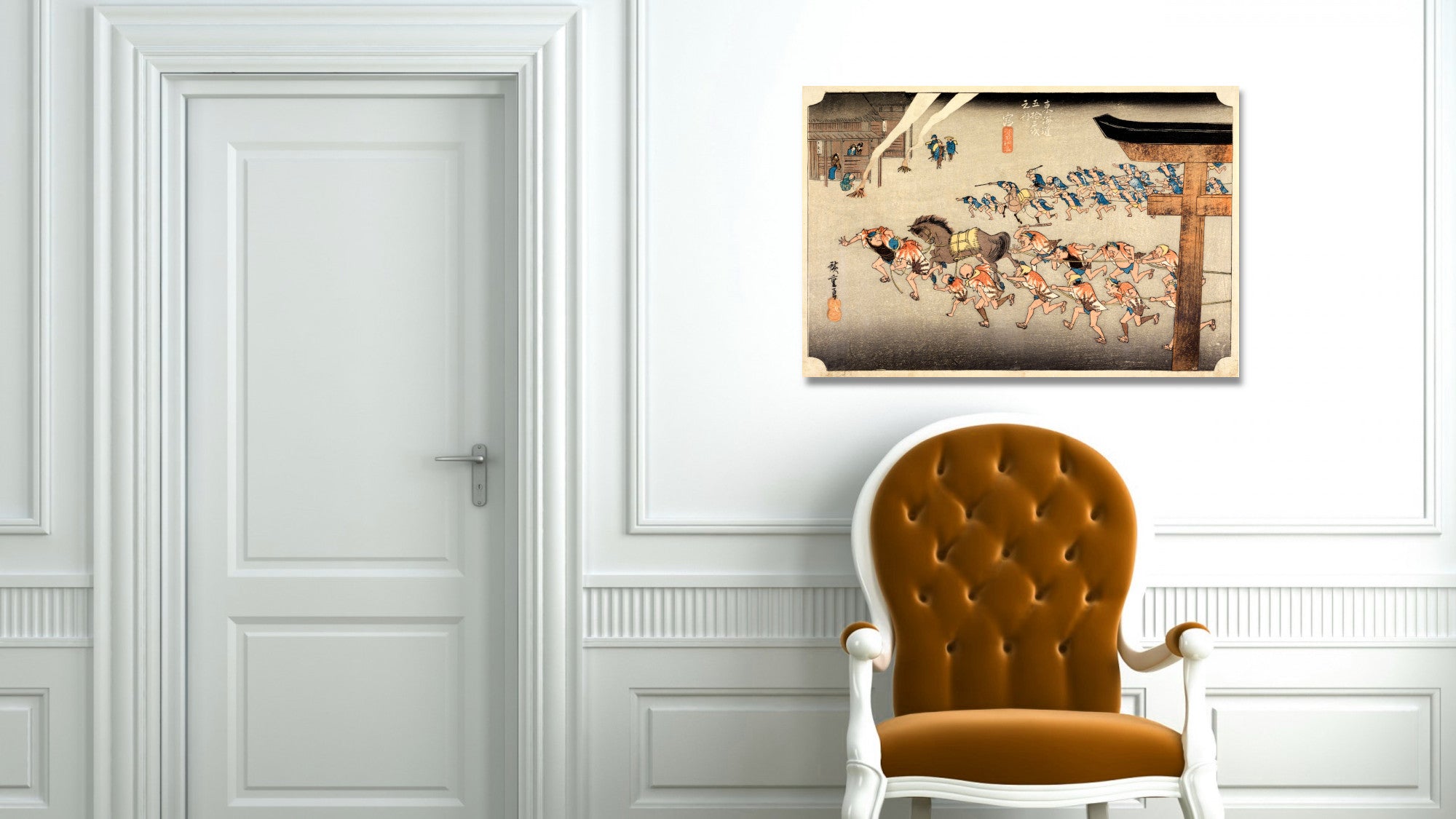
Hiroshige's Tōkaidō landscapes complement Scandinavian, Japandi, minimalist and contemporary interiors particularly well.
Indigo blues, muted greens, cream, grey and natural earth tones work naturally with timber furniture and neutral walls.
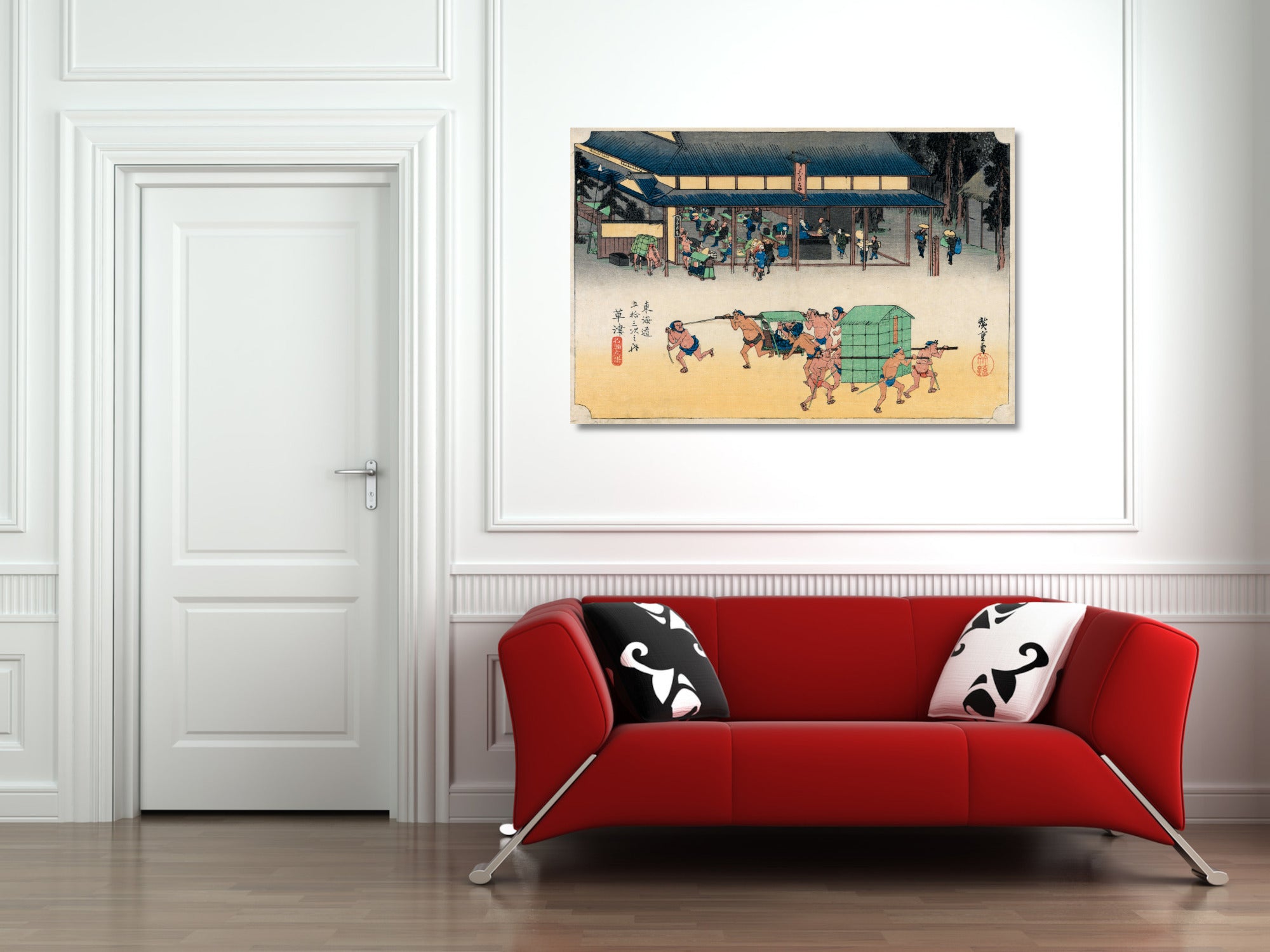
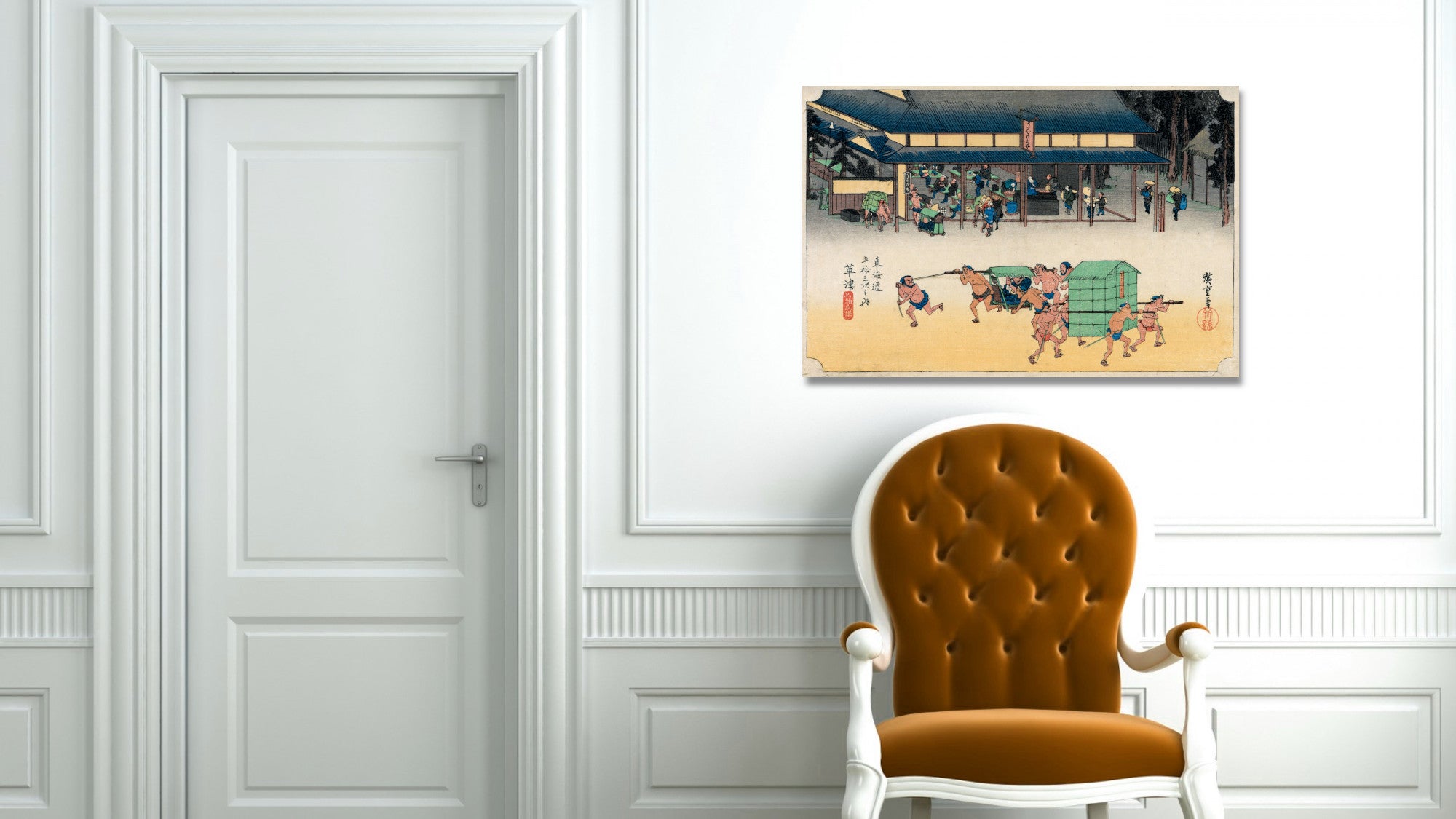
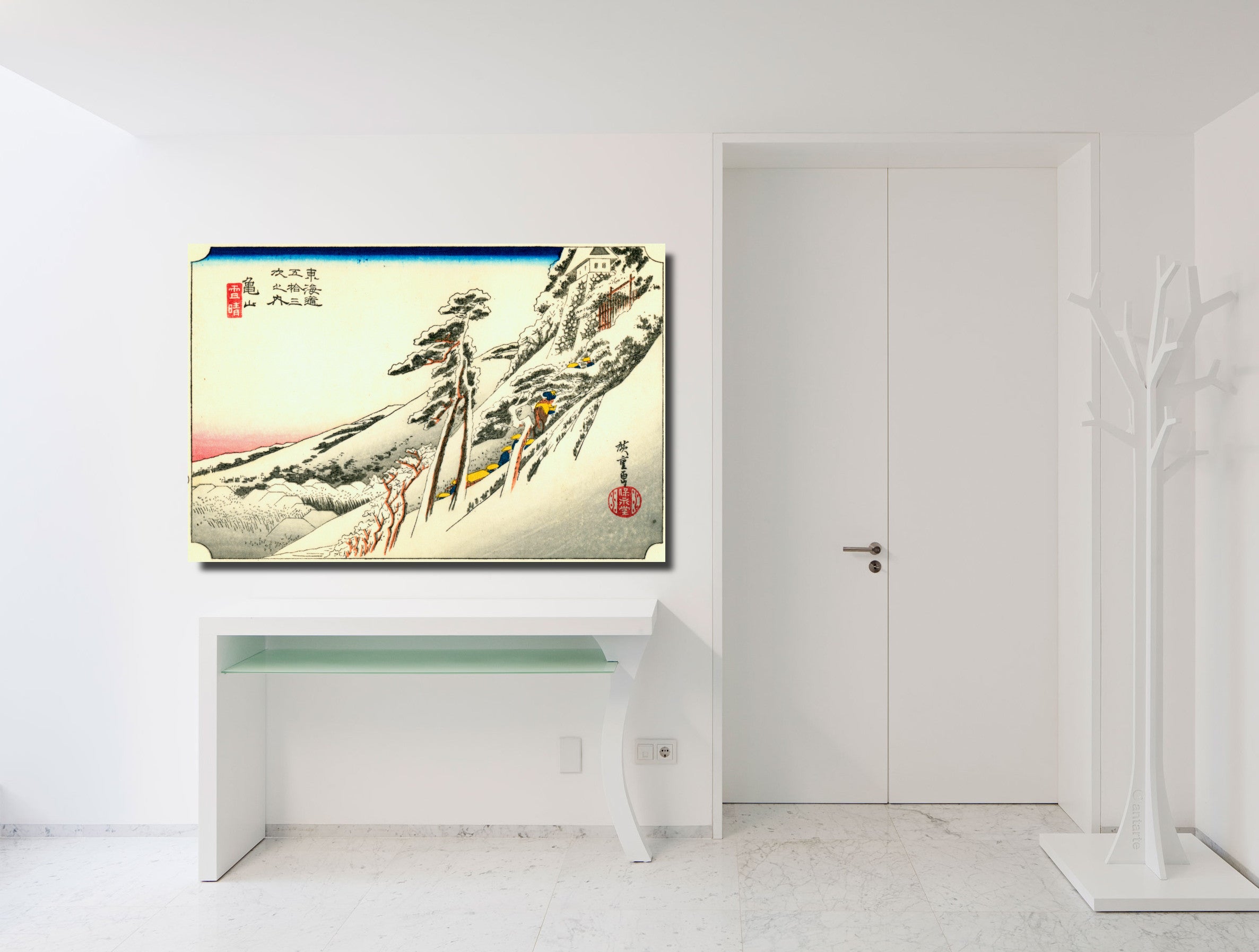
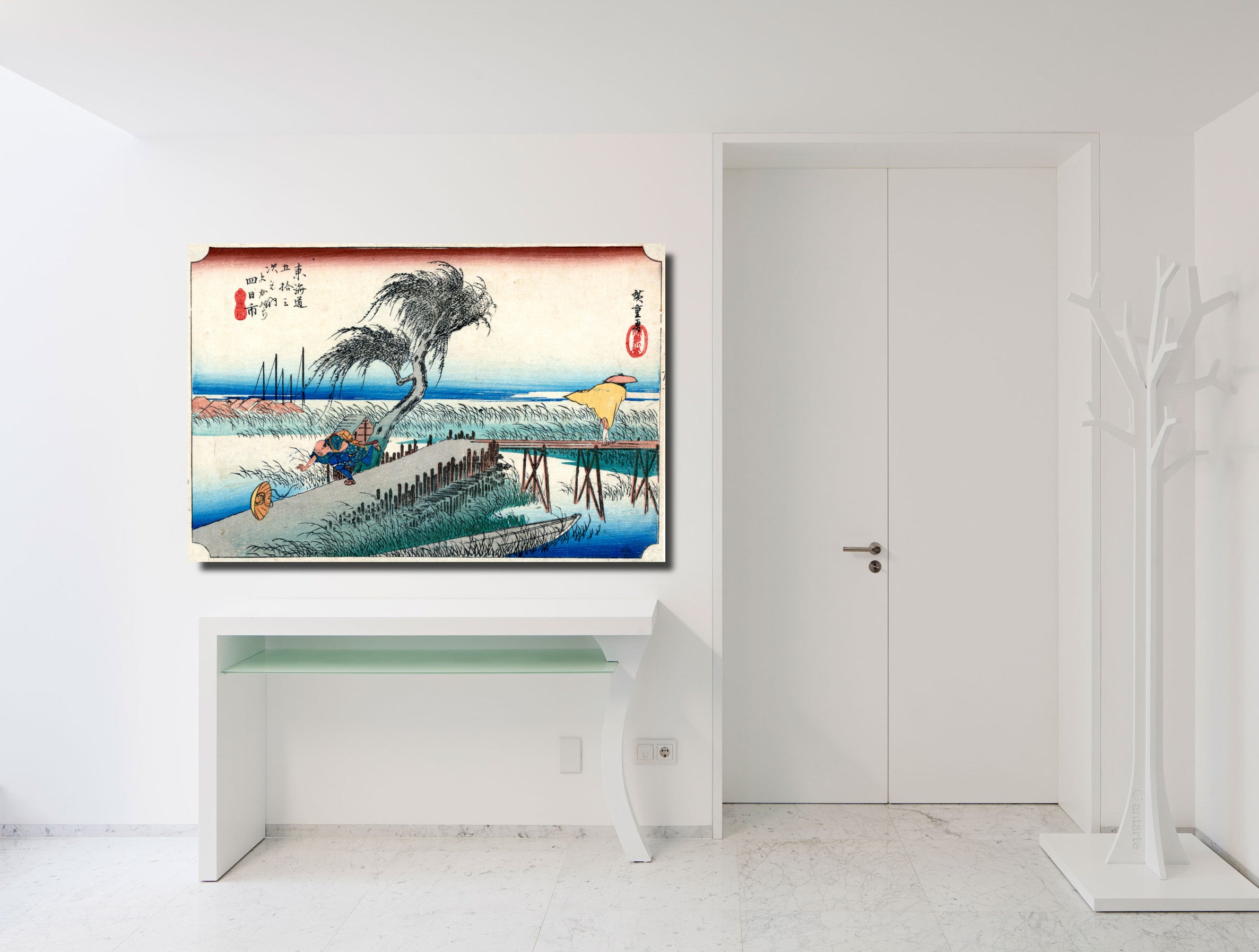
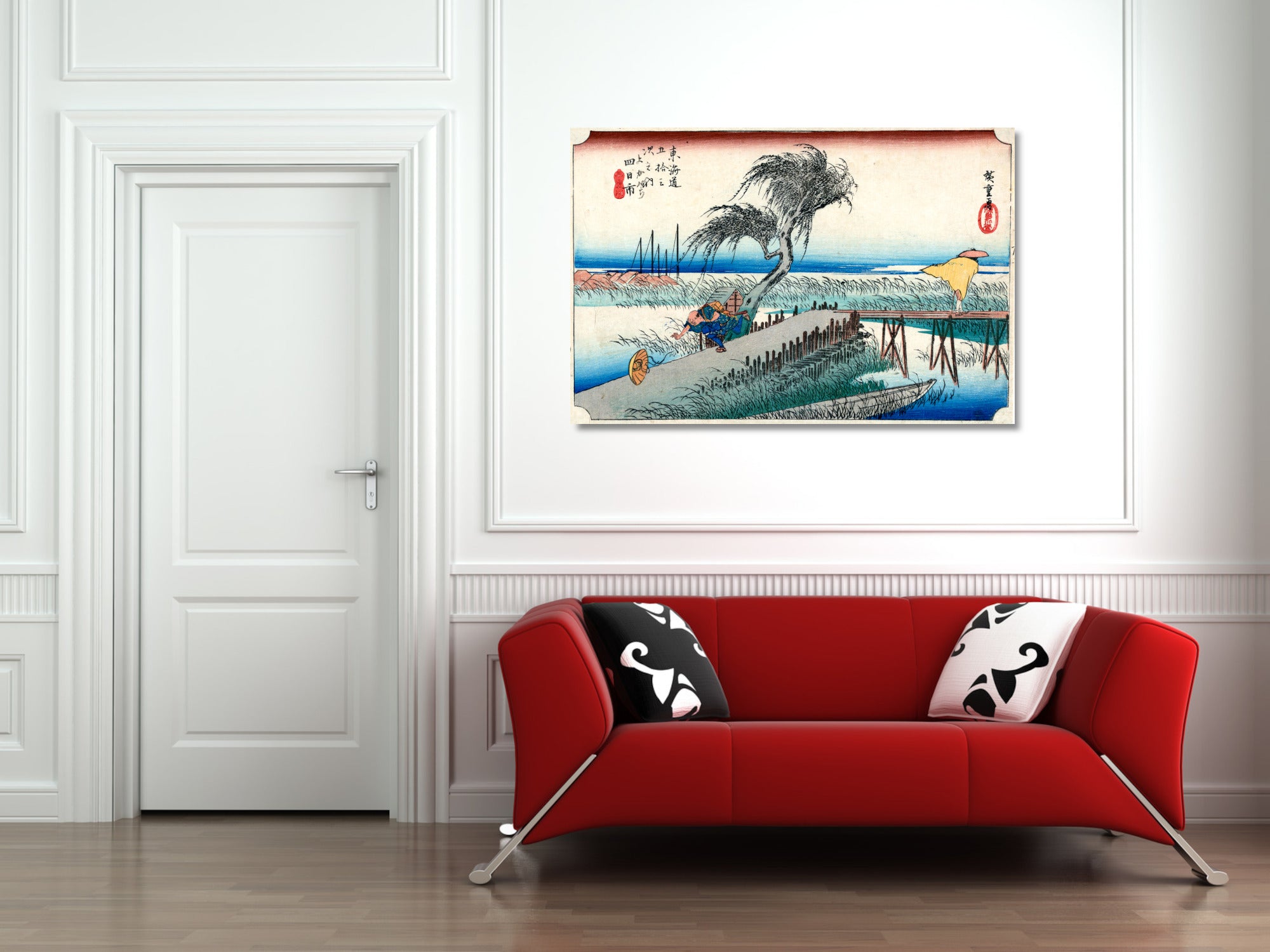
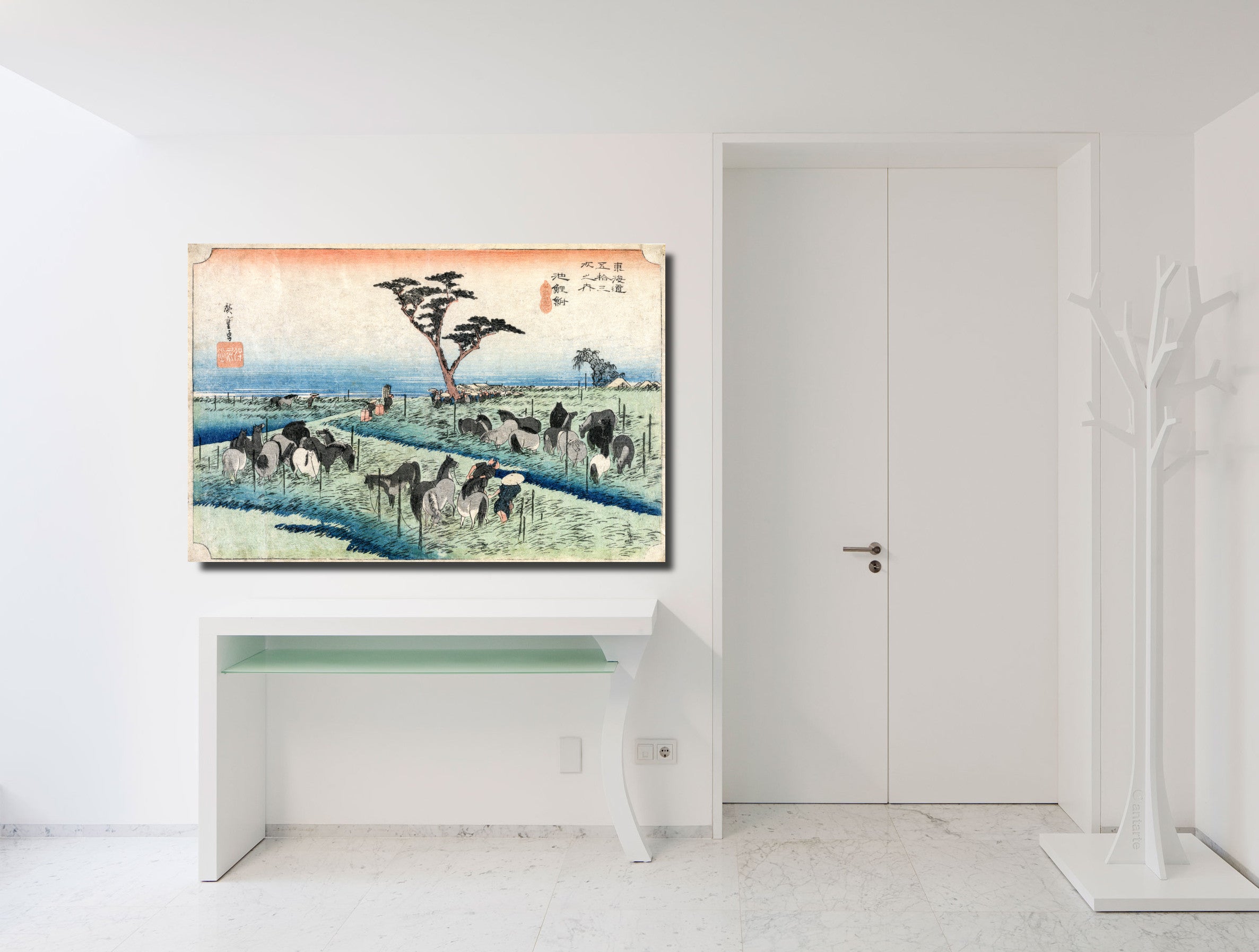
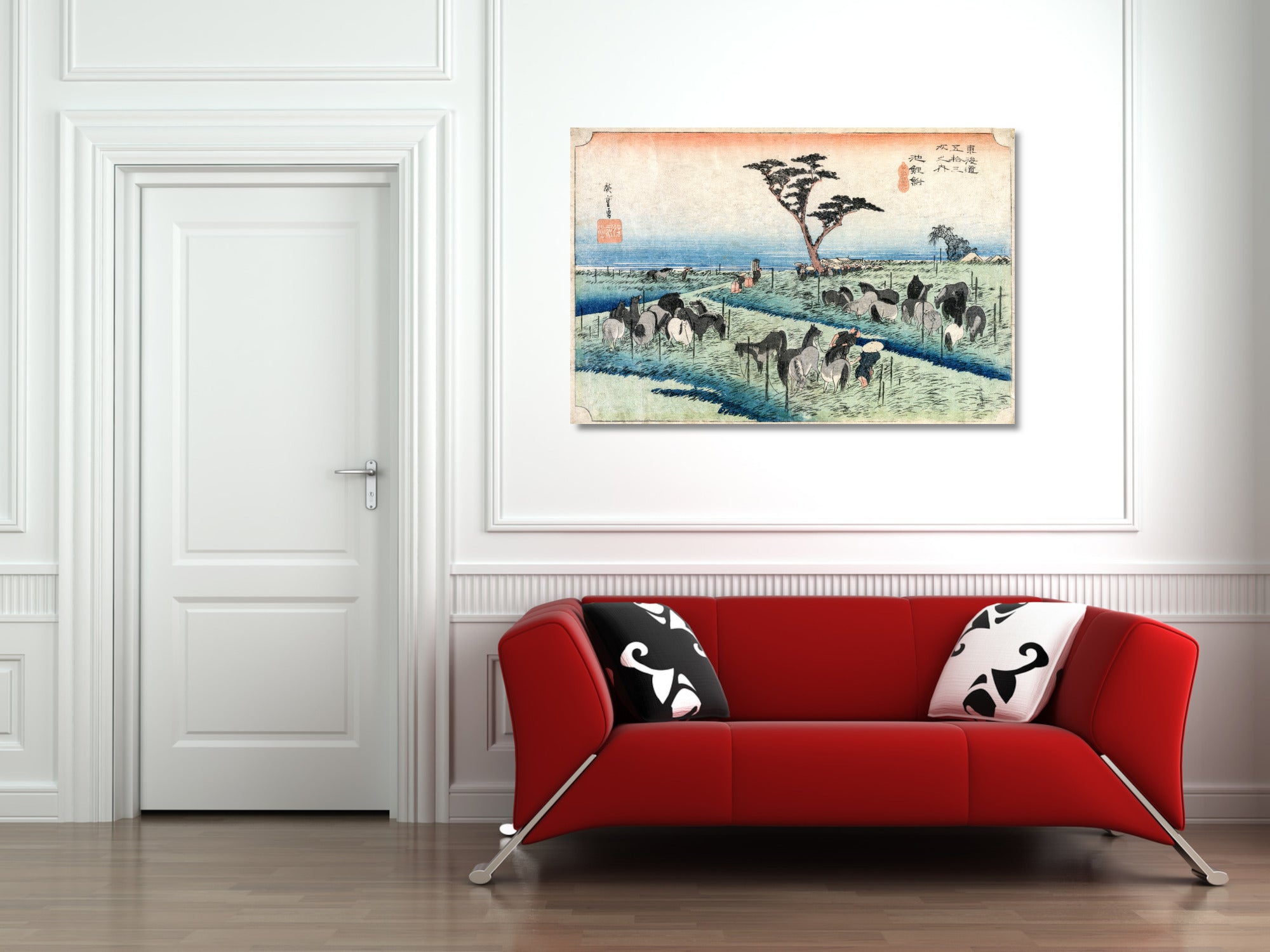
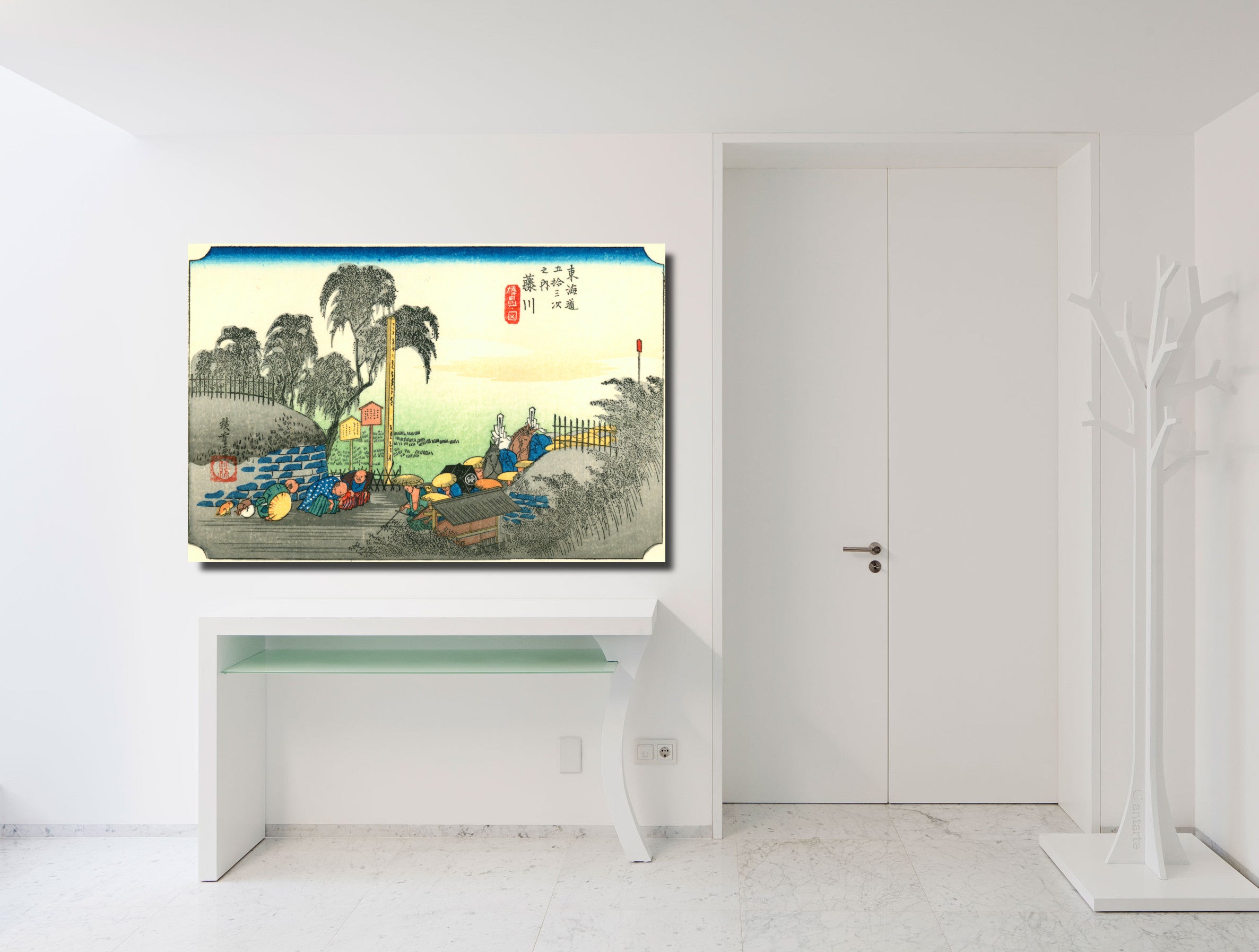
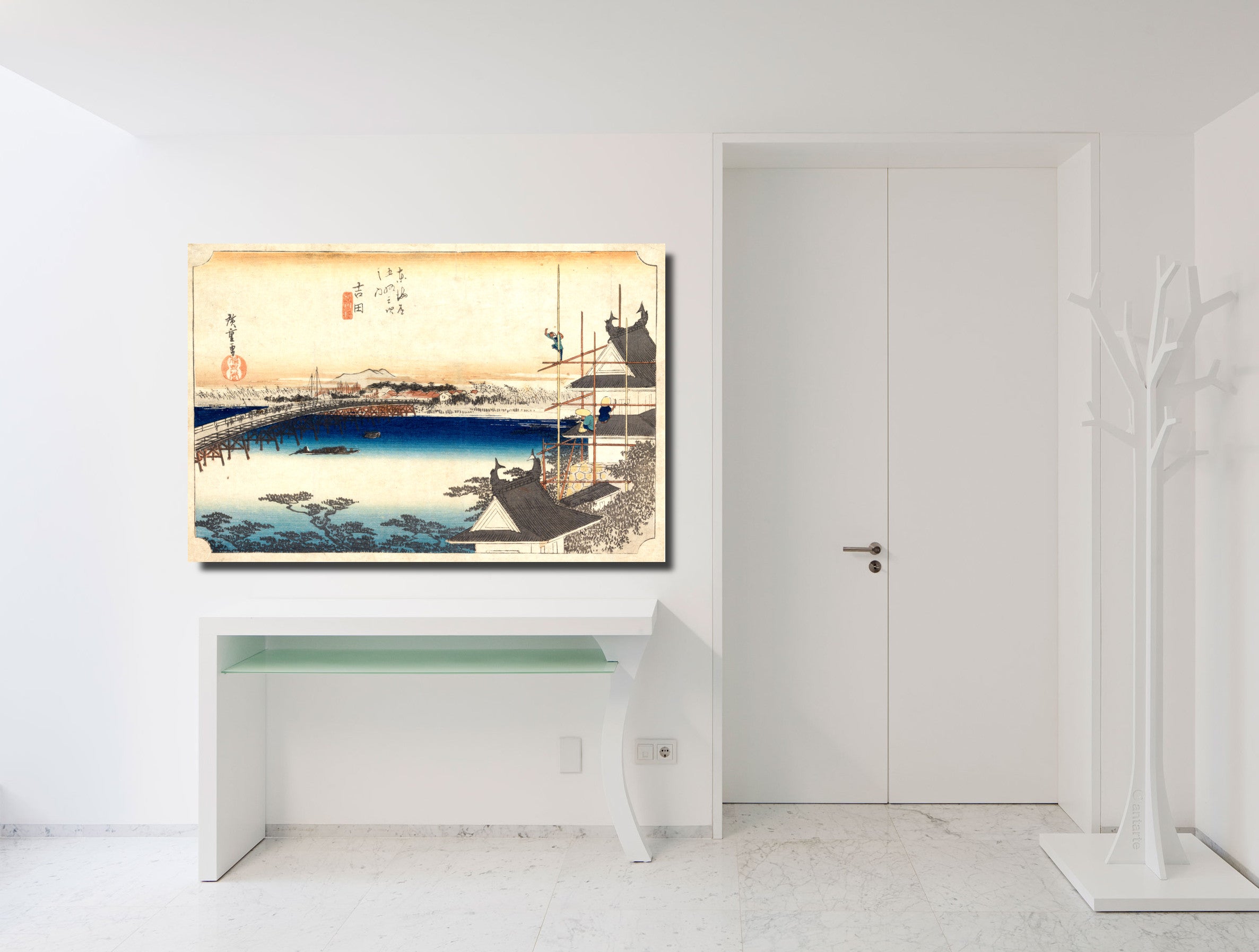
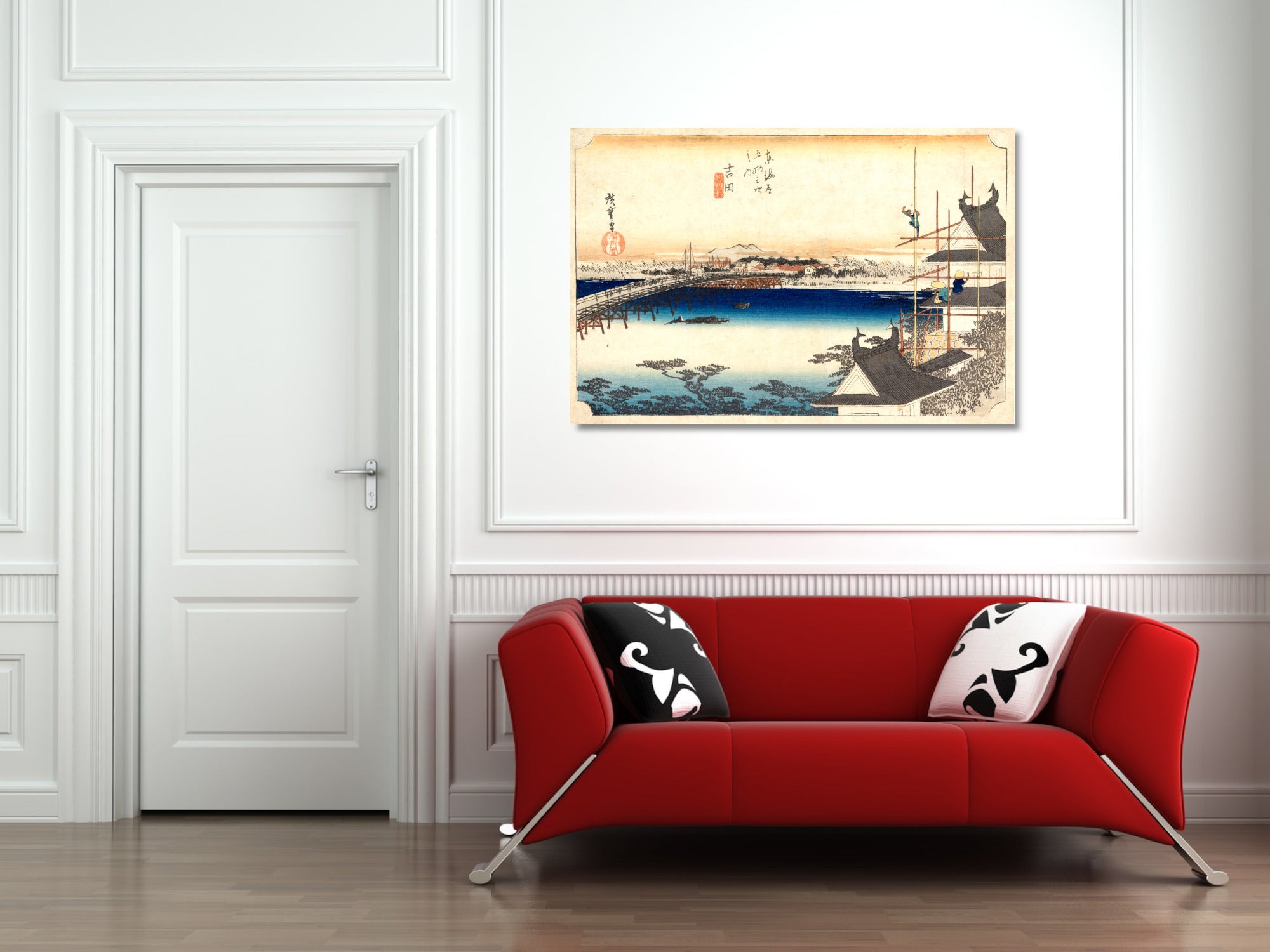
A single larger landscape can provide a calm focal point above a sofa, bed or sideboard.
Several stations displayed together can create a distinctive Japanese gallery wall while retaining visual unity through format and subject.
Fine Art Prints, Framed Prints and Canvas Panels
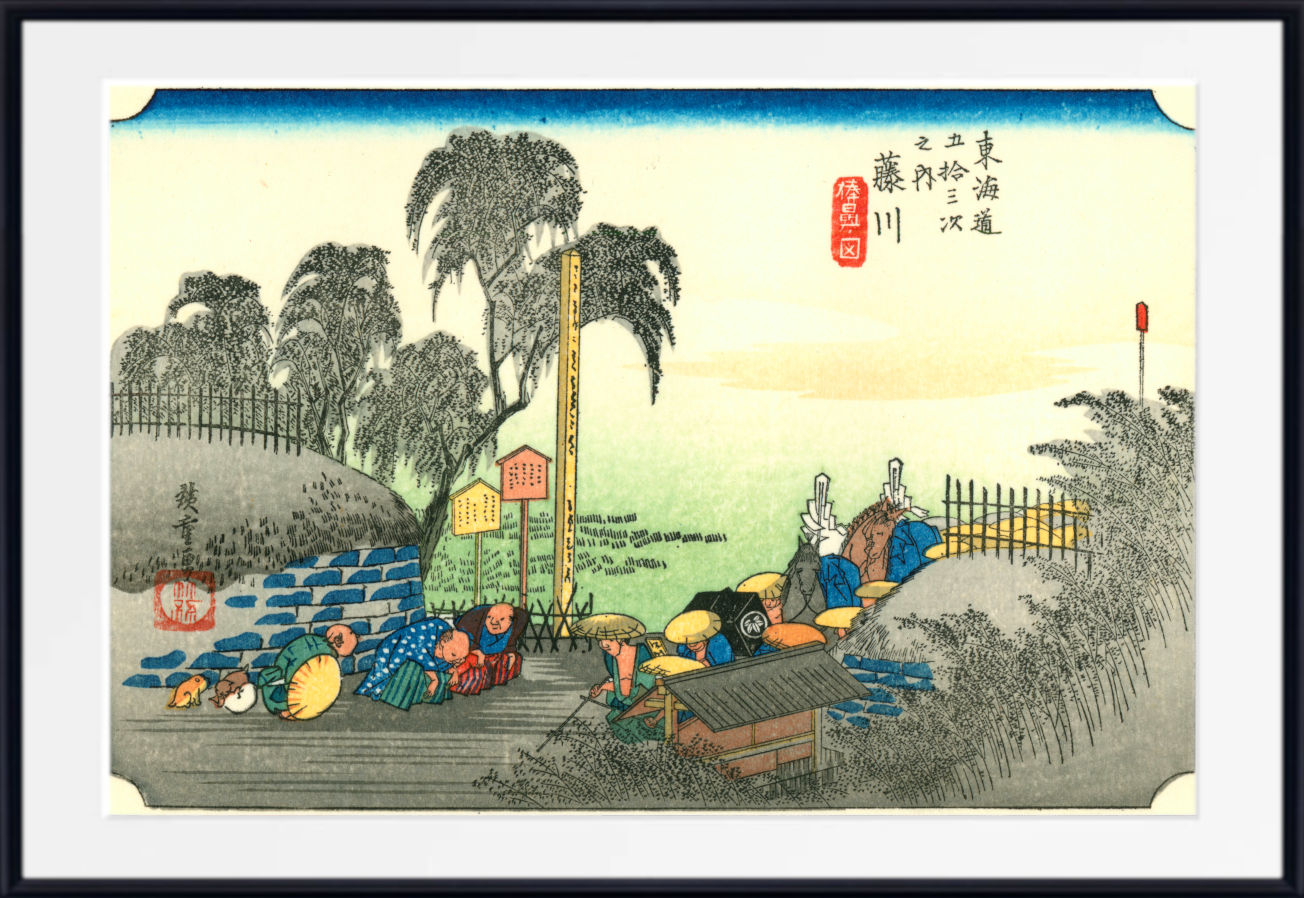
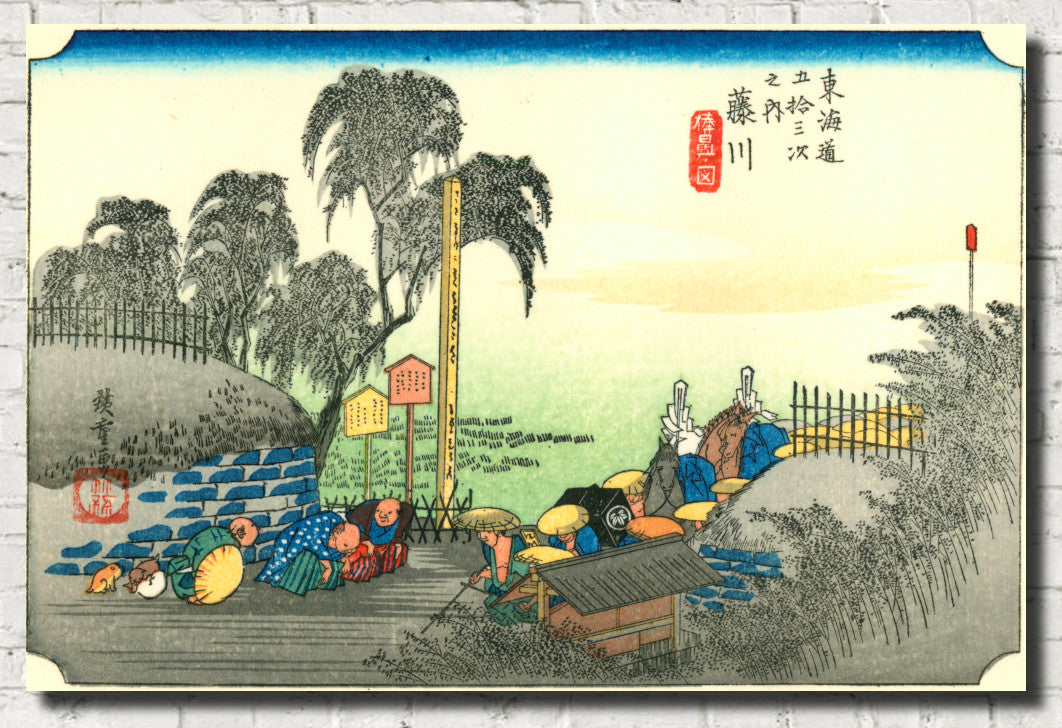
GalleryThane's Fifty-Three Stations of the Tōkaidō prints are available in fine art print, framed print and canvas formats depending on the individual product.
Individual stations allow collectors to choose favourite landscapes, weather conditions or locations, while complete sets provide a broader presentation of the journey.
GalleryThane prints and frames are produced in our Nottinghamshire workshop using carefully selected printing and framing materials.
Frequently Asked Questions
Who created The Fifty-Three Stations of the Tōkaidō?
The series was designed by Japanese ukiyo-e artist Utagawa Hiroshige, also widely known as Andō Hiroshige.
When was Hiroshige's famous Tōkaidō series created?
The celebrated Hōeidō edition is generally dated to around 1833–34.
What was the Tōkaidō?
The Tōkaidō was the historic highway linking Edo, present-day Tokyo, with Kyoto.
Why is the series called Fifty-Three Stations?
There were fifty-three official post stations along the route where travellers could obtain food, accommodation, horses and other services.
Why are there 55 prints in the complete series?
The fifty-three post stations are accompanied by the departure scene at Nihonbashi in Edo and the final arrival in Kyoto, creating 55 designs in the complete Hōeidō series.
What does Hōeidō Tōkaidō mean?
Hōeidō was the principal publisher associated with Hiroshige's famous early-1830s Tōkaidō series. The name helps distinguish this edition from Hiroshige's later interpretations of the same road.
What are the most famous Tōkaidō prints?
Among the best-known are Kanbara – Evening Snow, Shōno, Hakone, Hara, Nihonbashi and the arrival at Kyoto.
Is Kanbara a real snow scene?
Kanbara was a real station, but the extremely heavy snow shown in Hiroshige's famous print would have been unusual for that location. The image demonstrates his willingness to use imagination to create atmosphere.
Are these paintings?
No. The original works were colour woodblock prints created through collaboration between artist, block cutters, printers and publishers.
Did Hiroshige make other Tōkaidō series?
Yes. Hiroshige returned to the route repeatedly during his career, producing several different series with different formats and compositions.
Are Tōkaidō prints suitable for displaying together?
Yes. Their shared journey, horizontal format and related palettes make them particularly effective as pairs, sets or larger gallery-wall arrangements.
Where can I learn about all the stations?
GalleryThane's detailed guide to The Fifty-Three Stations of the Tōkaidō explores the series station by station and links to individual prints.