Raoul Dufy Prints – Colour, Light and the Joy of Modern Life
Raoul Dufy created a world of brilliant blue seas, crowded regattas, fashionable racecourses, music, flowers, Mediterranean sunshine and elegant European cities.
His paintings are immediately recognisable for their combination of bright colour, fluid drawing and an extraordinary sense of movement and light.
Although Dufy emerged from the radical experiments of Fauvism, he ultimately developed a highly individual style that extended far beyond the movement. His subjects ranged from Normandy harbours and the French Riviera to Paris, London, Venice, orchestras, horse racing, interiors and flowers.
The result is an unusually varied body of work that feels sophisticated yet spontaneous, modern yet highly decorative.
Who Was Raoul Dufy?
Raoul Dufy was born in Le Havre, Normandy, in 1877.
Growing up beside the English Channel gave him an early familiarity with harbours, boats and changing coastal light — subjects that would remain important throughout his career.
After studying locally, Dufy moved to Paris and continued his artistic training at the École des Beaux-Arts.
His earliest paintings reveal the influence of Impressionism and Post-Impressionism, but the direction of his work changed dramatically during the first years of the twentieth century.
Exposure to Henri Matisse and the brilliant colours of Fauvism encouraged Dufy to move away from conventional naturalism.
Colour became freer.
Forms became simpler.
The act of painting became increasingly concerned with sensation rather than literal description.
Raoul Dufy and Fauvism
Dufy became associated with Fauvism, the short-lived but revolutionary movement that transformed French painting in the opening years of the twentieth century.
The Fauves rejected restrained naturalistic colour in favour of vivid reds, blues, greens, oranges and yellows.
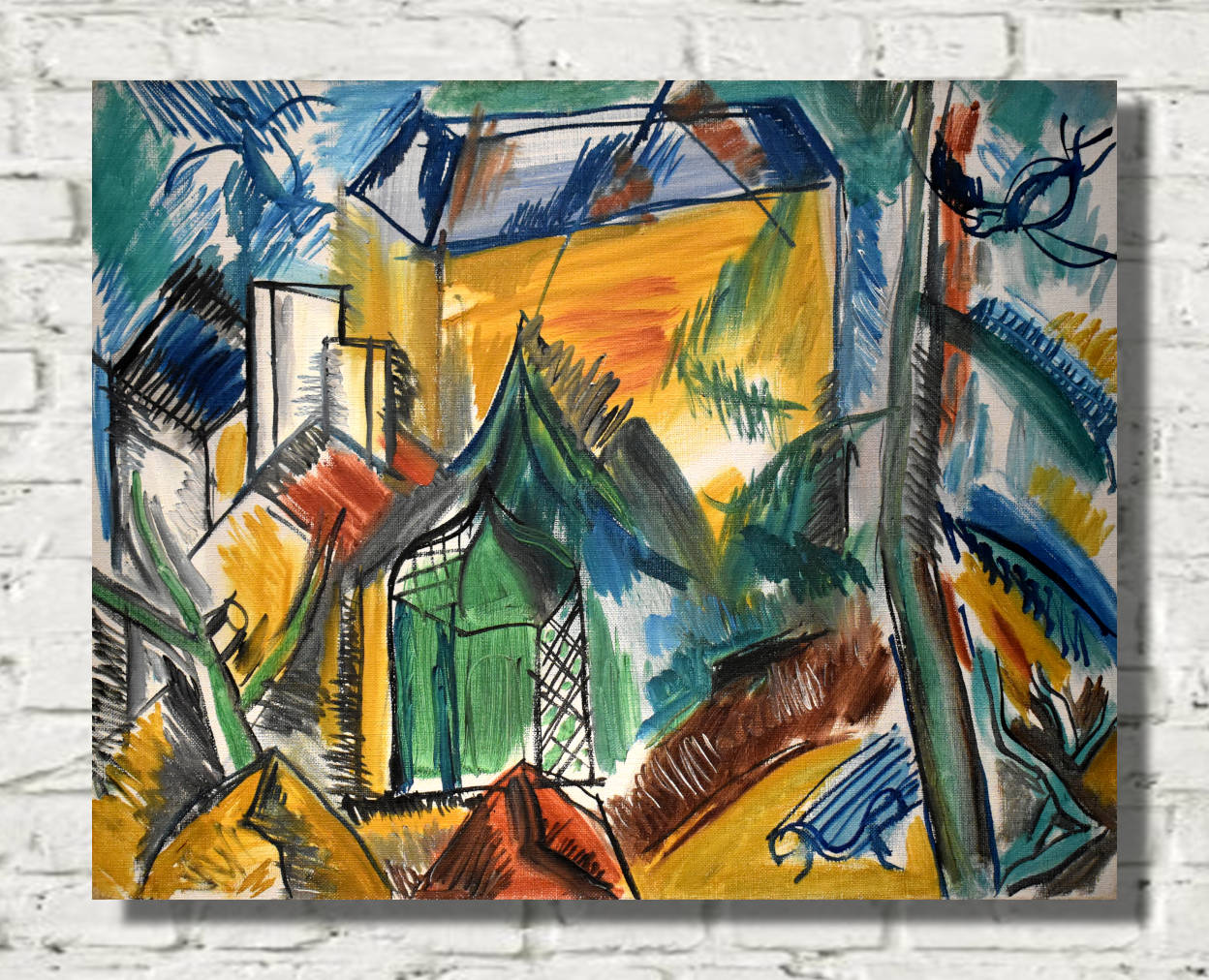
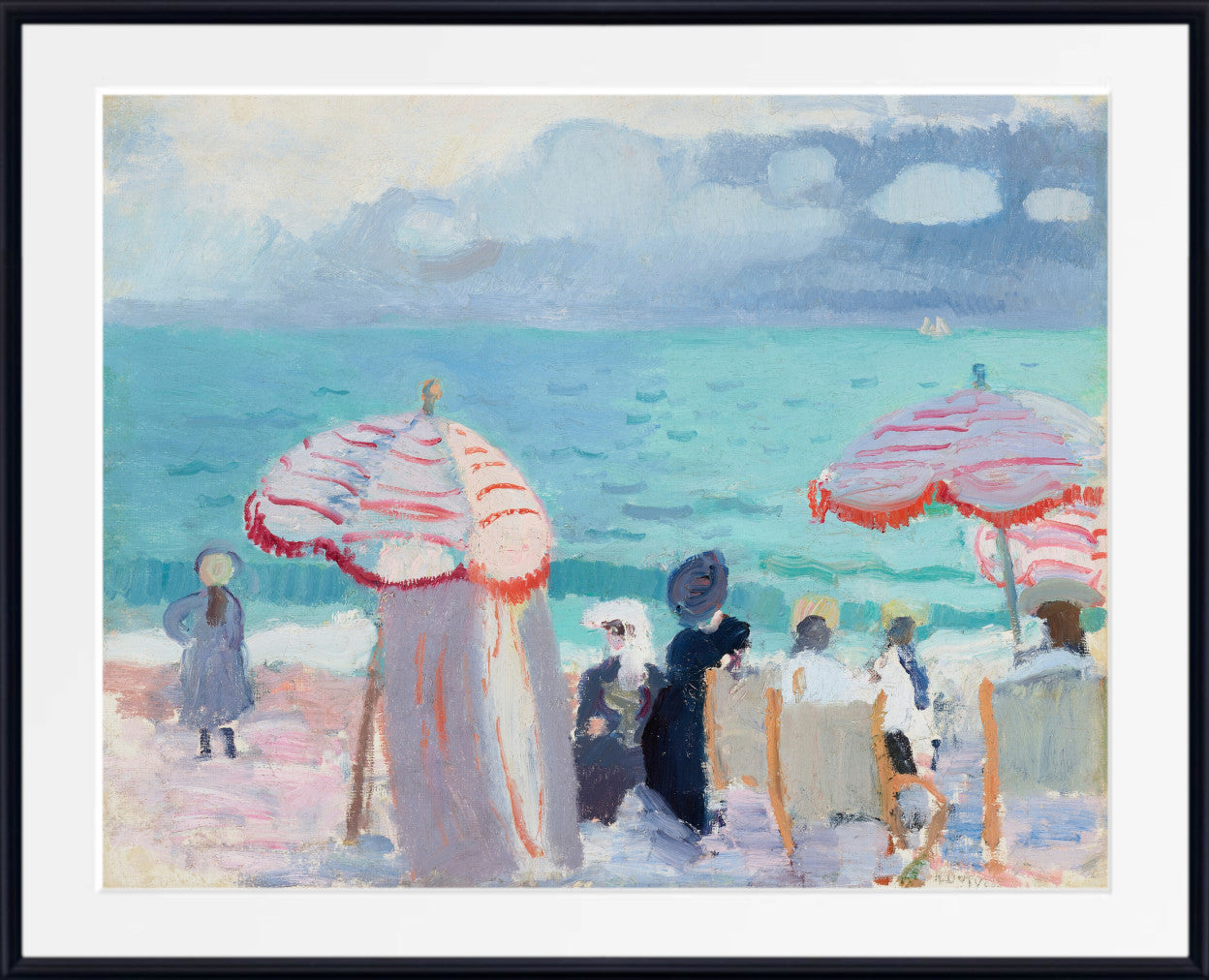
Dufy's paintings from this period frequently depict beaches, harbours, streets and landscapes in simplified forms surrounded by intense colour.
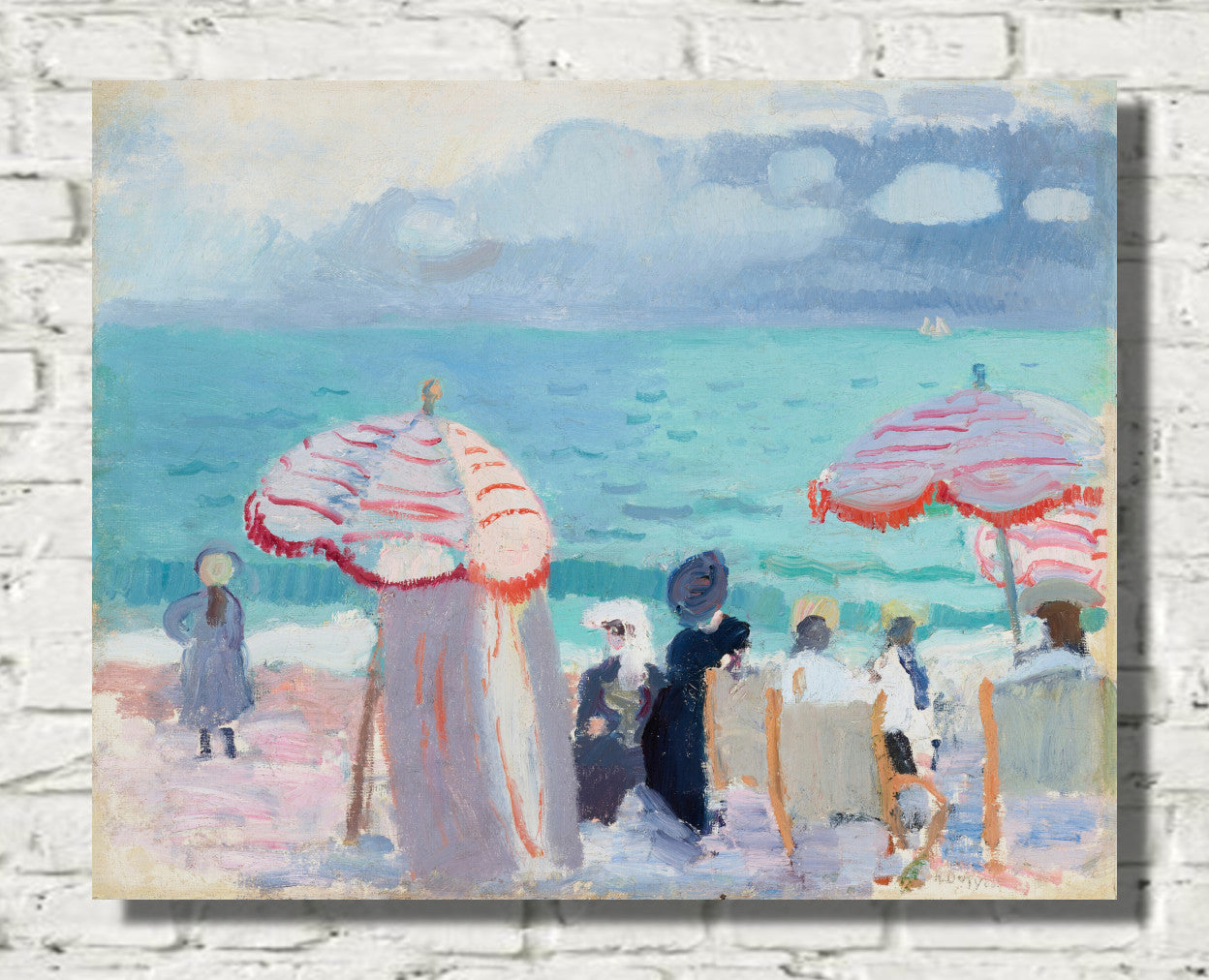
Works such as The Parasols belong to this formative stage of his career.
Unlike some artists who remained closely identified with one movement, however, Dufy continued evolving.
His Fauvist period became the foundation for a distinctive mature style based on the relationship between colour and line.
Explore GalleryThane's Fauvism Prints collection to place Dufy's early work alongside Henri Matisse, André Derain, Henri Manguin, Albert Marquet and other painters associated with the movement.
From Fauvism to the Dufy Style
Dufy's mature work is difficult to confuse with that of any other artist.
He increasingly separated drawing from colour.
A figure, boat or building might be defined with a rapidly drawn line while colour spreads more freely around or beneath it.
The two elements do not always align precisely.
That apparent looseness is deliberate.
Instead of carefully filling each outlined form with the appropriate colour, Dufy allowed colour to create its own atmosphere across the composition.
The result gives many of his paintings their characteristic sense of speed and spontaneity.
Even complicated scenes containing boats, crowds, architecture and flags can feel remarkably light.
Colour in Raoul Dufy's Paintings
Colour is central to Dufy's appeal.
His Mediterranean and coastal paintings frequently contain luminous blues and turquoises.
Racecourse scenes introduce greens, reds and flashes of brightly coloured clothing.
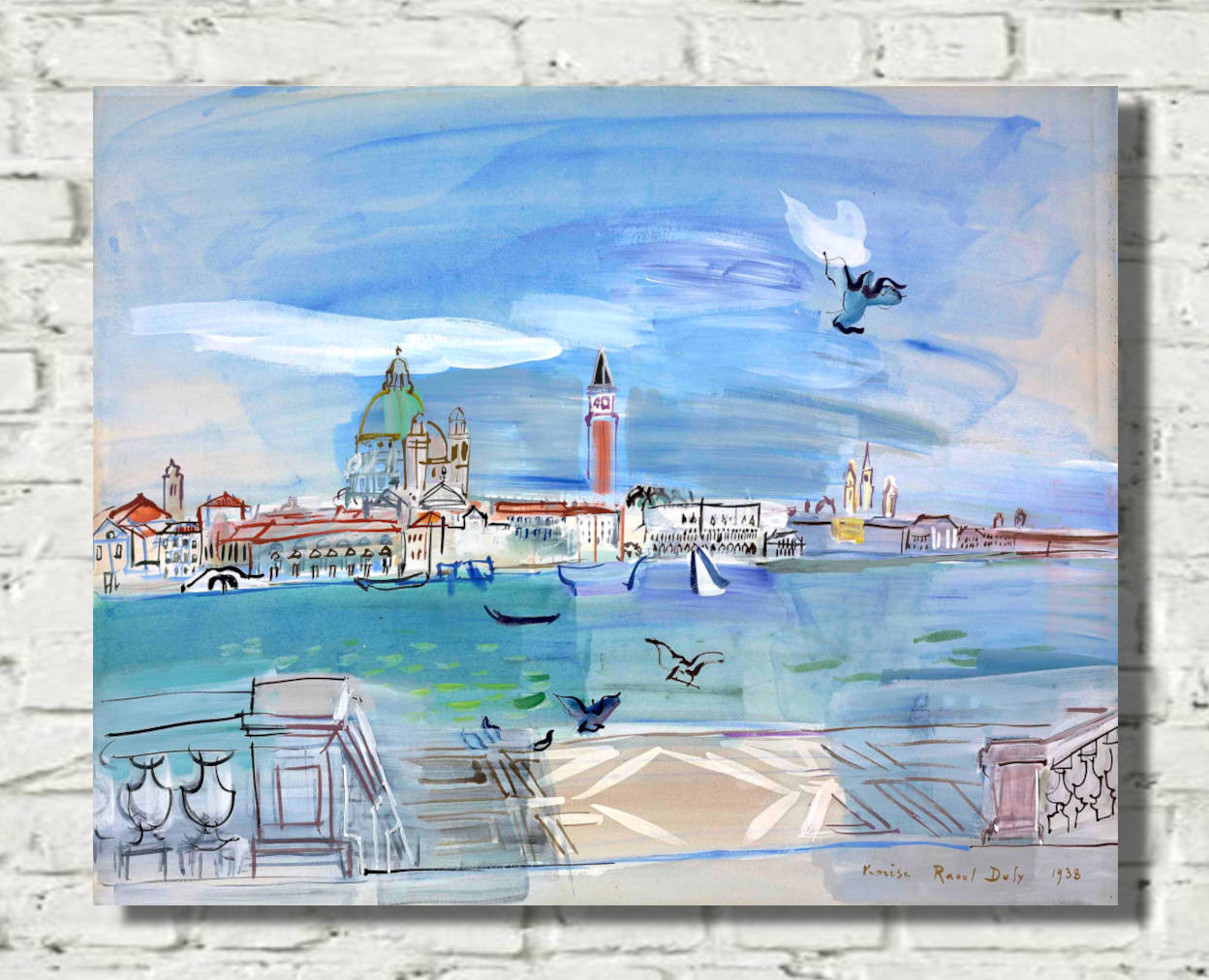
Venice can become an arrangement of blue water, pale architecture and warm sunlight.
Paris combines elegant drawing with brilliant colour.
Dufy was interested in the way colour could establish the overall sensation of a scene before individual objects were fully defined.
This makes his paintings particularly effective as wall art.
A Dufy print can introduce substantial colour to a room while retaining a lighter visual character than many heavily worked modern paintings.
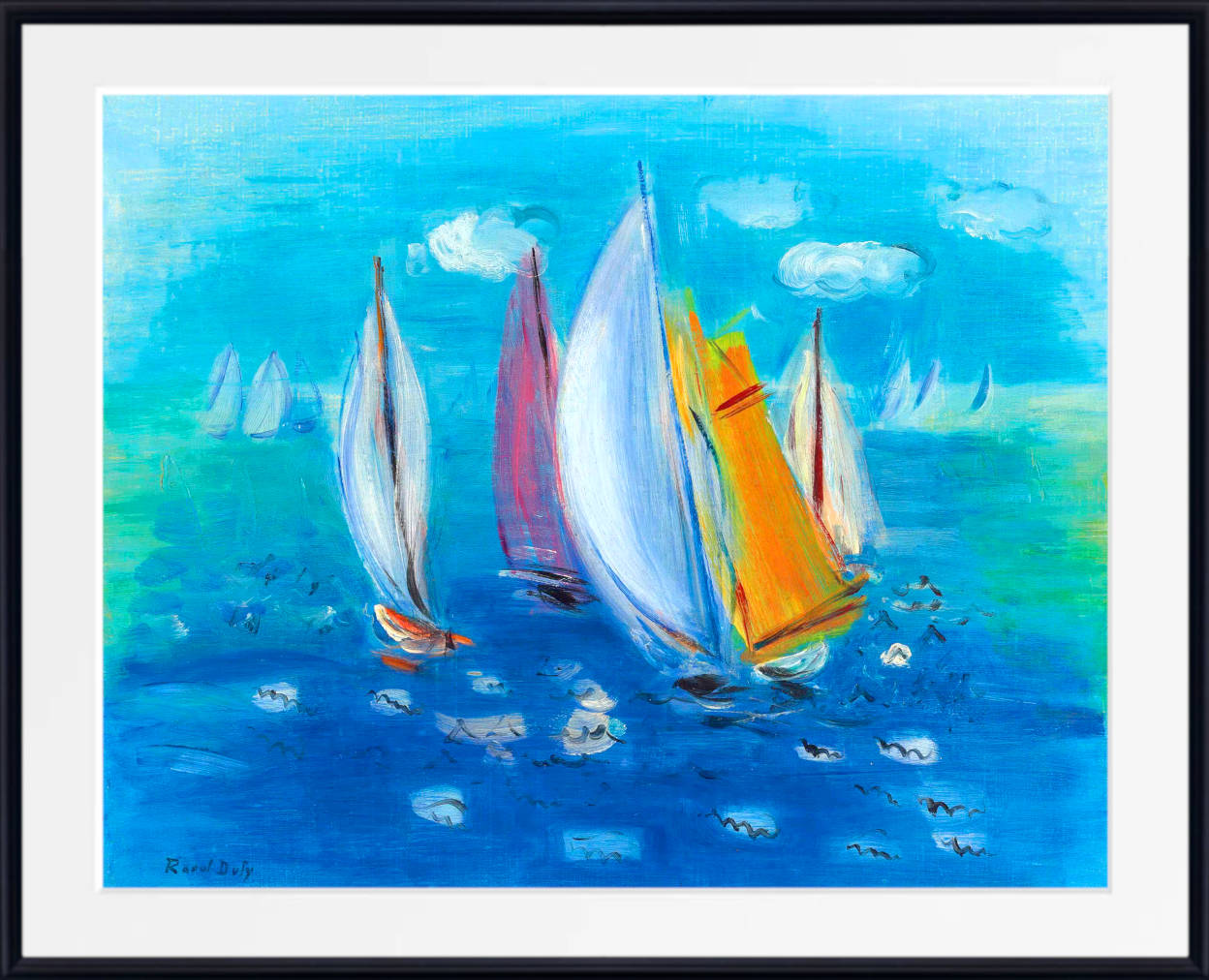
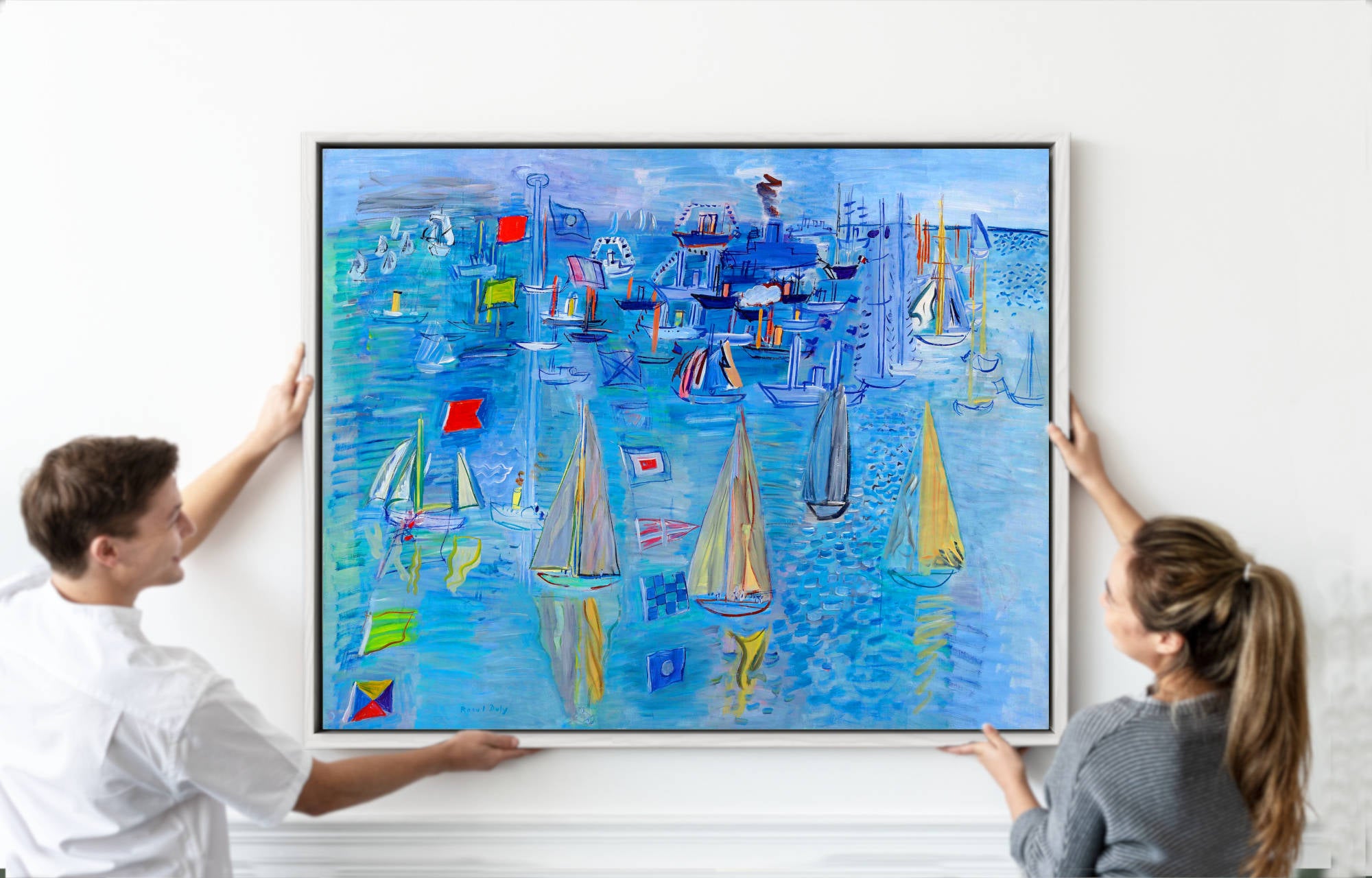
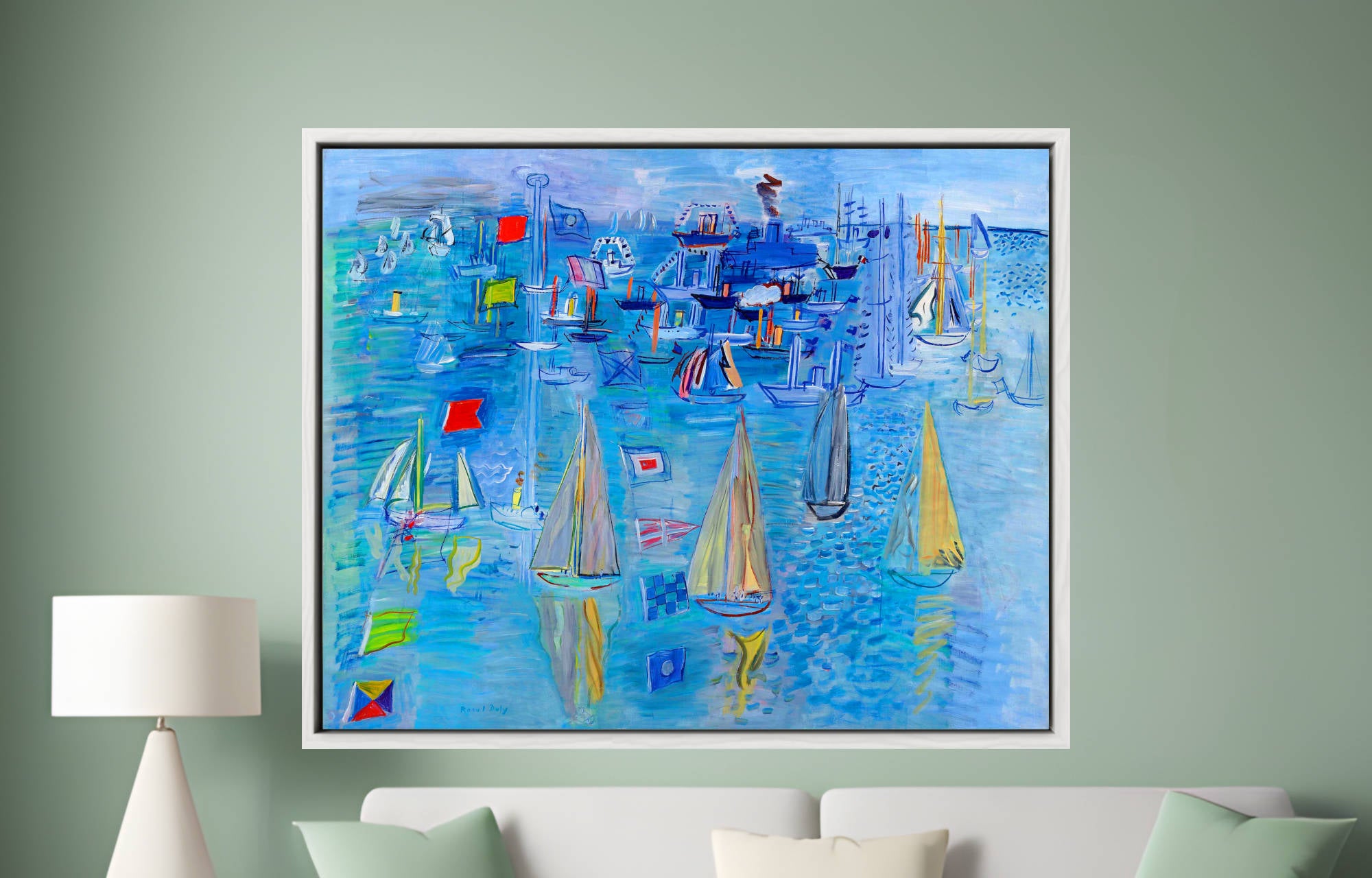
The Sea, Harbours and Regattas
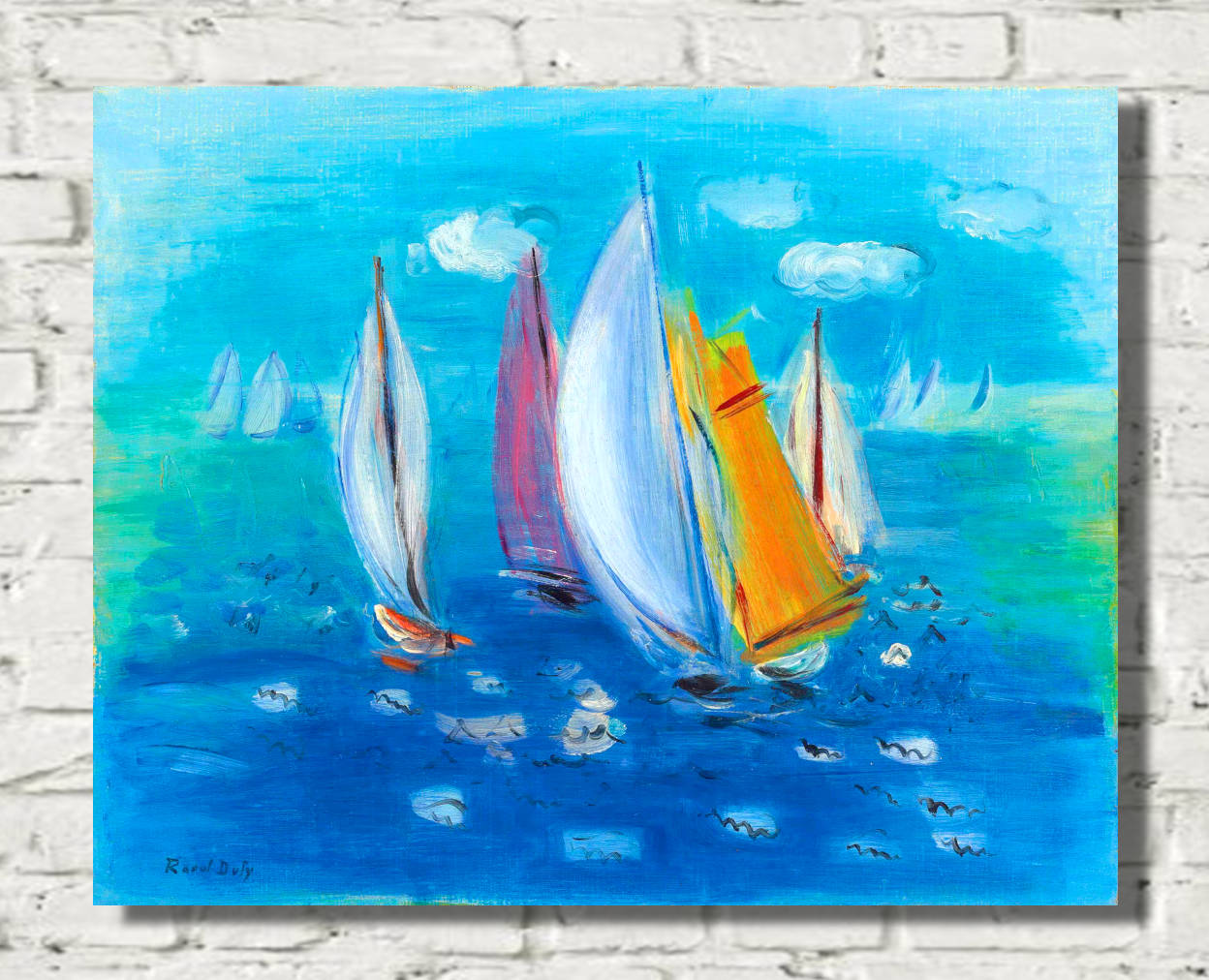
Few subjects are more closely associated with Dufy than the sea.
His childhood in Le Havre and lifelong interest in the coast produced paintings of beaches, ports, sailing boats and regattas throughout his career.
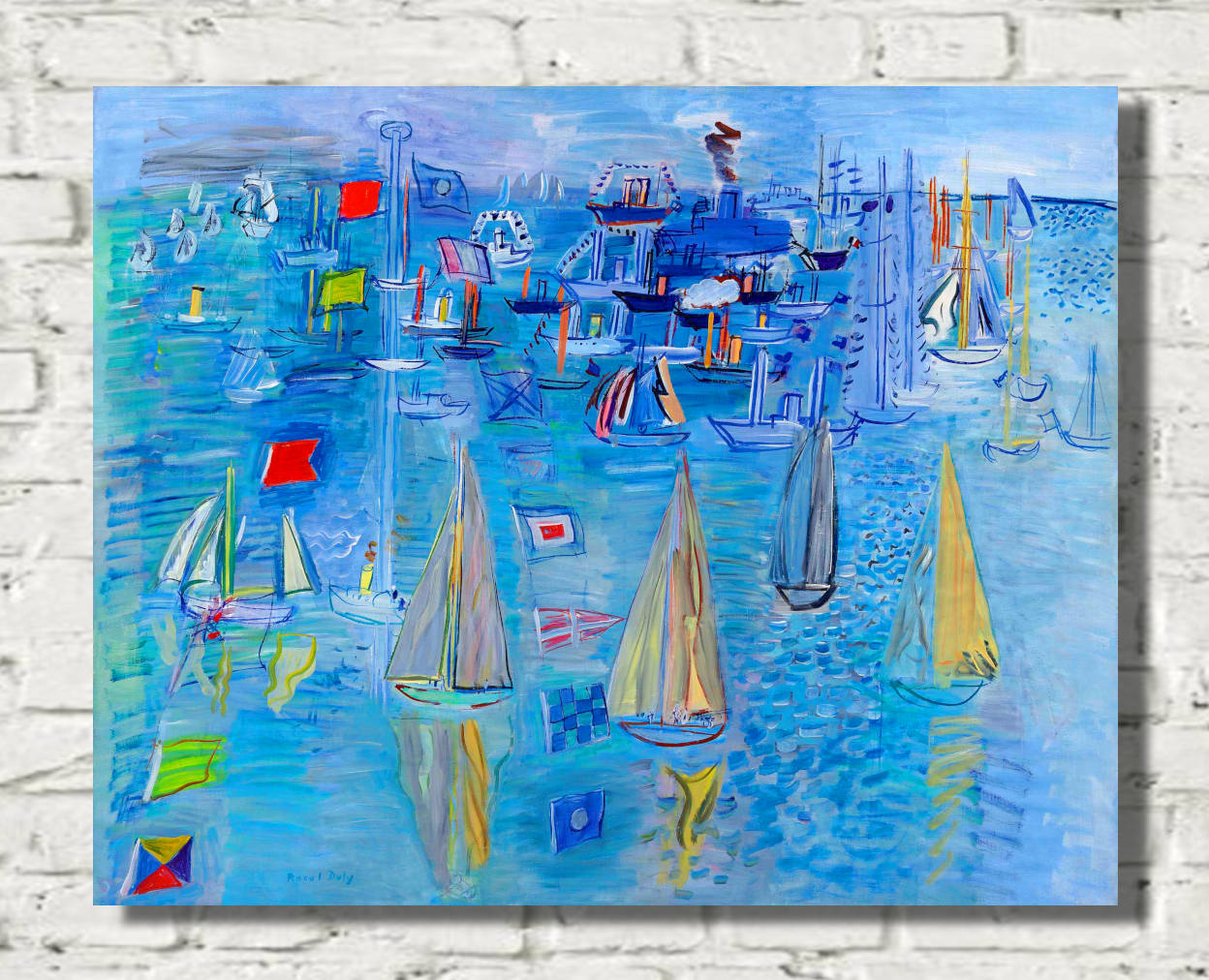
Dufy was particularly attracted to regattas because they brought together many of his favourite visual elements:
blue water, white sails, flags, crowds, movement and brilliant sunlight.
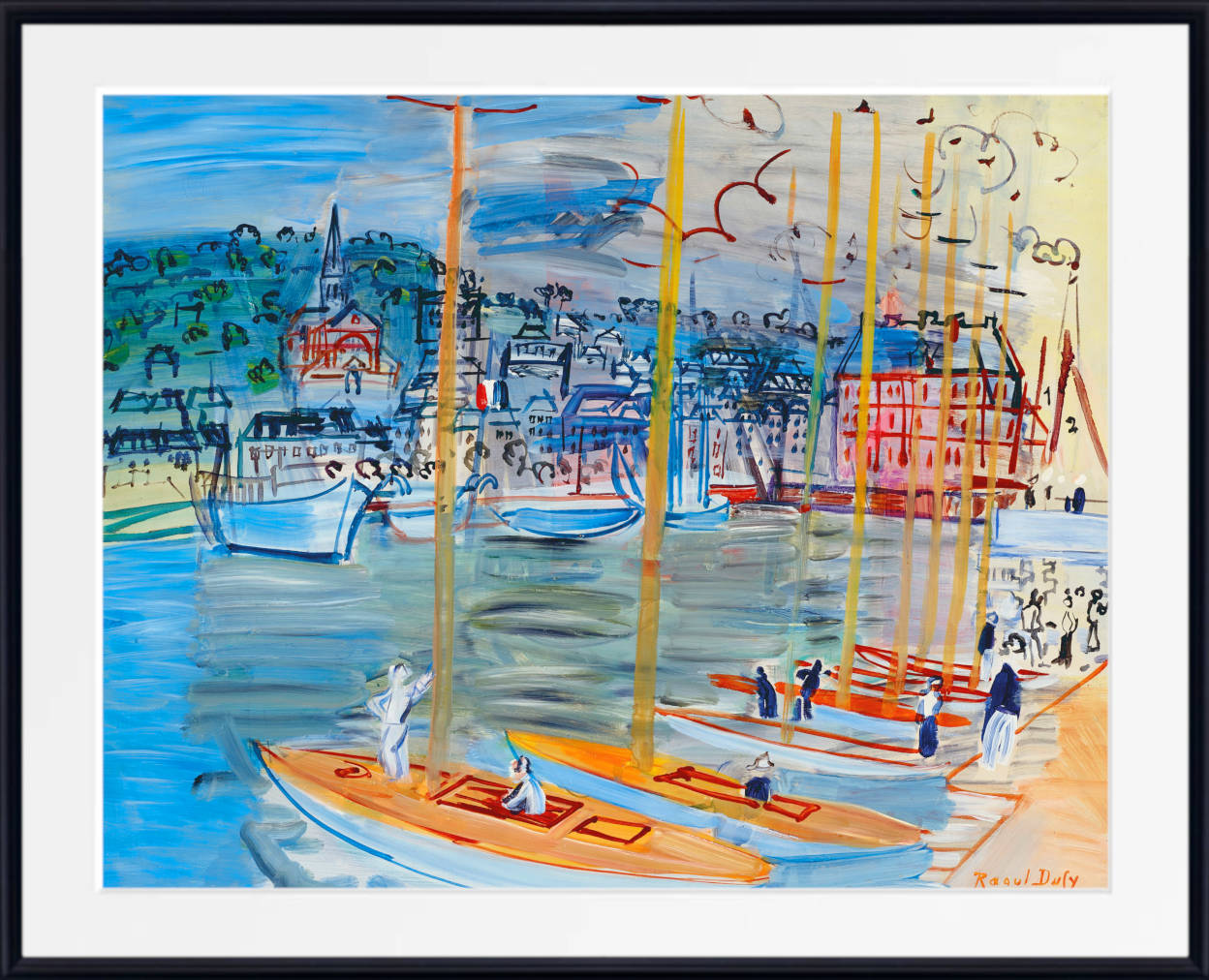
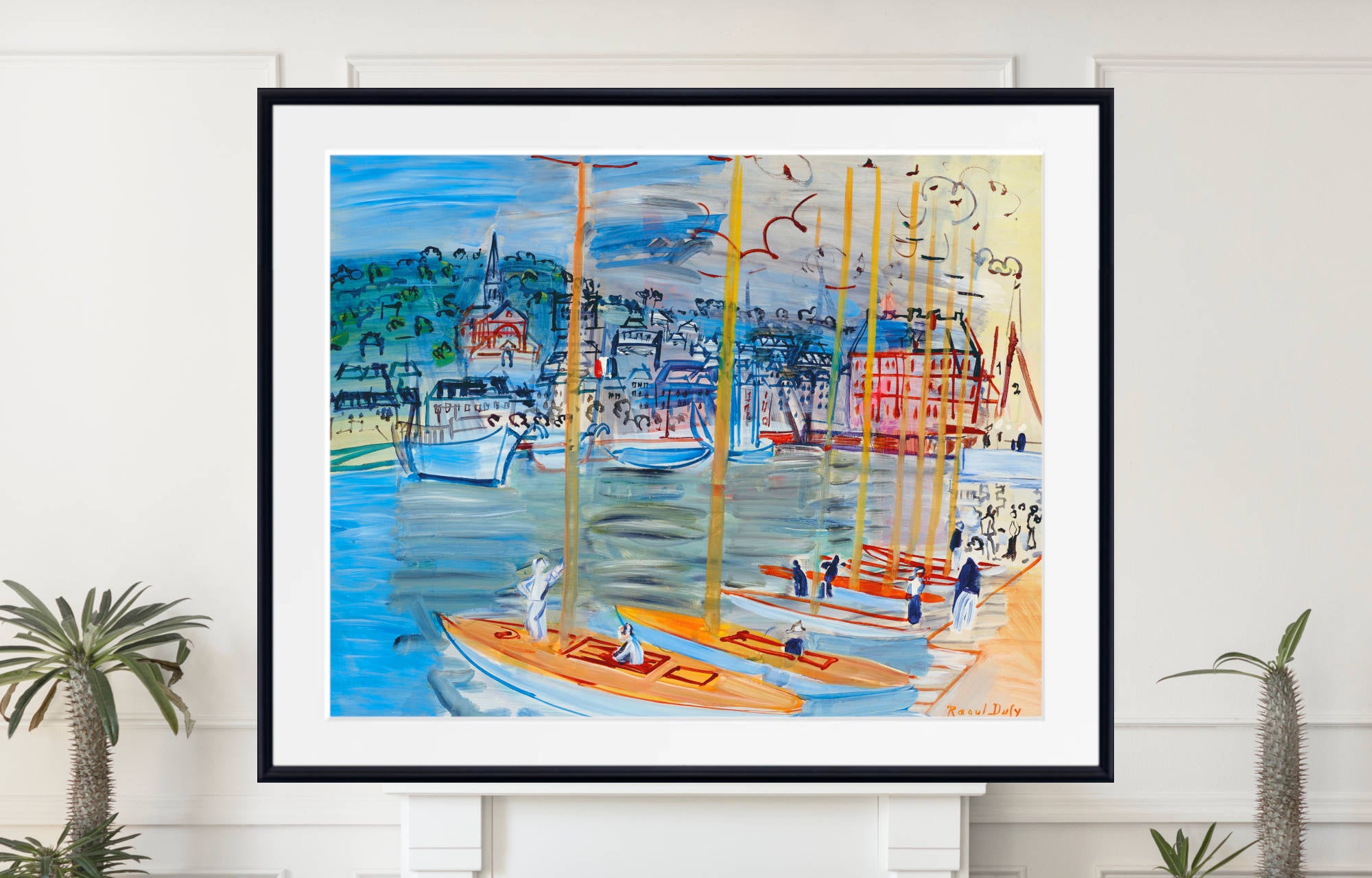
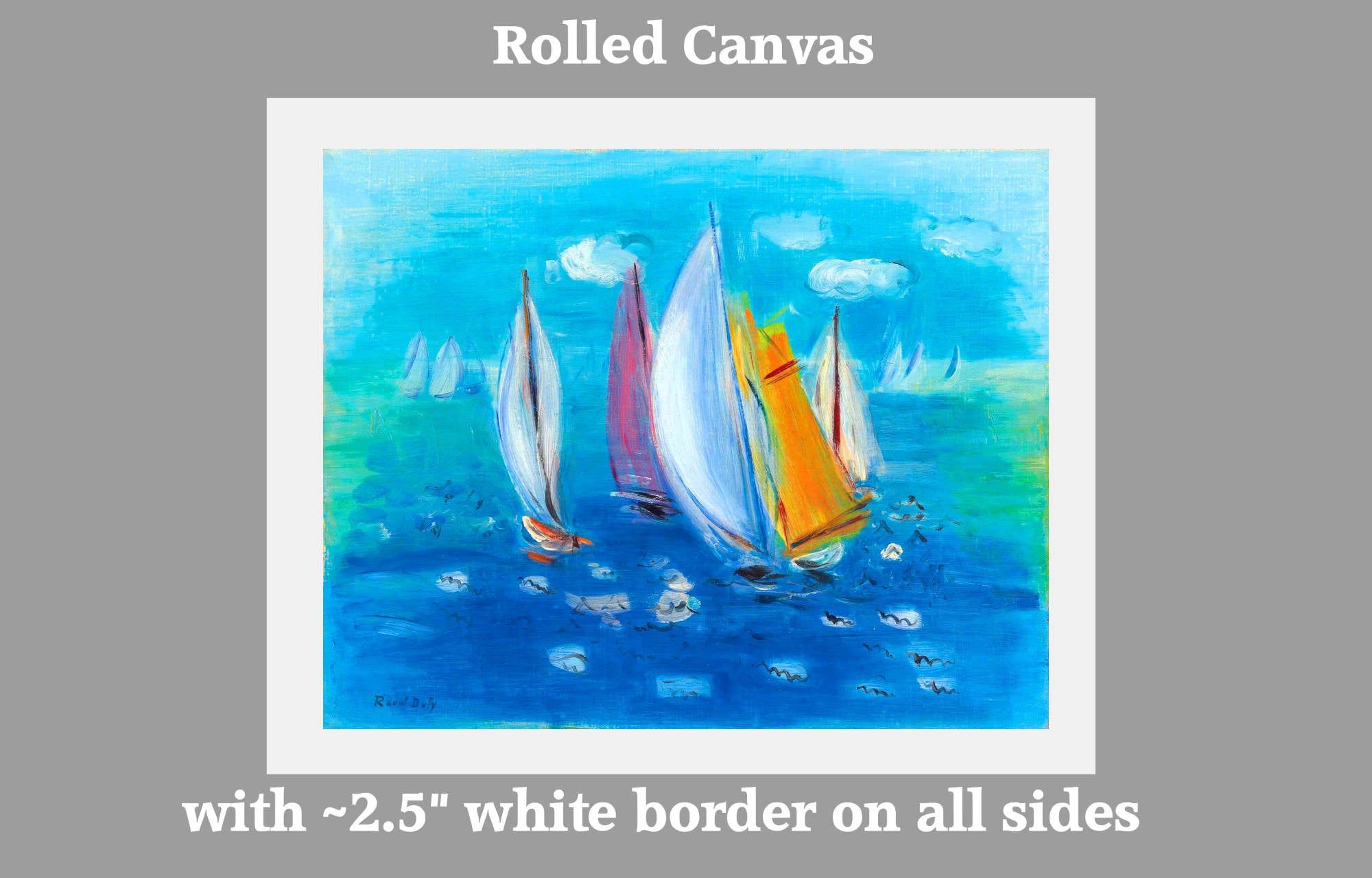
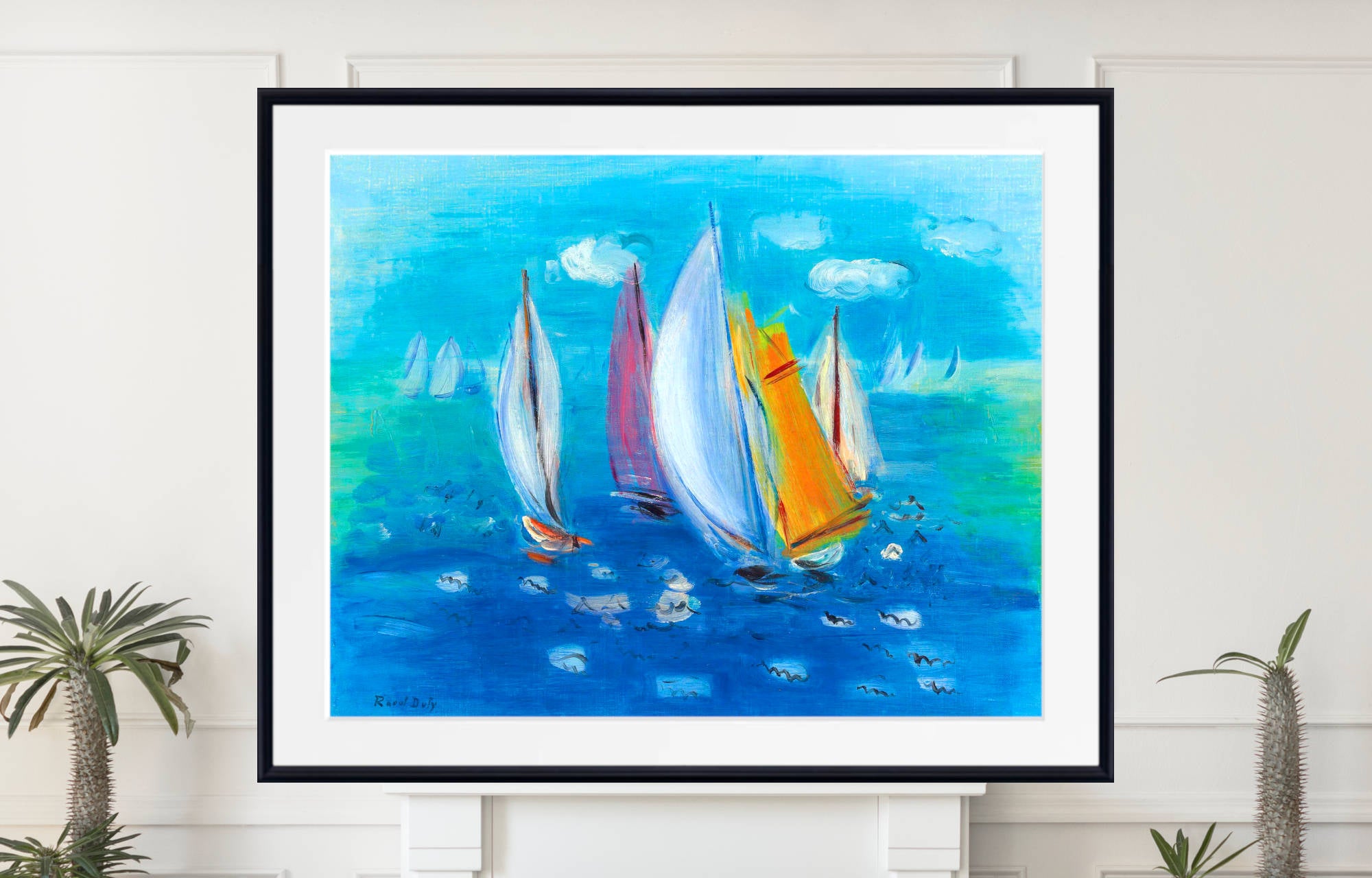
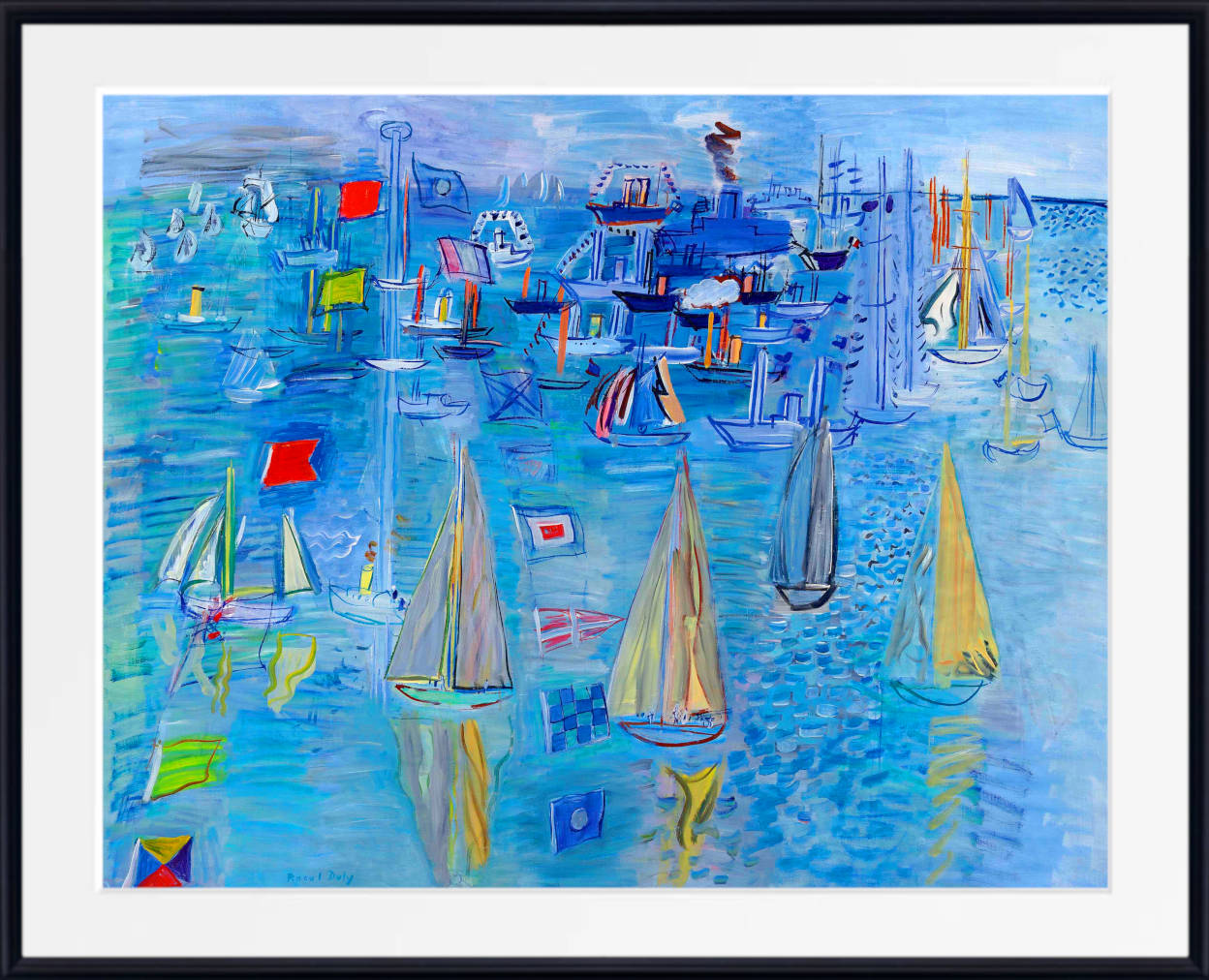
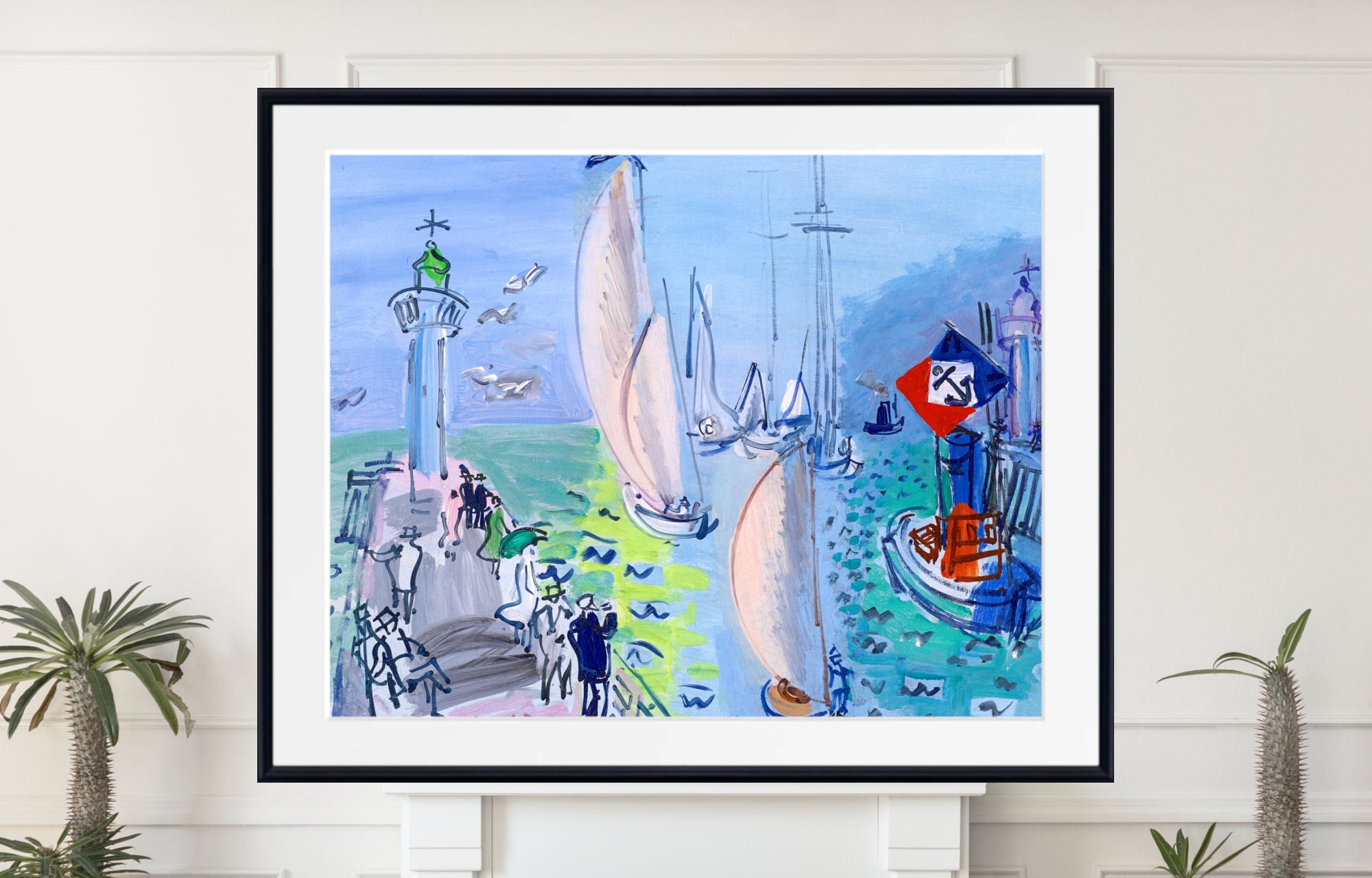
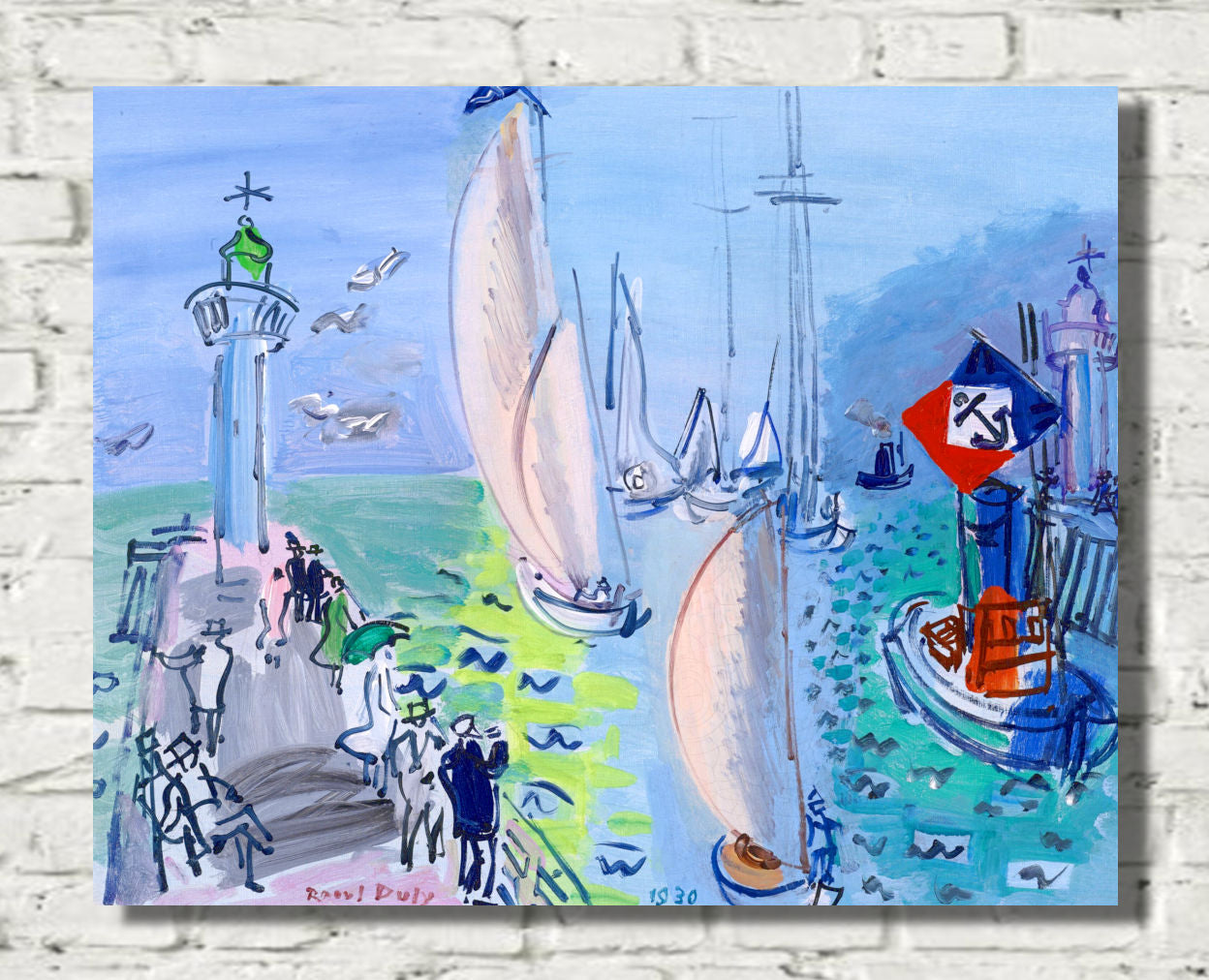
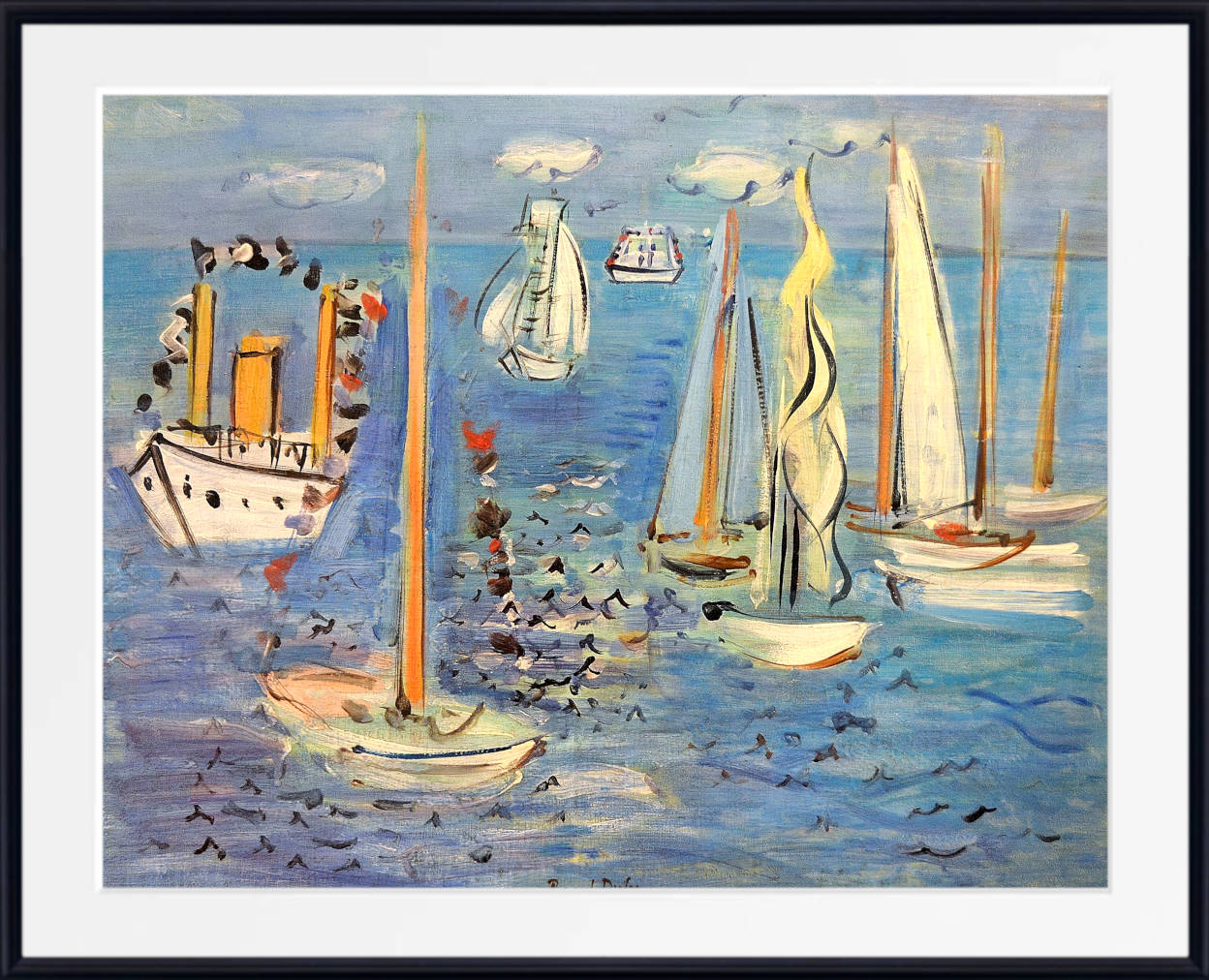
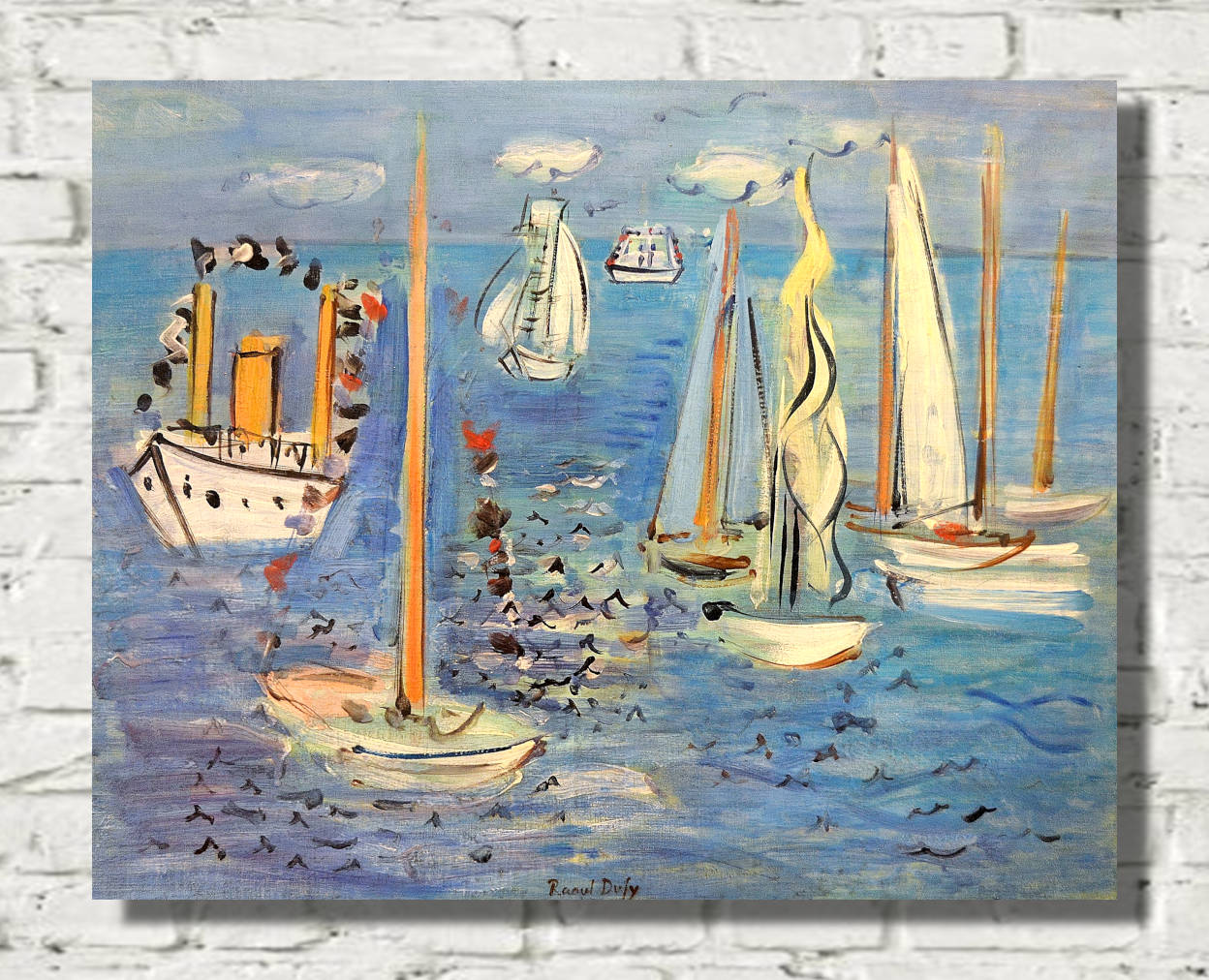
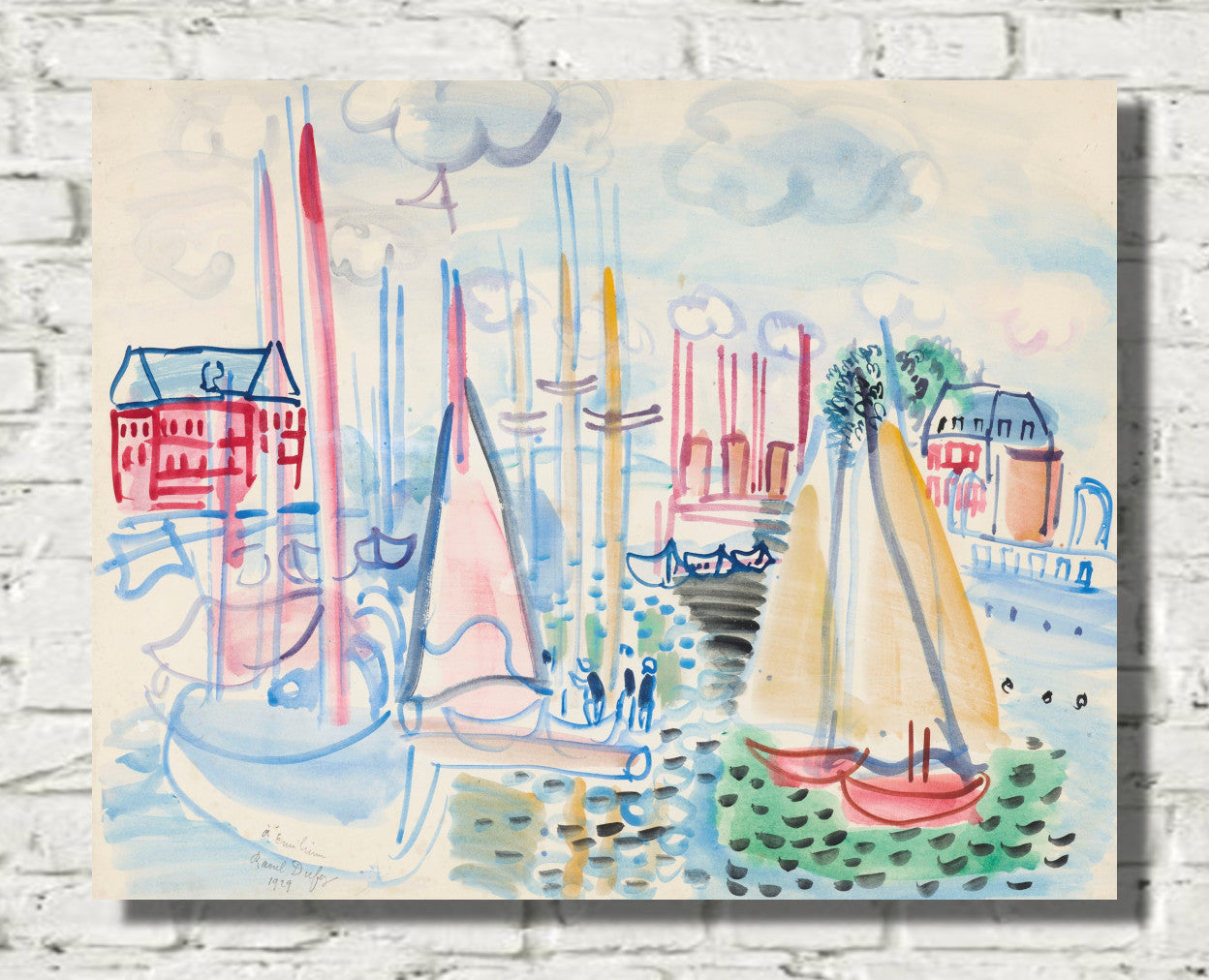
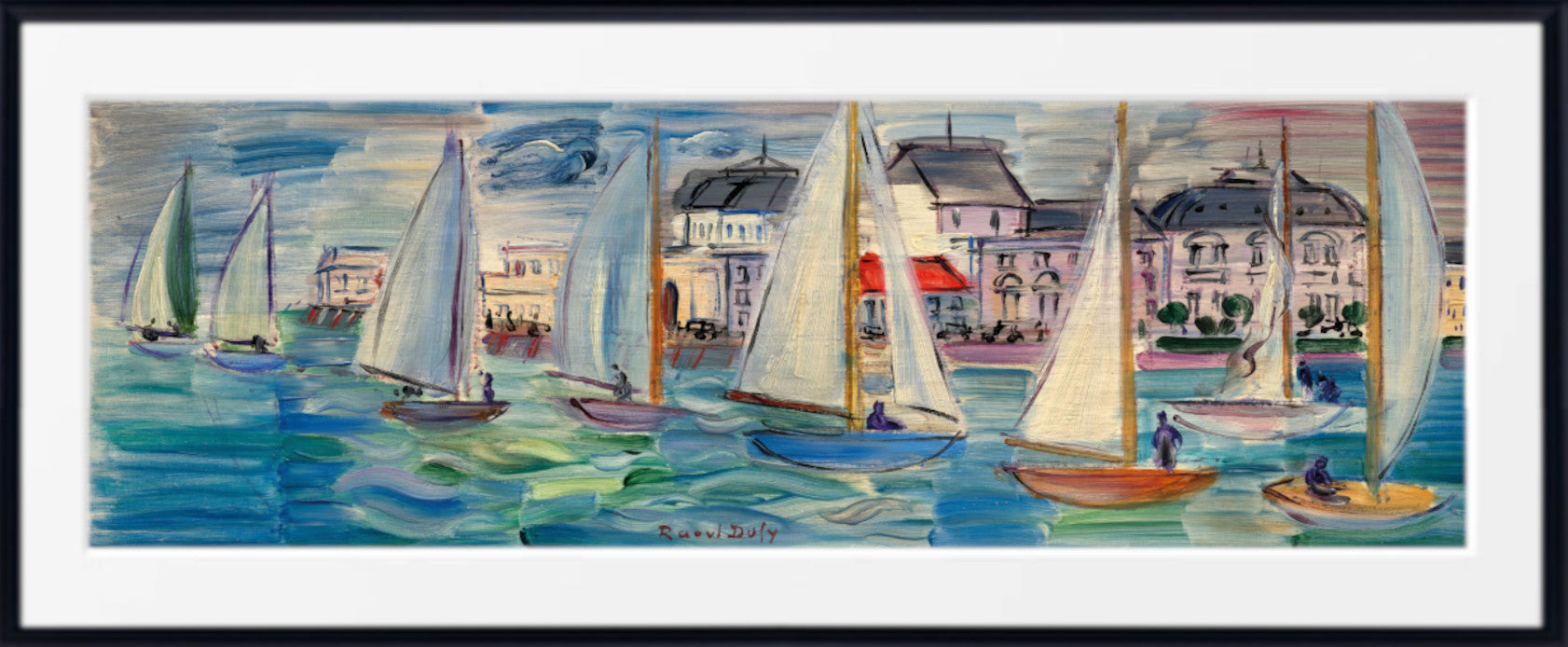
Paintings such as Six-Meter Regattas, Cowes Regatta, The Return of the Regattas and his Deauville harbour scenes transform sporting events into energetic arrangements of colour.
The boats are often simplified.
Crowds can be represented with rapid marks.
Flags and sails punctuate the composition.
The emphasis is less on recording a precise race than on recreating its visual excitement.
Explore related maritime subjects in GalleryThane's Seascape Art Prints.
Deauville and the Normandy Coast
The fashionable Normandy resort of Deauville provided Dufy with an ideal combination of sea, leisure and modern society.
Its harbour, beach, racecourse and fashionable visitors repeatedly appeared in his work.
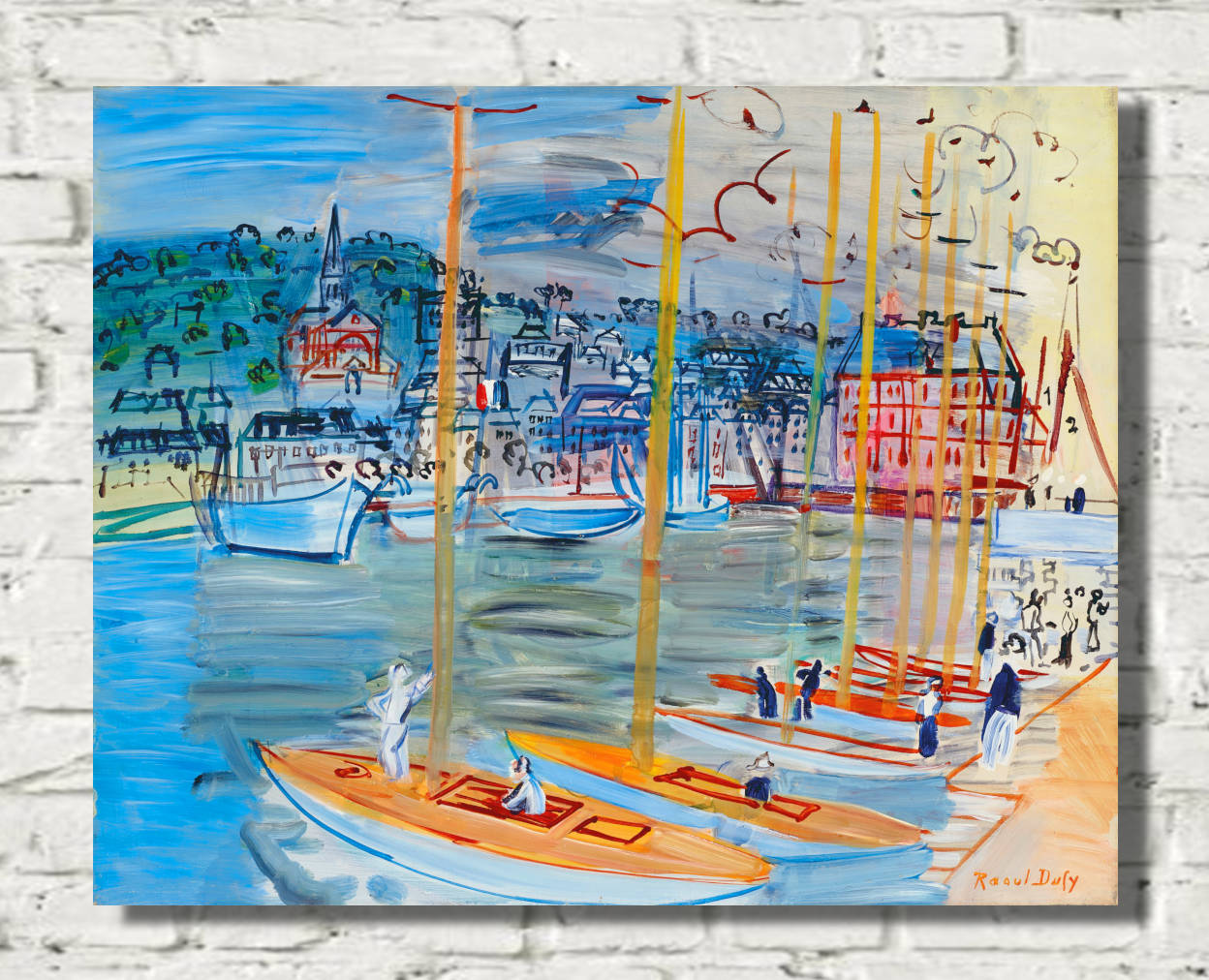
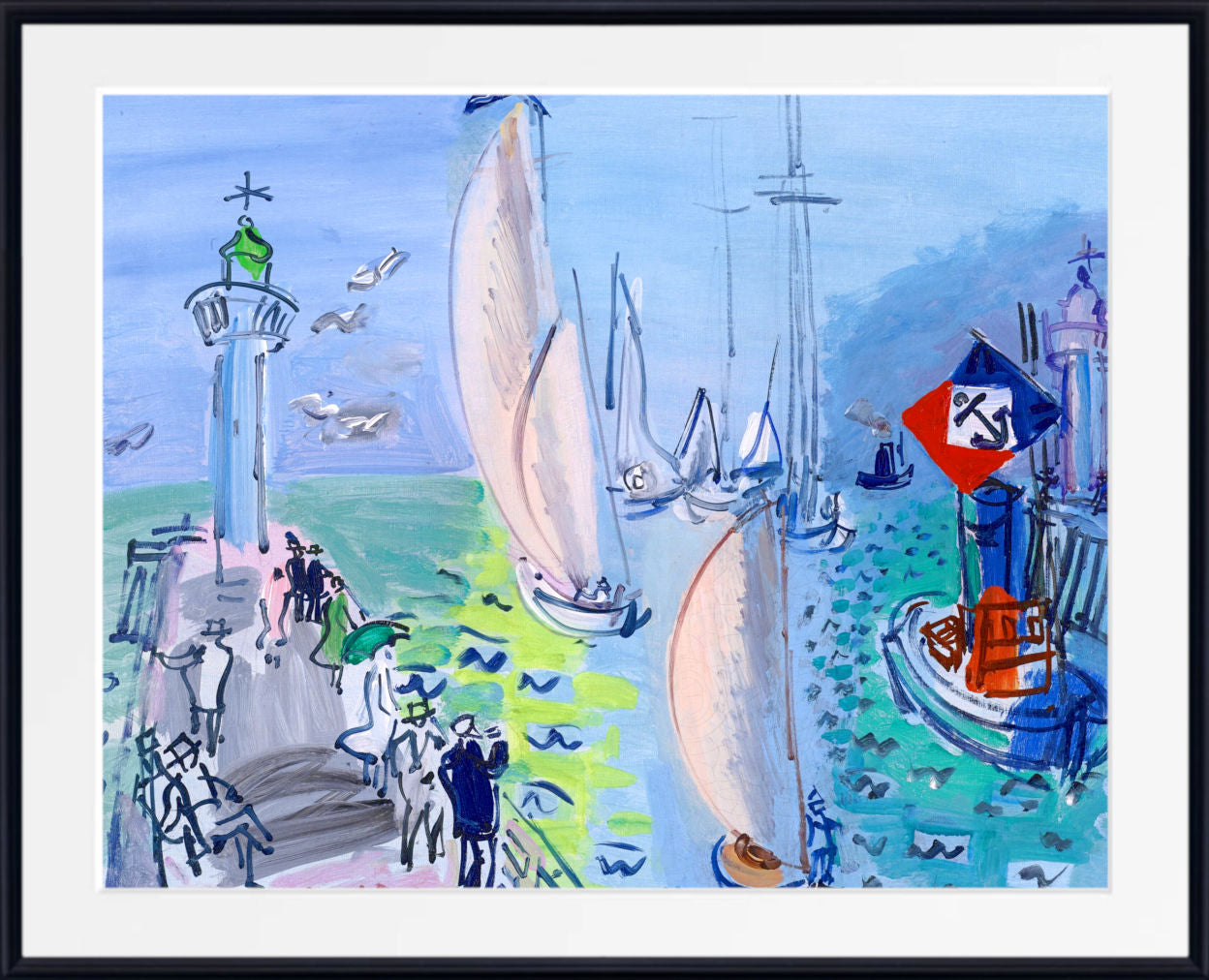
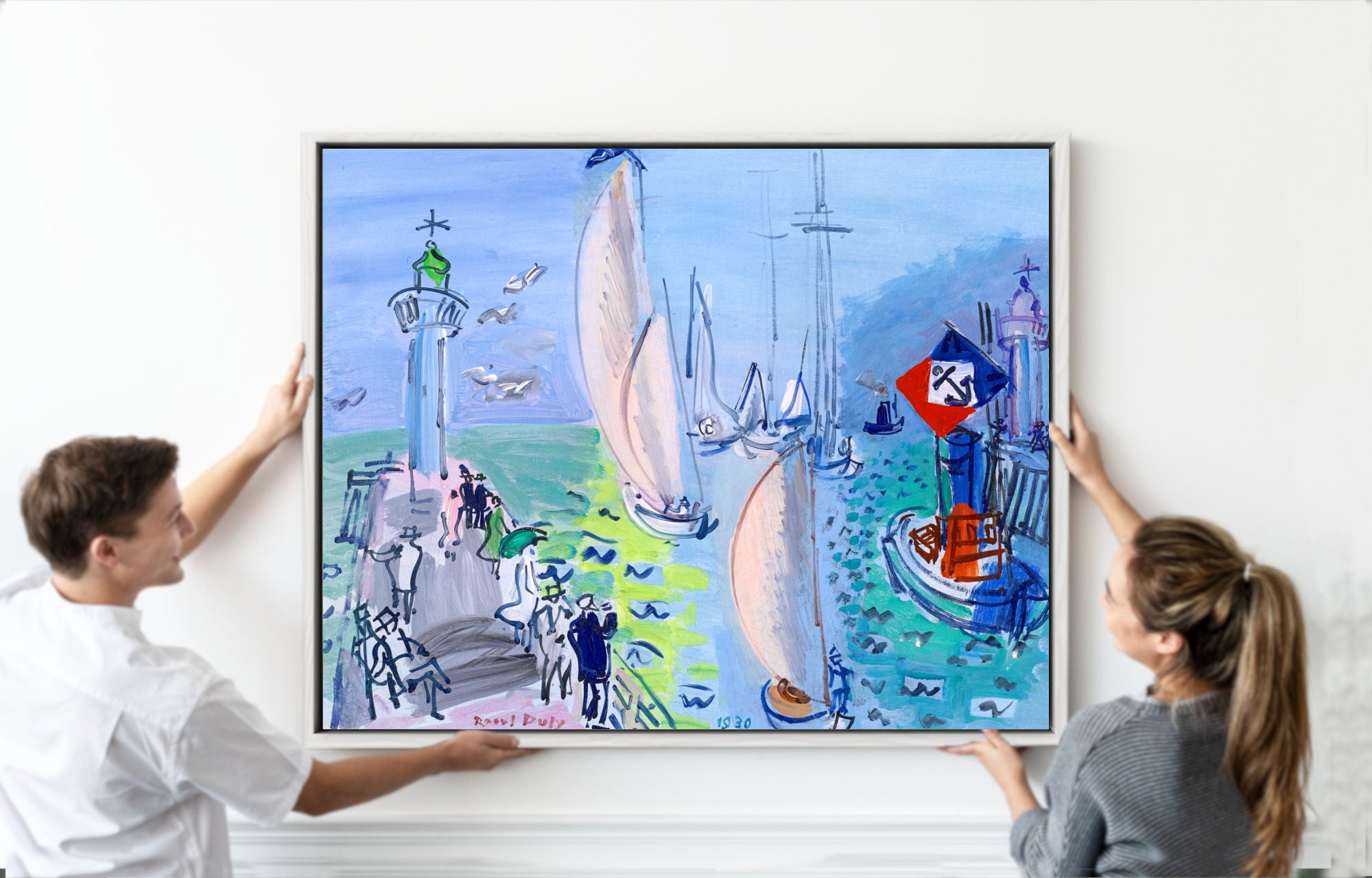
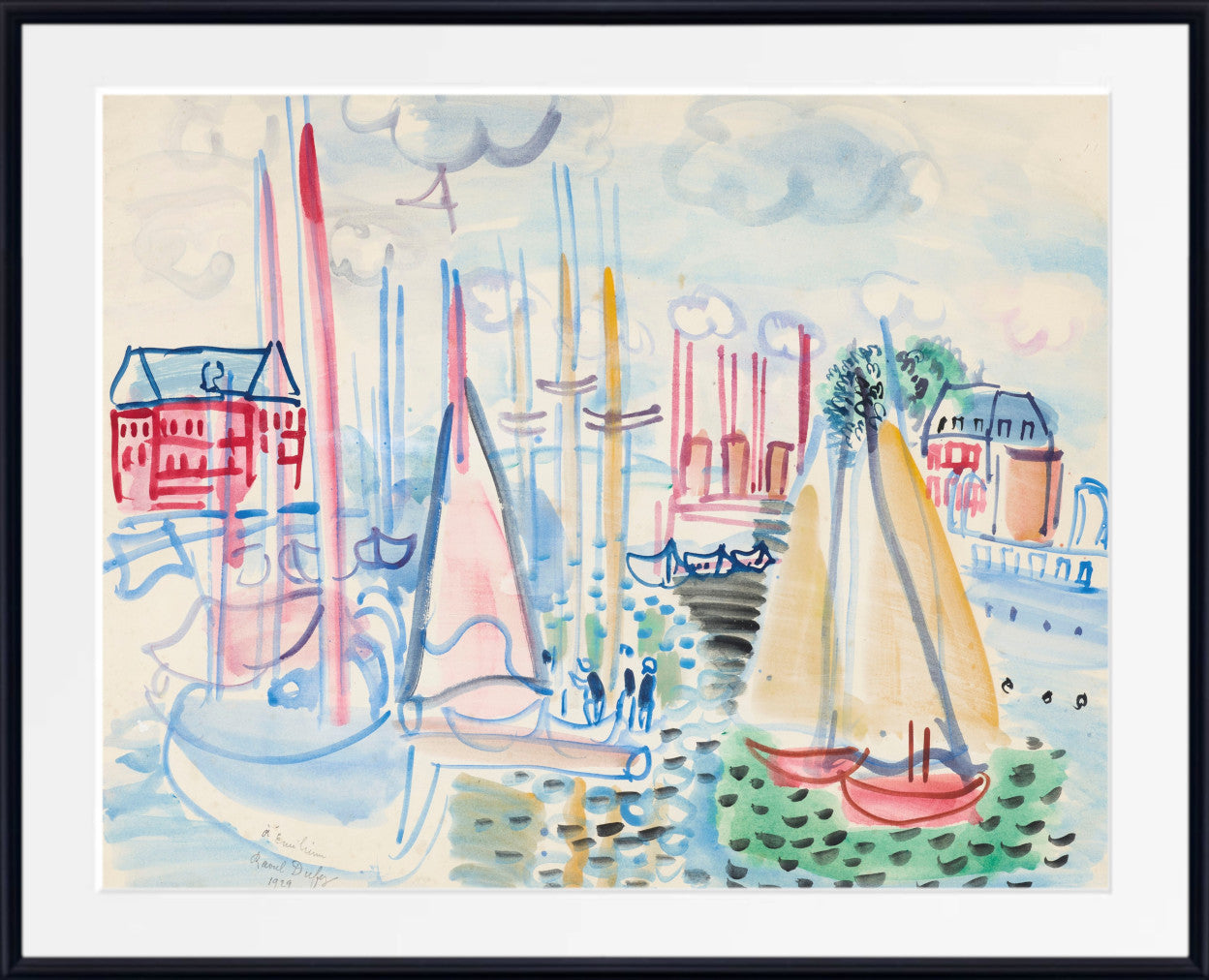
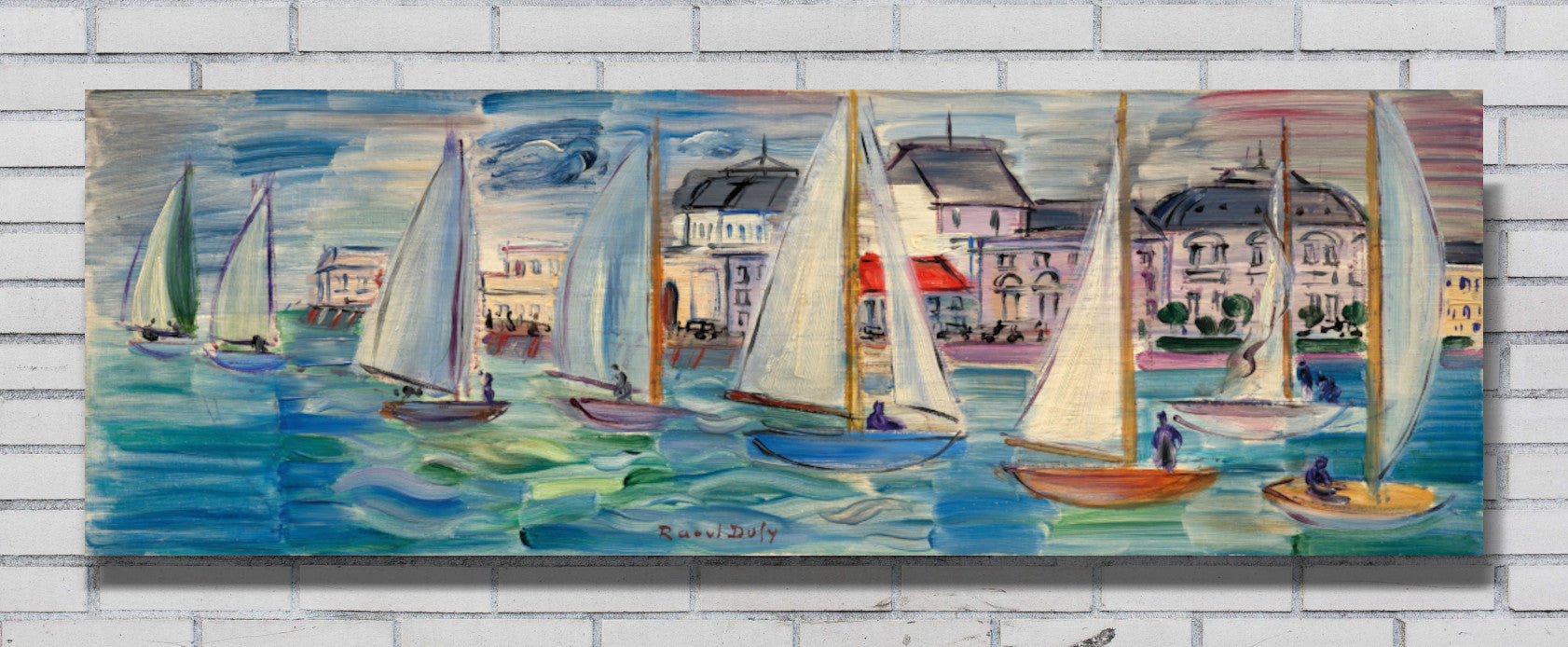
The Deauville Basin captures the harbour through Dufy's mature visual language of strong colour and economical line.
Sailboats and waterfront structures remain recognisable, but the painting is primarily organised around rhythm and colour.
Other Deauville works focus on regattas, beaches or social life.
Together they demonstrate Dufy's fascination with places where landscape and modern leisure intersect.
Cowes and the Isle of Wight
Dufy's fascination with sailing also brought him to Britain.
Cowes on the Isle of Wight was internationally famous for yacht racing, making it a natural subject.
In paintings such as Cowes Regatta and The Royal Yacht Squadron, Cowes, Isle of Wight, the English coast becomes unmistakably Dufy.
Flags, boats and spectators create a lively surface while the expanses of sea and sky allow his characteristic blues to dominate.
These works combine sporting subject matter with the decorative qualities for which Dufy's mature paintings are renowned.
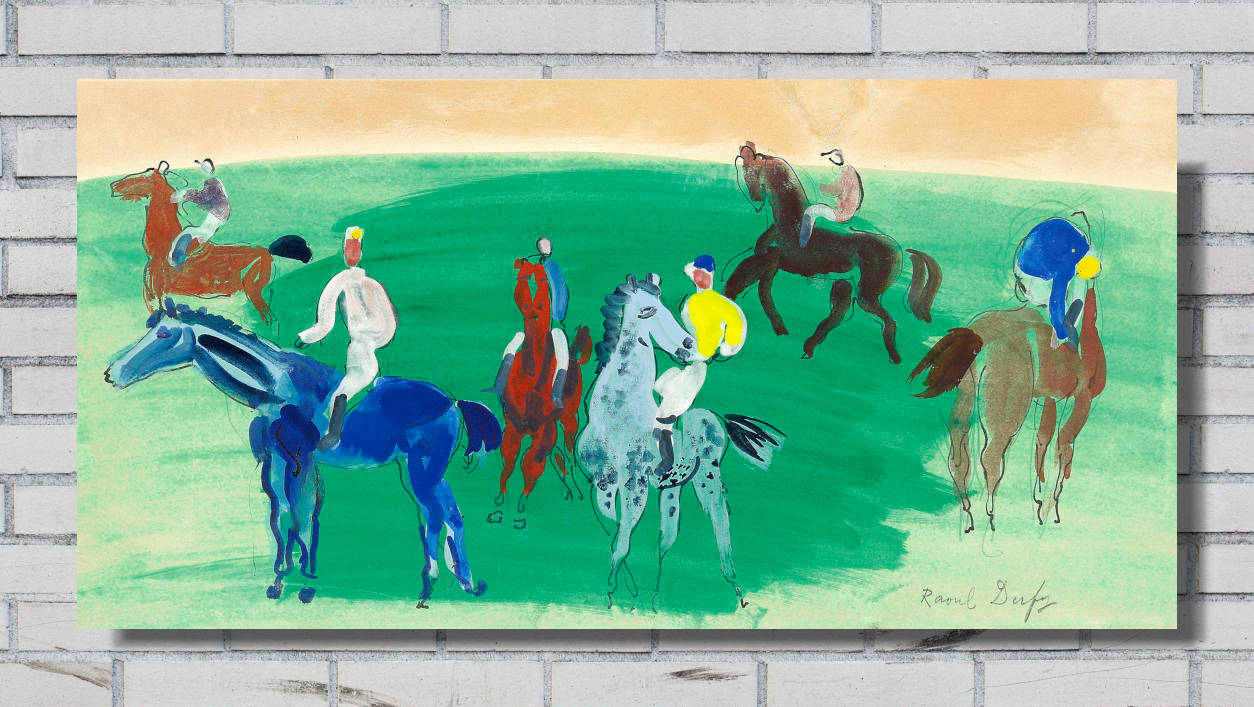
Horse Racing and the Racecourse
Horse racing became another of Dufy's favourite subjects.
Like regattas, racecourses offered an ideal combination of sport, fashionable society, colour and movement.
Horses, jockeys, grandstands and spectators could all be reduced to rapid lines and brightly coloured shapes.
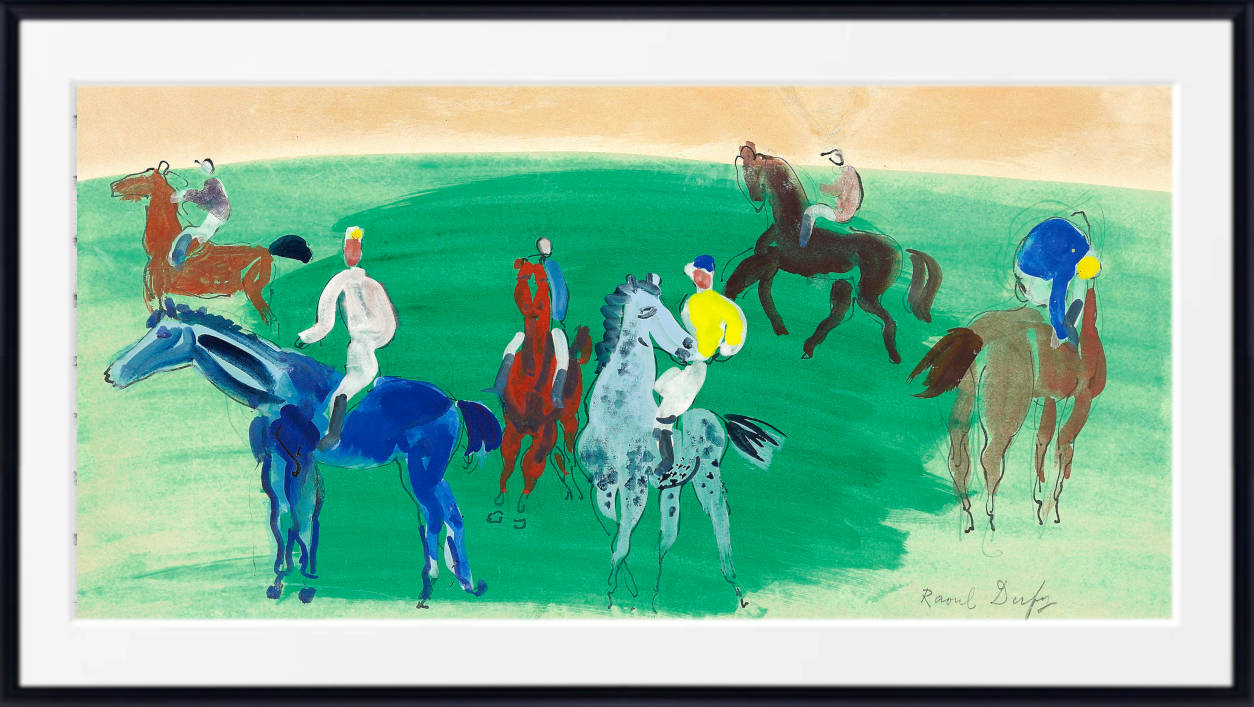
Works such as Six Cavaliers et Jockeys show how effortlessly Dufy could suggest movement without relying on detailed realism.
The horses may be rapidly drawn, but their direction and energy remain immediately apparent.
Racecourse paintings also allowed Dufy to observe fashionable modern life, placing sport alongside elegant clothing, social ritual and spectacle.
Paris Through Dufy's Eyes
Paris was another recurring subject.
Dufy did not generally approach the city as a topographical painter concerned with exact architectural detail.
Instead, familiar landmarks became part of his larger celebration of colour and modern life.
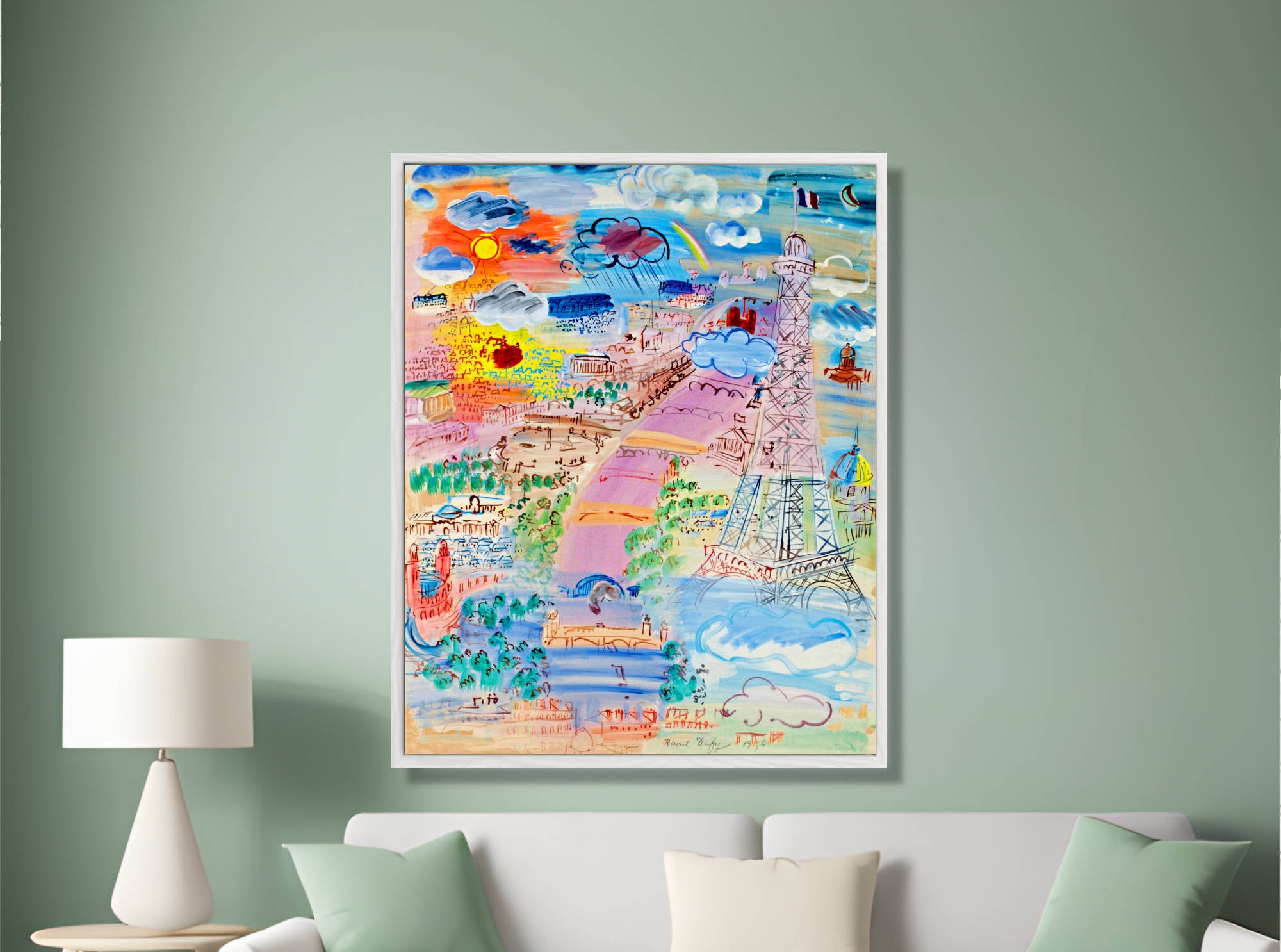
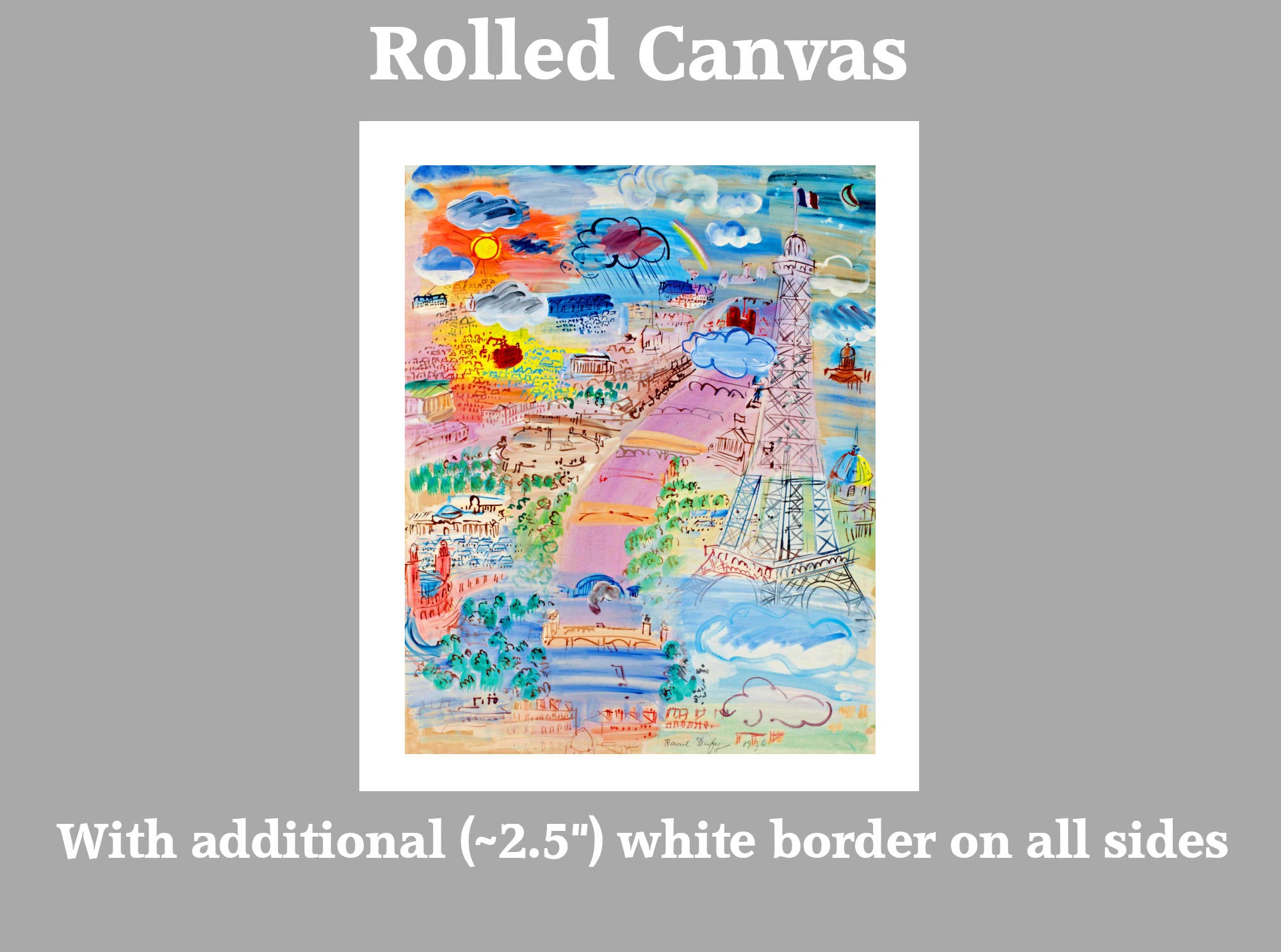
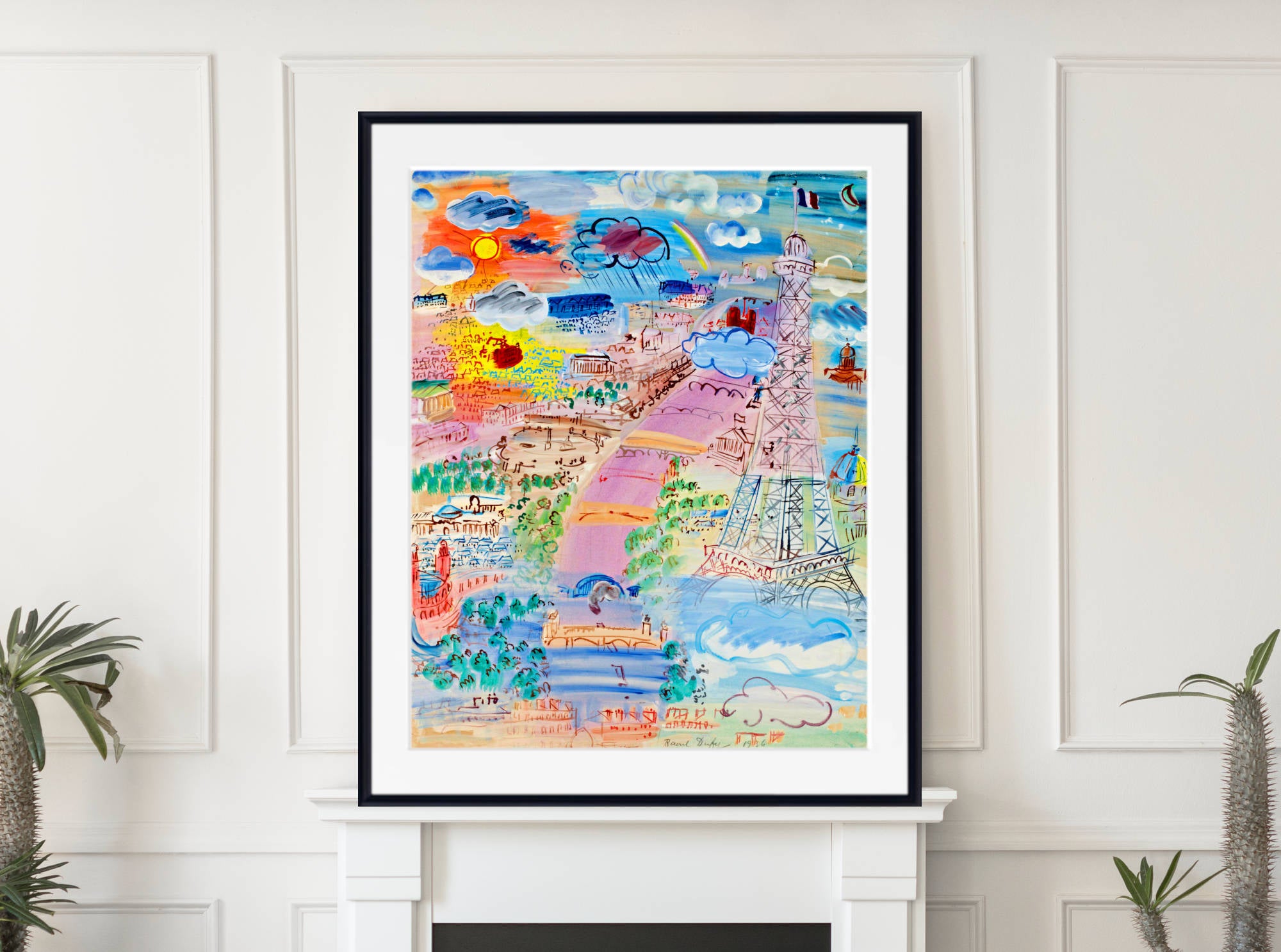
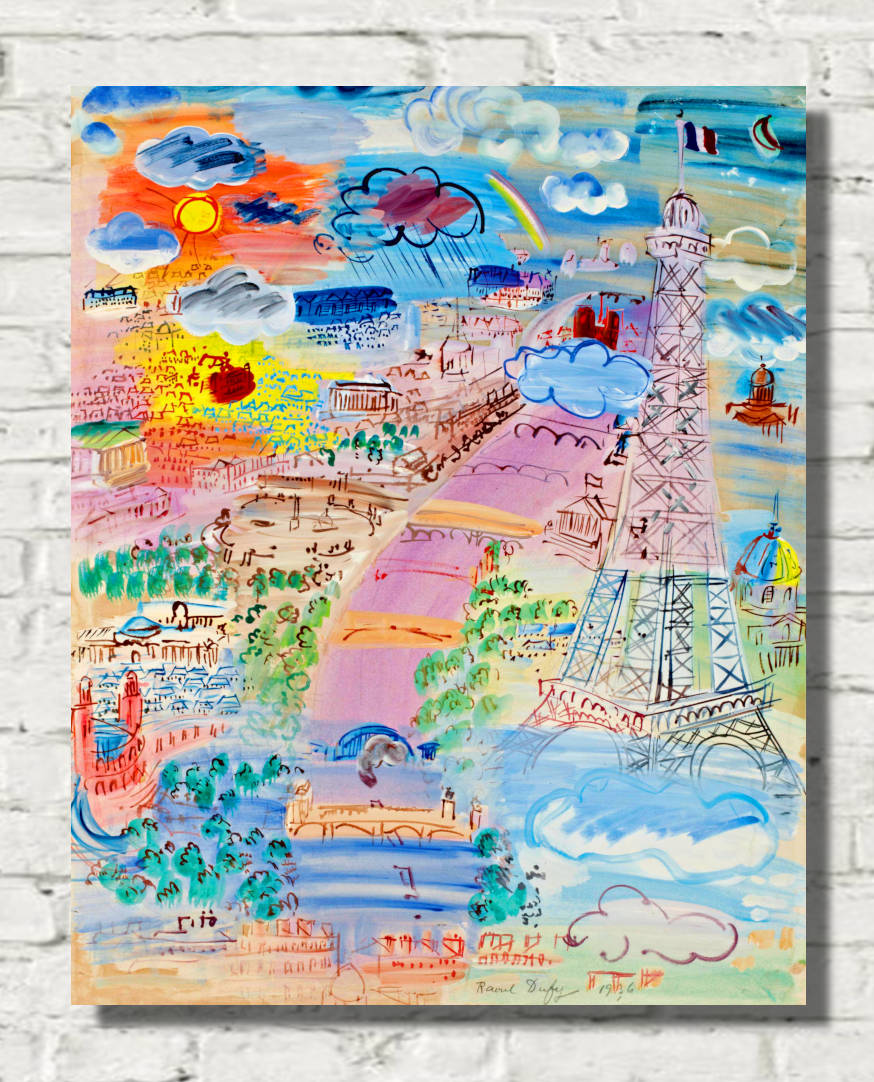
In Paris and the Eiffel Tower, the famous structure provides an instantly recognisable anchor within a composition governed by Dufy's loose drawing and colour.
Other Parisian works similarly transform streets, buildings and public spaces into distinctly personal interpretations of the city.
Explore more views of the French capital in GalleryThane's Paris Wall Art collection.
London and the Houses of Parliament
Dufy also painted London.
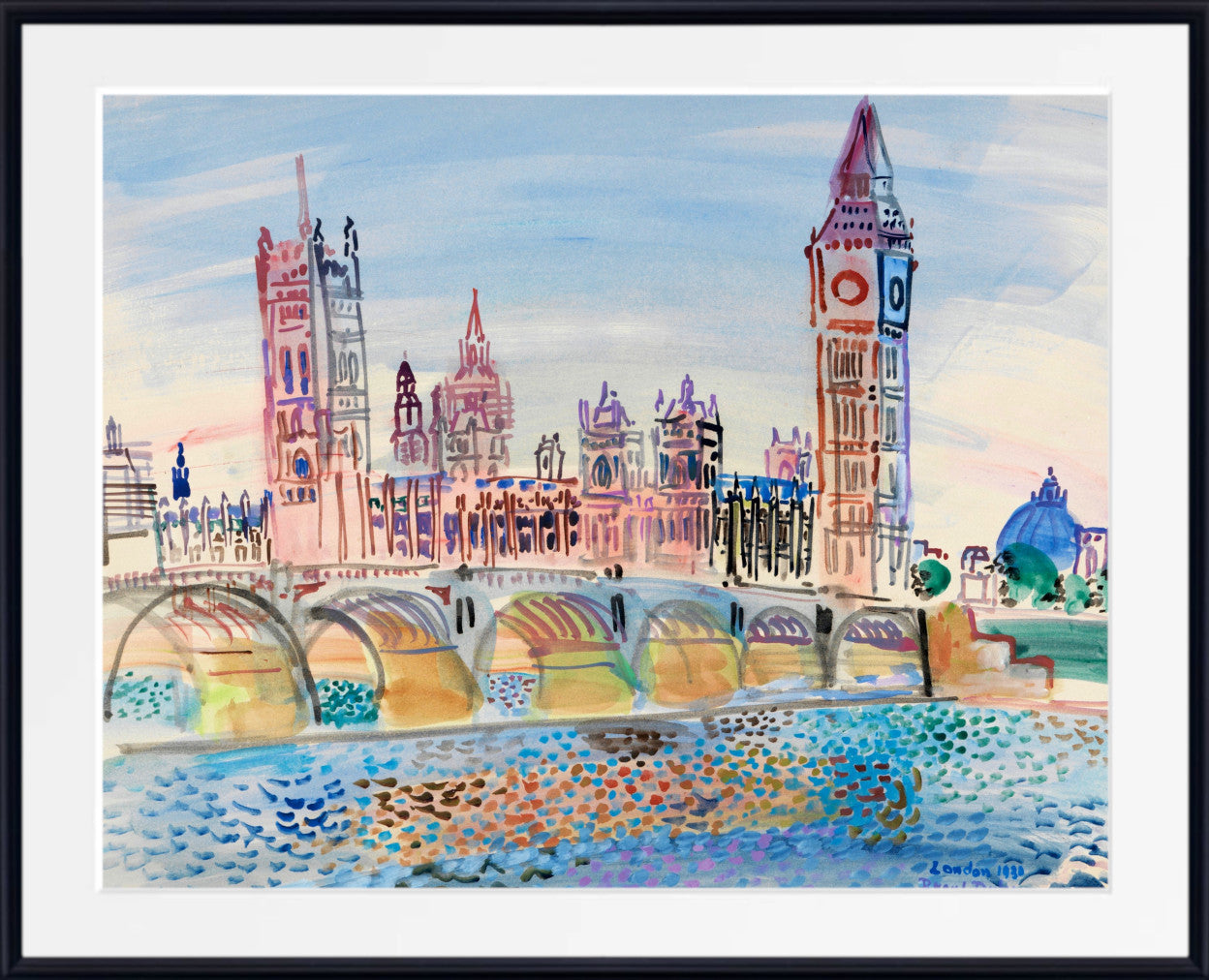
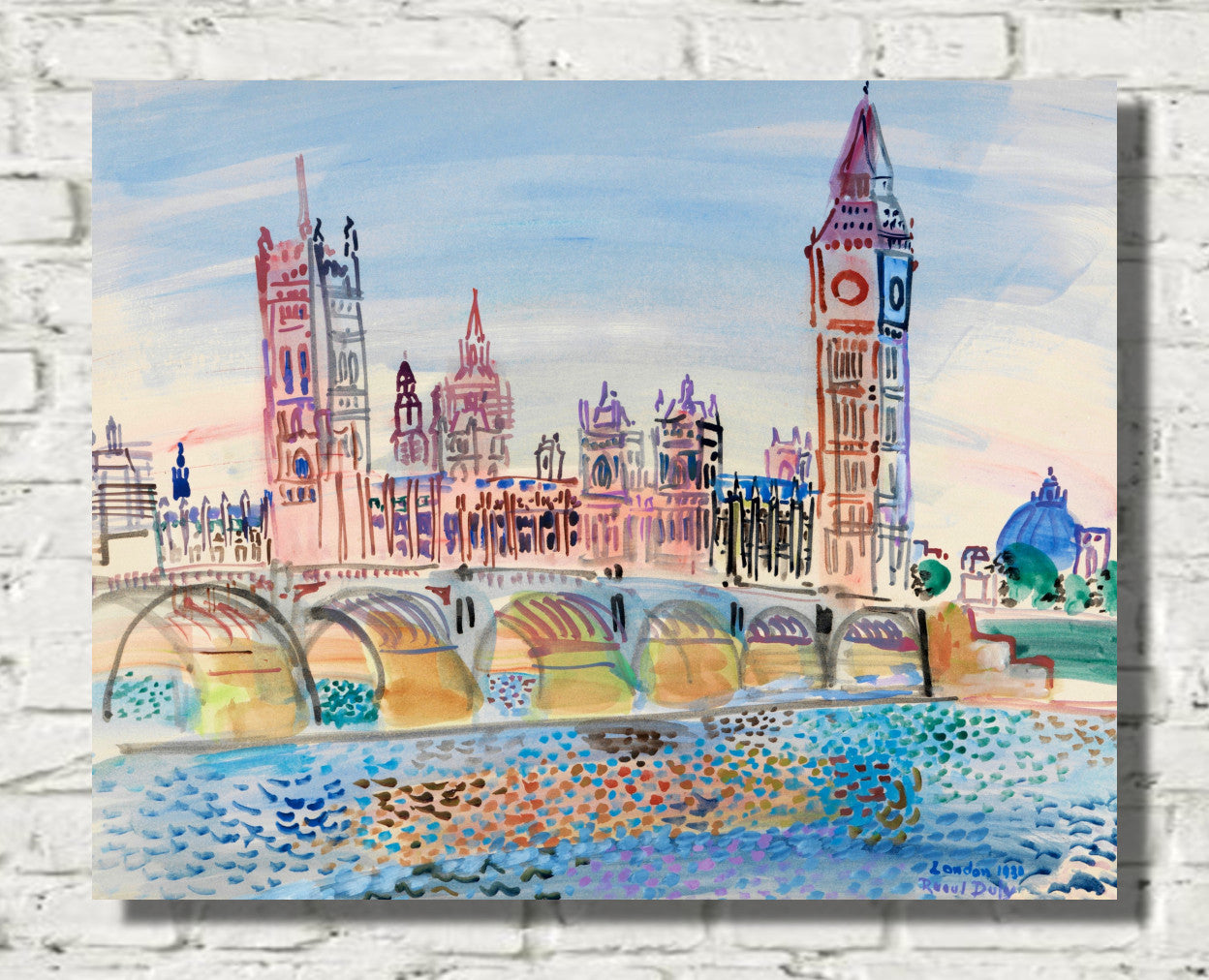
His London Houses of Parliament demonstrates how thoroughly he could transform a famous landmark through his own style.
Rather than treating the building as a detailed architectural subject, Dufy integrates it into a broader composition of colour, line, water and atmosphere.
The result is recognisably London but unmistakably Dufy.
His British subjects provide an interesting comparison with the atmospheric London paintings of Claude Monet. Where Monet often dissolved architecture into changing mist and light, Dufy emphasised fluid drawing and brilliant areas of colour.
Browse other interpretations of the capital in GalleryThane's London Wall Art collection.
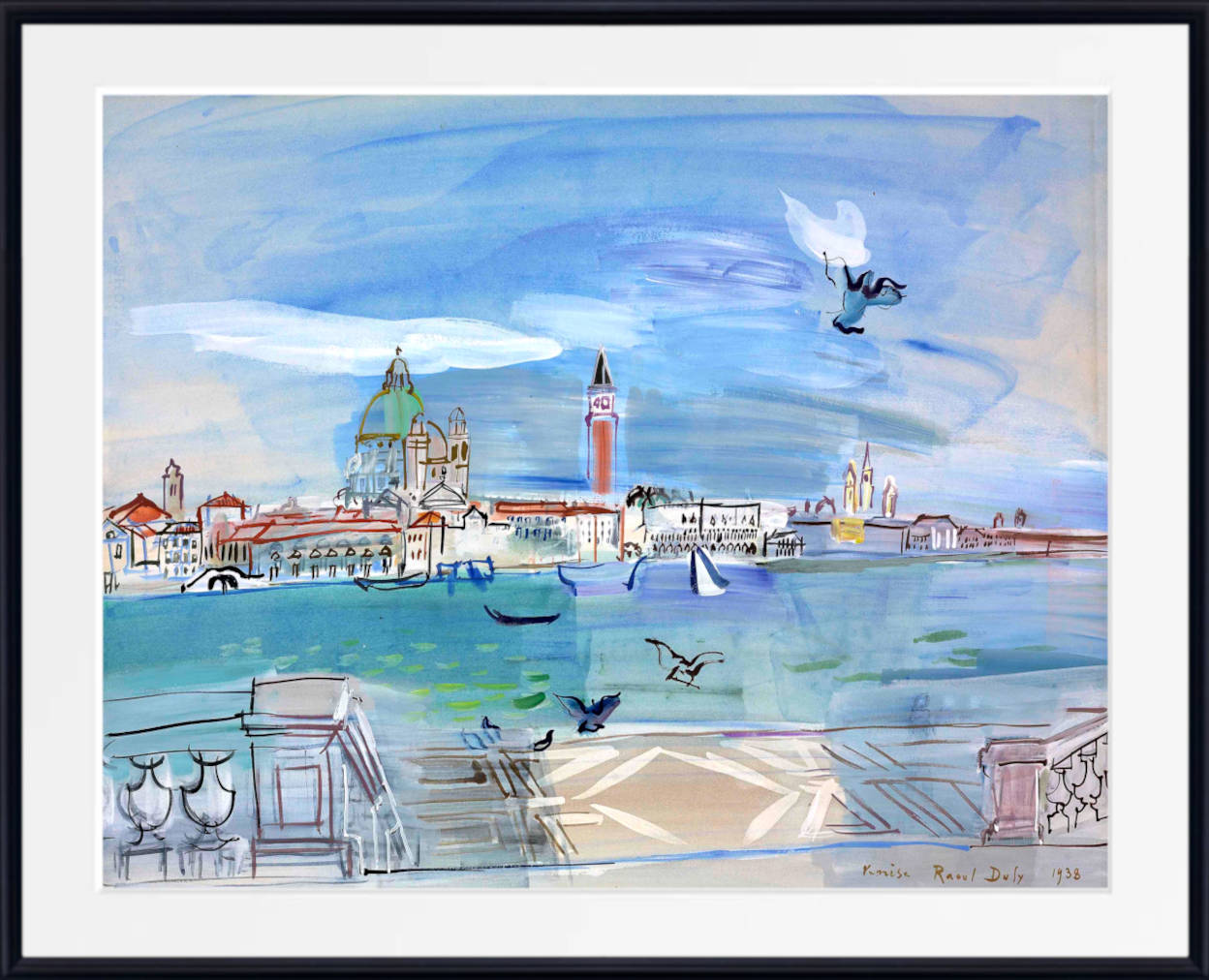
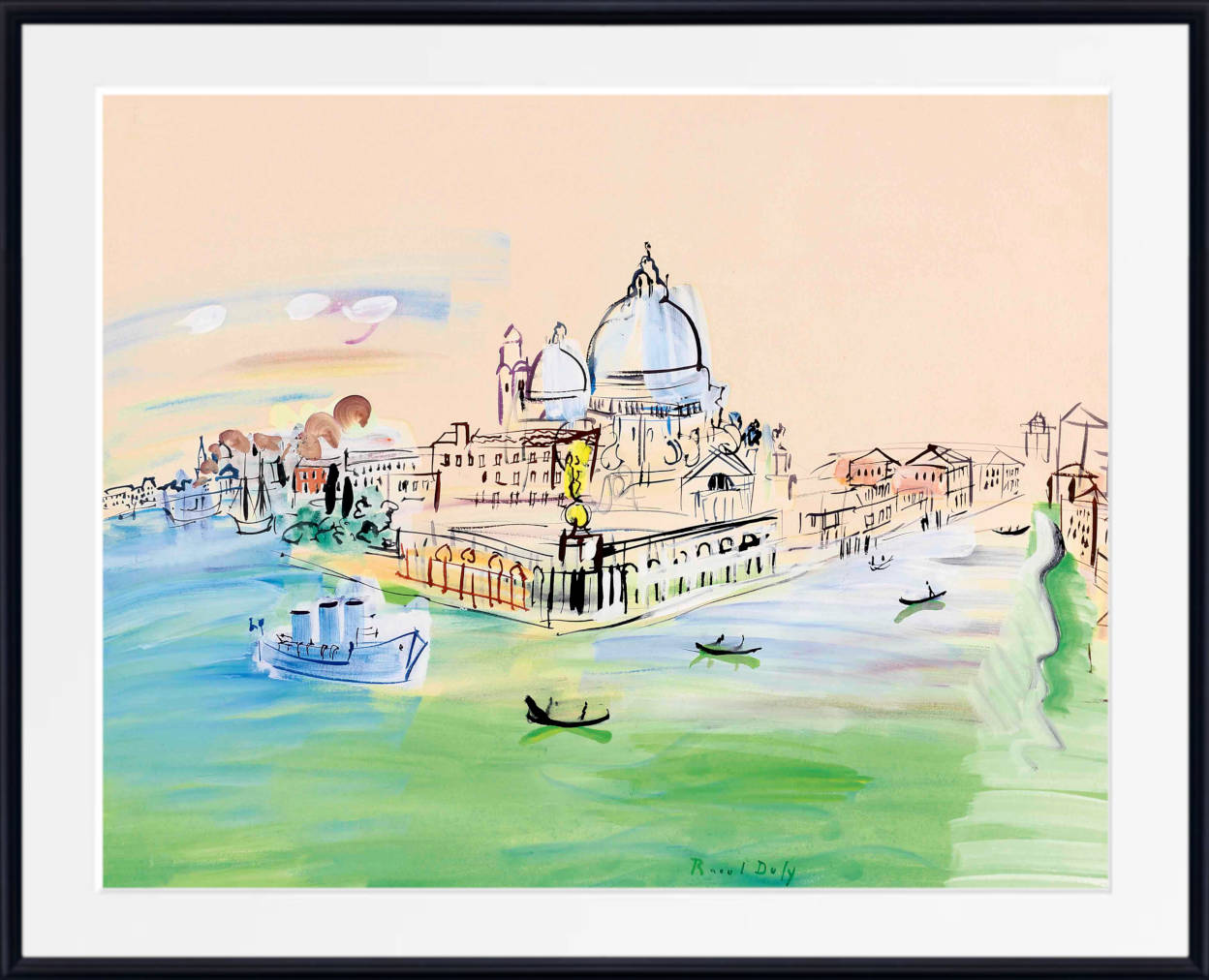
Venice
Venice was ideally suited to Dufy's art.
Water, boats, architecture and brilliant light provided the ingredients he repeatedly sought elsewhere in coastal Europe.
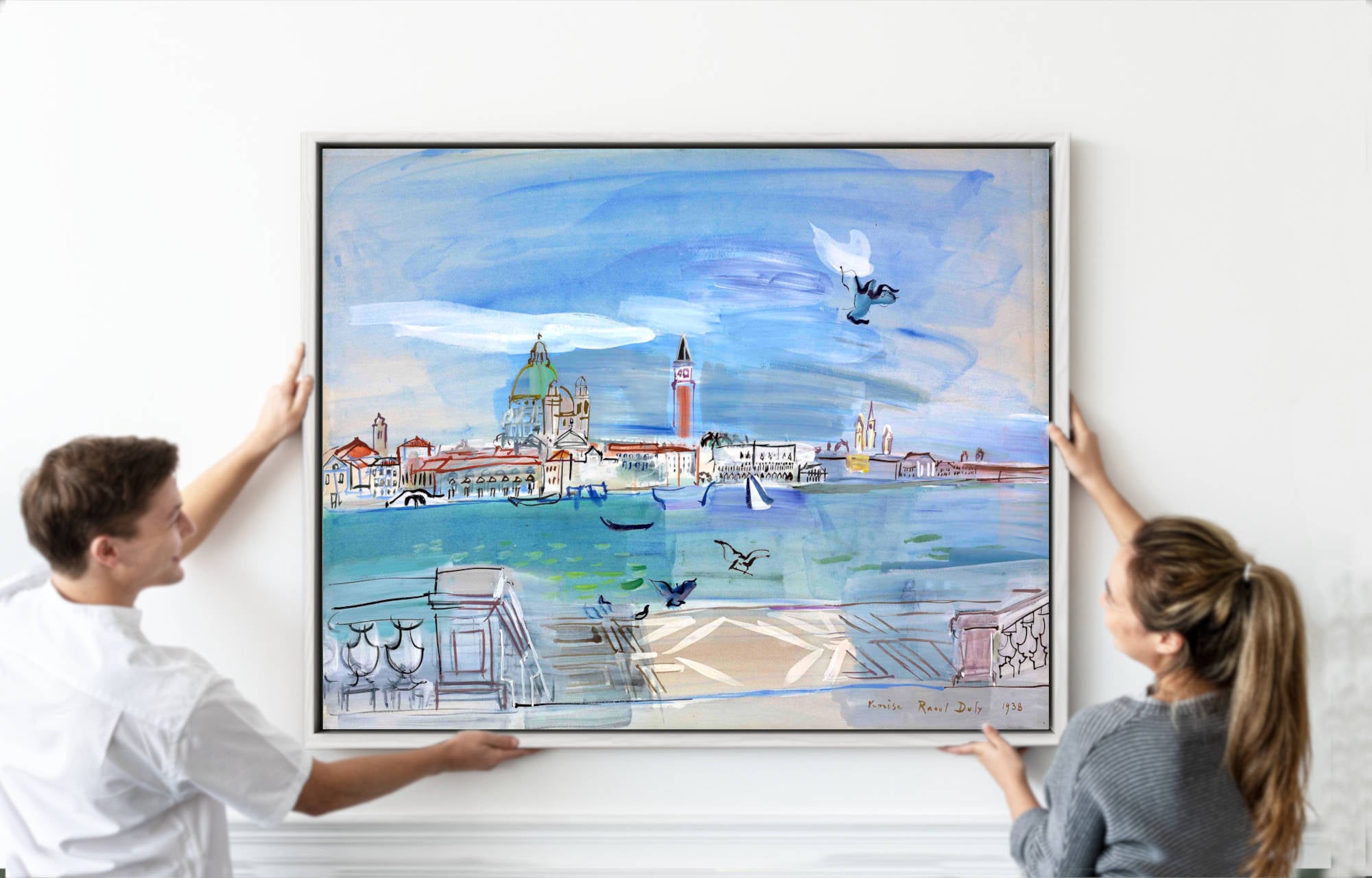
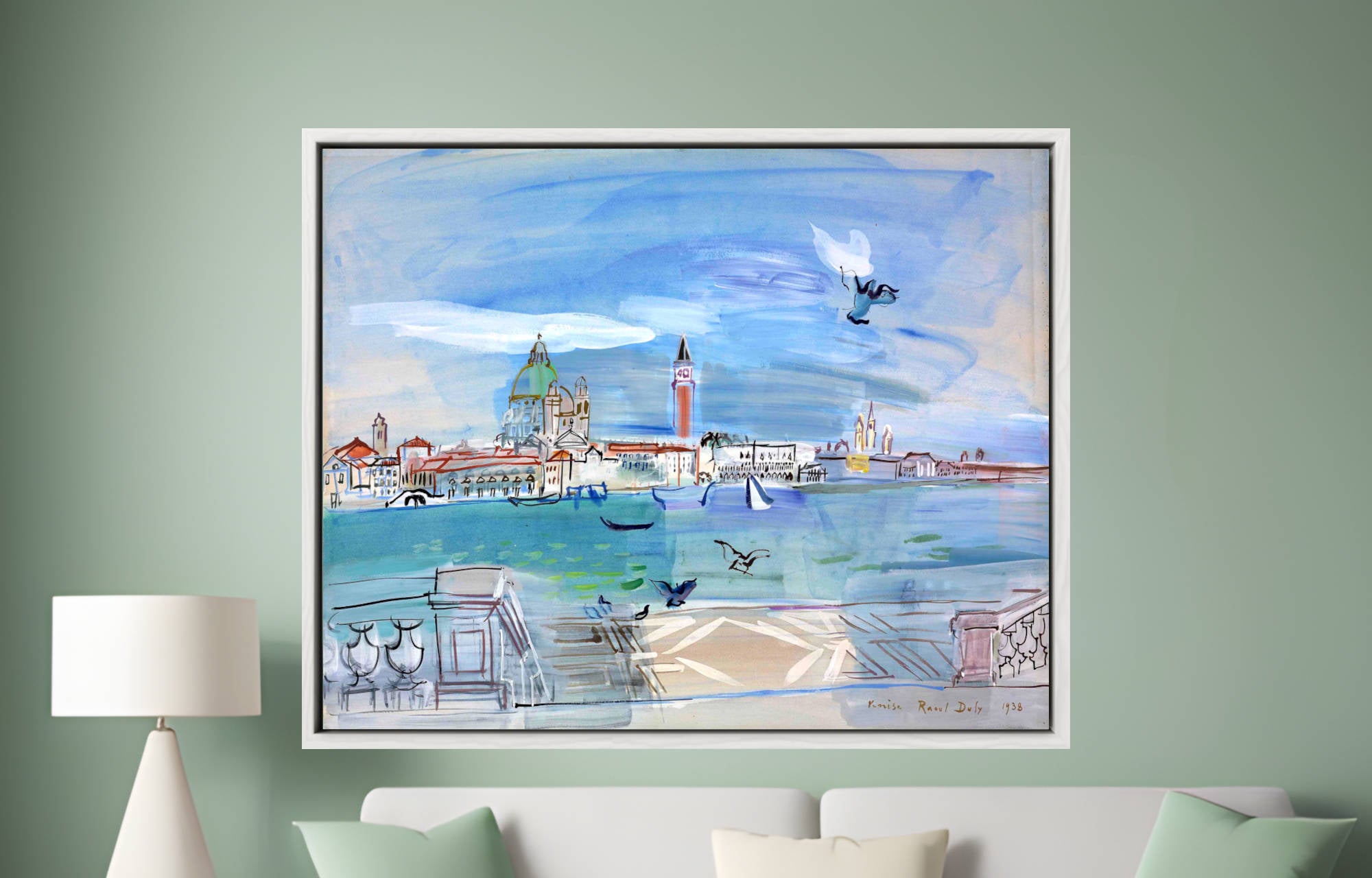
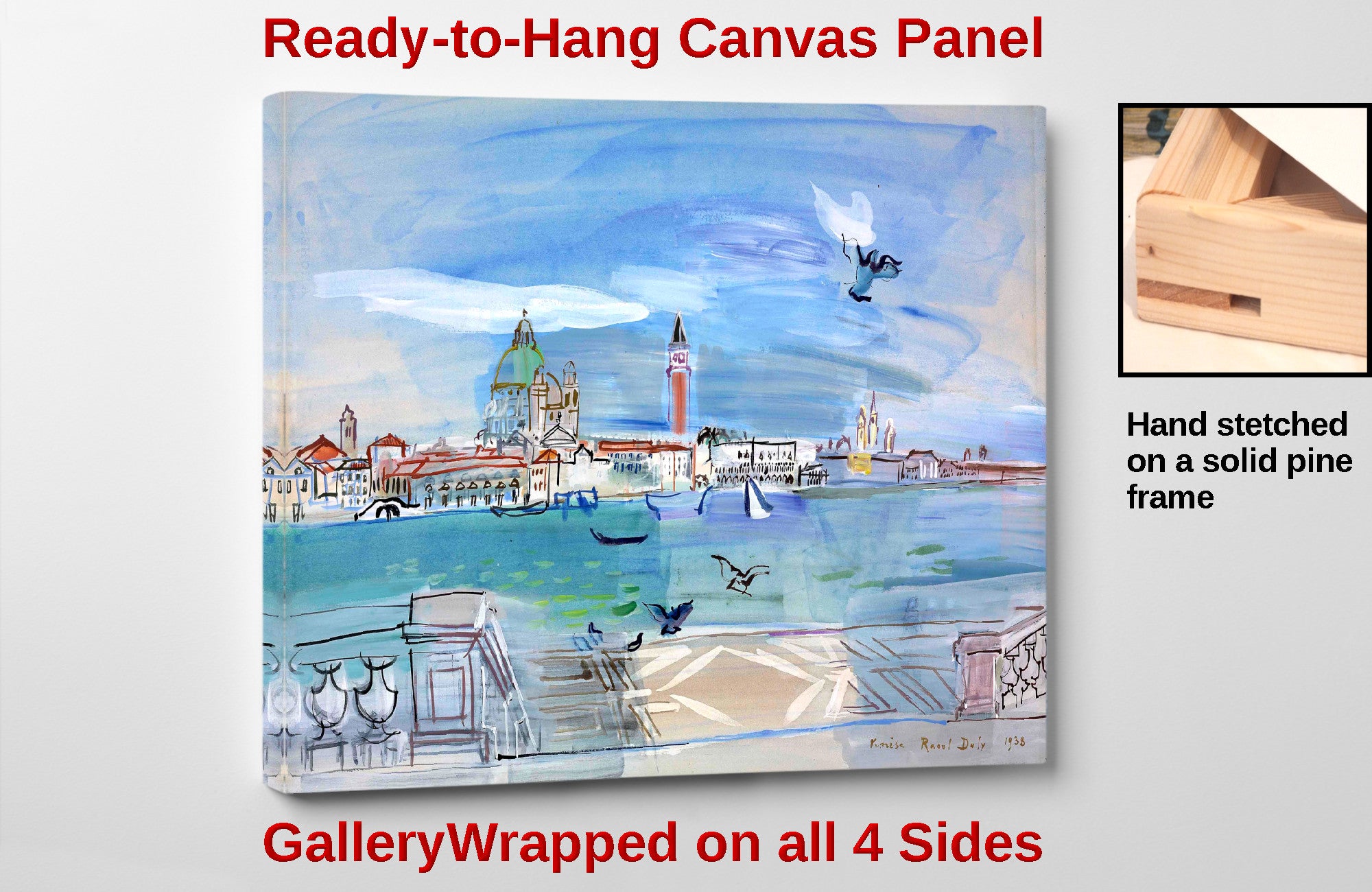
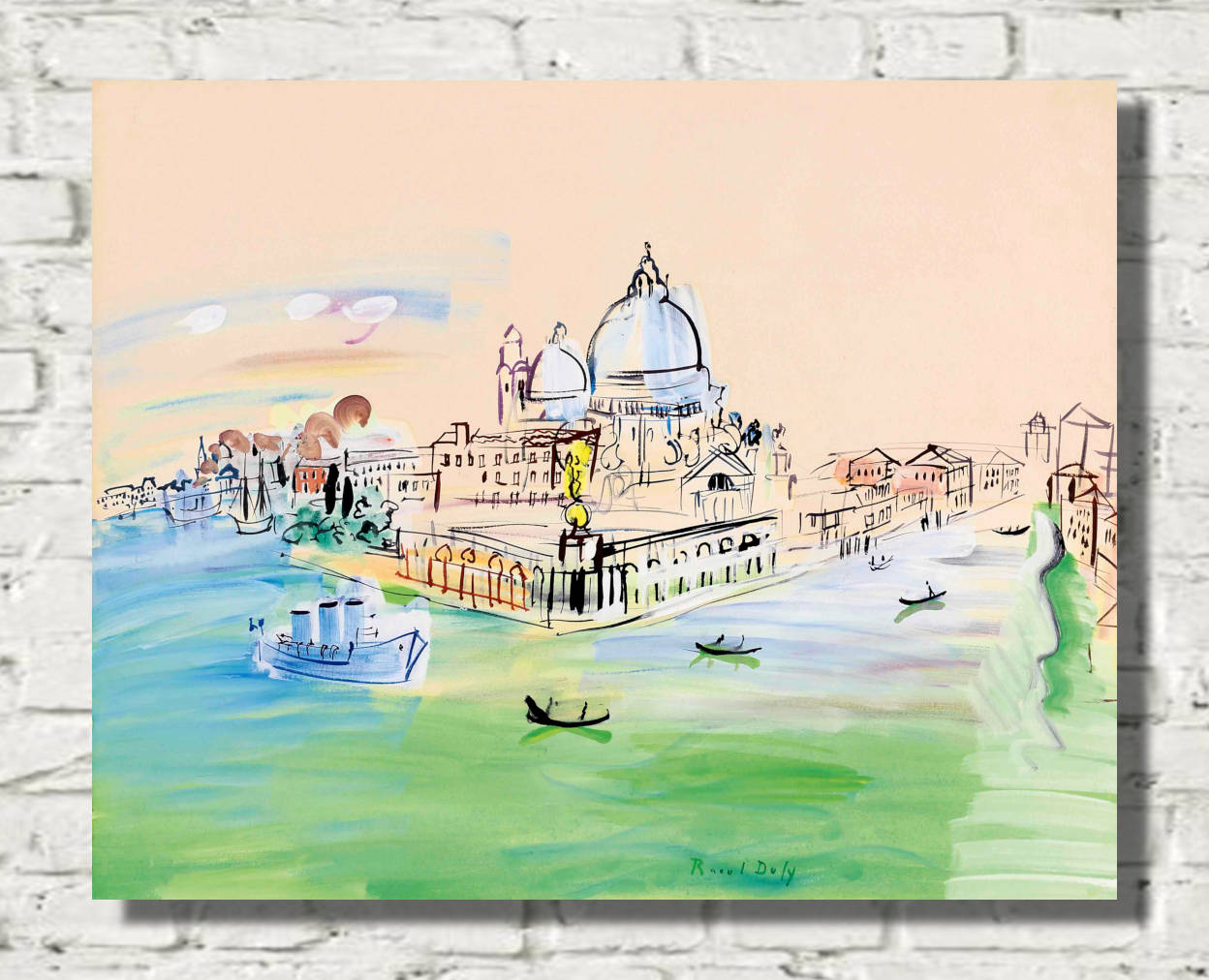
His painting Venice (1938) is currently one of the prominent works in the GalleryThane Dufy collection.
Venetian architecture remains recognisable but does not overpower the composition.
Instead, the city becomes an arrangement of water, colour and loosely described architectural forms.
Works such as Customs Point, Venice similarly show Dufy's ability to transform famous European locations without becoming trapped by detailed topographical accuracy.
Nice and the French Riviera
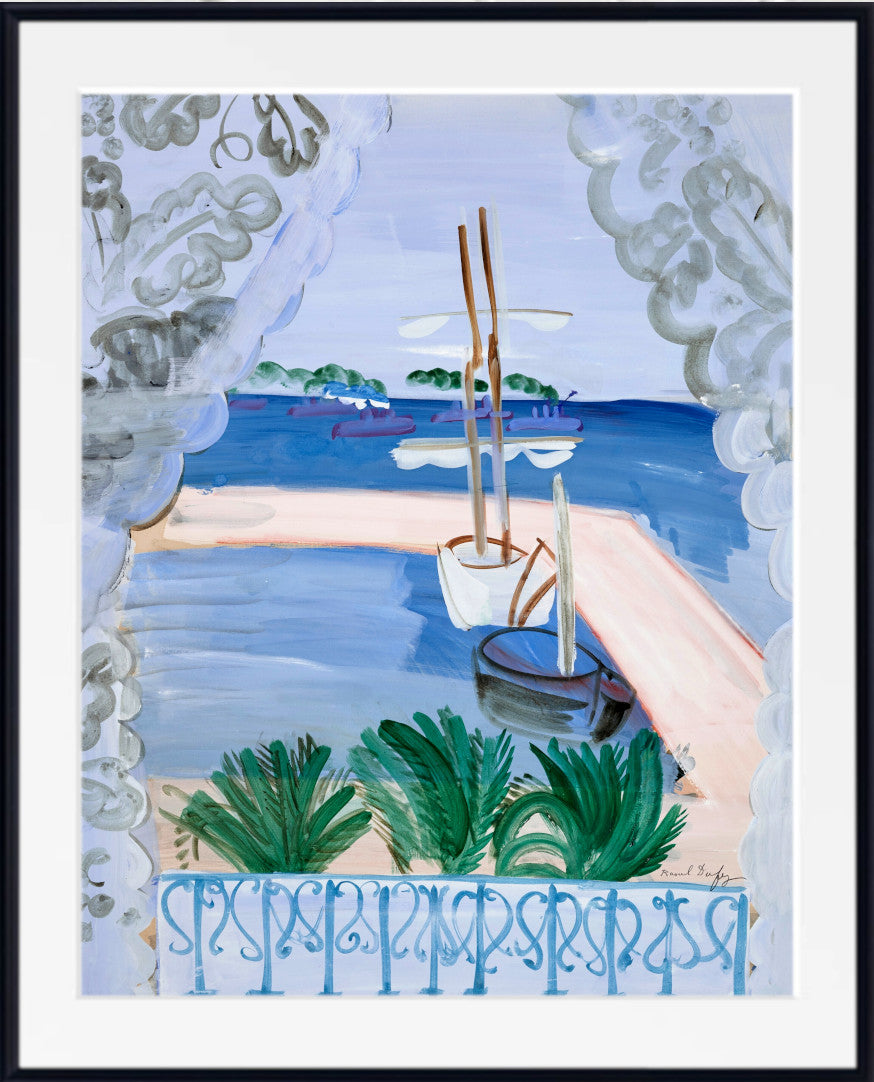
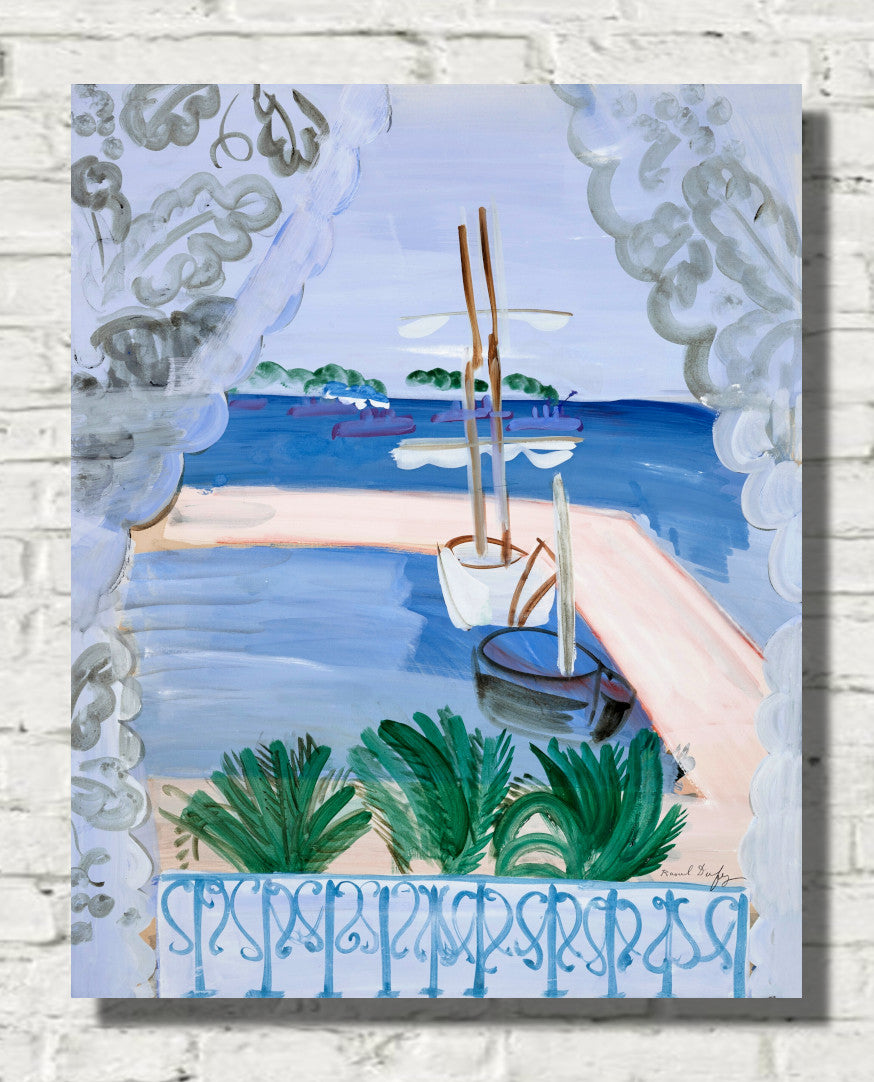
The Mediterranean coast became one of Dufy's richest sources of inspiration.
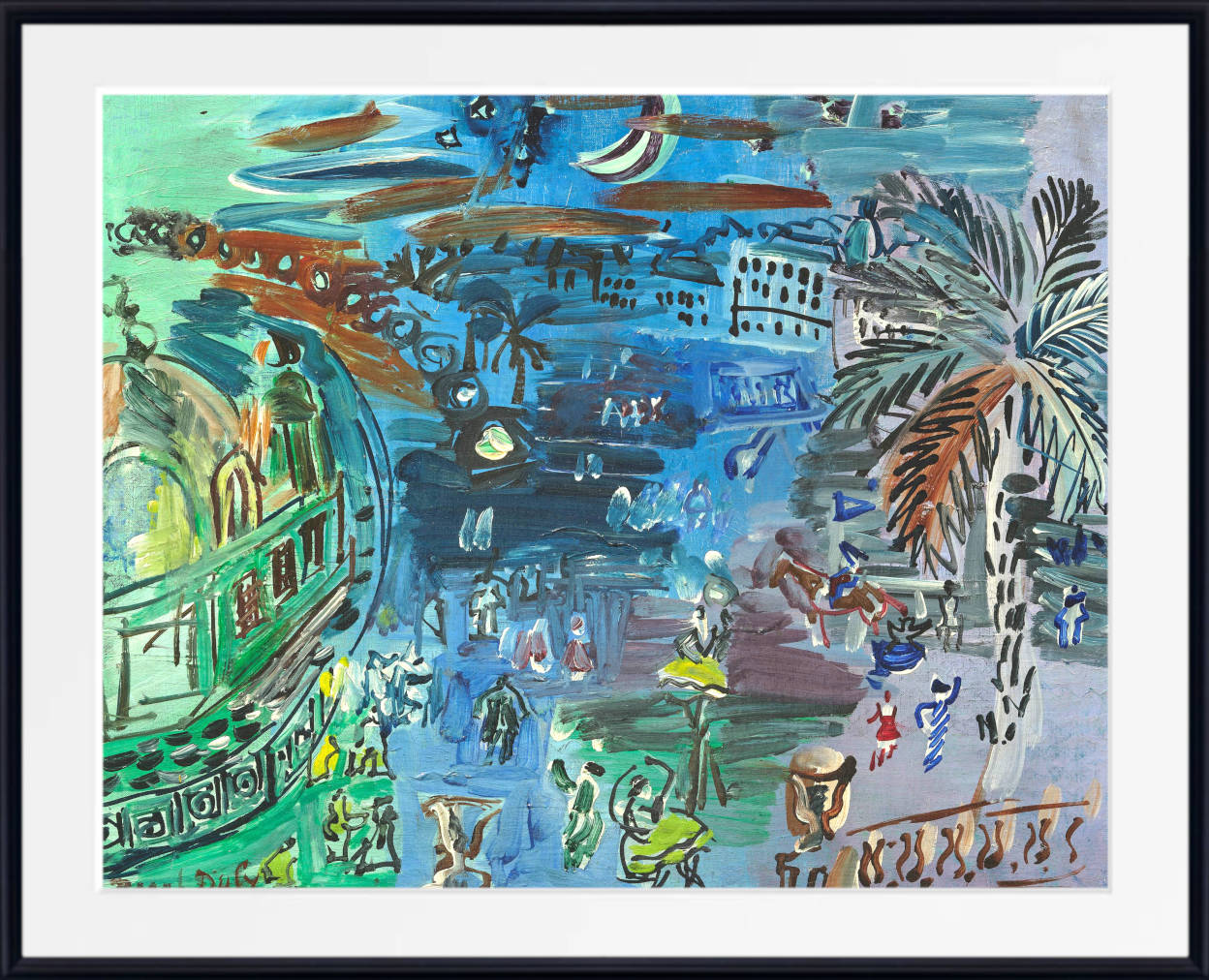
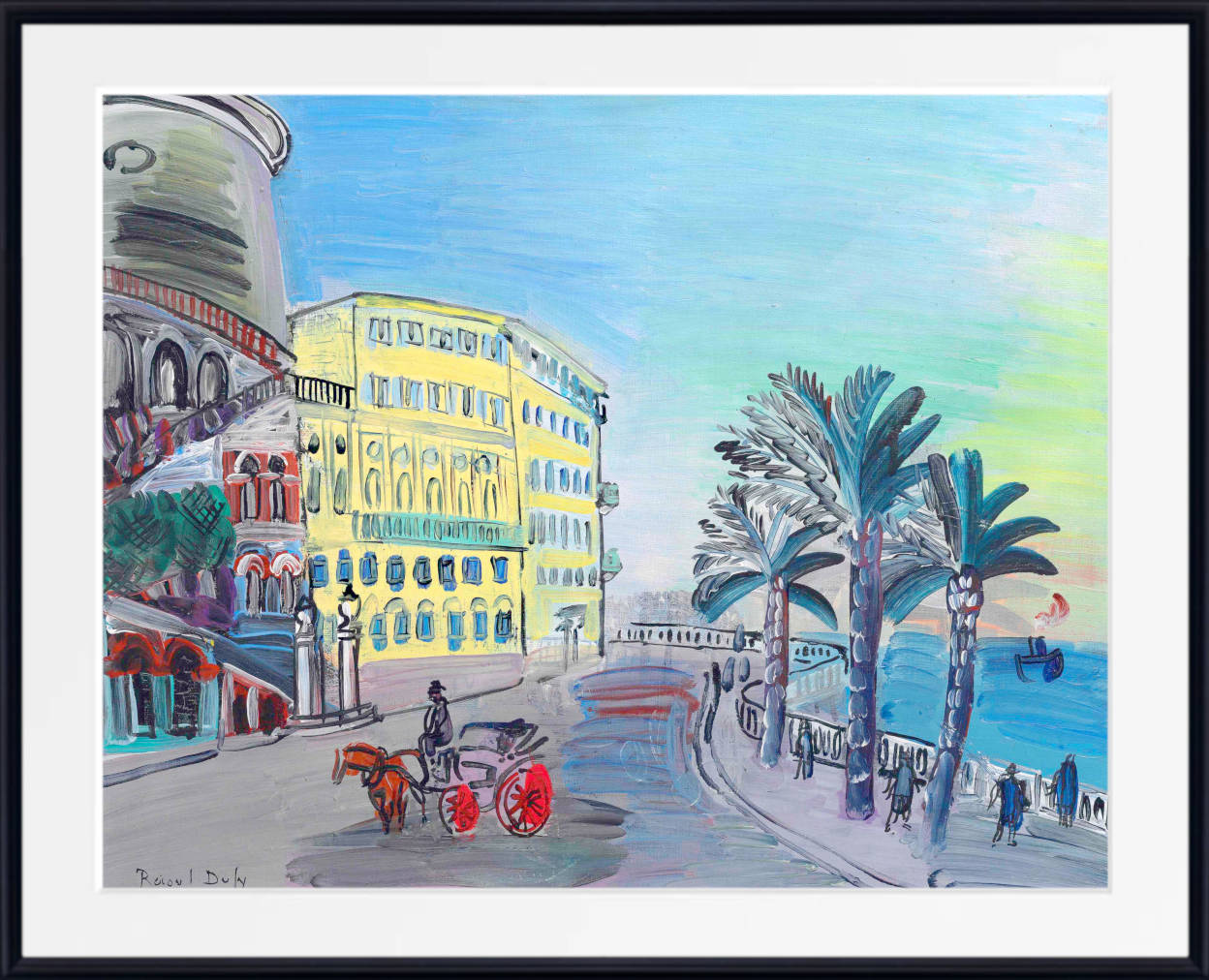
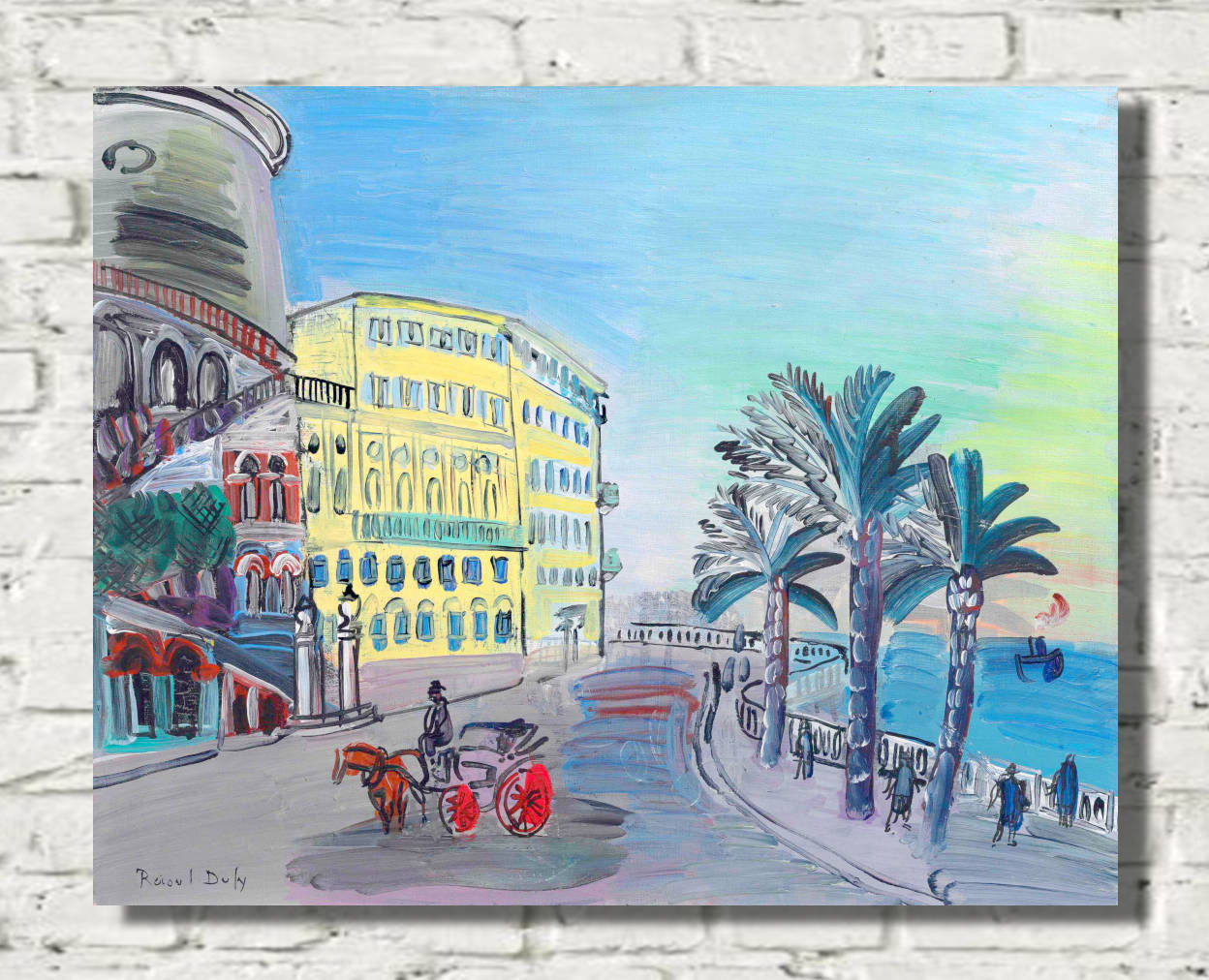
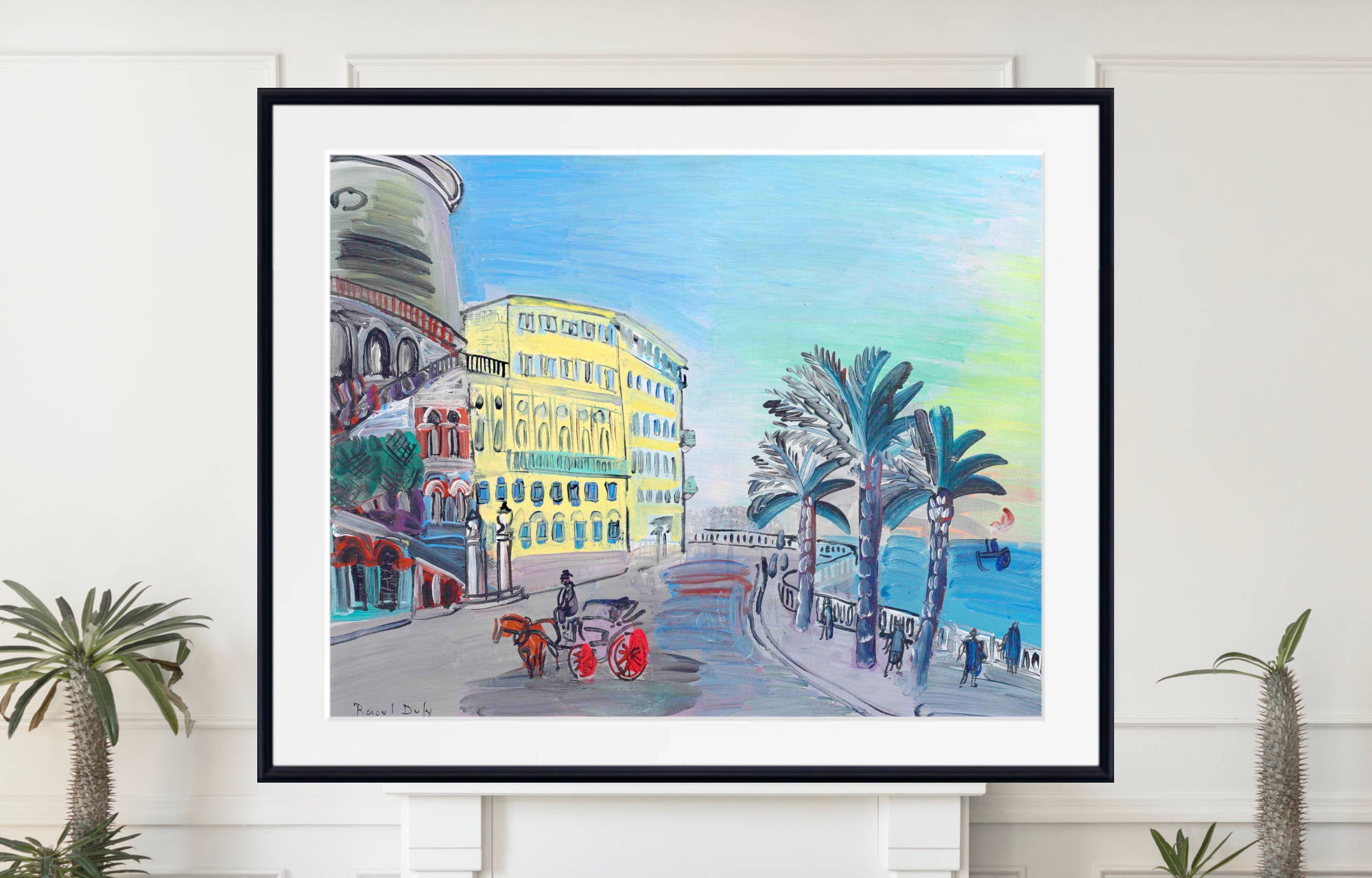
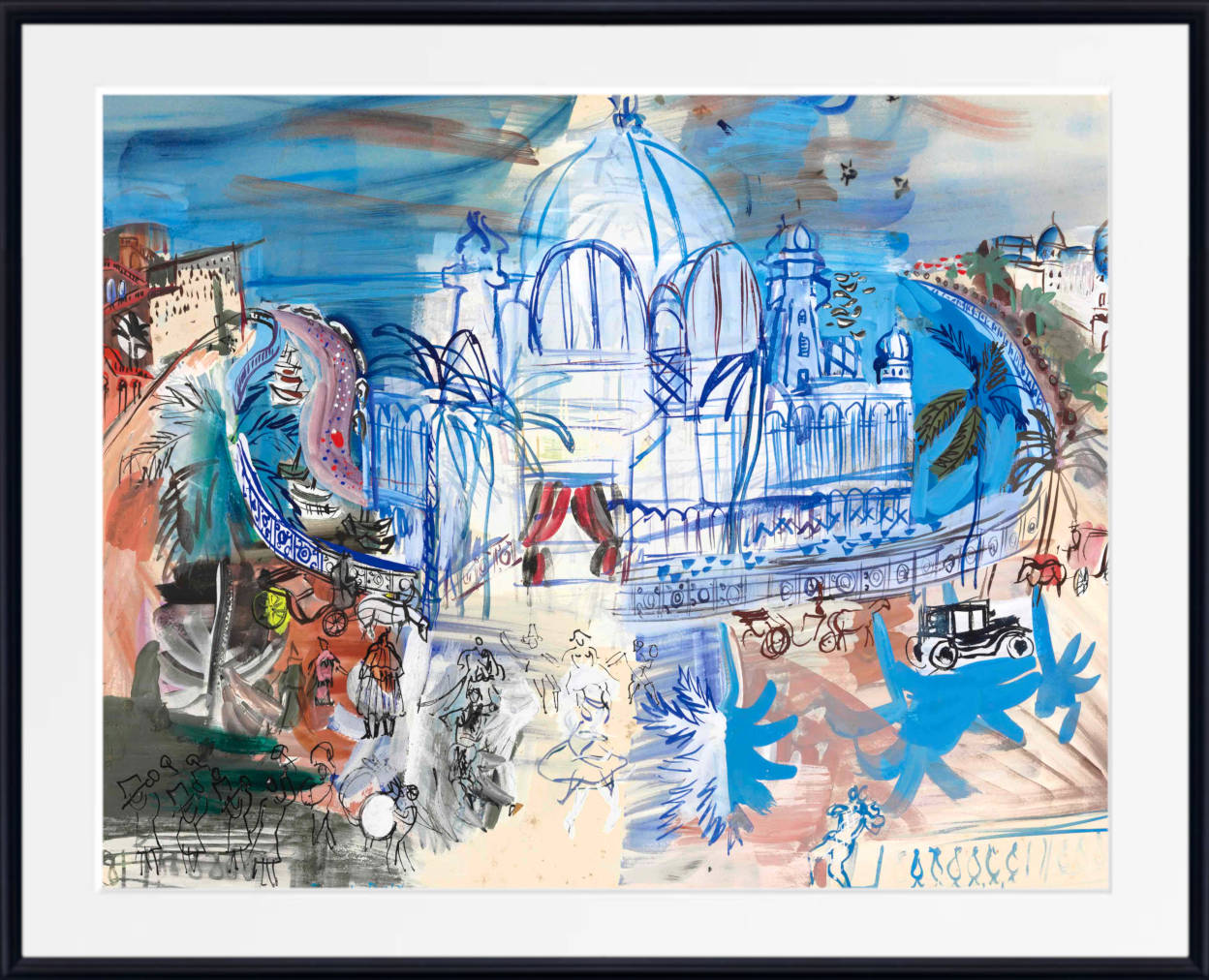
Nice offered brilliant light, elegant architecture, sea views, promenades and fashionable social life.
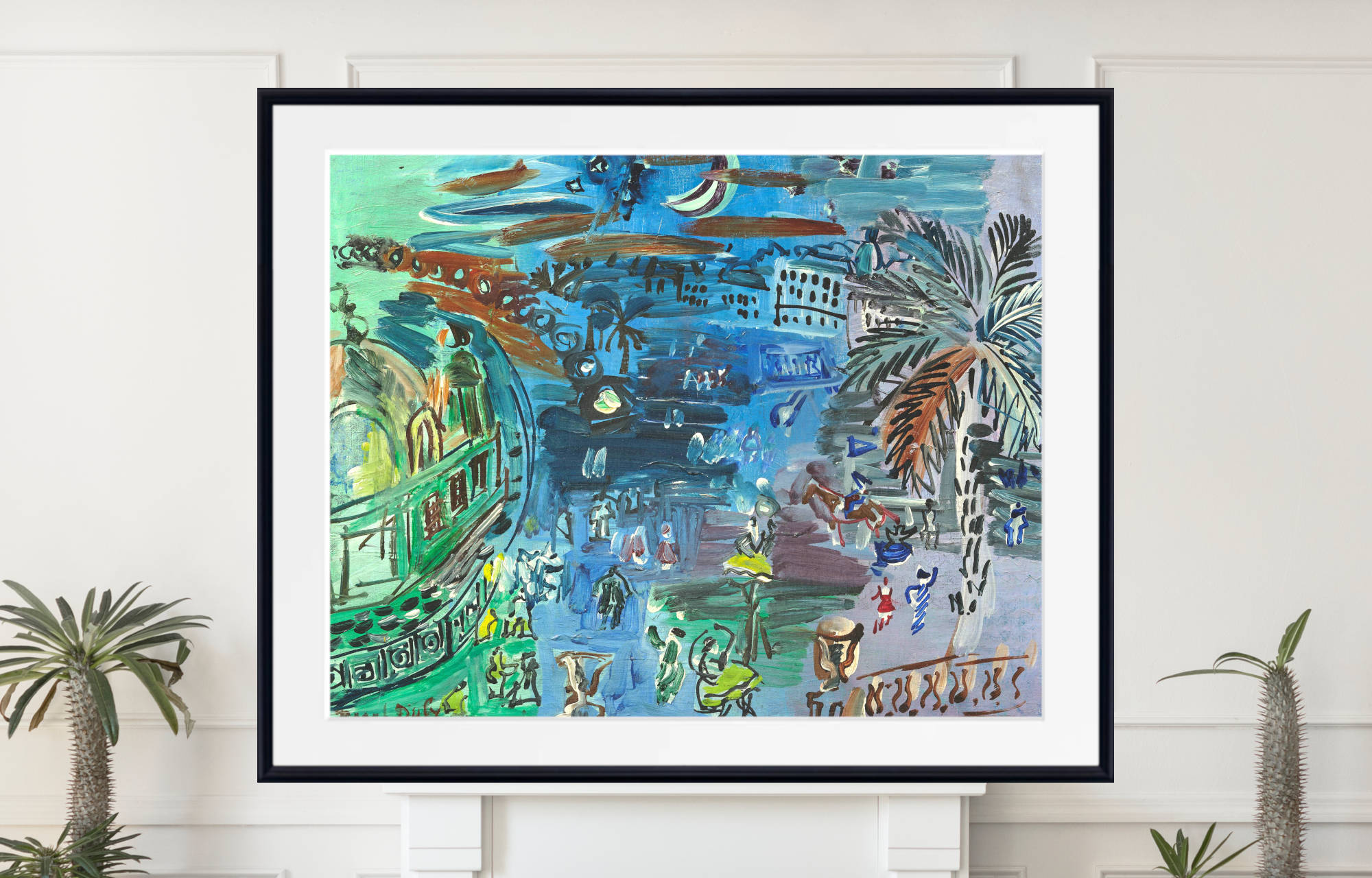
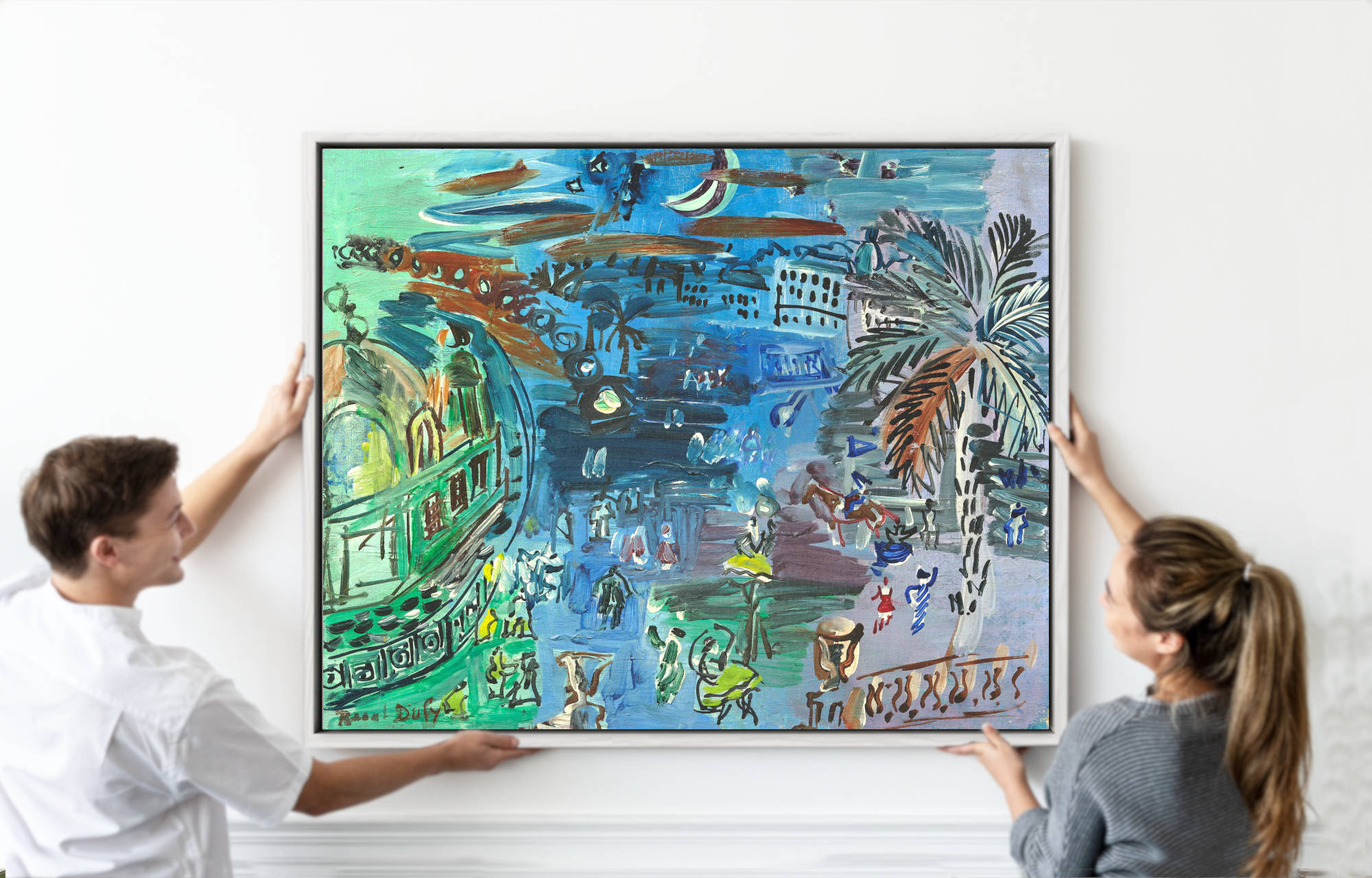
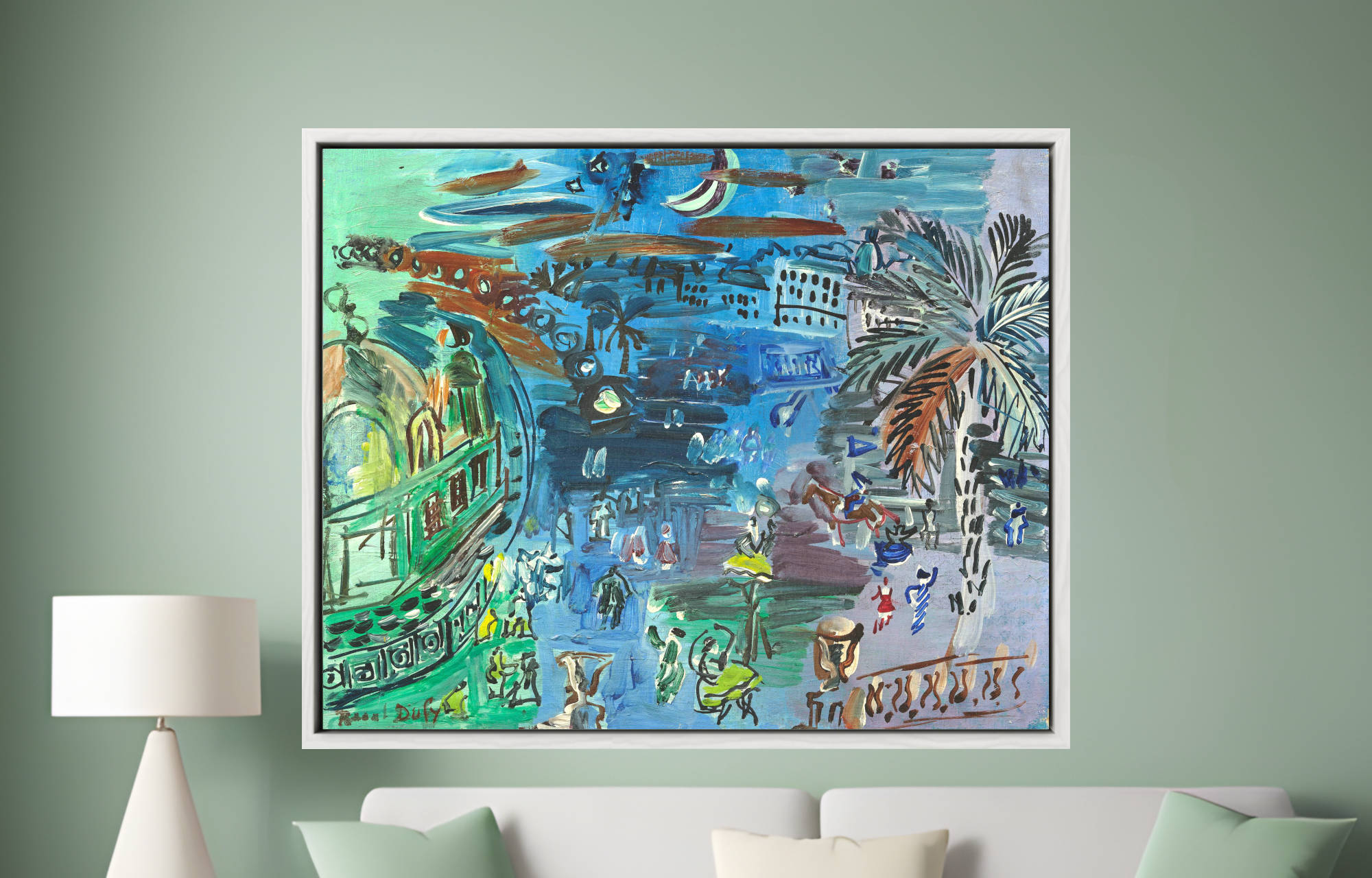
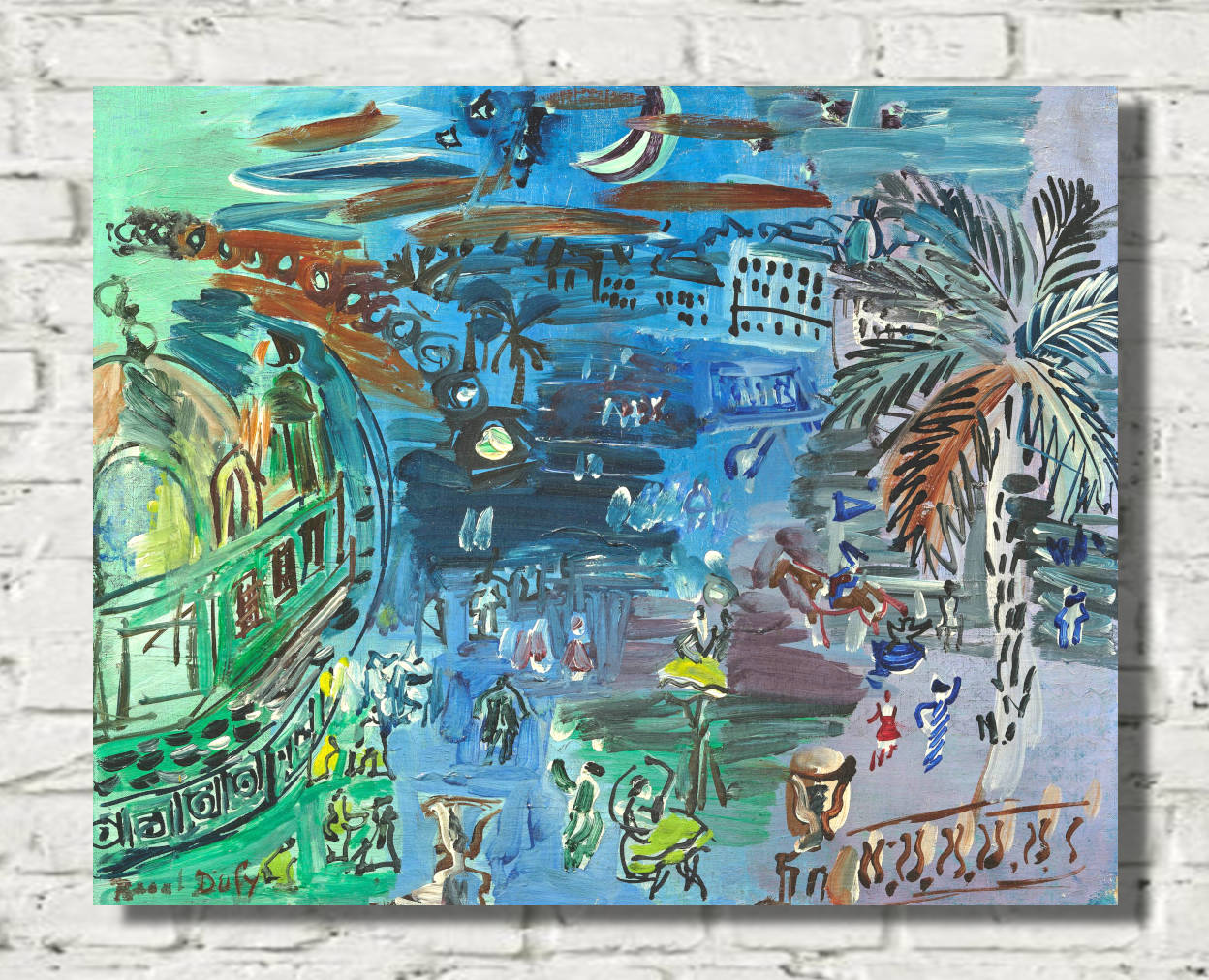
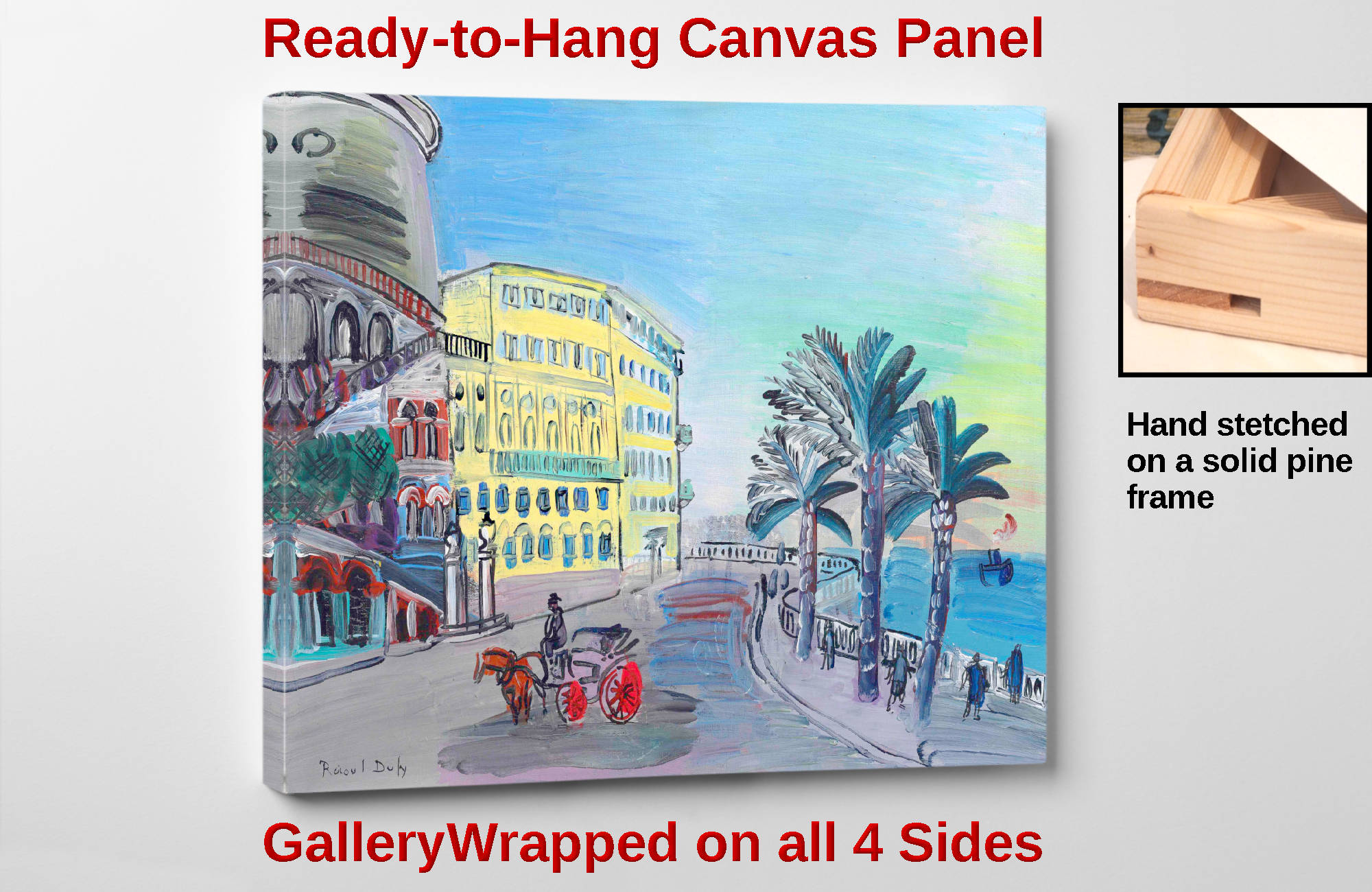
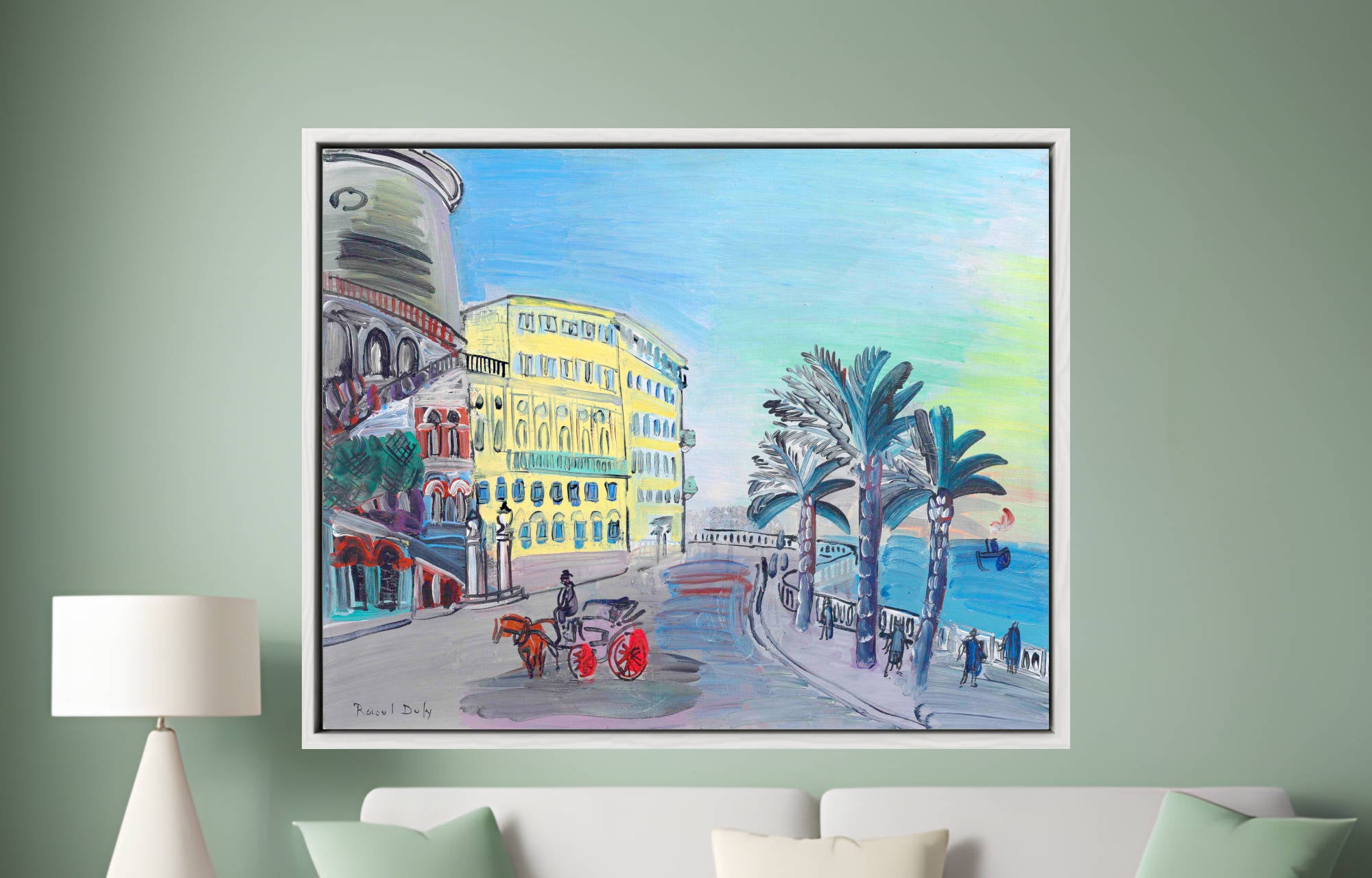
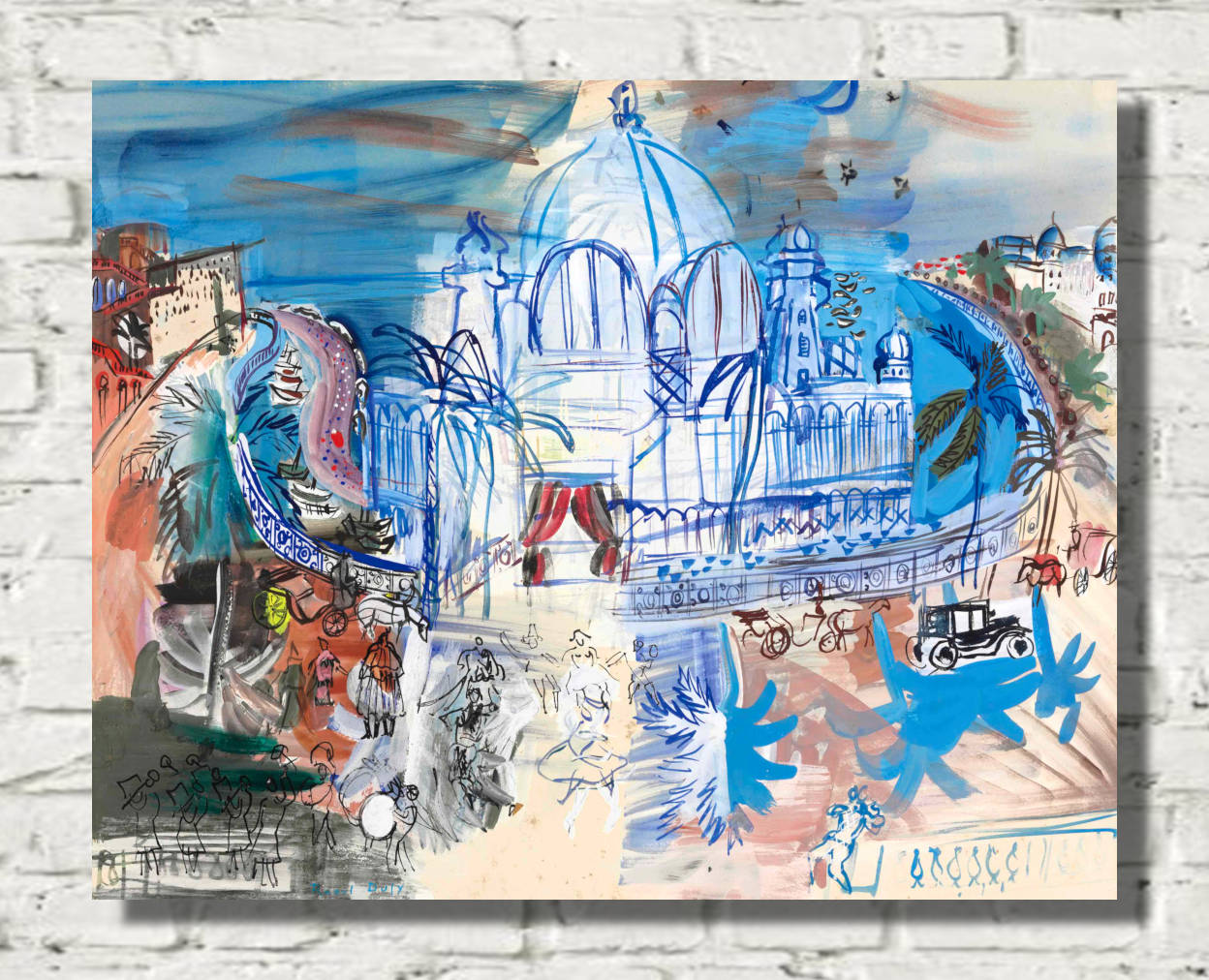
The Old Casino of Nice at Night demonstrates that Dufy's fascination with colour was not restricted to bright daytime scenes.
Night offered a different opportunity: artificial light, illuminated architecture and deep surrounding colour.
Other Riviera subjects capture the brilliance of Mediterranean daylight.
Together they form an important part of Dufy's enduring association with the south of France.
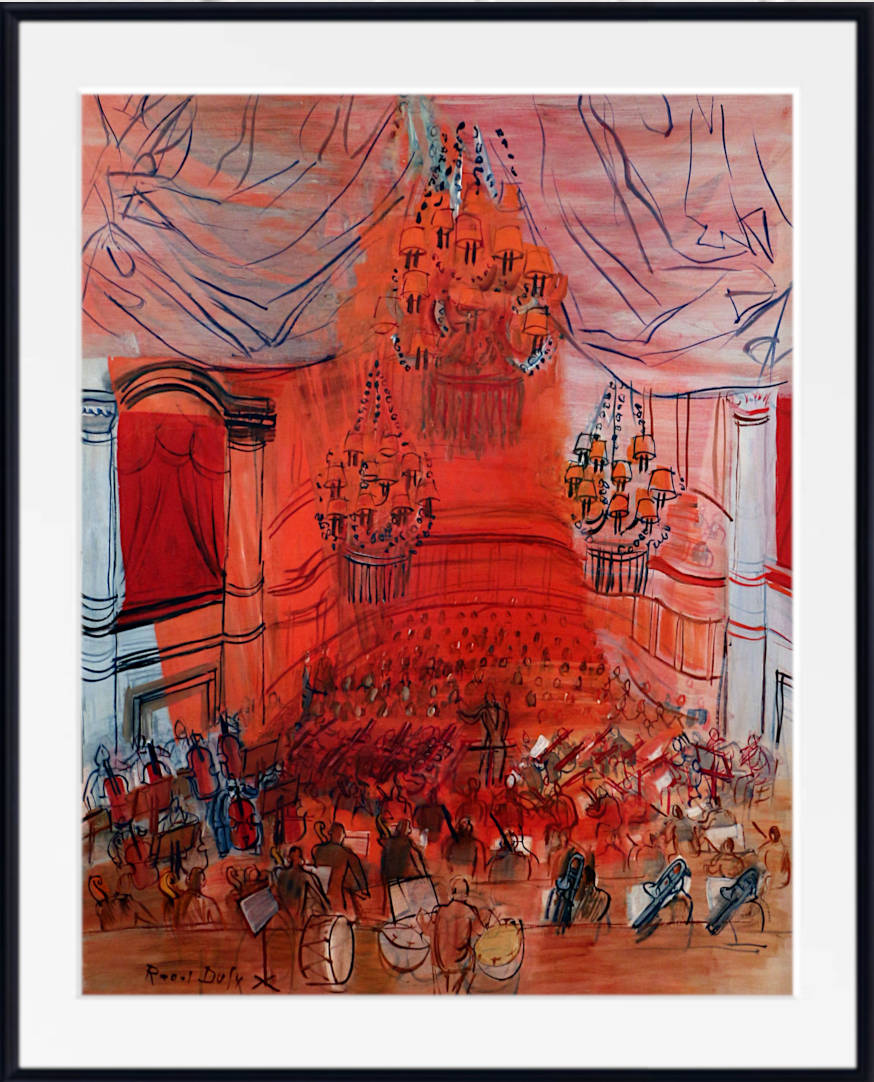
Music and the Orchestra
Music was another recurring theme.
Violins, orchestras and concerts appear in numerous works.
The subject suited Dufy's visual language particularly well.
His drawing already has a rhythmic character, while repeated curves and lines can suggest the movement of bows, instruments and performers.
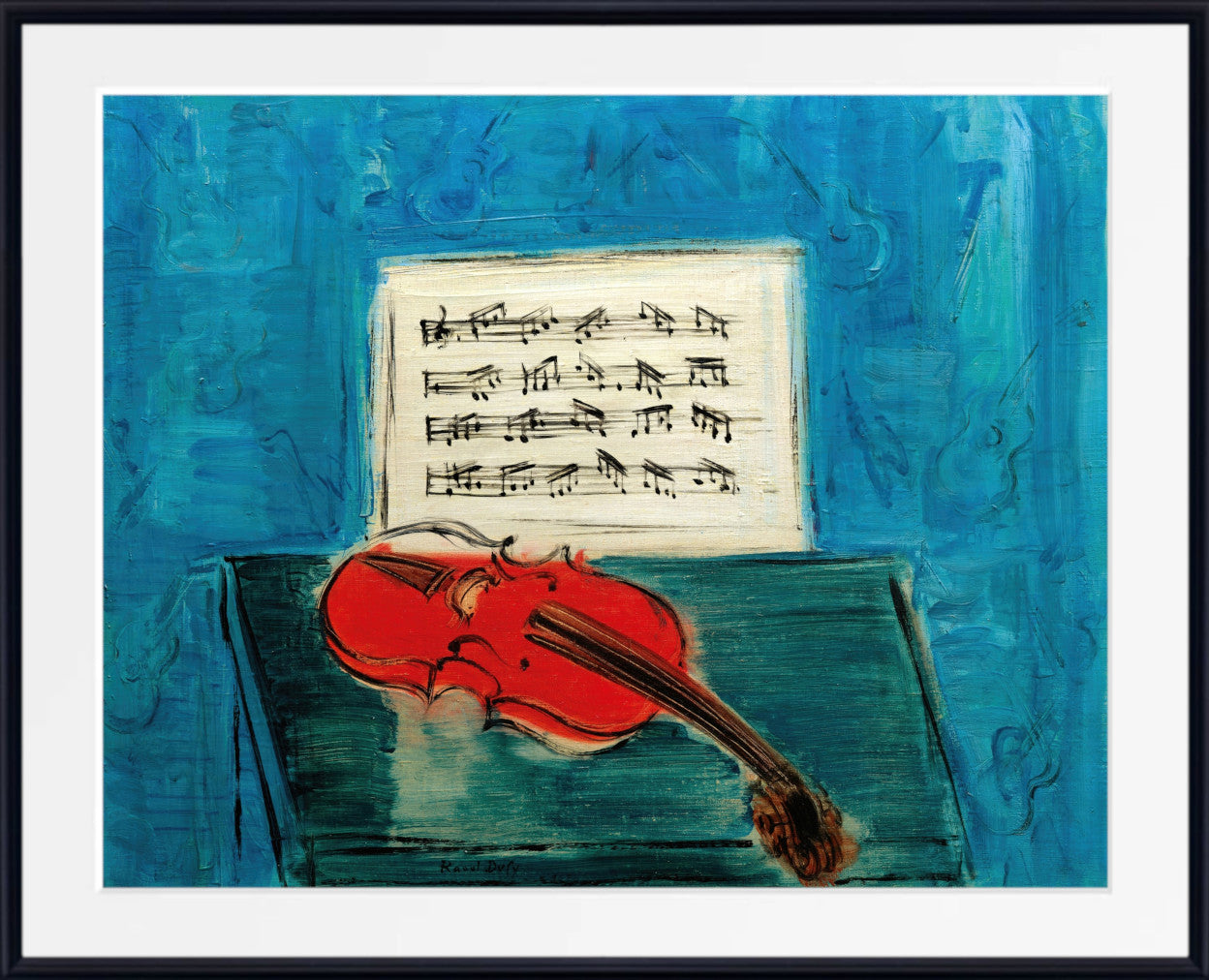
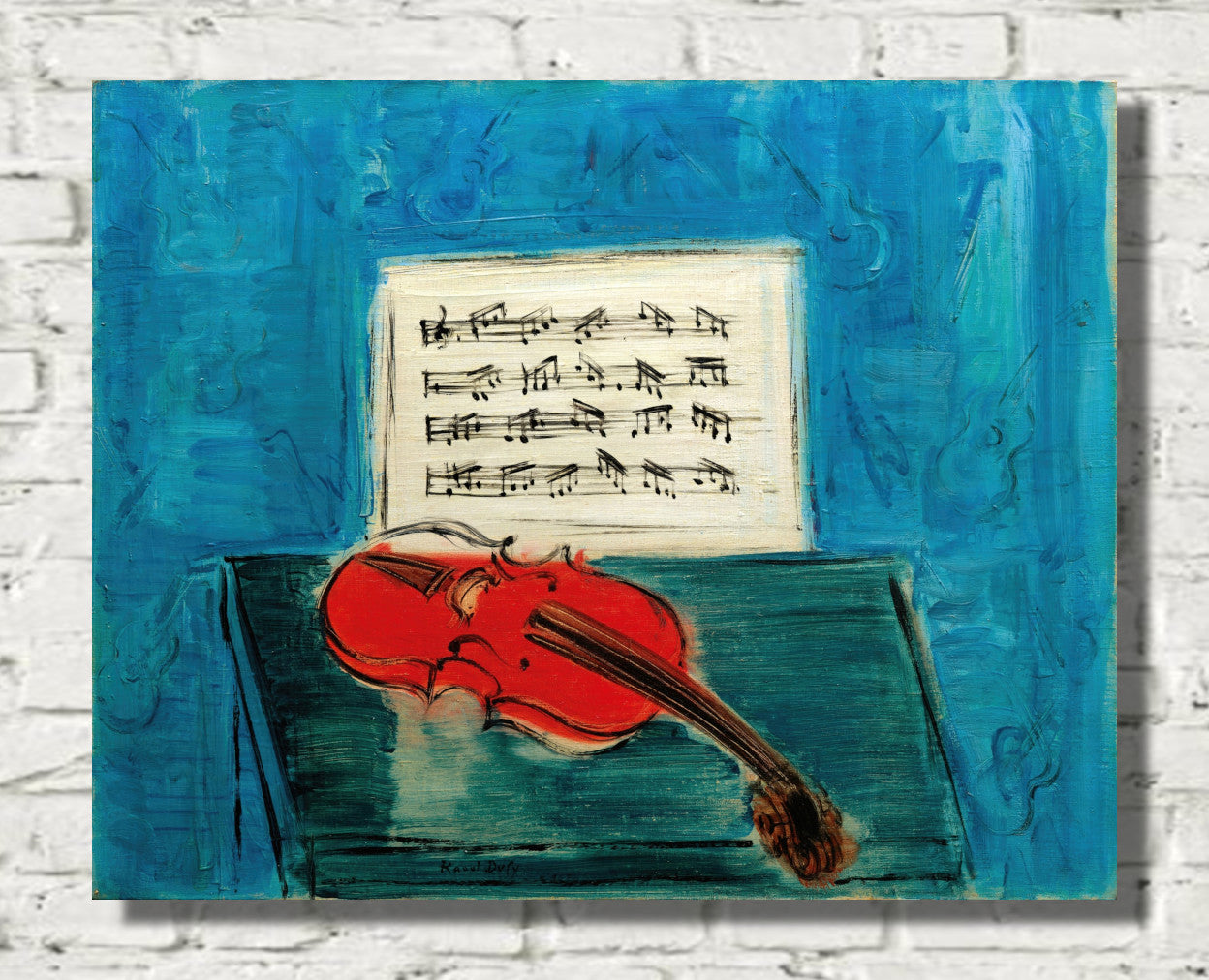
In a painting such as Red Violin on a Blue Background, the instrument becomes both a recognisable object and a strong decorative form.
Music therefore connects naturally with Dufy's broader interest in rhythm — not just musical rhythm, but visual rhythm across a painted surface.
Flowers and Still Life
Dufy also painted flowers and still lifes.
These subjects allowed him to concentrate on colour without the structural demands of cityscapes or large sporting scenes.
Flowers could become rapid bursts of blue, red, yellow or pink.
Vases, furniture and surrounding interiors are often lightly defined rather than heavily modelled.
The result retains the immediacy of a sketch while functioning as a finished decorative composition.
Dufy's floral works can be particularly effective where a more intimate alternative to his regattas or landscapes is wanted.
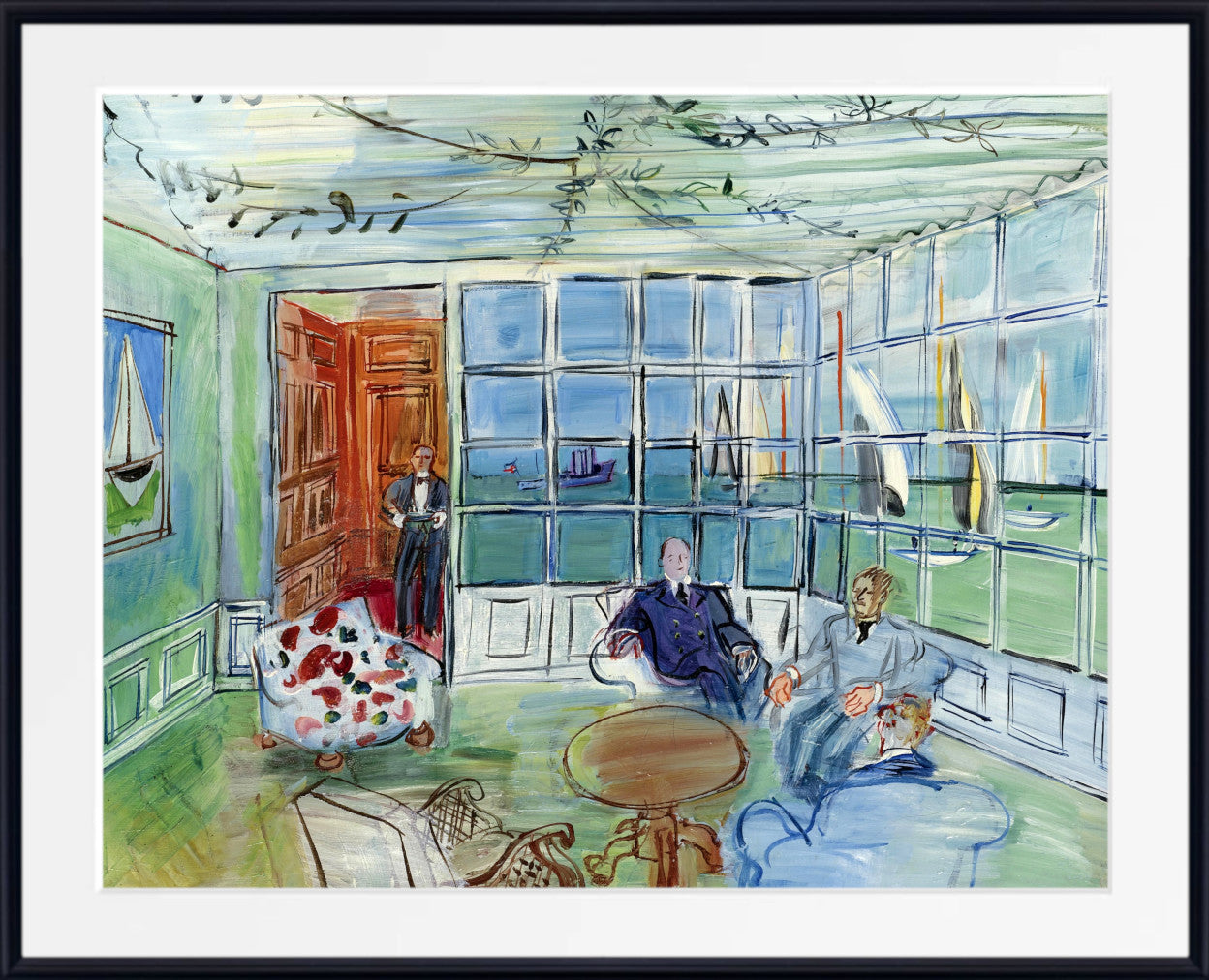
Interiors and the Decorative Arts
Dufy's interests extended beyond easel painting.
He worked with textiles, ceramics, book illustration and decorative design, demonstrating the adaptability of his visual language.
His textile designs are especially important to understanding the decorative quality of his work.
Repeated motifs, flowers, animals and strong colours translated naturally into fabric.
This involvement with decorative art helped blur traditional distinctions between fine art and design.
It also explains why Dufy's paintings can feel so comfortable within interiors today. Colour, pattern and decoration were never secondary concerns in his work.
Dufy and Fashion
The fashionable world fascinated Dufy.
Racecourses, regattas and resorts were not simply sporting or geographical subjects — they were social environments.
Elegant clothing, parasols, hats and crowds brought additional patterns and colours into his compositions.
This interest also connected naturally with his textile work.
Dufy's paintings frequently capture the optimism and visual excitement associated with leisure culture during the early decades of the twentieth century.
La Fée Électricité
One of Dufy's most ambitious achievements was La Fée Électricité — The Electricity Fairy — created for the 1937 International Exhibition in Paris.
The enormous work celebrated the history and development of electricity.
Its scale was extraordinary, yet Dufy approached the monumental project using many of the same qualities found in his smaller paintings: brilliant colour, flowing line and an ability to organise numerous figures and ideas without making the composition feel visually heavy.
The project demonstrates that Dufy's apparently effortless style was capable of handling complex historical and technological themes as well as beaches, flowers and regattas.
Was Raoul Dufy a Fauvist?
Yes, but describing Dufy simply as a Fauvist gives an incomplete picture of his career.
His early twentieth-century work belongs firmly within the development of Fauvism, and the movement had a profound effect on his use of colour.
But Fauvism itself was brief.
Dufy continued painting for decades afterwards and developed a mature style very different from his earliest Fauvist works.
This distinction is important when browsing his paintings.
An early Dufy landscape and a 1930s regatta may both contain brilliant colour, yet they come from very different stages of his artistic development.
GalleryThane's Raoul Dufy collection therefore spans his broader career rather than restricting the artist to his Fauvist years.
Dufy and Henri Matisse
Henri Matisse played an important role in Dufy's early transformation.
The brilliant non-naturalistic colour of Matisse and the Fauves demonstrated that painting did not have to reproduce the visible world conventionally.
Dufy embraced this freedom but eventually applied it in his own way.
Matisse frequently simplified forms into large, balanced areas of colour.
Dufy's mature paintings often feel quicker and more linear, with colour and drawing operating almost independently.
Their careers therefore demonstrate two very different paths emerging from the original Fauvist revolution.
Dufy and Albert Marquet
Dufy also shared subject matter with Albert Marquet, particularly harbours, coastlines and urban views.
Yet the two artists can produce very different effects.
Marquet often used restrained tonal relationships and simplified compositions.
Dufy's mature work is generally more exuberant, combining loose drawing with more overtly decorative colour.
Comparing the two demonstrates how diverse the artists associated with Fauvism eventually became once the original movement had dispersed.
Landscapes and Scenic Art
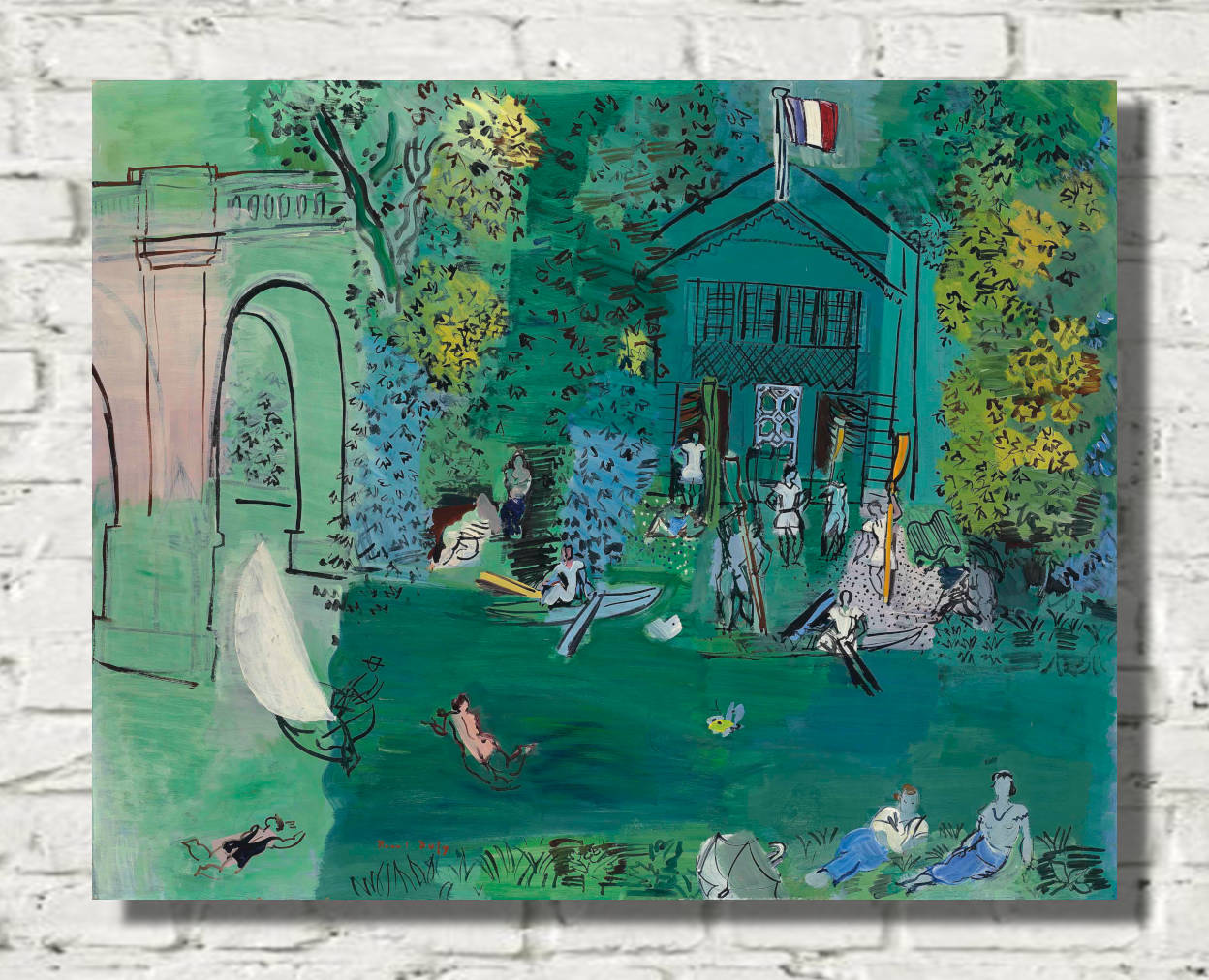
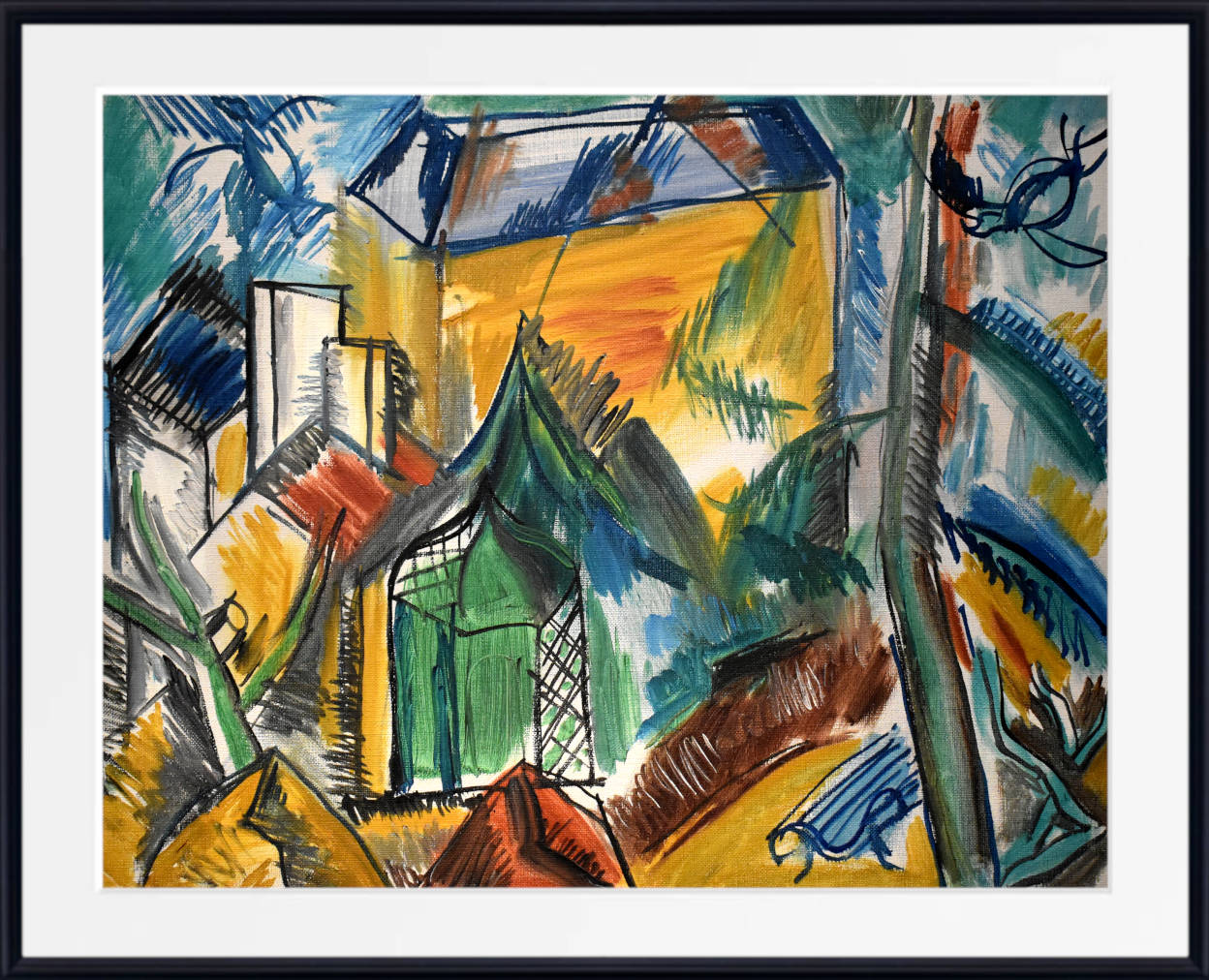
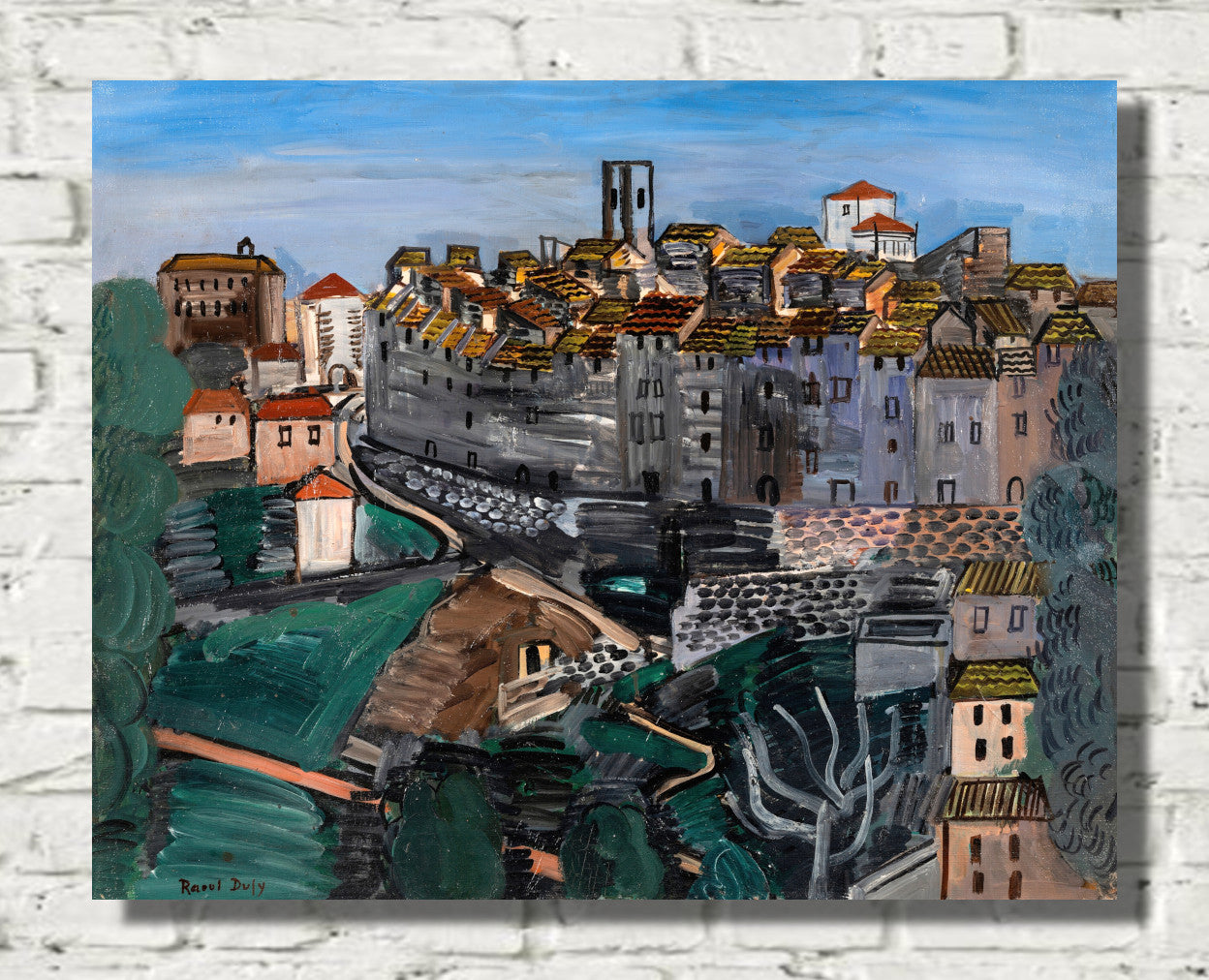
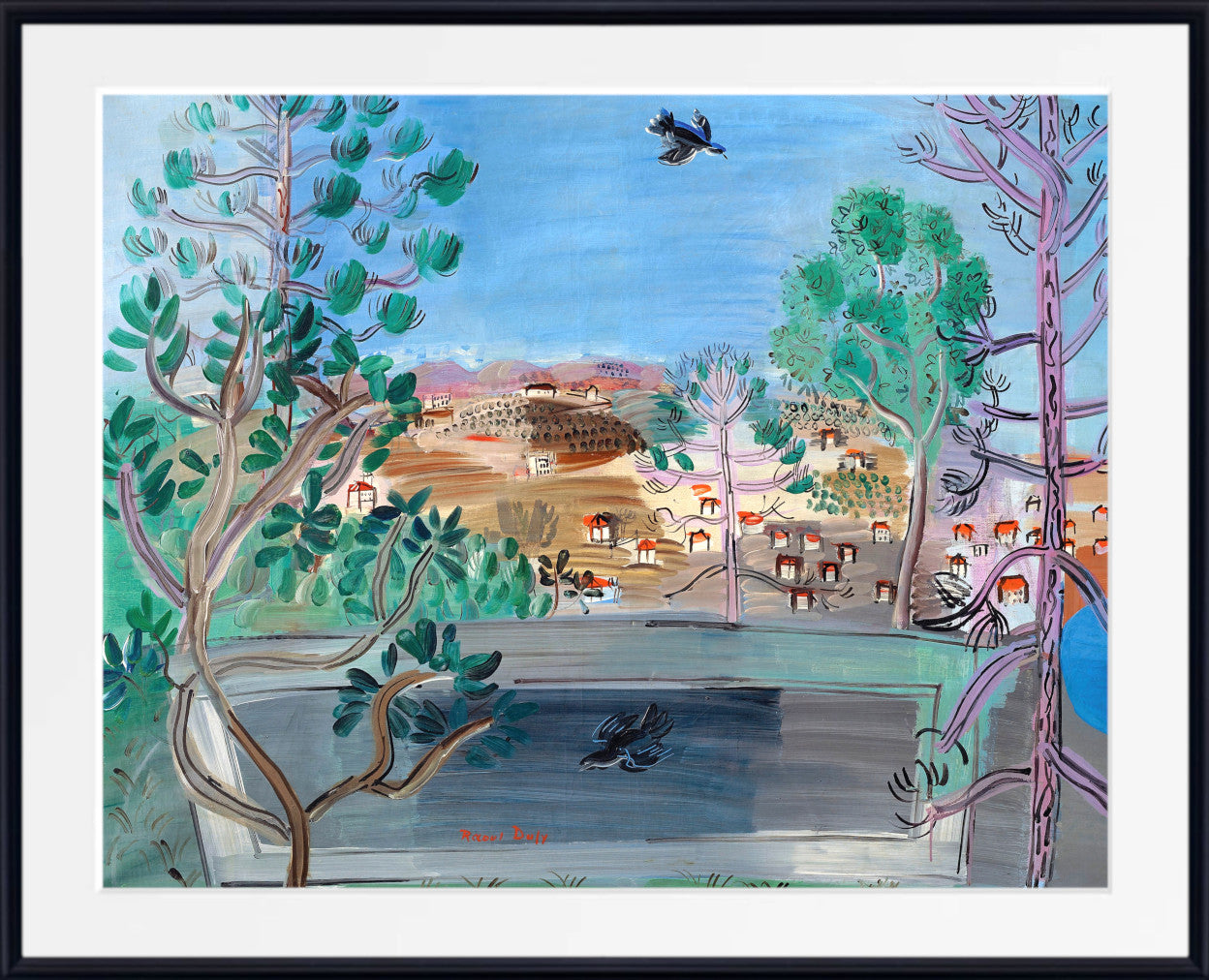
Although Dufy is often remembered for regattas and fashionable leisure, landscape remained fundamental to his work.
Normandy, the Mediterranean, Venice and rural France repeatedly appear.
His landscapes evolved alongside the rest of his style.
Early paintings retain more obvious connections with Post-Impressionism and Fauvism.
Later landscapes become increasingly fluid.
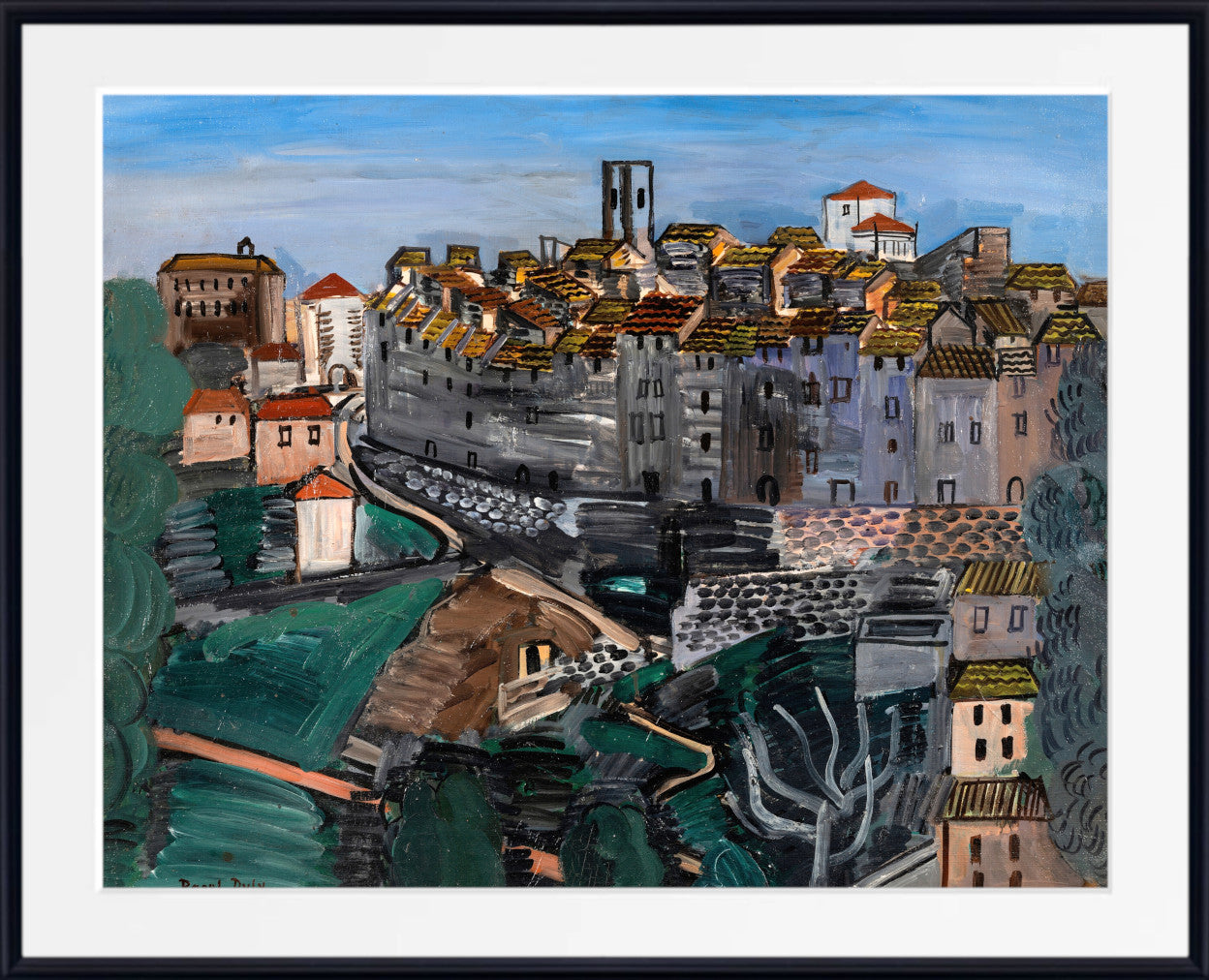
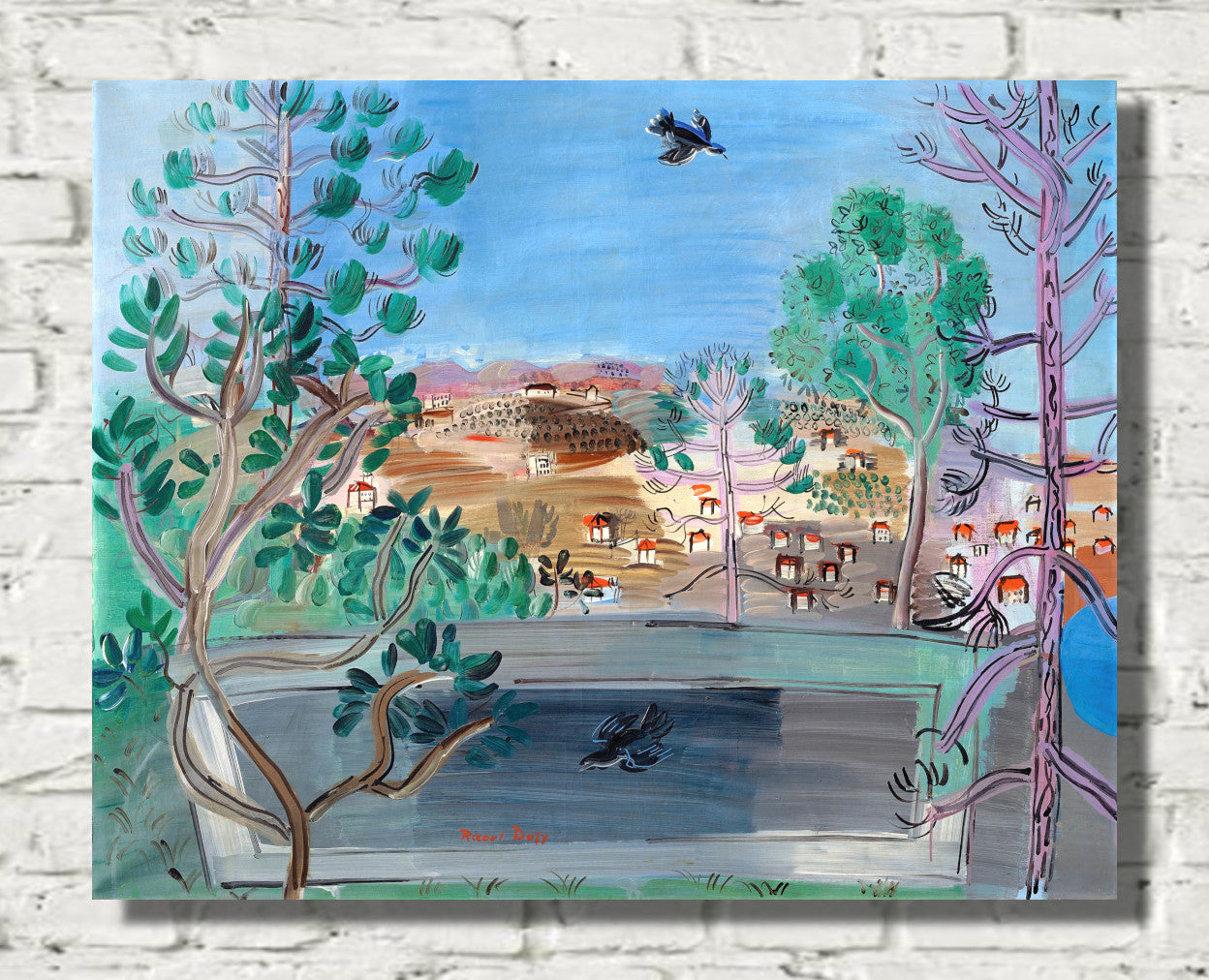
Trees, buildings, hills and water may be indicated with remarkably economical marks.
Explore the broader tradition in GalleryThane's Landscape and Scenery Prints.
Why Raoul Dufy's Art Still Looks Modern
Dufy's mature paintings frequently feel surprisingly contemporary.
Part of this comes from his refusal to overwork the image.
Large open areas, fluid outlines and strong colours give his compositions space.
They can therefore coexist naturally with modern furnishings without appearing visually heavy.
His approach also anticipated a modern appreciation of the expressive quality of unfinished-looking marks.
What initially appears casual is highly controlled.
Dufy knew how little information was necessary to make a boat, figure, horse or building immediately recognisable.
Choosing a Raoul Dufy Print
Dufy's unusually wide range of subjects means the best choice depends on the atmosphere you want to create.
For coastal colour and movement, consider his Deauville, Cowes or regatta paintings.
For European city imagery, explore Venice, Paris, London and Nice.
For sporting subjects, his horse-racing paintings combine movement with elegant colour.
For music lovers, violin and orchestra subjects provide a distinctive alternative.
For a quieter composition, consider his landscapes, interiors or floral paintings.
Because Dufy's palette often contains blue, turquoise, green and warm Mediterranean colours, many works can integrate particularly easily with contemporary interior schemes.
Raoul Dufy Prints for Modern Interiors
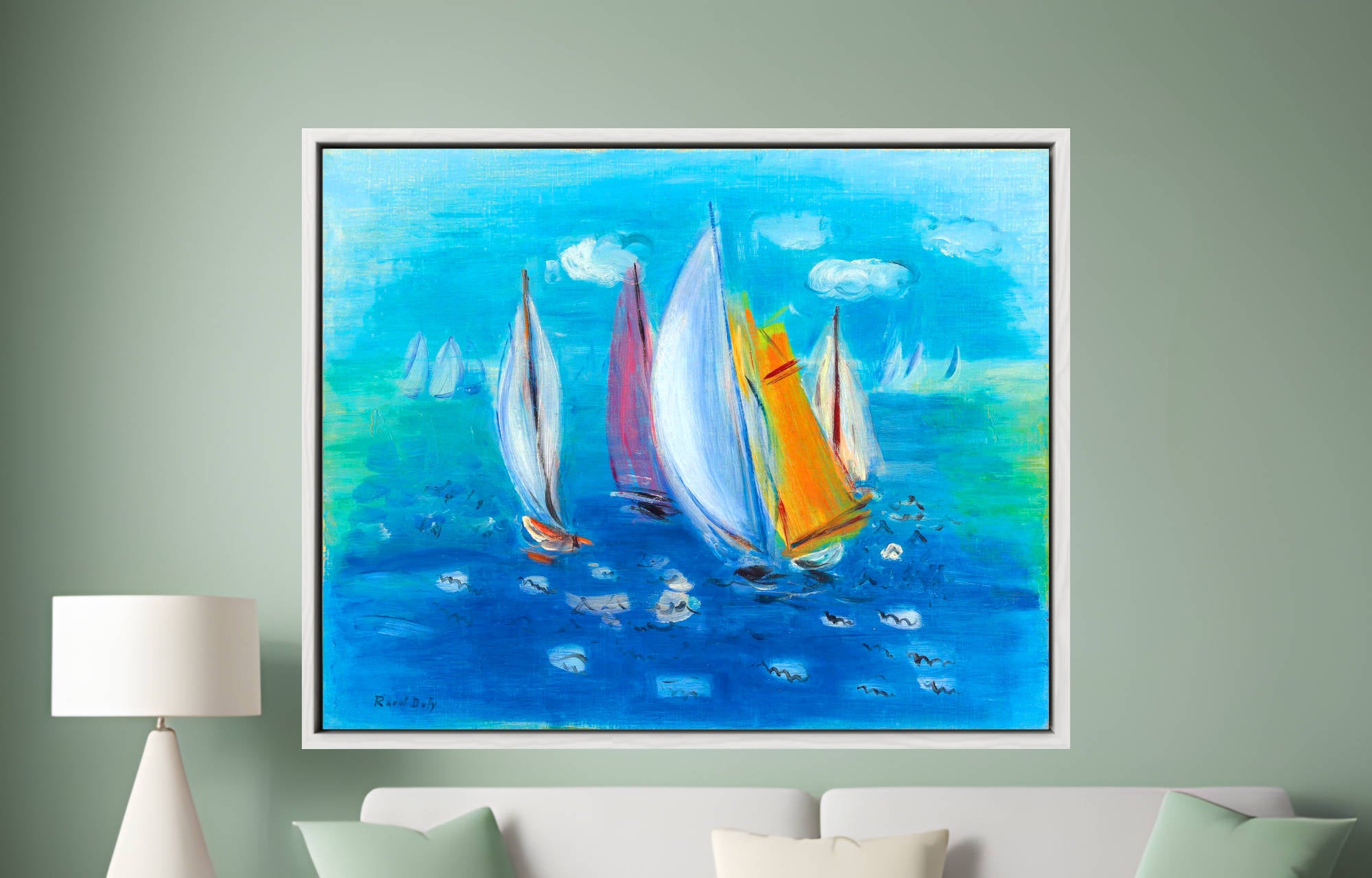
Dufy's paintings are especially well suited to interiors where colour is wanted without a heavy or sombre atmosphere.
His regattas and harbour paintings can work beautifully in bright living rooms, dining rooms and coastal-inspired spaces.
Venice and Mediterranean subjects complement warm neutral walls as well as blues and greens.
His Paris and London scenes can add colour to hallways, studies and urban interiors.
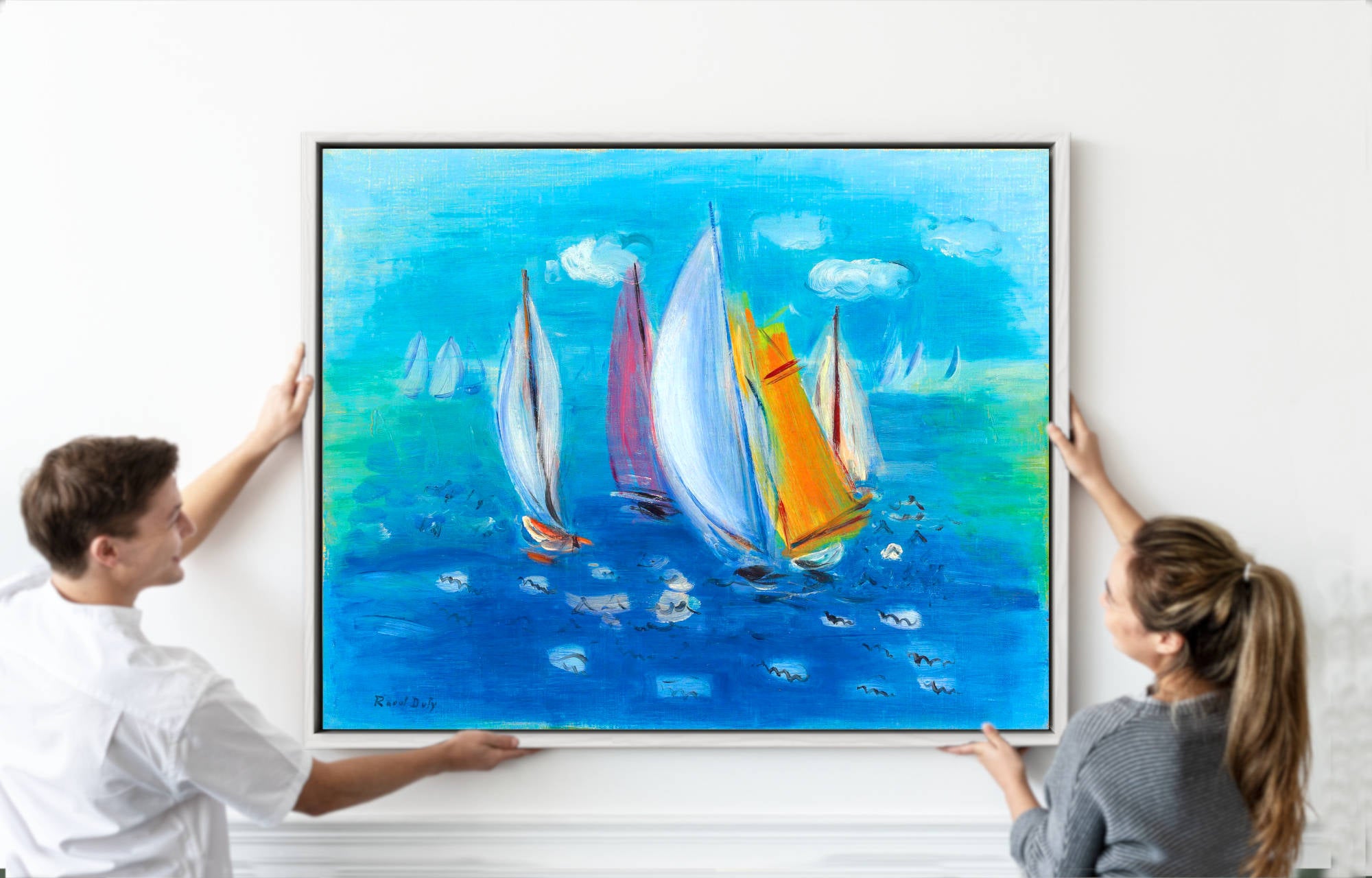
A large Dufy print can act as a statement piece above a sofa or sideboard, while smaller works can be combined with Matisse, Derain, Marquet and other early modernists as part of a coordinated gallery wall.
Fine Art Prints, Framed Prints and Canvas Panels
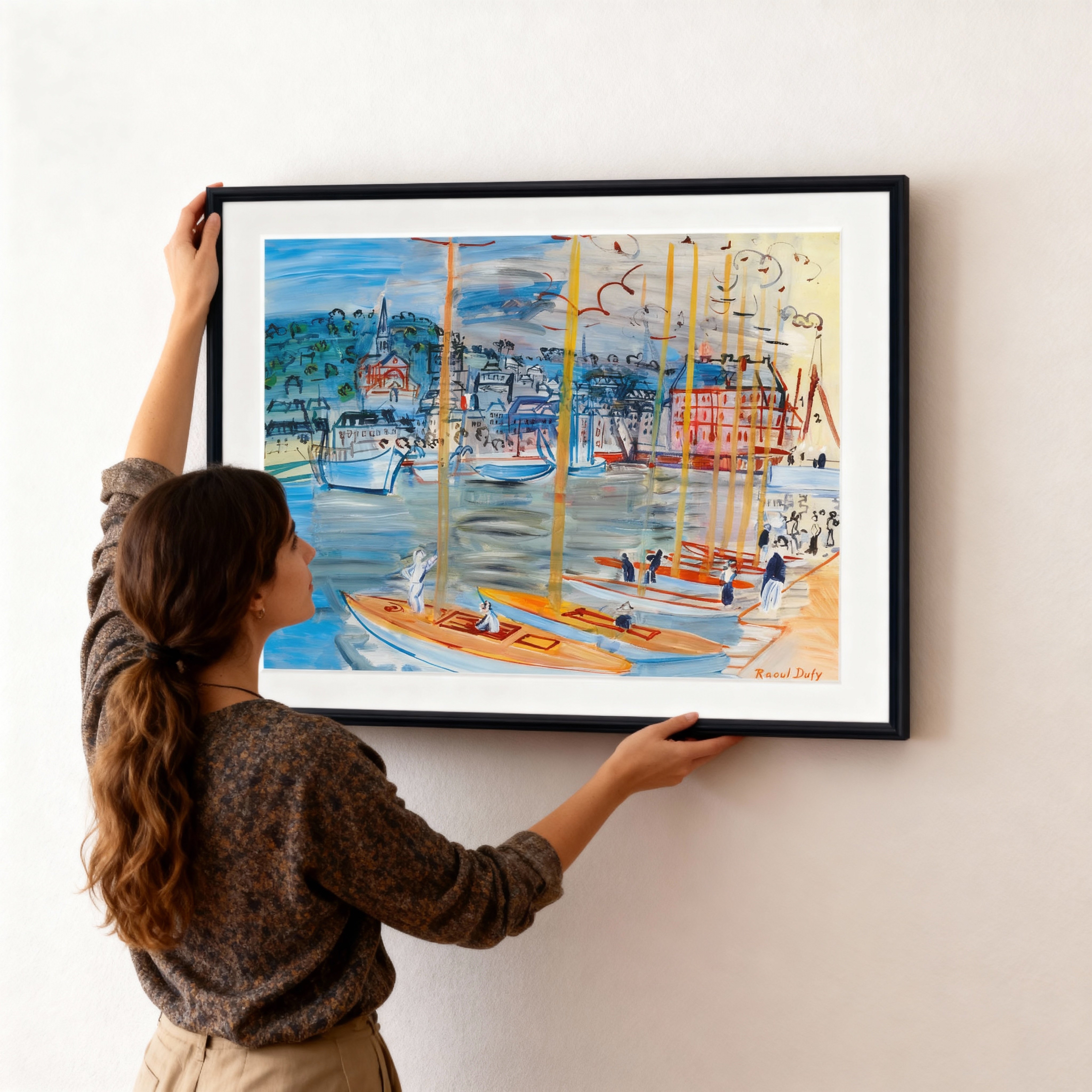
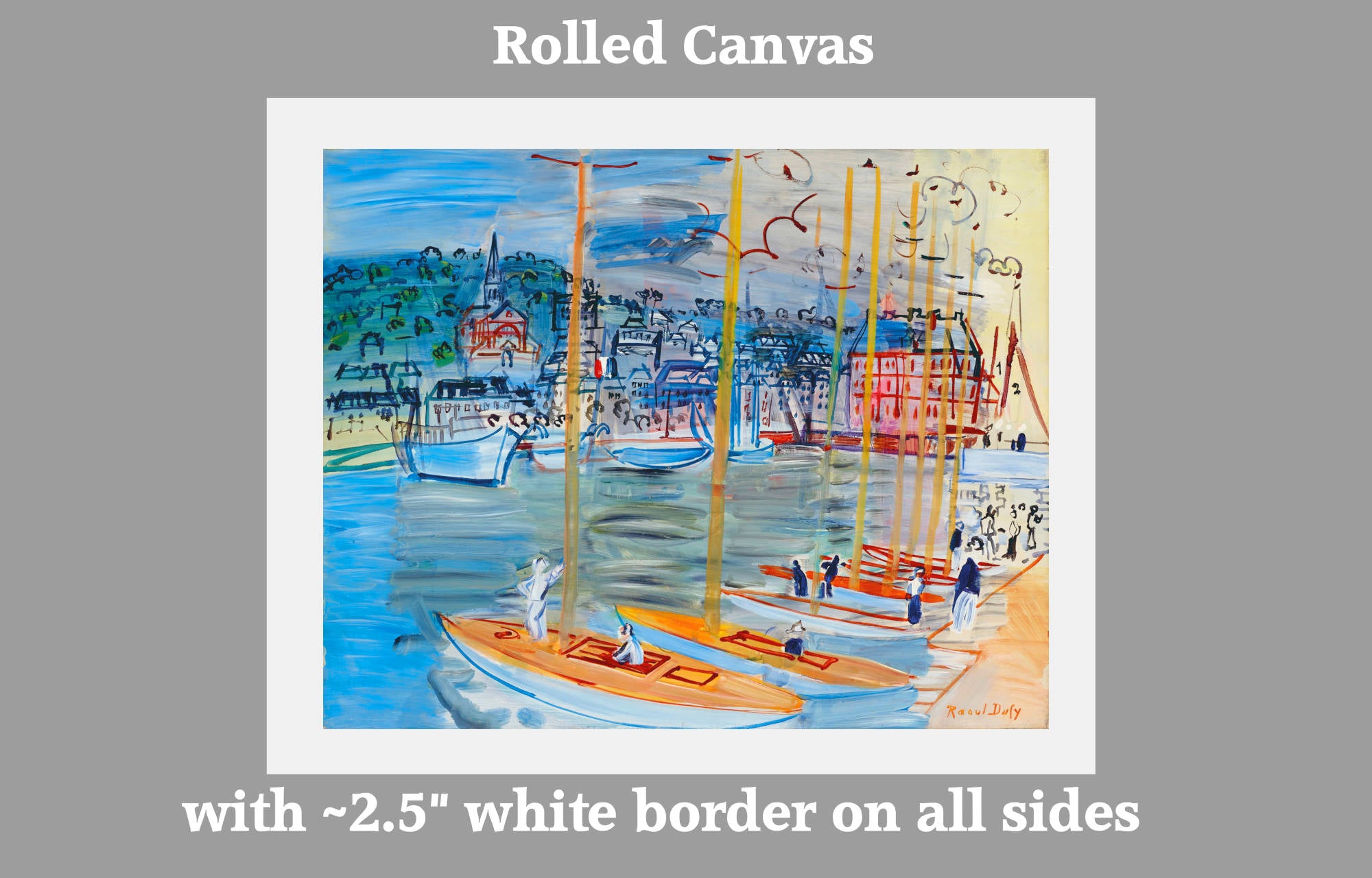
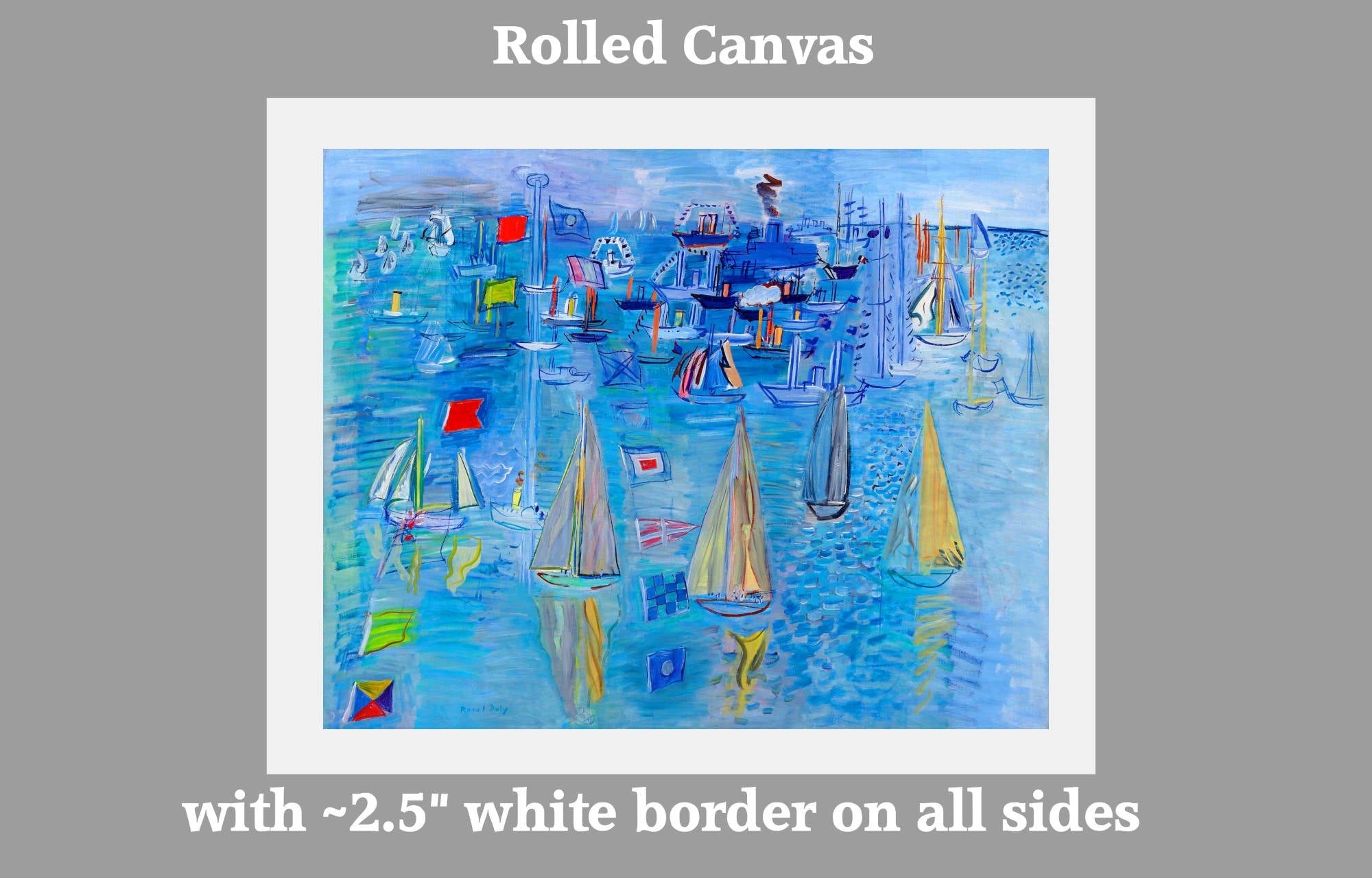
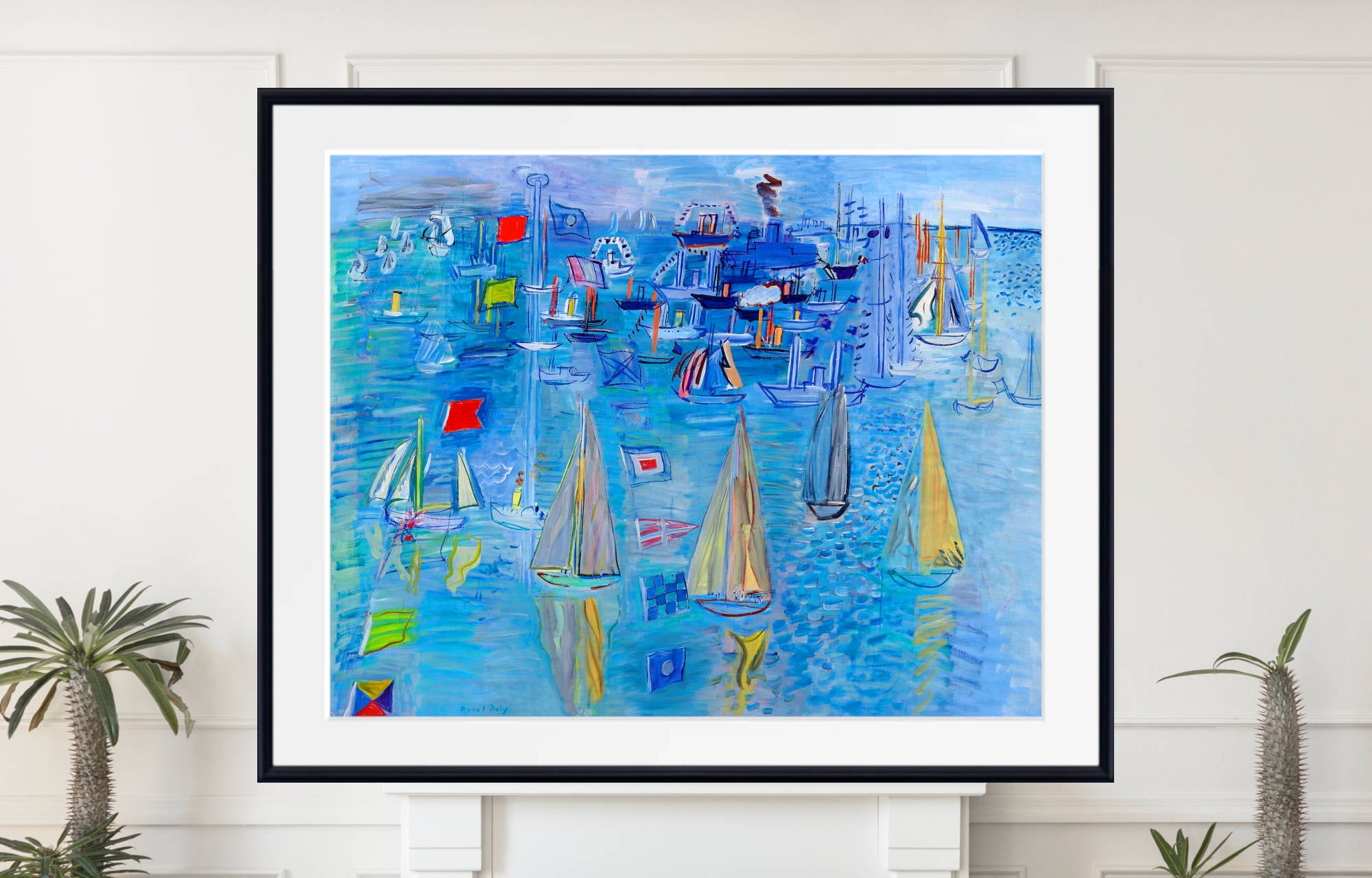
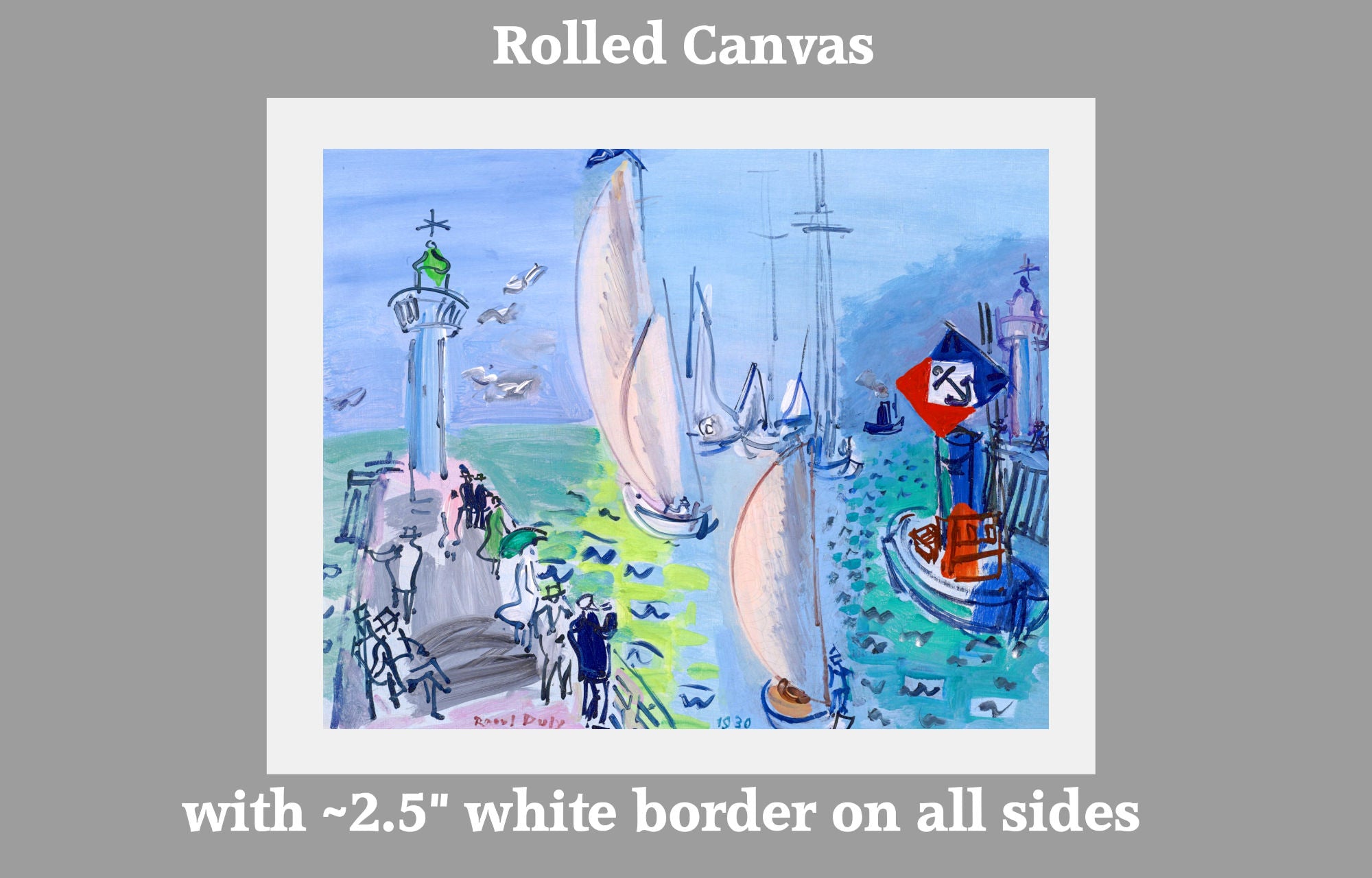
GalleryThane Raoul Dufy artworks are available as fine art prints, framed prints and canvas panels in a wide range of sizes.
Fine art paper prints provide flexibility if you already have a particular frame or presentation in mind.
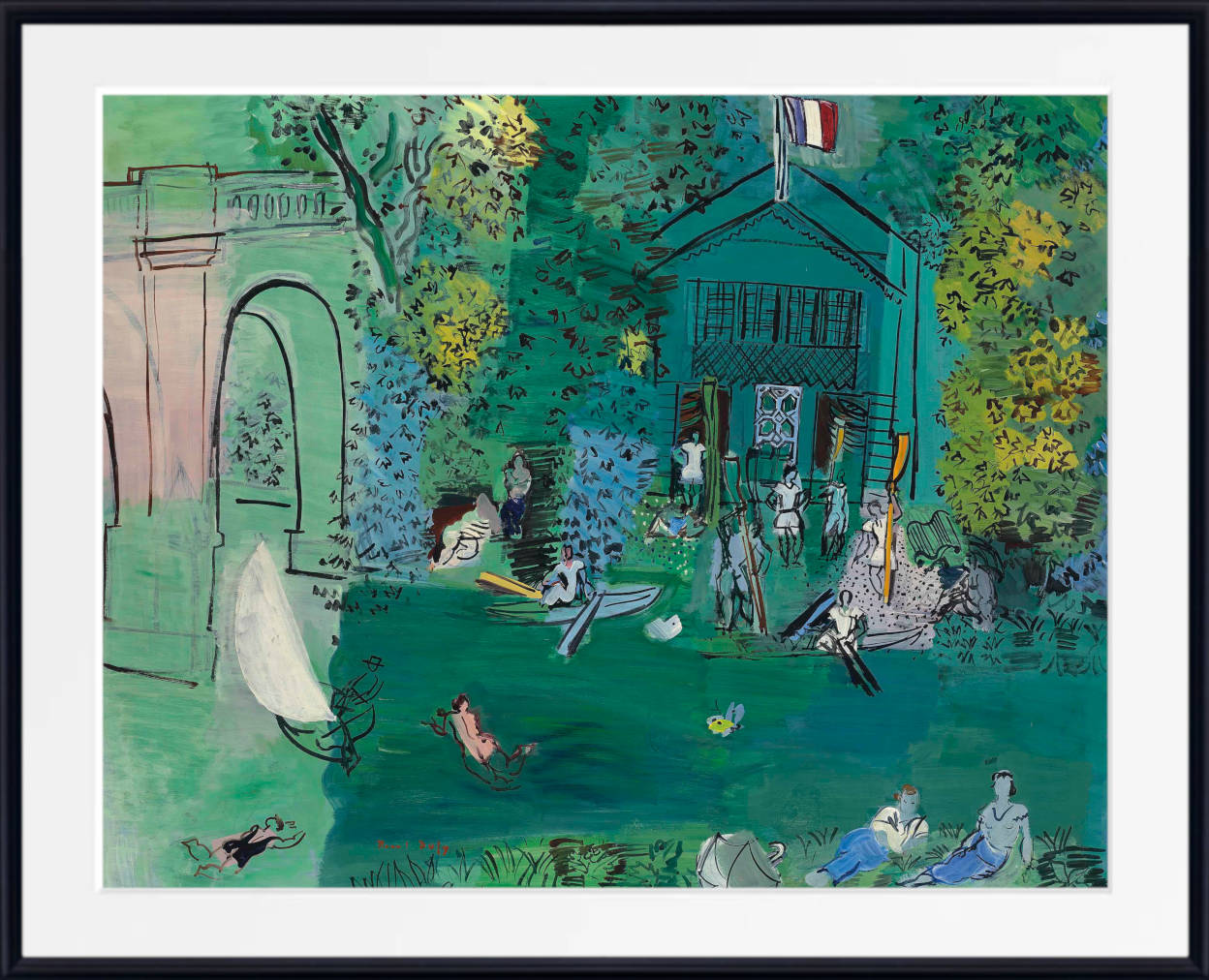
Framed Dufy prints offer a complete gallery-style presentation and work especially well with his colourful coastal and city compositions.
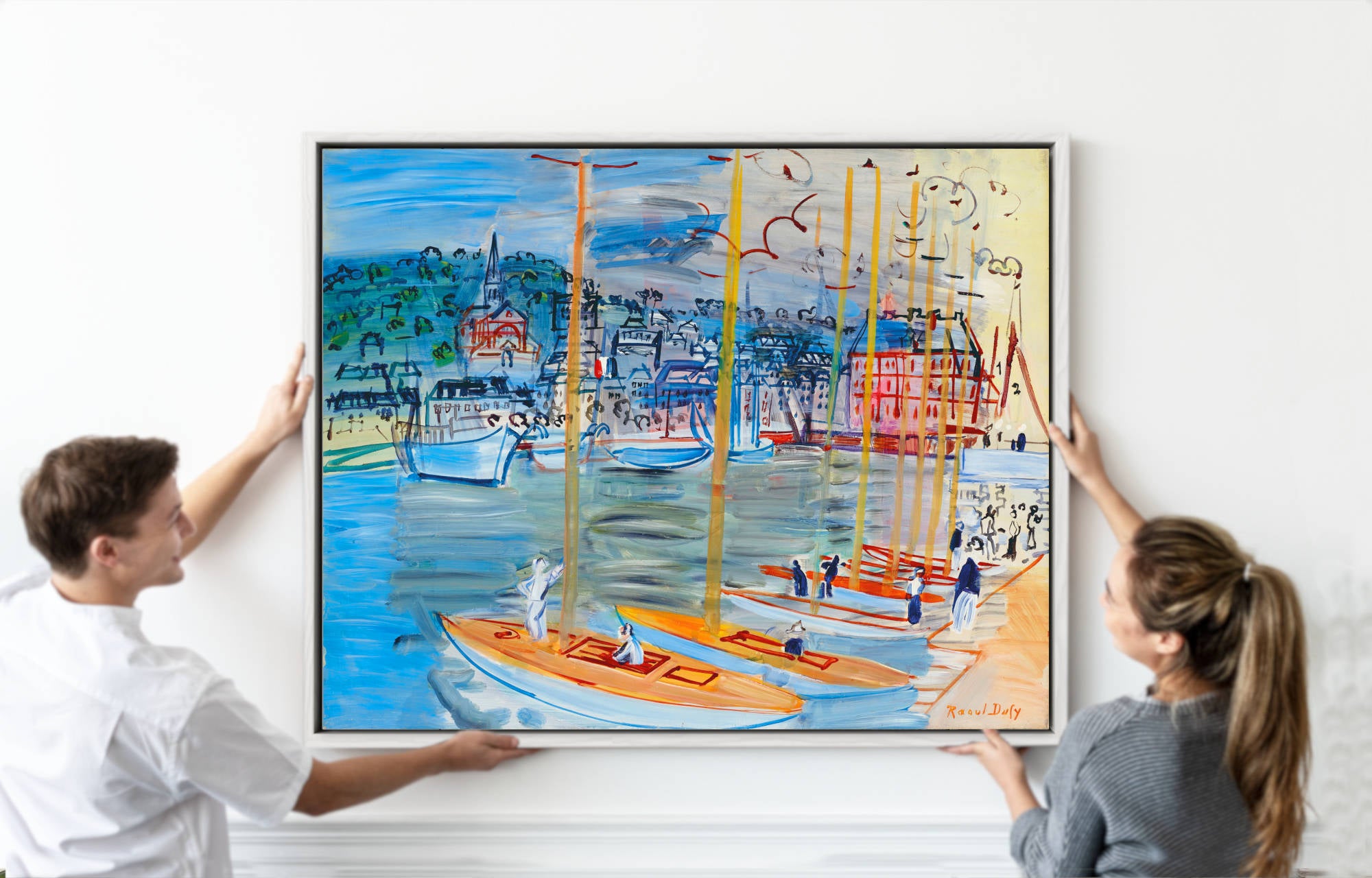
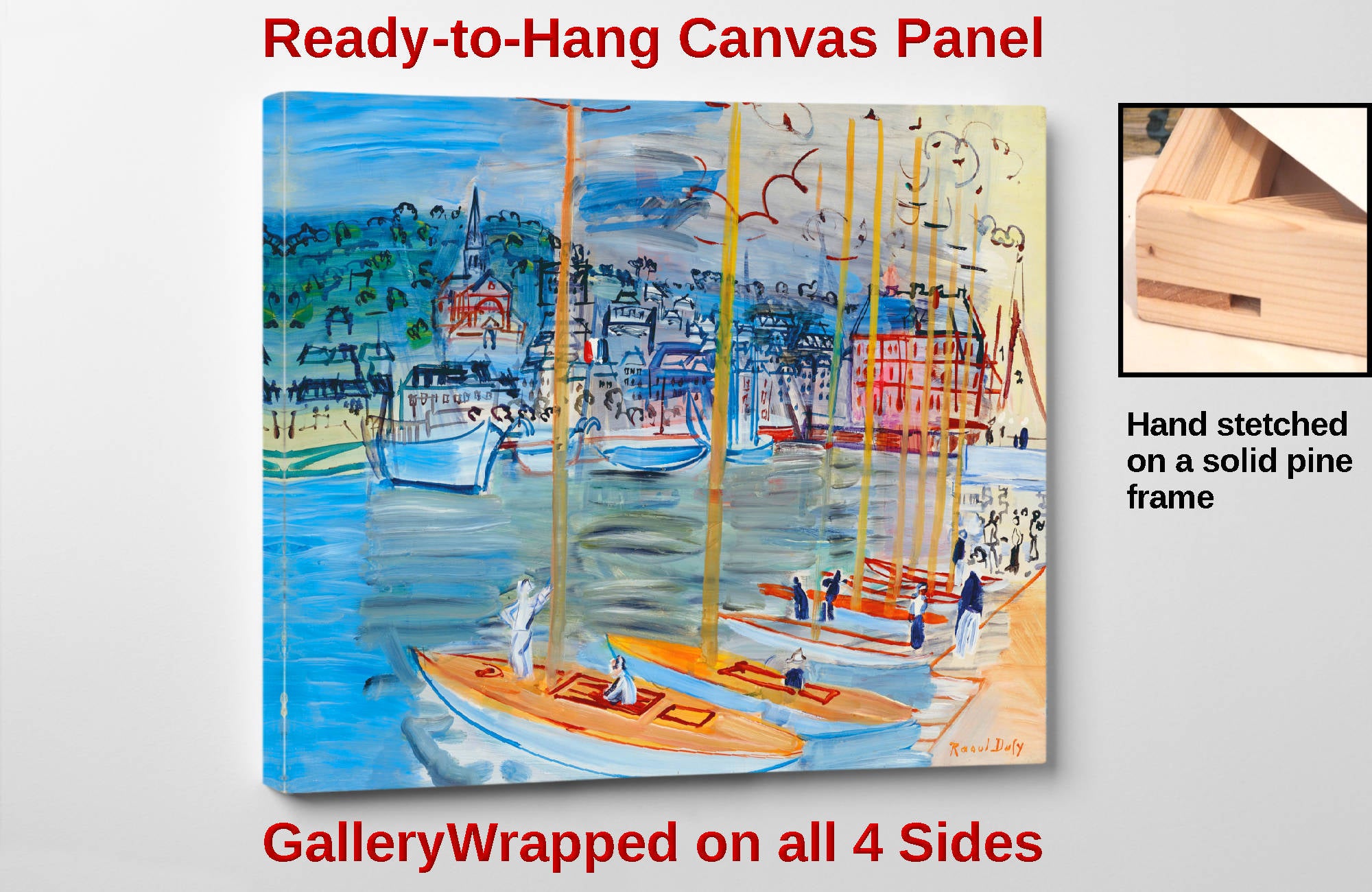
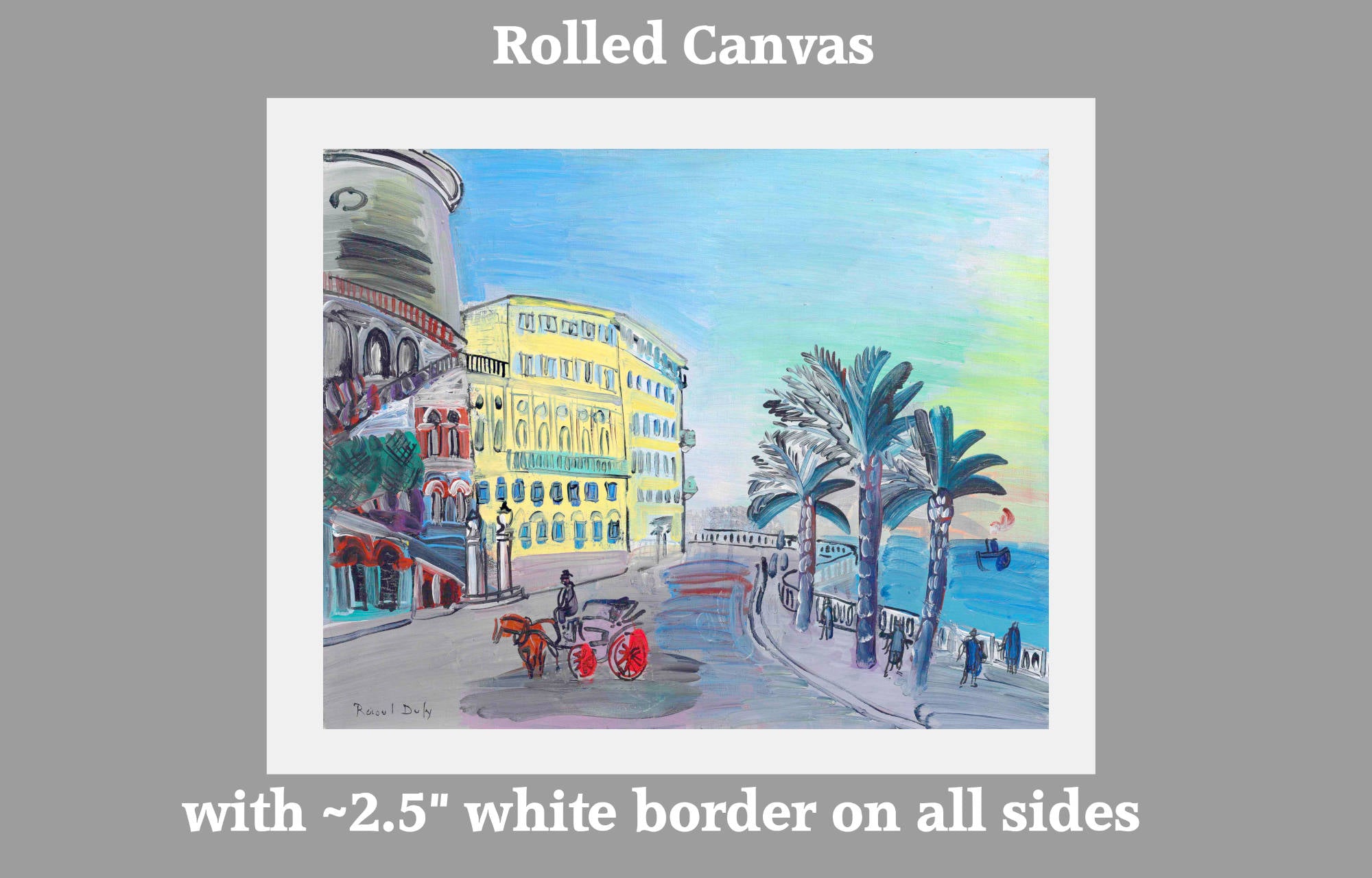
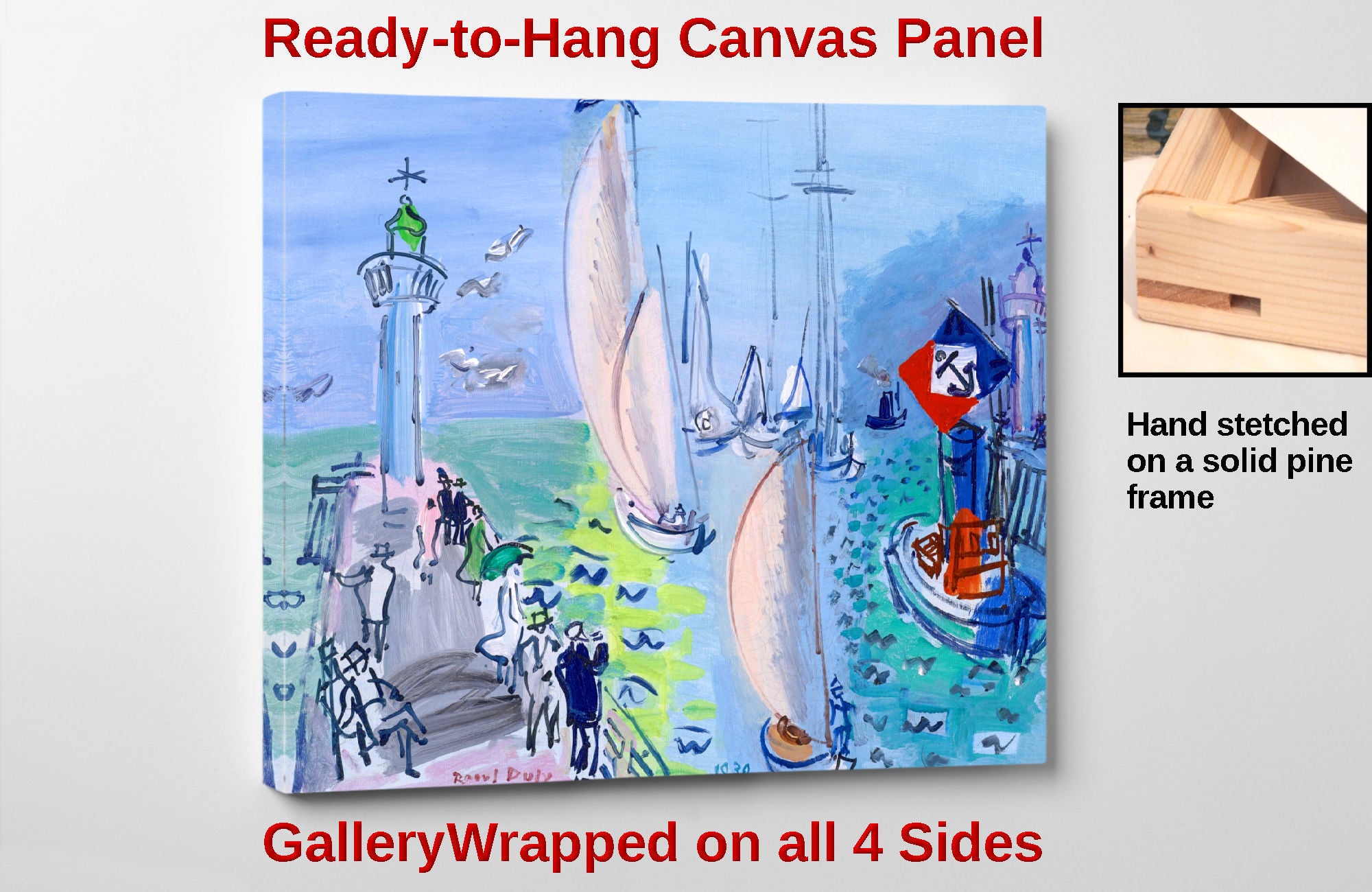
Canvas panels provide a clean, ready-to-hang alternative that complements the strong colour and painterly character of many Dufy works.
GalleryThane prints, frames and canvas panels are produced in our Nottinghamshire workshop using carefully selected fine art papers, pigment inks and framing materials.
Explore Related Art Collections
Explore Fauvism Prints to see Dufy's early modernist work alongside Henri Matisse, André Derain, Henri Manguin and Albert Marquet.
Browse Seascape Art Prints for regattas, harbours, boats and coastal paintings by Dufy and other artists.
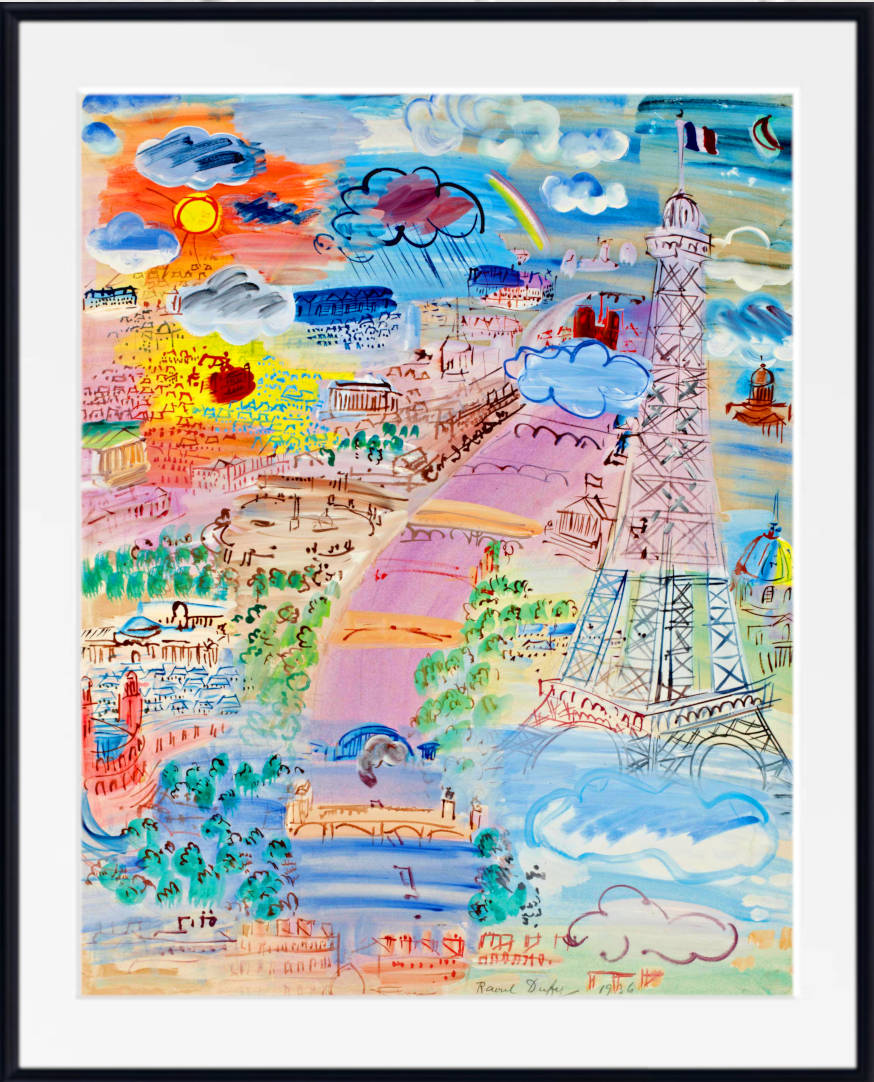
Discover Paris Wall Art for paintings and prints of the French capital.
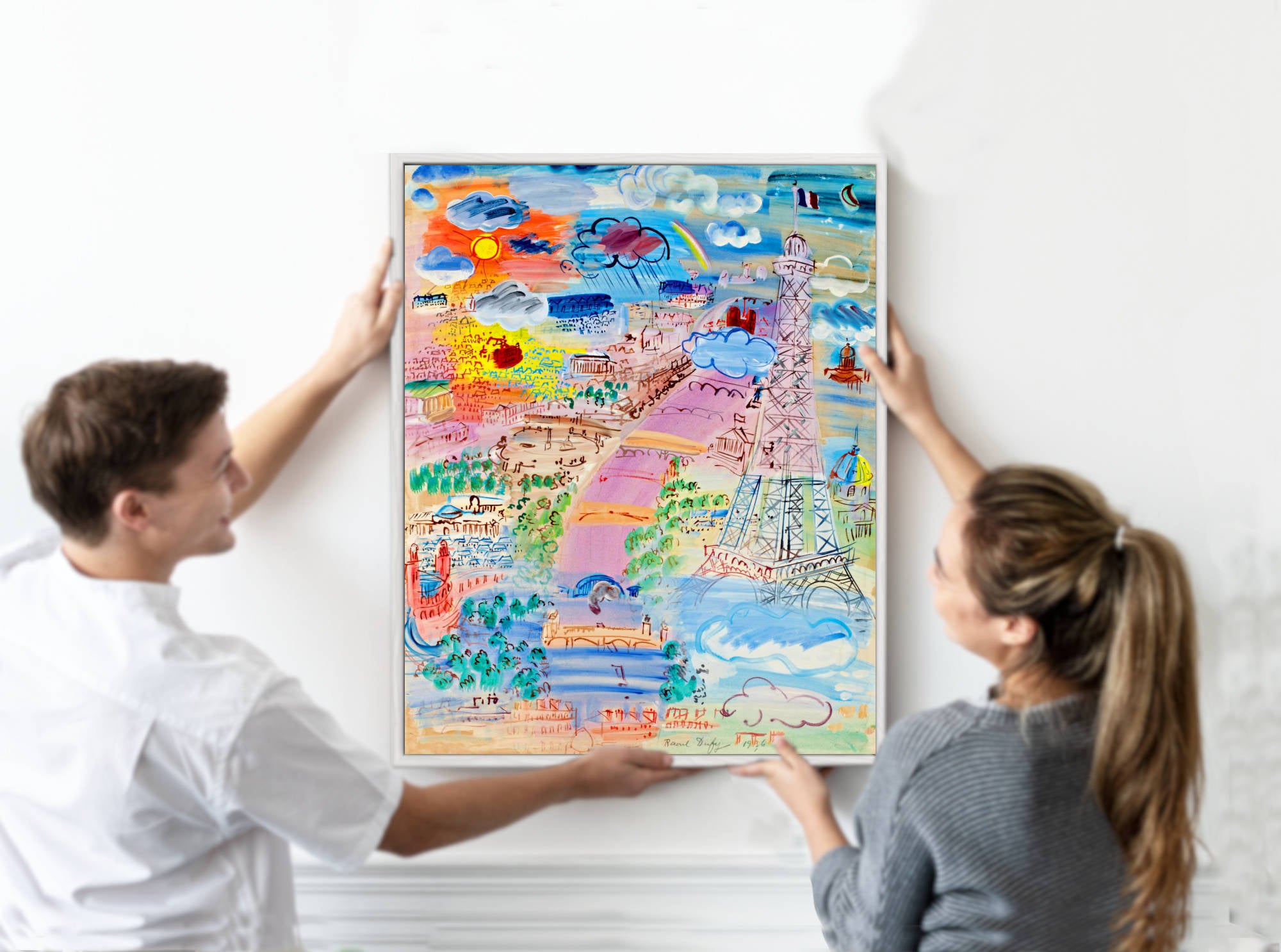
Explore London Wall Art for Dufy's British city views alongside other interpretations of London.
For countryside, coastal and scenic subjects, browse Landscape and Scenery Prints.
Frequently Asked Questions
Who was Raoul Dufy?
Raoul Dufy was a French modern artist known for his brilliant colour, fluid line and paintings of regattas, racecourses, landscapes, fashionable resorts, cities, music and flowers.
Was Raoul Dufy a Fauvist?
Yes. Dufy participated in the development of Fauvism during the early twentieth century. He later moved beyond the movement and developed a highly individual mature style based on free colour and rapid linear drawing.
What is Raoul Dufy famous for?
Dufy is particularly famous for colourful paintings of regattas, sailing boats, horse racing, the French Riviera, Deauville, Paris, Venice, music and fashionable leisure.
What are some of Raoul Dufy's best-known subjects?
His recurring subjects include yachts and regattas, Normandy and Mediterranean coastlines, racecourses, Paris, Venice, Nice, musical instruments, flowers and elegant interiors.
Why did Dufy paint so many sailing scenes?
Dufy was born in the Normandy port of Le Havre and maintained a lifelong fascination with the sea. Regattas also provided the combination of boats, flags, crowds, movement and colour that suited his mature style perfectly.
Did Raoul Dufy paint in Britain?
Yes. Dufy painted British subjects including Cowes on the Isle of Wight and London. His sailing and regatta paintings are particularly associated with Cowes.
What style did Raoul Dufy paint in?
Dufy's early work developed through Impressionist, Post-Impressionist and Fauvist influences. He later created a distinctive personal style characterised by fluid outlines, luminous colour and a deliberate separation between colour and drawing.
Did Raoul Dufy design textiles?
Yes. Dufy's work extended beyond painting into textile design, ceramics, illustration and other decorative arts. His colourful motifs translated particularly well into fabric.
Are Raoul Dufy prints suitable for modern interiors?
Yes. His bright colours, open compositions and fluid drawing make Dufy prints particularly effective in modern, contemporary, coastal, eclectic and mid-century-inspired interiors.
Which Raoul Dufy print should I choose?
For coastal subjects, consider his Deauville or Cowes regattas. For city imagery, explore Venice, Paris, Nice or London. Horse-racing paintings offer a lively sporting alternative, while floral and musical works can create a more intimate focal point.