


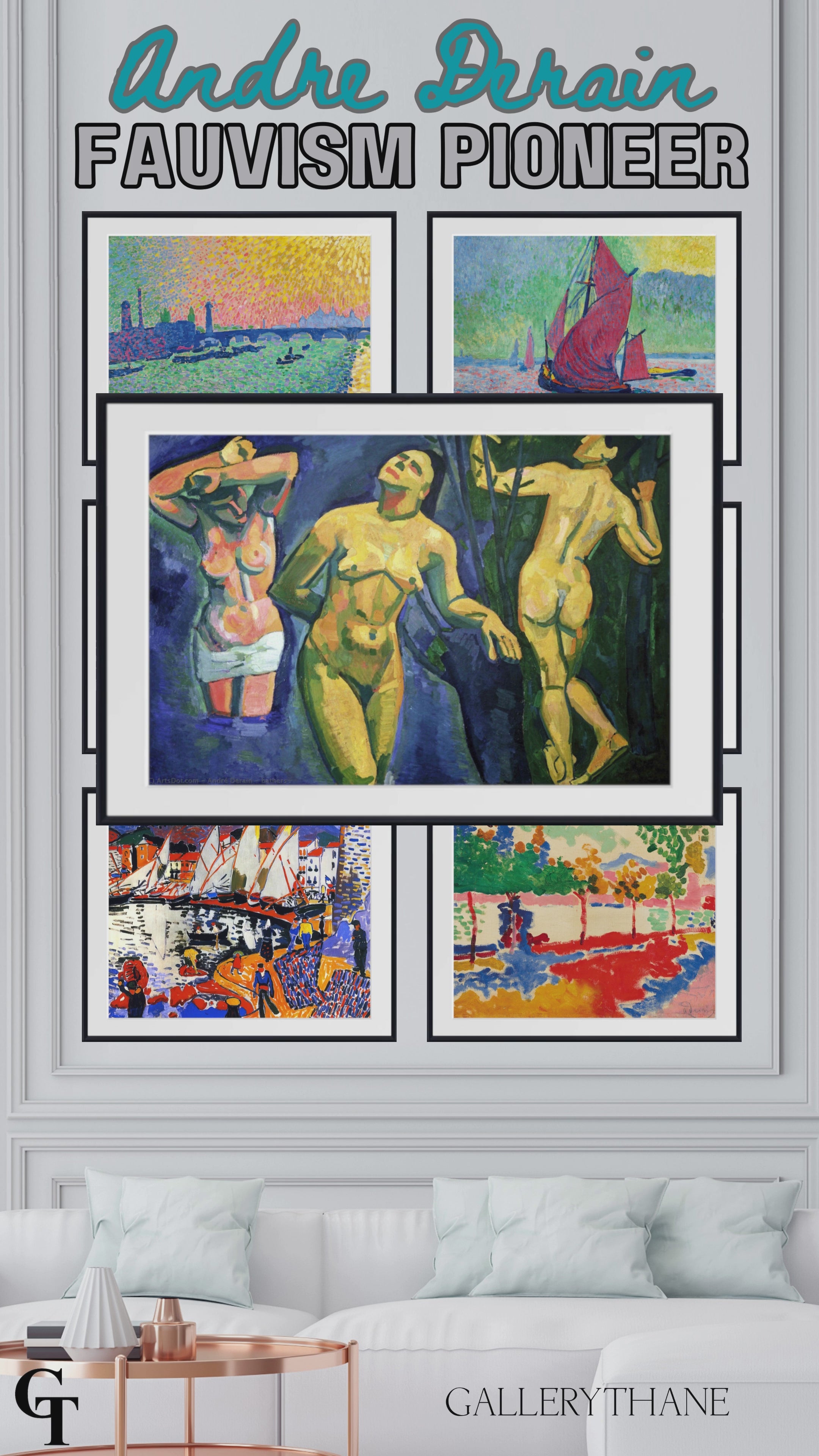


London Bridge, by André Derain
Couldn't load pickup availability
BUY WITH CONFIDENCE
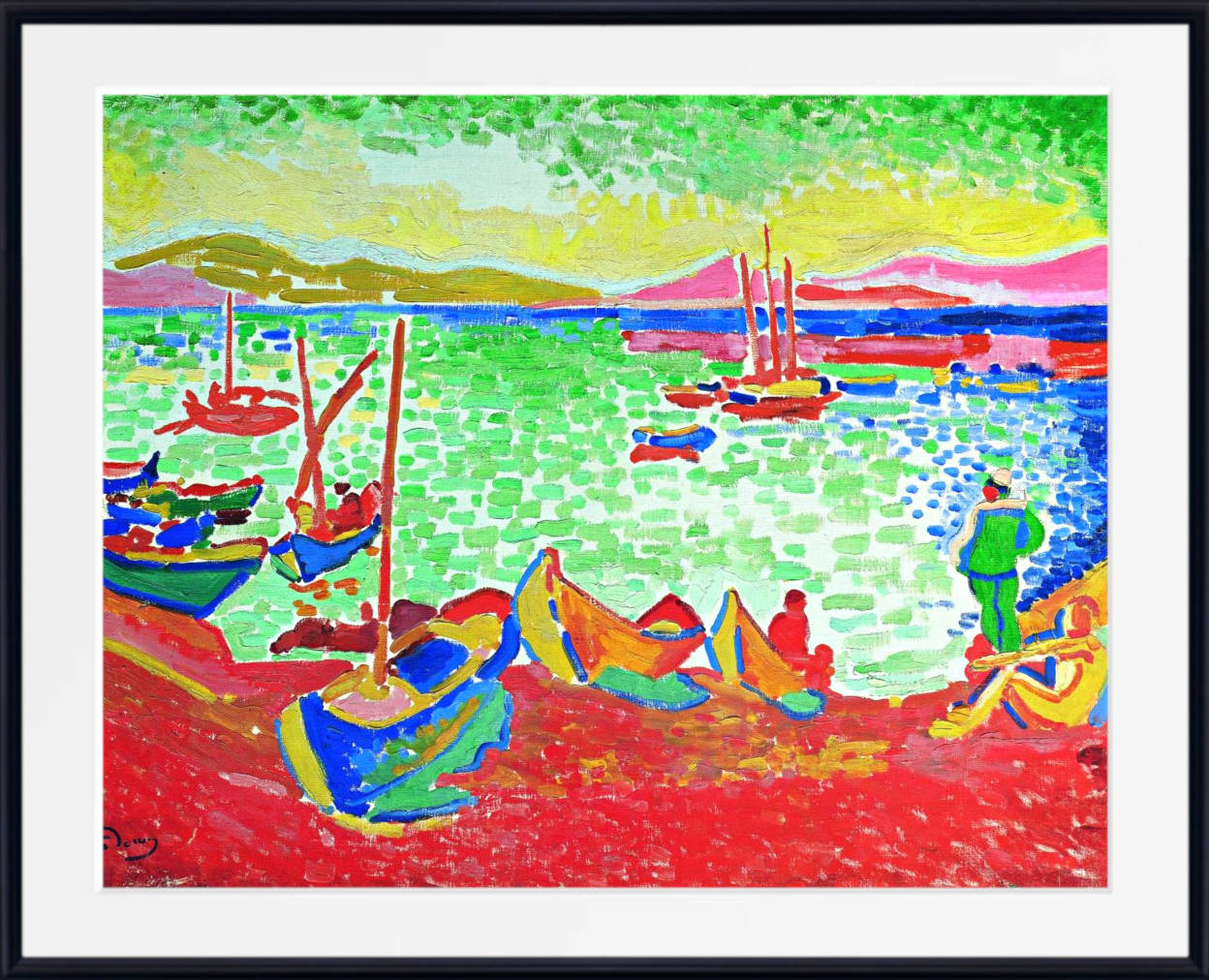
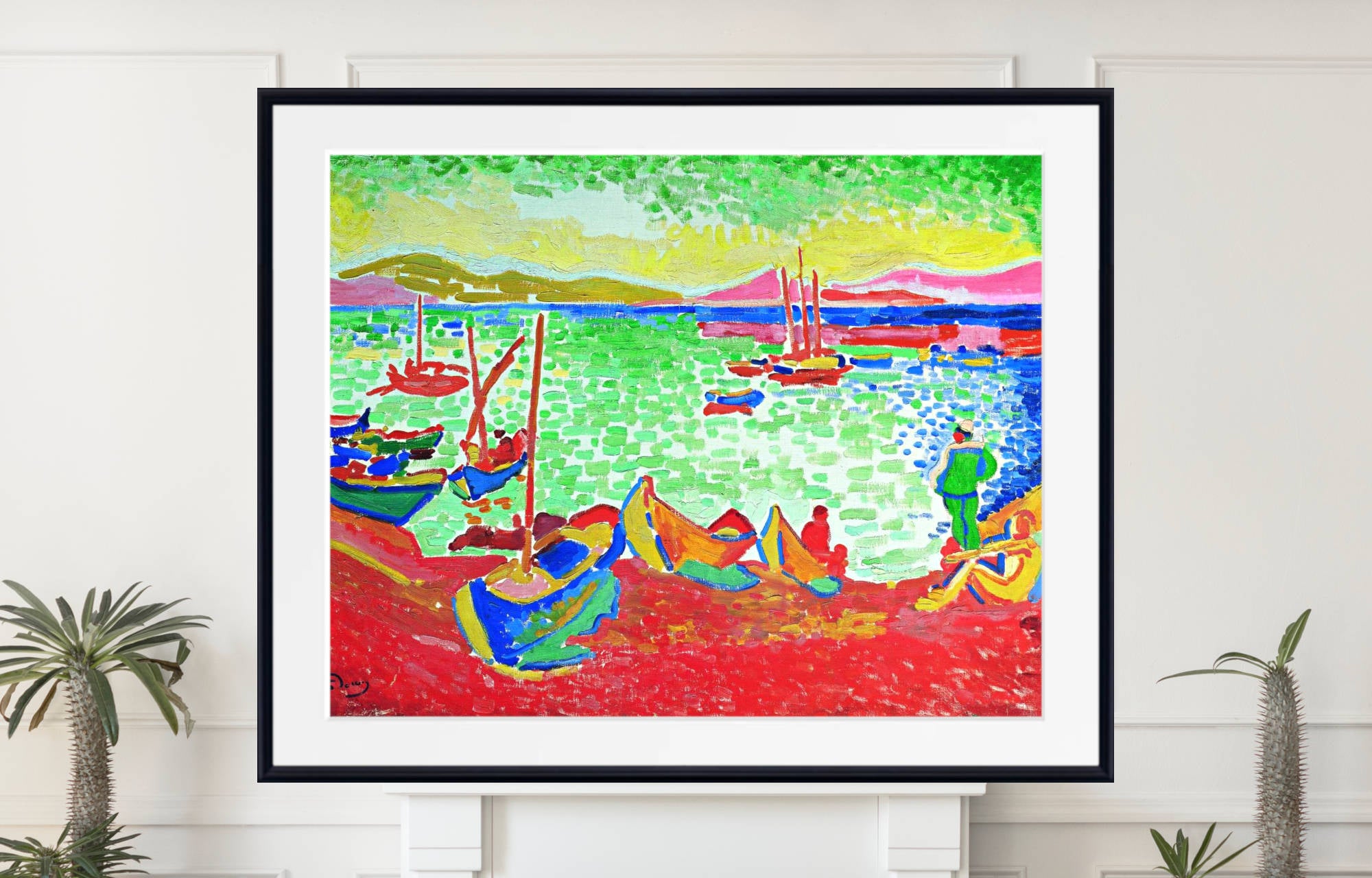
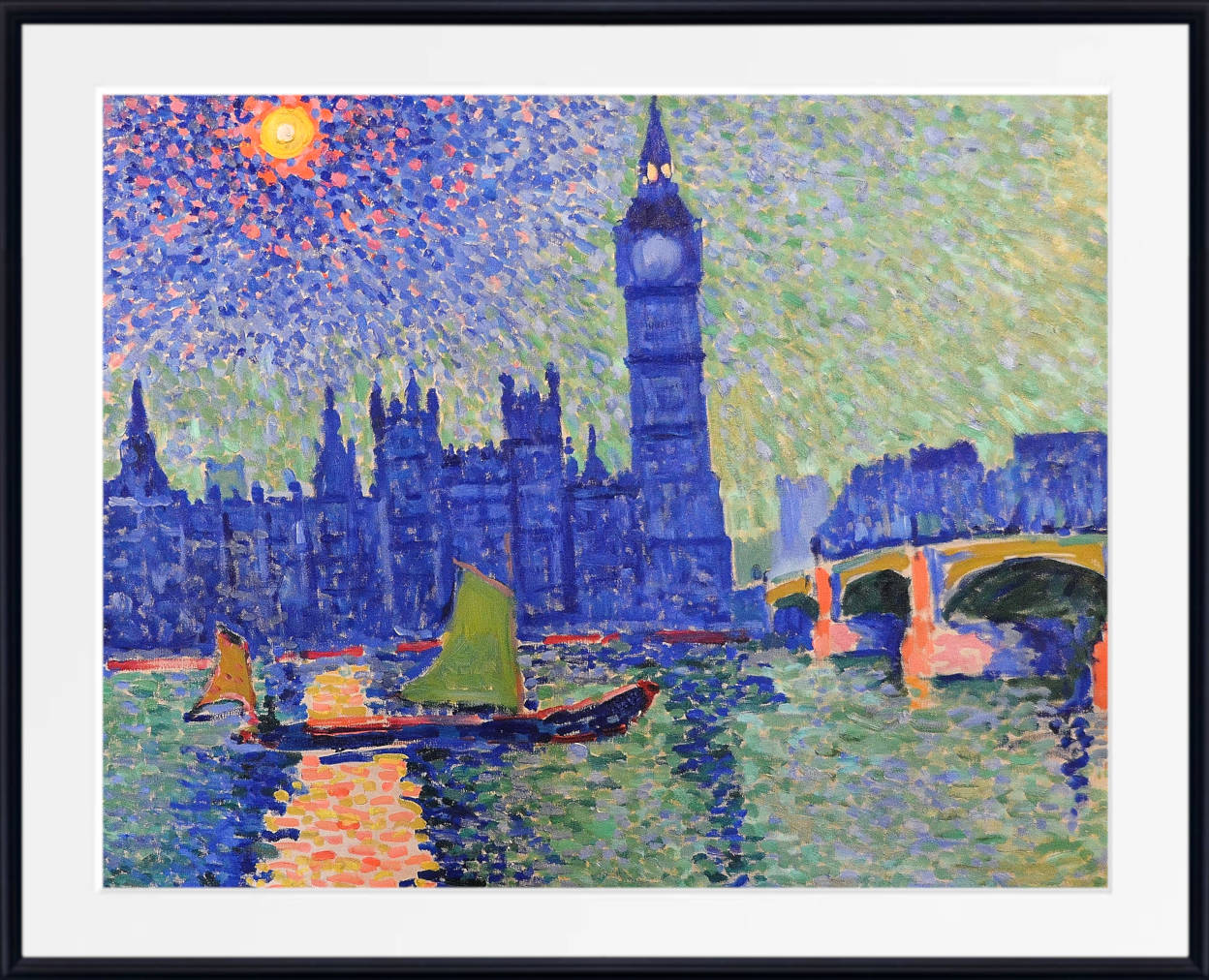
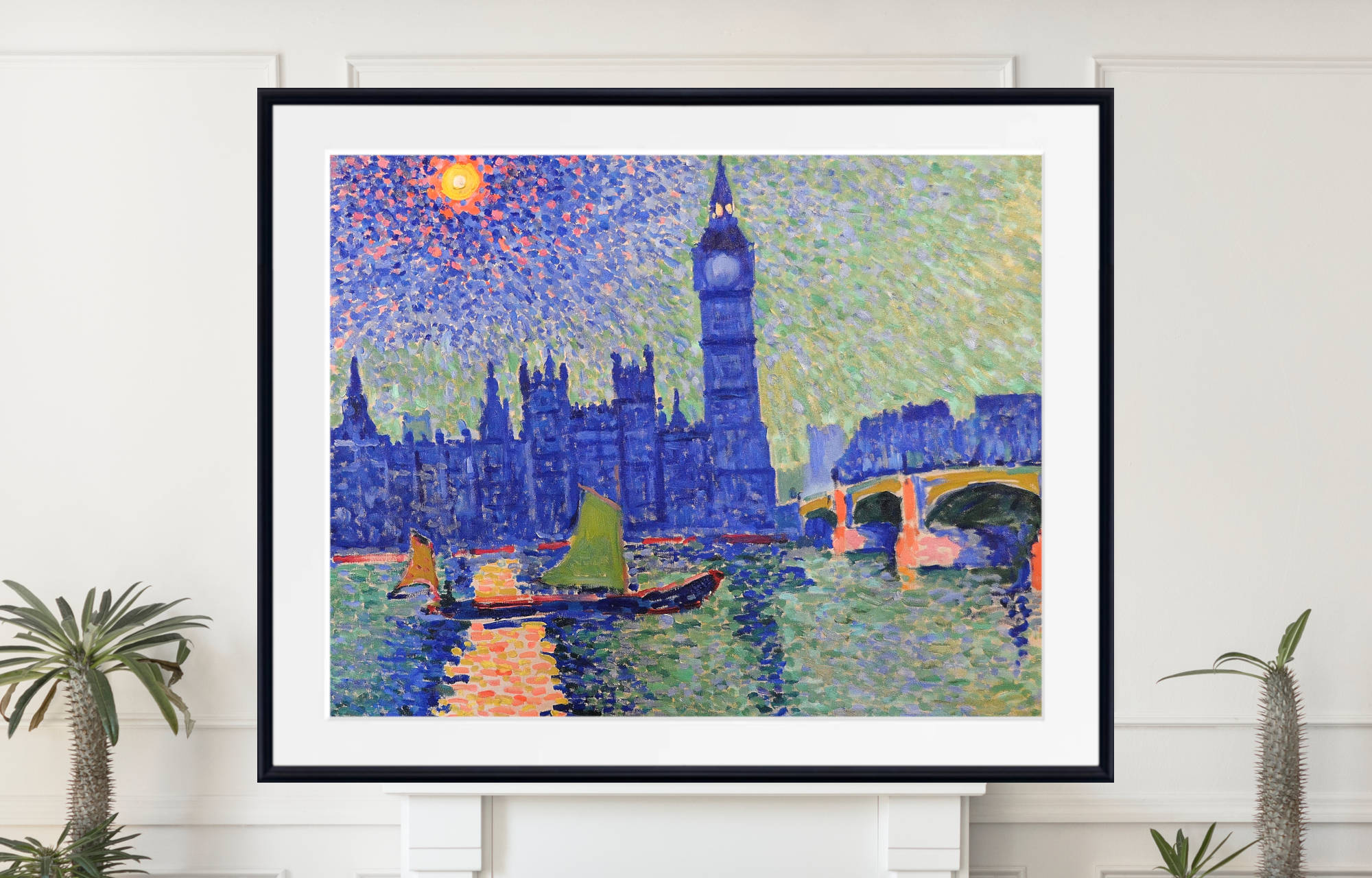
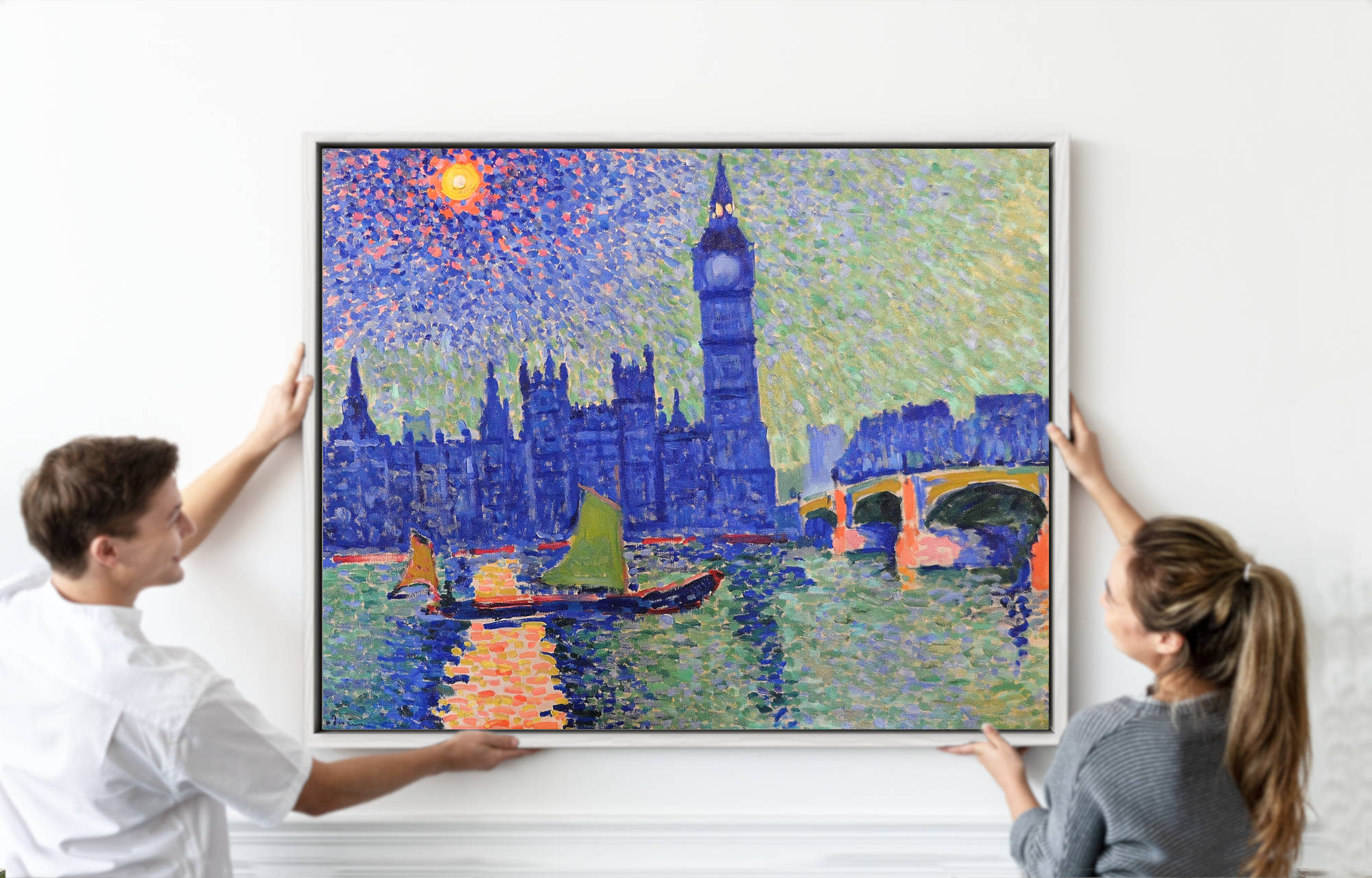
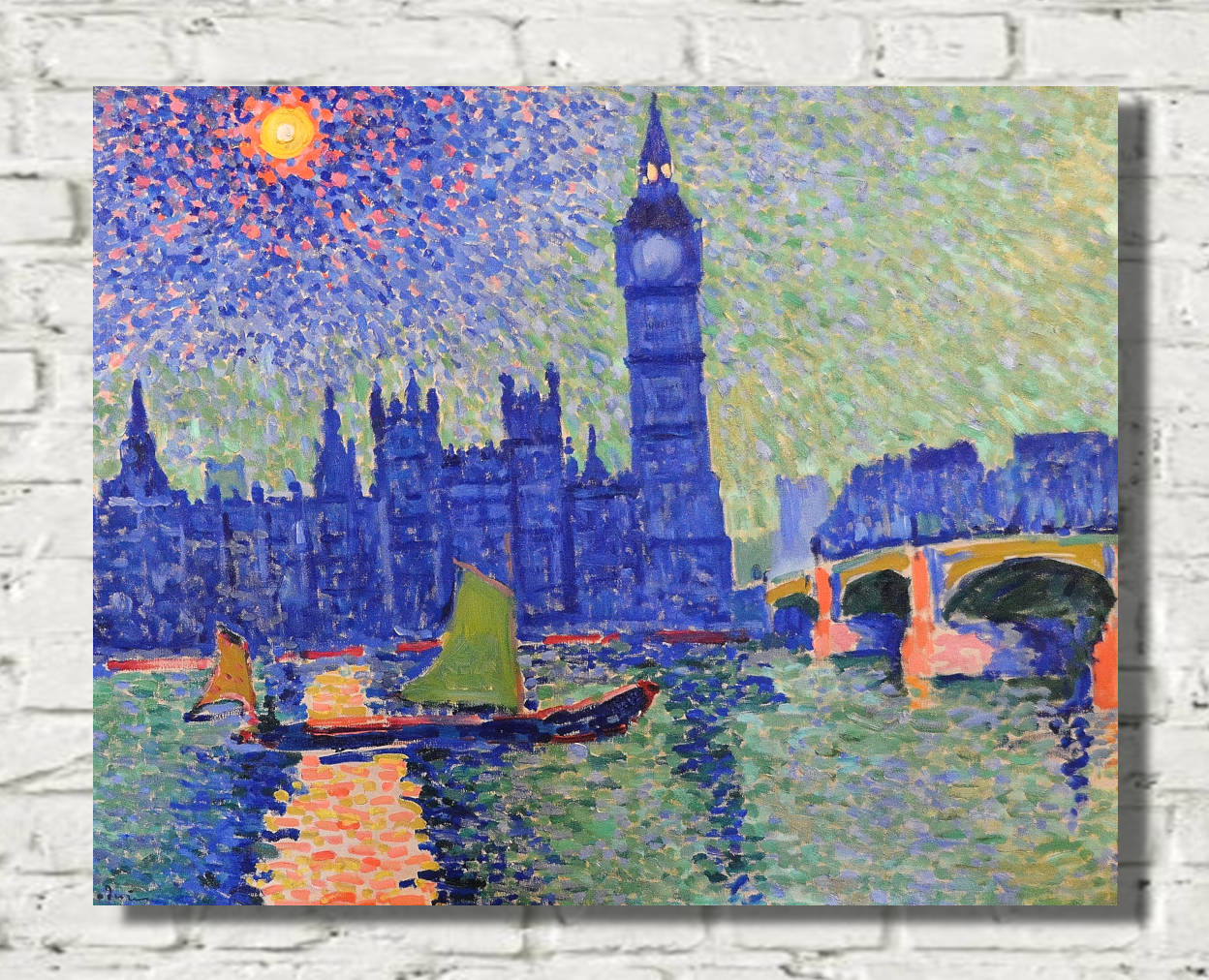
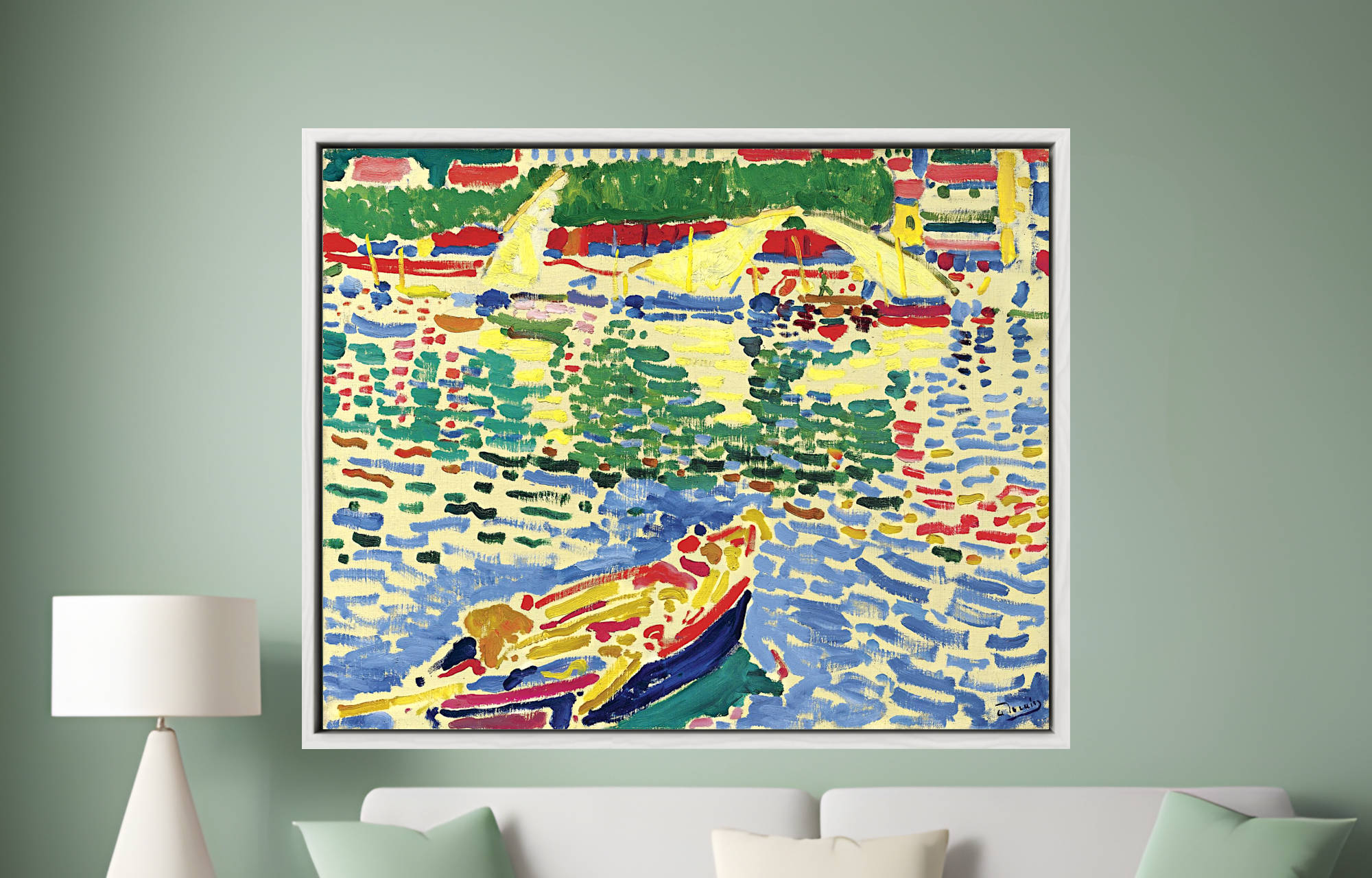
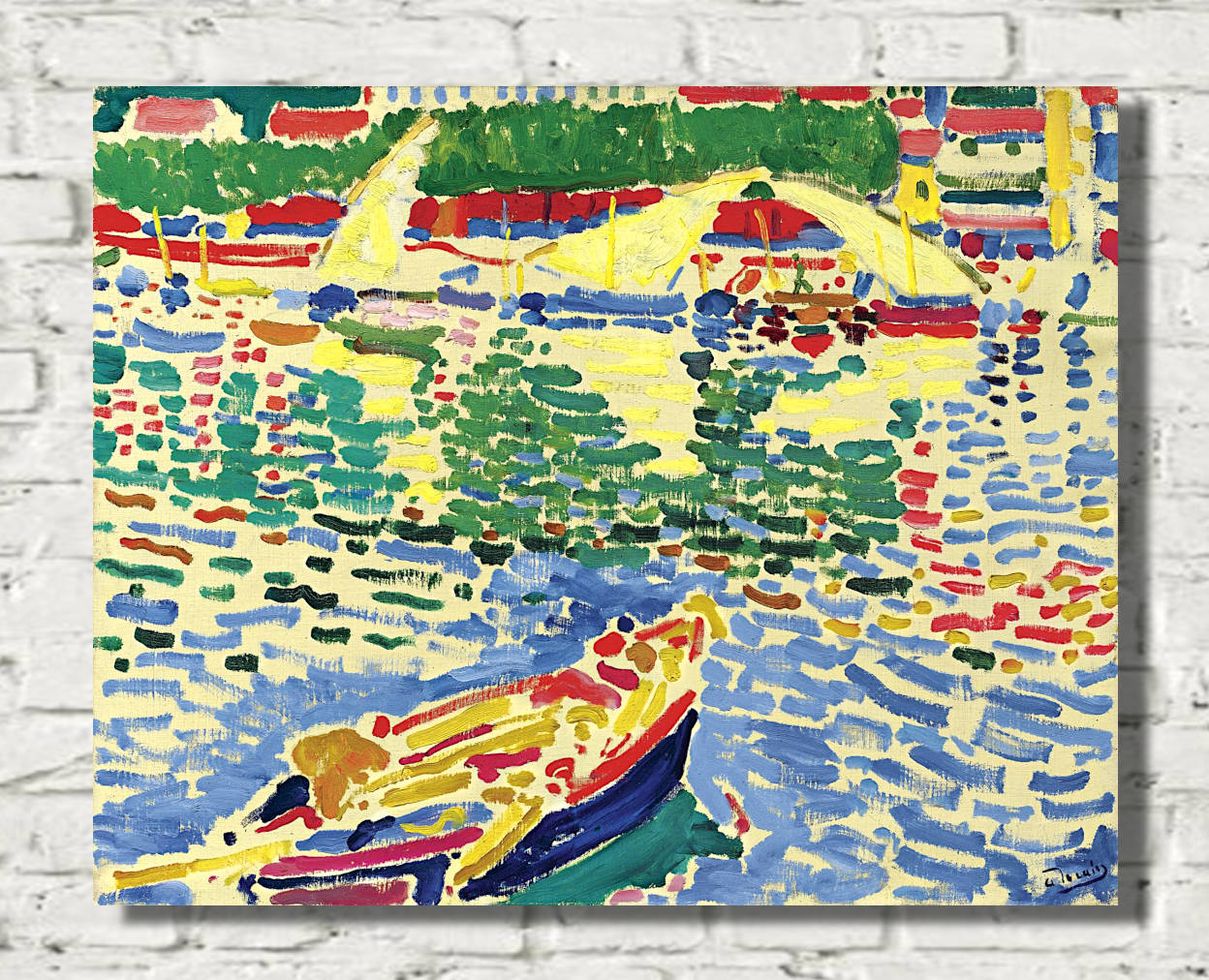
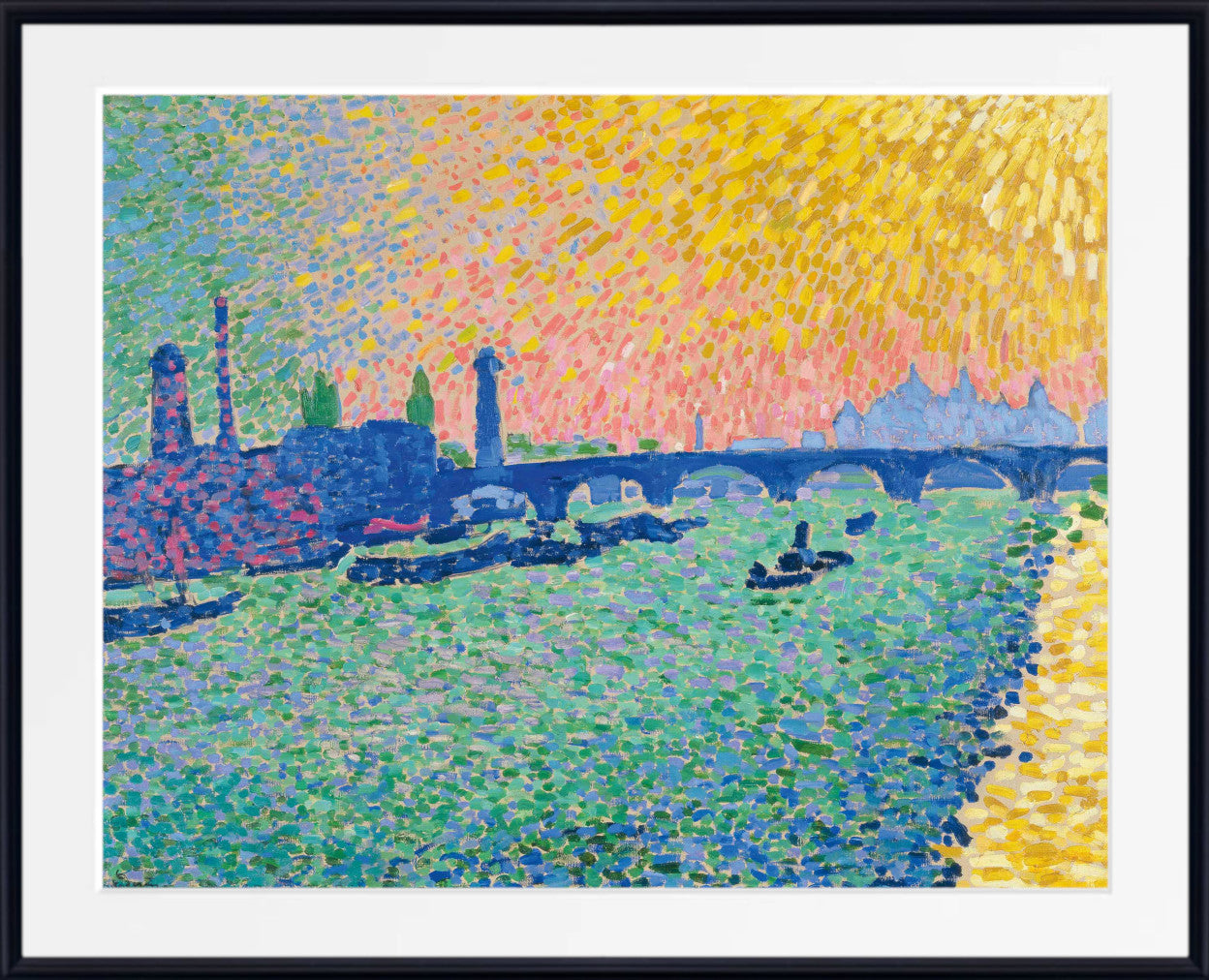
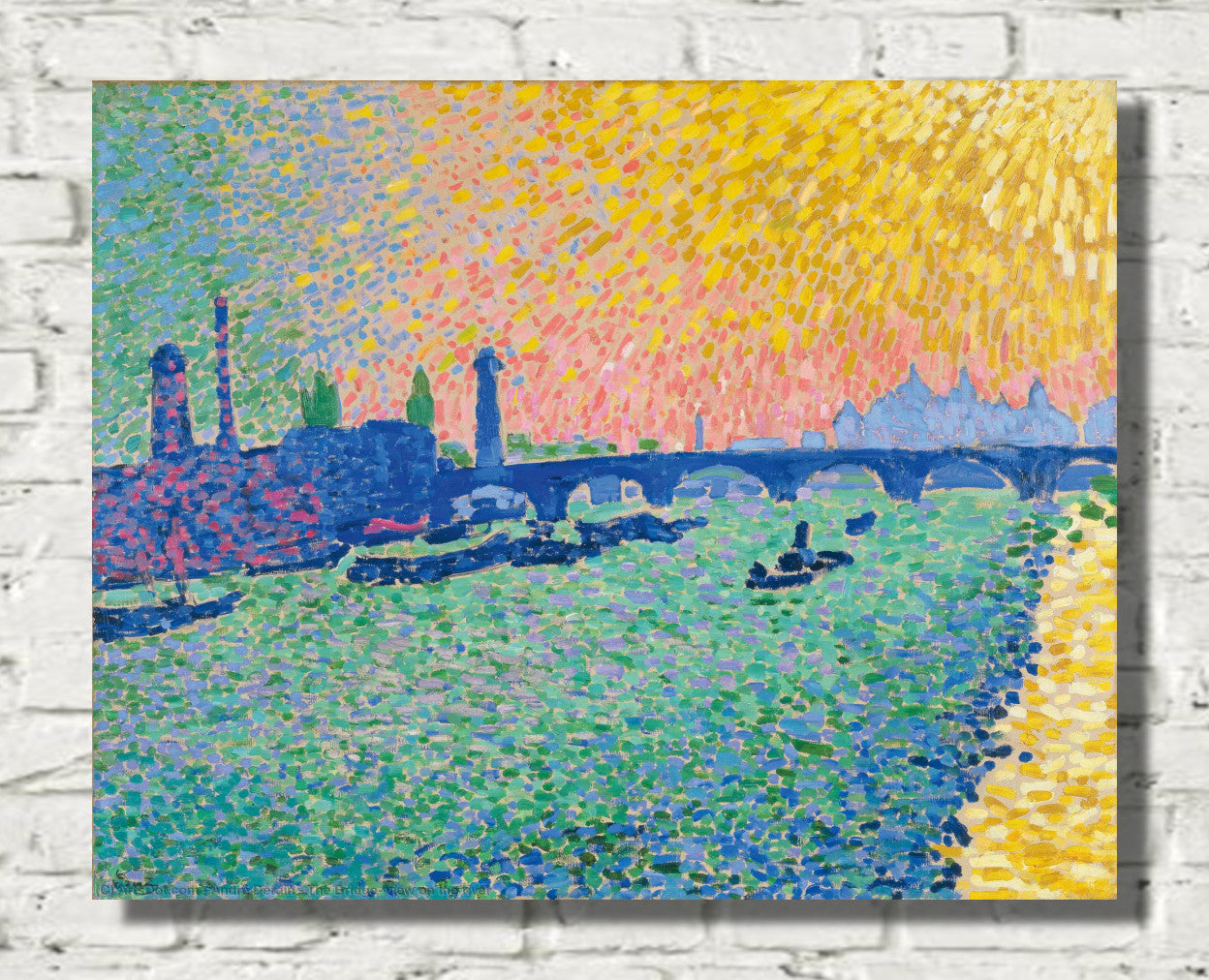
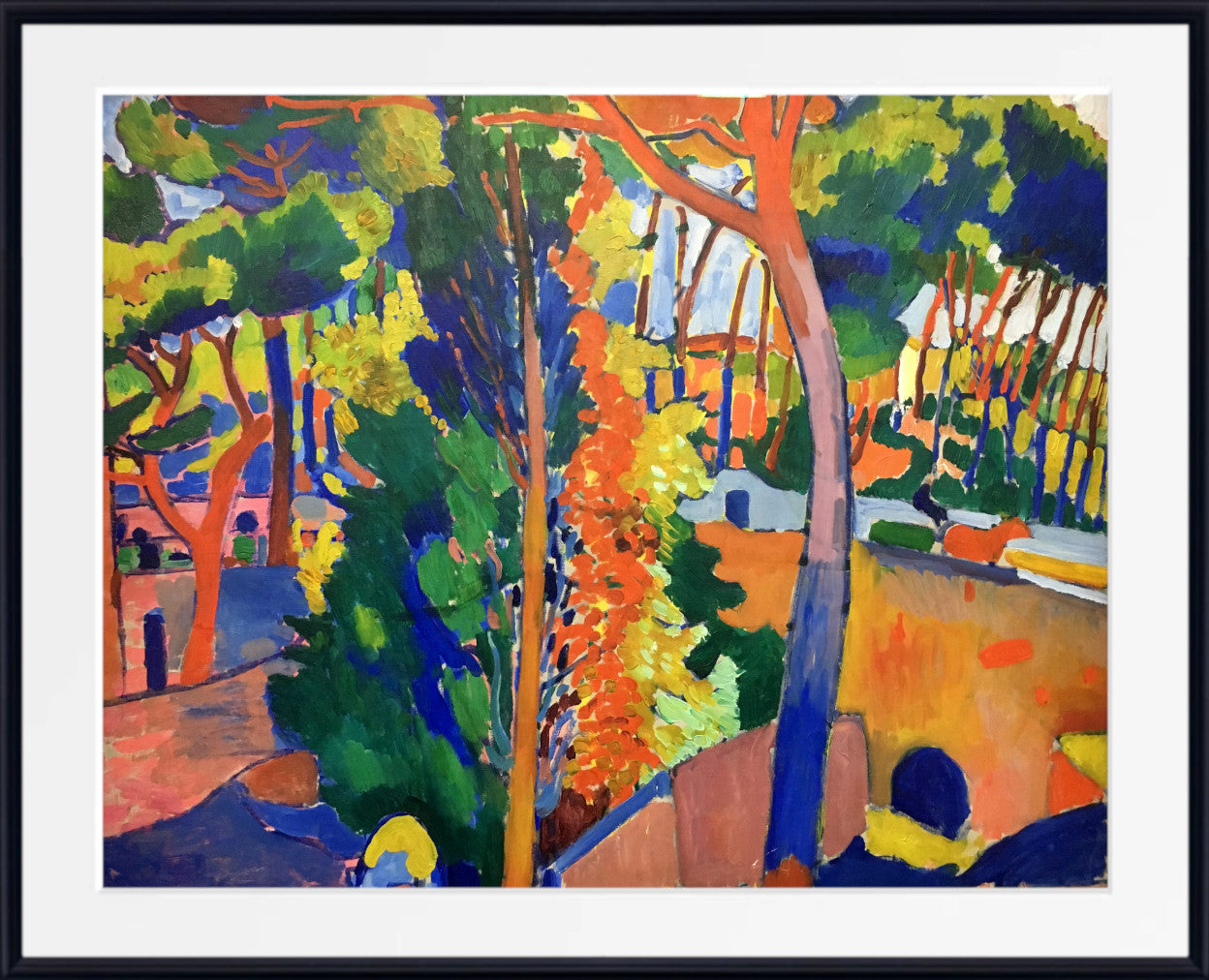
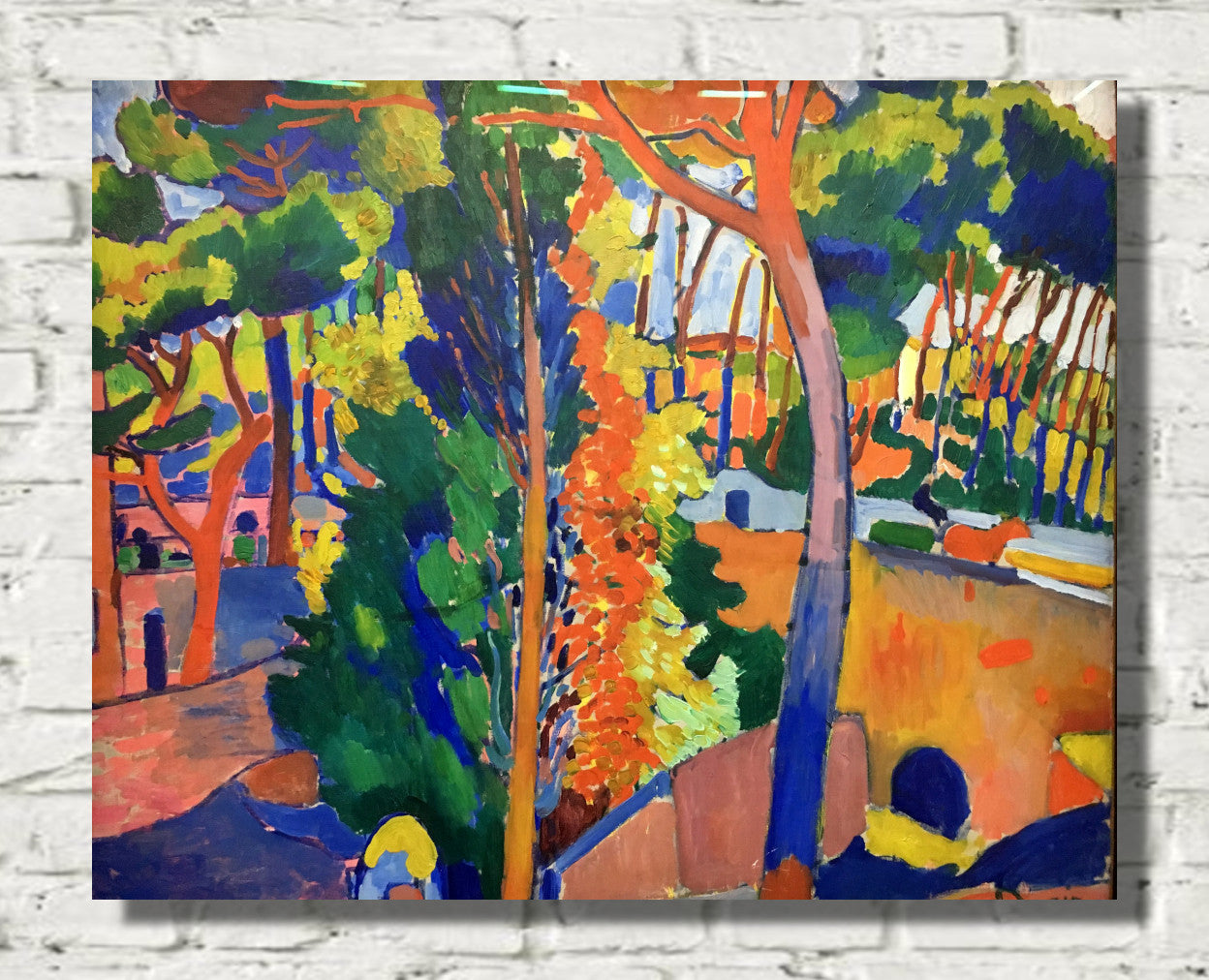
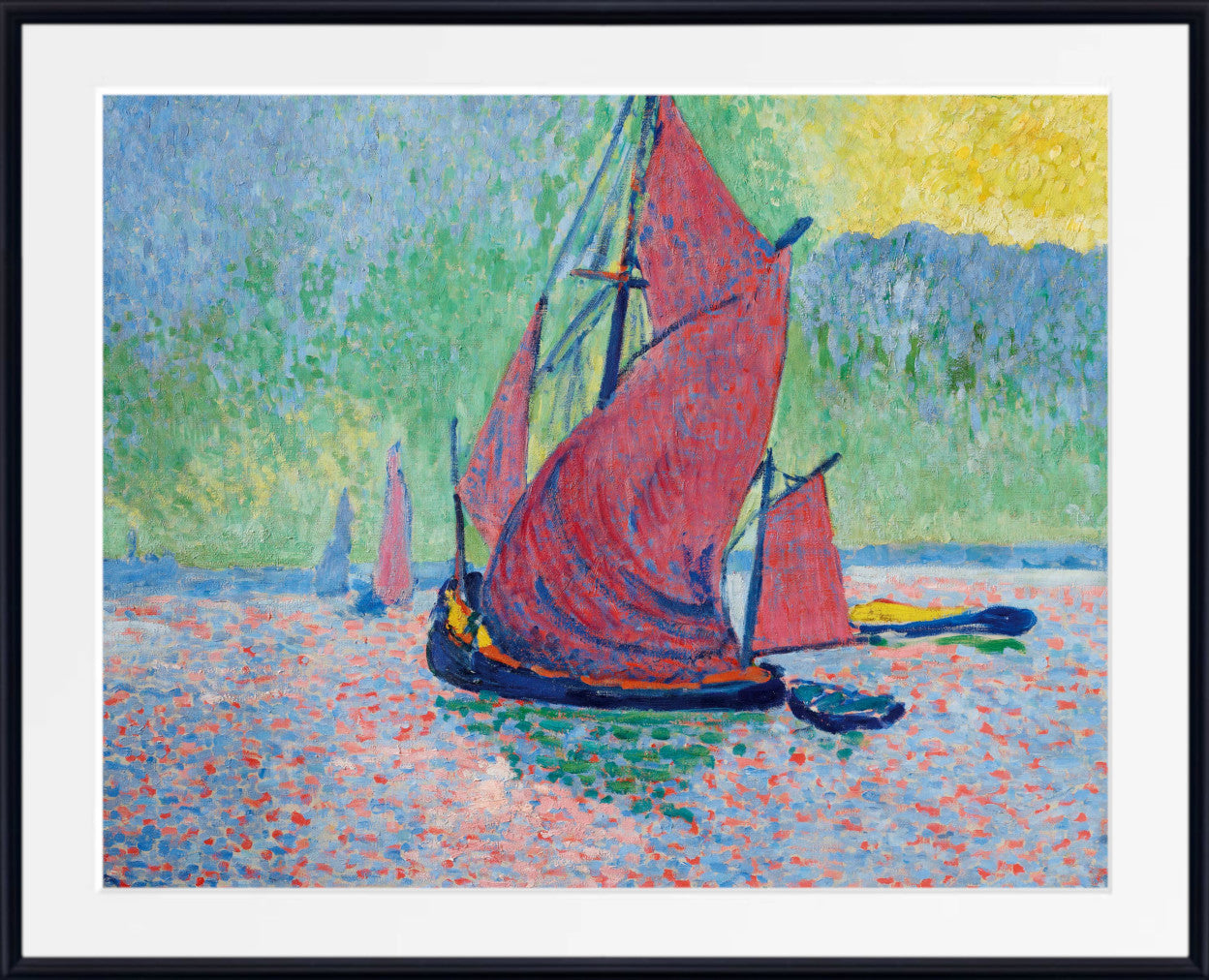
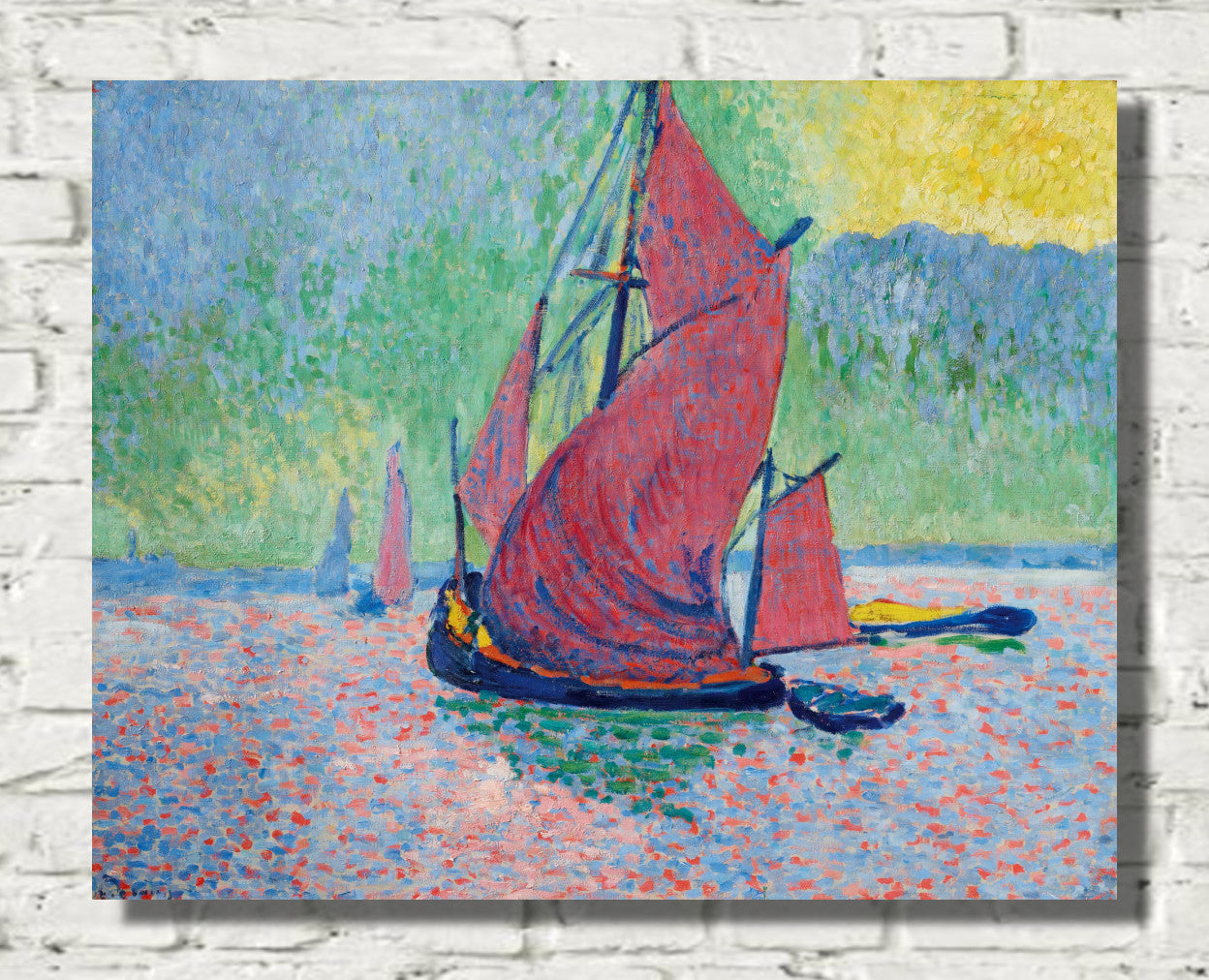
London Bridge (1906) by André Derain is one of the most celebrated paintings from the artist's extraordinary Fauvist series of London views. The River Thames becomes a brilliant field of blues and greens, boats are reduced to energetic shapes and the massive stone arches of London Bridge rise above the water in intense, deliberately non-naturalistic colour. Painted during the winter of 1906, the work transforms one of Britain's most familiar urban landmarks into a striking experiment in modern colour.
This André Derain London Bridge print captures the radical character of Fauvism at its height. Derain rejected the grey and brown palette traditionally associated with industrial London and instead reinvented the city through brilliant colour, simplified form and vigorous brushwork. Available as a fine art print, framed print or canvas panel, London Bridge is an outstanding choice for admirers of Fauvist art, London wall art and early twentieth-century modern painting.
London Bridge – Derain's Fauvist Vision of the Thames
André Derain arrived in London with an unusual artistic challenge: to create a new vision of a city that had already been painted memorably by some of the greatest artists of the nineteenth century.
His response was emphatically modern.
In London Bridge, the Thames is not represented through the muted atmospheric greys commonly associated with London. The river becomes intensely coloured, the bridge is simplified into bold architectural masses and the boats below are treated through broad strokes and compact shapes.
The subject remains unmistakably London, yet almost every element has been transformed through Derain's imagination.
This combination of a recognisable landmark and radically liberated colour makes London Bridge one of the clearest demonstrations of what Fauvism could achieve when applied to the modern city.
Derain's London Commission
Derain's London paintings were produced as the result of a commission from the influential Parisian art dealer Ambroise Vollard.
Vollard recognised the importance of the young Fauvist painter and encouraged him to travel to London to produce a substantial group of views centred on the River Thames.
Derain ultimately created approximately thirty paintings depicting bridges, boats, docks and activity around the river.
The commission was particularly significant because London already possessed a distinguished history in modern landscape painting. Claude Monet had painted the Thames repeatedly only a few years earlier, producing atmospheric views of Waterloo Bridge, Charing Cross Bridge and the Houses of Parliament.
Derain was therefore responding to a city already strongly associated with Impressionism.
Instead of imitating Monet's mist, changing weather and subtle variations of light, Derain approached the Thames through the brilliant artificial colour of Fauvism.
A London Without Grey
The popular image of Edwardian London was dominated by smoke, fog, industrial pollution and muted stone architecture.
Derain effectively discarded that visual convention.
His London is saturated with colour.
Water, buildings, bridge and sky are constructed from intensified hues rather than the subdued palette a visitor might have expected to observe directly.
This decision was fundamental to Fauvism. Derain did not believe that a painter's task was simply to reproduce the appearance of the world.
Colour could be altered dramatically if doing so created a stronger painting.
The London series therefore offers one of the clearest examples of Fauvist colour functioning independently of local appearance. Derain takes a city famous for atmospheric greyness and makes colour its defining feature.
The River Thames as a Modern Subject
The Thames offered Derain a combination of architecture, industry and movement that differed substantially from the Mediterranean landscapes he had painted at Collioure and L'Estaque.
The river was crowded with working boats and commercial traffic. Bridges carried pedestrians and vehicles between the two banks, while warehouses, wharves and major buildings defined the surrounding city.
Derain responded to this complex environment by simplifying it.
Boats become compact areas of colour. Architectural forms are reduced to broad masses. Masts and funnels introduce strong vertical accents against the horizontal river.
The result captures the activity of the Thames without relying on painstaking detail.
Rather than documenting every vessel and building, Derain communicates the rhythm and intensity of modern London through colour and form.
The London Bridge Derain Painted
The bridge depicted by Derain was not the present London Bridge.
In 1906 the Thames was crossed at this point by the nineteenth-century granite bridge designed by engineer John Rennie and completed under the supervision of his son. It had opened in 1831 and was subsequently widened to accommodate the enormous growth in London traffic.
Its massive stone arches created a very different visual presence from today's comparatively restrained bridge.
For Derain, those arches provided a powerful compositional structure.
The bridge stretches strongly across the canvas while the river traffic beneath introduces movement and contrast. The solidity of the architecture is set against the constantly changing surface of the Thames.
This opposition between permanent stone and moving water contributes to the painting's visual tension.
Colour and Structure in London Bridge
Although Fauvist colour can appear spontaneous or uncontrolled, London Bridge is carefully organised.
The bridge establishes a powerful horizontal structure across the composition. Its arches create repeated openings through which areas of water and distant city can be seen.
Below, the Thames provides another broad horizontal plane, animated by boats and reflections.
Vertical masts, funnels and architectural details interrupt these larger horizontal areas.
Derain uses colour to strengthen these relationships rather than merely decorate them.
Warm and cool colours are positioned against one another to create contrast. Darker passages give the bridge physical weight while brighter colours across the water increase the sensation of movement and light.
The painting therefore demonstrates that Fauvism was not simply about using vivid pigment. Colour and composition were inseparable.
Boats and Movement on the Thames
The vessels beneath London Bridge play an important role in the composition.
At the beginning of the twentieth century the Thames remained a major commercial artery. Barges, steam vessels and smaller craft moved constantly between the docks and wharves.
Derain incorporates this activity without turning the painting into a detailed documentary record.
Boats are simplified into broad forms, often defined by only a few energetic strokes. Their placement breaks up the surface of the river and creates a sense of movement beneath the heavier architecture of the bridge.
This contrast between moving vessels and monumental stone gives the composition its urban energy.
Human activity is therefore present throughout the painting even though individual figures remain secondary to the larger visual structure.
Derain, Monet and Two Visions of London
Derain's London series inevitably invites comparison with Claude Monet.
Monet had worked extensively in London around the turn of the century, repeatedly painting the Thames under different atmospheric conditions. Fog, sunlight and industrial haze dissolve his bridges and buildings into shifting colour and light.
Derain approached the same city from almost the opposite direction.
Where Monet investigated subtle changes in atmosphere, Derain intensified colour beyond natural appearance.
Where Monet's architecture can dissolve into mist, Derain often strengthens shapes through bold colour contrasts and simplified form.
Both artists were fascinated by light, but their methods reveal the dramatic changes that occurred in European painting within only a few years.
Derain's London paintings therefore provide an important bridge between the achievements of Impressionism and the increasingly radical experiments of twentieth-century modernism.
From Collioure to London
Only months before his London work, Derain had participated in one of the defining episodes in the birth of Fauvism.
During the summer of 1905 he worked alongside Henri Matisse at Collioure in southern France.
The brilliant Mediterranean light encouraged both artists to abandon conventional naturalistic colour and experiment with intense reds, blues, greens, oranges and yellows.
Derain subsequently continued this experimentation at L'Estaque and other locations.
London presented a completely different challenge.
Instead of Mediterranean beaches, hills and fishing boats, he encountered a vast industrial city dominated by stone architecture and one of the busiest rivers in Europe.
The fact that Fauvist colour could be applied just as convincingly to London demonstrated the strength of the new visual language.
Fauvism was no longer simply a response to southern sunlight. It had become a way of reimagining almost any subject.
London Bridge and Fauvism
London Bridge displays many of the defining characteristics of Fauvist painting:
- brilliant colour used independently of natural appearance
- strong contrasts between warm and cool hues
- simplified architectural and maritime forms
- visible and energetic brushwork
- reduced conventional tonal modelling
- a flattened and strongly organised pictorial surface
- colour used to create light, movement and structure
- a familiar subject transformed through the artist's subjective response
The work demonstrates why Fauvism was so important despite lasting only a few years.
Once colour was freed from the requirement to imitate nature precisely, painters could use it as an autonomous creative element.
Derain's London series pushed this principle into the heart of the modern city.
André Derain's Fauvist Painting Style
André Derain was one of the principal founders of Fauvism alongside Henri Matisse and Maurice de Vlaminck.
His early friendship with Vlaminck around Chatou encouraged experiments with vigorous brushwork and increasingly intense colour.
The summer spent with Matisse at Collioure in 1905 pushed those experiments considerably further.
By the time Derain painted London, he had developed enough confidence to apply non-naturalistic colour to one of Europe's largest and most recognisable cities.
His Fauvist phase was nevertheless brief.
By approximately 1907–08, Derain became increasingly interested in greater structural order, the work of Paul Cézanne and aspects of classical and Old Master painting.
His palette became more restrained and his artistic direction changed substantially.
The London paintings therefore belong to a relatively narrow period when Derain's approach to colour was at its most radical.
About André Derain
André Derain (1880–1954) was a French painter, sculptor, printmaker and designer and one of the most important artists involved in the emergence of Fauvism.
Born in Chatou near Paris, Derain initially studied engineering while pursuing his interest in painting.
His friendship with Maurice de Vlaminck led to early experiments with bold colour, while his subsequent collaboration with Henri Matisse placed him at the centre of the Fauvist breakthrough.
Derain's landscapes at Collioure and L'Estaque, together with his London series, belong to the most celebrated period of his career.
He later adopted a more restrained style influenced by Cézanne, classical art and European painting traditions.
Although his long career moved through several artistic phases, his Fauvist works remain among the most important examples of colour experimentation in early twentieth-century painting.
The Original London Bridge
The original London Bridge was painted in London during the winter of 1906.
Derain created the work in oil on canvas.
It measures approximately 66 × 99.1 cm.
The painting is now held by The Museum of Modern Art in New York, where it forms part of the museum's Painting and Sculpture collection. Its object number is 195.1952.
The work is one of approximately thirty paintings associated with Derain's London campaign, centred particularly on activity along the River Thames.
Its documented provenance includes Derain's dealer Ambroise Vollard and the Sidney Janis Gallery in New York. Charles and Eugenia Zadok subsequently owned the painting before giving it to The Museum of Modern Art in 1952.
The painting has since become one of the best-known examples of Derain's Fauvist interpretation of London.
An André Derain London Bridge Print for Your Interior
An André Derain London Bridge print combines the familiarity of a major London landmark with the extraordinary colour of Fauvism.
That combination gives the work particularly broad decorative appeal. It can function as London wall art without the conventional appearance of a photographic cityscape or monochrome architectural print.
Its vivid blues, greens, reds, oranges and contrasting tones can create a strong focal point against white, cream, putty, pale grey and other neutral walls.
The horizontal composition makes the painting especially suitable for display above sofas, beds, sideboards and console tables.
Its simplified architecture and strong colour work particularly well with contemporary, Scandinavian-inspired, mid-century and eclectic interiors.
The painting is suitable for living rooms, dining rooms, bedrooms, hallways, studies and home offices, as well as interiors where London imagery has a particular personal connection.
For collectors of Fauvism or modern British city imagery, London Bridge has additional significance as one of the paintings in which a leading French modernist radically reinvented the visual identity of Edwardian London.
Frequently Asked Questions
When did André Derain paint London Bridge?
Derain painted London Bridge in London during the winter of 1906, at the height of his Fauvist period.
Why did André Derain paint London?
Derain travelled to London as part of a commission from the influential Parisian dealer Ambroise Vollard, who wanted him to produce a series of modern views of the city and the River Thames.
How many London paintings did André Derain create?
Derain produced approximately thirty paintings associated with his London campaign, concentrating particularly on the Thames, its bridges and the activity around the river.
Is London Bridge a Fauvist painting?
Yes. The work is one of Derain's major Fauvist cityscapes and uses intense non-naturalistic colour, simplified forms and bold brushwork to transform the appearance of London.
Why are the colours in London Bridge so bright?
Fauvist painters deliberately freed colour from the requirement to reproduce nature literally. Derain chose colours according to their expressive and compositional effect rather than simply copying the greys, browns and atmospheric tones he observed in London.
Was Derain influenced by Claude Monet's London paintings?
Monet's celebrated views of the Thames formed an important precedent for Derain's London commission. Derain responded very differently, replacing Impressionist atmospheric effects with the much stronger and more arbitrary colour of Fauvism.
Is the London Bridge in Derain's painting the bridge that stands there today?
No. Derain painted the nineteenth-century London Bridge designed by John Rennie and completed in 1831. That bridge was eventually replaced by the present structure during the twentieth century.
What medium did André Derain use for London Bridge?
The original painting was created in oil on canvas.
What size is the original London Bridge?
The original measures approximately 66 × 99.1 cm.
Where is the original London Bridge by André Derain?
The painting is held by The Museum of Modern Art in New York.
What is the MoMA object number for London Bridge?
The Museum of Modern Art records the painting under object number 195.1952.
Who was Ambroise Vollard?
Ambroise Vollard was one of the most influential art dealers of the late nineteenth and early twentieth centuries. He represented and supported numerous modern artists and commissioned Derain's important series of London paintings.
Did Derain paint other London bridges?
Yes. Derain's London series includes several views of bridges and the Thames, including paintings associated with Charing Cross Bridge, Westminster and the Pool of London.
Is London Bridge available as a framed André Derain print?
Yes. GalleryThane offers London Bridge in a choice of sizes and formats, including fine art paper prints, framed prints and canvas options.
Where would an André Derain London Bridge print work well?
Its colourful horizontal composition makes it particularly suitable for living rooms, dining rooms, bedrooms, hallways, studies and home offices. It works especially well in contemporary, Scandinavian-inspired, mid-century and eclectic interiors.
All orders for unframed fine art prints and original paintings are dispatched within 2 working days of receipt of payment.
Orders for custom framed prints are dispatched within 4 working days.
All orders are fully tracked from dispatch to delivery at your home or business.
All print and original painting orders are fully insured against loss or damage in transit. We refund or replace any damaged or lost orders.
Buy with confidence - read what our satisfied customers have to say - Reviews
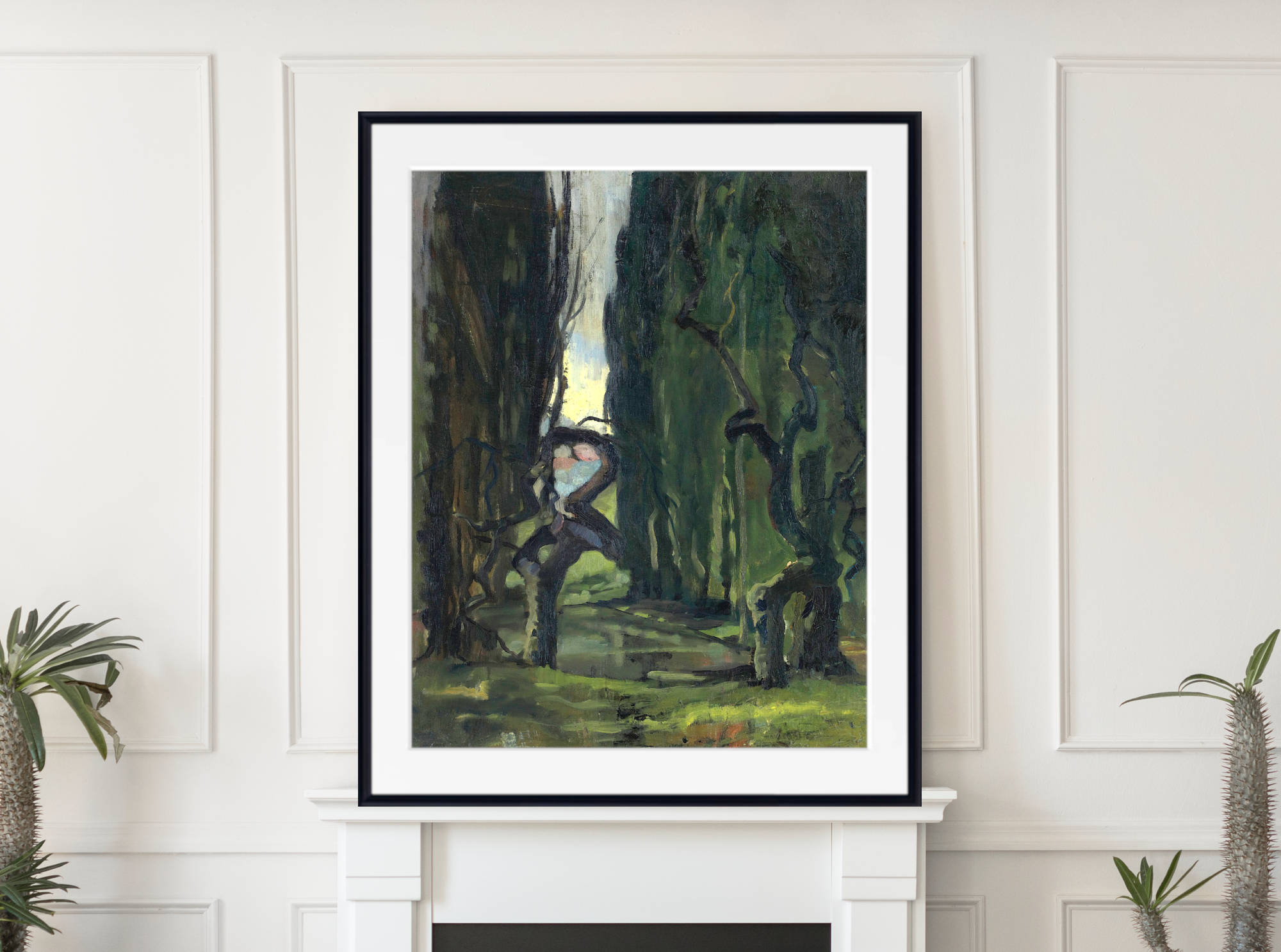
Fine art papers are printed without any additional white border Please let us know at the time of ordering if you would like a small additional white border.
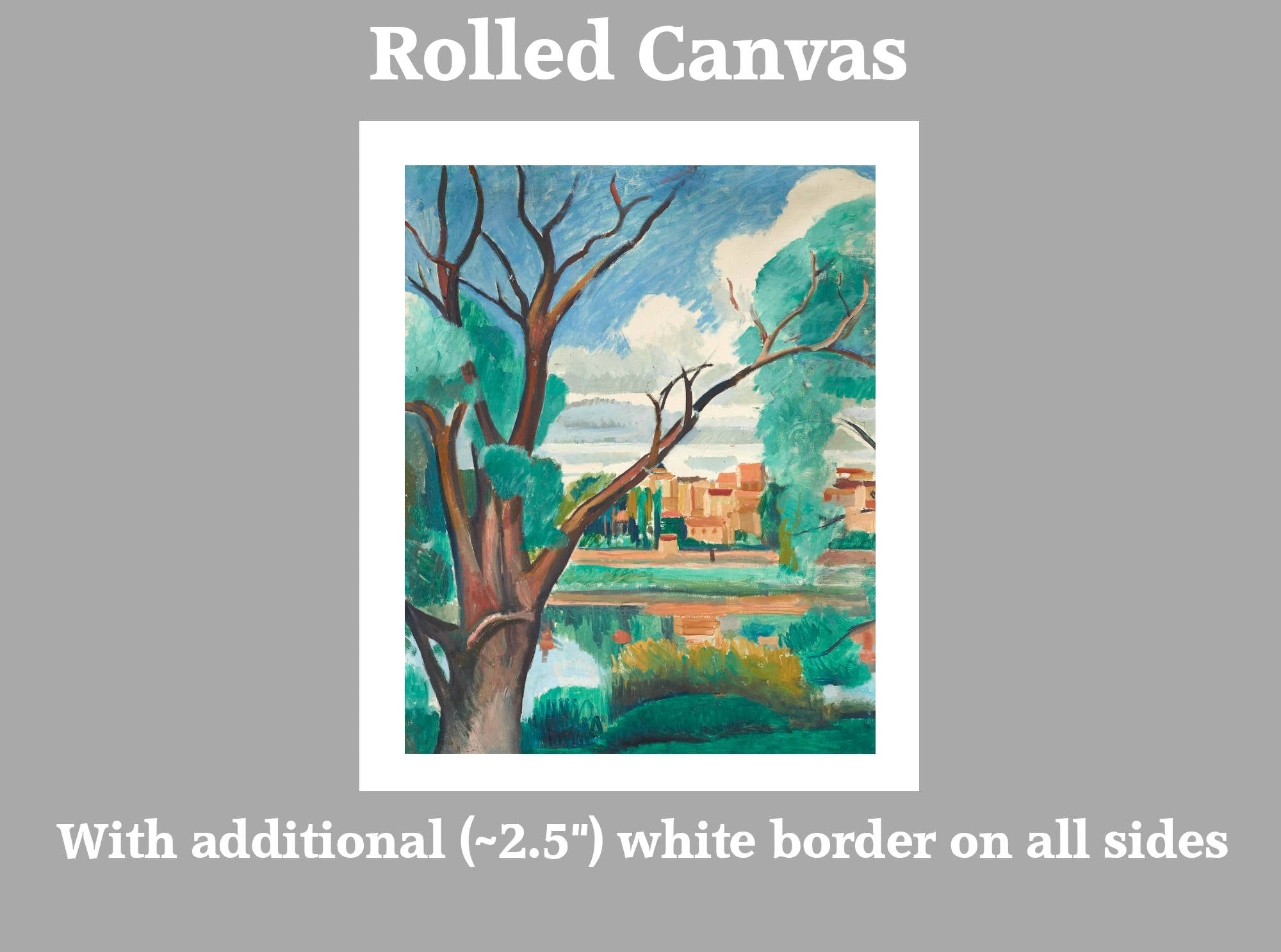
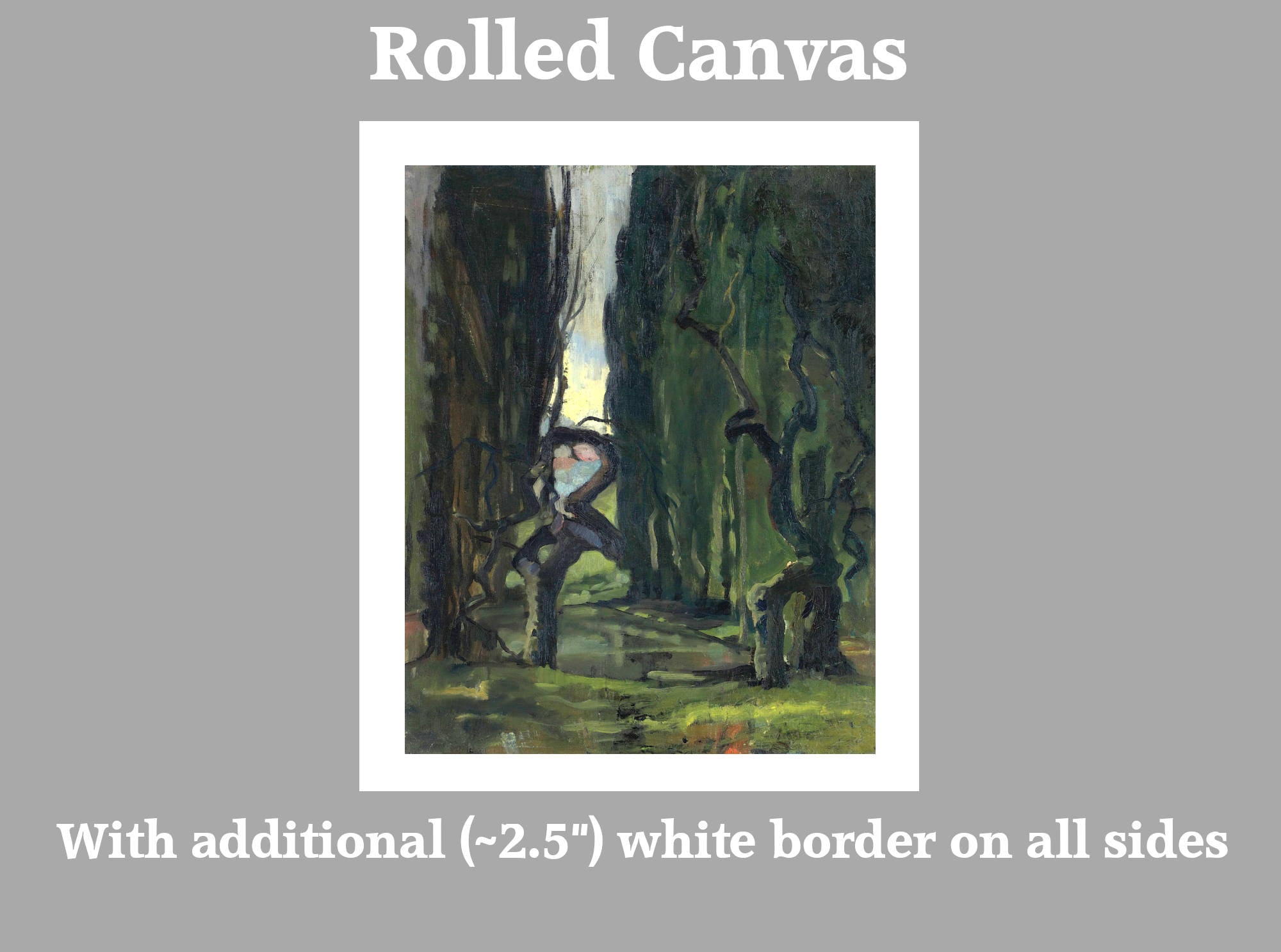
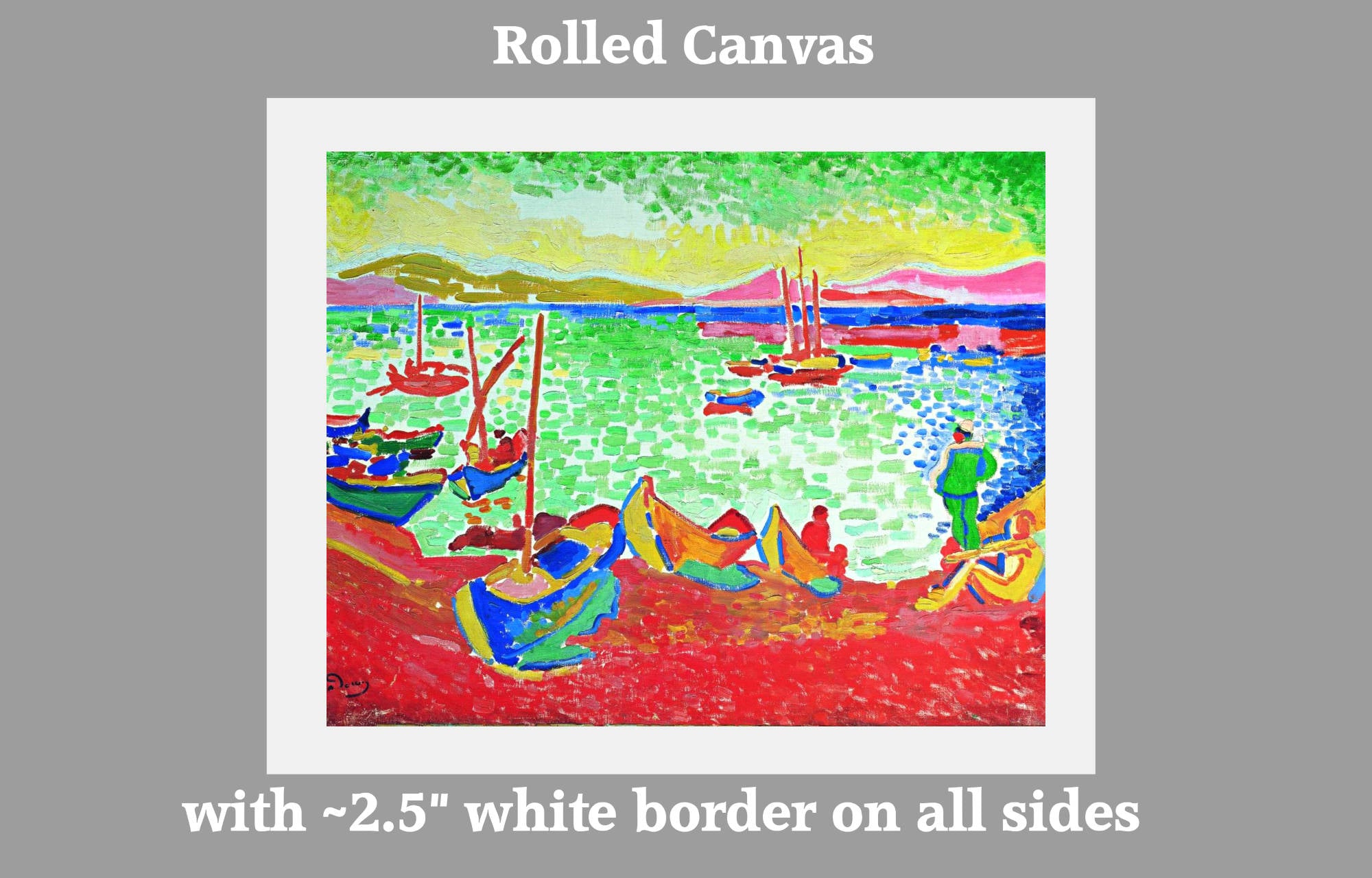
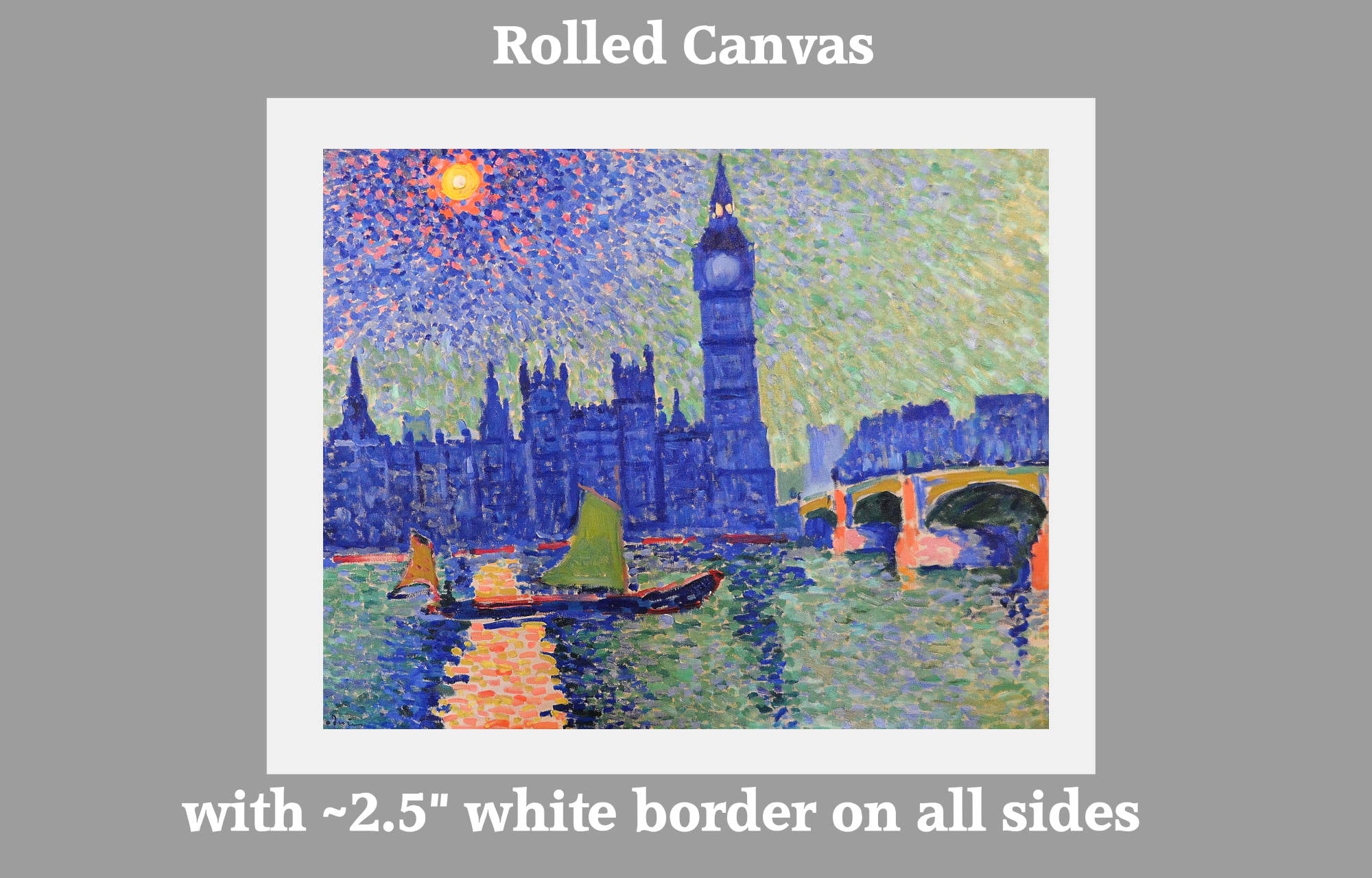
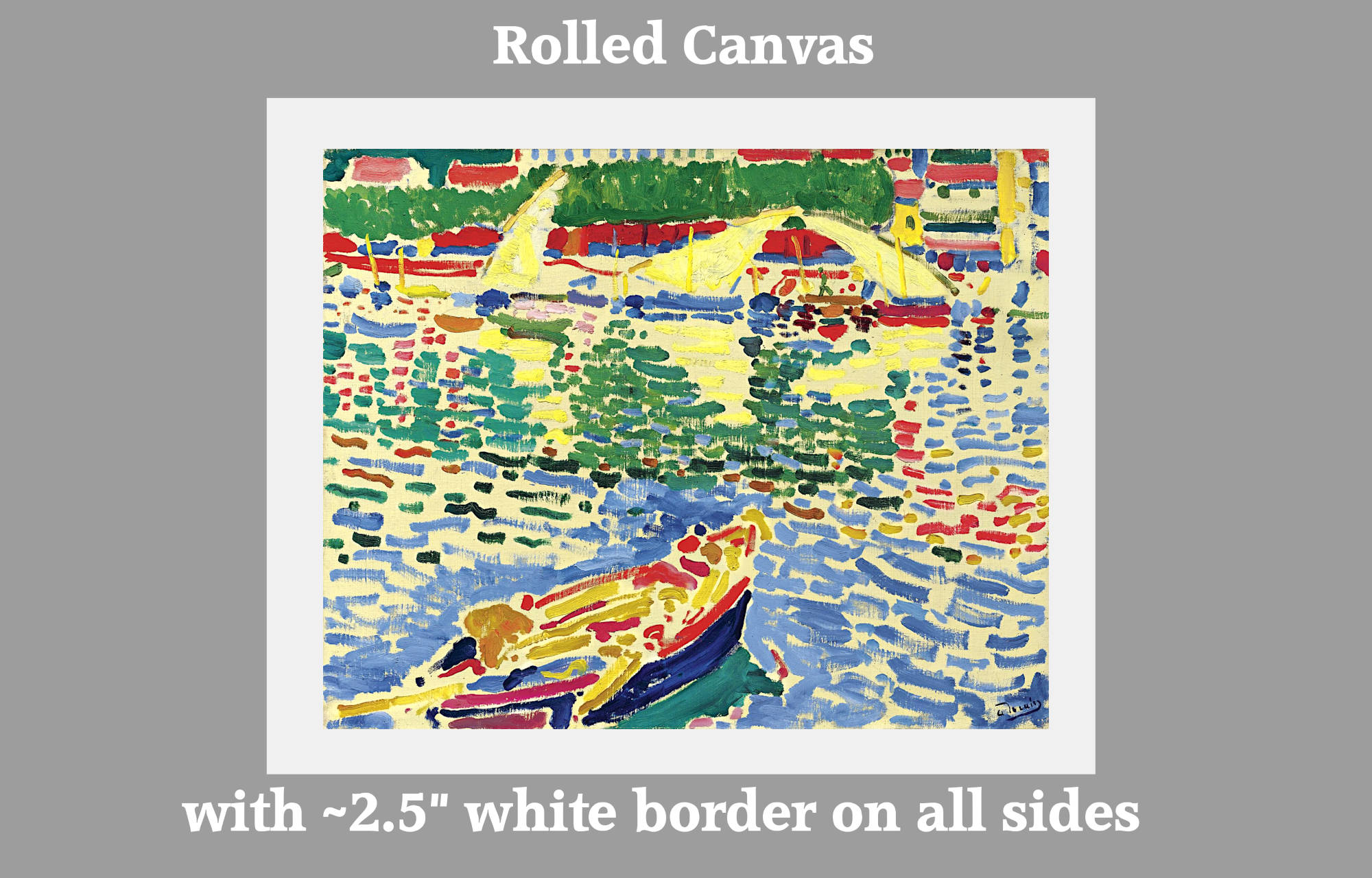
Rolled canvas options have an additional white border of approximately 2.5 inches (7cm) on all 4 sides to aid stretching.
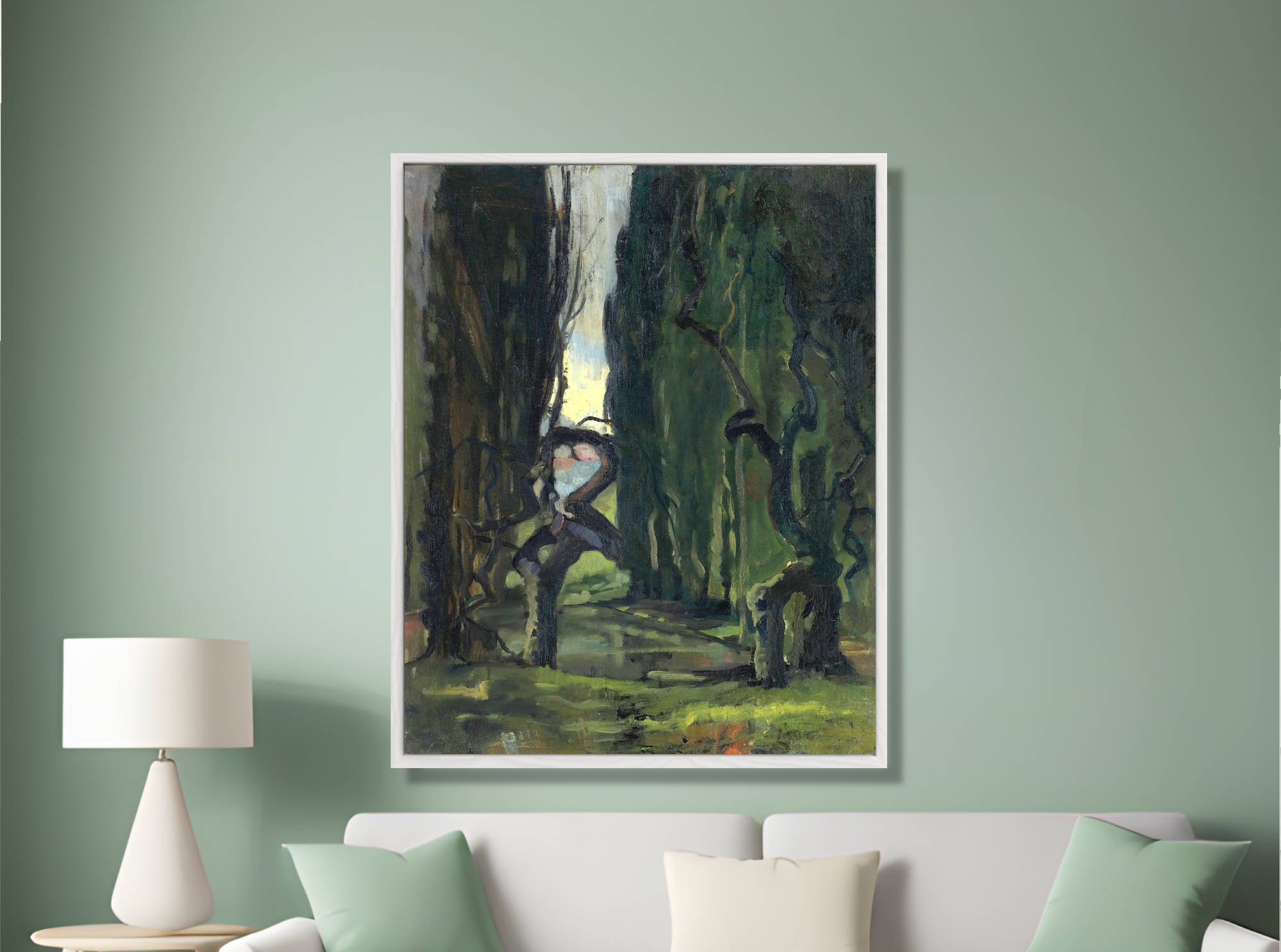
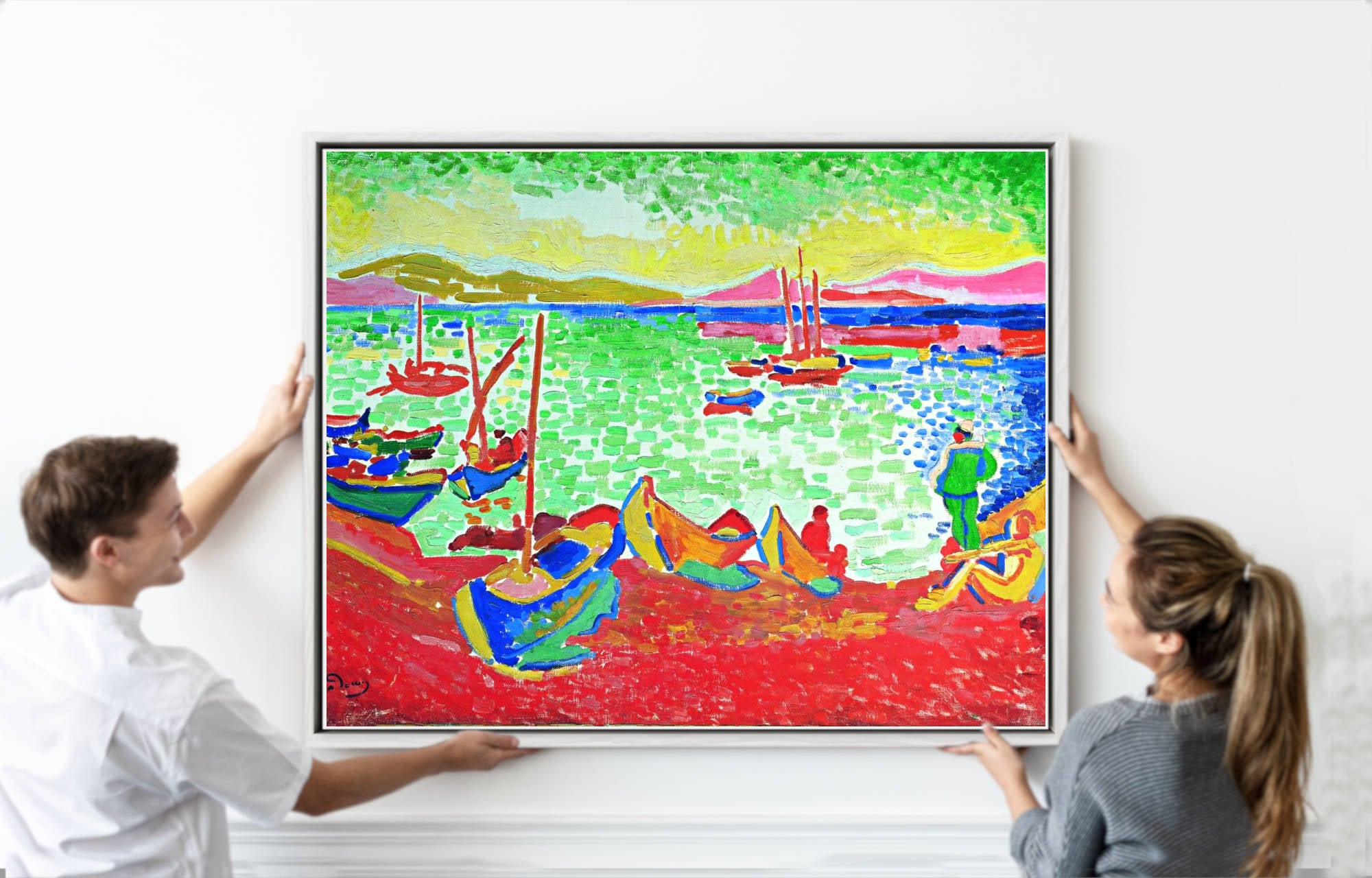
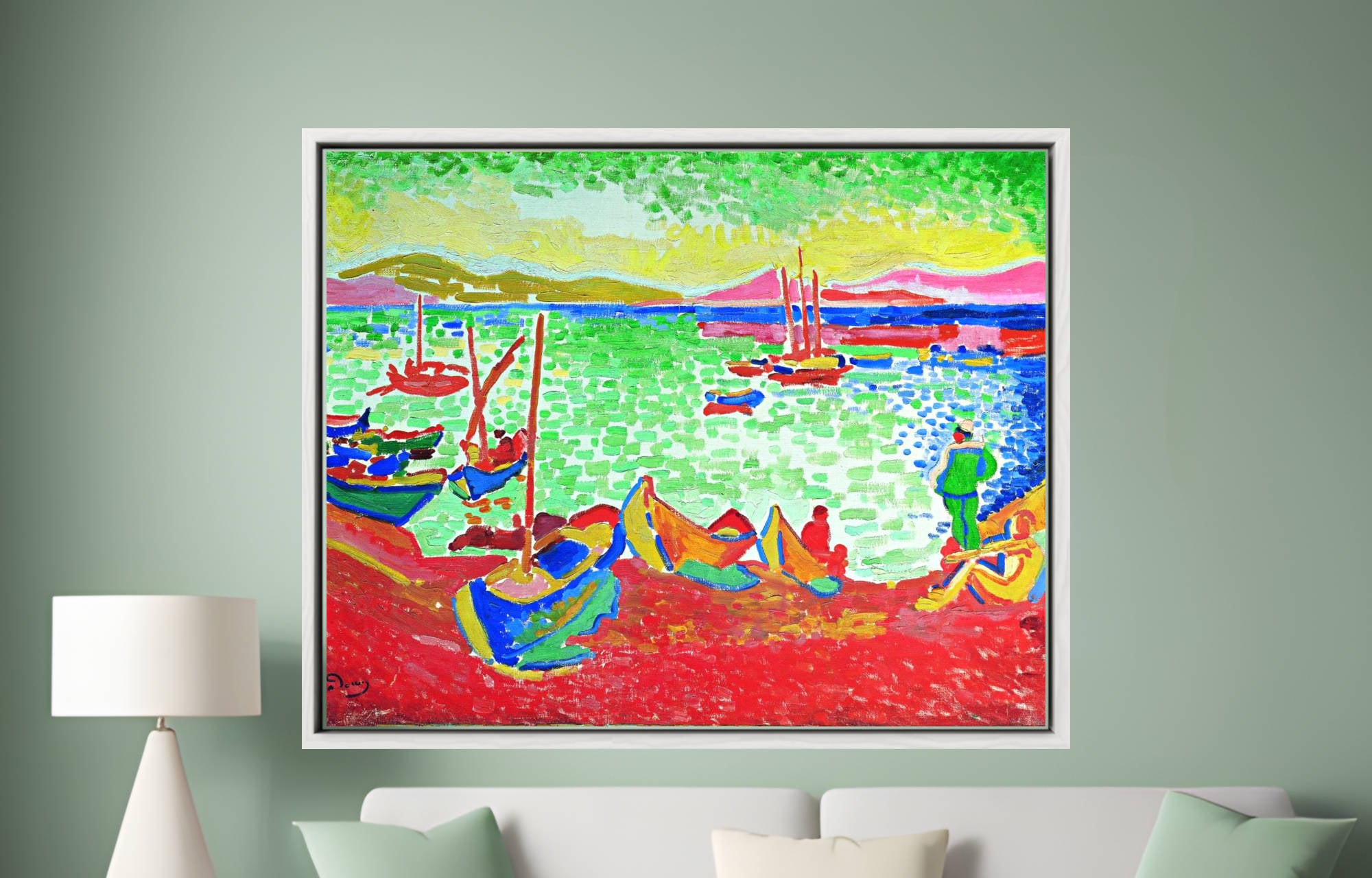
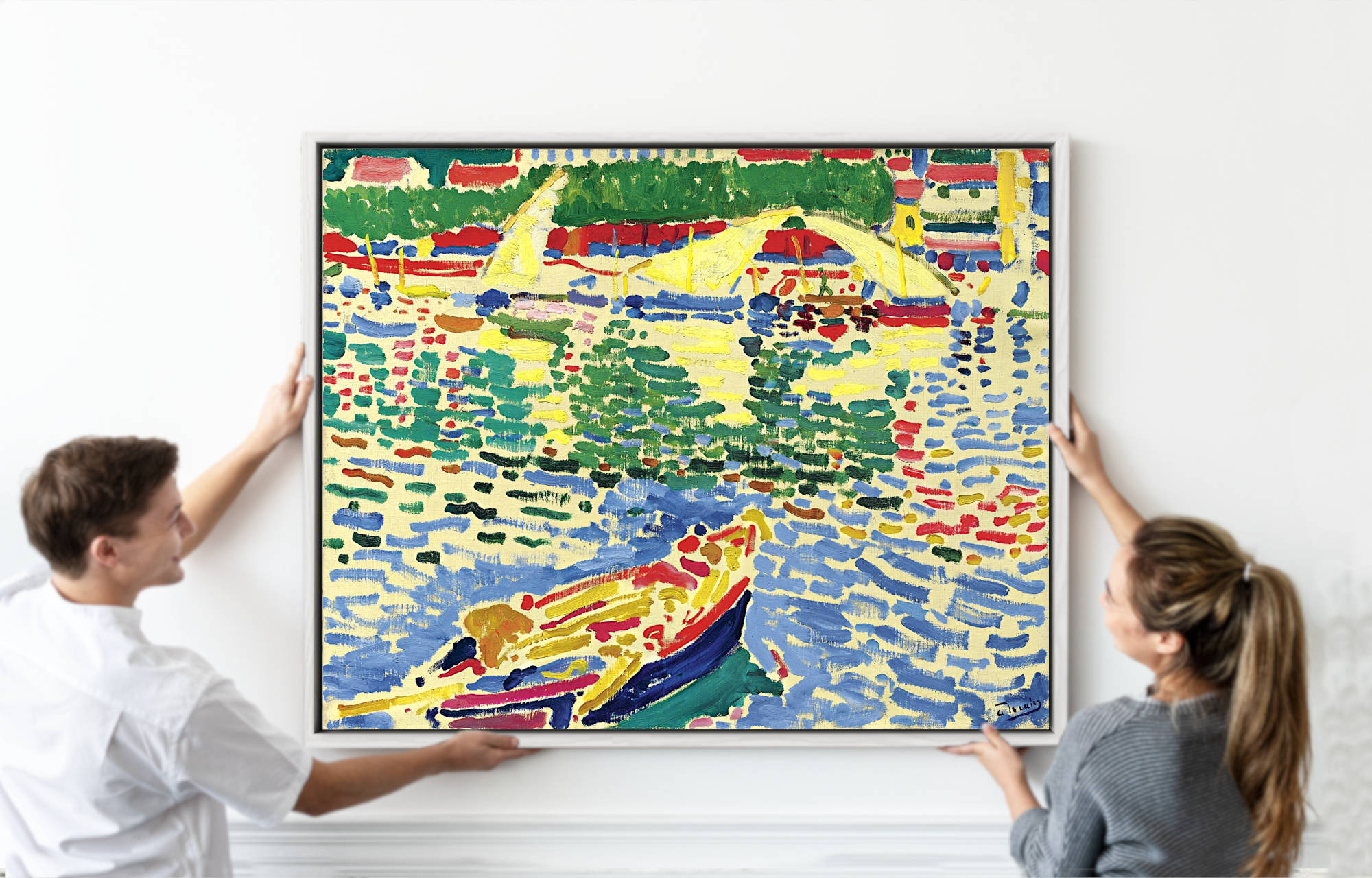
Ready to hang canvas panels are stretched on 1.5 inch deep solid pine frames from sustainable forestry sources. The image is mirrored on all 4 sides to give an aesthetically pleasing finish.
Why not have us gift wrap your order and attach a personalised message to the recipient. Available for all orders. Each order is hand wrapped in high quality gift wrap with meatllic ribbon and bow. Your personalised message is printed on a card which is included with your order.
Have your hand wrapped gift delivered directly to the recipient.
Full tracking and insurance included with every order.
Please note design may vary depending upon availability
Just purchase the gift wrap option HERE
We have a wide range of frames in standard sizes and we also make custom size frames.
To order a framed print:
1. select the print size you would like along with the print materials (matte paper, fine art paper).
2. Add your print choice to the basket.
3. Choose from our range of frames
4. Select the same size as the print you have added to your basket. If the frame size you want is not listed please contact us
5. Choose from the mount or no-mount option
6. Add your frame choice to the basket
7. Proceed to checkout.
Why Choose GalleryThane?
- Printed and framed in-house
- Free UK delivery
- Free EU and USA delivery on orders over £200
- Tracking and insurance included in every order
- Fast 1-3 day dispatch
- Gift wrapping service available
- Gallery quality materials
- Sustainable, eco-friendly packaging
- Great customer support
Explore related collections

What makes our Prints and Canvas Panels so special

Latest Giclee Printing Technology
We have invested in the latest wide format print technology to produce museum quality giclee prints utilising the highest quality pigment inks to give outstanding colour reproduction.

Museum Quality Archival Fine Art Papers
We print on the finest quality fine art papers with textured, smooth and lustre finishes for prints which last a lifetime.
From aceo miniatures to 40x80 inch large format, every print has our lifetime quality guaranteee.

Solid Wood Frames, Cotton Canvas
All of the wood for our canvas panels and frames is responsibly sourced from manages forests. Our cotton canvas is completely seedless for the highest quality reproduction possible.

Have Your Gift Wrapped


Choose a Custom Frame
Popular Collections


EU Representative
Manufacturer
LucasAbstract t/a GalleryThane
15 Campion Way, Bingham NG13 8TR UK
sales@gallerythane.com
EU Authorised Representative
Westwood Sourcing
Fellenoordstraat 52, Unit 2.38
4811 TJ Breda, Netherlands
info@westwoodsourcing.com