




Bathers by Andre Derain
Couldn't load pickup availability
BUY WITH CONFIDENCE
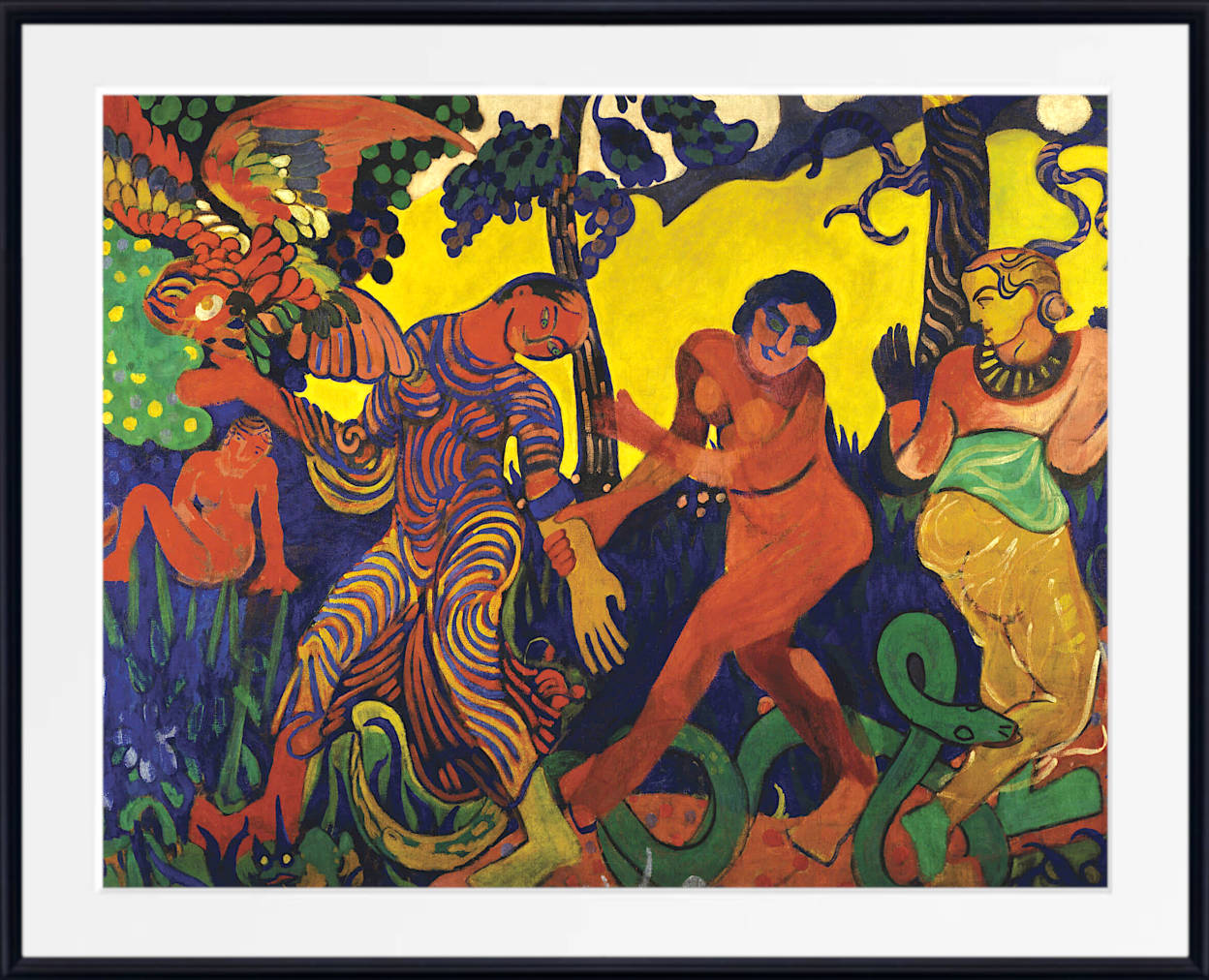
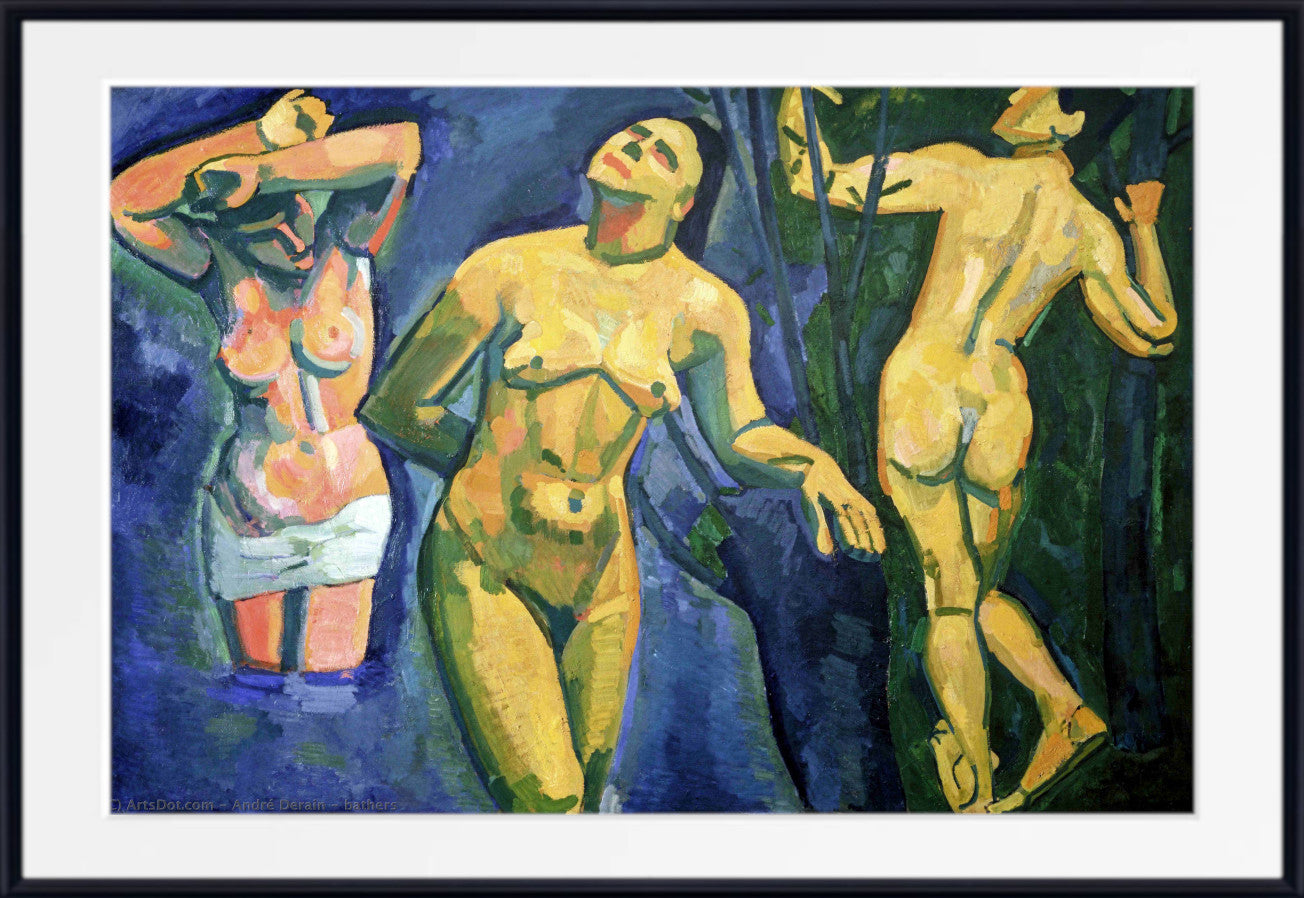
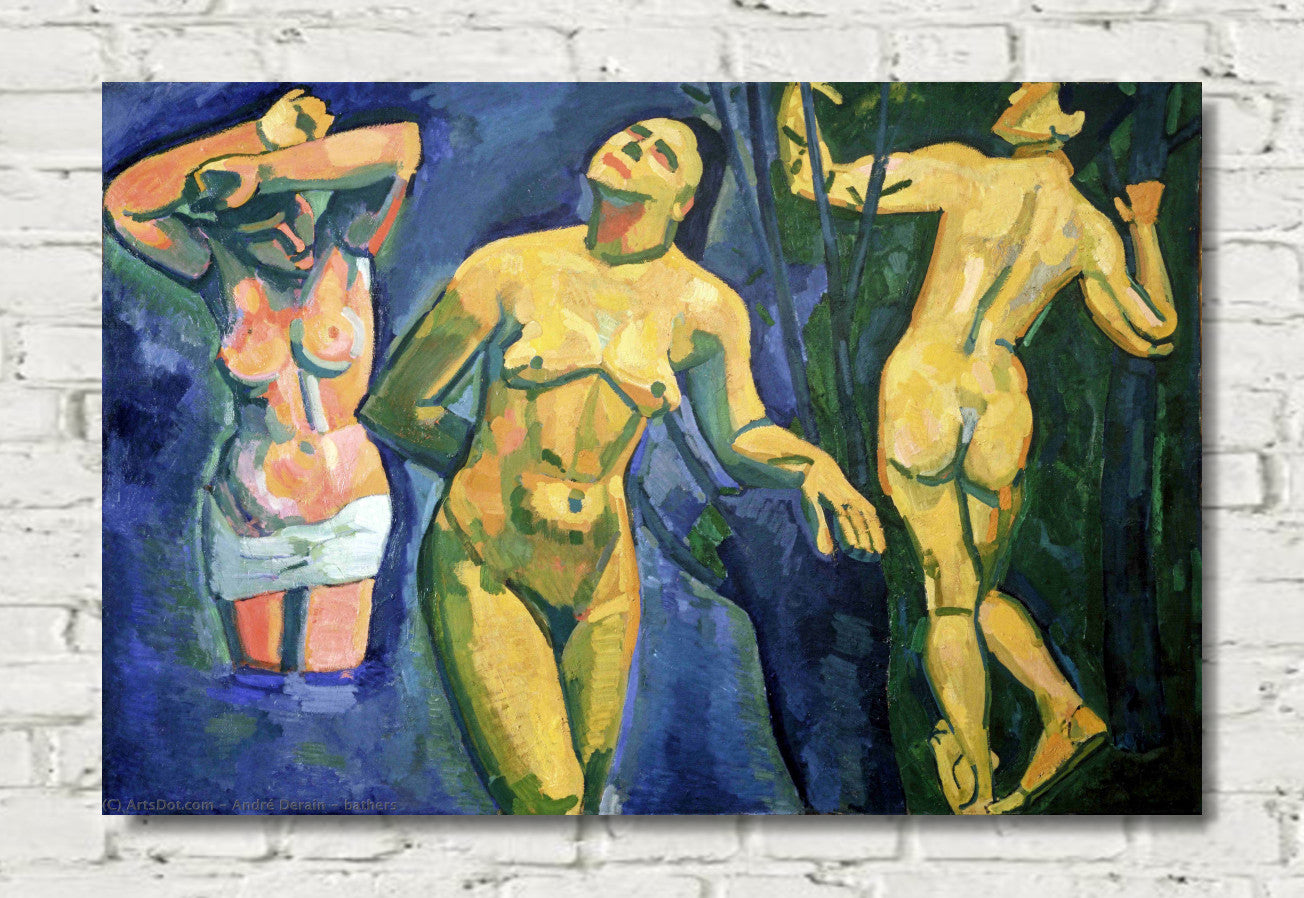
Bathers (1907) by André Derain is a monumental figure painting created at a crucial turning point in the artist's career. Three nude women occupy an intensely coloured landscape of deep blues and greens, their bodies constructed from broad areas of orange, yellow, pink and earthy colour. The composition retains the expressive freedom of Fauvism while introducing heavier, more sculptural forms that point towards the new directions Derain and other avant-garde artists were beginning to explore.
This André Derain Bathers print brings together several of the most important currents in early twentieth-century modern art: brilliant Fauvist colour, the enduring influence of Paul Cézanne, simplified treatment of the human body and Derain's growing interest in African sculpture. Available as a fine art print, framed print or canvas panel, Bathers is an exceptional choice for admirers of Fauvism, modern figurative art and colourful twentieth-century painting.
Bathers – A Monumental Modern Figure Painting
Derain's Bathers is considerably larger than many of the landscapes associated with his Fauvist period.
The original canvas measures approximately 132.1 × 195 cm, giving the three figures an imposing physical presence.
Instead of treating them as small figures within a conventional landscape, Derain allows their bodies to dominate the composition.
One woman raises her arms behind her head. The central figure faces towards the viewer, while the third turns away. Their different poses create a strong visual rhythm from left to right.
The surrounding landscape has been simplified into broad zones of deep blue and green rather than described through realistic trees, water, grass or distant scenery.
Everything has been reduced to the interaction of figure, colour and shape.
The result is simultaneously ancient and modern: an age-old subject reconstructed through the radical visual language of the early twentieth century.
The Classical Tradition of the Bathers
The subject of bathers had a long history in European art before Derain approached it.
For centuries, artists used bathing figures as a way to represent the nude body within landscapes and mythological scenes.
Renaissance and later academic painters frequently associated bathers with classical mythology, nymphs, goddesses and idealised Arcadian settings.
By the nineteenth century, however, artists increasingly began stripping away those elaborate narratives.
The human figure and landscape themselves became the principal subject.
Paul Cézanne took this transformation particularly far in his repeated paintings and drawings of groups of bathers.
Derain's 1907 composition belongs to this modern rethinking of a traditional theme.
There is no detailed narrative explaining who the women are or what specific event is taking place. They exist primarily as bodies placed within a constructed natural environment.
The emphasis falls on form, colour and the relationship between the figures.
Three Bathers in a Landscape
The three women are arranged across the canvas in distinctly different poses.
The figure at the left raises both arms towards her head, creating a tall, almost column-like form.
The central bather turns more directly towards the viewer. Her arms and torso create a broad frontal presence at the centre of the composition.
The third figure turns away, introducing an opposing direction and preventing the group from appearing static.
These varied poses establish a rhythmic movement across the painting.
Rather than concentrating on anatomical precision, Derain simplifies the women's bodies into large connected shapes.
Limbs become elongated coloured forms. Curves are exaggerated. Faces are reduced to a small number of essential features.
This simplification allows the figures to function both as human bodies and as structural components within the painting.
Colour in Derain's Bathers
Although Bathers marks a transition away from the most brilliant phase of Fauvism, colour remains fundamental to its impact.
The landscape is dominated by powerful blue and green passages, against which the warmer bodies immediately stand forward.
The women are constructed from orange-browns, yellows, pinks and other warm colours rather than delicately modelled naturalistic flesh tones.
This opposition between warm figures and cool surroundings generates much of the composition's visual strength.
Derain had learned during his Fauvist years that colour could perform structural work.
A figure did not need conventional modelling if the surrounding colours established its position effectively.
Orange against blue could create separation. Yellow beside green could establish light. A darker outline could give a body weight without elaborate shading.
These principles remain strongly evident in Bathers.
A Late Fauvist Painting in Transition
Bathers occupies an especially interesting position within Derain's development because it was painted in 1907.
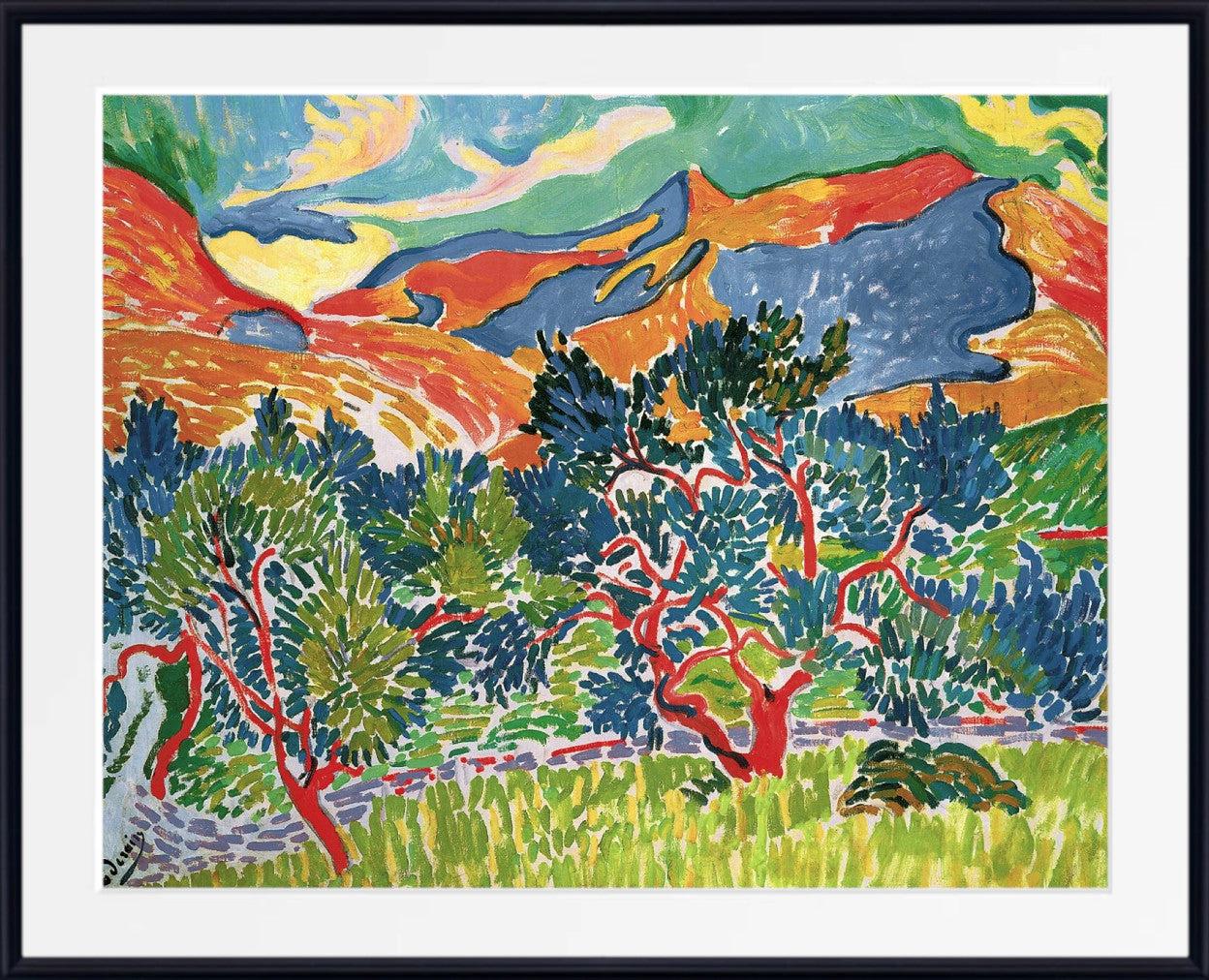
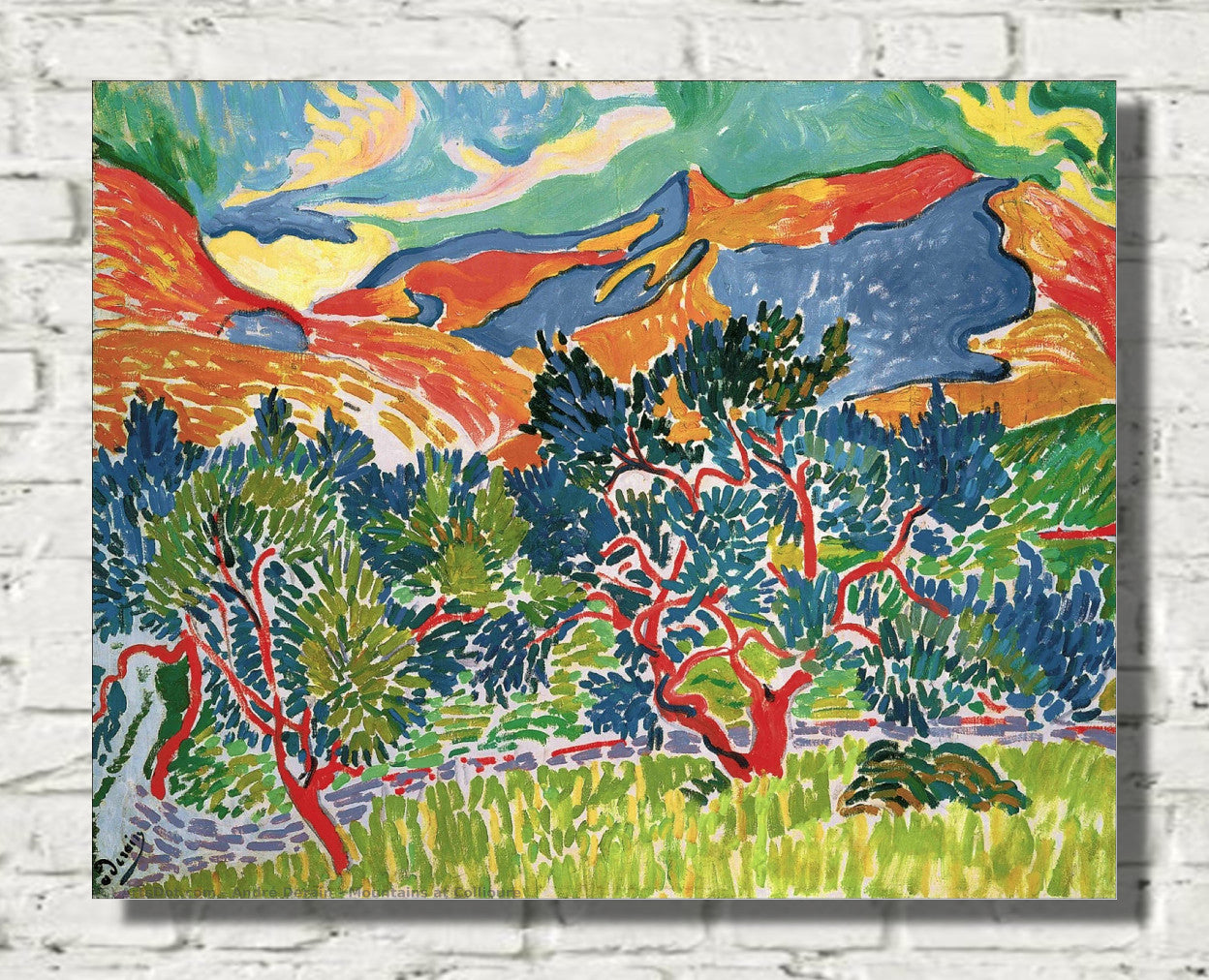
The explosive Fauvist breakthrough had taken place only two years earlier when Derain and Henri Matisse worked together at Collioure during the summer of 1905.
At Collioure, Derain produced landscapes in which mountains could become orange, trees red and shadows blue or violet.
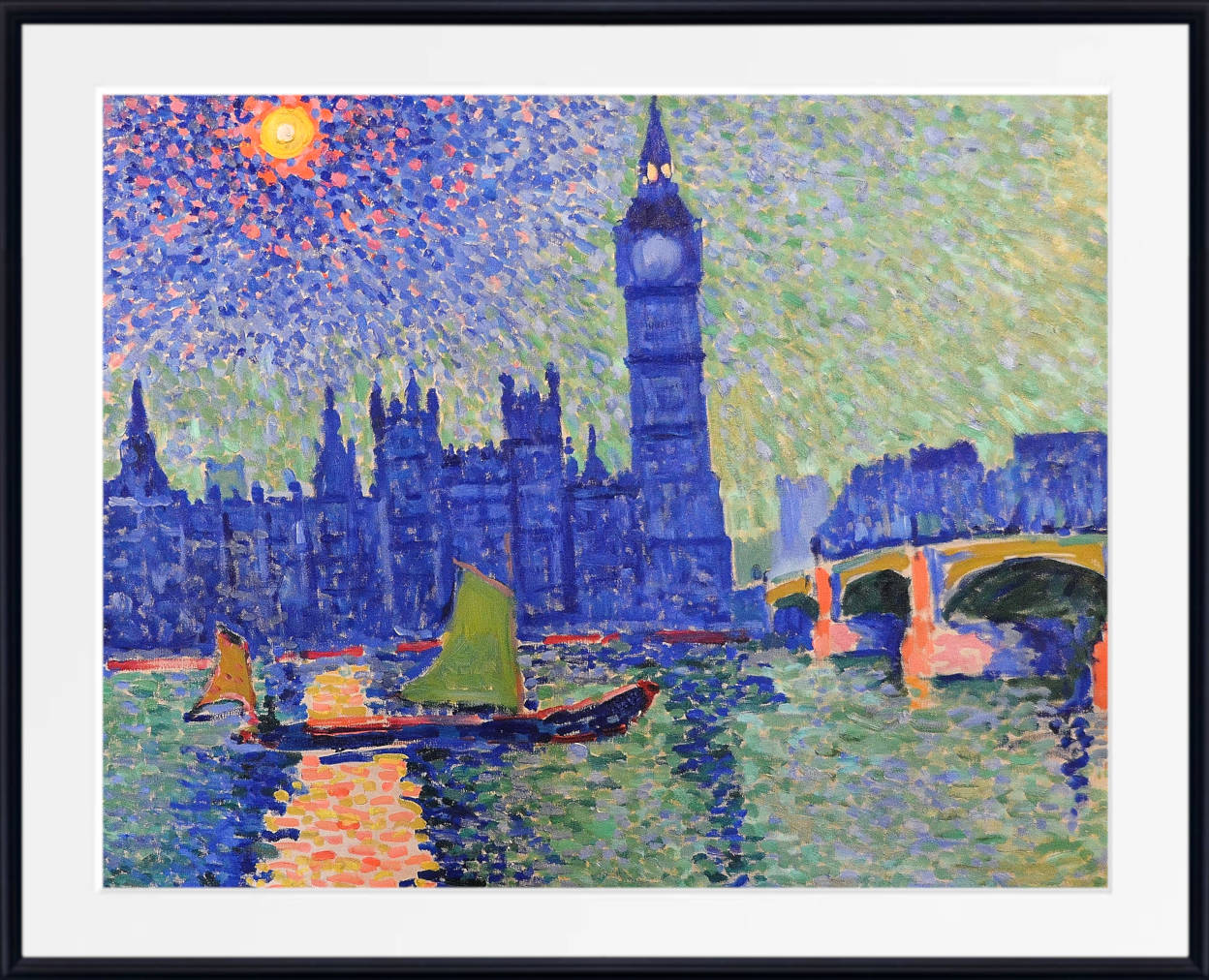
During 1906 he carried the same freedom into landscapes at L'Estaque and his celebrated paintings of London.
By 1907, however, Derain was beginning to search for greater solidity and structure.
Bathers preserves the strong colour contrasts of Fauvism, but the figures possess greater physical weight than those in many of his earlier works.
Their bodies are constructed in large, simplified masses rather than dissolving into networks of rapid brushstrokes.
The painting should therefore be understood not simply as another Fauvist work but as an important transitional picture in which Derain was beginning to move beyond Fauvism.
Paul Cézanne and the Bathers Tradition
Paul Cézanne was one of the most important influences on Derain during this period.
Cézanne repeatedly returned to groups of bathers throughout his career, gradually transforming the traditional nude into a problem of geometry, structure and pictorial organisation.
His figures often appear inseparable from the landscape surrounding them. Bodies, trees and ground participate in the same underlying compositional structure.
Derain's Bathers engages with this approach.
The women do not appear as delicately modelled figures placed against a separate background. Their bodies possess the same broad simplification as the landscape itself.
The curves of limbs interact with the surrounding shapes, while blocks of colour unite figure and environment.
This growing interest in Cézanne was part of a wider change within the Parisian avant-garde around 1907.
Artists were beginning to reconsider the relationship between intense colour and underlying structure, helping to create some of the conditions from which Cubism would soon emerge.
From Fauvist Colour to Sculptural Form
One of the most significant developments in Bathers is the increased sense of physical volume.
Derain's earlier Fauvist landscapes often emphasise the flat surface of the canvas. Areas of brilliant colour sit beside one another with comparatively little conventional modelling.
Here, however, the bodies feel heavier.
The limbs are broad. Torsos are simplified into substantial masses. Dark outlines separate some areas and strengthen the sense that the figures possess physical weight.
The painting therefore contains a deliberate tension.
Colour remains bold and largely independent of nature, yet form is becoming increasingly solid.
This combination makes Bathers one of the most revealing paintings of Derain's transition away from pure Fauvism.
African Sculpture and the Central Figure
Derain's growing interest in African sculpture also influenced the way he approached the human figure.
During the first decade of the twentieth century, African sculptures were becoming increasingly visible to avant-garde artists in Paris. Derain himself owned African works and was among the artists who recognised their powerful formal qualities.
The treatment of the central woman's face in Bathers is particularly significant.
Rather than modelling the head according to conventional European portraiture, Derain reduces it to strongly simplified, mask-like forms.
MoMA scholarship has connected this treatment with African sculpture known to Derain, including a mask he had acquired from Maurice de Vlaminck.
For Derain, these works offered alternatives to the naturalistic conventions that had dominated European academic art.
The influence did not result in direct imitation. Instead, it encouraged further simplification and an emphasis on the structural power of the human head and body.
Derain, Matisse and Picasso in 1907
The year 1907 was one of extraordinary experimentation in Paris.
Derain remained closely connected with artists who were questioning the conventions of Western representation.
Henri Matisse was simultaneously developing increasingly monumental treatments of the human figure, while Pablo Picasso was working towards the radical pictorial language represented by Les Demoiselles d'Avignon.
All three artists were responding, in different ways, to sources that included Cézanne and non-European sculpture.
They were also searching for alternatives to the increasingly familiar achievements of Impressionism.
Bathers belongs directly to this atmosphere.
Its strong colour connects Derain with Fauvism, while its simplified, weighty figures anticipate the growing concern with structure that would dominate the next phase of Parisian modernism.
Bathers and Derain's Earlier Dance Paintings
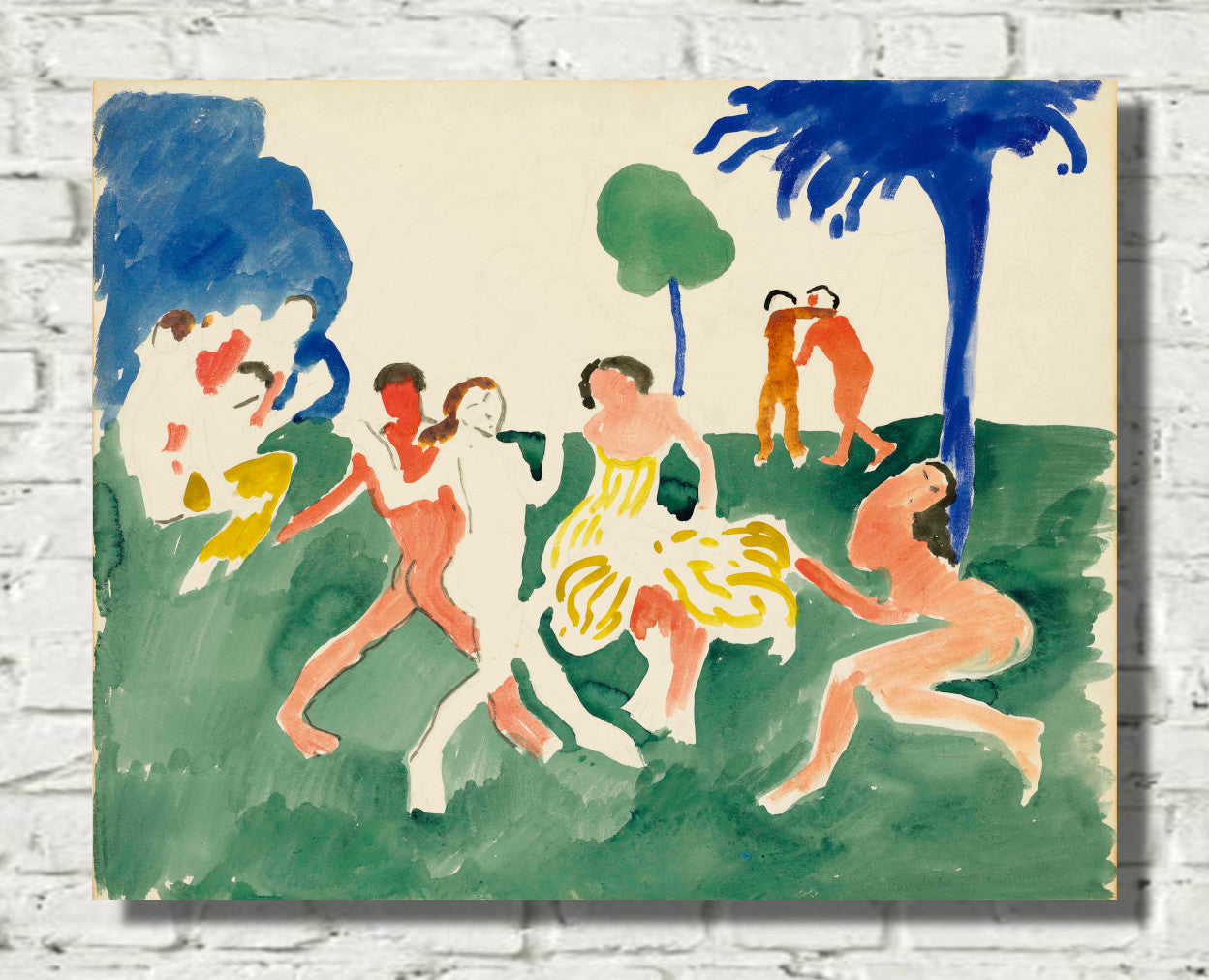
The painting also develops ideas Derain had explored in compositions devoted to dance.
During 1905 and 1906 he produced works in which simplified figures move rhythmically through imaginary landscapes.
These paintings allowed him to investigate the human body not primarily as an individual portrait but as a vehicle for movement and pictorial rhythm.
The three figures in Bathers continue this concern.
The left-hand figure's raised arms, the broad gesture of the central woman and the turning pose of the figure at the right establish a sequence across the canvas.
Each body has an individual position, but together they create a unified rhythmic group.
Derain therefore combines the long-established tradition of the bathing nude with ideas about movement that had occupied him in the immediately preceding years.
The Landscape in Bathers
The natural setting is deliberately difficult to identify precisely.
Derain provides enough information for the viewer to understand that the figures inhabit an outdoor landscape, but he suppresses unnecessary detail.
Large blue and green areas establish the environment.
Rather than depicting individual leaves, branches, stones or reflections, Derain treats landscape as a collection of broad visual zones.
This allows the bodies to interact directly with their surroundings.
The greens within the landscape can echo or contrast with colours used around the figures. Dark blue areas provide depth, while lighter passages allow parts of the bodies to stand forward.
The environment is therefore constructed according to the needs of the figures rather than through literal observation of a particular location.
First Exhibited in 1907
Bathers was first exhibited at the Salon des Indépendants in Paris in the spring of 1907.
Its scale, simplified figures and unconventional colours made it an ambitious statement from an artist already recognised as one of the leaders of the avant-garde.
The work appeared only a short time after Fauvism had shocked Parisian audiences with its intense colour.
Yet the painting demonstrated that Derain was already moving again.
Rather than repeating the landscapes that had established his reputation, he used the monumental nude to investigate a new relationship between colour and form.
This willingness to change direction so quickly was characteristic of the extraordinary pace of artistic experimentation in Paris during these years.
Why Bathers Is Important
Bathers combines several characteristics that make it especially important within Derain's career:
- monumental scale
- three strongly simplified female figures
- powerful contrasts between warm bodies and cool landscape colours
- continued use of liberated Fauvist colour
- increasing emphasis on solid, sculptural form
- engagement with Cézanne's tradition of bathers
- evidence of Derain's interest in African sculpture
- a clear transition between Fauvism and the structural experiments of the later 1900s
It is therefore more than simply an example of Fauvist figurative painting.
The work captures Derain at the point when one radical artistic experiment was beginning to give way to another.
Is Bathers Really a Fauvist Painting?
Bathers is commonly associated with Fauvism, and understandably so.
Derain was one of the movement's central figures, and the painting retains the intense colour contrasts and freedom from naturalistic colour that he developed during his Fauvist period.
However, describing it only as Fauvist misses part of its significance.
By 1907, Derain was already moving towards a heavier and more structural treatment of form.
The painting therefore stands at the late Fauvist and transitional edge of the movement.
This makes it particularly valuable within a collection of Fauvist prints because it shows what happened when one of Fauvism's founders began asking what should come next.
André Derain's Changing Painting Style
André Derain's career developed rapidly during the first decade of the twentieth century.
His friendship with Maurice de Vlaminck around Chatou encouraged early experiments with forceful colour and expressive brushwork.
Working with Henri Matisse at Collioure in 1905 pushed those experiments into the radical colour language now associated with Fauvism.
Derain subsequently produced important Fauvist landscapes at L'Estaque and an extraordinary series of London views.
By 1907, his priorities were changing.
Cézanne's emphasis on structure, Derain's interest in sculpture and his engagement with earlier artistic traditions encouraged him to give forms greater solidity.
Over the following years his colours became more subdued and his compositions increasingly structured.
Bathers sits precisely at this crossroads.
About André Derain
André Derain (1880–1954) was a French painter, sculptor, printmaker and designer and one of the principal figures in the development of Fauvism.
Born in Chatou near Paris, Derain initially studied engineering while pursuing artistic training.
His friendship with Maurice de Vlaminck encouraged increasingly bold experiments with colour, and his collaboration with Henri Matisse during the summer of 1905 placed him at the centre of the Fauvist breakthrough.
Derain's paintings from Collioure, L'Estaque and London rank among the most important works of early twentieth-century colour painting.
Unlike Matisse, however, Derain did not continue developing the Fauvist language for long.
His interest shifted increasingly towards Cézanne, structural composition, sculpture and earlier European artistic traditions.
This restless willingness to change direction makes his work particularly important for understanding the rapid development of modern art during the years immediately before Cubism.
The Original Bathers
The original Bathers was painted by André Derain in 1907.
It is an oil painting on canvas measuring approximately 132.1 × 195 cm.
The painting depicts three female bathers within a heavily simplified blue-green landscape. The warm orange, yellow and pink tones of their bodies contrast strongly with the cooler colours surrounding them.
The work was first exhibited at the Salon des Indépendants in Paris in the spring of 1907.
The original is now held by The Museum of Modern Art in New York.
MoMA records the painting under object number 683.1980 and credits its acquisition to the William S. Paley and Abby Aldrich Rockefeller Funds.
Its documented ownership history includes Galerie Druet in Paris and the gallery of Daniel-Henry Kahnweiler.
Kahnweiler's holdings were sequestered by the French government during the First World War, and the painting was sold as part of the fourth Kahnweiler collection sale at the Hôtel Drouot in Paris in May 1923.
Later owners included Swiss collector Josef Müller and subsequently his daughter Monique Barbier-Mueller.
The Museum of Modern Art acquired the painting in 1980 through Galerie Beyeler in Basel.
An André Derain Bathers Print for Your Interior
An André Derain Bathers print combines a major modern-art subject with powerful colour and an unusually strong horizontal composition.
The contrast between warm orange and yellow figures and the darker blue-green landscape gives the work substantial visual presence.
Against white, cream, putty and pale grey walls, these colours can become a dramatic focal point.
Its simplified forms also work particularly well with modern and design-led interiors, where the painting can be appreciated as an arrangement of colour and shape as much as a figurative scene.
Natural timber furniture can complement the earthy colours of the figures, while darker furnishings can echo the deep blues and greens in the landscape.
The wide horizontal format makes the work particularly suitable for display above sofas, sideboards, beds and long console tables.
It can work effectively in living rooms, dining rooms, bedrooms, hallways and home offices, especially in contemporary, Scandinavian-inspired, mid-century and eclectic interiors.
For collectors of Fauvist prints, Bathers offers an additional advantage: it demonstrates how Derain's revolutionary Fauvist colour developed into the more structural artistic language of the years immediately before Cubism.
All orders for unframed fine art prints and original paintings are dispatched within 2 working days of receipt of payment.
Orders for custom framed prints are dispatched within 4 working days.
All orders are fully tracked from dispatch to delivery at your home or business.
All print and original painting orders are fully insured against loss or damage in transit. We refund or replace any damaged or lost orders.
Buy with confidence - read what our satisfied customers have to say - Reviews
Fine art papers are printed without any additional white border Please let us know at the time of ordering if you would like a small additional white border.
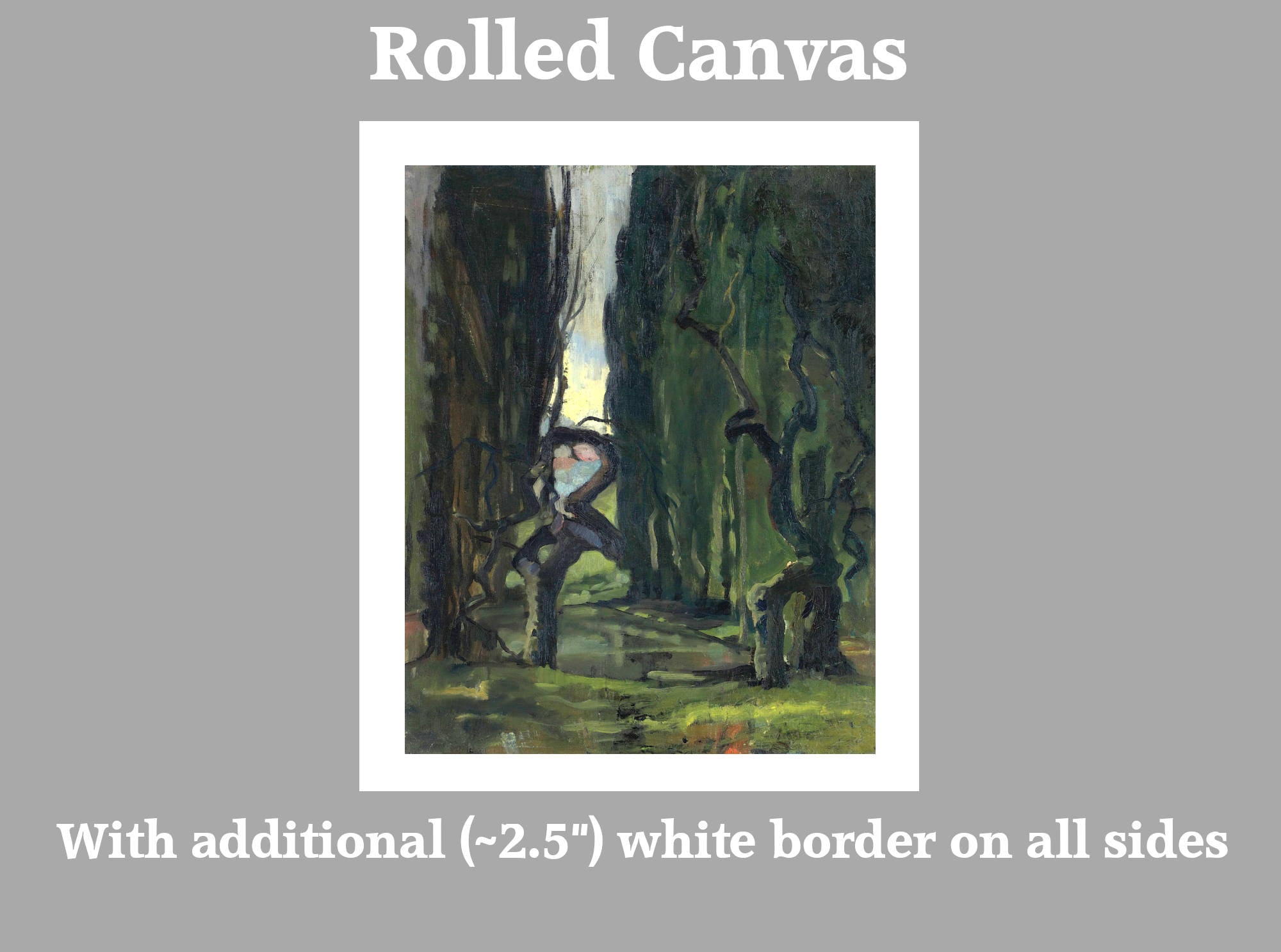
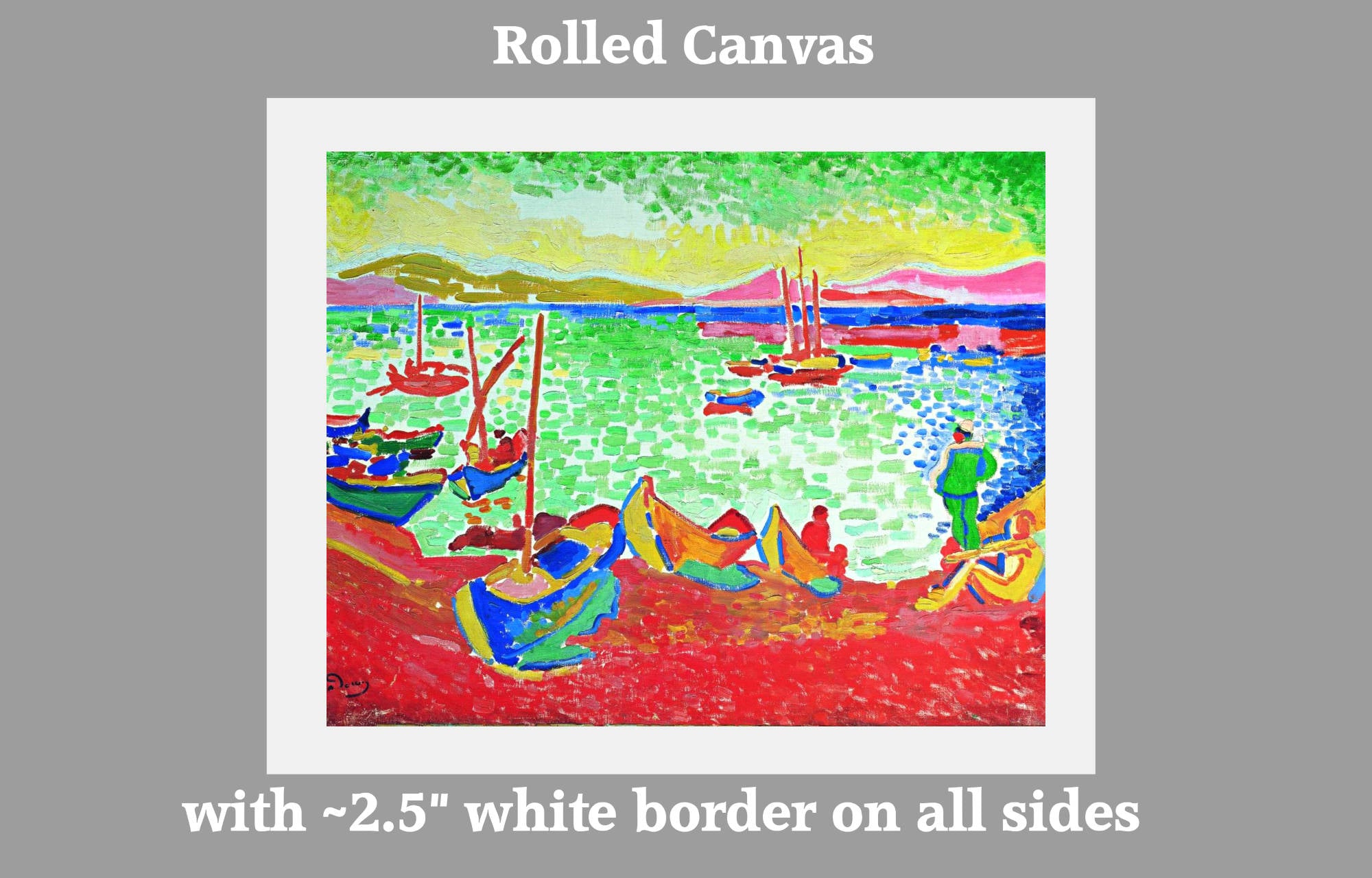
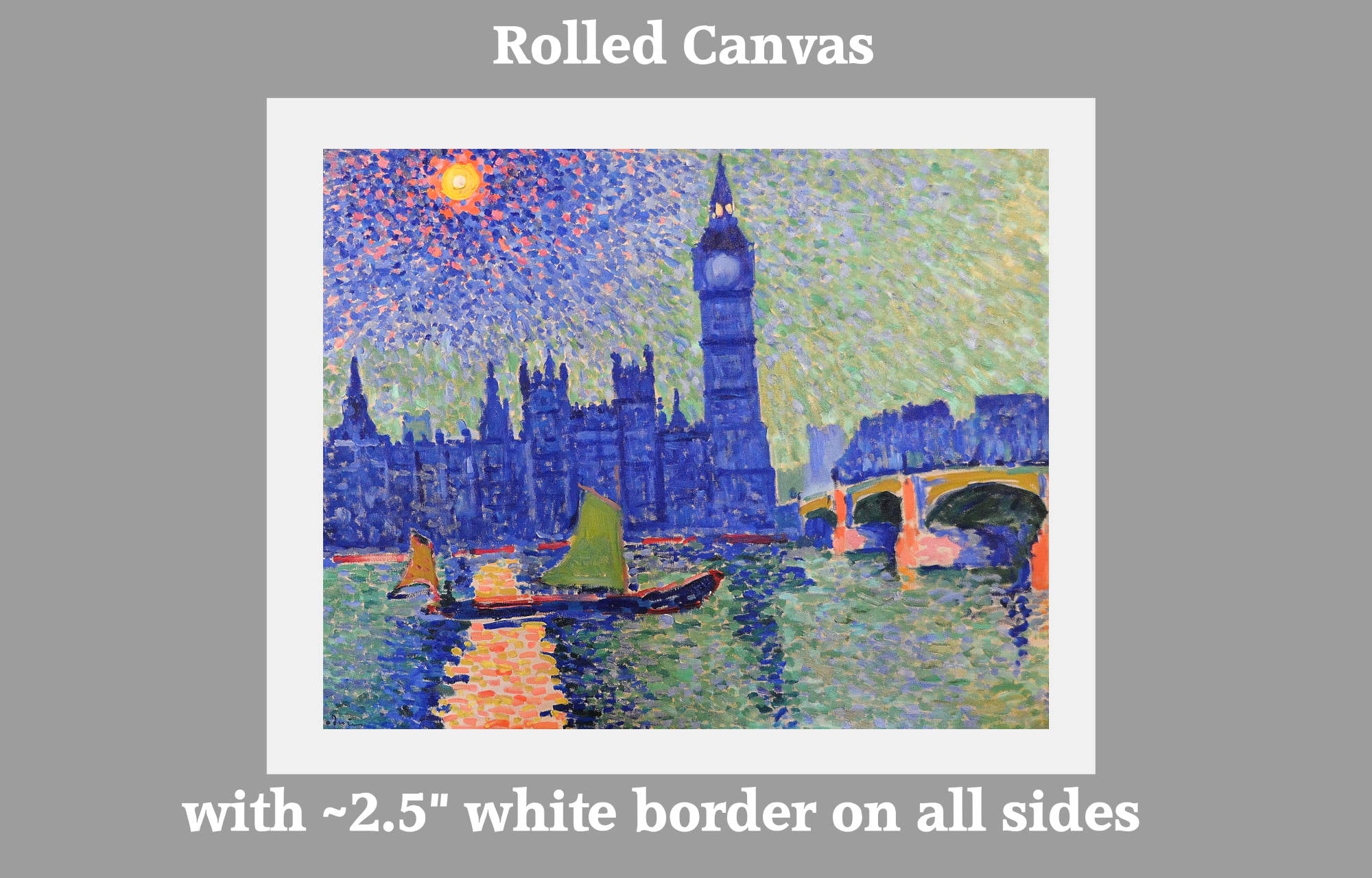
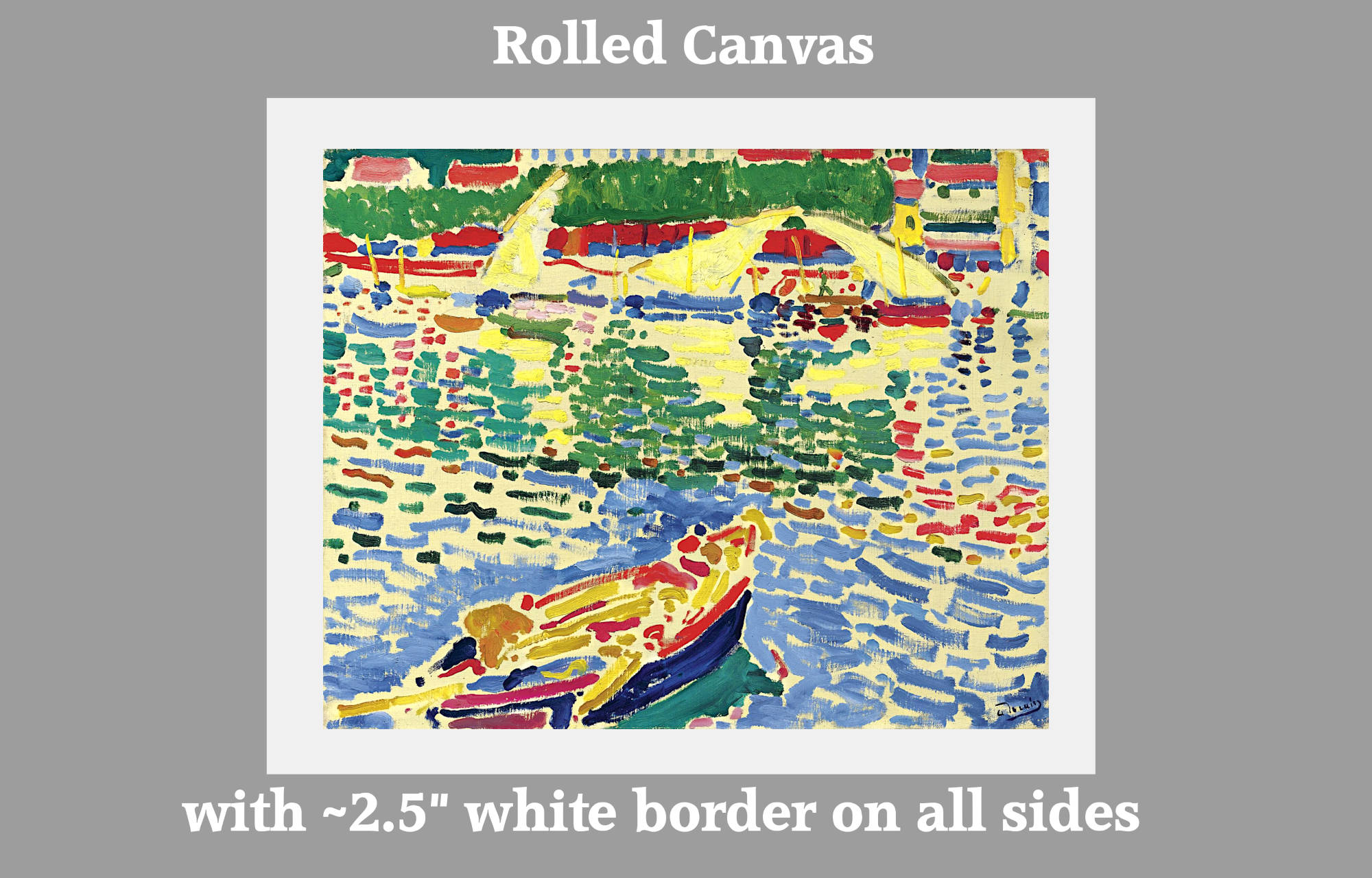
Rolled canvas options have an additional white border of approximately 2.5 inches (7cm) on all 4 sides to aid stretching.
Ready to hang canvas panels are stretched on 1.5 inch deep solid pine frames from sustainable forestry sources. The image is mirrored on all 4 sides to give an aesthetically pleasing finish.
Why not have us gift wrap your order and attach a personalised message to the recipient. Available for all orders. Each order is hand wrapped in high quality gift wrap with meatllic ribbon and bow. Your personalised message is printed on a card which is included with your order.
Have your hand wrapped gift delivered directly to the recipient.
Full tracking and insurance included with every order.
Please note design may vary depending upon availability
Just purchase the gift wrap option HERE
We have a wide range of frames in standard sizes and we also make custom size frames.
To order a framed print:
1. select the print size you would like along with the print materials (matte paper, fine art paper).
2. Add your print choice to the basket.
3. Choose from our range of frames
4. Select the same size as the print you have added to your basket. If the frame size you want is not listed please contact us
5. Choose from the mount or no-mount option
6. Add your frame choice to the basket
7. Proceed to checkout.
Why Choose GalleryThane?
- Printed and framed in-house
- Free UK delivery
- Free EU and USA delivery on orders over £200
- Tracking and insurance included in every order
- Fast 1-3 day dispatch
- Gift wrapping service available
- Gallery quality materials
- Sustainable, eco-friendly packaging
- Great customer support
Explore related collections

What makes our Prints and Canvas Panels so special

Latest Giclee Printing Technology
We have invested in the latest wide format print technology to produce museum quality giclee prints utilising the highest quality pigment inks to give outstanding colour reproduction.

Museum Quality Archival Fine Art Papers
We print on the finest quality fine art papers with textured, smooth and lustre finishes for prints which last a lifetime.
From aceo miniatures to 40x80 inch large format, every print has our lifetime quality guaranteee.

Solid Wood Frames, Cotton Canvas
All of the wood for our canvas panels and frames is responsibly sourced from manages forests. Our cotton canvas is completely seedless for the highest quality reproduction possible.

Have Your Gift Wrapped


Choose a Custom Frame
Popular Collections


EU Representative
Manufacturer
LucasAbstract t/a GalleryThane
15 Campion Way, Bingham NG13 8TR UK
sales@gallerythane.com
EU Authorised Representative
Westwood Sourcing
Fellenoordstraat 52, Unit 2.38
4811 TJ Breda, Netherlands
info@westwoodsourcing.com