
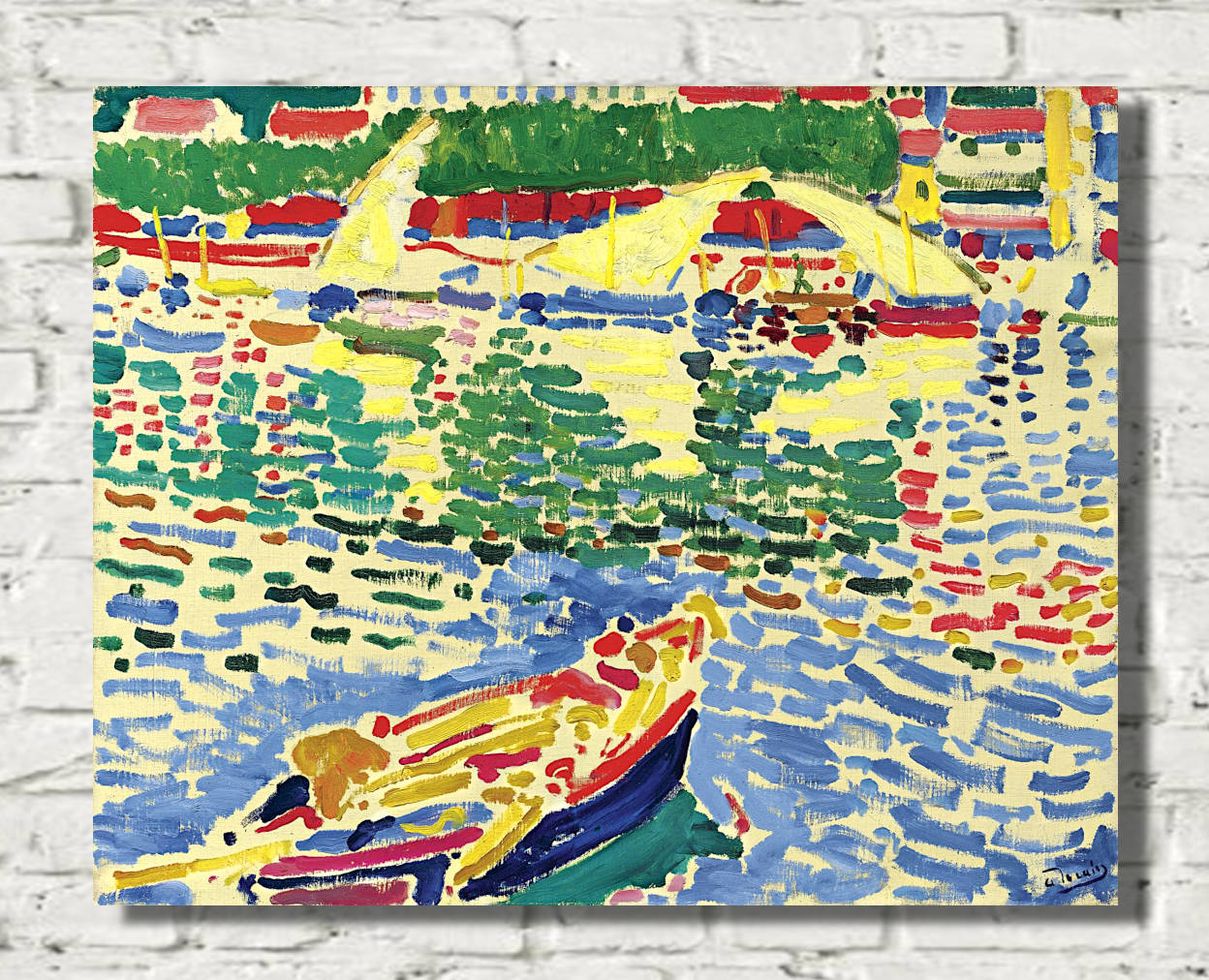
Bridge over the Riou, by André Derain
Couldn't load pickup availability
BUY WITH CONFIDENCE
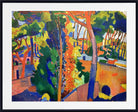
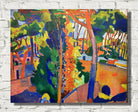
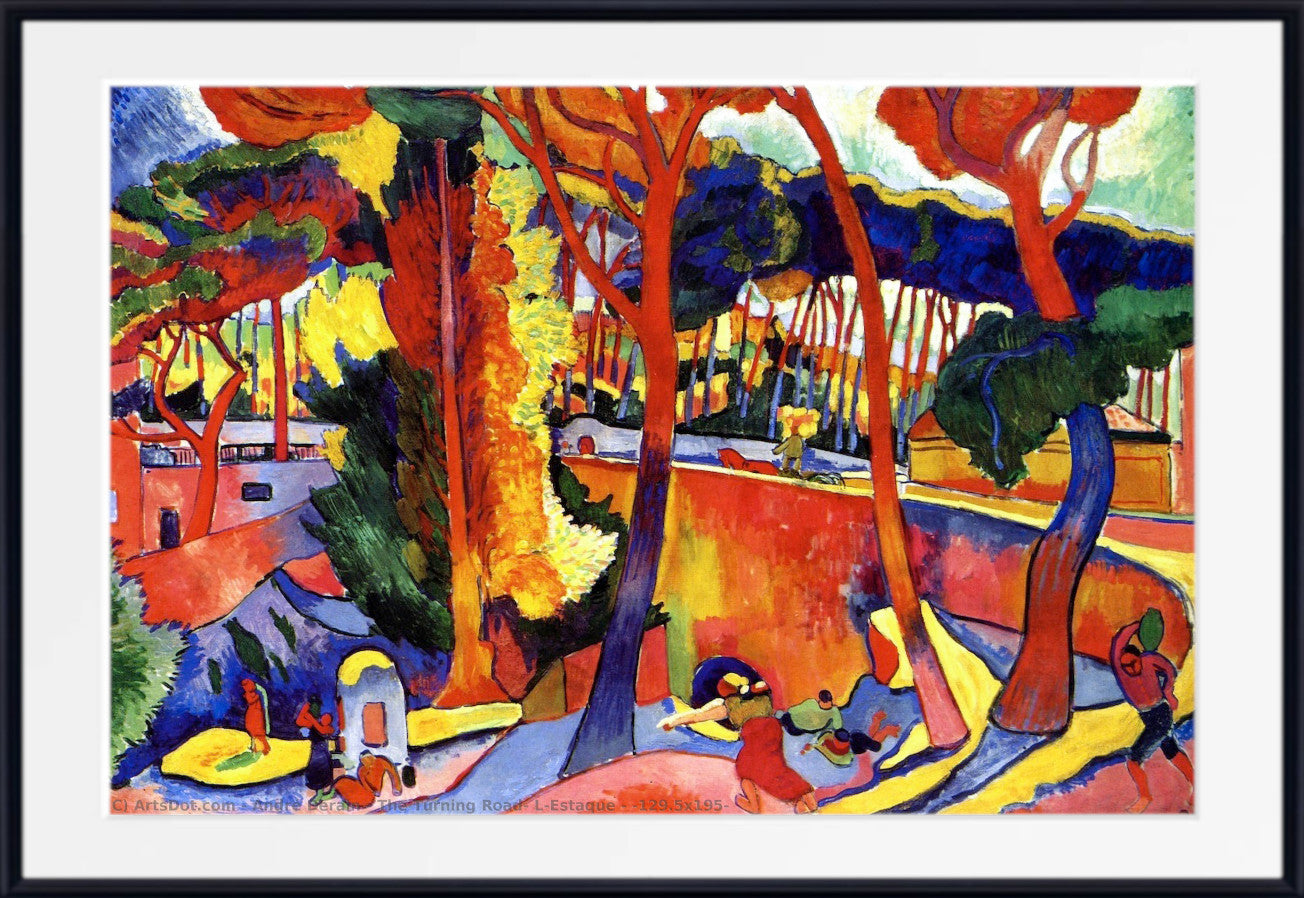
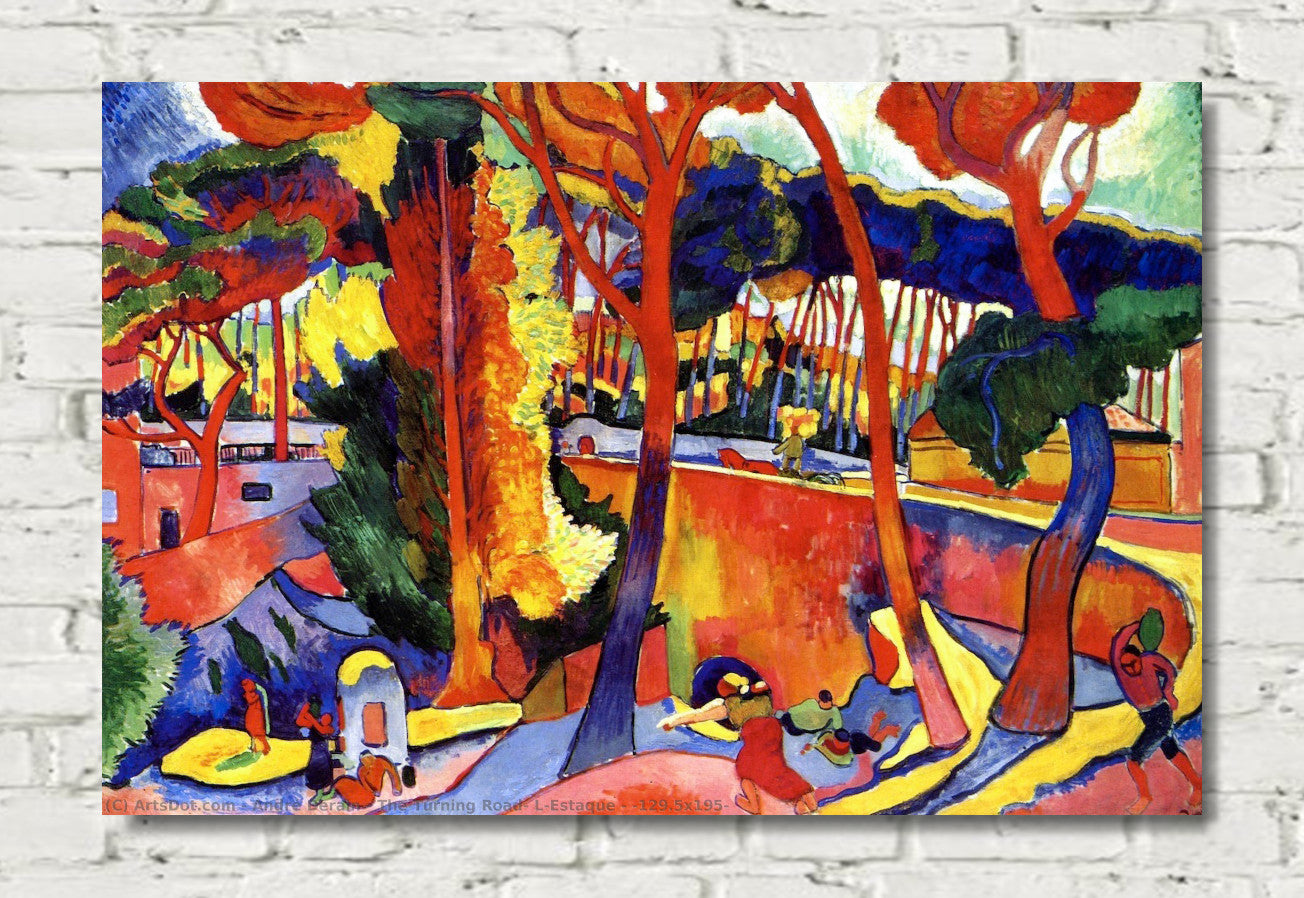
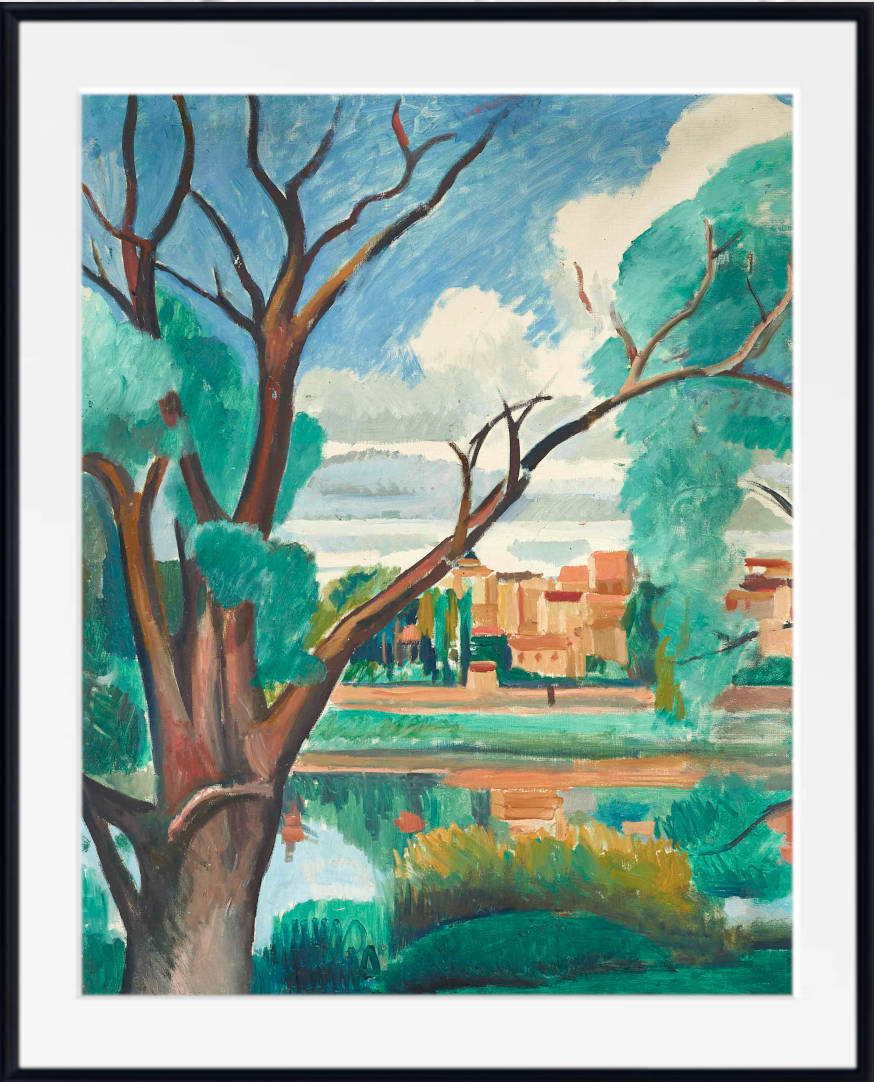
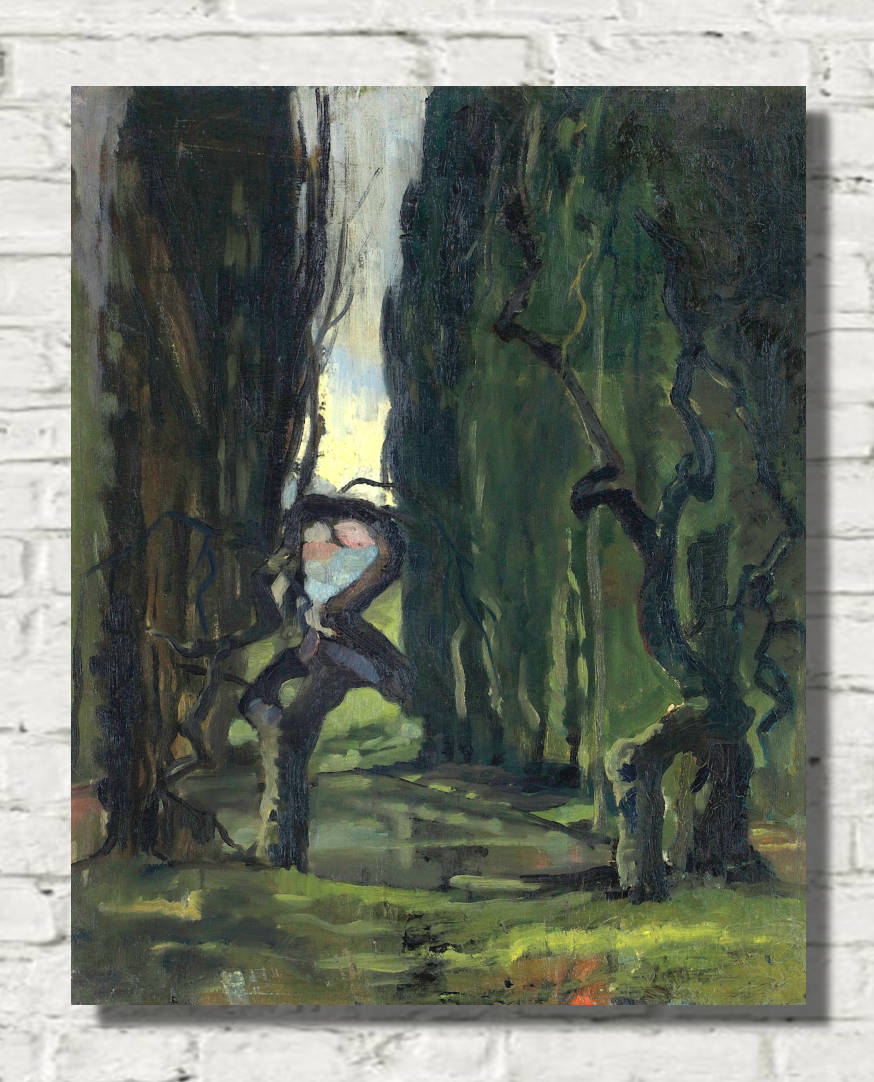
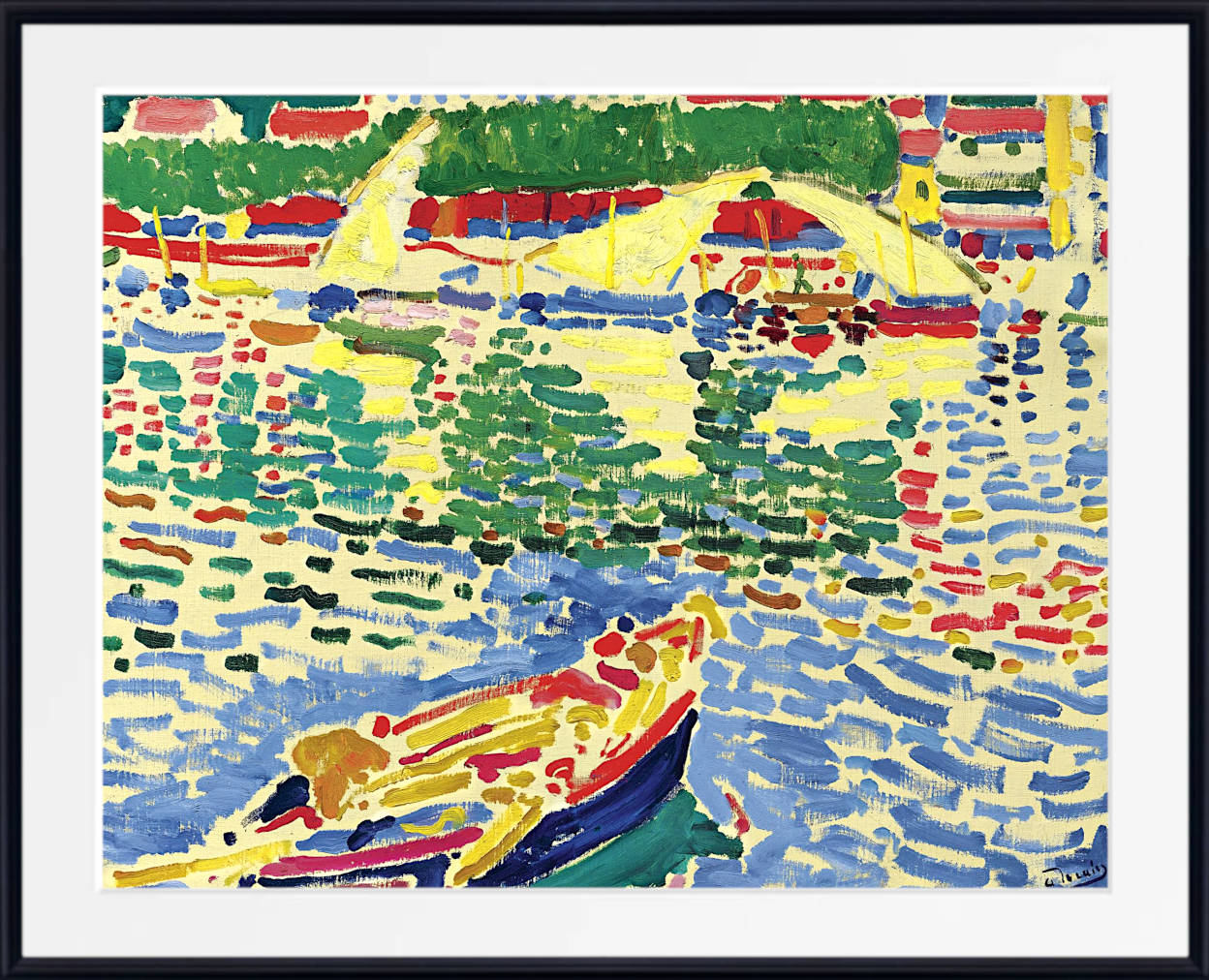
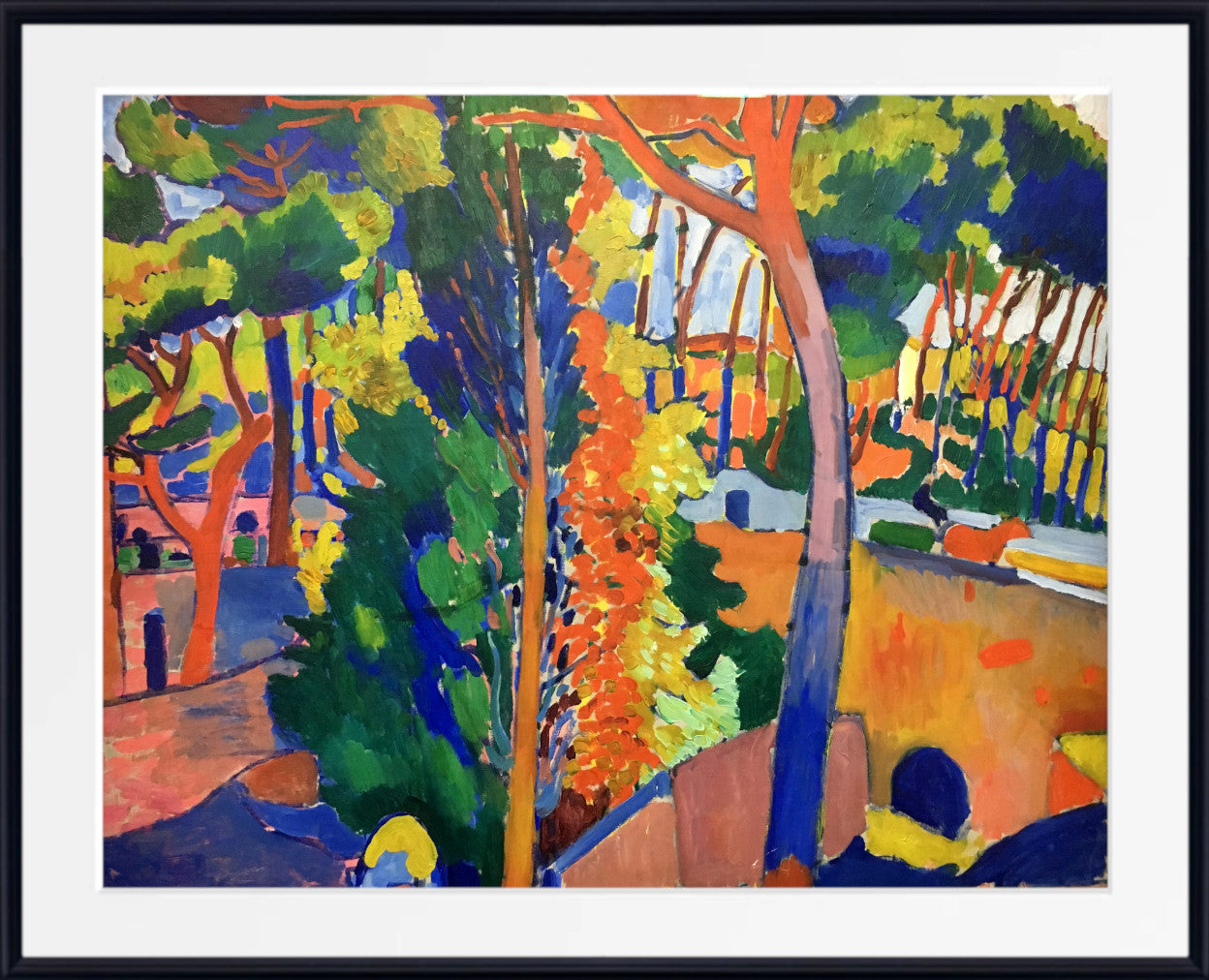
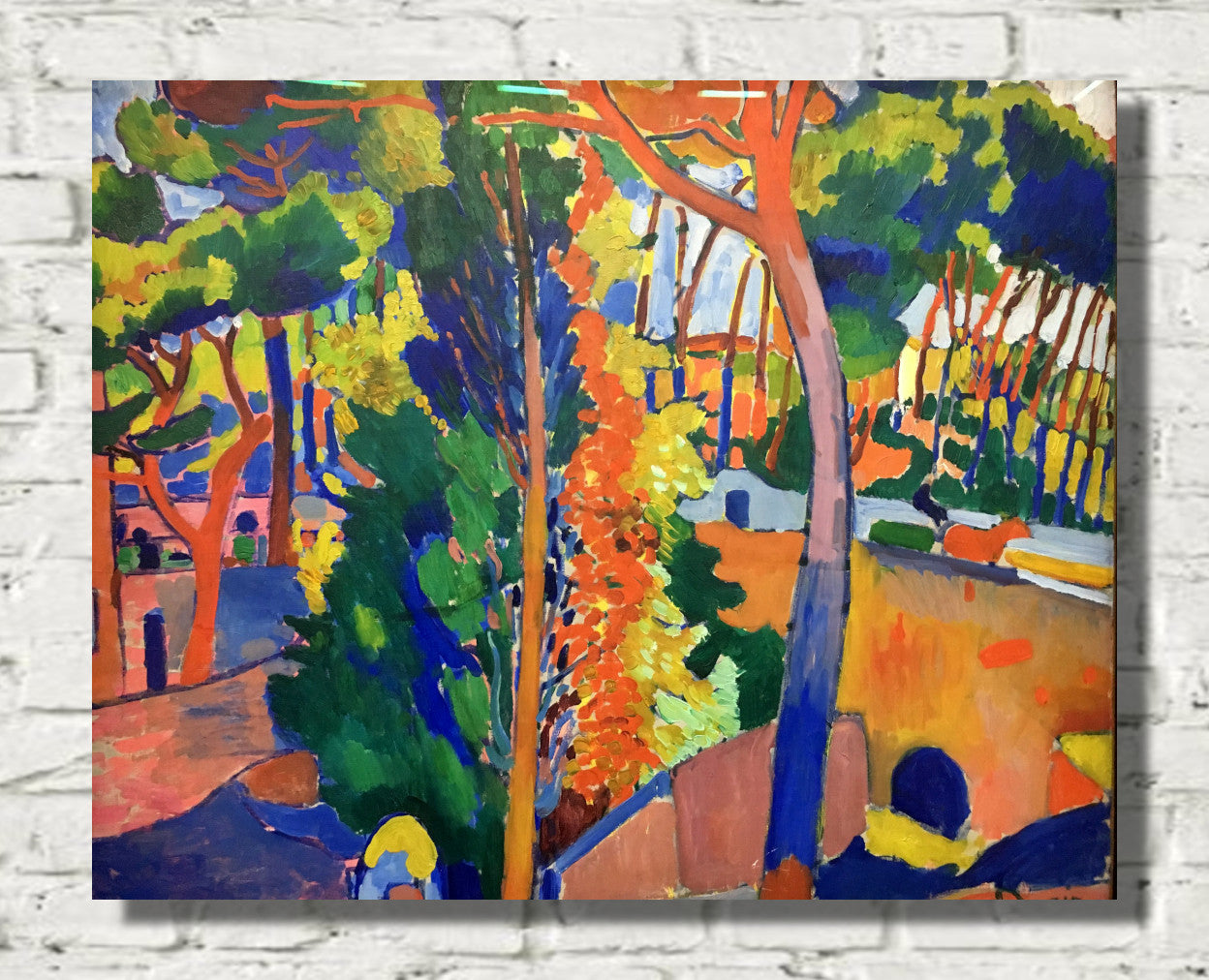
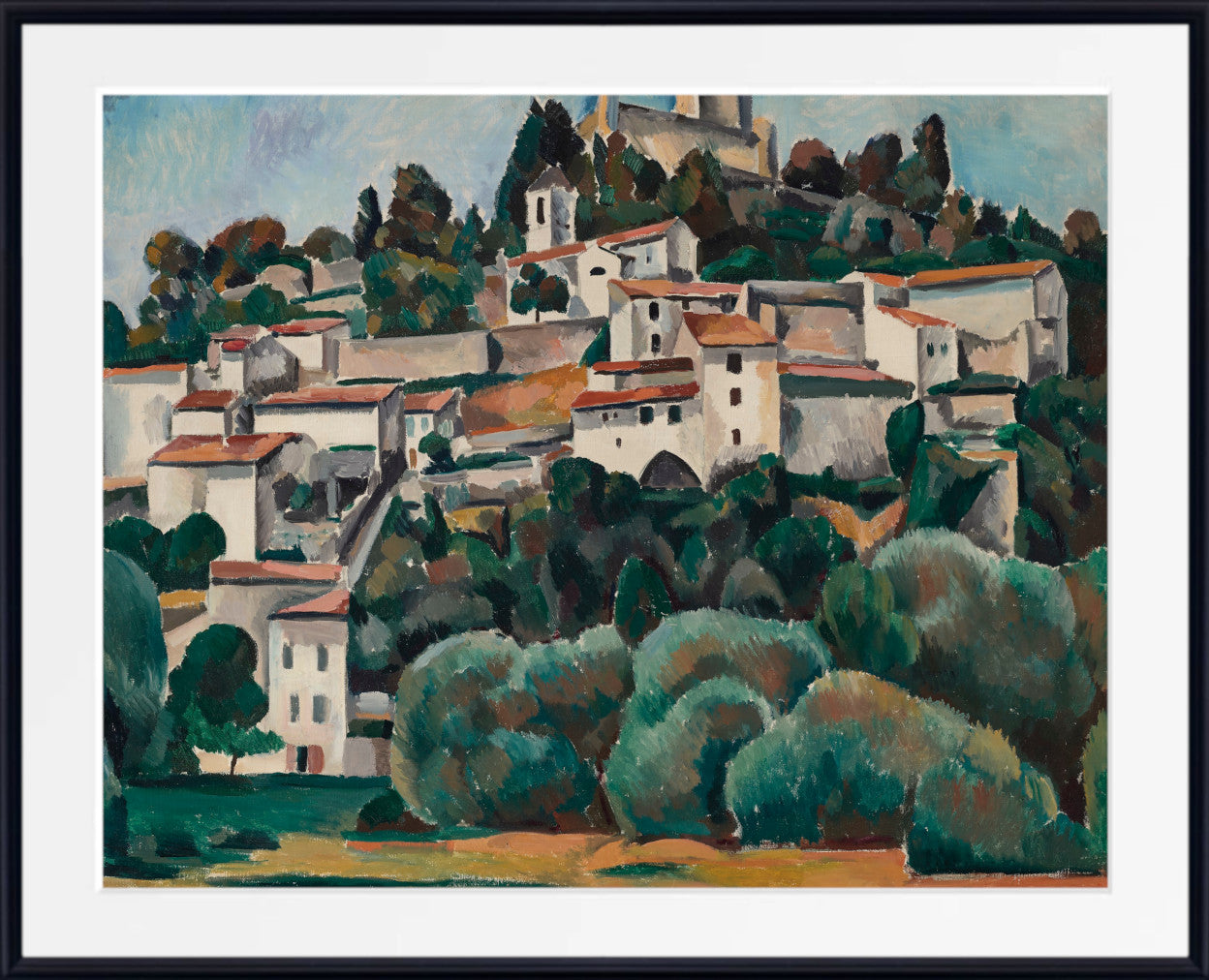
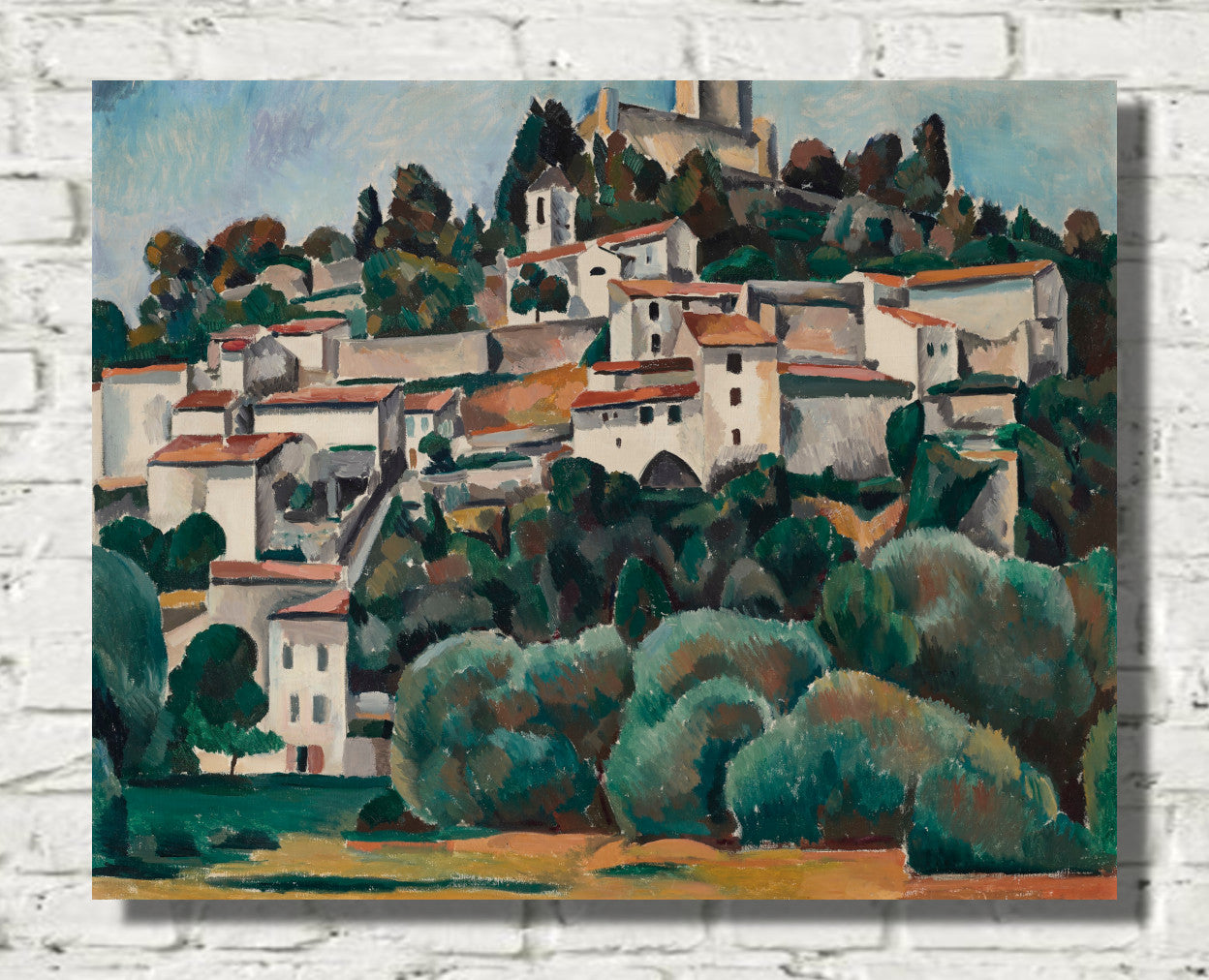
Bridge over the Riou (1906) by André Derain, also known as Pont sur le Riou, is a powerful Fauvist landscape painted at L'Estaque in the south of France. A small stone bridge, winding riverbed, trees, houses and steeply rising terrain are transformed through brilliant orange, blue, green, red and lavender. Rather than reproducing the landscape literally, Derain builds the scene from bold areas of colour, simplified forms and strong directional rhythms.
This André Derain Bridge over the Riou print captures the artist at a fascinating stage in the development of Fauvism. Painted in 1906, just one year after his revolutionary summer with Henri Matisse at Collioure, the work retains intense Fauvist colour while revealing a growing interest in structure, permanence and carefully organised composition. Available as a fine art print, framed print or canvas panel, Bridge over the Riou is an outstanding choice for admirers of Derain, Fauvist landscapes and colourful early modern art.
Bridge over the Riou – A Fauvist Landscape at L'Estaque
Derain painted Bridge over the Riou in 1906 at L'Estaque, a coastal settlement near Marseille in southern France.
The landscape is constructed around a small river or ravine crossed by a masonry bridge. From the foreground bank, the terrain falls towards the riverbed before rising again towards houses beyond.
A small cabin appears in the ravine, while another distinctive form has been identified as a covered well. Trees rise through the composition and divide the landscape into a complex series of interconnected coloured shapes.
The bridge itself appears towards the lower right rather than dominating the centre of the canvas.
Despite giving the painting its title, it is only one element in a much larger pictorial structure.
This is important because Derain was becoming increasingly interested in transforming observed landscape into something more permanent and deliberately constructed.
L'Estaque and the Landscape of Southern France
L'Estaque occupies a special place in the history of modern French painting.
Situated northwest of Marseille, the settlement combines steep hills, Mediterranean vegetation, roads, houses, industrial structures and views towards the sea.
Paul Cézanne had repeatedly painted there during the nineteenth century, simplifying the local landscape into increasingly structured arrangements of buildings, hills and vegetation.
Derain arrived with very different ideas about colour, but the same landscape offered him an opportunity to explore how a painting could become more strongly organised.
The intense southern light was also crucial.
Under Mediterranean conditions, shadows could appear extraordinarily deep beside brightly illuminated surfaces. Derain intensified these contrasts still further, translating brilliant sunlight into orange and yellow while using deep blues and other cool colours for shadow.
The result was not a literal transcription of L'Estaque but a heightened visual equivalent of its heat and light.
From Collioure to L'Estaque
Only a year before painting Bridge over the Riou, Derain had spent the summer of 1905 working with Henri Matisse at Collioure.
Those months became central to the development of Fauvism.
At Collioure, Derain and Matisse abandoned conventional naturalistic colour with extraordinary freedom. Mountains became orange and red, trees could be blue or pink and shadows appeared in complementary colours chosen as much for their visual relationships as for anything observed in nature.
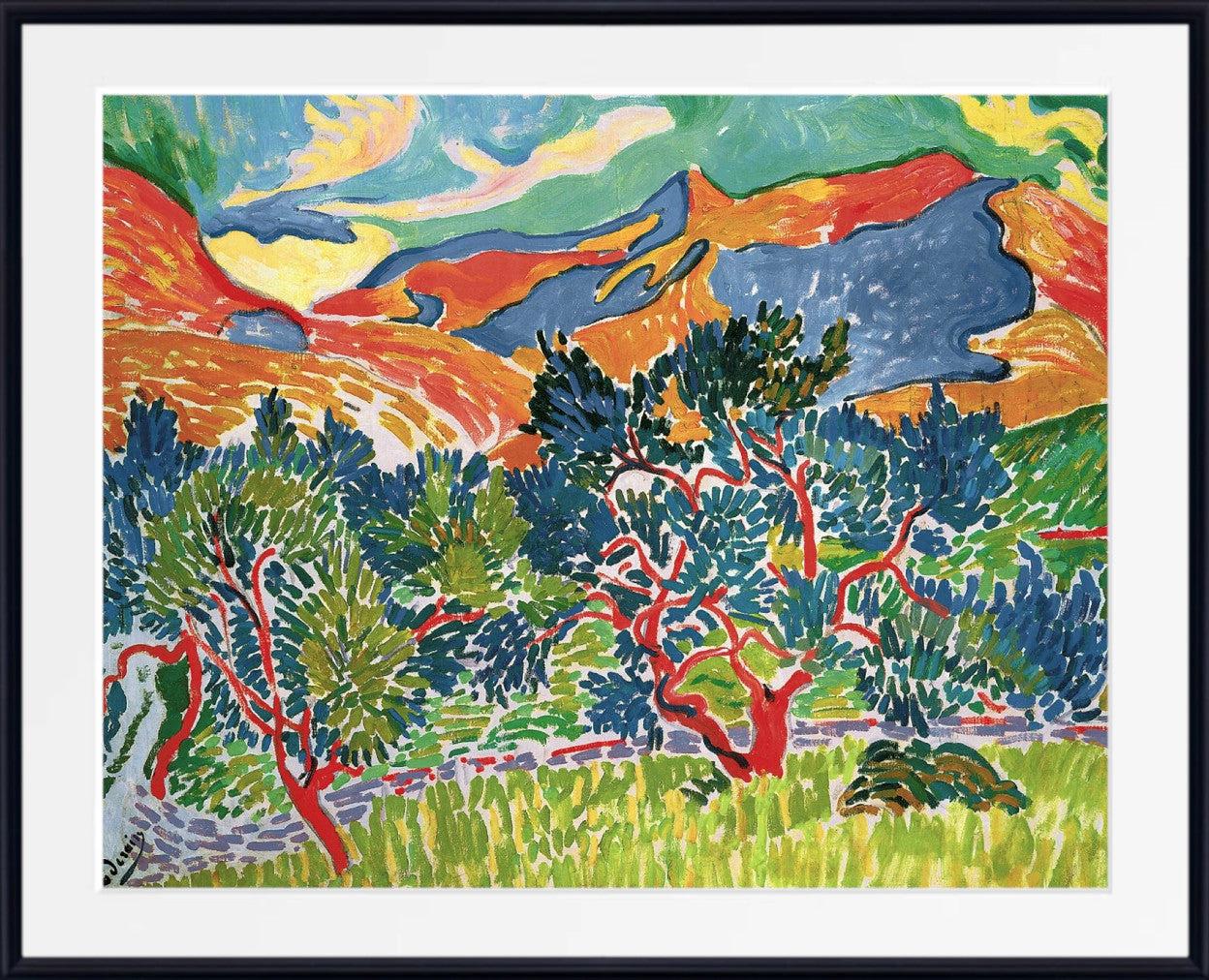
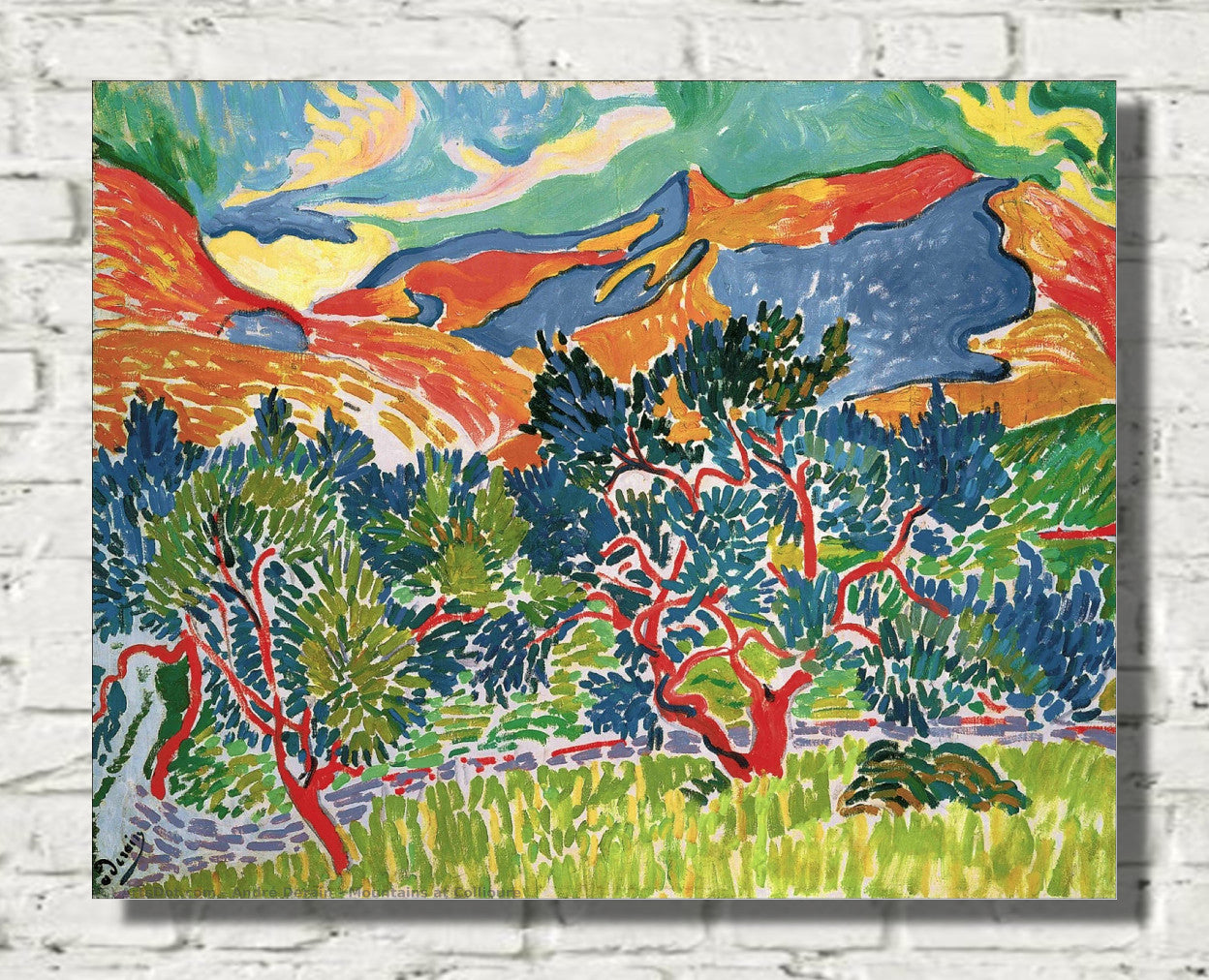
Paintings such as Mountains at Collioure and Drying the Sails demonstrate the intensity of this breakthrough.
At L'Estaque in 1906, however, Derain began modifying that language.
The colour remained brilliant, but the composition became increasingly deliberate and monumental.
Instead of relying primarily on separate dashes and touches of colour, Derain began consolidating areas of paint into larger shapes.
Bridge over the Riou therefore represents an important second stage in his Fauvist development.
Colour in Bridge over the Riou
The most immediately striking feature of the painting is its extraordinary colour.
Derain does not attempt to reproduce the exact colours of the landscape before him.
Tree trunks can become red or pink. Shadows are expressed through intense blue and lavender. Sunlit areas of earth glow with orange and yellow, while vegetation shifts between several varieties of green.
These hues are not decorative additions placed over an otherwise conventional landscape.
They create the structure of the landscape itself.
Warm orange passages advance visually while cooler blues recede. Pink and red tree trunks establish strong vertical accents. Greens connect different parts of the terrain, while lavender outlines separate neighbouring forms.
The landscape is therefore organised through relationships between colours rather than through conventional tonal modelling alone.
Orange Light and Blue Shadow
The opposition between orange and blue is particularly important.
Orange conveys the intense illumination of the Mediterranean landscape, while deep blue frequently functions as shadow.
Because orange and blue are complementary colours, placing them beside one another makes each appear more intense.
This allows Derain to communicate the brilliance of southern light without gradually modelling every surface from light to dark.
Instead, light and shadow become blocks of contrasting colour.
This was one of the most radical achievements of Fauvism.
The painter no longer needed to ask only, “What colour is this object?”
Colour could instead be selected according to the expressive and structural requirements of the entire painting.
The Bridge Hidden Within the Landscape
Despite the title, the bridge is surprisingly unobtrusive.
The small masonry structure appears towards the lower right of the composition, crossing the Riou as the river passes through the landscape.
Its placement forces the viewer to explore the painting rather than immediately identifying a single dominant landmark.
The bridge connects the two sides of the ravine, but it also contributes to the network of diagonals that organise the composition.
A cart can be seen crossing it, providing a small indication of everyday human activity within the otherwise strongly stylised landscape.
Derain's decision not to monumentalise the bridge reinforces the fact that the true subject of the painting is the organisation of the entire landscape rather than a particular architectural structure.
A Compressed and Flattened Landscape
The space in Bridge over the Riou is deliberately unusual.
There is a foreground, a lower riverbed and higher ground beyond, yet these zones seem pressed closely together.
Traditional landscape painting would normally create convincing depth through diminishing scale, atmospheric perspective and gradual tonal transitions.
Derain reduces these effects.
The foreground bank, ravine and distant houses are compressed into a comparatively shallow pictorial space.
Strong outlines and areas of intense colour continually draw attention back towards the surface of the canvas.
The painting therefore exists simultaneously as a landscape and as a complex arrangement of flat coloured shapes.
This tension between recognisable space and the physical surface of the painting became increasingly important in twentieth-century modern art.
Trees as Structural Elements
The trees play an especially important role in organising the composition.
Their trunks rise vertically through the landscape, interrupting the horizontal and diagonal movement of roads, riverbanks and slopes.
Derain exaggerates their colours and simplifies their forms.
A tree trunk may become pink, red or Indian red and can be edged with contrasting blue or lavender.
Branches and foliage are treated as broad patterns rather than botanically precise observations.
As a result, each tree performs two roles.
It belongs to the landscape, but it also acts as a strong piece of pictorial architecture.
The repeated verticals help stabilise a composition otherwise filled with sloping ground and shifting diagonals.
A Landscape Built from Rhythm
One of the great strengths of Bridge over the Riou is its underlying rhythm.
Vertical tree trunks are countered by sloping hillsides and diagonally moving paths.
The bridge introduces an additional horizontal and curved structure, while houses and other buildings create more compact geometric forms.
Derain links these elements through colour.
An orange passage in one part of the landscape may reappear elsewhere. Blues move from shadows into outlines. Greens connect foliage and ground.
The viewer's eye is consequently encouraged to travel around the whole canvas rather than resting permanently upon a single object.
This carefully interconnected structure helps explain why the painting feels much more deliberate than a rapidly executed outdoor study.
Beyond the Impressionist Moment
Derain's changing relationship with Impressionism is particularly important in this work.
Impressionist painters had revolutionised nineteenth-century art by concentrating on immediate visual experience: changing weather, shifting light and the appearance of a particular moment.
Early Fauvism retained something of this commitment to painting directly from nature.
By 1906, however, Derain was seeking something different.
He increasingly wanted paintings to possess a sense of permanence rather than appear as records of a fleeting instant.
Bridge over the Riou reflects that ambition.
The composition appears to have been reconsidered and reshaped rather than simply captured through a spontaneous response to the view.
The landscape becomes a constructed image rather than a visual snapshot.
Paul Gauguin and Decorative Simplification
Another important influence upon Derain during this period was Paul Gauguin.
Gauguin had demonstrated how landscape and figures could be simplified into broad, flat areas of colour outlined with strong contours.
His paintings often sacrifice conventional depth in favour of decorative organisation and emotional intensity.
Derain's L'Estaque landscapes show a related interest.
The larger areas of colour in Bridge over the Riou differ noticeably from the more fragmented brushwork of some of Derain's 1905 paintings.
Individual colour strokes are increasingly absorbed into broader forms.
This creates a more monumental effect and contributes to the sense that Derain is constructing an enduring landscape rather than recording a fleeting impression.
Cézanne and L'Estaque
The connection with Paul Cézanne is equally significant.
Cézanne had painted L'Estaque repeatedly, transforming its houses, hills and coastline into tightly organised arrangements of geometric forms.
Although Derain's 1906 palette remained far more intensely Fauvist, his growing concern with the organisation of landscape brought him increasingly close to Cézanne's example.
The shift became even clearer during 1907 and the years that followed.
Derain gradually moved away from the most explosive Fauvist colour and developed a stronger interest in volume, structure and pictorial permanence.
Bridge over the Riou sits at an important point in this transition.
It remains brilliantly coloured, but its complex construction anticipates Derain's movement towards a more structured approach.
The 1906 Salon d'Automne
Bridge over the Riou has particular historical importance because Derain exhibited it at the Salon d'Automne in Paris in 1906.
The Salon d'Automne had already played a decisive role in Derain's career.
Only a year earlier, paintings by Derain, Matisse, Henri Manguin, Albert Marquet and other related artists had provoked the reaction that produced the name les fauves — “the wild beasts”.
By the 1906 Salon, Fauvism was no longer simply a shocking new phenomenon. Its leading artists were already developing their approaches in different directions.
Bridge over the Riou demonstrates that evolution.
Its colours remain highly expressive, but the larger, more carefully organised forms reveal Derain seeking greater order and durability.
Wild Landscape or Bridge over the Riou?
The painting has not always been identified by its present title.
For many years it was sometimes referred to as Wild Landscape or more generally as Landscape at L'Estaque.
Research into Derain's 1906 work established that the painting corresponds to the work he exhibited at the Salon d'Automne that year under the title Bridge over the Riou.
The physical details within the painting support this identification.
The masonry bridge is visible at the lower right, with the Riou running beneath it. A small cabin appears lower in the ravine, while a distinctive covered well and buildings can be identified elsewhere within the landscape.
The more precise title therefore reconnects the painting with both its actual location and its original exhibition history.
Why Bridge over the Riou Matters
Bridge over the Riou combines many characteristics central to Derain's mature Fauvist period:
- intense orange, blue, green, red and lavender colour
- colour used independently of literal natural appearance
- strong complementary contrasts
- larger coloured shapes replacing more fragmented brushwork
- compressed and flattened pictorial space
- trees functioning as strong structural verticals
- a carefully organised network of diagonals and curves
- Mediterranean light translated through colour
- a growing emphasis on permanence and pictorial structure
The painting is therefore particularly valuable for understanding how quickly Fauvism evolved.
Derain was not simply repeating the discoveries made at Collioure in 1905. Within a year he was already adapting them to a new and more deliberately constructed form of landscape painting.
André Derain's Fauvist Painting Style
André Derain was one of the principal founders of Fauvism alongside Henri Matisse and Maurice de Vlaminck.
His early work with Vlaminck around Chatou encouraged increasingly bold colour and vigorous brushwork.
Working with Matisse at Collioure during the summer of 1905 brought those experiments to a new level of intensity.
In 1906 Derain continued working in southern France while also undertaking his celebrated series of London paintings for the dealer Ambroise Vollard.
His paintings from this year retain Fauvism's liberated colour while frequently becoming more structured.
By 1907–08, the balance shifted further. Cézanne, classical painting and a renewed concern with solid form increasingly influenced Derain's work.
His Fauvist period was therefore short, but its contribution to modern painting was profound.
About André Derain
André Derain (1880–1954) was a French painter, sculptor, printmaker and designer and one of the leading figures in the emergence of early twentieth-century modern art.
Born in Chatou near Paris, Derain initially studied engineering while pursuing artistic training.
His friendship with Maurice de Vlaminck introduced him to a highly experimental artistic environment, and his subsequent collaboration with Henri Matisse placed him at the centre of Fauvism.
Derain's landscapes at Collioure and L'Estaque and his extraordinary London paintings rank among the defining works of the movement.
After approximately 1907, however, his artistic priorities changed. Greater interest in Cézanne, classical traditions and the European Old Masters encouraged a more restrained approach to colour and a stronger emphasis on structure.
Derain continued painting, drawing, sculpting and designing throughout a long career, but his radical Fauvist works of 1905–07 remain among his most influential achievements.
The Original Bridge over the Riou
The original Bridge over the Riou, or Pont sur le Riou, was painted by André Derain in 1906.
It was created in oil on canvas and measures approximately 82.6 × 101.6 cm.
The landscape represents a location at L'Estaque in southern France. The scene includes the small masonry bridge over the Riou, a cabin in the ravine, a covered well, trees and houses on the rising ground beyond.
Derain exhibited the painting at the Salon d'Automne in Paris in 1906 under the title Bridge over the Riou.
The painting was for many years also referred to as Wild Landscape and Landscape at L'Estaque, but research into Derain's exhibition history confirmed its identification with the 1906 Salon d'Automne work.
The original is now part of The William S. Paley Collection at The Museum of Modern Art in New York.
MoMA records the painting under object number SPC66.1990.
William S. Paley, the American broadcasting executive and long-standing supporter of MoMA, assembled an important collection of modern art. Following his death in 1990, his collection was entrusted to The Museum of Modern Art through the William S. Paley Foundation.
An André Derain Bridge over the Riou Print for Your Interior
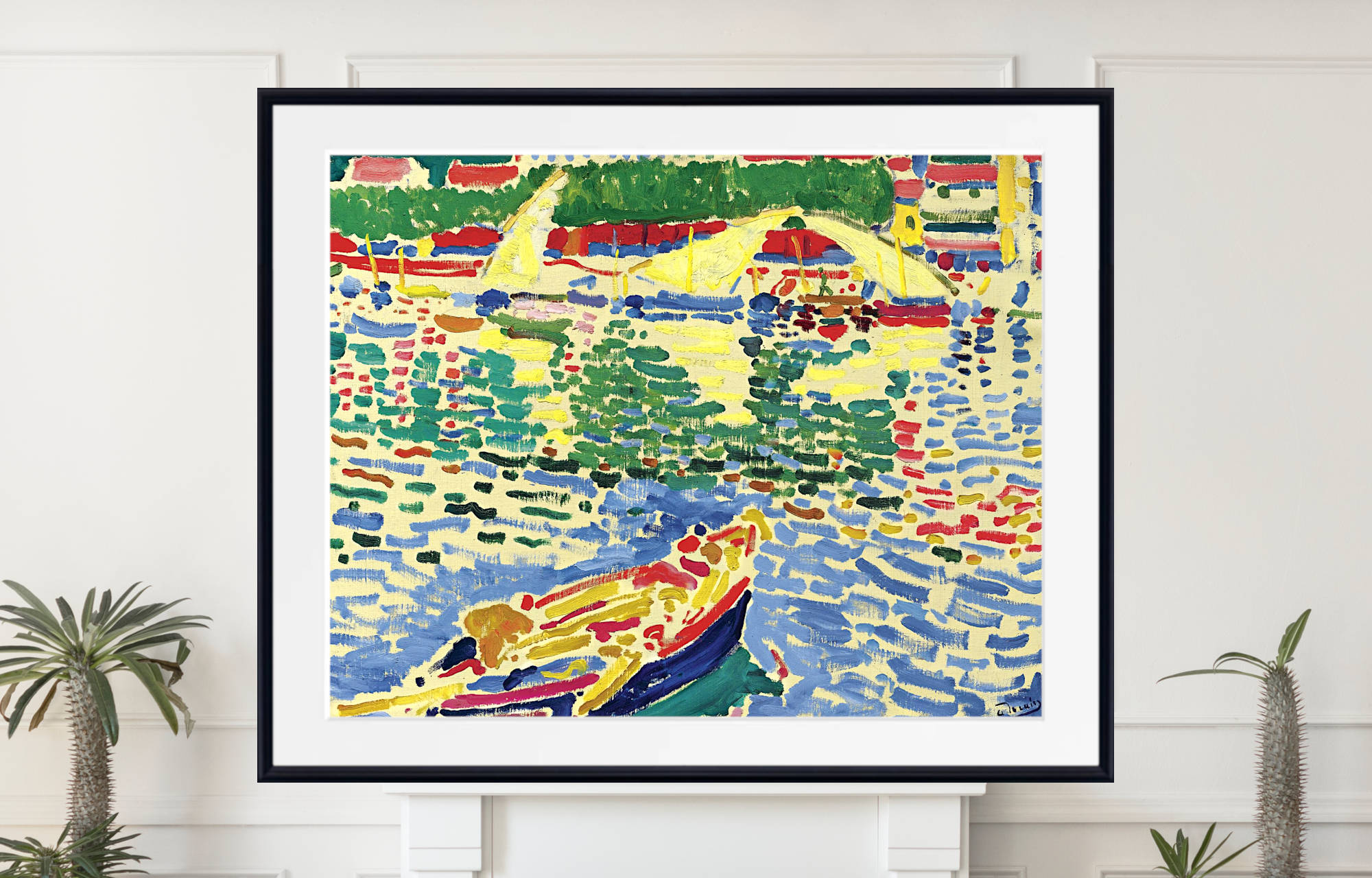
An André Derain Bridge over the Riou print combines the visual appeal of a southern French landscape with the extraordinary colour of Fauvism.
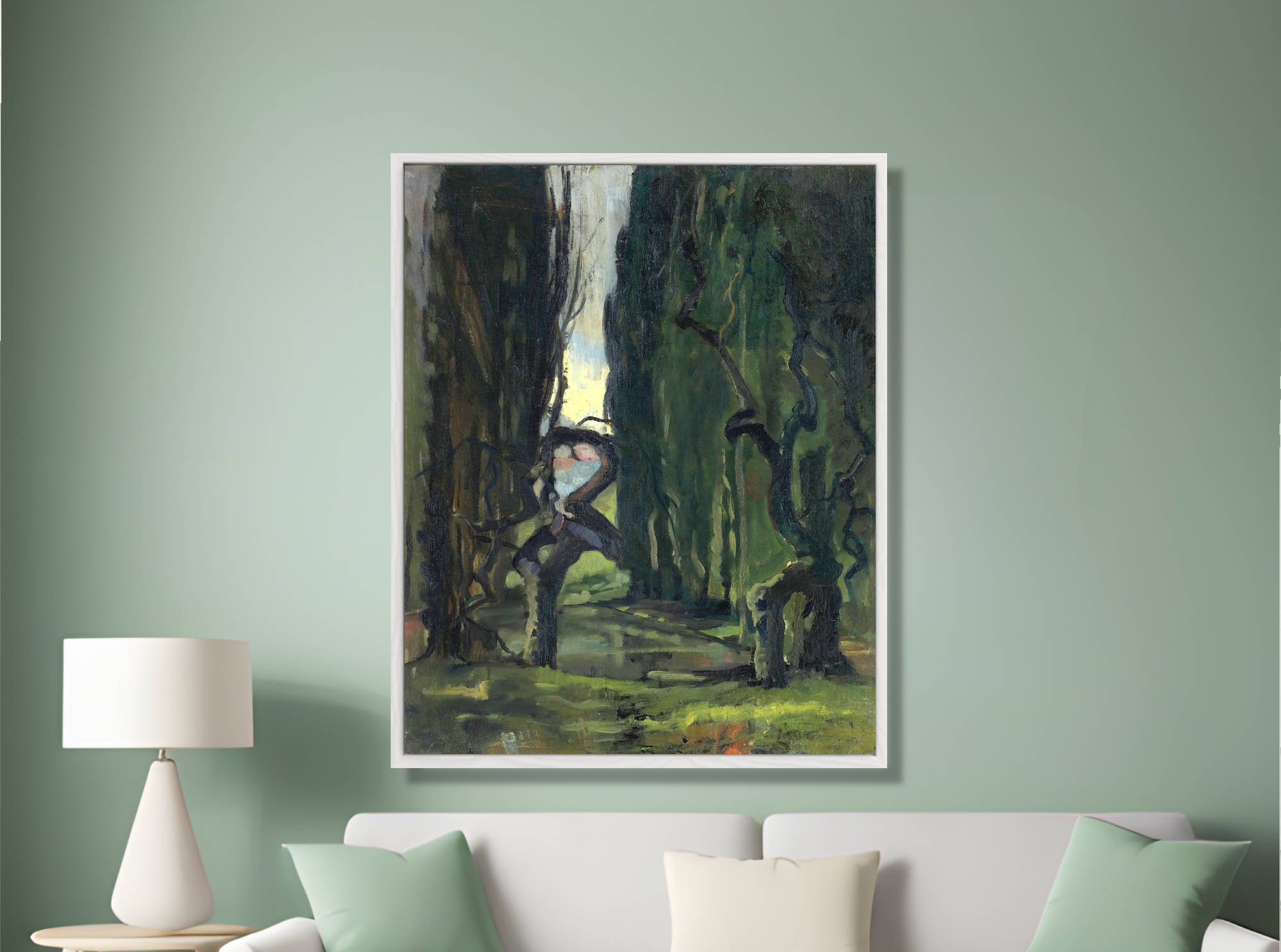
Its palette of orange, blue, green, red, pink and lavender makes the artwork capable of becoming a strong focal point within an interior.
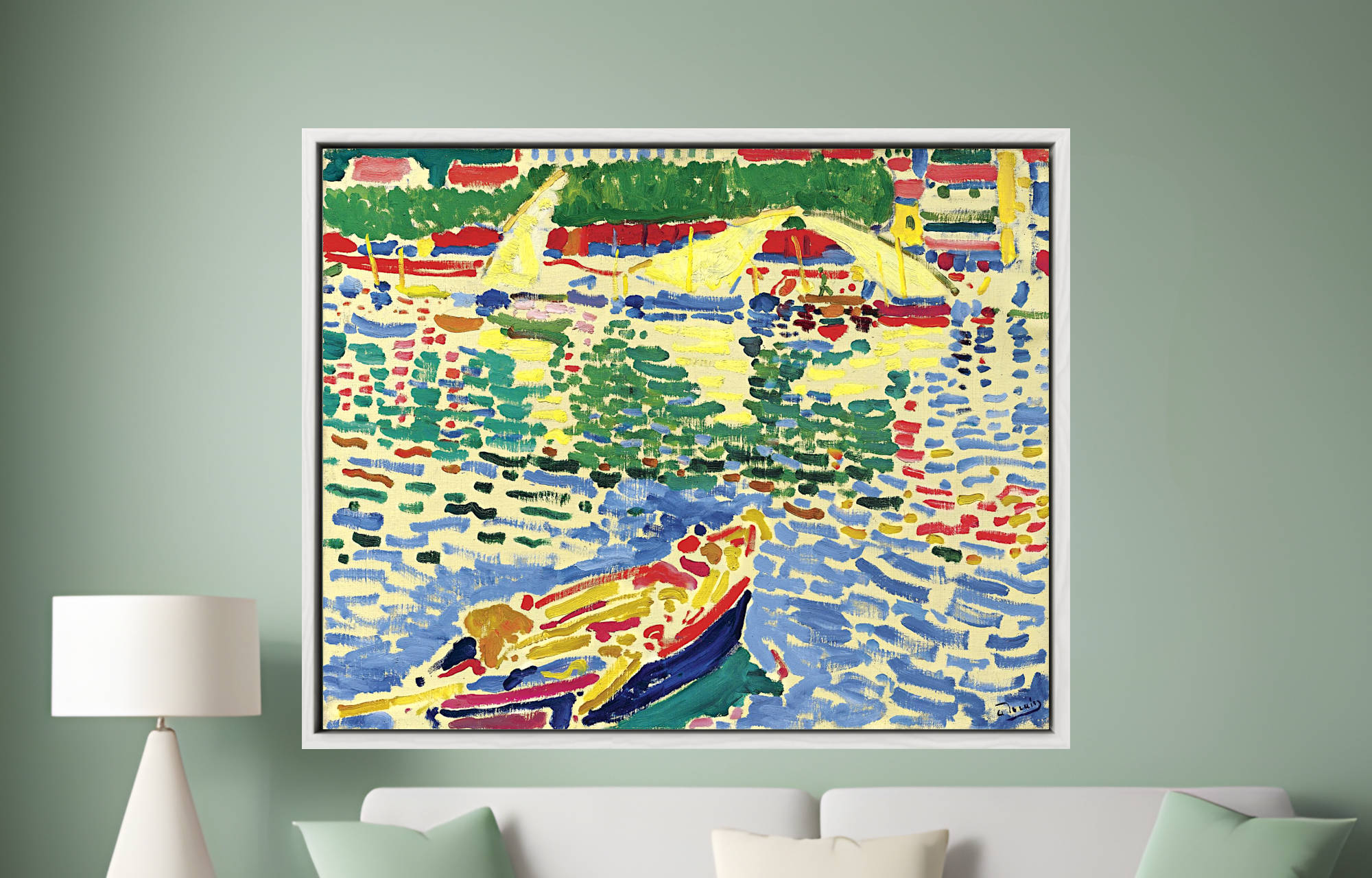
Neutral wall colours such as white, cream, putty and pale grey provide particularly effective backgrounds because they allow Derain's saturated colours to remain dominant.
Natural timber furniture can complement the warmer earth colours, while blue or green furnishings can echo the cooler sections of the landscape.
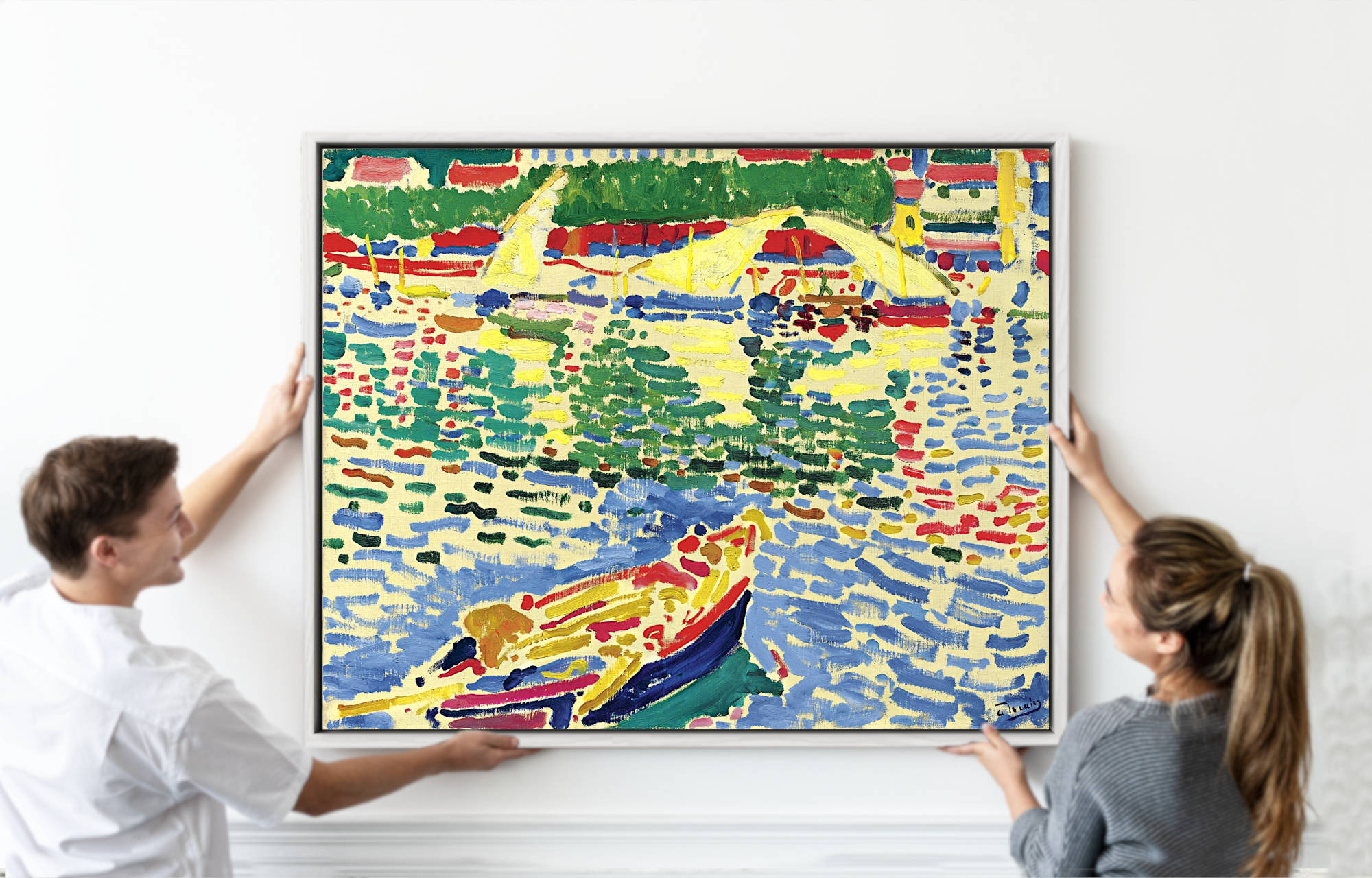
The work's horizontal proportions make it particularly suitable for placement above sofas, beds, sideboards and console tables.
Its combination of expressive colour and recognisable landscape imagery works well in contemporary, Scandinavian-inspired, mid-century and eclectic interiors.
For collectors of Fauvist prints, Bridge over the Riou has additional historical importance. It records the moment when Derain was beginning to transform the spontaneous colour experiments of early Fauvism into a more monumental and deliberately structured approach to landscape.
All orders for unframed fine art prints and original paintings are dispatched within 2 working days of receipt of payment.
Orders for custom framed prints are dispatched within 4 working days.
All orders are fully tracked from dispatch to delivery at your home or business.
All print and original painting orders are fully insured against loss or damage in transit. We refund or replace any damaged or lost orders.
Buy with confidence - read what our satisfied customers have to say - Reviews
Fine art papers are printed without any additional white border Please let us know at the time of ordering if you would like a small additional white border.
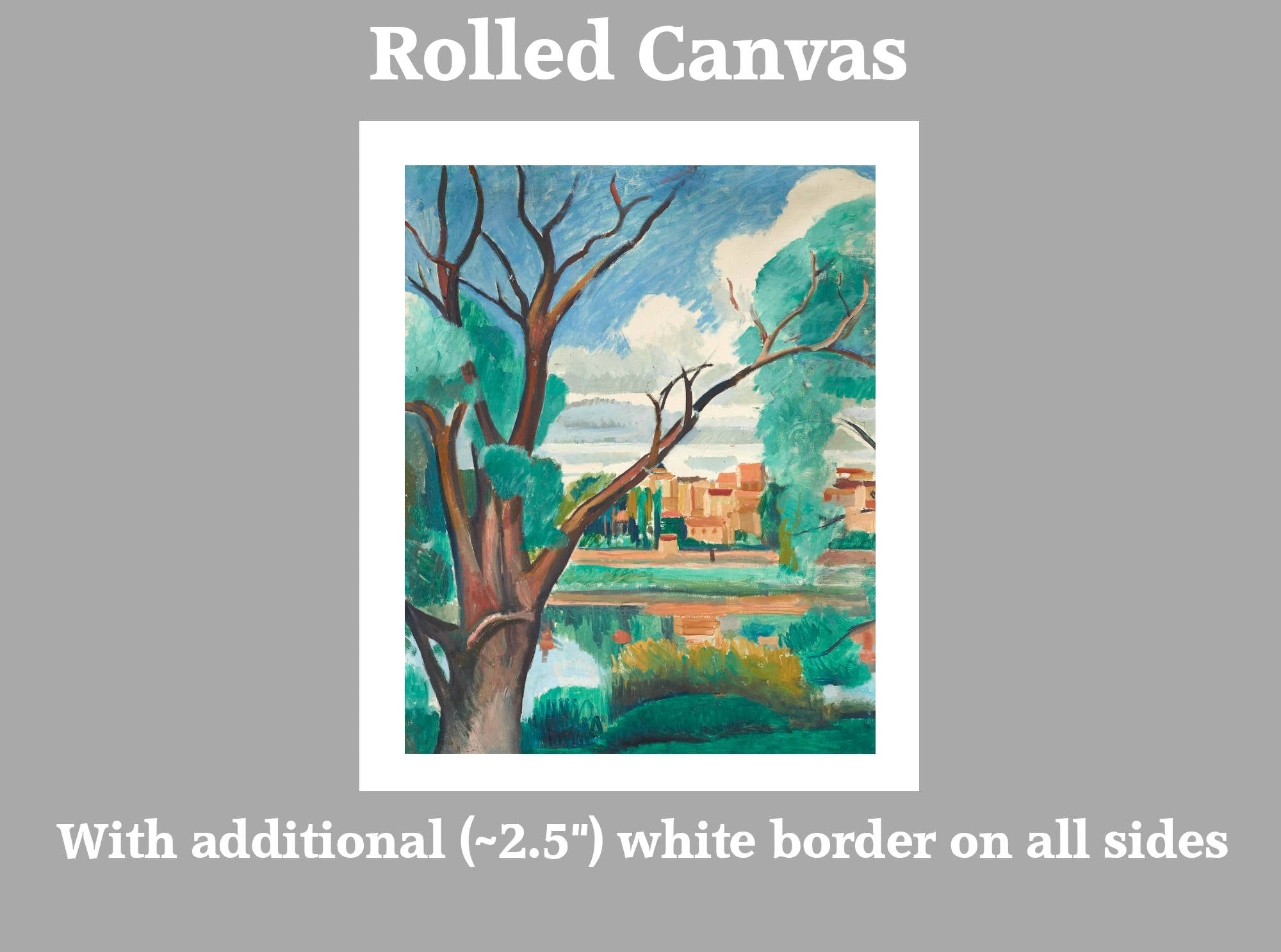
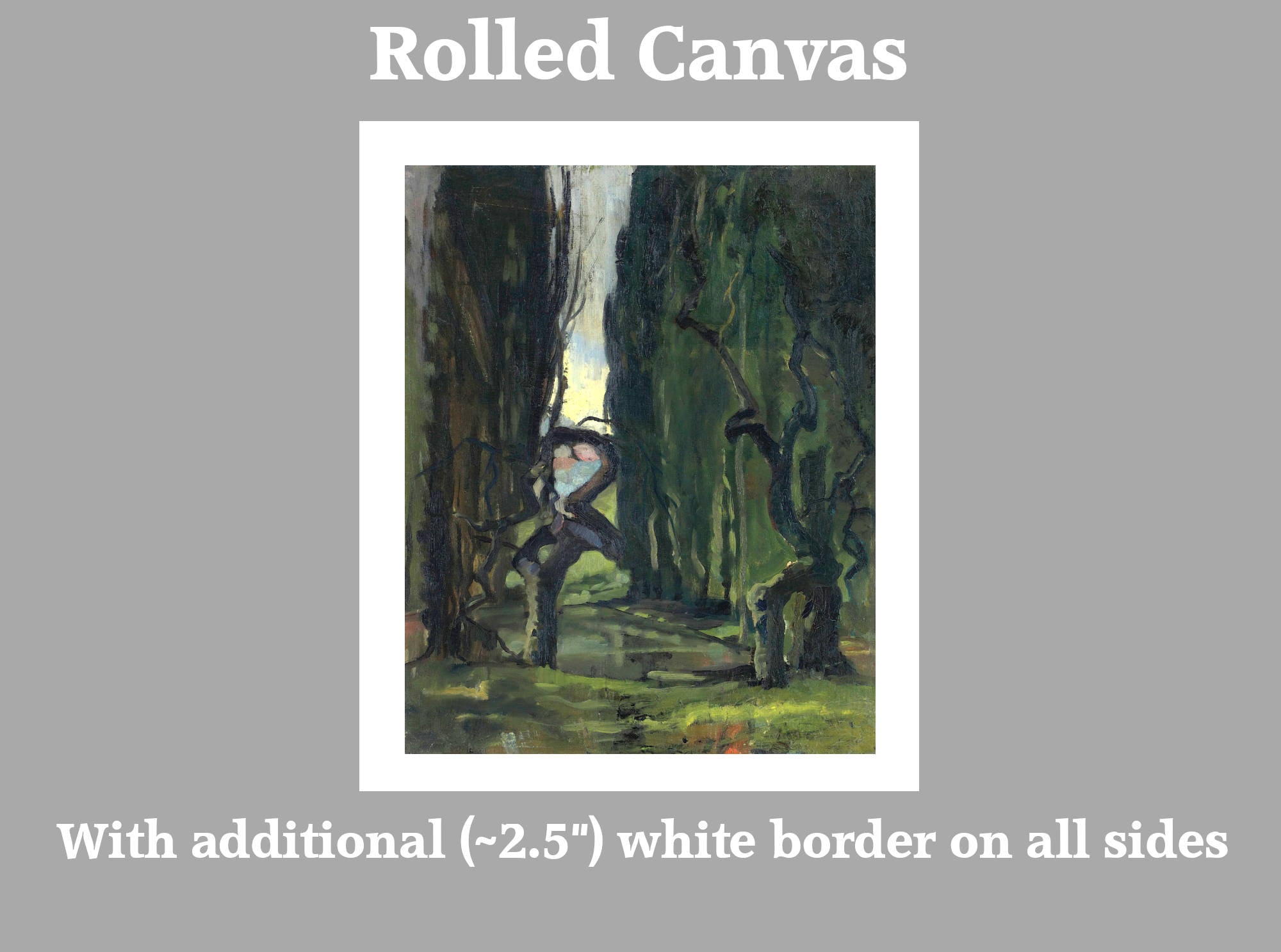
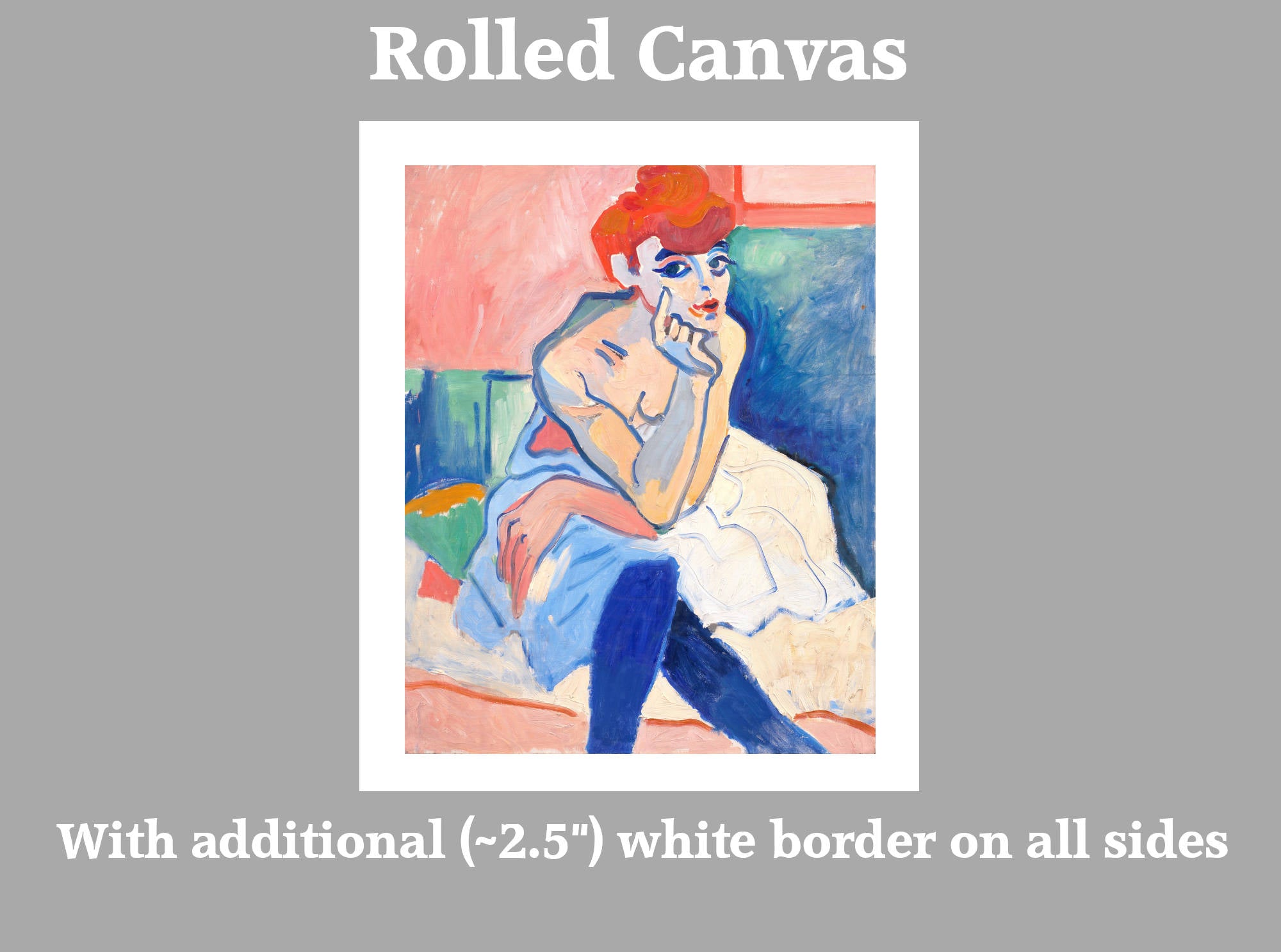
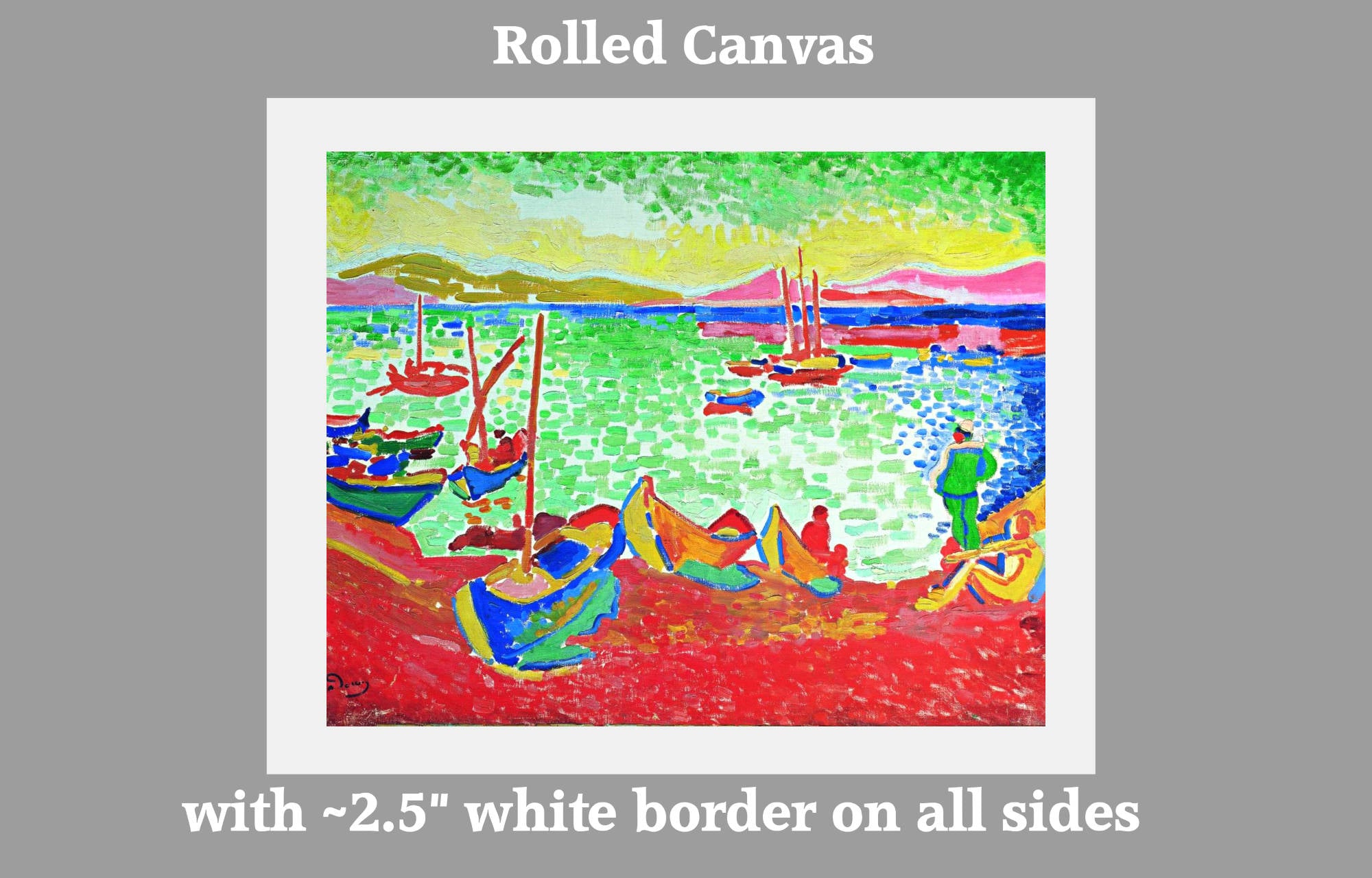
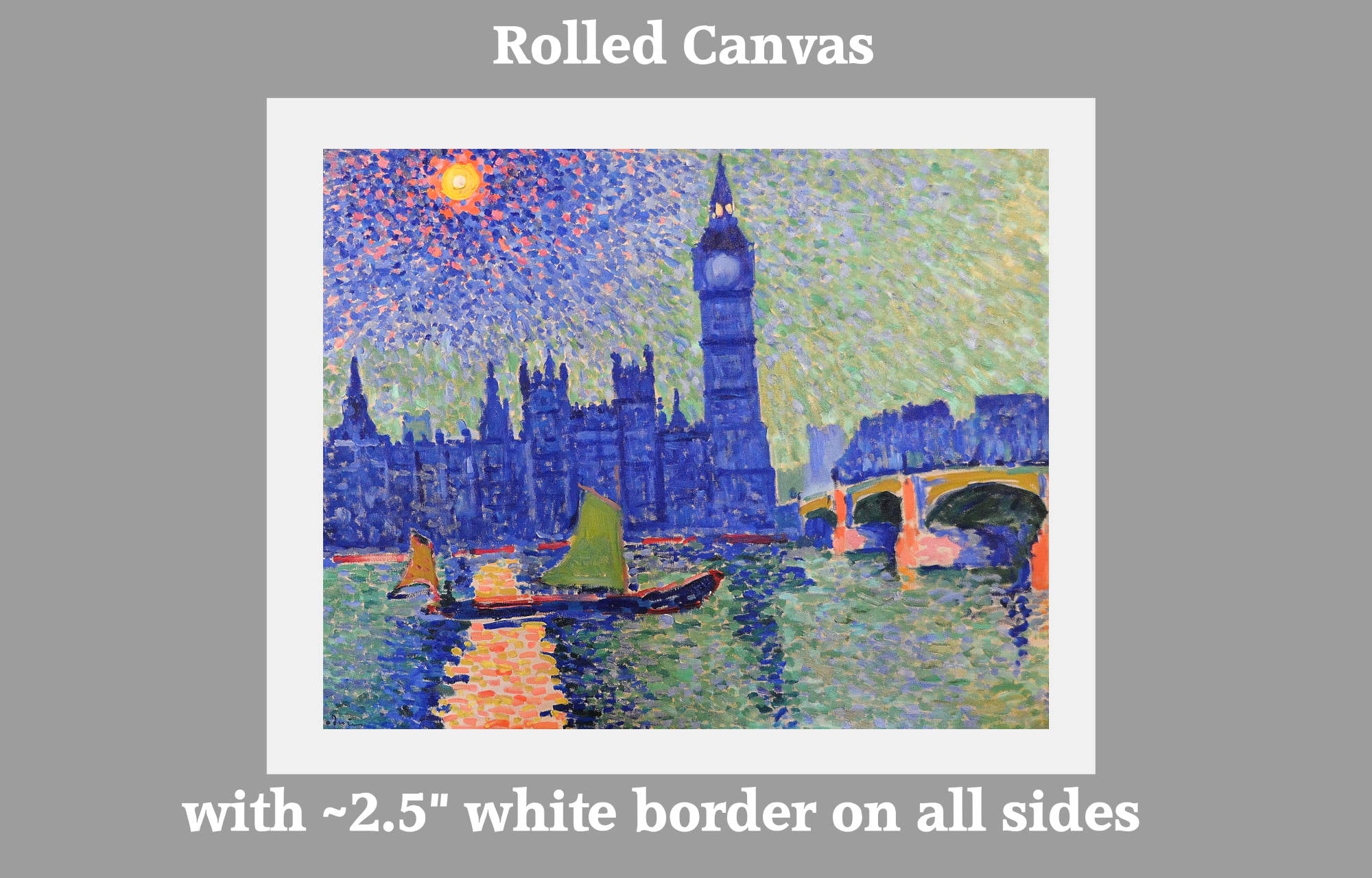
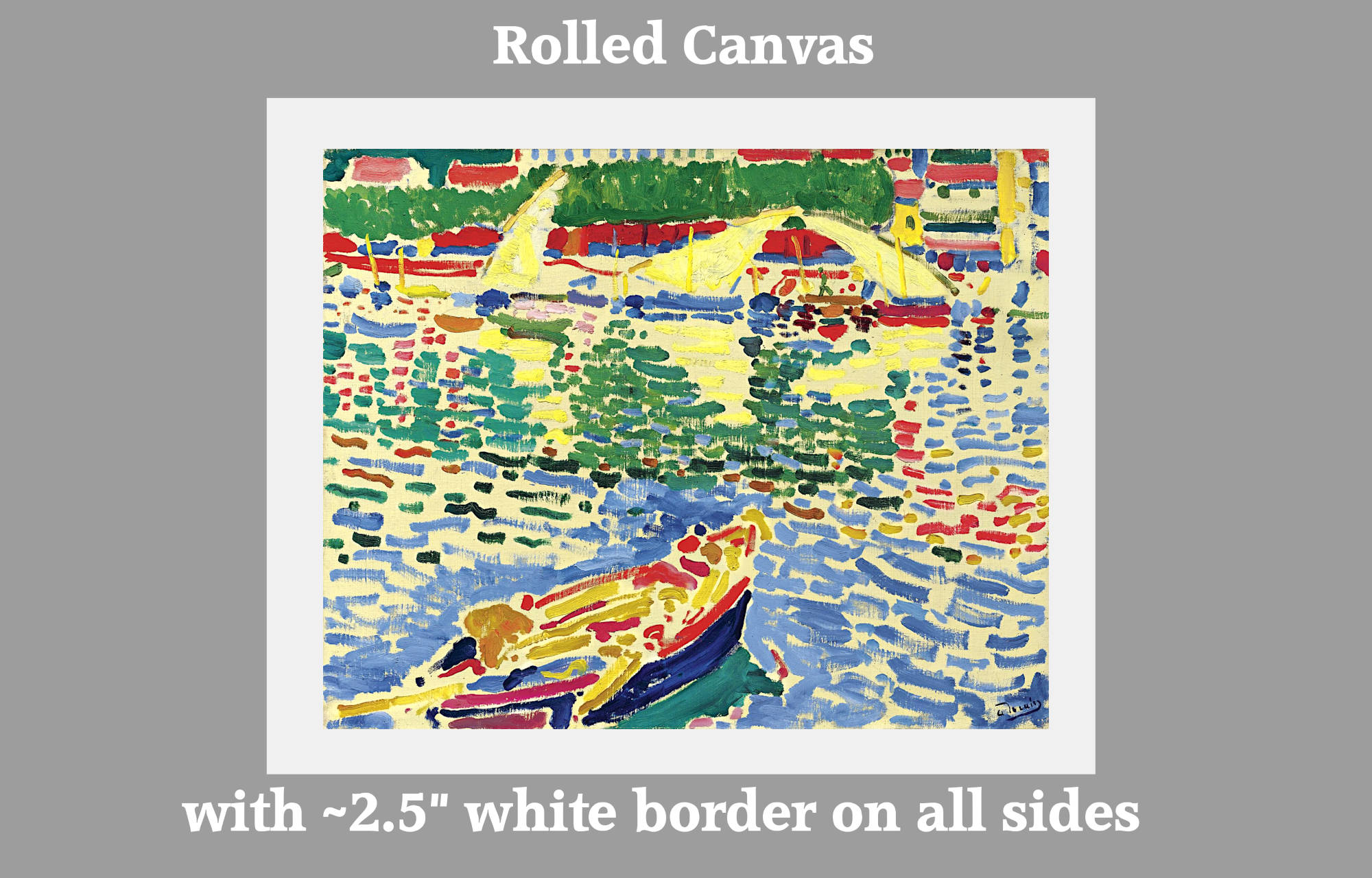
Rolled canvas options have an additional white border of approximately 2.5 inches (7cm) on all 4 sides to aid stretching.
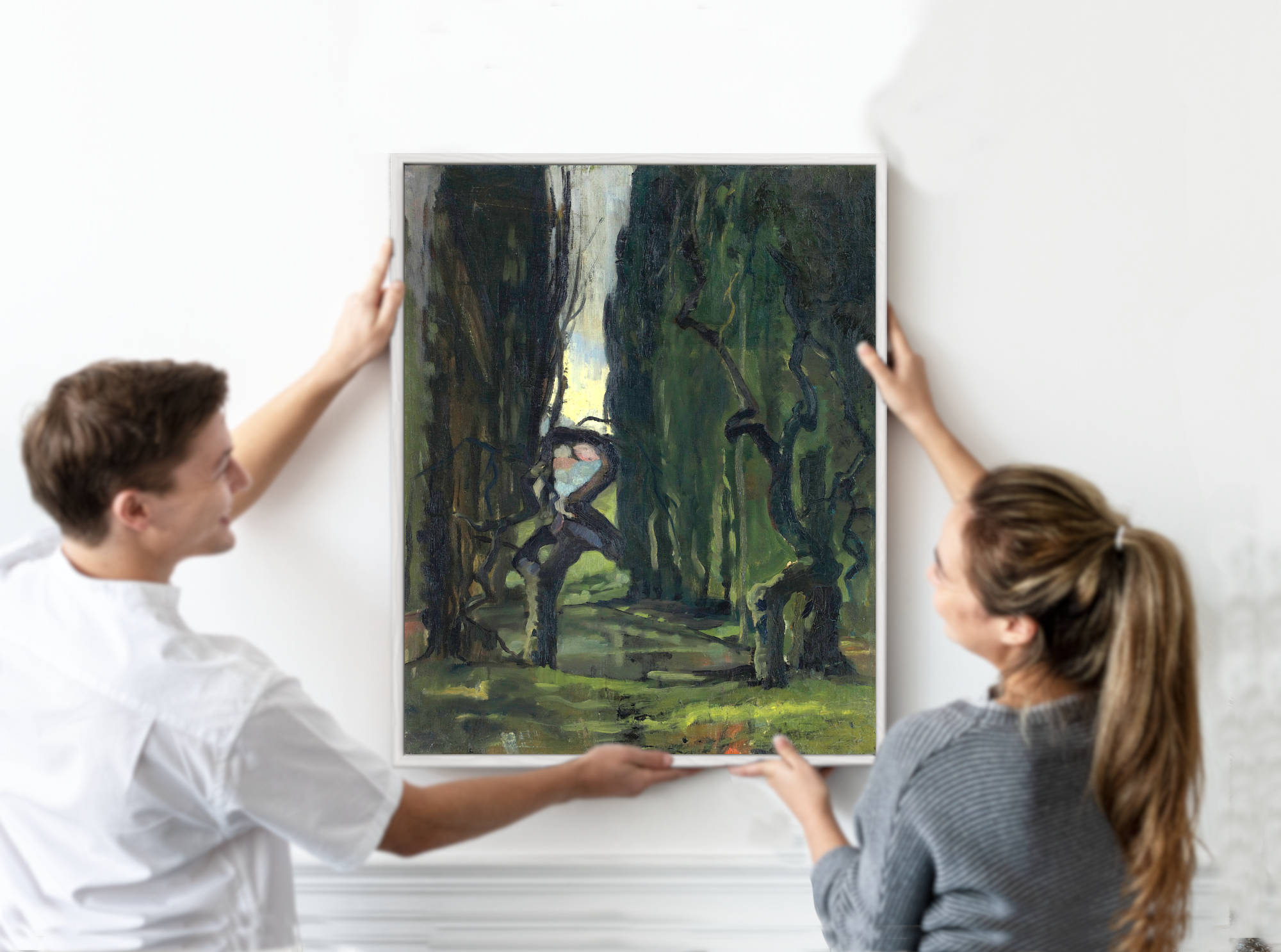
Ready to hang canvas panels are stretched on 1.5 inch deep solid pine frames from sustainable forestry sources. The image is mirrored on all 4 sides to give an aesthetically pleasing finish.
Why not have us gift wrap your order and attach a personalised message to the recipient. Available for all orders. Each order is hand wrapped in high quality gift wrap with meatllic ribbon and bow. Your personalised message is printed on a card which is included with your order.
Have your hand wrapped gift delivered directly to the recipient.
Full tracking and insurance included with every order.
Please note design may vary depending upon availability
Just purchase the gift wrap option HERE
We have a wide range of frames in standard sizes and we also make custom size frames.
To order a framed print:
1. select the print size you would like along with the print materials (matte paper, fine art paper).
2. Add your print choice to the basket.
3. Choose from our range of frames
4. Select the same size as the print you have added to your basket. If the frame size you want is not listed please contact us
5. Choose from the mount or no-mount option
6. Add your frame choice to the basket
7. Proceed to checkout.
Why Choose GalleryThane?
- Printed and framed in-house
- Free UK delivery
- Free EU and USA delivery on orders over £200
- Tracking and insurance included in every order
- Fast 1-3 day dispatch
- Gift wrapping service available
- Gallery quality materials
- Sustainable, eco-friendly packaging
- Great customer support
Explore related collections

What makes our Prints and Canvas Panels so special

Latest Giclee Printing Technology
We have invested in the latest wide format print technology to produce museum quality giclee prints utilising the highest quality pigment inks to give outstanding colour reproduction.

Museum Quality Archival Fine Art Papers
We print on the finest quality fine art papers with textured, smooth and lustre finishes for prints which last a lifetime.
From aceo miniatures to 40x80 inch large format, every print has our lifetime quality guaranteee.

Solid Wood Frames, Cotton Canvas
All of the wood for our canvas panels and frames is responsibly sourced from manages forests. Our cotton canvas is completely seedless for the highest quality reproduction possible.

Have Your Gift Wrapped


Choose a Custom Frame
Popular Collections


EU Representative
Manufacturer
LucasAbstract t/a GalleryThane
15 Campion Way, Bingham NG13 8TR UK
sales@gallerythane.com
EU Authorised Representative
Westwood Sourcing
Fellenoordstraat 52, Unit 2.38
4811 TJ Breda, Netherlands
info@westwoodsourcing.com