Katsushika Hokusai's Thirty-Six Views of Mount Fuji is one of the defining achievements of Japanese ukiyo-e landscape printmaking. Created in the early 1830s, the series follows Mount Fuji through changing seasons, weather, cities, roads, rivers, coastlines and scenes of everyday work. Its best-known designs include The Great Wave off Kanagawa, Red Fuji and Thunderstorm Beneath the Summit, but the complete project is far richer than its most famous images suggest.
This guide brings together all 46 designs associated with the series, with each work linked directly to the corresponding GalleryThane product page. If you want to browse the works as prints rather than read the complete guide, visit the dedicated Thirty-Six Views of Mount Fuji prints collection. For Hokusai's wider body of work, including subjects beyond the Fuji series, explore the Katsushika Hokusai prints collection.
What Is Hokusai's Thirty-Six Views of Mount Fuji?
Thirty-Six Views of Mount Fuji, or Fugaku Sanjūrokkei, is a series of colour woodblock prints designed by Katsushika Hokusai (1760–1849) during the Edo period. The prints are generally dated to around 1830–32 and show Fuji from numerous locations and viewpoints.
Hokusai does not simply repeat the same mountain against different backgrounds. He continually reinvents the relationship between Fuji and the world around it. In one design the mountain fills the composition; in another it becomes a tiny triangle seen through a bridge, between trees, beyond a shop roof or inside the circular opening of a barrel. Sometimes the foreground is dominated by waves, storms or snow. Elsewhere Hokusai concentrates on fishermen, craftsmen, farmers, travellers and city life.
Why Are There 46 Prints in a Series Called Thirty-Six Views?
The title refers to the original conception of thirty-six designs. The series proved so successful that the publisher expanded it with ten additional views, creating the 46 prints now regarded as the complete set. The original title was retained, which is why a complete Thirty-Six Views of Mount Fuji collection contains more than thirty-six images.
The first thirty-six and the ten later additions are separated below so the structure of the complete series is easy to follow.
Why Was Mount Fuji So Important to Hokusai?
Mount Fuji had long carried religious, cultural and poetic significance in Japan. Its unmistakable cone also gave Hokusai a perfect recurring form around which to build radically different compositions.
Fuji can represent permanence while the foreground records change. Waves break, lightning flashes, travellers move, workers labour and weather passes, yet the mountain remains. Hokusai repeatedly uses this contrast between enduring landscape and temporary human experience to give the series its extraordinary unity.
How Were Hokusai's Woodblock Prints Made?
The works in Thirty-Six Views of Mount Fuji are colour woodblock prints rather than paintings. Hokusai created the design, which was transferred to woodblocks and carved by specialist block cutters. Printers then inked the blocks and pressed them onto paper, using separate blocks where necessary for different colours.
This collaborative process allowed multiple impressions of each design to be produced. Variations between impressions can occur because of changes in colour, inking, wear to the blocks and later printing decisions.
For a broader introduction to the medium, read GalleryThane's guide to ukiyo-e and Japanese woodblock prints, or explore the wider Japanese art prints collection.
Prussian Blue and the Colour of the Fuji Series
One of the visual signatures of the series is Hokusai's extensive use of blue. The newly available synthetic pigment Prussian blue offered Japanese printmakers an intense and comparatively stable blue that could be used for water, sky, outlines and distant landscape.
Several early designs make such extensive use of blue that they are associated with aizuri-e, or predominantly blue prints. Hokusai's use of the pigment is particularly important in The Great Wave, but blue also helps unify many of the quieter river, lake and travel scenes.
Key Themes Across the Series
The 46 views repeatedly return to several ideas: the contrast between human activity and monumental nature; inventive framing devices; changing weather; roads and travel; work and commerce; rivers and boats; and the visual transformation of Fuji through distance and viewpoint.
This is why the series rewards looking beyond its most famous three images. Taken together, the prints form a remarkably varied portrait of Edo-period landscapes and everyday life, held together by the recurring presence of Mount Fuji.
The Original 36 Views of Mount Fuji

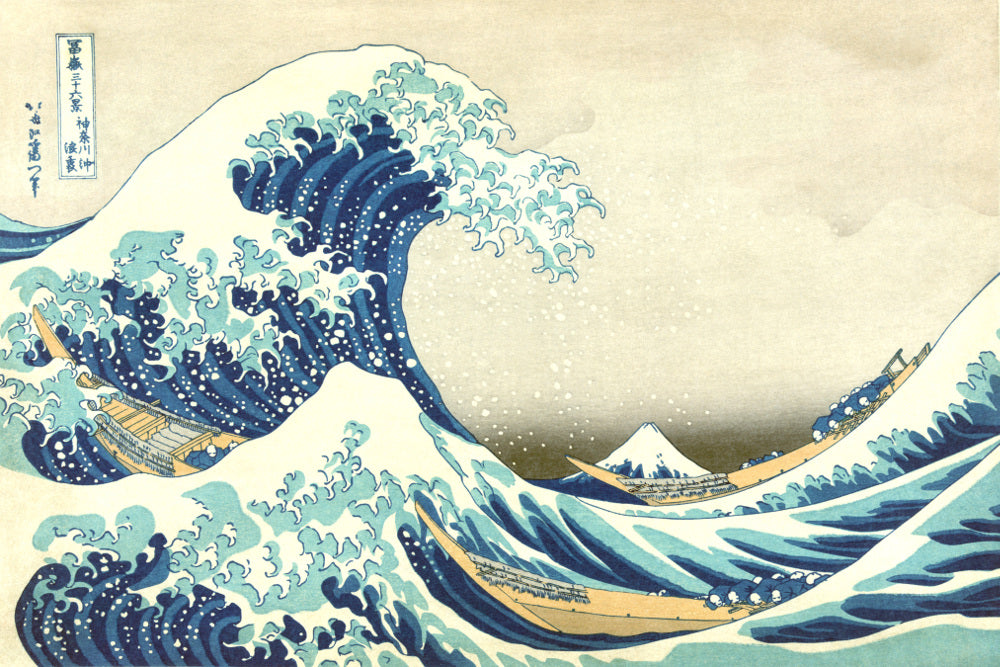
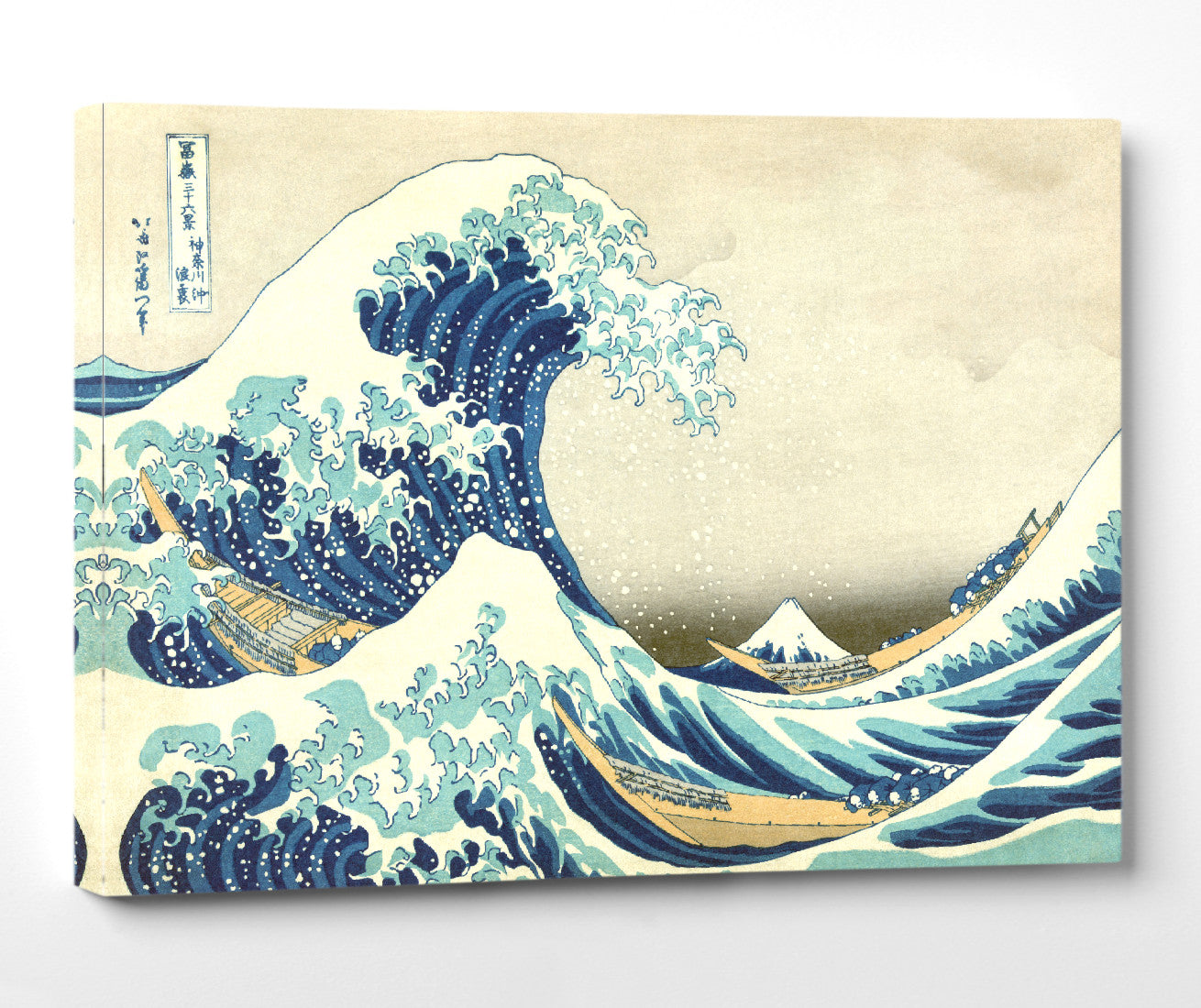
1. The Great Wave off Kanagawa
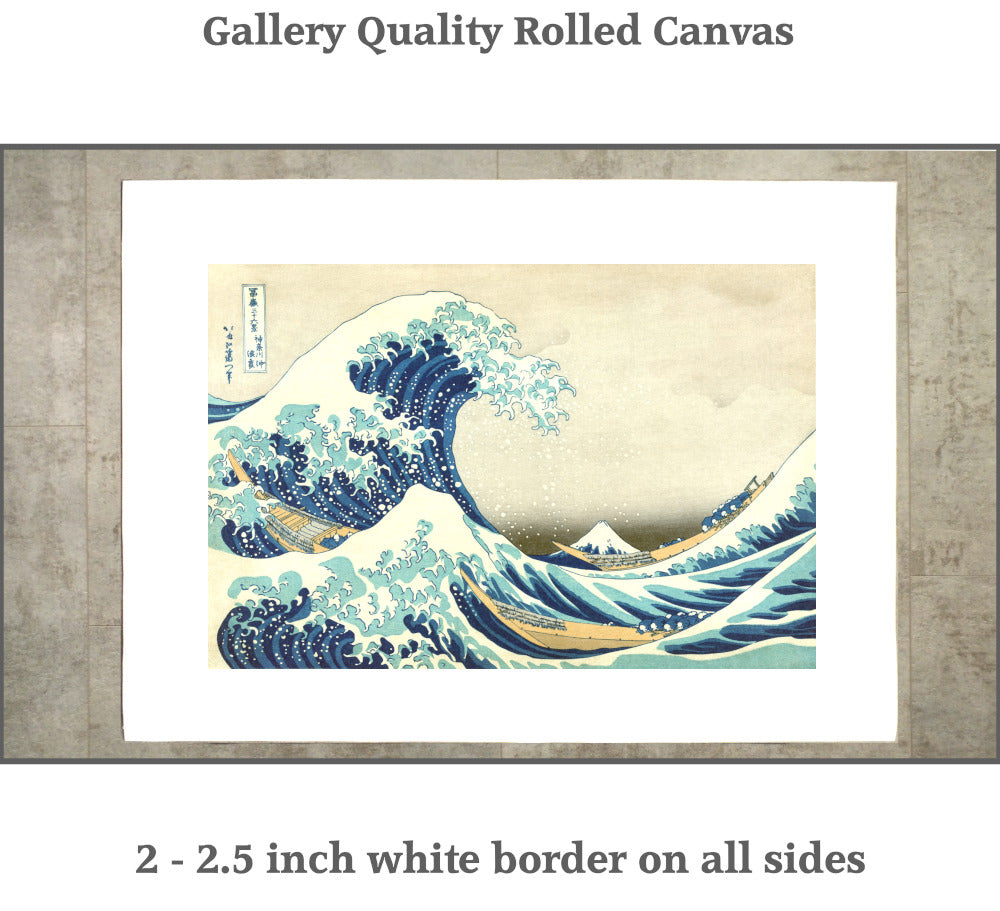
Hokusai sets three fast cargo boats beneath an immense curling wave while Mount Fuji appears unexpectedly small on the horizon. The dramatic contrast between the temporary force of the sea and the still mountain makes this the defining image of the series.

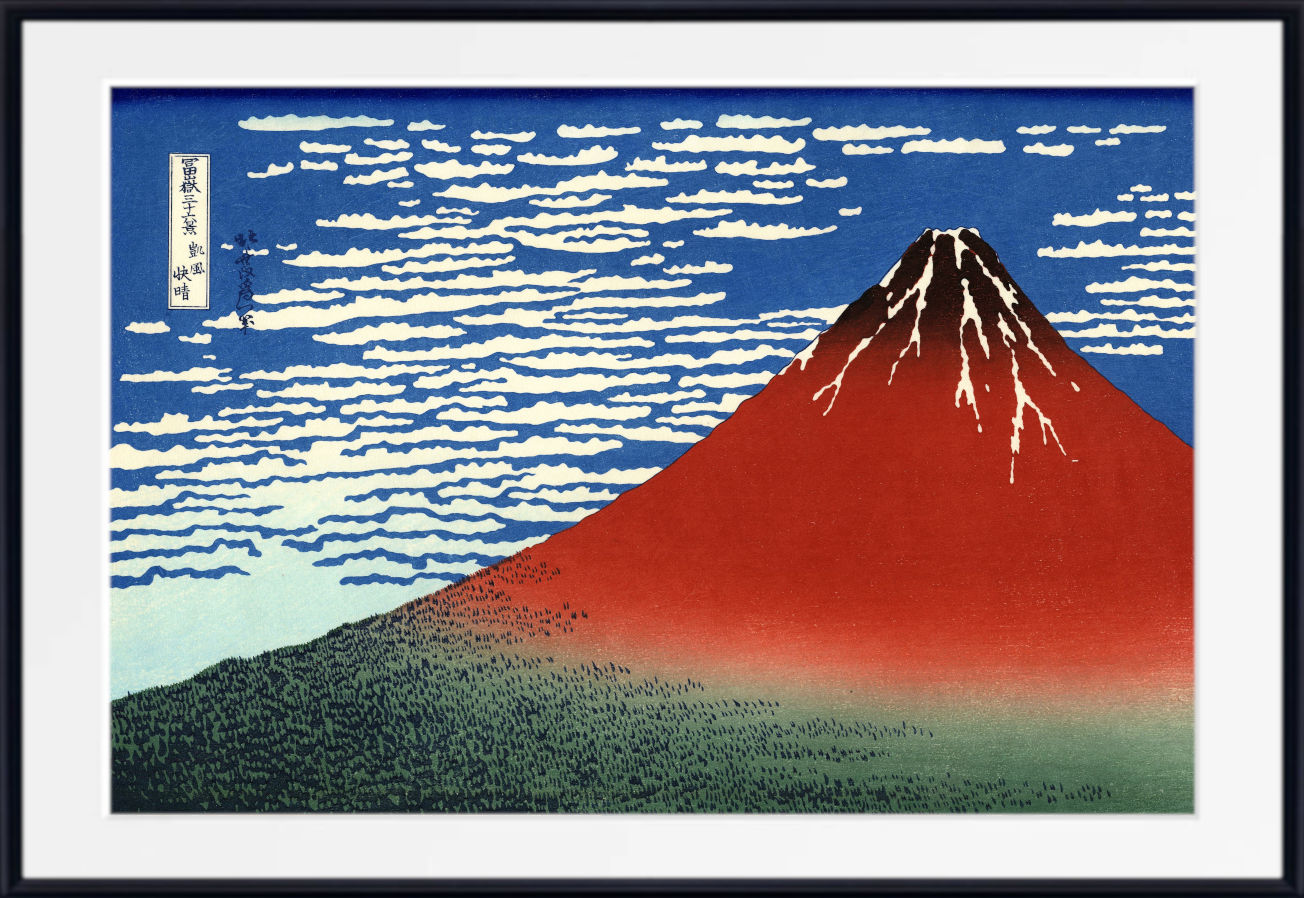
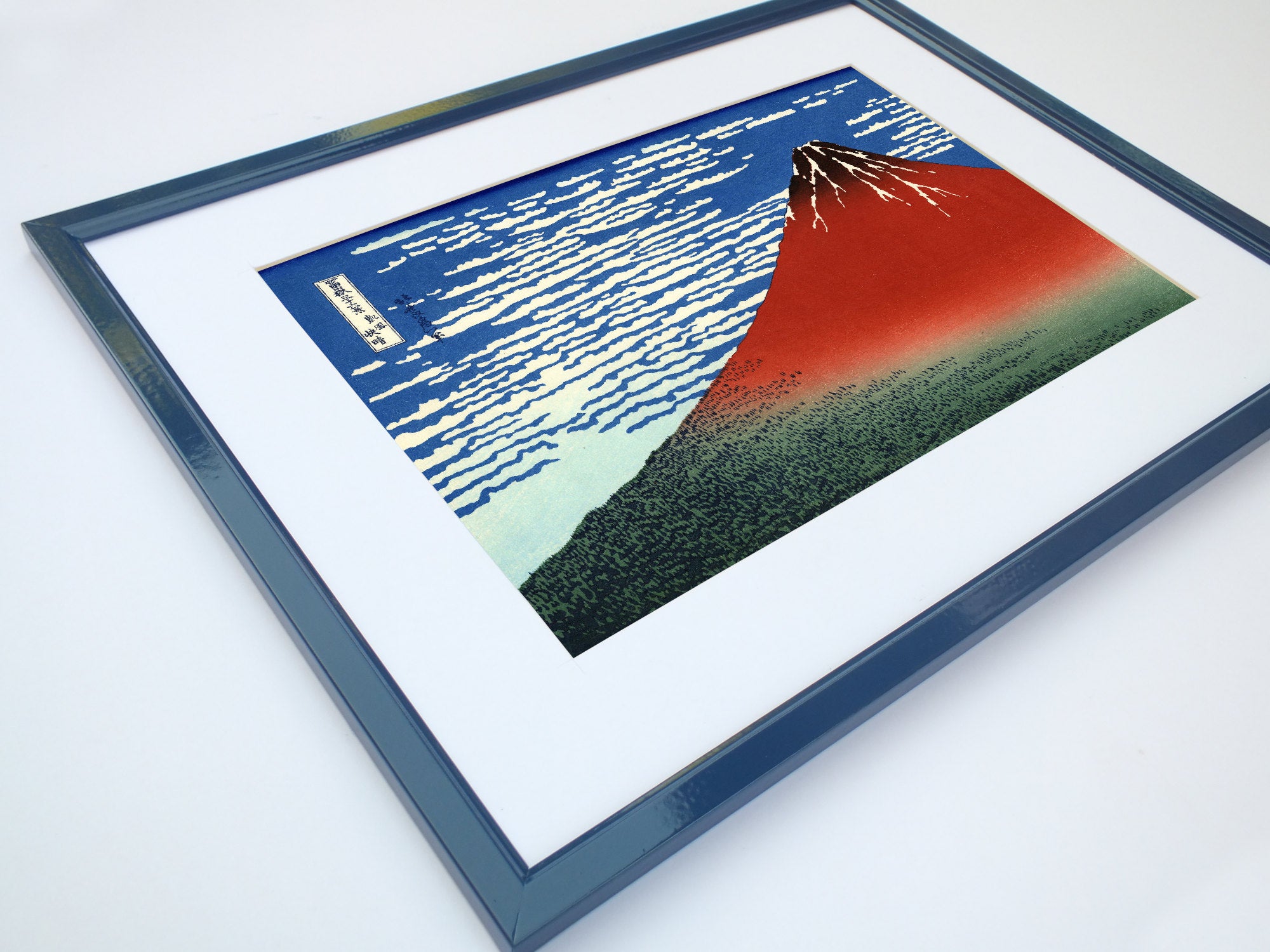
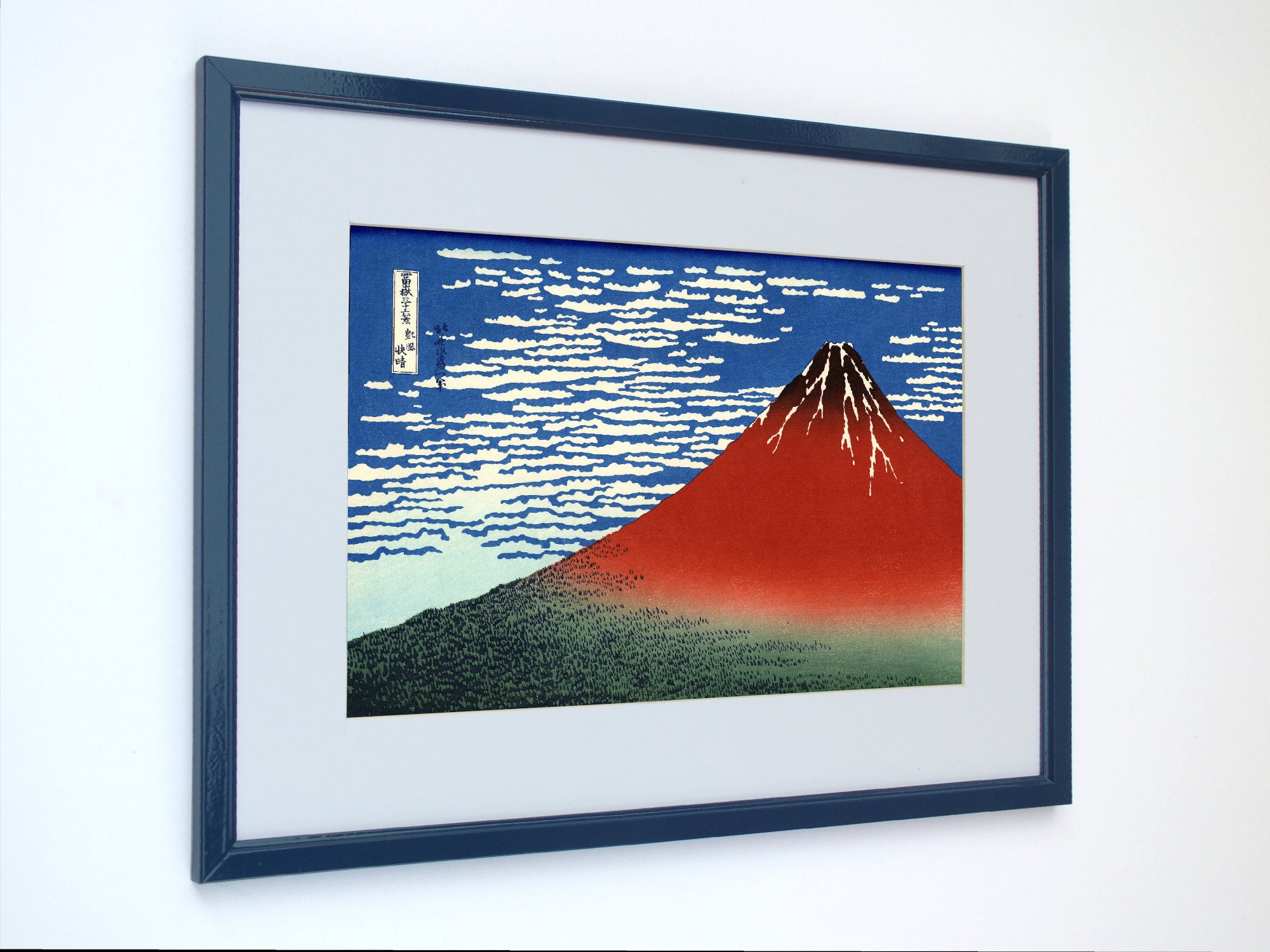
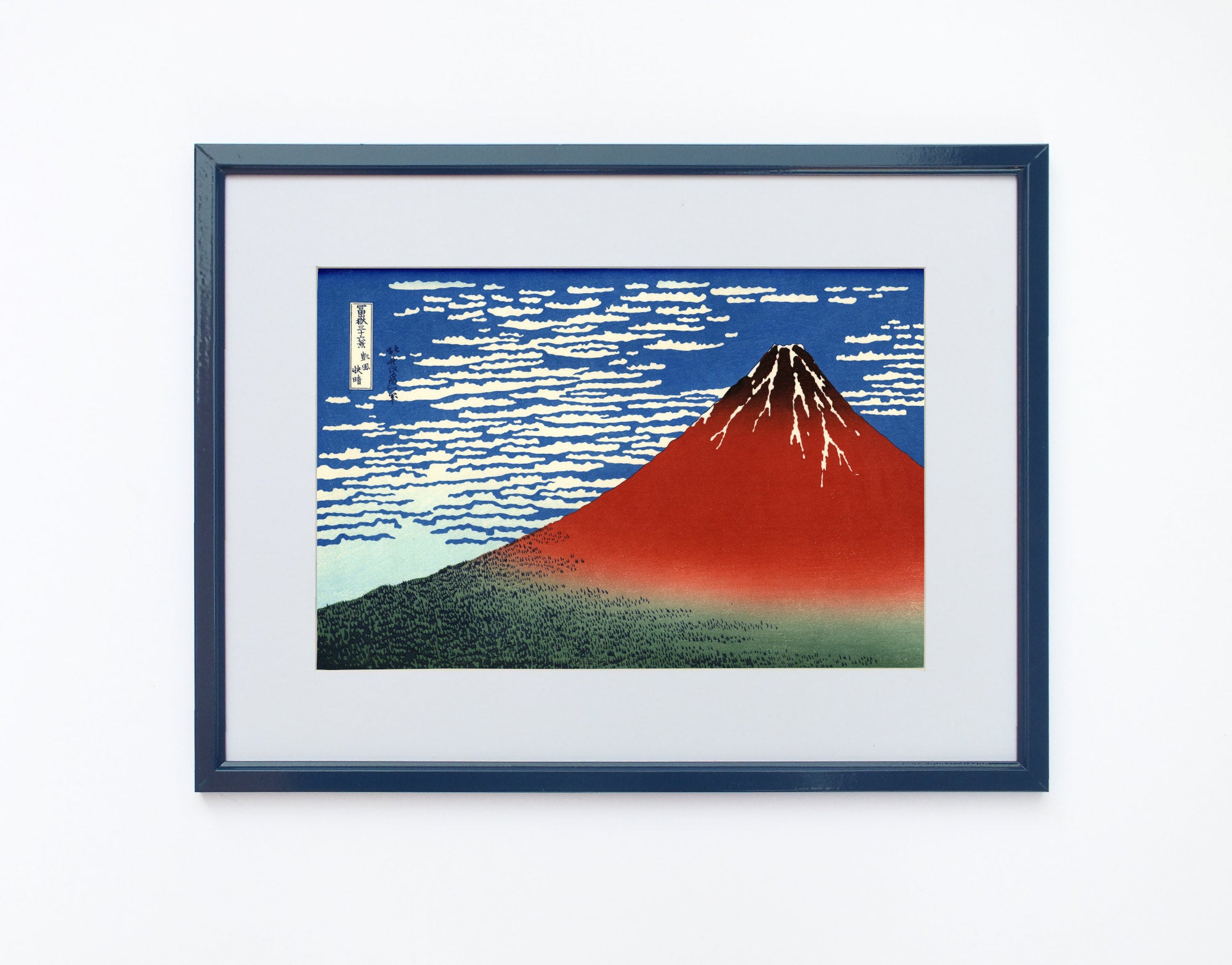
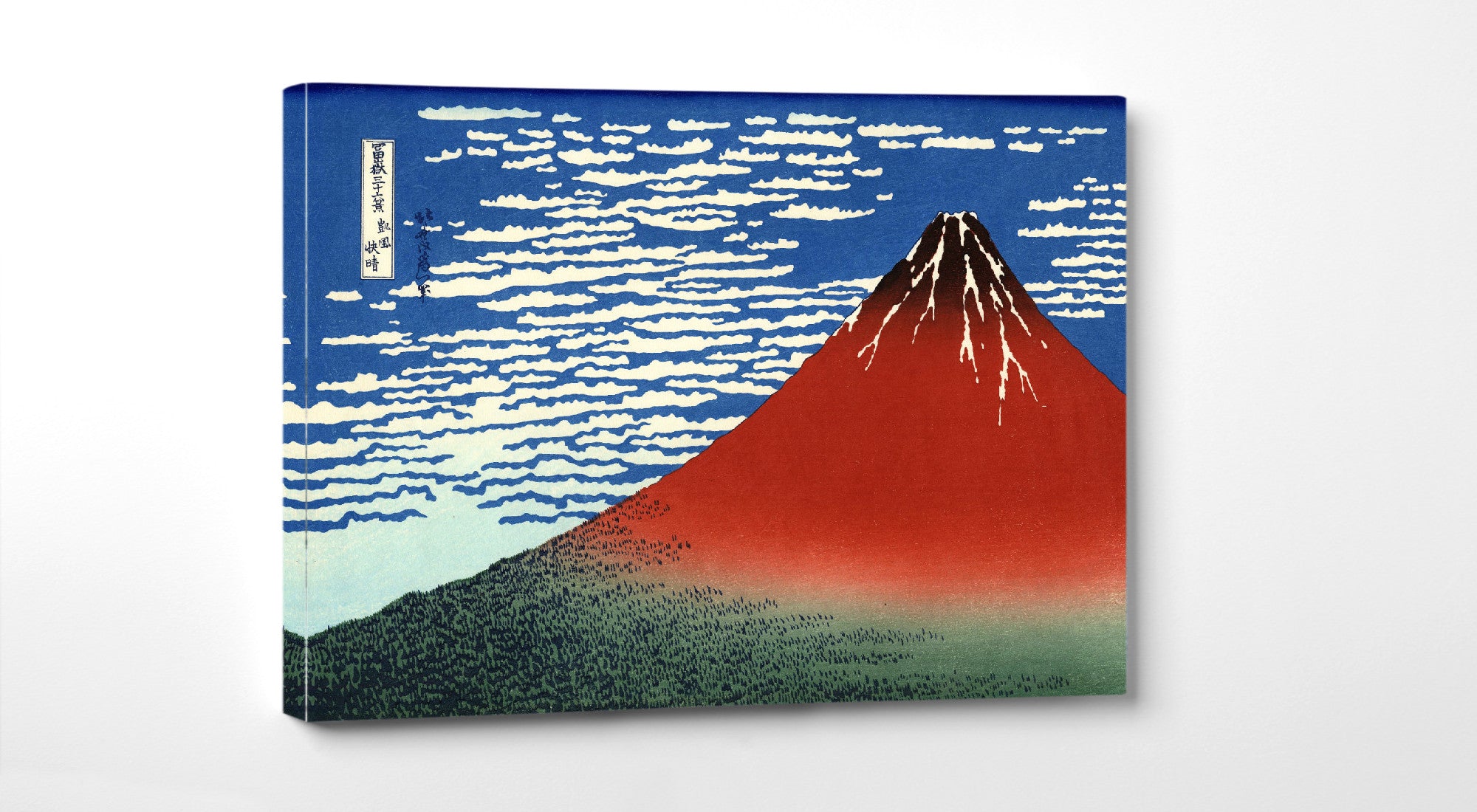
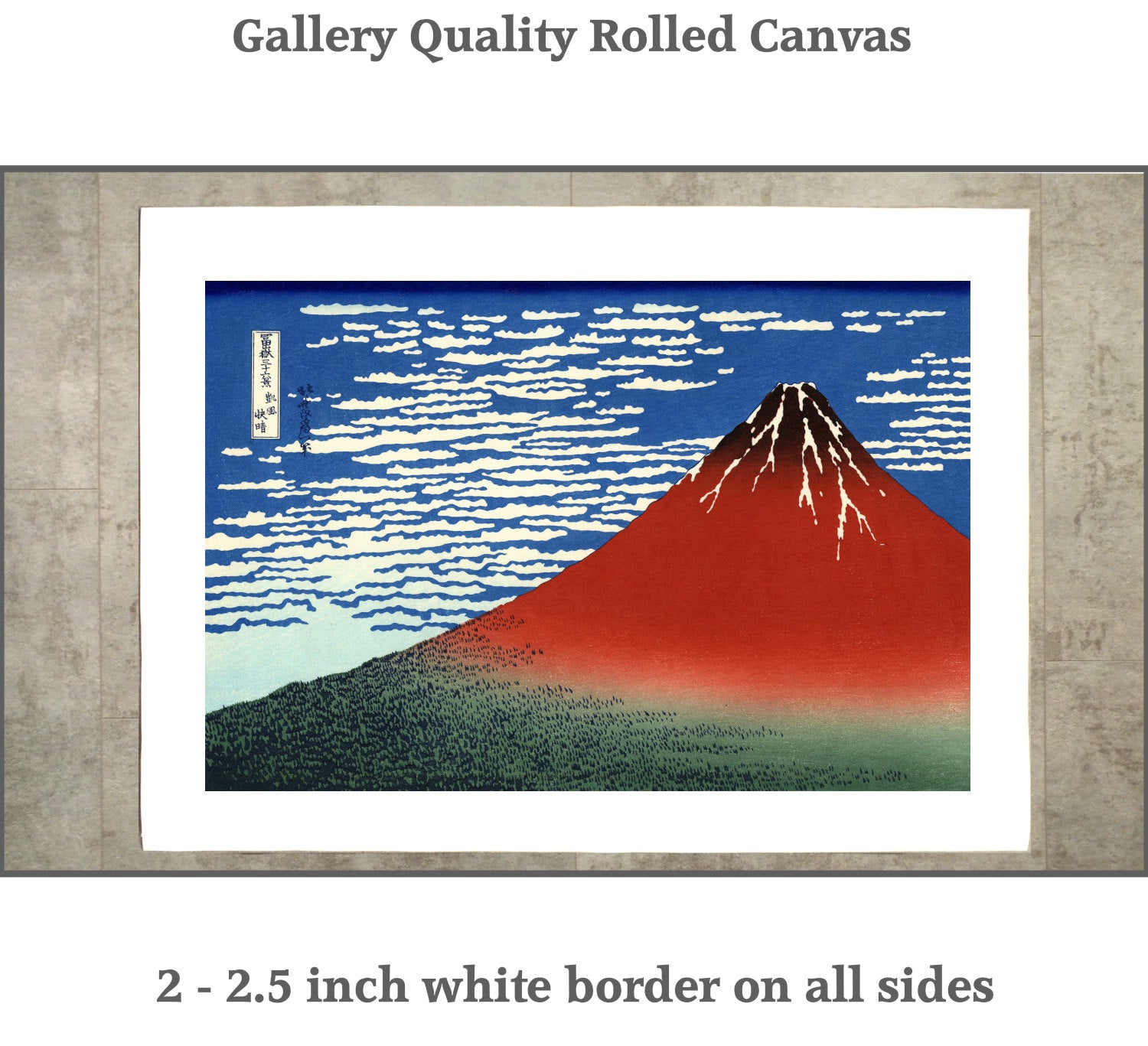
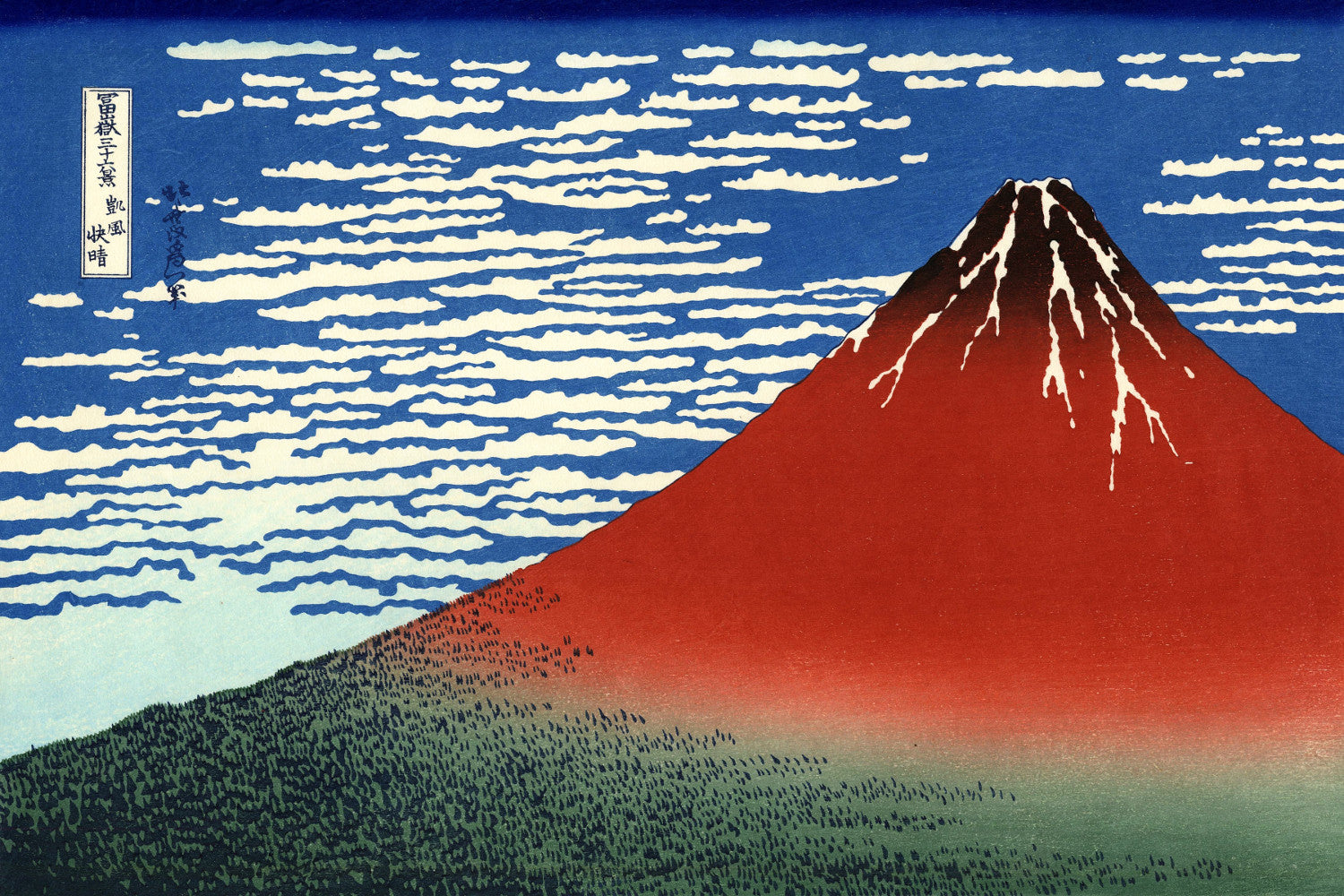
2. Red Fuji – South Wind, Clear Sky
Often called Red Fuji, this exceptionally spare composition lets the mountain dominate the sheet. Warm reddish slopes, a blue sky and bands of cloud turn Fuji itself into the entire subject.

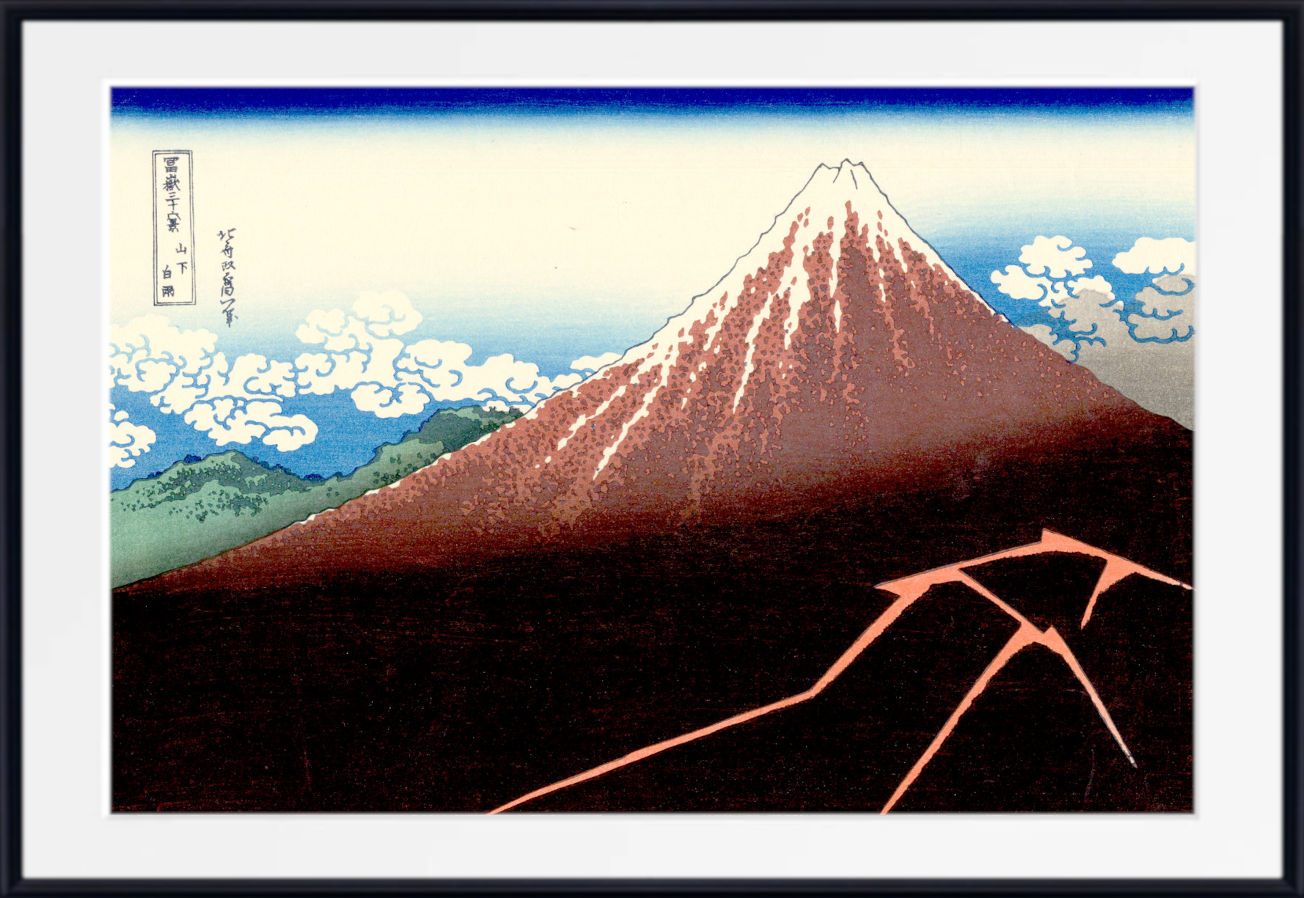
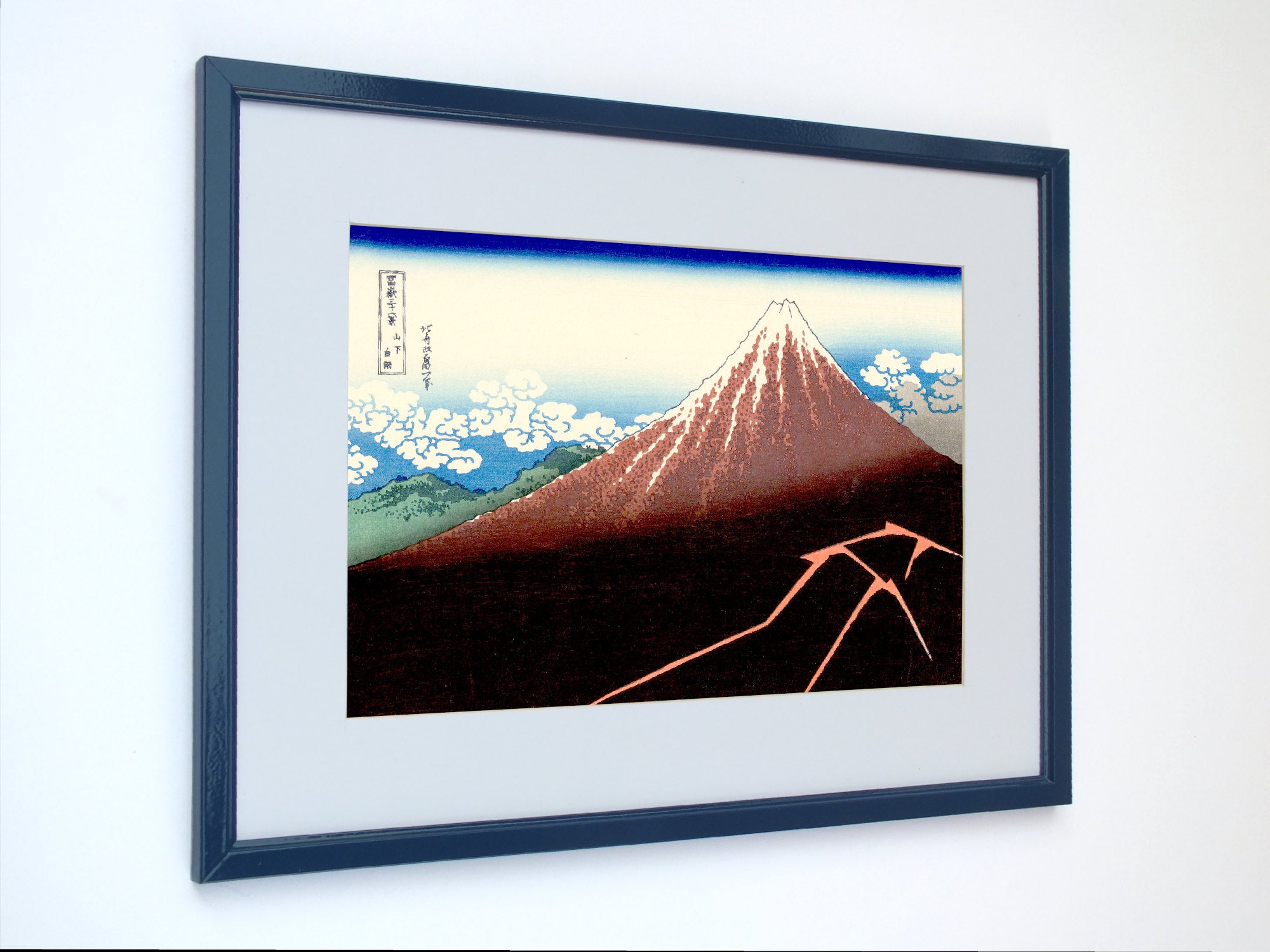
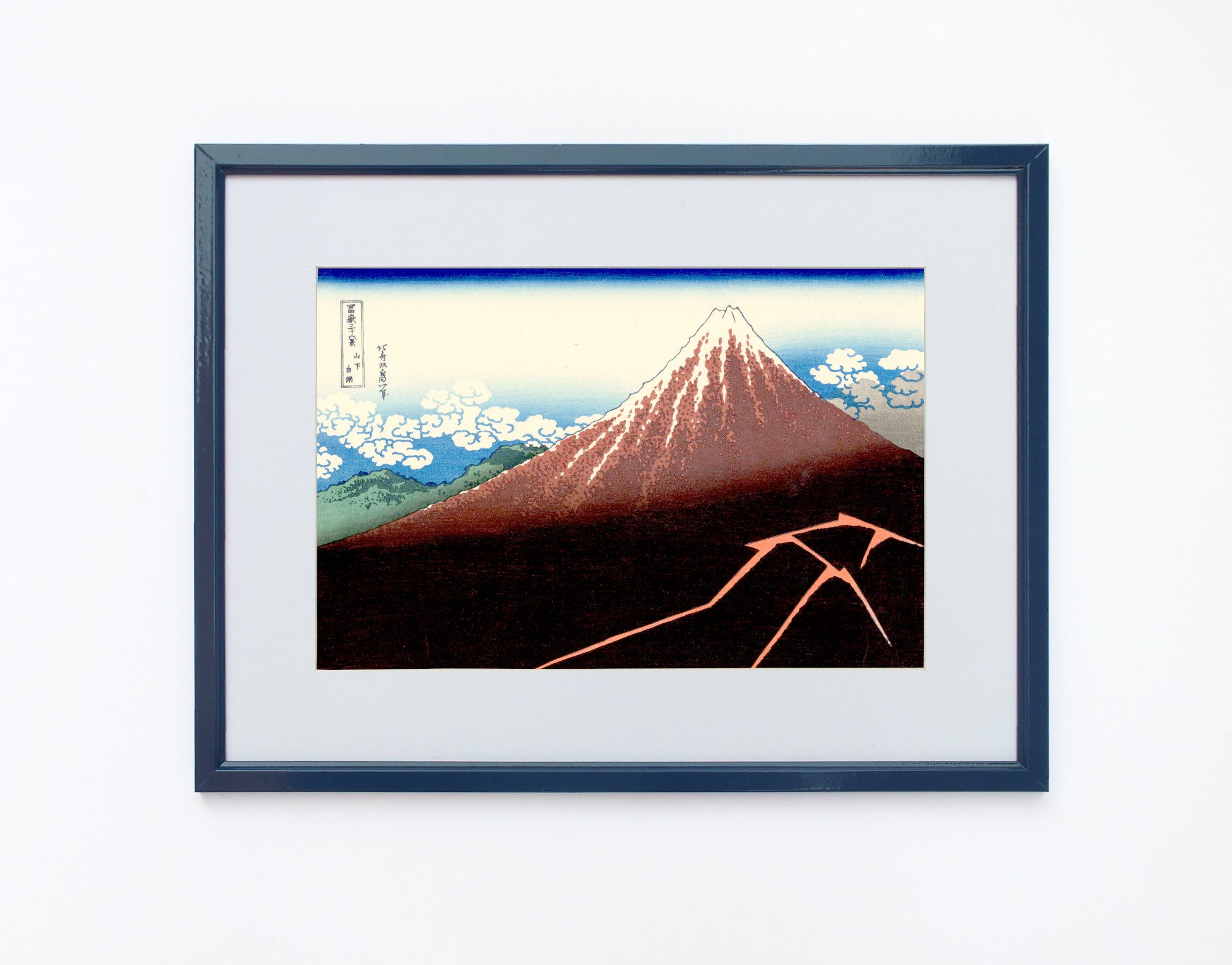
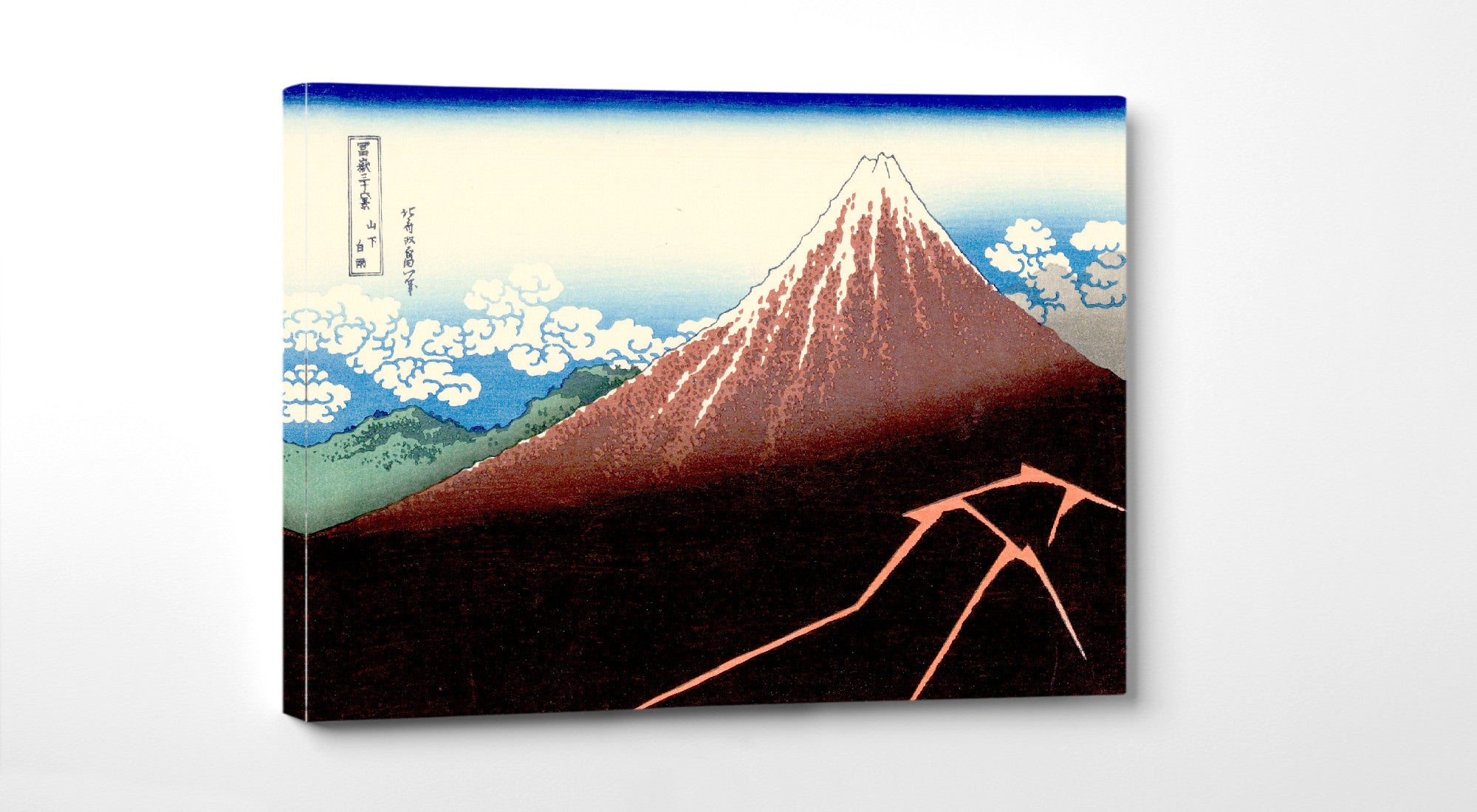
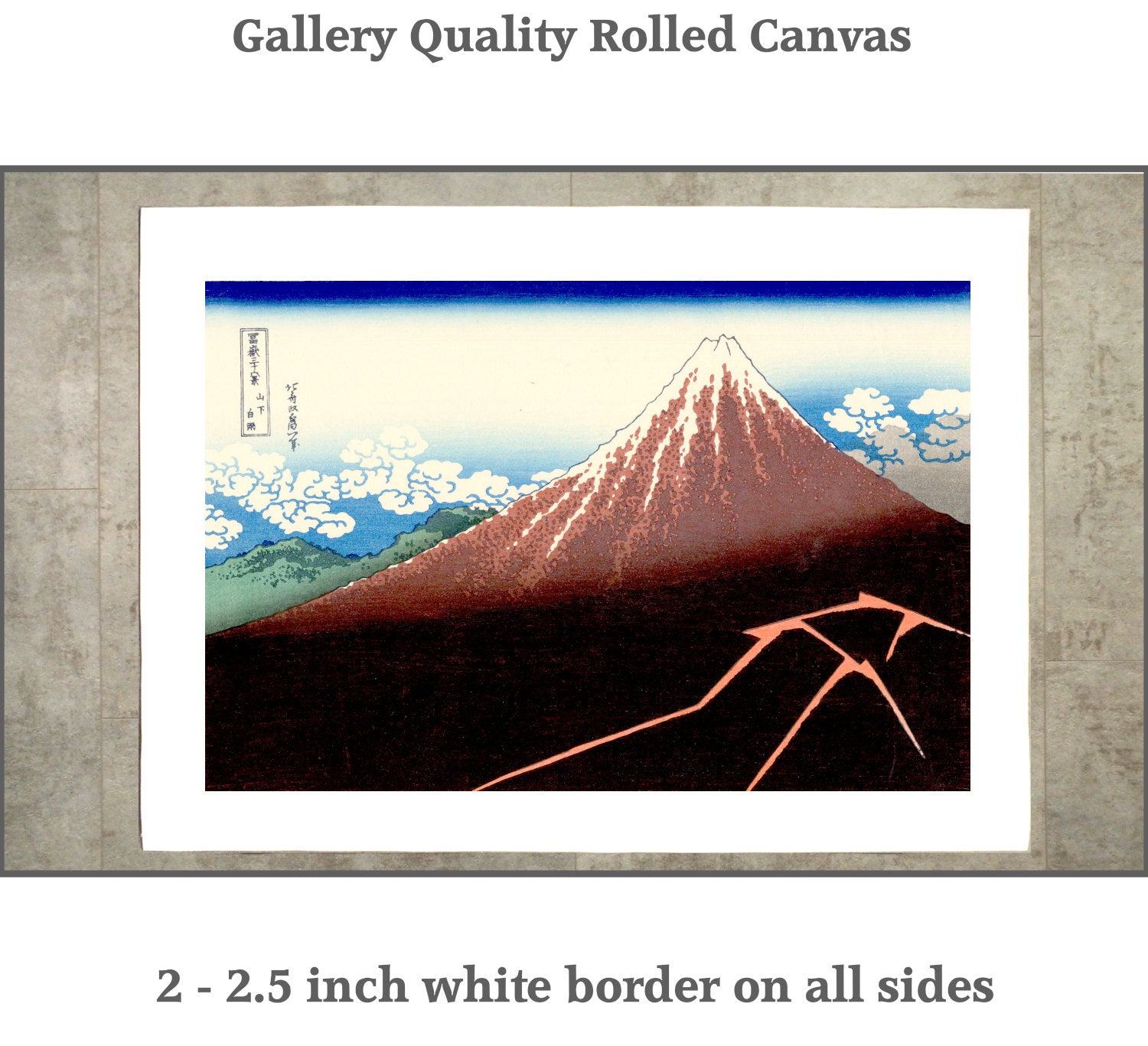
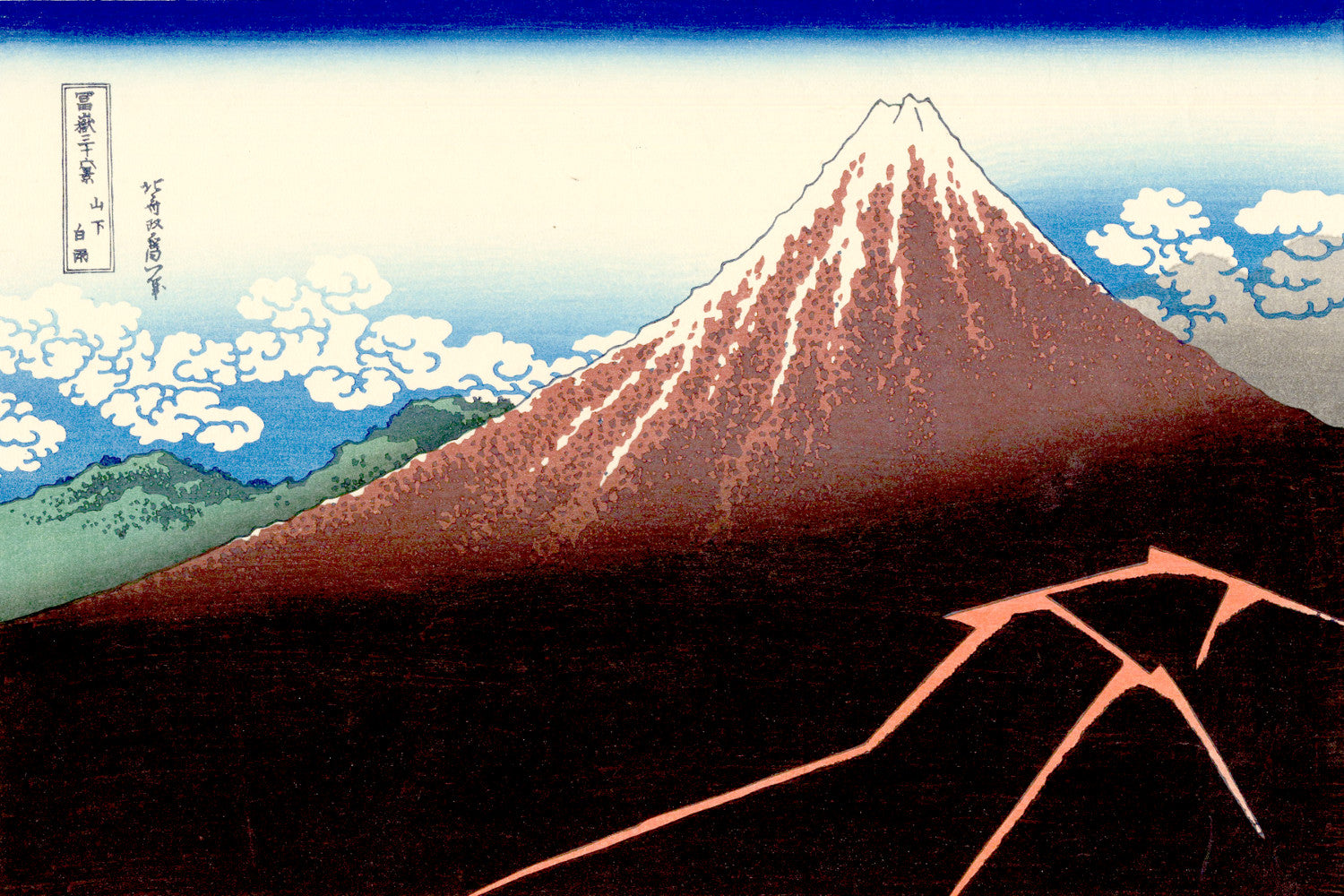
3. Thunderstorm Beneath the Summit
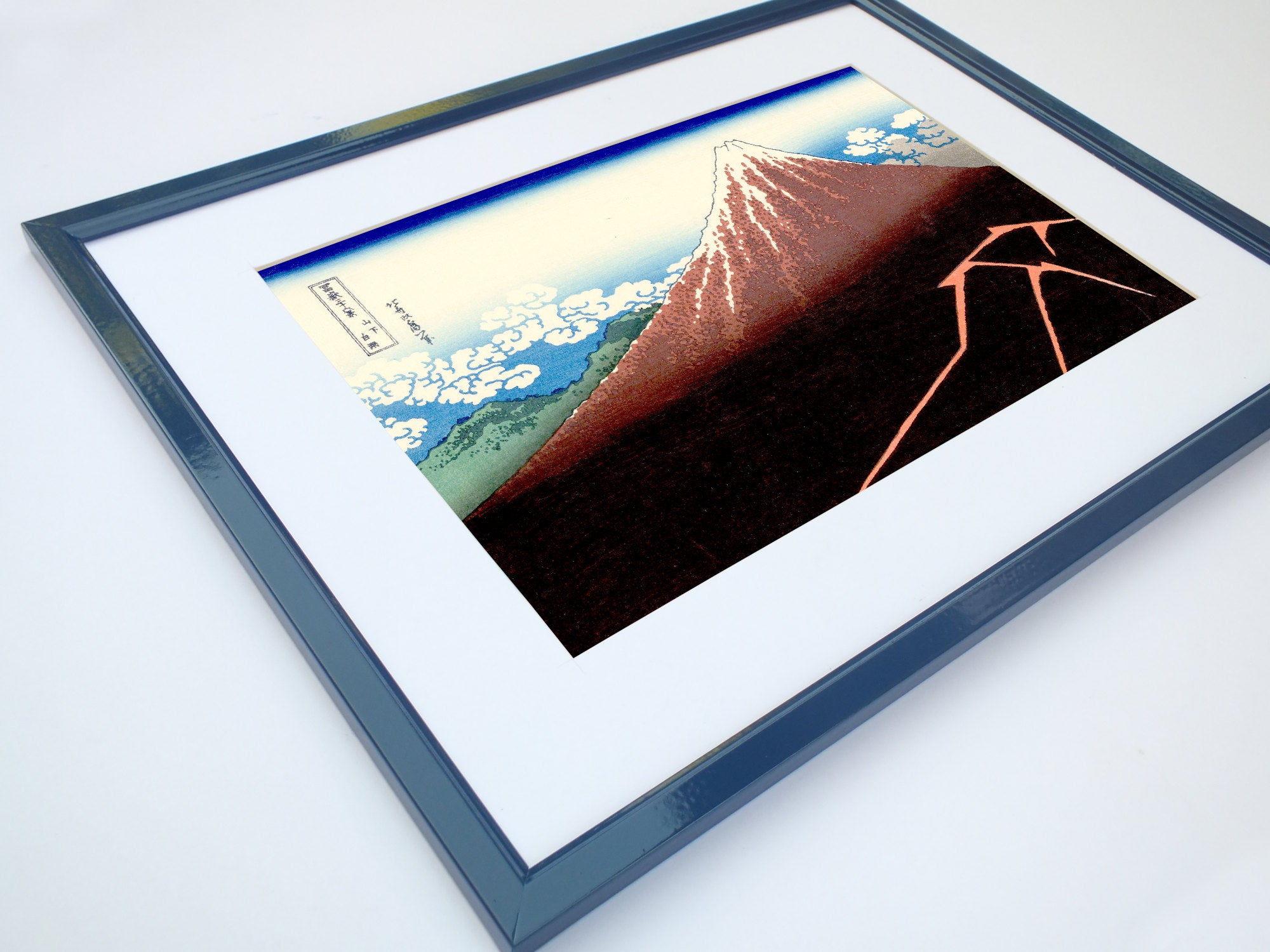
A jagged flash of lightning cuts across the dark lower slopes while Fuji's summit rises above the storm. The design is a powerful companion to Red Fuji, replacing calm weather with sudden atmospheric violence.

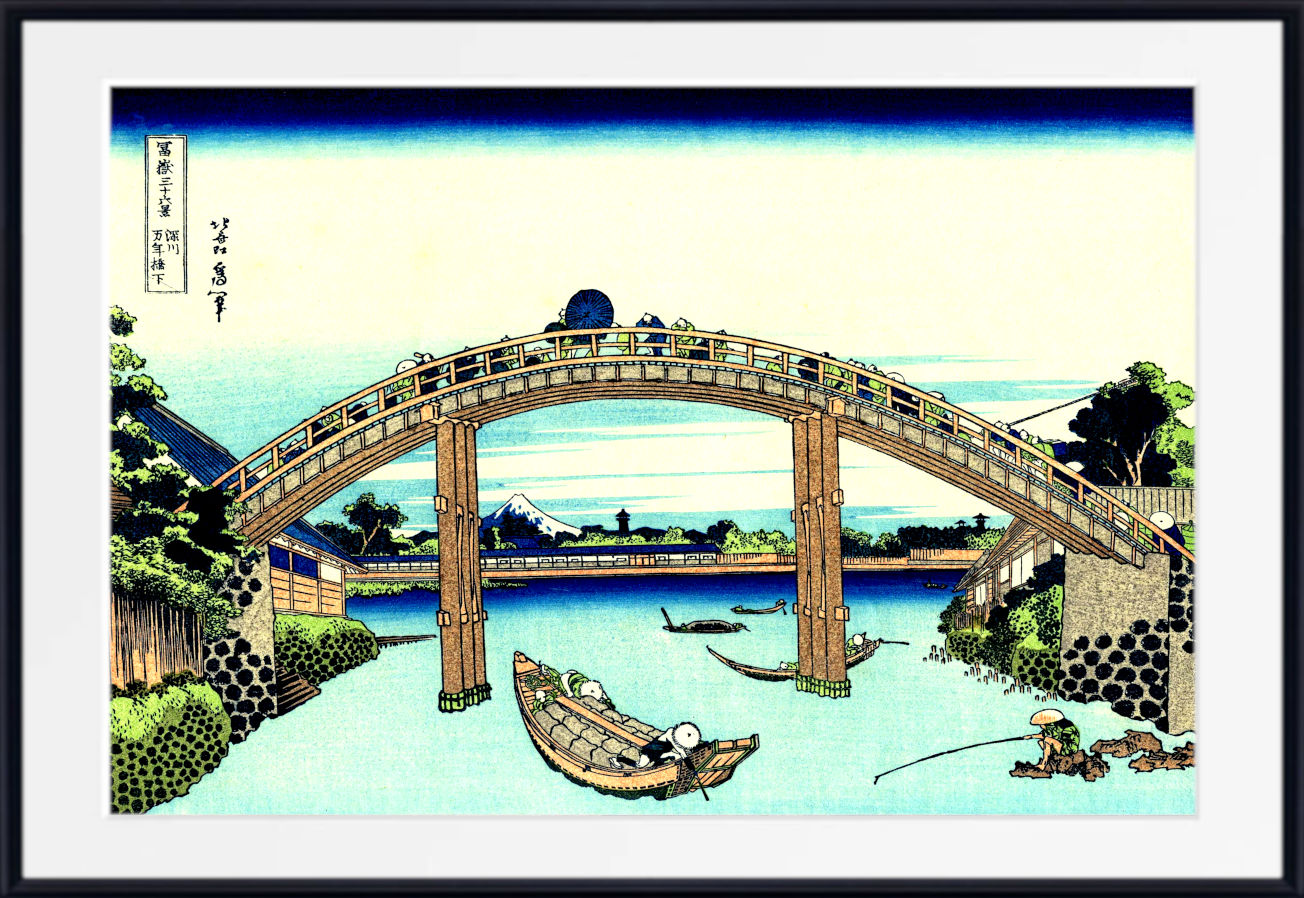
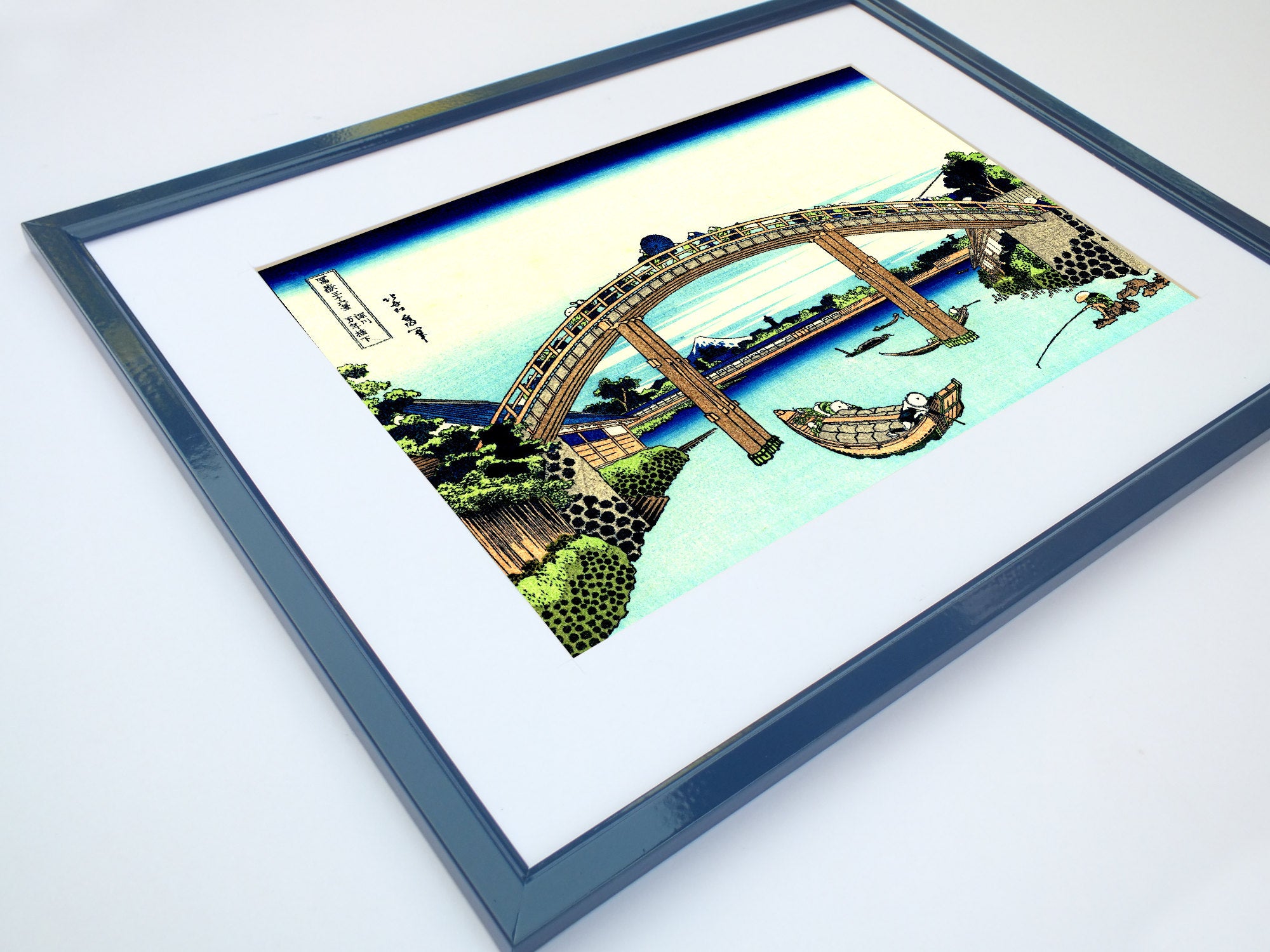
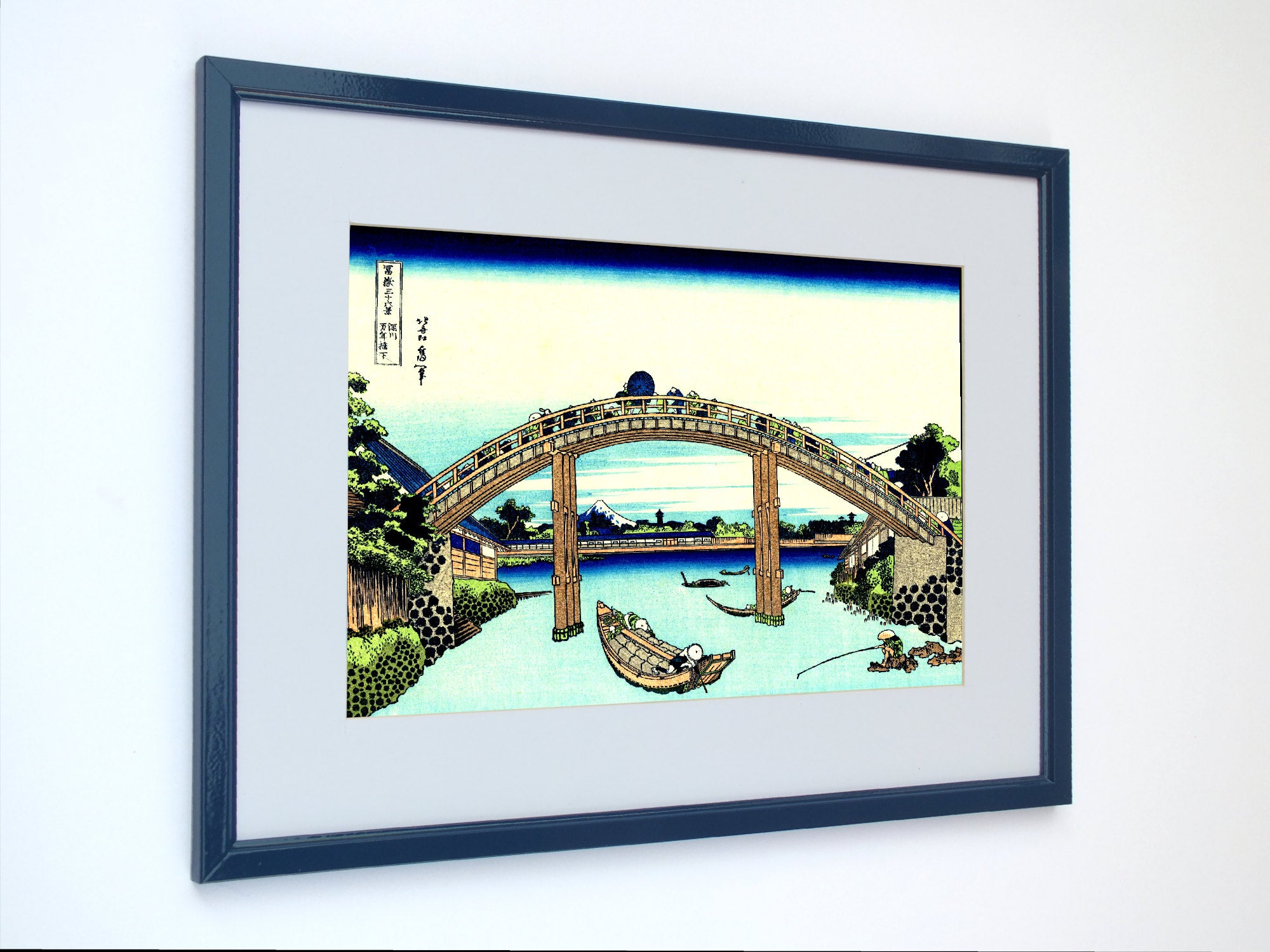
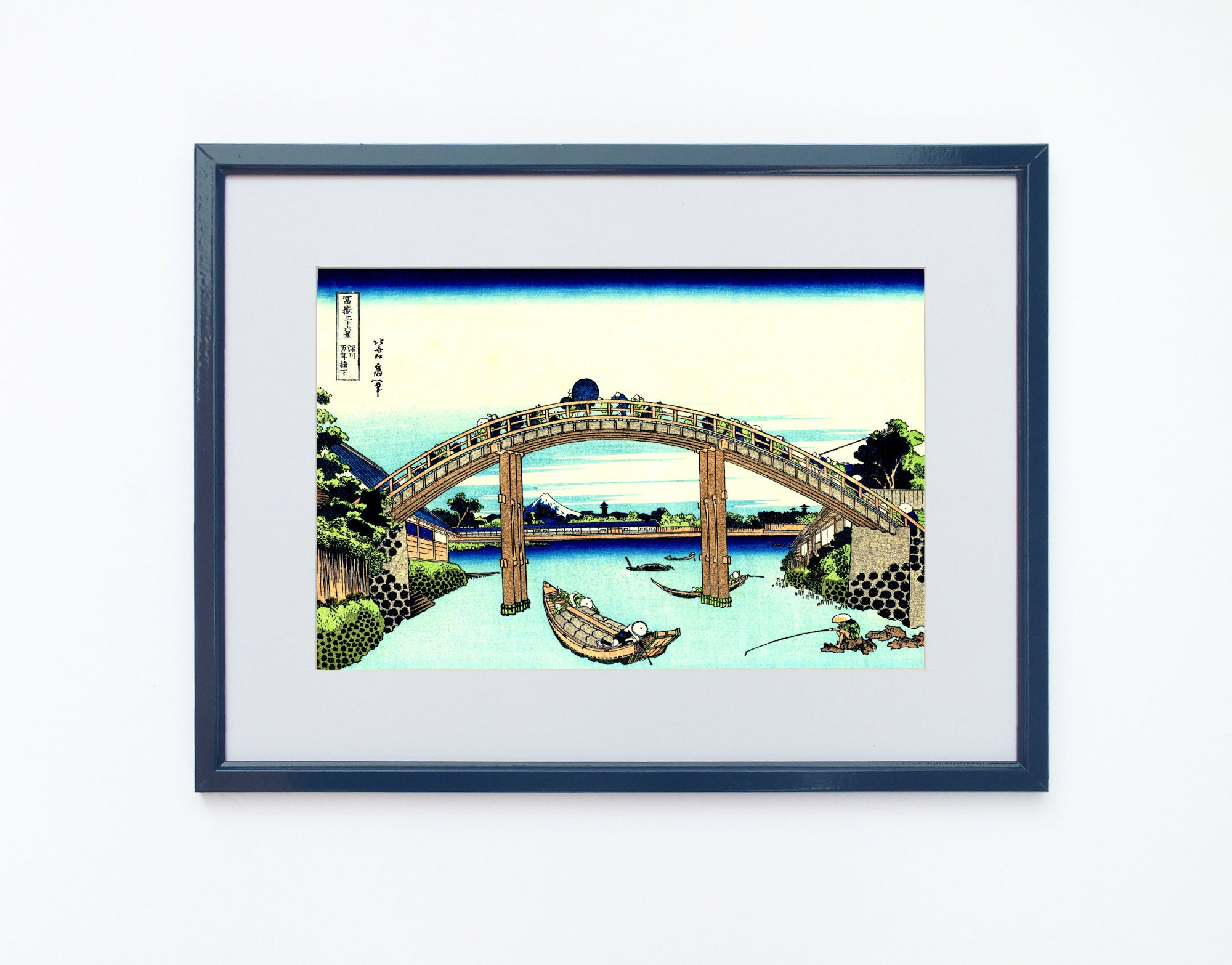
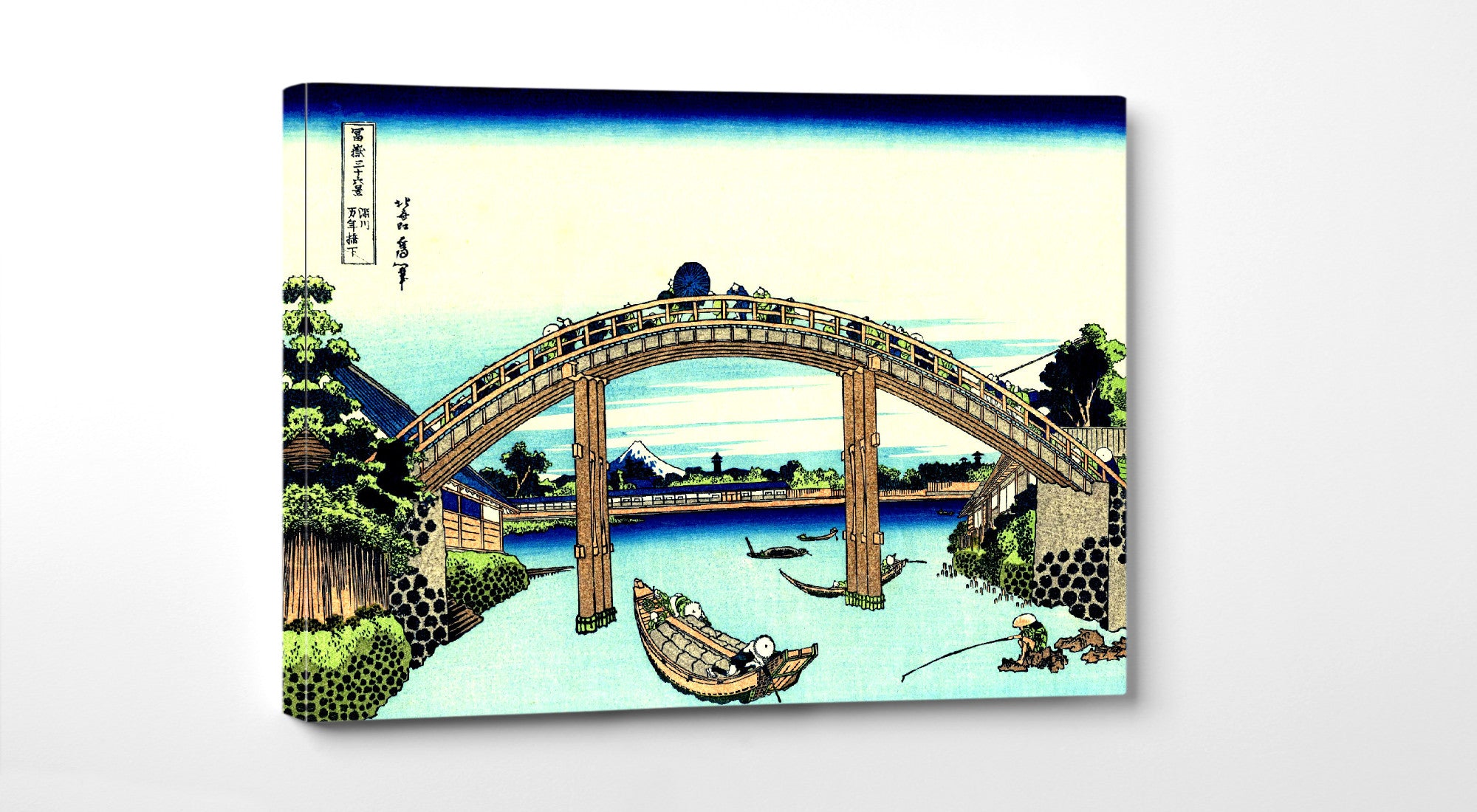
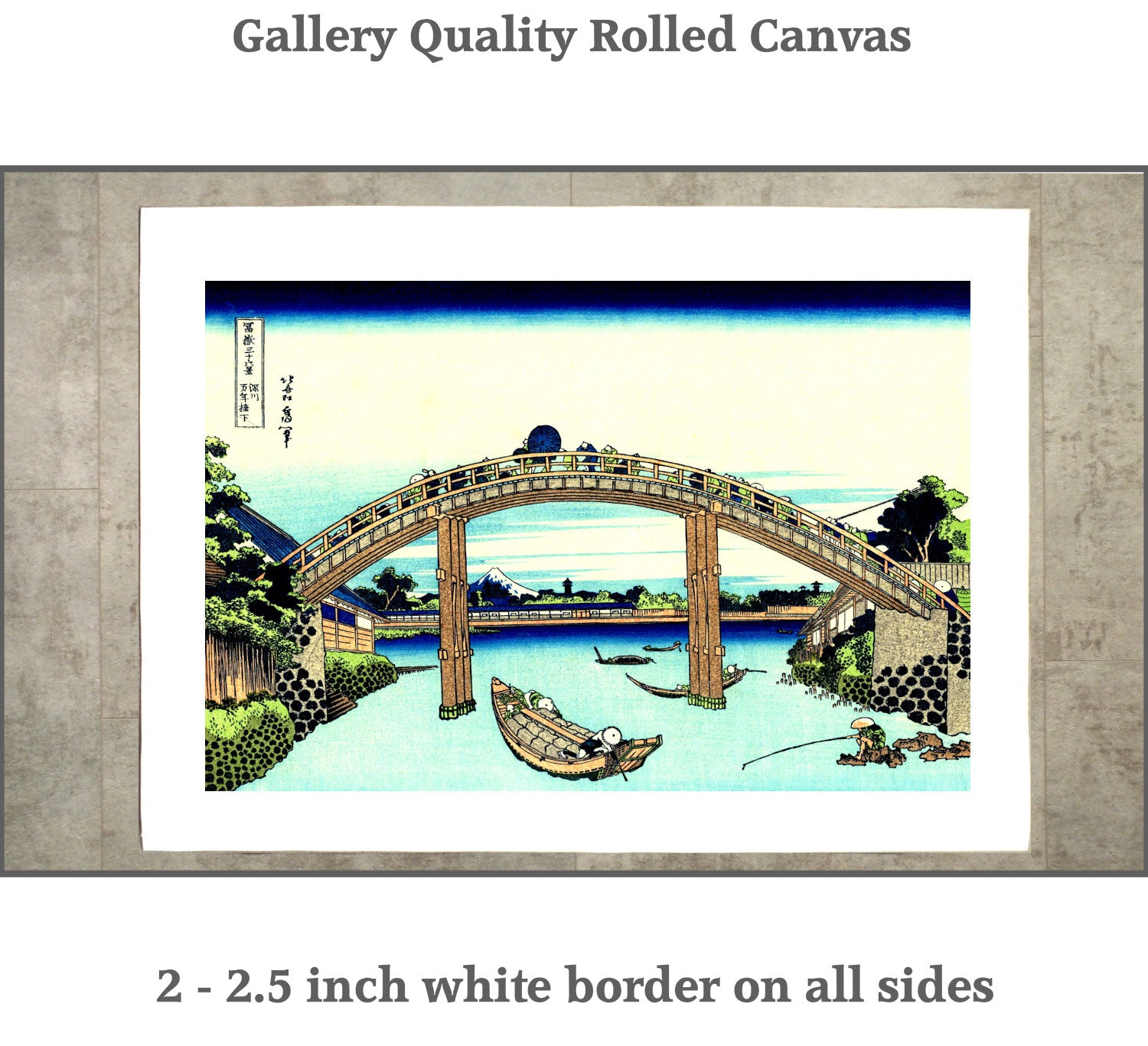
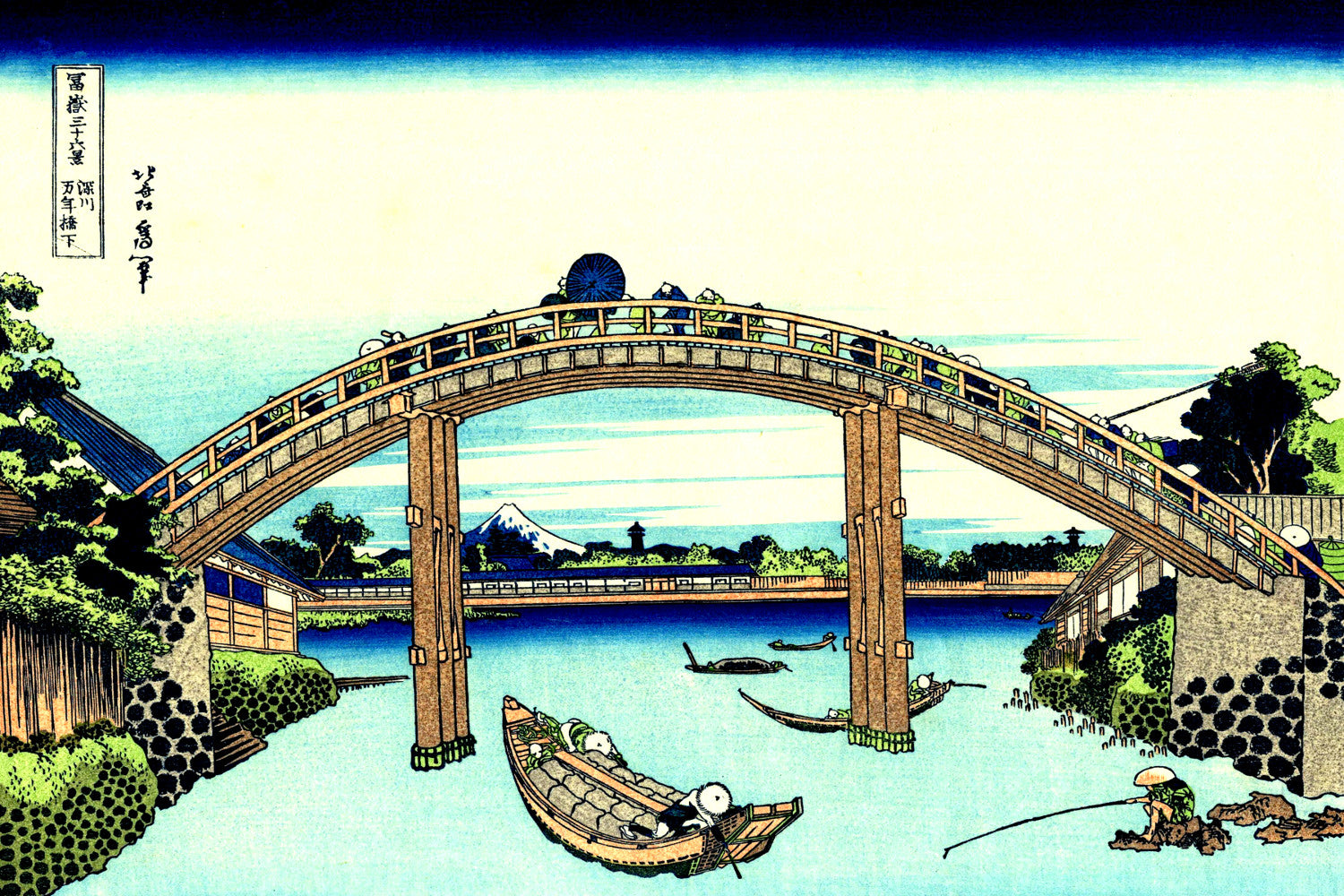
4. Under Mannen Bridge at Fukagawa
Hokusai uses the great arch of Mannen Bridge as a frame within the image. Boats and riverside activity occupy the foreground while tiny Mount Fuji is perfectly positioned beneath the bridge.

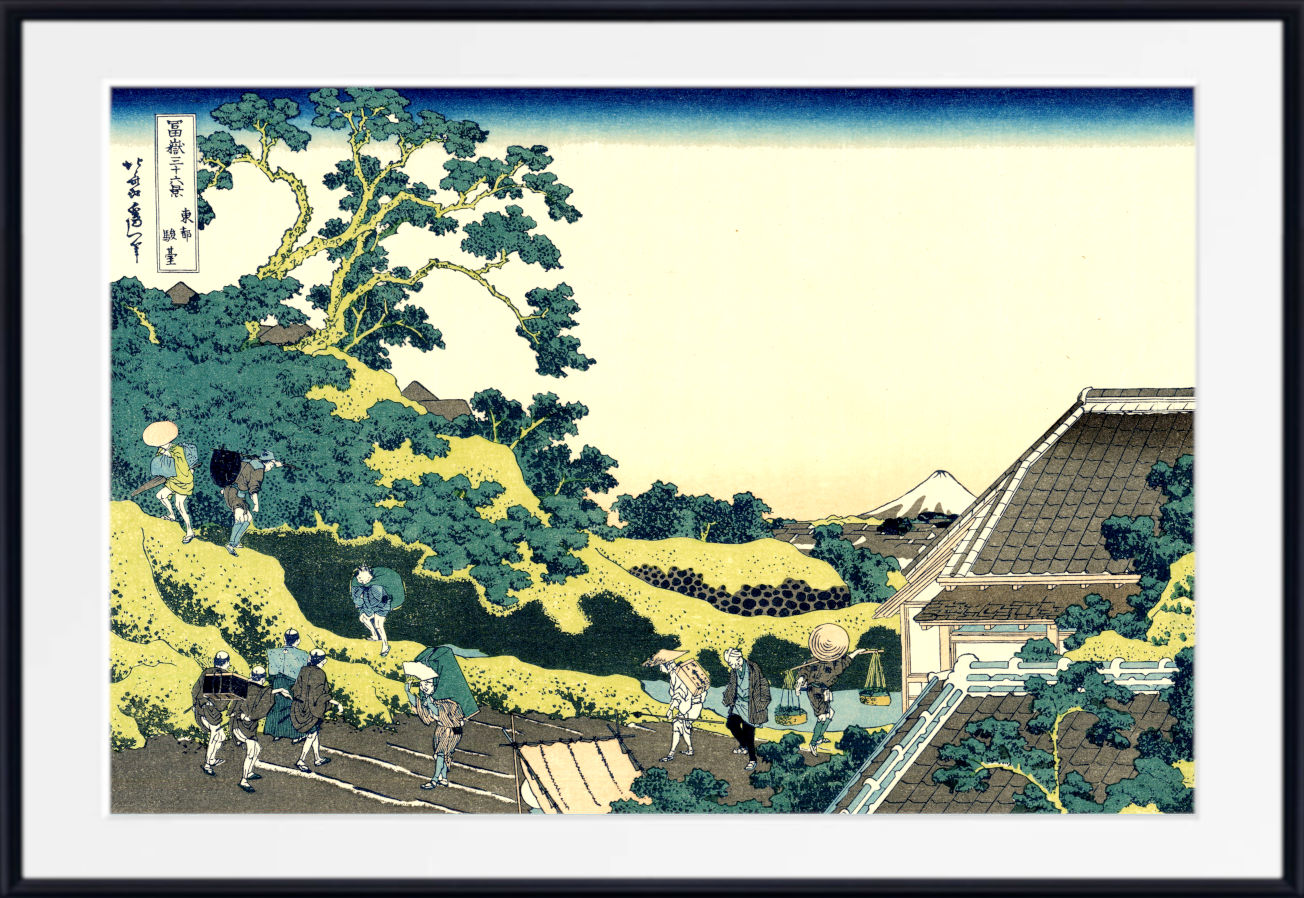
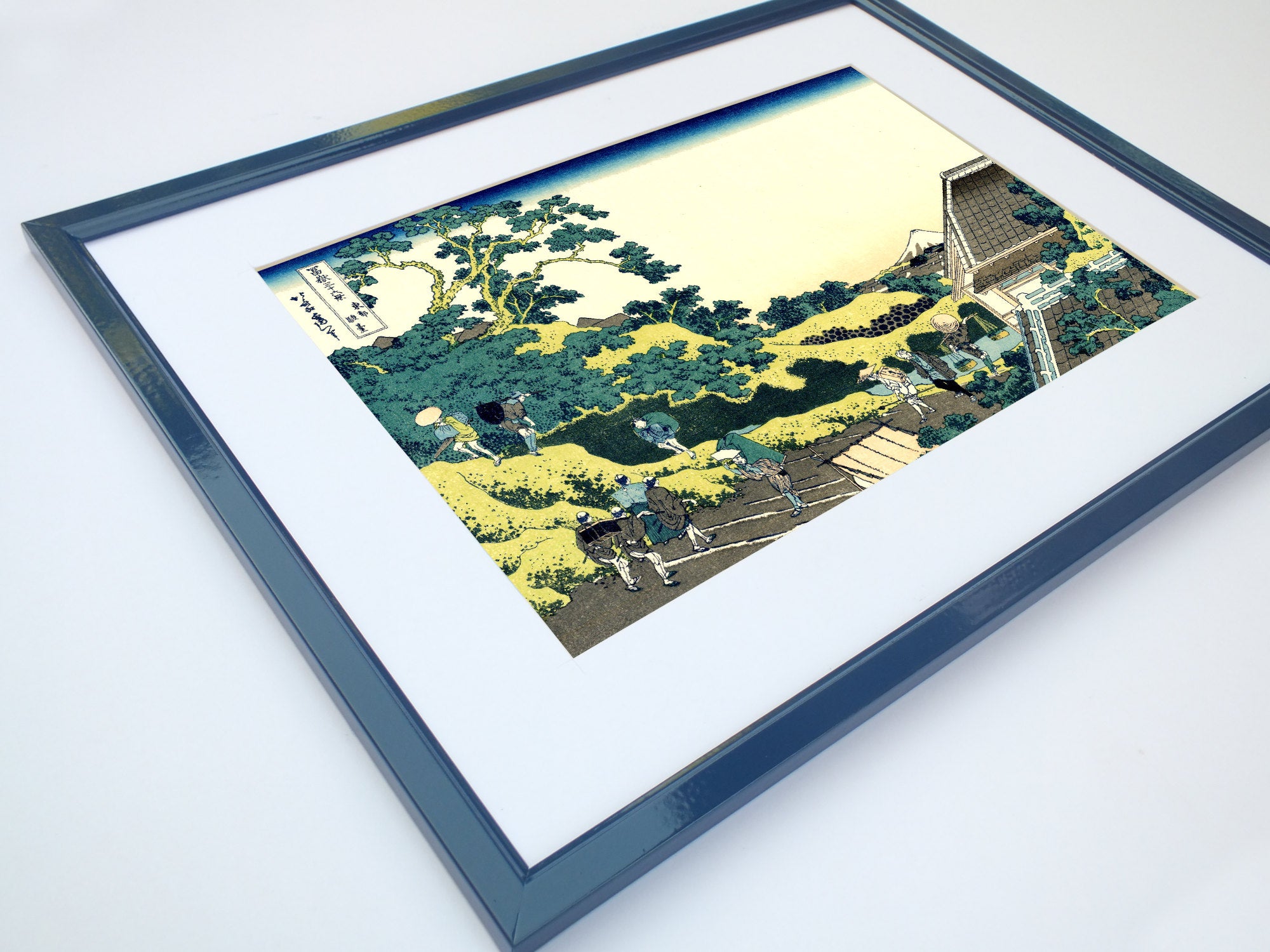
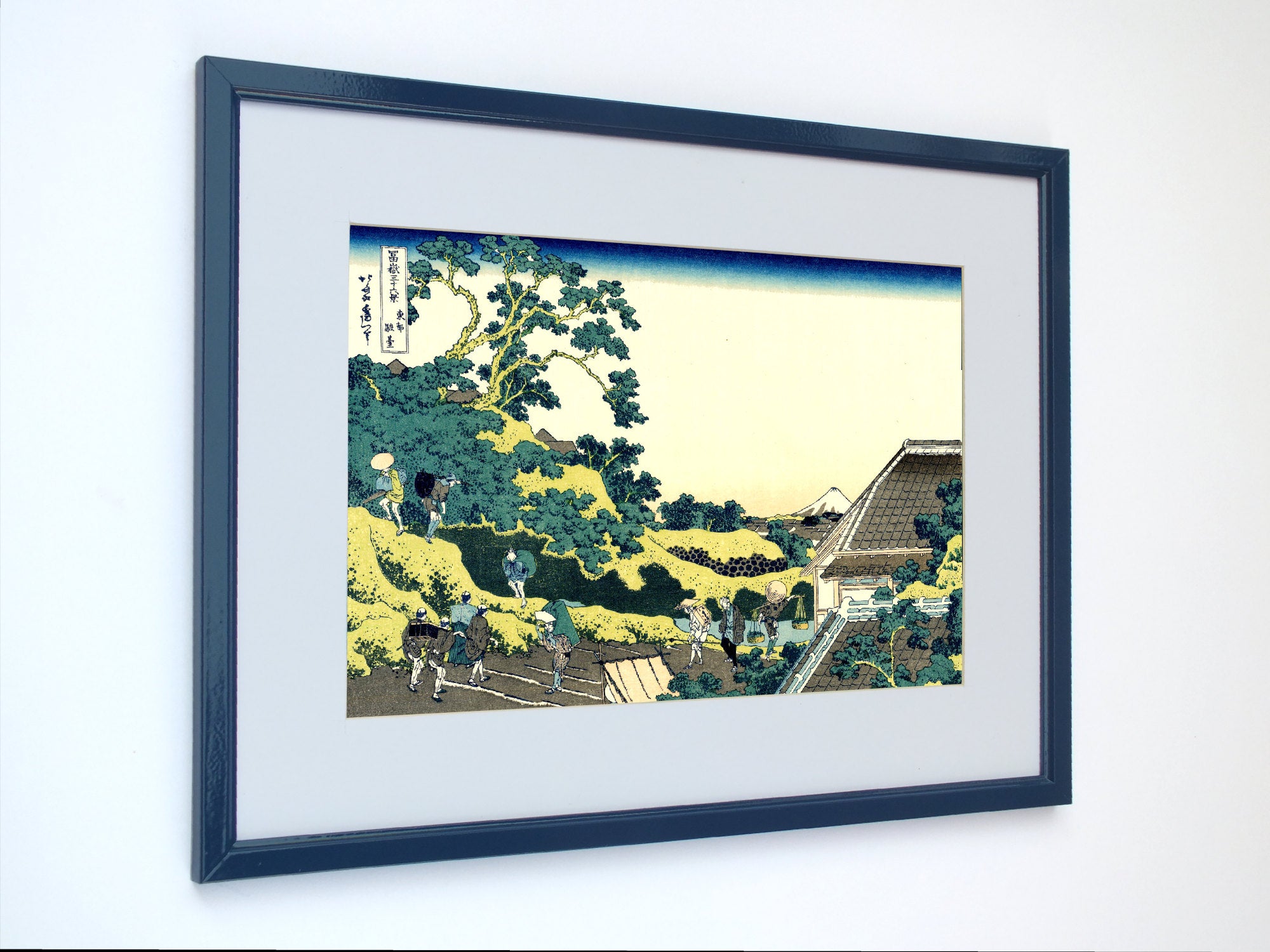
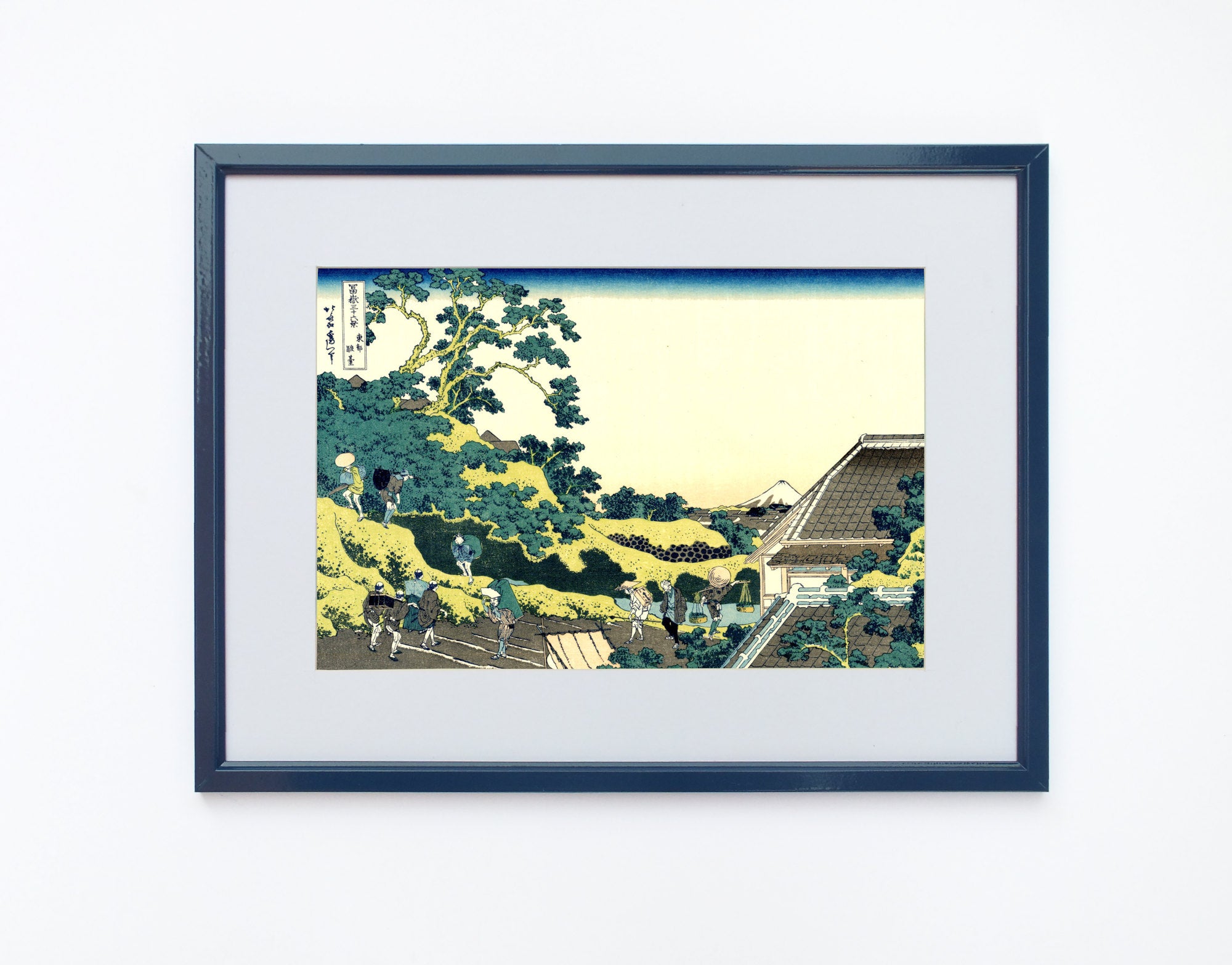
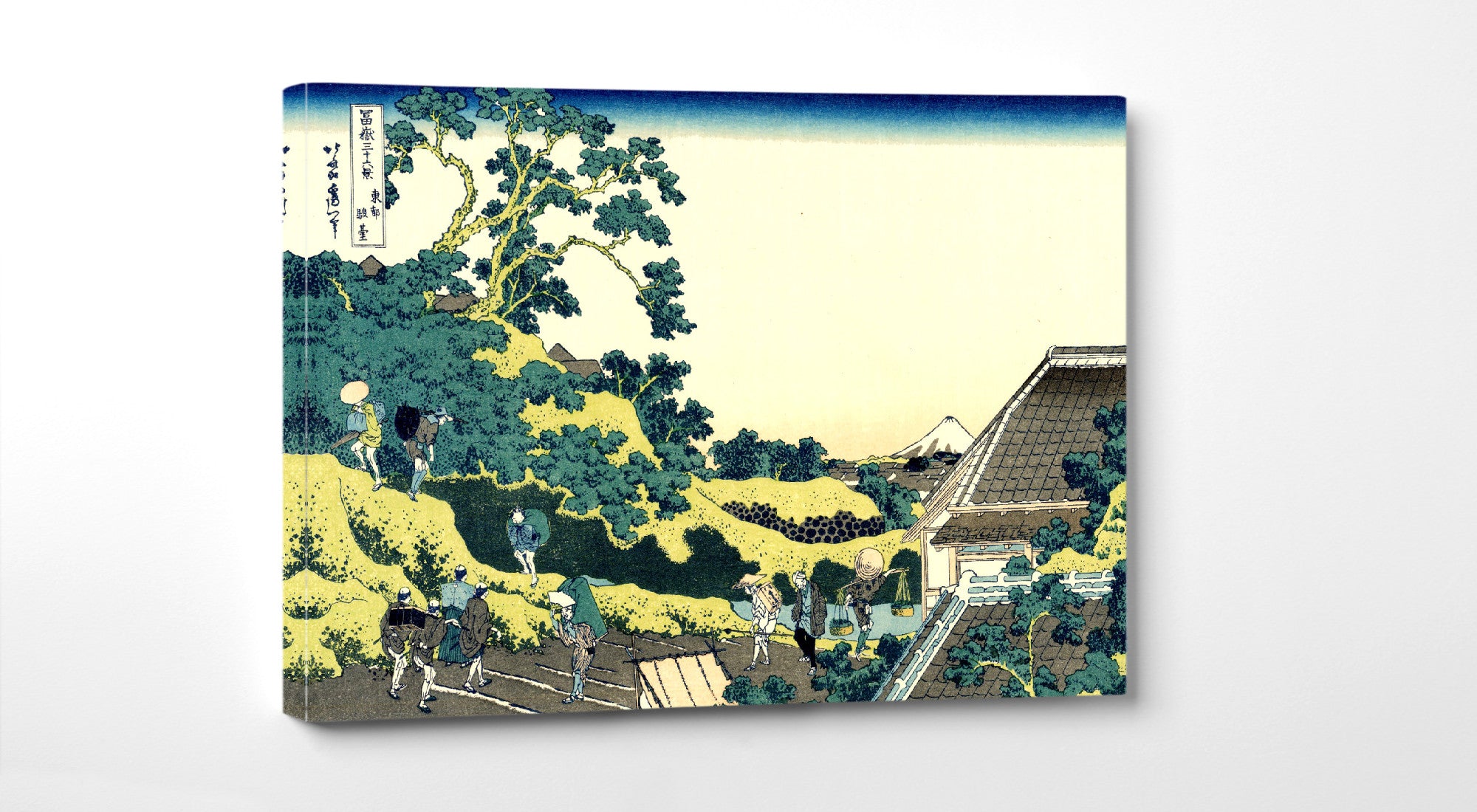
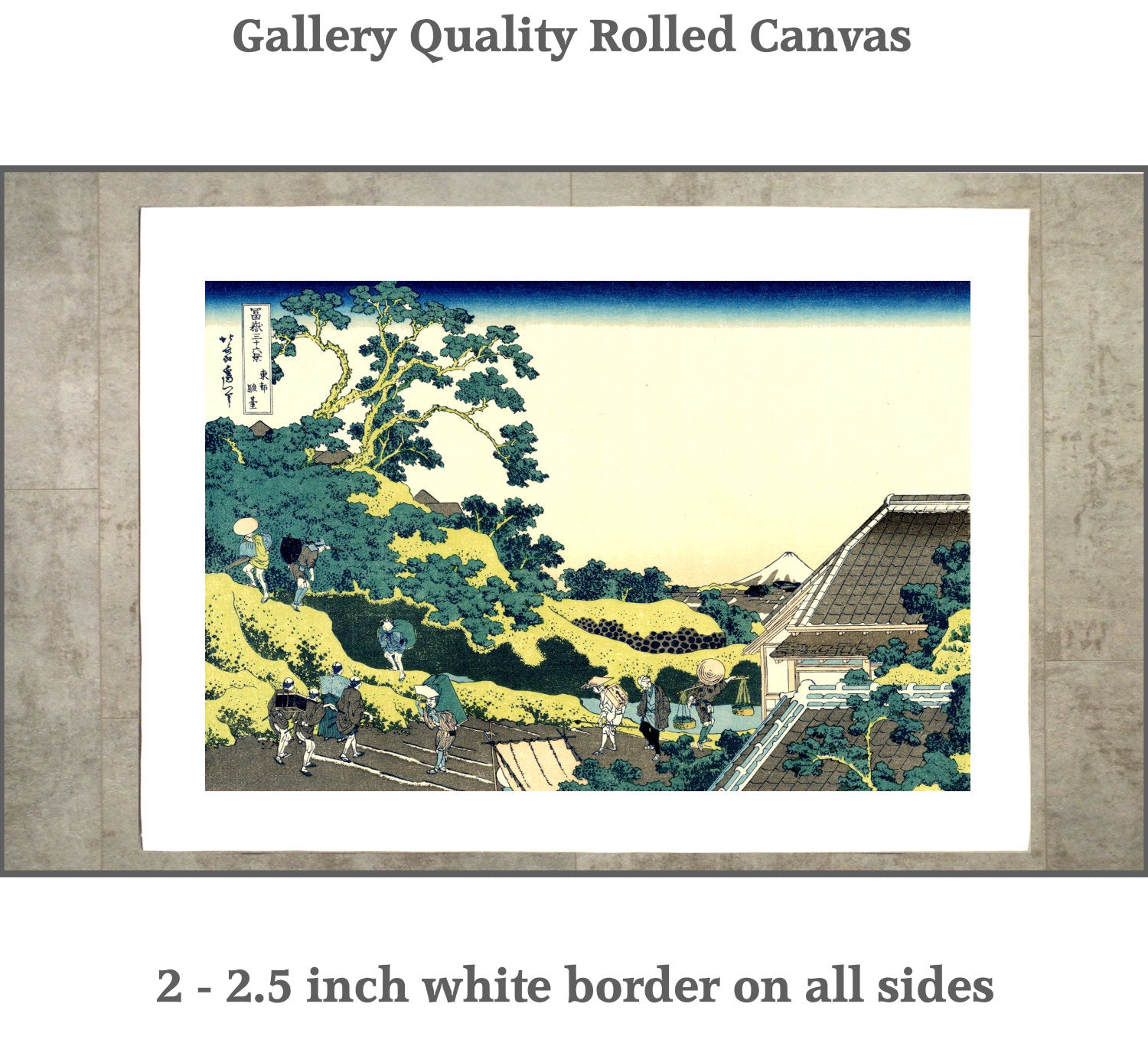
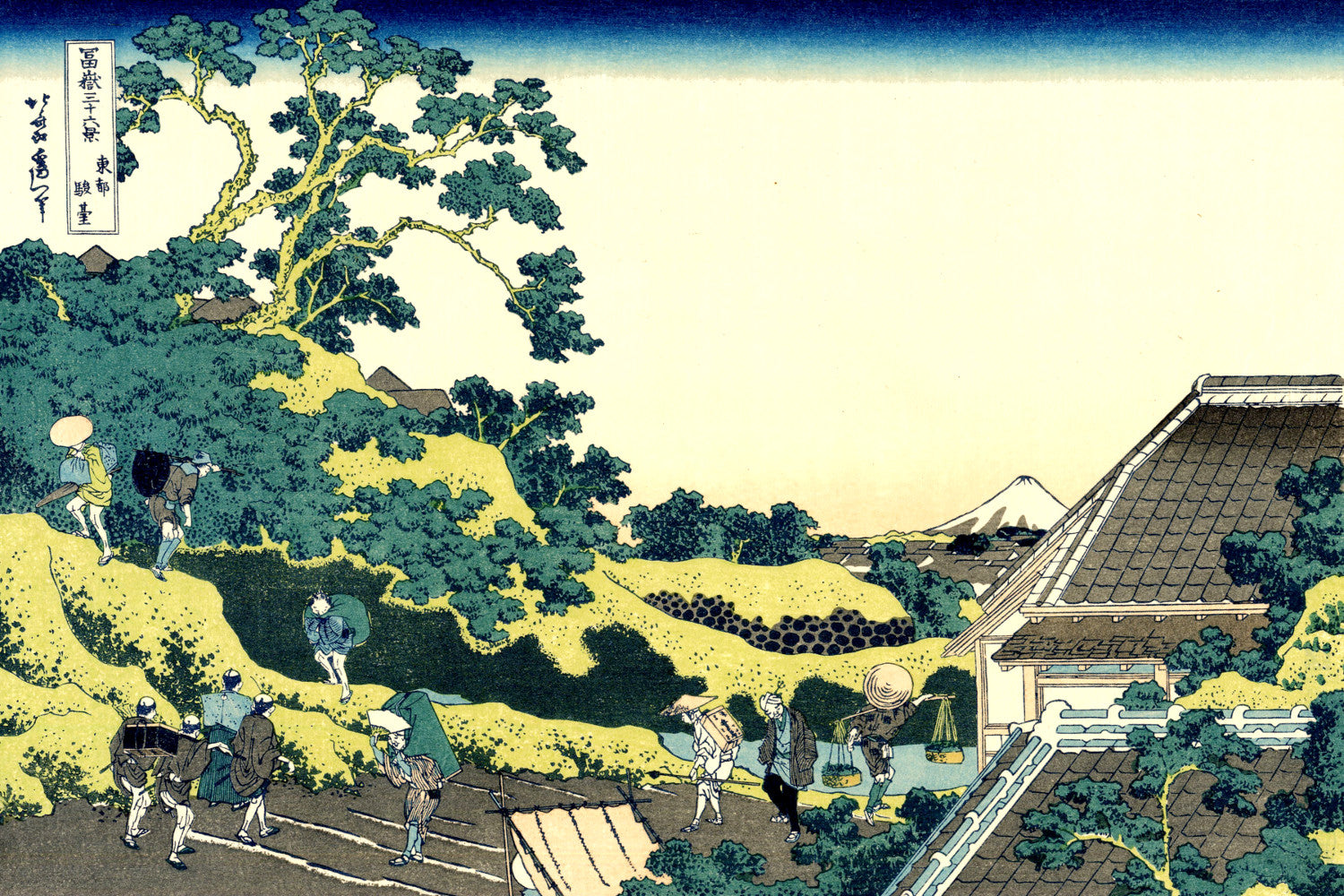
5. Sundai, Edo
Travellers move through the hilly district of Sundai while Fuji rises between the rooftops and trees. Hokusai turns an ordinary urban journey into a carefully layered view of the distant mountain.

6. Cushion Pine at Aoyama
A famously spreading pine fills the foreground while Fuji rises beyond it. The rounded mass of the tree and the mountain's clean triangular form create a striking contrast between cultivated landscape and distant nature.

7. Senju in Musashi Province
People, a horse and the geometry of a sluice gate animate this rural scene at Senju. Fuji rises beyond the flat landscape, connecting everyday work and travel with the series' constant landmark.

8. Inume Pass in Kai Province
Small travellers cross the rolling slopes of Inume Pass as a monumental Fuji dominates the distance. Their tiny scale heightens the visual impression of the mountain's size.

9. Fujimigahara in Owari Province
A cooper works inside an enormous circular barrel, through which distant Fuji appears as a tiny triangle. The brilliant circle-and-triangle composition is one of Hokusai's most inventive framing devices.

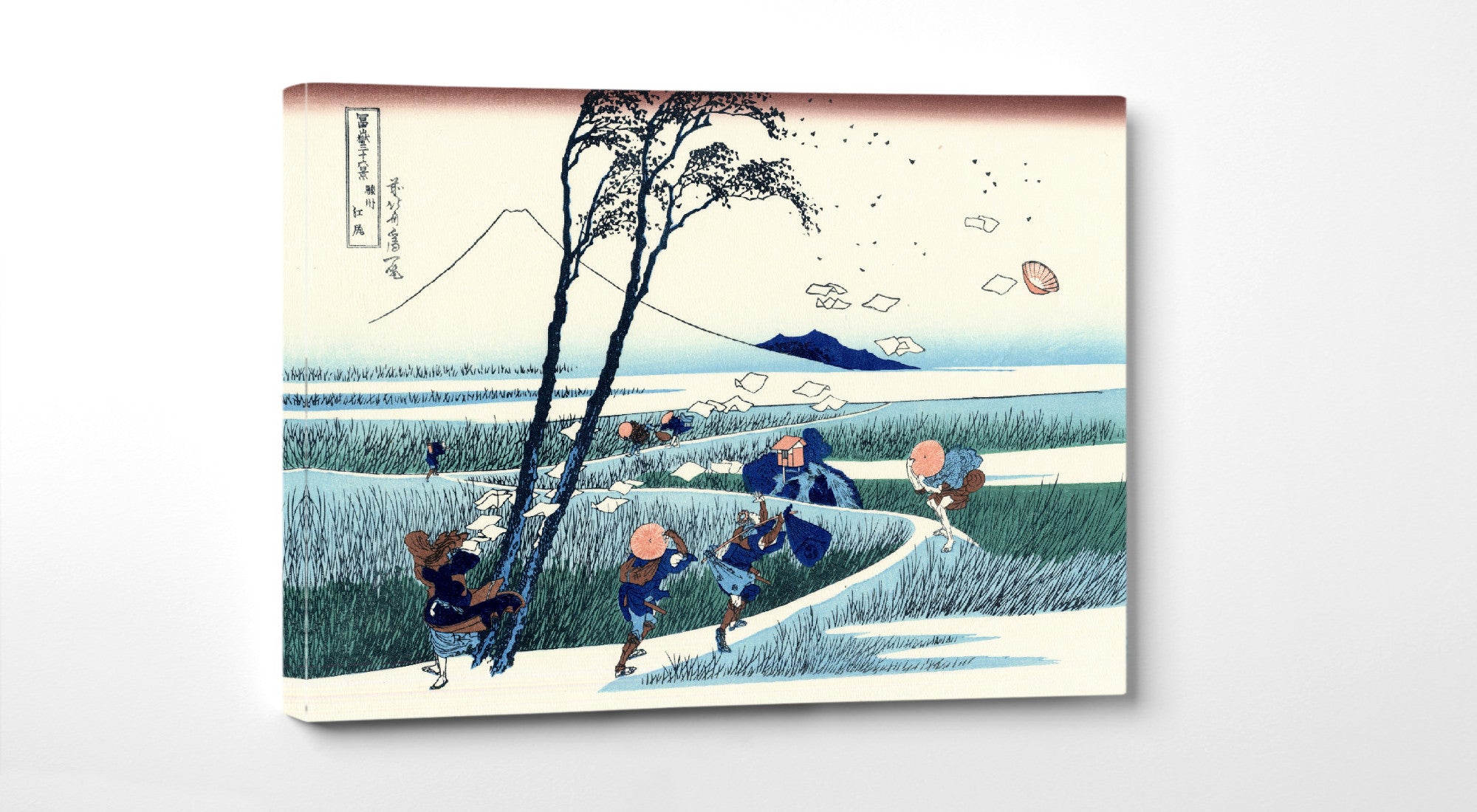
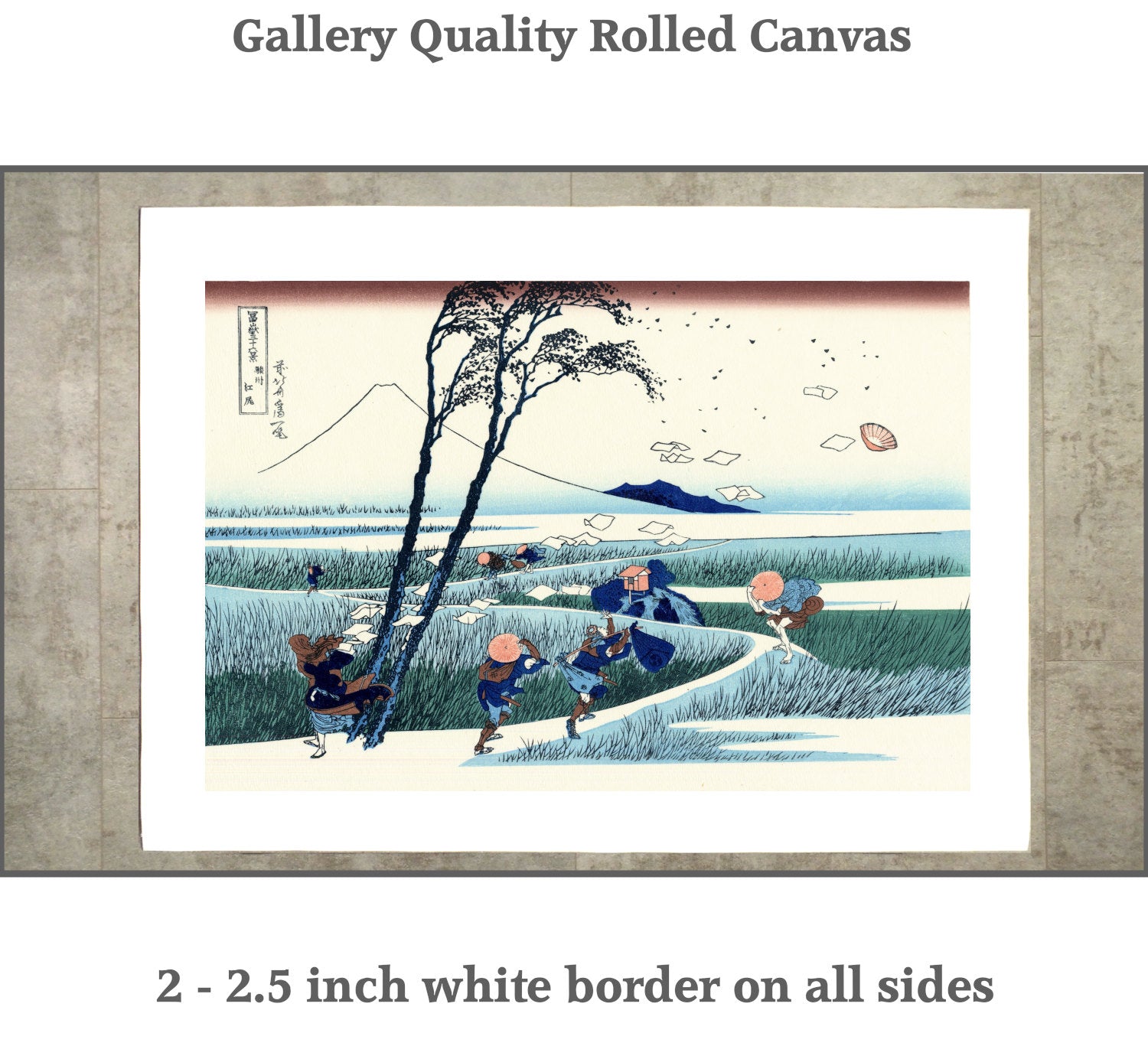
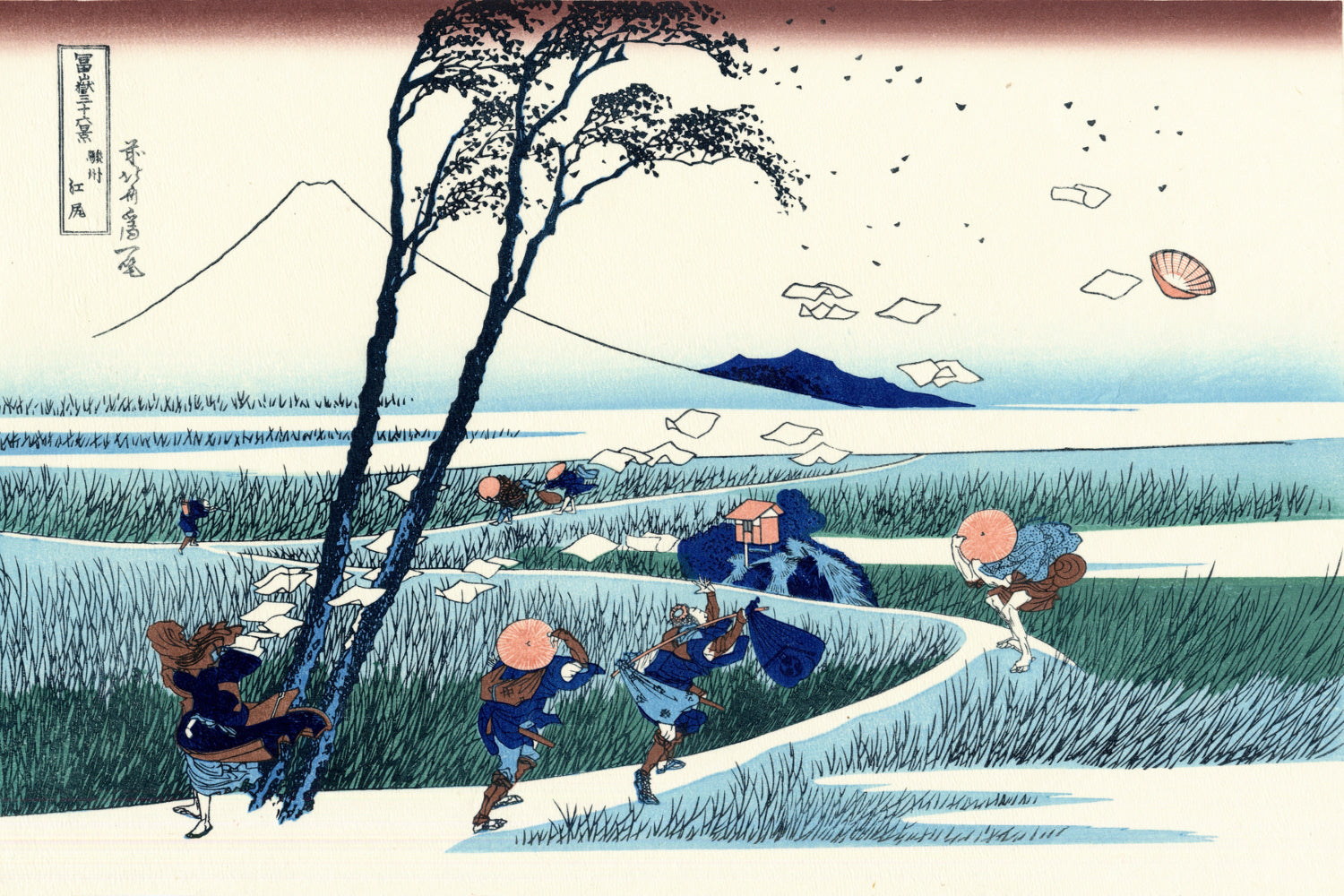
10. Ejiri in Suruga Province
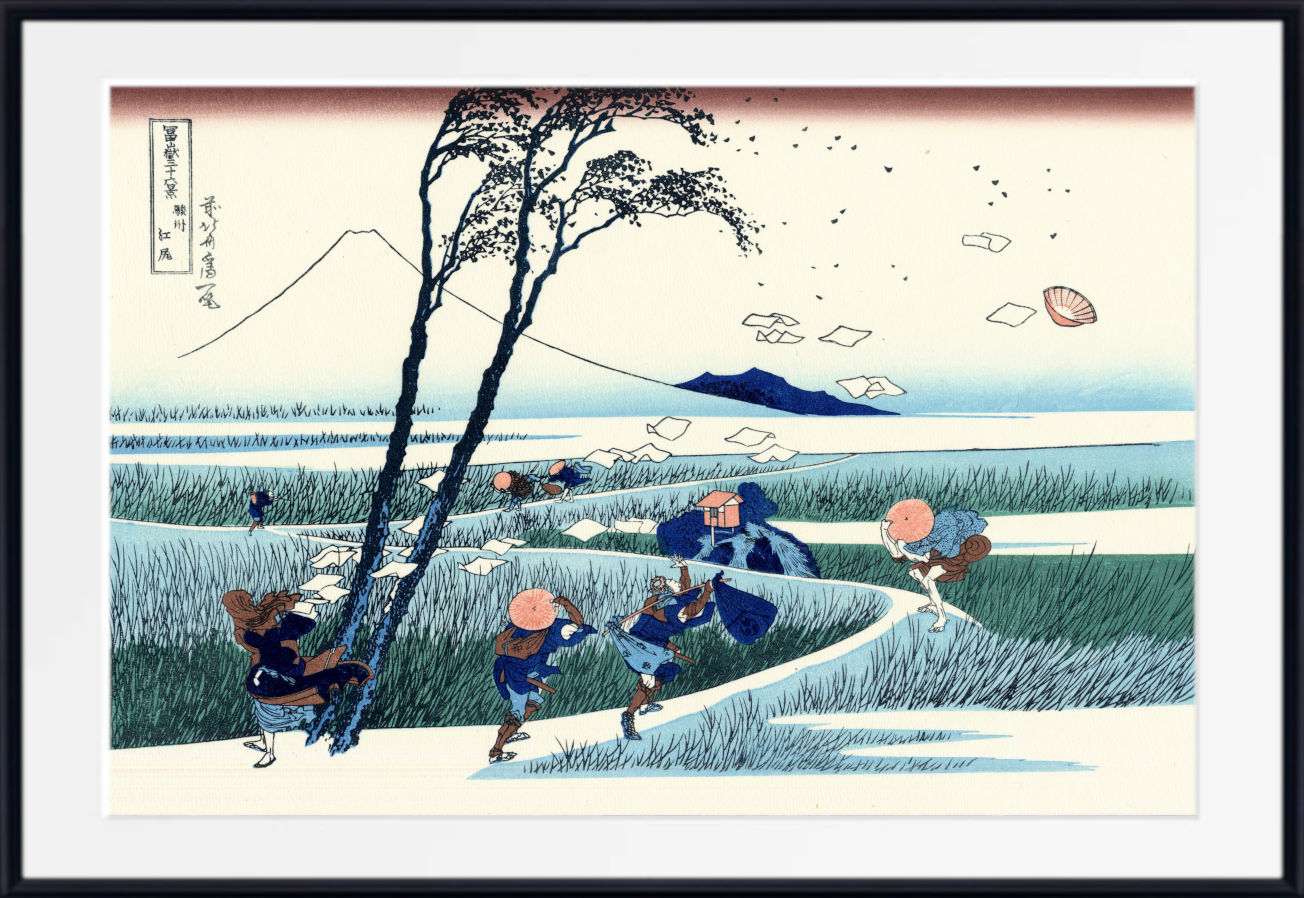
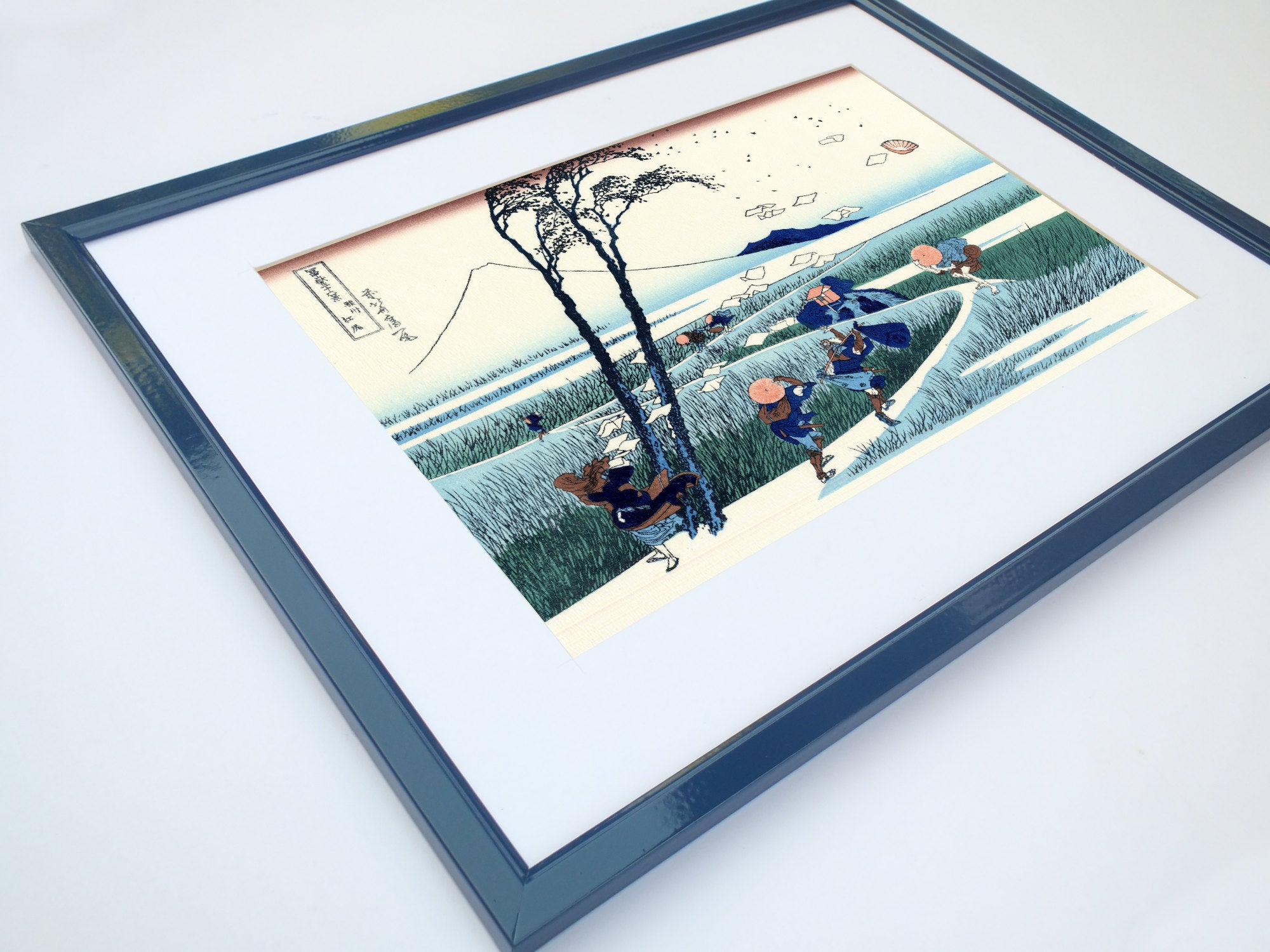
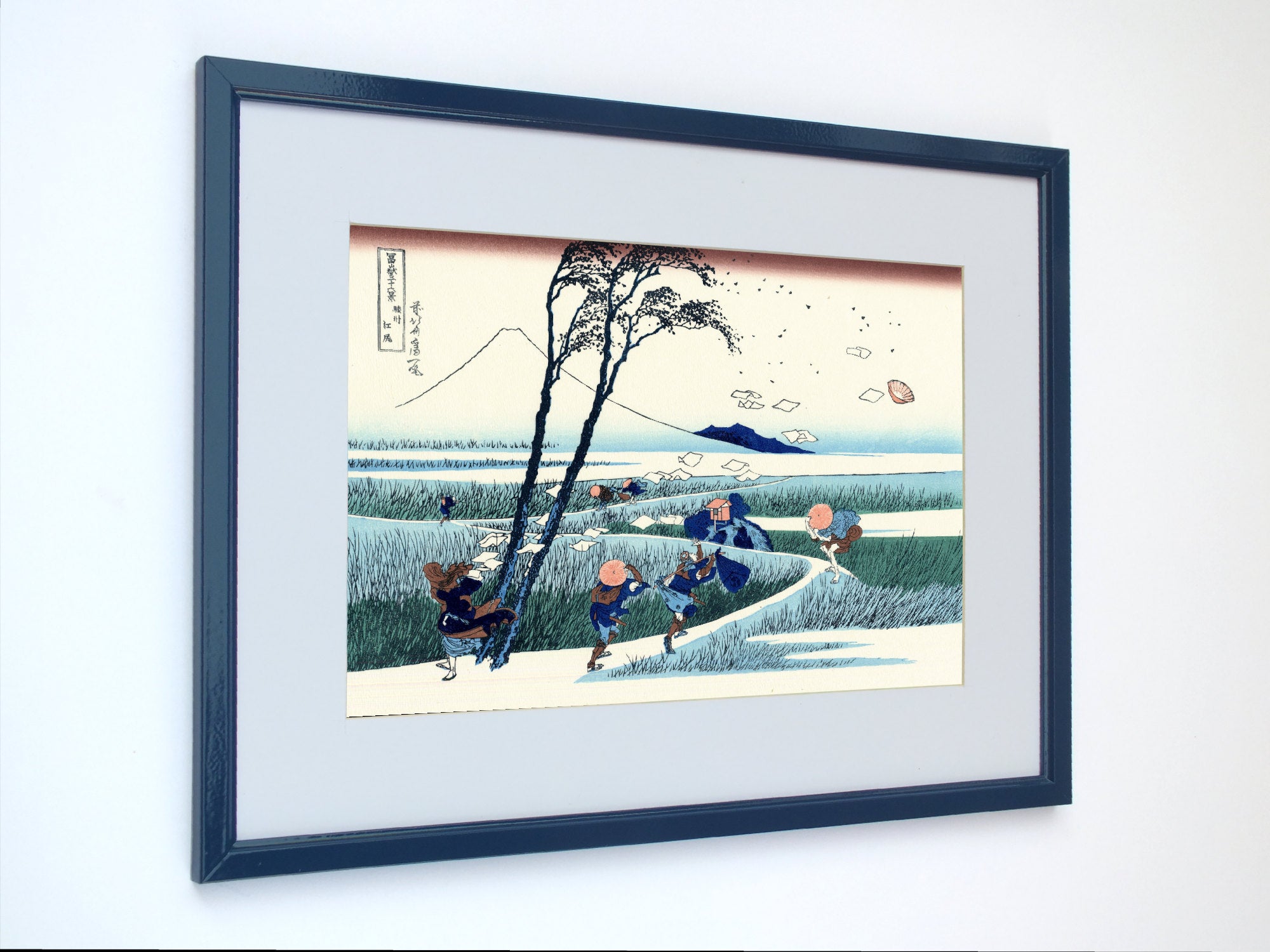
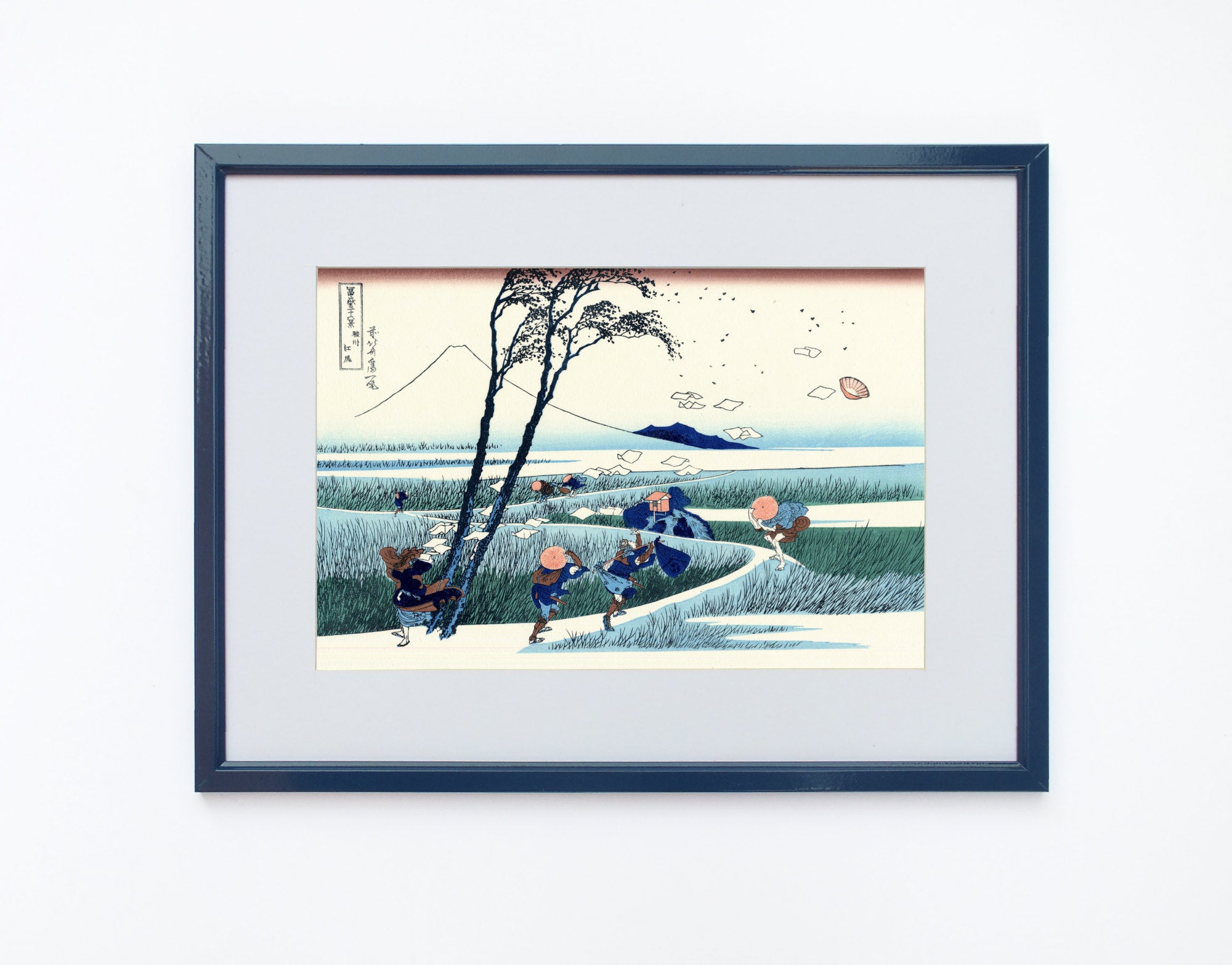
A sudden gust sends paper, hats and leaves spinning through the air as travellers struggle along the road. Fuji remains calm in the background, creating a memorable contrast between movement and permanence.

11. Mitsui Shop in Suruga Street, Edo
Hokusai places Mount Fuji beyond the busy commercial district around the Mitsui shop. Urban roofs, signs and working life give the mountain a distinctly modern Edo setting.

12. Sunset across the Ryōgoku Bridge from Onmayagashi
A passenger boat crosses the Sumida River as Ryōgoku Bridge stretches through the distance and Fuji anchors the horizon. The broad river allows Hokusai to explore space, traffic and the changing light of evening.

13. Sazai Hall – Temple of Five Hundred Rakan
Visitors gather on the temple veranda and look across the open landscape towards Fuji. Hokusai positions the viewer behind them, making us part of the shared act of looking.

14. Tea House at Koishikawa, Morning after a Snowfall
Fresh snow transforms rooftops, trees and Fuji into a nearly continuous pale landscape. Guests at the tea house pause to admire the unusually clear winter view.

15. Shimo-Meguro
Farmers and travellers move through the rolling fields of Shimo-Meguro while Fuji appears between the hills. The composition combines agricultural life with a carefully controlled glimpse of the mountain.

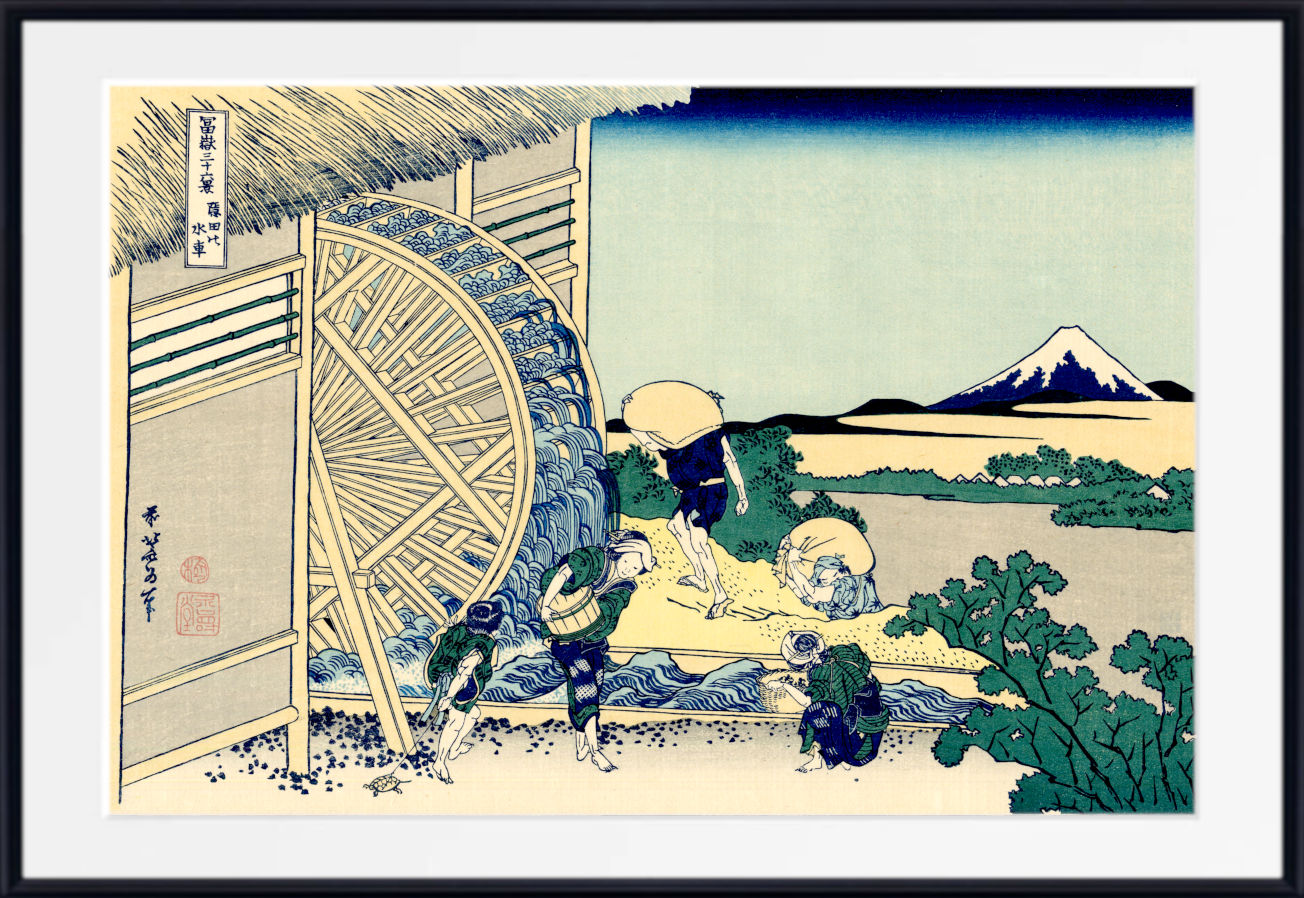
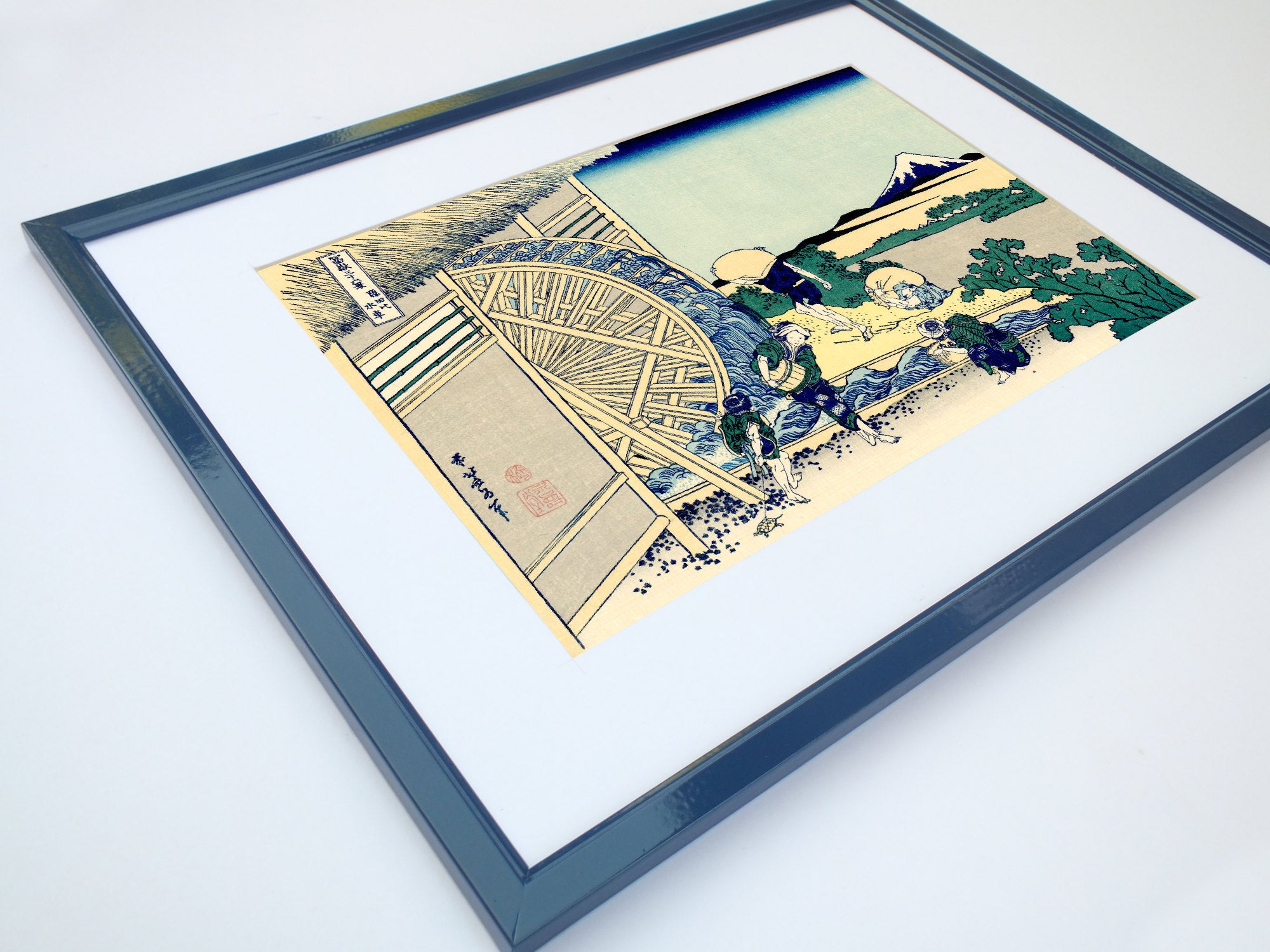
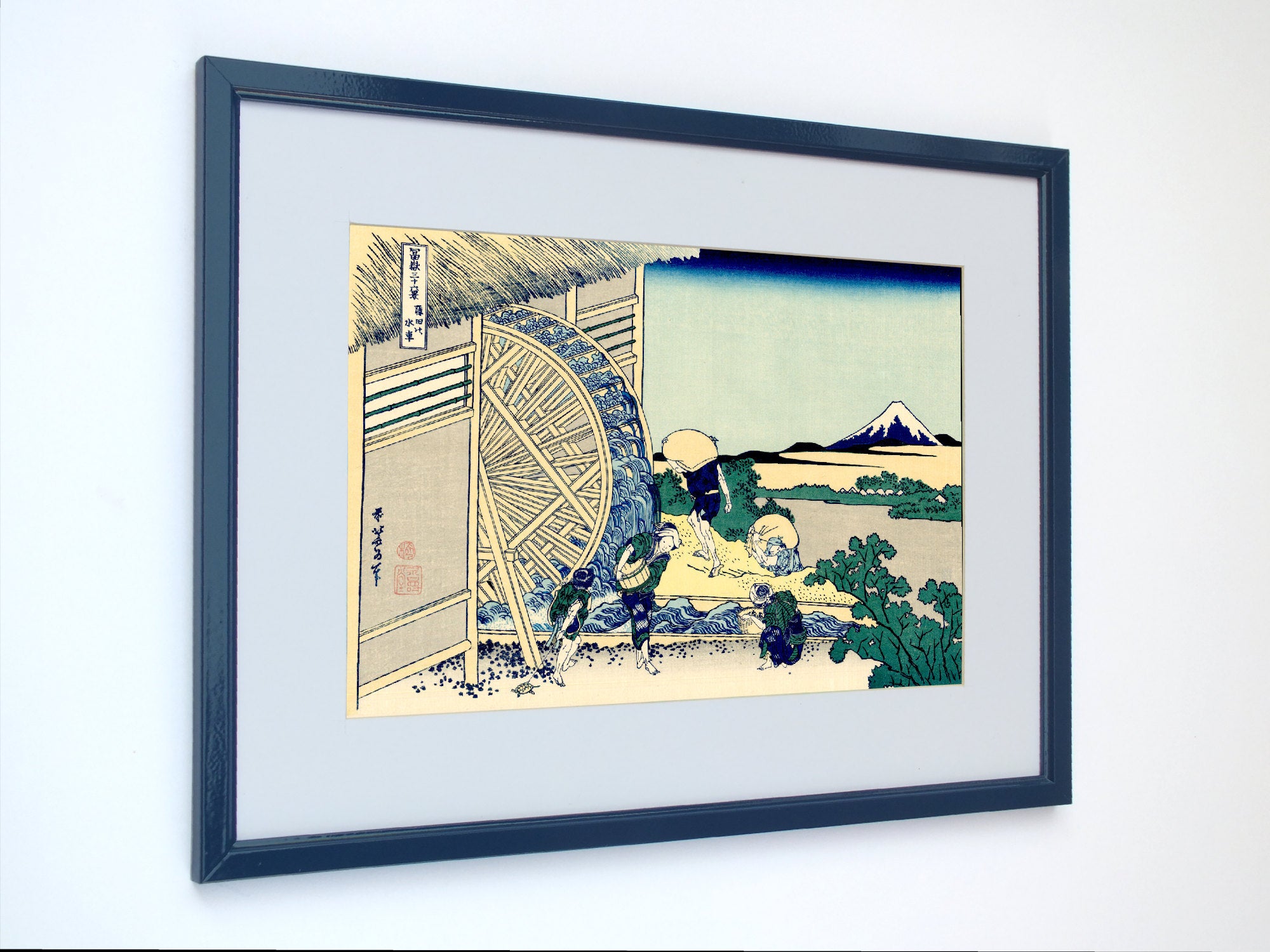
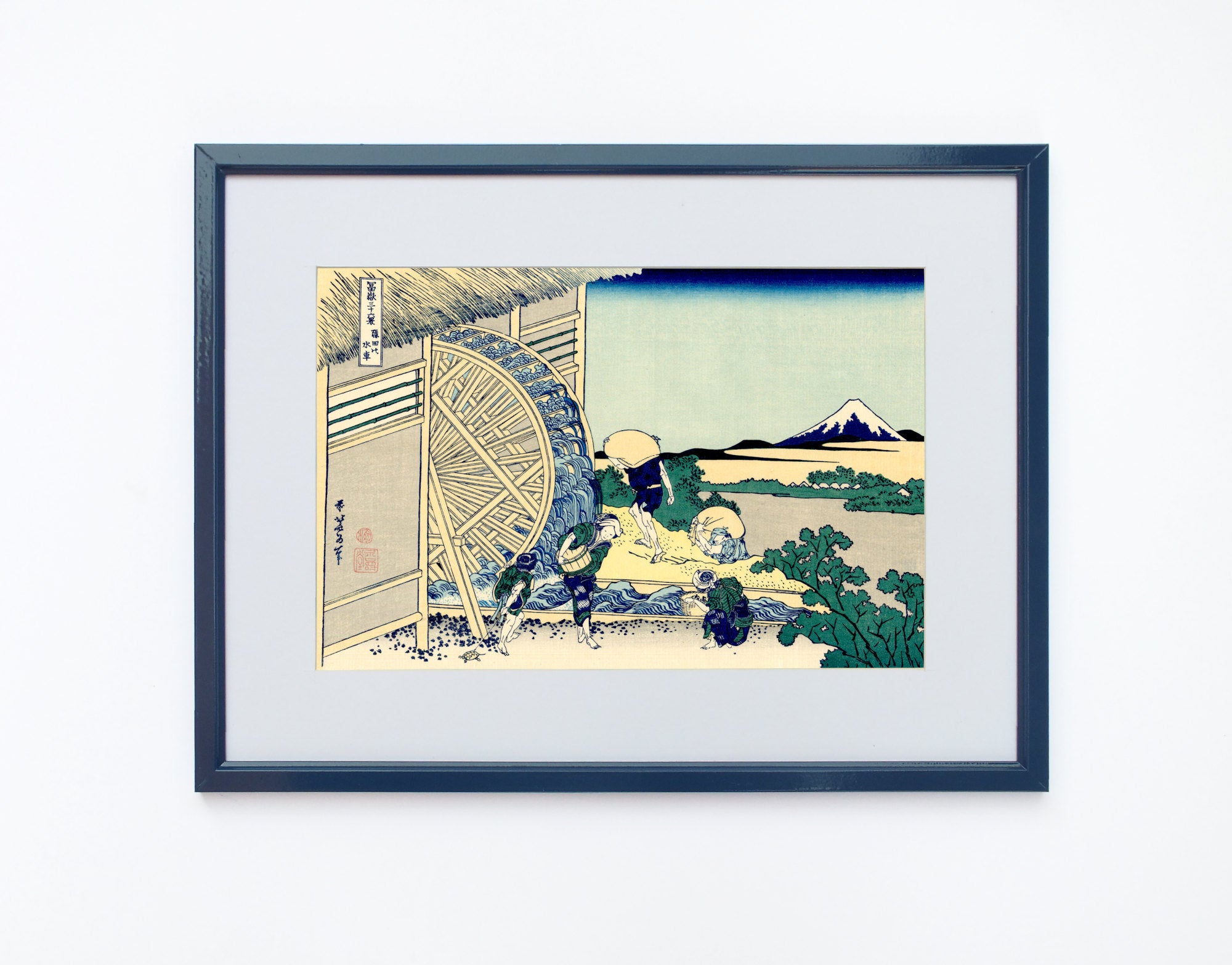
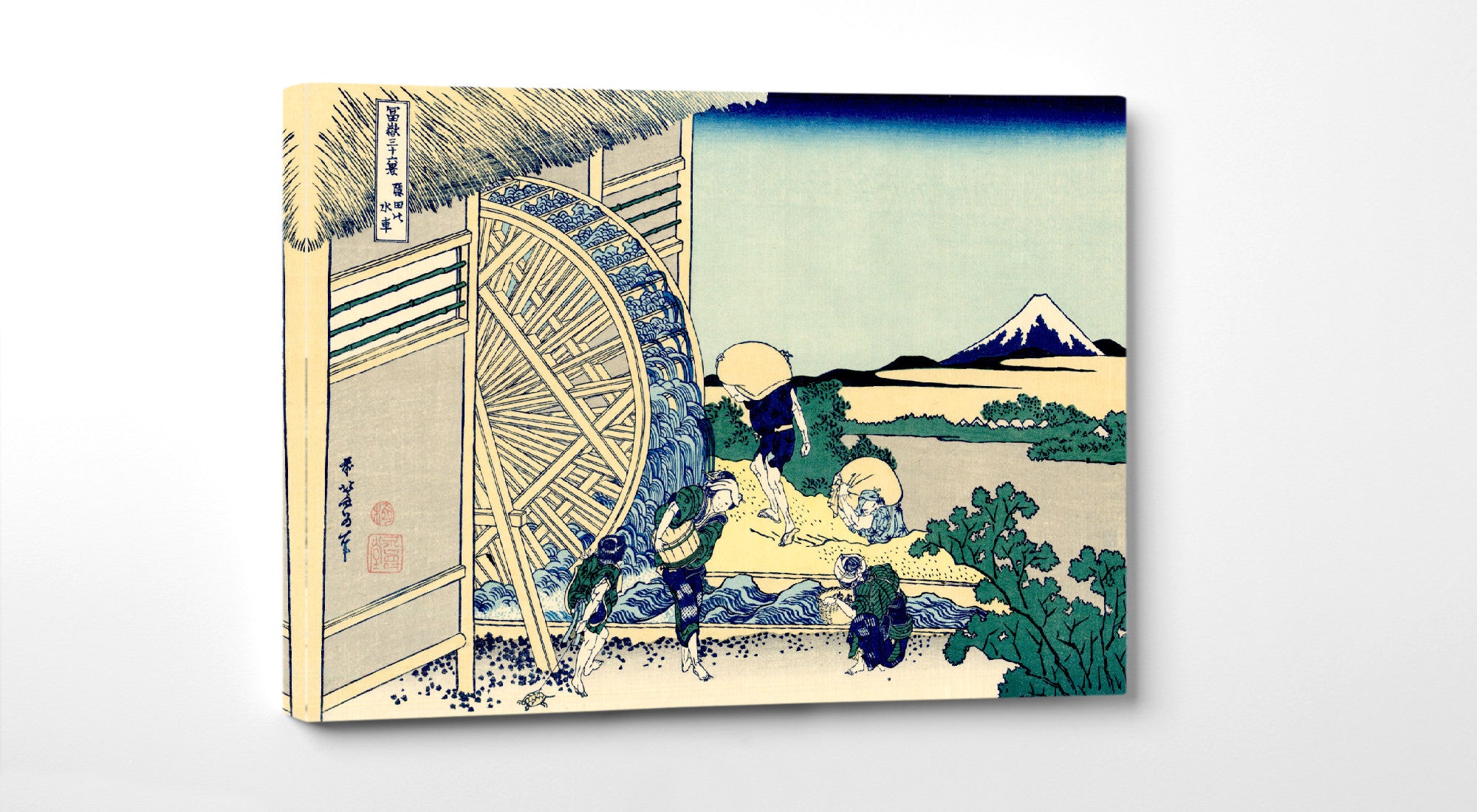
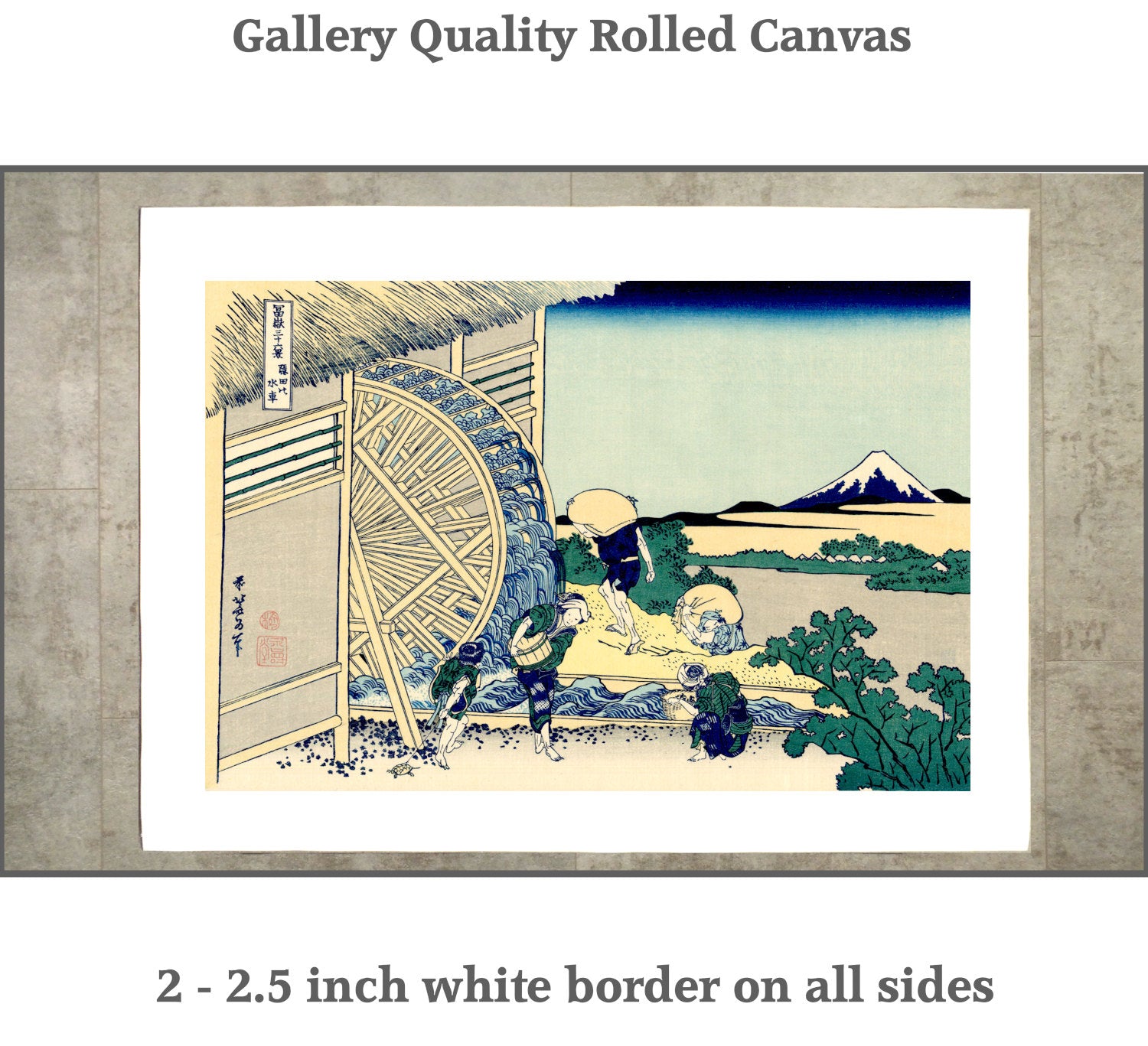
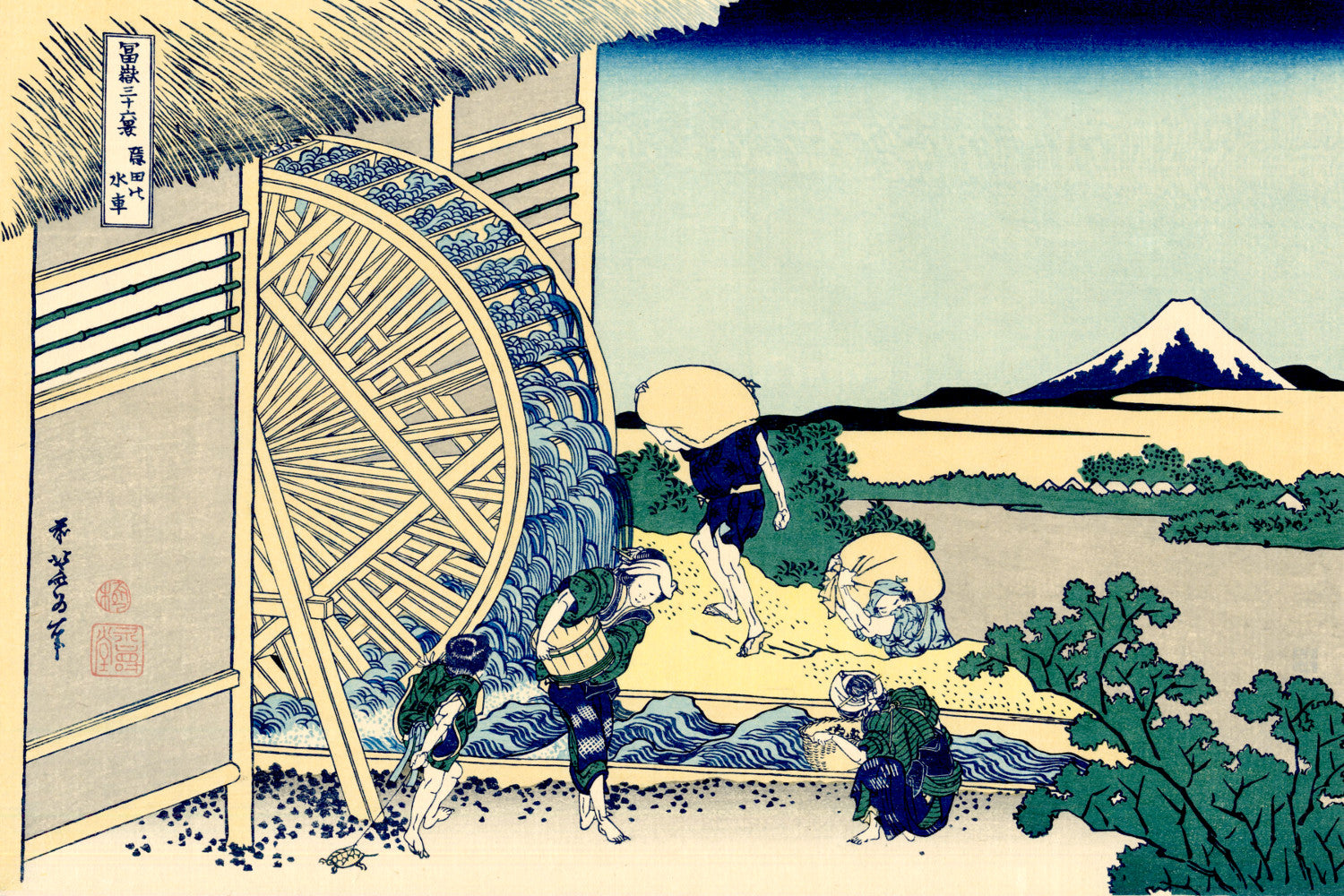
16. Watermill at Onden
Workers use a watermill beside the river at Onden while Fuji rises beyond the village landscape. The print is a characteristic Hokusai combination of technology, labour and monumental nature.

17. Enoshima in Sagami Province
The island settlement of Enoshima occupies the foreground as people cross exposed shallows and Fuji appears across the water. Architecture, coast and mountain are organised into a broad, luminous panorama.

18. Shore of Tago Bay, Ejiri at Tōkaidō
Boats work through the choppy waters of Tago Bay while snow-capped Fuji rises behind the shore. The strong foreground vessels create a dynamic counterweight to the still mountain.

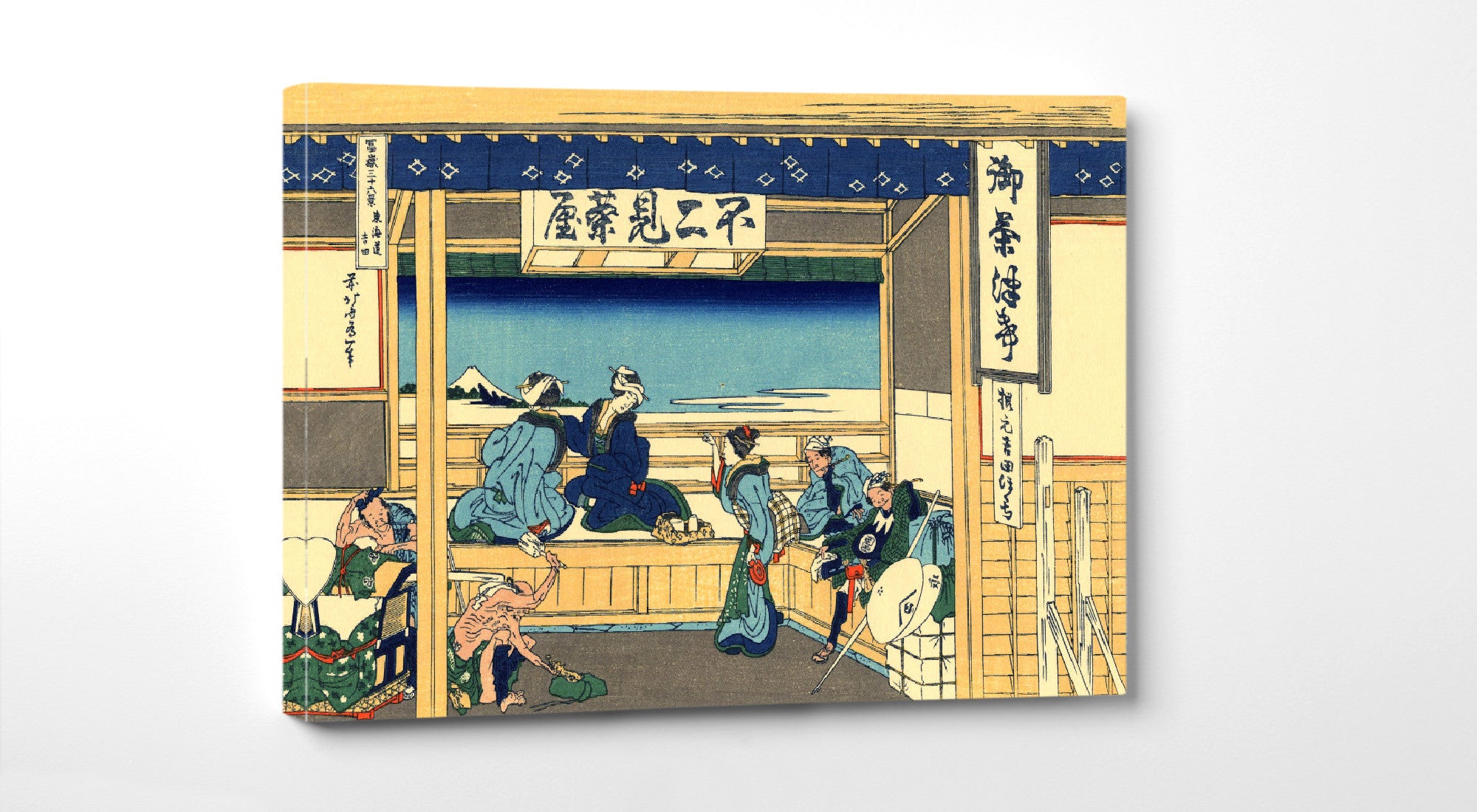
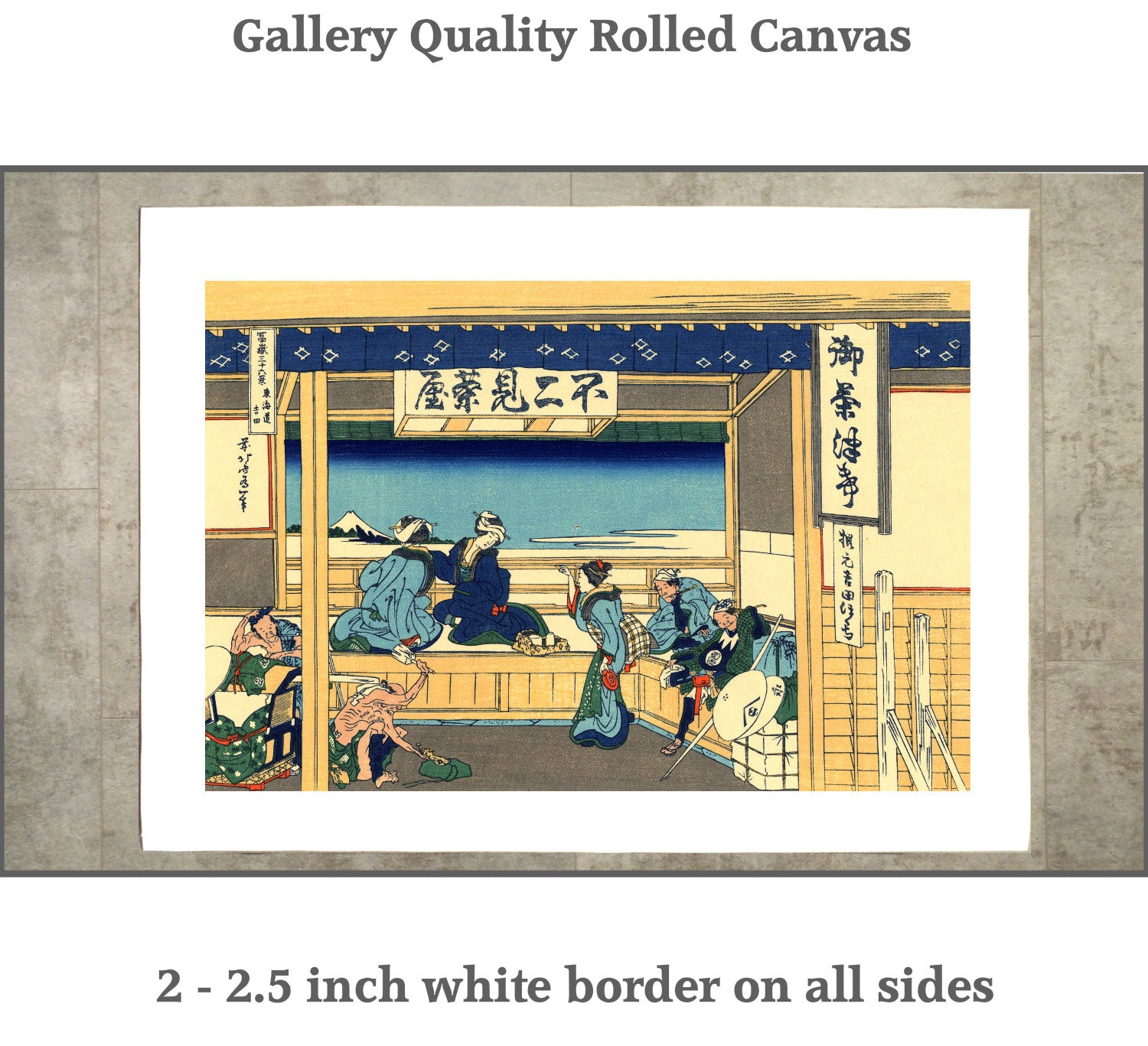
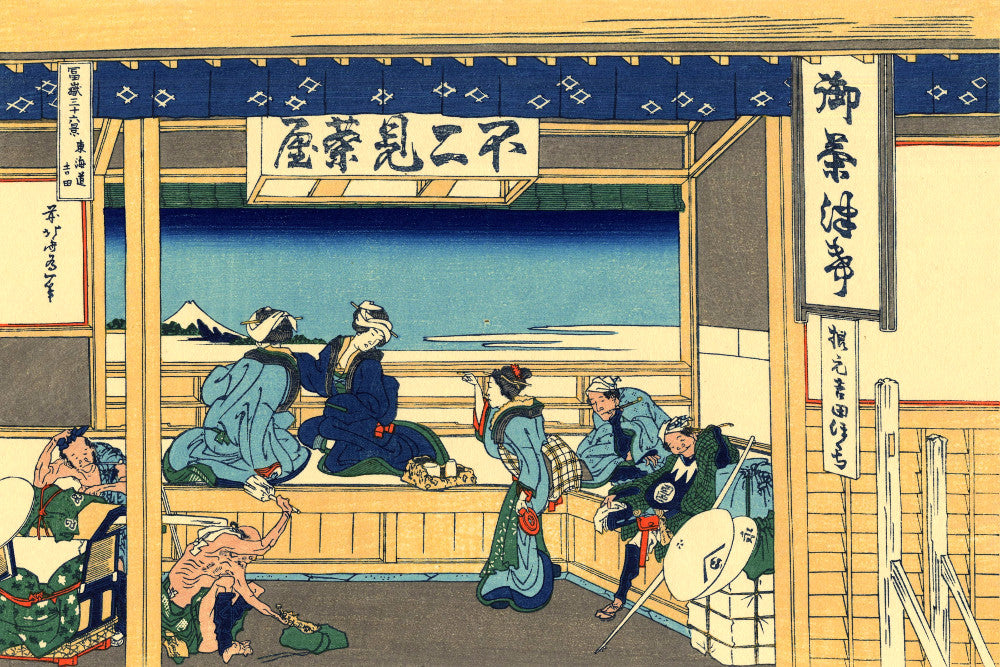
19. Yoshida at Tōkaidō
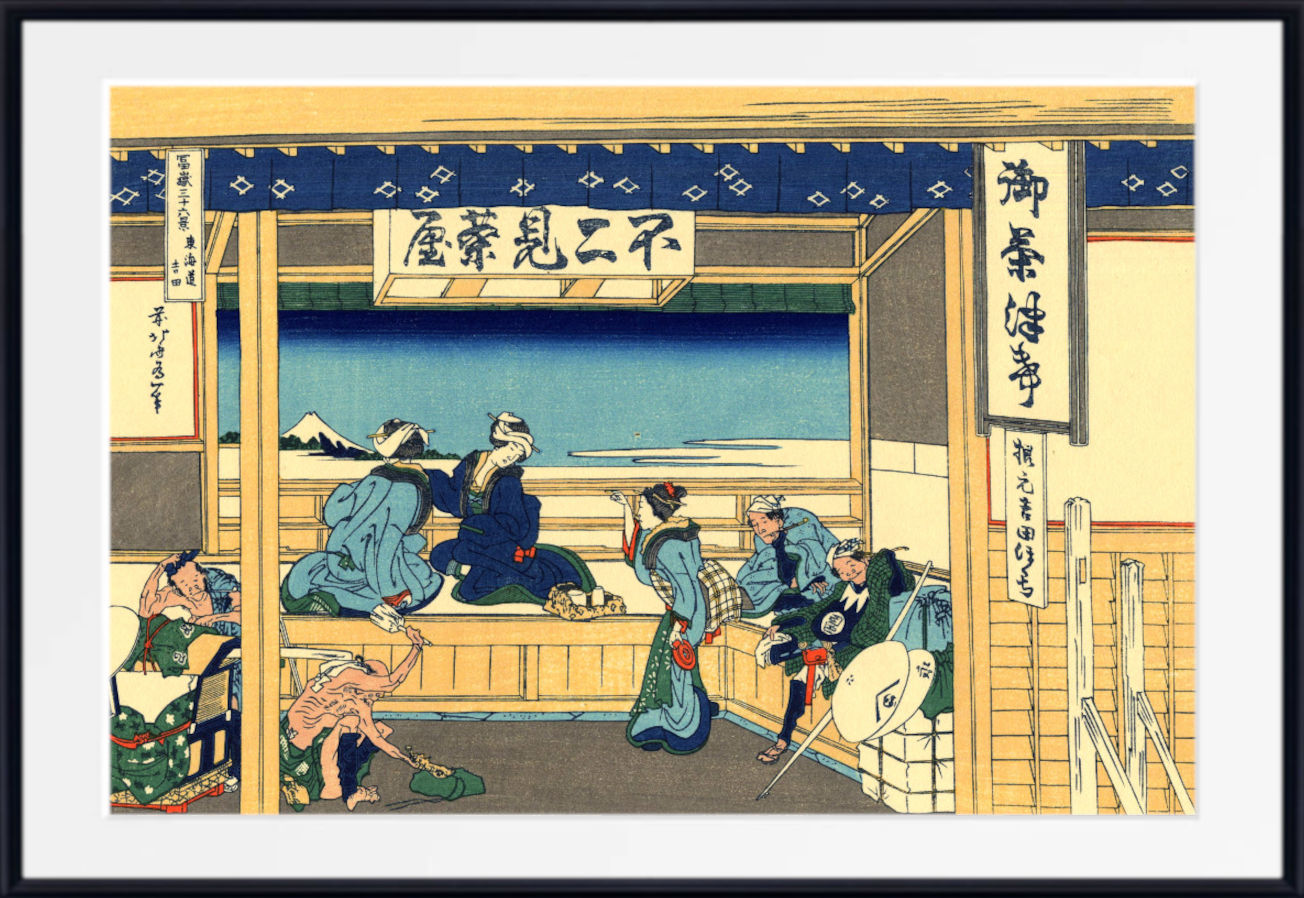
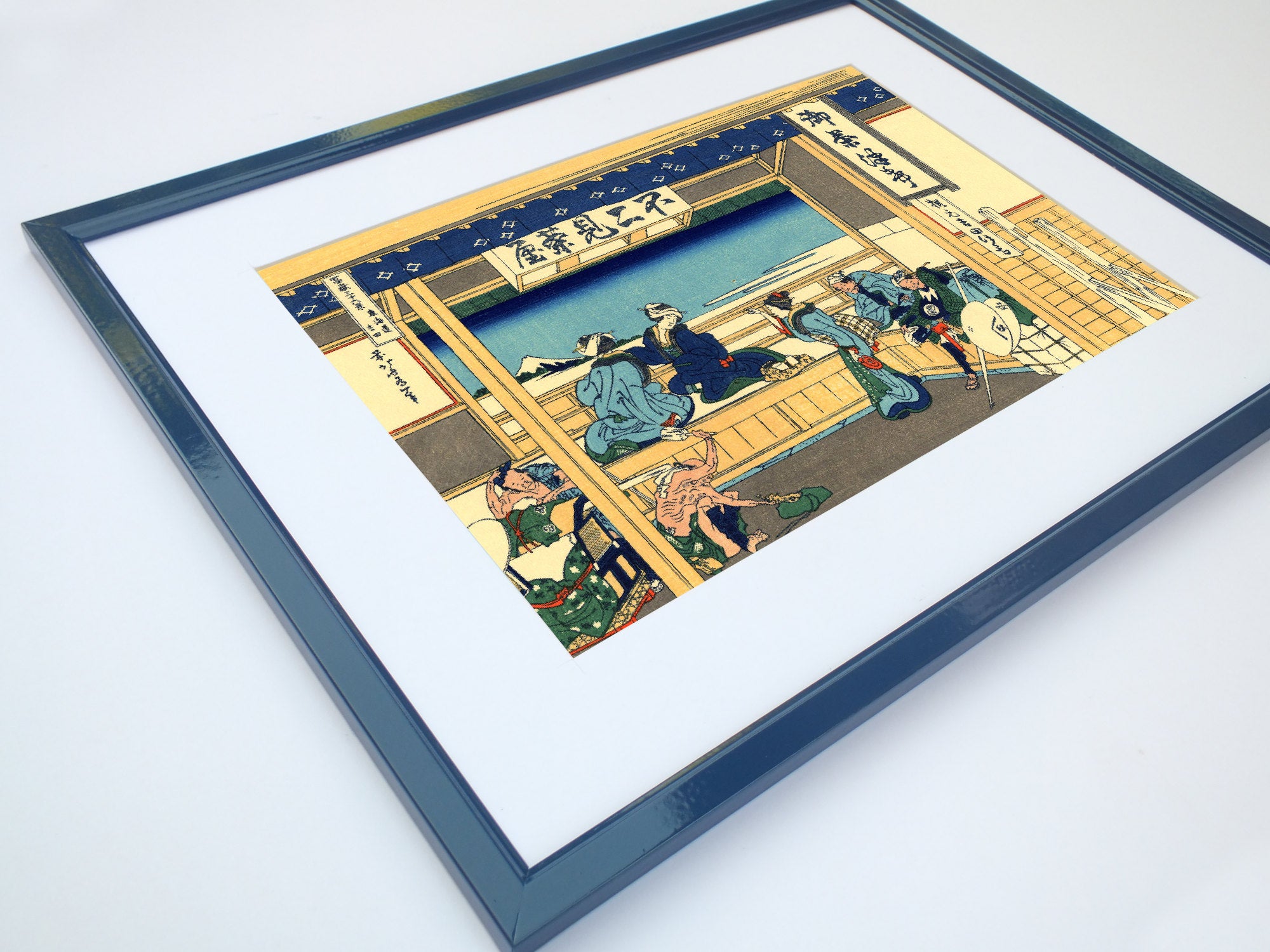
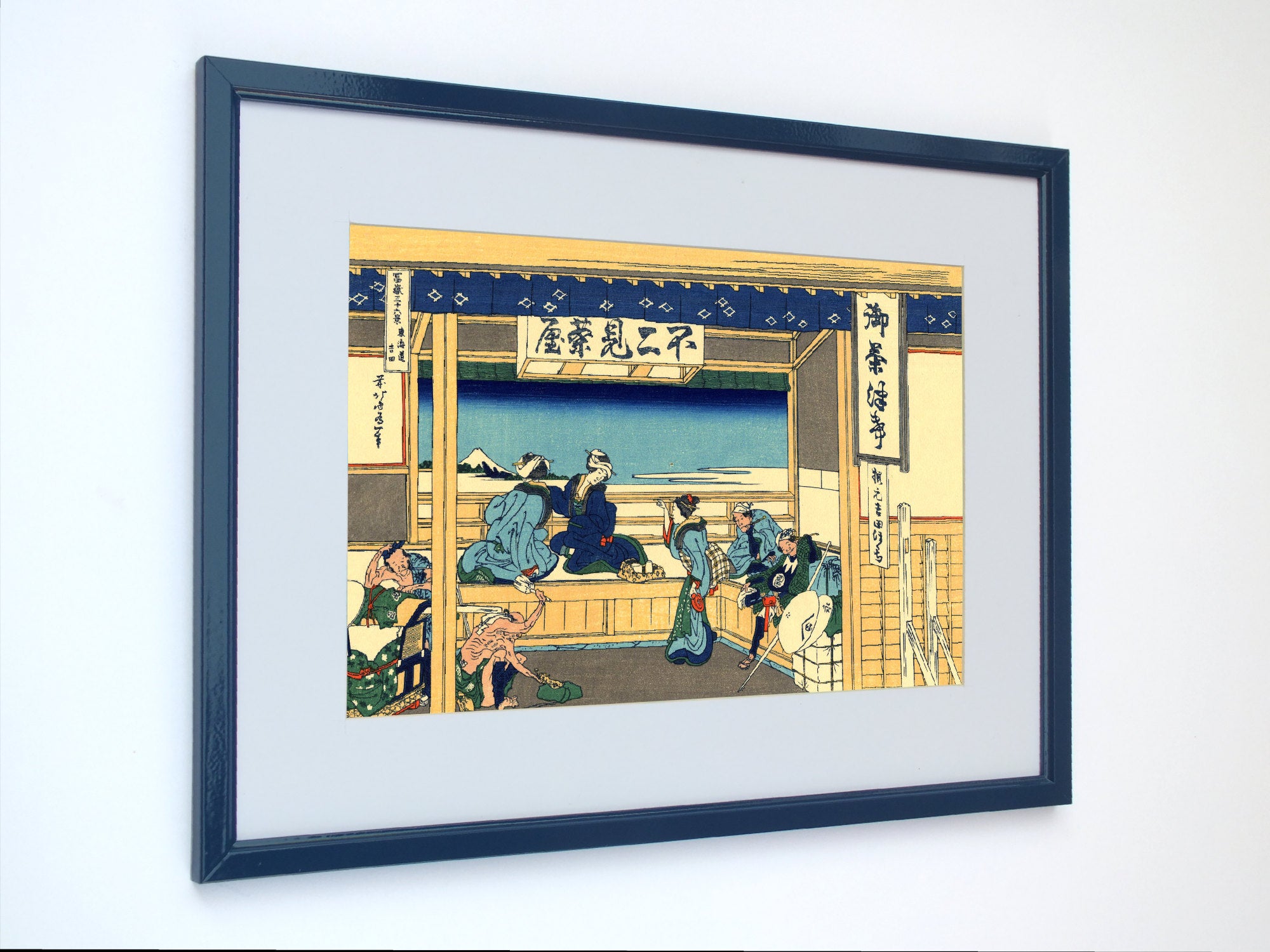
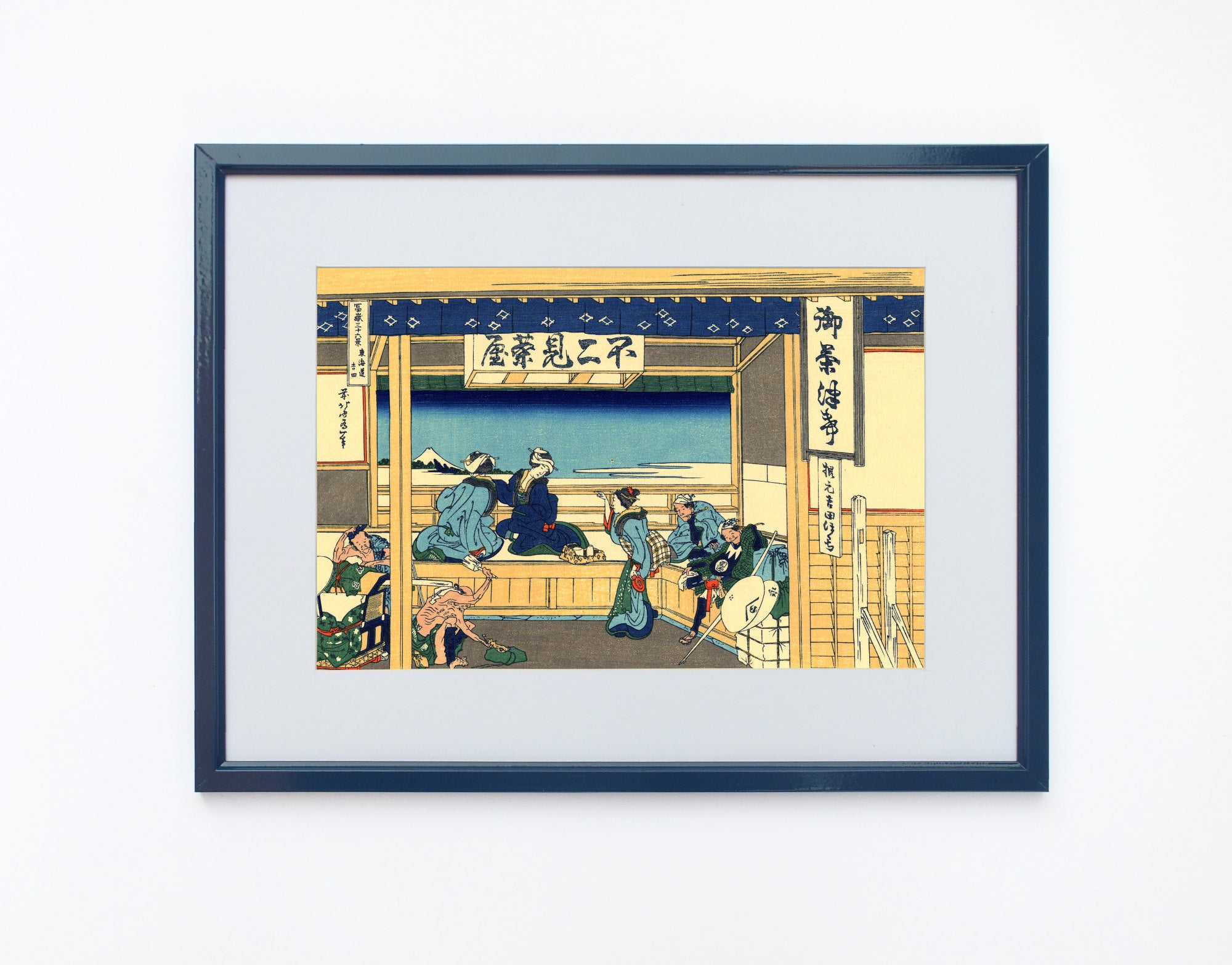
Travellers rest at a tea house whose open window deliberately frames Mount Fuji. The design turns the architecture itself into a viewing device and makes the act of looking at Fuji part of the subject.

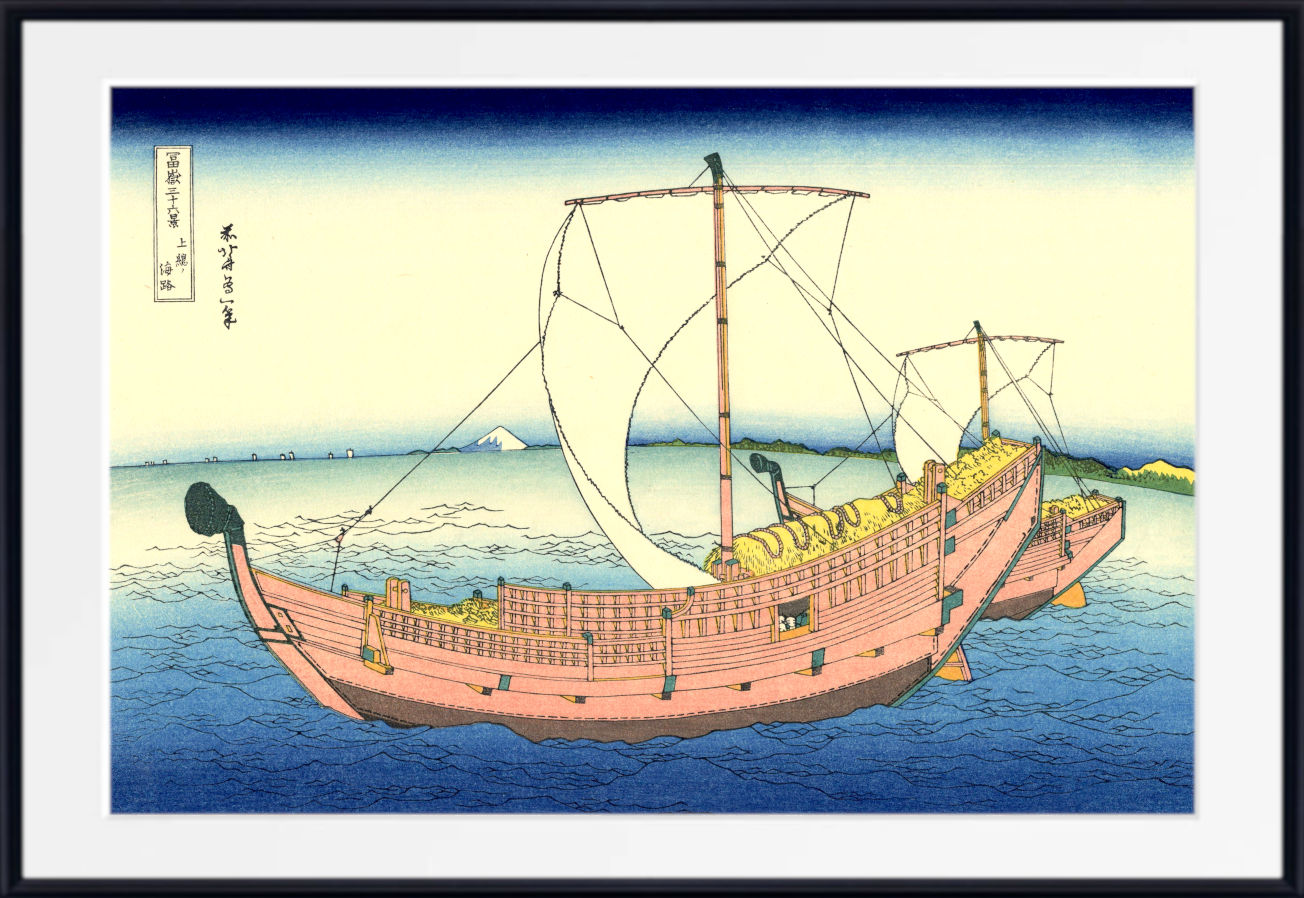
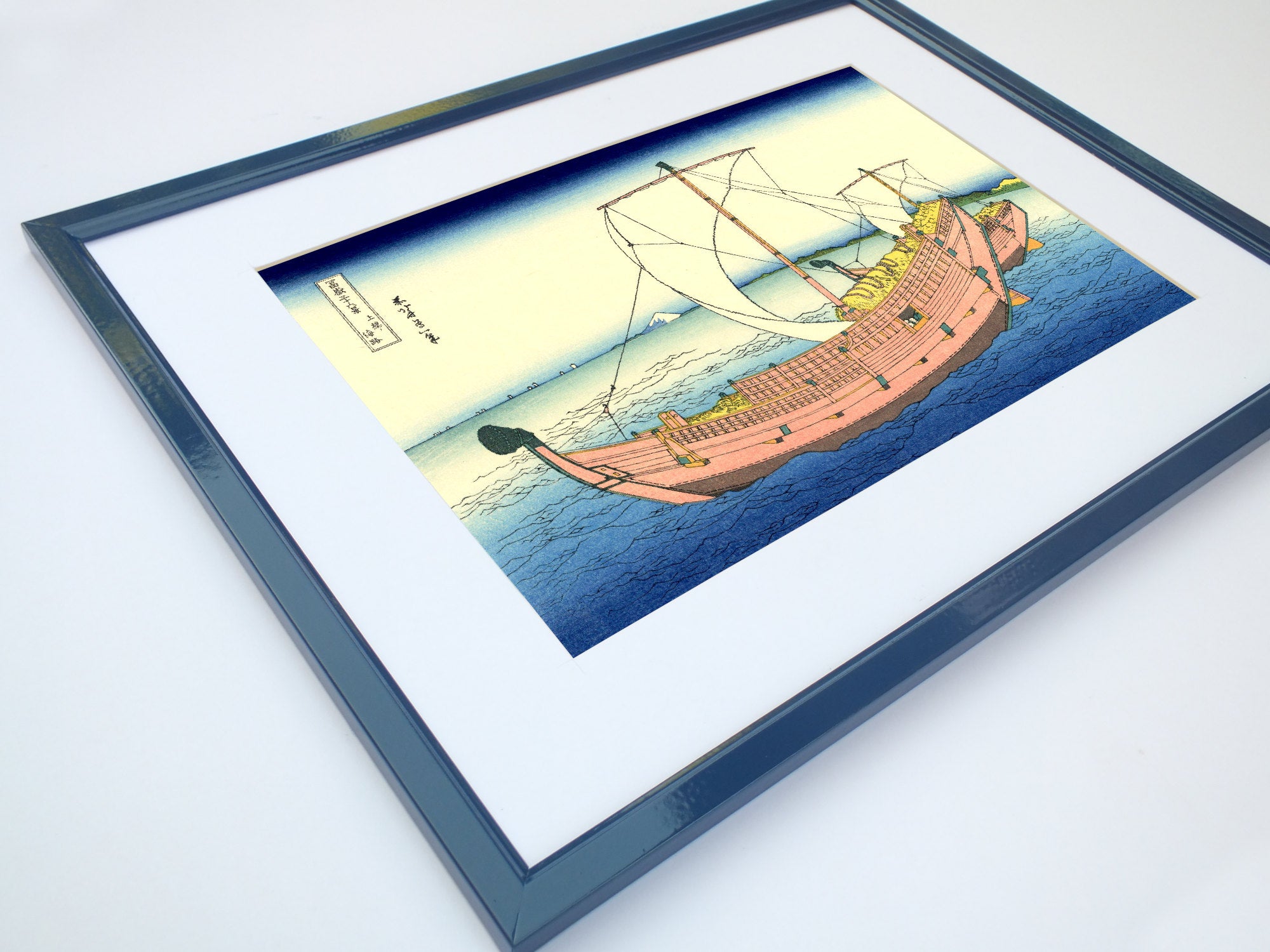
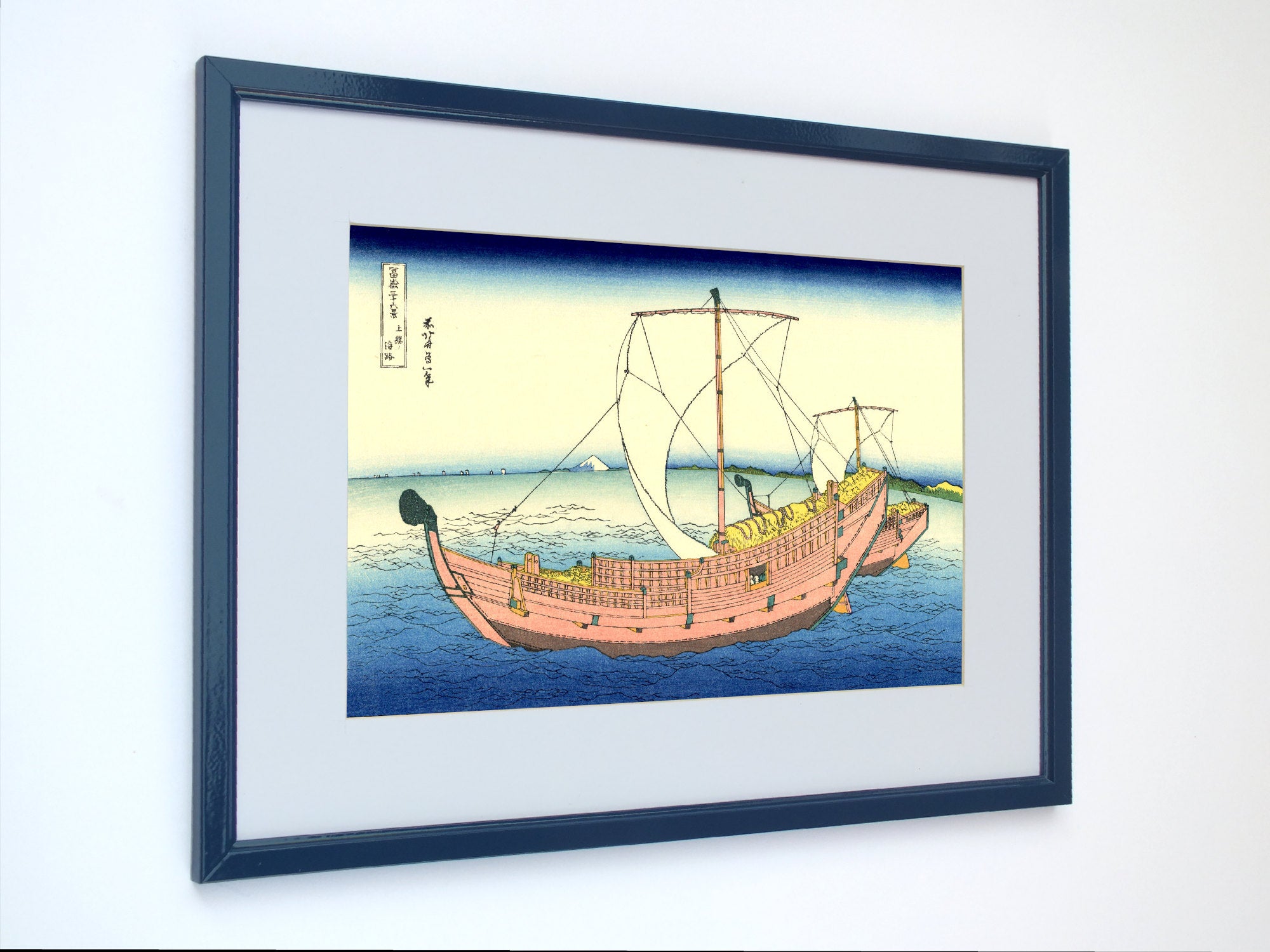
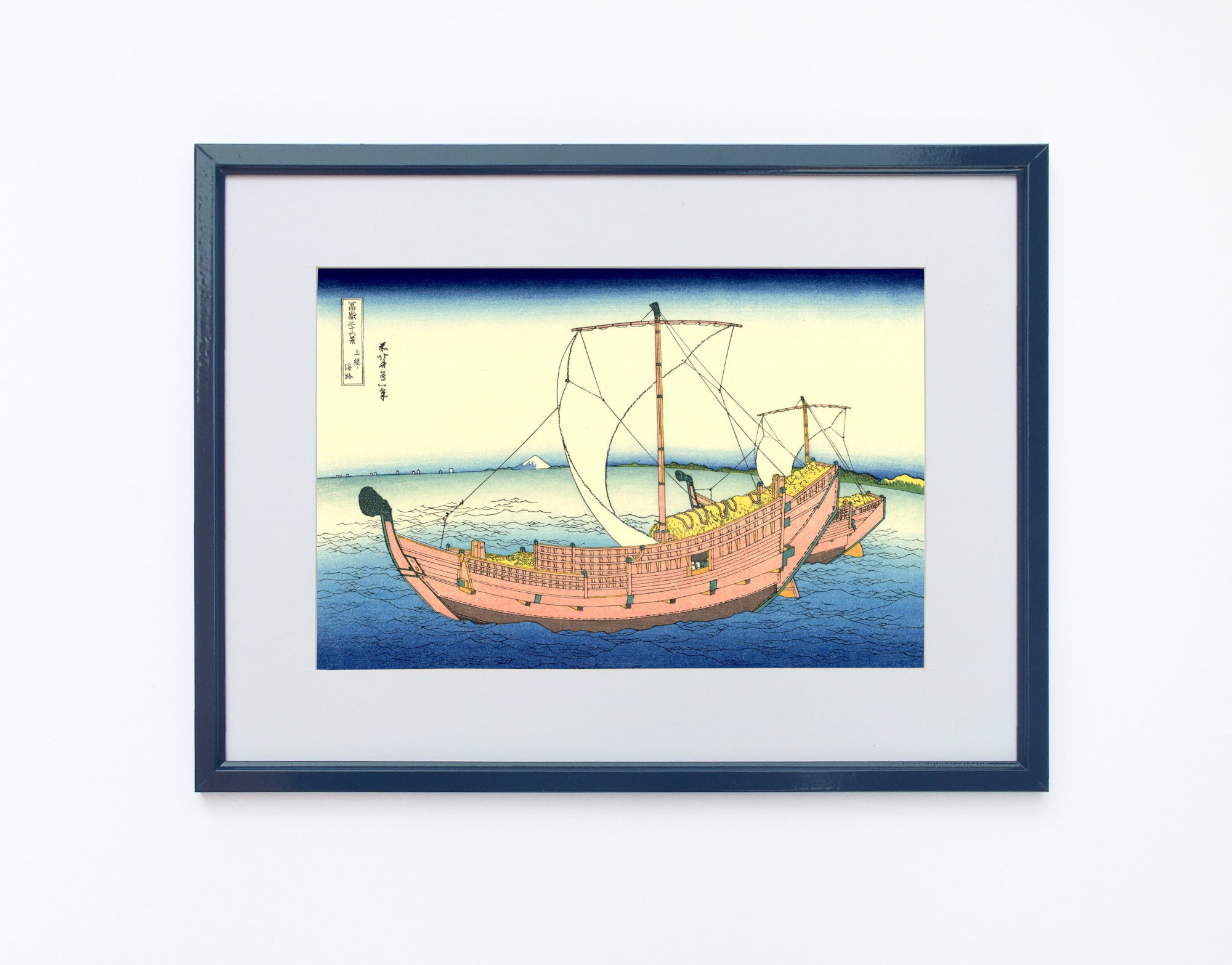
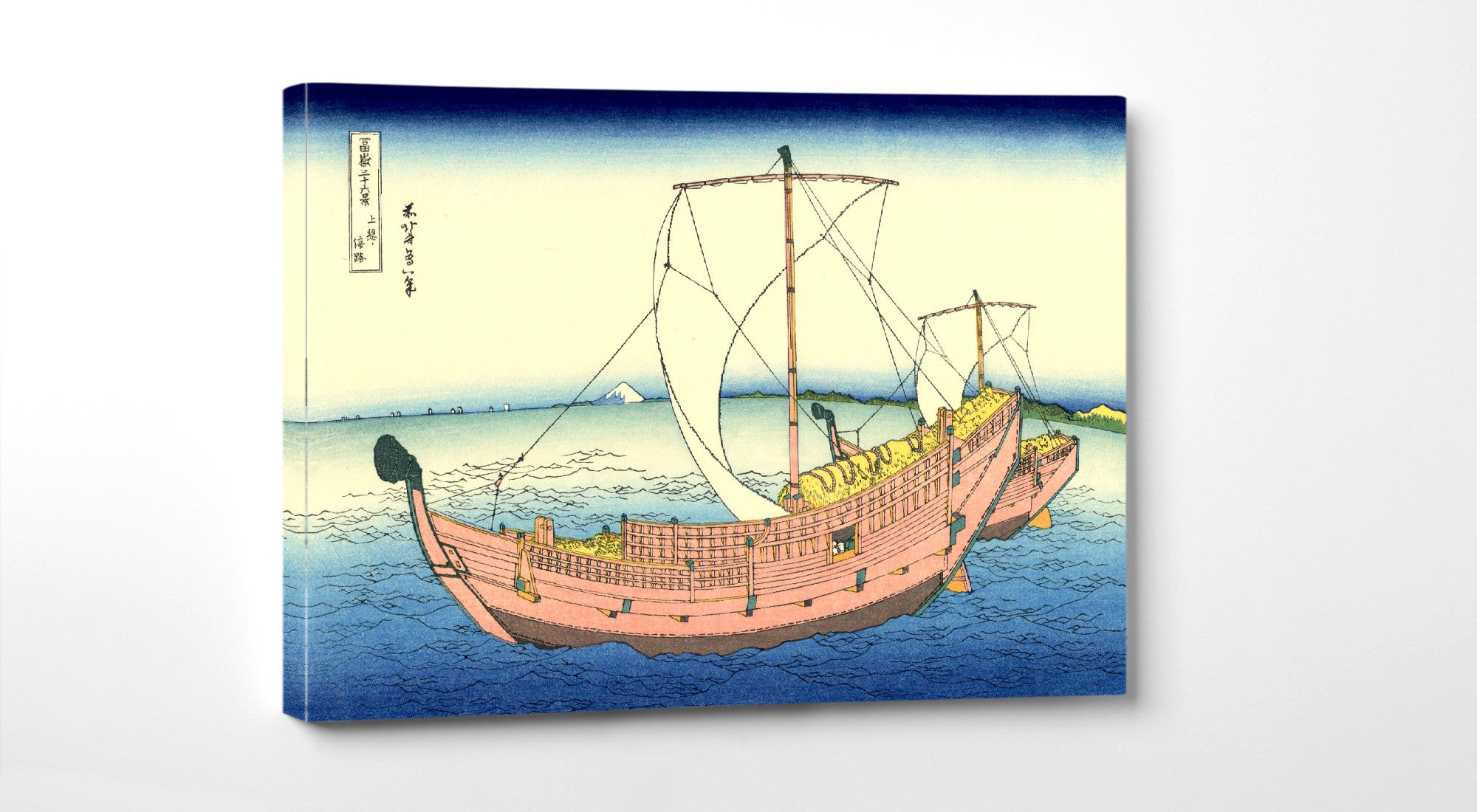
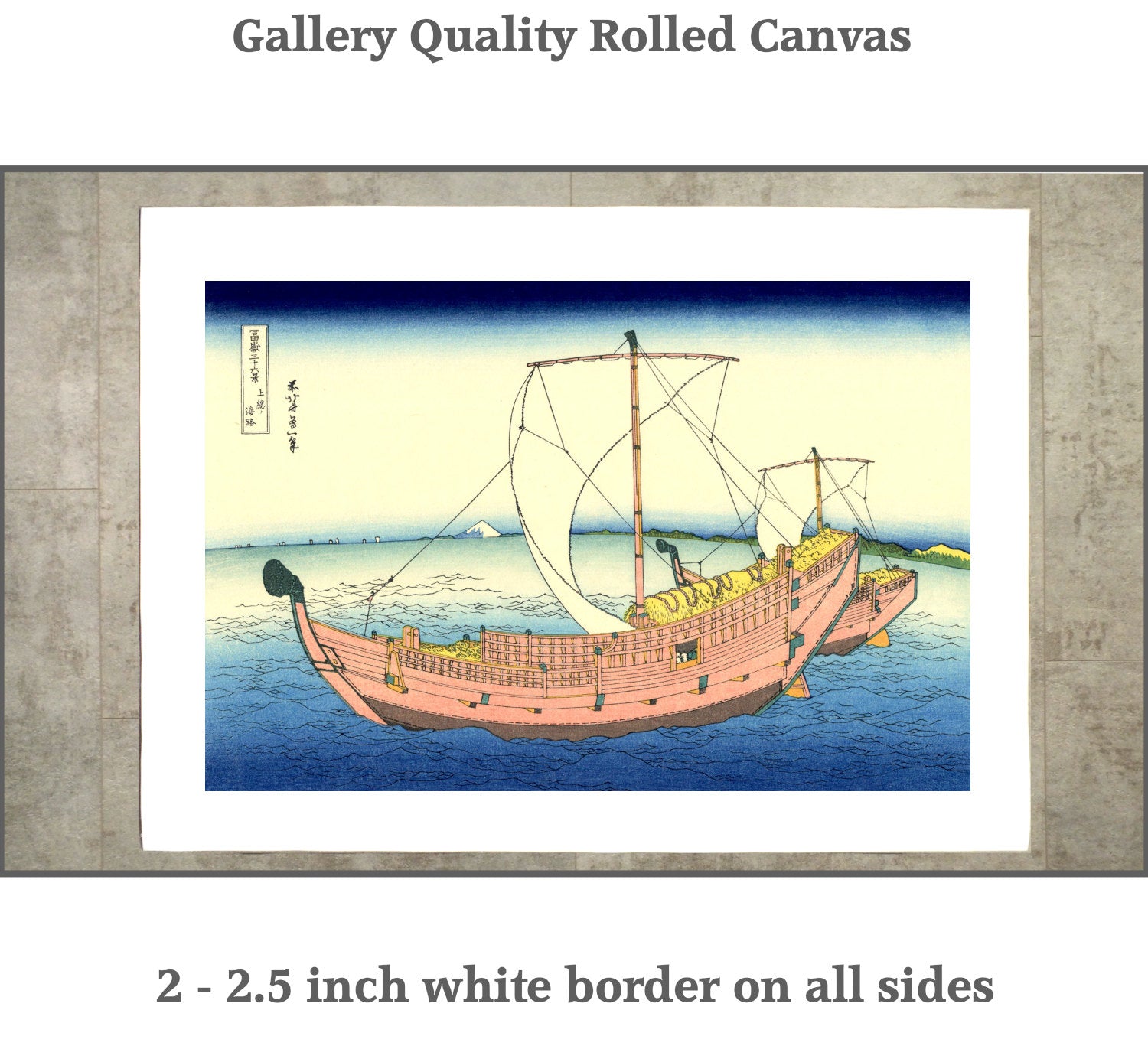
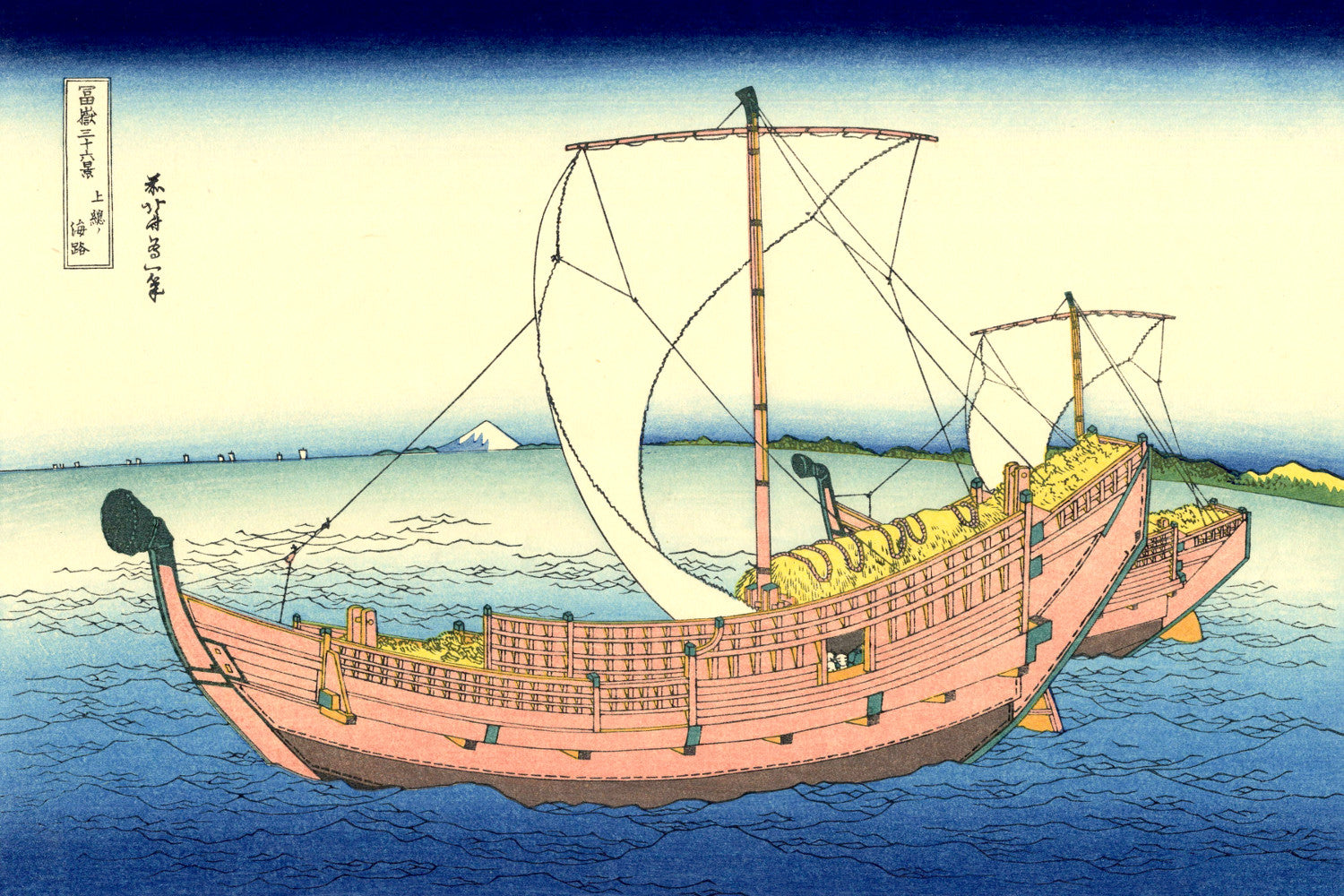
20. The Kazusa Province Sea Route
Large sailing vessels dominate the foreground while Fuji appears tiny across the calm sea. Rigging, masts and curved hulls create a complex geometric screen between the viewer and the mountain.

21. Nihonbashi Bridge in Edo
Hokusai crops the crowded Nihonbashi bridge so aggressively that the viewer seems to stand within the bustle of Edo. Beyond the warehouses and castle roofs, Fuji remains visible on the distant horizon.

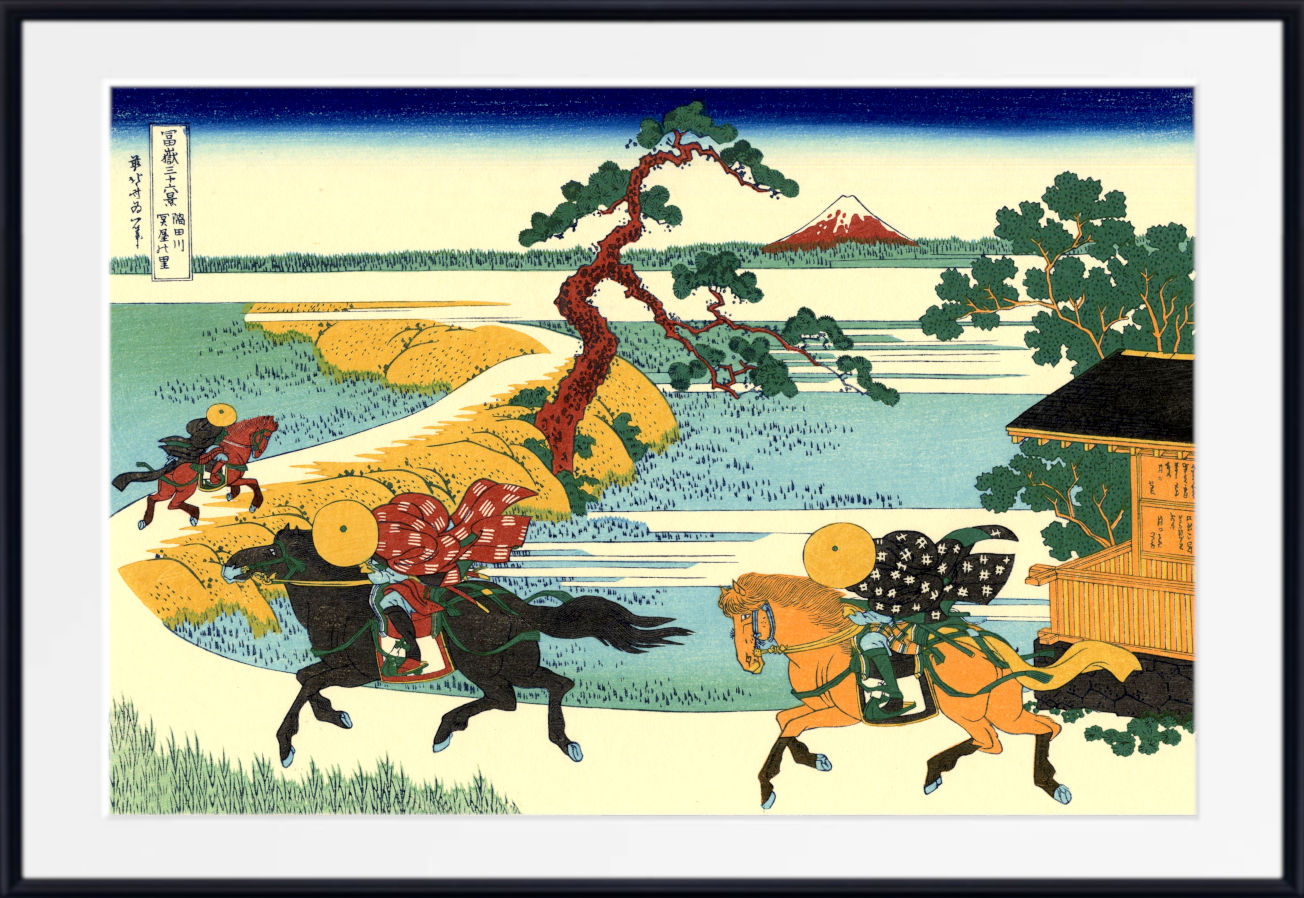
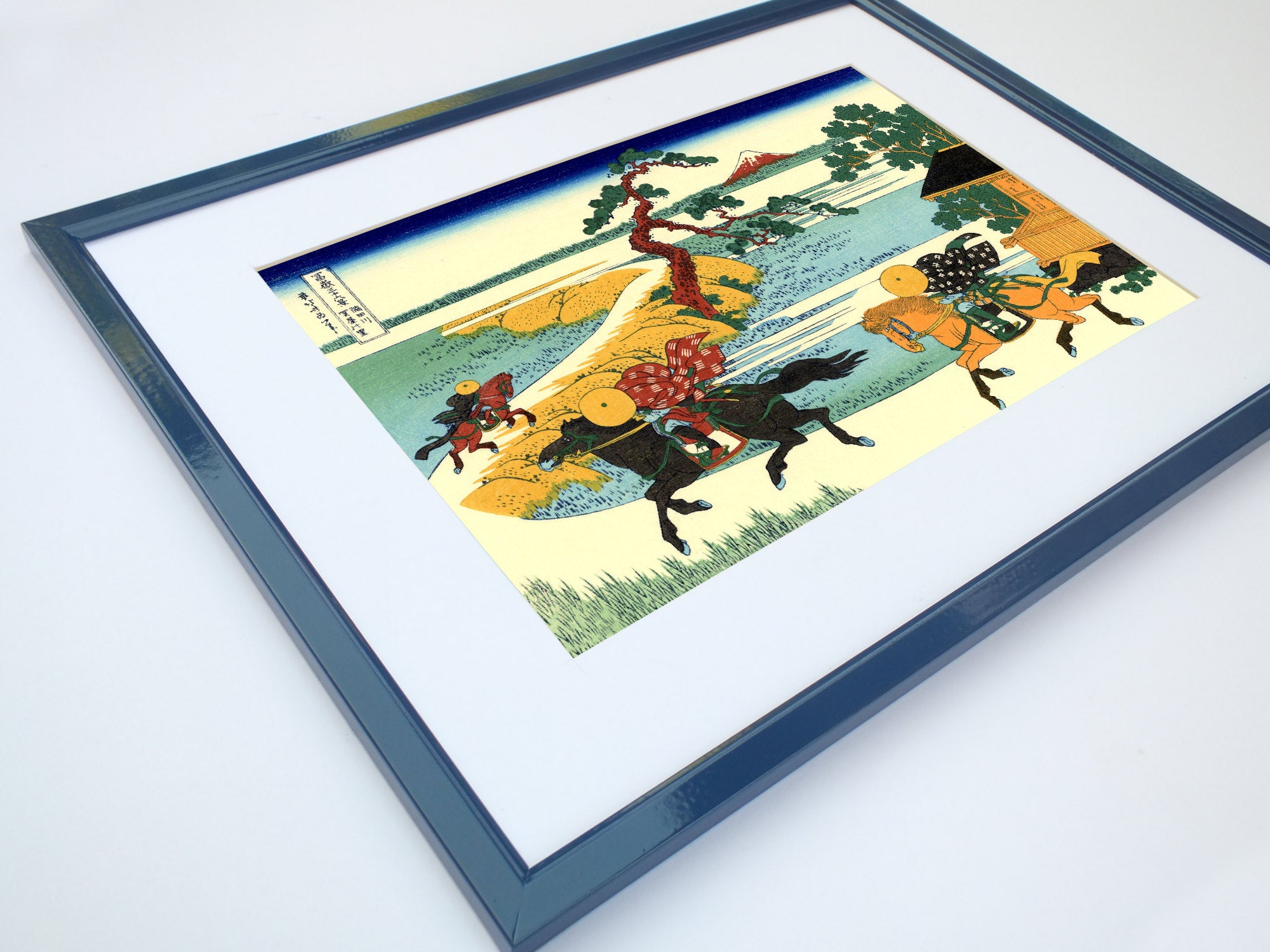
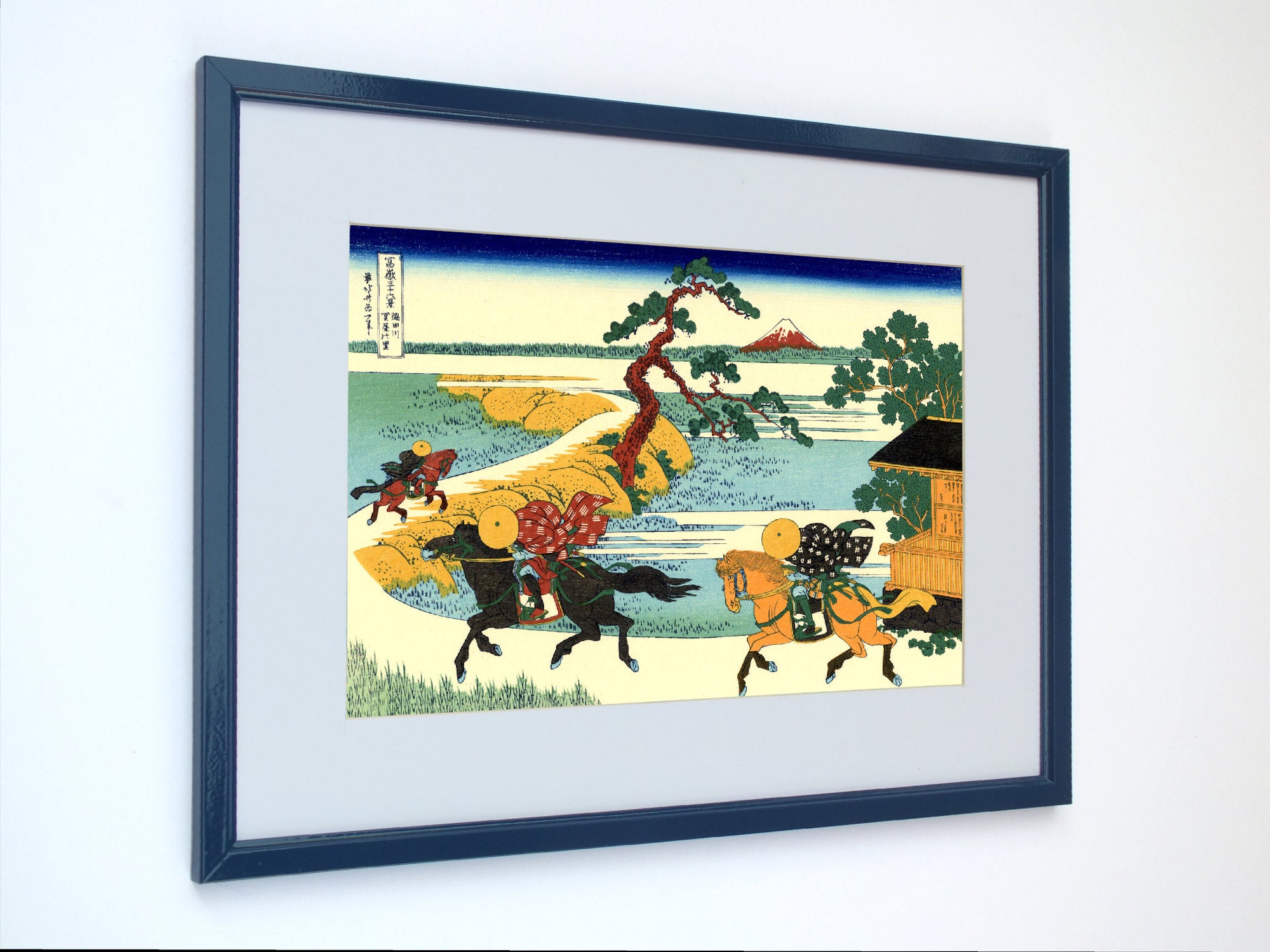
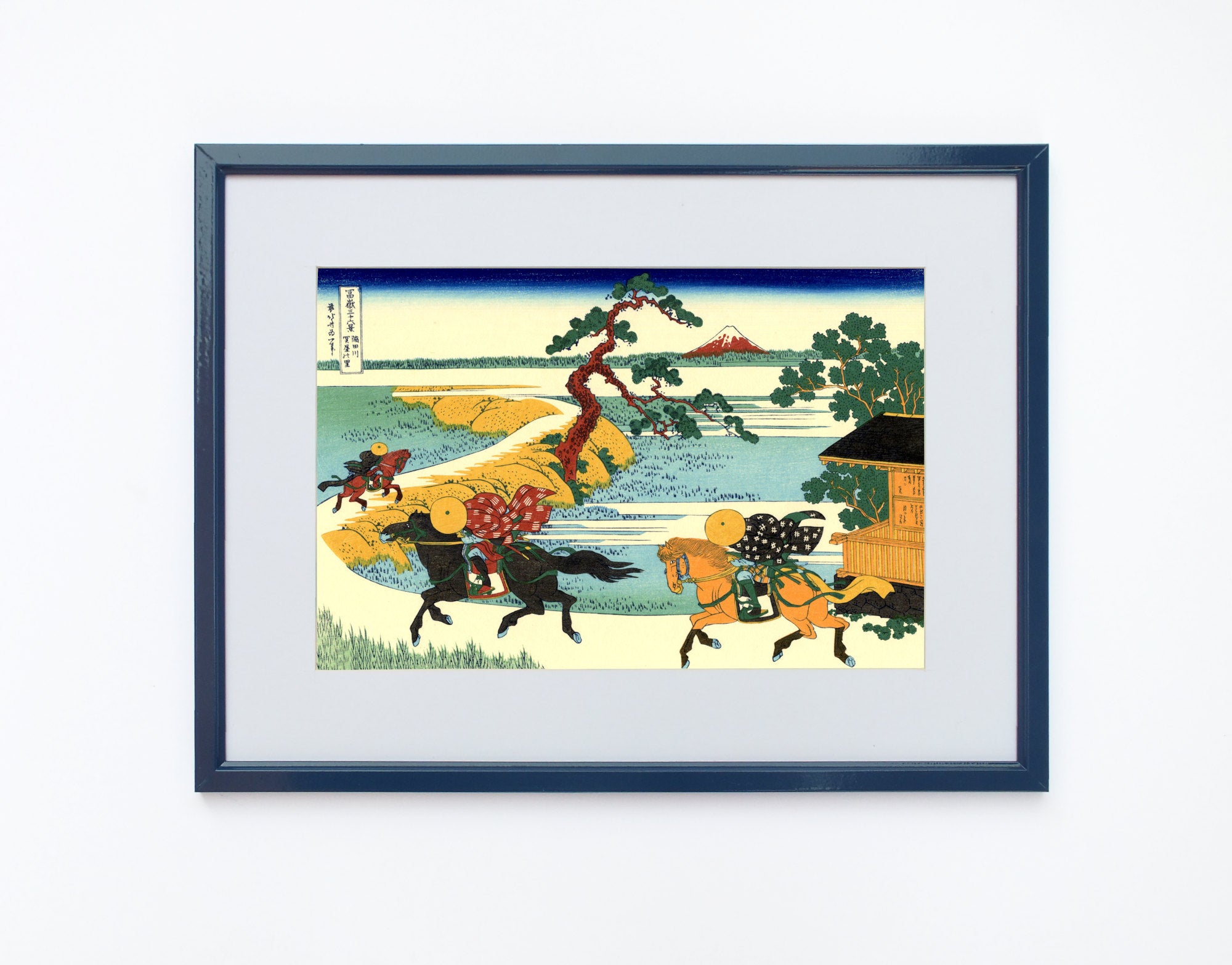
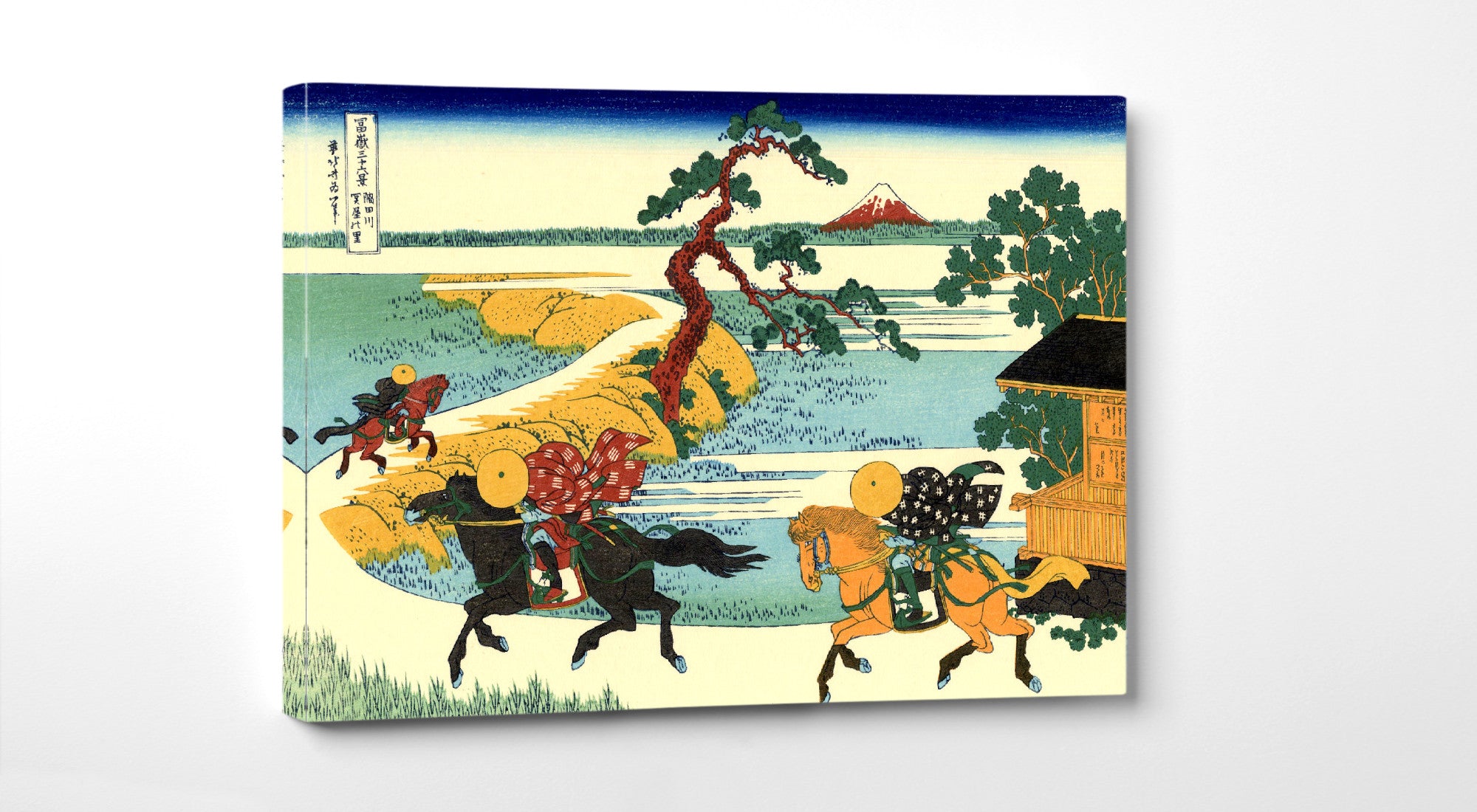
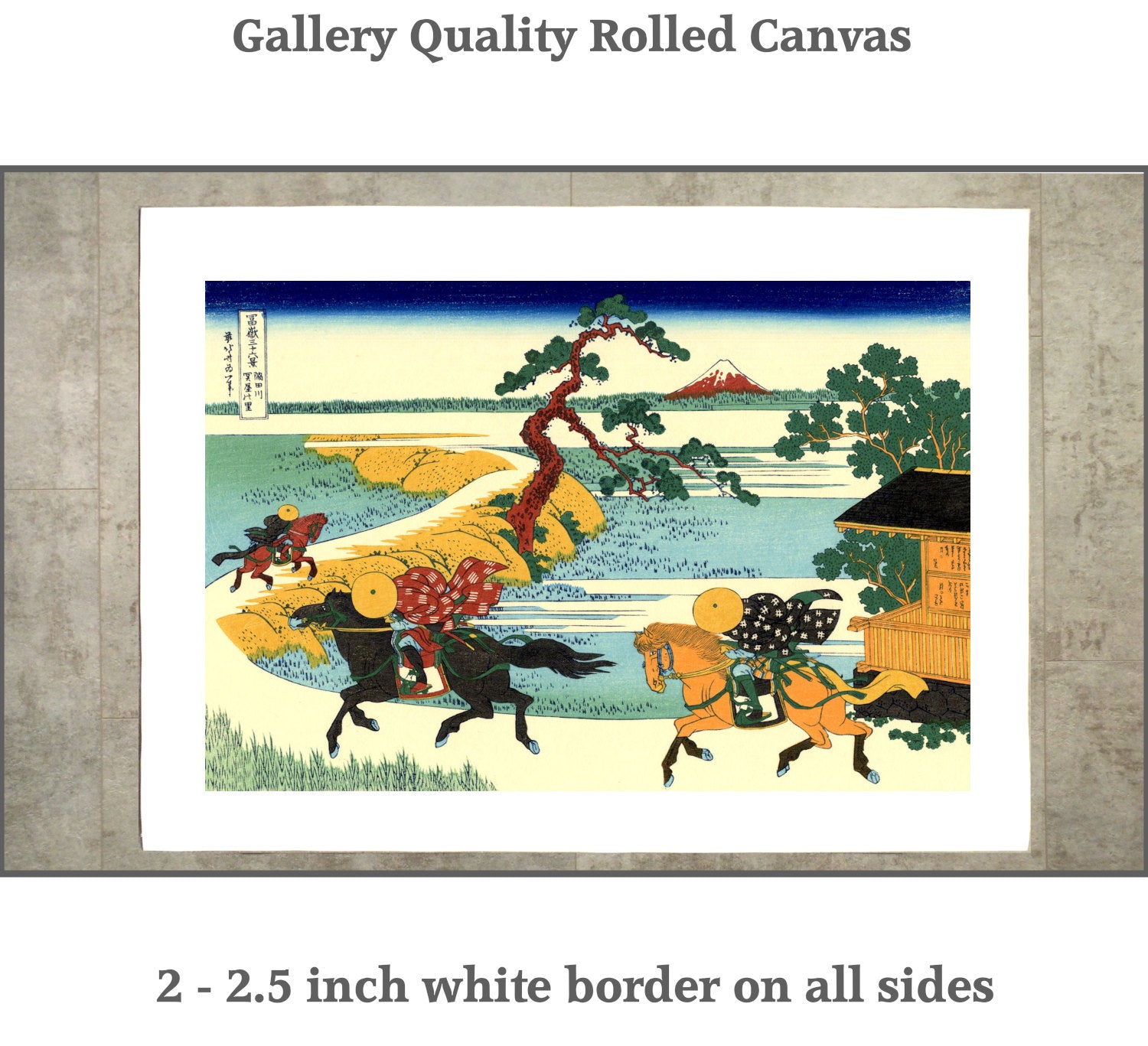
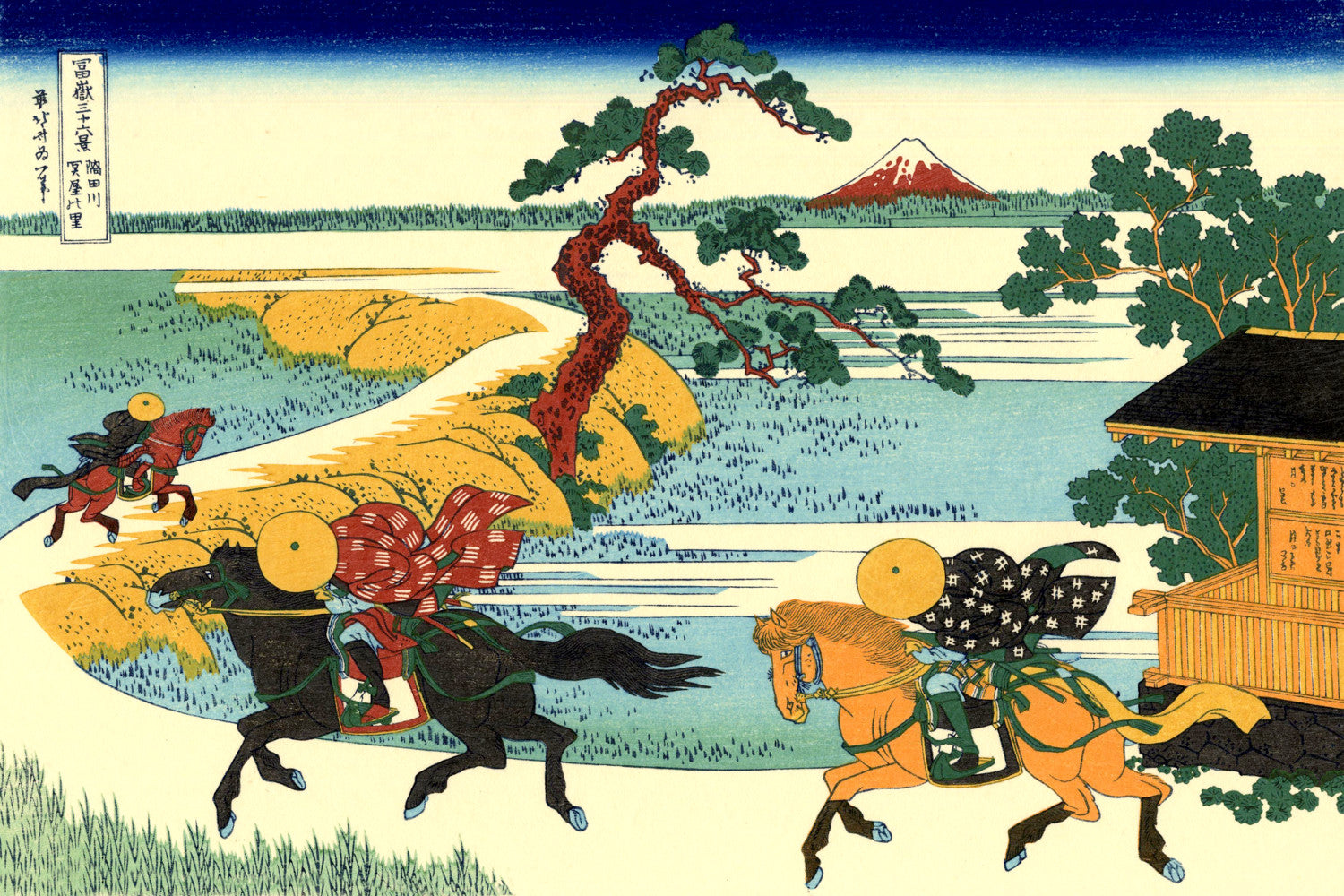
22. Barrier Town on the Sumida River
Three riders race across the foreground while a twisting pine and distant Fuji structure the landscape. The strong horizontal movement gives this view an unusual sense of speed.

23. Bay of Noboto
People gather shellfish in shallow water beneath large torii gates, with Fuji appearing beyond the bay. Hokusai uses the gates to frame the mountain and connect the working shoreline with a sacred visual motif.

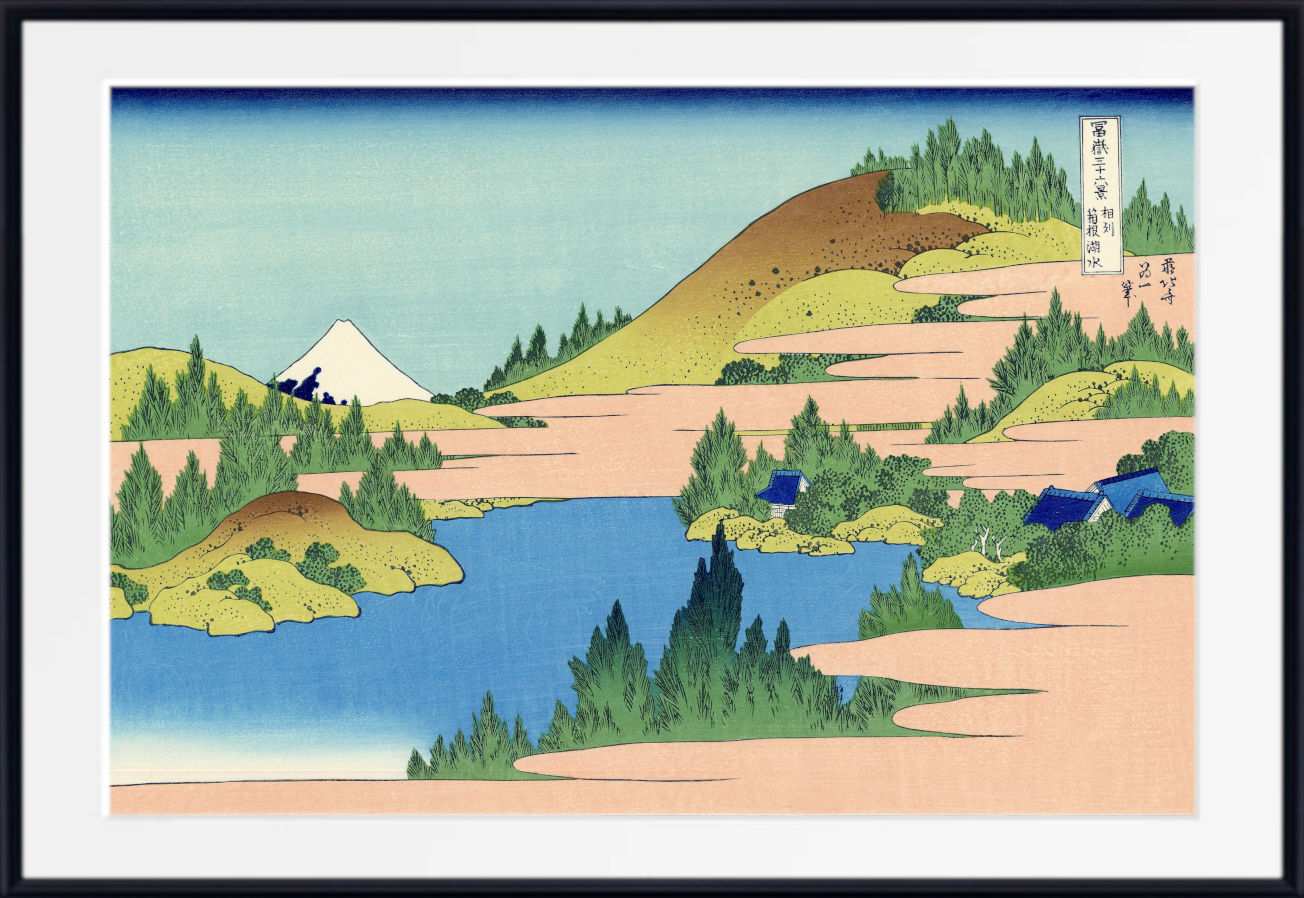
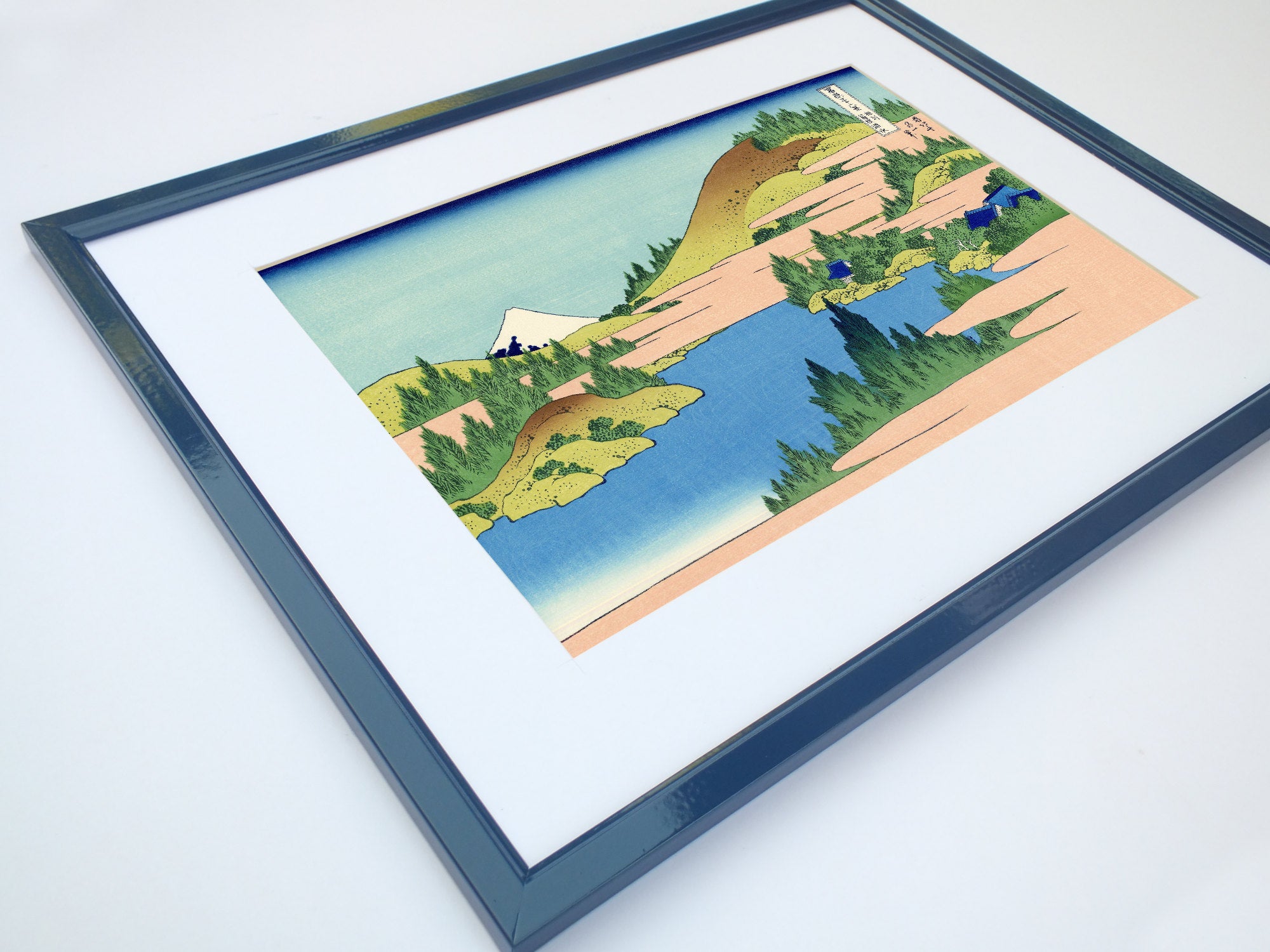
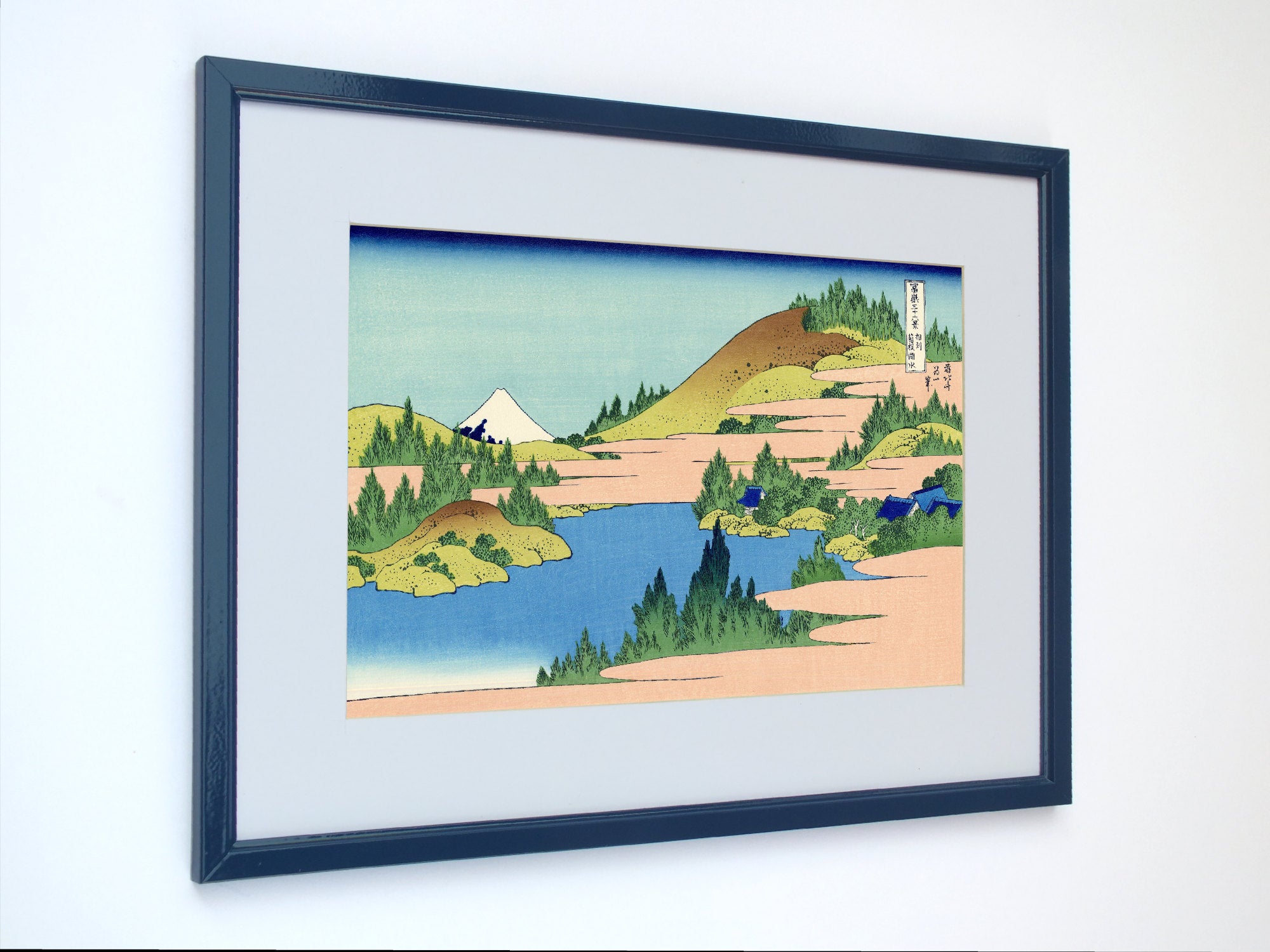
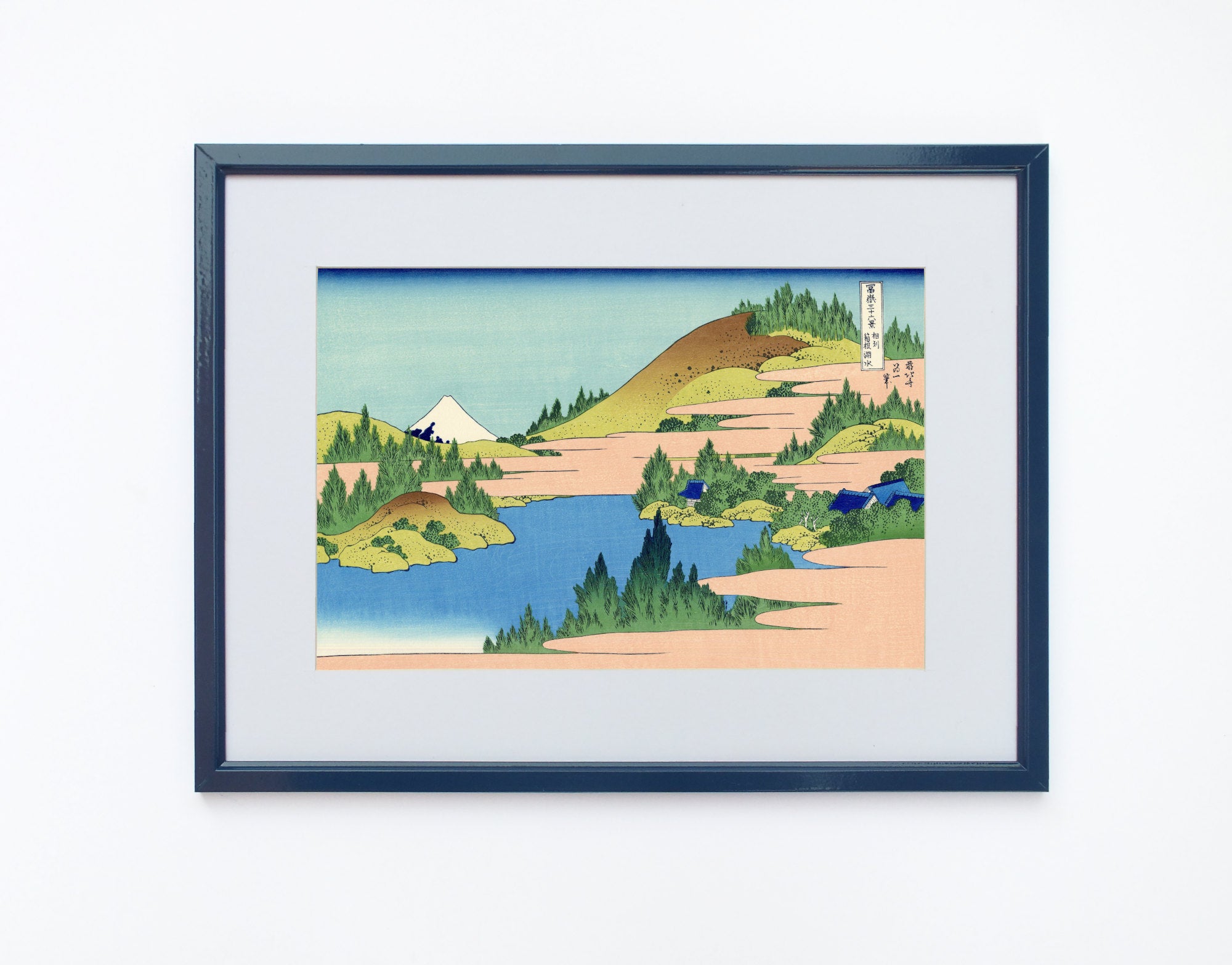
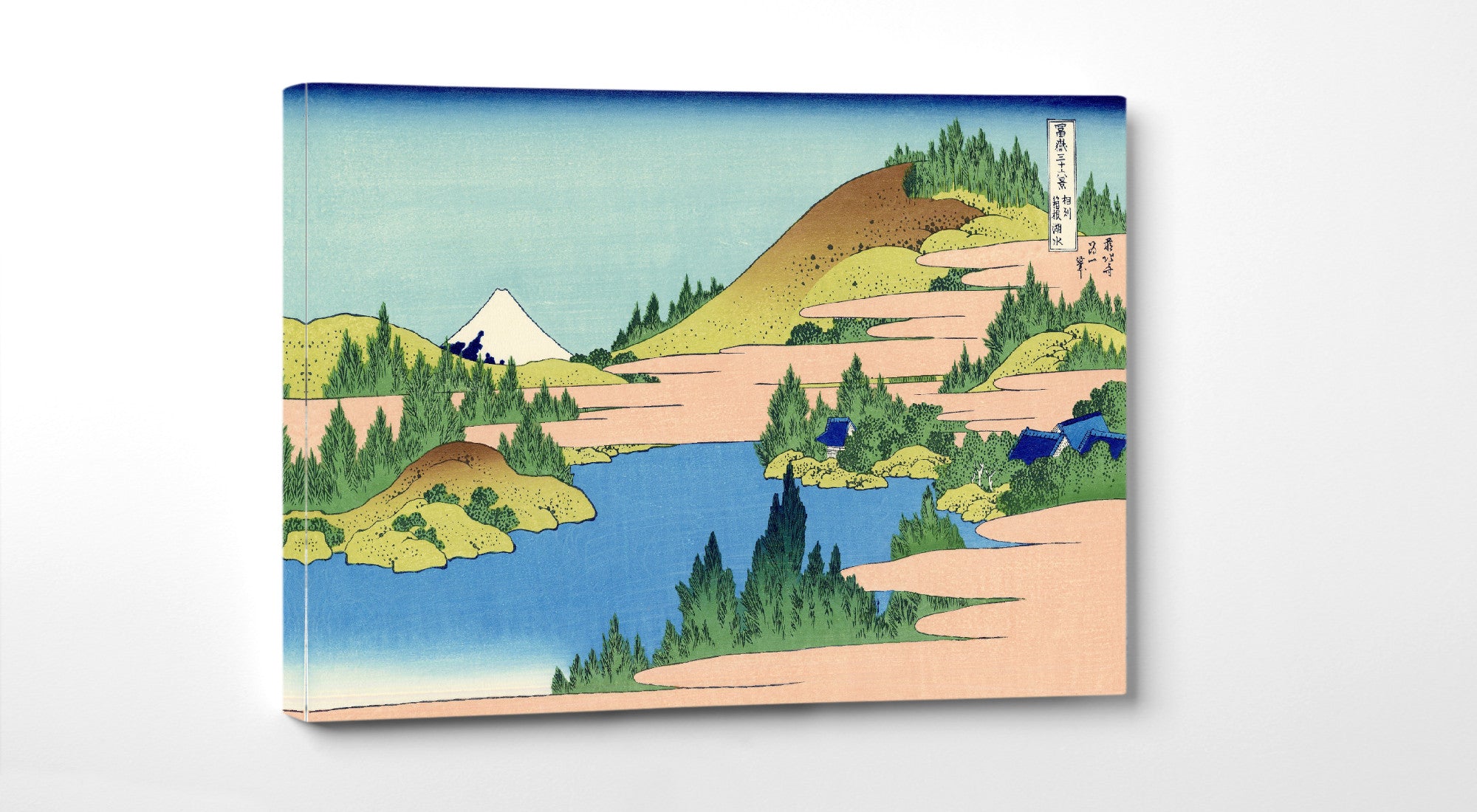
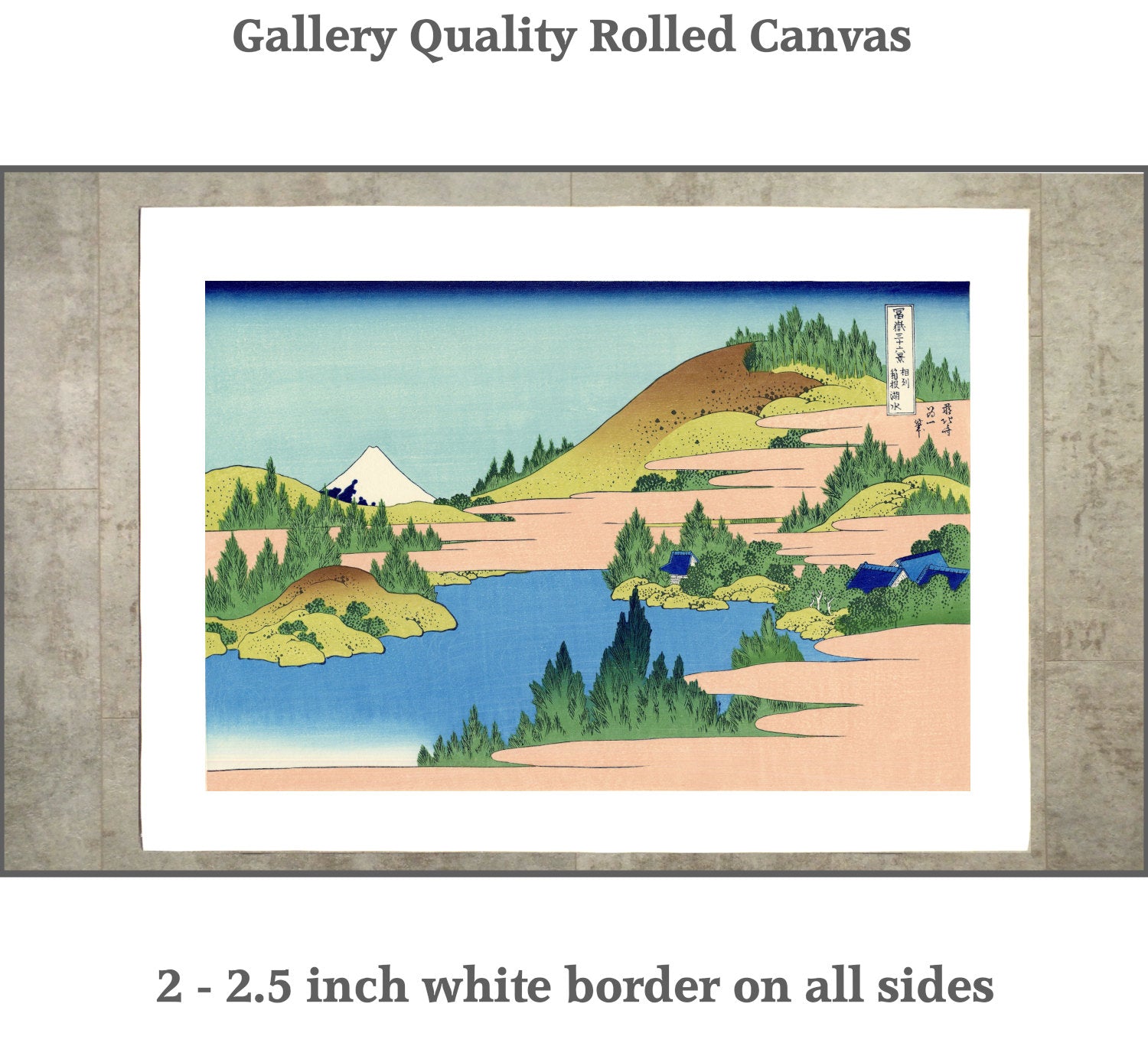
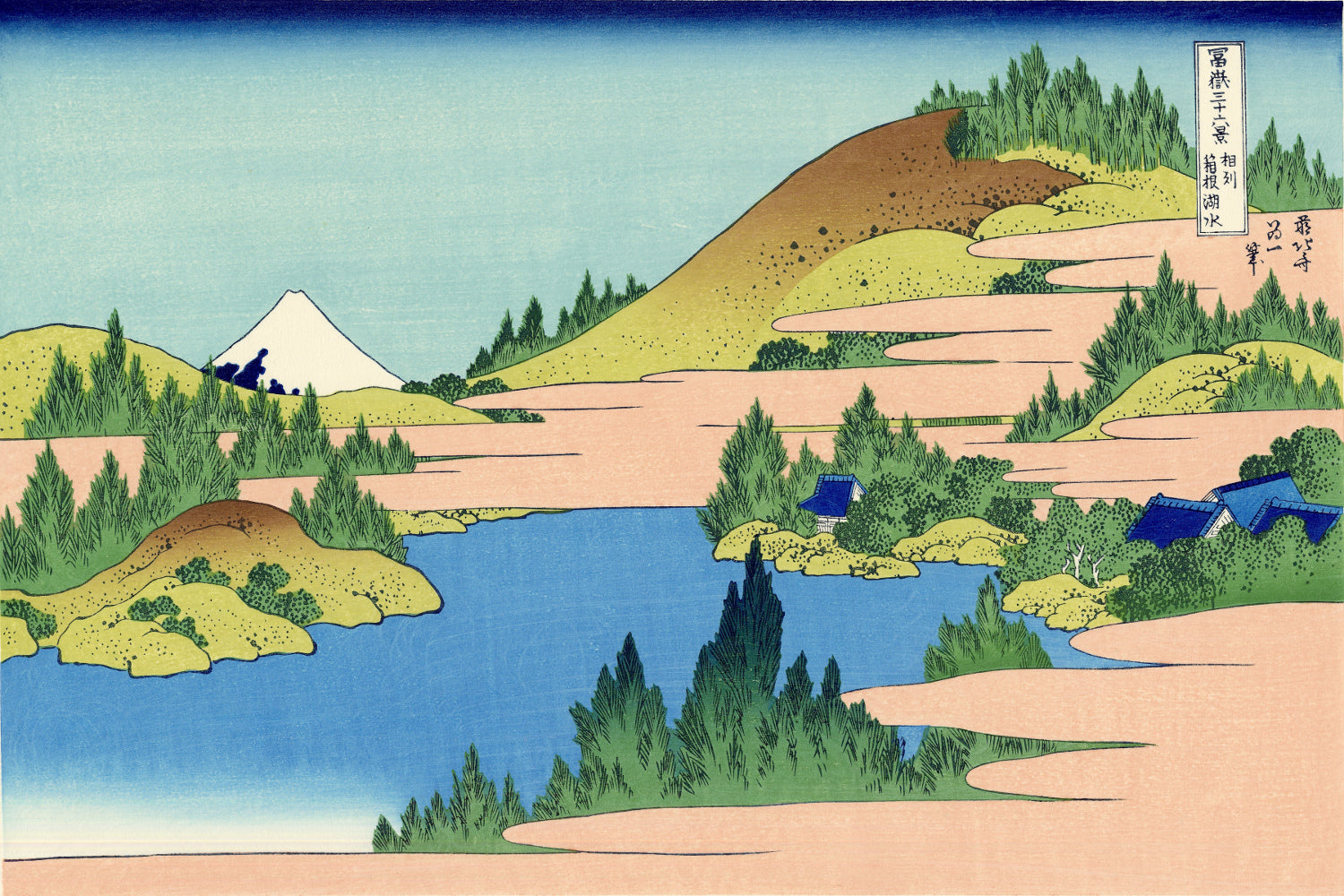
24. Lake of Hakone in Sagami Province
Lake Hakone lies almost motionless among layered hills and forests, while Fuji appears beyond the landscape. The absence of busy foreground figures gives this design an unusually solemn stillness.

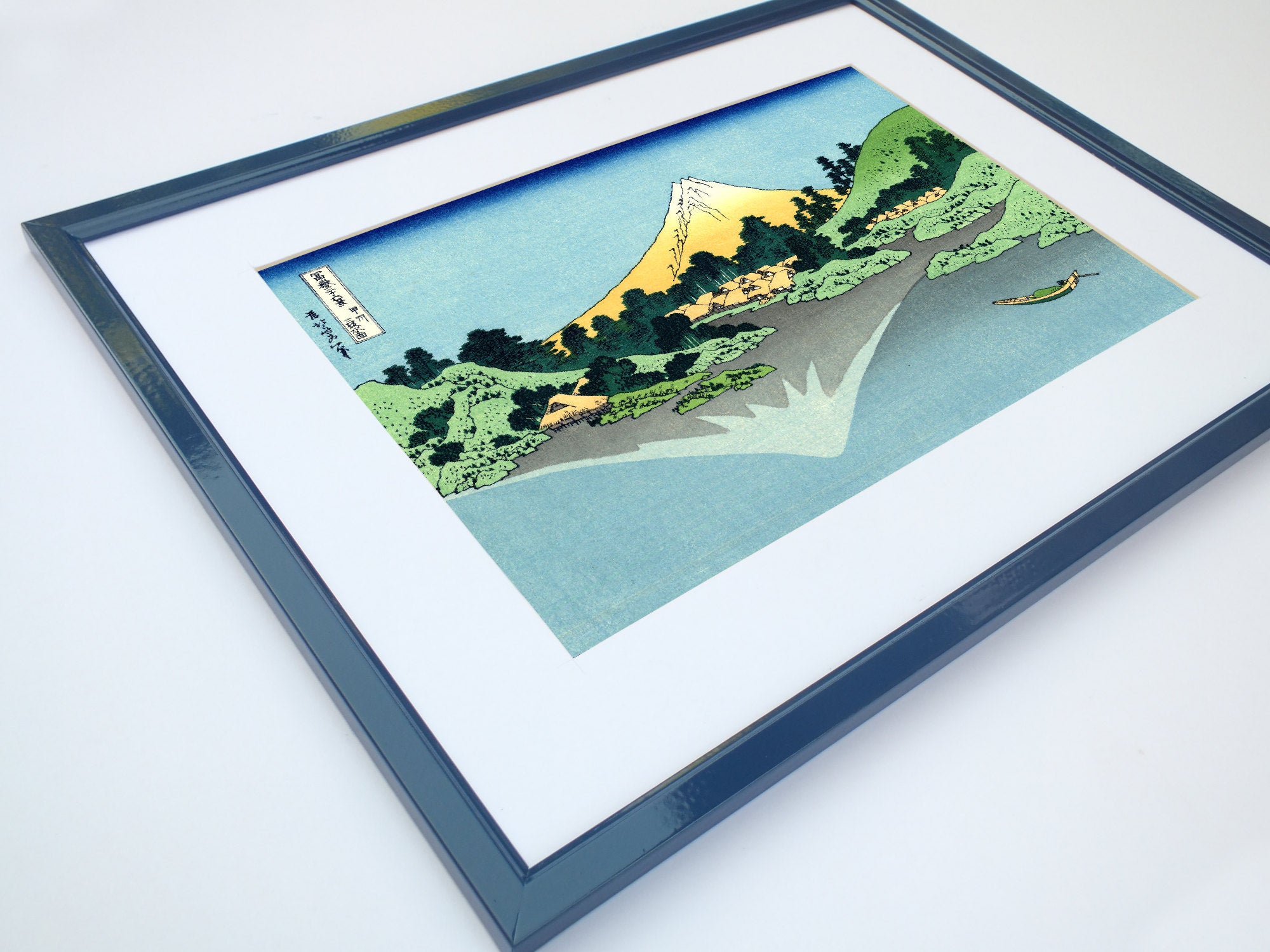
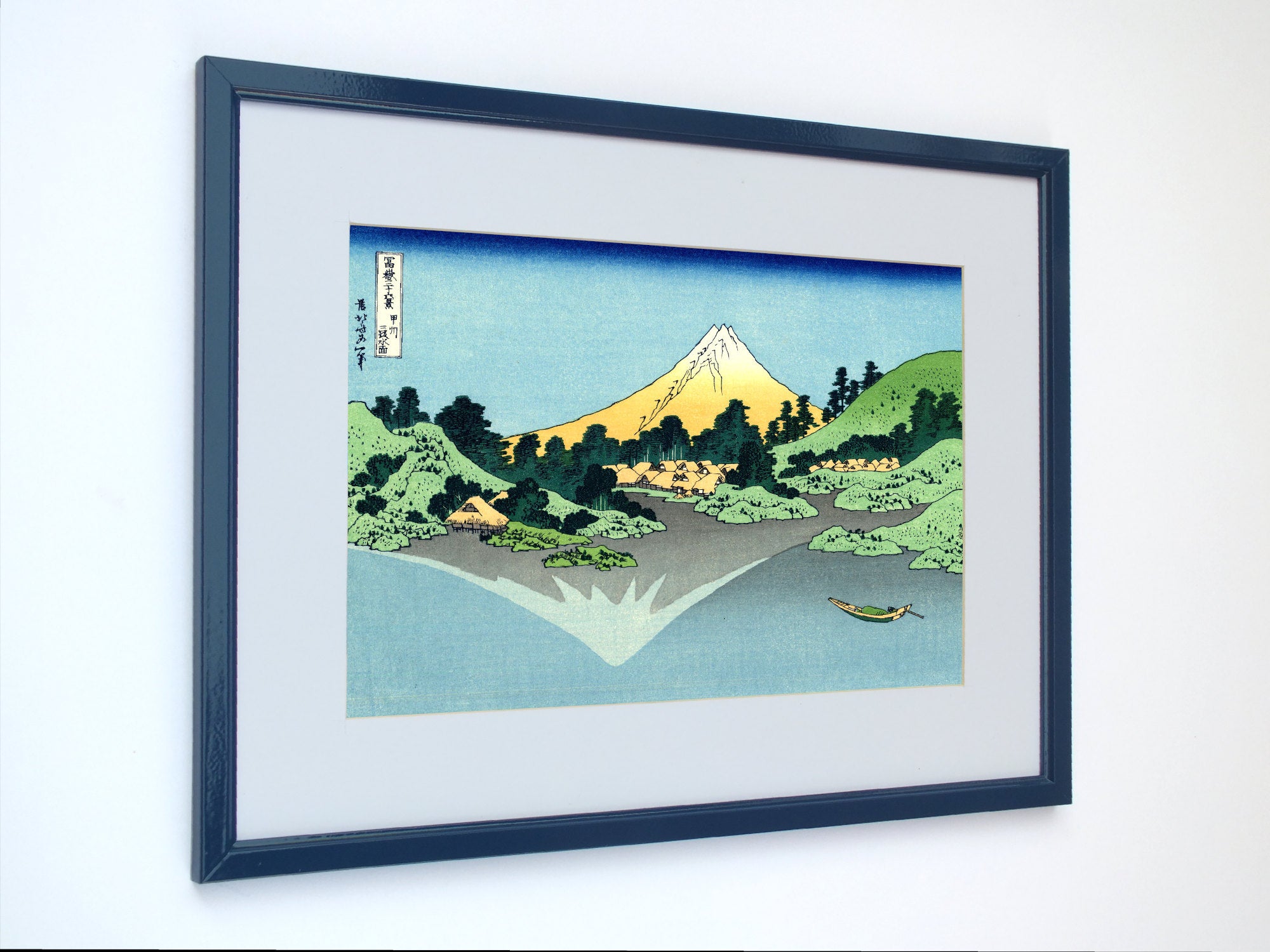
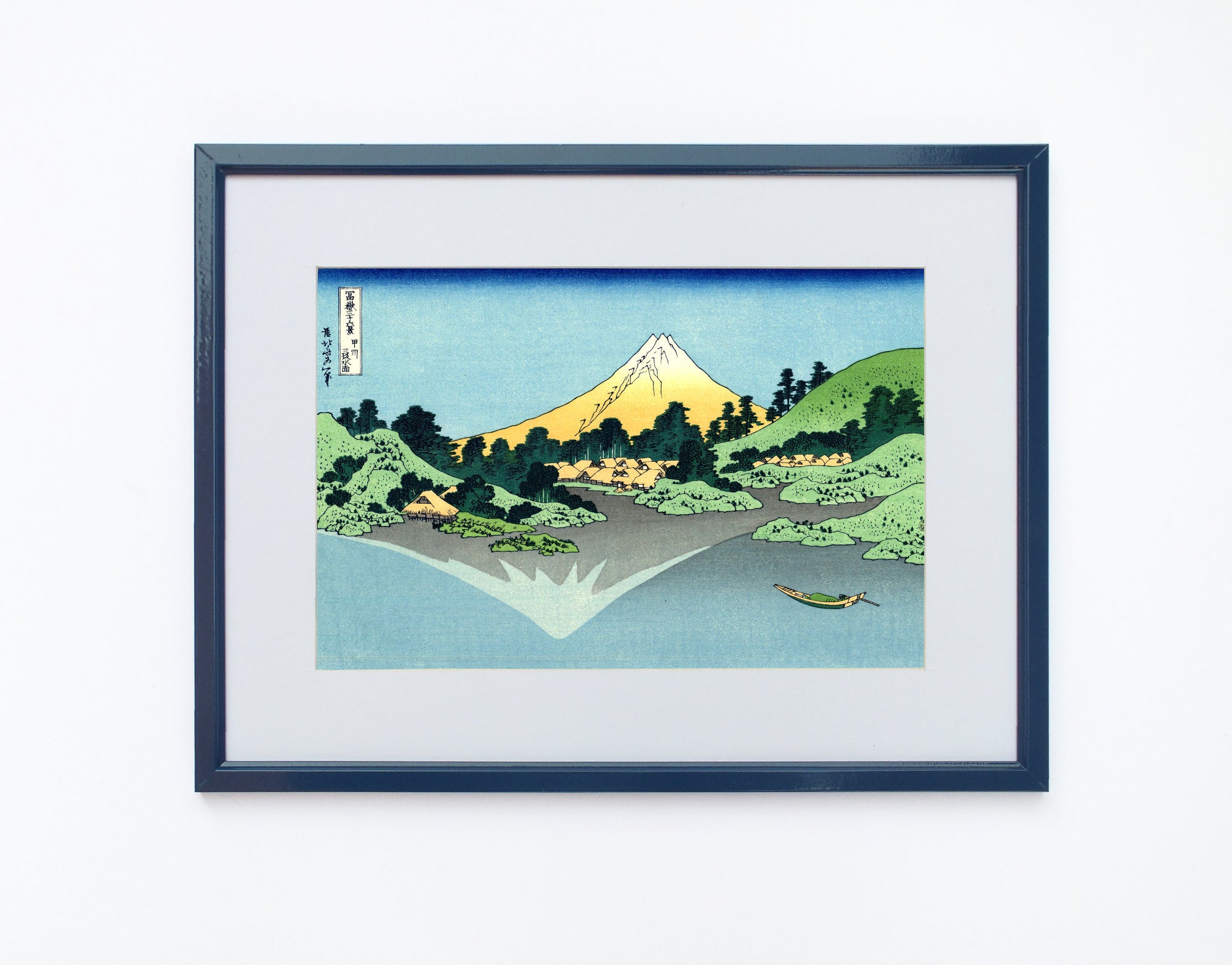
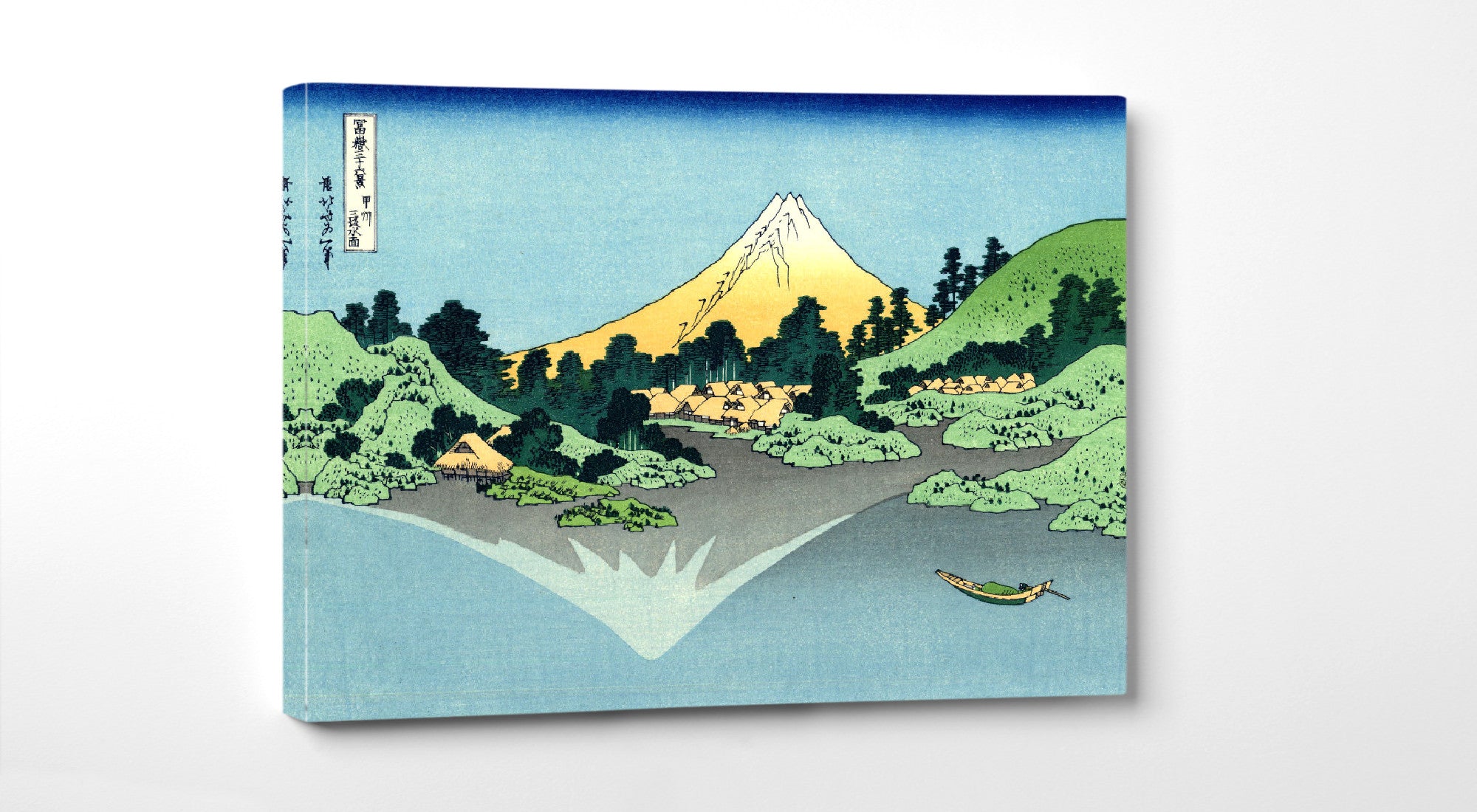
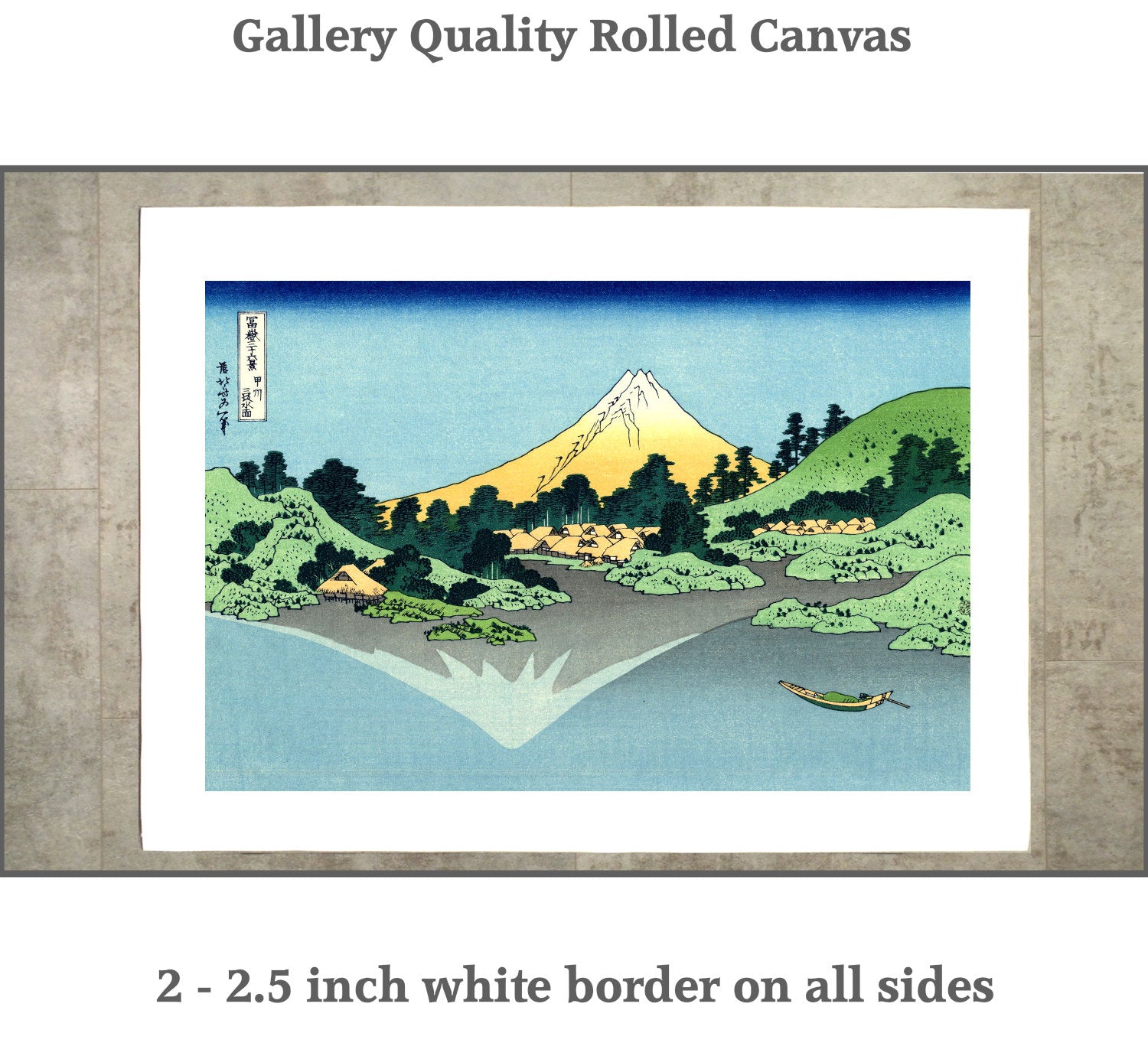
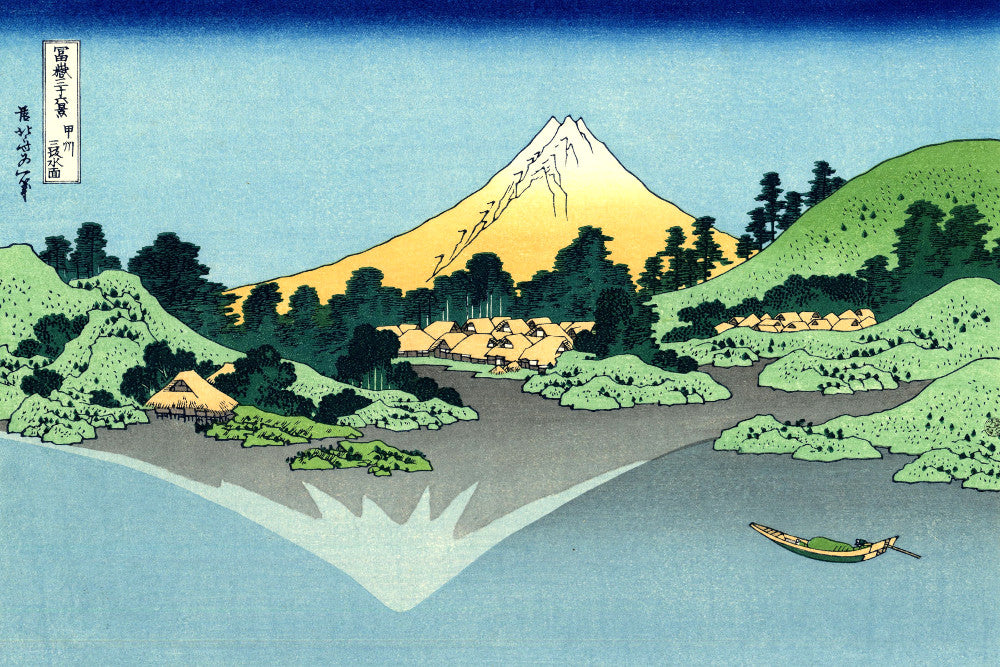
25. Fuji Reflected in Lake Kawaguchi from Misaka Pass
Hokusai places the real mountain above the lake and its inverted reflection below. Intriguingly, the reflected Fuji appears snow-capped even though the mountain itself does not, turning reflection into a visual puzzle.

26. Hodogaya on the Tōkaidō
Travellers and a horse pause among tall pines on the Tōkaidō road while Fuji appears through the trunks. The vertical trees act as a natural frame around the distant mountain.

27. Tama River in Musashi Province
A broad river, small boat and quiet banks create one of the more spacious views in the series. Fuji dominates the far distance while the sparse foreground gives the image a contemplative quality.
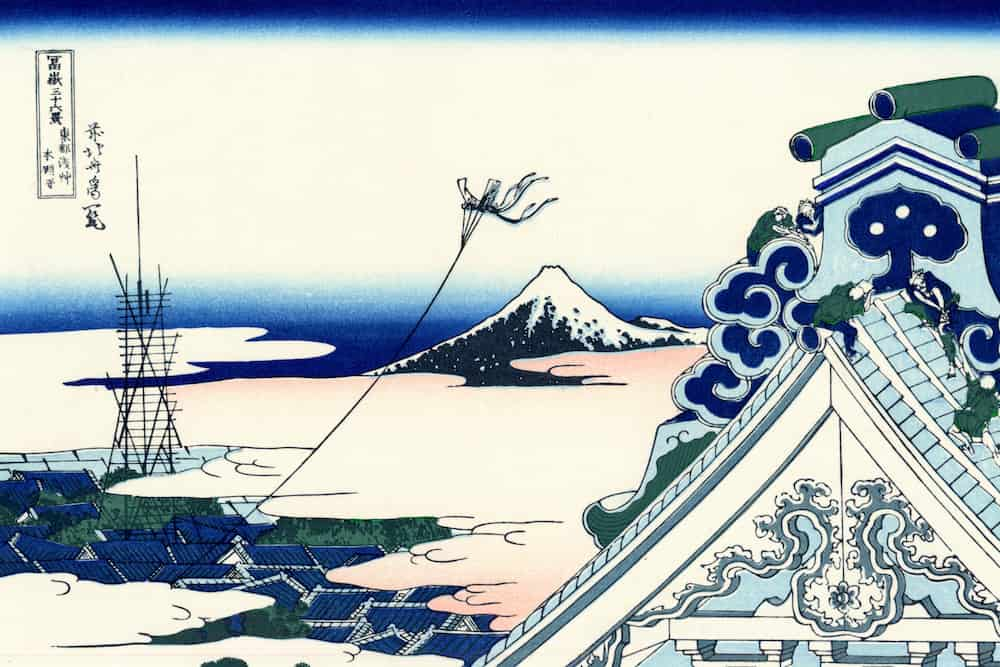
28. Asakusa Hongan-ji Temple in the Eastern Capital
The huge temple roof fills the foreground, its triangular pediment echoing the shape of Fuji beyond Edo. Tiny workers on the roof emphasise the dramatic scale of Hokusai's composition.

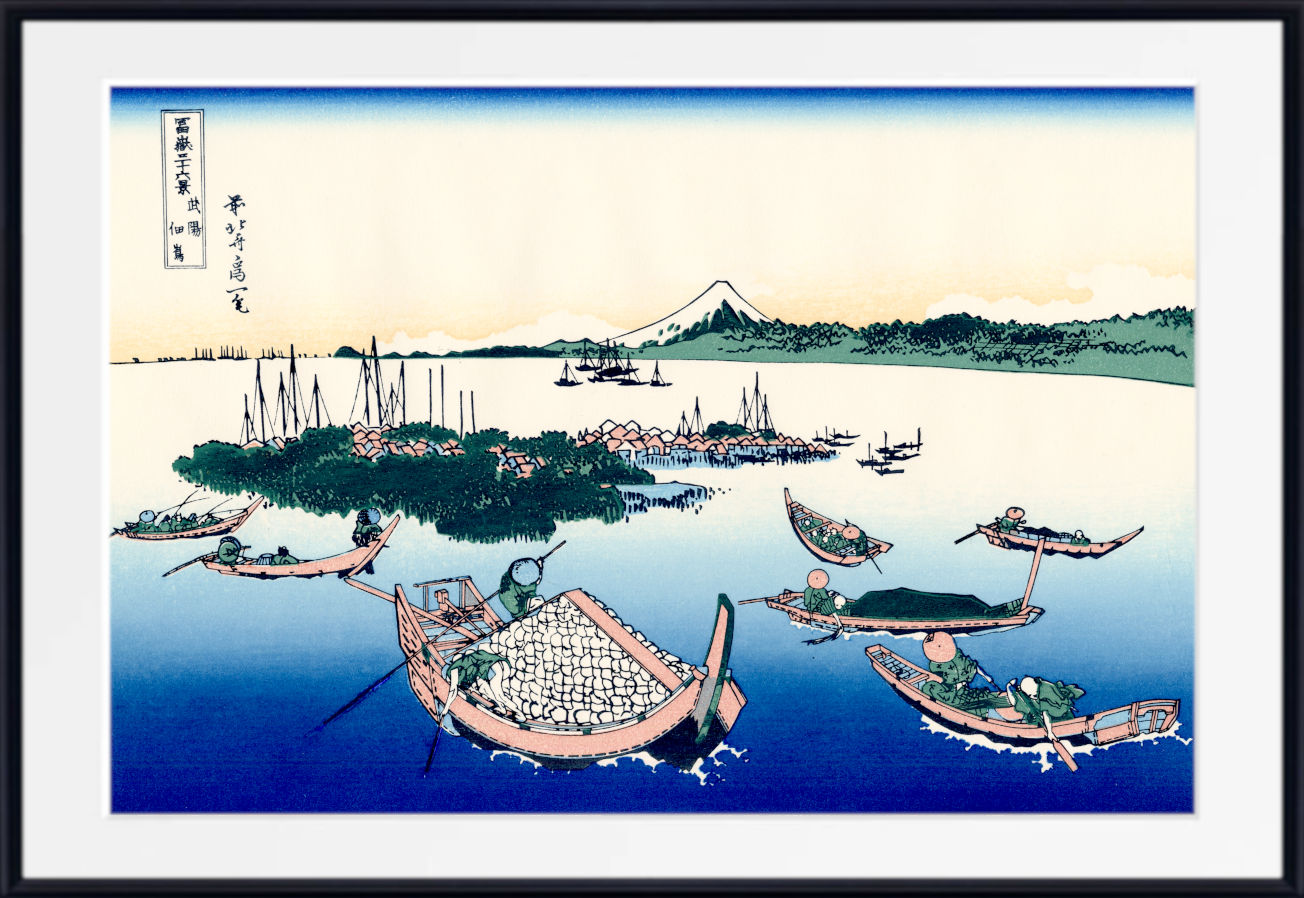
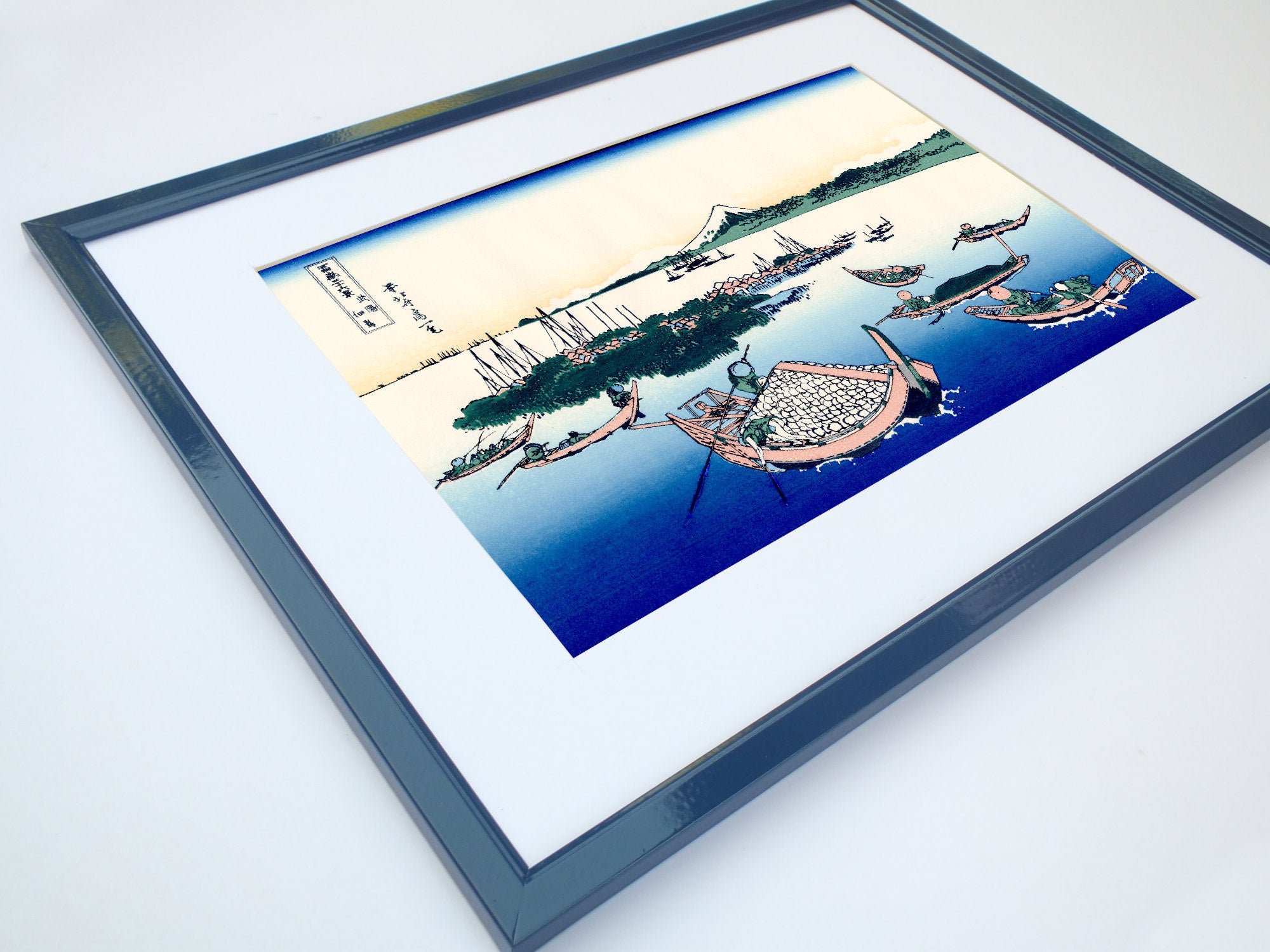
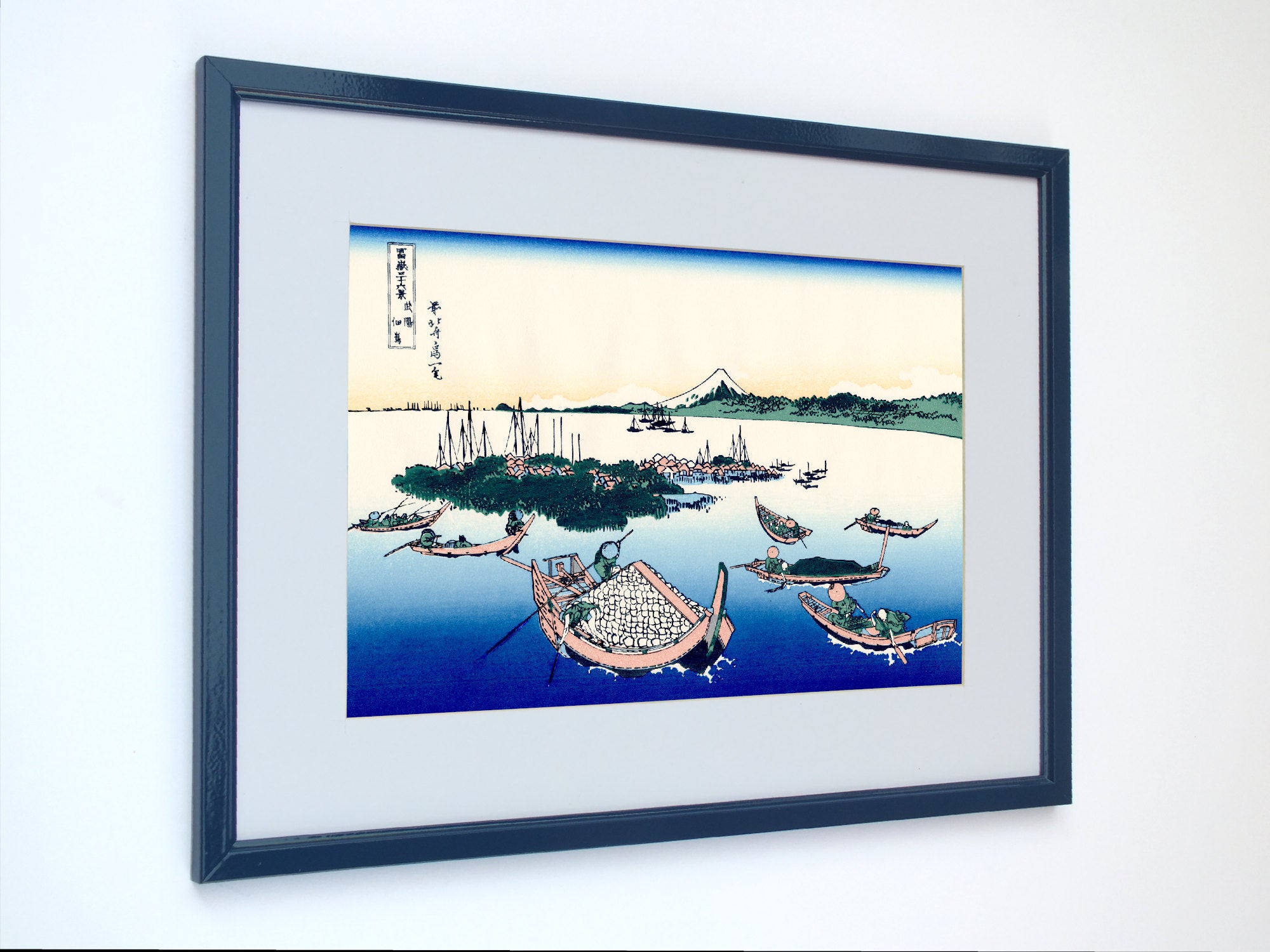
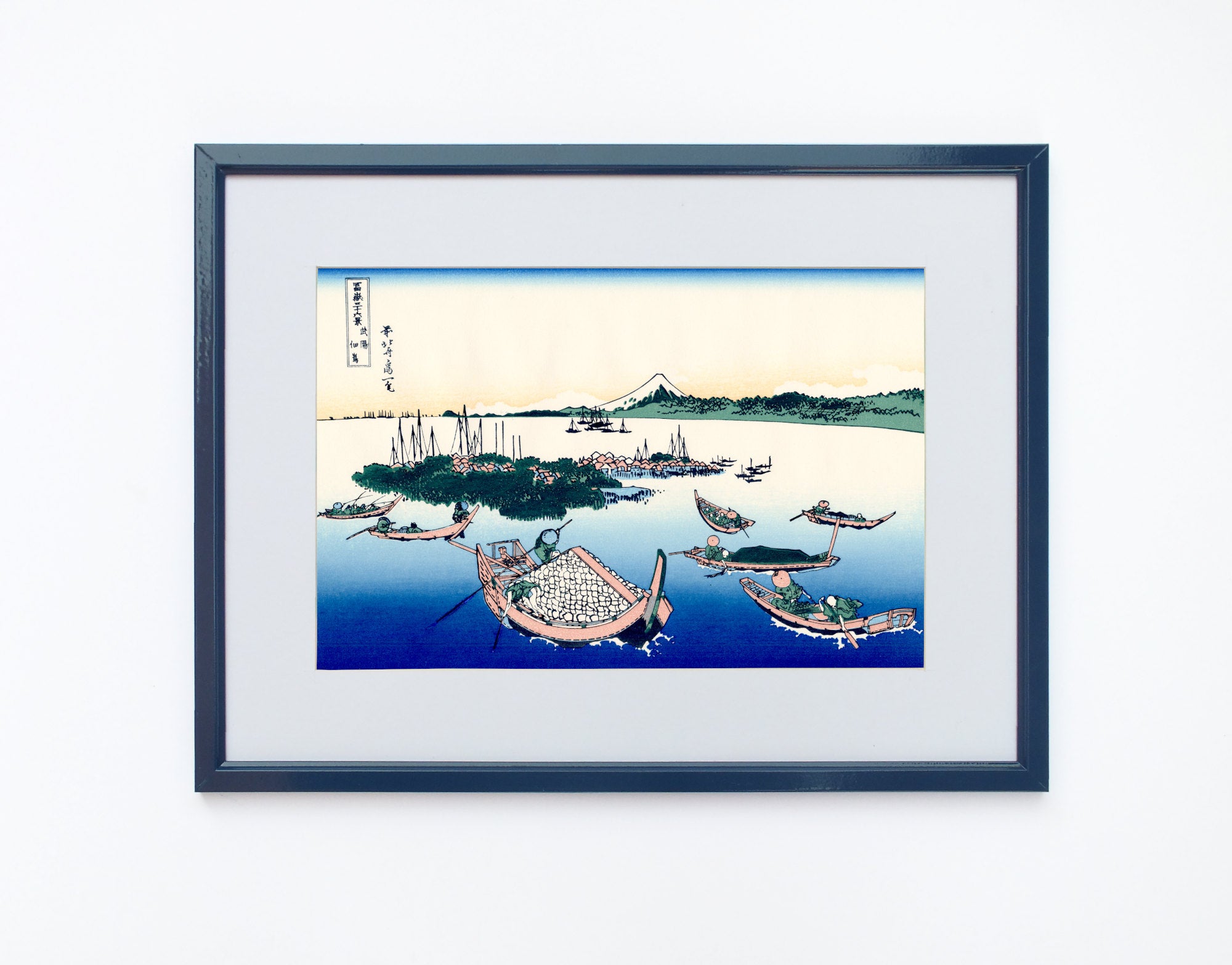
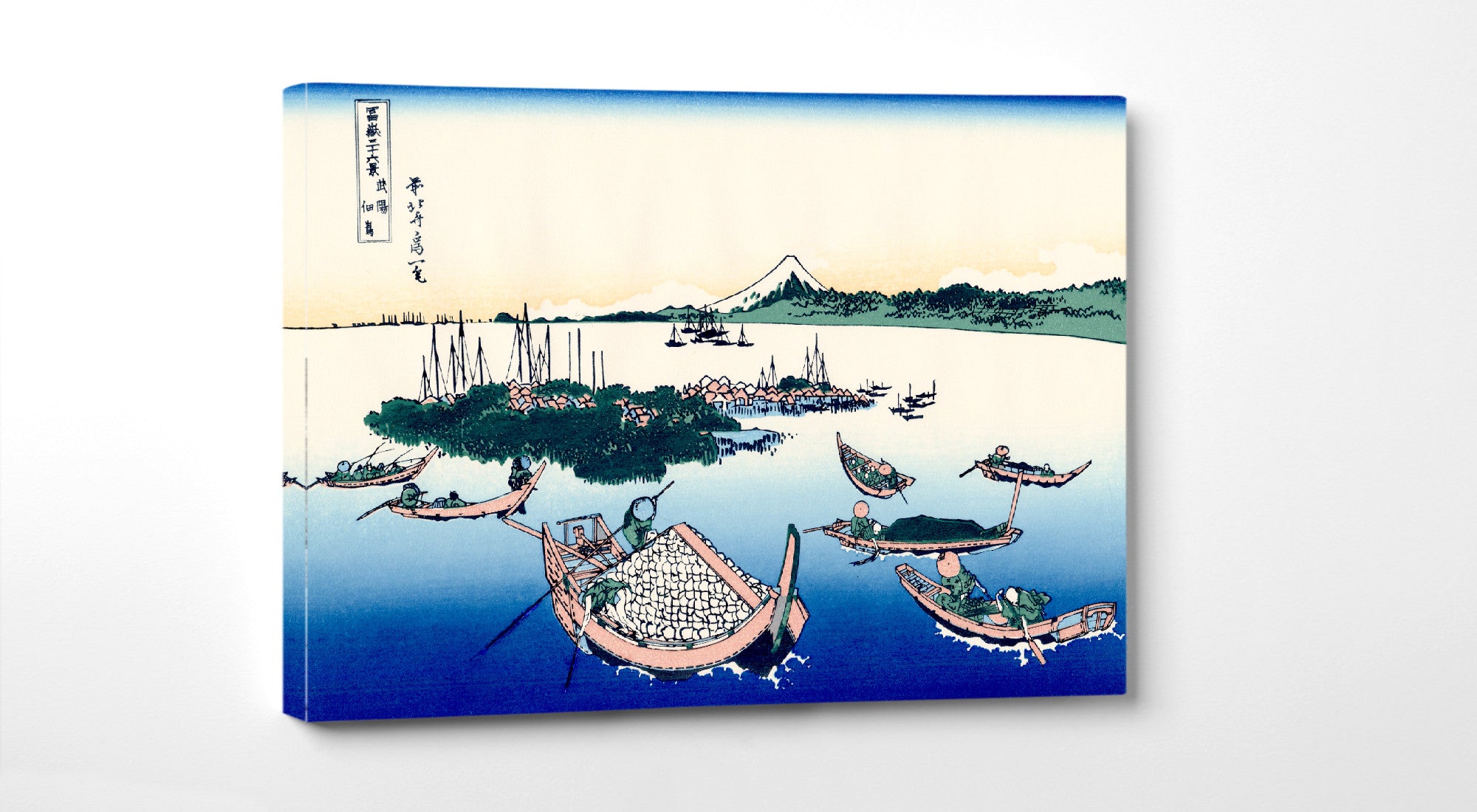
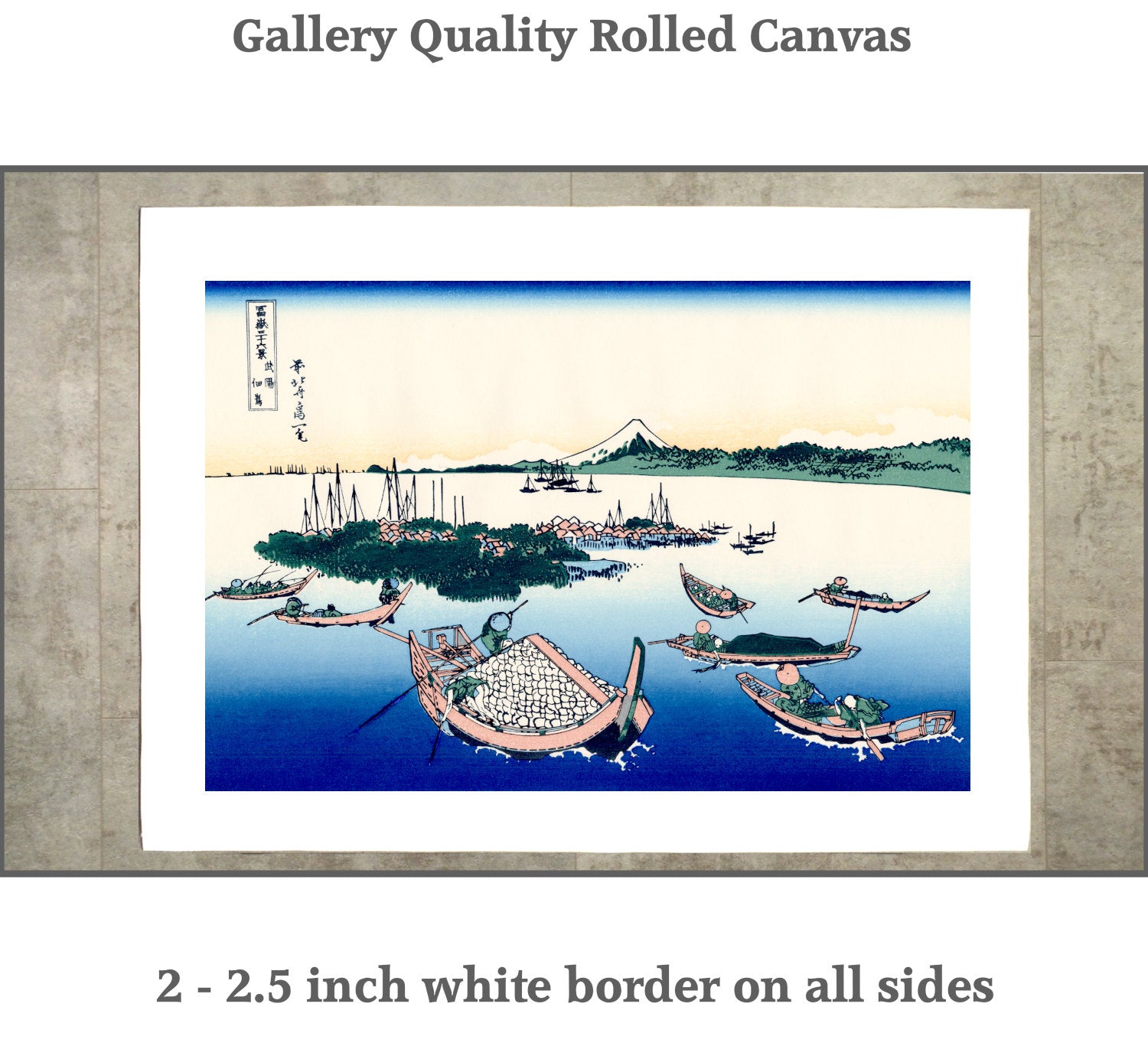
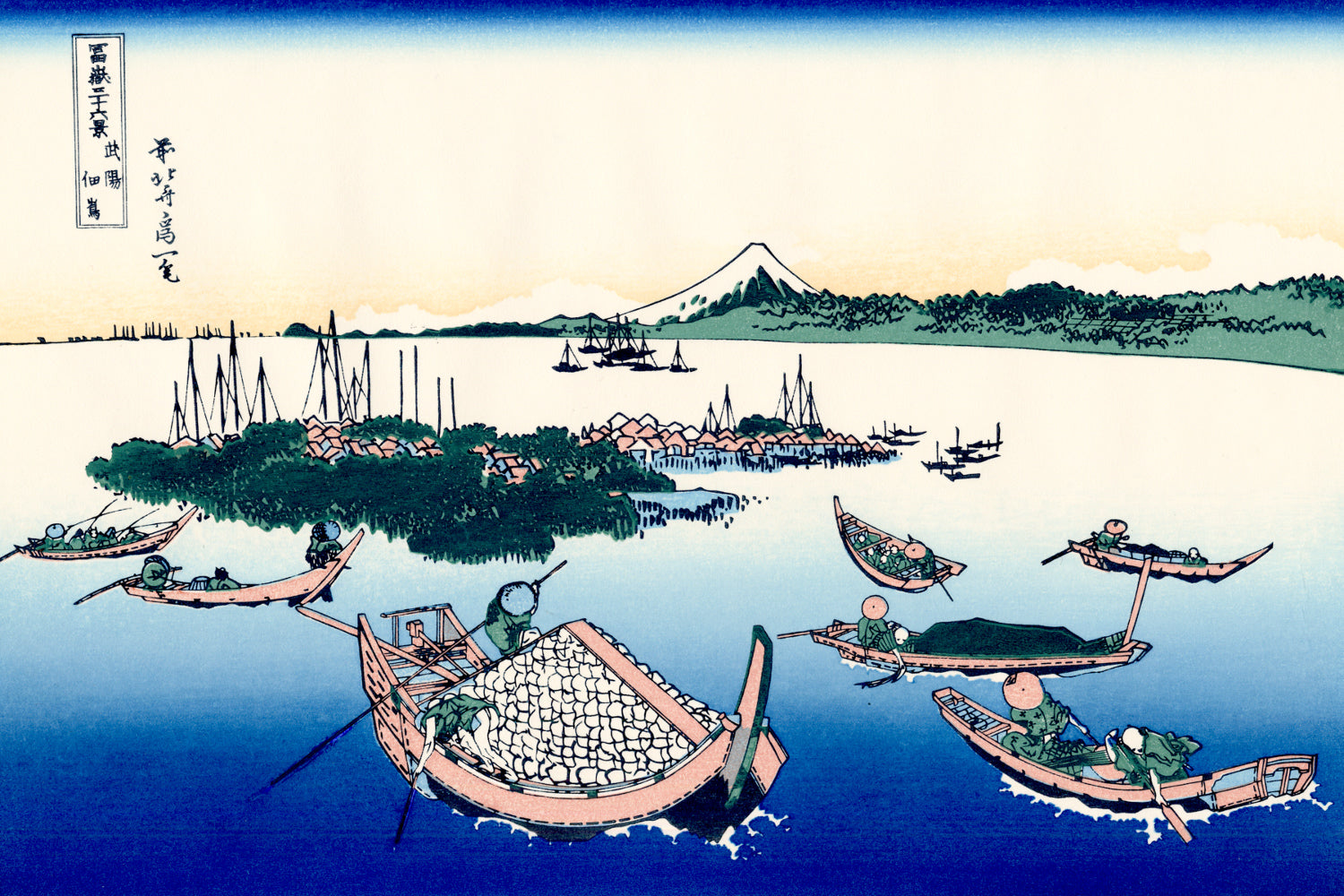
29. Tsukuda Island in Musashi Province
Fishing boats surround Tsukuda Island as masts, hulls and open water lead the eye towards Fuji. The view combines the commercial life of Edo Bay with the distant mountain.

30. Shichiri Beach in Sagami Province
Fuji rises beyond the coastal landscape at Shichiri Beach, framed by trees and layered shoreline. The comparatively quiet composition emphasises distance, atmosphere and the breadth of the natural setting.

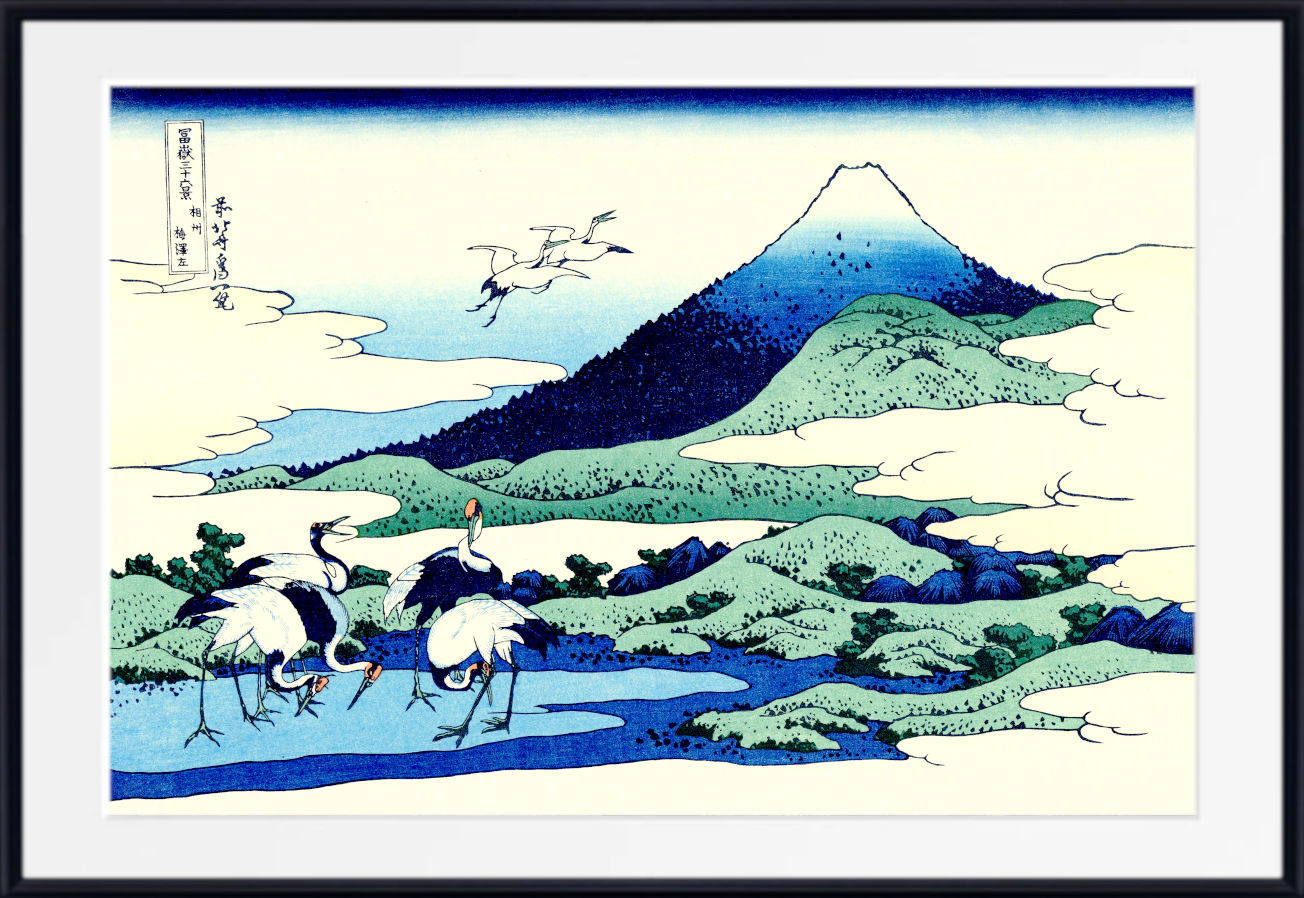
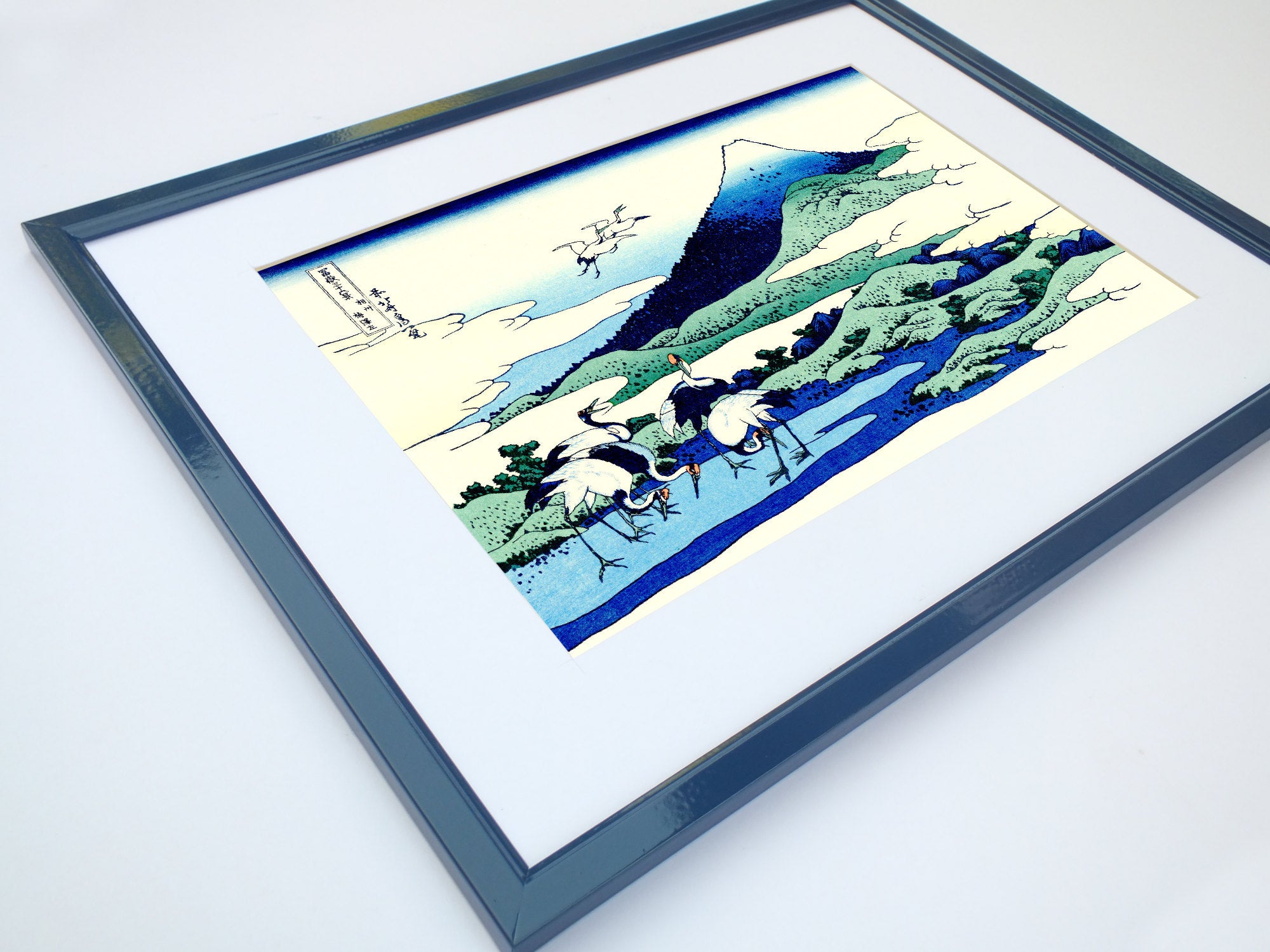
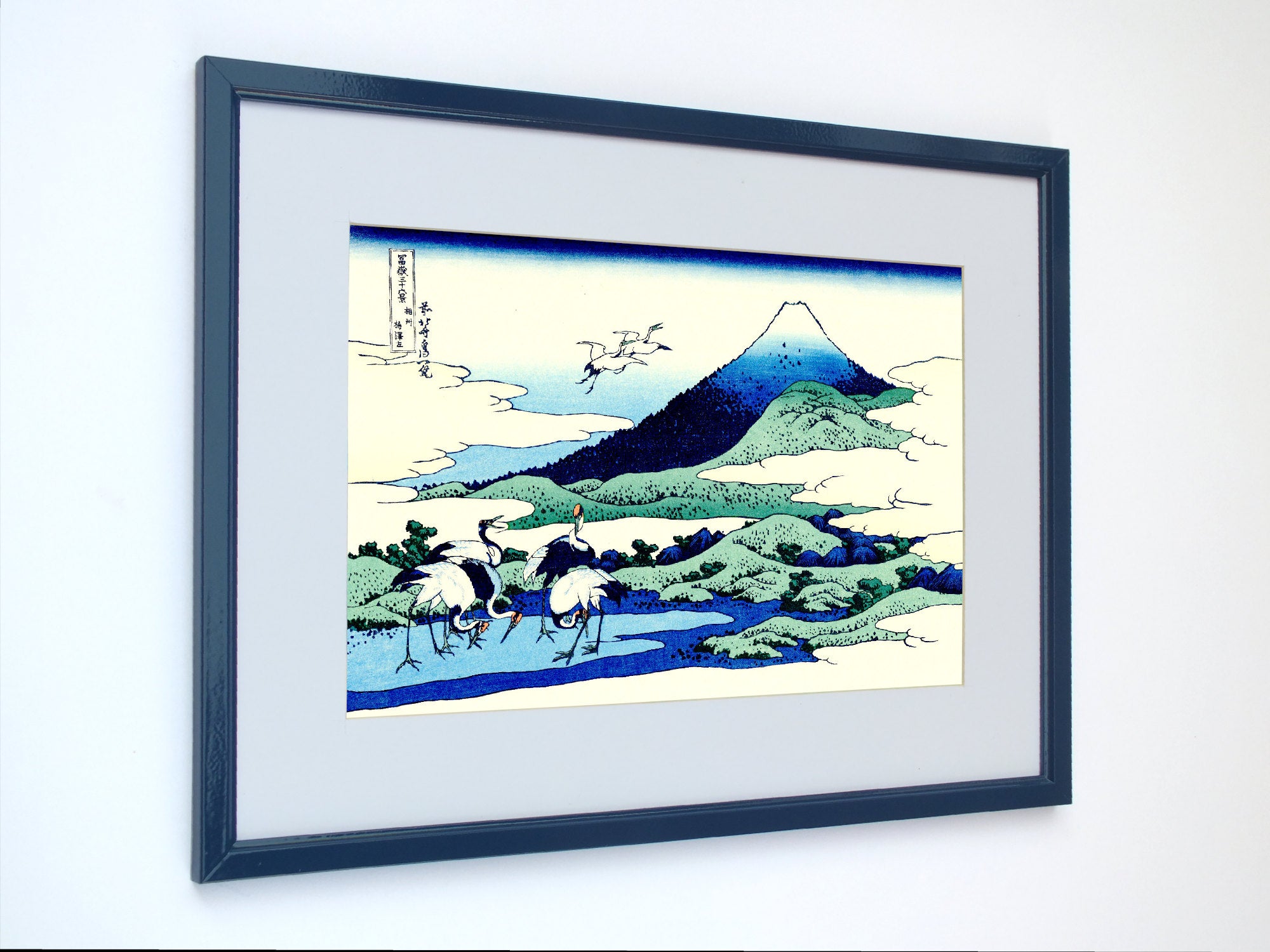
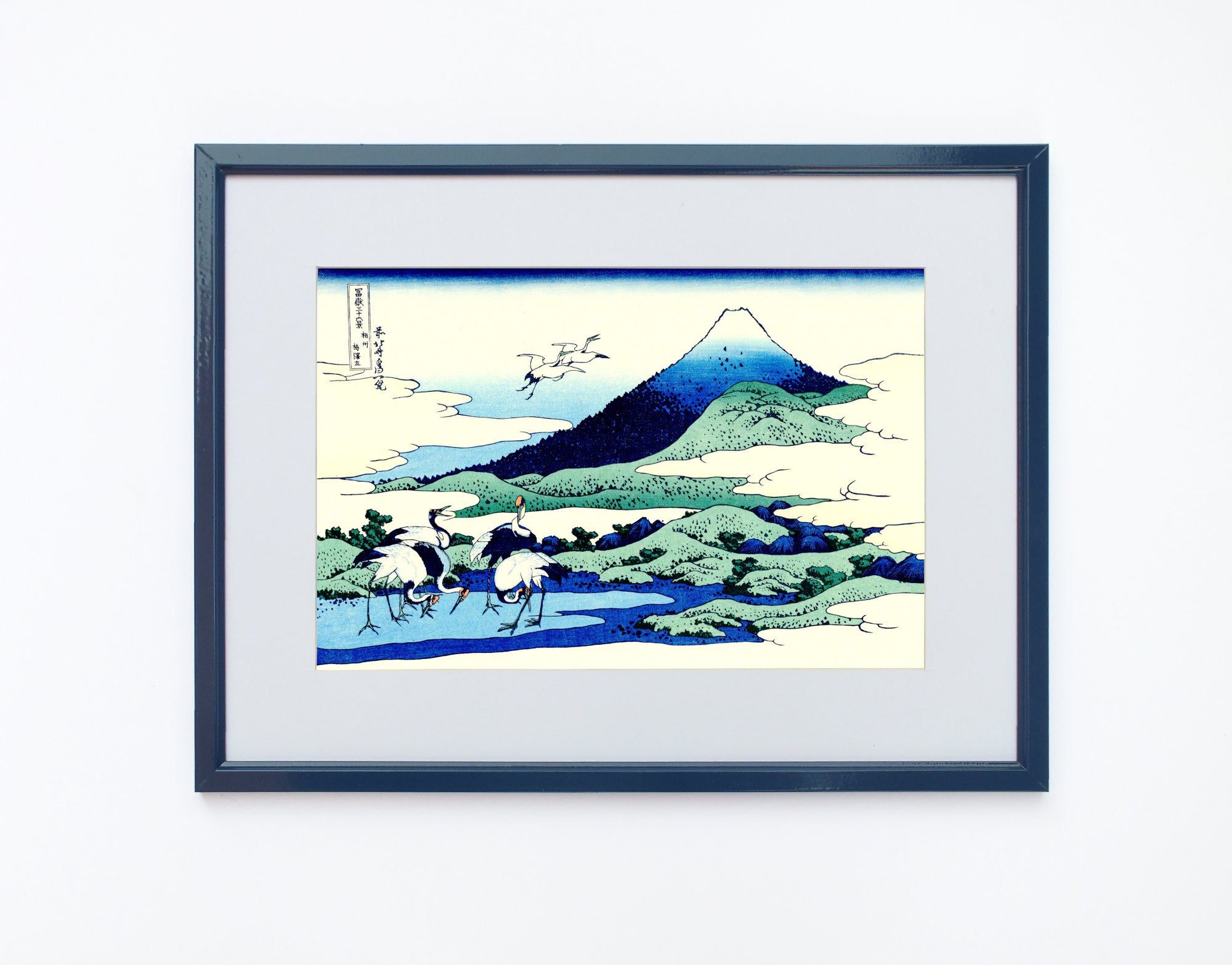
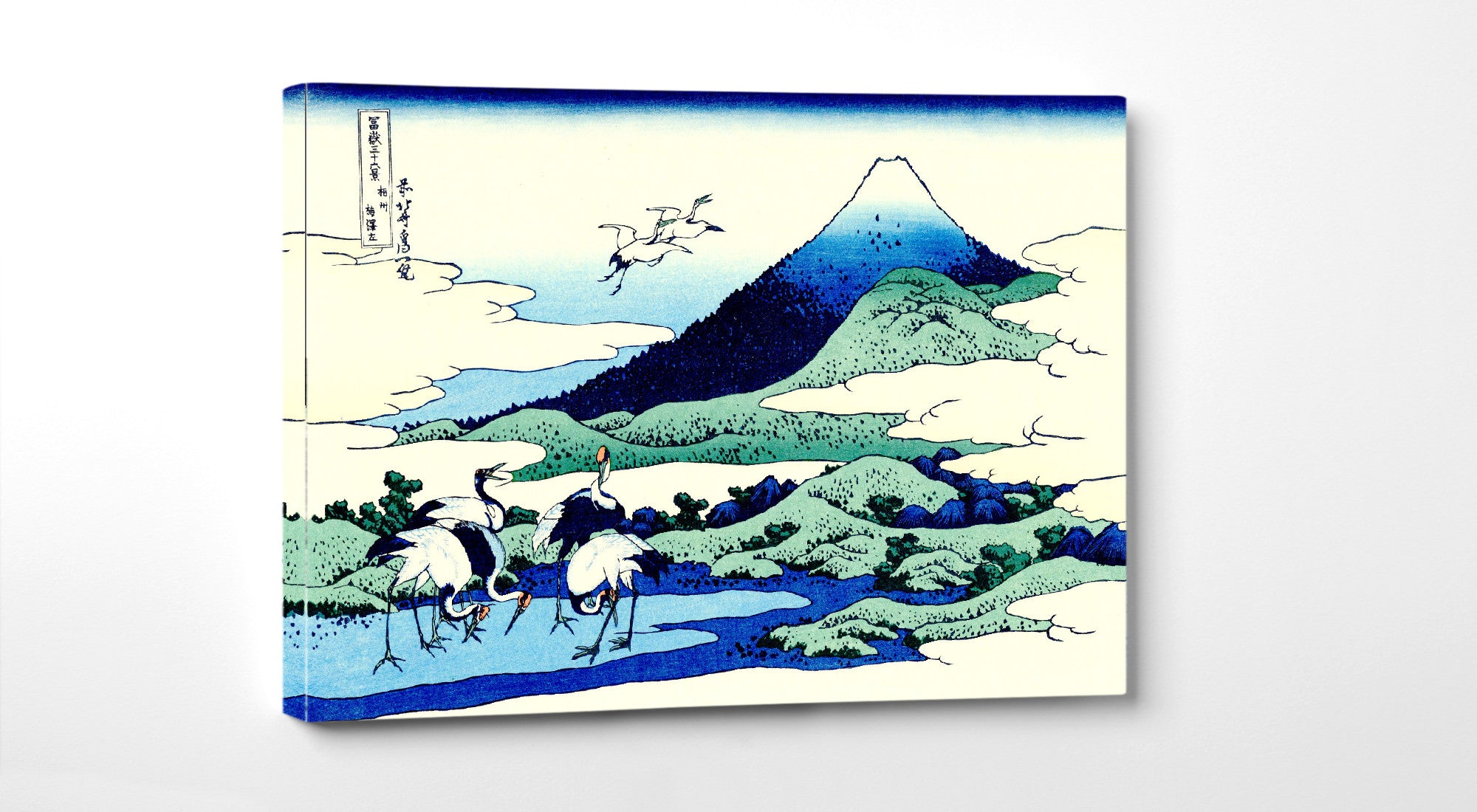
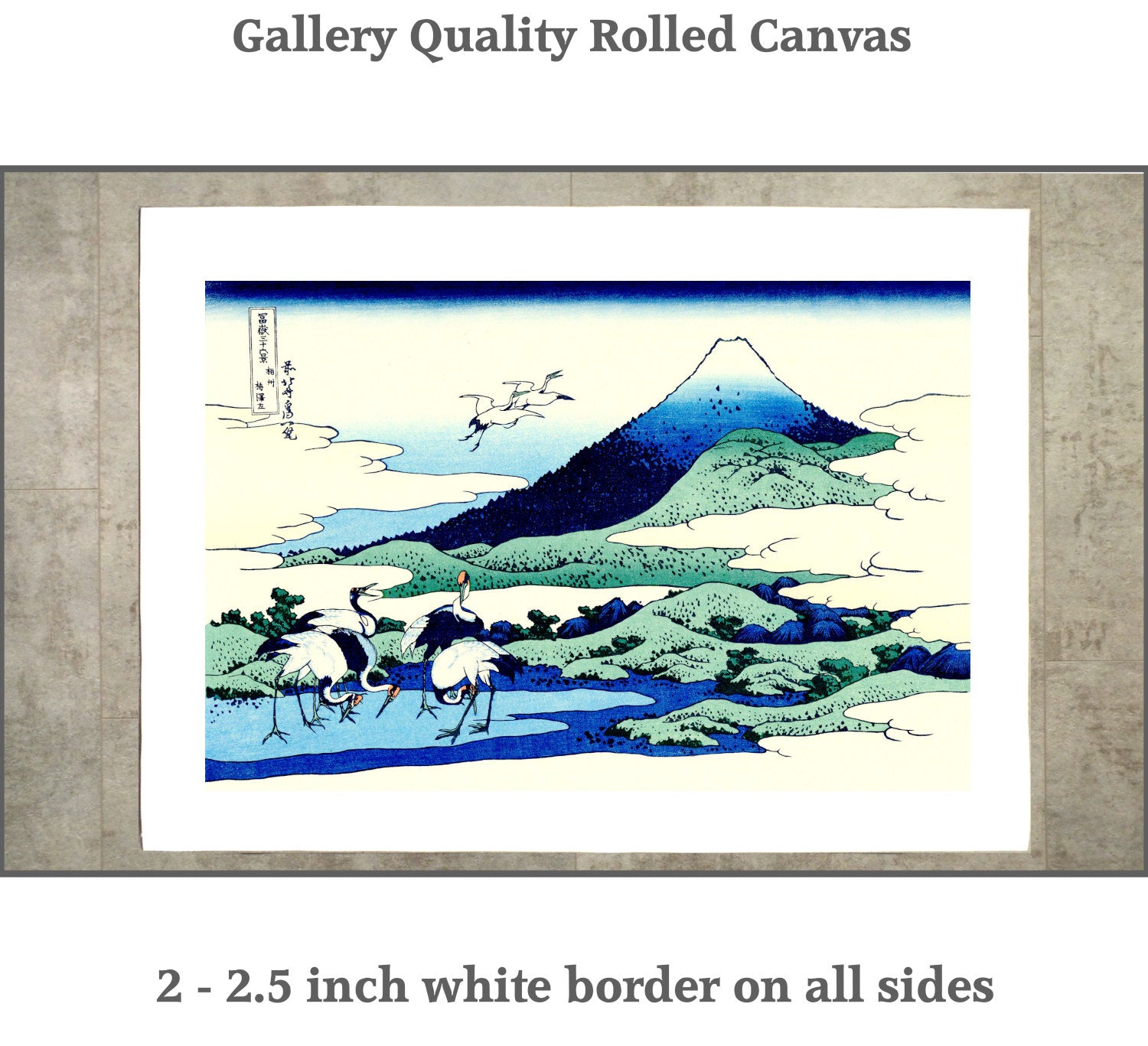
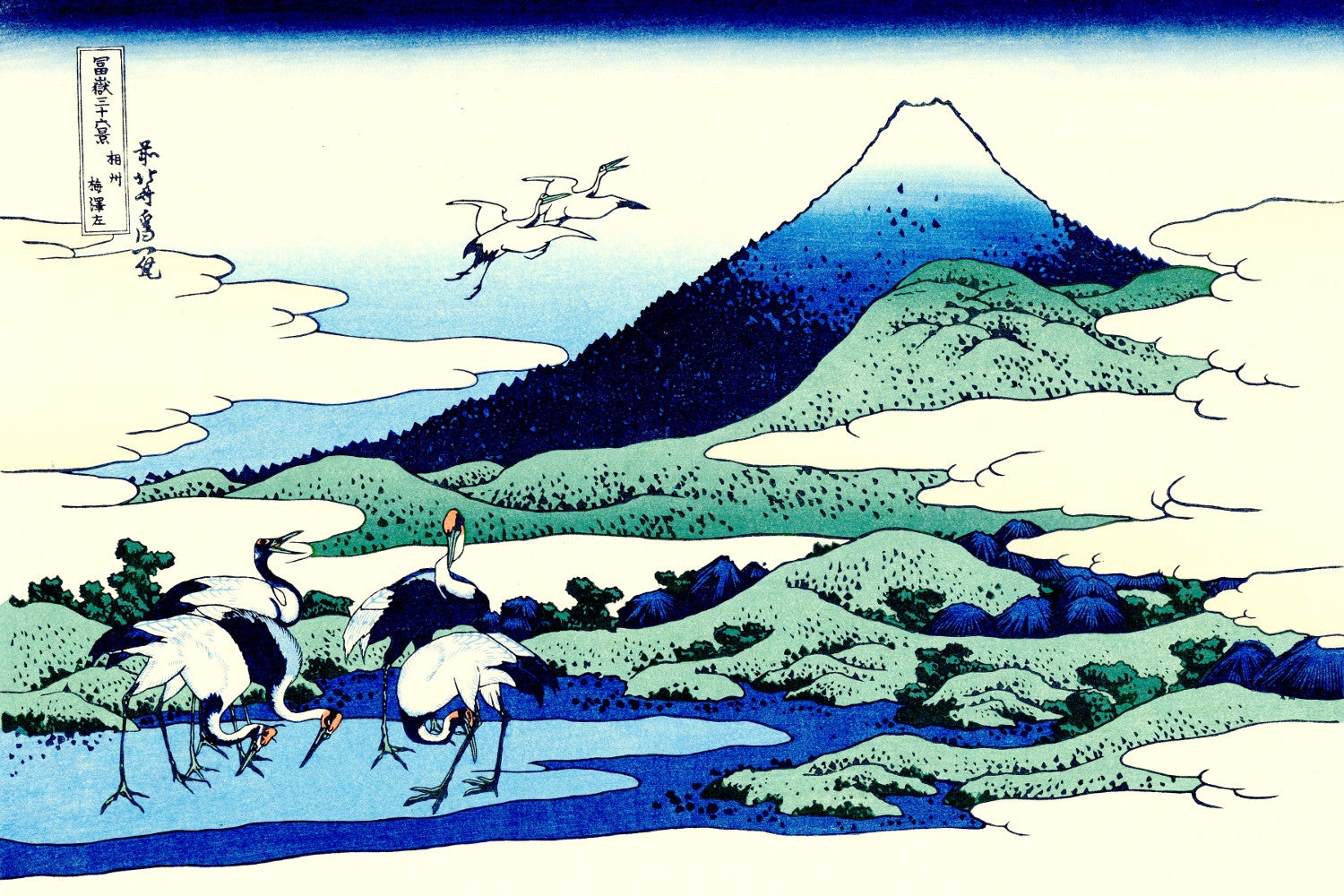
31. Umezawa in Sagami Province
Cranes feed and fly through a misty landscape while blue Fuji rises in the distance. With no human figures, this is one of the most tranquil and nature-centred prints in the series.

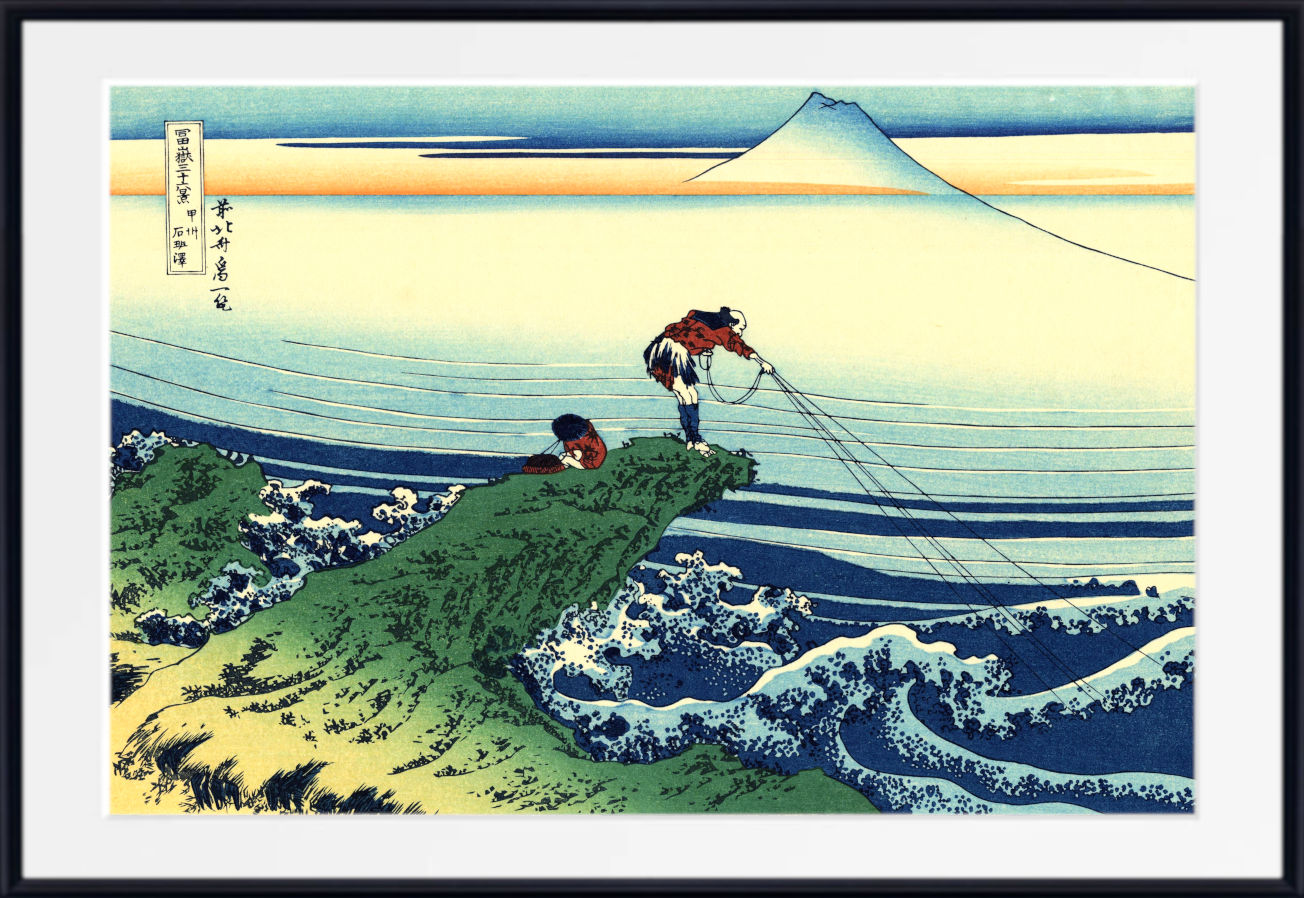
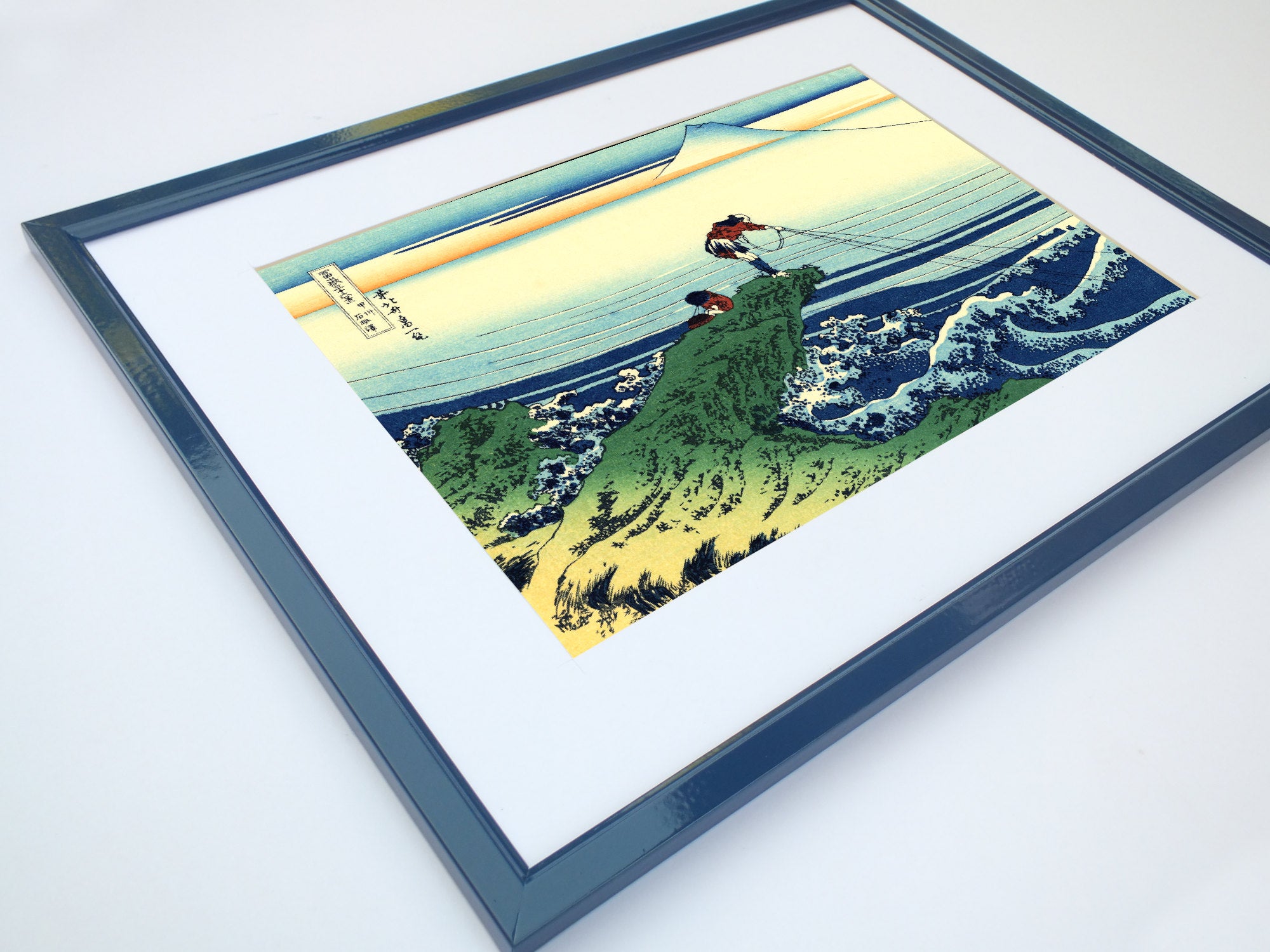
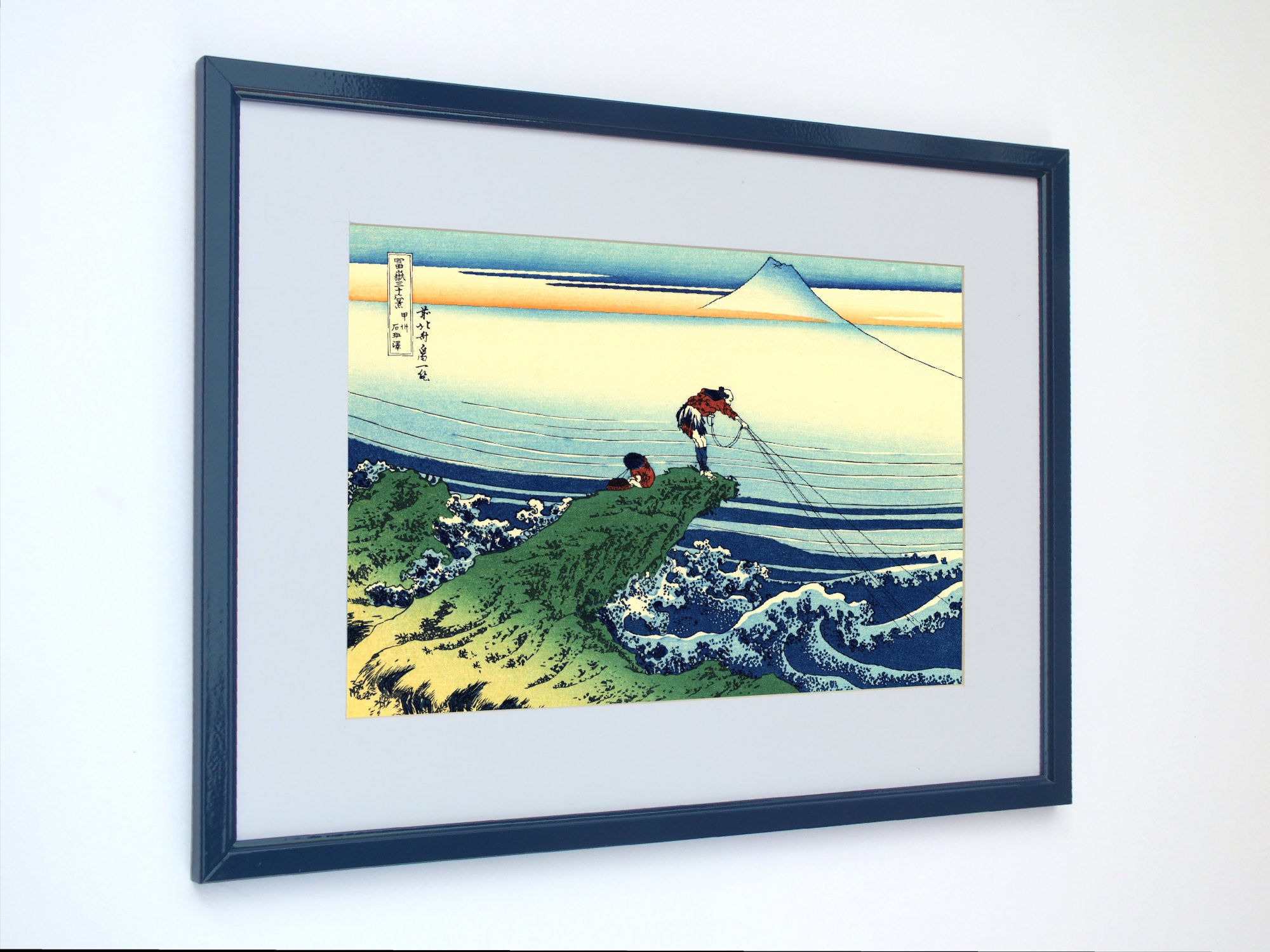
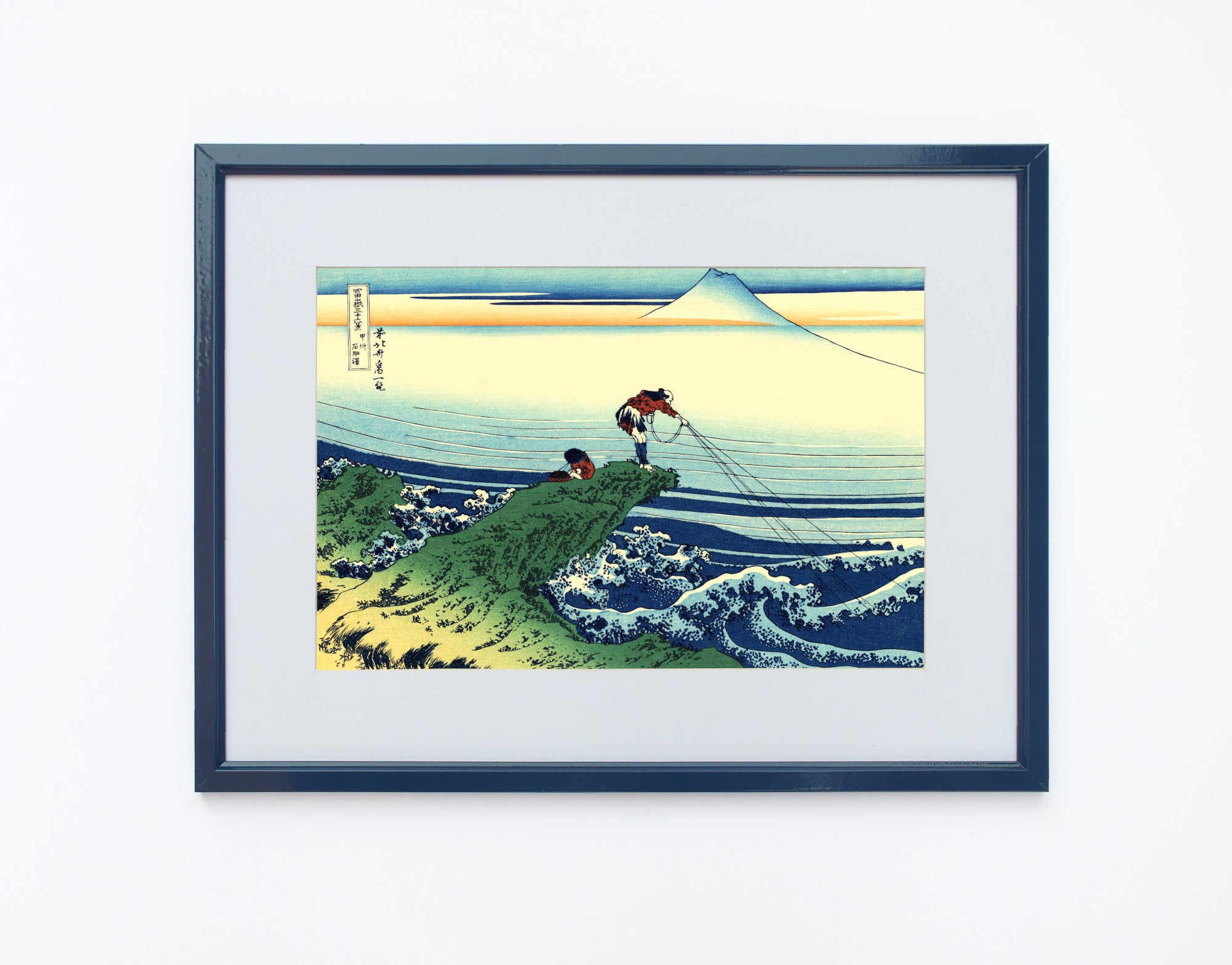
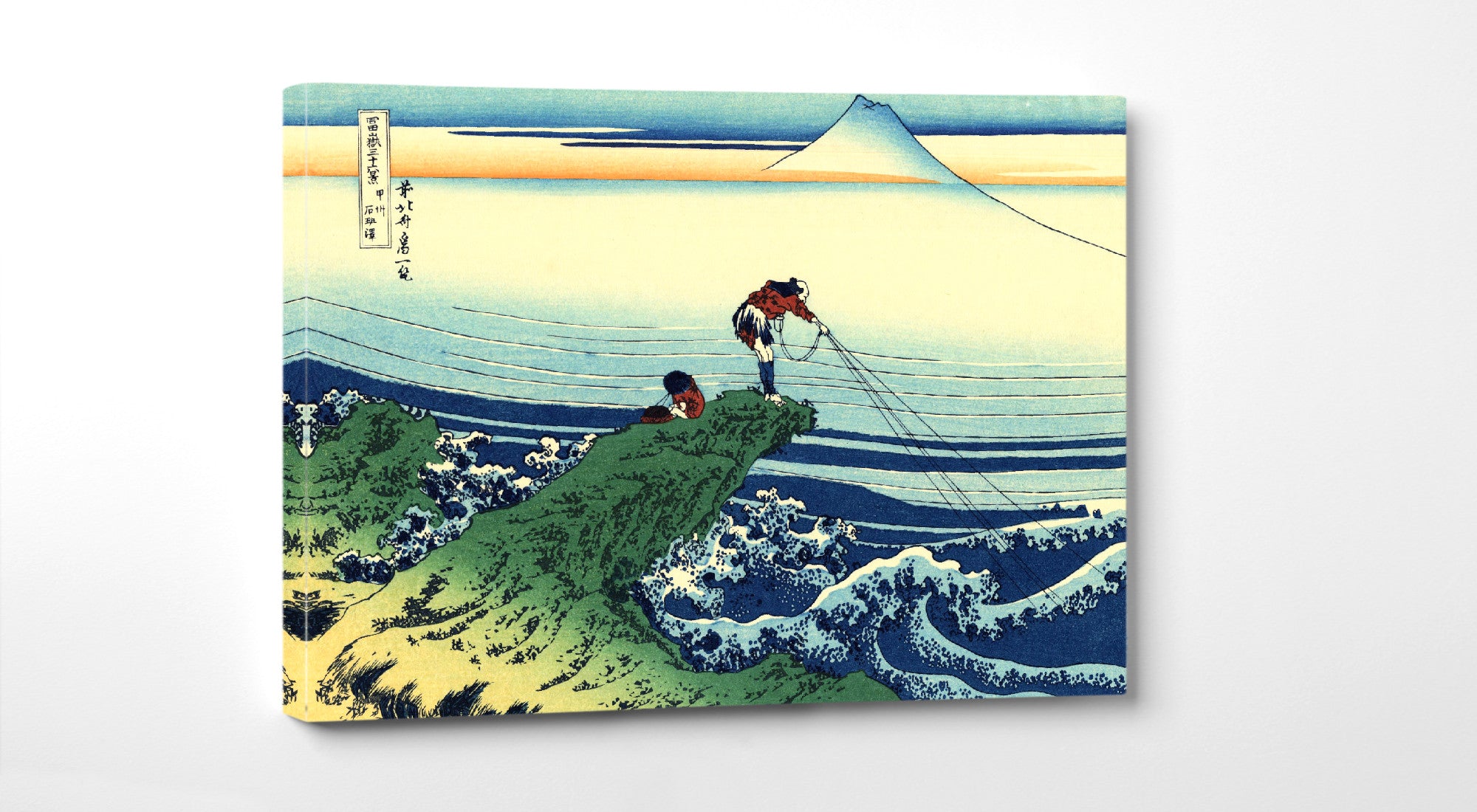
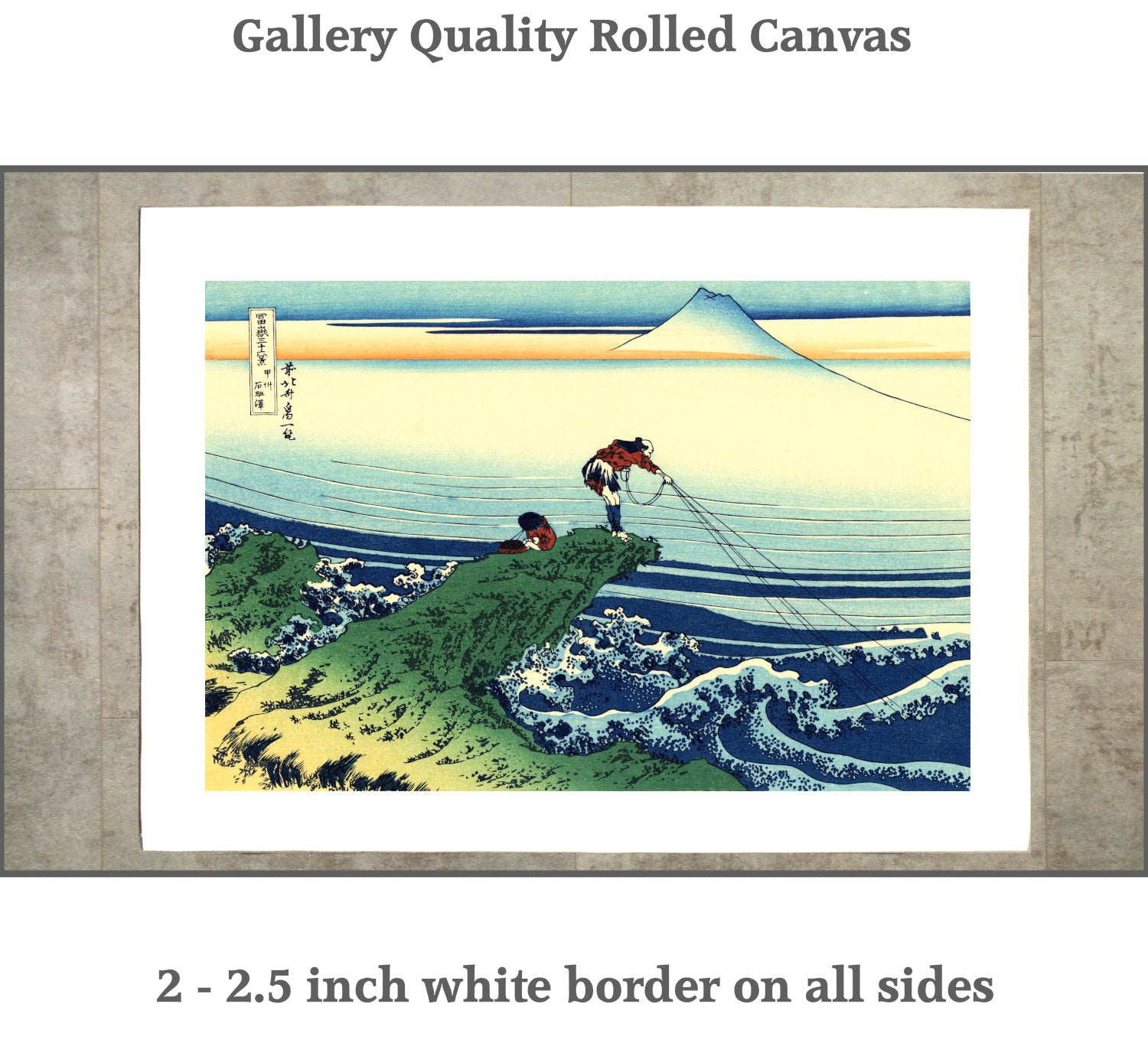
32. Kajikazawa in Kai Province
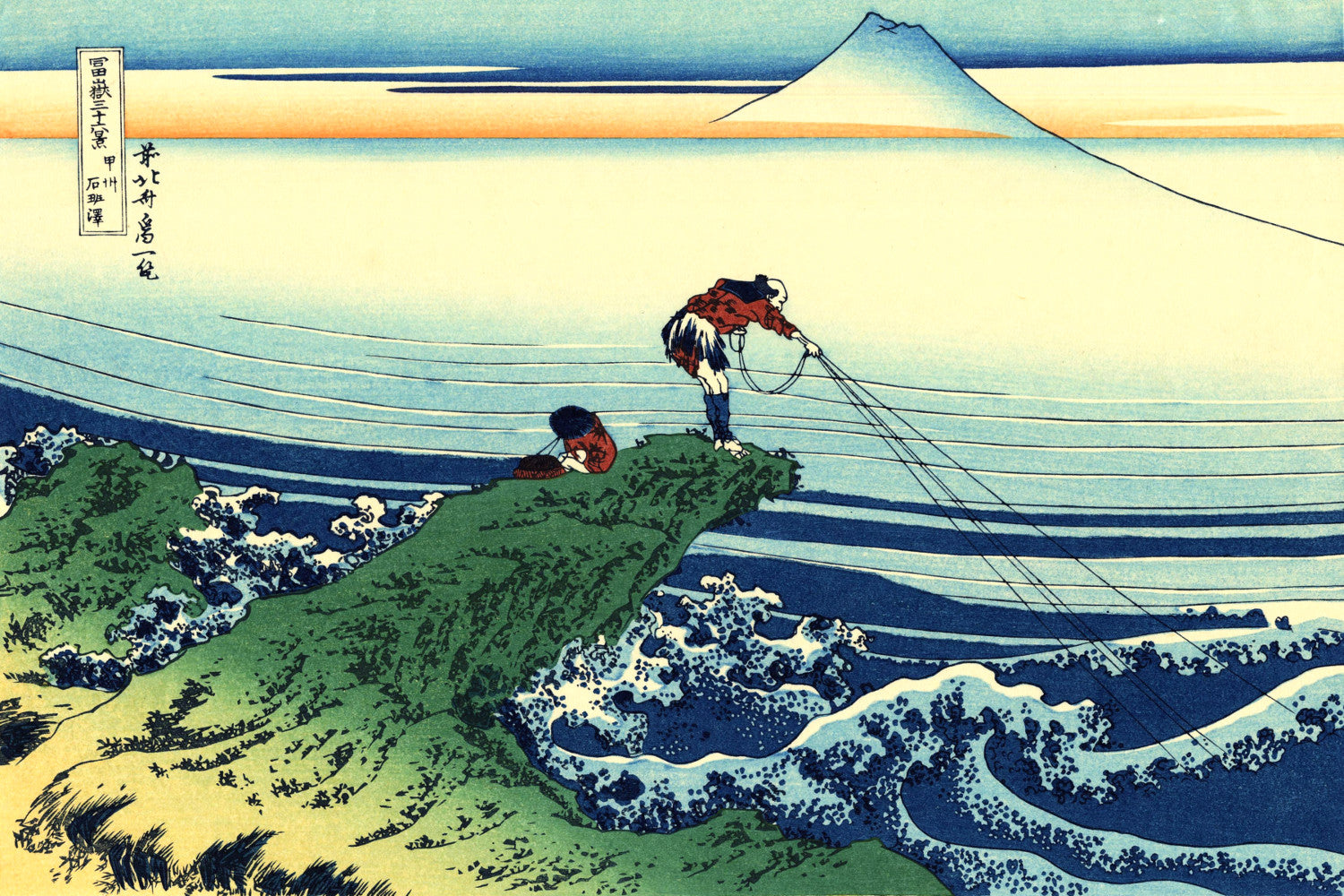
A fisherman balances above the fast-moving Fuji River while his lines form diagonals that echo the mountain beyond. Hokusai binds human work and landscape together through a sophisticated pattern of triangles.

33. Mishima Pass in Kai Province
Travellers gather around the enormous trunk of an ancient tree while Fuji rises through banks of cloud. The tree's massive vertical presence makes the mountain seem almost secondary.

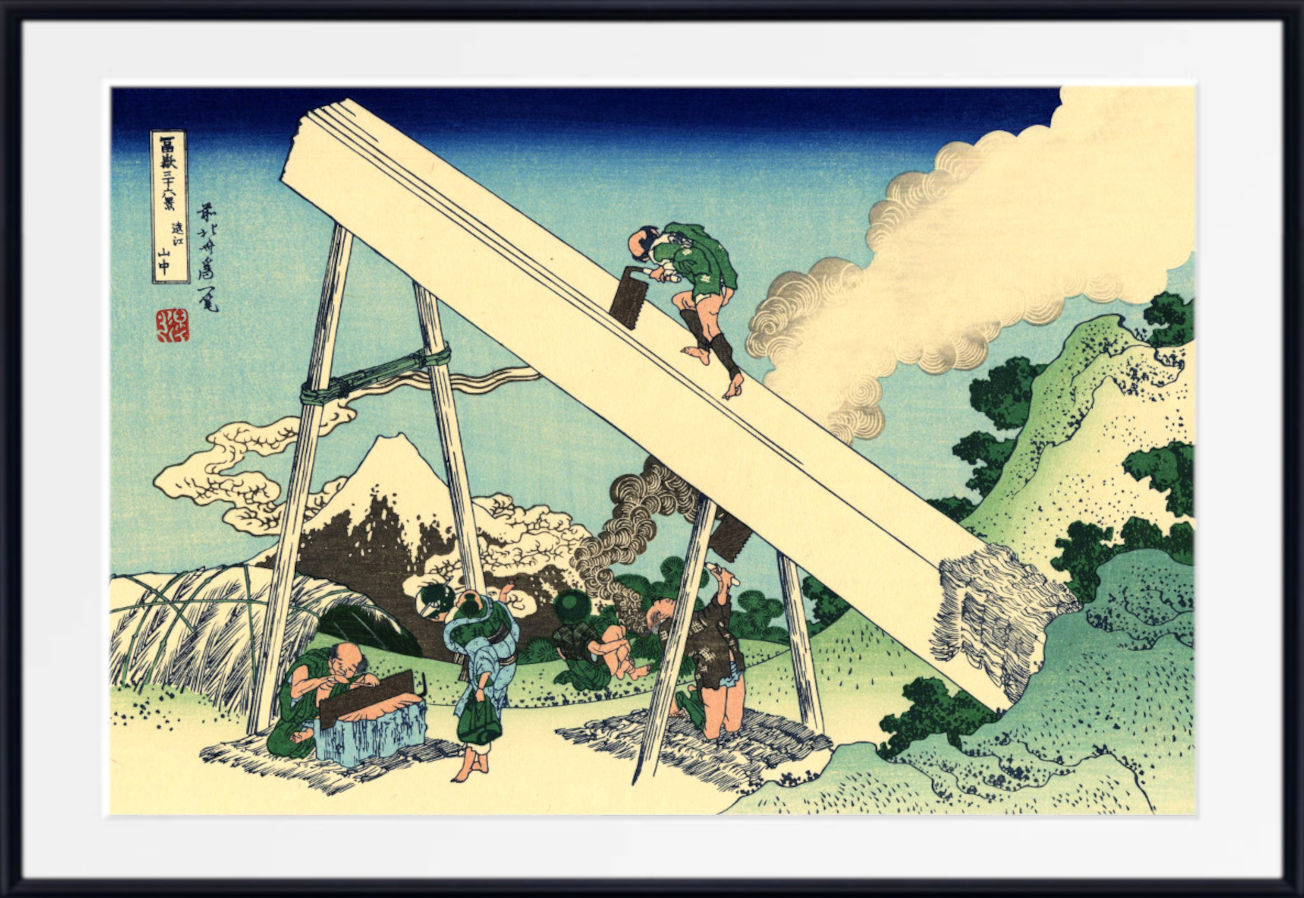
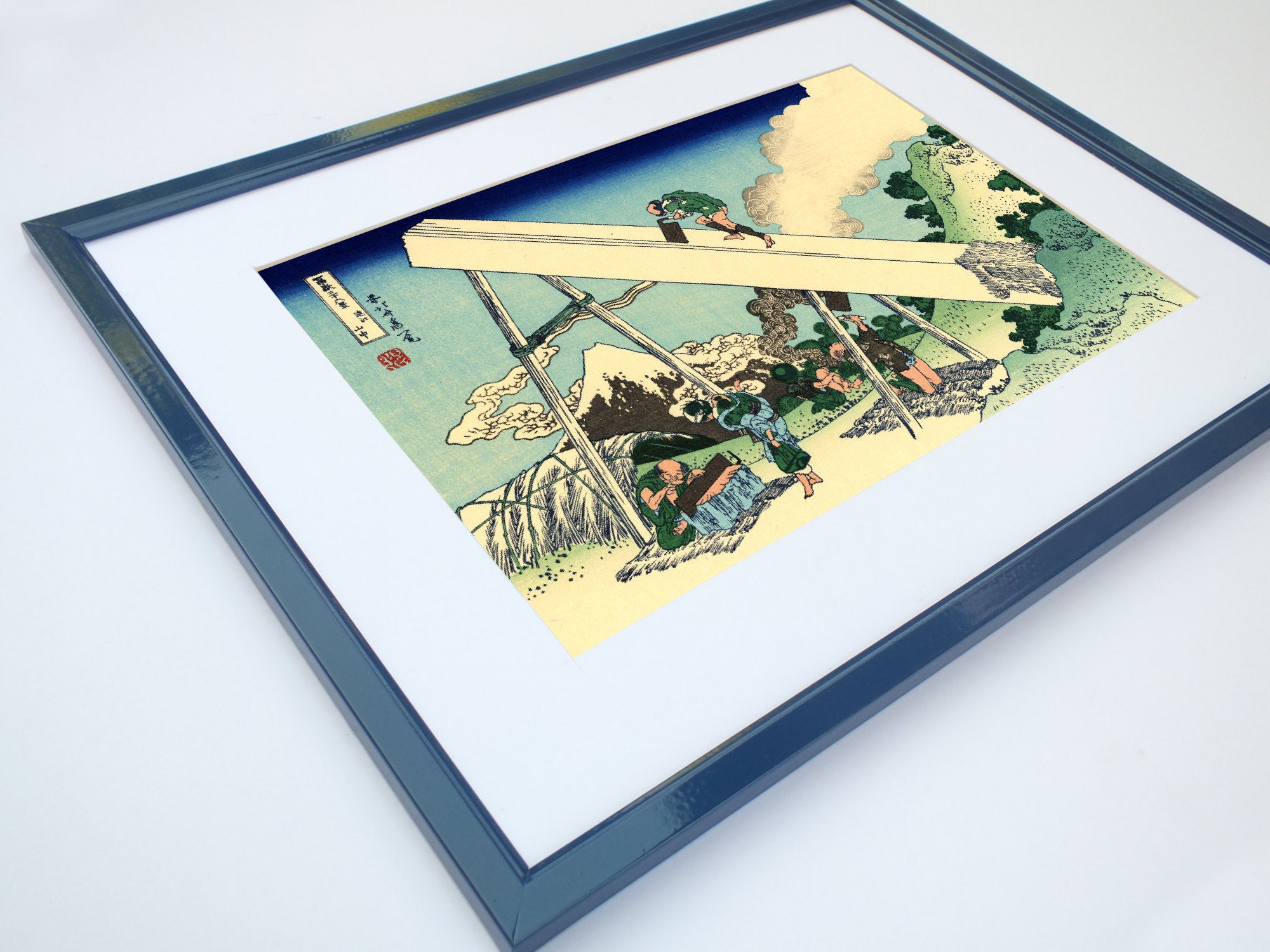
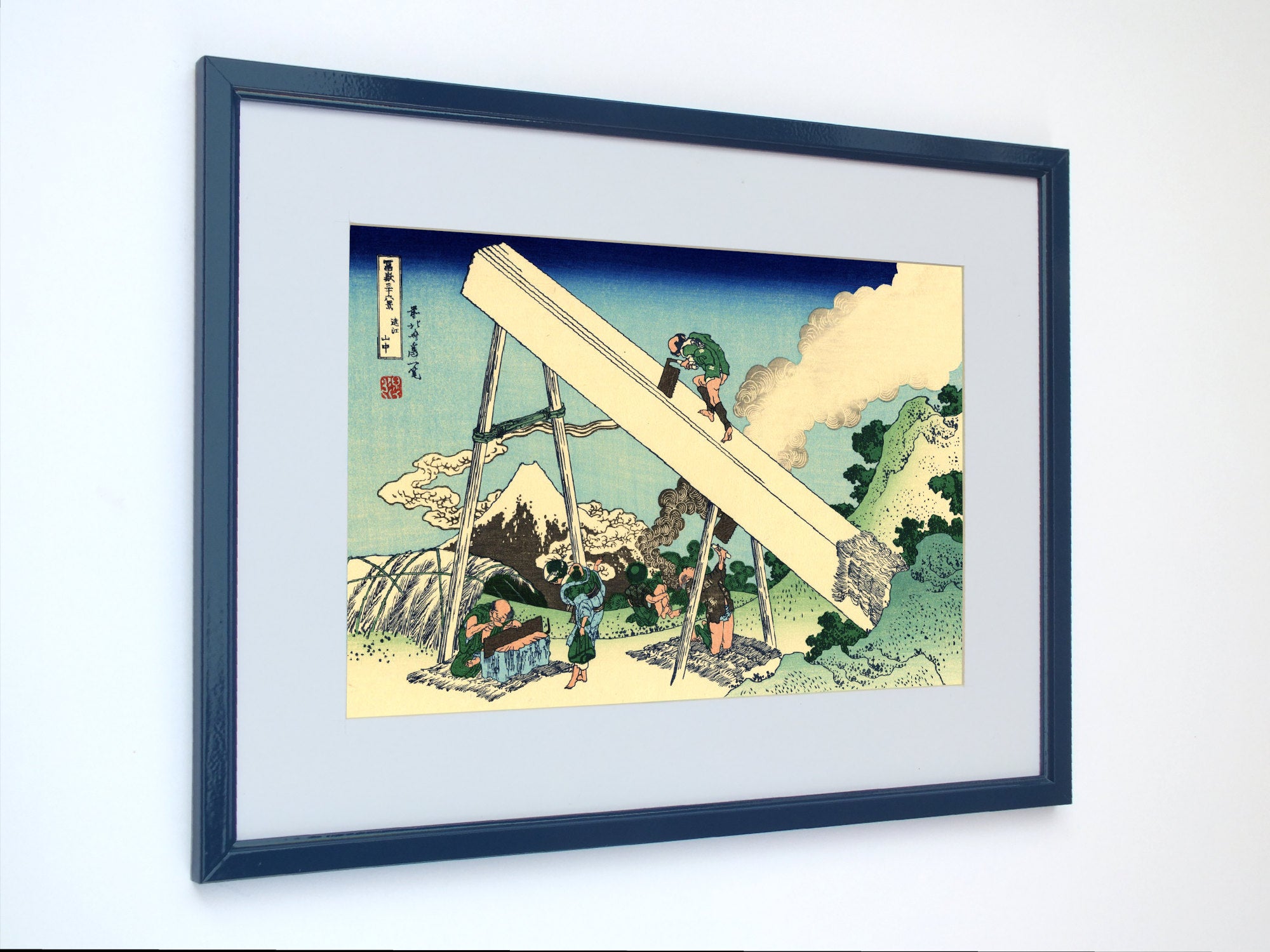
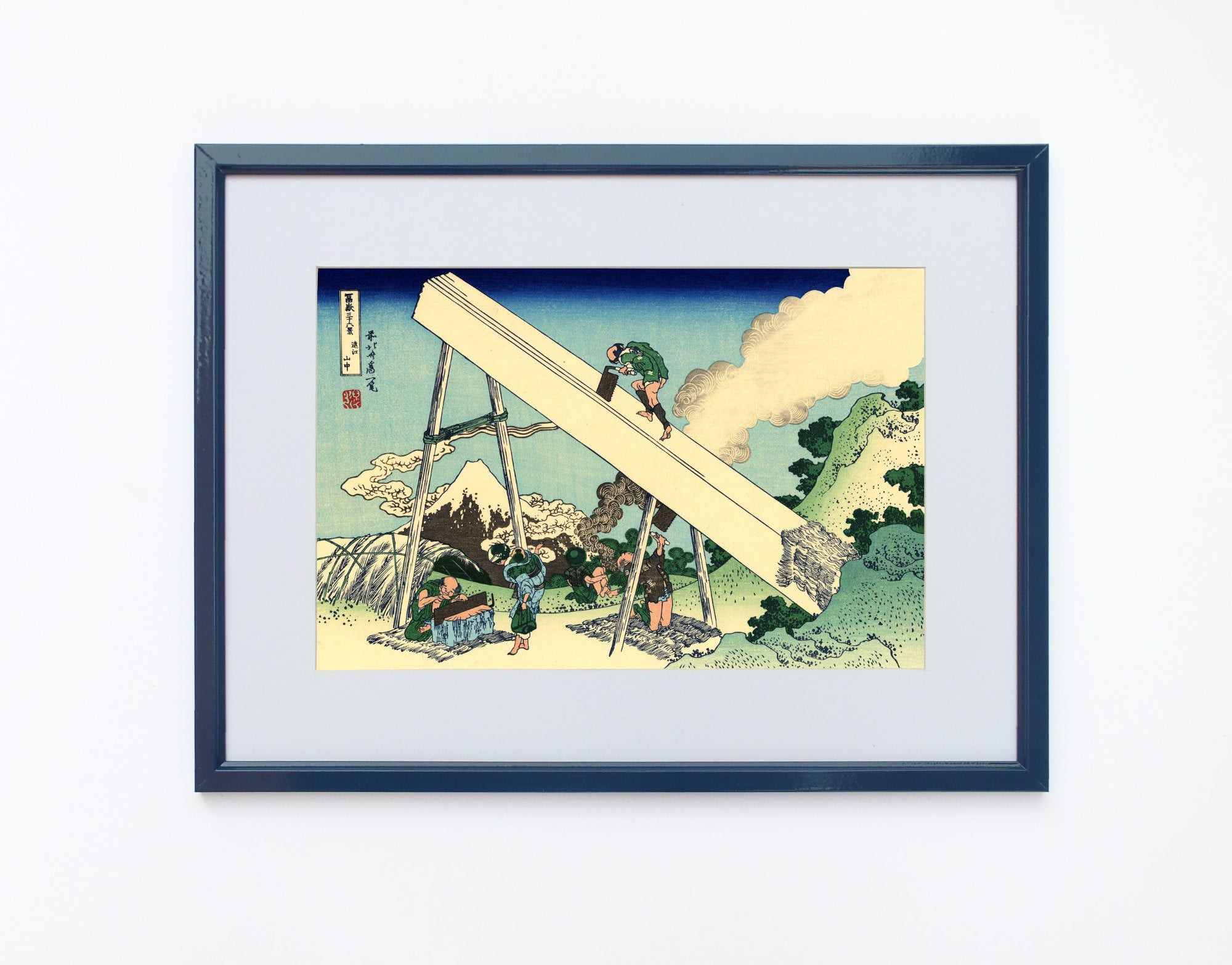
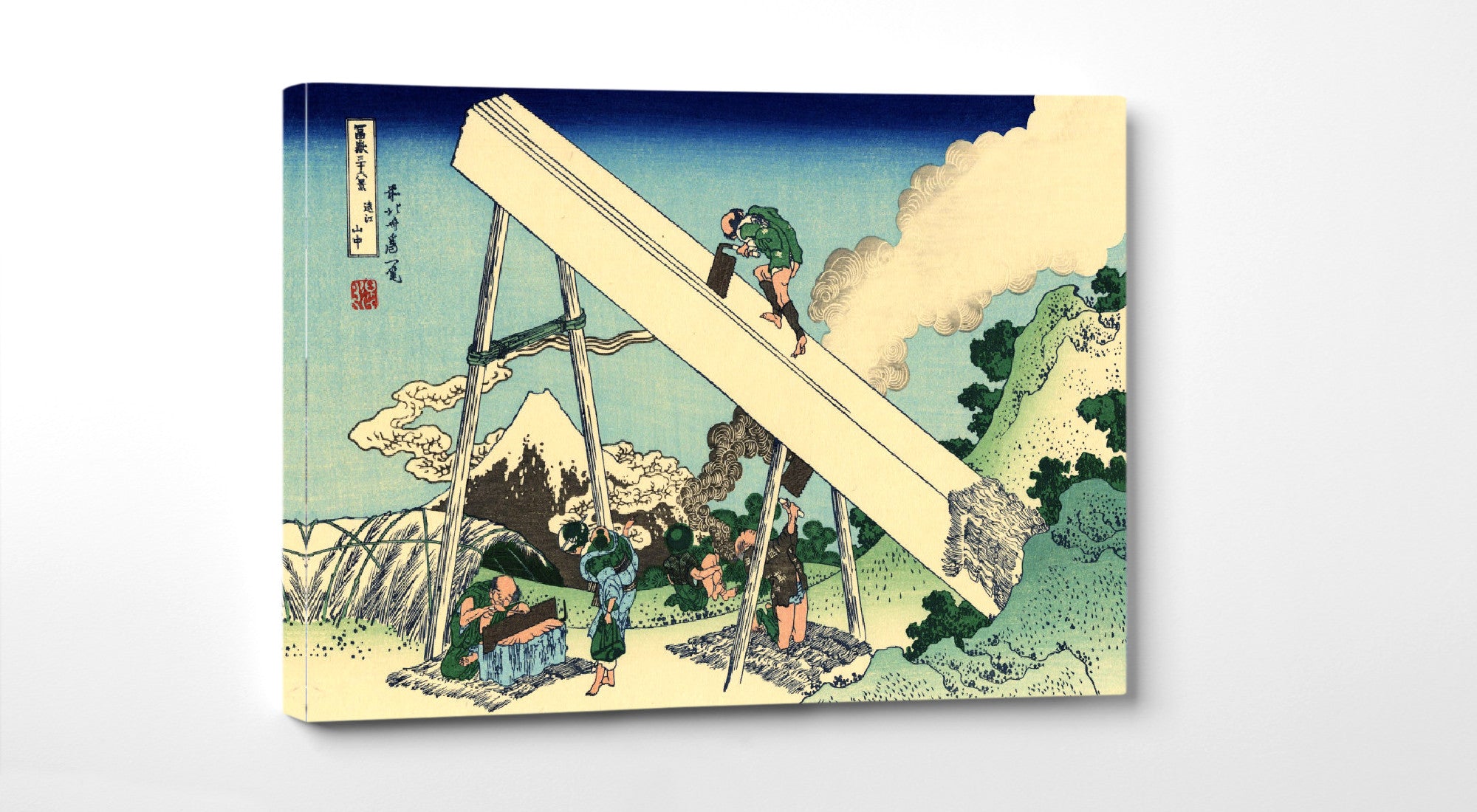
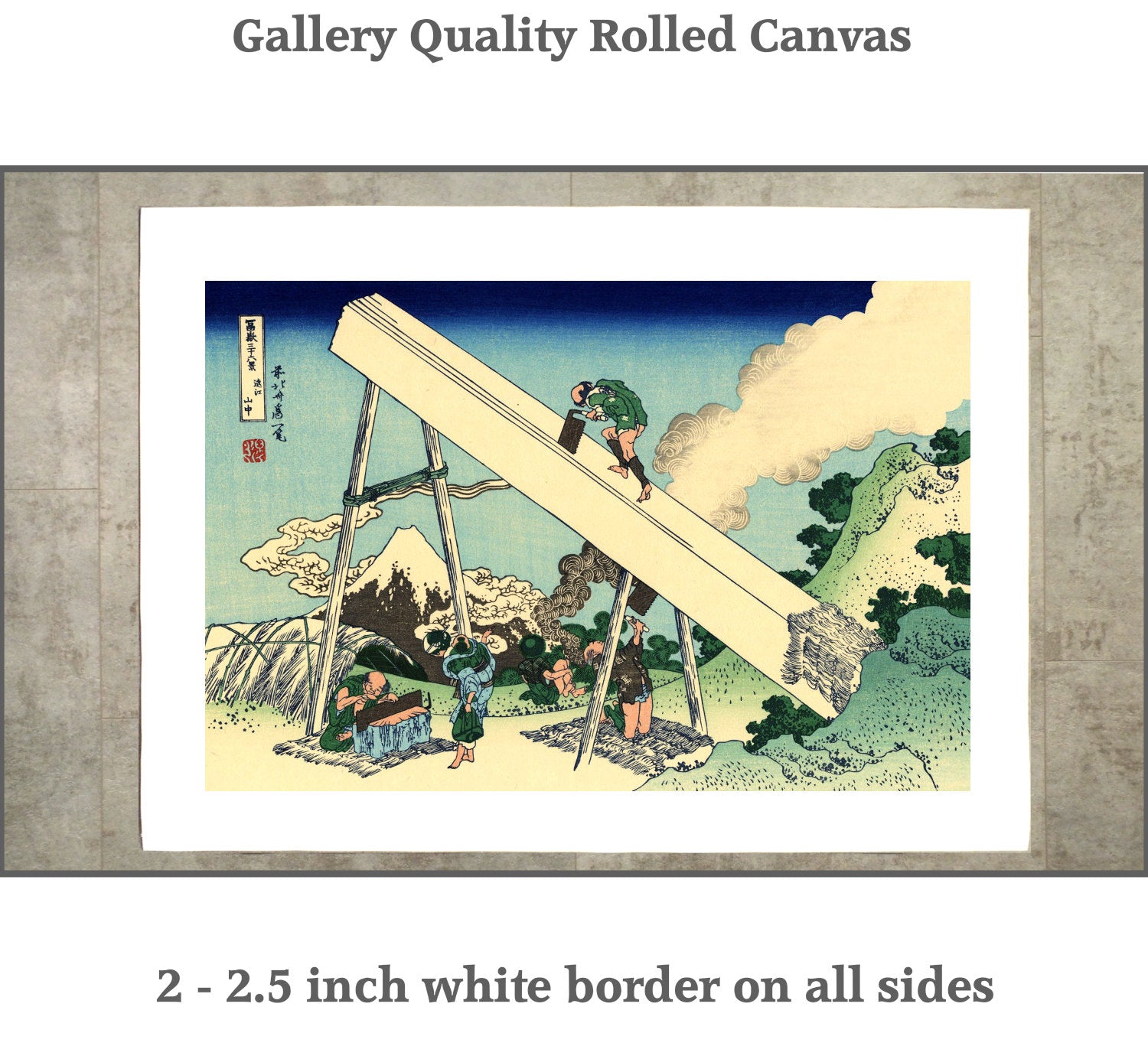
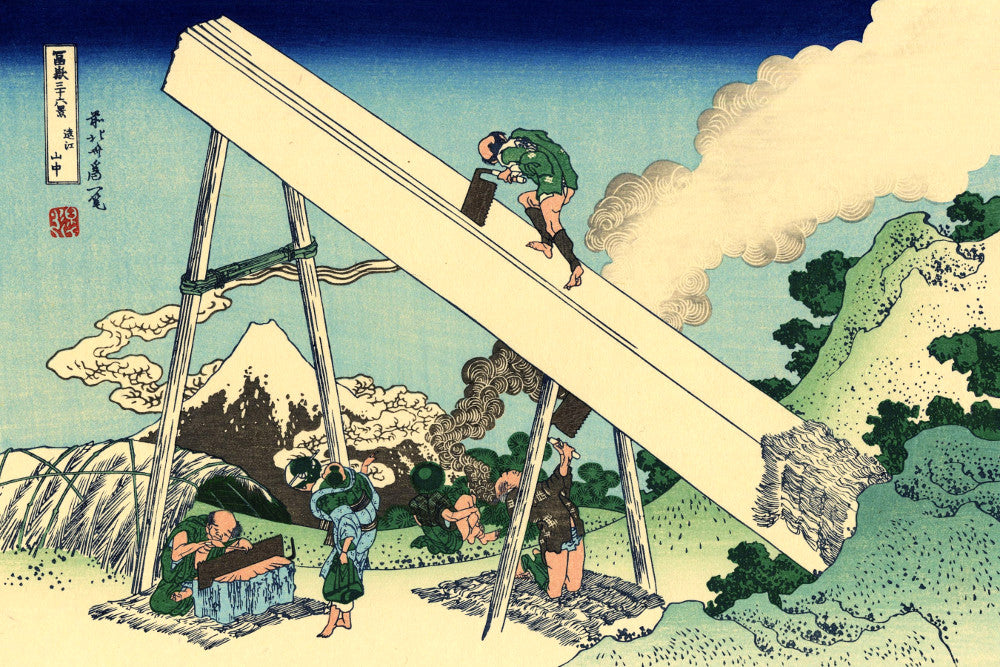
34. Mount Fuji from the Mountains of Tōtōmi
Lumbermen saw timber beneath a huge angled beam that cuts across the composition. Hokusai cleverly encloses tiny Fuji within the working structure, making human labour itself the frame for the mountain.

35. Lake Suwa in Shinano Province
Two tall pines dominate the foreground above Lake Suwa, with a small settlement, boat and distant Fuji beyond. The layered blues and strong tree silhouettes give the landscape a quiet depth.

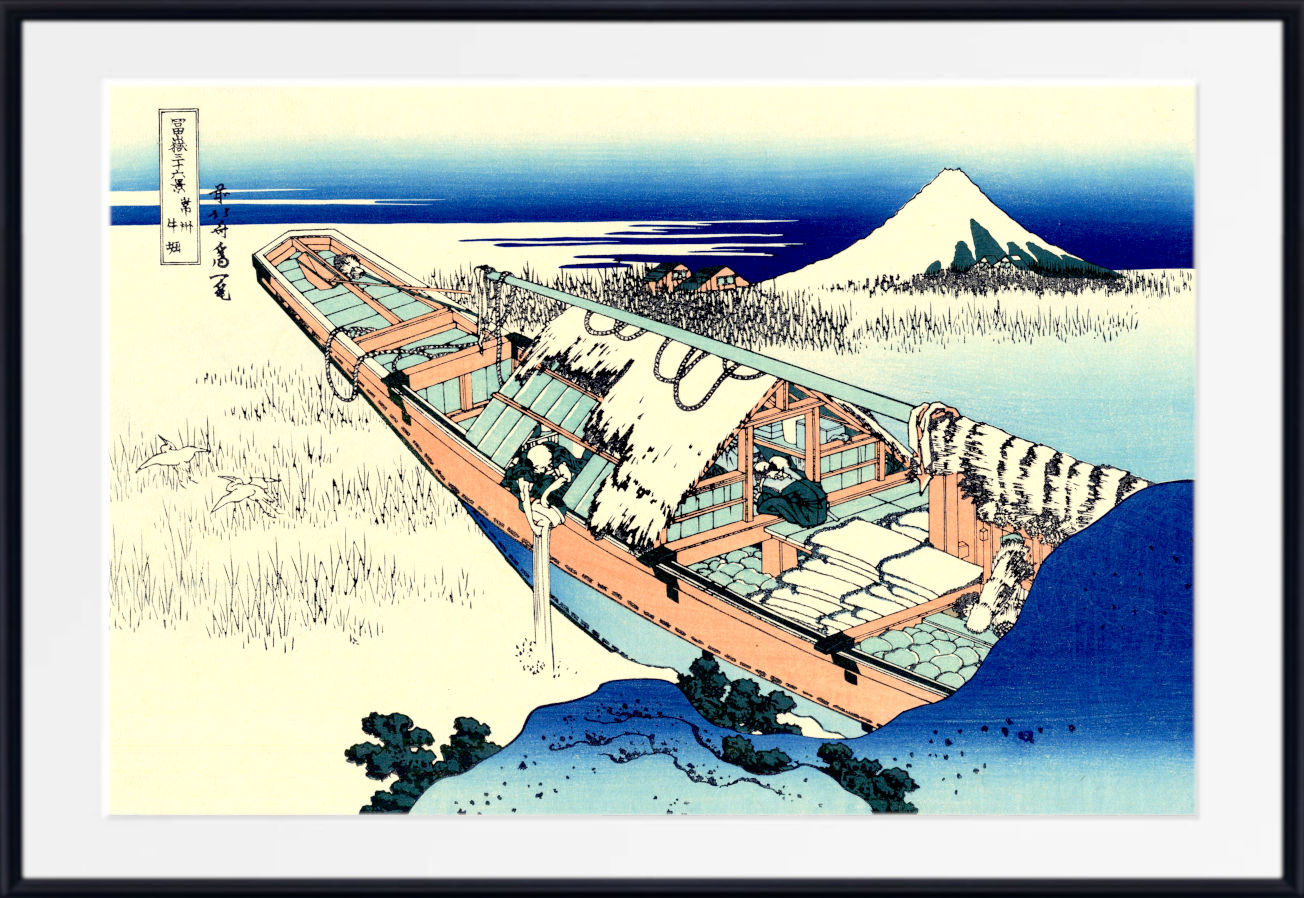
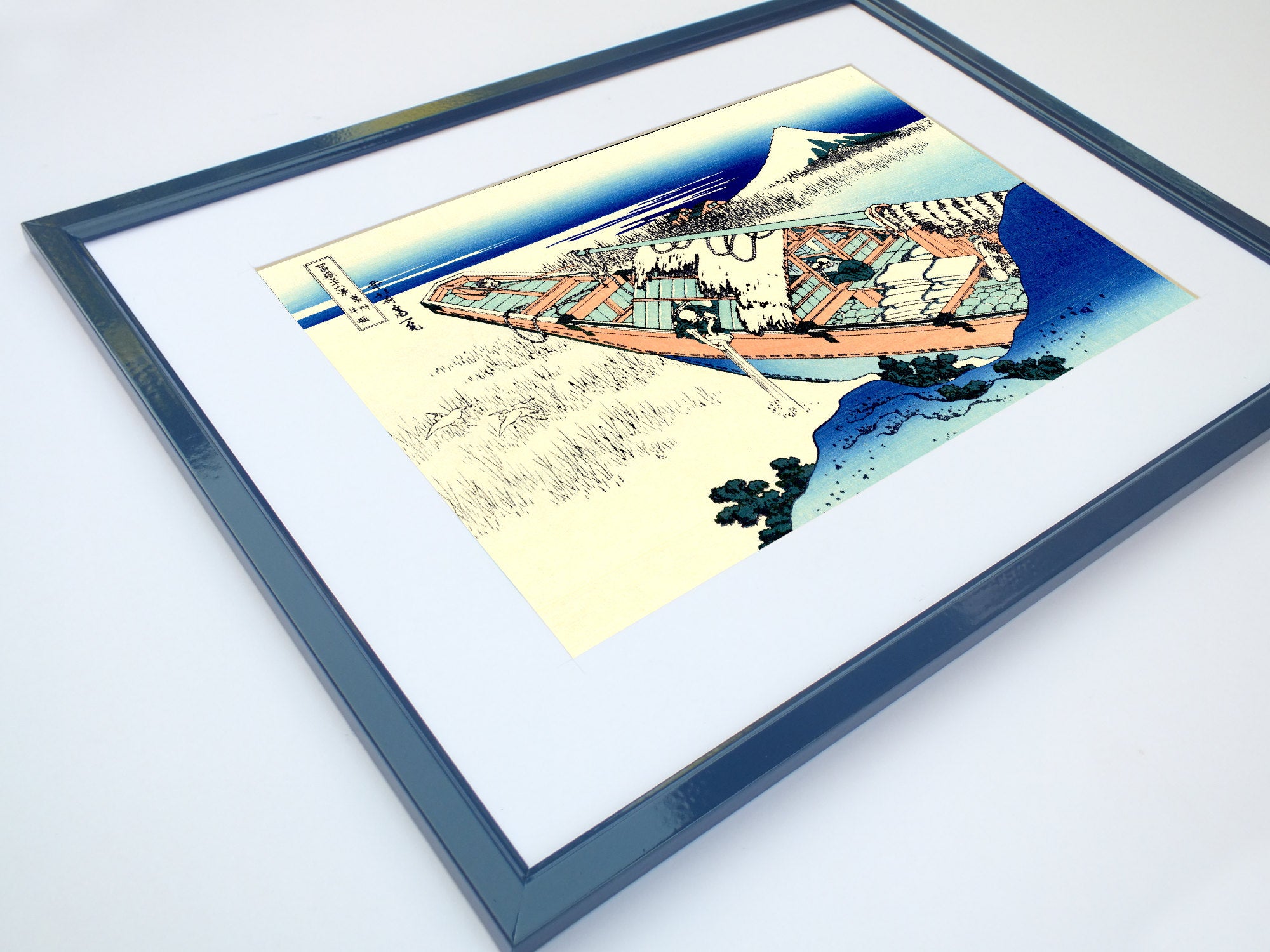
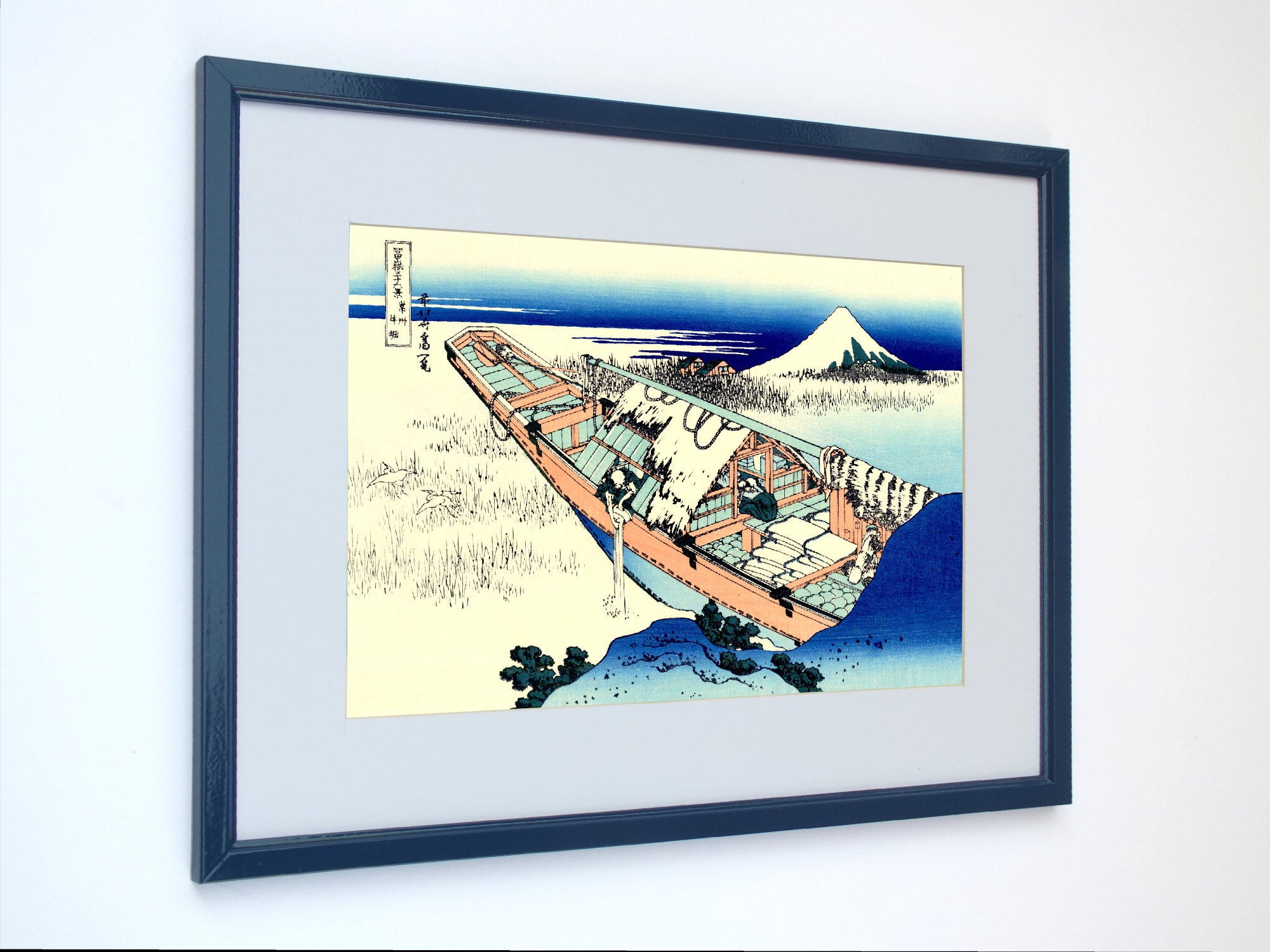
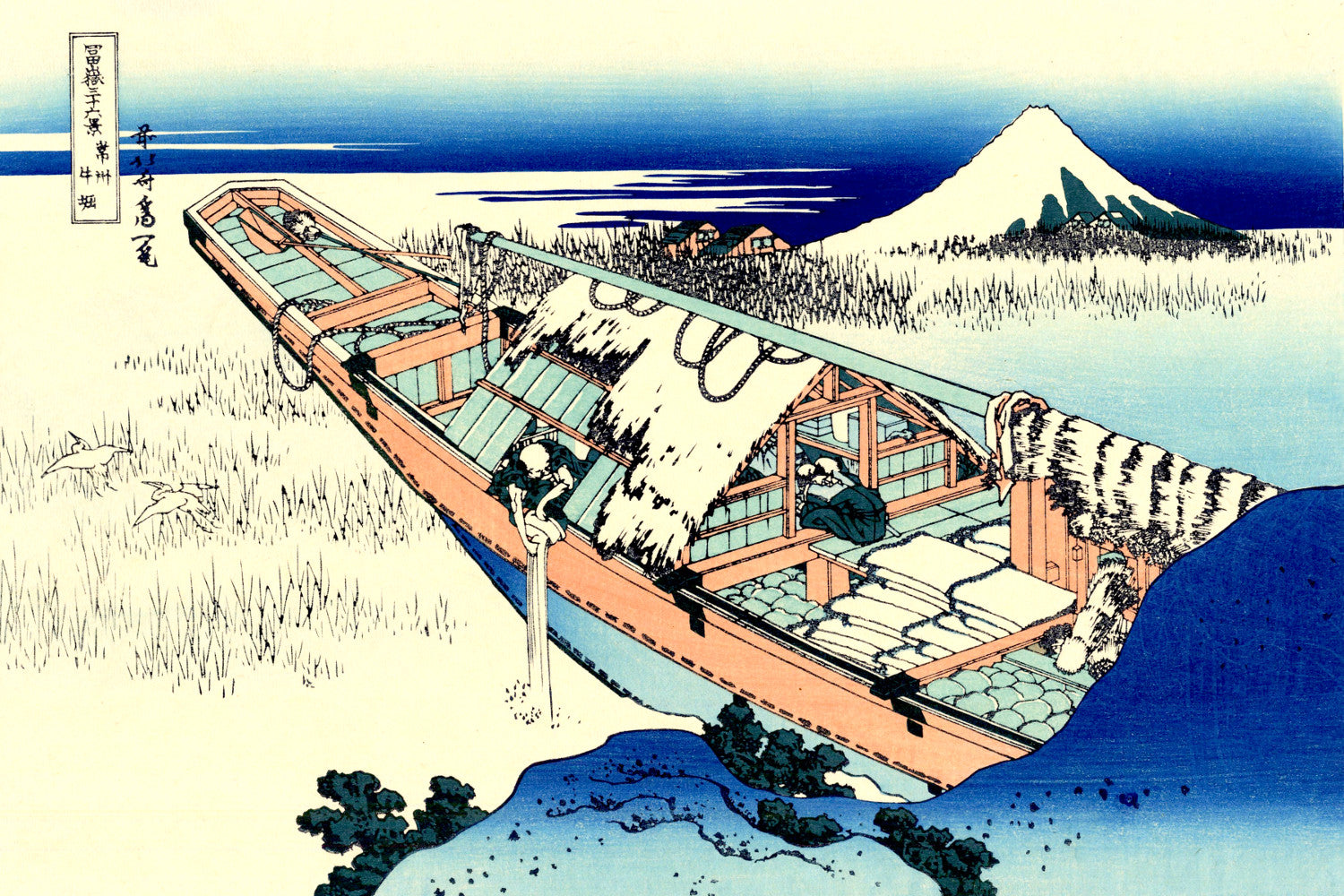
36. Ushibori in Hitachi Province
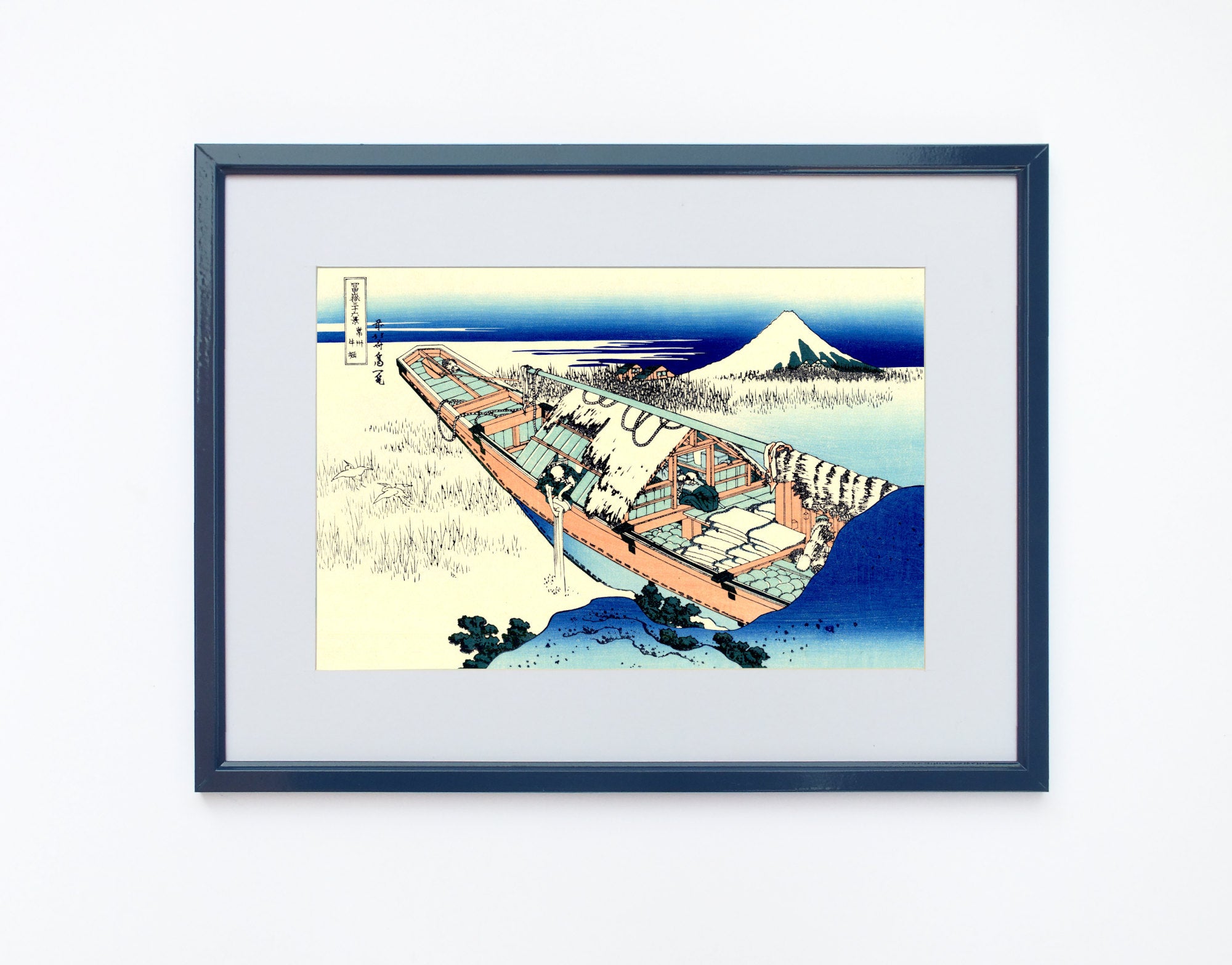
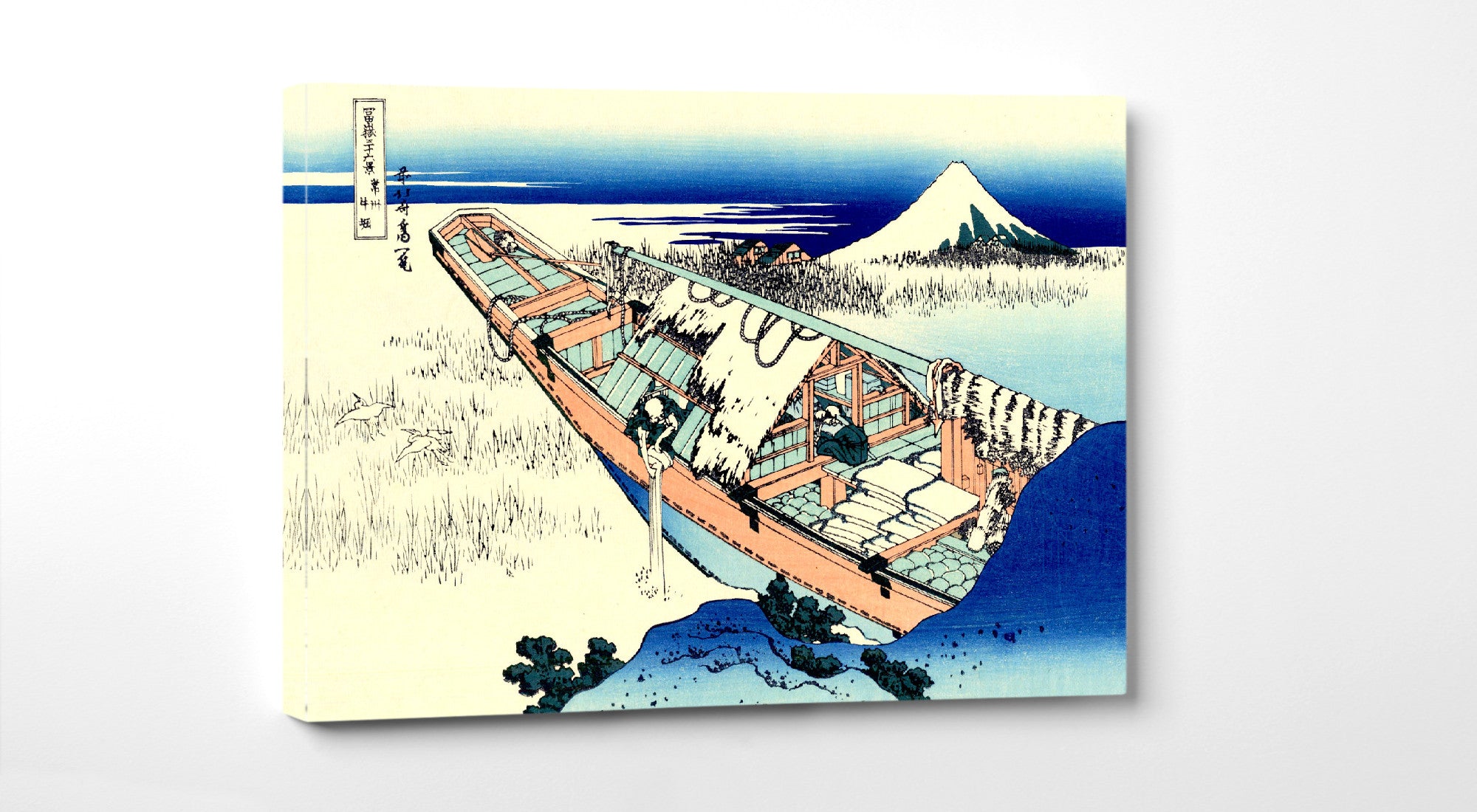
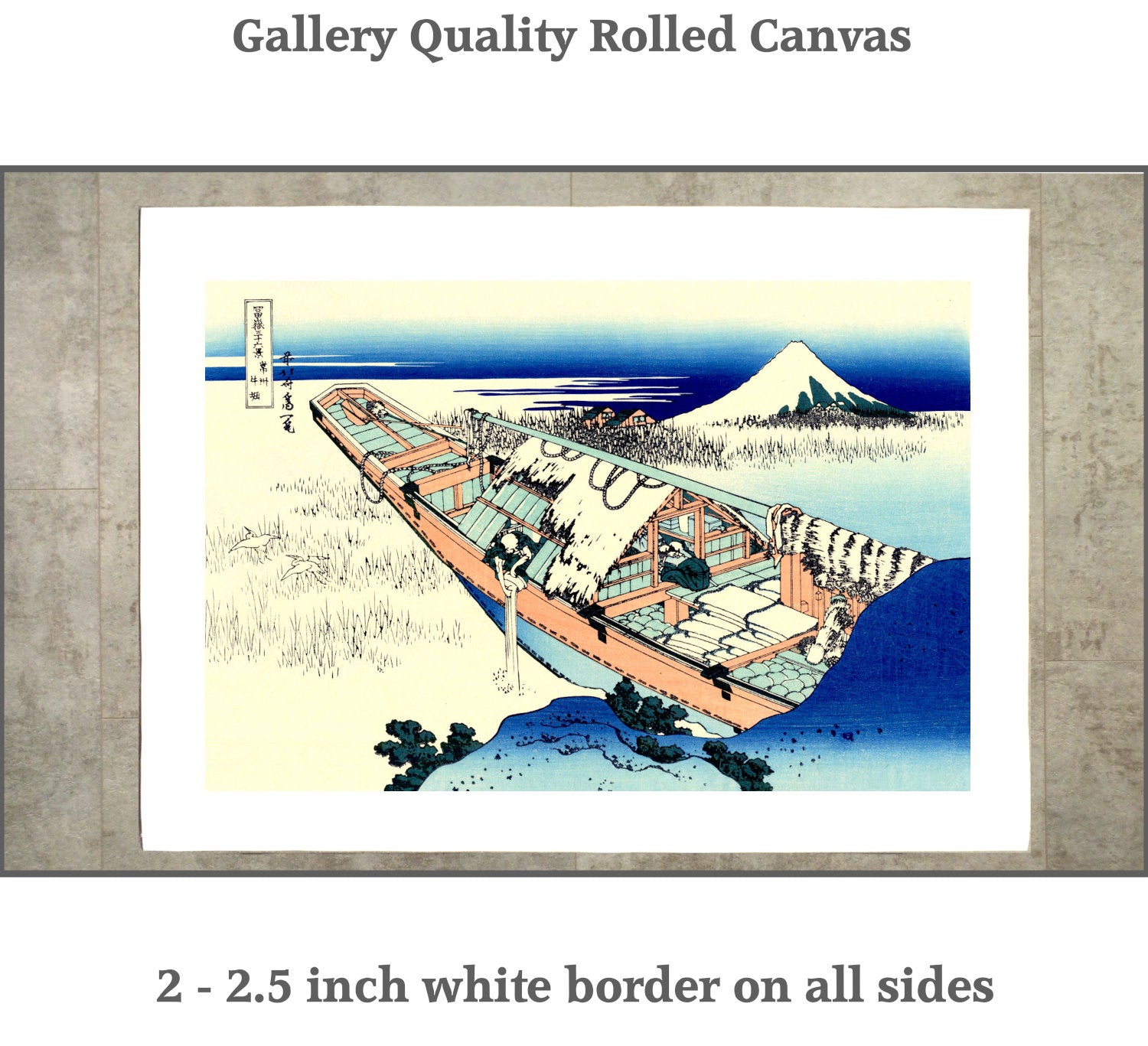
A large working boat is dramatically cropped in the foreground while Fuji rises beyond the reed-filled shore. The close viewpoint gives the scene an immediate, almost cinematic quality.
The Ten Additional Views
The popularity of the original project led to ten further designs. These later additions extend the geographical and thematic range of the series while continuing Hokusai's fascination with travel, labour, weather and the changing appearance of Fuji.

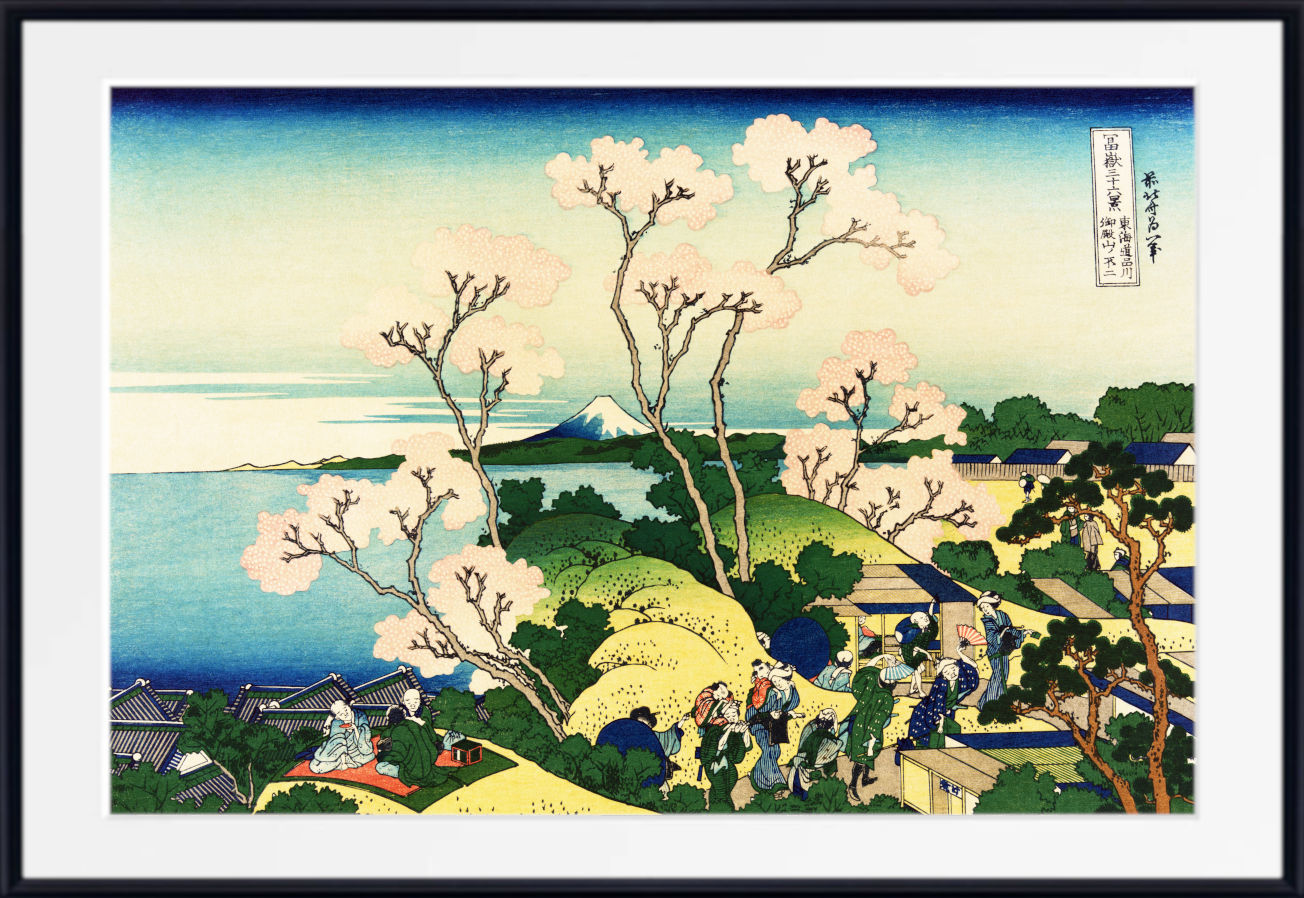
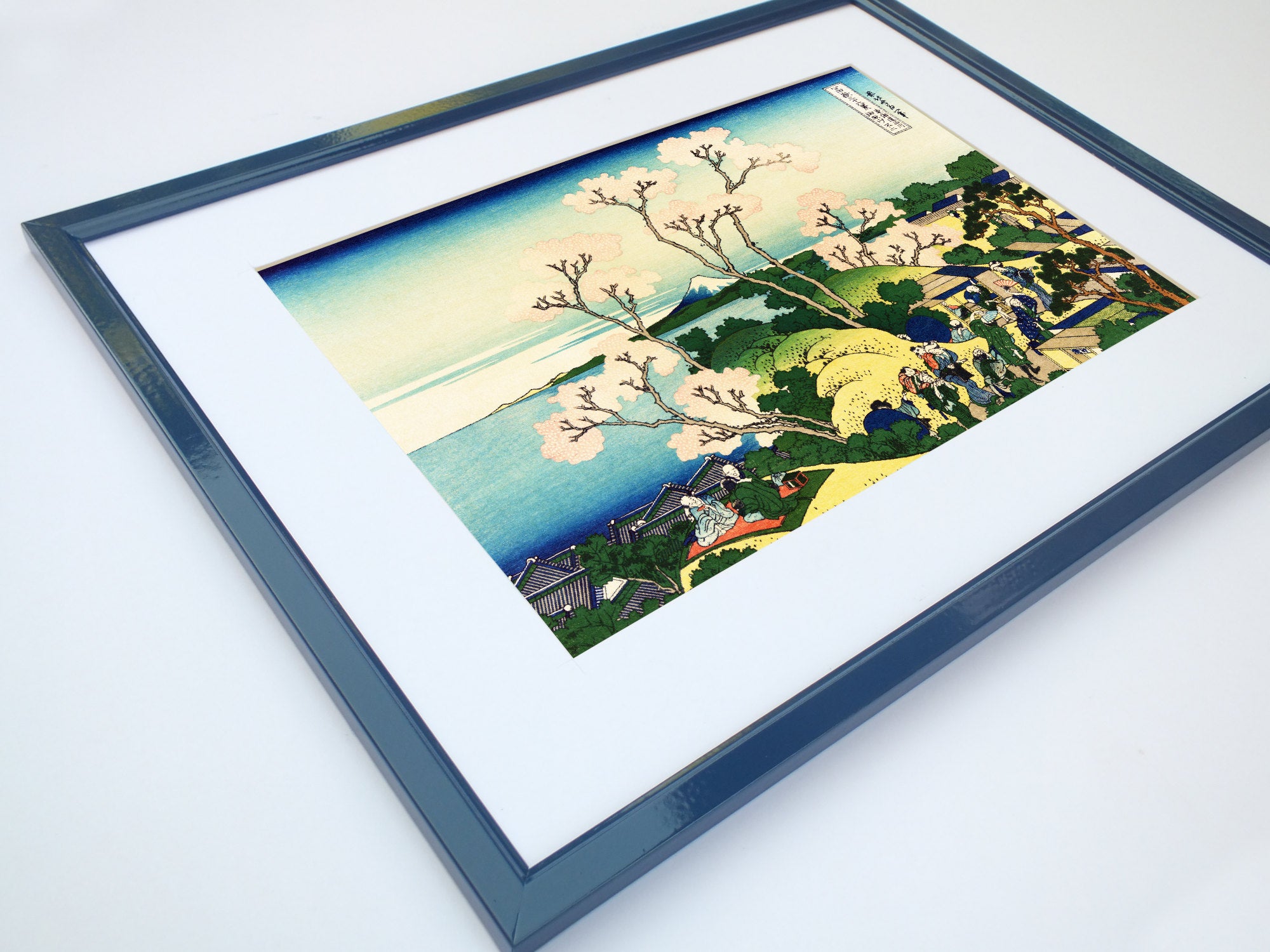
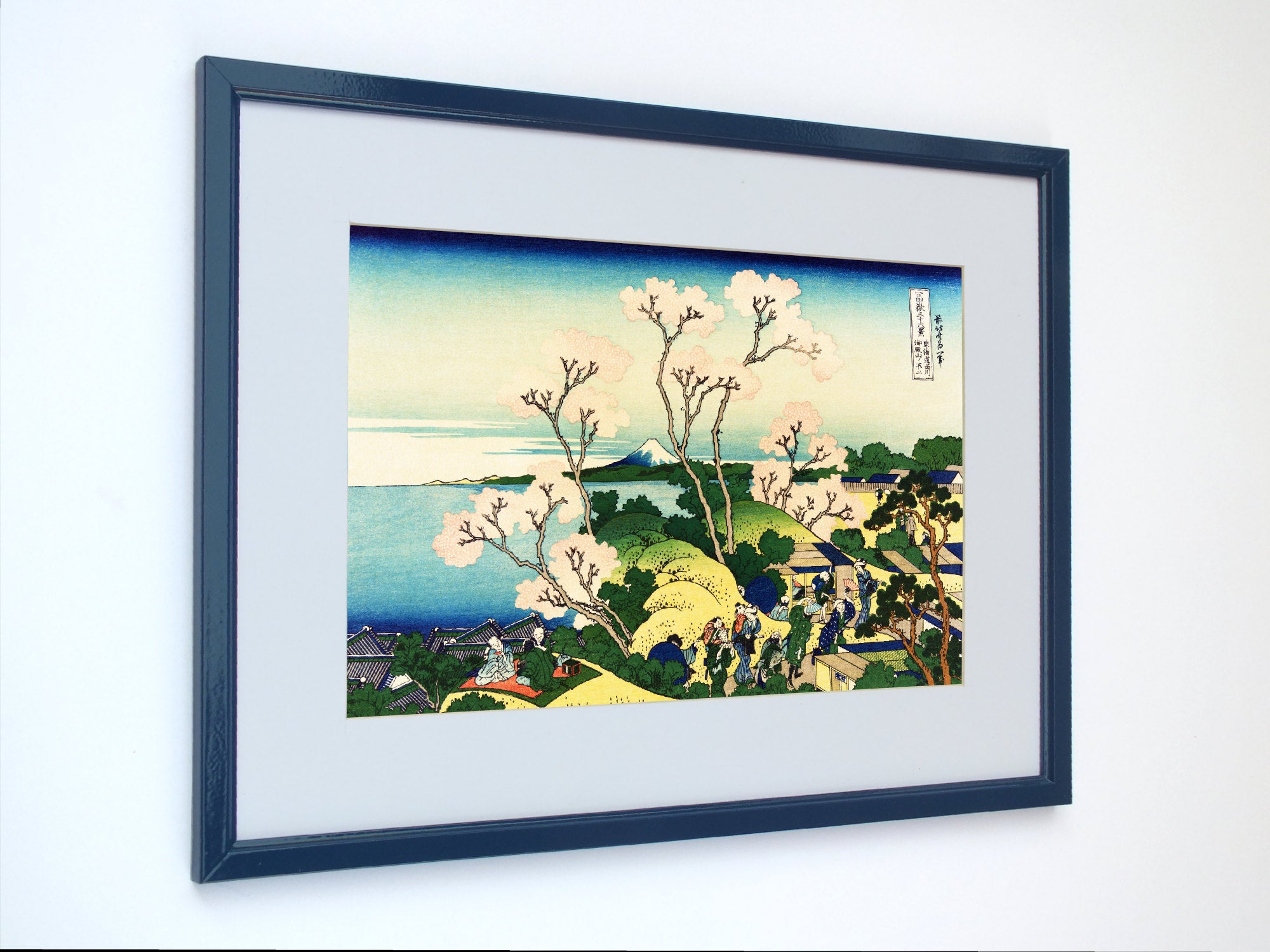
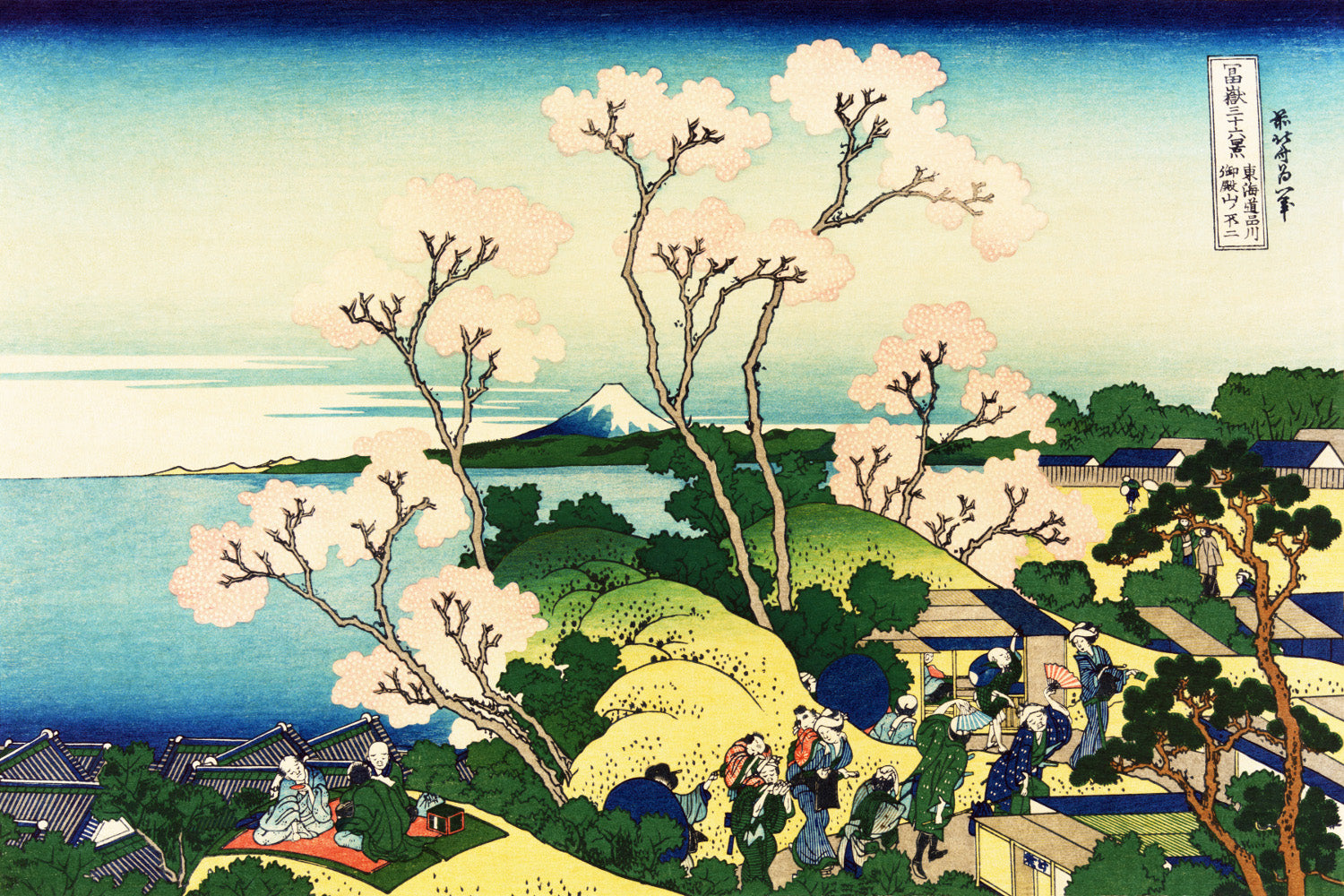
37. Goten-yama Hill, Shinagawa on the Tōkaidō
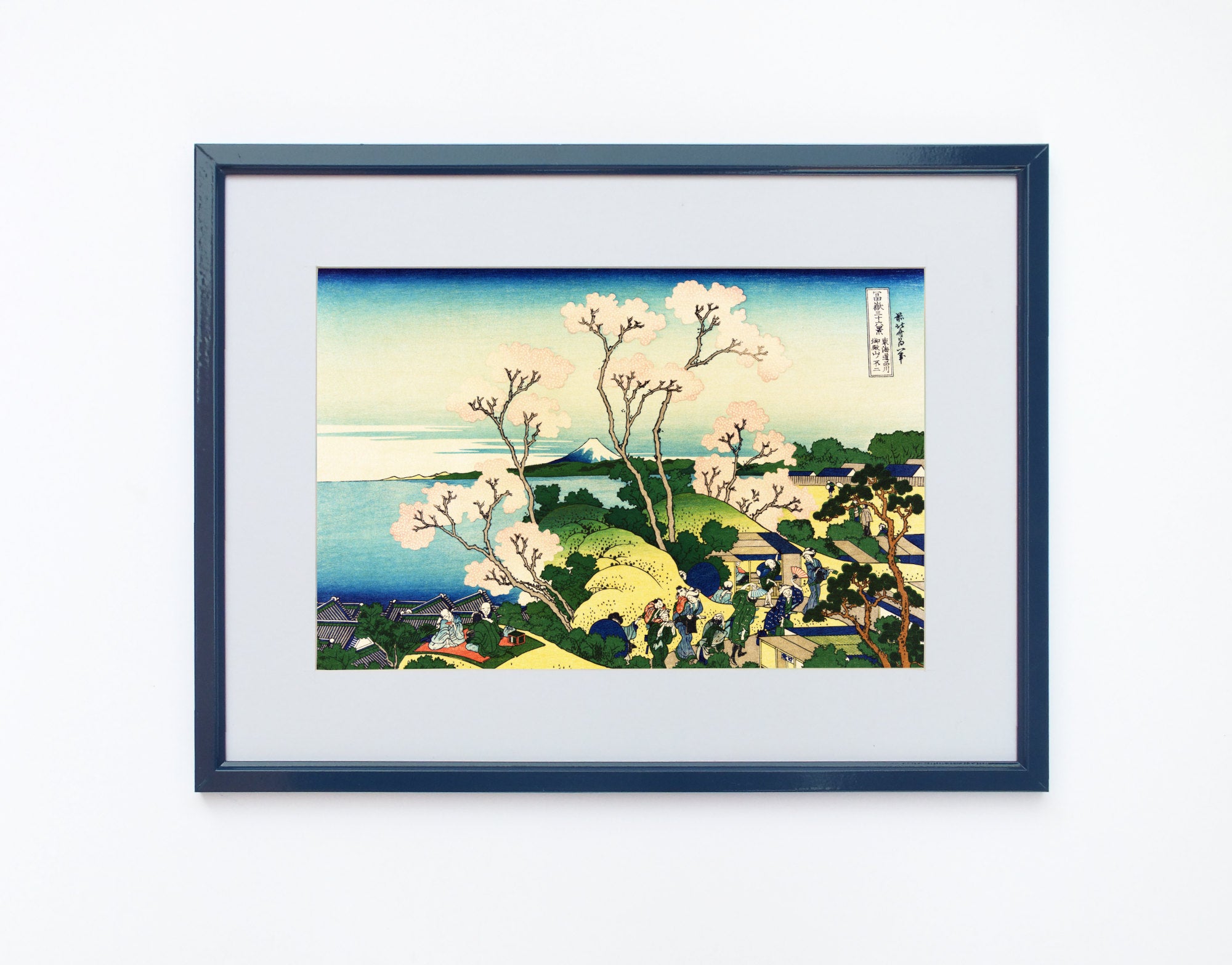
Cherry trees bloom across Goten-yama as visitors picnic, drink and enjoy the spring view. Fuji appears serenely beyond the hill, linking seasonal leisure in Edo with the enduring mountain.

38. Honjo Tatekawa – Timberyard at Honjo, Sumida
Stacks and poles of timber create a dense lattice of vertical and diagonal lines while workers remain absorbed in their tasks. Fuji peeks through this industrial geometry in the distance.

39. Pleasure District at Senju
A procession passes through the open landscape at Senju while Fuji rises beyond the settlement. The long rhythm of figures across the foreground contrasts with the mountain's static triangular profile.

40. Nakahara in Sagami Province
Travellers, workers and pilgrims converge around a small bridge and roadside landscape. Fuji stands high in the background while ordinary movement and labour dominate the foreground.

41. Ōno Shinden in Suruga Province
Horses carry huge bundles through harvested fields as farm workers move across the foreground. Fuji rises beyond the flat agricultural landscape, placing seasonal labour beneath the mountain.

42. Climbing on Mount Fuji
Here Hokusai takes the viewer onto Fuji itself. Pilgrims climb the steep volcanic landscape, rest along the path and shelter in a cave, making the mountain a physical experience rather than a distant view.

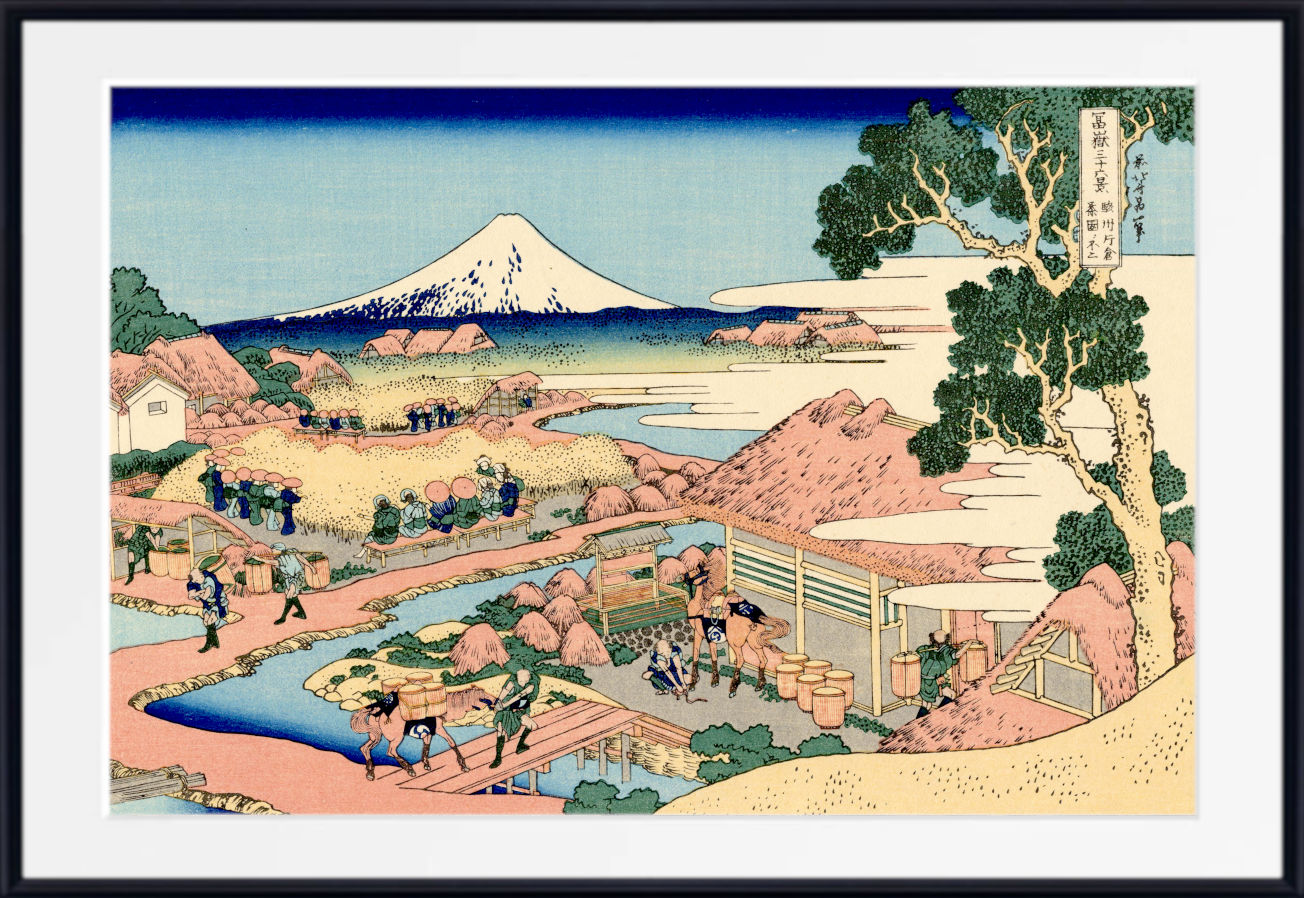
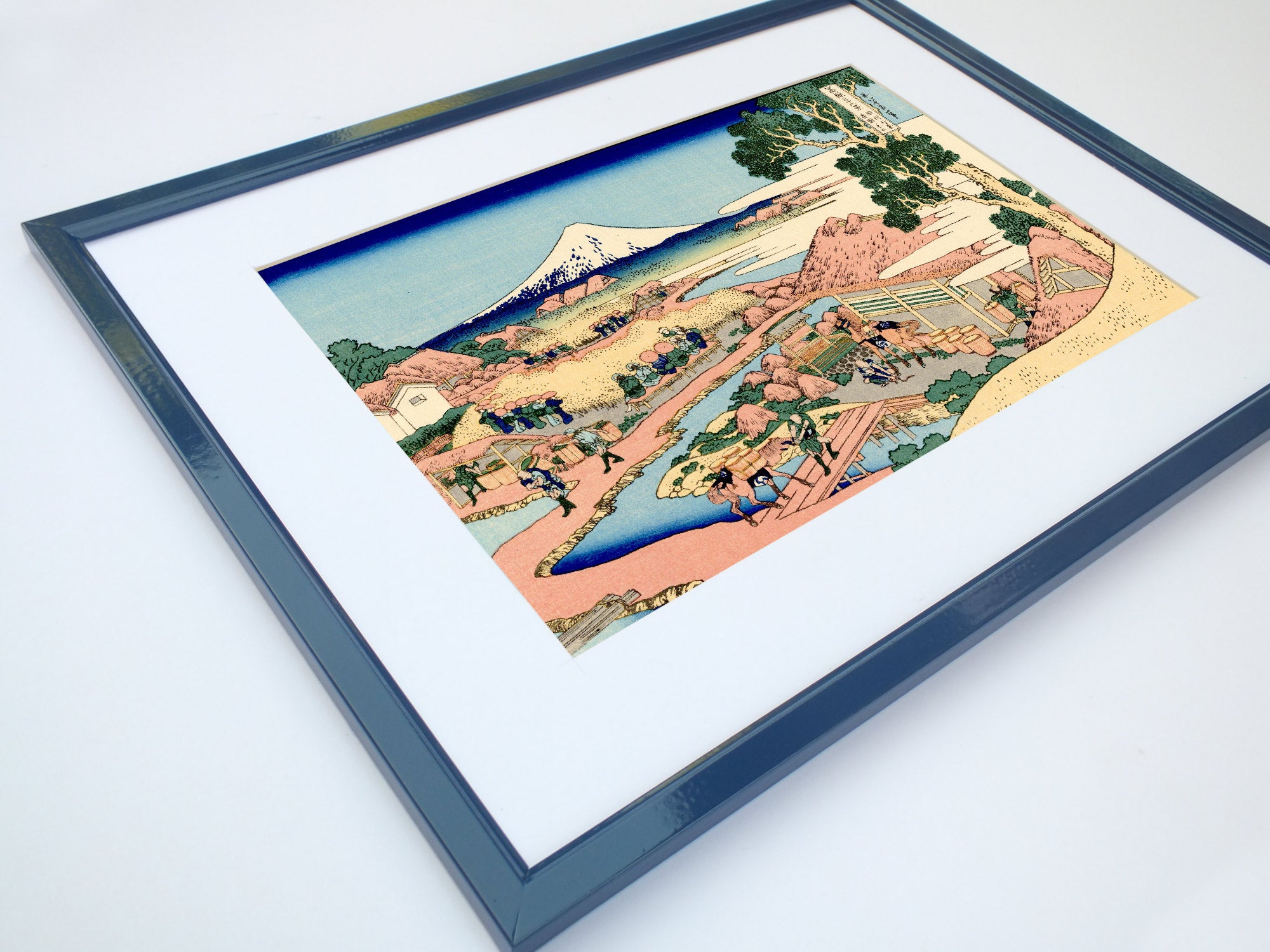
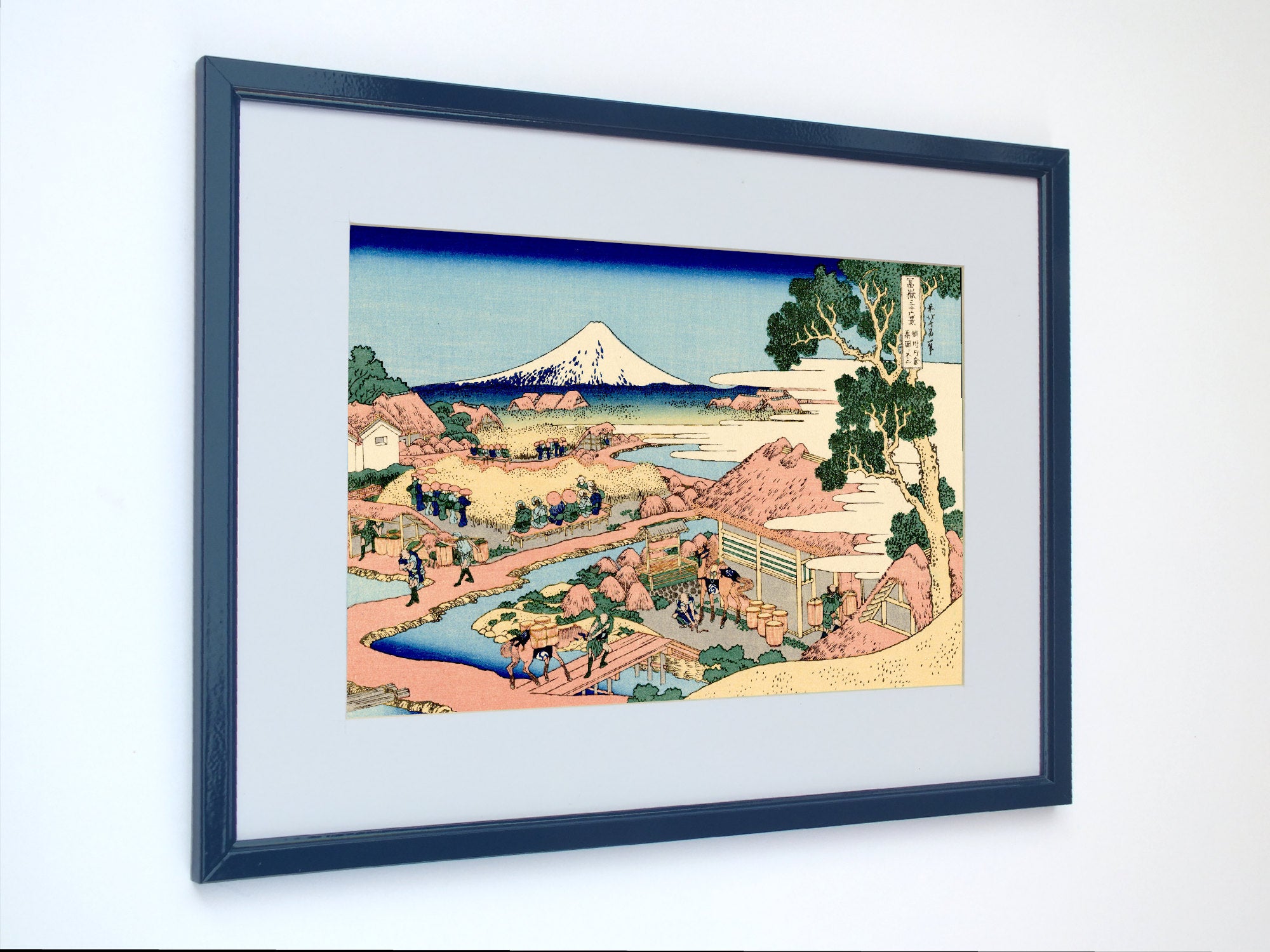
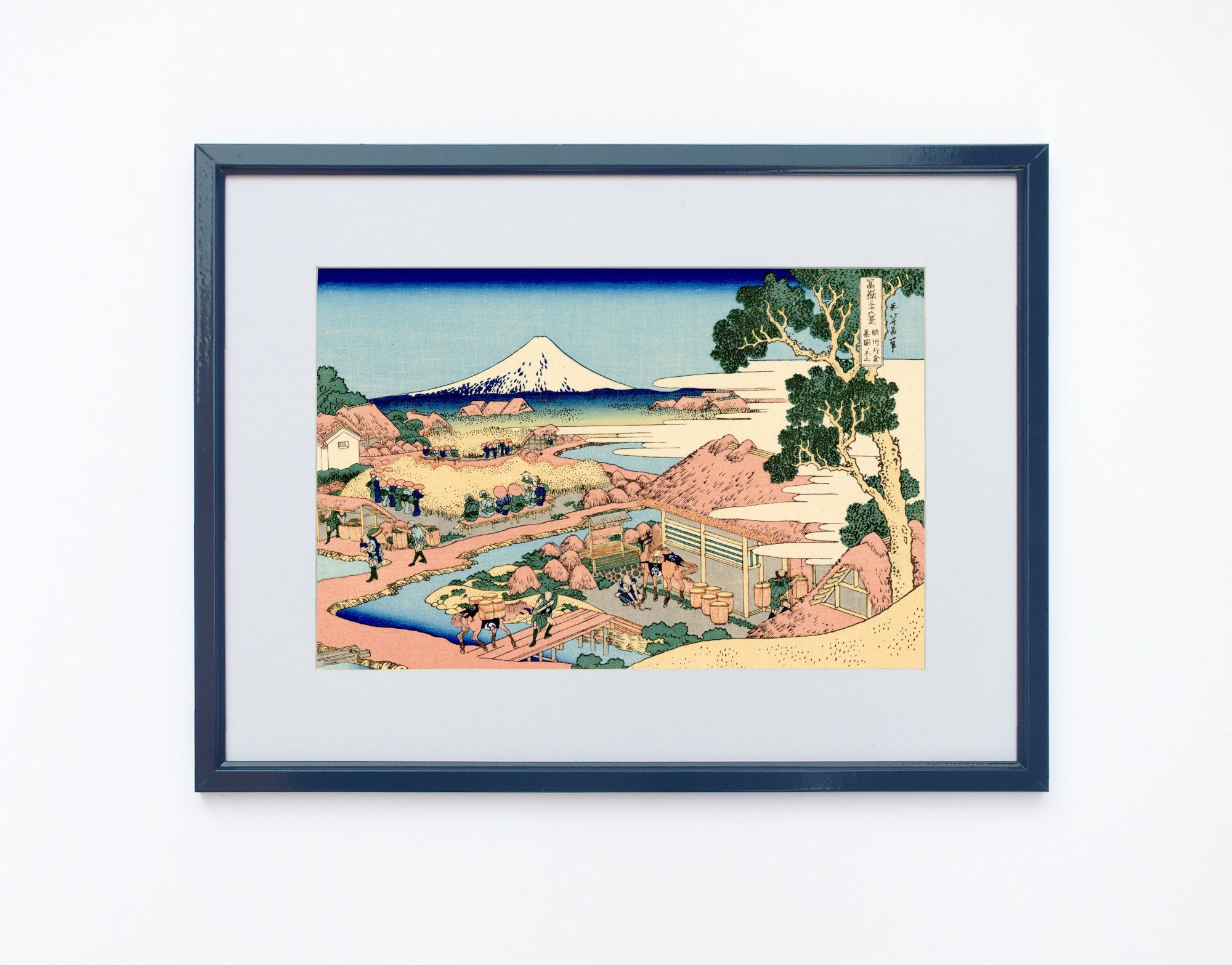
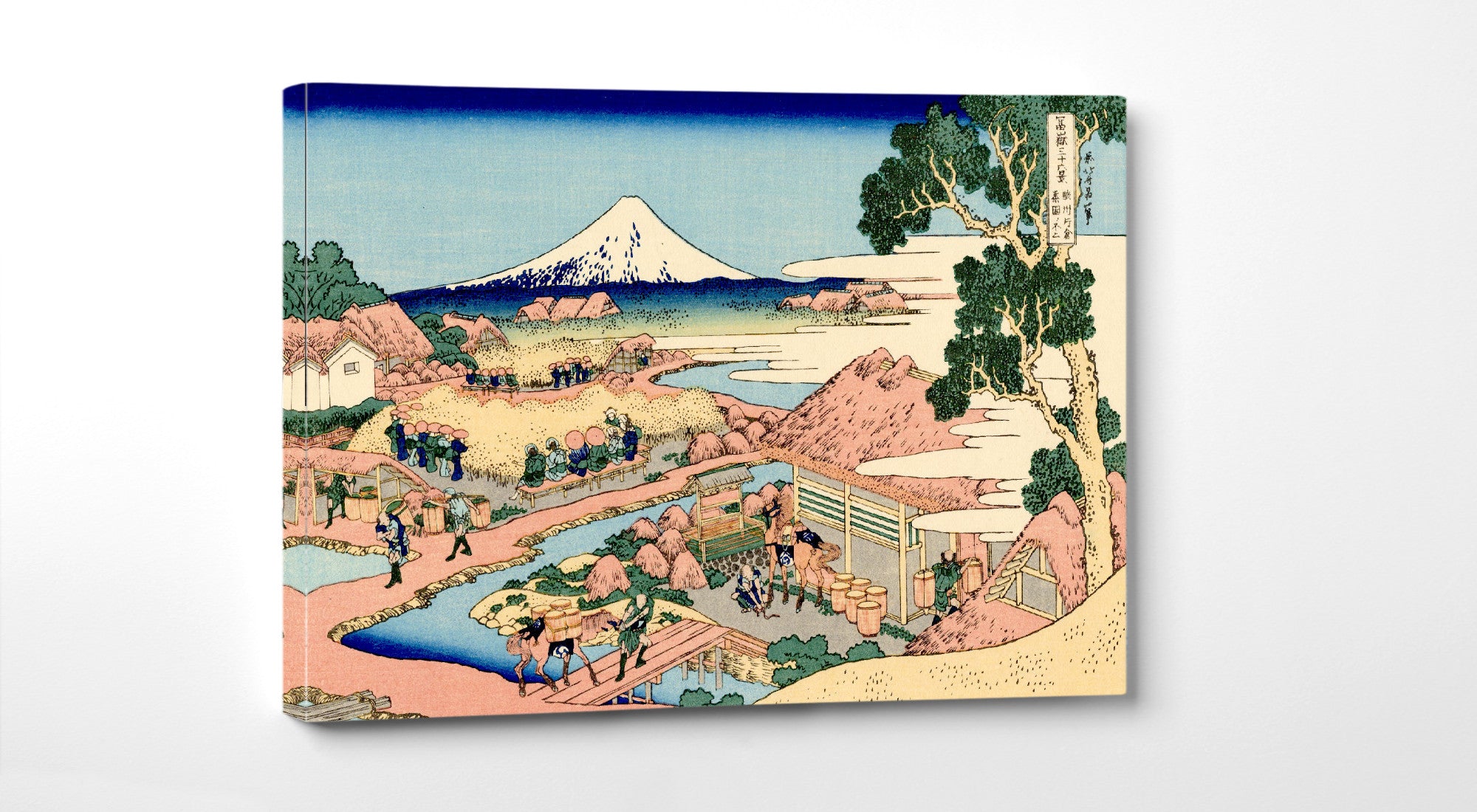
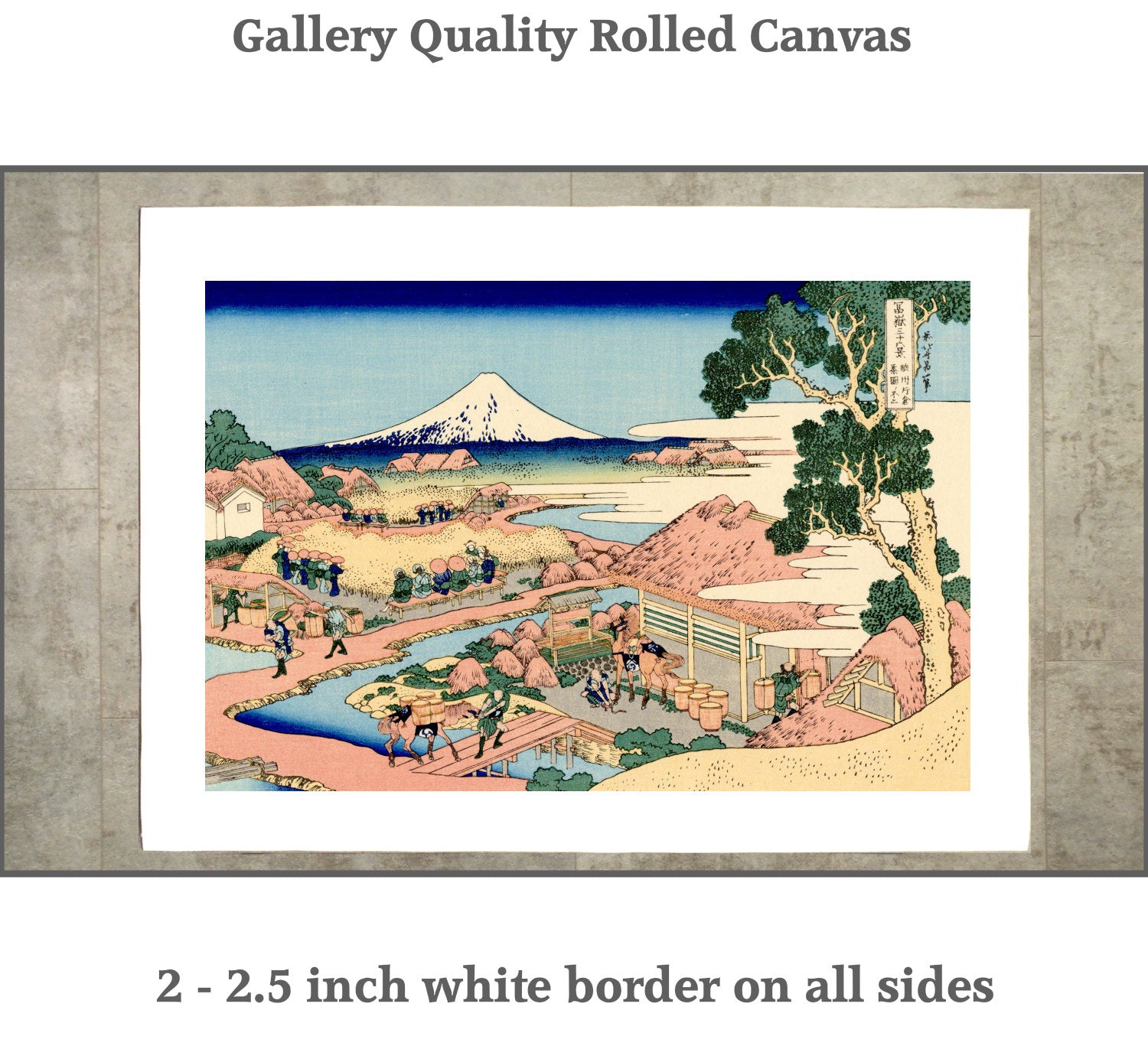
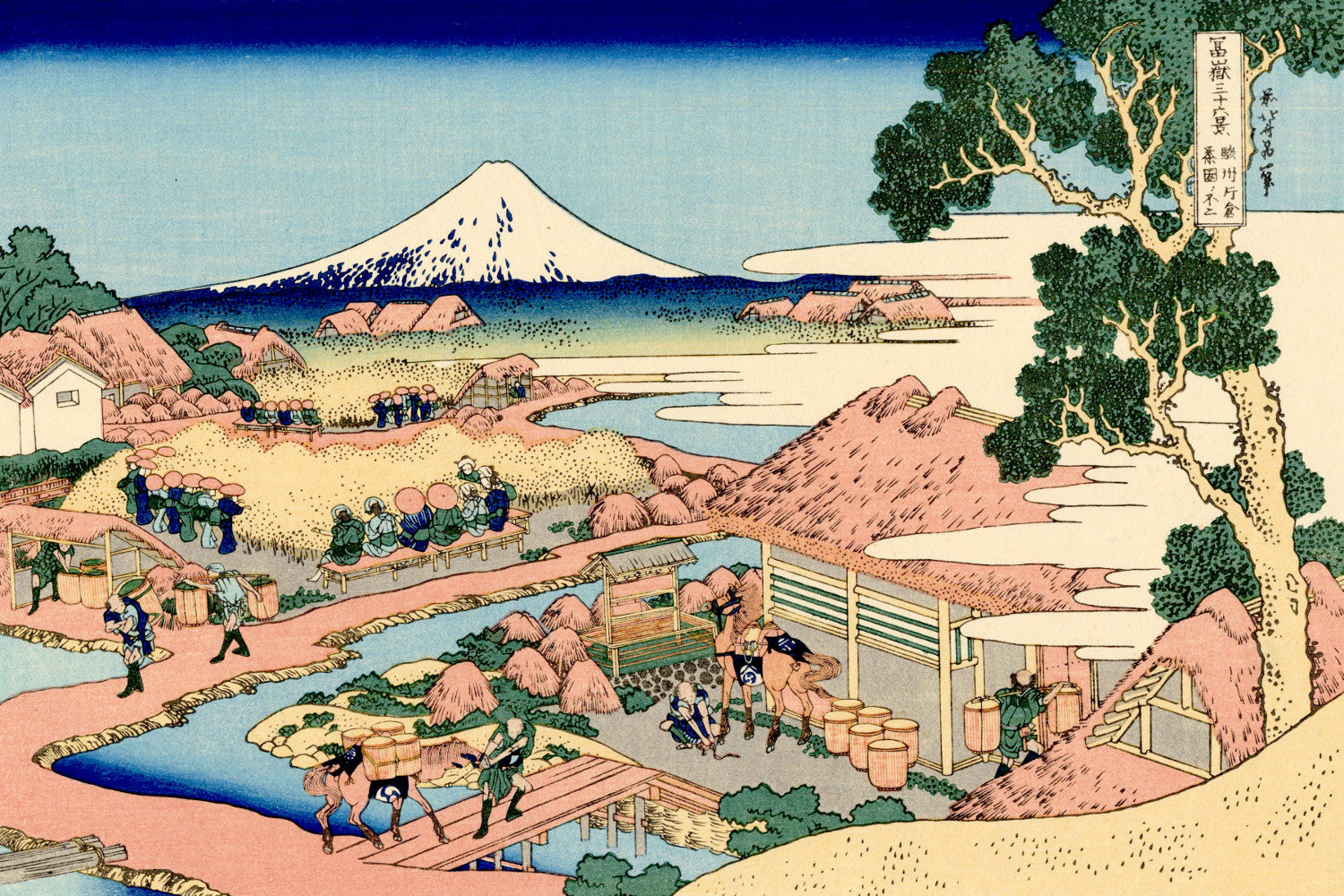
43. Tea Plantation of Katakura in Suruga Province
Workers and plantation activity occupy the foreground beneath distant Fuji. The print extends the series' interest in farming and regional labour while retaining the mountain as its visual constant.

44. Fuji from Kanaya on the Tōkaidō
Travellers and palanquins struggle across the Ōi River as fast water creates powerful bands of movement. Fuji stands beyond the crossing, calm against the difficult journey in the foreground.

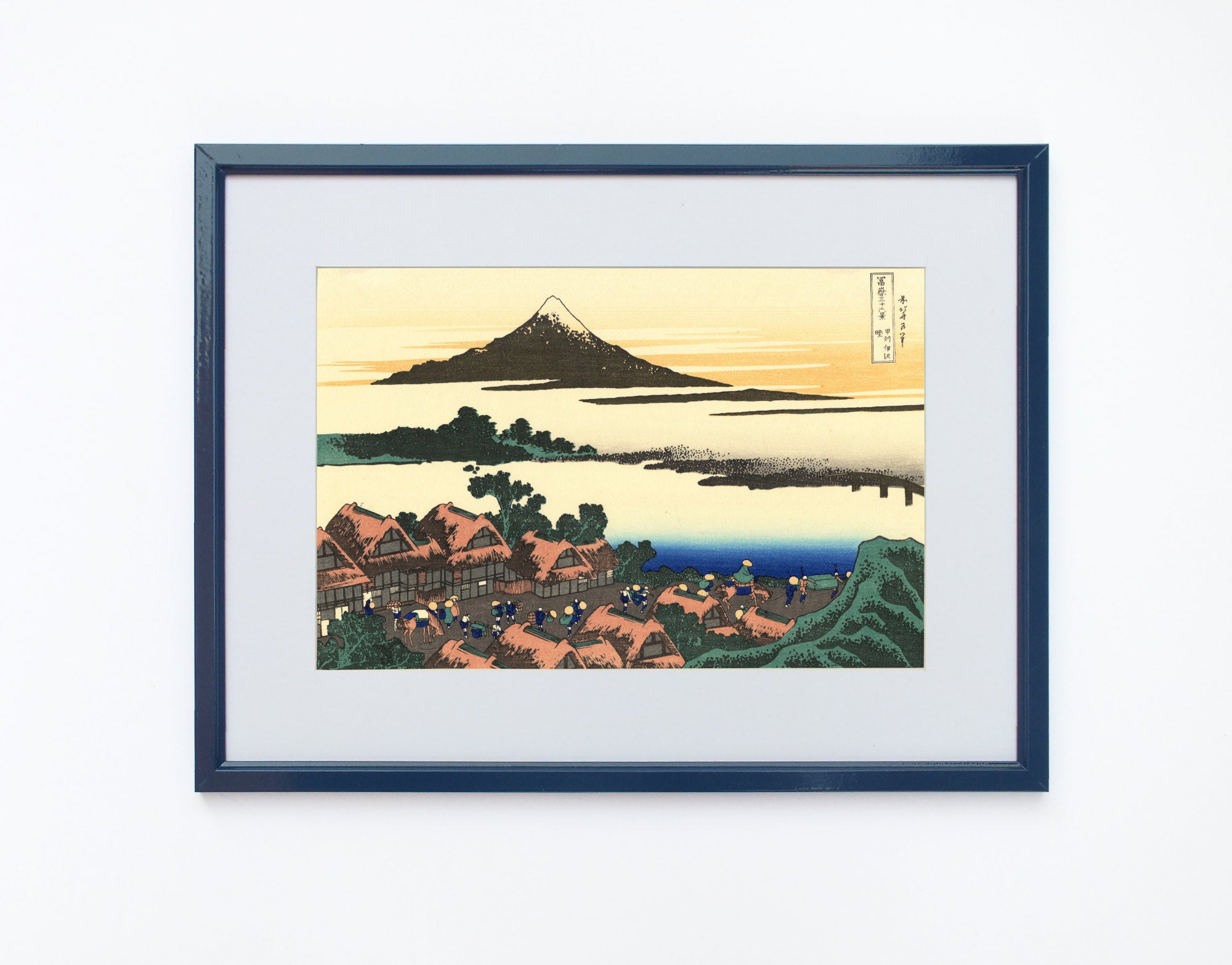
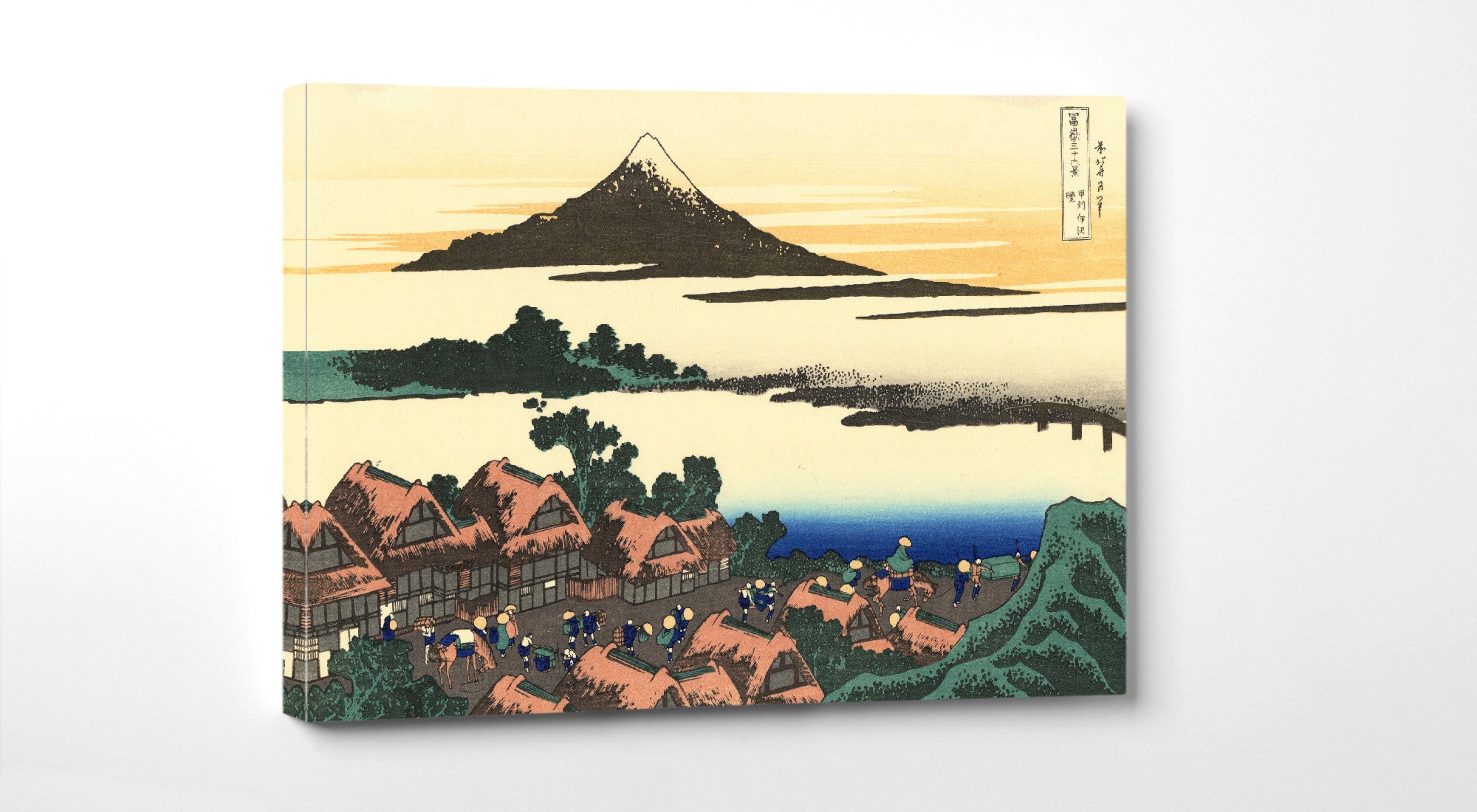
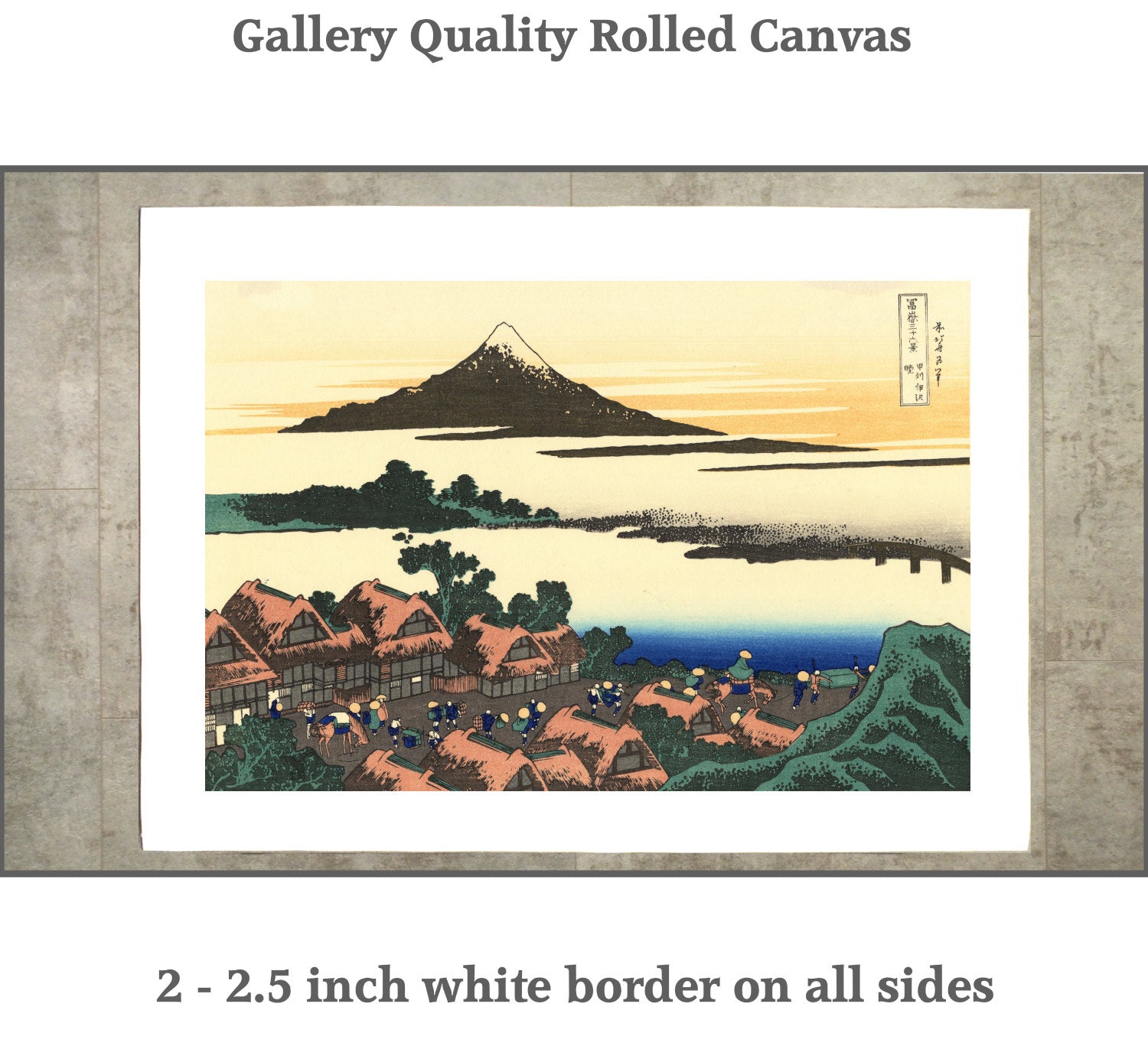
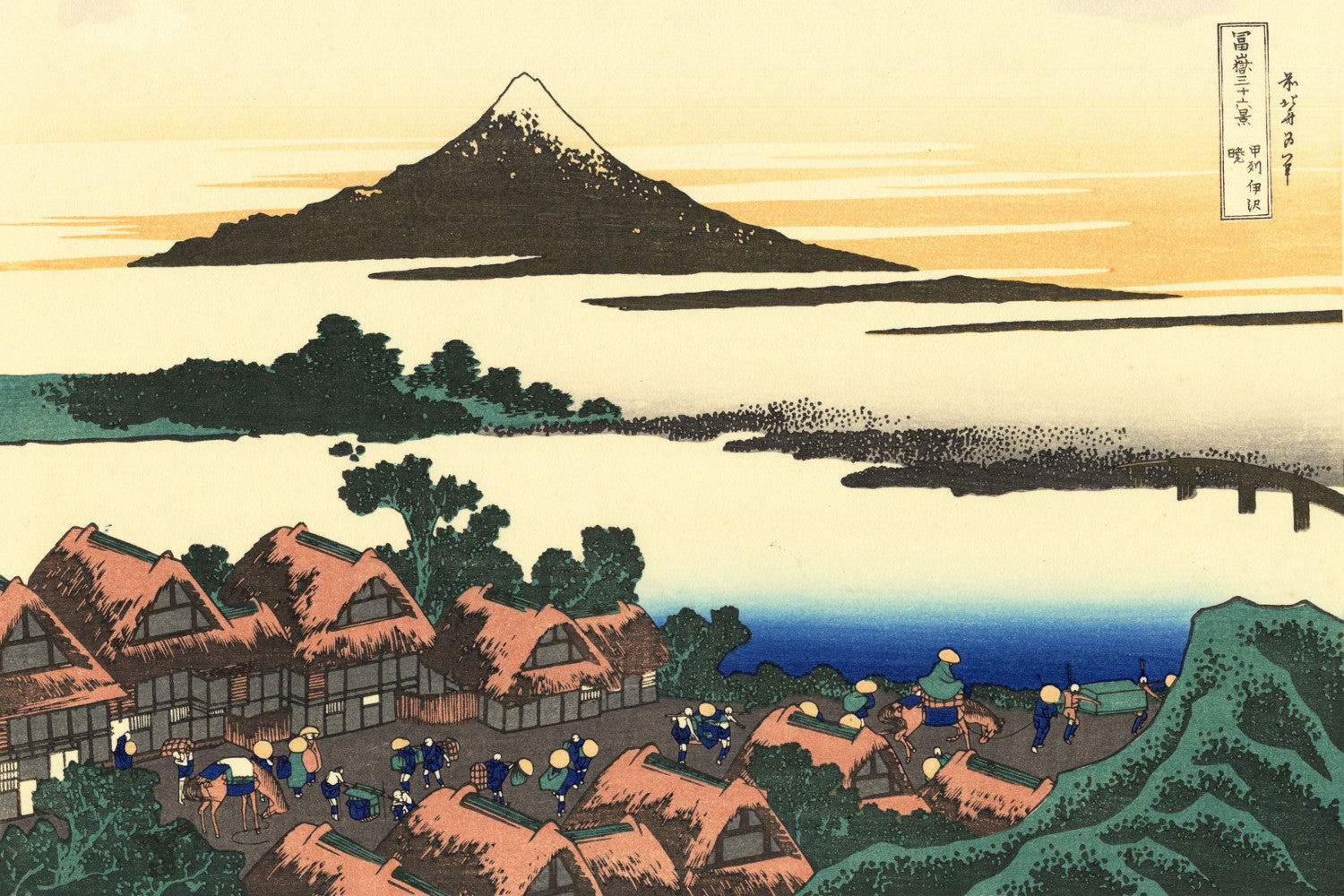
45. Dawn at Isawa in Kai Province
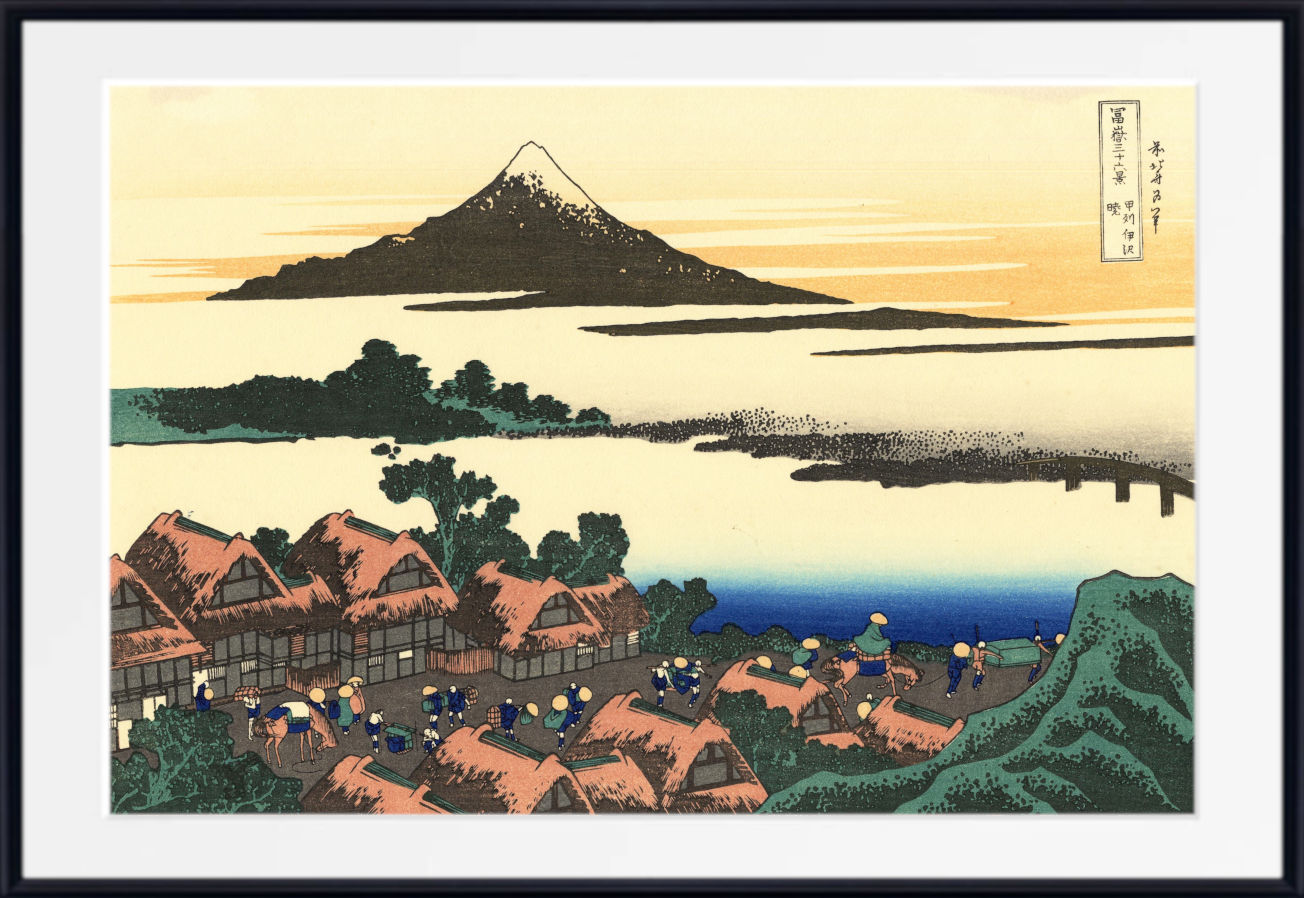
Before sunrise, travellers prepare to leave Isawa, loading horses and gathering on the road. Fuji rises into the warm dawn sky while the town below begins another day.

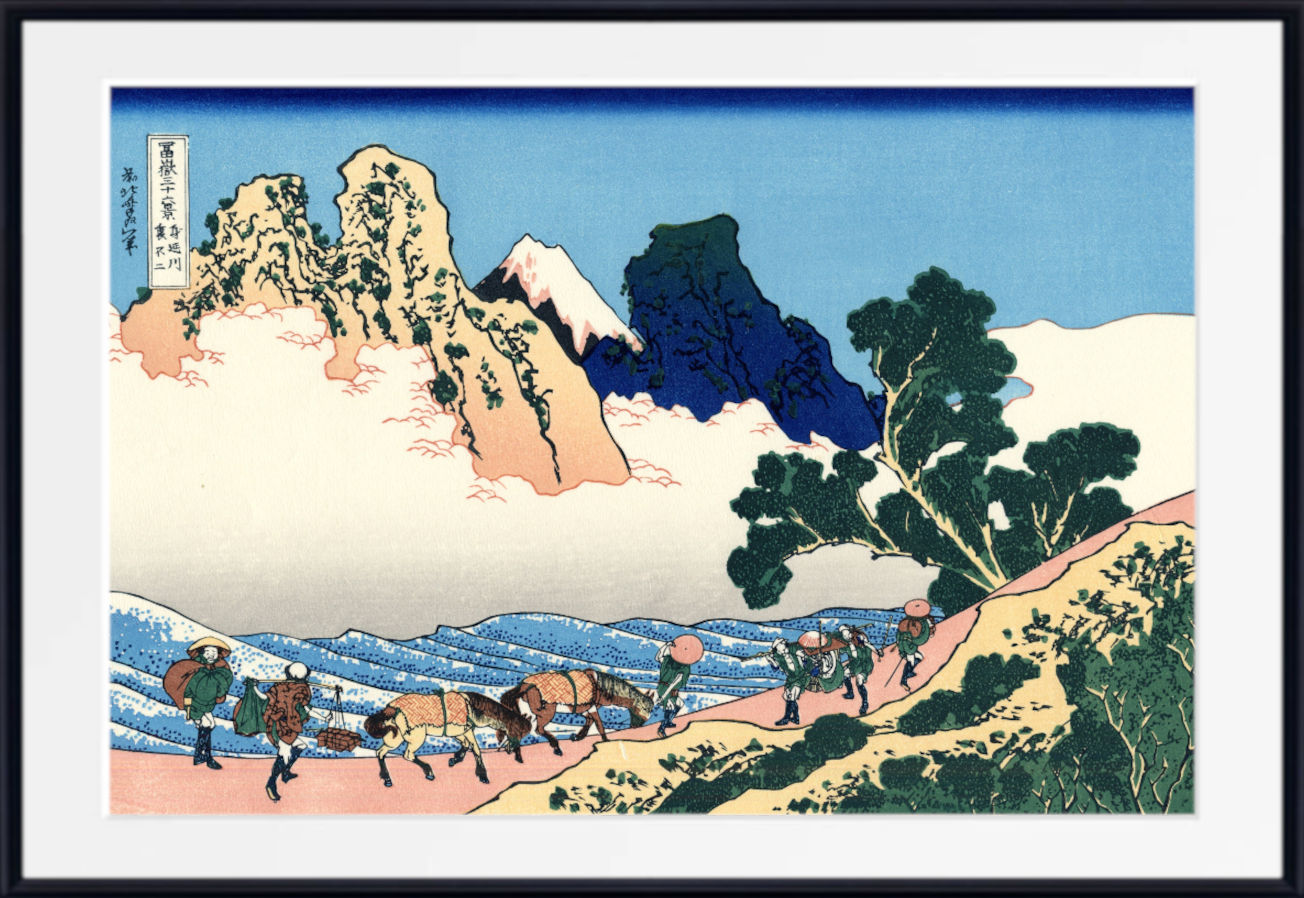
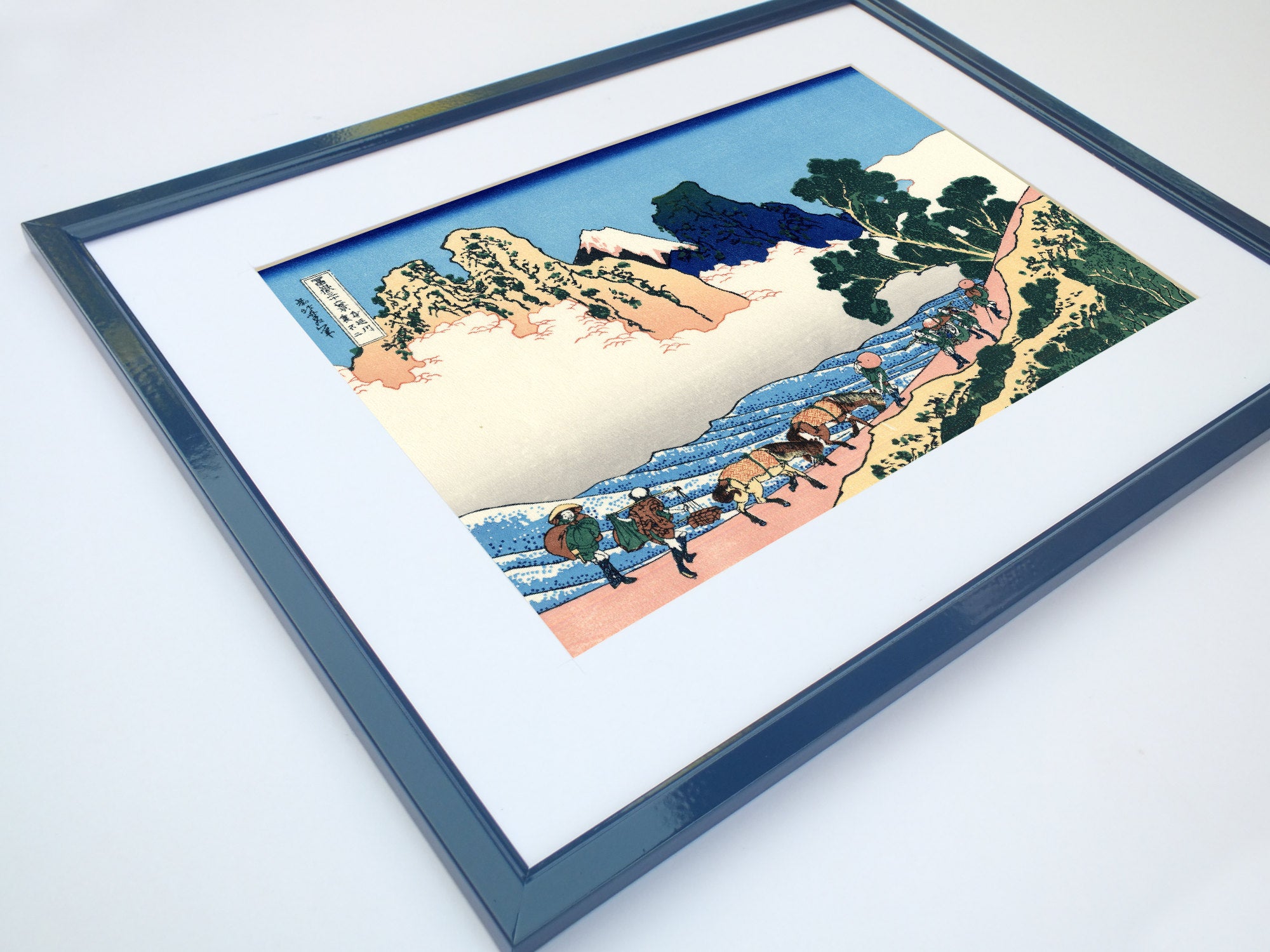
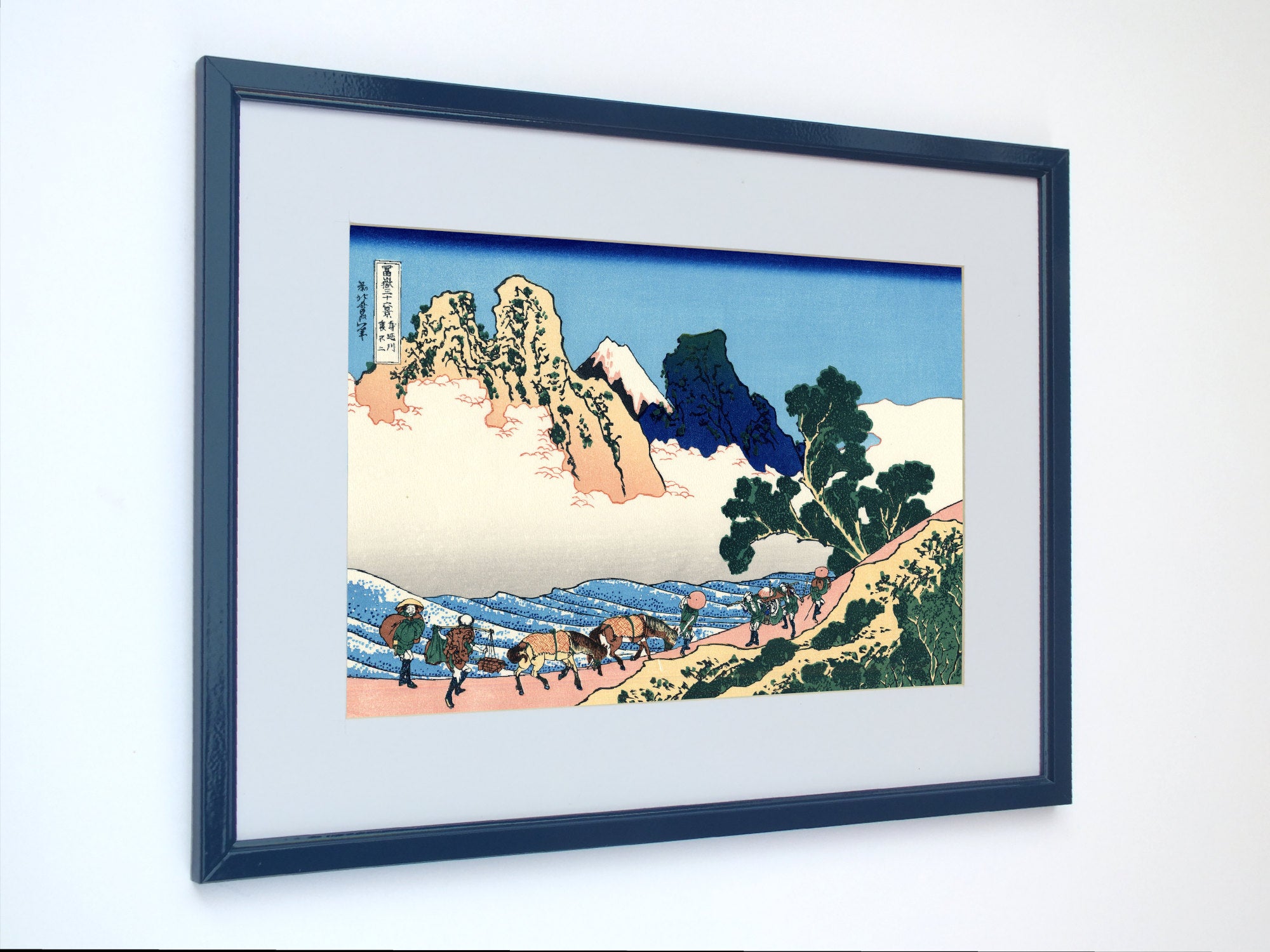
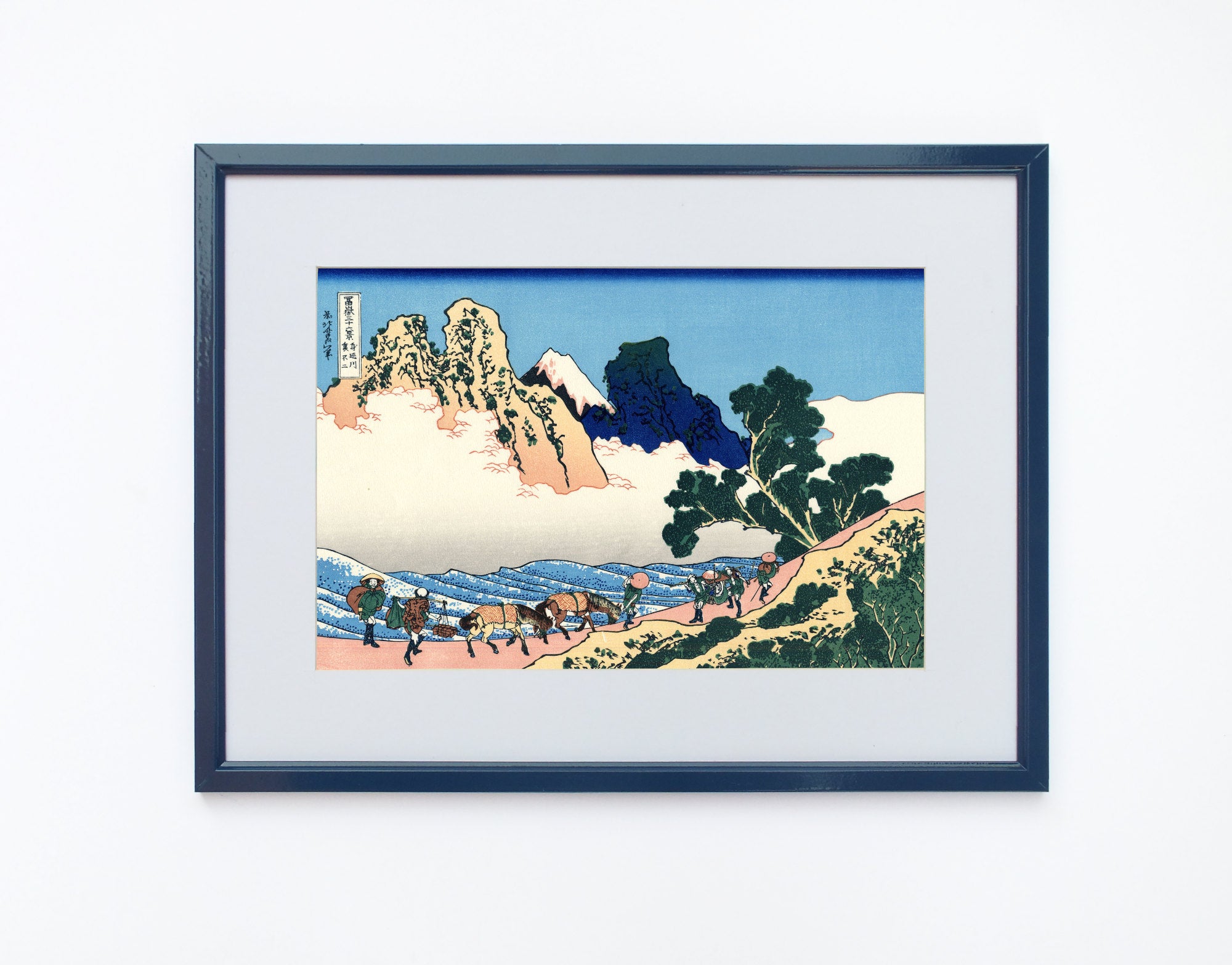
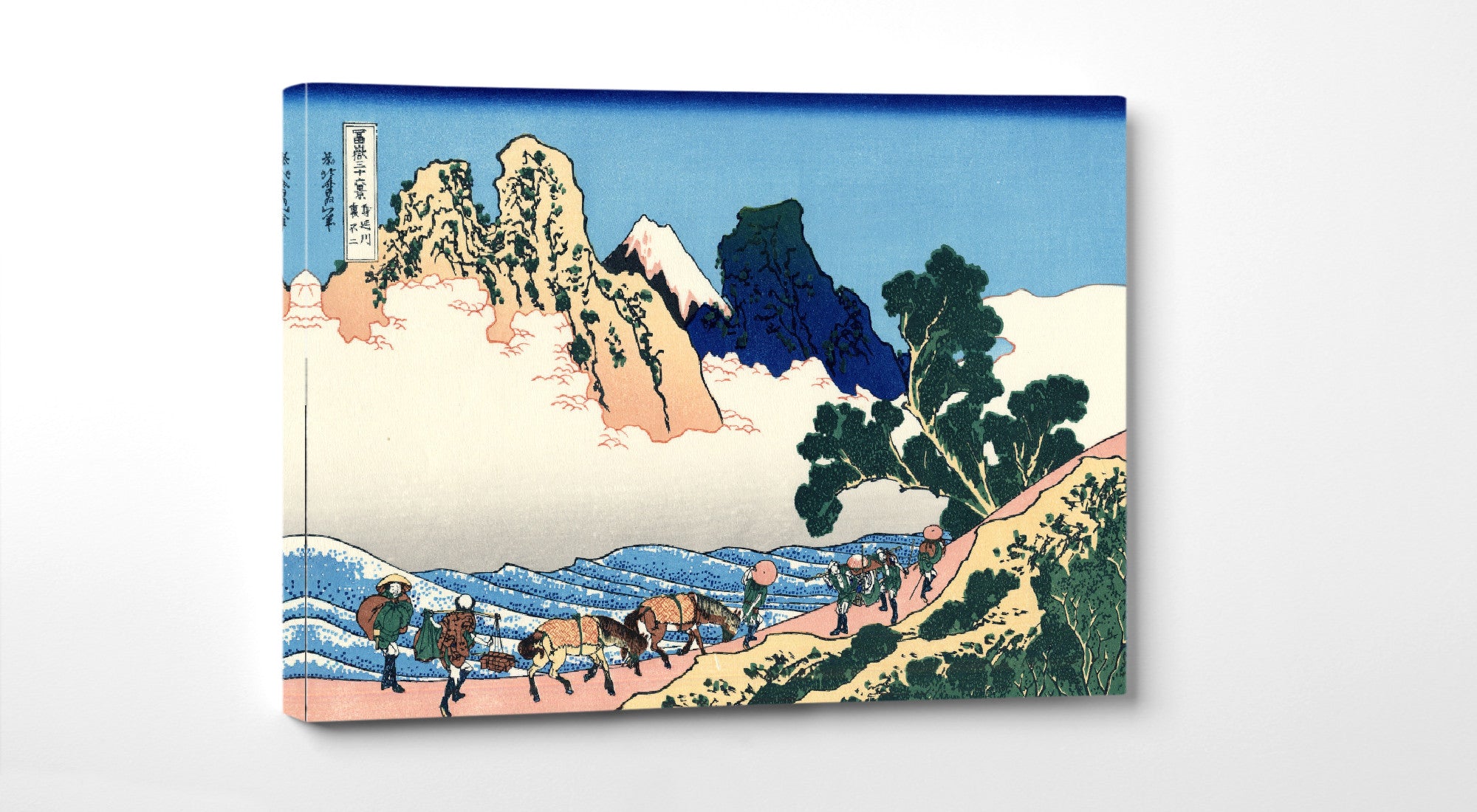
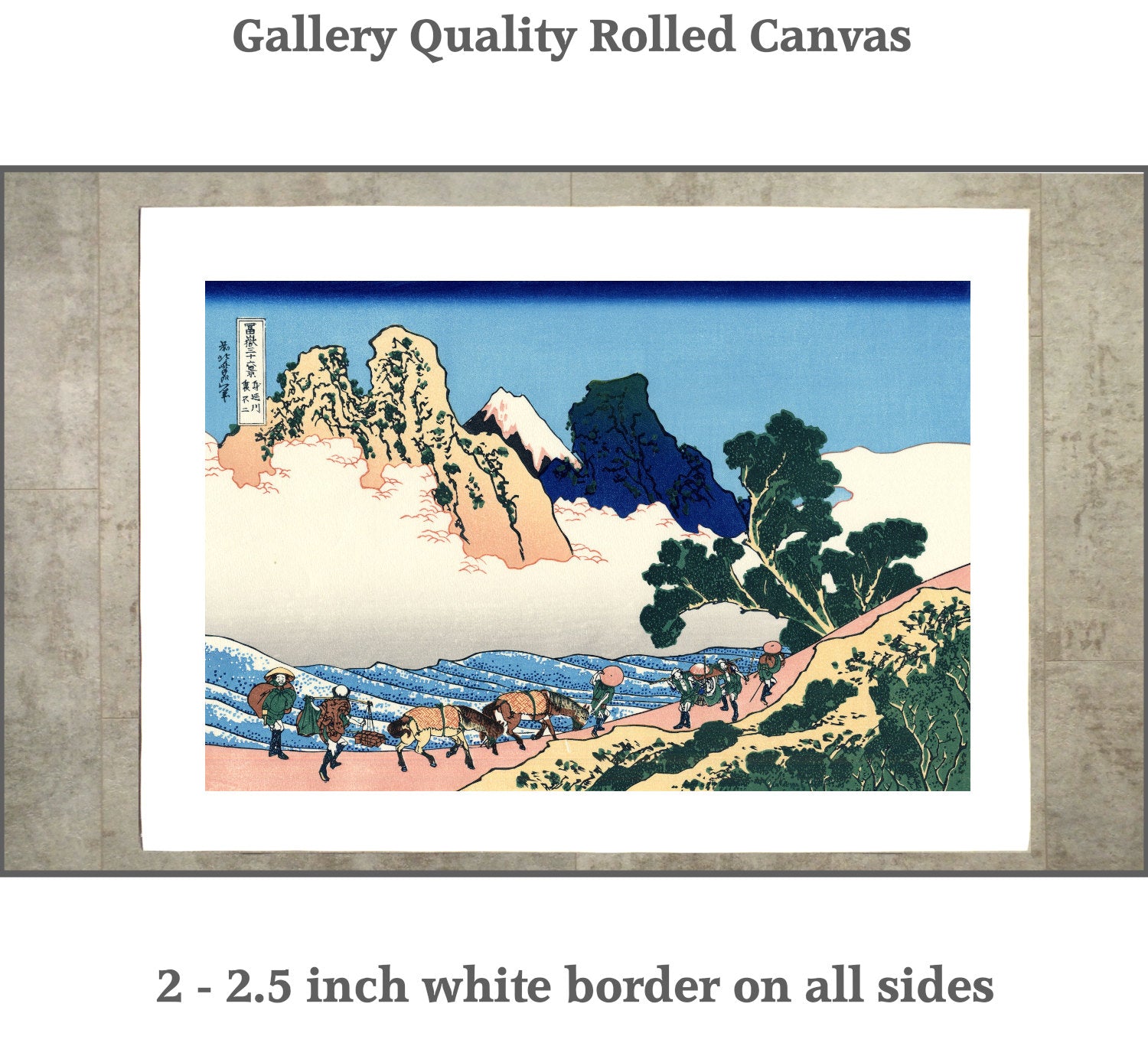
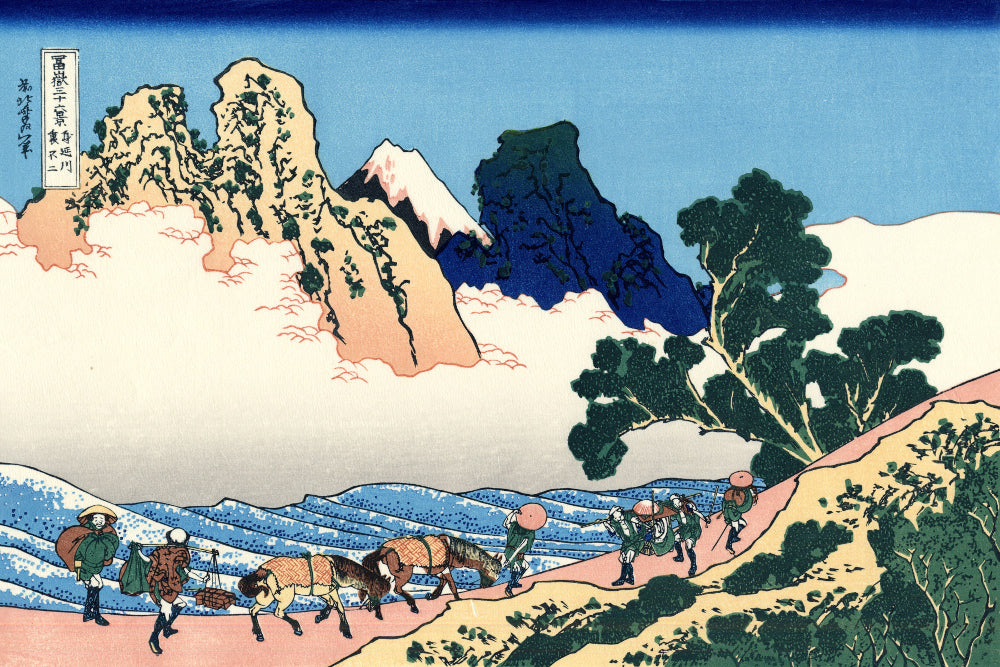
46. The Back of Fuji from the Minobu River
Travellers and packhorses move through a rugged river valley framed by dramatic rock formations. Fuji appears partly enclosed by the surrounding peaks, giving the final view a distinctly remote and mountainous character.
What Makes the Thirty-Six Views of Mount Fuji So Important?
Hokusai helped establish landscape as a major subject in commercial ukiyo-e printmaking. Across the series he combines observation with extreme formal invention: foreground objects may be radically cropped, a mountain can be reduced to a tiny geometric shape, and bridges, trees, waves, buildings and tools can become frames inside the composition.
The recurring mountain gives the series continuity, but Hokusai avoids repetition by continually changing the viewer's position. Fuji may be nearby or barely visible, calm or surrounded by storm, reflected in water or glimpsed through the structures of everyday life.
Hokusai, Ukiyo-e and Everyday Life
Another strength of the series is the prominence it gives to ordinary people. Fishermen, farmers, craftsmen, travellers, porters and merchants appear throughout the prints. They rarely stop to pose for the viewer; instead they work, travel, rest, cross rivers and respond to weather.
Fuji is therefore not isolated from human life. The mountain is woven into the roads, waterways, cities and working landscapes of Hokusai's Japan.
Who Was Katsushika Hokusai?
Katsushika Hokusai was born in Edo, present-day Tokyo, in 1760 and worked for more than seven decades as a print designer, painter and illustrator. He used numerous artistic names during his lifetime and continually changed his approach to drawing and printmaking.
Although The Great Wave off Kanagawa has become his most famous image, Hokusai's output ranged far beyond this series to include illustrated books, figures, animals, plants, waterfalls, mythology and ambitious late paintings. Explore more of this wider output in GalleryThane's Katsushika Hokusai collection.
How the Series Influenced Western Art
After Japanese prints became increasingly visible in Europe during the nineteenth century, artists and designers were fascinated by ukiyo-e approaches to cropping, asymmetry, flat colour and unusual viewpoints. Hokusai became one of the Japanese artists most widely recognised outside Japan.
This article is intentionally focused on the series itself. For the wider story of its reception in Europe and its relationship with Japonisme, read Hokusai's Thirty-Six Views of Mount Fuji: Its Influence on Western Art and Japonisme.
Choosing a Thirty-Six Views of Mount Fuji Print
For the most recognisable design, The Great Wave off Kanagawa remains the natural starting point. Red Fuji offers a much calmer and more monumental image of the mountain, while Thunderstorm Beneath the Summit introduces dramatic weather.
For viewers interested in human activity and inventive composition, Ejiri in Suruga Province, Kajikazawa in Kai Province, Fujimigahara in Owari Province and Mount Fuji from the Mountains of Tōtōmi are particularly rewarding. Quieter landscapes such as Umezawa in Sagami Province, Lake of Hakone and Lake Suwa offer more contemplative alternatives.
Browse the complete Thirty-Six Views of Mount Fuji print collection to compare the series as fine art prints, framed prints and canvas options.
Frequently Asked Questions
Who created Thirty-Six Views of Mount Fuji?
The series was designed by Katsushika Hokusai, one of the most influential Japanese artists of the Edo period.
When was Thirty-Six Views of Mount Fuji created?
The series is generally dated to the early 1830s, with major museum collections commonly dating individual designs to around 1830–32.
Why are there 46 prints if the series is called Thirty-Six Views?
The project began as thirty-six designs. Its success led to ten additional prints being added, bringing the complete series to 46 while the original title remained unchanged.
Is The Great Wave off Kanagawa part of the series?
Yes. The Great Wave off Kanagawa, more precisely Under the Wave off Kanagawa, is one of the original Thirty-Six Views and the best-known work in the series.
Is Red Fuji part of Thirty-Six Views of Mount Fuji?
Yes. South Wind, Clear Sky, commonly known as Red Fuji, is another of the series' most famous designs.
Are the Thirty-Six Views paintings?
No. They were designed as colour woodblock prints. Hokusai supplied the artistic designs, which were then carved into blocks and printed on paper through the collaborative ukiyo-e production process.
Why is Prussian blue important in the series?
Prussian blue gave Hokusai a strong, stable blue that could be used extensively for seas, rivers, skies, outlines and distant landscape. It became one of the characteristic colours of the Fuji series.
Does Mount Fuji appear prominently in every print?
No. Hokusai deliberately varies its scale. In some works Fuji fills much of the image; in others it is tiny, partly obscured or framed by foreground objects.
What is the Japanese name of the series?
The Japanese title is Fugaku Sanjūrokkei, usually translated as Thirty-Six Views of Mount Fuji.
Where can I see GalleryThane's complete collection of Hokusai Fuji prints?
Browse GalleryThane's Thirty-Six Views of Mount Fuji collection for prints from across the complete series.
Related Reading
Continue exploring Japanese printmaking with Ukiyo-e Art: A Journey Through Japanese Woodblock Prints, or compare Hokusai's Fuji series with Hiroshige's great travel sequence in The Fifty-Three Stations of the Tōkaidō.