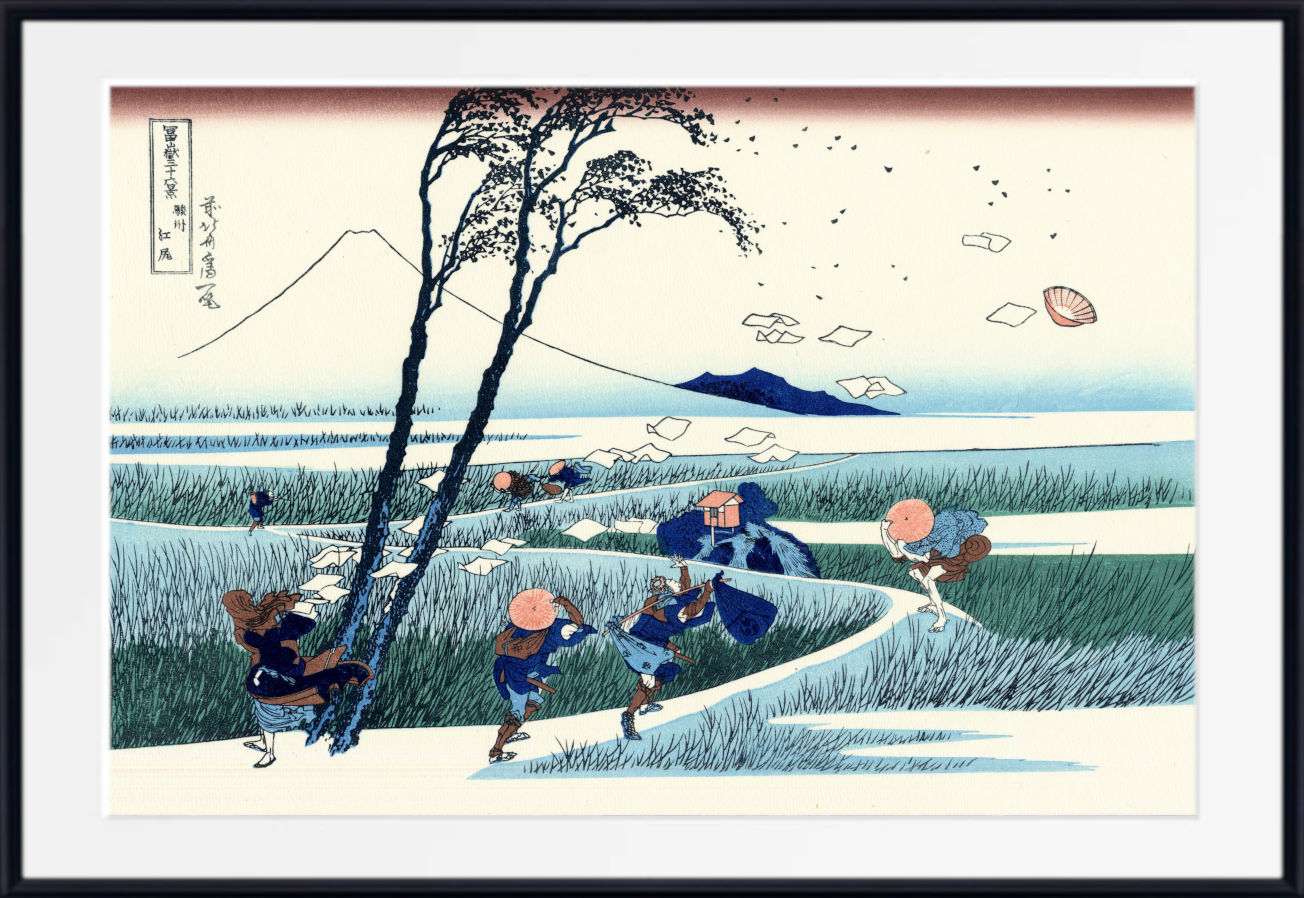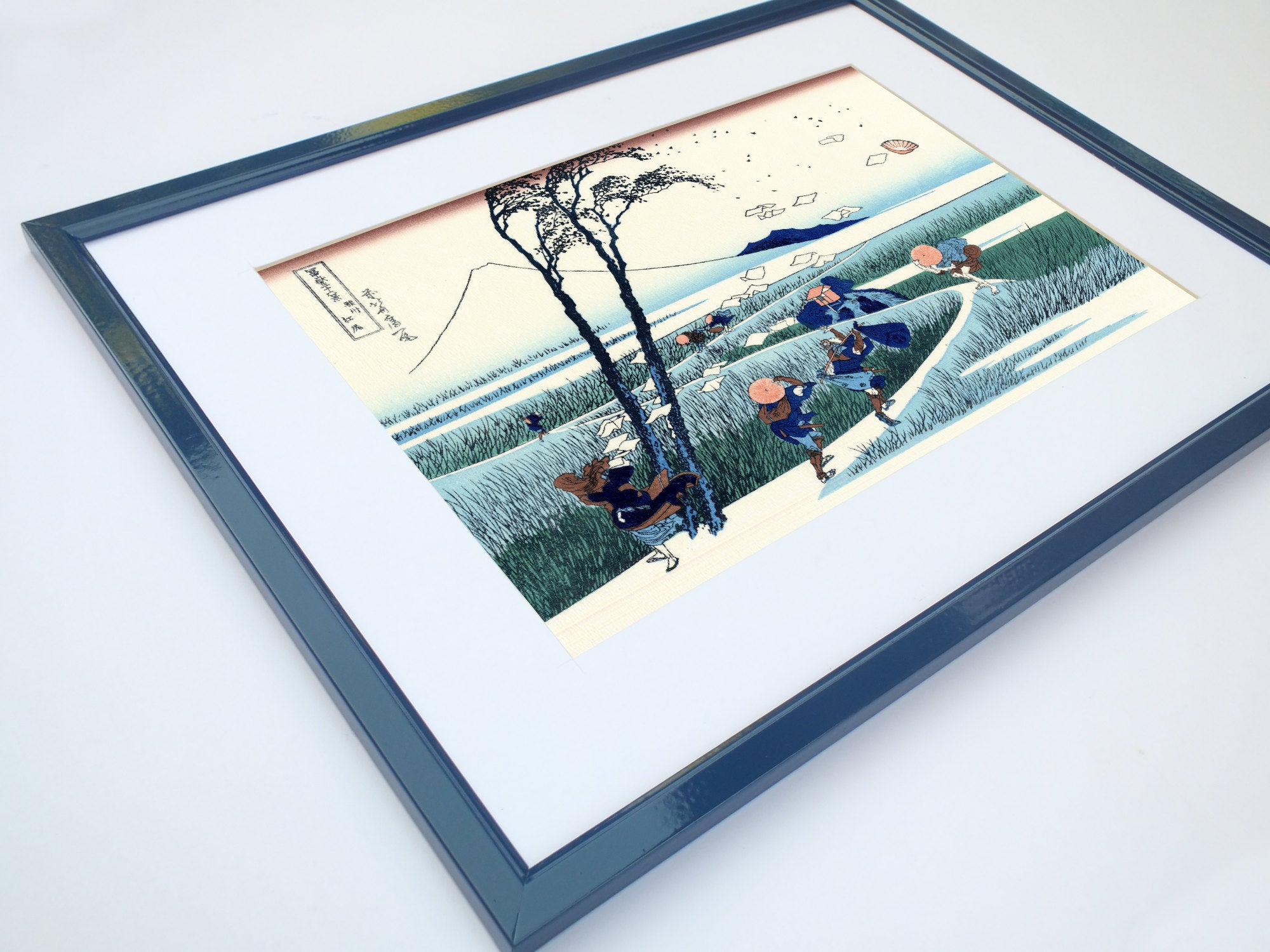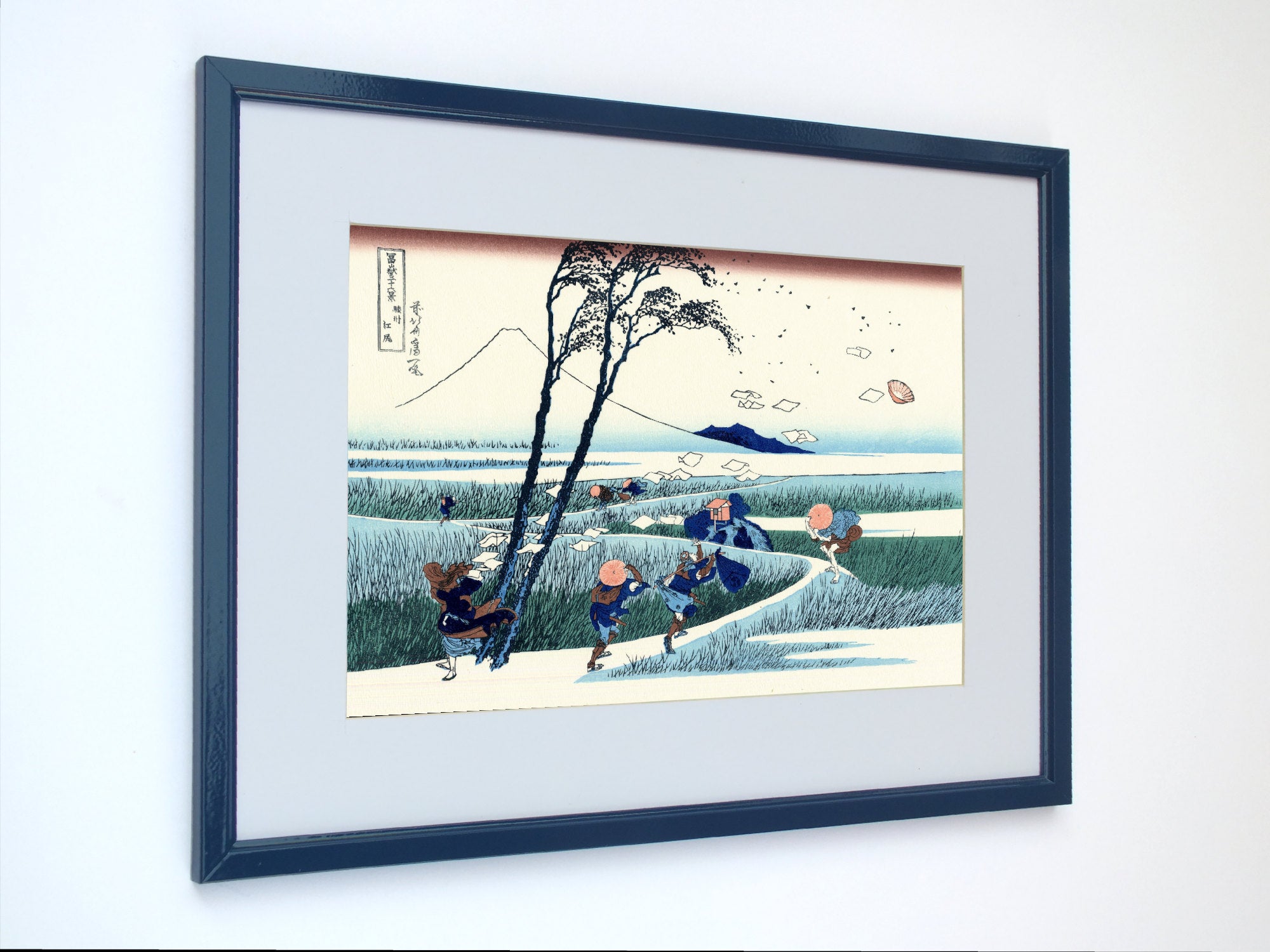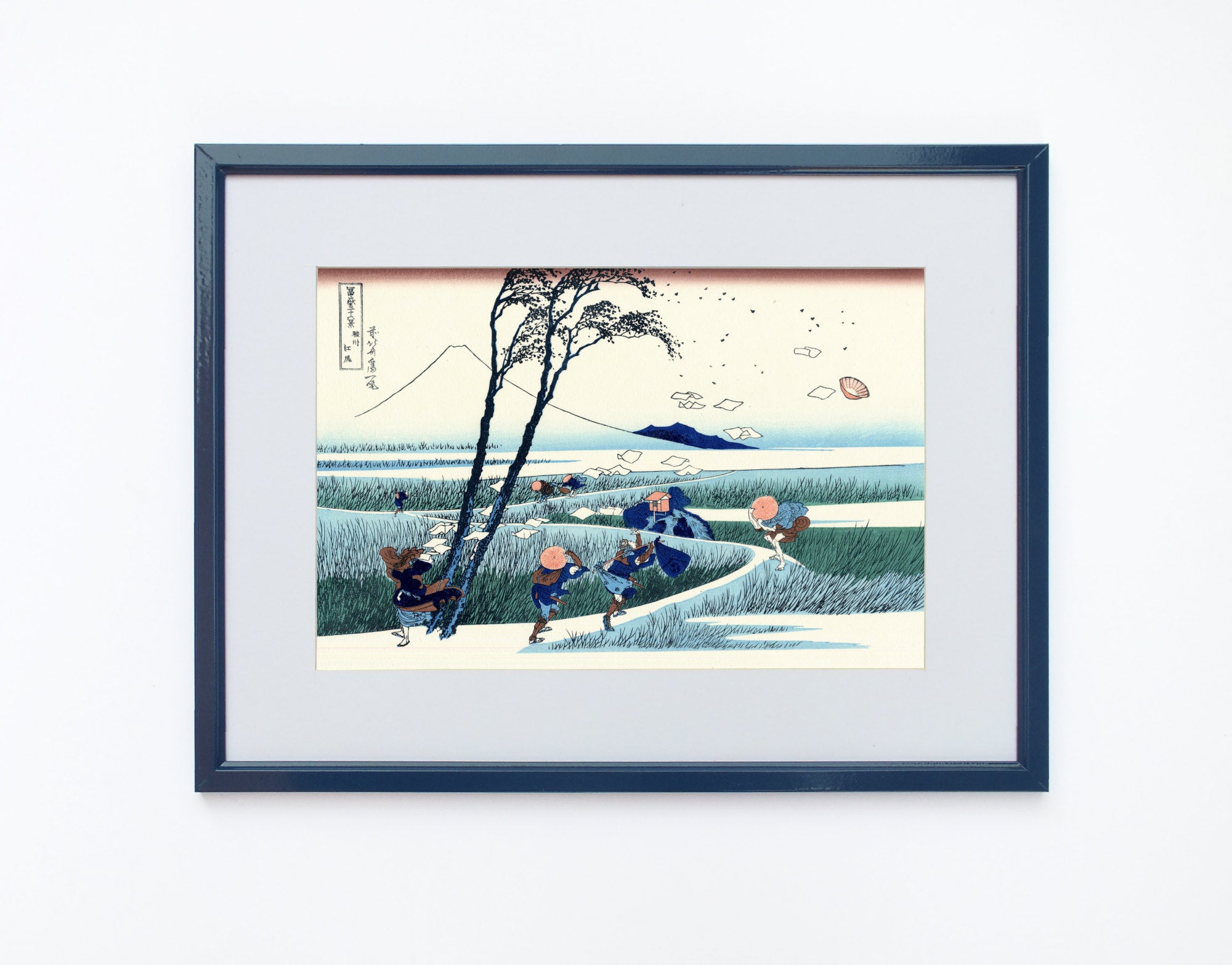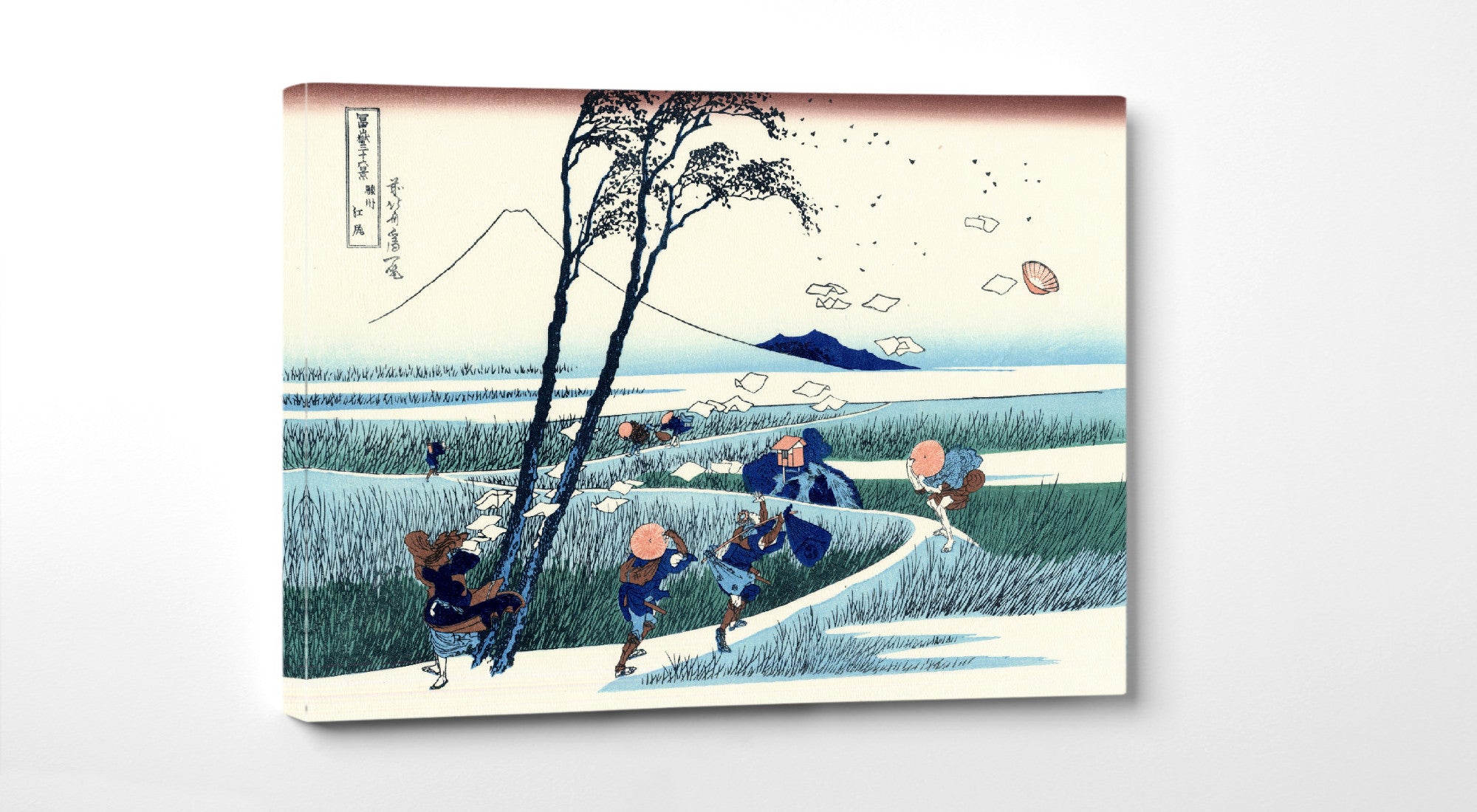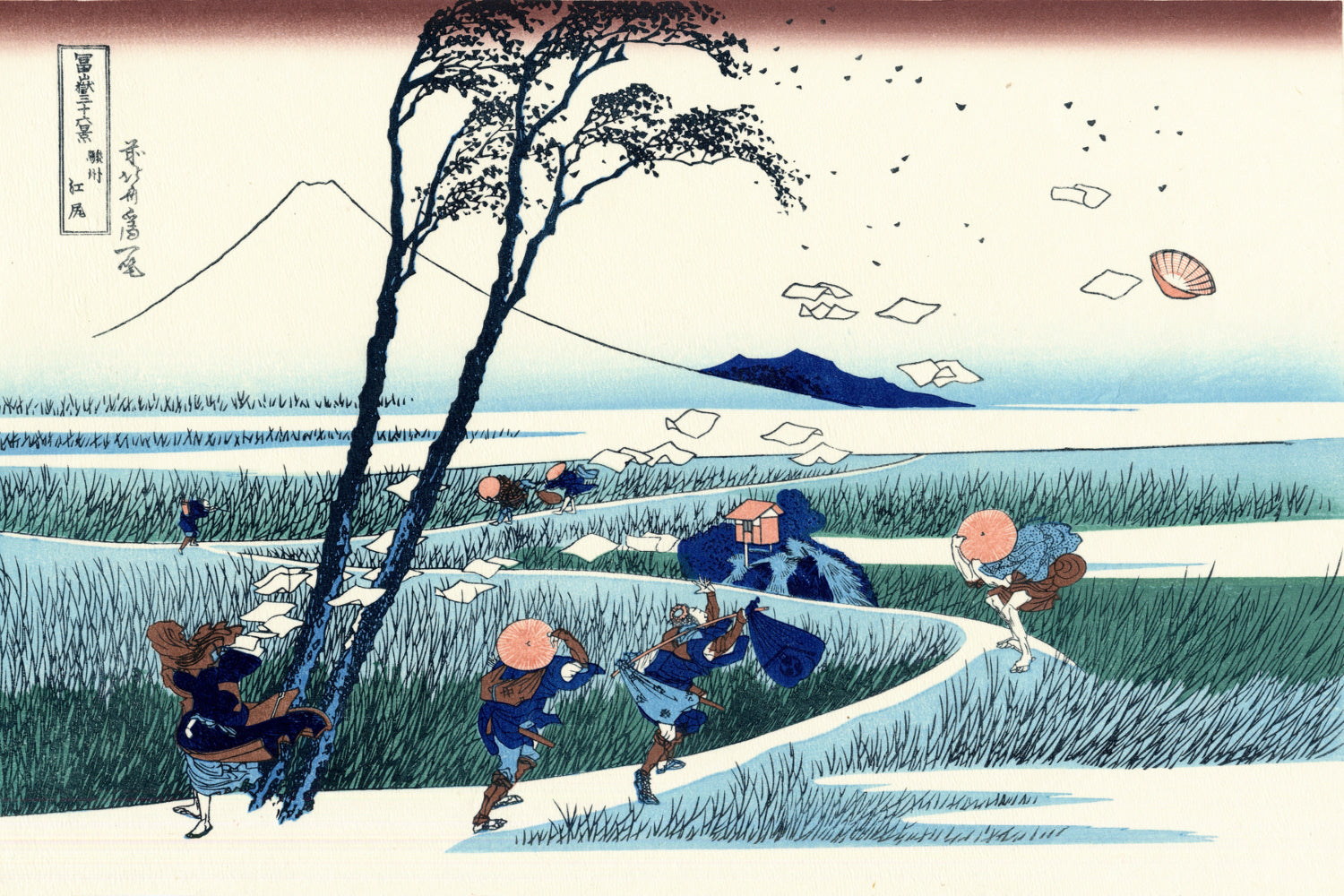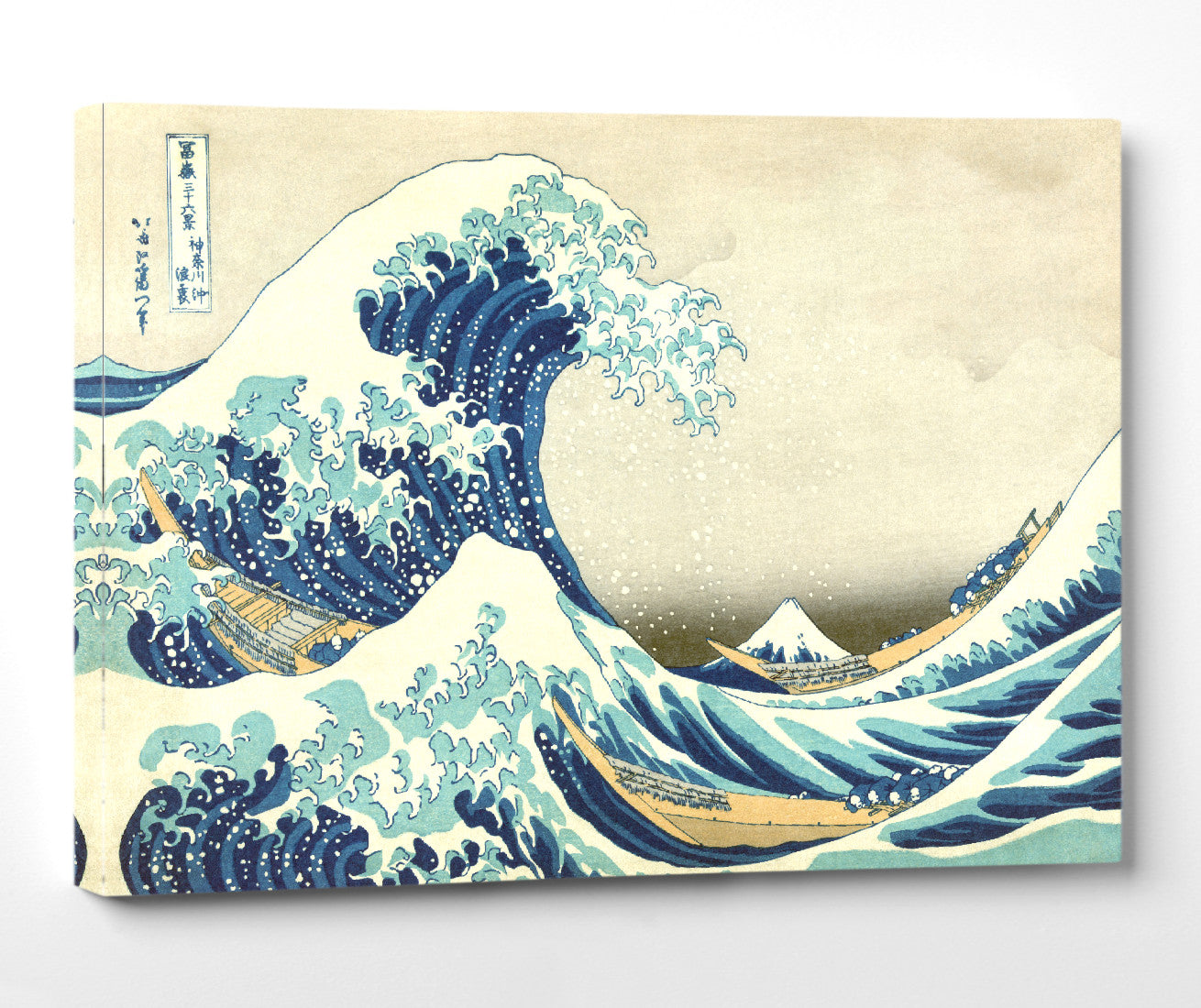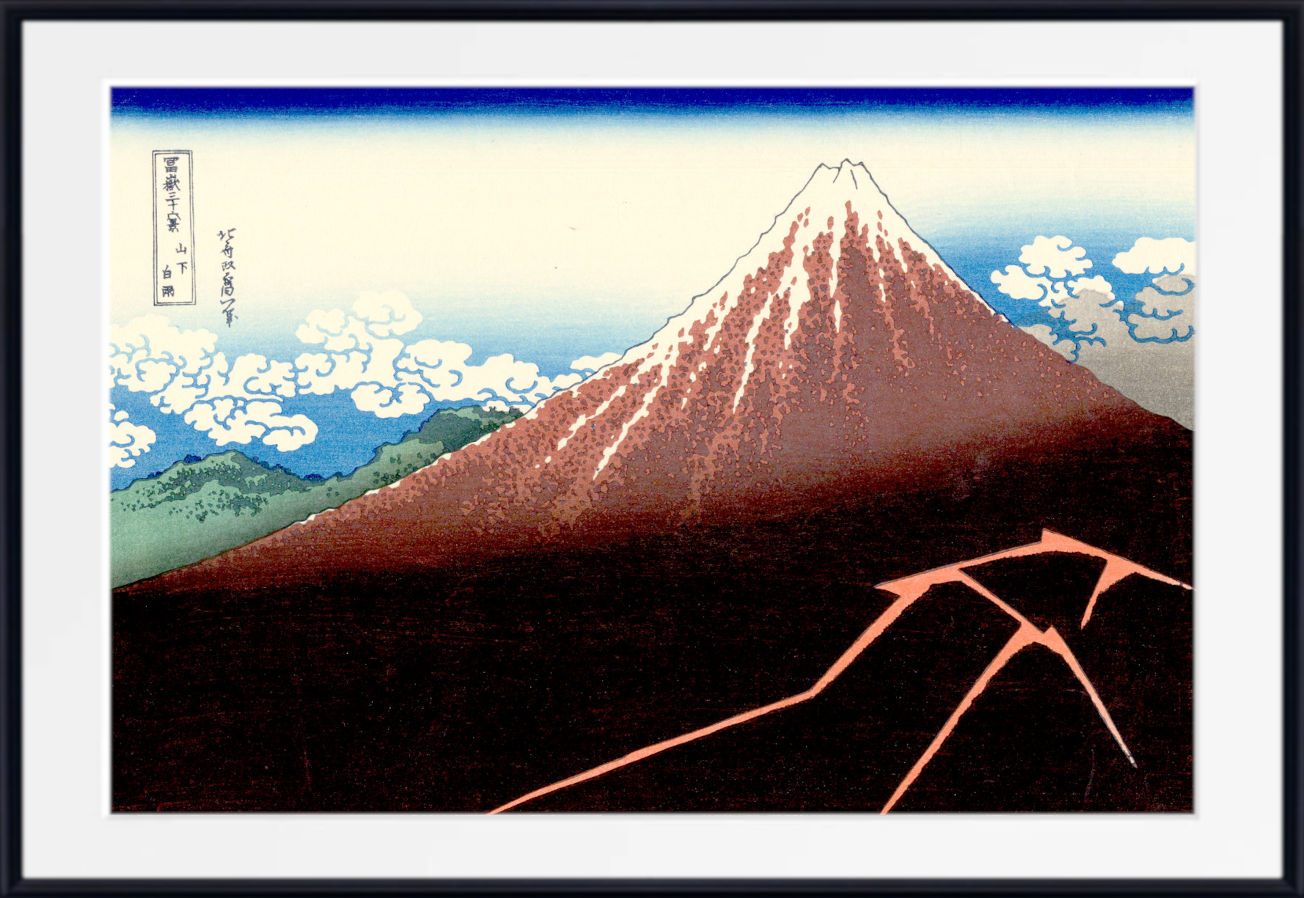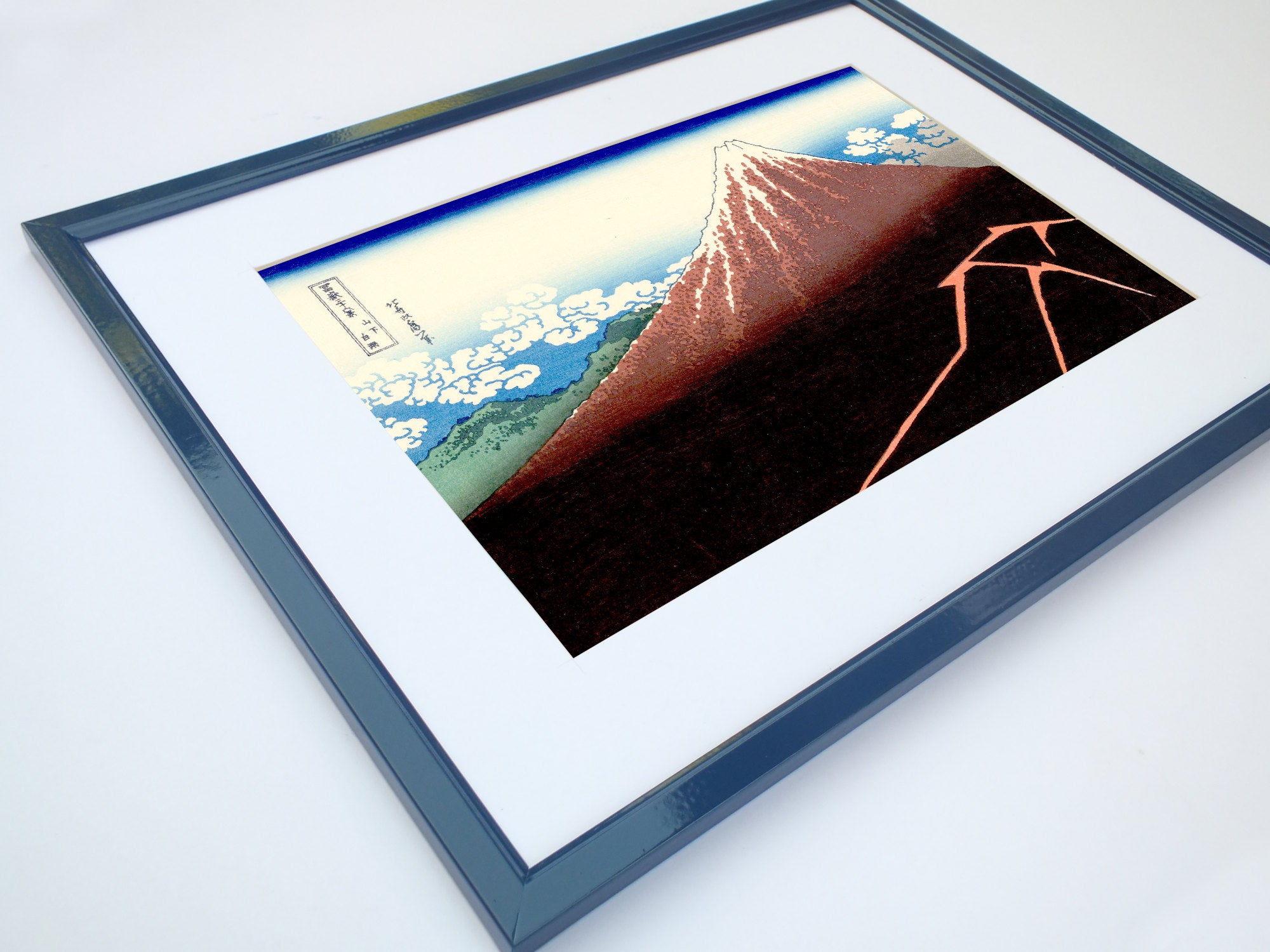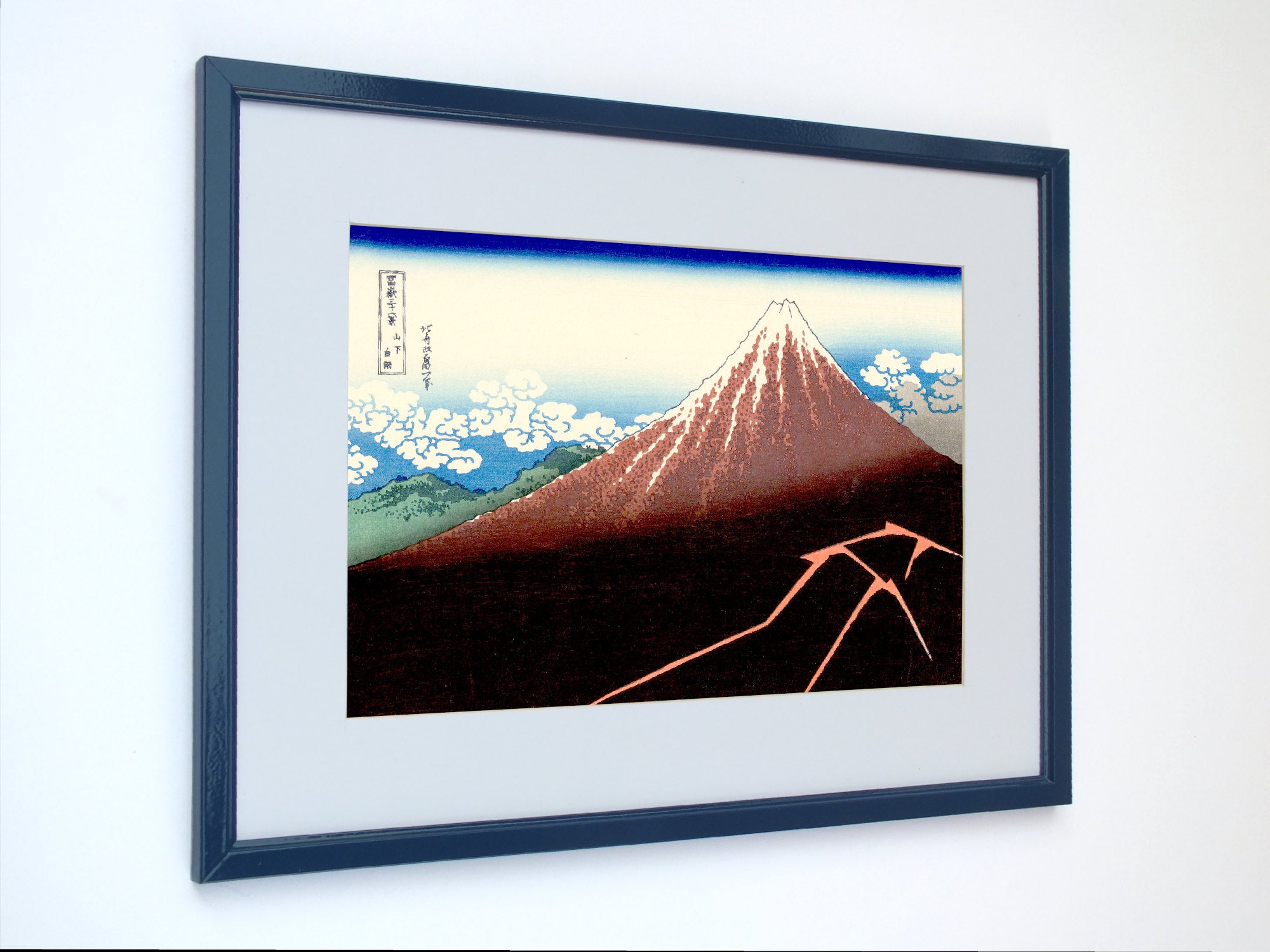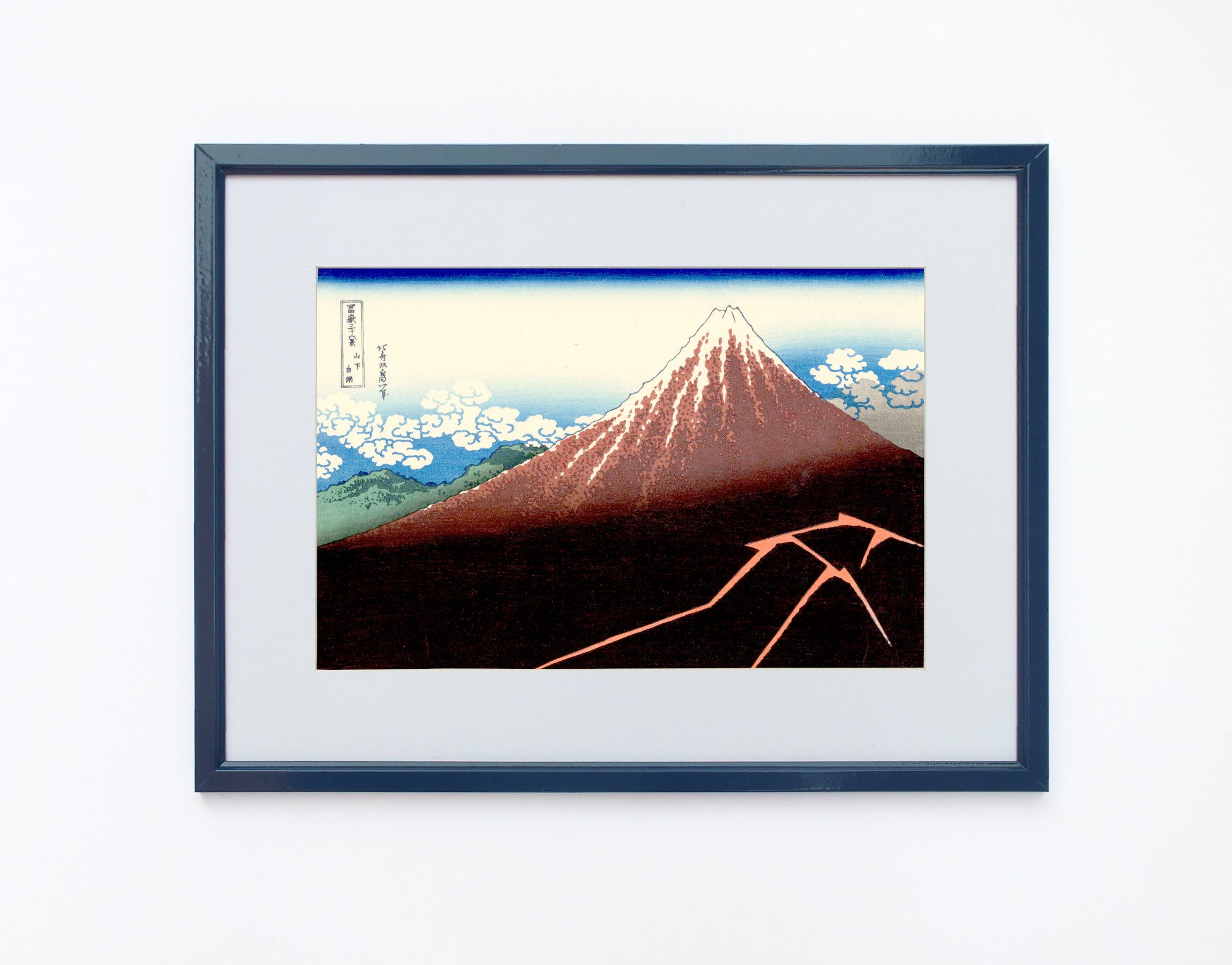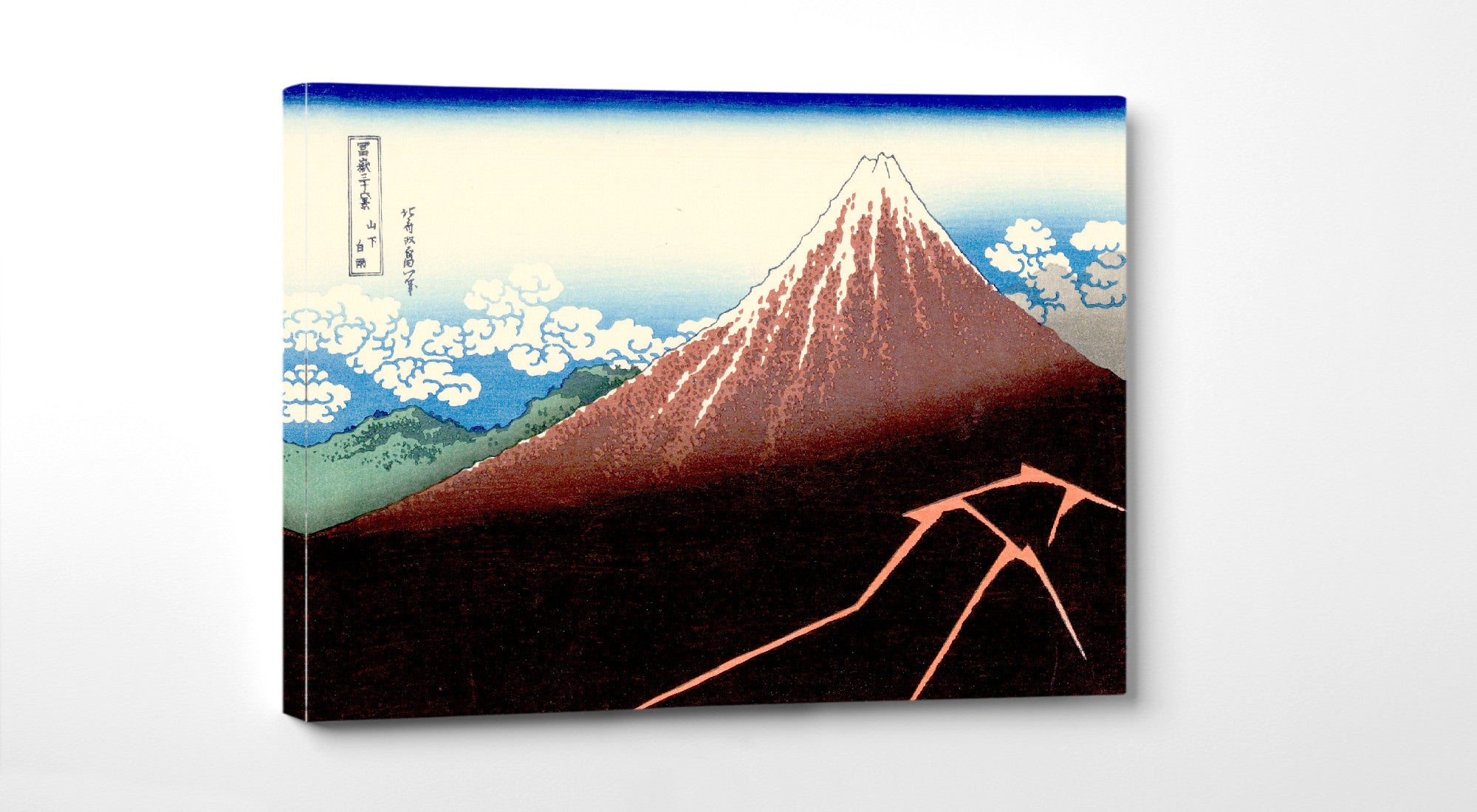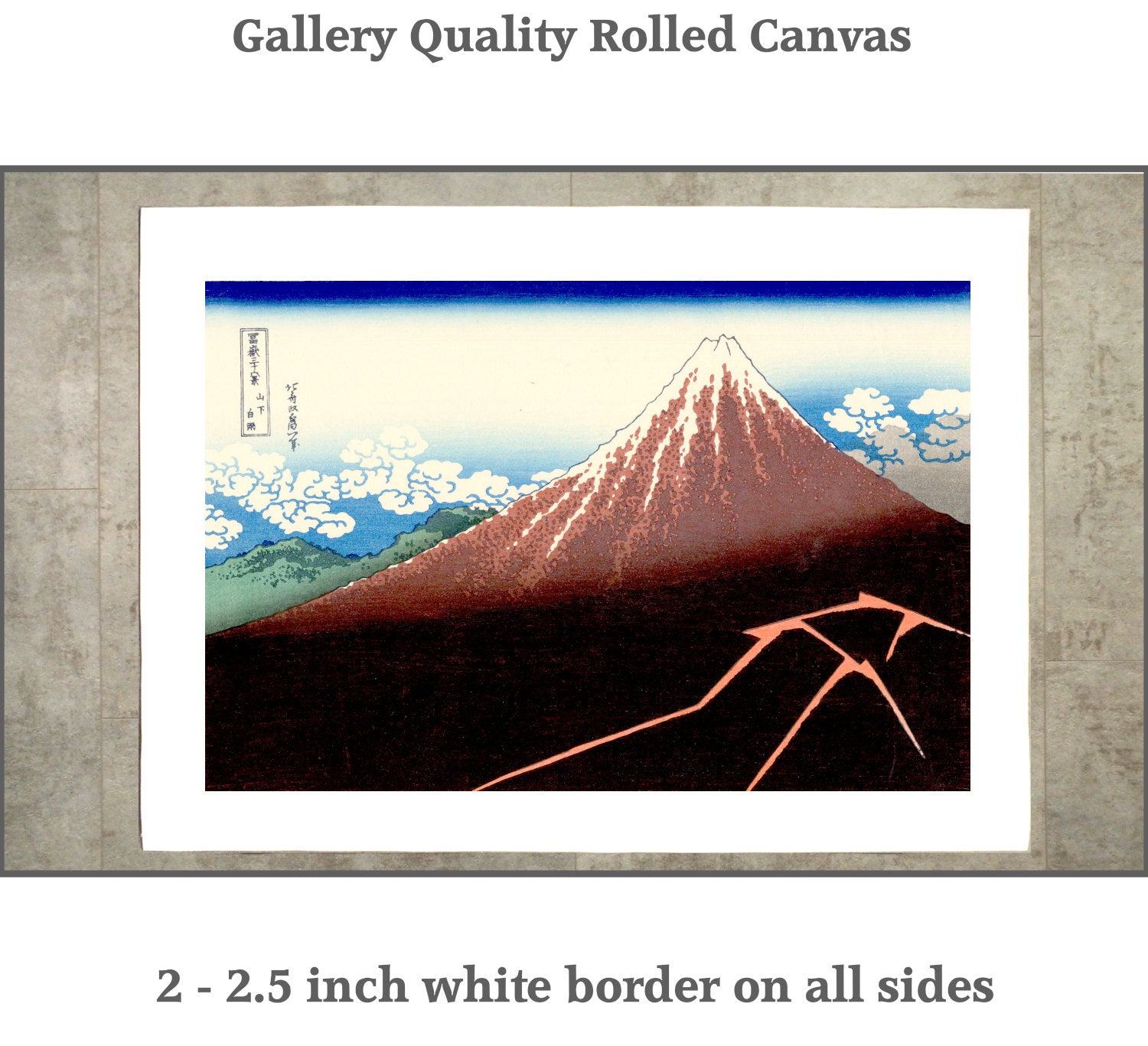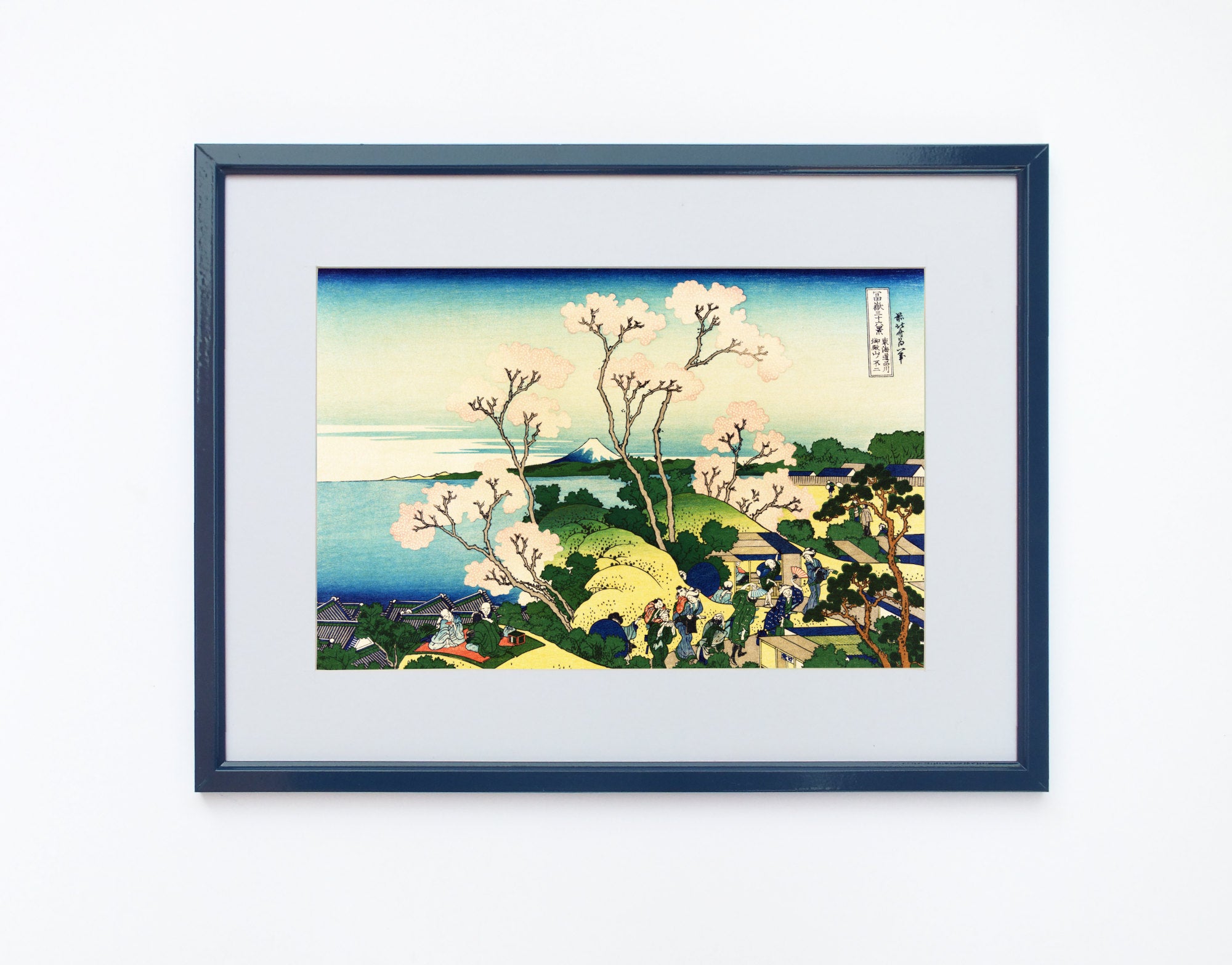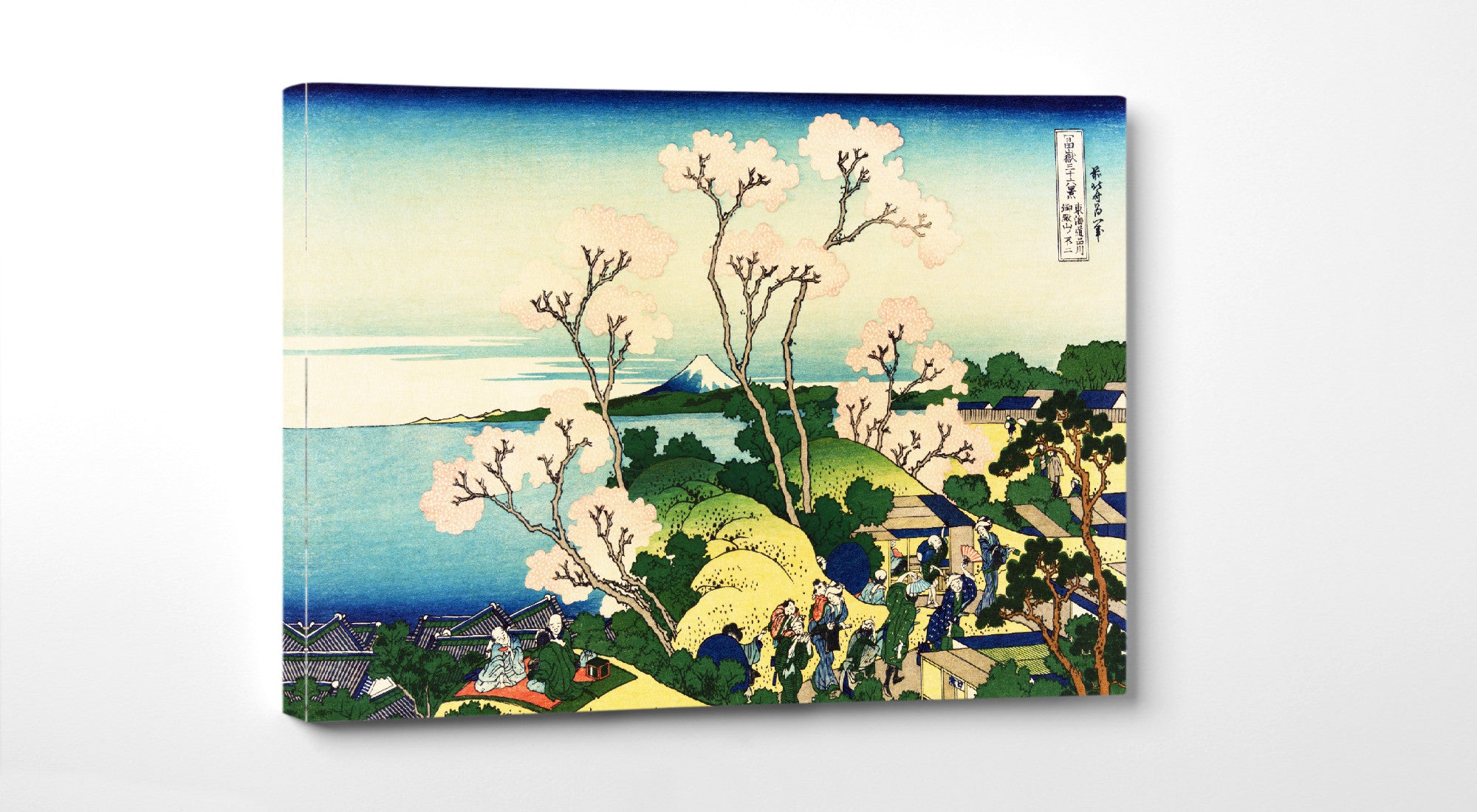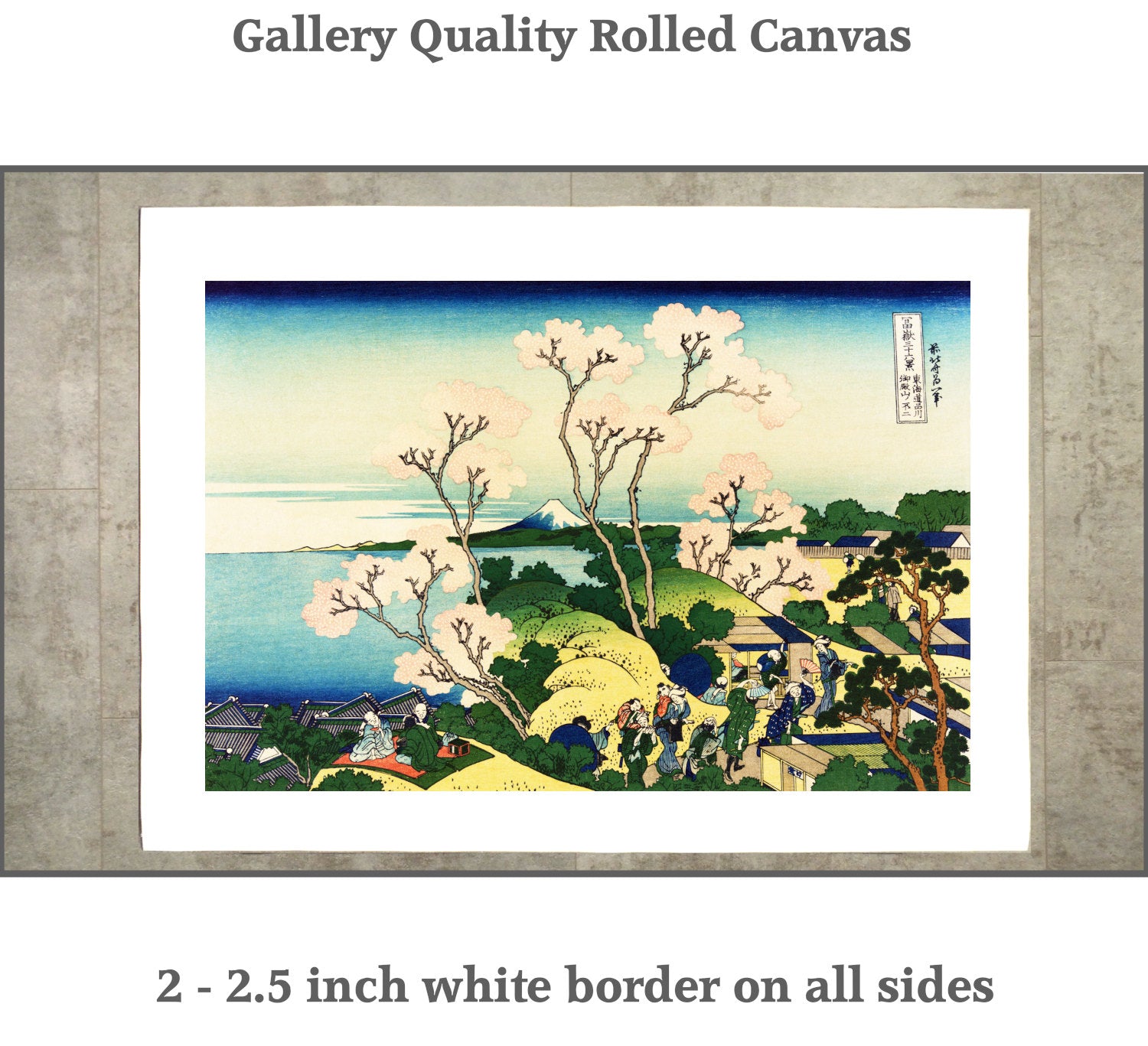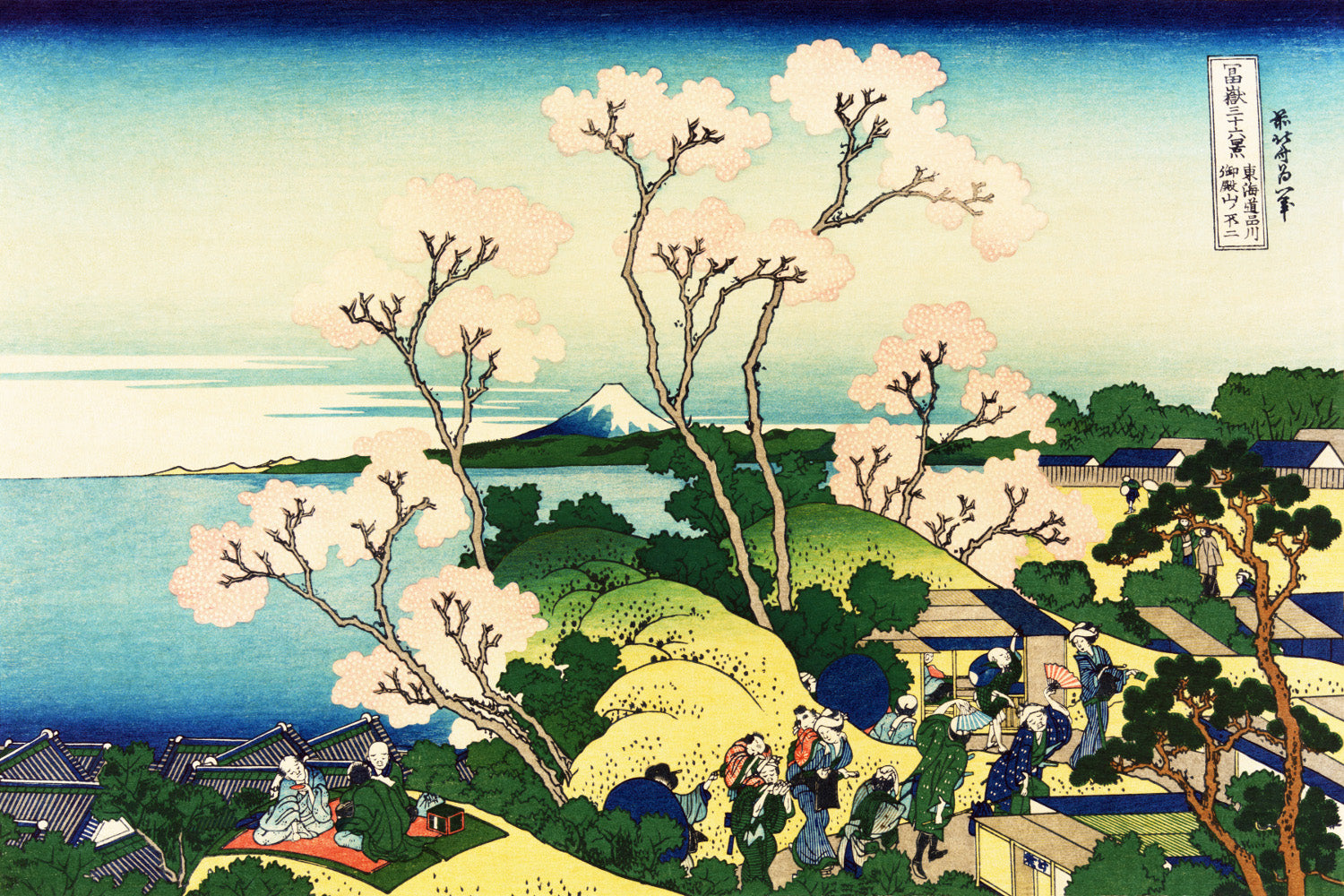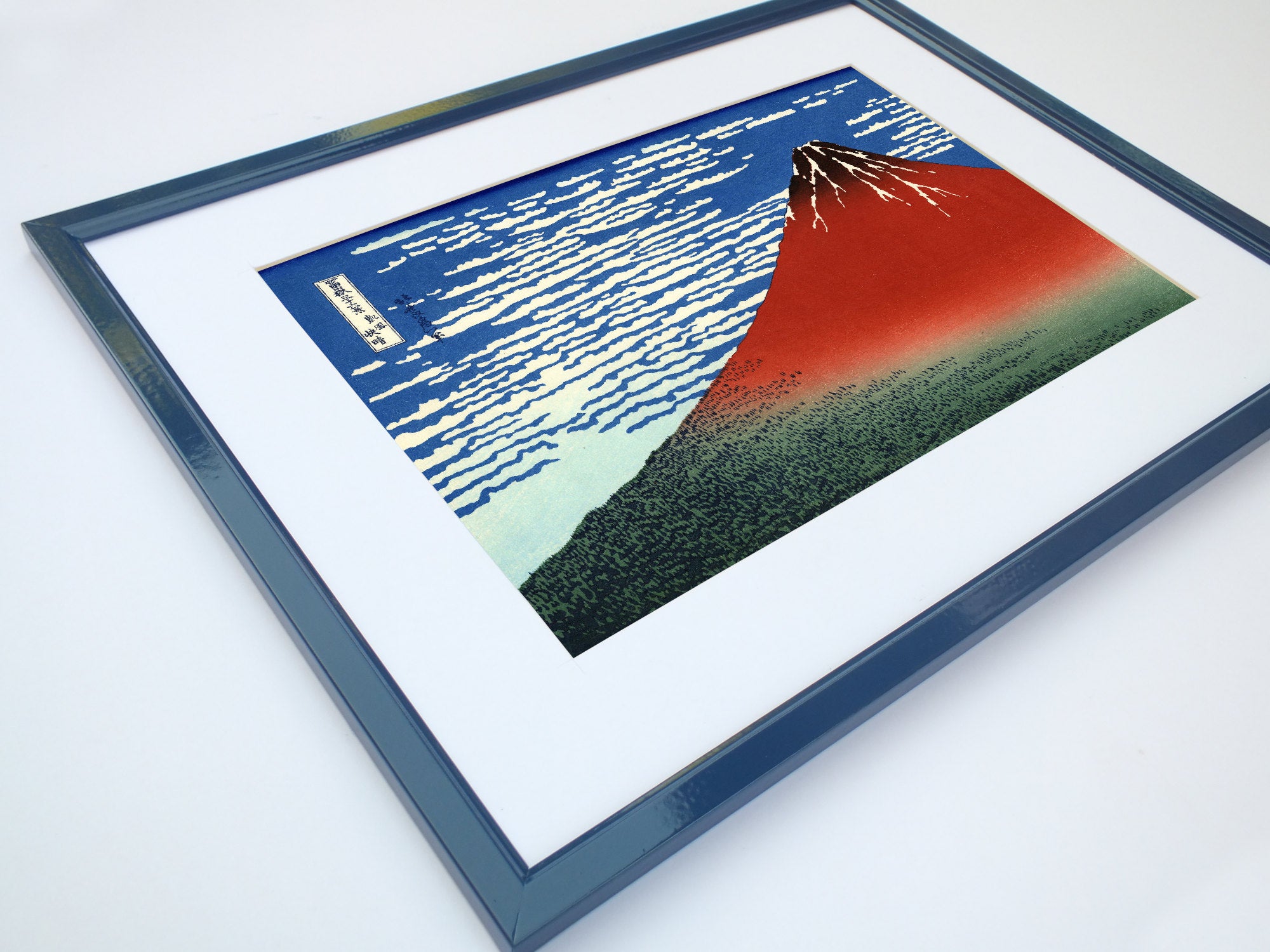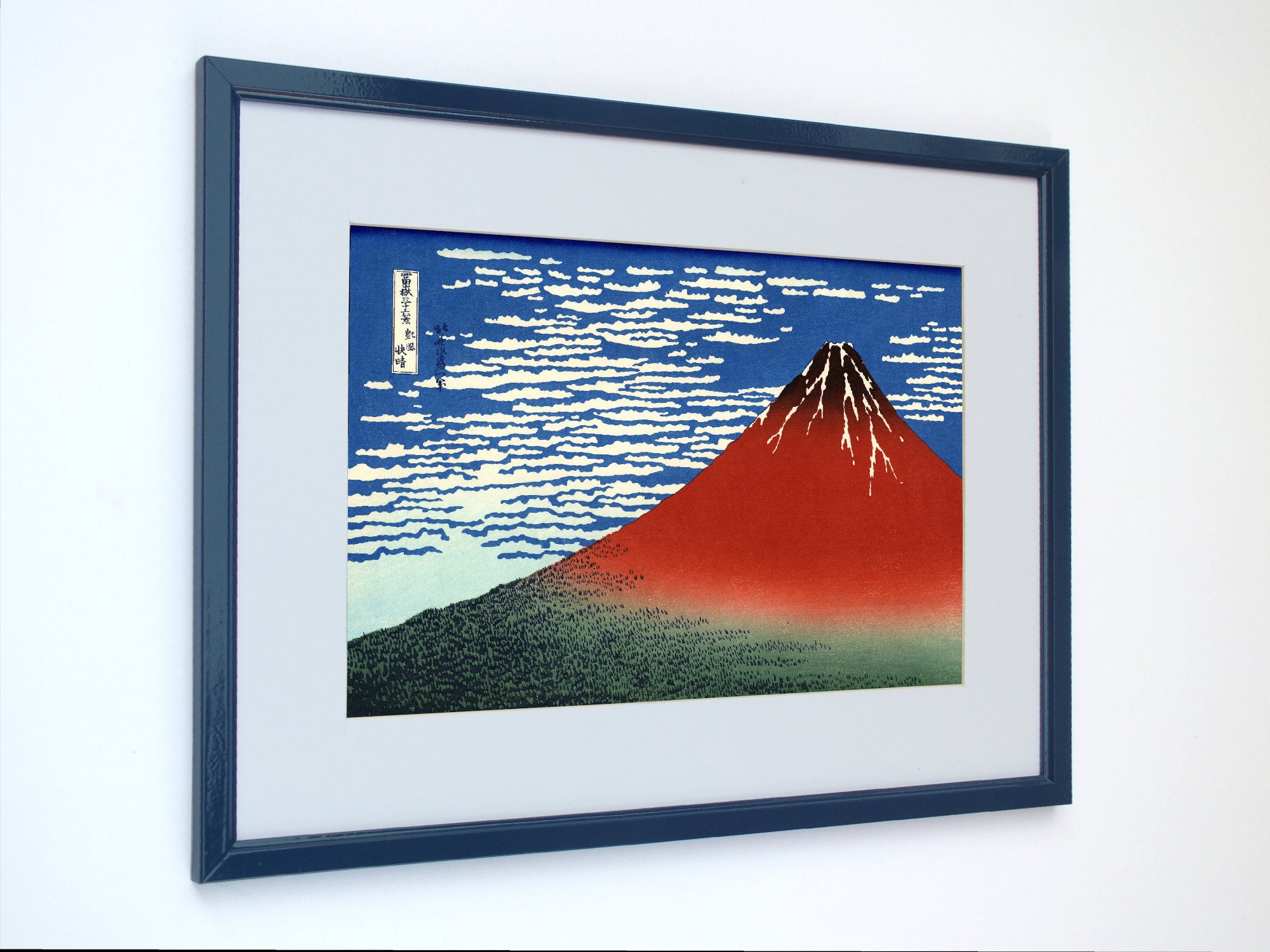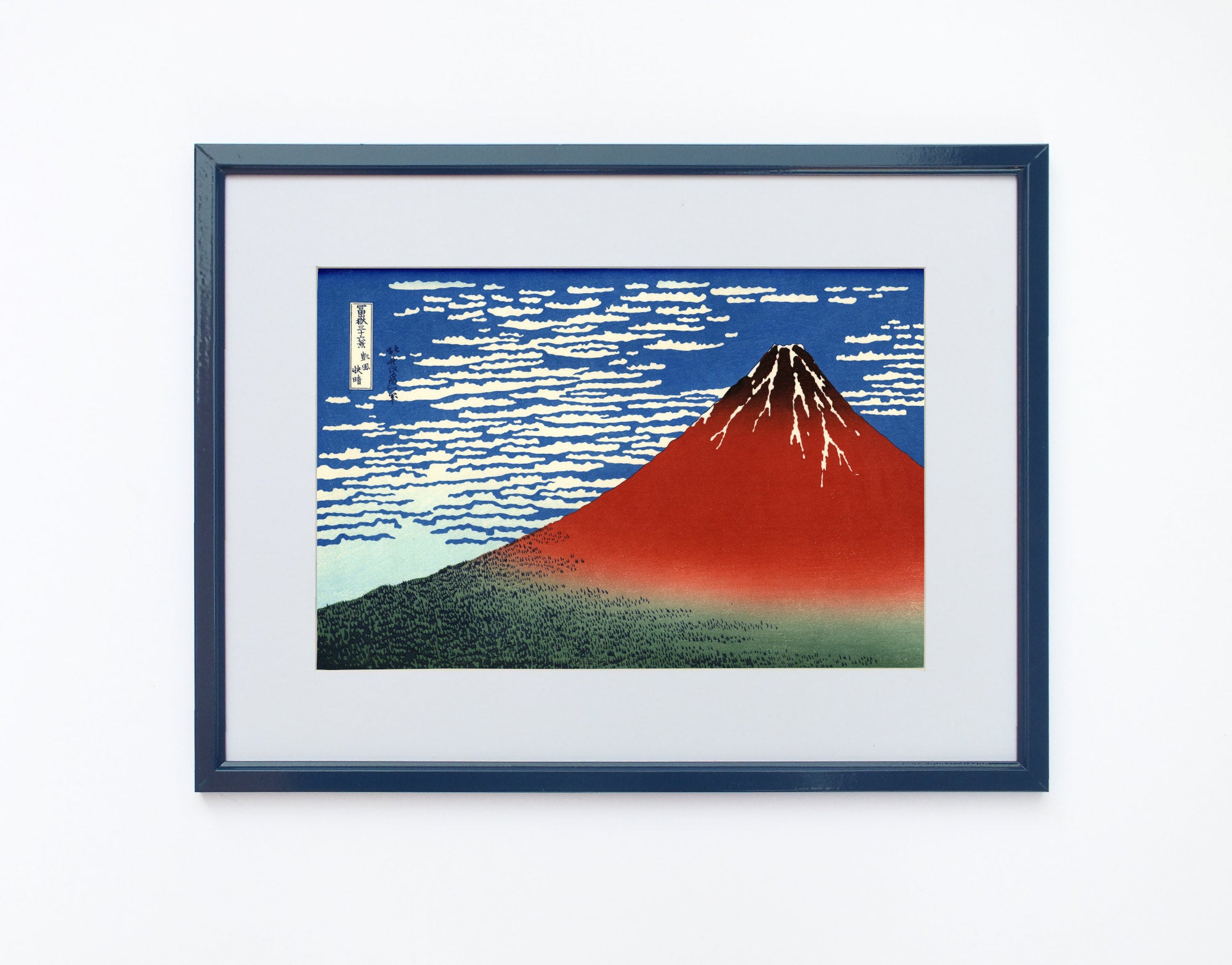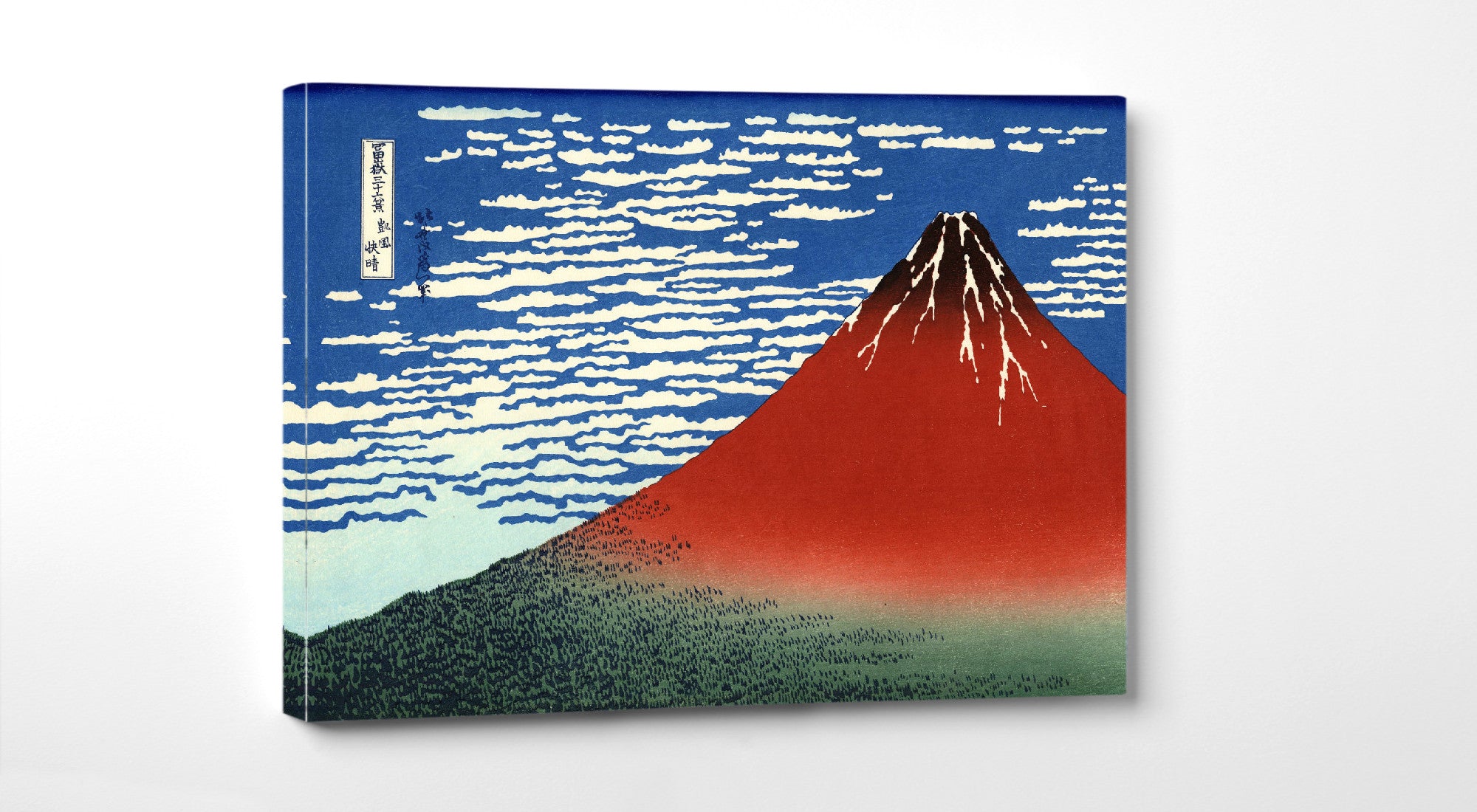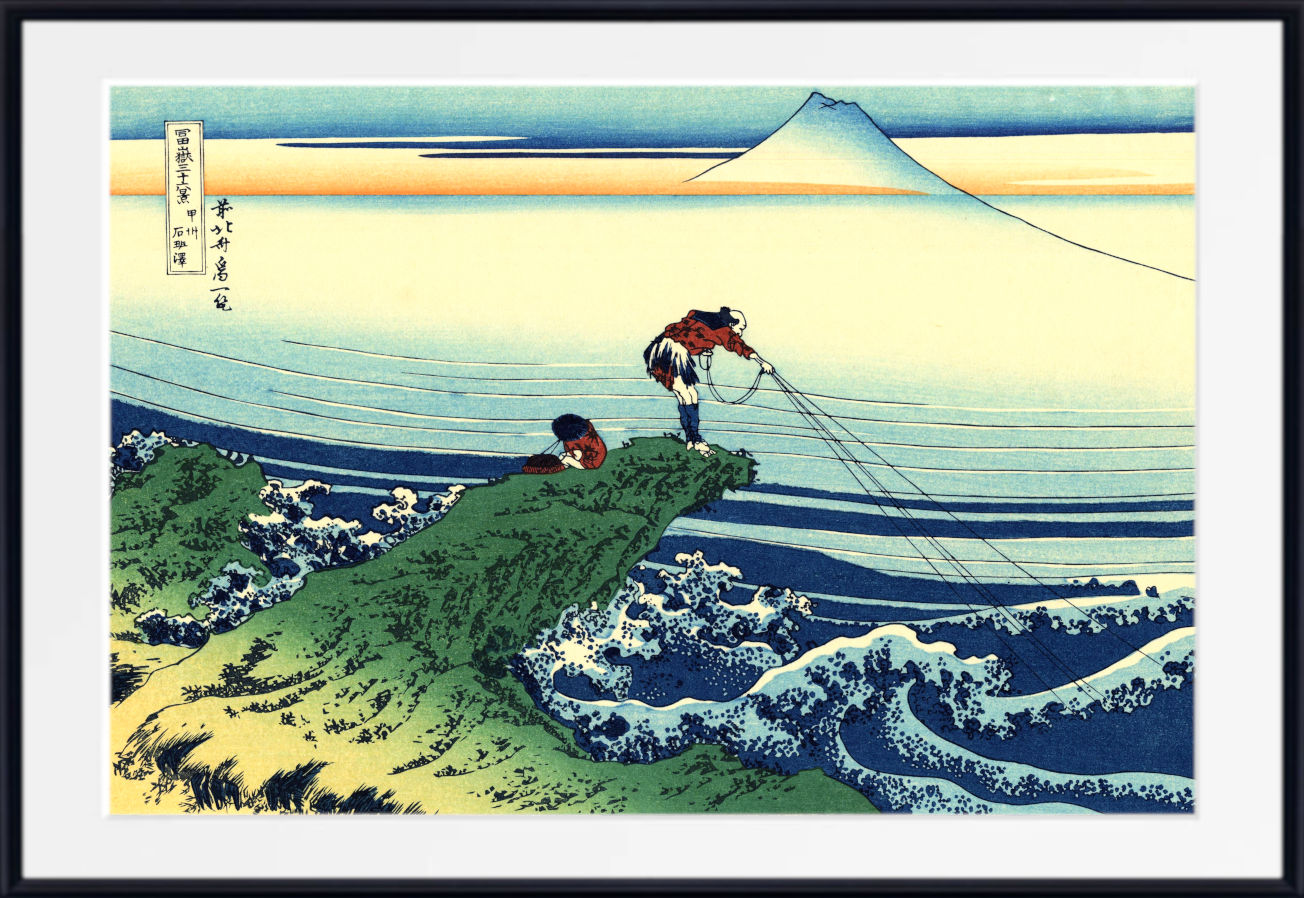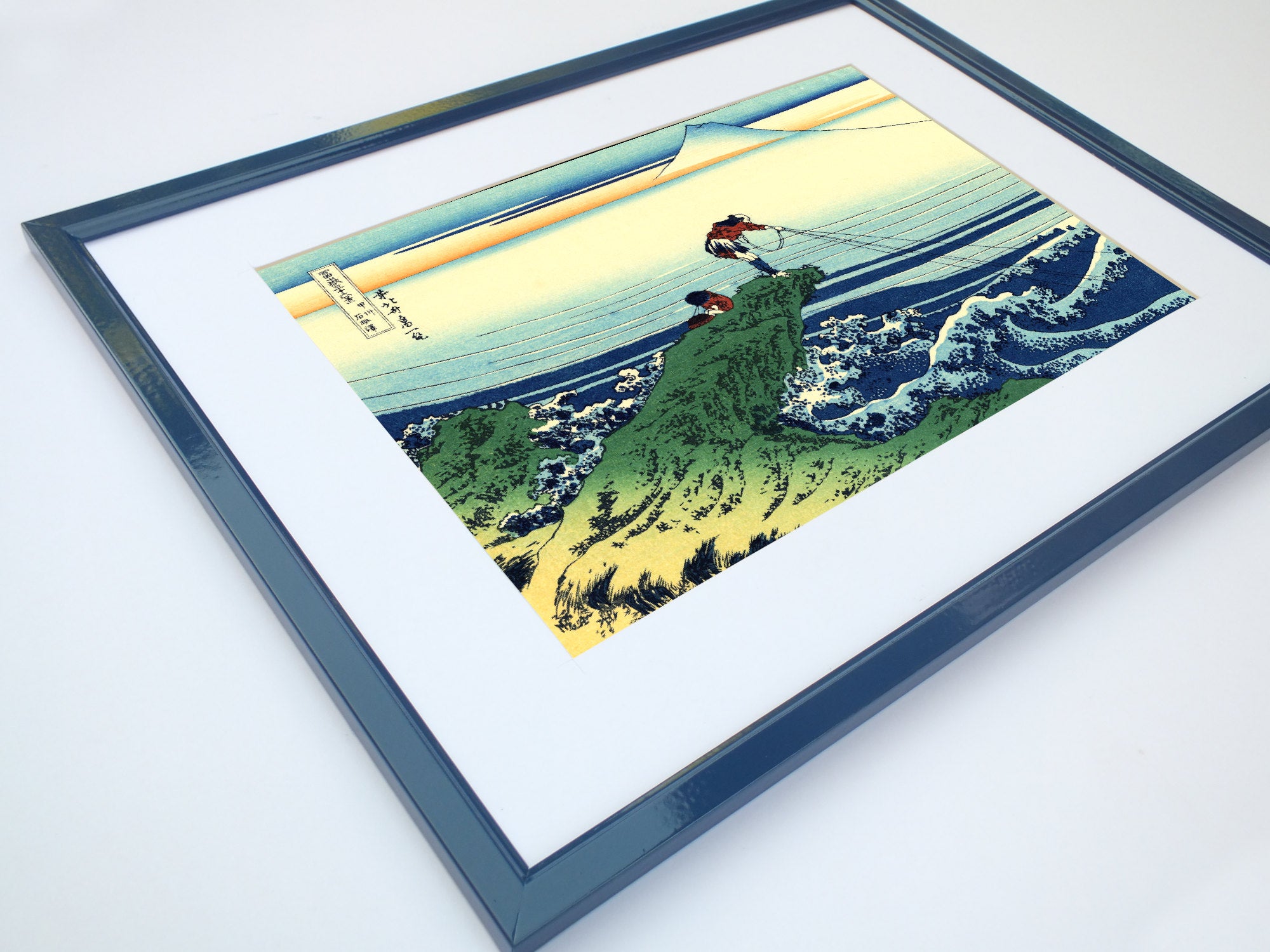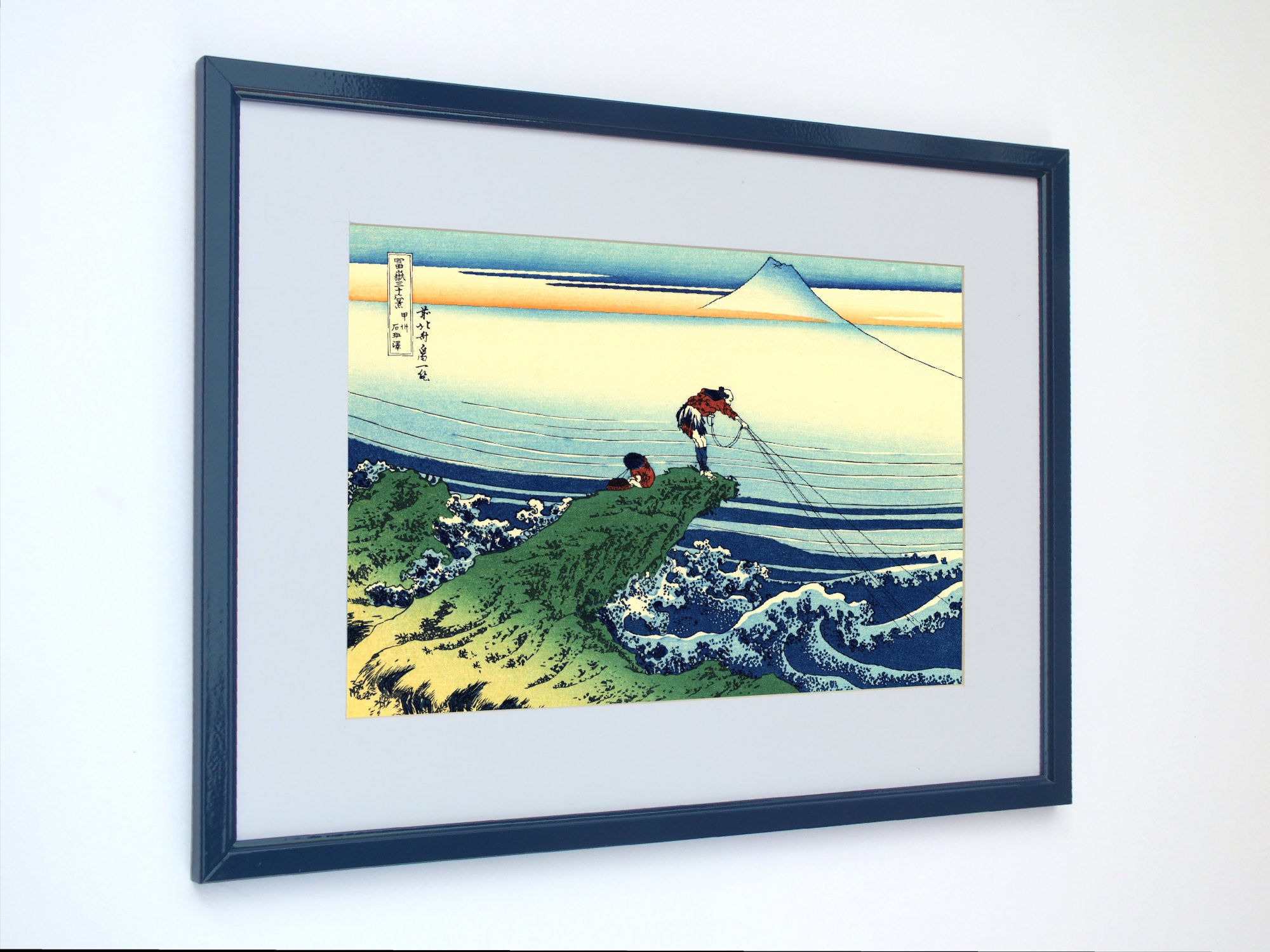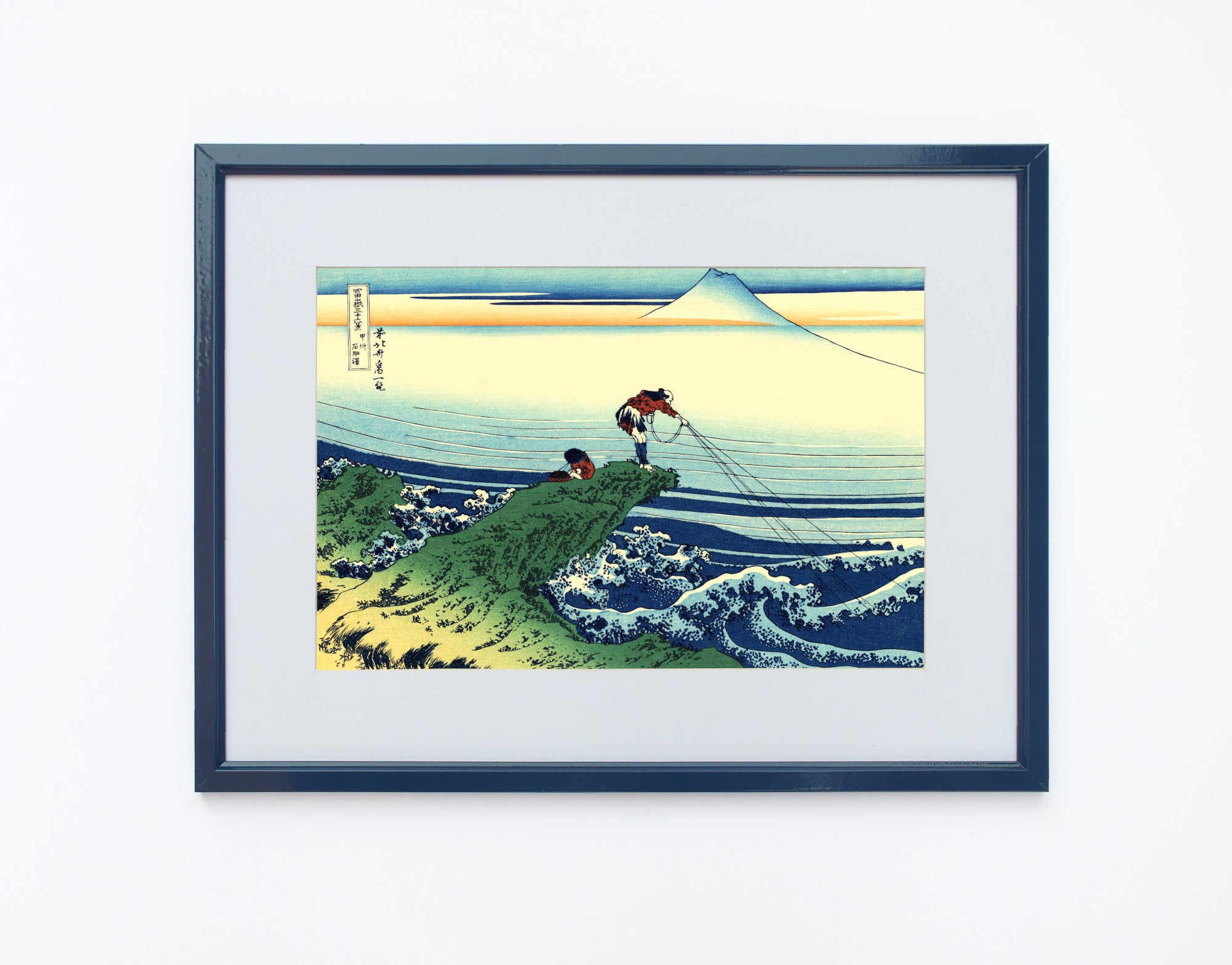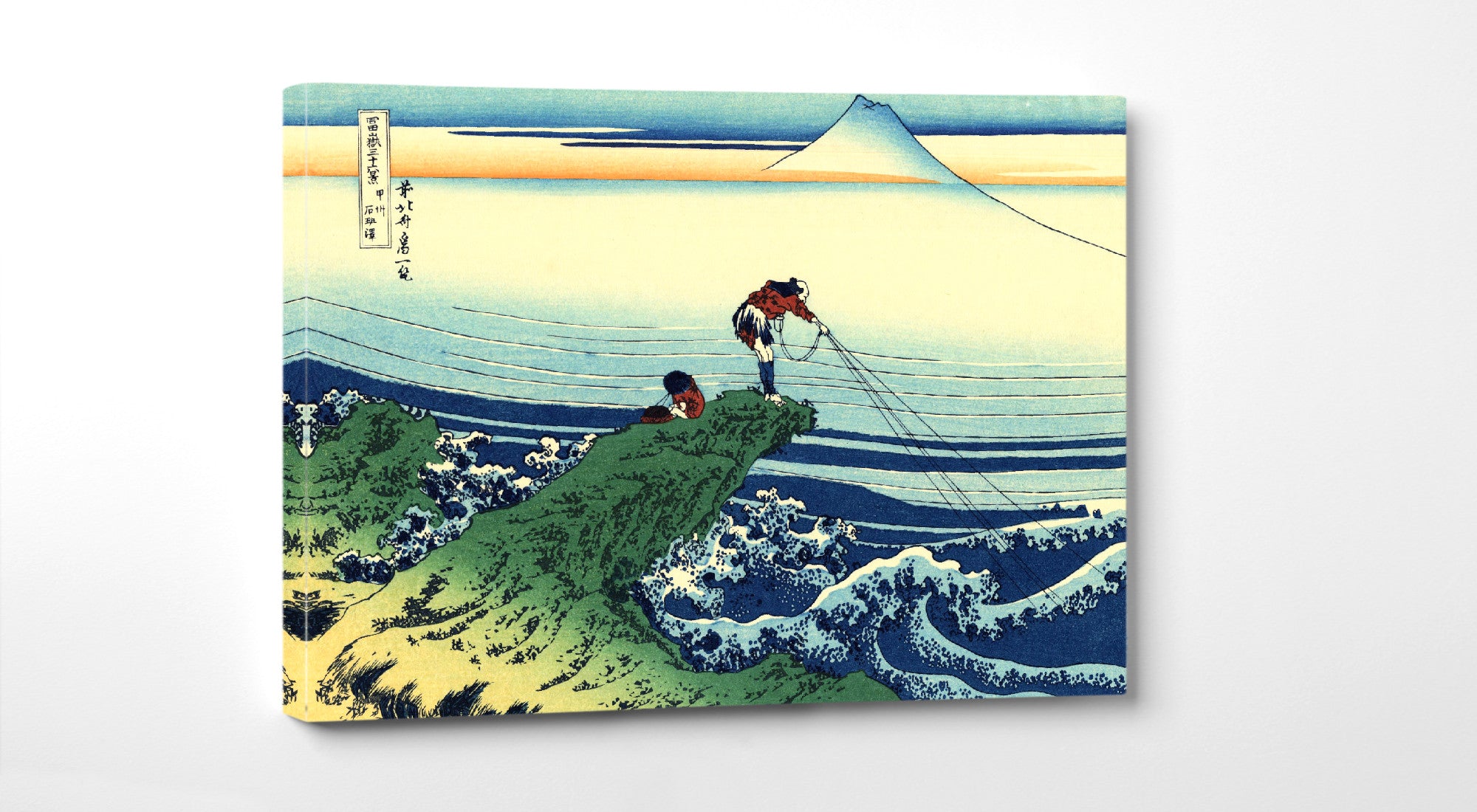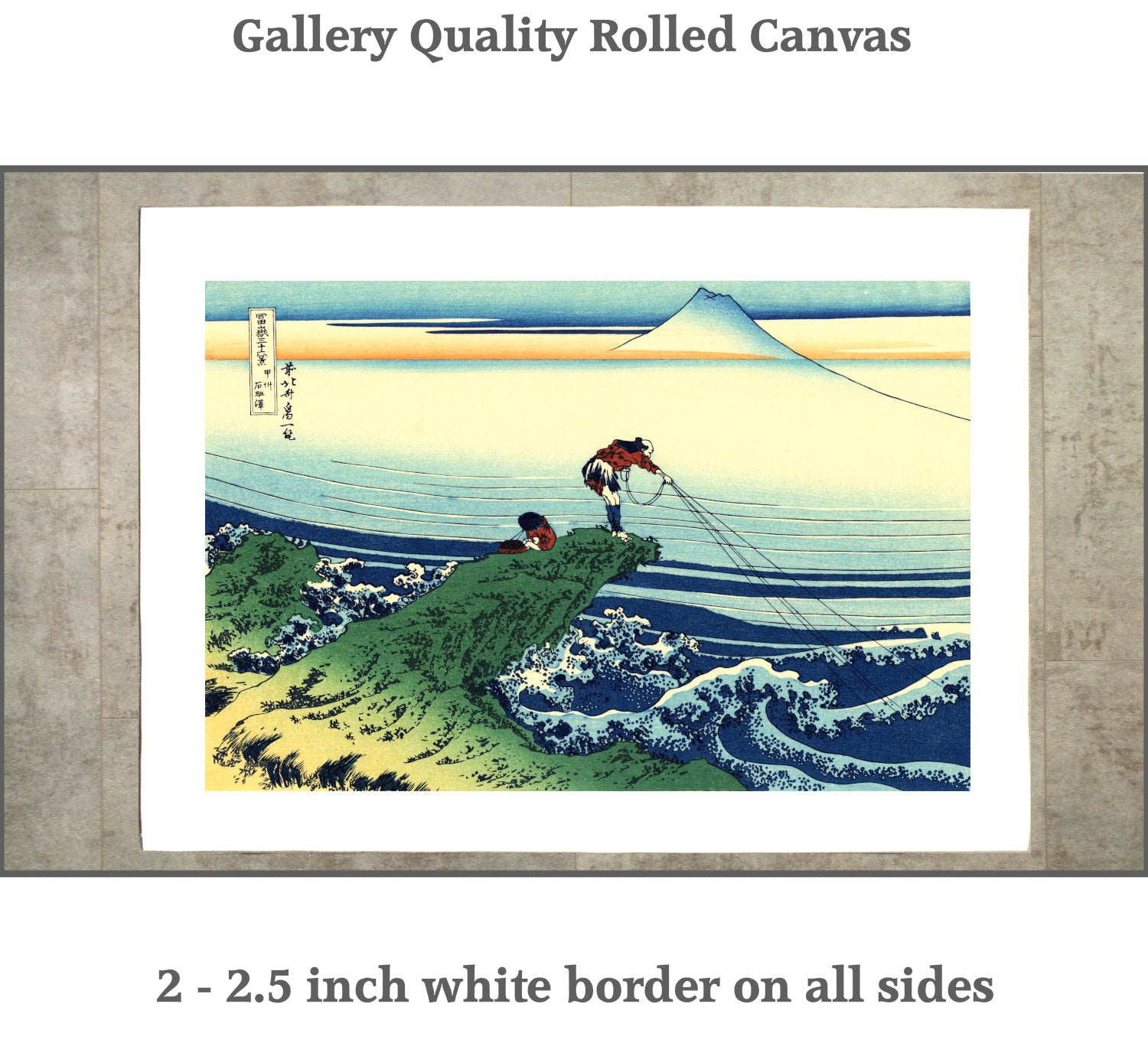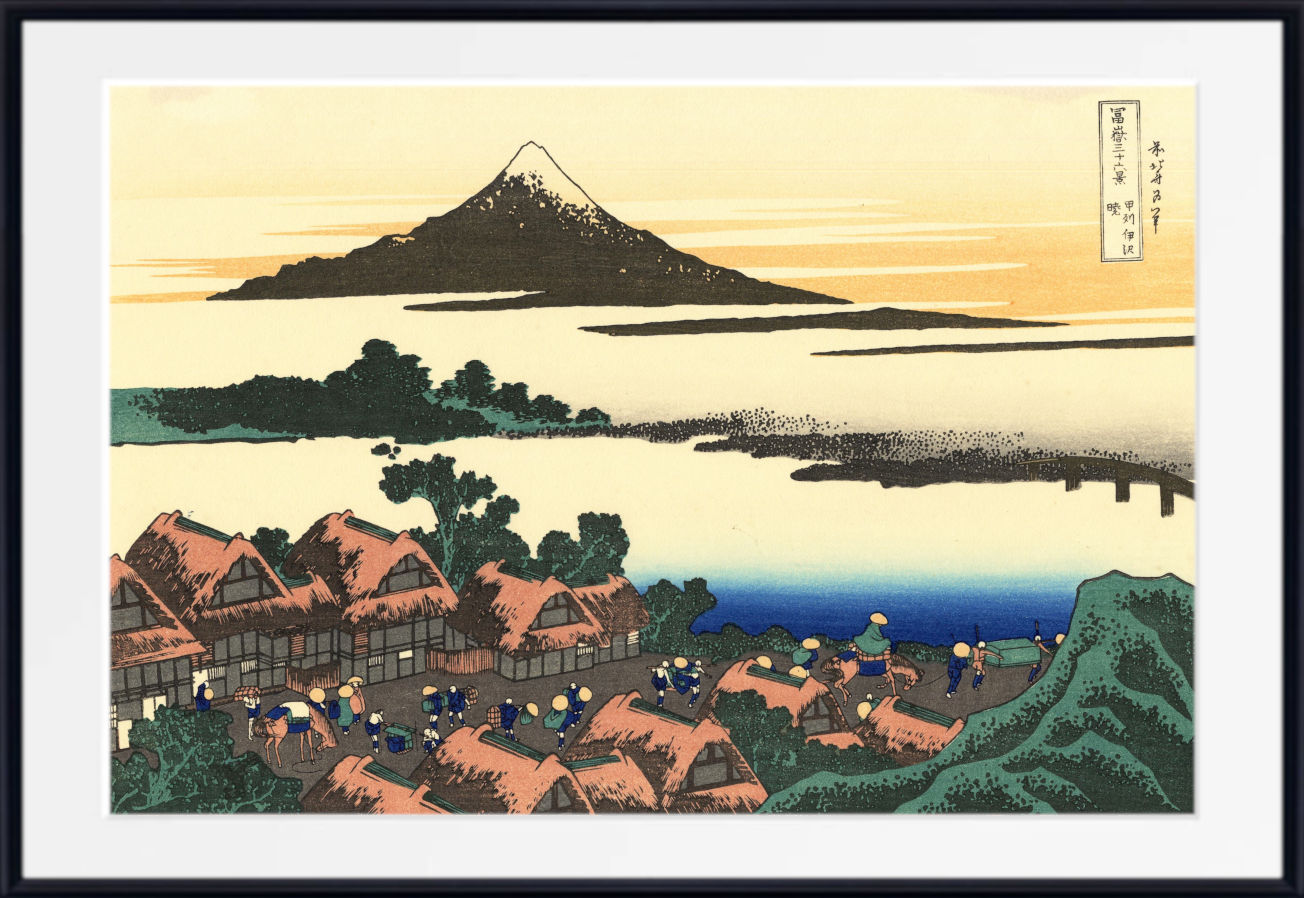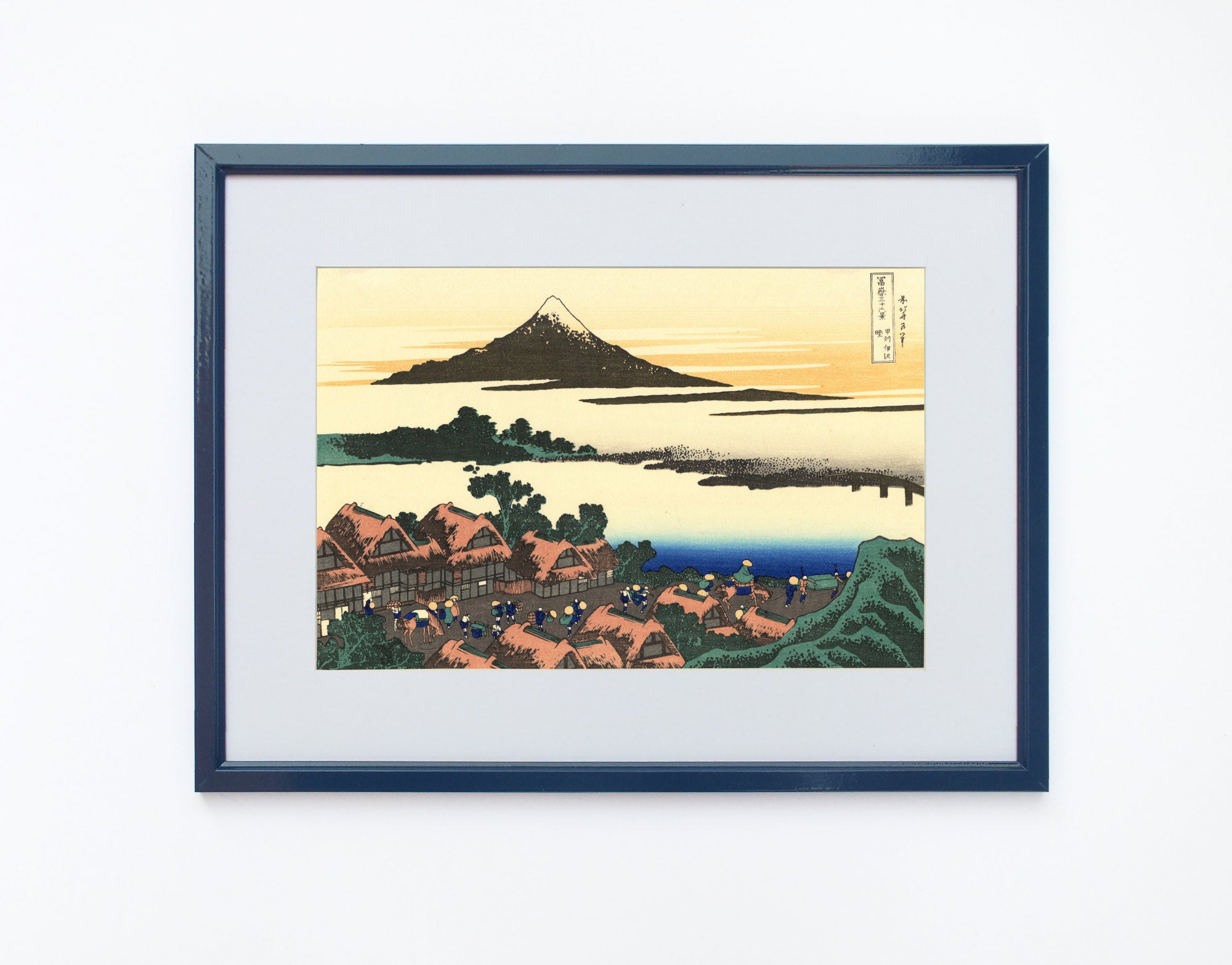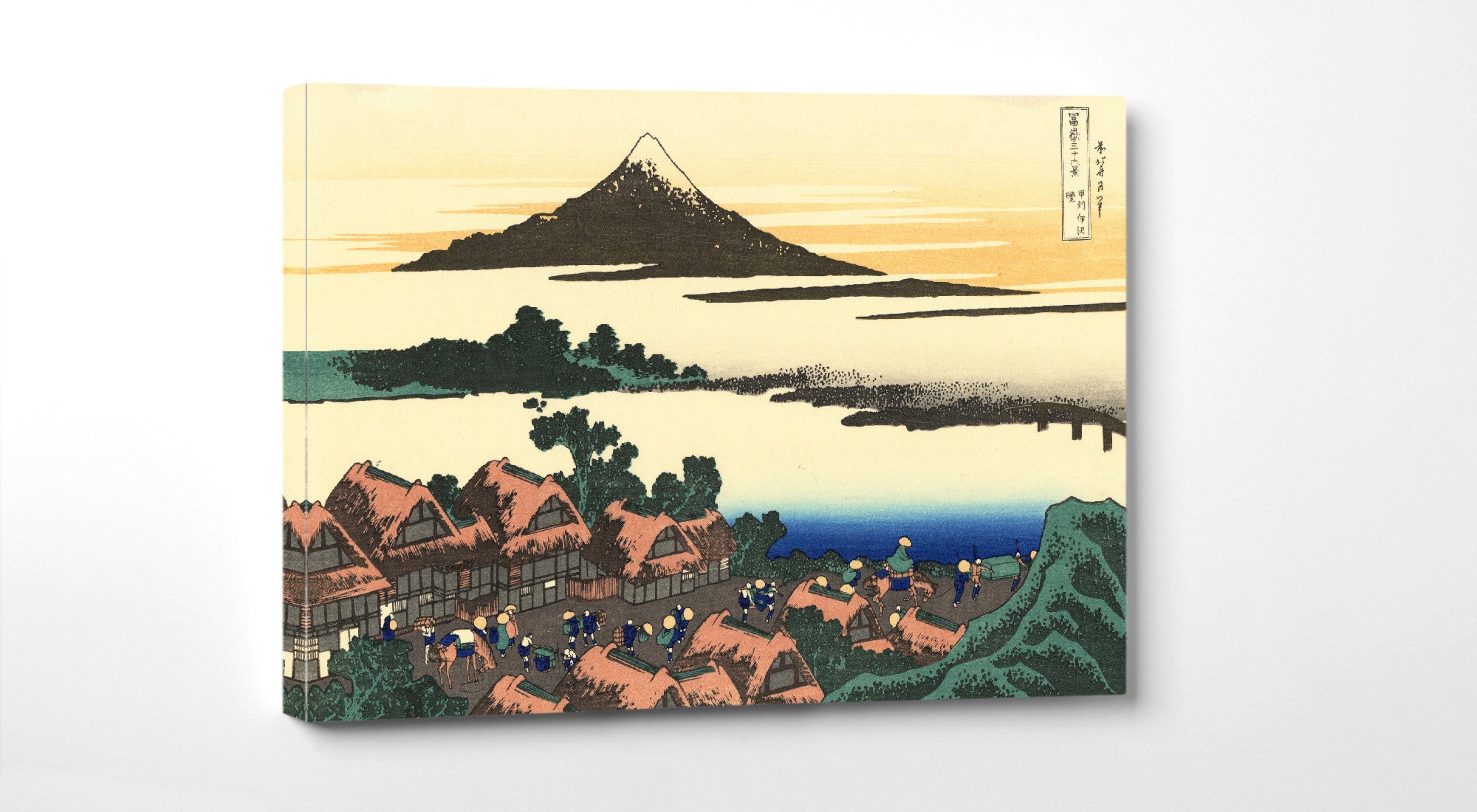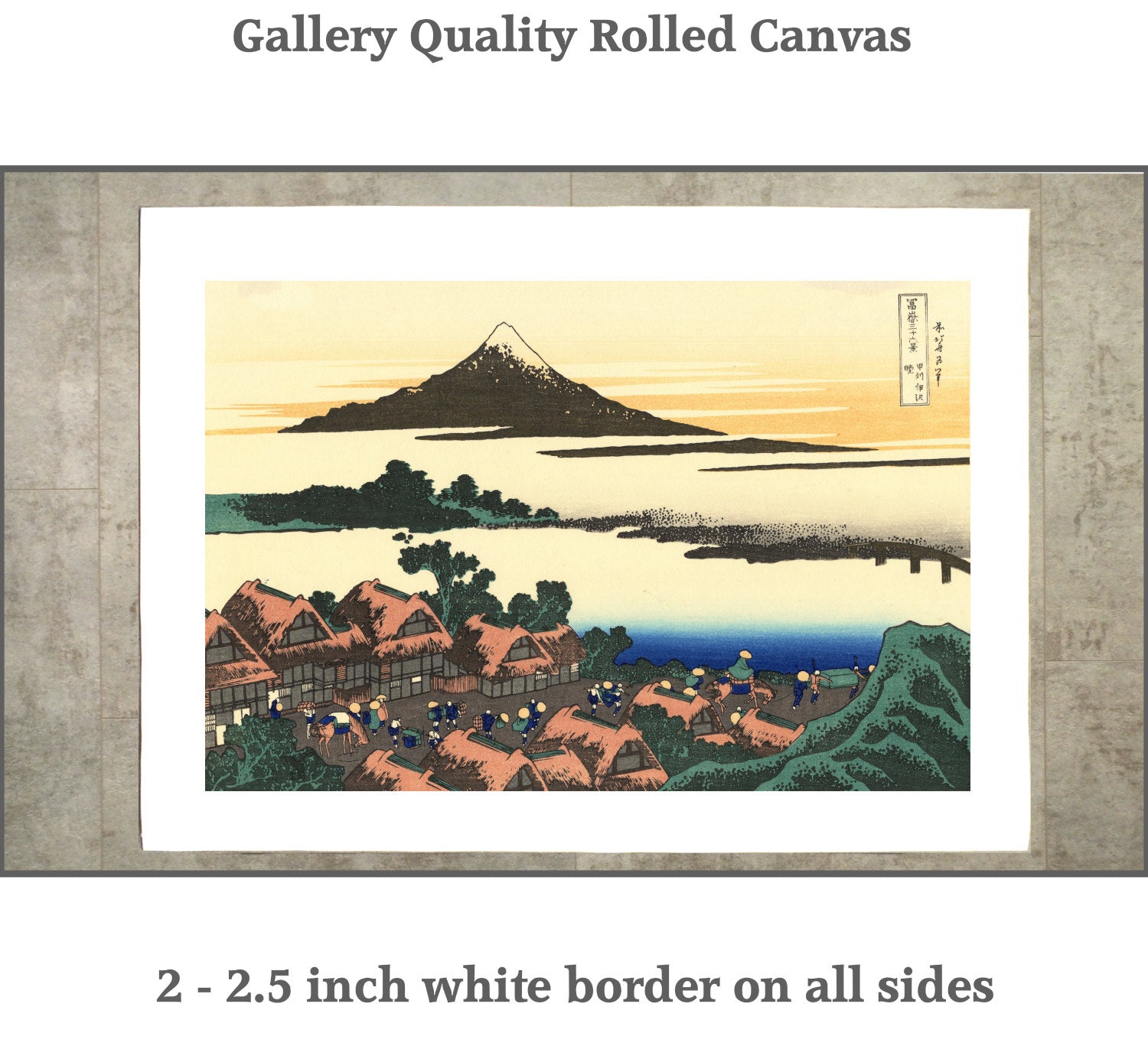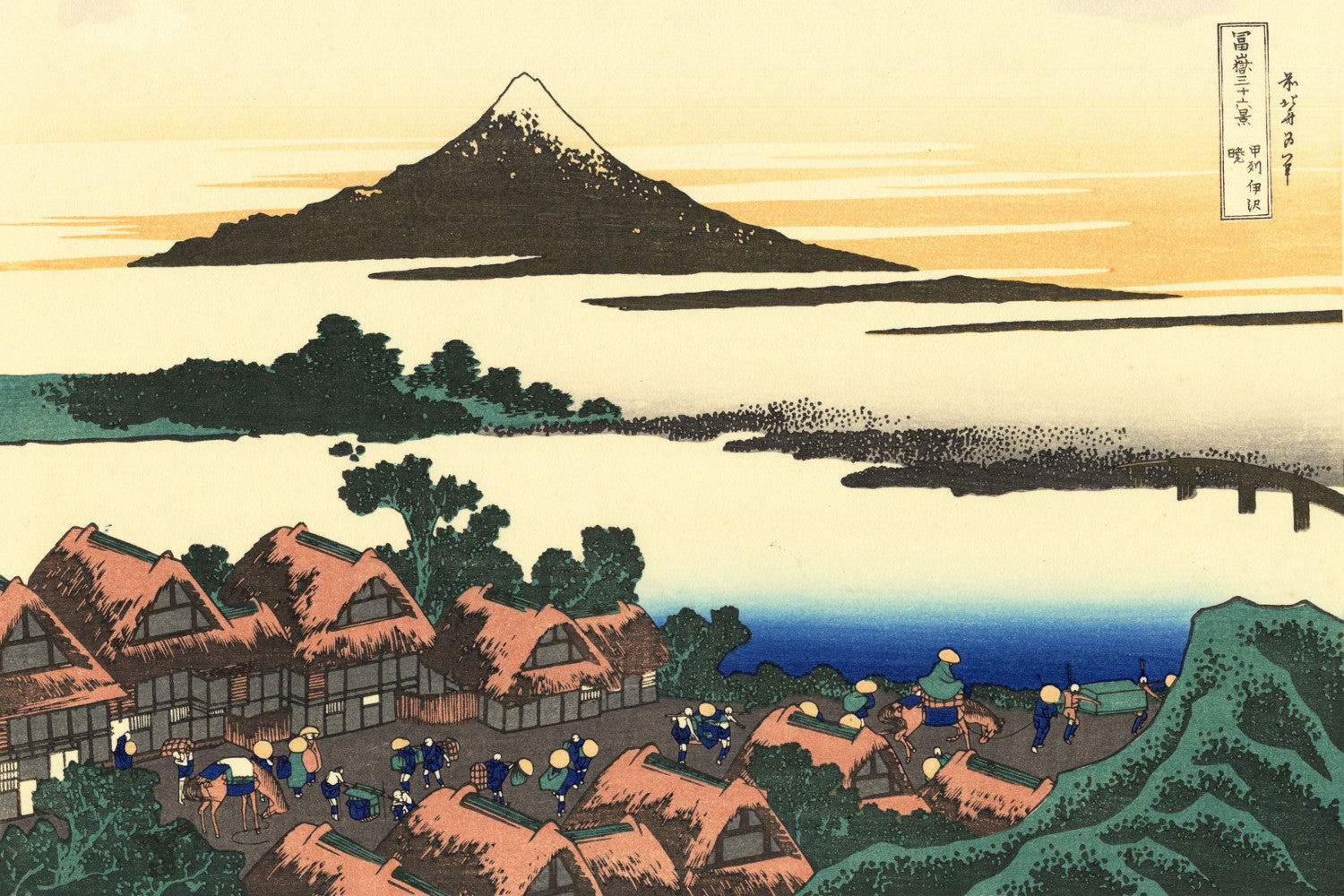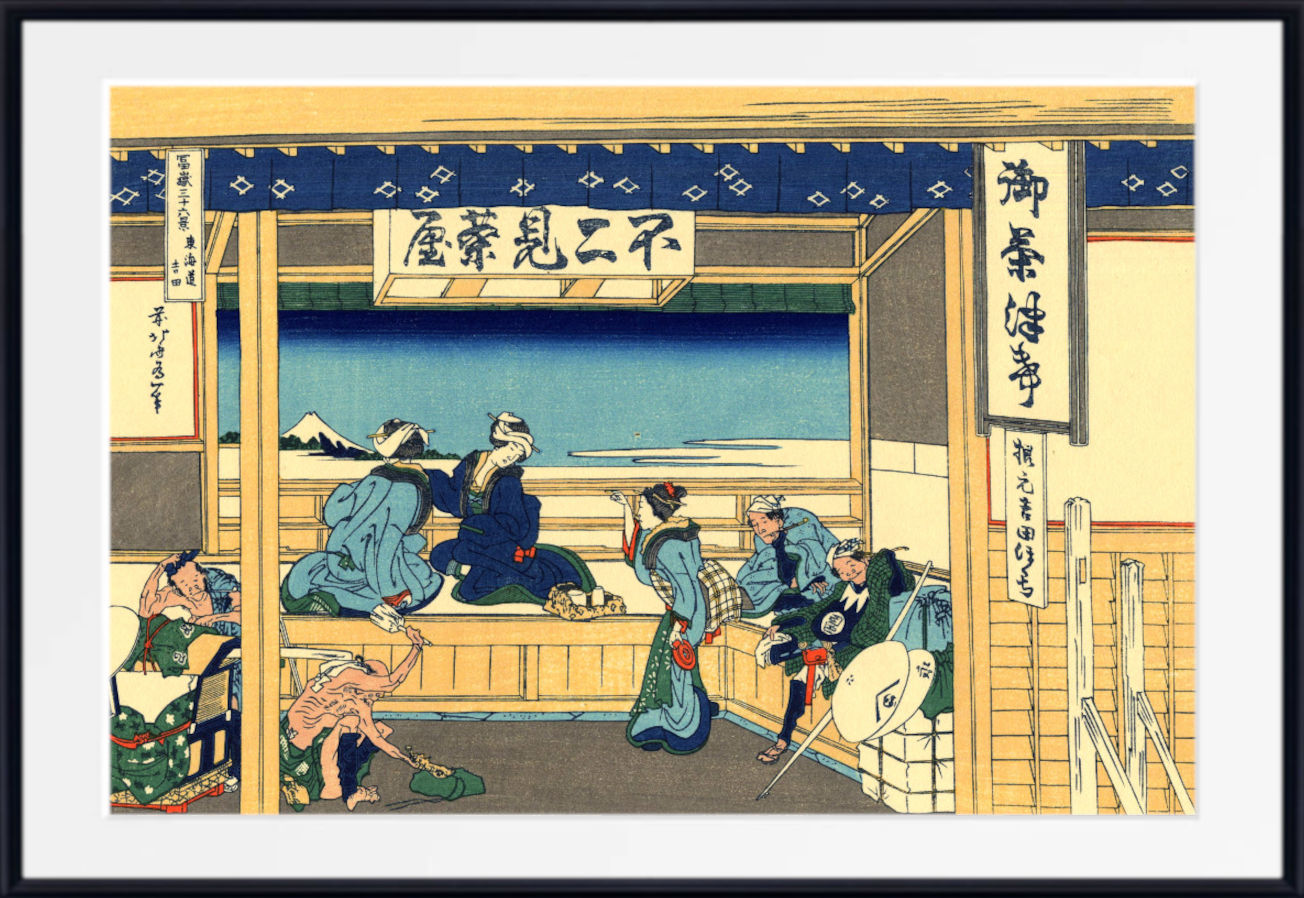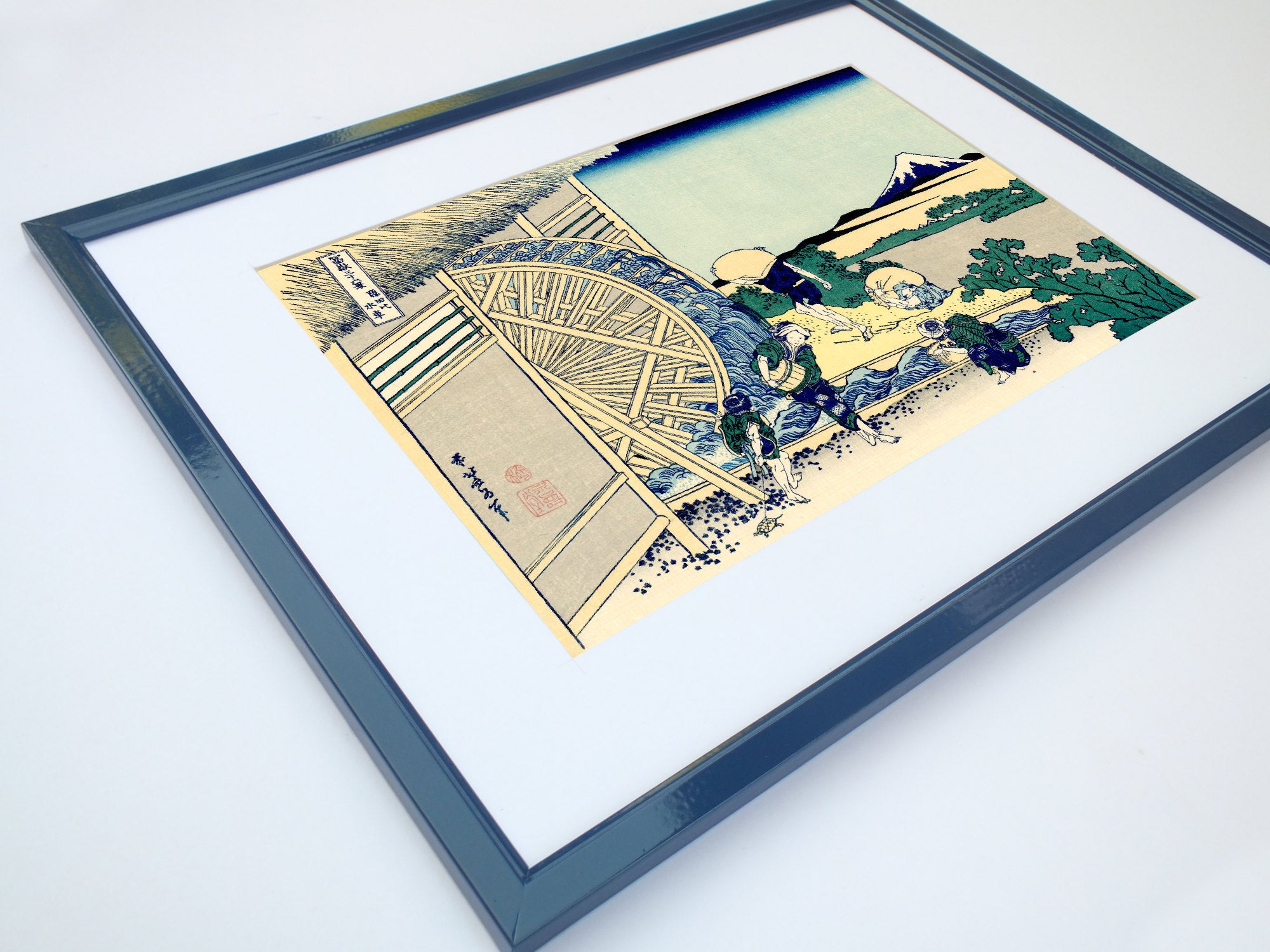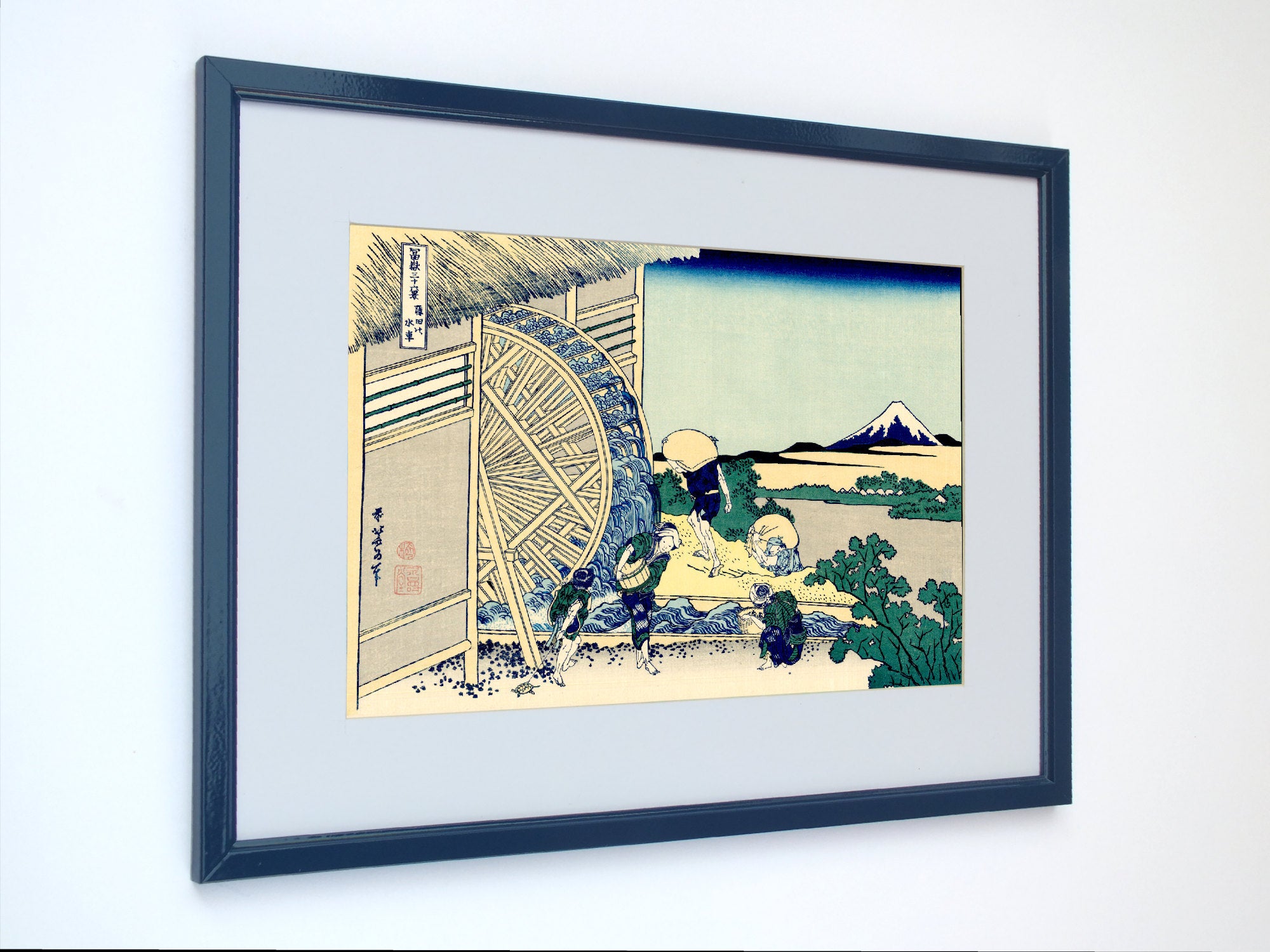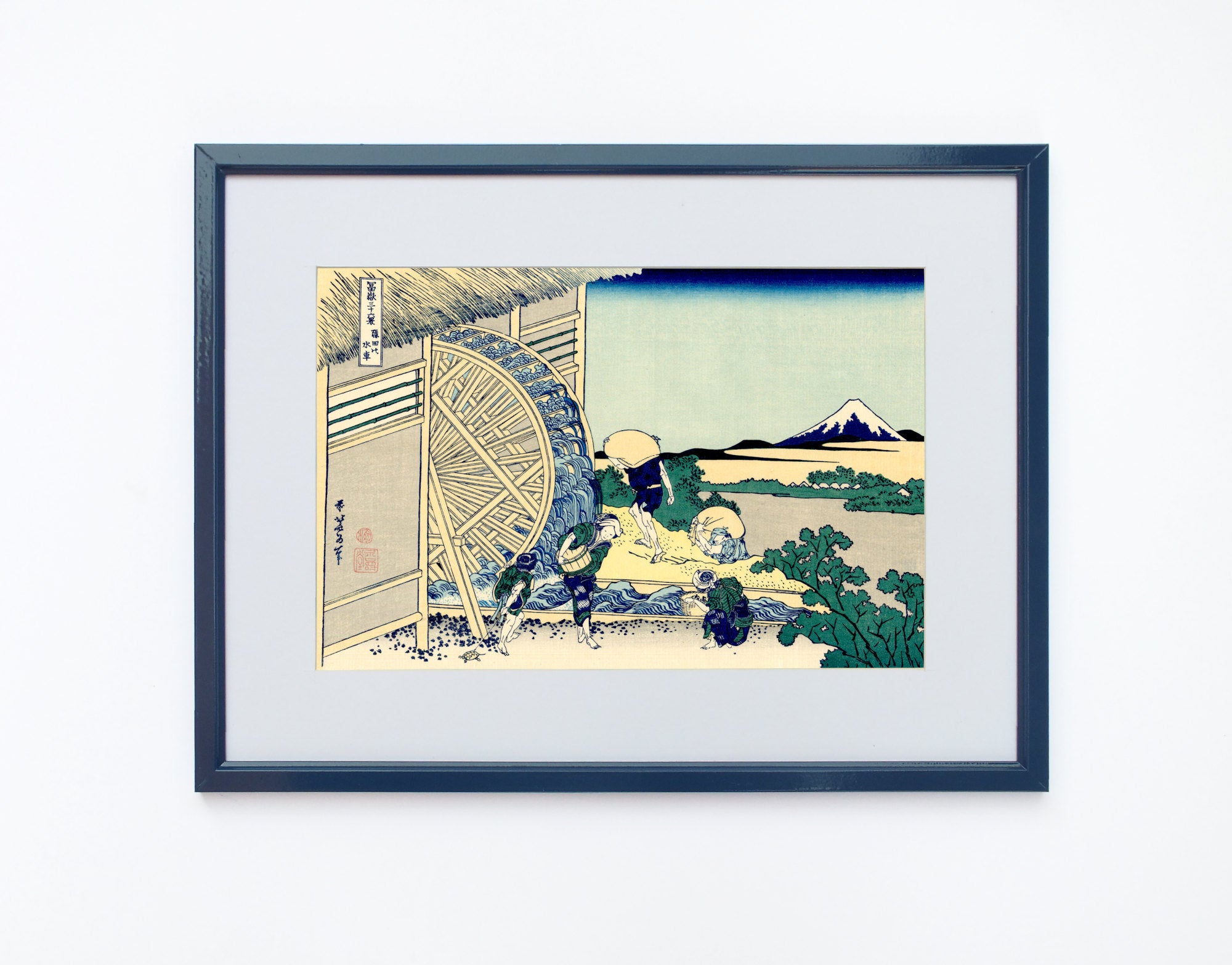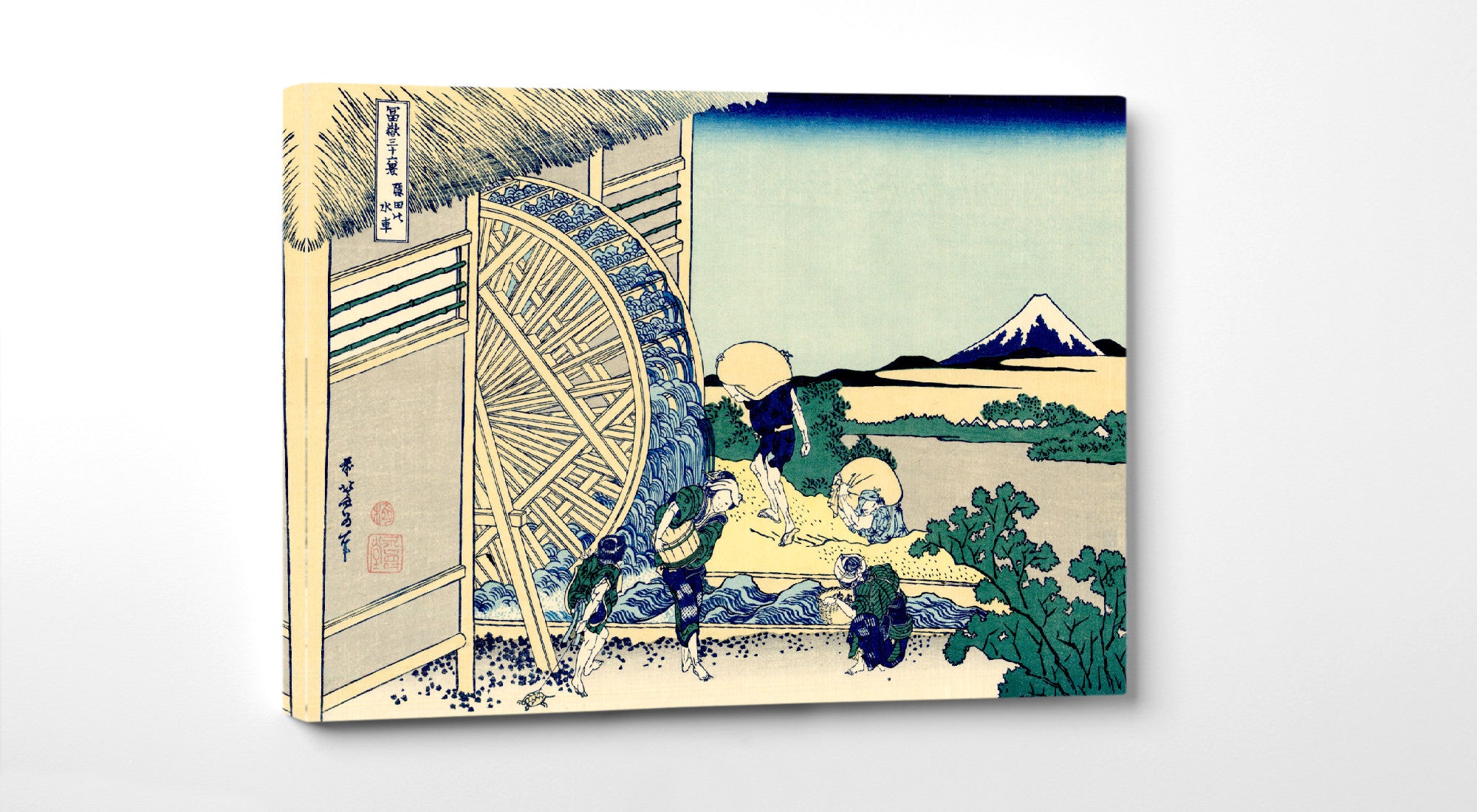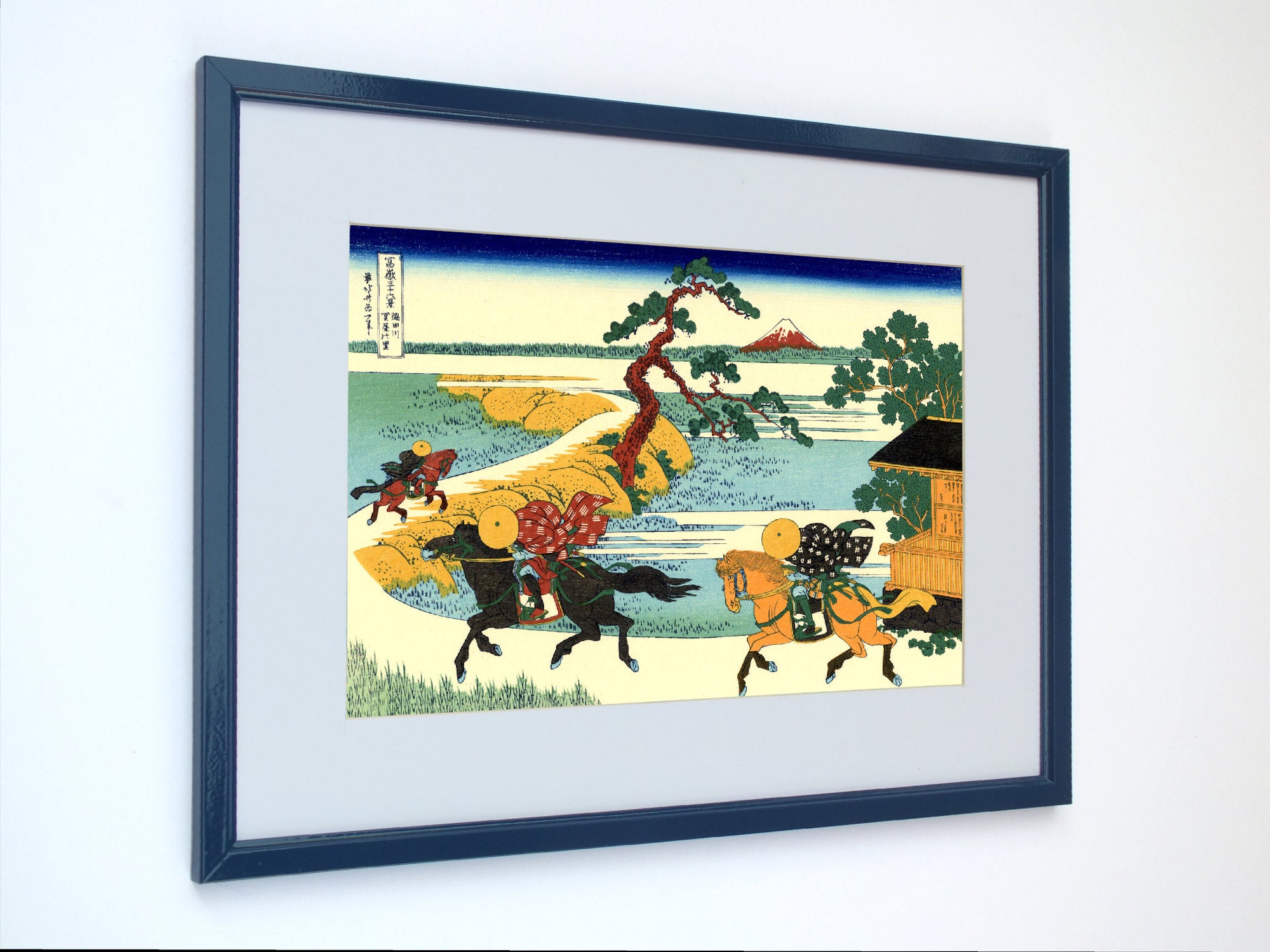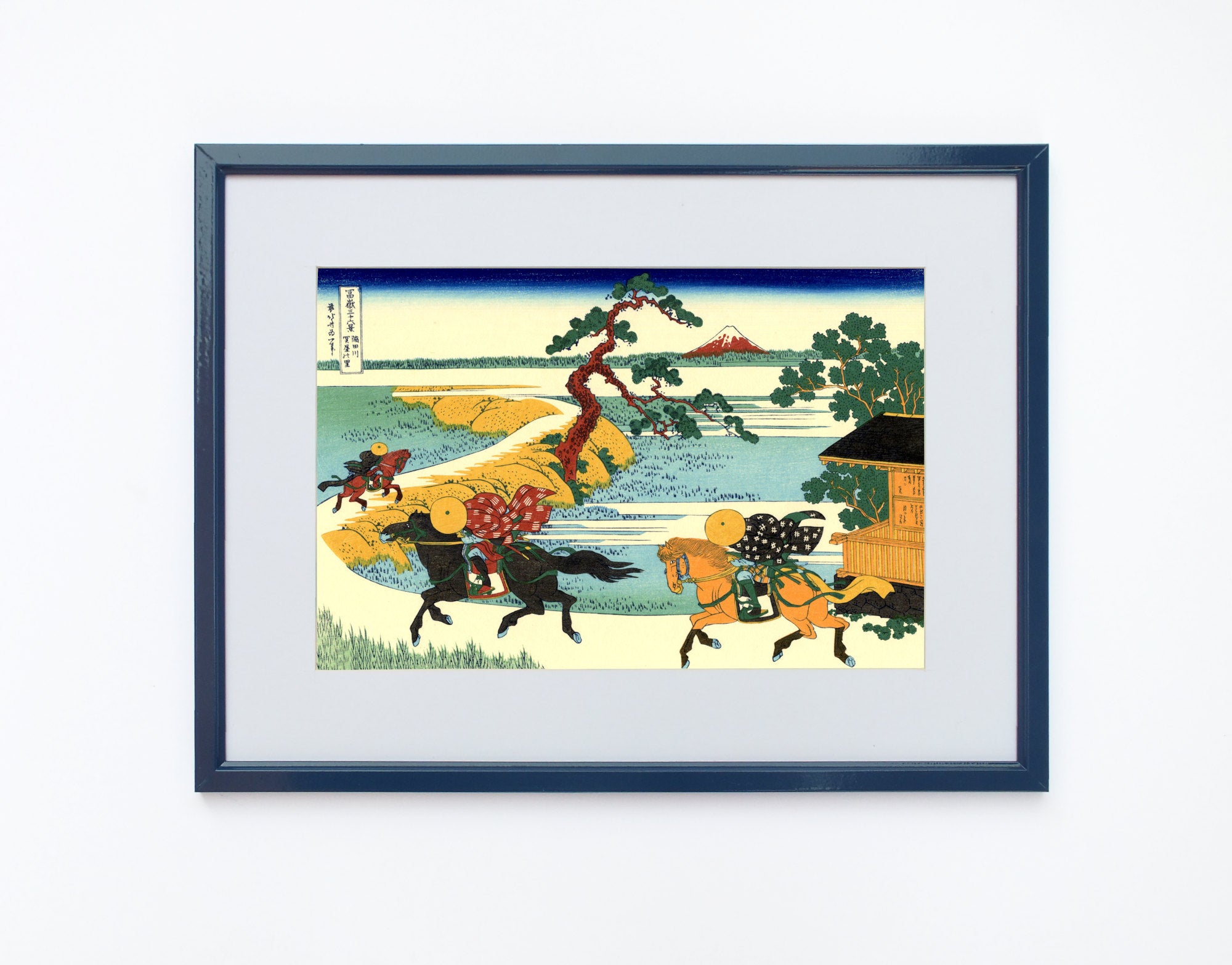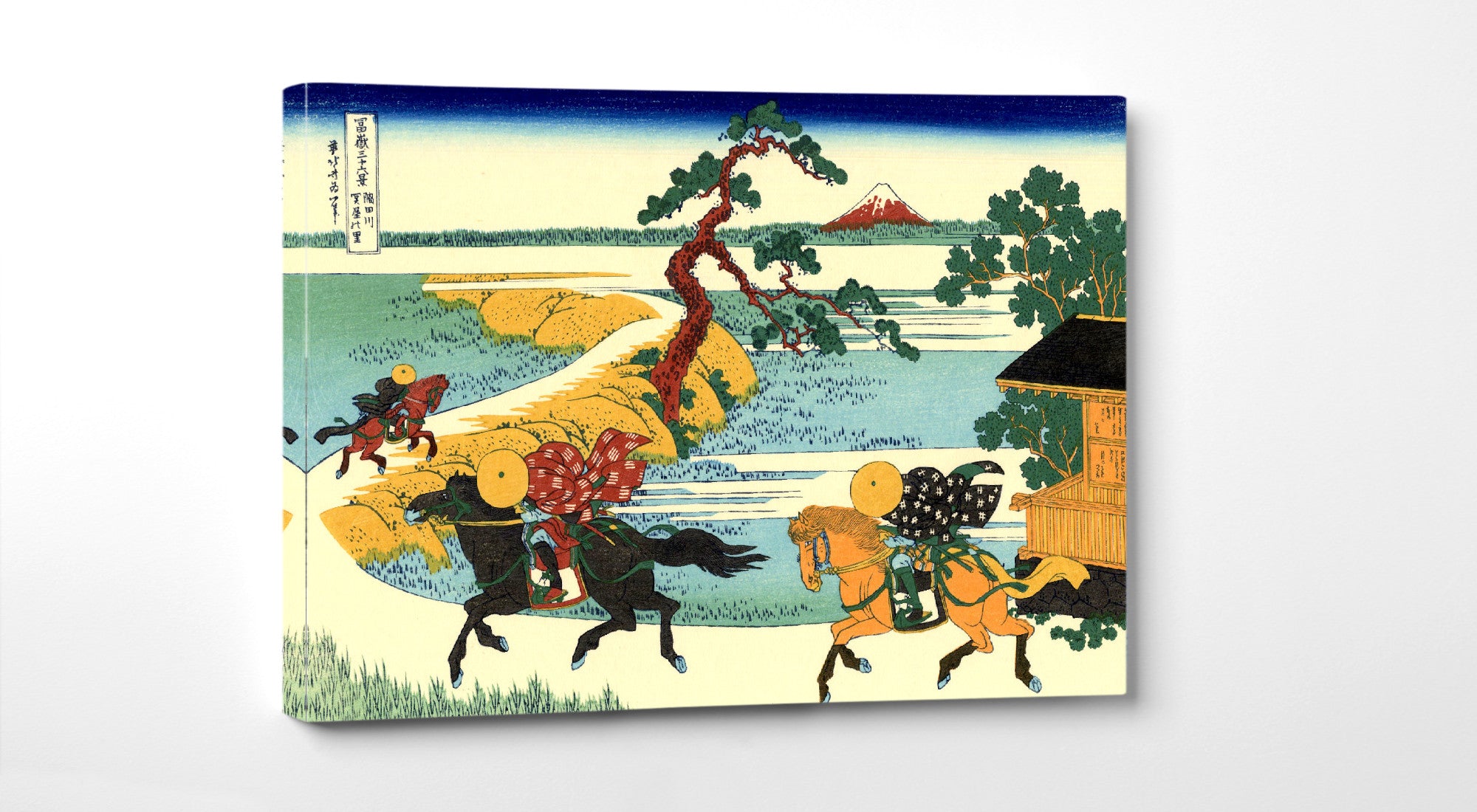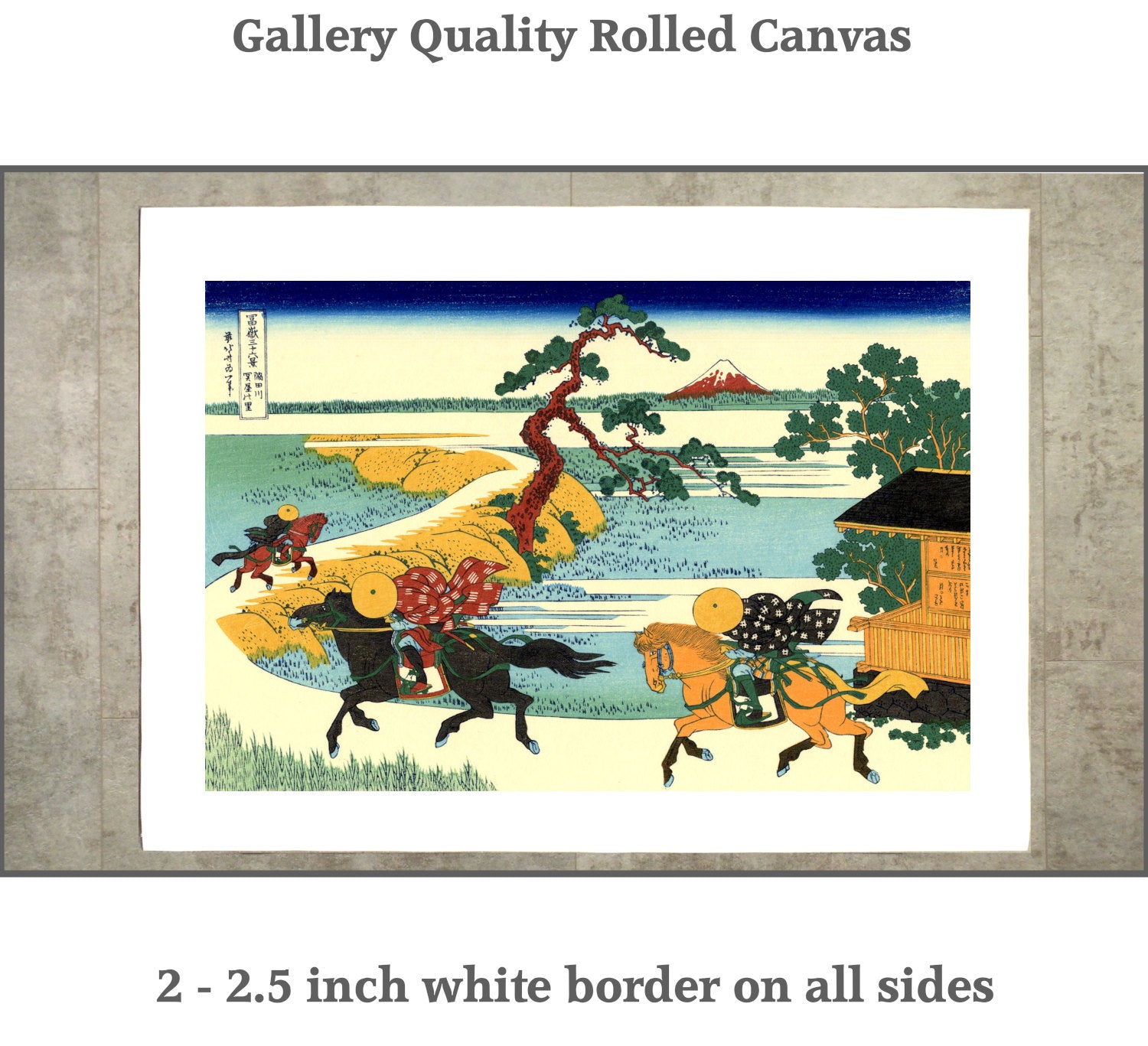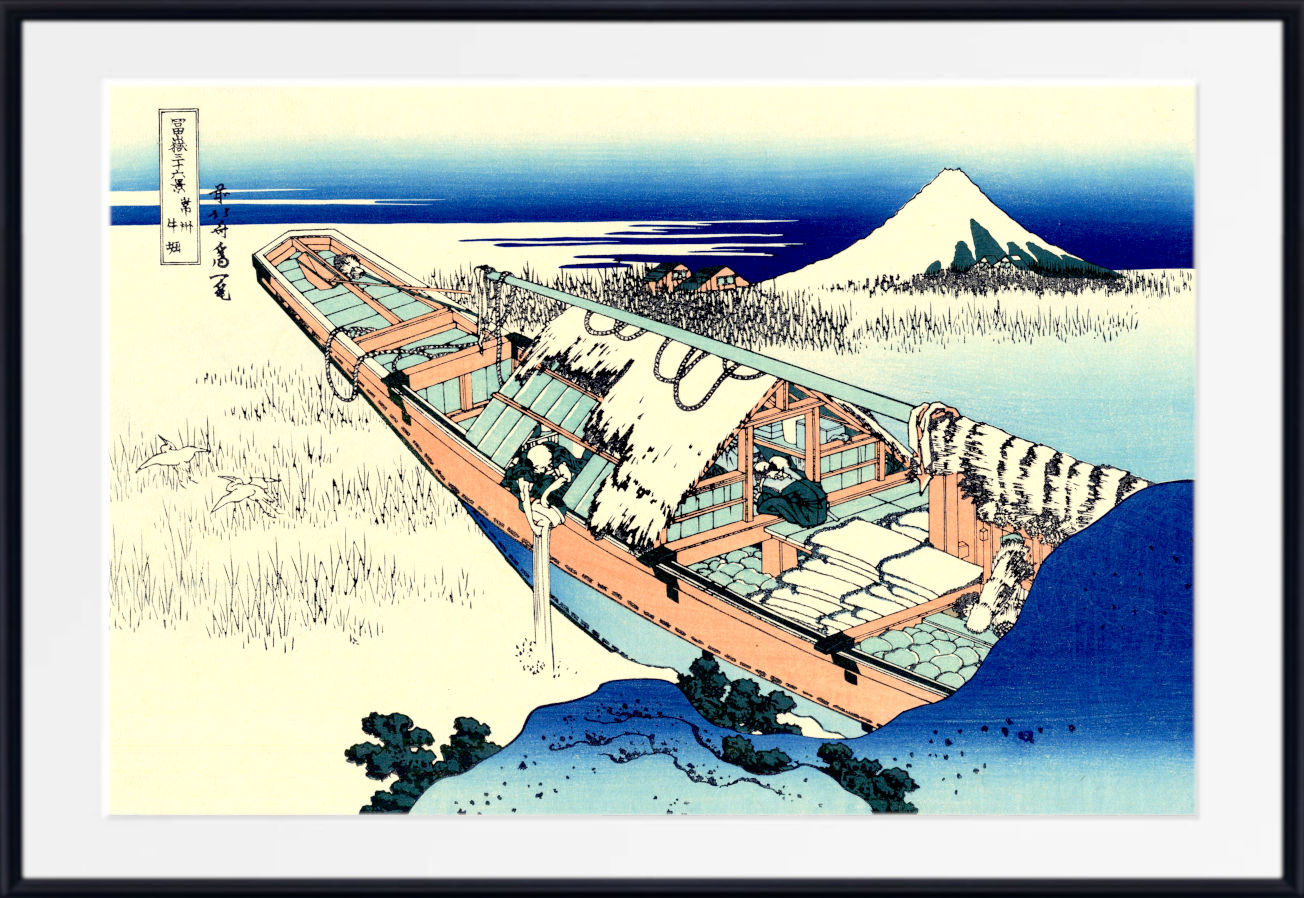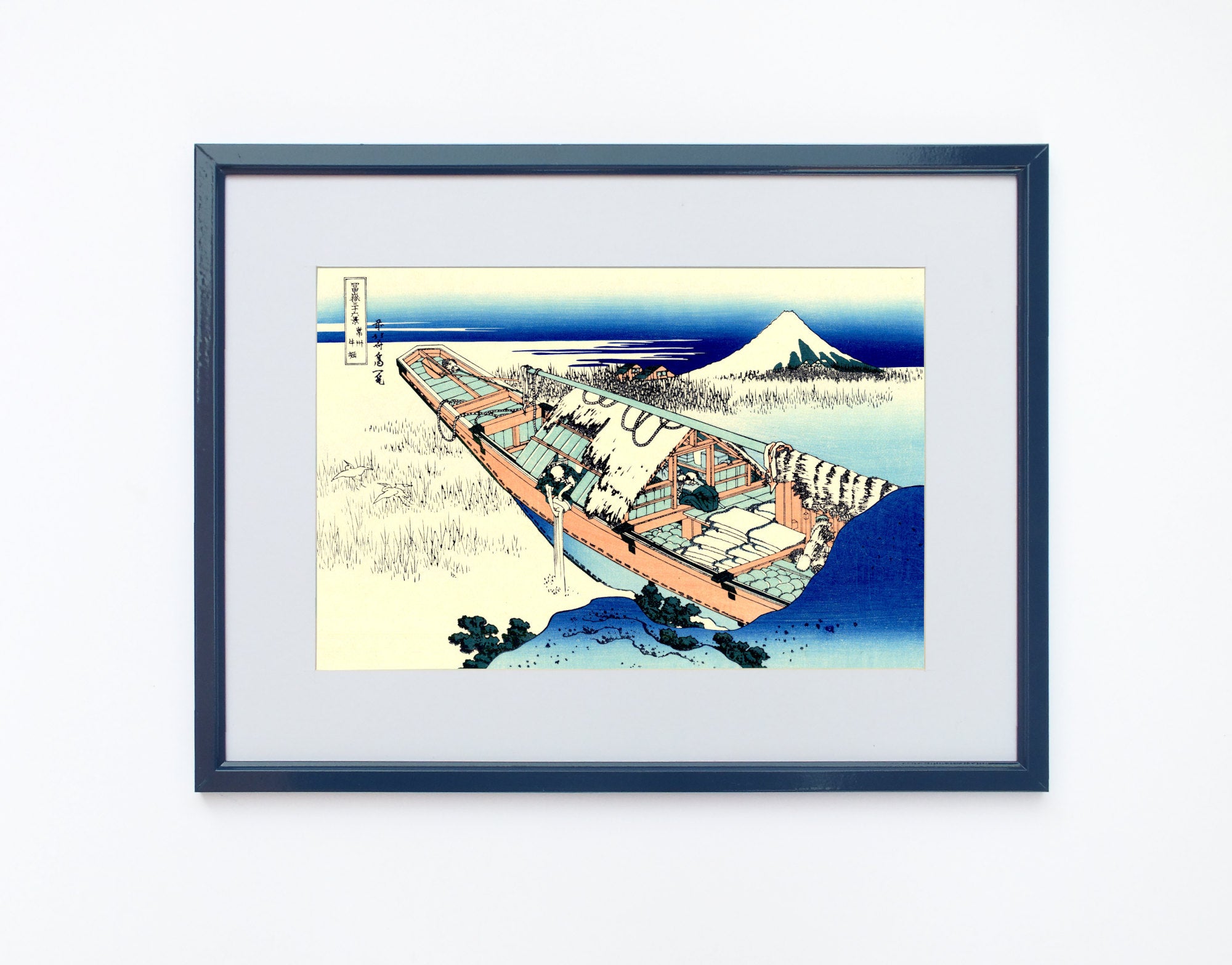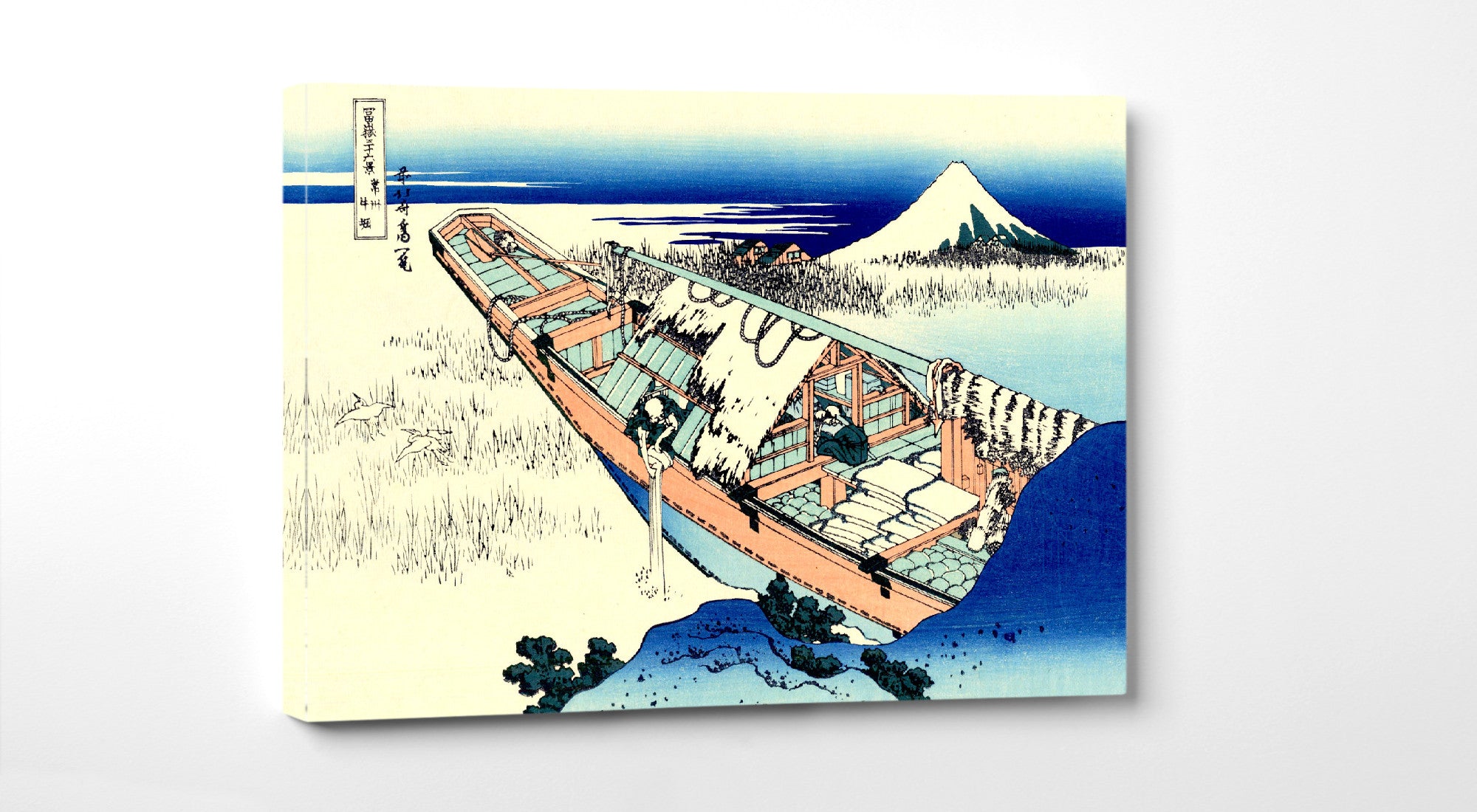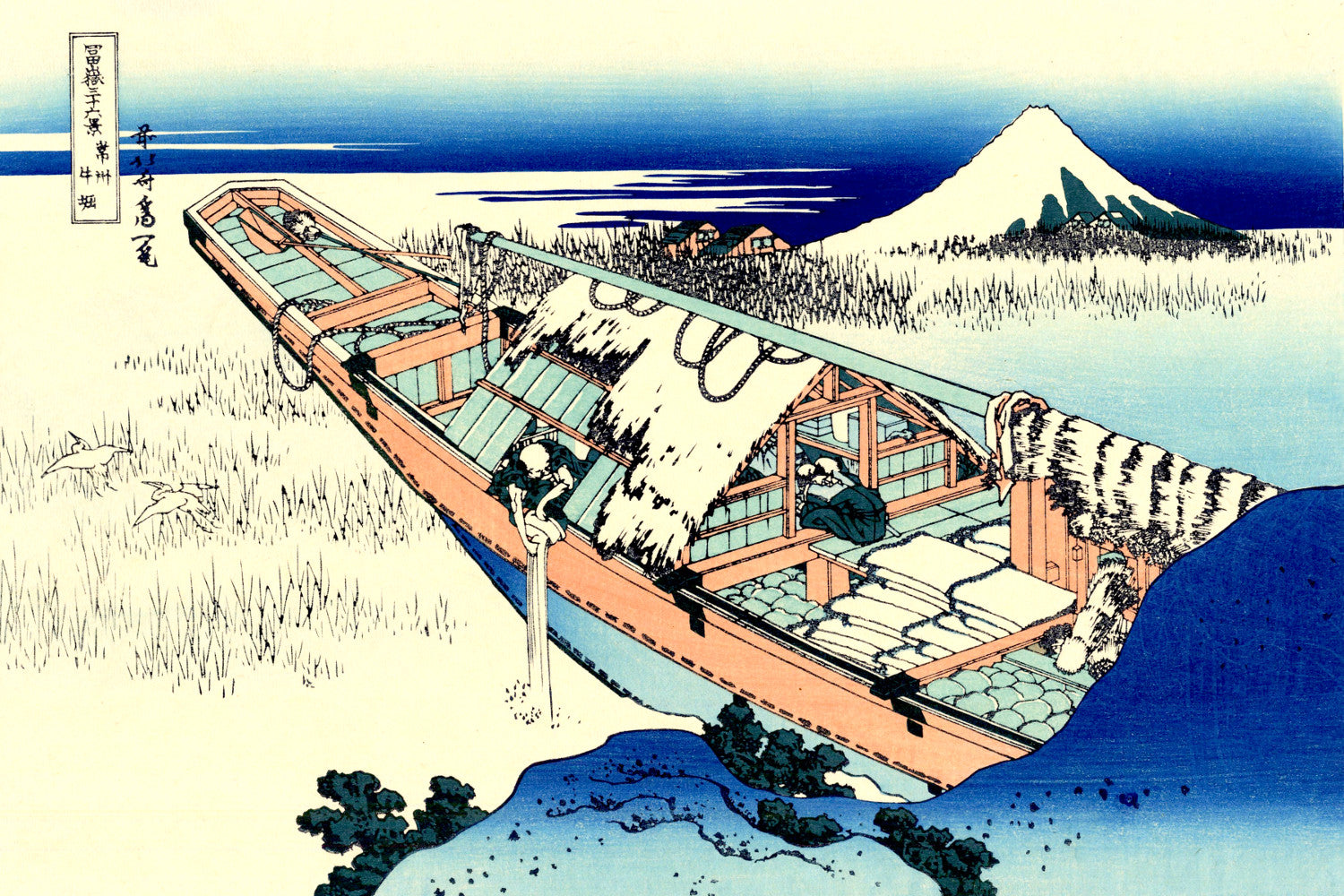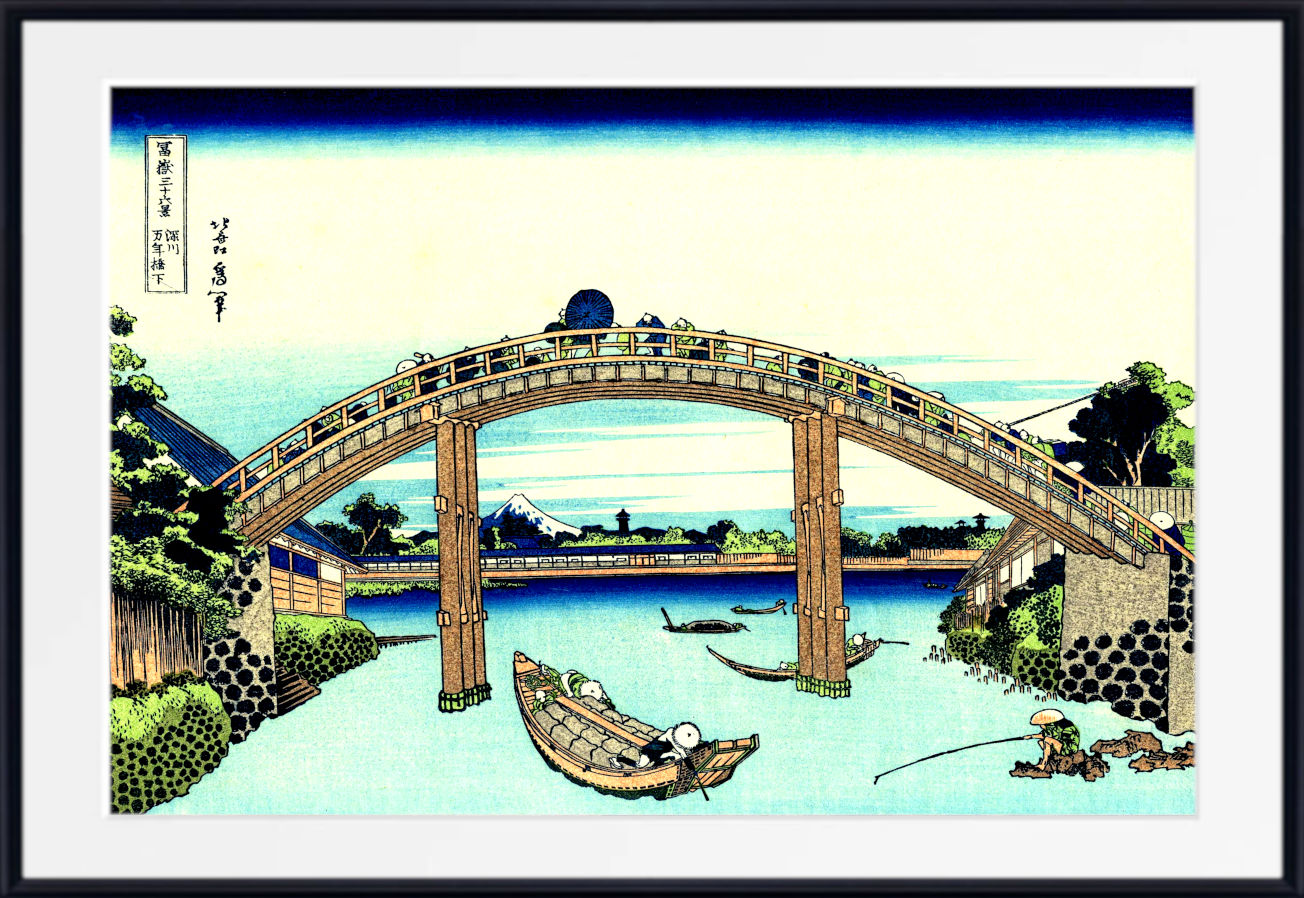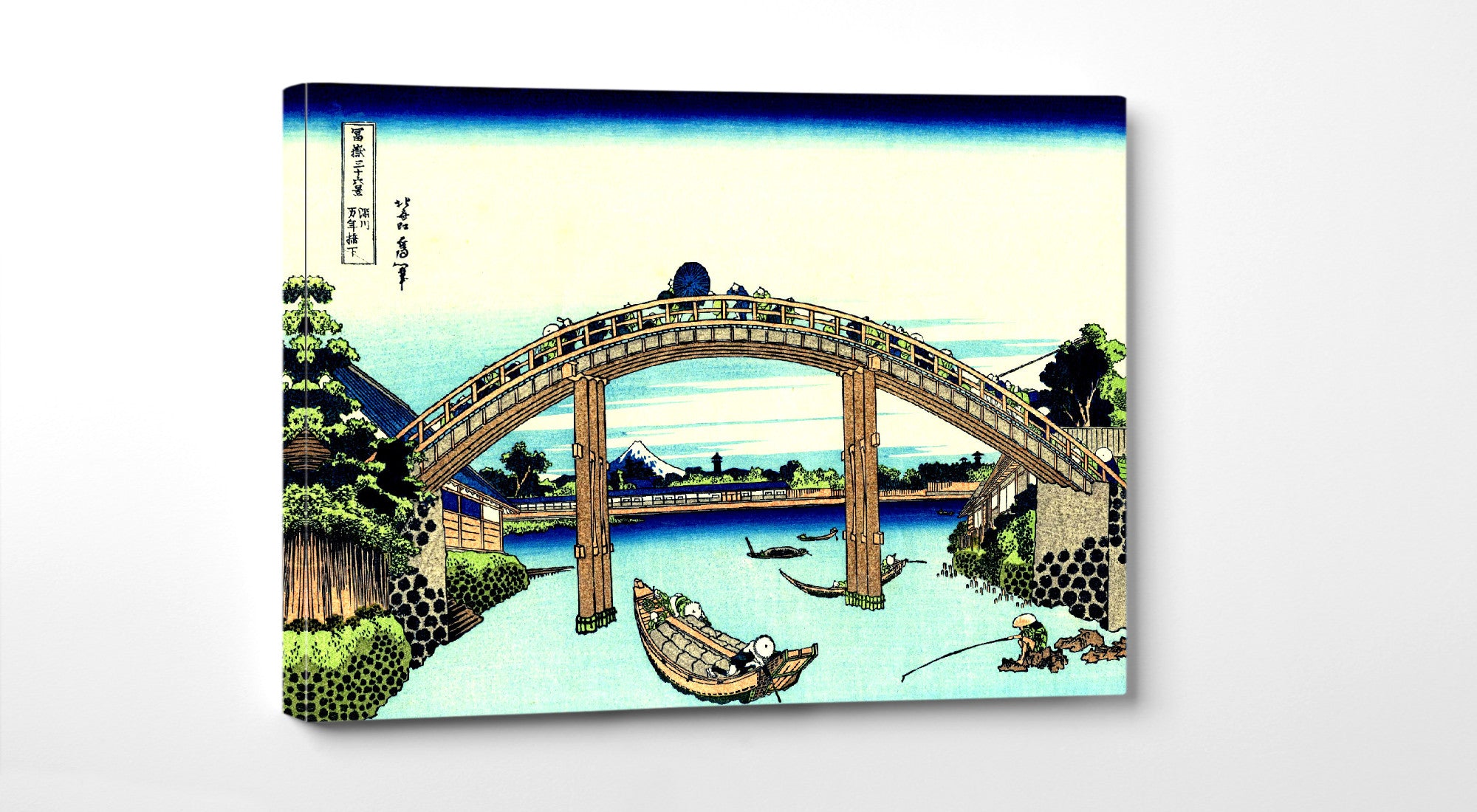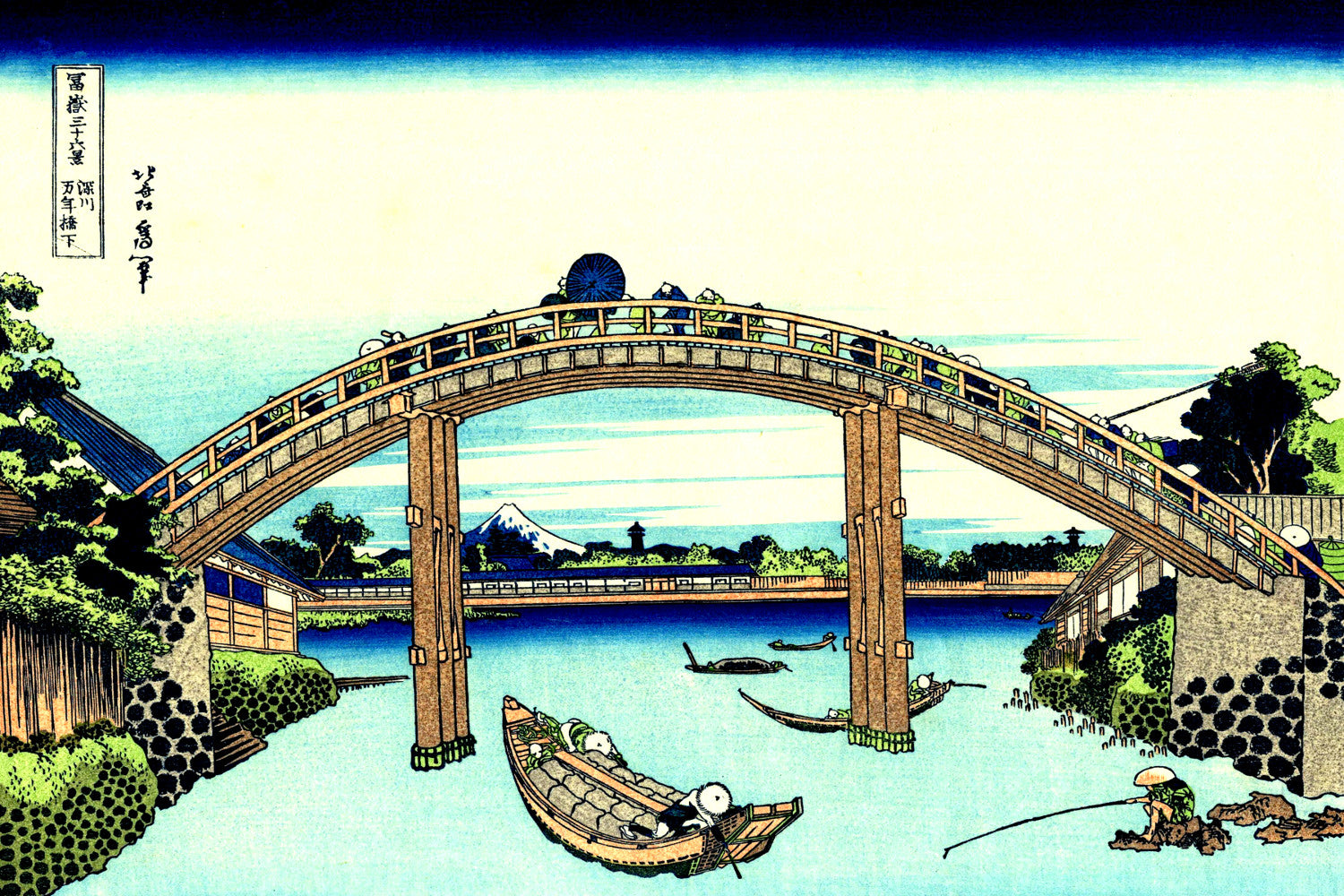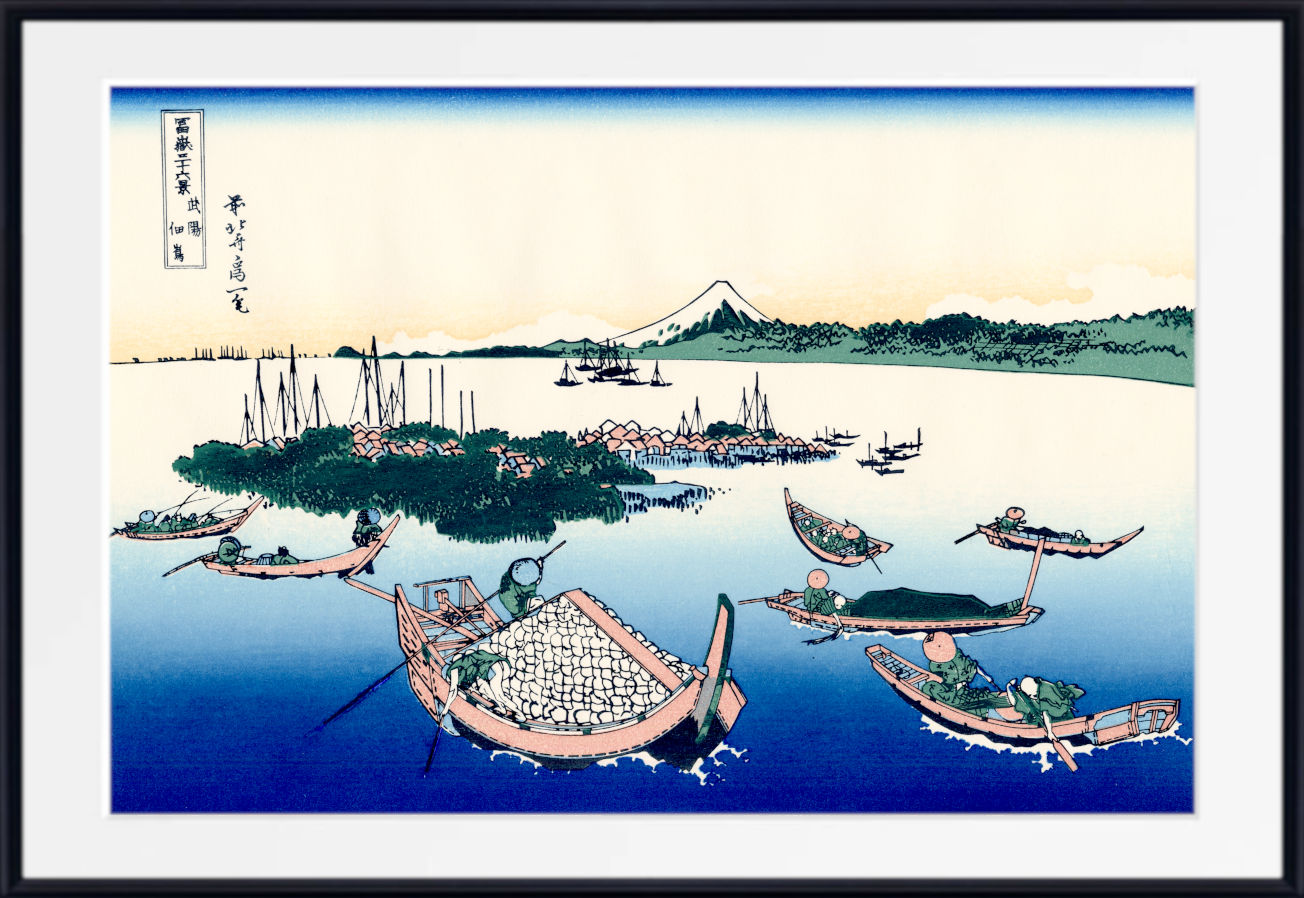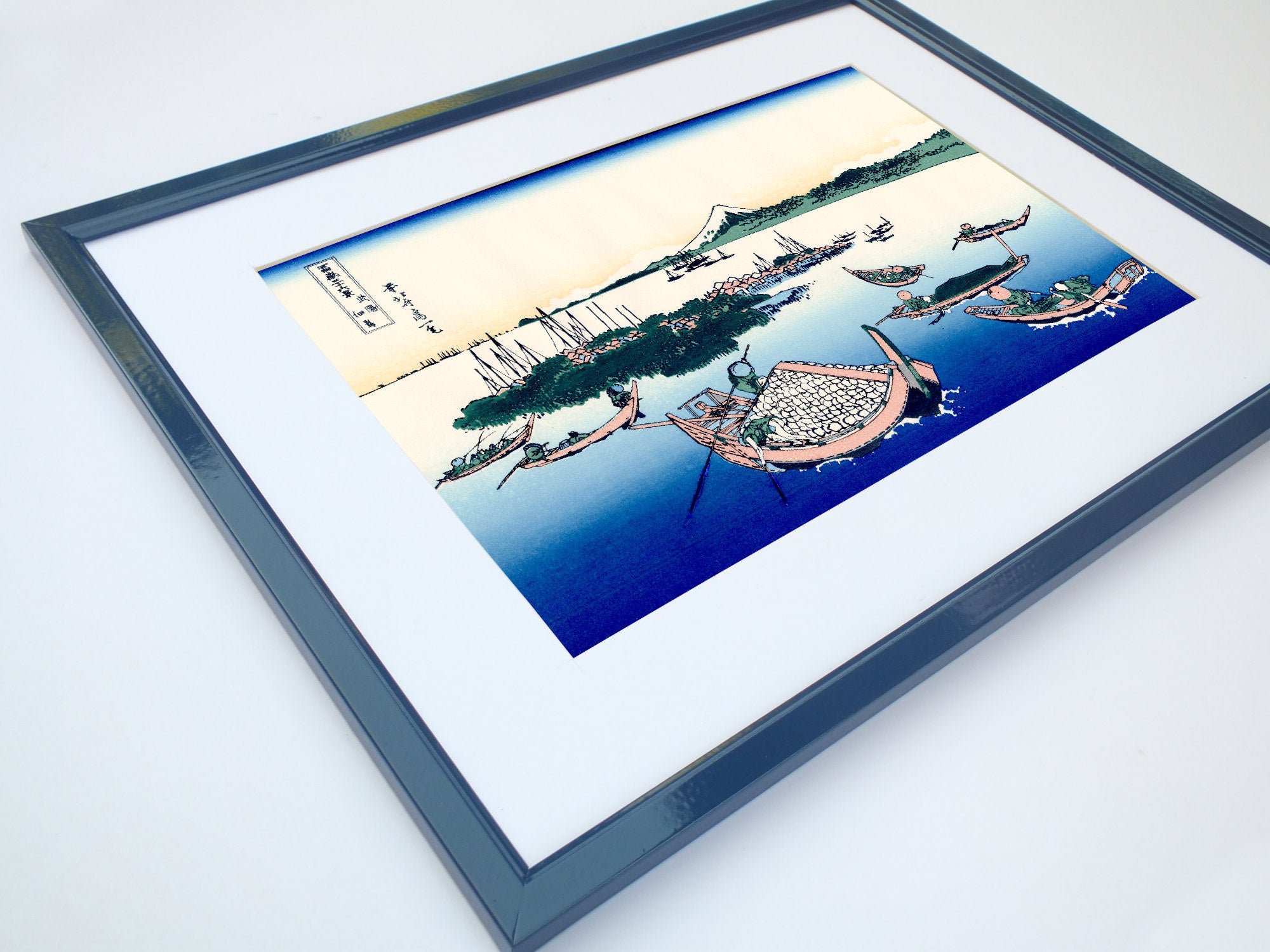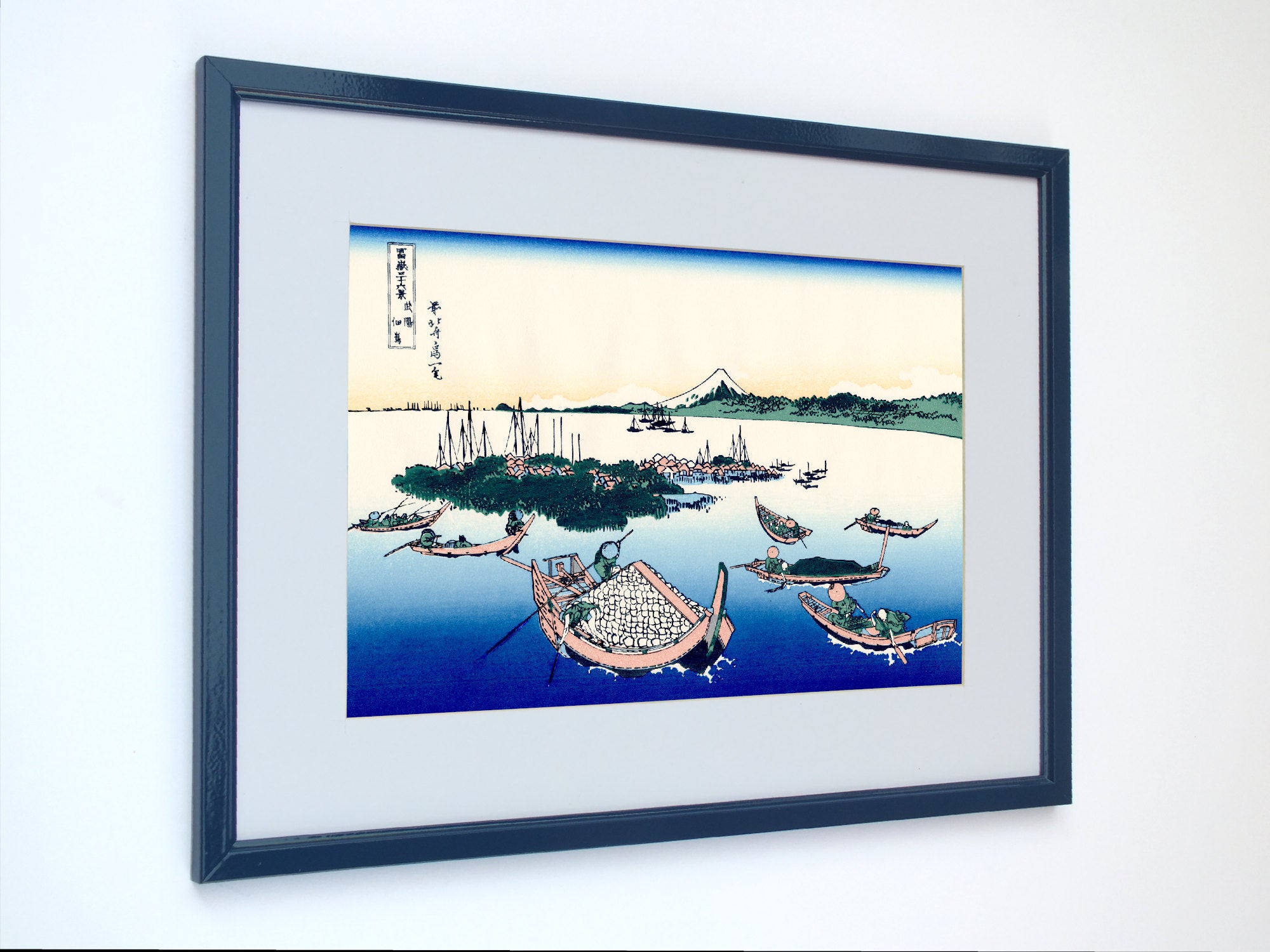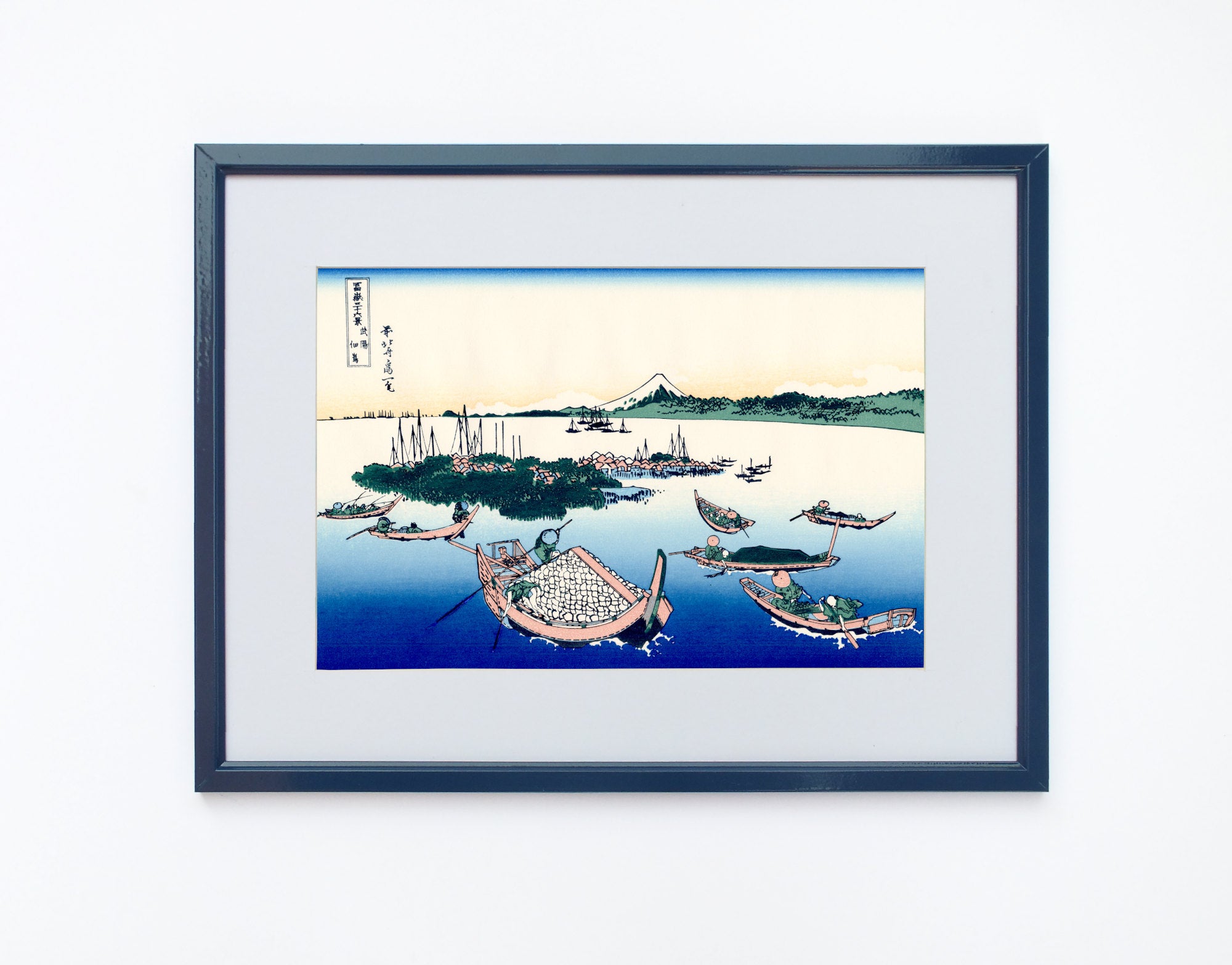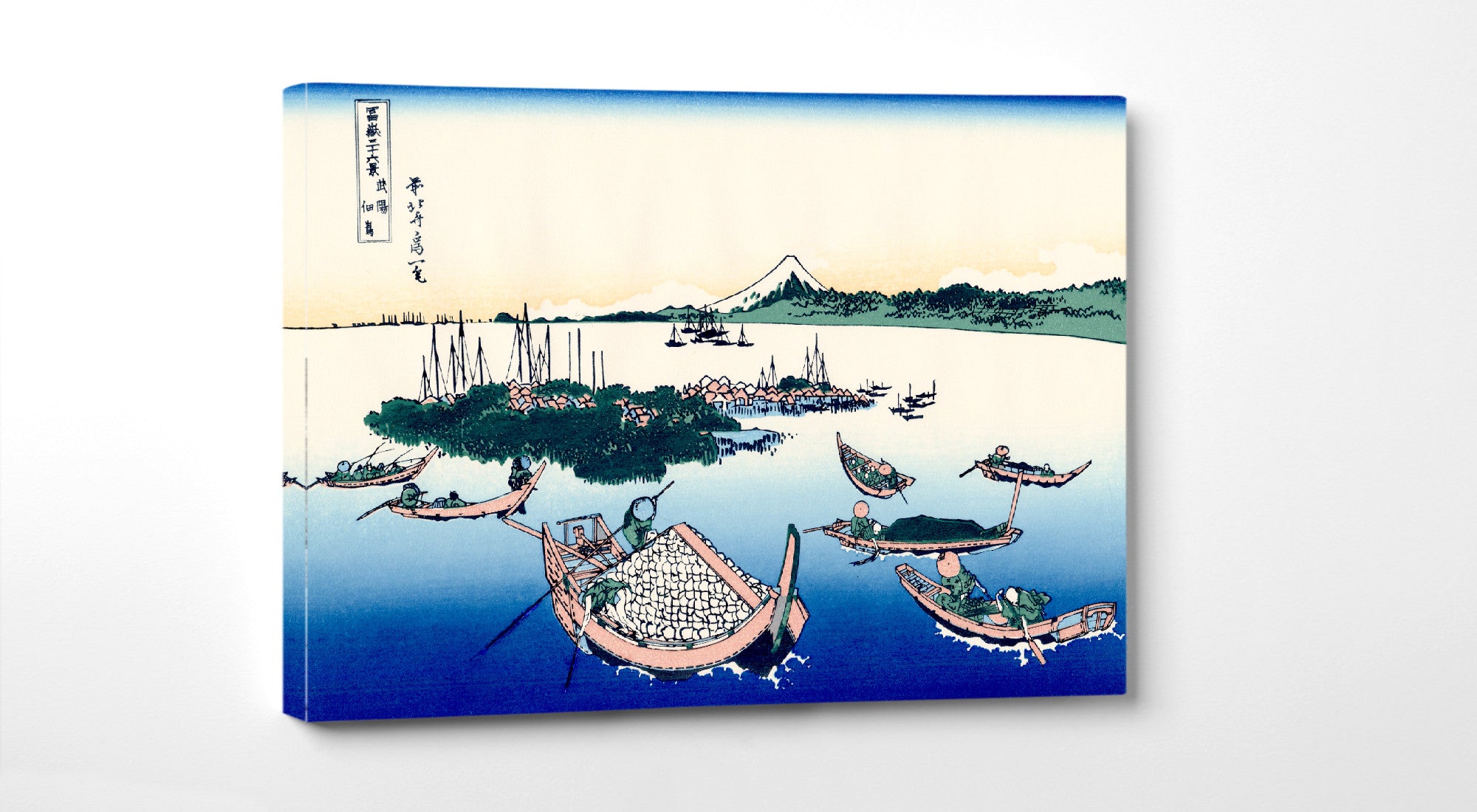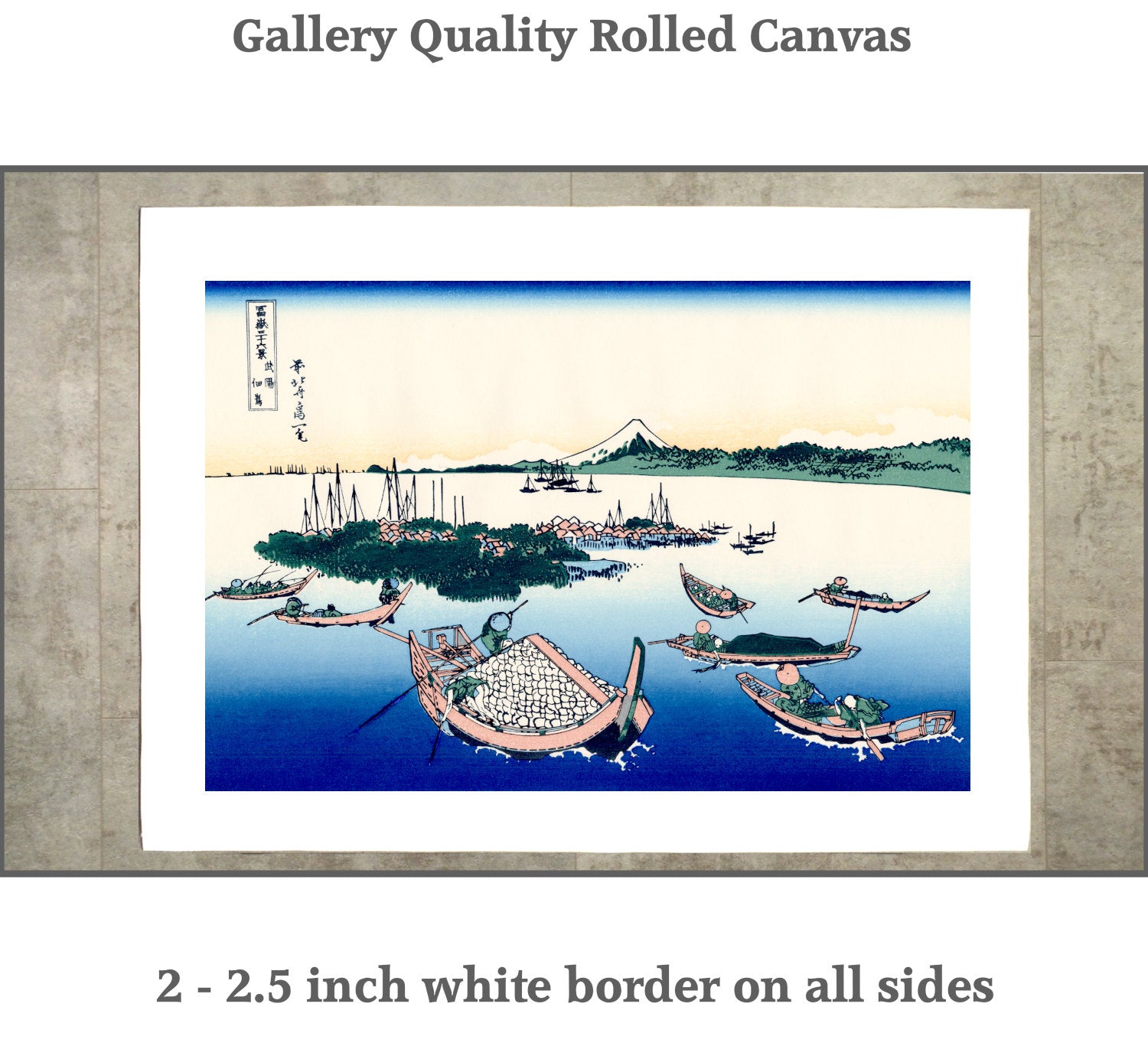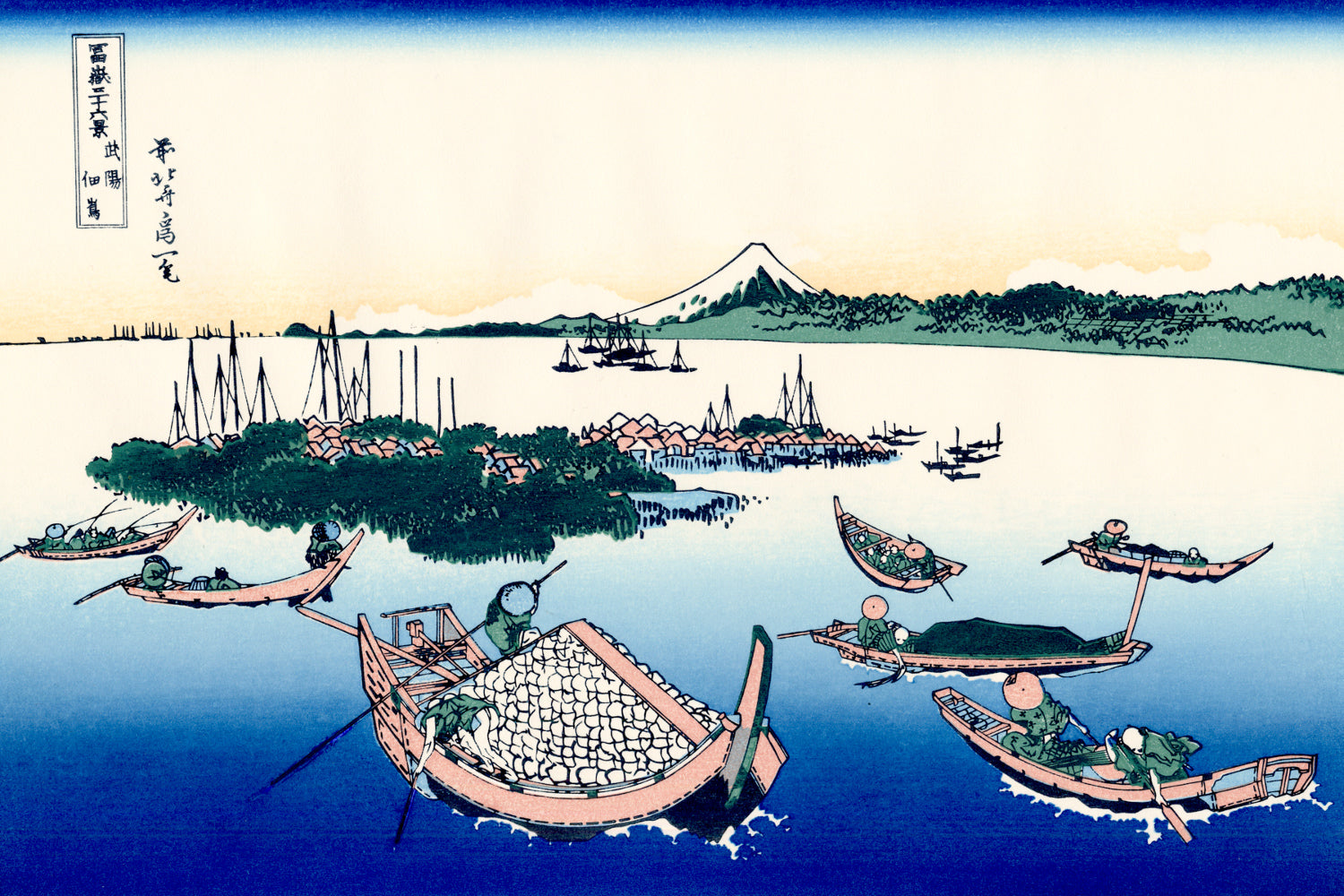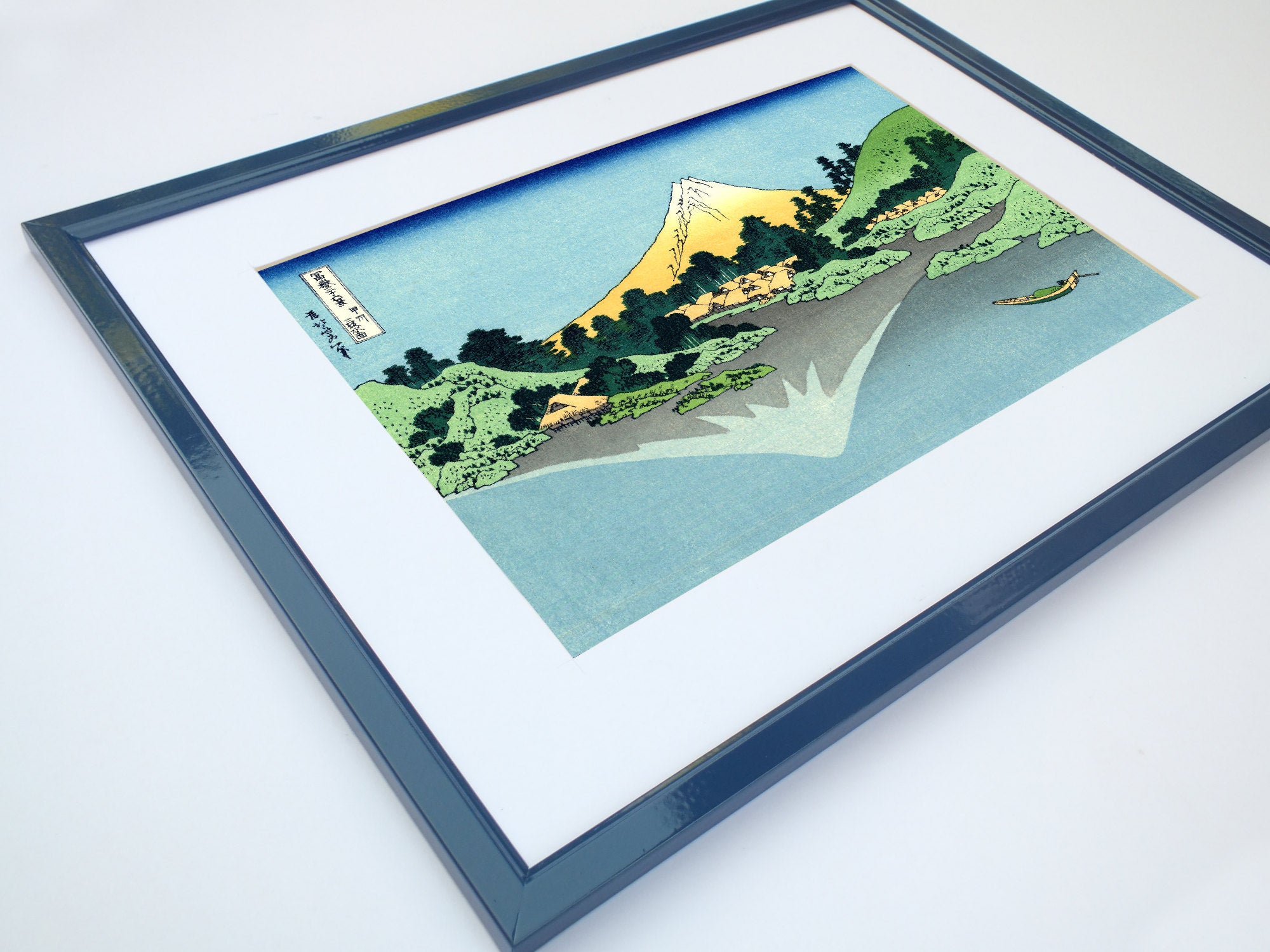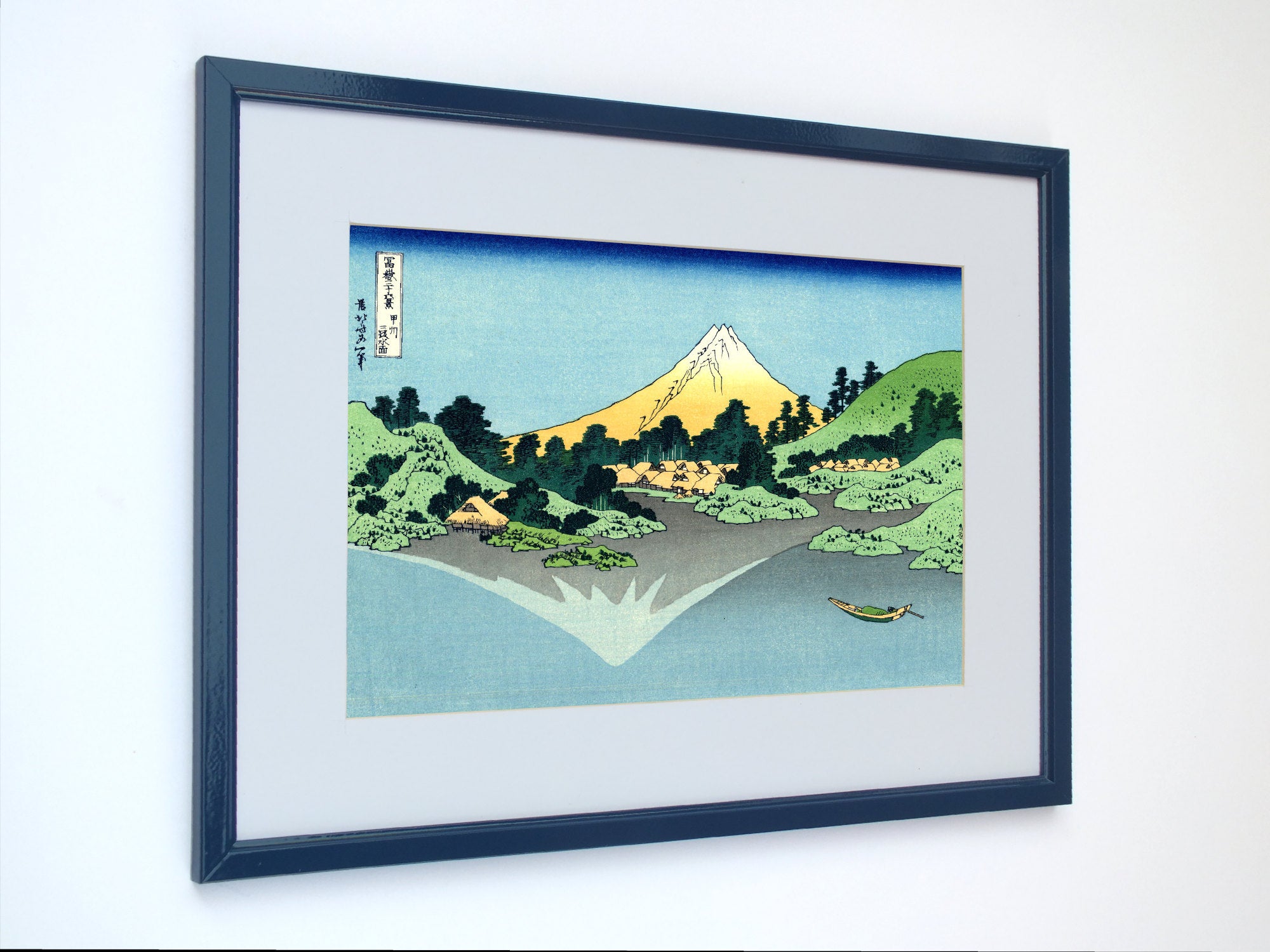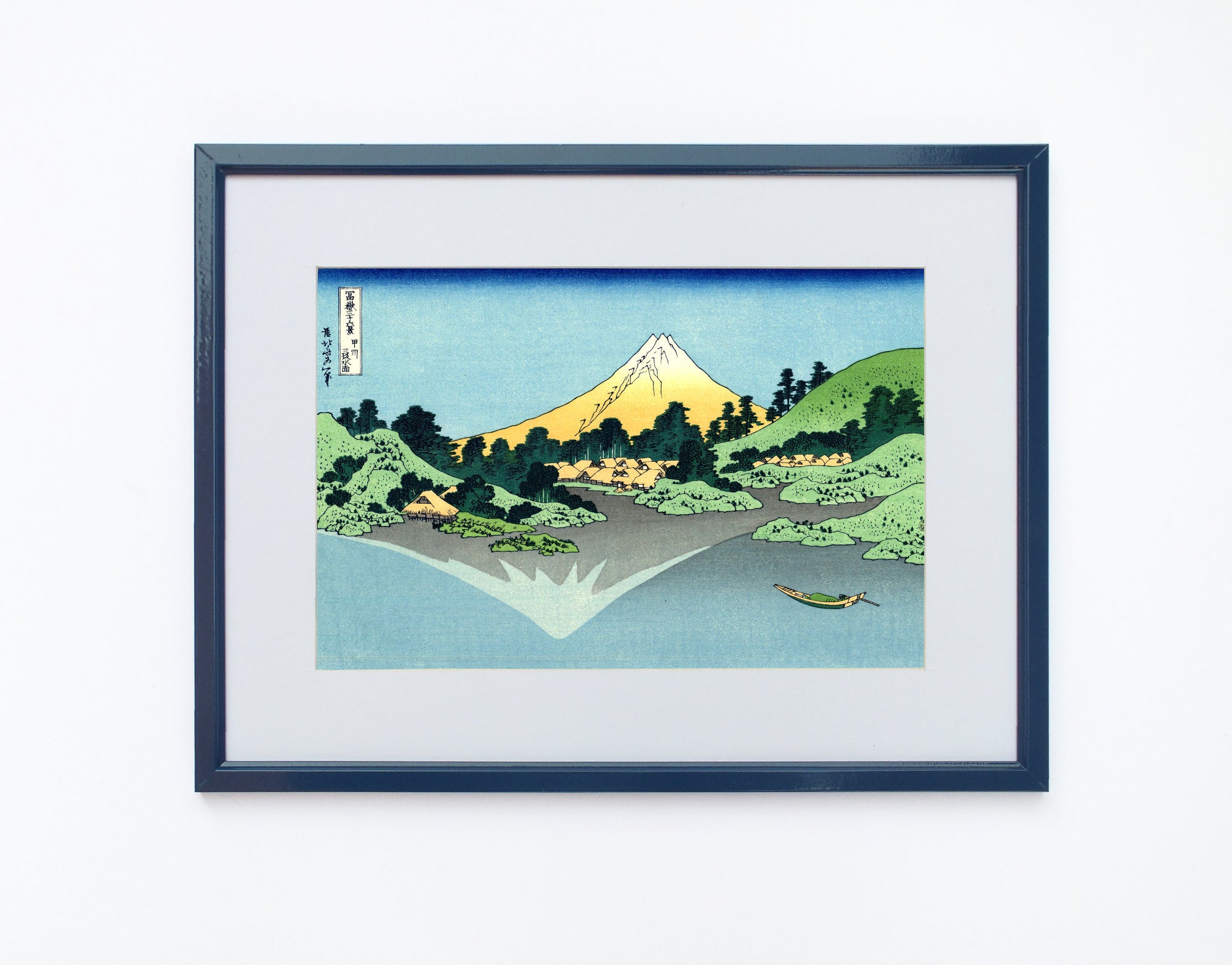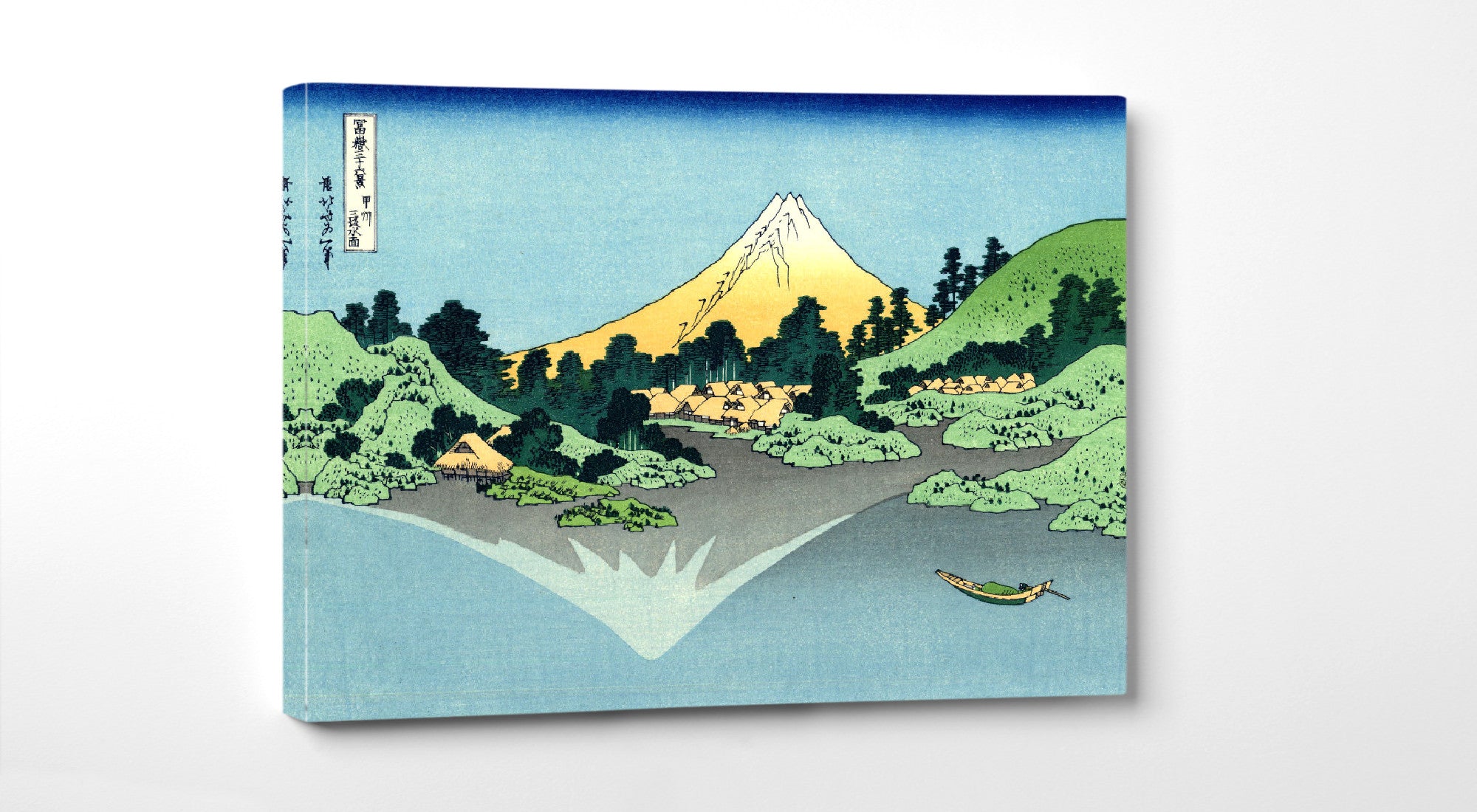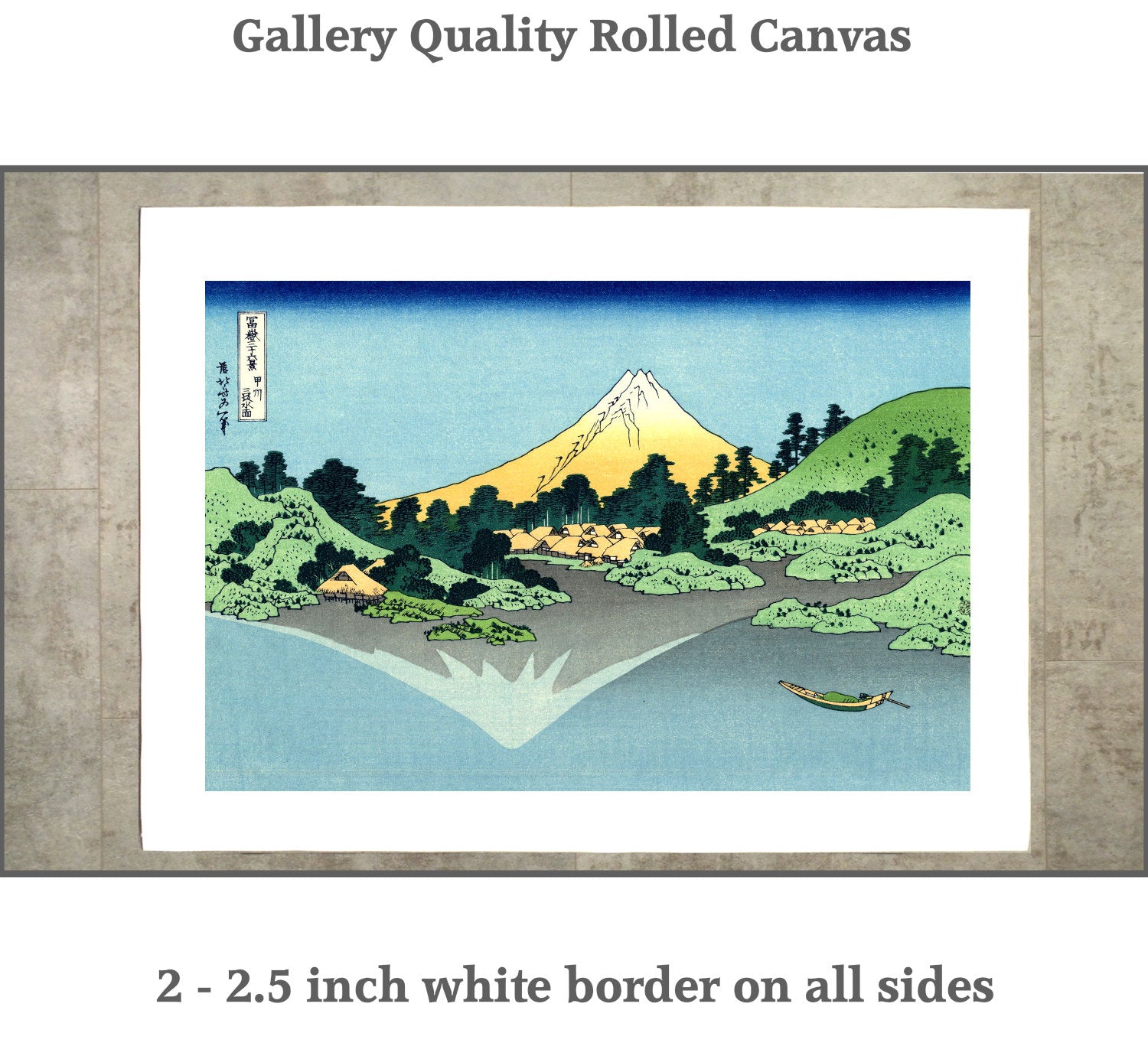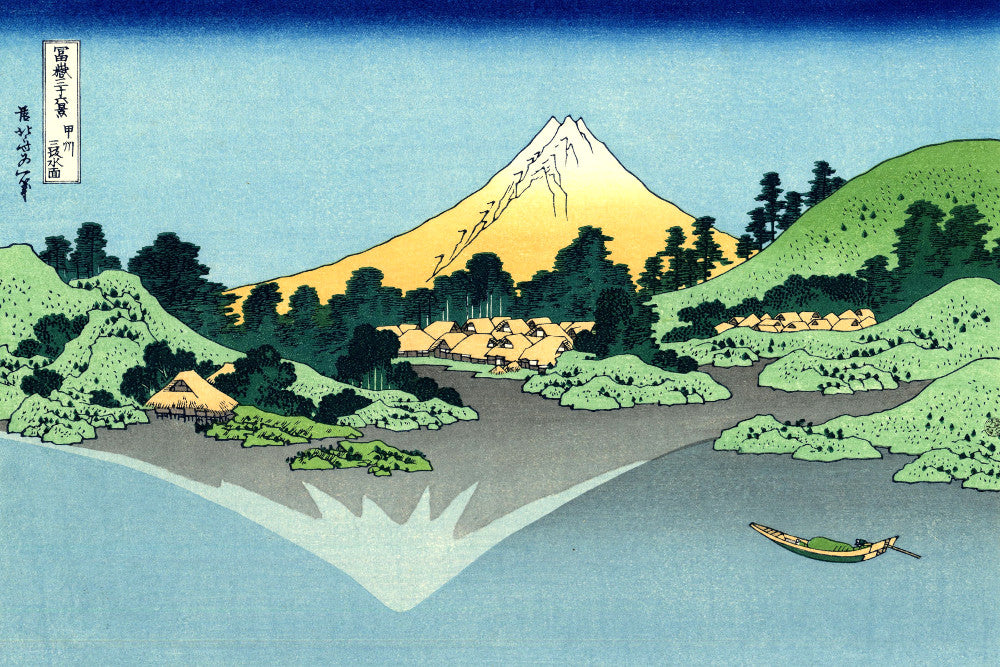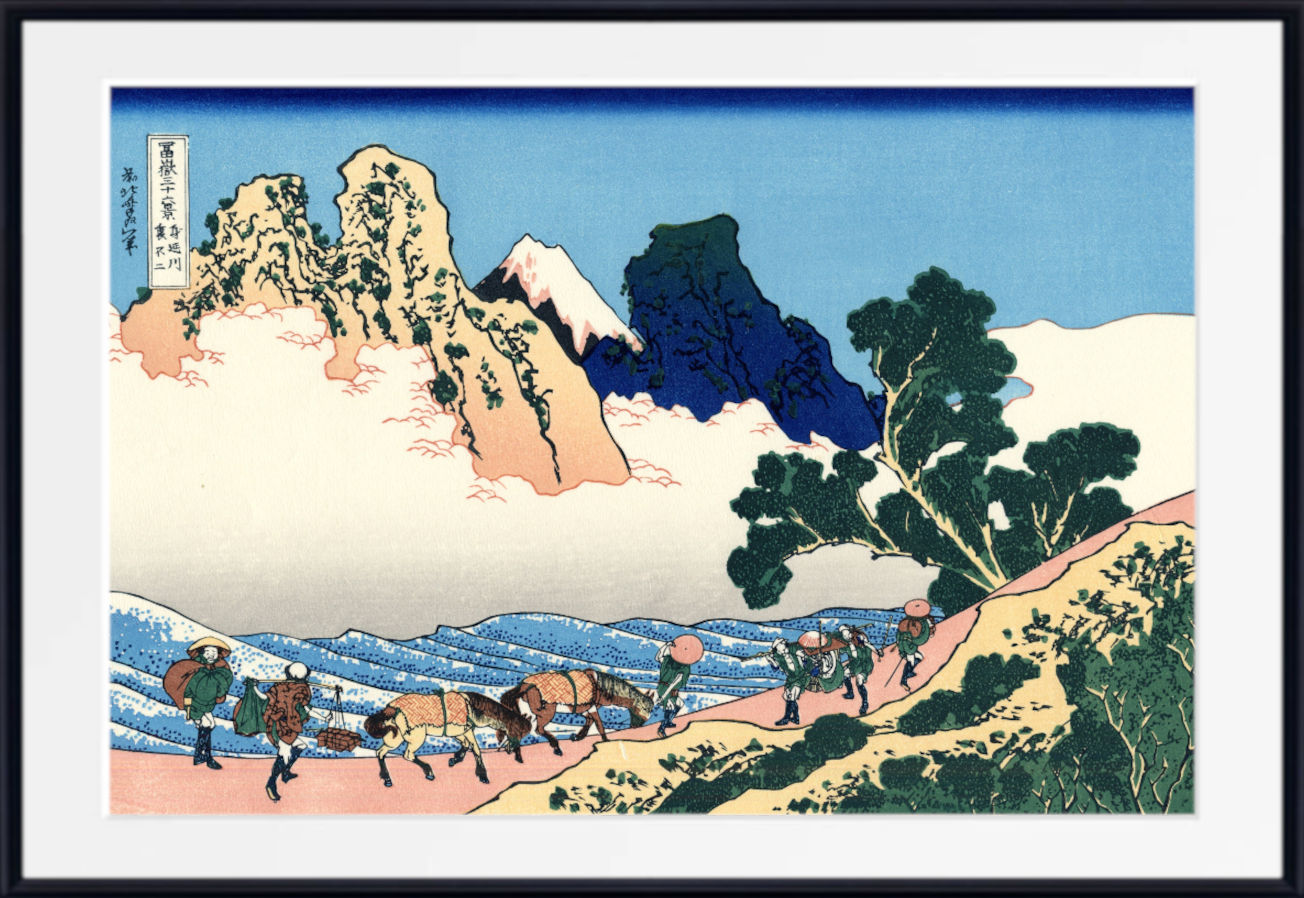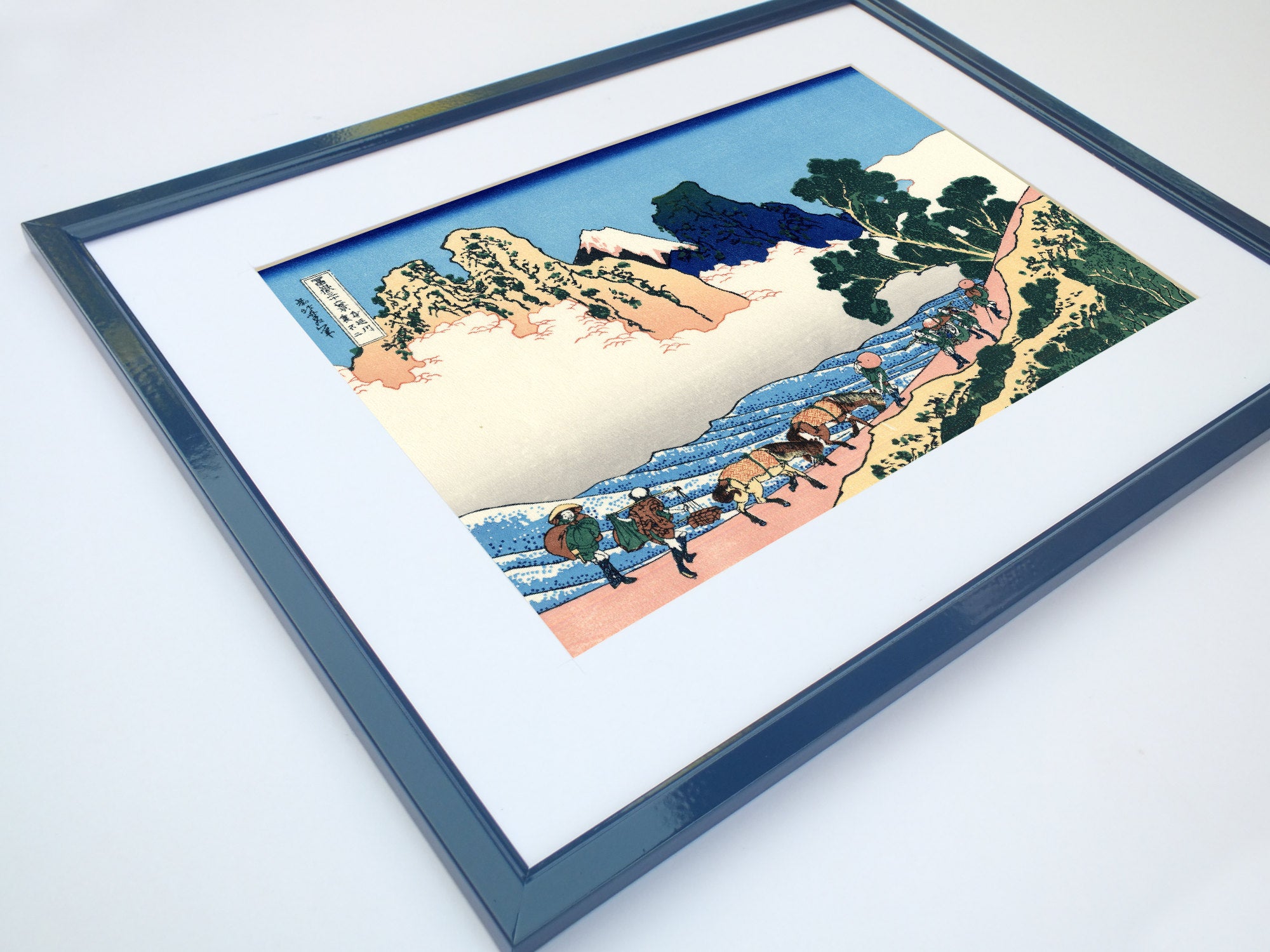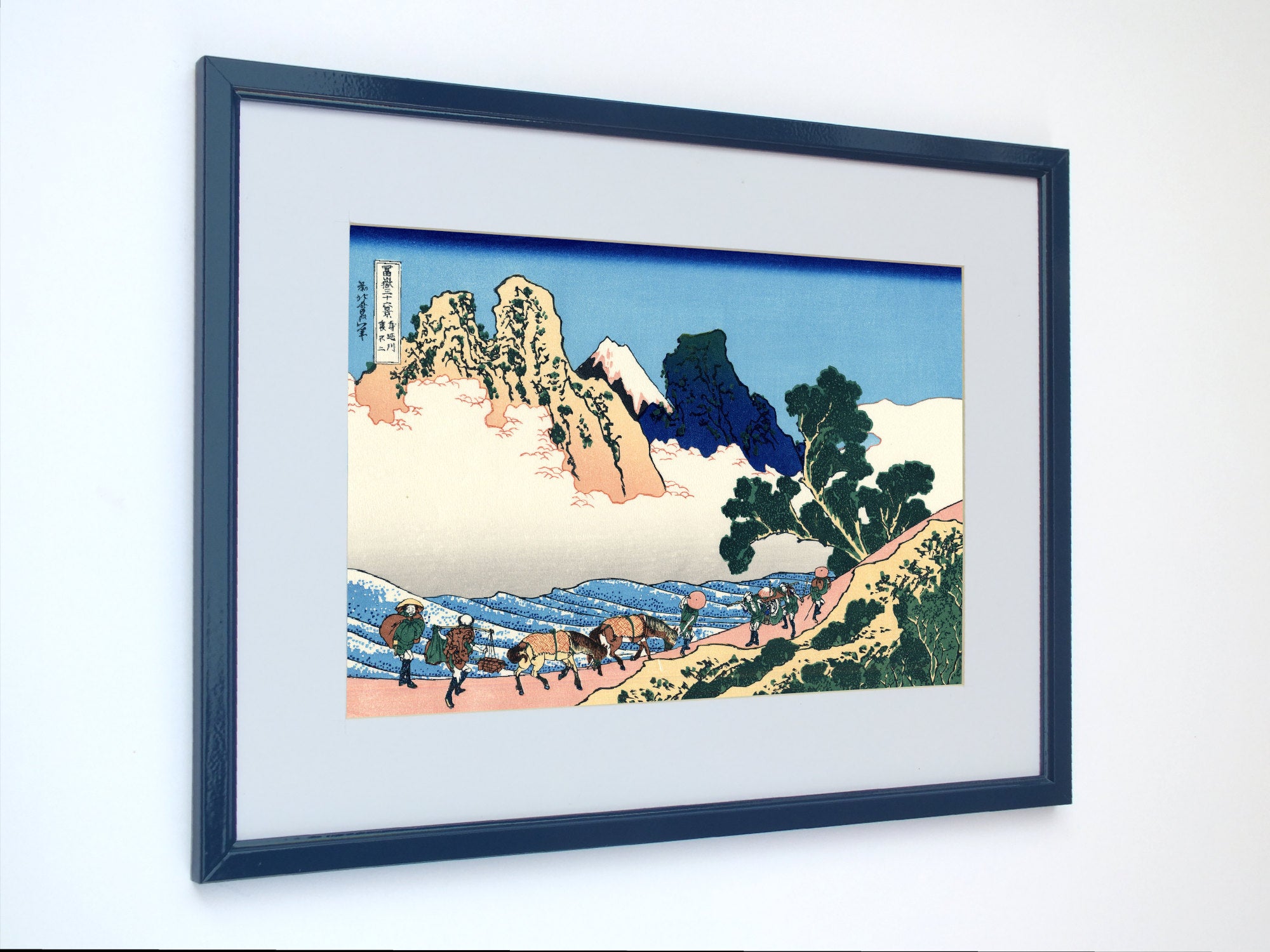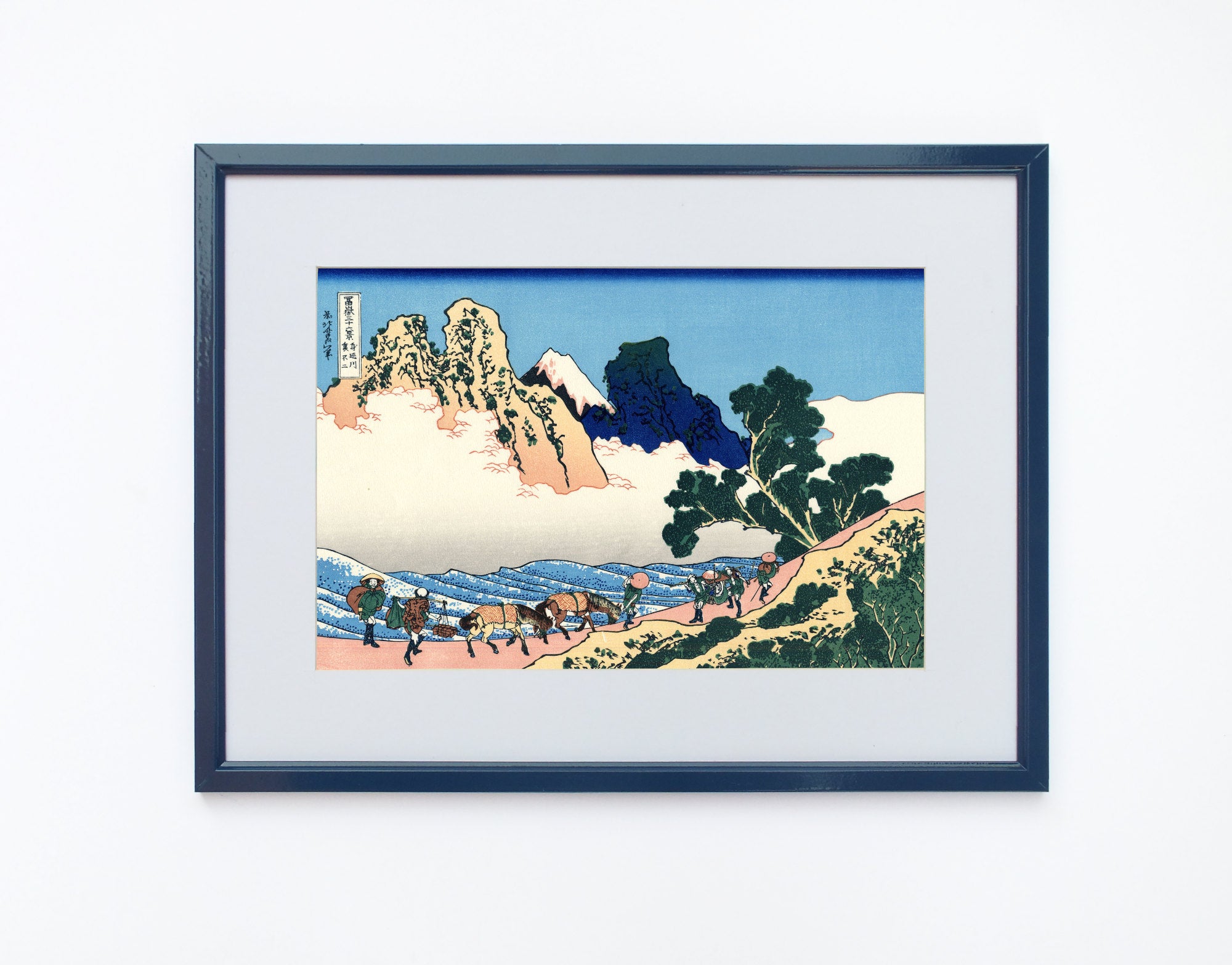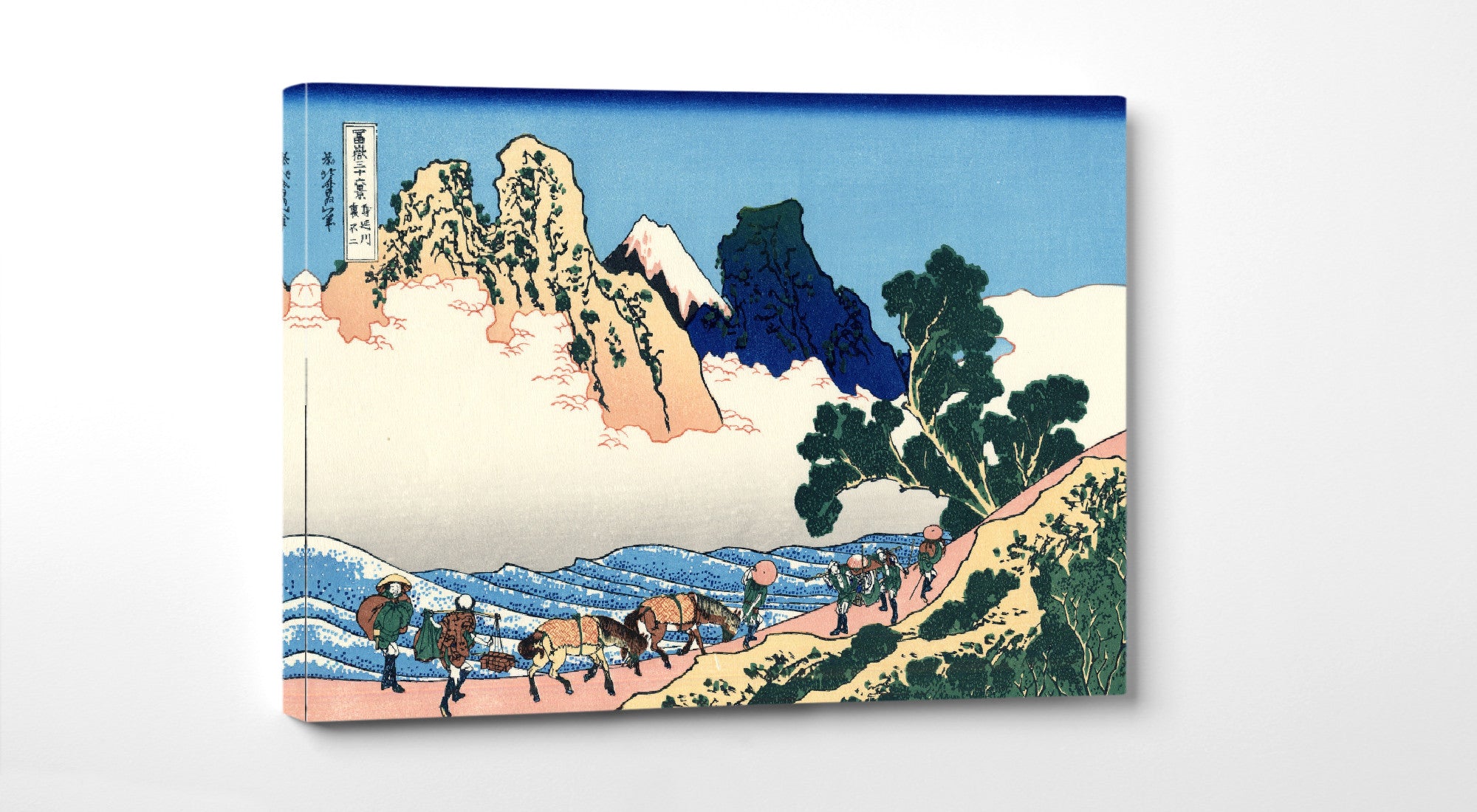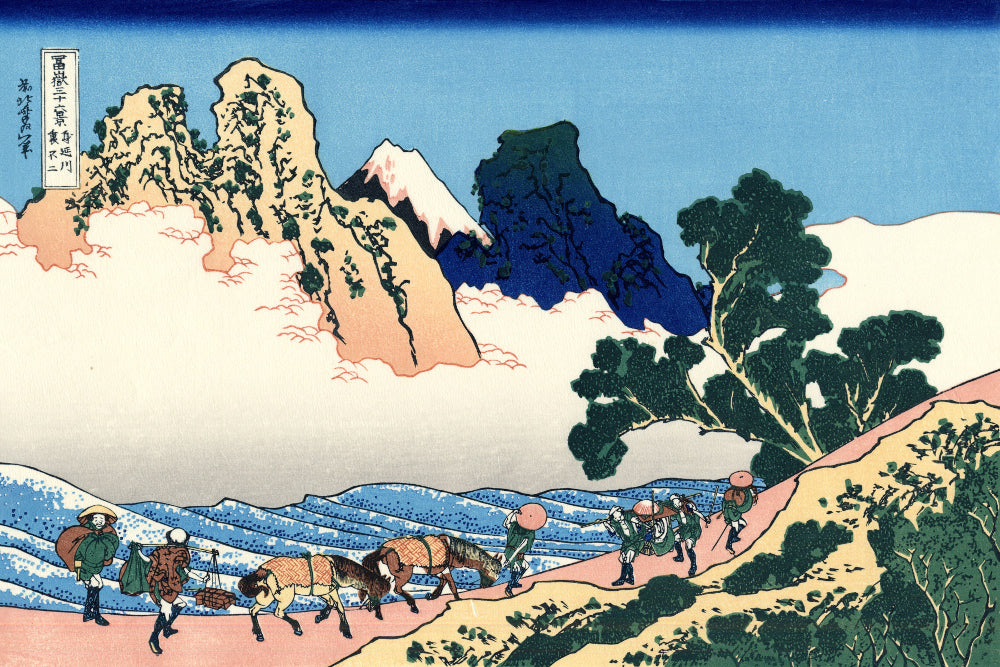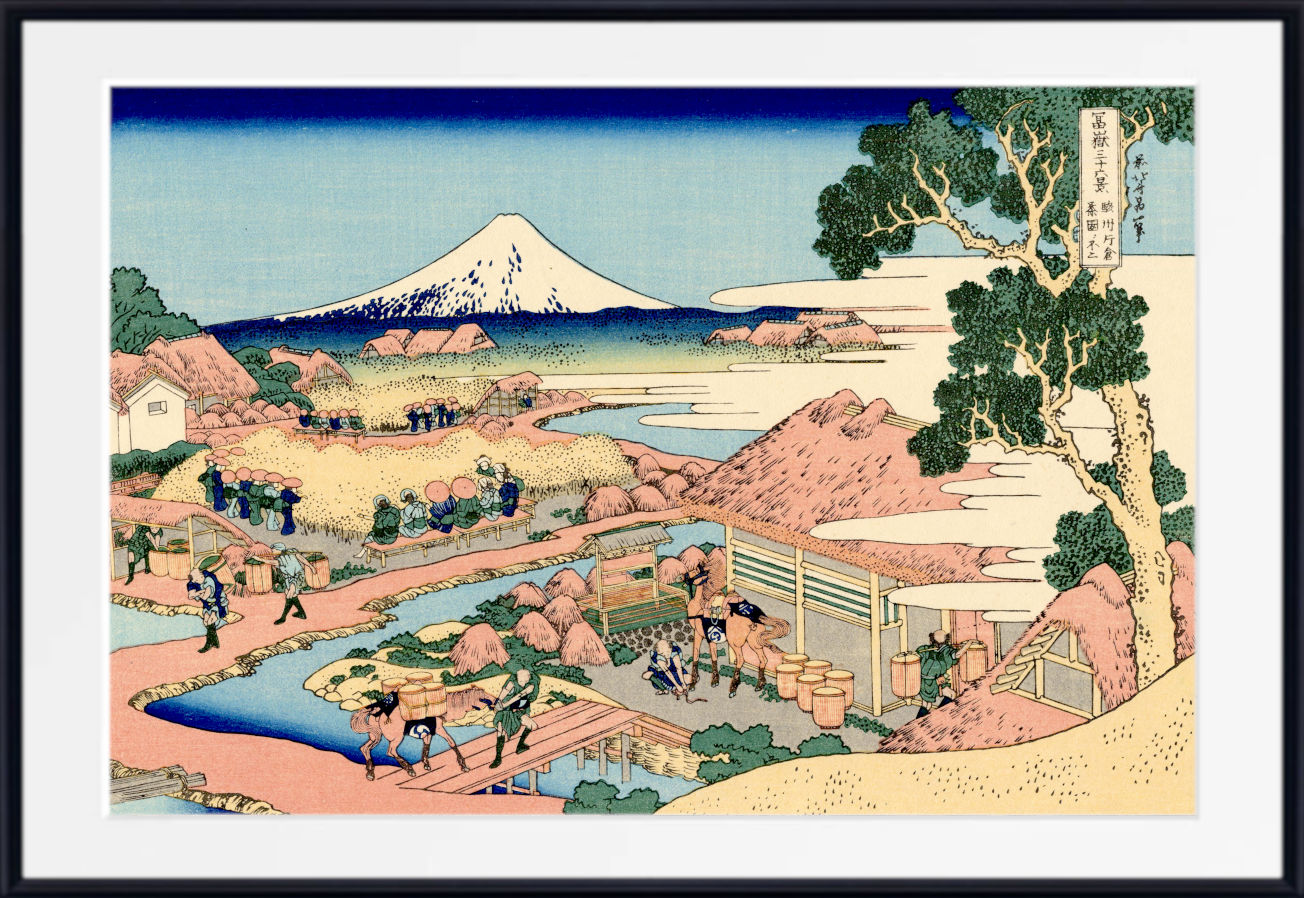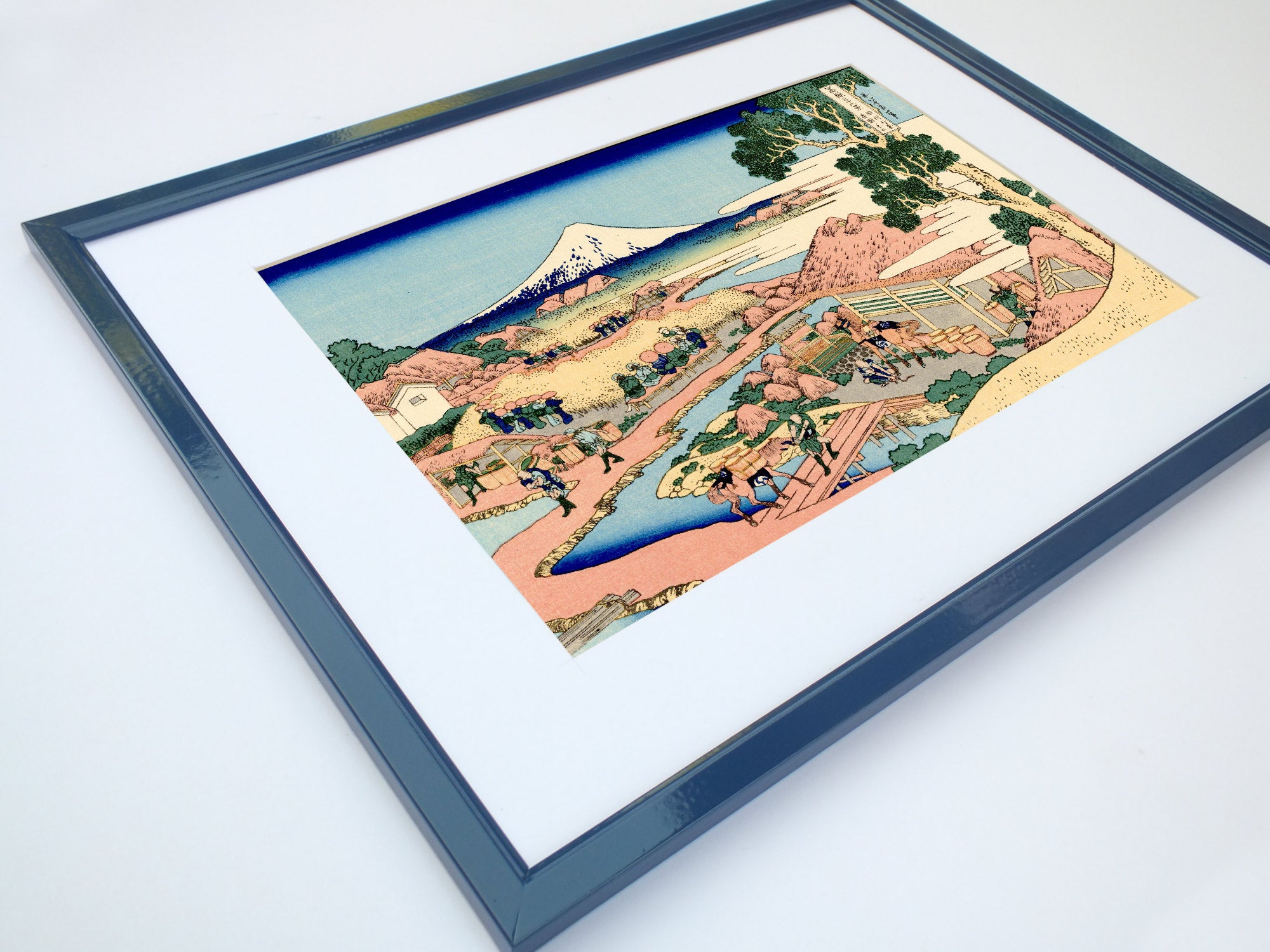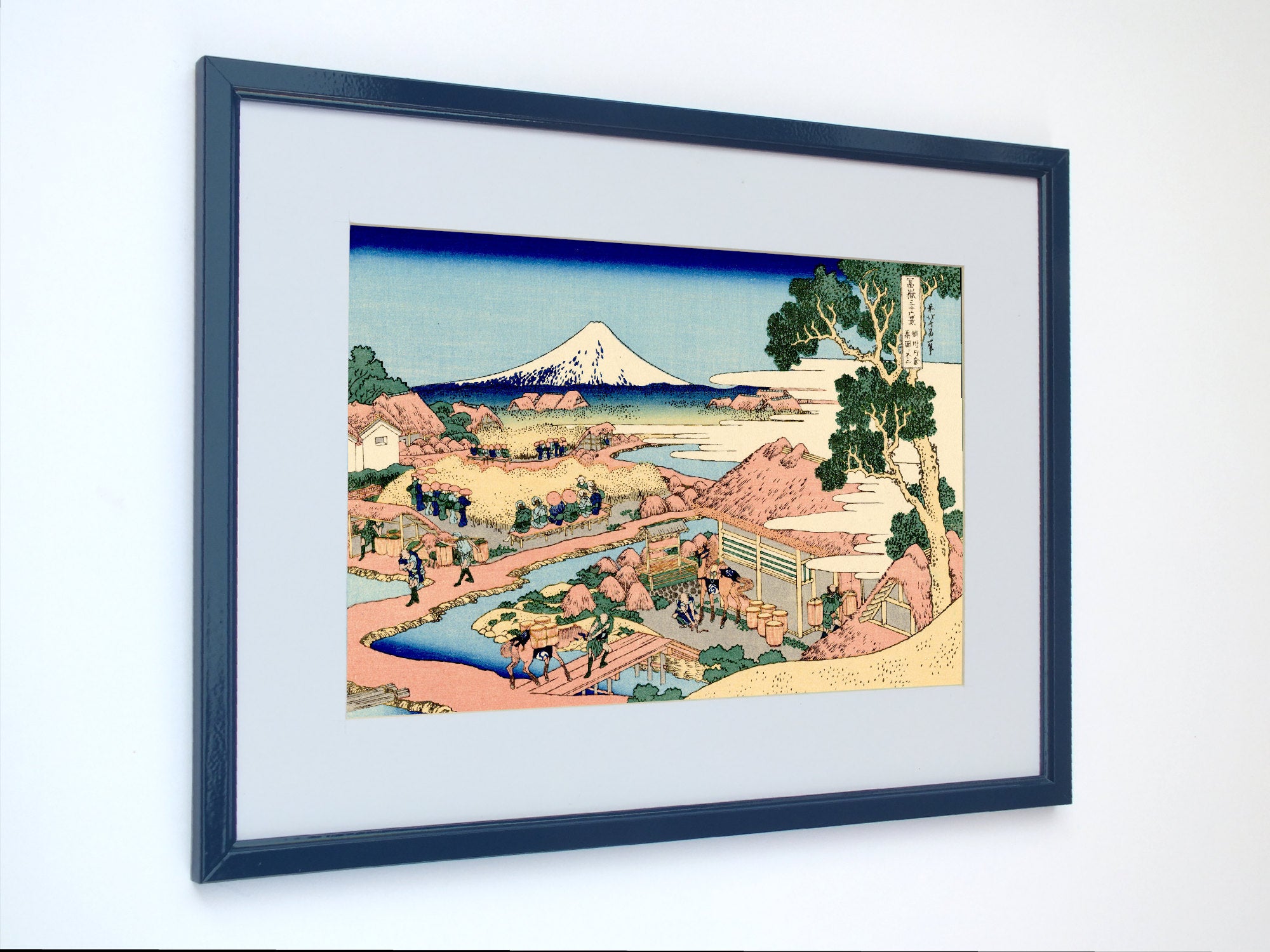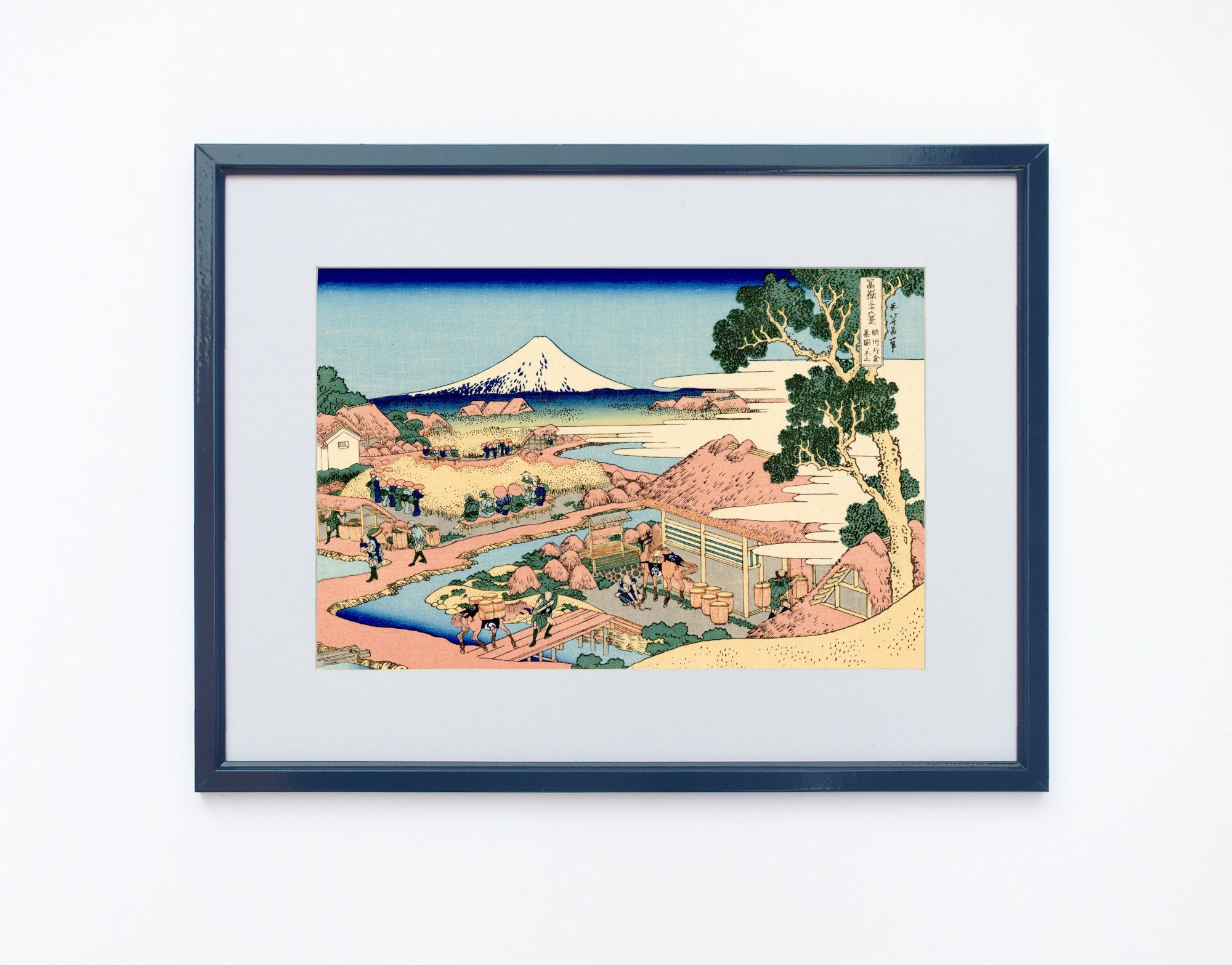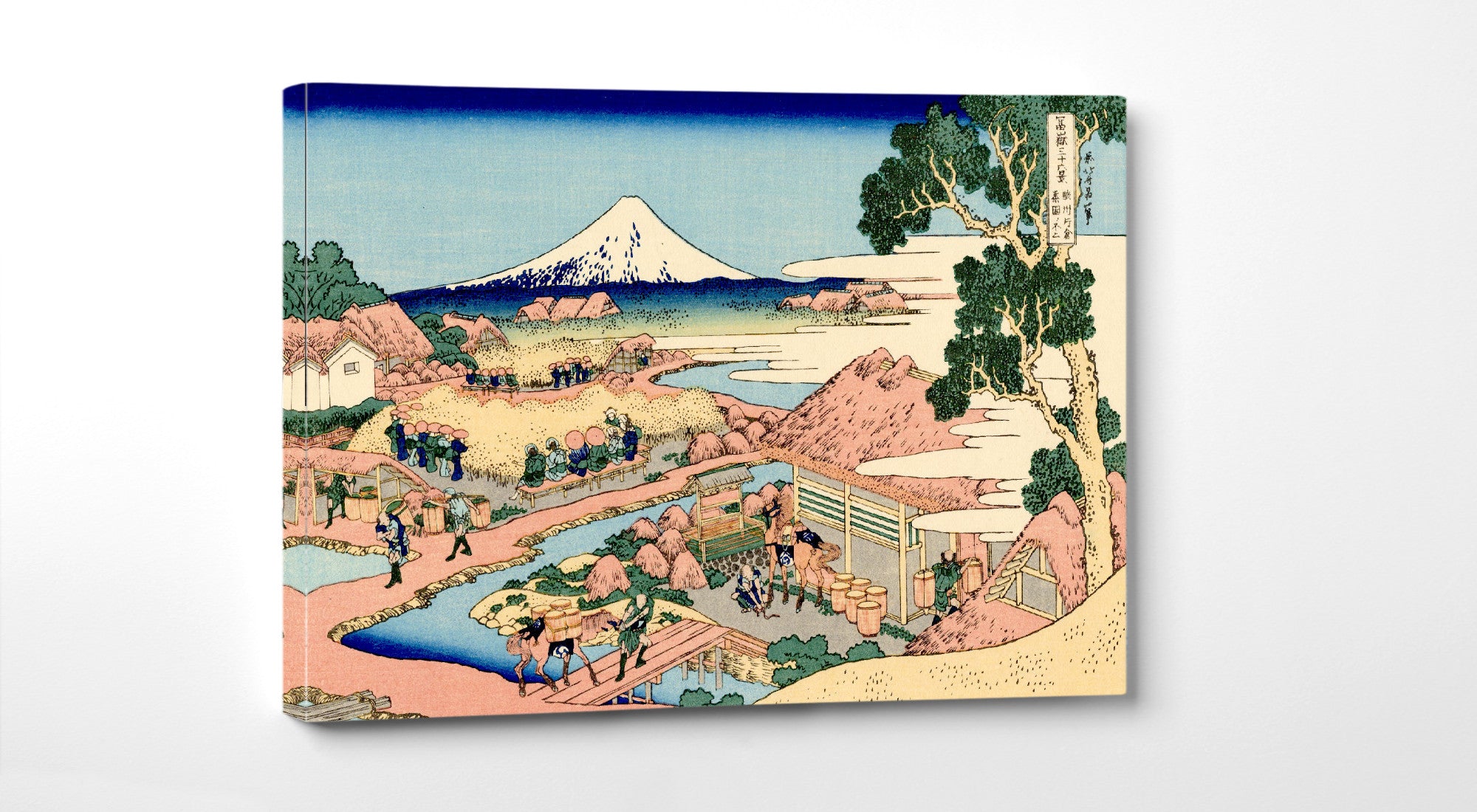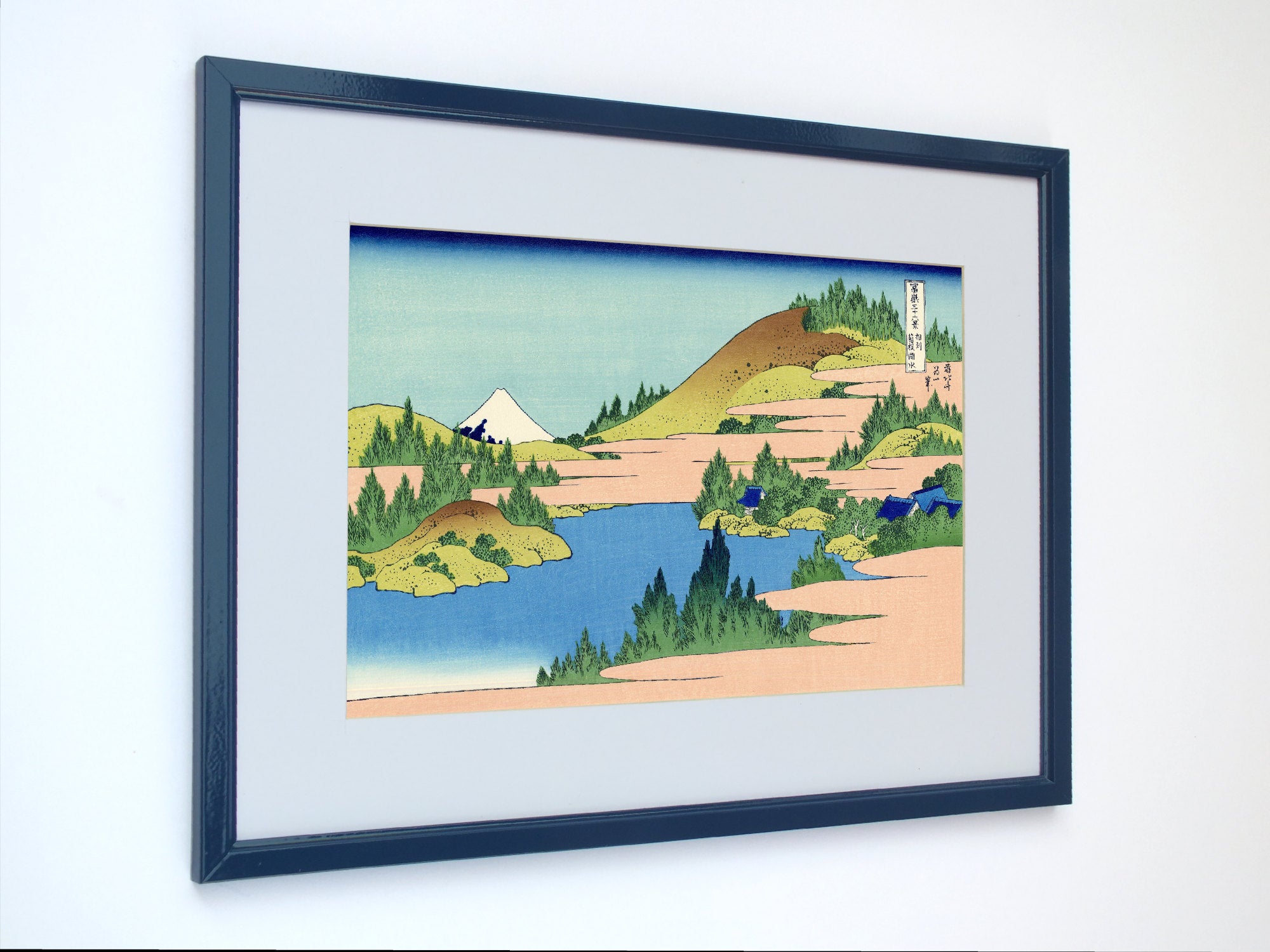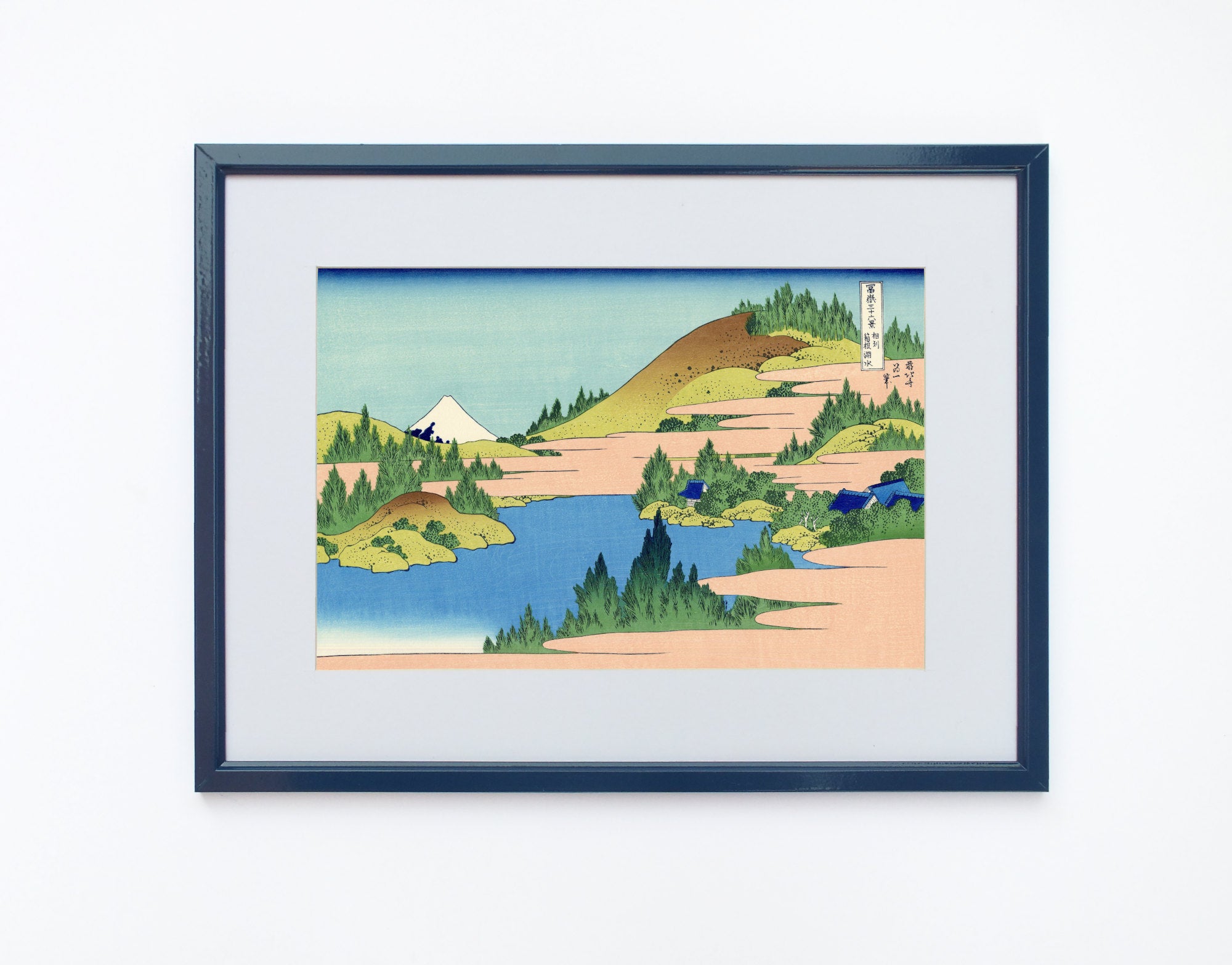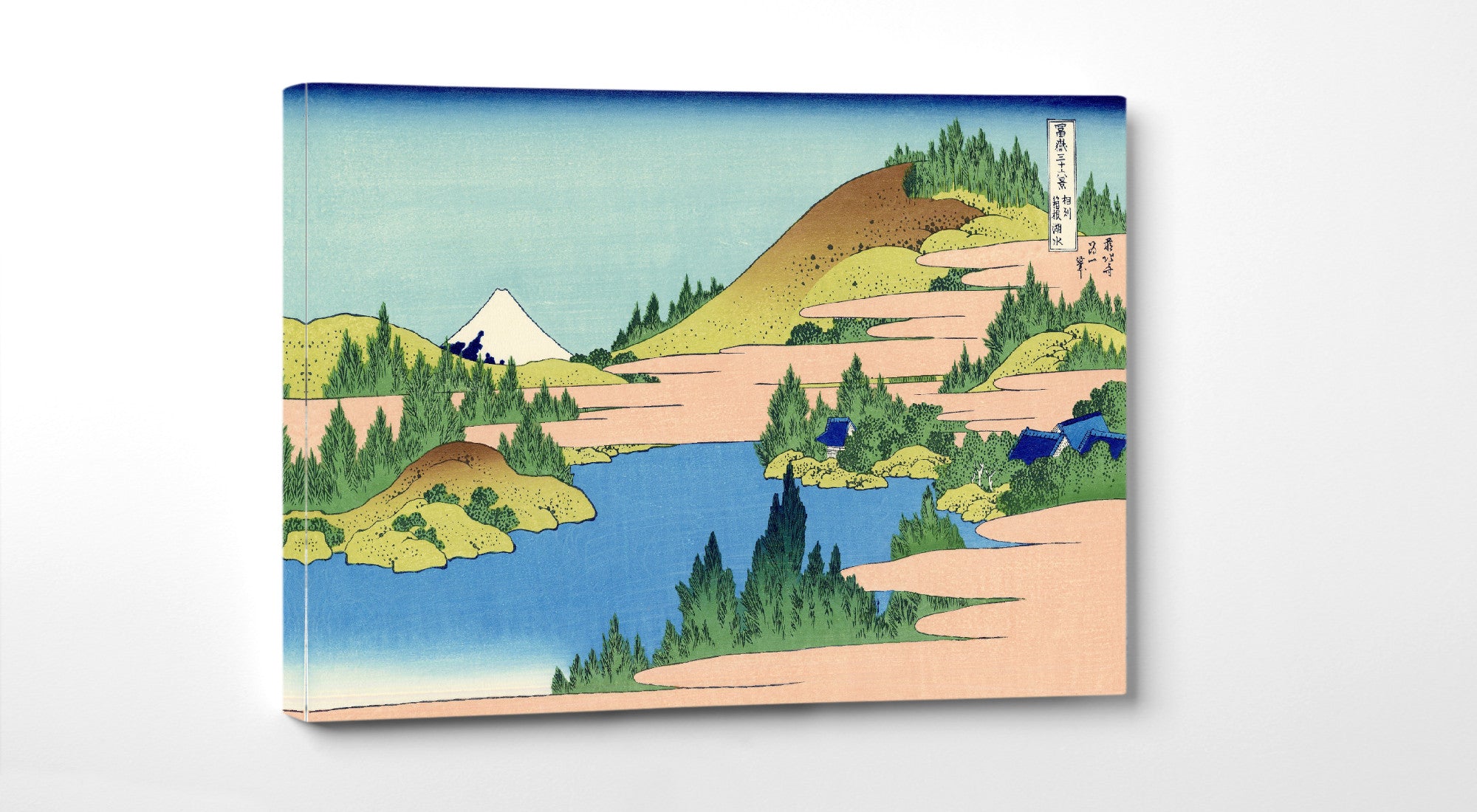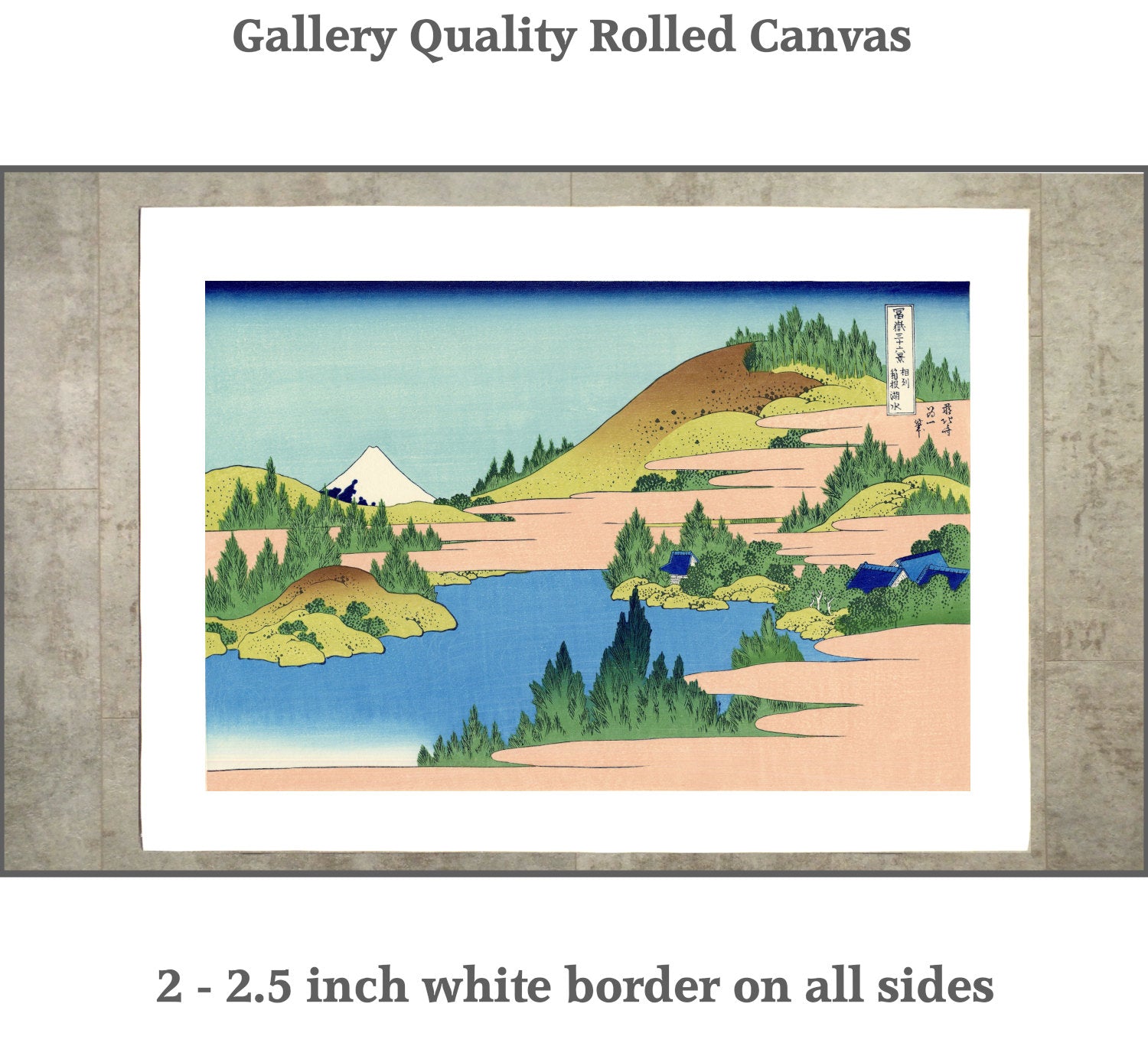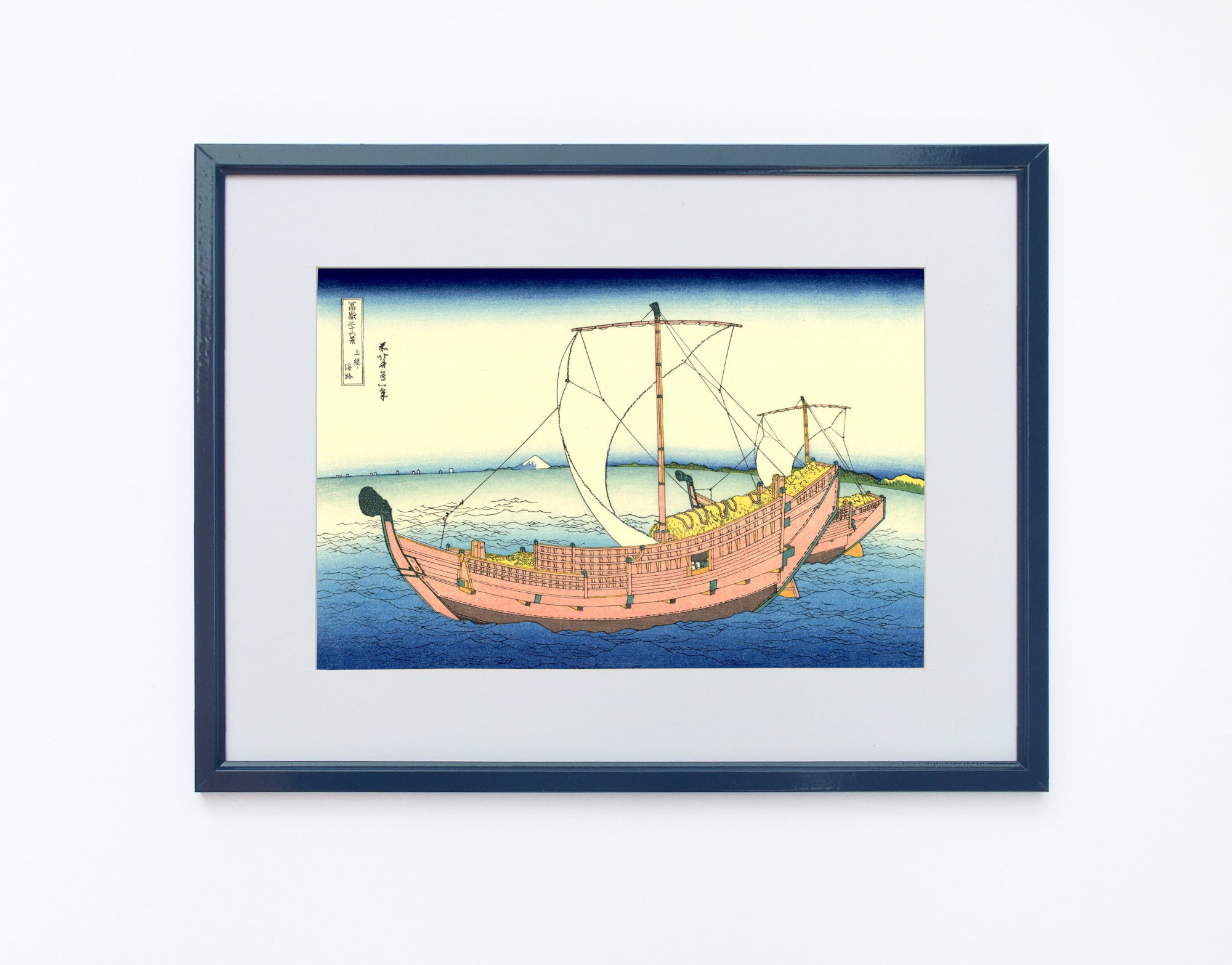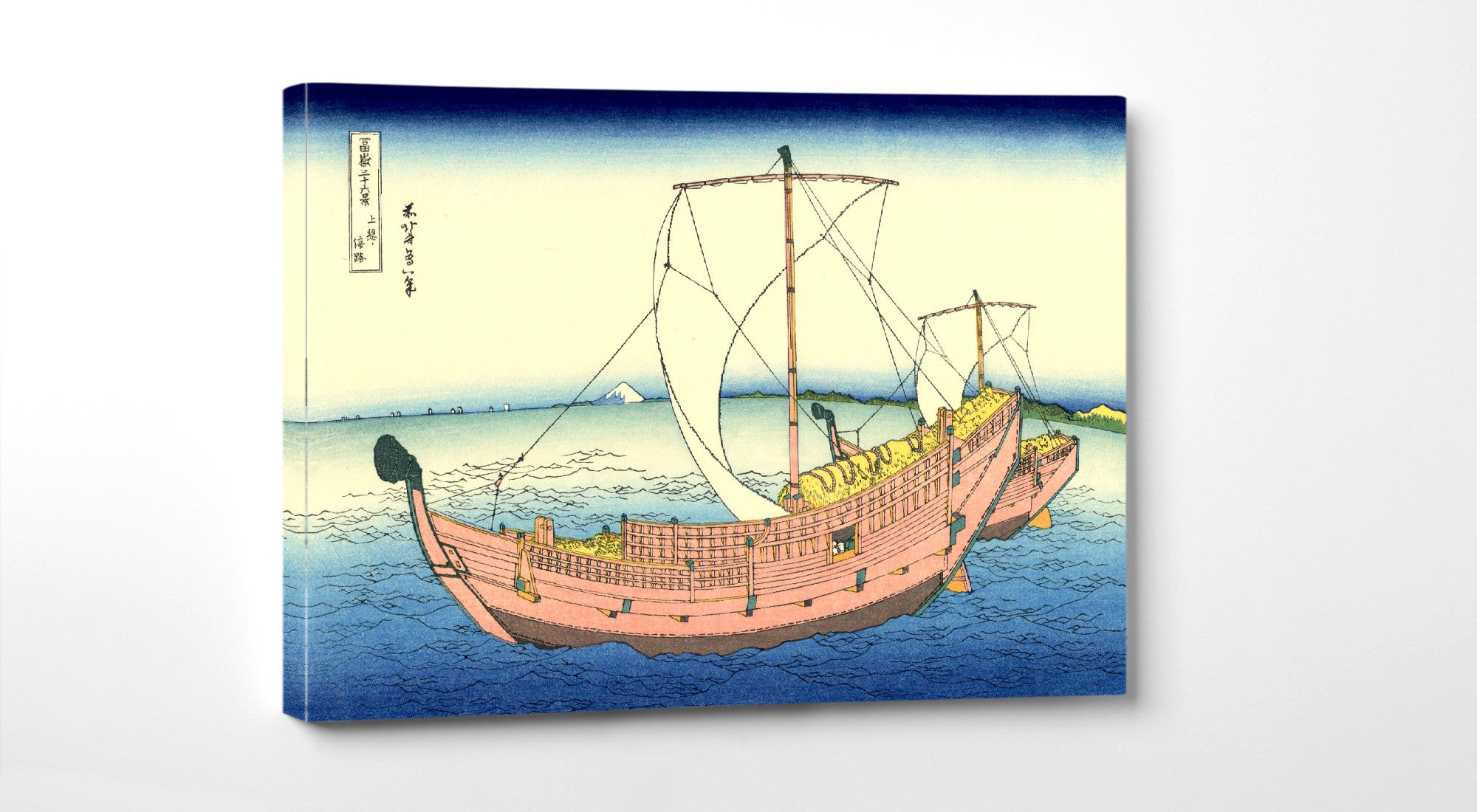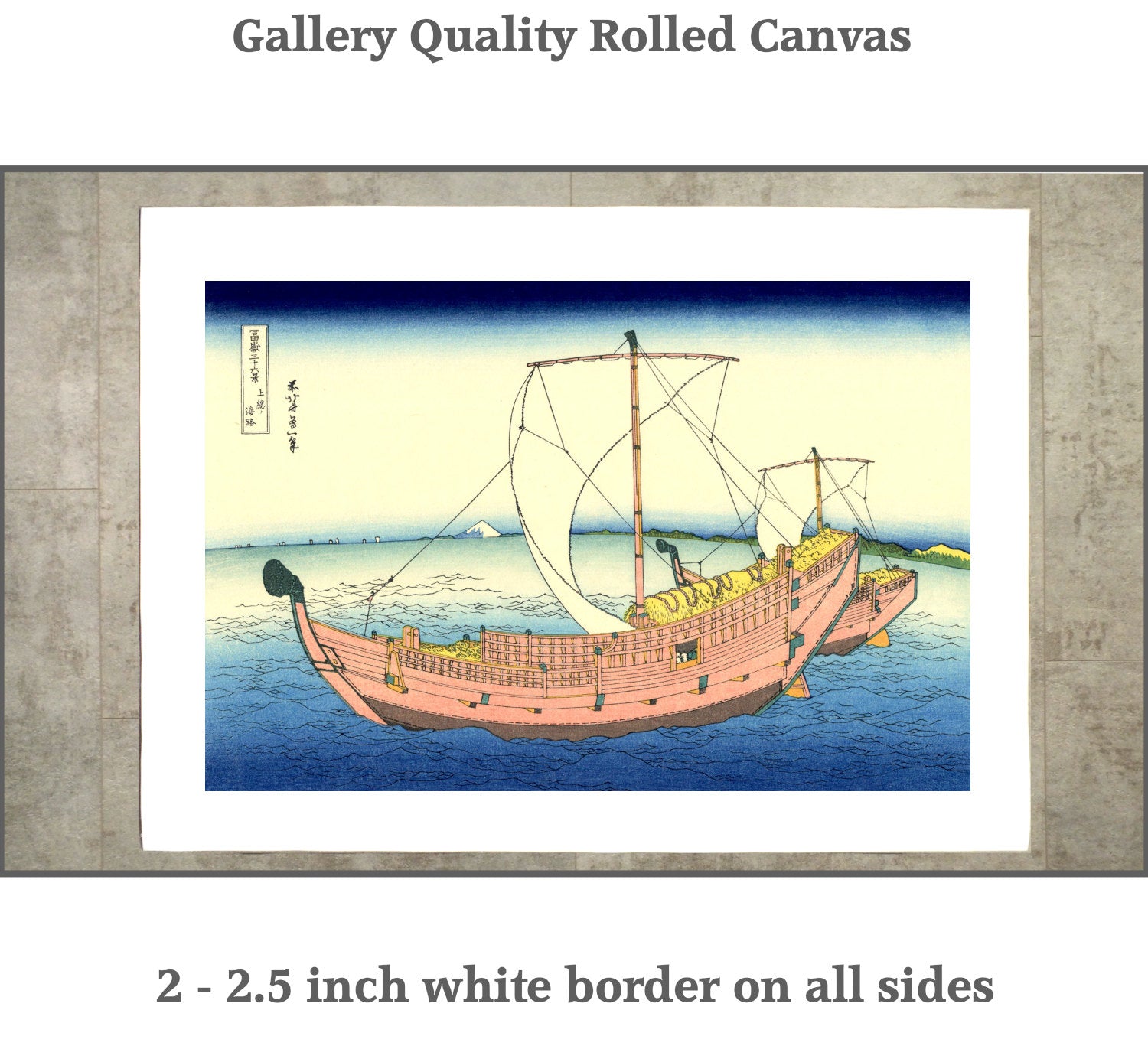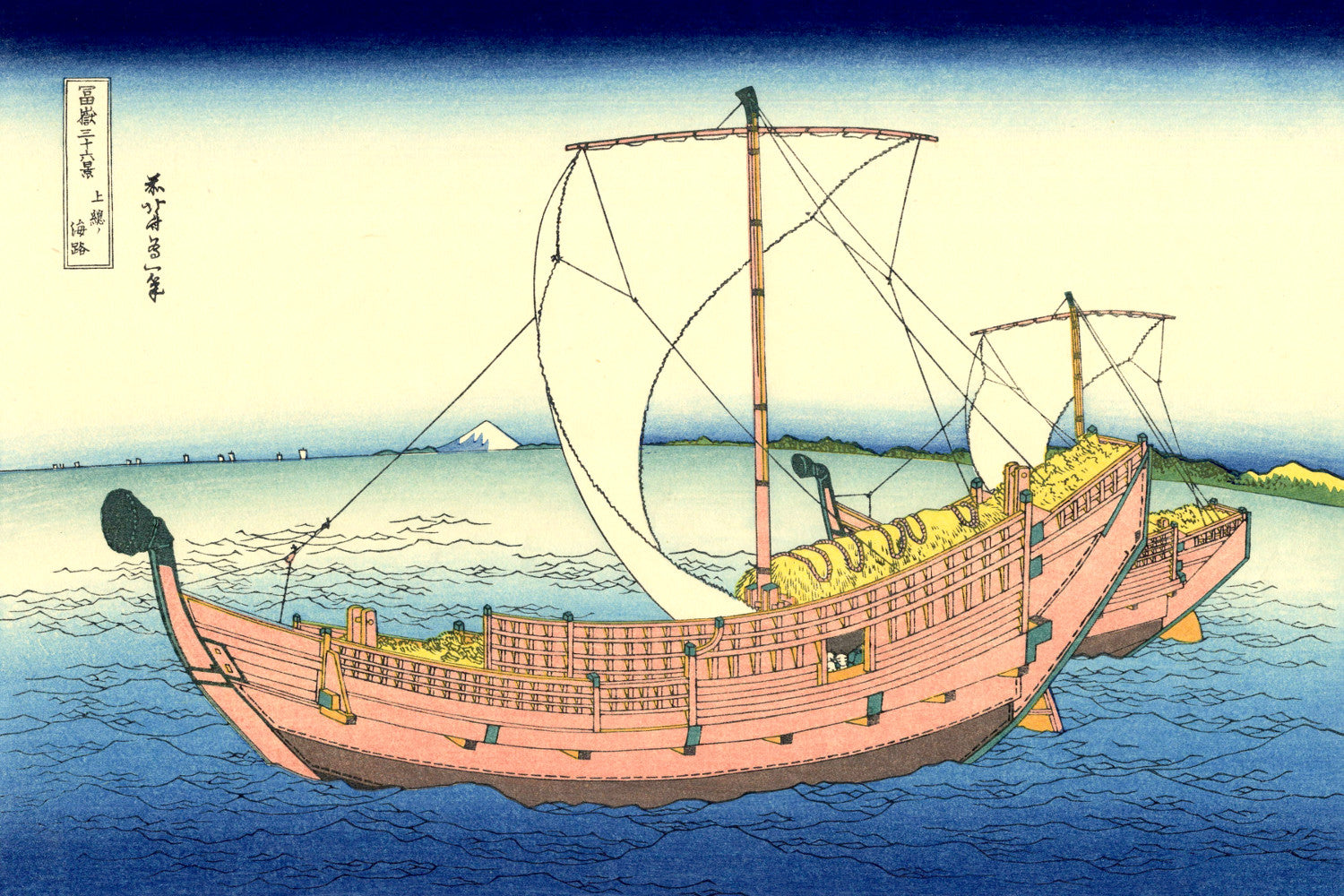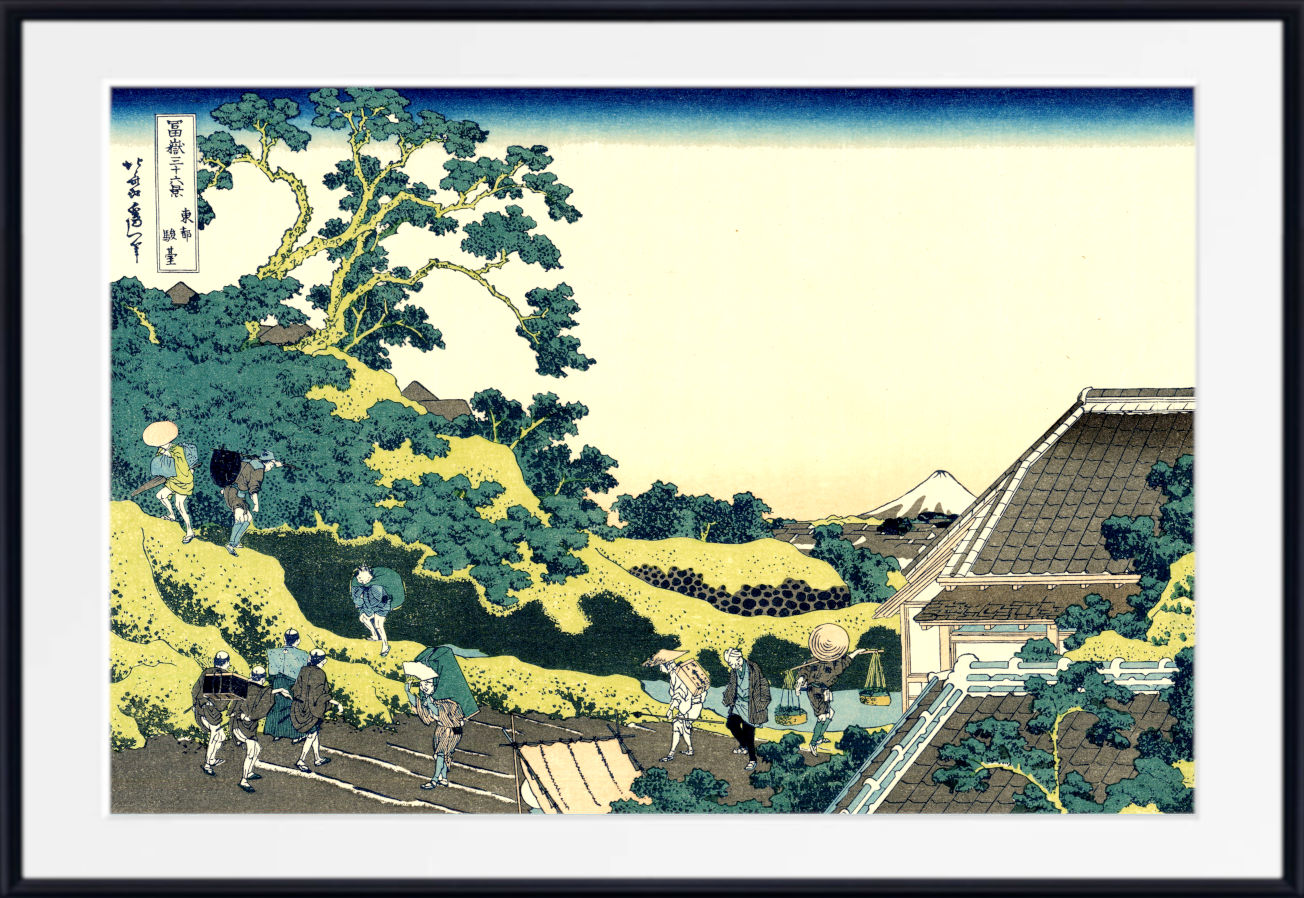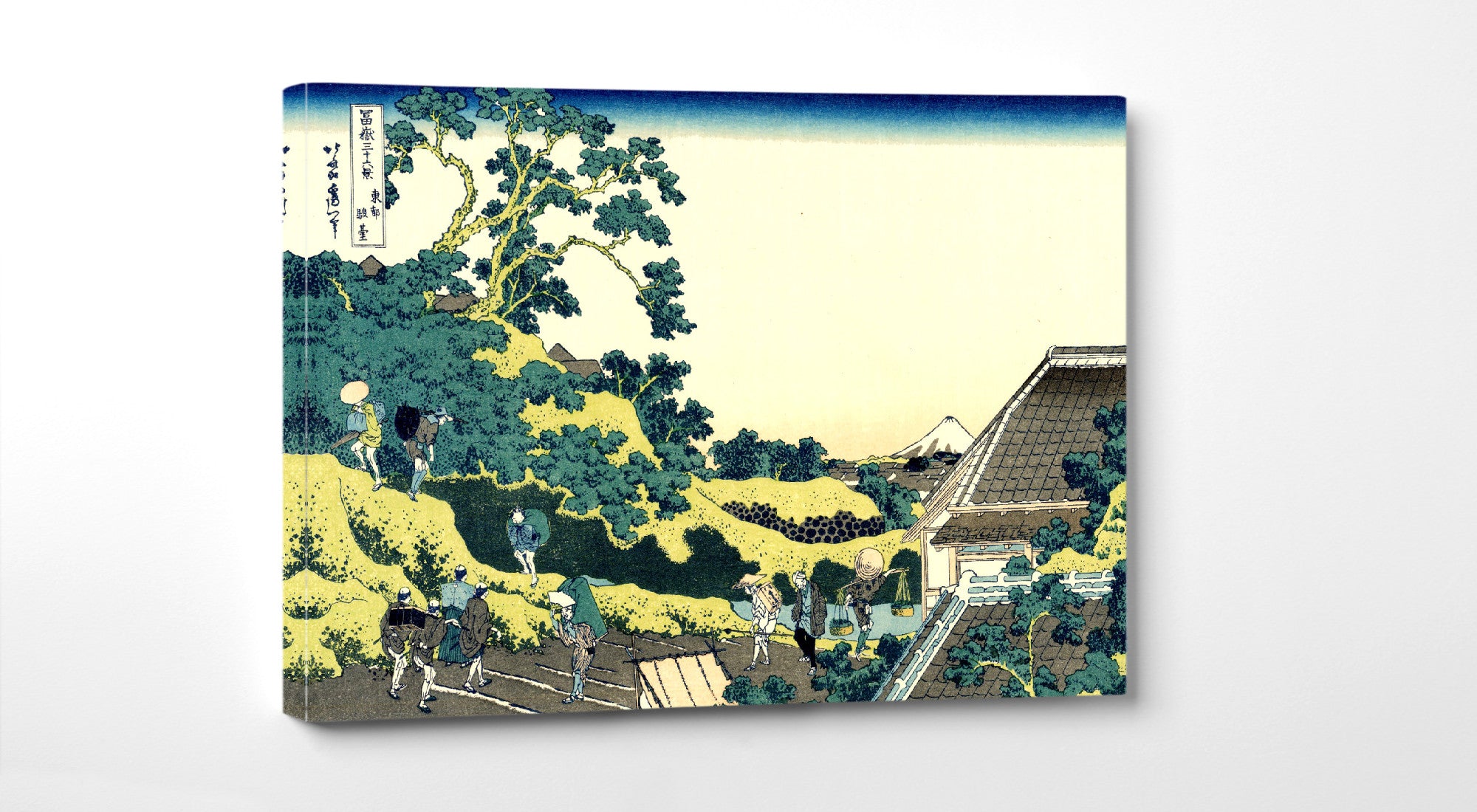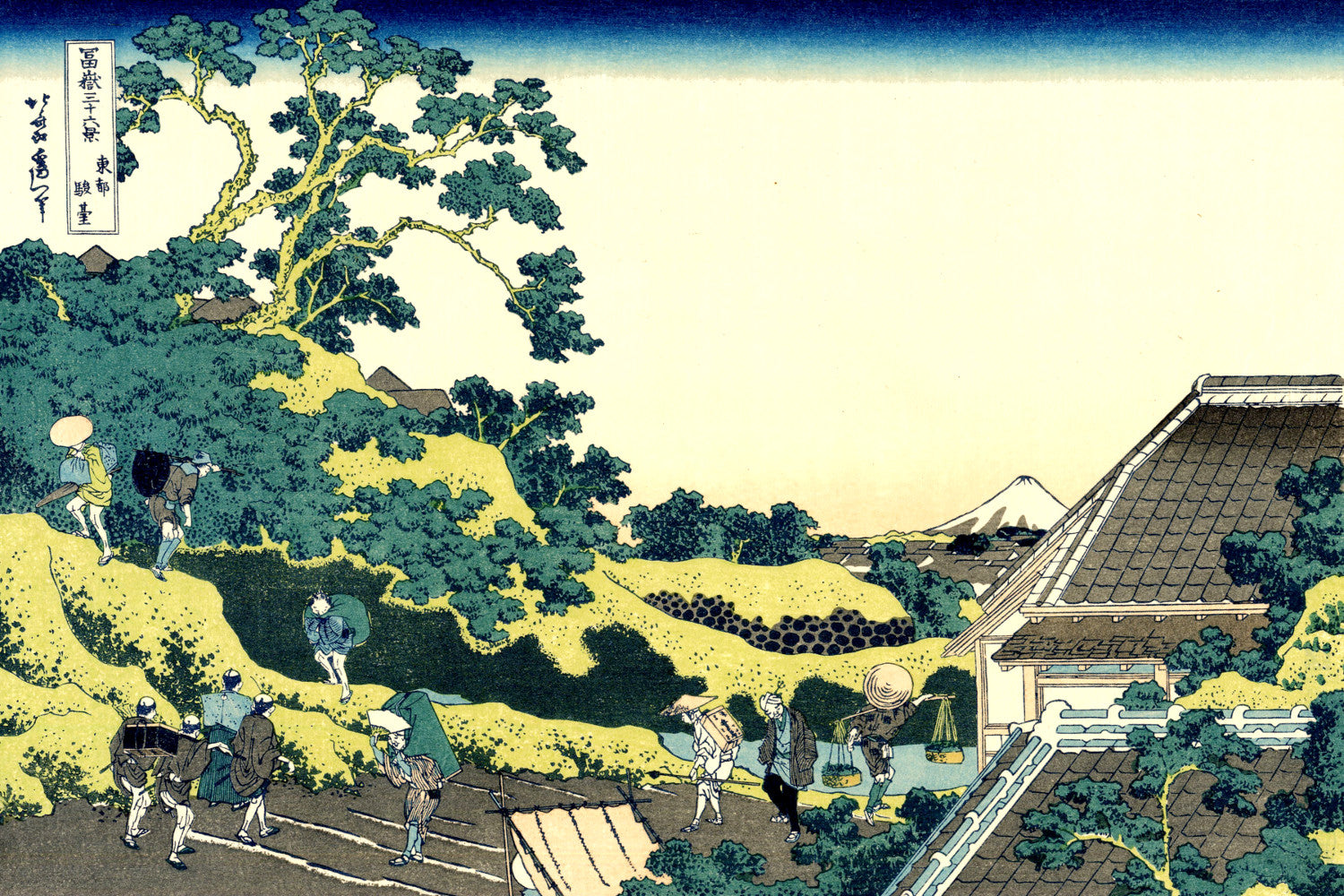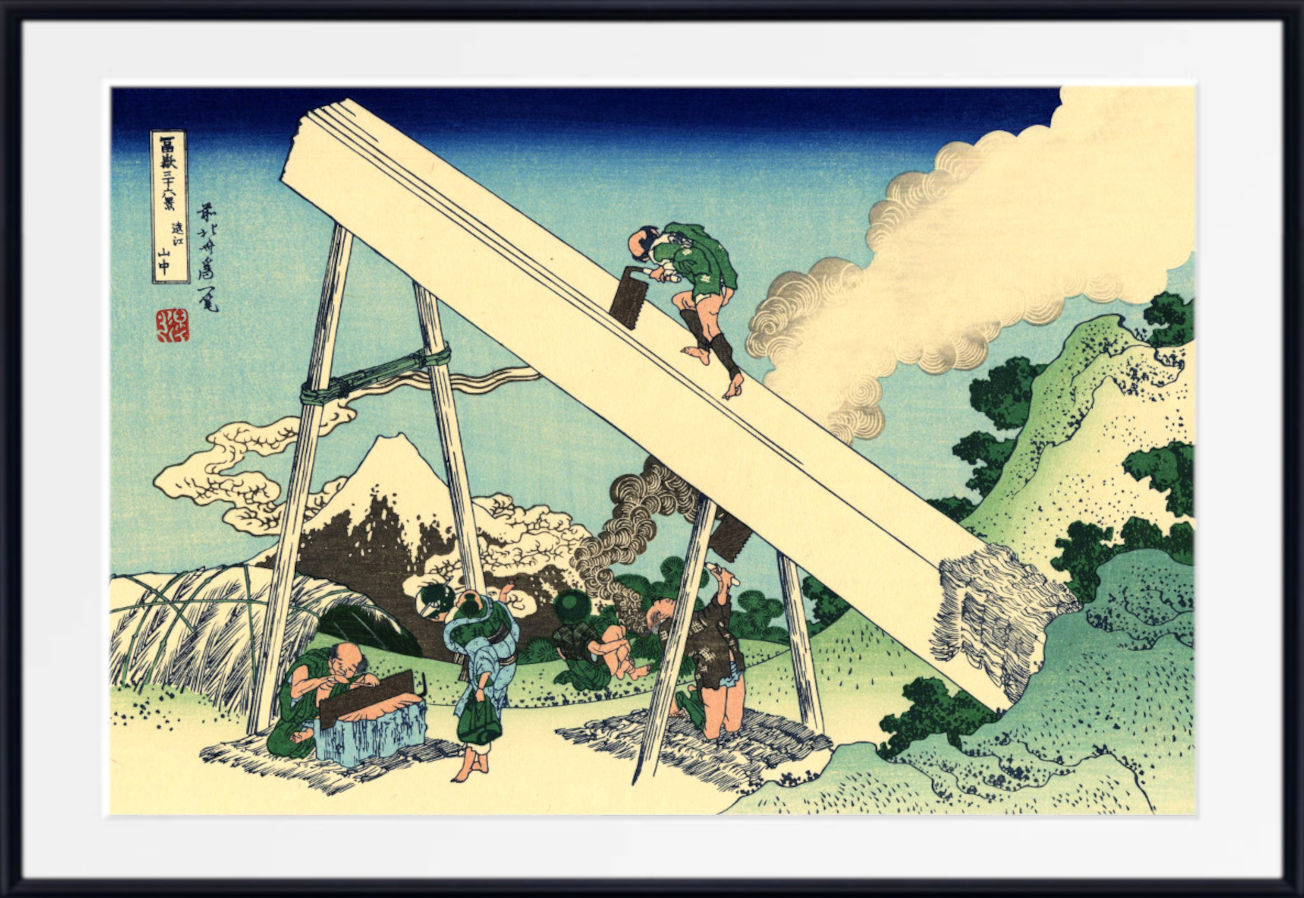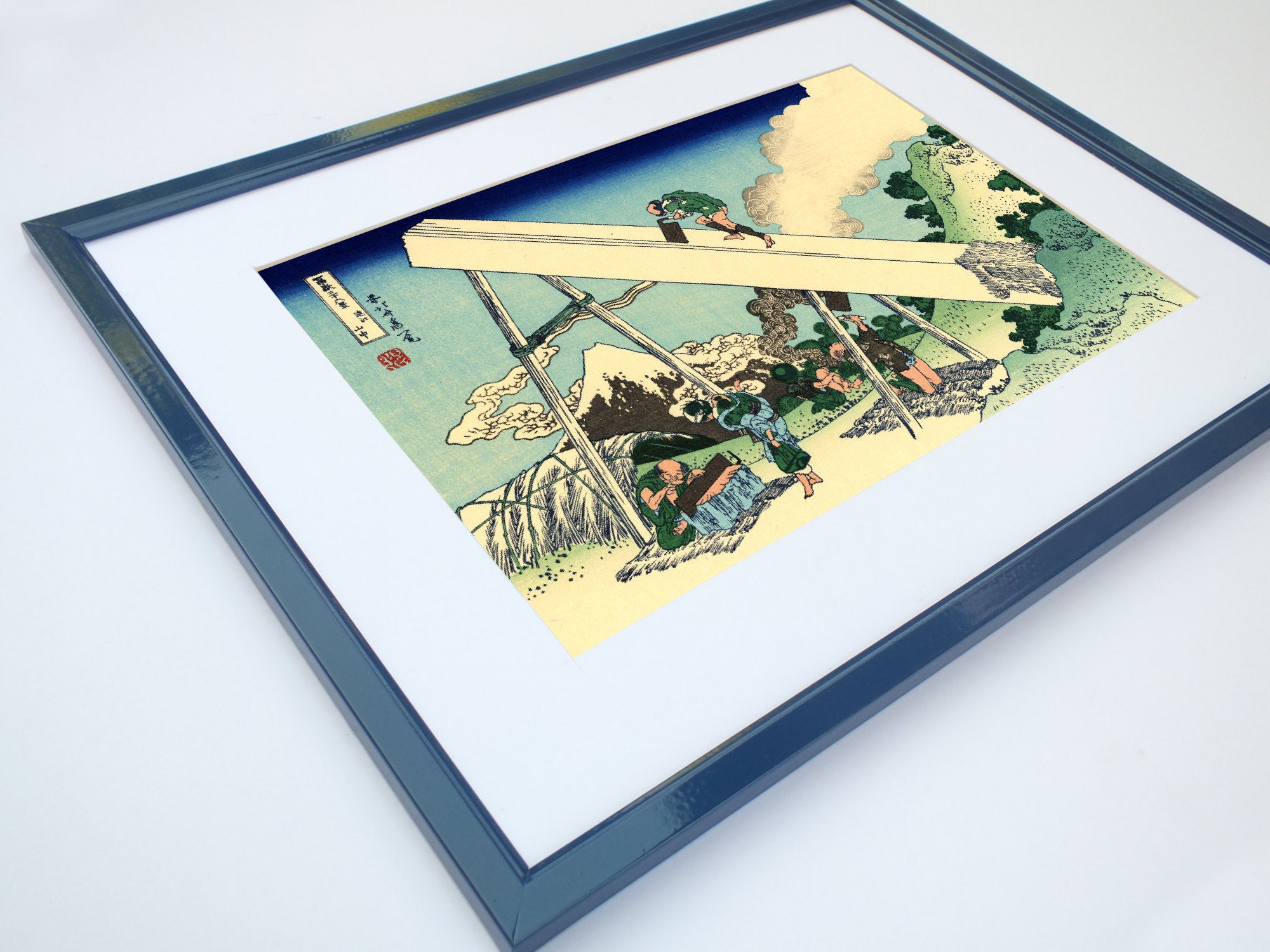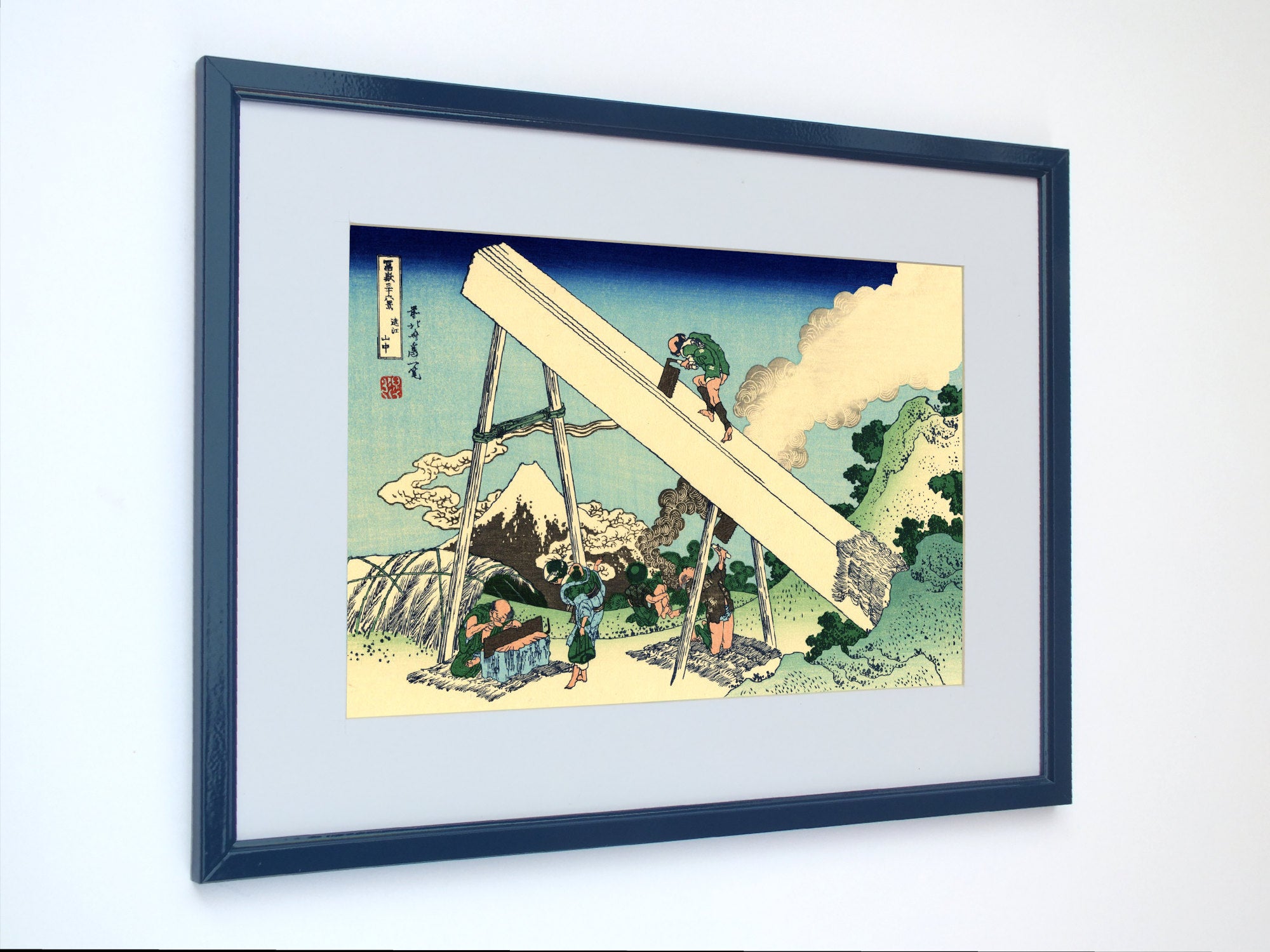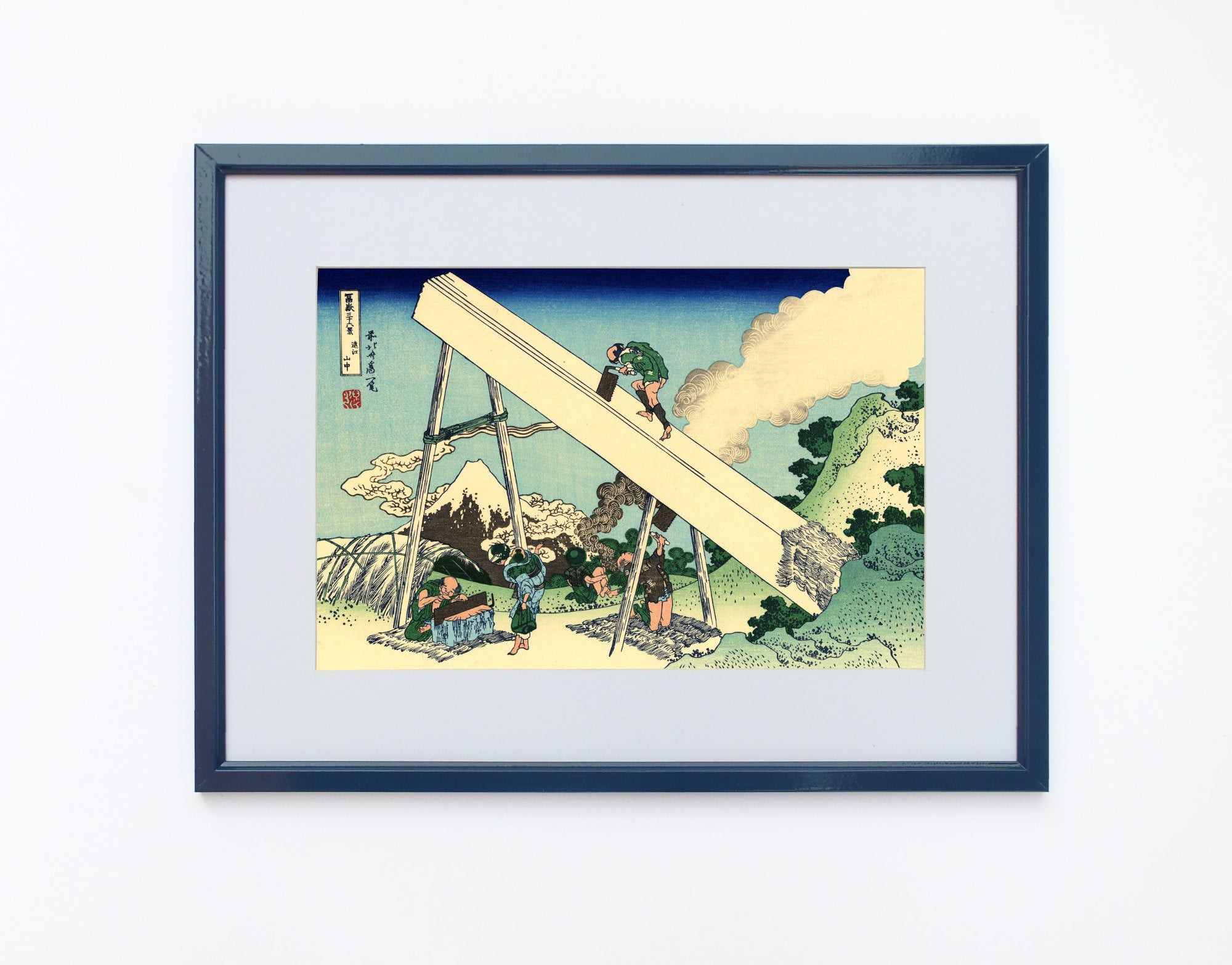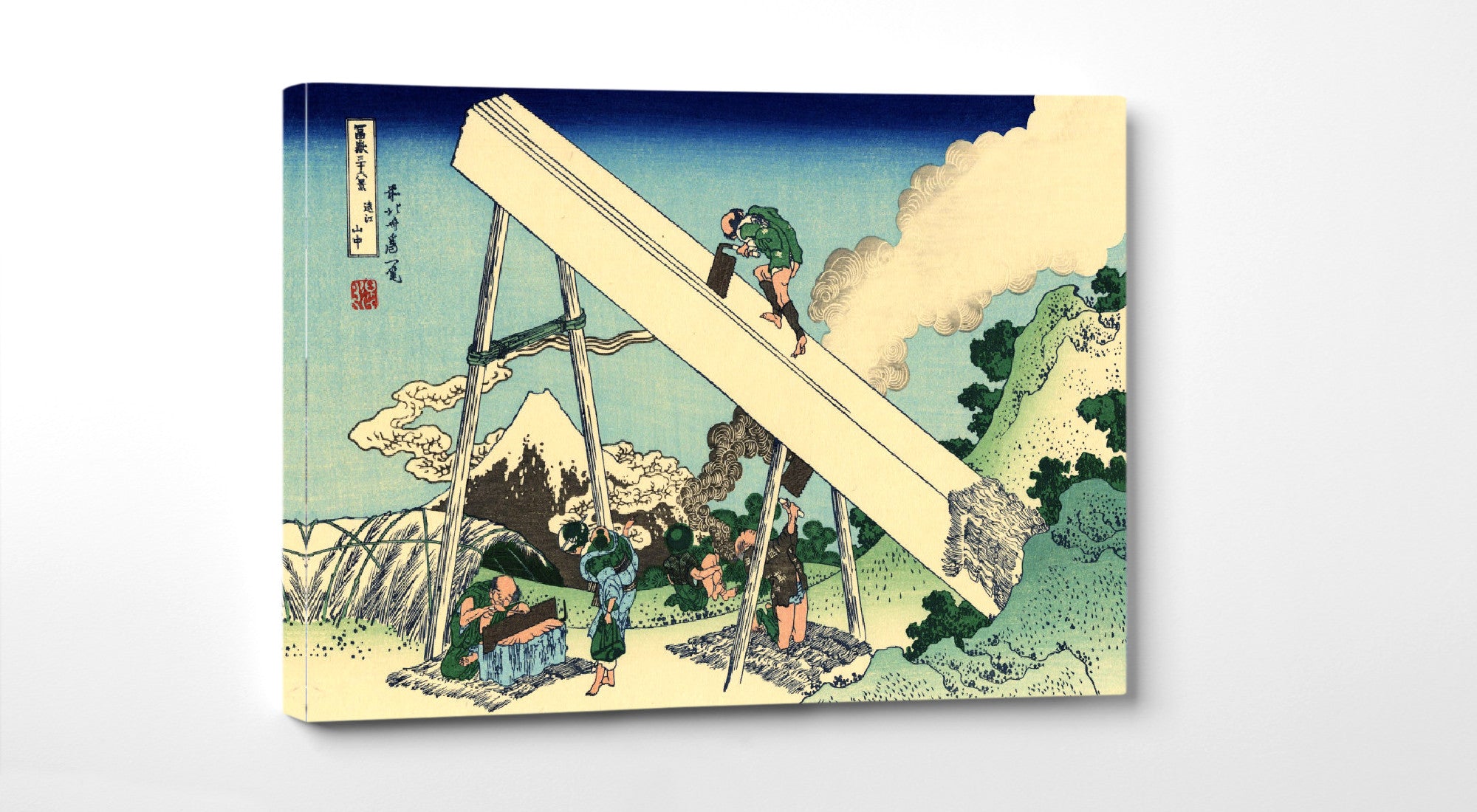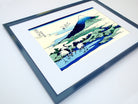
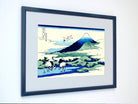
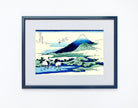
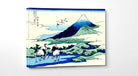
36 Views of Mount Fuji, Umezawa in Sagami Province, Katsushika Hokusai, Japanese Print
Couldn't load pickup availability
Details
Katsushika Hokusai – Umezawa in Sagami Province Prints
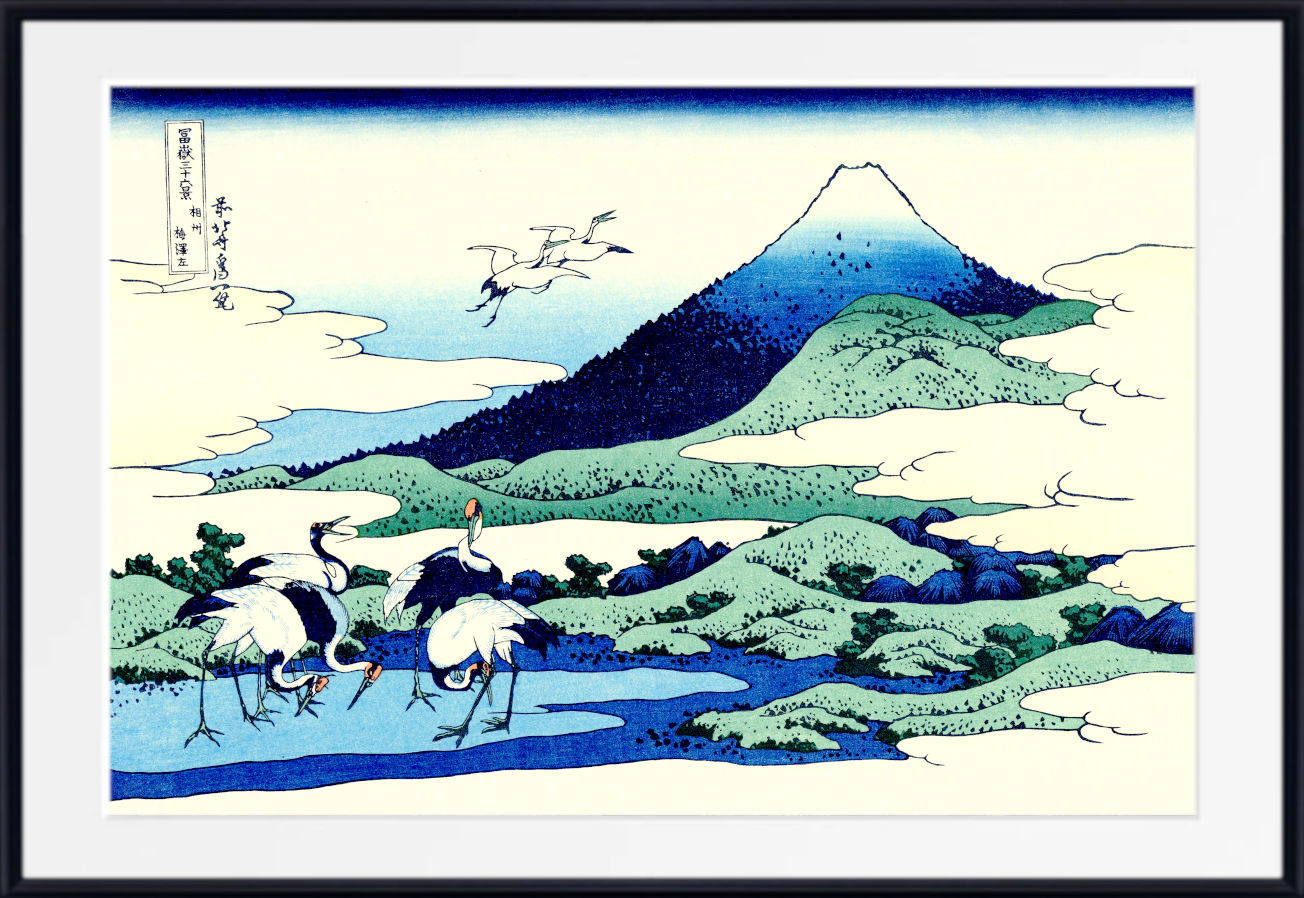
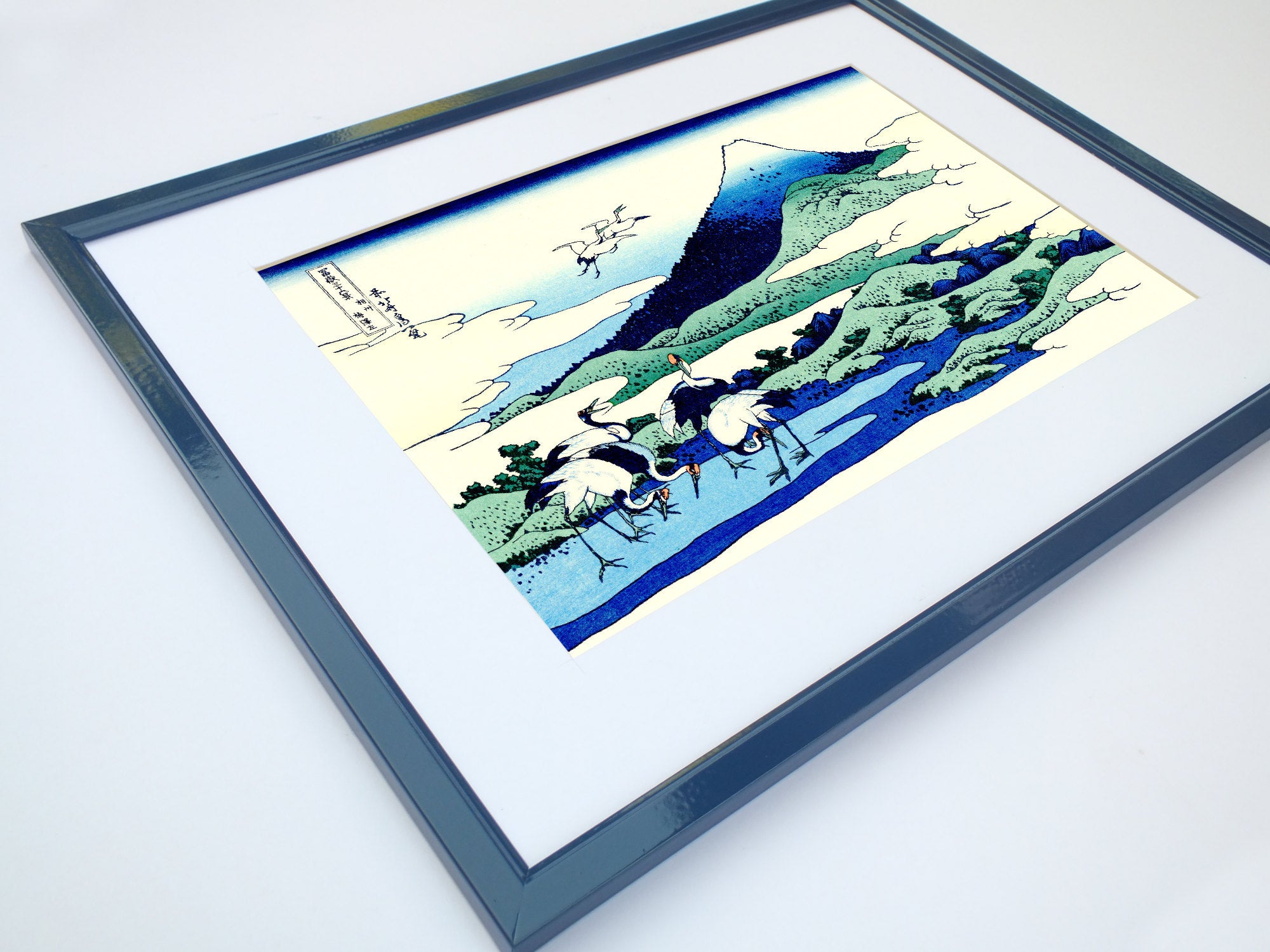
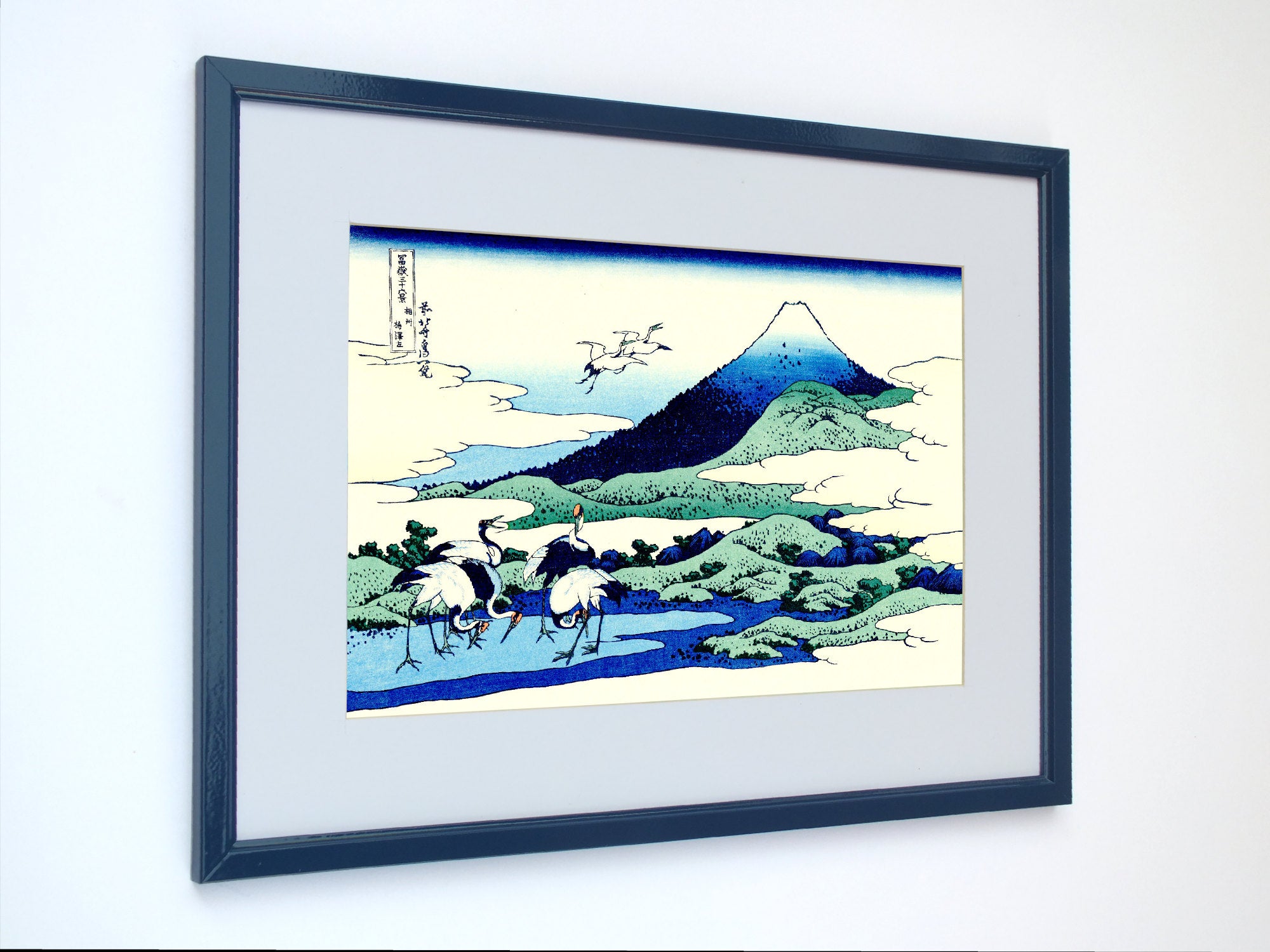
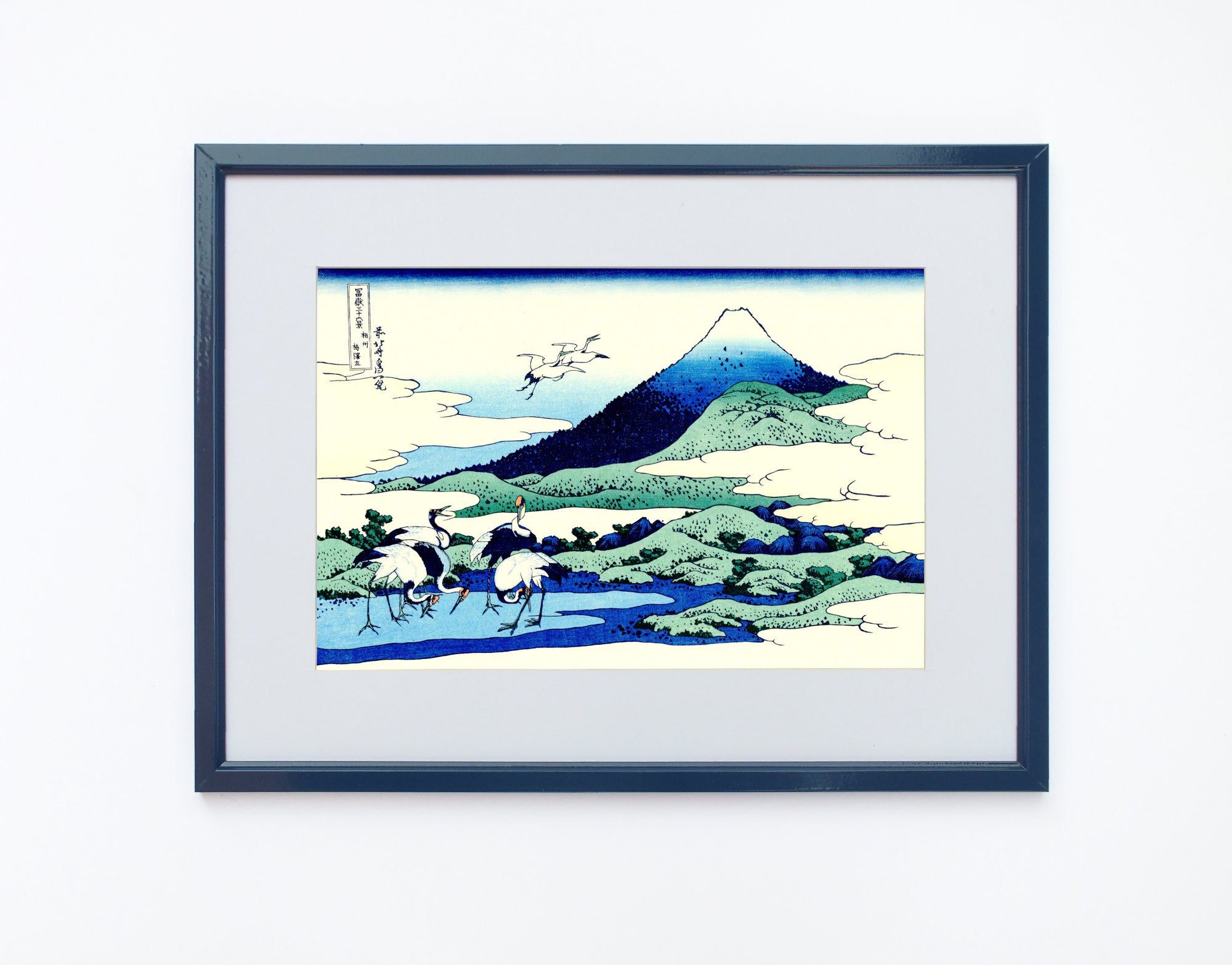
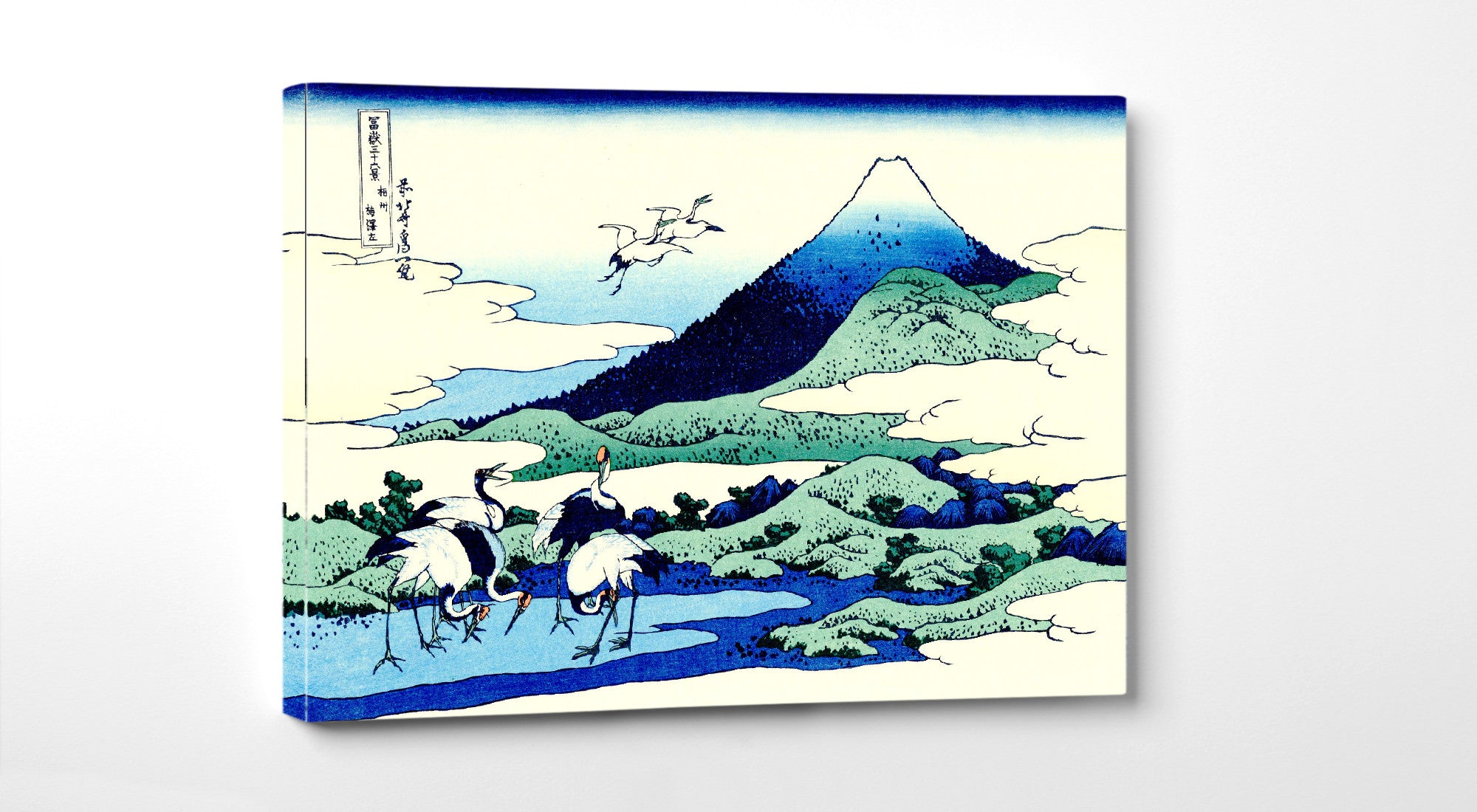
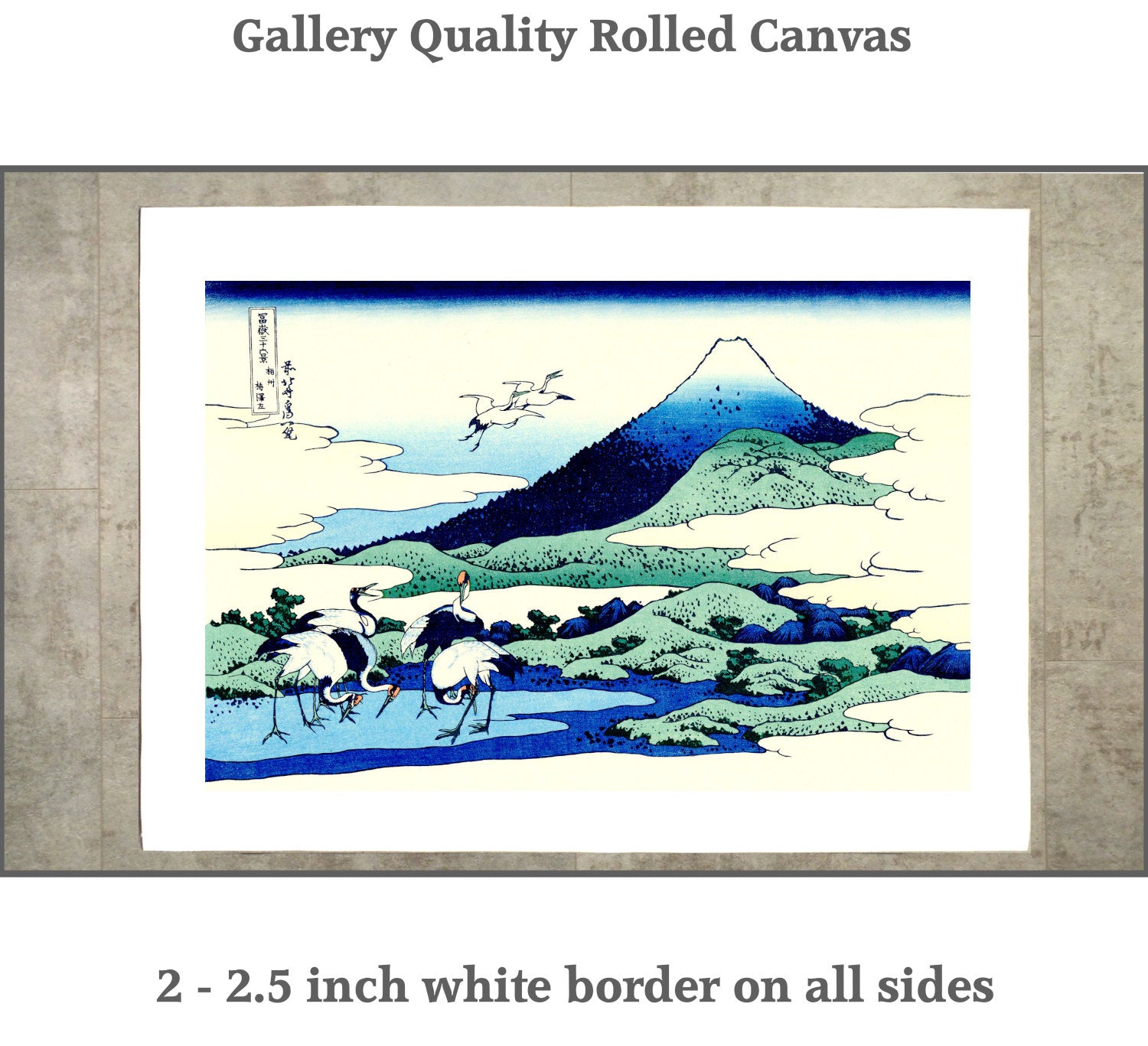
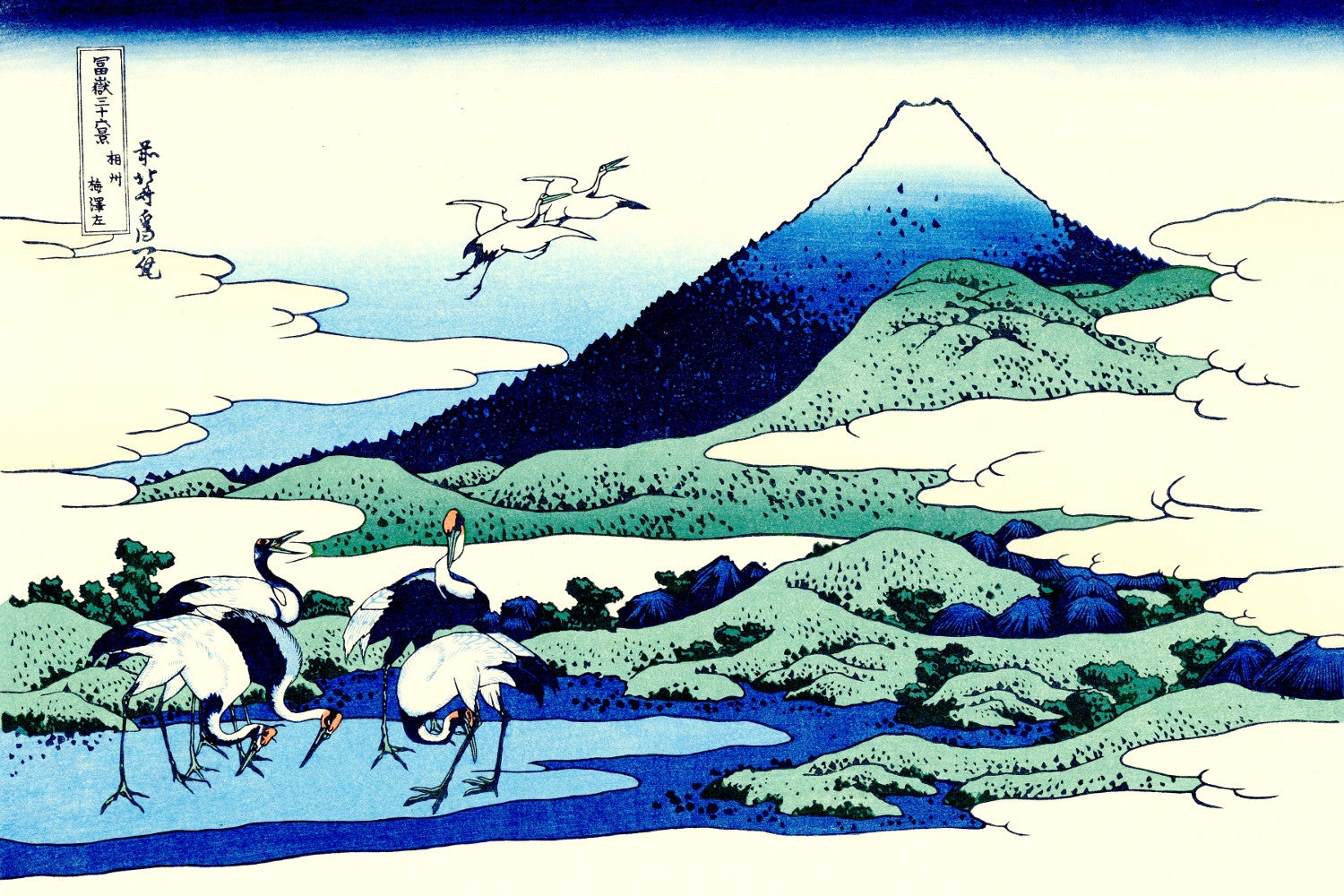
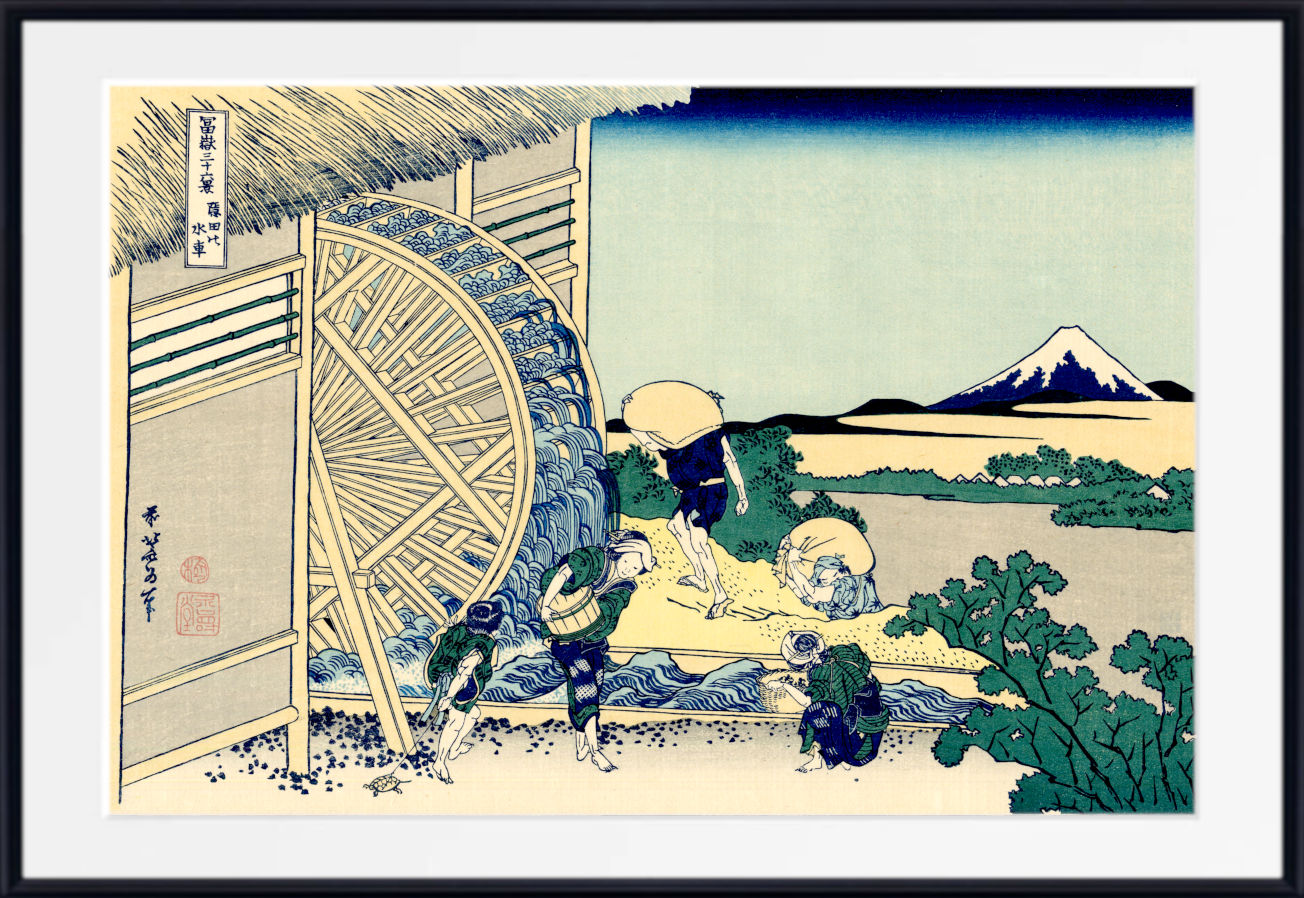
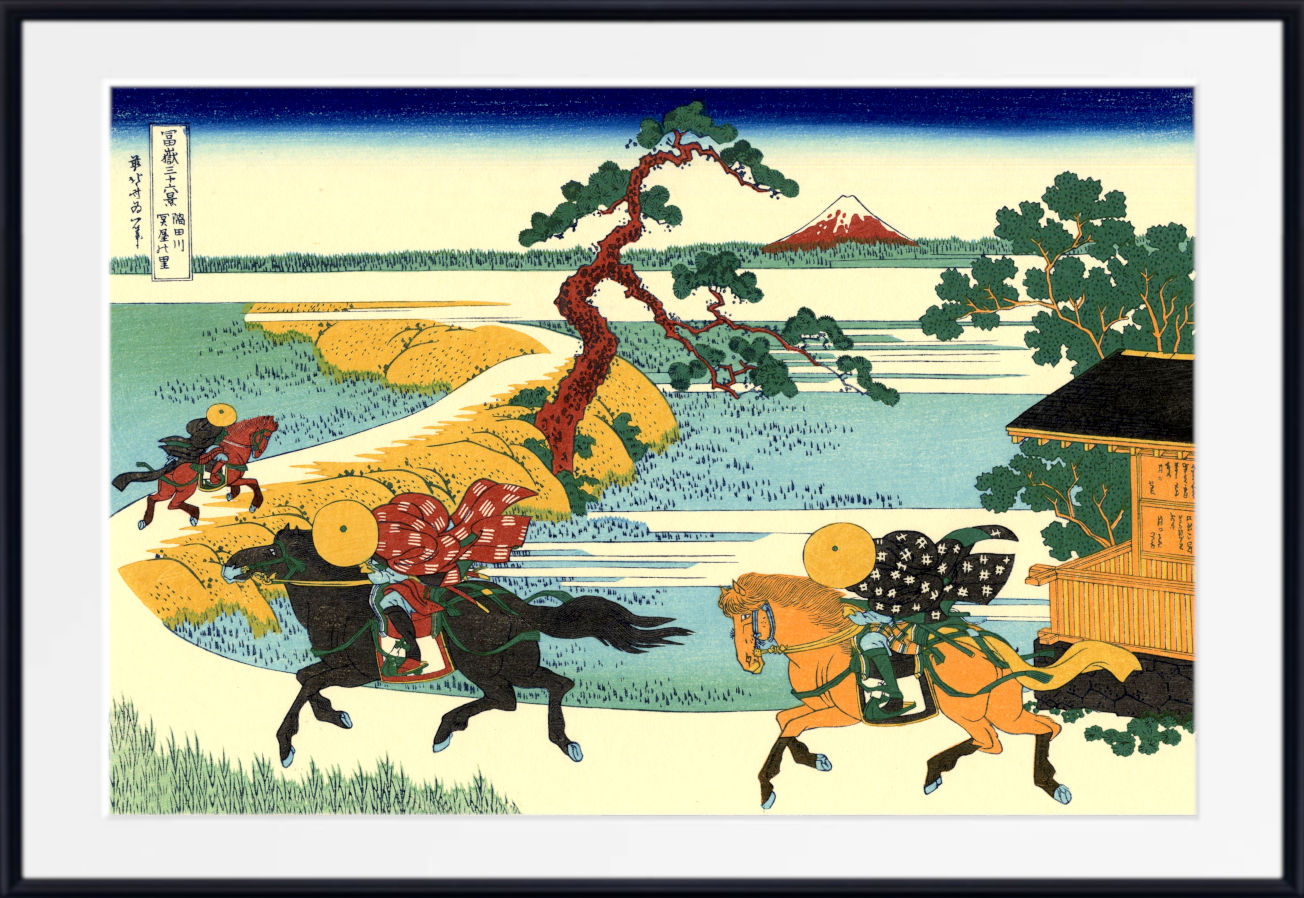
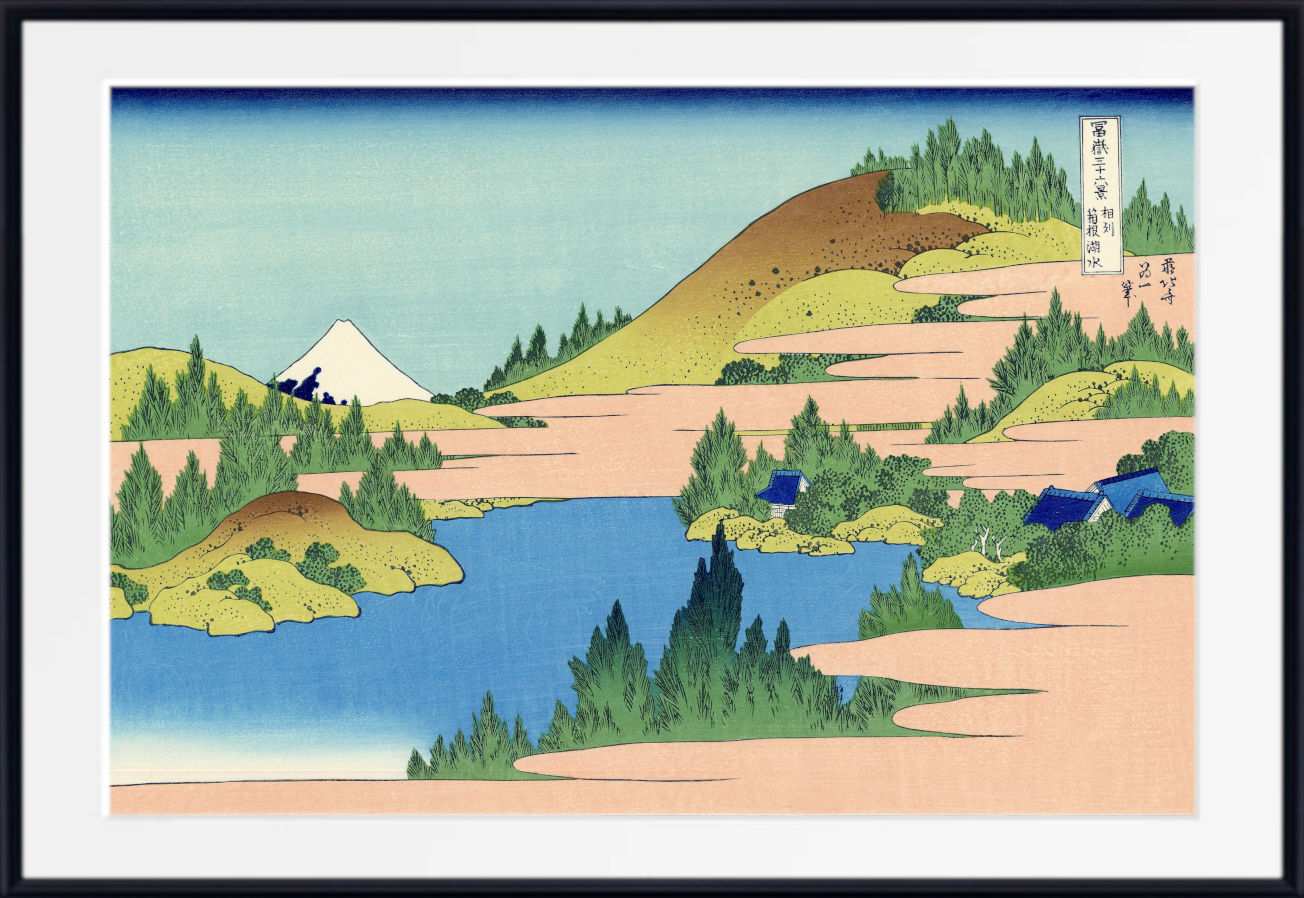
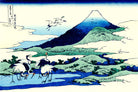
Discover one of the most tranquil landscapes in Hokusai's Thirty-Six Views of Mount Fuji with an Umezawa in Sagami Province print. Created in the early 1830s, this elegant Japanese woodblock design shows cranes moving through a quiet landscape as soft morning mist parts to reveal blue Mount Fuji.
Unlike the crowded roads, working rivers and turbulent seas found elsewhere in the series, Umezawa Manor in Sagami Province contains no human figures. Its combination of cranes, mist, undulating land and distant Fuji produces an atmosphere of exceptional stillness.
Cranes Beneath Mount Fuji
Seven cranes animate the landscape.
Five feed in the foreground while a pair rises into the sky, their movement following the long diagonal slope of Mount Fuji beyond them.
The birds provide gentle movement without disturbing the quiet mood of the scene.
Their slender forms also contrast beautifully with the broad horizontal landscape and monumental triangular mountain.
Painting Style and Composition
Morning Mist and Blue Fuji
Soft pink-tinted mist moves through the landscape, partially separating the foreground from the mountain.
Beyond it, Fuji appears blue and remarkably serene.
Rather than building drama through extreme weather, Hokusai uses atmospheric separation to create distance and calm.
The result feels almost dreamlike compared with the stronger narrative action of many other Thirty-Six Views designs.
Aizuri-e and the Beauty of Blue
The design is closely associated with aizuri-e, a style of Japanese woodblock printing in which blue becomes the dominant colour.
The increasing availability of Prussian blue offered Hokusai new possibilities for creating deep and varied blue landscapes.
Here the pigment supports tranquillity rather than drama. Blue water, land and Fuji are arranged through tonal variation rather than sharp colour confrontation.
A Landscape Without People
The absence of human figures makes Umezawa unusual within a series filled with fishermen, craftsmen and travellers.
Nothing competes with the cranes, landscape and mountain.
This gives the design a timeless quality. Instead of showing Fuji in relation to daily labour or travel, Hokusai presents a natural environment seemingly untouched by human activity.
Cranes and Japanese Visual Culture
Cranes have long carried positive associations within Japanese art, particularly with longevity and good fortune.
Hokusai does not need to turn them into rigid symbols, however.
They remain recognisable birds feeding and flying within a natural landscape, while their elegant shapes contribute directly to the composition.
The combination of cranes and Fuji gives the print an especially graceful character.
Umezawa Wall Art for Calm Interiors
A Hokusai crane and Mount Fuji print is particularly well suited to peaceful interior schemes.
The predominantly blue palette works beautifully with white, cream, pale grey, natural timber and soft blue furnishings.
Its restrained composition complements Scandinavian, Japandi, minimalist and contemporary interiors and is especially effective in bedrooms, reading areas and calm living spaces.
About Katsushika Hokusai
Katsushika Hokusai (1760–1849) continually explored the relationship between human life, animals and landscape throughout his long career.
Although many of his famous prints are filled with dramatic movement, quieter works such as Umezawa demonstrate an equally sophisticated sensitivity to atmosphere.
Hokusai was fascinated by Mount Fuji and returned to it repeatedly during his later career, not only in Thirty-Six Views of Mount Fuji but also in later publications devoted to the mountain.
His ability to make the same landmark appear entirely different through changes of weather, viewpoint and foreground subject is one of the great achievements of his landscape art.
Frame Details
SIZING - FRAMED PRINTS:
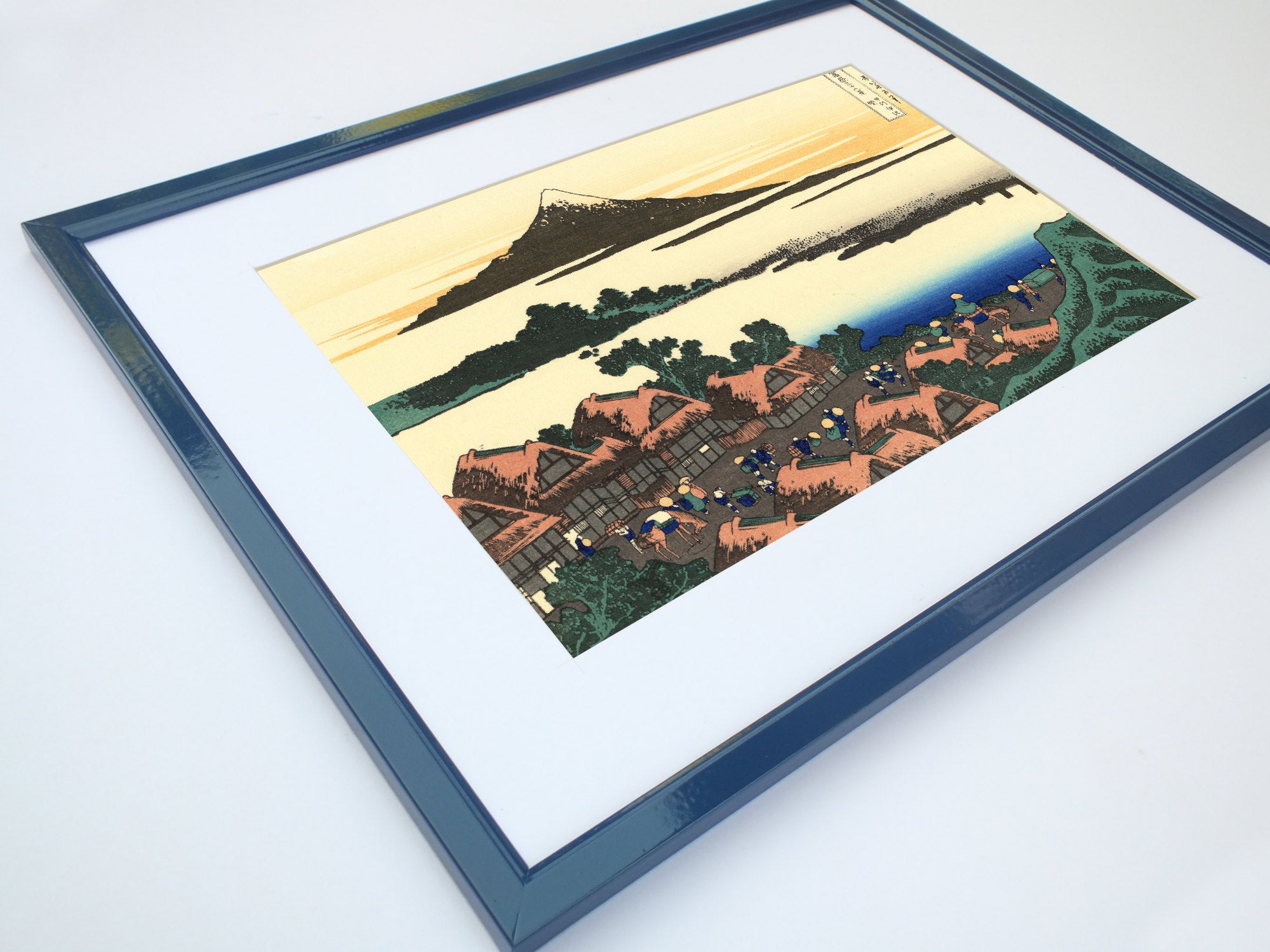
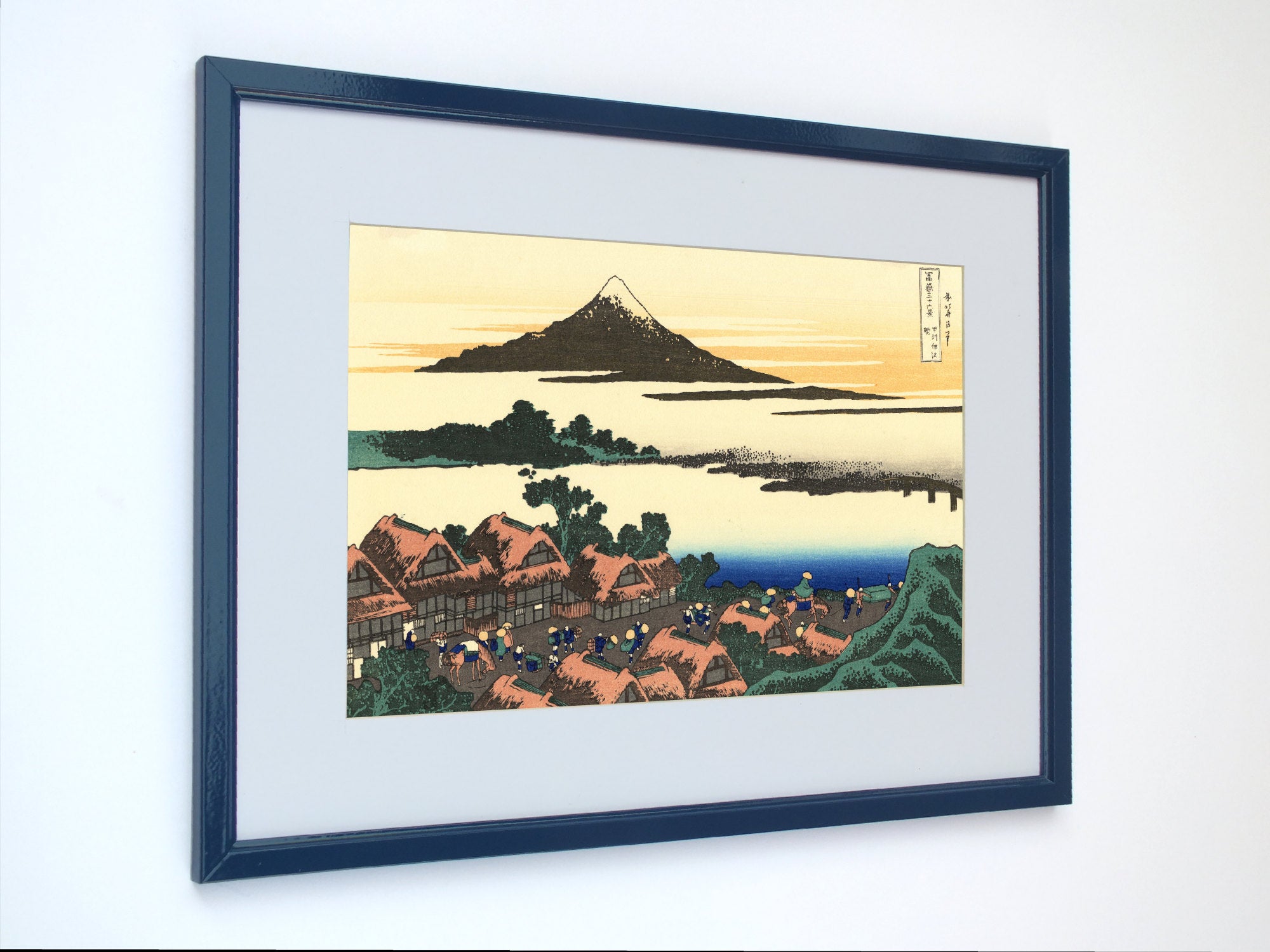
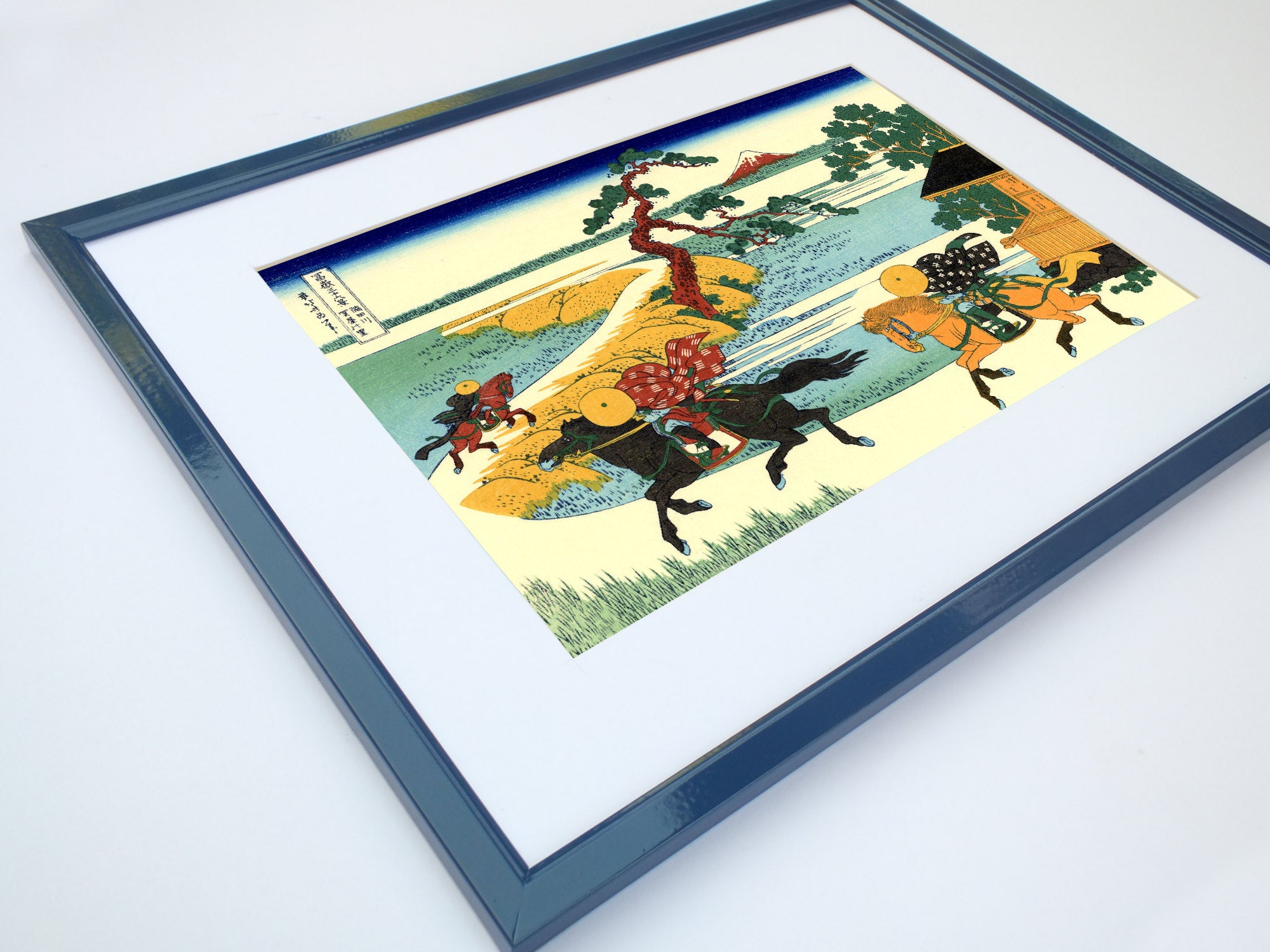
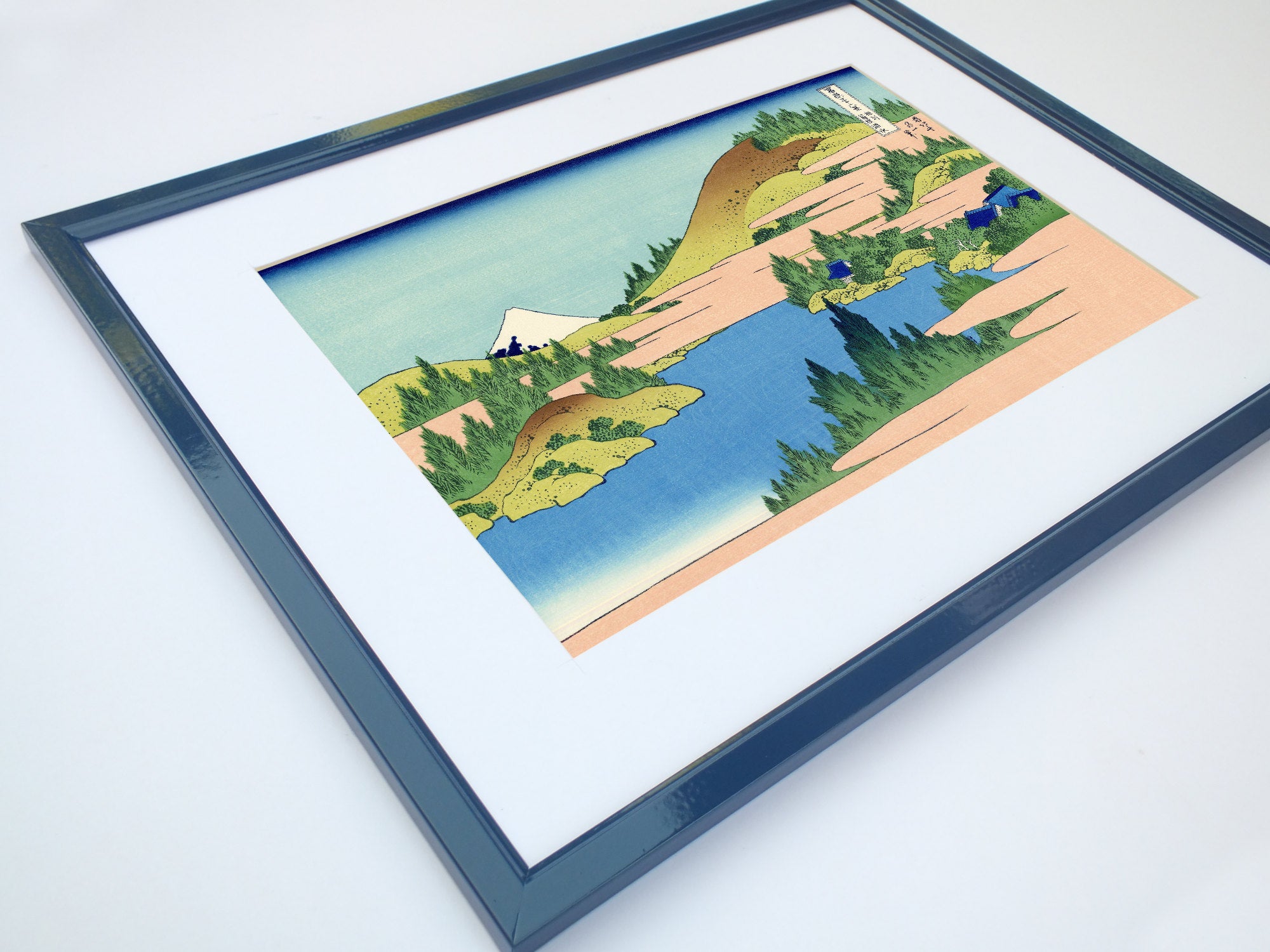
The sizes refer to the print area - framed prints have approx 2 inch wide white mount and approx 1 inch wide frame
Frames are made from responsibly sourced wood and gallery quality acrylic glazing.
Shipping
All orders for unframed fine art prints and original paintings are dispatched within 2 working days of receipt of payment.
Orders for custom framed prints are dispatched within 4 working days.
All orders are fully tracked from dispatch to delivery at your home or business.
All print and original painting orders are fully insured against loss or damage in transit. We refund or replace any damaged or lost orders.
Buy with confidence - read what our satisfied customers have to say - Reviews
Size Chart
SIZING - EUROPEAN A7 - A0:
A7 2-15/16 x 4-1/8 in 74 x 105 mm
A6 4-1/8 x 5-7/8 in 105 x 148 mm
A5 5-7/8 x 8-1/4 in 148 x 210 mm
A4 8-1/4 x 11-3/4 in 210 x 297 mm
A3 11-3/4 x 16-1/2 in 297 x 420 mm
A2 16-1/2 x 23-3/8 in 420 x 594 mm
A1 23-3/8 x 33-1/8 in 594 x 841 mm
A0 33-1/8 x 46-13/16 in 841 x 1188 mm
Explore related collections