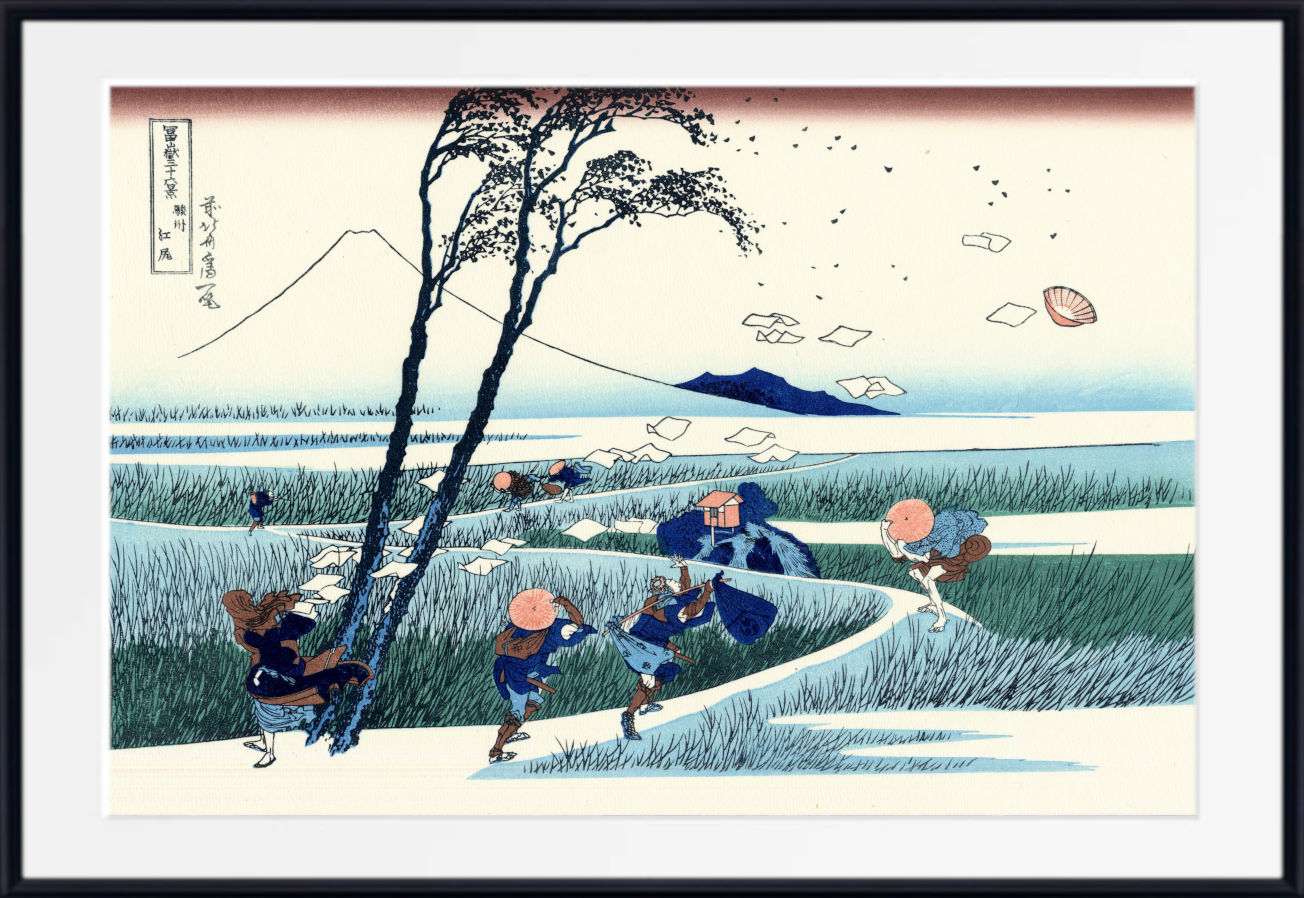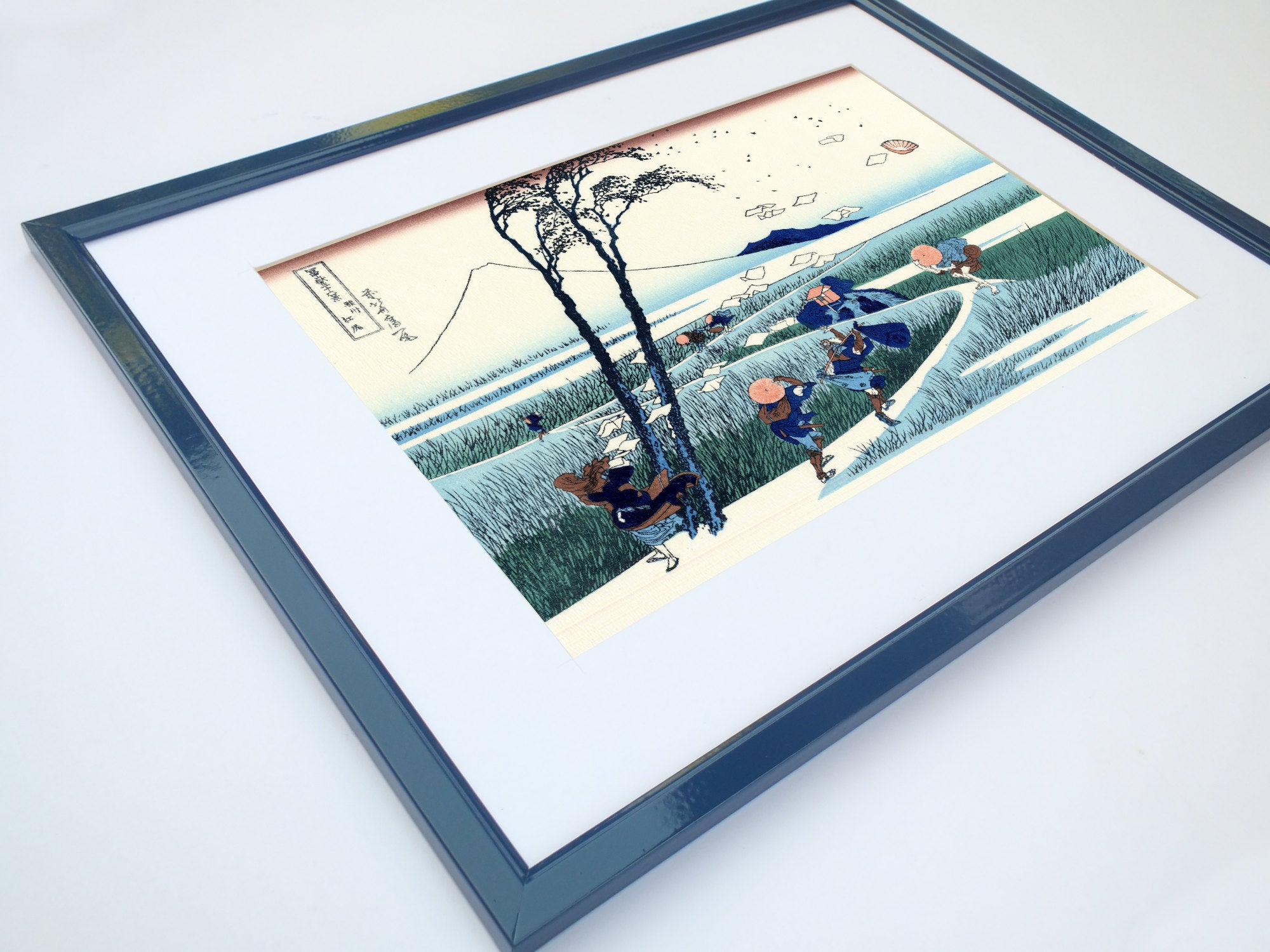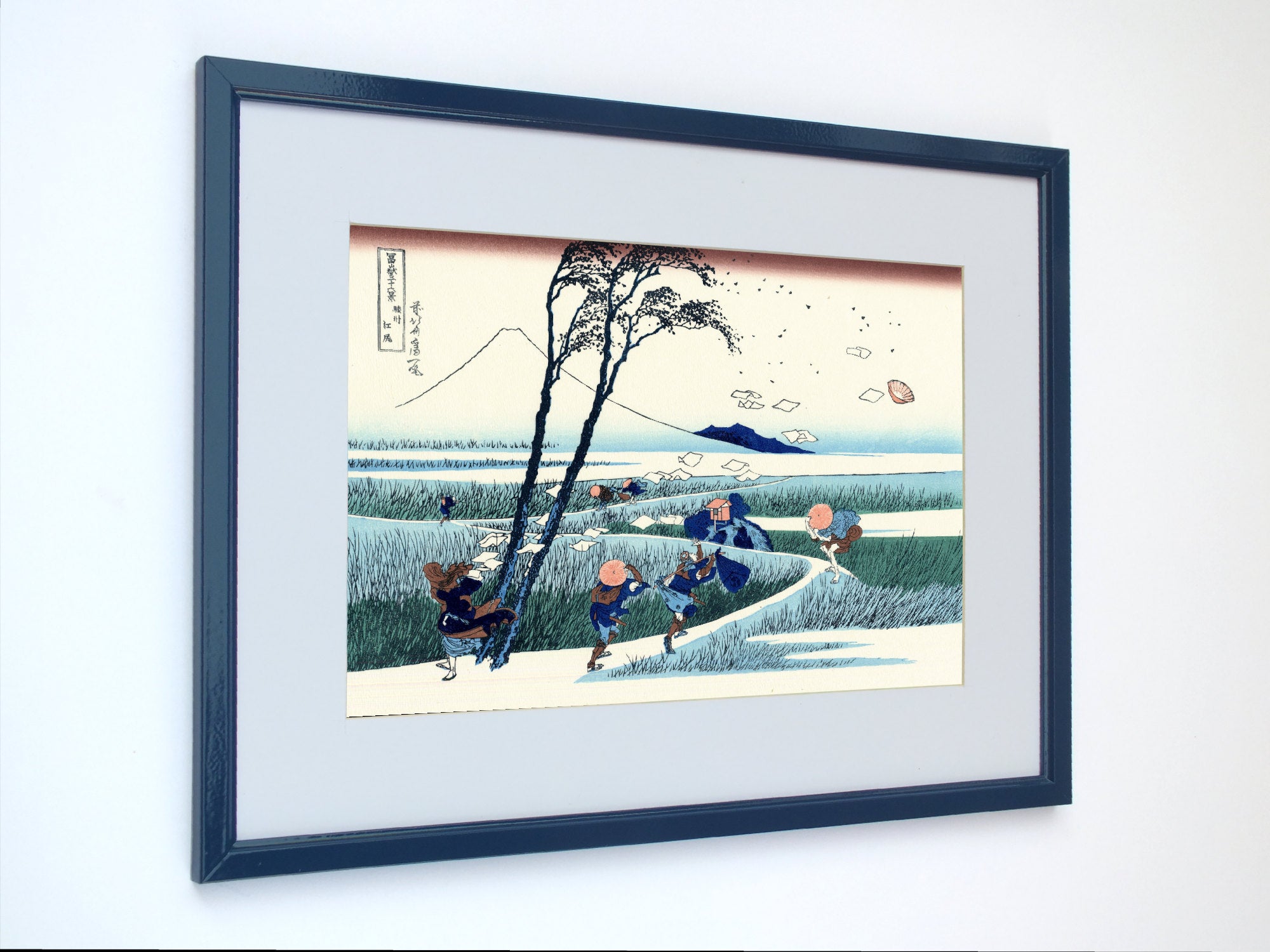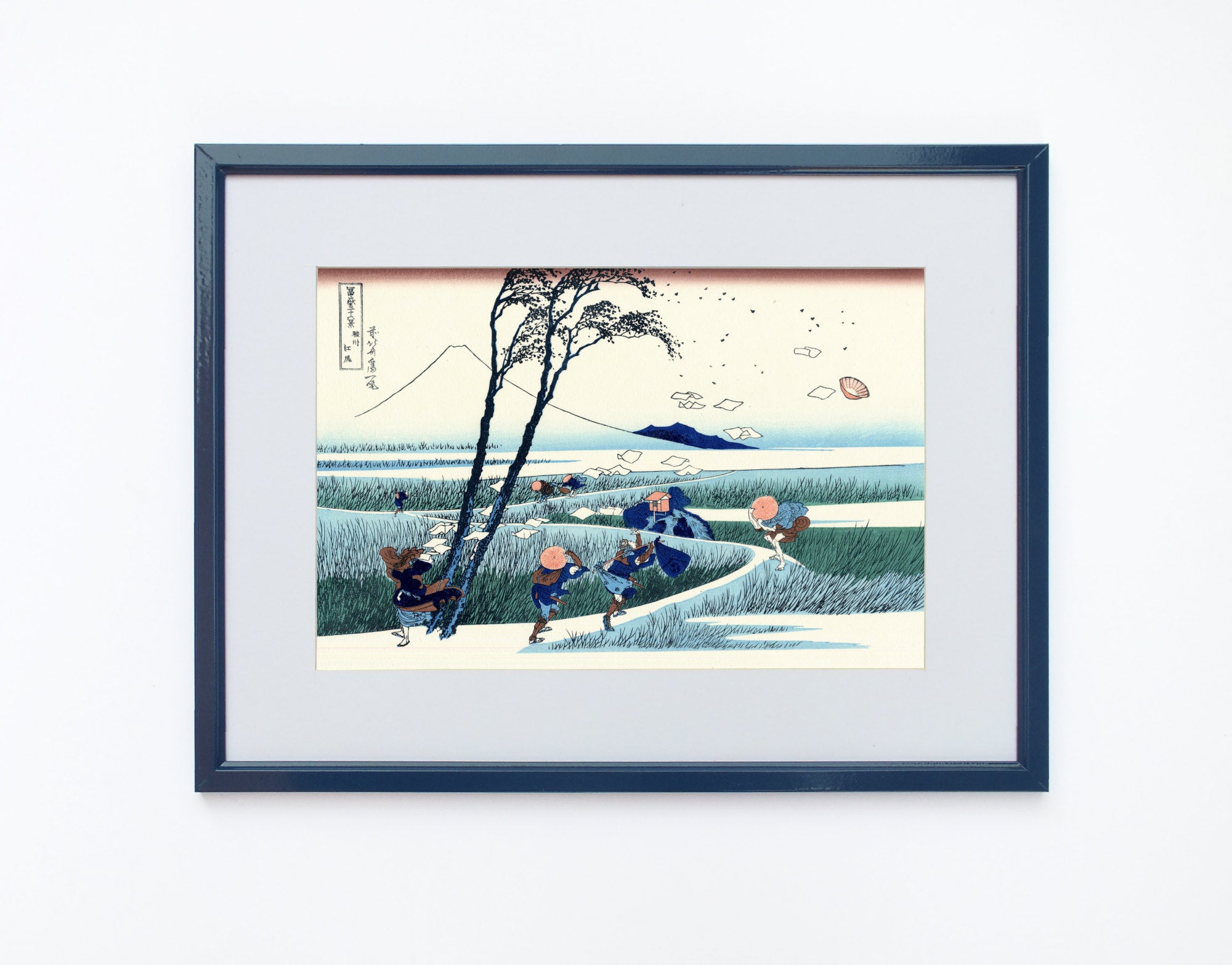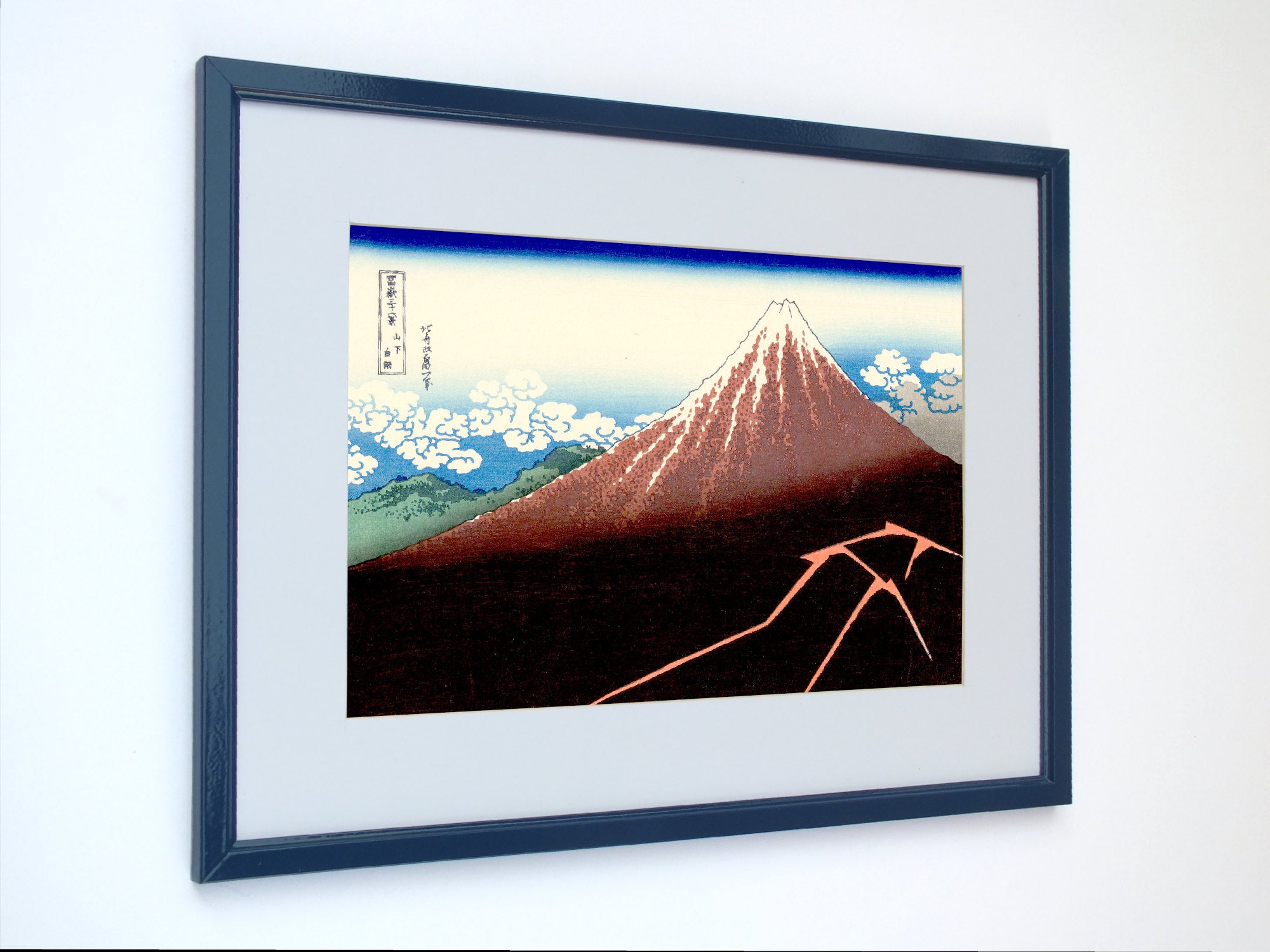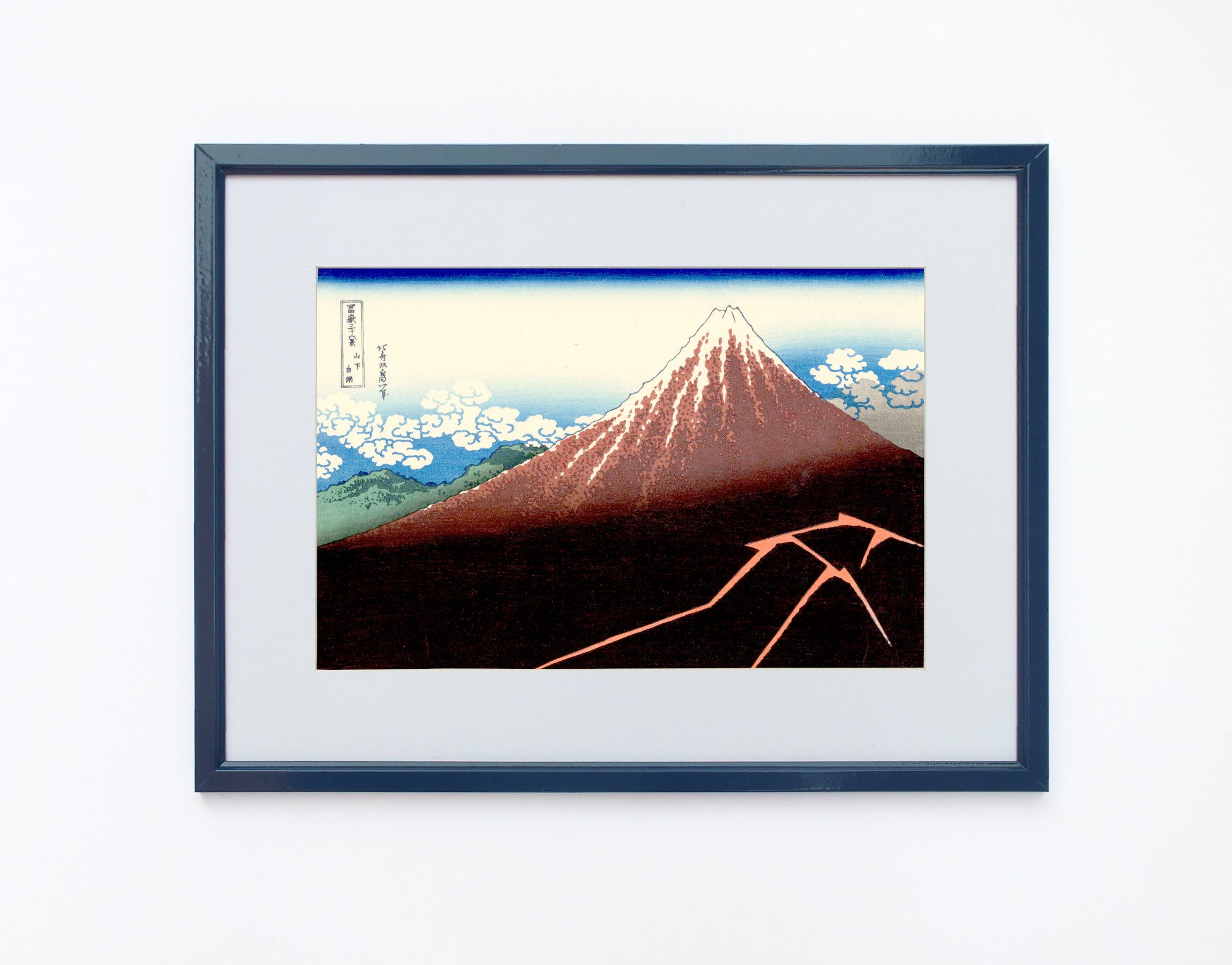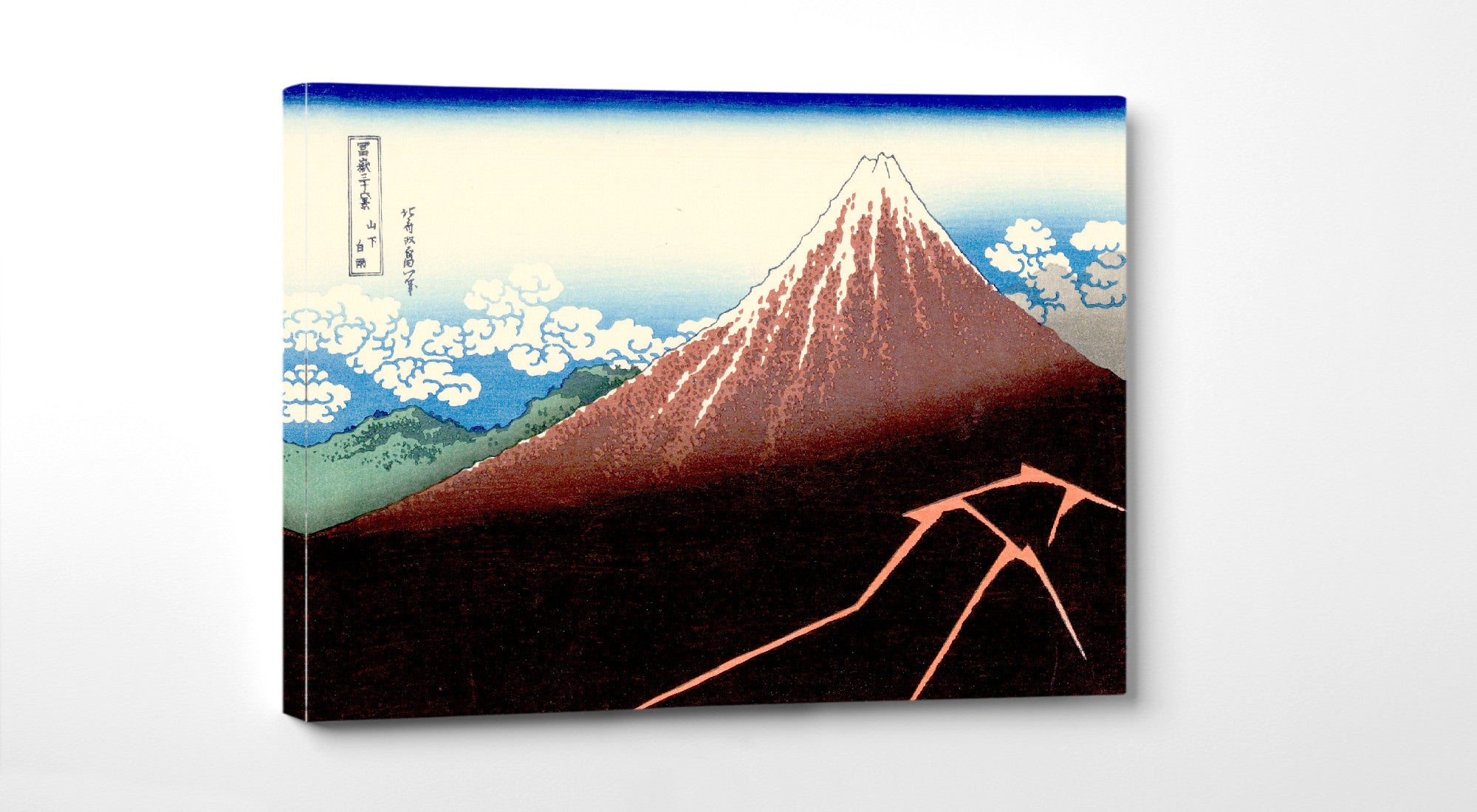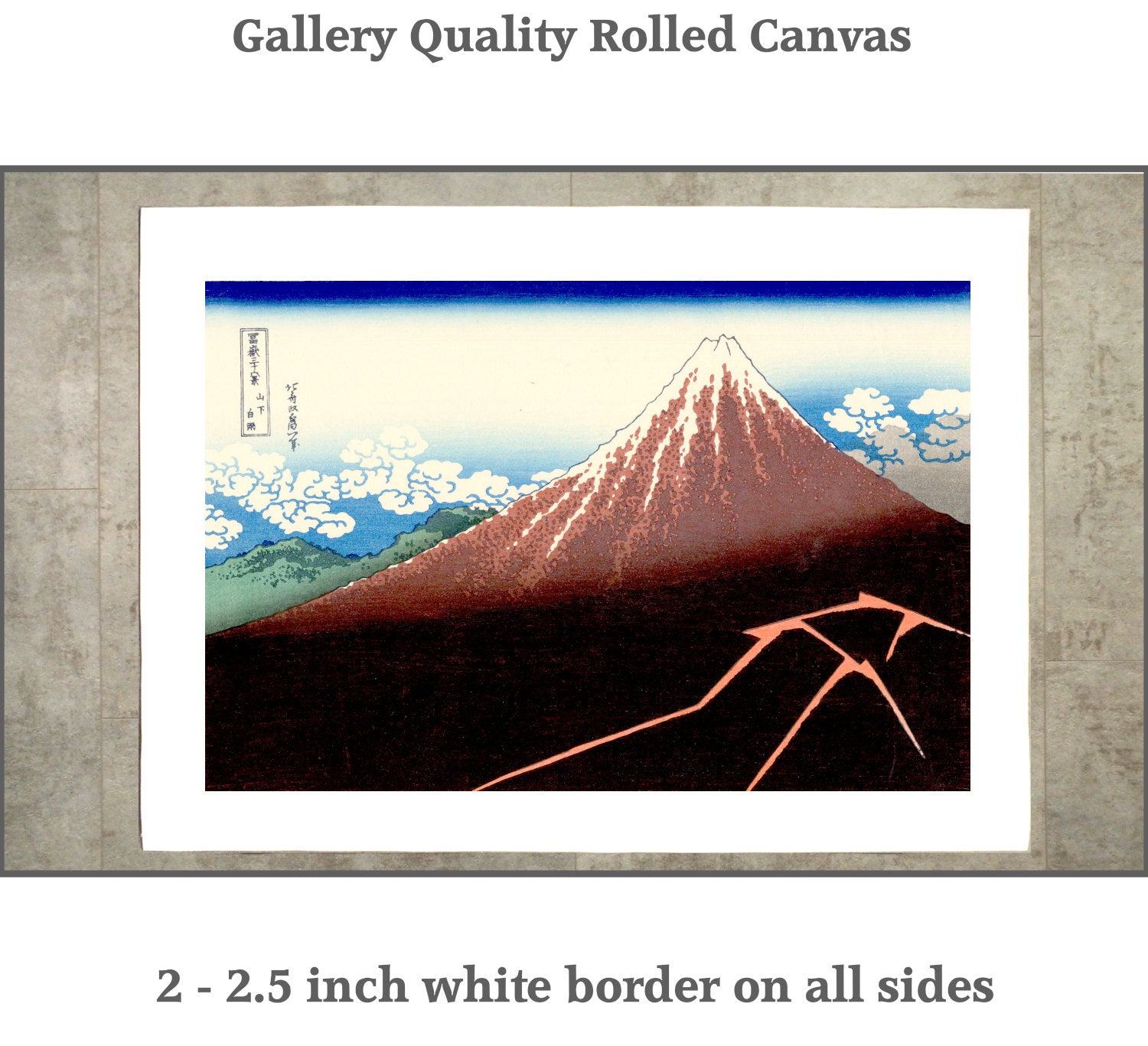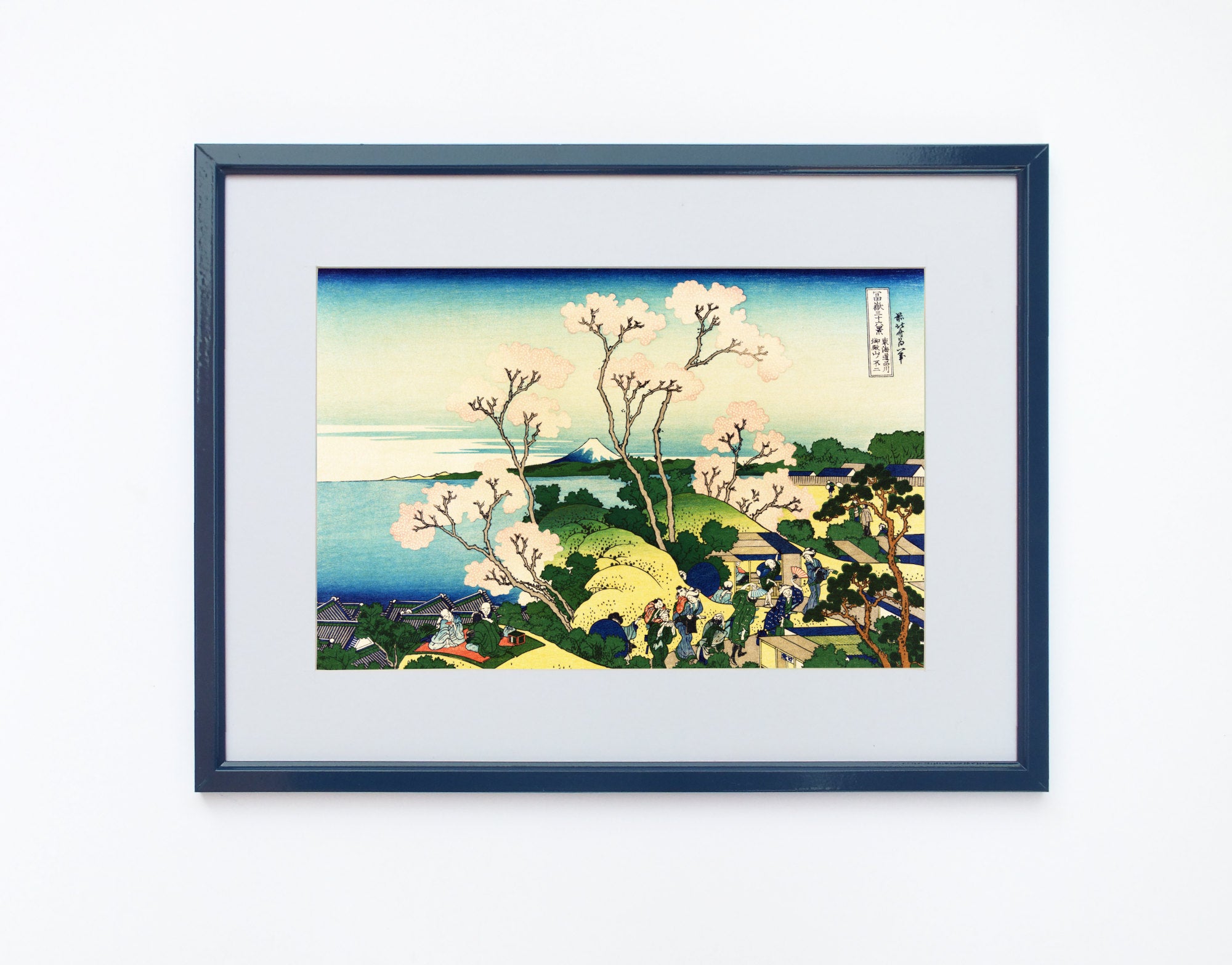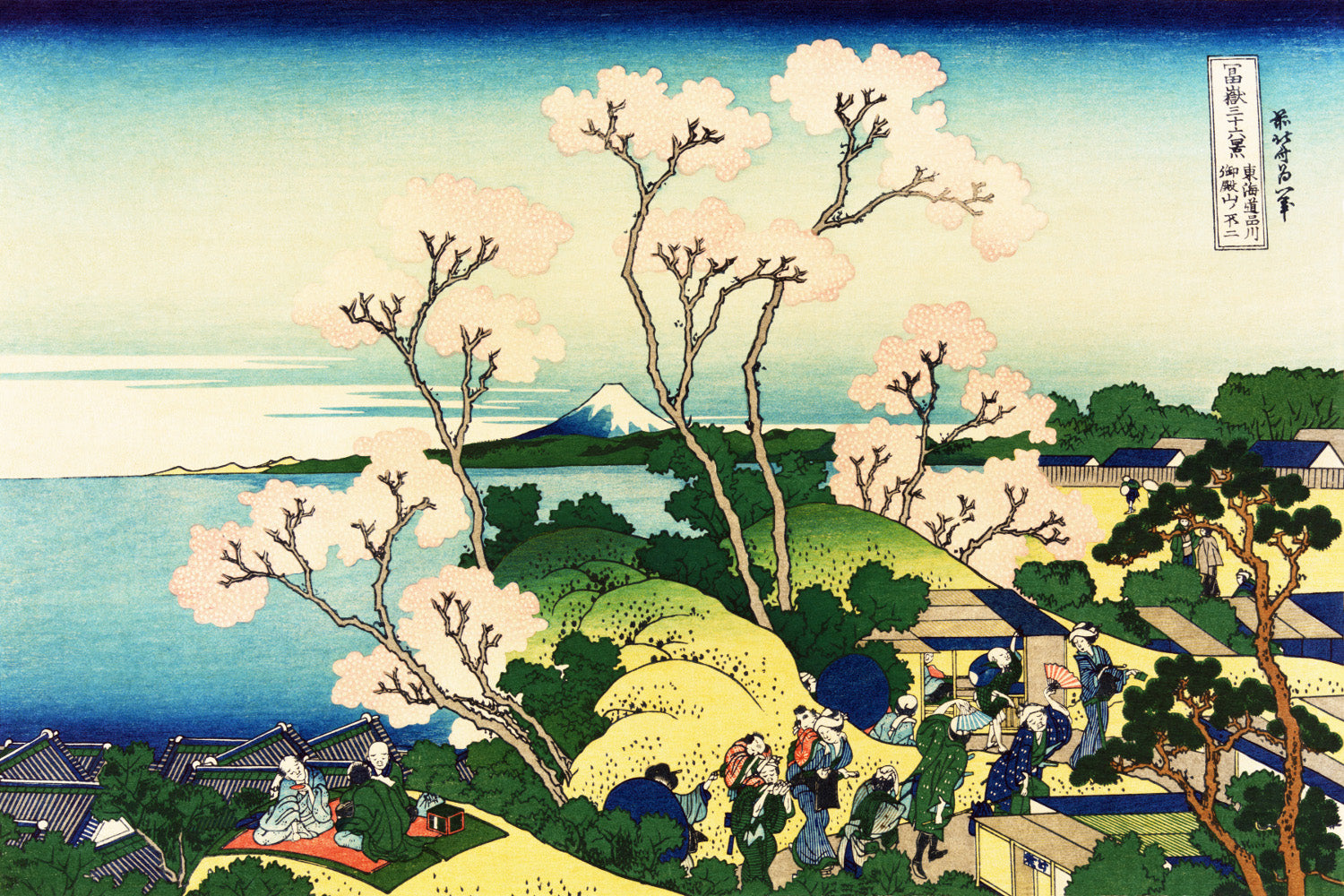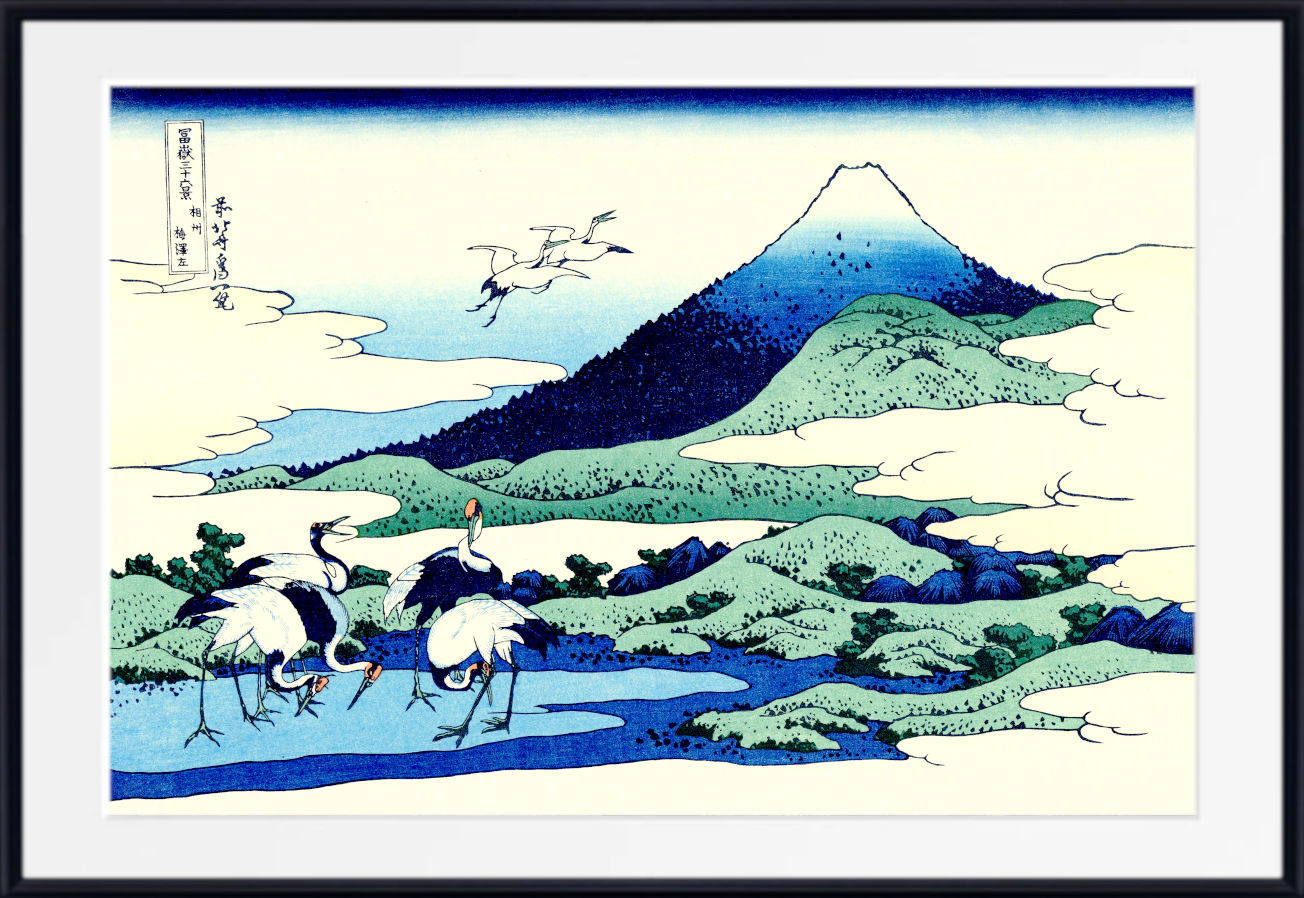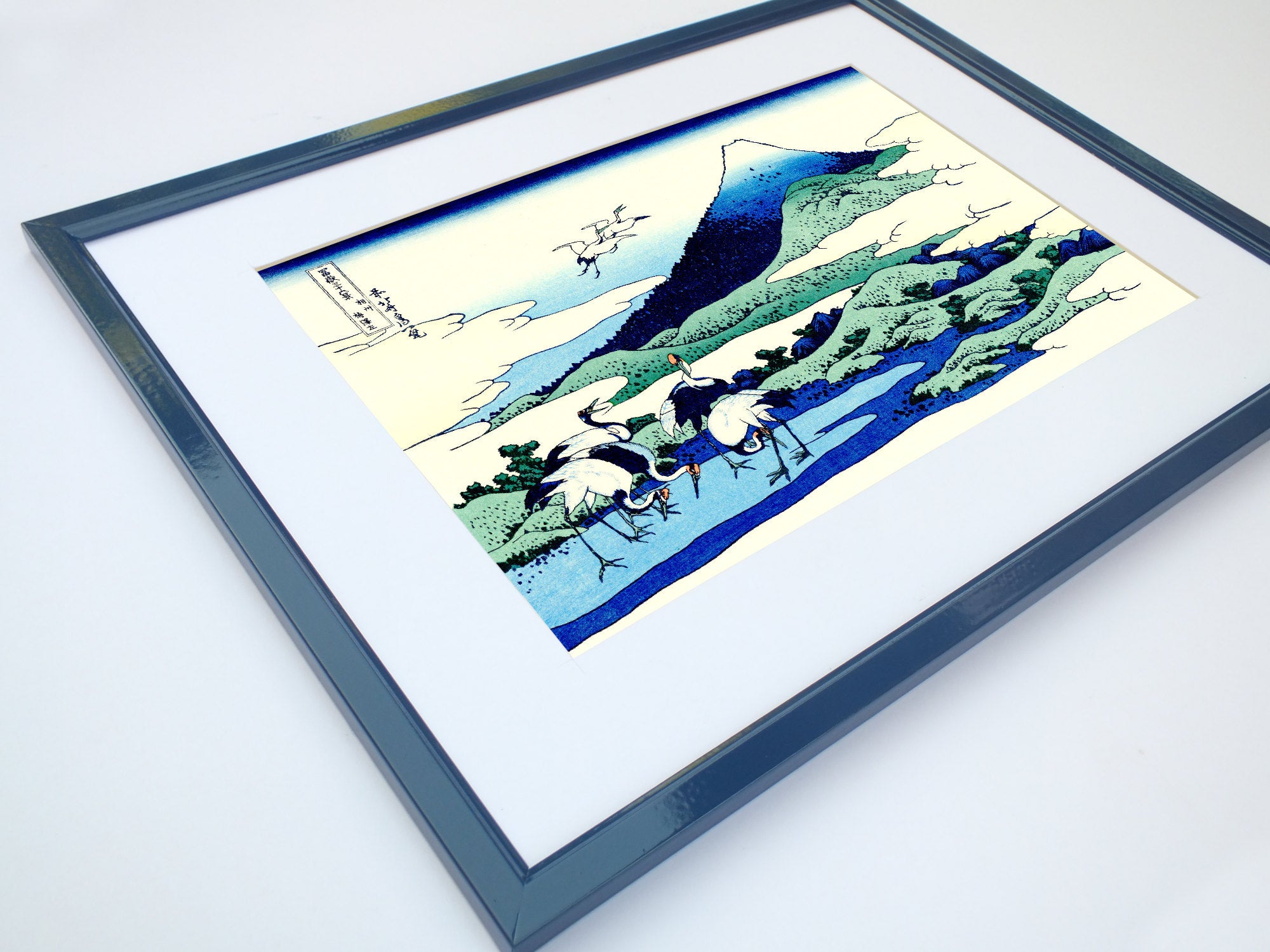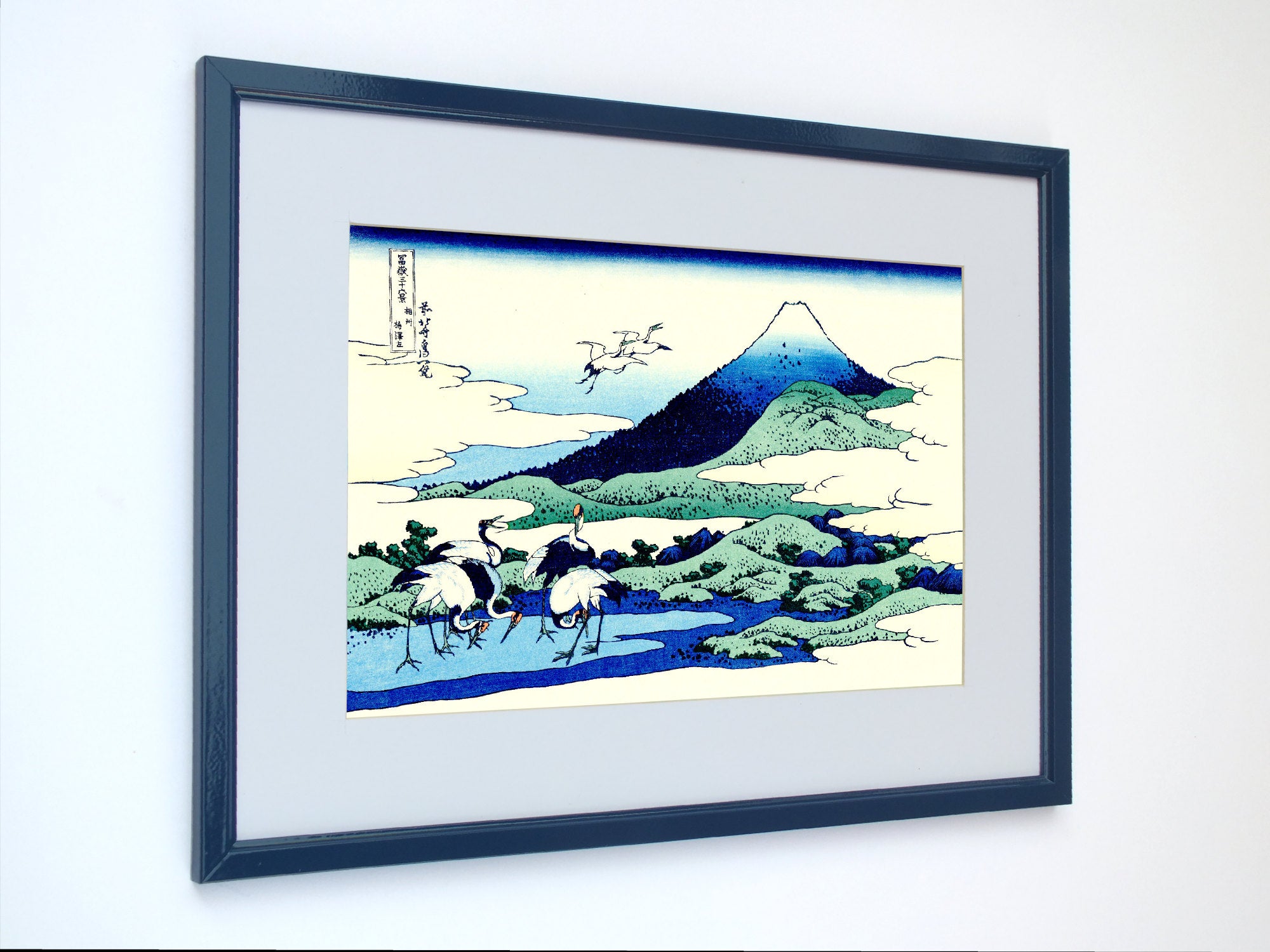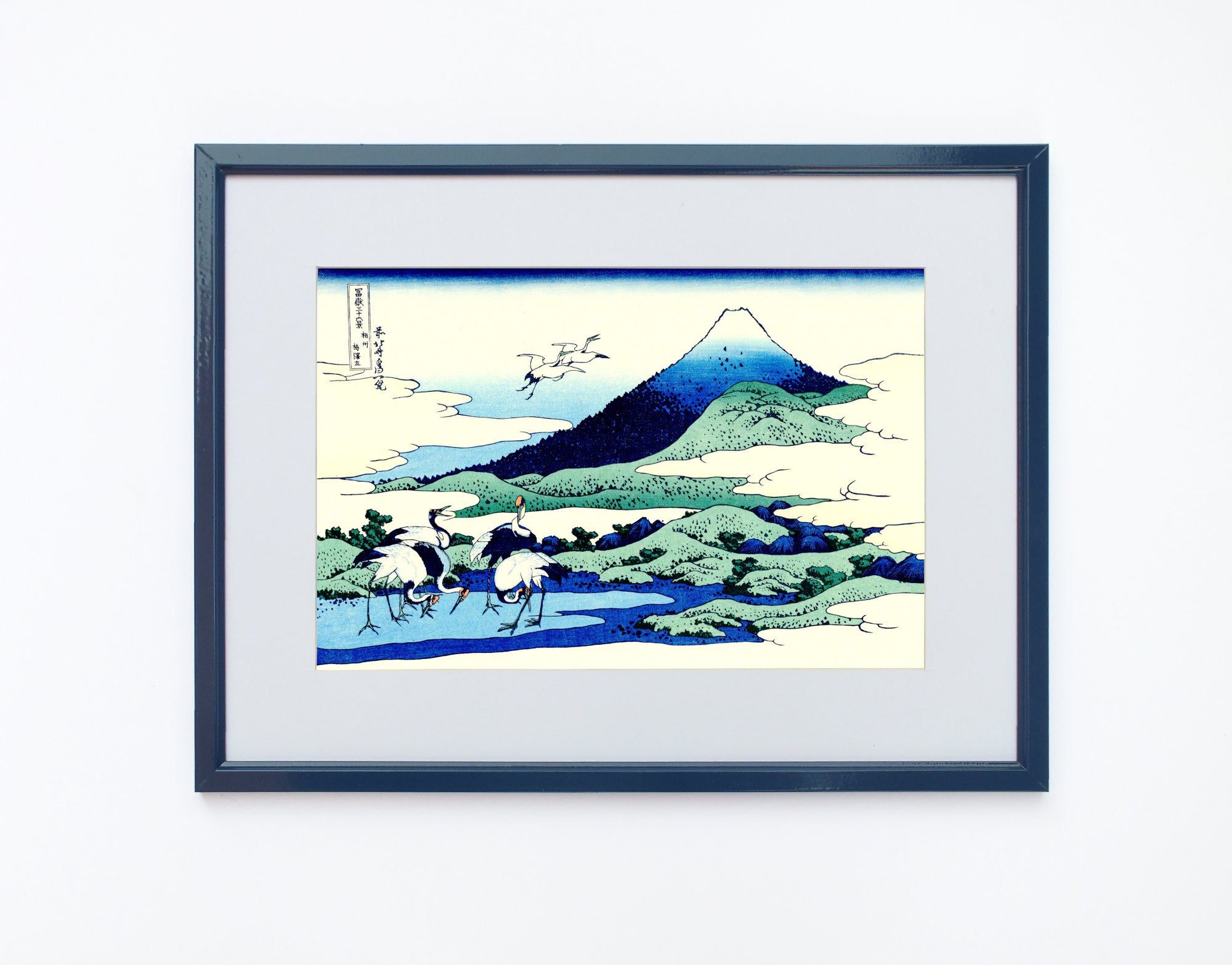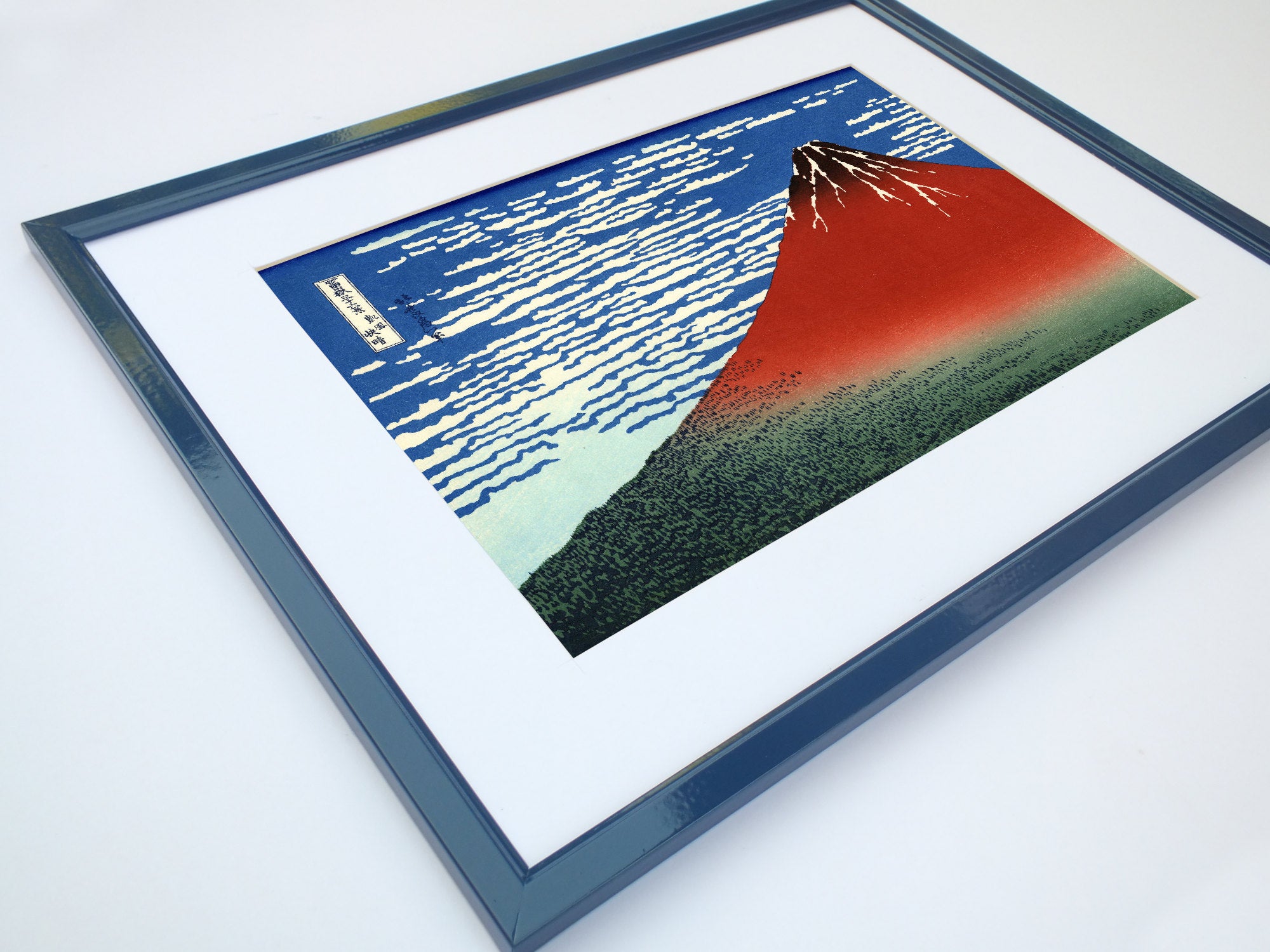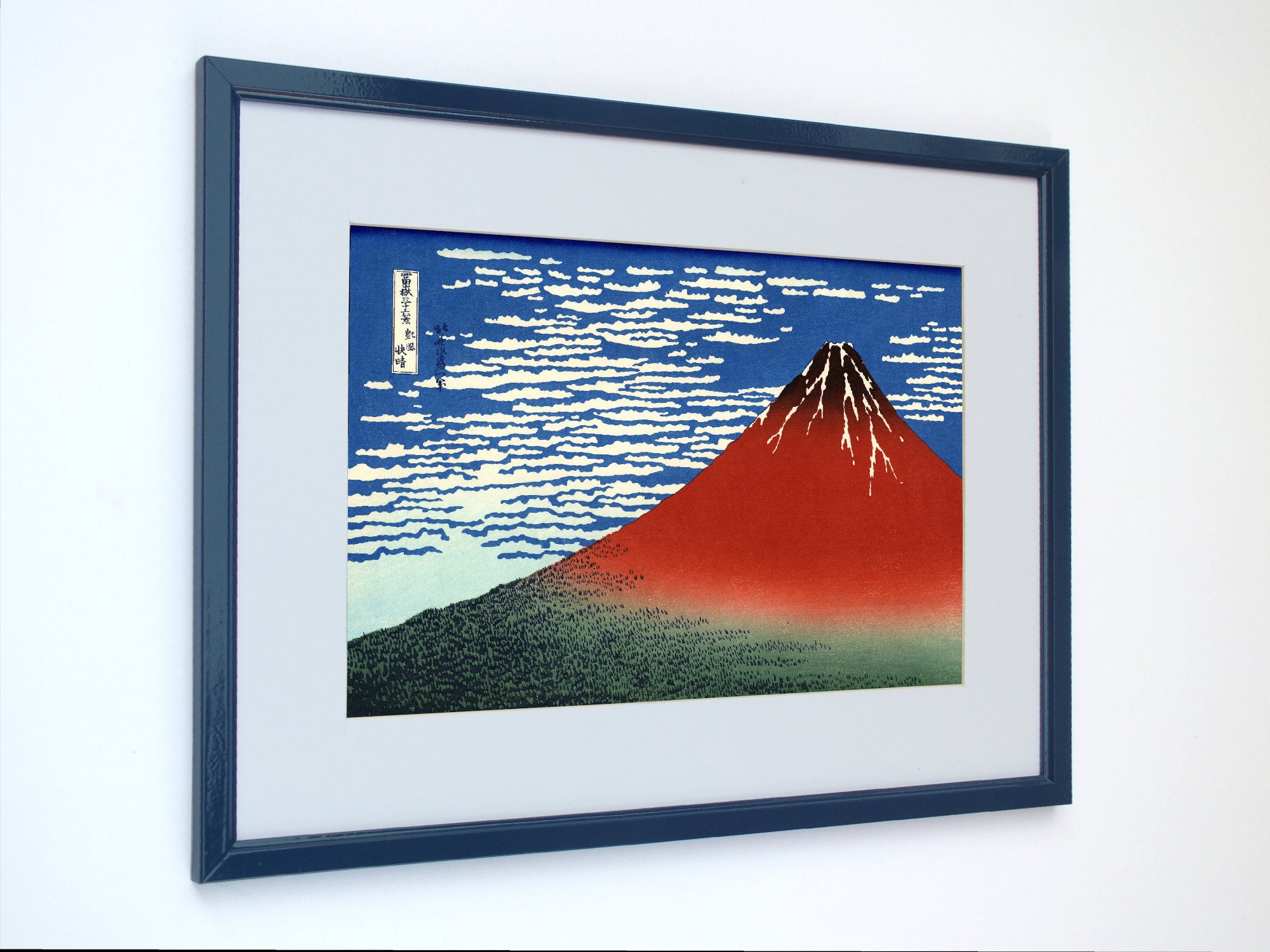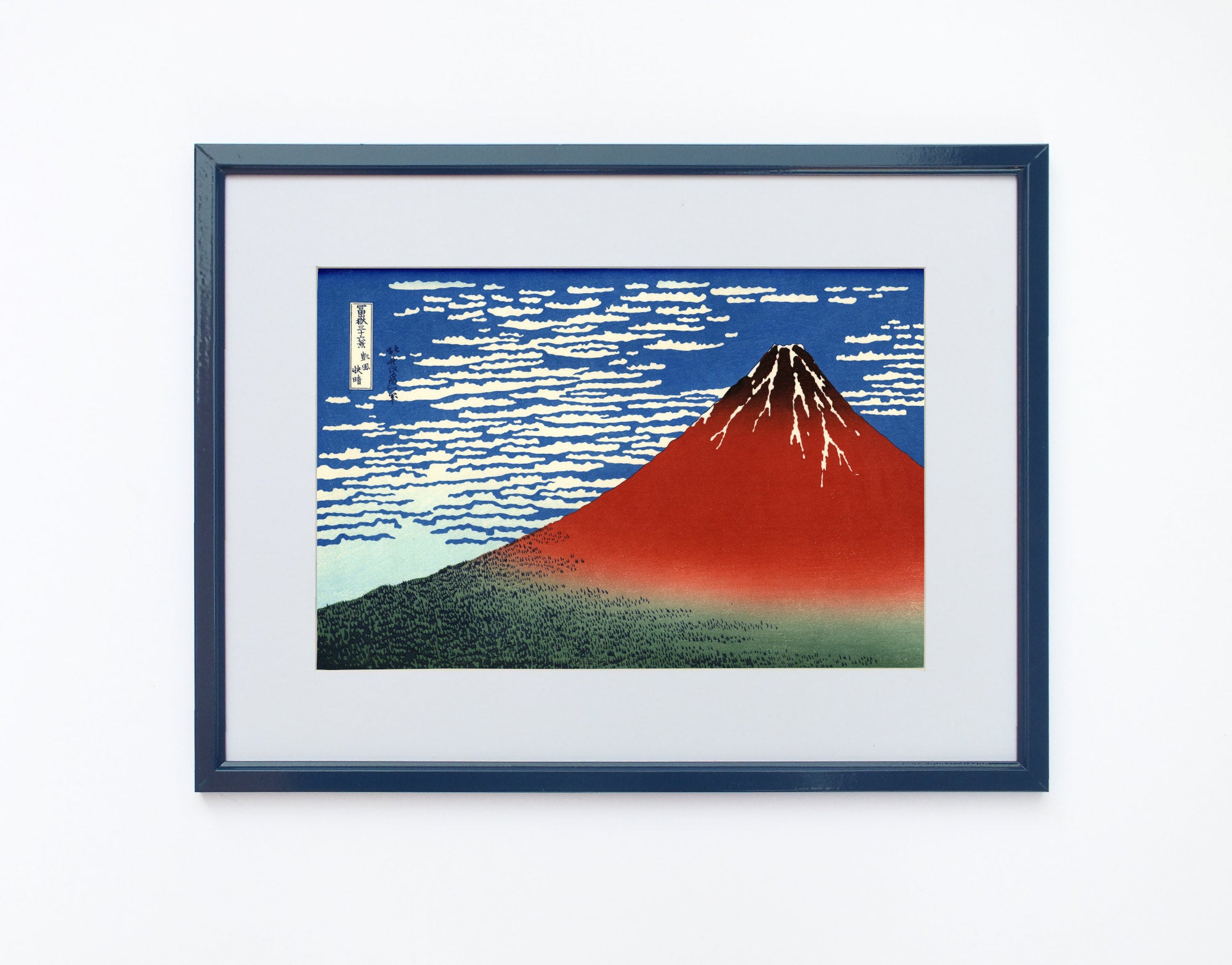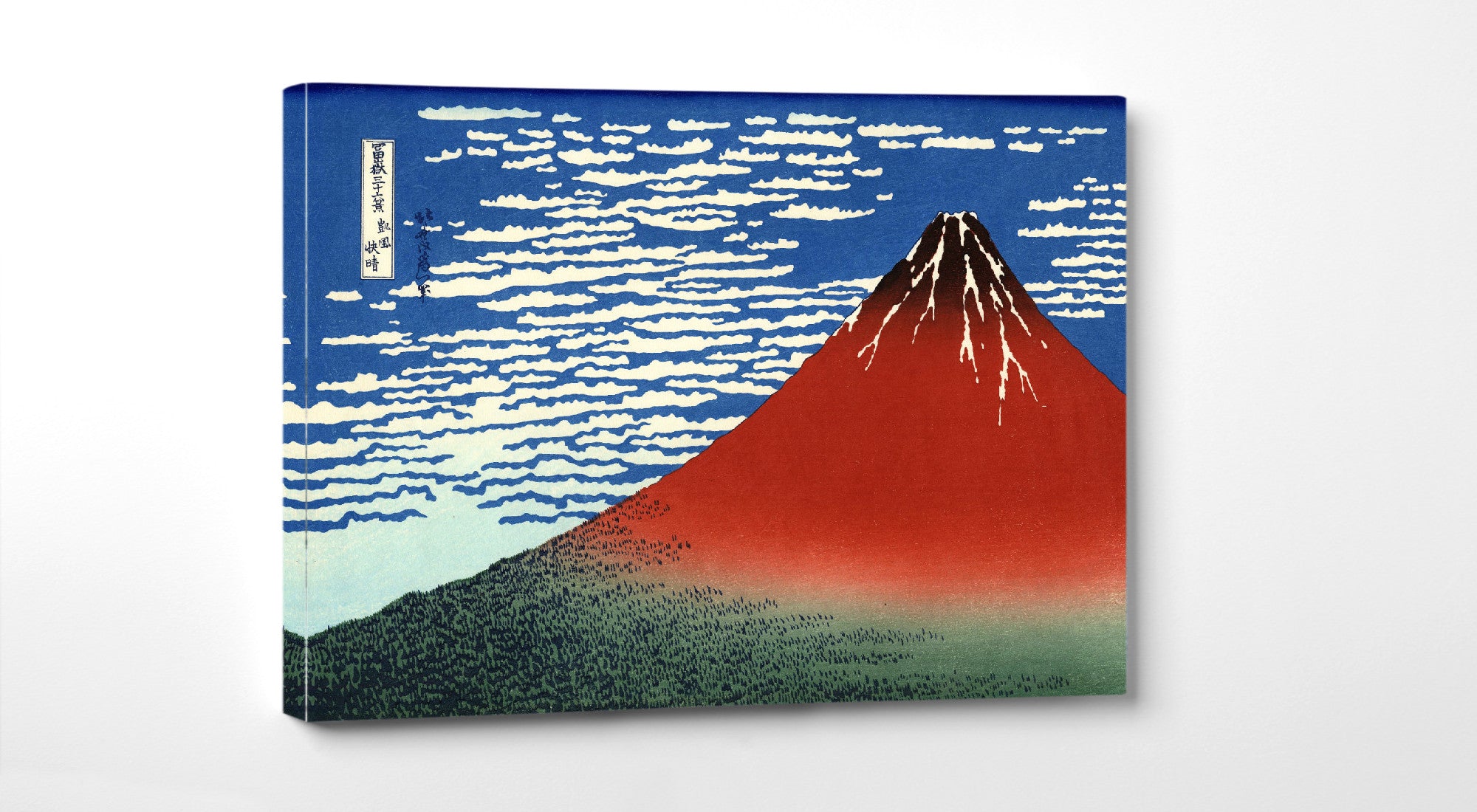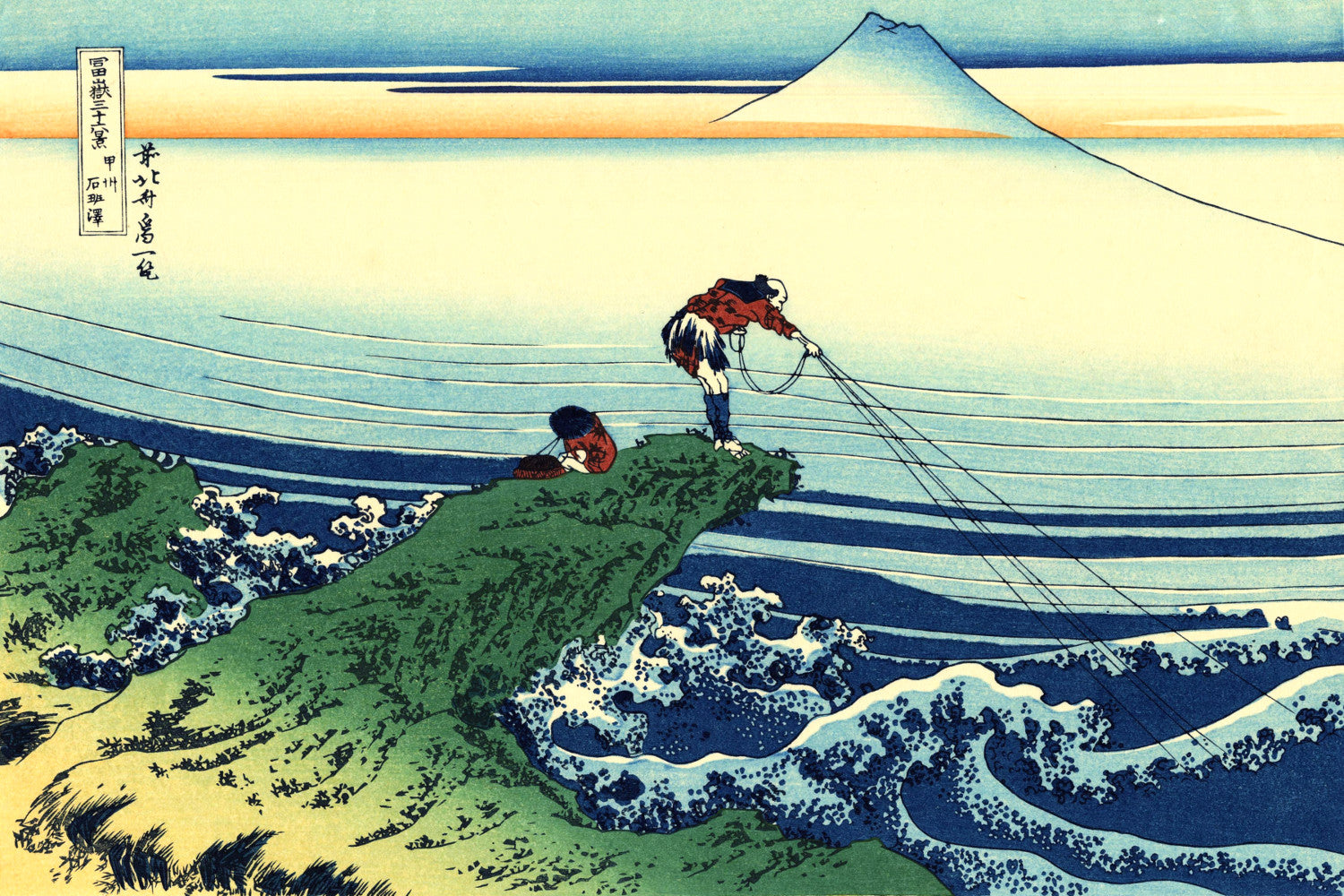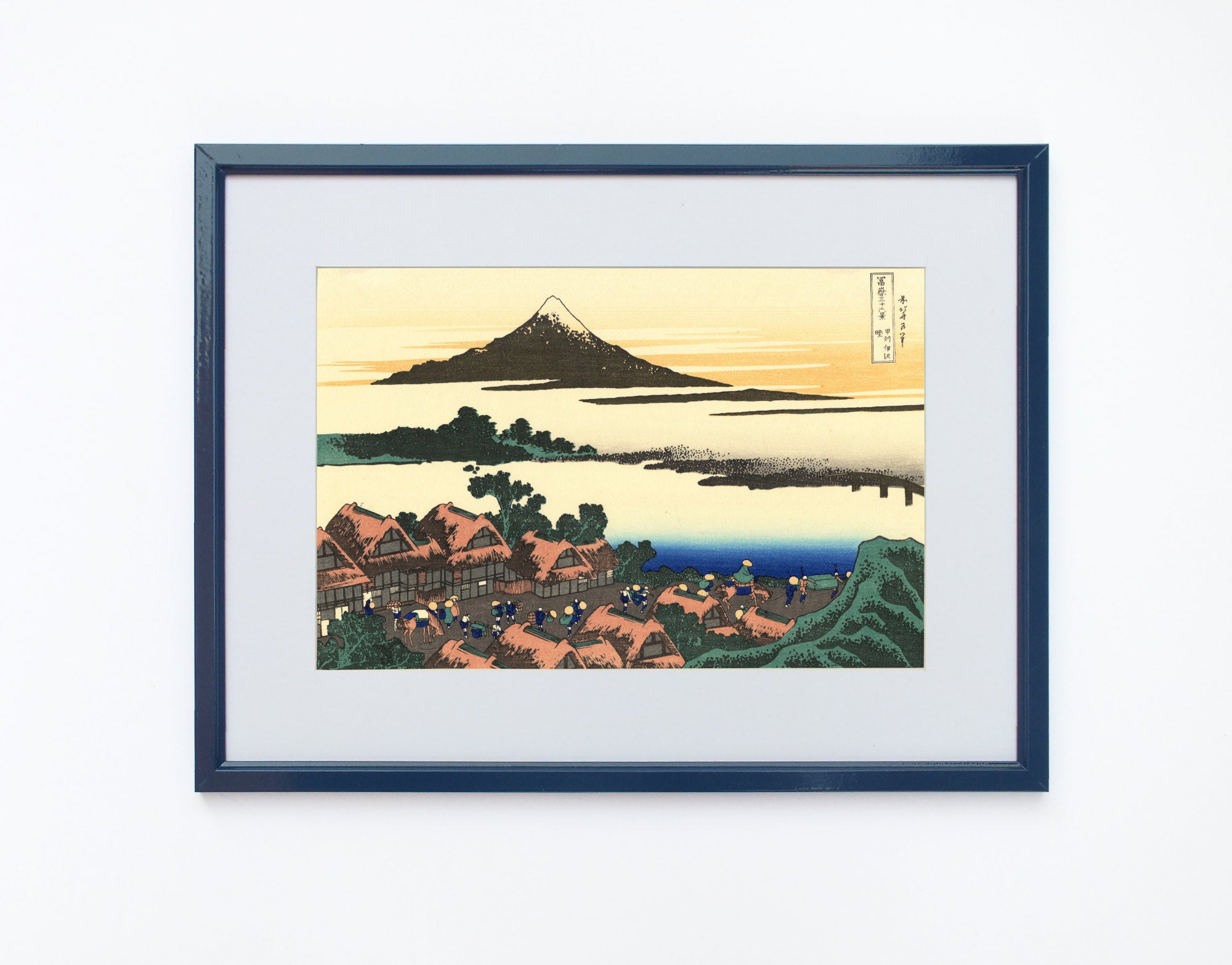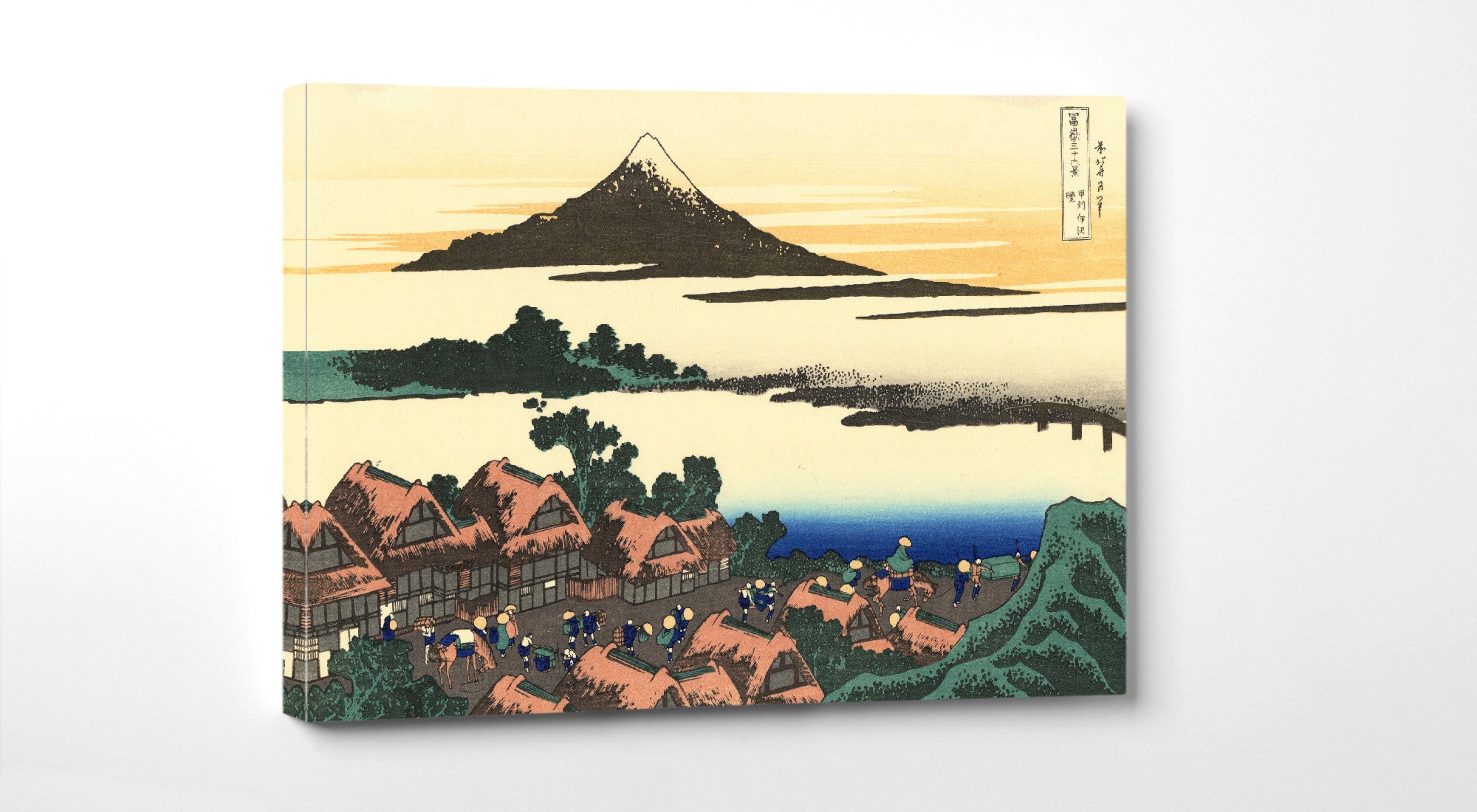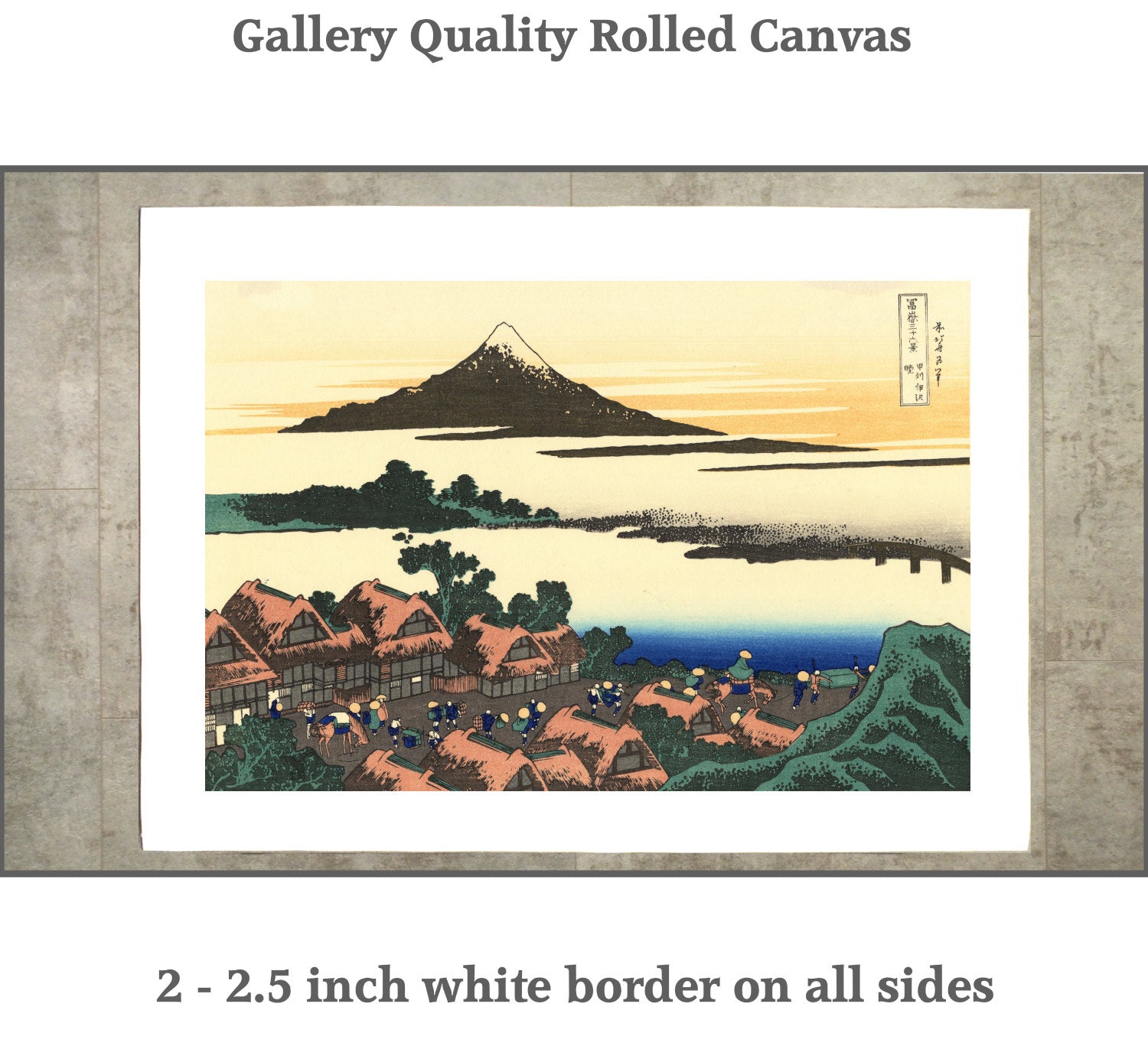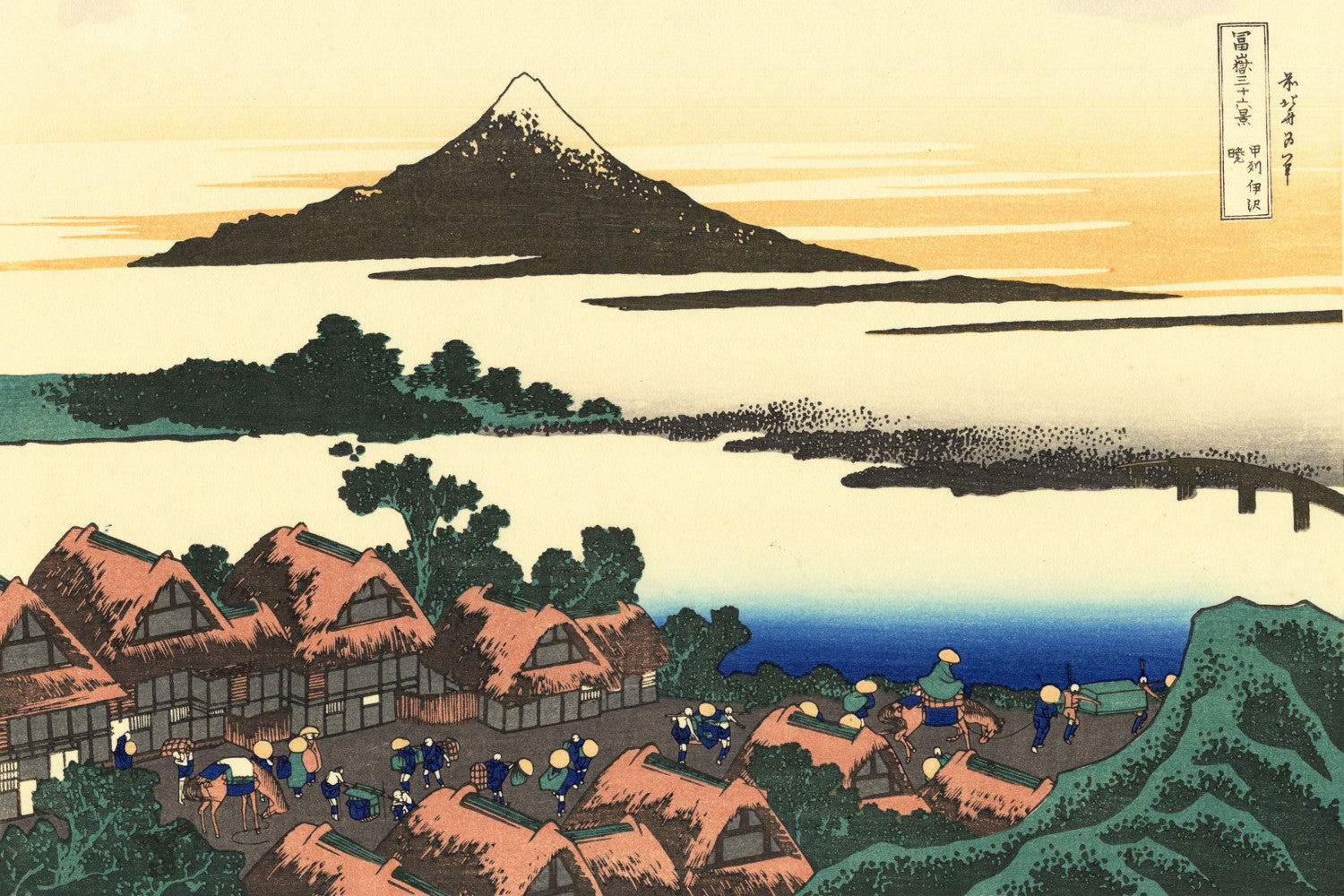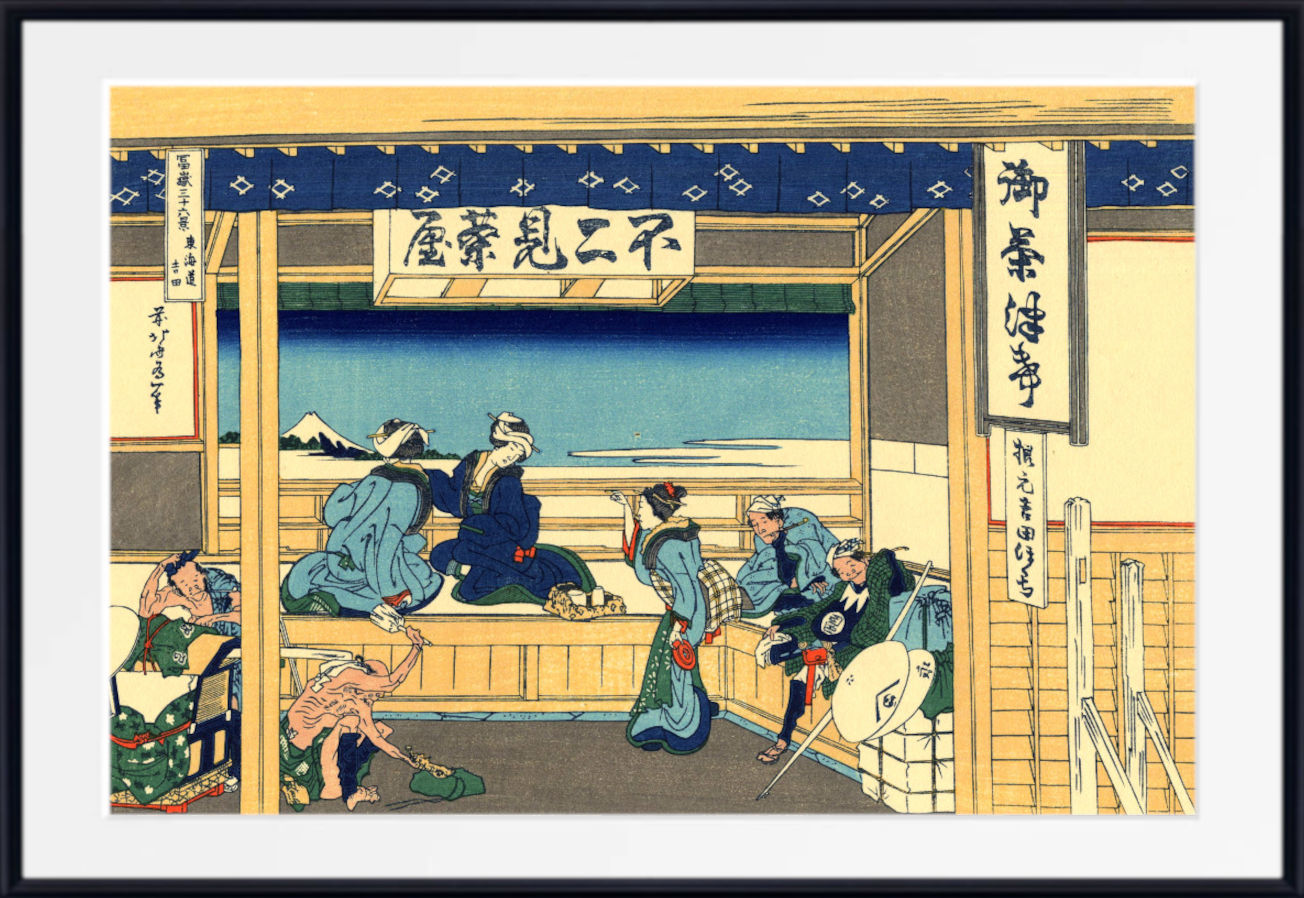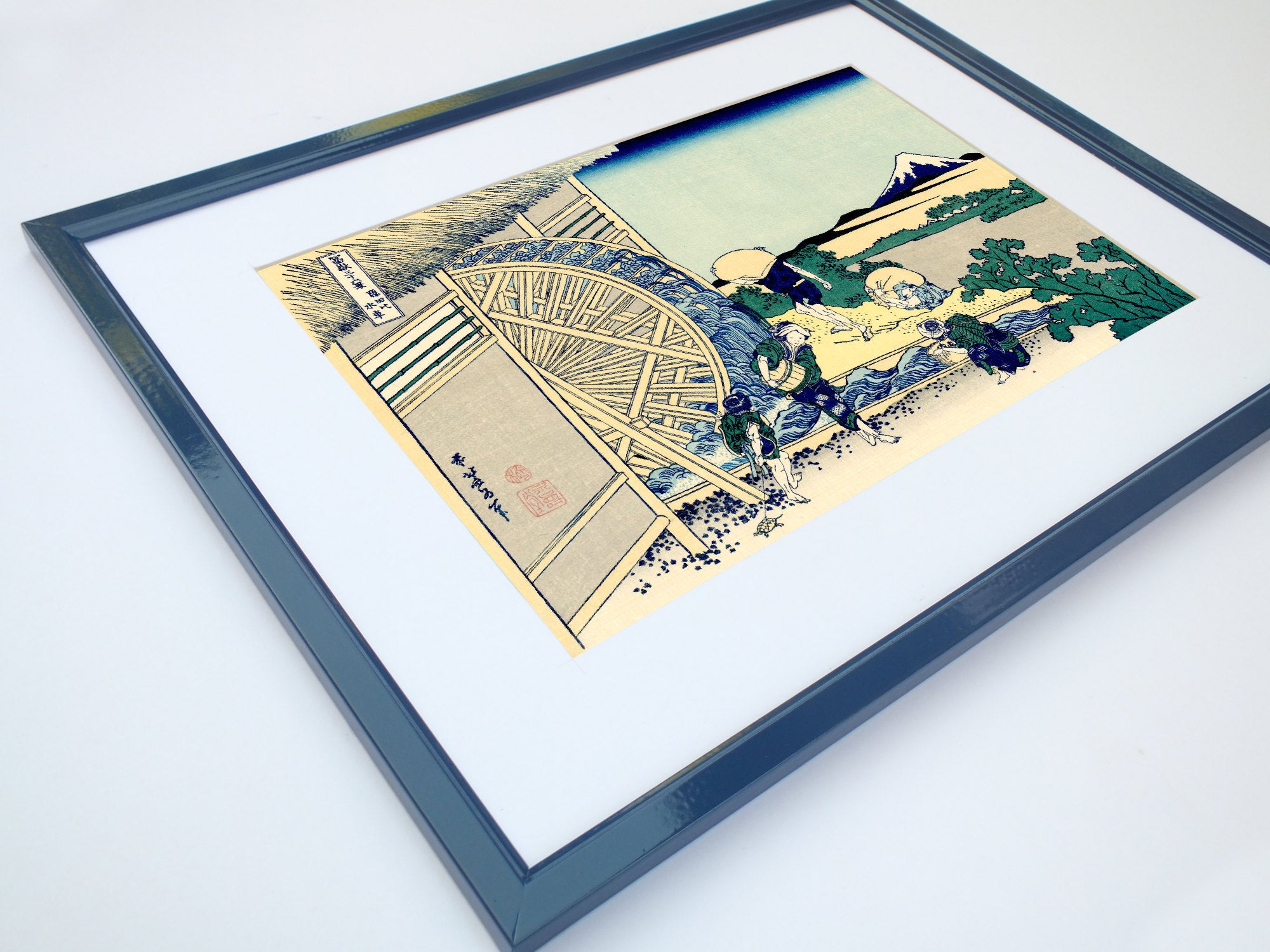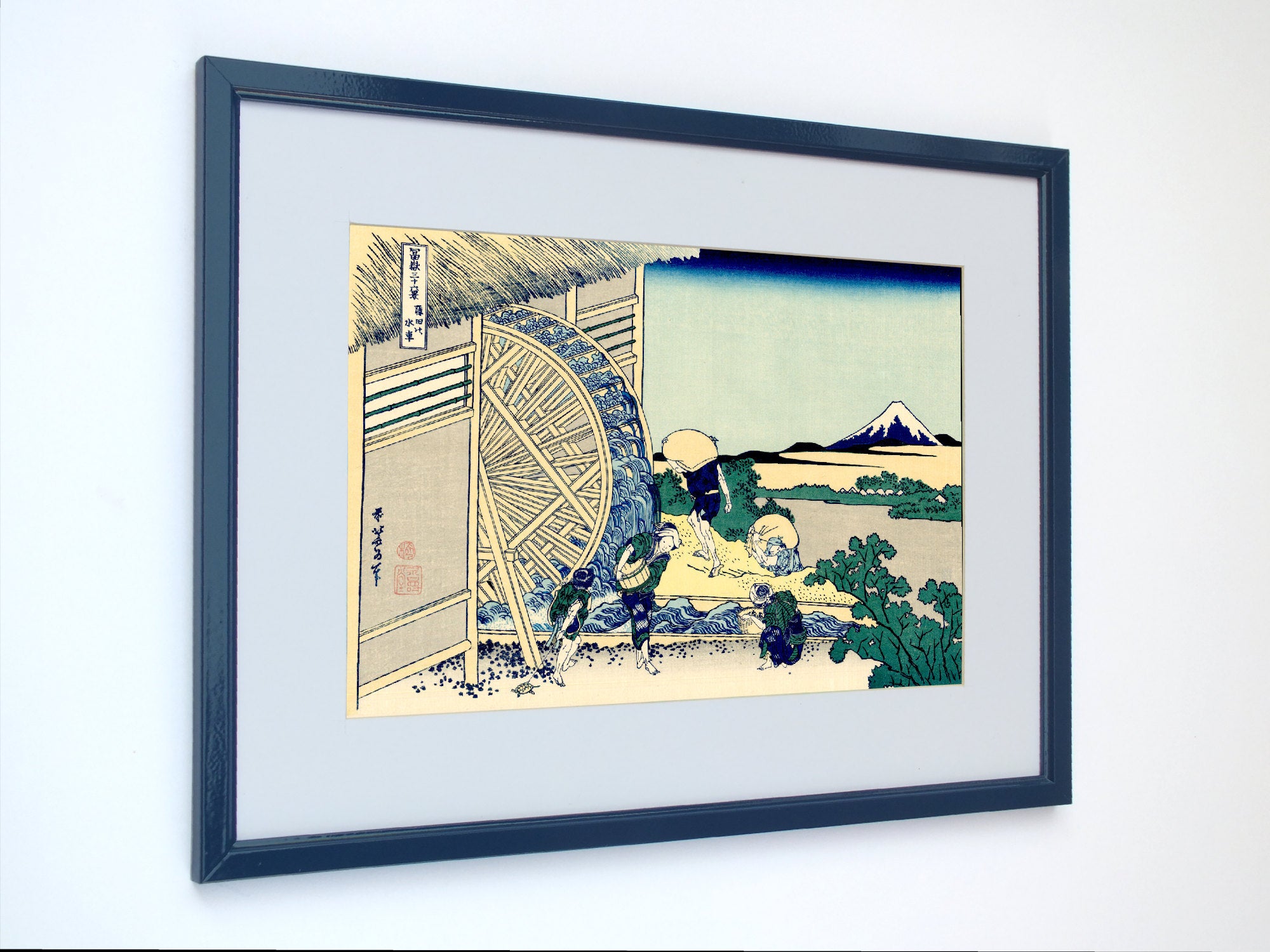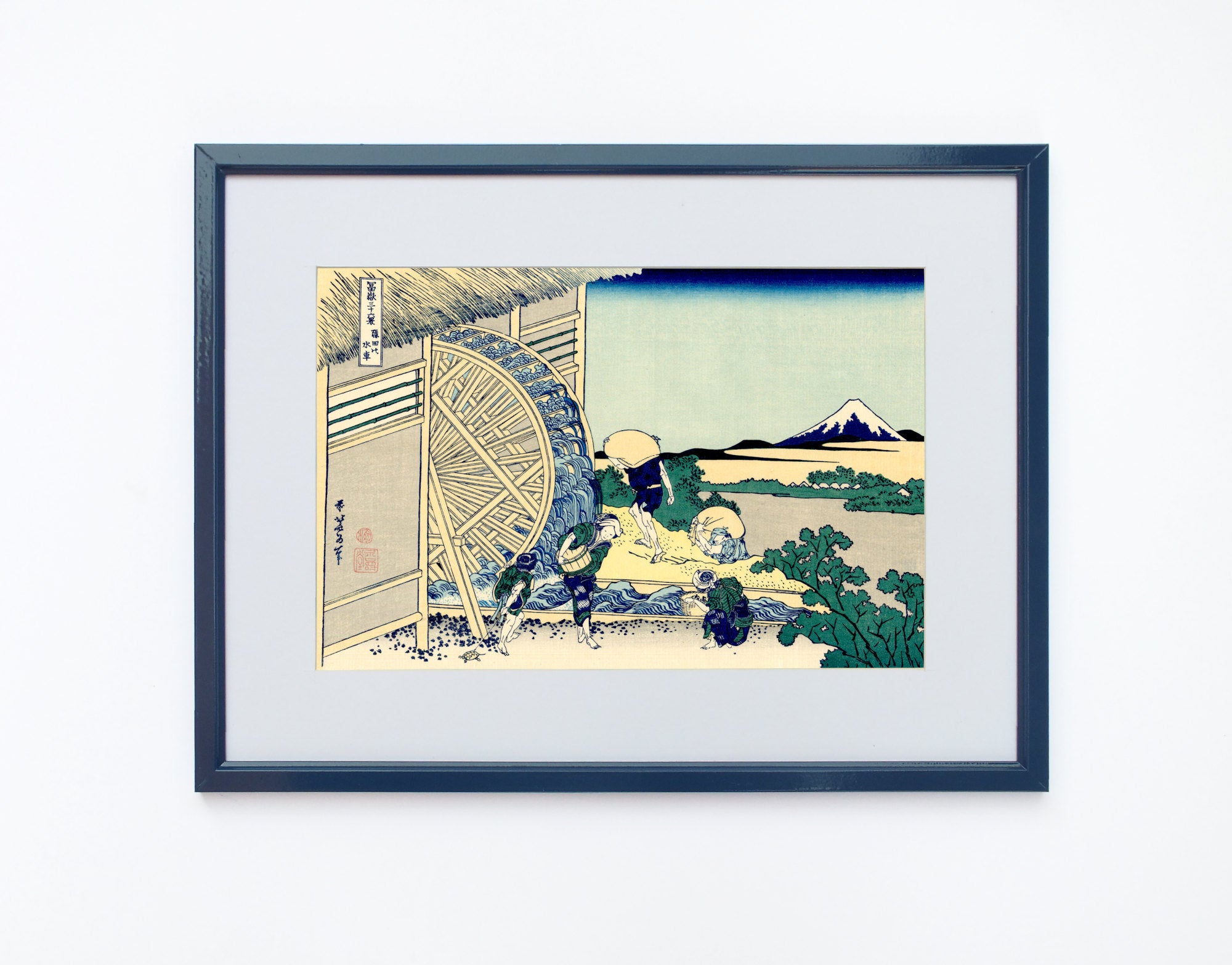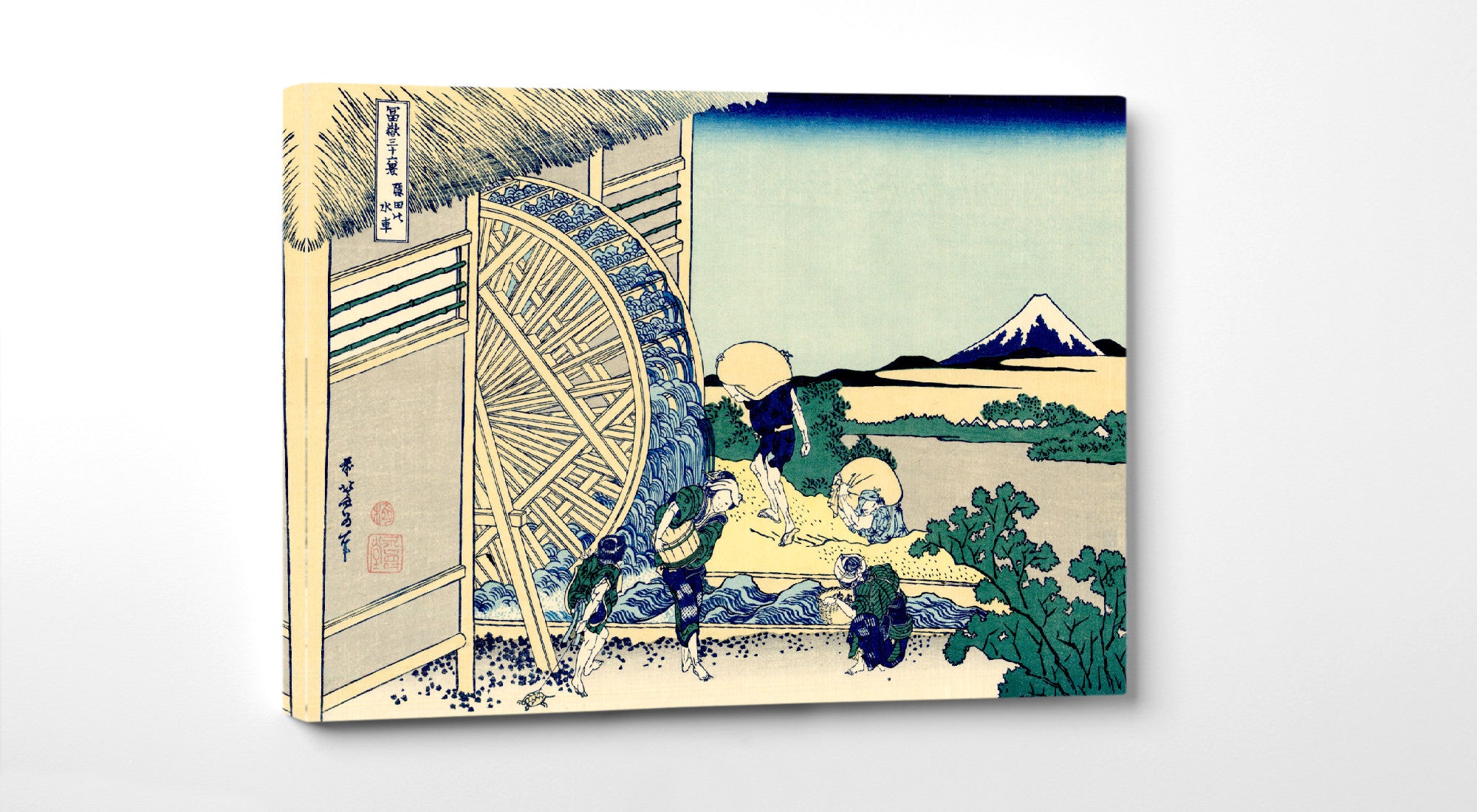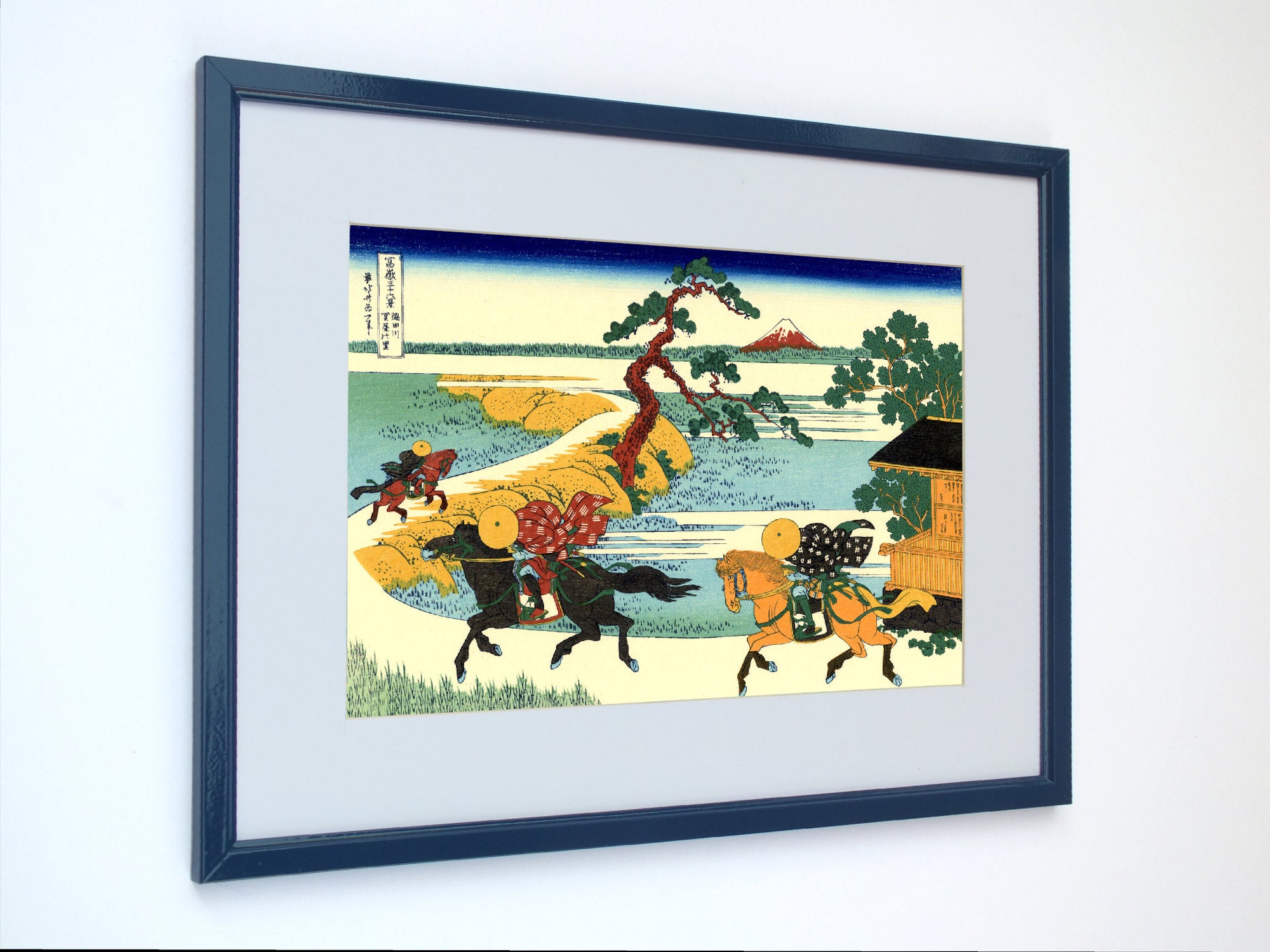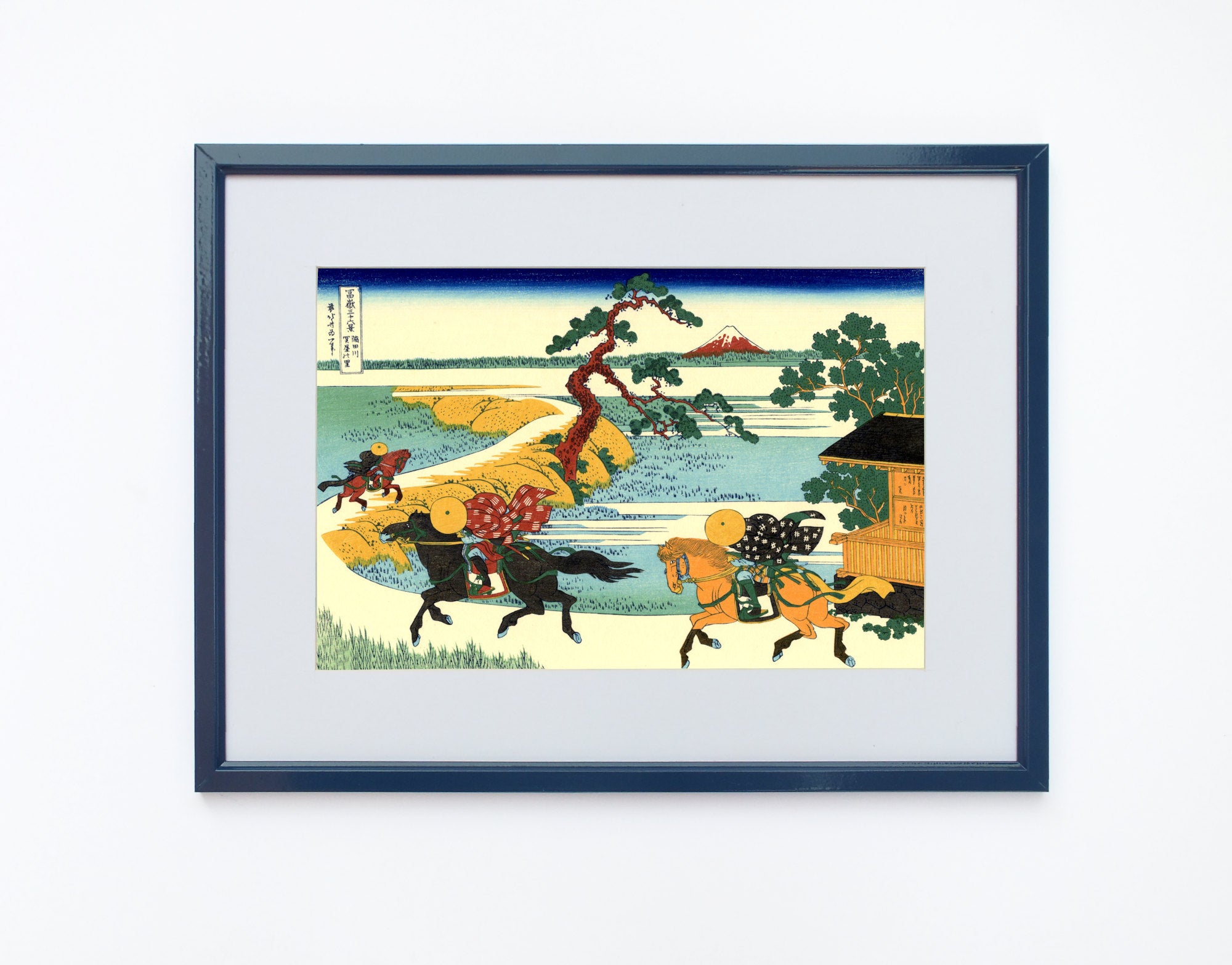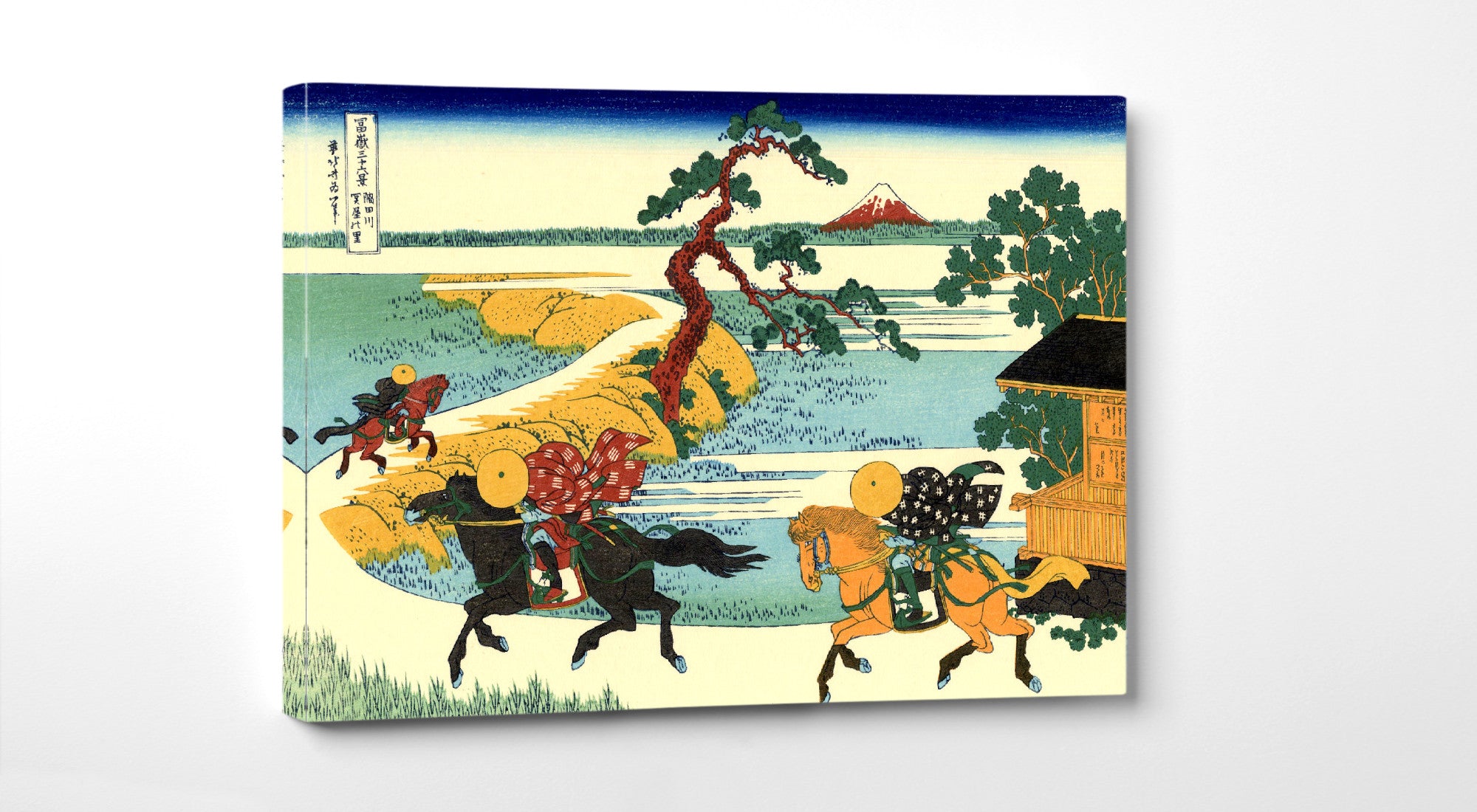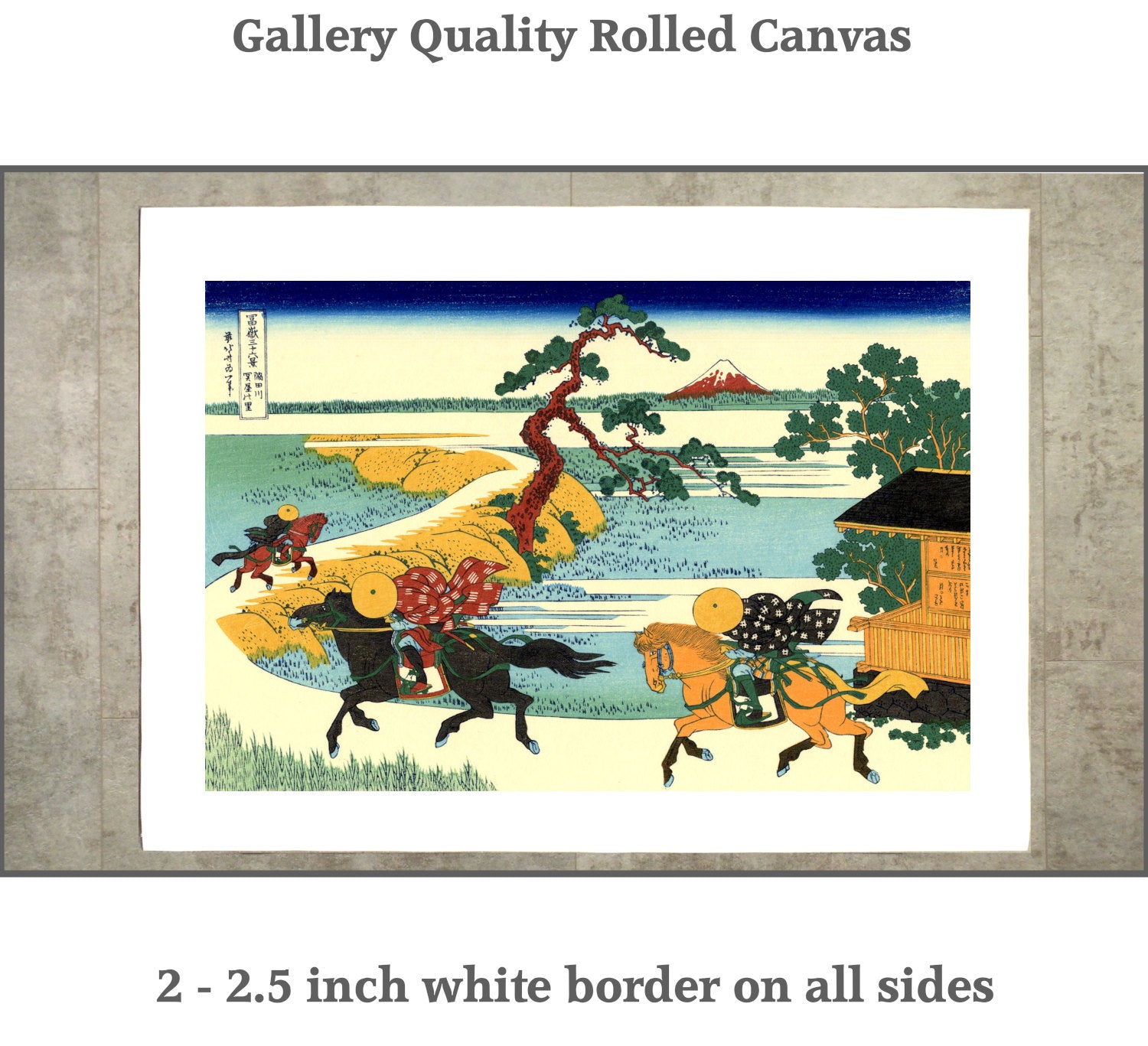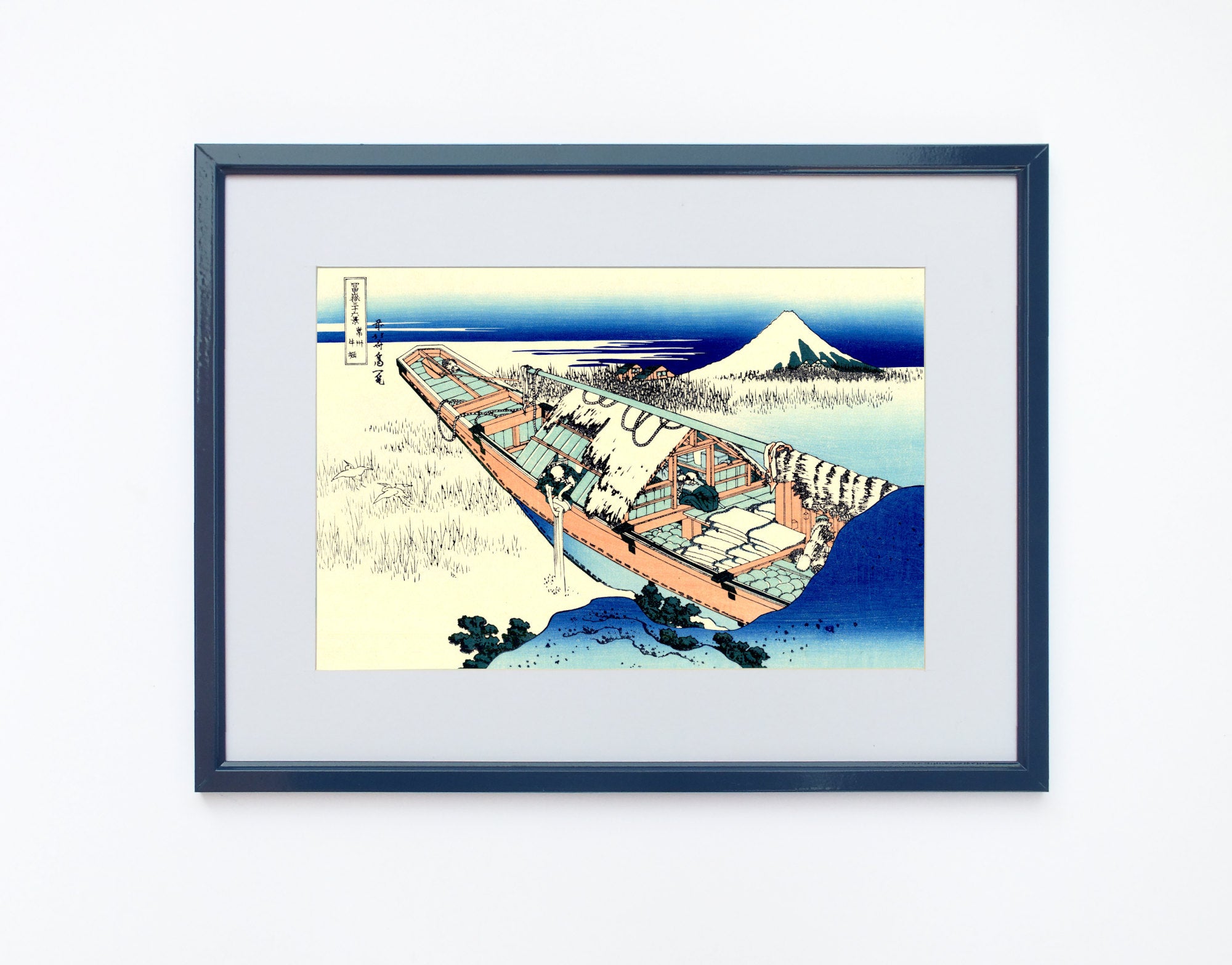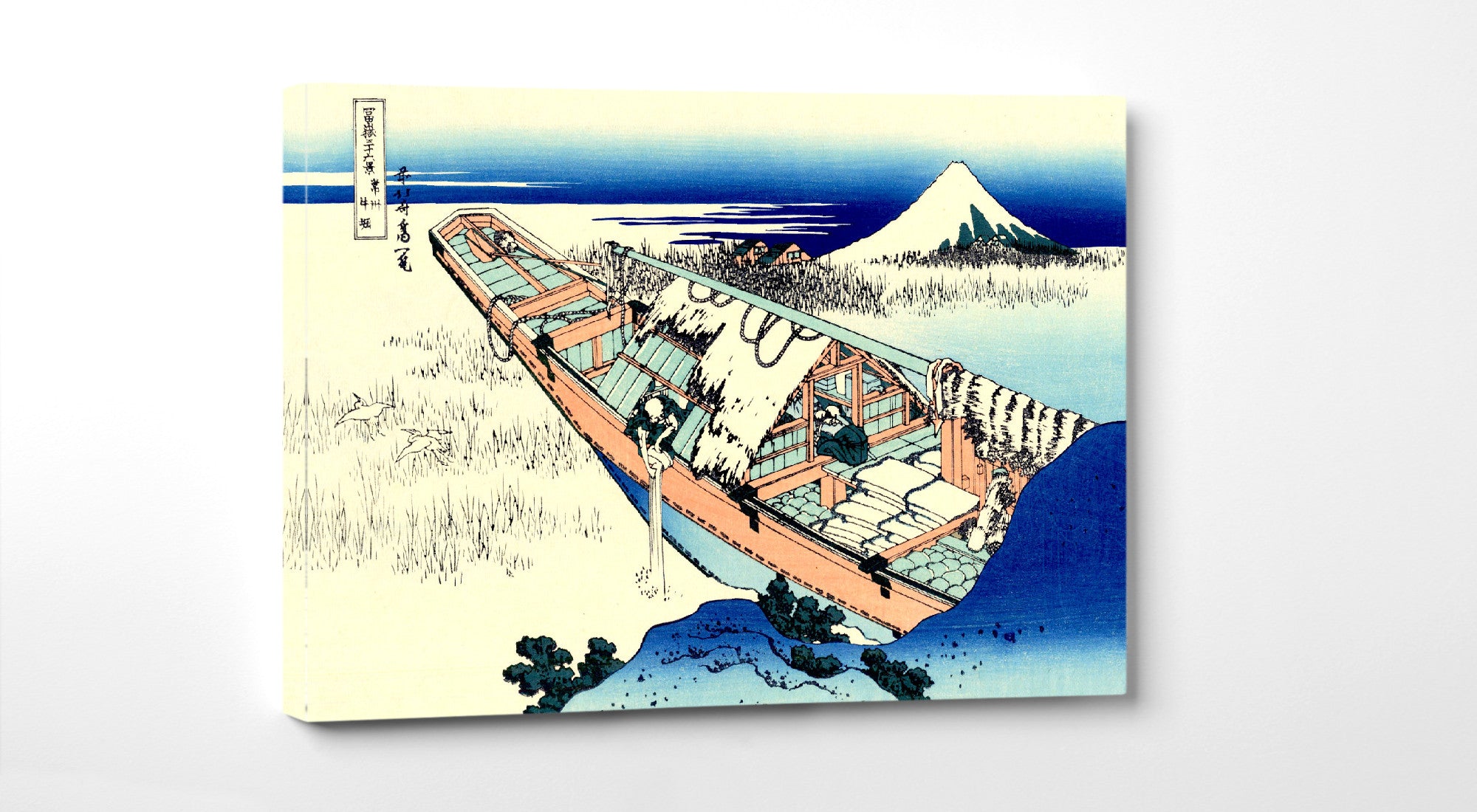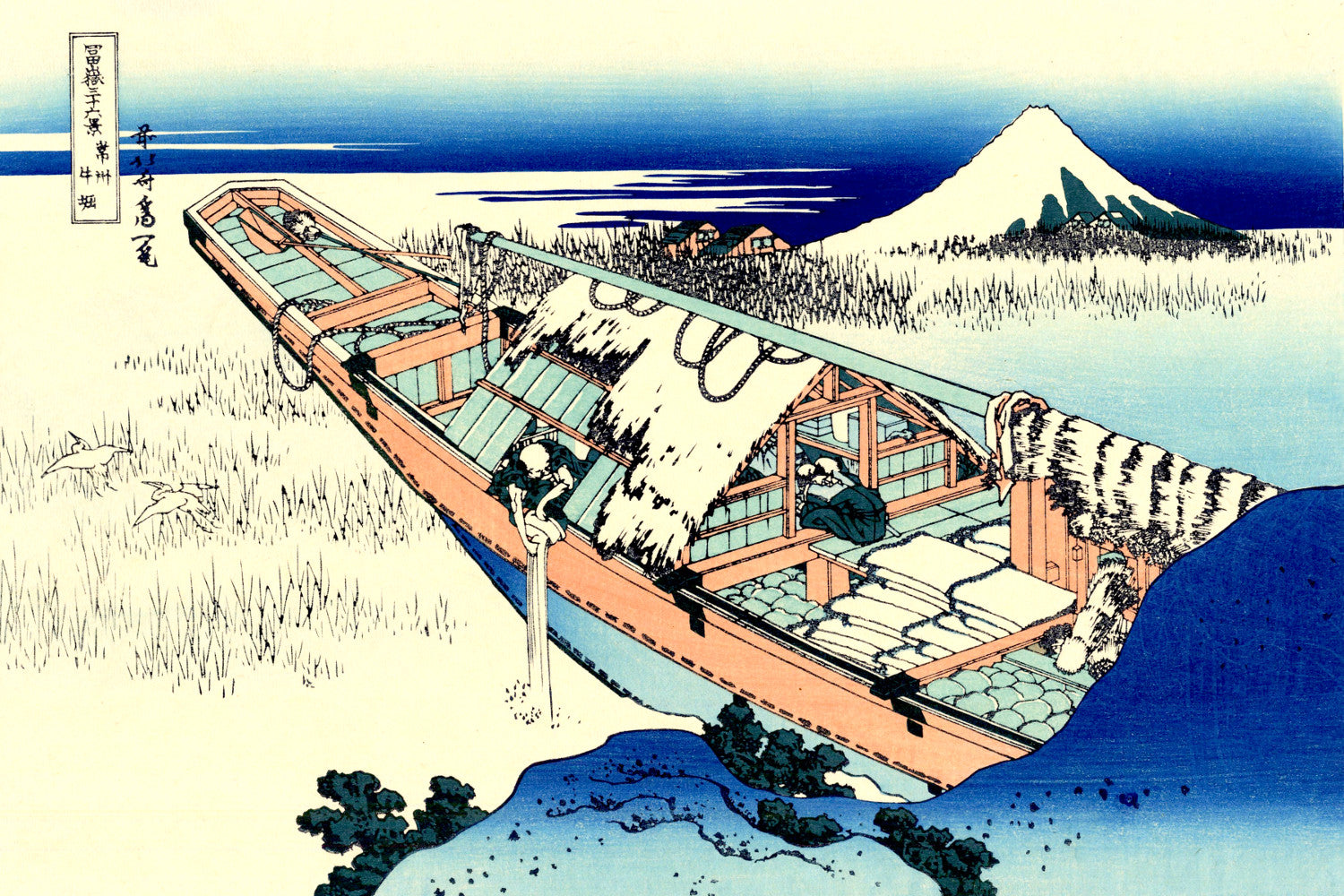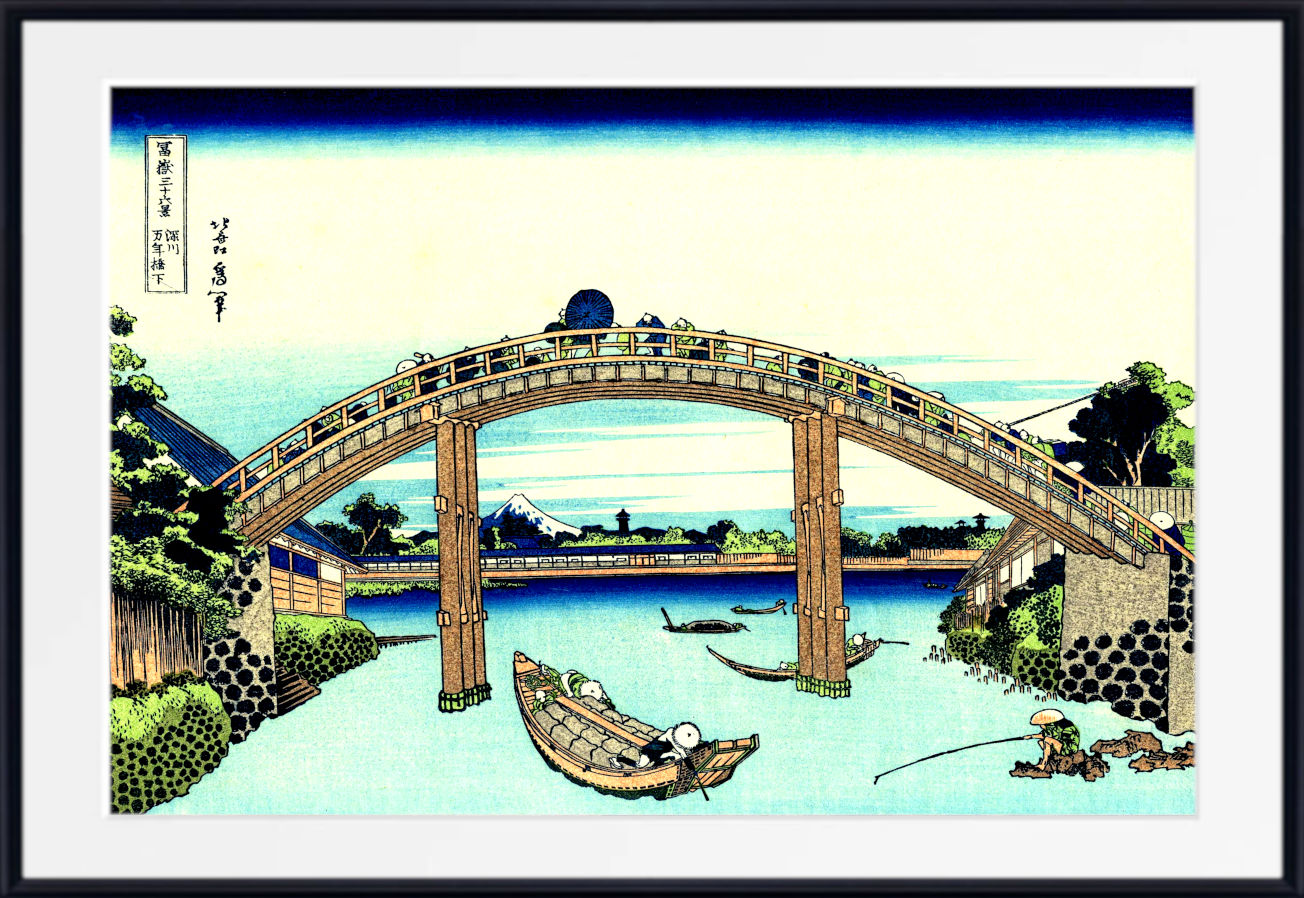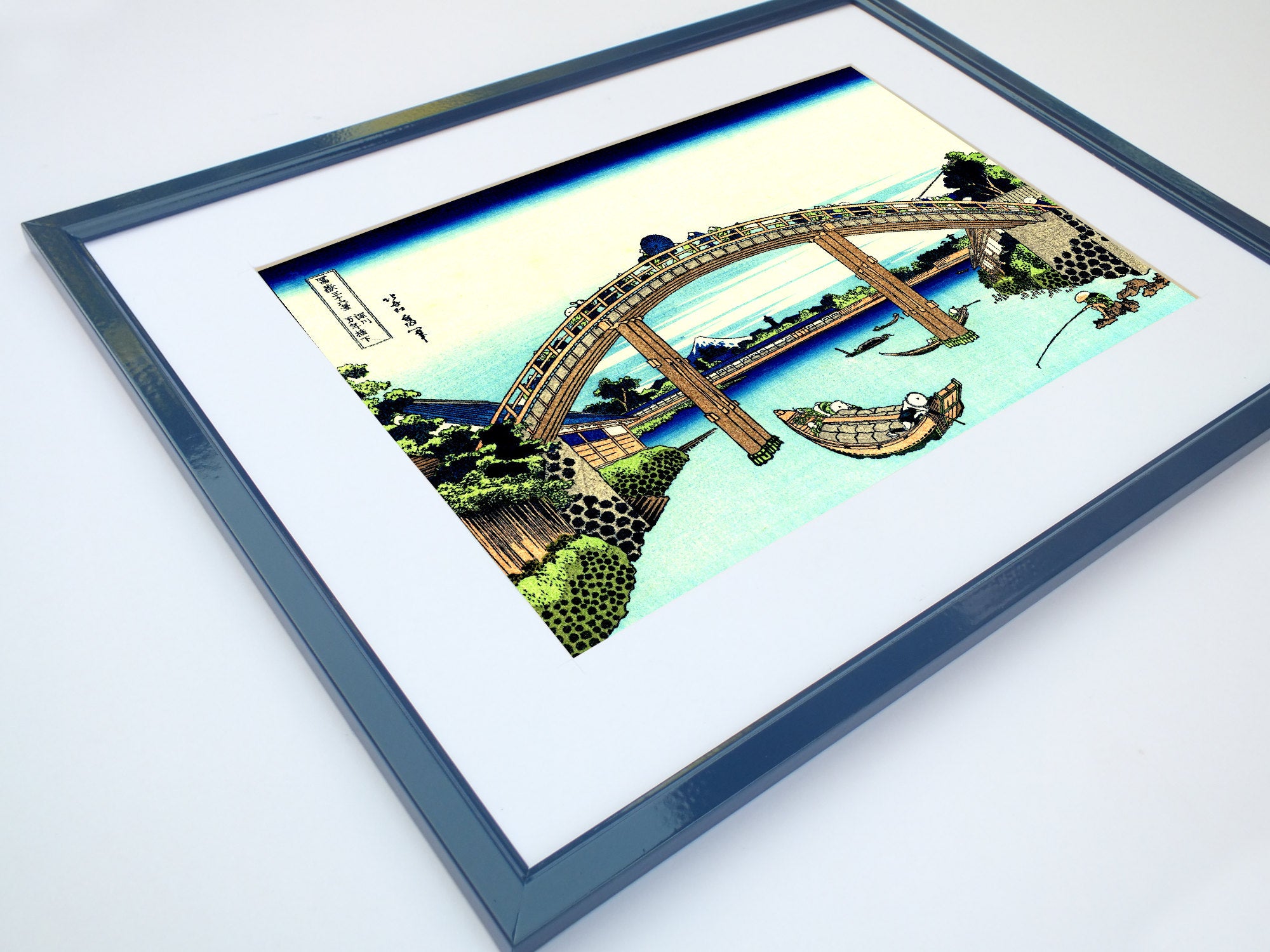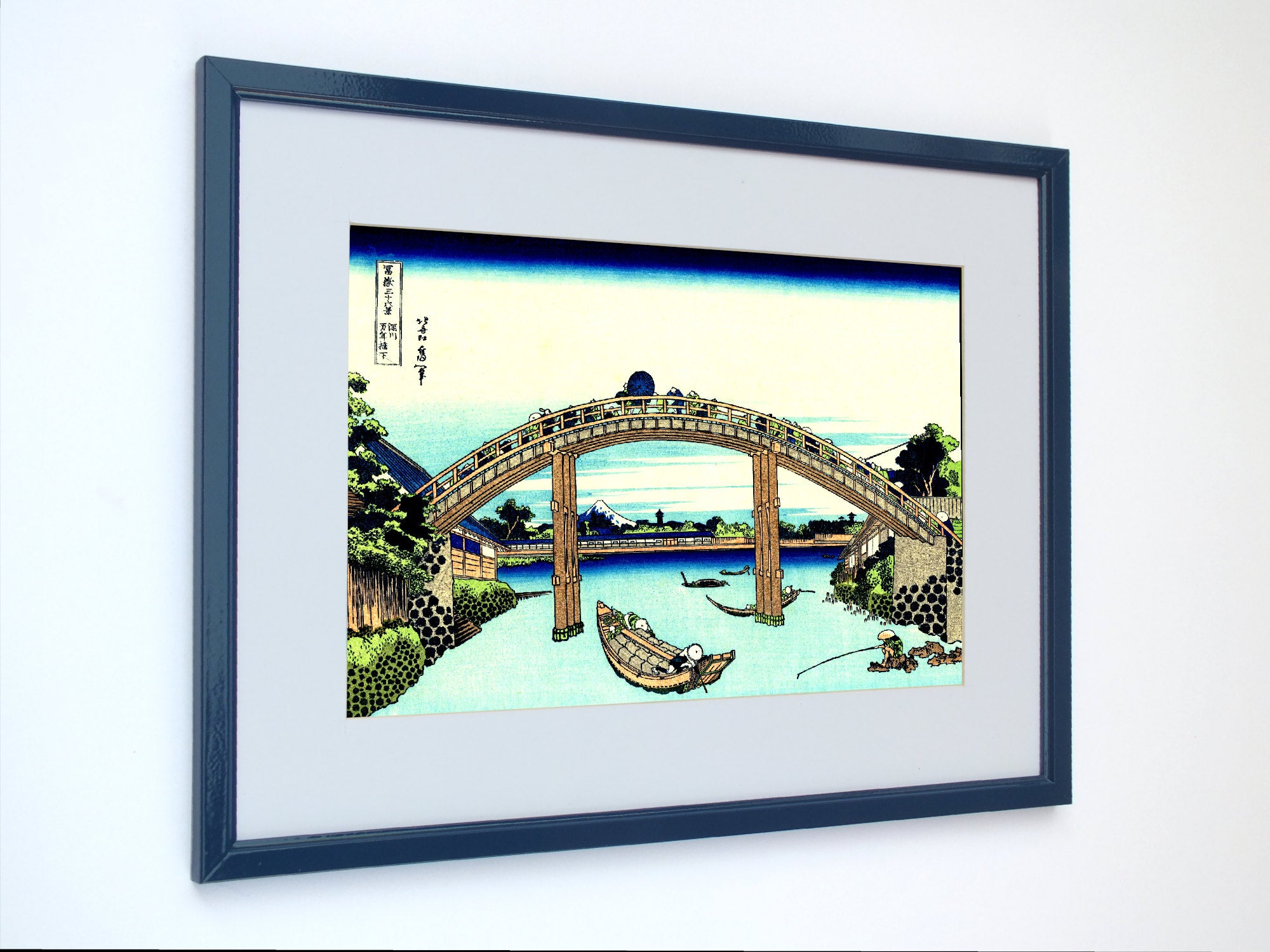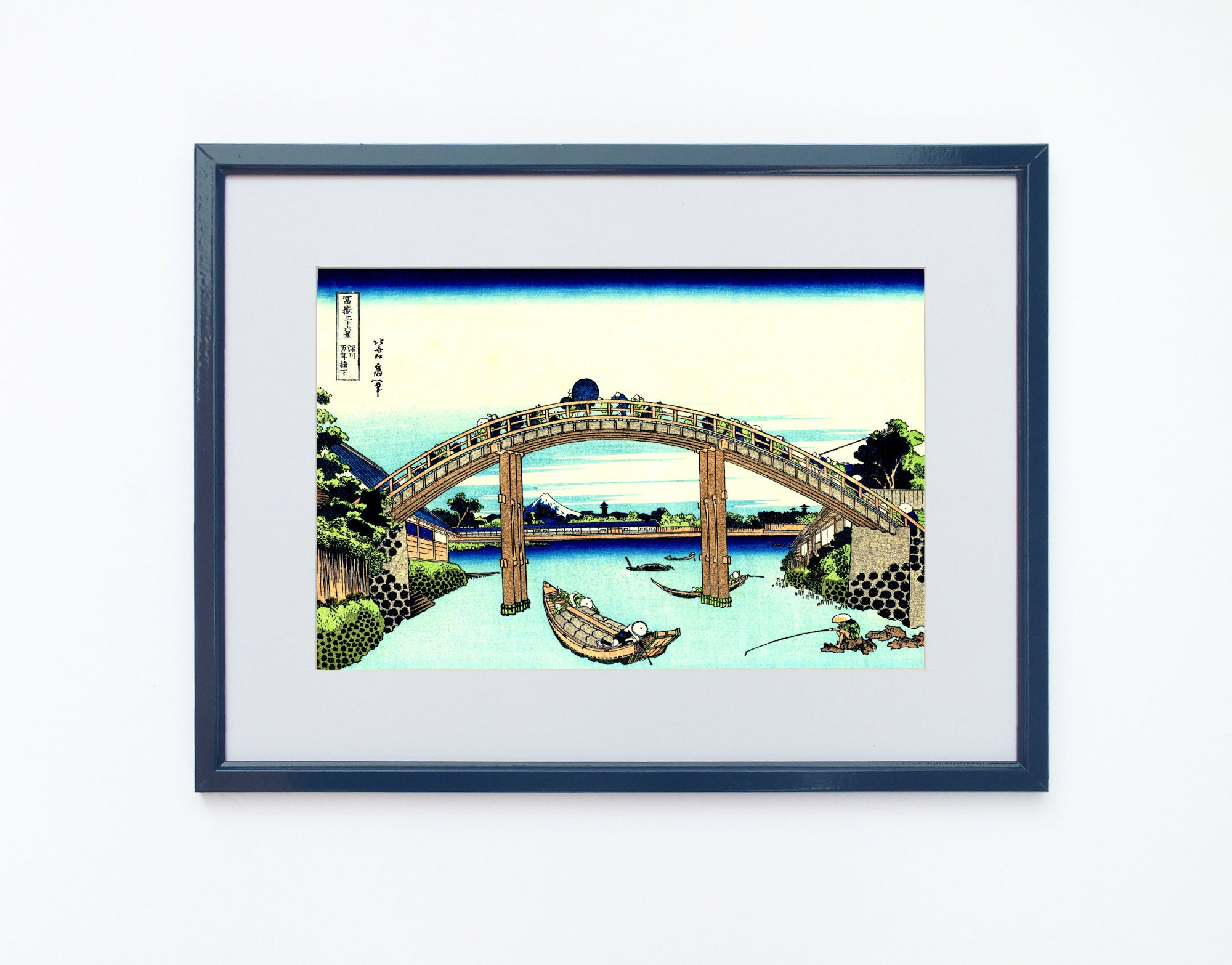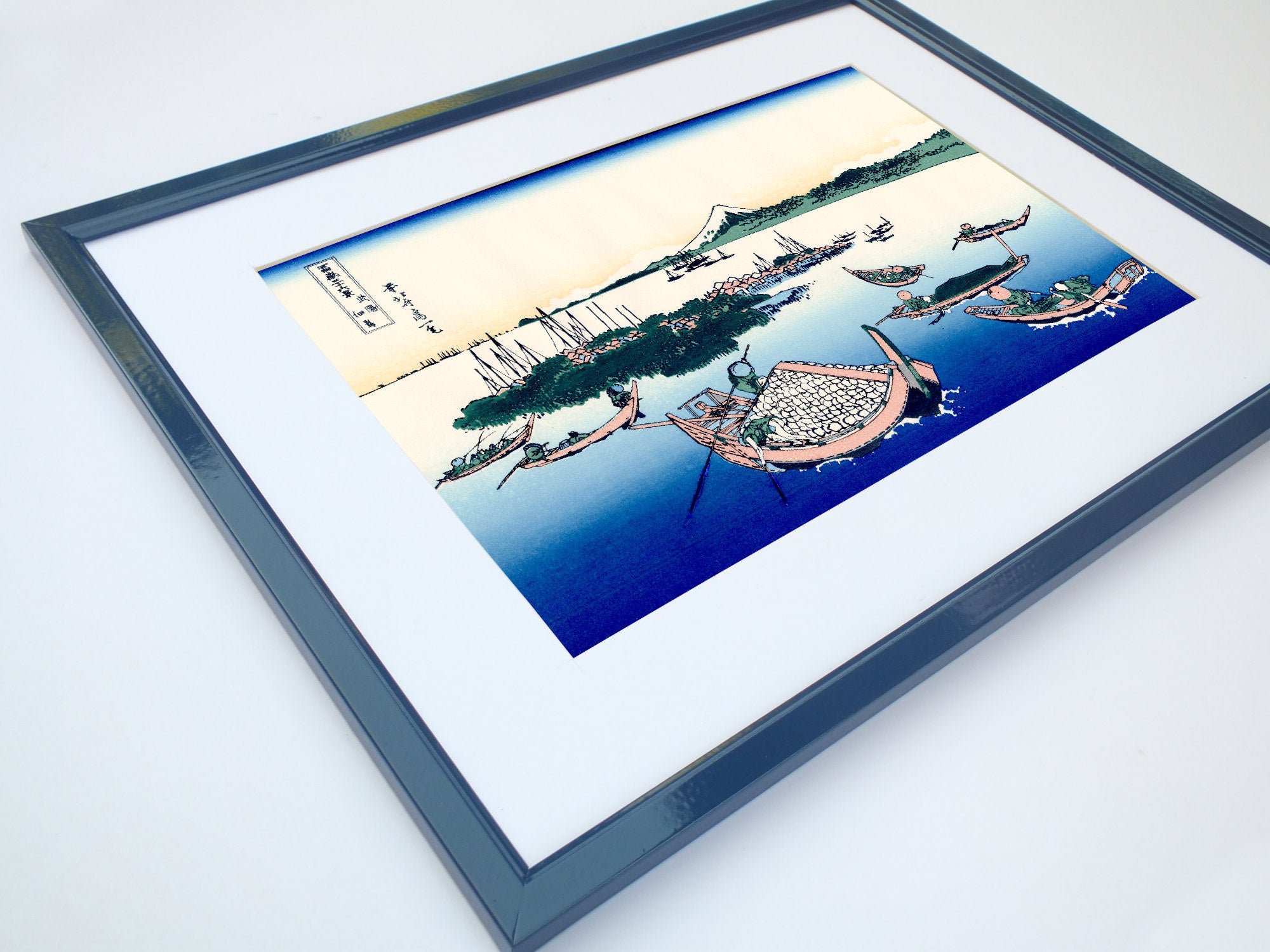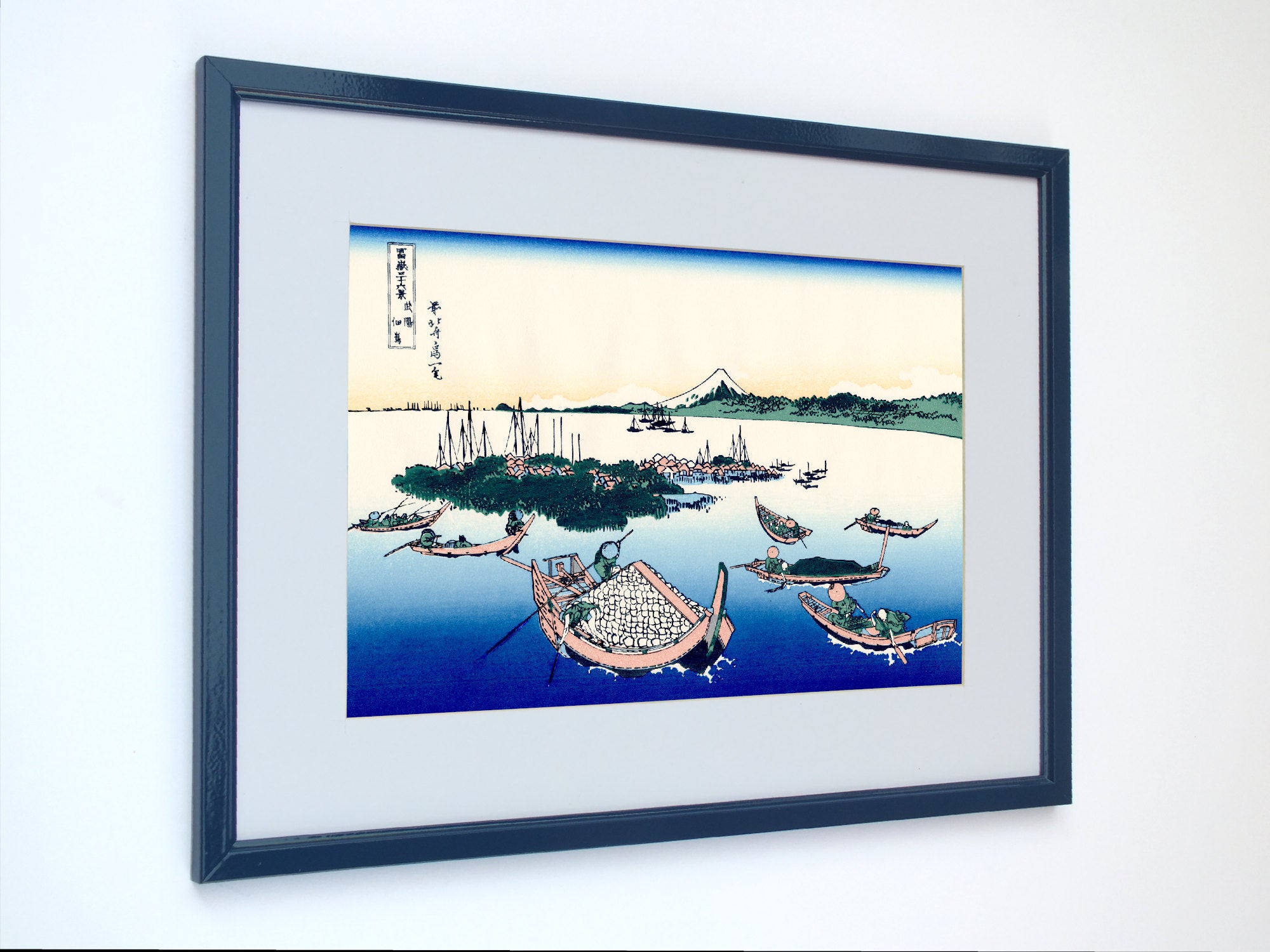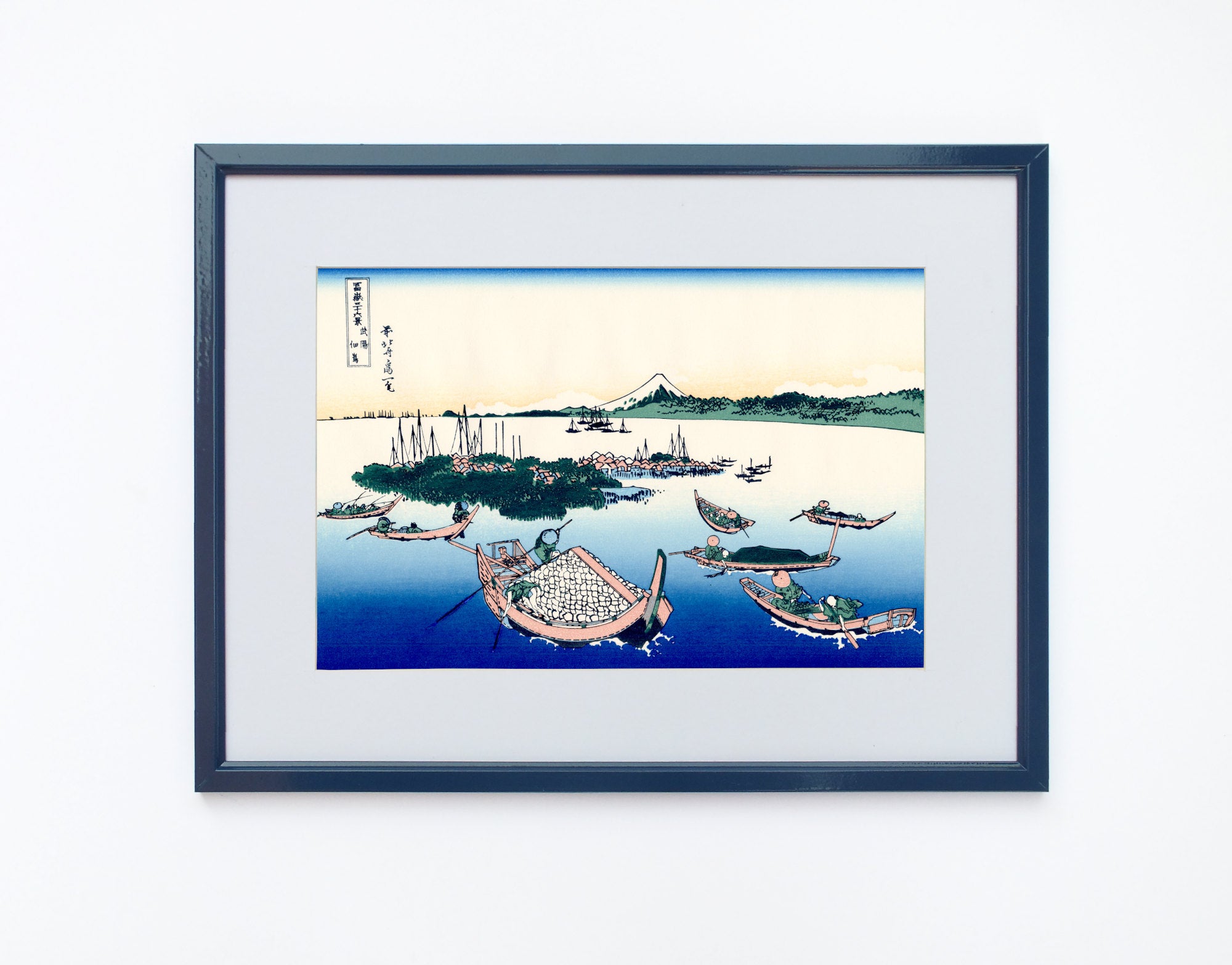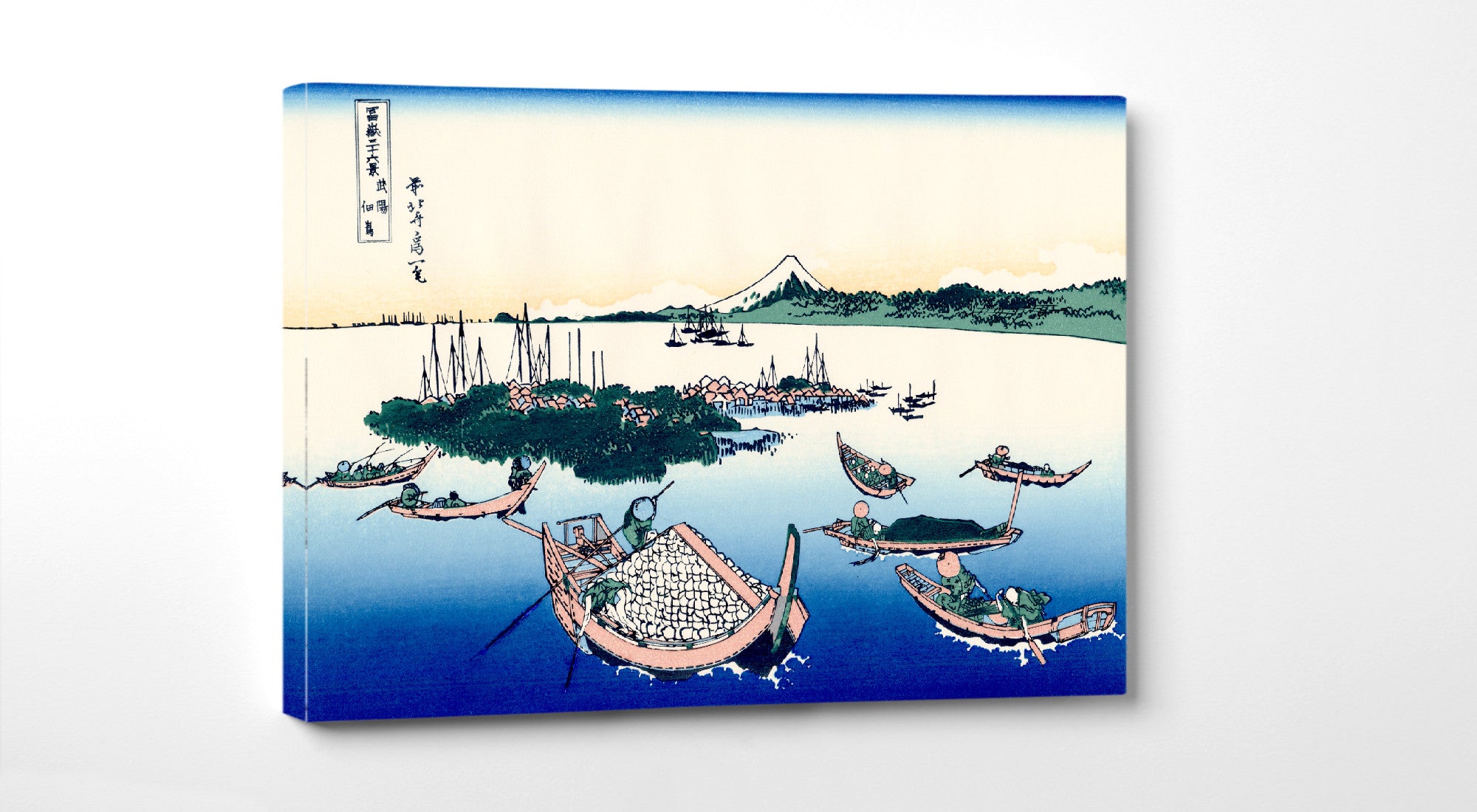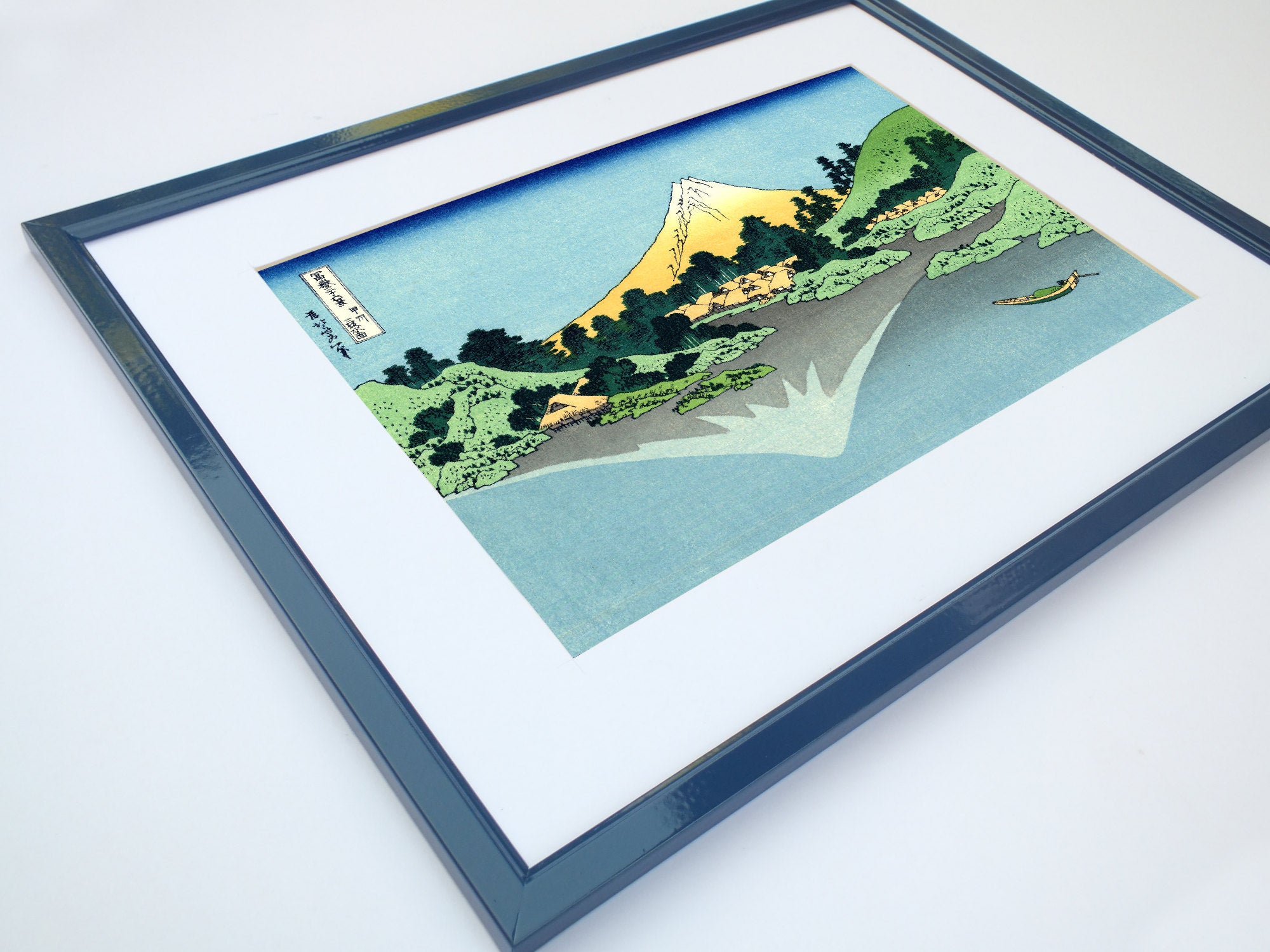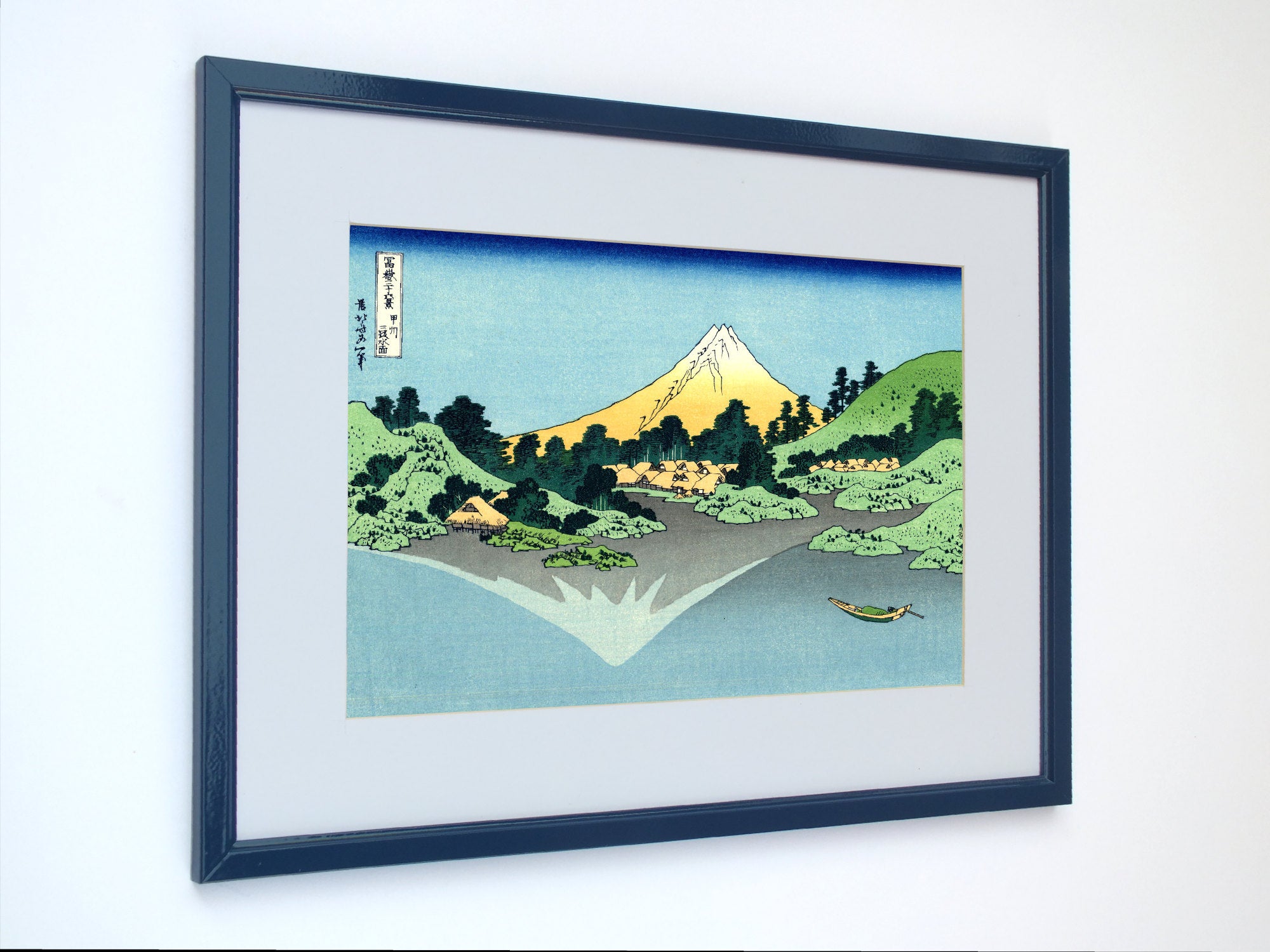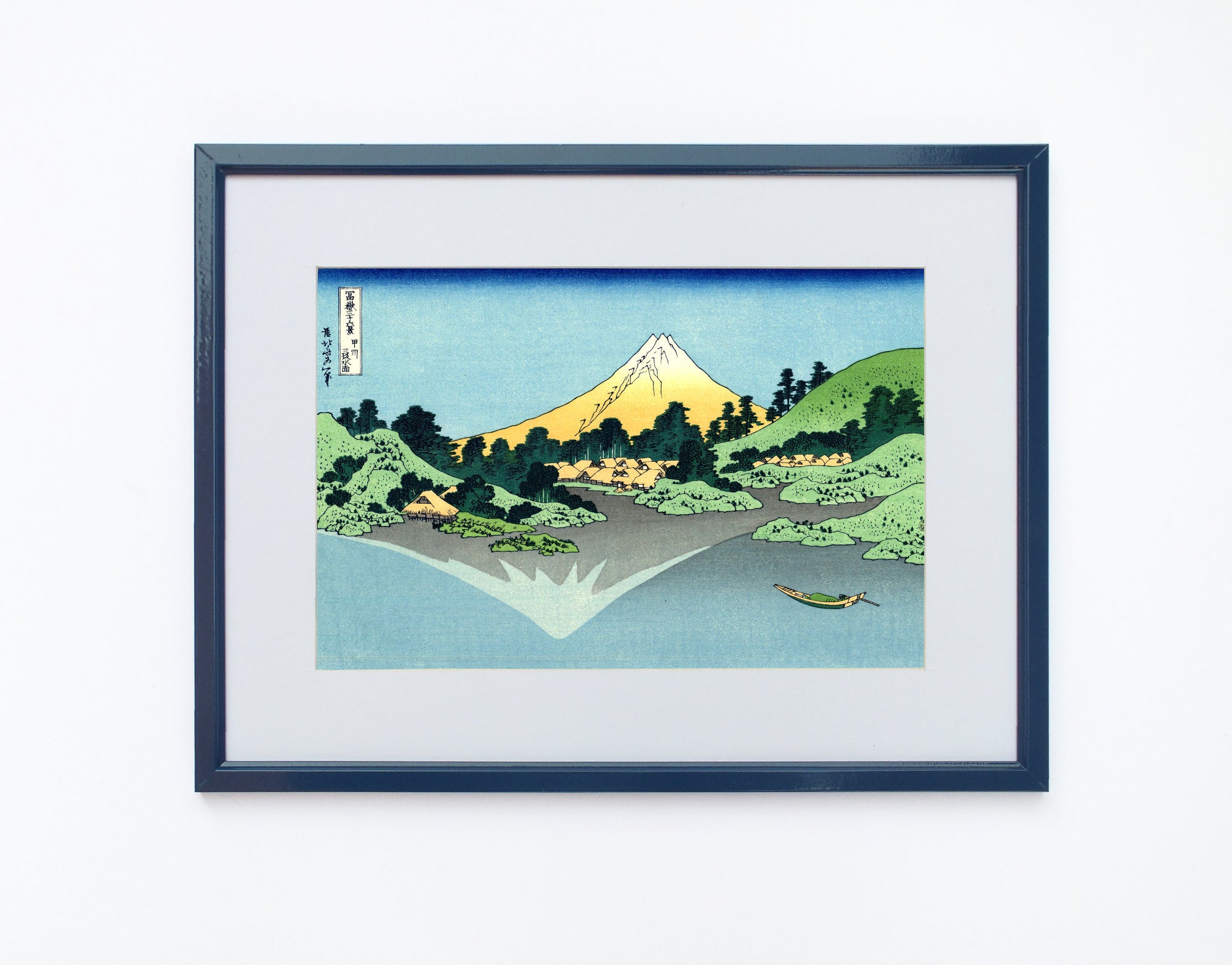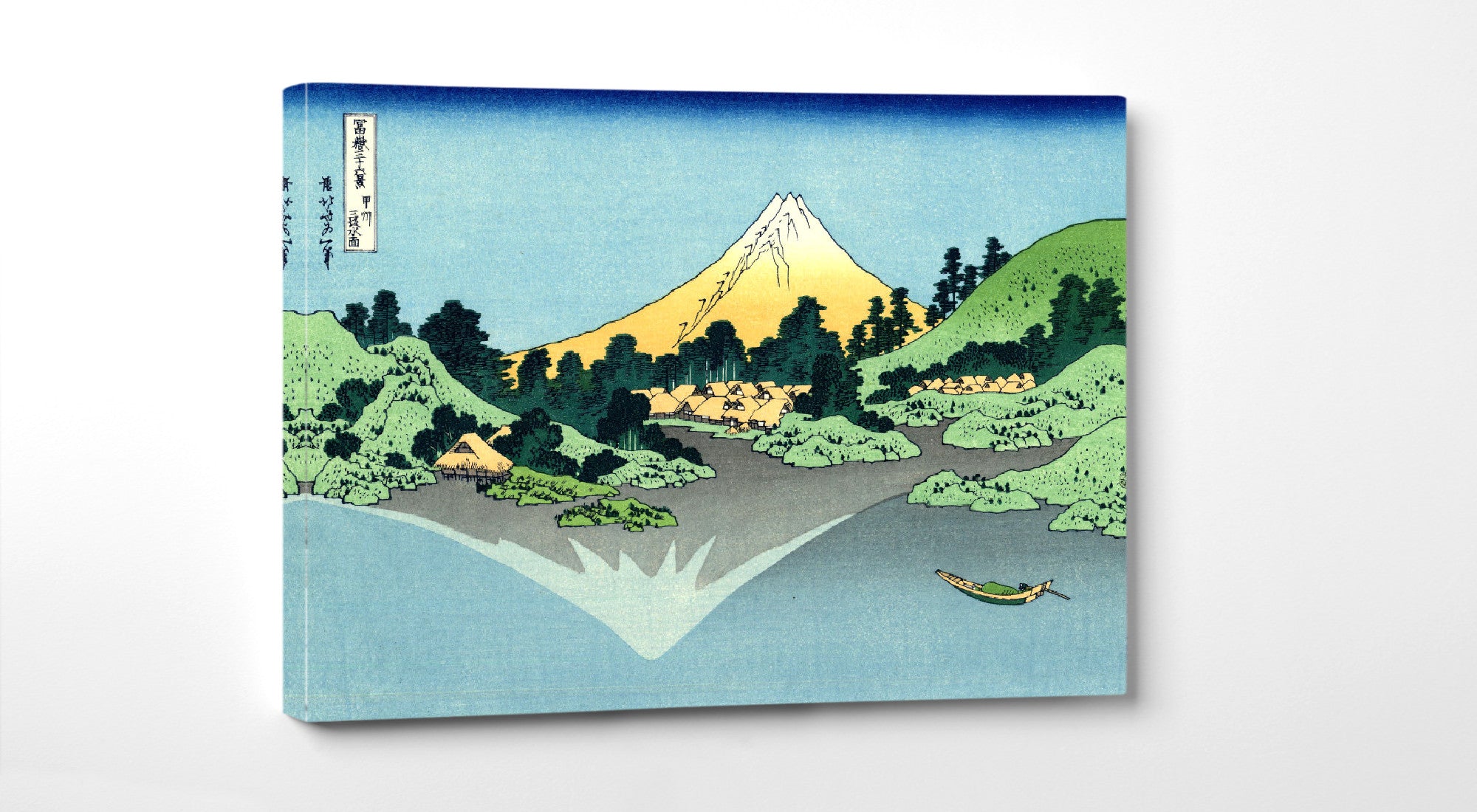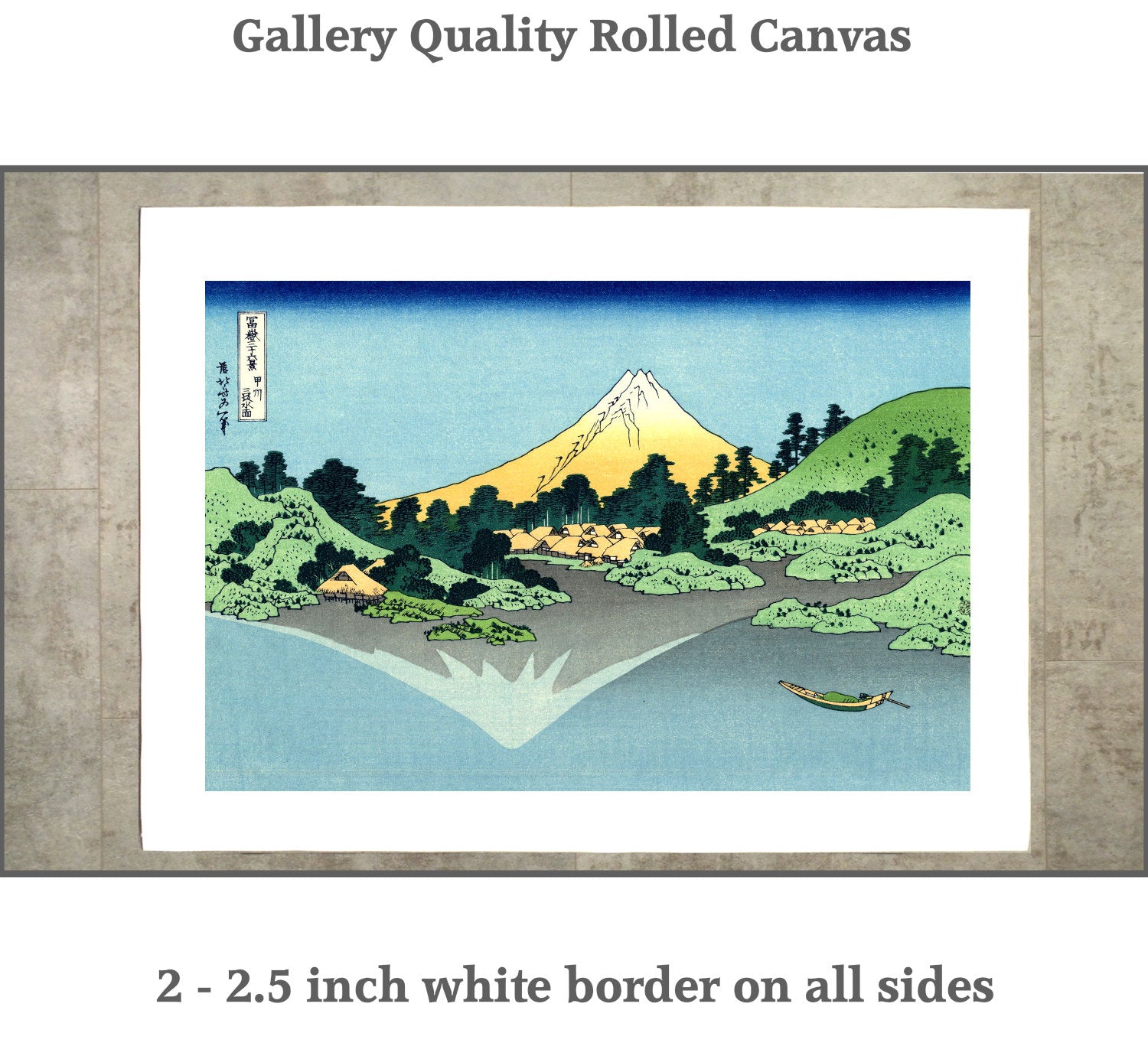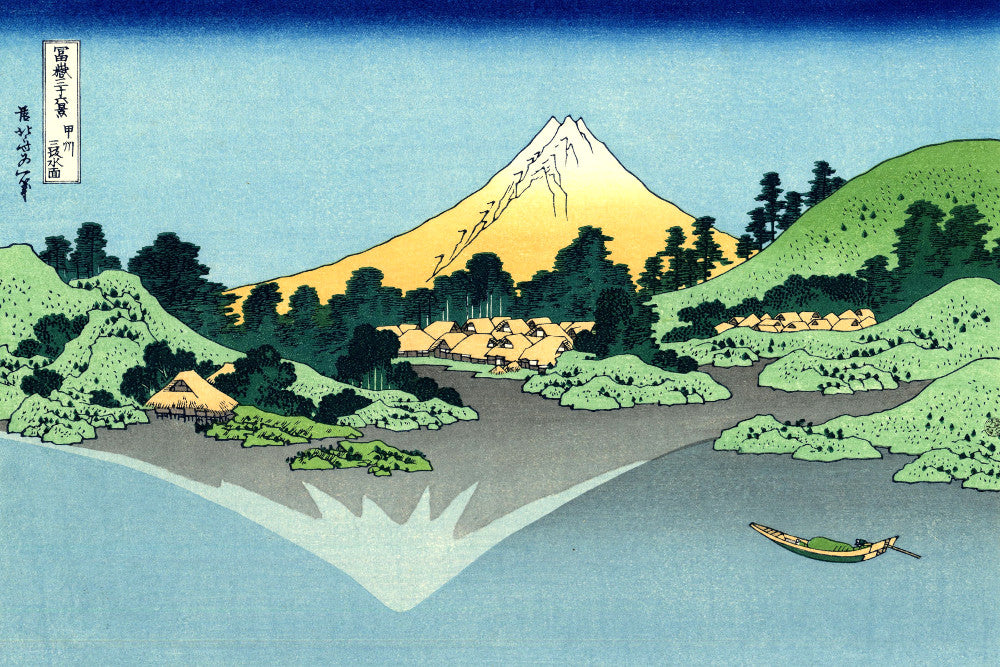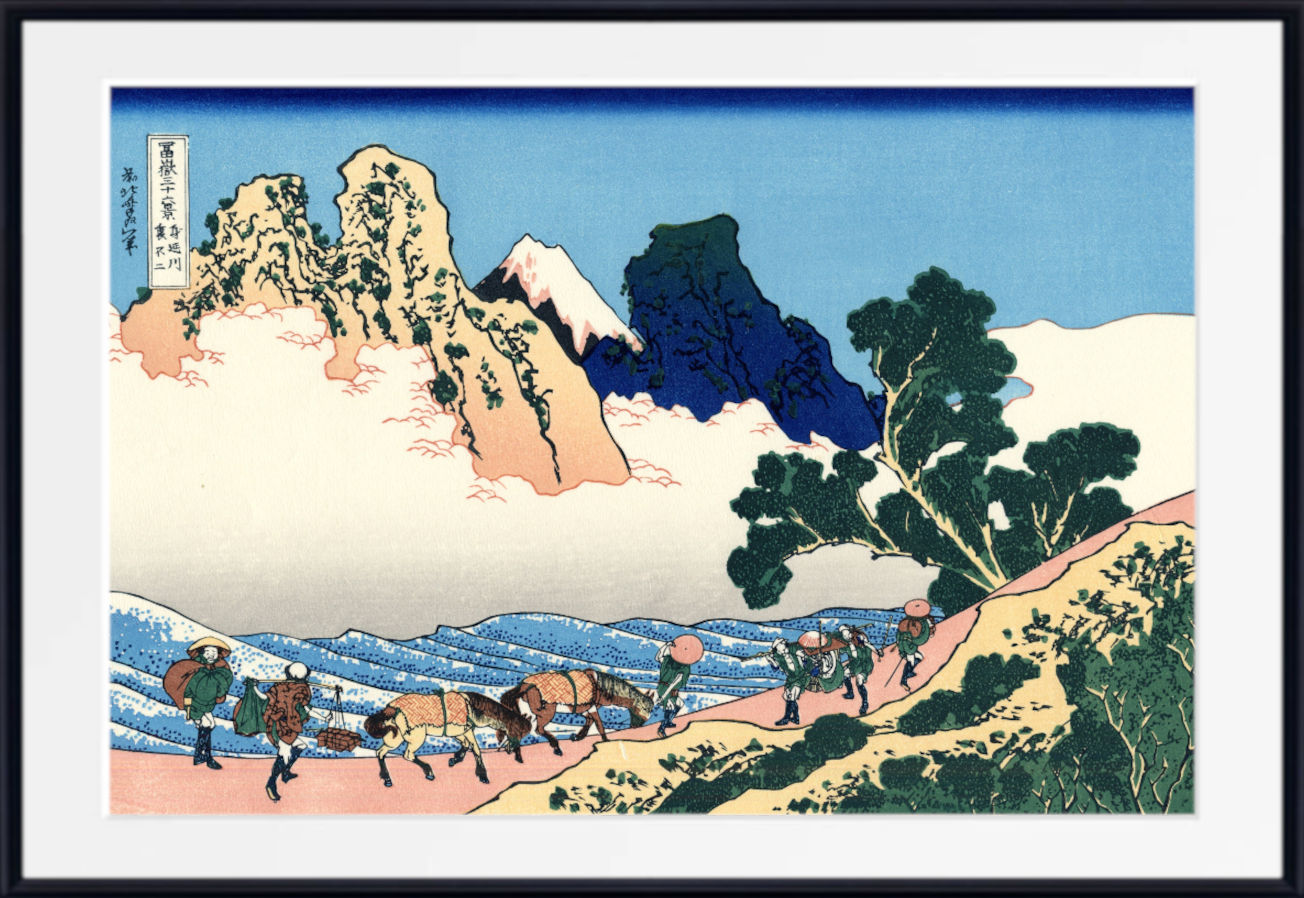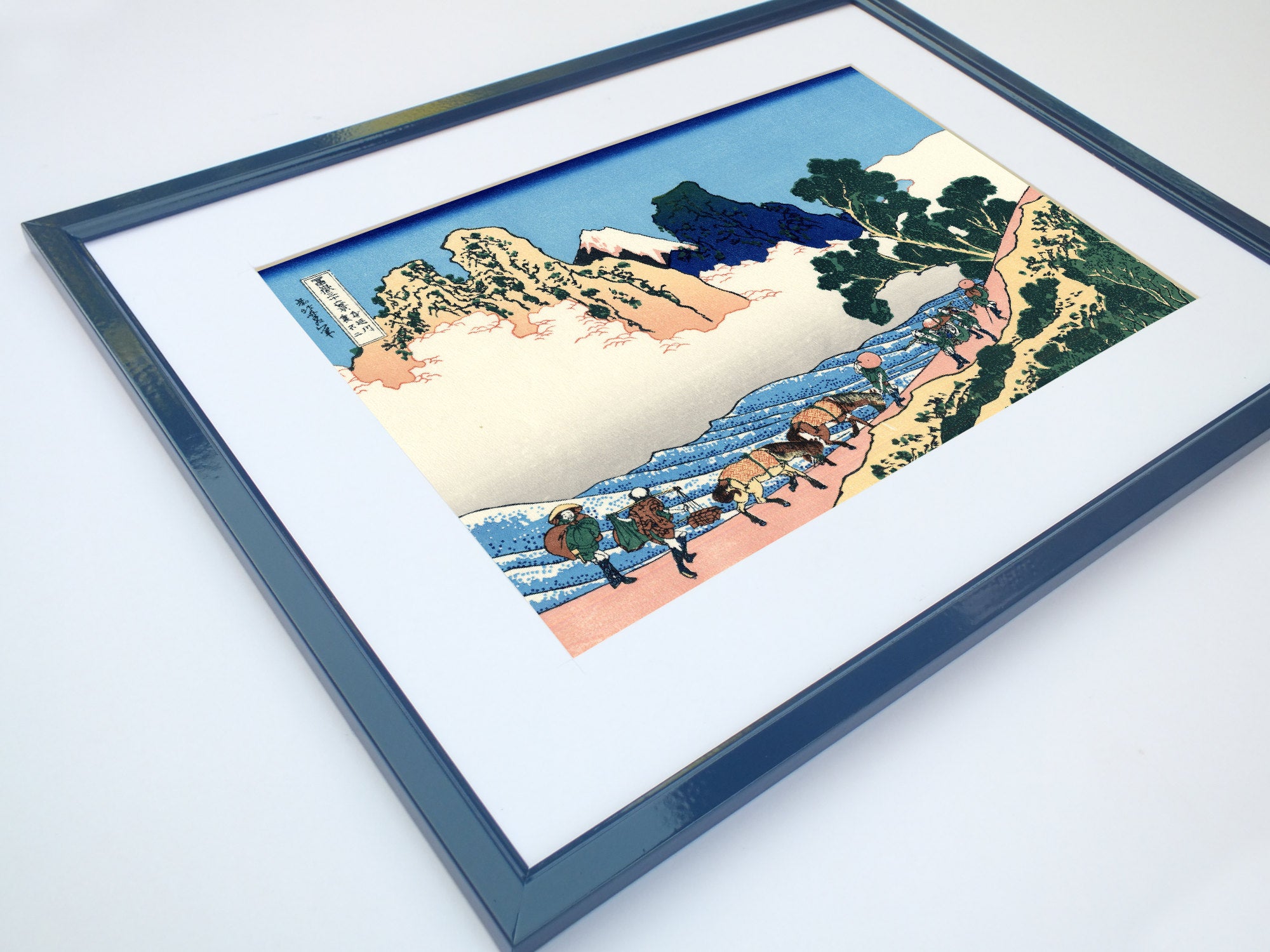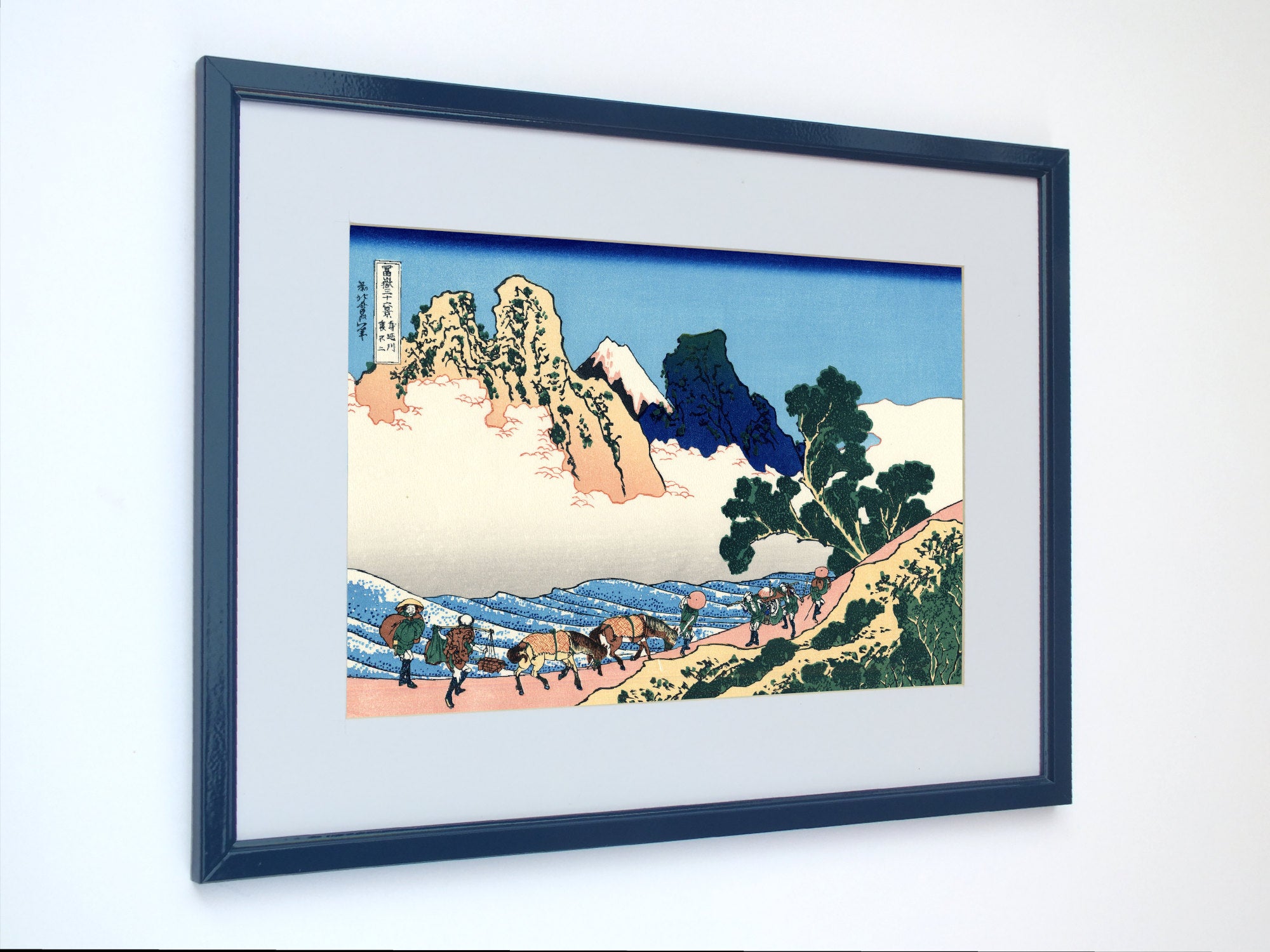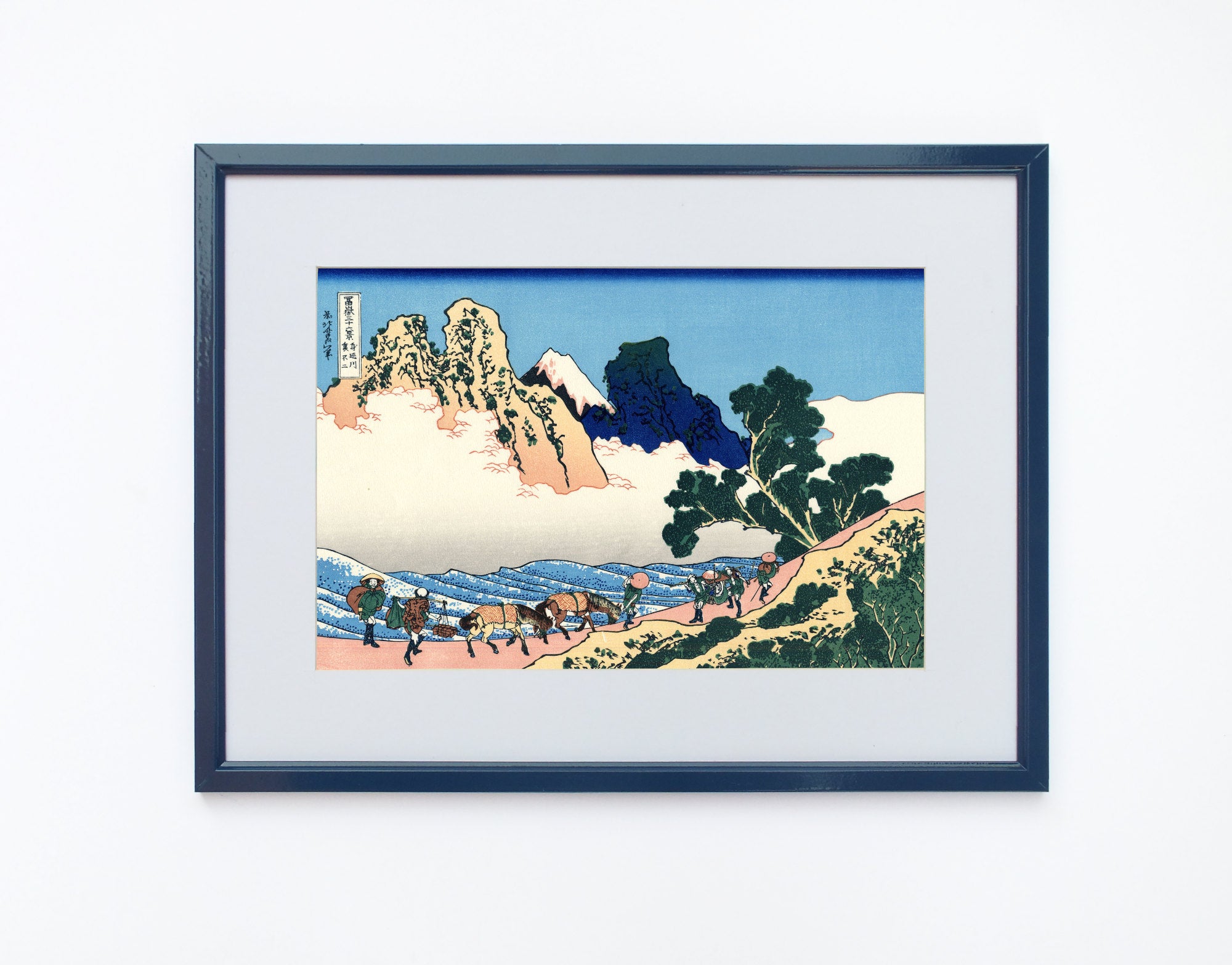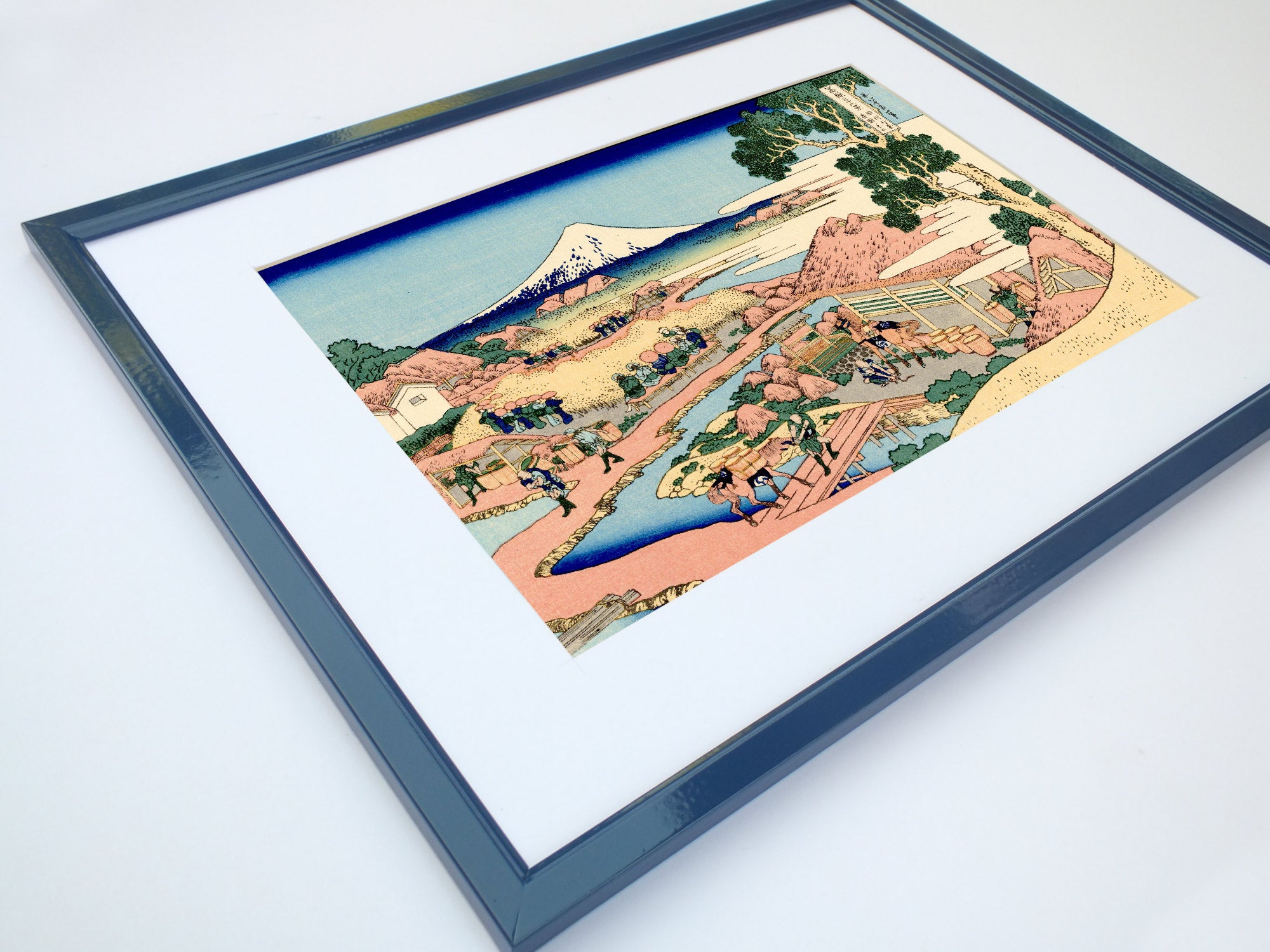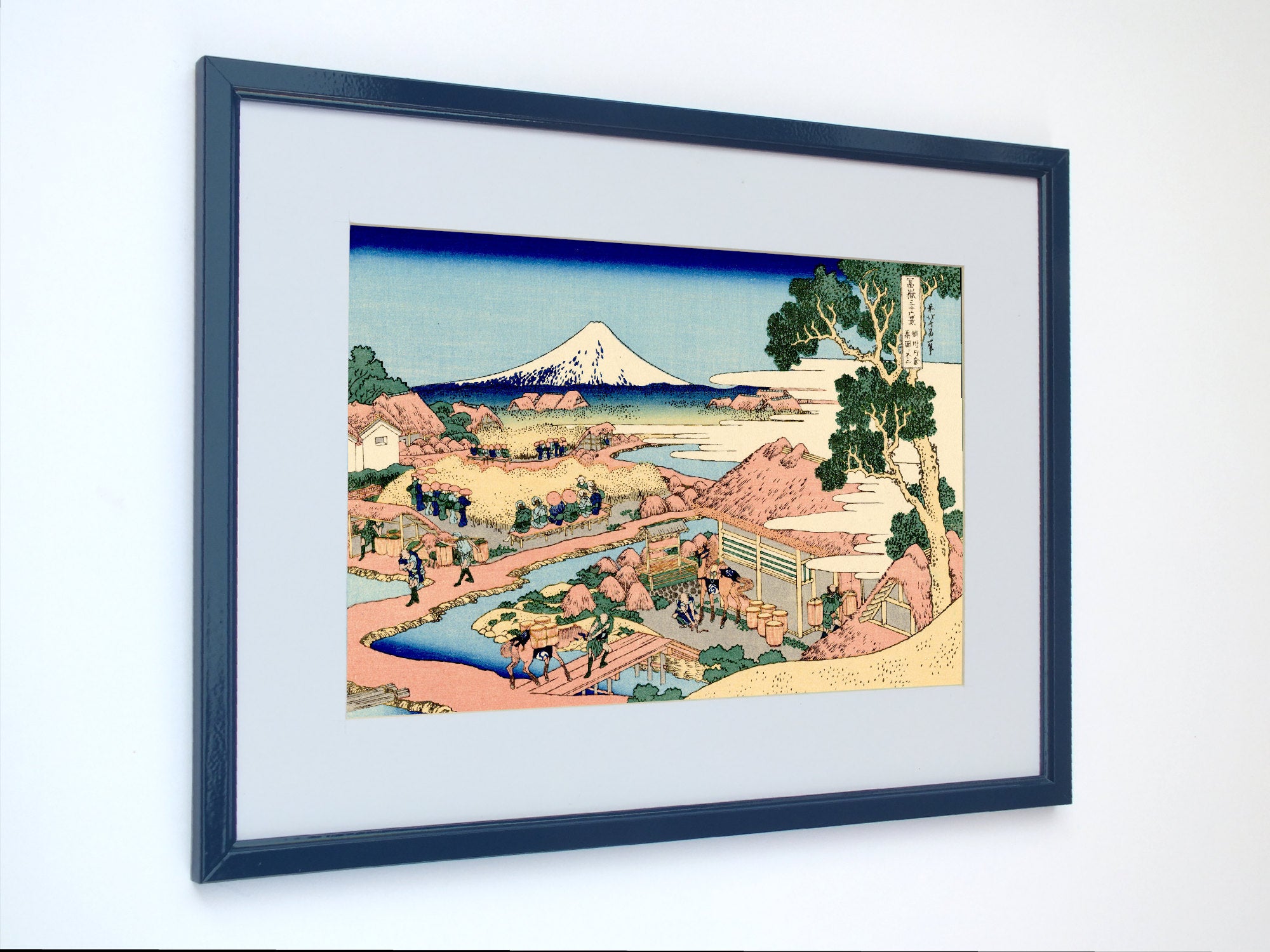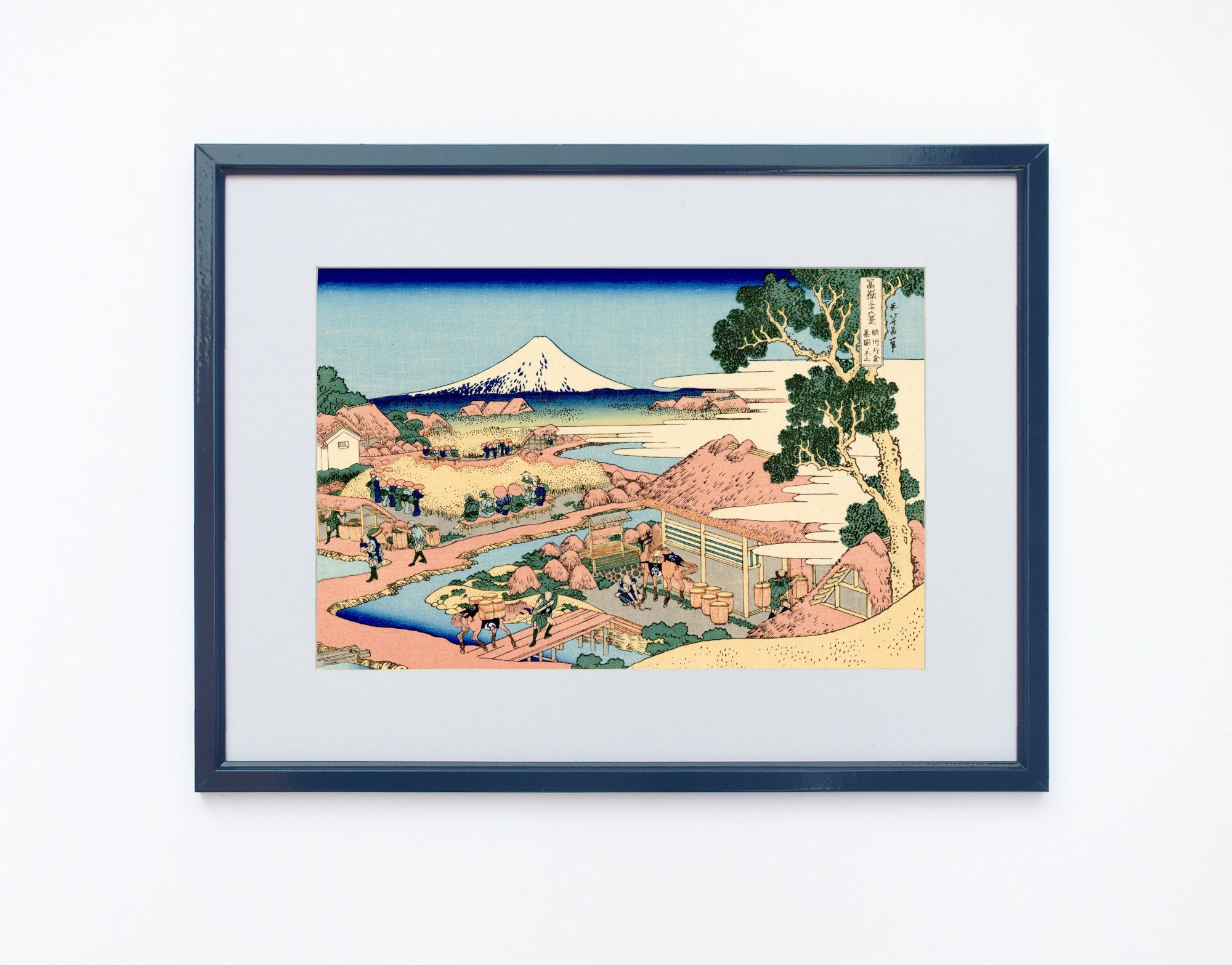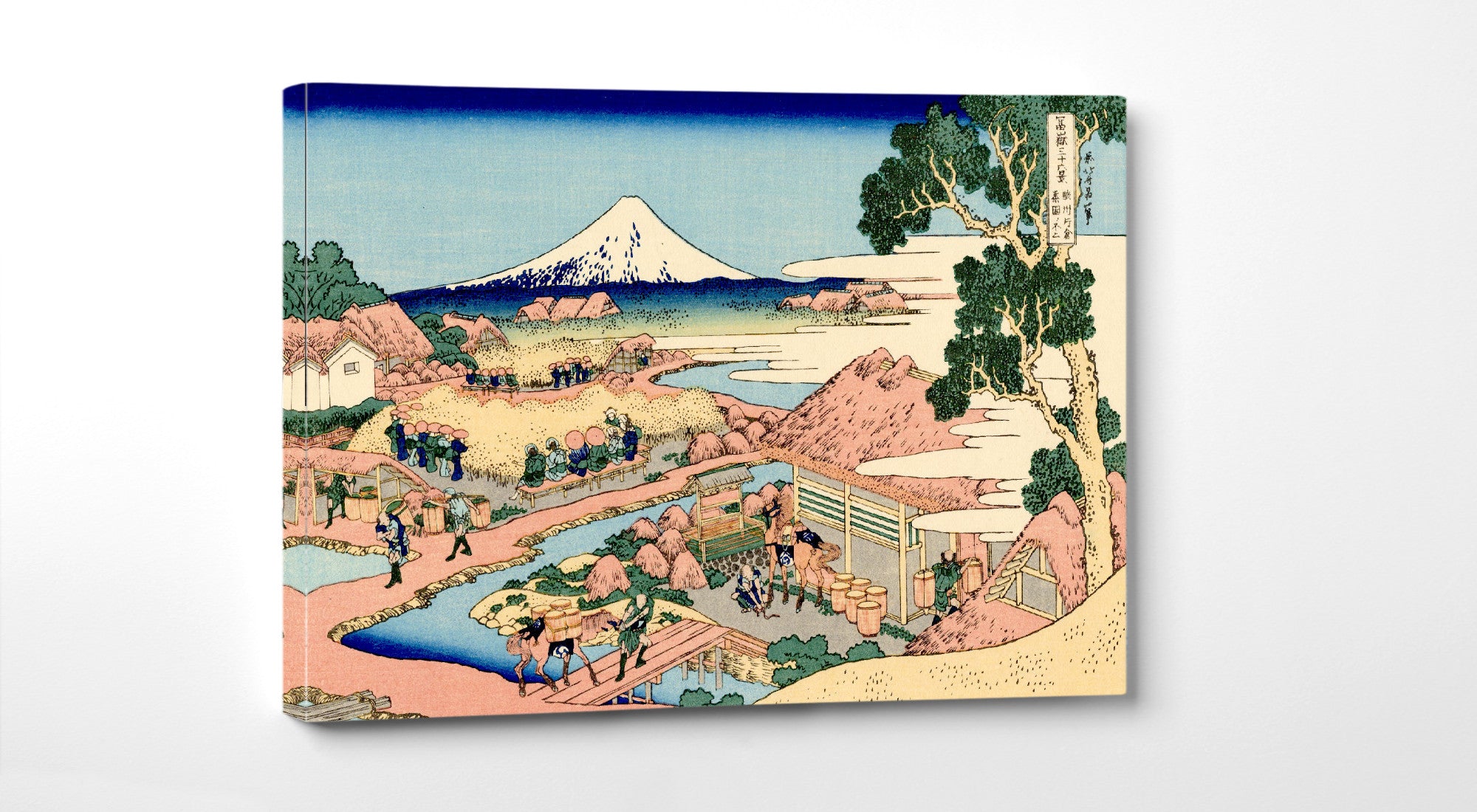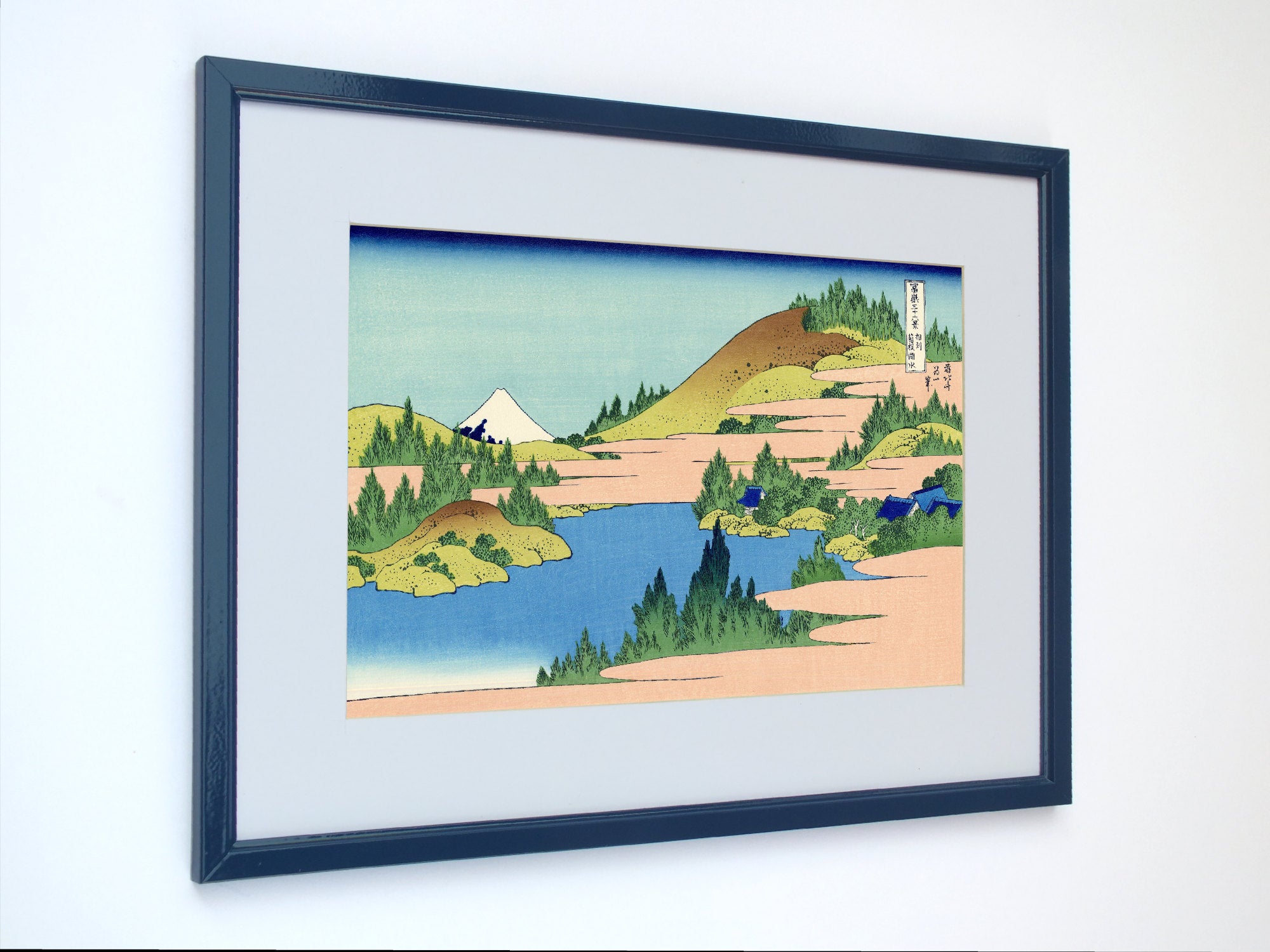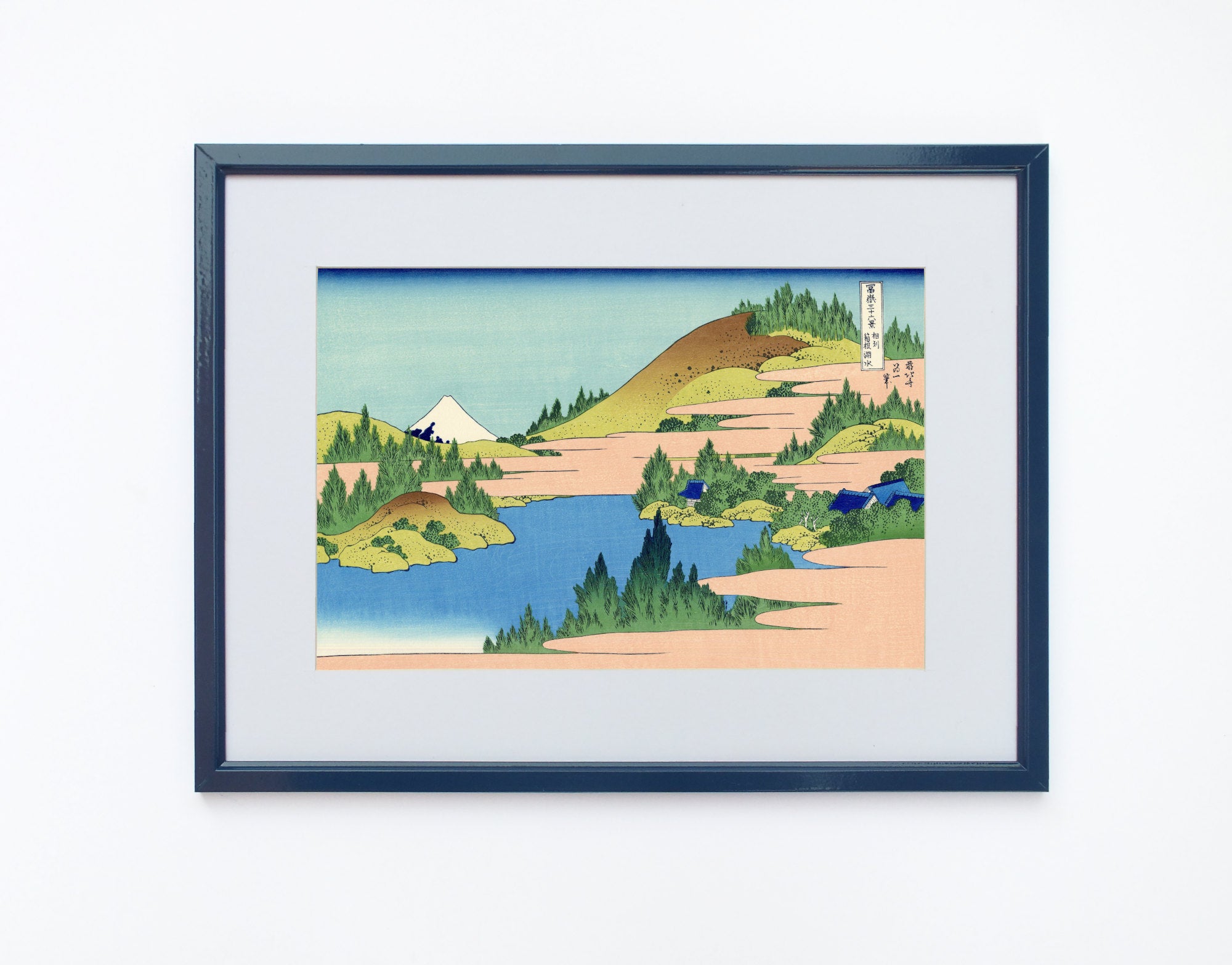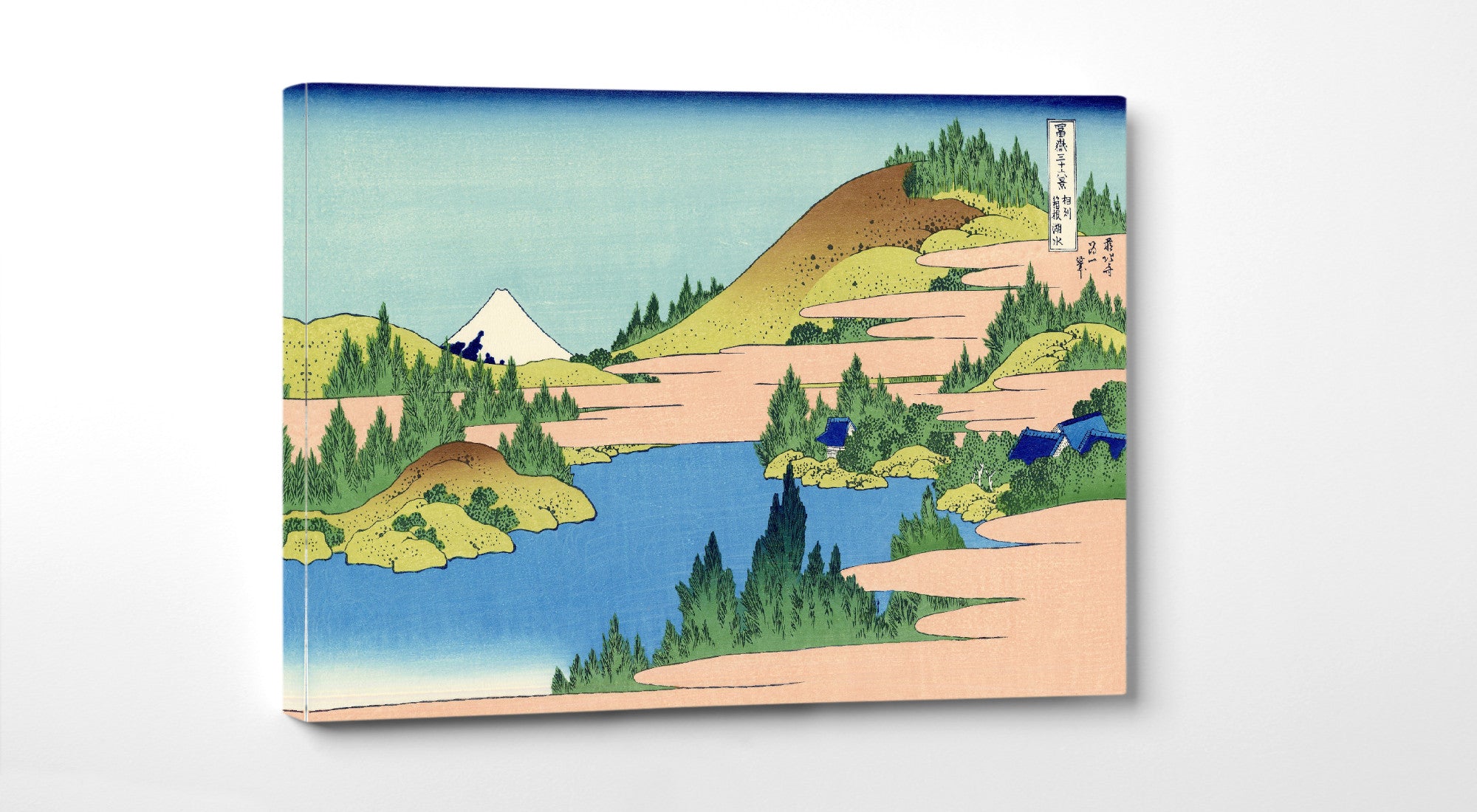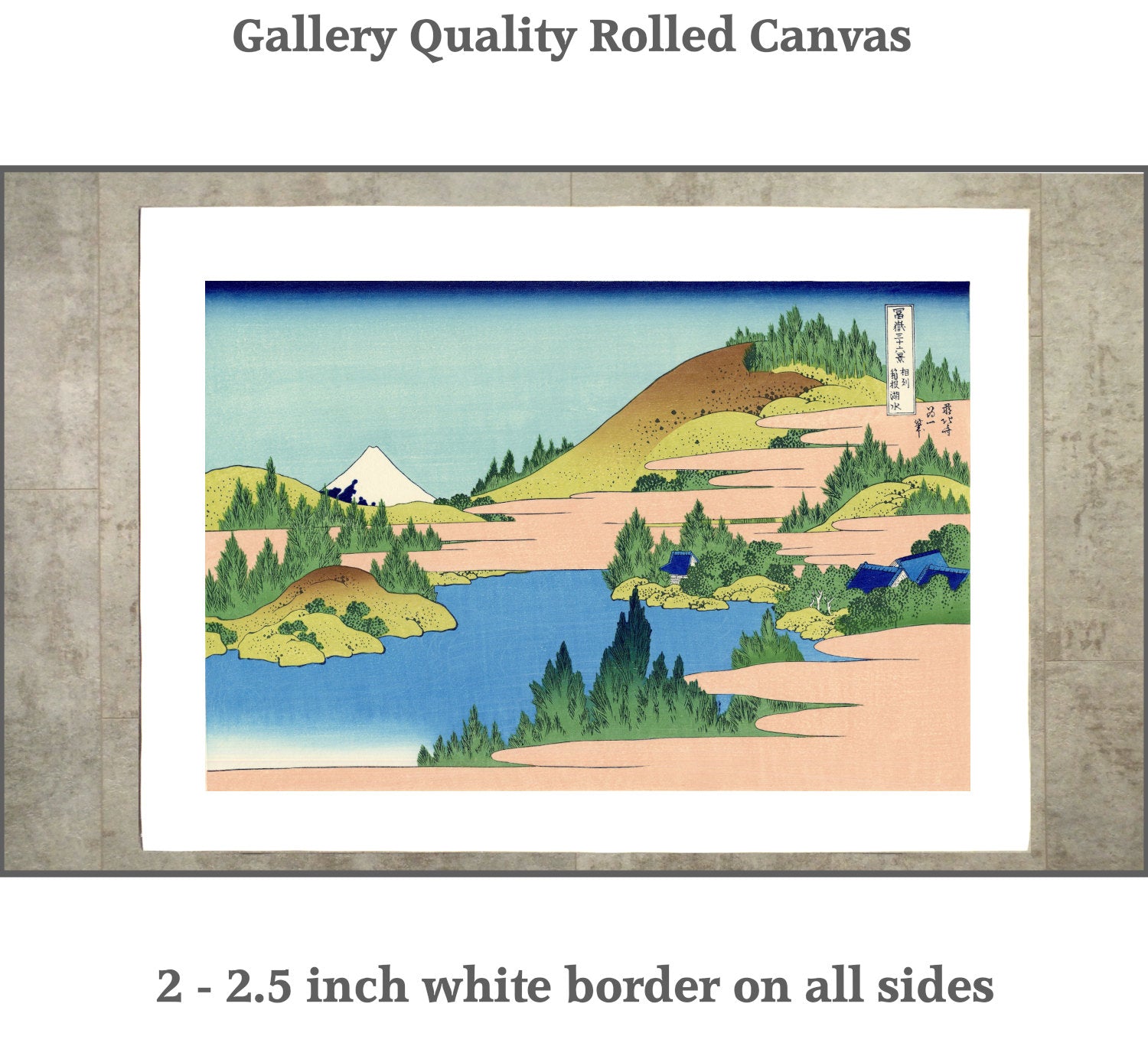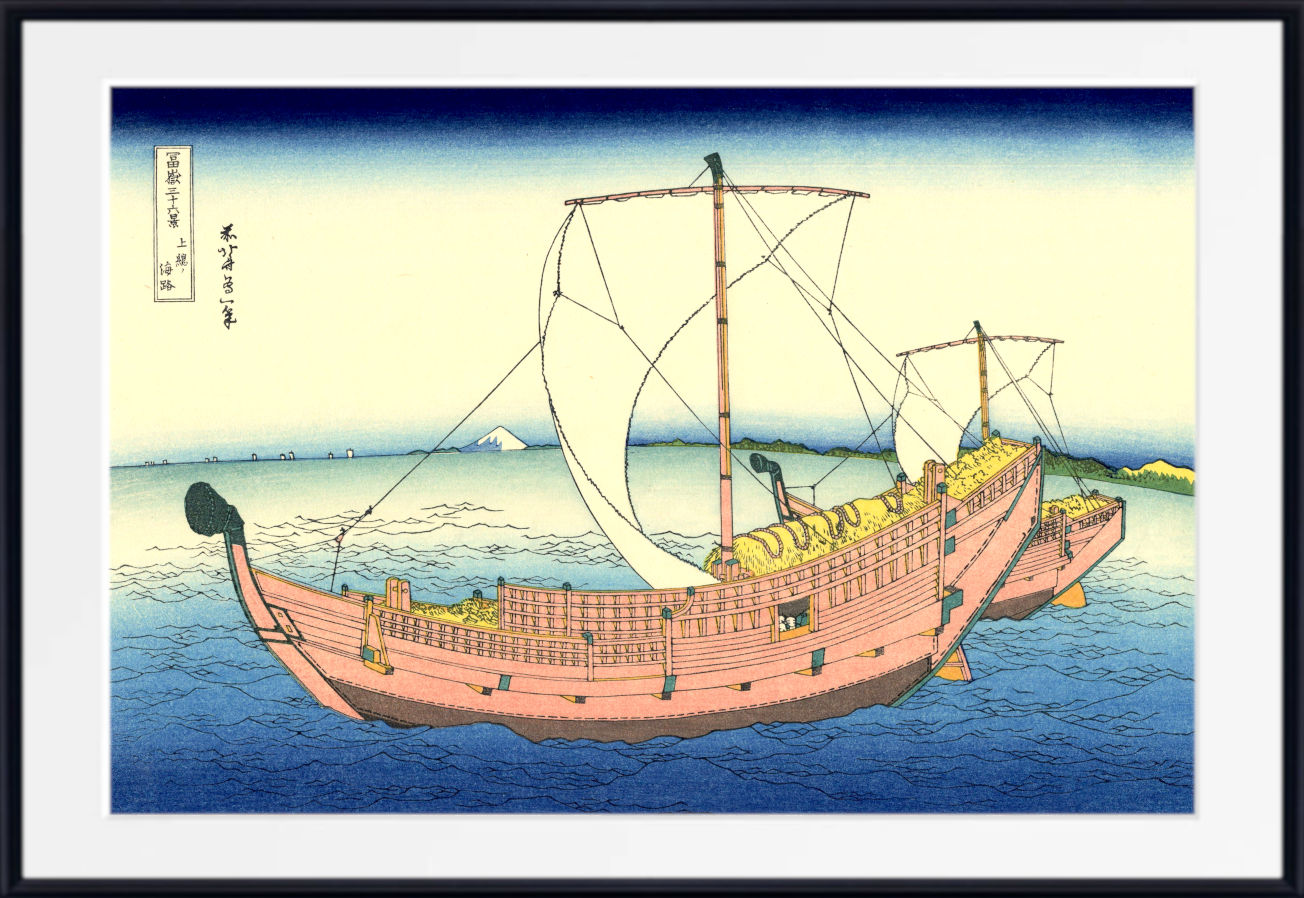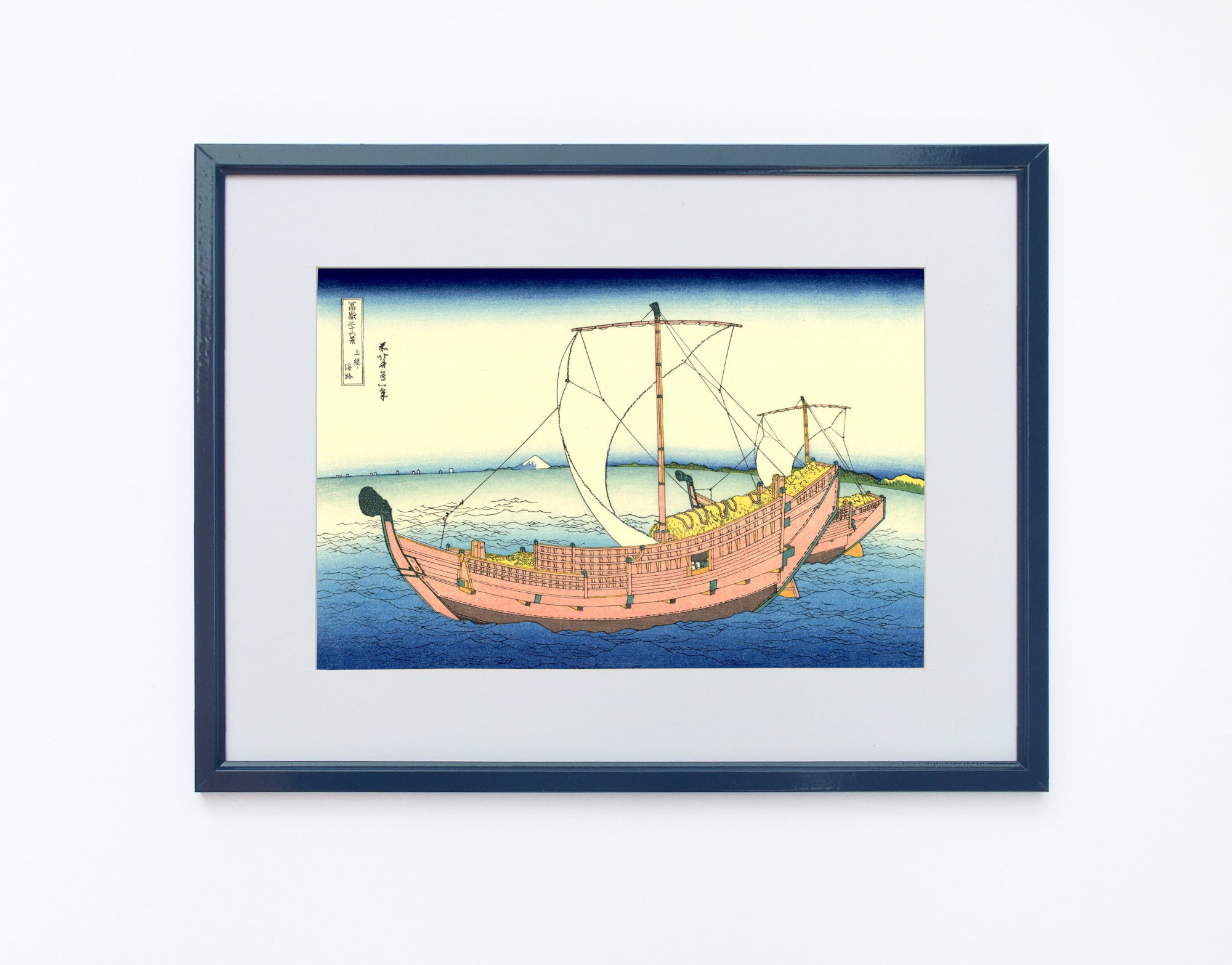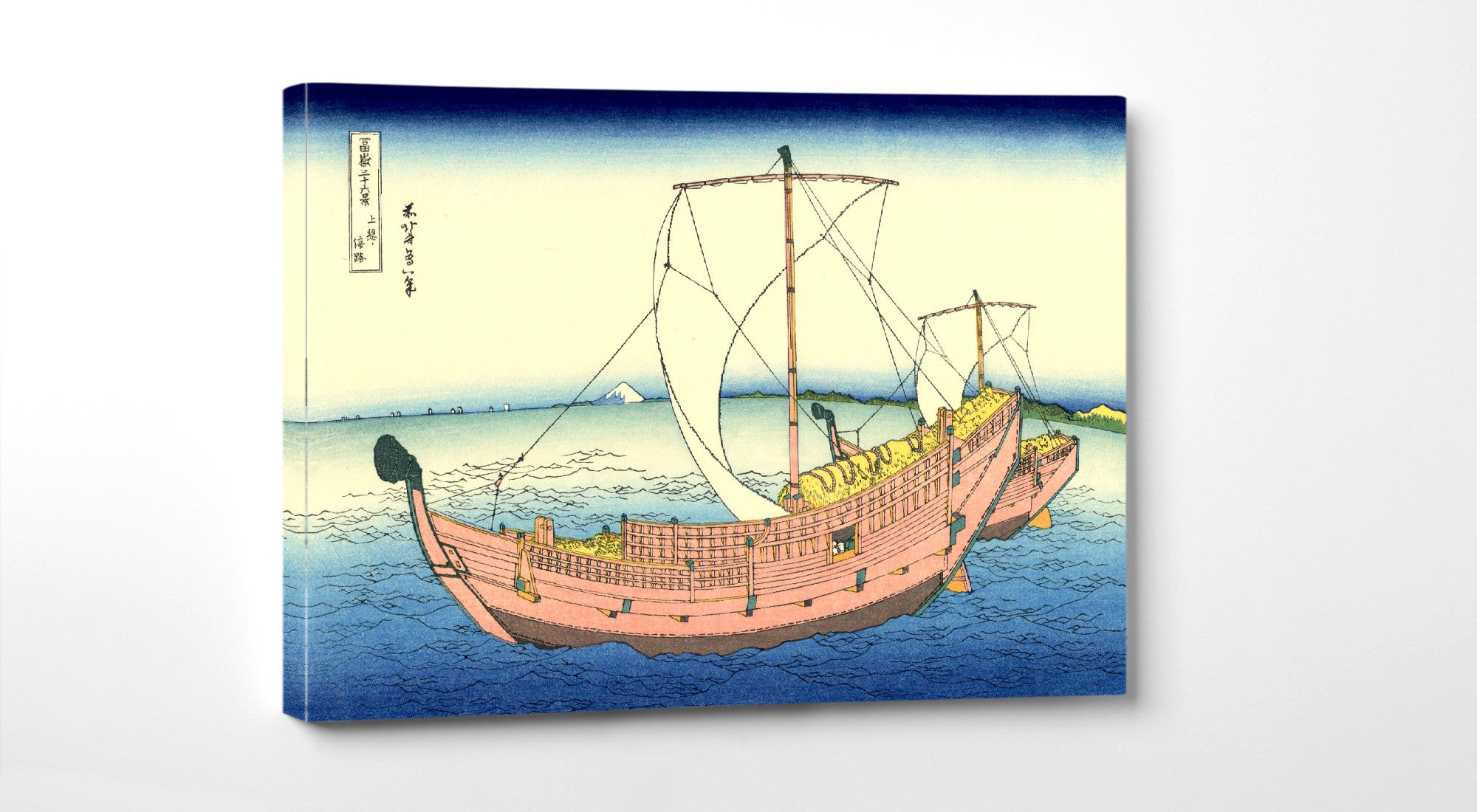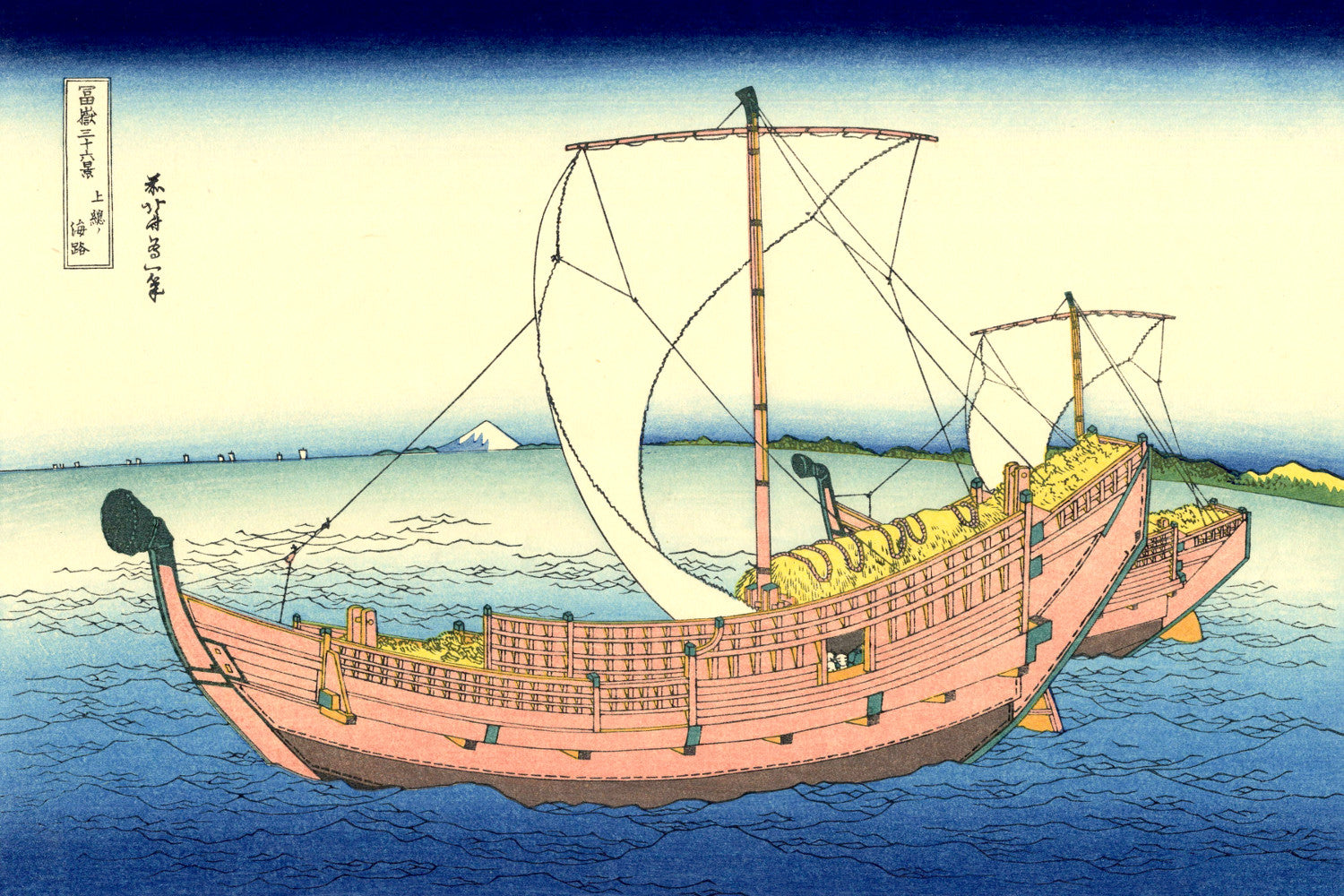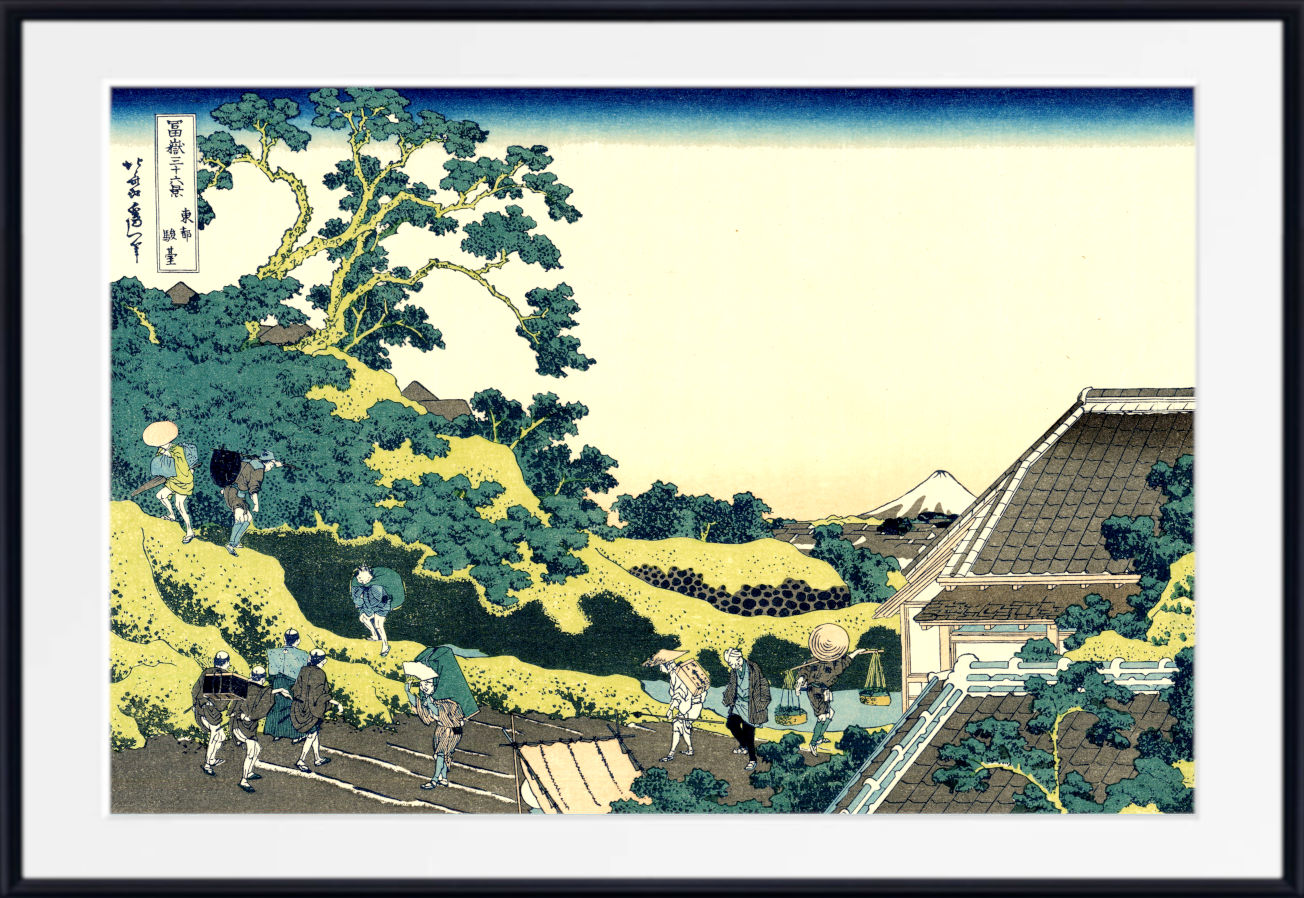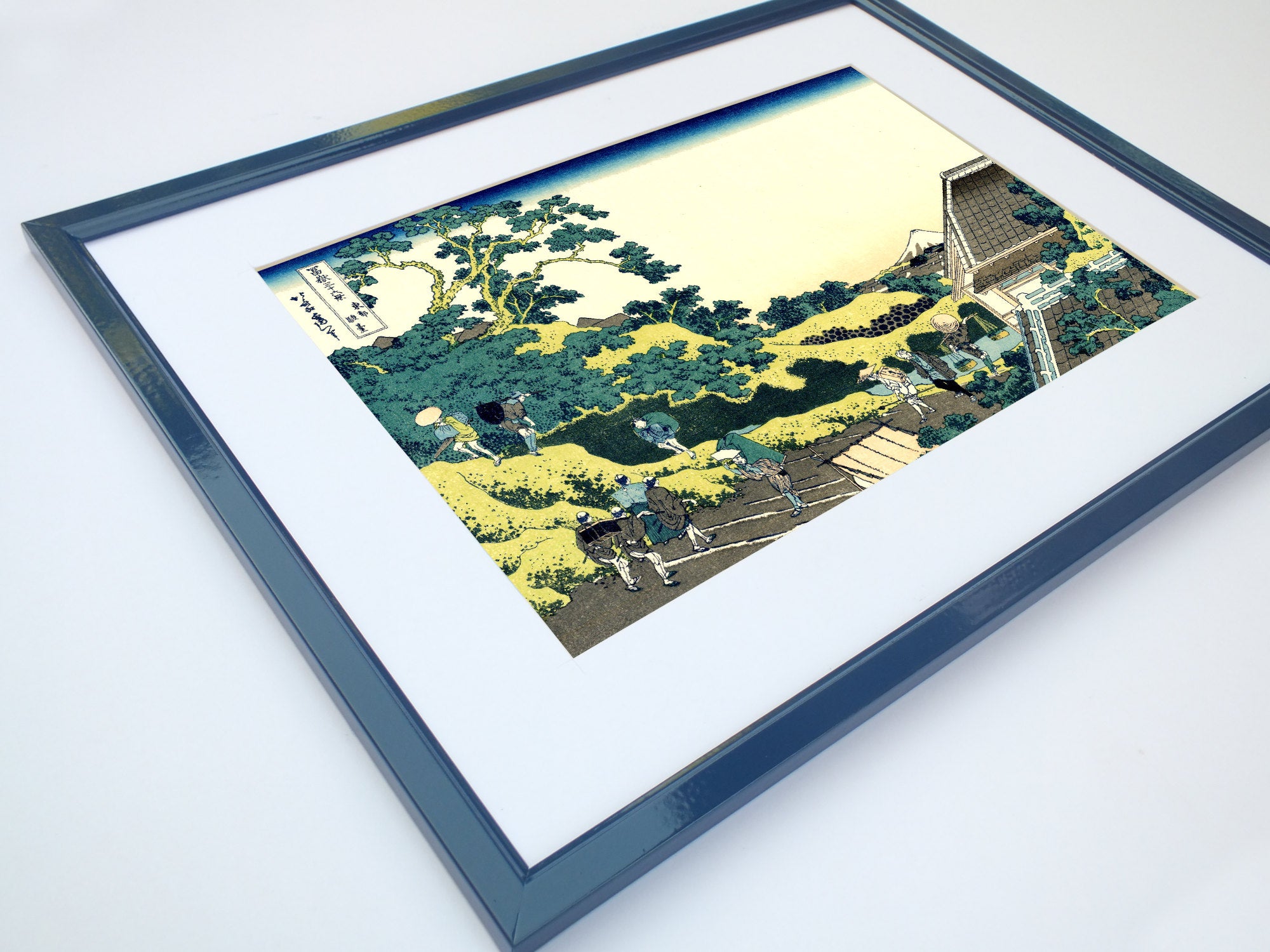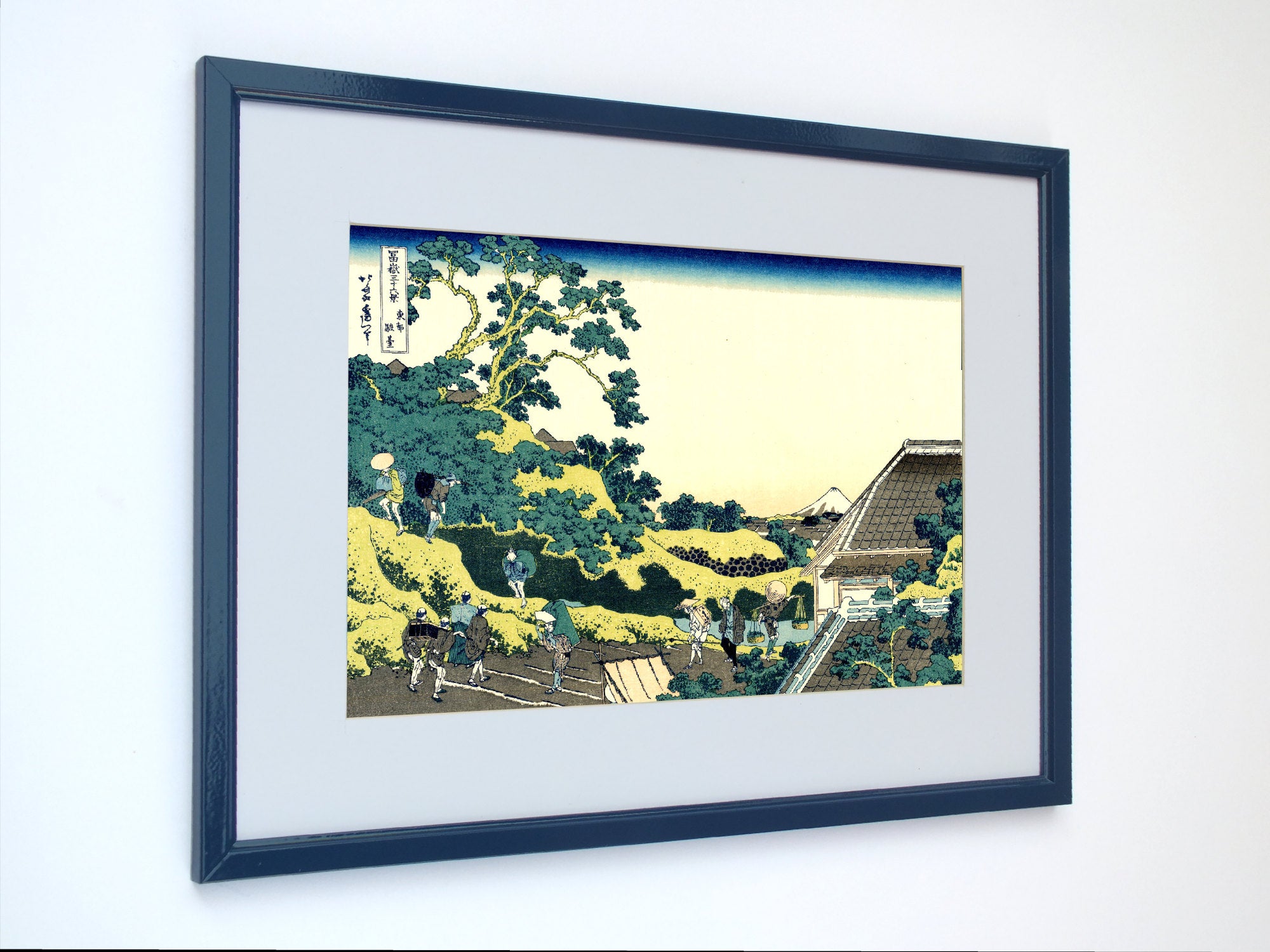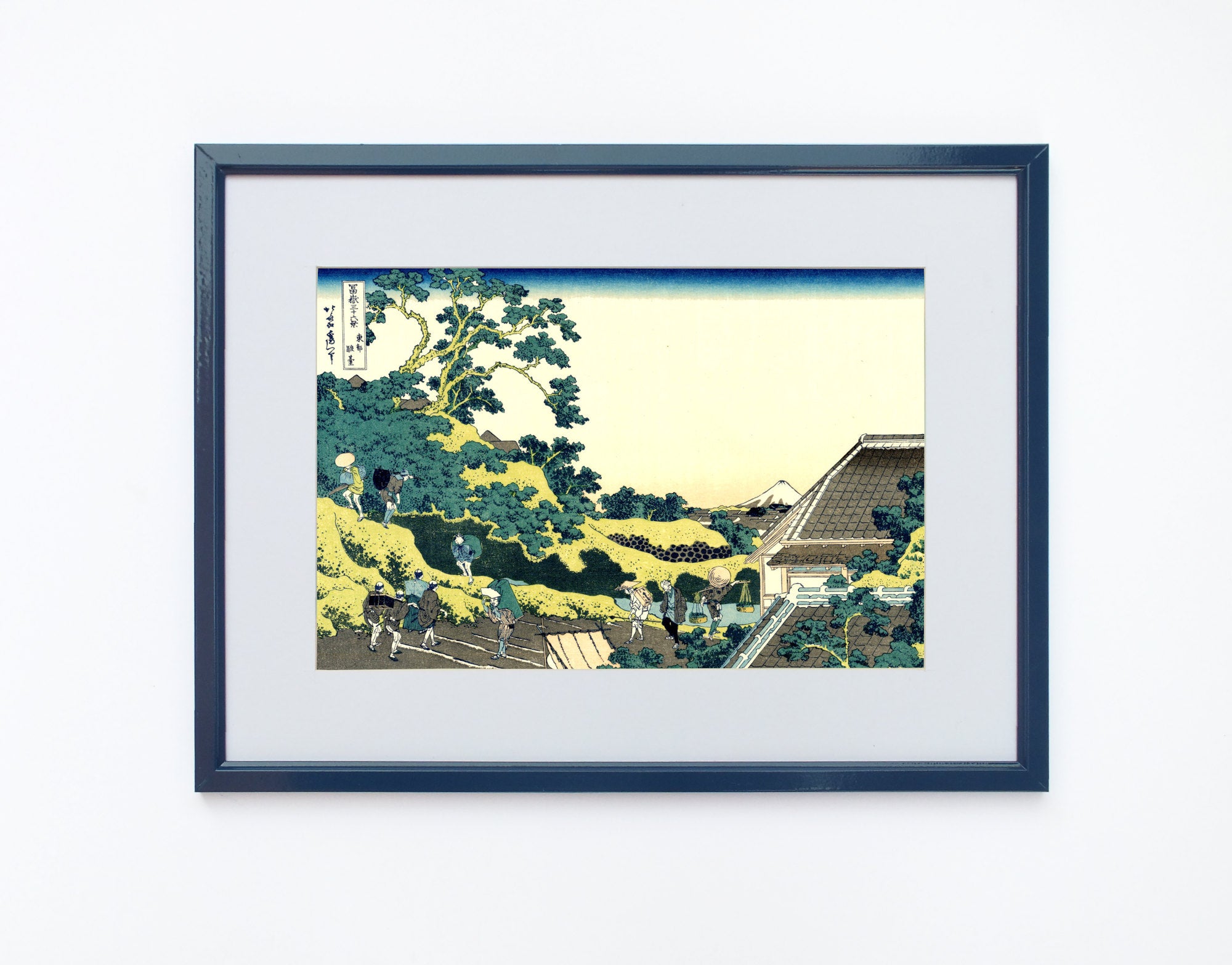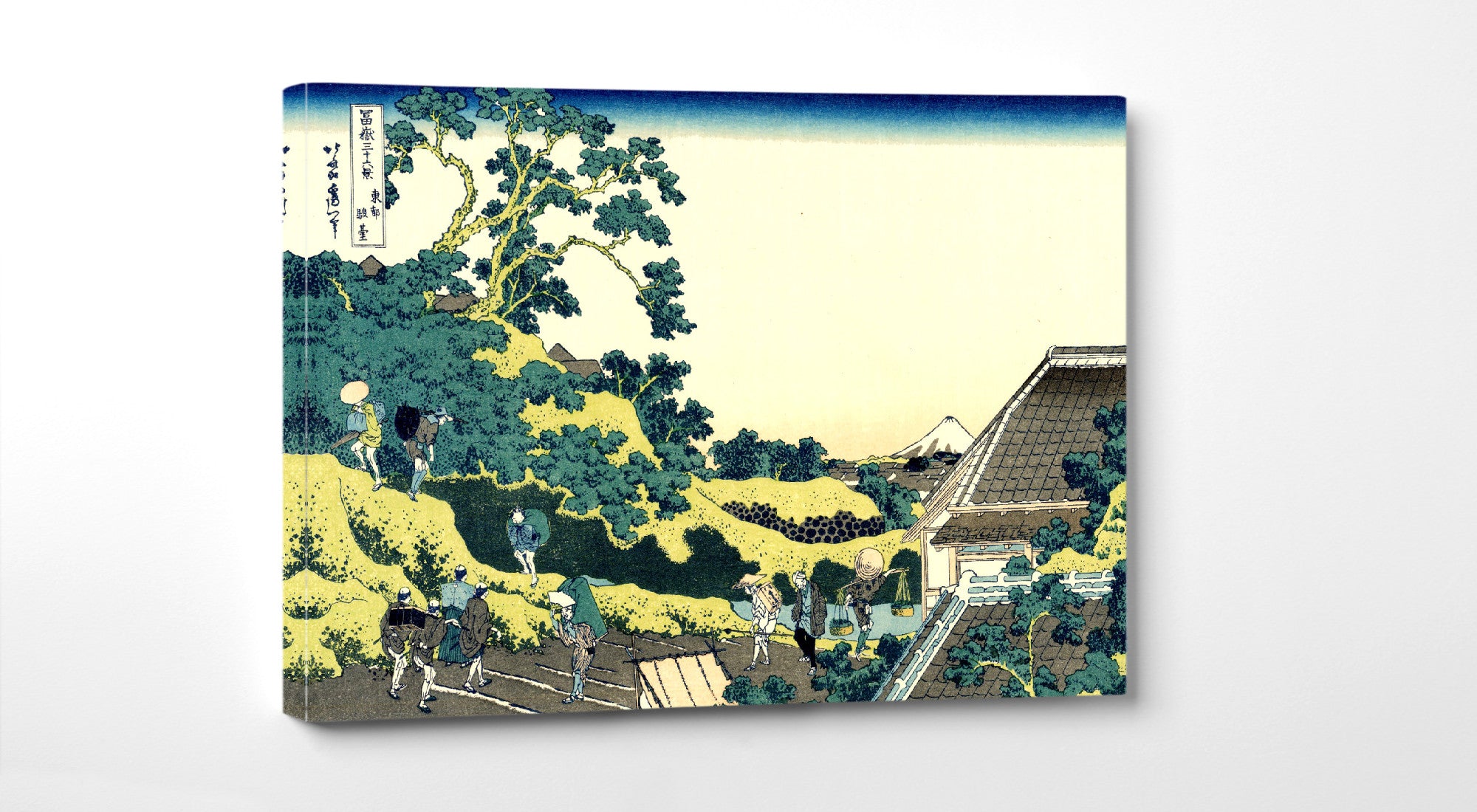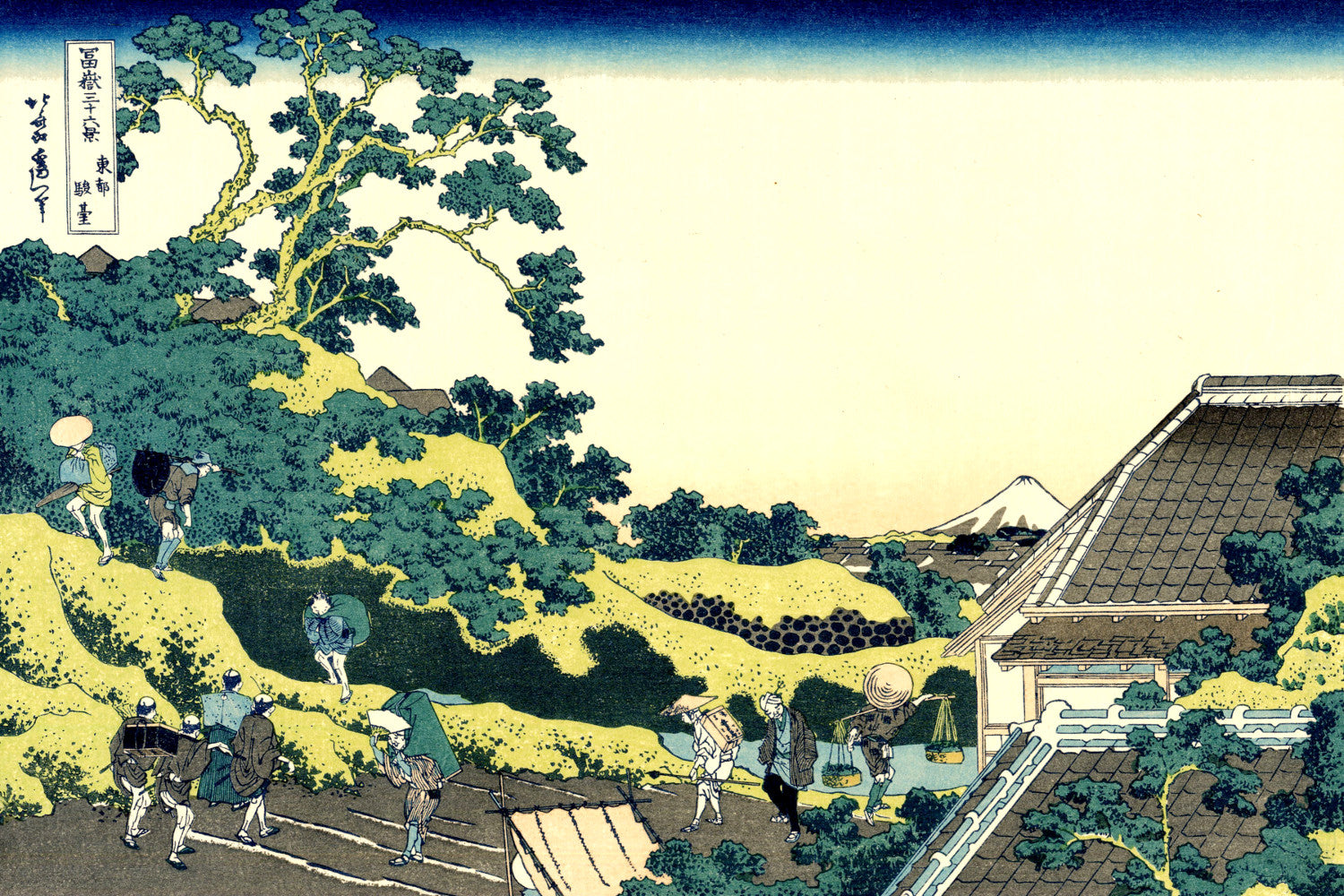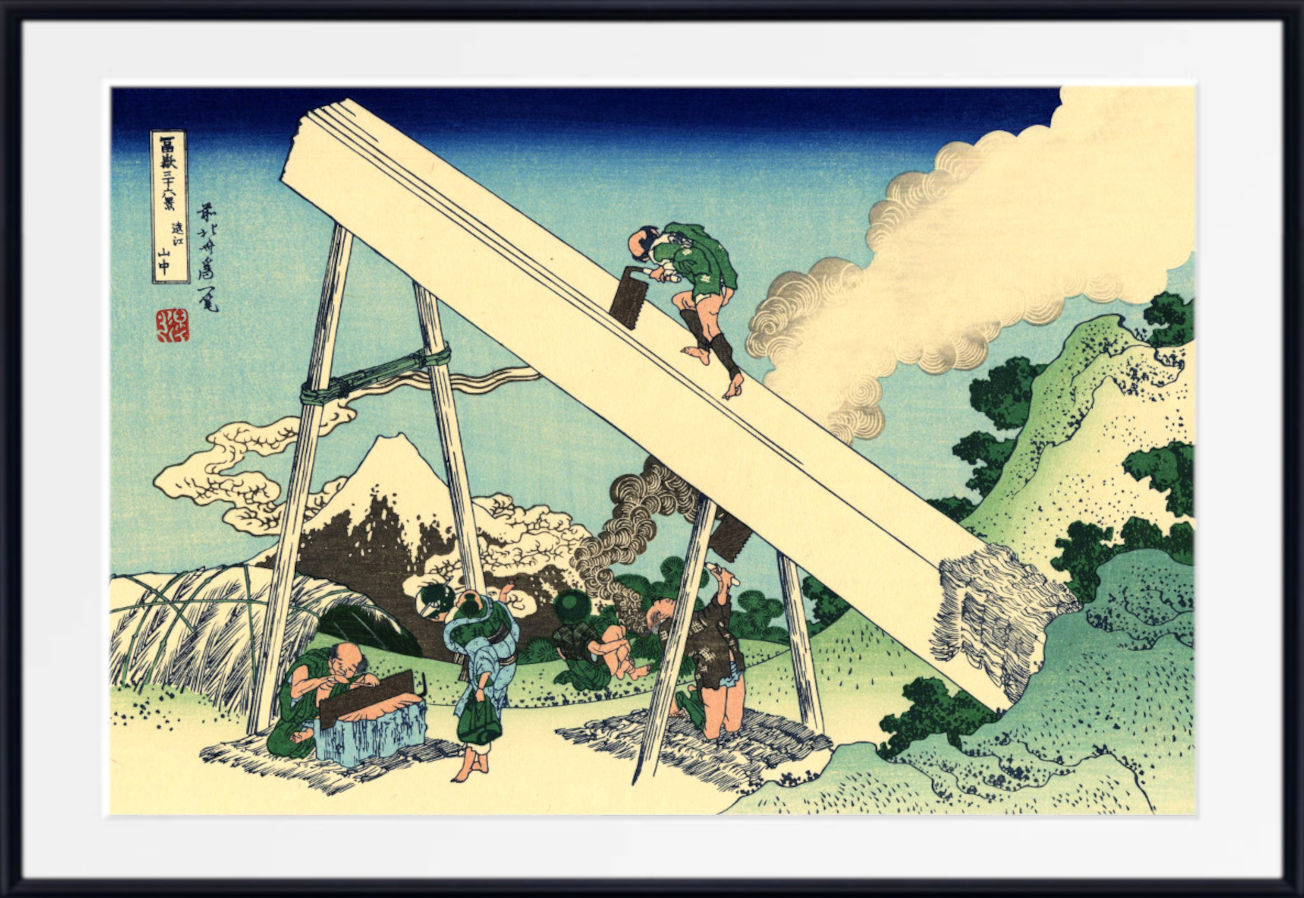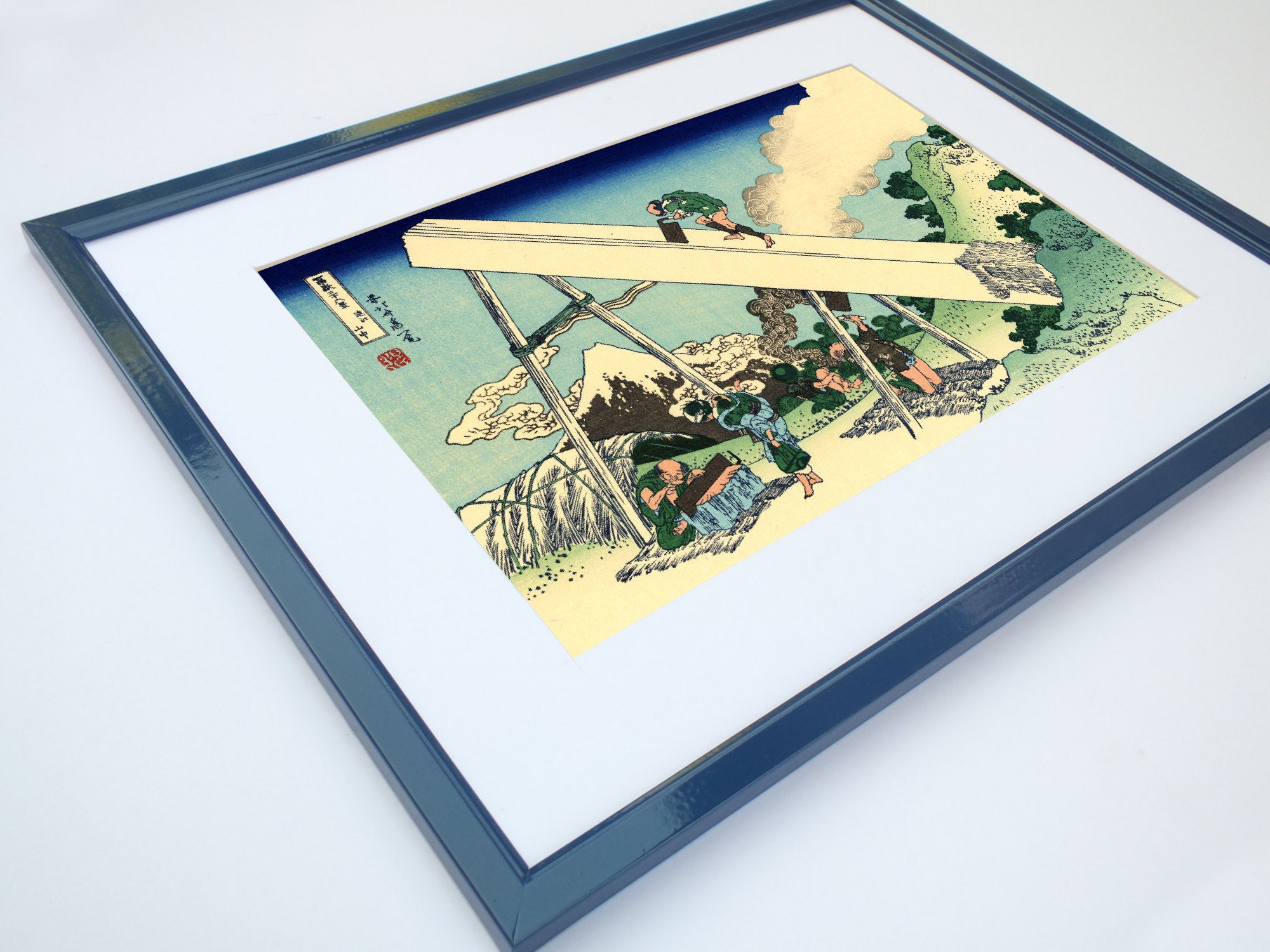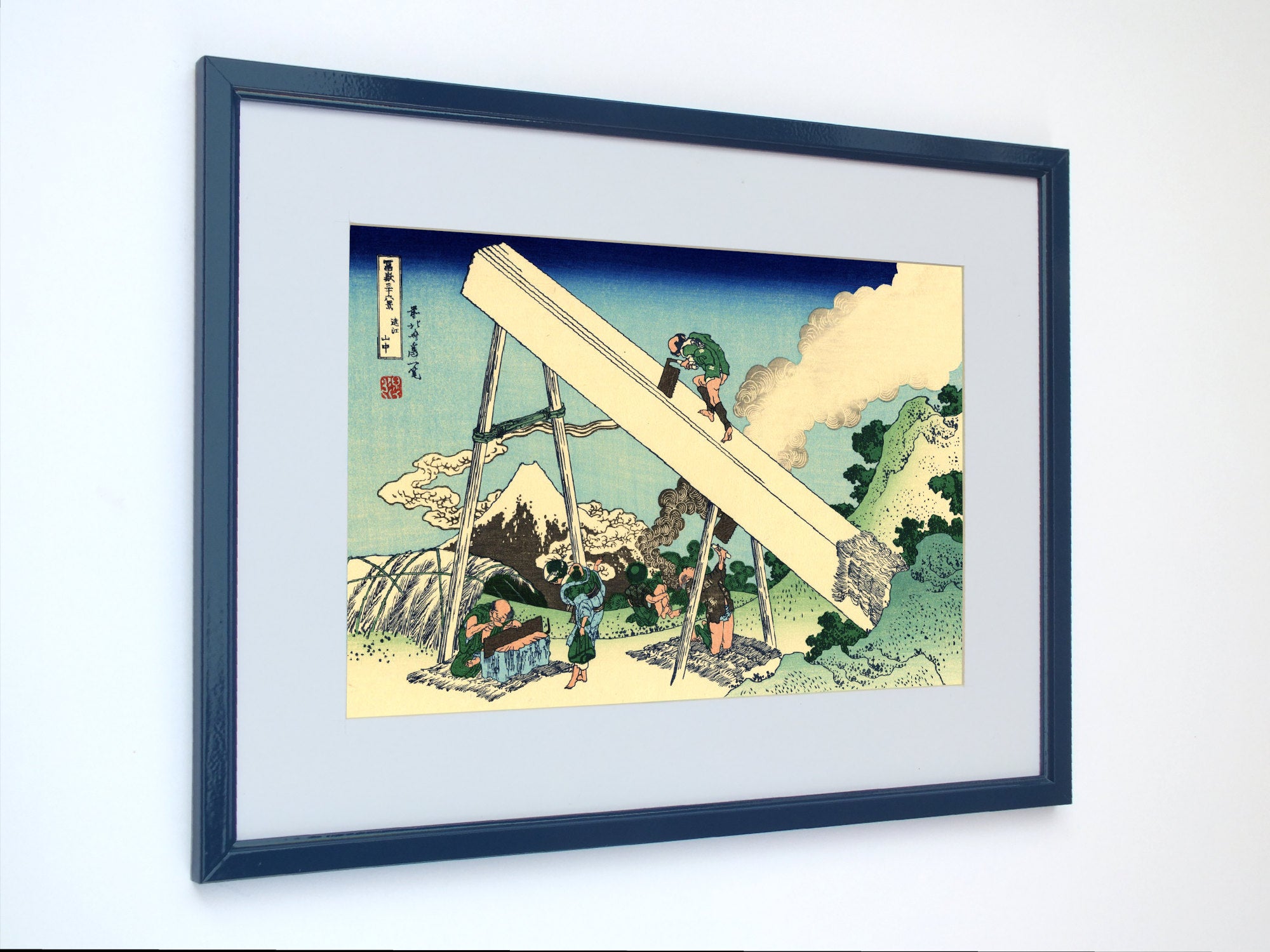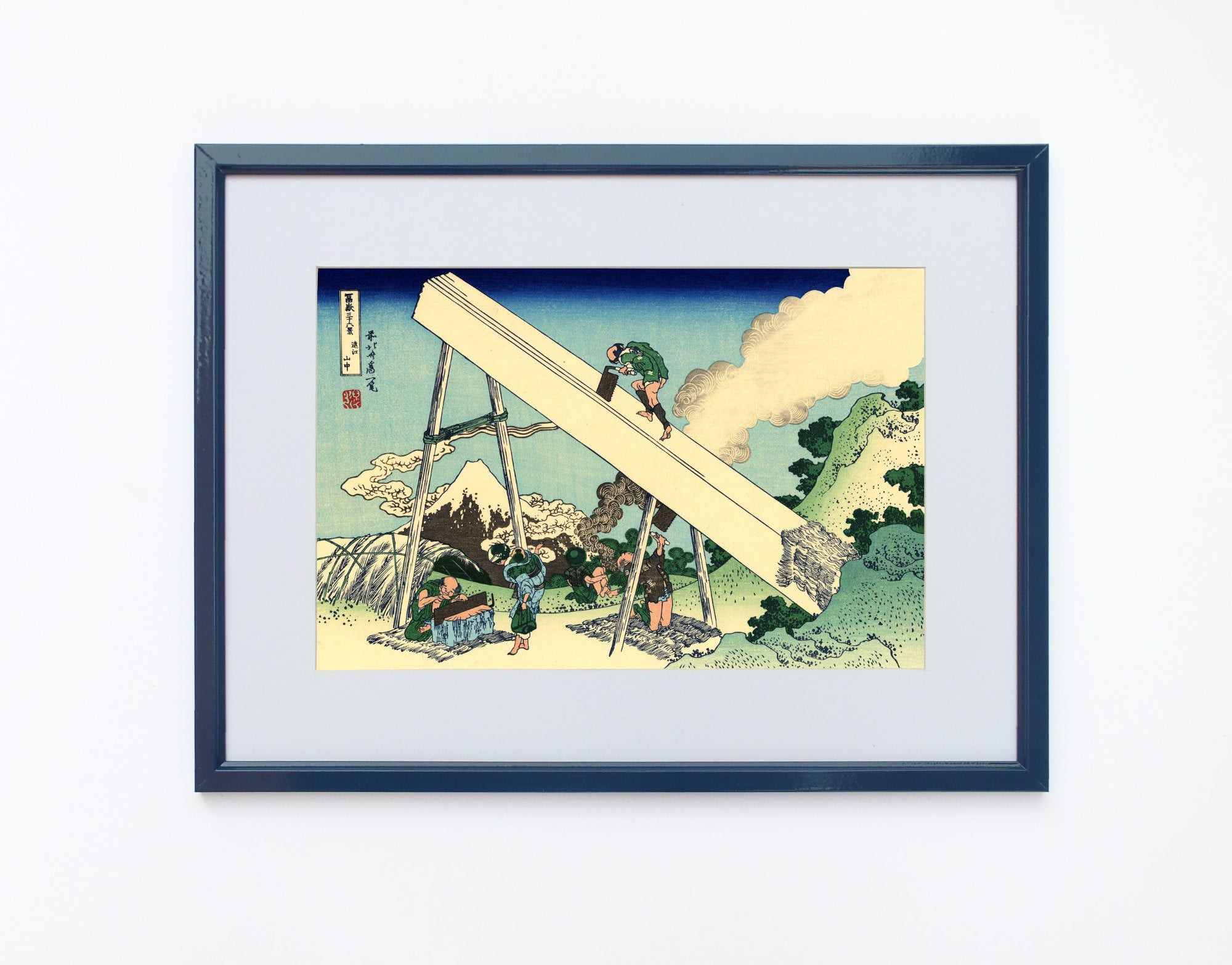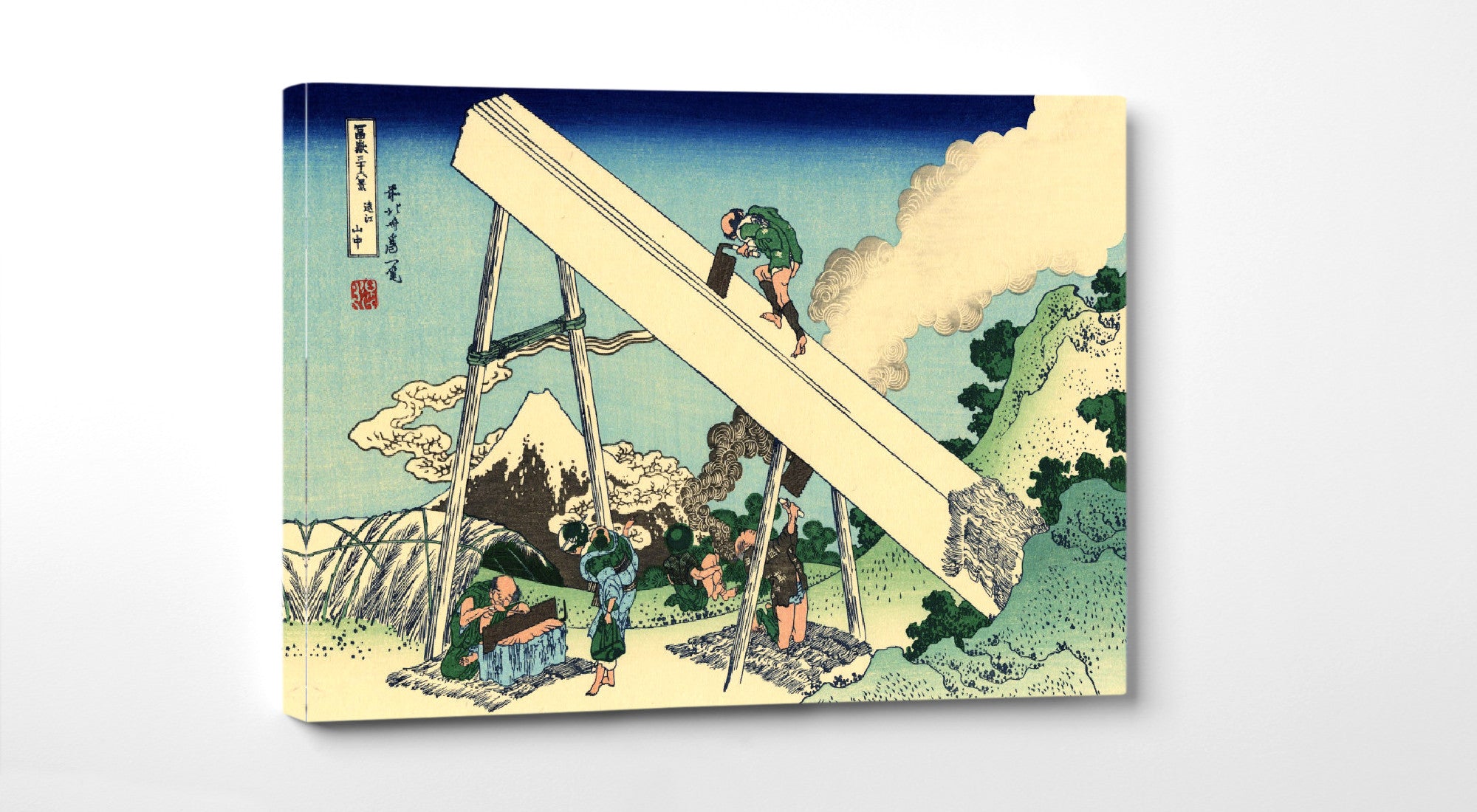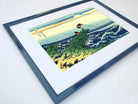
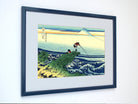
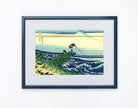
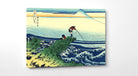
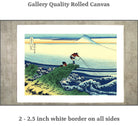
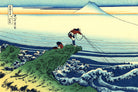
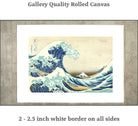
36 Views of Mount Fuji, Kajikazawa in Kai Province, Katsushika Hokusai, Japanese Print
Couldn't load pickup availability
Details
Katsushika Hokusai – Kajikazawa in Kai Province Prints
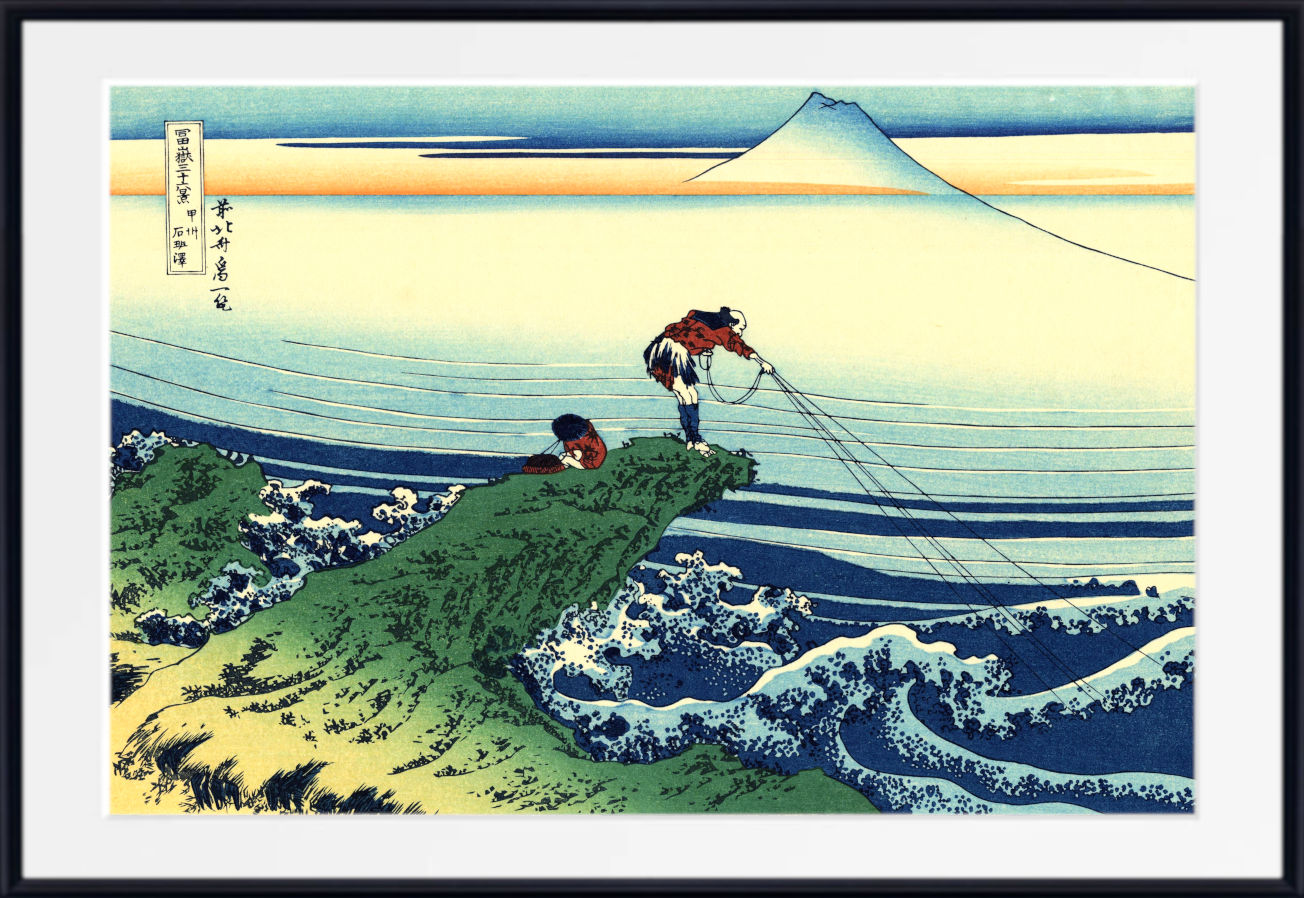
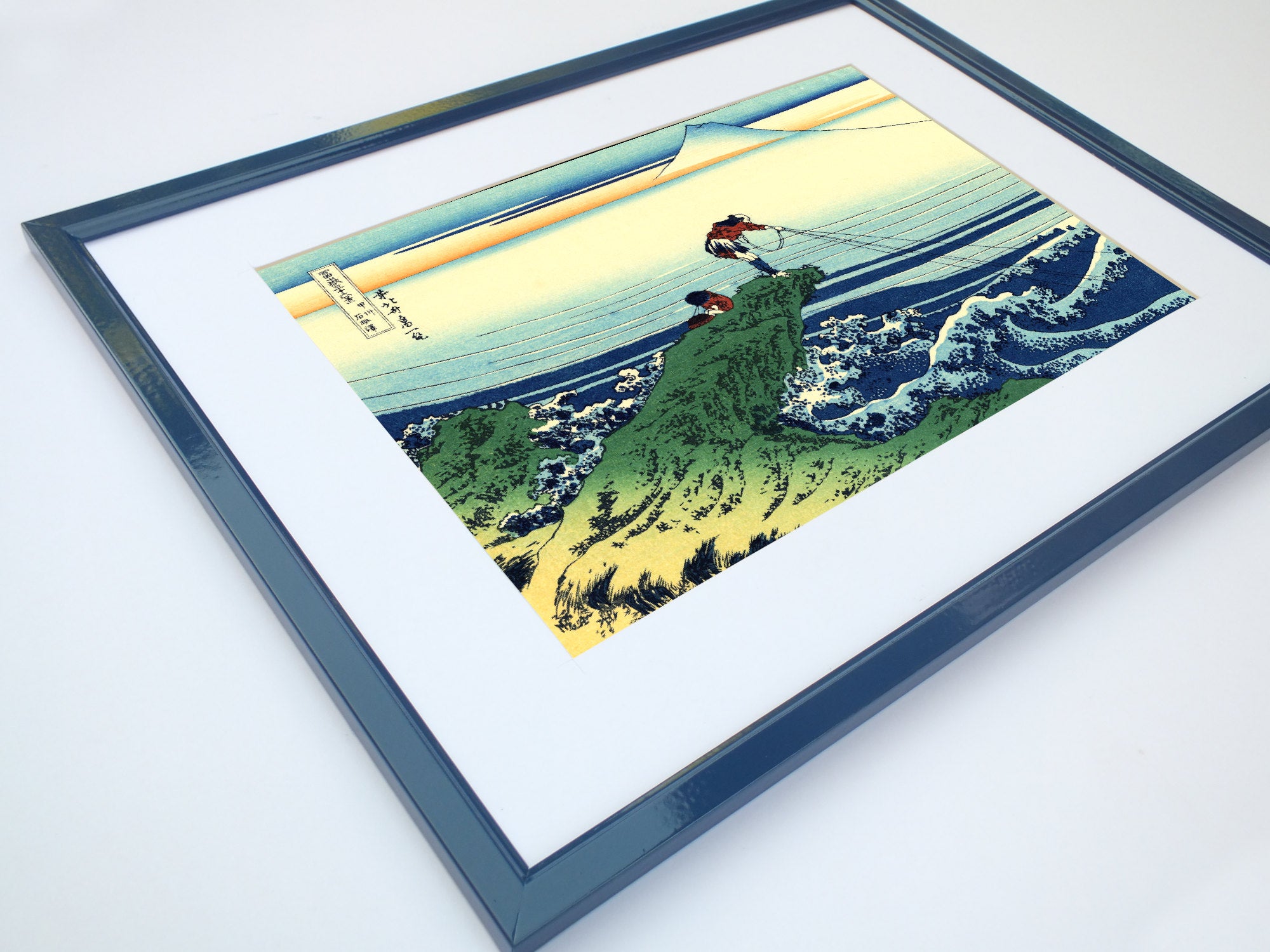
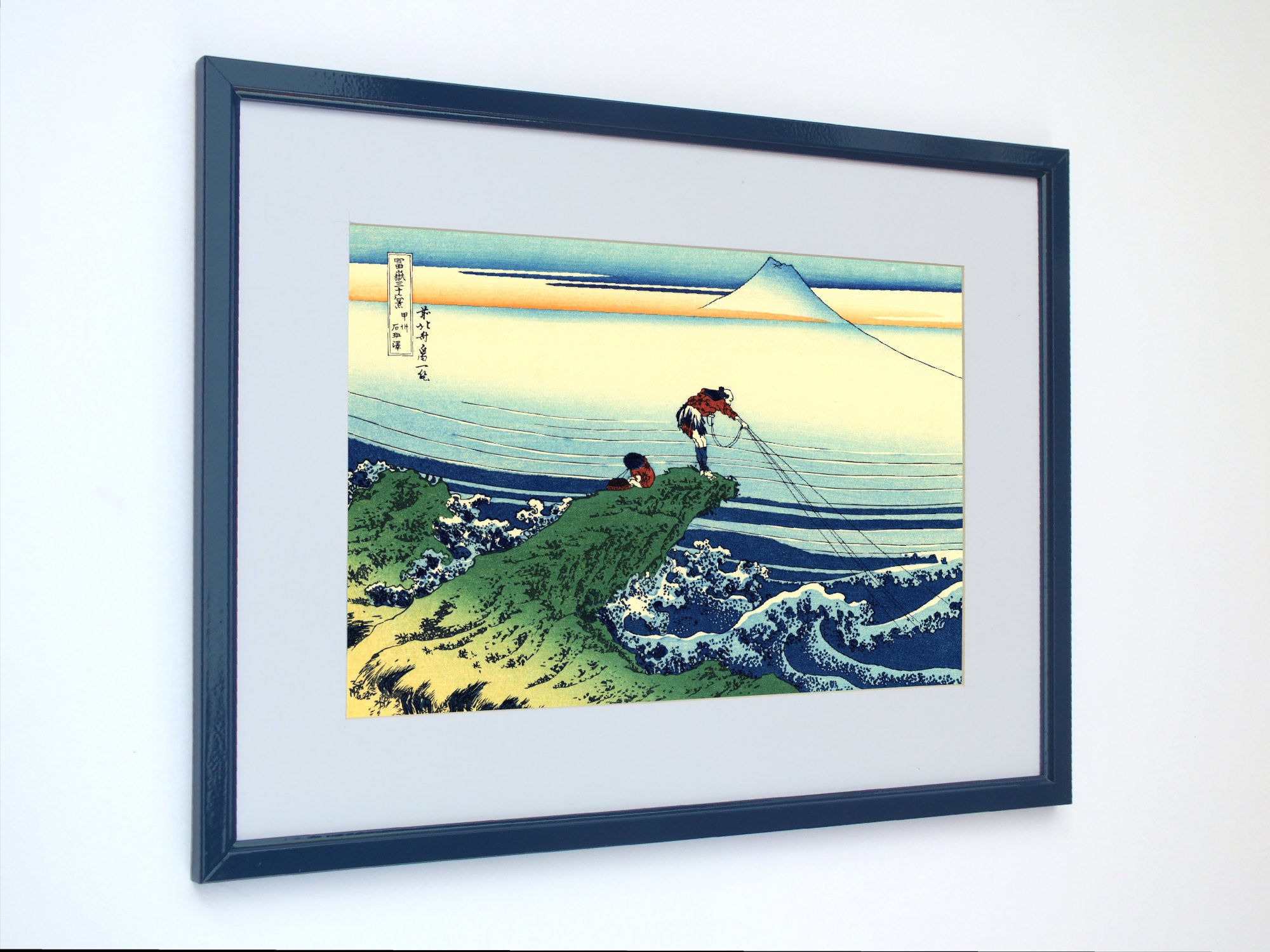
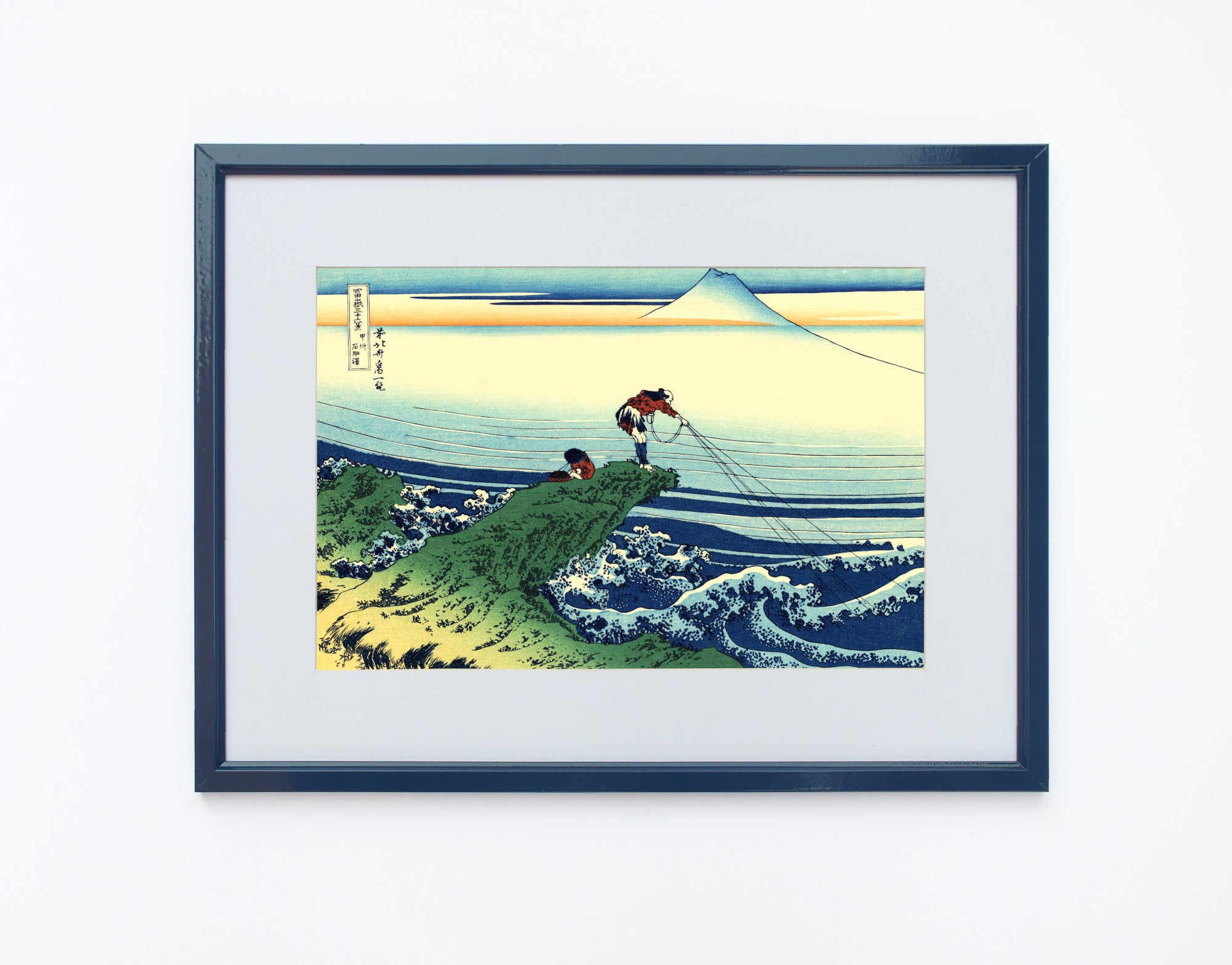
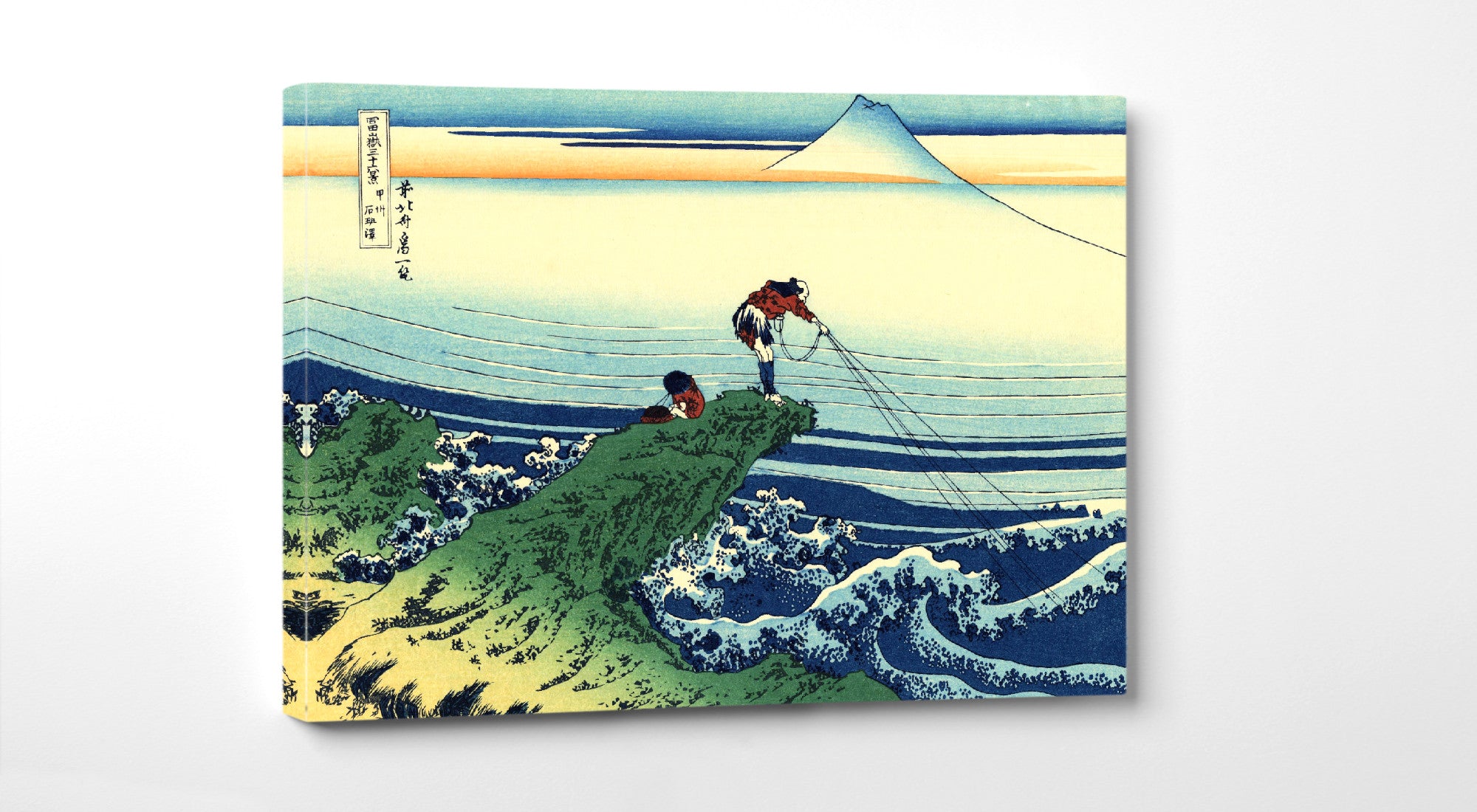
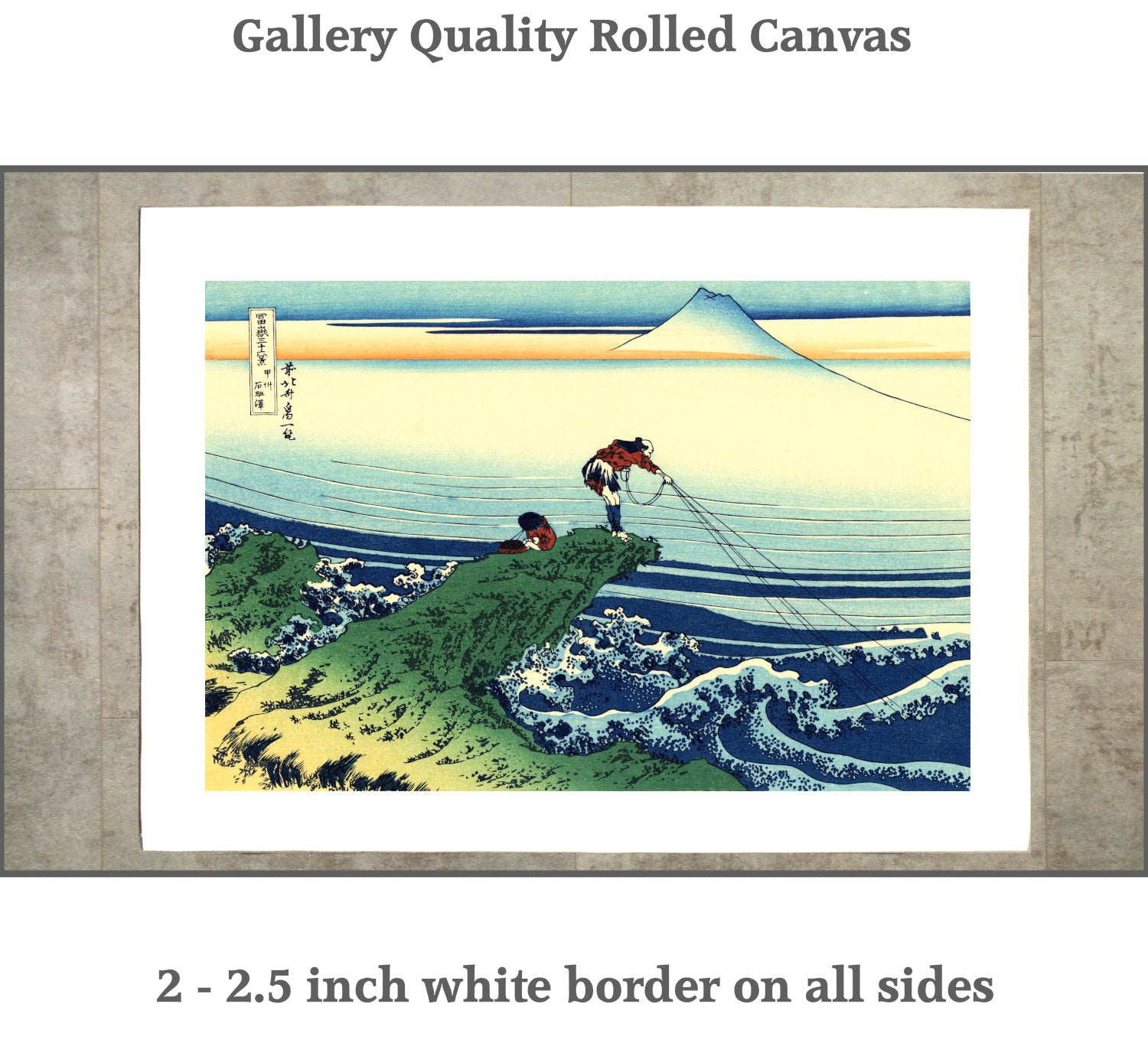
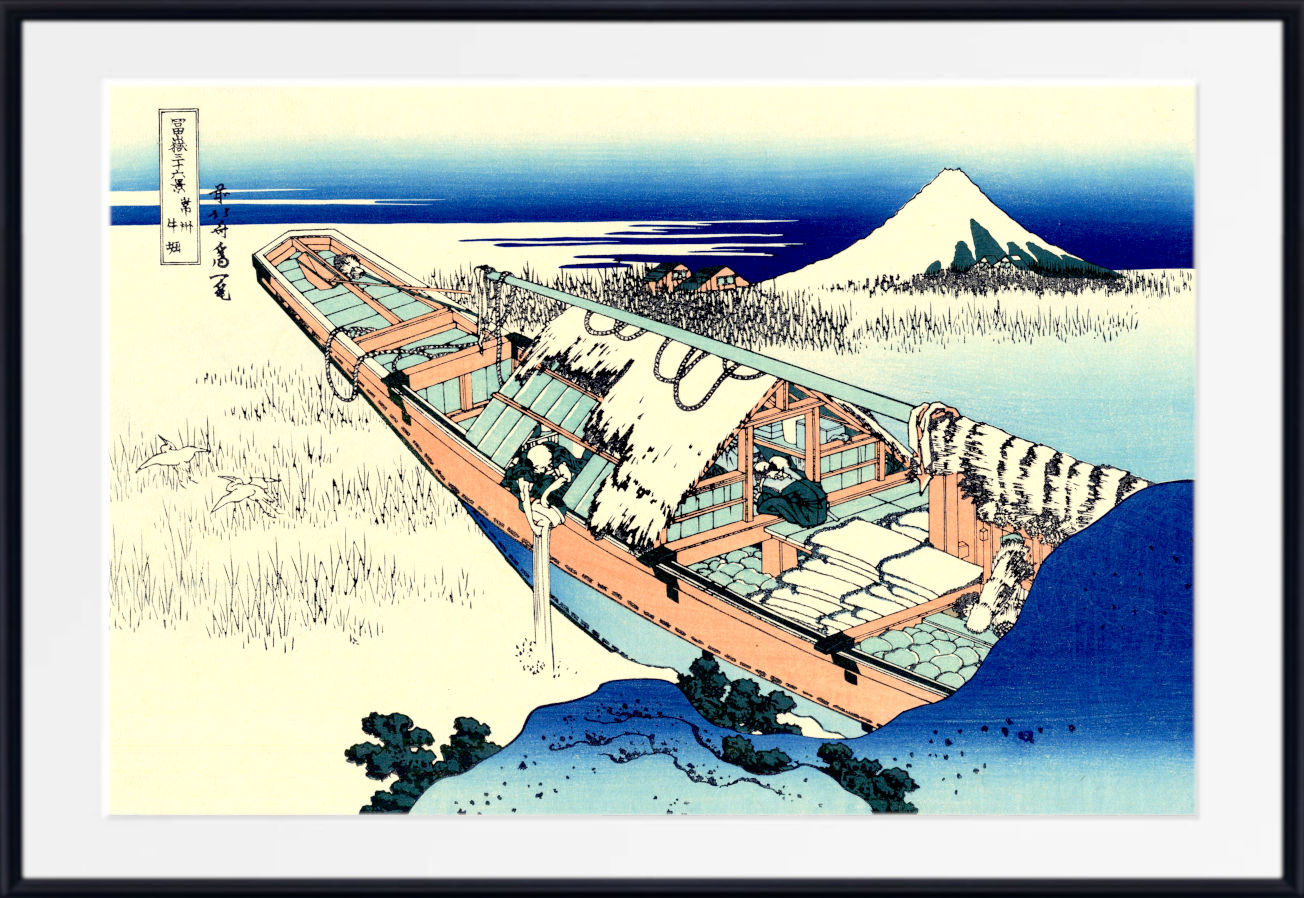
Discover one of the most sophisticated compositions in Hokusai's Thirty-Six Views of Mount Fuji with a Kajikazawa in Kai Province print. Created around 1830–32, this Japanese colour woodblock design shows a fisherman balancing on a rocky ledge beside the fast-flowing Fuji River while Mount Fuji emerges above clouds in the distance.
Human figure, fishing lines, rock, river and mountain are brought together through a remarkable network of repeating diagonals and triangular shapes, making Kajikazawa in Kai Province one of the clearest demonstrations of Hokusai's compositional ingenuity.
A Fisherman Beside the Fuji River
The foreground fisherman works close to turbulent water at Kajikazawa, near the north-western base of Mount Fuji.
Beside him sits a small boy with a basket.
The fisherman leans towards the water while long lines extend from his hands, creating a precarious sense of balance against the moving river below.
Fuji appears much farther away, its summit emerging above a layer of cloud.
Painting Style and Composition
The Triangle Within the Triangle
The brilliance of the composition lies in the way foreground and background echo one another.
The fisherman, rock and fishing lines create an angular structure that visually recalls the triangular slopes of Mount Fuji.
The mountain is therefore repeated symbolically in the human activity occupying the foreground.
This geometric correspondence joins two very different scales – a working fisherman close to the viewer and an enormous mountain in the distance – within a single coherent design.
Water and Human Vulnerability
The water at Kajikazawa is fast and turbulent.
Hokusai's curling river forms can initially resemble the waves of the sea, but the British Museum identifies the setting as the Fuji River.
The fisherman works immediately above this restless water, emphasising the difficult relationship between human livelihood and the natural environment.
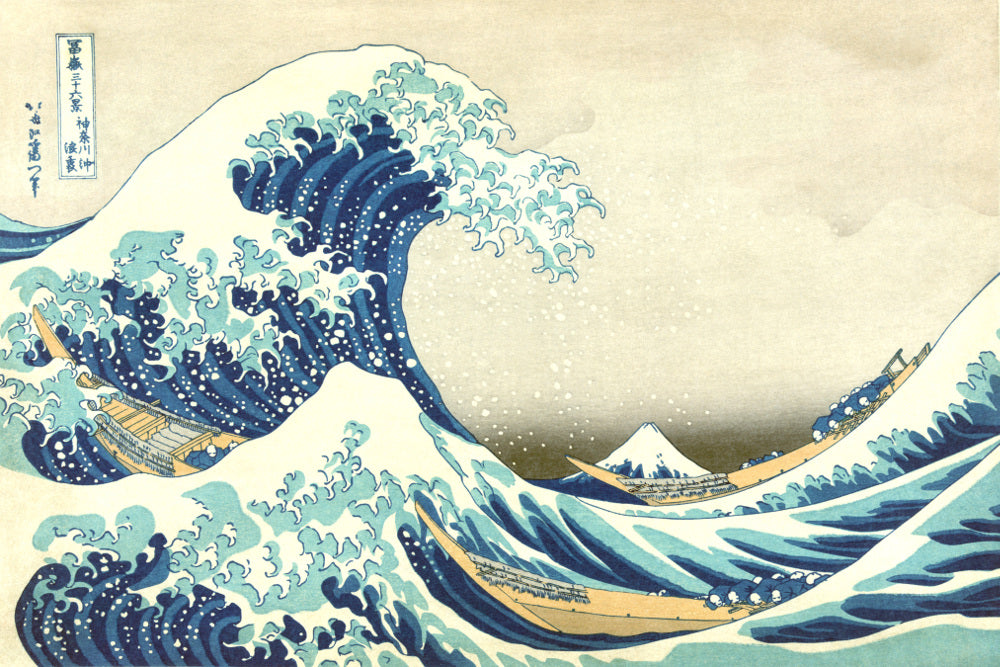
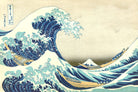
Unlike The Great Wave, however, the scene is not an instant of catastrophe. The fisherman is working within these conditions rather than merely attempting to escape them.
An Early Blue Impression
Kajikazawa in Kai Province is closely associated with Hokusai's innovative use of blue.
Early impressions of several Thirty-Six Views designs were printed predominantly in blue, exploiting the newly available Prussian-blue pigment.
In Kajikazawa, varying blues can distinguish water, outlines, sky and the distant mountain while reinforcing the visual unity of the entire image.
Fuji as a Distant Anchor
Fuji occupies comparatively little space within the composition, yet its presence is essential.
The mountain's calm triangular shape provides visual stability against the rough movement of the foreground river.
Its slopes also echo the fisherman's equipment, demonstrating how repeatedly Hokusai used Mount Fuji not merely as scenery but as the organising geometry of his designs.
Kajikazawa Wall Art for Modern Interiors
A Hokusai Kajikazawa print is particularly suitable for interiors where sophisticated Japanese art is wanted without relying solely on the most familiar Hokusai images.
The blue-dominated palette suits white, pale grey, navy and natural timber particularly well.
Its intricate geometry and strong horizontal format work beautifully above a console table, sideboard, desk or sofa and complement minimalist, Scandinavian and Japanese-inspired interiors.
About Katsushika Hokusai
Katsushika Hokusai (1760–1849) revolutionised Japanese landscape printmaking through an extraordinary combination of close observation and formal experimentation.
He worked across paintings, woodblock prints and illustrated books and remained intensely productive throughout his long life.
Hokusai's landscapes frequently place ordinary workers and travellers within enormous natural settings. Fishermen, farmers and craftsmen are not incidental decoration; their actions often become essential parts of the composition.
Kajikazawa in Kai Province is one of the finest examples of this approach.
Frame Details
SIZING - FRAMED PRINTS:
The sizes refer to the print area - framed prints have approx 2 inch wide white mount and approx 1 inch wide frame
Frames are made from responsibly sourced wood and gallery quality acrylic glazing.
Shipping
All orders for unframed fine art prints and original paintings are dispatched within 2 working days of receipt of payment.
Orders for custom framed prints are dispatched within 4 working days.
All orders are fully tracked from dispatch to delivery at your home or business.
All print and original painting orders are fully insured against loss or damage in transit. We refund or replace any damaged or lost orders.
Buy with confidence - read what our satisfied customers have to say - Reviews
Size Chart
SIZING - EUROPEAN A7 - A0:
A7 2-15/16 x 4-1/8 in 74 x 105 mm
A6 4-1/8 x 5-7/8 in 105 x 148 mm
A5 5-7/8 x 8-1/4 in 148 x 210 mm
A4 8-1/4 x 11-3/4 in 210 x 297 mm
A3 11-3/4 x 16-1/2 in 297 x 420 mm
A2 16-1/2 x 23-3/8 in 420 x 594 mm
A1 23-3/8 x 33-1/8 in 594 x 841 mm
A0 33-1/8 x 46-13/16 in 841 x 1188 mm
Explore related collections