Vincent van Gogh Wheat Field Prints: Arles, Saint-Rémy and Auvers
Wheat fields became one of the most enduring subjects in Vincent van Gogh’s art. Across the final years of his career, fields of ripening grain, harvested stubble, wheat stacks, reapers and expansive rural horizons allowed him to explore changing seasons, agricultural labour, colour and the emotional power of the landscape.
Van Gogh did not paint wheat fields in one single series or location. The subject developed as he moved through southern France and eventually to Auvers-sur-Oise. The brilliant harvest landscapes of Arles differ markedly from the enclosed fields and reapers of Saint-Rémy, while the immense wheatfields of Auvers frequently carry a more expansive and dramatic atmosphere.
This GalleryThane collection brings those related works together, creating a focused route through one of the most important recurring themes within the wider Vincent van Gogh Prints collection.
The Wheat Fields of Arles
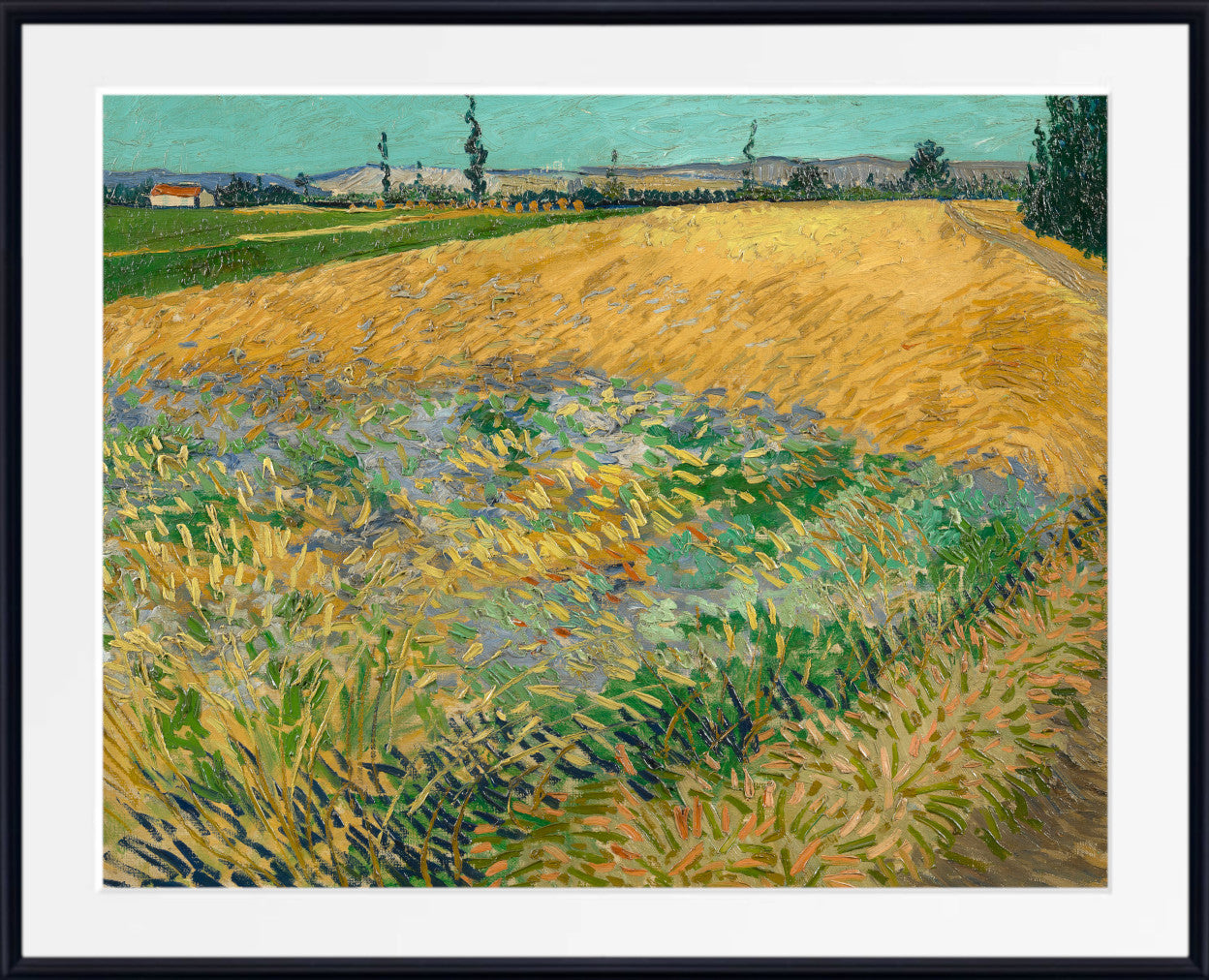
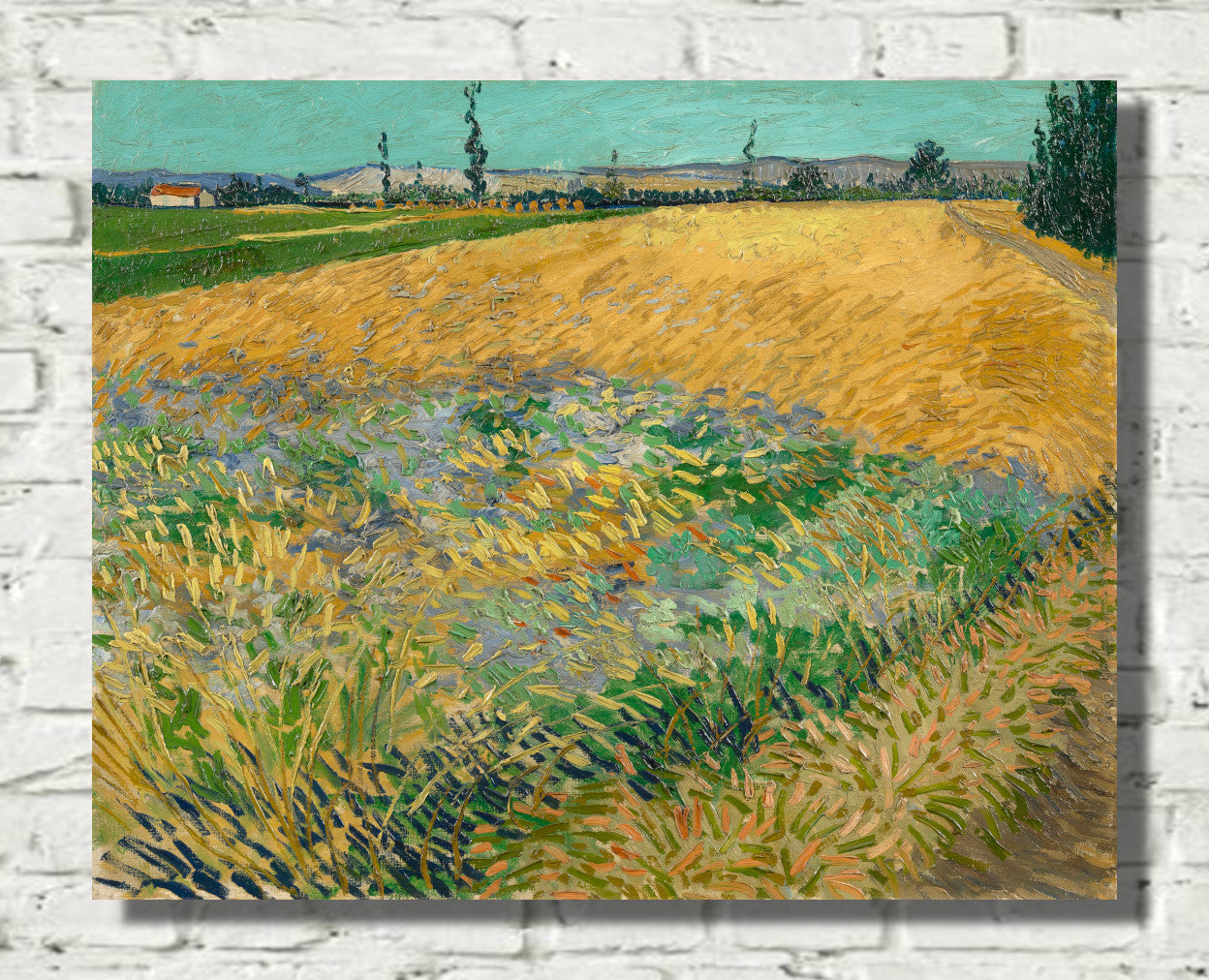
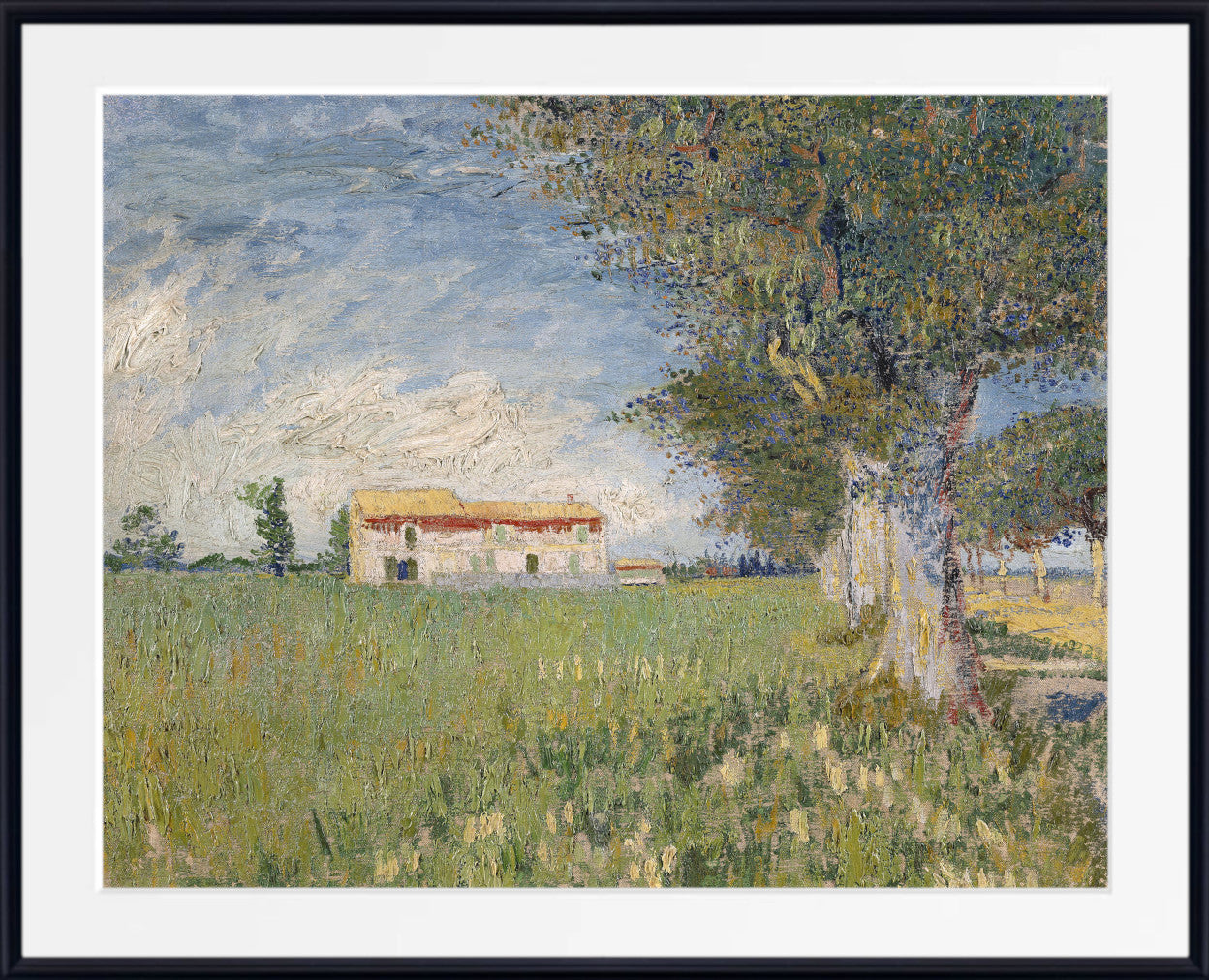
Van Gogh moved to Arles in southern France in February 1888, attracted by the region’s intense light and colour. As spring turned into summer, the surrounding agricultural landscape became one of his principal subjects.
Fields of wheat changed rapidly from fresh green to brilliant yellow and gold. Van Gogh painted farmers at work, carts, farmhouses, stacks of harvested grain and broad expanses of countryside beneath the intense Provençal sky.
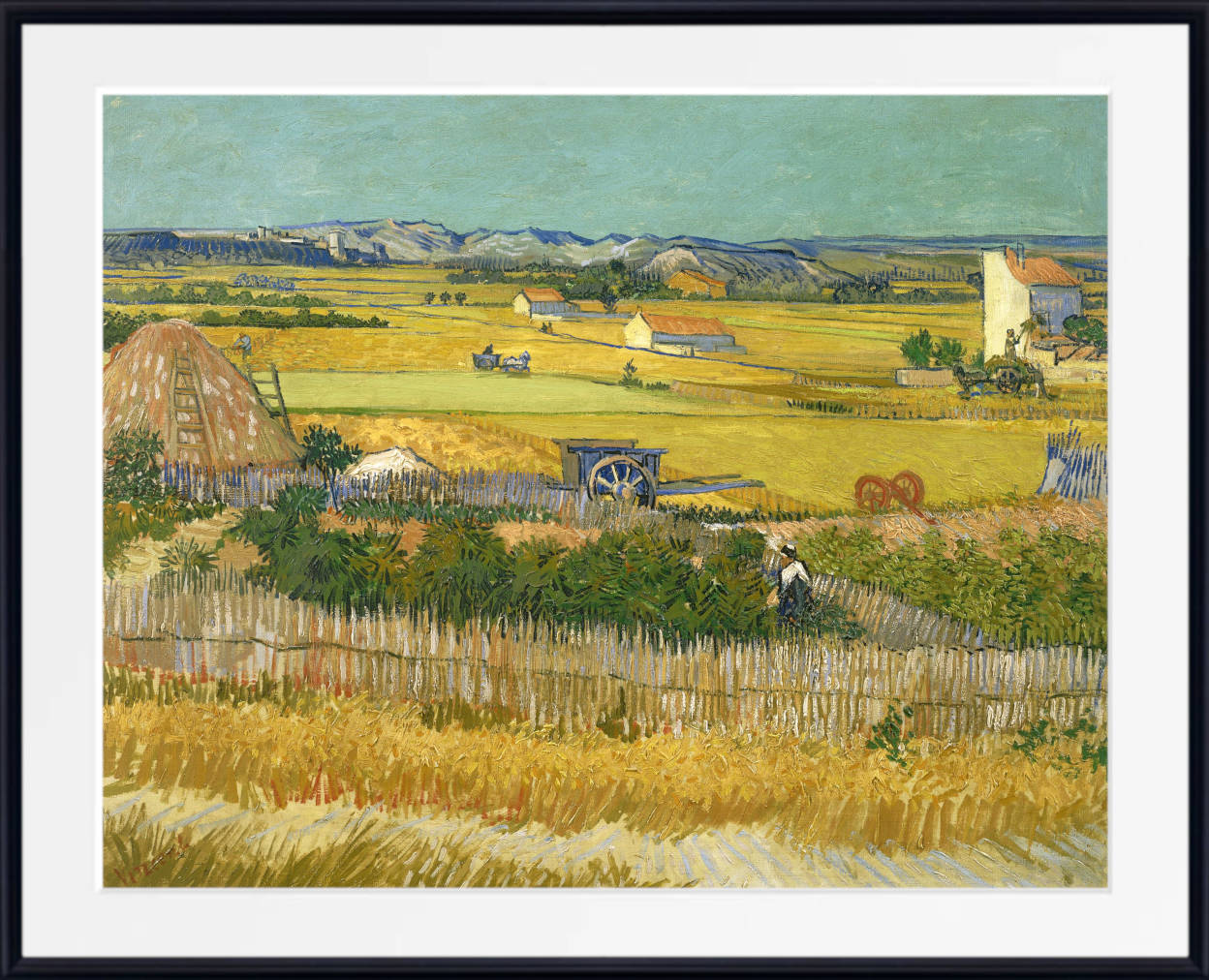
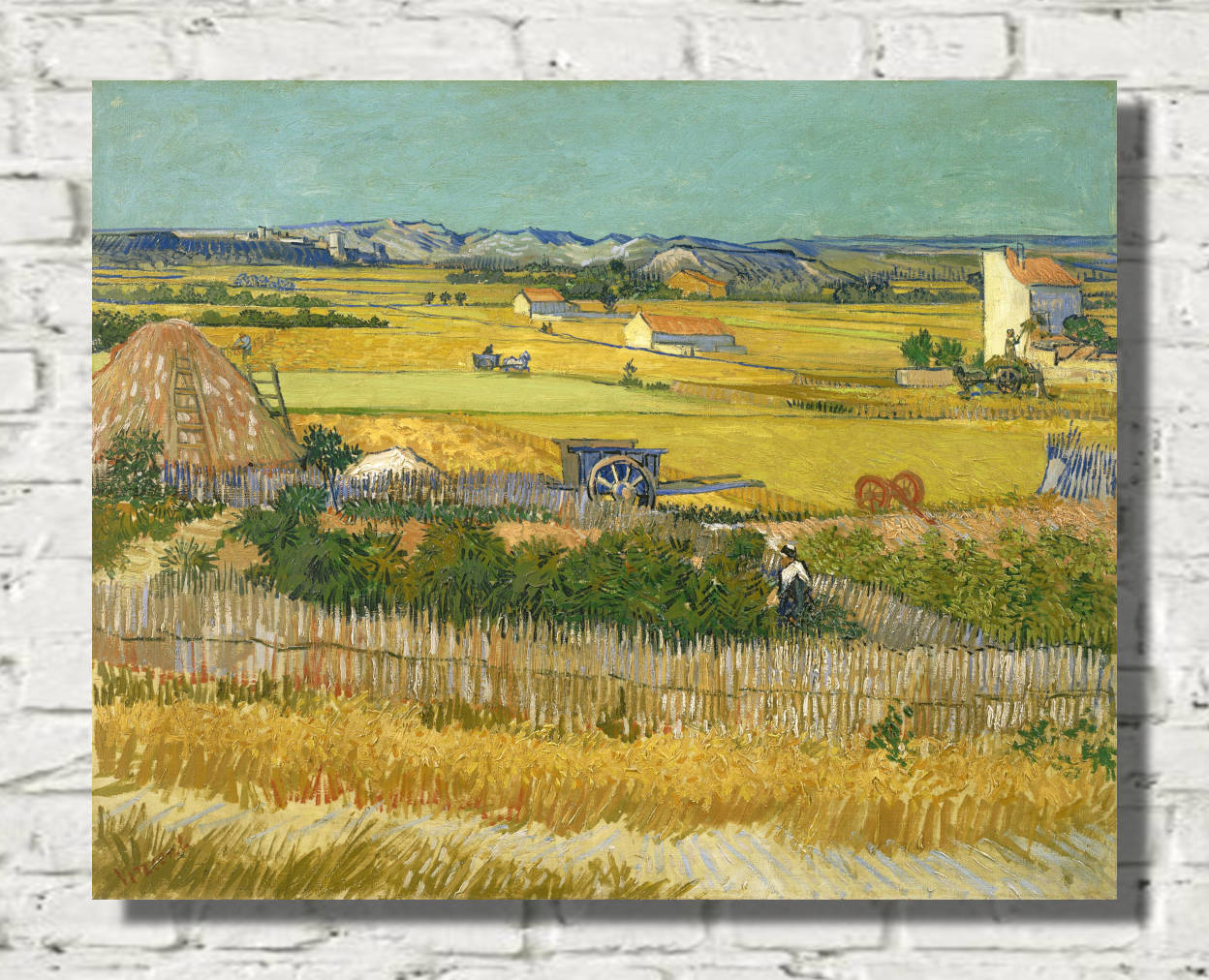
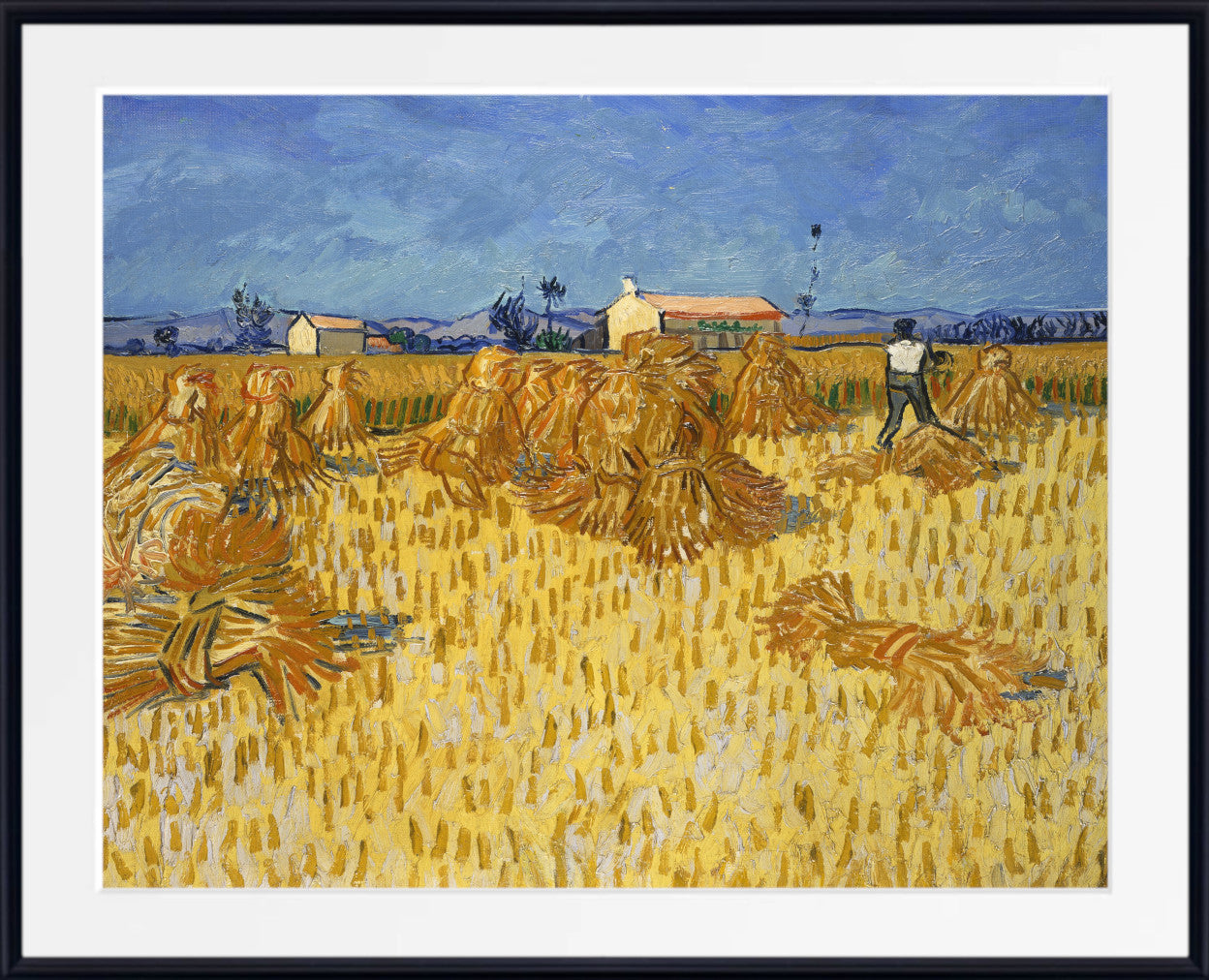
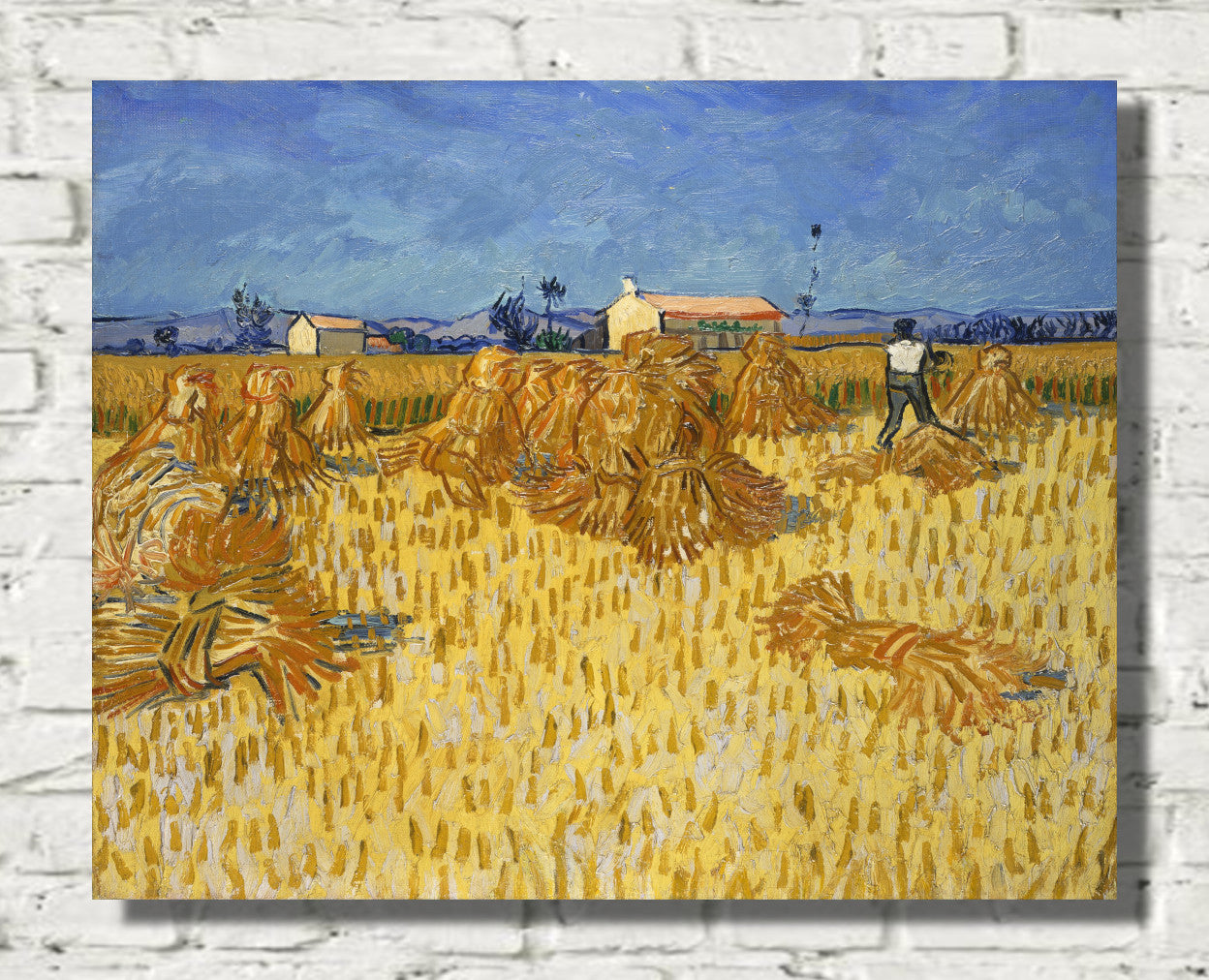
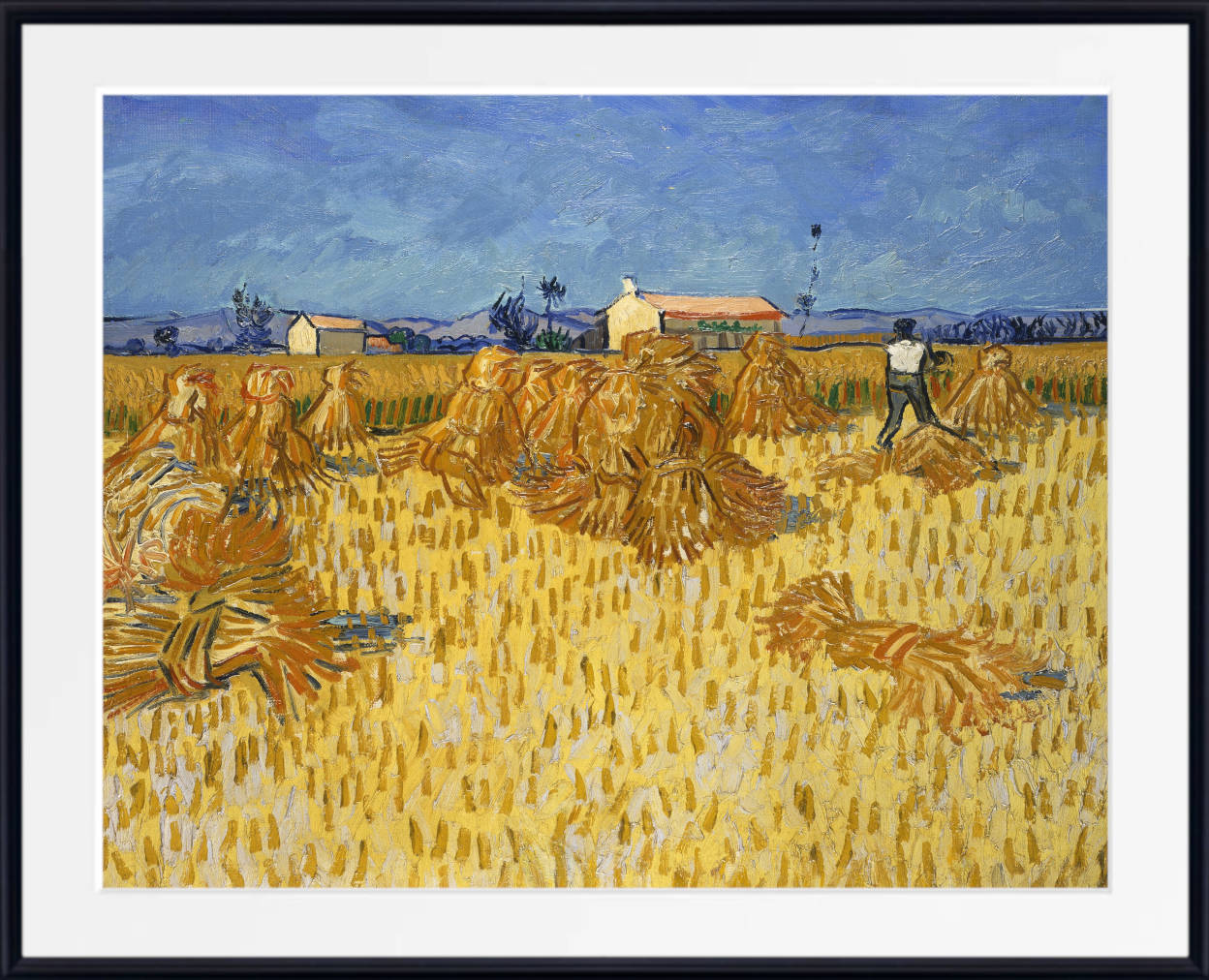
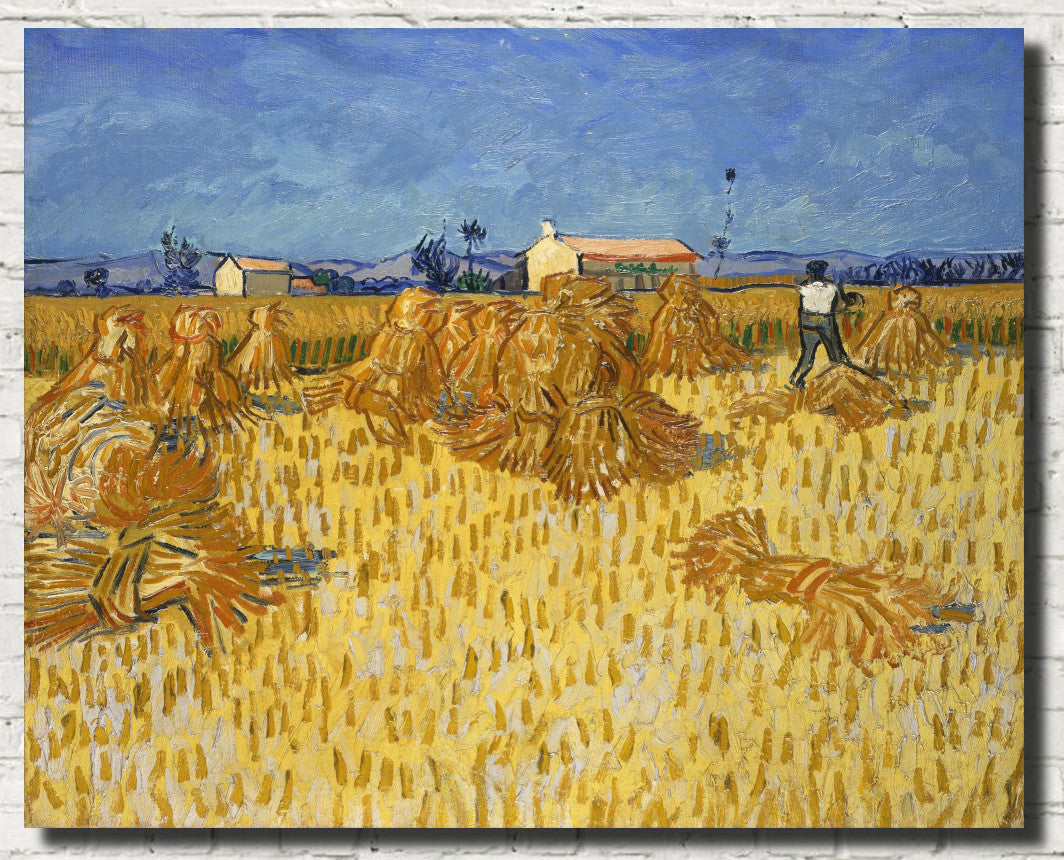
The Harvest of 1888 is among the defining works from this period. Rather than focusing on a single figure, the composition spreads agricultural activity across a wide landscape of yellow fields, blue-green vegetation, distant buildings and mountains.
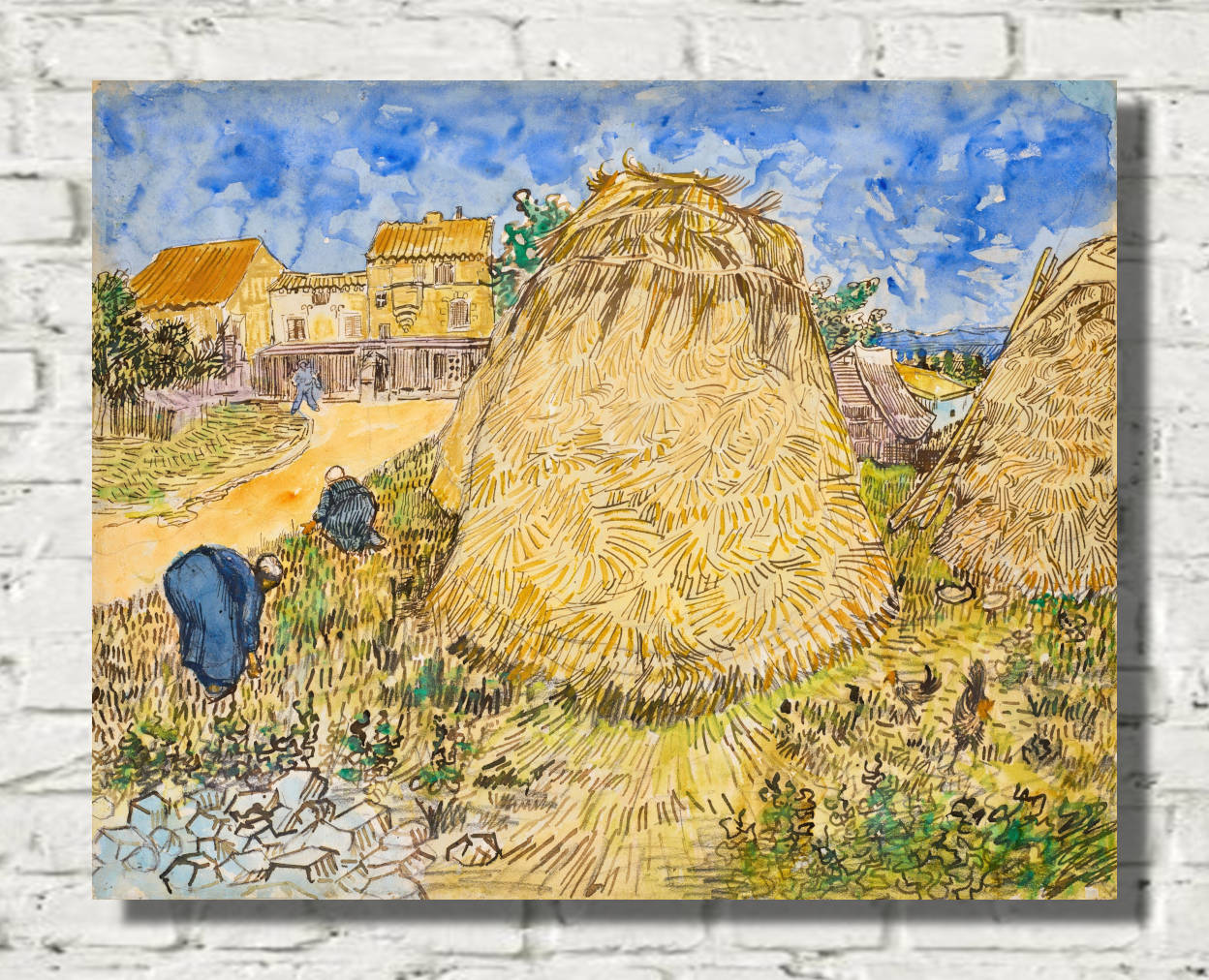
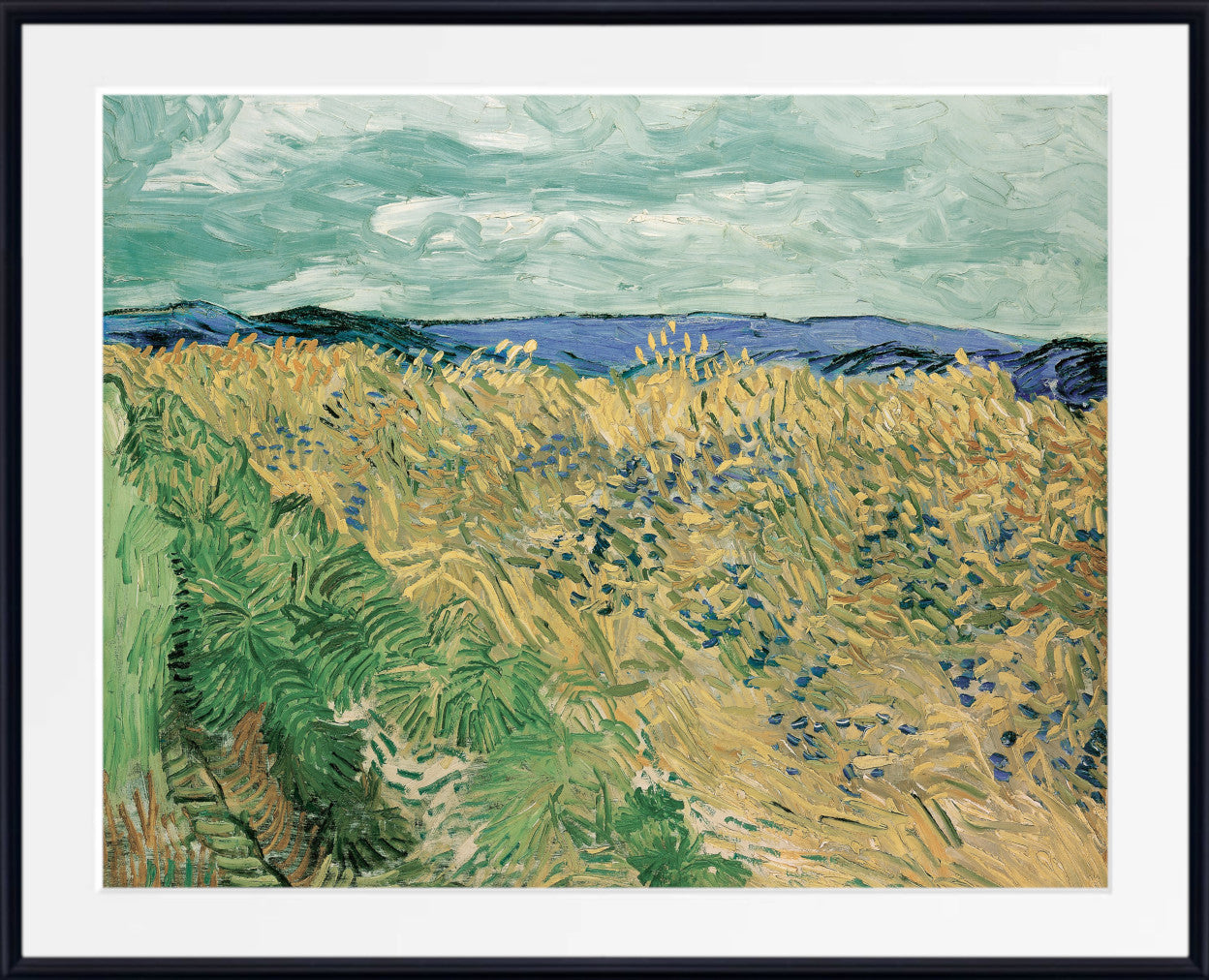
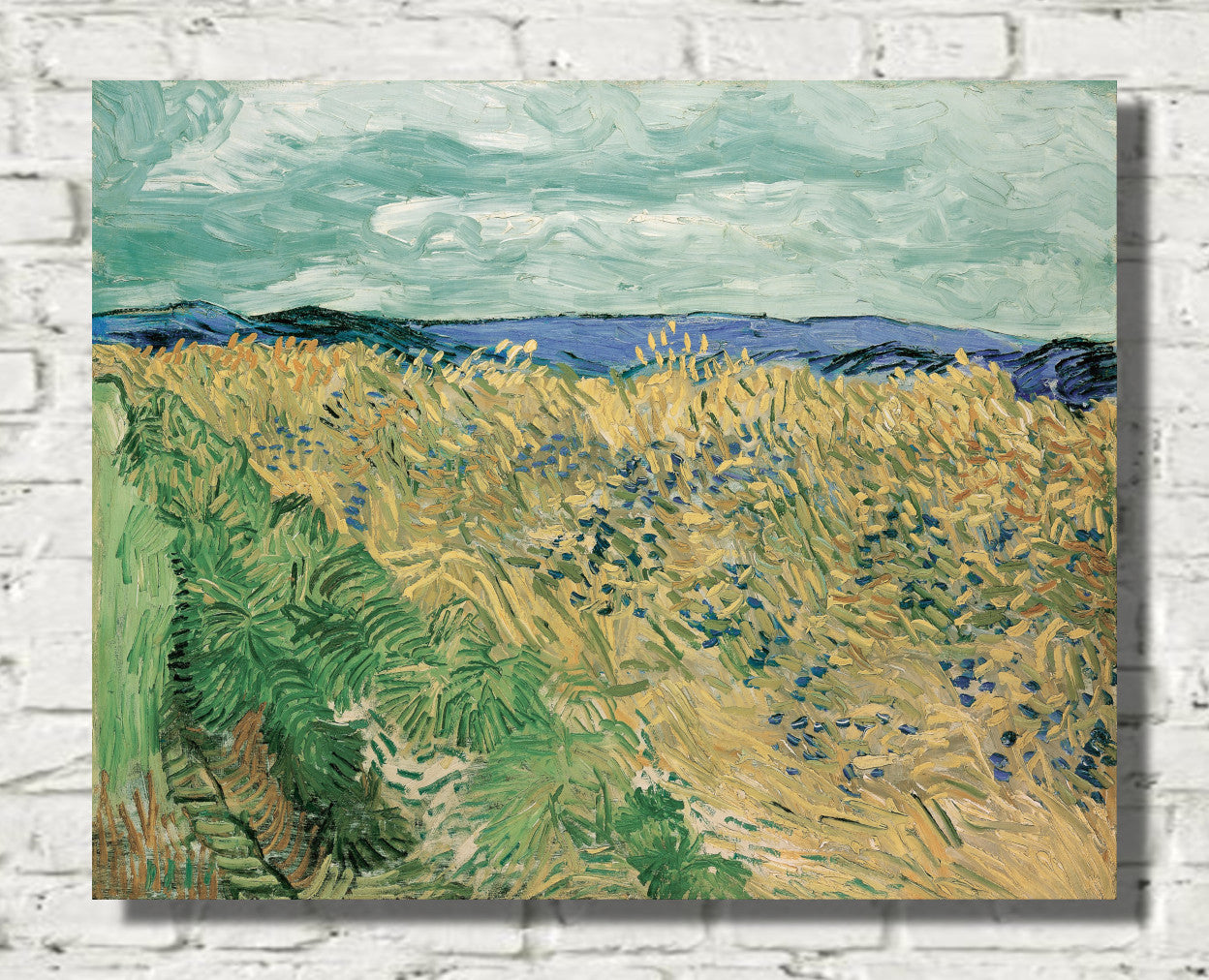
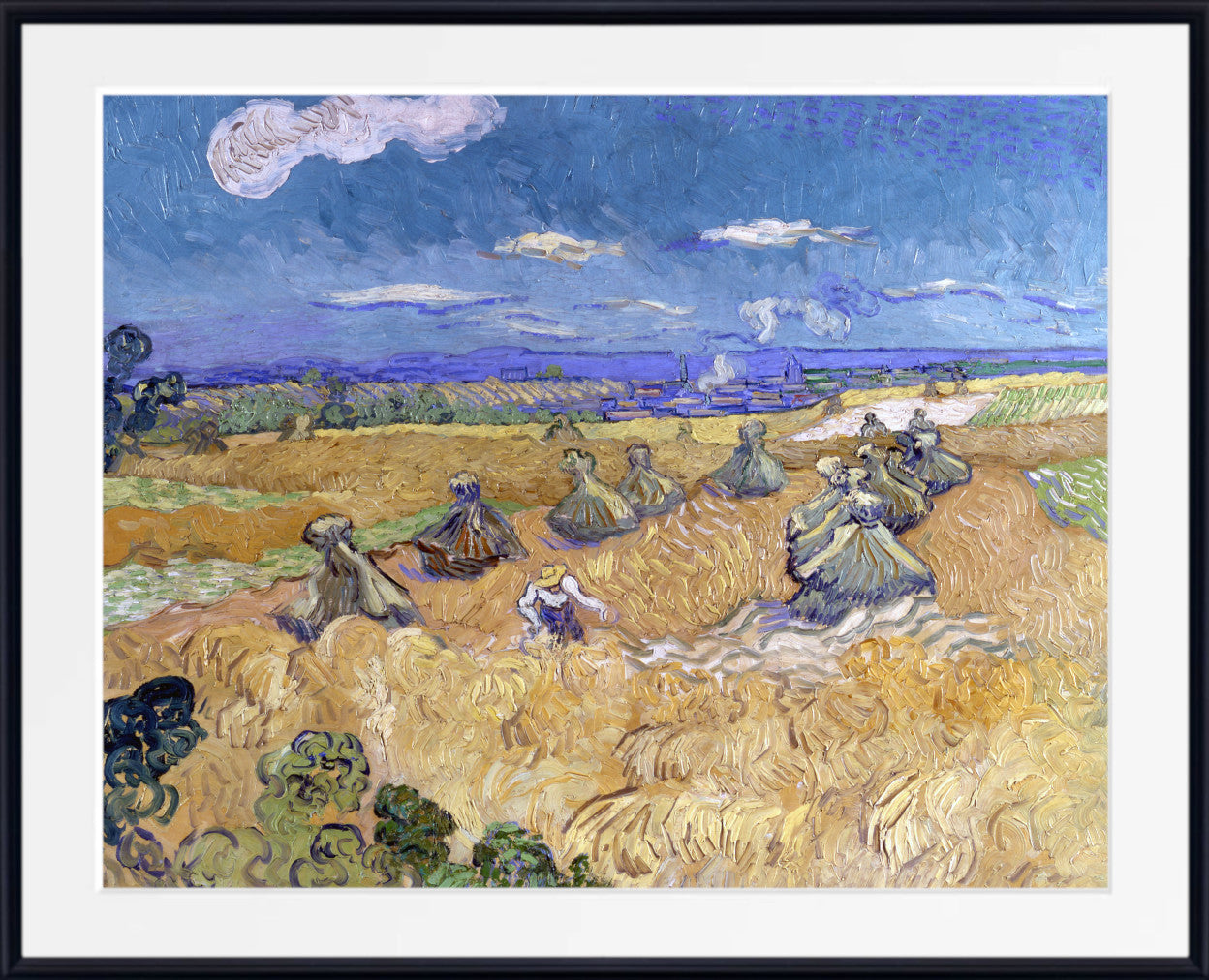
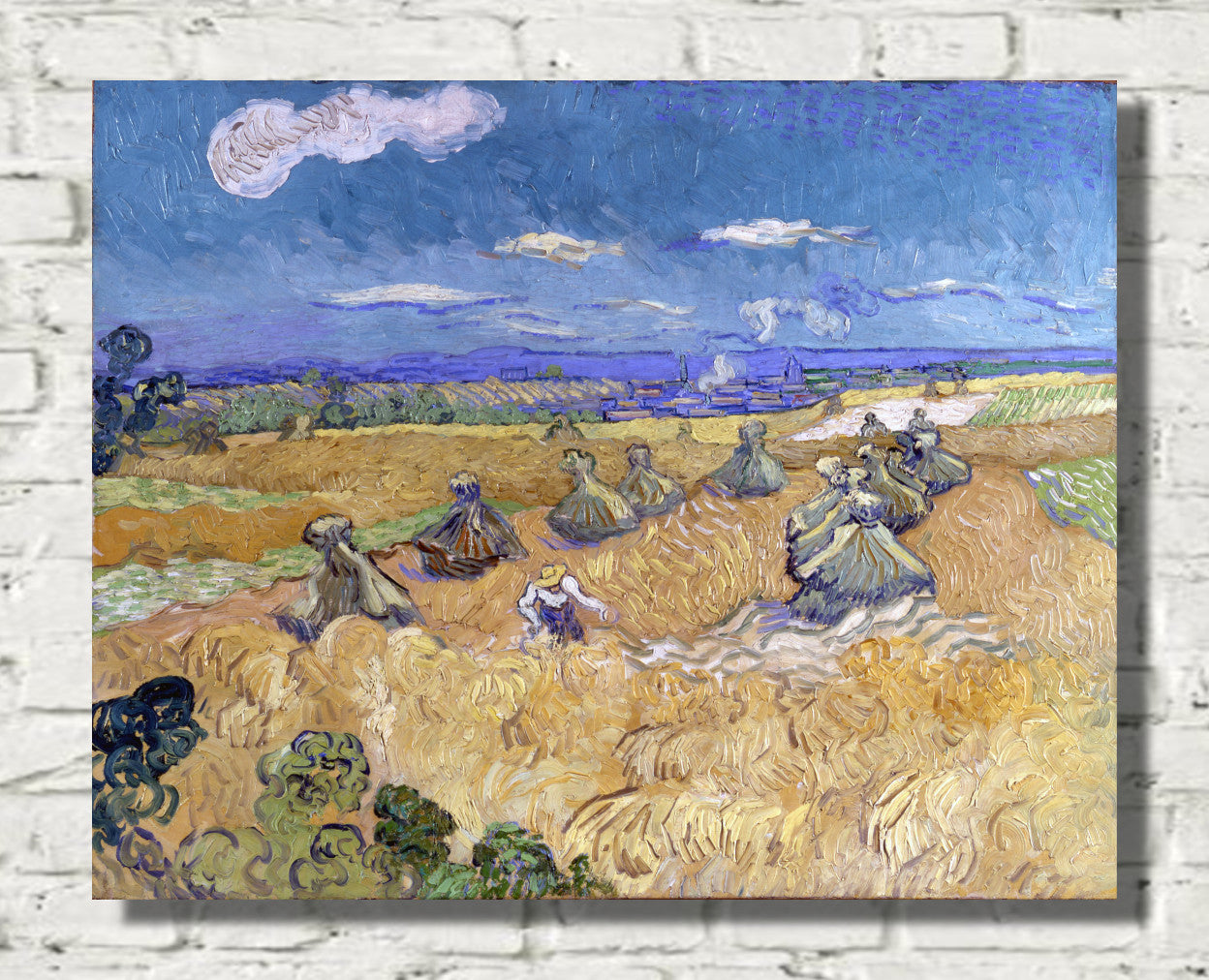
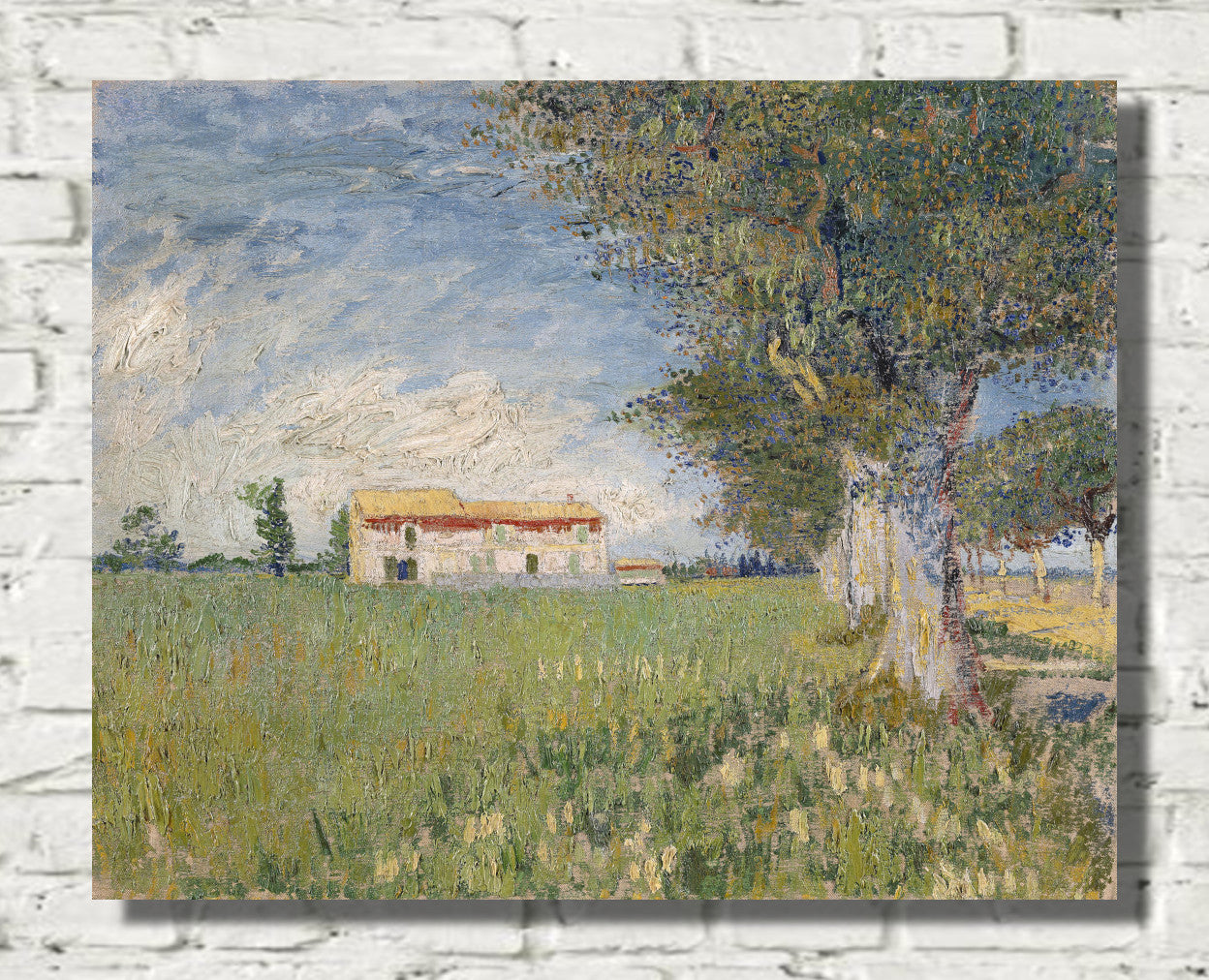
Other works in this collection, including Wheatfield (1888), Wheat Stacks, Wheat Stacks with Reaper, Farmhouse in a Wheat Field and Harvest in Provence, reveal how repeatedly Van Gogh returned to the colours, rhythms and physical labour of the harvest.
Golden Wheat, Blue Skies and Complementary Colour
The fields of Provence gave Van Gogh an ideal subject for experimenting with strong complementary colour.
Golden and yellow wheat could be set against intense blue skies, while green vegetation, orange earth and violet shadows added further contrast. Rather than attempting to reproduce colour exactly as it appeared, Van Gogh increasingly intensified it to communicate the experience and energy of the landscape.
This use of colour is one reason his wheat-field paintings remain so visually powerful as wall art. Strong yellows and blues create immediate contrast, while the repeated lines of fields and brushwork provide movement and structure.
Wheat Field with Cypresses
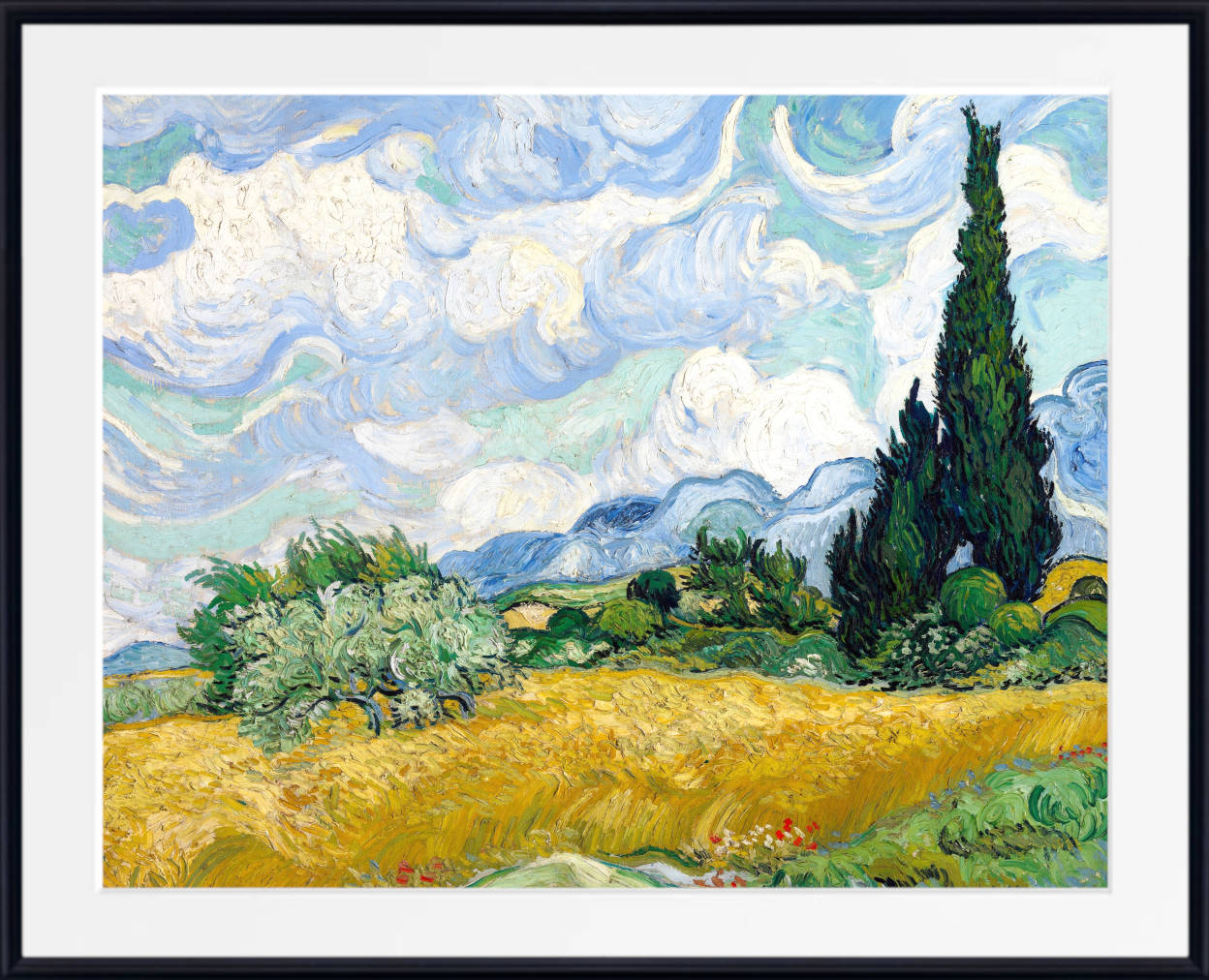
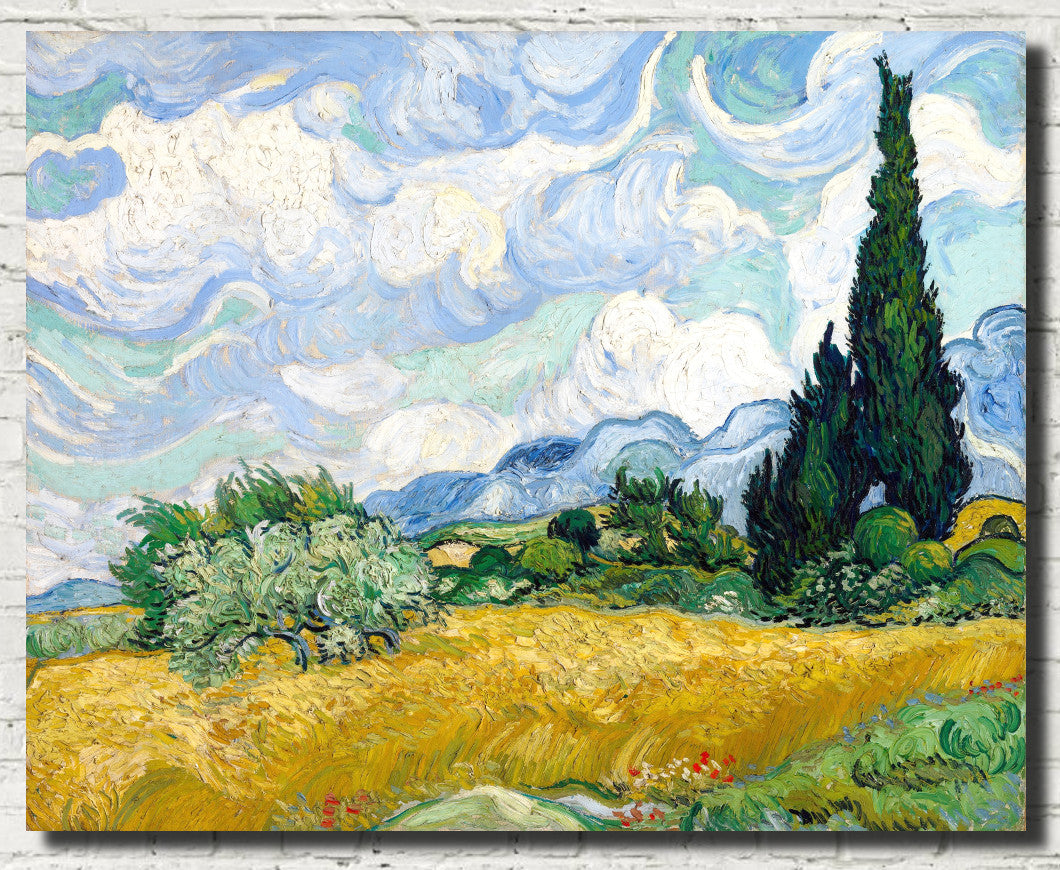
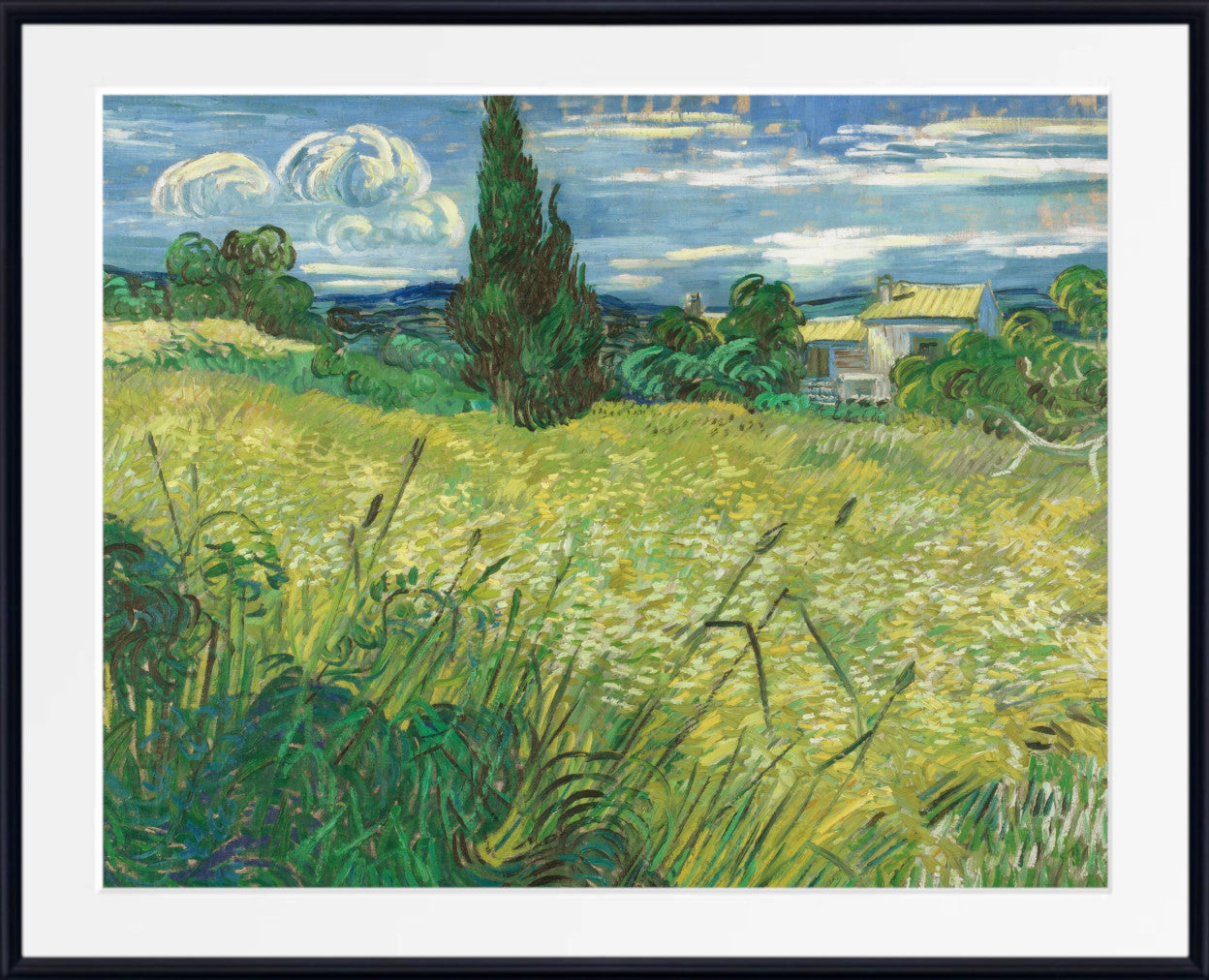
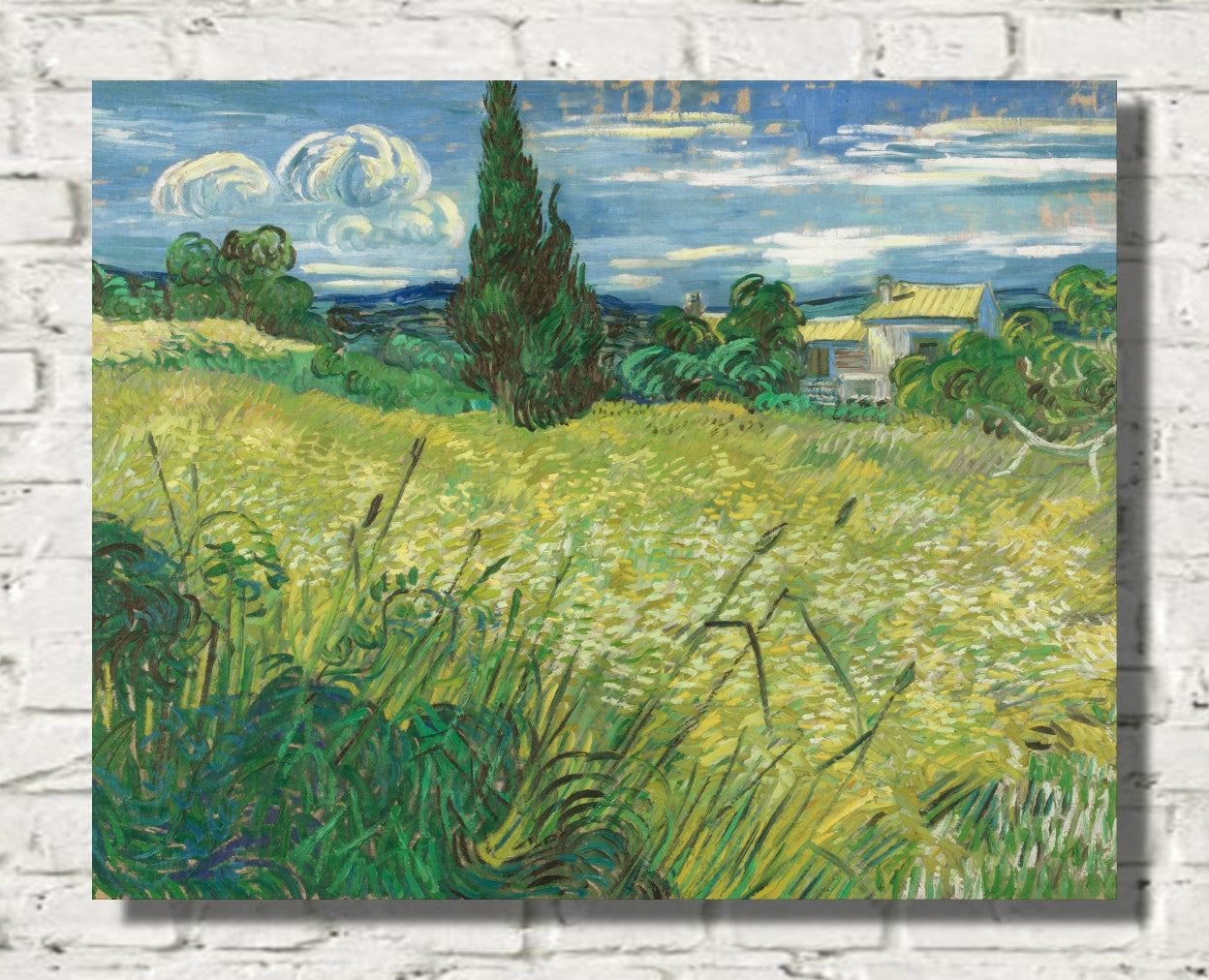
Wheat Field with Cypresses combines two of the subjects most closely associated with Van Gogh’s Saint-Rémy period: ripening wheat and the tall dark cypress trees of Provence.
The cypresses rise dramatically above the field, while clouds appear to move across the blue sky in sweeping rhythms. Wheat, trees, mountains and atmosphere seem connected through the direction of Van Gogh’s brushwork, creating a landscape that feels almost continuously in motion.
The work also demonstrates why thematic Van Gogh collections naturally overlap. Wheat Field with Cypresses belongs unmistakably within this wheat-field collection but will also be highly relevant to a dedicated collection of Van Gogh’s cypress paintings.
Saint-Rémy: Enclosed Fields and Reapers
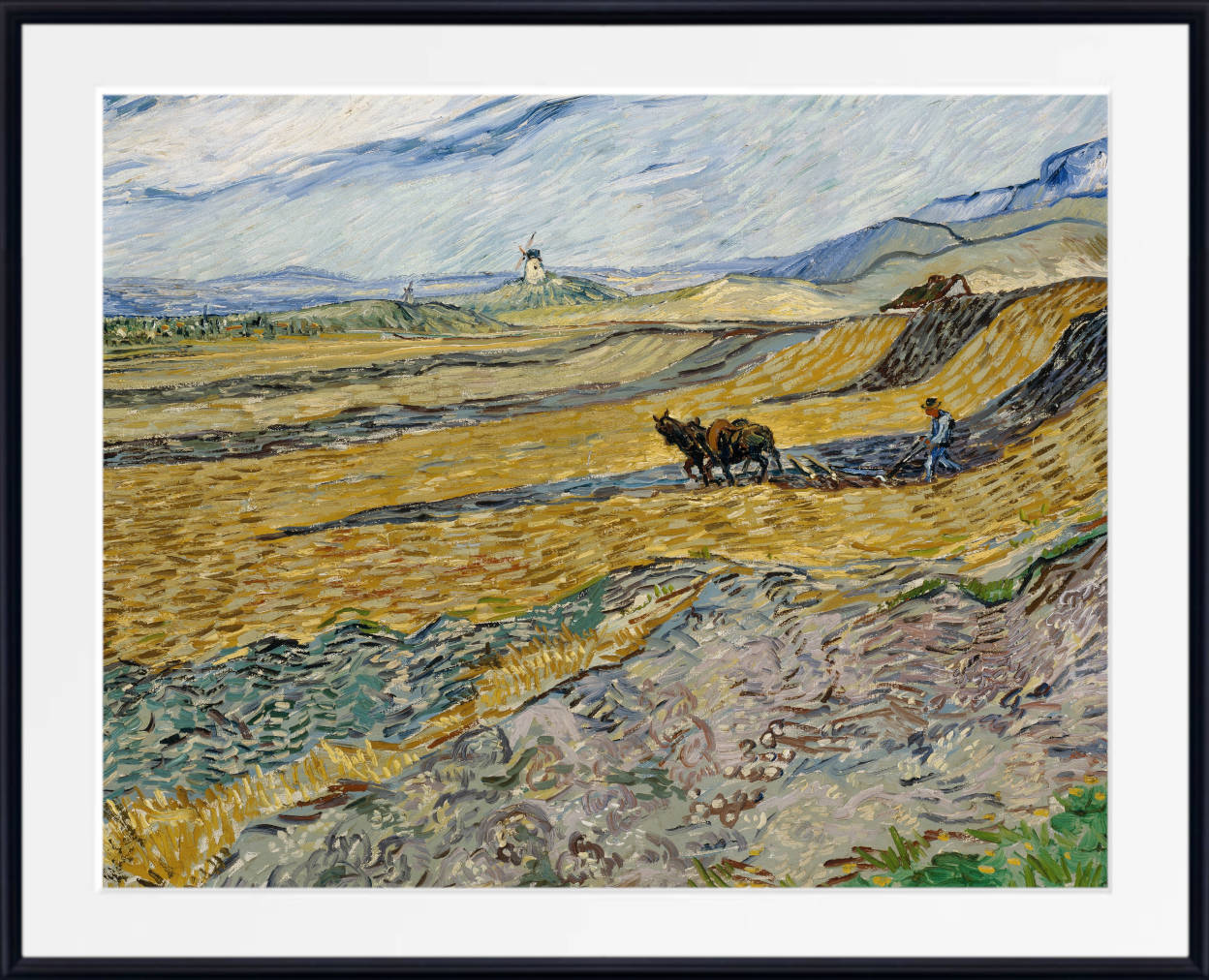
During Van Gogh’s stay at Saint-Paul-de-Mausole in Saint-Rémy in 1889, the landscape immediately surrounding the institution became a major source of subjects.
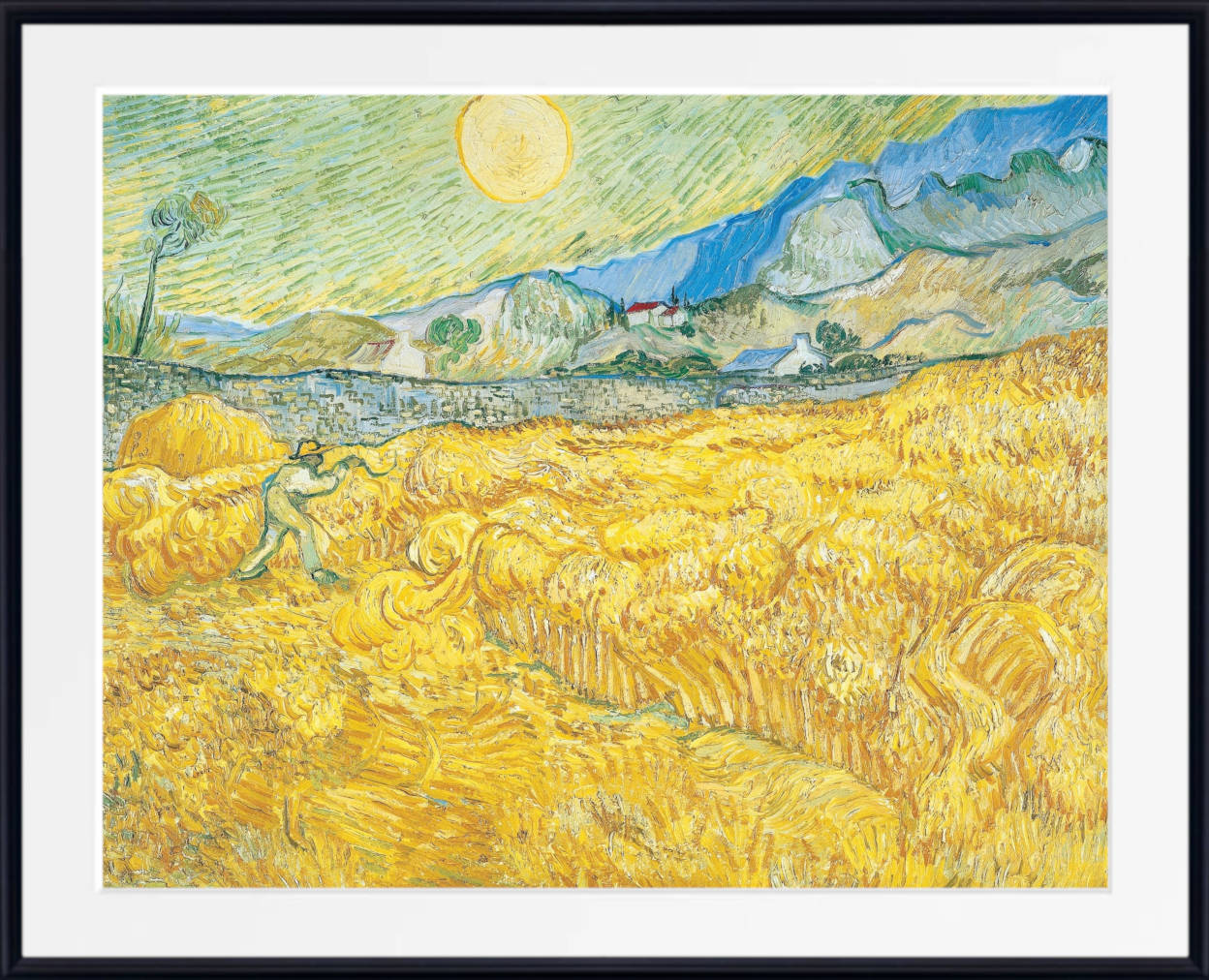
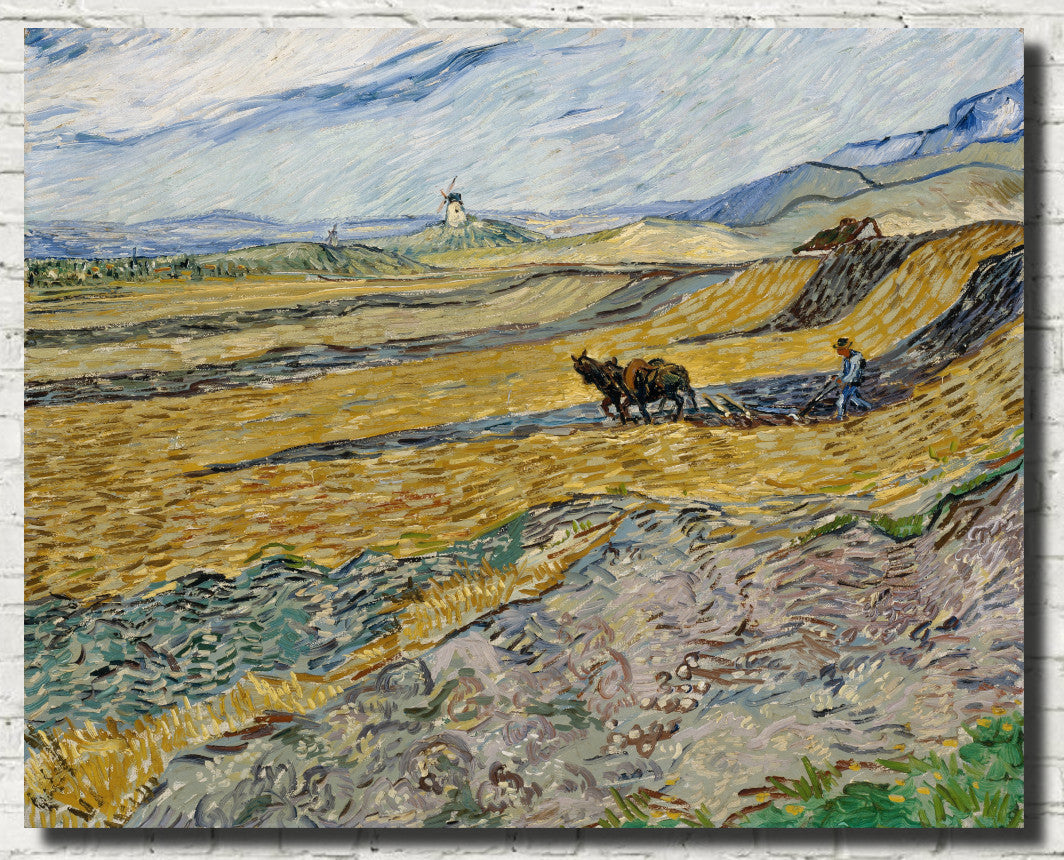
From his room and during periods when he was able to work outside, Van Gogh observed enclosed fields, ploughmen and reapers. Unlike the broad harvest panoramas of Arles, these landscapes can feel more concentrated and rhythmic, with the physical surface of the field occupying much of the composition.
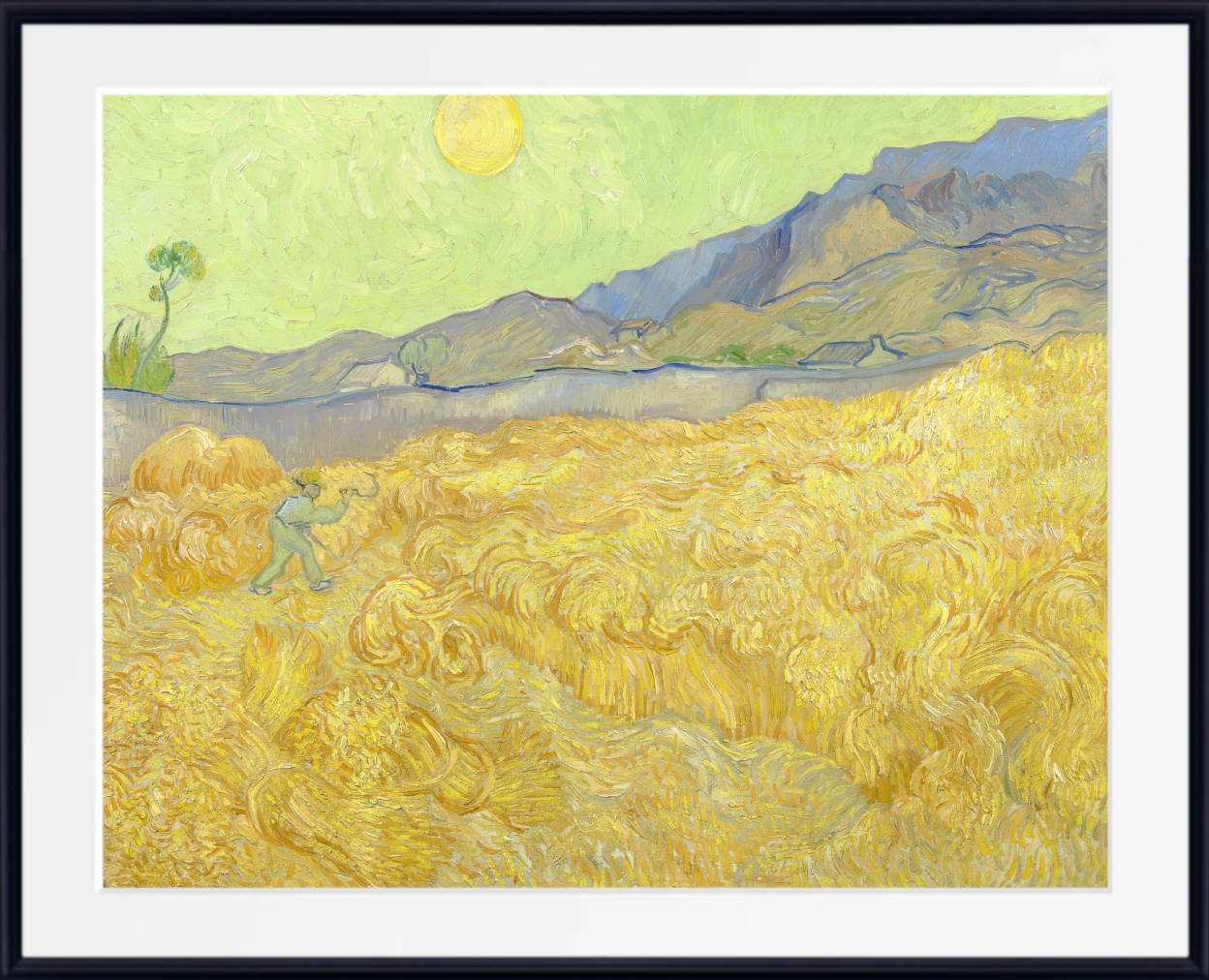
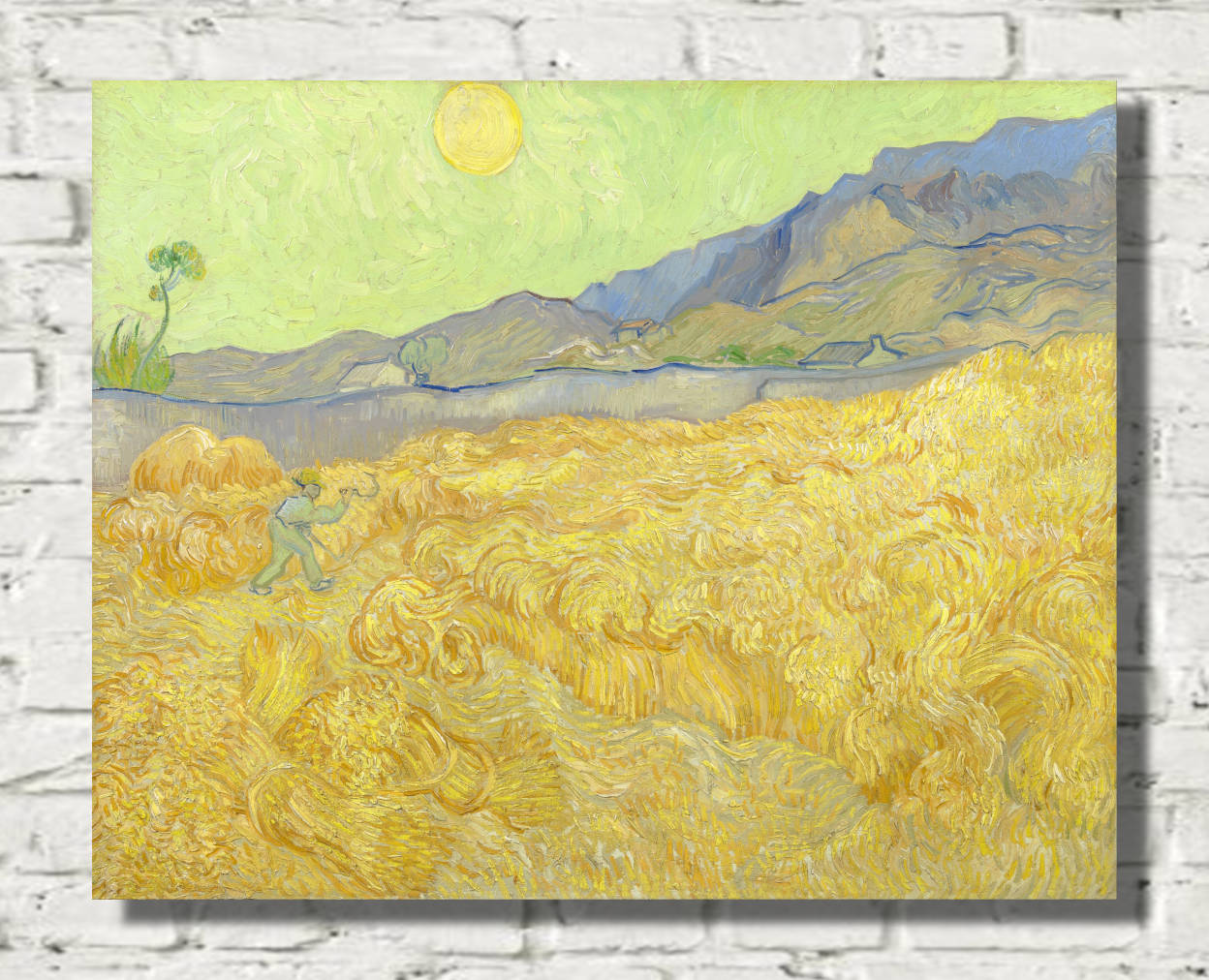
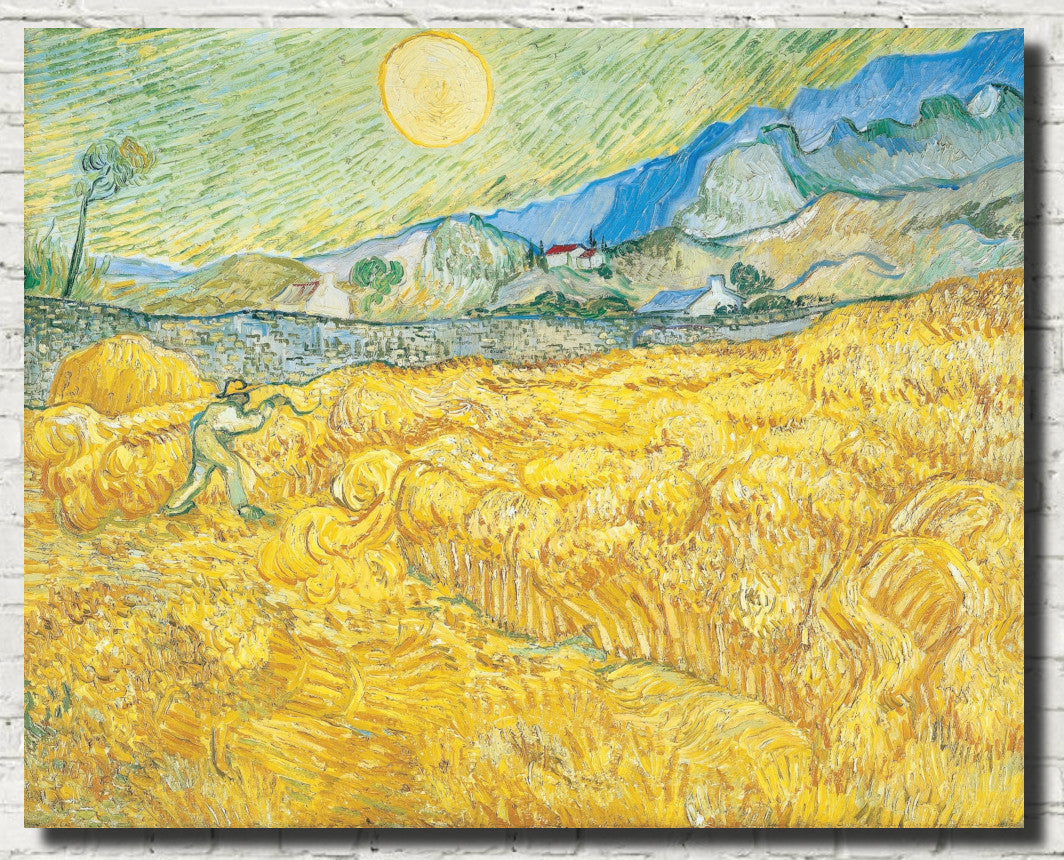
Works such as Wheatfield with a Reaper, Wheat Field Behind Saint-Paul Hospital with a Reaper and Enclosed Field with Ploughman reveal his continuing fascination with cultivation, harvest and the changing agricultural cycle.
The Reaper in Van Gogh’s Art
The figure of the reaper held particular significance for Van Gogh. A solitary worker cutting wheat could be treated simultaneously as an observation of rural labour and as part of the larger cycle of growth, harvest and renewal.
In several Saint-Rémy paintings, the reaper appears very small within the surrounding field. The human figure does not dominate the landscape; instead, worker and countryside become parts of the same larger natural rhythm.
The bright yellow fields and energetic brushwork of these paintings make them among Van Gogh’s most distinctive agricultural landscapes.
Van Gogh’s Auvers Wheat Fields
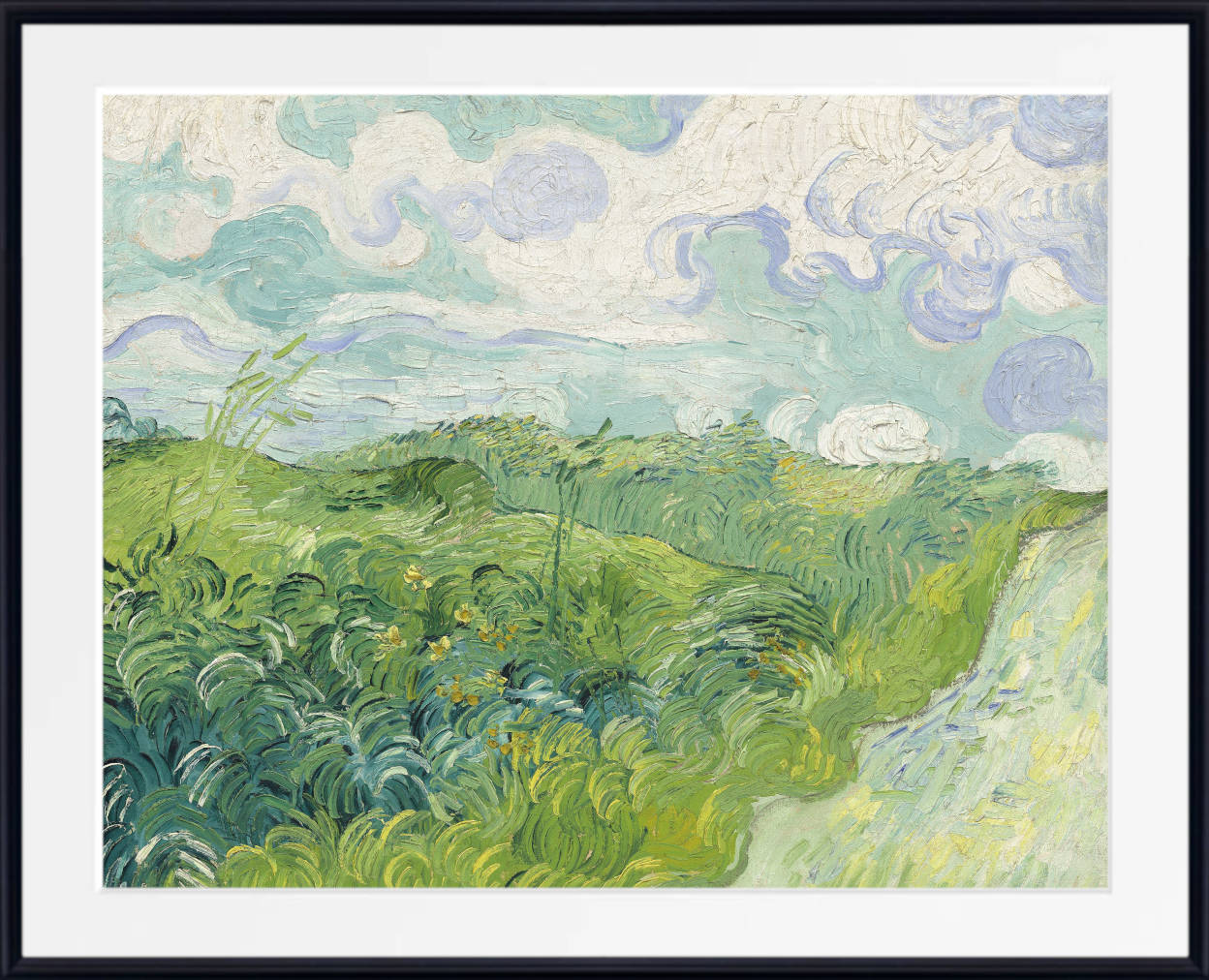
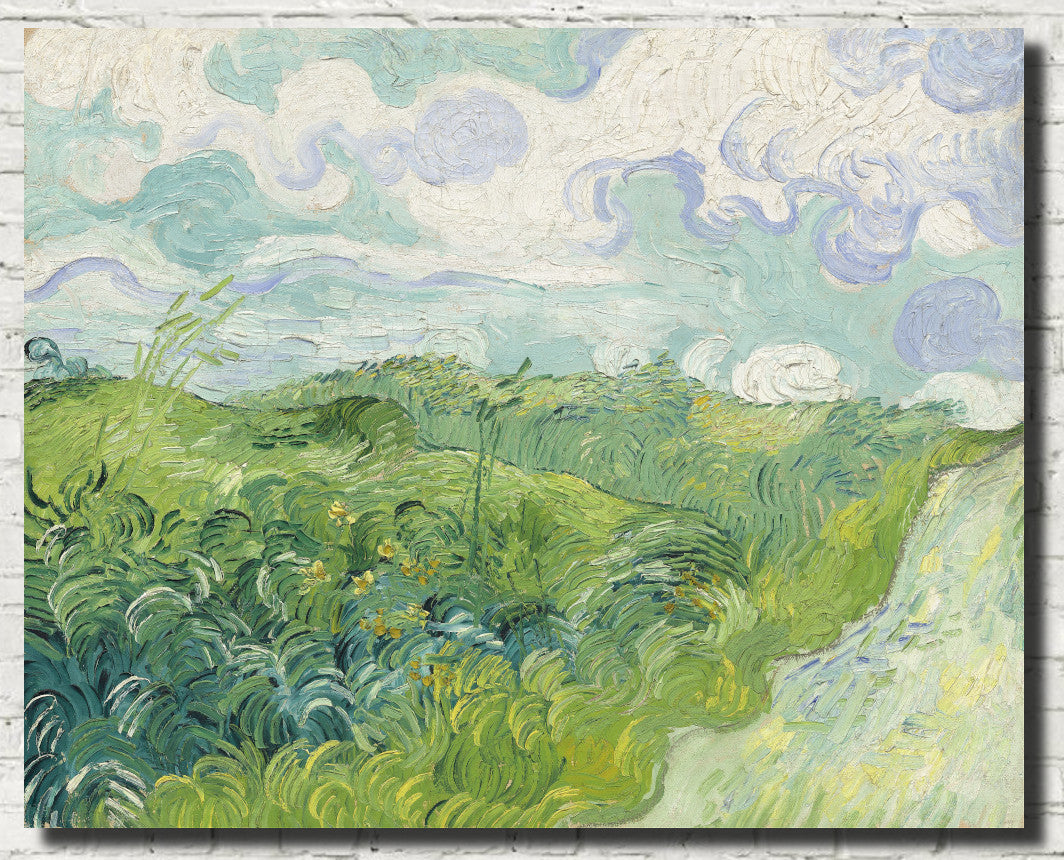
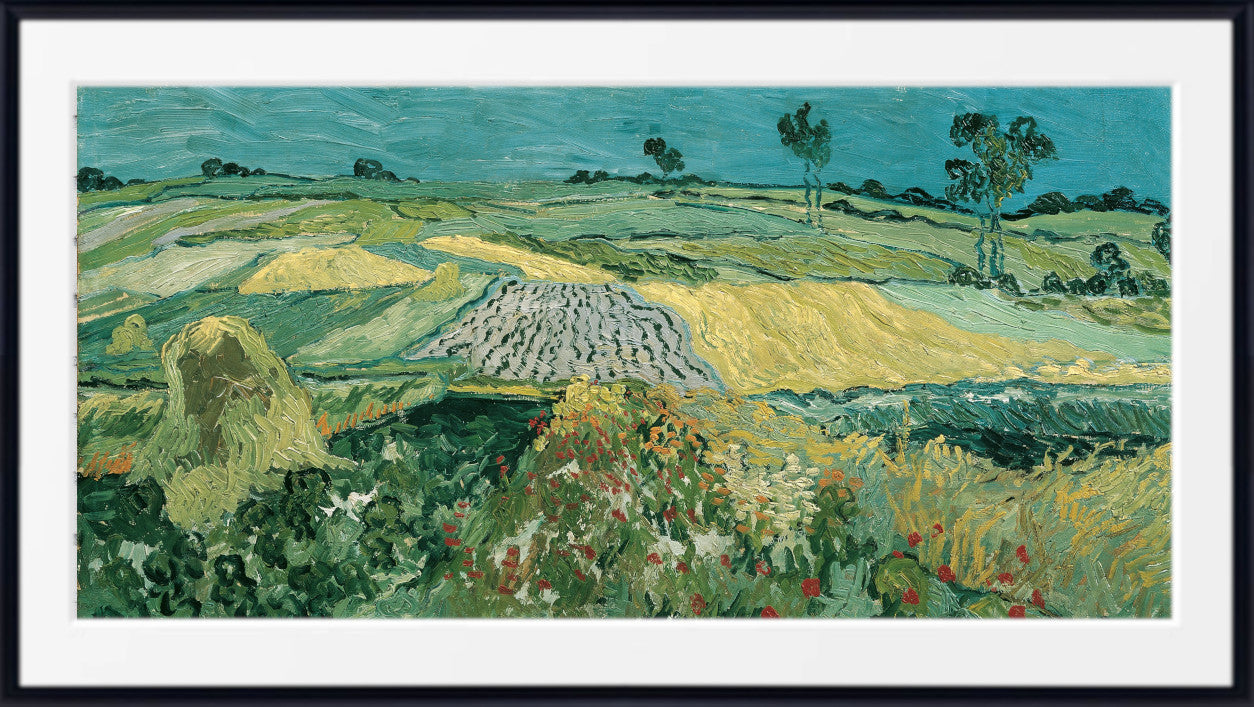
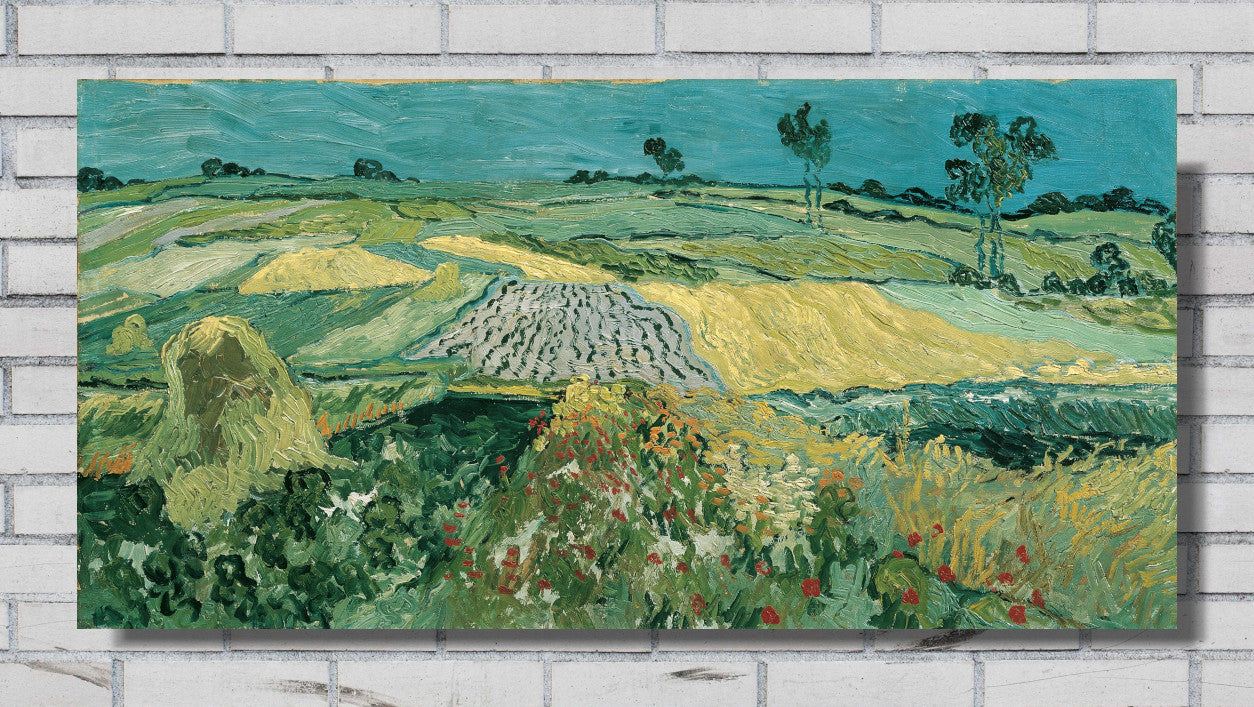
Van Gogh moved to Auvers-sur-Oise in May 1890. During the final weeks of his life, the broad wheatfields surrounding the village became one of his most important subjects.
These late landscapes often use an unusually wide panoramic format. Fields stretch laterally across the canvas beneath expansive skies, giving the paintings an immersive sense of scale.
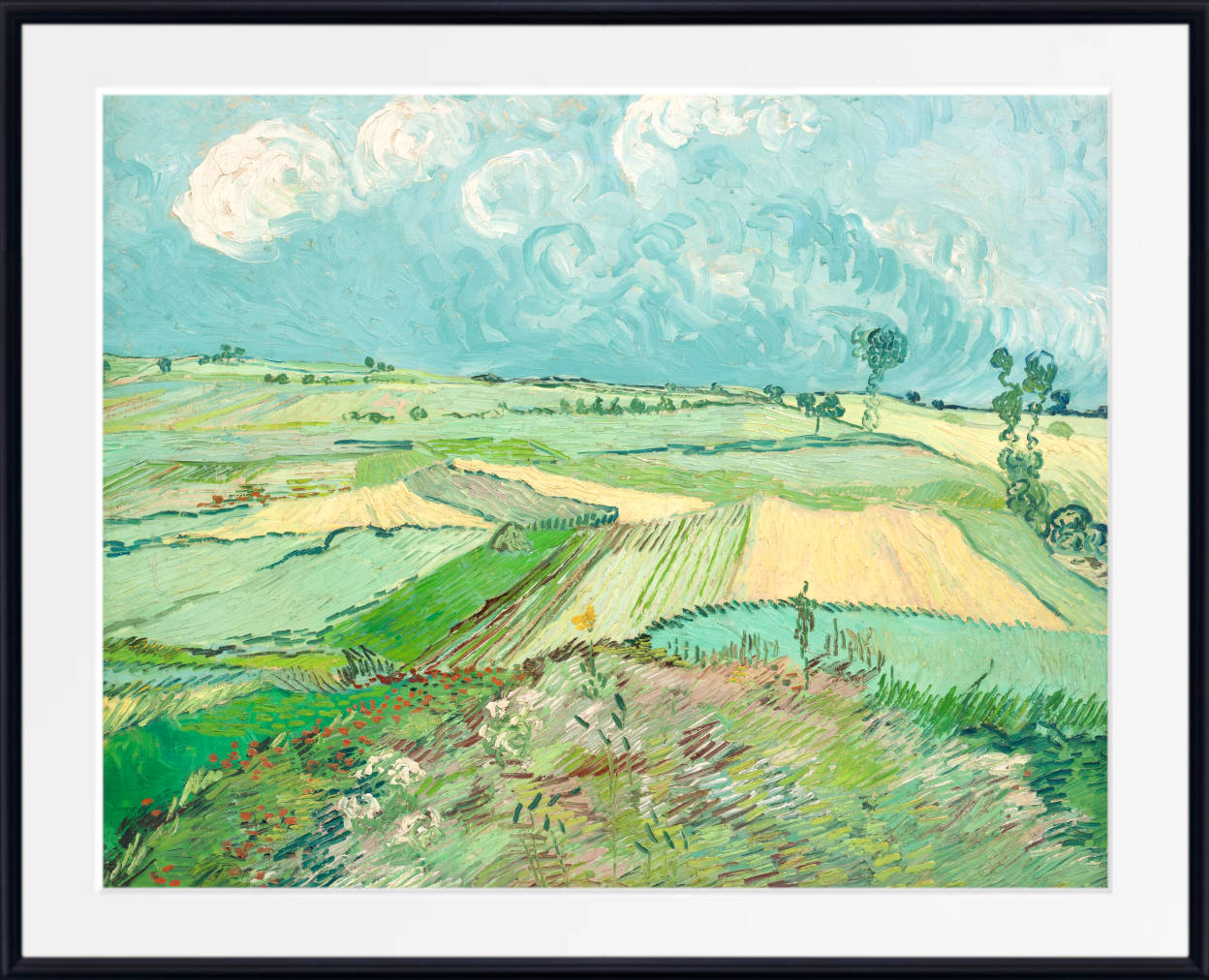
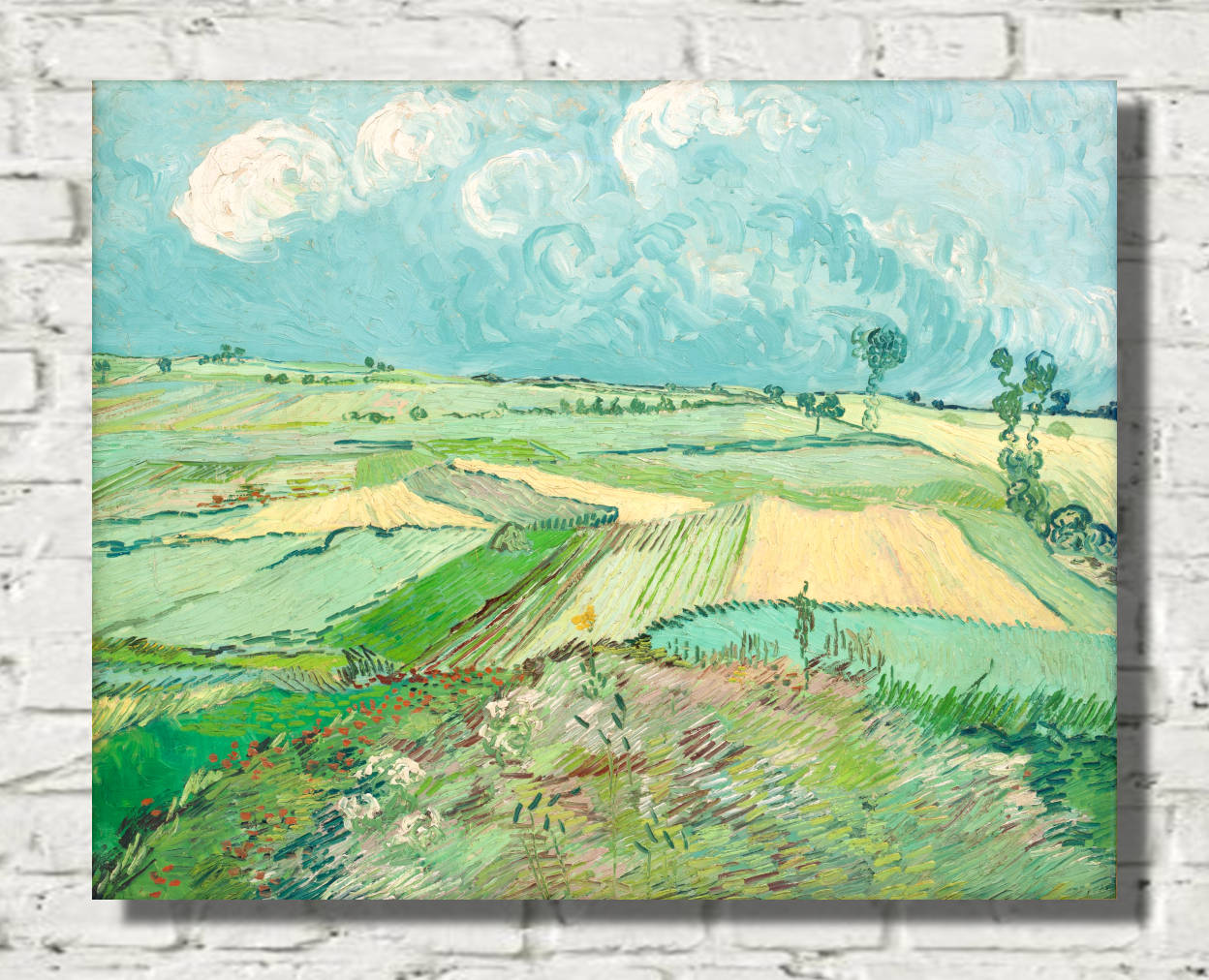
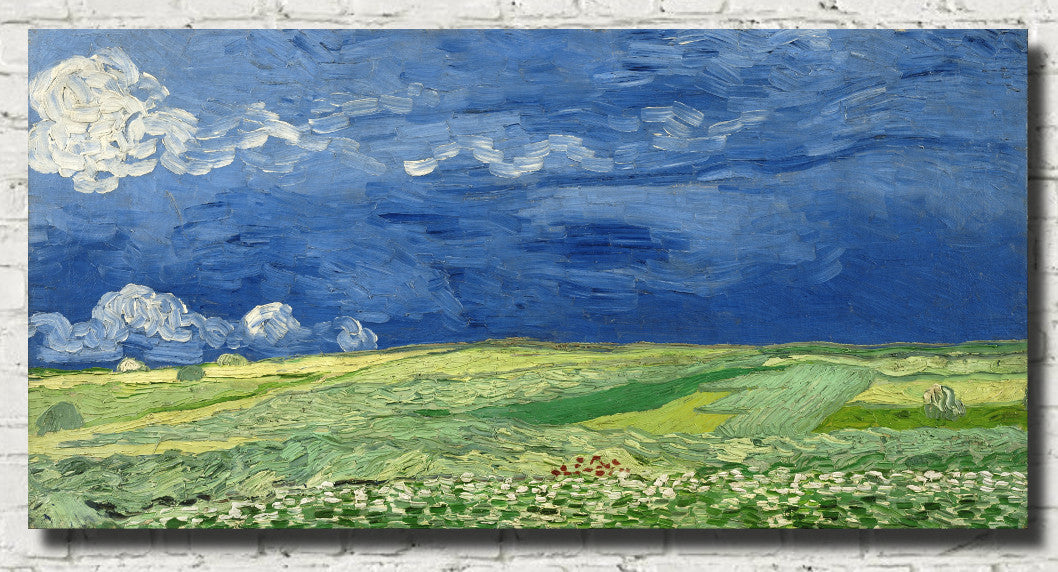
Wheatfield under Thunderclouds places a broad green-yellow field beneath a darkening blue sky. In correspondence from this period, Van Gogh associated some of these vast wheat-field paintings with feelings of sadness and loneliness, while also describing the countryside itself as healthy and strengthening.
The result is important: the late wheat fields should not simply be interpreted as bleak autobiographical symbols. Van Gogh could find both emotional intensity and consolation in the same landscape.
Wheatfield with Crows
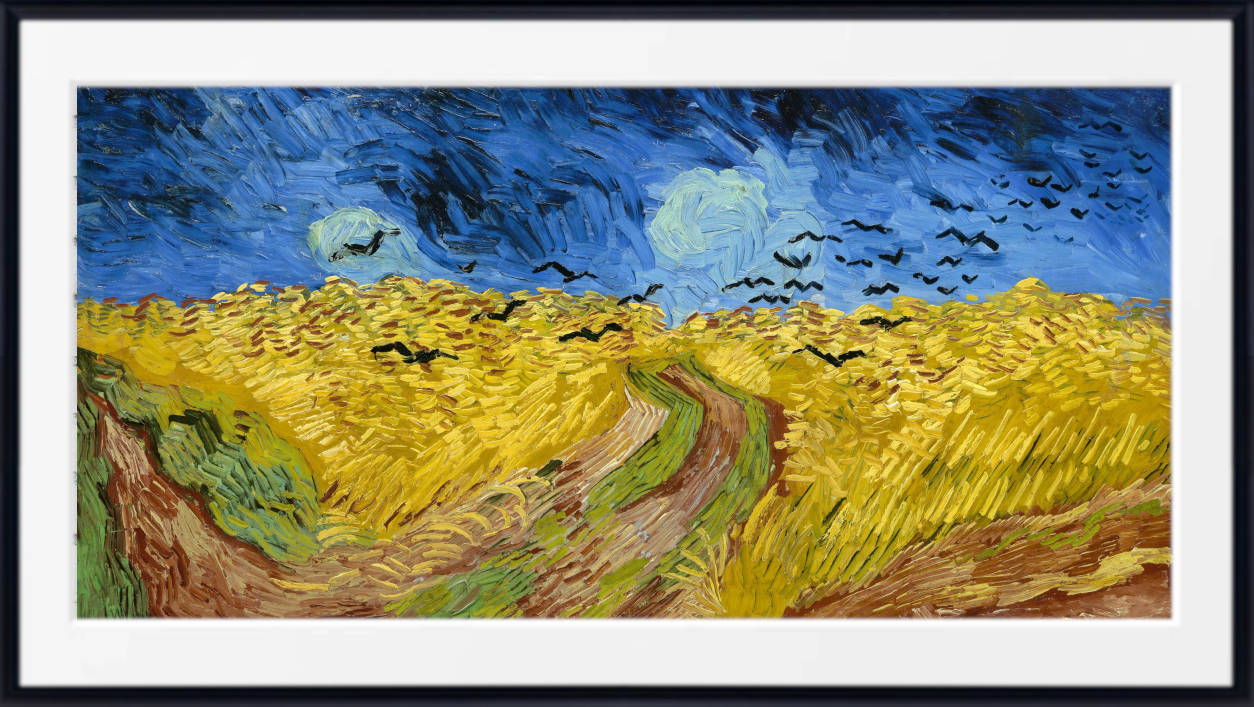
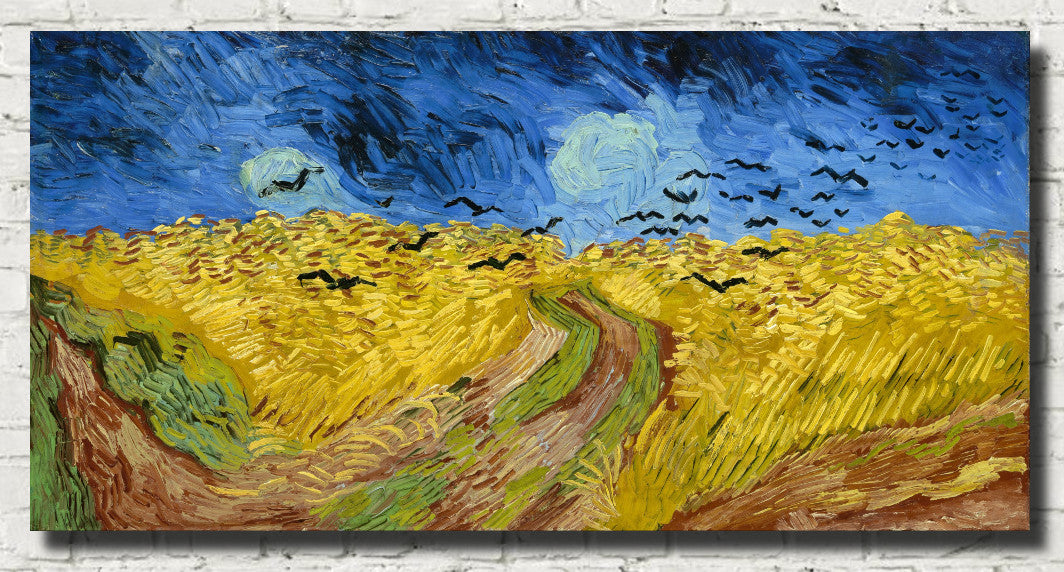
Wheatfield with Crows has become one of Van Gogh’s most famous landscapes. Yellow fields stretch beneath a turbulent blue-black sky while dark crows fly across the composition and tracks lead into the wheat.
The dramatic colour and unusual panoramic format have encouraged many interpretations of the painting. It was long popularly described as Van Gogh’s final work, but modern Van Gogh scholarship does not support that claim.
What is clear is that the work belongs to the remarkable group of expansive wheat-field paintings Van Gogh produced at Auvers during the final weeks of his career.
Wheatfield under Thunderclouds
In Wheatfield under Thunderclouds, a vast field occupies almost the entire lower half of the picture while heavy blue clouds gather above it.
The composition is remarkably simple, yet the contrast between the open field and dark sky gives the painting enormous emotional weight. Van Gogh’s horizontal format strengthens the impression that the landscape extends far beyond the edges of the canvas.
Alongside Wheatfield with Crows, the work demonstrates how far his treatment of wheat fields had developed from the bright harvest scenes he painted in Arles only two years earlier.
Harvest, Wheat Stacks and Rural Labour
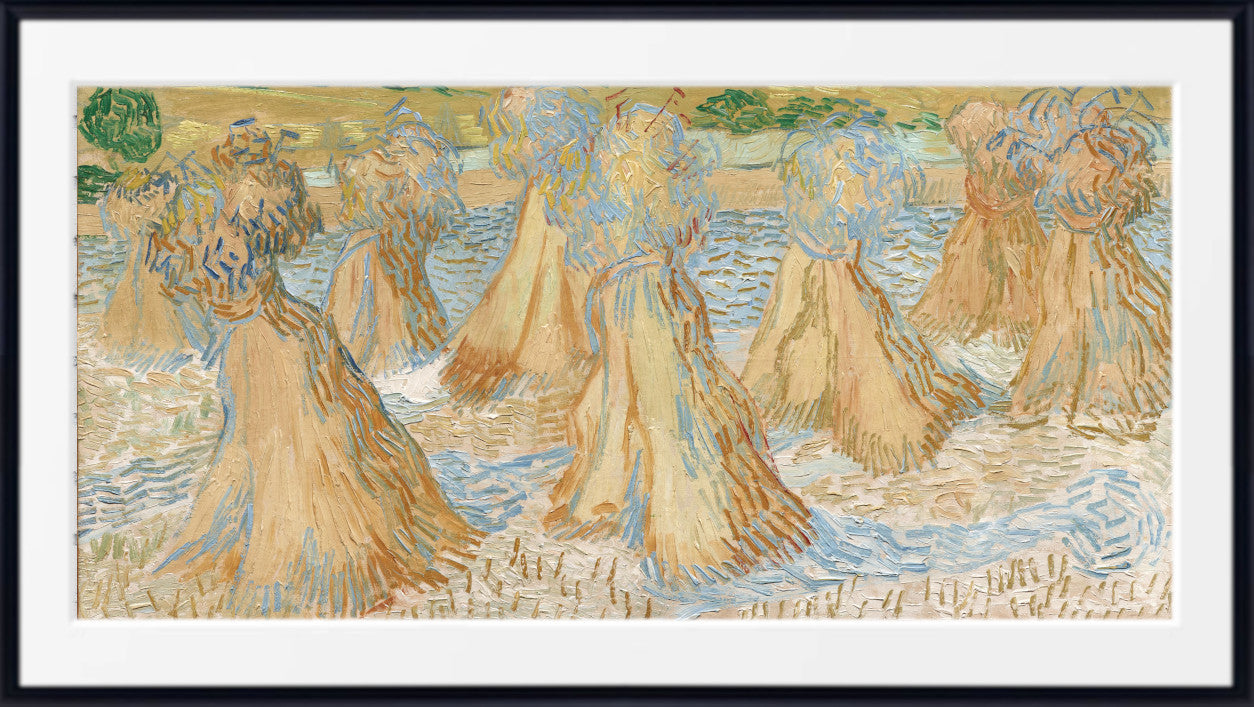
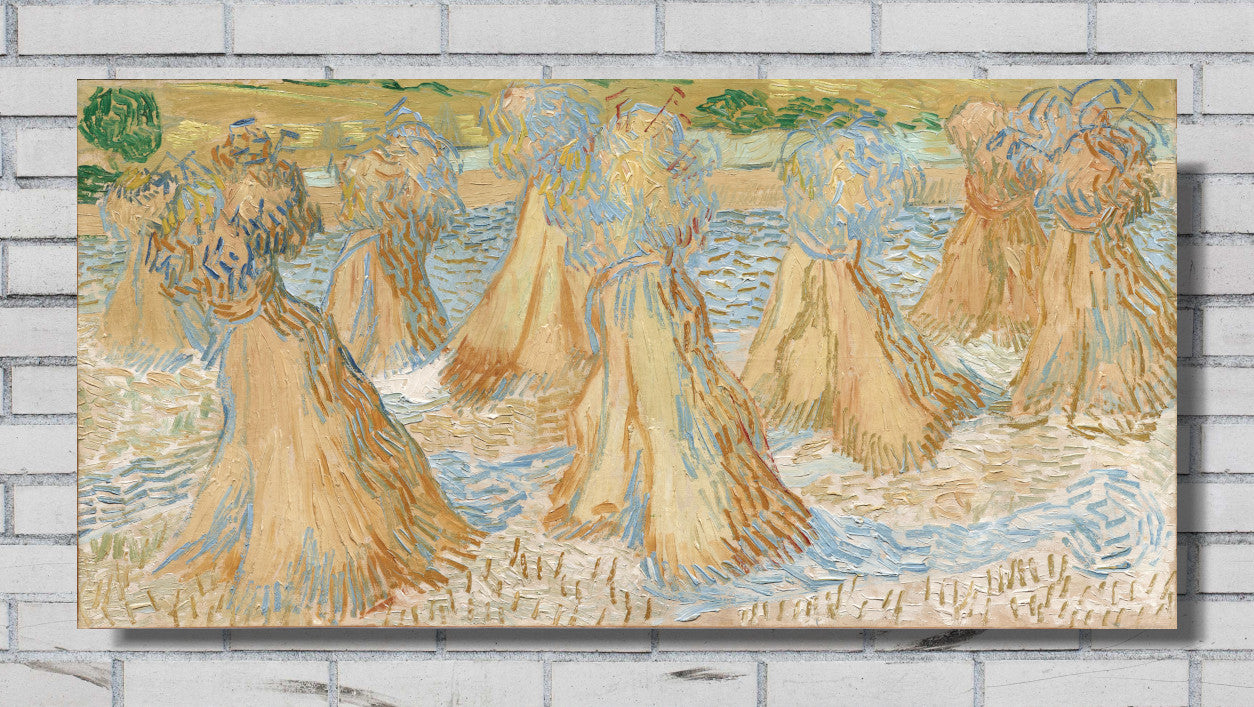
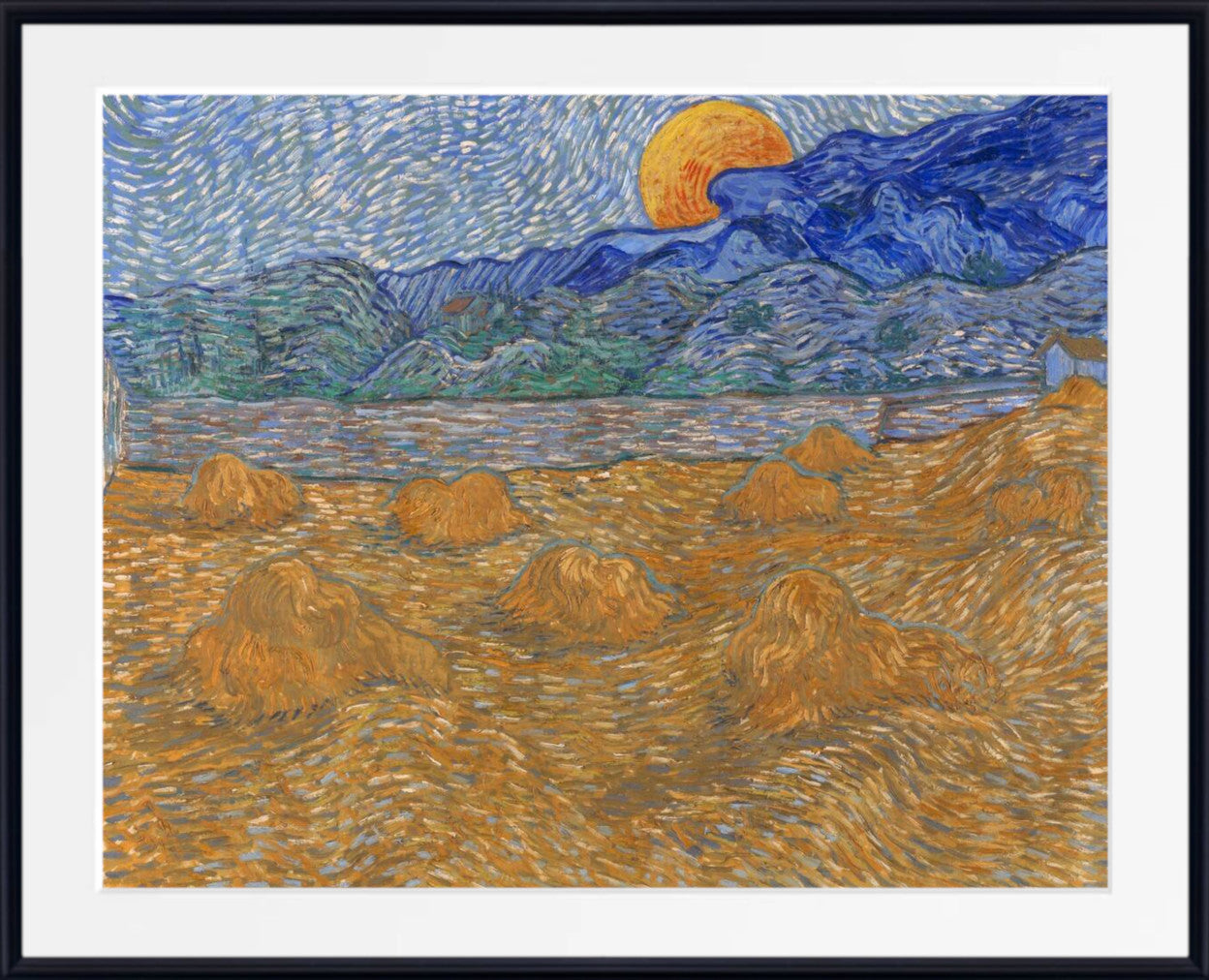
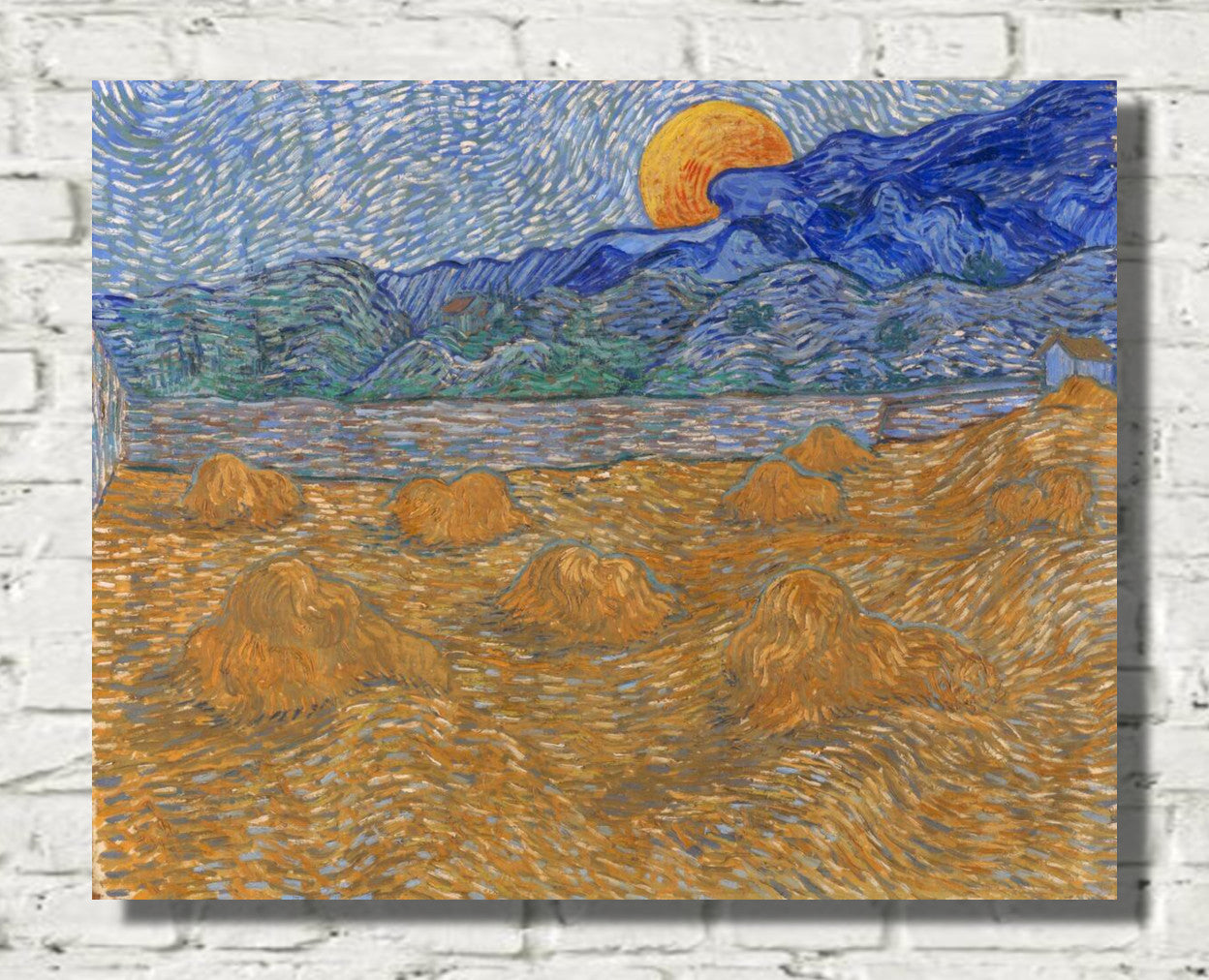
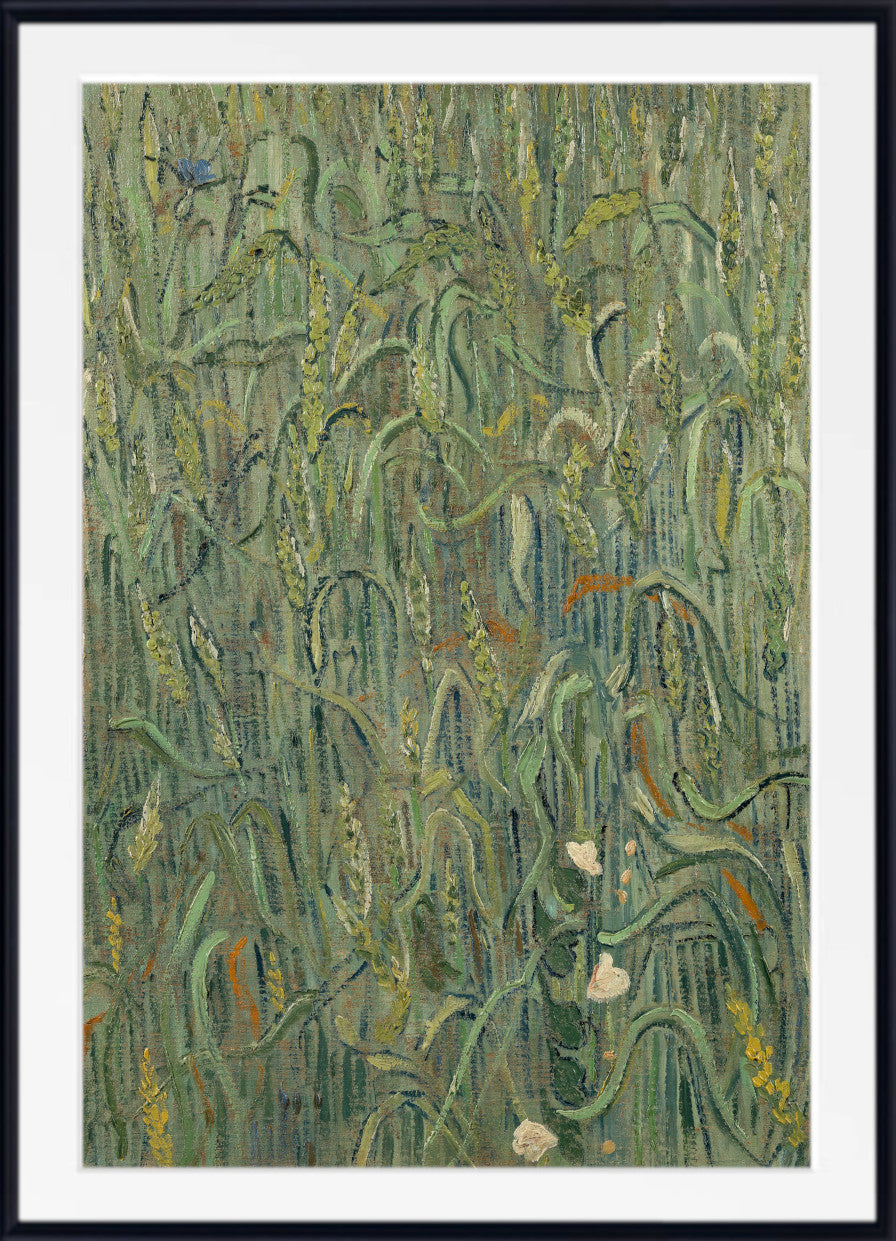
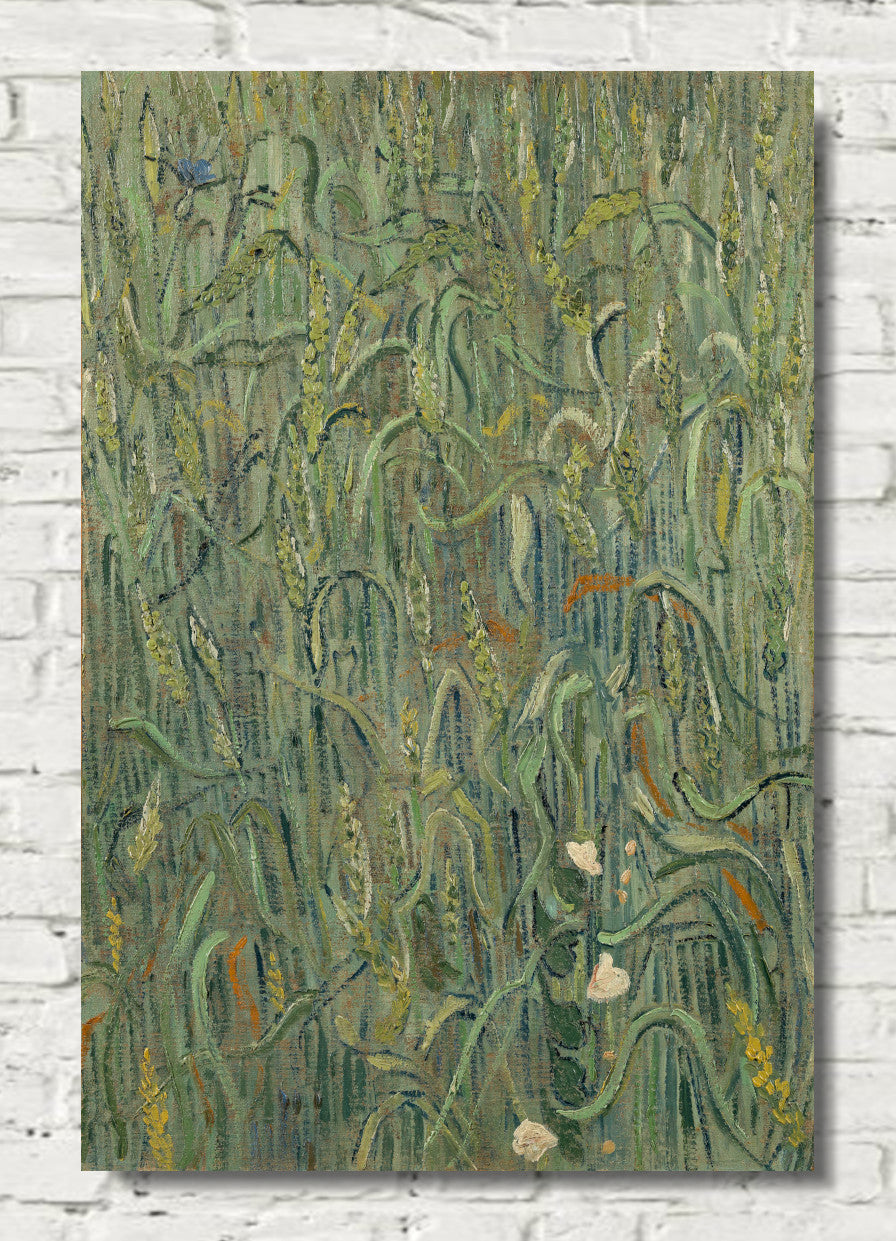
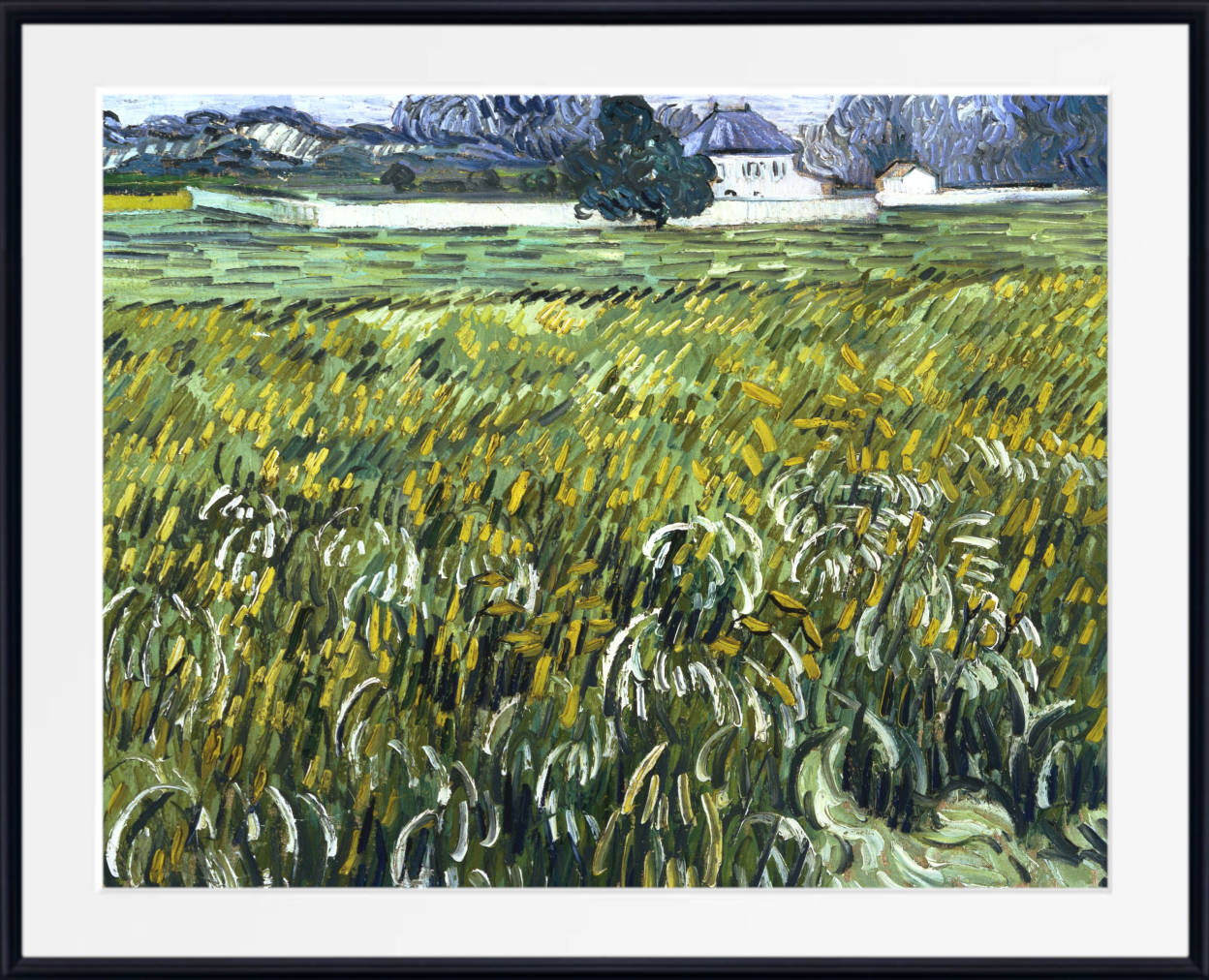
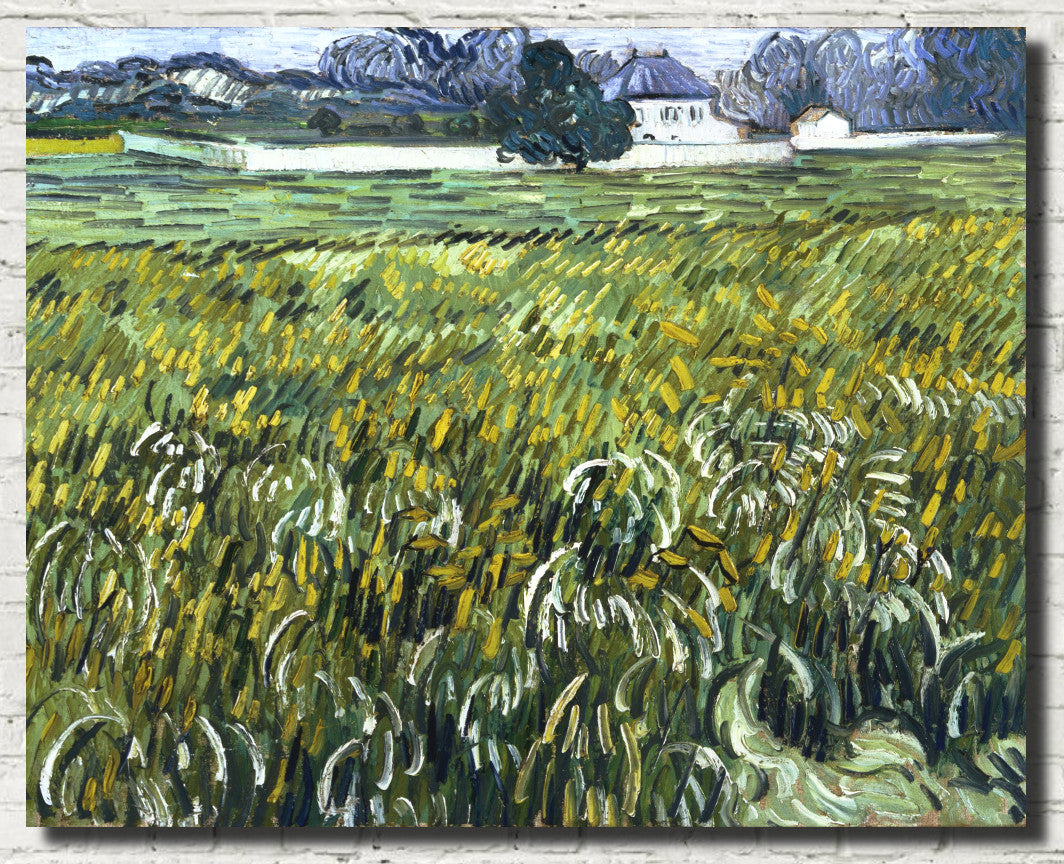
This collection deliberately includes more than paintings whose titles contain the words “wheat field”. Van Gogh repeatedly explored the complete agricultural cycle: growing wheat, harvesting, binding sheaves, stacking grain and preparing fields for the next season.
Paintings of wheat stacks and sheaves therefore belong naturally beside his open-field landscapes. They reveal the physical work that transformed the countryside and gave Van Gogh opportunities to explore repeated forms, strong yellows and the relationship between human labour and nature.
This broader definition is why the collection brings together wheat fields, harvest scenes, wheat stacks, reapers and selected cultivated-field landscapes under a single coherent theme.
Van Gogh and the Provençal Landscape
Wheat was only one of the natural subjects that fascinated Van Gogh in southern France. Orchards, olive groves and cypress trees also became recurring motifs as he studied how changing light and seasons transformed the landscape.
Explore GalleryThane’s Vincent van Gogh Olive Trees collection for the gnarled olive groves of Saint-Rémy, or discover the spring landscapes of Arles in the Vincent van Gogh Flowering Orchards Prints collection.
Together, these focused collections reveal how Van Gogh returned repeatedly to familiar natural subjects while changing colour, viewpoint and brushwork to express different seasons and states of atmosphere.
Wheat Field Prints for Contemporary Interiors
Van Gogh’s wheat-field paintings are particularly effective in interiors because many combine warm golds, yellows and ochres with contrasting blues and greens.
Golden harvest landscapes can introduce warmth into living rooms, dining spaces and hallways, pairing naturally with timber furniture, cream walls, earthy textiles and warm neutral interiors.
Paintings such as Wheat Field with Cypresses combine bright yellow with strong blue and dark green, making them particularly effective as statement pieces. The later Auvers landscapes offer deeper blue, green and yellow palettes that can create a stronger, more dramatic focal point.
These works complement modern, Scandinavian, eclectic and traditional interiors and can also form part of a coordinated Post-Impressionist gallery wall.
Van Gogh and Post-Impressionism
Van Gogh is one of the defining artists associated with Post-Impressionism. Rather than forming a single unified style, Post-Impressionist painters developed highly individual ways of moving beyond Impressionism’s concern with immediate visual effects.
For Van Gogh, landscape became increasingly expressive. Directional brushwork, heightened colour and simplified forms transformed ordinary agricultural scenery into paintings charged with movement and emotional intensity.
Explore GalleryThane’s wider Post-Impressionist Prints collection to compare Van Gogh’s landscapes with the very different approaches of Cézanne, Gauguin, Seurat and other artists working beyond Impressionism.
Fine Art Prints, Framed Prints and Canvas Panels
GalleryThane’s Vincent van Gogh Wheat Field & Harvest collection brings together reproductions of these celebrated landscapes in a range of sizes and formats.
Choose fine art paper prints for flexible framing, professionally framed prints for a complete presentation, or canvas panels for a clean contemporary alternative. The collection includes both portrait and panoramic landscape formats, making it suitable for individual statement pieces as well as larger Van Gogh gallery walls.
Frequently Asked Questions
Why did Vincent van Gogh paint so many wheat fields?
Van Gogh was deeply interested in the agricultural landscapes surrounding Arles, Saint-Rémy and Auvers. Wheat fields allowed him to explore season, colour, light, rural labour and the repeating cycles of cultivation and harvest.
When did Van Gogh paint his famous wheat fields?
Many of his most important wheat landscapes date from the final three years of his life: the harvest paintings of Arles in 1888, fields and reapers around Saint-Rémy in 1889, and the expansive wheatfields of Auvers-sur-Oise in 1890.
Was Wheatfield with Crows Van Gogh’s last painting?
No. Although it has often been described in popular culture as Van Gogh’s final painting, modern research does not support that claim. It belongs to a group of important wheat-field landscapes created during his final weeks at Auvers.
What colours are typical of Van Gogh’s wheat-field paintings?
Many combine strong yellows and golds with blue skies, green vegetation and violet or earthy accents. His later Auvers works can include much darker blues and greens, creating a more dramatic atmosphere.
Where did Van Gogh paint Wheat Field with Cypresses?
Van Gogh painted the subject during his period at Saint-Rémy-de-Provence in 1889, when cypress trees, olive groves and surrounding fields became central motifs in his work.
What is the difference between Van Gogh’s Arles and Auvers wheat fields?
The Arles paintings frequently celebrate brilliant Provençal sunlight and harvest colour, while many Auvers wheatfields use broader panoramic formats and stronger contrasts between expansive fields and dramatic skies.
Are harvest paintings included in this collection?
Yes. The collection includes wheat fields alongside closely related harvest scenes, wheat stacks, sheaves and reaper subjects, reflecting Van Gogh’s wider interest in agricultural landscape and rural labour.
Which other Van Gogh collections complement these wheat-field prints?
Van Gogh’s Olive Trees and Flowering Orchards provide particularly strong companion collections. Together they trace his repeated engagement with fields, trees, orchards and seasonal landscapes in southern France.