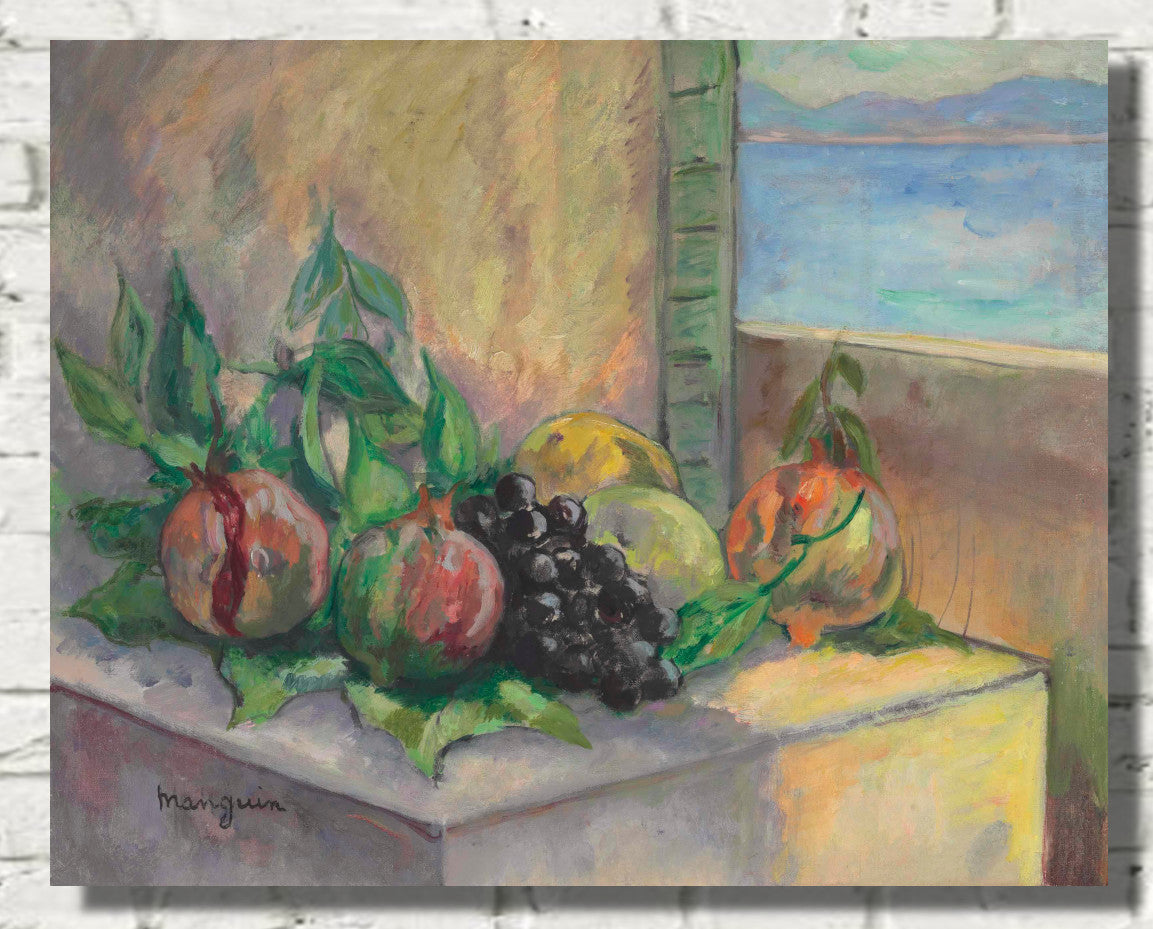
Henri Manguin Prints – Fauvism and Mediterranean Colour
Henri Manguin was one of the artists who helped establish Fauvism as a new force in French painting at the beginning of the twentieth century. Yet his work has a character distinctly different from the more confrontational colour experiments of some of his contemporaries.
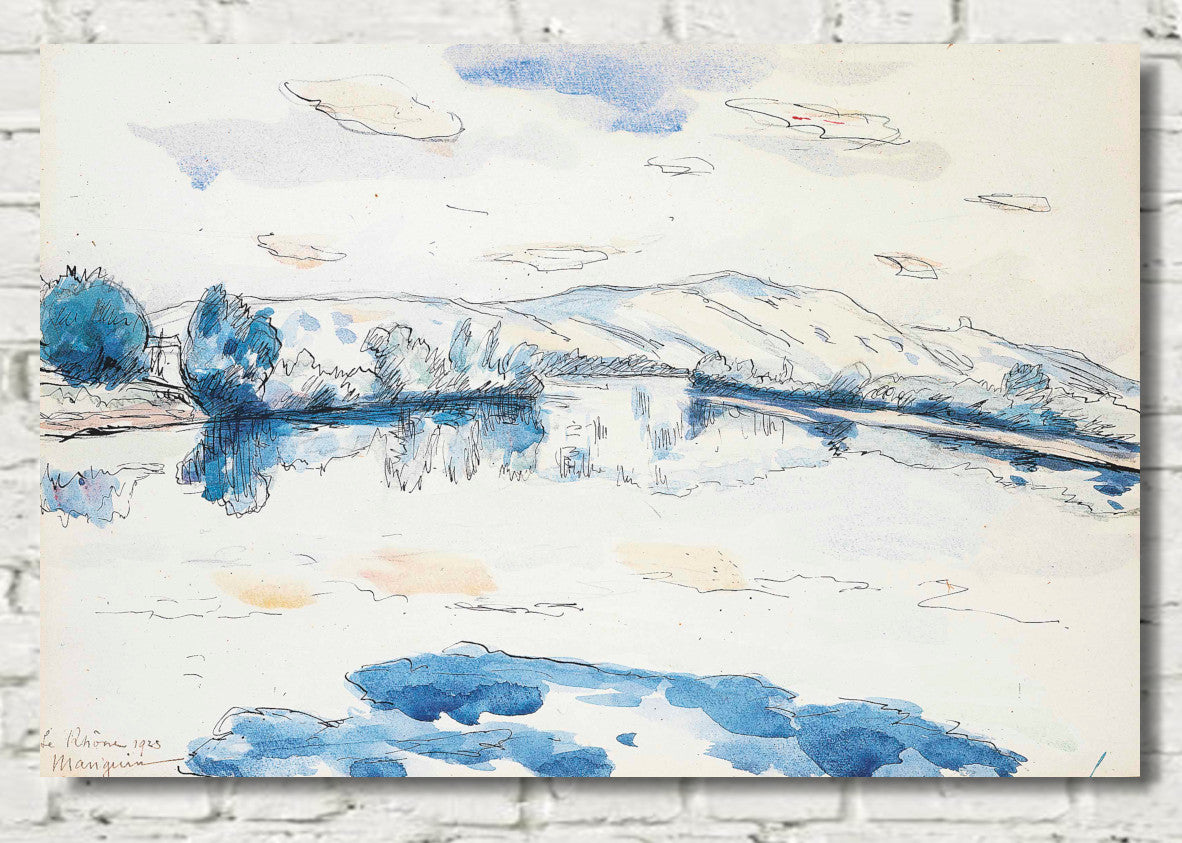
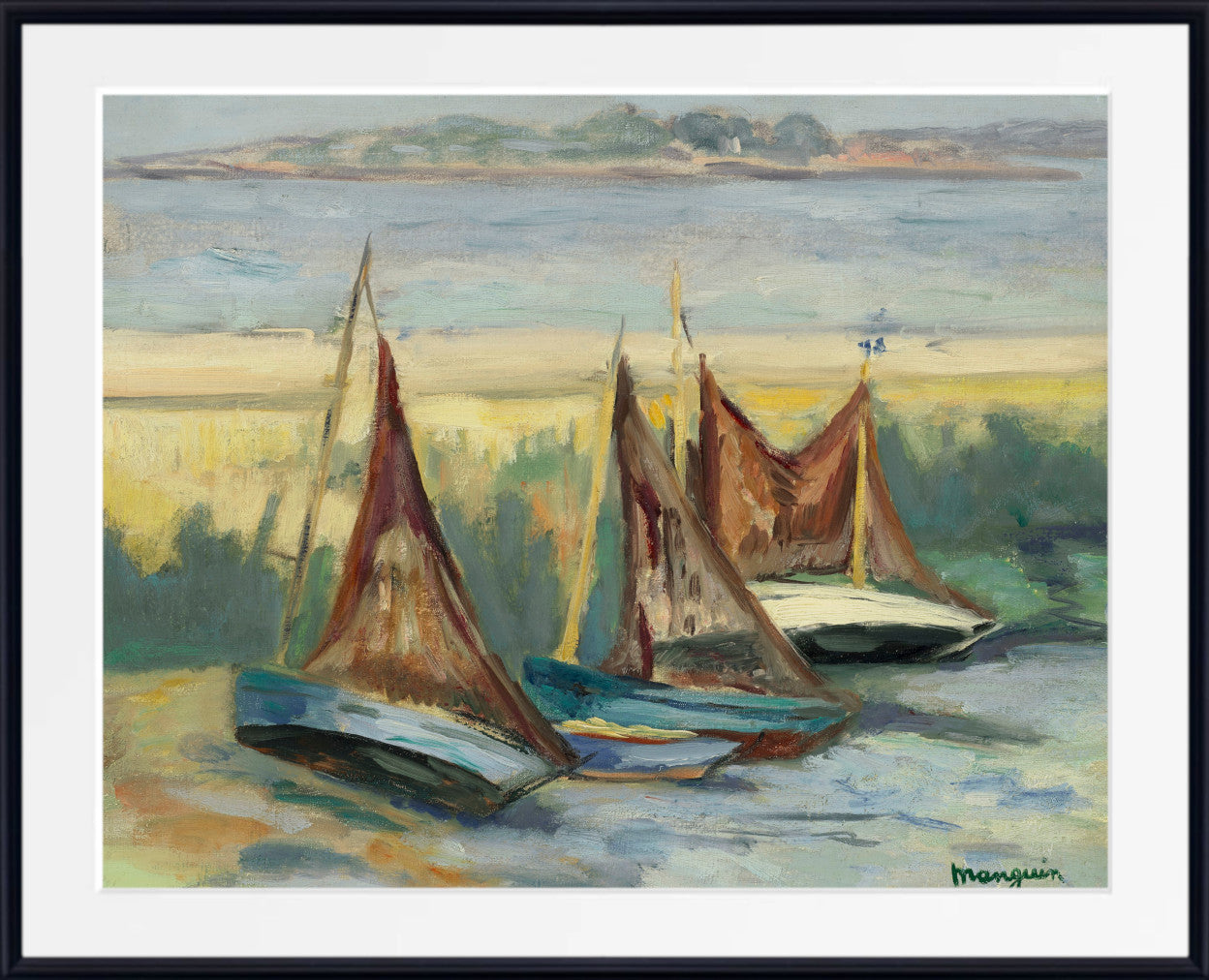
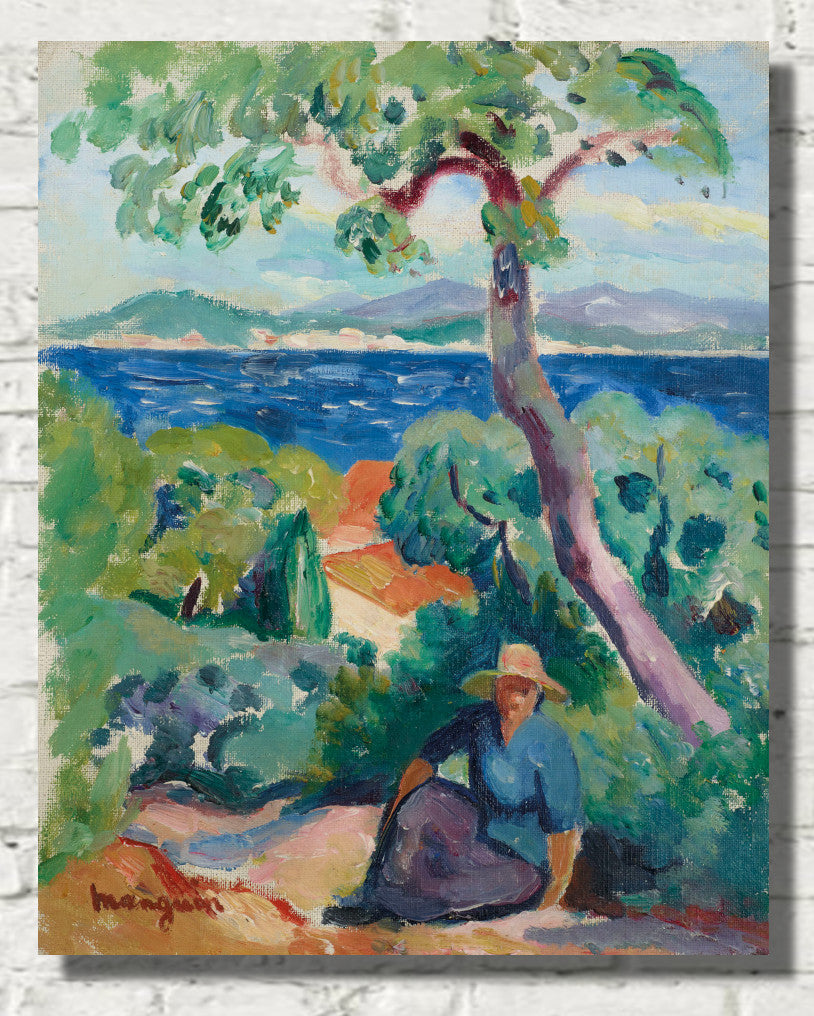
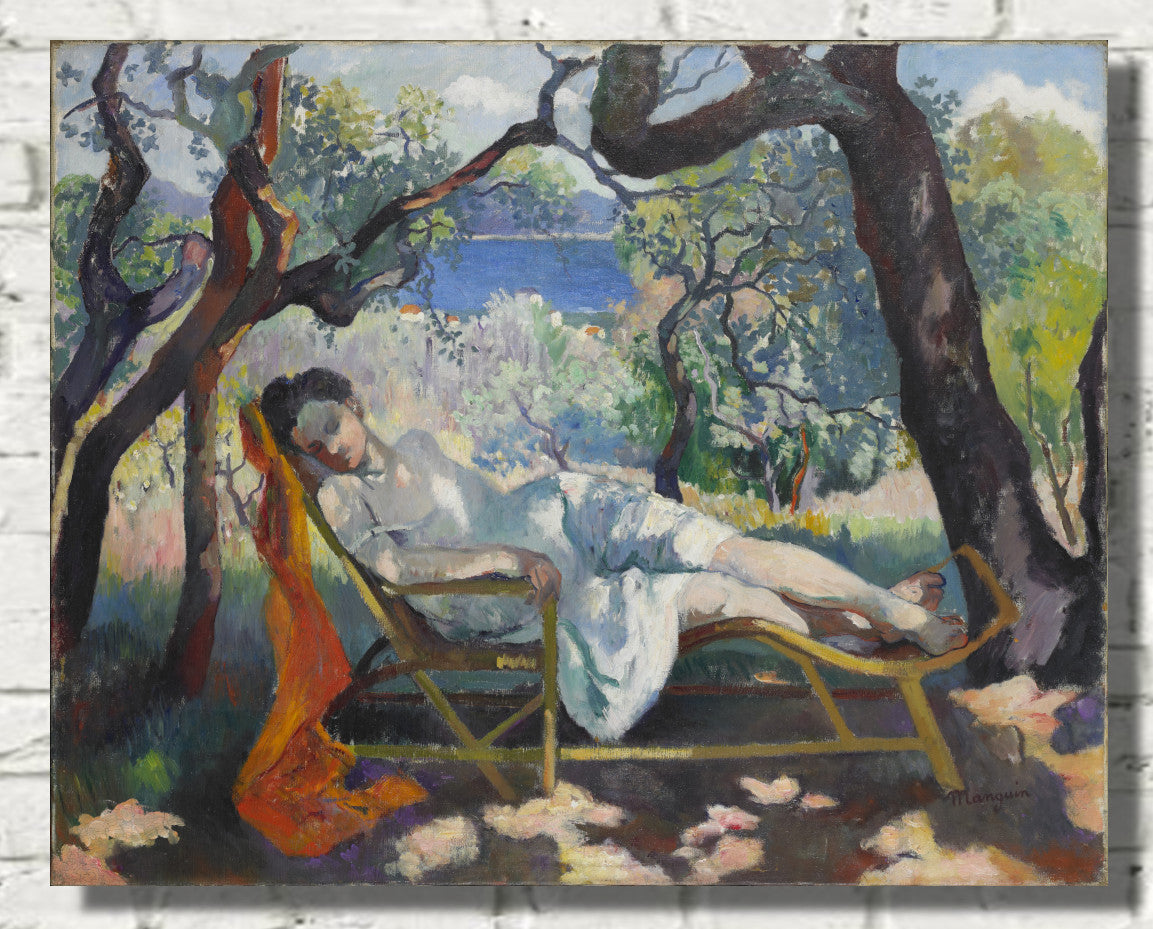
Manguin favoured luminous landscapes, intimate portraits, bathers and still lifes. His paintings are frequently filled with warm Mediterranean light and brilliant combinations of pink, orange, green, blue and violet.
GalleryThane's collection of Henri Manguin prints brings together works from these different aspects of his career, from colourful Saint-Tropez landscapes to portraits of his wife Jeanne and richly painted still lifes.
Explore the wider Fauvism Prints collection to see Manguin alongside other artists associated with this revolutionary movement.
Who Was Henri Manguin?
Henri-Charles Manguin was born in Paris in 1874 and studied at the École des Beaux-Arts under Gustave Moreau.
Moreau's studio became an important meeting place for a generation of young artists interested in moving beyond conventional academic painting. Among Manguin's fellow students were Henri Matisse and Albert Marquet, both of whom would become closely associated with Fauvism.
Manguin initially absorbed lessons from Impressionism, particularly its interest in light and broken colour. During the early years of the twentieth century, however, his palette became increasingly intense.
In 1905 he exhibited at the famous Salon d'Automne in Paris alongside Matisse, André Derain and other painters whose unconventional use of brilliant colour led critic Louis Vauxcelles to call them les fauves – “the wild beasts”.
The name Fauvism remained, defining one of the first major avant-garde movements of twentieth-century European art.
Henri Manguin and Fauvism
Manguin shared the Fauvist belief that colour did not need to reproduce nature literally.
Skin could contain areas of pink, blue or violet; trees could be transformed by brilliant green and red; and sunlight could be expressed through colour contrasts rather than traditional modelling.
Yet Manguin's interpretation of Fauvism was often noticeably softer and more lyrical than that of André Derain or Maurice de Vlaminck.
Rather than using colour primarily for dramatic impact, he frequently used it to communicate warmth, pleasure and atmosphere. His paintings often evoke sunshine, gardens, leisure and the Mediterranean coast.
Compare his approach with the more forceful landscapes and London scenes in GalleryThane's André Derain Prints collection.
Saint-Tropez and the Mediterranean
Southern France became one of the defining inspirations of Manguin's career.
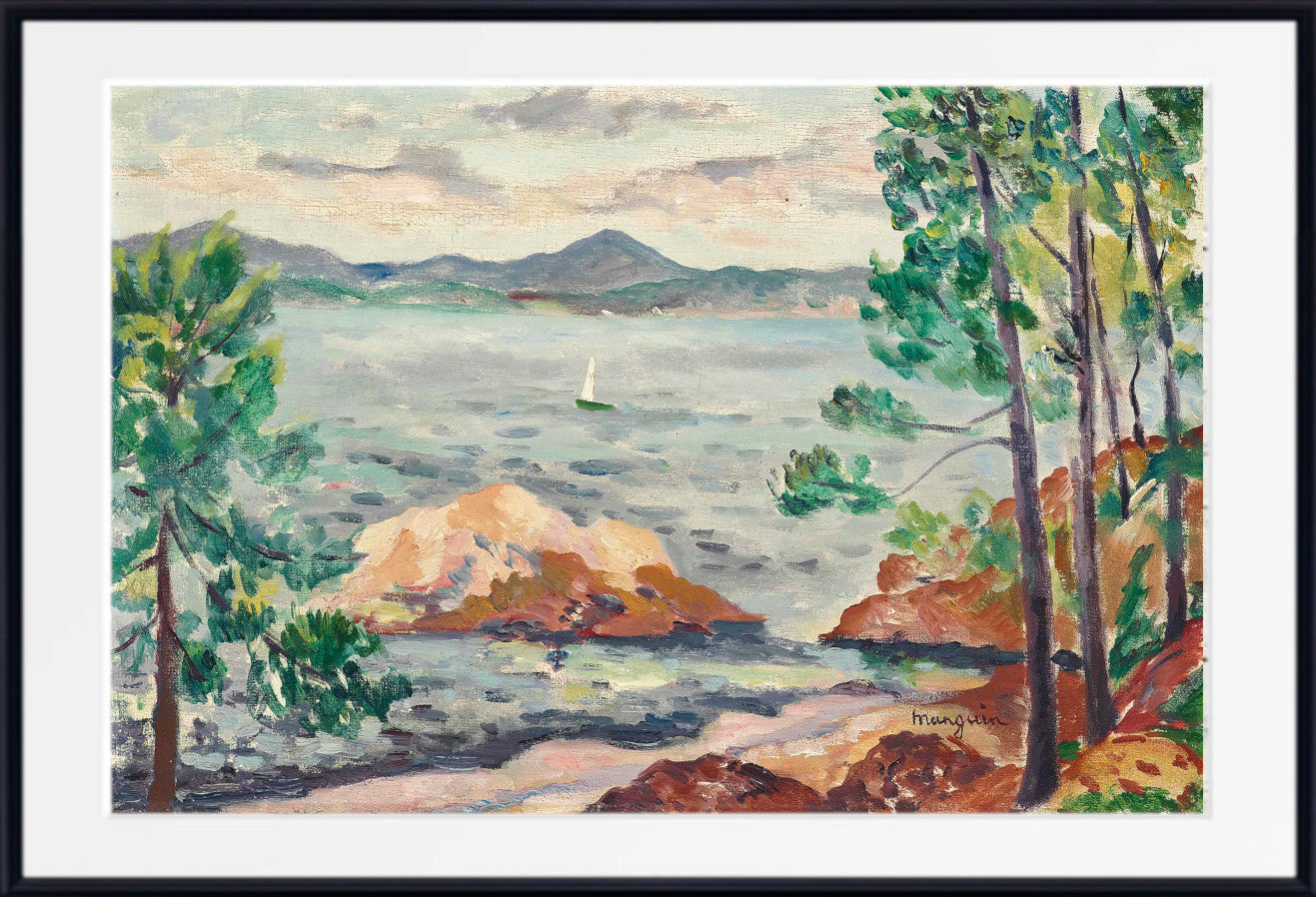
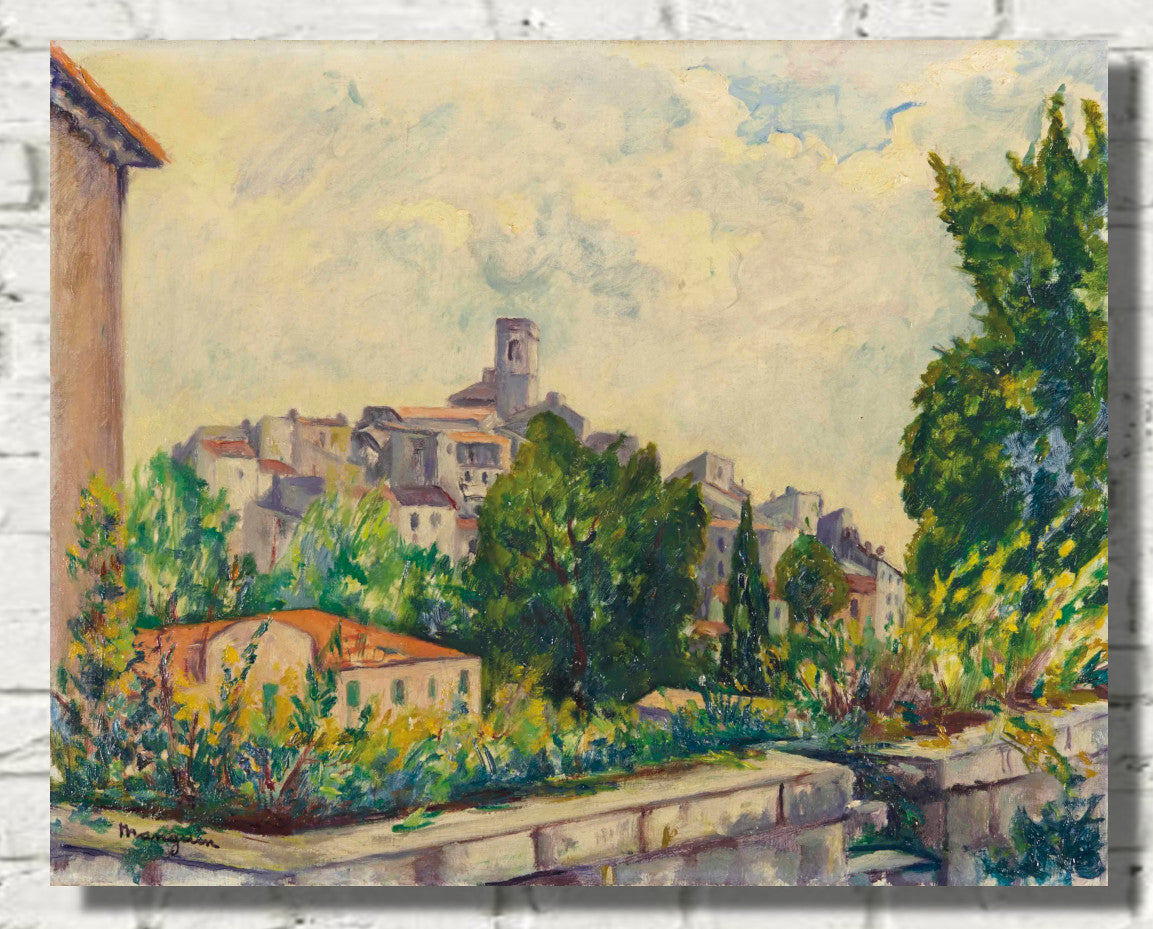
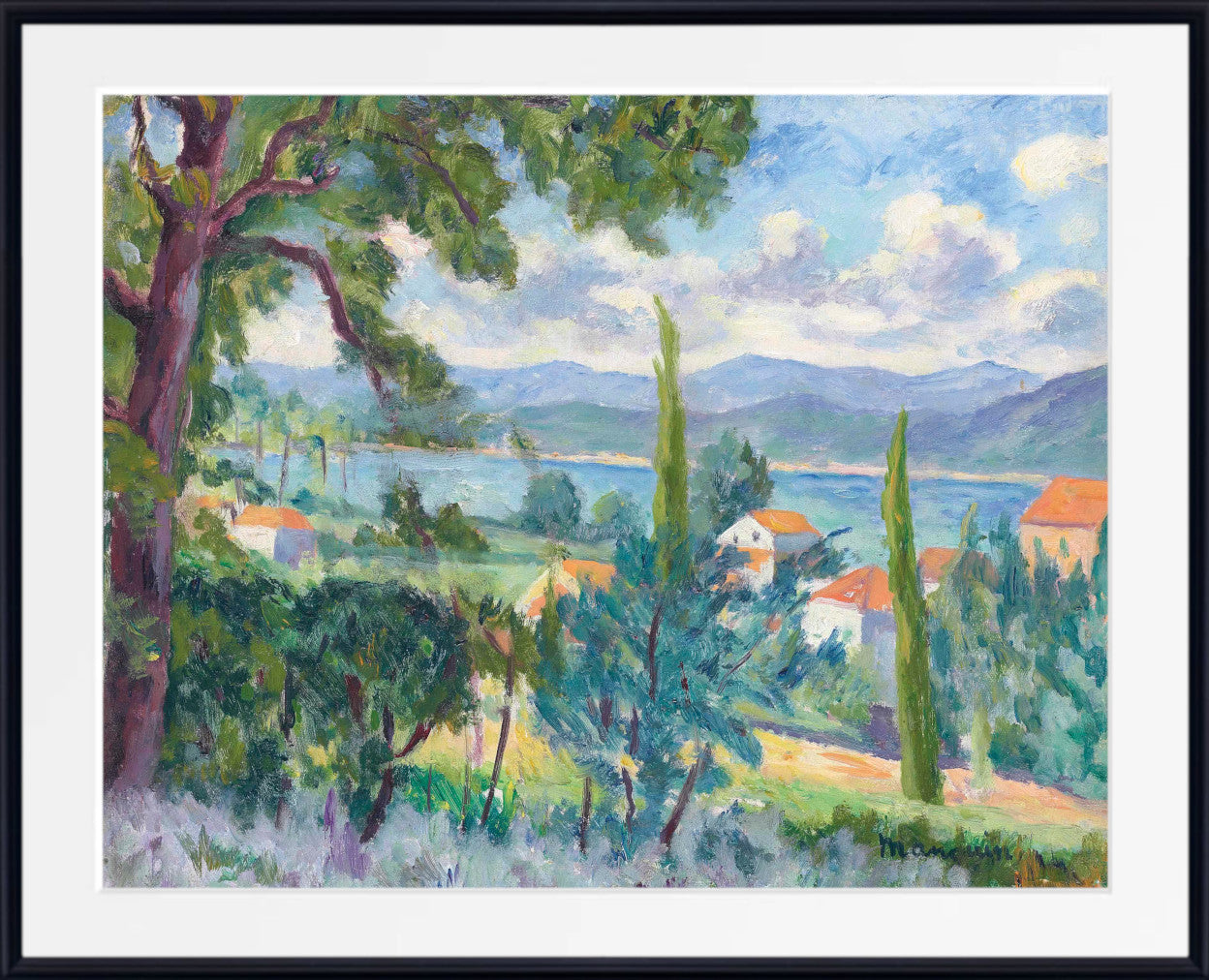
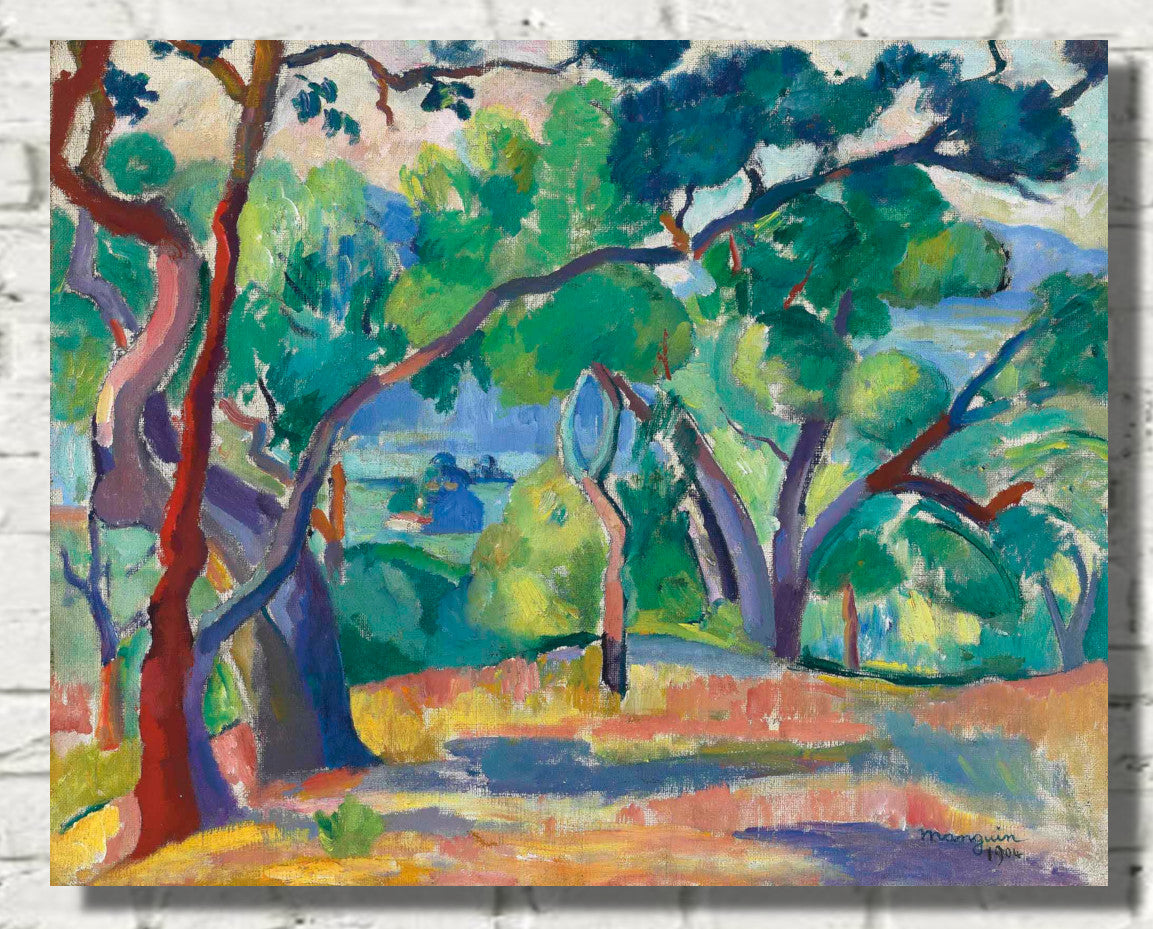
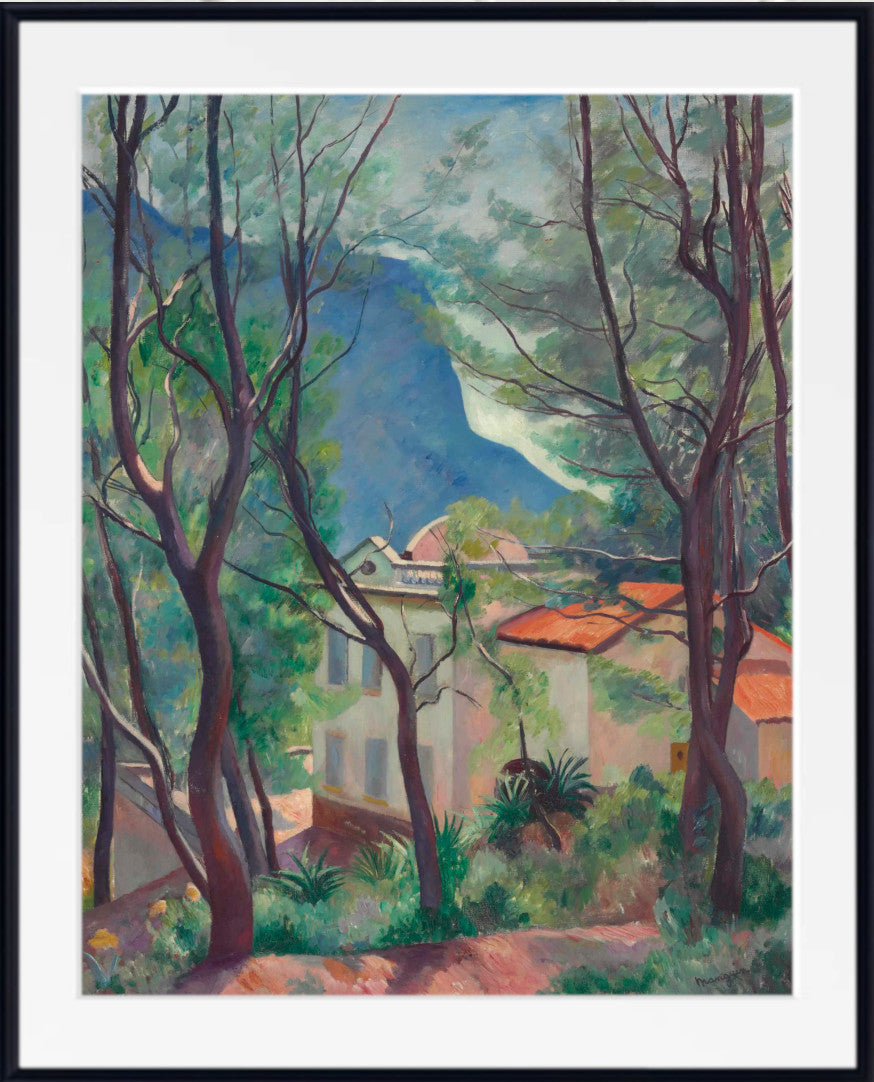
He first visited Saint-Tropez during the formative Fauvist period and responded enthusiastically to the intense Mediterranean sunlight, blue water and vegetation of the Côte d'Azur.
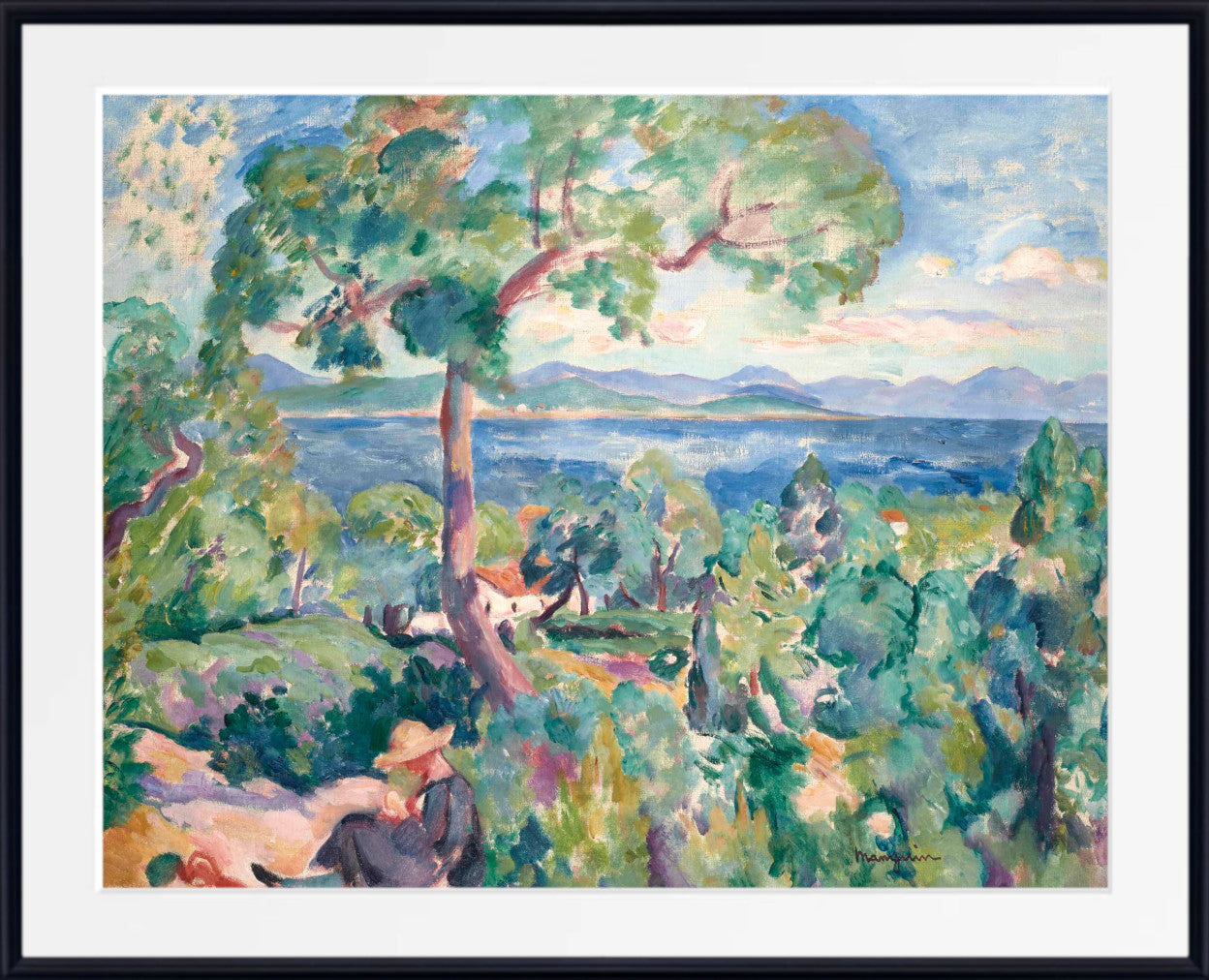
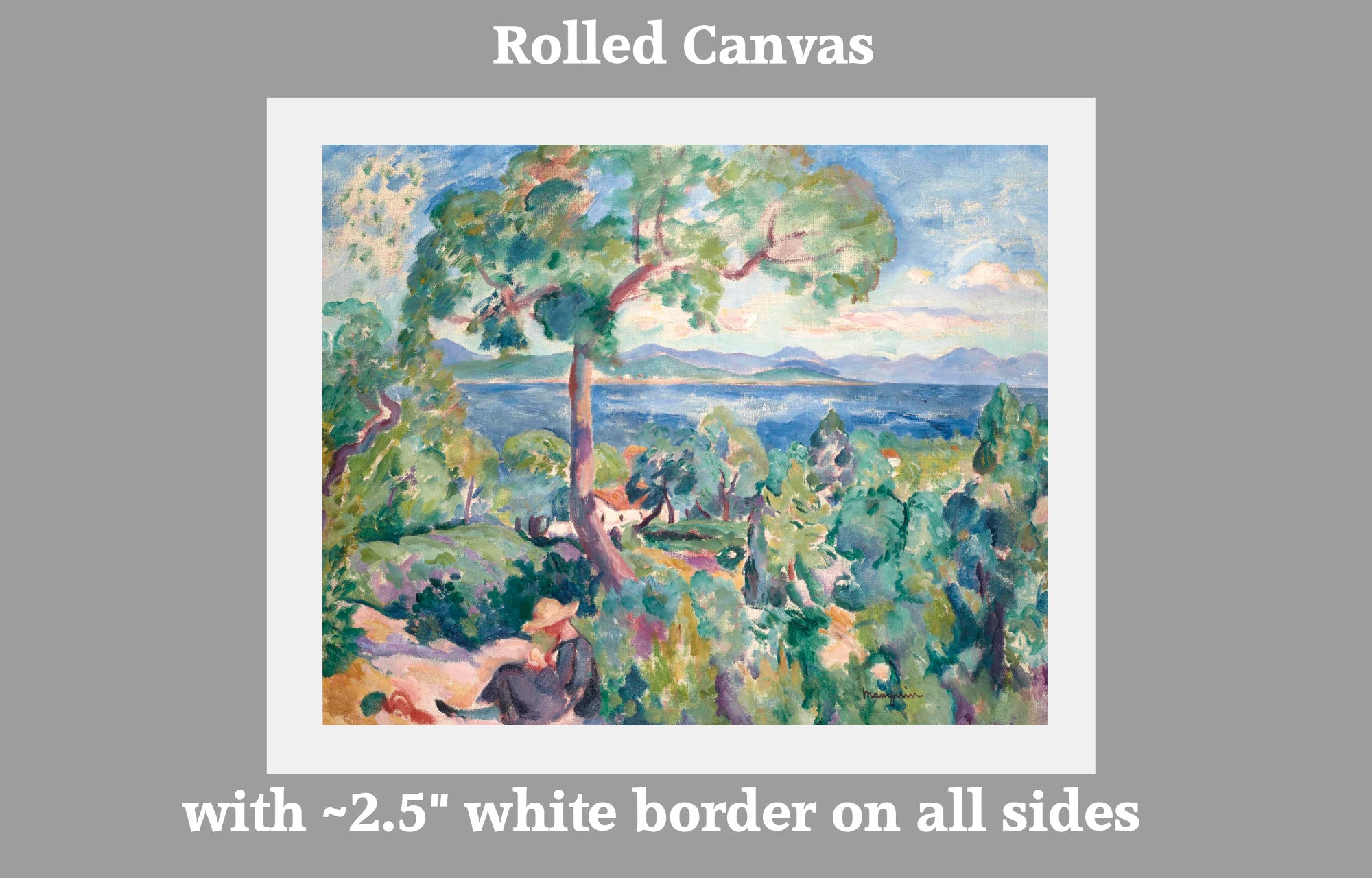
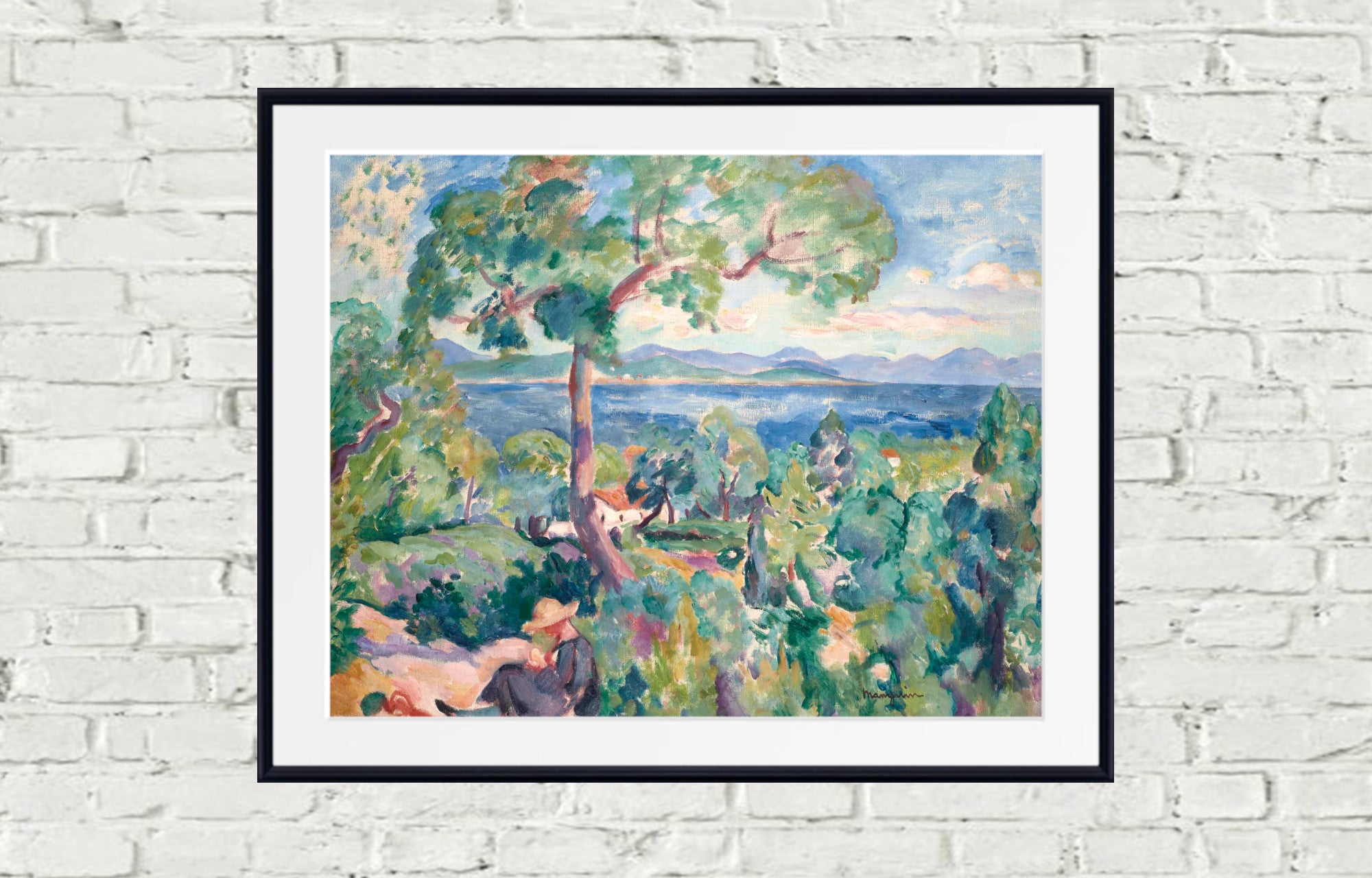
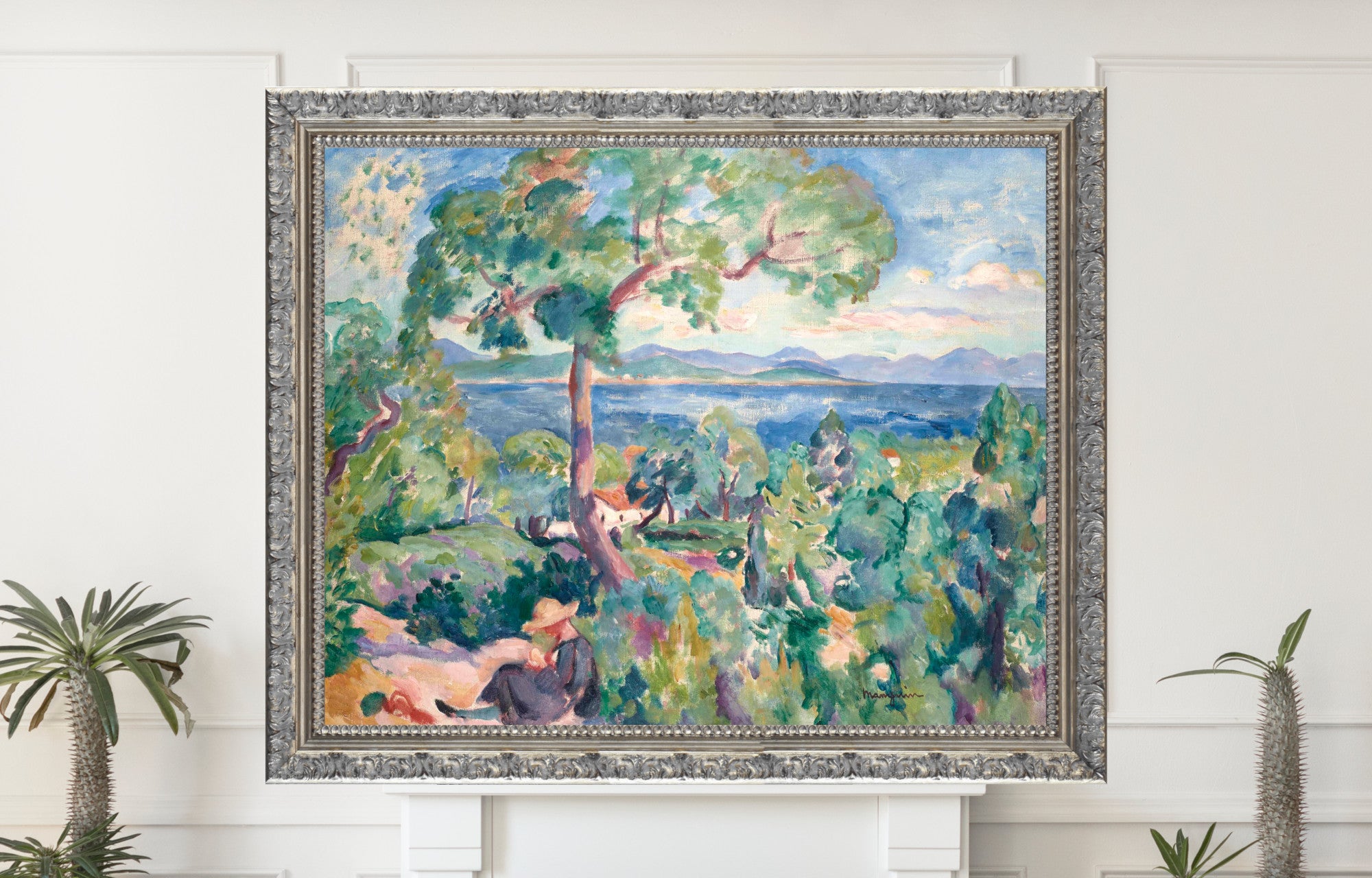
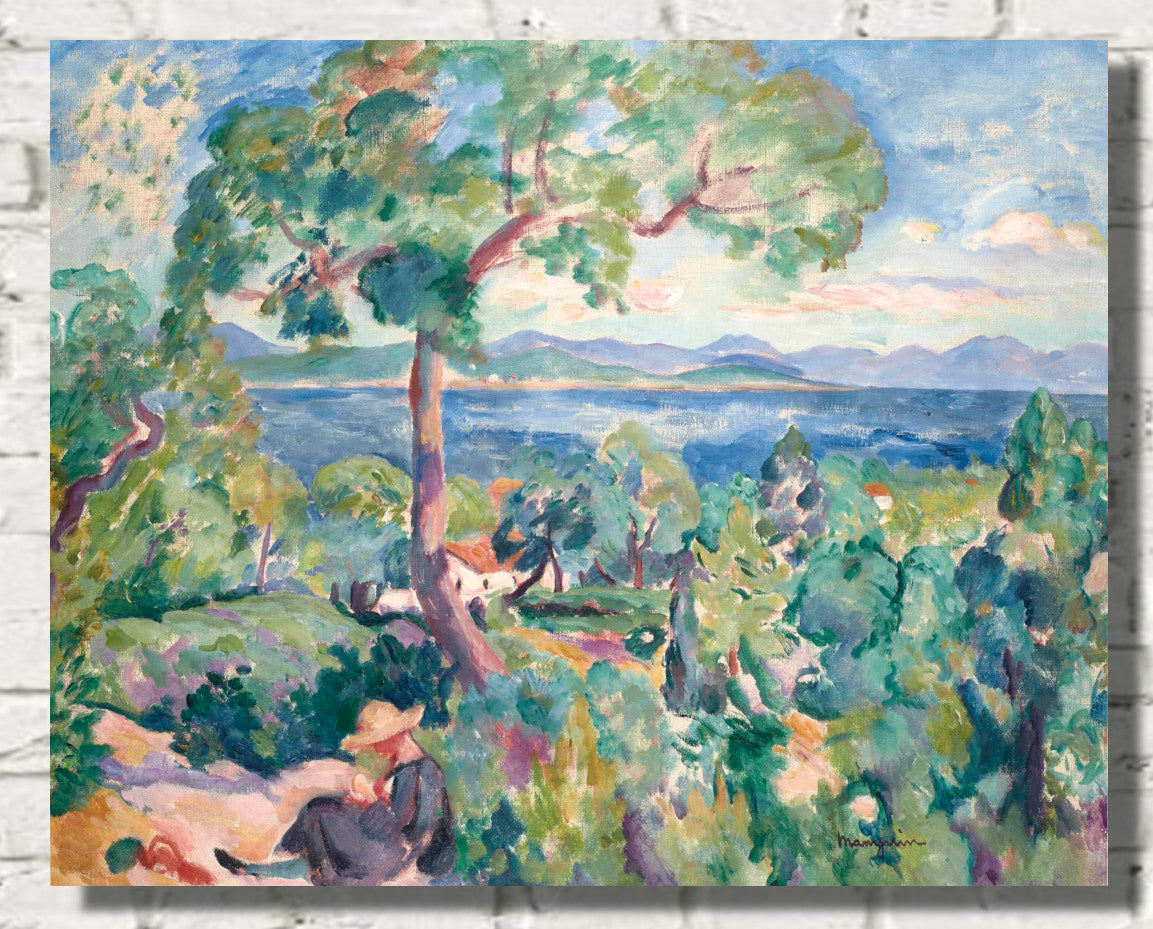
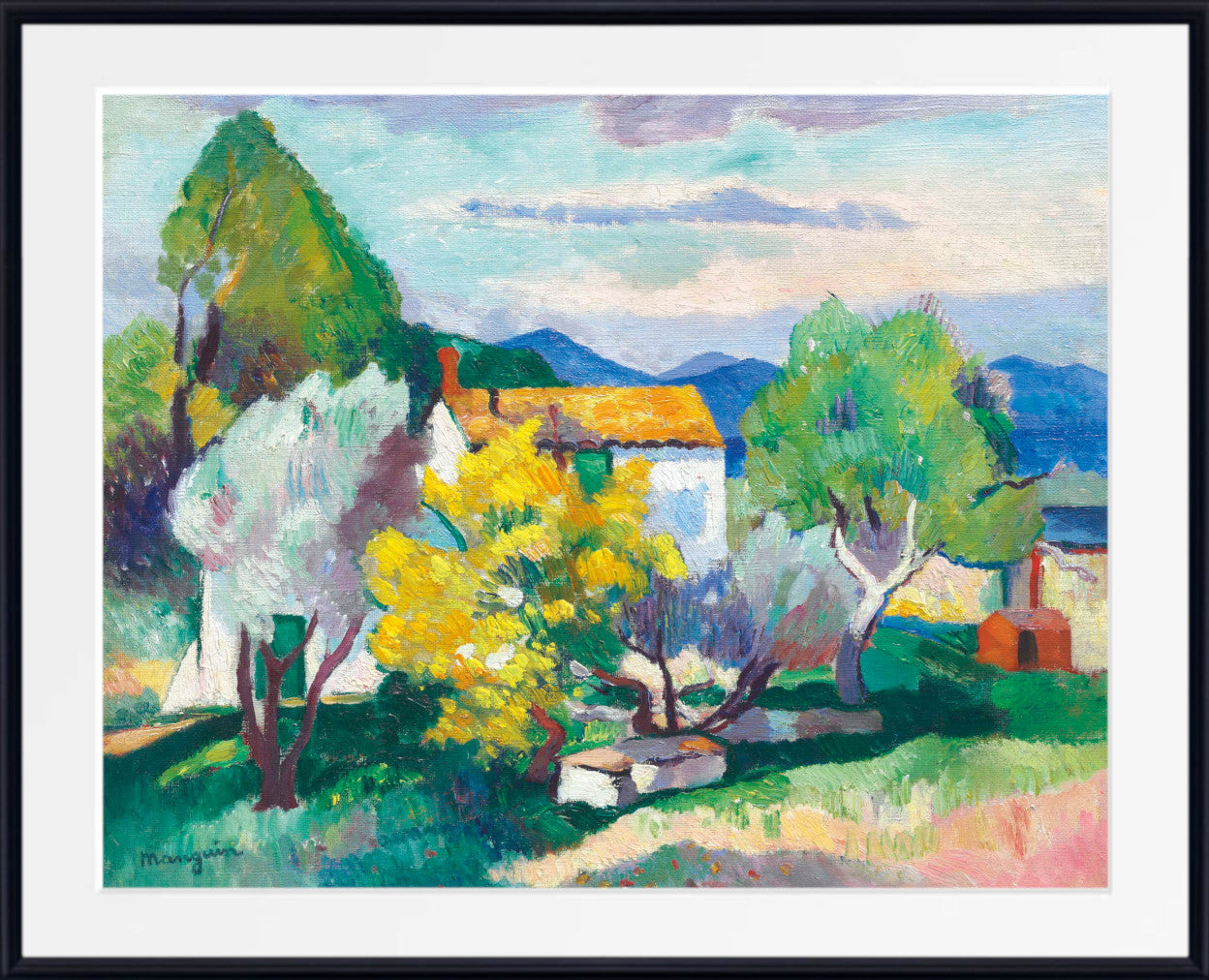
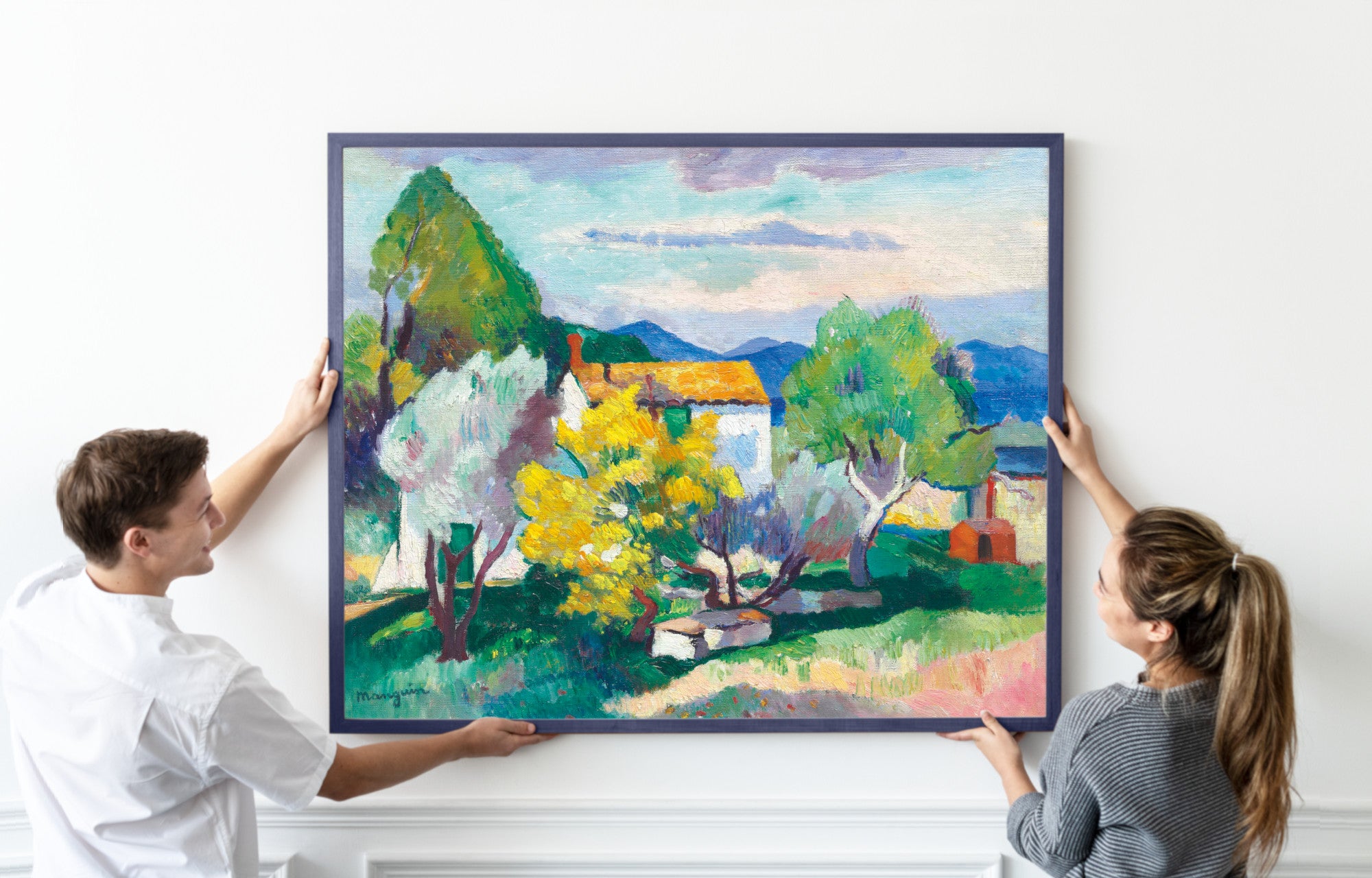
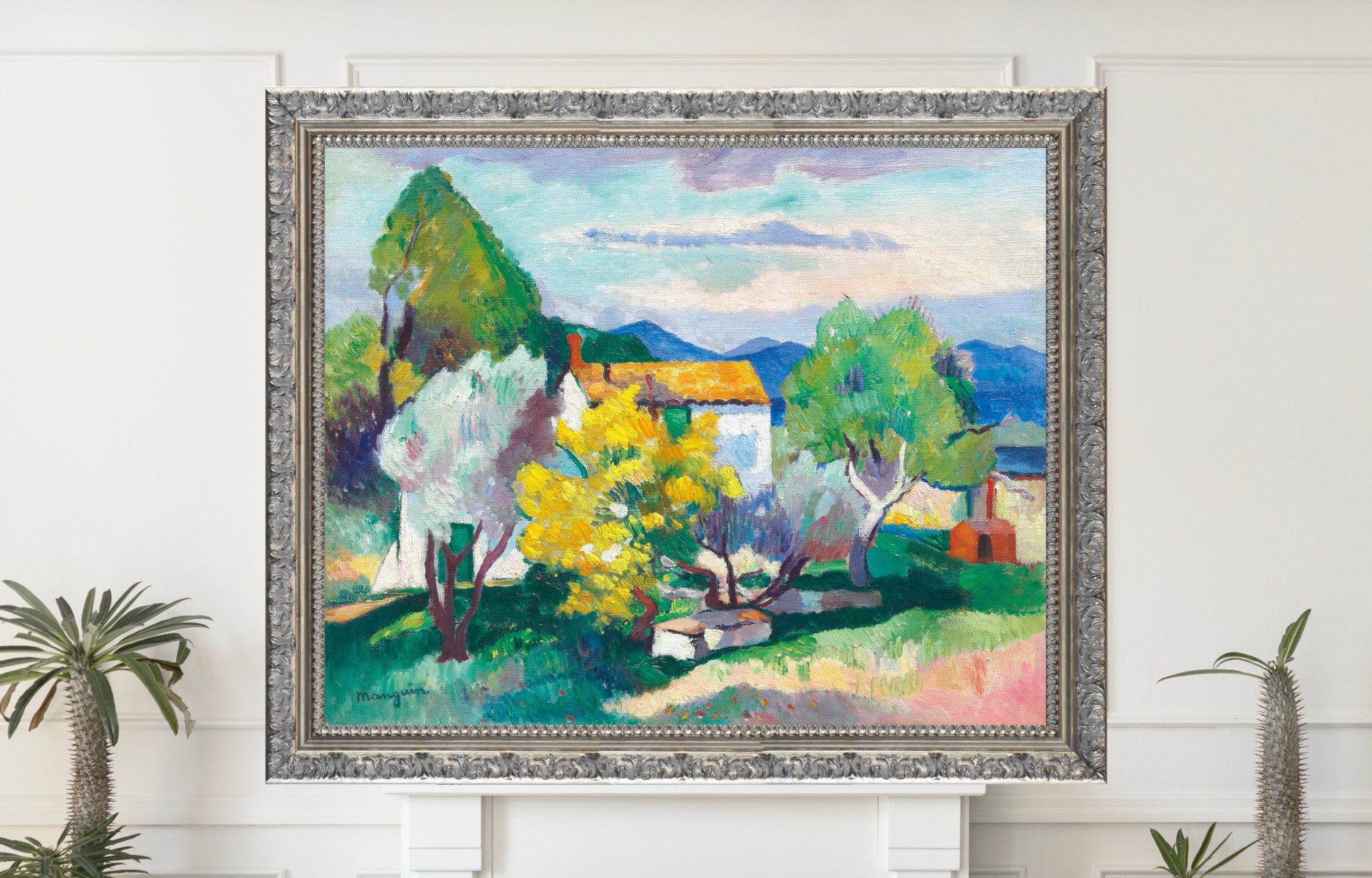
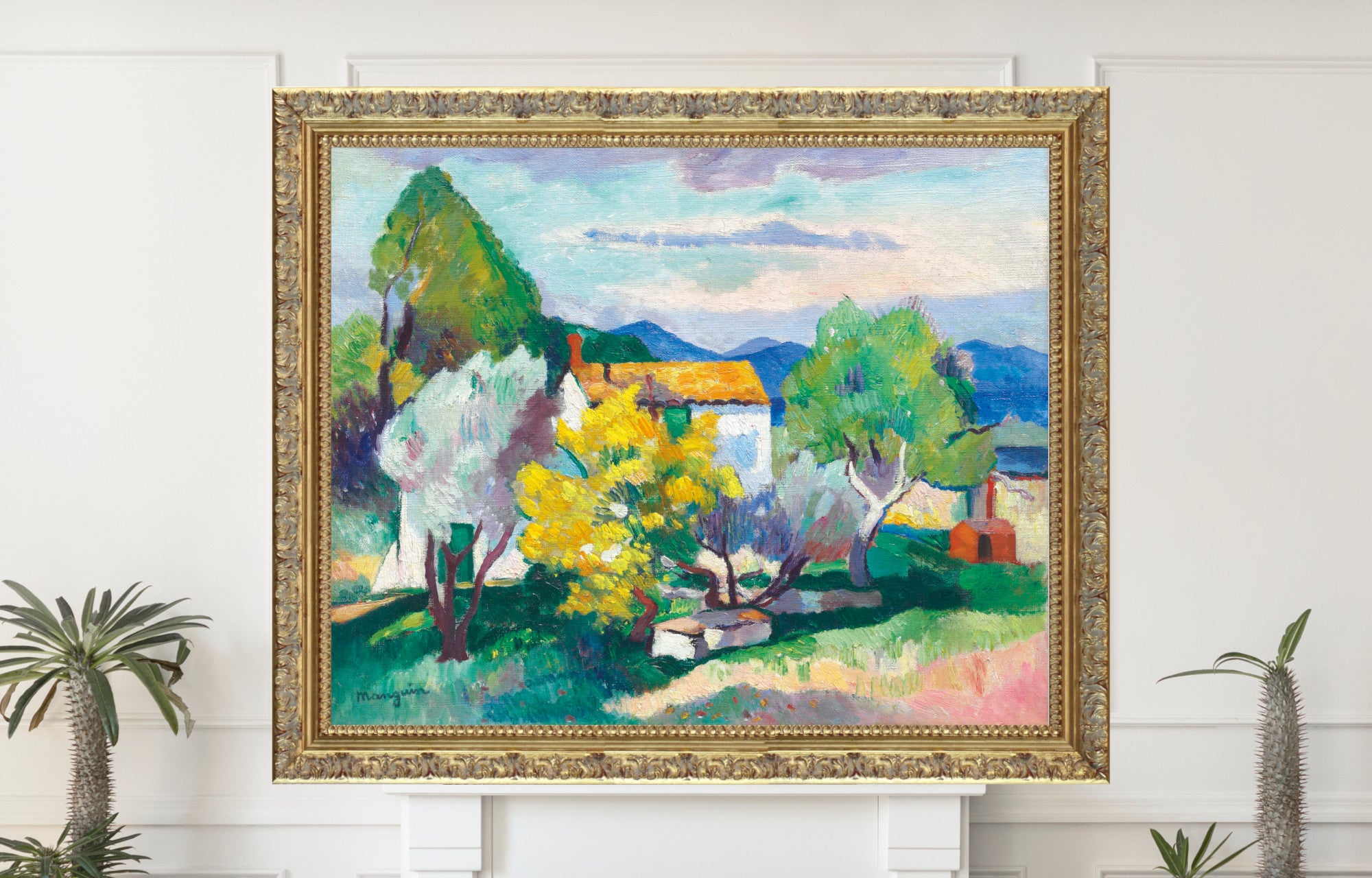
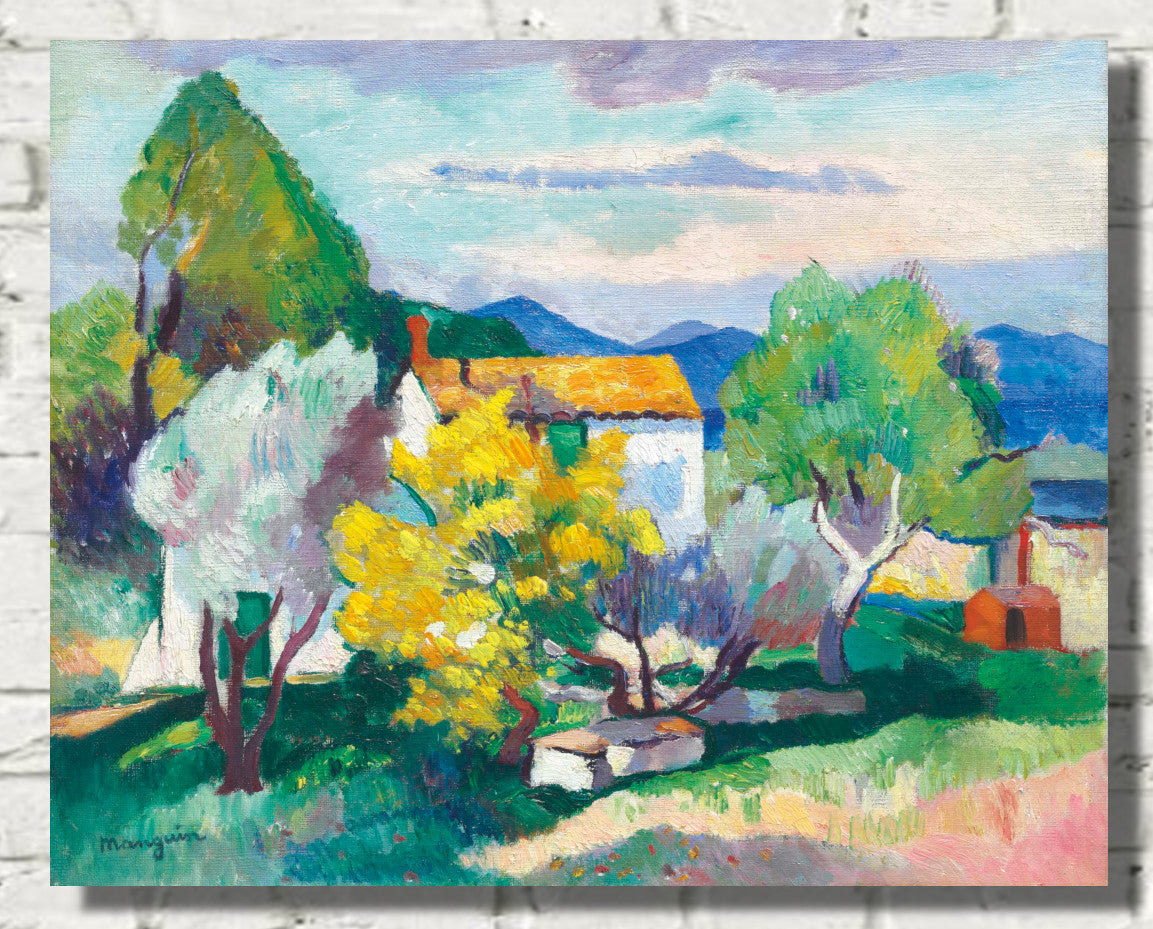
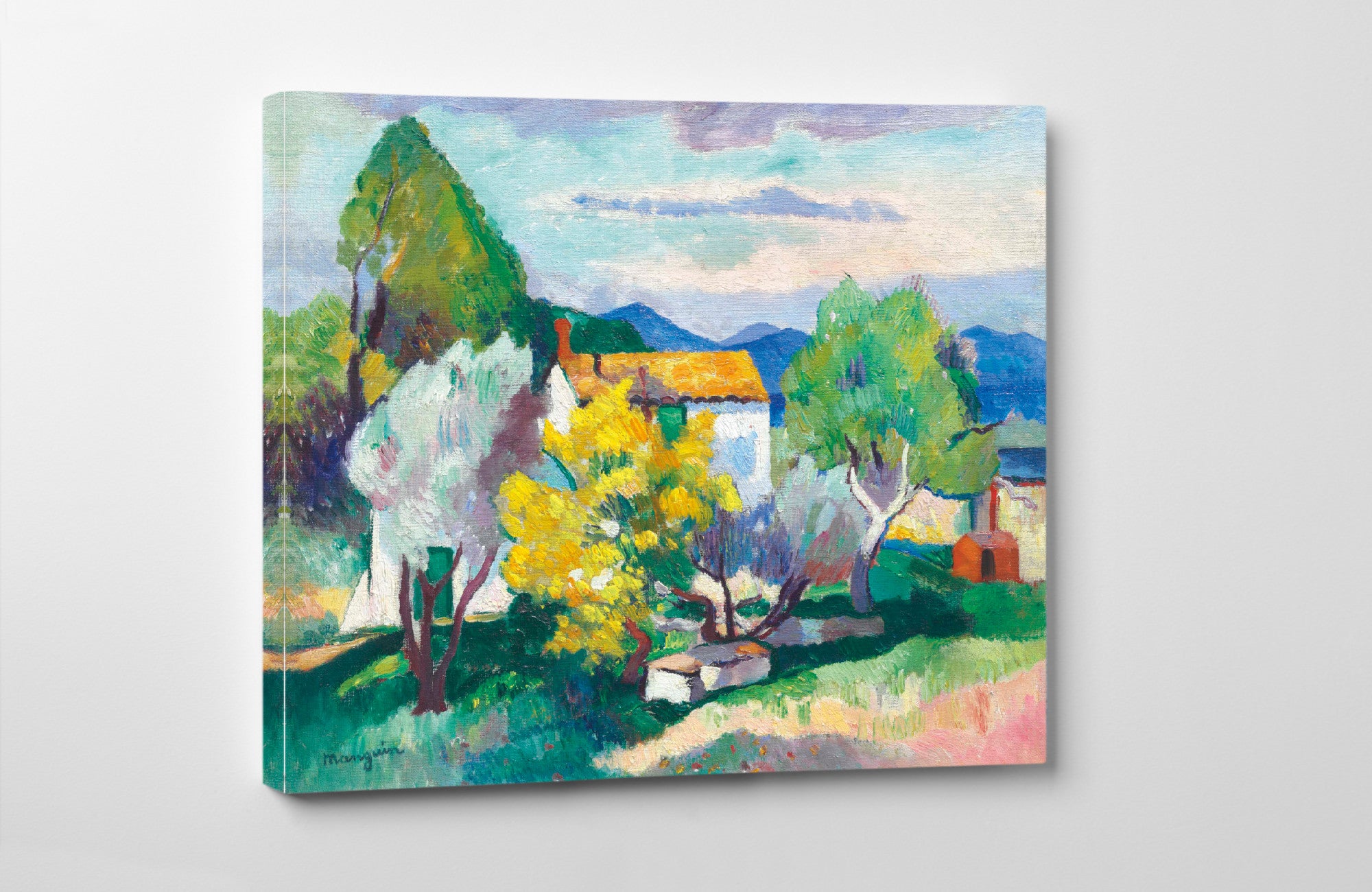
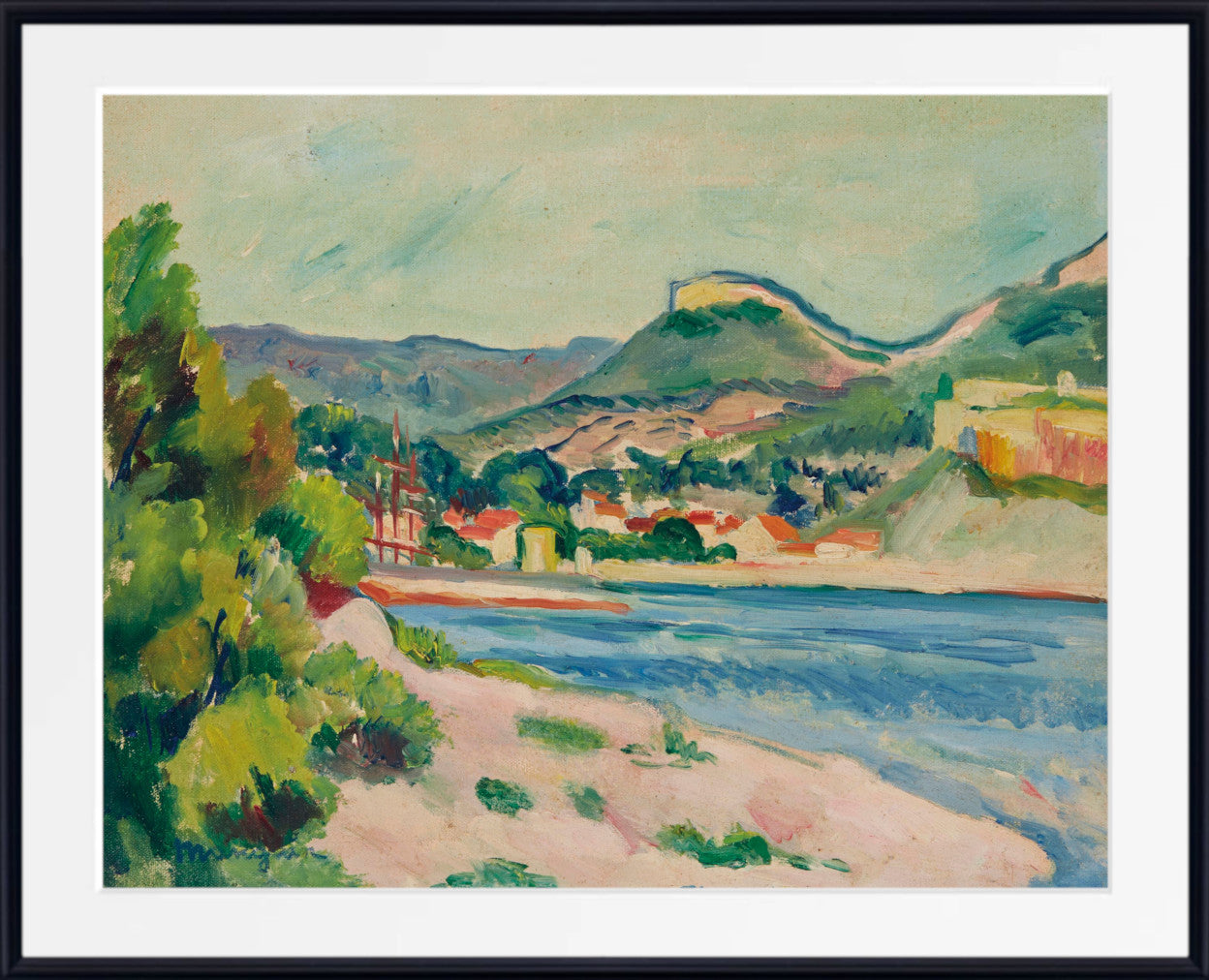
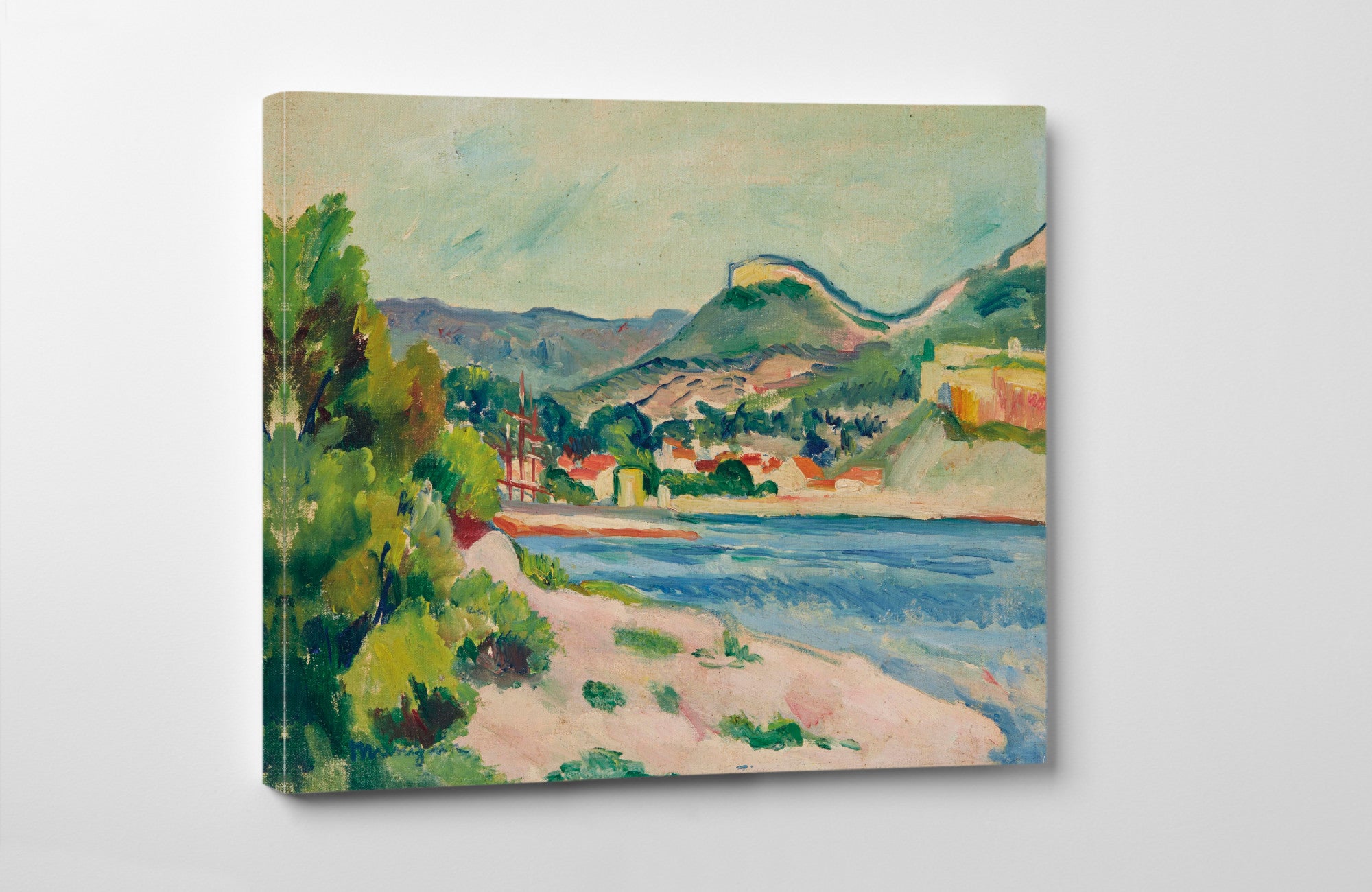
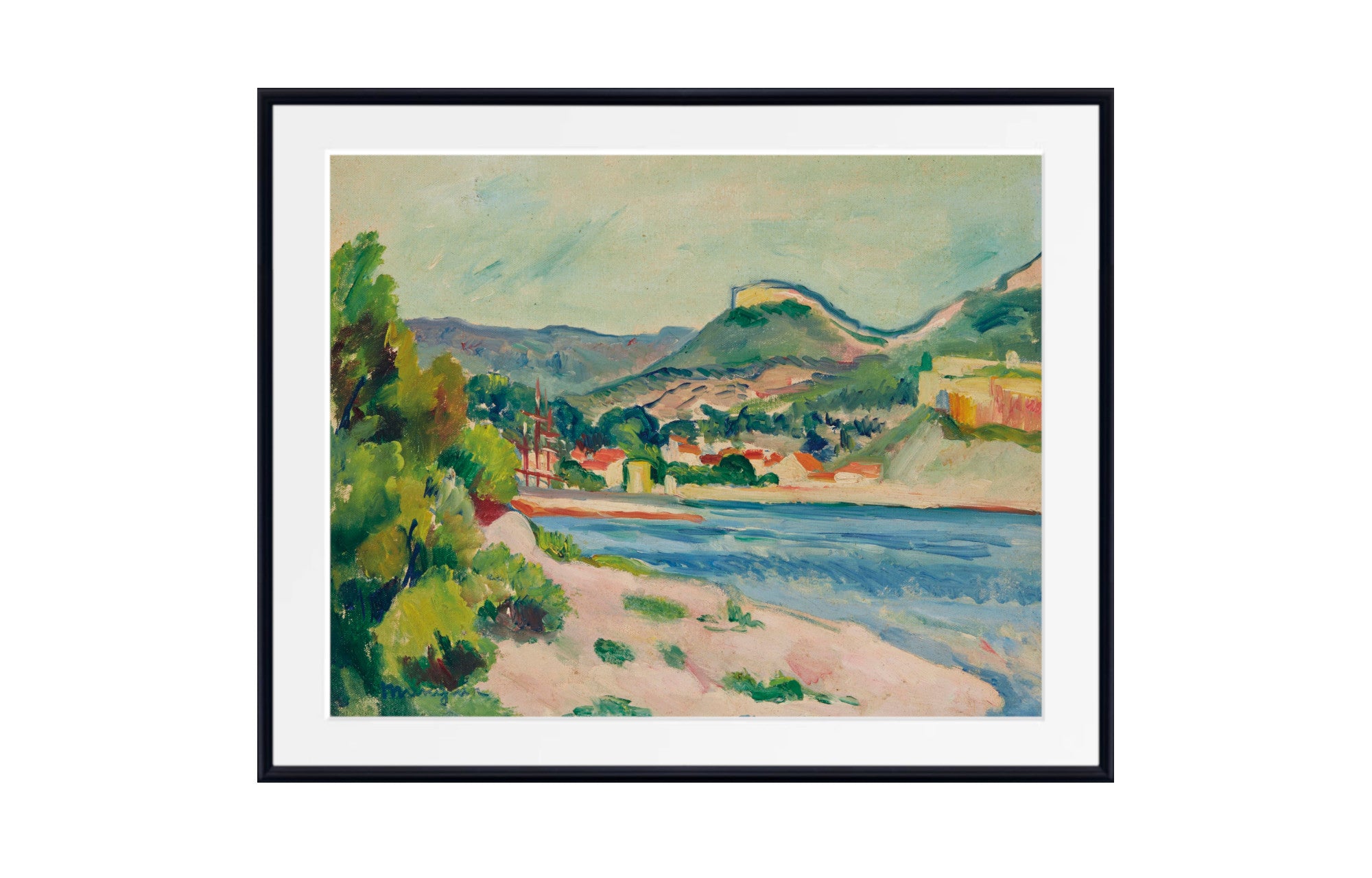
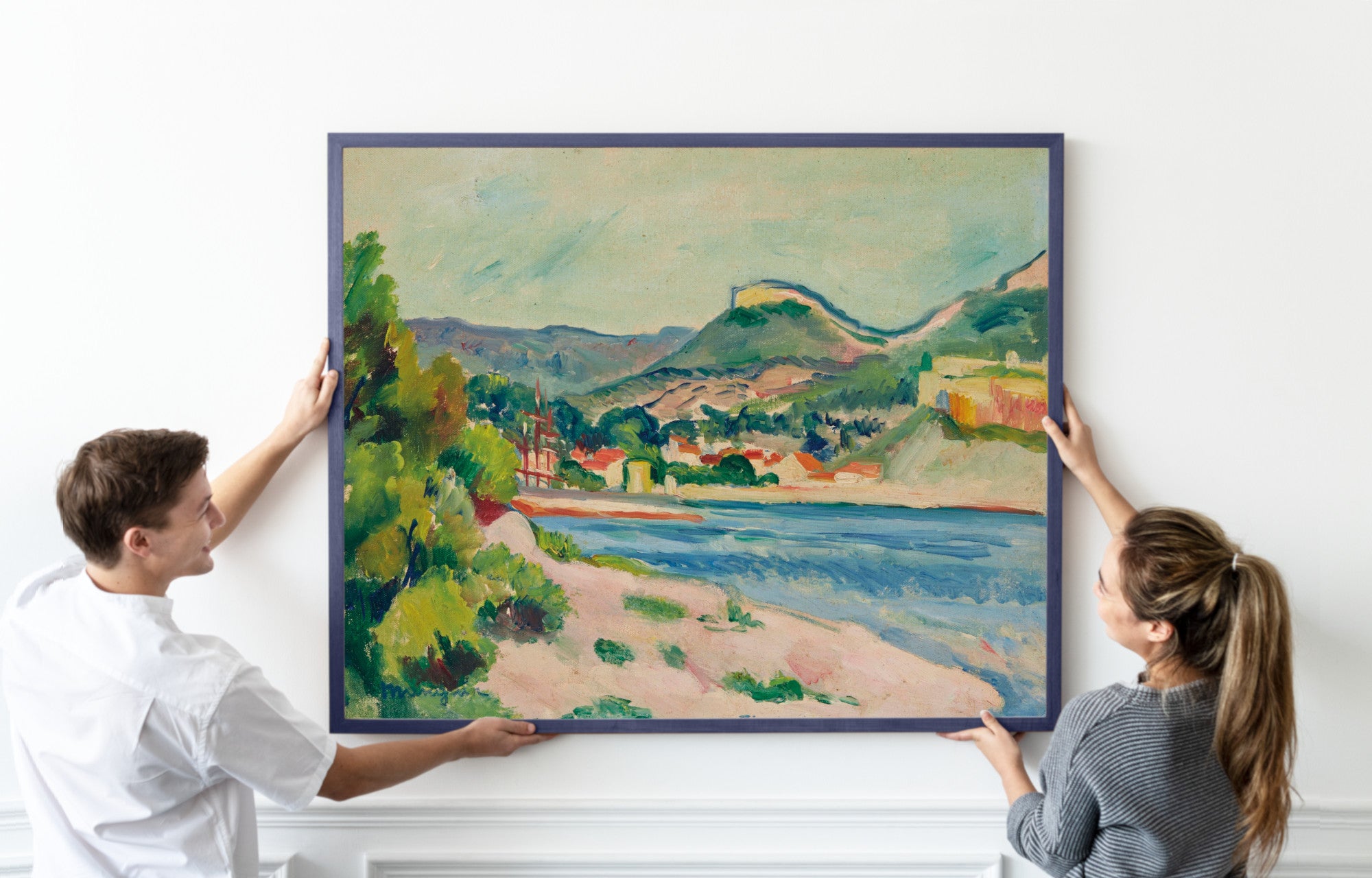
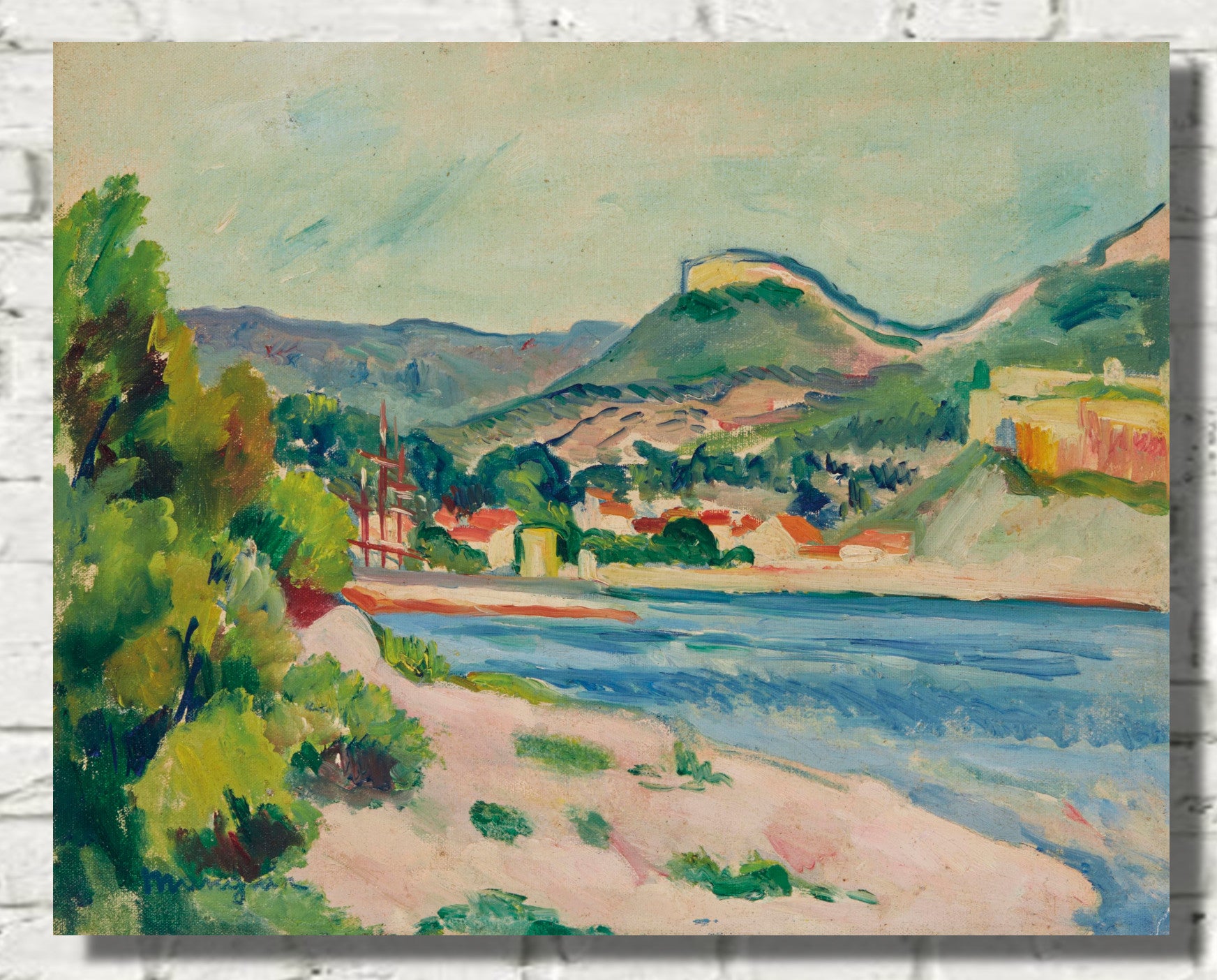
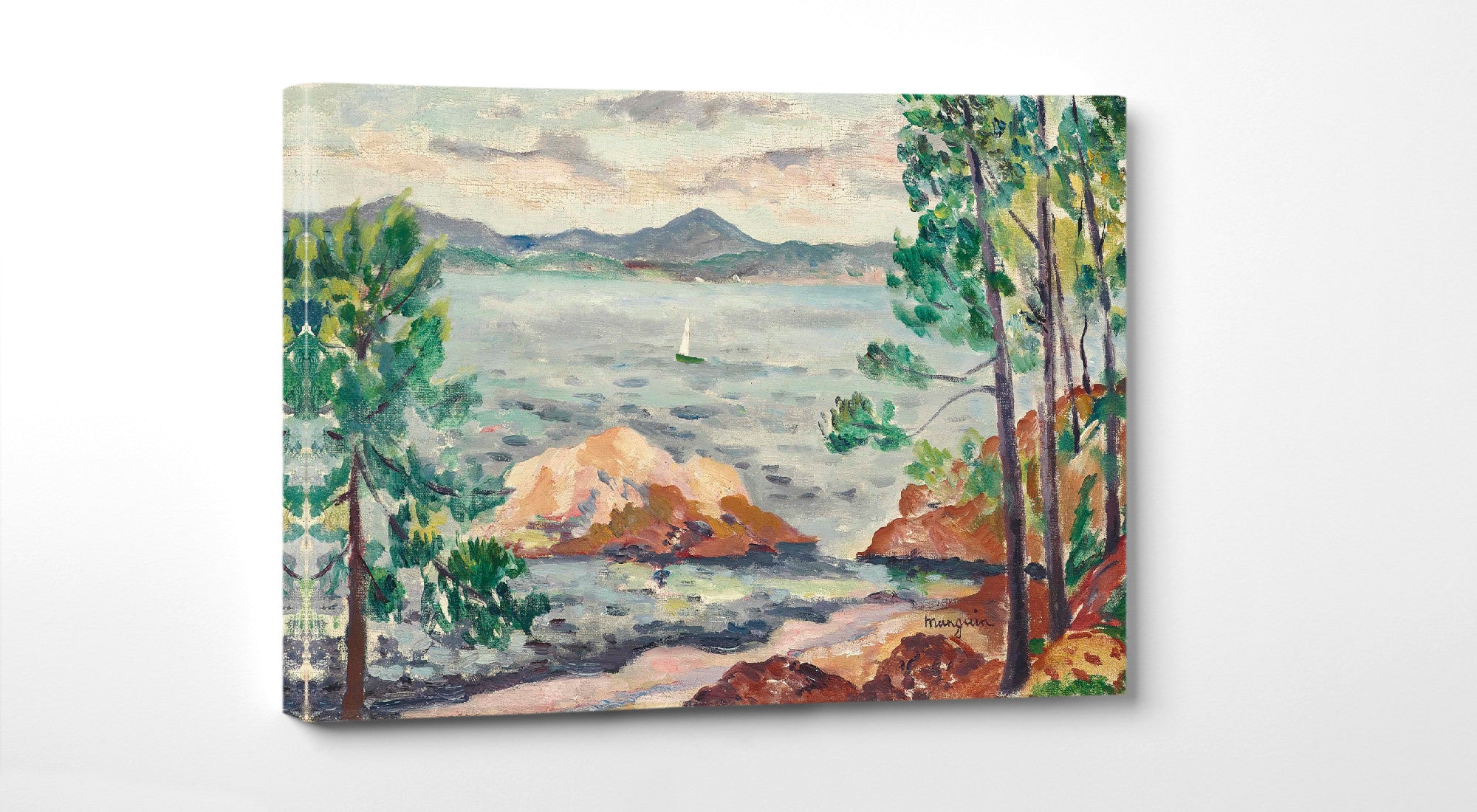
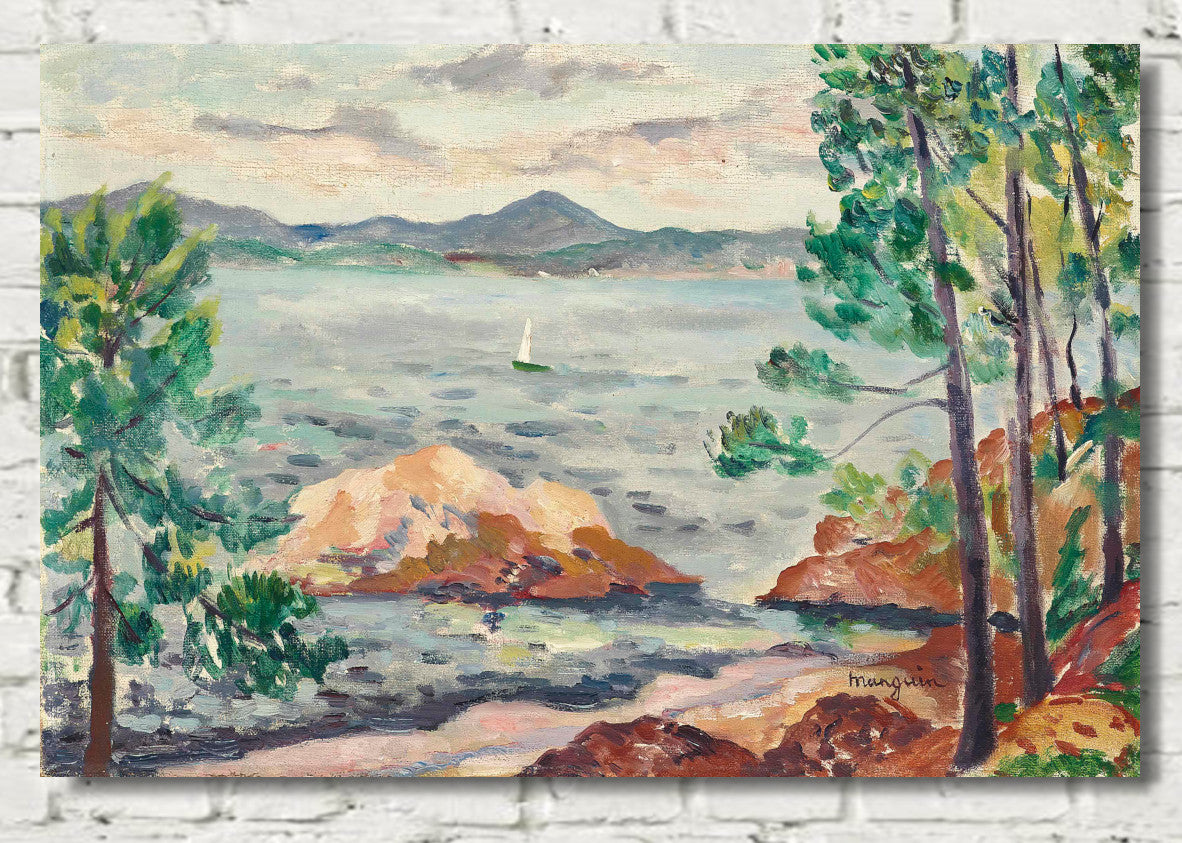
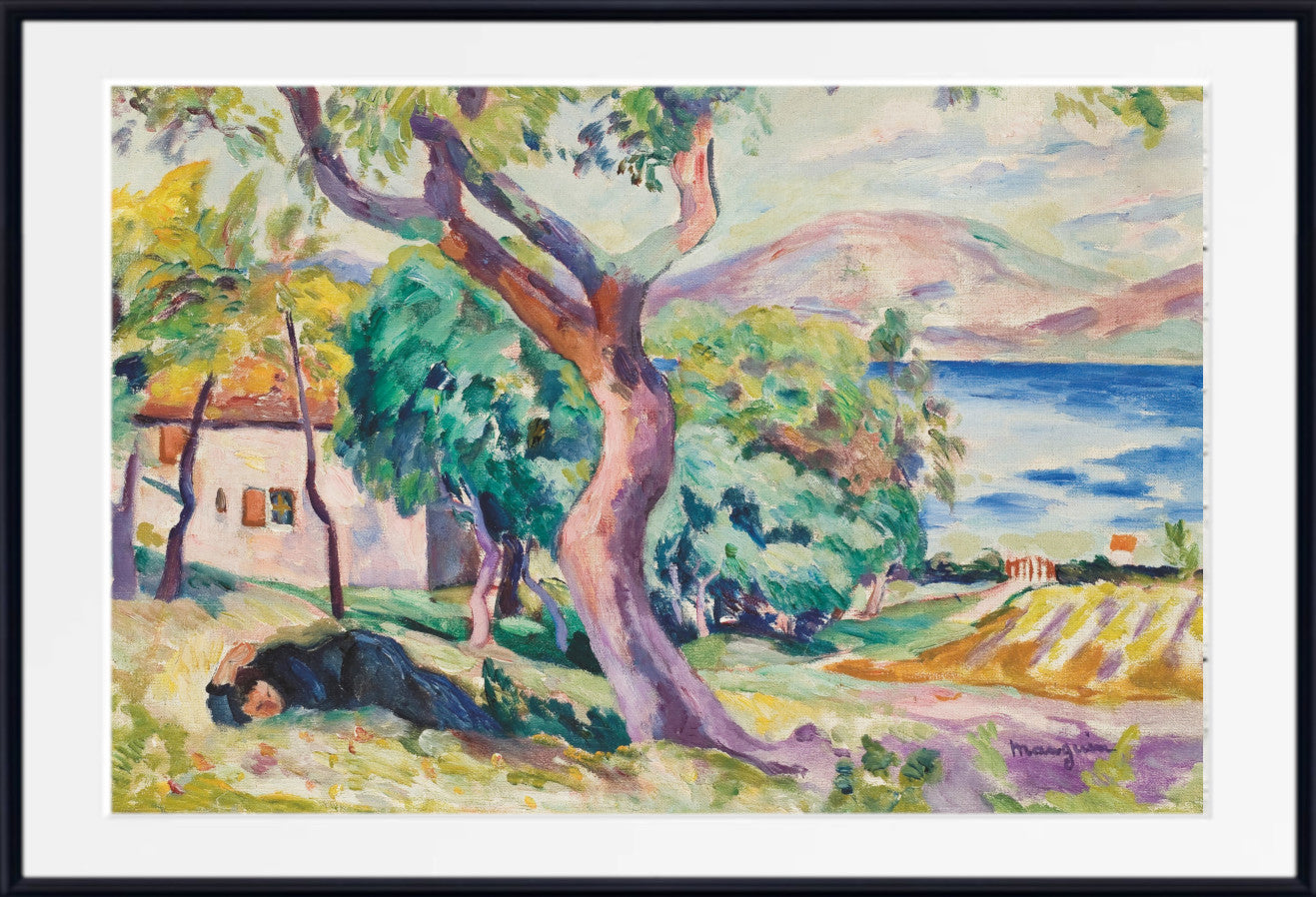
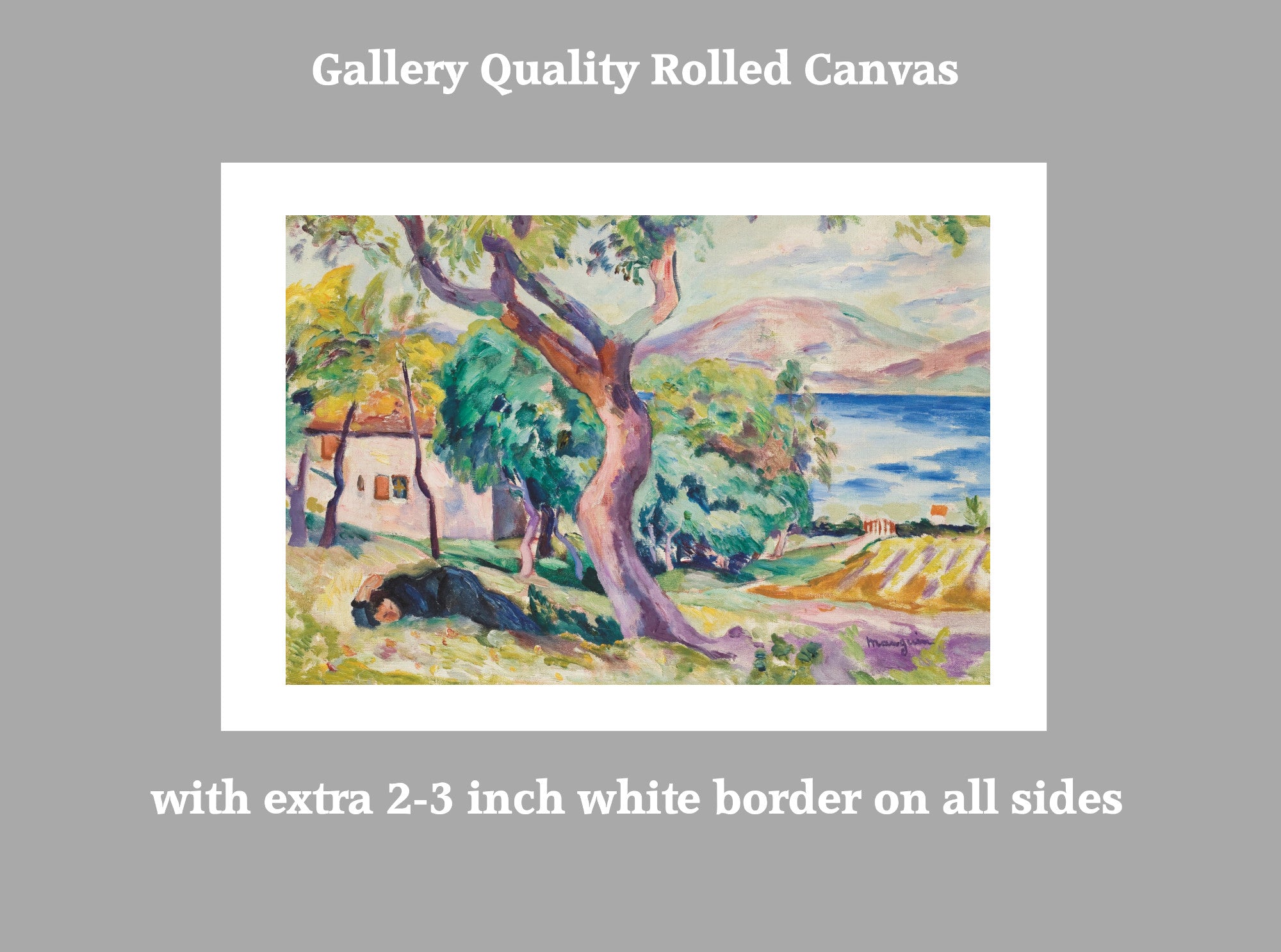
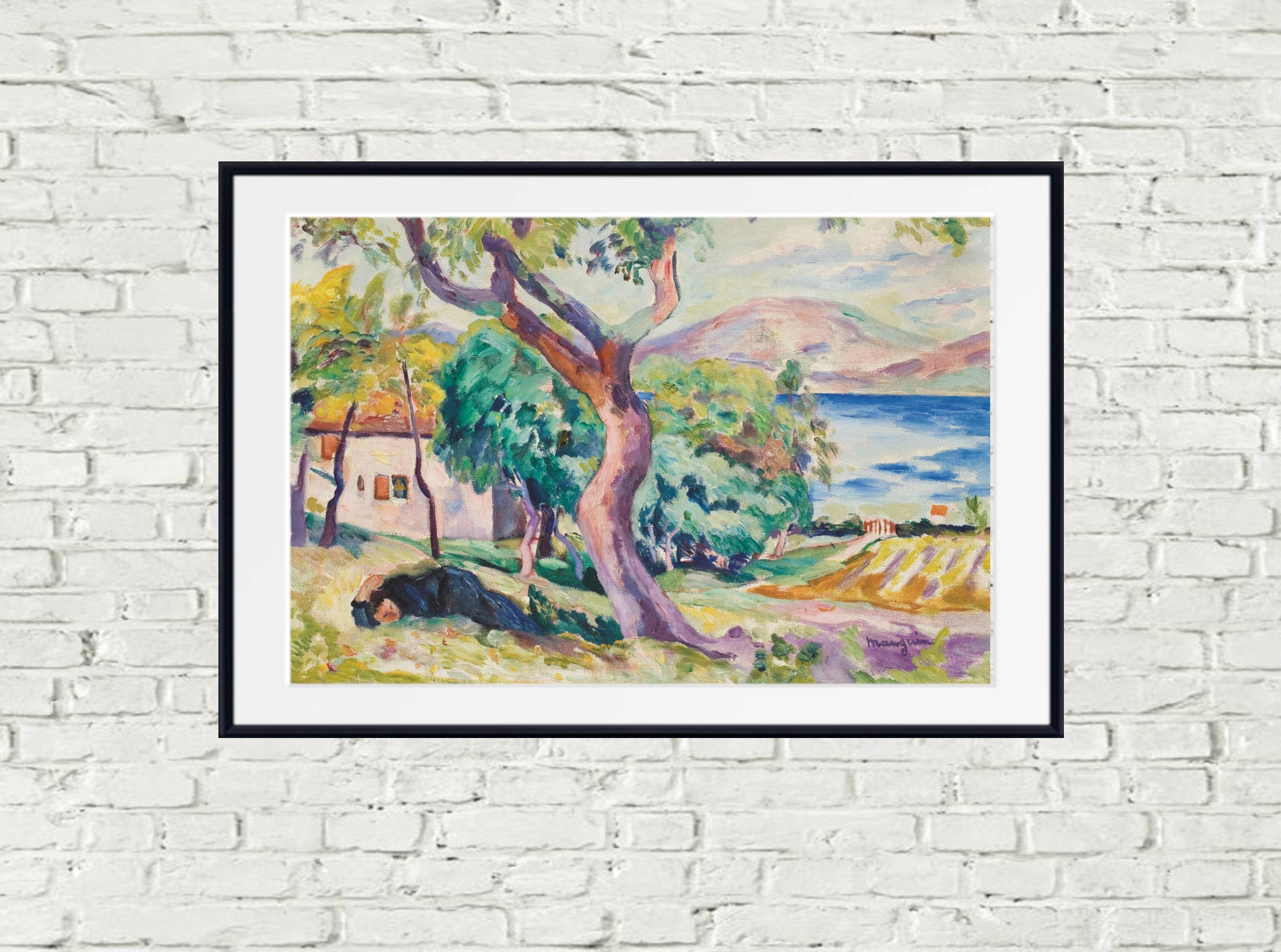
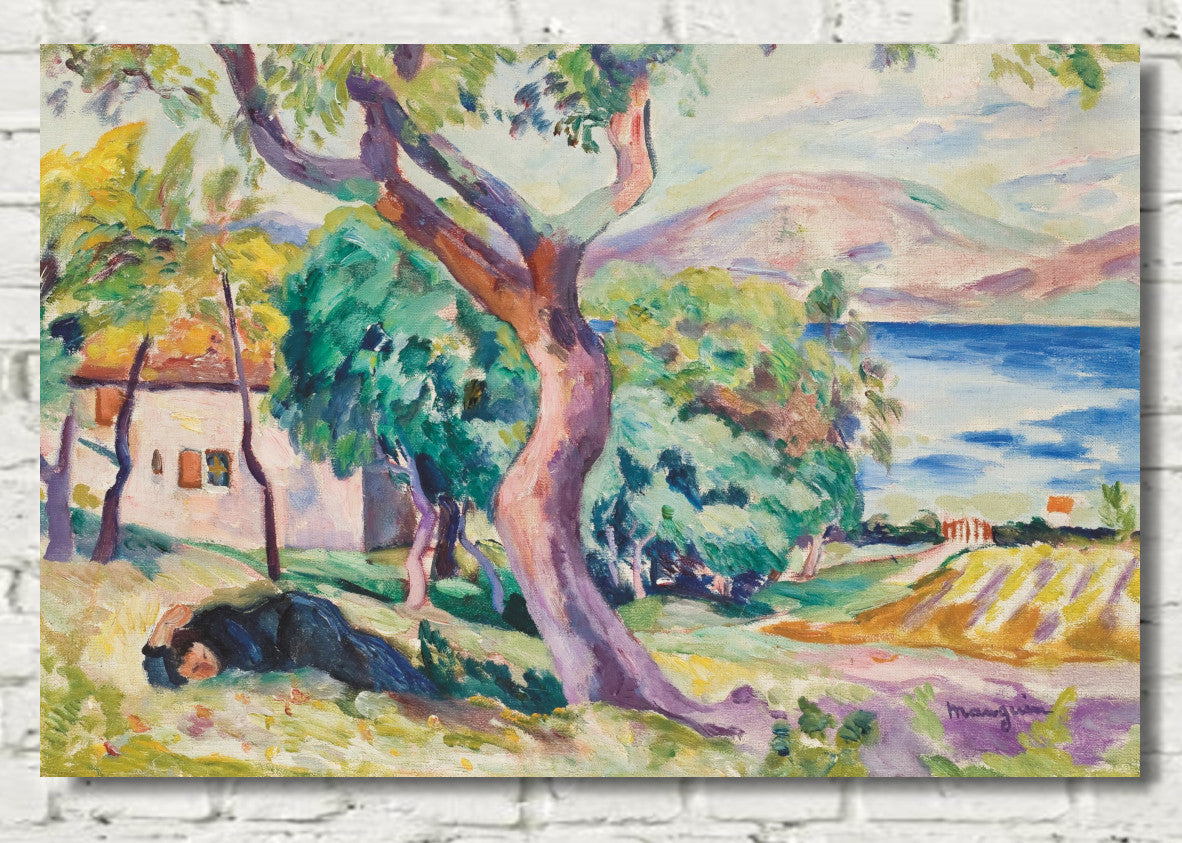
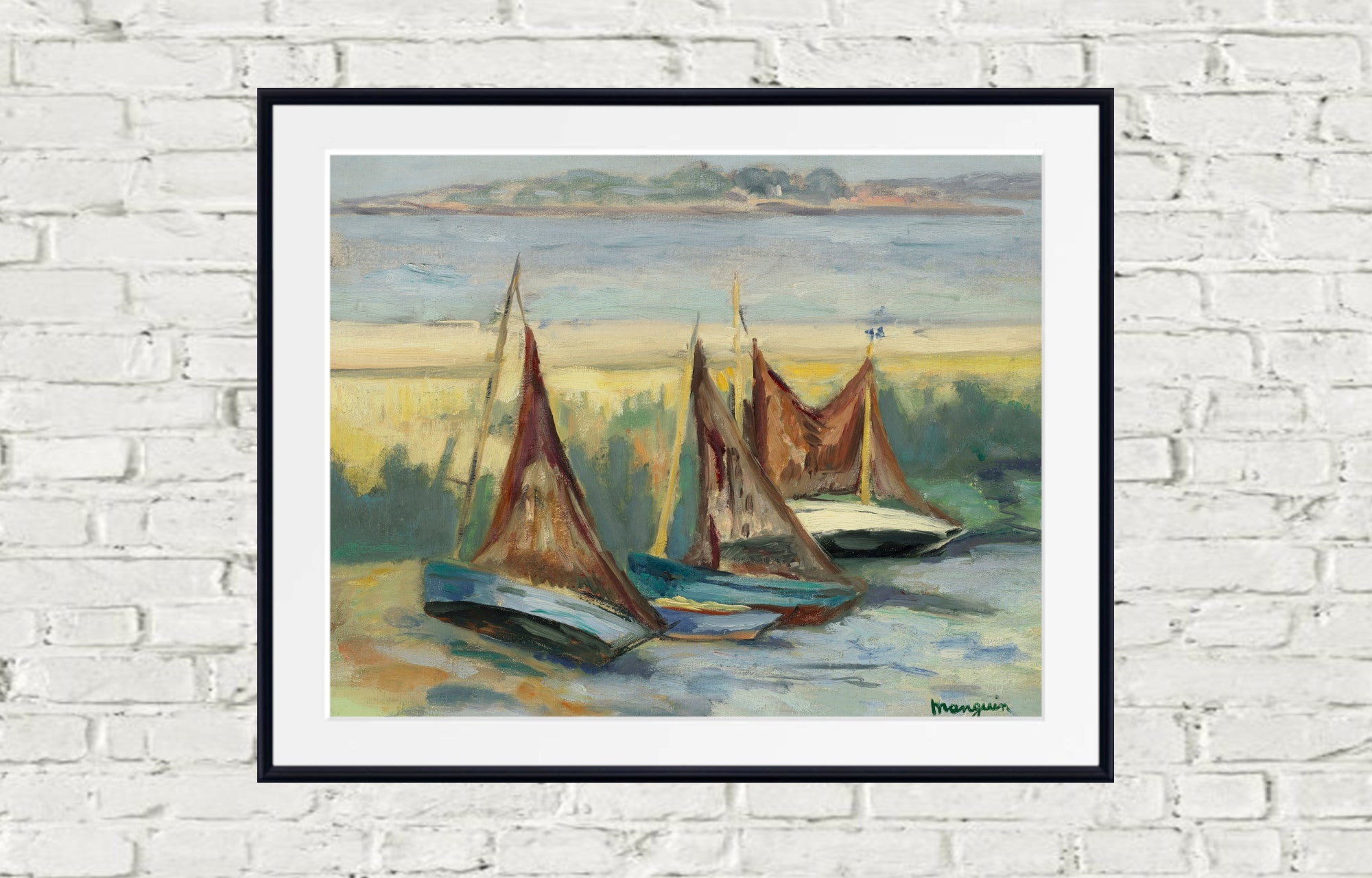
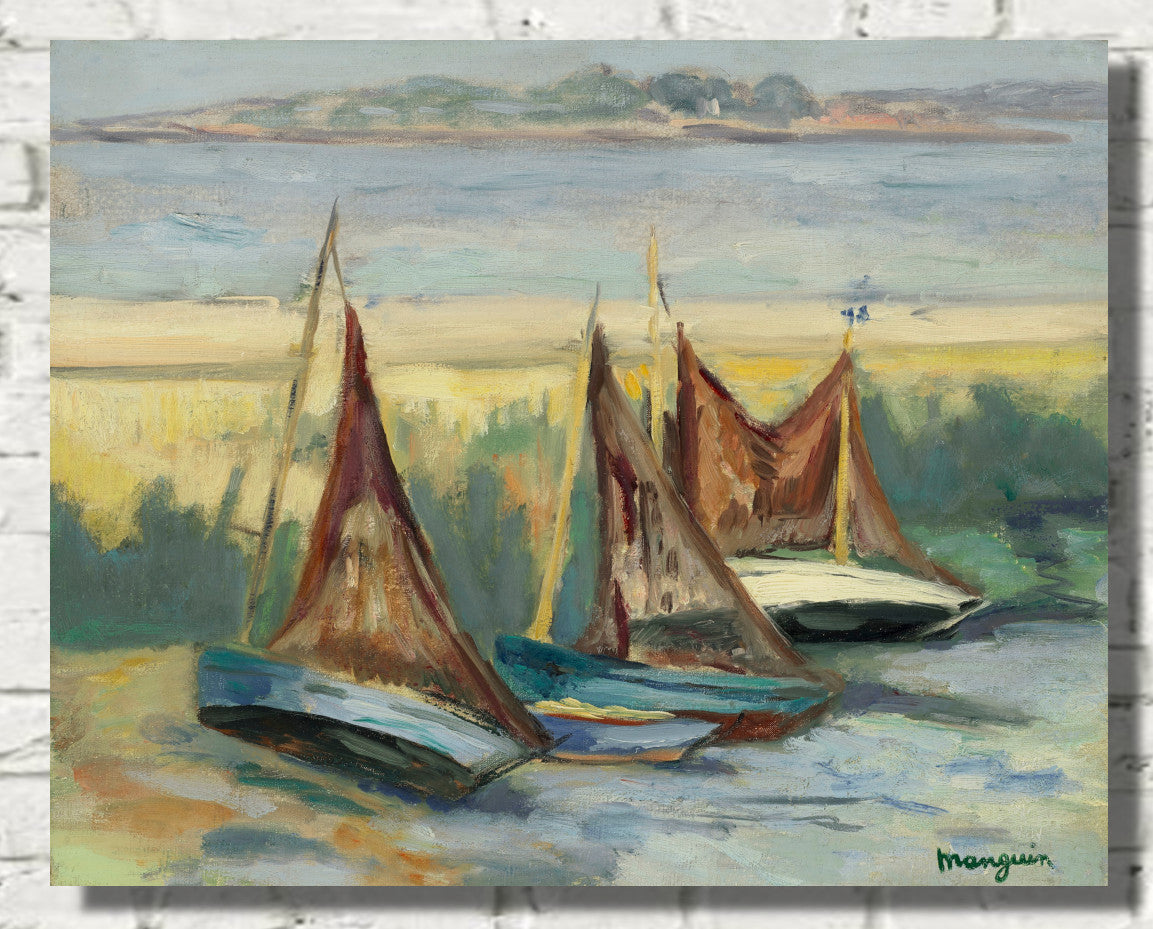
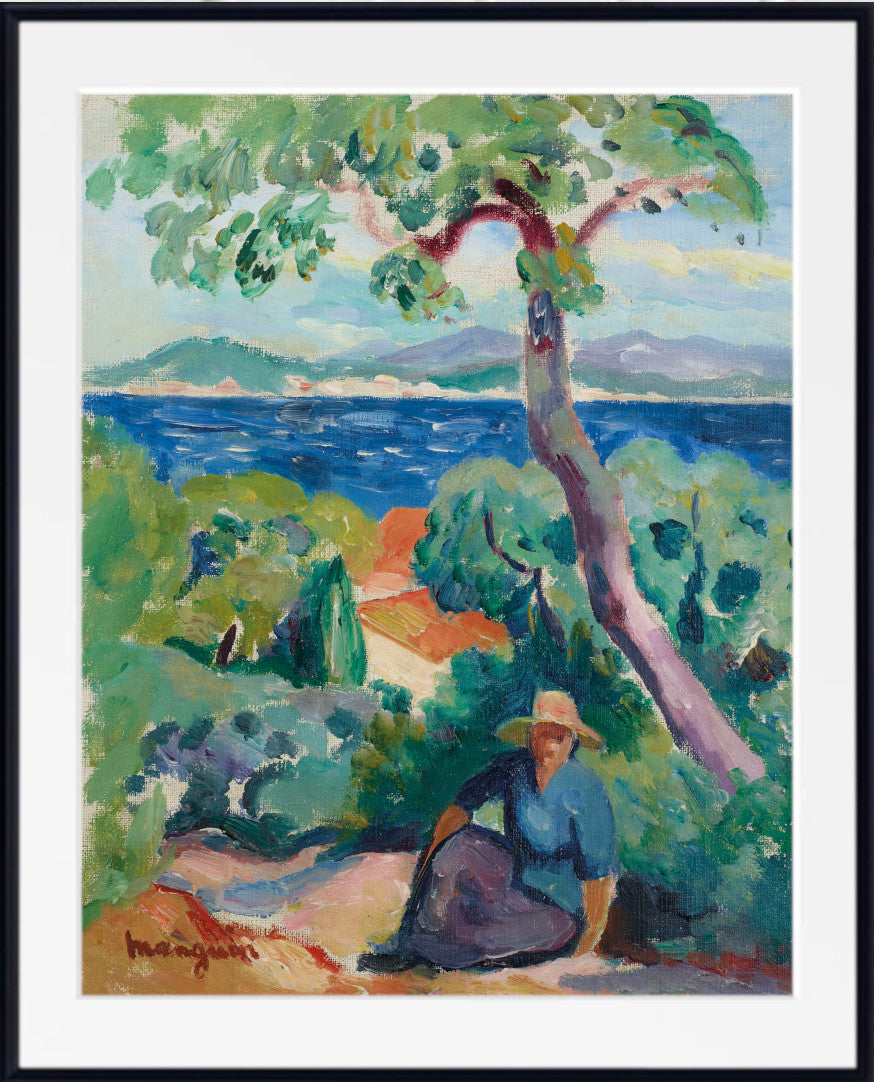
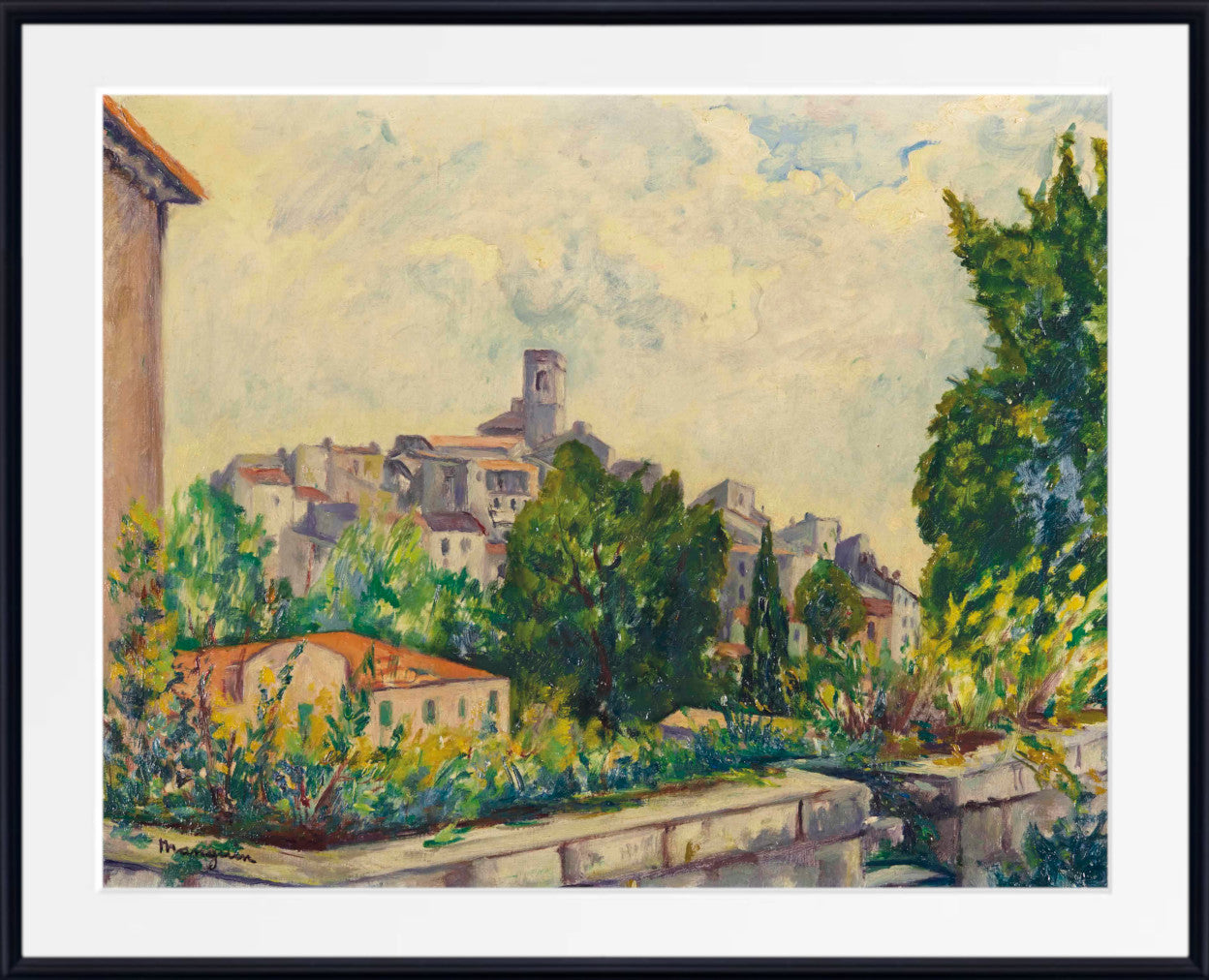
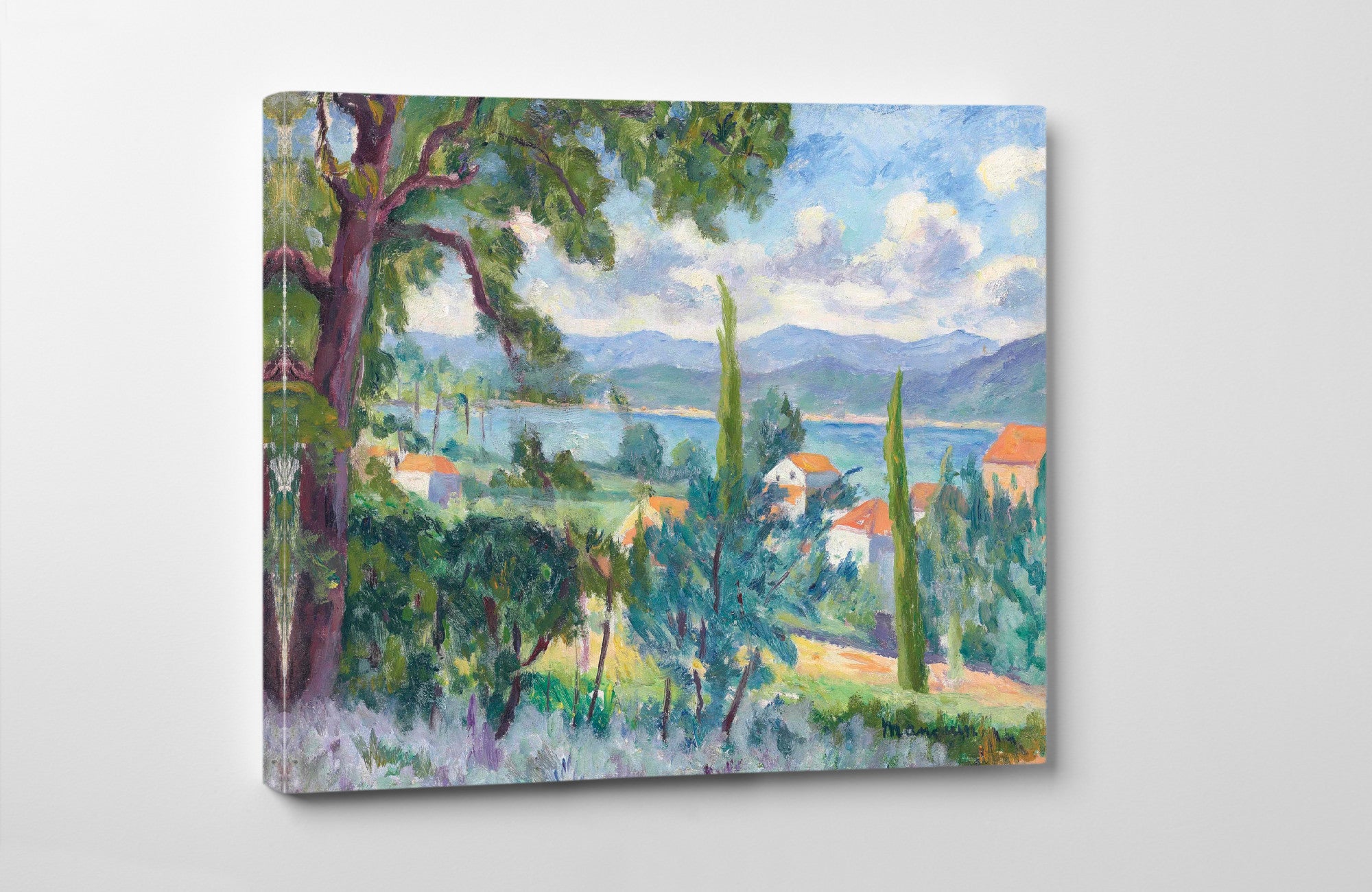
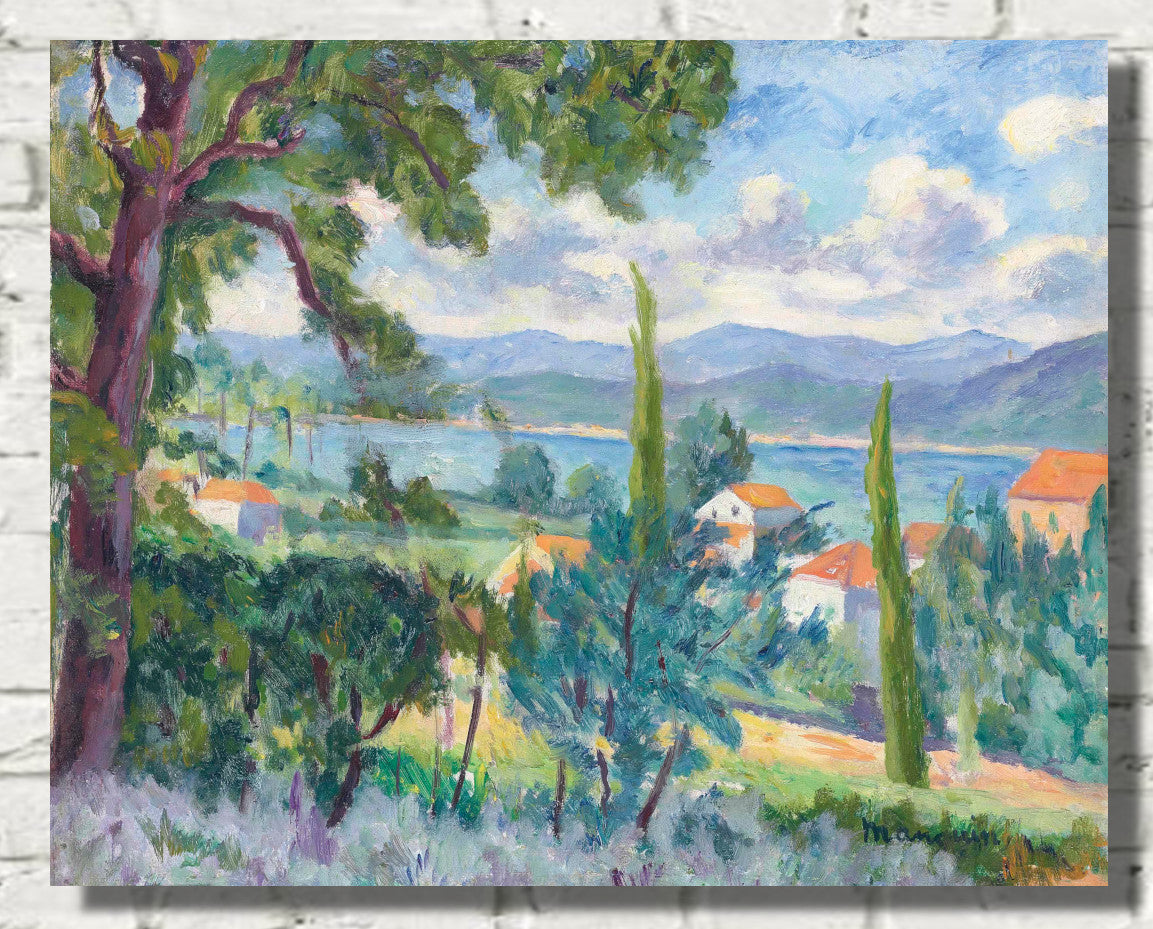
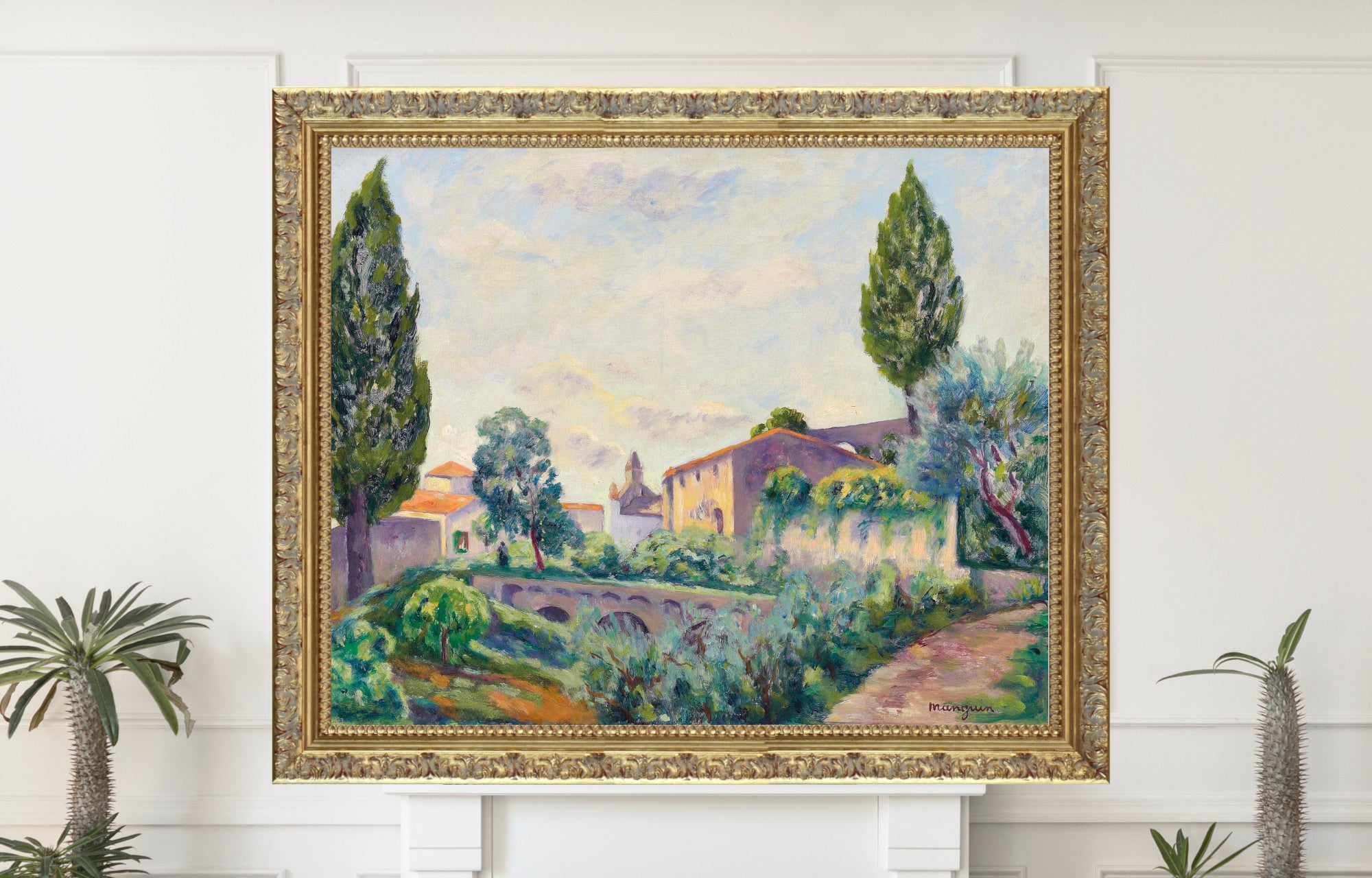
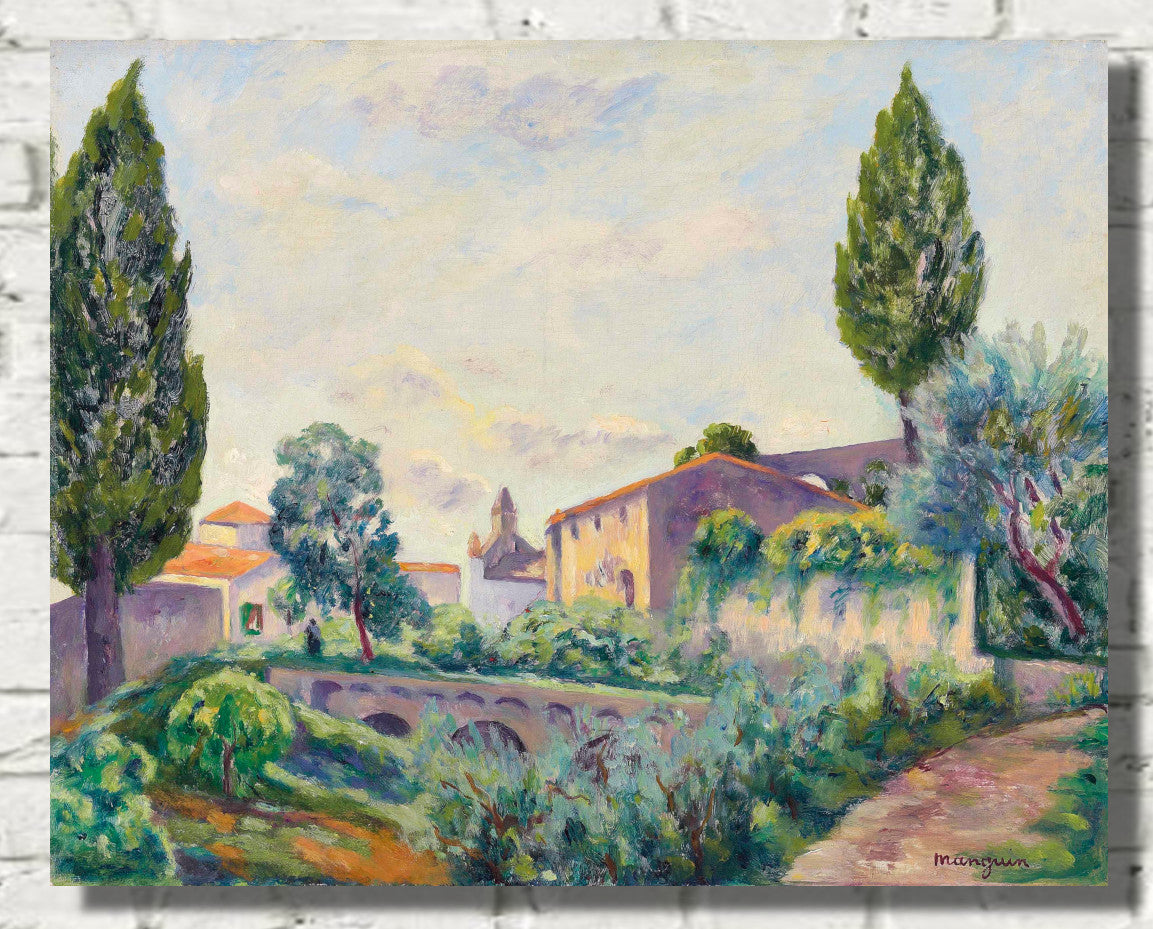
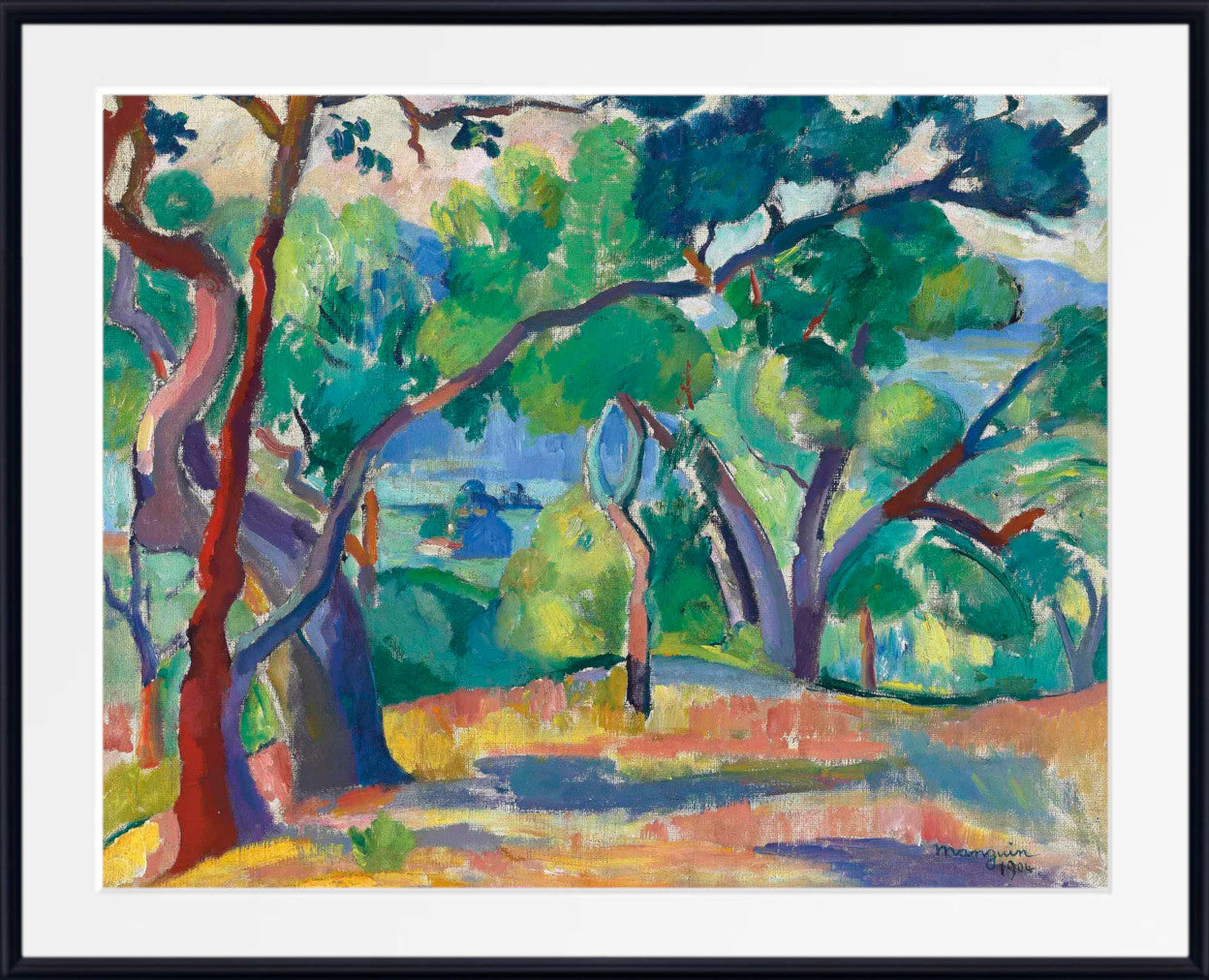
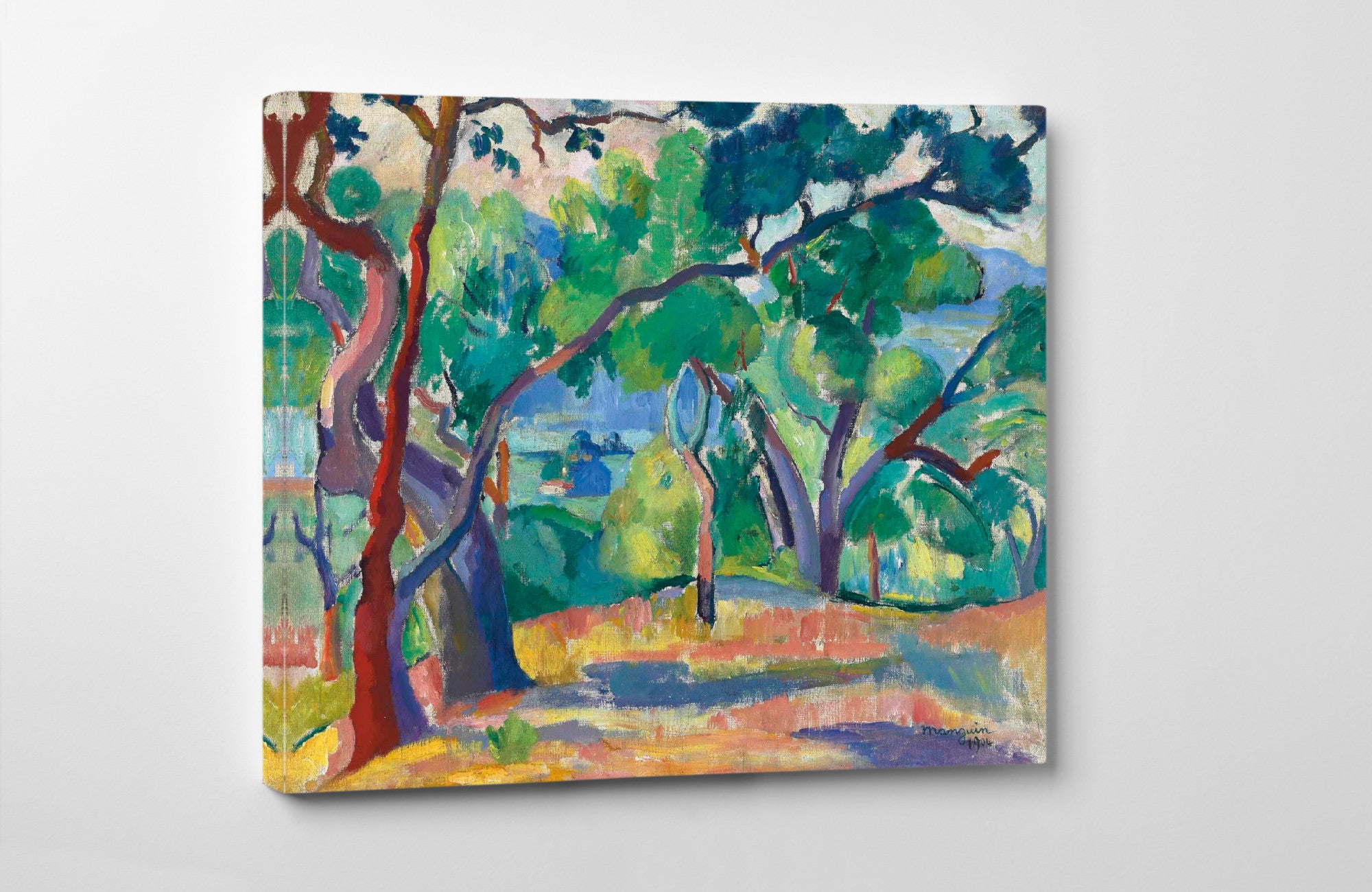
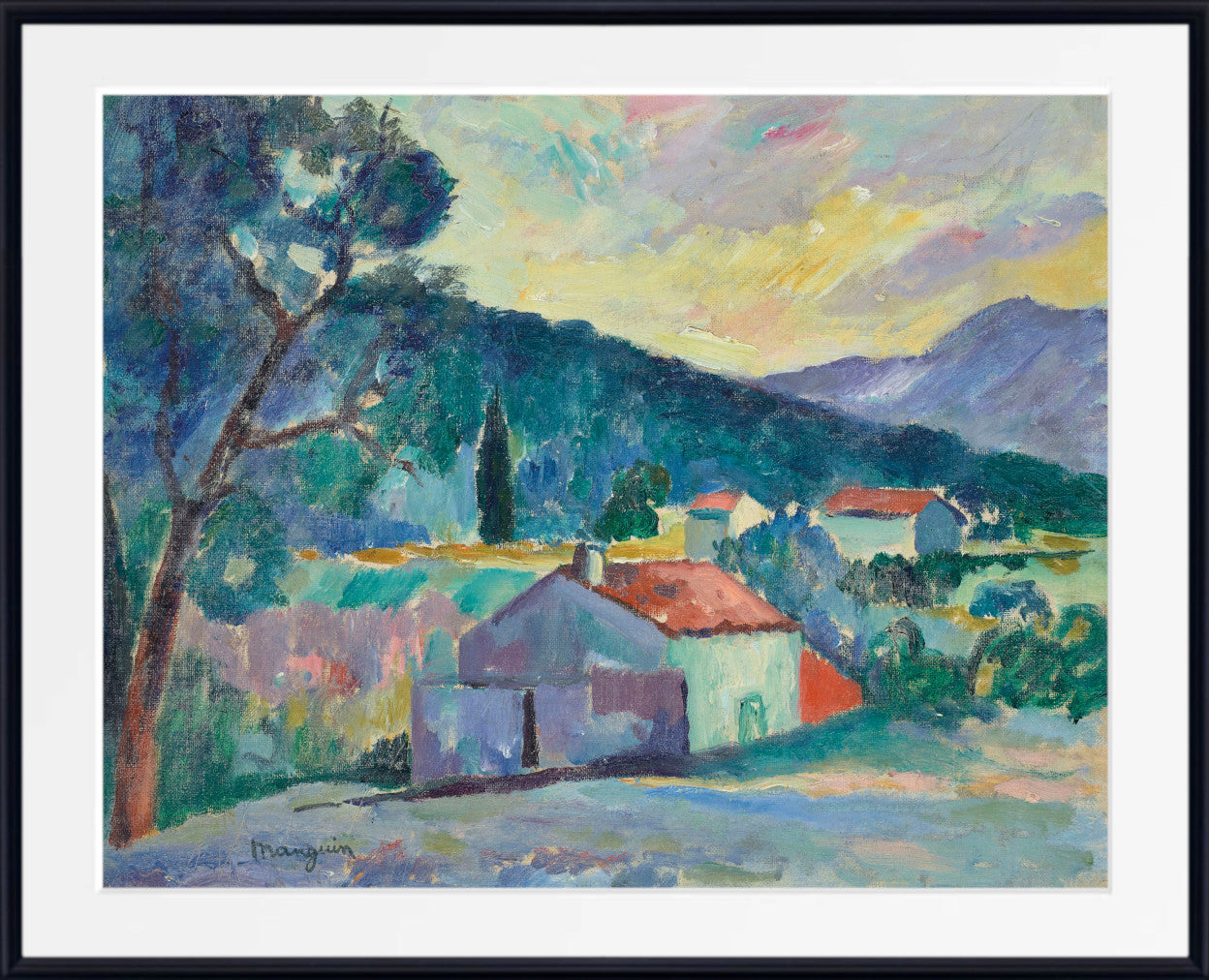
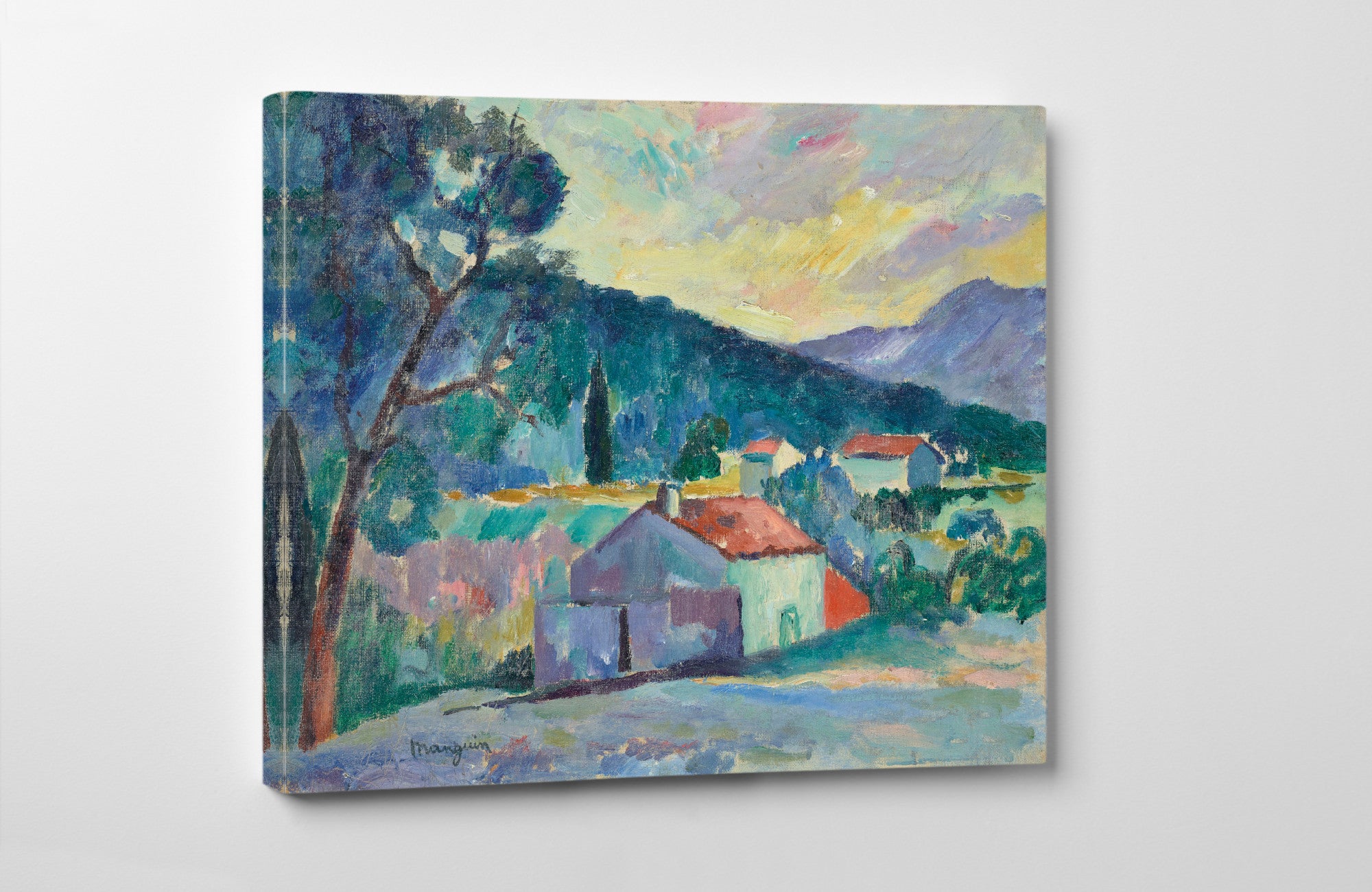
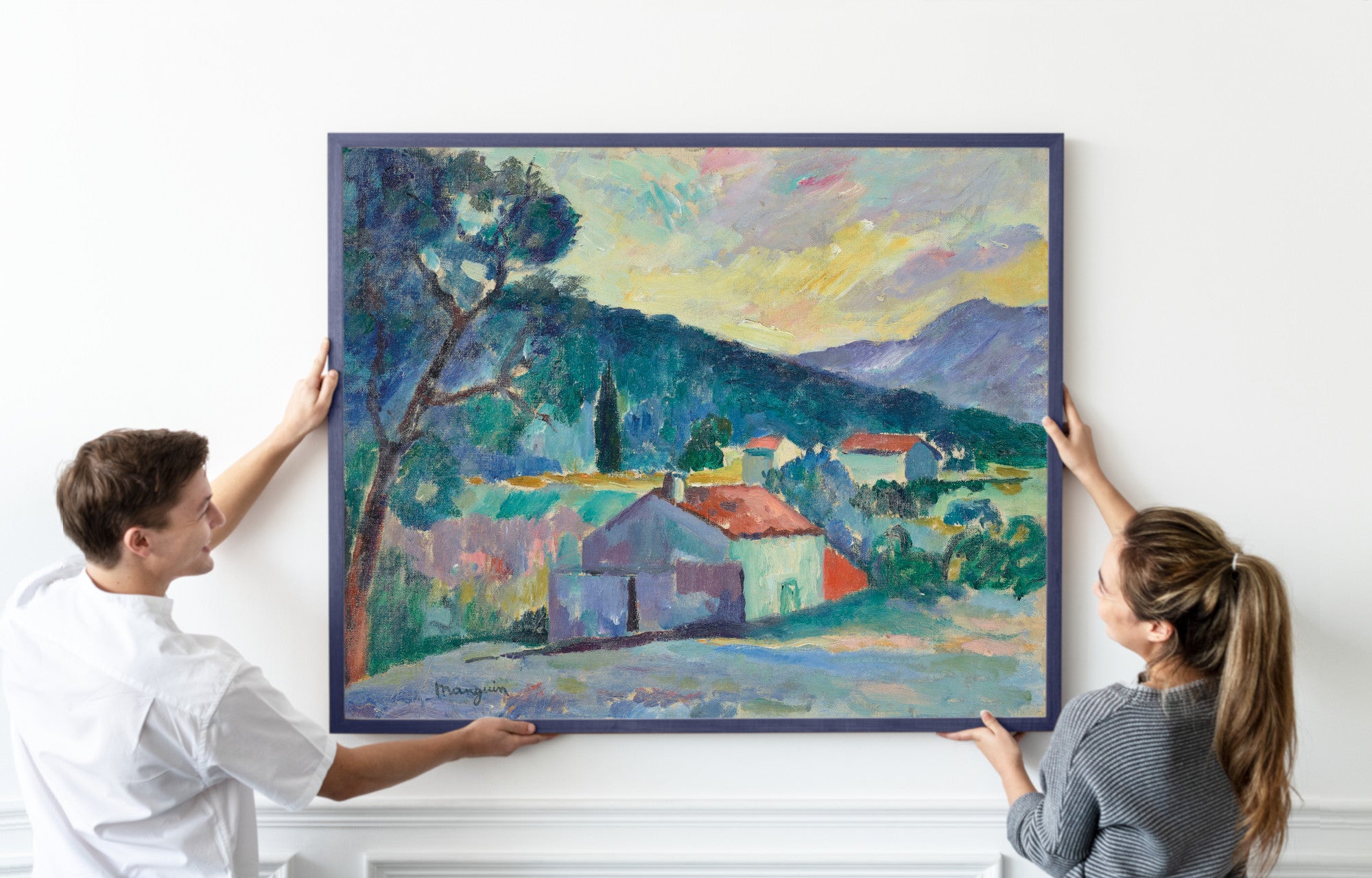
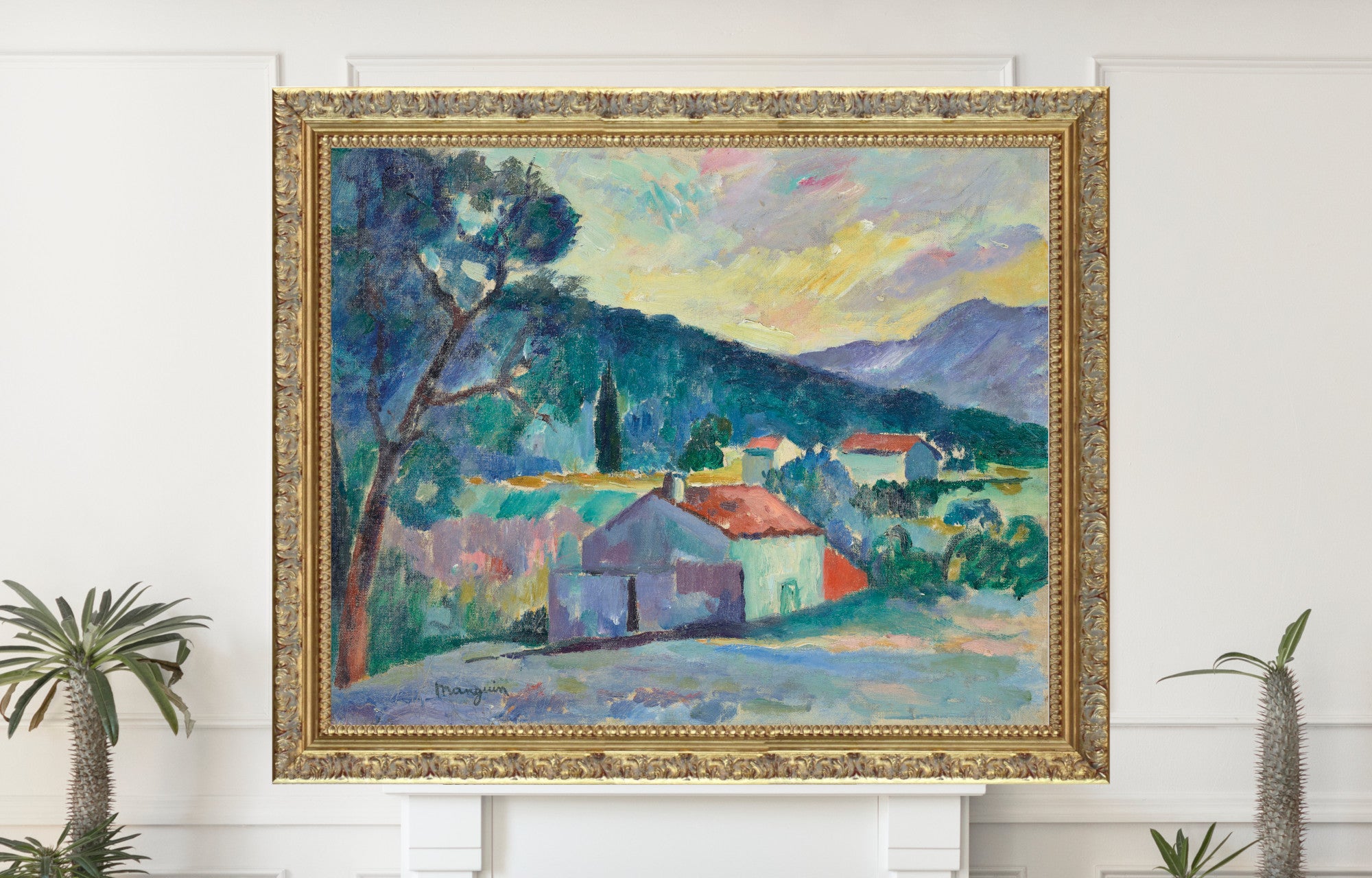
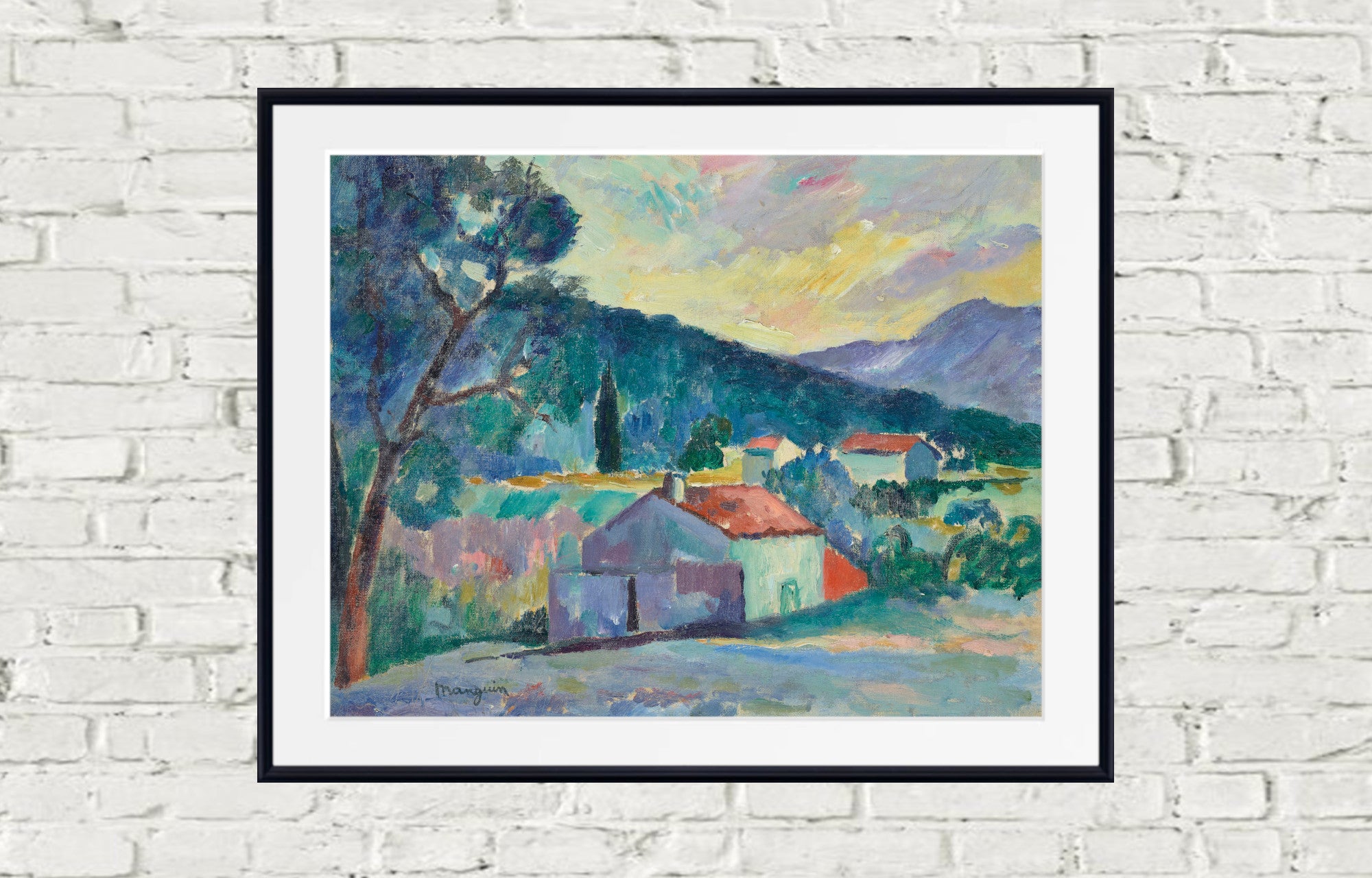
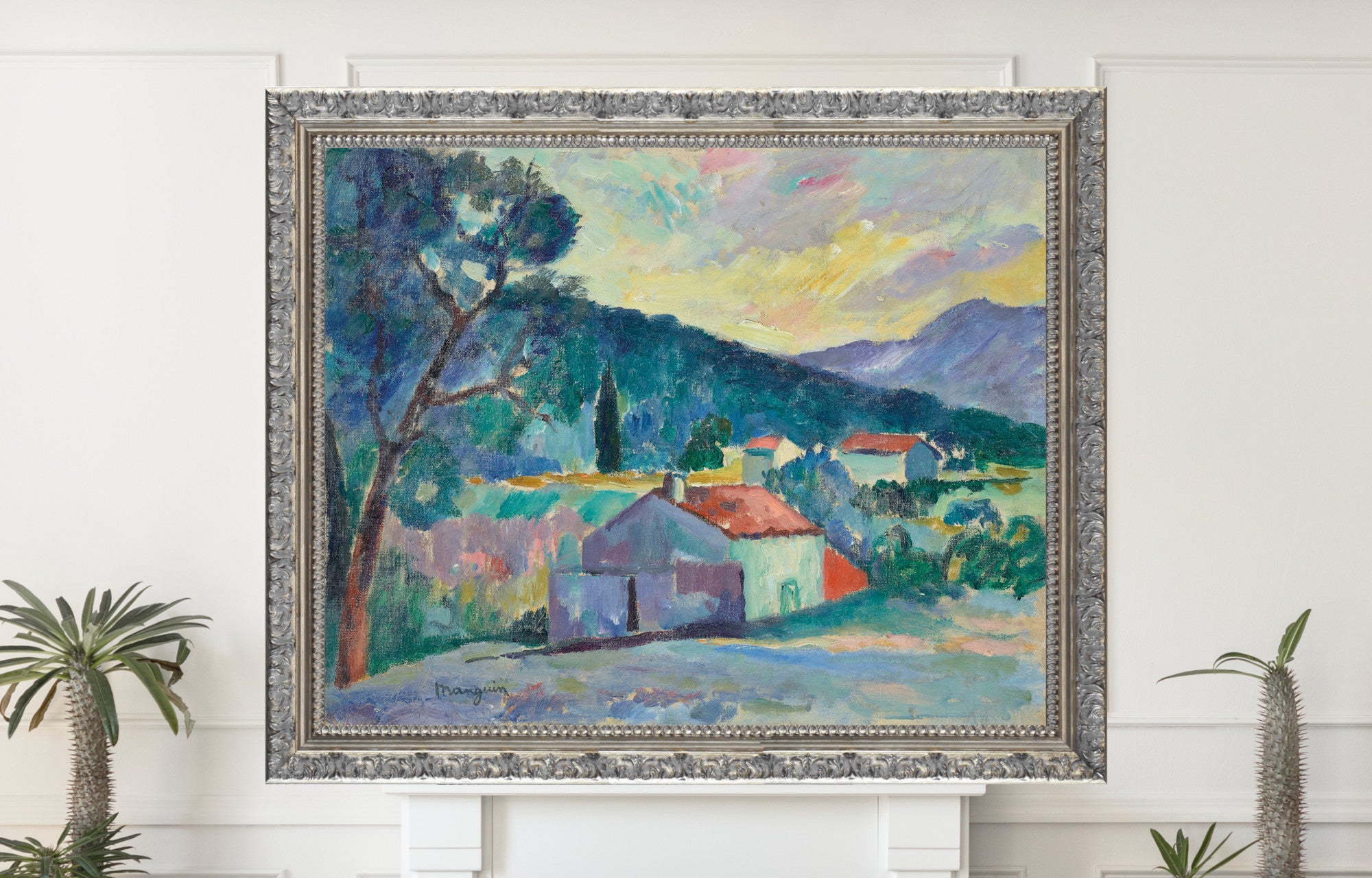
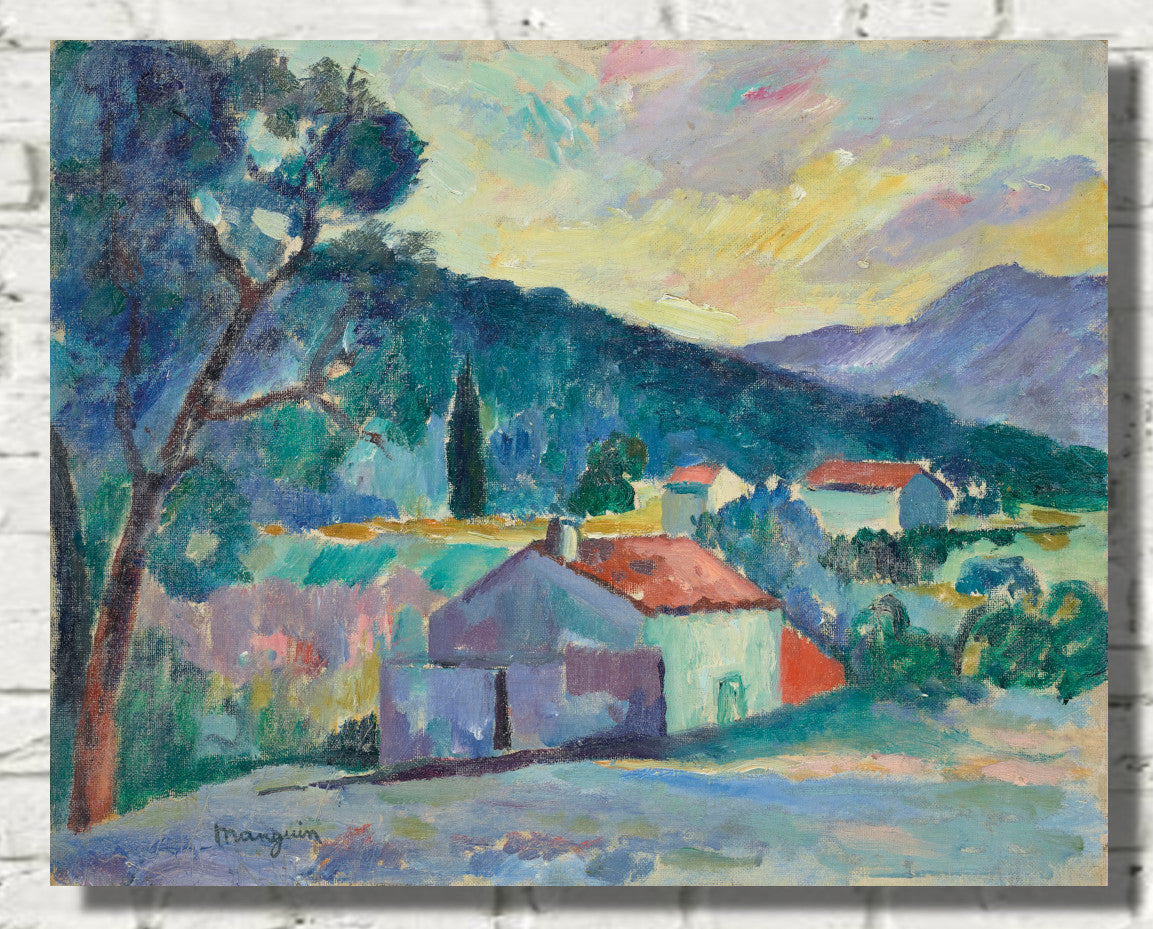
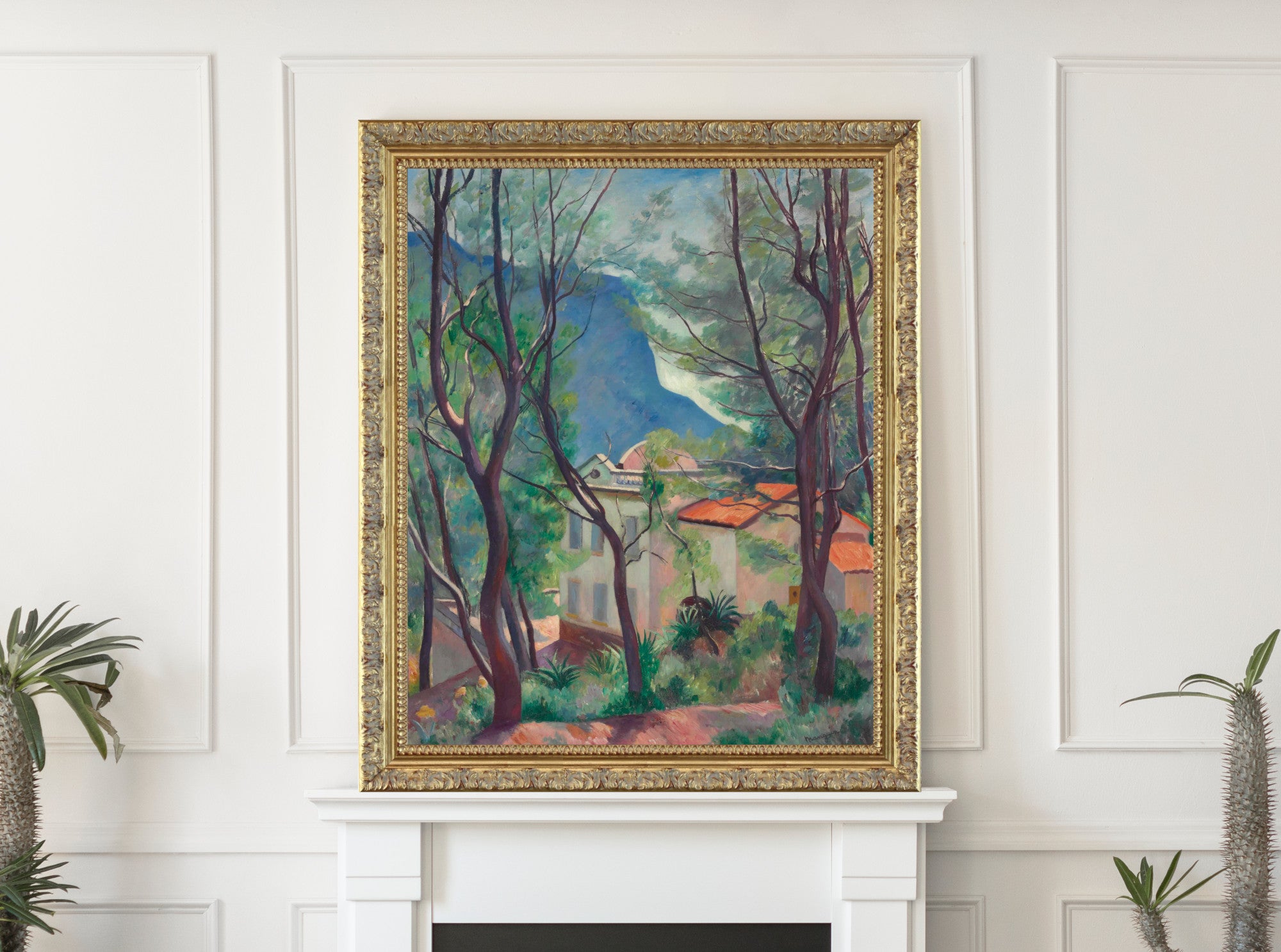
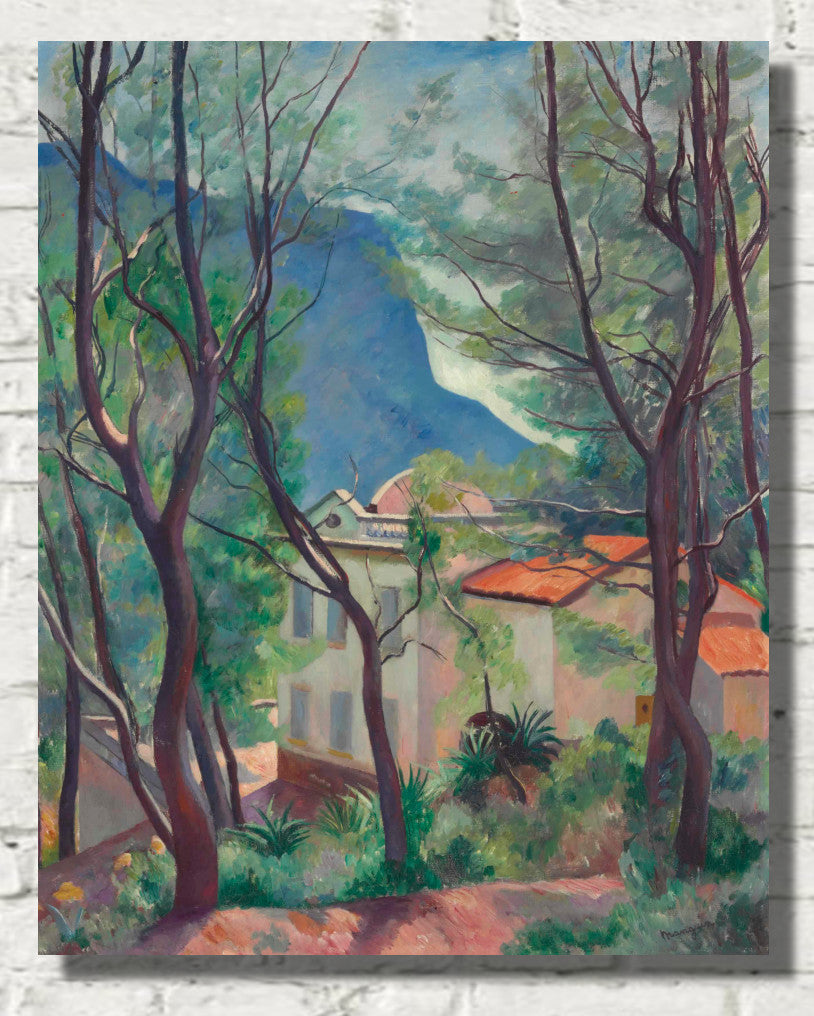
Paintings including Le Mas à Saint-Tropez, The Gulf of Saint-Tropez, Saint-Tropez, vue sur le fond du golfe and other coastal landscapes demonstrate how naturally the region suited his approach to colour.
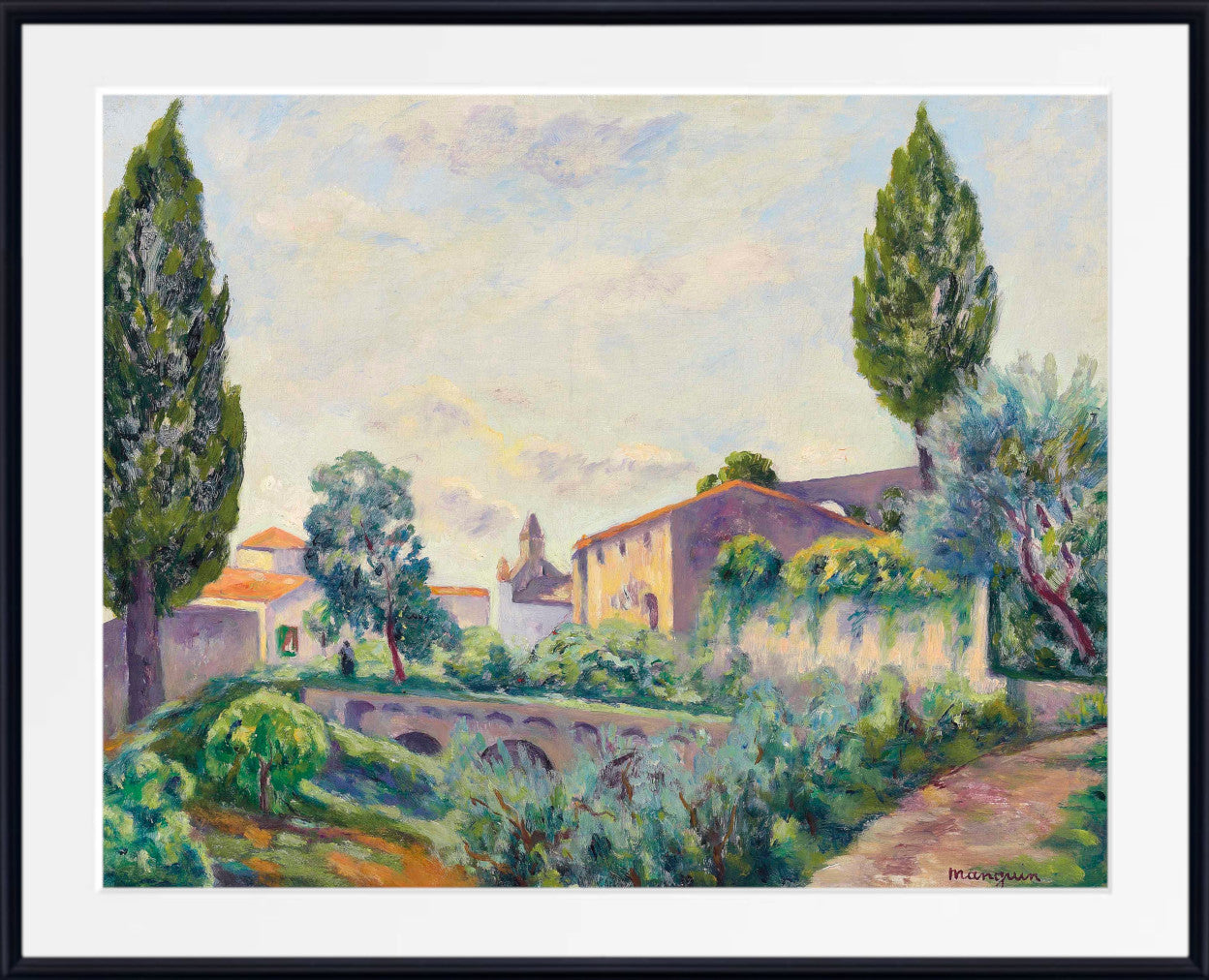
Rather than reproducing the landscape in subdued naturalistic tones, Manguin heightened what he saw. Hills, trees, buildings and water become interlocking areas of saturated colour.
These Mediterranean works are among the strongest examples of Henri Manguin landscape prints and reveal why the south of France became so important to Fauvist painting.
Explore more paintings of coast, countryside and natural scenery in GalleryThane's Landscape and Scenery Fine Art Prints.
Jeanne Manguin – Muse and Favourite Model
One of the most important figures in Manguin's art was his wife, Jeanne Carette.
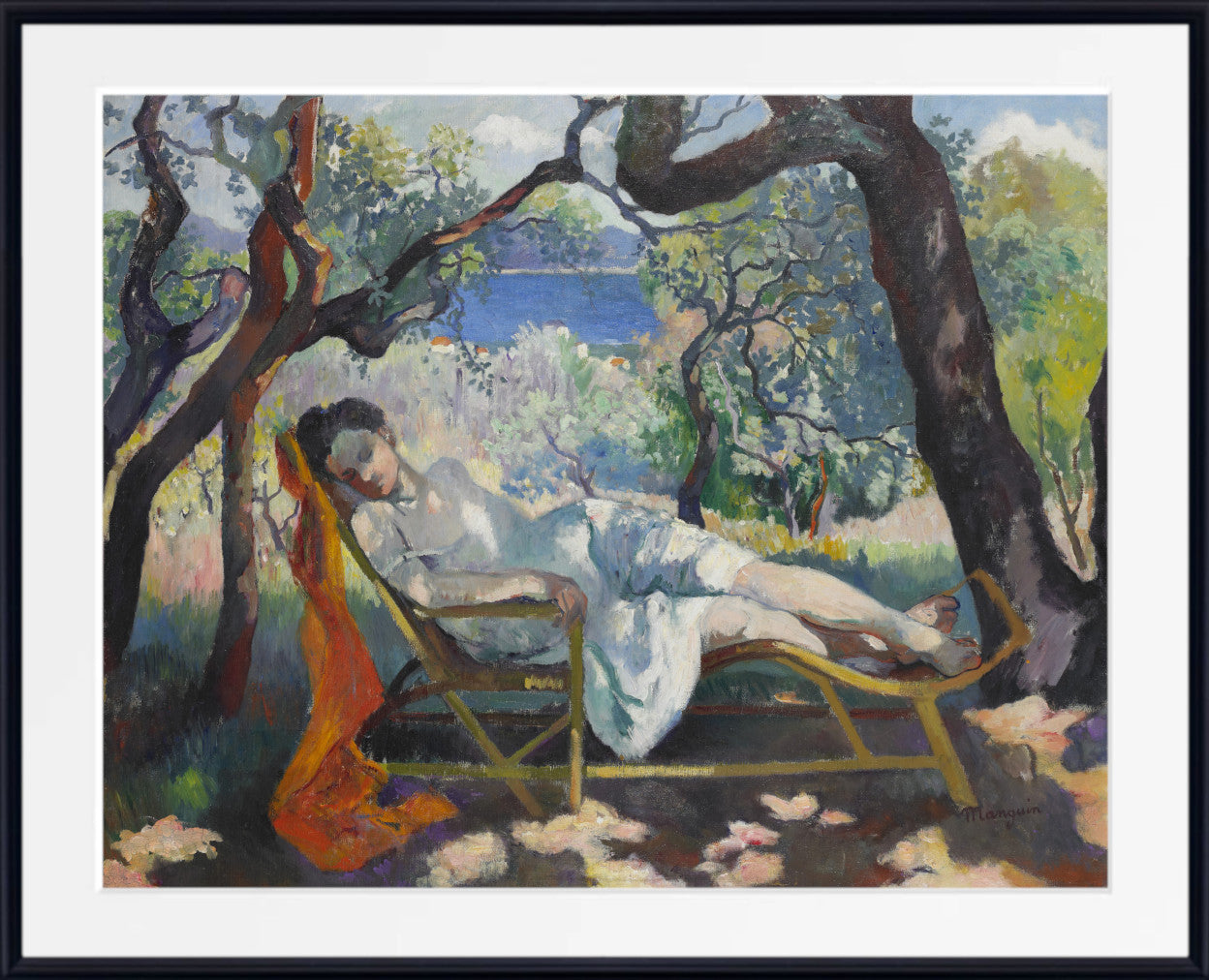
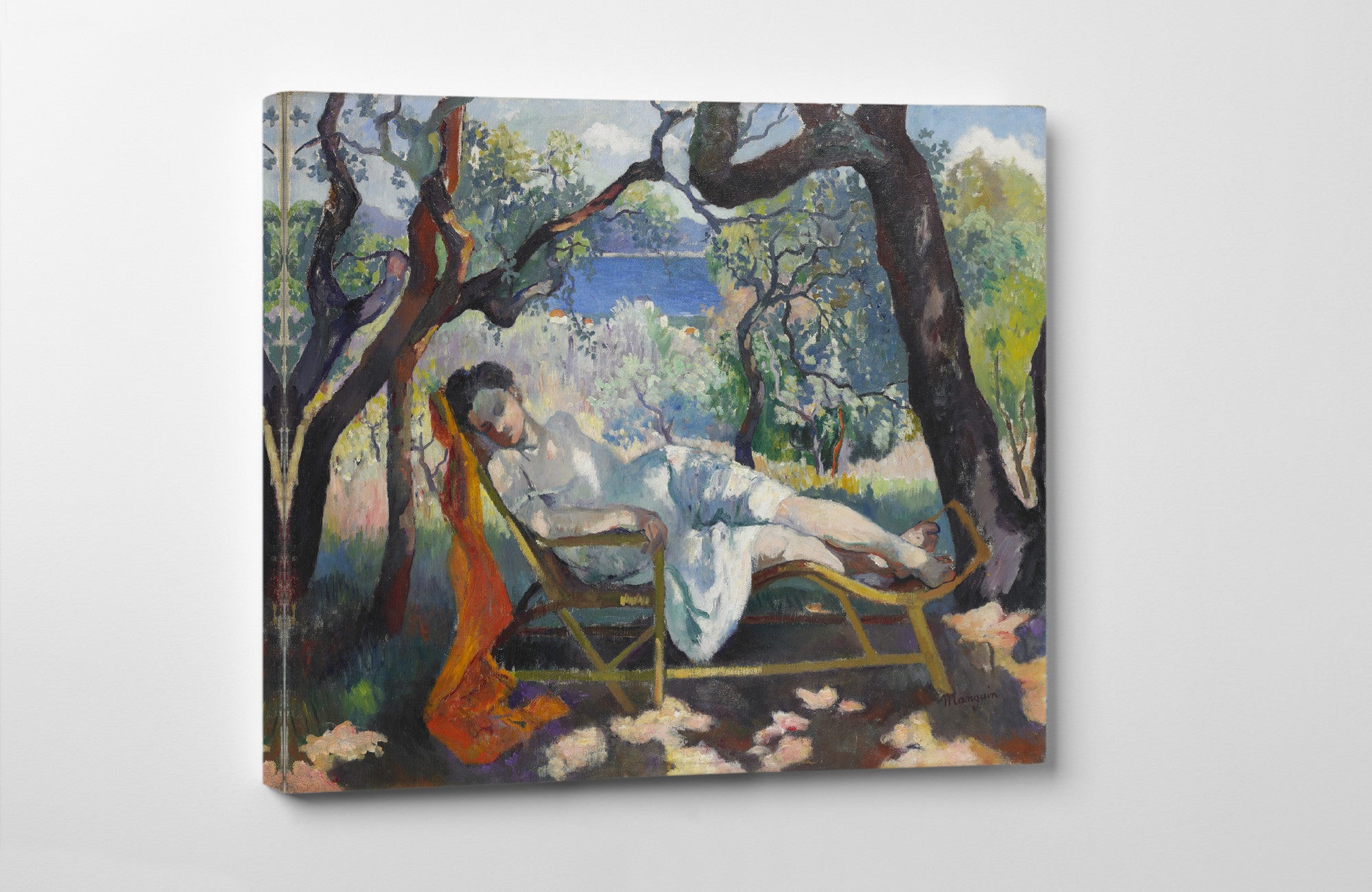
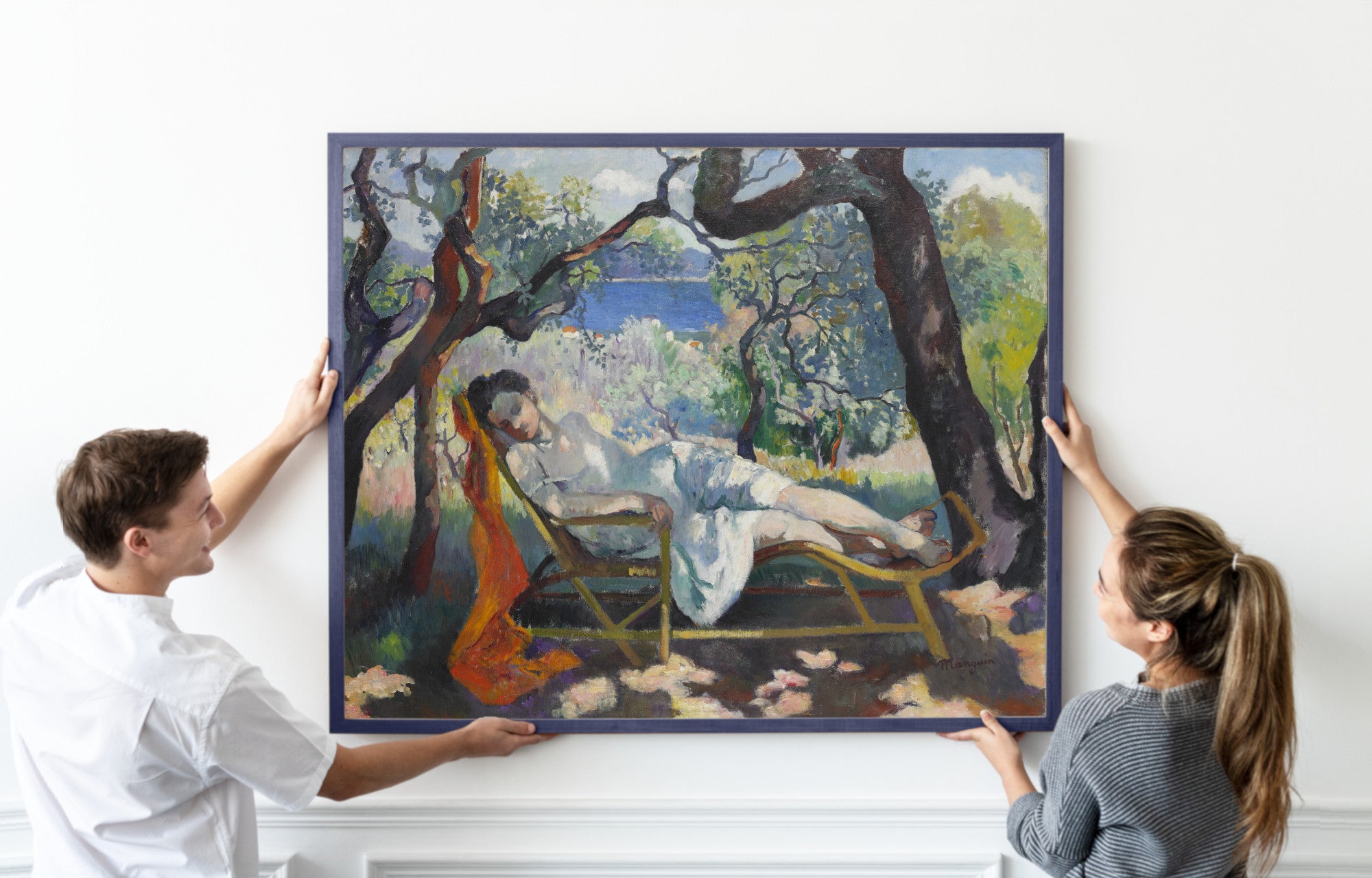
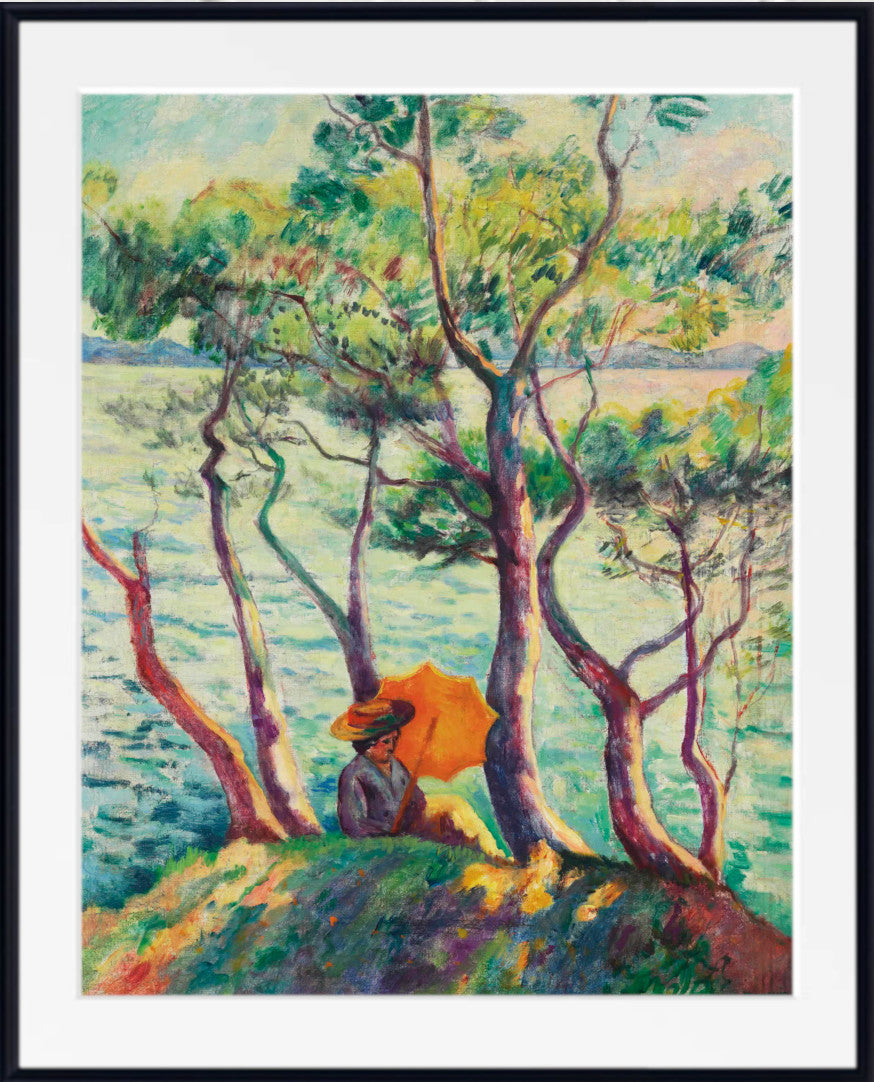
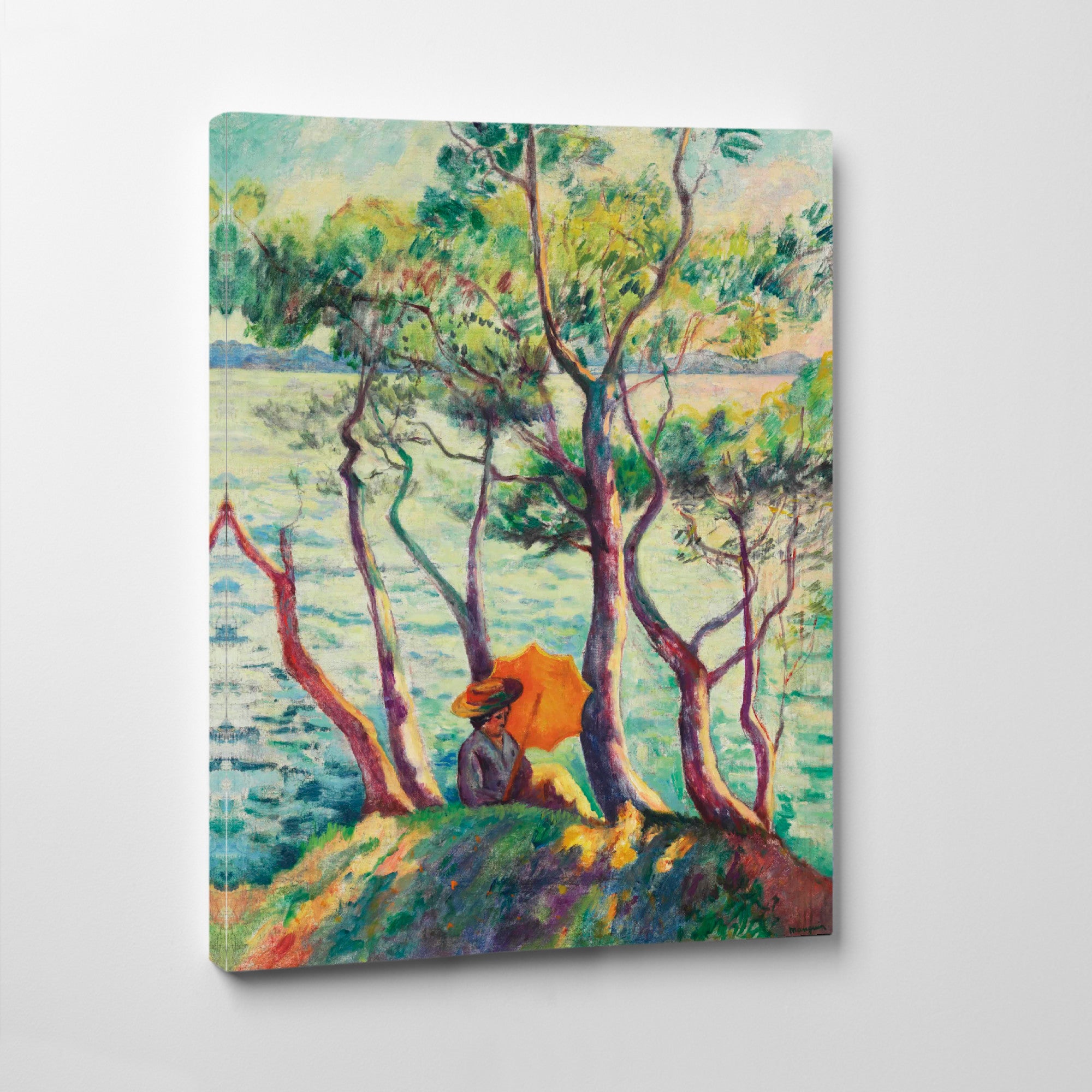
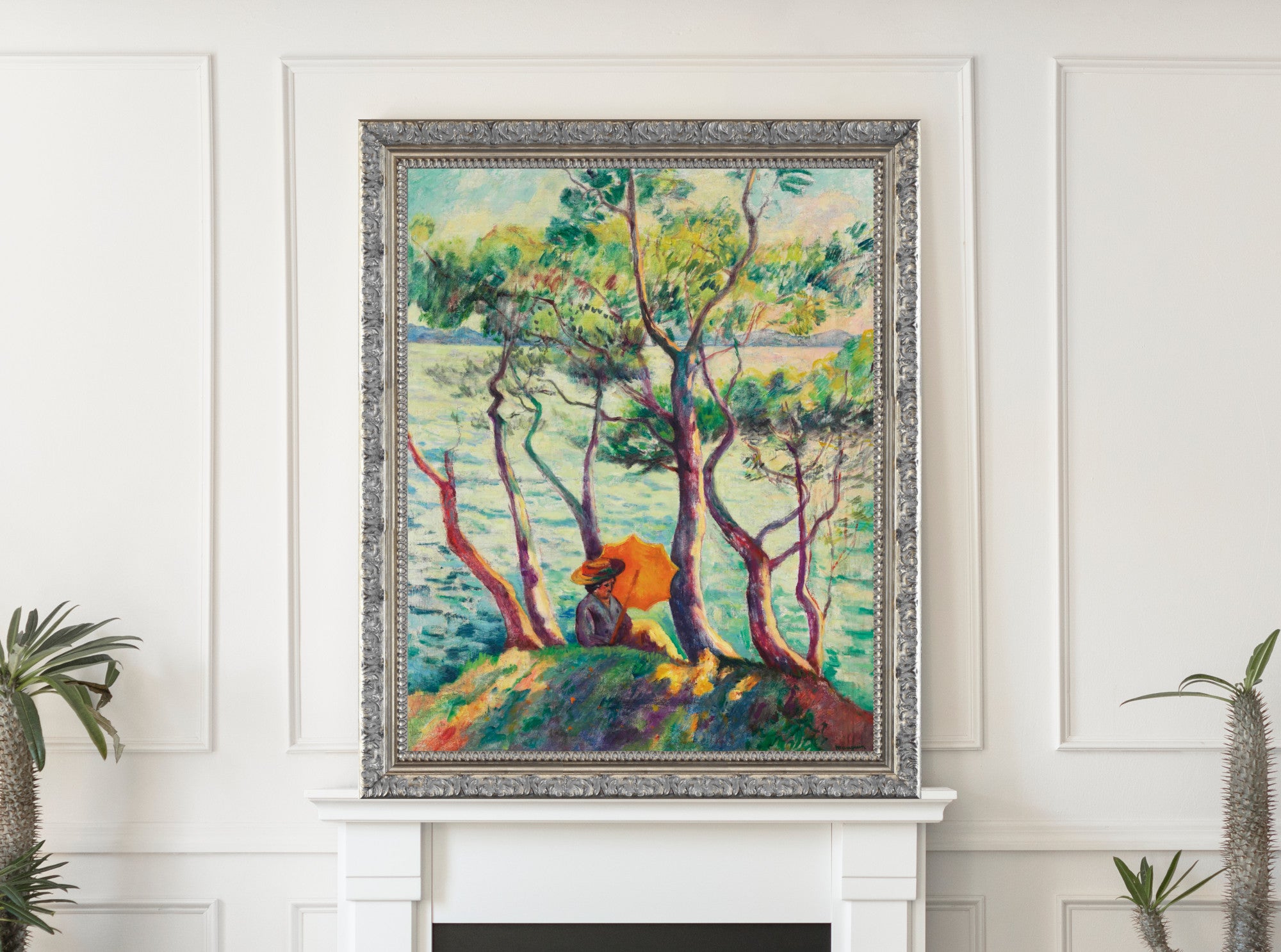
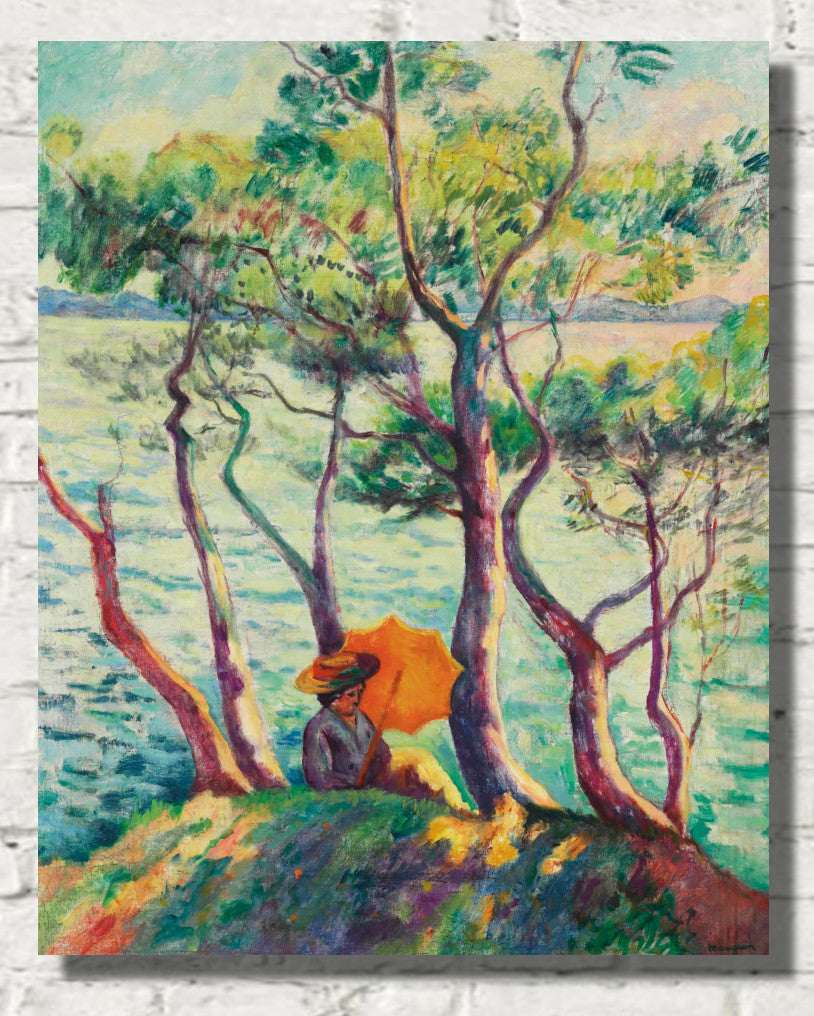
Jeanne appears repeatedly throughout his paintings, seated in gardens, holding a parasol, relaxing in domestic settings and posing outdoors in the brilliant southern light.
Works such as Jeanne with Parasol demonstrate how Manguin combined portraiture with his fascination for colour and atmosphere. Rather than separating the figure from the landscape, he often allowed colours from the surroundings to flow into clothing and skin.
The repeated appearance of Jeanne also gives Manguin's work an unusually intimate quality. Many of these paintings record quiet moments of family life rather than formal portrait sittings.
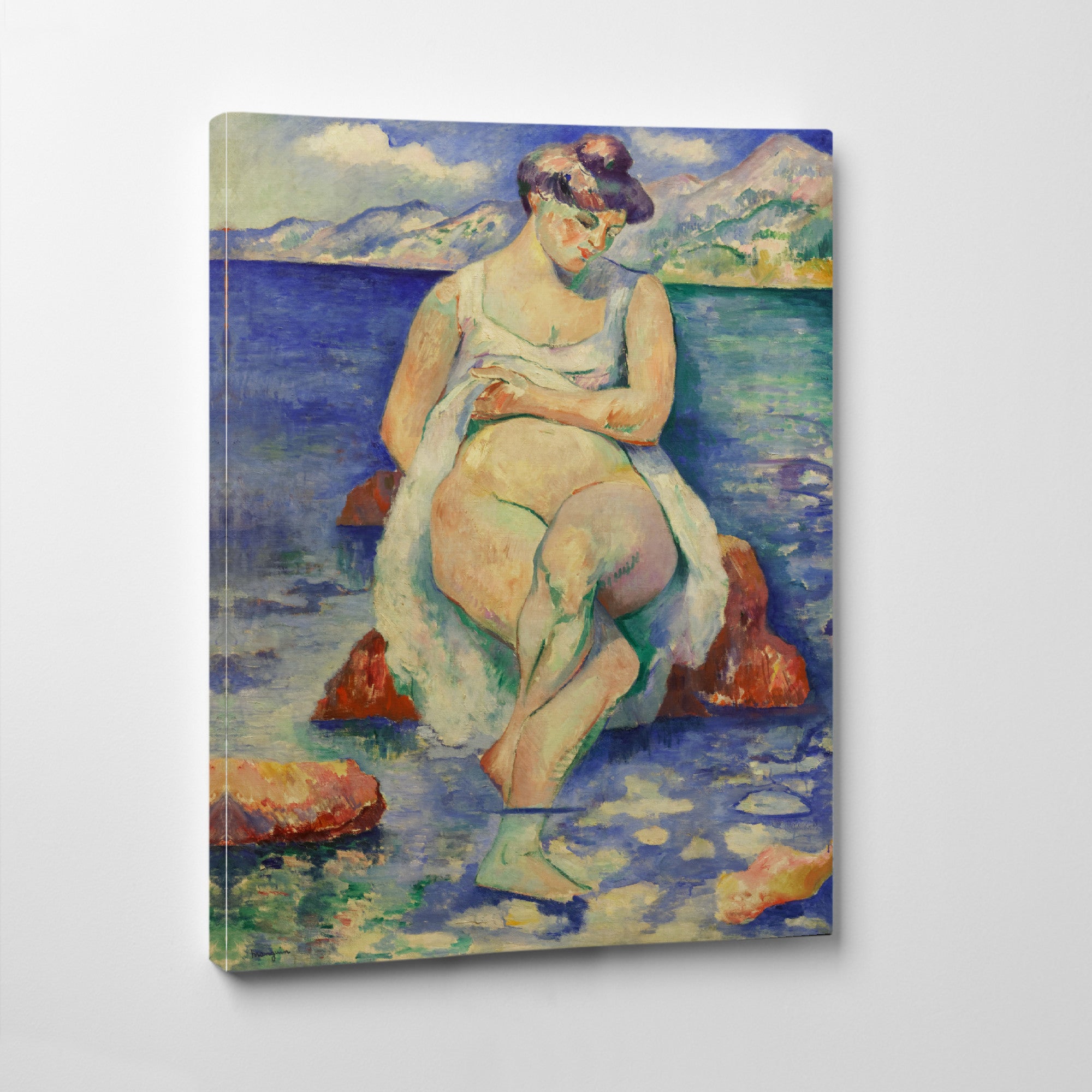
Bathers and the Human Figure
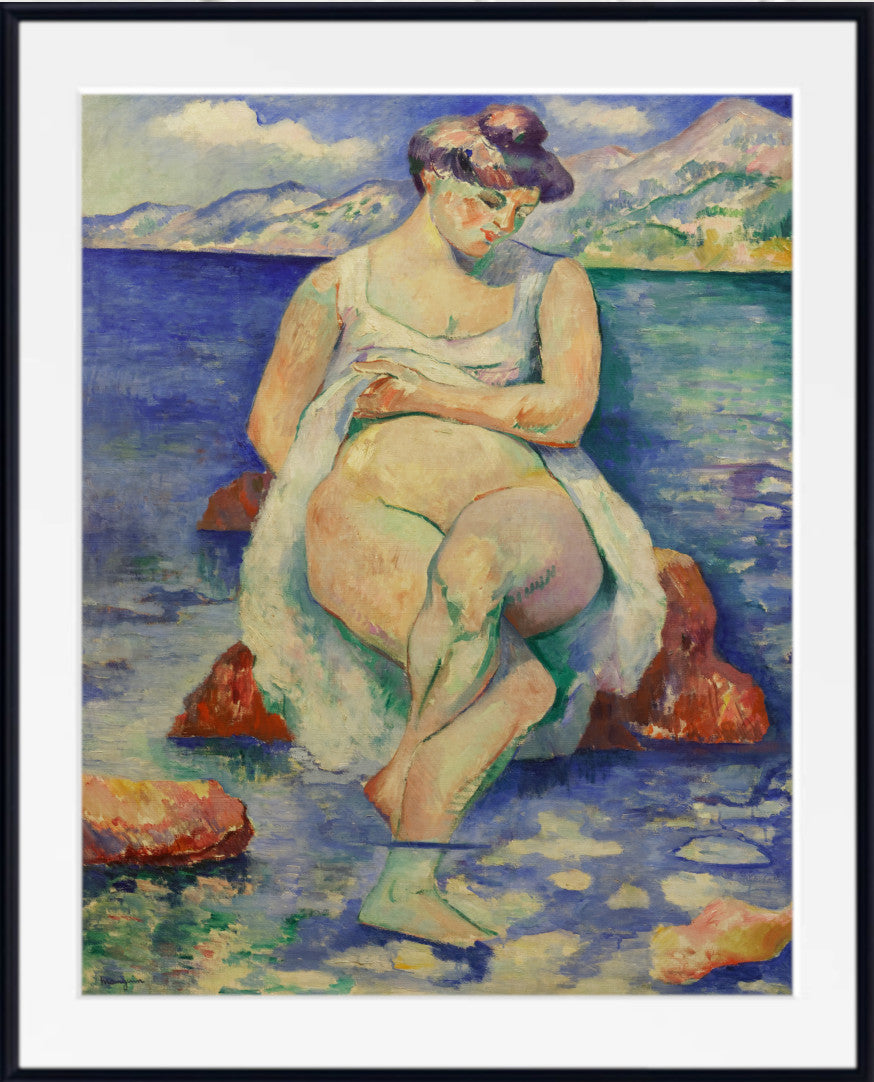
The female figure was another recurring subject for Manguin.
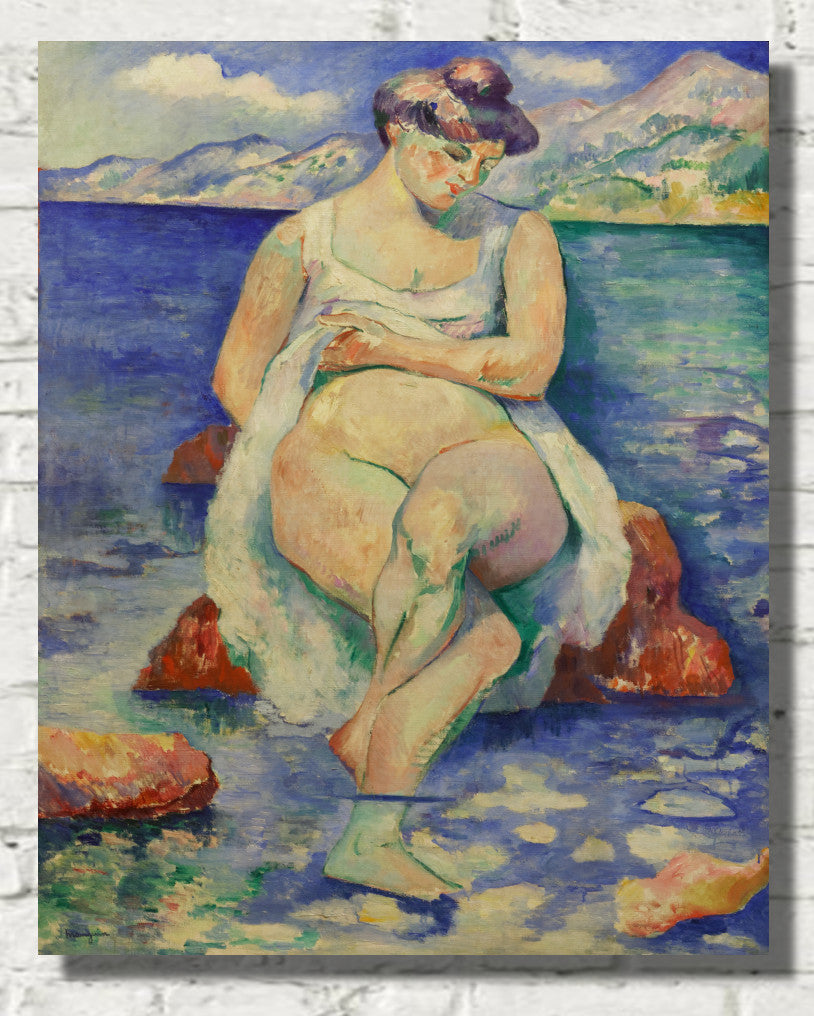
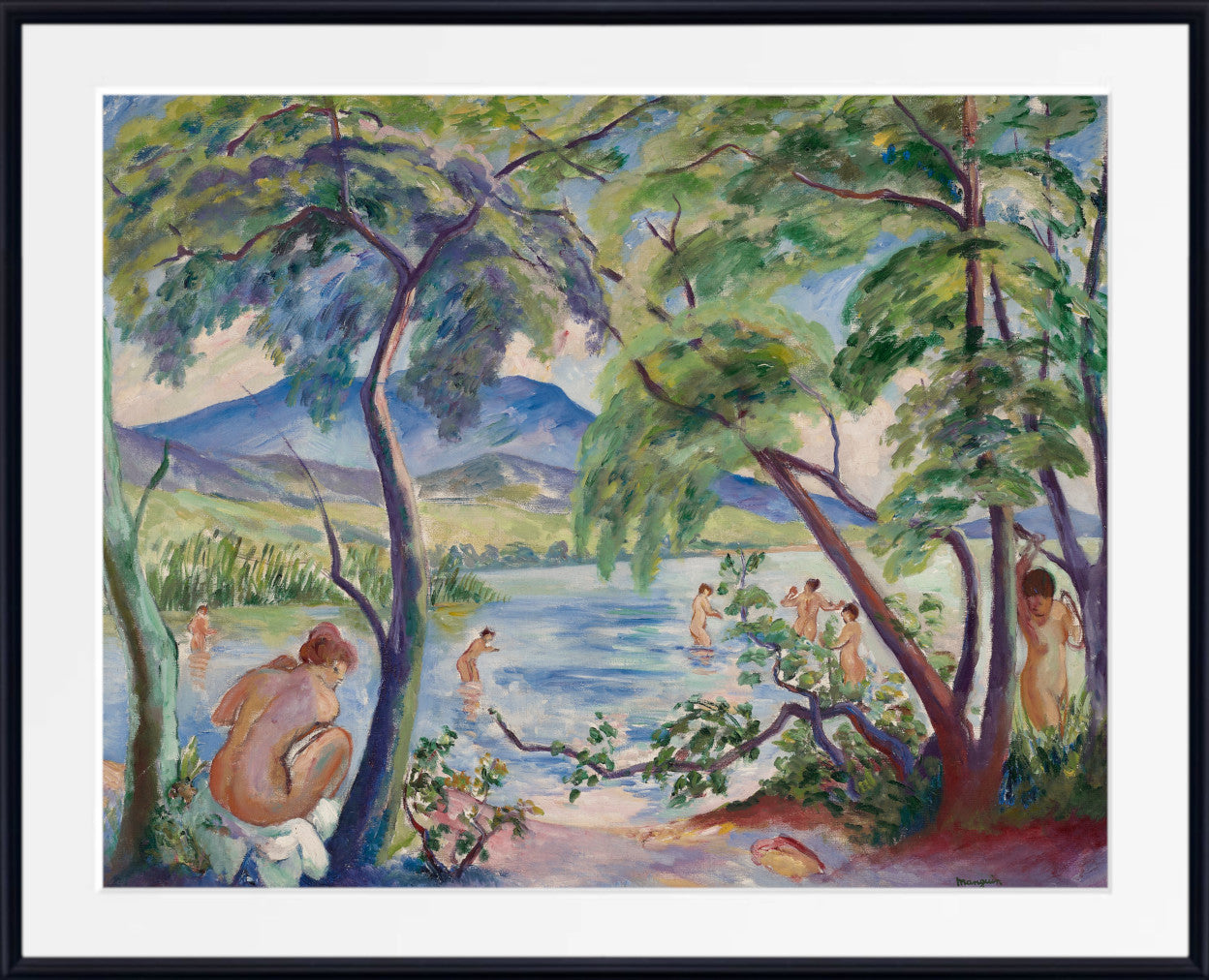
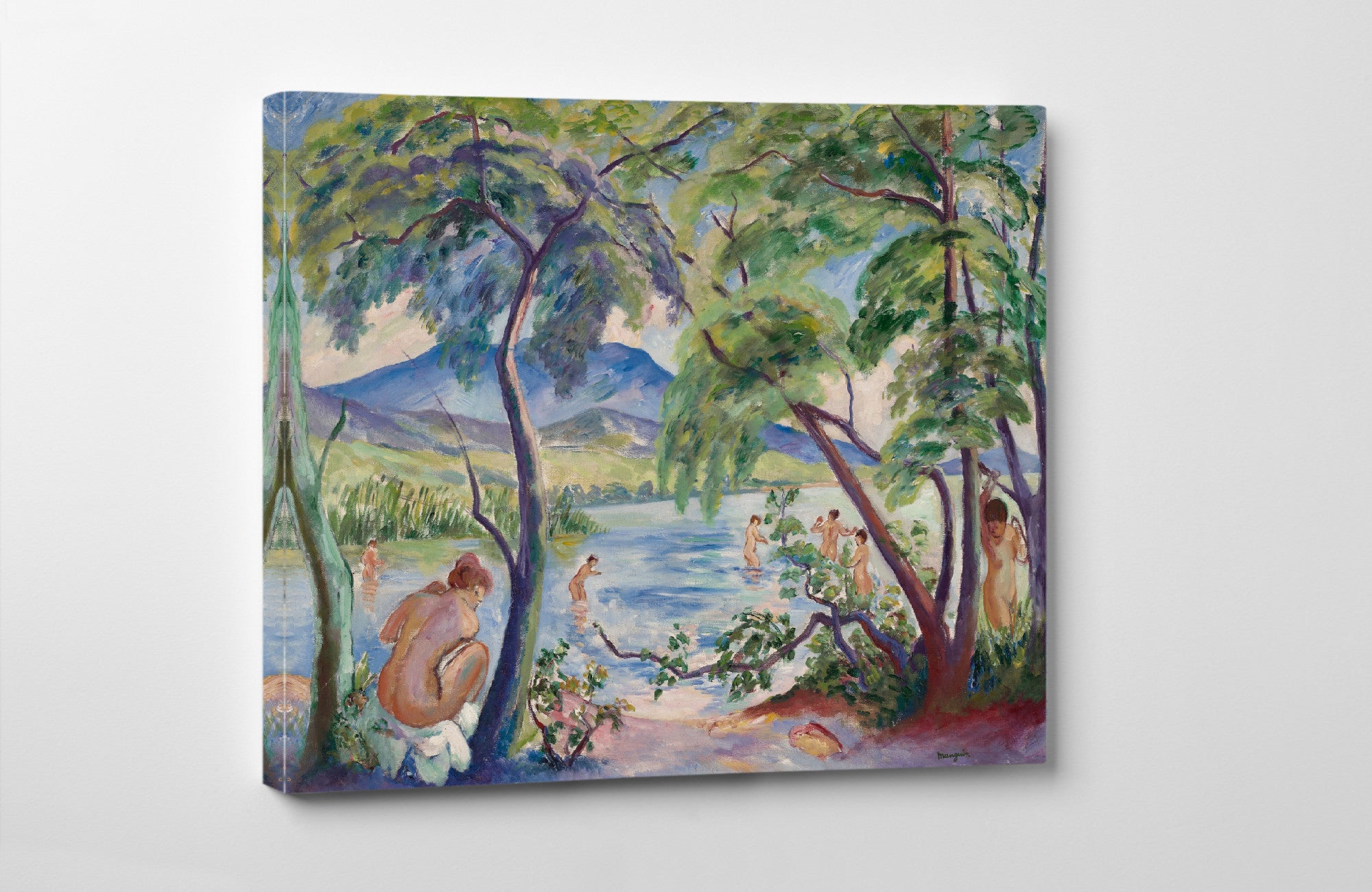
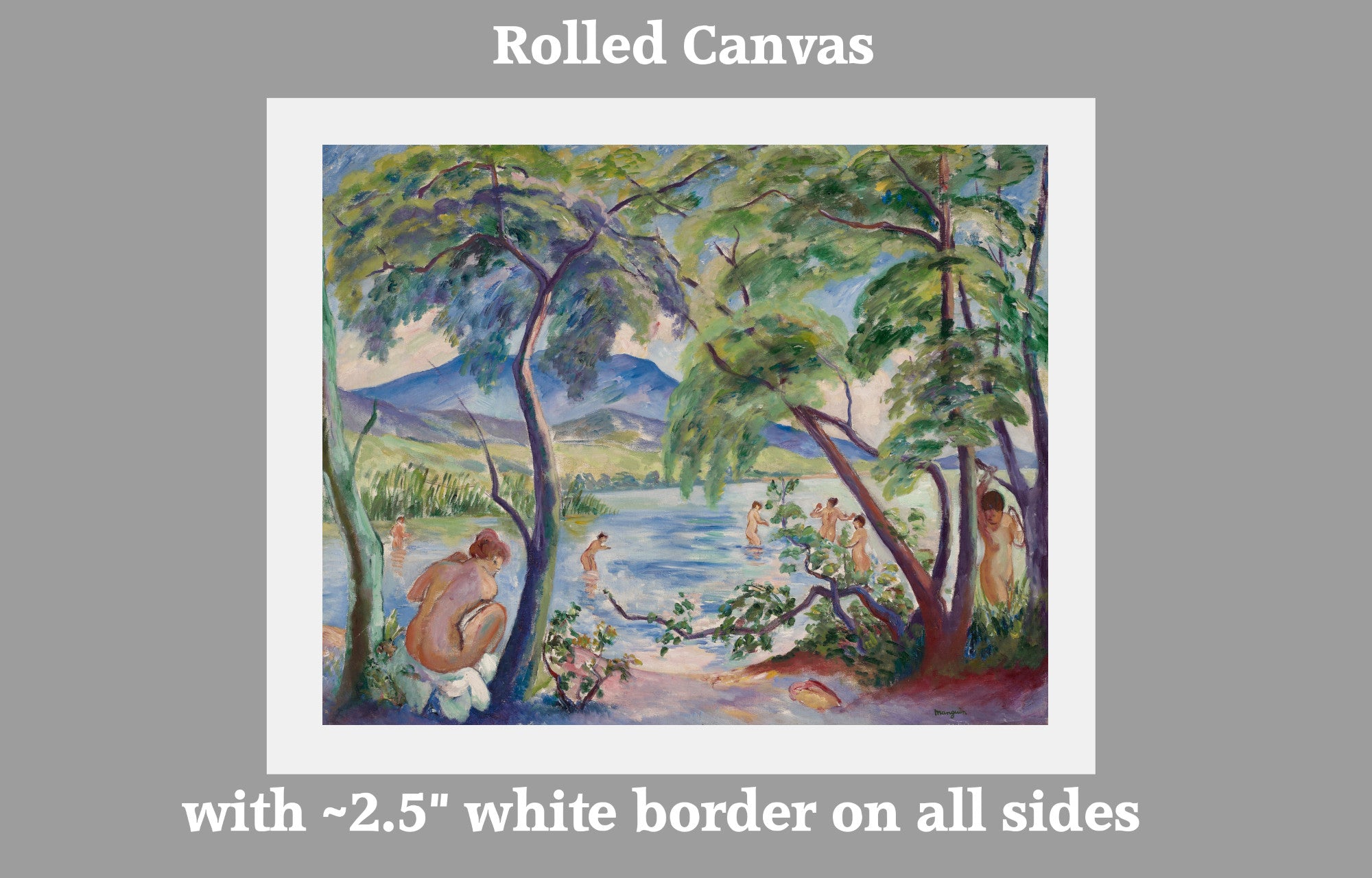
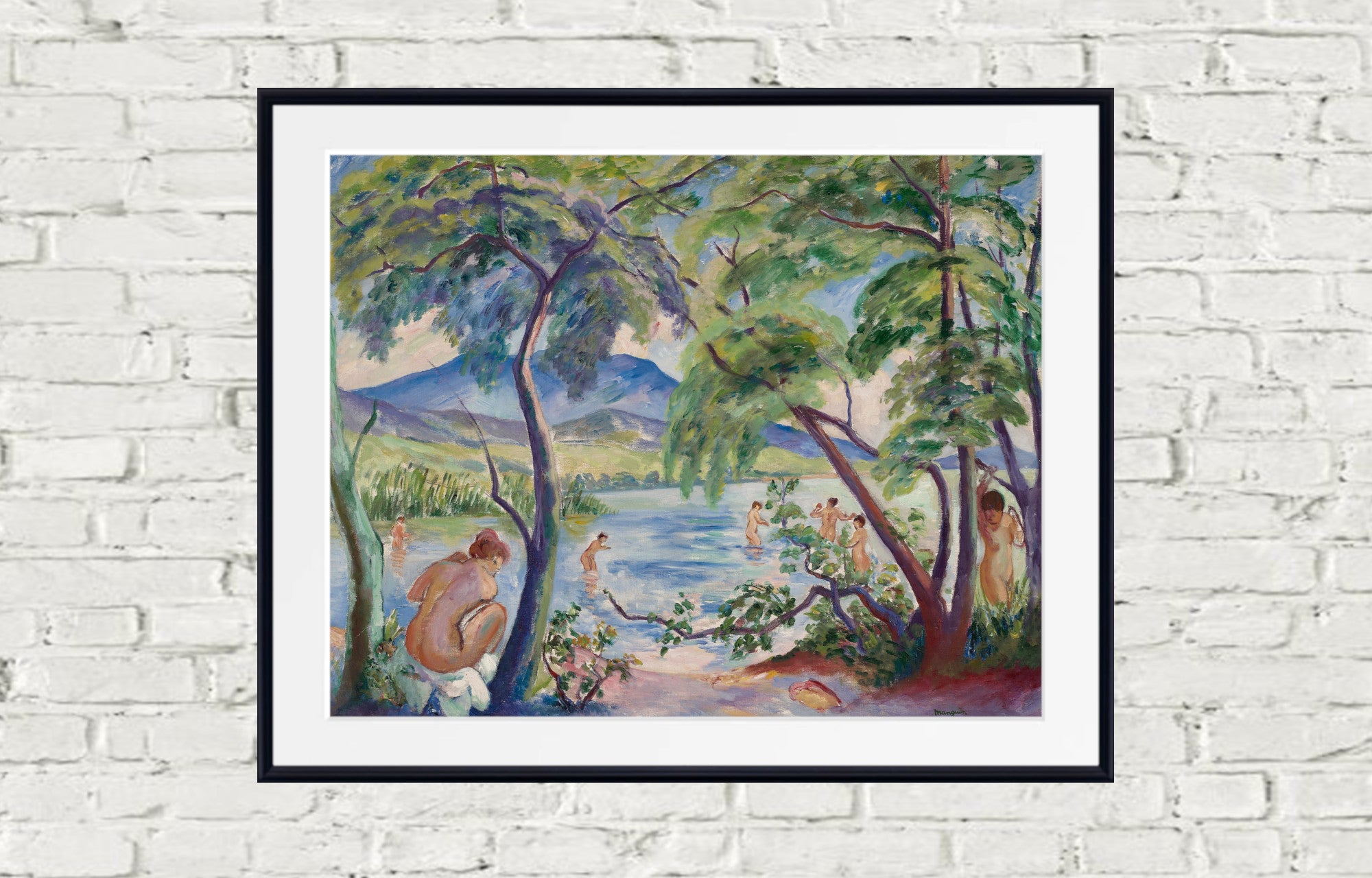
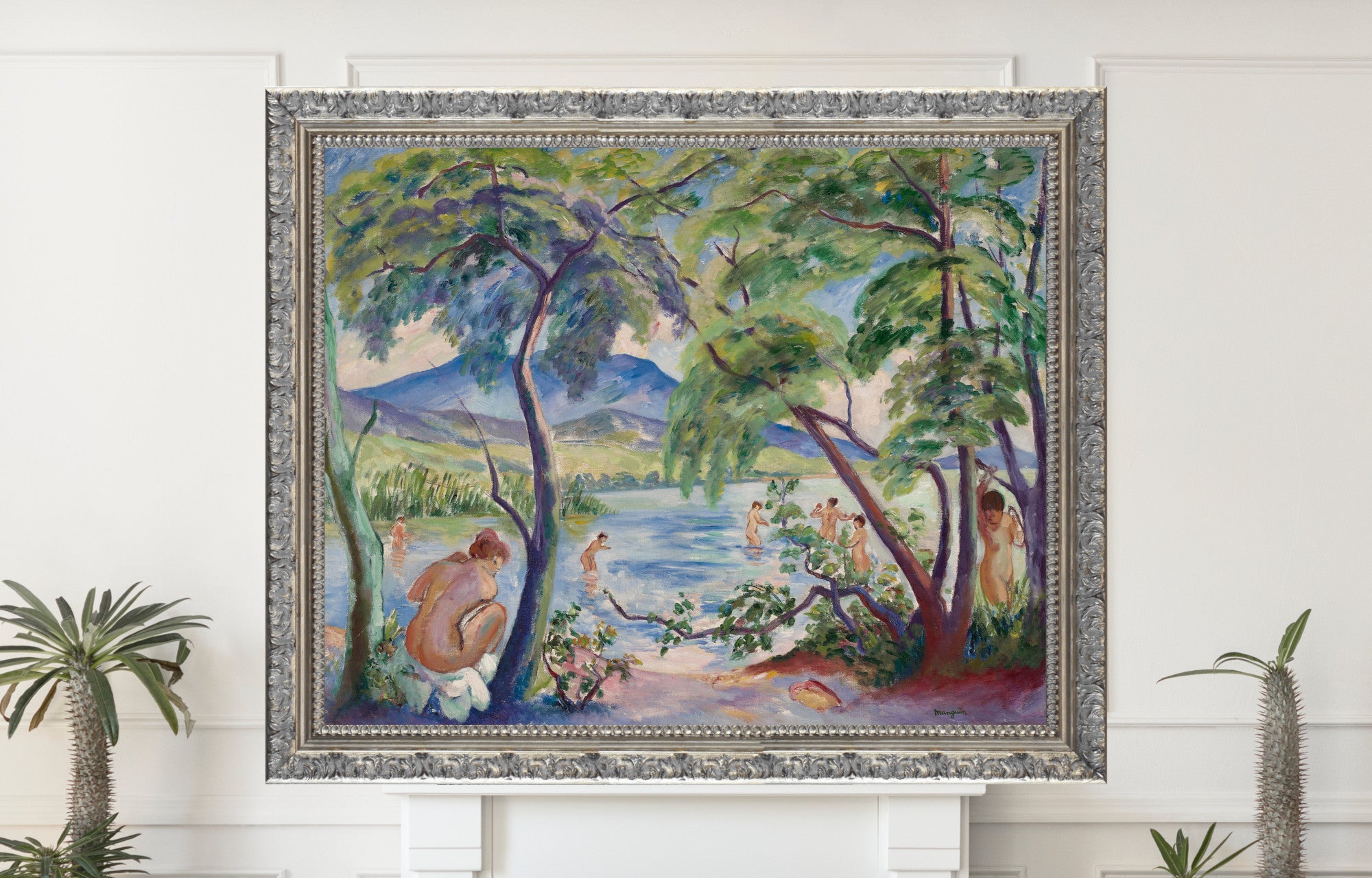
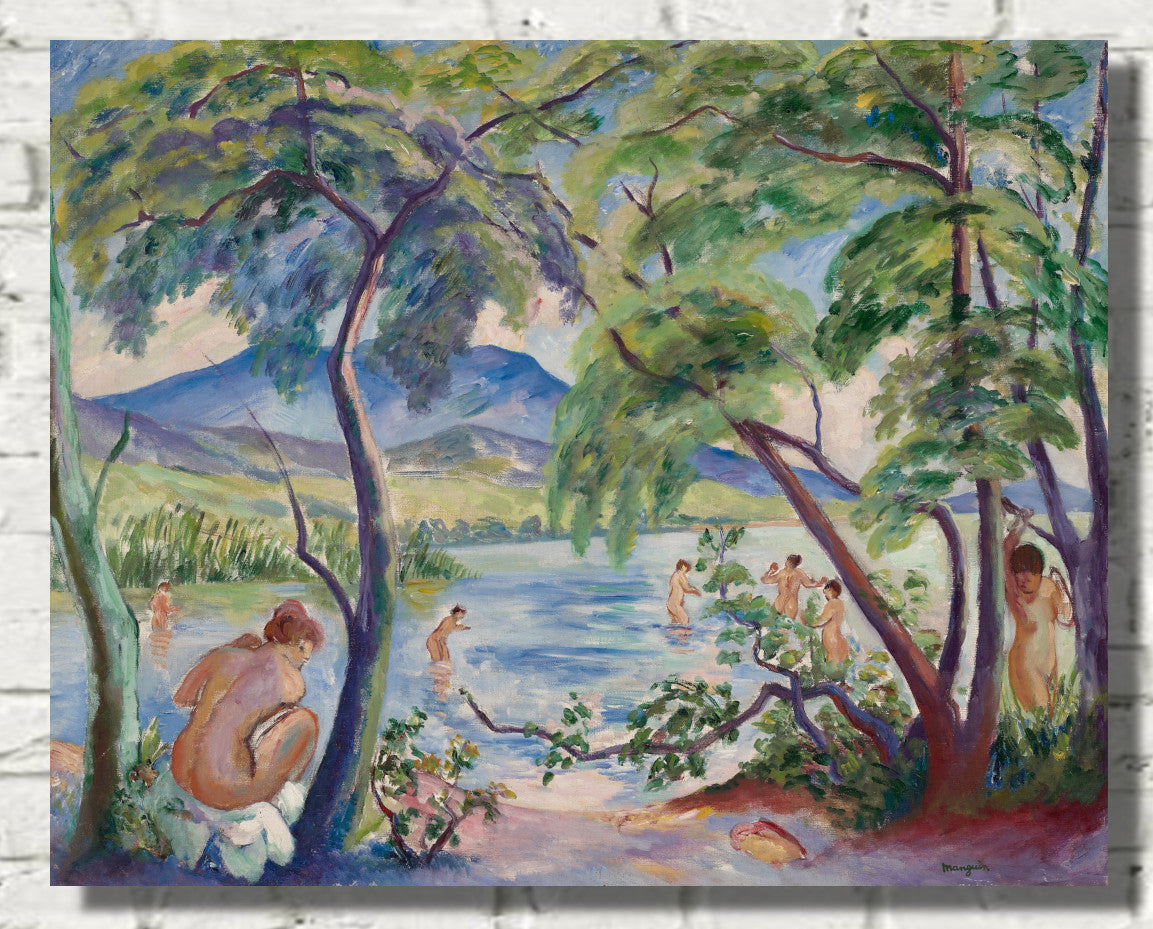
Bathers were especially important because they allowed him to combine the human body with landscape, sunlight and water. Paintings such as Landscape with Bathers, Colombier show figures absorbed into the surrounding landscape through repeated colours and flowing contours.
The subject connected Manguin with a much longer tradition of European figure painting, but his treatment was distinctly modern.
Instead of carefully modelled academic bodies, his figures are constructed through direct brushwork and areas of expressive colour. The surrounding landscape becomes equally important, creating harmony between figure and environment.
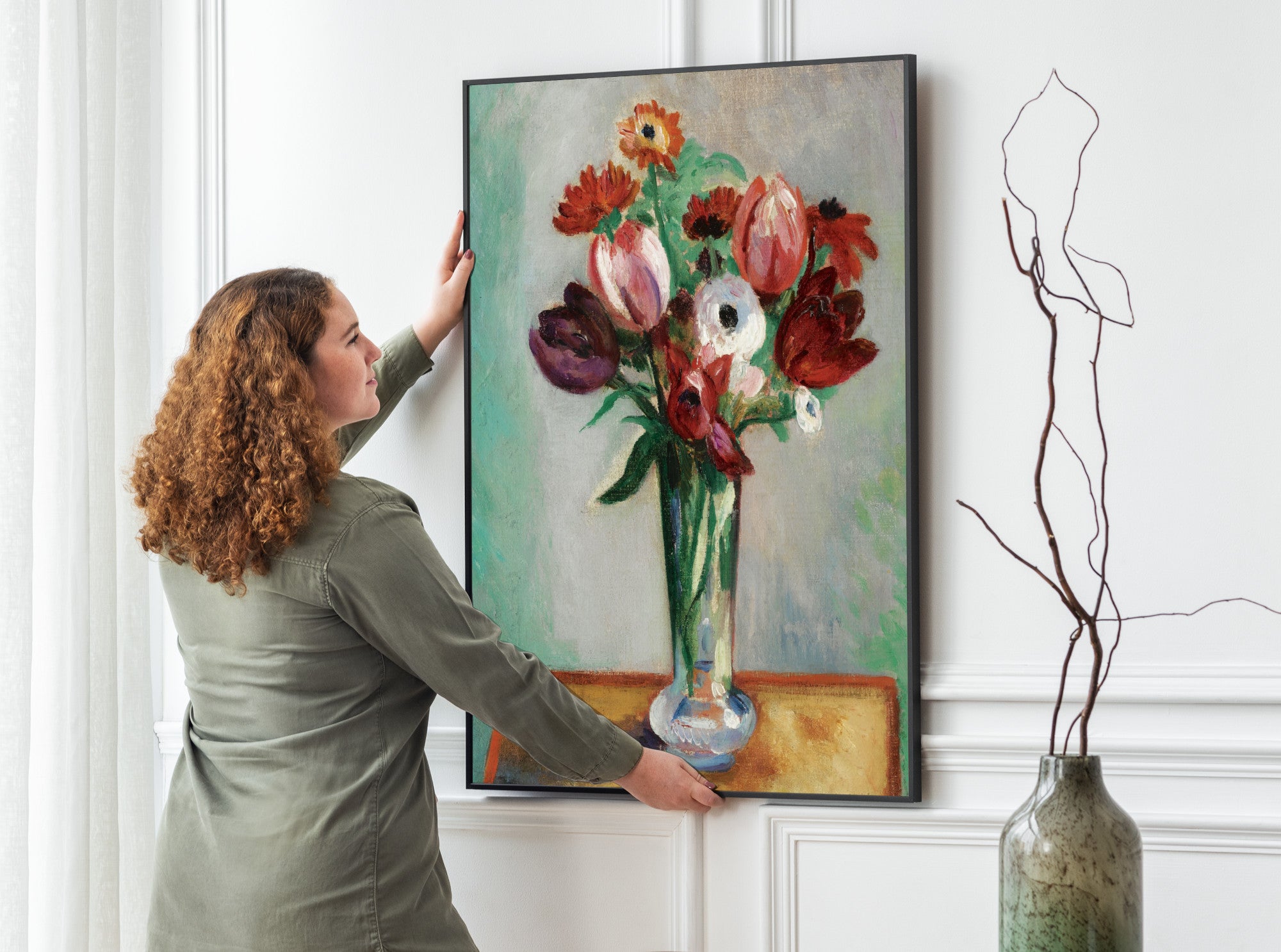
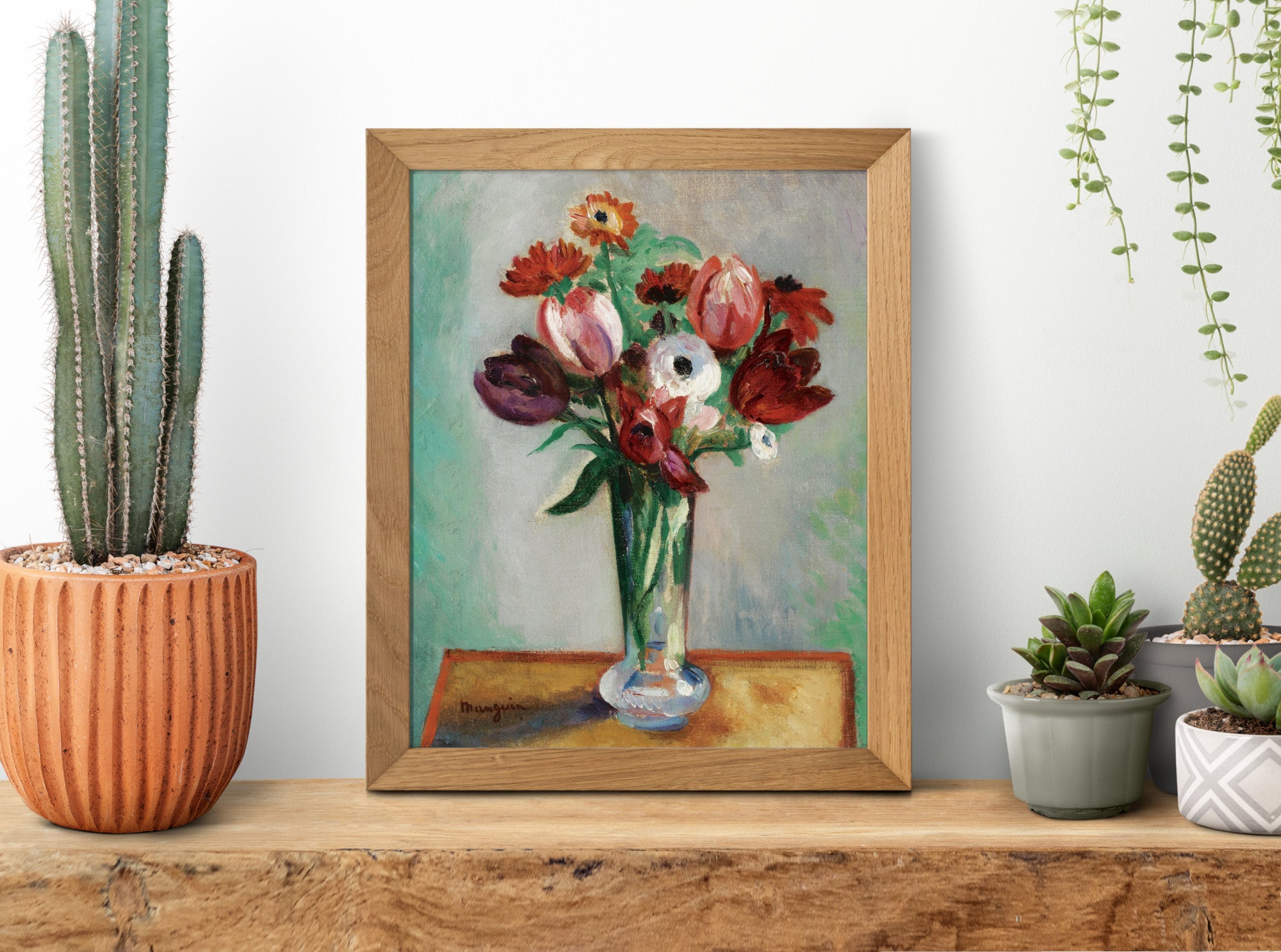
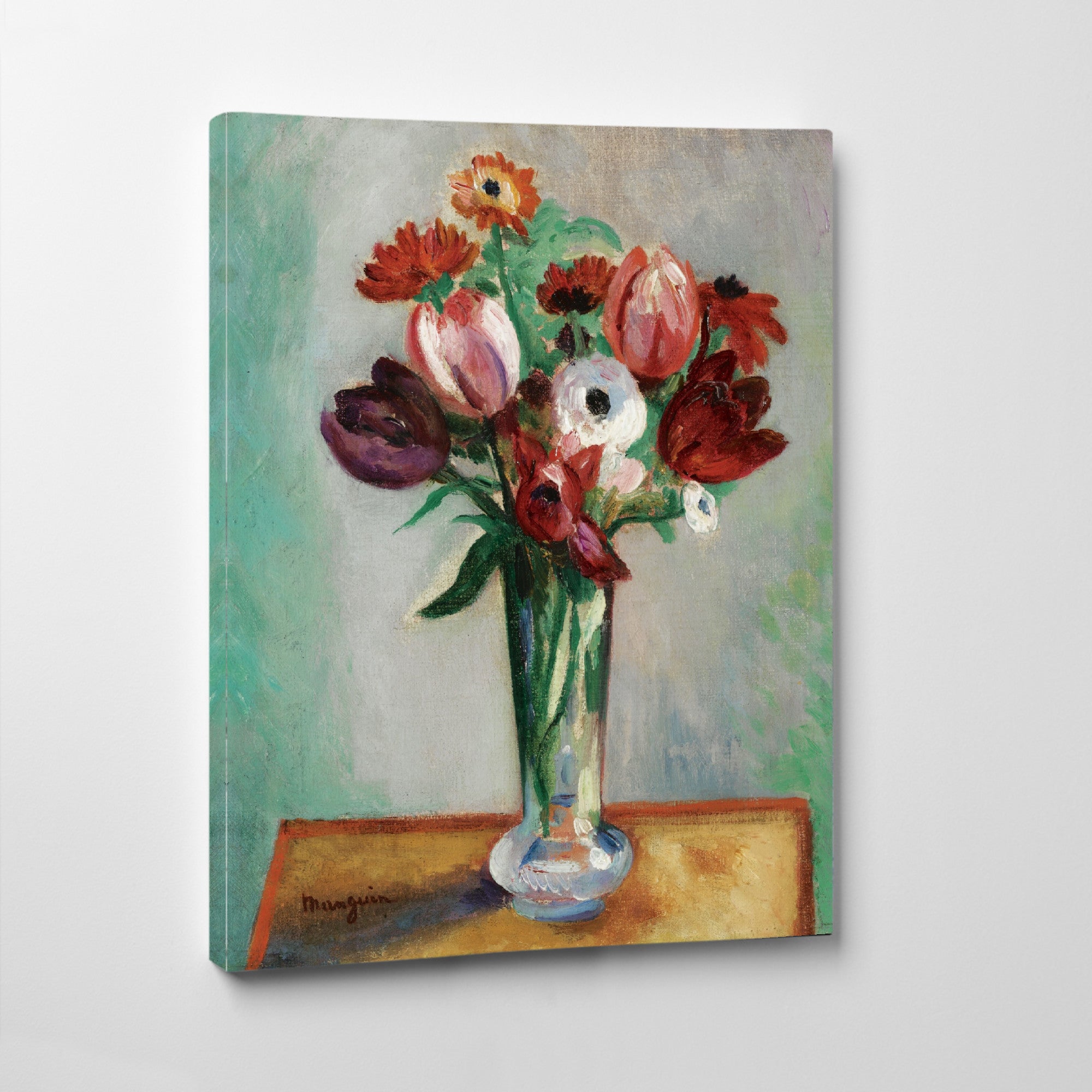
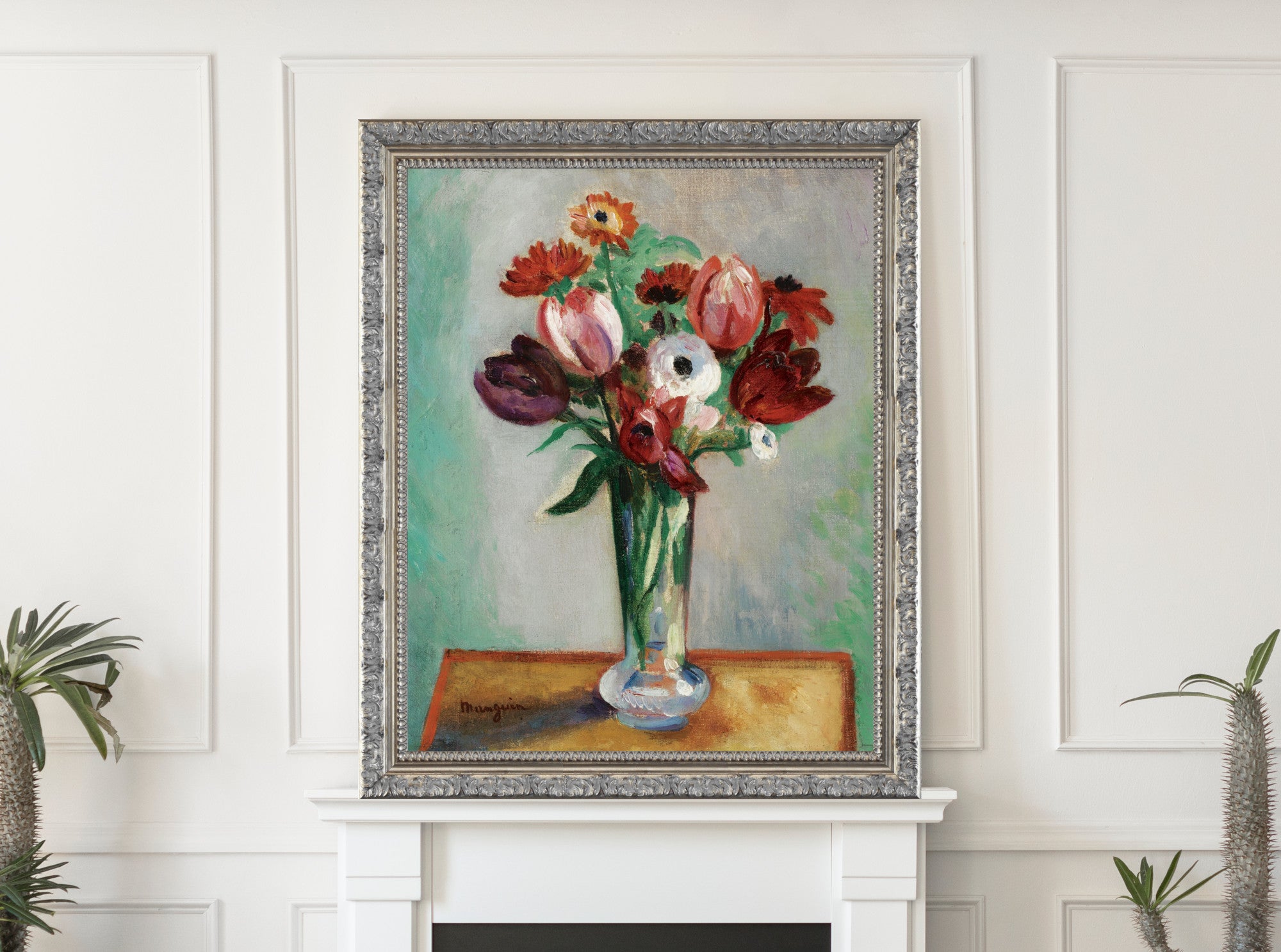
Henri Manguin's Still Life Paintings
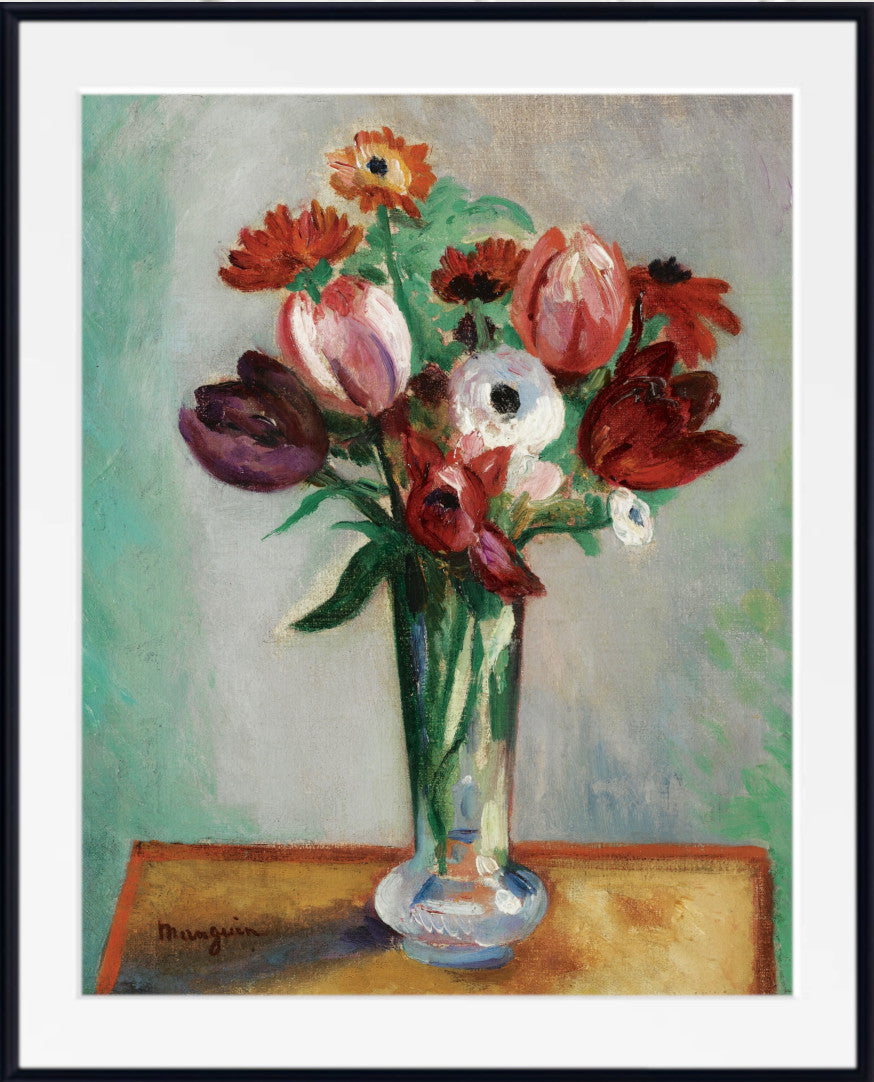
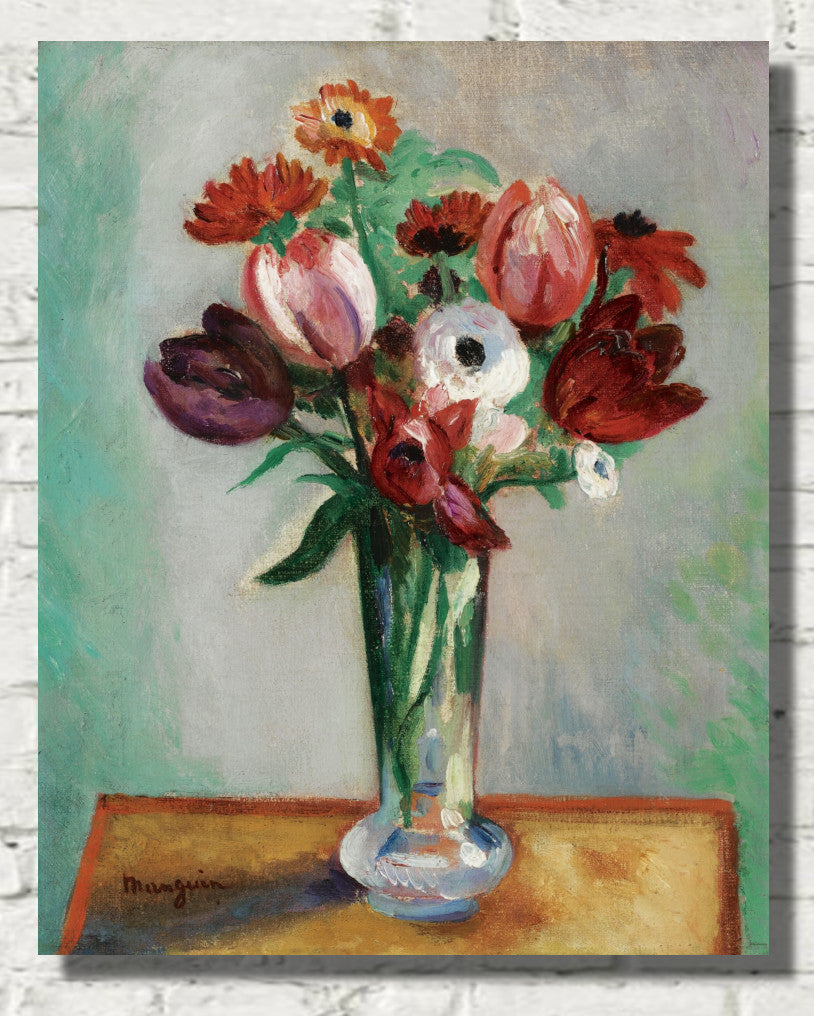
Although best known for figures and Mediterranean landscapes, Manguin was also an accomplished still-life painter.
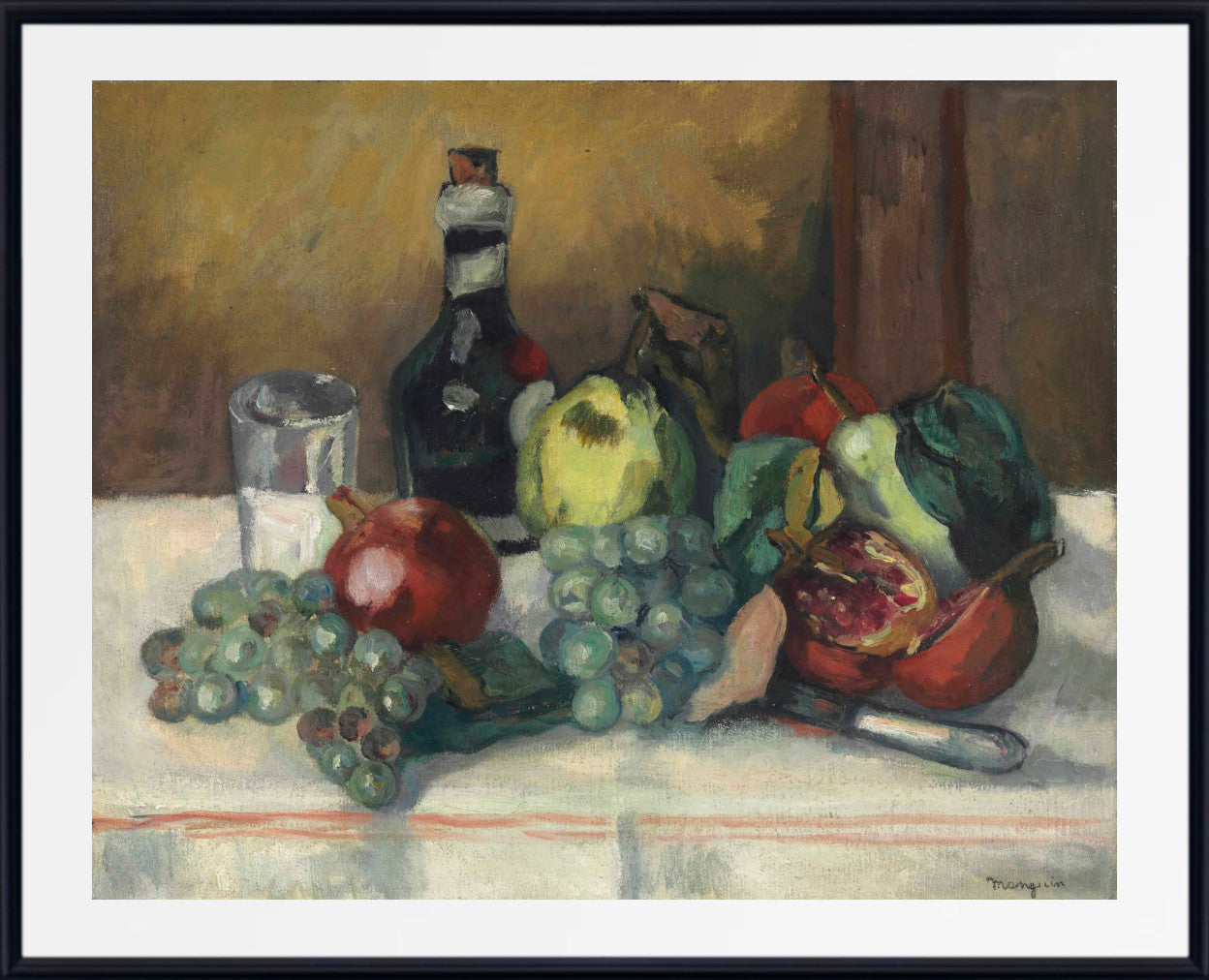
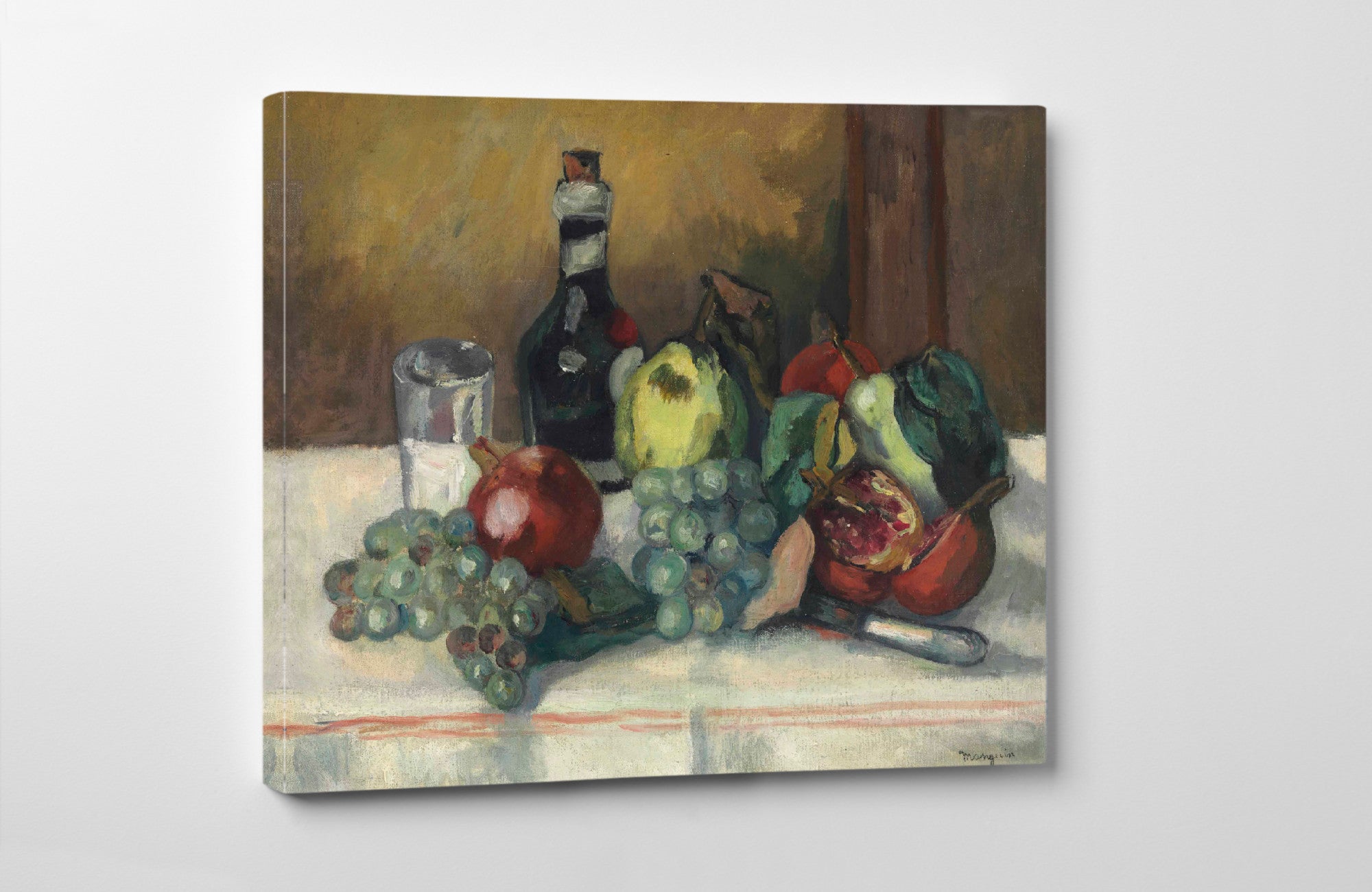
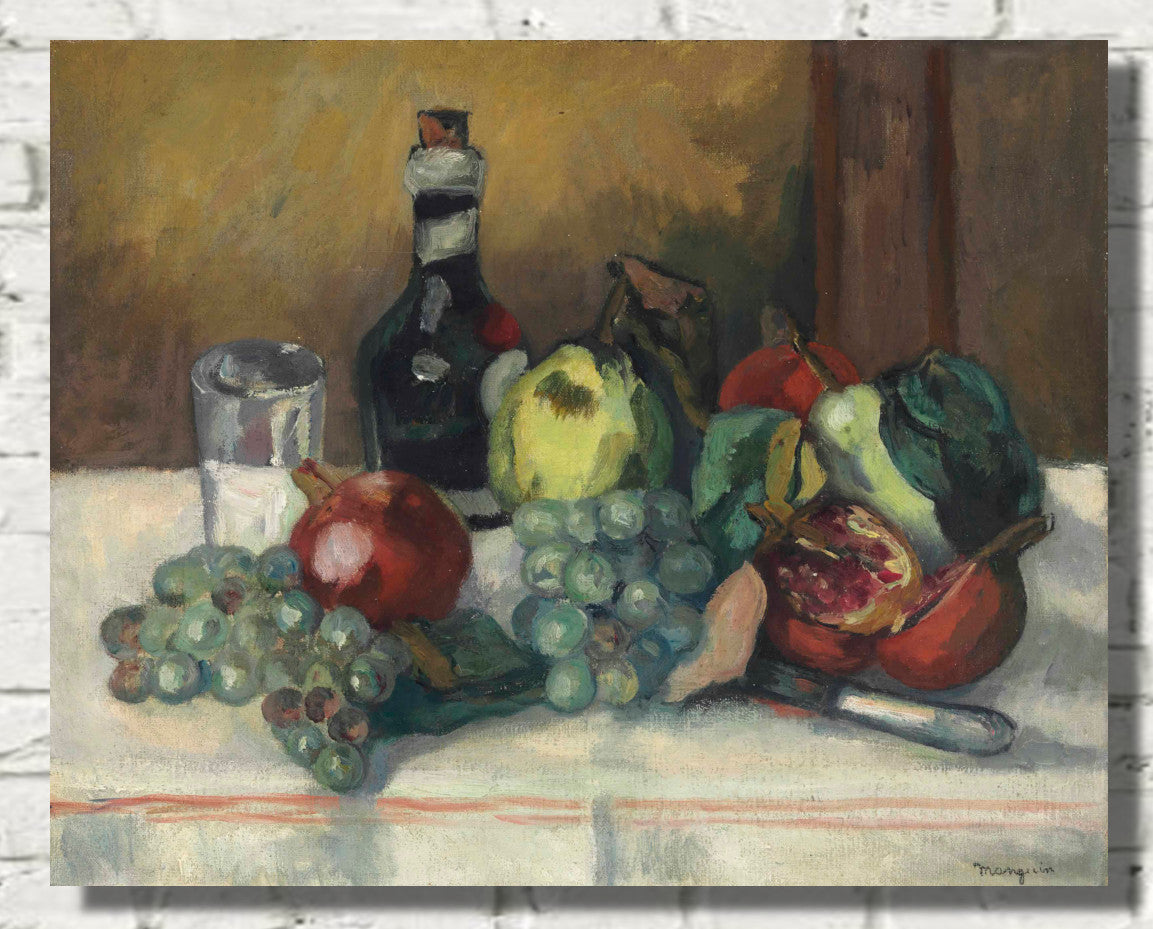
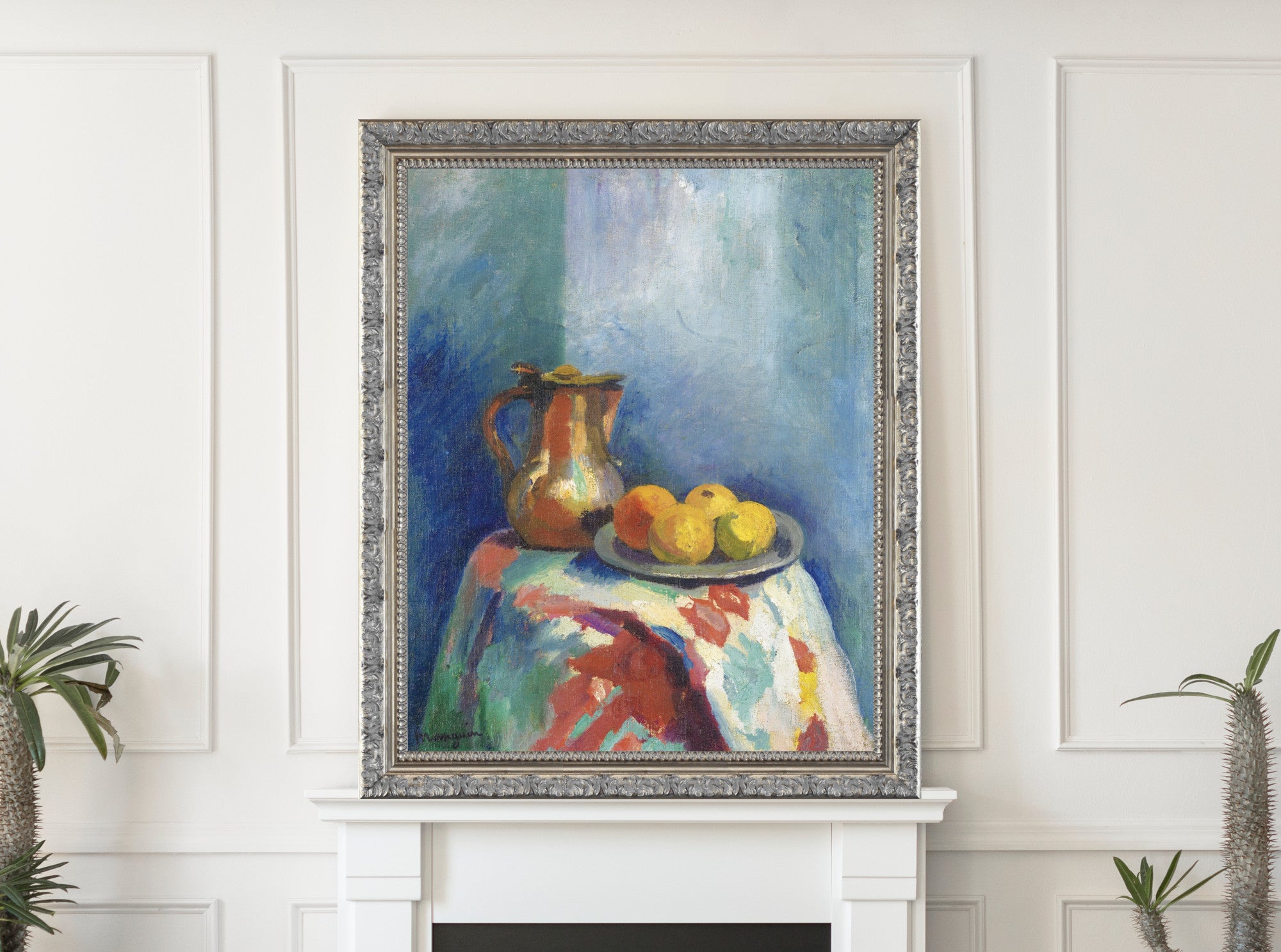
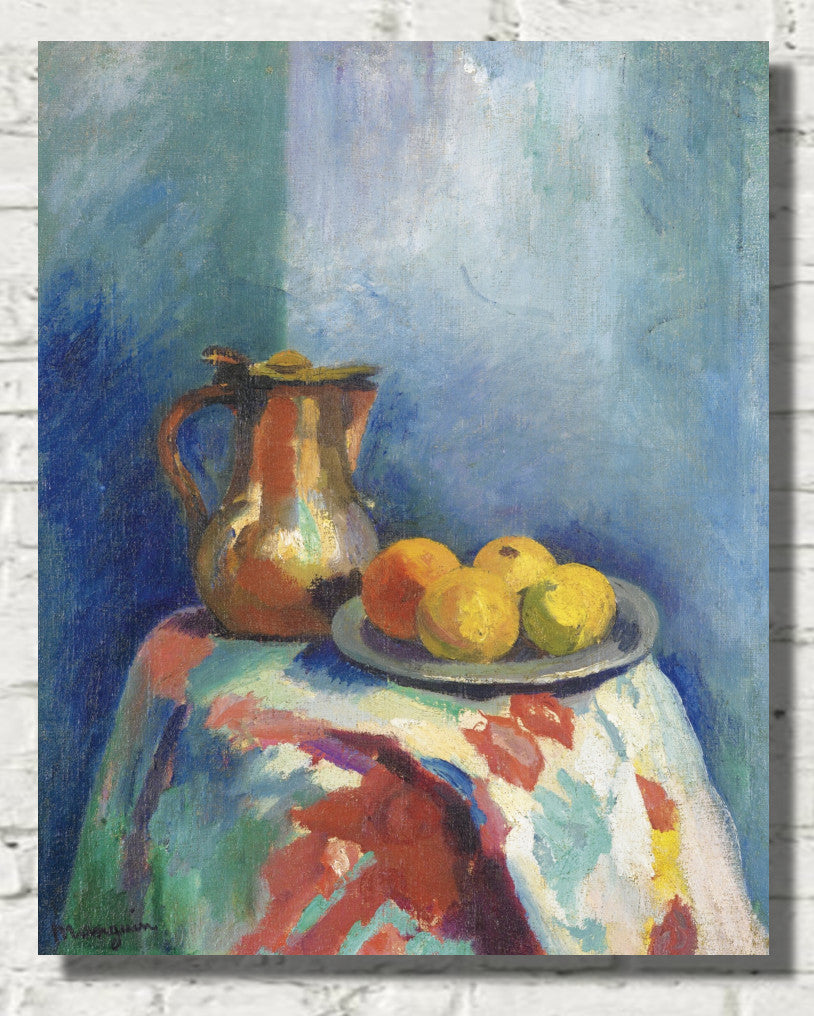
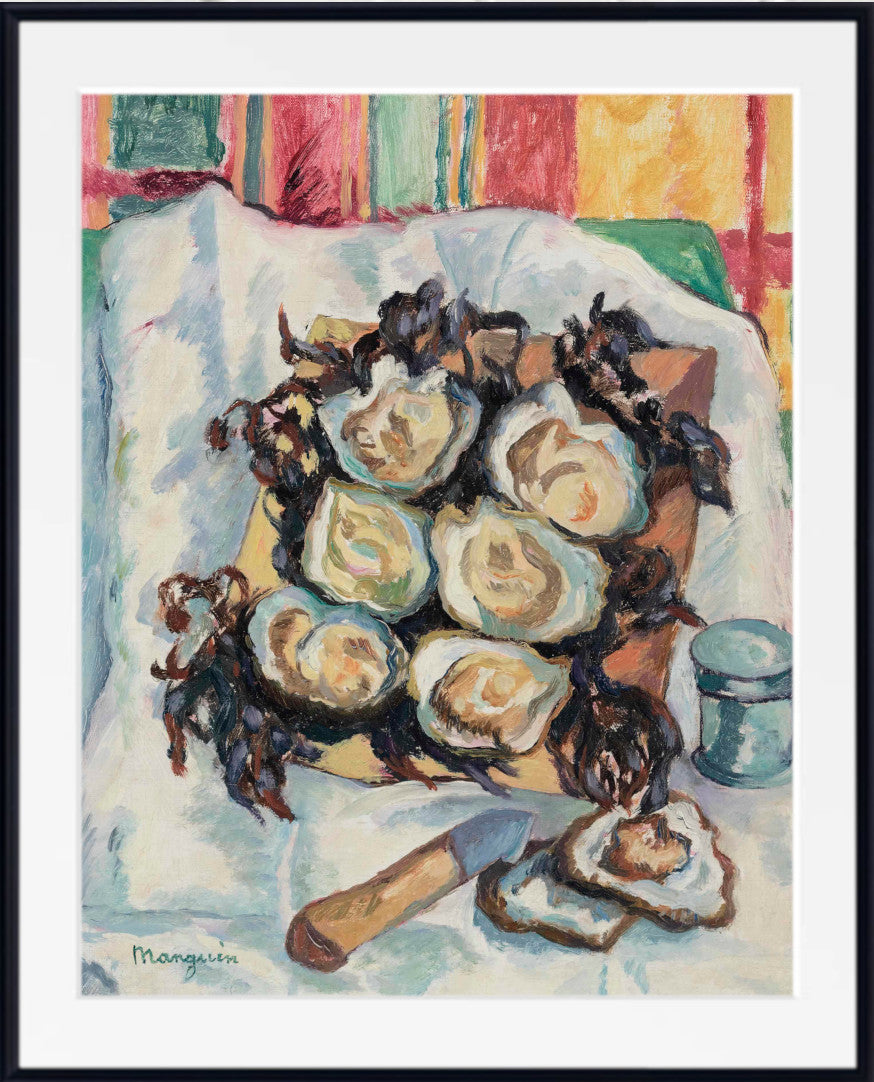
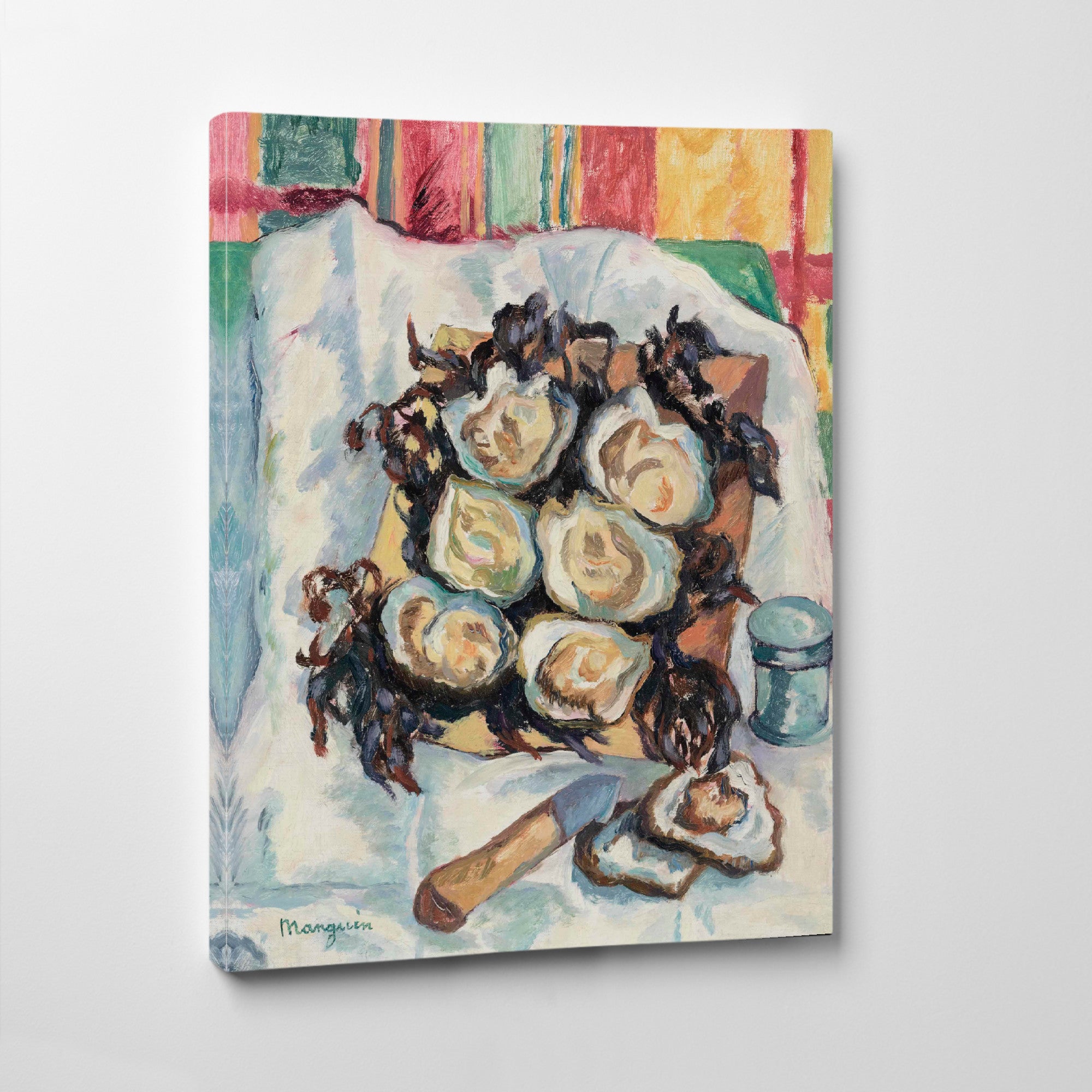
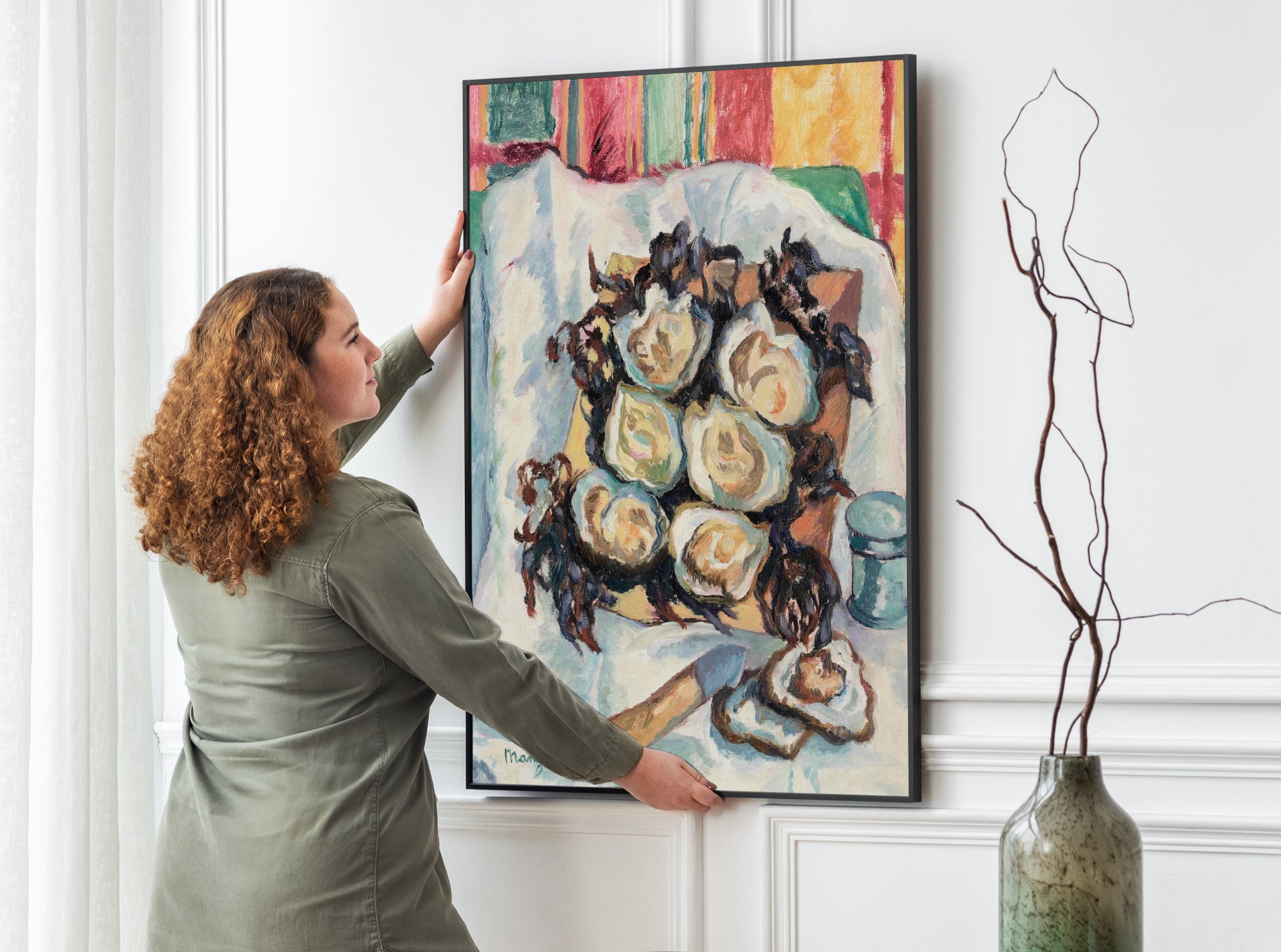
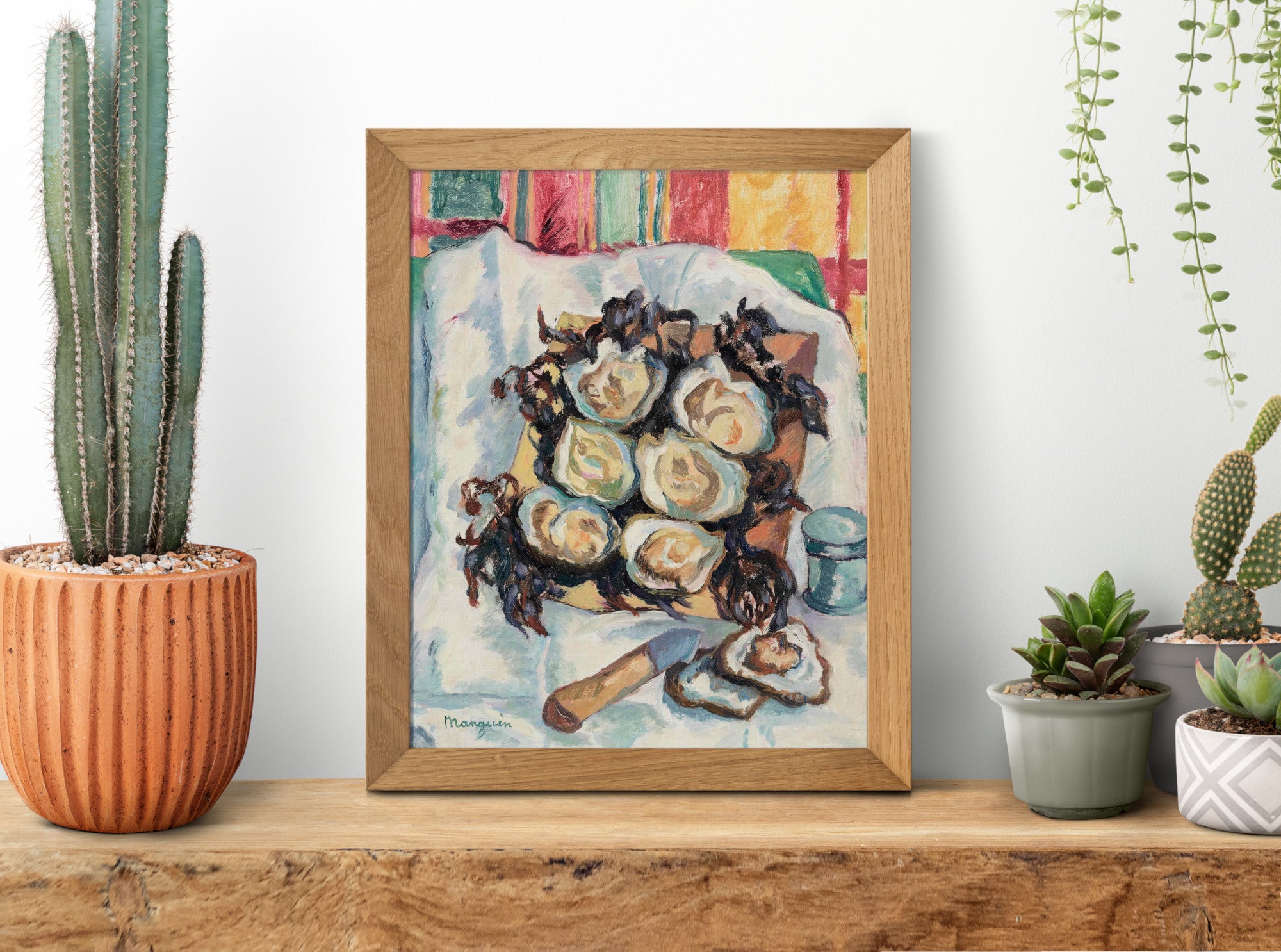
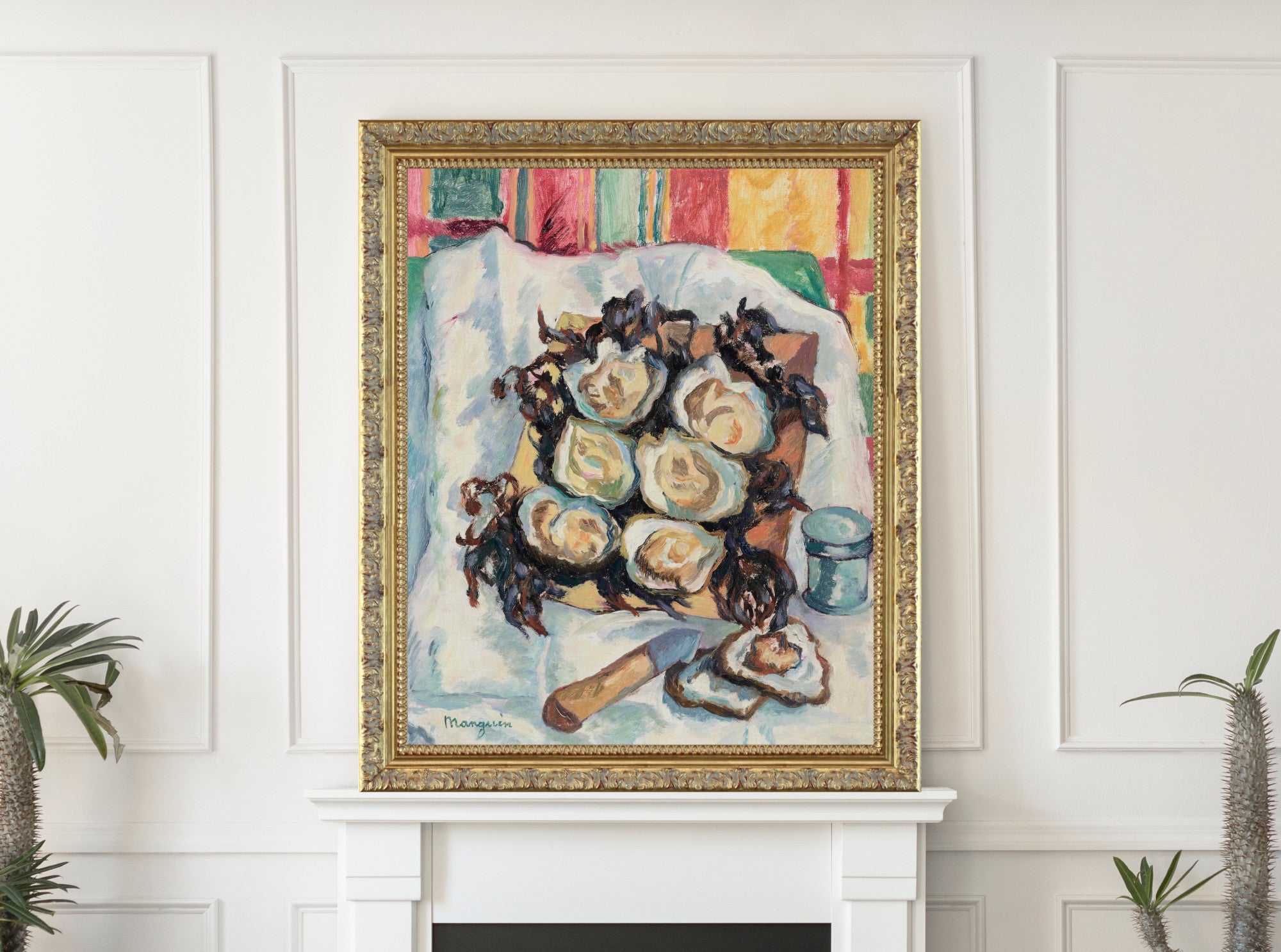
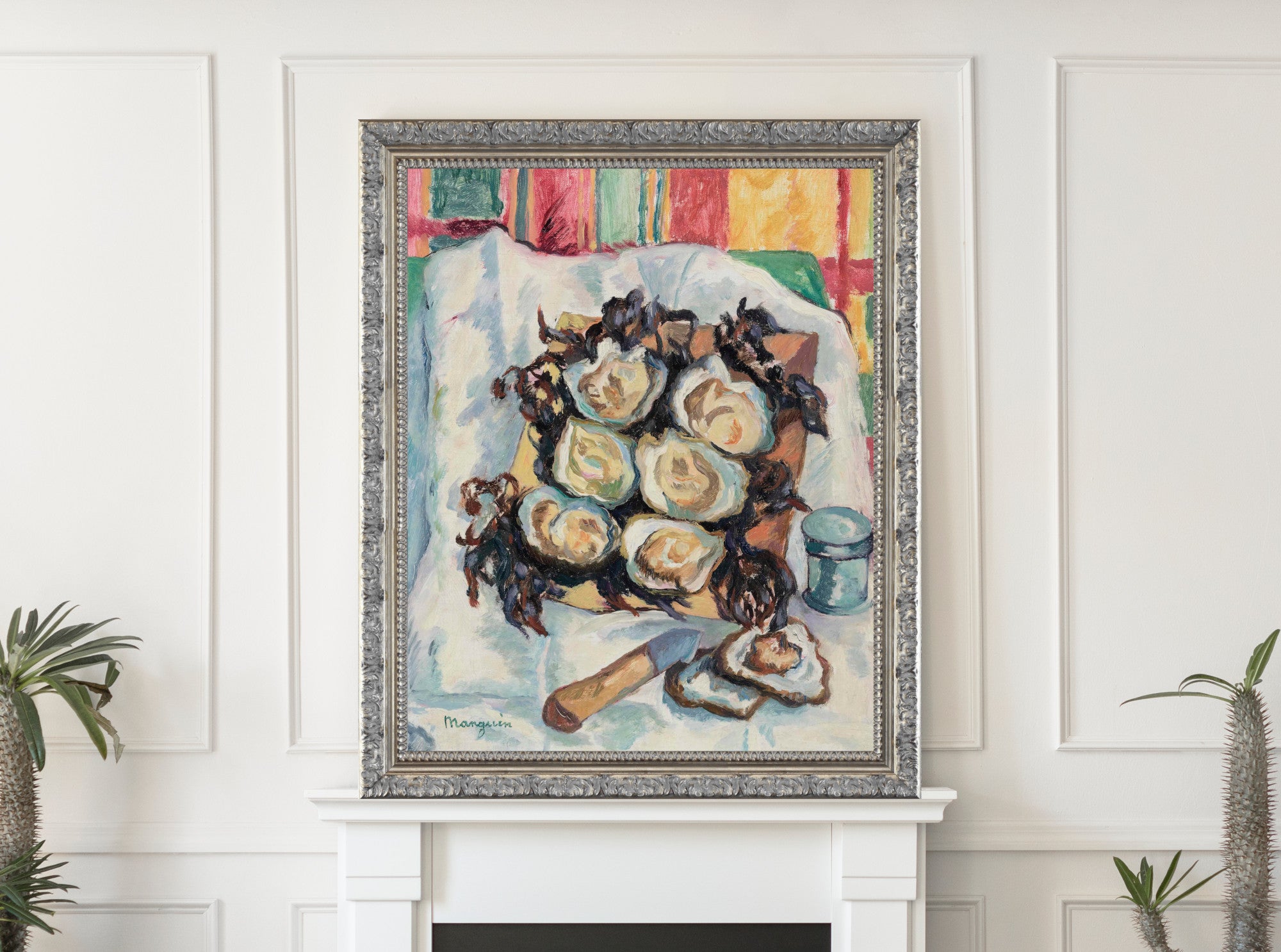
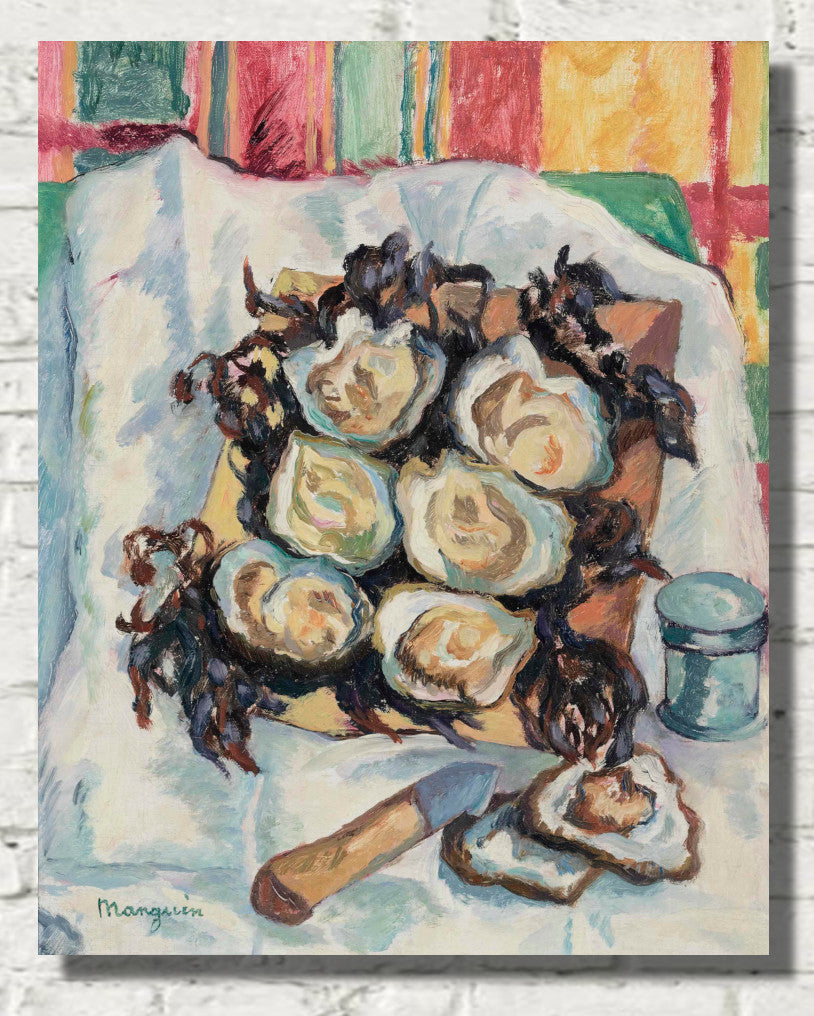
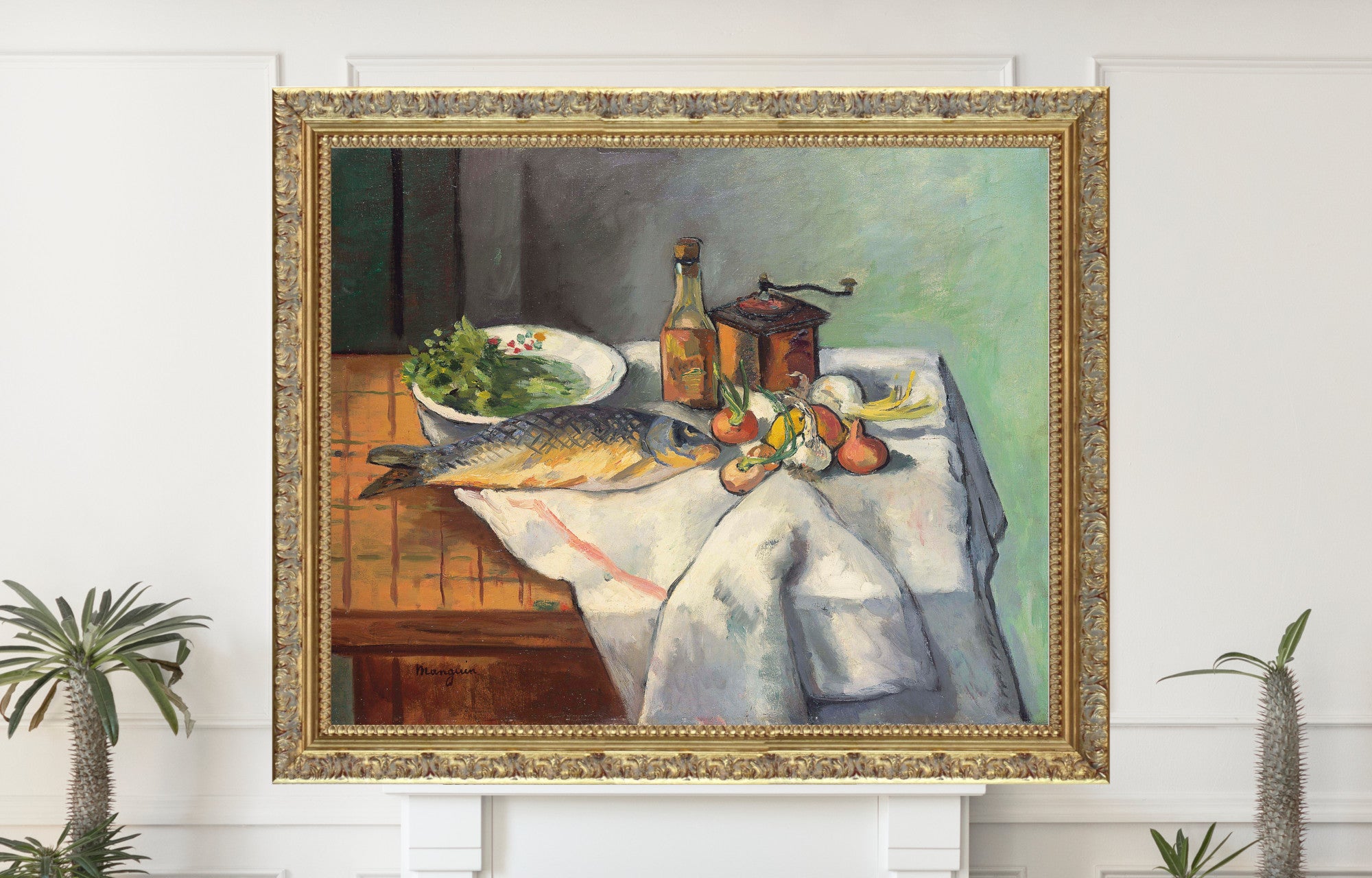
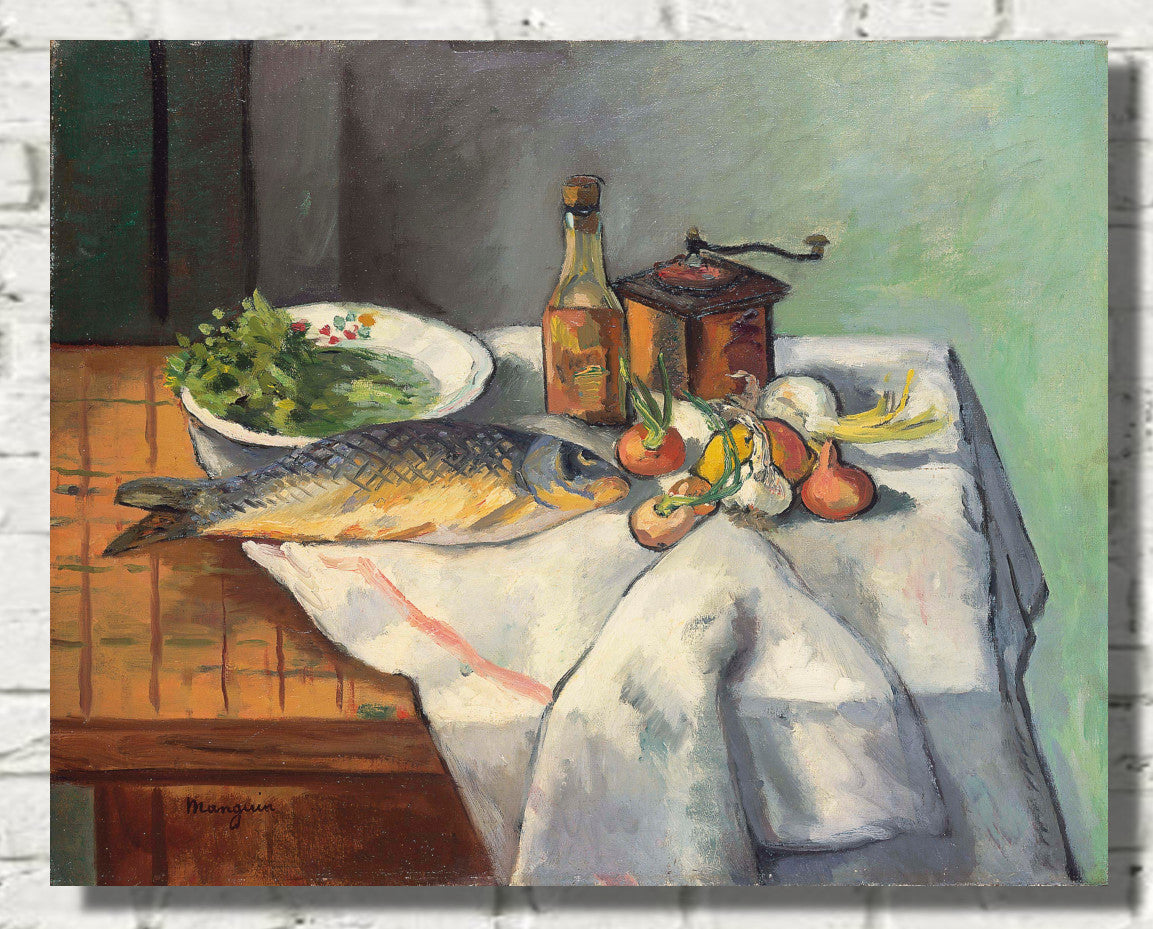
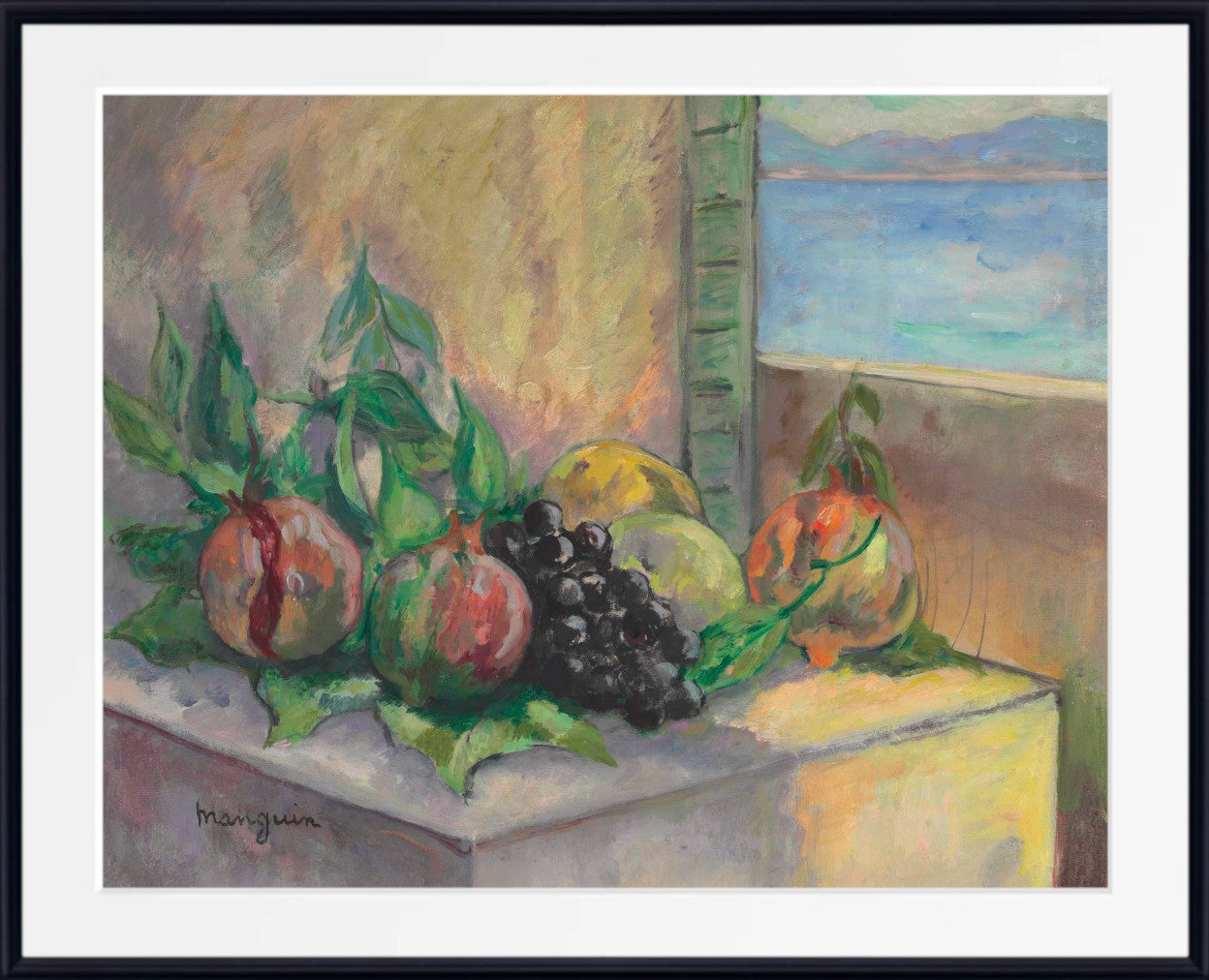
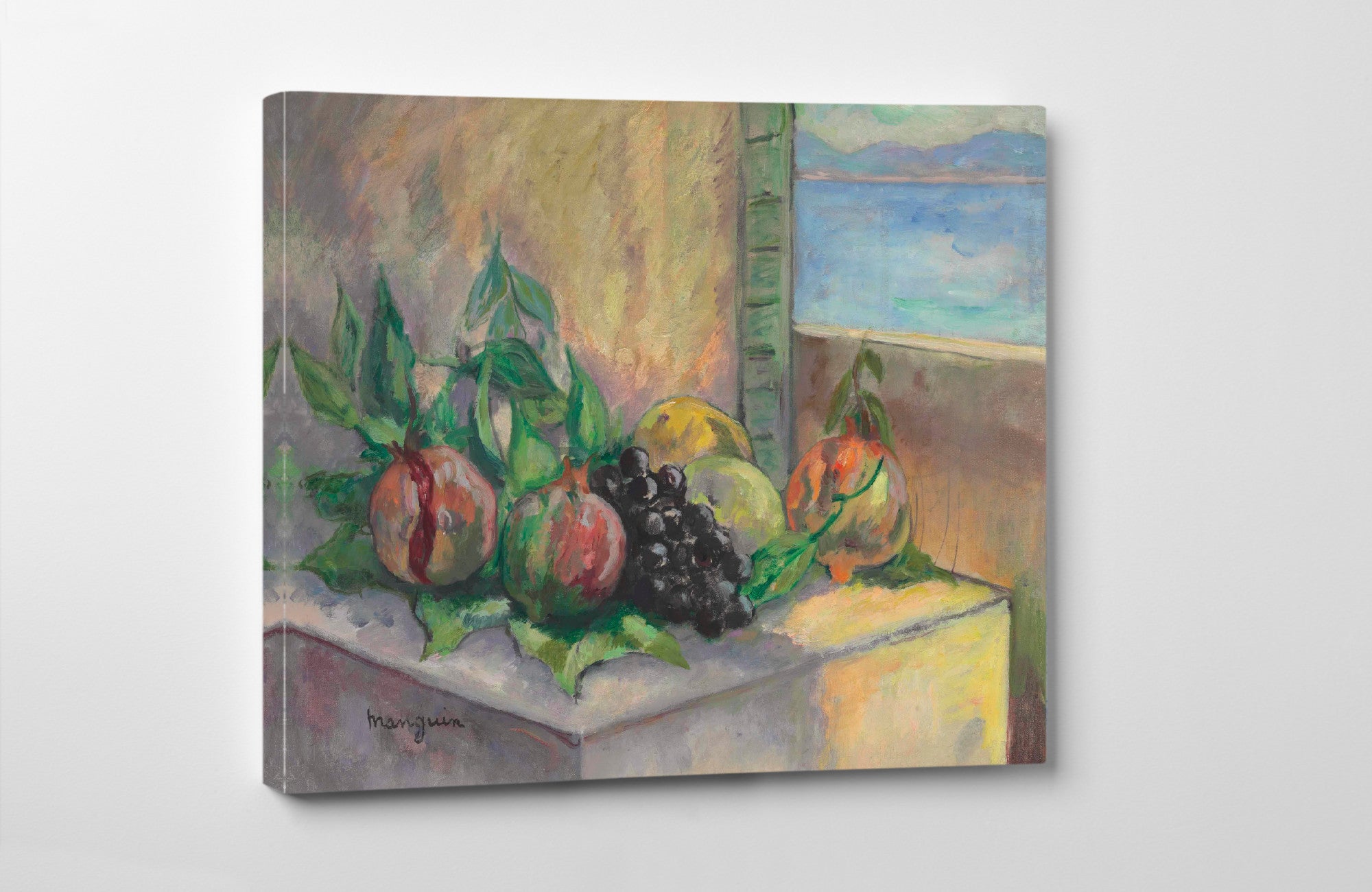
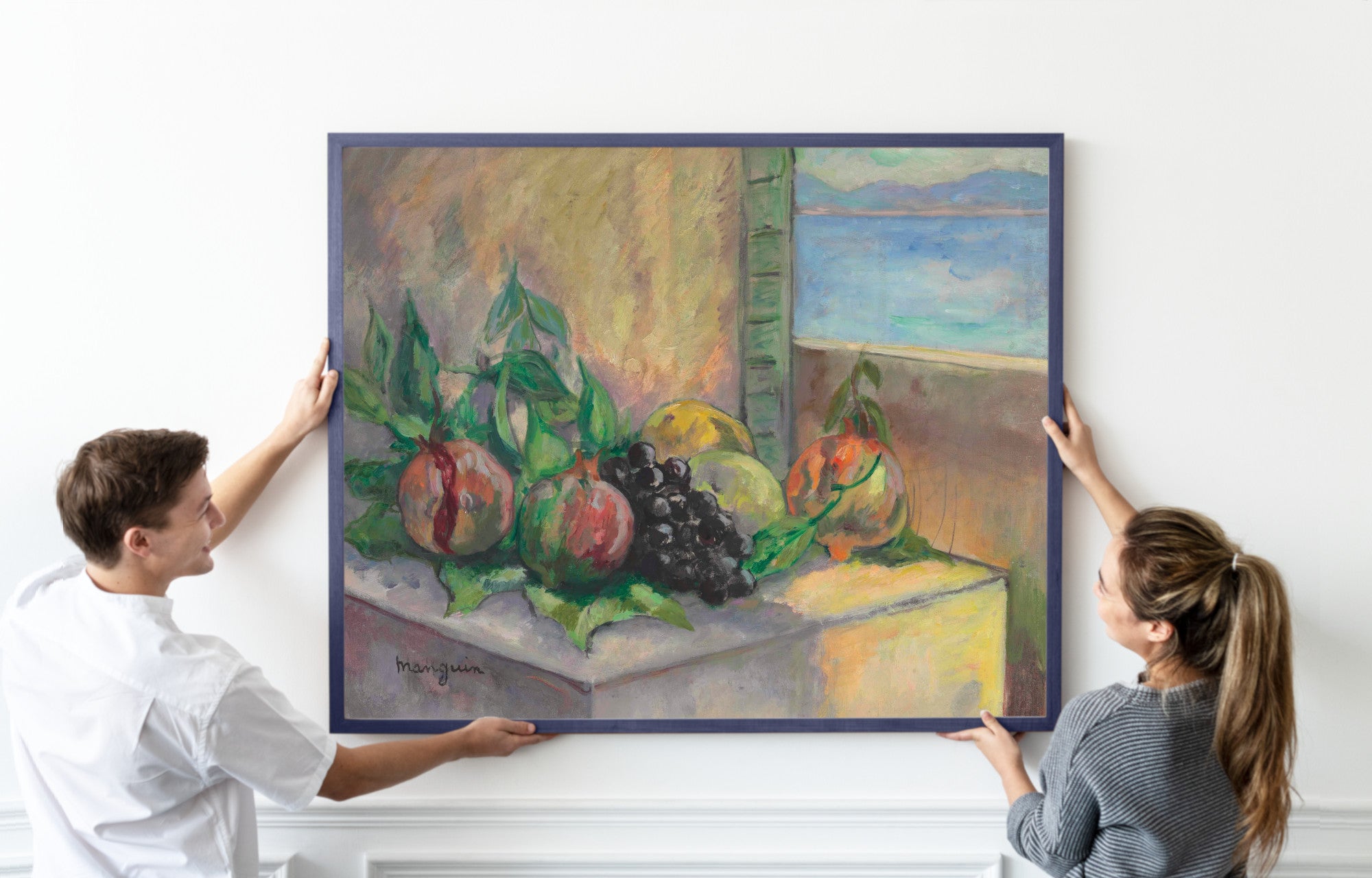
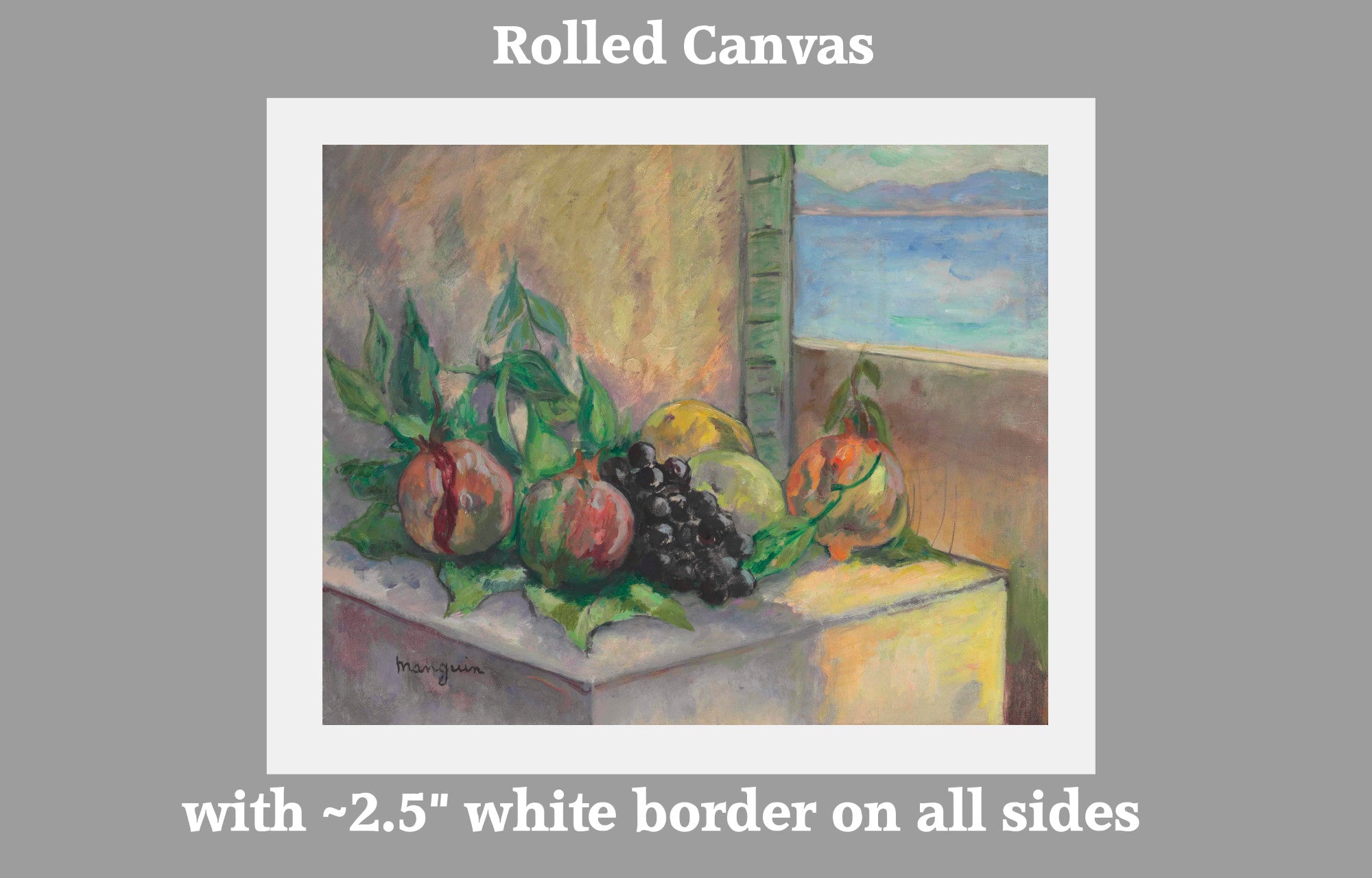
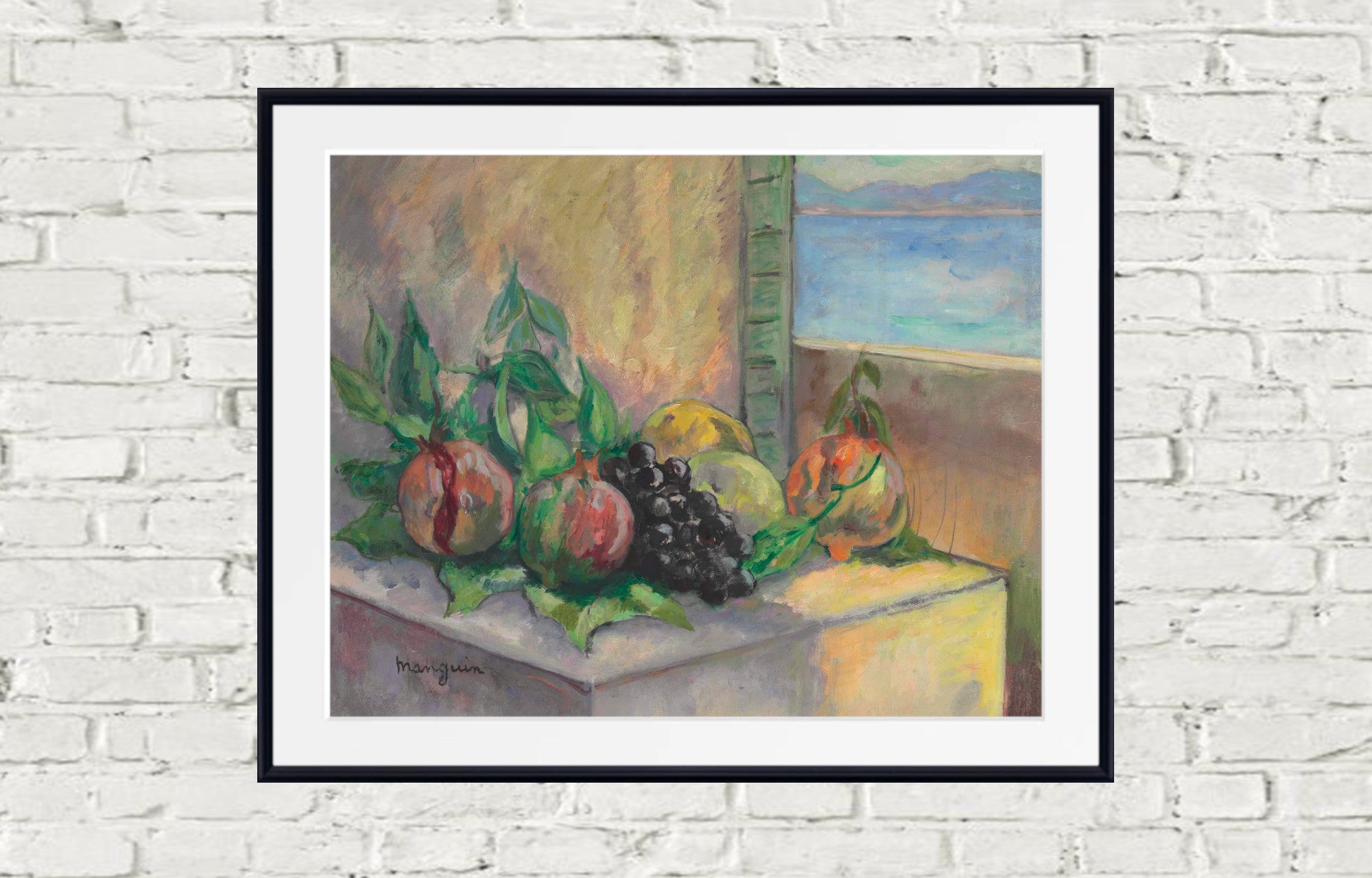
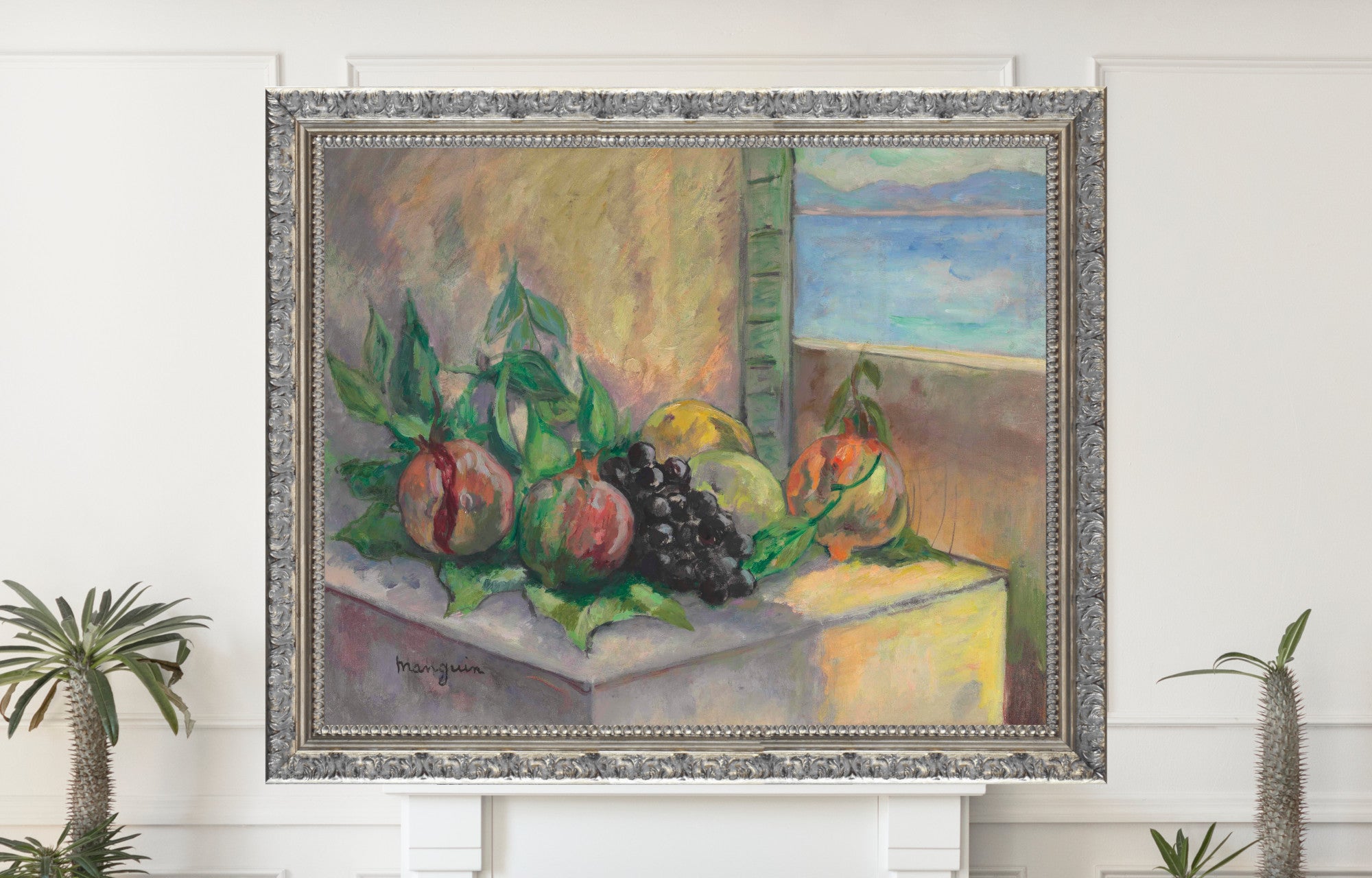
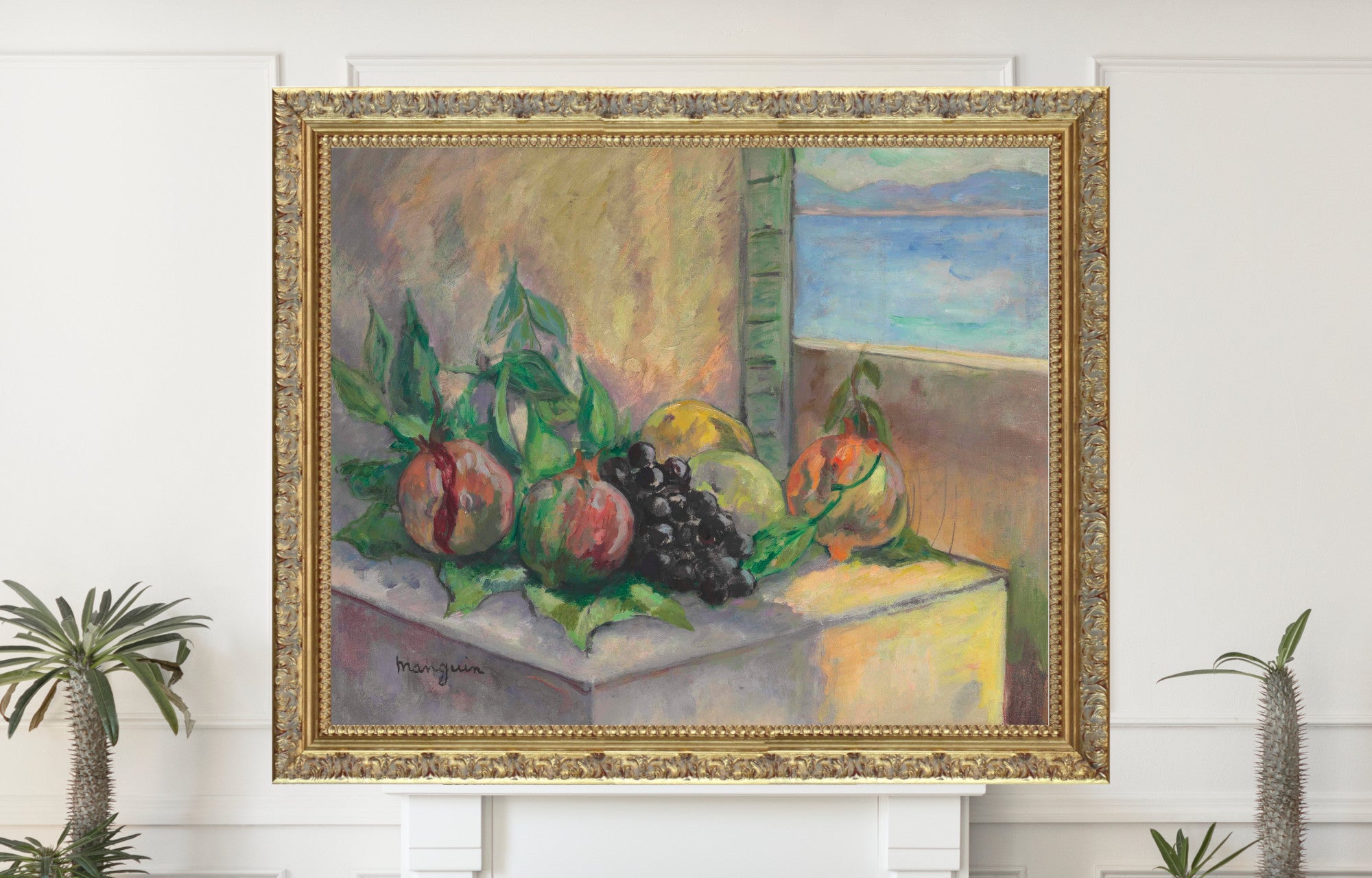
GalleryThane's collection includes subjects such as pomegranates, grapes, quinces, oysters, fish, vessels and domestic objects.
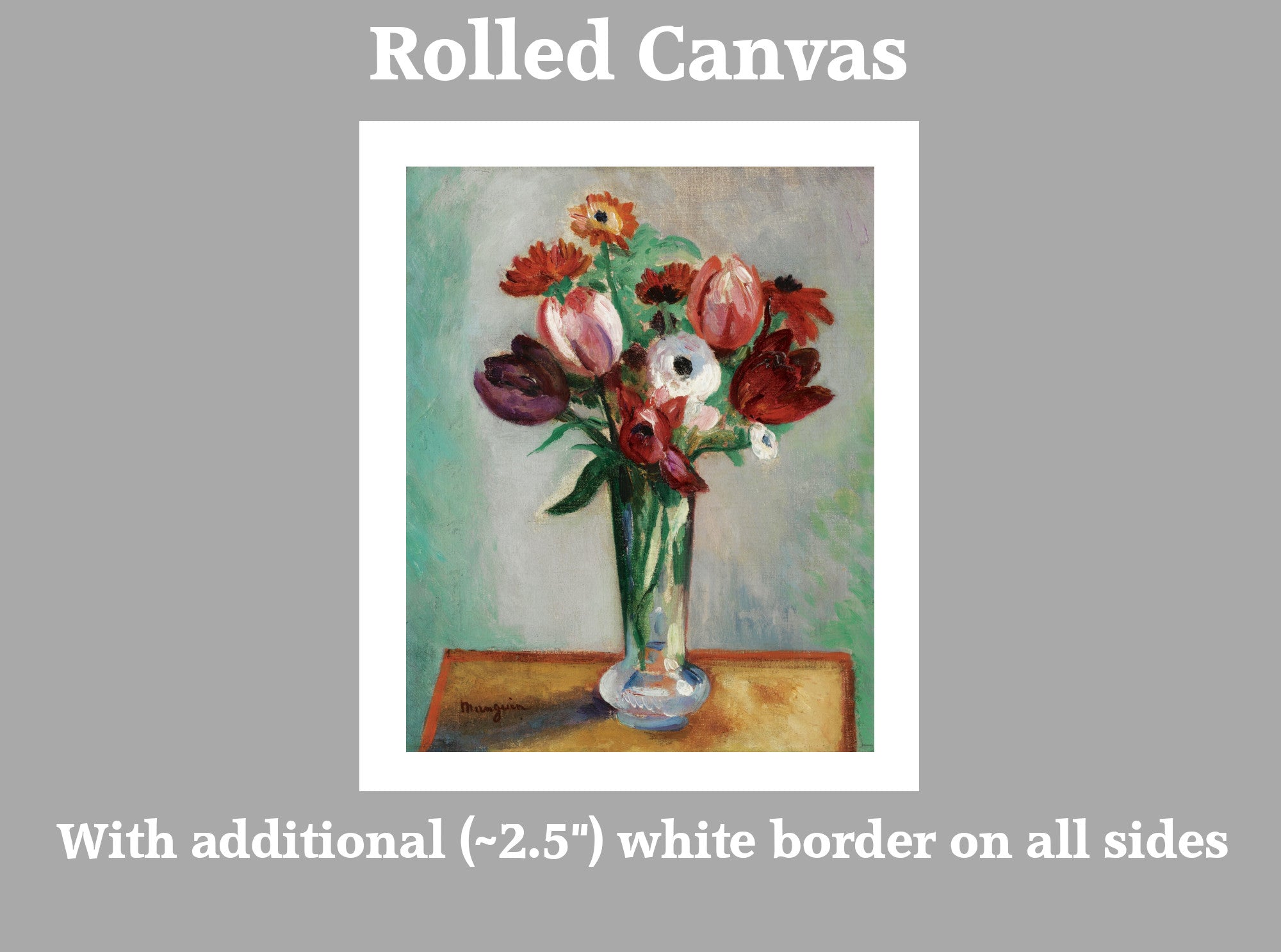
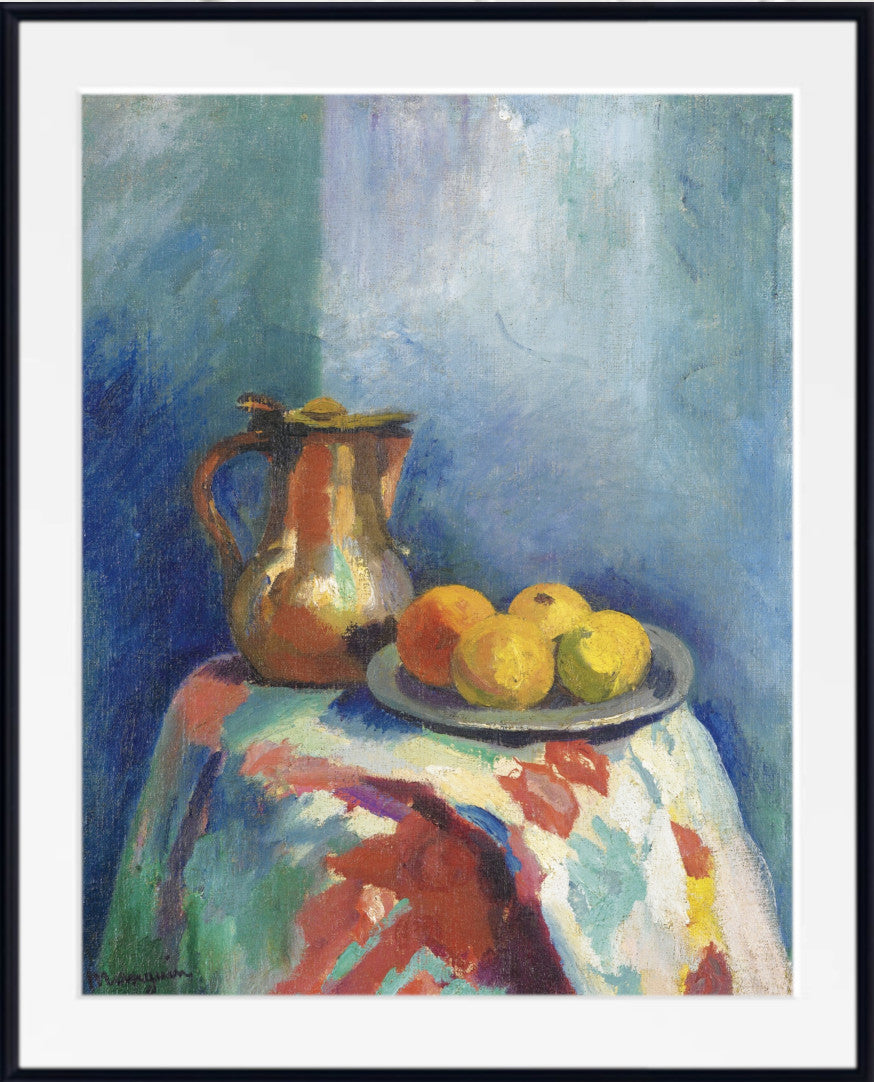
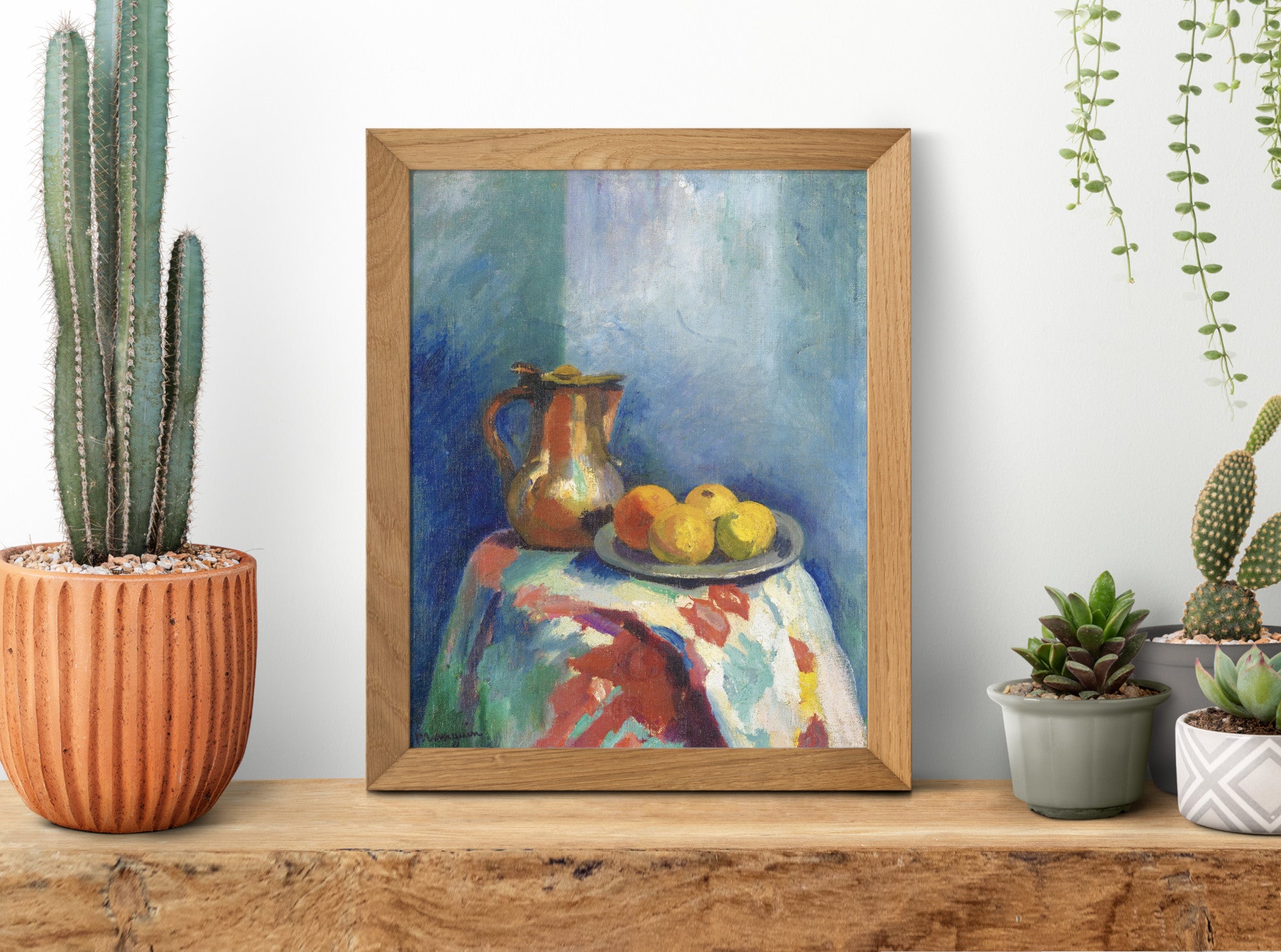
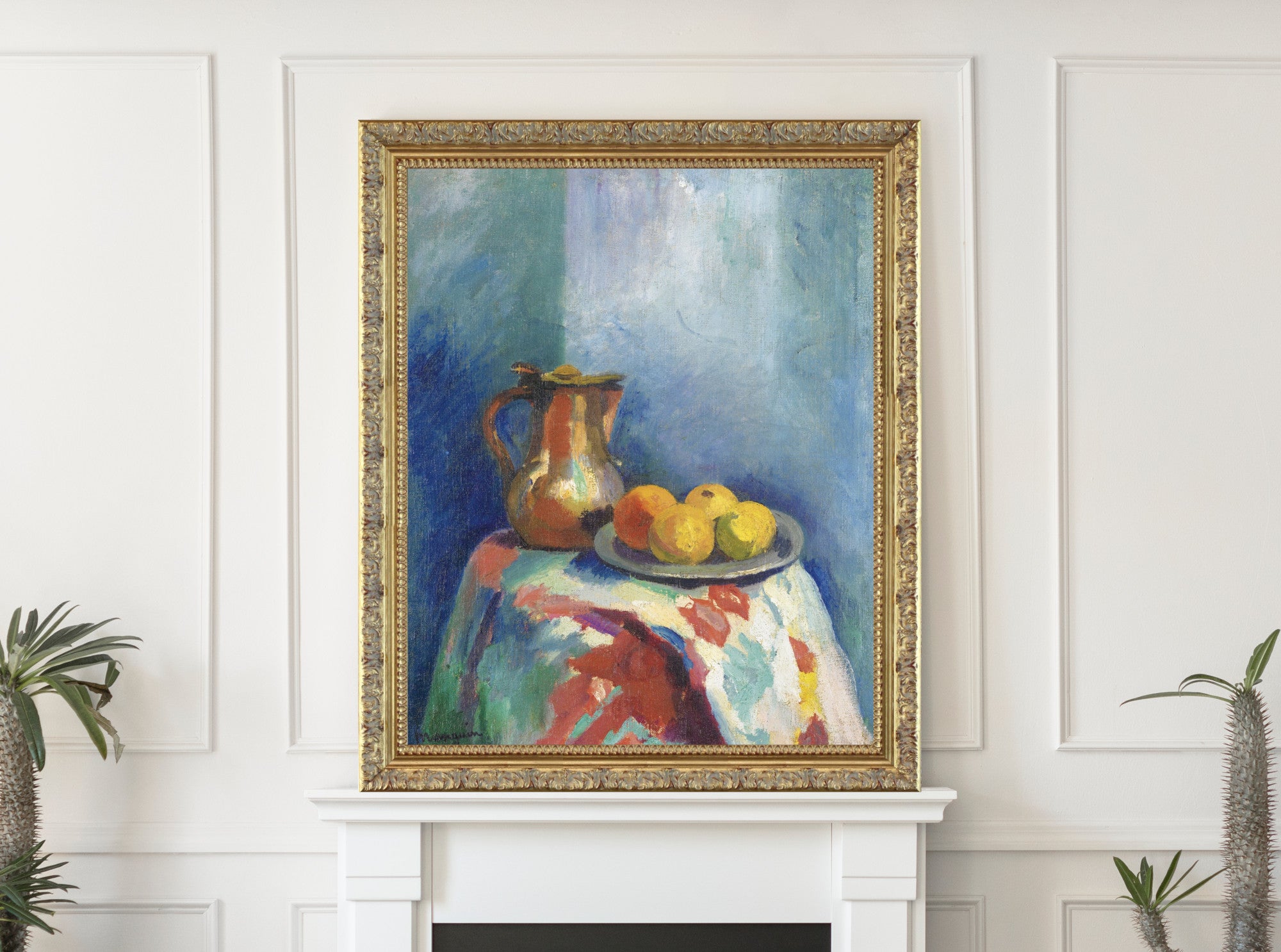
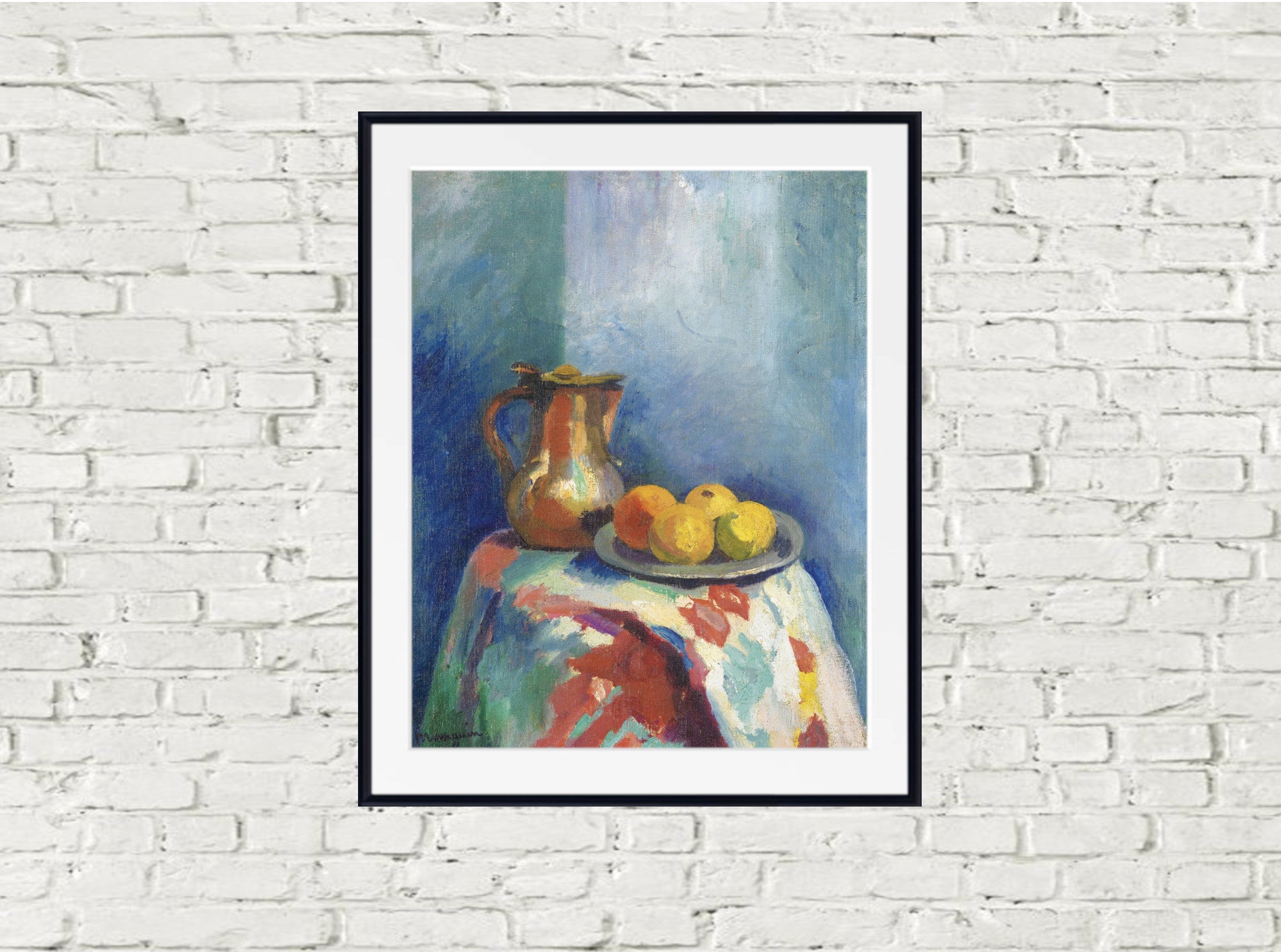
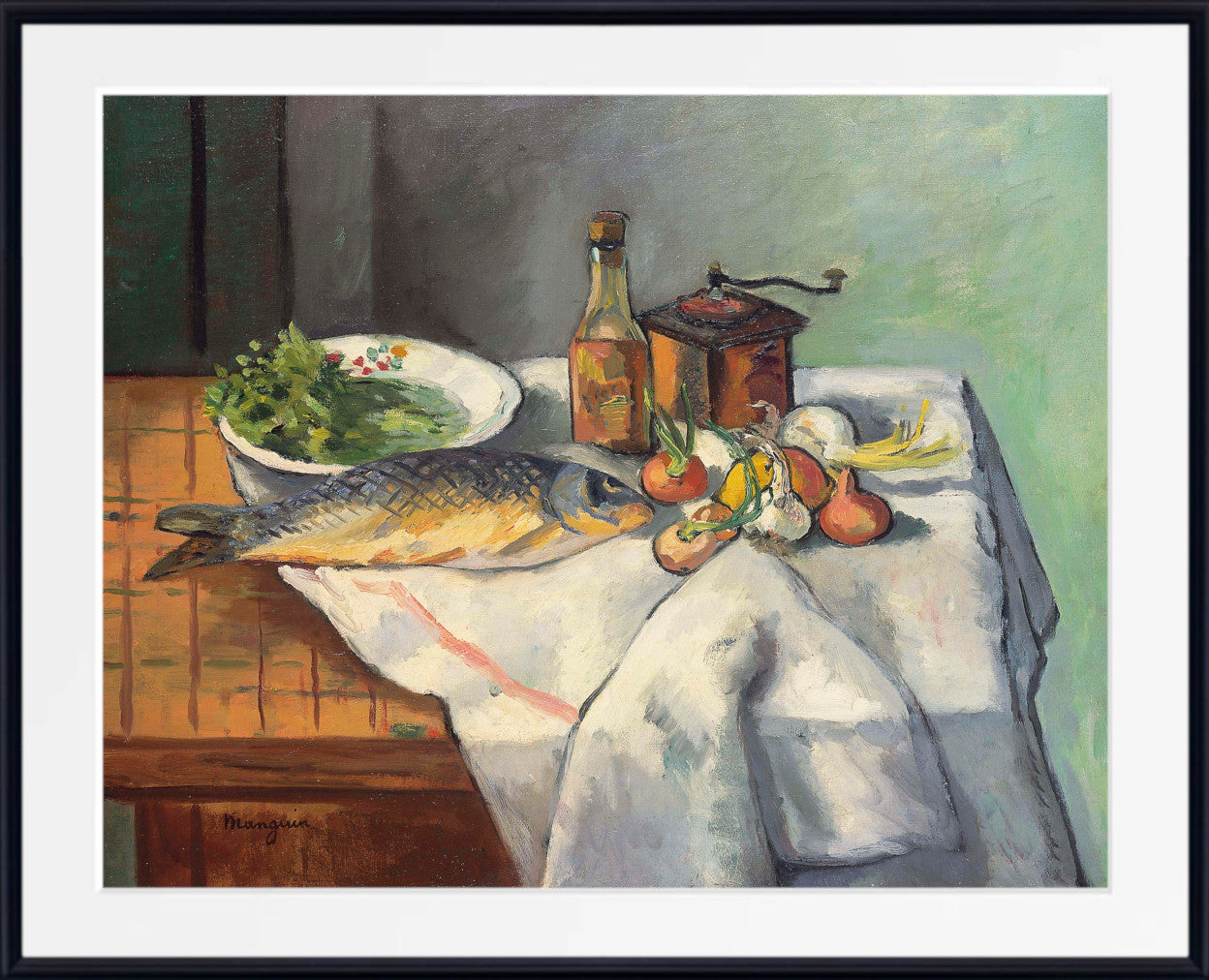
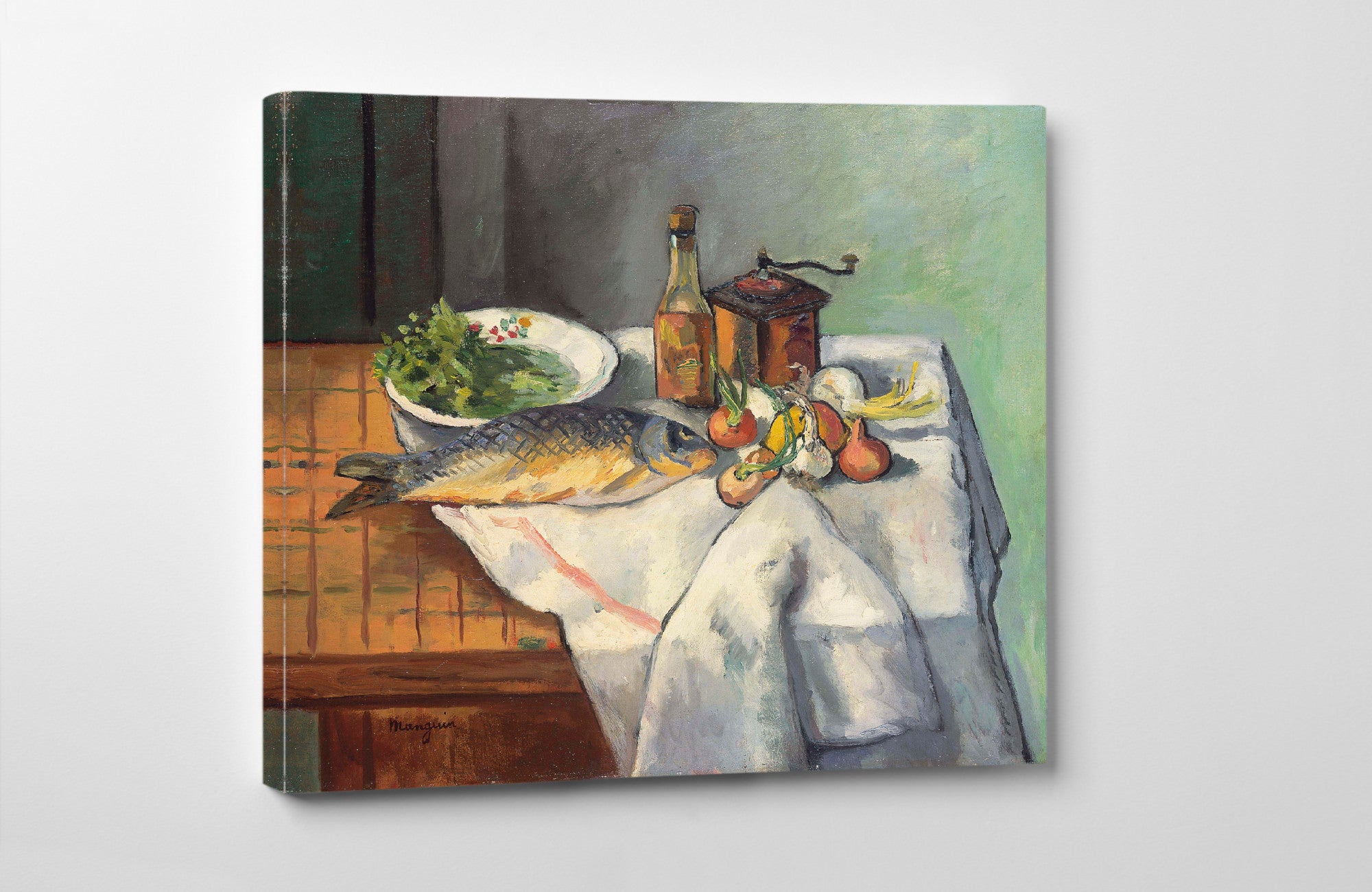
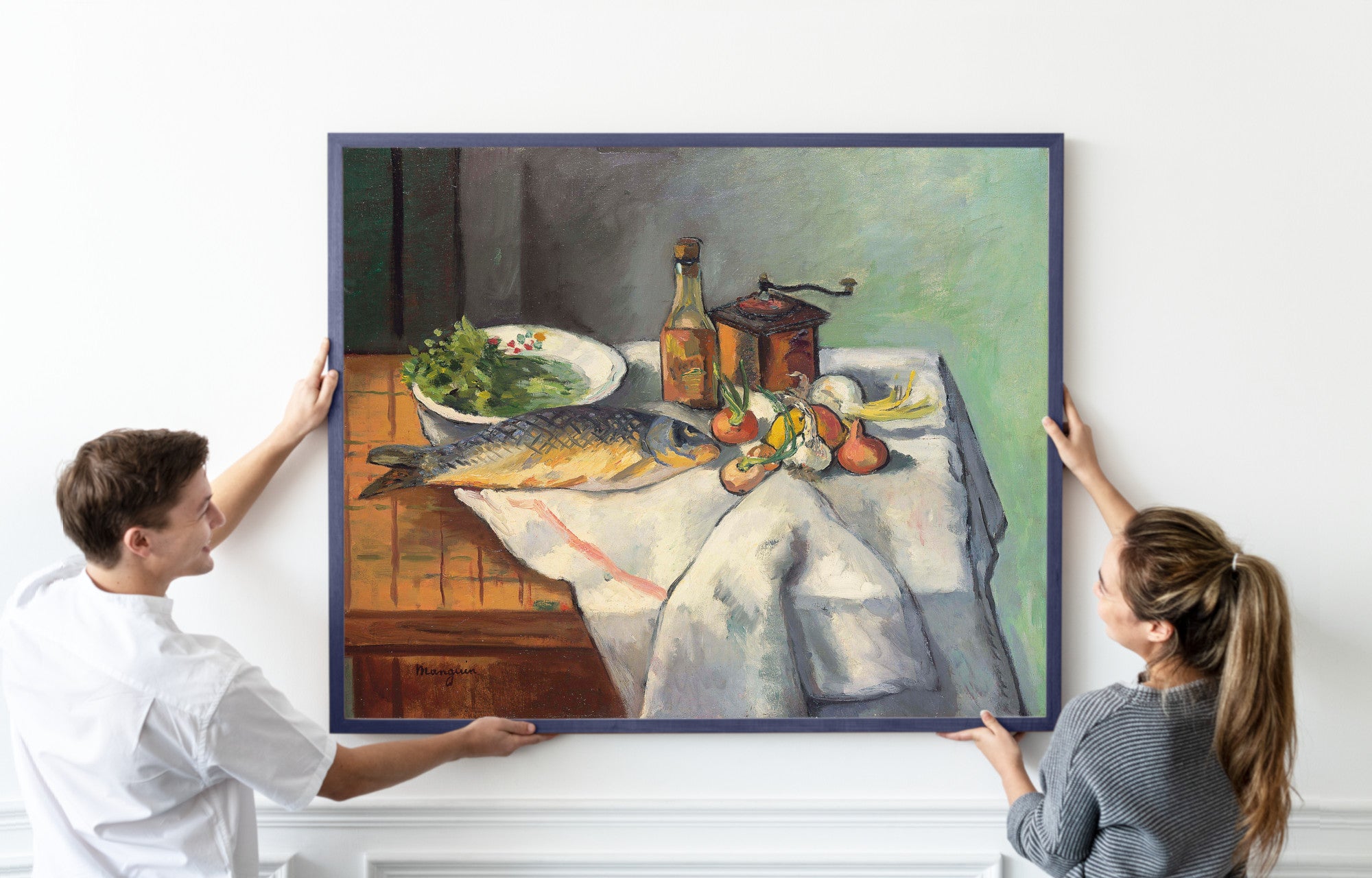
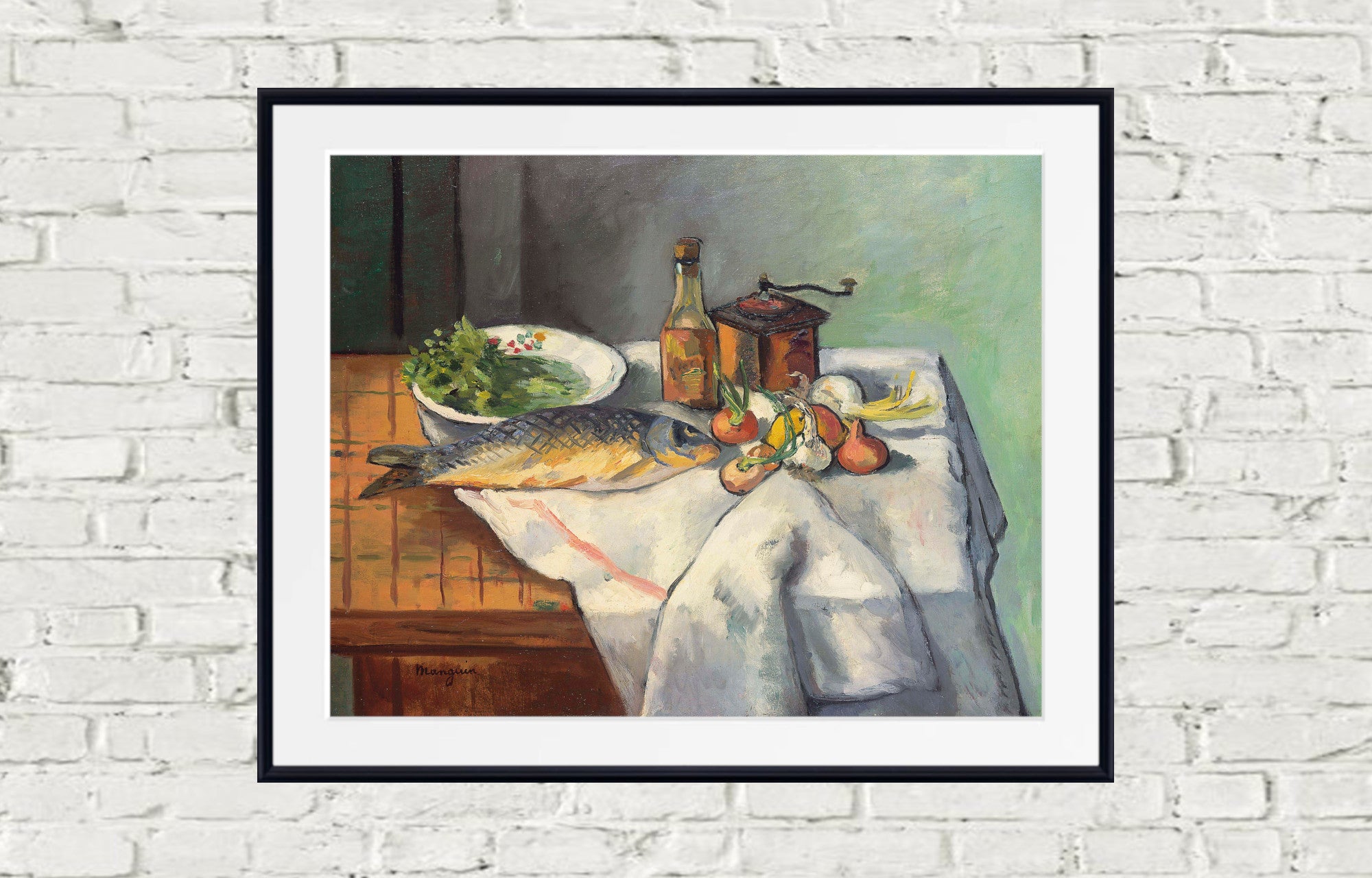
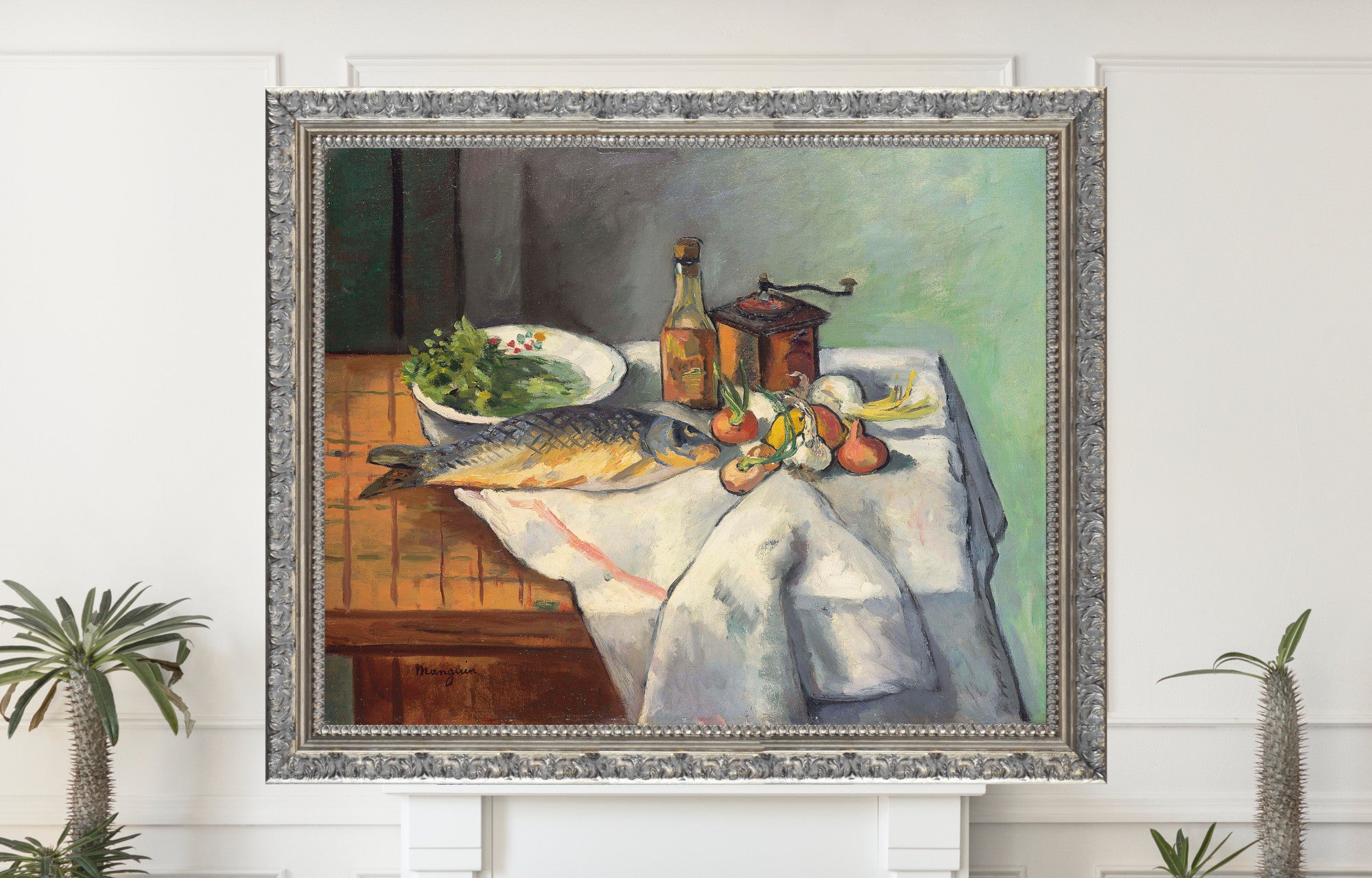
Works including Still Life with Copper Pitcher, Pomegranates and Grapes, Belon Oysters and The Carp and Coffee Grinder reveal the same interest in colour found in his landscapes.
Ordinary objects become opportunities to explore contrasts between warm and cool tones, curved shapes and patterned surfaces.
These works make an attractive alternative for collectors who admire Manguin's colour but prefer traditional still-life subjects to landscapes or figure paintings.
Manguin, Matisse and Marquet
Manguin belonged to a remarkable generation of French painters who studied together and subsequently transformed modern art.
His relationship with Henri Matisse and Albert Marquet began during their student years under Gustave Moreau. Although their mature styles became very different, all three explored ways of simplifying form and allowing colour to play a more independent role in painting.
Matisse ultimately pushed colour and simplification further than any of his contemporaries, while Marquet developed a quieter language particularly suited to harbours, rivers and coastal landscapes.
Manguin occupied another position within this spectrum, combining Fauvist colour with an unusually warm, relaxed and intimate atmosphere.
Explore GalleryThane's Albert Marquet collection to compare another distinctive interpretation of colour within and beyond Fauvism.
What Makes Henri Manguin's Style Distinctive?
Several characteristics recur throughout Manguin's work:
Luminous colour – brilliant pinks, oranges, blues, greens and violets frequently dominate his compositions.
Mediterranean light – southern France provided many of his most characteristic landscapes and figure paintings.
Intimate subjects – his wife Jeanne, family life, gardens and quiet domestic moments appear repeatedly.
Fluid brushwork – forms are often suggested through energetic strokes rather than meticulously finished modelling.
A lyrical approach to Fauvism – his paintings generally retain the movement's freedom of colour without adopting the harsher contrasts sometimes found in Derain or Vlaminck.
Together these qualities give Manguin's paintings a recognisable sense of warmth and visual pleasure.
Choosing a Henri Manguin Print
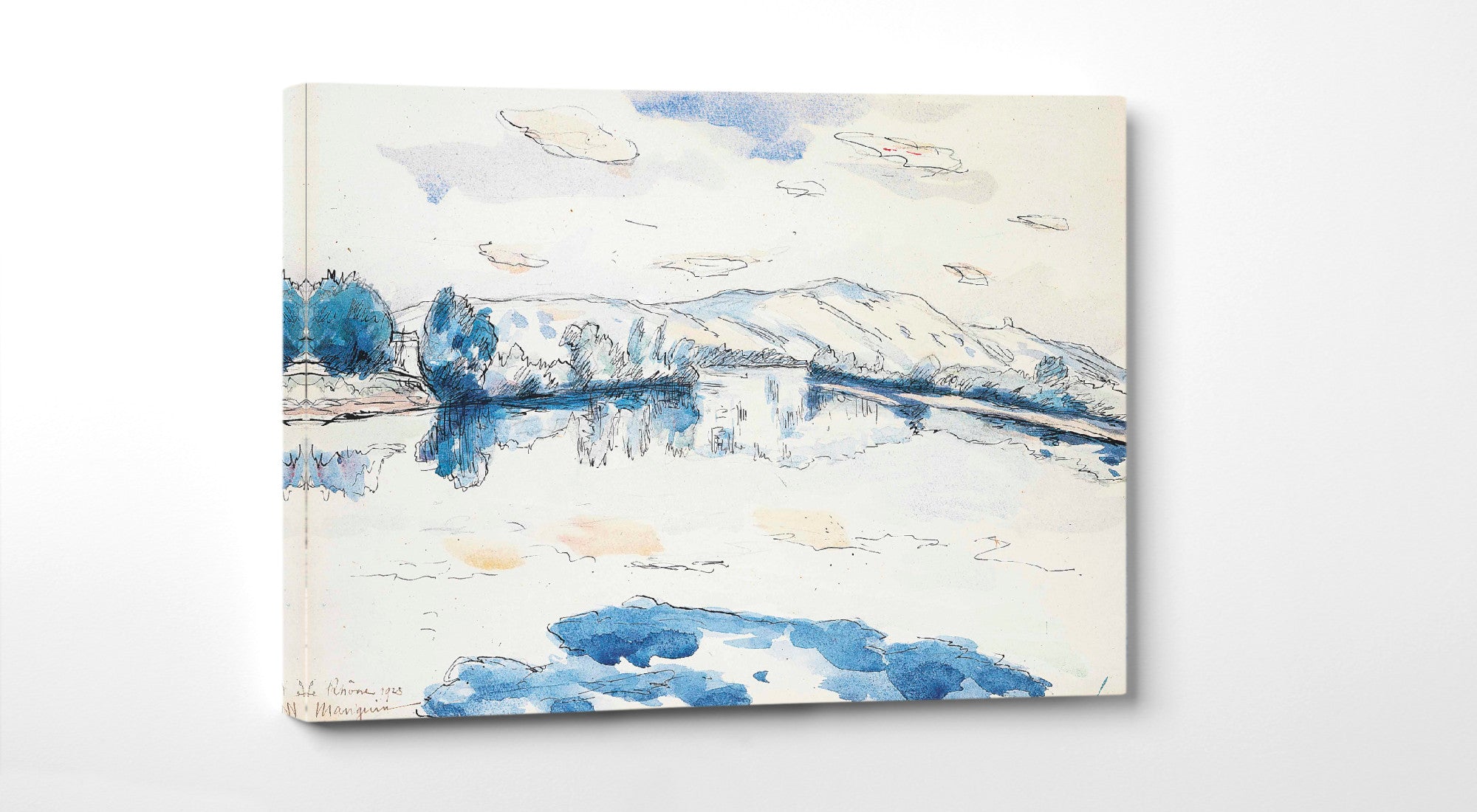
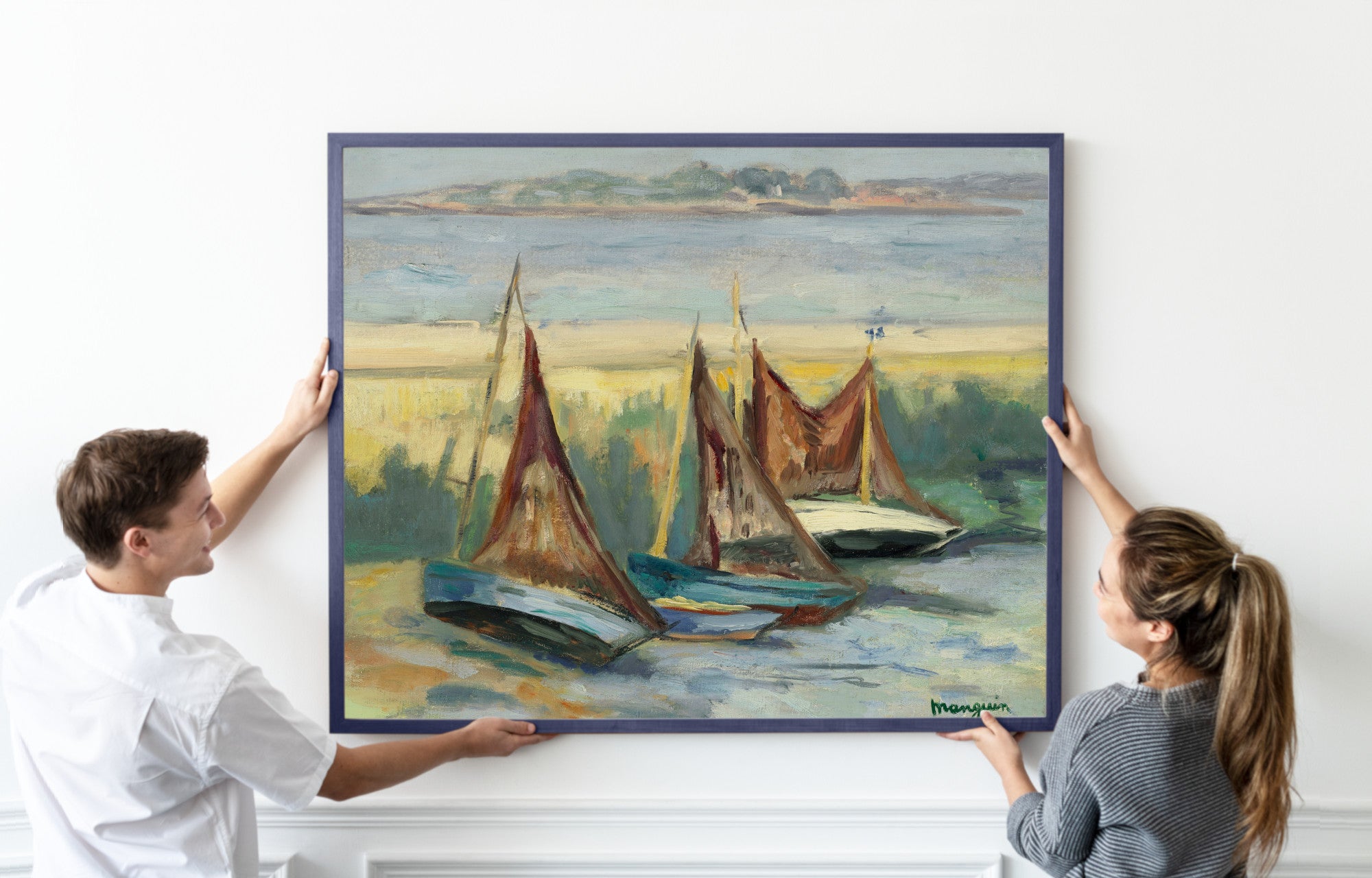
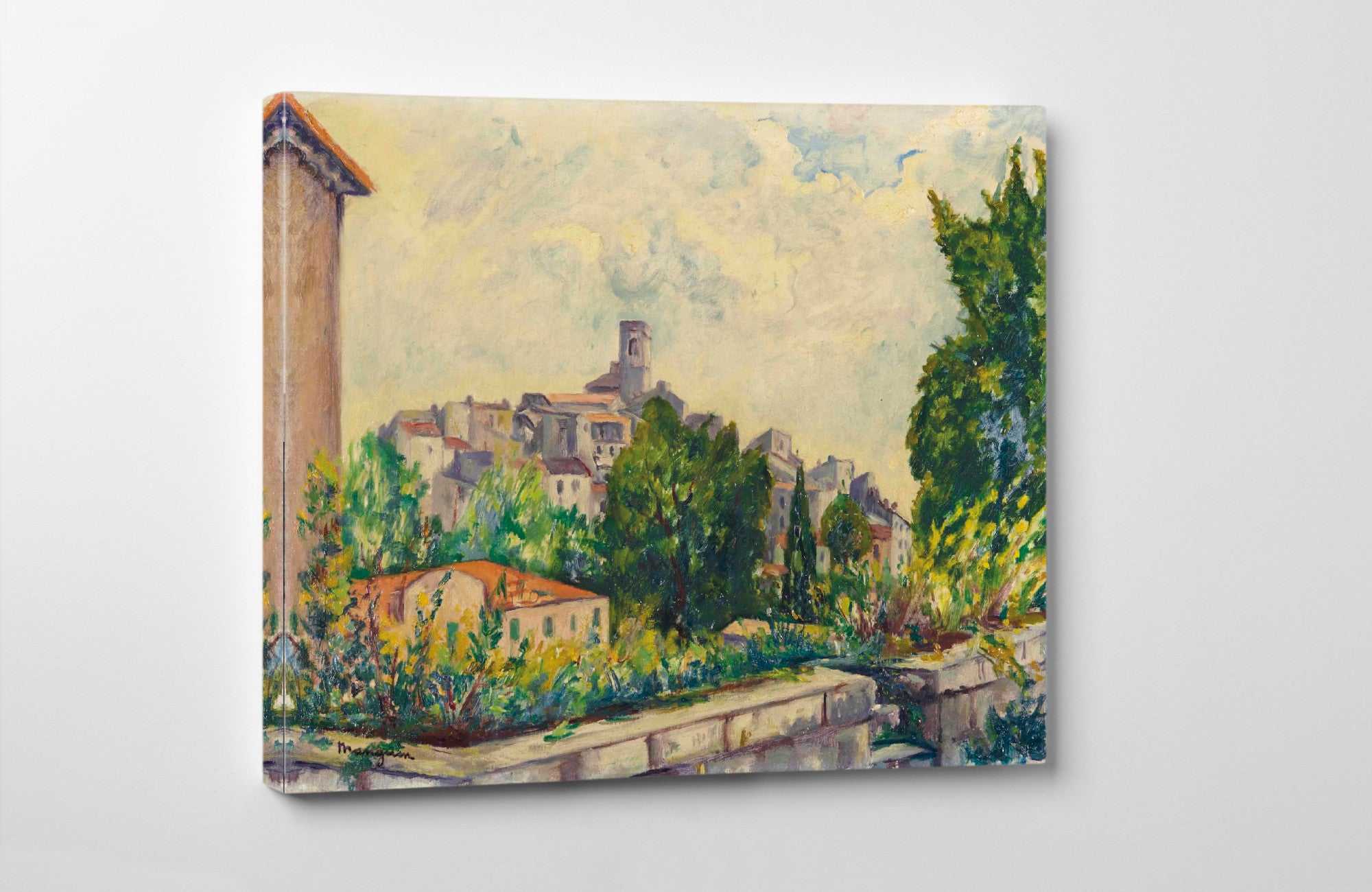
For a classic expression of Fauvist Mediterranean colour, consider one of Manguin's Saint-Tropez landscapes. Blue water, sunlit vegetation and warm coastal colours make these particularly effective as statement wall art.
Portraits and paintings of Jeanne offer a more intimate alternative, combining figurative art with vivid colour.
Bather compositions provide a connection between figure and landscape, while Manguin's still lifes are particularly suitable where a smaller-scale, traditional subject is preferred.
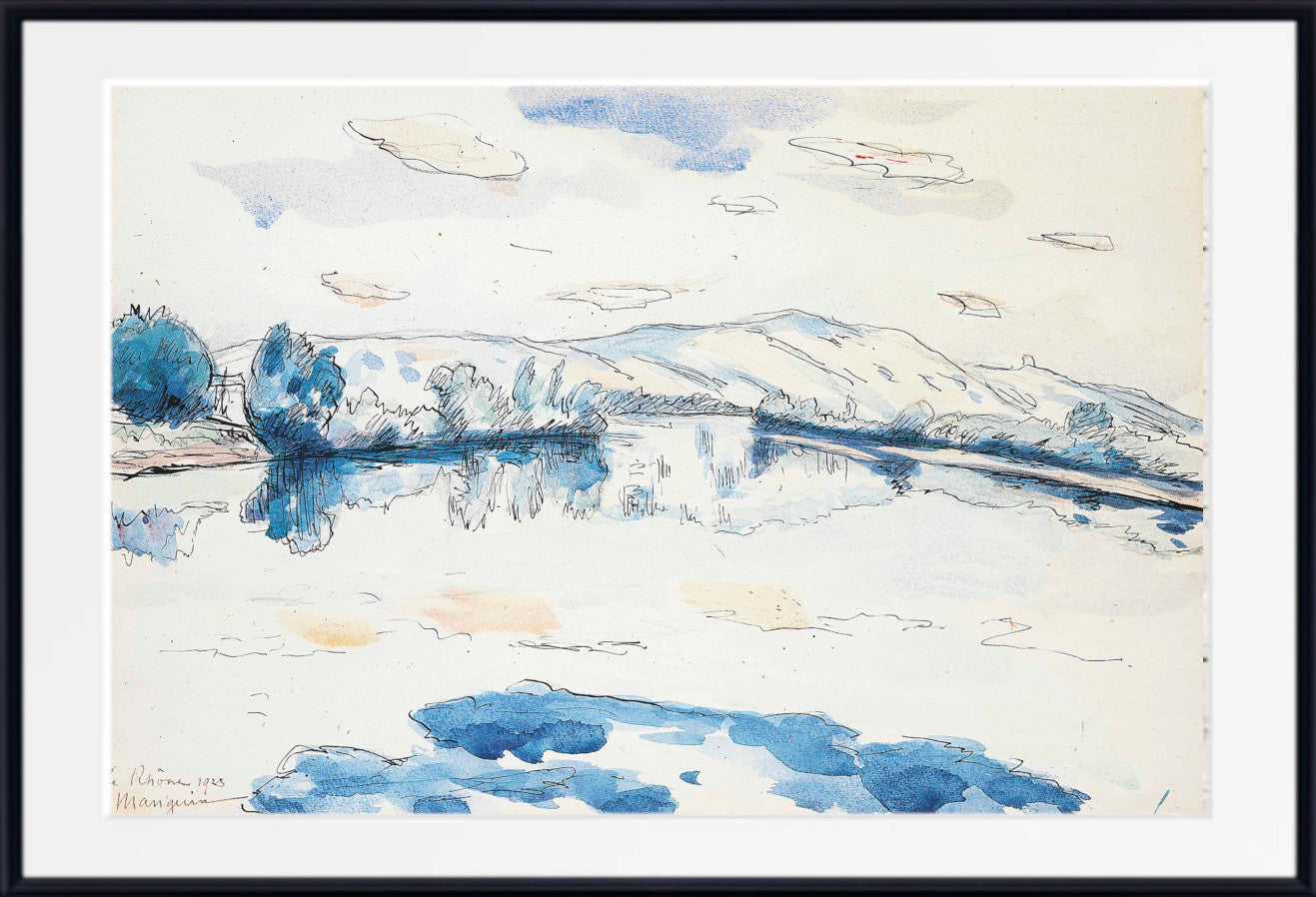
Because his palette ranges from intense Fauvist colour to softer pastel combinations, Henri Manguin prints can work in a surprisingly broad range of interiors.
Henri Manguin Prints for Modern Interiors
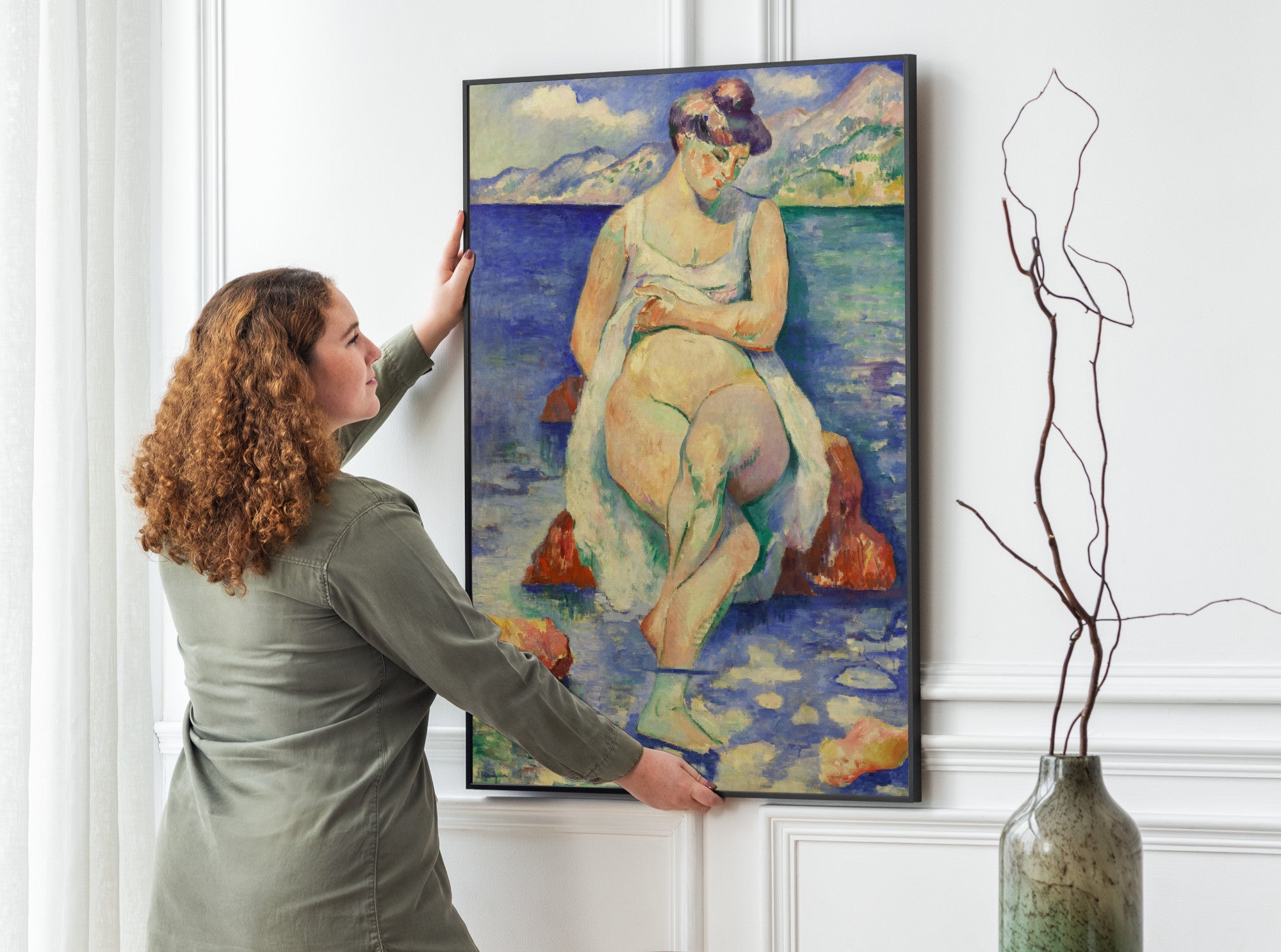
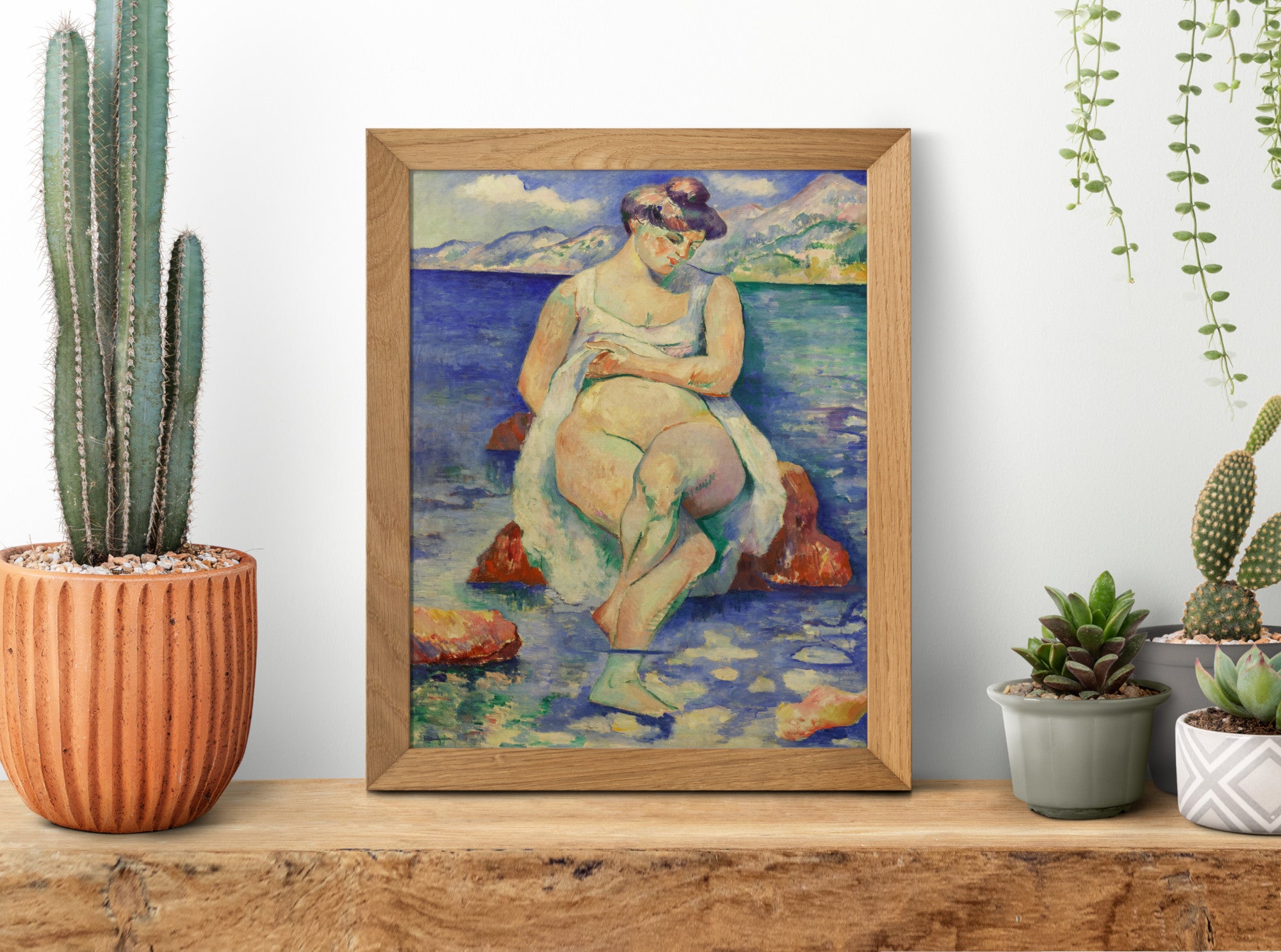
Manguin's warm palette makes his work especially effective in contemporary interiors.
Mediterranean landscapes can introduce blue, turquoise, green and warm red tones into living rooms, dining rooms and bedrooms. Paintings of Jeanne add an intimate figurative element, while his still lifes work particularly well in kitchens, dining spaces and smaller wall areas.
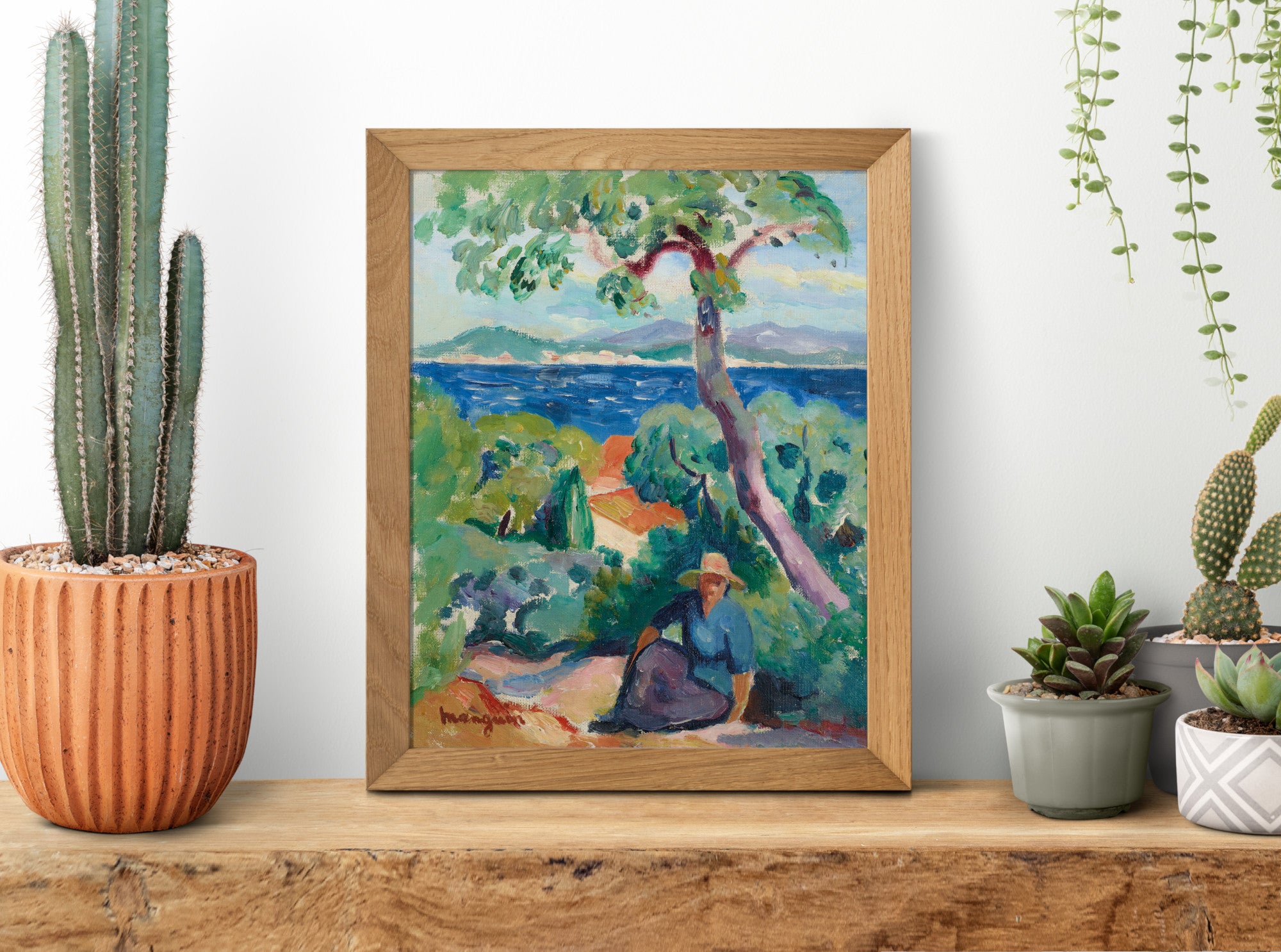
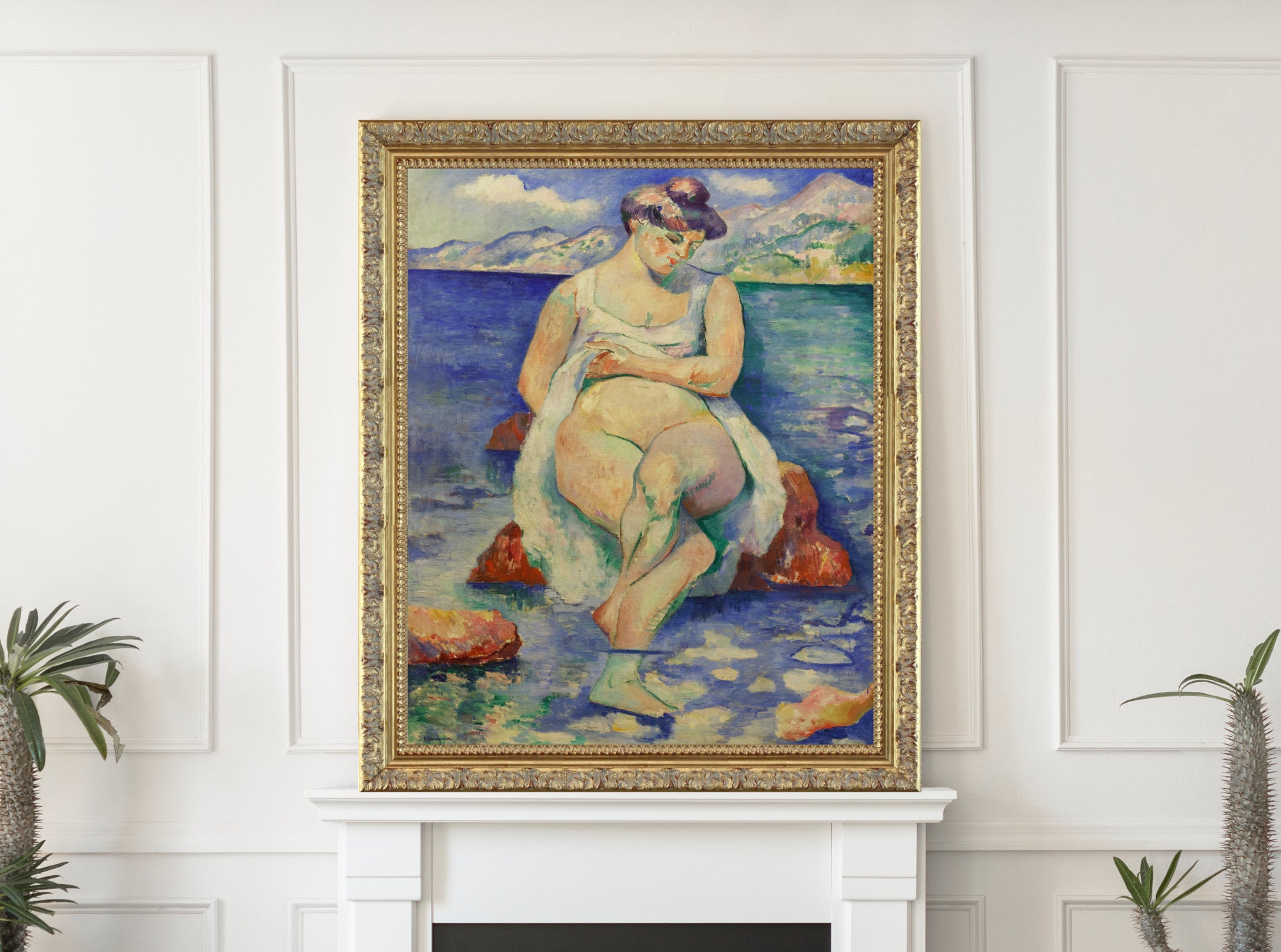
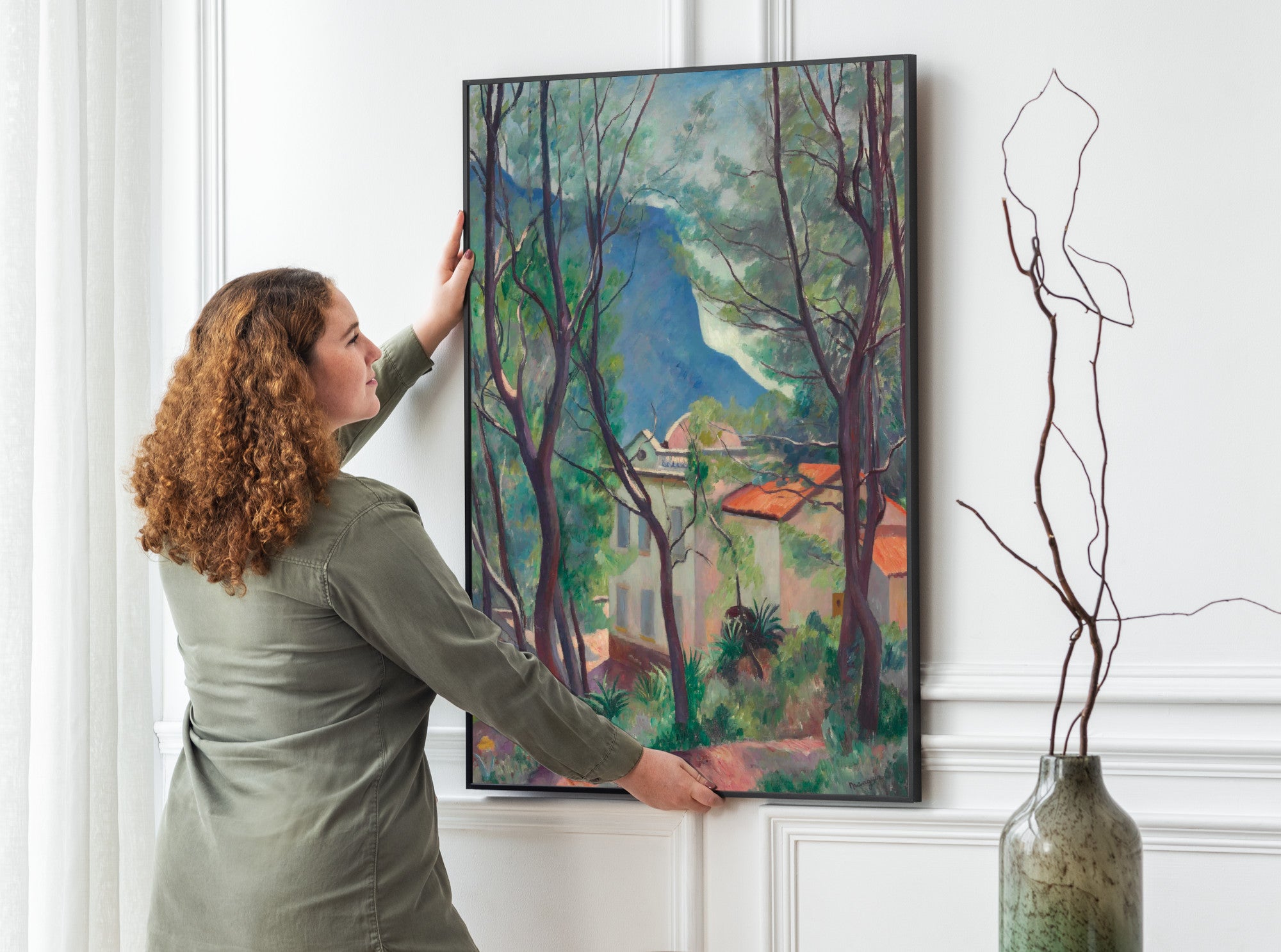
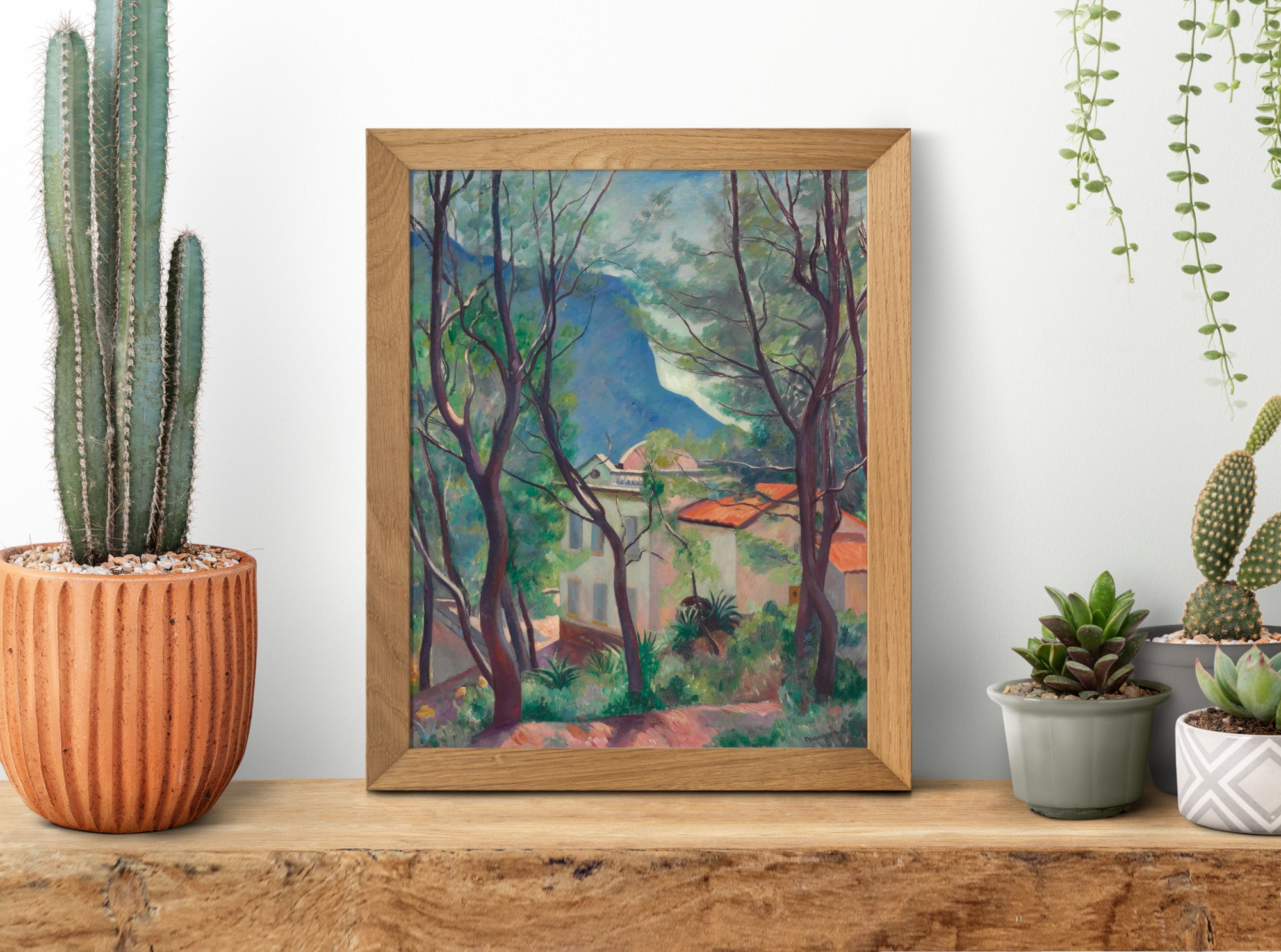
Neutral walls in white, cream, putty and warm grey allow Manguin's colour to become the focal point of a room. His paintings also complement natural wood and the understated furniture associated with Scandinavian and mid-century modern interiors.
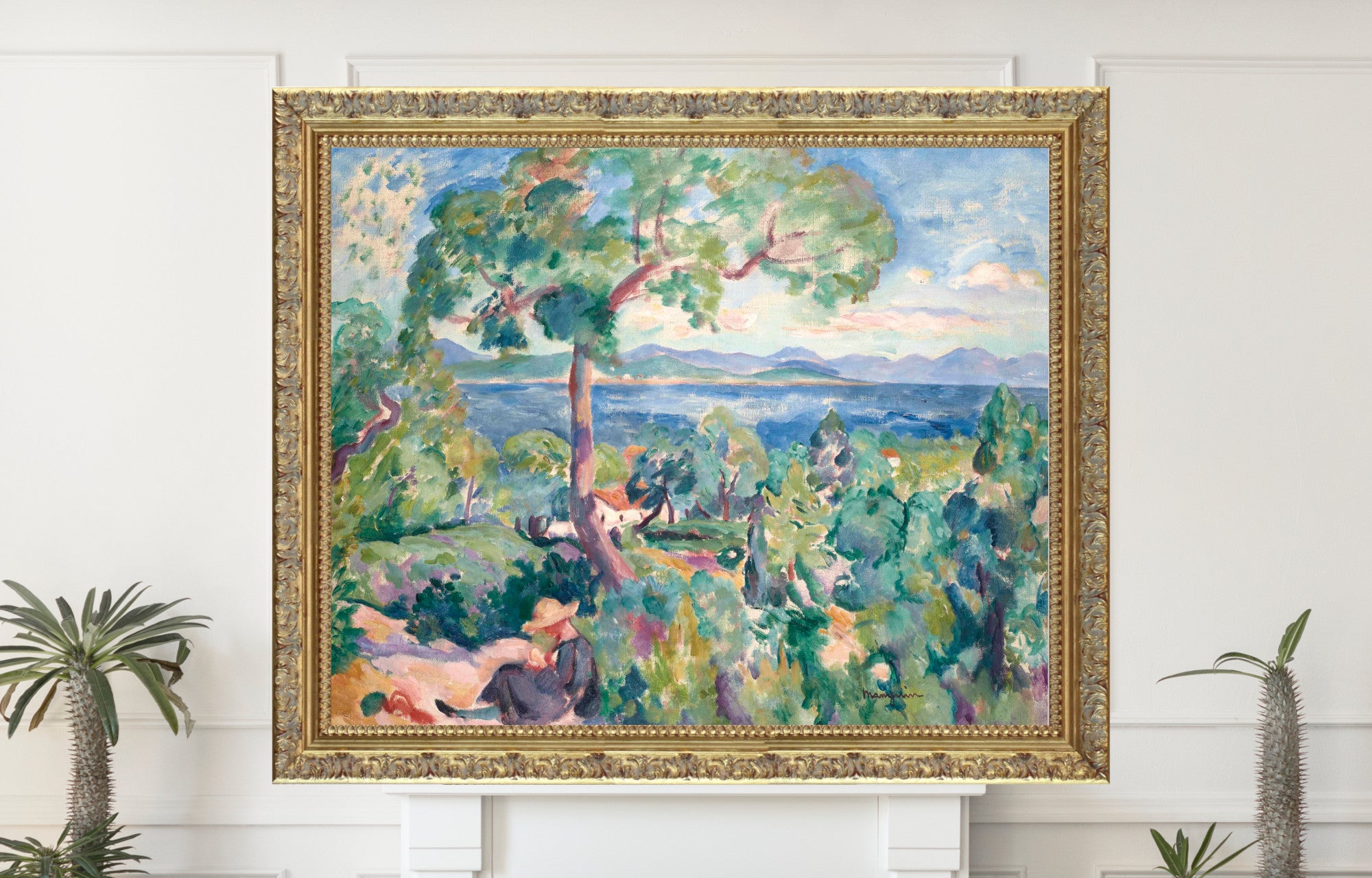
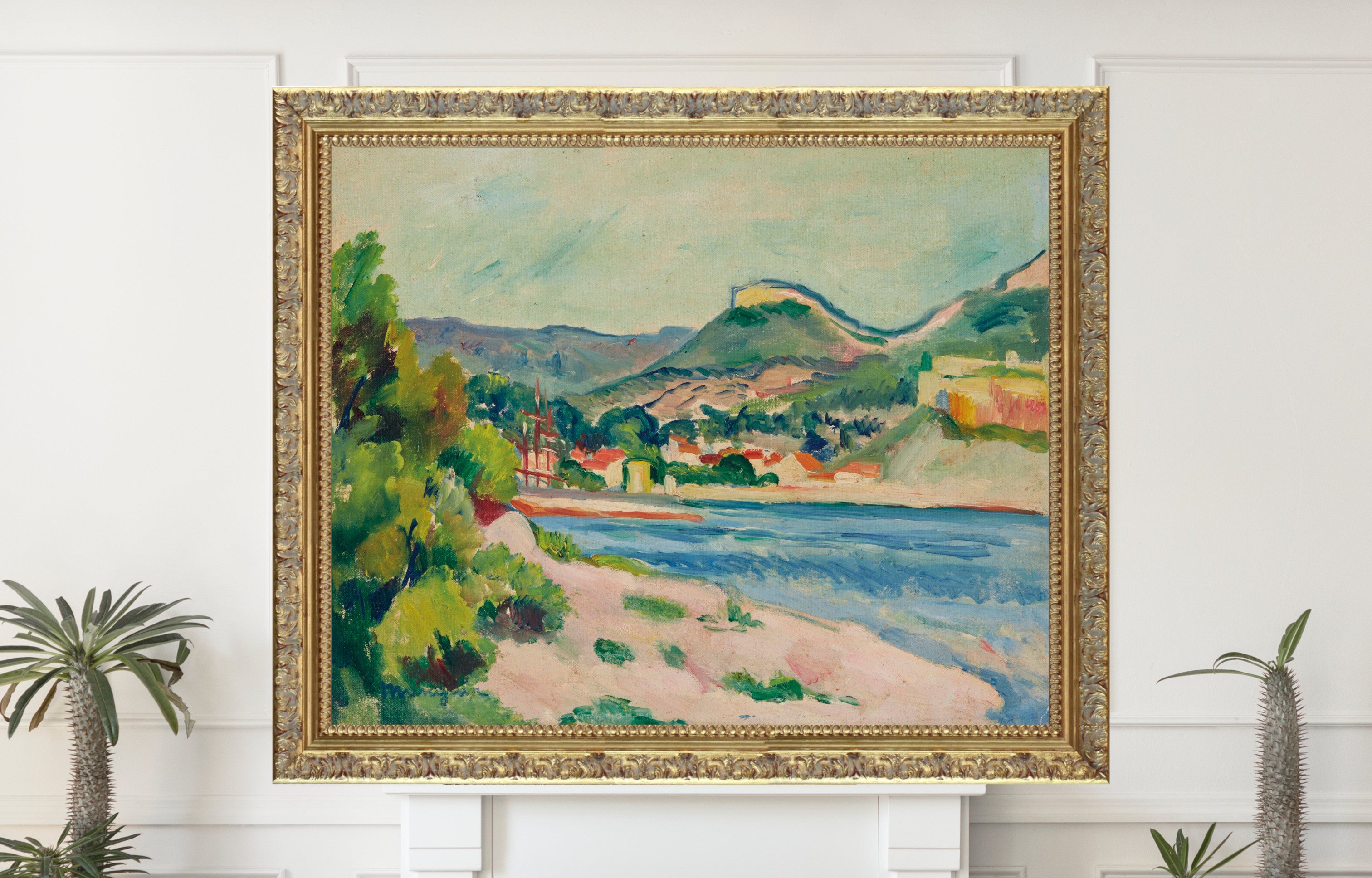
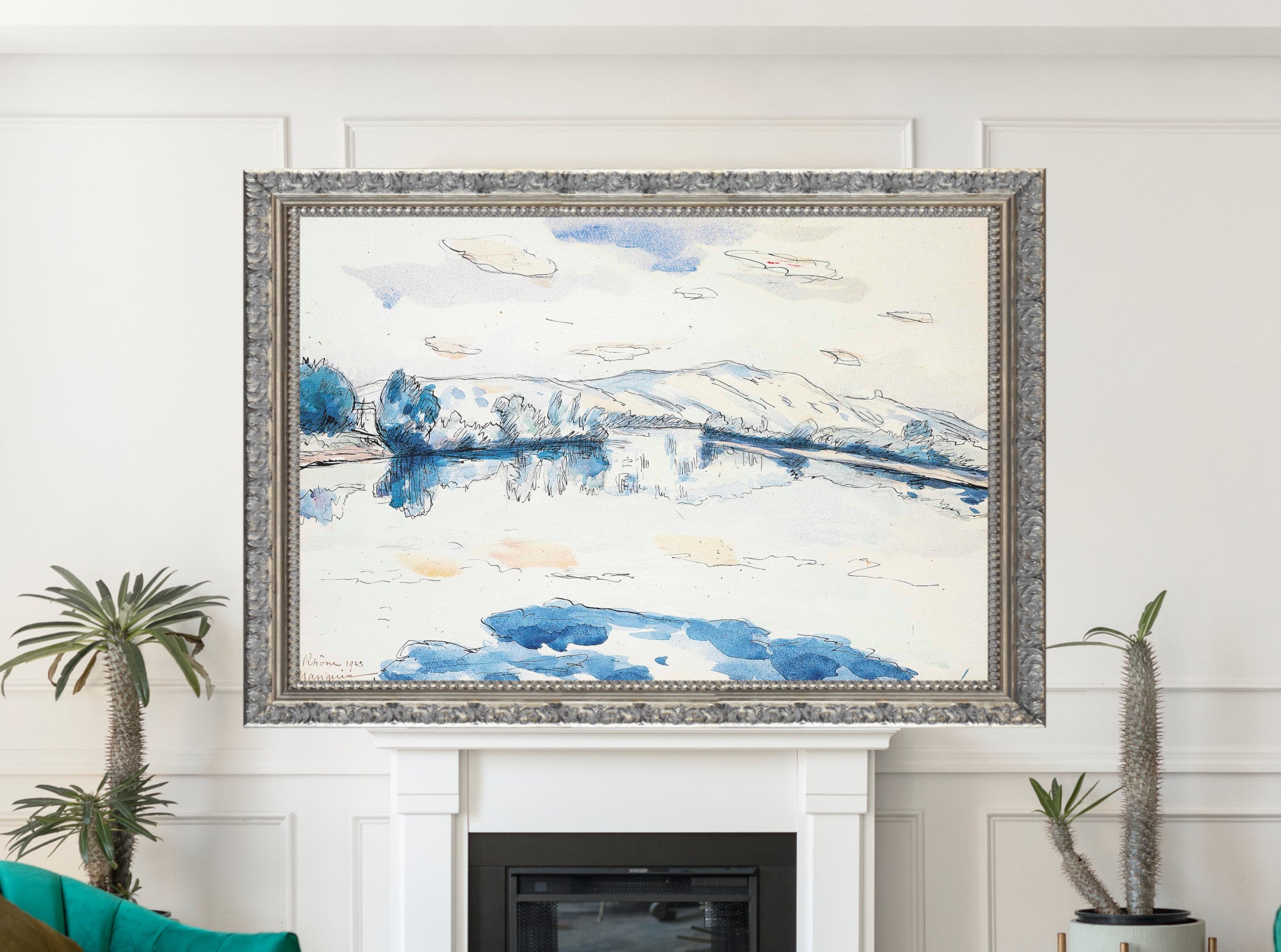
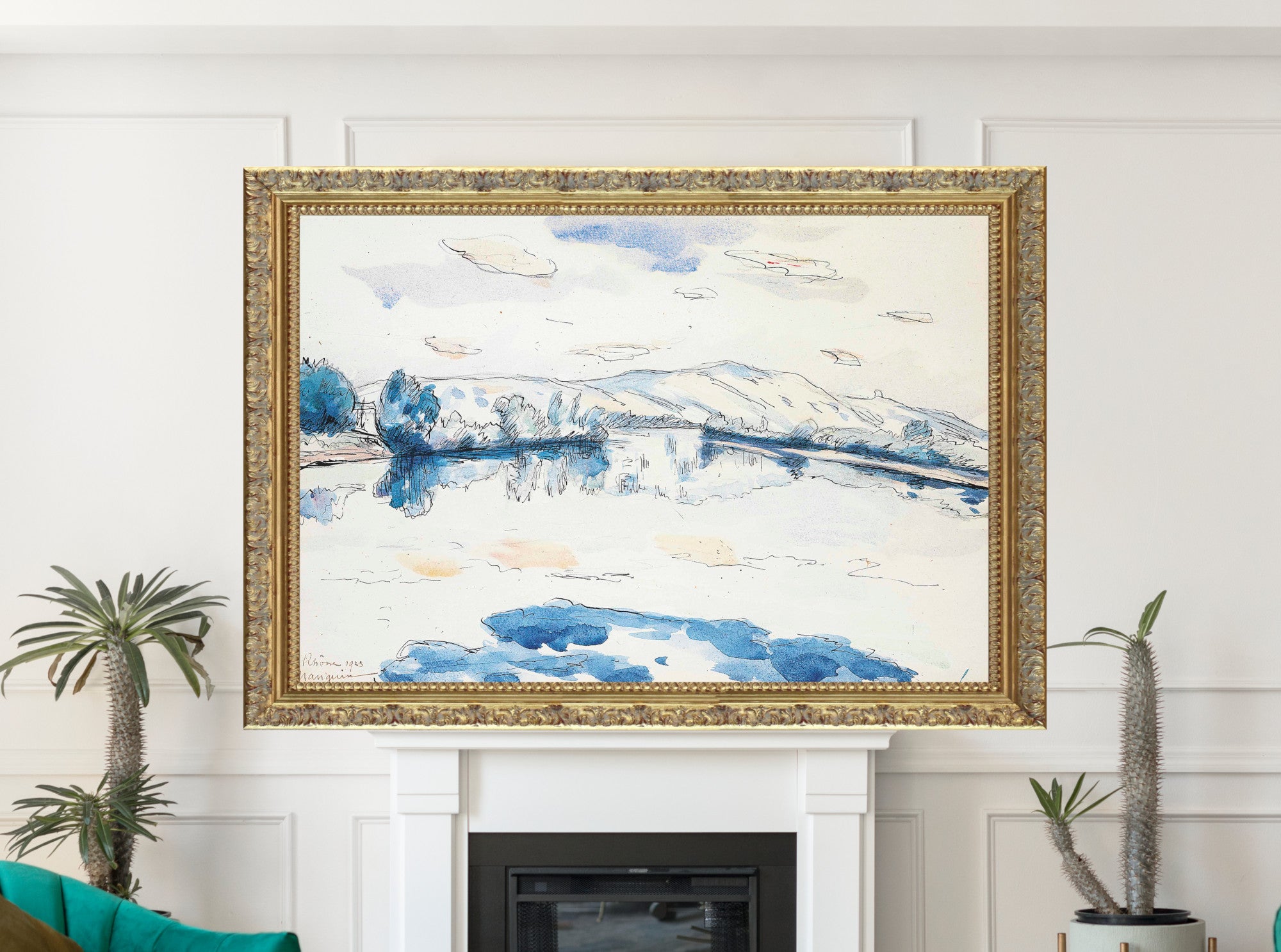
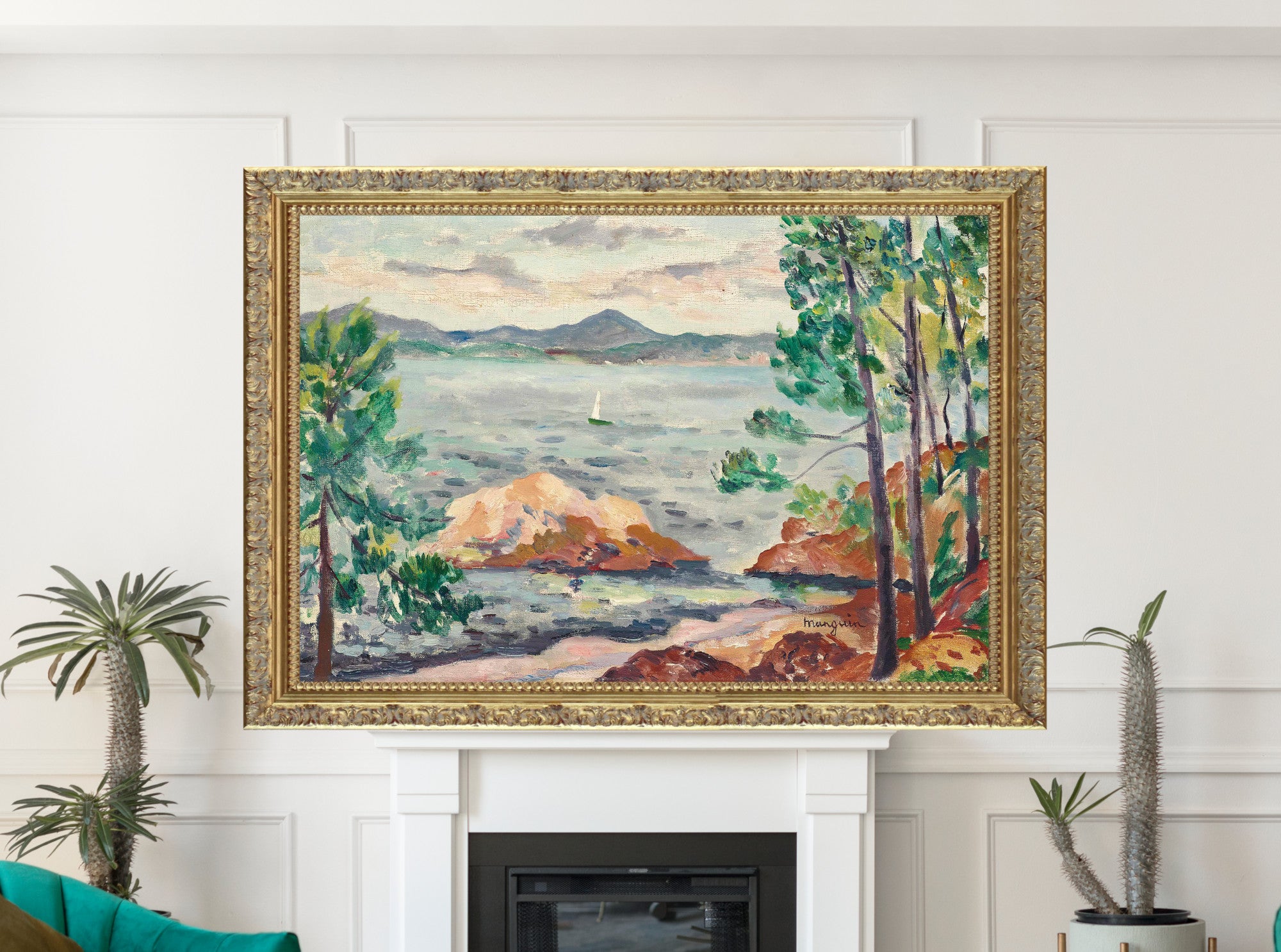
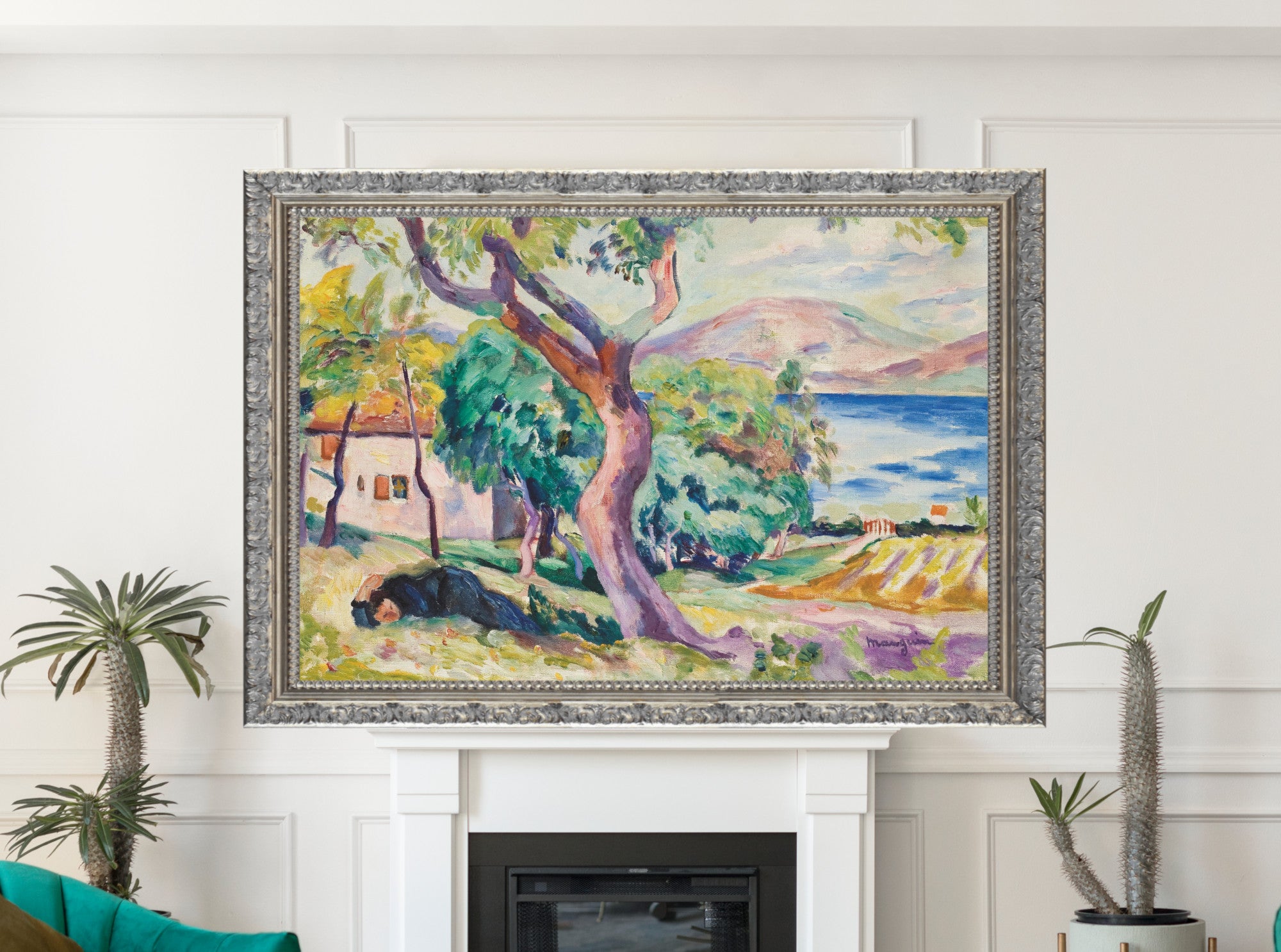
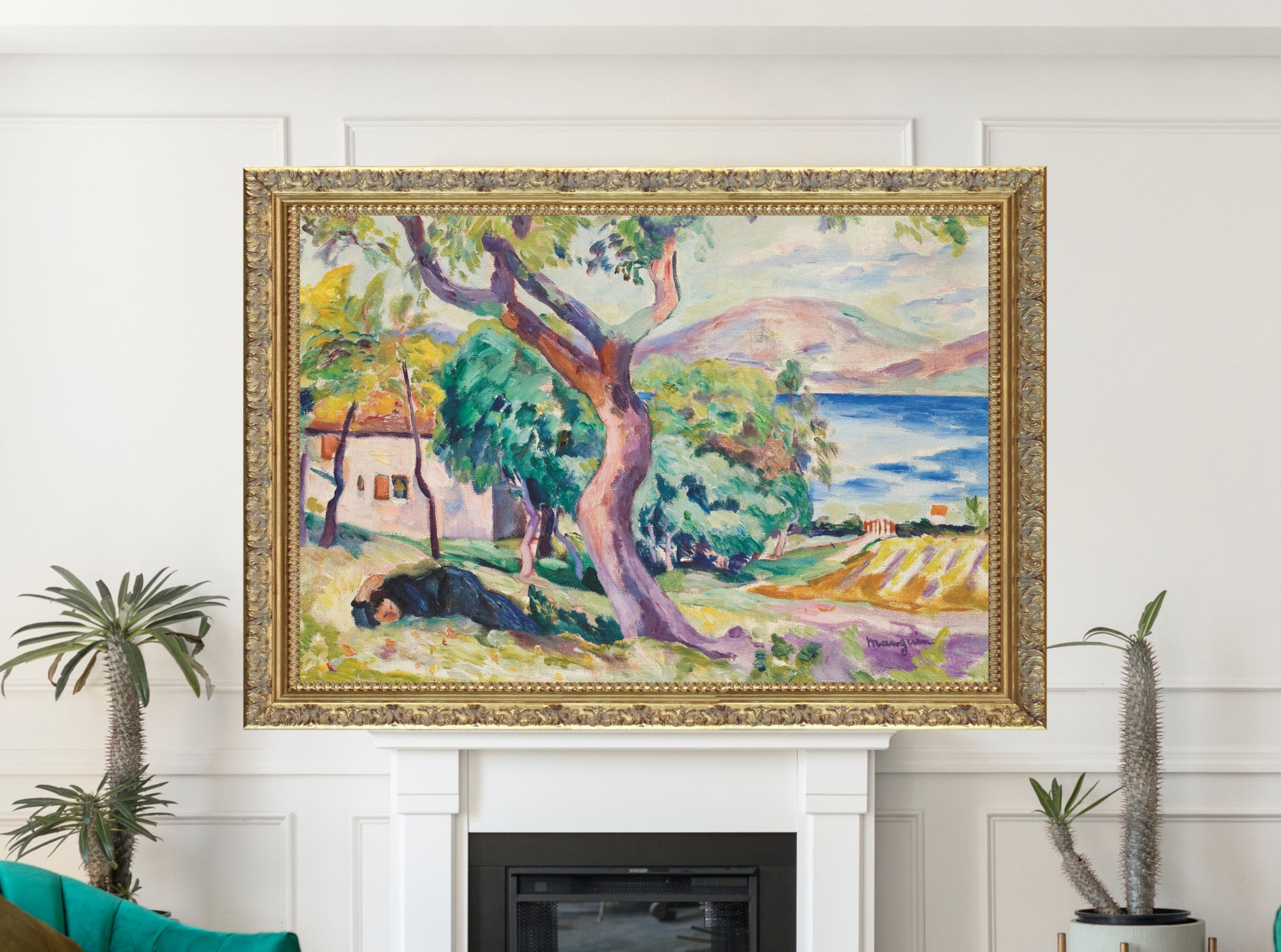
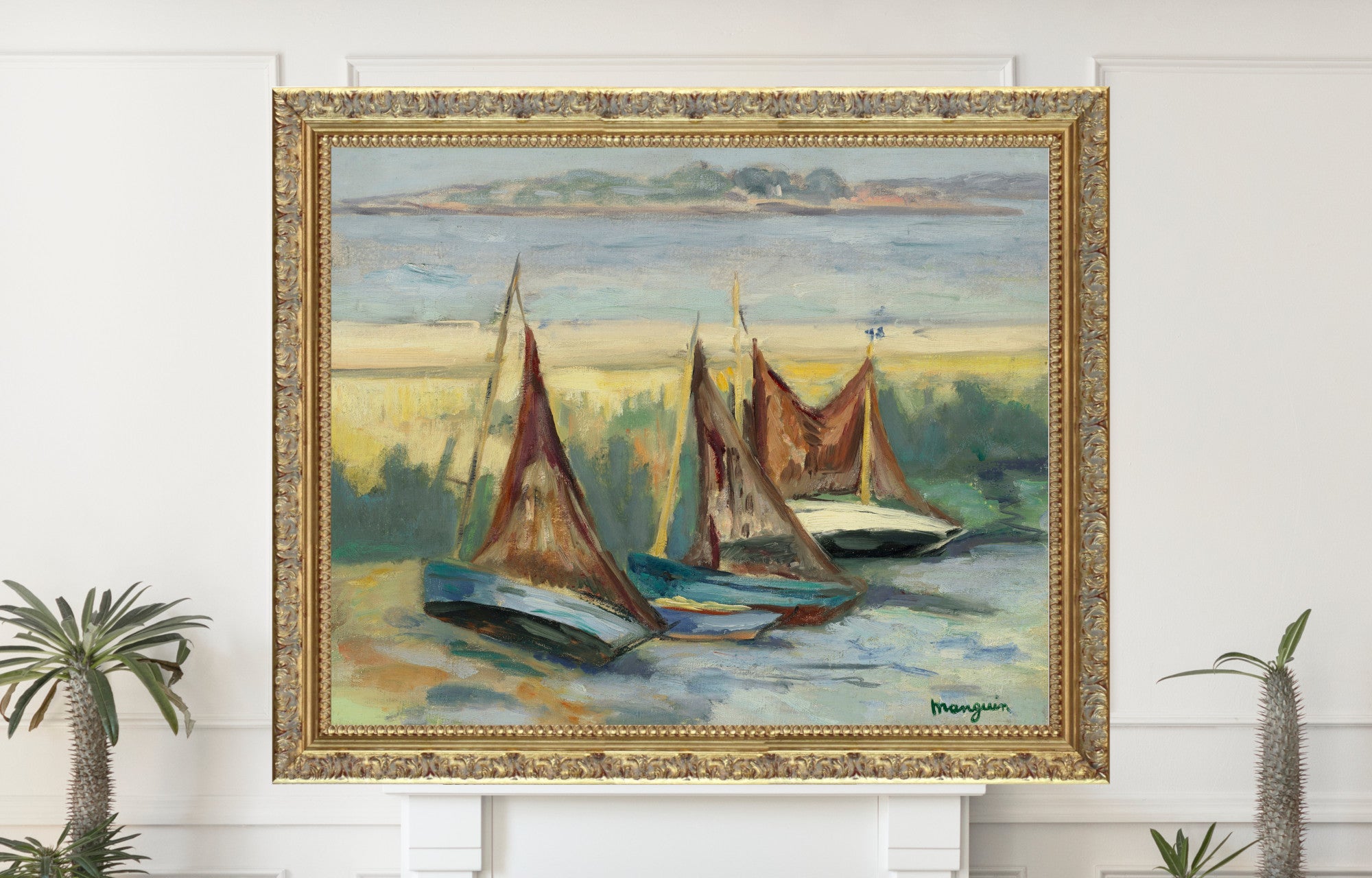
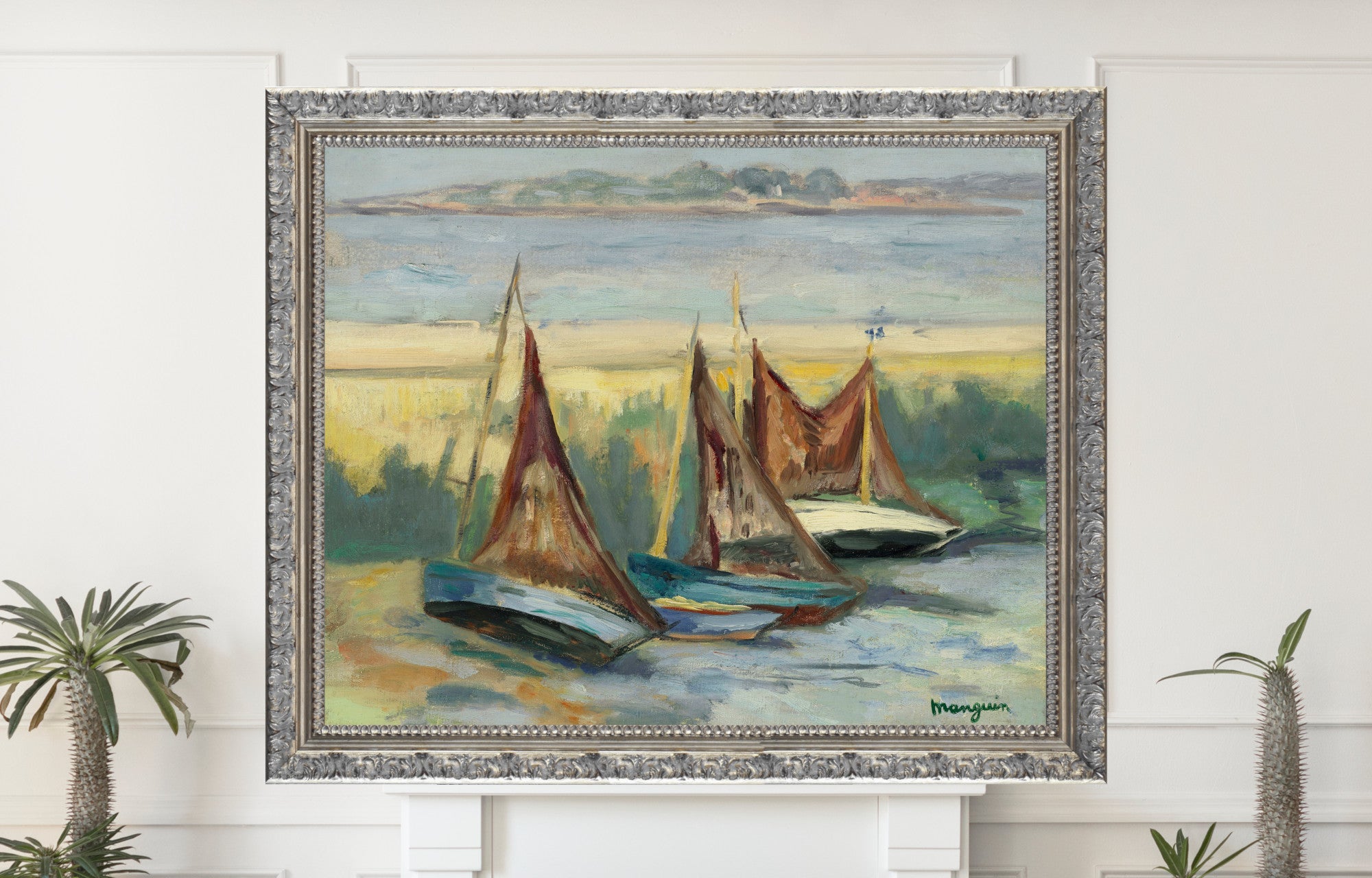
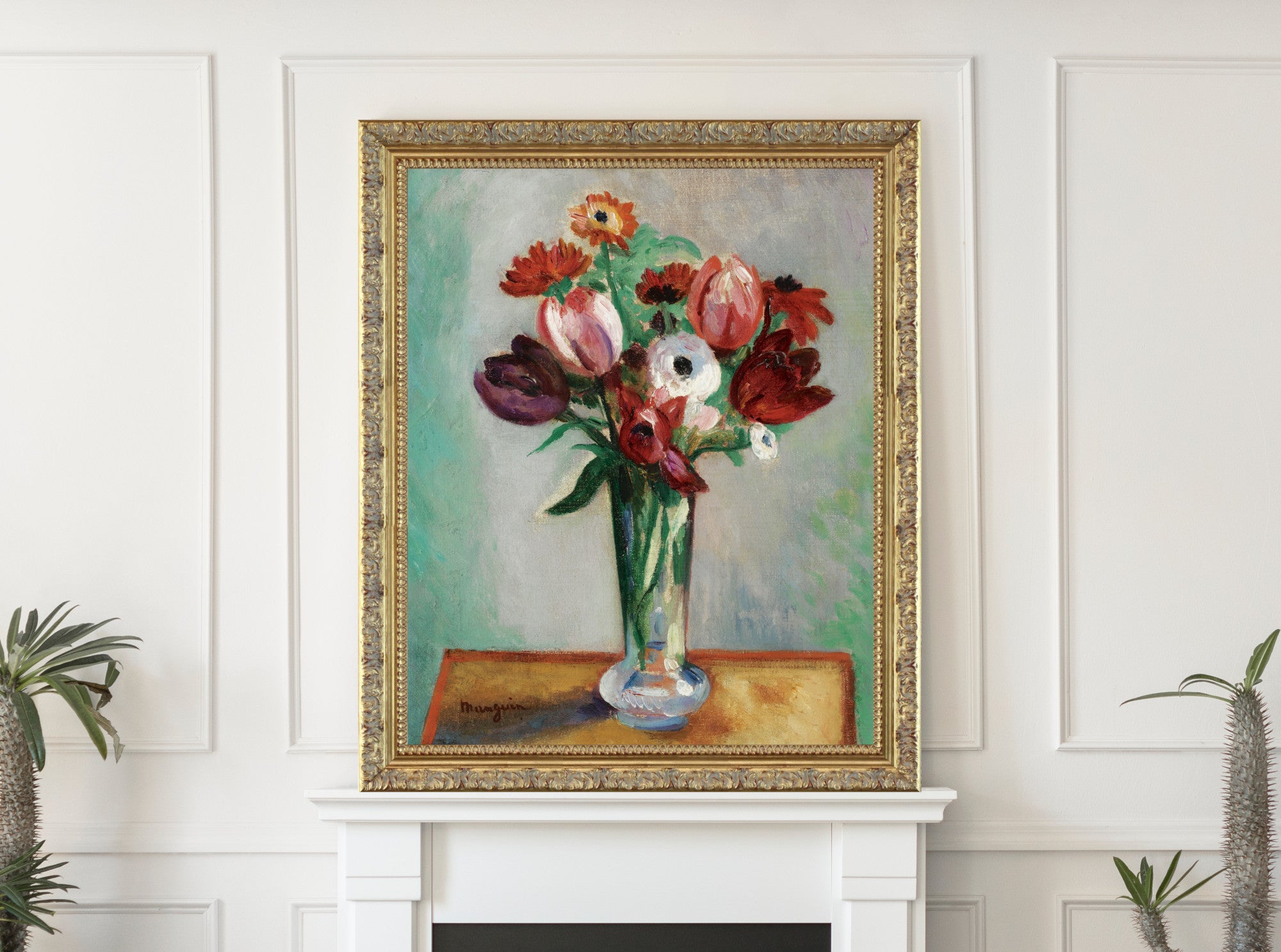
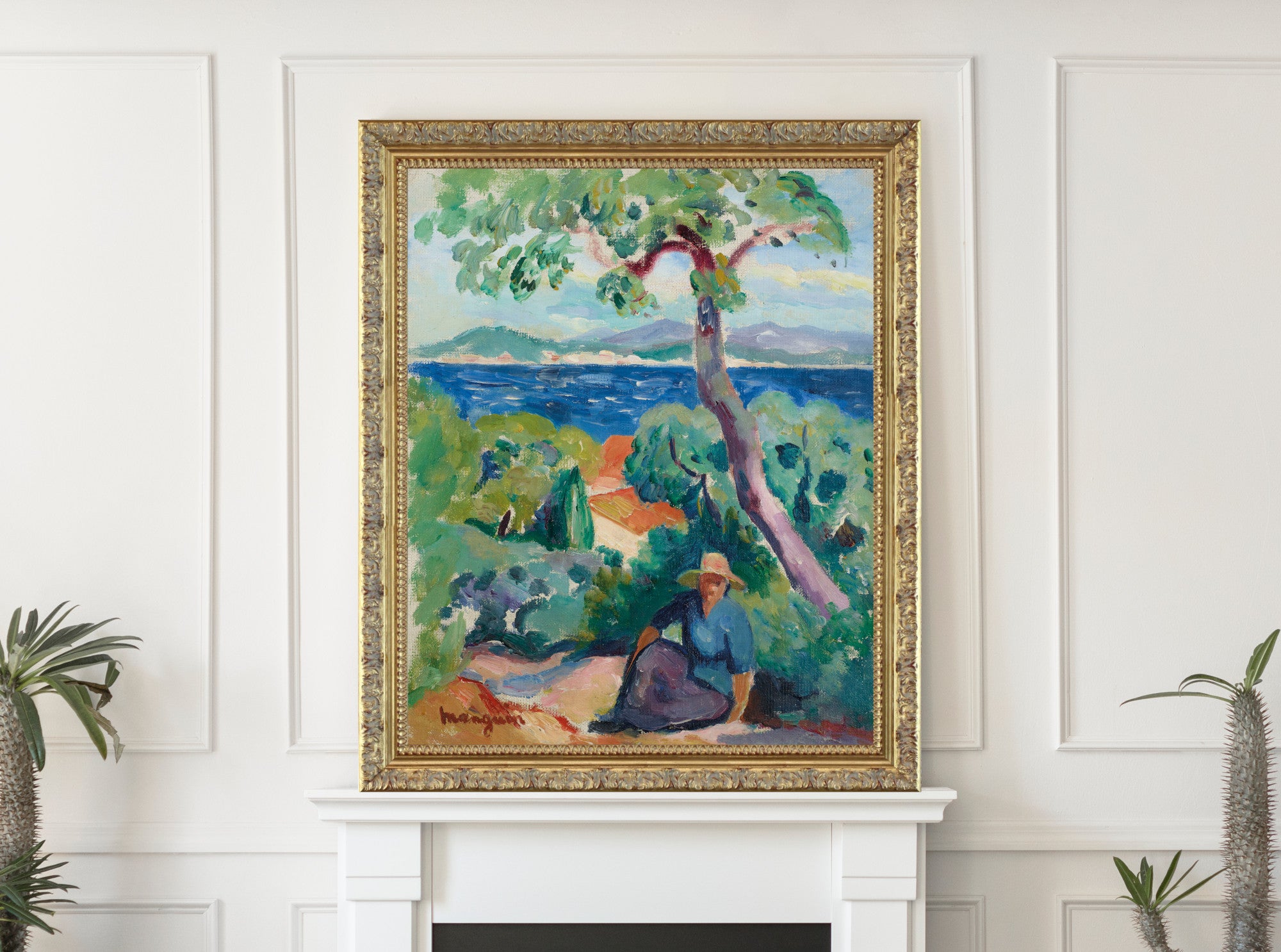
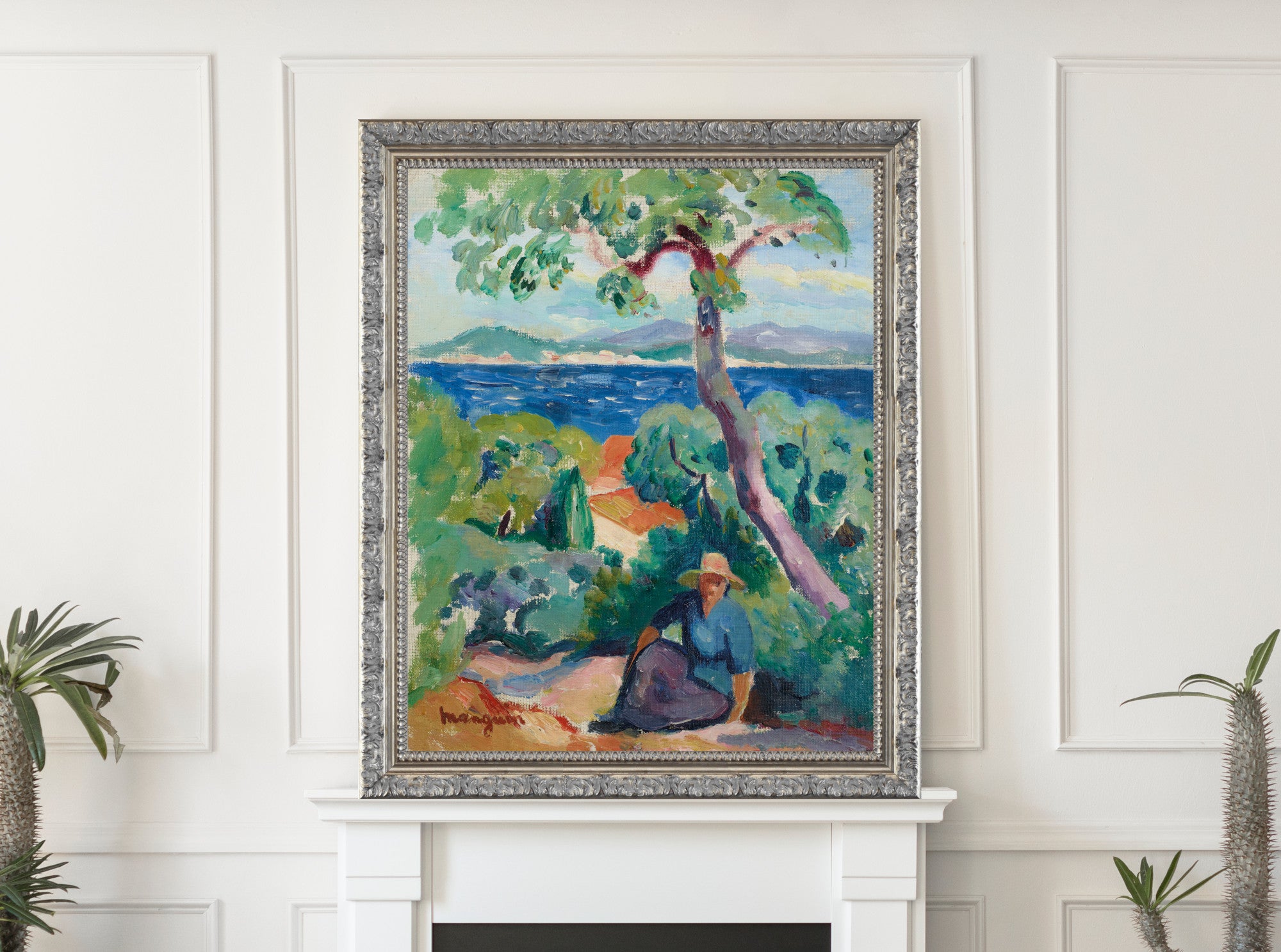
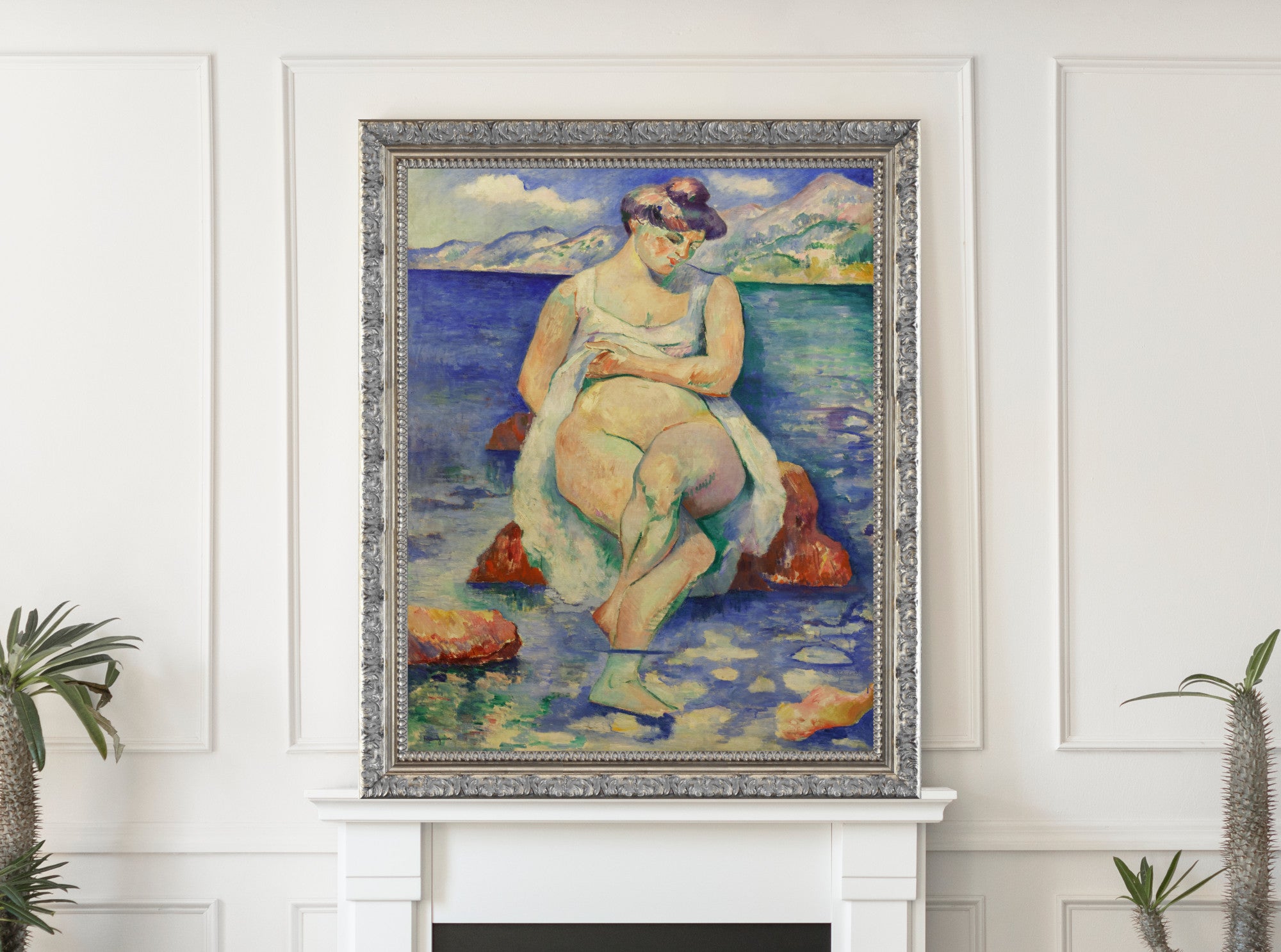
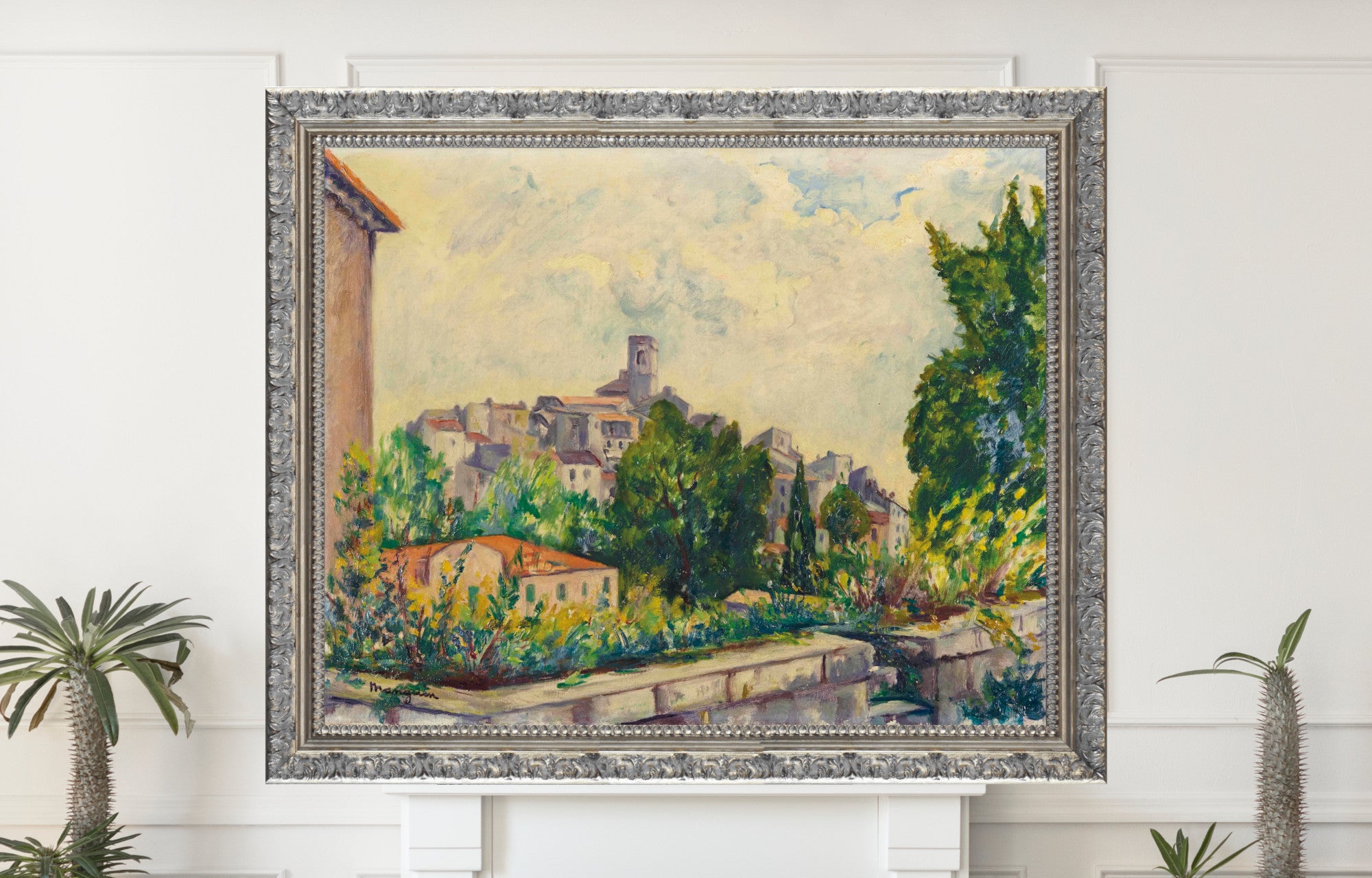
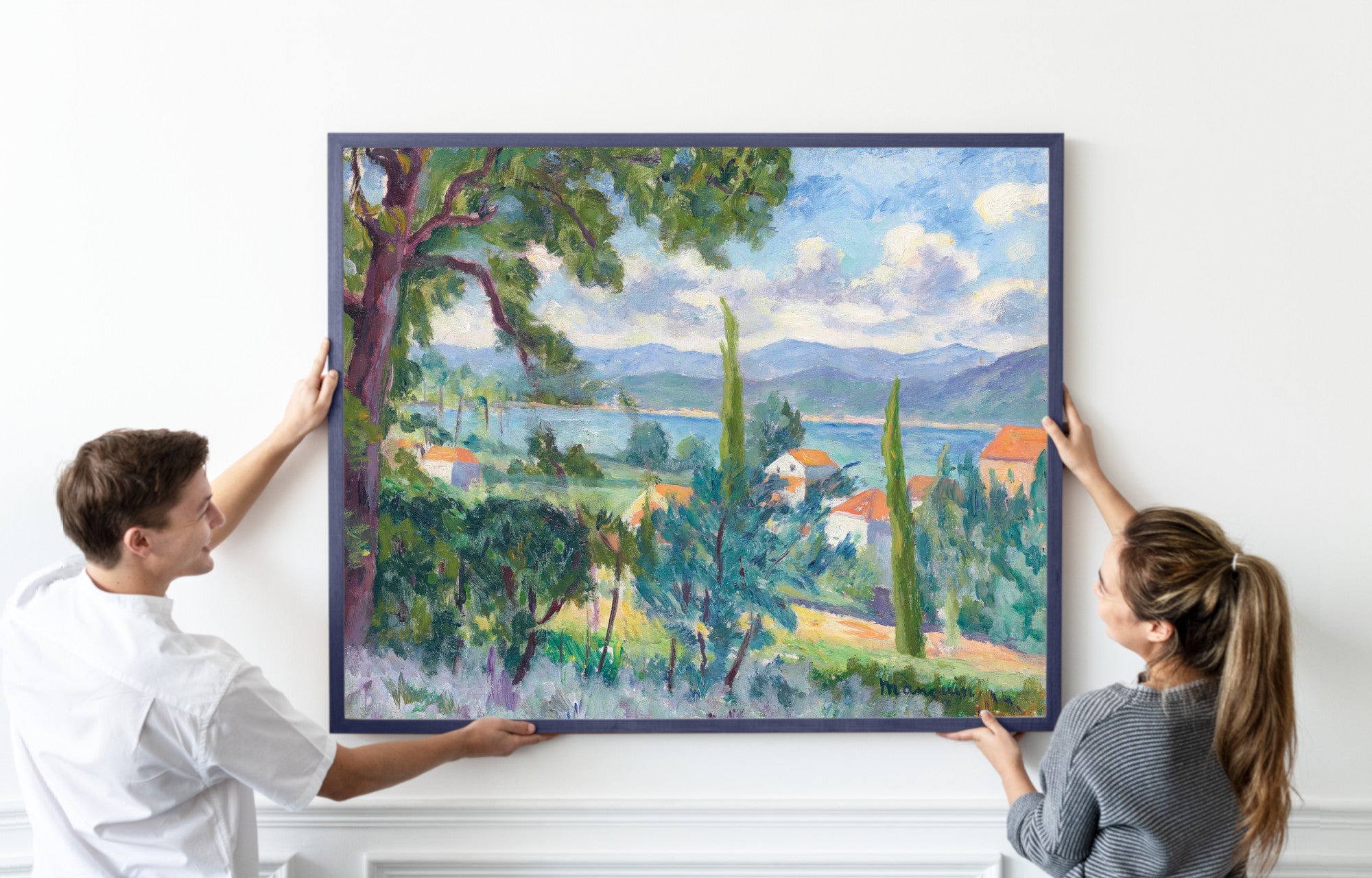
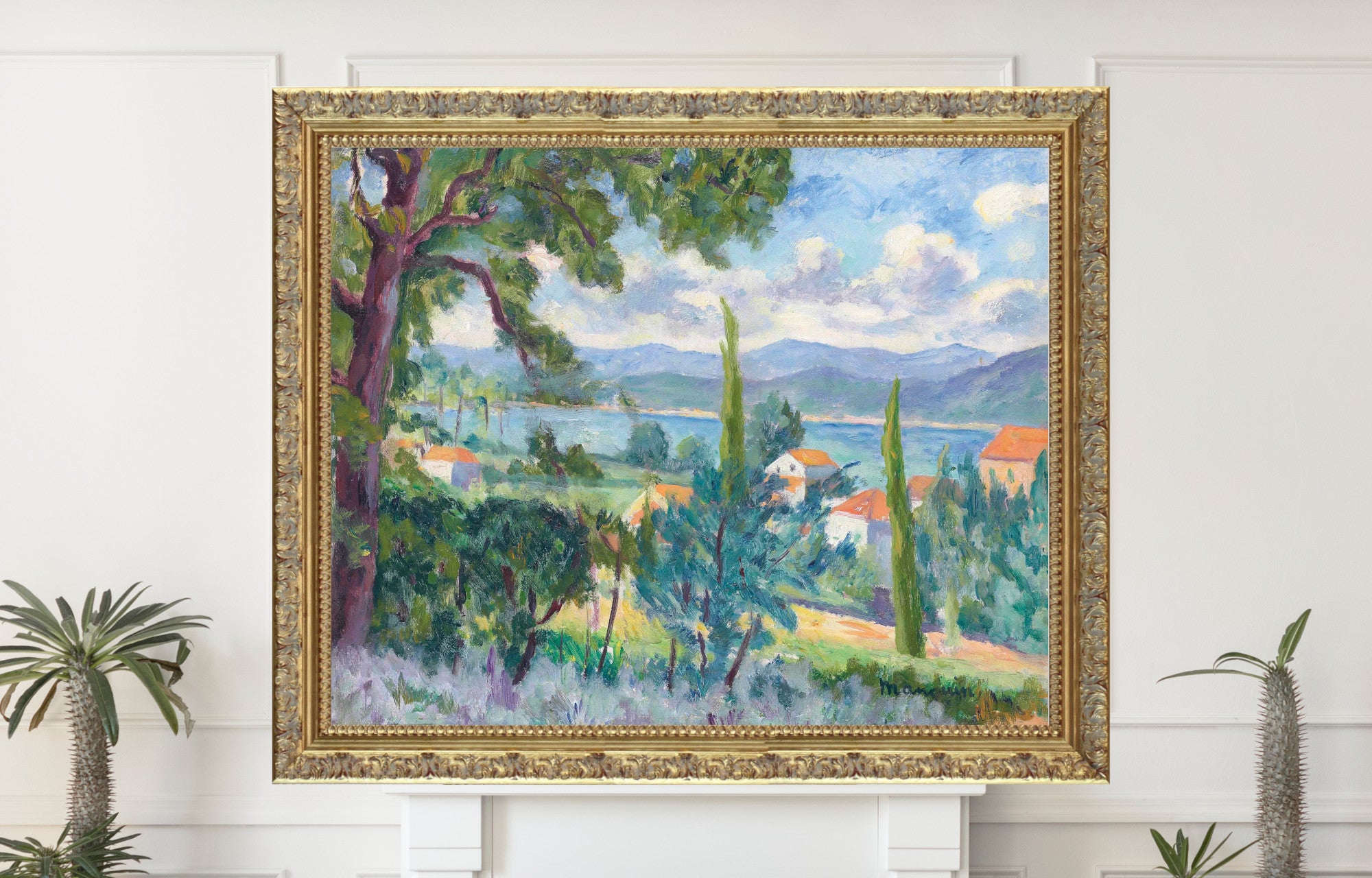
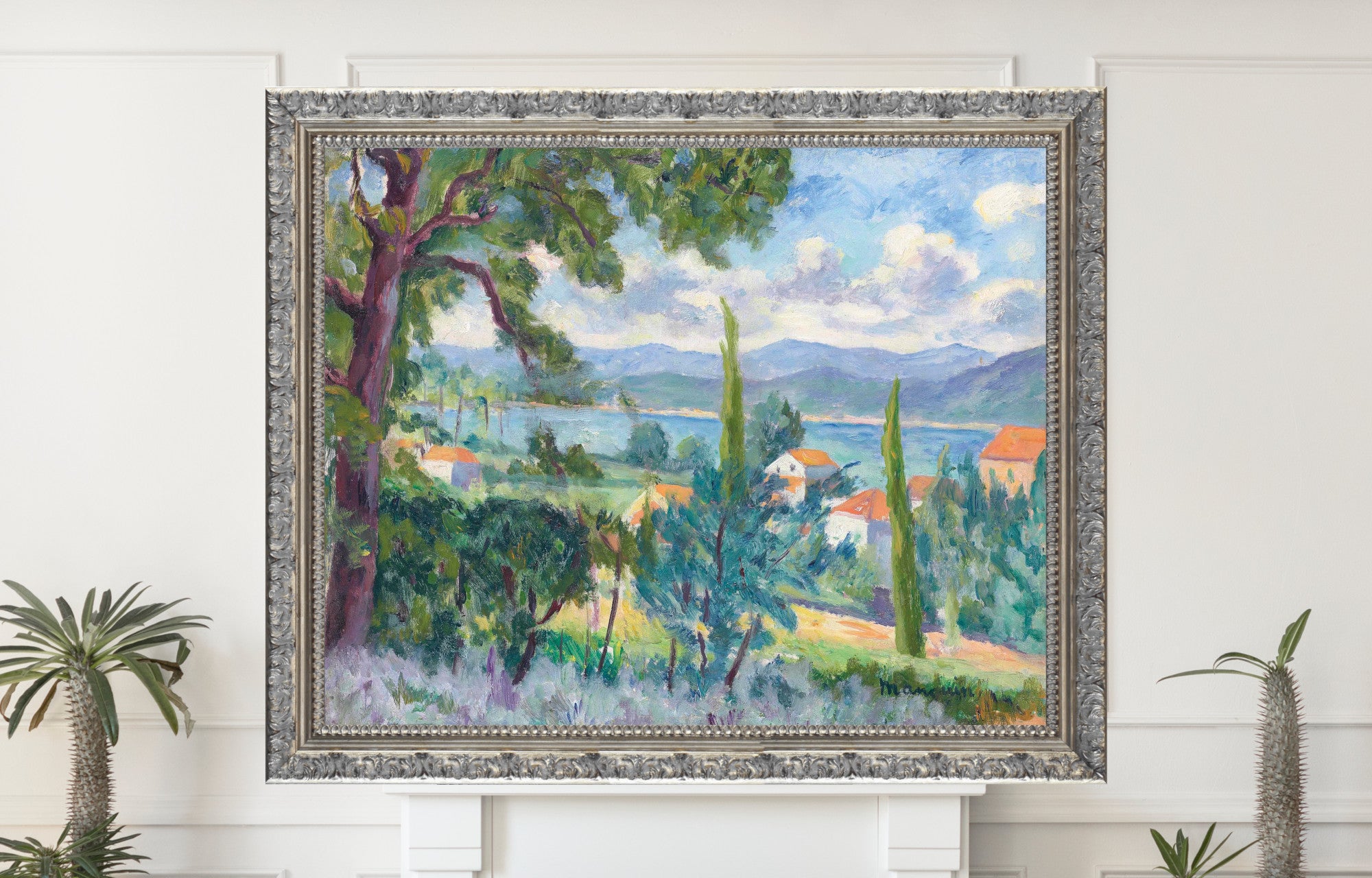
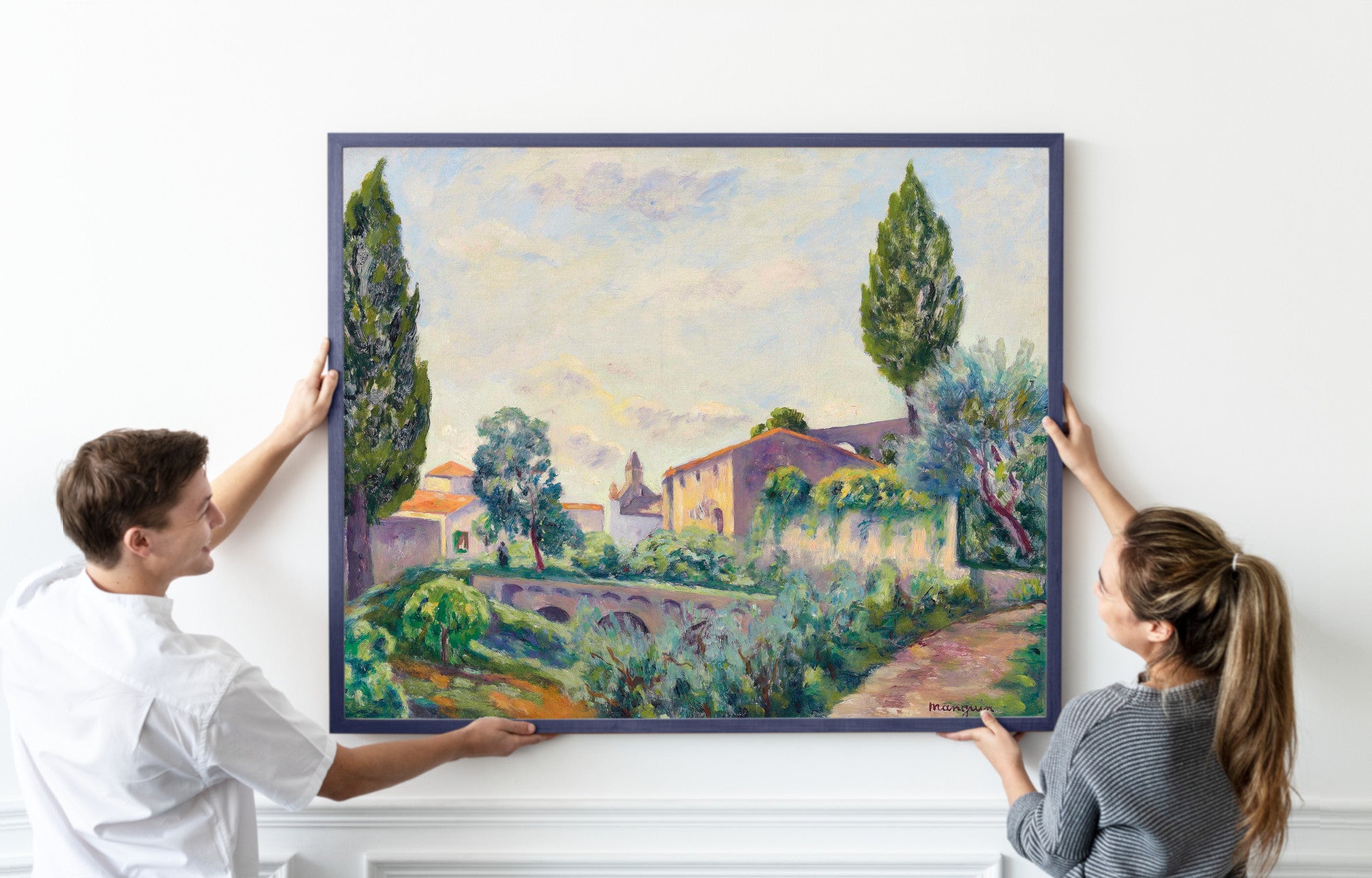
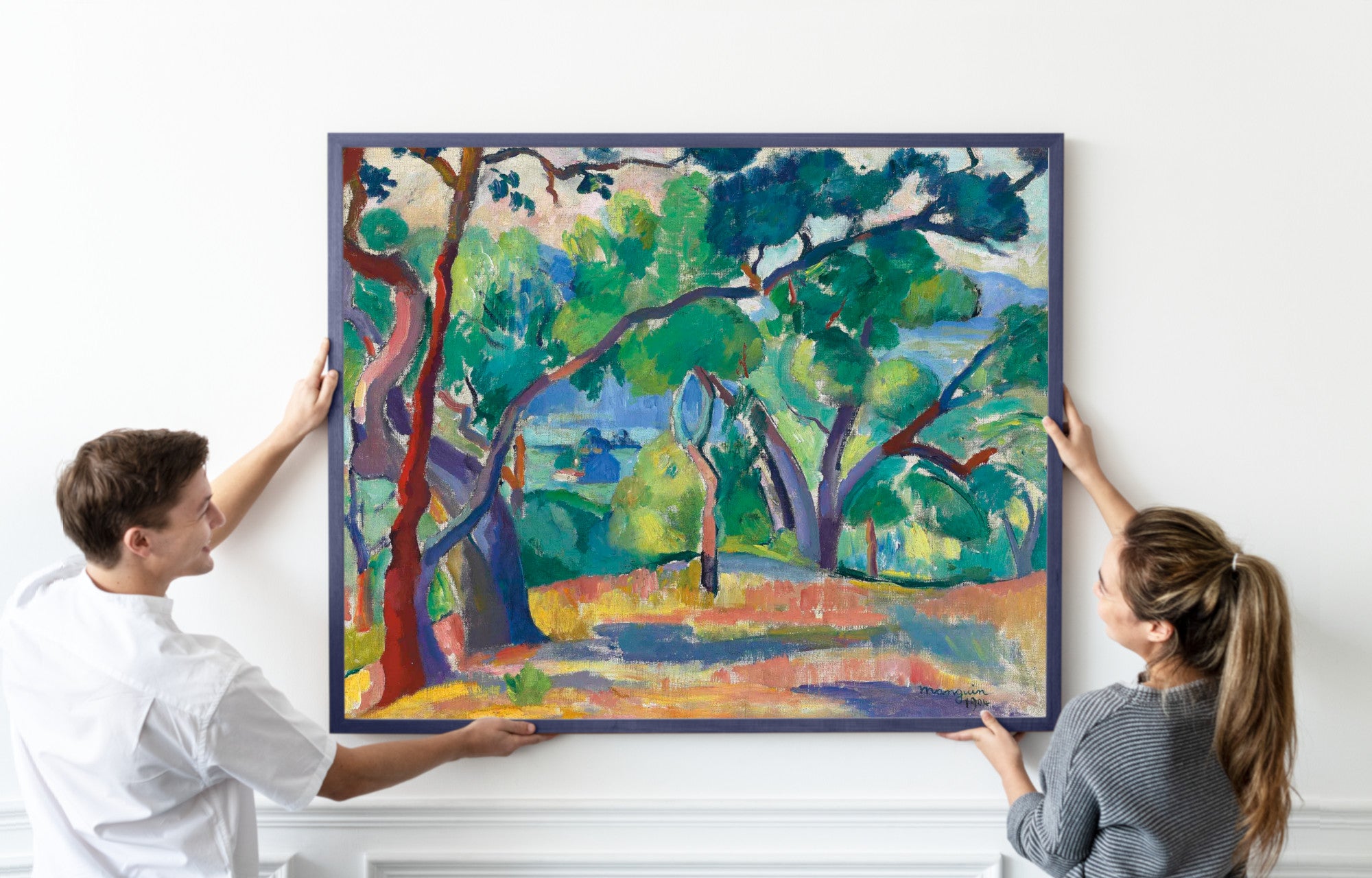
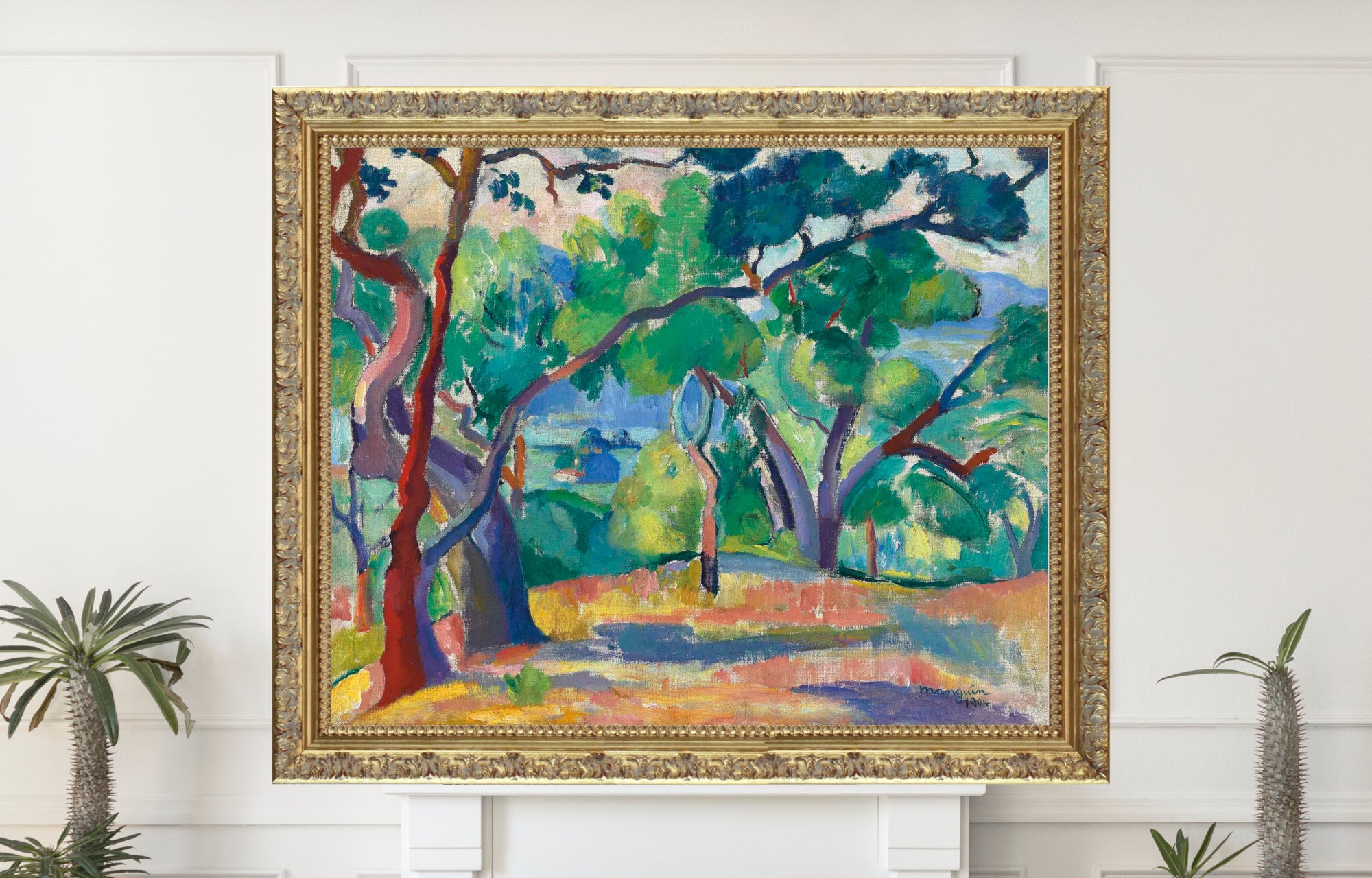
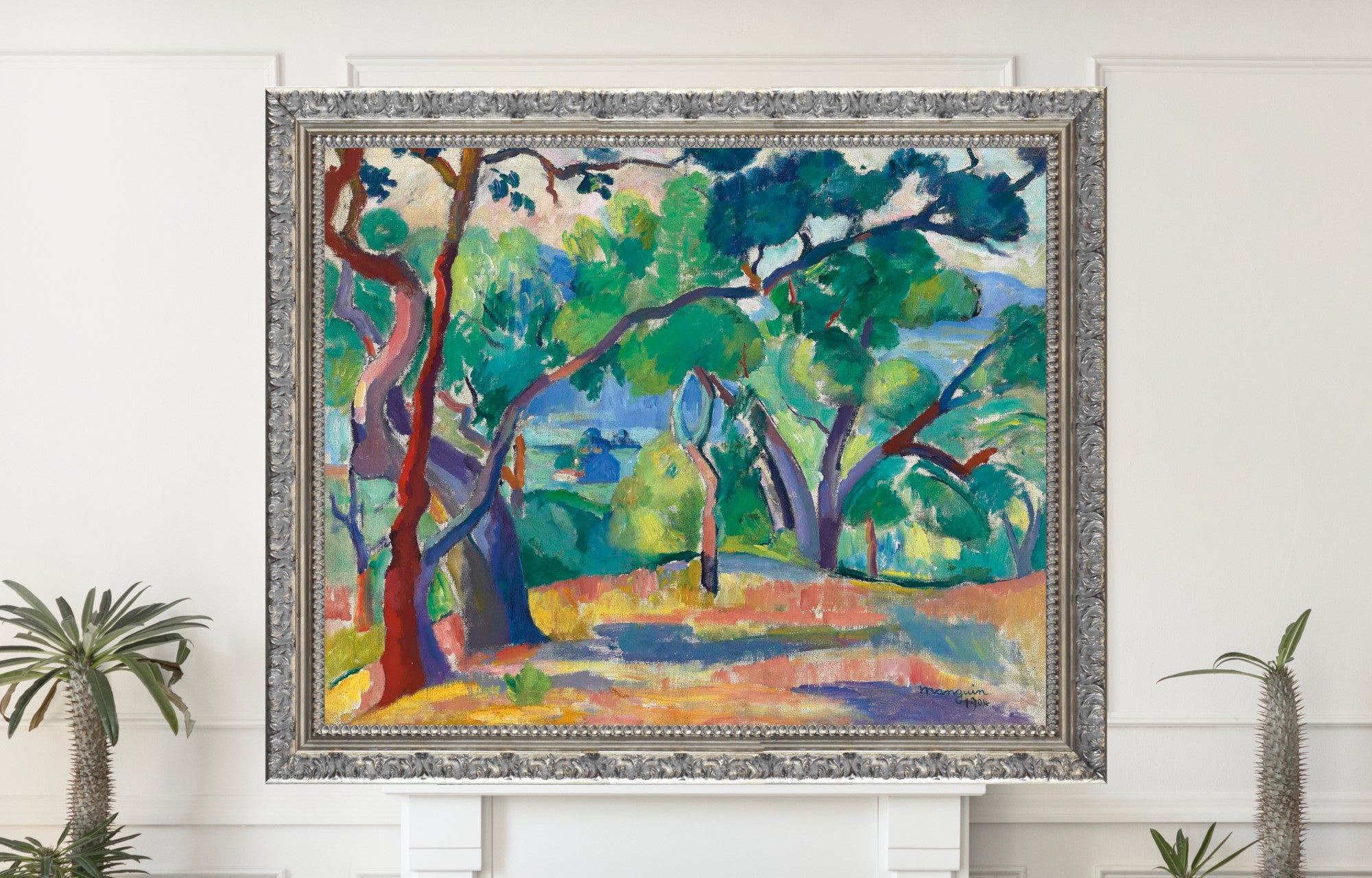
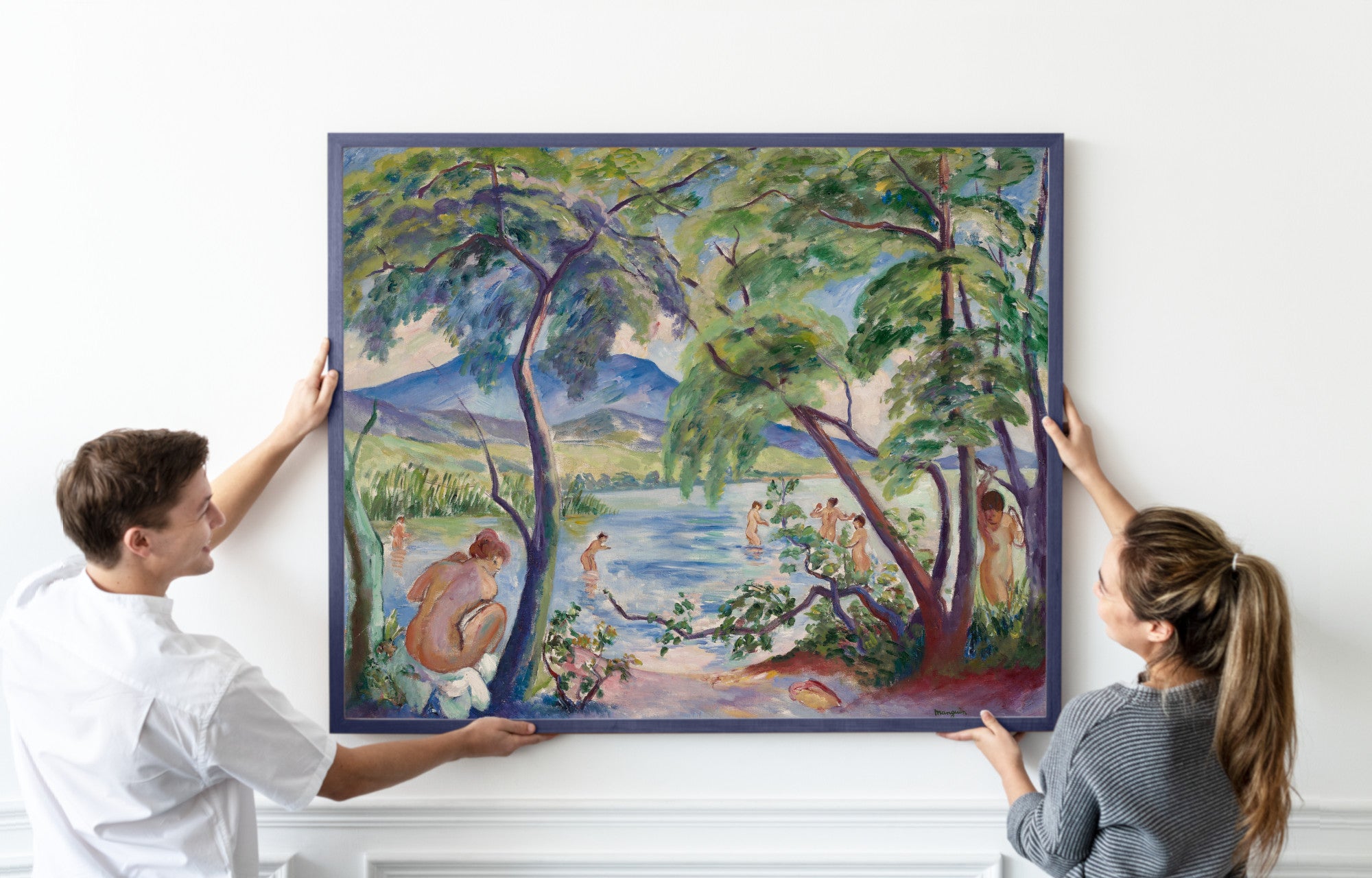
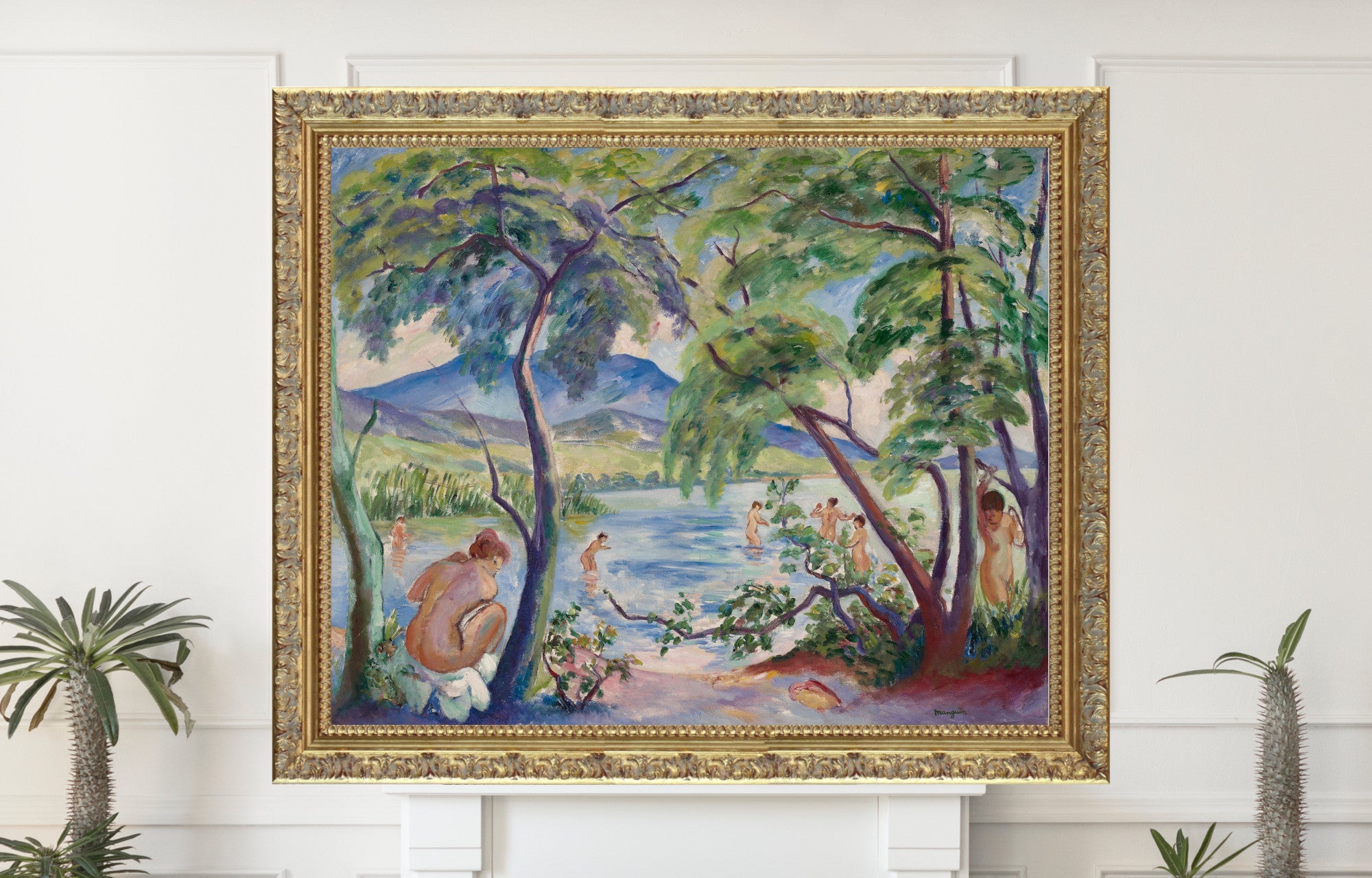
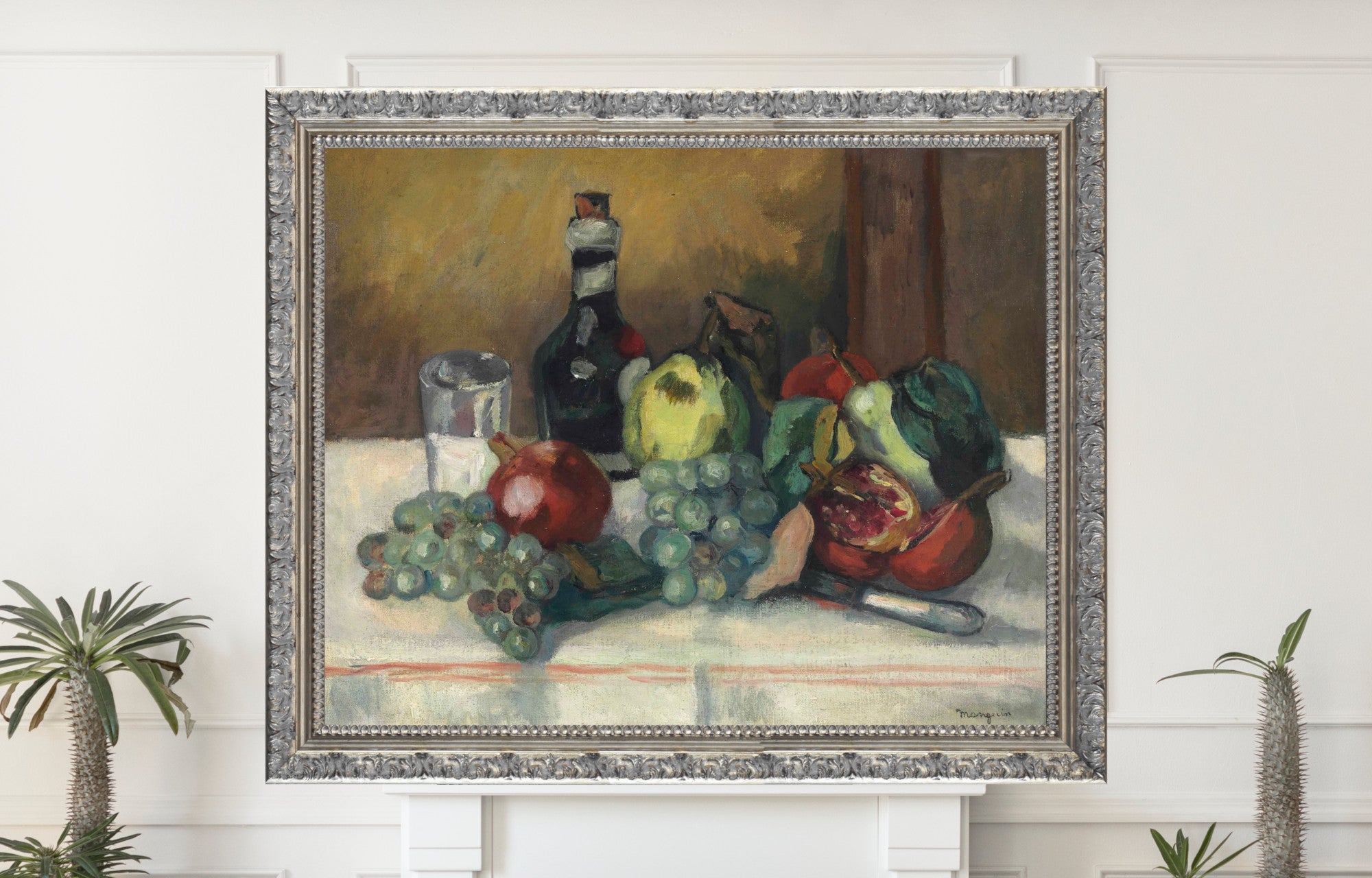
A larger Manguin landscape can work successfully as a single focal point above a sofa, sideboard or fireplace, while smaller works can be combined with Matisse, Derain, Marquet and other early modern artists to create a colourful gallery wall.
Fine Art Prints, Framed Prints and Canvas Panels
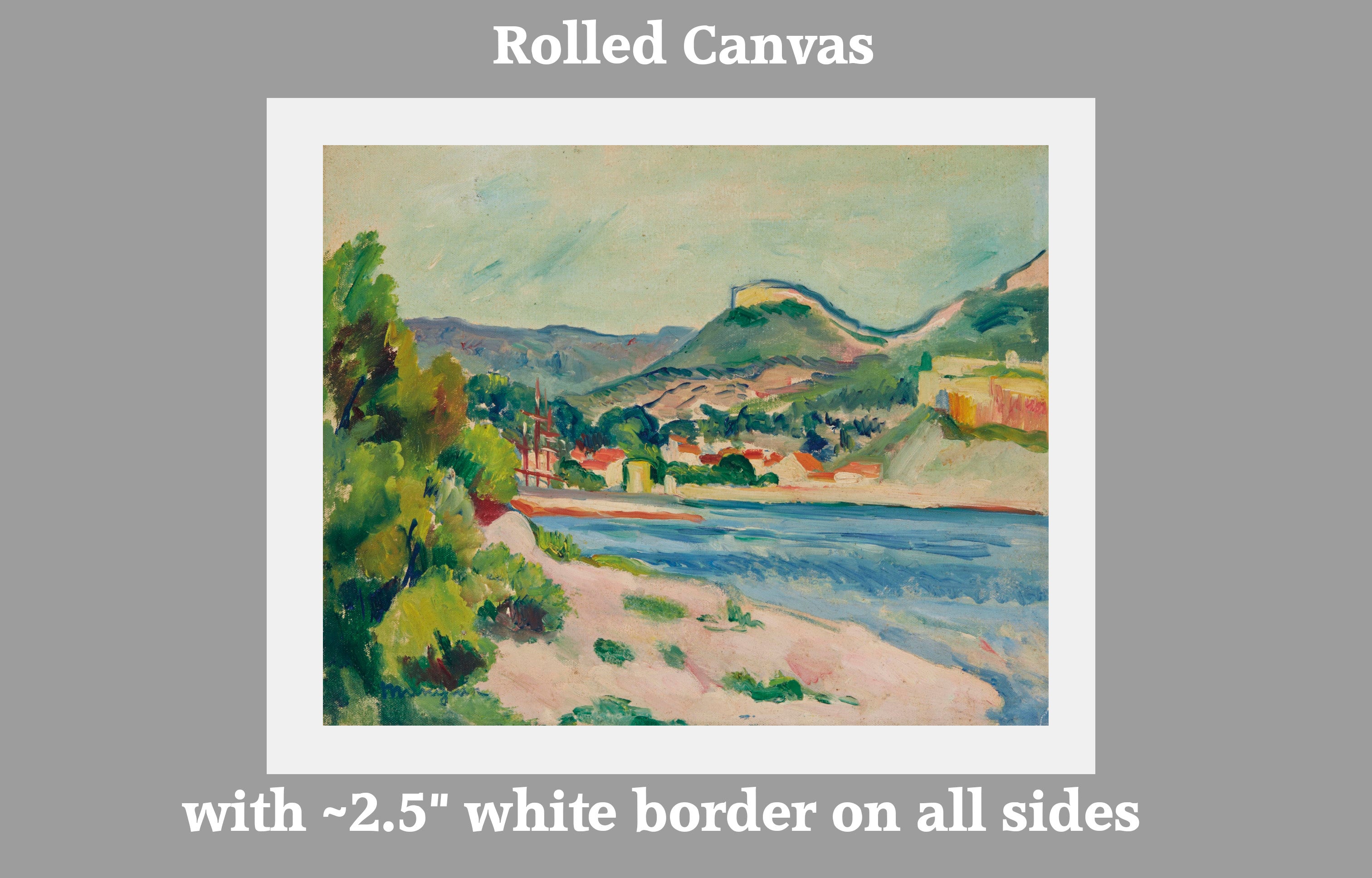
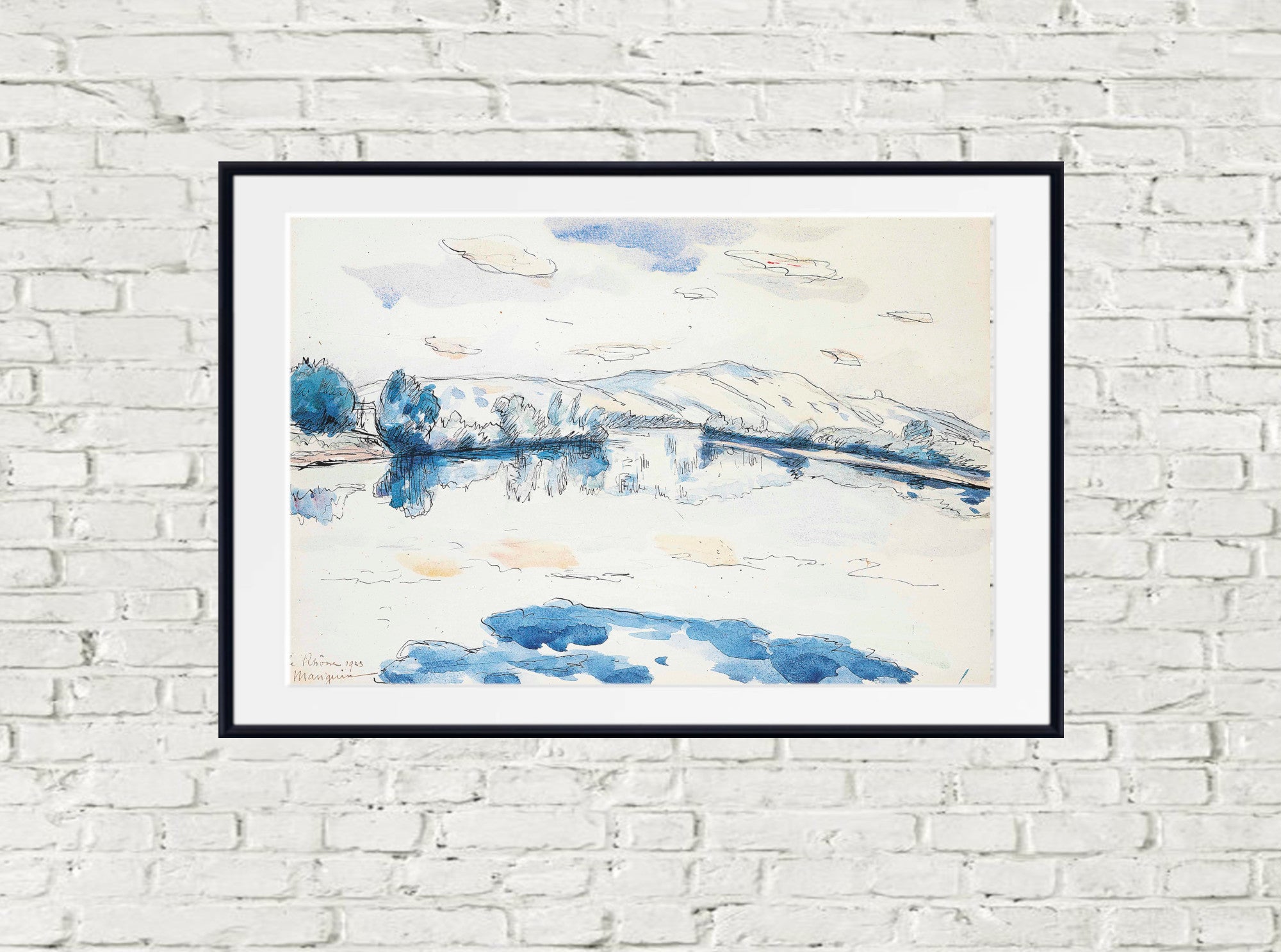
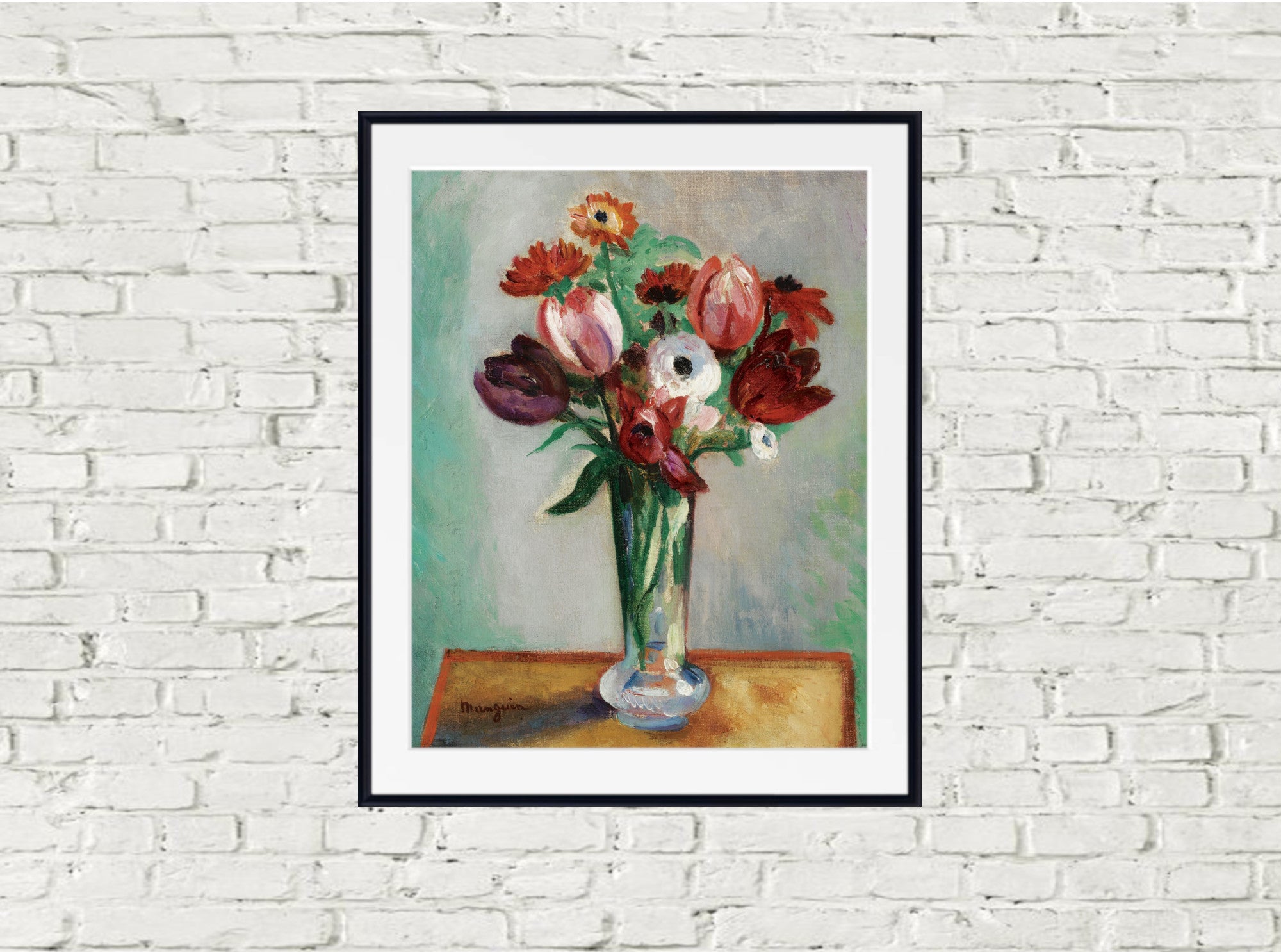
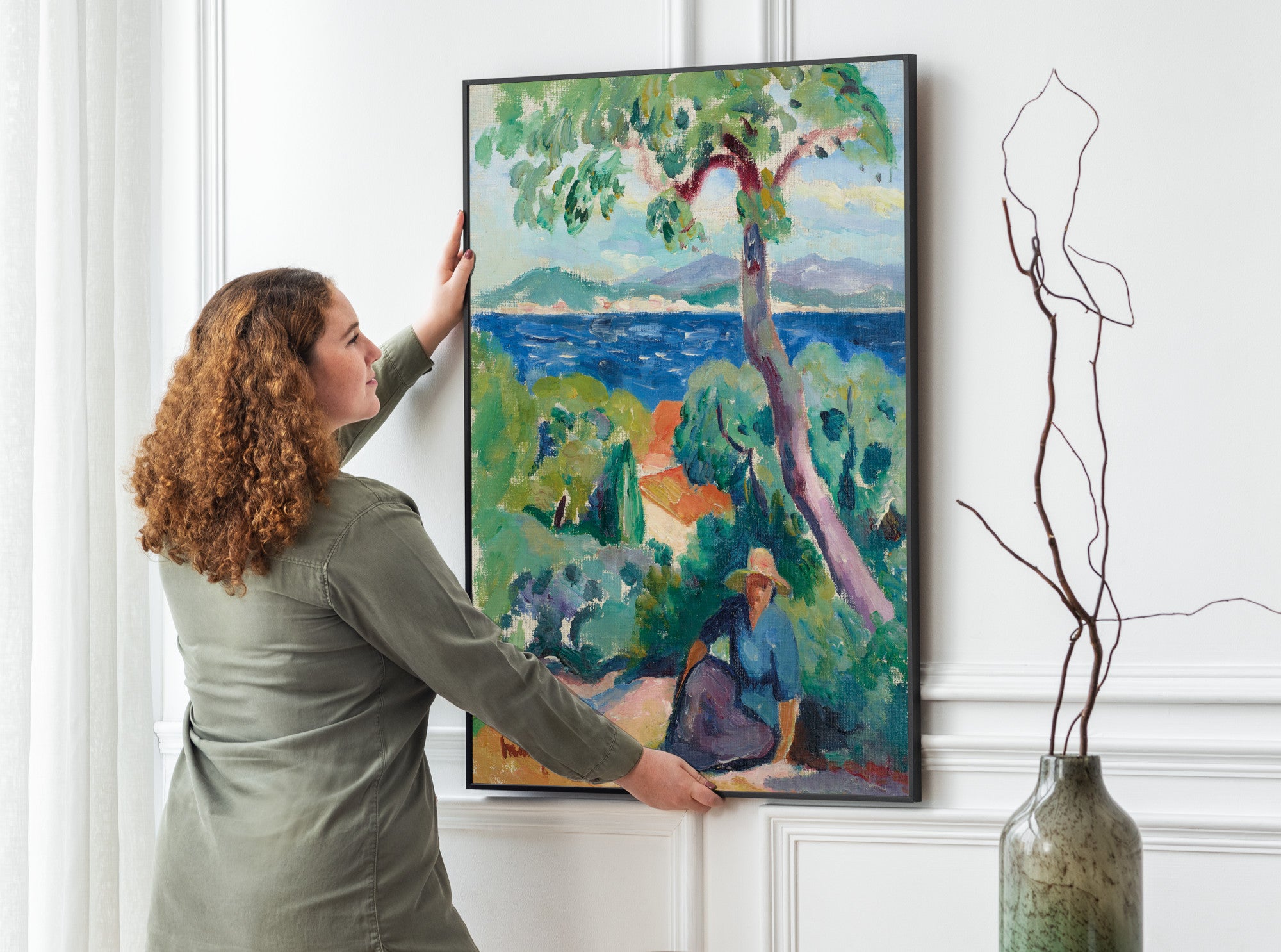
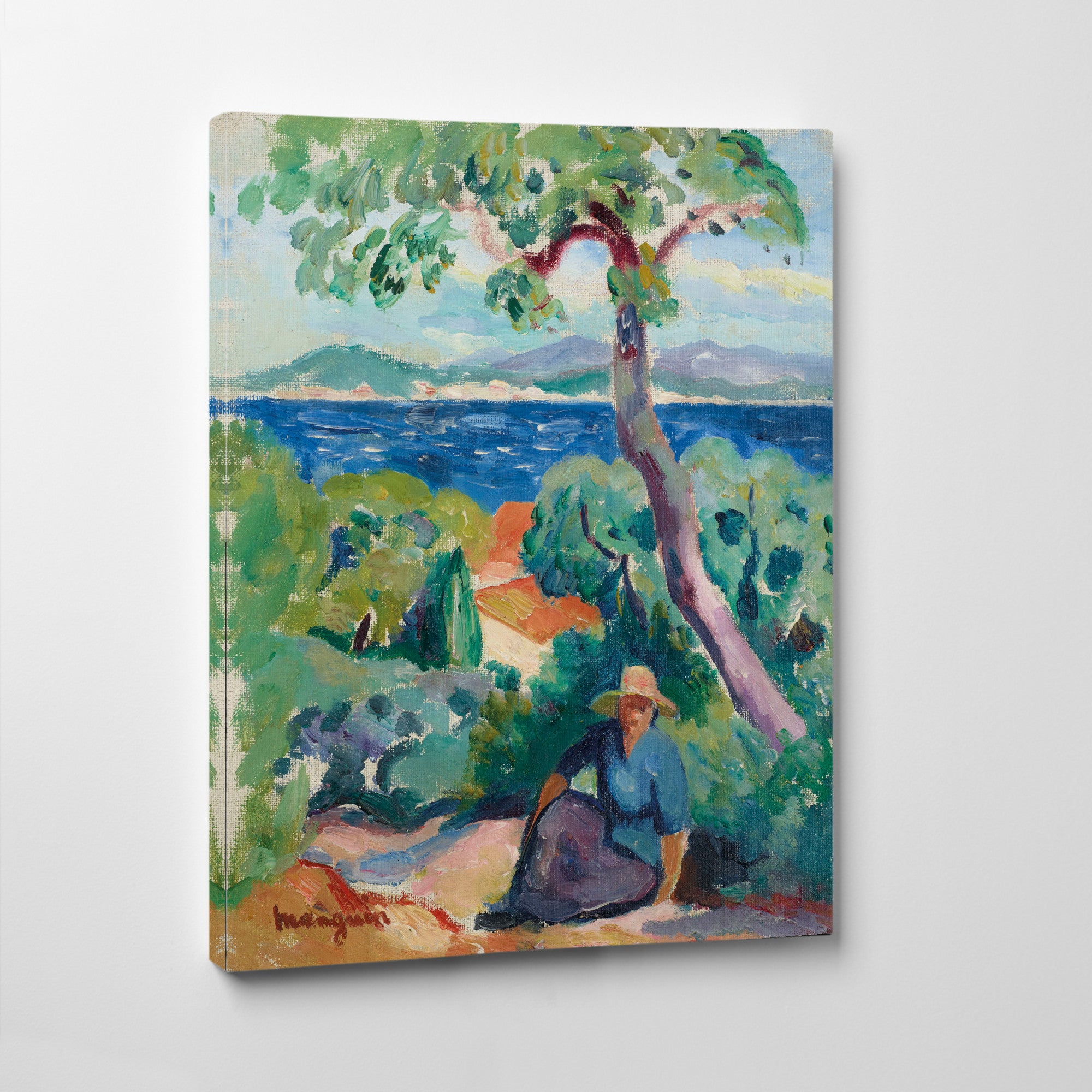
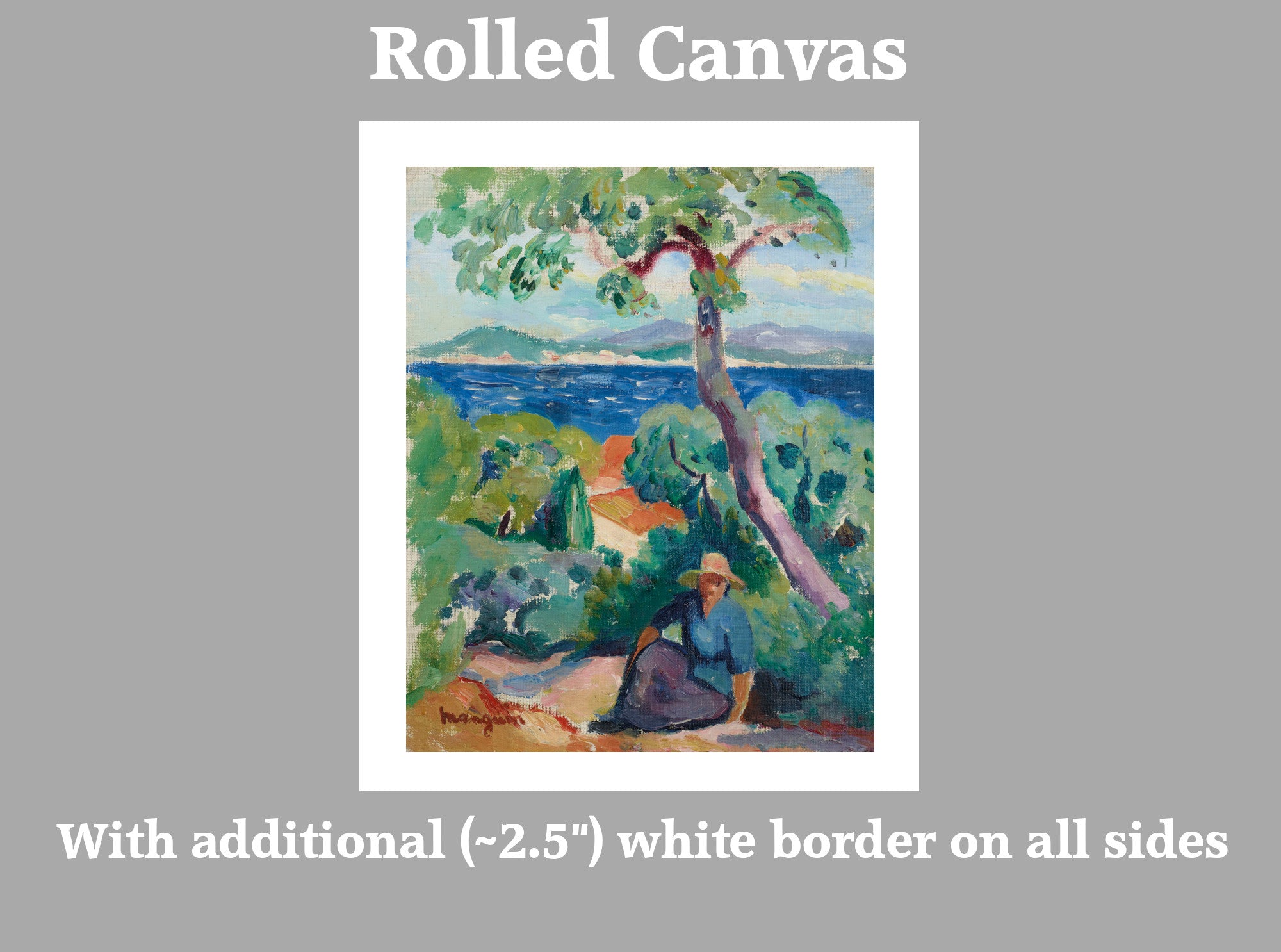
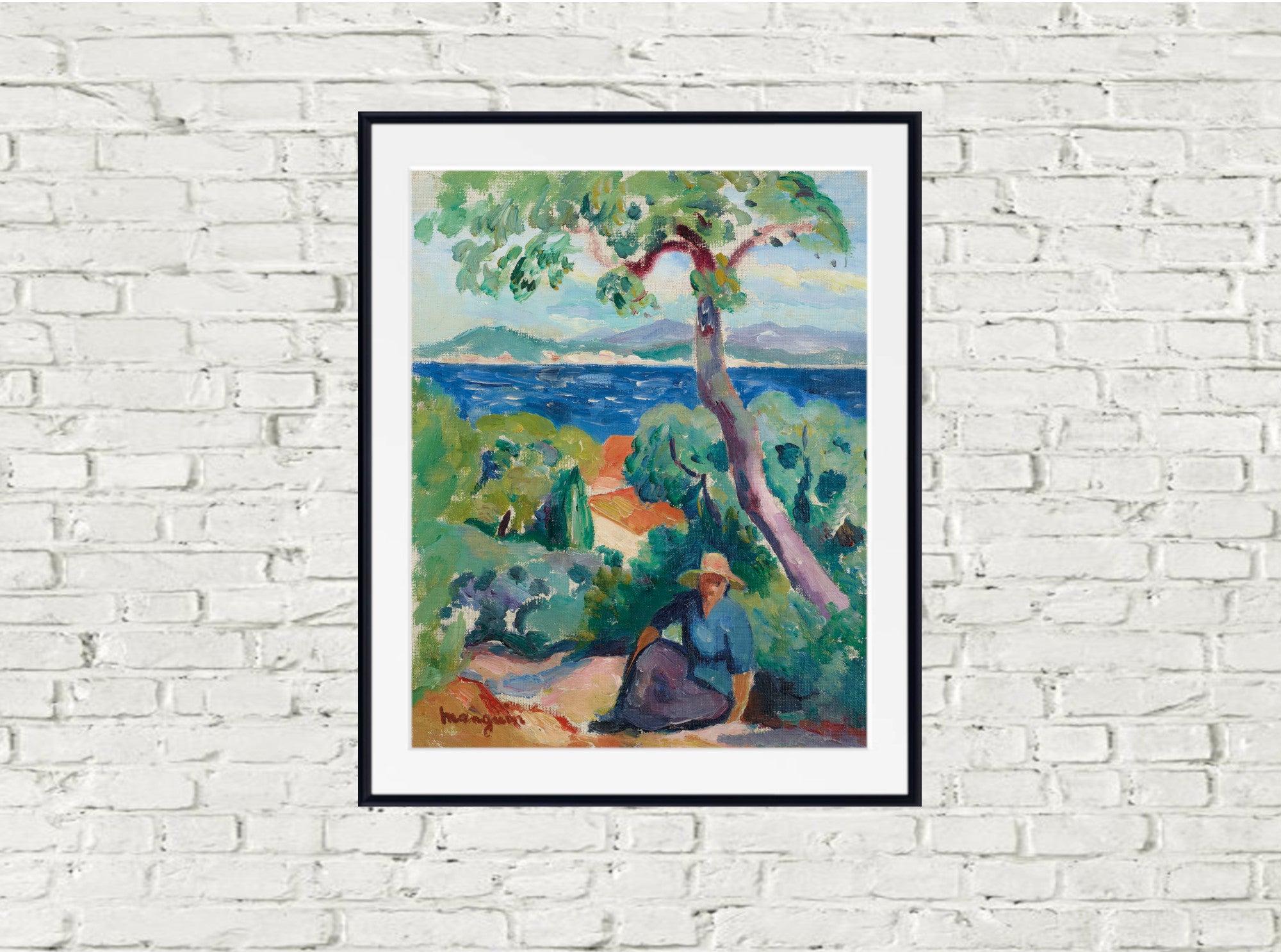
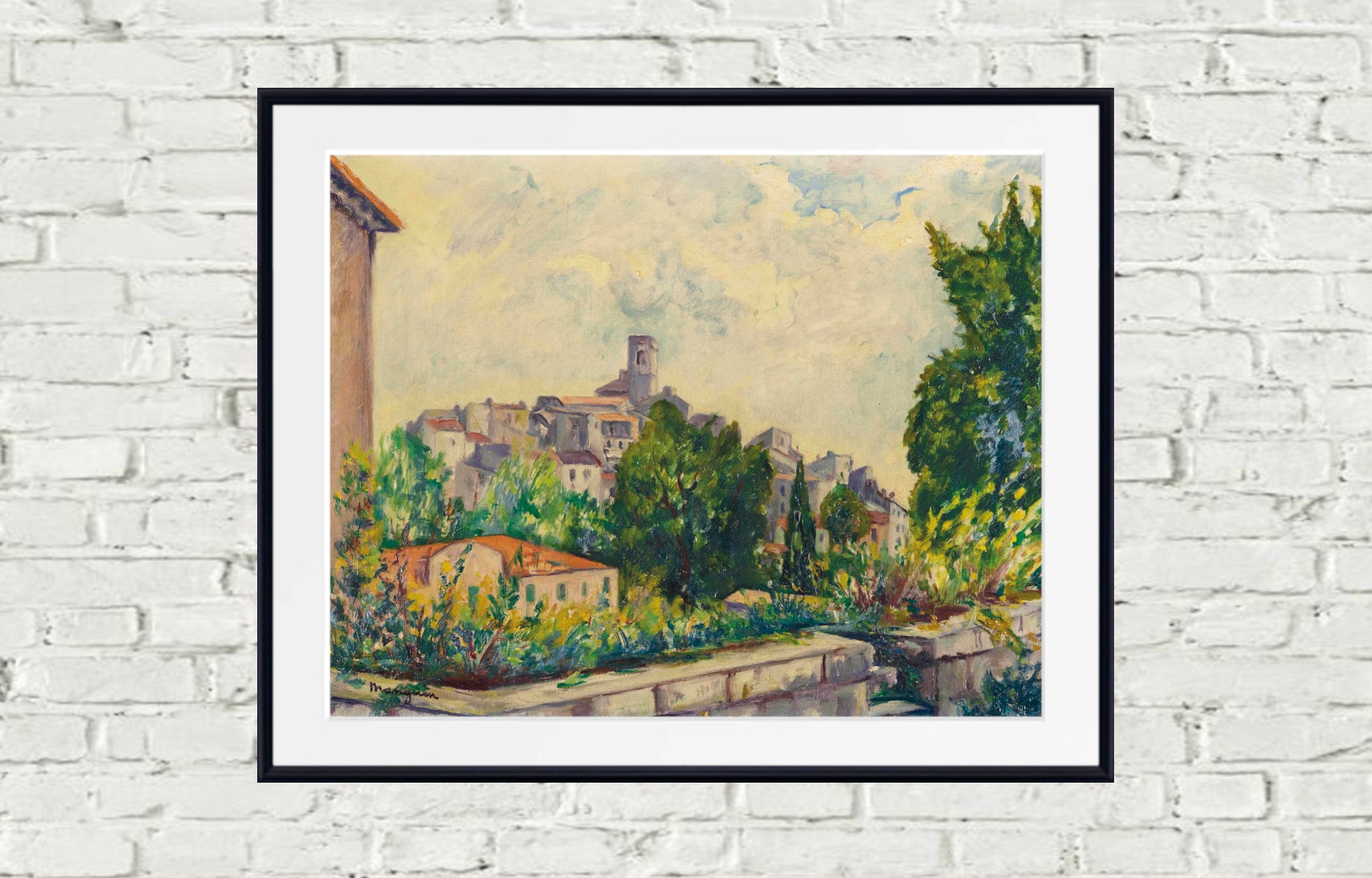
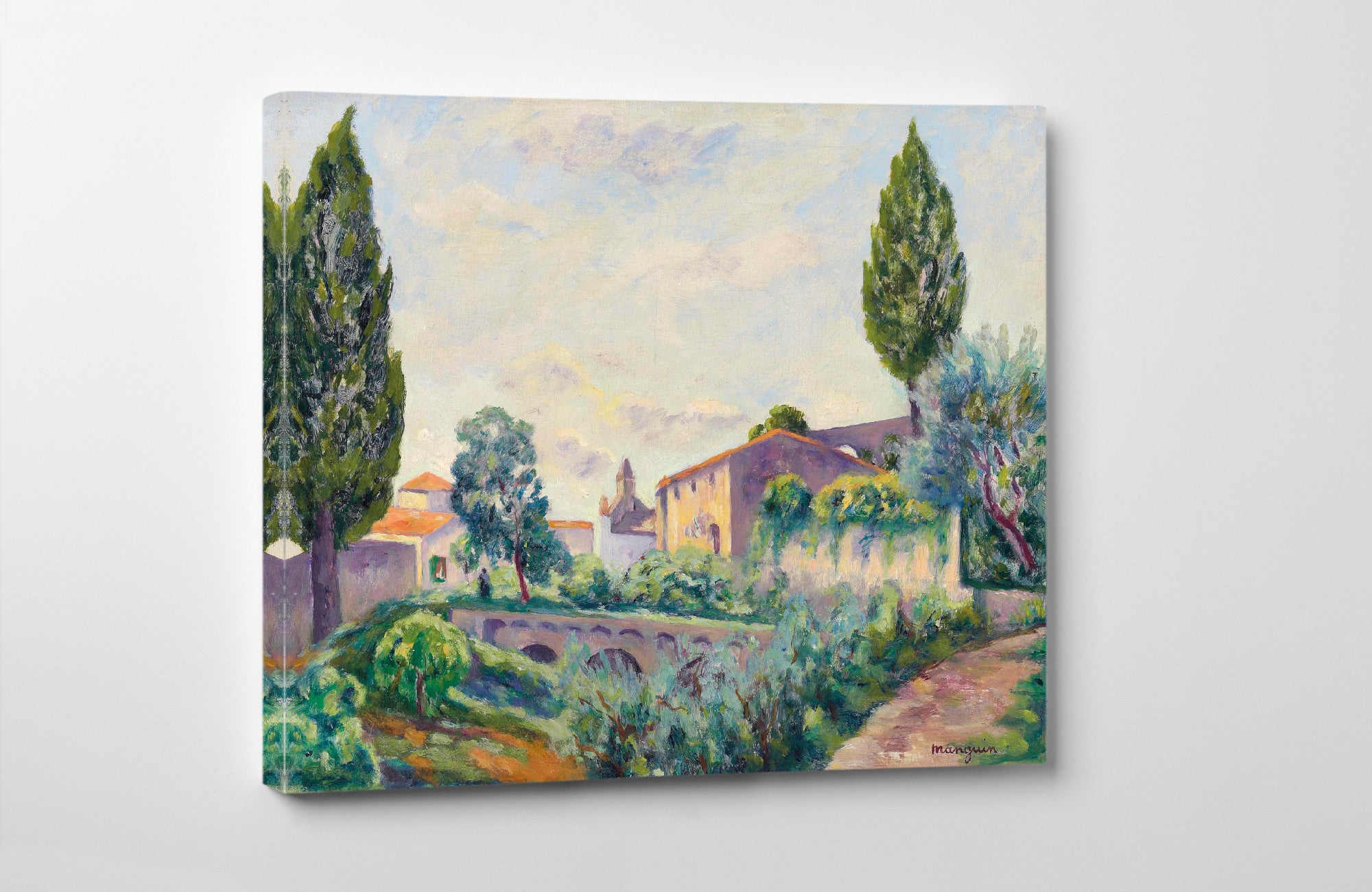
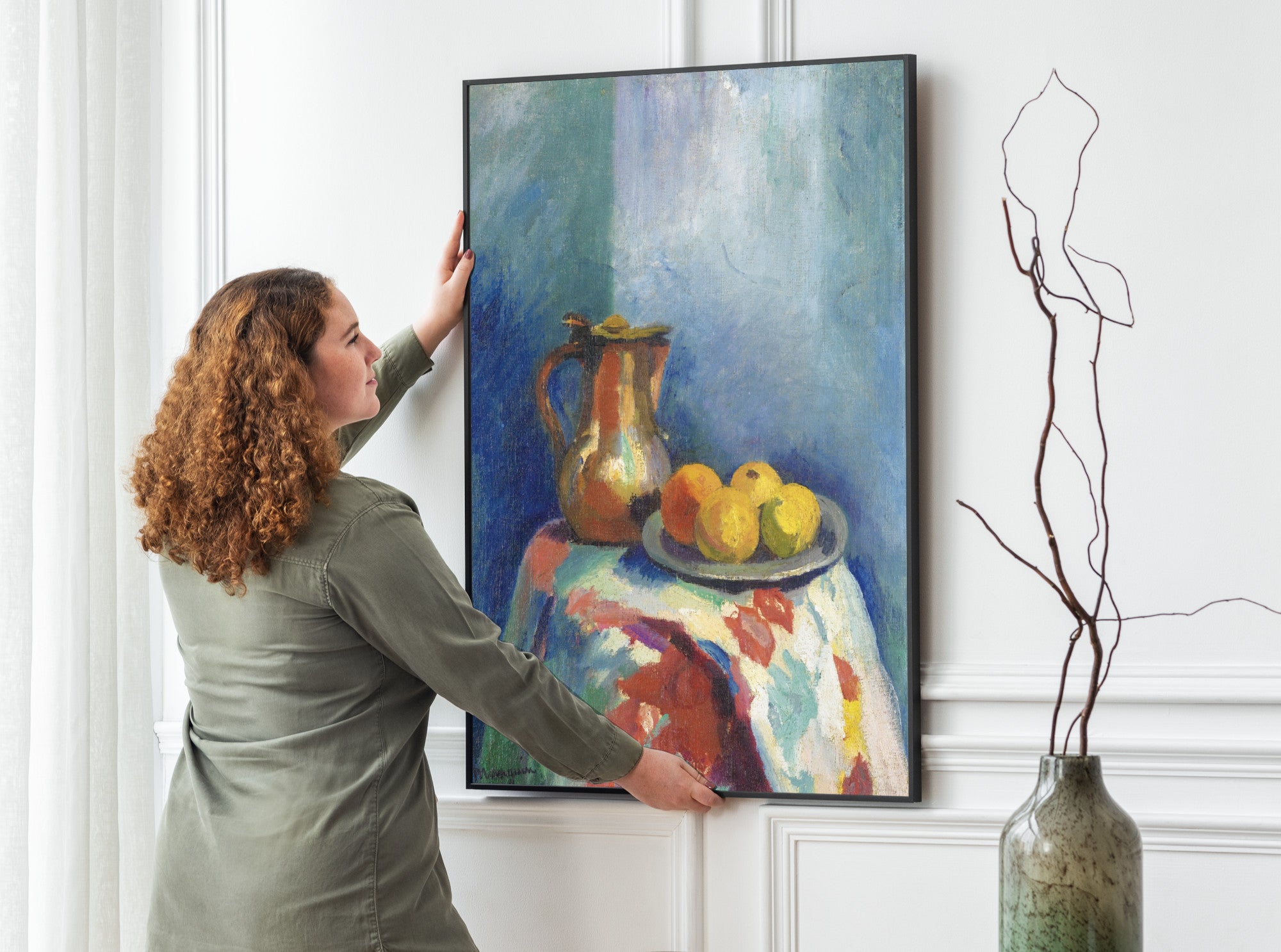
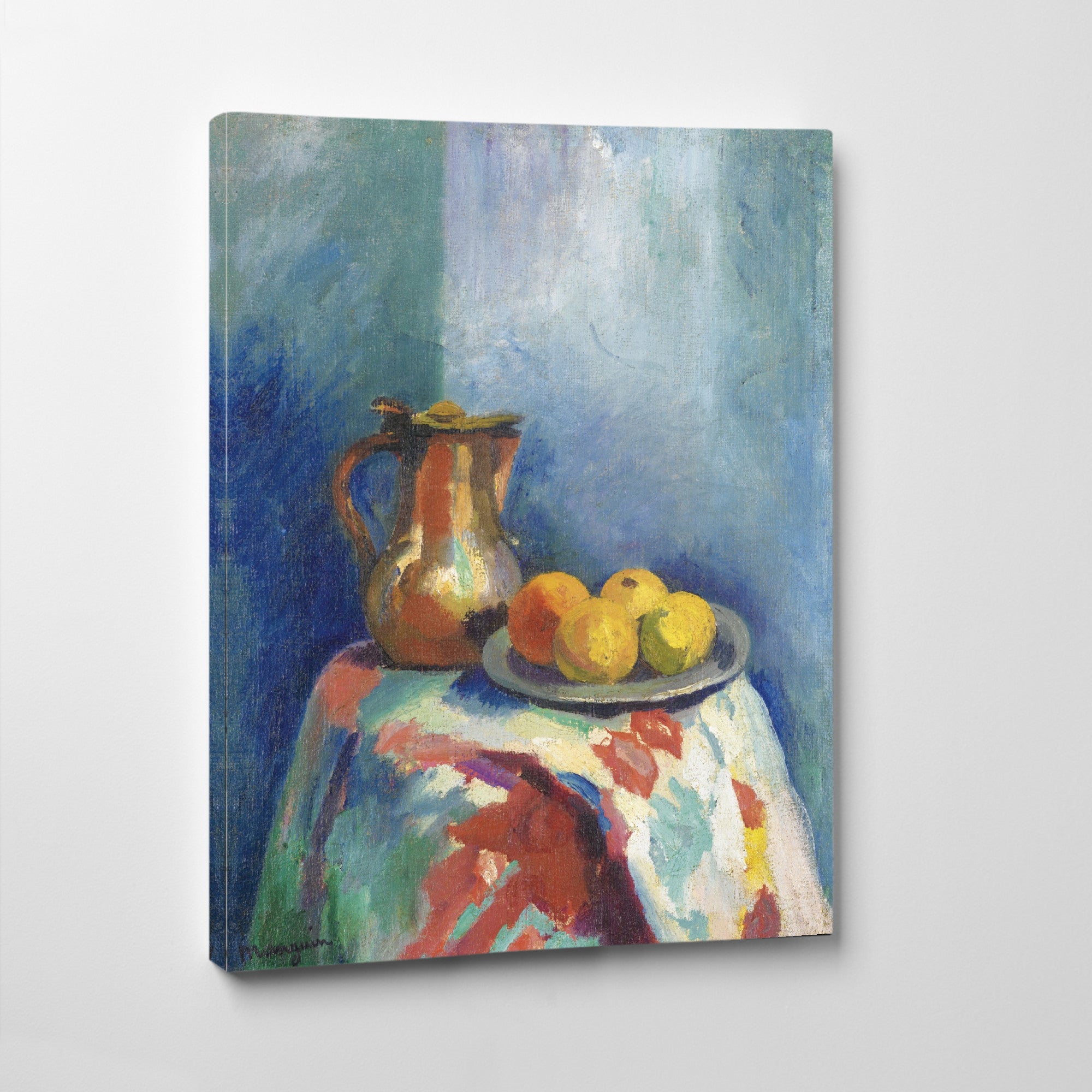
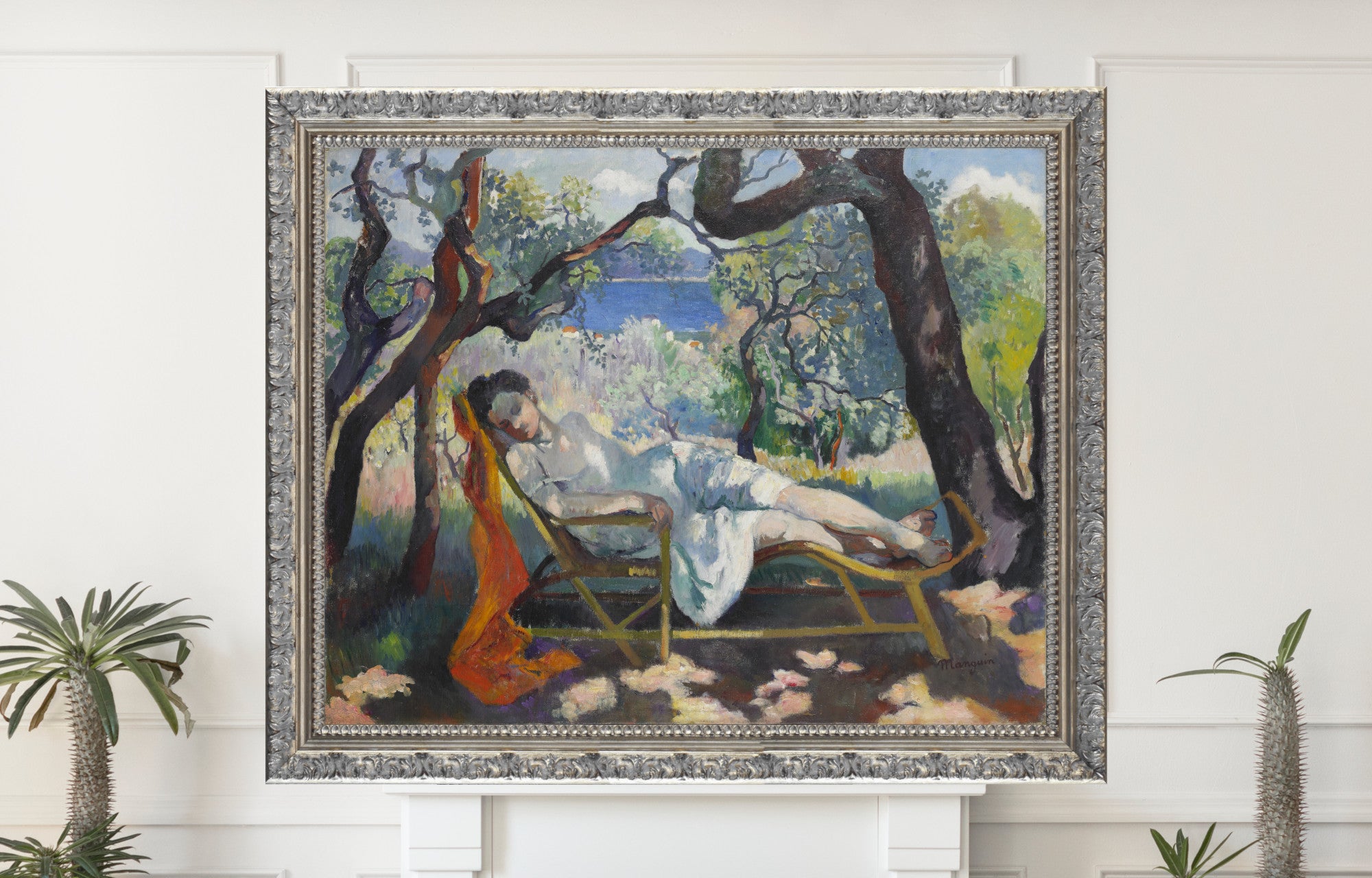
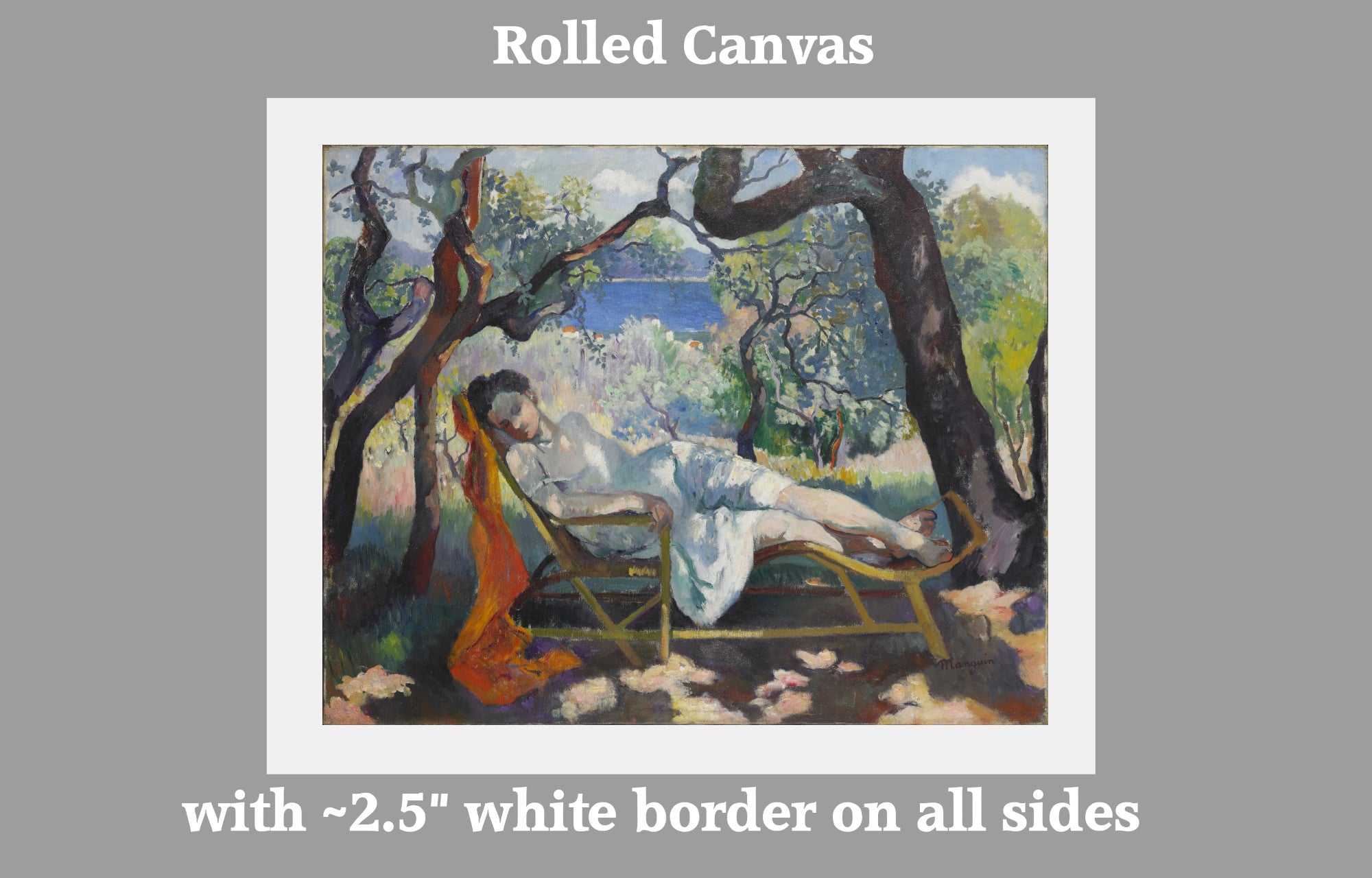
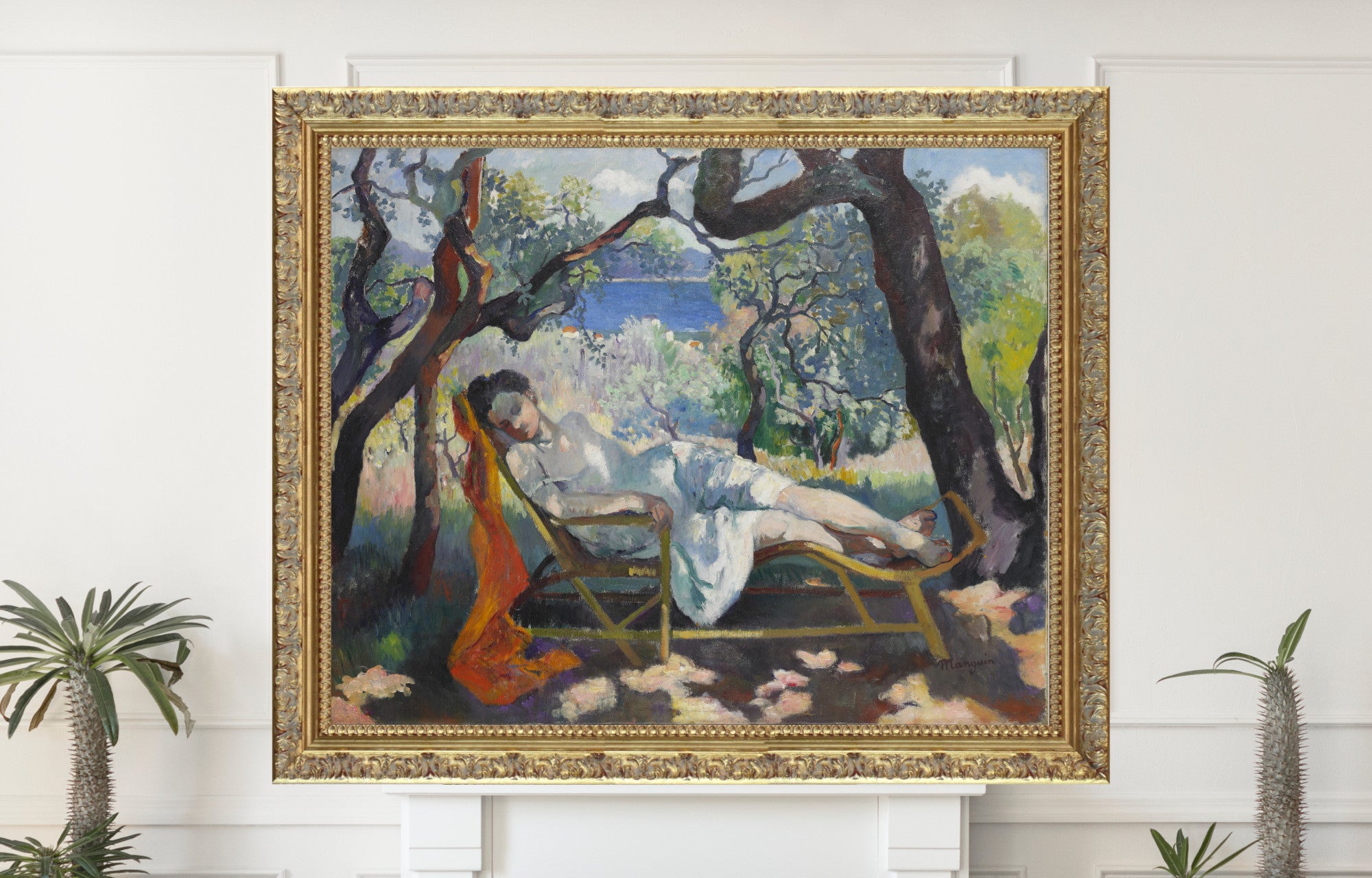
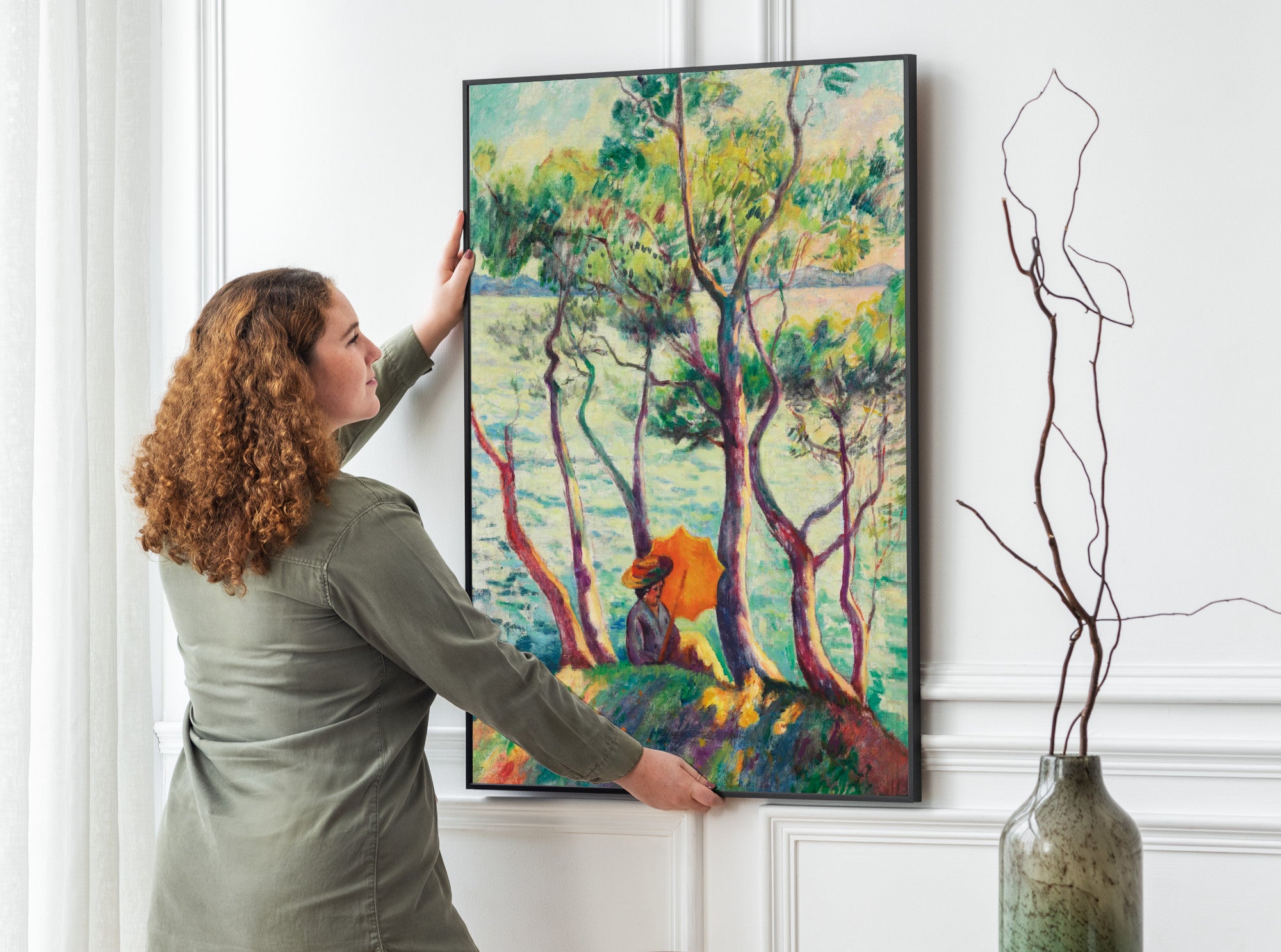
GalleryThane's Henri Manguin artworks are available as fine art prints, framed prints and canvas panels in a range of sizes.
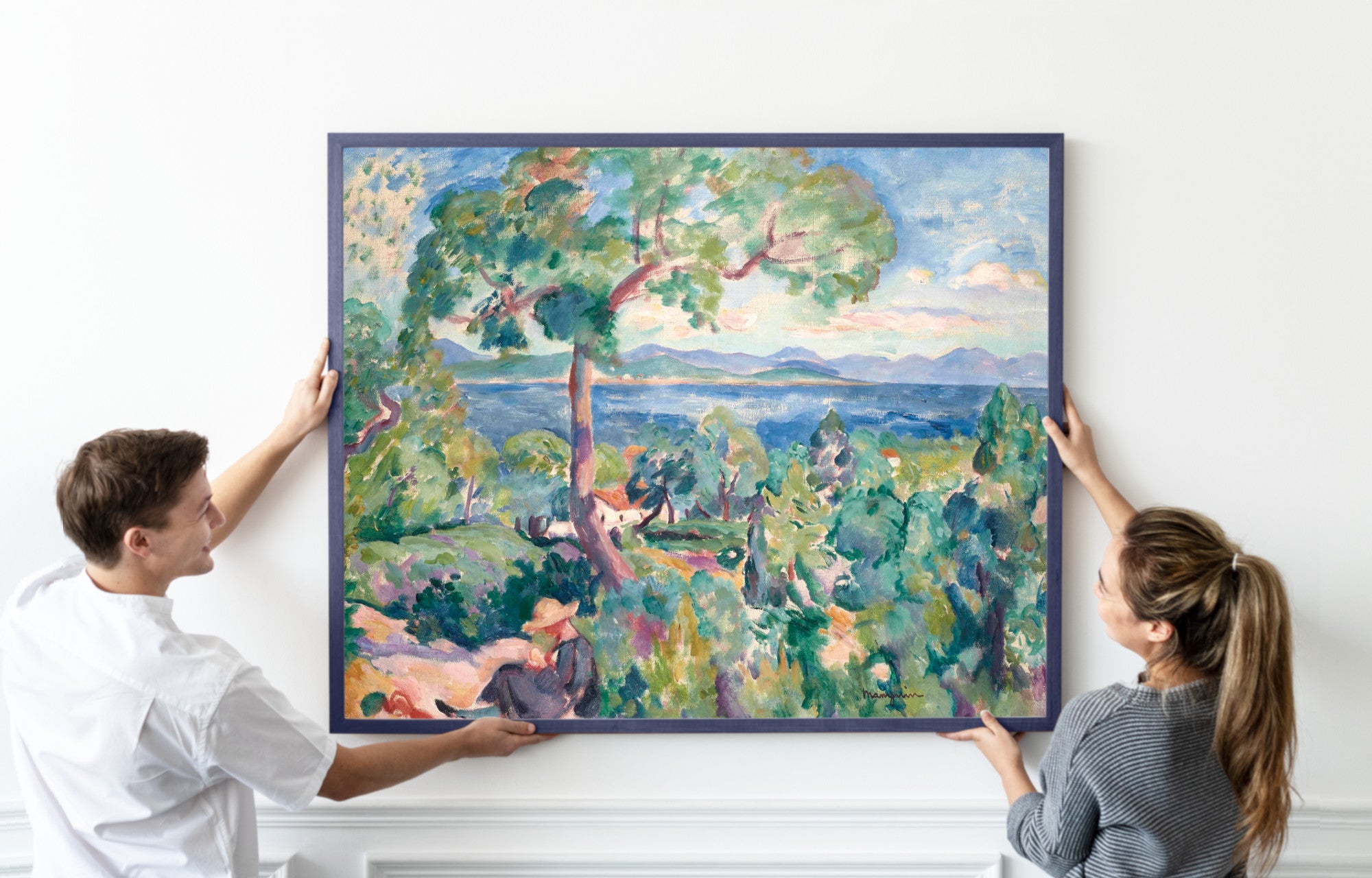
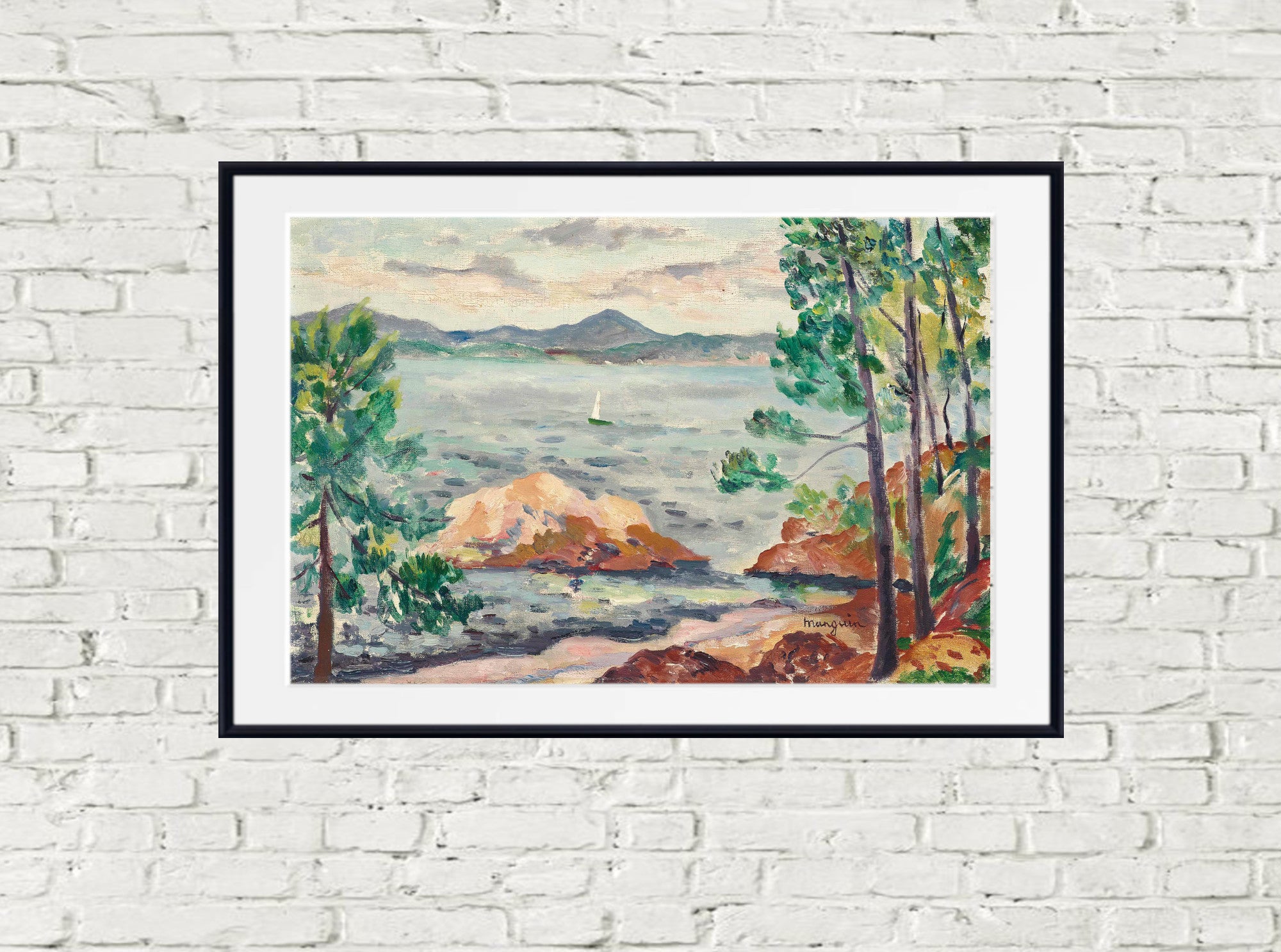
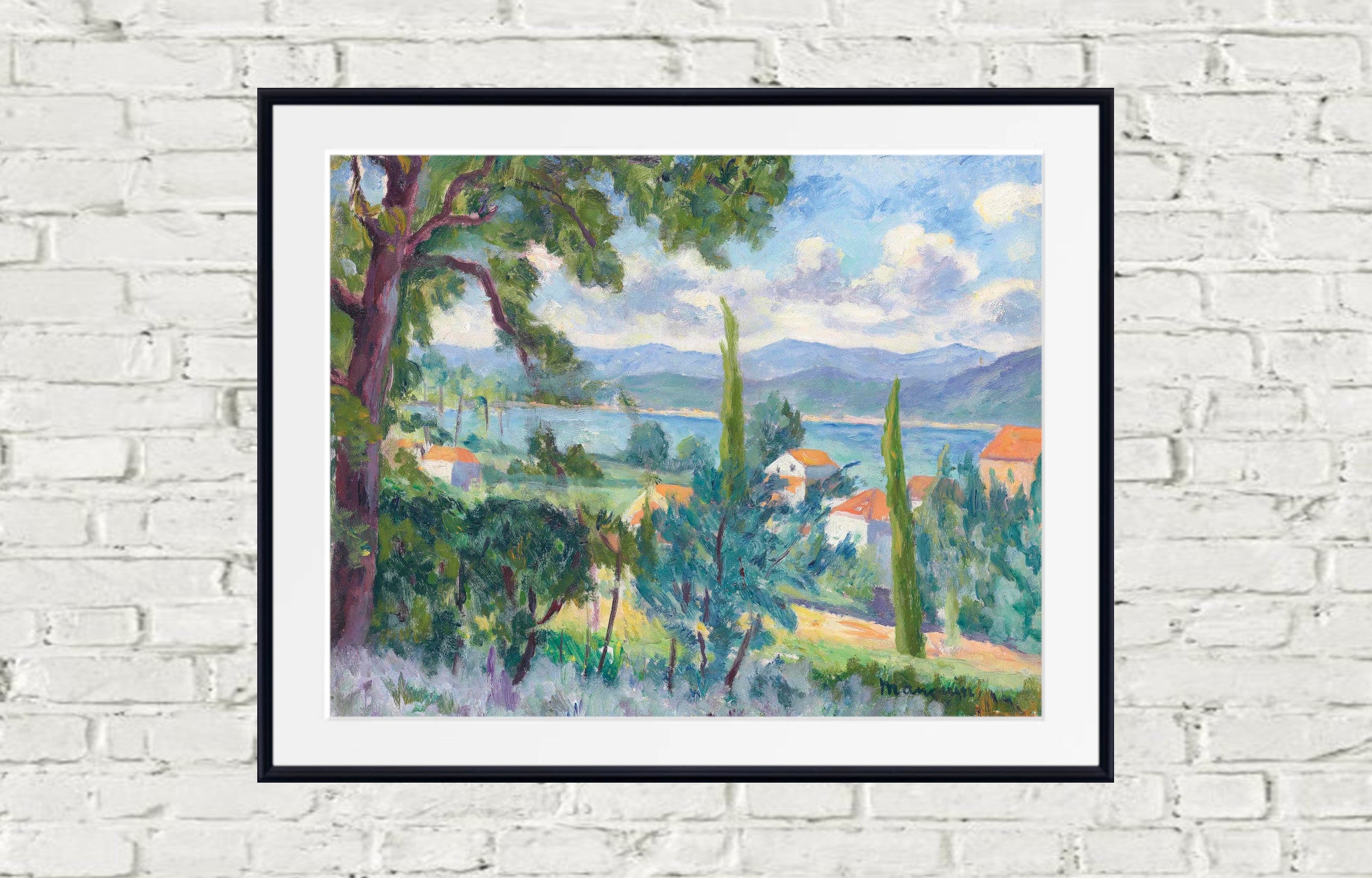
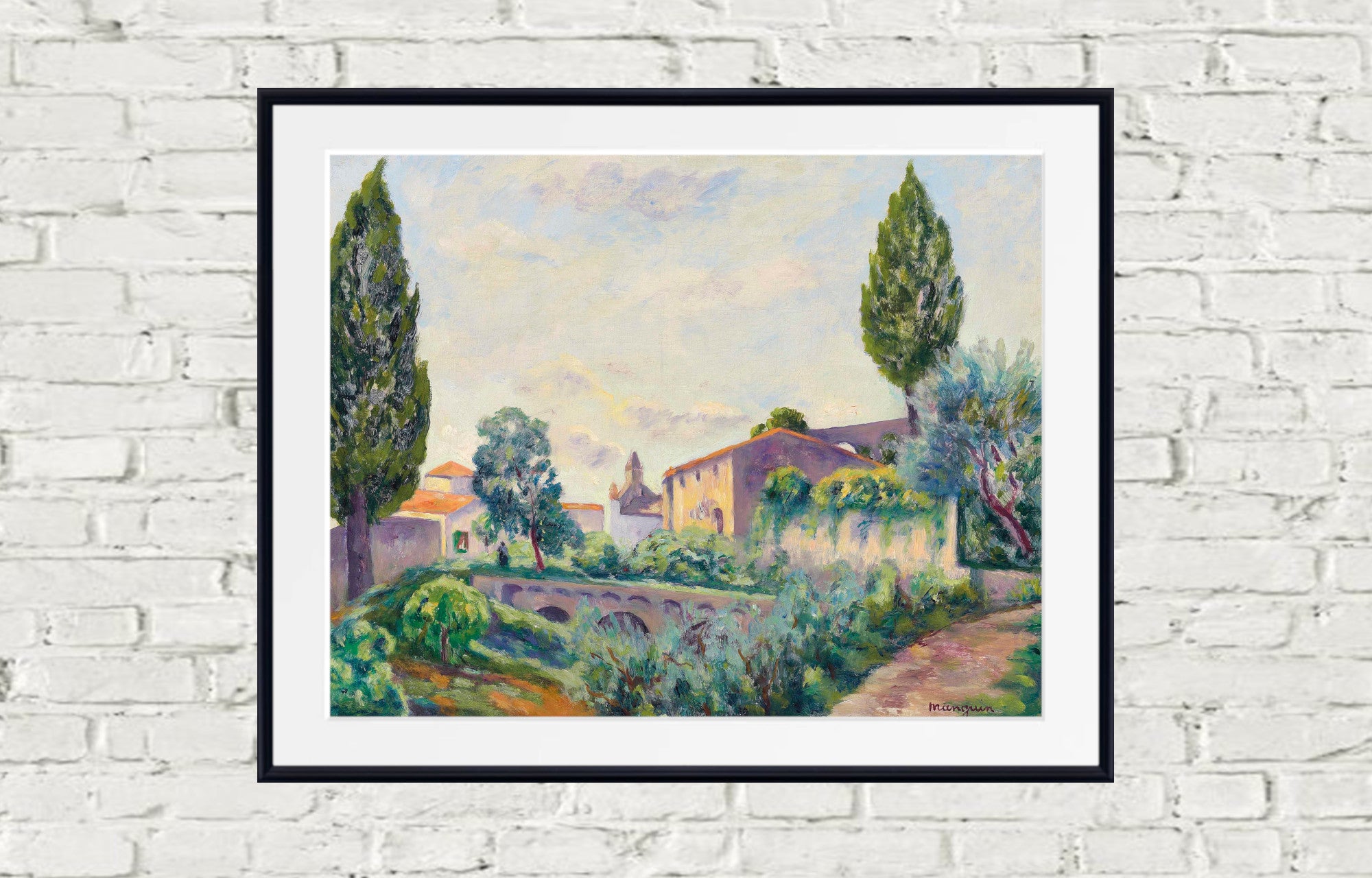
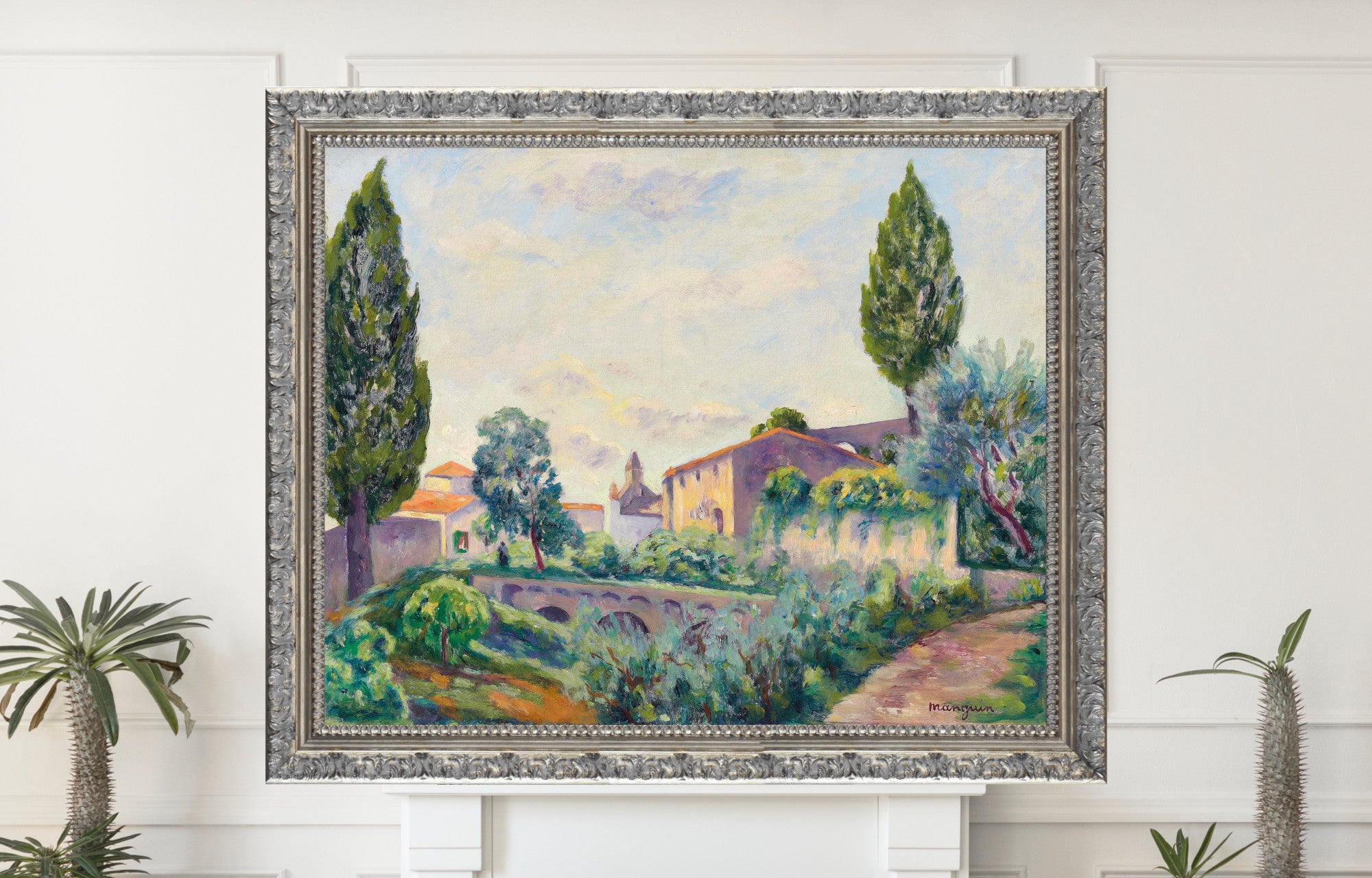
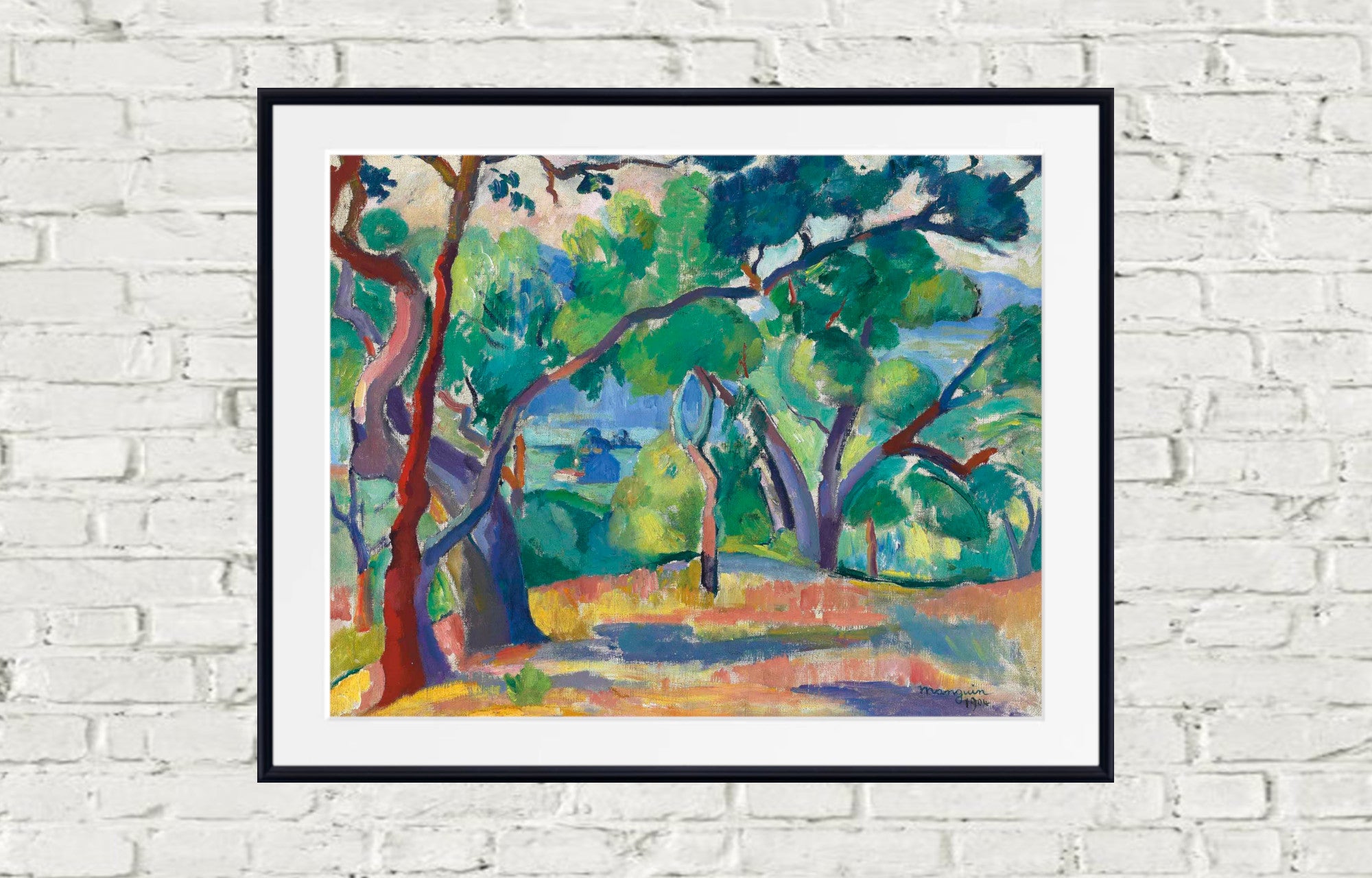
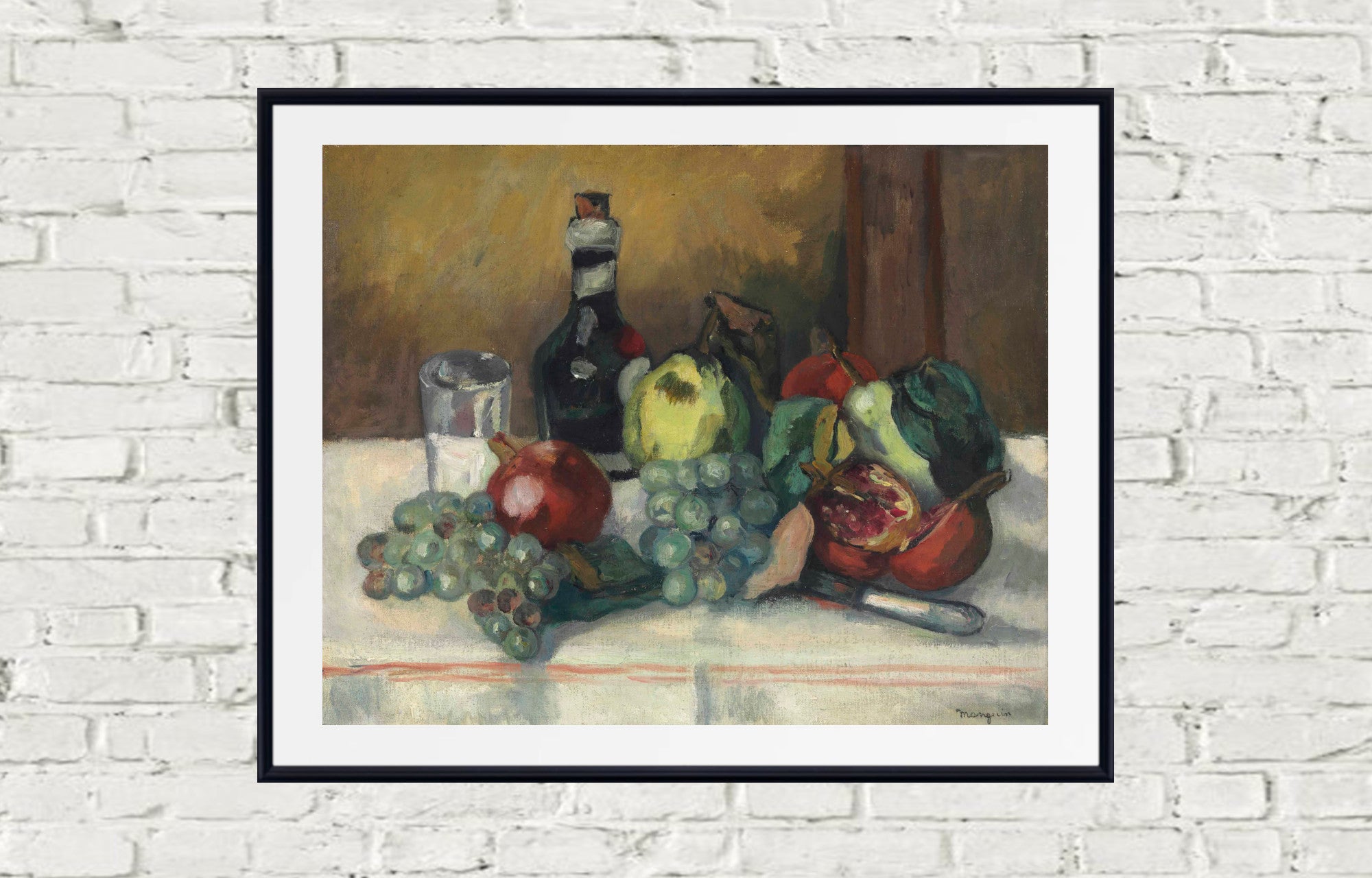
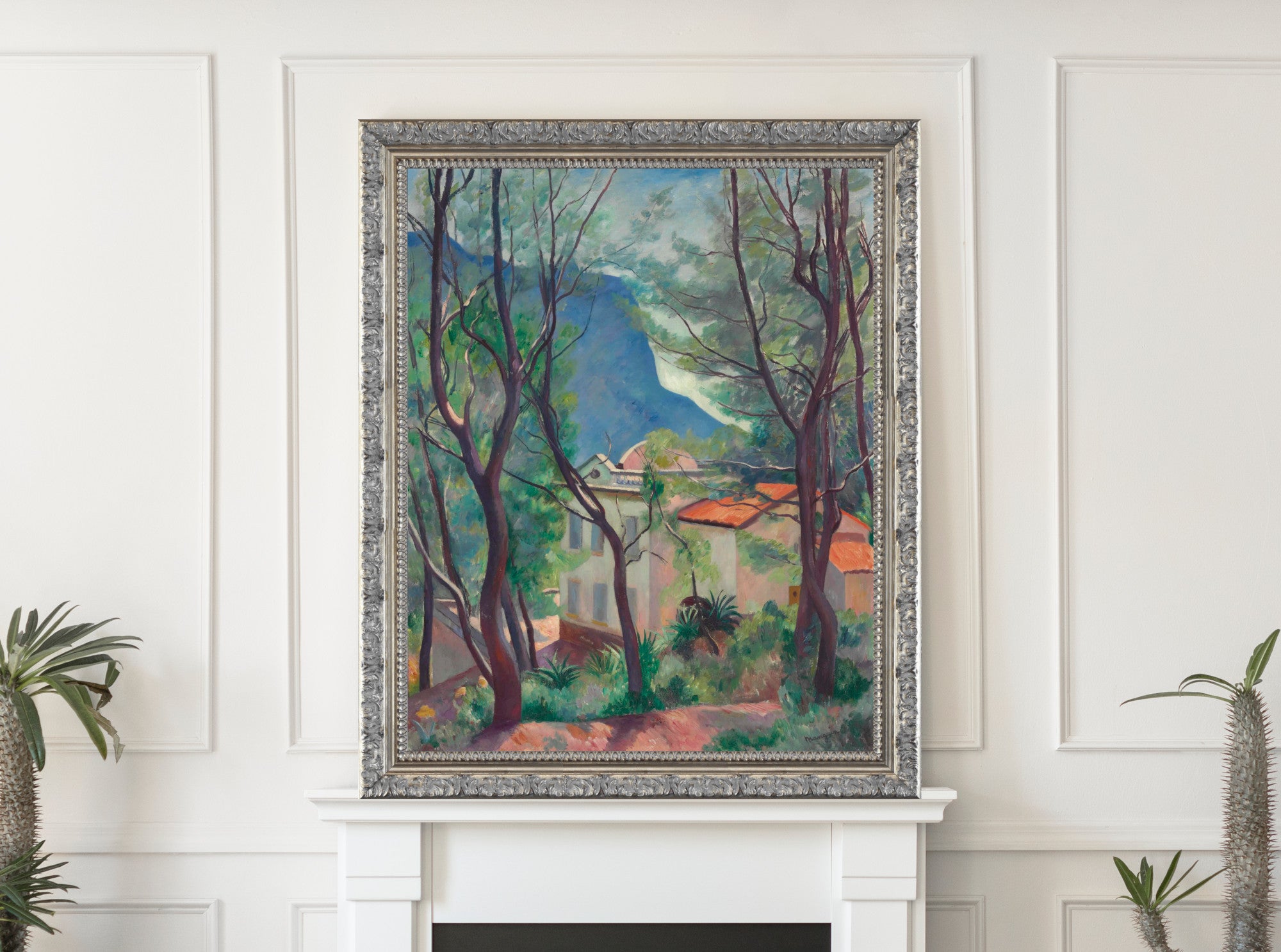
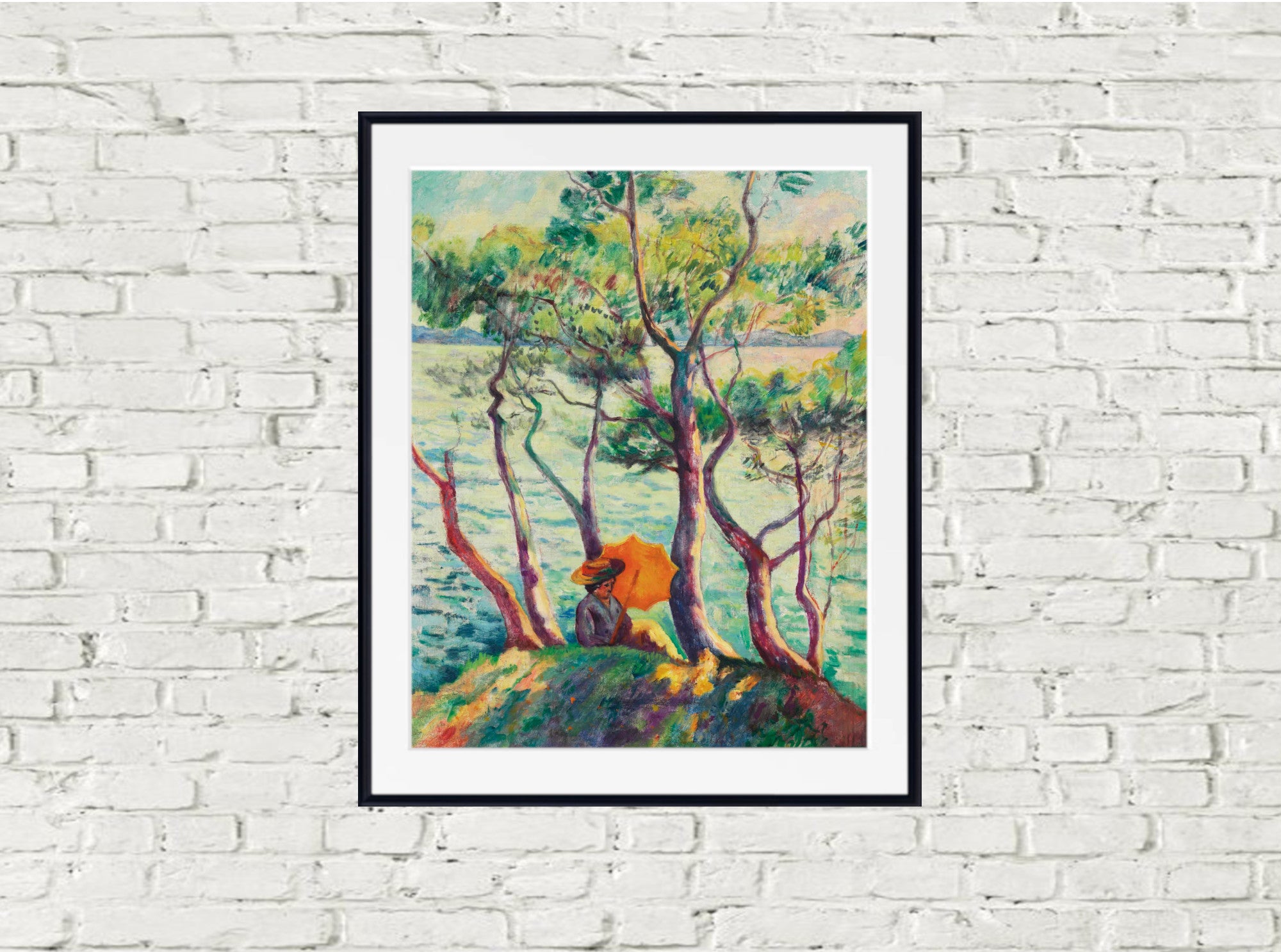
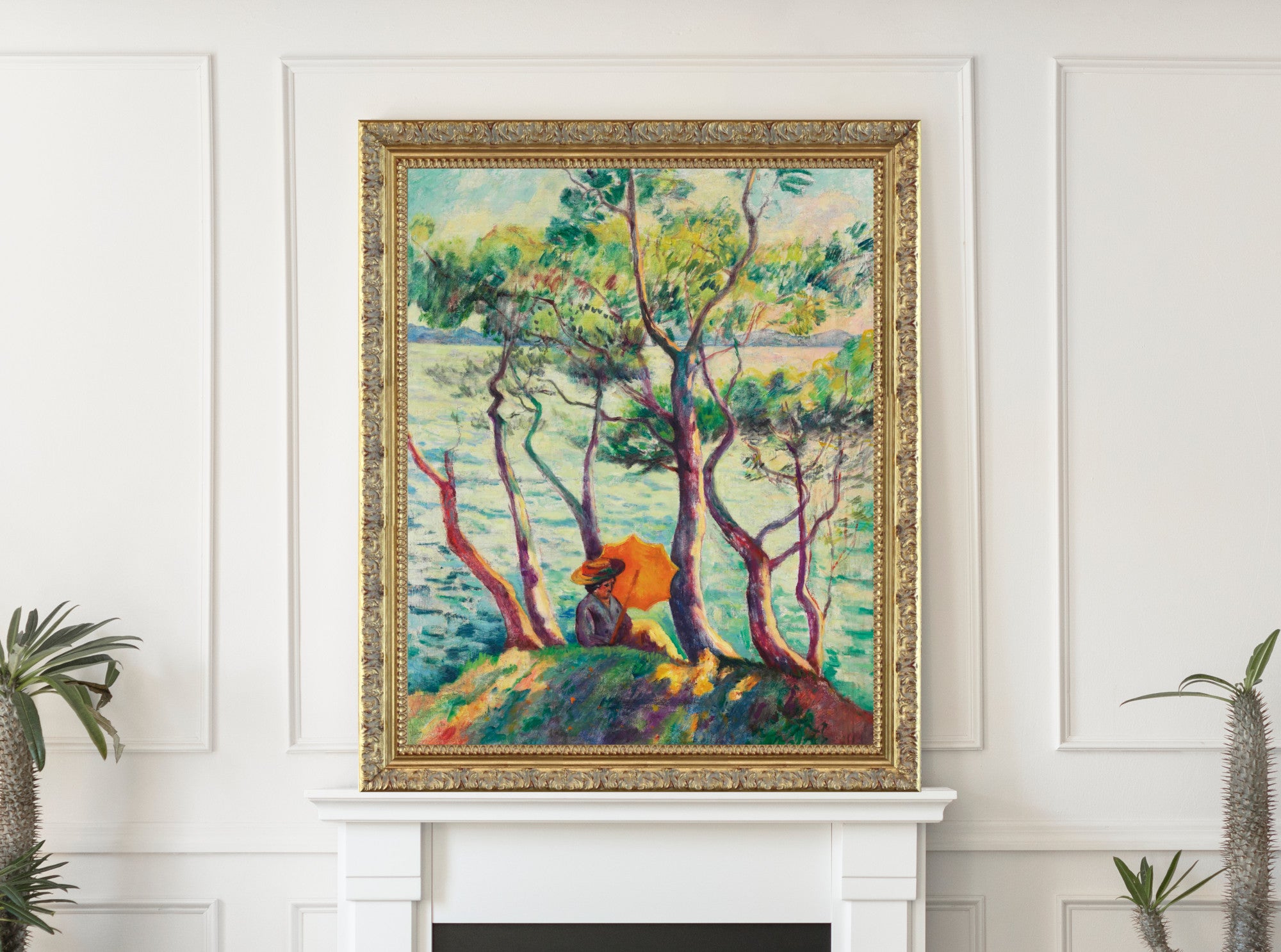
Fine art prints provide flexibility for customers who already have a preferred framing style, while framed prints provide a complete gallery-style presentation.
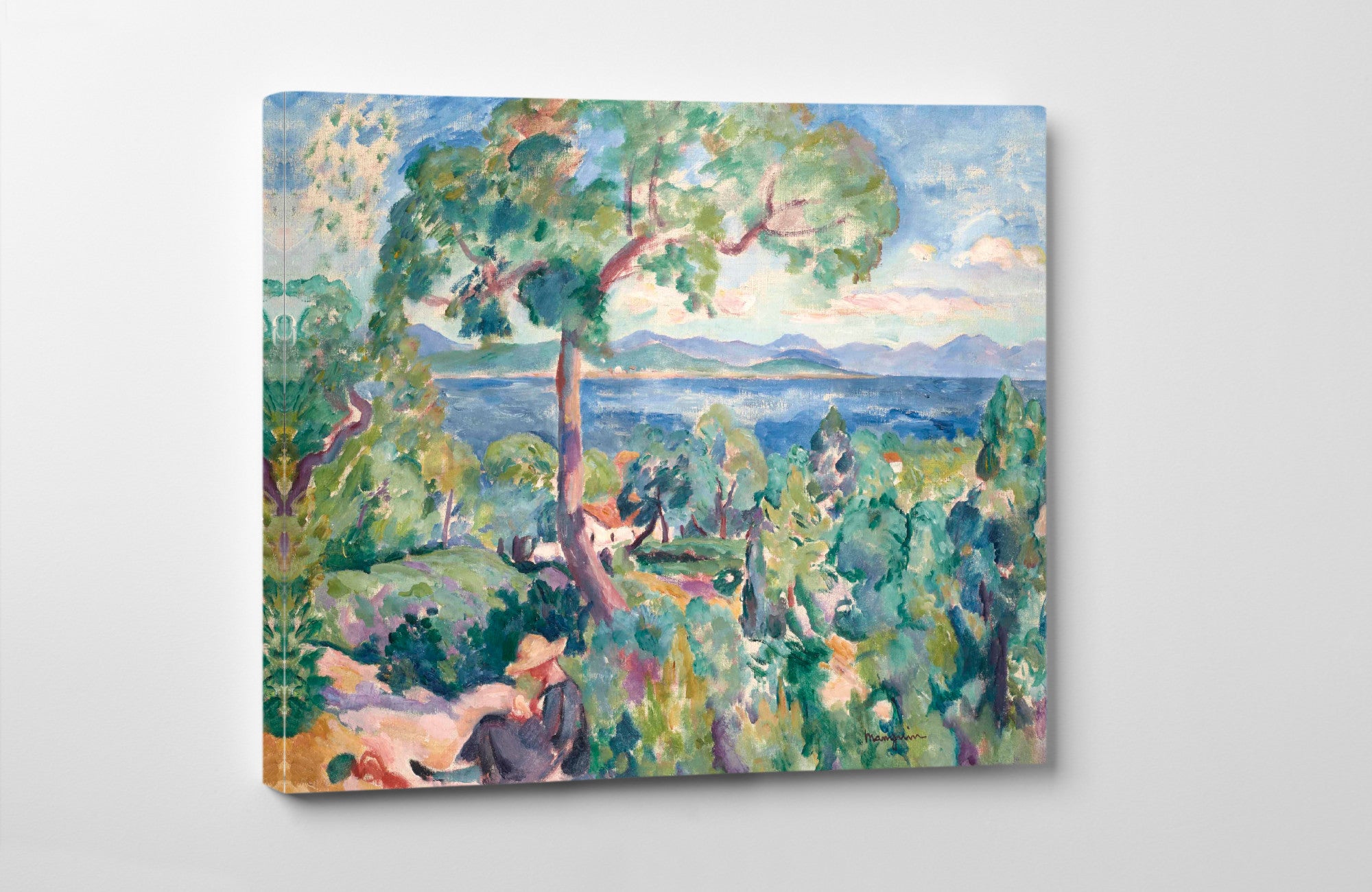
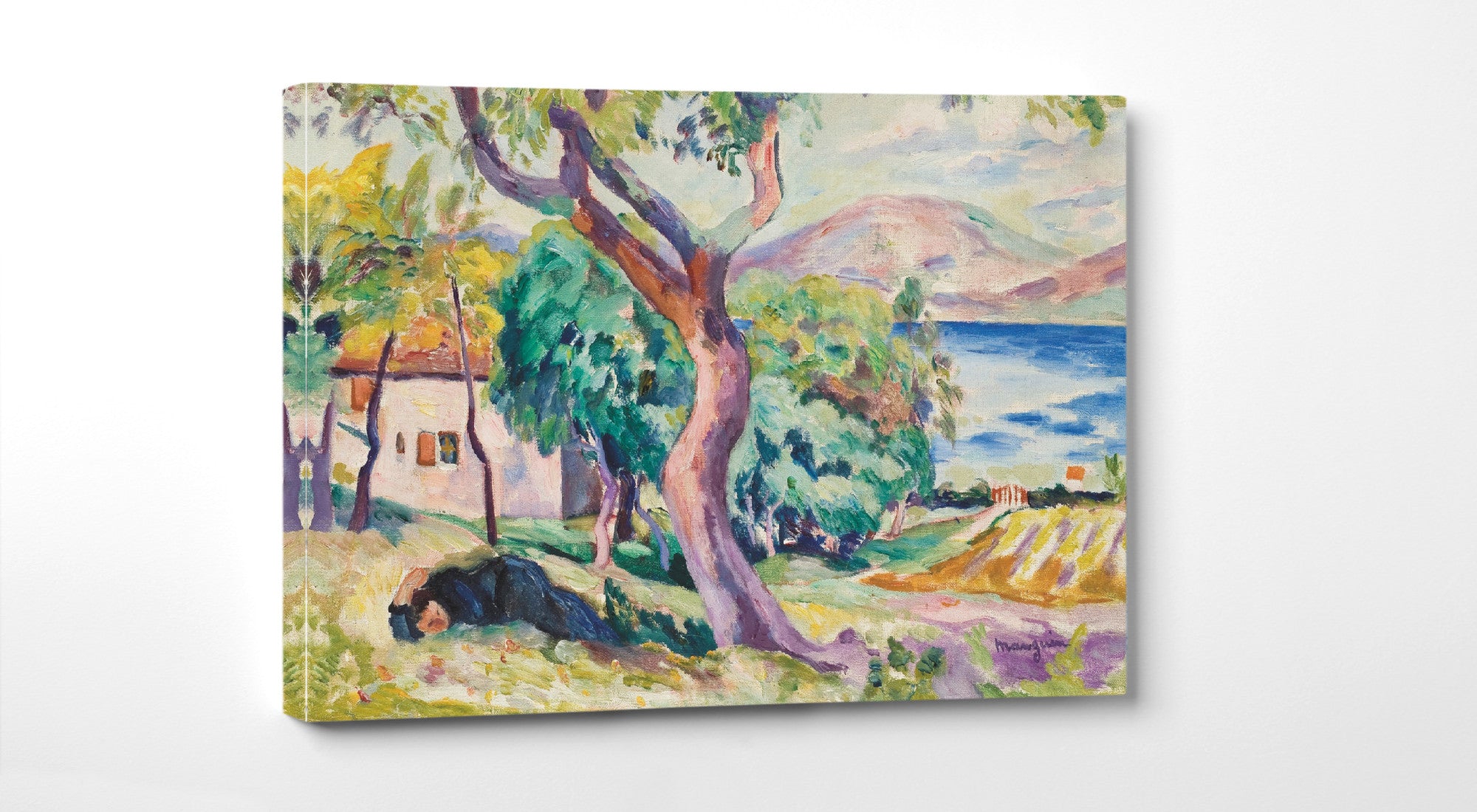
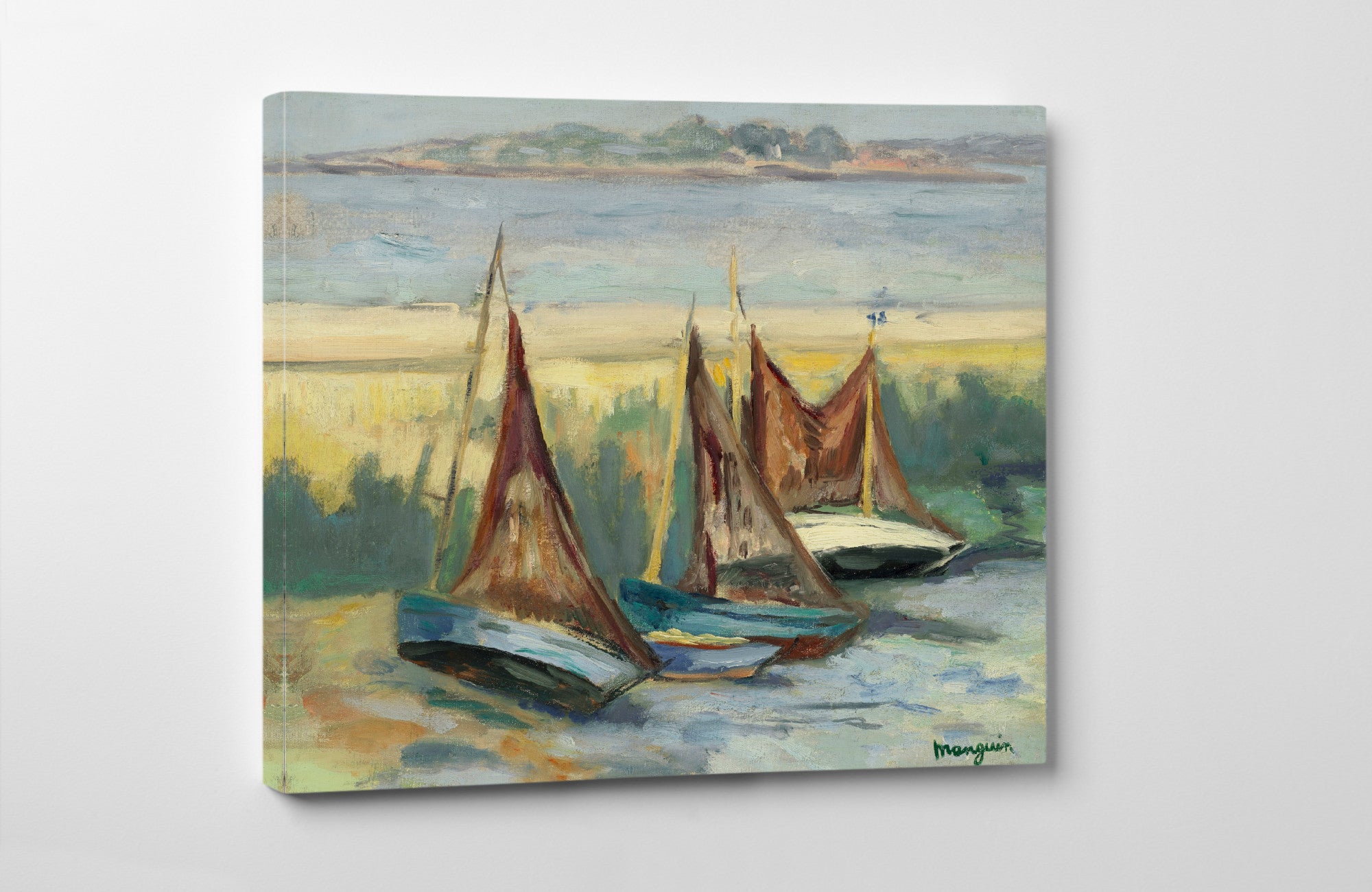
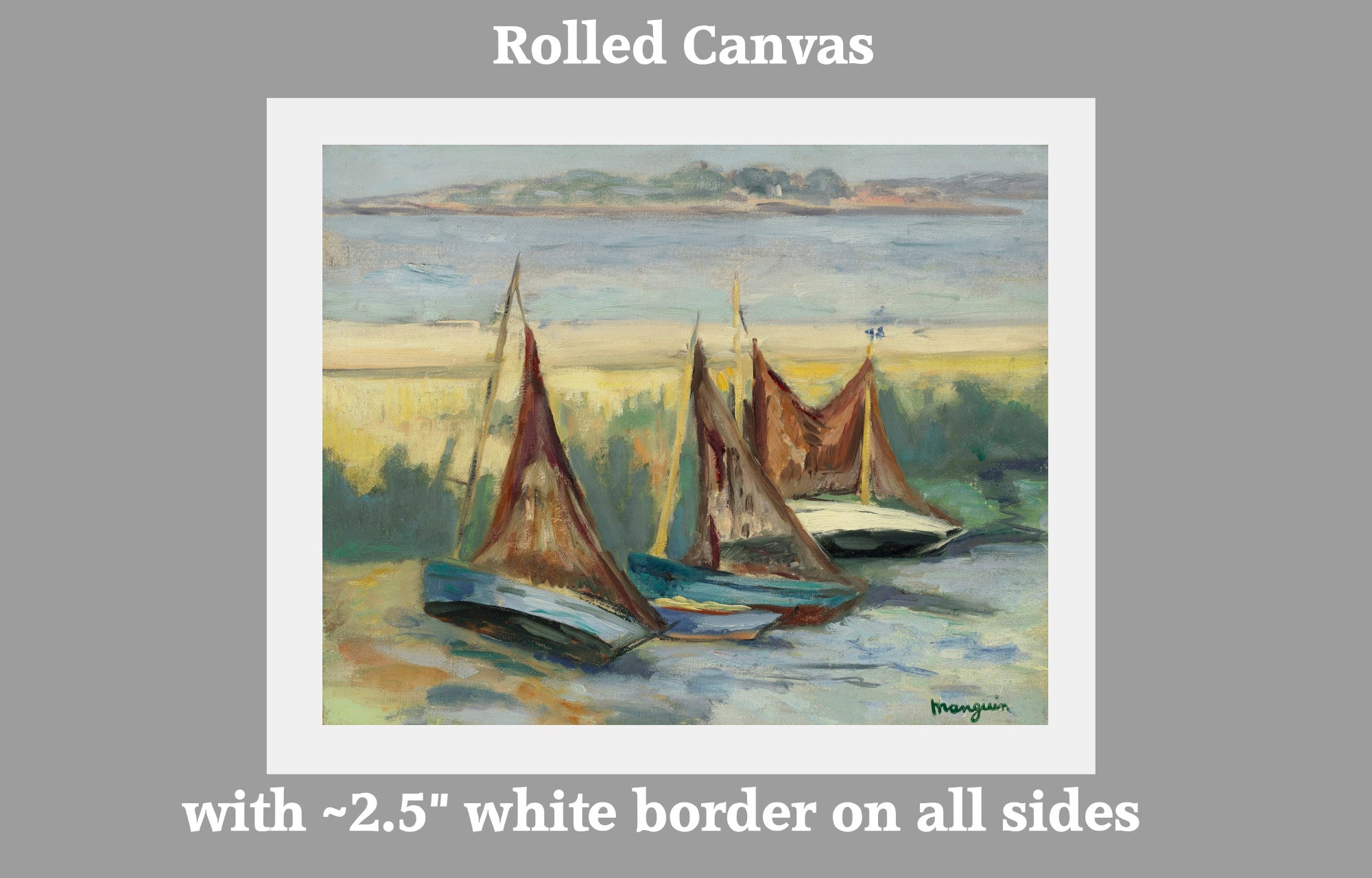
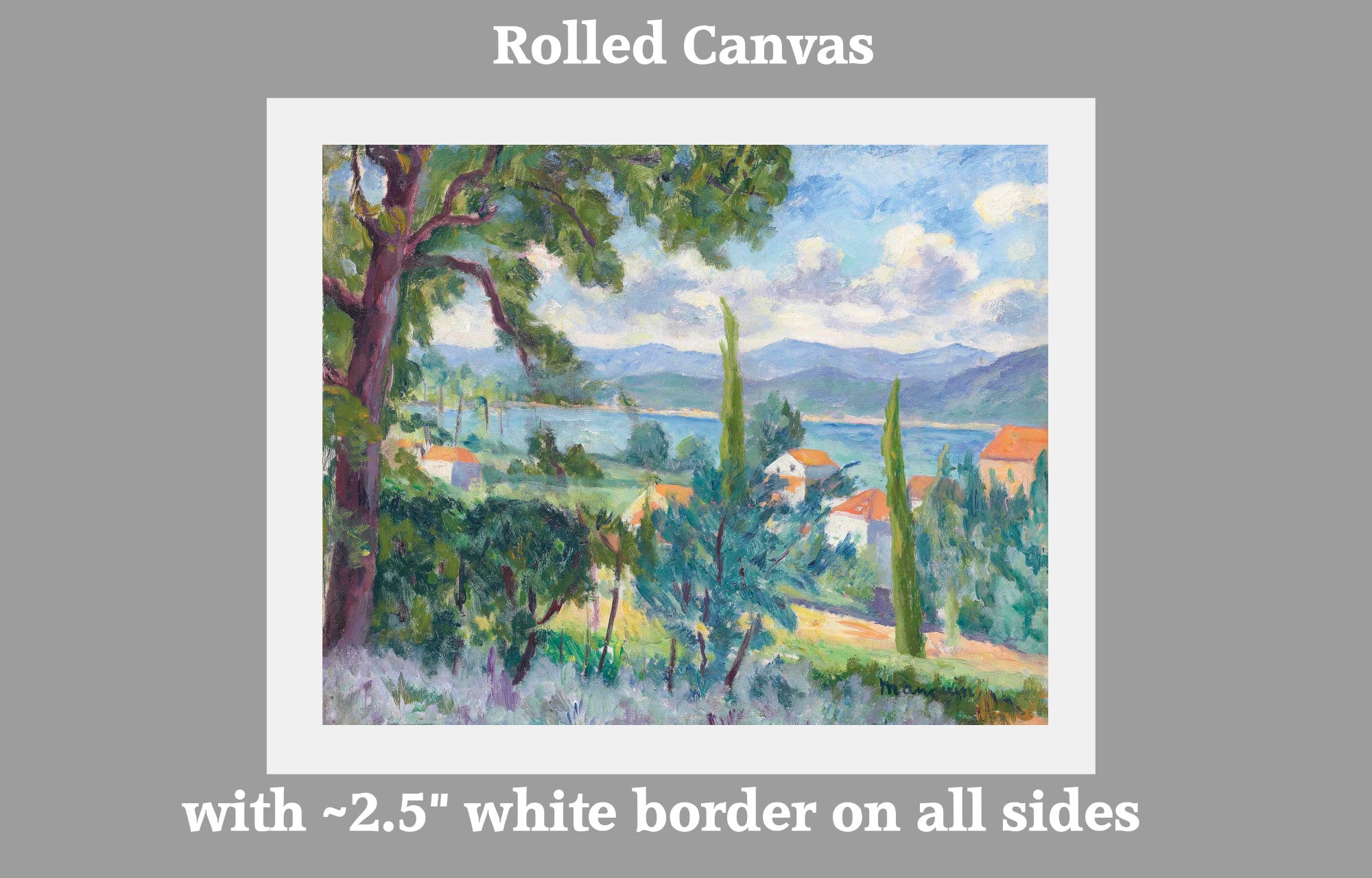
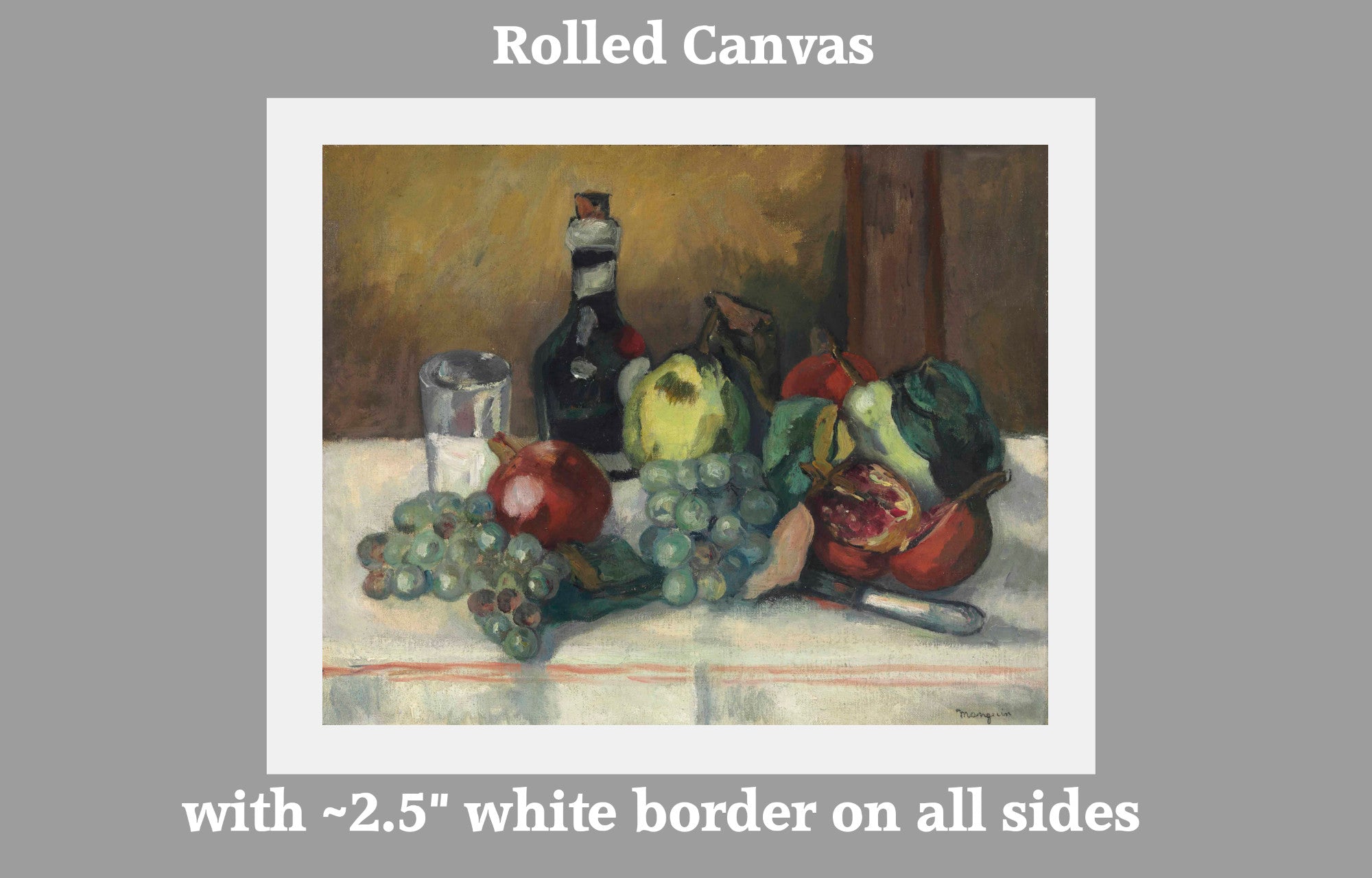
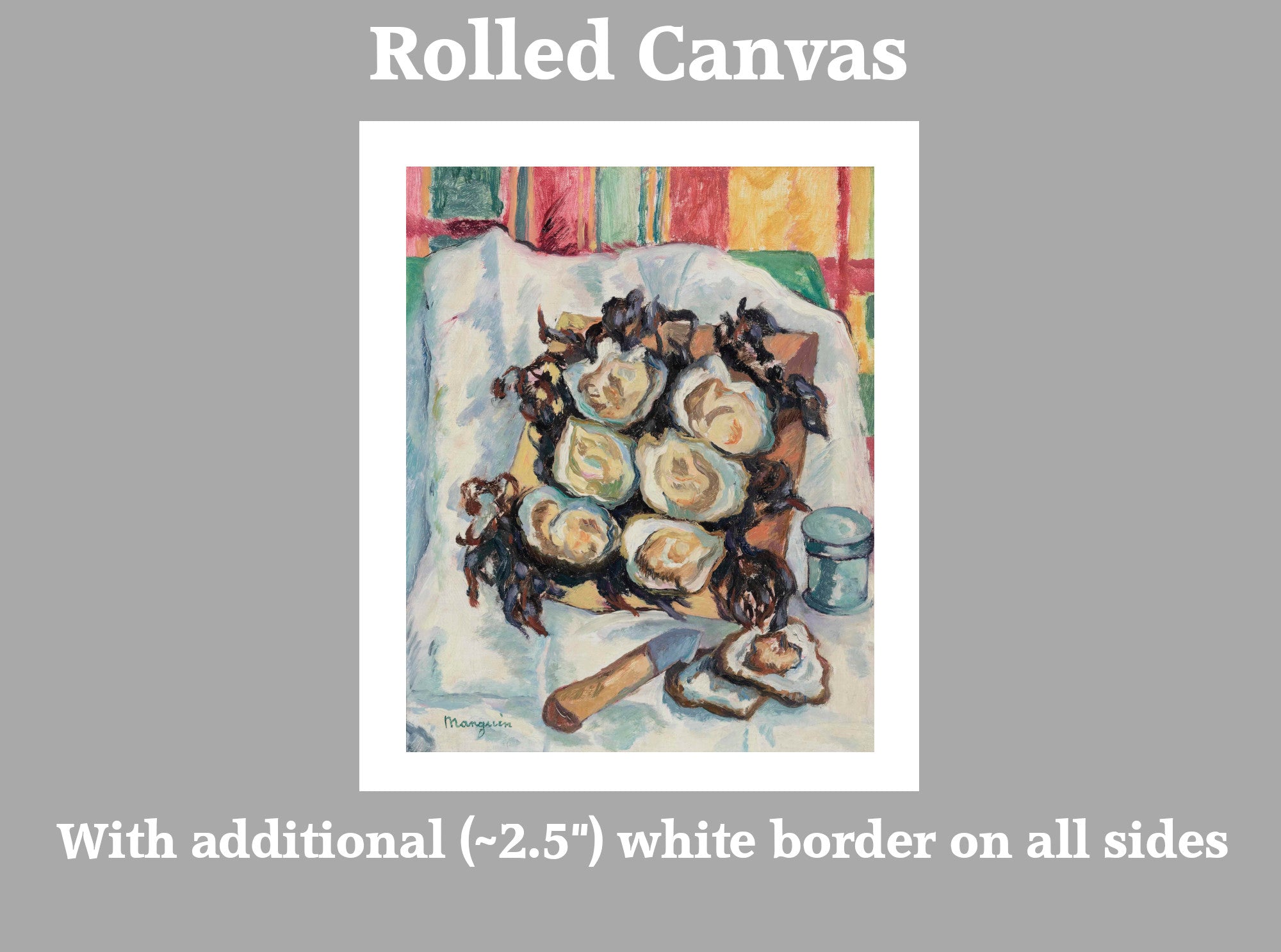
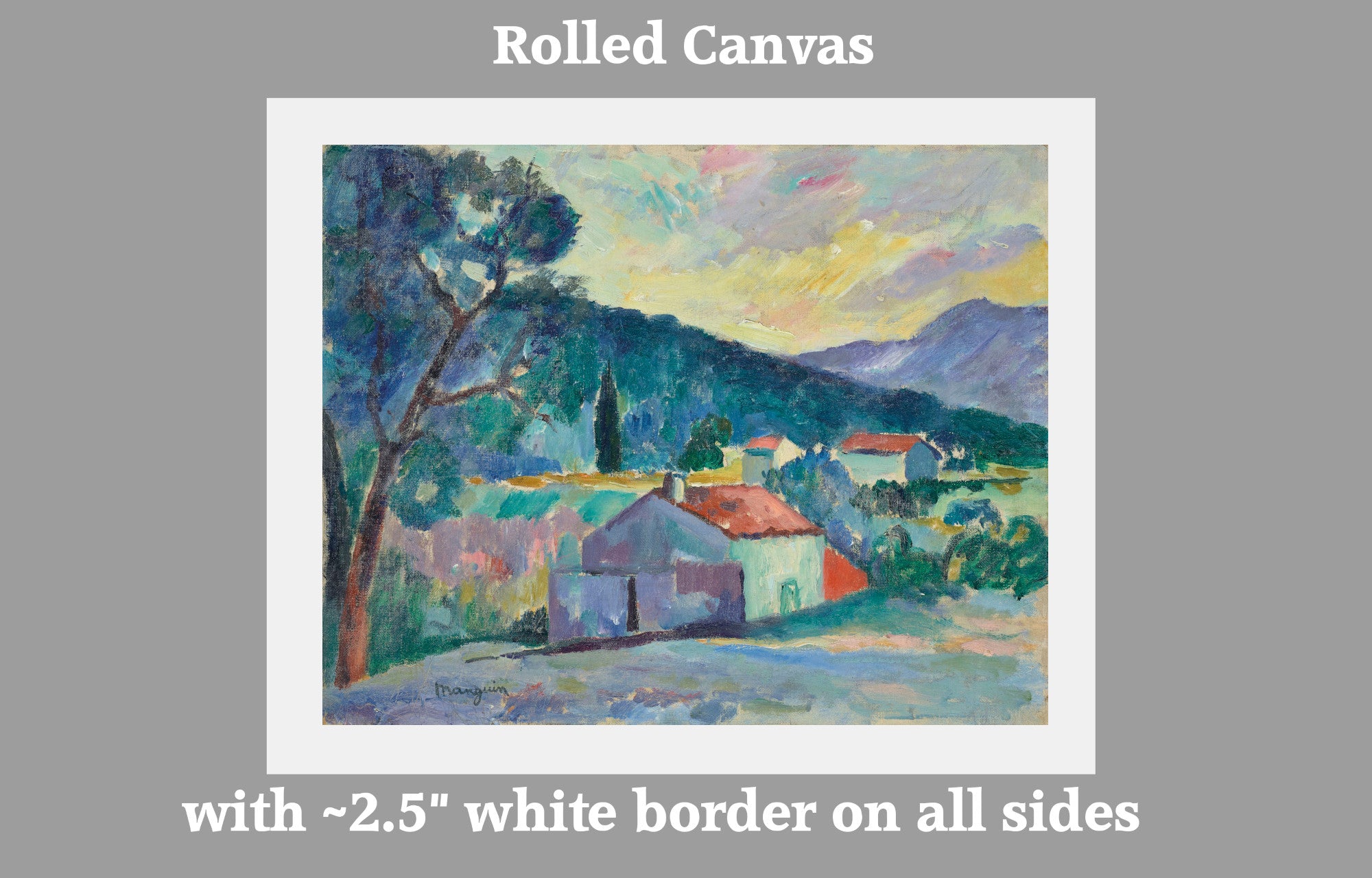
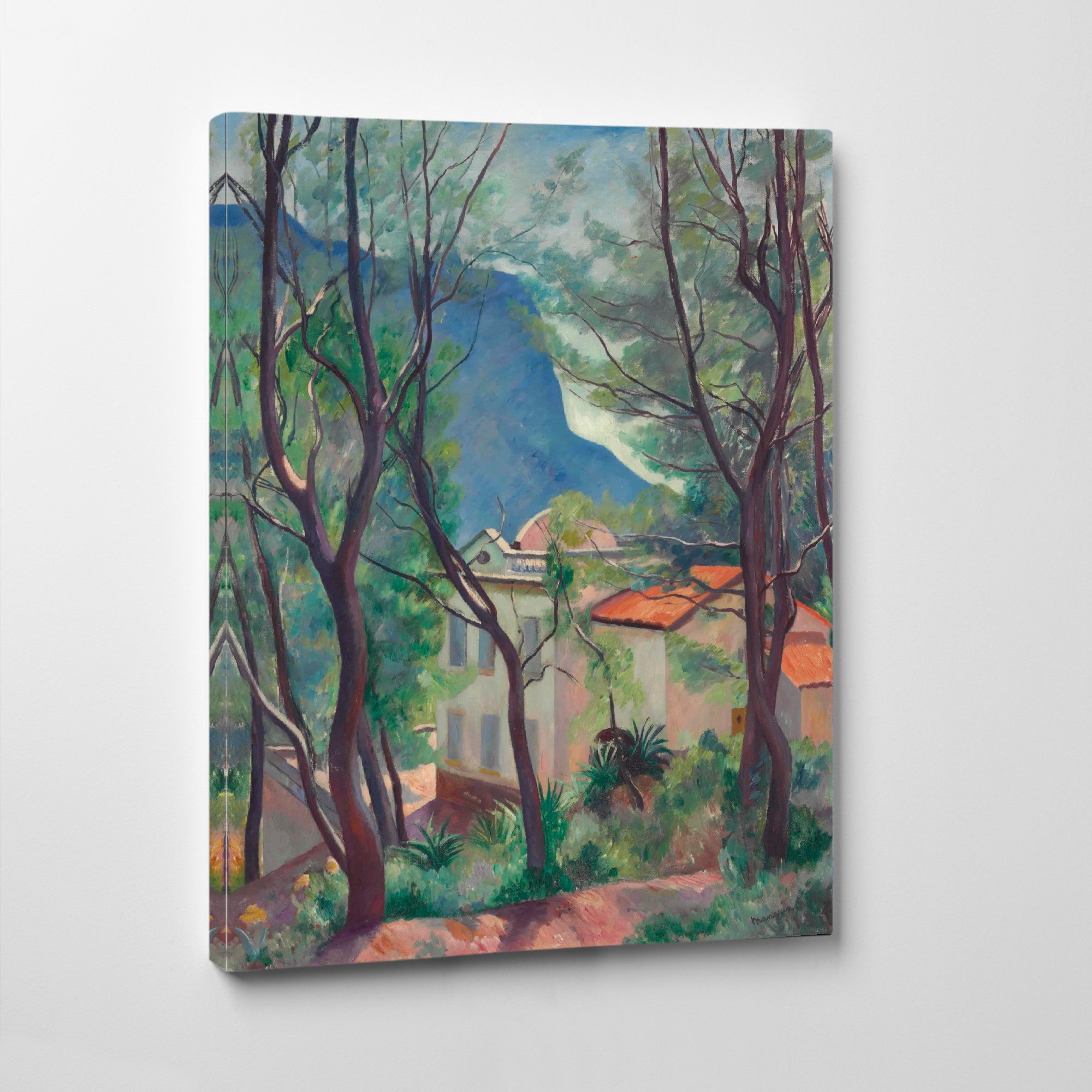
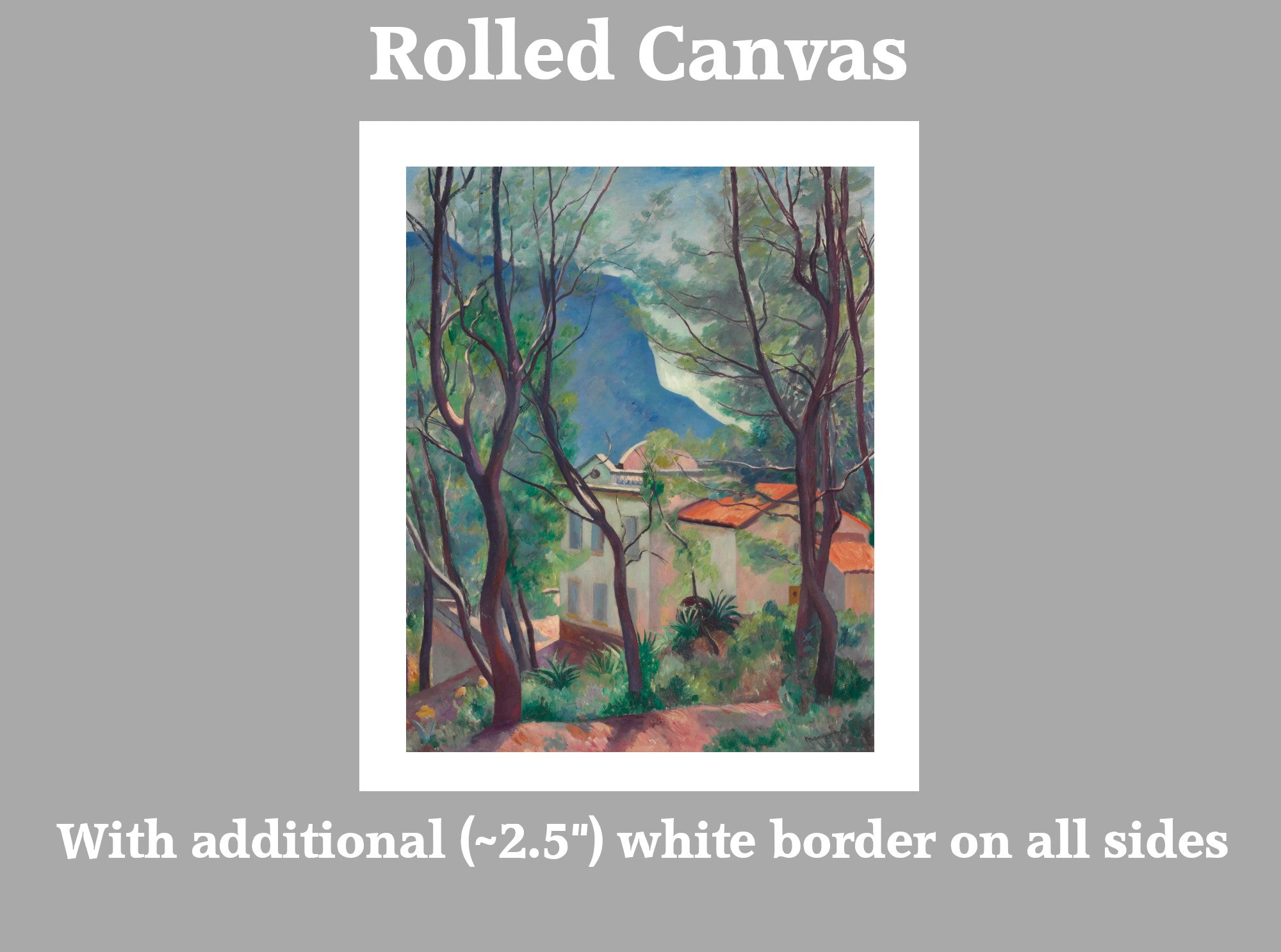
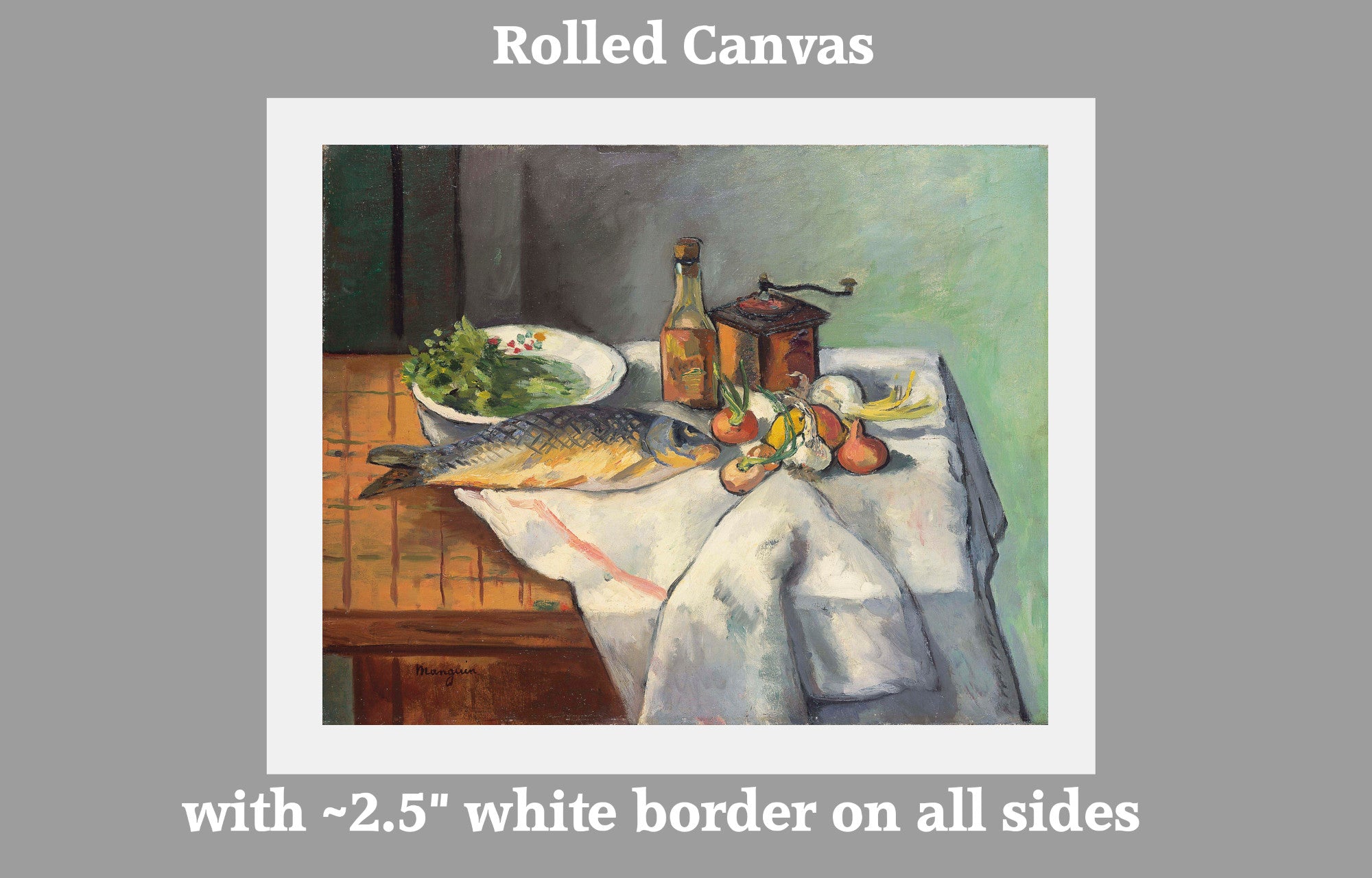
Canvas panels offer another way to display Manguin's colour-rich landscapes, portraits and still lifes, particularly where a clean contemporary presentation is preferred.
GalleryThane prints, frames and canvas panels are produced in our Nottinghamshire workshop using carefully selected printing and framing materials.
Frequently Asked Questions
Who was Henri Manguin?
Henri Manguin was a French painter born in 1874 and one of the artists associated with Fauvism. He is particularly known for colourful Mediterranean landscapes, female figures, bathers, portraits and still lifes.
Was Henri Manguin a Fauvist?
Yes. Manguin exhibited alongside Henri Matisse, André Derain and other Fauvist painters at the 1905 Salon d'Automne, the exhibition at which the group acquired the name les fauves or “wild beasts”.
What is Henri Manguin best known for?
Manguin is best known for luminous paintings of Saint-Tropez and southern France, together with portraits and figure paintings featuring his wife Jeanne. His work is distinguished by expressive but often lyrical use of colour.
How was Manguin's style different from other Fauvist artists?
Manguin embraced the brilliant non-naturalistic colour associated with Fauvism but generally used it in a warmer and less aggressive way than painters such as André Derain or Maurice de Vlaminck.
Did Henri Manguin know Henri Matisse?
Yes. Manguin and Matisse studied under Gustave Moreau at the École des Beaux-Arts and were both part of the circle of artists associated with Fauvism.
Why did Manguin paint Saint-Tropez?
The strong Mediterranean light, vivid vegetation and coastal scenery of Saint-Tropez provided ideal subjects for Manguin's increasingly colourful style. Southern France became one of the most important recurring settings in his work.
Who was Jeanne in Henri Manguin's paintings?
Jeanne Carette was Manguin's wife and one of his most frequent models. He painted her throughout their life together in portraits, garden scenes, domestic interiors and Mediterranean settings.
What subjects did Henri Manguin paint?
Manguin painted Mediterranean landscapes, portraits, female nudes, bathers, gardens and still lifes. His works frequently focus on leisure, family life and the sunlit landscapes of southern France.
What colours are typical of Henri Manguin's paintings?
Manguin frequently used luminous pinks, reds, oranges, blues, greens and violets. Even when his palette became softer, colour remained one of the defining elements of his work.
Are Henri Manguin prints suitable for modern interiors?
Yes. Manguin's combination of vivid colour, simplified forms and relaxed subjects works particularly well in contemporary, Scandinavian, mid-century and eclectic interiors.