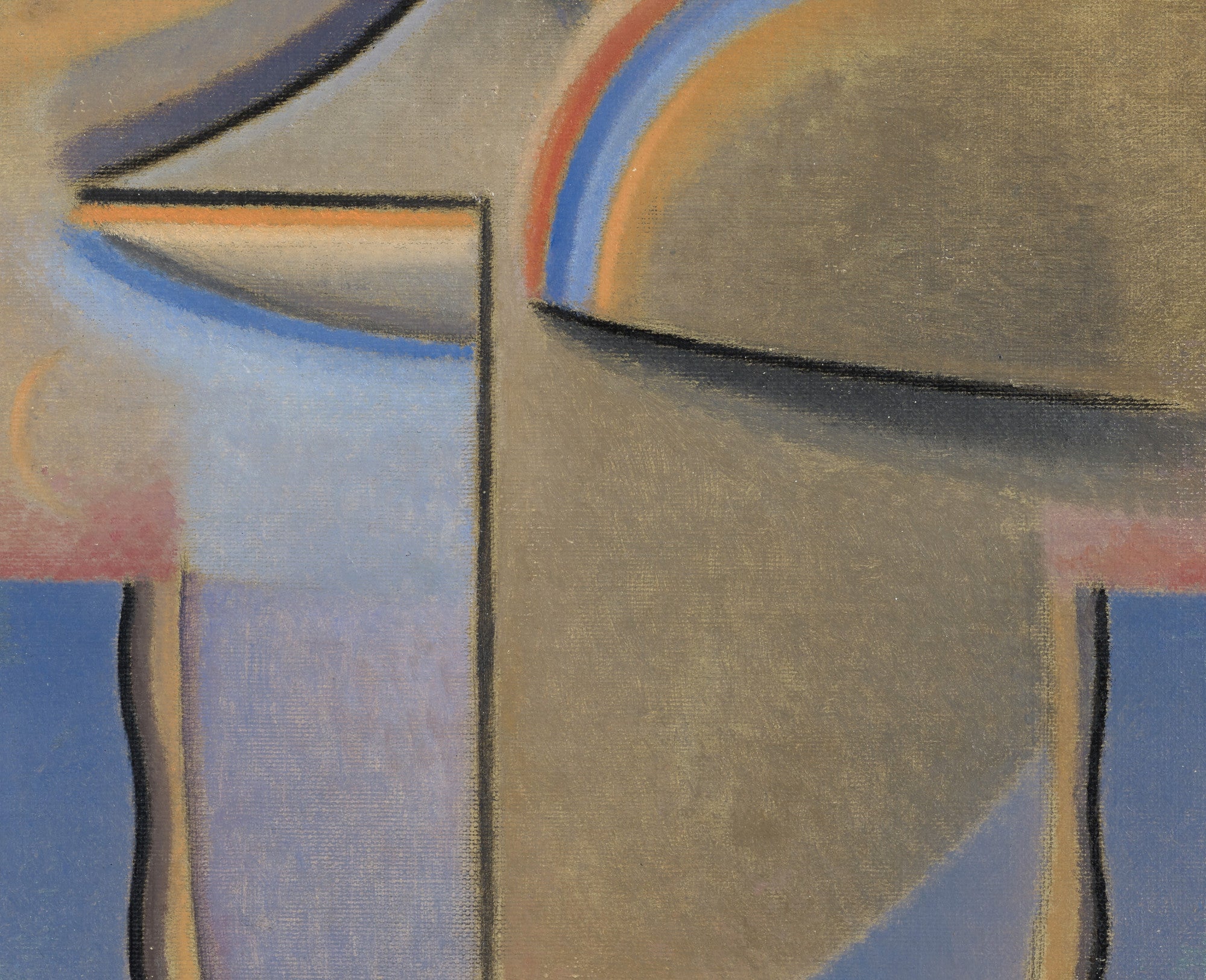
Alexej von Jawlensky Prints: Colour, Expression and the Human Face
Alexej von Jawlensky created some of the most distinctive portraits and colour-rich landscapes of early twentieth-century European art. His paintings move between recognisable subjects and abstraction, using intense reds, blues, greens and yellows, simplified outlines and increasingly concentrated compositions to communicate something beyond straightforward physical appearance.
This collection of Alexej von Jawlensky prints traces that development across several important phases of his career. Early landscapes reveal the breakthrough he experienced while painting at Murnau alongside Wassily Kandinsky, Gabriele Münter and Marianne von Werefkin. The portraits of 1909–1913 demonstrate his increasingly radical use of colour, while his later Mystical Heads, Saviour's Faces, Abstract Heads and Meditations reduce the human face to powerful arrangements of colour, line and form.
Whether you are drawn to German Expressionist art, colourful modern portraiture or early abstraction, Jawlensky's work offers an unusually direct combination of visual impact, emotion and spirituality.
From Russia to Munich
Alexej von Jawlensky (1864–1941) was born in Russia and originally pursued a military career before committing himself to painting. In 1896 he moved to Munich with the painter Marianne von Werefkin, his companion for many years. Their home became an important meeting place for progressive artists and members of Munich's international avant-garde.
Exposure to modern French painting encouraged Jawlensky to move away from academic realism. Post-Impressionism and Fauvism were particularly important influences, demonstrating how colour could be liberated from the need to reproduce natural appearances.
Jawlensky absorbed these developments into a highly personal style characterised by saturated colour, powerful contours and simplified forms. These qualities became particularly important in his landscapes and portraits during the years immediately before the First World War.
Murnau and the Development of Expressionism
A decisive period began when Jawlensky and Werefkin worked at Murnau in Bavaria alongside Wassily Kandinsky and Gabriele Münter.
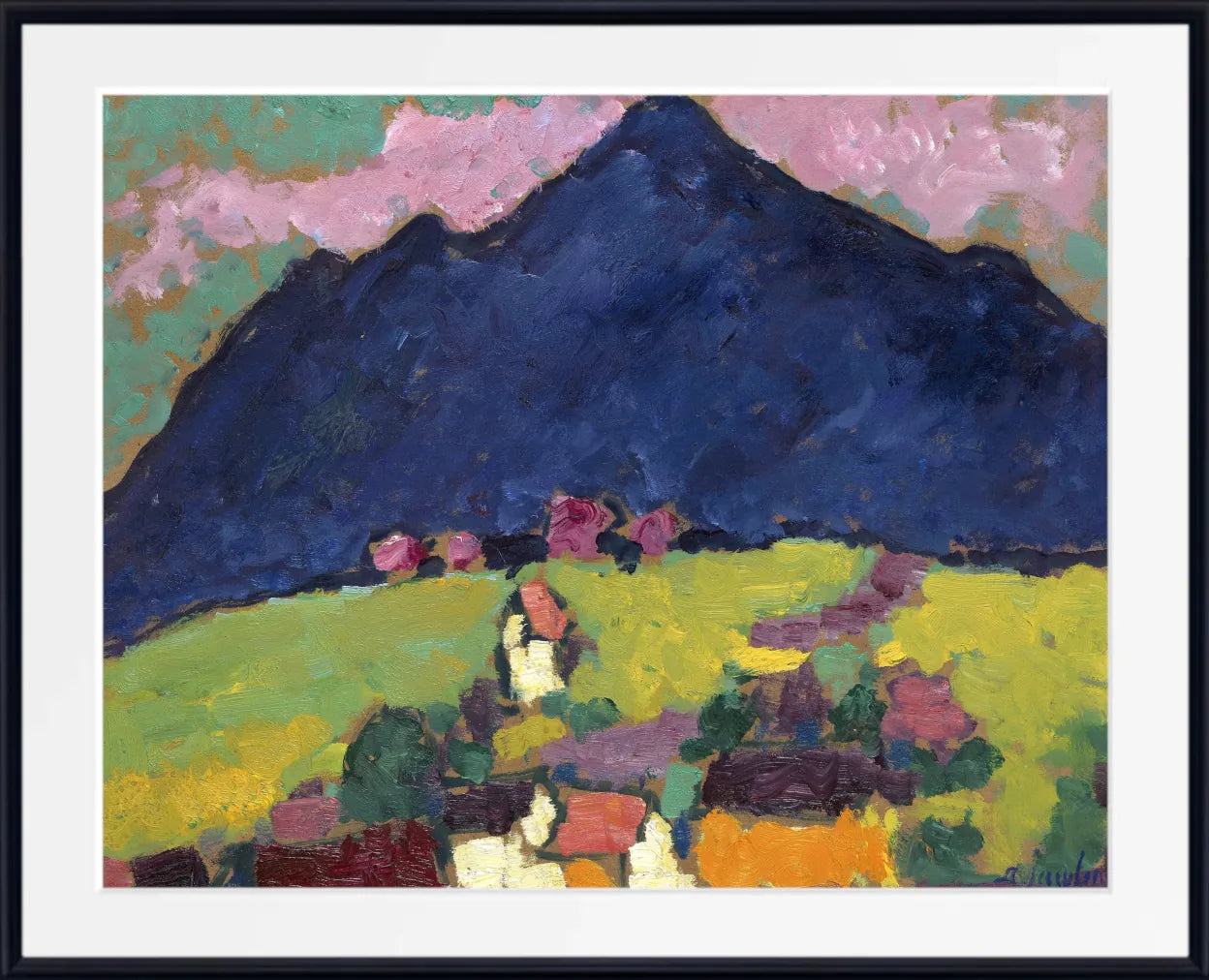
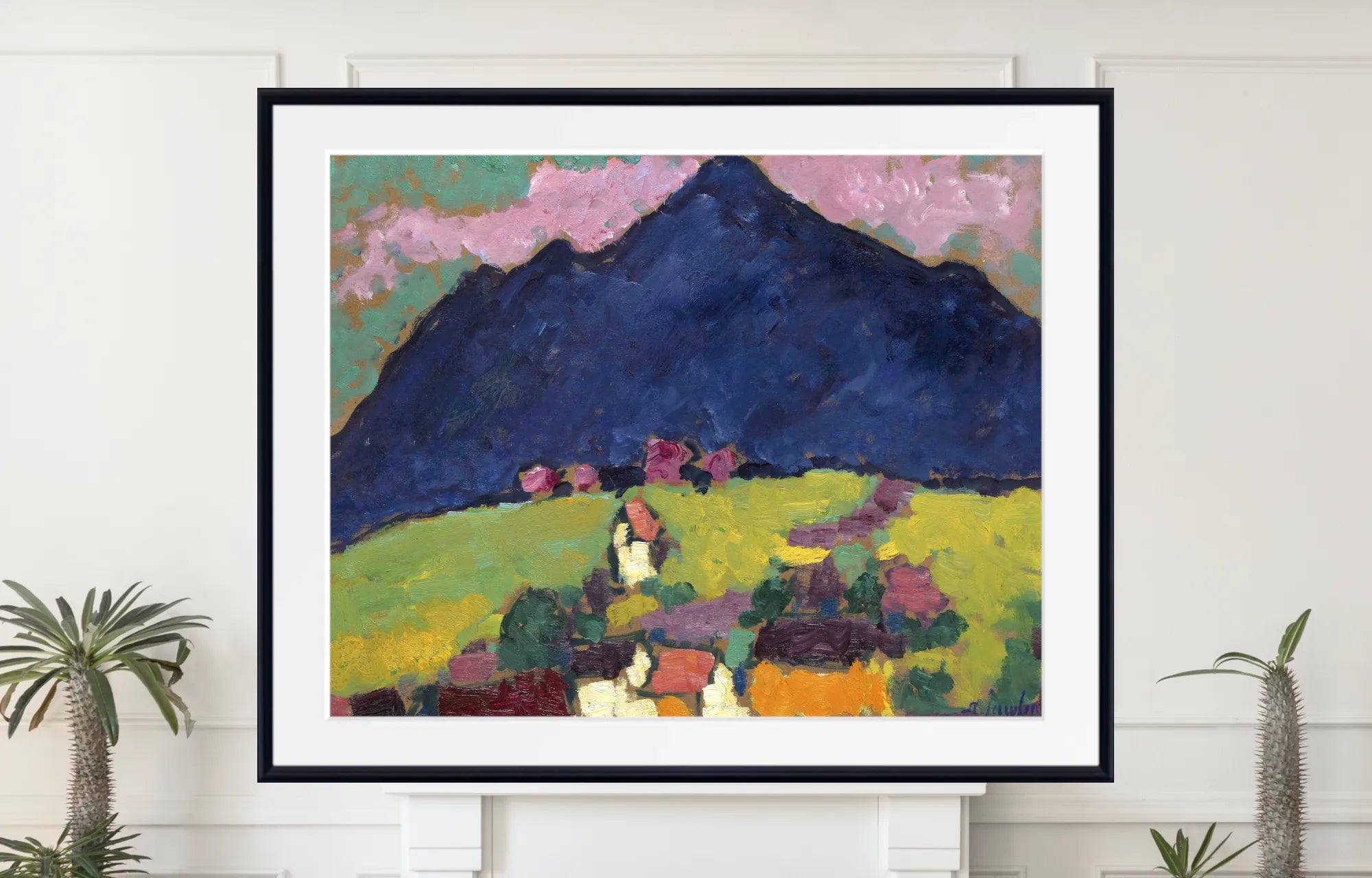
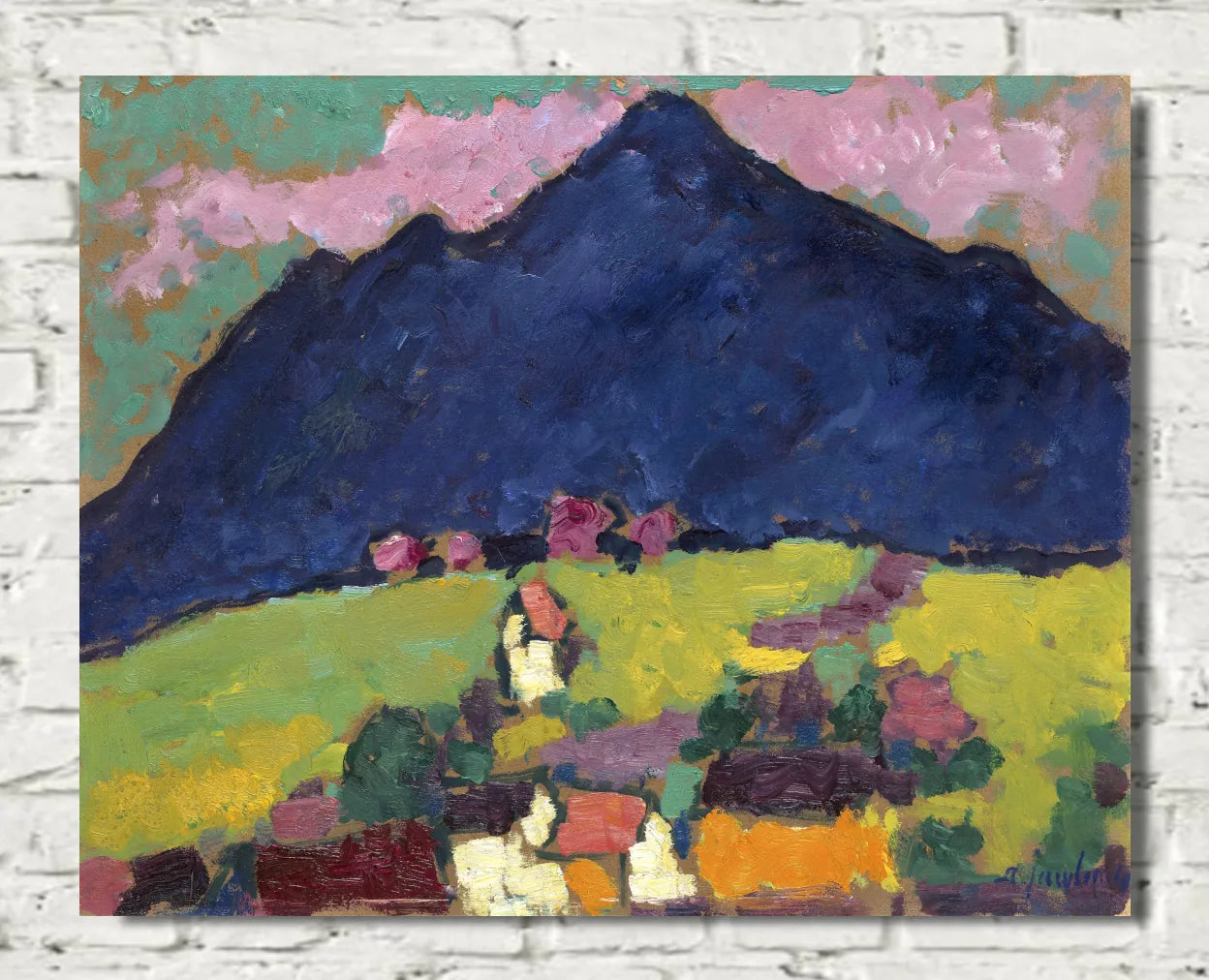
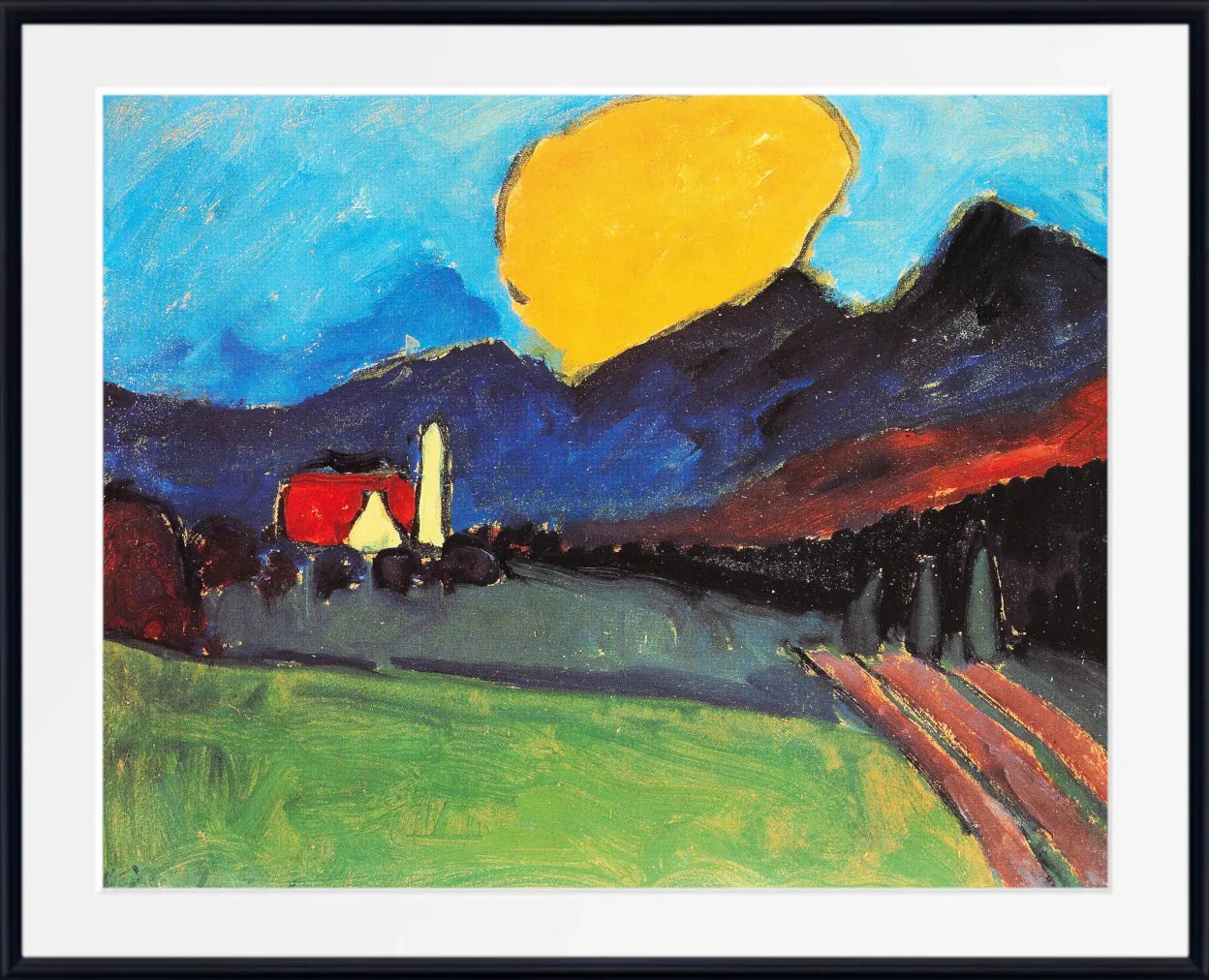
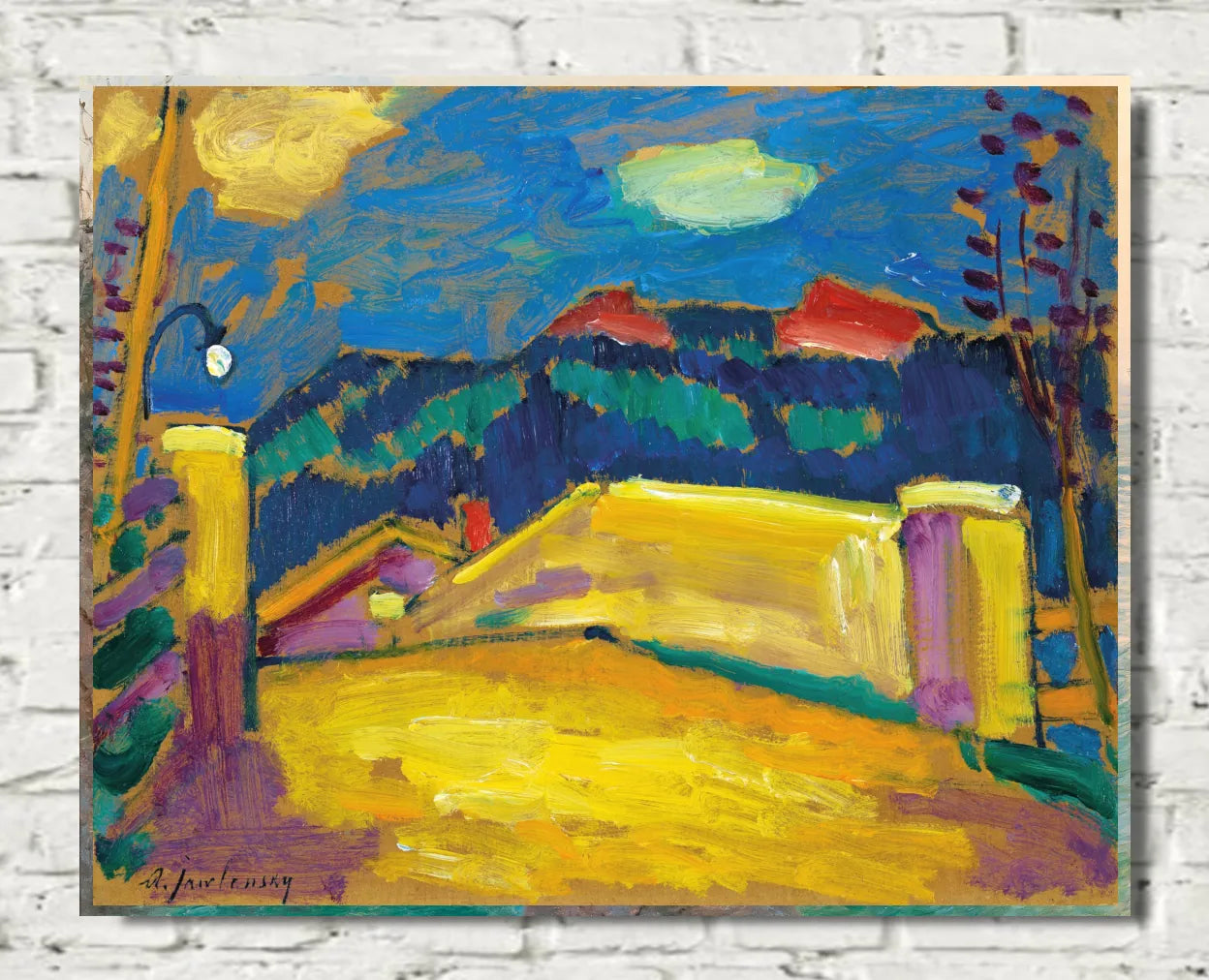
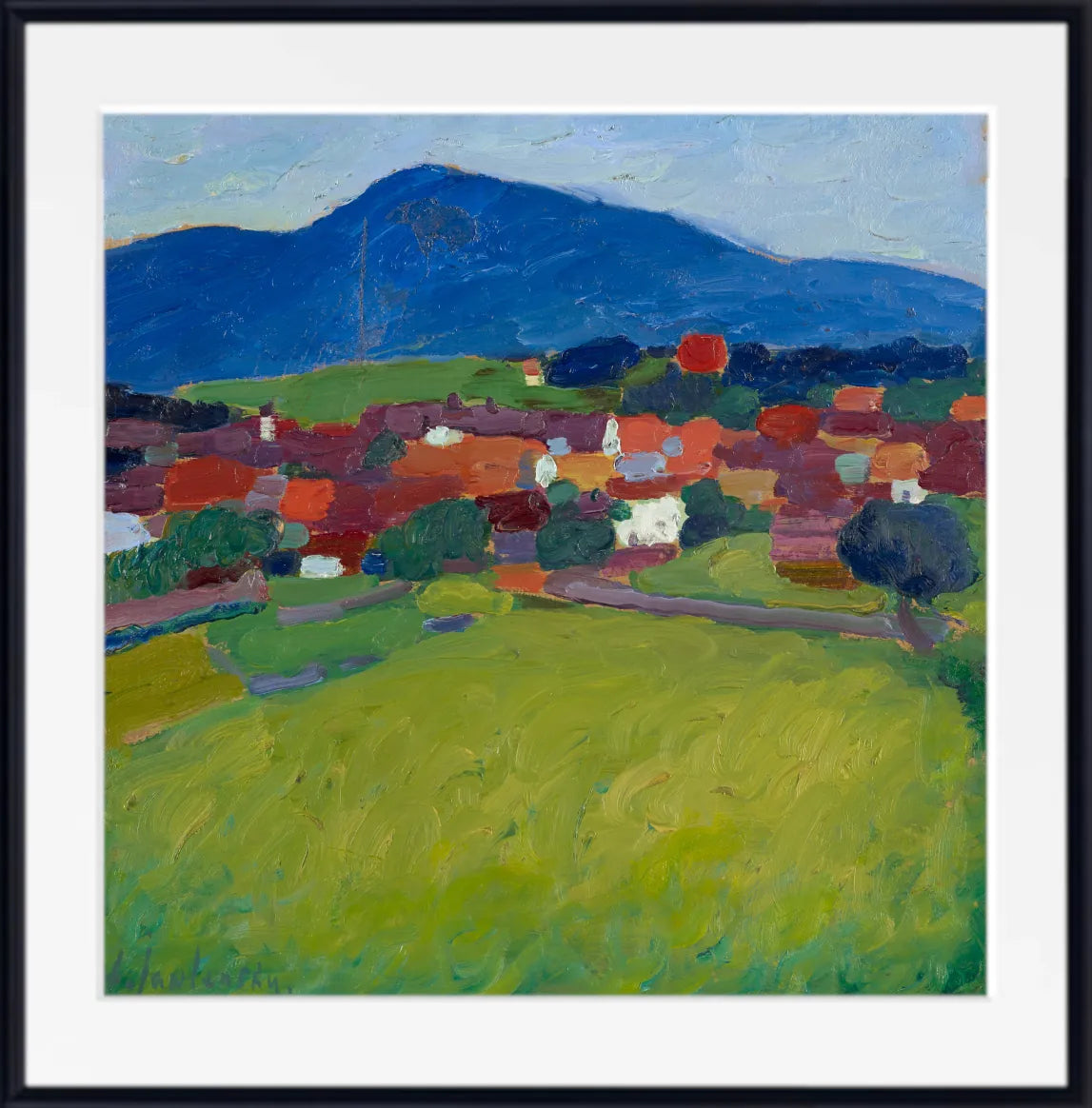
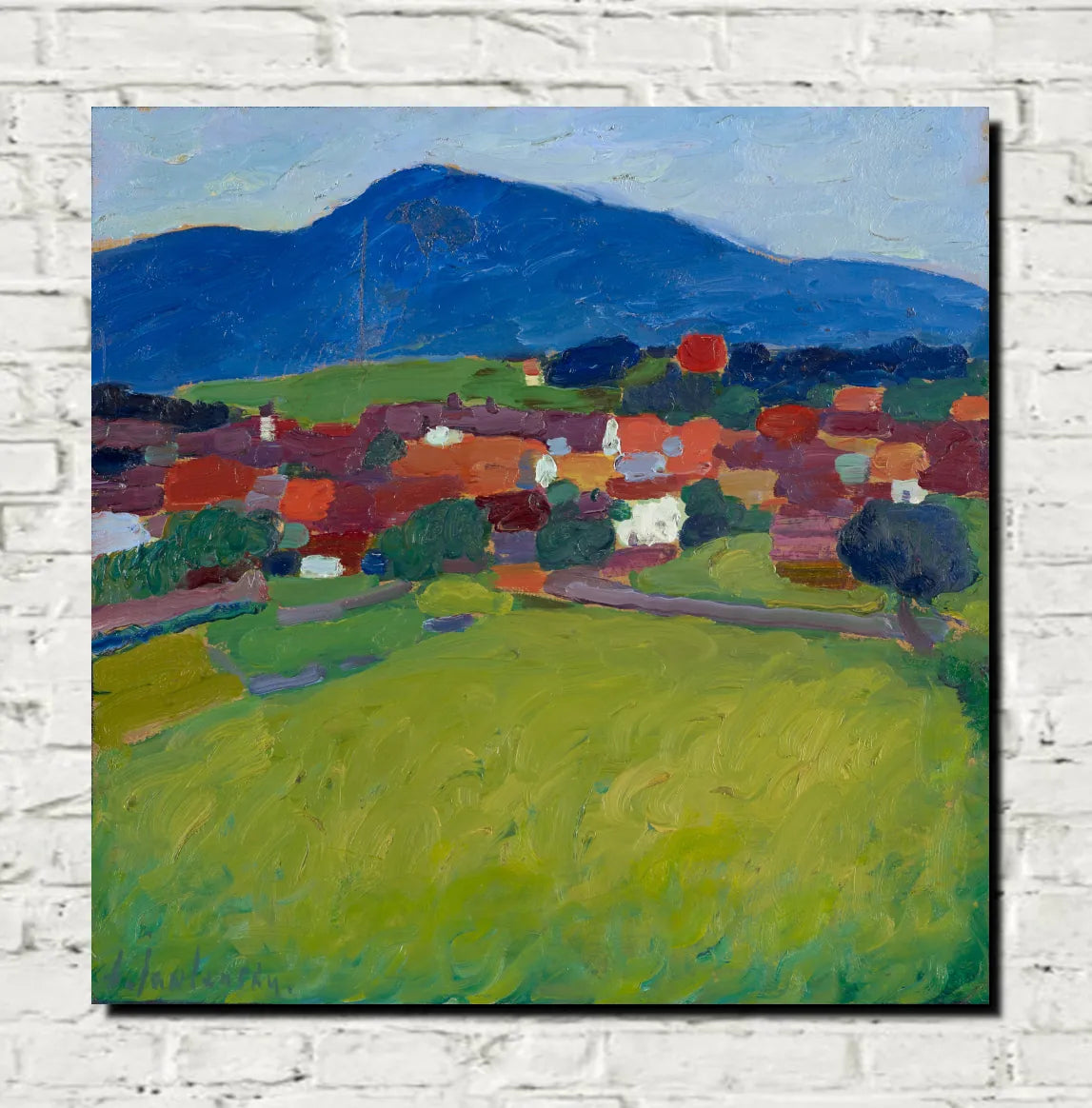
Painting together in and around Murnau encouraged these artists to simplify the landscape and experiment with brilliant, non-naturalistic colour. Houses, mountains, trees and fields were increasingly transformed into strongly outlined shapes and broad areas of red, blue, yellow, green and purple.
Several paintings in this GalleryThane collection allow this transformation to be followed particularly clearly.
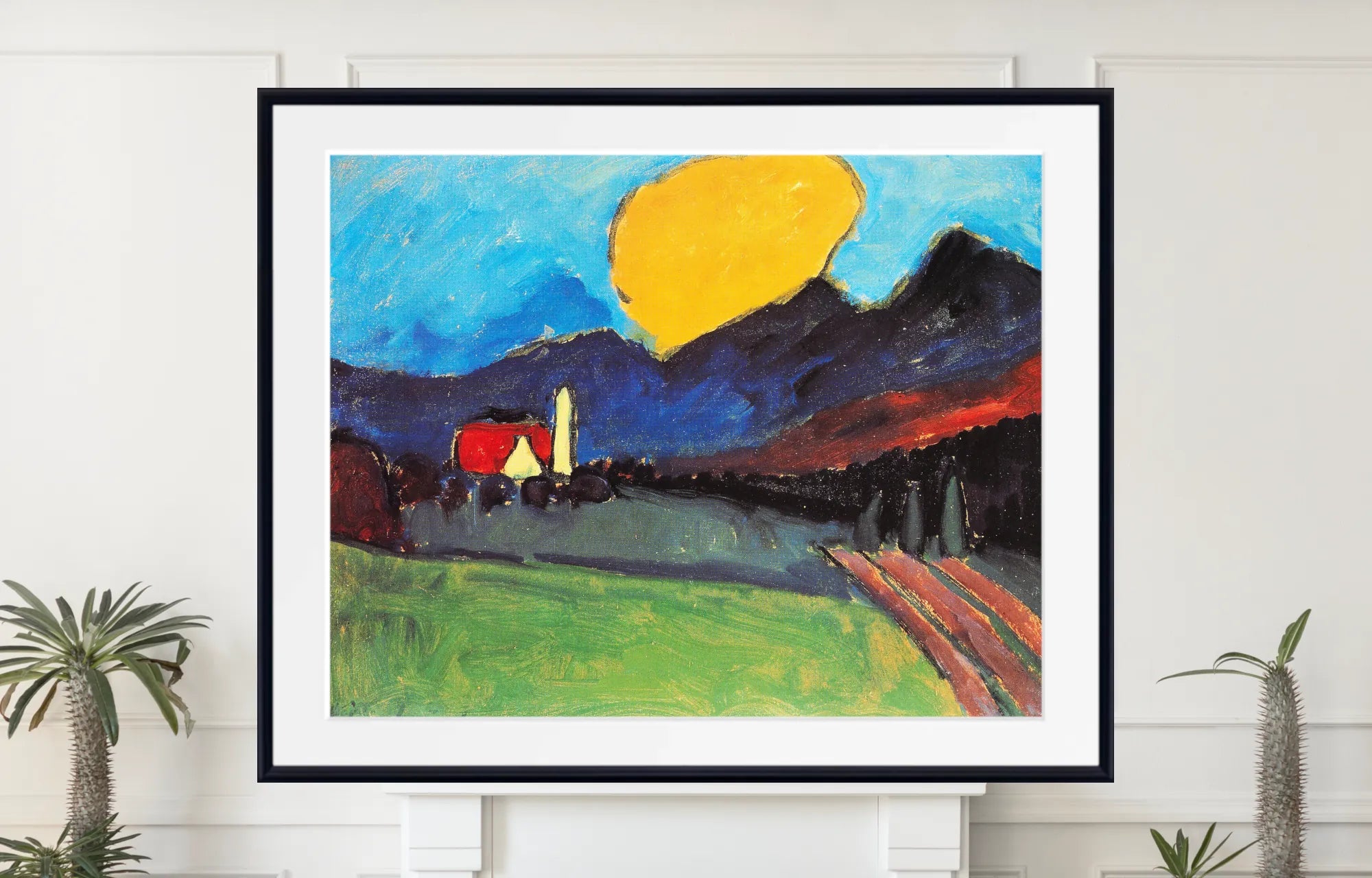
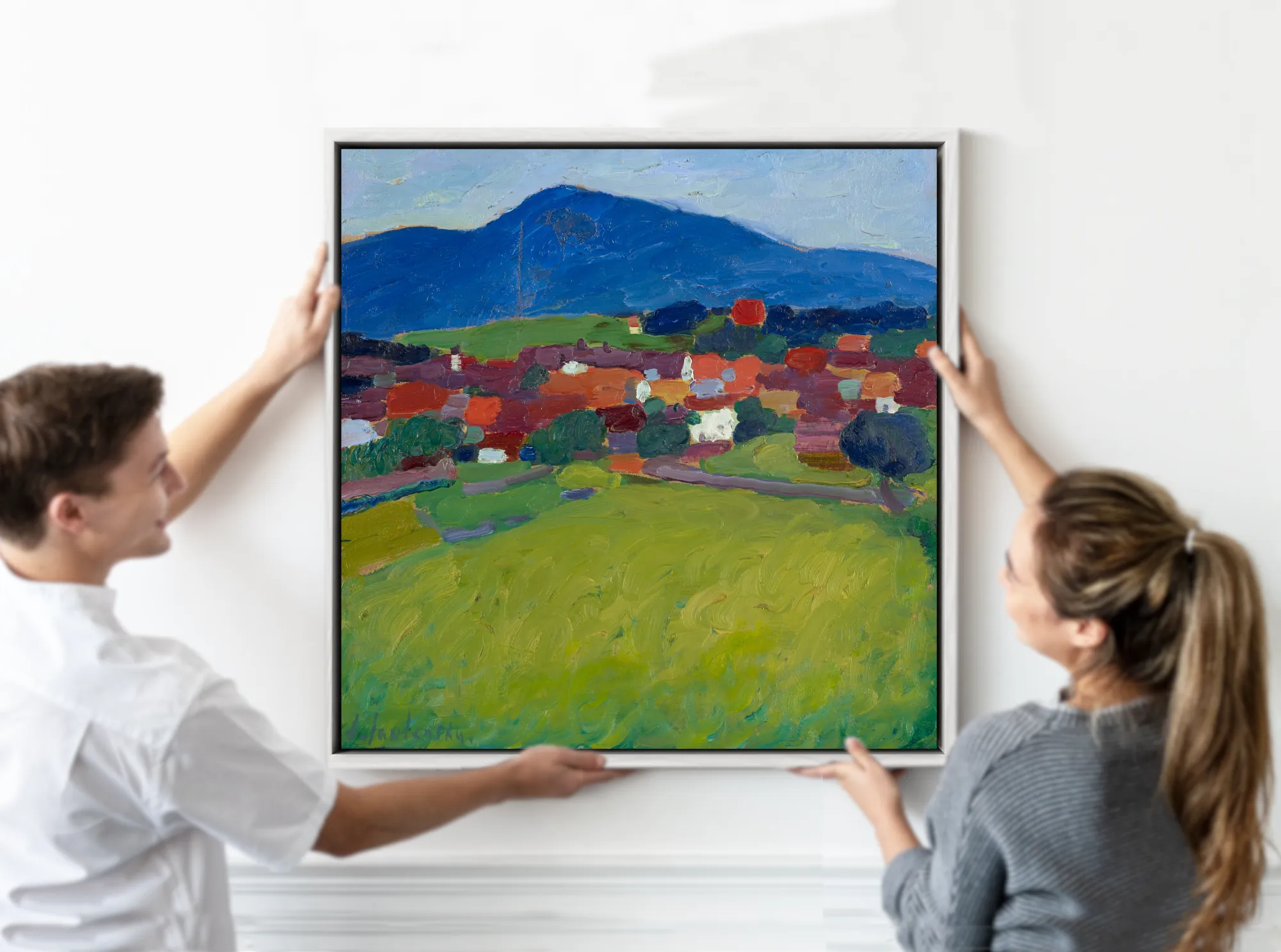
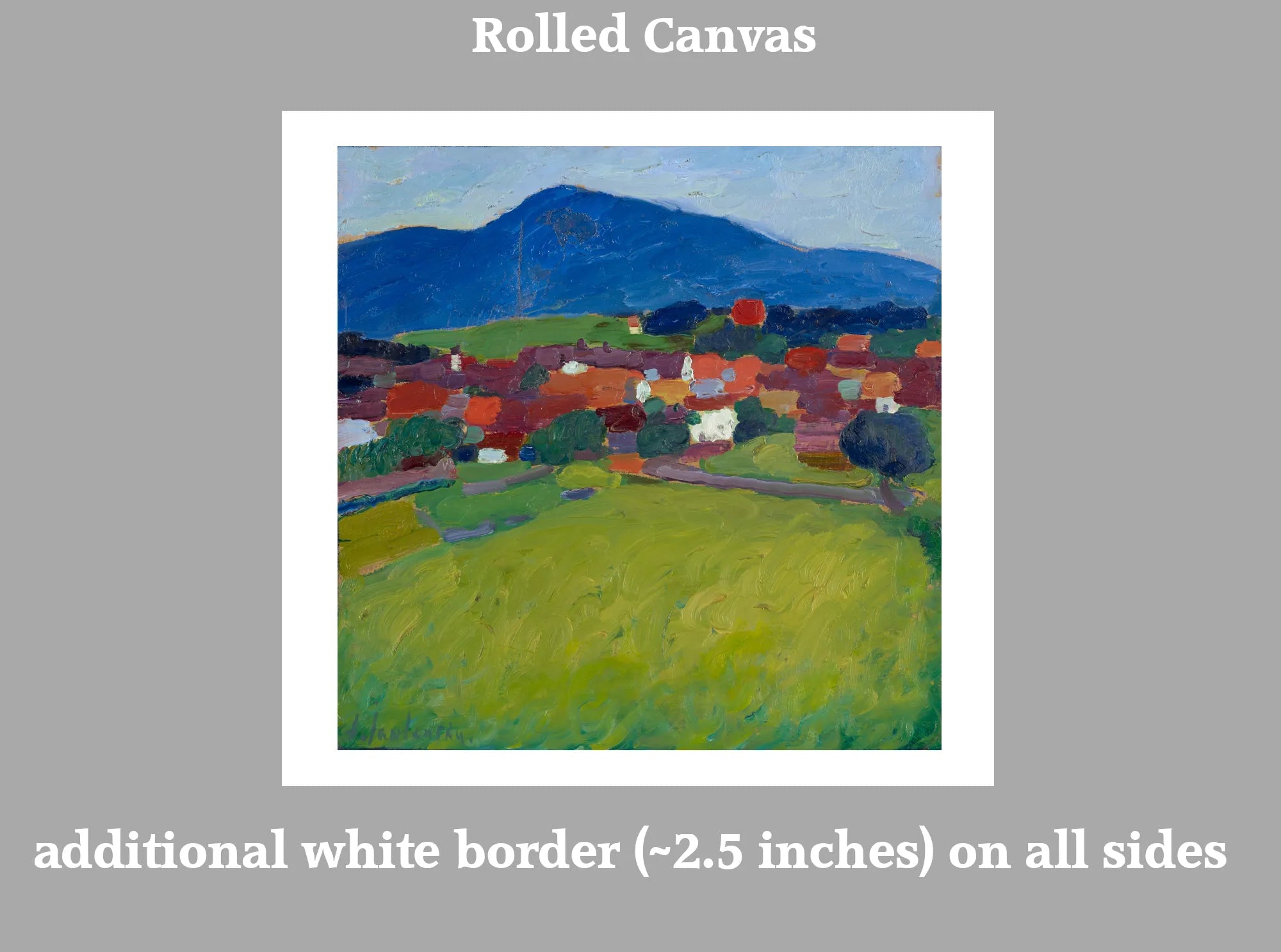
The Village of Murnau (1908) belongs to this formative period, when Jawlensky was beginning to move decisively away from conventional landscape painting.
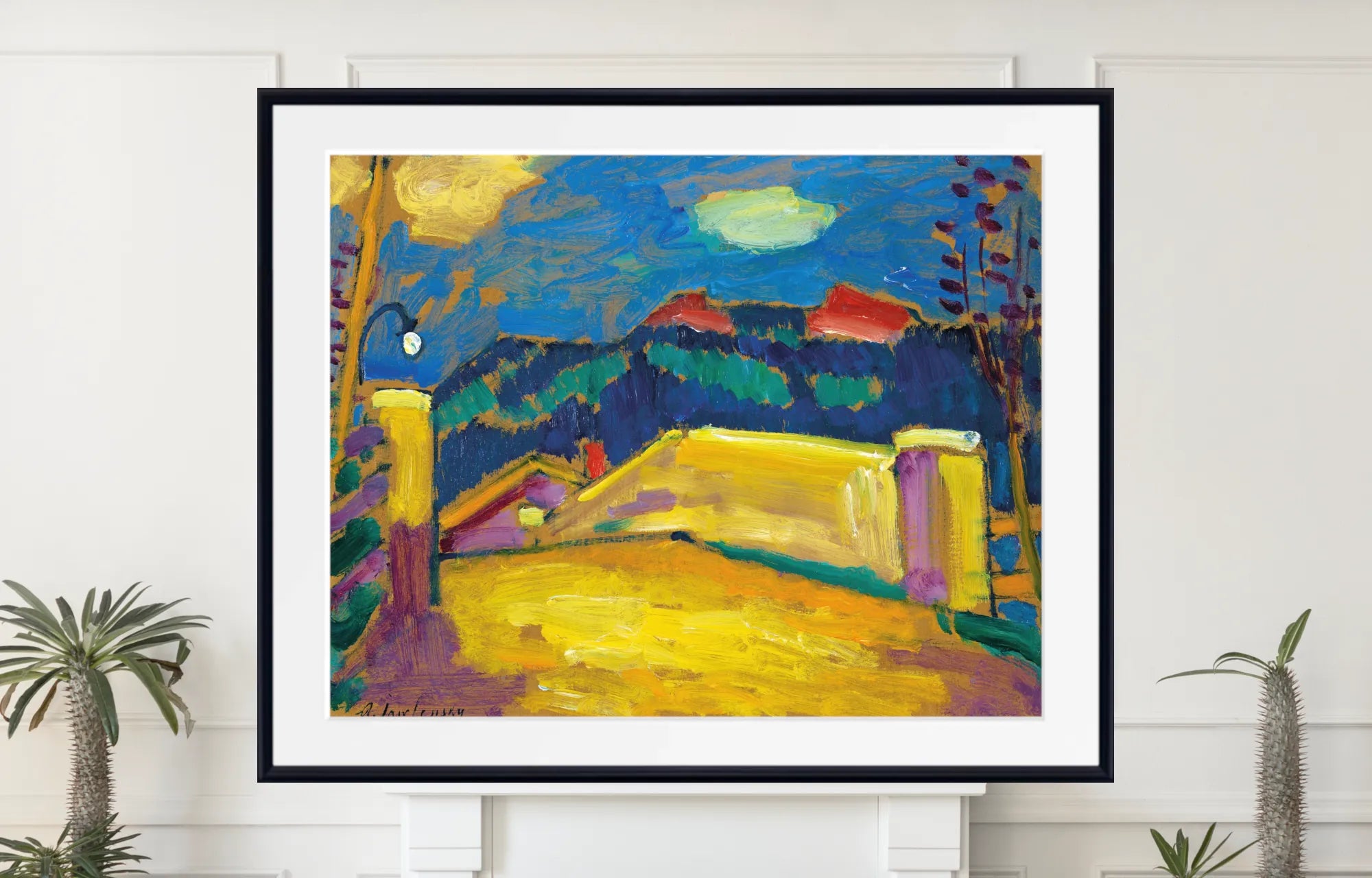
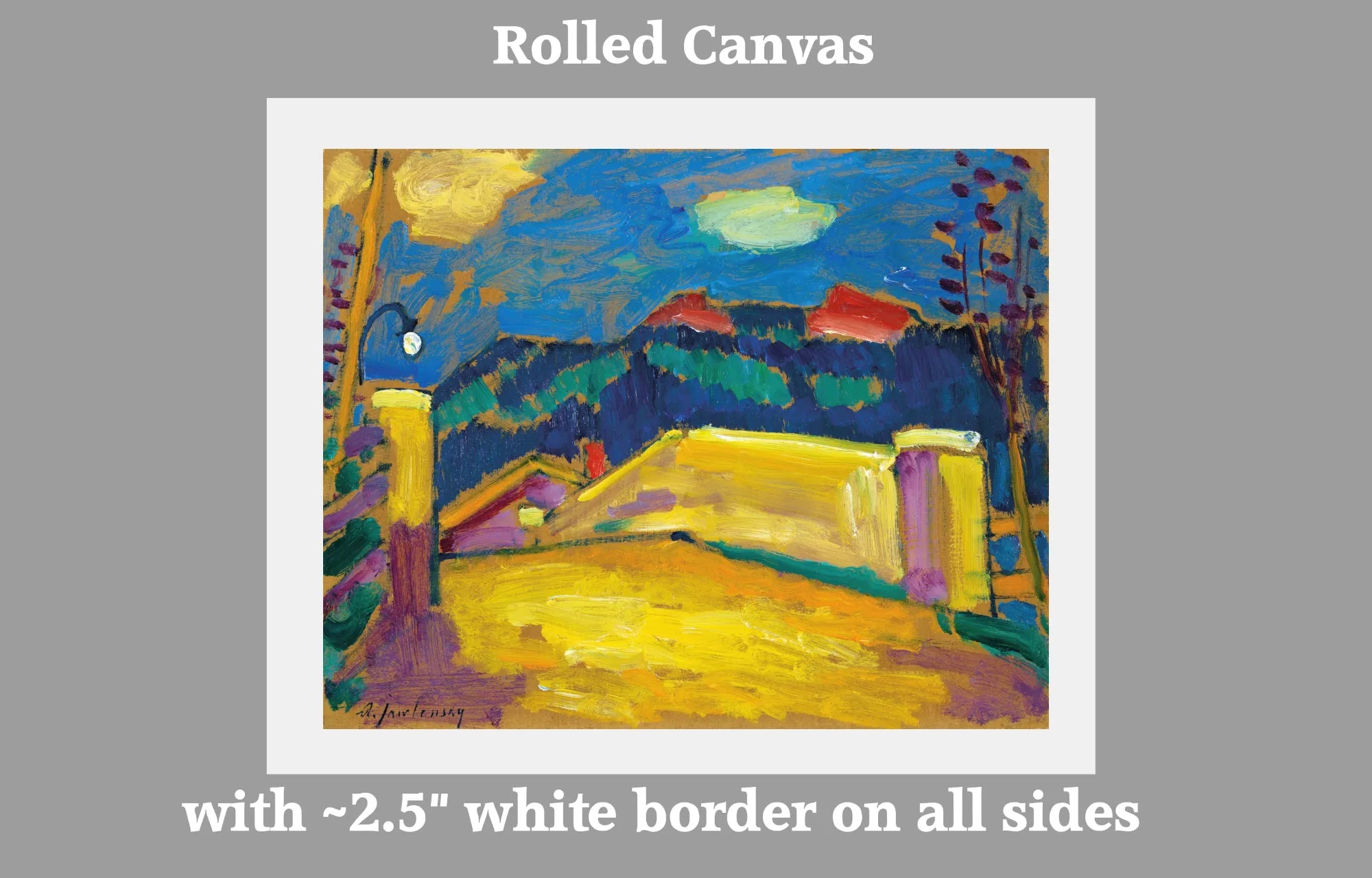
Landschaft mit orangener Wolke (1909) and Landschaft mit Brücke (circa 1909) show colour becoming increasingly independent from observed nature.
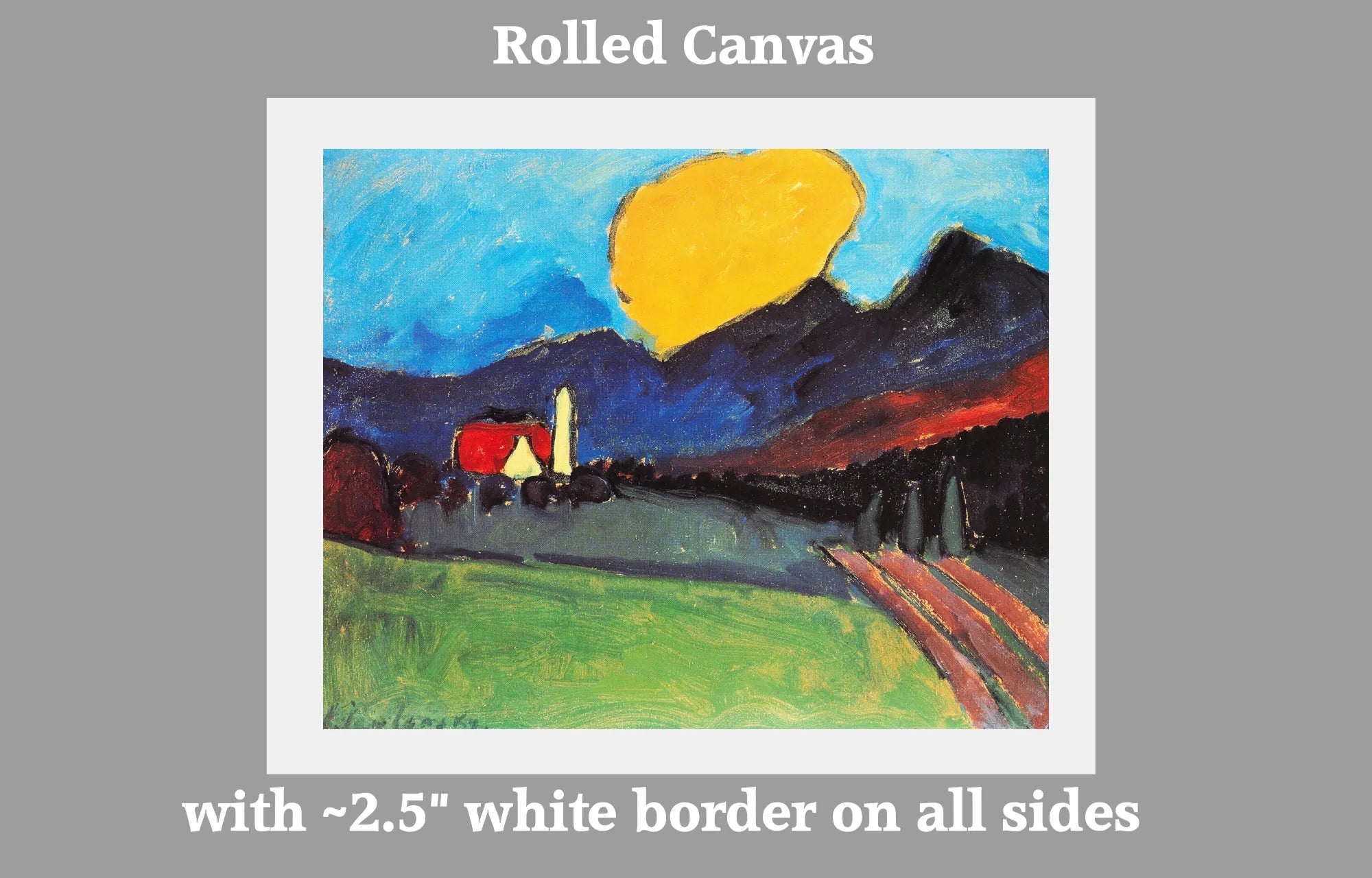
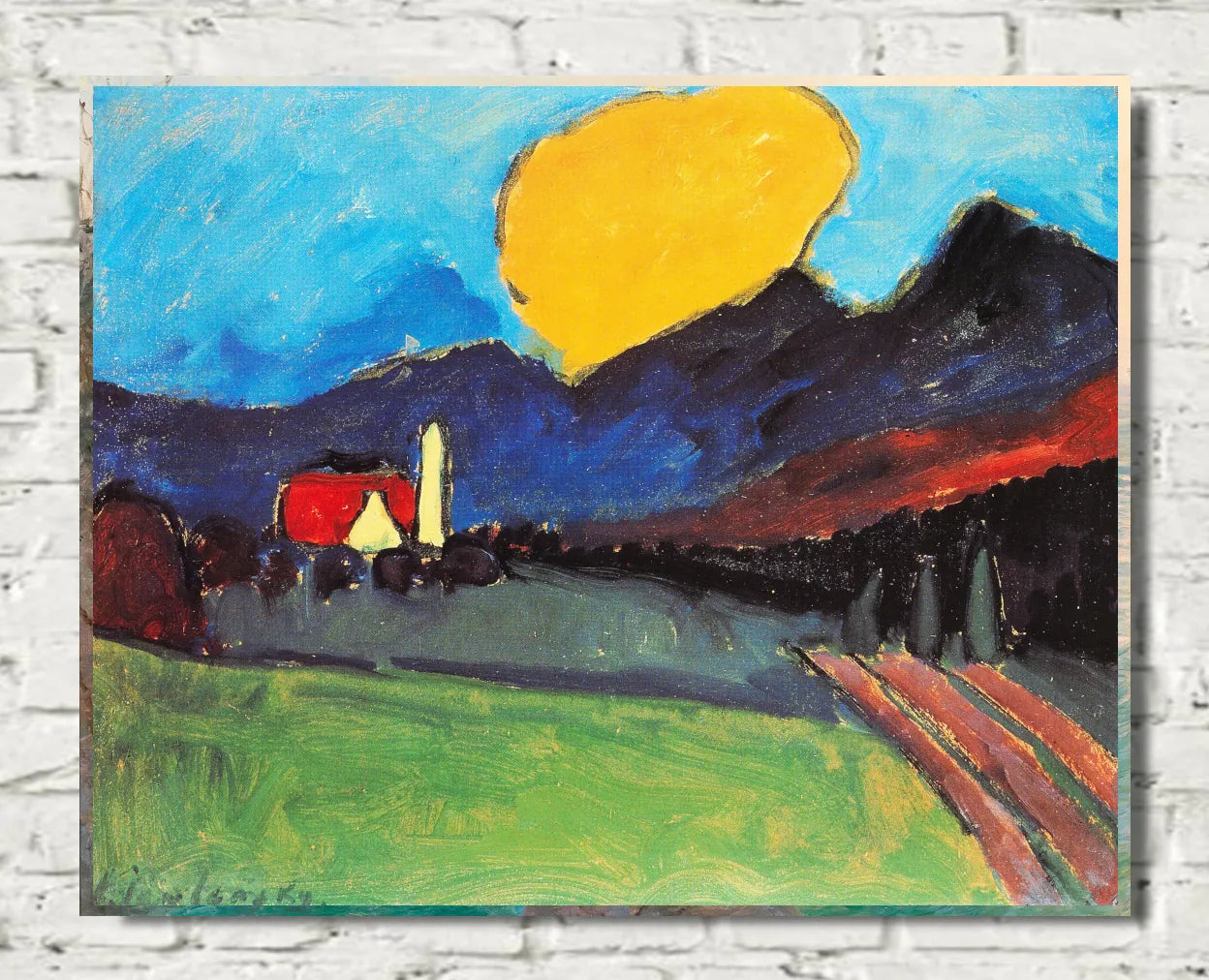
By Murnau (1910), landscape forms have been compressed into bold areas of colour and simplified shapes.
These paintings are especially important within Jawlensky's career because they show the emergence of the visual language closely associated with German Expressionism and the wider Blue Rider circle.
Jawlensky's Expressionist Portraits
Although Jawlensky painted landscapes and still lifes, the human face gradually became the central subject of his career.
Rather than treating portraiture simply as a means of recording someone's physical appearance, he increasingly used the face as a structure through which colour, personality, emotion and spirituality could be explored.
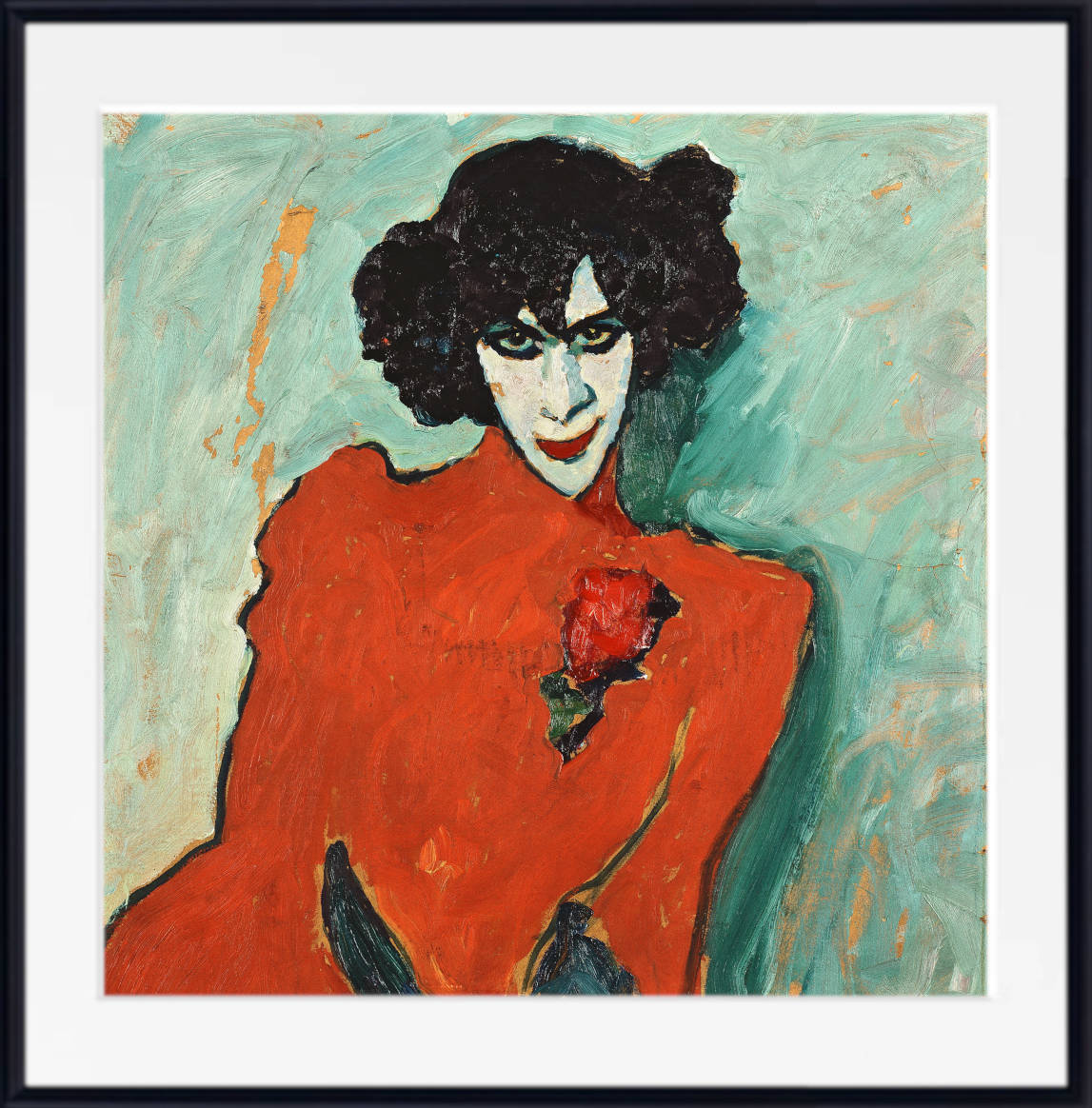
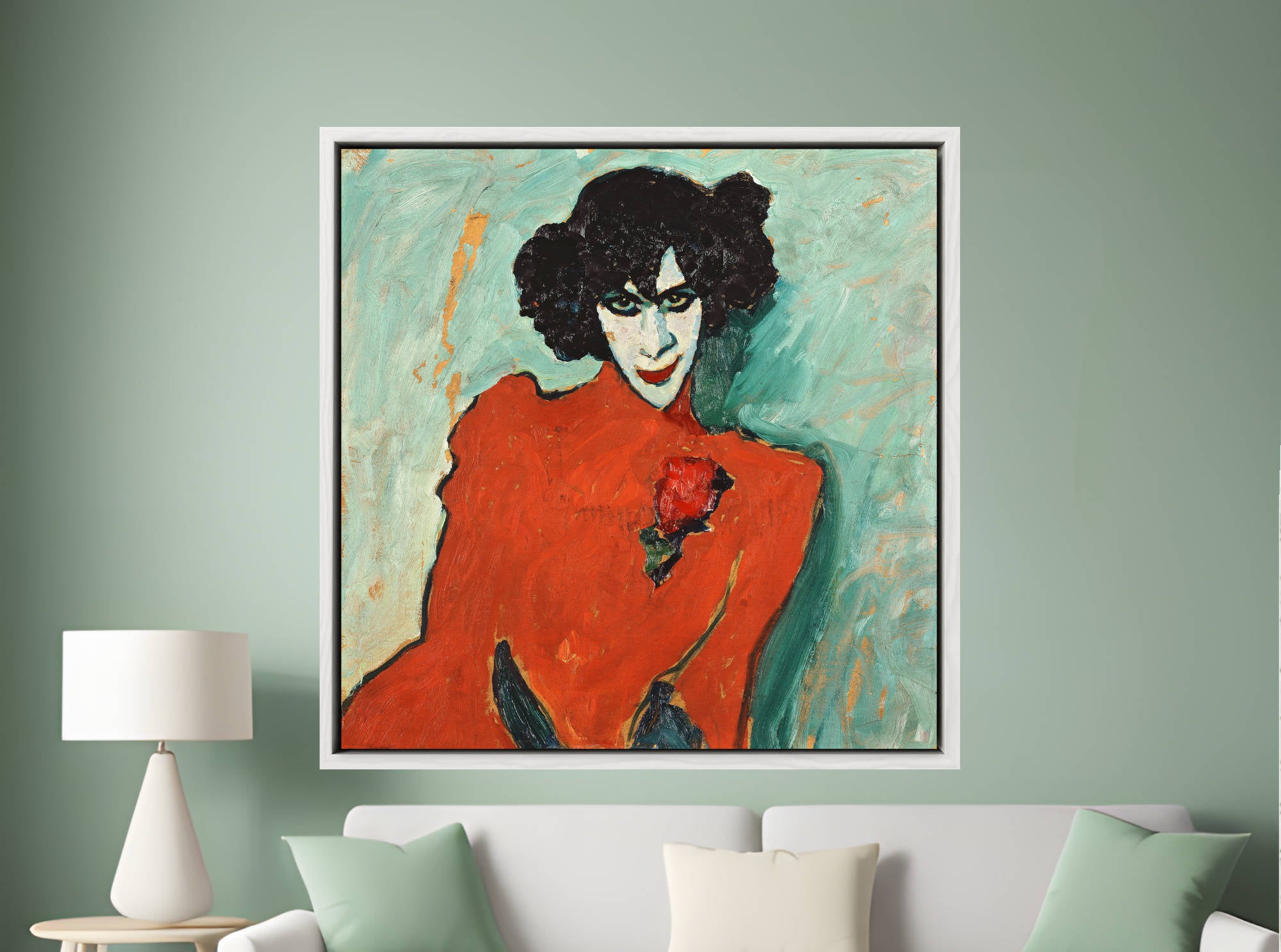
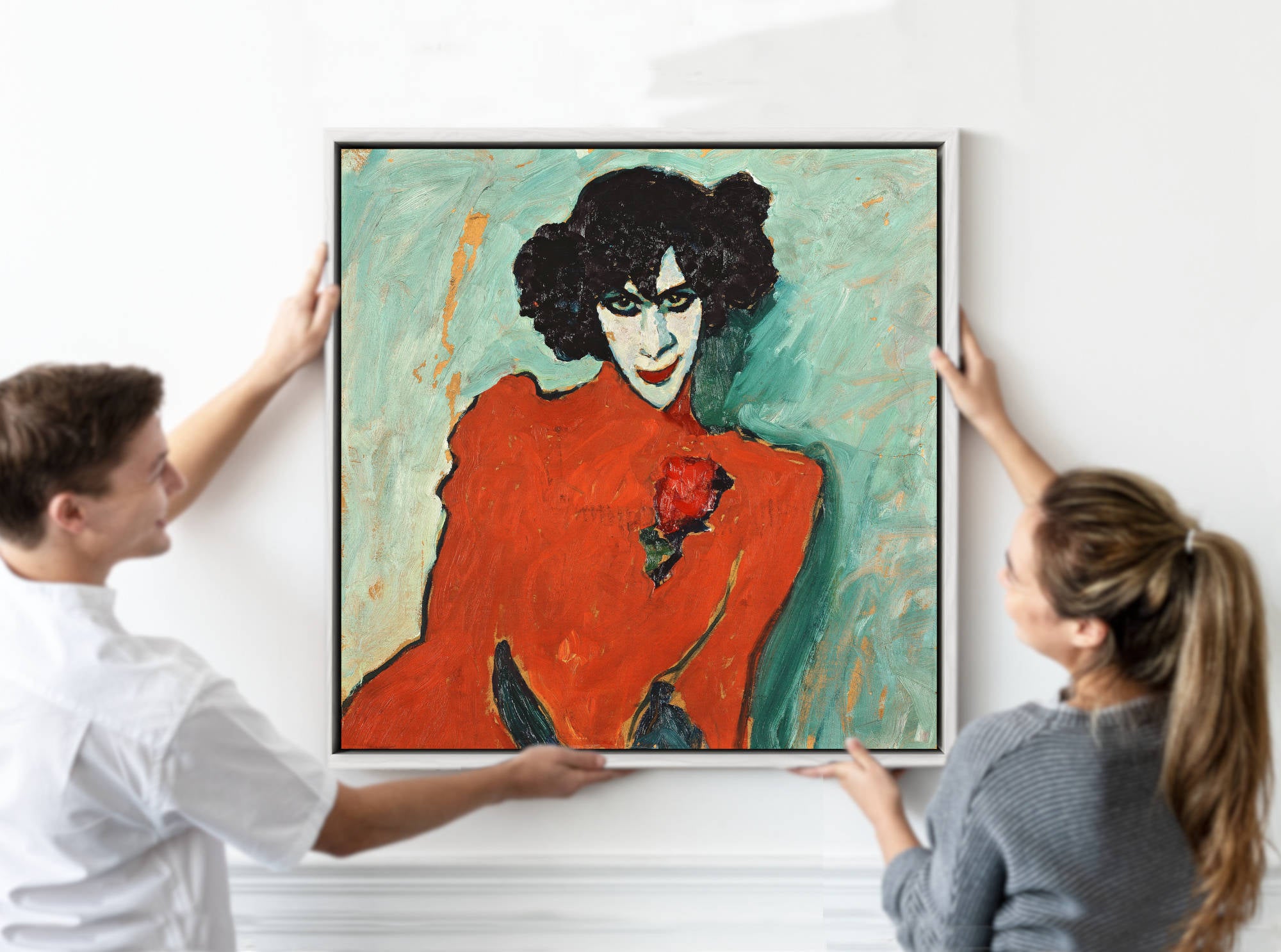
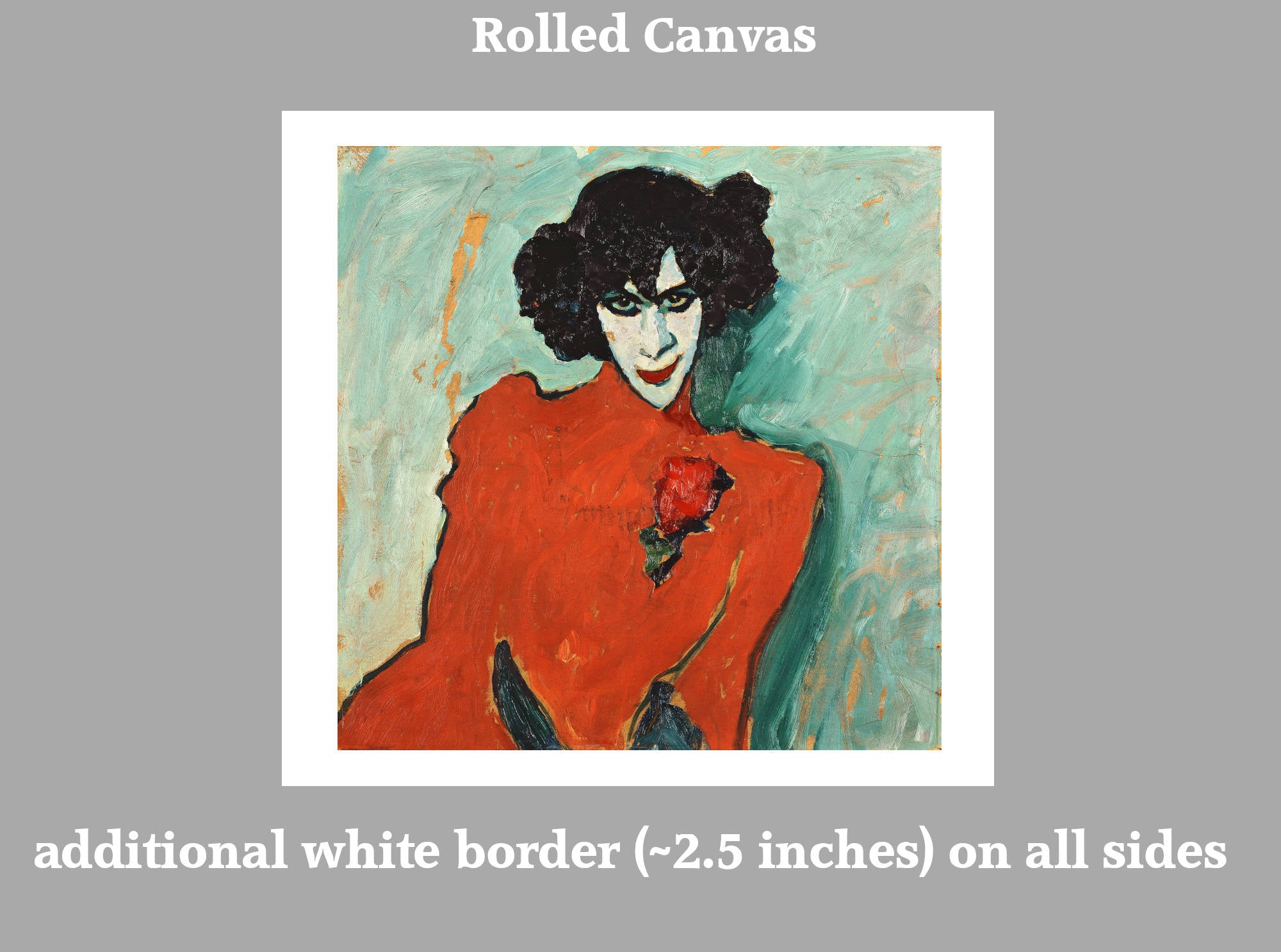
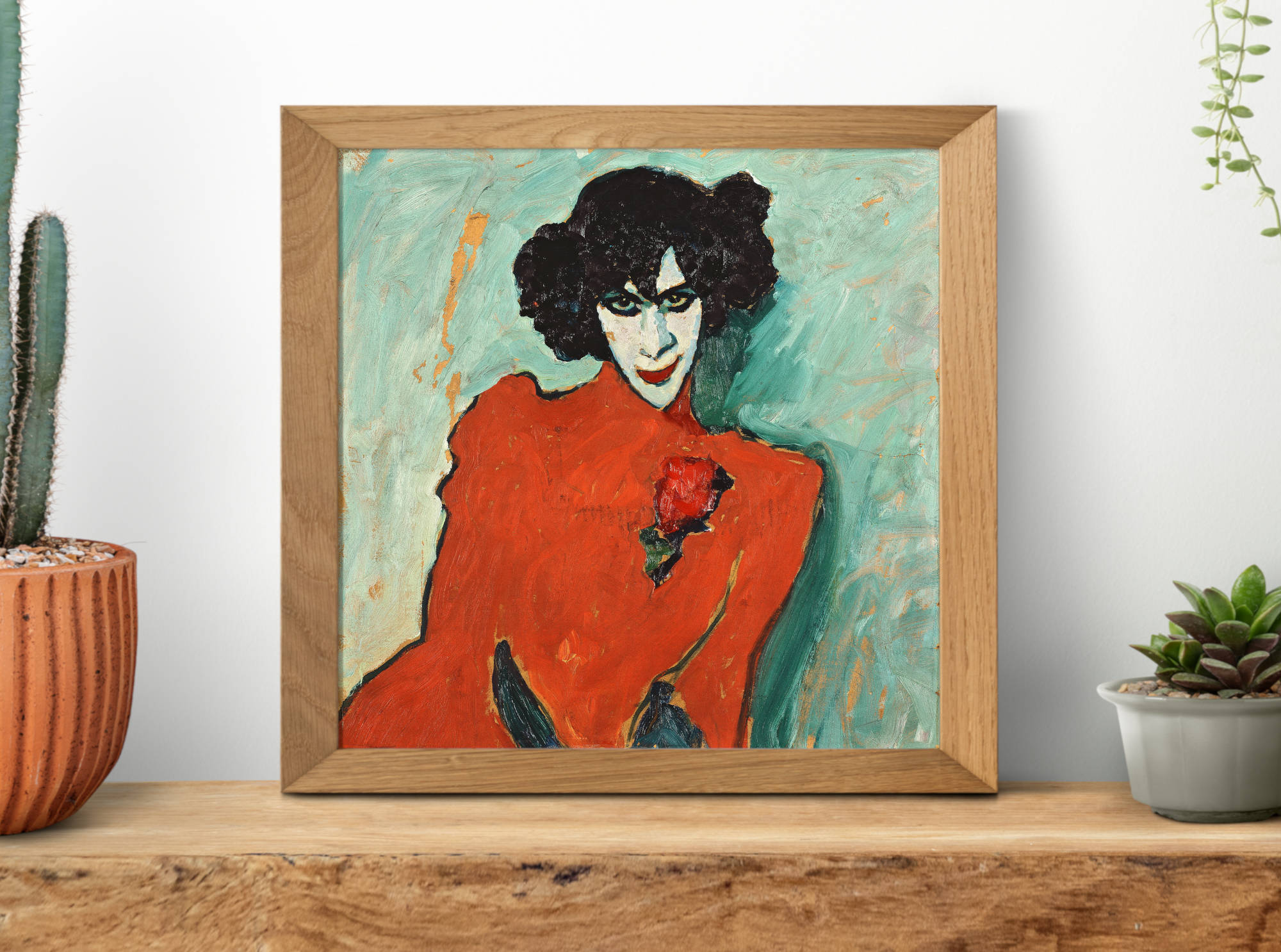
Portrait of Alexander Sakharoff (1909) is an outstanding example of this development. The sitter confronts the viewer directly while intense reds, contrasting colours and strong outlines replace conventional naturalistic modelling.
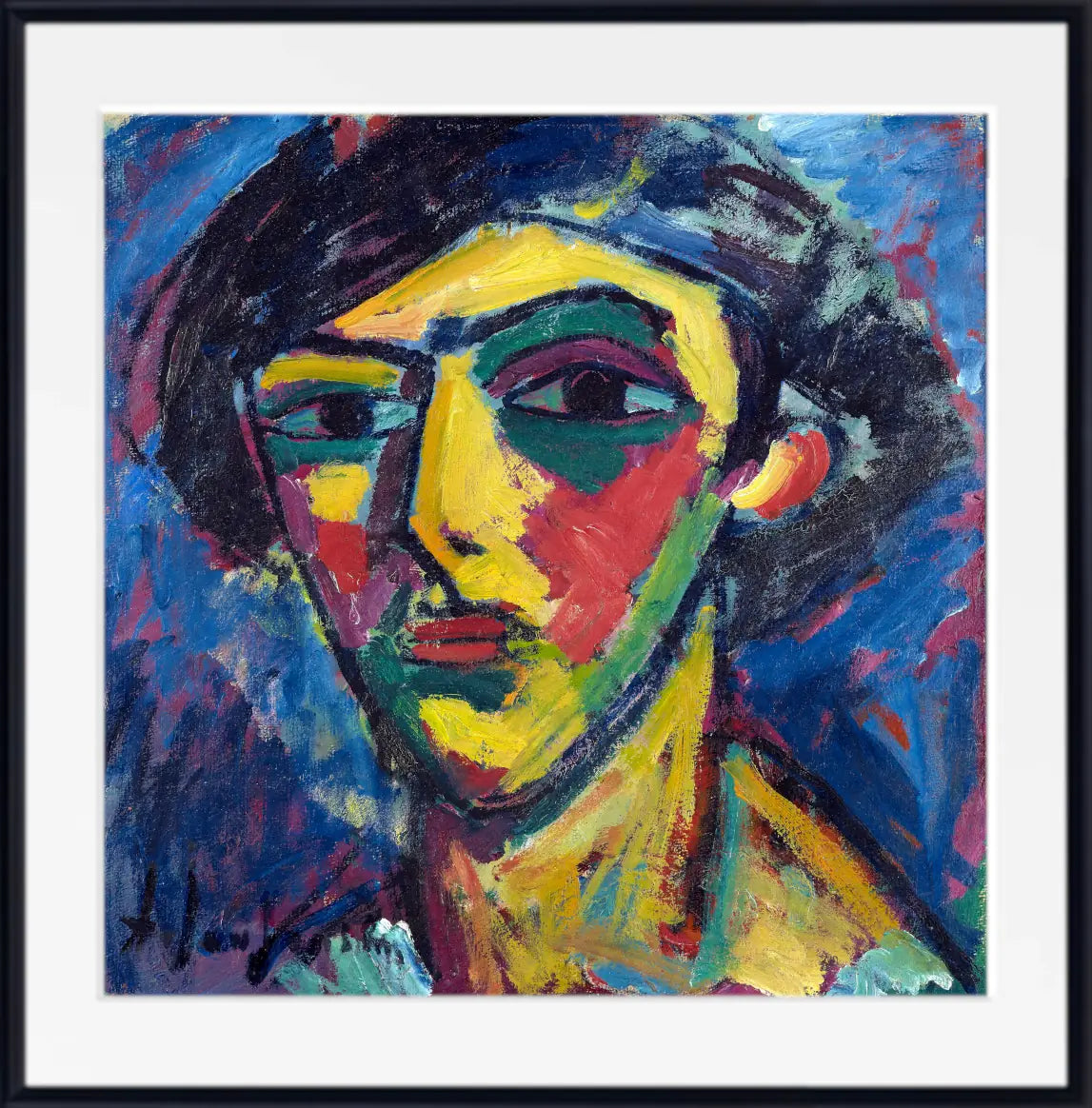
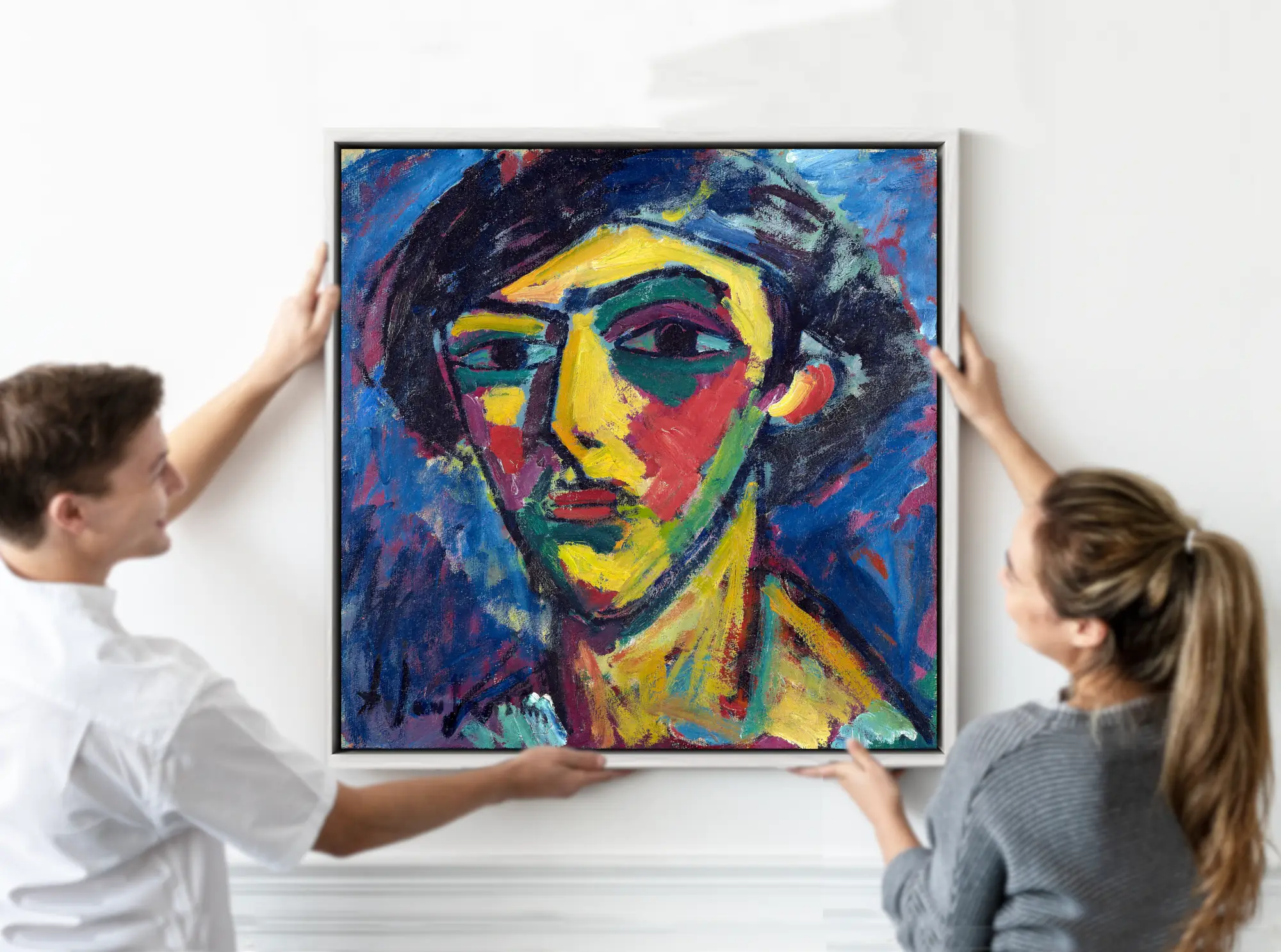
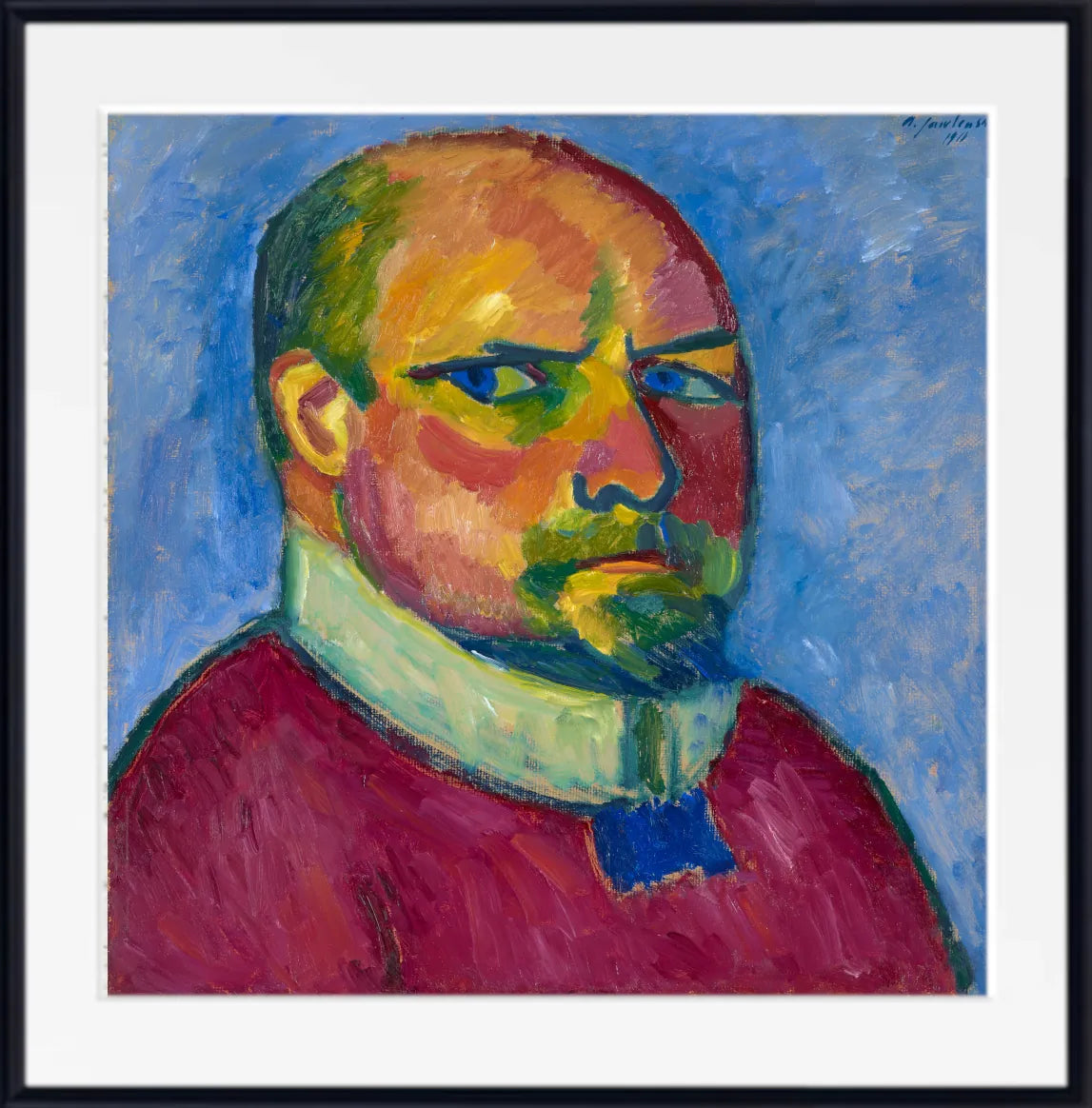
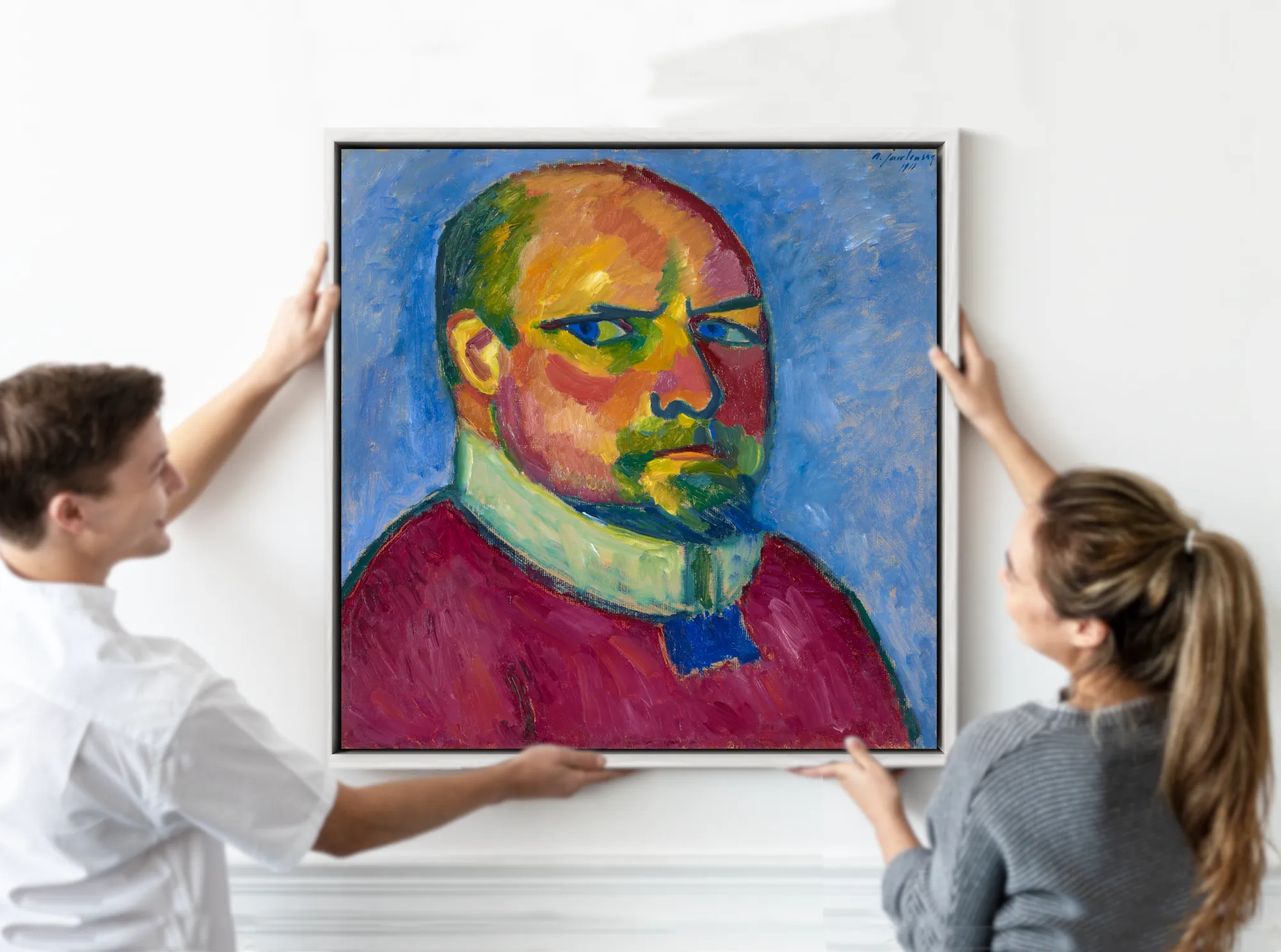
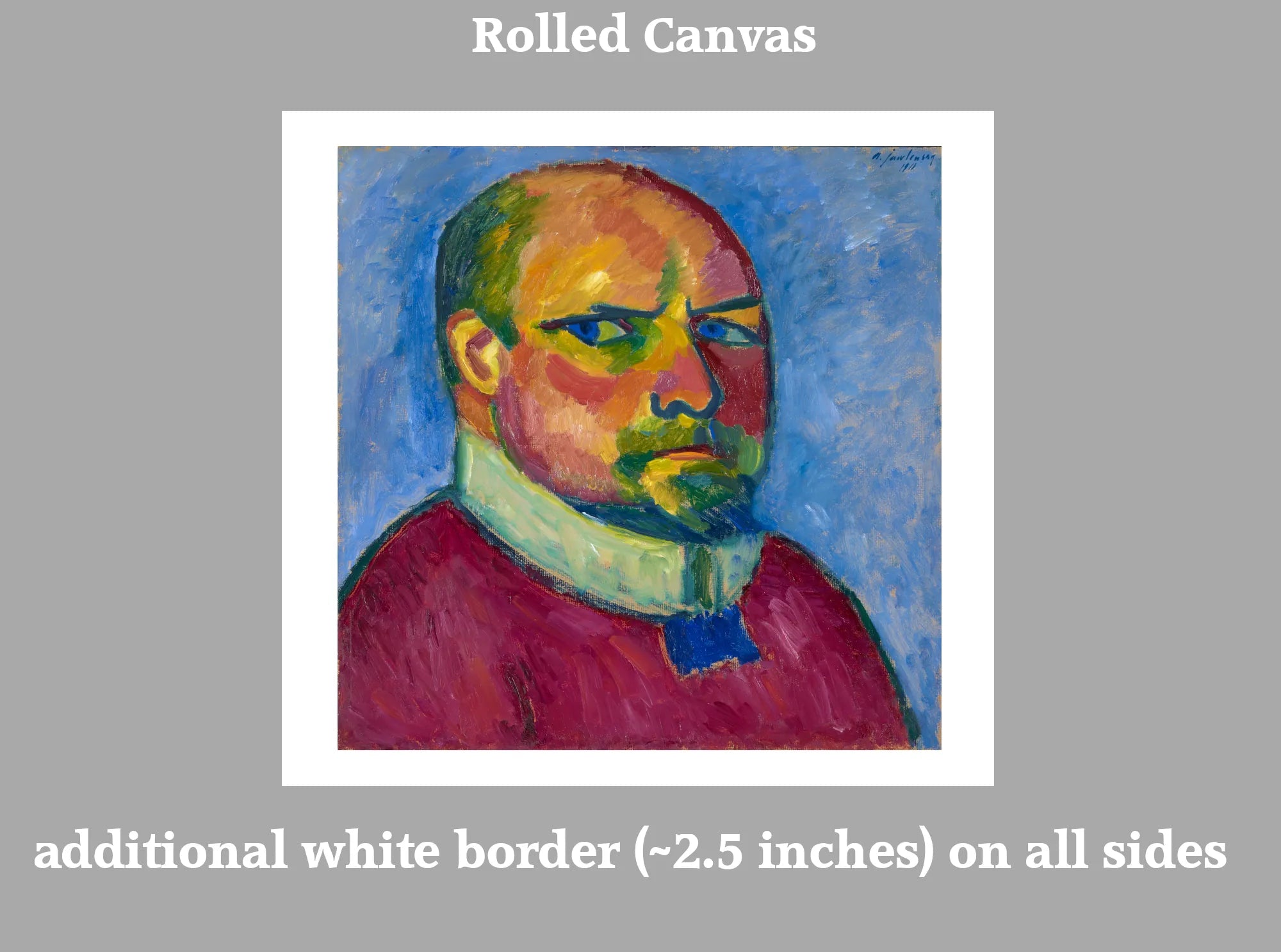
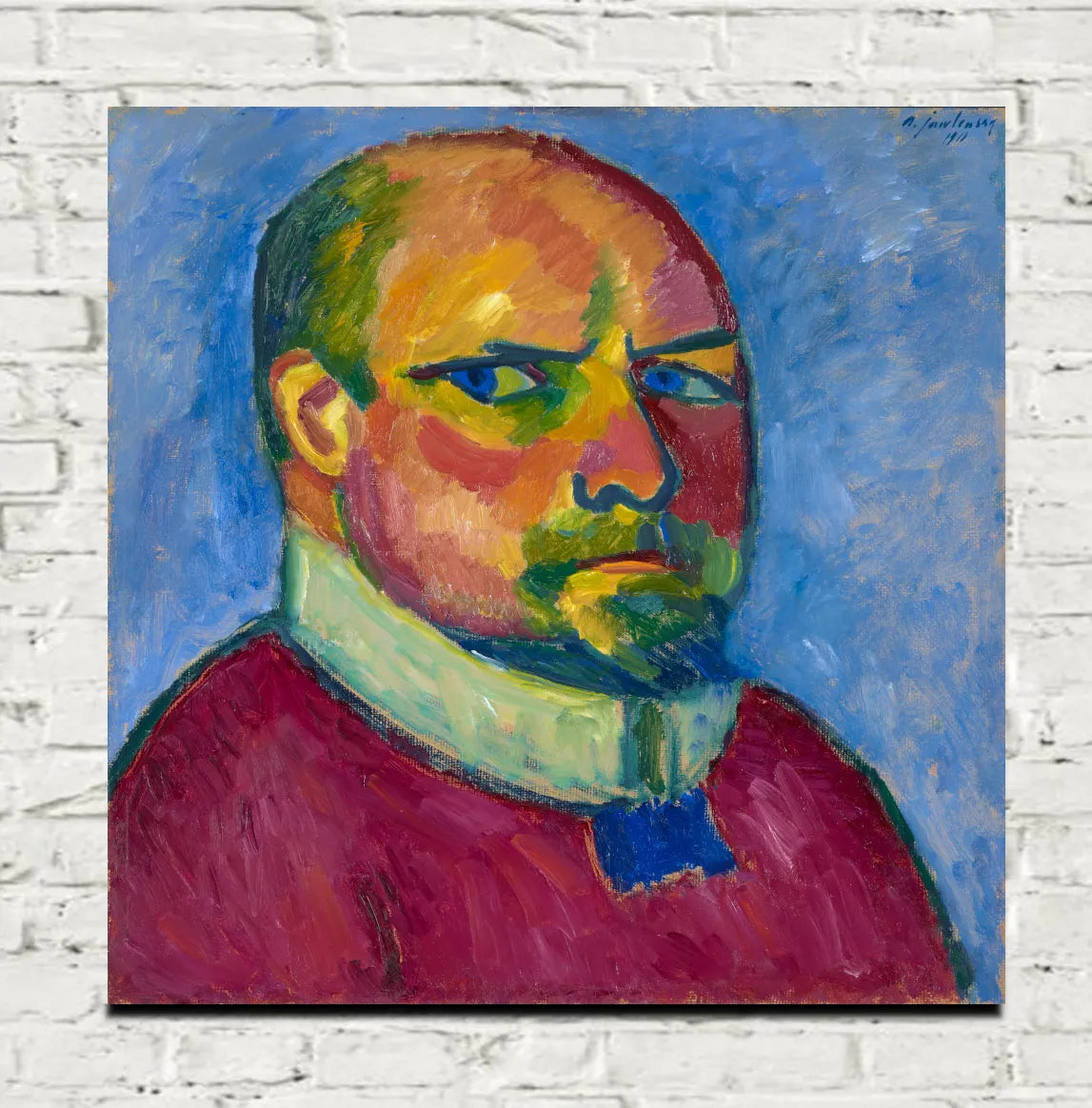
Jawlensky pushed this approach still further in Self Portrait (1911). Strong contours divide the face into vivid areas of colour, producing an image that remains recognisably a portrait while moving decisively away from realism.
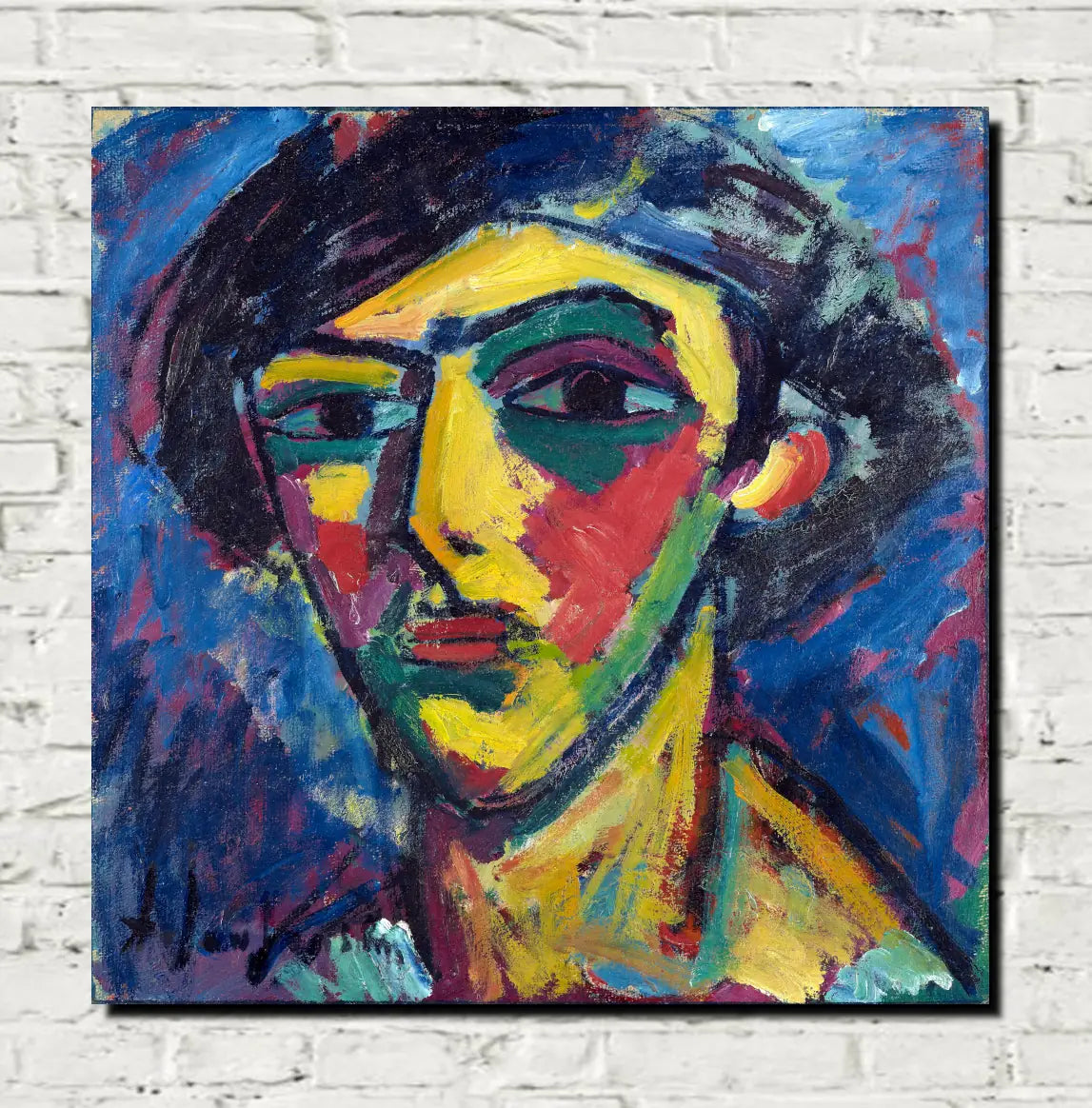
Head of a Youth (1911) continues the progression towards simplified facial forms.
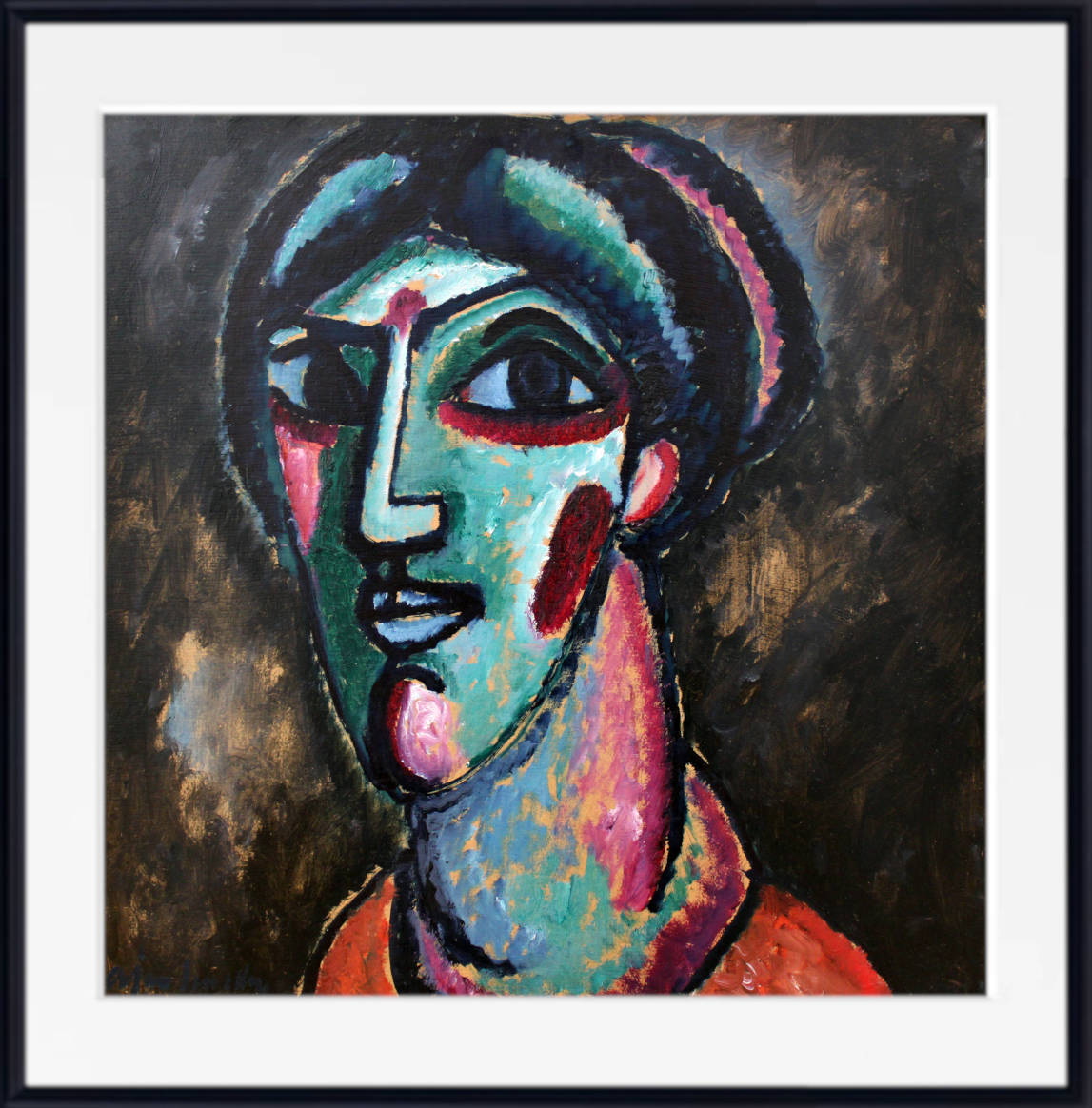
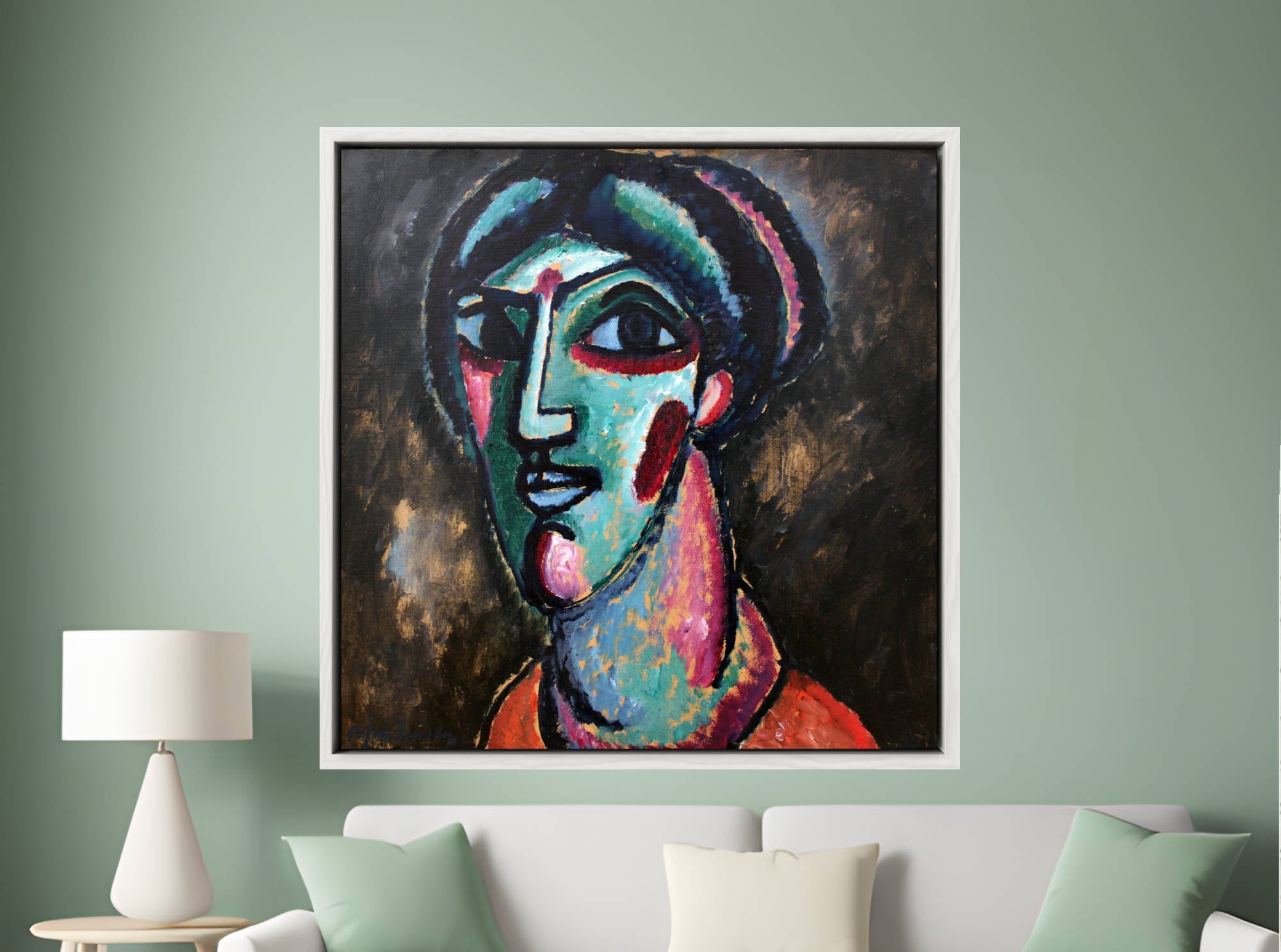
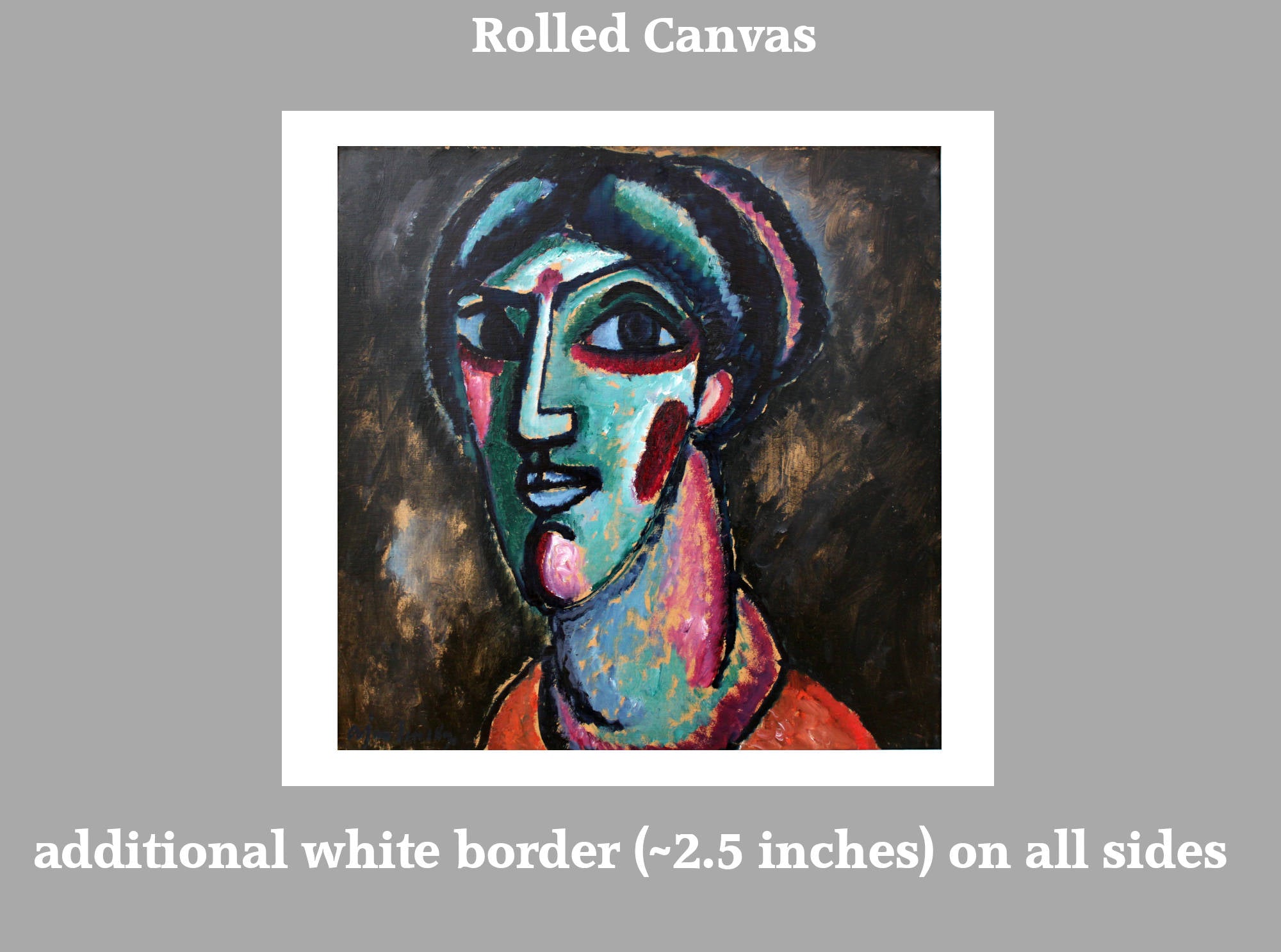
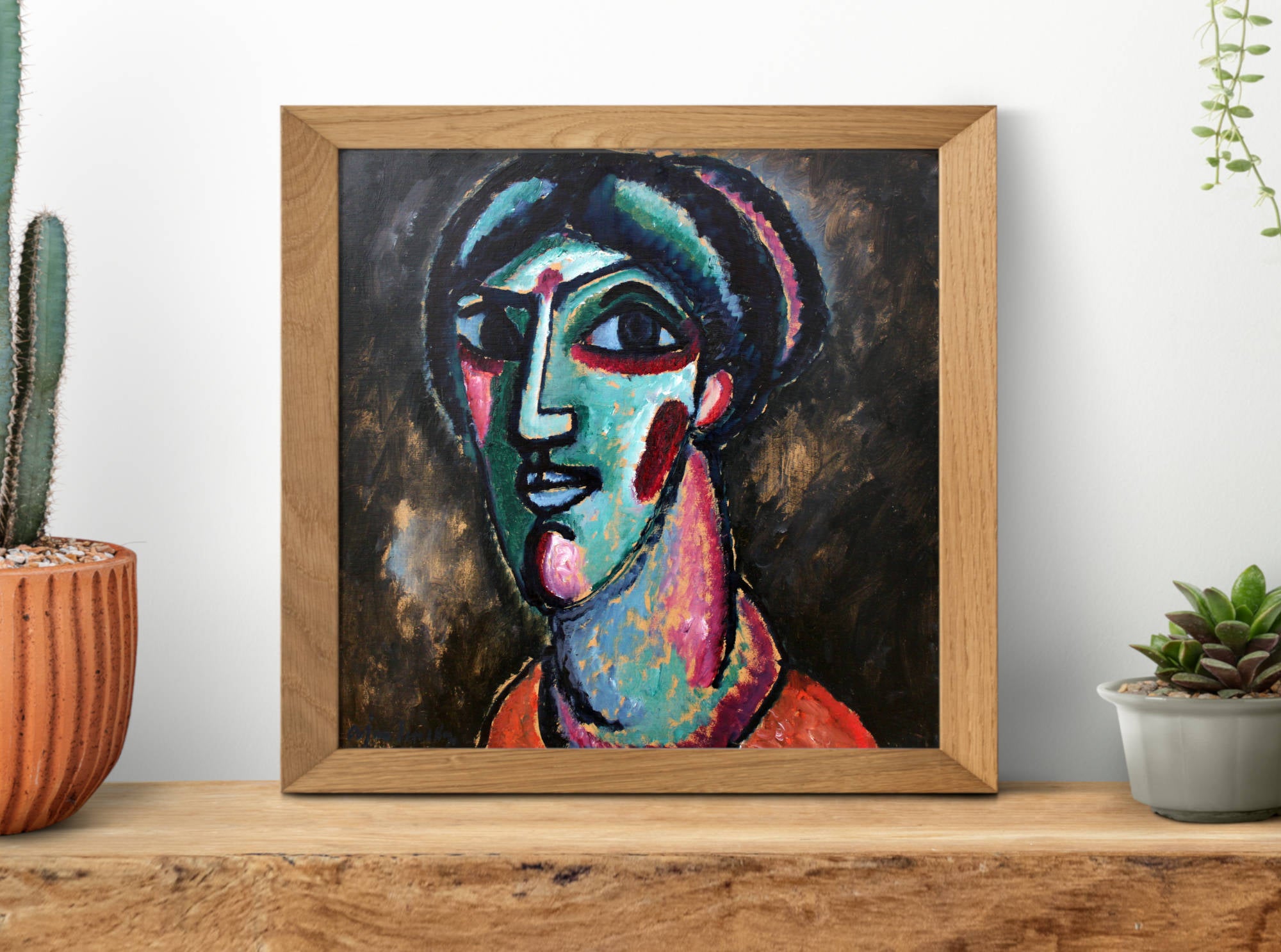
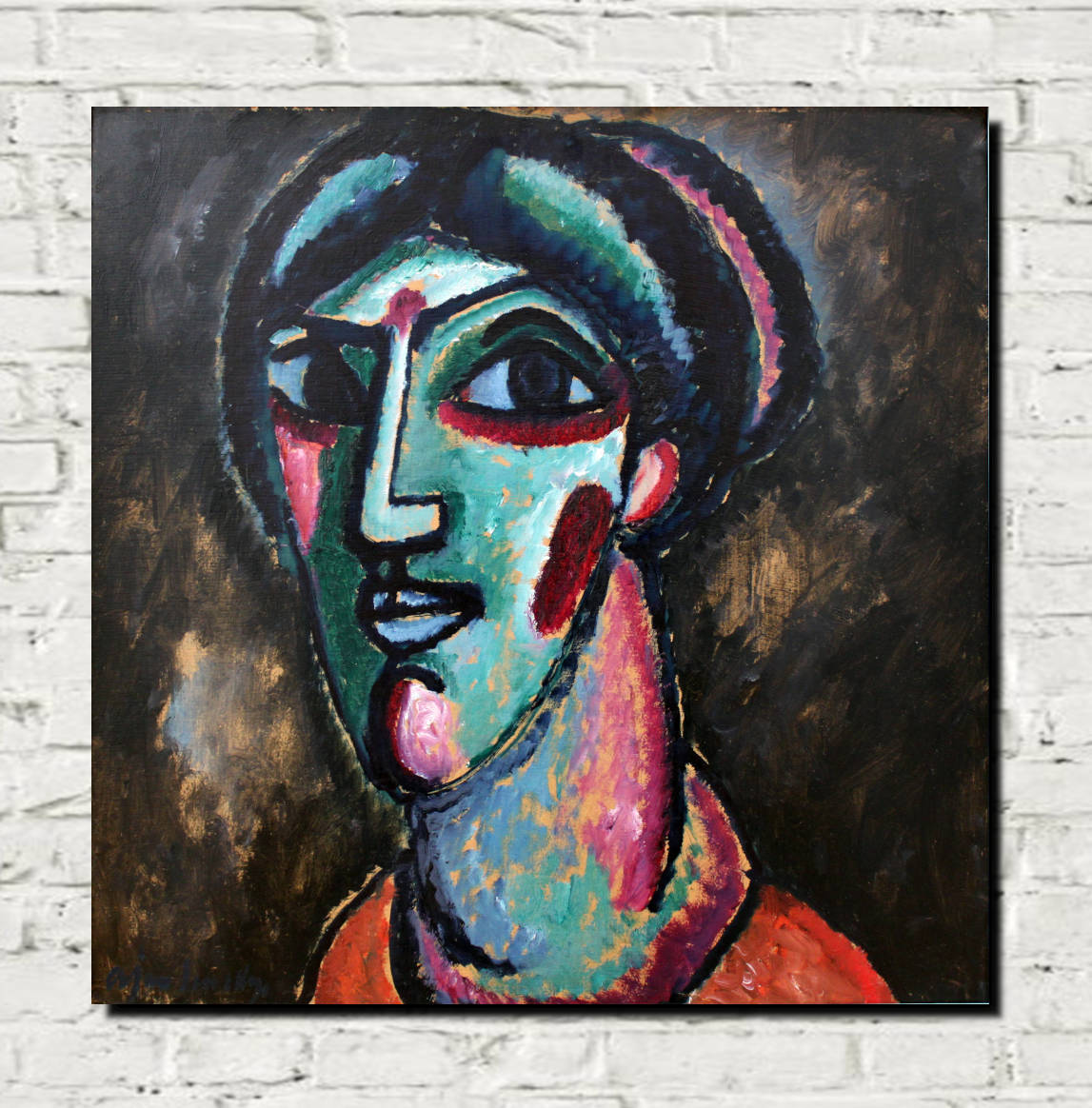
By Head in Black and Green (1913), colour and structure have become increasingly dominant. Eyes, nose, mouth and facial contours are simplified into increasingly concentrated forms, anticipating the abstract heads that would occupy Jawlensky for much of his later career.
From Portraits to Abstract Heads
Jawlensky gradually became less interested in portraying individual sitters and increasingly fascinated by the face itself as a universal image.
Facial features became simpler. Symmetry became stronger. The head increasingly filled the picture plane.
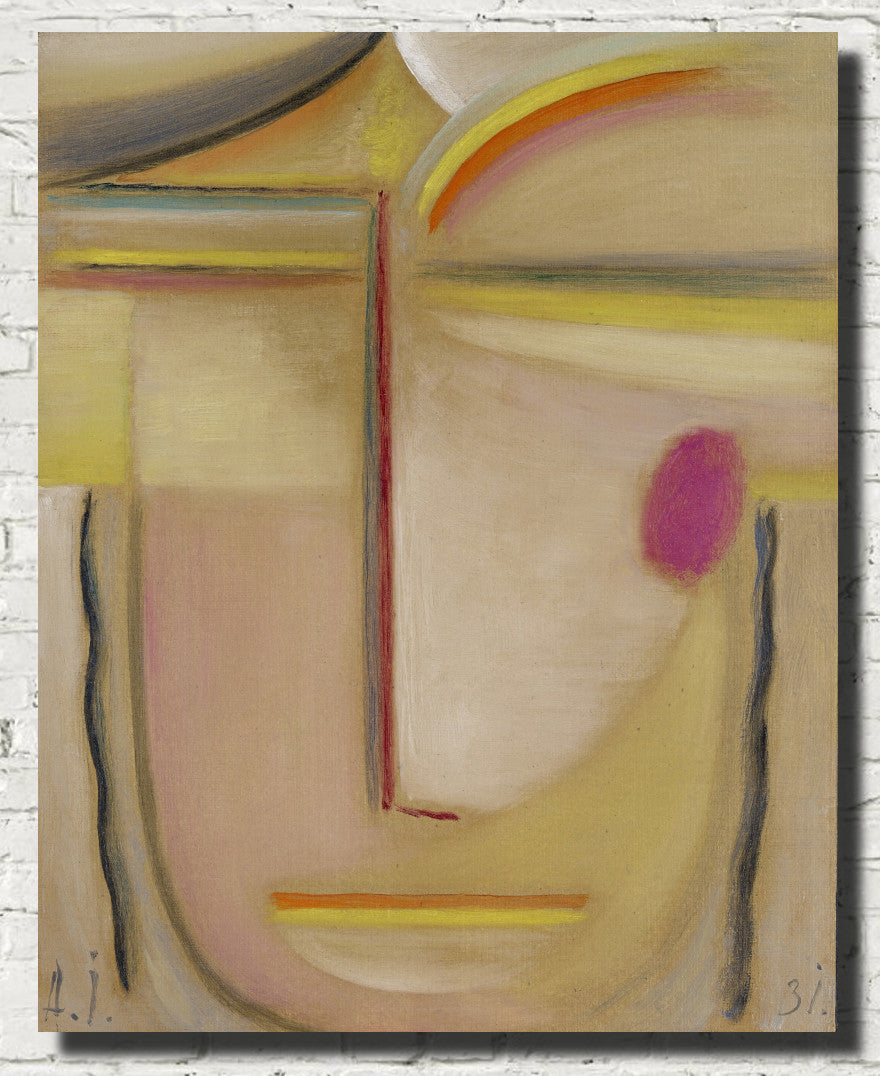
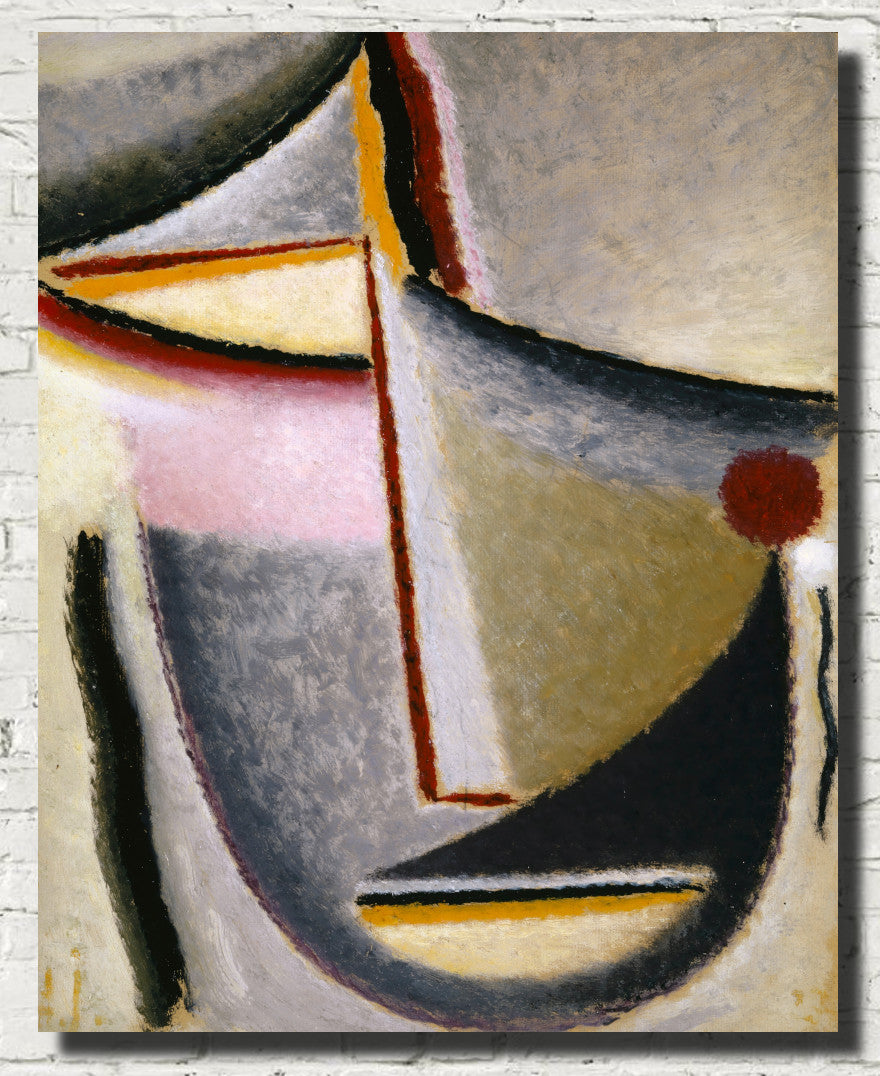
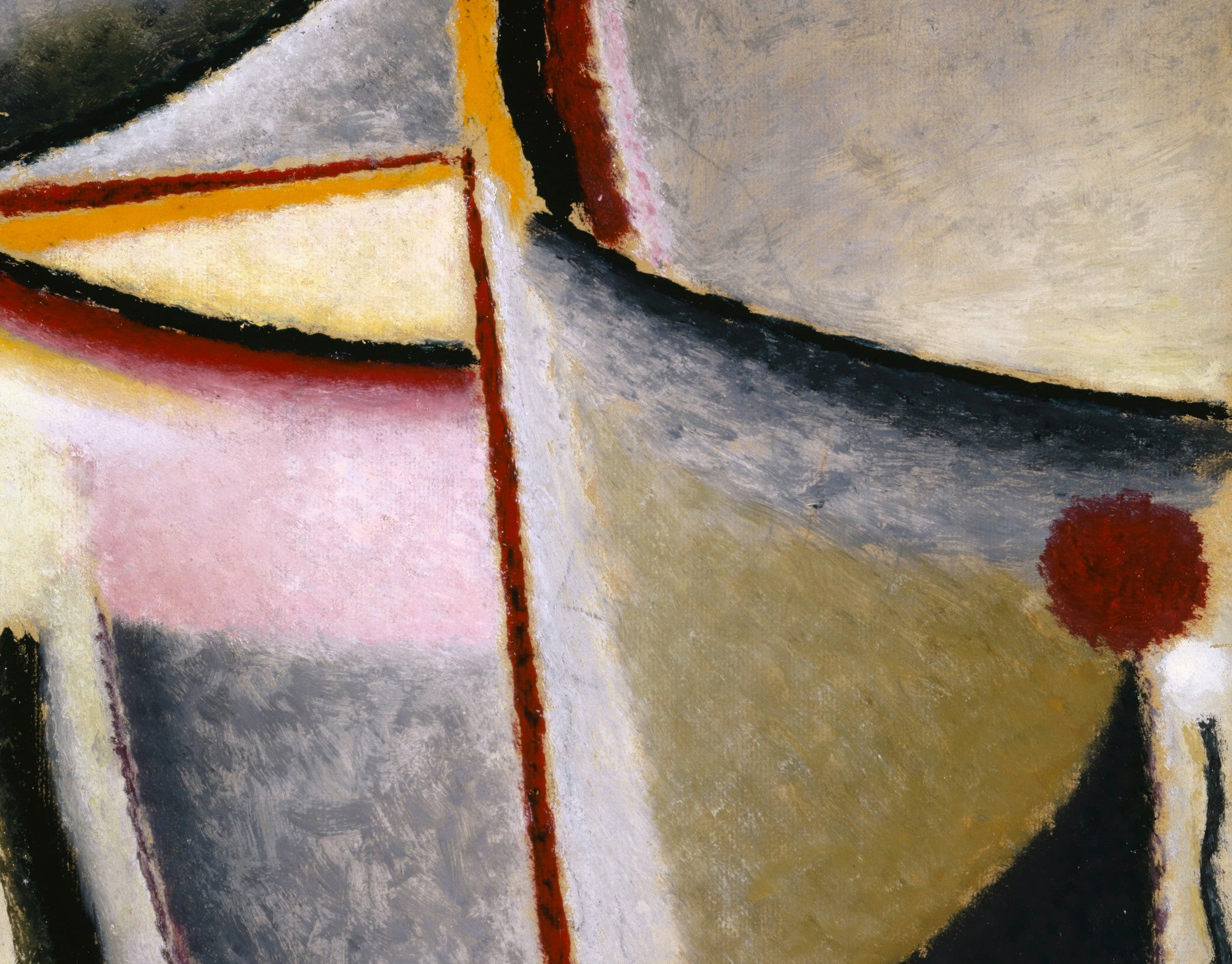
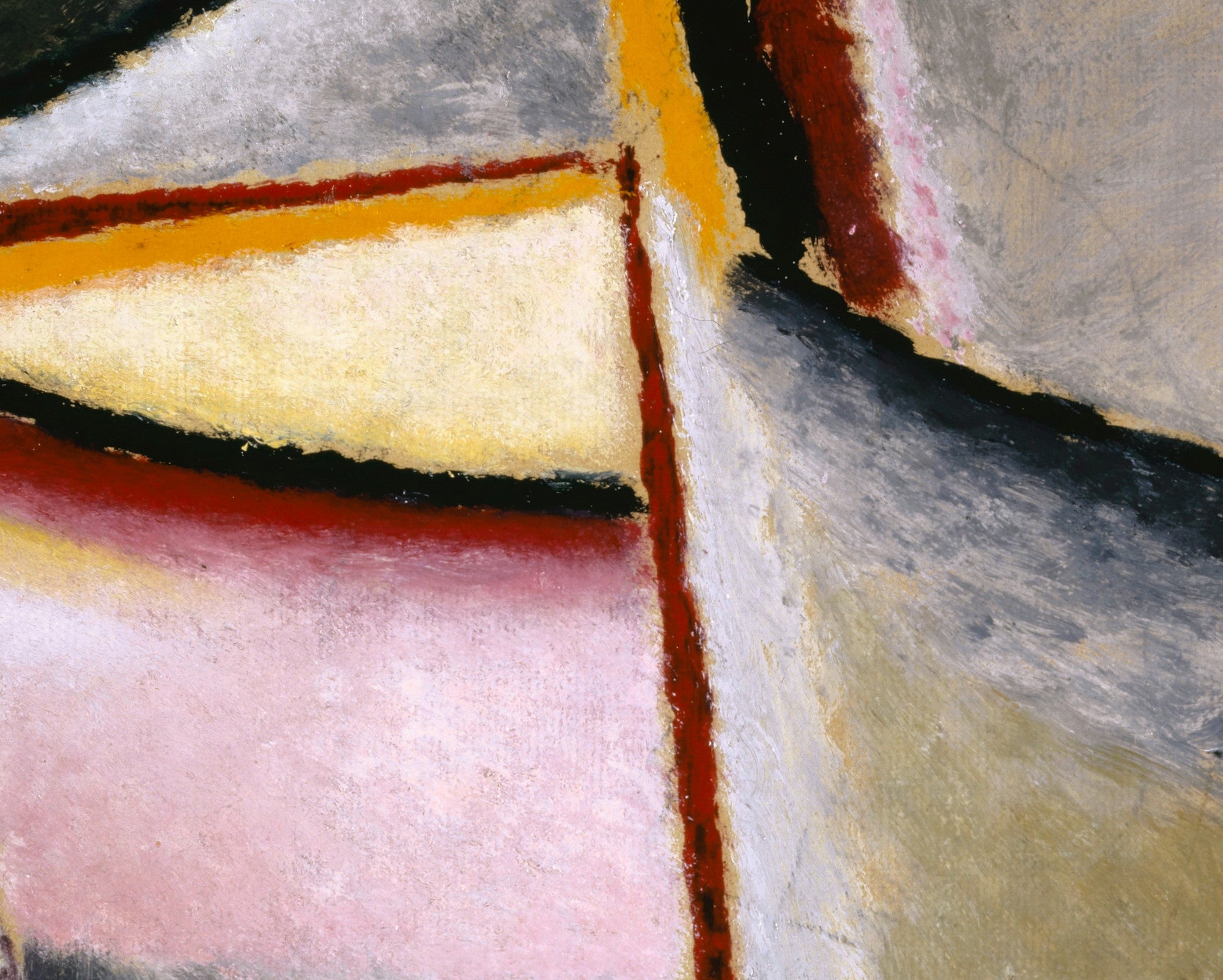
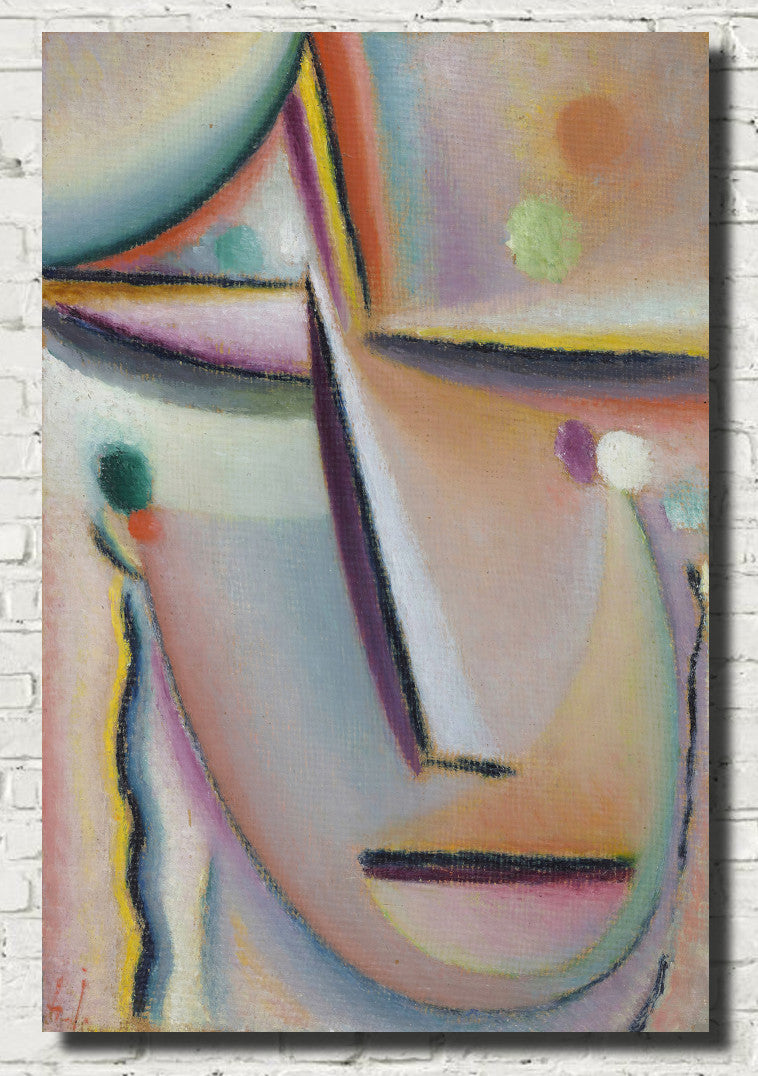
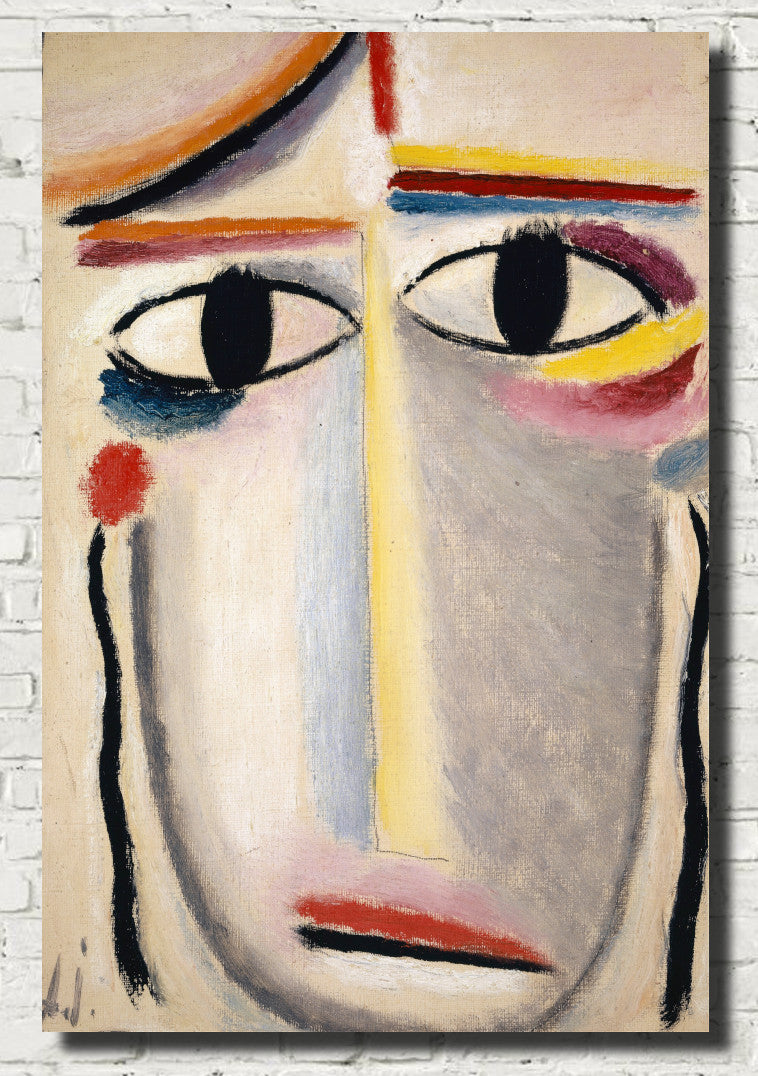
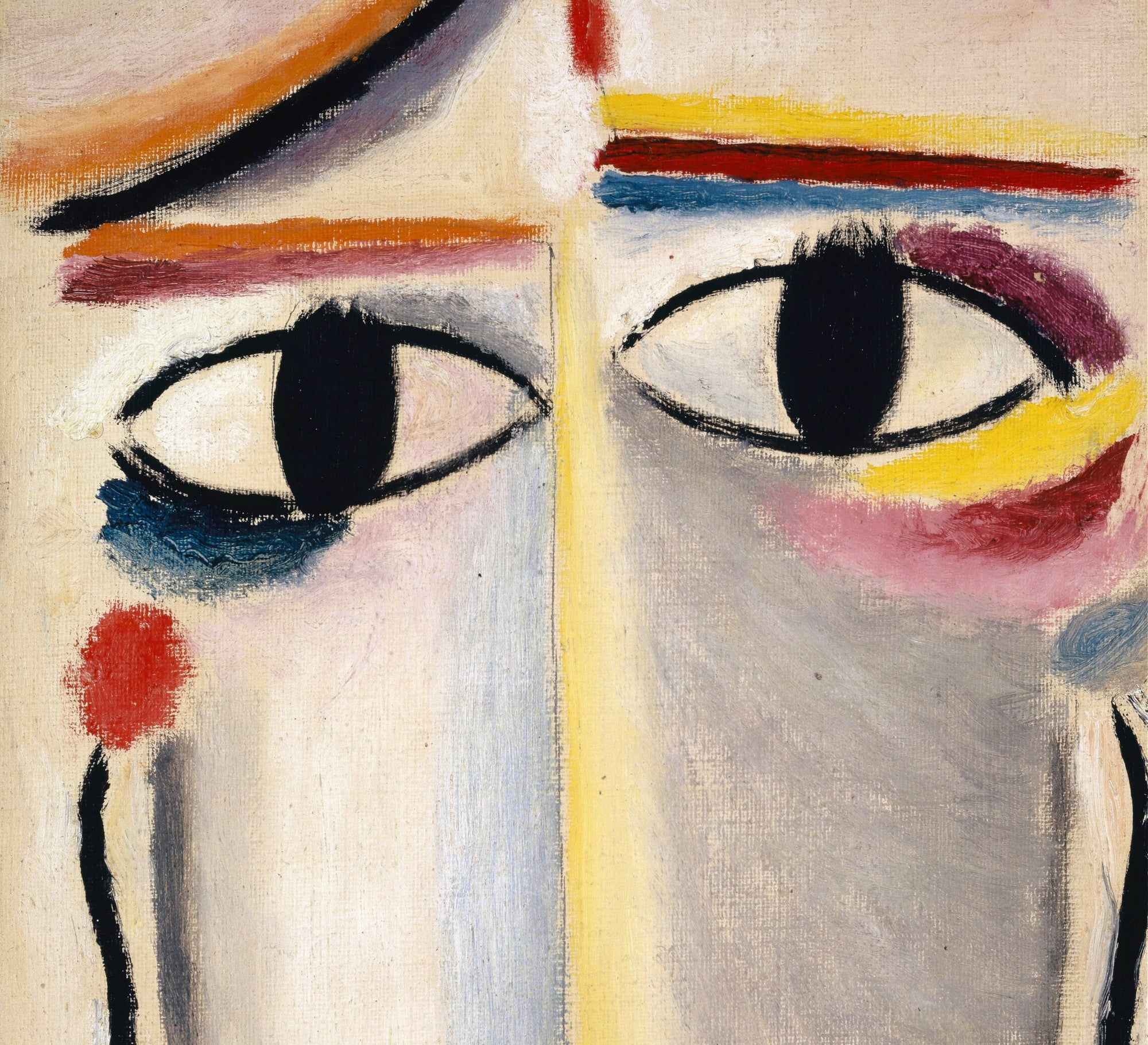
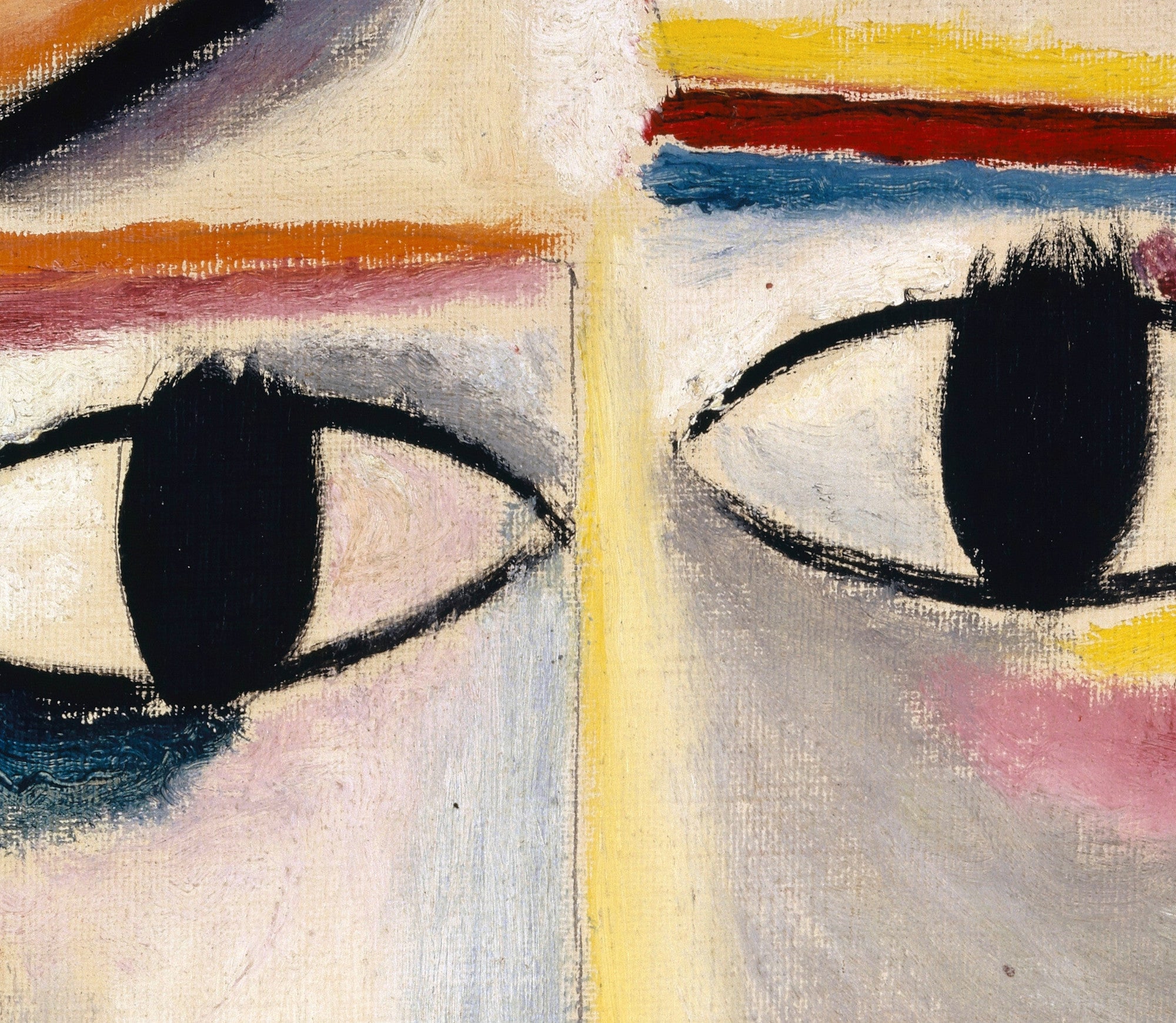
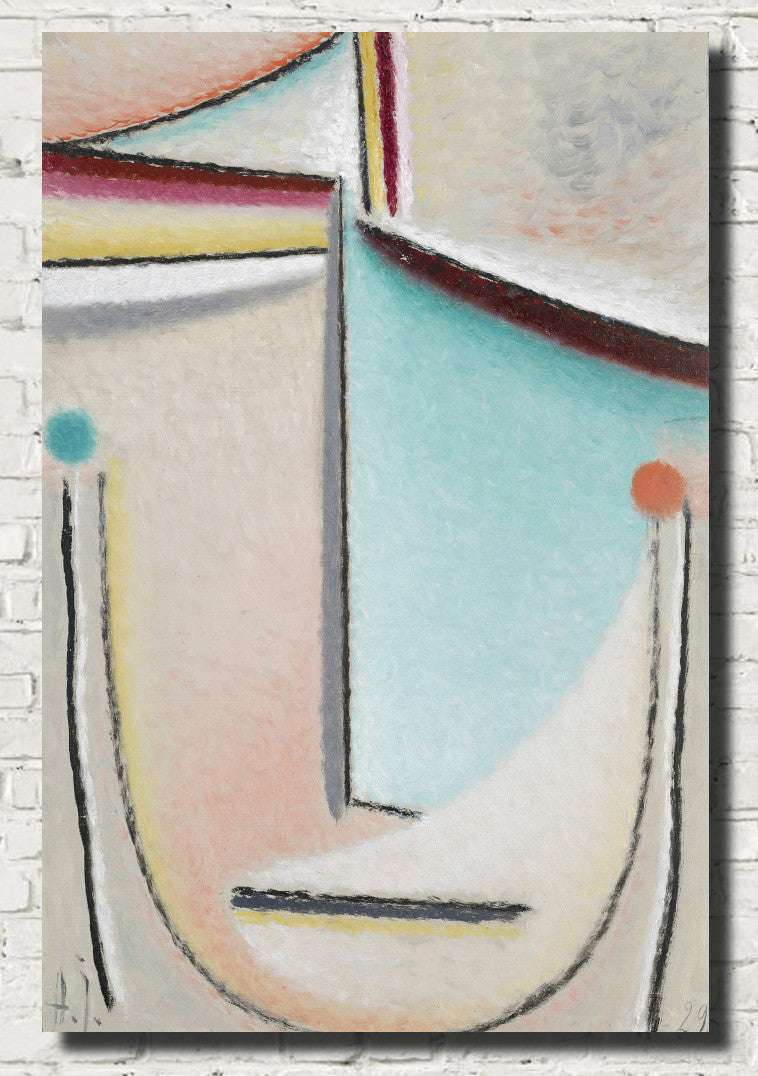
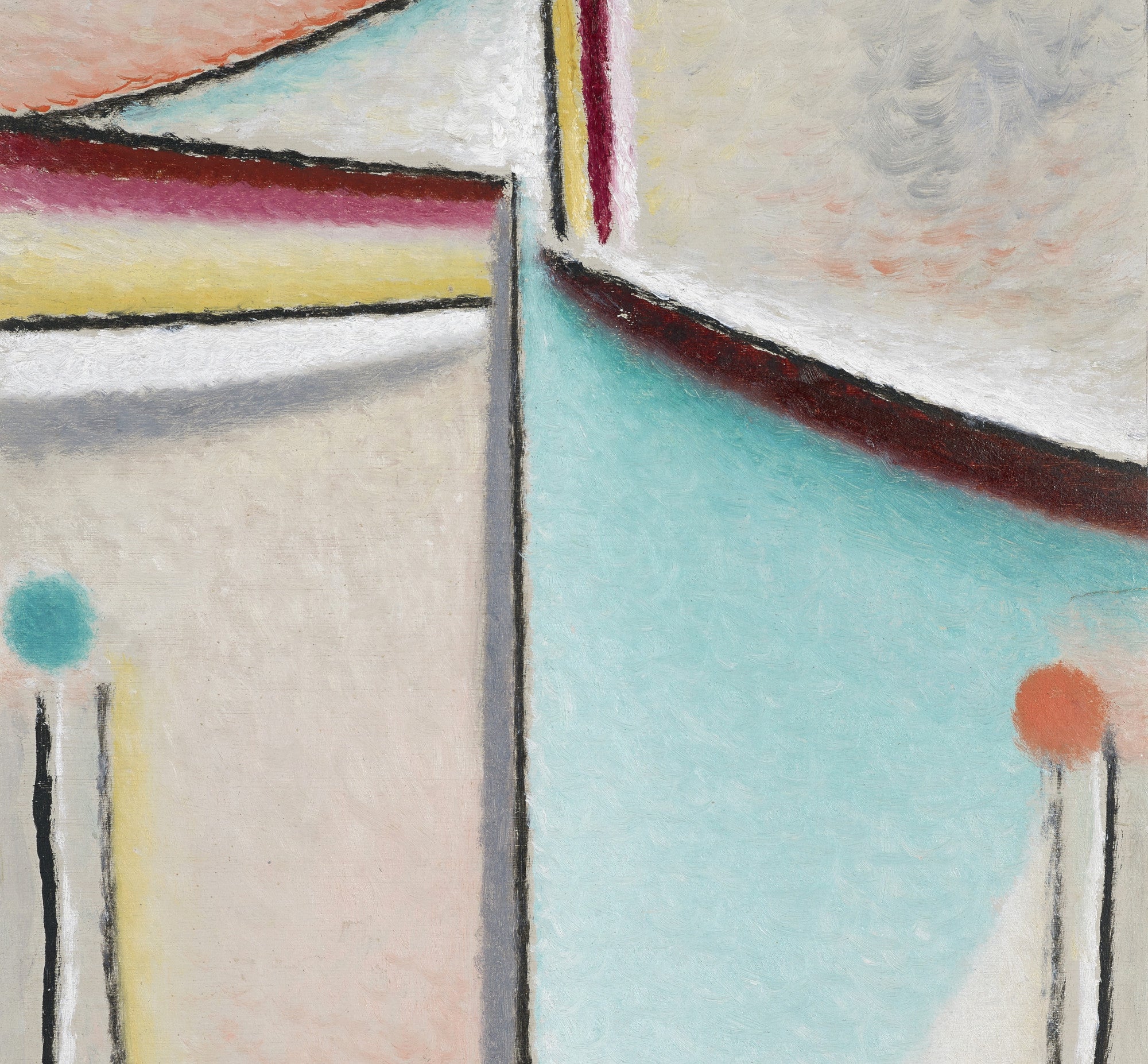
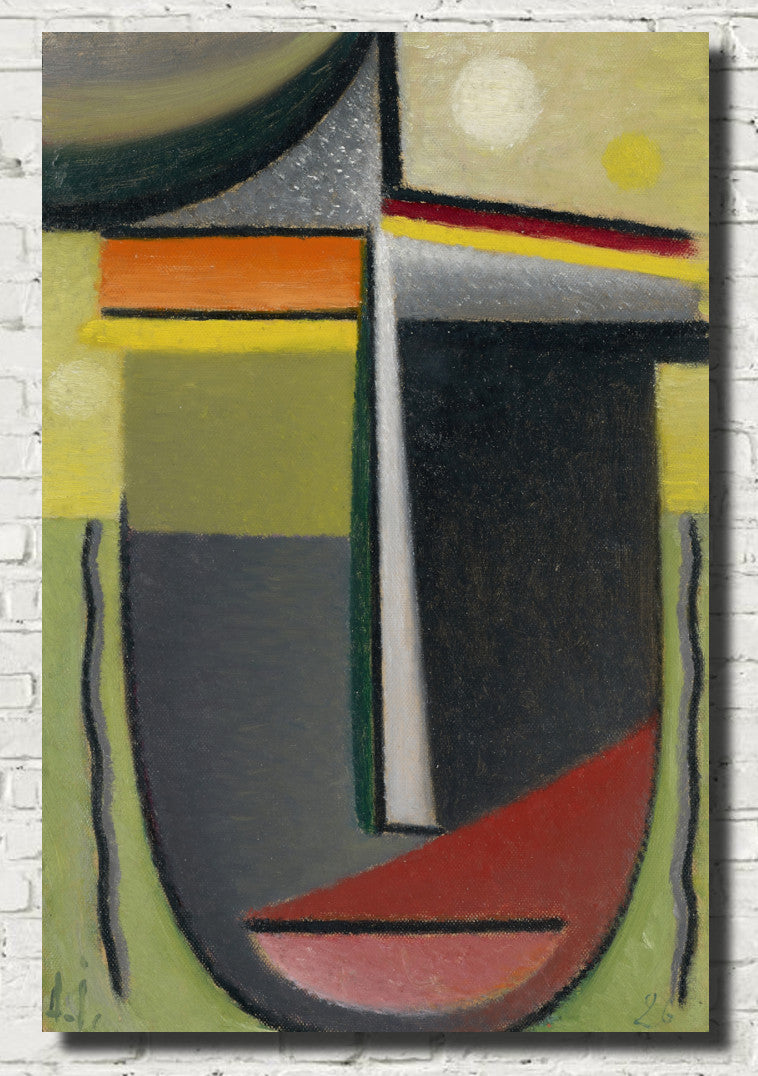
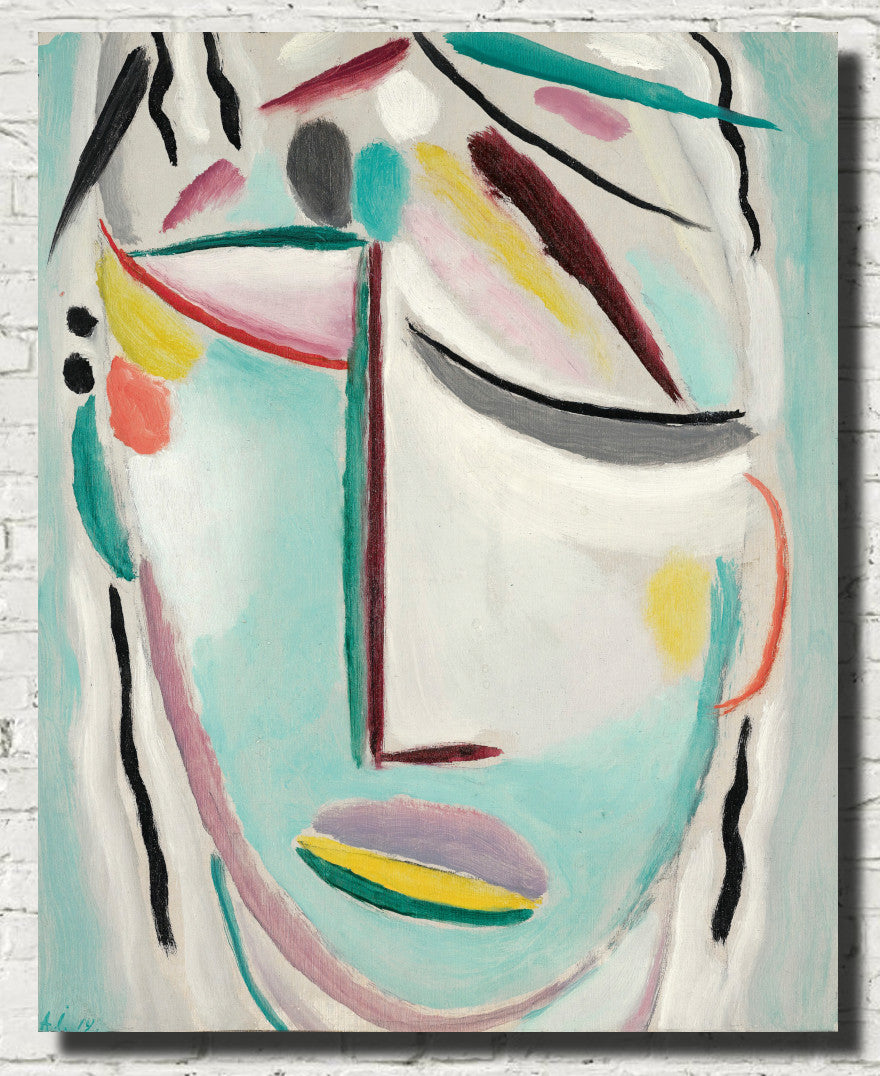
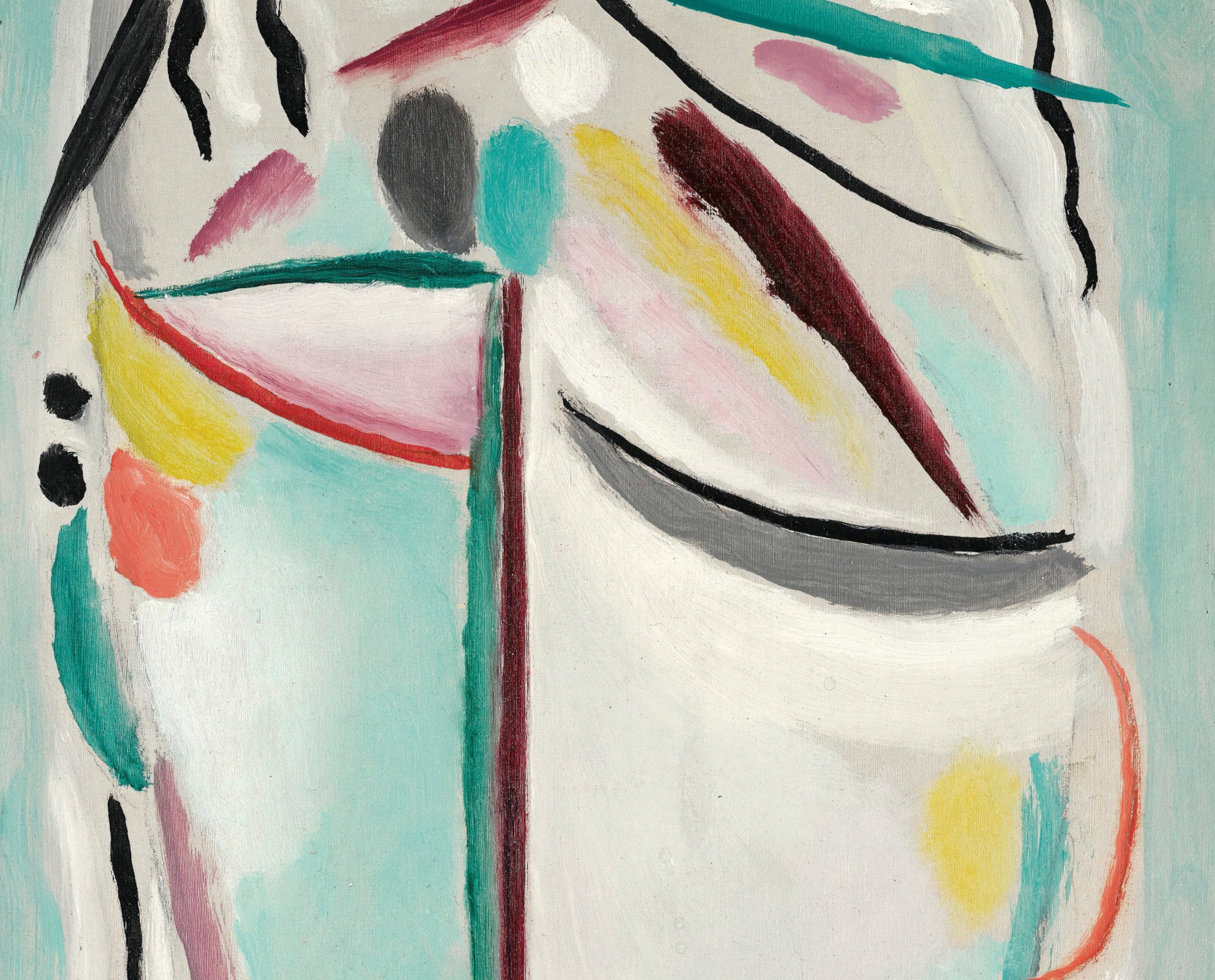
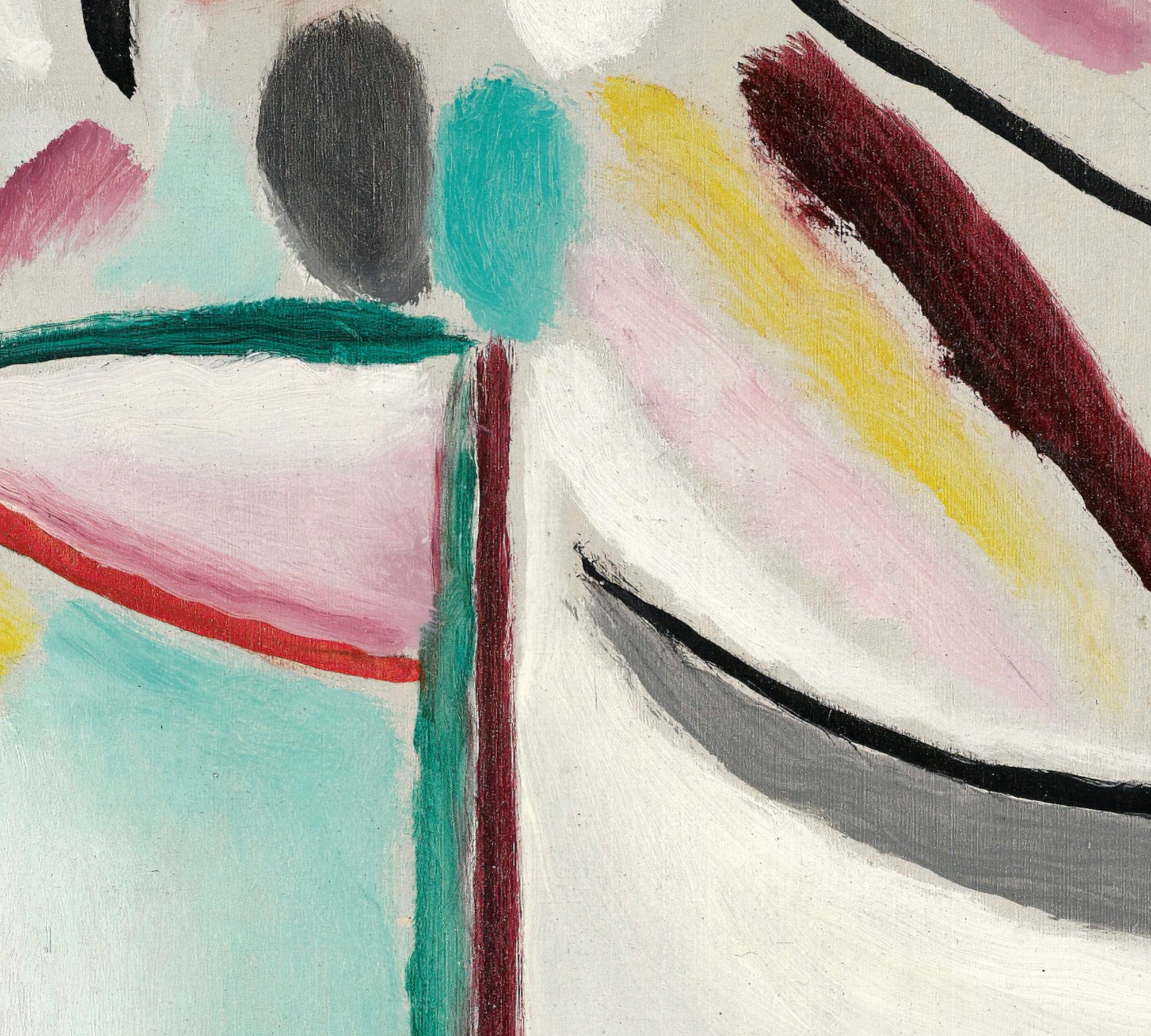
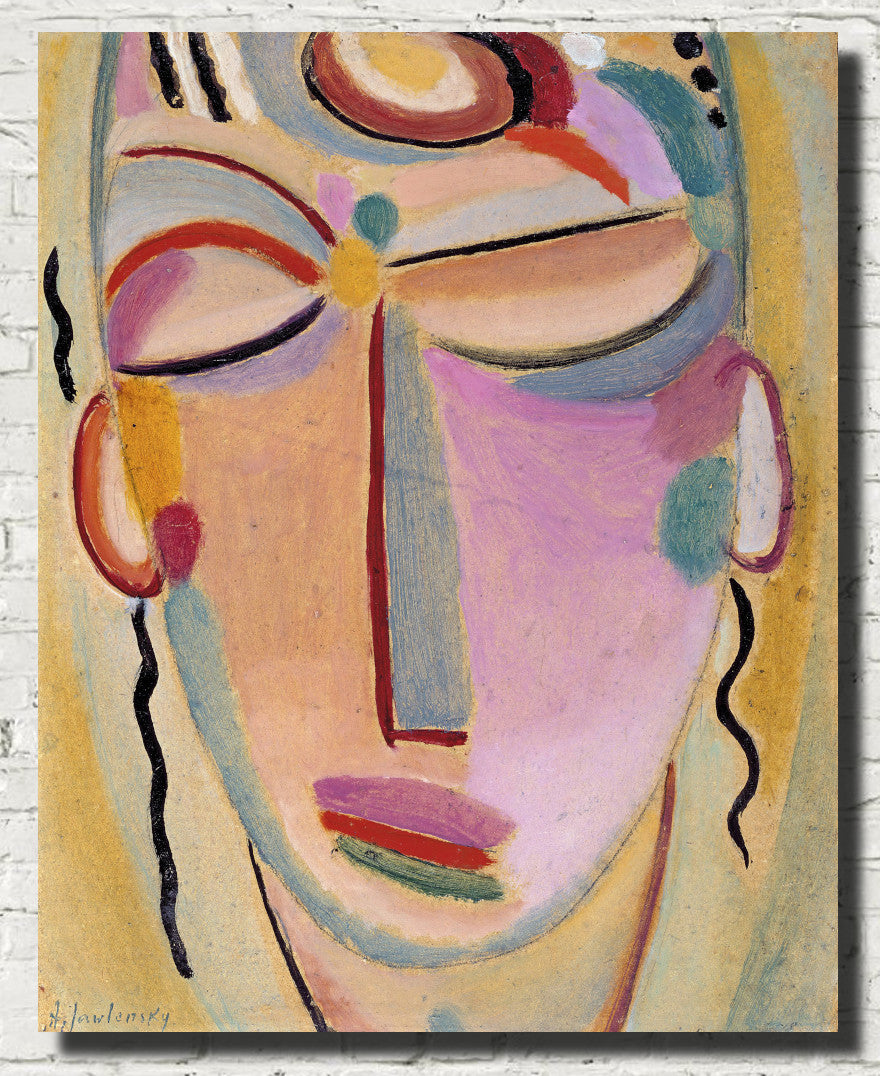
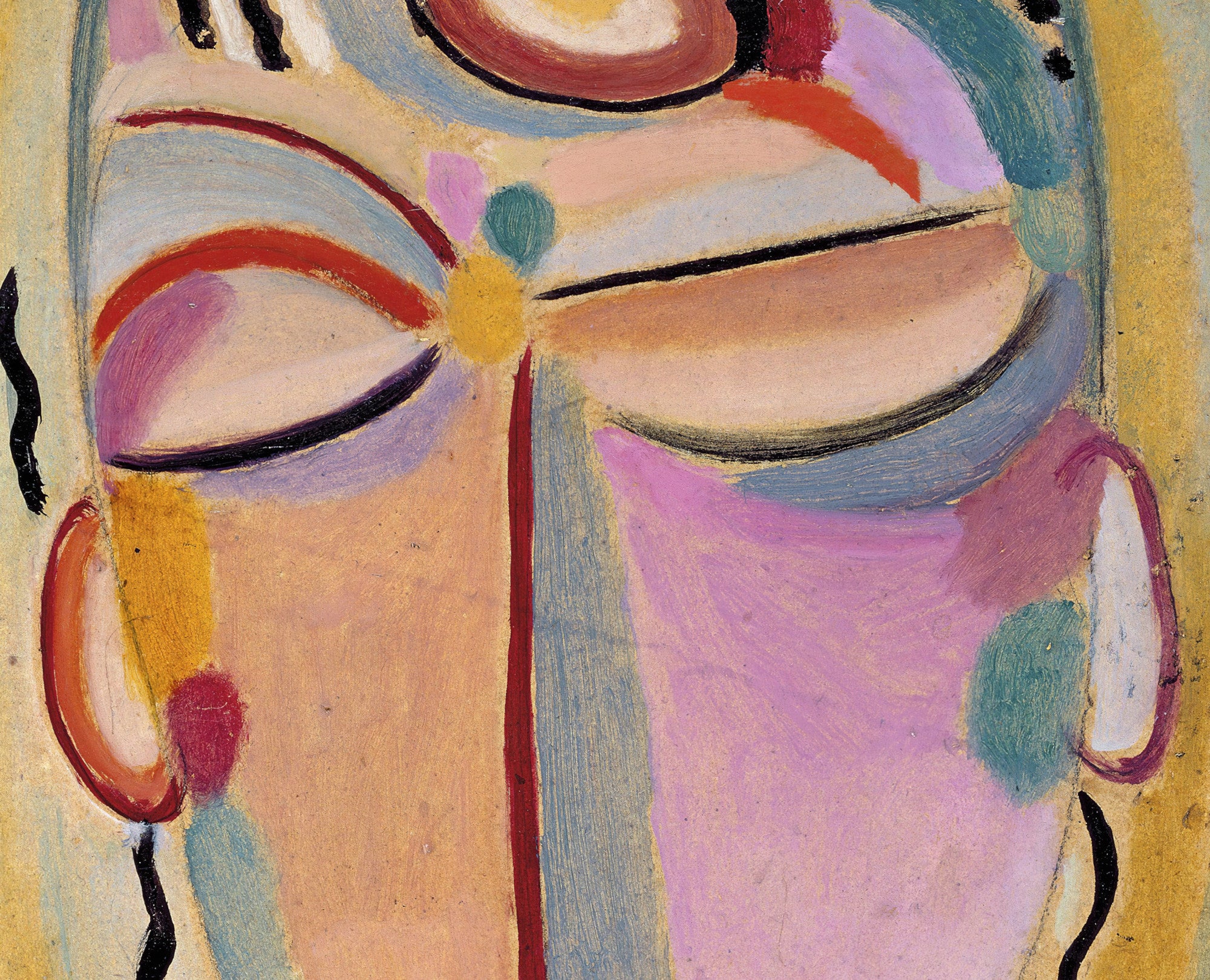
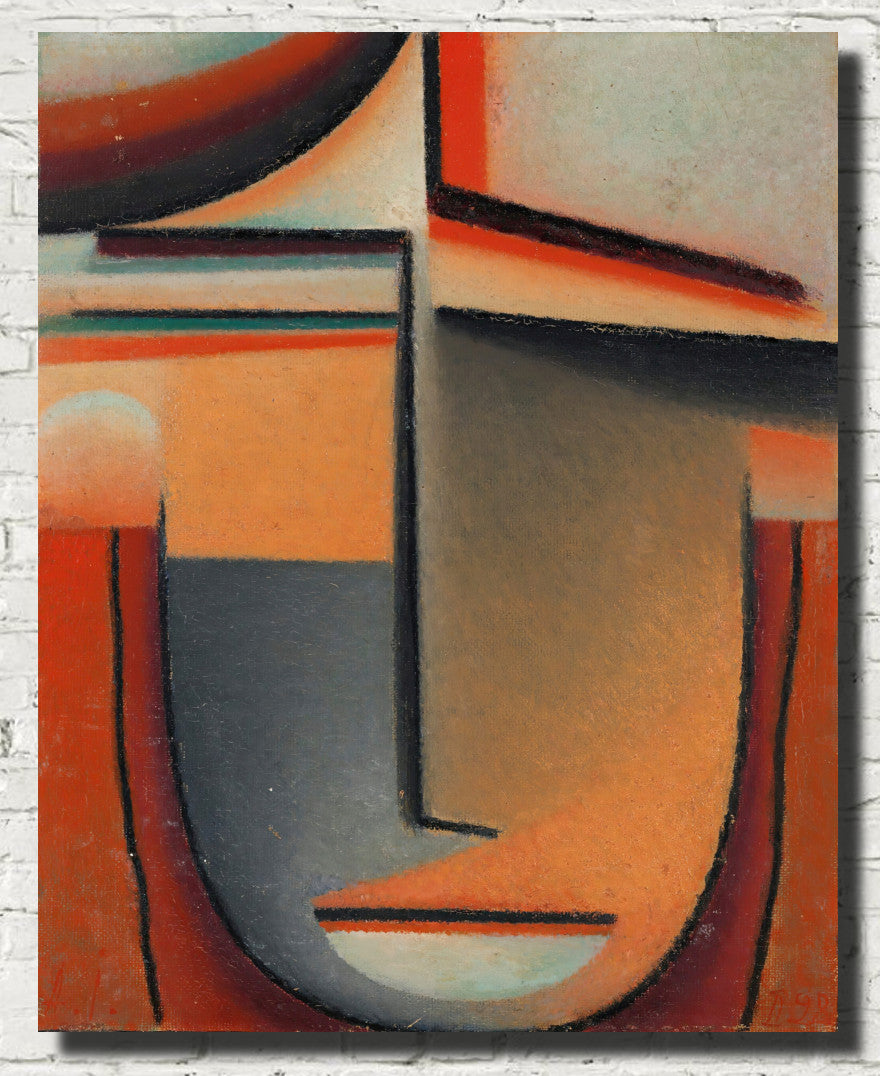
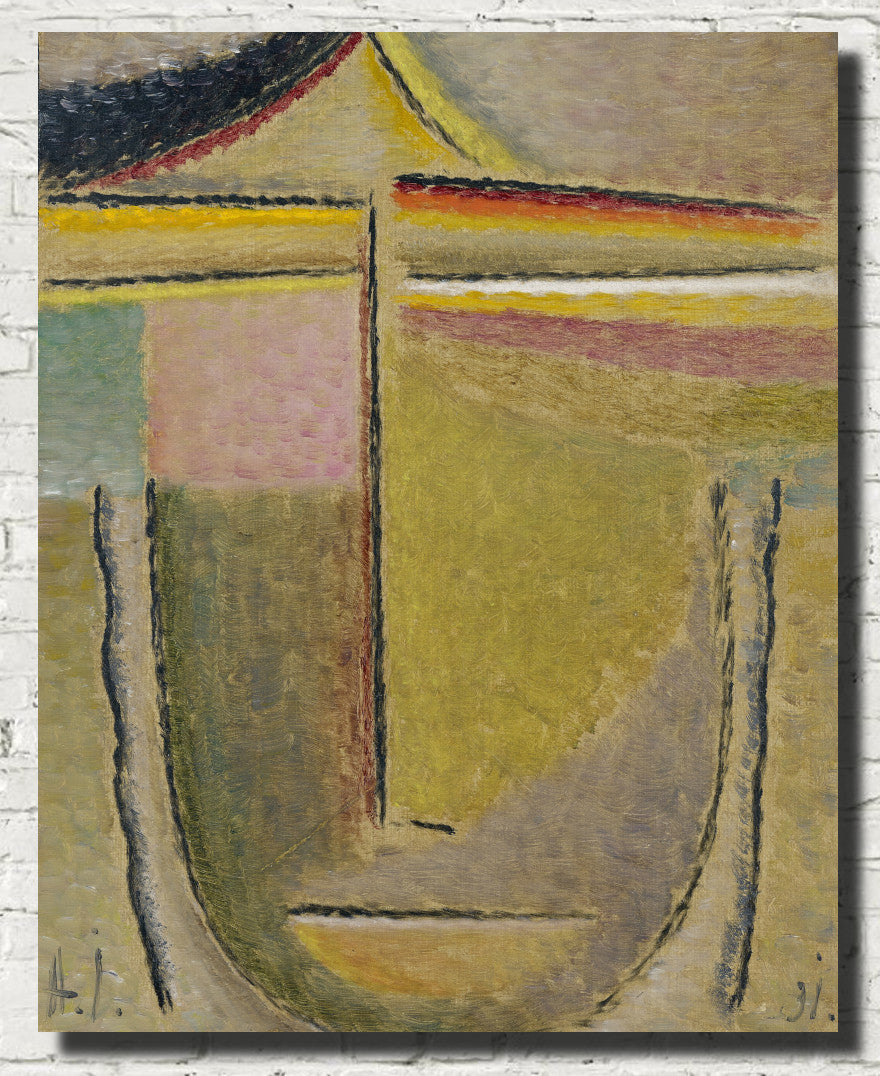
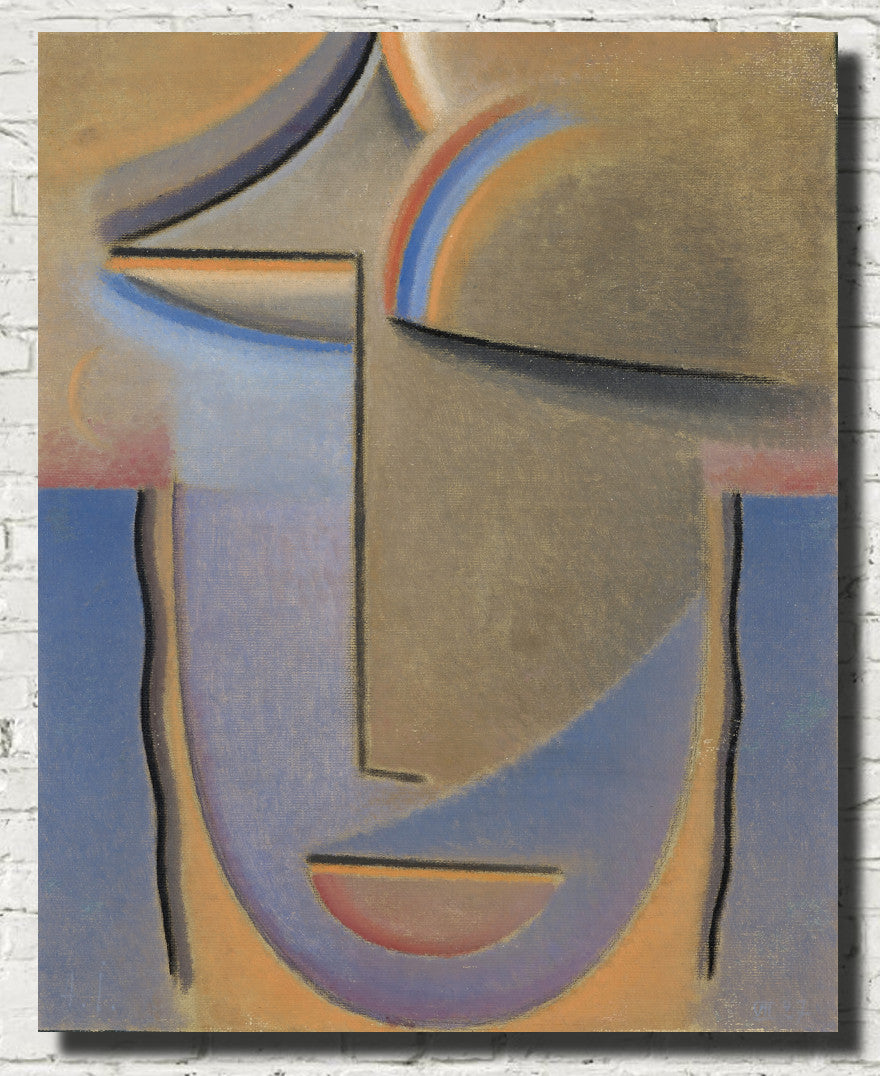
This development eventually produced some of Jawlensky's most recognisable paintings: his Mystical Heads, Saviour's Faces, Abstract Heads and Meditations.
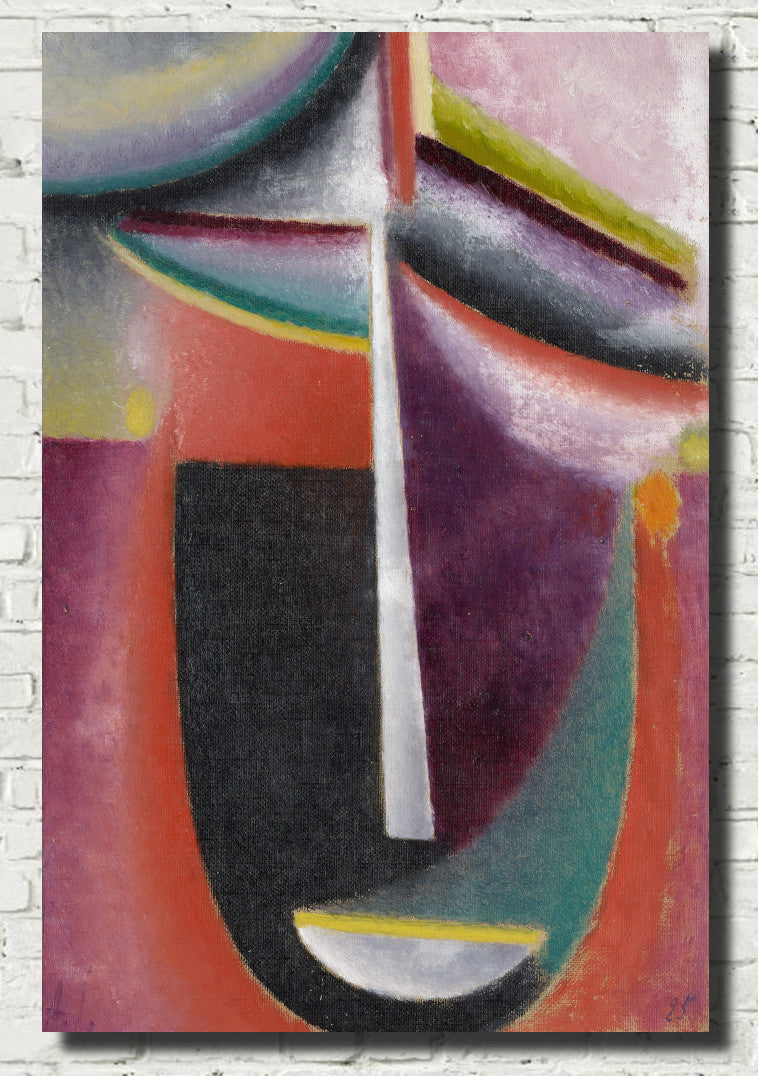
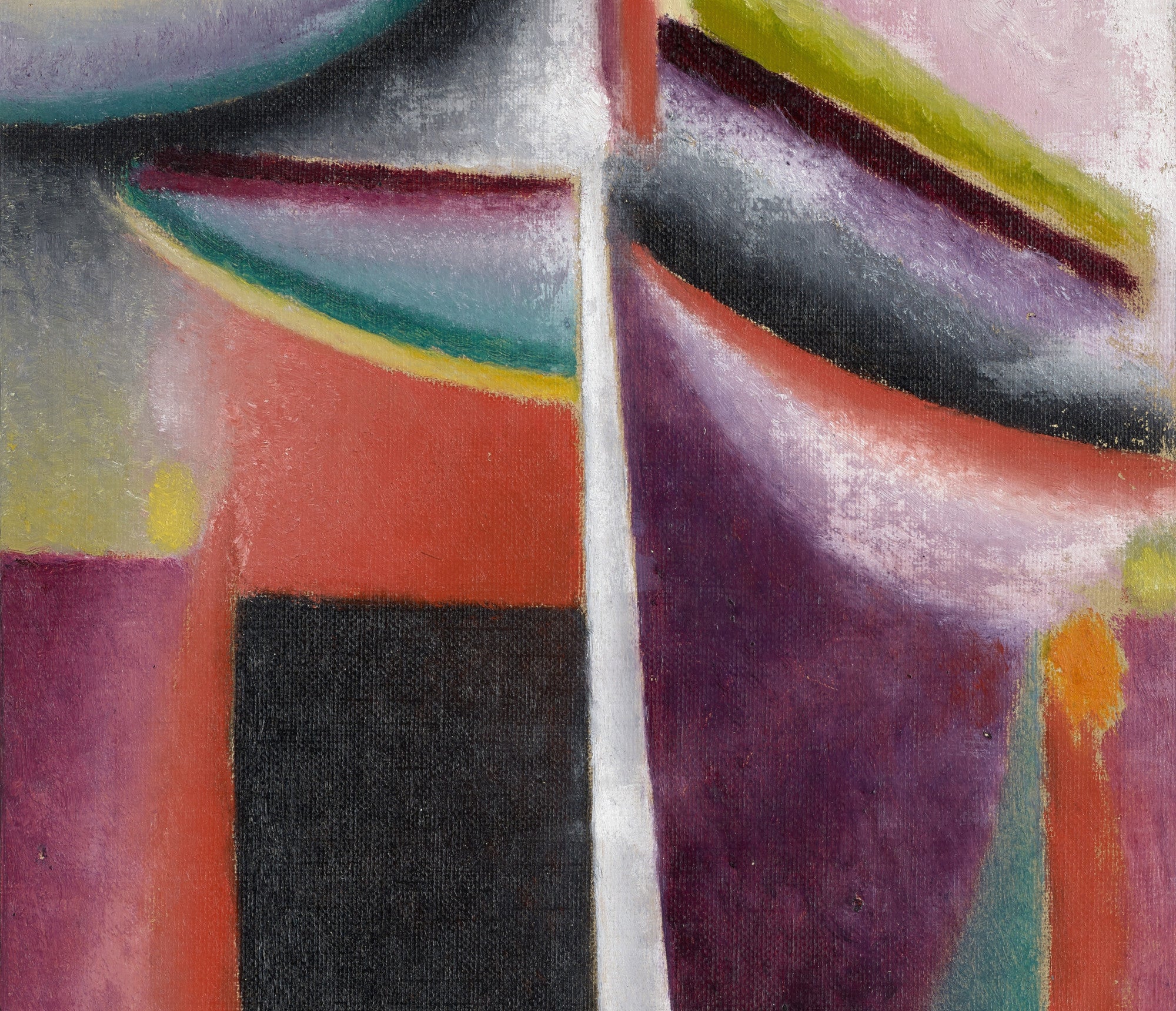
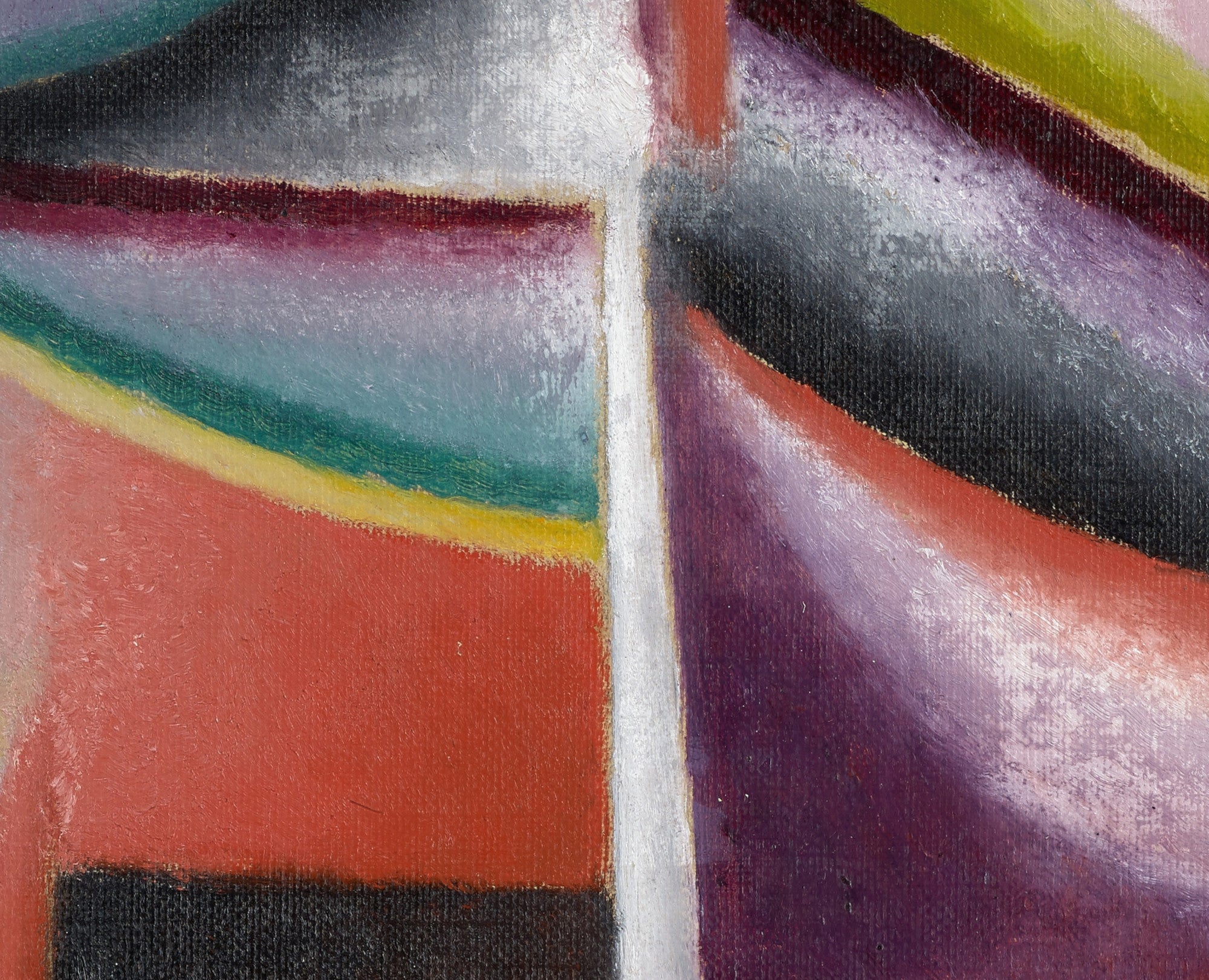
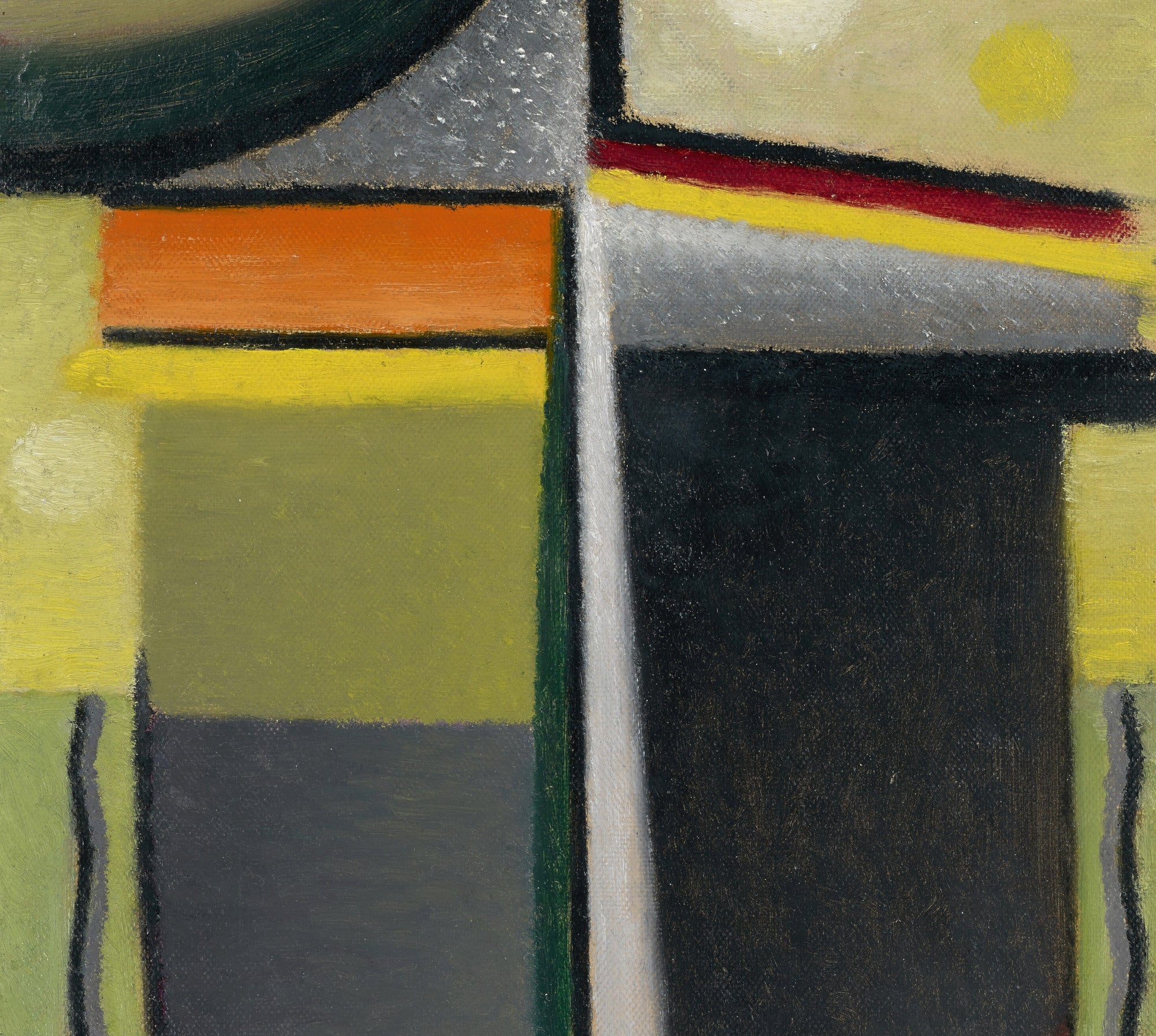
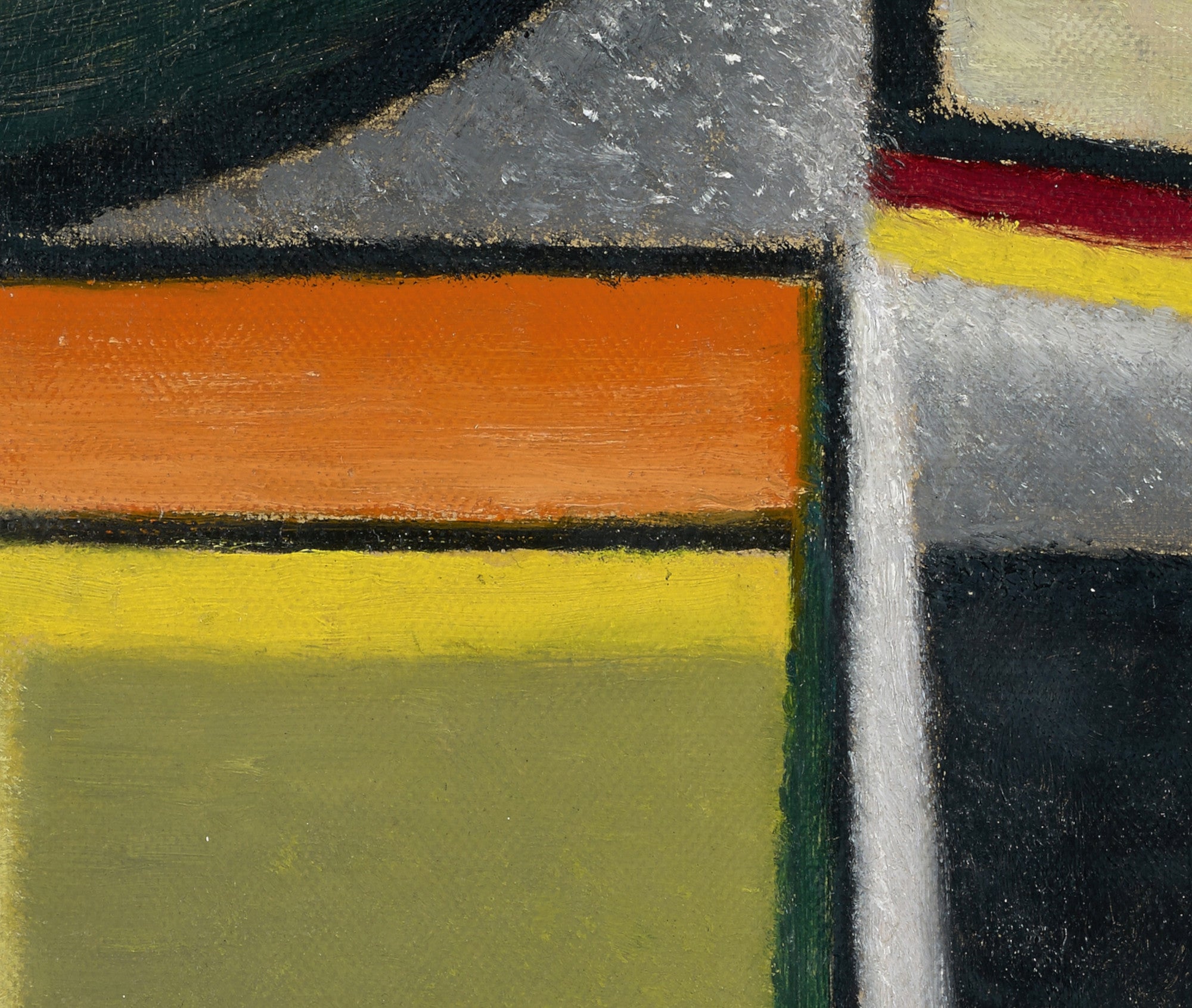
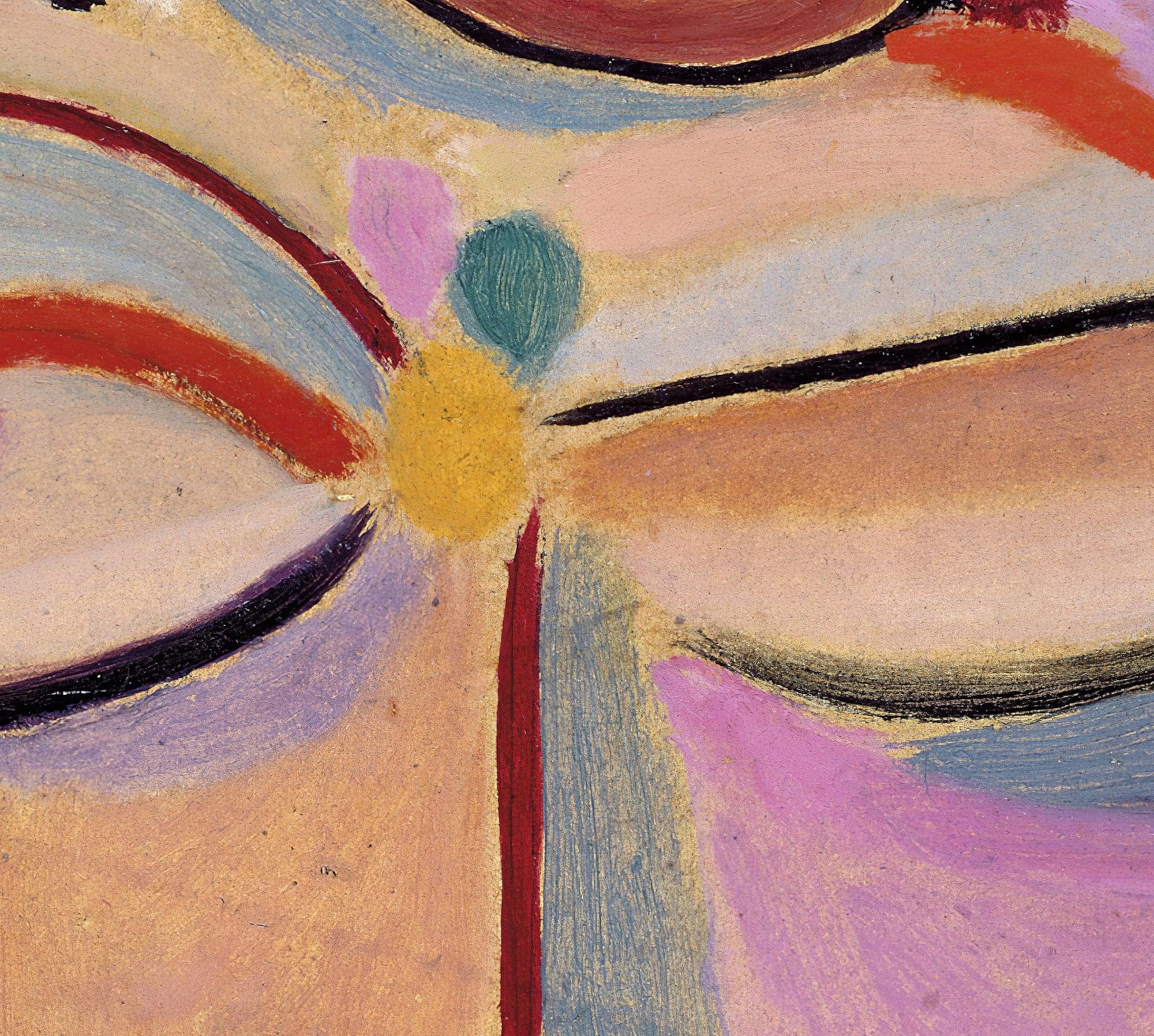
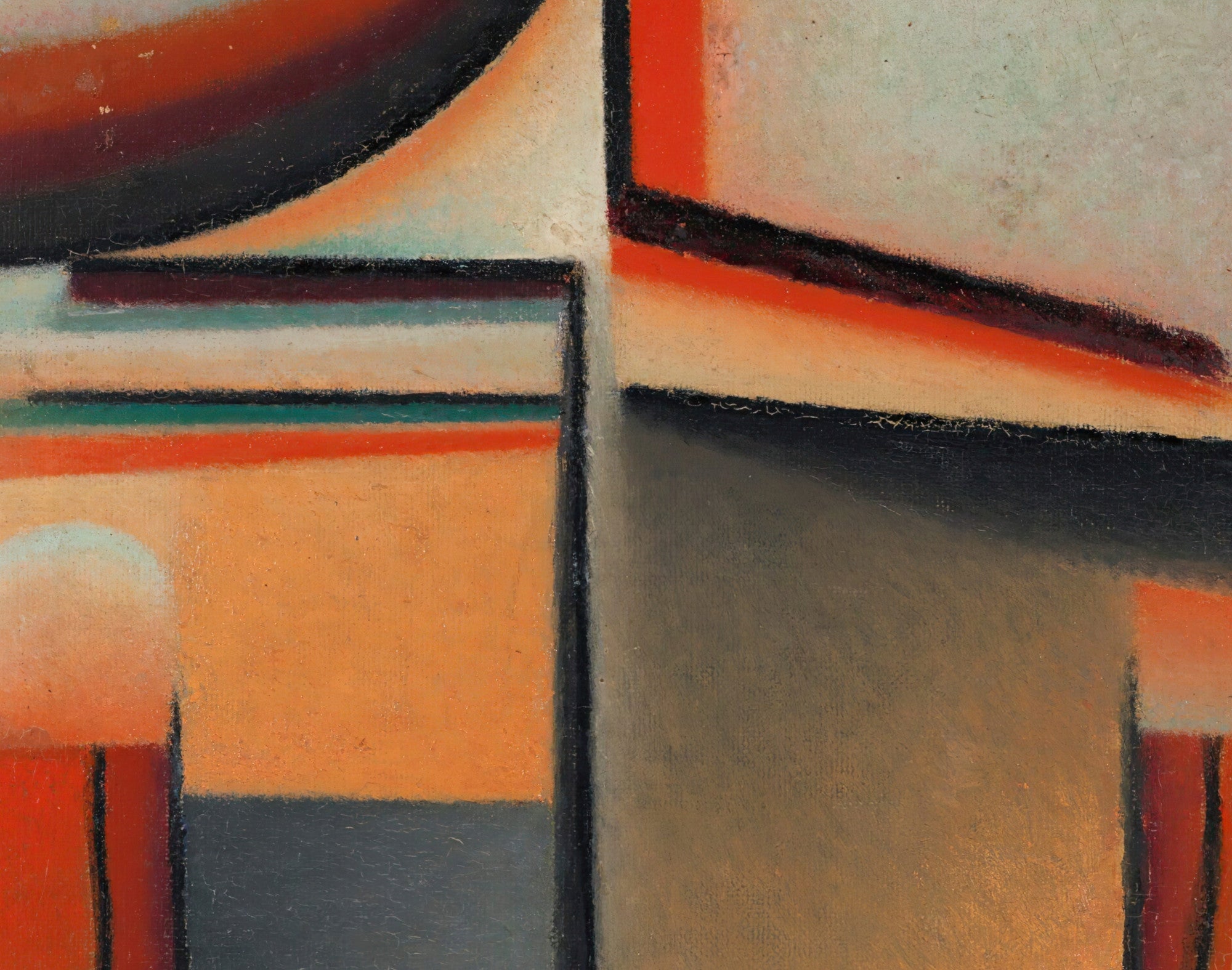
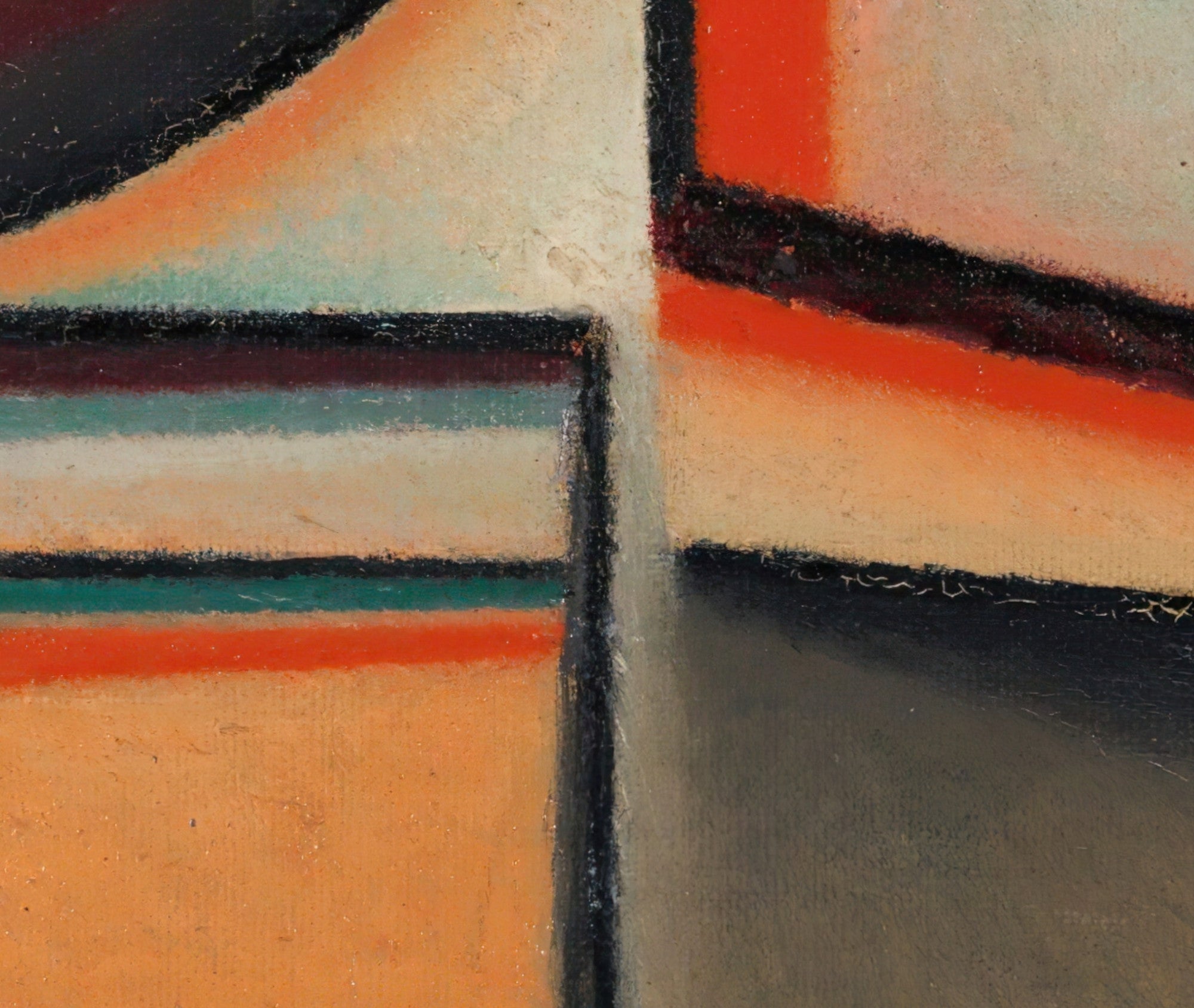
Eyes can become sweeping arcs, noses strong vertical lines and mouths short horizontal marks. Areas of red, green, blue, yellow and violet bear little relationship to natural skin tones, yet these radically simplified images retain an unmistakable human presence.
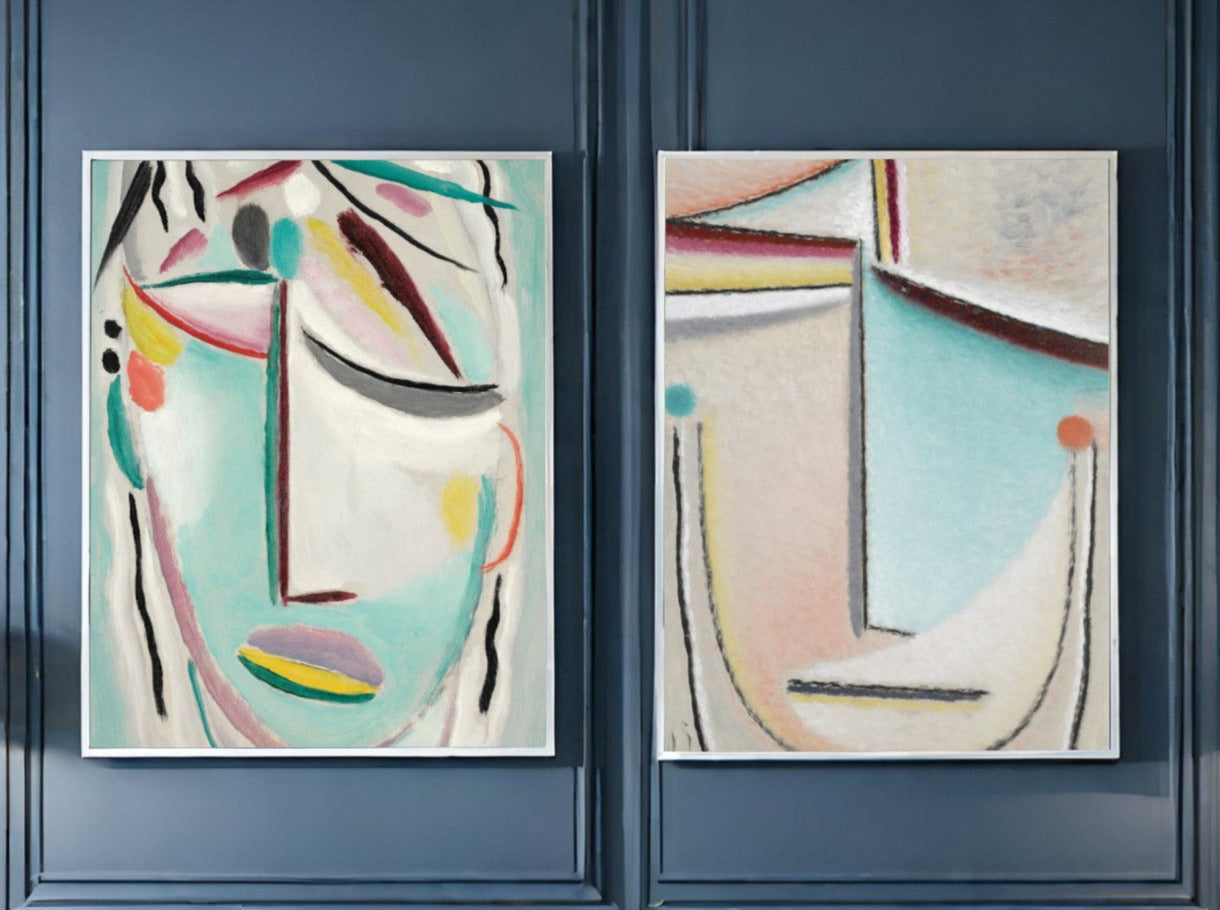
Works in the GalleryThane collection such as Abstract Head, Gold and Pink, Constructive Head, Mysterium, Inner Vision Green-Gold, The Prayer, Apollo, Tragic and Evening demonstrate how Jawlensky progressively reduced the face without abandoning it altogether.
The boundary between portrait and figure art and abstract art becomes deliberately uncertain.
This combination is one reason Alexej von Jawlensky wall art can appear remarkably contemporary. Even the most simplified heads retain the emotional presence of portraiture while possessing the clarity, colour and structure associated with modern abstract painting.
Alexej von Jawlensky and the Blue Rider Circle
Jawlensky occupies an important position in the history surrounding Der Blaue Reiter, or The Blue Rider.
His relationship with the movement was somewhat different from that of its principal organisers Wassily Kandinsky and Franz Marc, so it is more accurate to understand Jawlensky as an important member of the wider artistic circle from which the Blue Rider developed rather than simply describing him as one of its founders.
The shared painting sessions involving Jawlensky, Werefkin, Kandinsky and Münter at Murnau during 1908 and 1909 were particularly significant. Their experiments with saturated colour, simplification and expressive form contributed to the artistic environment from which German Expressionism and Der Blaue Reiter emerged.
Jawlensky was also closely involved with the Neue Künstlervereinigung München and his paintings were subsequently included in Blue Rider touring exhibitions.
His works from 1908 to 1913 are therefore particularly valuable for understanding the transition from Post-Impressionist and Fauvist influences towards the expressive colour and increasing abstraction associated with the Blue Rider circle.
For complementary works from this period, explore Wassily Kandinsky prints, Franz Marc prints, August Macke prints and Marianne von Werefkin prints.
Jawlensky’s early Munich and Murnau paintings developed alongside the artists who would shape Der Blaue Reiter (The Blue Rider). Explore selected works from this formative period alongside paintings by Wassily Kandinsky, Franz Marc, August Macke and Marianne von Werefkin.
Understanding Jawlensky's Use of Colour
Colour is fundamental to Jawlensky's art.
A face might contain brilliant red, orange, green, blue or violet. A landscape could transform hills, buildings and skies into intense blocks of contrasting colour. Jawlensky was not attempting to reproduce the world exactly as the eye sees it.
Instead, colour became a means of expressing emotion, character and inner experience.
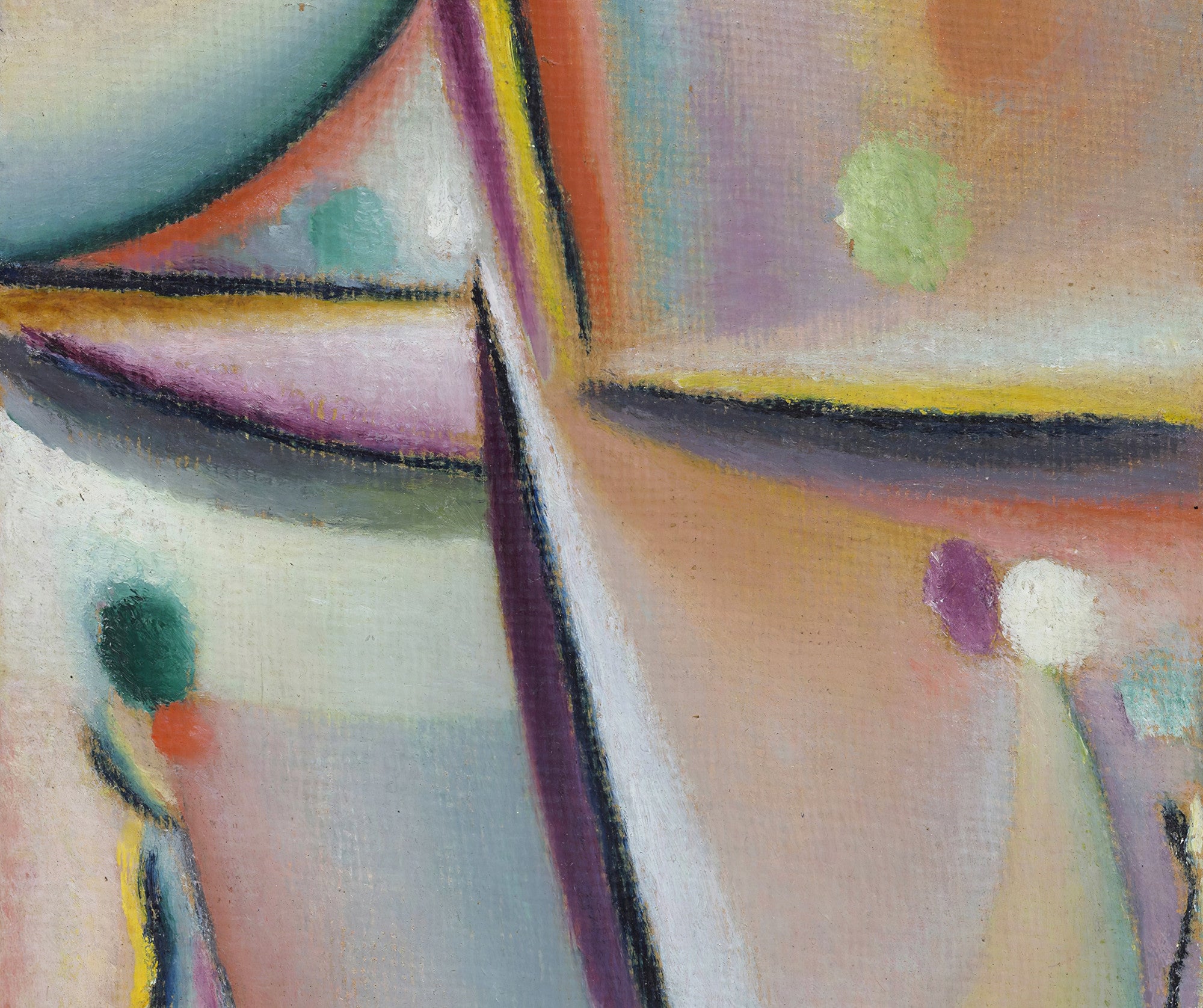
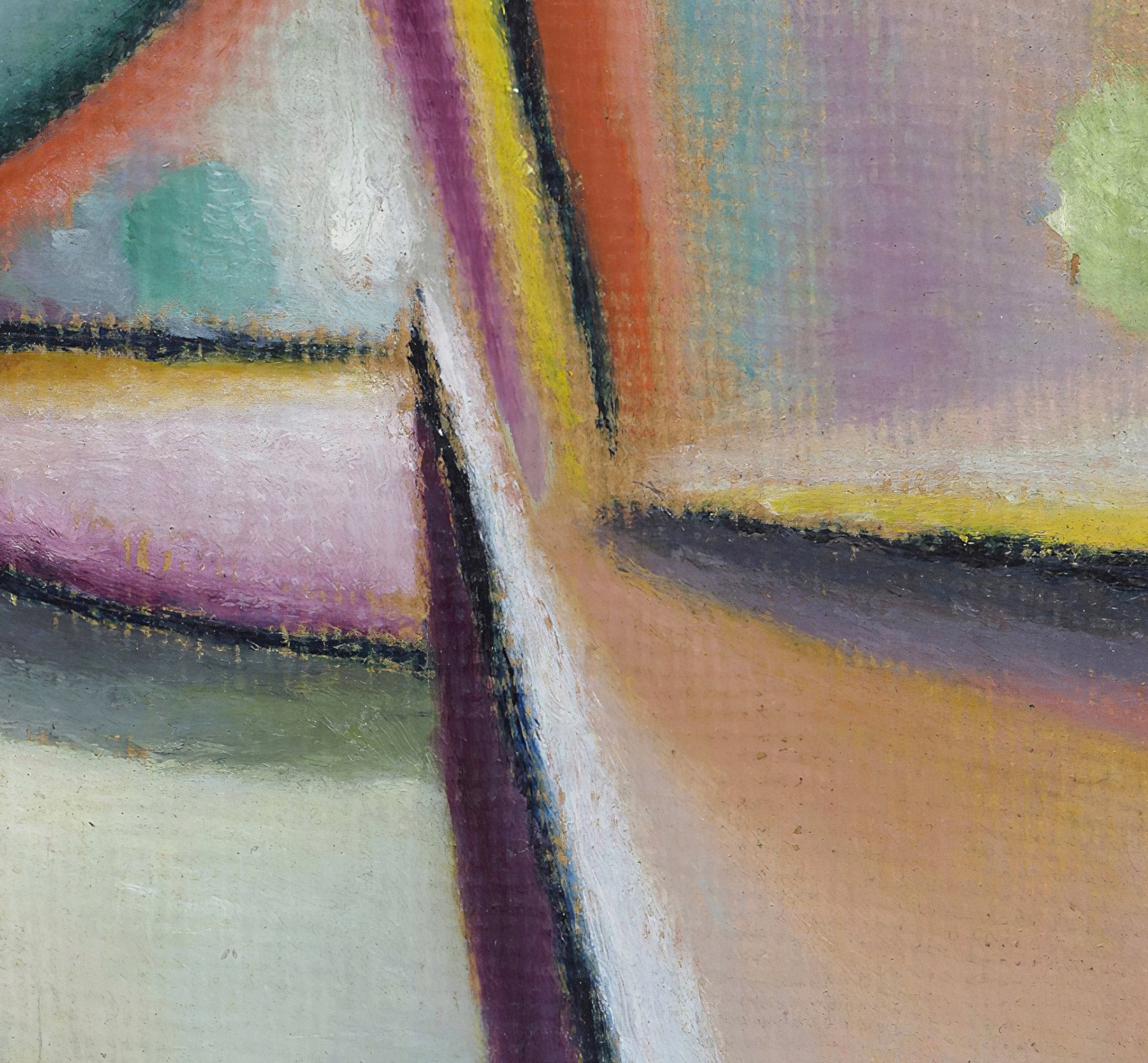
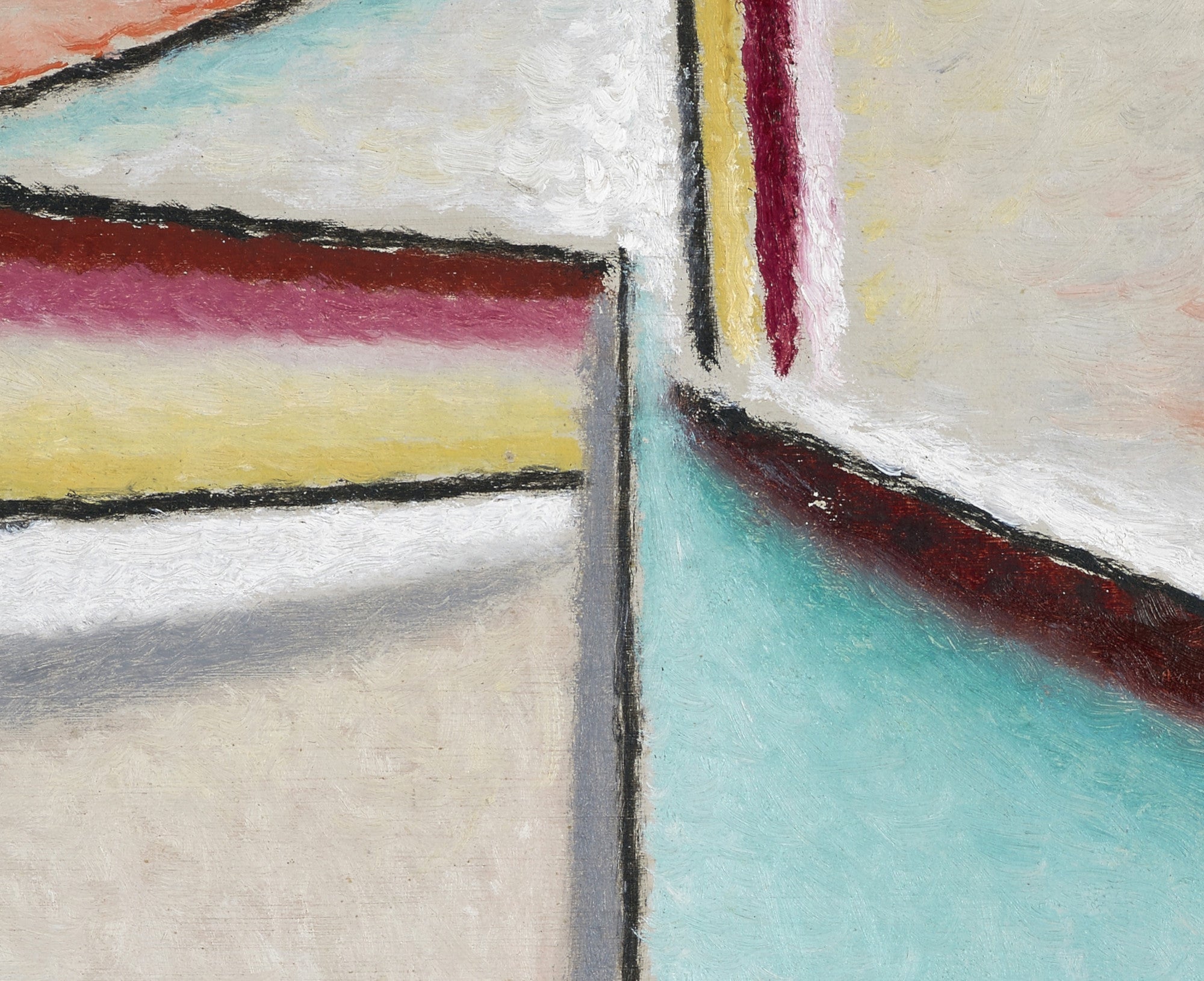
Strong dark outlines frequently reinforce these colour relationships, creating the clarity and graphic impact that makes many Jawlensky paintings immediately recognisable.
This approach places his work firmly within the history of Expressionist Art, while his progressive simplification of faces also connects his work with the development of twentieth-century abstraction.
Choosing an Alexej von Jawlensky Print
The breadth of Jawlensky's work means different paintings can create very different effects within an interior.
- Murnau landscapes are ideal if you want colourful Expressionist art while retaining a recognisable landscape subject. Their intense skies, villages and countryside can create striking focal points in living rooms and dining spaces.
- Early Expressionist portraits offer greater psychological intensity. Works such as Portrait of Alexander Sakharoff and Self Portrait are particularly effective when displayed individually on a prominent wall.
- Abstract Heads combine the presence of portraiture with bold modernist structure and can complement contemporary, mid-century and Scandinavian-inspired interiors.
- Mystical Heads and Meditations generally have a quieter, more contemplative quality and can work particularly well in bedrooms, studies and restrained interior schemes.
For more works centred around scenery and the natural world, explore GalleryThane's wider Landscape and Scenery Fine Art Prints.
Alexej von Jawlensky Prints in Modern Interiors
Despite being created more than a century ago, many Jawlensky prints look remarkably contemporary.
Strong outlines, simplified compositions and carefully balanced areas of intense colour allow his work to sit comfortably alongside modern furniture and uncluttered architectural spaces.
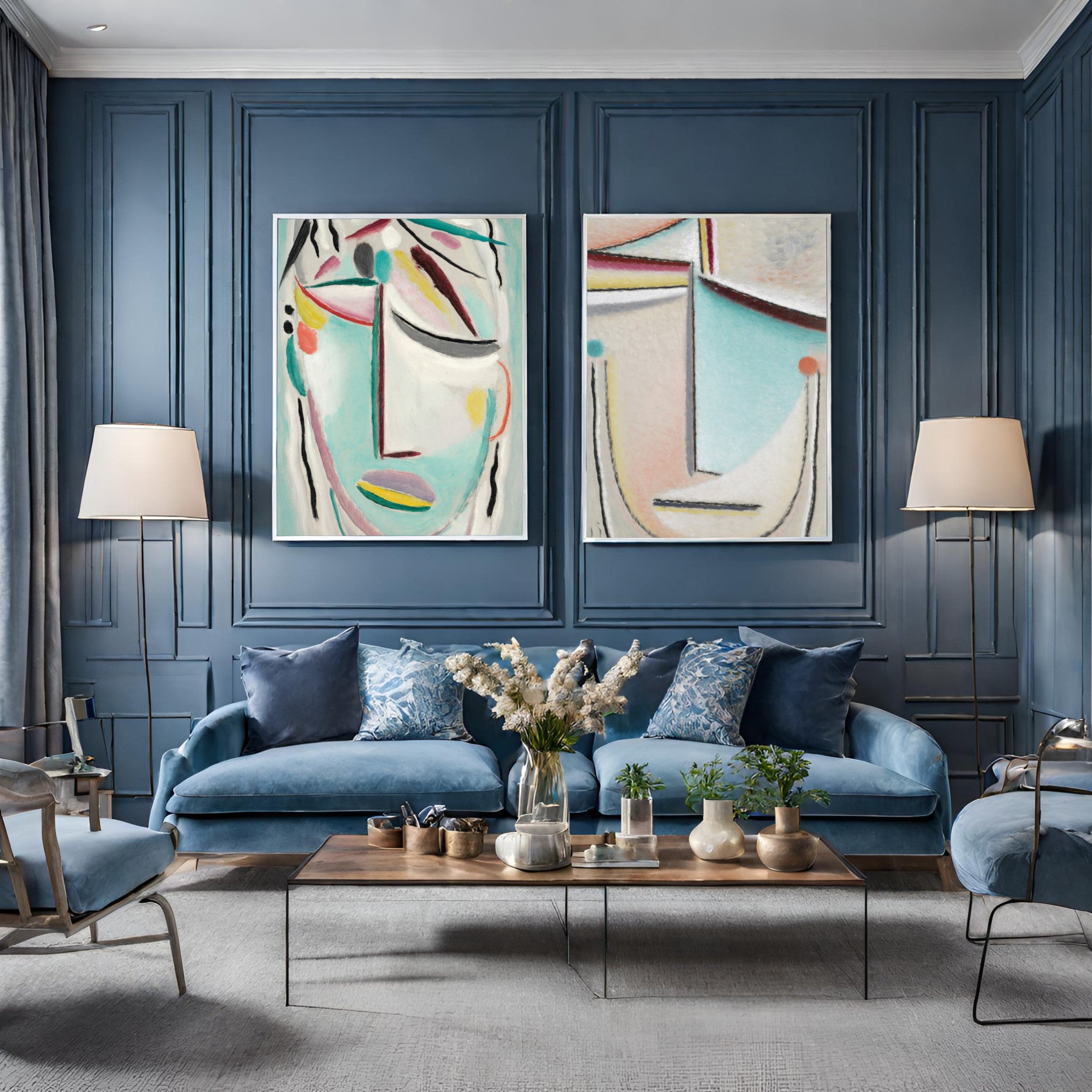
A large Jawlensky portrait print can provide a dramatic focal point above a console, fireplace or sideboard, while smaller Abstract Heads can be grouped to create a distinctive gallery wall.
His landscapes provide a different decorative character. The strong horizontal forms of the Murnau paintings introduce colour while retaining a recognisable connection to landscape, making them an attractive alternative for interiors where completely abstract artwork would feel too severe.
Neutral walls in white, cream, putty, stone and soft grey allow Jawlensky's saturated palettes to dominate, while individual reds, blues, greens and yellows can also be used to echo colours already present in furniture, rugs and textiles.
Explore Art Related to Alexej von Jawlensky
If you enjoy Jawlensky's vivid colour and expressive approach, explore the wider Expressionist Art Prints collection, which includes paintings by many of the artists who transformed European art during the early twentieth century.
For artists particularly relevant to Jawlensky's Munich and Blue Rider years, browse:
You can also explore Portraits and People Fine Art Prints, Abstract Art Prints and Landscape and Scenery Fine Art Prints to follow the different strands of portraiture, colour and abstraction that meet in Jawlensky's work.
Frequently Asked Questions
Who was Alexej von Jawlensky?
Alexej von Jawlensky was a Russian-born painter who worked principally in Germany and Switzerland and became an important figure in early twentieth-century Expressionism. He is particularly celebrated for his intensely coloured portraits, Murnau landscapes and increasingly abstract studies of the human face.
What style of art did Alexej von Jawlensky paint?
Jawlensky is most closely associated with Expressionism. His work also reflects important Post-Impressionist and Fauvist influences, particularly in his use of strong non-naturalistic colour. His later heads moved increasingly towards abstraction while retaining the essential structure of a human face.
Was Alexej von Jawlensky a Blue Rider artist?
Jawlensky was closely associated with the artistic circle from which Der Blaue Reiter developed. He painted alongside Kandinsky, Münter and Werefkin at Murnau during the important years preceding the movement and his work subsequently appeared in Blue Rider touring exhibitions. He is therefore an important figure in the wider history of Der Blaue Reiter and German Expressionism.
Why did Jawlensky paint so many faces?
For Jawlensky, the face gradually became much more than a portrait of an individual person. He simplified facial features and used colour, line and symmetry to explore emotion, spirituality and inner experience. His later Abstract Heads and Meditations represent the culmination of this lifelong investigation.
What are Alexej von Jawlensky's most distinctive works?
Jawlensky is particularly known for his early Expressionist portraits, colourful Murnau landscapes and later series of Mystical Heads, Saviour's Faces, Abstract Heads and Meditations. This collection includes examples from several of these important periods, allowing his artistic development to be seen across more than two decades.
What colours are typical of Alexej von Jawlensky prints?
Jawlensky frequently used intense reds, blues, greens, yellows, oranges and purples, often separated by strong dark outlines. Colour was used expressively rather than simply to reproduce natural appearances, giving his paintings their distinctive visual intensity.
Are Alexej von Jawlensky prints suitable for modern interiors?
Yes. Jawlensky's simplified forms, strong outlines and areas of saturated colour work particularly well in contemporary, mid-century, eclectic and Scandinavian-inspired interiors. His portraits can create dramatic statement pieces, while his landscapes and abstract heads also work effectively within curated gallery walls.
Which artists are similar to Alexej von Jawlensky?
Collectors interested in Jawlensky may also enjoy Wassily Kandinsky, Franz Marc, August Macke and Marianne von Werefkin. All were connected with the development of early twentieth-century Expressionism and the broader artistic environment associated with the Blue Rider circle.