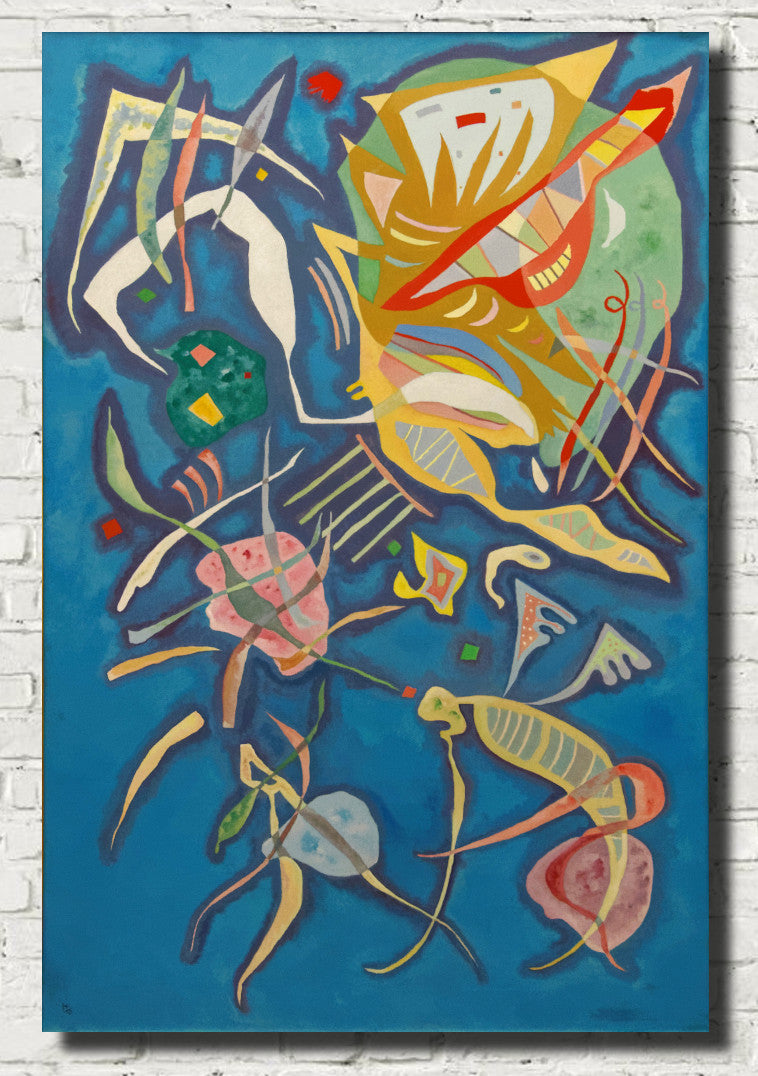
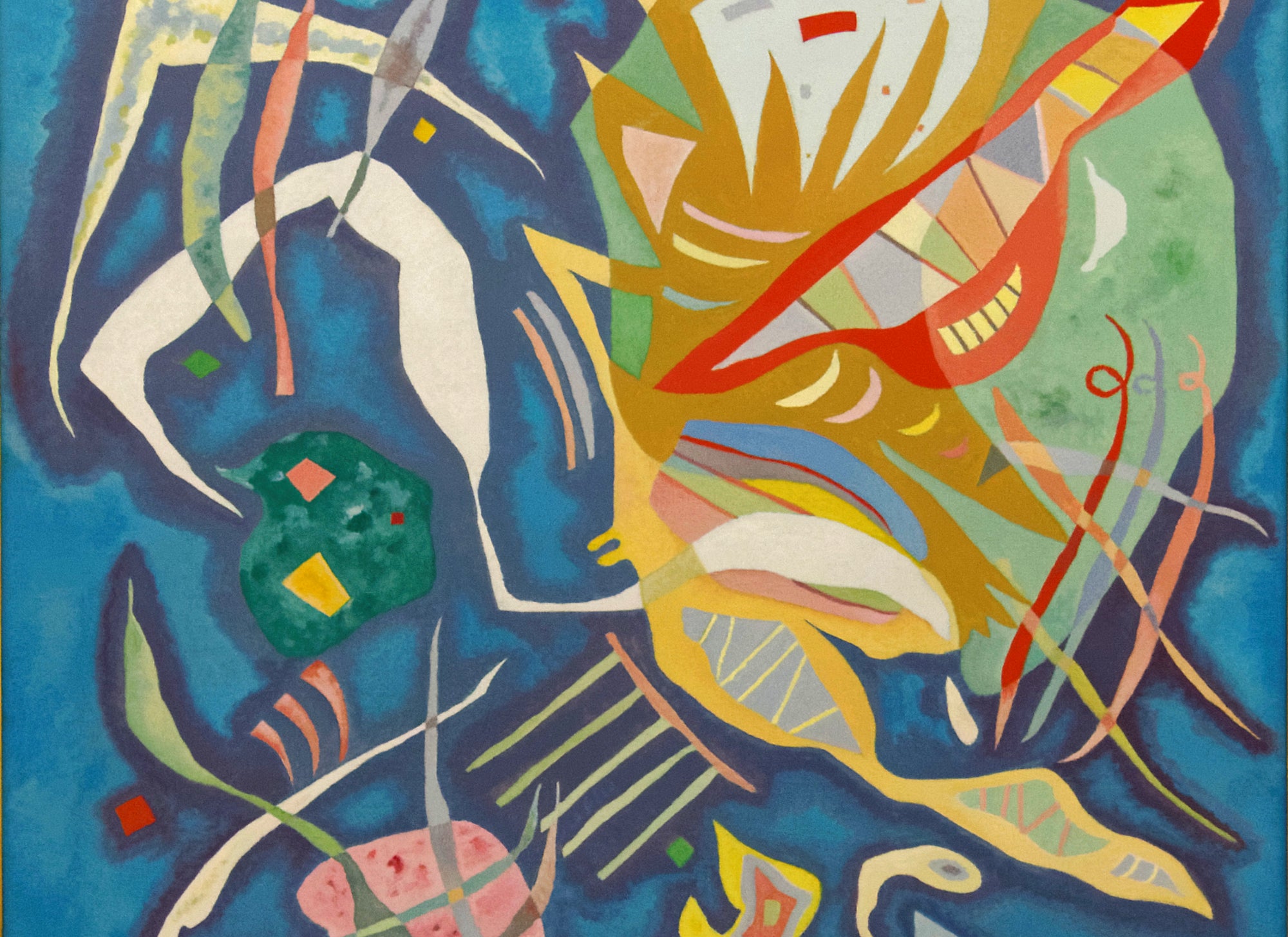
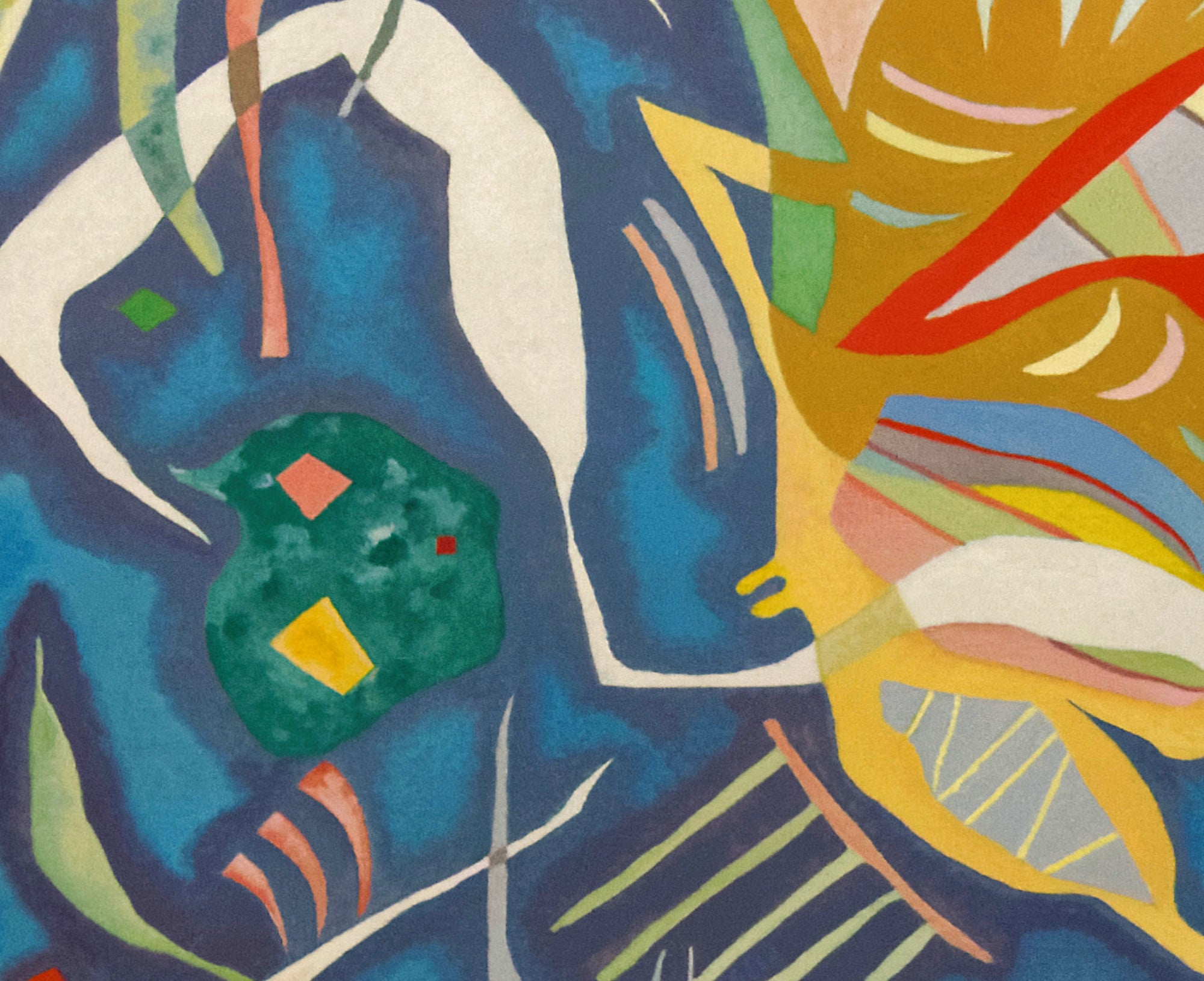
Wassily Kandinsky Prints – Colour, Abstraction and Modern Art
Wassily Kandinsky was one of the most influential artists of the twentieth century and a central figure in the development of abstract art.
Across a career spanning more than four decades, his work changed dramatically. Early landscapes and city scenes gradually gave way to intensely coloured Expressionist paintings, increasingly abstract Improvisations and Compositions, and finally the circles, triangles, grids and geometric forms associated with his Bauhaus period.
GalleryThane’s collection of Wassily Kandinsky prints reflects this remarkable development, allowing you to explore the artist from his formative landscapes around Murnau to some of the most distinctive abstract paintings of modern art.
Who Was Wassily Kandinsky?
Wassily Kandinsky was born in Moscow in 1866.
He initially pursued an academic career in law and economics before deciding to become an artist in his thirties. In 1896 he moved to Munich, then one of Europe’s most important artistic centres, to study painting.
His late entry into professional art did little to slow the extraordinary speed of his development.
Kandinsky absorbed influences from Russian folk culture, Symbolism, Post-Impressionism and the rapidly developing European avant-garde. Over time he became increasingly dissatisfied with the idea that painting should simply reproduce recognisable objects.
Colour, line and shape gradually became subjects in themselves.
This search would eventually make Kandinsky one of the most important pioneers represented in GalleryThane’s Abstract Art Prints collection.
Kandinsky’s Murnau Landscapes
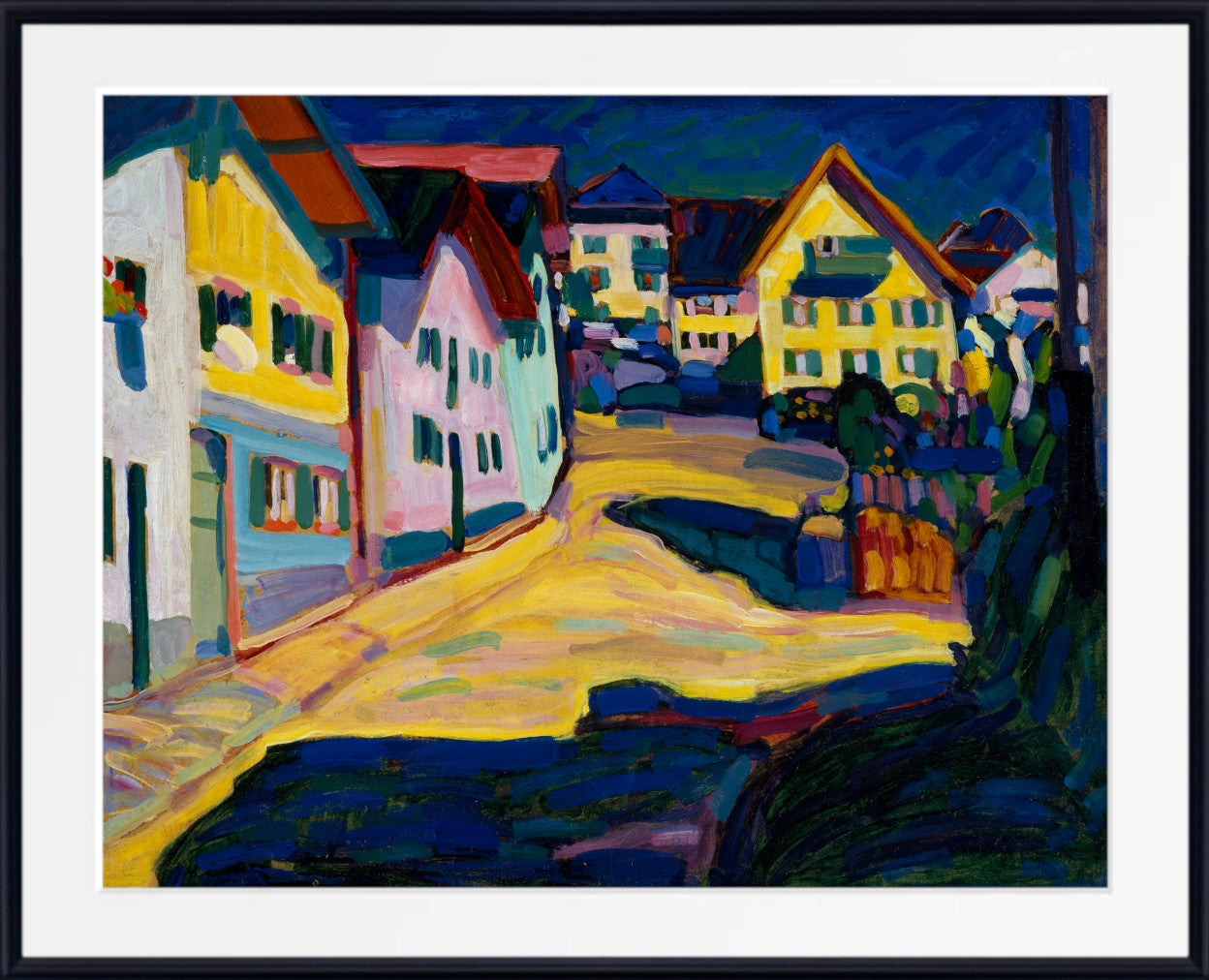
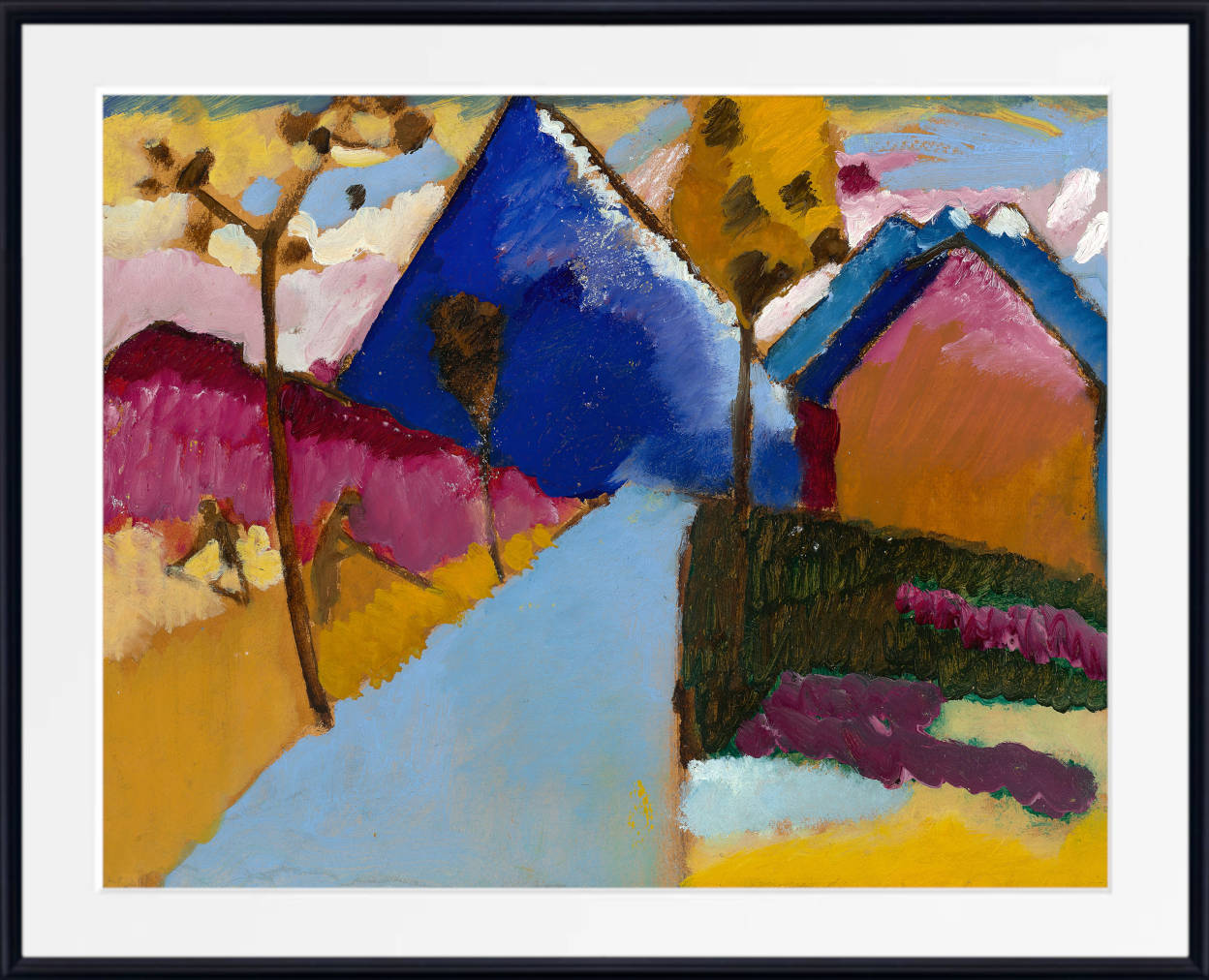
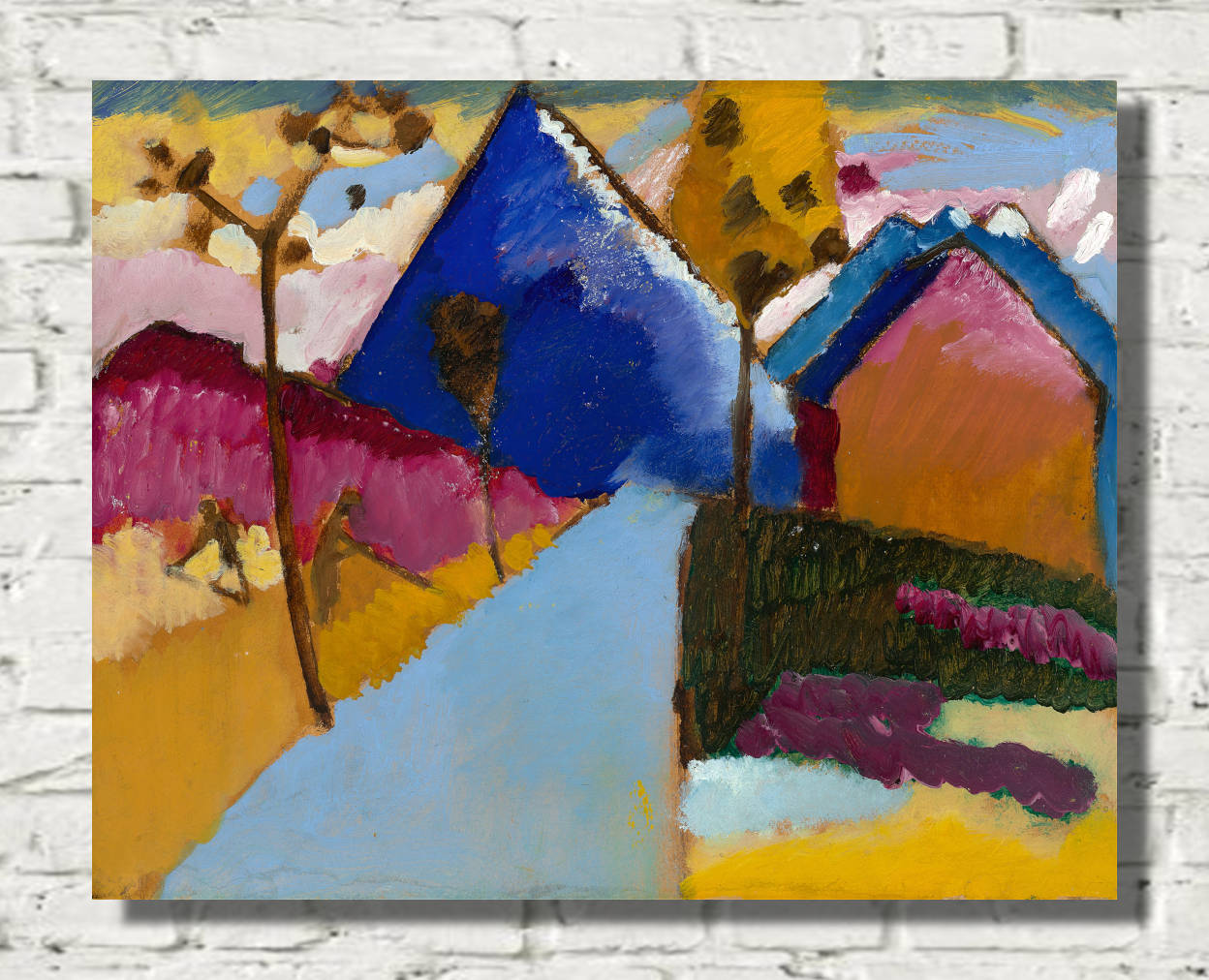
A crucial transformation took place when Kandinsky began working around the Bavarian town of Murnau in the years from 1908.
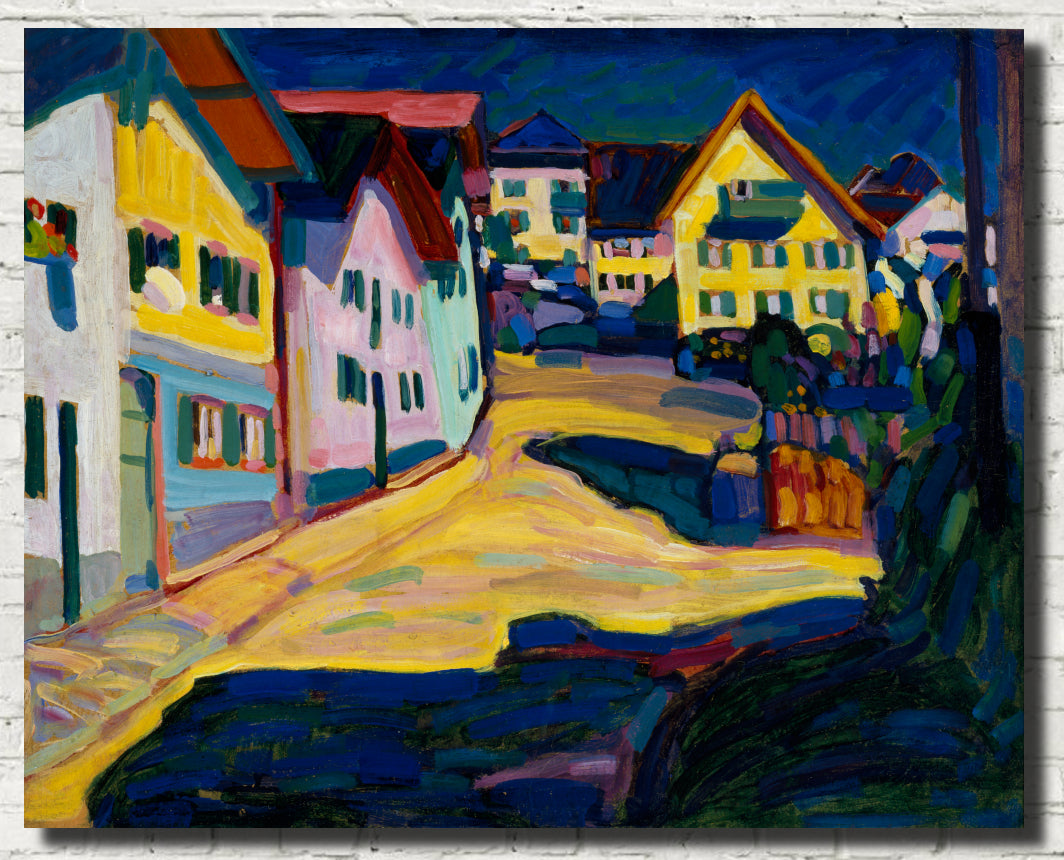
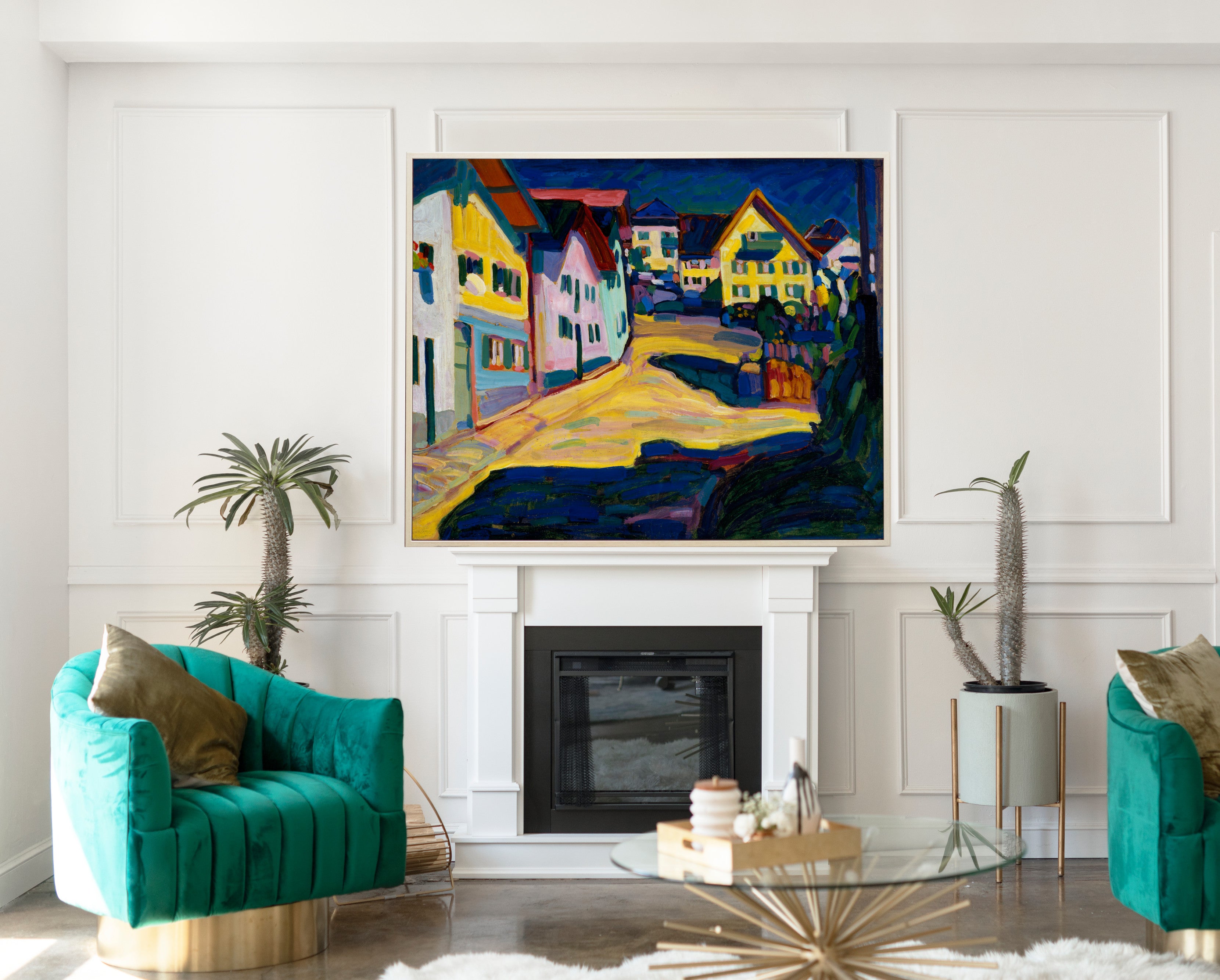
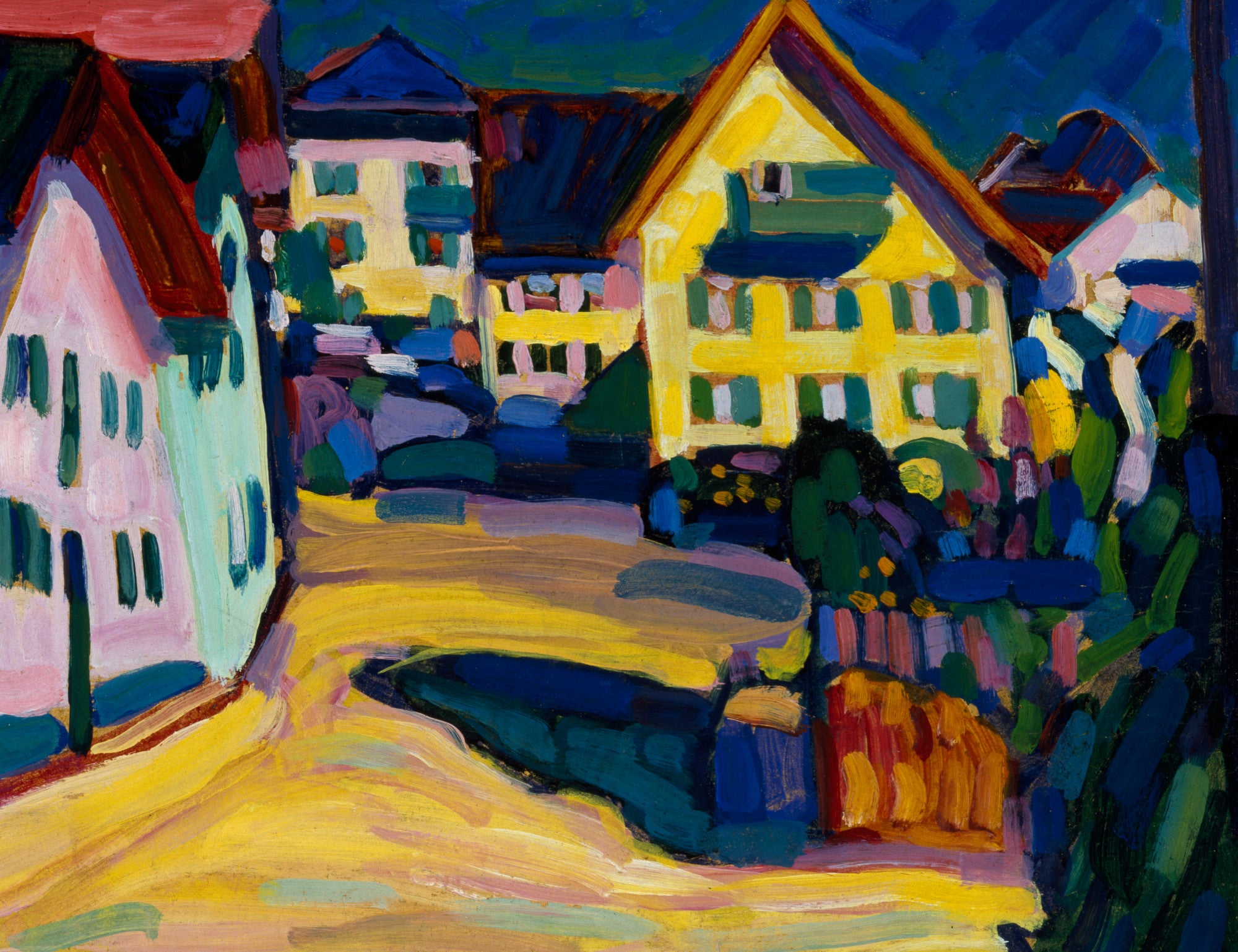
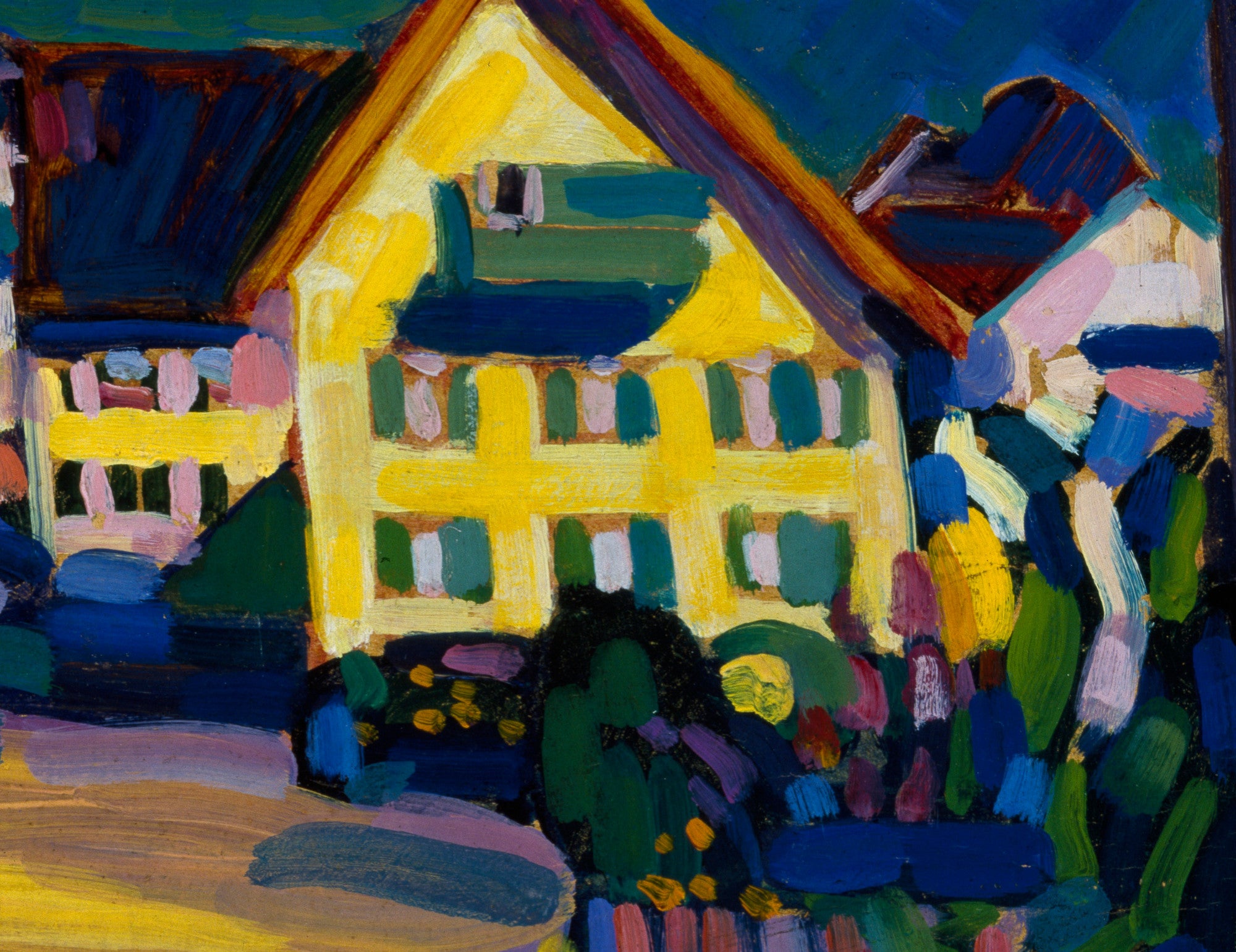
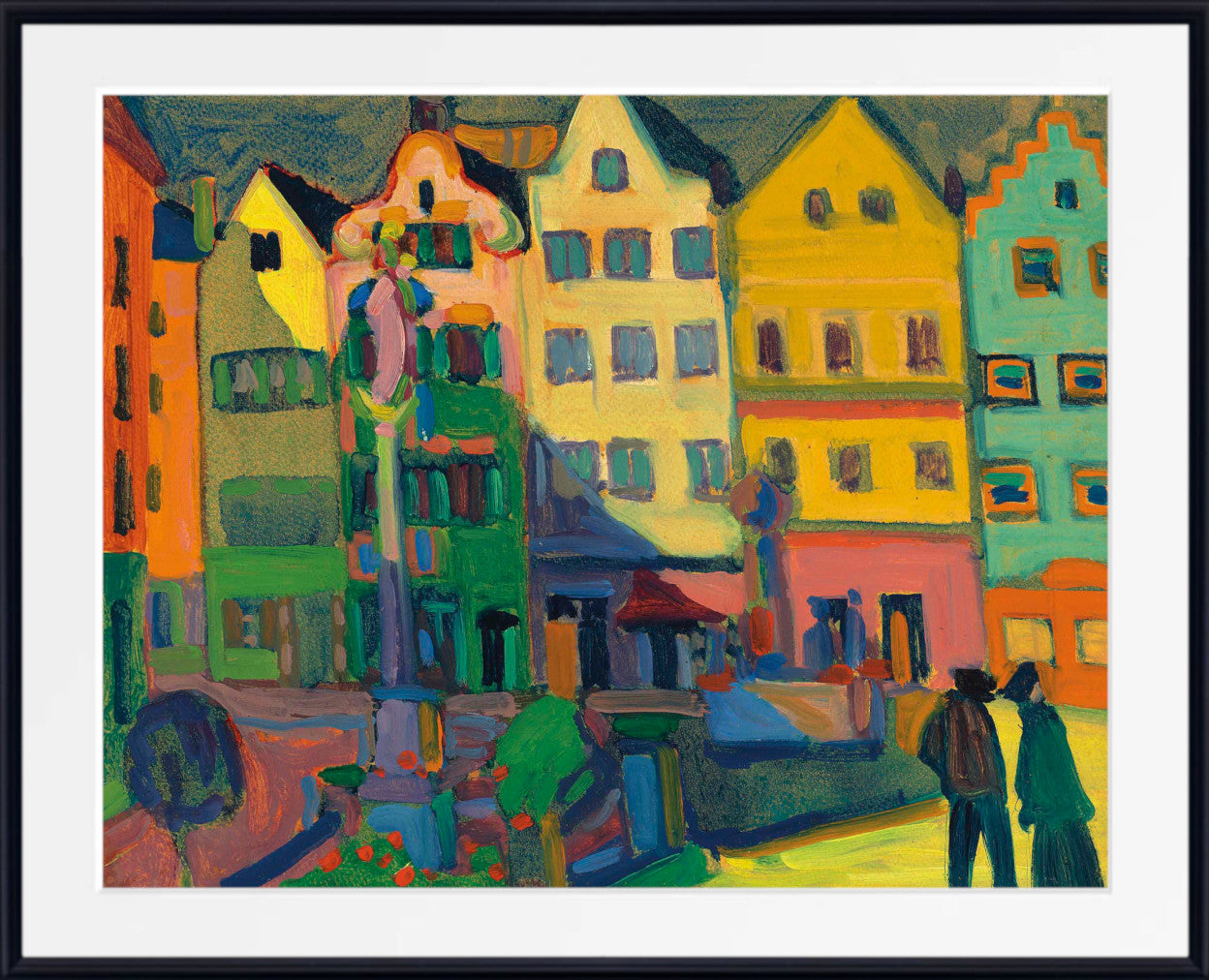
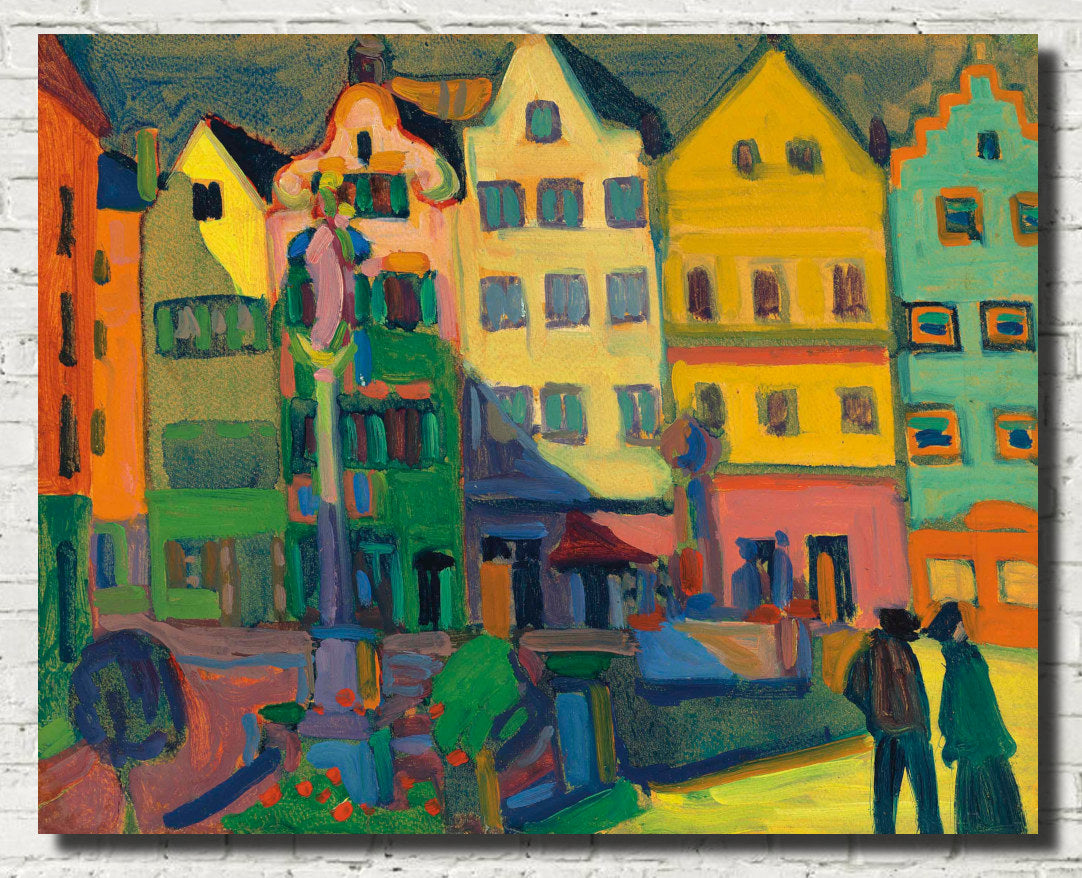
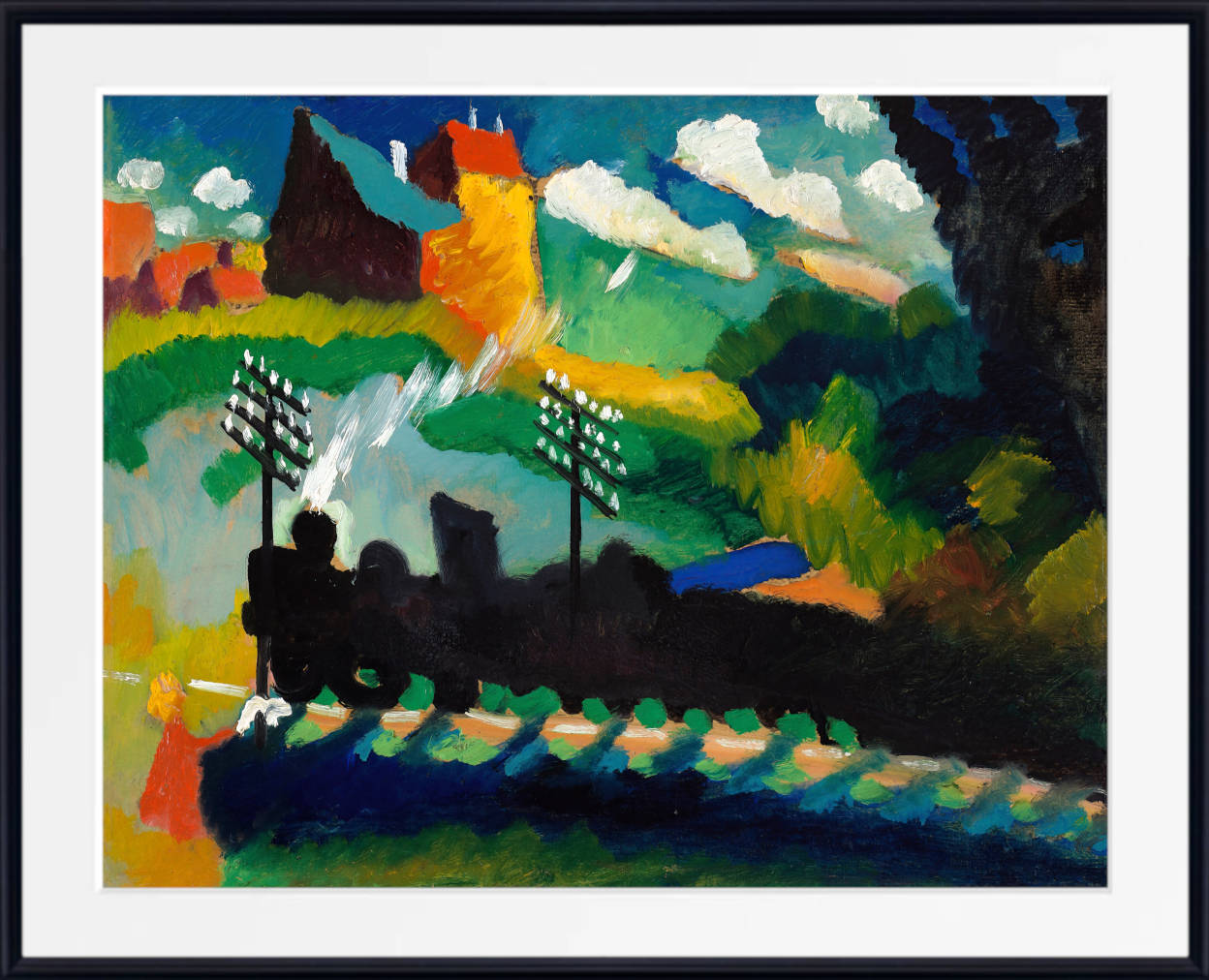
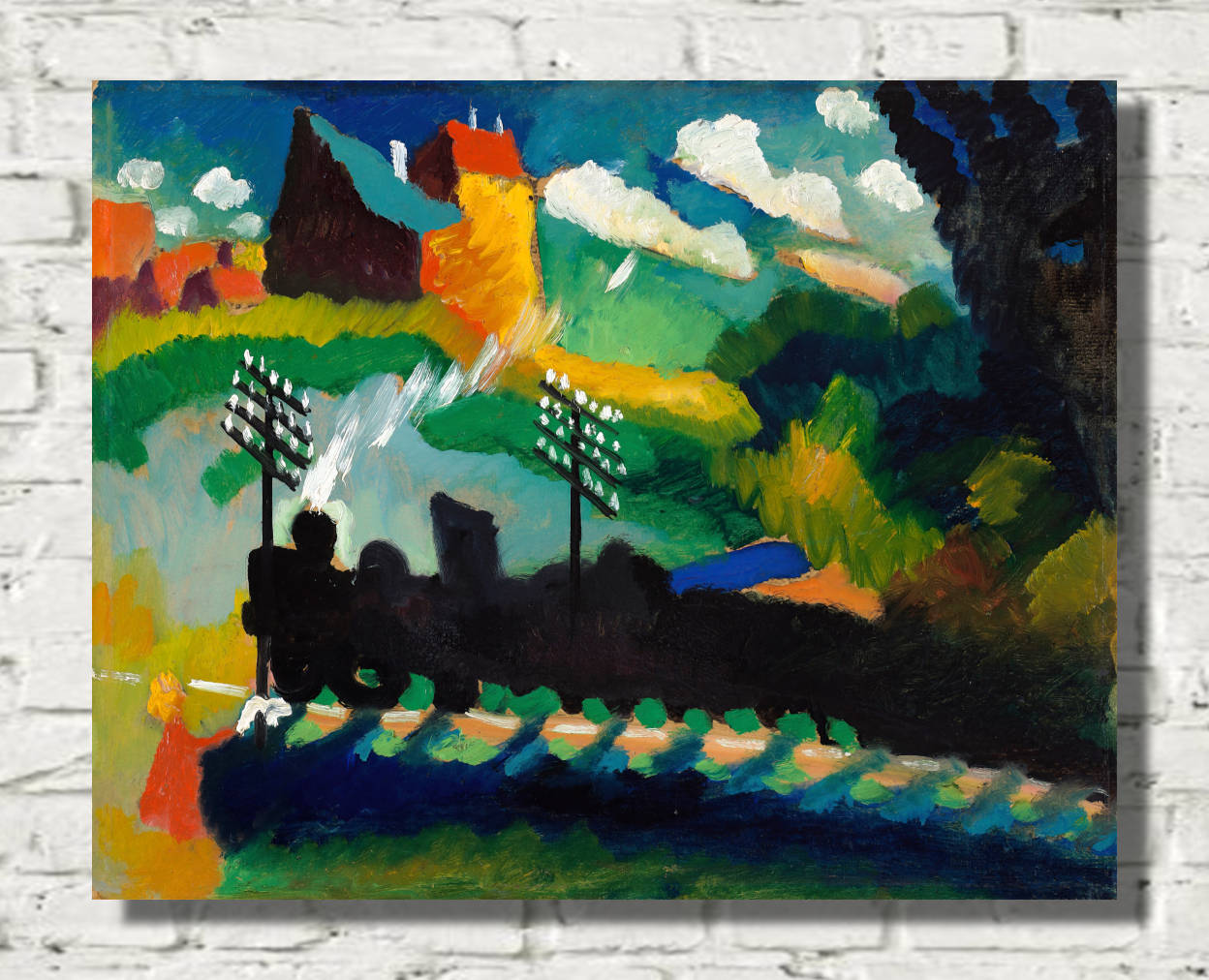
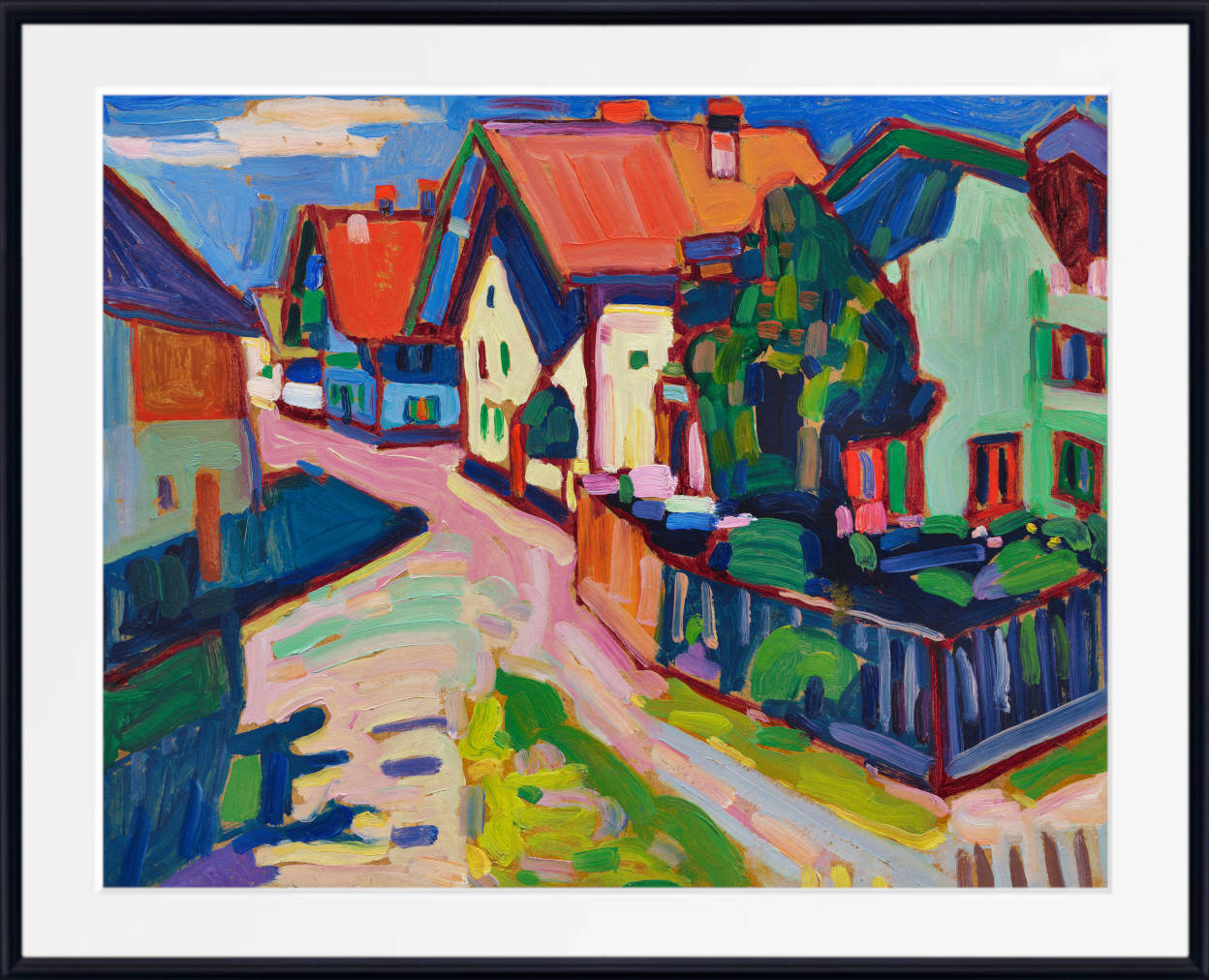
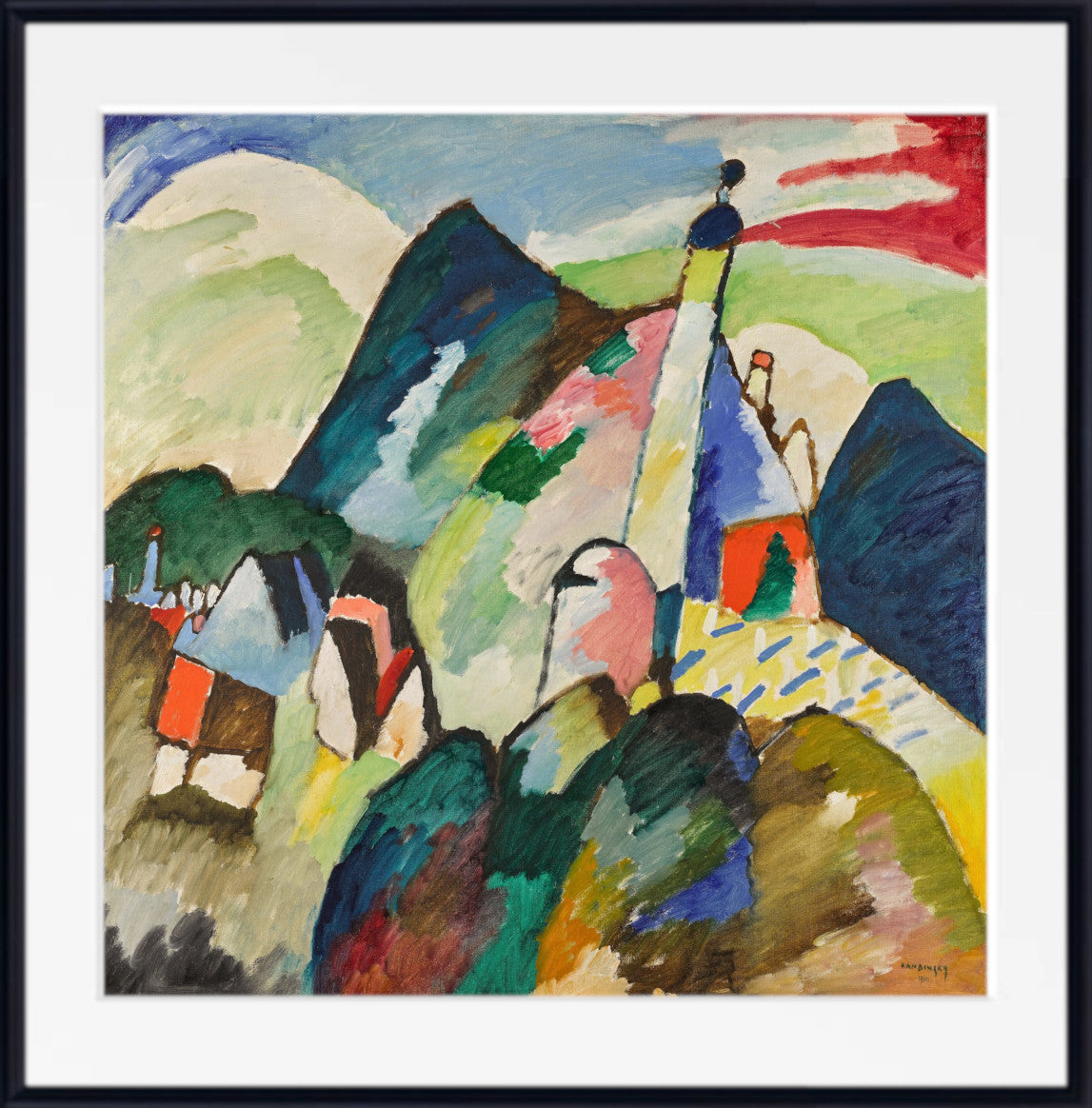
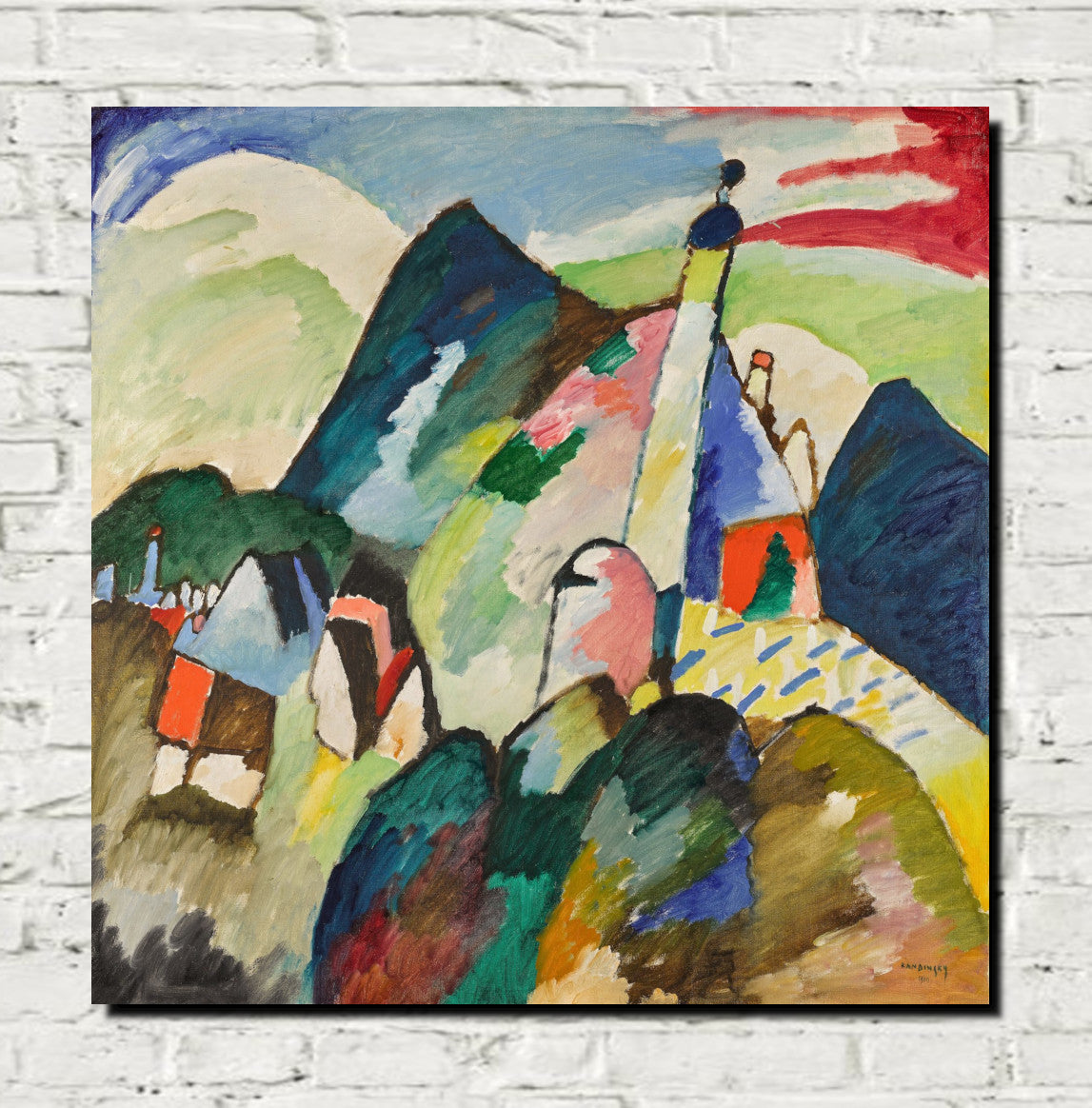
Paintings such as Murnau, Murnau Burggrabenstrasse 1, Railway near Murnau, Kochel – Straight Street and Murnau mit Kirche II still depict recognisable landscapes, buildings and streets.
Yet their colours are already beginning to separate from visible reality.
Mountains can become blue or purple. Houses are transformed into blocks of saturated red, yellow or green. Perspective becomes compressed and forms increasingly simplified.
Rather than carefully reproducing the landscape, Kandinsky began using the landscape as a framework through which colour and composition could express something more personal.
These paintings provide one of the clearest ways to follow his movement from figurative painting towards abstraction.
Kandinsky and Der Blaue Reiter
Kandinsky’s experiments around Munich and Murnau eventually contributed to the formation of Der Blaue Reiter — The Blue Rider.
Together with Franz Marc, Kandinsky became one of the central forces behind this influential group of artists, which emerged in Munich in 1911.
Artists connected with the Blue Rider were united less by one particular painting style than by an interest in colour, spirituality, symbolism and artistic freedom.
Kandinsky increasingly believed that colours and forms could communicate directly with the emotions without depending upon conventional representation.
Explore GalleryThane’s dedicated Der Blaue Reiter Prints collection for carefully selected works from Kandinsky’s Murnau and Blue Rider years alongside paintings by Franz Marc, August Macke, Alexej von Jawlensky and Marianne von Werefkin.
You can also explore the wider movement in our Expressionist Art Prints collection.
Saint George, Riders and Symbolic Imagery
Although Kandinsky moved progressively towards abstraction, recognisable imagery did not disappear immediately.
Riders were particularly important.
The horse and rider had long carried religious, heroic and folkloric associations and appeared repeatedly in Kandinsky’s early work.
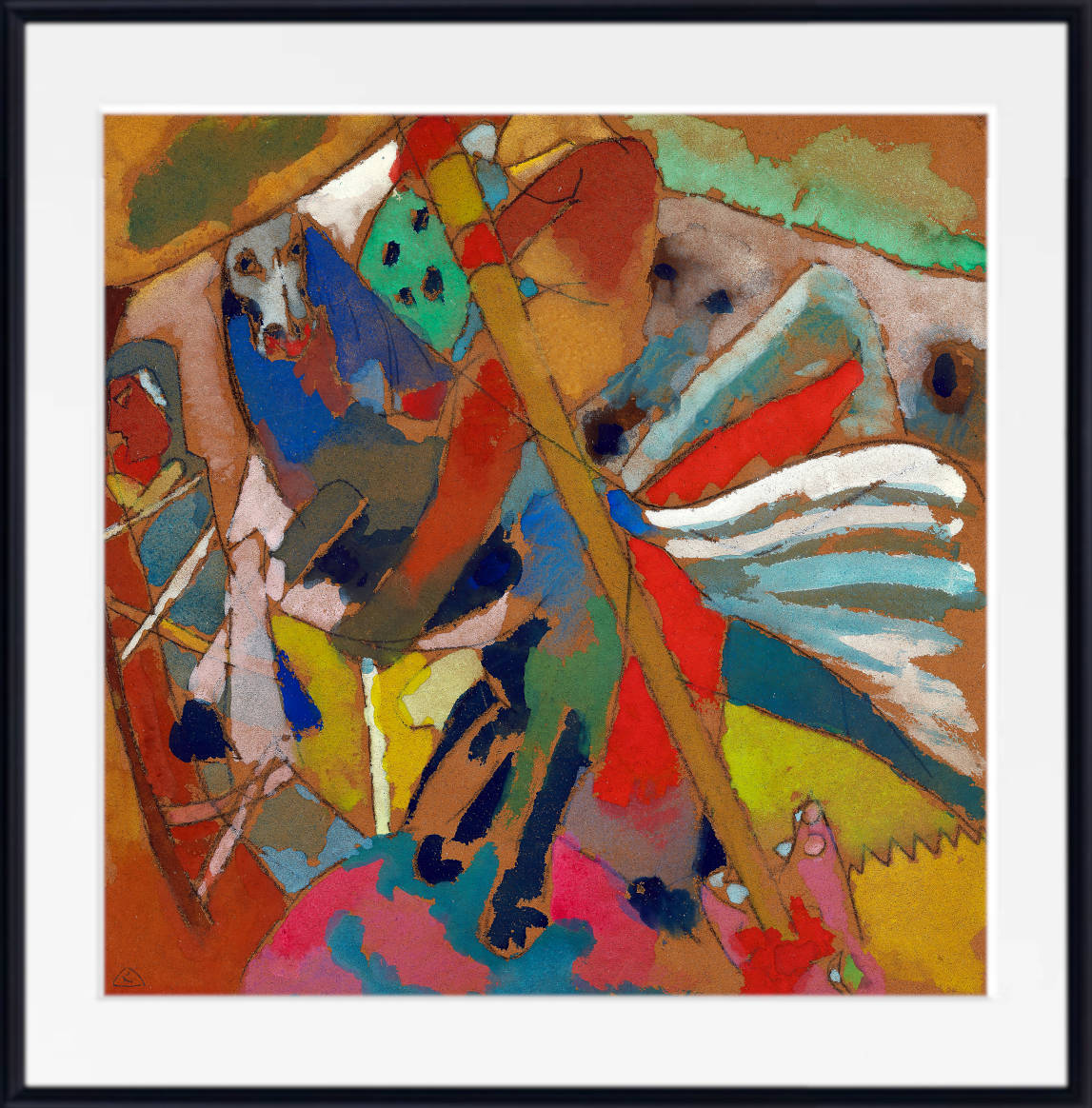
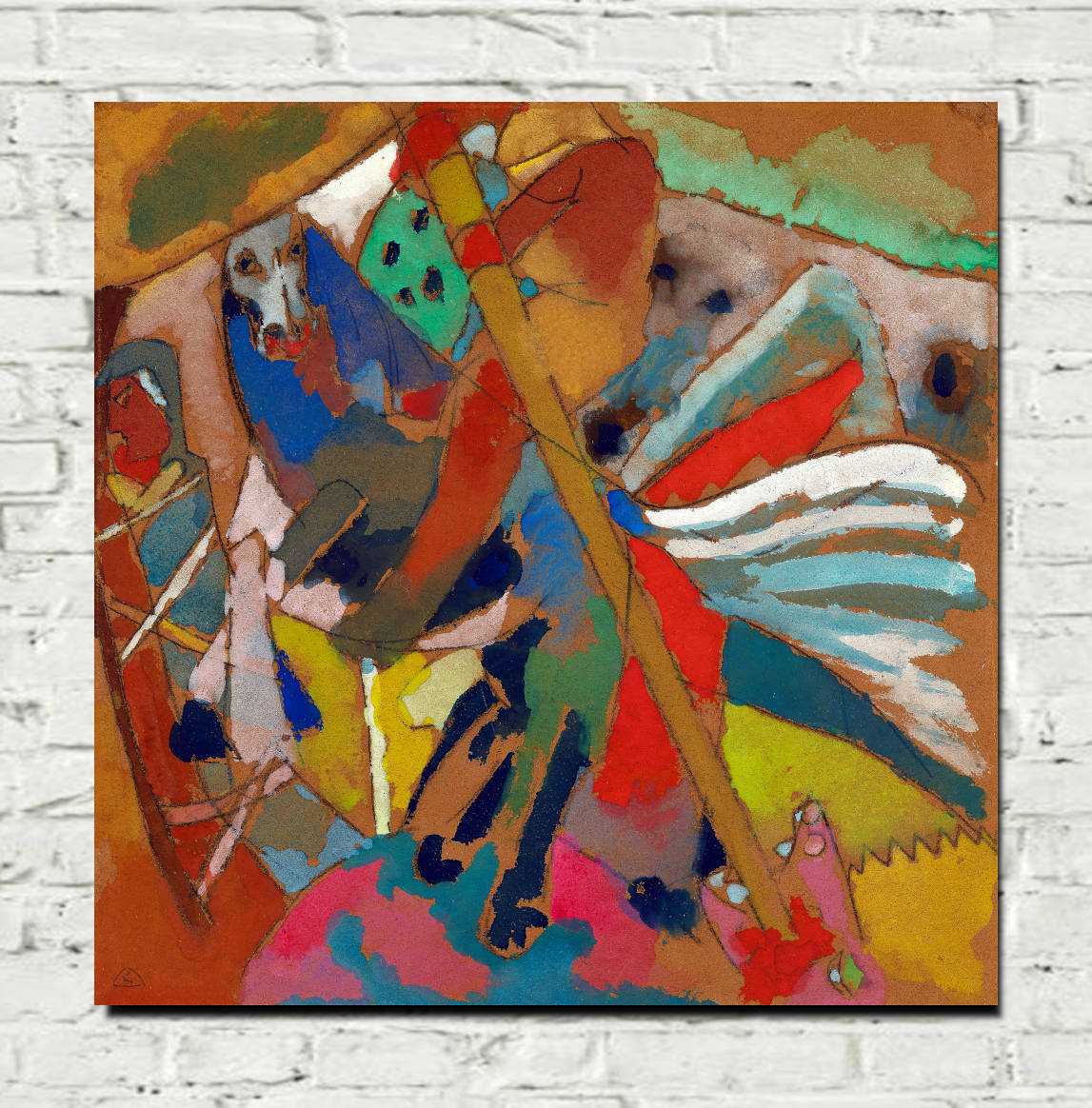
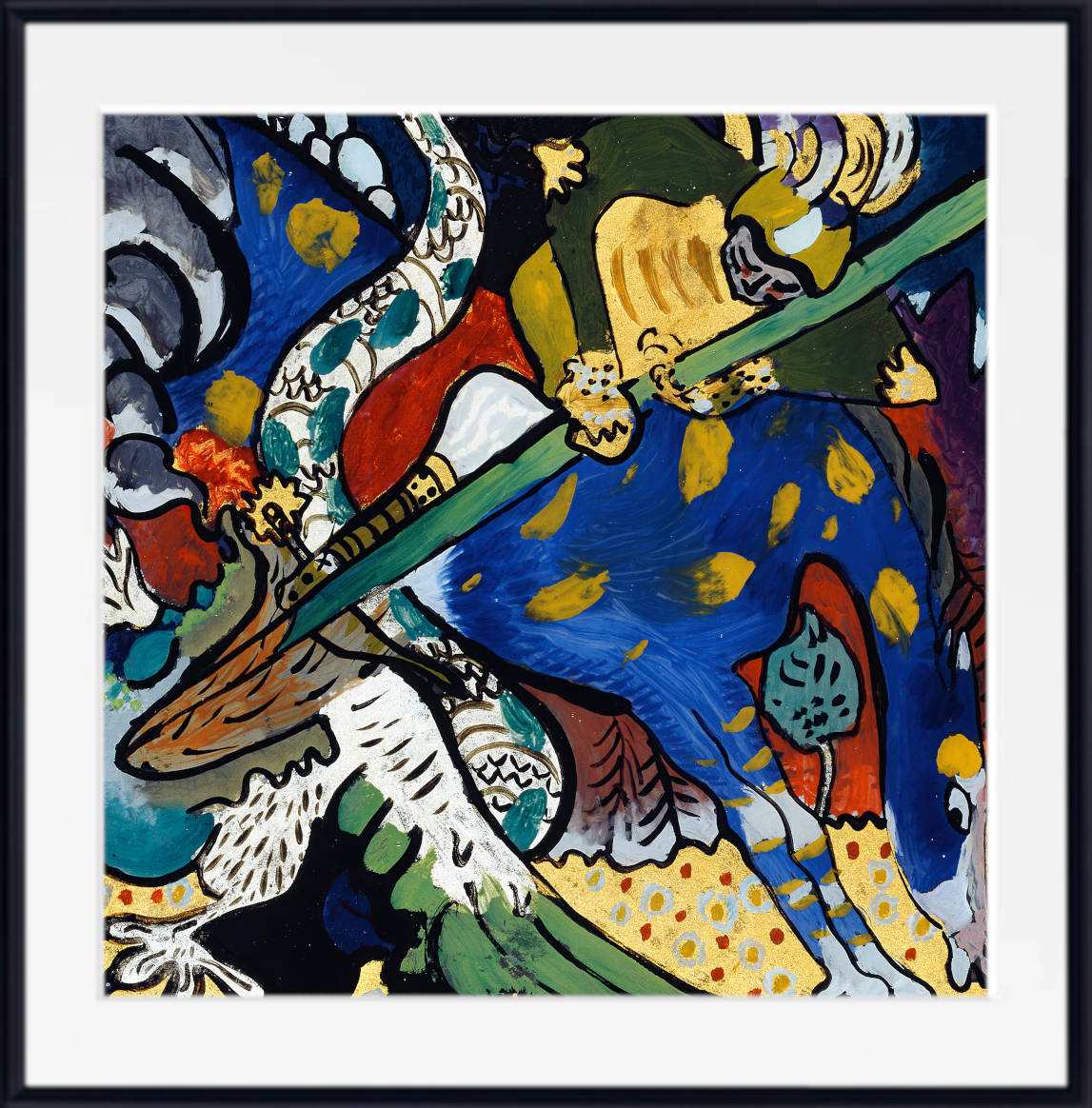
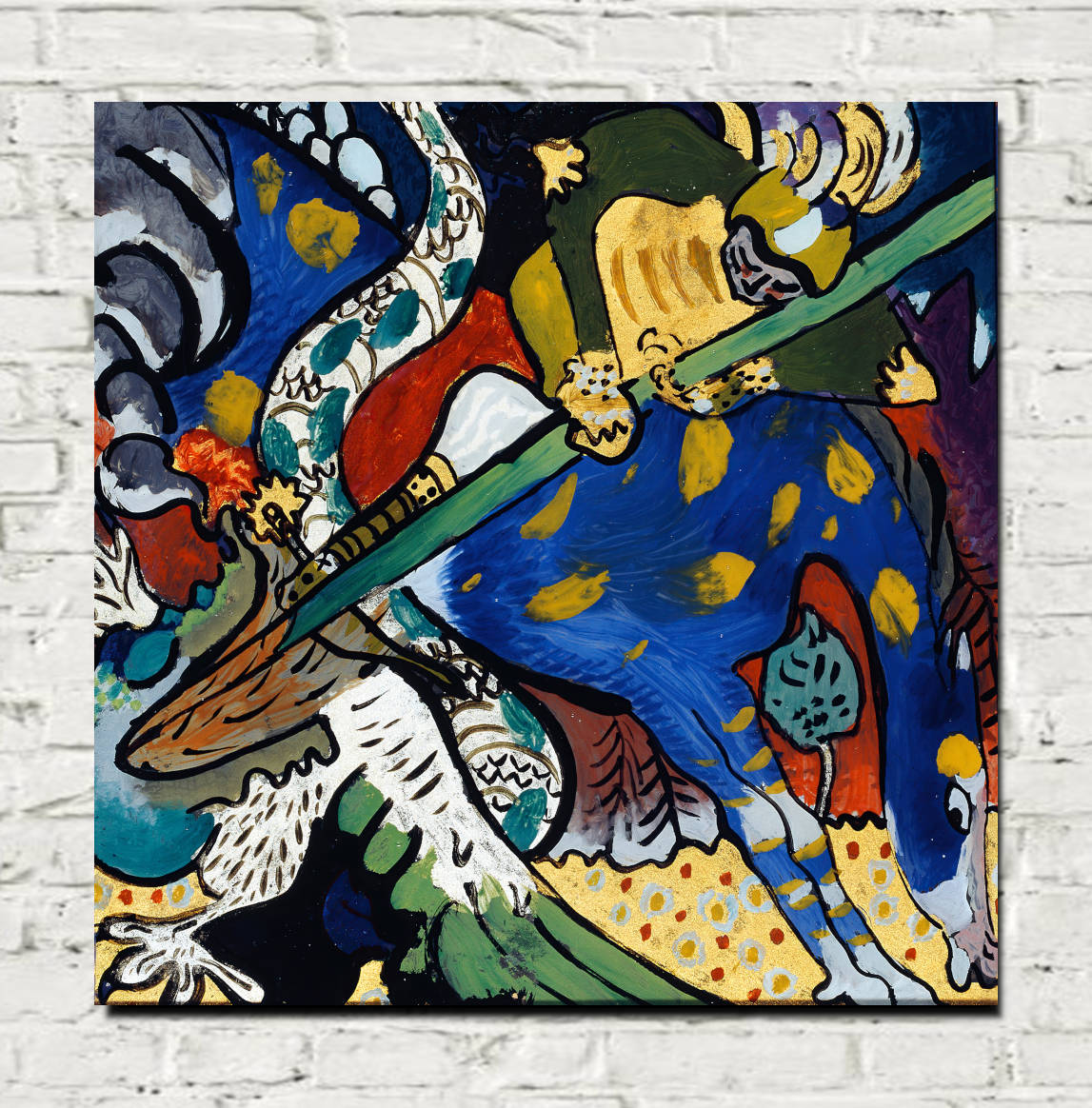
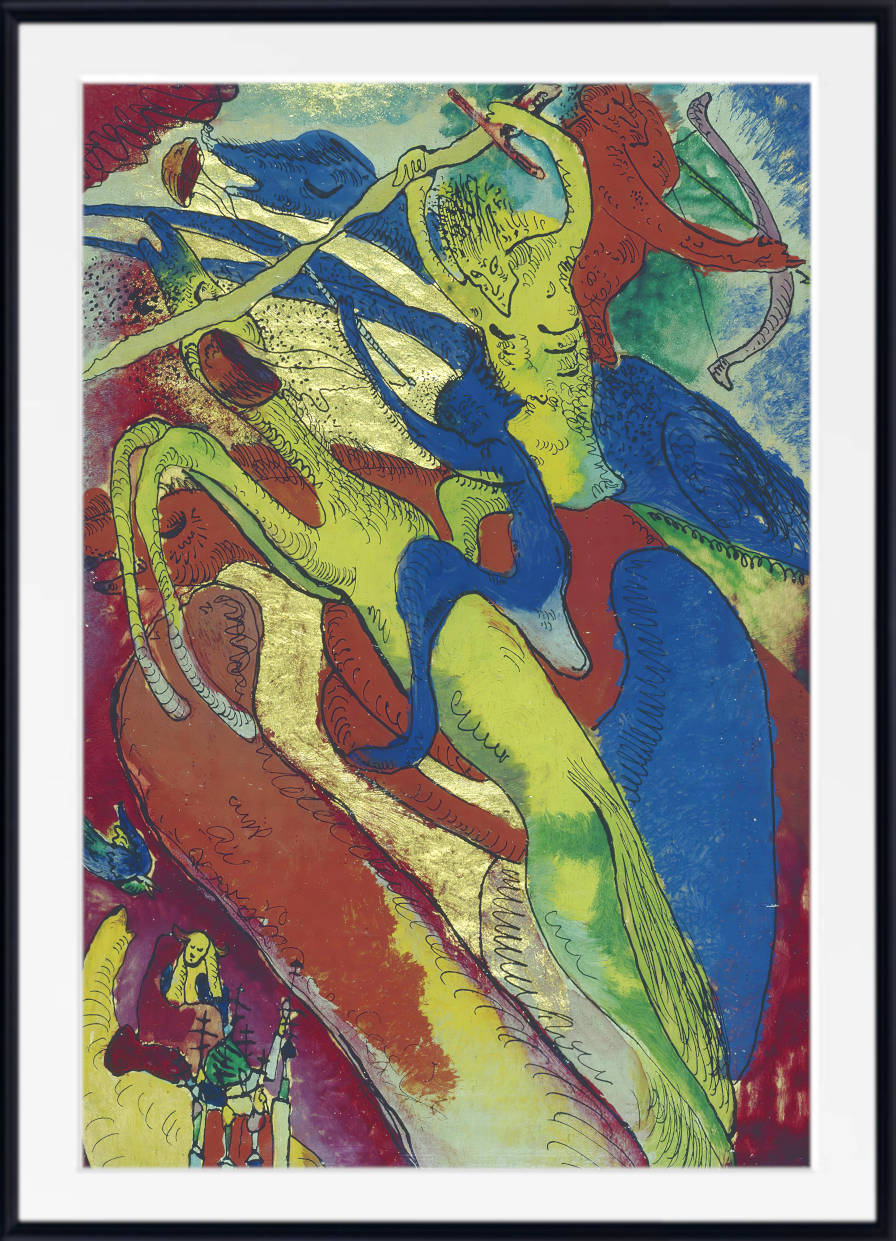
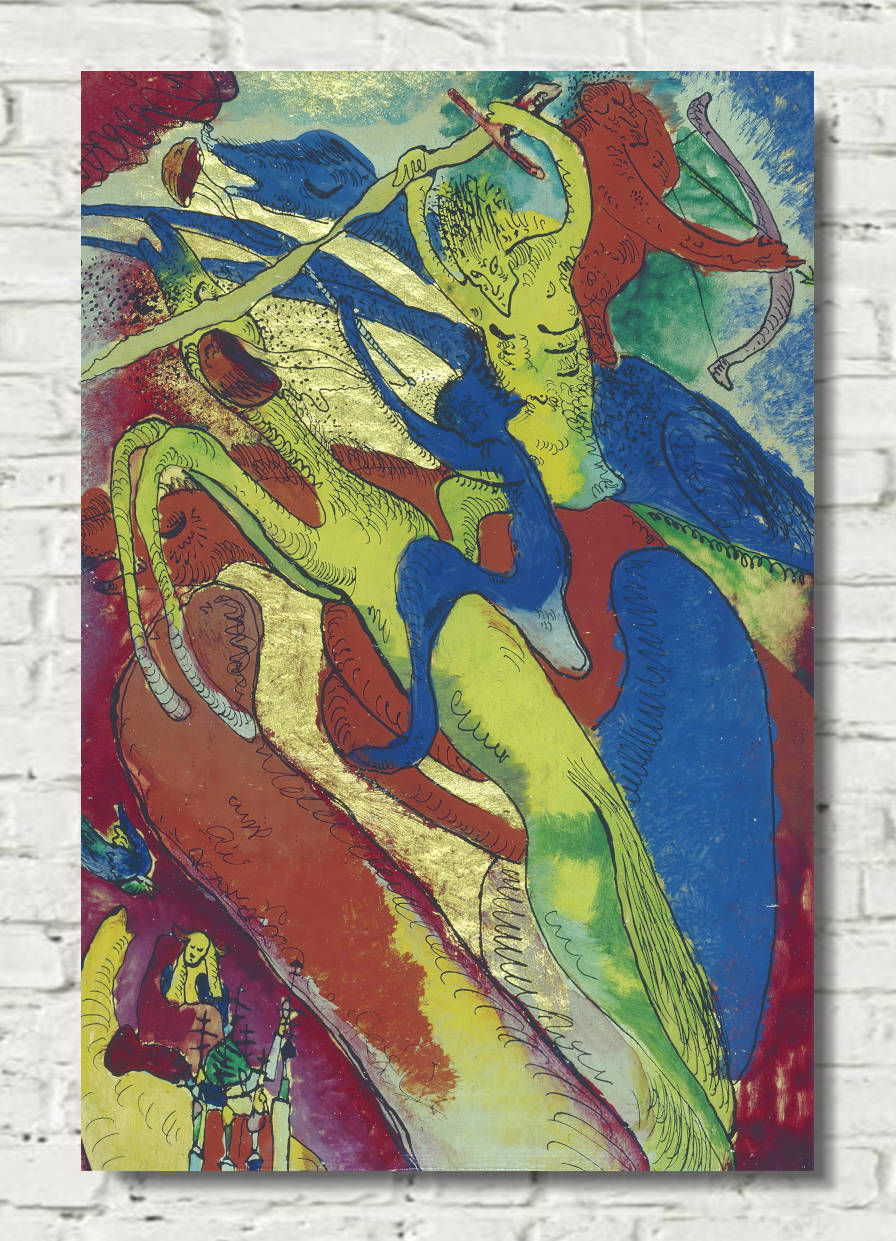
Paintings such as Saint George I, Saint George II and Apocalyptic Riders I use recognisable figures while transforming them through increasingly liberated colour and form.
This transitional period is particularly important because it reveals abstraction developing gradually rather than appearing suddenly.
A horse, rider, mountain or building might still be present, but its role increasingly became subordinate to the overall rhythm of the painting.
From Landscape to Abstraction
By the early 1910s Kandinsky was pushing further away from recognisable subject matter.
His paintings became complex fields of colour, line and movement.
Titles such as Improvisation, Impression and Composition reveal the importance of music to his thinking.
An improvisation suggested spontaneity.
A composition implied a more carefully organised work comparable with a major musical composition.
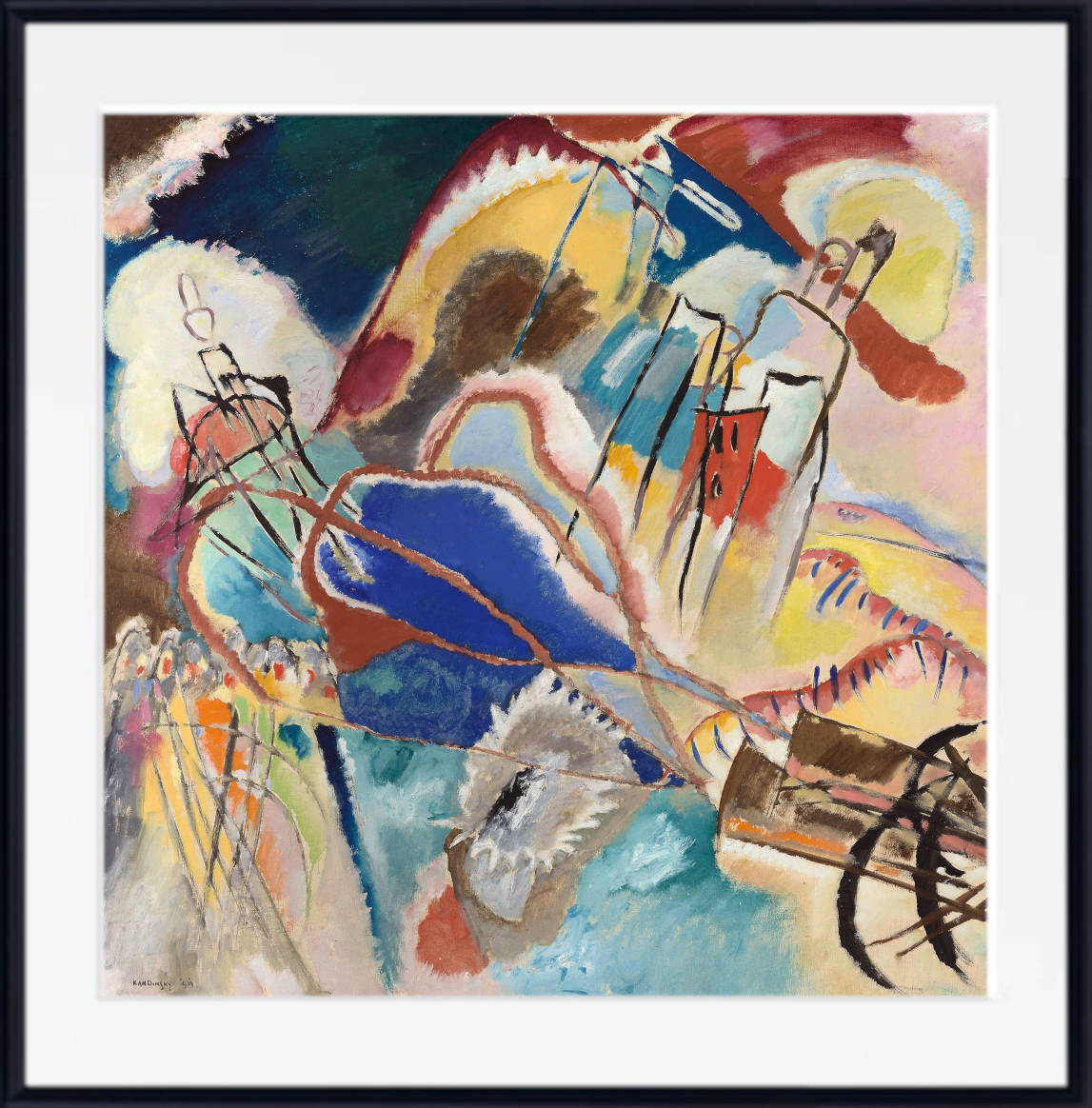
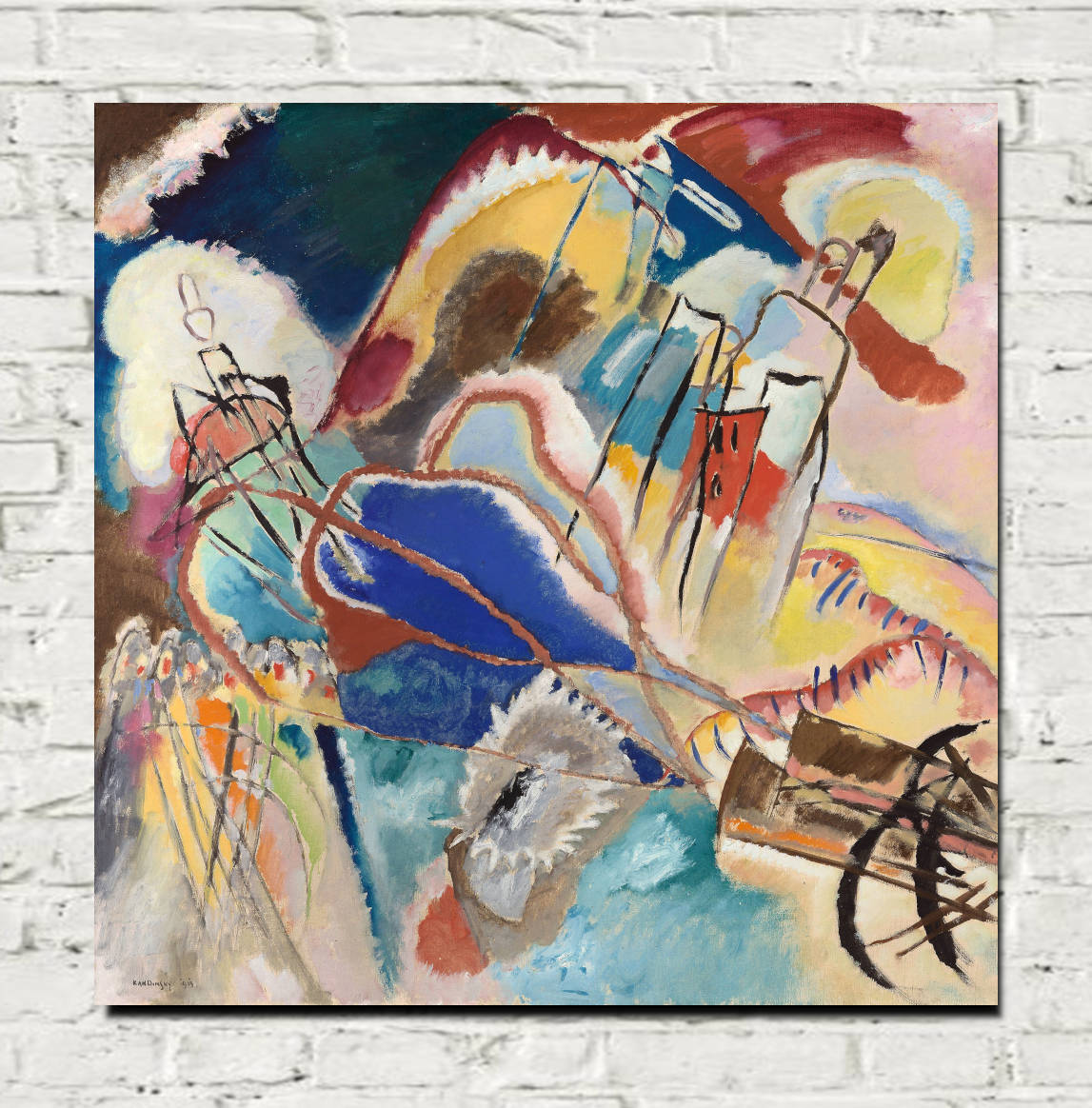
Paintings such as Improvisation No. 30 (Cannons) retain traces of recognisable imagery, but these objects are increasingly absorbed into the surrounding colour and movement.
Kandinsky was approaching a point at which a painting no longer needed to represent a visible object at all.
Composition VII
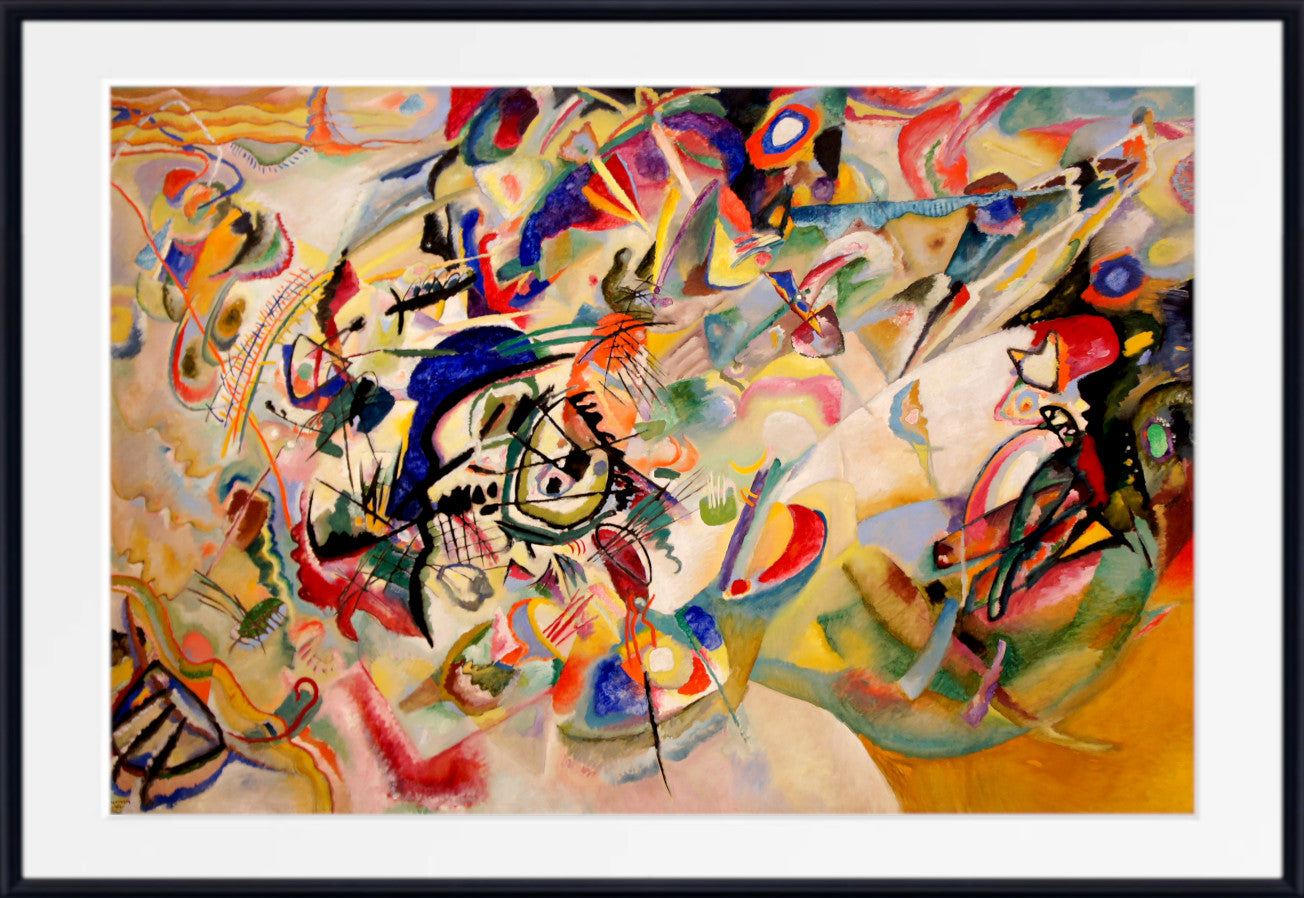
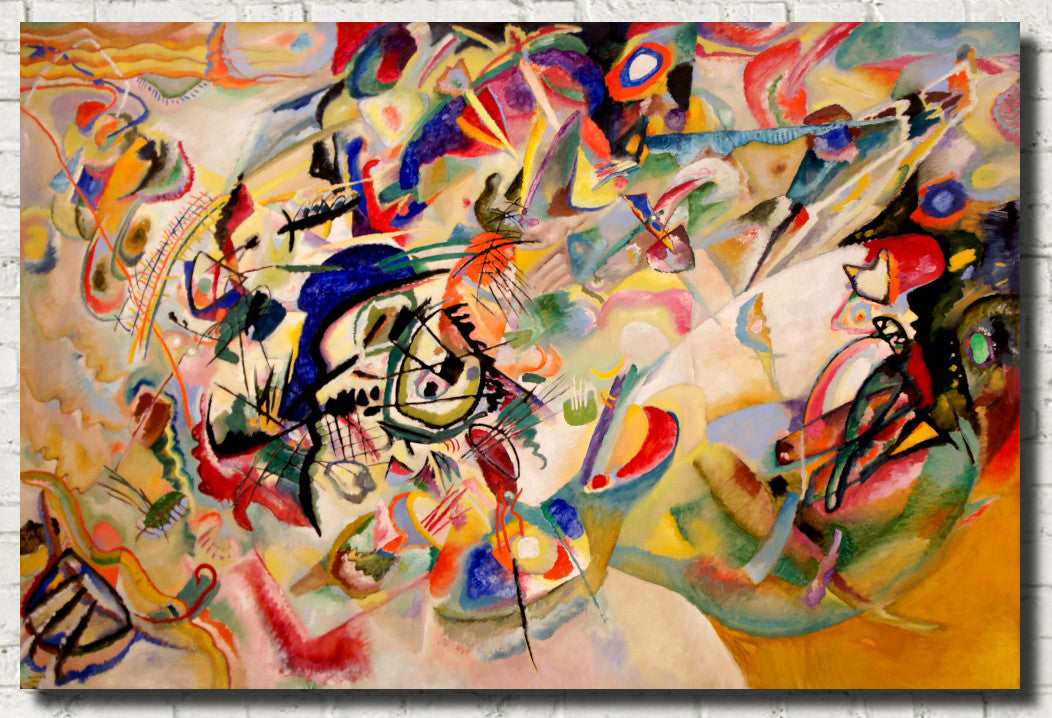
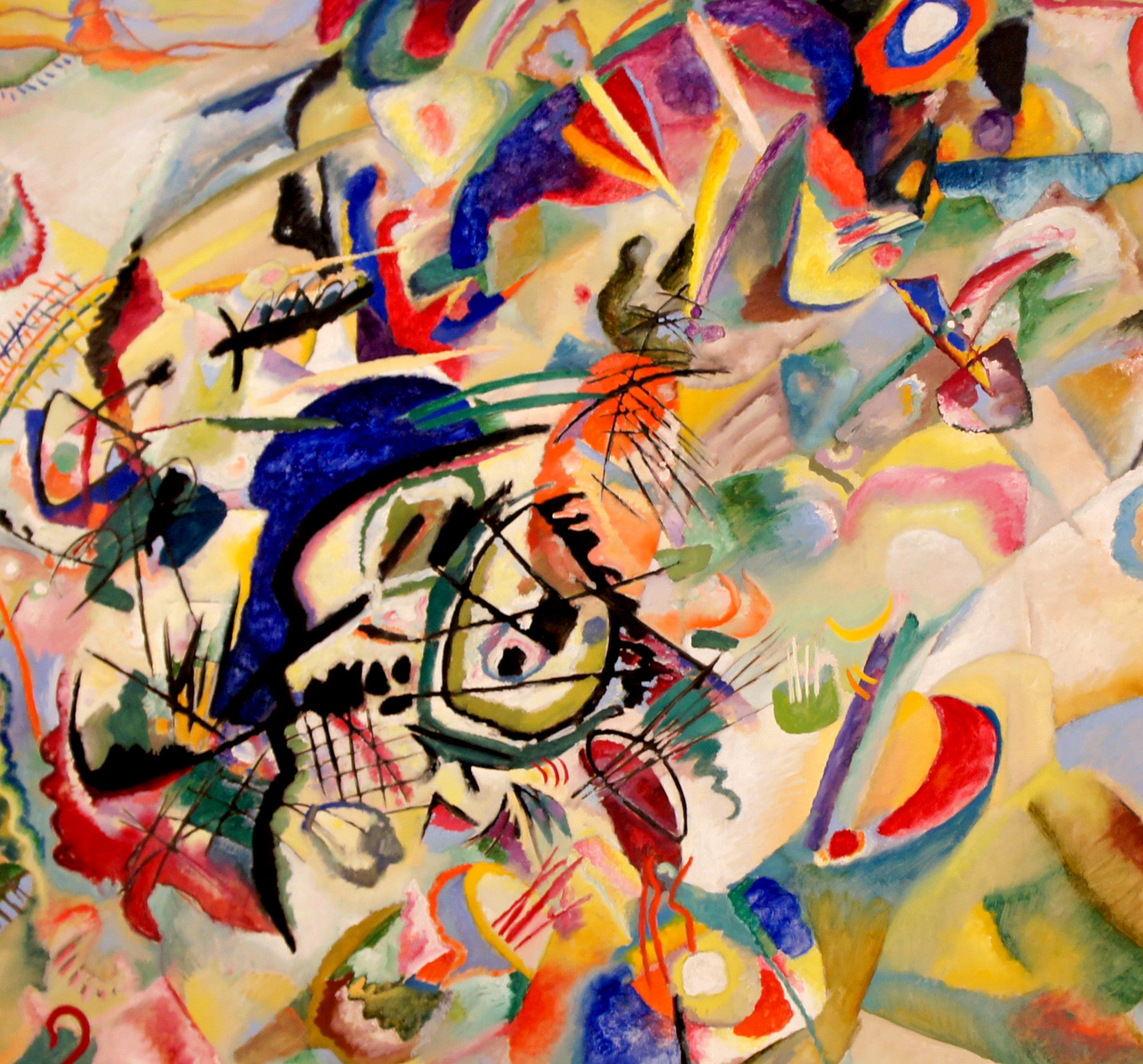
Composition VII, painted in 1913, is one of Kandinsky’s most celebrated paintings and one of the defining works of early abstraction.
Its enormous field of intersecting colours, curves, diagonals and swirling forms initially appears completely non-representational.
Yet the painting emerged from a complex process of preparatory studies and incorporated themes Kandinsky had explored previously, including catastrophe, rebirth and spiritual transformation.
Rather than illustrating these ideas literally, Kandinsky transformed them into colour and movement.
Composition VII represents the culmination of his Blue Rider-period experiments and remains one of the strongest examples of his belief that painting could operate with an emotional power comparable to music.
Why Music Was So Important to Kandinsky
Music profoundly influenced Kandinsky’s conception of abstract art.
A composer does not need to imitate a physical object to create an emotional response.
A combination of notes can create tension, tranquillity, excitement or melancholy entirely through sound.
Kandinsky believed painting could achieve something similar.
Colours could function like musical tones. Lines could create rhythms. Shapes could interact harmoniously or create visual tension.
This helps explain why his abstract paintings should not simply be understood as decorative arrangements.
For Kandinsky, colour and form were capable of communicating something directly to the viewer.
Kandinsky’s Theory of Colour
Colour occupied a central position in Kandinsky’s artistic theories.
He believed individual colours possessed particular emotional qualities and that their effect could change when combined with different shapes and neighbouring colours.
Blue frequently suggested depth and spirituality.
Yellow could appear energetic and expansive.
Red possessed strength and intensity.
Black might suggest silence or finality, while white could represent possibility.
These ideas were not intended as rigid rules. What mattered was the interaction between colours within the whole composition.
His fascination with colour is one reason Kandinsky prints remain so effective in contemporary interiors more than a century after many of the originals were painted.
Kandinsky and the Bauhaus
Kandinsky’s career entered another important phase when he joined the Bauhaus in 1922.
The influential German school brought together art, architecture, craft and design in an attempt to rethink the relationship between creativity and modern life.
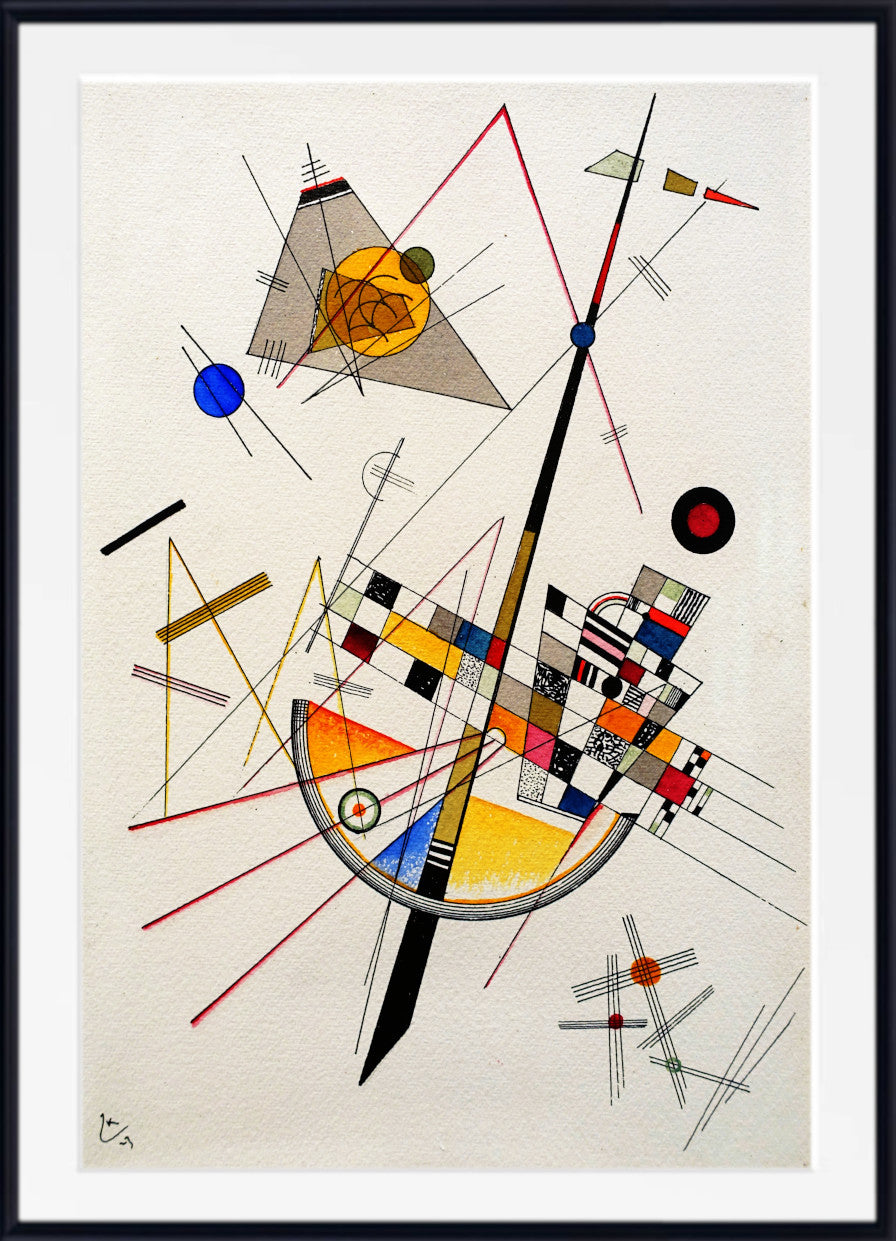
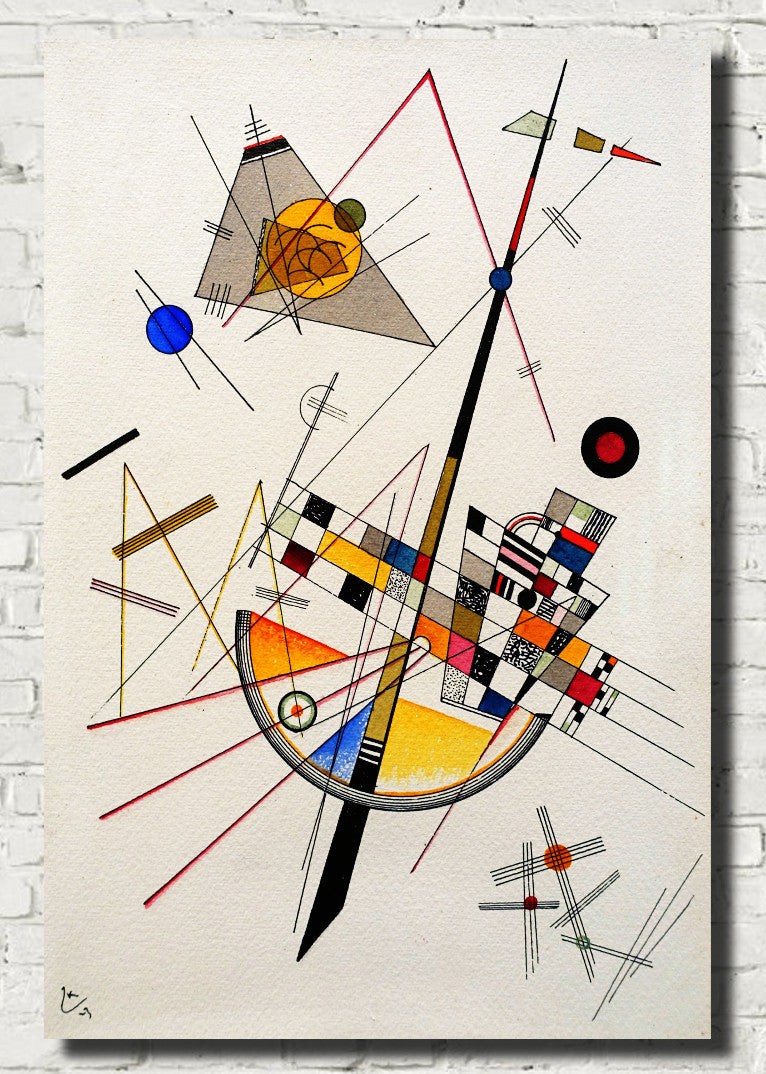
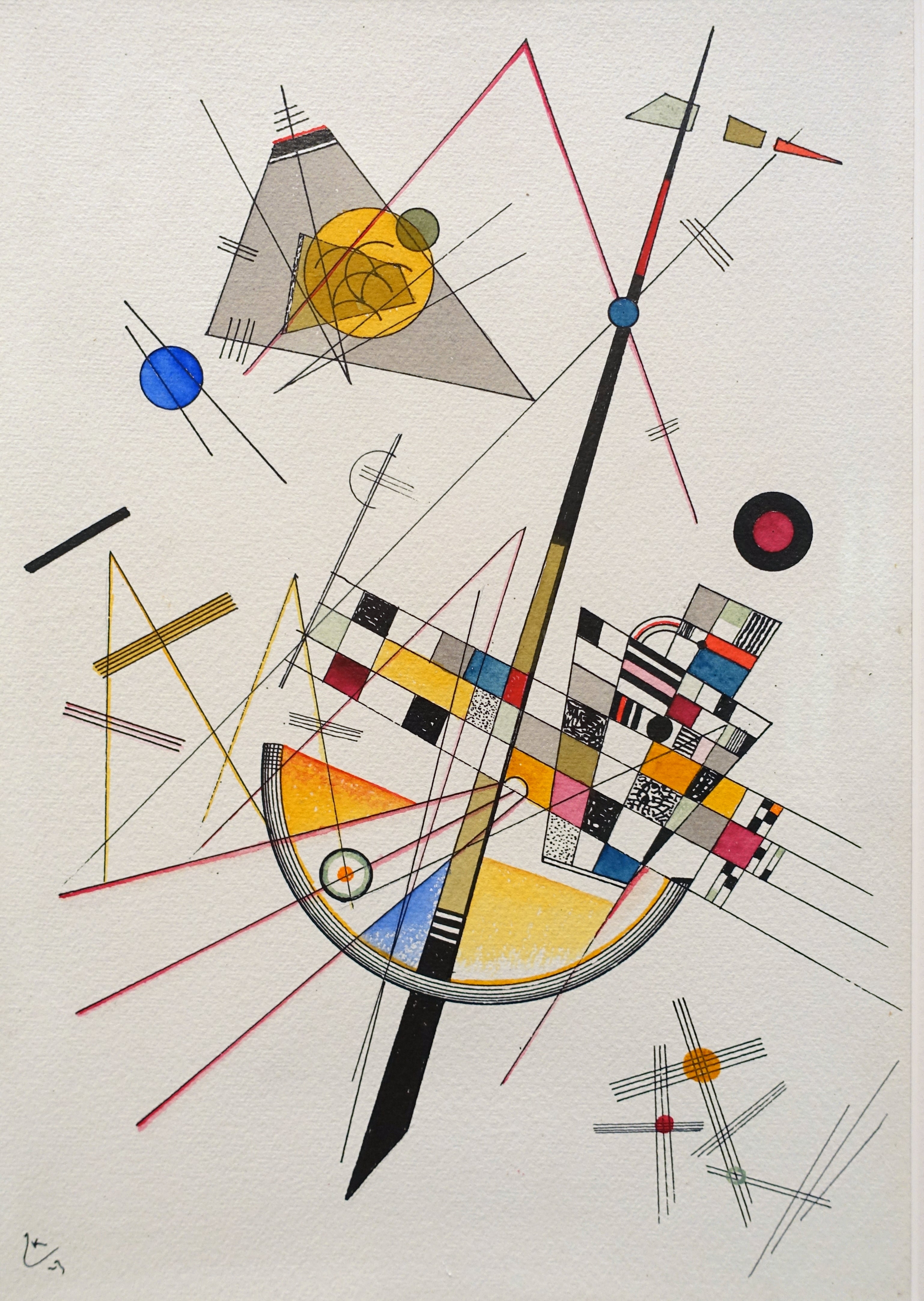
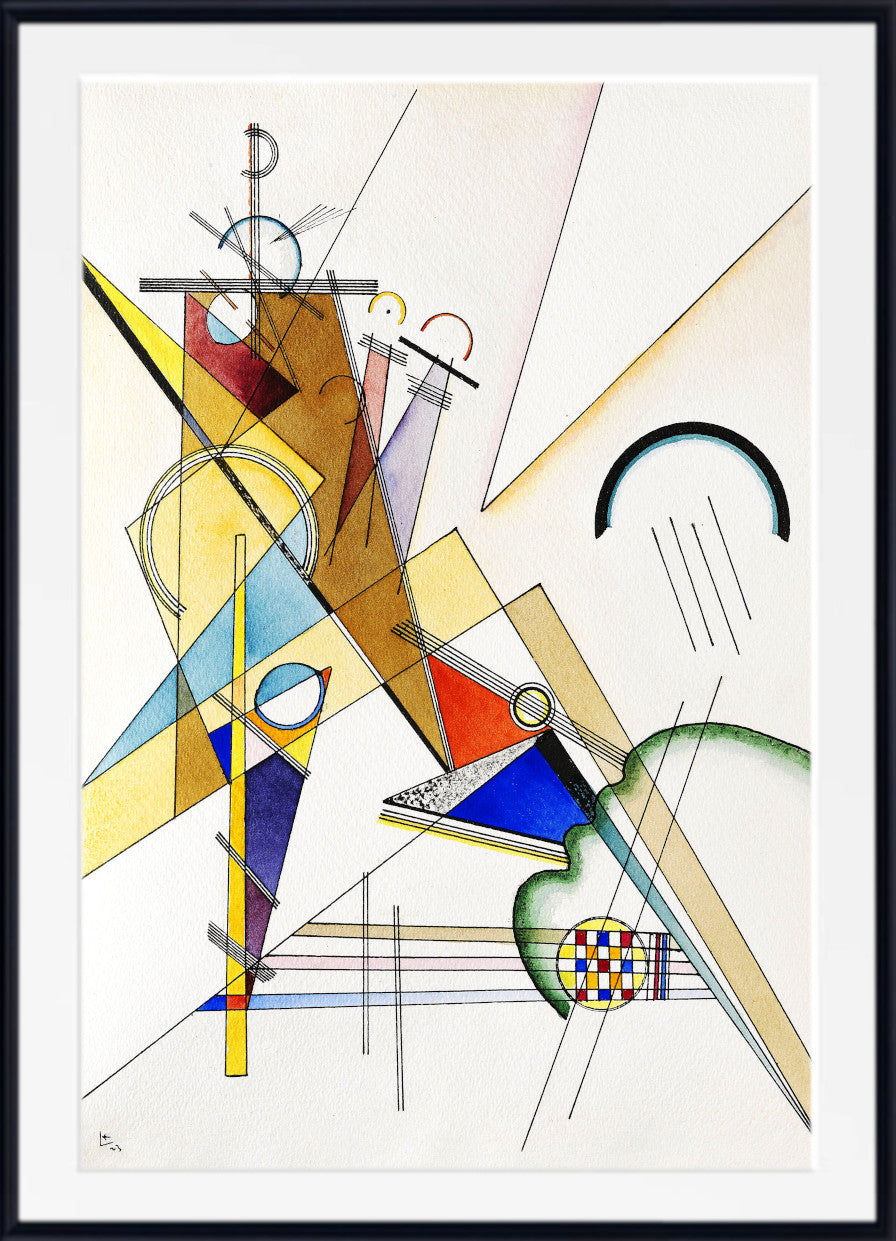
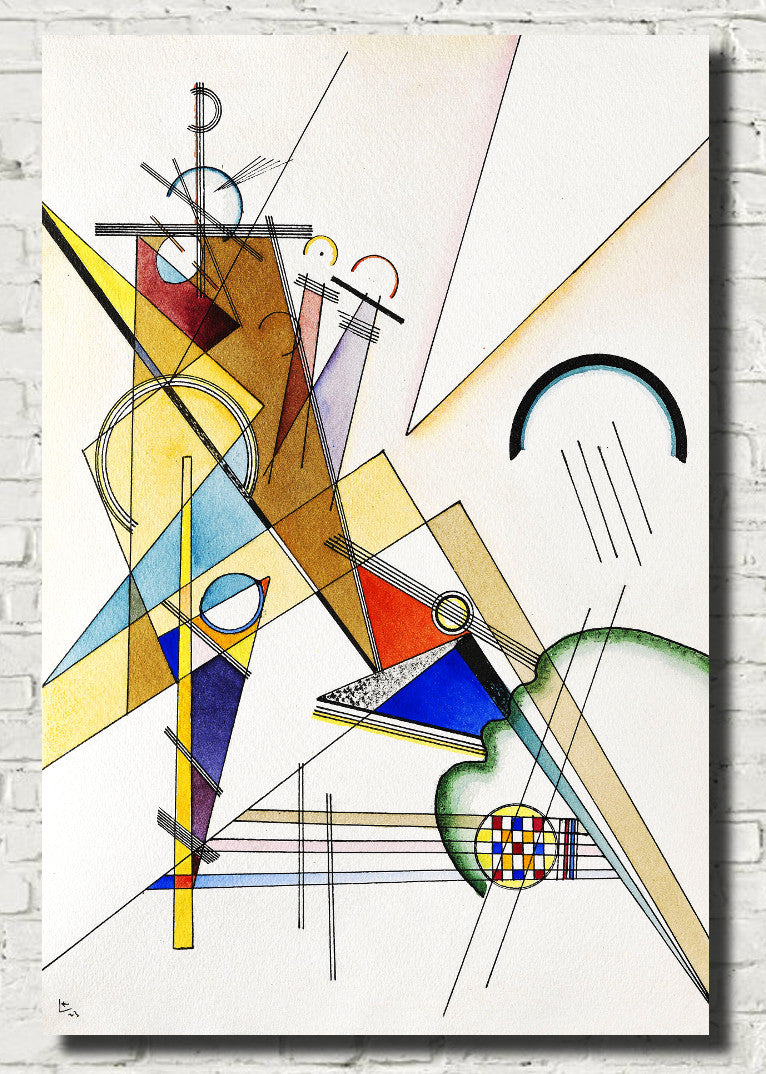
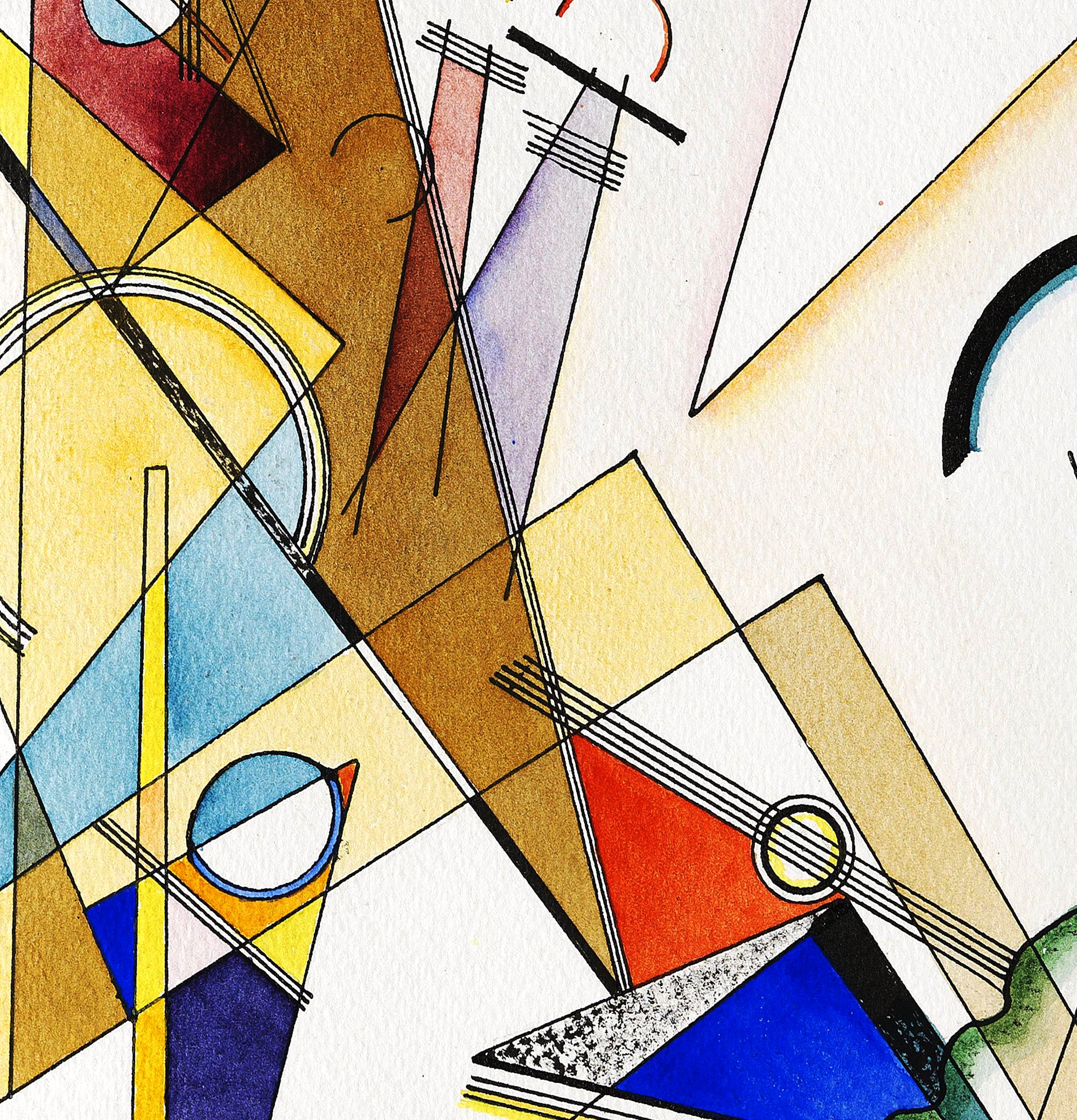
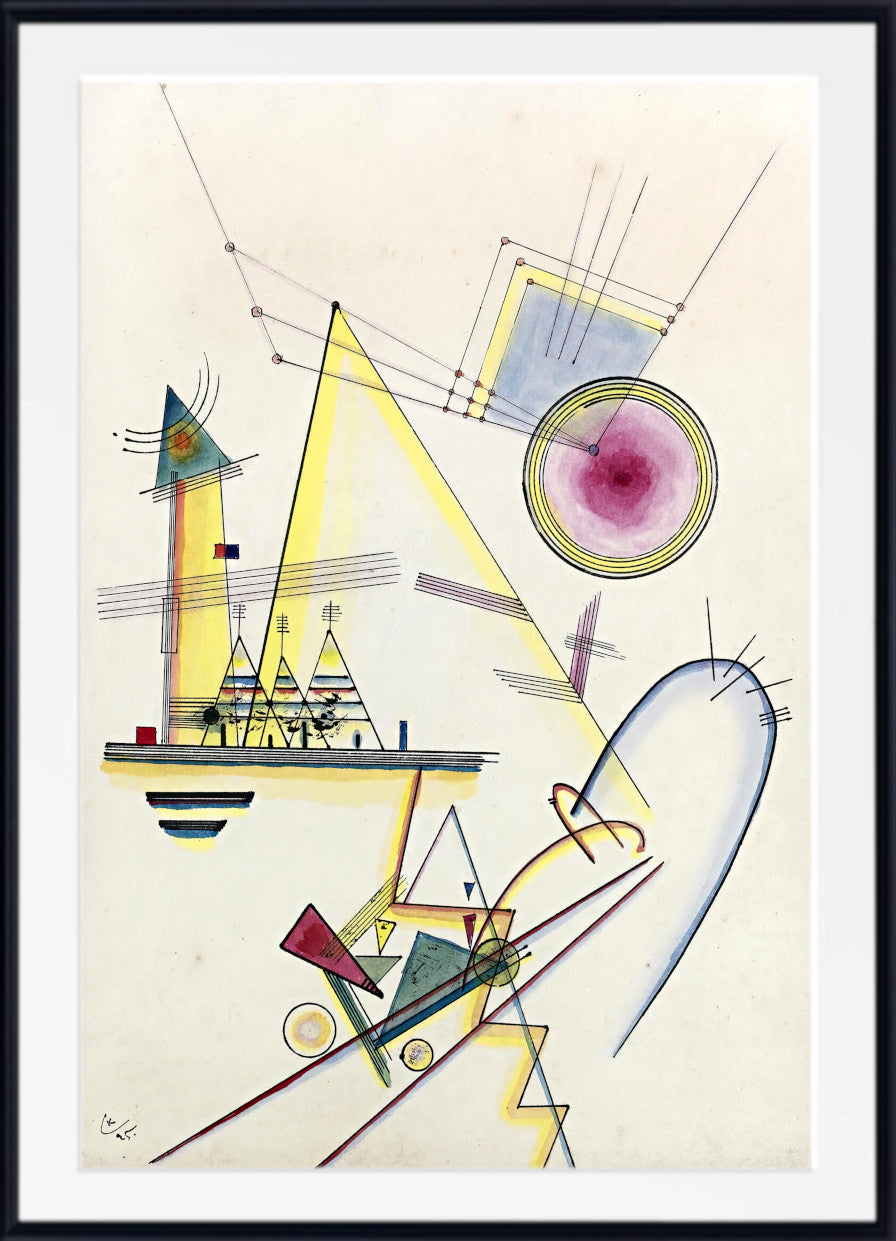
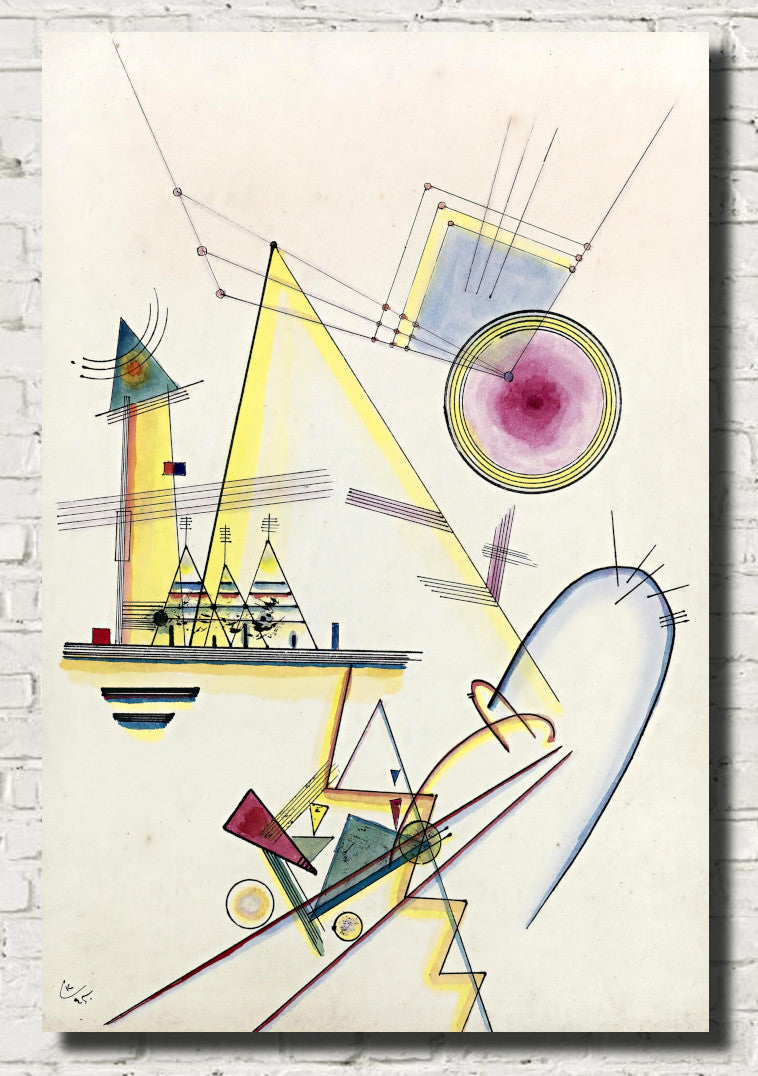
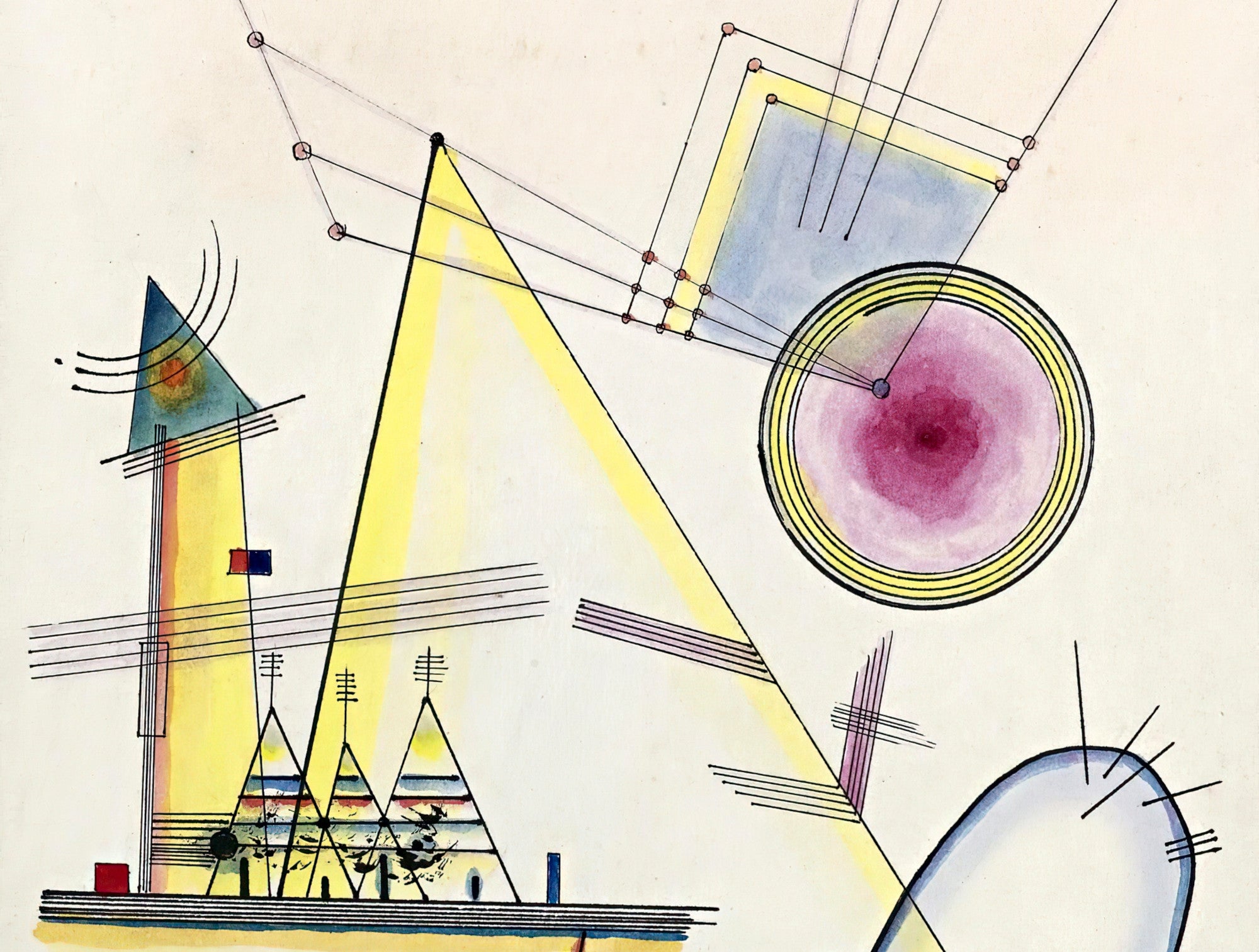
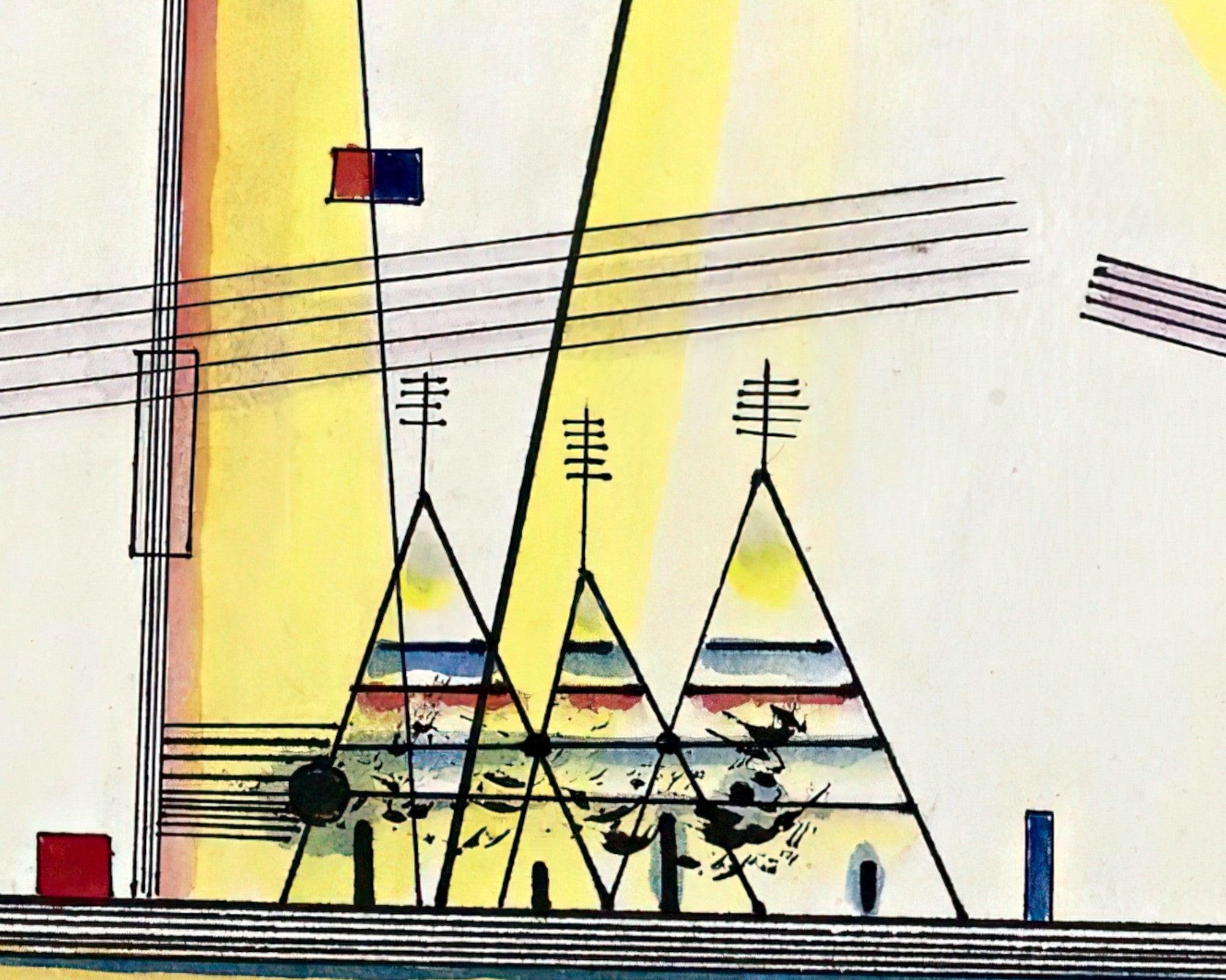
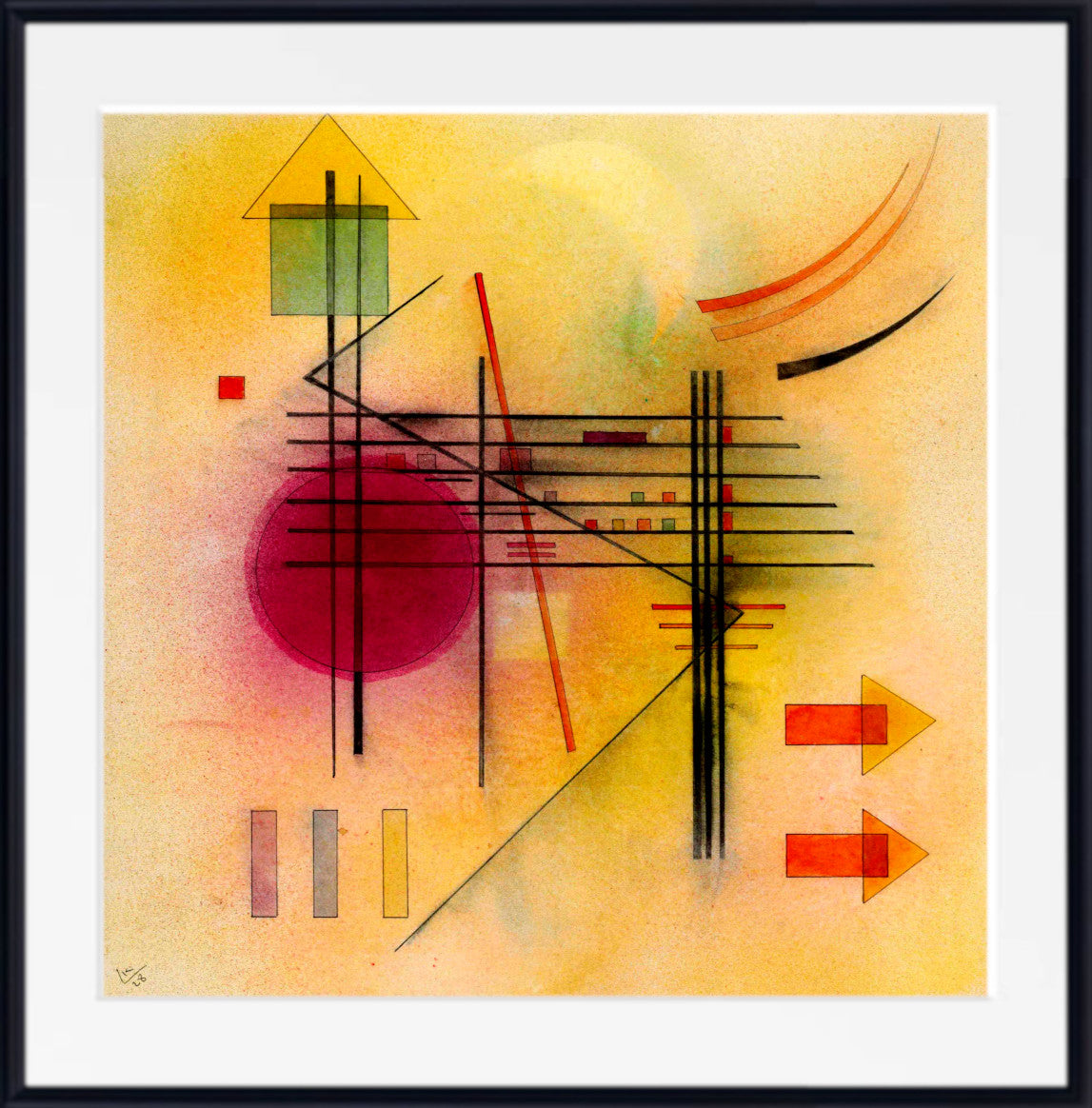
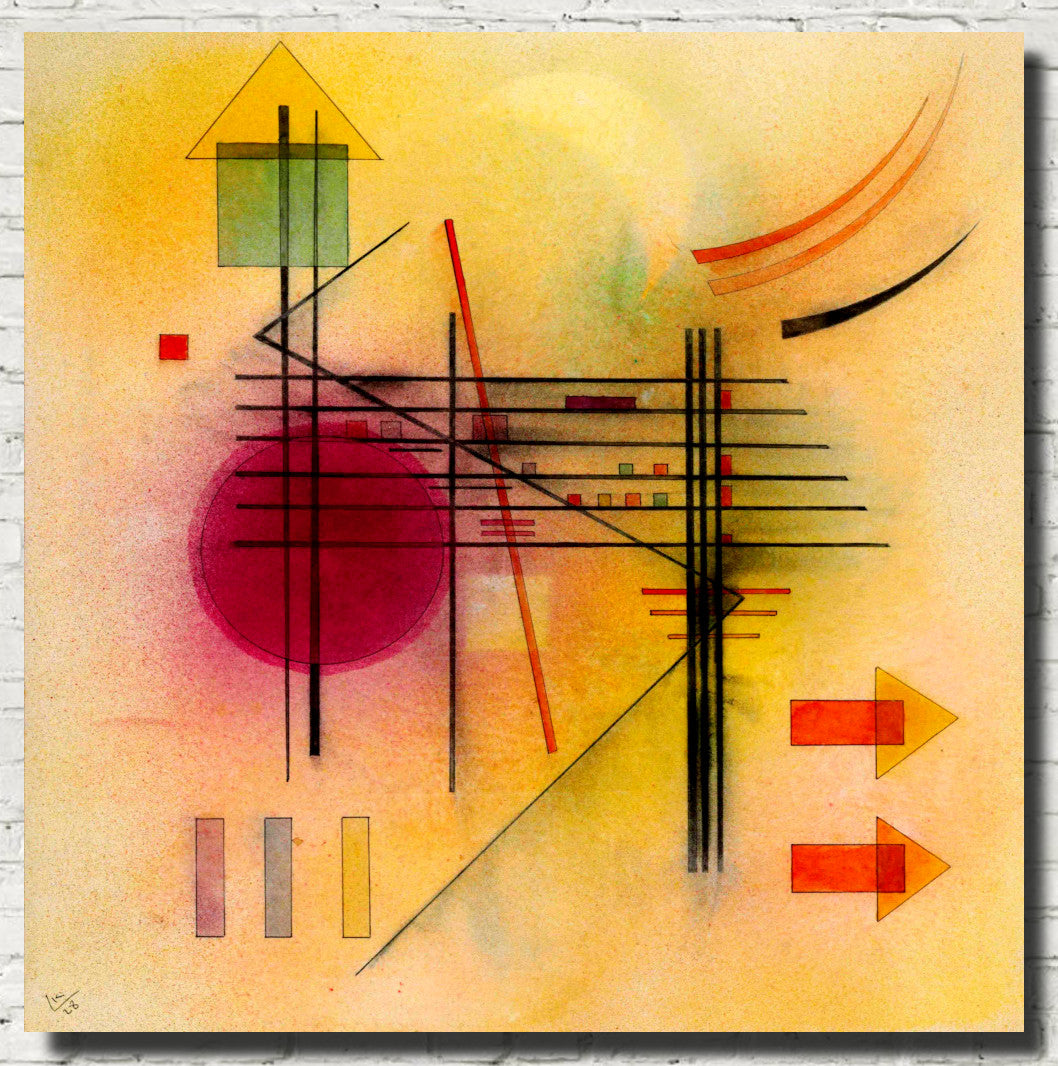
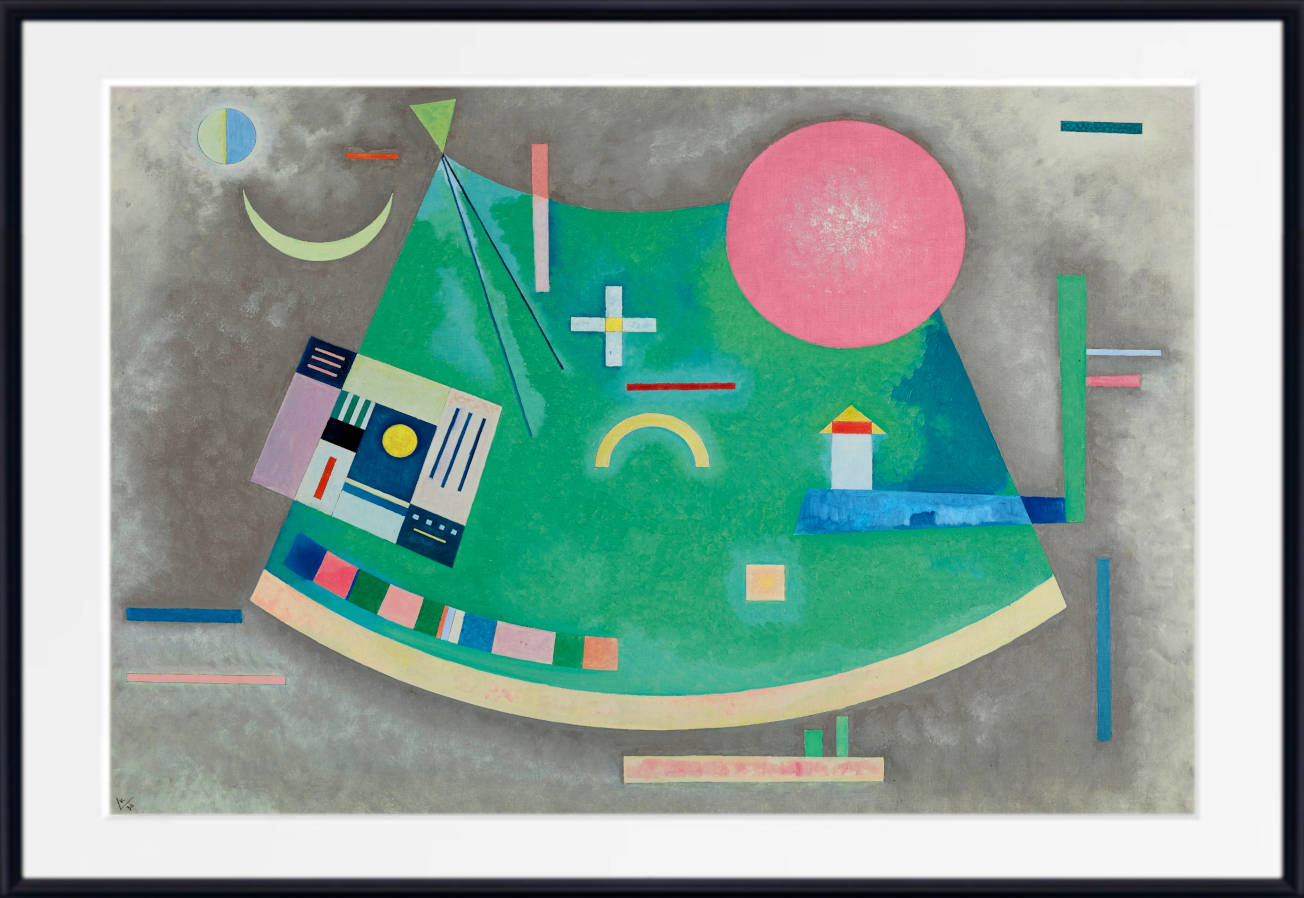
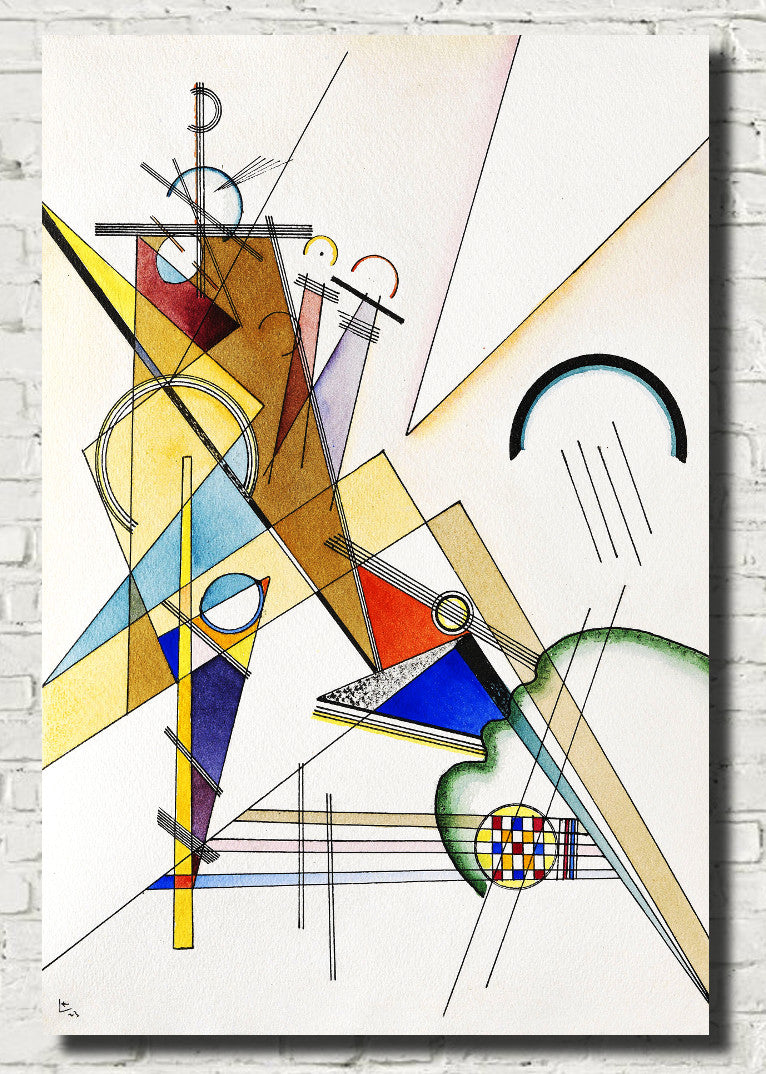
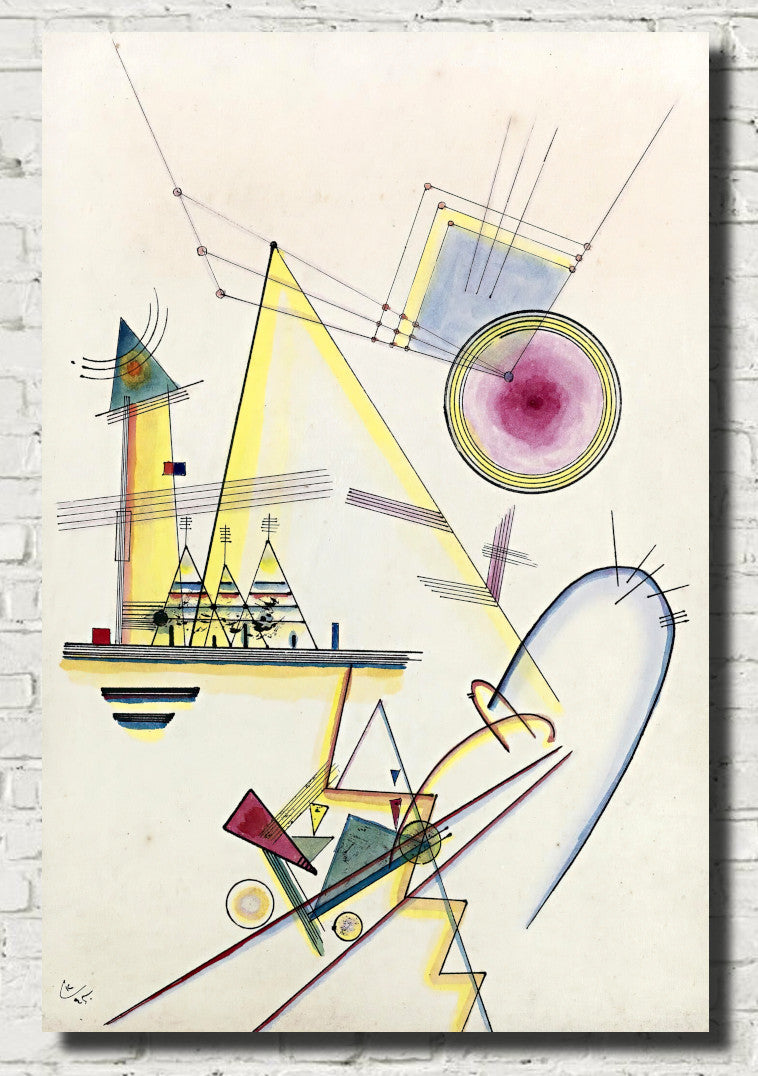
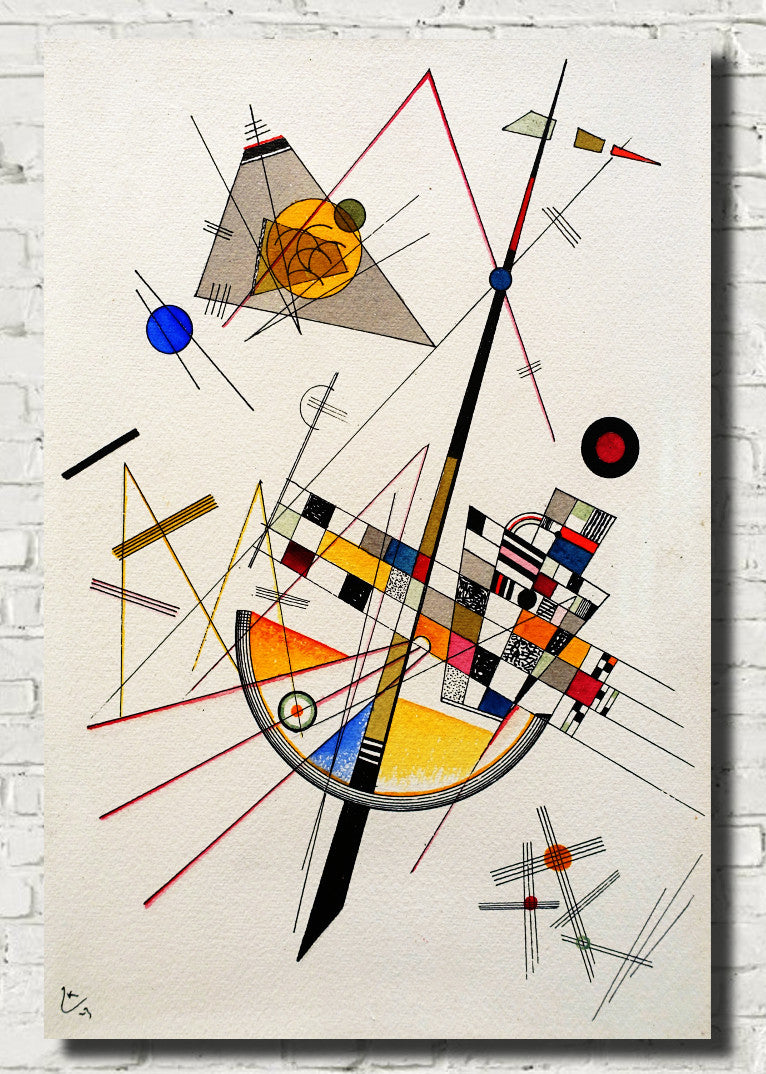
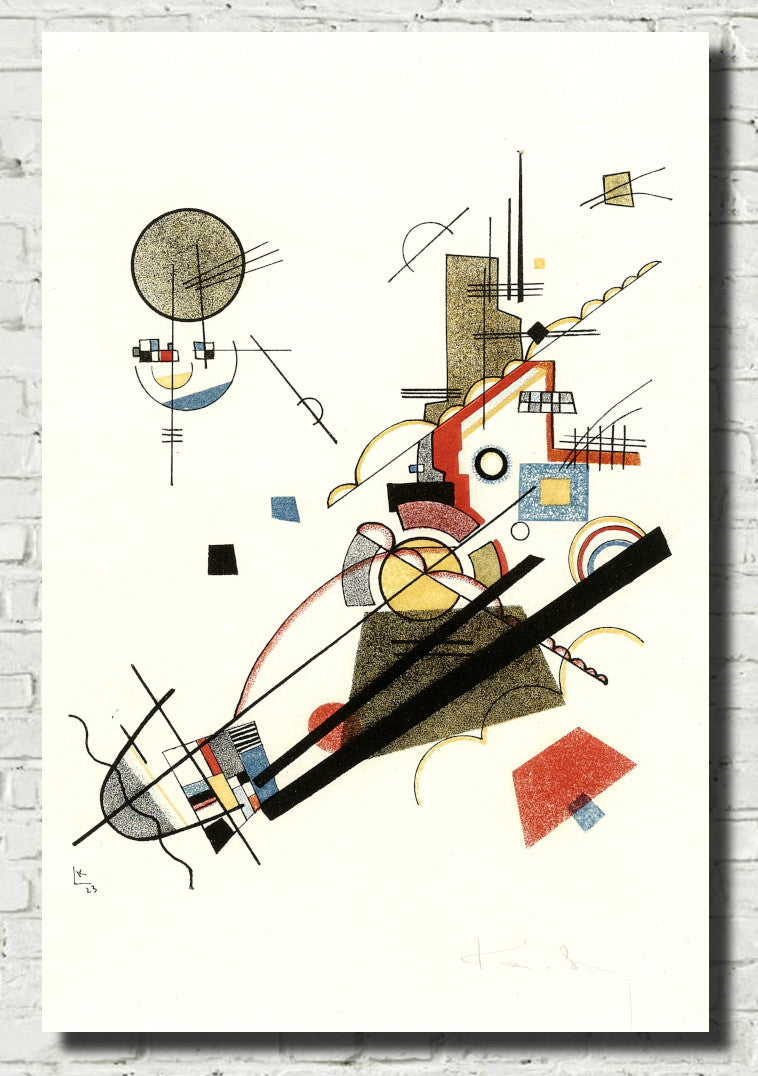
During his Bauhaus years, Kandinsky’s paintings became noticeably more geometric.
Circles, triangles, straight lines, grids and sharply defined shapes increasingly replaced the freer, organic forms of his earlier Expressionist abstractions.
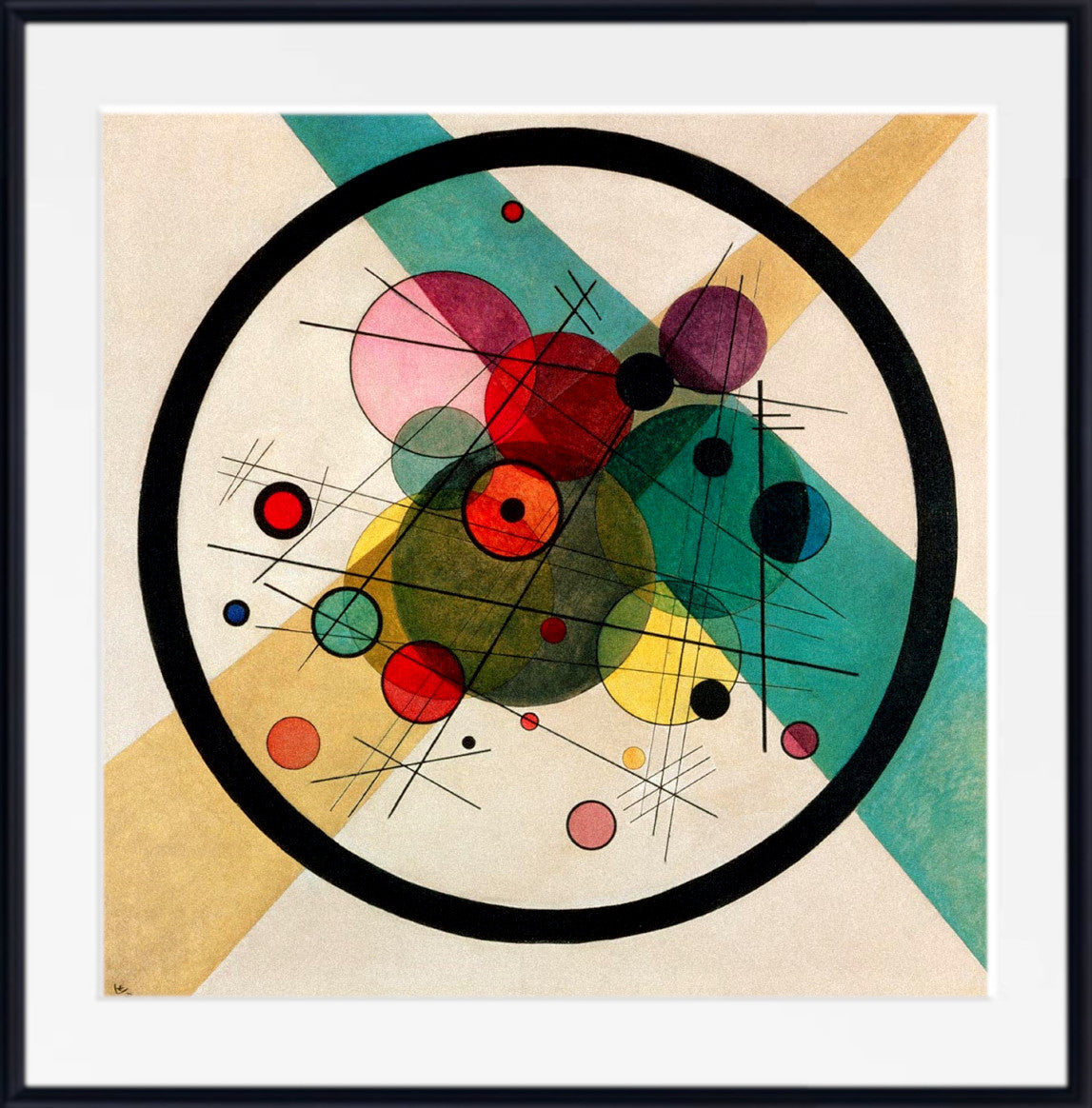
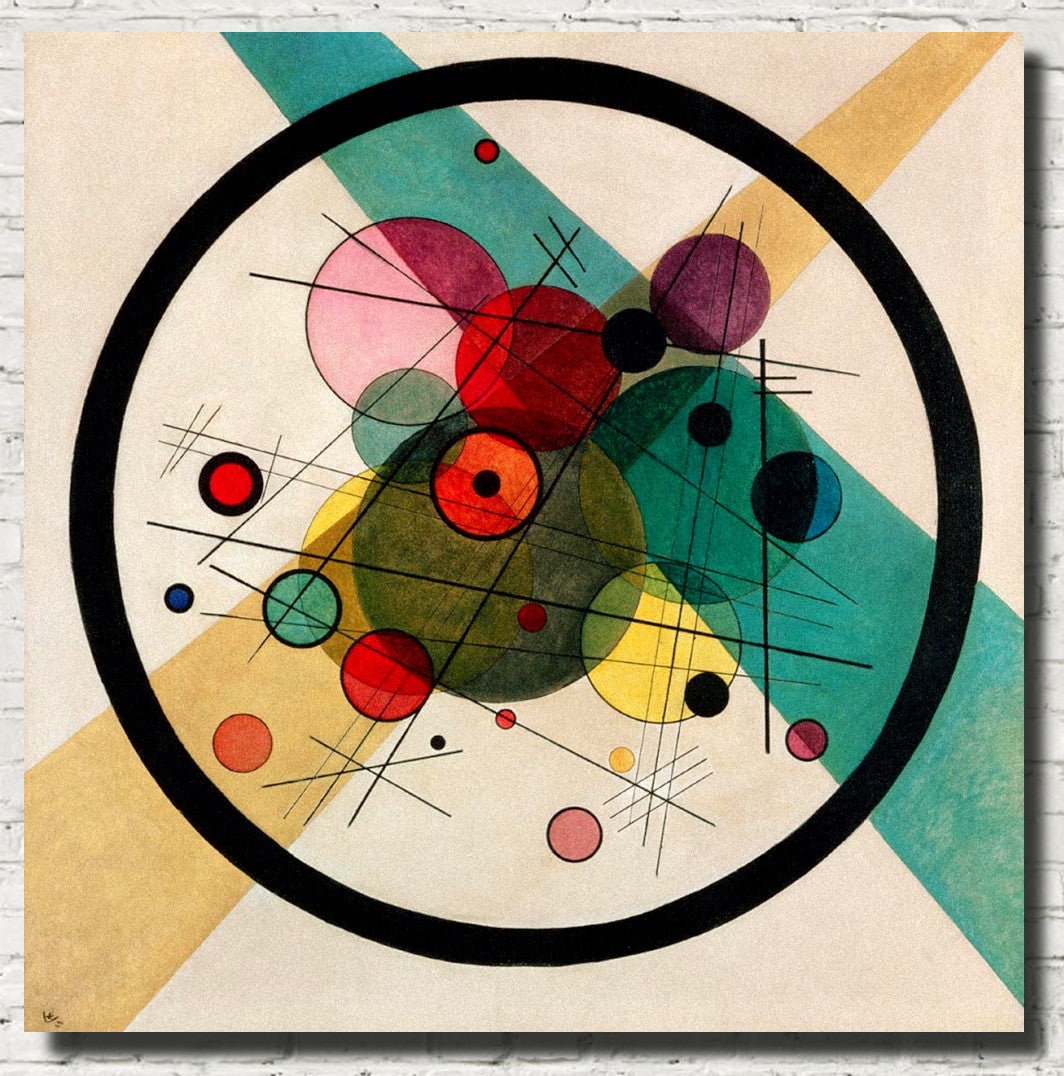
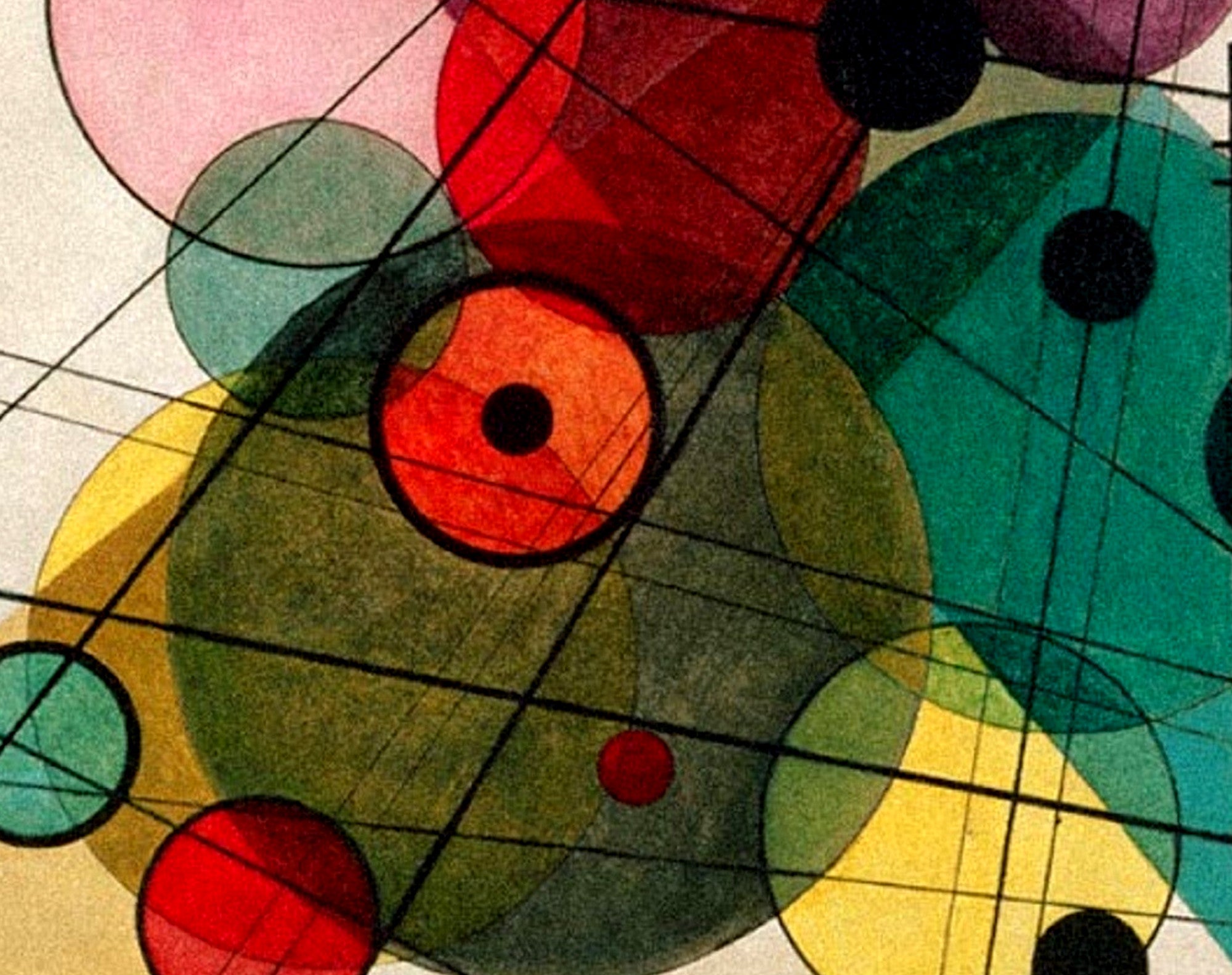
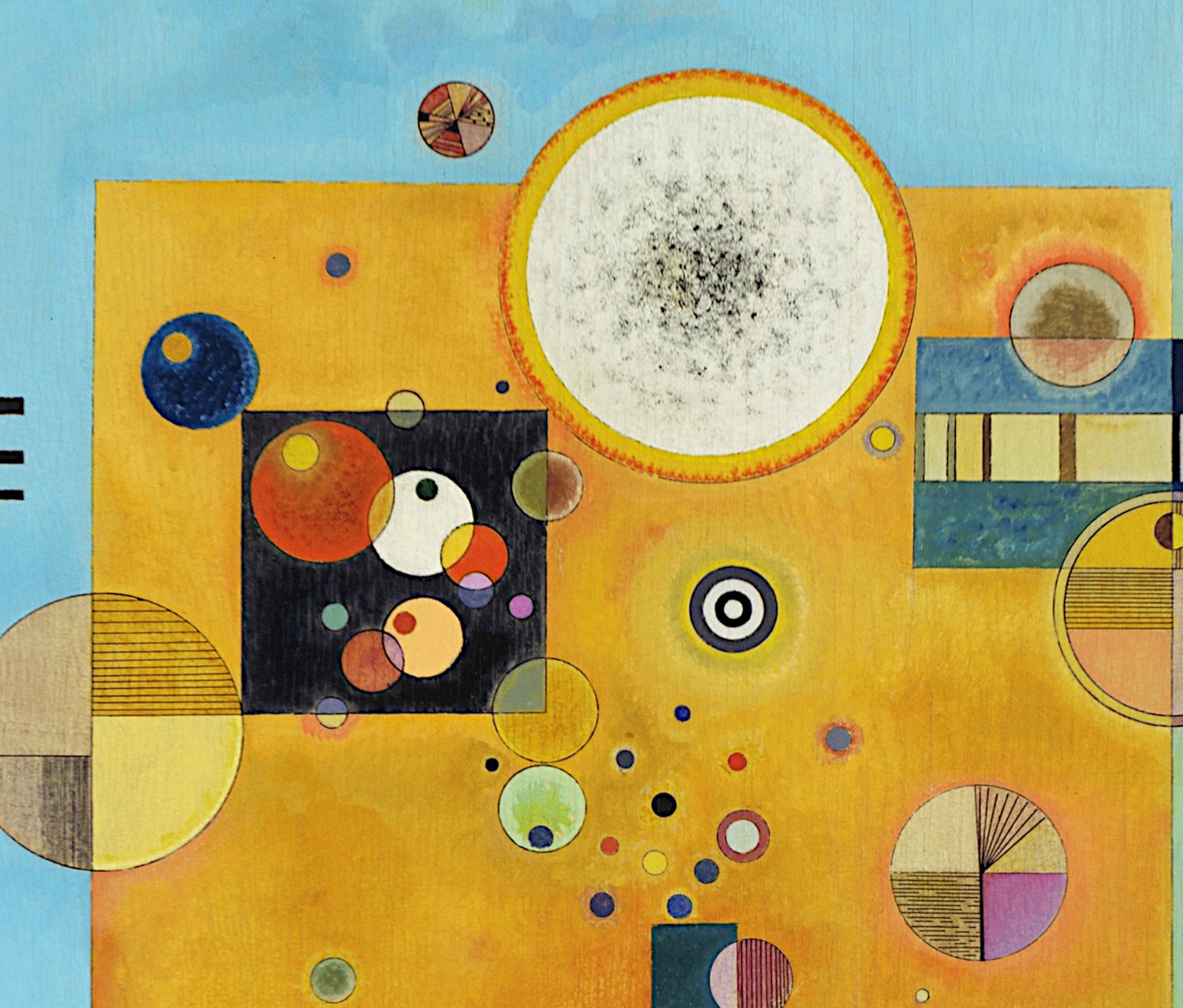
Works such as Circles in a Circle, Yellow-Red-Blue, Small Worlds and numerous geometric compositions demonstrate this transformation.
Explore related works in GalleryThane’s Bauhaus Prints and Geometric Abstract Prints collections.
Circles and Geometric Abstraction
The circle became particularly important in Kandinsky’s later work.
He regarded it as a highly concentrated form capable of producing an extraordinary range of visual relationships.
Circles could overlap, float against dark backgrounds or interact with lines and angular shapes.
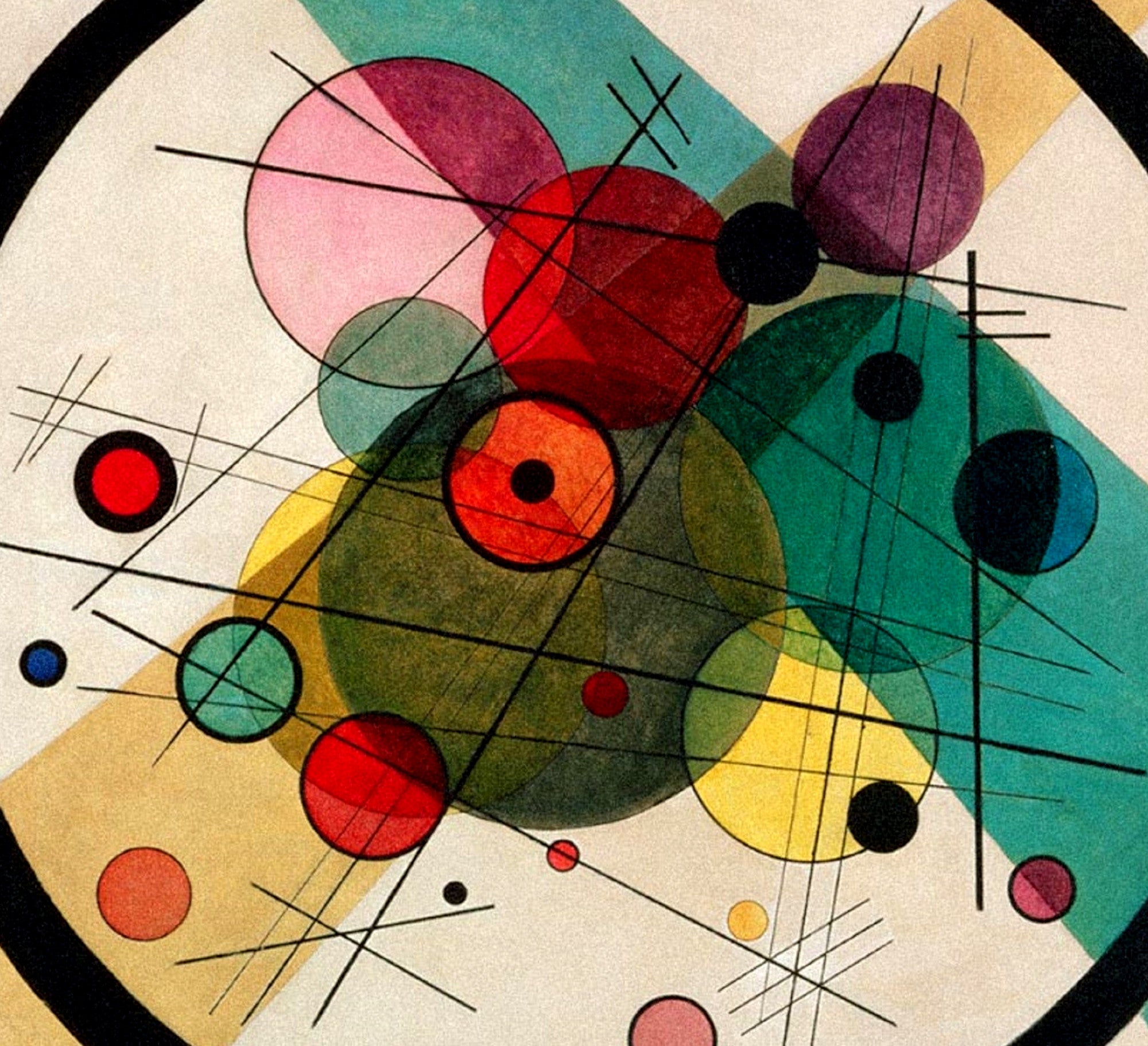
In Circles in a Circle, circular forms appear within a larger enclosing circle crossed by strong diagonal lines.
The result feels simultaneously mathematical and energetic.
This balance between structure and visual movement became characteristic of Kandinsky’s mature geometric abstraction.
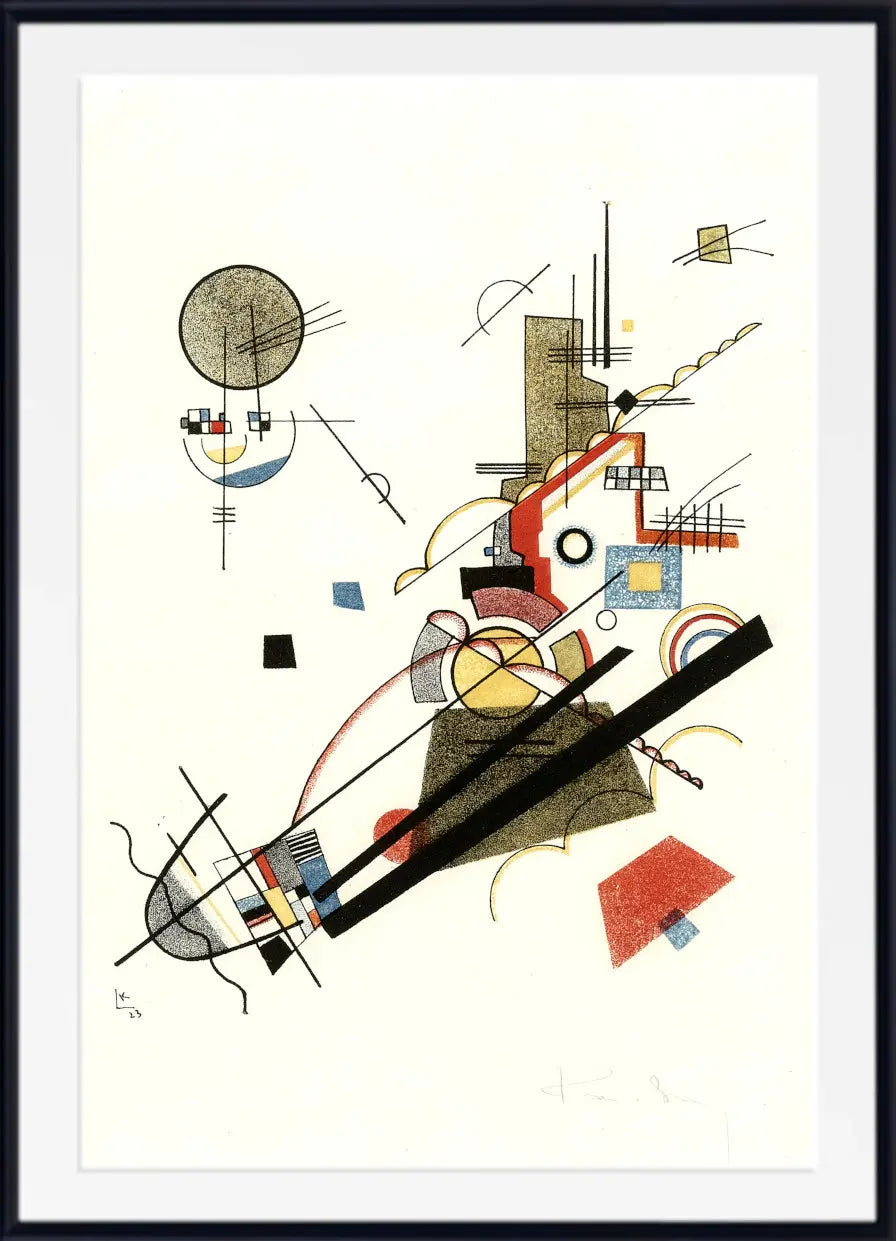
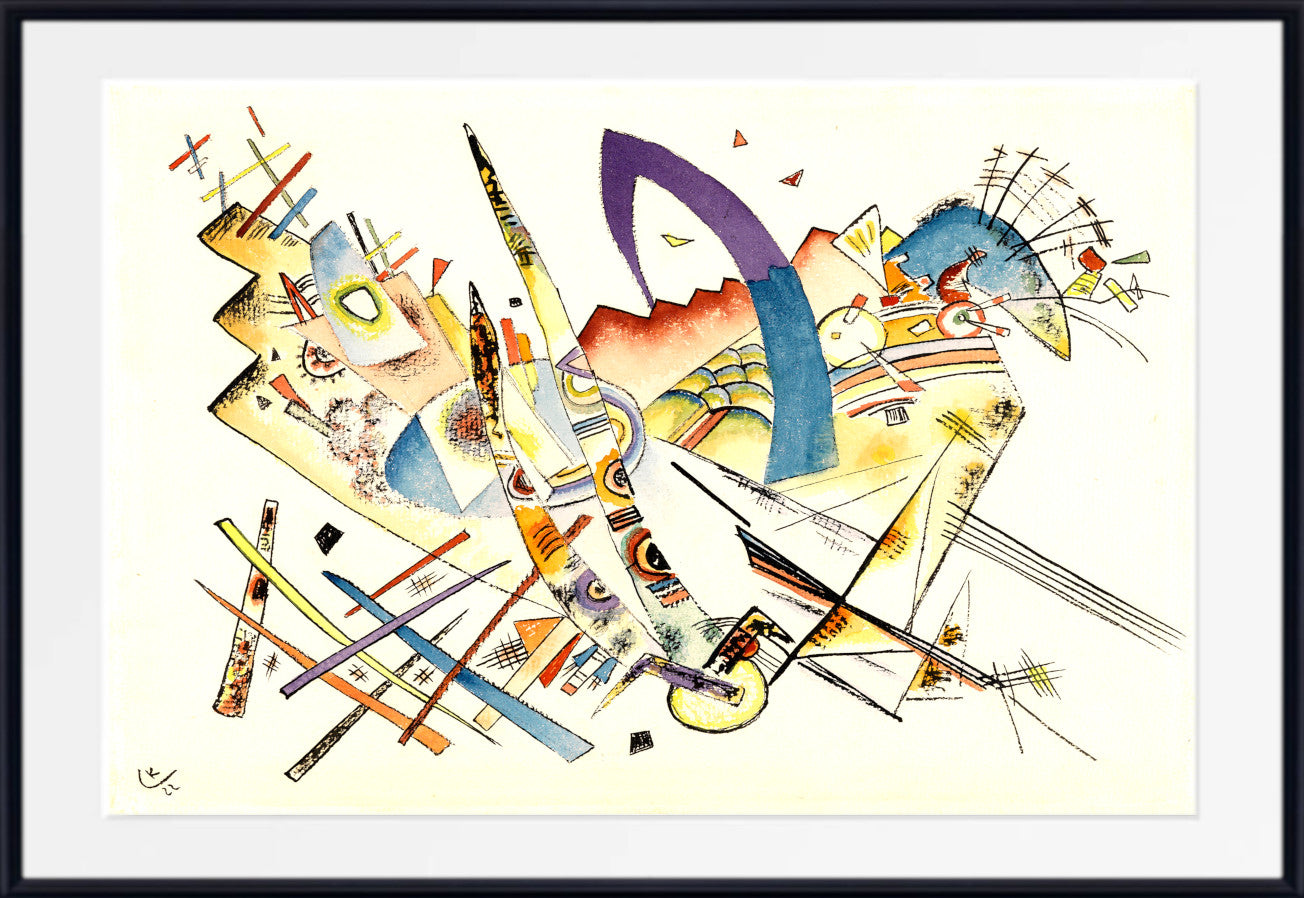
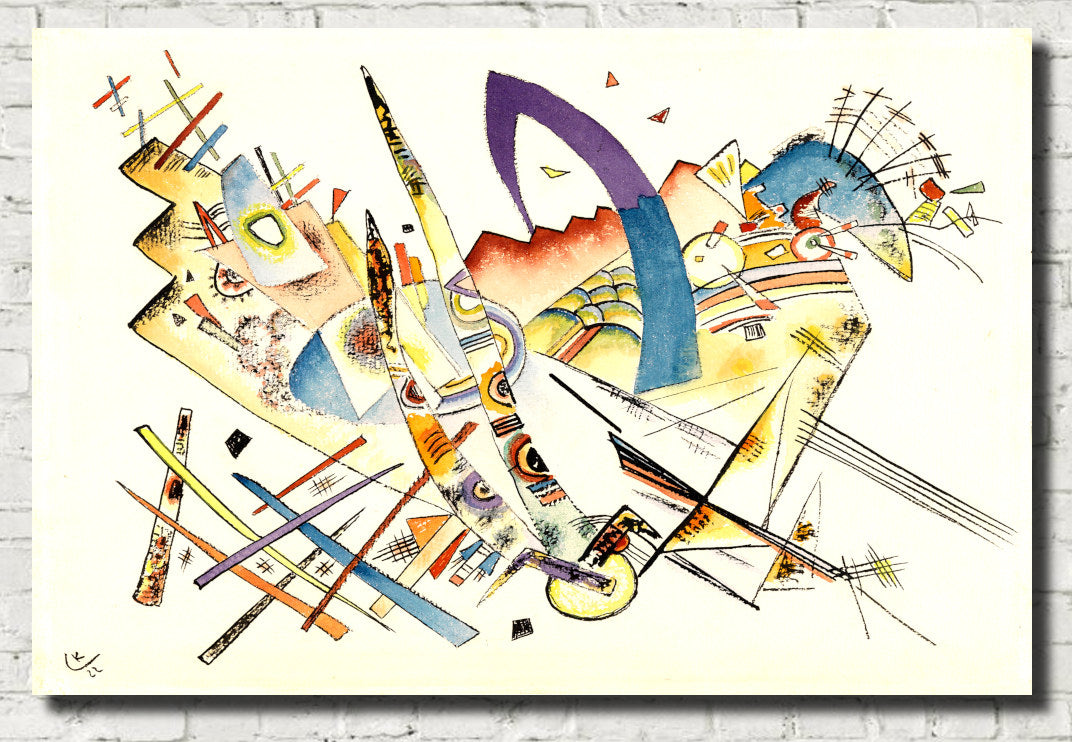
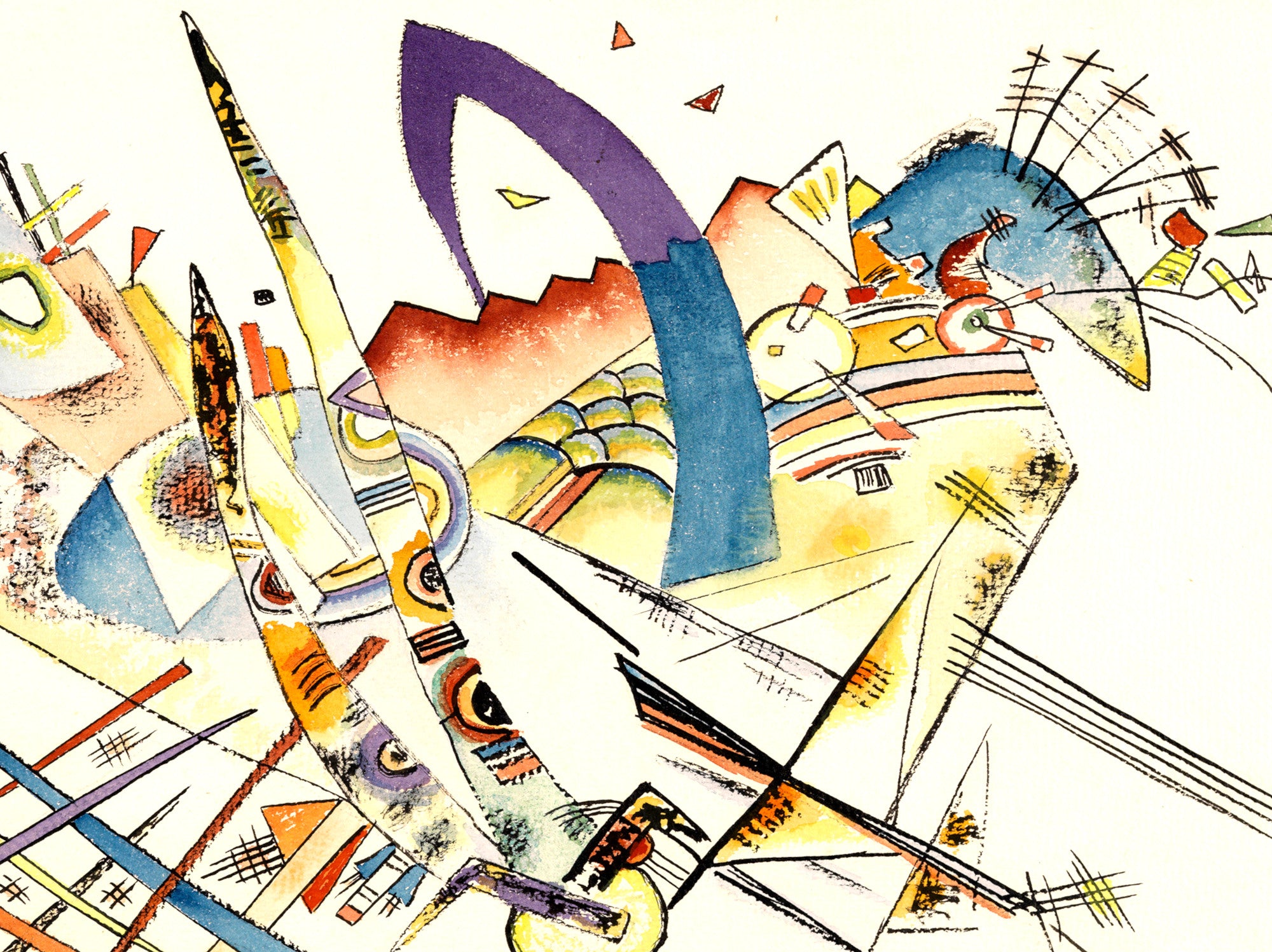
The Small Worlds Series
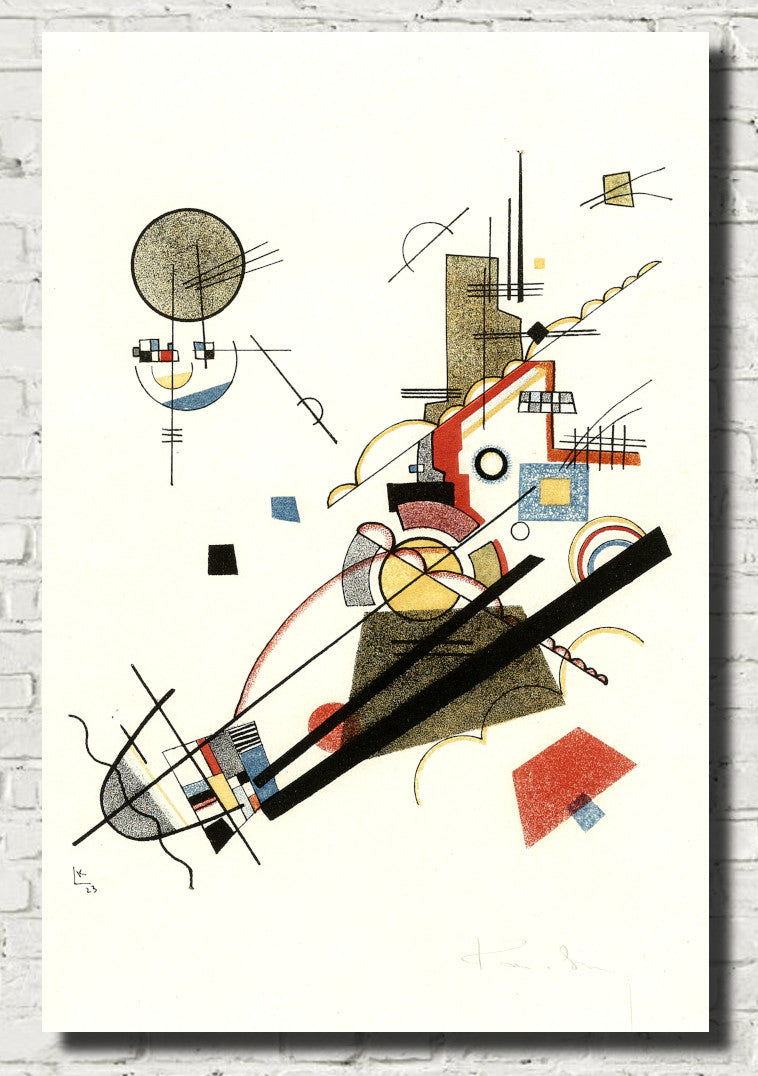
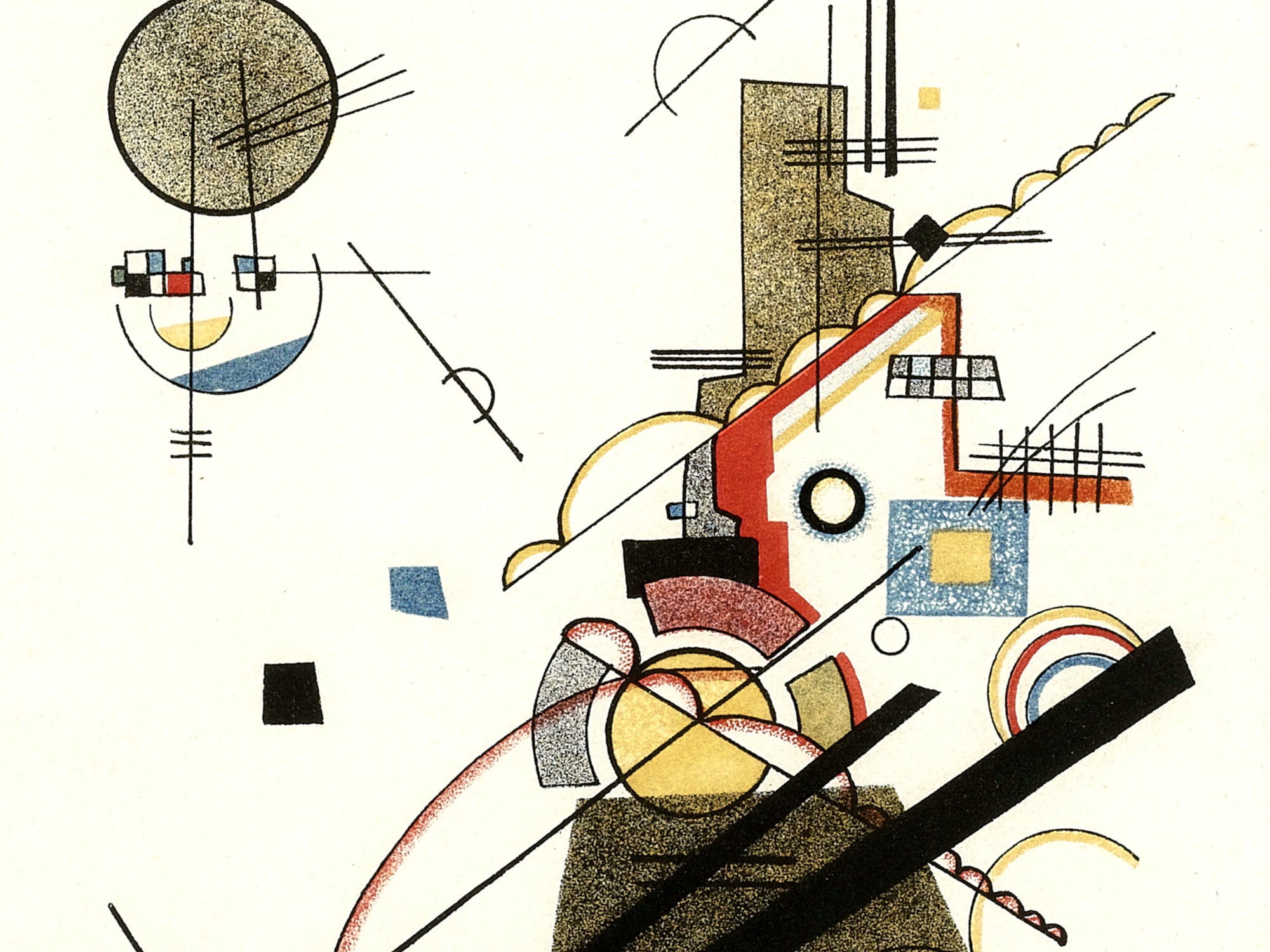
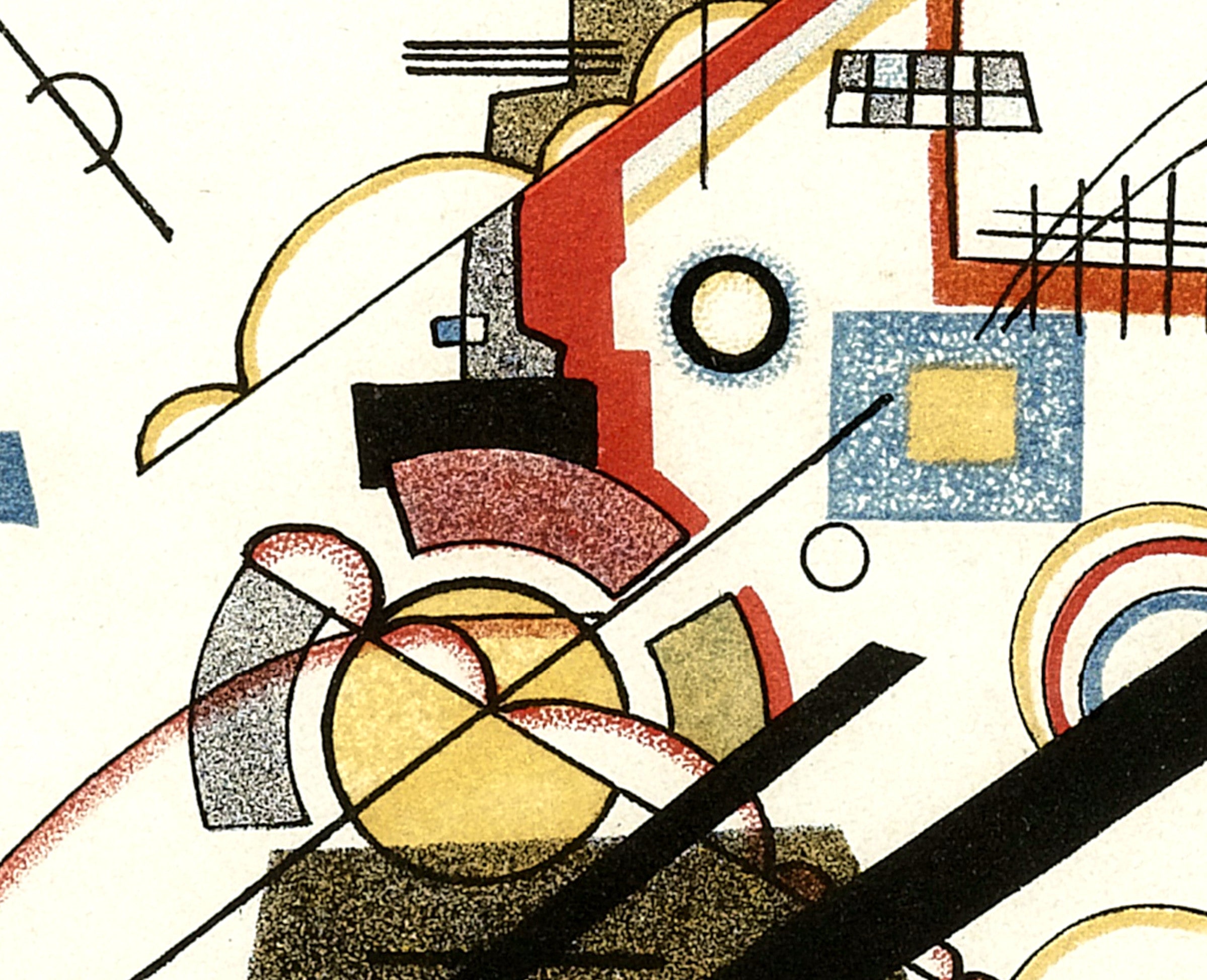
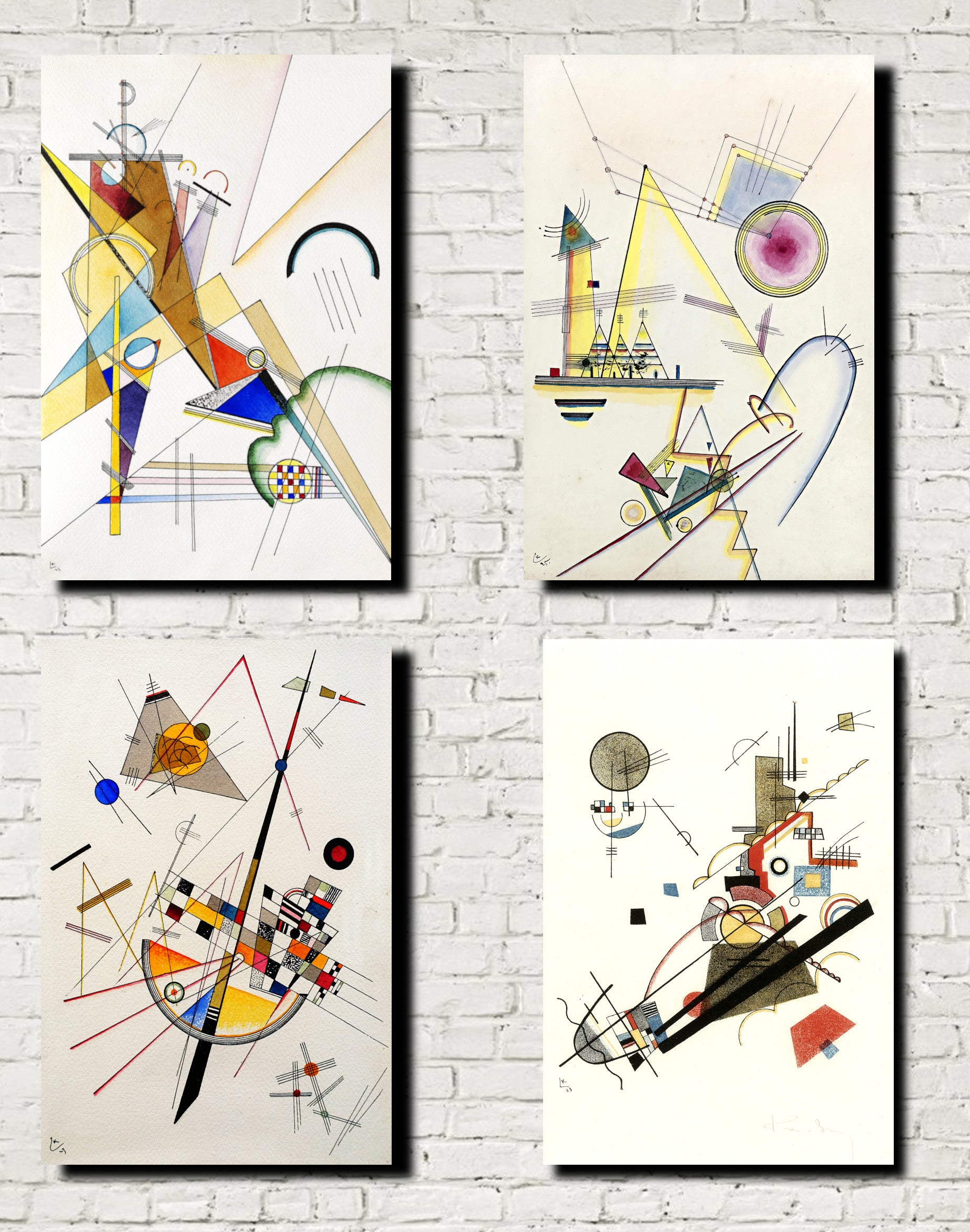
Kandinsky’s Small Worlds series was created in 1922, the year he joined the Bauhaus.
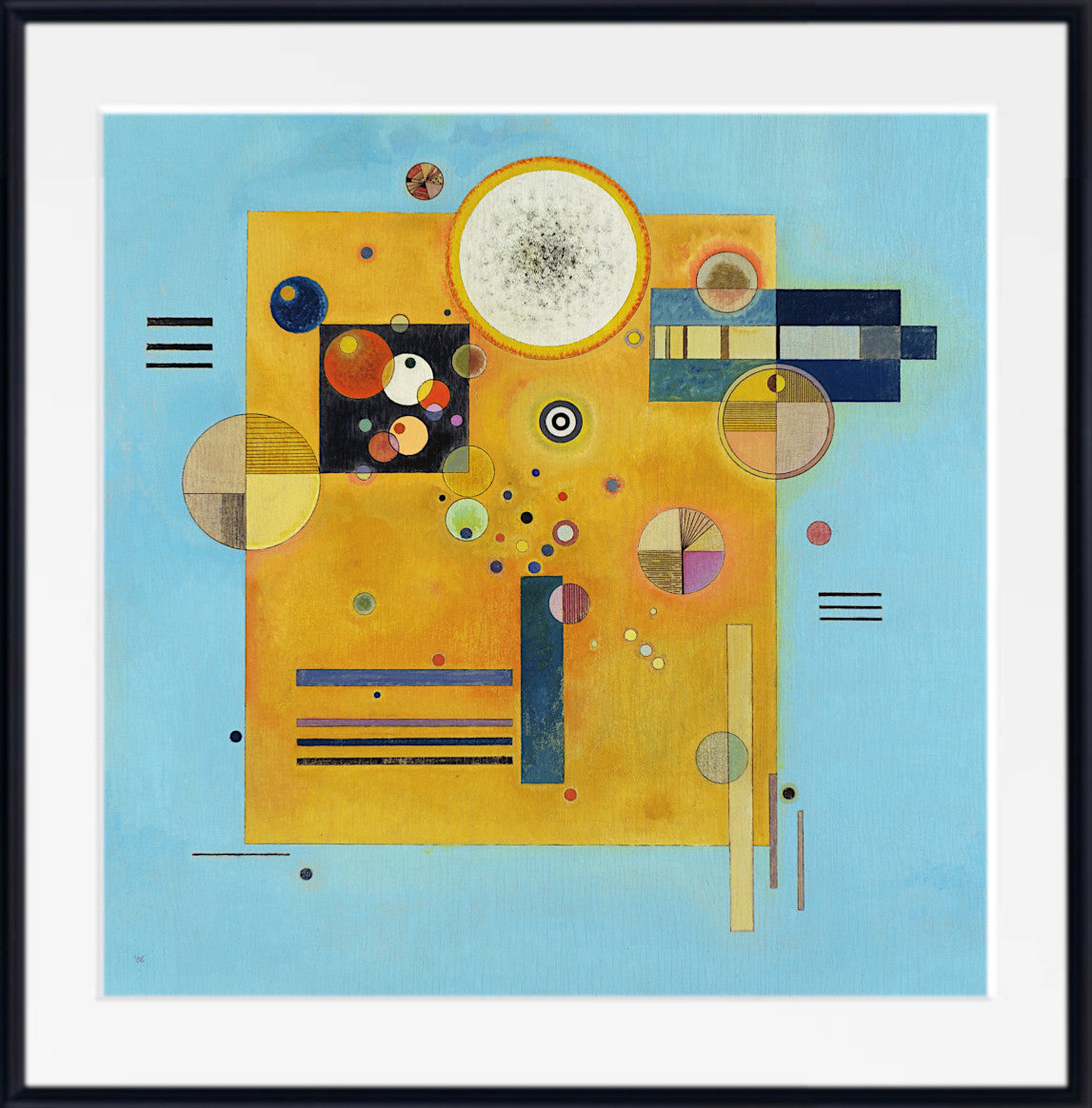
The portfolio contains twelve prints exploring different combinations of colour, line and geometric or organic form.
Although relatively small in scale, the works encapsulate many of the ideas that occupied Kandinsky throughout his career.
Each image functions almost like an independent visual universe — hence the title Small Worlds.
The series is especially interesting because it shows how his increasingly geometric language could be applied across different printmaking techniques as well as painting.
Kandinsky’s Later Work
After the Bauhaus closed under political pressure in 1933, Kandinsky moved to France.
His later paintings developed another distinctive visual language.
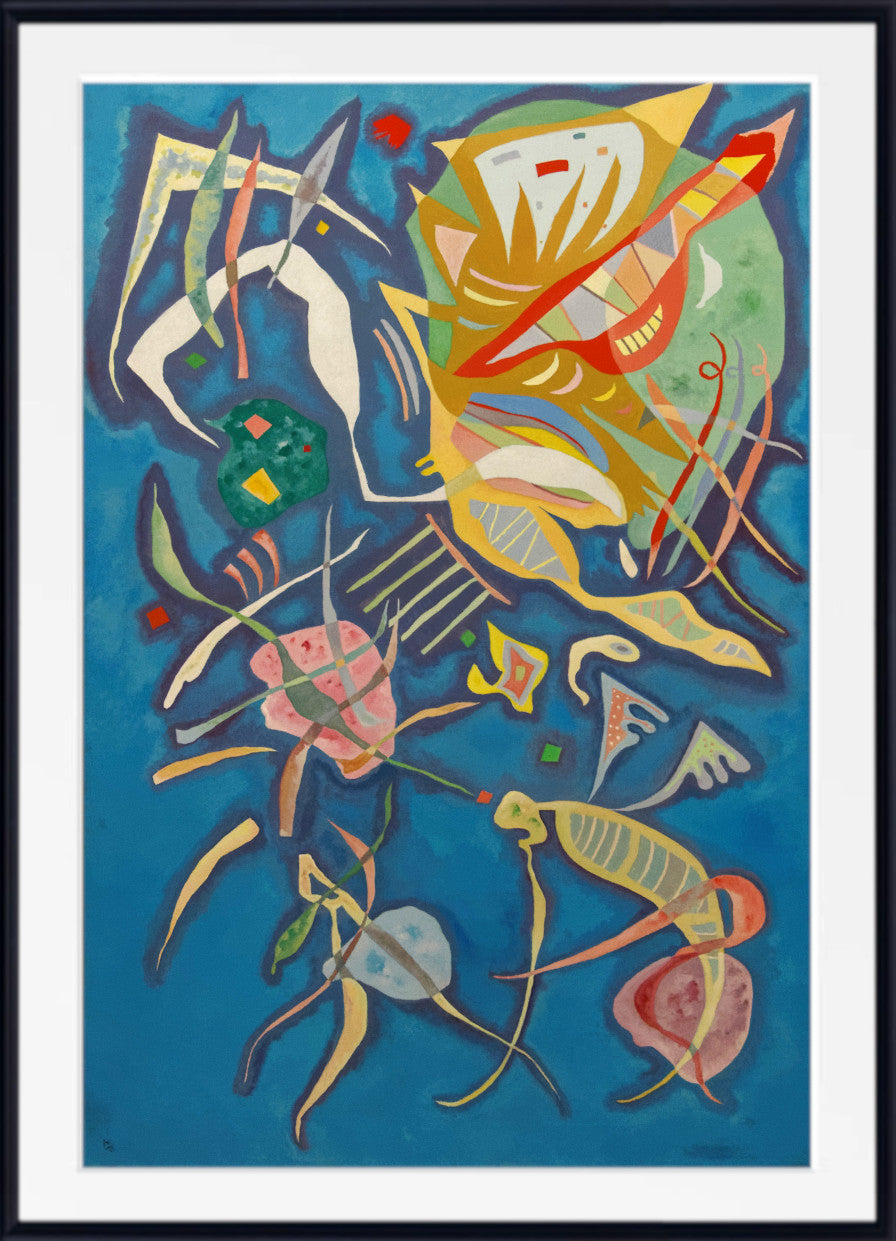
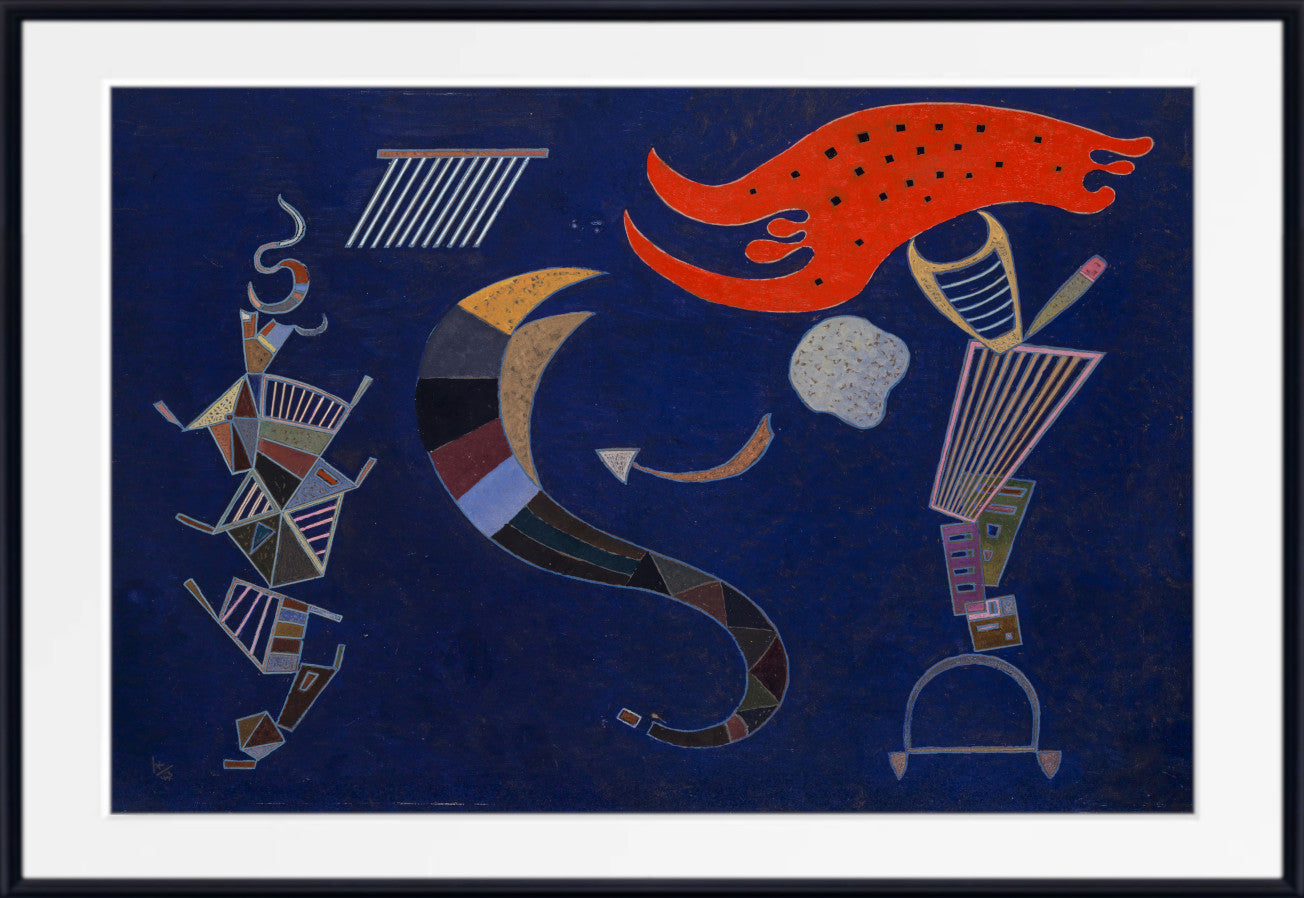
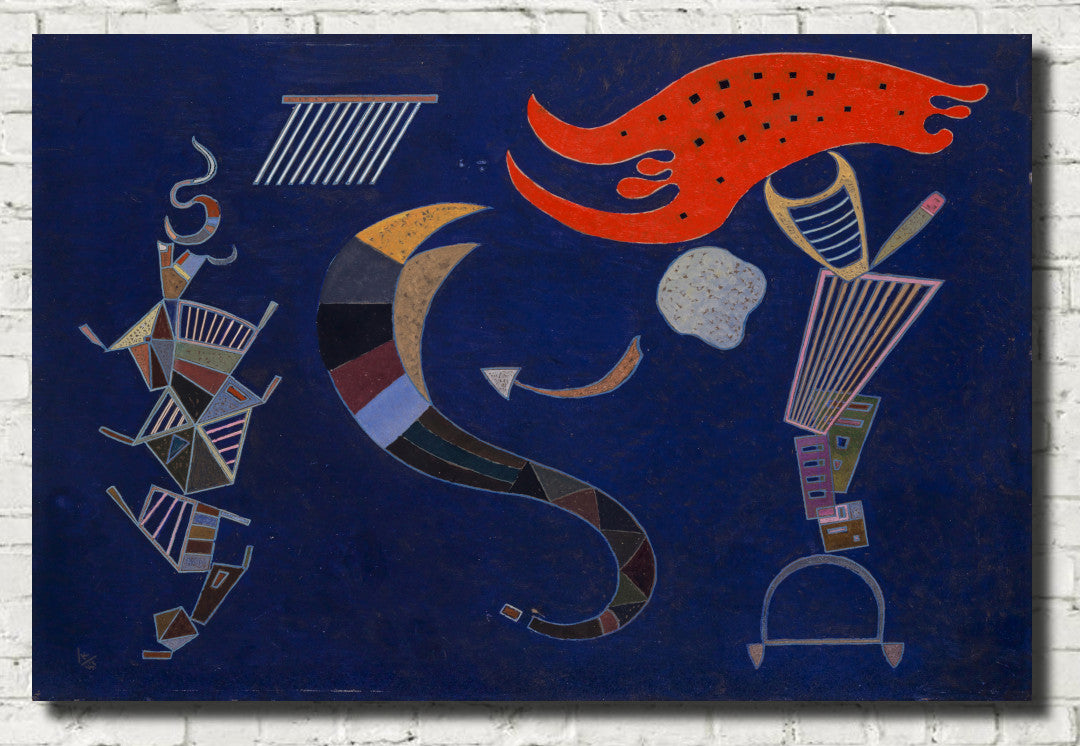
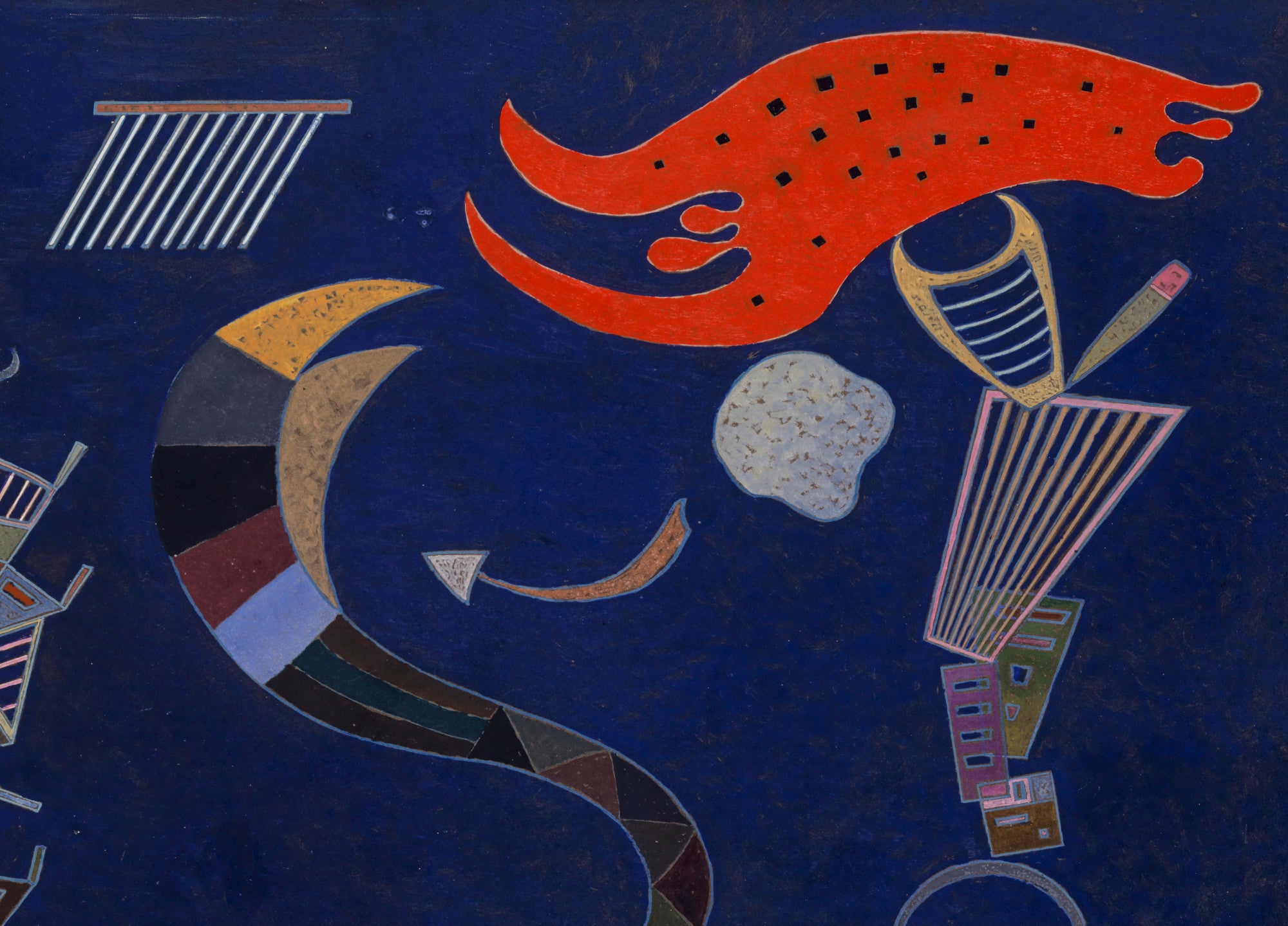
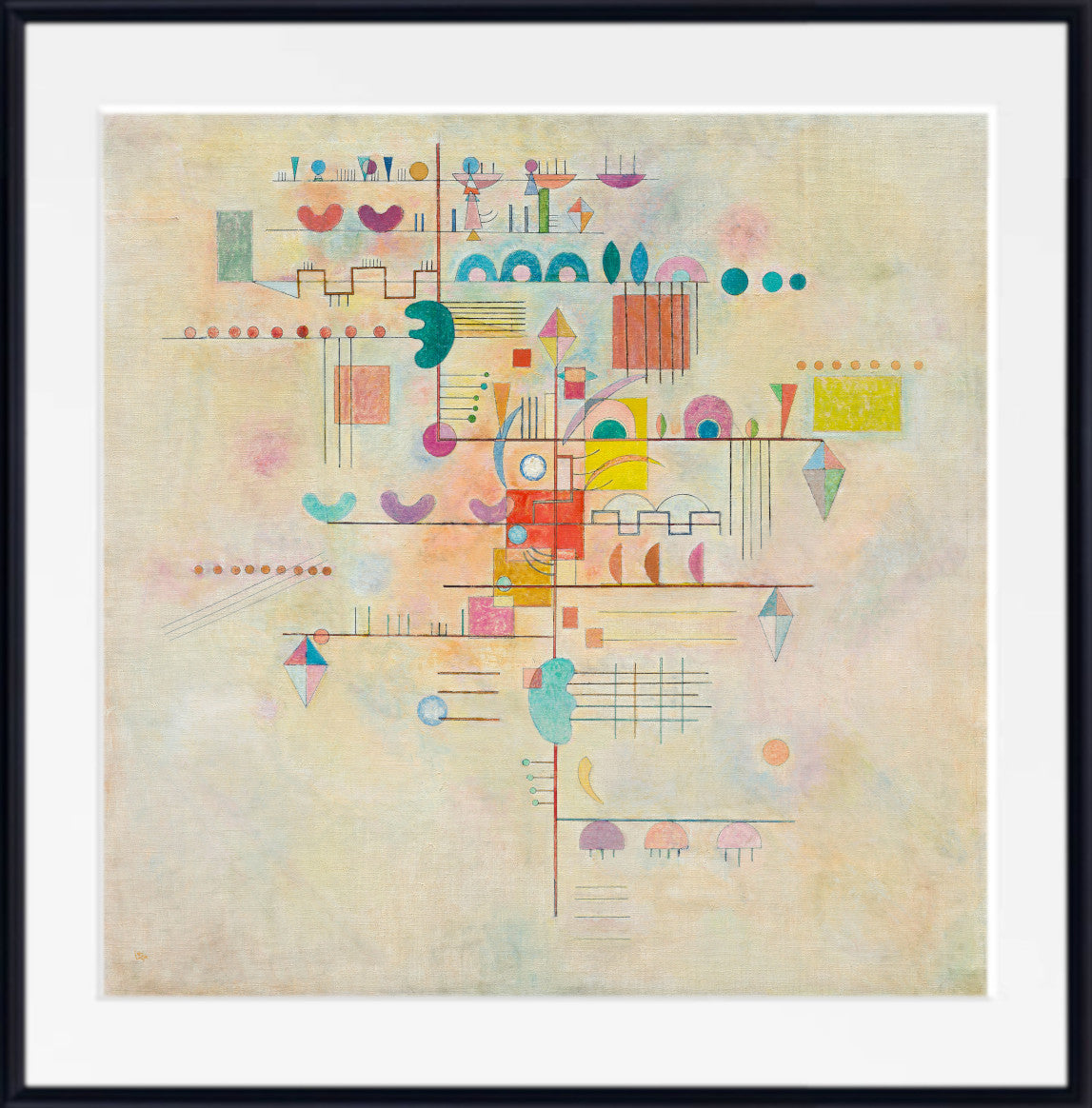
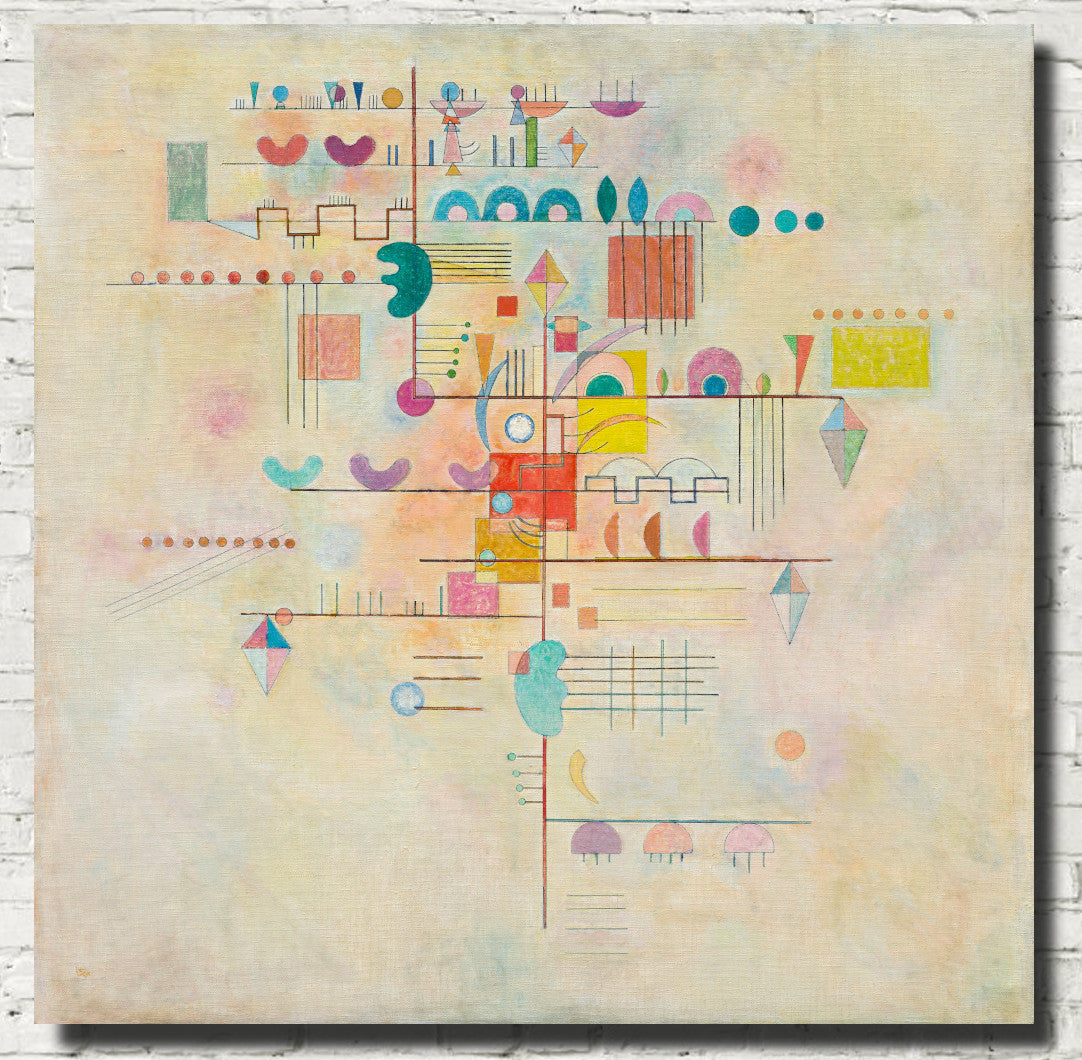
Geometric structures remained important, but they were increasingly combined with biomorphic, organic and sometimes playful forms.
The result can feel very different from both the explosive abstraction of Composition VII and the stricter geometry of his Bauhaus years.
This continual evolution is one of the reasons Kandinsky’s work remains so rewarding to explore.
There is no single “Kandinsky style”.
Instead, his career traces several of the most important developments in modern art: Expressionism, early abstraction, geometric abstraction and the experimental culture of the Bauhaus.
Wassily Kandinsky and Abstract Art
Kandinsky is frequently described as one of the pioneers of abstract painting.
The development of abstraction was, however, not the achievement of one artist alone. Several artists across Europe were independently exploring non-representational forms during the early twentieth century.
What makes Kandinsky particularly significant is the combination of his paintings and his extensive theoretical writing.
He did not merely create increasingly abstract images; he attempted to explain why abstraction could matter and how colour, line and form might communicate independently of recognisable objects.
His influence therefore extended far beyond his own paintings.
Generations of abstract artists would explore questions that Kandinsky had helped bring to the centre of modern art.
Choosing a Kandinsky Print
The breadth of Kandinsky’s career means his prints can create very different effects in an interior.
For vivid Expressionist colour and recognisable landscape elements, explore his Murnau paintings.
For energetic, painterly abstraction, works such as Composition VII or Improvisation No. 30 create dramatic statement pieces.
For cleaner geometric forms, the Bauhaus-period compositions and Small Worlds series can complement modern and minimalist interiors particularly well.
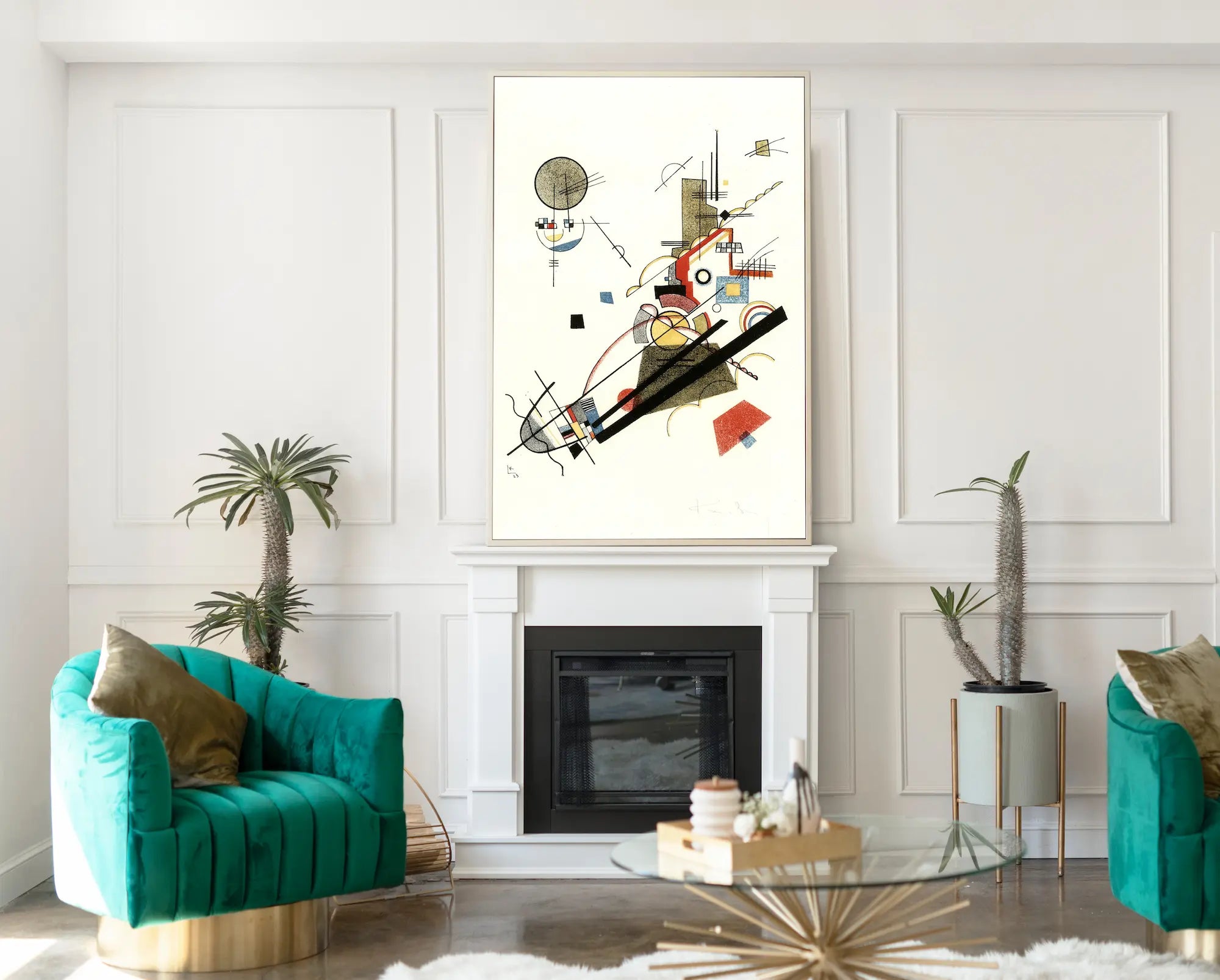
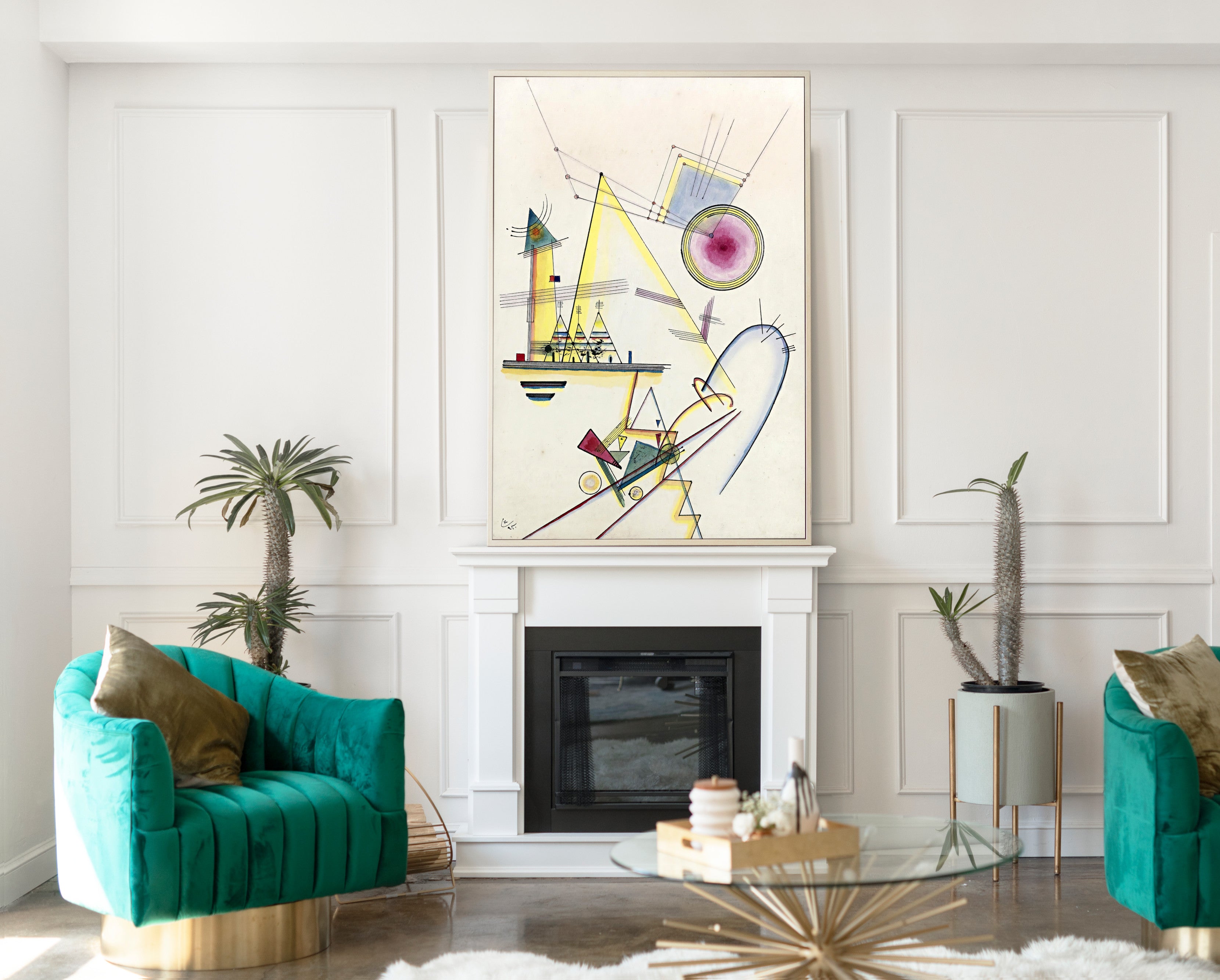
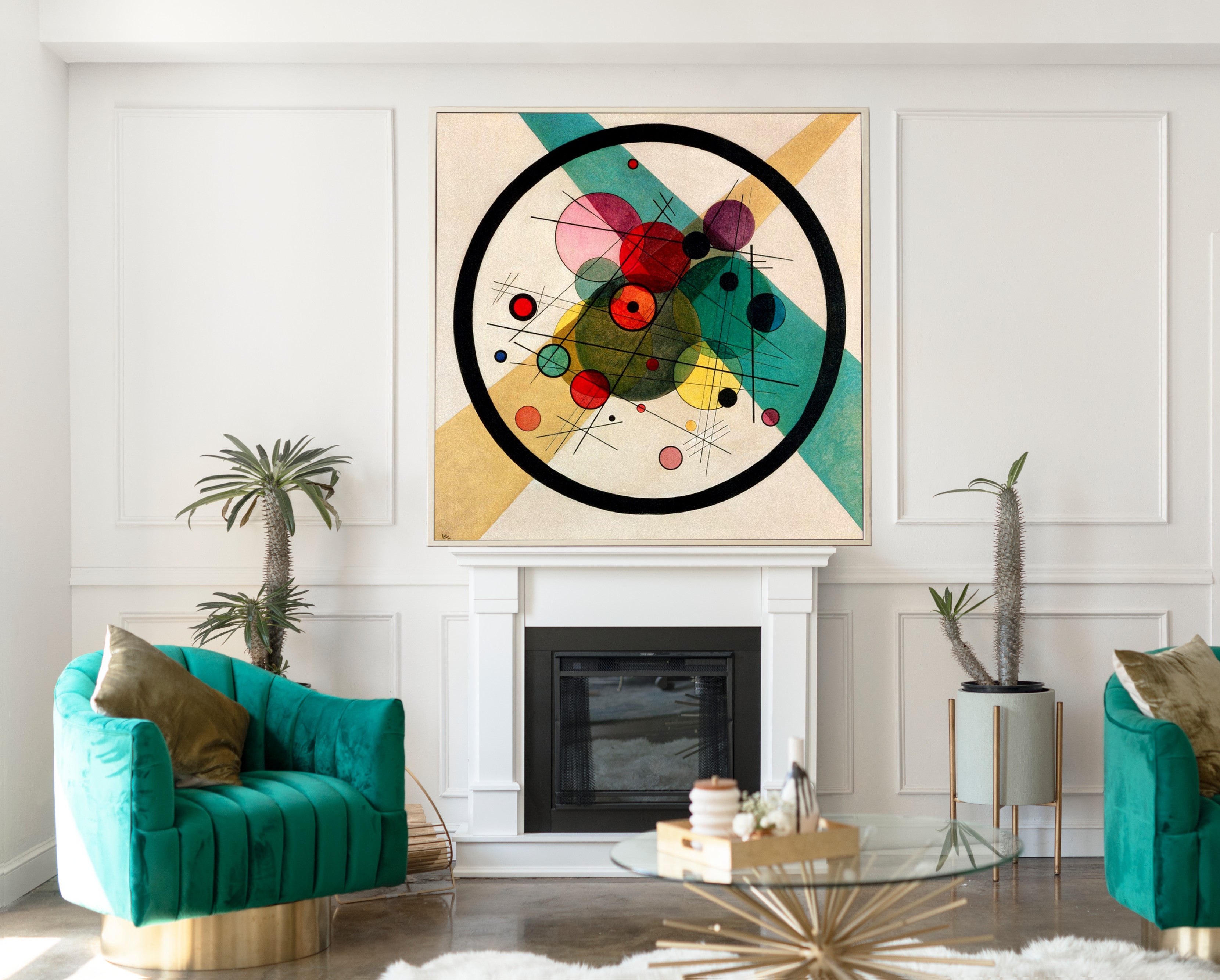
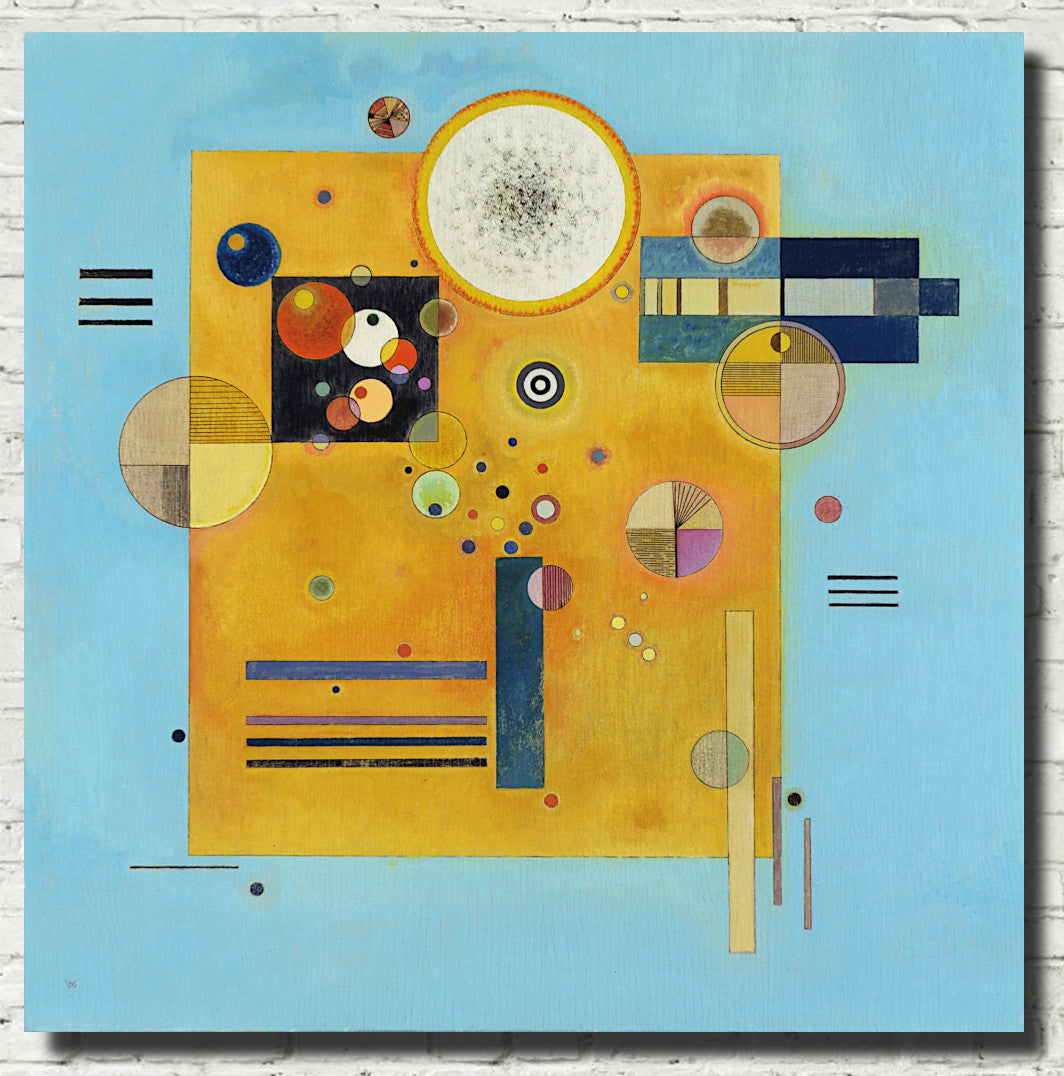
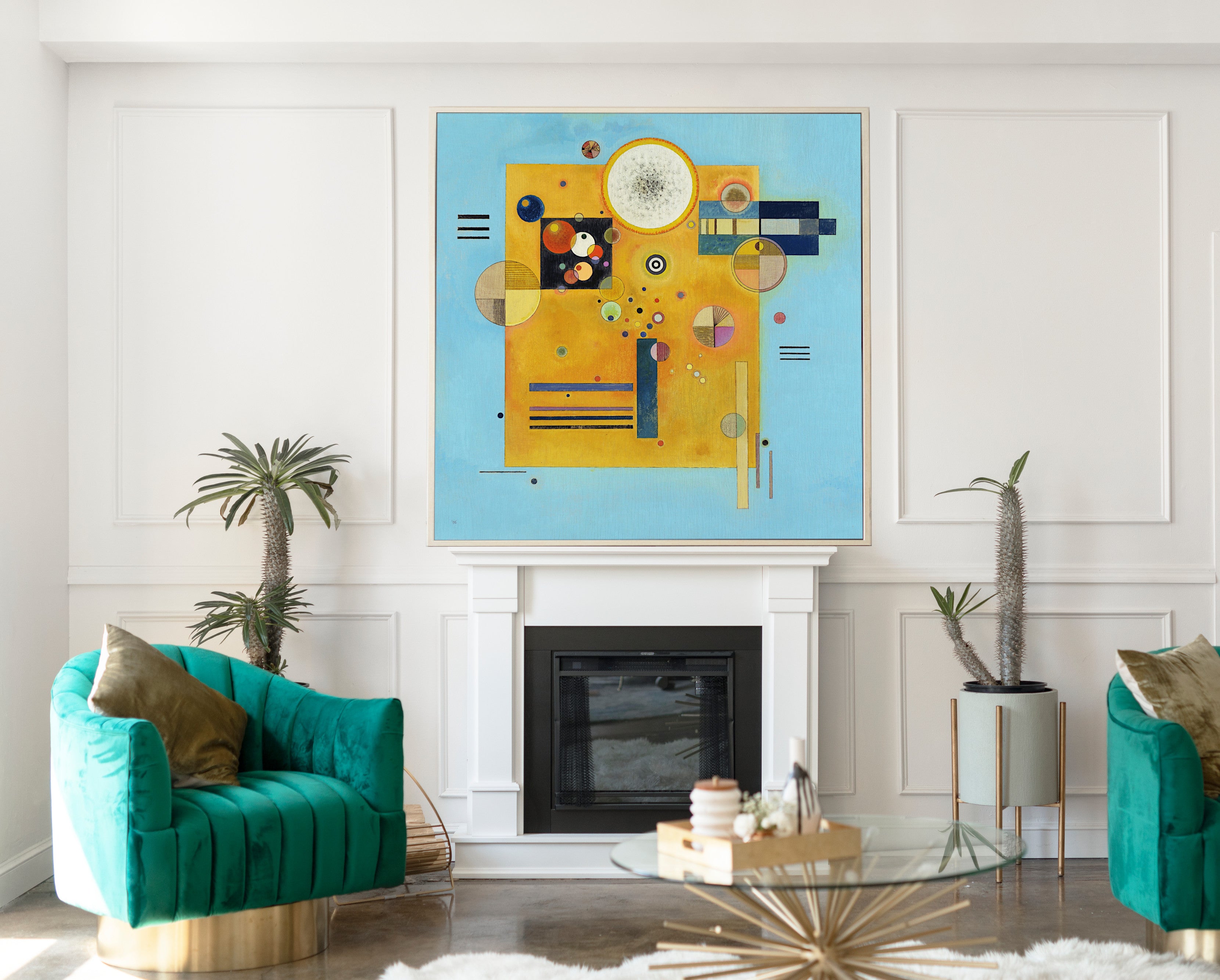
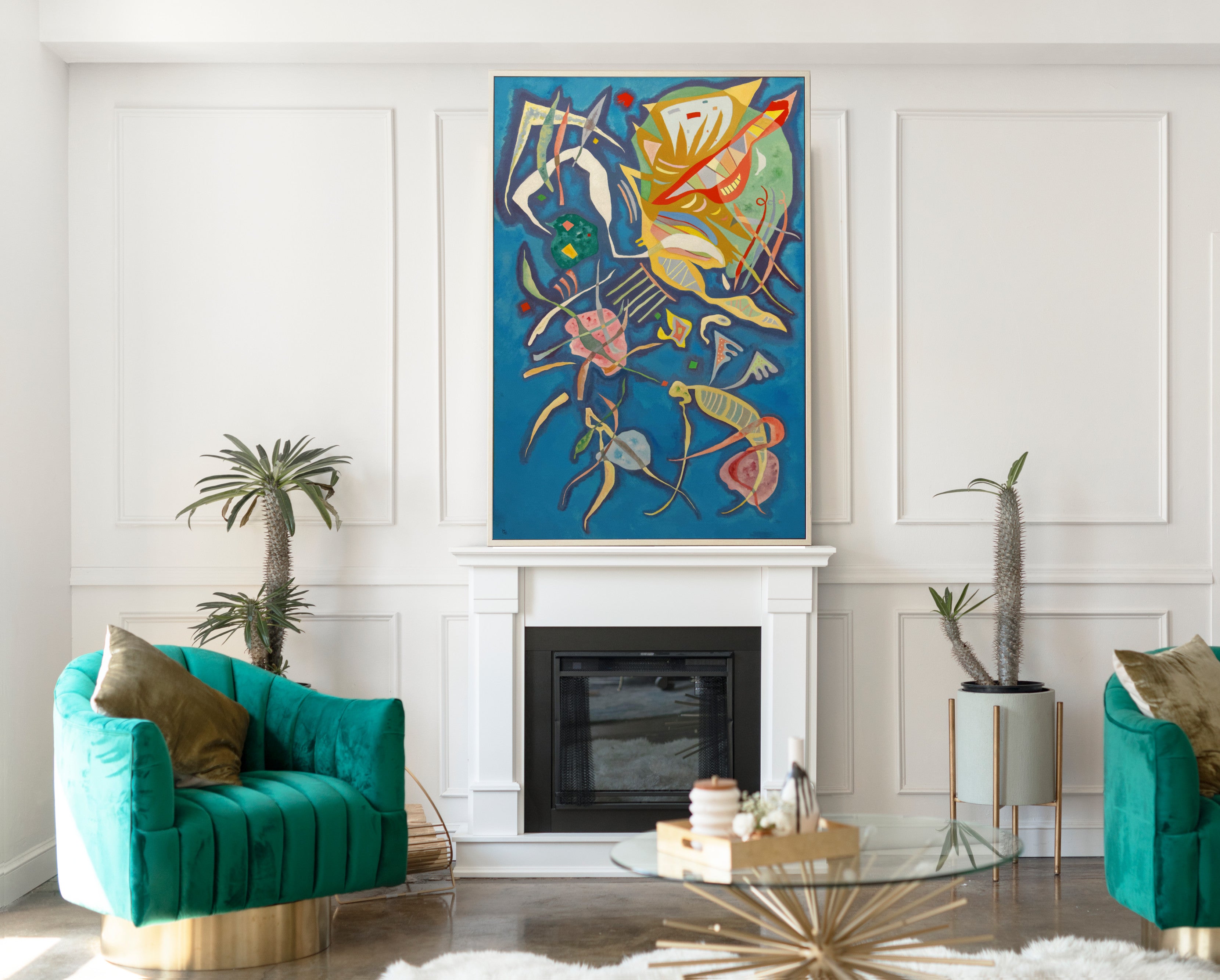
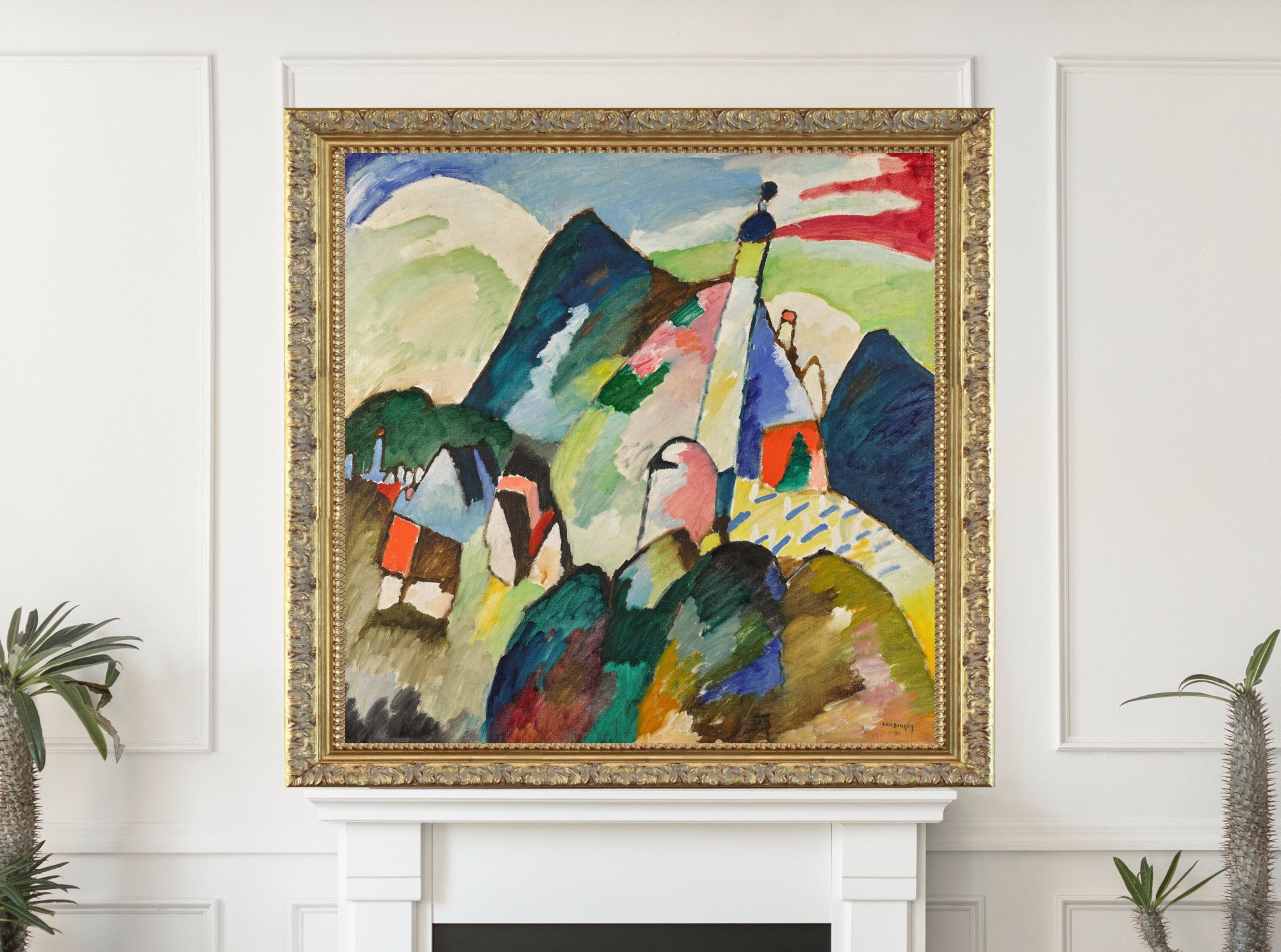
Square Kandinsky prints can work effectively above consoles, sideboards and smaller sofas, while larger horizontal or vertical compositions can create a focal point on a substantial living-room or dining-room wall.
Kandinsky Prints for Modern Interiors
Kandinsky’s paintings have an unusual ability to work in contemporary rooms despite being created many decades ago.
Part of this comes from his emphasis on colour and shape rather than conventional narrative subjects.
A Kandinsky print can introduce strong colour without dictating how a room should be styled.
Geometric works work naturally with modernist, Bauhaus and minimalist furniture.
The freer early abstractions can add movement to restrained interiors, while colourful Murnau landscapes provide a bridge between figurative and abstract wall art.
Neutral walls can allow particularly colourful Kandinsky works to dominate, while carefully selected paintings can also complement blue, green, red, ochre or earth-toned interior schemes.
Fine Art Prints, Framed Prints and Canvas Panels
GalleryThane Wassily Kandinsky artworks are available as fine art prints, framed prints and canvas panels in a wide selection of sizes.
Fine art paper prints offer flexibility if you already have a particular framing style in mind.
Framed Kandinsky prints provide a complete gallery-style presentation and can work particularly well with his colourful geometric and abstract compositions.
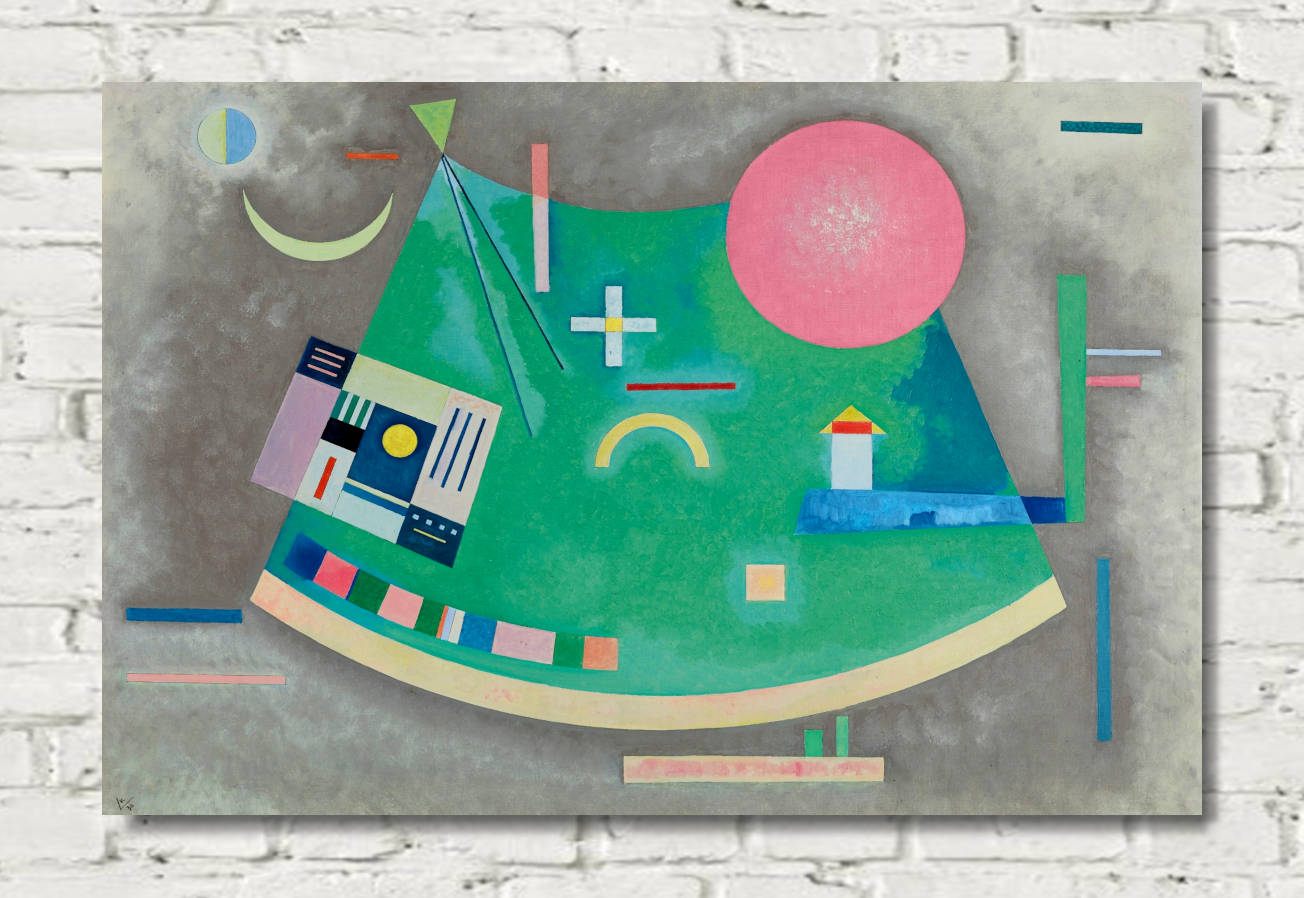
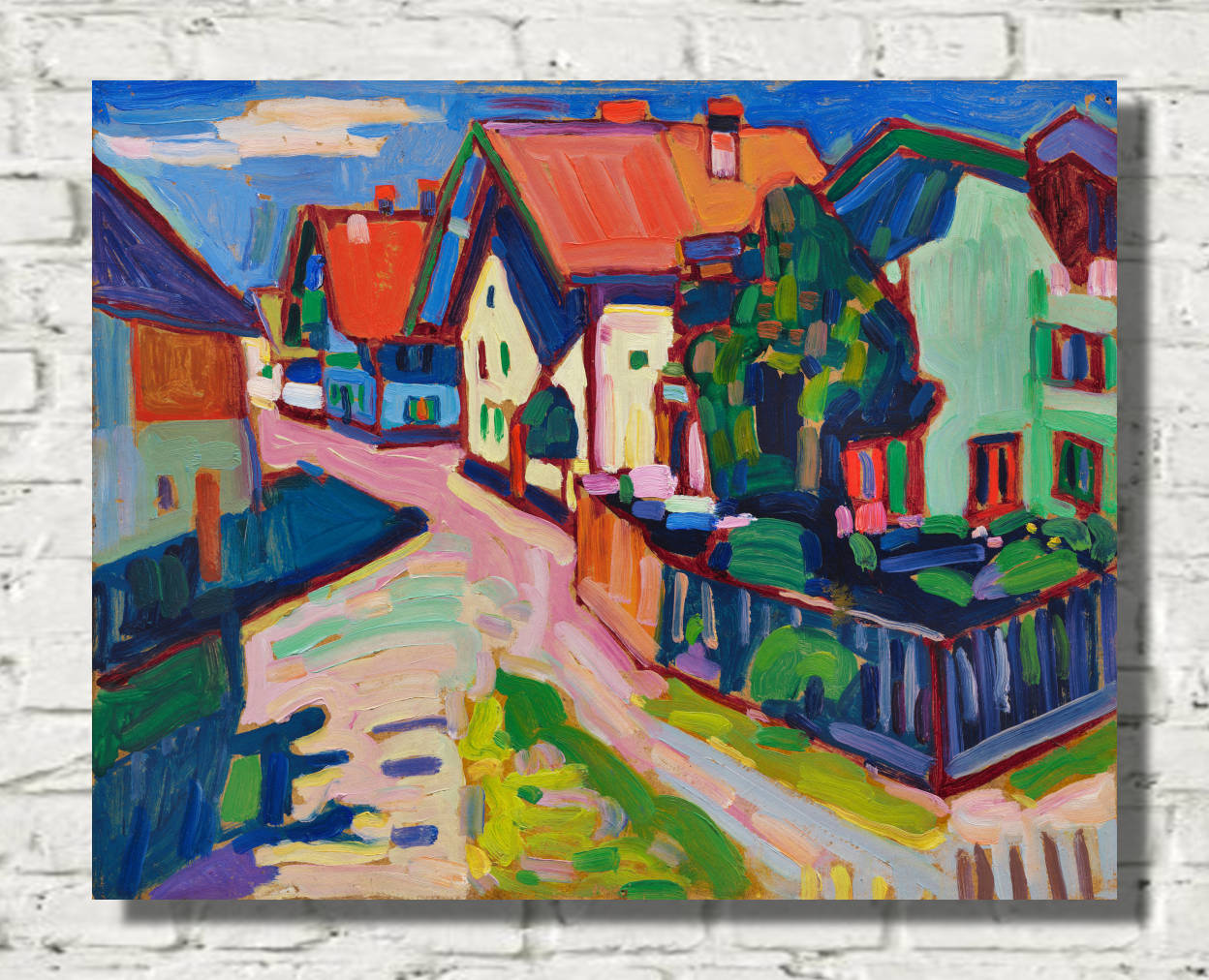
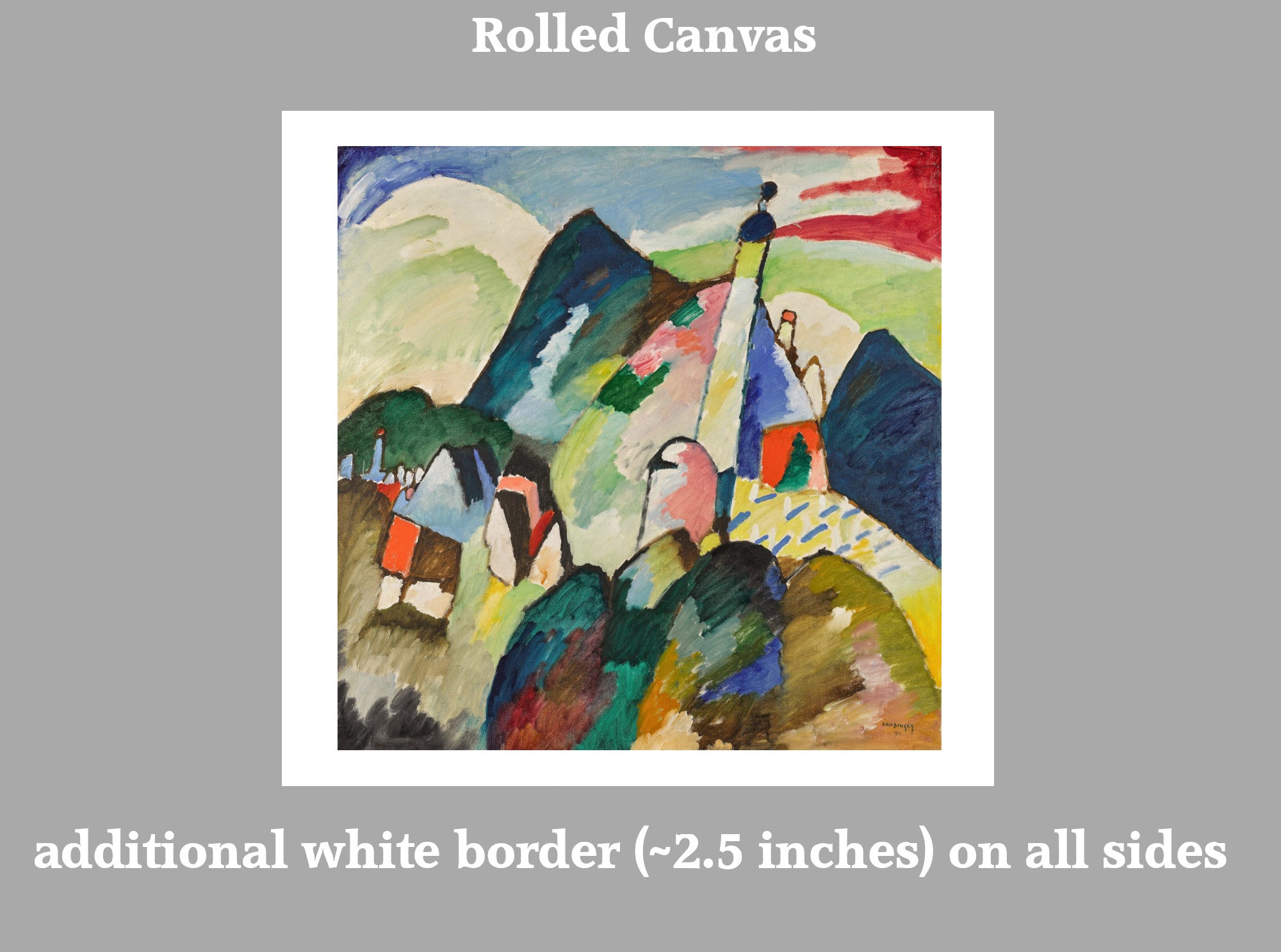
Canvas panels offer a clean, ready-to-hang alternative that emphasises the surface and colour of the artwork.
GalleryThane prints, frames and canvas panels are produced in our Nottinghamshire workshop using carefully selected fine art papers, pigment inks and framing materials.
Explore Related Art Collections
For Kandinsky’s early Expressionist and Murnau-period works, explore Der Blaue Reiter Prints.
For his role in the broader development of modern abstraction, browse Abstract Art Prints.
Explore Kandinsky’s later geometric vocabulary alongside other modernists in Geometric Abstract Prints.
For works connected with his years teaching at the influential German design school, visit Bauhaus Prints.
You can also explore the broader early twentieth-century movement in Expressionist Art Prints.
Frequently Asked Questions
Who was Wassily Kandinsky?
Wassily Kandinsky was a Russian-born painter and art theorist who became one of the central pioneers of twentieth-century abstraction. His career encompassed Expressionism, Der Blaue Reiter, early abstraction and the Bauhaus.
What is Kandinsky most famous for?
Kandinsky is particularly famous for helping develop abstract painting and for his theories about the emotional and spiritual power of colour, line and form.
Was Kandinsky part of Der Blaue Reiter?
Yes. Kandinsky and Franz Marc were the central figures behind Der Blaue Reiter, which emerged in Munich in 1911.
Was Kandinsky a Bauhaus artist?
Yes. Kandinsky joined the Bauhaus in 1922 and taught there until the school closed in 1933. His work during this period became increasingly geometric.
What are Kandinsky’s most famous paintings?
Among his best-known works are Composition VII, Composition VIII, Yellow-Red-Blue, Circles in a Circle and numerous Improvisations. His earlier Murnau landscapes are also important to understanding his development.
Why did Kandinsky paint abstract art?
Kandinsky believed painting could communicate emotions and spiritual ideas through colour and form without needing to reproduce recognisable objects.
What influenced Kandinsky’s paintings?
His influences included music, Russian folk culture, spirituality, European modernism, Expressionism and his theories about the psychological effects of colour and shape.
What is the difference between Kandinsky’s Blue Rider and Bauhaus work?
His Blue Rider-period paintings tend to use freer forms, expressive colour and increasingly abstract transformations of landscapes, riders and other recognisable subjects. His Bauhaus work generally became more geometric, with greater use of circles, lines, triangles and precisely organised shapes.
Are Kandinsky prints suitable for modern interiors?
Yes. His strong colour, geometric forms and abstract compositions work particularly well in contemporary, minimalist, Scandinavian and modernist interiors.
Are Kandinsky prints available framed?
Yes. GalleryThane Kandinsky artworks are available in a range of formats including fine art paper prints, framed prints and ready-to-hang canvas panels.