Marianne von Werefkin Prints – Colour, Emotion and Expressionism
Marianne von Werefkin was one of the most remarkable artists associated with the development of early twentieth-century Expressionism.
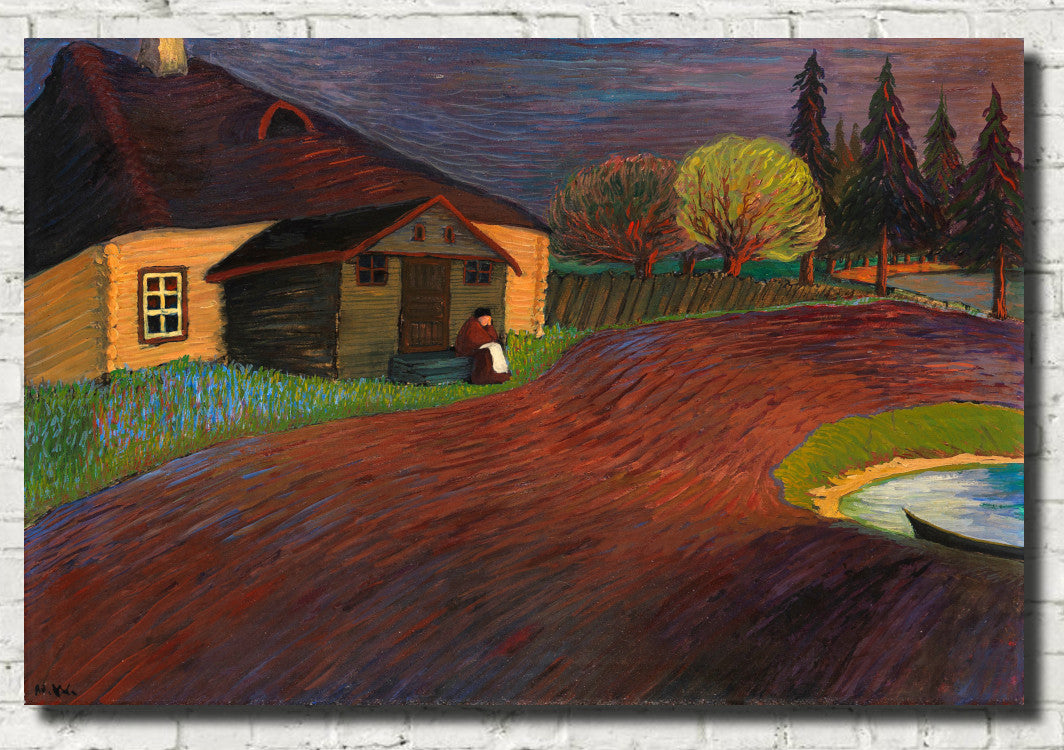
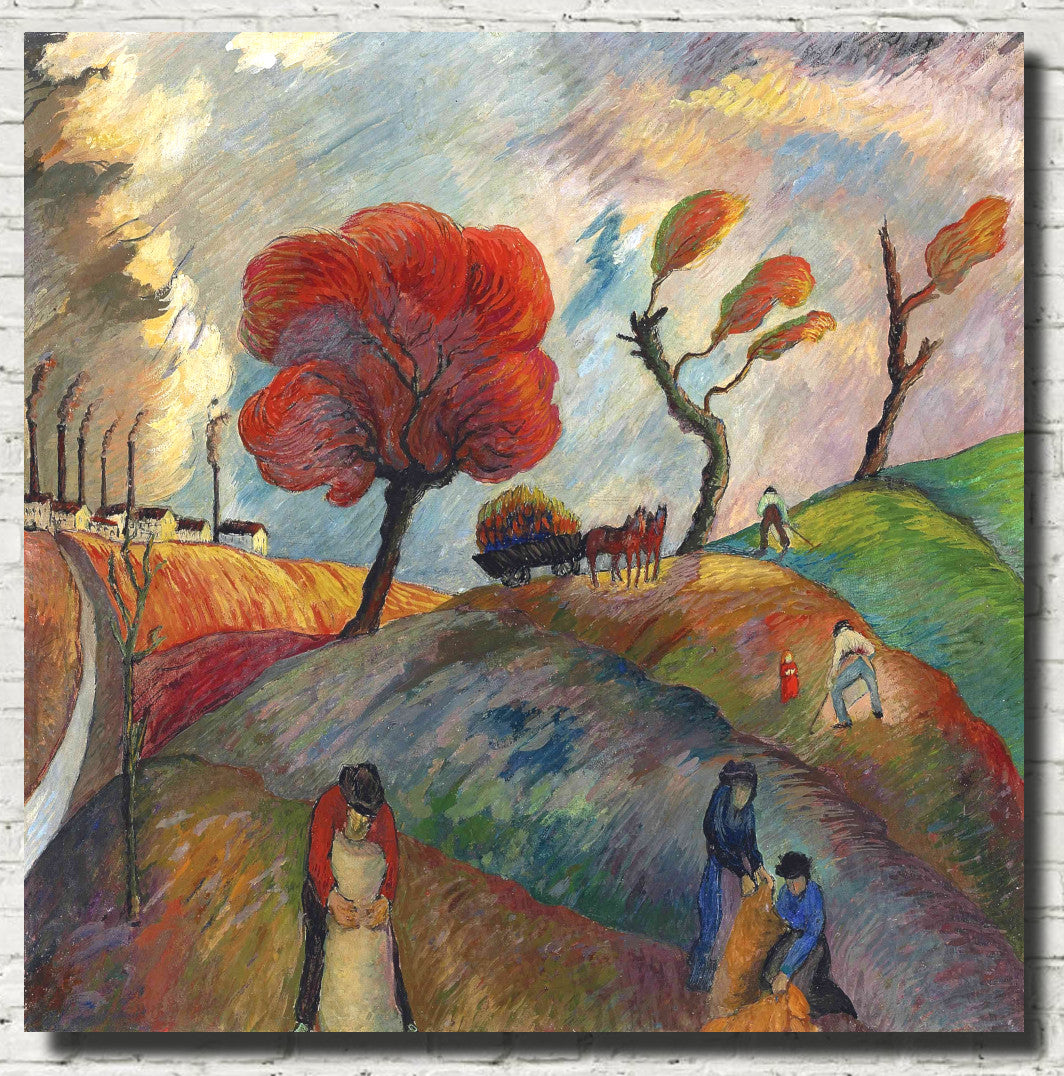
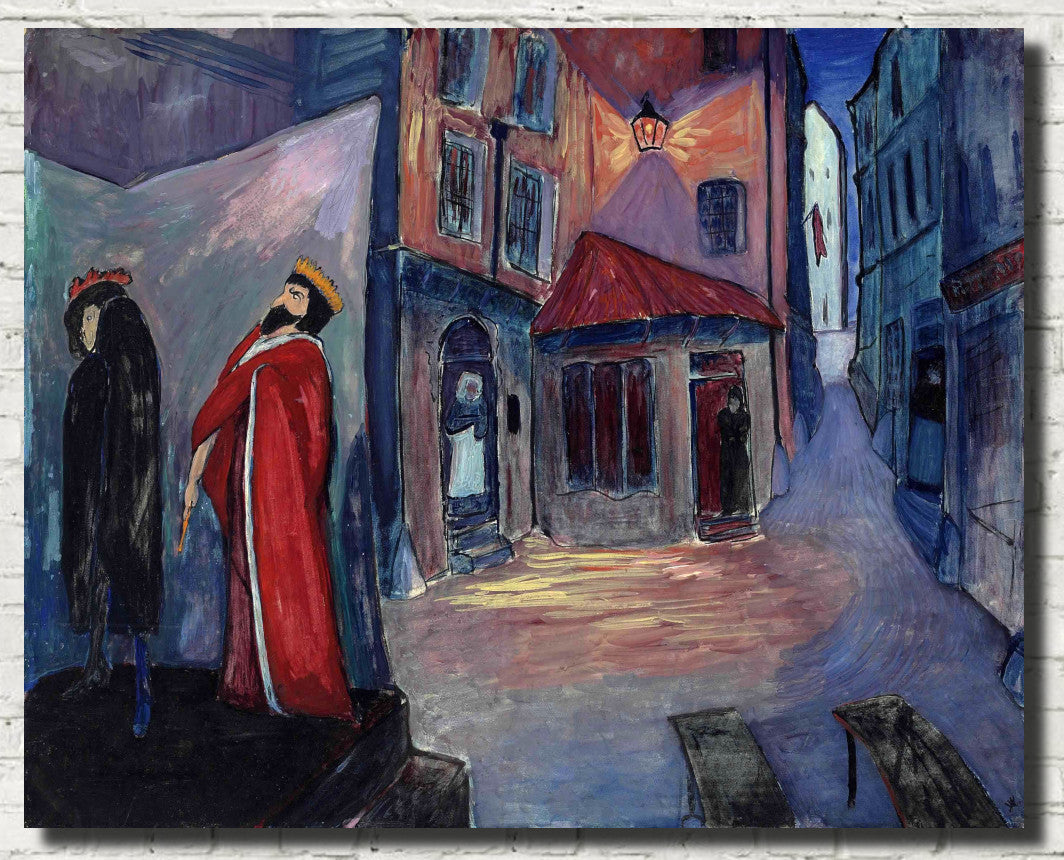
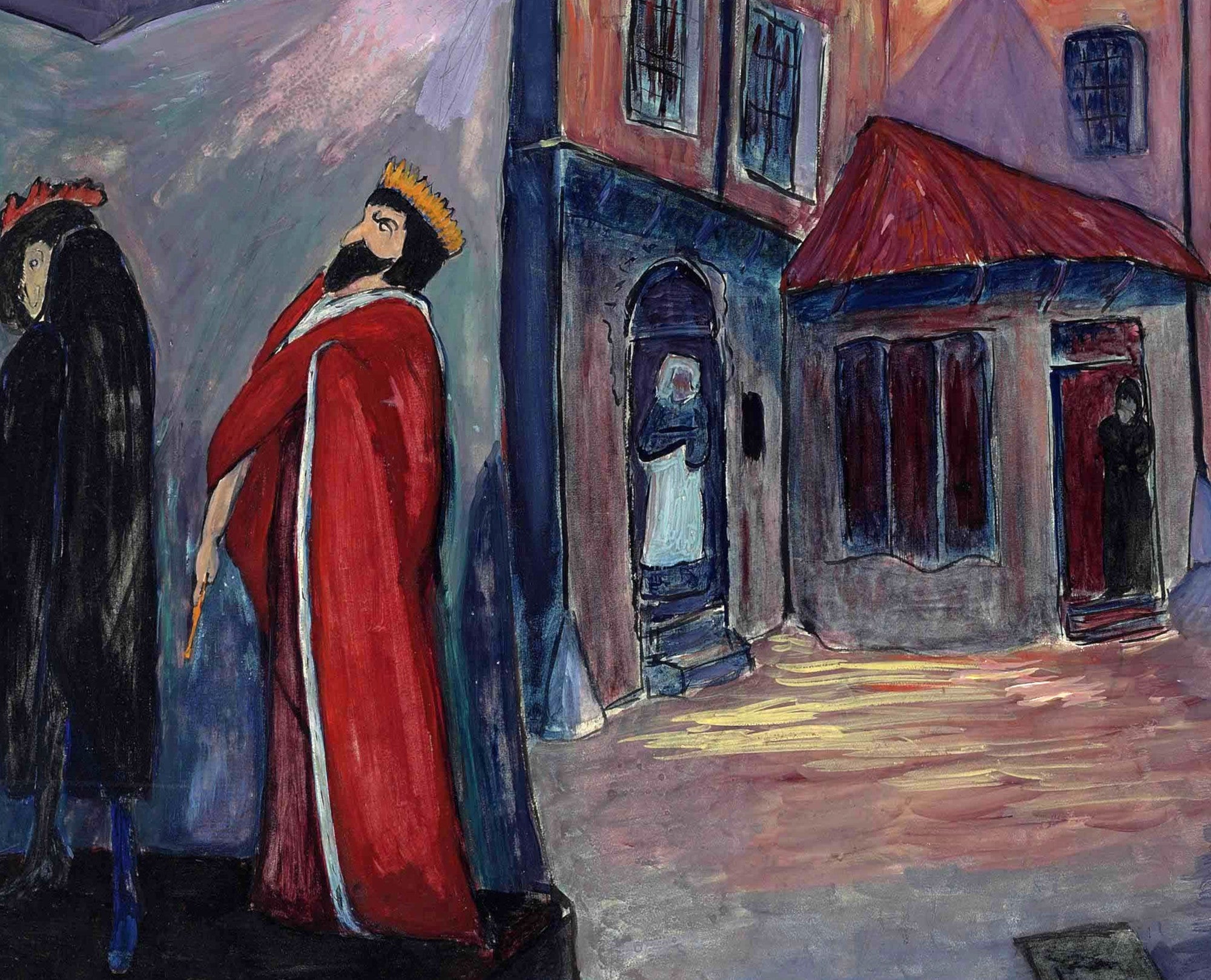
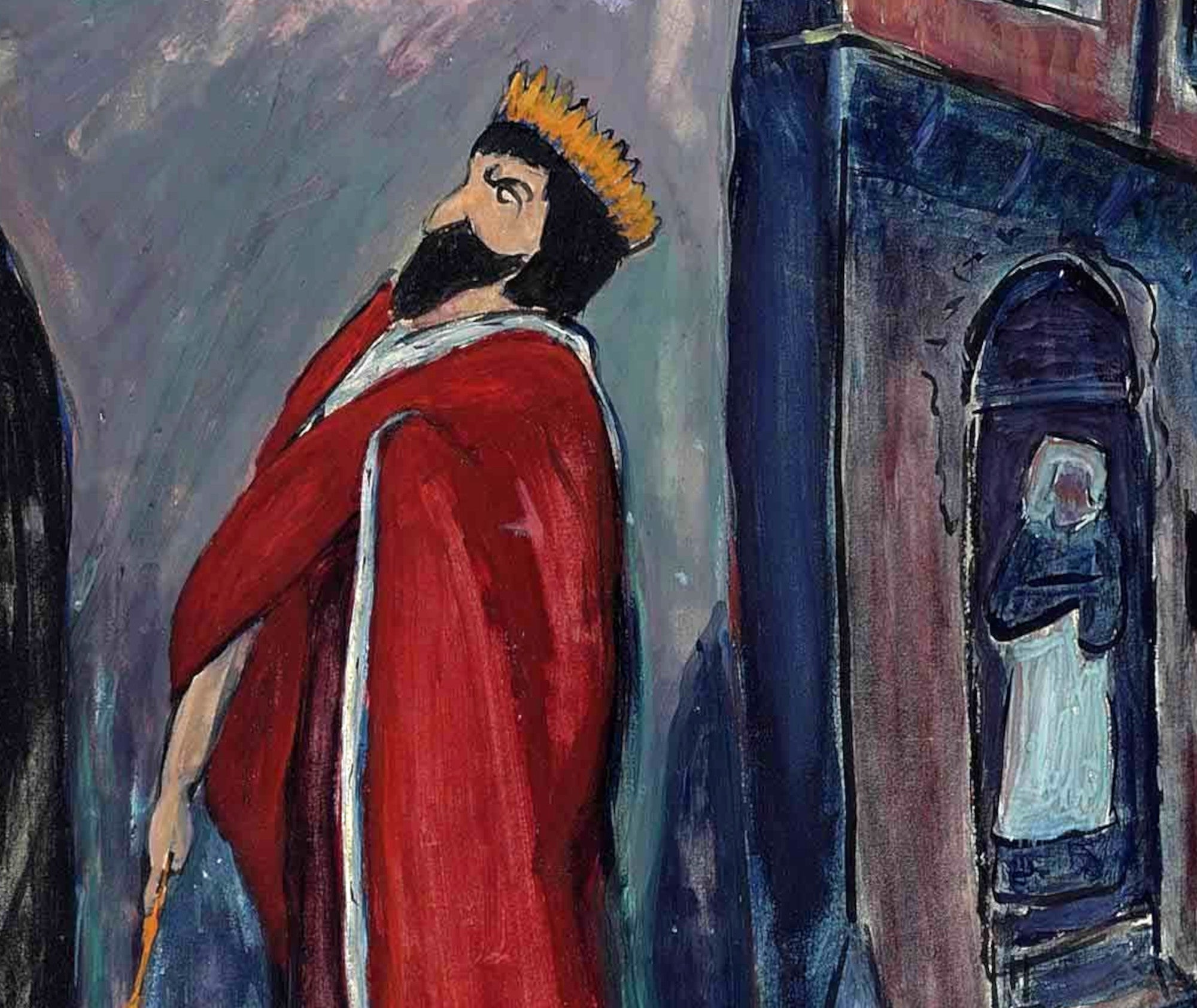
Her paintings transform railway stations, village streets, mountains, night landscapes and human figures through intense colour and deliberately simplified forms. Rather than describing a scene objectively, Werefkin often created an atmosphere of isolation, tension, spirituality or psychological drama.
She played an important role within Munich's progressive artistic community in the years immediately before the emergence of Der Blaue Reiter and was closely connected with artists including Alexej von Jawlensky, Wassily Kandinsky and Franz Marc.
GalleryThane's collection of Marianne von Werefkin prints explores both this formative Expressionist period and the highly individual paintings she continued to create later in her career.
Who Was Marianne von Werefkin?
Marianne von Werefkin was born in 1860 in the Russian Empire into an aristocratic family.
She received serious artistic training and studied with the celebrated Russian realist painter Ilya Repin.
Her early work demonstrated considerable technical ability, but her artistic direction changed dramatically after she encountered the rapidly developing European avant-garde.
Werefkin met Alexej von Jawlensky in Russia, and the pair moved to Munich in 1896.
Munich was becoming one of the most important centres of experimental European art.
Artists from across Europe gathered there to challenge established academic traditions and explore Post-Impressionism, Symbolism, expressive colour and increasingly radical approaches to painting.
Werefkin became both an artist and an important intellectual presence within this community.
Marianne von Werefkin and Alexej von Jawlensky
Werefkin's relationship with Alexej von Jawlensky was central to both artists' careers.
For several years after moving to Munich, Werefkin largely stopped painting while supporting Jawlensky's development and participating in discussions about modern art.
She resumed painting seriously during the first decade of the twentieth century.
When she returned to her own work, her style had changed significantly.
Rather than returning to the realism of her earlier training, Werefkin embraced intense colour, simplified figures and dramatically altered landscapes.
Although Werefkin and Jawlensky influenced one another, their mature paintings developed distinctive personalities.
Jawlensky became increasingly fascinated by the human face, eventually reducing it towards the highly simplified forms of his later Abstract Heads and Meditations.
Werefkin frequently placed figures within emotionally charged landscapes, using architecture, mountains, roads and darkness to reinforce psychological mood.
The Munich Avant-Garde
Werefkin became an important figure within Munich's artistic community.
Her home became a meeting place where artists and intellectuals discussed new developments in European culture and the future of modern art.
In 1909 she helped establish the Neue Künstlervereinigung München, or New Artists' Association of Munich.
Other important figures connected with the association included Kandinsky and Jawlensky.
The group provided an important platform for artists interested in moving beyond conventional naturalism.
Disagreements eventually developed over how radical modern painting should become, particularly around Kandinsky's increasingly abstract work.
These tensions contributed to the emergence of Der Blaue Reiter in 1911.
Marianne von Werefkin and Der Blaue Reiter
Werefkin occupies an important position in the history surrounding Der Blaue Reiter — The Blue Rider, although her relationship with the group should be understood carefully.
She was a major participant in the progressive Munich circle and in the Neue Künstlervereinigung München from which the Blue Rider developed, rather than simply being treated as a founding member of Der Blaue Reiter itself.
Her discussions, artistic experiments and close relationships with Jawlensky, Kandinsky and other Munich modernists placed her firmly within the intellectual environment that made the movement possible.
Explore GalleryThane's Der Blaue Reiter Prints collection for selected Werefkin works from this formative period alongside paintings by Wassily Kandinsky, Franz Marc, August Macke and Alexej von Jawlensky.
Her work can also be explored within the broader development of Expressionist Art Prints.
Expressionist Colour
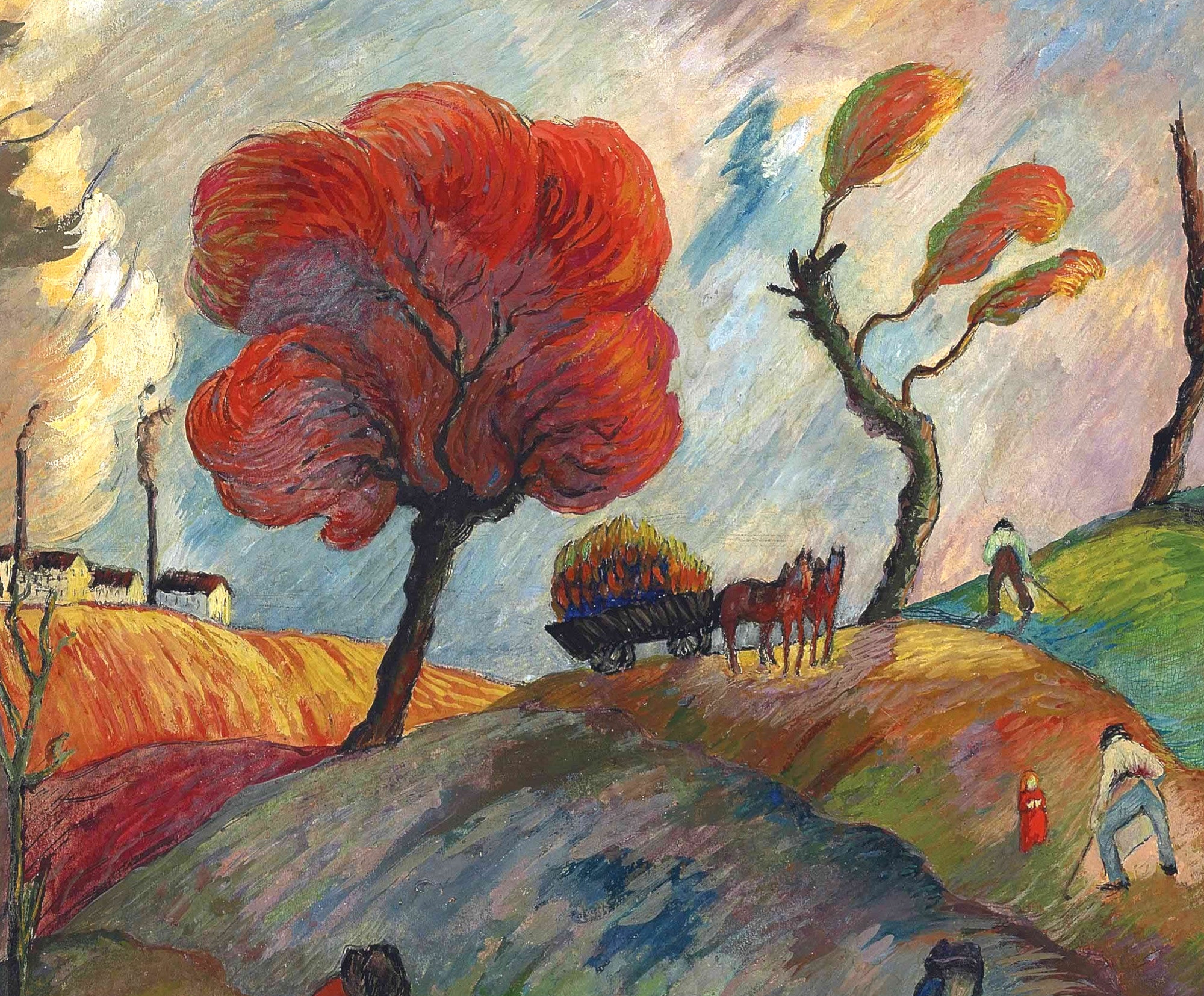
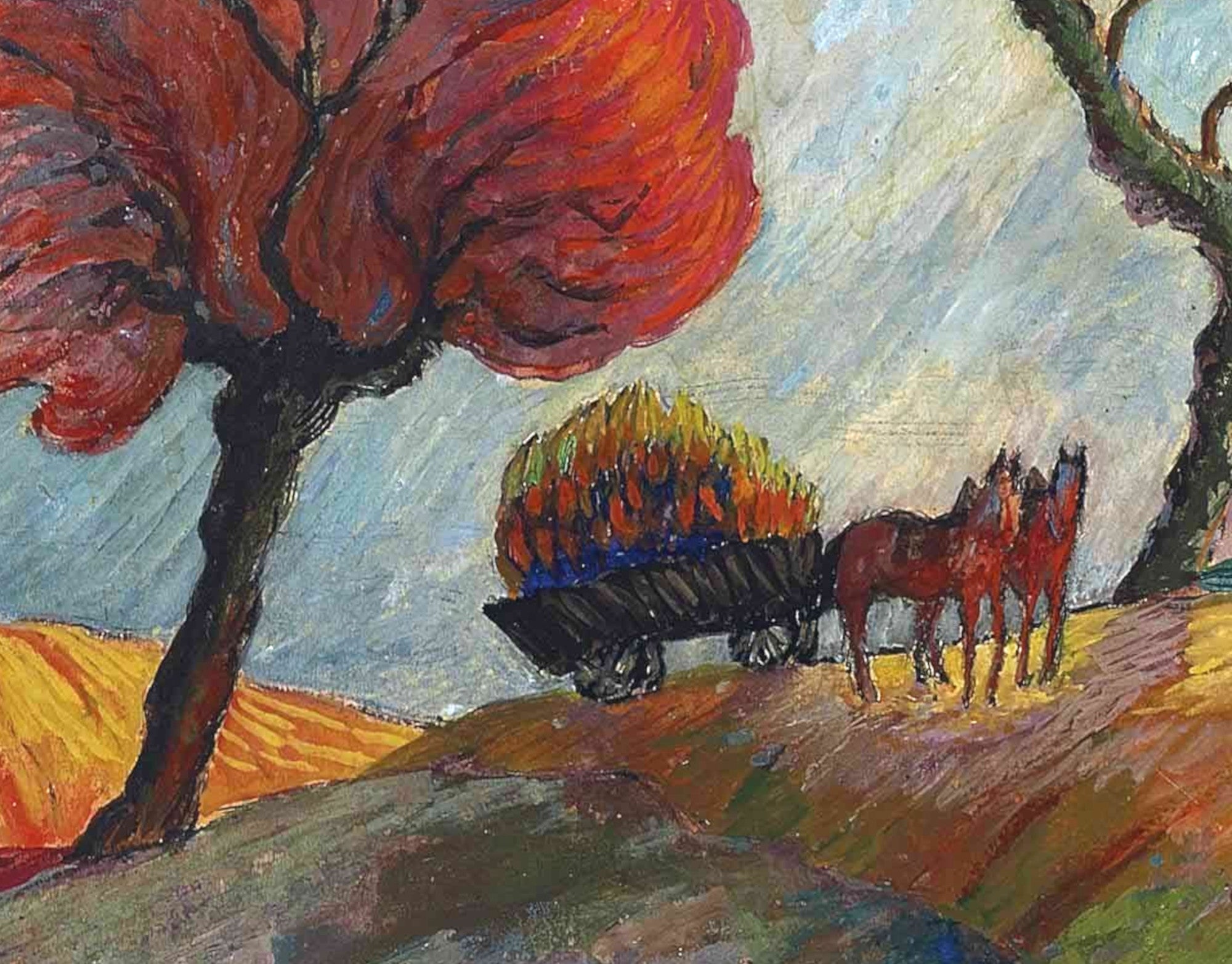
Colour became one of Werefkin's most powerful tools.
She frequently rejected naturalistic colour in favour of intense blues, reds, oranges, purples, greens and yellows.
A landscape did not need to reproduce the colours observed in nature.
Instead, colour could establish atmosphere.
Dark blue might suggest night or emotional isolation.
Brilliant orange or yellow could turn a small building or human figure into the psychological centre of a composition.
Red might introduce tension or danger.
These colour relationships allowed Werefkin to transform apparently ordinary subjects into emotionally charged images.
Into the Night
Into the Night is one of Werefkin's most powerful paintings from her Munich Expressionist period.
Figures move through an intensely coloured nocturnal environment in which landscape and human presence appear inseparable from the emotional atmosphere of the scene.
Rather than carefully describing the physical appearance of night, Werefkin uses colour and simplified forms to communicate its psychological character.
The painting demonstrates particularly clearly why Werefkin belongs within the story of early Expressionism.
The visible world remains recognisable, but it has been completely reorganised around emotional experience.
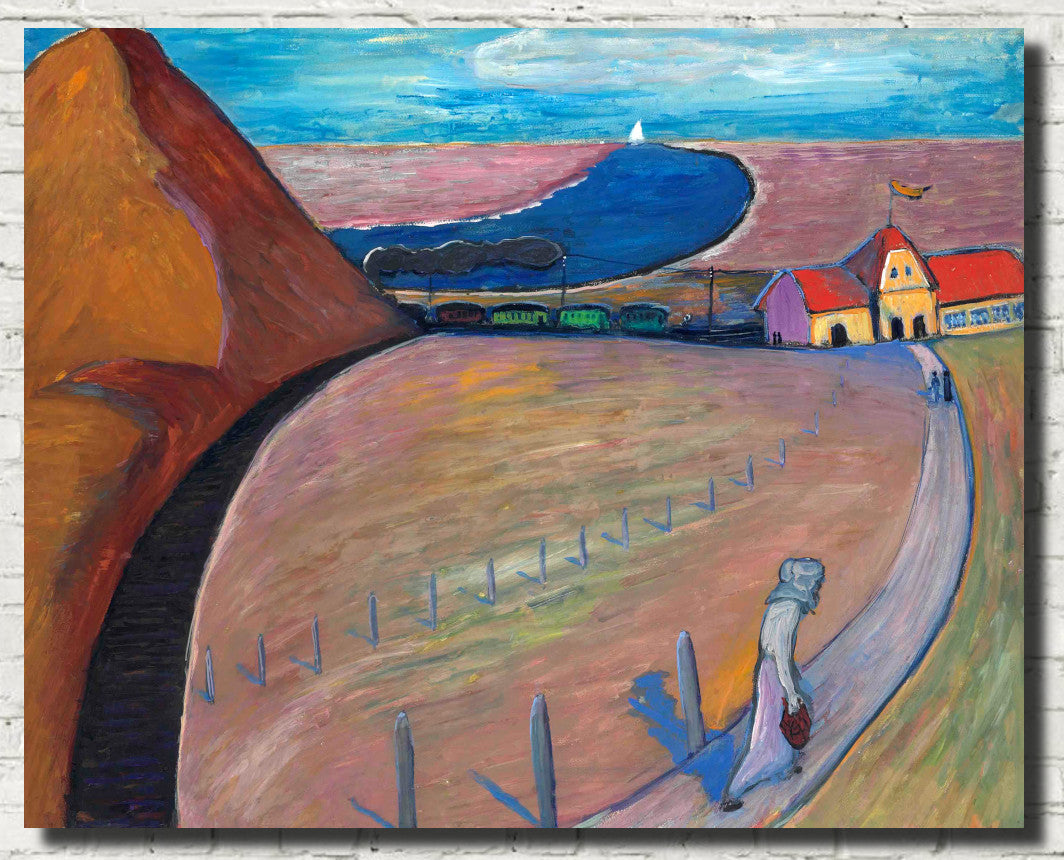
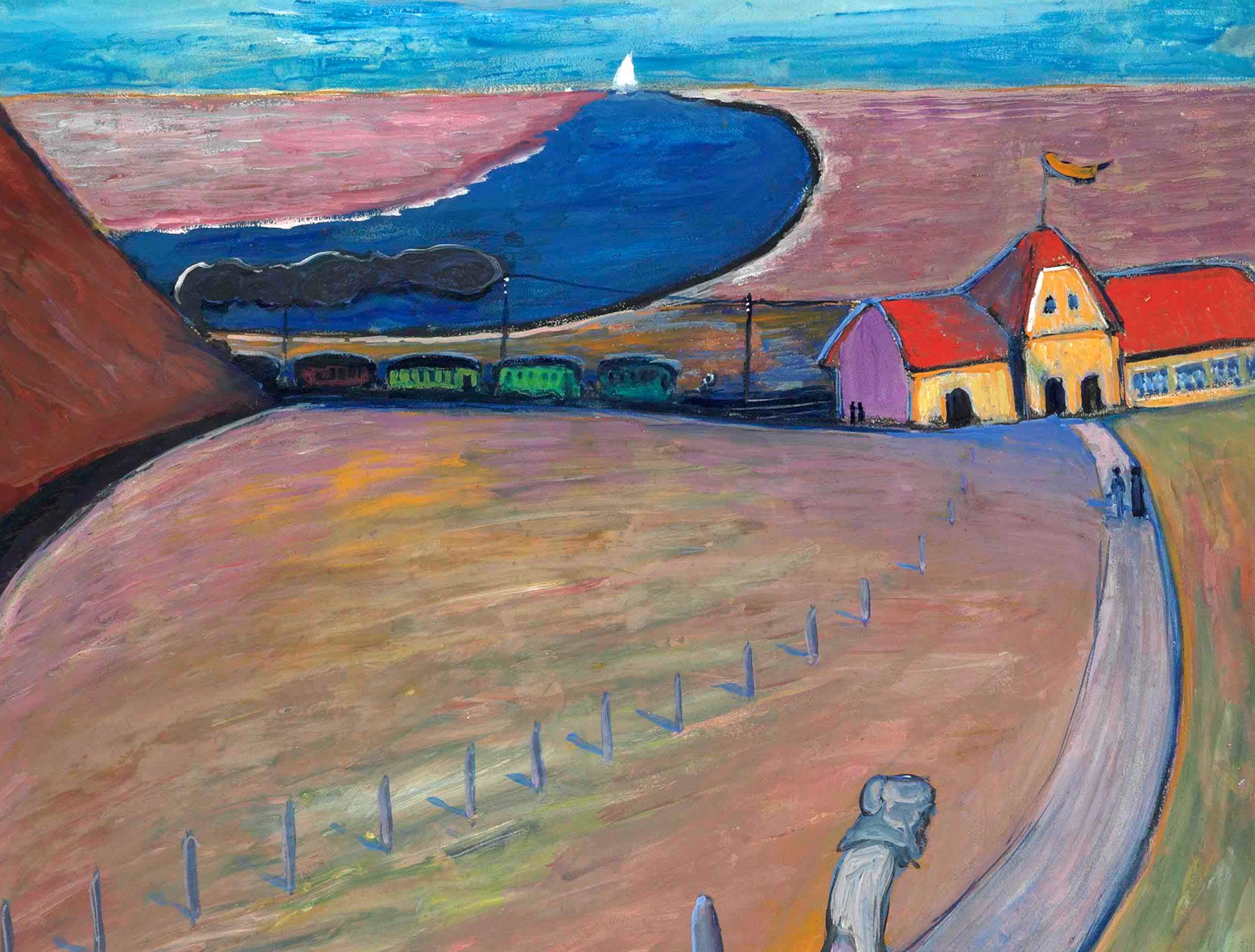
Prerow Train Station
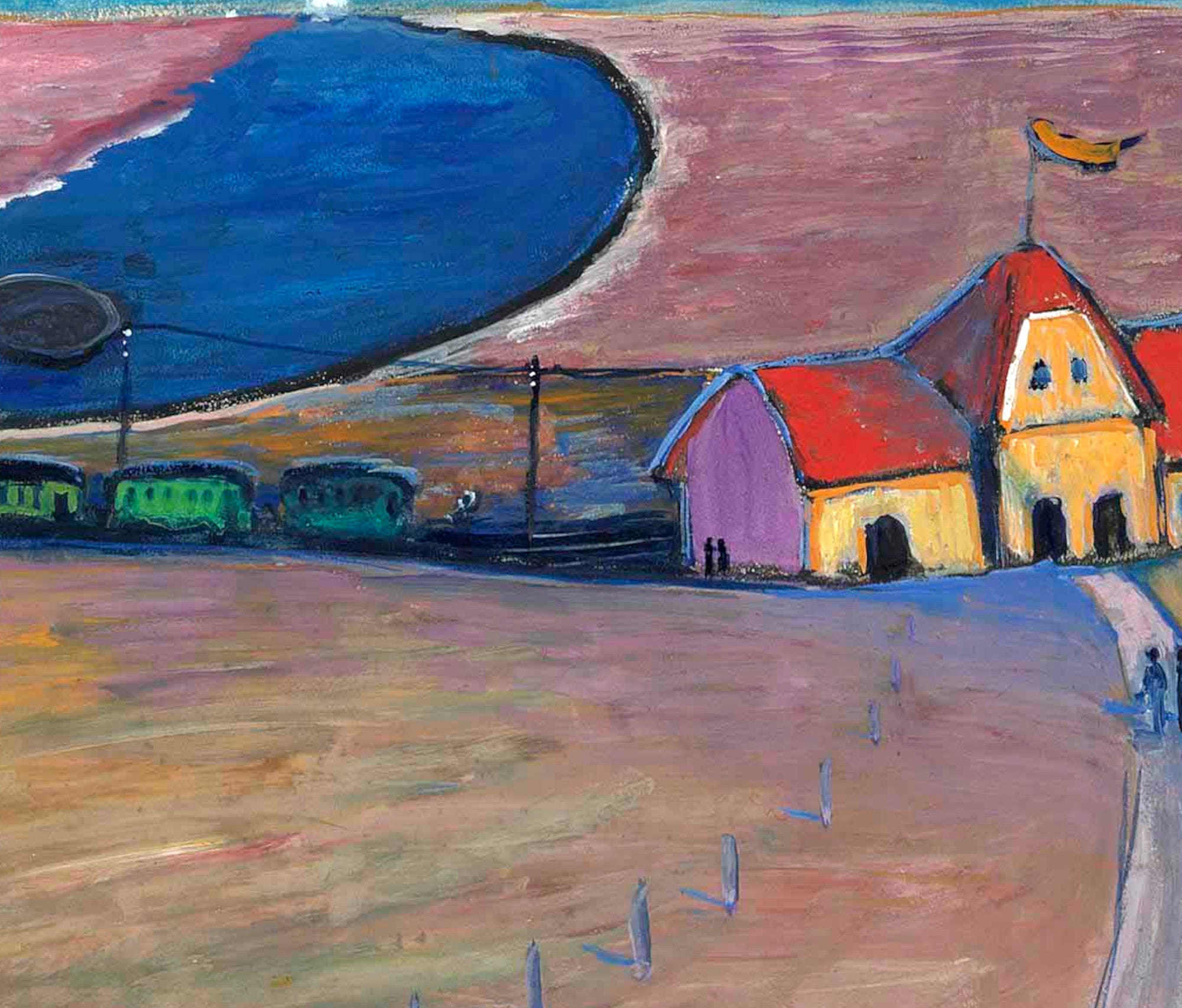
Prerow Train Station (Dunes) belongs to a group of works associated with Werefkin's time on the Baltic coast.
The railway station becomes much more than a straightforward architectural subject.
Tracks, buildings, figures and surrounding landscape are simplified into strongly defined forms.
Railways had particular significance within early twentieth-century art.
They represented travel, industrialisation and the transformation of landscape by modern technology.
For an Expressionist painter such as Werefkin, the railway station could also become a place of arrival, departure, isolation and expectation.
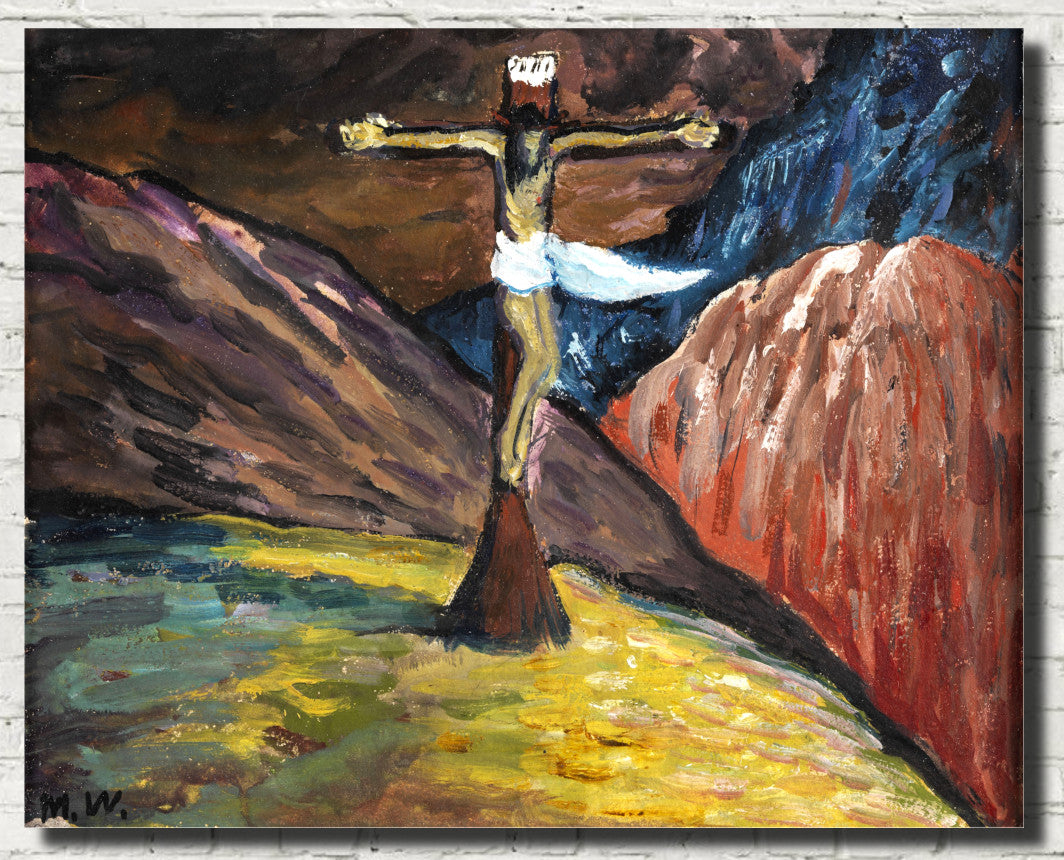
Golgotha
Religious and spiritual imagery appears periodically within Werefkin's work.
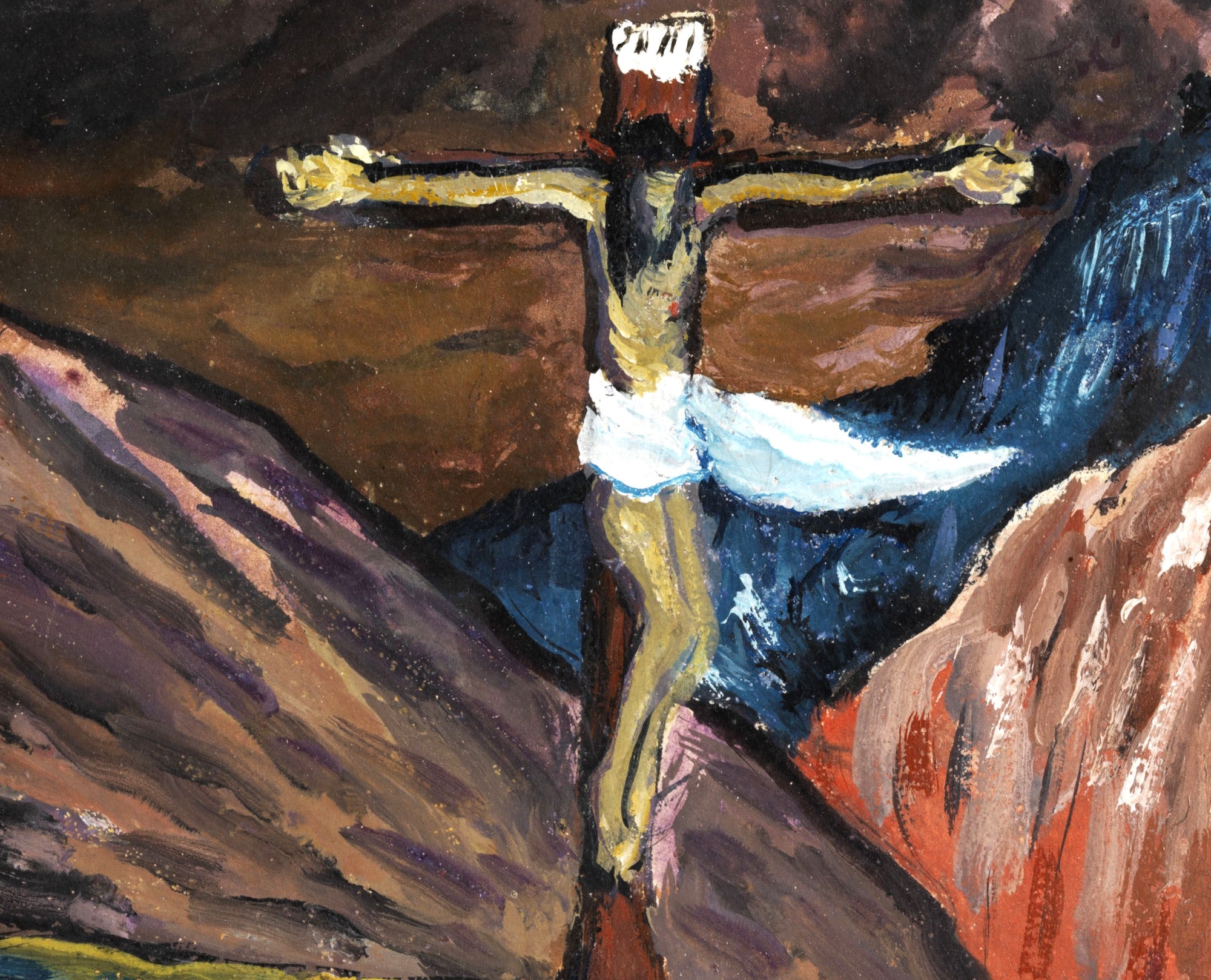
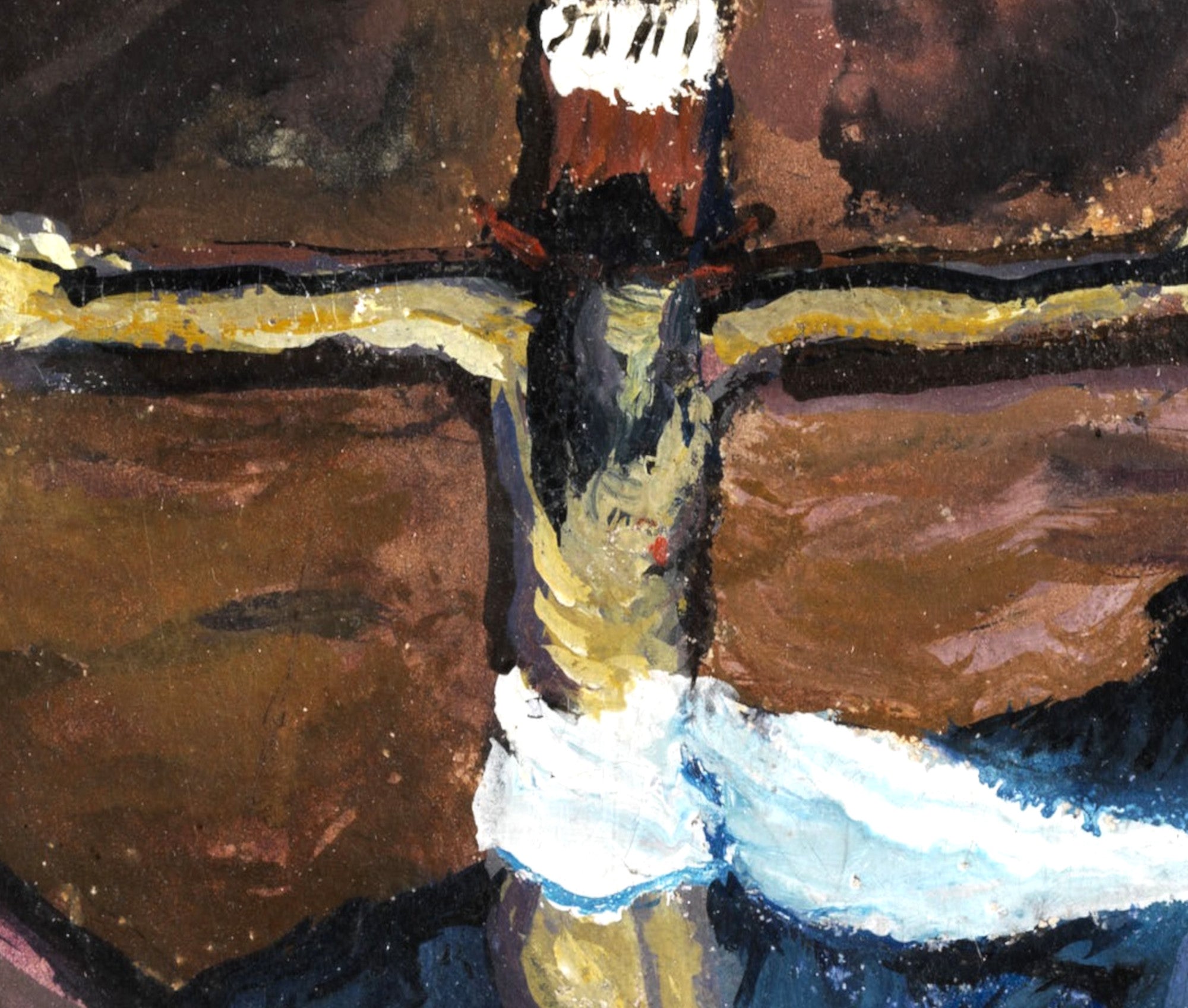
Golgotha transforms the traditional Christian subject through modern Expressionist colour and form.
Rather than attempting a conventional historical reconstruction, Werefkin uses the subject as a vehicle for emotion.
This approach reflects a broader tendency within Expressionism.
Religious narratives could provide artists with themes of suffering, sacrifice, fear and spiritual experience that could be intensified through distorted form and unnatural colour.
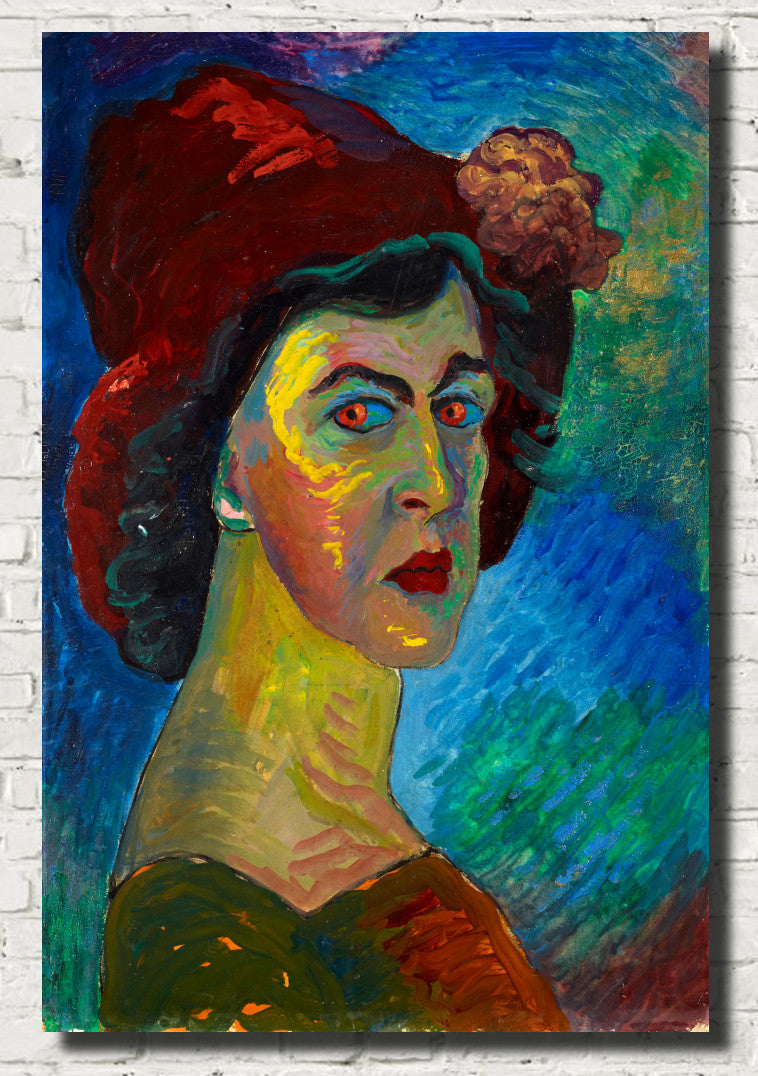
Self Portrait
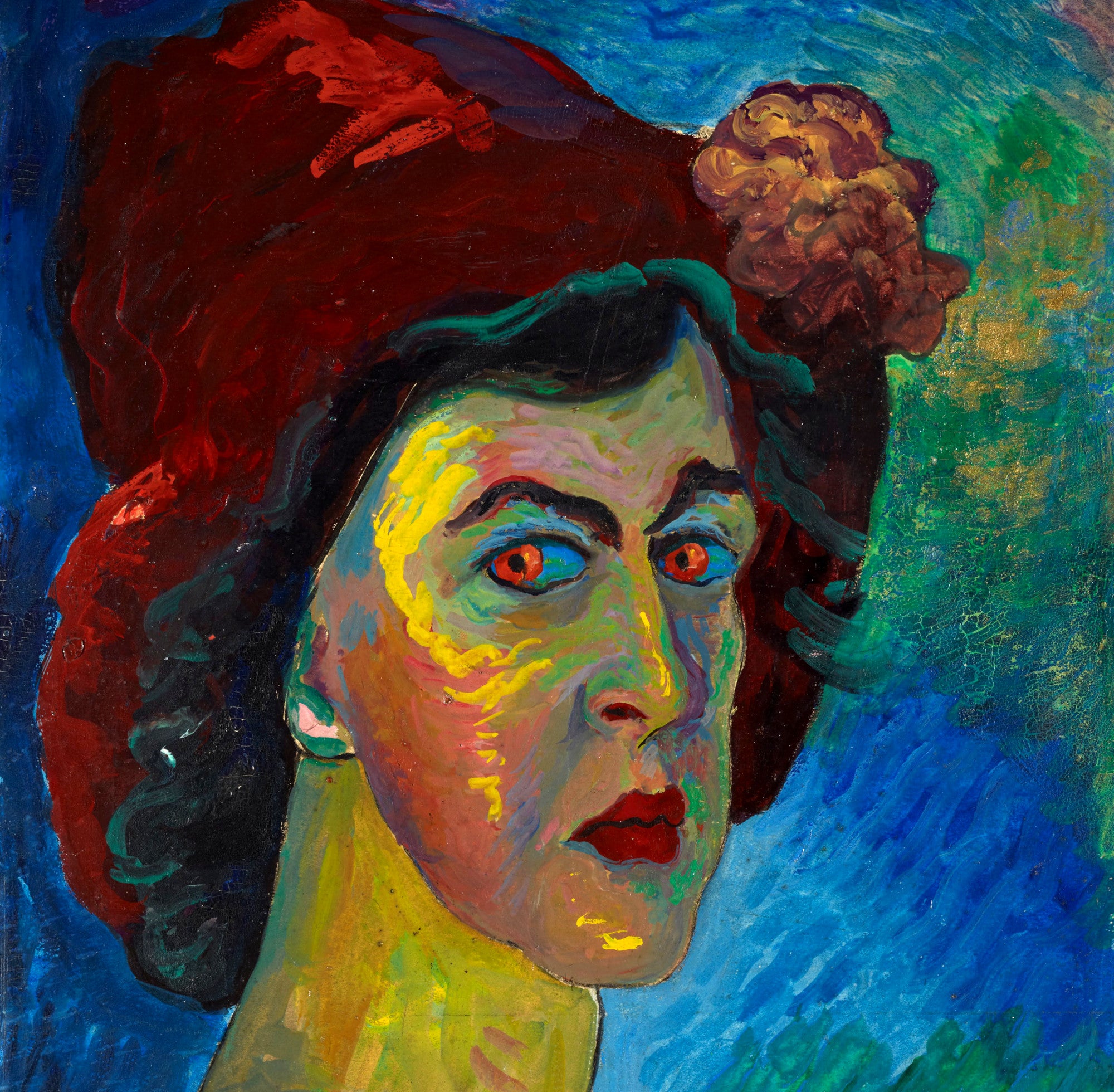
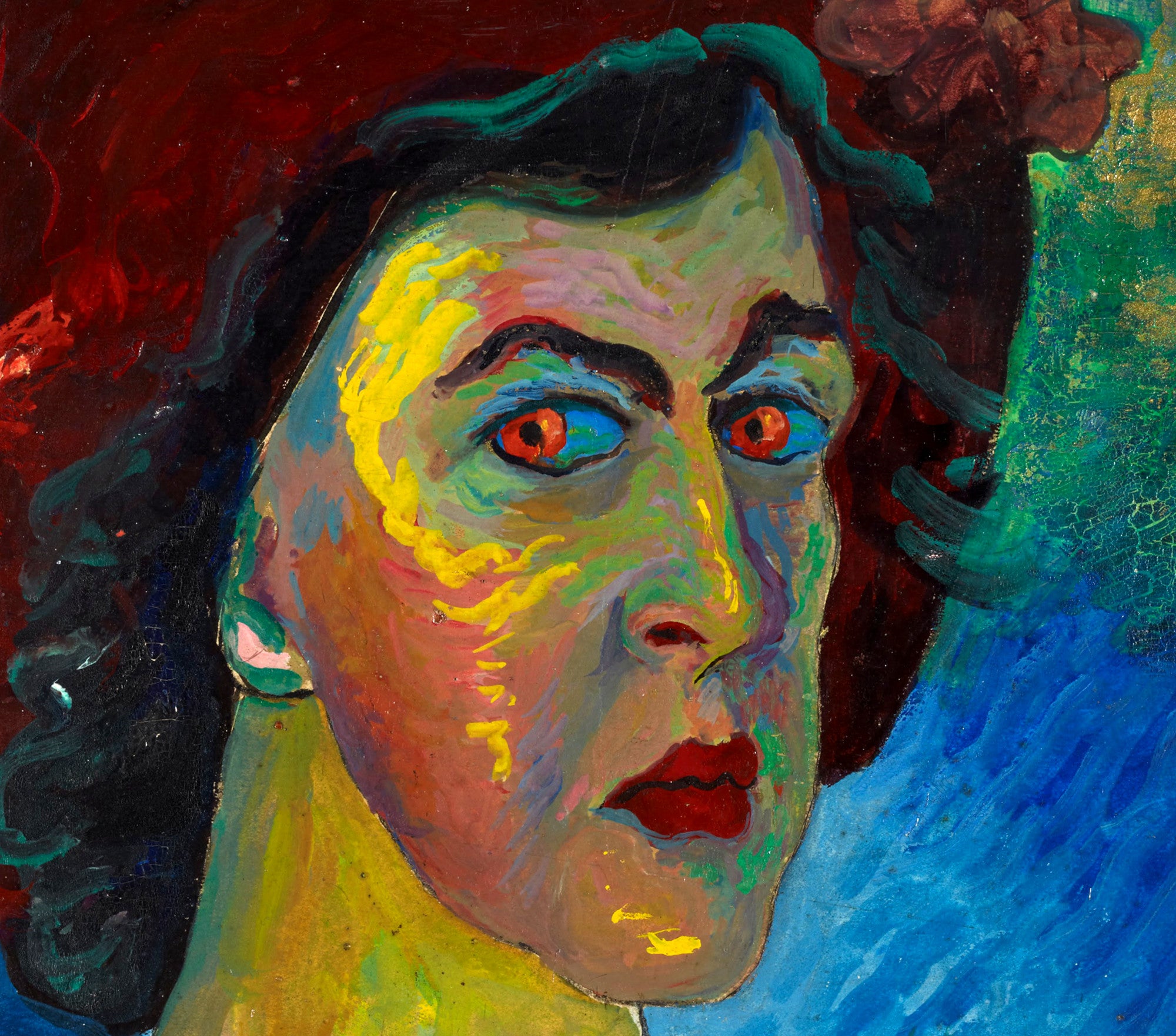
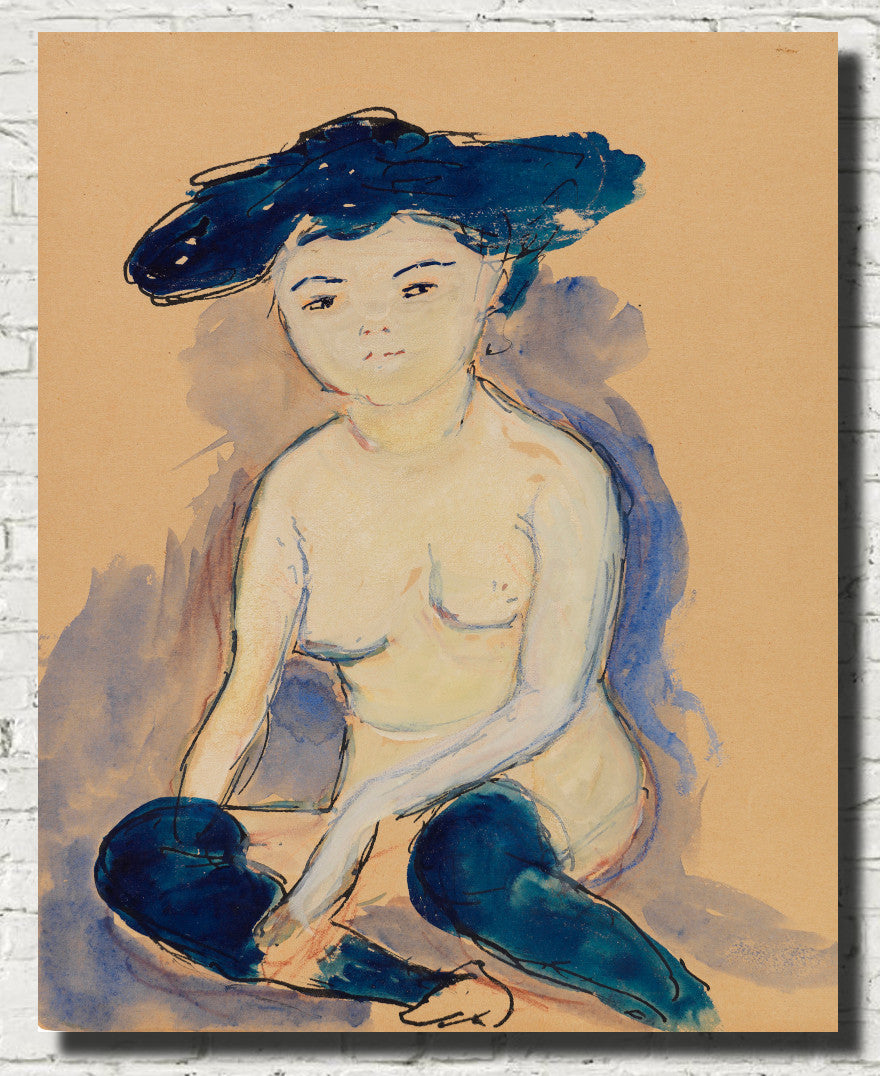
Werefkin's Self Portrait is one of the most compelling images of the artist.
Expressionist portraiture rarely depended solely on physical resemblance.
Artists increasingly used colour, line and simplification to communicate personality and psychological presence.
Werefkin's self-image therefore belongs to the same broader transformation of portraiture that can also be seen in Jawlensky, Edvard Munch and Egon Schiele.
The portrait is not simply a record of appearance.
It is an assertion of artistic identity.
Ball Scene
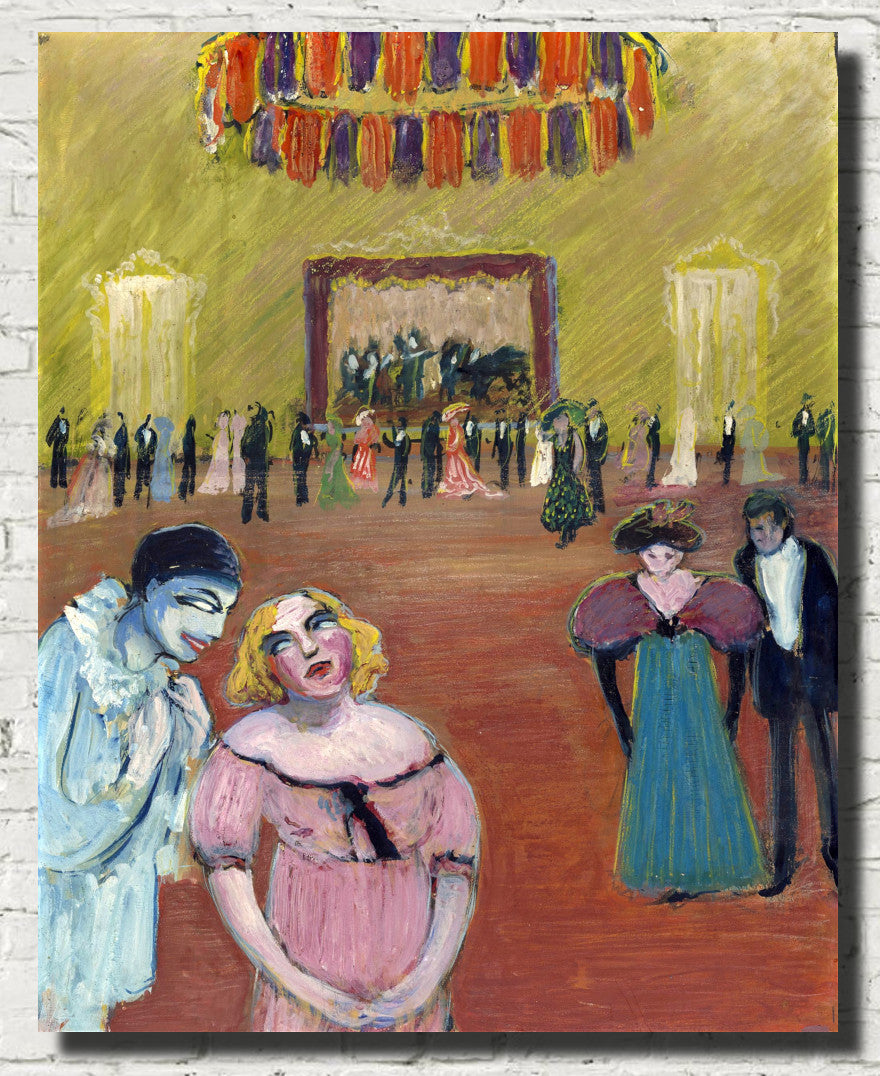
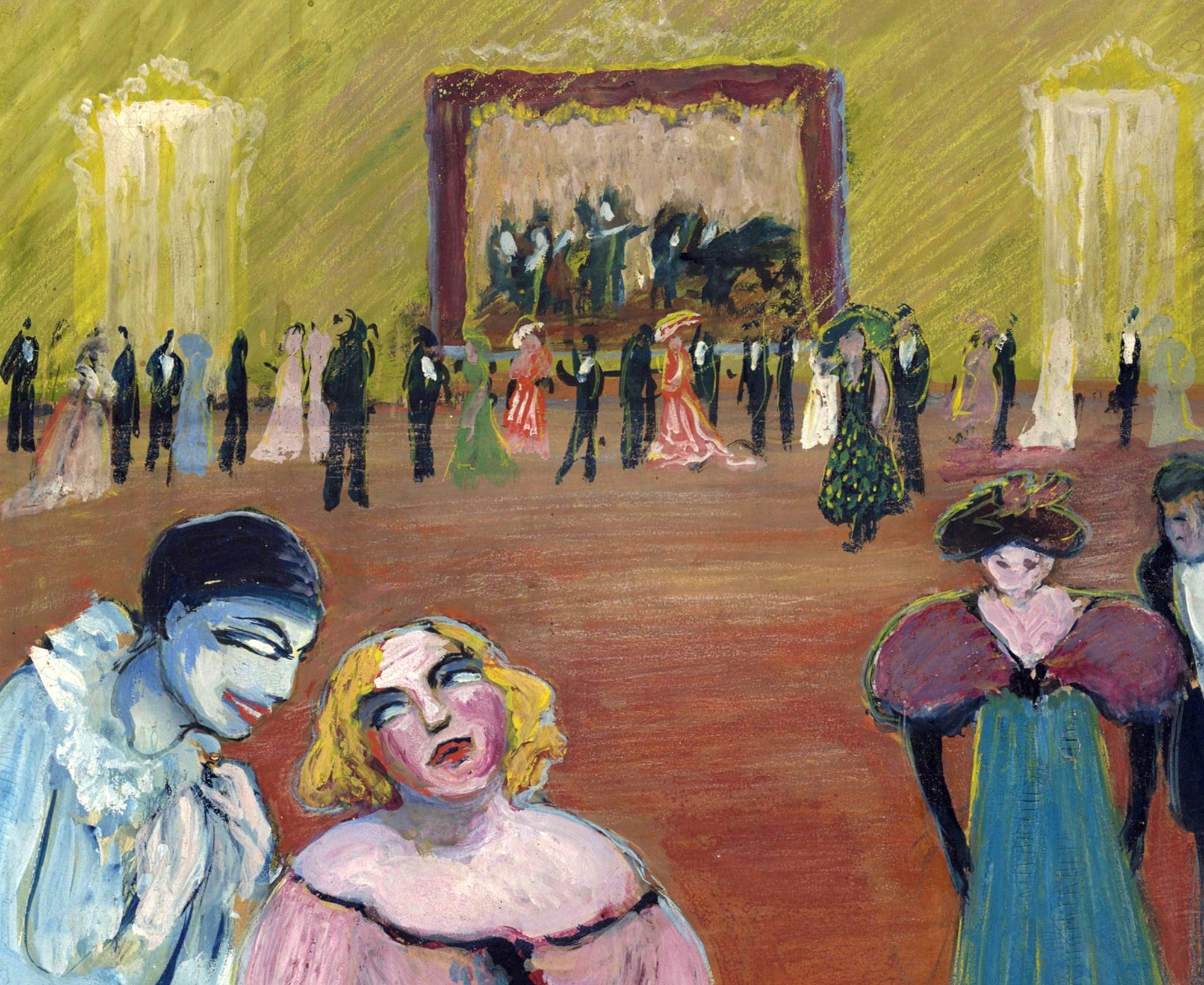
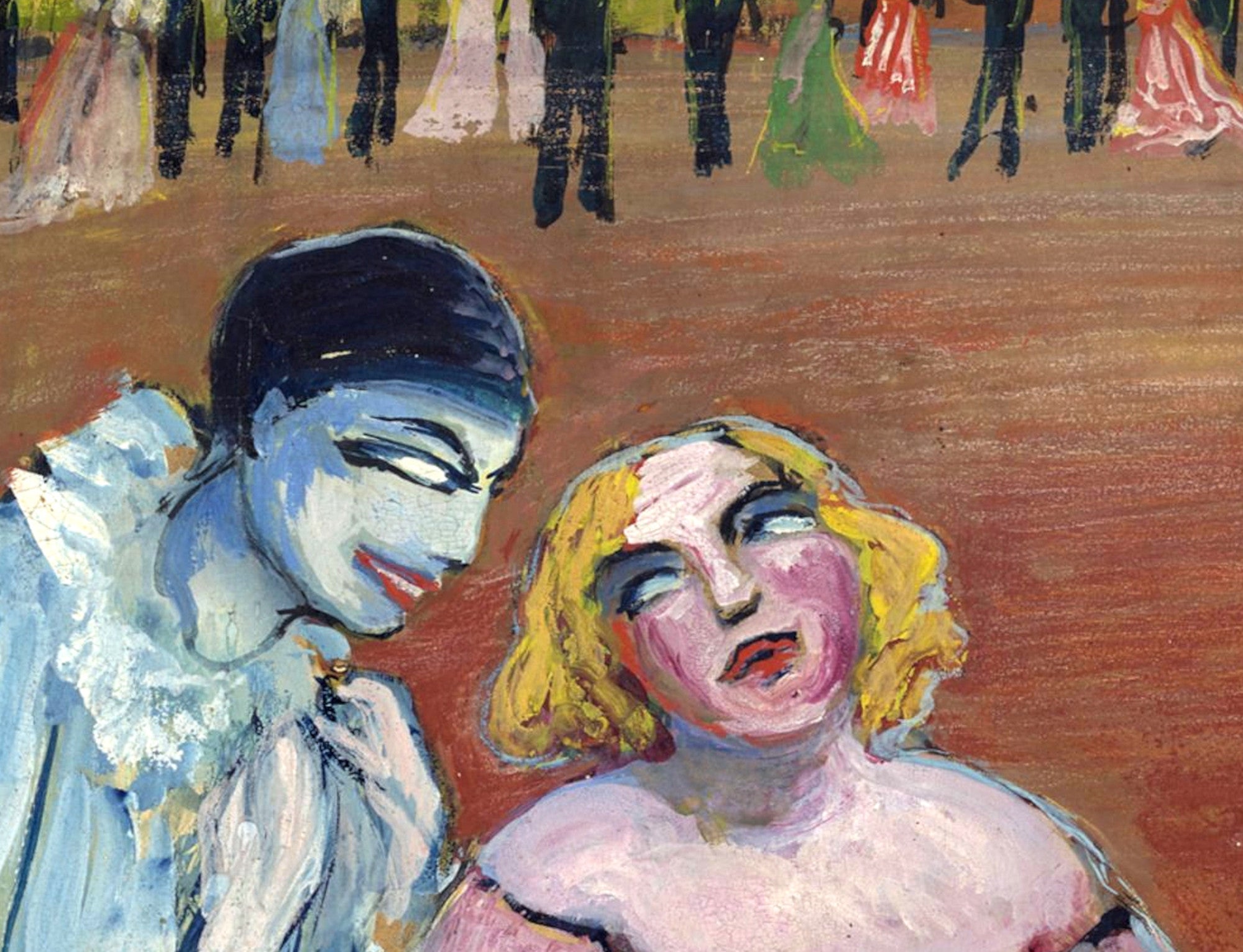
Ball Scene demonstrates Werefkin's ability to transform modern social life into expressive imagery.
Crowds, interiors and fashionable gatherings offered artists an opportunity to investigate the relationship between the individual and society.
Rather than presenting an elegant record of a social occasion, Werefkin could use colour and simplified figures to create distance, tension or ambiguity.
This psychological approach distinguishes her work from more purely decorative scenes of fashionable society.
Christmas Tree
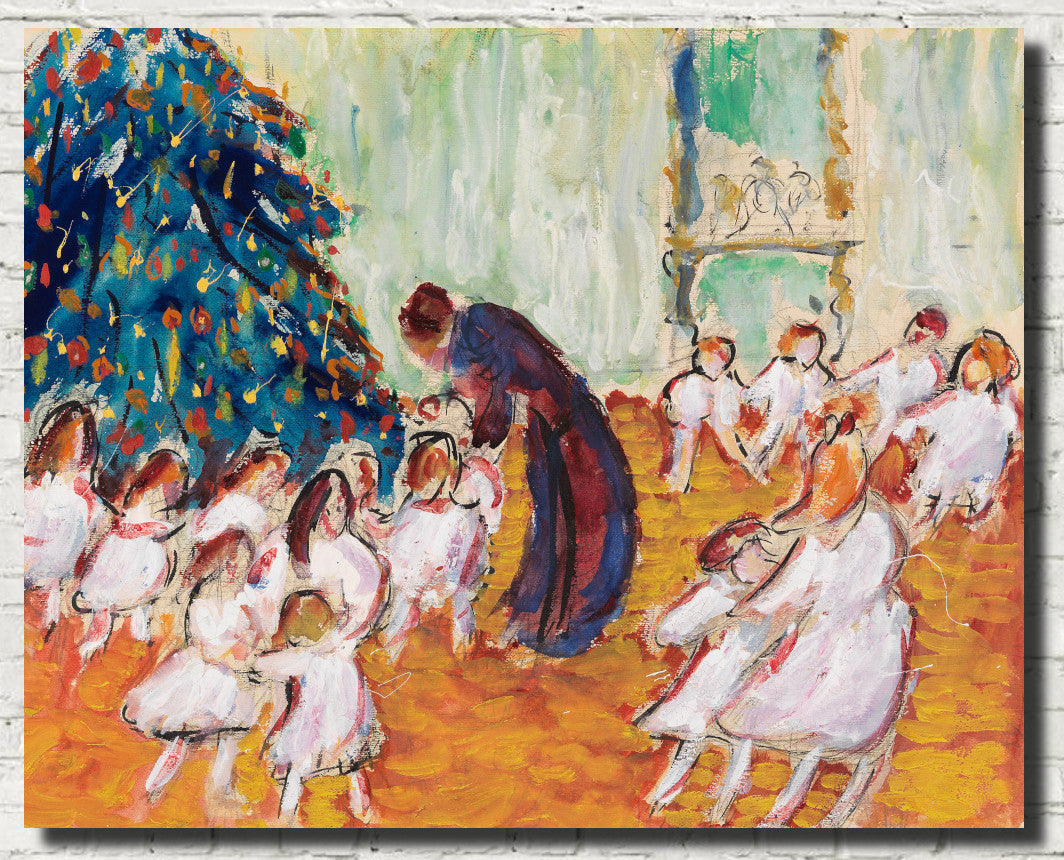
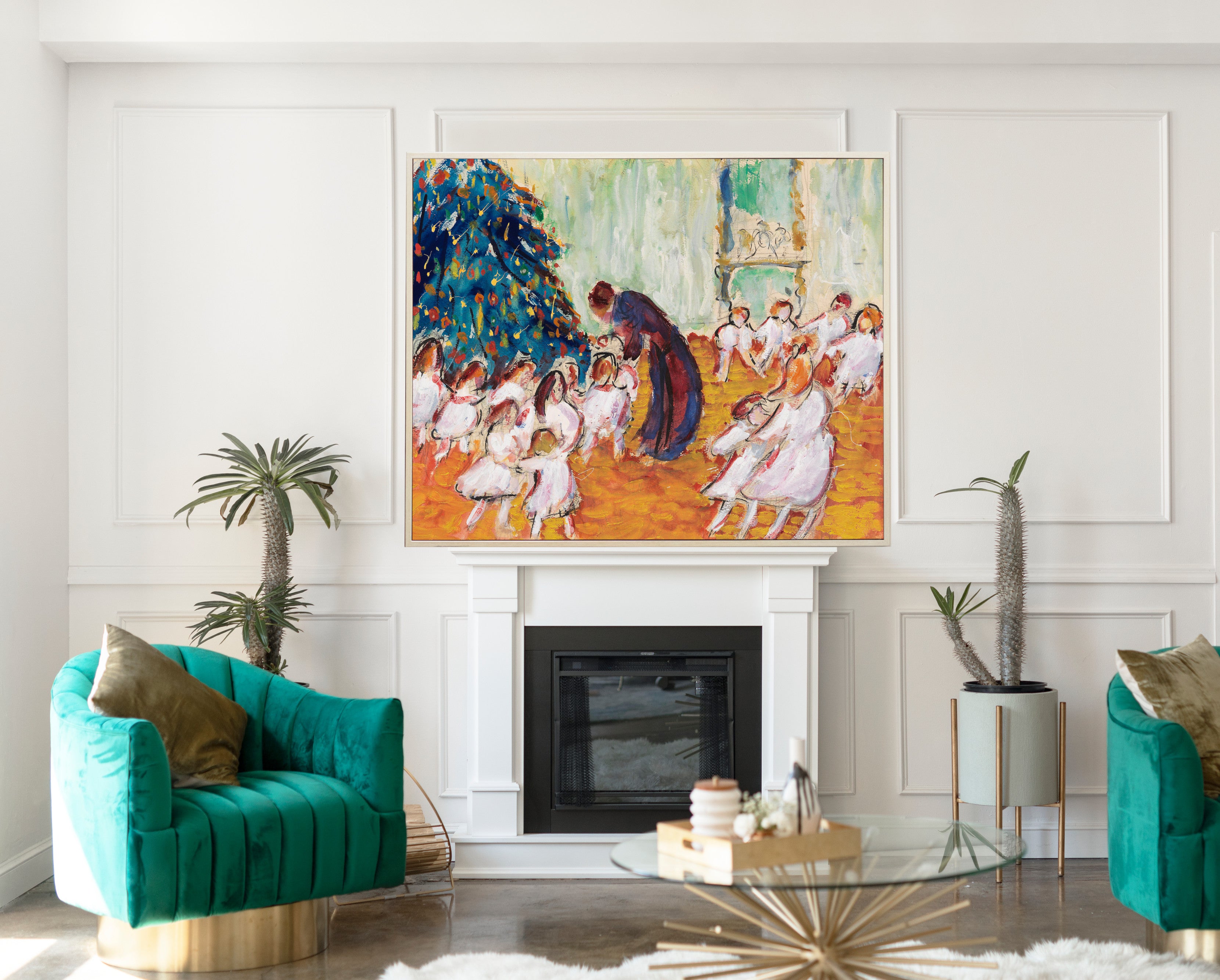
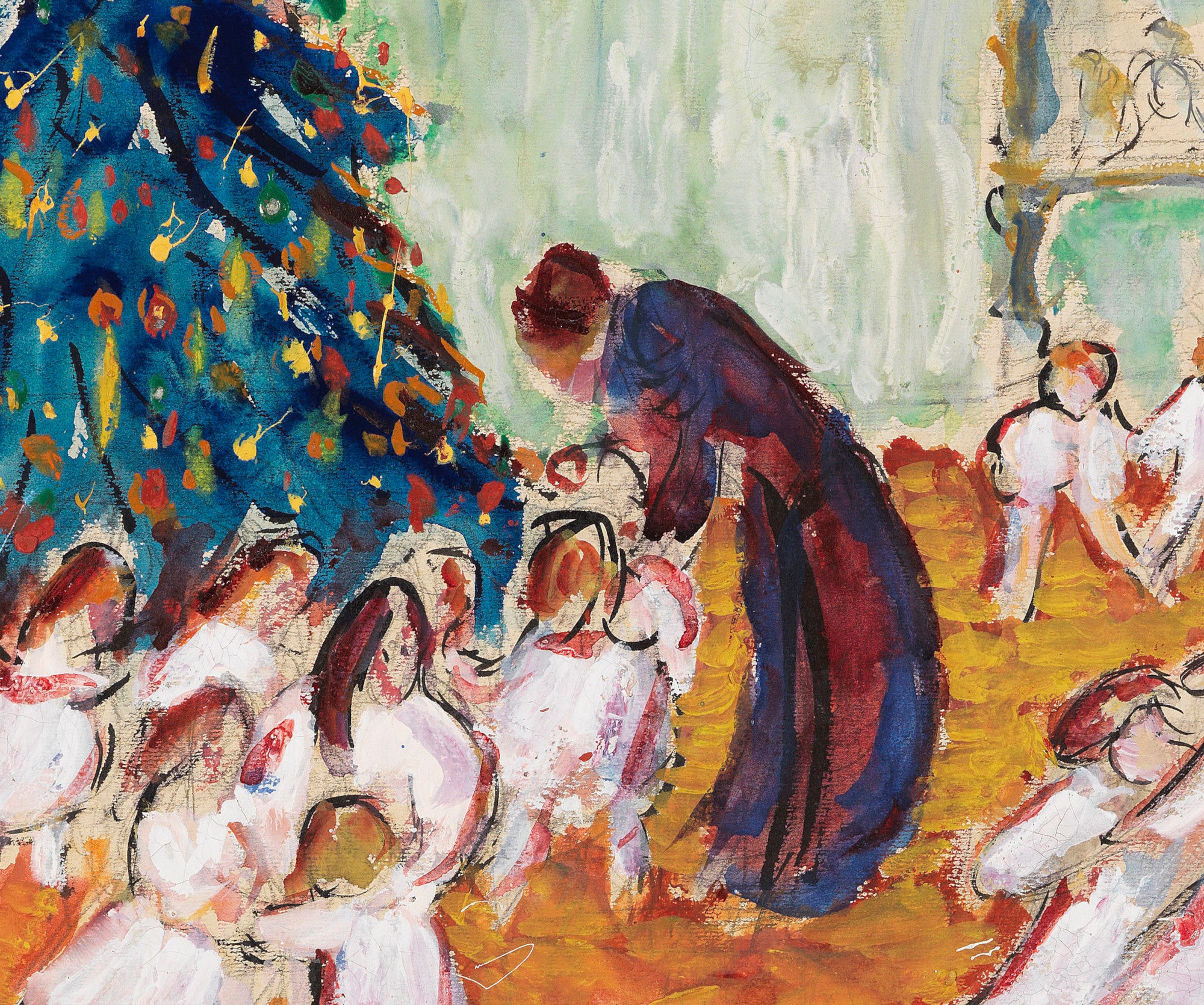
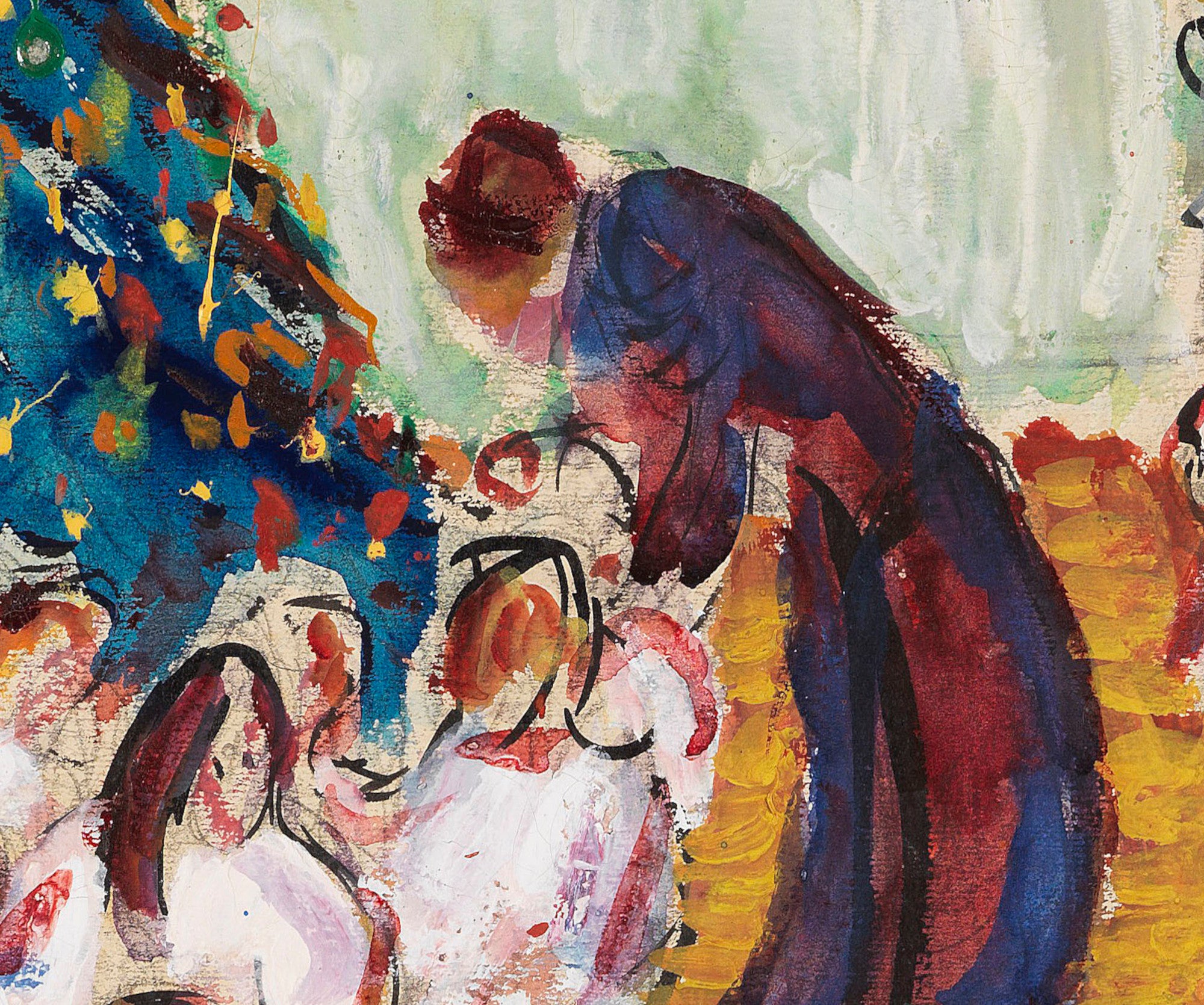
In Christmas Tree, Werefkin takes a familiar domestic subject and transforms it through colour and atmosphere.
The glowing tree becomes a visual centre surrounded by simplified figures and interior forms.
The work demonstrates that Expressionism did not require dramatic historical or psychological subjects.
An everyday scene could become expressive through the treatment of light, colour and composition.
Figures in the Landscape
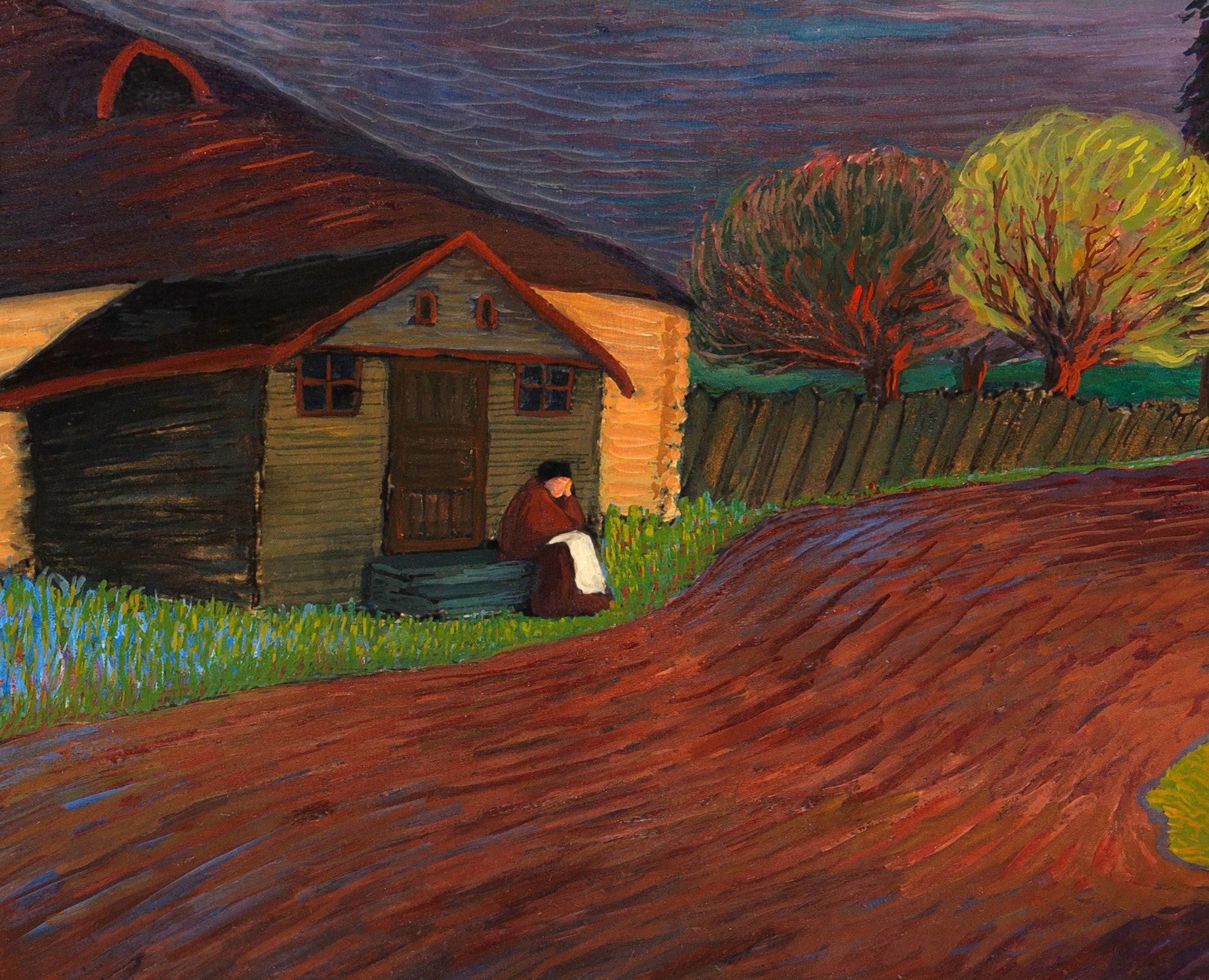
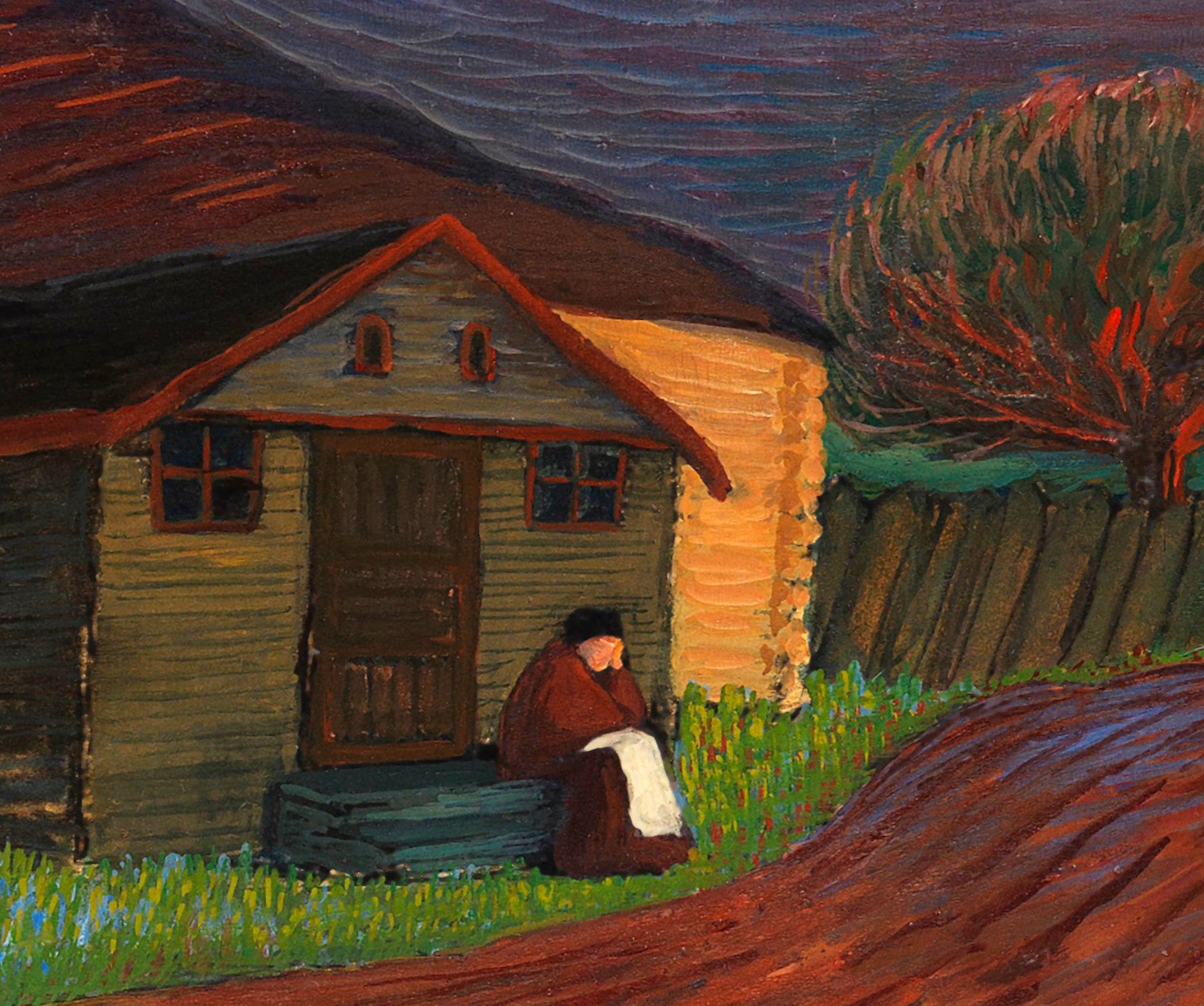
Human figures recur throughout Werefkin's work, but they are often relatively small in relation to their surroundings.
This creates a distinctive psychological effect.
People may appear isolated beside roads, buildings, mountains or railway lines.
The surrounding landscape can feel larger and more powerful than the individual.
Rather than functioning simply as background, the environment becomes part of the emotional meaning of the painting.
This relationship between human figures and landscape is one of Werefkin's most recognisable characteristics.
Night and Twilight
Werefkin was particularly effective at painting twilight and night.
Darkness allowed her to move even further away from naturalistic colour.
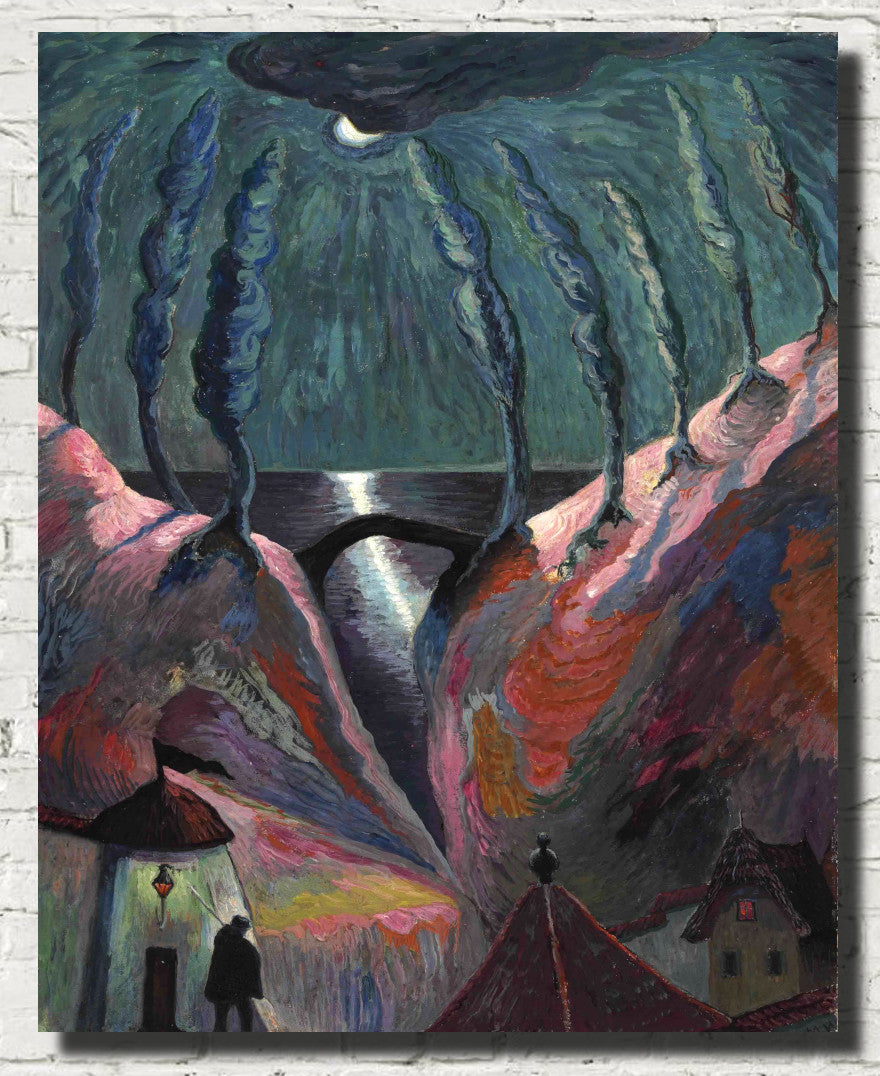
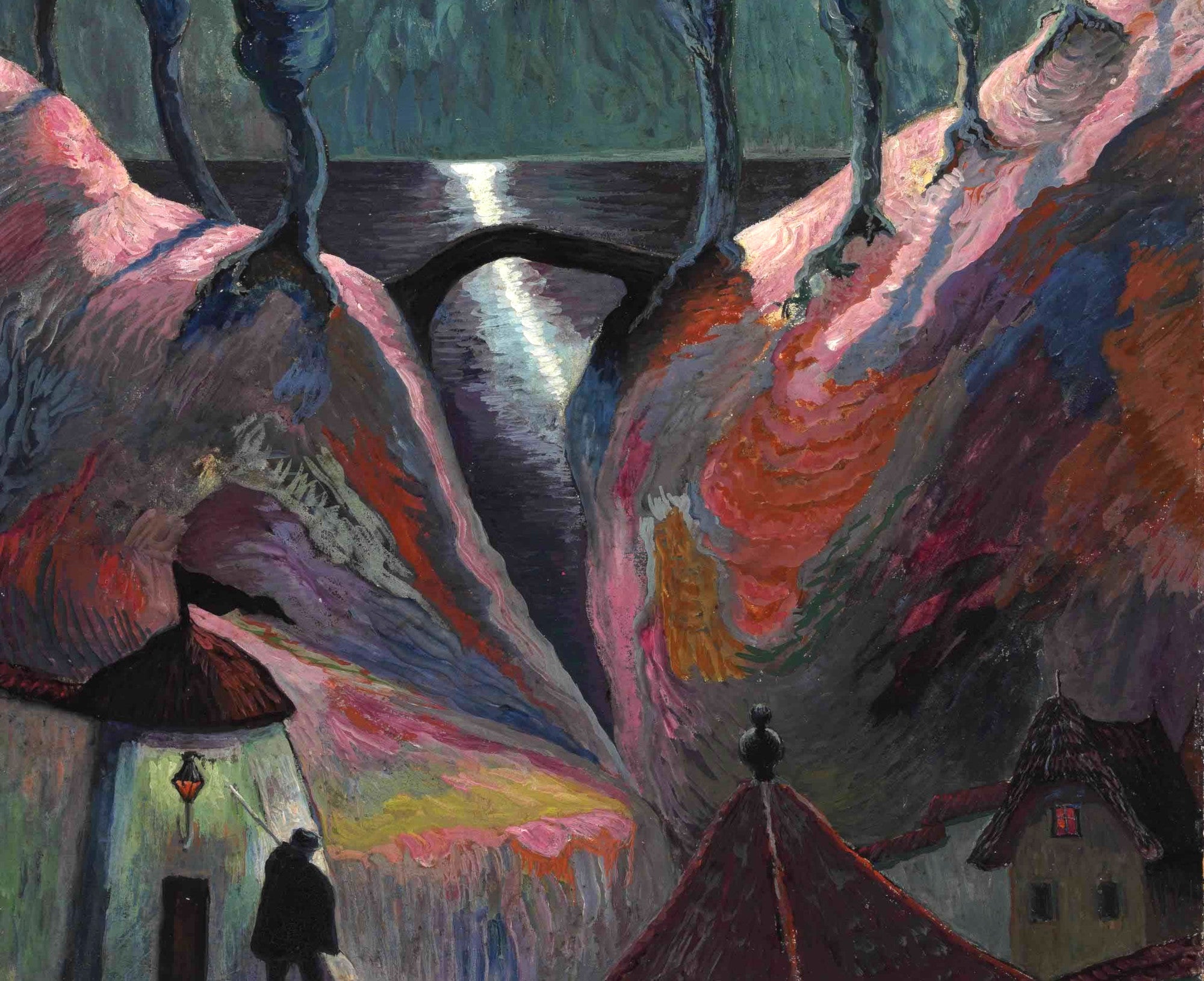
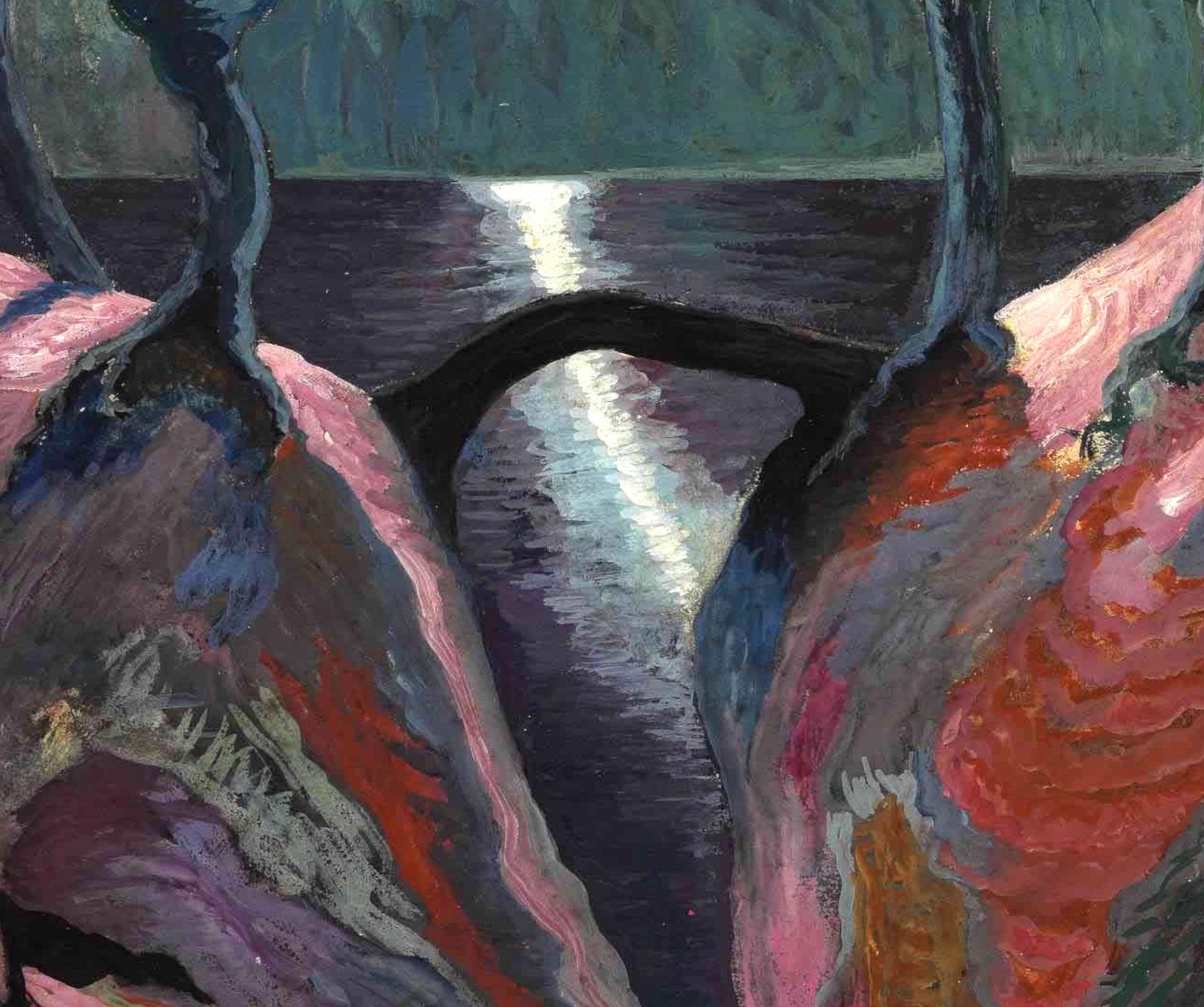
Deep blue, violet and black could dominate a scene while small areas of orange, red or yellow suggested windows, streetlights or figures.
The contrast between darkness and artificial or symbolic light could create an intense sense of mystery.
These nocturnal paintings often feel more psychological than descriptive.
They belong to a broader Expressionist fascination with emotional states that conventional daylight realism could not easily communicate.
Landscape and the Inner World
Landscape painting had traditionally been associated with recording natural scenery.
Expressionist artists transformed that relationship.
Mountains could become monumental shapes.
Roads could appear unnaturally steep.
Buildings might seem compressed or distorted.
Colours could bear little resemblance to their appearance in nature.
For Werefkin, landscape became a means of expressing an inner state.
This places her within the same broad Expressionist tradition as artists such as Kandinsky, Franz Marc and Edvard Munch, even though each developed a very different visual language.
Werefkin and Kandinsky
Werefkin and Wassily Kandinsky both belonged to the progressive Munich artistic community, but their subsequent careers moved in different directions.
Kandinsky progressively liberated colour and form from recognisable subjects until his paintings approached complete abstraction.
Werefkin generally retained figures, buildings and landscapes.
Her modernism therefore remained more strongly connected to the visible world.
Yet she altered that visible world so dramatically through colour and atmosphere that naturalistic description became secondary.
The difference provides an excellent example of the breadth of early Expressionism.
One route led towards abstraction.
Another retained recognisable subjects while transforming their emotional character.
Werefkin and Franz Marc
Franz Marc increasingly used animals as symbols of spirituality and harmony with nature.
Werefkin more often concentrated on human figures within emotionally charged environments.
Both nevertheless shared an important principle: colour did not need to imitate nature.
Marc could paint a horse blue.
Werefkin could transform a night landscape into intense areas of violet, blue, orange and red.
This liberation of colour became one of the defining characteristics of the broader Expressionist movement.
The First World War and Switzerland
The outbreak of the First World War in 1914 disrupted the international artistic network that had flourished in Munich.
As Russian citizens, Werefkin and Jawlensky were forced to leave Germany.
Werefkin eventually settled in Switzerland and spent much of her later life in Ascona.
Her work continued to develop there.
Swiss mountains, villages and landscapes provided new subjects, while the intense colour and psychological atmosphere established during her Munich years remained important.
These later paintings demonstrate that Werefkin's artistic significance extends beyond the immediate Blue Rider period.
Werefkin's Later Expressionism
Werefkin continued painting after the pre-war Munich avant-garde had fragmented.
Later works such as Fantastic Night and Ant Hill retain the distinctive combination of vivid colour, expressive landscape and human presence found in her earlier work.
The settings may have changed, but the fundamental approach remained recognisable.
Landscape was never merely topographical.
Figures were never simply decorative.
Colour and form continued to transform the visible world into something psychological and symbolic.
Why Marianne von Werefkin Matters
For many years, Werefkin received considerably less attention than male contemporaries such as Kandinsky, Marc and Jawlensky.
Her role is now increasingly recognised as important to understanding the development of early Expressionism.
She was not simply an observer of the Munich avant-garde.
She was an artist, organiser and intellectual participant within it.
Her paintings also provide a distinctive alternative to the better-known strands of German Expressionism.
Where Kirchner often concentrated on angular figures and metropolitan life, Marc on animals and Kandinsky on abstraction, Werefkin repeatedly explored the psychological relationship between people and their surroundings.
Marianne von Werefkin Prints for Modern Interiors
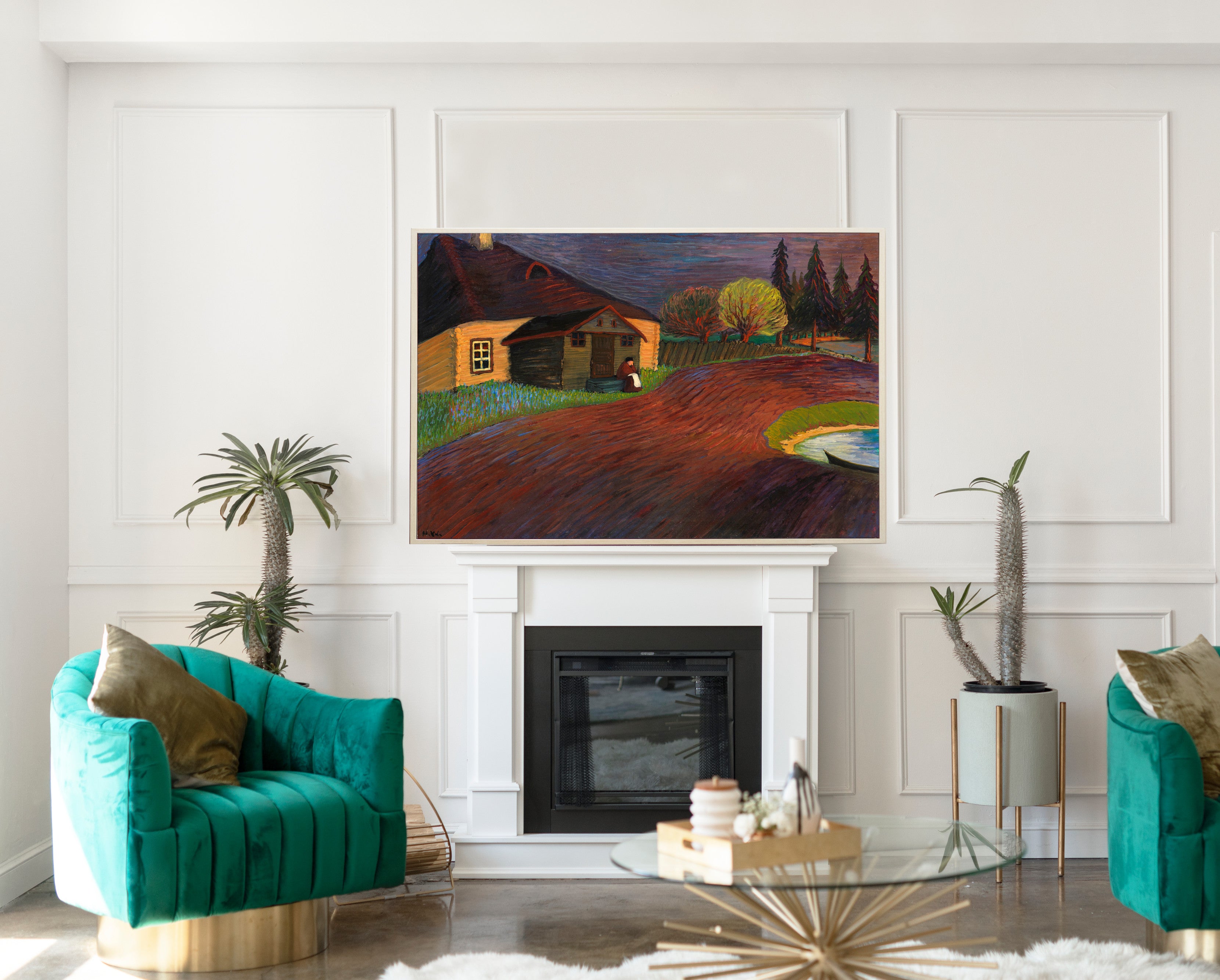
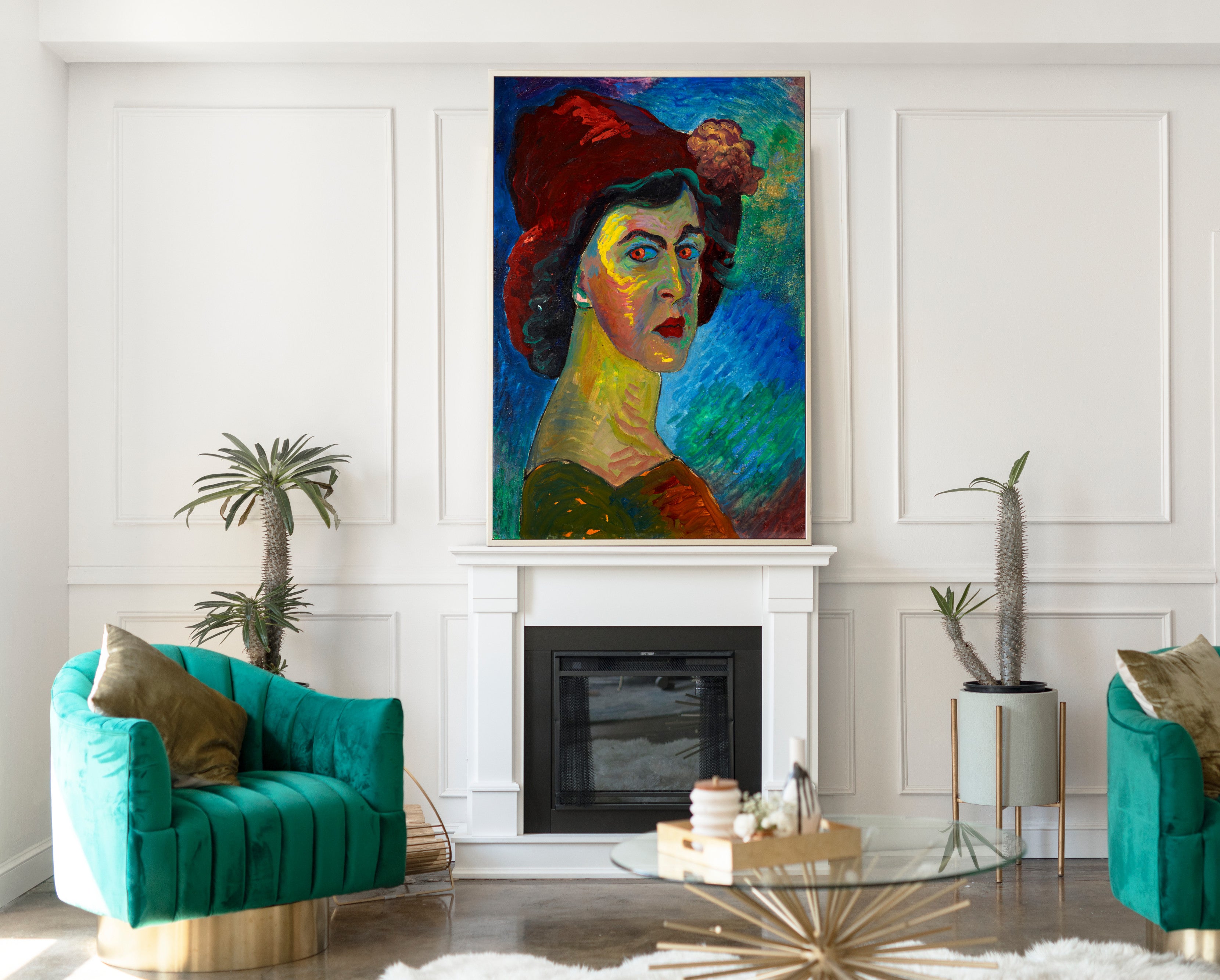
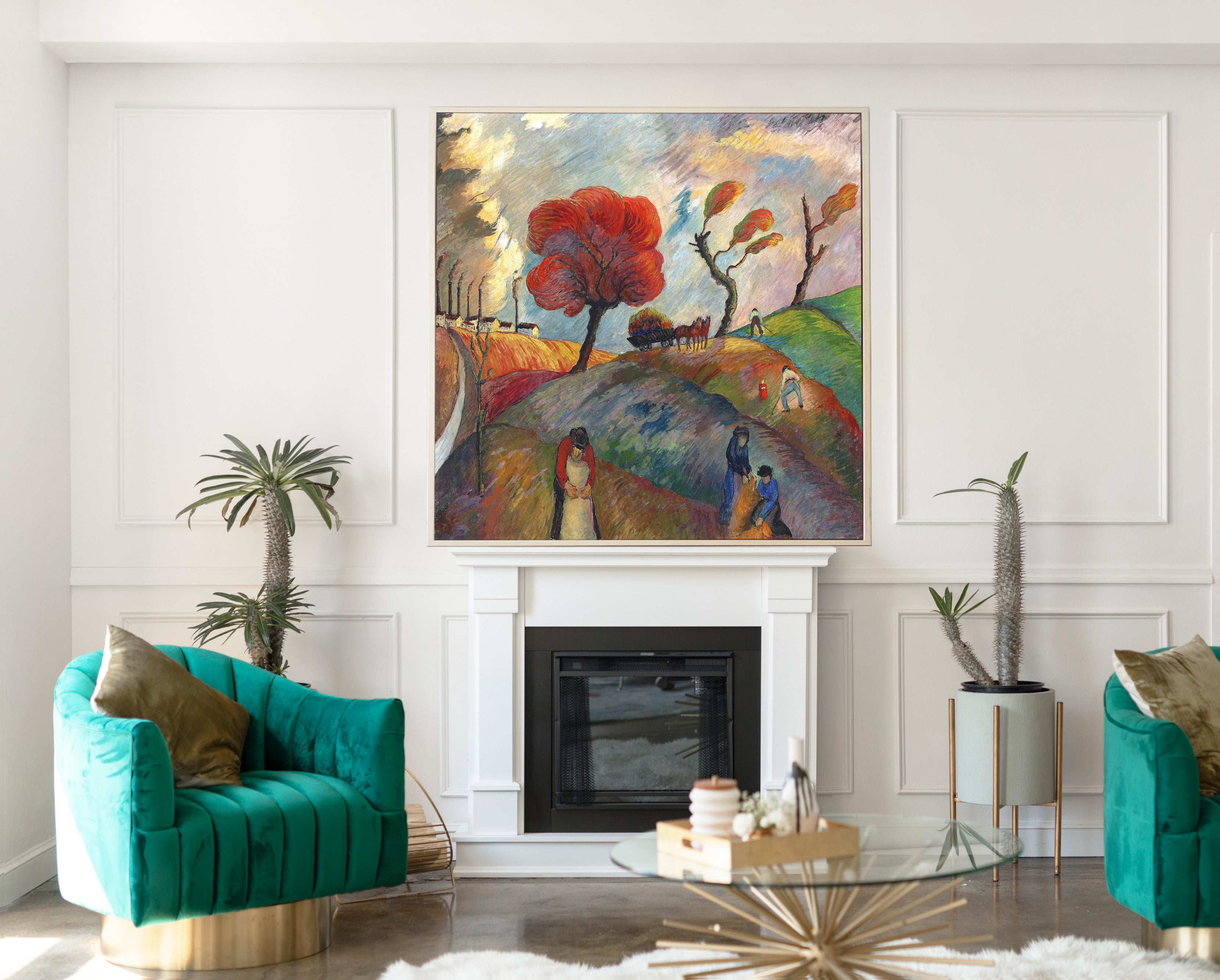
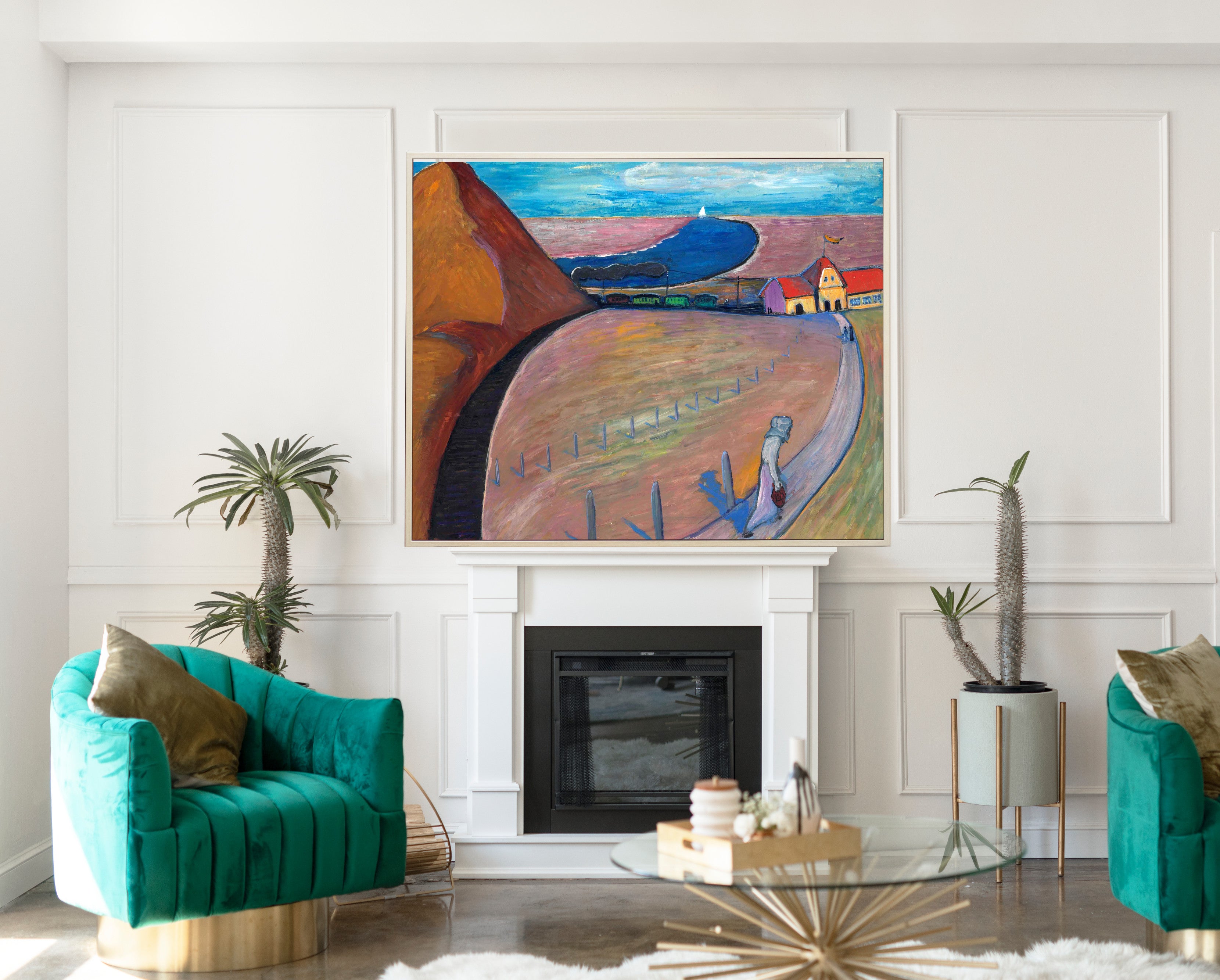
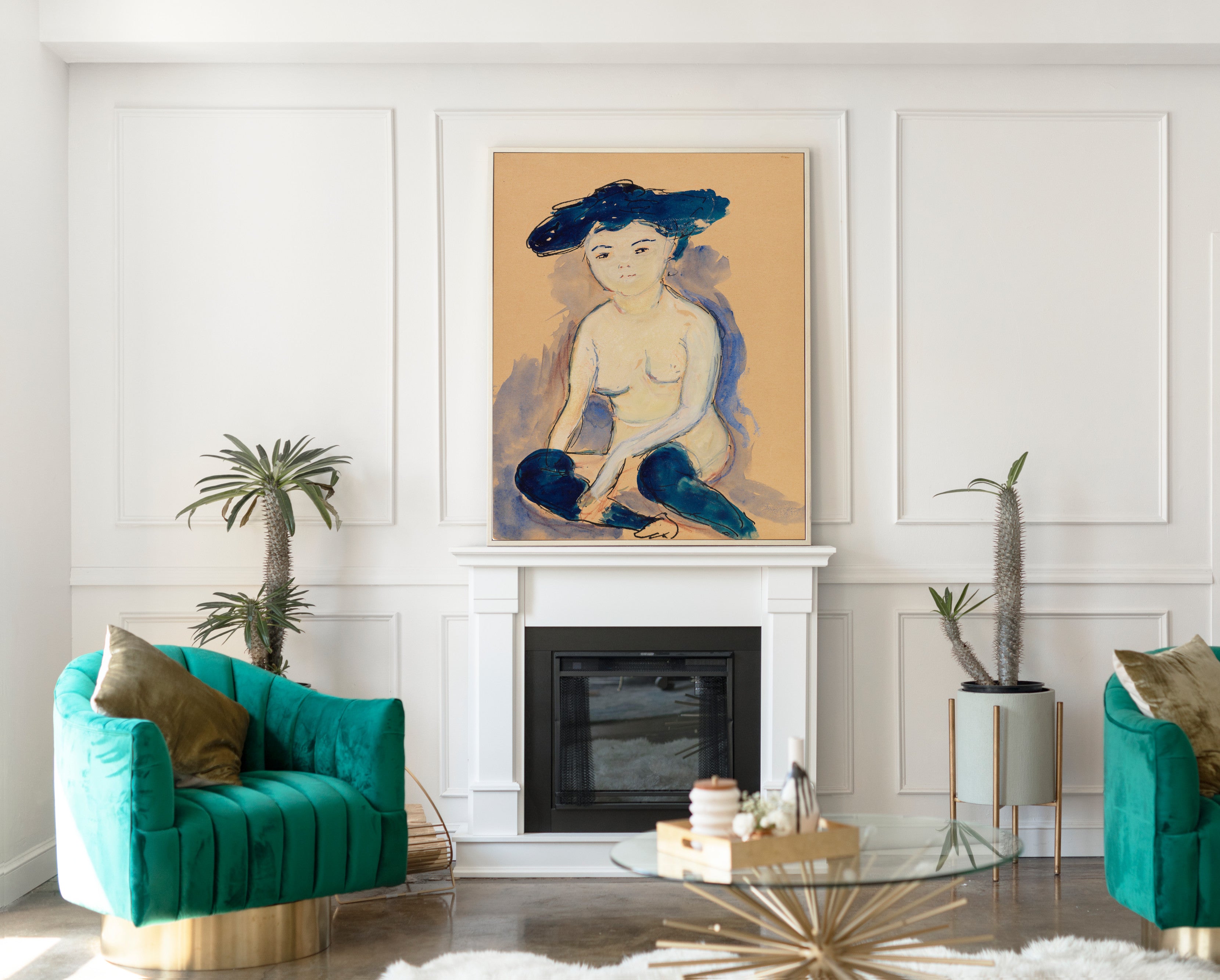
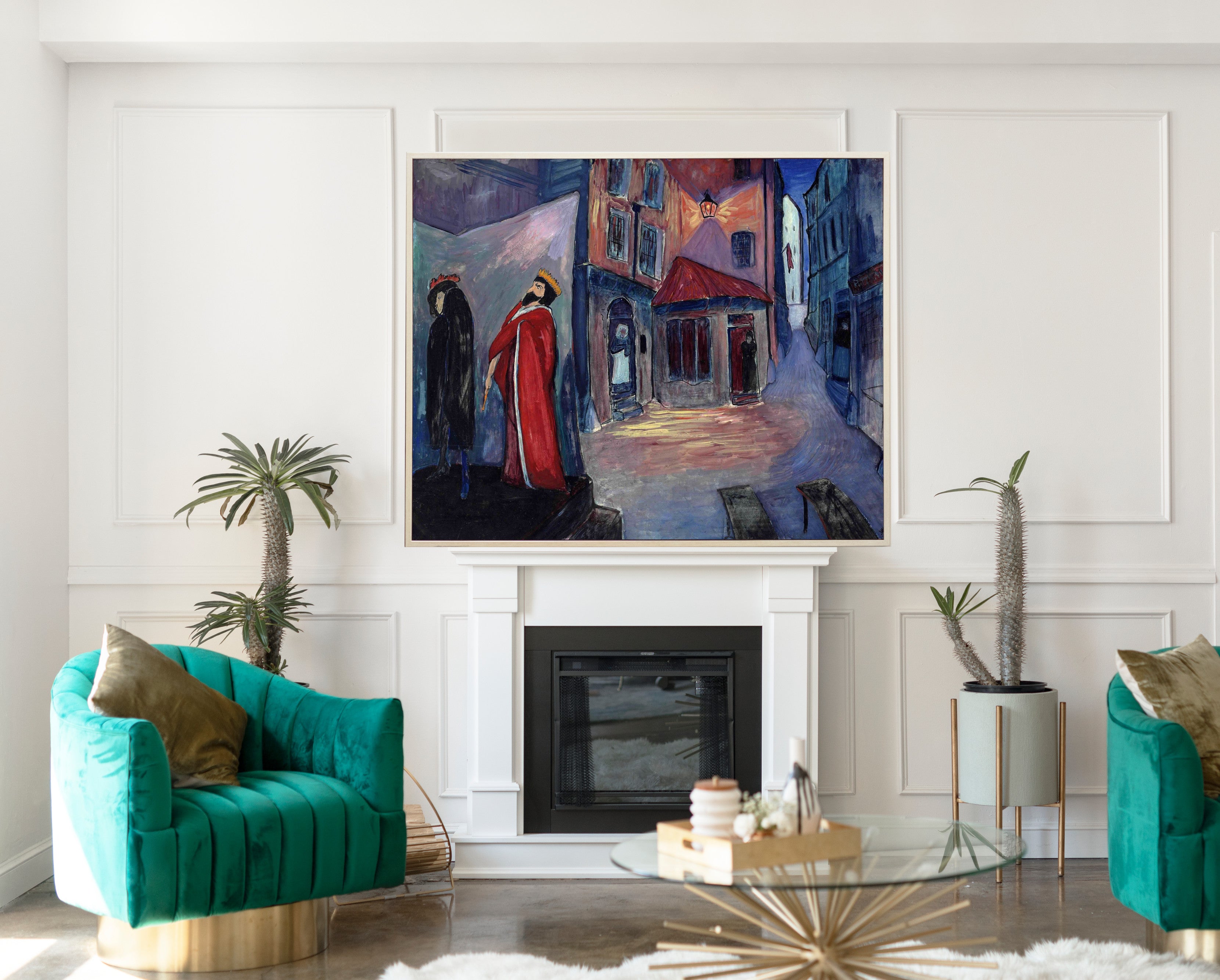
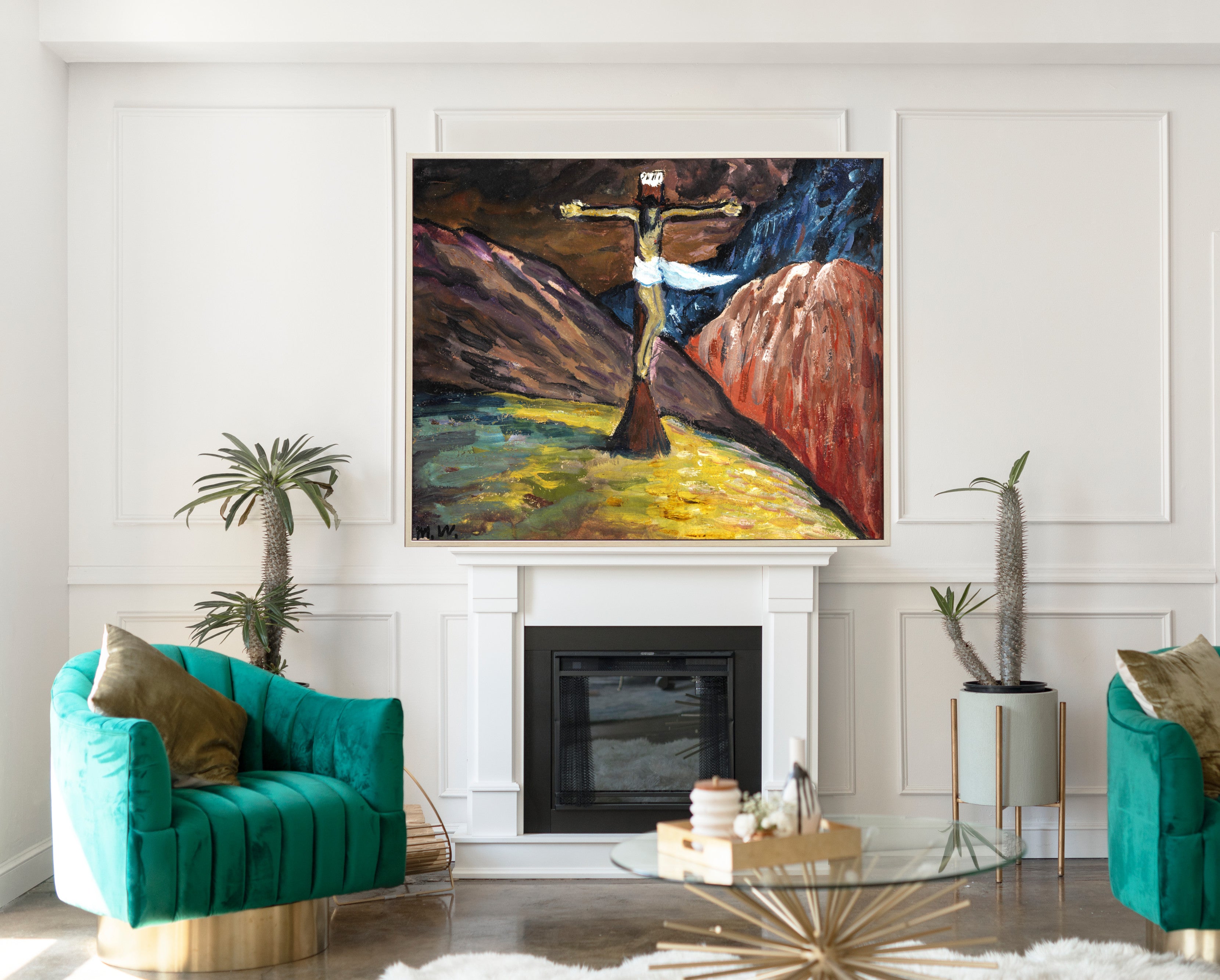
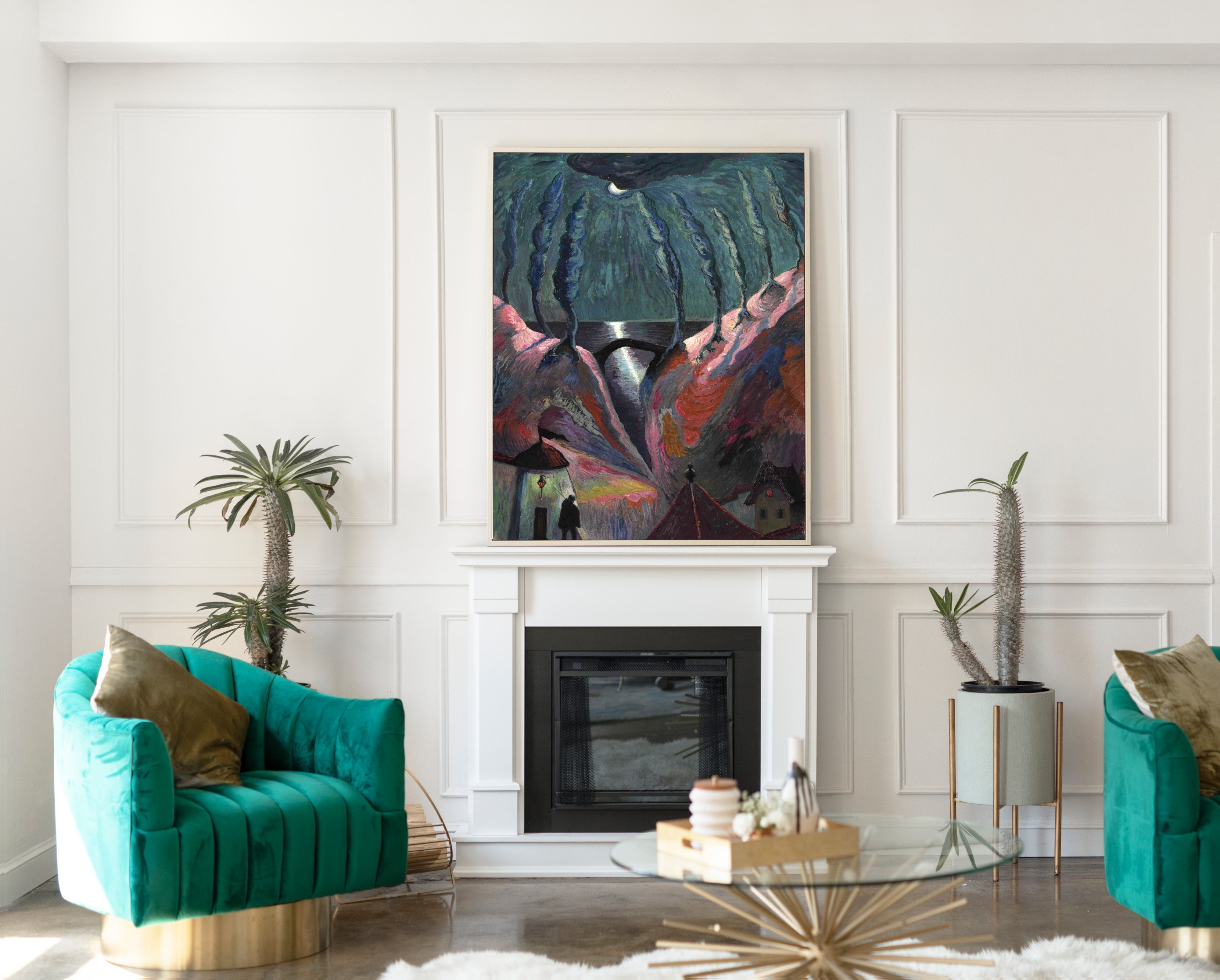
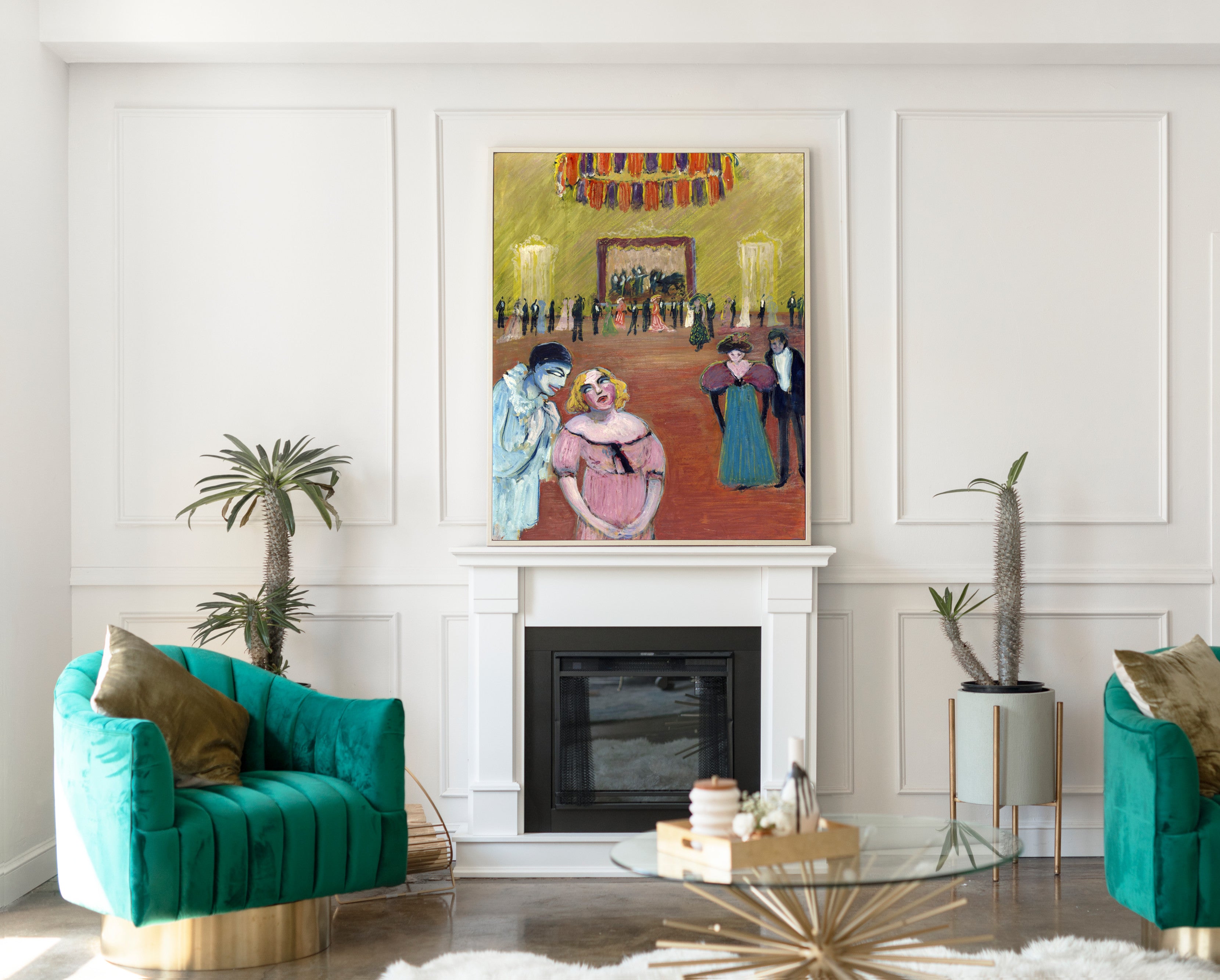
Werefkin's paintings can create a particularly distinctive atmosphere in an interior.
Her strong colours and simplified forms work naturally with modern and contemporary furnishings.
Nocturnal paintings dominated by deep blue, violet and black can create a dramatic focal point against pale or neutral walls.
Works containing red, orange and yellow accents can introduce warmth while retaining the darker emotional character associated with her art.
Her landscapes can complement contemporary, eclectic and Scandinavian-inspired interiors particularly effectively where artwork with greater depth and individuality is preferred.
Choosing a Marianne von Werefkin Print
For one of Werefkin's strongest Expressionist works, consider Into the Night.
For an atmospheric modern landscape, Prerow Train Station provides a striking combination of architecture, figures and colour.
Self Portrait is particularly effective where you want a strong figurative image.
Golgotha offers a more intense spiritual subject.
Later paintings can provide an alternative where you want Werefkin's expressive colour without limiting the choice to her immediate Munich period.
Because many of her compositions contain strong areas of dark and saturated colour, they can work particularly well as individual statement pieces rather than being surrounded by numerous competing artworks.
Fine Art Prints, Framed Prints and Canvas Panels
GalleryThane Marianne von Werefkin artworks are available as fine art prints, framed prints and canvas panels in a range of sizes.
Fine art paper prints provide flexibility if you prefer to select your own framing.
Framed Werefkin prints offer a complete gallery-style presentation and can work particularly well with her strongly coloured landscapes and figurative compositions.
Canvas panels provide a clean, ready-to-hang alternative that emphasises the painterly character of the original artwork.
GalleryThane prints, frames and canvas panels are produced in our Nottinghamshire workshop using carefully selected fine art papers, pigment inks and framing materials.
Explore Related Art Collections
Explore Der Blaue Reiter Prints for selected early Werefkin works alongside Wassily Kandinsky, Franz Marc, August Macke and Alexej von Jawlensky.
Discover the broader movement in Expressionist Art Prints.
Explore Alexej von Jawlensky prints to see the work of the artist who shared much of Werefkin's Munich period and early Expressionist development.
Frequently Asked Questions
Who was Marianne von Werefkin?
Marianne von Werefkin was a Russian-born Expressionist painter who became an important figure within Munich's early twentieth-century avant-garde and the artistic circle from which Der Blaue Reiter emerged.
Was Marianne von Werefkin part of Der Blaue Reiter?
Werefkin was closely connected with the Munich artistic circle and the Neue Künstlervereinigung München that preceded Der Blaue Reiter. Her relationship with the movement is best understood as part of this closely connected Expressionist environment rather than simply describing her as one of its founders.
What is Marianne von Werefkin famous for?
She is particularly known for intensely coloured Expressionist landscapes and figurative paintings in which colour, simplified forms and dramatic settings create strong psychological atmosphere.
What are Marianne von Werefkin's best-known subjects?
Her paintings include landscapes, railway stations, village streets, portraits, social scenes and figures moving through nocturnal or dramatic environments.
Was Marianne von Werefkin connected with Alexej von Jawlensky?
Yes. Werefkin and Jawlensky had a long personal and artistic relationship. They moved from Russia to Munich together and became important participants in the city's progressive artistic community.
Why did Werefkin use unnatural colours?
Like other Expressionists, Werefkin used colour to communicate atmosphere and emotion rather than simply reproduce the visible colour of objects and landscapes.
What is special about Into the Night?
Into the Night combines human figures, landscape and intense nocturnal colour to create a powerful psychological atmosphere. It is an excellent example of Werefkin's mature Expressionist approach.
Did Marianne von Werefkin live in Switzerland?
Yes. After leaving Germany during the First World War, Werefkin eventually settled in Ascona, Switzerland, where she continued painting for much of the remainder of her life.
Was Marianne von Werefkin an Expressionist?
Yes. Her use of intense colour, simplified form and psychologically charged imagery places her firmly within the broader history of European Expressionism.
Are Marianne von Werefkin prints suitable for modern interiors?
Yes. Her strong colours, simplified compositions and atmospheric landscapes can work particularly well in contemporary, Scandinavian-inspired and eclectic interiors.