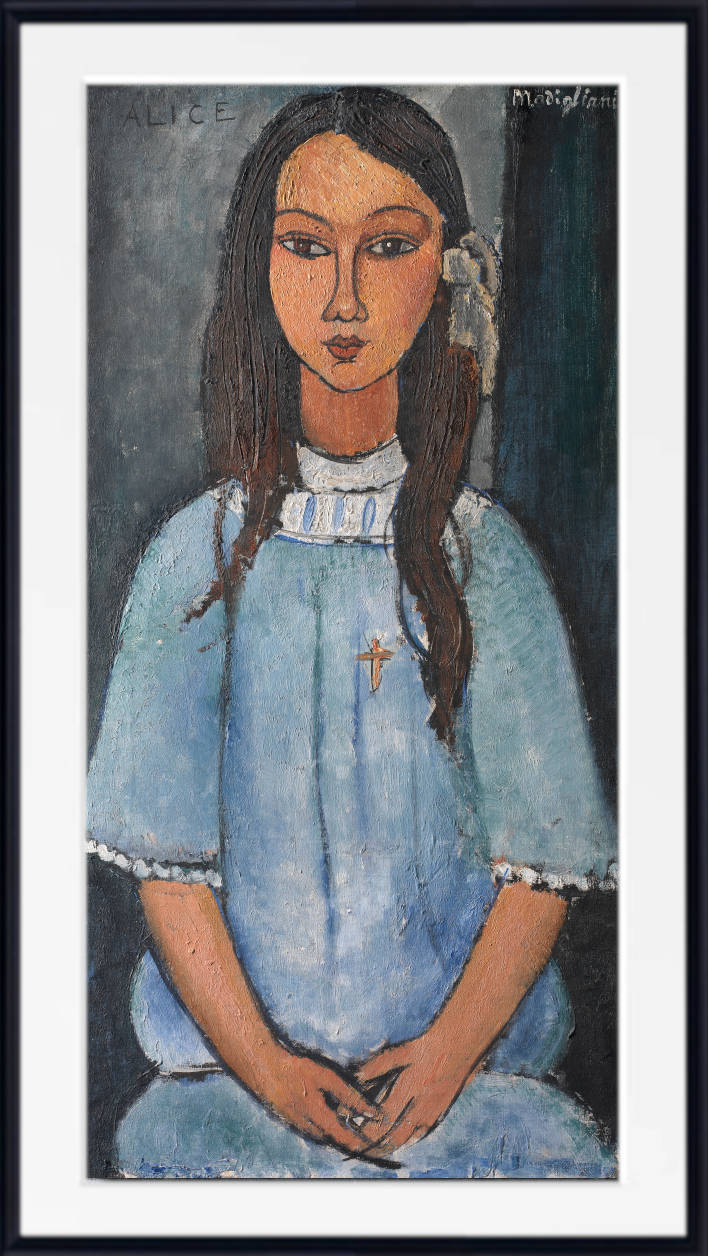
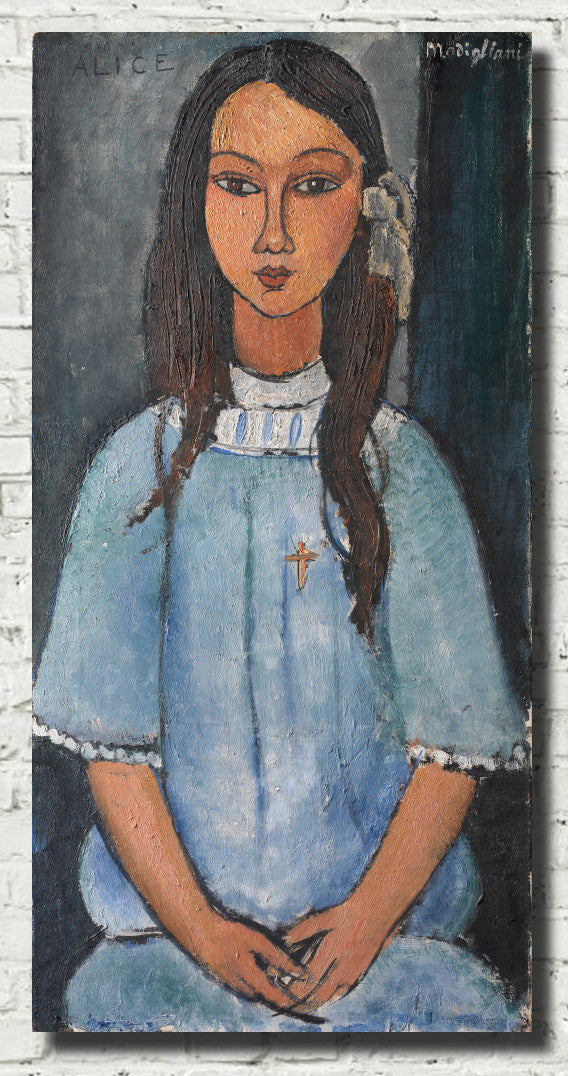
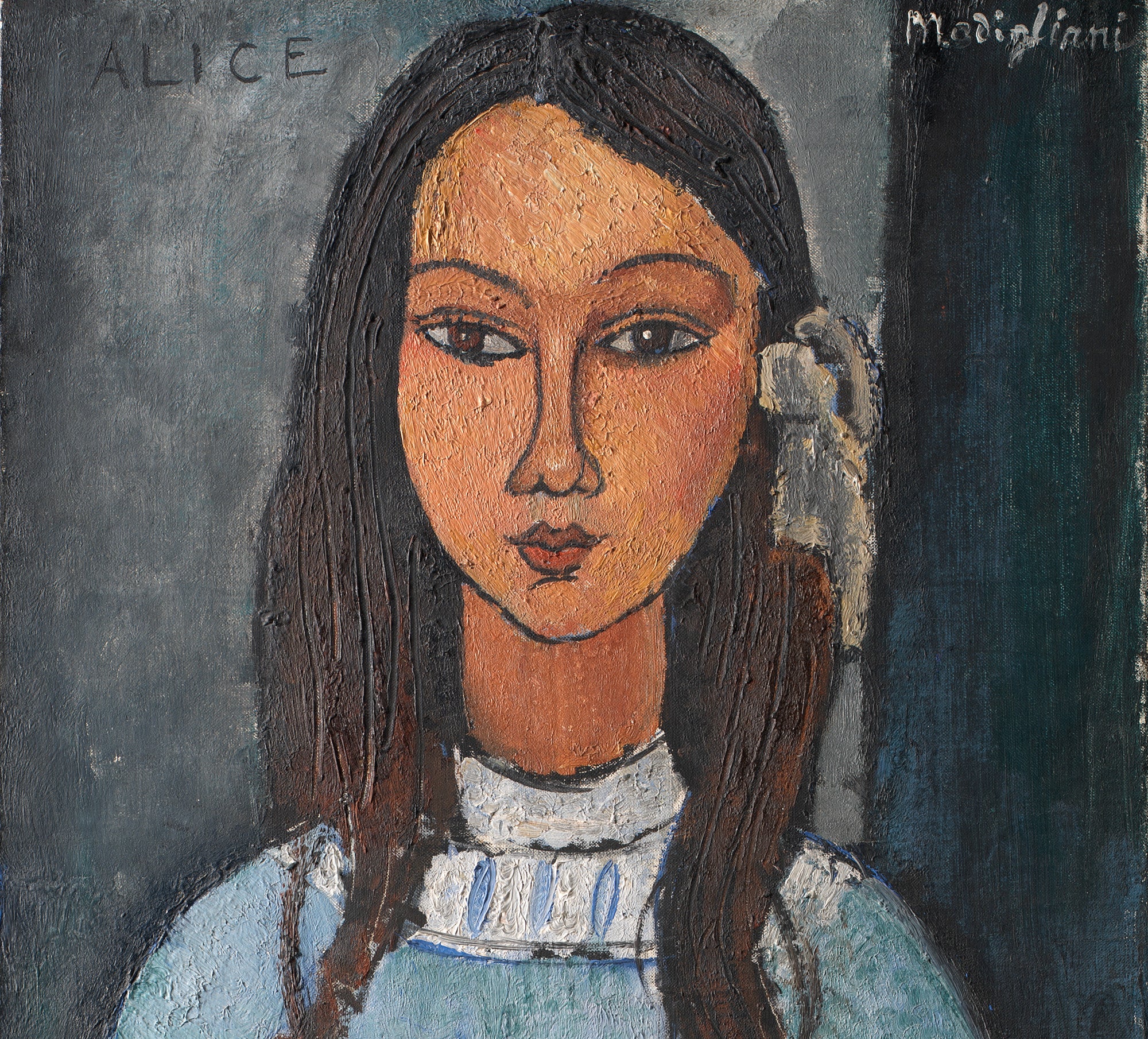
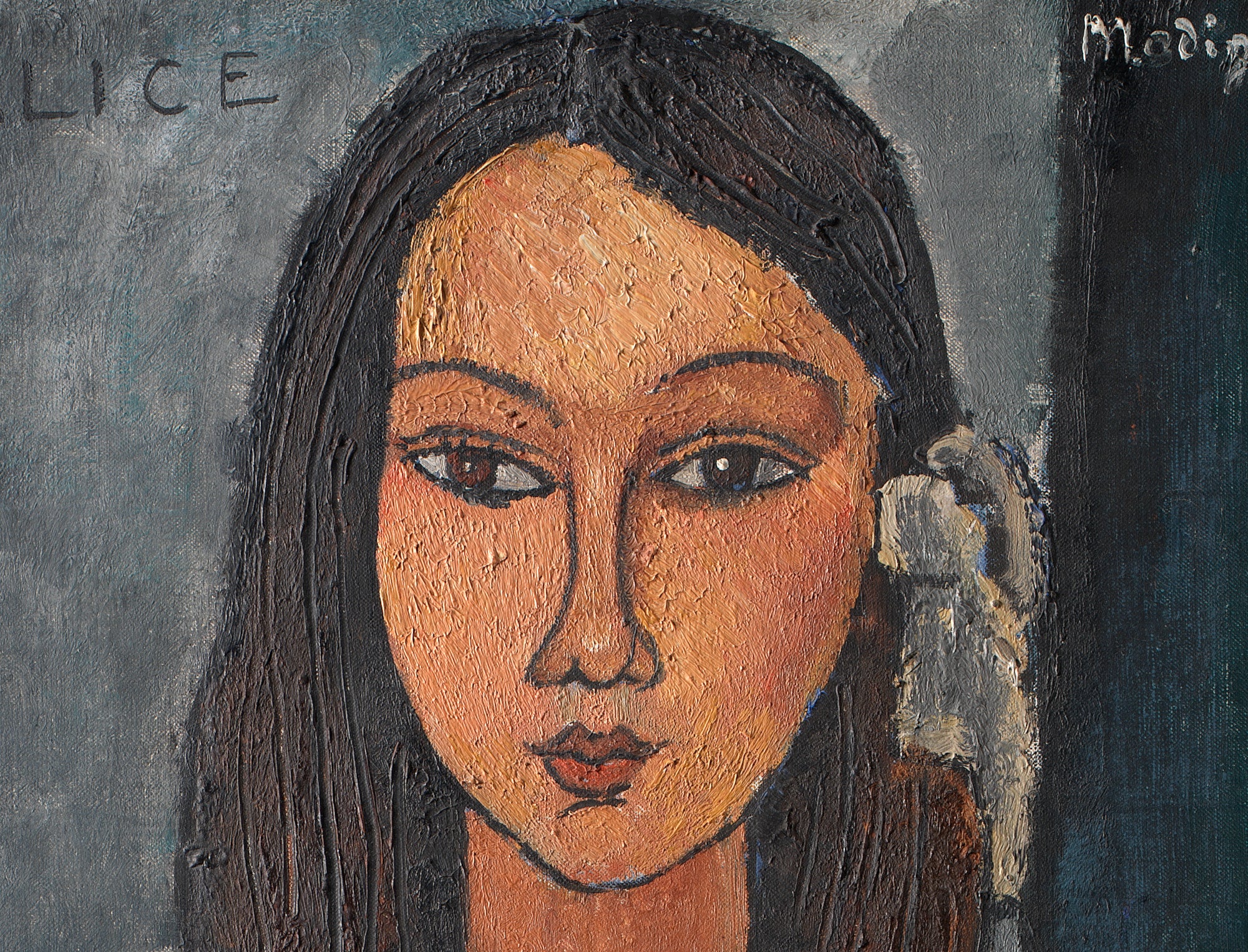
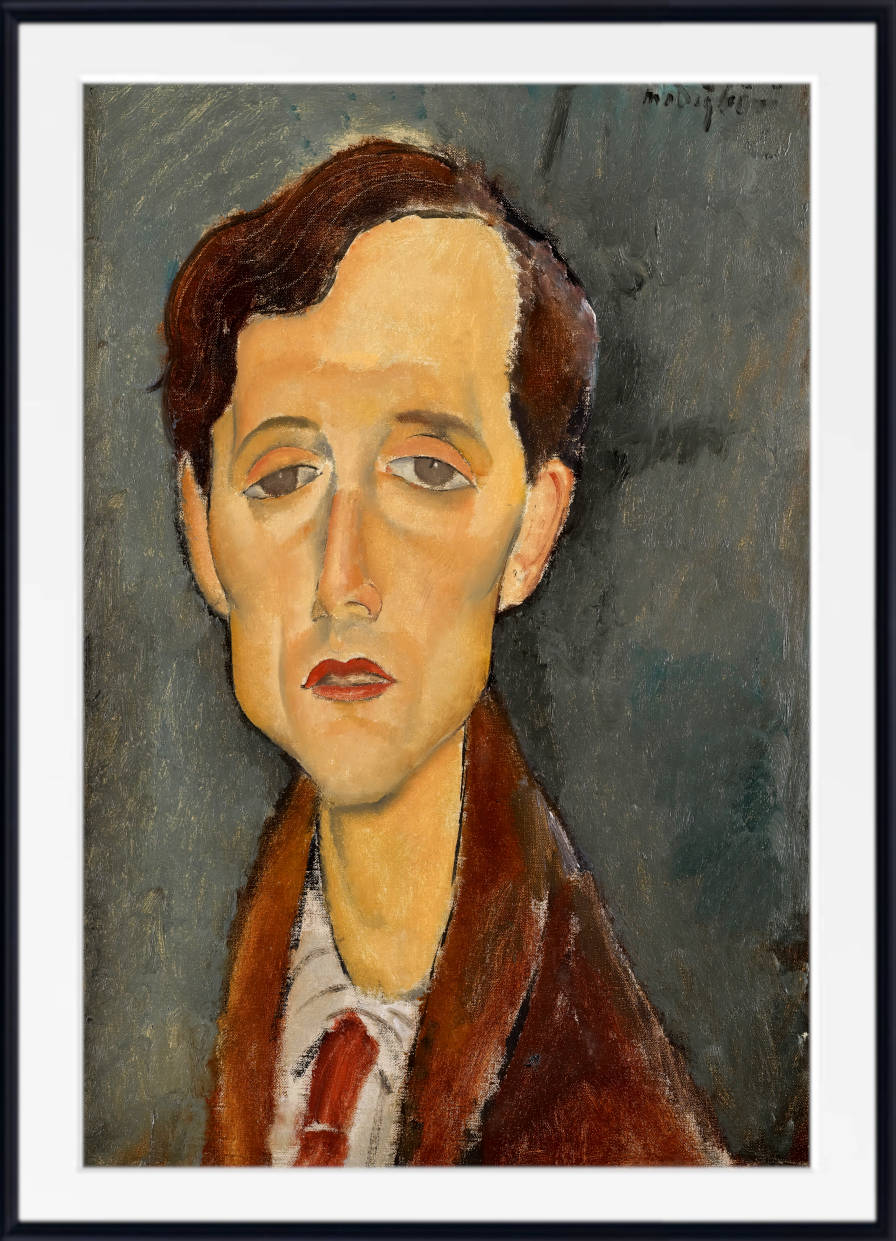
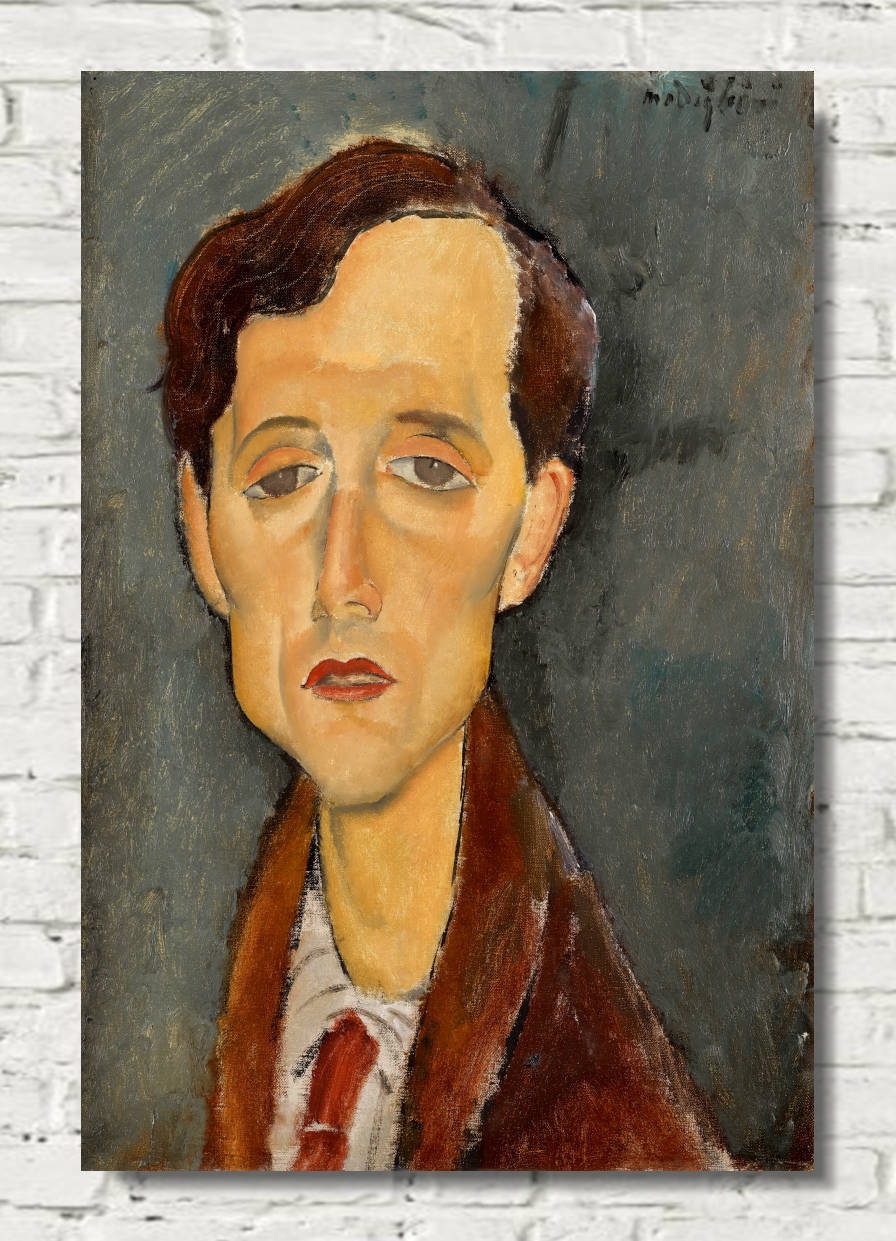
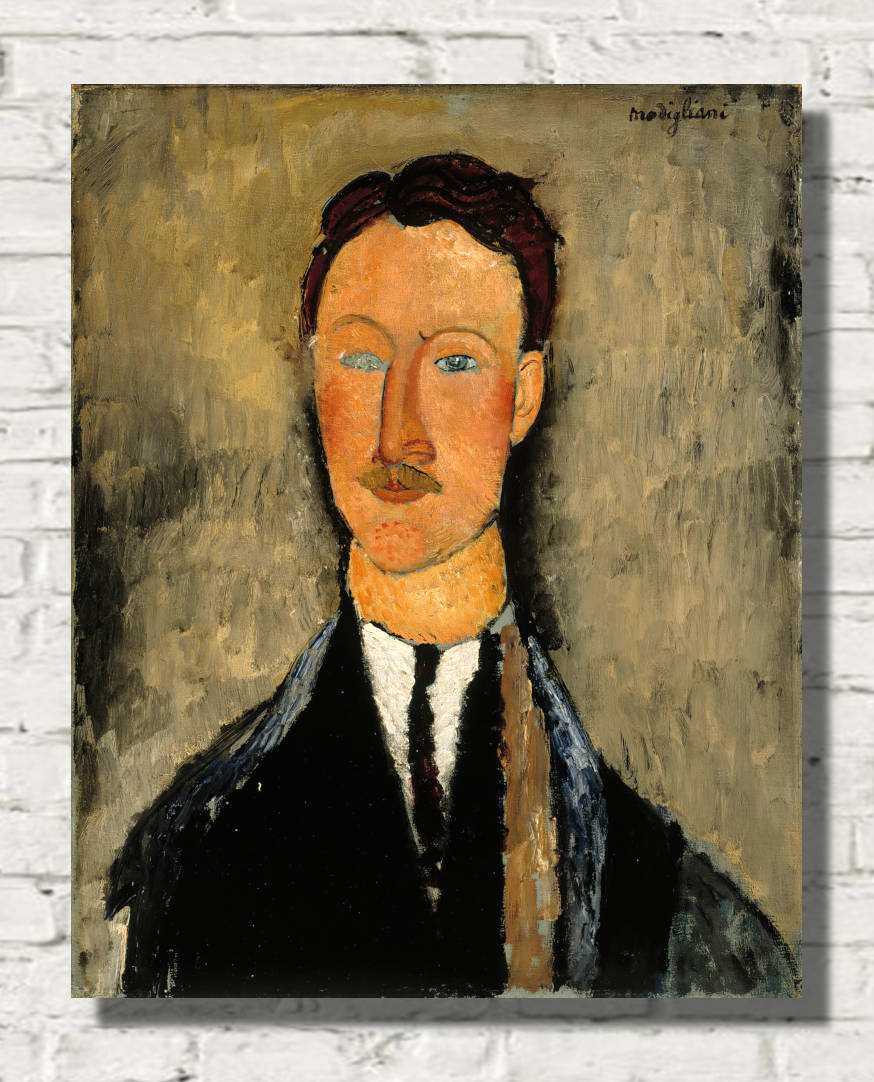
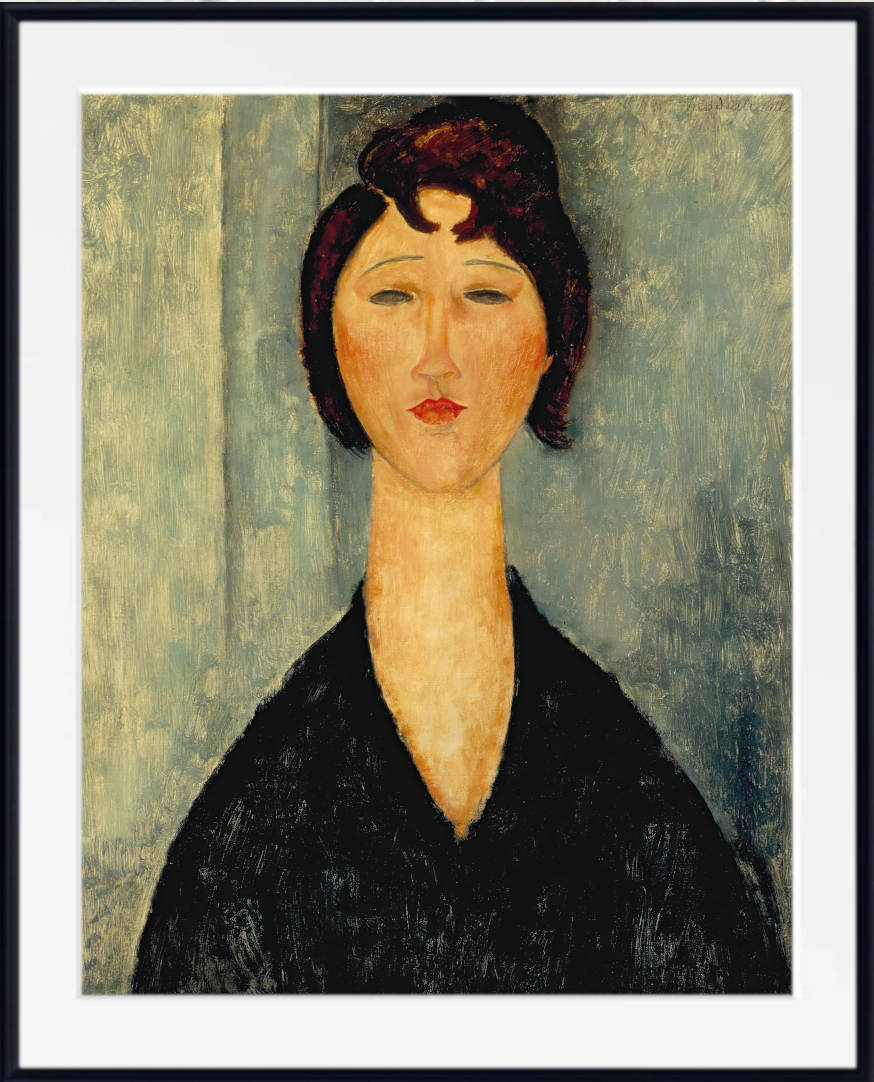
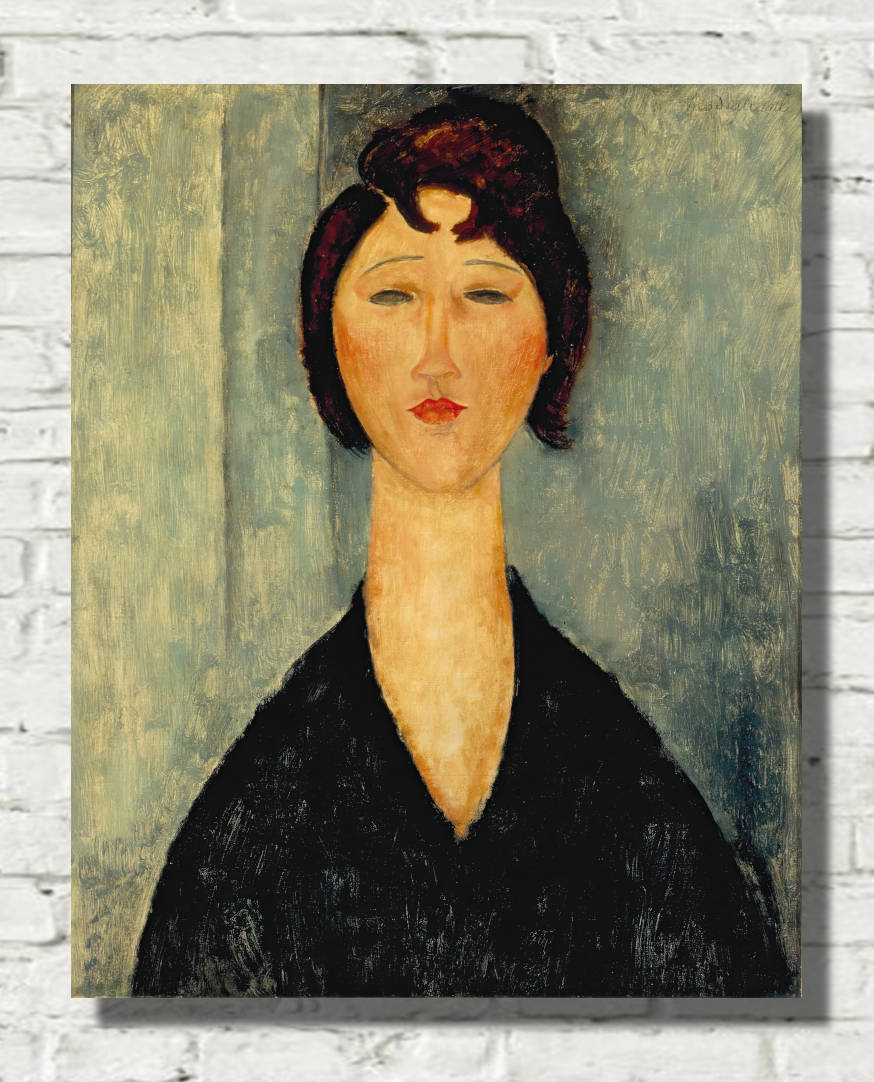
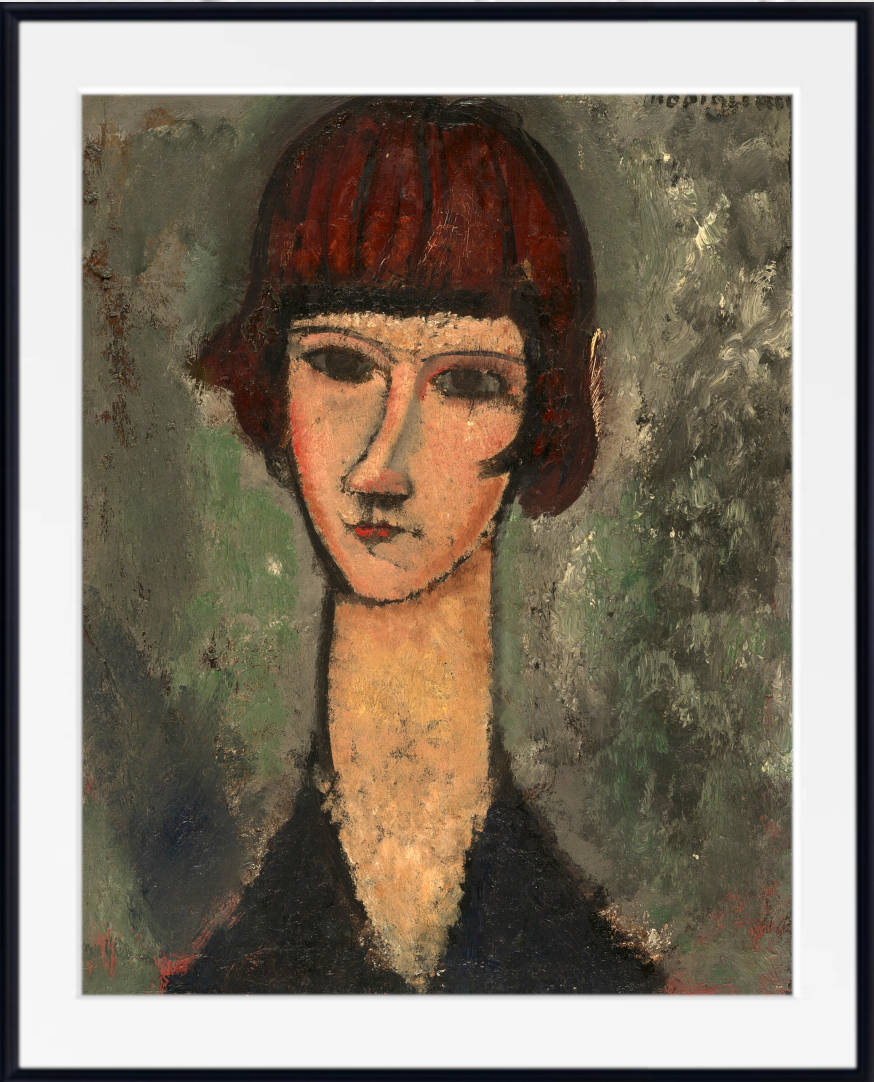
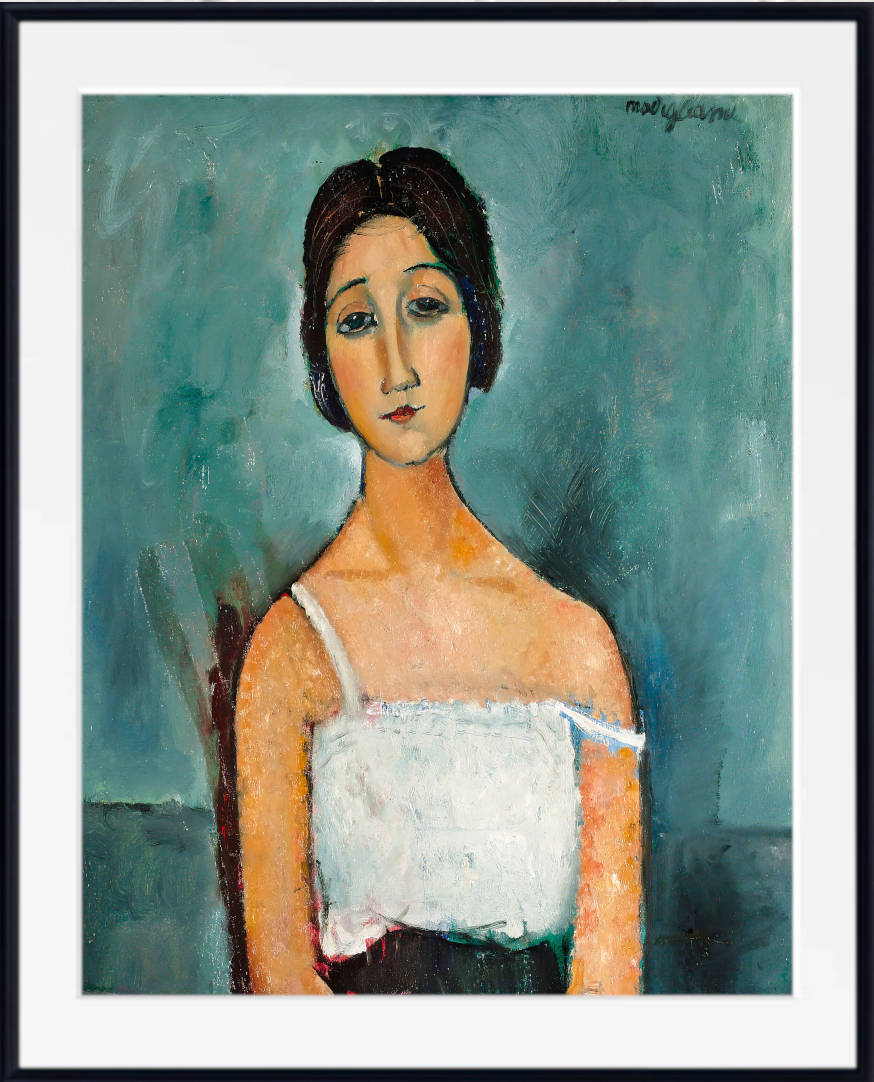
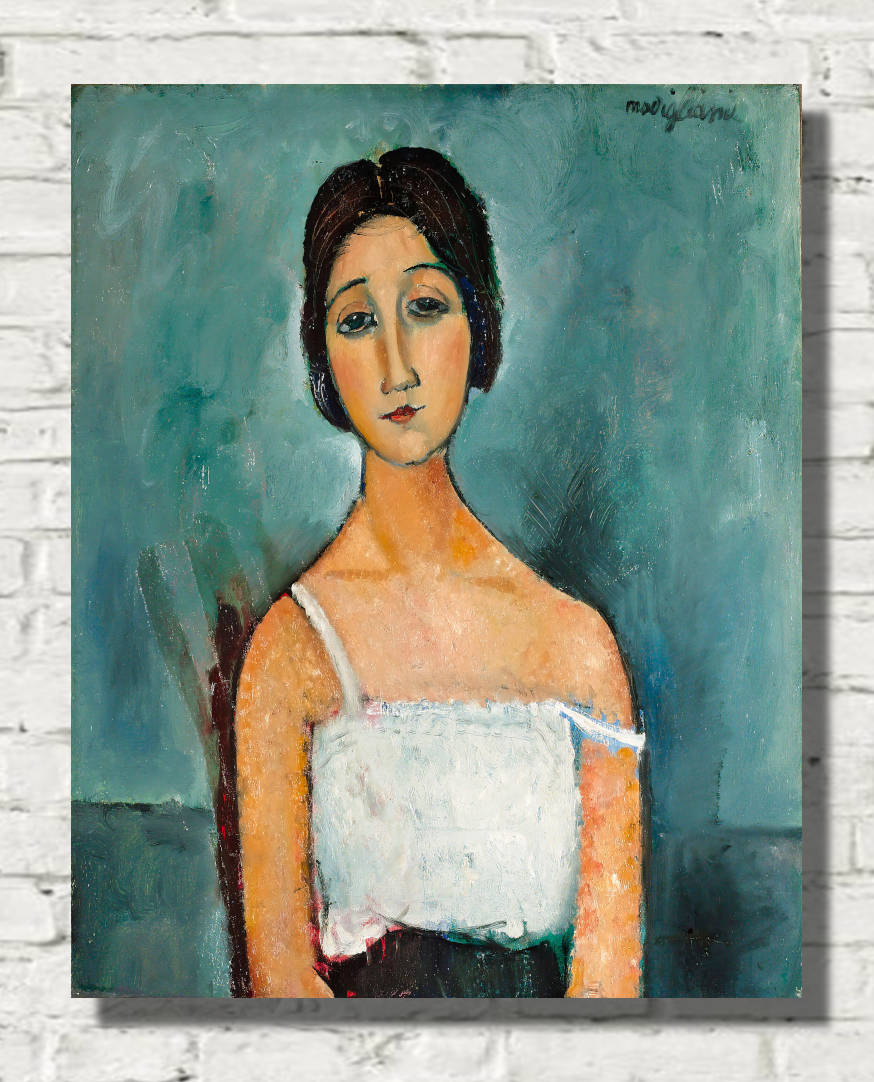
Amedeo Modigliani (1884–1920) was an Italian painter and sculptor whose contribution to the School of Paris remains unparalleled. Today, art enthusiasts looking for Amedeo Modigliani high-quality fine art prints are drawn to his distinctive style—portraits and nudes characterized by elegantly elongated forms, mask-like faces, and a striking interplay of color and line. Though he struggled financially during his lifetime, Modigliani’s work is now a staple of sophisticated home decor, with many choosing framed Modigliani portrait reproductions to bring a touch of 20th-century avant-garde into the 21st century.
This article provides an in-depth look at his iconic portfolio, from the hauntingly beautiful Modigliani Jeanne Hebuterne prints to his provocative Reclining Nudes. We will explore his artistic evolution, his masterful Italian expressionism, and why his work is the perfect choice for those seeking large-scale Modigliani portrait prints for modern apartments. Whether you are looking for Modigliani prints on archival paper with a black frame or simply want to understand his enduring legacy, this guide covers the essential history of this modernist master.

Early Life and Artistic Development
Born into a Sephardic Jewish family in Livorno, Italy, Modigliani showed an early talent for art. He studied under Guglielmo Micheli, a disciple of the Italian Macchiaioli movement, a precursor to Impressionism. In 1902, he enrolled at the Accademia di Belle Arti in Florence before moving to Venice to study at the Istituto di Belle Arti. His exposure to Renaissance masters like Botticelli and Titian, as well as his admiration for Michelangelo, deeply influenced his early approach to the human form.
In 1906, Modigliani moved to Paris, the epicenter of the modernist art world. Immersing himself in Montmartre and Montparnasse, he associated with avant-garde artists such as Pablo Picasso, Constantin Brâncuși, and Chaim Soutine. His early works showed traces of Fauvism and Post-Impressionism, but it was his later paintings that defined his legacy.

Transition from Sculpture to Painting
From Stone to Canvas: The Evolution of Modigliani’s Style
Amedeo Modigliani initially focused on sculpture, deeply inspired by the primitive aesthetics of African and Cycladic art. During this period, he created a series of iconic elongated heads; today, these rare forms are highly sought after by collectors, making Amedeo Modigliani caryatid sketches and drawings prints a popular choice for those wanting a glimpse into his early genius. However, due to poor health and financial constraints, he eventually abandoned sculpture in favor of painting.
This transition did not mean an abandonment of his sculptural sensibilities. Instead, his paintings retained a heavy emphasis on structure, elongated forms, and simplified facial features. This "sculptural" approach is exactly what makes framed Modigliani portrait reproductions for home decor so striking—they offer a three-dimensional depth and a sense of timelessness.
For those looking to anchor a room with a specific aesthetic, Modigliani expressionist portrait prints for minimalist interiors perfectly capture this unique synthesis. By choosing Modigliani prints on archival paper with a black frame, you aren't just buying wall art; you are investing in a reproduction that honors the "carved" look of his original modernist masterpieces.

Distinctive Style and Artistic Themes
1. Elongation and Simplification
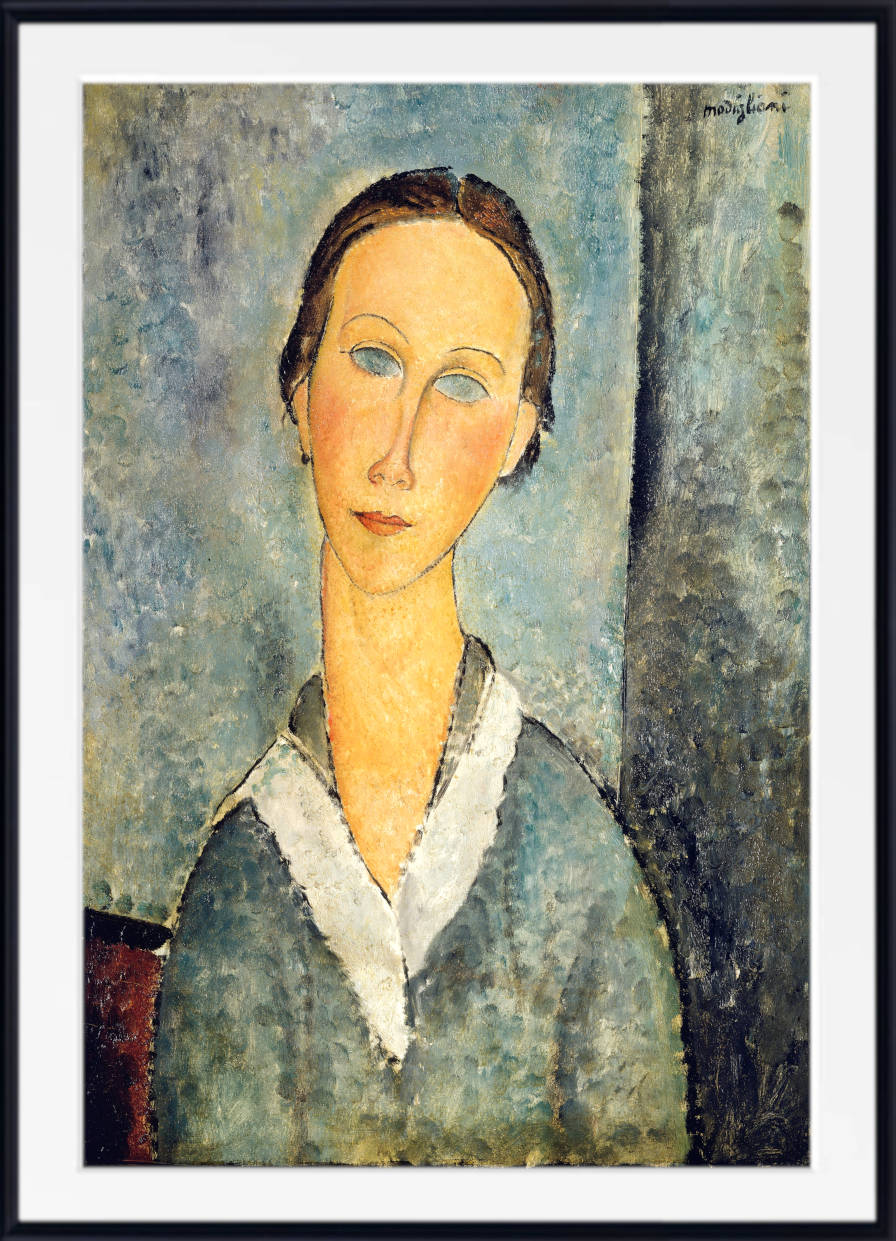
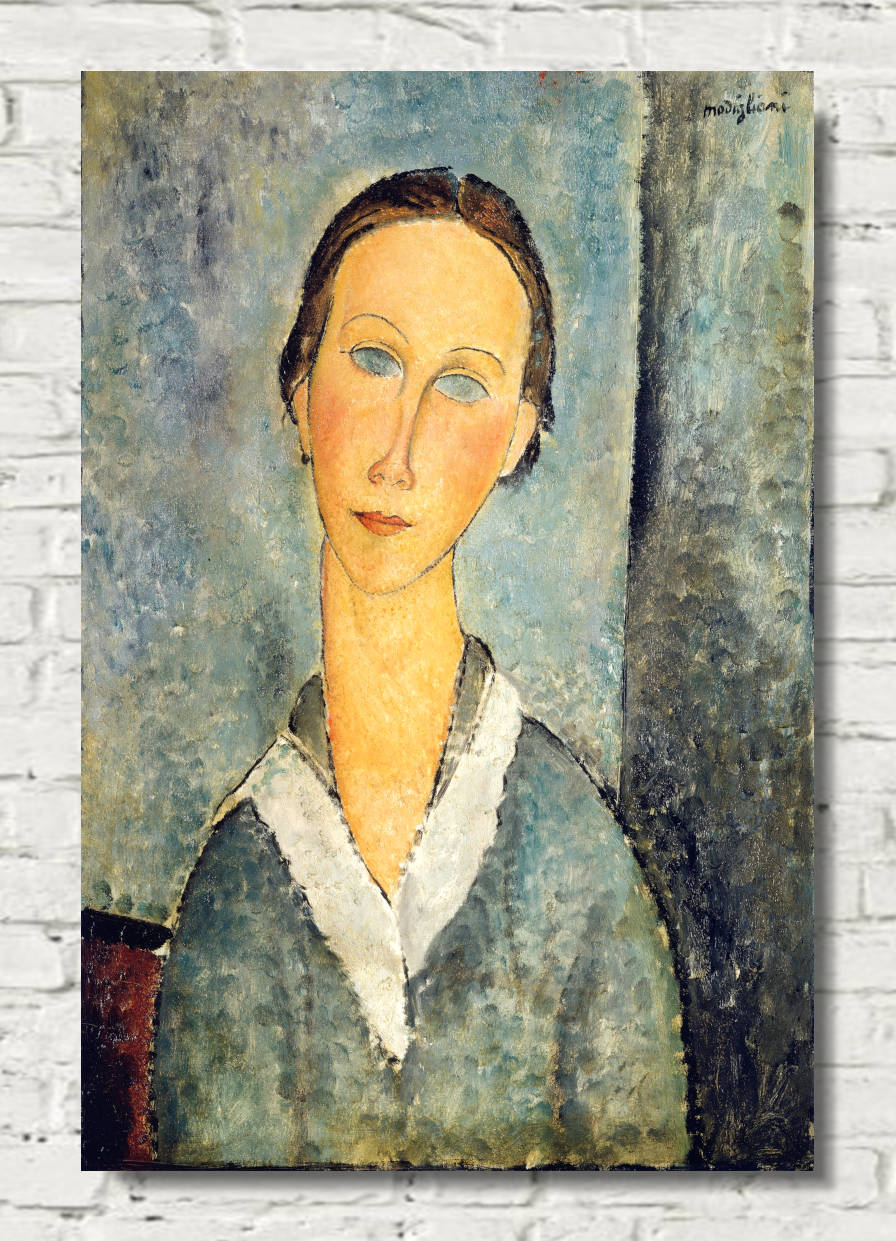
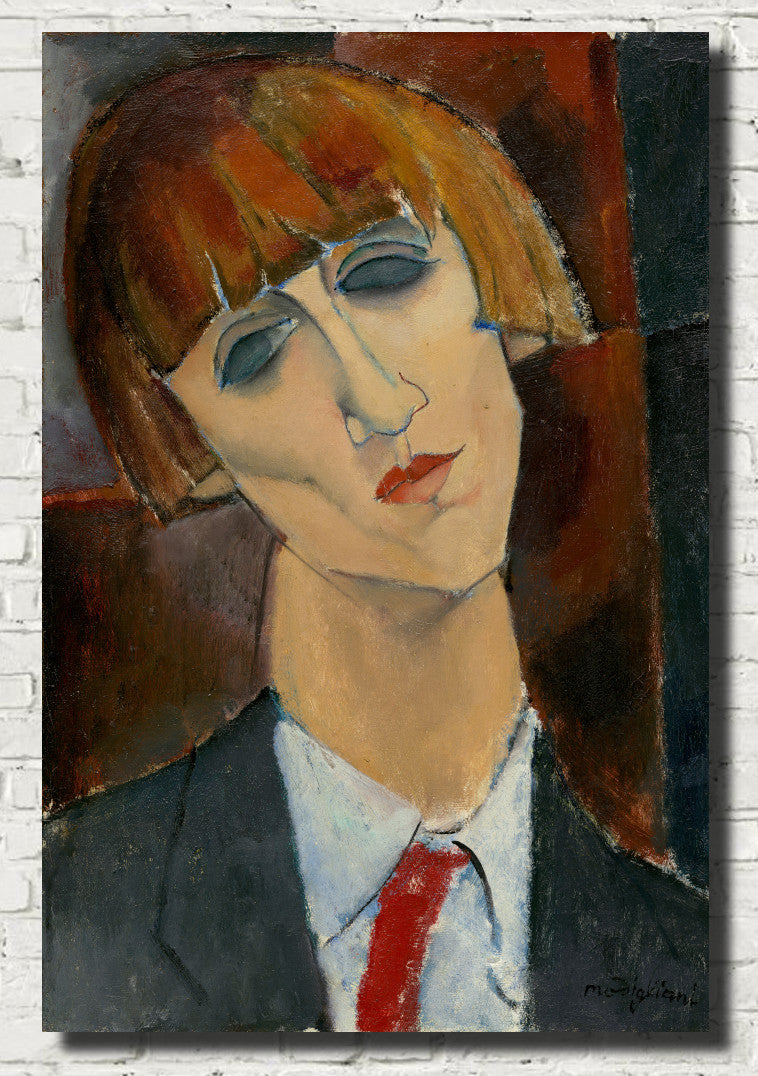
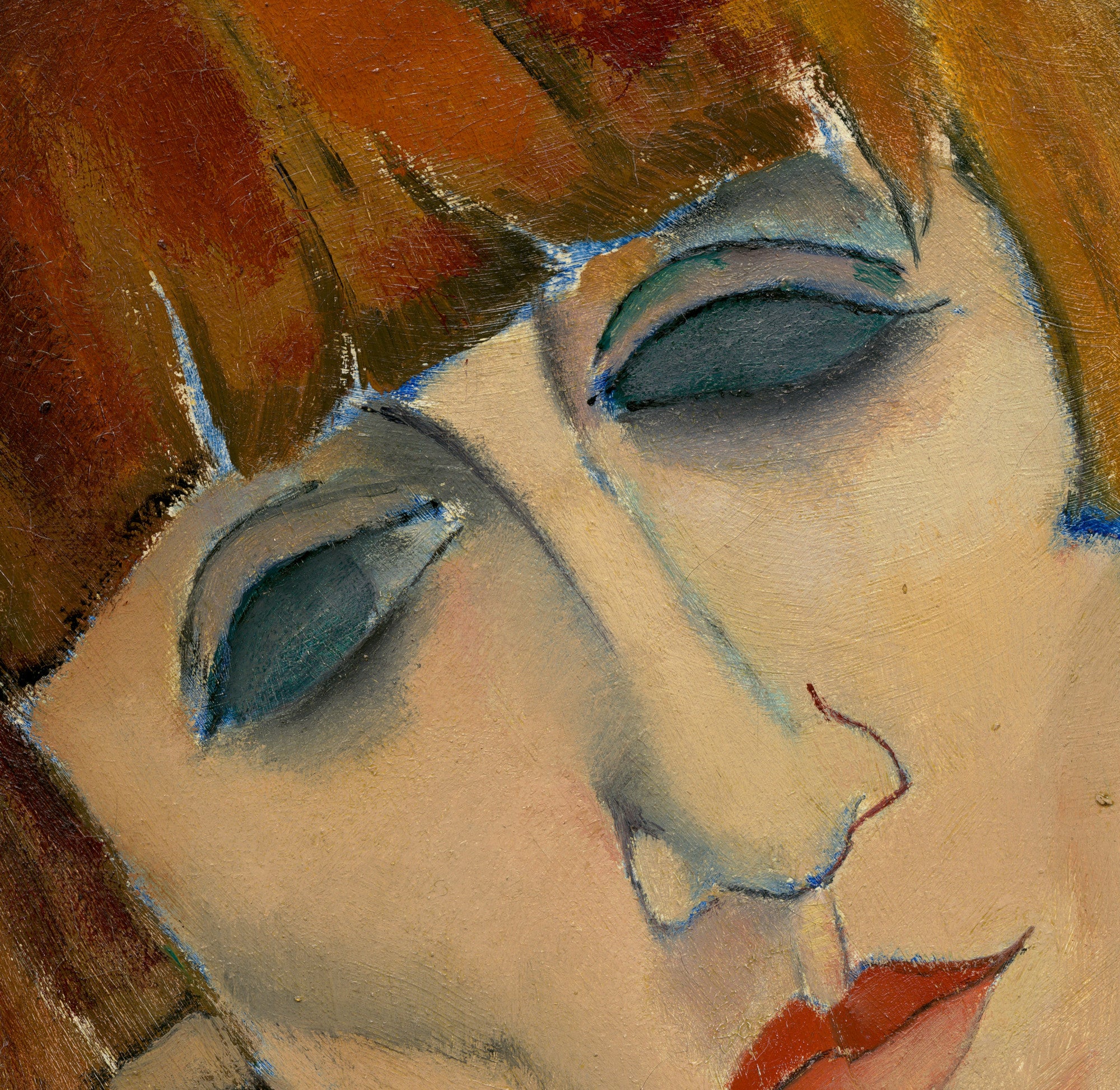
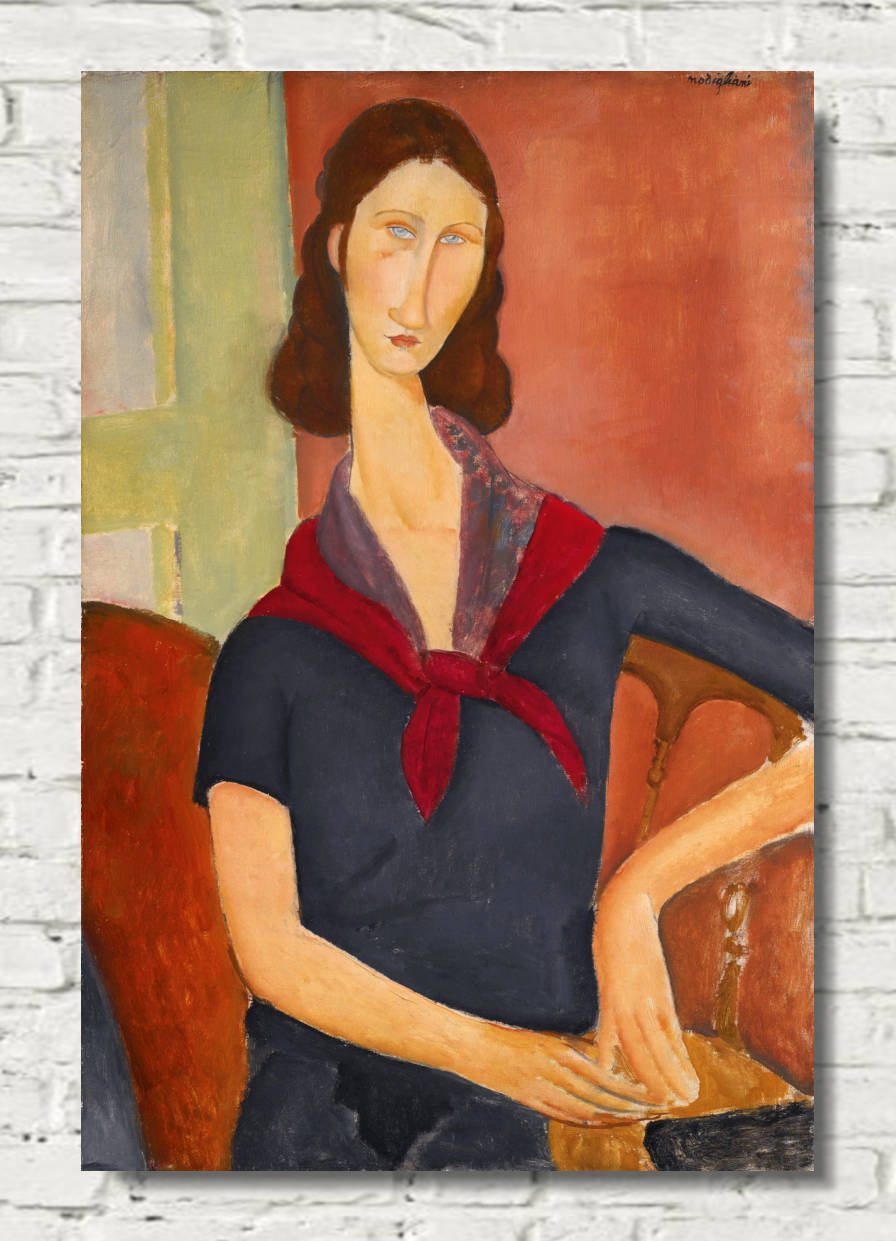
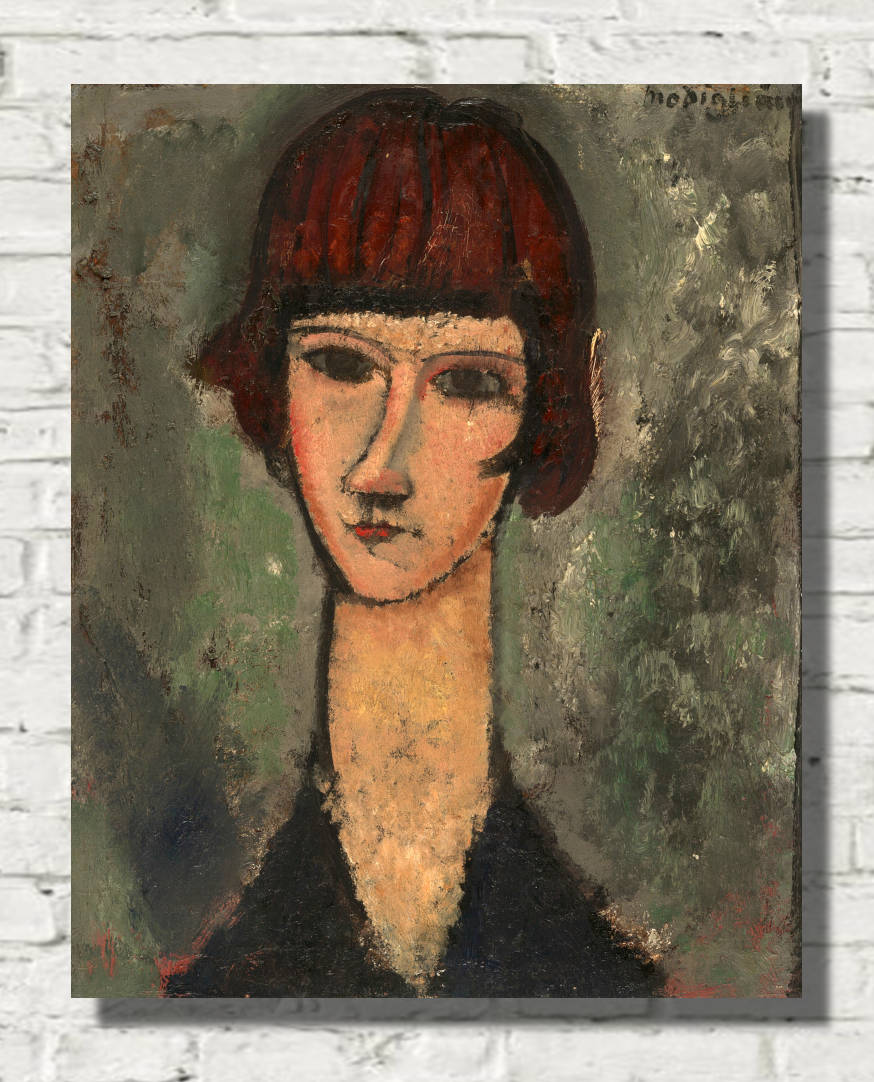
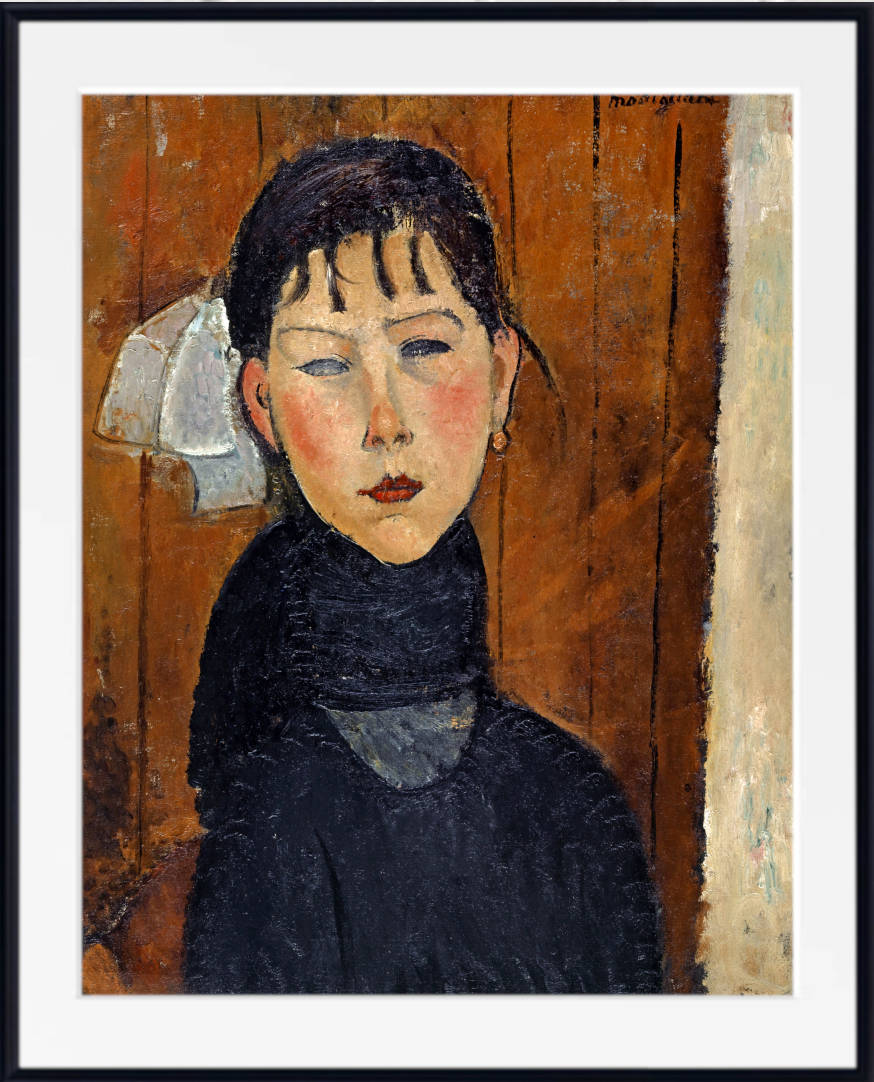
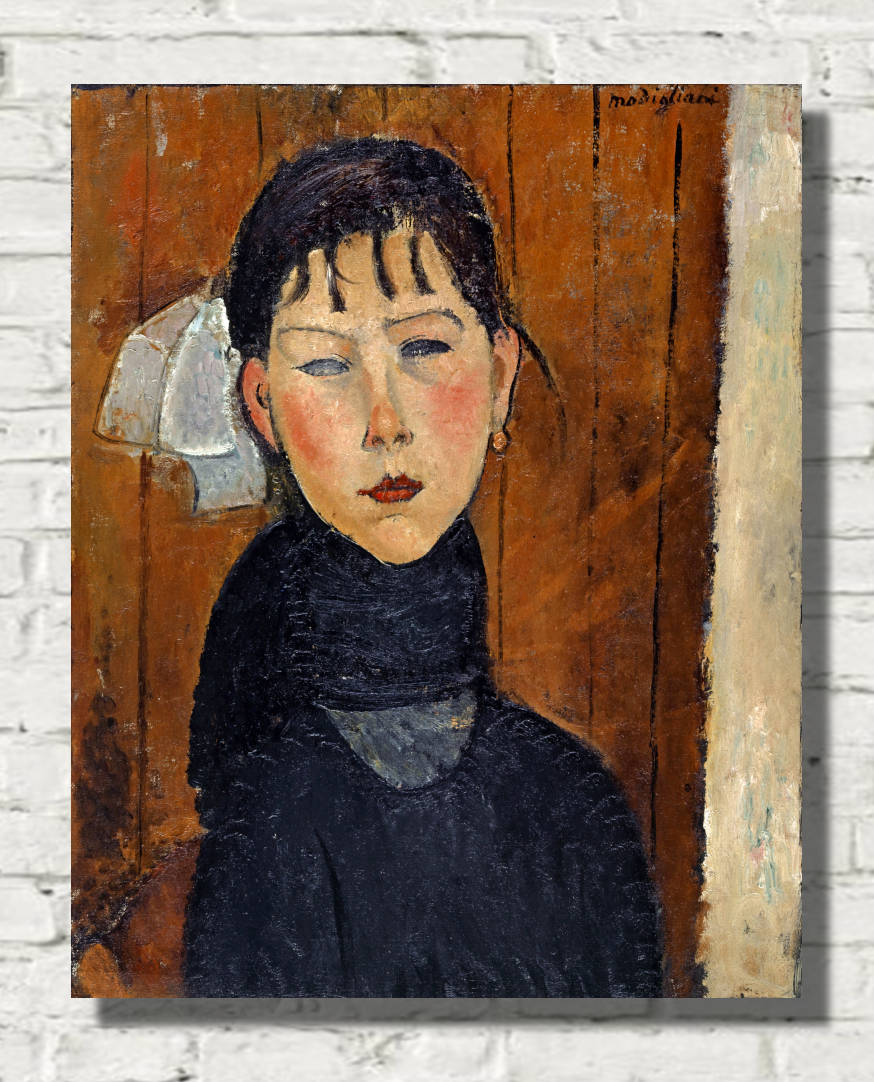
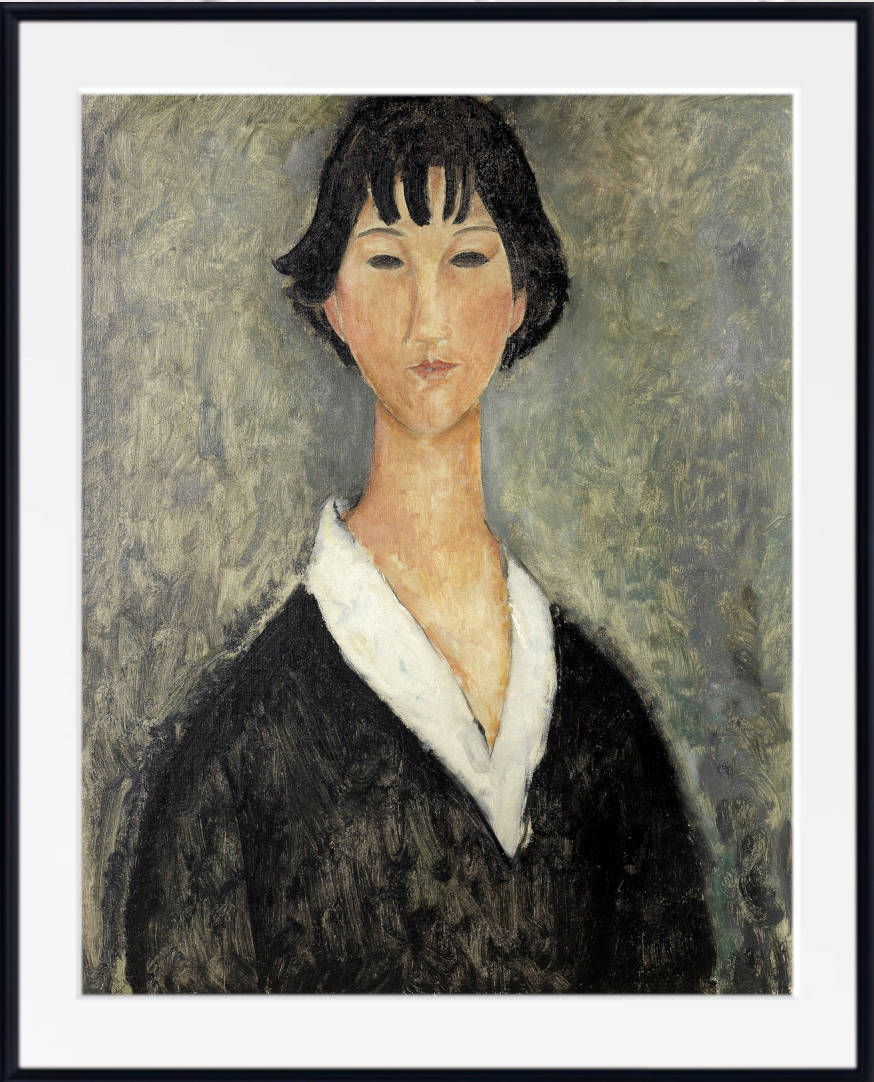
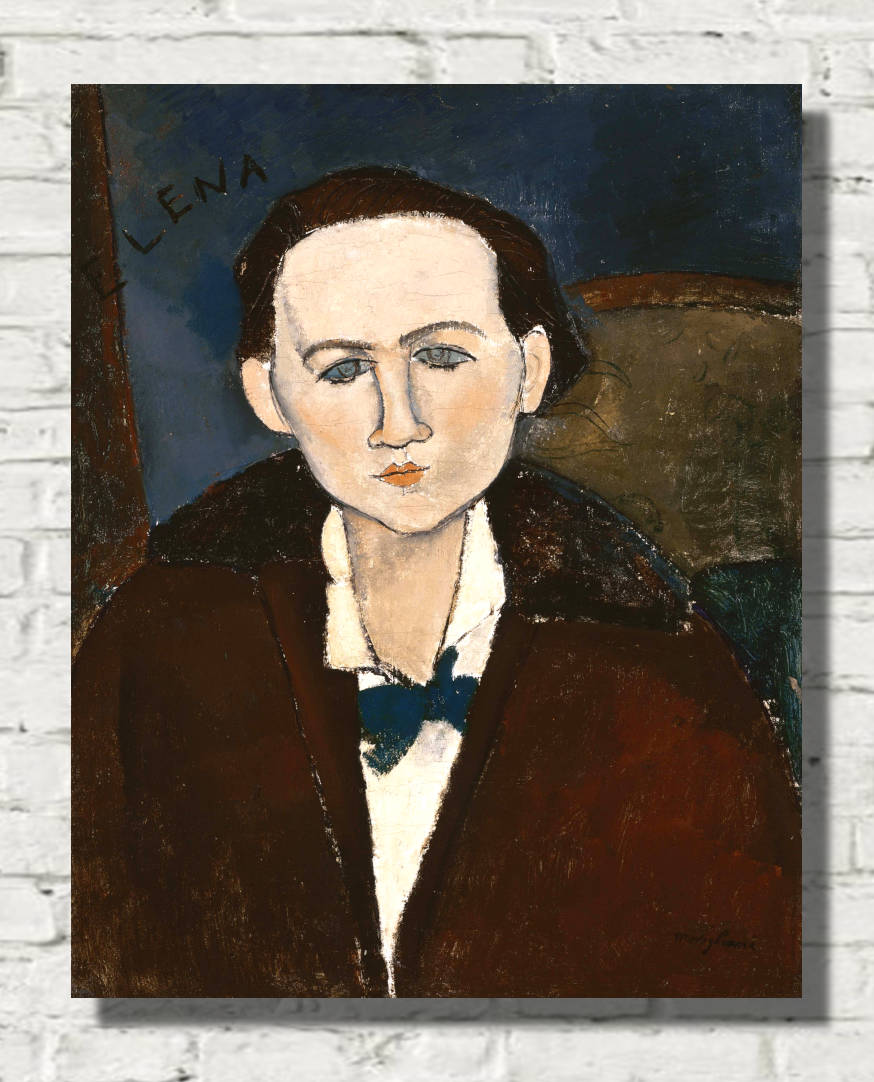
One of Modigliani’s most recognizable stylistic elements is the elongation of the human form, particularly necks and faces. This approach may have been influenced by African masks, which he admired, as well as the elegance of Renaissance portraiture. The simplification of facial features, especially the almond-shaped eyes, lends an enigmatic quality to his subjects.
2. The Influence of Primitivism and Modernism
Modigliani's aesthetic drew from multiple sources, including classical European traditions and modernist movements. The sculptural qualities of his paintings reveal his engagement with Primitivism, a movement that sought to incorporate non-Western art influences into European art. His interest in simplified, abstracted features was also shared by contemporaries such as Picasso.
3. Emotional Depth and Psychological Insight
Despite their stylization, Modigliani’s portraits capture a deep sense of introspection. His subjects, often fellow artists, poets, and patrons, appear lost in thought, their expressions imbued with an air of melancholy. His use of color further enhances the emotional depth of his works.

Notable Works
1. Portraits
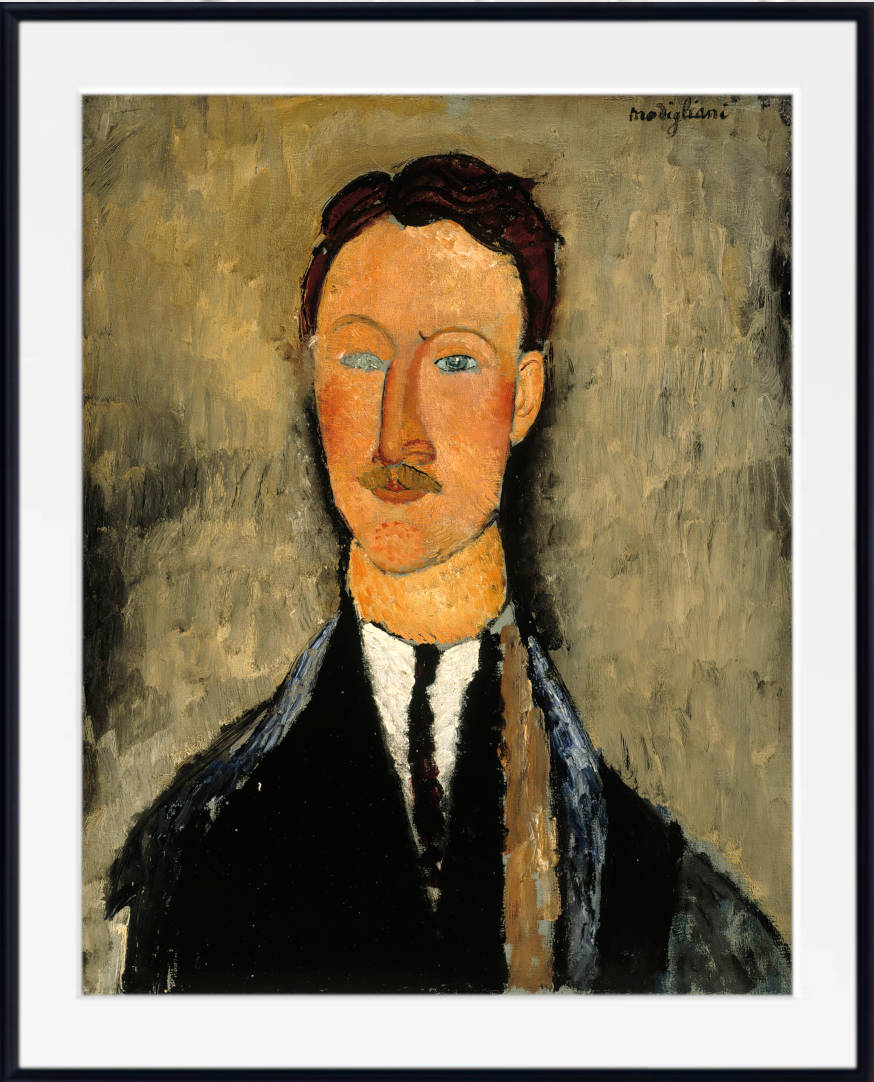
Modigliani painted numerous portraits, depicting friends, fellow artists, and patrons. Some of his most famous include:
-
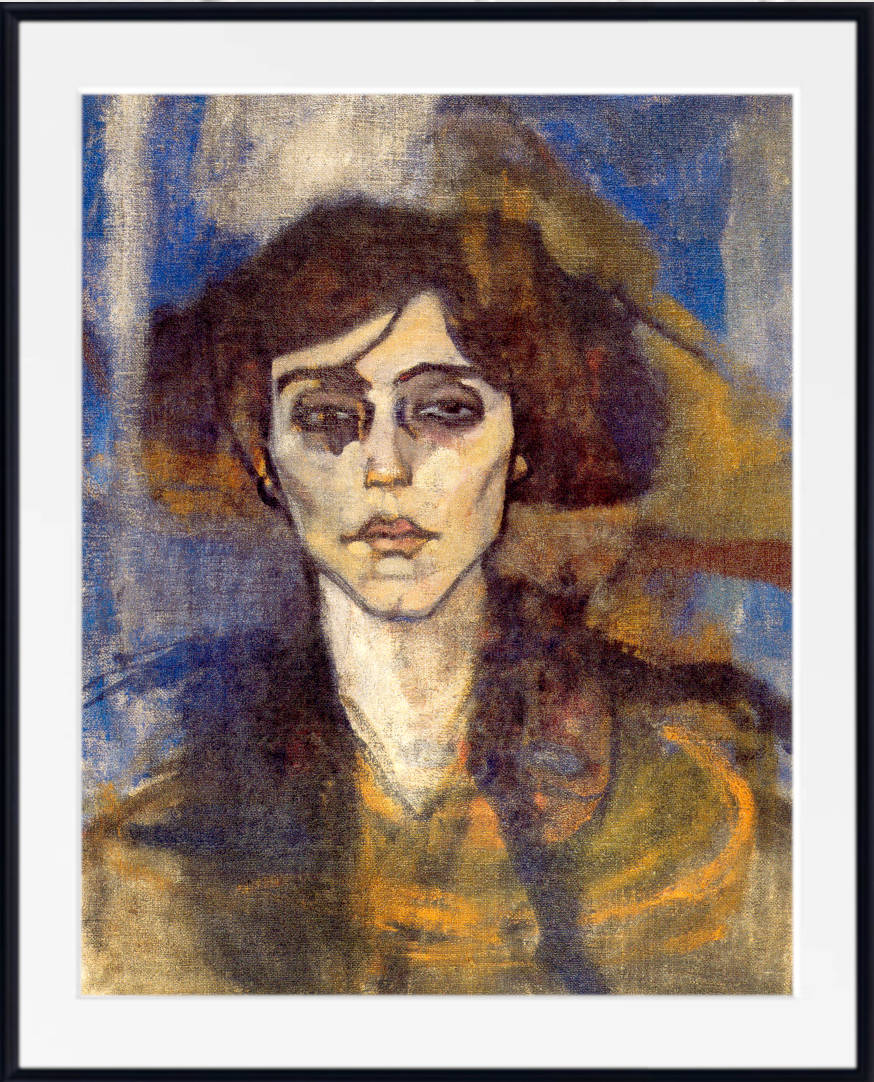
"Portrait of Maude Abrantes" (1907) – An early work showcasing his evolving style, influenced by Fauvism.
-
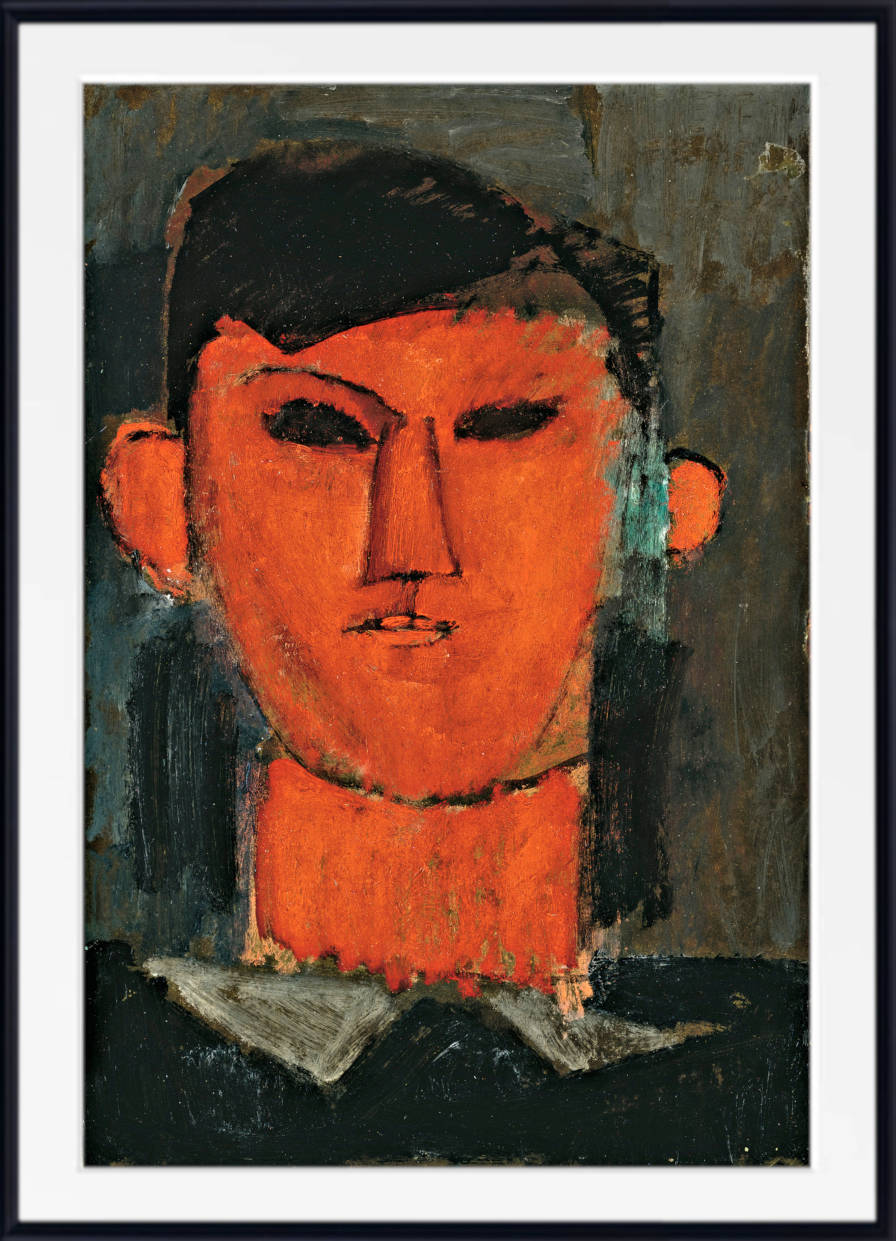
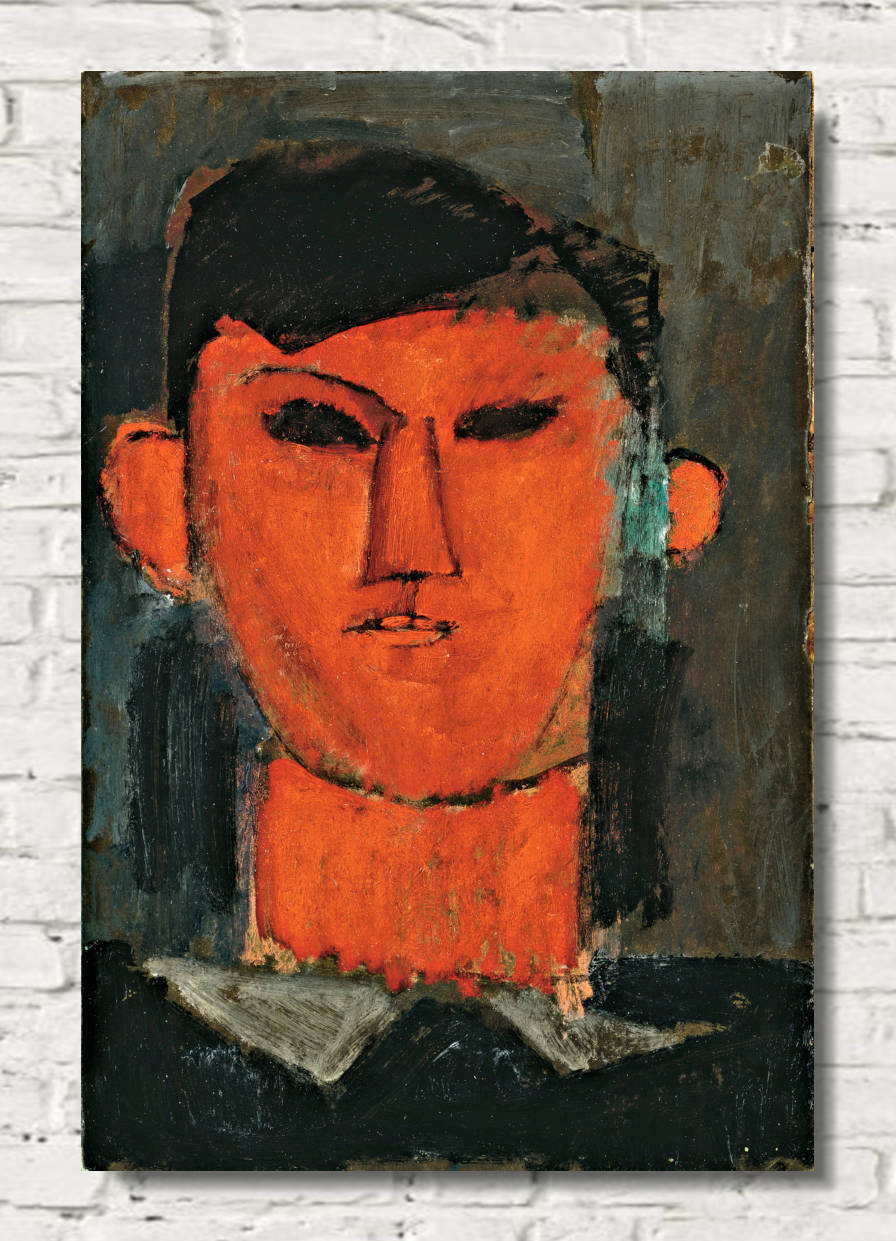
"Portrait of Pablo Picasso" (1915) – A representation of his famous contemporary, notable for its introspective quality.
-
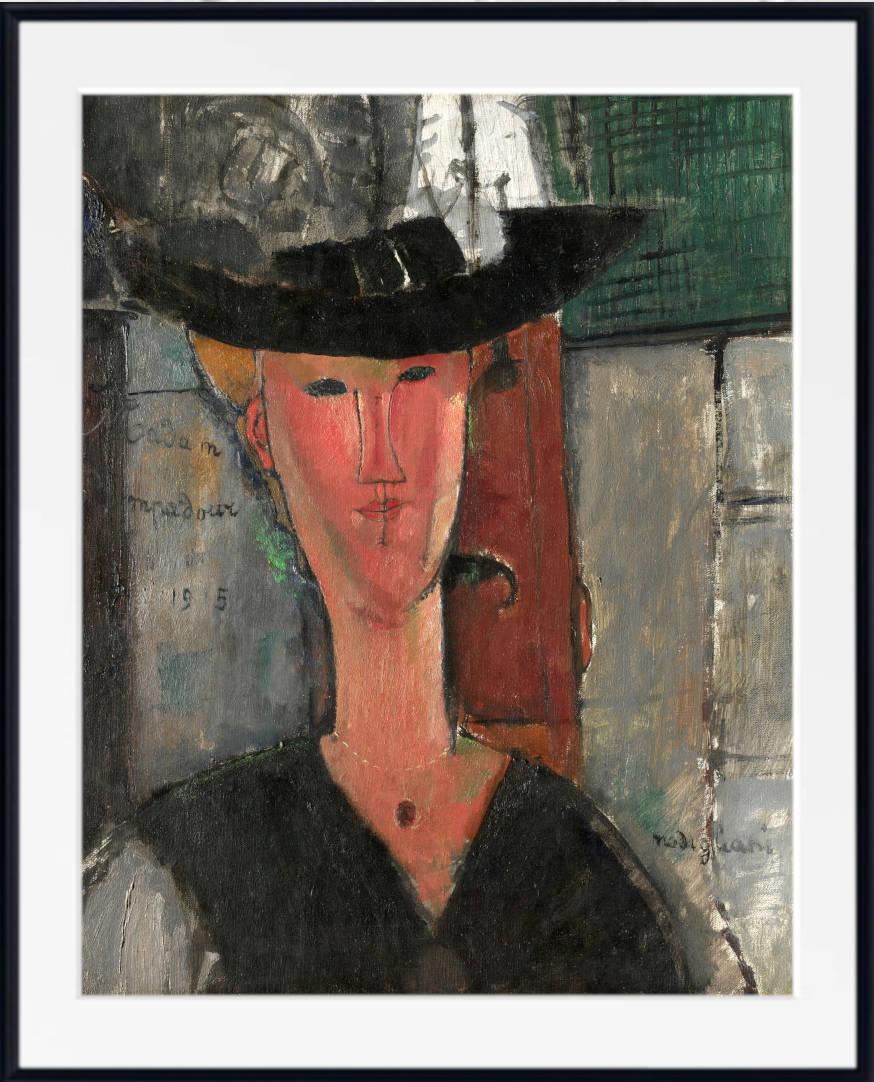
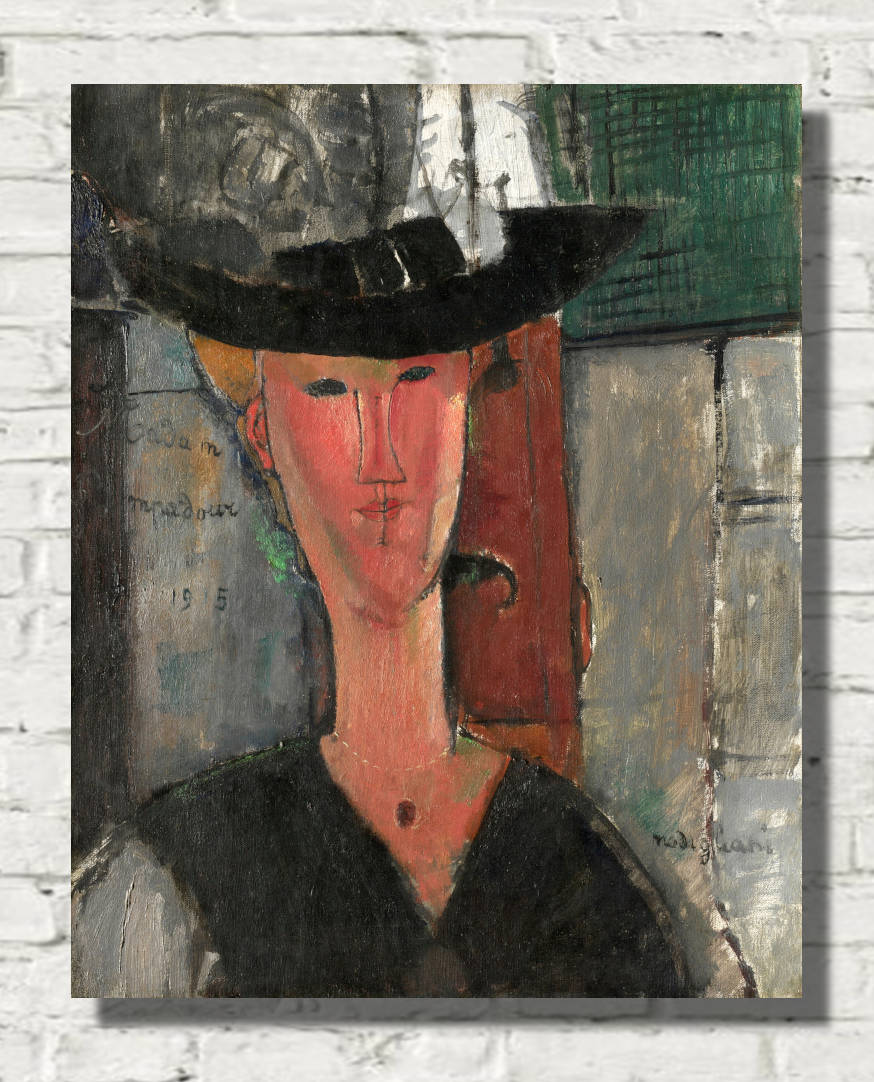
"Madame Pompadour" (1915) – Demonstrates his mature style with its elongated forms and soft color palette.
-
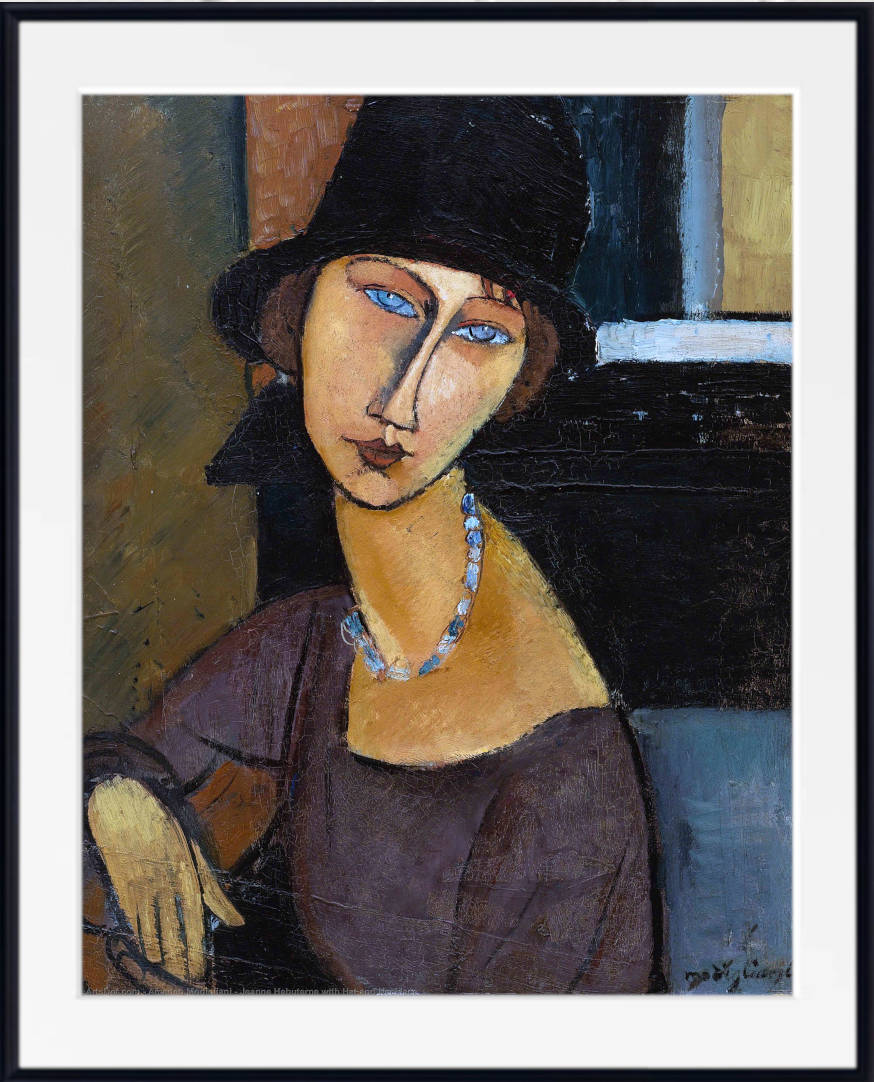
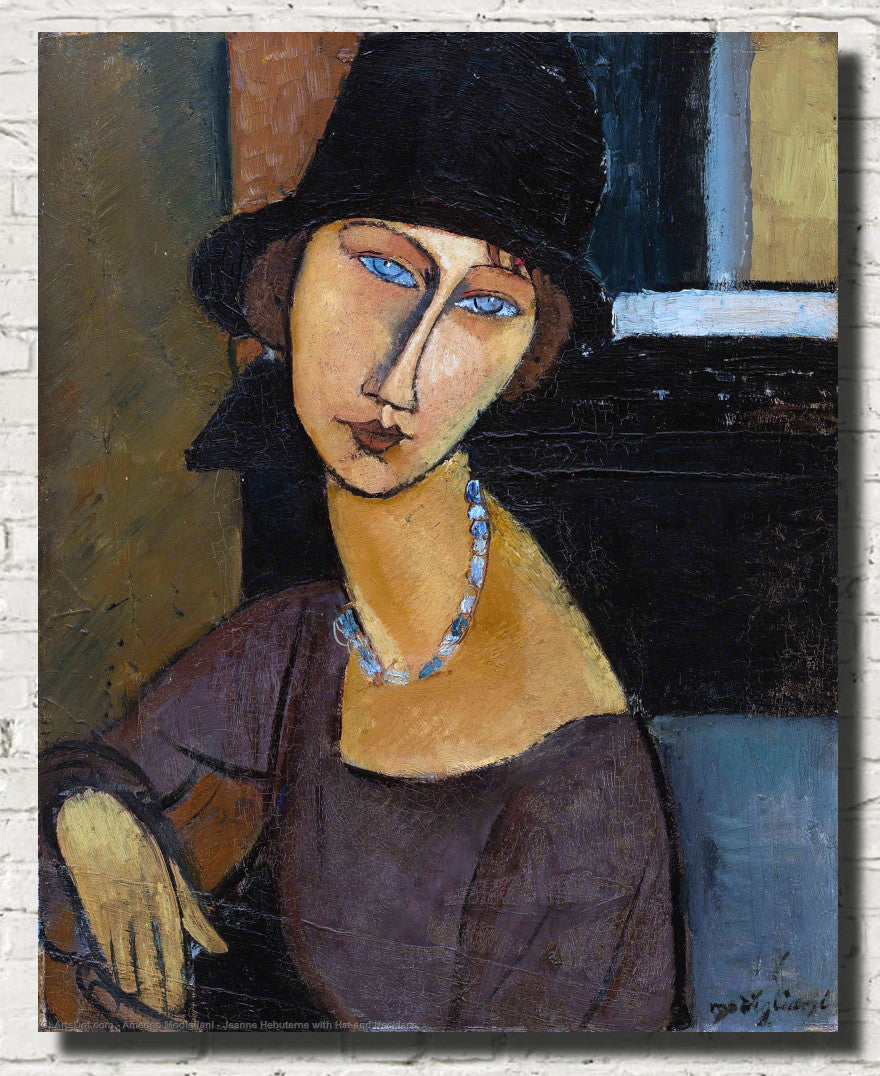
"Jeanne Hébuterne with Hat and Necklace" (1917) – A tender portrayal of his muse and lover, showing his affinity for personal subjects.
-
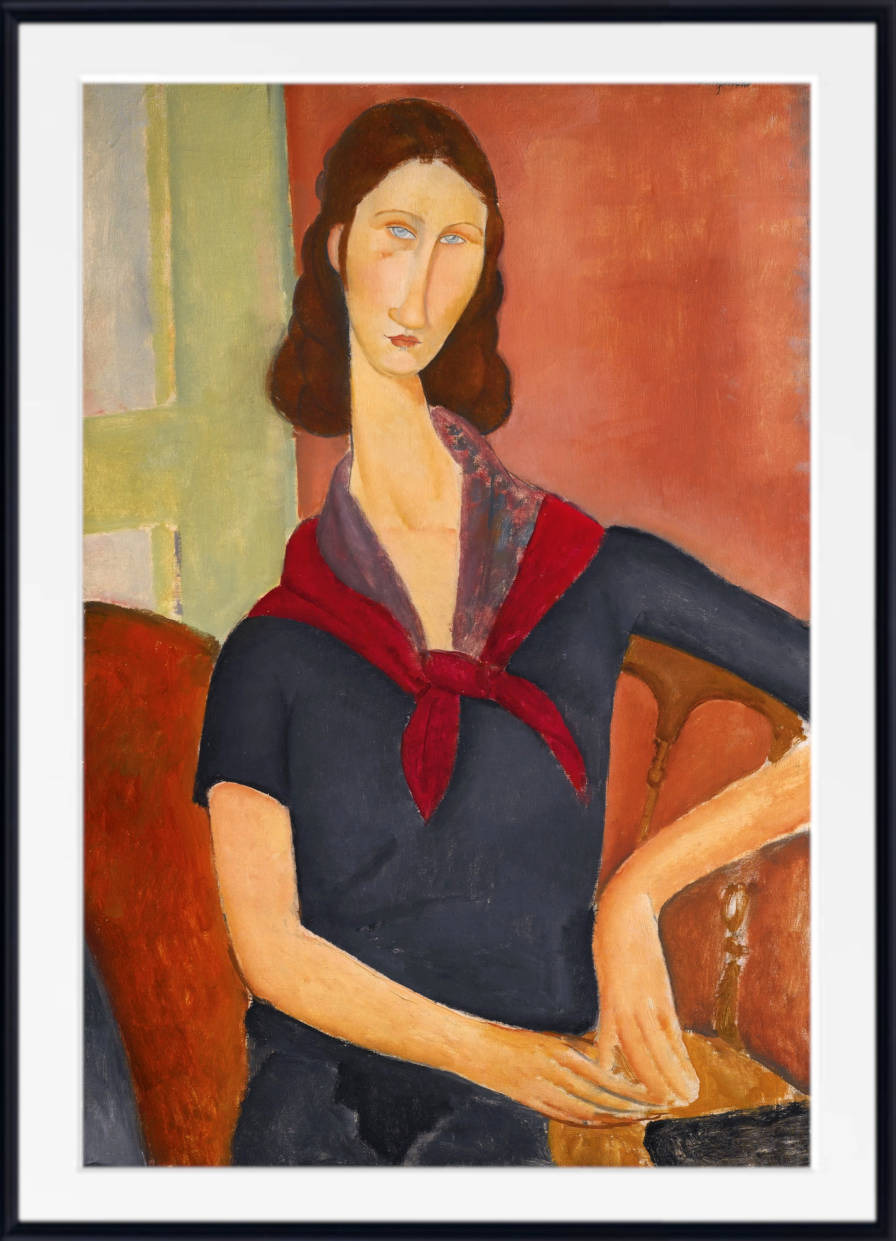
"Portrait of Jeanne Hébuterne" (1918) – Captures the delicate features of Jeanne, highlighting his signature aesthetic.
2. Nudes
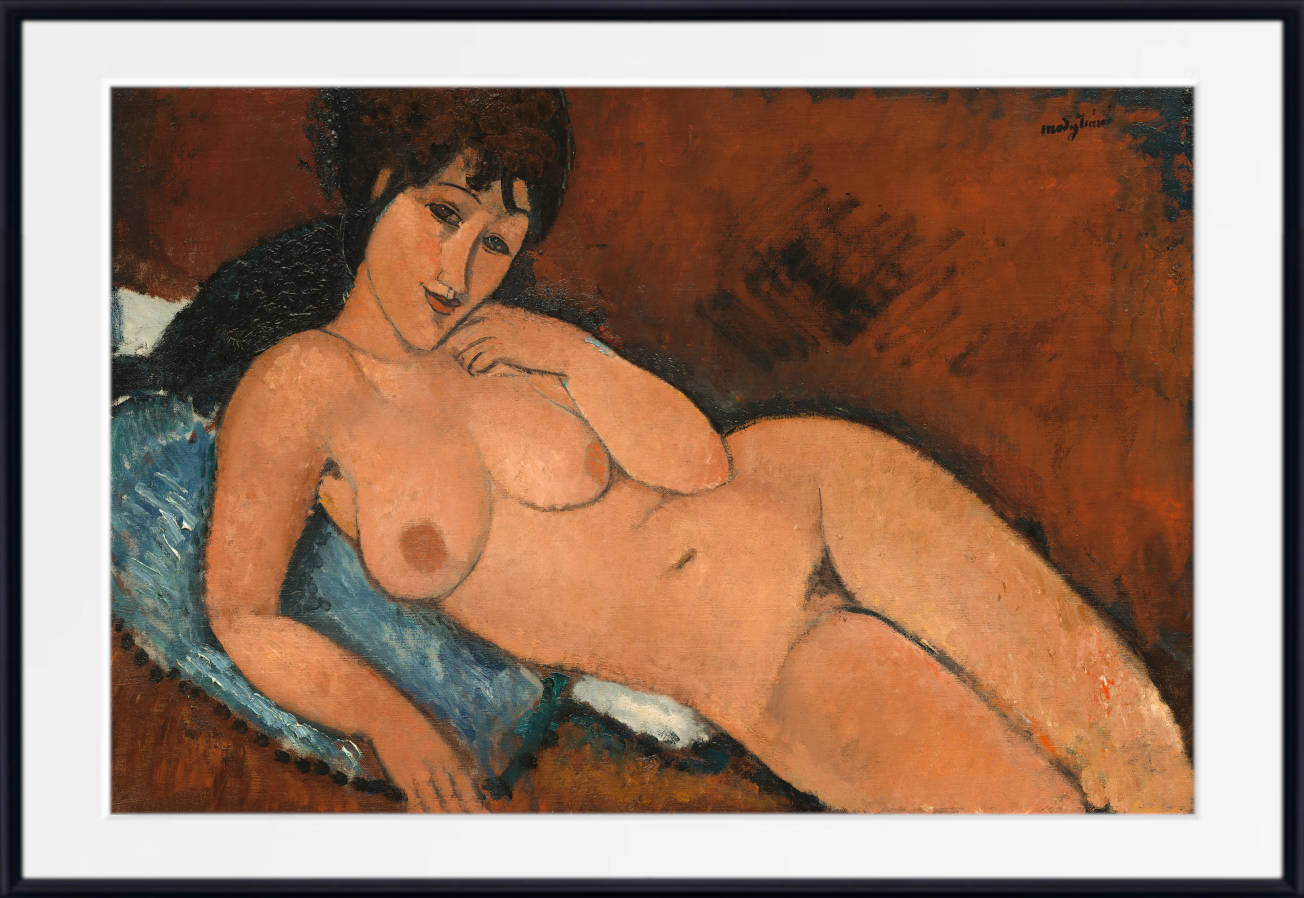
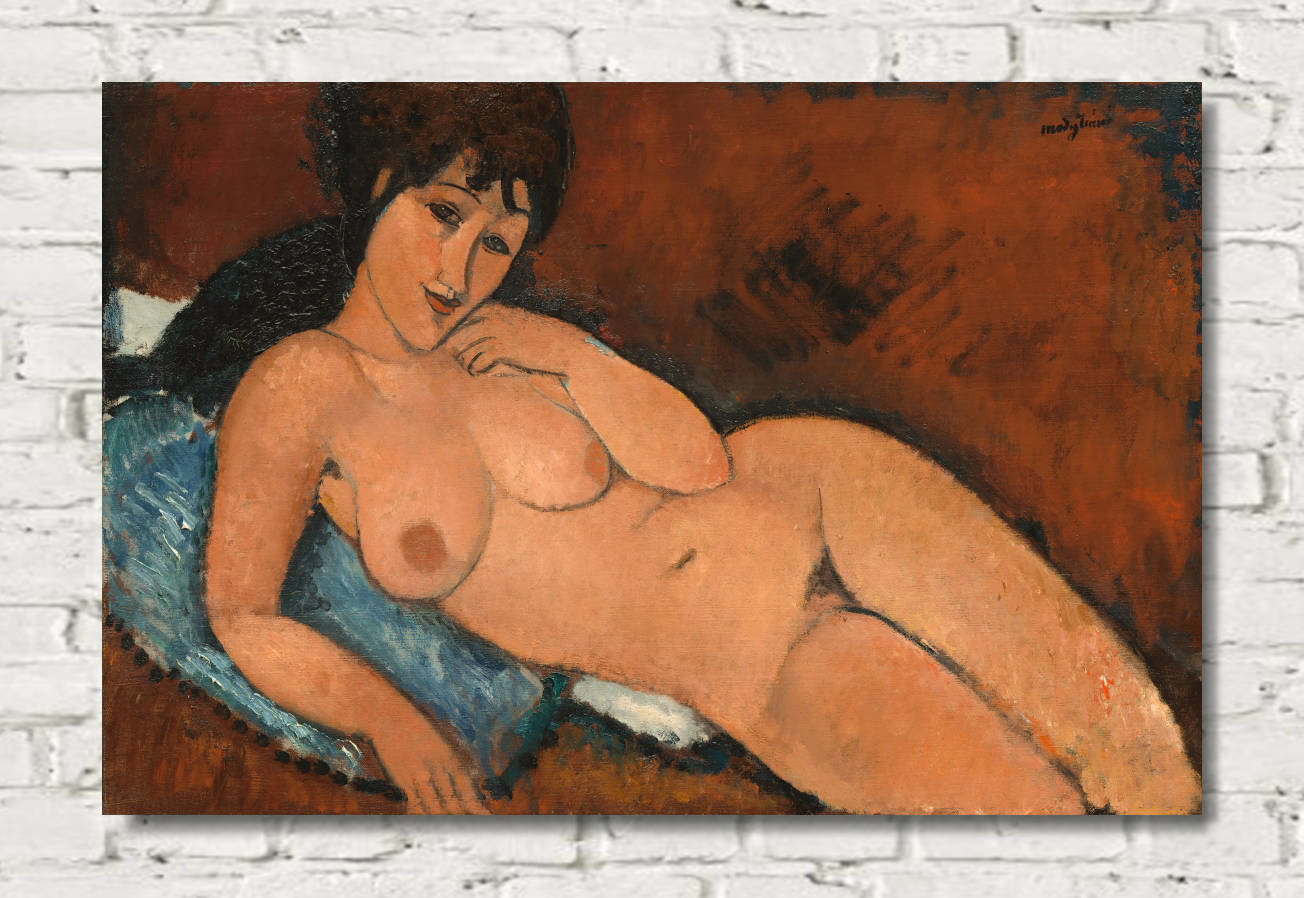
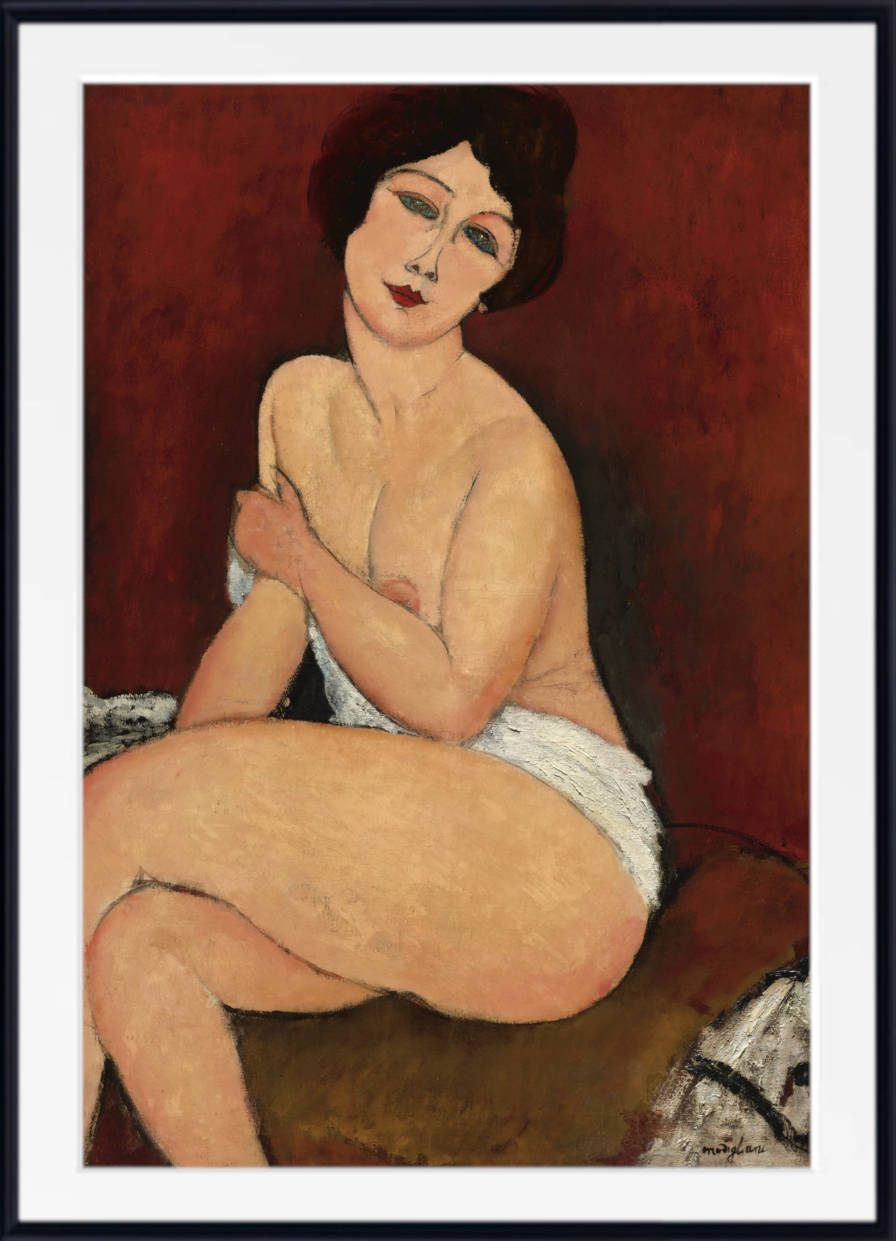
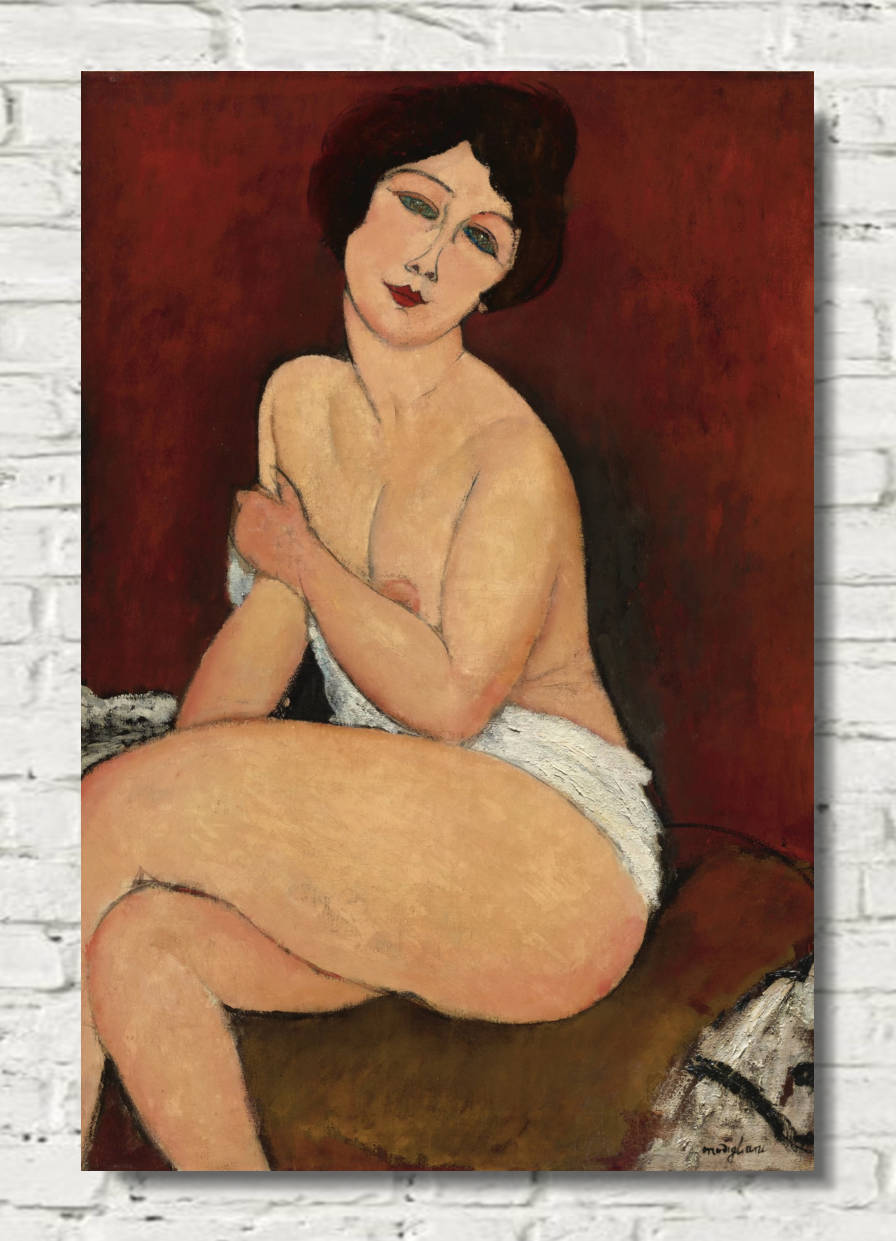
Modigliani's series of reclining nudes, painted between 1916 and 1919, are among his most famous works. These paintings were both celebrated and controversial for their sensuality.
-
"Nu Couché" (1917-1918) – One of his most famous nudes, known for its refined sensuality and composition.
-
"Seated Nude" (c. 1918) – Exemplifies his approach to form and contour, with rich, warm tones.
-
"Reclining Nude with Blue Cushion" (1917) – Highlights his skill in rendering the human body with both abstraction and intimacy.
3. Late Works
Modigliani’s later works show an increased refinement in color and line.
-
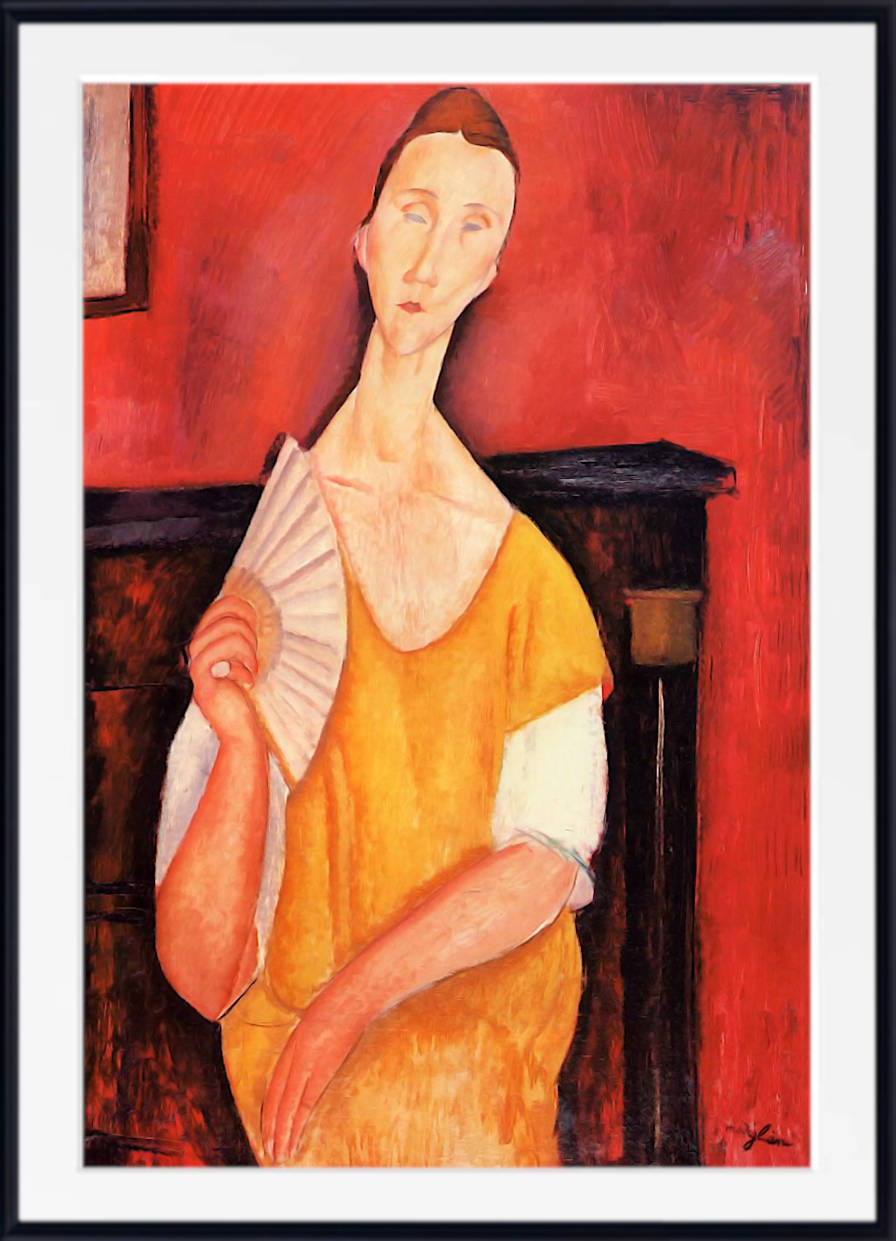
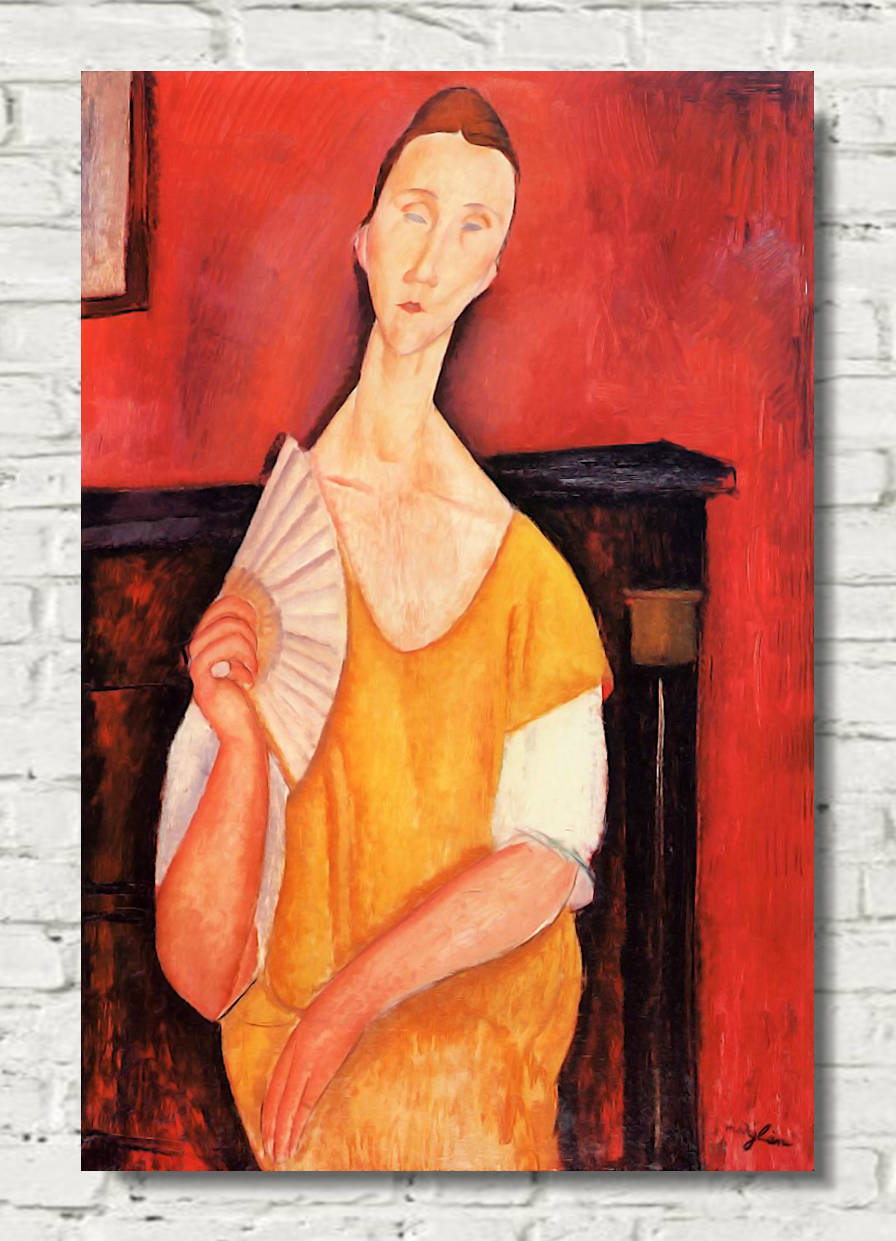
"Woman with a Fan" (1919) – Noted for its graceful composition and refined palette.
-
"Portrait of Marios Varvoglis" (1920) – His last known painting, depicting the Greek composer with characteristic elegance.
Reception and Legacy
During his lifetime, Modigliani struggled with poverty and illness, and his art was often overlooked. It was only after his premature death from tuberculosis at age 35 that his work gained significant recognition.
Influence on Modern Art
Modigliani’s synthesis of classical elegance and modernist abstraction influenced numerous artists. His work continues to inspire contemporary painters, and his nudes and portraits remain highly sought after in the art market.
References
-
Secrest, Meryle. Modigliani: A Life. New York: Alfred A. Knopf, 2011.
-
Parisot, Christian. Modigliani: The Melancholy Angel. New York: Rizzoli, 1996.
-
Krystof, Doris. Modigliani. Cologne: Taschen, 2007.
-
Restellini, Marc. Modigliani and the Artists of Montparnasse. New York: Abrams, 2002.
-
Pfannstiel, Martin. Modigliani: Paintings, Sculptures, Drawings. New York: Abrams, 1970.
Conclusion
Amedeo Modigliani’s paintings stand as a testament to his extraordinary vision, blending timeless elegance with modernist abstraction. His portraits and nudes, marked by elongated forms and emotive depth, remain among the most celebrated artworks of the 20th century. Though he struggled for recognition during his lifetime, his influence endures, cementing his place in the pantheon of modern art.
Related Articles
Find the most expensive Amedeo Modigliani paintings ever sold and get gallery quality prints of his stunning works to transform your home.