


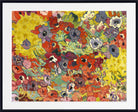
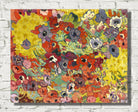
Flowerbed (c1906) by Louis Valtat
Couldn't load pickup availability
BUY WITH CONFIDENCE
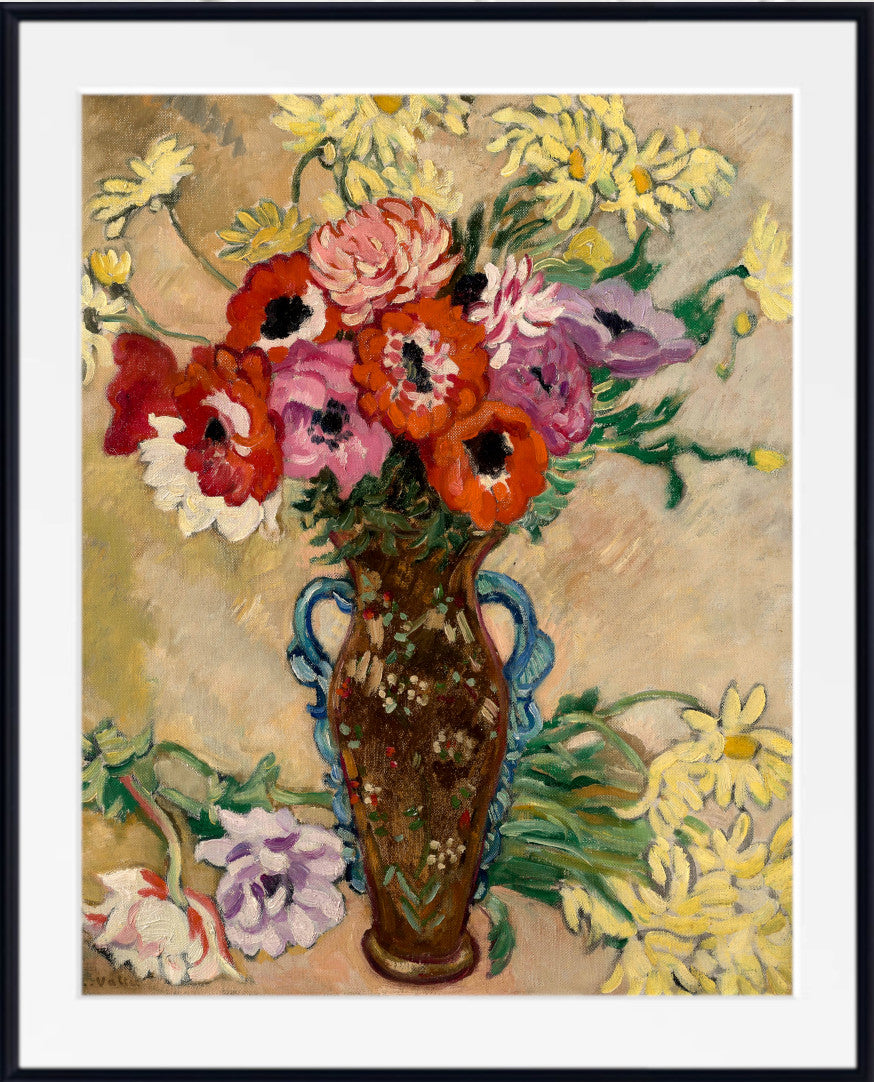
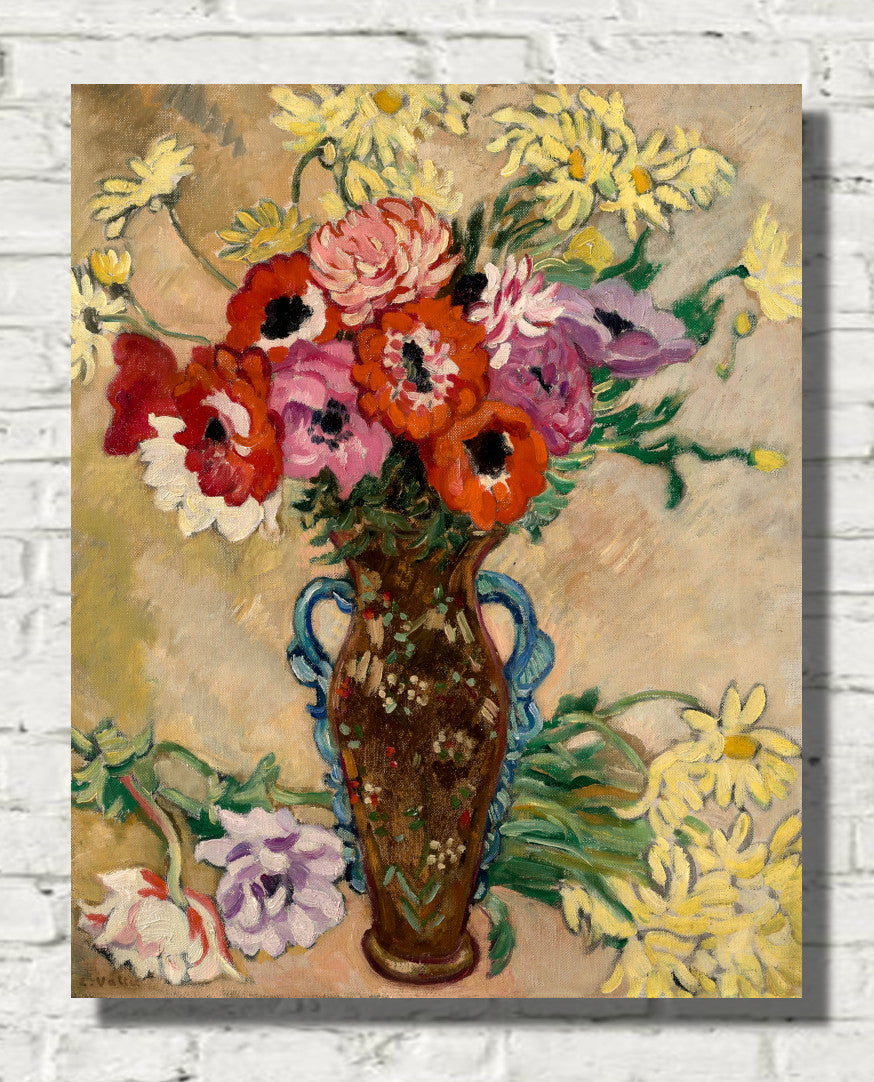
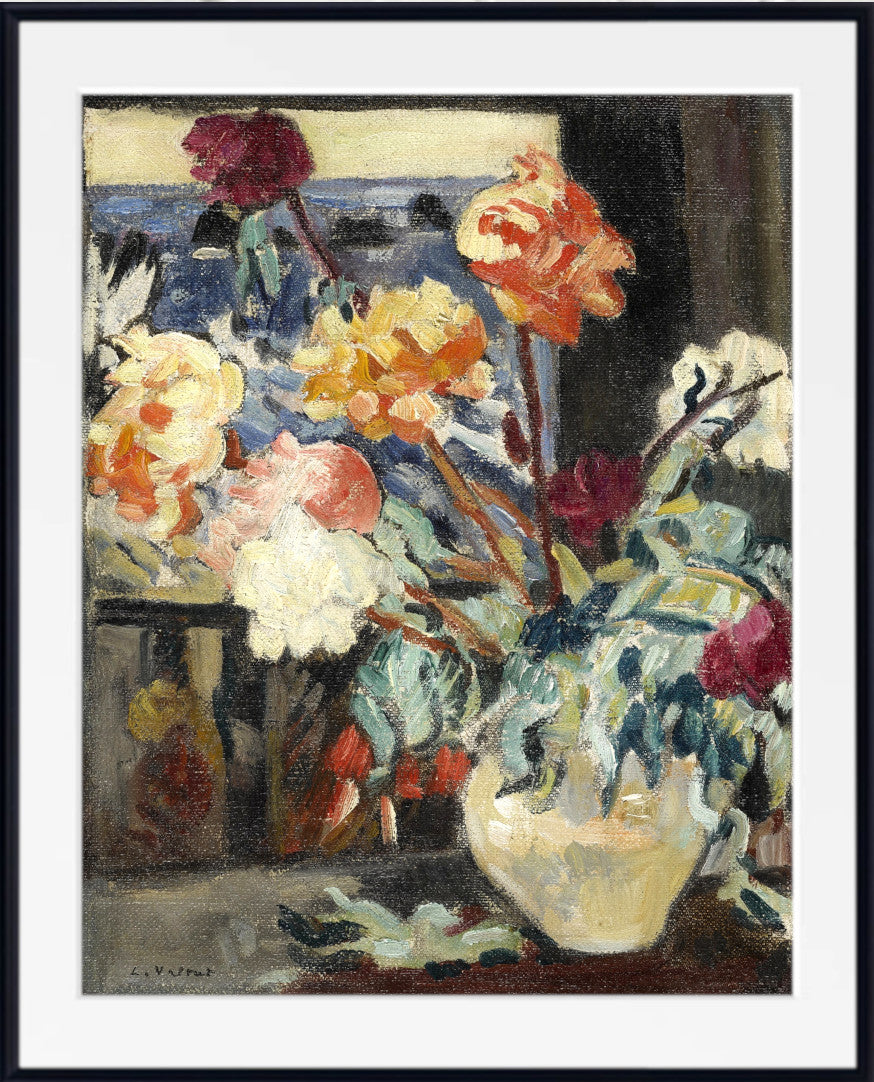
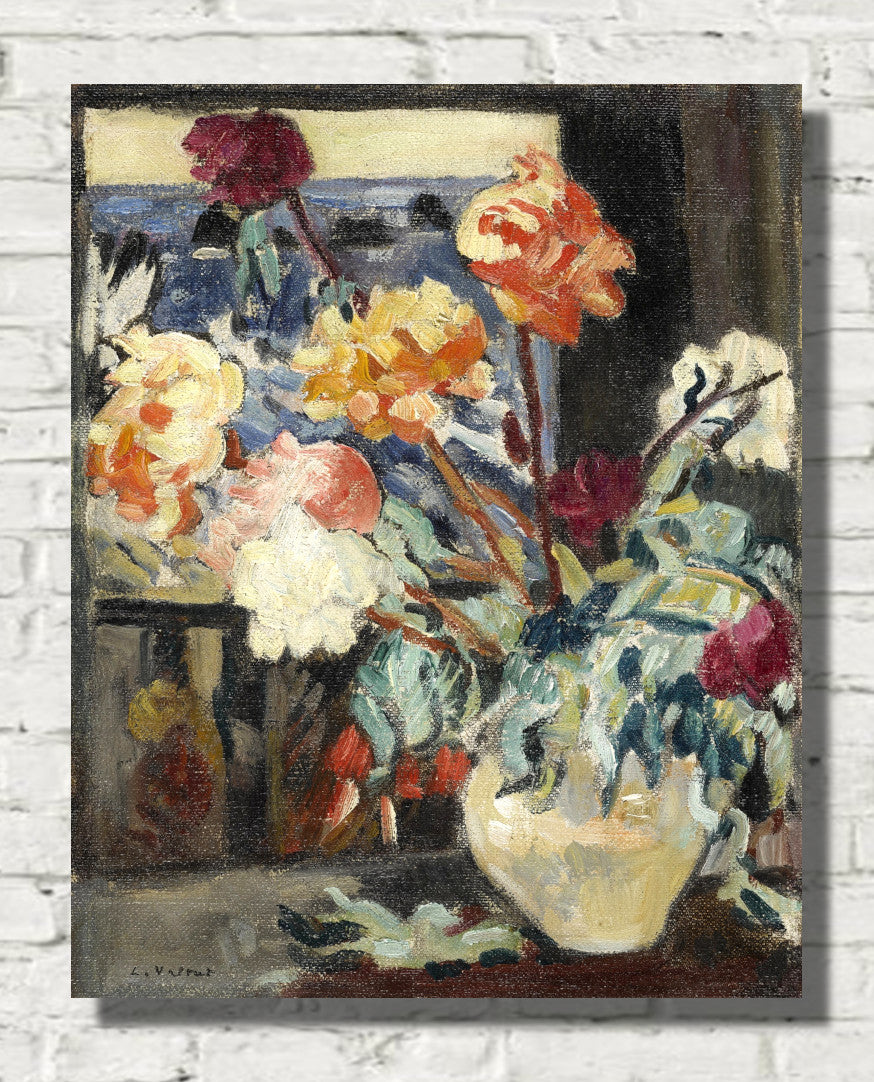
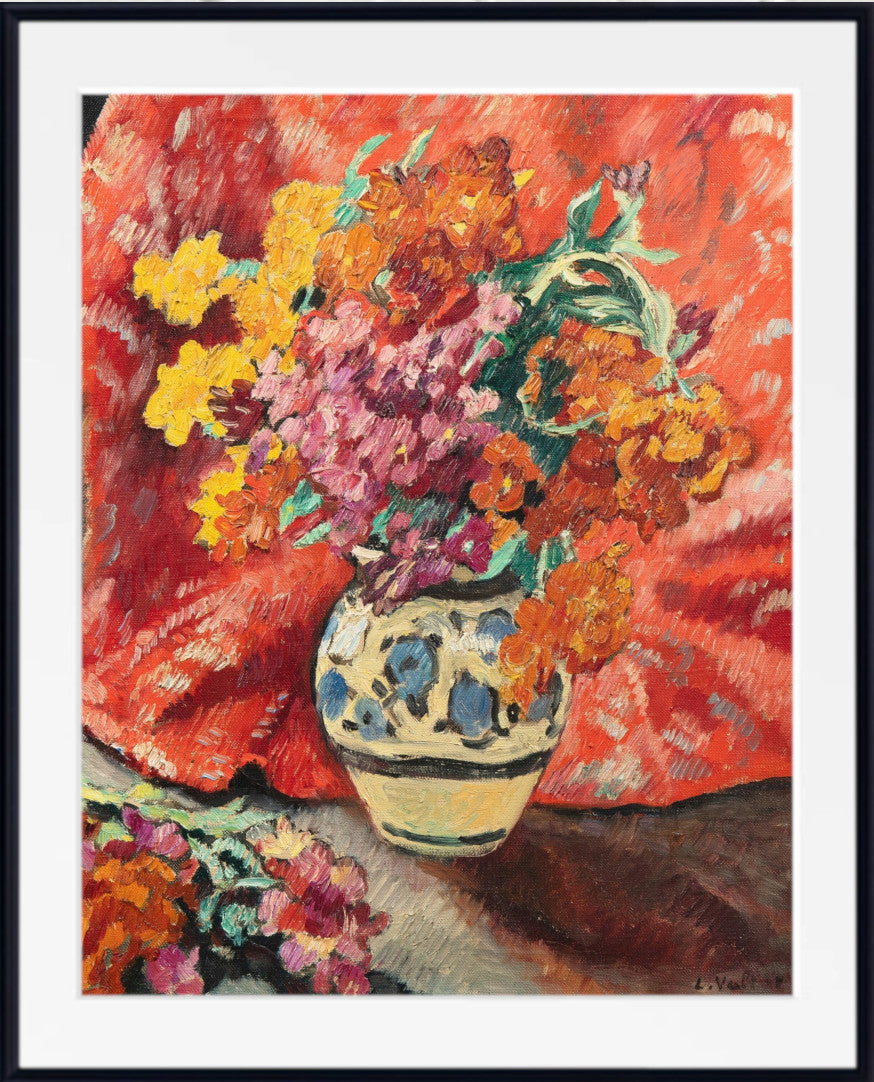
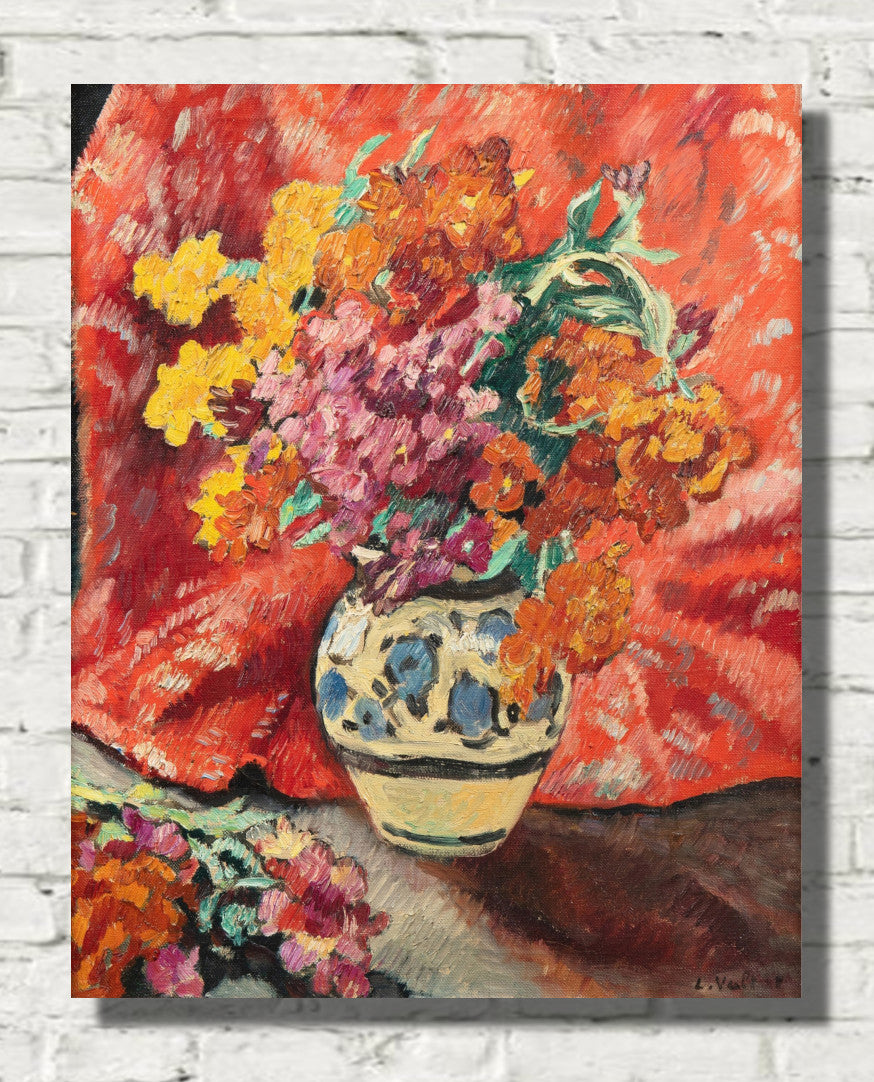
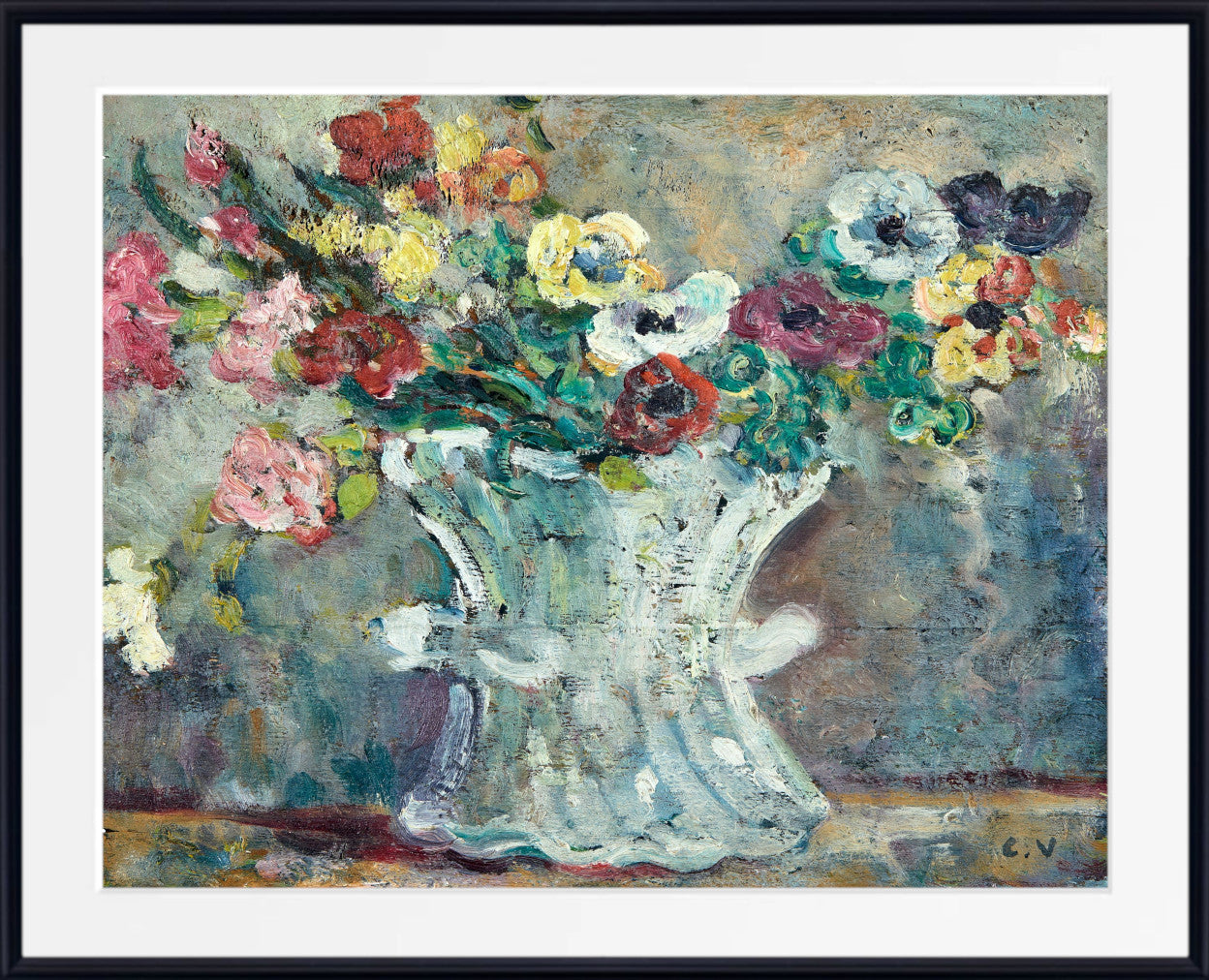
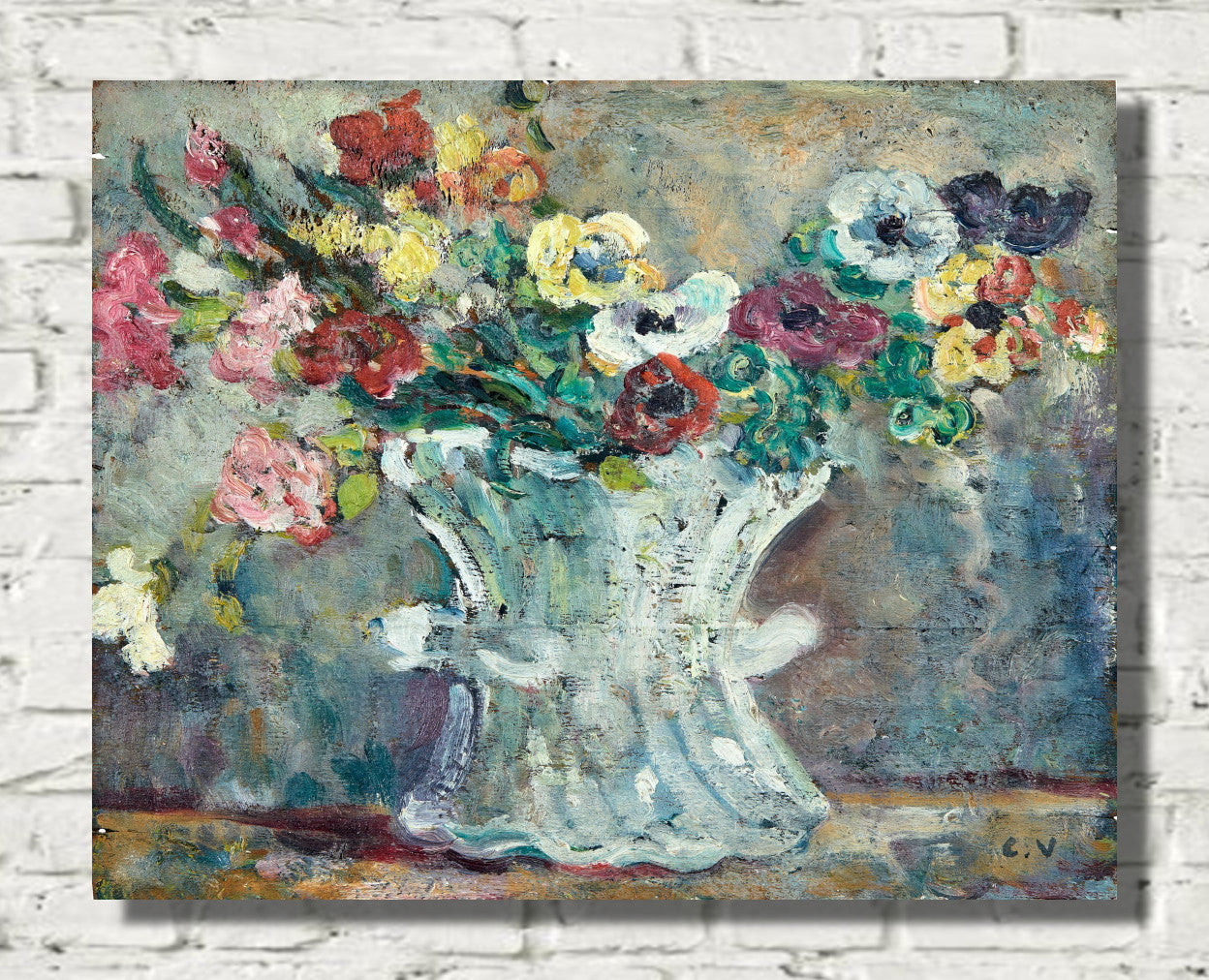
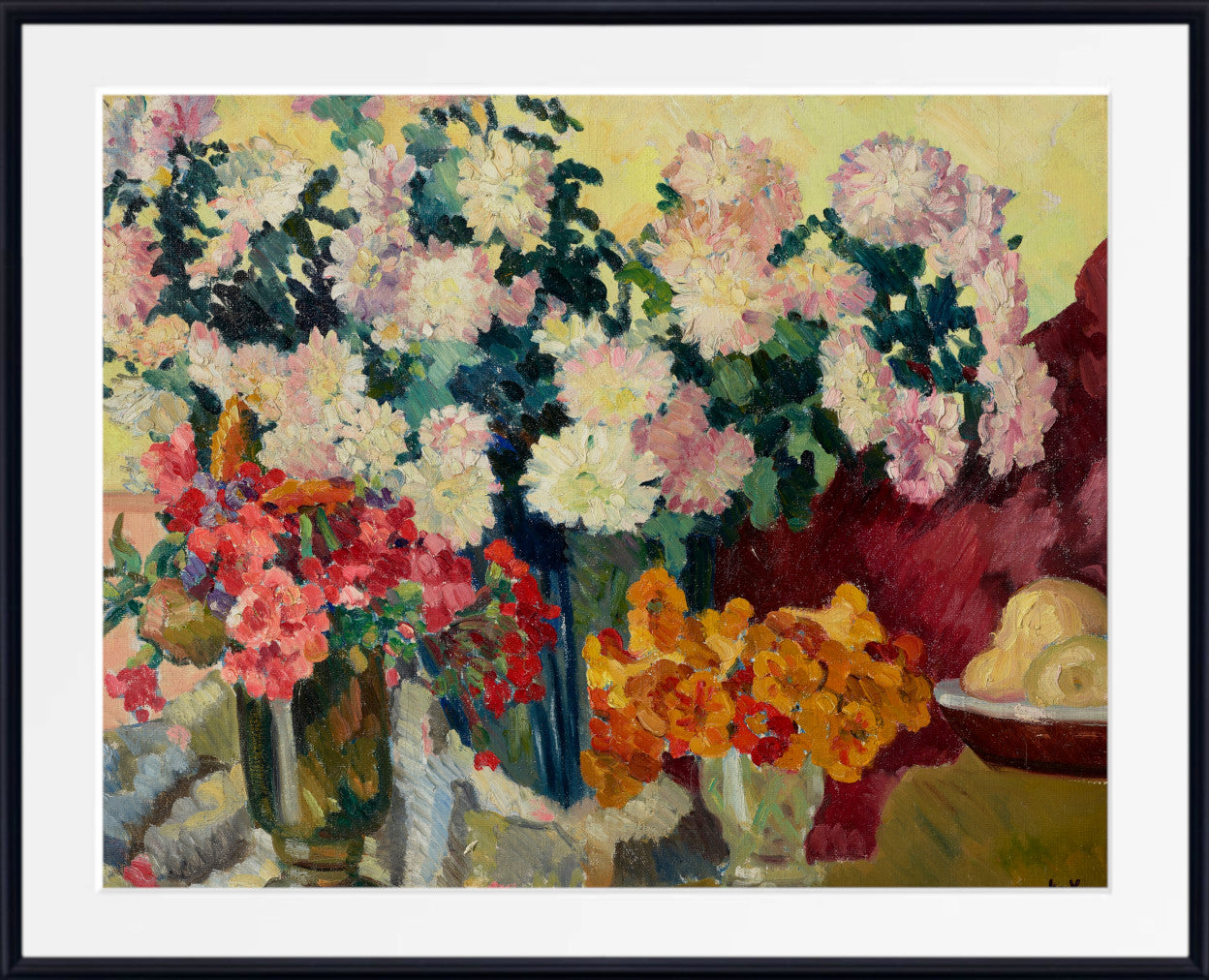
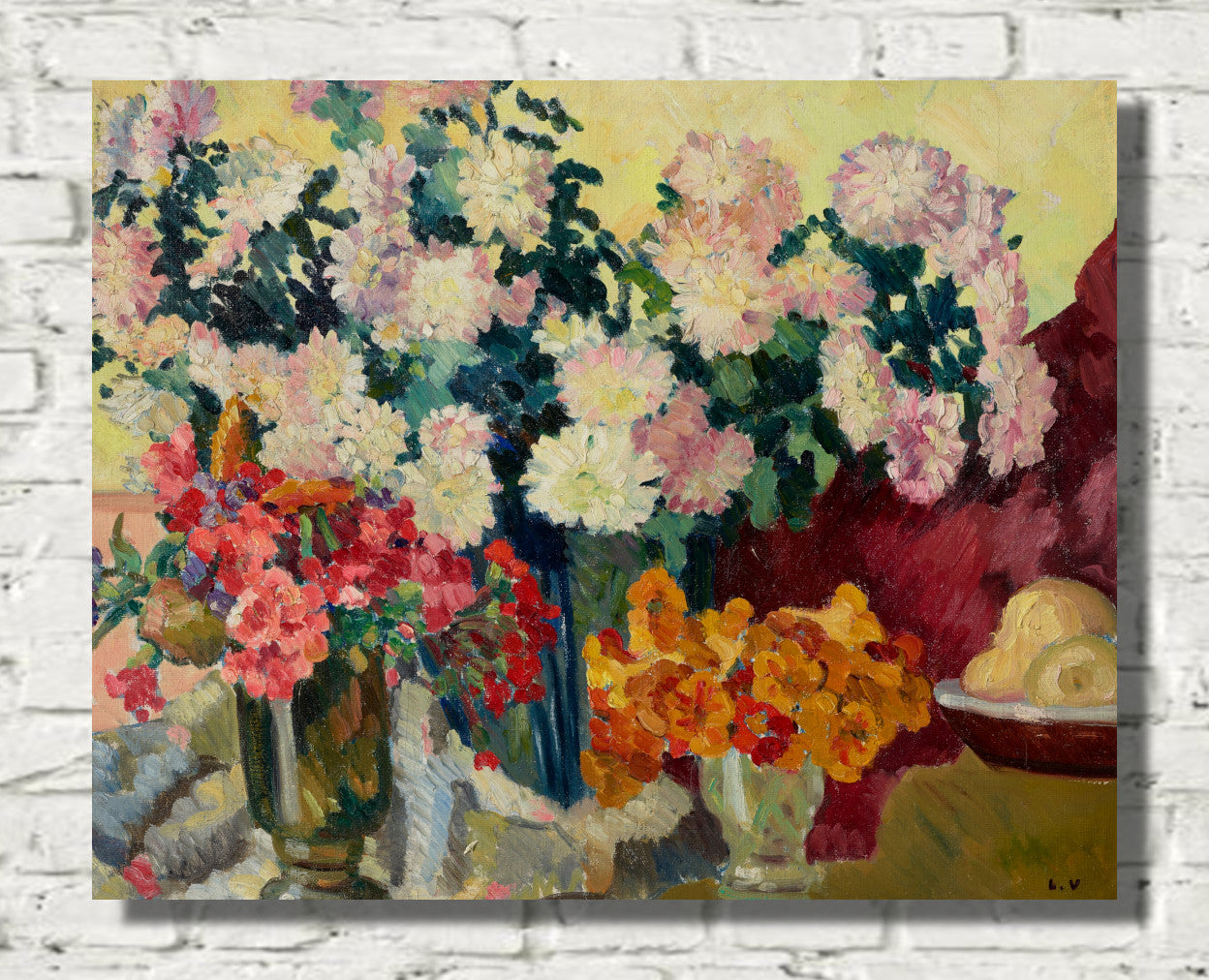
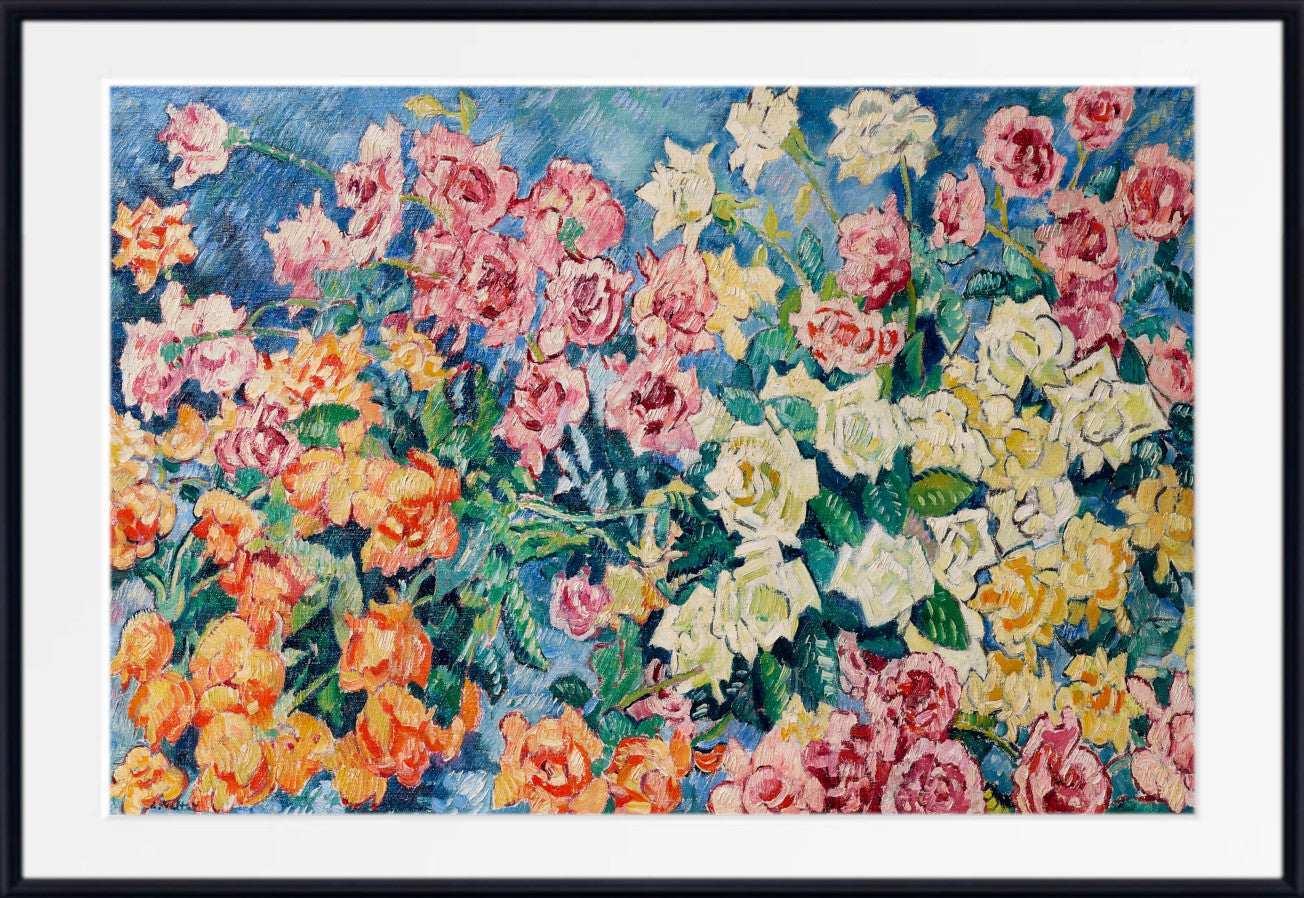
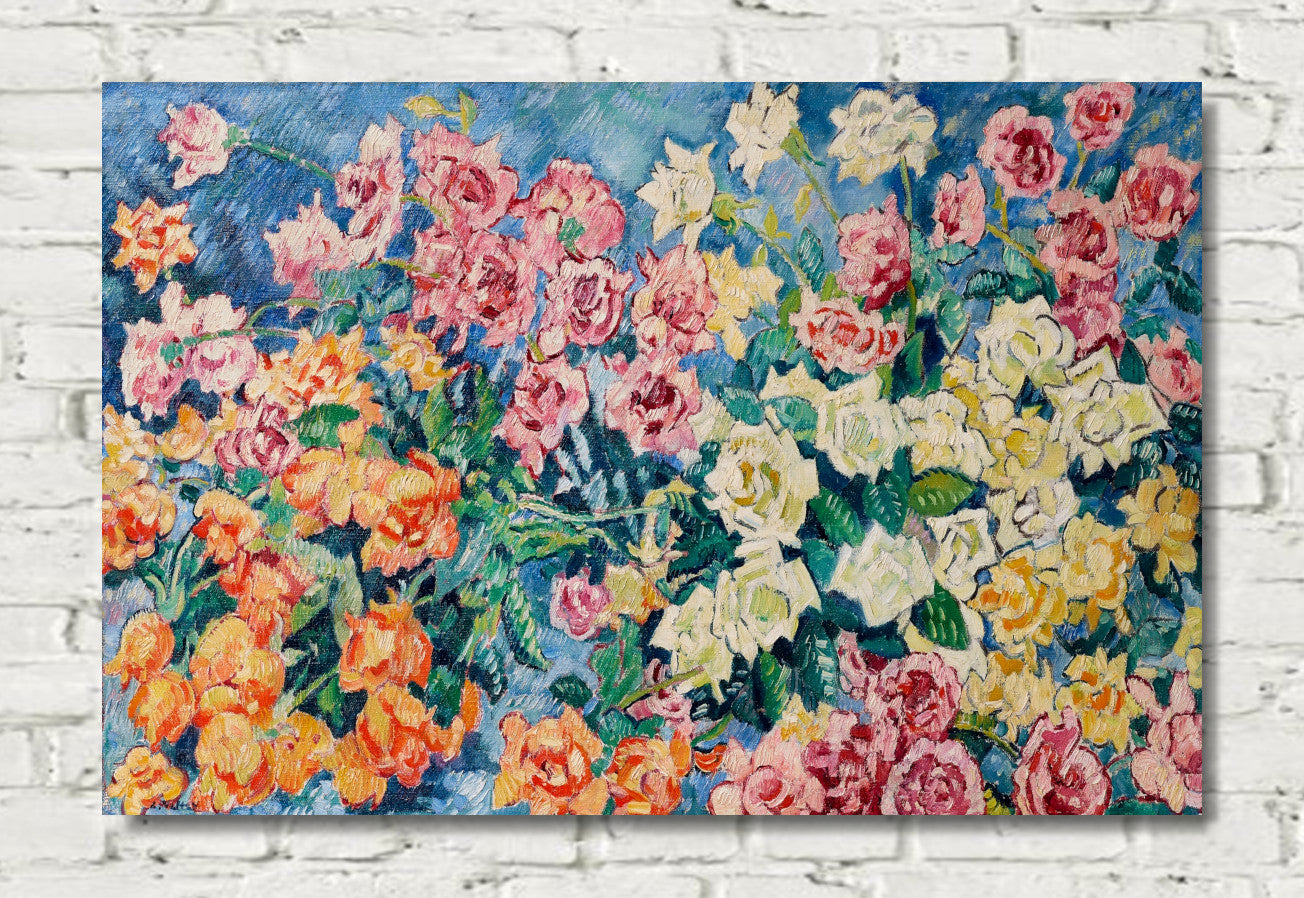
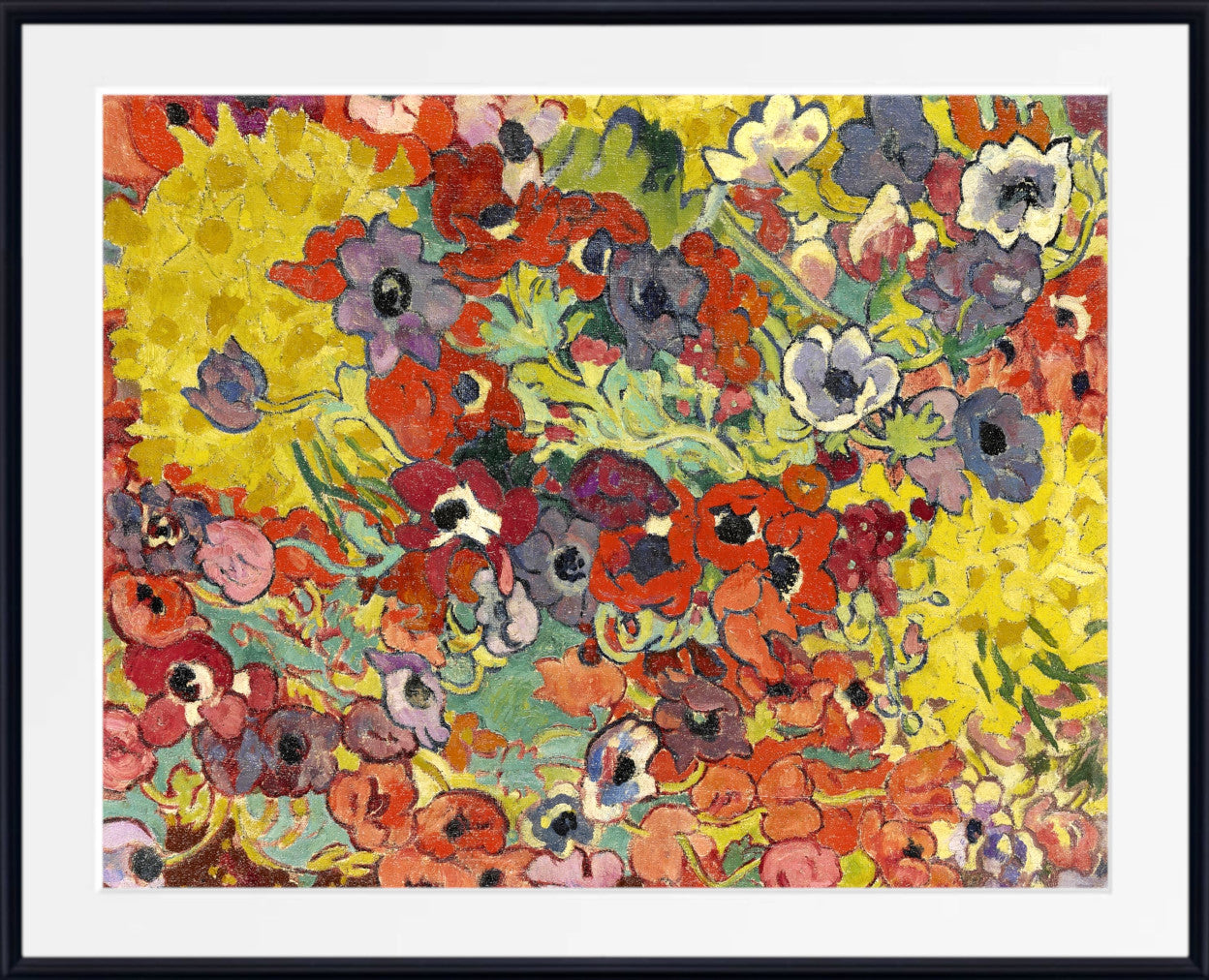
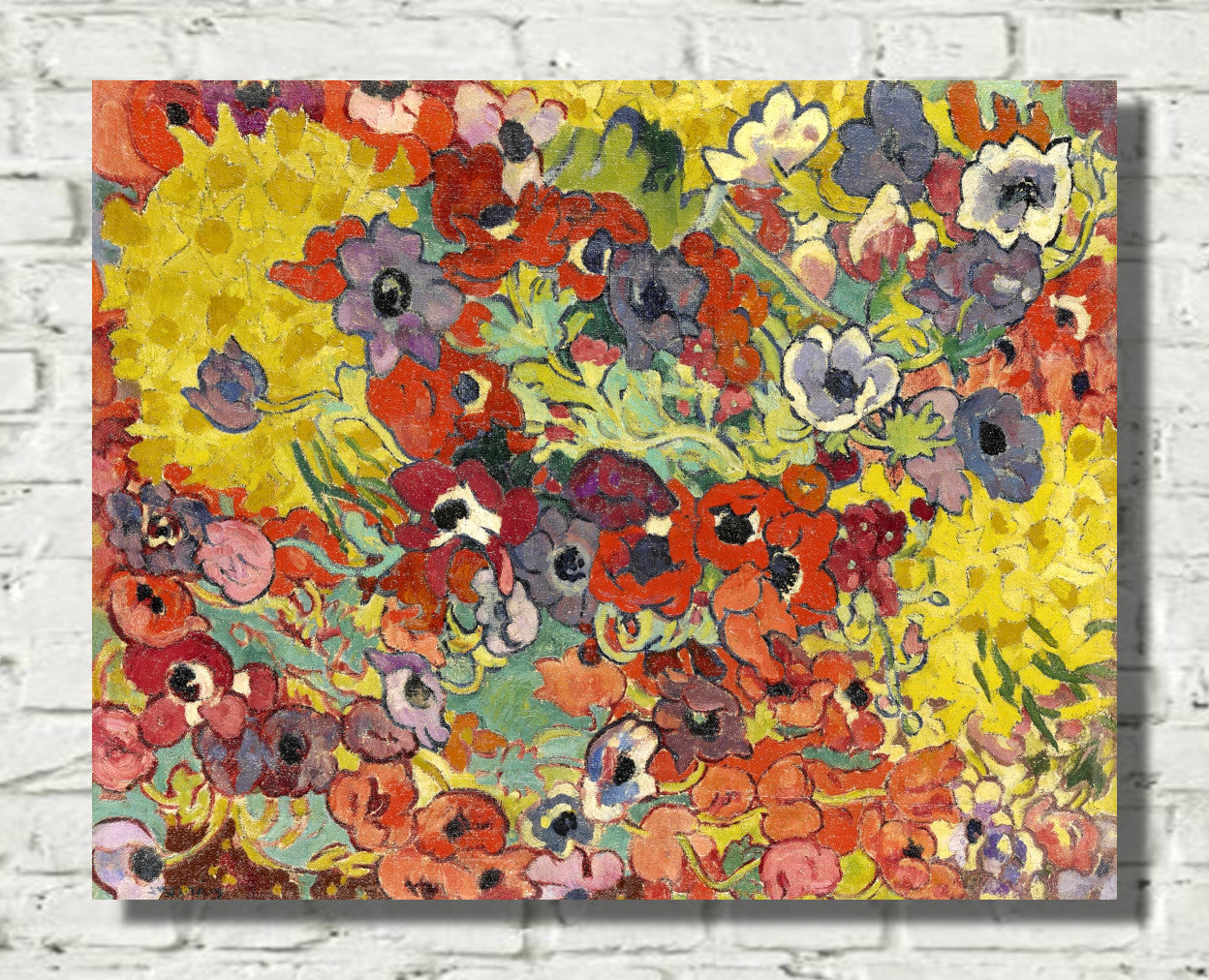
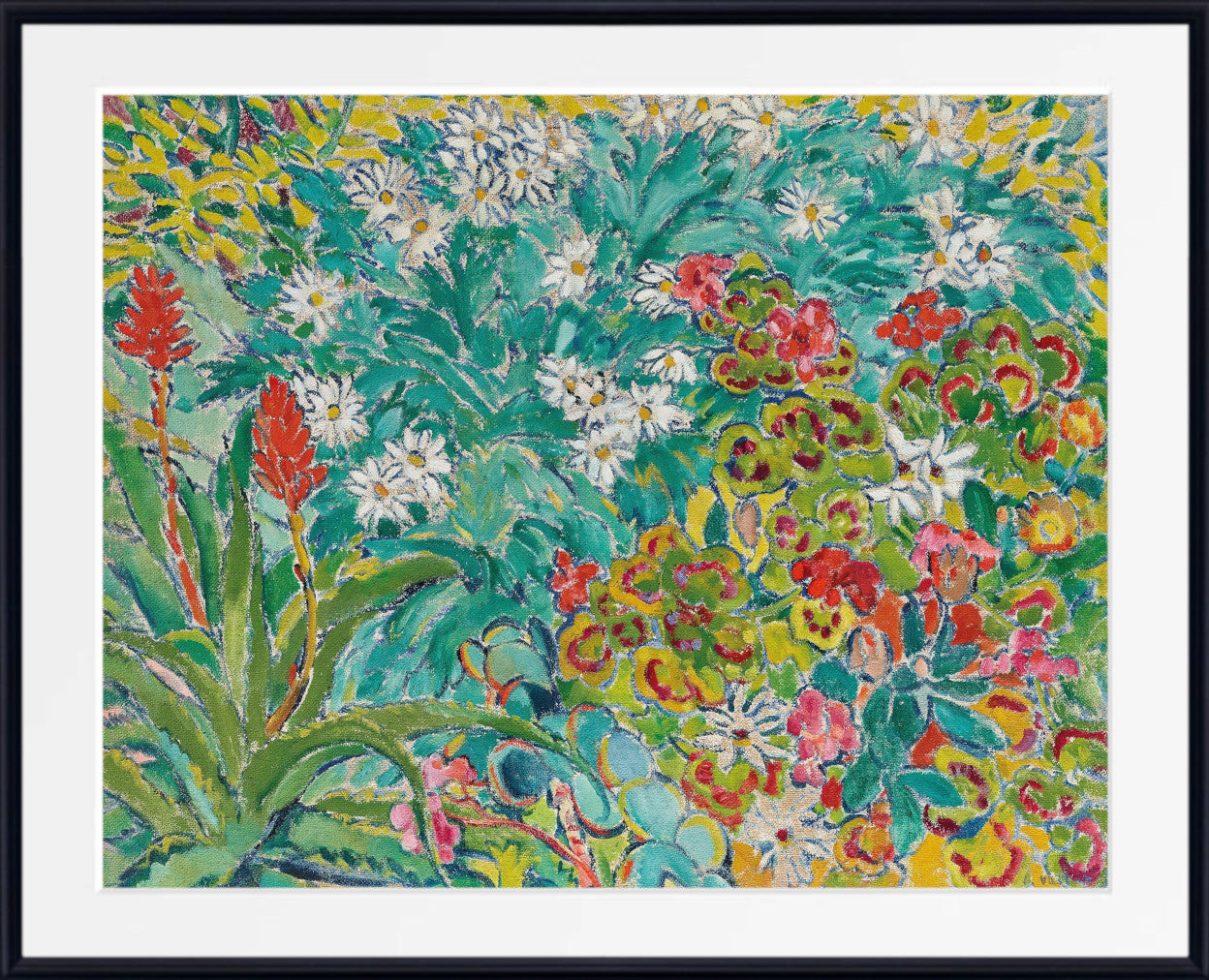
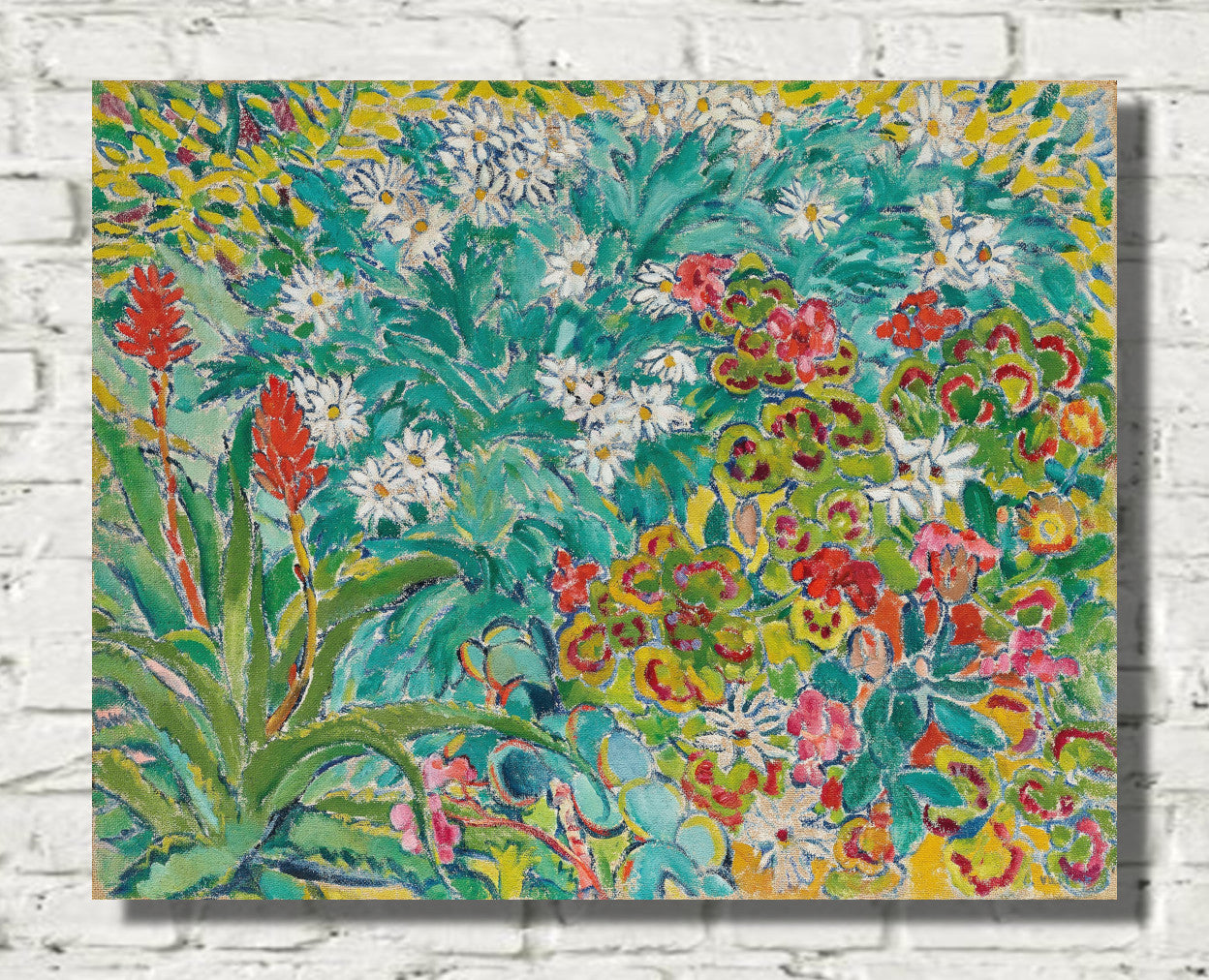
Flowerbed (Parterre de fleurs) (c.1906) by Louis Valtat is a luxuriant garden painting created at the height of the artist's early experiments with intense colour. Rather than isolating a formal bouquet in a vase, Valtat immerses the viewer in a profusion of flowering plants, transforming the garden into an energetic tapestry of reds, pinks, oranges, purples, greens and lighter floral accents.
This Louis Valtat Flowerbed print captures the distinctive position the artist occupied between Post-Impressionism and Fauvism. Painted around 1906, shortly after the historic Salon d'Automne associated with the public emergence of Fauvism, Parterre de fleurs combines recognisable garden forms with saturated colour, vigorous brushwork and increasingly decorative organisation. Available as a fine art print, framed print or canvas panel, it is an exceptional choice for admirers of Valtat, Fauvist garden paintings, colourful botanical art and early twentieth-century modernism.
Flowerbed – A Garden Transformed into Colour
In Parterre de fleurs, Valtat turns a familiar garden subject into an exuberant field of colour.
The viewer is confronted by flowering plants spreading across much of the composition rather than arranged into a neat, isolated group.
Individual blooms emerge from a dense network of stems, leaves and surrounding vegetation.
Red, pink, orange and purple flowers repeatedly punctuate the dominant greens.
The result is abundant without becoming visually chaotic.
Valtat organises the flowers through clusters of colour, varied brushstrokes and changes in scale rather than through rigid botanical outlines.
At first the eye registers the overall sensation of a garden in full bloom.
Only afterwards do individual flowers and plants begin to separate from the larger chromatic pattern.
The French Title Parterre de fleurs
The original French title, Parterre de fleurs, can be translated as Flowerbed or Flower Garden.
A parterre is a deliberately planted garden area, traditionally composed of beds containing flowers or ornamental vegetation.
Valtat's interpretation is very different from the carefully measured formal gardens associated with classical French landscape design.
His flowerbed feels abundant, irregular and alive.
Instead of emphasising geometric garden planning, he concentrates upon the visual experience of vegetation growing densely together.
The painting becomes less a record of horticultural design than an exploration of how colour can fill and organise a canvas.
A Painting Made at the Height of Fauvism
The approximate date of 1906 is especially significant.
Only the previous year, the 1905 Salon d'Automne had given rise to the term les fauves — “the wild beasts” — after critics encountered paintings characterised by startlingly intense colour.
Henri Matisse, André Derain, Maurice de Vlaminck, Henri Manguin and other associated painters became identified with the new movement.
Valtat exhibited within the same avant-garde environment.
Yet his relationship with Fauvism was unusual.
He had already been intensifying colour for years before 1905.
Flowerbed therefore does not show an artist suddenly adopting a fashionable new manner.
It represents the continuation of a chromatic development that had begun much earlier in his career.
Louis Valtat as a Precursor of Fauvism
Valtat is frequently described as a proto-Fauve or precursor of Fauvism.
The term helps distinguish his development from that of younger artists whose most radical experiments were concentrated around 1905 and 1906.
During the 1890s and early 1900s, Valtat had already begun using colours of unusual intensity.
His extended periods on the Mediterranean coast strengthened this tendency.
Bright sunlight, red rock, green vegetation and brilliant sea encouraged him to move increasingly beyond the subtler atmospheric palette of Impressionism.
By the time Fauvism received its name, Valtat had already established a highly personal form of expressive colour painting.
A Flower Garden Rather Than a Floral Still Life
Flowerbed differs fundamentally from Valtat's many paintings of cut flowers in pitchers and vases.
A still-life bouquet is controlled by the artist.
Flowers can be selected, rearranged and positioned against a chosen background.
A garden presents a much more complex visual problem.
Plants overlap naturally.
Stems disappear into foliage.
Flowers occur at different depths and heights.
Leaves and blossoms compete for attention.
Valtat embraces this complexity.
Rather than attempting to separate every botanical element, he translates the garden into masses and rhythms of colour.
The Garden as an All-Over Composition
One of the most striking characteristics of a densely planted flowerbed is the absence of a single obvious focal object.
The viewer's eye moves continuously.
A red flower attracts attention before another cluster of pink or purple redirects the gaze elsewhere.
Green passages connect these brighter accents.
Valtat uses this natural distribution to create an almost all-over composition.
No individual bloom needs to dominate.
The entire garden becomes the subject.
This approach anticipates an increasingly important principle of modern painting: every part of the canvas can carry visual significance rather than merely supporting one central object.
Red Flowers against Green Foliage
The relationship between red and green is particularly effective in garden painting.
These are complementary colours.
When placed beside one another, each can make the other appear more intense.
Valtat repeatedly exploited such relationships.
Red and orange flowers become vivid against surrounding leaves, while the greens seem richer because of the warmer accents scattered among them.
The effect is not simply decorative.
These contrasts help structure the entire composition.
A viewer can understand the distribution of flowers and vegetation through colour before consciously identifying every individual plant.
Pink, Purple and Orange across the Garden
Valtat avoids reducing the flowerbed to a simple red-and-green opposition.
Pink, violet, purple, orange and lighter floral tones provide additional chromatic variation.
This variety creates depth.
Some colours advance visually while others appear to recede.
Warm reds and oranges can seem to move towards the viewer.
Cooler purple and blue-inflected passages can appear farther away.
Valtat can therefore suggest spatial complexity through colour relationships without relying entirely upon conventional perspective.
Colour as the Structure of the Painting
This is one of the qualities that links Valtat most strongly with the development of Fauvism.
Colour is not something applied after the composition has been constructed.
Colour constructs the composition.
A dark green passage establishes weight.
A cluster of red flowers redirects the eye.
A pale area creates breathing space between denser regions.
Orange or yellow can introduce warmth and luminosity.
The painting is therefore organised chromatically as much as through drawing.
Valtat had learned that colour could perform structural work traditionally assigned to modelling and perspective.
Visible and Energetic Brushwork
The vitality of Flowerbed also depends upon Valtat's handling of paint.
He does not conceal his brushstrokes beneath a polished academic finish.
Individual marks remain visible.
Some are relatively short and compact, suggesting petals or leaves.
Others are broader and establish larger areas of vegetation.
Changing directions create movement throughout the surface.
This technique is particularly effective for a garden subject because vegetation naturally grows in many directions.
The marks can therefore operate simultaneously as descriptions of plants and as independent movements of the brush.
Painting the Sensation of a Garden
Valtat is more interested in the sensation of abundant growth than in botanical classification.
A visitor standing before a densely flowering garden rarely inspects every leaf independently.
Instead, the first impression is often one of colour, sunlight, density and movement.
Parterre de fleurs recreates that experience.
The eye receives the whole before analysing the parts.
This emphasis upon immediate visual sensation retains something of Impressionism while moving towards the much stronger colour of early twentieth-century modernism.
From Impressionism towards Fauvism
Valtat's development was rooted partly in the achievements of Impressionism.
Like the Impressionists, he valued contemporary subjects, outdoor painting, visible brushwork and the changing effects of light.
Yet his approach gradually became less concerned with recording fleeting atmospheric conditions.
Colour grew more independent.
Instead of asking exactly how sunlight altered the appearance of a particular green, he could intensify that green because of its relationship with a neighbouring red.
This change marks an important transition.
The visible world remained the starting point, but the internal requirements of the painting became increasingly important.
The Influence of Neo-Impressionism
Neo-Impressionism also contributed to Valtat's understanding of colour.
He knew artists including Paul Signac and Henri-Edmond Cross.
Neo-Impressionist painters had explored how colours could become more luminous when placed separately beside one another rather than mixed extensively on the palette.
Valtat never adopted a rigid Pointillist system.
His marks are much freer and more varied.
Nevertheless, the idea that neighbouring colours affect one another remained highly significant.
A garden full of contrasting blossoms provided an ideal subject in which to exploit this principle.
Valtat and Paul Signac
Paul Signac was one of the most important painters of brilliant Mediterranean colour around the turn of the twentieth century.
Valtat knew him personally and moved within the same artistic environment.
Signac demonstrated how reds, greens, blues, yellows and violets could remain remarkably pure while still combining optically into a coherent image.
Valtat's approach was less systematic.
His brushstrokes respond more freely to the physical character of his subject.
In a painting such as Flowerbed, that freedom becomes an advantage.
The irregular structure of plants can be represented through equally varied marks.
Valtat and Henri-Edmond Cross
Henri-Edmond Cross was another important figure in the transition from Neo-Impressionism towards the freer colour of Fauvism.
Cross's Mediterranean landscapes increasingly replaced small Divisionist dots with broader mosaic-like areas of colour.
This development helped demonstrate how strong chromatic relationships could be retained while brushwork became more expressive.
Valtat followed an independent but related path.
He maintained recognisable natural structure while allowing paint and colour greater autonomy.
The garden subject of Parterre de fleurs is particularly suited to that balance.
Mediterranean Light and Valtat's Palette
Although Flowerbed is a garden painting rather than a Mediterranean seascape, Valtat's experience in southern France remains fundamental to its colour.
From the 1890s onwards he spent extensive periods along the Mediterranean coast.
Agay, Anthéor and surrounding areas exposed him to exceptionally strong sunlight and vivid natural colour.
Green vegetation could appear almost incandescent against red earth and rock.
Flowers became exceptionally brilliant.
The sea offered intense blues and turquoise.
These experiences transformed his palette permanently.
When Valtat subsequently painted gardens, portraits or still lifes, he retained the chromatic confidence he had developed in the south.
Valtat and Auguste Renoir
Valtat also maintained a close relationship with Pierre-Auguste Renoir.
He visited the older Impressionist painter in southern France and even collaborated with him on sculptural work associated with Paul Cézanne.
Renoir's rich paint surfaces and lifelong interest in sensual colour offered an important counterpoint to the more theoretical colour experiments of Neo-Impressionism.
Valtat absorbed lessons from both worlds.
His painting could be chromatically sophisticated without becoming mechanically systematic.
That combination is particularly apparent in his flower paintings, where physical abundance and colour structure are inseparable.
Ambroise Vollard and Valtat's Early Success
The influential dealer Ambroise Vollard began representing Valtat in 1904.
This occurred before Fauvism had received its famous name.
Vollard was one of the most important dealers in the history of modern French art and worked with figures including Paul Cézanne, Paul Gauguin, Pablo Picasso and leading members of the emerging avant-garde.
For several years, he purchased Valtat's production and helped circulate the artist's paintings among collectors.
This support demonstrates that Valtat's chromatic experiments were already receiving serious attention during the exact period in which Flowerbed was created.
The Garden in Modern French Painting
Gardens had played an important role in French painting long before Valtat.
Claude Monet transformed his garden at Giverny into one of the defining subjects of Impressionism.
Pierre Bonnard and Édouard Vuillard frequently incorporated gardens and domestic outdoor spaces into their paintings.
For early twentieth-century artists, however, the garden offered possibilities that extended beyond atmospheric observation.
Flowers and foliage could generate dense decorative pattern.
Repeated colours could create rhythms across the entire picture surface.
Perspective could become less important as vegetation filled the viewer's field of vision.
Valtat's Flowerbed participates directly in this modern transformation of the garden subject.
Nature Becoming Decorative Pattern
The word “decorative” is particularly useful when considering a dense flowerbed.
At close range, overlapping leaves and blossoms can flatten into pattern.
Depth remains present, but individual forms interlock across the canvas.
Valtat exploits this naturally decorative quality without turning the scene into complete abstraction.
Flowers are still flowers.
Leaves remain recognisable.
The viewer can still understand a garden space.
Yet the visual organisation increasingly depends upon repeated patches of colour rather than strict illusionistic recession.
This balance between nature and pattern is one of the most attractive characteristics of Valtat's mature early style.
How Valtat Differs from Henri Matisse
Comparing Valtat with Henri Matisse helps clarify his distinctive position.
Matisse increasingly pushed colour and pattern towards radical pictorial flatness.
In works such as Harmony in Red, table and wall can almost merge into a single decorative field.
Valtat rarely goes quite so far.
His garden still possesses believable spatial depth.
Plants occupy different positions and the natural environment retains physical substance.
Nevertheless, the intensity of colour and increasing decorative organisation clearly connect his work with the broader liberation of colour associated with Fauvism.
How Valtat Differs from André Derain
André Derain could transform landscapes into spectacular confrontations of complementary colour.
During the Fauvist years, mountains might become orange, shadows violet and water an intense field of blue or green.
Valtat generally remained somewhat closer to observed nature.
His colours are heightened rather than completely detached from the subject.
This makes Flowerbed especially accessible.
The garden is recognisable immediately, but the viewer also experiences the freedom of early modern colour.
The Importance of Flowers in Valtat's Career
Flowers remained one of Valtat's favourite subjects throughout his long career.
He painted cut bouquets, individual species, flowering gardens and arrangements combining flowers with fruit and decorative vessels.
The attraction is easy to understand.
Flowers provided natural justification for brilliant colour.
Their changing forms encouraged flexible brushwork.
They could be observed closely without demanding the exact likeness required in portraiture.
A floral subject therefore provided an ideal meeting point between nature and artistic invention.
Parterre de fleurs expands this interest beyond the vase and into the full garden environment.
A Large and Immersive Composition
The original measures approximately 73.3 × 92.1 cm.
This substantial horizontal format gives the flowerbed considerable presence.
It is not a small decorative floral study.
The viewer encounters a broad expanse of garden.
The dimensions allow Valtat to distribute multiple areas of colour across the surface while retaining enough scale for individual passages of brushwork to remain prominent.
The horizontal orientation also reinforces the sense of a garden spreading laterally beyond the edges of the canvas.
Why Flowerbed Matters
Parterre de fleurs brings together many of the qualities that make Valtat important within the development of modern colour painting:
- executed circa 1906 at the height of the Fauvist period
- a dense garden subject filled with natural colour
- strong reds, pinks, oranges and purples against abundant green
- visible, energetic brushwork
- forms simplified without losing their natural identity
- complementary colours used to create intensity
- garden space increasingly transformed into decorative pattern
- colour functioning as a structural element of the composition
- a balance between Post-Impressionist observation and Fauvist freedom
- a substantial horizontal format creating an immersive garden scene
The painting consequently offers an excellent demonstration of why Valtat cannot be understood simply as a peripheral member of Fauvism.
His colour language had its own history and retained its own distinctive balance between observation and expression.
Louis Valtat's Painting Style
Louis Valtat developed a highly individual approach from several strands of late nineteenth-century French painting.
His early work incorporated elements of Impressionism and Pointillism.
Contact with Neo-Impressionist artists strengthened his understanding of complementary colour.
Periods spent along the Mediterranean encouraged an increasingly saturated palette.
By the opening years of the twentieth century, Valtat was using colour with an intensity that anticipated Fauvism.
He nevertheless retained greater attachment to natural structure than some of the movement's most radical painters.
His landscapes remain landscapes, his figures retain physical weight and his flowers remain recognisable.
The modernity lies in the way colour, brushwork and simplification reorganise those familiar subjects.
About Louis Valtat
Louis Valtat (1869–1952) was a French painter and printmaker whose vivid use of colour made him an important connecting figure between Impressionism, Post-Impressionism and Fauvism.
Born in Dieppe, Valtat studied in Paris and established his own studio during the early 1890s.
His early paintings combined Impressionist handling with aspects of Pointillism and increasingly strong colour.
Health concerns encouraged extended periods in southern France, where the Mediterranean environment had a profound effect on his palette.
Valtat knew important artists including Pierre Bonnard, Édouard Vuillard, Paul Signac, Henri-Edmond Cross and Pierre-Auguste Renoir.
He was represented for several years by Ambroise Vollard and exhibited alongside artists associated with Fauvism.
Unlike painters whose Fauvist period was comparatively brief, Valtat maintained a consistent interest in rich colour throughout a long career.
His subjects included Mediterranean landscapes, gardens, flowers, still lifes, portraits, interiors and scenes of contemporary life.
He continued painting until failing eyesight forced him to stop during the late 1940s and died in Paris in 1952.
The Original Flowerbed
The original Parterre de fleurs, translated as Flowerbed, was executed by Louis Valtat circa 1906.
It was painted in oil on canvas.
Sotheby's records the dimensions as approximately 73.3 × 92.1 cm, equivalent to 28⅞ × 36¼ inches.
The painting is signed L. Valtat at the upper right.
The work is recorded in the archives of L'Association Les Amis de Louis Valtat, the organisation responsible for continuing scholarly documentation of the artist's oeuvre.
The painting appeared as lot 472 in Sotheby's Impressionist & Modern Art Day Sale in New York on 13 November 2018.
At that sale it realised approximately $237,500.
The same work subsequently returned to Sotheby's as lot 228 in the Modern Day Auction in May 2024, where it was presented as the property of a gentleman.
The available documentation therefore places the original in private ownership rather than in a permanent public museum collection.
A Louis Valtat Flowerbed Print for Your Interior
A Louis Valtat Flowerbed print is particularly effective for interiors that benefit from strong natural colour without the formality of a traditional botanical illustration.
The painting's broad mixture of greens, reds, pinks, oranges and purples means it can interact with a wide range of furnishings.
Against white, cream, putty or pale grey walls, the garden becomes a vivid focal point.
Natural timber furniture reinforces the connection with landscape and vegetation.
Sage, olive, terracotta, plum, rust and muted blue furnishings can echo individual colours from the composition without requiring an exact match.
The broad horizontal format makes the painting especially suitable for placement above sofas, beds, sideboards and long console tables.
Its abundant floral subject makes it equally appropriate for living rooms, dining rooms, bedrooms, hallways, garden rooms and home offices.
The combination of recognisable nature and expressive colour works particularly well in contemporary, Scandinavian-inspired, mid-century and eclectic interiors.
For admirers of Fauvism, however, Parterre de fleurs offers considerably more than decorative floral appeal. Painted around 1906, it captures Valtat at the moment when his long-running experiments with colour intersected directly with one of the great revolutions of modern European painting.
Frequently Asked Questions
When did Louis Valtat paint Flowerbed?
Sotheby's dates this Parterre de fleurs to circa 1906.
What is the French title of Flowerbed?
The French title is Parterre de fleurs.
What does Parterre de fleurs mean?
Parterre de fleurs translates as Flowerbed or Flower Garden and refers to an area planted with ornamental flowers.
What does Flowerbed depict?
The painting depicts a densely planted garden filled with flowering plants and surrounding vegetation, organised through vivid colour and vigorous brushwork.
Is Flowerbed a Fauvist painting?
The work was painted around 1906, during the historical Fauvist period, and displays the strong colour and expressive handling associated with Valtat's relationship to Fauvism. Valtat is often described more precisely as a precursor or proto-Fauve because his experiments with saturated colour had begun well before 1905.
Why is Louis Valtat considered a precursor to Fauvism?
Valtat was already intensifying colour during the 1890s and early 1900s. His Mediterranean paintings anticipated several of the chromatic qualities that later became associated with Matisse, Derain and the Fauves.
Why did Valtat paint flowers so frequently?
Flowers gave Valtat exceptional opportunities to explore strong colour, natural rhythm and expressive brushwork. Their varied shapes and hues allowed him to move between direct observation and increasingly decorative composition.
How is a flowerbed different from Valtat's floral still lifes?
A bouquet can be deliberately arranged by the artist, while a garden contains much more complex overlapping vegetation. In Flowerbed, Valtat embraces that complexity and turns the entire garden into an interconnected field of colour.
What medium did Valtat use?
The original Parterre de fleurs was painted in oil on canvas.
What size is the original Flowerbed?
Sotheby's records the original as approximately 73.3 × 92.1 cm.
Is the original Flowerbed signed?
Yes. The painting is signed L. Valtat at the upper right.
Is Flowerbed recorded in the Valtat archives?
Yes. Sotheby's states that the painting is recorded in the archives of L'Association Les Amis de Louis Valtat.
Has Flowerbed been sold at Sotheby's?
Yes. The painting appeared at Sotheby's in New York in November 2018, where it realised approximately $237,500. It was subsequently offered by Sotheby's again in May 2024.
Where is the original Flowerbed by Louis Valtat?
The accessible auction documentation indicates that the painting remains in private ownership rather than belonging to a permanent public museum collection.
How does Valtat's Flowerbed relate to Fauvist colour?
The painting uses strong reds, greens, pinks, oranges and purples as active structural elements. Rather than simply reproducing botanical colour, Valtat uses contrasts between hues to organise the entire garden.
How does Valtat differ from Henri Matisse?
Valtat shared Matisse's interest in powerful colour but generally retained a stronger connection with recognisable natural structure and conventional spatial depth. His paintings therefore occupy an important position between Post-Impressionist observation and more radical Fauvist experimentation.
Did Valtat know Paul Signac?
Yes. Valtat knew Paul Signac and worked within an artistic environment strongly influenced by Neo-Impressionist theories of complementary colour, although Valtat never adopted a rigid Pointillist technique.
Did Louis Valtat know Renoir?
Yes. Valtat maintained a friendship with Pierre-Auguste Renoir, visited him in southern France and collaborated with him on sculptural work connected with Paul Cézanne.
Is Flowerbed available as a framed Louis Valtat print?
Yes. GalleryThane offers Flowerbed (Parterre de fleurs) in a choice of sizes and formats, including fine art paper prints, framed prints and canvas options.
Where would a Louis Valtat Flowerbed print work well?
Its broad horizontal format and vibrant garden palette make it particularly suitable for living rooms, dining rooms, bedrooms, hallways, garden rooms and home offices. It works especially well in contemporary, Scandinavian-inspired, mid-century and eclectic interiors.
All orders for unframed fine art prints and original paintings are dispatched within 2 working days of receipt of payment.
Orders for custom framed prints are dispatched within 4 working days.
All orders are fully tracked from dispatch to delivery at your home or business.
All print and original painting orders are fully insured against loss or damage in transit. We refund or replace any damaged or lost orders.
Buy with confidence - read what our satisfied customers have to say - Reviews
Fine art papers are printed without any additional white border Please let us know at the time of ordering if you would like a small additional white border.
Rolled canvas options have an additional white border of approximately 2.5 inches (7cm) on all 4 sides to aid stretching.
Ready to hang canvas panels are stretched on 1.5 inch deep solid pine frames from sustainable forestry sources. The image is mirrored on all 4 sides to give an aesthetically pleasing finish.
Why not have us gift wrap your order and attach a personalised message to the recipient. Available for all orders. Each order is hand wrapped in high quality gift wrap with meatllic ribbon and bow. Your personalised message is printed on a card which is included with your order.
Have your hand wrapped gift delivered directly to the recipient.
Full tracking and insurance included with every order.
Please note design may vary depending upon availability
Just purchase the gift wrap option HERE
We have a wide range of frames in standard sizes and we also make custom size frames.
To order a framed print:
1. select the print size you would like along with the print materials (matte paper, fine art paper).
2. Add your print choice to the basket.
3. Choose from our range of frames
4. Select the same size as the print you have added to your basket. If the frame size you want is not listed please contact us
5. Choose from the mount or no-mount option
6. Add your frame choice to the basket
7. Proceed to checkout.
Why Choose GalleryThane?
- Printed and framed in-house
- Free UK delivery
- Free EU and USA delivery on orders over £200
- Tracking and insurance included in every order
- Fast 1-3 day dispatch
- Gift wrapping service available
- Gallery quality materials
- Sustainable, eco-friendly packaging
- Great customer support
Explore related collections
What makes our Prints and Canvas Panels so special

Latest Giclee Printing Technology
We have invested in the latest wide format print technology to produce museum quality giclee prints utilising the highest quality pigment inks to give outstanding colour reproduction.

Museum Quality Archival Fine Art Papers
We print on the finest quality fine art papers with textured, smooth and lustre finishes for prints which last a lifetime.
From aceo miniatures to 40x80 inch large format, every print has our lifetime quality guaranteee.

Solid Wood Frames, Cotton Canvas
All of the wood for our canvas panels and frames is responsibly sourced from manages forests. Our cotton canvas is completely seedless for the highest quality reproduction possible.

Have Your Gift Wrapped


Choose a Custom Frame
Popular Collections


EU Representative
Manufacturer
LucasAbstract t/a GalleryThane
15 Campion Way, Bingham NG13 8TR UK
sales@gallerythane.com
EU Authorised Representative
Westwood Sourcing
Fellenoordstraat 52, Unit 2.38
4811 TJ Breda, Netherlands
info@westwoodsourcing.com