


Flowerbed (1906) by Louis Valtat
Couldn't load pickup availability
BUY WITH CONFIDENCE
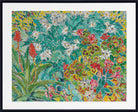
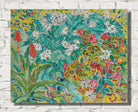
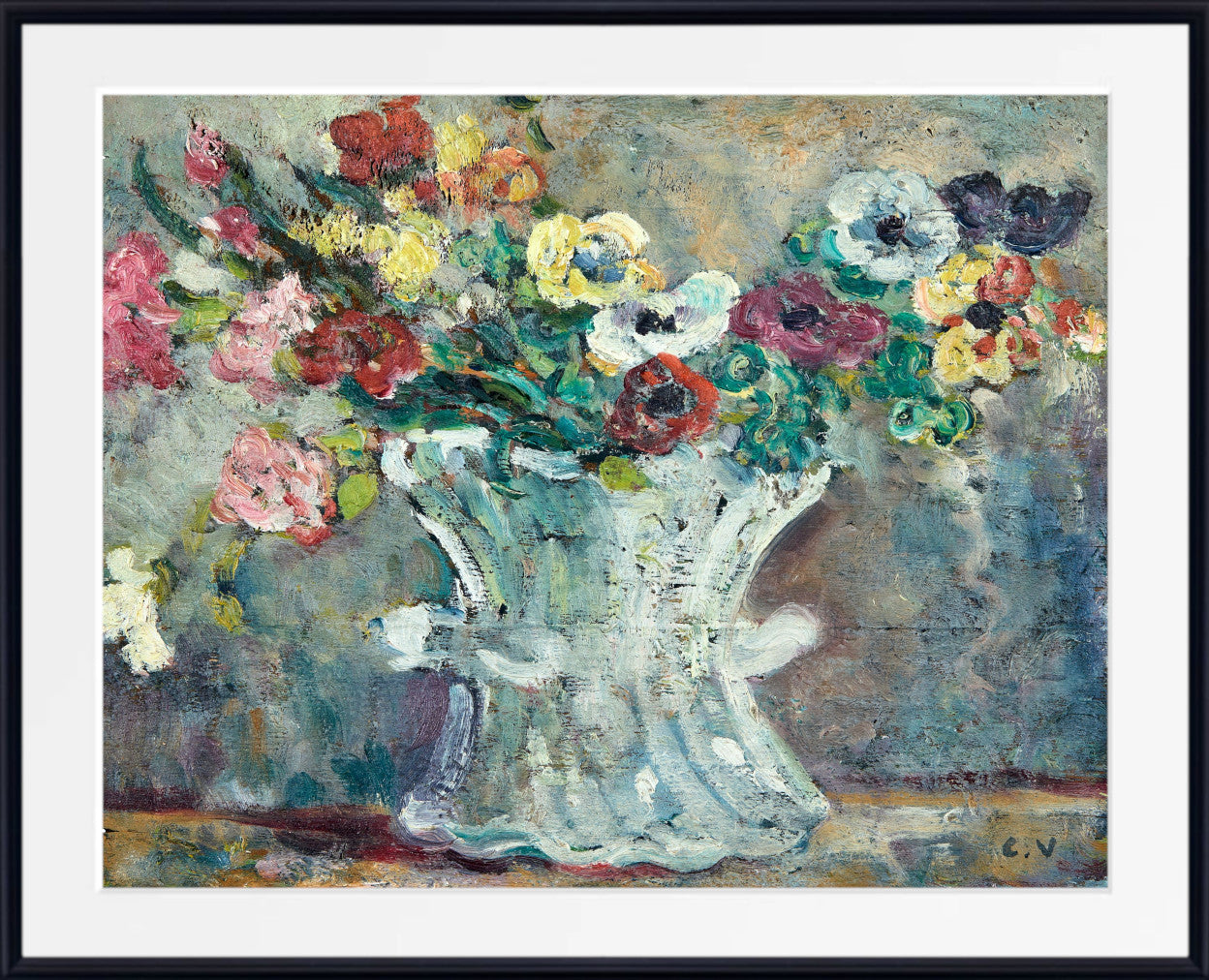
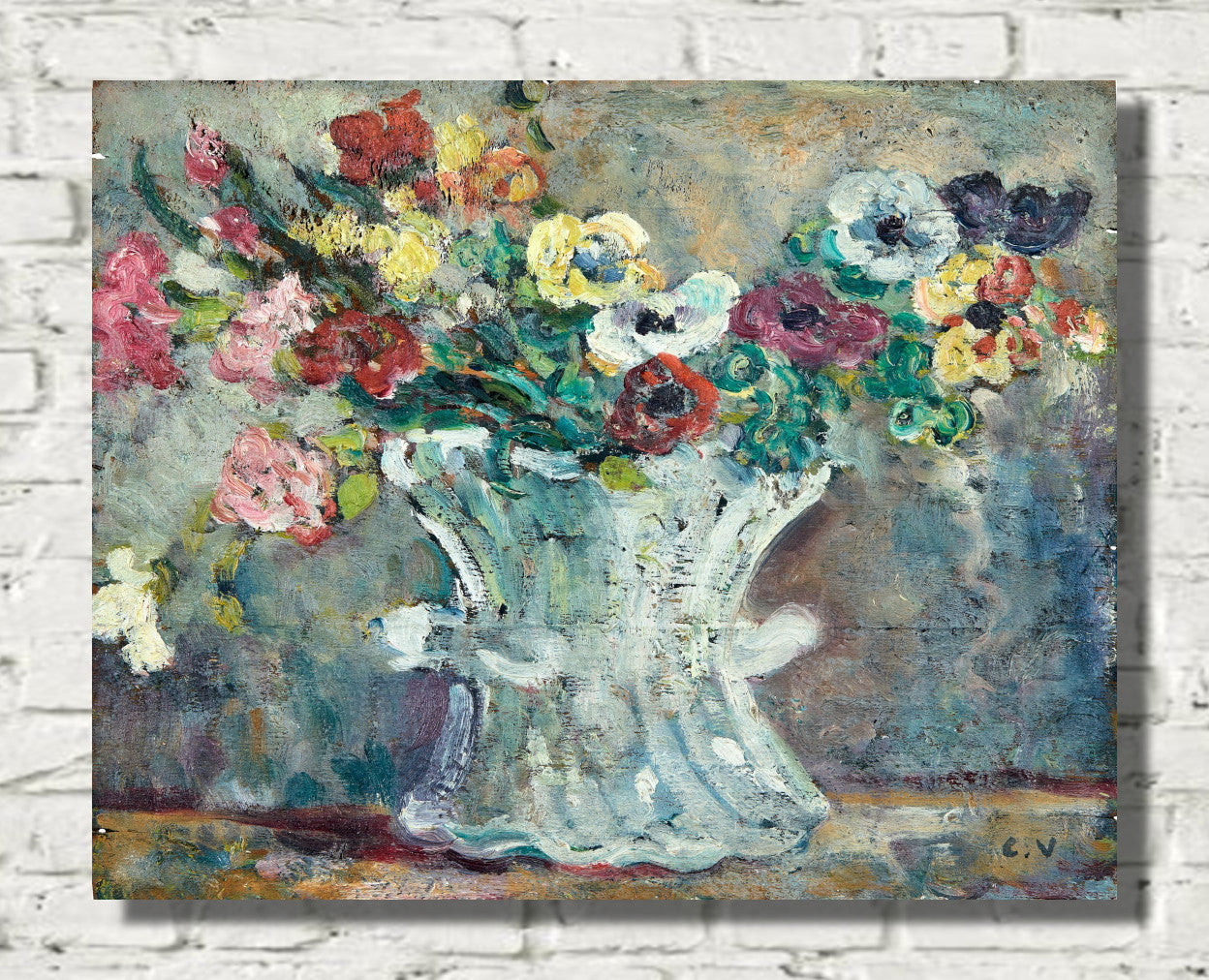
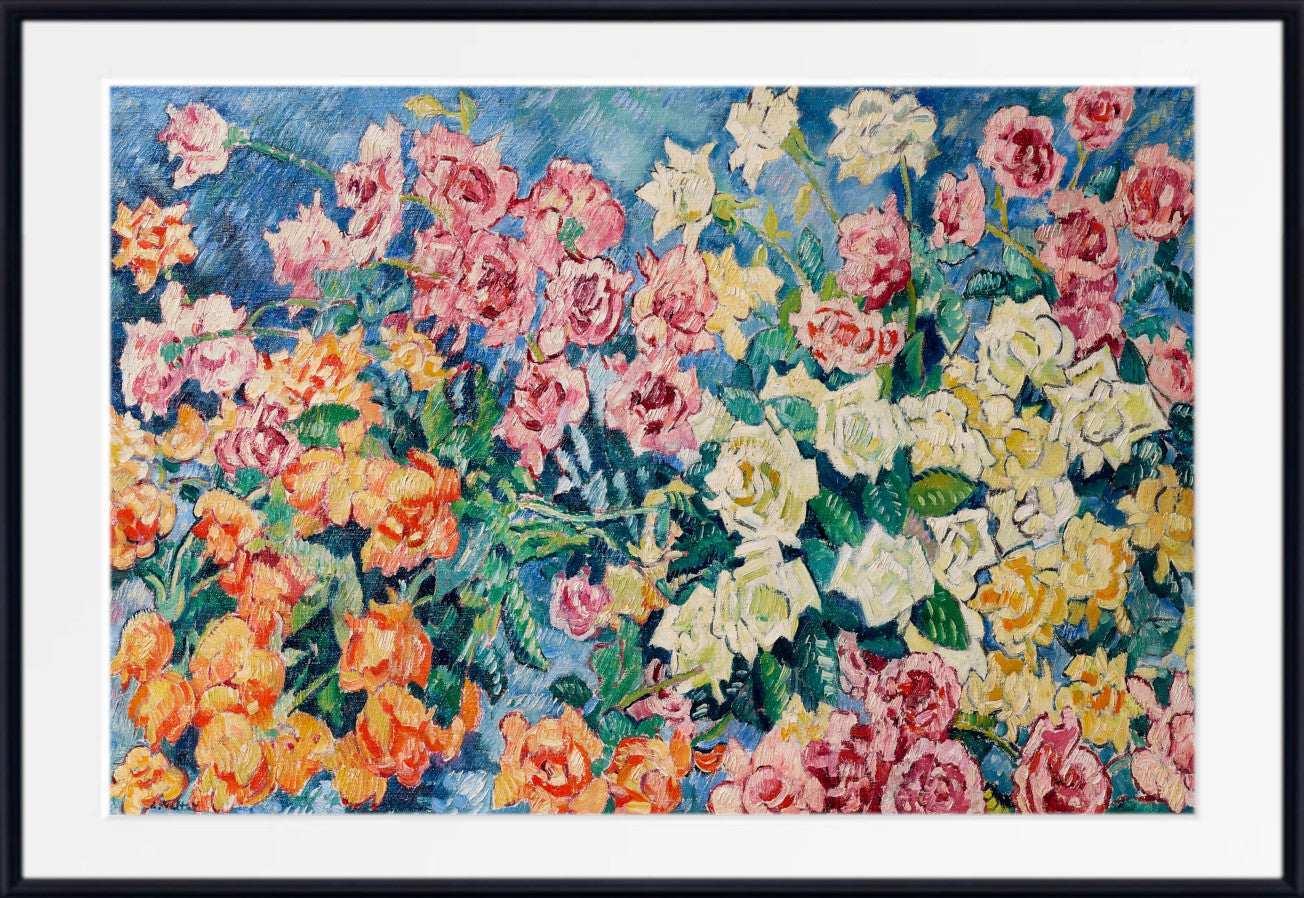
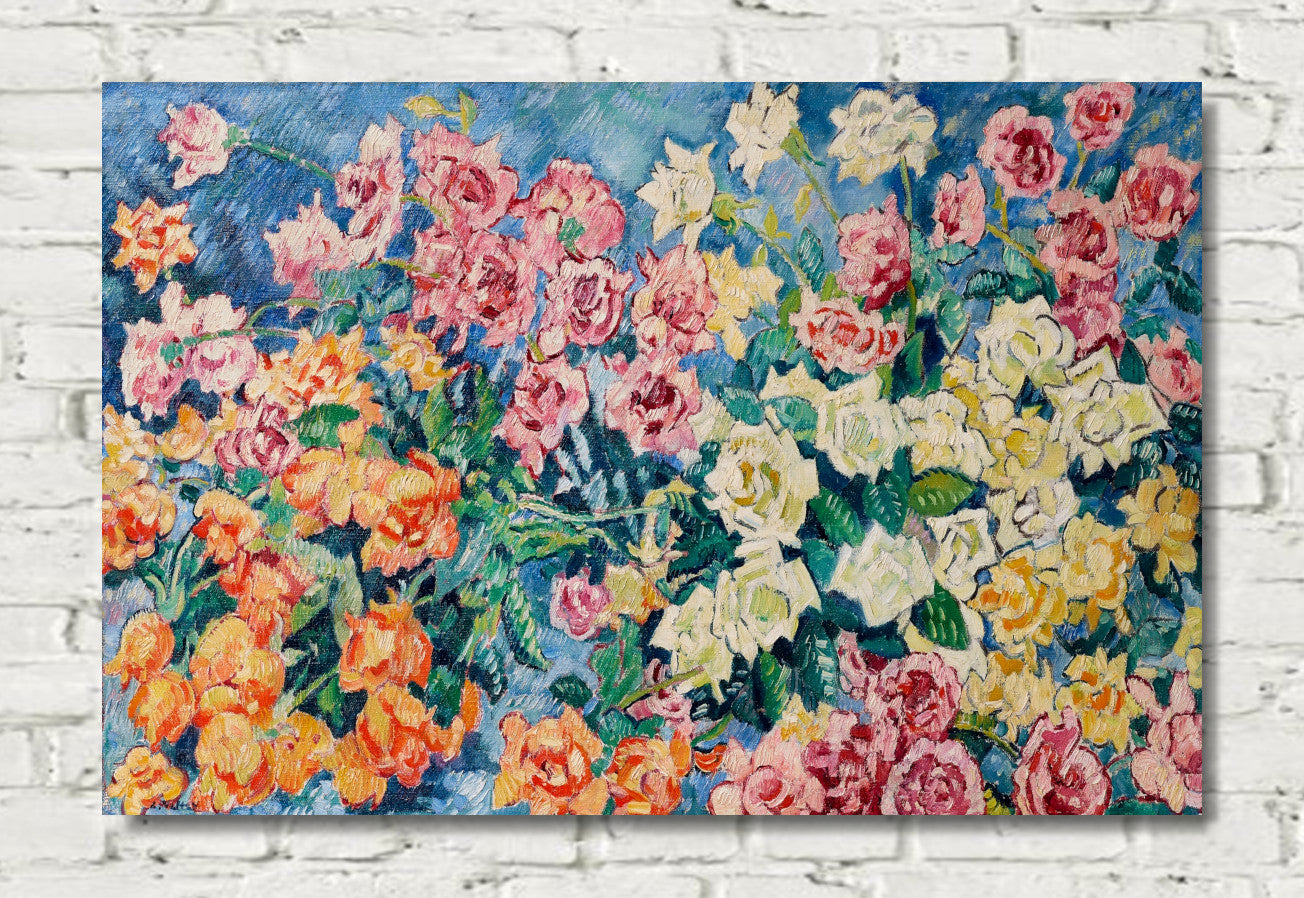
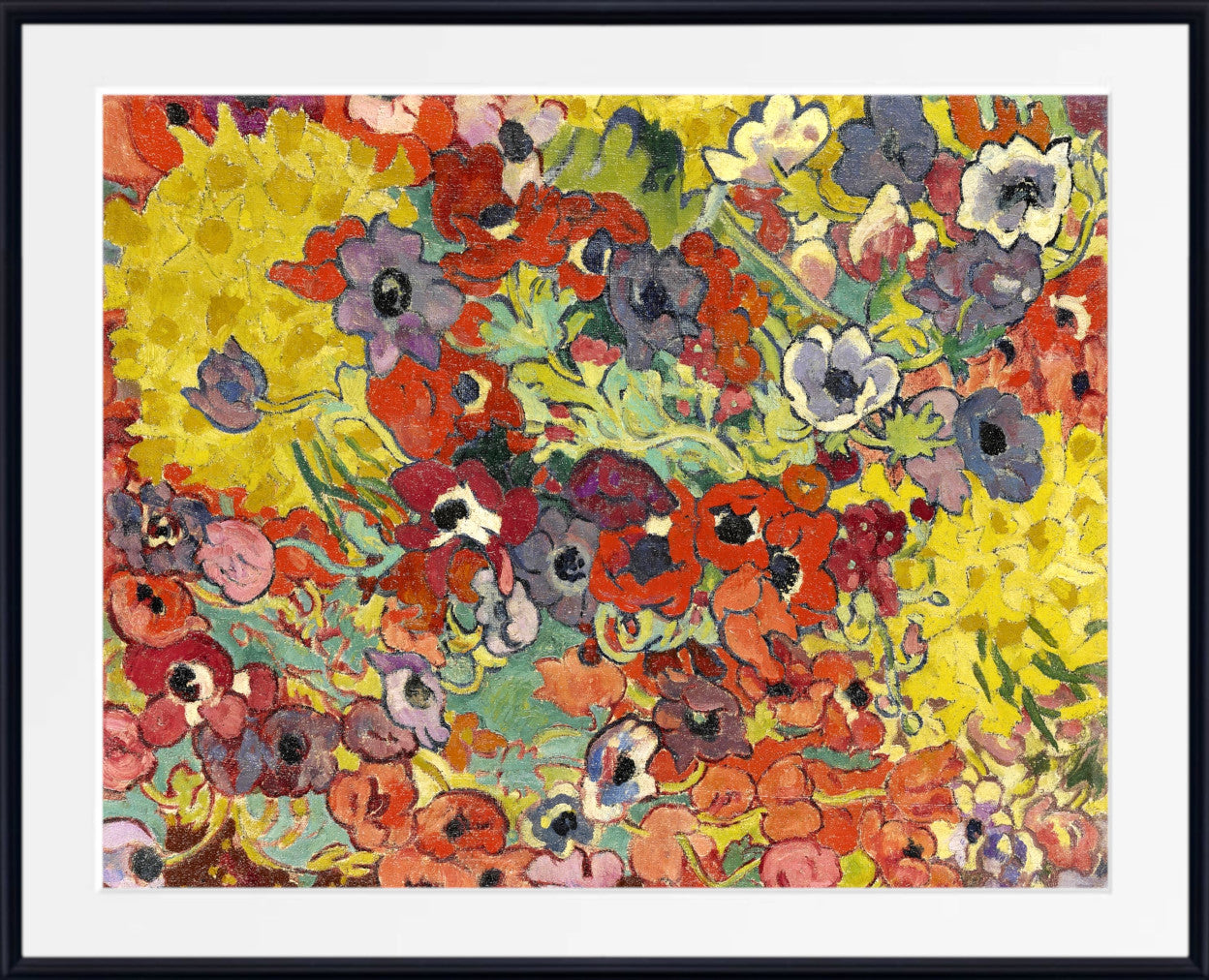
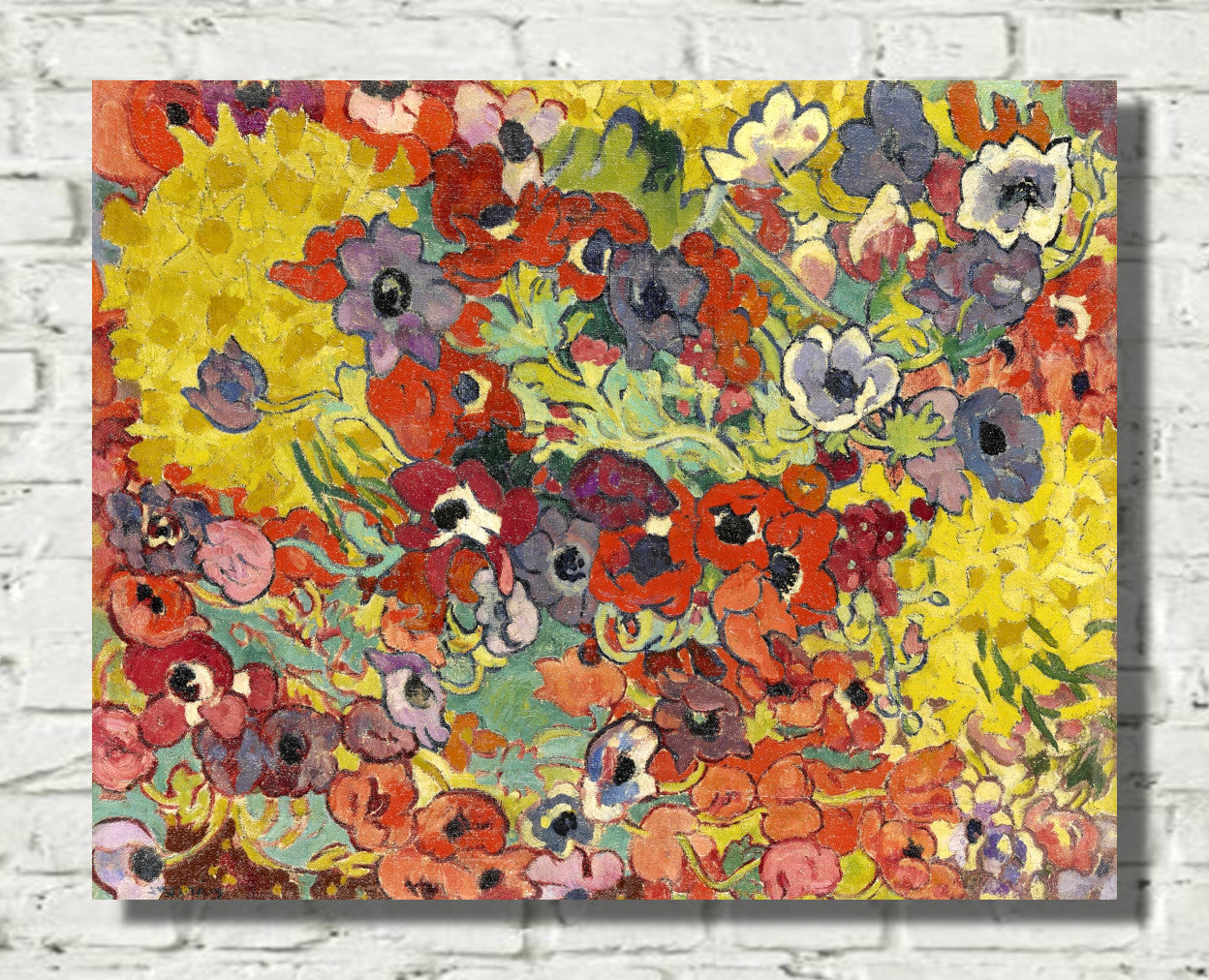
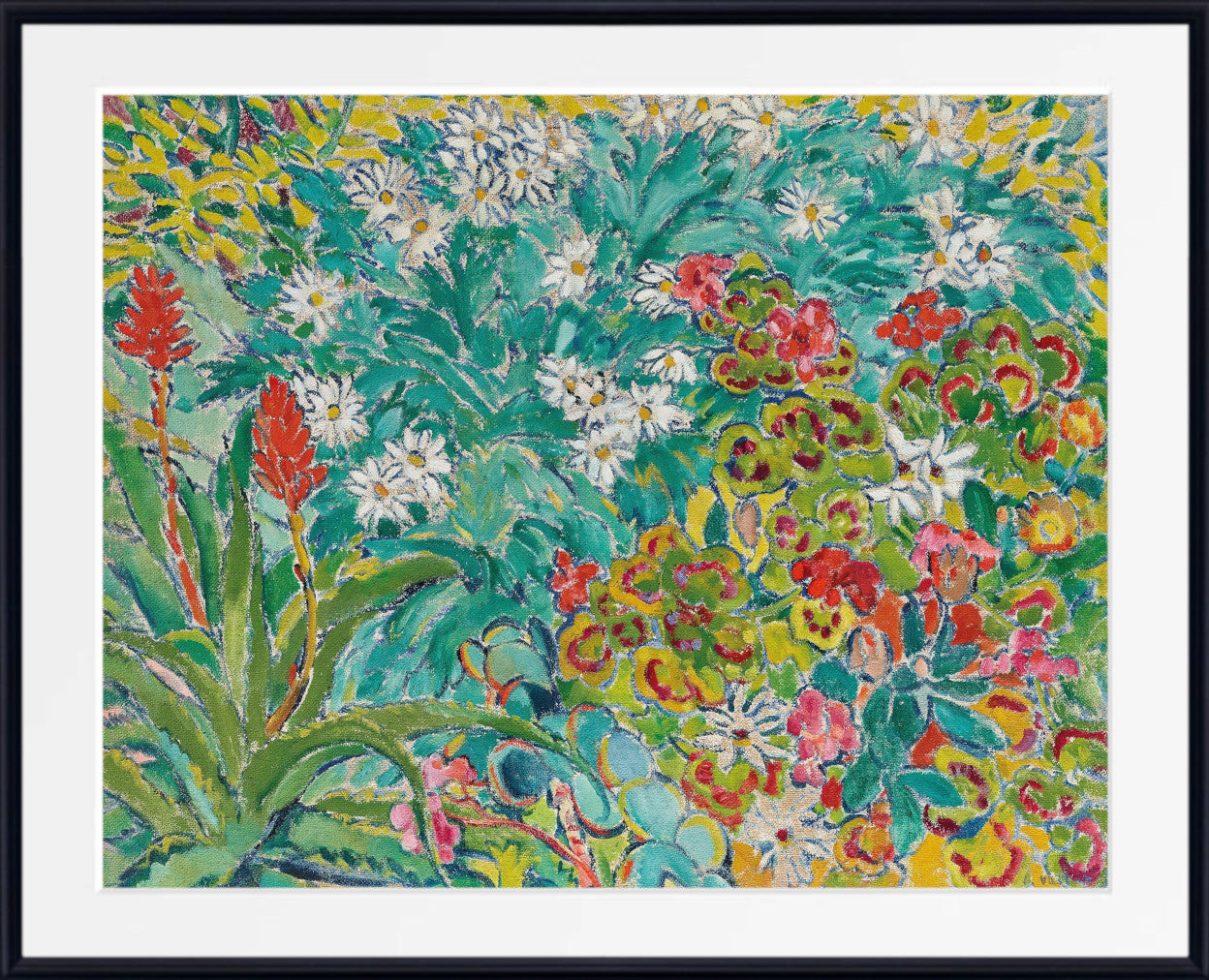
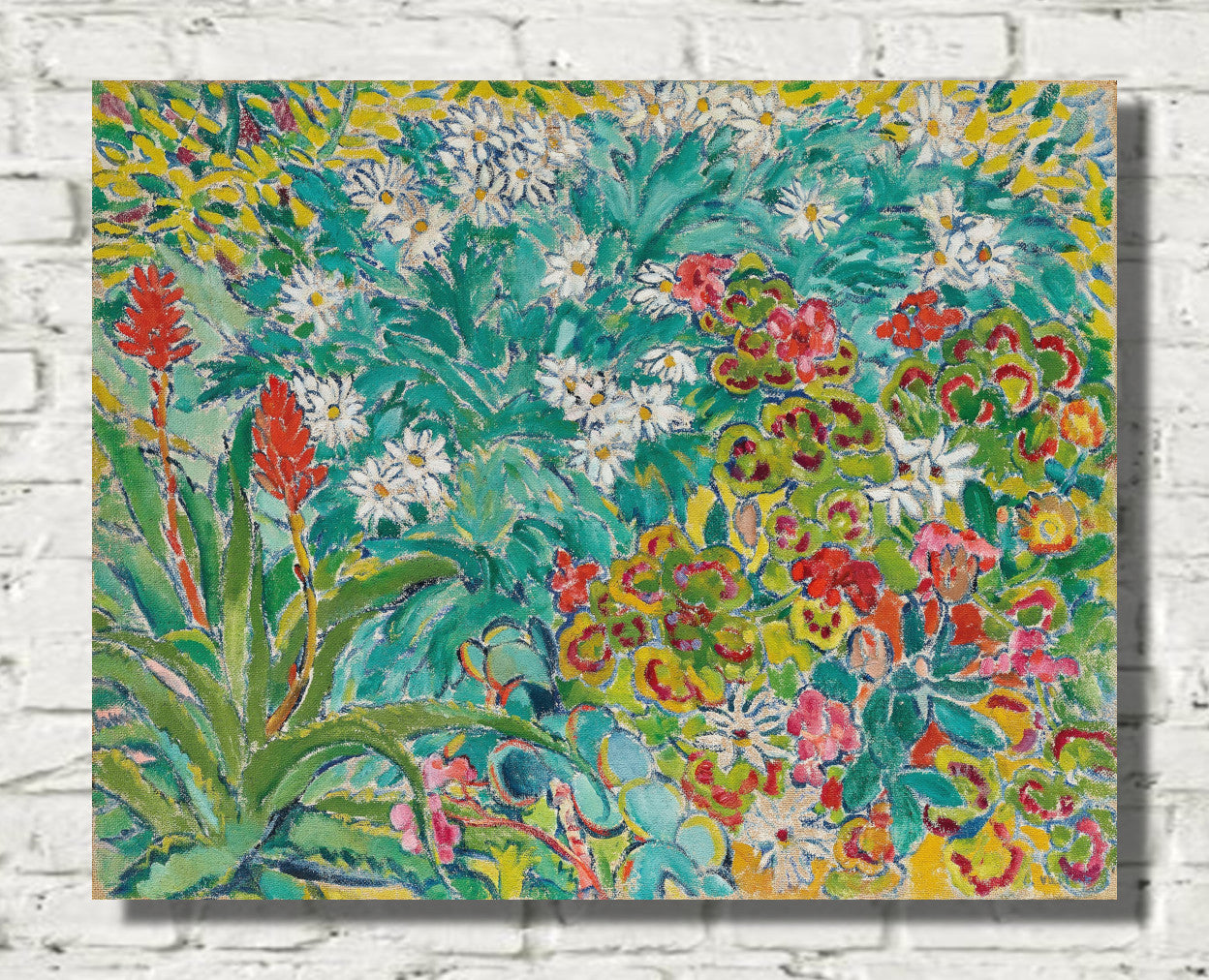
Flowerbed (Parterre de fleurs) (1906) by Louis Valtat is an exuberant garden painting in which flowers and foliage almost completely fill the canvas. White daisy-like blooms scatter across broad turquoise and emerald leaves, tall scarlet flower spikes rise dramatically on the left, and clusters of red, pink, yellow and green blossoms create a dense tapestry of colour across the right-hand side of the composition.
This Louis Valtat Flowerbed print captures the artist's distinctive approach to colour at the height of the Fauvist period. Rather than describing a garden through conventional perspective and botanical detail, Valtat allows plants, flowers and leaves to interlock across the picture surface. Rich greens, turquoise, yellow, scarlet, blue, pink and white create an extraordinary decorative rhythm that places colour at the centre of the painting. Available as a fine art print, framed print or canvas panel, Parterre de fleurs is an outstanding choice for admirers of Valtat, Fauvist art, botanical wall art and vibrant early twentieth-century painting.
Flowerbed – A Garden Filled with Colour
In Parterre de fleurs, Valtat brings the viewer exceptionally close to the garden.
There is no distant horizon and almost no conventional landscape beyond the plants themselves.
Instead, vegetation spreads from one edge of the canvas to the other.
Large leaves occupy the foreground and centre, while flowers appear at different heights throughout the composition.
Some are immediately recognisable as white daisy-like blooms with yellow centres.
Others are simplified into brilliant circles, curls, spikes and patches of colour.
The result is immersive.
Rather than looking across a garden from a comfortable distance, the viewer seems almost surrounded by it.
The French Title Parterre de fleurs
The original French title Parterre de fleurs translates as Flowerbed or Flower Garden.
A parterre traditionally refers to an ornamental area of garden planted with flowers and other decorative vegetation.
Valtat's interpretation, however, is far removed from the disciplined geometry of a formal French garden.
His plants overlap, expand and compete for space.
The flowerbed appears exuberant rather than controlled.
That abundance allows Valtat to turn the garden into an almost continuous pattern of natural forms.
The White Daisy-Like Flowers
White flowers provide some of the strongest repeated accents within the painting.
They appear across the upper part of the image and continue through the centre.
Each bloom is constructed simply.
White petals radiate from a compact yellow centre, often surrounded by dark blue or green outlines.
Valtat does not attempt to paint every petal with botanical precision.
The essential structure of the flower is enough.
This simplification allows each bloom to function simultaneously as a flower and as a bright circular motif within the larger design.
The white also provides visual relief from the extremely saturated greens and turquoise surrounding it.
Scarlet Flowers against Turquoise Green
Two tall scarlet flower spikes rise prominently on the left side of the painting.
Their narrow vertical forms contrast strongly with the broad curving leaves around them.
The colour contrast is equally powerful.
Scarlet red stands against turquoise, blue-green and emerald foliage.
Red and green occupy opposing positions within conventional colour relationships, so each appears especially intense when placed beside the other.
Valtat repeatedly exploited this kind of contrast.
The flowers seem to project forward from the surrounding vegetation even though the painting contains relatively little traditional modelling.
Turquoise Foliage
Perhaps the most striking colour in Flowerbed is the extensive turquoise-blue green used throughout the vegetation.
Natural foliage certainly provided Valtat with his starting point, but the colour is pushed well beyond cautious botanical observation.
Some leaves become almost aqua or teal.
Others shift towards emerald, olive or yellow-green.
Dark blue outlines and accents appear between them.
This variation prevents the extensive foliage from becoming monotonous.
It also demonstrates a principle central to Valtat's modern colour painting: a leaf did not need to correspond to one fixed shade of natural green.
Colour could be altered according to the needs of the composition.
Red and Green Blossoms
The right half of the painting contains some of its most unusual forms.
Clusters of rounded green shapes are edged and punctuated with crimson, scarlet and deep pink.
These blossoms almost dissolve into ornamental curls.
They remain connected to the appearance of flowering vegetation, yet their repeated shapes also create a decorative pattern independent of botanical description.
This is an important feature of the painting.
Nature is gradually becoming design.
Valtat does not cross completely into abstraction, but he allows flowers and leaves to function increasingly as coloured motifs spread across the canvas.
A Garden without Empty Space
Traditional landscape painting often depends upon contrasts between detailed foreground forms and more open areas of sky, water or distant countryside.
Valtat does almost the opposite here.
The canvas is exceptionally full.
Leaves overlap flowers.
Flowers overlap other plants.
Small strokes fill the spaces between larger forms.
Even near the upper edge, yellow, green and blue passages create further activity rather than providing a neutral background.
This dense organisation gives the painting an almost textile-like quality.
The eye is encouraged to travel continuously across the surface rather than settle upon one central focal point.
The Influence of Decorative Art
Valtat's interest in decorative organisation had developed over many years.
His artistic environment included painters associated with the Nabis, Neo-Impressionism and the increasingly decorative tendencies of late nineteenth-century French art.
Pattern was not considered merely superficial ornament.
It offered artists a means of organising a flat surface independently from traditional perspective.
Flowerbed is particularly suited to this approach because vegetation naturally produces repetition.
Leaves echo one another.
Petals radiate around centres.
Stems establish vertical and diagonal movements.
Valtat intensifies those natural rhythms until the garden begins to resemble a richly coloured textile.
The Importance of the Painted Surface
One of the great changes in modern painting was a growing willingness to acknowledge that a picture is a flat surface covered with paint.
Earlier European painting had often attempted to disguise that fact by creating convincing illusions of depth.
Valtat does not abandon depth entirely.
Some plants clearly appear in front of others.
Yet the extensive network of outlines, repeated colours and overlapping forms continually draws attention back towards the surface.
The viewer can recognise a flowerbed while simultaneously experiencing the image as an arrangement of coloured marks.
This tension between representation and decoration is one of the painting's most modern qualities.
Blue Outlines and Defined Forms
Dark blue lines appear repeatedly around flowers and leaves.
These outlines help separate neighbouring forms where colours might otherwise merge.
They also strengthen the decorative character of the composition.
A leaf outlined in blue no longer depends entirely upon realistic modelling to establish its shape.
The contour itself becomes expressive.
This technique was widespread among artists moving beyond Impressionism.
Rather than allowing every form to dissolve into atmospheric light, painters increasingly restored stronger boundaries and simplified shapes.
Yellow as Light
Yellow appears throughout Flowerbed, particularly around the upper edge and among the smaller vegetation.
It creates the sensation of sunlight without requiring a conventional description of sun and shadow.
Yellow centres also animate many of the white flowers.
Elsewhere it appears beside turquoise and green, producing sharp flashes of brightness.
Valtat therefore represents light largely through colour relationships.
The garden feels sunlit because bright warm colour is distributed through it, not because every leaf has been carefully modelled according to one consistent source of illumination.
Visible Brushwork and Raw Canvas
The surface of the painting retains a remarkable sense of physical immediacy.
Valtat's brushstrokes remain visible, and in places the weave and underlying character of the support can still be perceived between painted passages.
This gives the work a direct, almost spontaneous appearance.
A white petal may be established with only a few strokes.
A leaf can be formed through a broad sweep of turquoise bordered by blue.
Small touches of yellow or red become individual blossoms.
The painting therefore allows the viewer to understand both the garden and the actions with which Valtat constructed it.
Painting Nature without Imitating It
Valtat's modernity lies partly in his refusal to believe that successful painting required literal imitation.
He clearly observes plant structures.
The difference between broad leaves, narrow stems and rounded flowers remains evident.
But observation is only the beginning.
Shapes are simplified.
Colours are intensified.
Individual plants are adjusted so that they participate in the larger design.
The garden therefore becomes Valtat's interpretation of nature rather than a botanical record.
Flowerbed and Fauvist Colour
The painting dates from 1906, directly within the historical period associated with Fauvism.
The previous autumn, the 1905 Salon d'Automne had produced the famous critical description les fauves — “the wild beasts” — in response to painters using startlingly intense colour.
Henri Matisse, André Derain and Maurice de Vlaminck became the movement's most famous figures.
Valtat's position was different.
He exhibited at the Salon d'Automne but was not actually positioned in the celebrated Salle VII containing the principal group that prompted the name.
Modern scholarship therefore treats his relationship with Fauvism more carefully than older accounts sometimes did.
Was Louis Valtat Really a Fauvist?
Valtat is frequently included in accounts of Fauvism, and his intense colour makes the association understandable.
However, describing him simply as a Fauvist can conceal important differences.
His experiments with strong colour began before 1905.
His closest artistic relationships included Pierre Bonnard, Paul Signac, Henri-Edmond Cross, Auguste Renoir and other painters whose work cannot be reduced to Fauvism.
He also generally preserved more recognisable natural structure than Matisse or Derain at their most radical.
For this reason, terms such as precursor of Fauvism or proto-Fauve are often useful.
Flowerbed demonstrates exactly why the distinction matters.
Its colour is extraordinarily free, but the subject remains rooted firmly in observed nature.
A Different Route towards Modern Colour
Valtat did not need to follow Matisse in order to arrive at strong colour.
He had already spent years experimenting with chromatic intensity.
During the 1890s his visits to southern France exposed him to powerful Mediterranean light.
At Agay and Anthéor, green vegetation, red rock and brilliant blue water encouraged increasingly saturated palettes.
By 1904, Mediterranean works formed much of his first major solo presentation with Ambroise Vollard.
The intense turquoise, red and yellow of Flowerbed therefore belongs to a development with deep roots in Valtat's own career.
From Mediterranean Landscape to Garden Painting
The garden gave Valtat an ideal opportunity to transfer lessons learned from Mediterranean landscape into a more concentrated environment.
Instead of cliffs, sea and distant hills, he had flowers and foliage.
The underlying chromatic opportunities were similar.
Red could intensify green.
Yellow could create luminosity.
Turquoise could cool surrounding warm colours.
Blue outlines could strengthen forms.
In Flowerbed, all these relationships are compressed into a dense botanical space.
The Influence of Neo-Impressionism
Valtat's understanding of colour was also shaped by contact with Neo-Impressionist painters.
He knew Paul Signac and Henri-Edmond Cross, both important advocates of strong colour relationships.
Neo-Impressionism demonstrated that neighbouring colours could intensify one another when kept comparatively pure.
Valtat never became a strict Pointillist.
His marks are too varied, broad and spontaneous.
Nevertheless, the underlying understanding of complementary colour remained important.
The red-and-green relationships throughout Flowerbed are especially effective examples.
Paul Signac and Mediterranean Colour
Paul Signac became one of the great interpreters of Mediterranean light around Saint-Tropez.
Valtat worked within the same broader artistic environment and benefited from contact with Signac's colour experiments.
Their methods differed.
Signac often organised paint into more systematic divided strokes.
Valtat allowed brushwork to respond more freely to the subject.
In a flower garden, this freedom is especially effective because vegetation itself is irregular.
Broad leaves require one kind of stroke, petals another and narrow stems another.
Valtat and Auguste Renoir
Pierre-Auguste Renoir was another significant presence in Valtat's artistic life.
Valtat visited Renoir in southern France and maintained a genuine friendship with the older painter.
The connection places Valtat between generations.
Renoir represented the great Impressionist movement of the nineteenth century.
Matisse and Derain represented the new colour experiments of the twentieth.
Valtat's paintings contain aspects of both worlds.
He retained a sensuous interest in natural subjects while moving towards stronger, less naturalistic colour.
Ambroise Vollard and Valtat
The influential dealer Ambroise Vollard played a major role in Valtat's career from 1904.
Vollard was deeply involved with the development of modern French art and worked with artists including Cézanne, Gauguin, Picasso and several painters later associated with Fauvism.
For a number of years, he acquired Valtat's production and handled its circulation to exhibitions and collectors.
The relationship is important because it confirms that Valtat's work was already recognised within Parisian avant-garde circles before Fauvism became established as a historical label.
A Natural Subject Becoming Almost Abstract
Certain passages of Flowerbed come surprisingly close to abstraction.
The rounded red-and-green forms towards the right can initially be read simply as coloured loops.
The mass of turquoise leaves at the centre becomes a sequence of broad curved shapes.
The yellow and blue marks near the upper edge create a pattern that can be appreciated without identifying a particular species of plant.
Yet Valtat never completely abandons nature.
The painting constantly moves backwards and forwards between recognition and pattern.
This ambiguity gives the work much of its visual energy.
The Garden as a Decorative Tapestry
From a distance, the entire composition can resemble a tapestry.
Large turquoise shapes form one layer.
White circular flowers create another.
Red vertical accents rise through the left side.
Yellow marks weave through the upper background.
More complex crimson-and-green motifs fill the right.
These elements interlock across virtually the whole canvas.
The result illustrates Valtat's ability to find decorative structure directly within nature rather than imposing an artificial design upon it.
Why Flowerbed Is Visually Distinctive
This particular Parterre de fleurs is readily distinguished from several other Valtat paintings carrying similar titles.
Its most characteristic visual features include:
- large areas of brilliant turquoise and blue-green foliage
- numerous white daisy-like flowers with yellow centres
- two tall scarlet flower spikes on the left
- dense clusters of red-and-green curled blossoms across the right
- strong yellow accents near the upper edge
- dark blue contour lines around many forms
- little conventional empty background
- a broad horizontal garden composition
- visible, energetic brushwork throughout
These features make it quite distinct from the separate Parterre de fleurs dated circa 1906 and from Valtat's numerous later garden and flower paintings.
The Importance of Flowers in Valtat's Art
Flowers became one of Valtat's recurring subjects throughout his career.
He painted bouquets in pitchers, flowers beside fruit, formal floral arrangements and gardens filled with living plants.
They offered an ideal subject for an artist fascinated by colour.
Unlike architecture or portraiture, flowers naturally permit extreme variation of hue.
Scarlet, violet, white, yellow, green and pink can coexist without appearing improbable.
That allowed Valtat to experiment boldly while remaining connected to nature.
Why Flowerbed Matters
Flowerbed (Parterre de fleurs) combines many of the qualities that make Valtat's work important within early modern painting:
- created in 1906 during the historical Fauvist period
- an unusually immersive garden composition
- turquoise and emerald foliage dominating the canvas
- scarlet, pink, white and yellow flowers used as strong colour accents
- complementary red-and-green relationships
- natural forms simplified into decorative motifs
- strong contour lines helping organise the surface
- visible, energetic brushwork
- little reliance upon conventional distant perspective
- a balance between recognisable nature and near-abstraction
It is therefore an excellent example of the way Valtat could transform a familiar garden into something far more radical: a complete field of colour, pattern and movement.
Louis Valtat's Painting Style
Louis Valtat developed a distinctive visual language from Impressionism, Neo-Impressionism, Post-Impressionism and his own sustained experiments with colour.
Unlike artists whose work can be divided neatly into clearly defined stylistic periods, Valtat developed more gradually.
He preserved an enduring attachment to nature.
Landscapes remained landscapes.
Flowers remained flowers.
Human figures retained physical presence.
Yet the colours used to construct them became increasingly saturated and expressive.
His best early twentieth-century paintings therefore occupy a fascinating position between natural observation and the greater pictorial independence associated with modernism.
About Louis Valtat
Louis Valtat (1869–1952) was a French painter and printmaker whose unusually strong use of colour made him an important figure in the transition from nineteenth-century painting towards Fauvism and early twentieth-century modernism.
Born in Dieppe, Valtat studied at the École des Beaux-Arts in Paris before continuing at the Académie Julian.
His artistic circle included painters associated with several of the major developments of modern French art.
He exhibited at the Salon des Indépendants and travelled extensively, including repeated stays in southern France.
The Mediterranean coast had a particularly important influence on his palette.
Valtat knew artists including Pierre Bonnard, Paul Signac, Henri-Edmond Cross and Pierre-Auguste Renoir.
His strong colour was already well established before the 1905 Salon d'Automne associated with the naming of Fauvism.
Although subsequently connected with the Fauves, modern scholarship increasingly recognises that his position was more independent and nuanced.
Throughout his long career Valtat painted landscapes, gardens, seascapes, figures, still lifes and flowers, maintaining an enduring fascination with colour and the natural world.
The Original Flowerbed
The image reproduced by GalleryThane corresponds to the Louis Valtat painting generally catalogued as Parterre de fleurs, dated 1906.
The original was painted in oil on canvas.
Art-market documentation for the 1906 work records dimensions of approximately 32.01 × 40.08 inches, equivalent to approximately 81.3 × 101.8 cm, and identifies the work as signed.
This is a separate painting from another Valtat work also titled Parterre de fleurs, executed circa 1906 and measuring 73.3 × 92.1 cm.
The visual identity of the GalleryThane work is particularly distinctive: turquoise foliage, white daisy-like blooms, scarlet vertical flower spikes and red-and-green ornamental flower clusters fill the composition.
A securely documented current museum location has not been established for this particular 1906 painting, so it would be inappropriate to attribute the original to a public collection without additional evidence.
A Louis Valtat Flowerbed Print for Your Interior
A Louis Valtat Flowerbed print provides an unusually powerful combination of botanical subject matter and modern colour.
The extensive turquoise, teal and green foliage gives the painting a strong overall identity, while scarlet, pink, yellow and white flowers introduce vivid contrasts.
Against white, cream, putty or pale grey walls, the colours become an immediate focal point.
The painting can also work exceptionally well in interiors using sage, teal, petrol blue or muted green furnishings because these colours echo the extensive foliage.
Natural oak and other pale timbers complement its botanical character, while darker timber can provide stronger contrast.
The broad horizontal format makes the work particularly suitable above sofas, sideboards, beds and console tables.
Its dense botanical composition can bring energy to minimalist spaces while also fitting naturally into more eclectic interiors containing plants, textiles and layered colour.
Flowerbed works particularly well in living rooms, dining rooms, bedrooms, hallways, garden rooms and home offices.
For admirers of Fauvist and early modern art, however, its significance extends beyond interior decoration. The painting demonstrates Valtat's distinctive contribution to the liberation of colour at one of the most important moments in twentieth-century European painting.
Frequently Asked Questions
When did Louis Valtat paint Flowerbed?
This version of Parterre de fleurs is dated 1906.
What is the French title of Flowerbed?
The French title is Parterre de fleurs.
What does Parterre de fleurs mean?
Parterre de fleurs translates naturally as Flowerbed or Flower Garden.
What flowers appear in Valtat's Flowerbed?
The painting contains numerous white daisy-like blooms alongside tall scarlet flower spikes and clusters of red, pink and green flowering forms. Because Valtat simplifies several species considerably, it is safer not to assign precise botanical names to every plant.
Why is there so much turquoise in the painting?
Valtat uses turquoise and blue-green extensively throughout the foliage. This is characteristic of his increasingly liberated approach to colour, in which observed nature provided a starting point but colours could be intensified according to the needs of the whole composition.
Is Flowerbed a Fauvist painting?
The work dates from 1906, during the historical Fauvist period, and its saturated colour clearly connects it with the broader colour revolution associated with Fauvism. Valtat's relationship with the movement is nevertheless more nuanced, and he is frequently described as an important precursor or independent figure close to Fauvism.
Was Louis Valtat one of the original Fauves?
Valtat exhibited at the 1905 Salon d'Automne but was not positioned in the famous Salle VII that generated the “wild beasts” description. His own experiments with intense colour had begun earlier, so modern scholarship often treats him as a precursor or related independent artist rather than simply one of the core Fauvist group.
Why does Flowerbed look almost abstract?
The dense overlap of leaves and flowers removes much of the conventional background and turns natural forms into repeated coloured shapes. The subject remains recognisable as a garden, but individual passages can also be experienced as near-abstract pattern.
Why are dark blue outlines used around the plants?
The blue contours help separate neighbouring flowers and leaves while strengthening the decorative structure of the composition. They allow forms to remain clear without depending upon conventional tonal modelling.
What medium did Louis Valtat use?
The original Parterre de fleurs was painted in oil on canvas.
What size is the original Flowerbed?
Available art-market documentation records the 1906 work at approximately 81.3 × 101.8 cm.
Is this the same as Valtat's Flowerbed dated circa 1906?
No. Louis Valtat painted more than one work catalogued under the title Parterre de fleurs. GalleryThane's 1906 image is visually distinct from the separate circa-1906 painting measuring 73.3 × 92.1 cm.
How can this 1906 Flowerbed be recognised?
Its most distinctive features are the extensive turquoise foliage, repeated white daisy-like flowers, two scarlet upright flower spikes on the left and dense red-and-green flowering clusters across the right.
Where is the original Flowerbed by Louis Valtat?
A permanent public museum location has not been securely established for this particular 1906 painting in the documentation consulted, so GalleryThane should not attribute it to a museum without further evidence.
Why were gardens important to Valtat?
Gardens provided Valtat with natural combinations of intense colour and complex organic forms. They allowed him to investigate relationships between red, green, yellow, blue and violet while retaining a recognisable natural subject.
How does Valtat differ from Henri Matisse?
Both artists explored increasingly powerful colour, but Valtat generally retained a stronger connection with recognisable natural form and spatial structure. Matisse often pushed colour, pattern and pictorial flatness considerably further.
Did Valtat know Paul Signac?
Yes. Valtat knew Paul Signac and worked within an artistic environment influenced by Neo-Impressionist ideas about colour interaction, although Valtat's own brushwork was much freer than strict Pointillism.
Did Louis Valtat know Renoir?
Yes. Valtat maintained an important friendship with Pierre-Auguste Renoir and spent time with him in southern France.
Was Valtat represented by Ambroise Vollard?
Yes. Vollard represented Valtat from the early twentieth century and handled much of his production during the years surrounding the creation of Flowerbed.
Is Flowerbed available as a framed Louis Valtat print?
Yes. GalleryThane offers Flowerbed (Parterre de fleurs) (1906) in a choice of sizes and formats, including fine art paper prints, framed prints and canvas options.
Where would a Louis Valtat Flowerbed print work well?
Its broad horizontal format and vivid turquoise, green, red, yellow and white palette make it particularly effective in living rooms, dining rooms, bedrooms, hallways, garden rooms and home offices. It works especially well in contemporary, Scandinavian-inspired, mid-century and eclectic interiors.
All orders for unframed fine art prints and original paintings are dispatched within 2 working days of receipt of payment.
Orders for custom framed prints are dispatched within 4 working days.
All orders are fully tracked from dispatch to delivery at your home or business.
All print and original painting orders are fully insured against loss or damage in transit. We refund or replace any damaged or lost orders.
Buy with confidence - read what our satisfied customers have to say - Reviews
Fine art papers are printed without any additional white border Please let us know at the time of ordering if you would like a small additional white border.
Rolled canvas options have an additional white border of approximately 2.5 inches (7cm) on all 4 sides to aid stretching.
Ready to hang canvas panels are stretched on 1.5 inch deep solid pine frames from sustainable forestry sources. The image is mirrored on all 4 sides to give an aesthetically pleasing finish.
Why not have us gift wrap your order and attach a personalised message to the recipient. Available for all orders. Each order is hand wrapped in high quality gift wrap with meatllic ribbon and bow. Your personalised message is printed on a card which is included with your order.
Have your hand wrapped gift delivered directly to the recipient.
Full tracking and insurance included with every order.
Please note design may vary depending upon availability
Just purchase the gift wrap option HERE
We have a wide range of frames in standard sizes and we also make custom size frames.
To order a framed print:
1. select the print size you would like along with the print materials (matte paper, fine art paper).
2. Add your print choice to the basket.
3. Choose from our range of frames
4. Select the same size as the print you have added to your basket. If the frame size you want is not listed please contact us
5. Choose from the mount or no-mount option
6. Add your frame choice to the basket
7. Proceed to checkout.
Why Choose GalleryThane?
- Printed and framed in-house
- Free UK delivery
- Free EU and USA delivery on orders over £200
- Tracking and insurance included in every order
- Fast 1-3 day dispatch
- Gift wrapping service available
- Gallery quality materials
- Sustainable, eco-friendly packaging
- Great customer support
Explore related collections
What makes our Prints and Canvas Panels so special

Latest Giclee Printing Technology
We have invested in the latest wide format print technology to produce museum quality giclee prints utilising the highest quality pigment inks to give outstanding colour reproduction.

Museum Quality Archival Fine Art Papers
We print on the finest quality fine art papers with textured, smooth and lustre finishes for prints which last a lifetime.
From aceo miniatures to 40x80 inch large format, every print has our lifetime quality guaranteee.

Solid Wood Frames, Cotton Canvas
All of the wood for our canvas panels and frames is responsibly sourced from manages forests. Our cotton canvas is completely seedless for the highest quality reproduction possible.

Have Your Gift Wrapped


Choose a Custom Frame
Popular Collections


EU Representative
Manufacturer
LucasAbstract t/a GalleryThane
15 Campion Way, Bingham NG13 8TR UK
sales@gallerythane.com
EU Authorised Representative
Westwood Sourcing
Fellenoordstraat 52, Unit 2.38
4811 TJ Breda, Netherlands
info@westwoodsourcing.com