



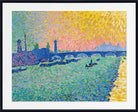
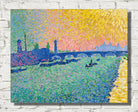
Waterloo Bridge (1906), by André Derain
Couldn't load pickup availability
BUY WITH CONFIDENCE
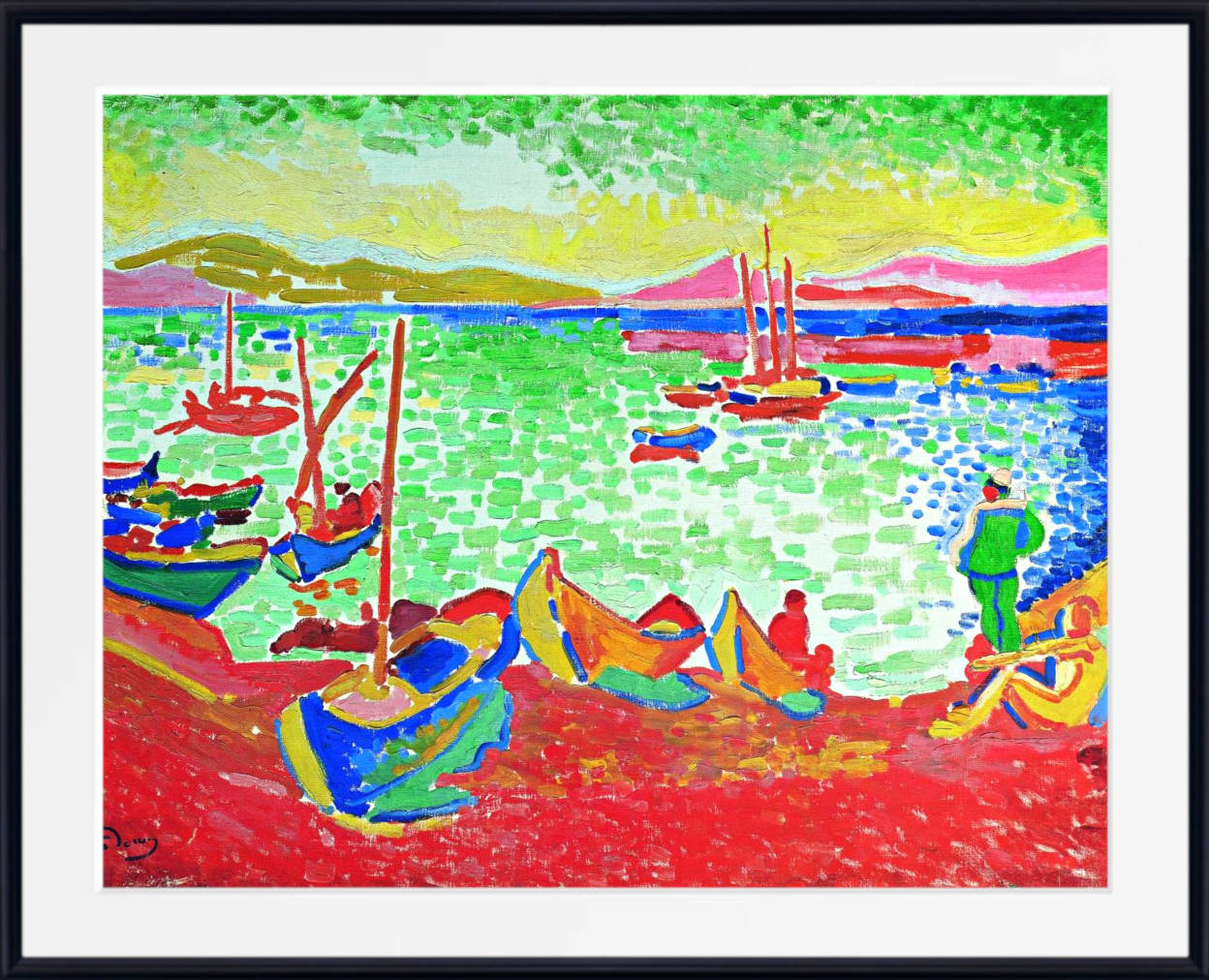
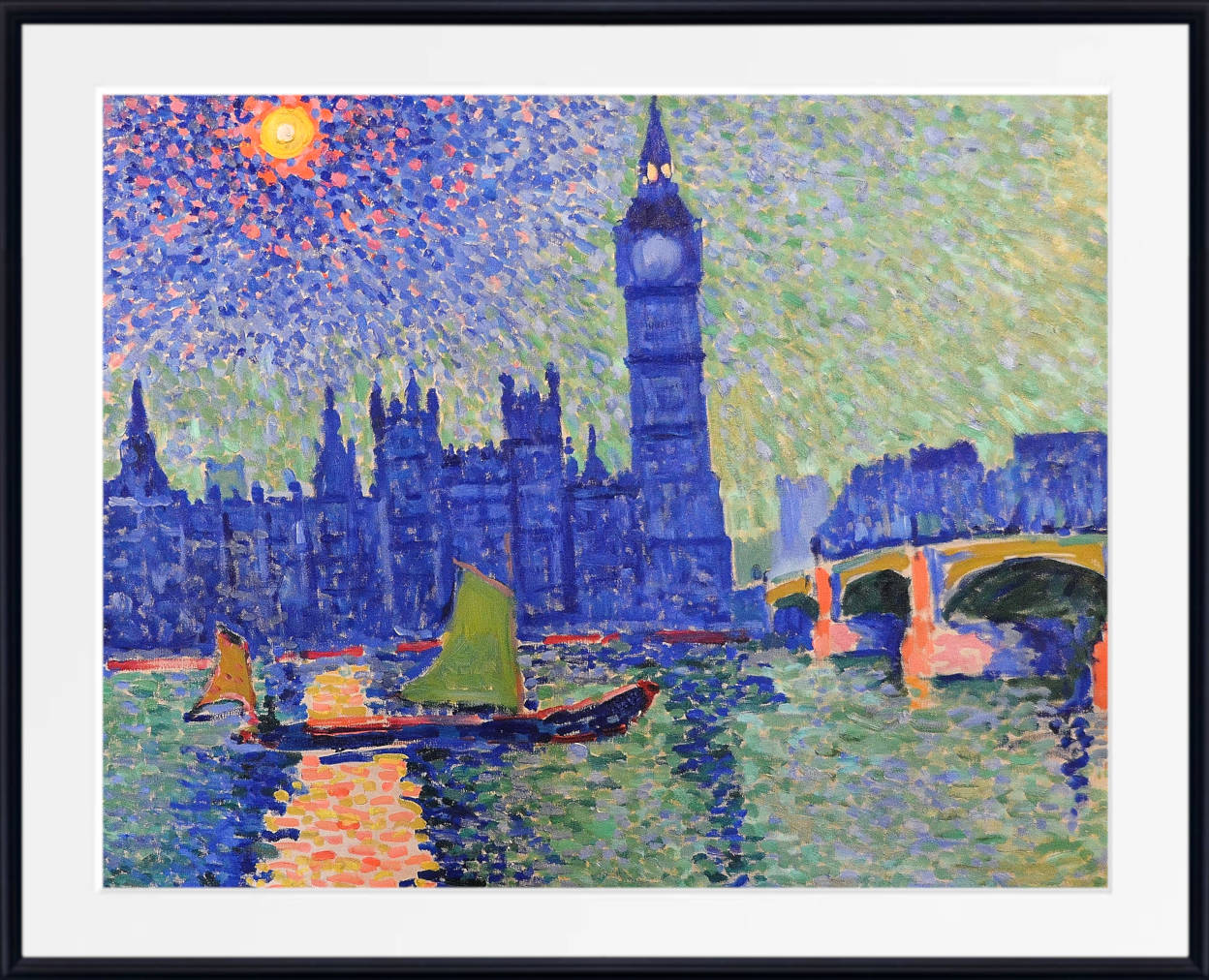
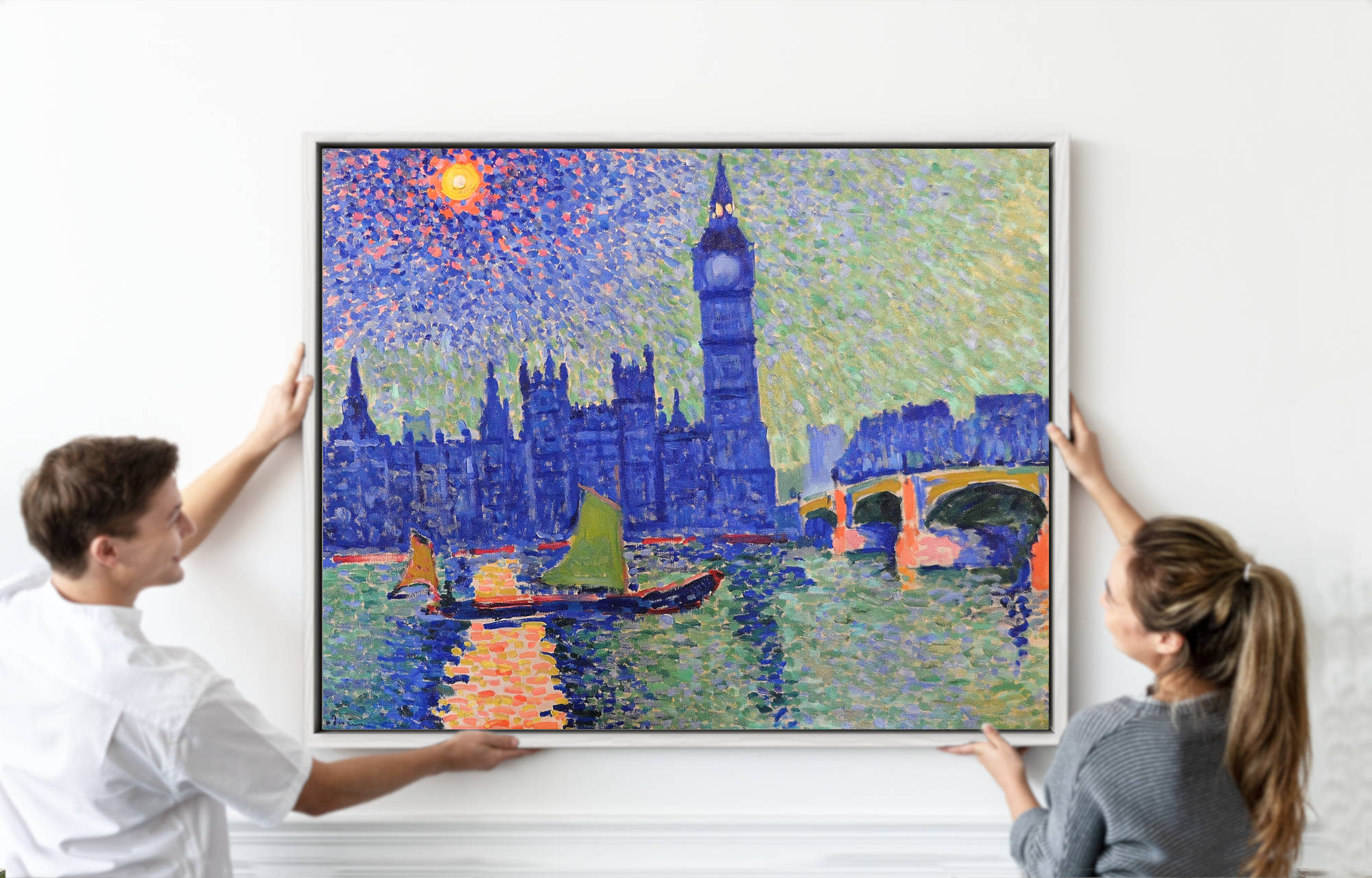
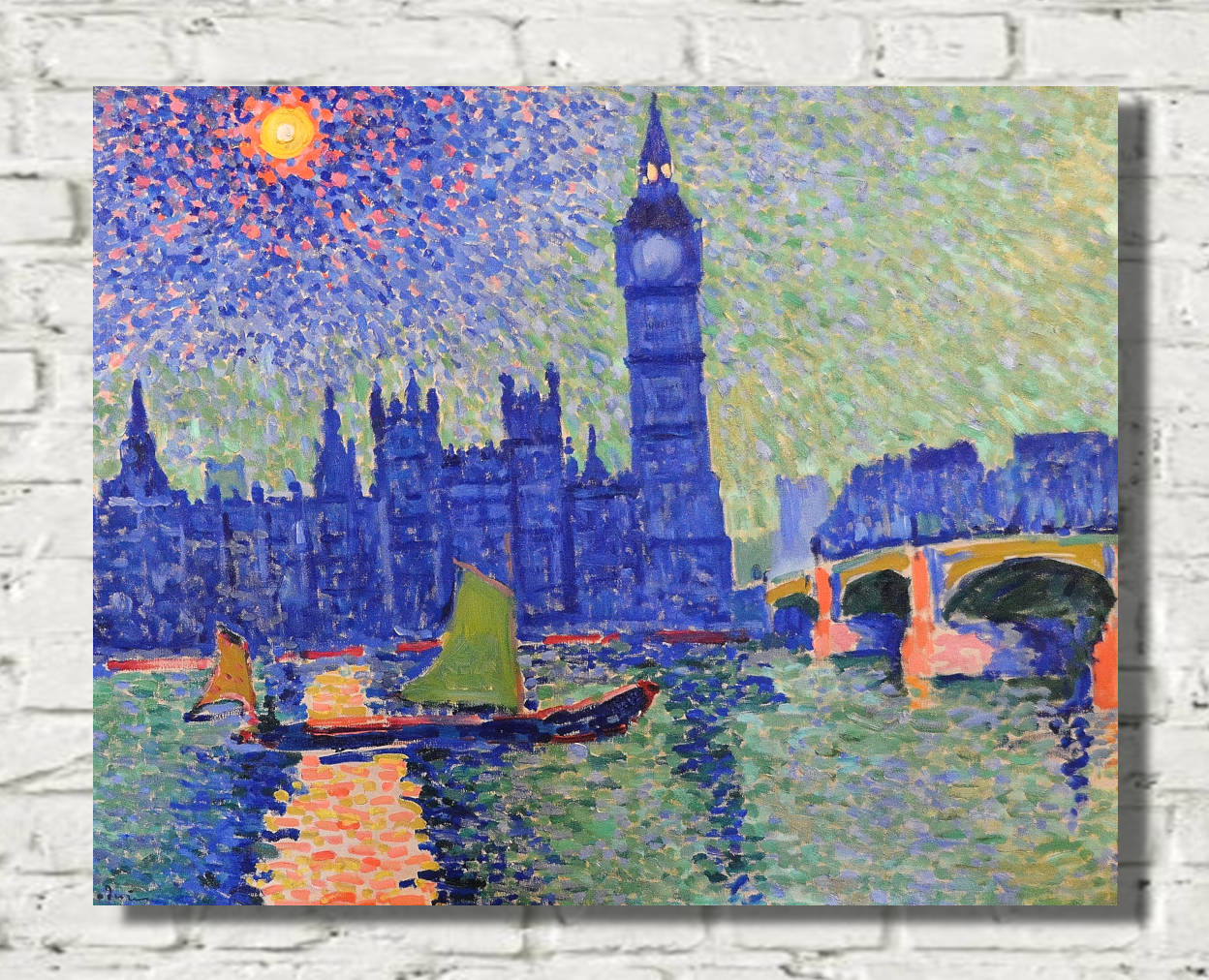
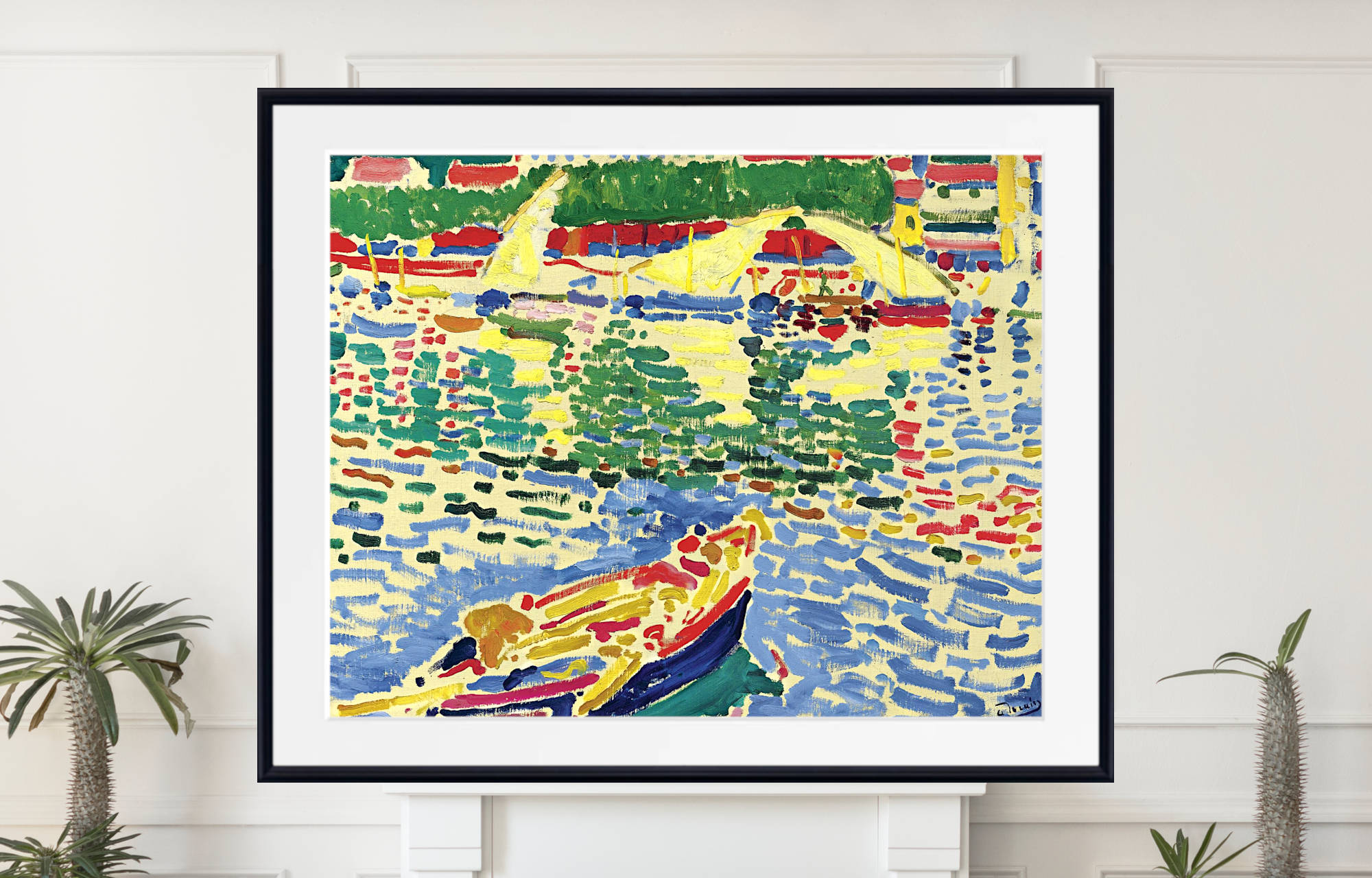
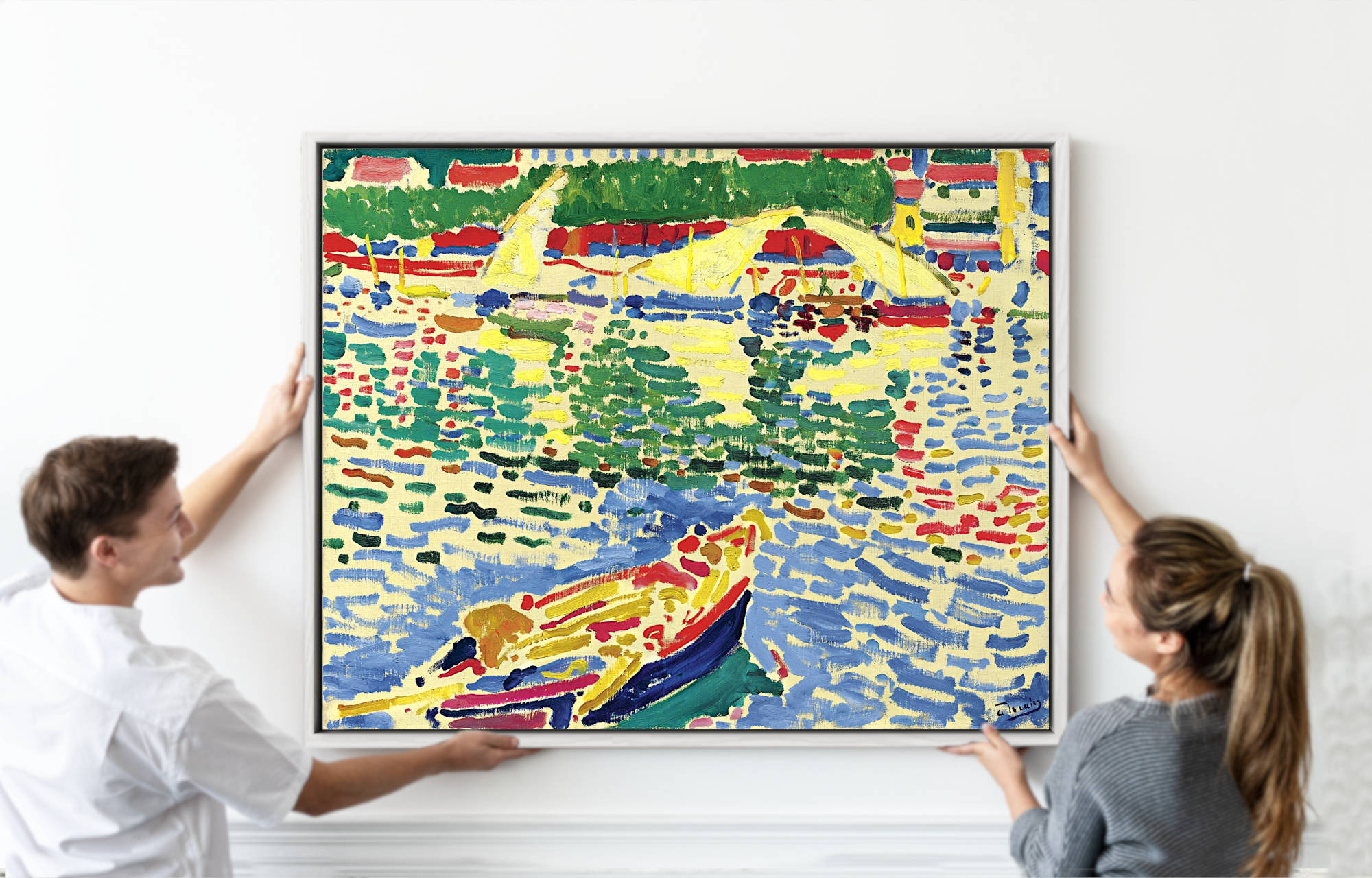
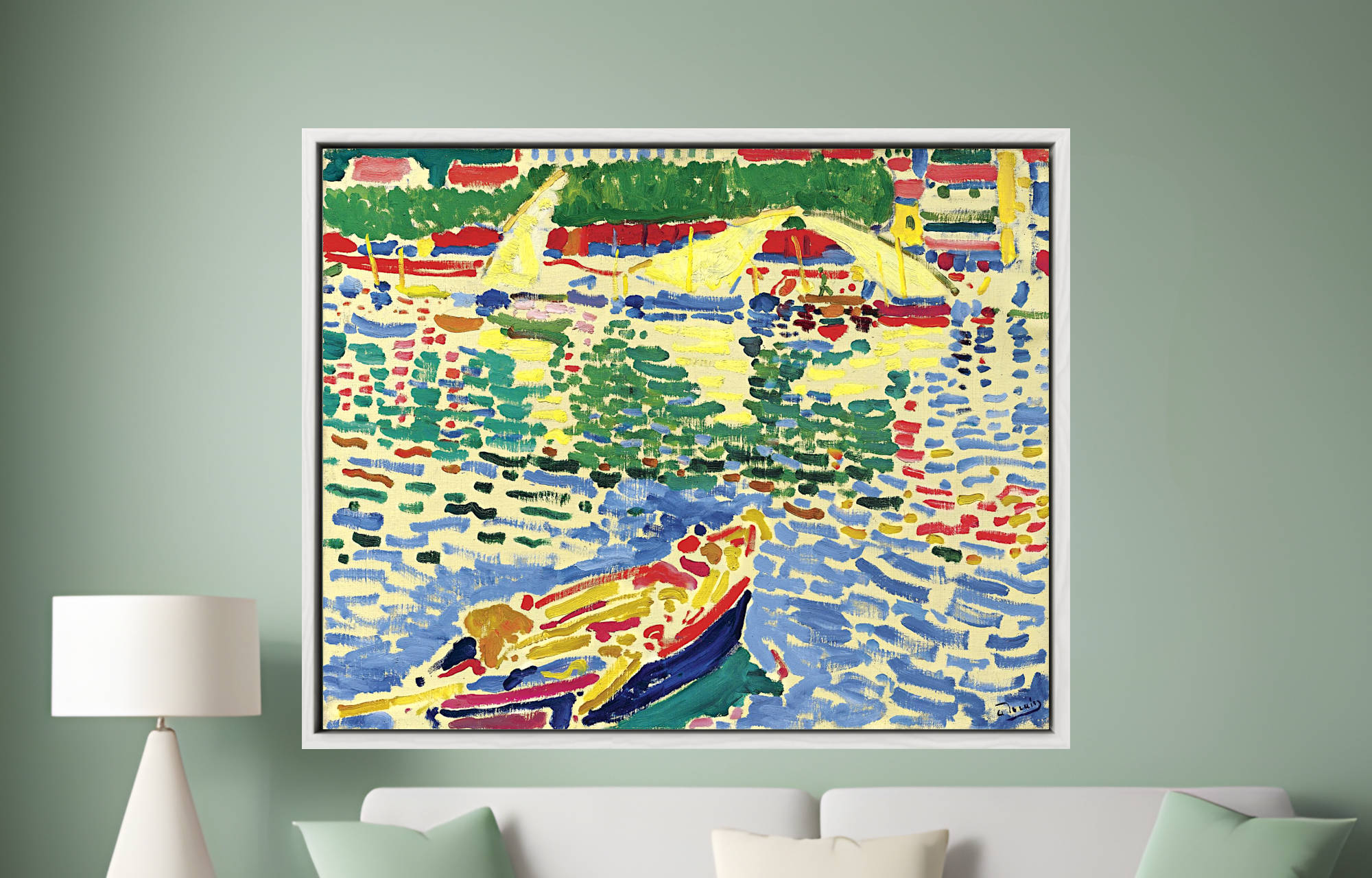
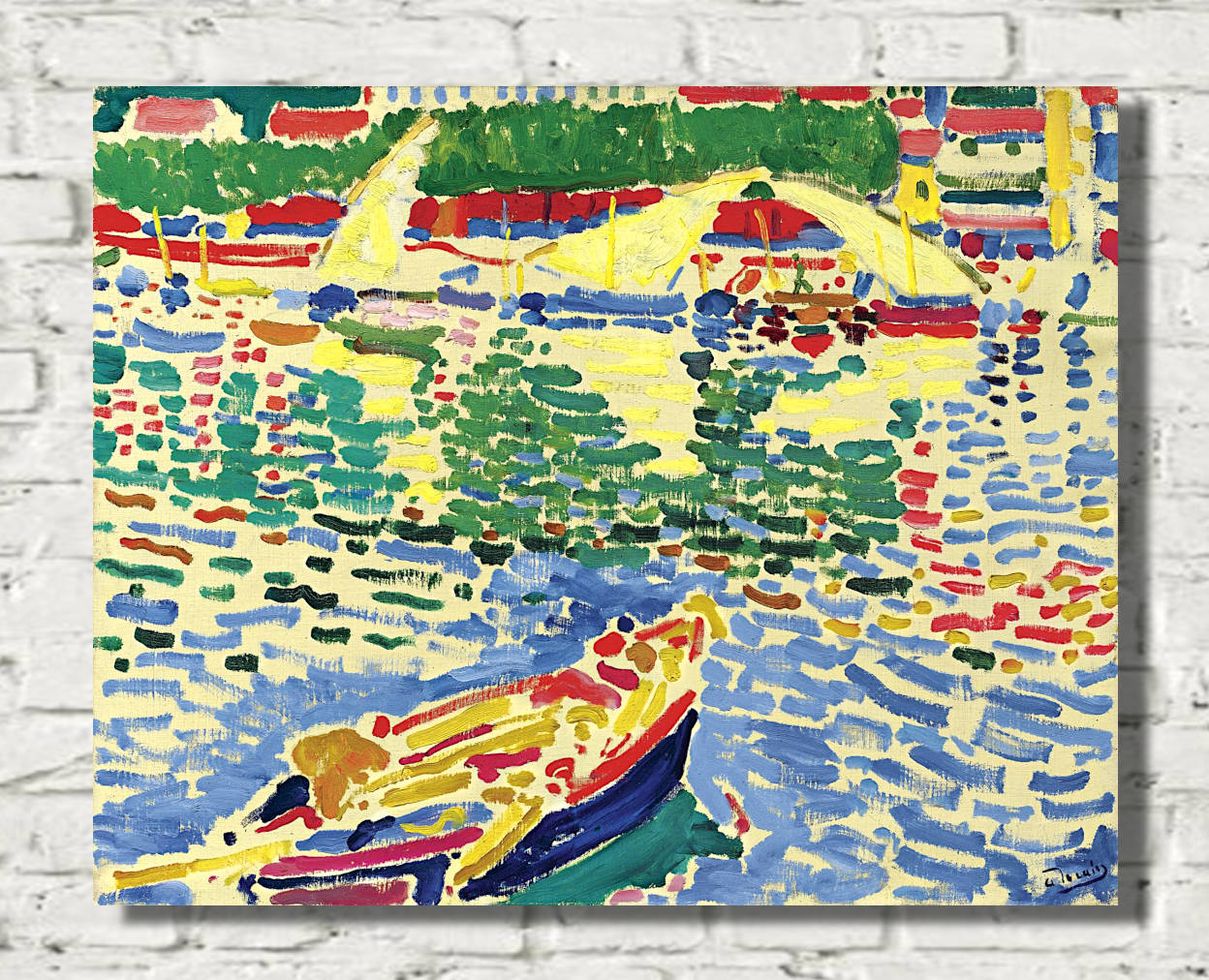
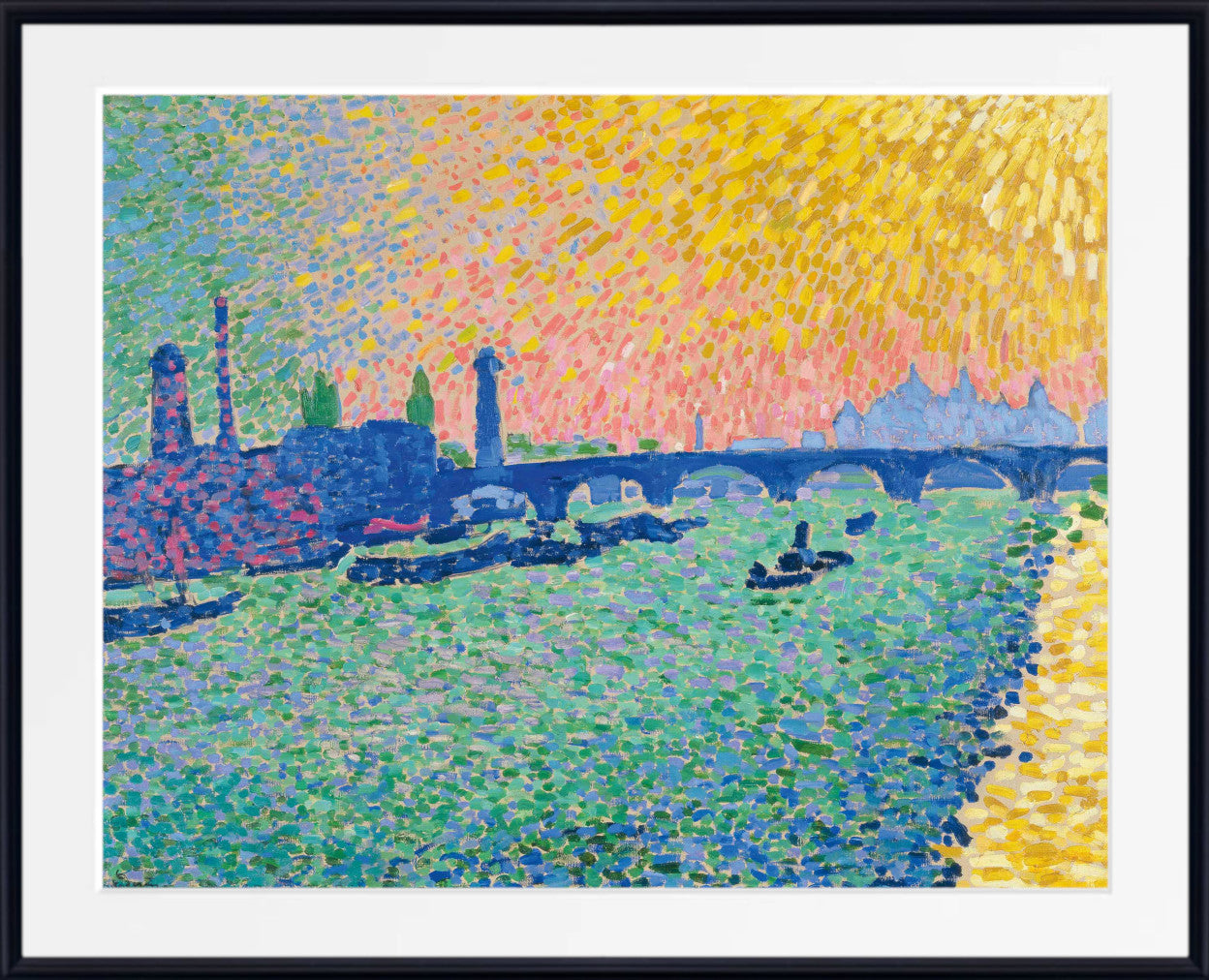
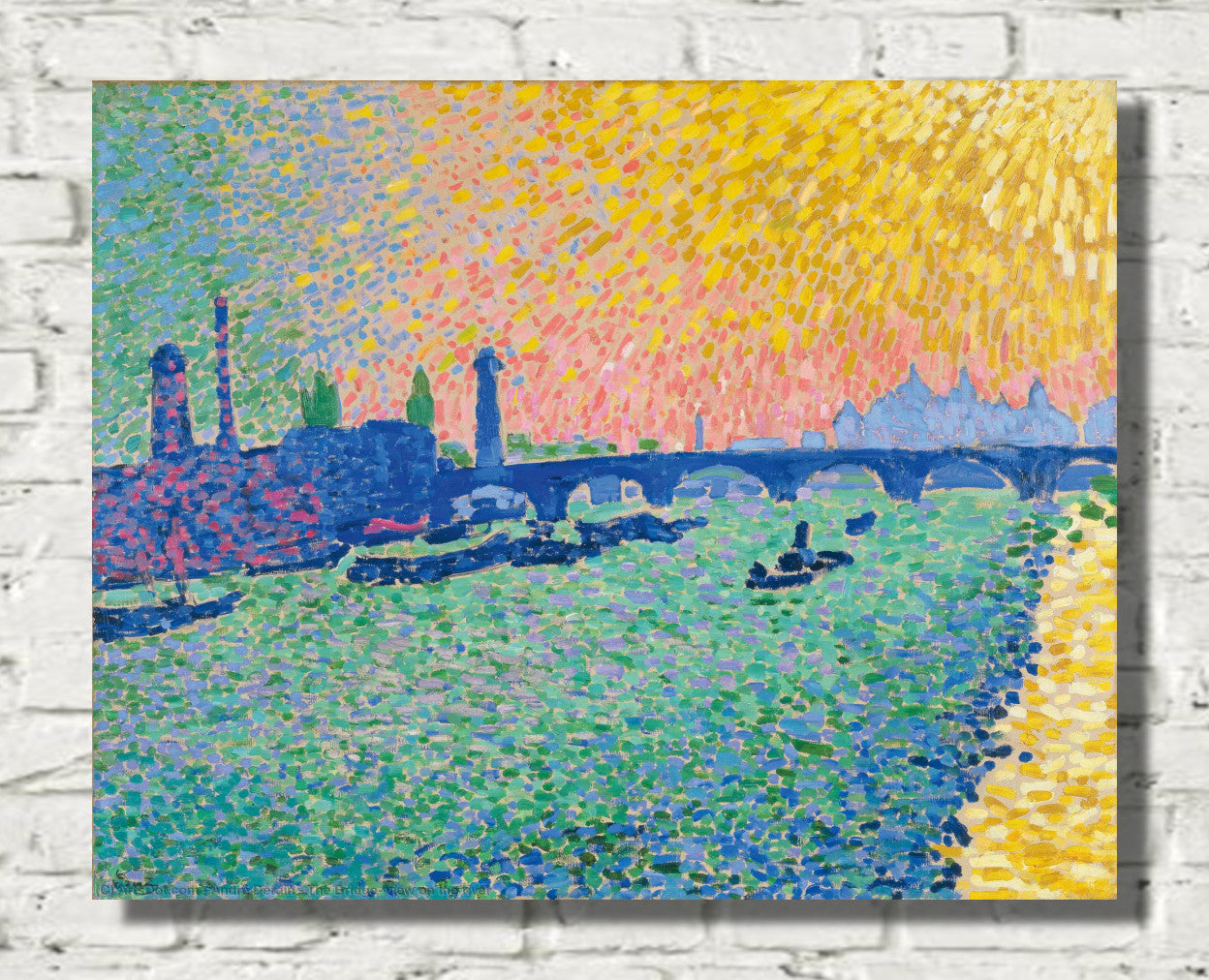
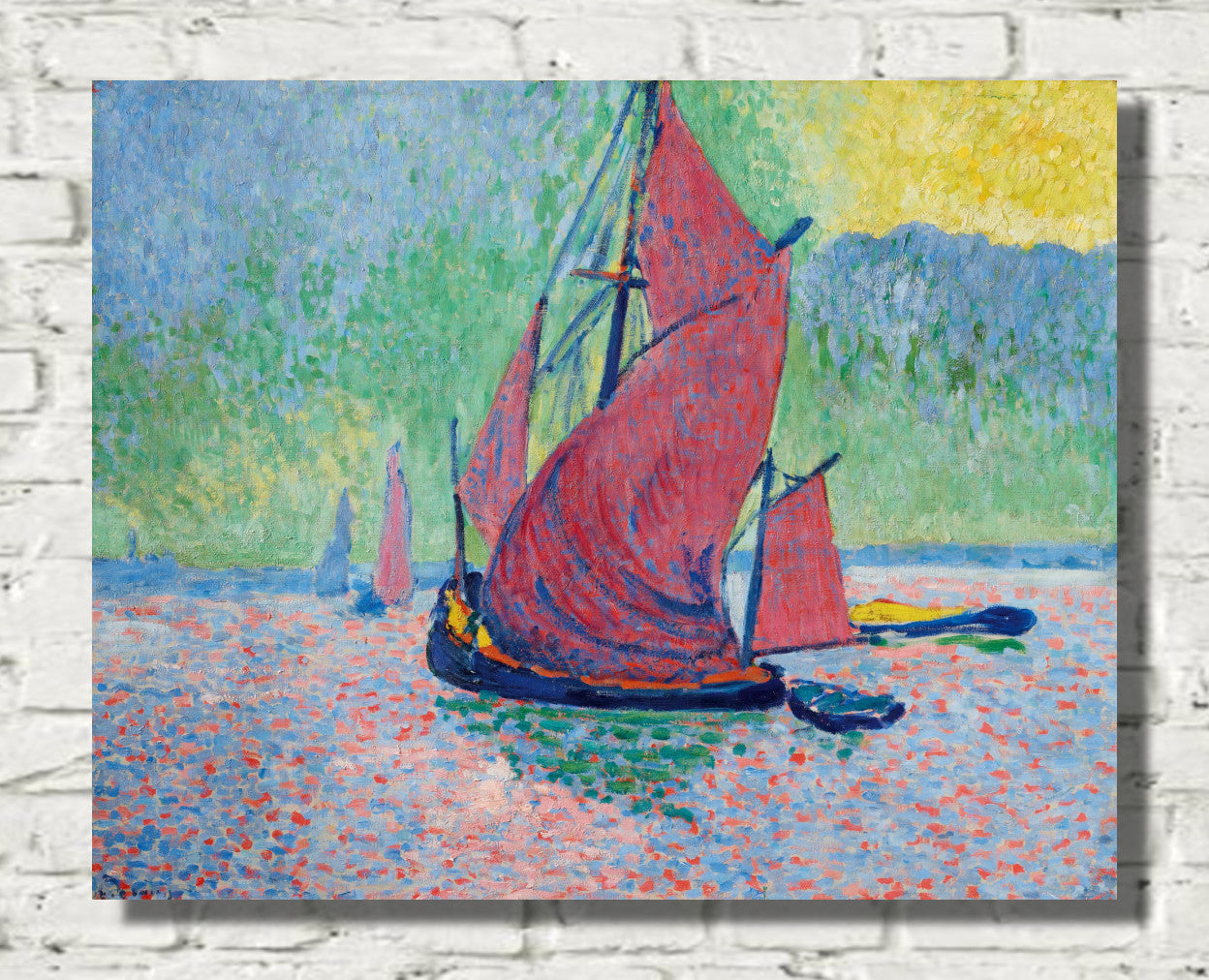
Waterloo Bridge (1906) by André Derain is one of the great paintings from the artist's celebrated Fauvist series of London views. Seen from Victoria Embankment, the old Waterloo Bridge stretches across the River Thames as a brilliant band of blue, while boats, industrial buildings, chimneys and distant landmarks dissolve into a shimmering mosaic of greens, blues, purples, yellows, pinks and gold.
This André Derain Waterloo Bridge print transforms Edwardian London through the extraordinary colour of Fauvism. Rather than reproducing the Thames through the greys and browns traditionally associated with London's atmosphere, Derain uses pure colour and broken, square brushstrokes to create light directly on the surface of the painting. Available as a fine art print, framed print or canvas panel, Waterloo Bridge is an outstanding choice for admirers of Derain, Fauvist art, London wall art and early twentieth-century modern painting.
Waterloo Bridge – Derain's Fauvist London
Derain painted Waterloo Bridge in 1906 as part of the remarkable group of approximately thirty paintings inspired by his visits to London between 1906 and 1907.
The composition looks towards the old Waterloo Bridge from Victoria Embankment.
The bridge extends across the centre of the painting as a strong horizontal band of vivid blue. Beneath it, the Thames is broken into hundreds of coloured marks suggesting moving water, reflected sunlight and river traffic.
On the left rise the tall chimneys of the industrial buildings around Baltic Wharf on the south bank. To the right, Whitehall Court appears through the atmosphere, while the Houses of Parliament can also be discerned beyond the river landscape.
Yet Derain does not treat any of these landmarks as subjects requiring architectural precision.
The true subject is London transformed by colour.
Ambroise Vollard and Derain's London Commission
Derain's London paintings resulted from the support of the influential Parisian art dealer Ambroise Vollard.
Vollard had become deeply interested in the young artist and purchased Derain's entire available output in November 1905.
He subsequently sent Derain to London on three occasions between March 1906 and February 1907.
The idea was ambitious.
Only a few years earlier, Claude Monet had produced his celebrated series of London paintings centred on the Thames, Waterloo Bridge, Charing Cross Bridge and the Houses of Parliament.
Vollard effectively invited a leading Fauvist painter to confront the same city through the radically different visual language of the new generation.
Derain responded with approximately thirty paintings of the Thames and surrounding London.
These works became one of the most important urban landscape series of early twentieth-century modern art.
From Monet's London to Derain's London
Comparison with Claude Monet helps reveal just how radical Derain's approach was.
Monet's London paintings explore constantly changing atmospheric conditions. Bridges and buildings emerge through mist, smoke and reflected sunlight, while colour shifts subtly according to weather and time of day.
Derain was interested in the same river but approached it very differently.
He did not attempt to reproduce atmospheric effects through closely observed tonal changes.
Instead, the Thames becomes an arrangement of separate, brilliant pigments.
The bridge is blue because blue strengthens the composition. Water contains green, purple, blue, yellow and gold because their contrasts communicate luminosity far more powerfully than a literal transcription of the river's colour.
Monet sought the changing appearance of London.
Derain sought an expressive equivalent of its energy and light.
The Influence of J. M. W. Turner
Another important presence behind Derain's London paintings was the British painter J. M. W. Turner.
Henri Matisse encouraged Derain to look closely at Turner's work while he was in London.
Derain visited museums where he could study Turner's extraordinary treatment of light, atmosphere and colour, including unfinished paintings in which recognisable forms dissolve into luminous painted surfaces.
The Museo Nacional Thyssen-Bornemisza notes that Derain's London paintings can in some respects appear closer in spirit to Turner's brilliant Venetian scenes than to Monet's more atmospheric Thames paintings.
Turner had demonstrated that light could overwhelm the solid appearance of buildings, ships and landscape.
Derain took that freedom in a new direction.
Rather than dissolving forms into atmospheric haze, he rebuilt them through brilliant Fauvist colour.
A View from Victoria Embankment
The viewpoint of Waterloo Bridge can be identified with unusual precision.
Derain looked towards the bridge from Victoria Embankment on the north side of the Thames.
This position allowed him to combine several different aspects of London within one composition.
The old Waterloo Bridge forms the principal horizontal structure.
Beyond and around it appear government buildings, industrial structures, river traffic and the distant profile of the city.
The tall chimneys on the left belonged to the industrial environment around Baltic Wharf on the south bank.
Whitehall Court appears more indistinctly towards the right, while the Houses of Parliament are visible without being given the dominant role they receive in some other Thames paintings.
Derain consequently brings together monumental London, industrial London and the working river within the same view.
The Old Waterloo Bridge
The bridge Derain painted is not the Waterloo Bridge visible in London today.
His painting shows the earlier bridge that crossed the Thames during the nineteenth and early twentieth centuries.
Derain simplifies this substantial piece of architecture dramatically.
Rather than describing every detail of the bridge, he turns it into a broad, intense band of blue running through the composition.
The Museo Nacional Thyssen-Bornemisza describes the bridge as effectively establishing the horizon line of the painting.
This is an important compositional decision.
The bridge divides the more atmospheric city and sky above from the intensely fragmented water below.
It is therefore simultaneously a London landmark and one of the principal structural devices in the painting.
Colour in Waterloo Bridge
Colour is the defining feature of Derain's Waterloo Bridge.
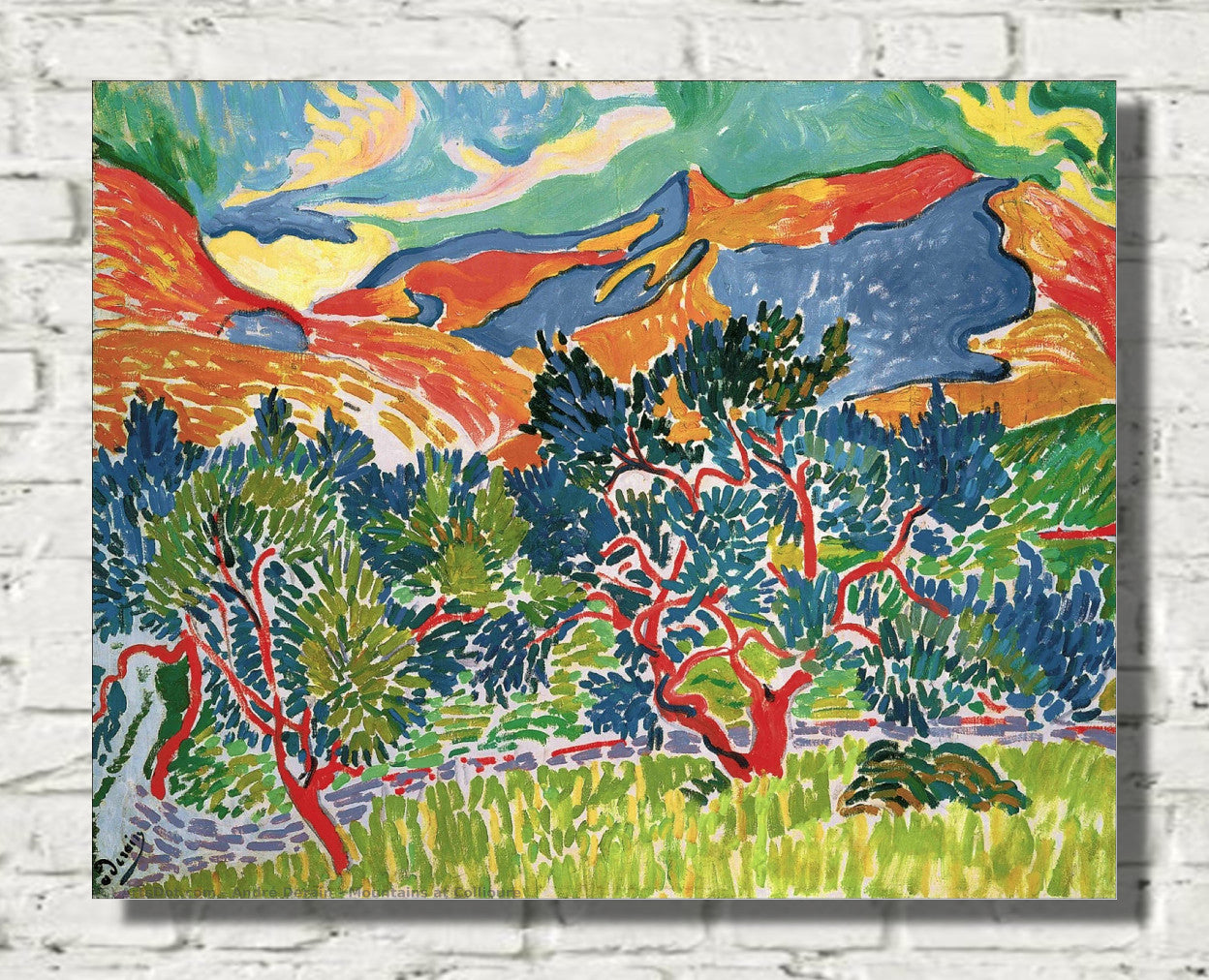
Greens, blues and purples dominate much of the canvas, creating a cooler palette than the blazing Mediterranean yellows and blues of the landscapes he had painted at Collioure during the previous summer.
Against these cooler colours, Derain introduces concentrated passages of yellow, pink and gold.
The strongest warmth appears in the reflections across the Thames.
The source of the sunlight itself remains outside the composition, but its presence is communicated through brilliant reflected colour.
Gold and yellow break through the surrounding blues and greens, producing the sensation that light is vibrating across the water.
Derain therefore does not need to paint a visible sun.
The interaction of colours creates its presence.
A Mosaic of Fauvist Brushstrokes
The technique of Waterloo Bridge is particularly distinctive.
Derain applies numerous separate strokes and dabs of relatively pure colour rather than blending the pigments smoothly together.
Many of these marks are short, thick and approximately square.
Across the Thames they form a kind of coloured mosaic.
Greens sit beside blues. Purples meet yellow and gold. Individual brushstrokes remain clearly visible rather than disappearing into a continuous illusion of water.
Derain also allows portions of the pale ground beneath the painting to remain visible between some marks.
This exposed ground becomes an active part of the image, helping create brightness between neighbouring colours.
The result is a surface that appears remarkably luminous despite the predominantly cool palette.
From Pointillism to Fauvism
The broken application of colour reflects Derain's earlier engagement with Neo-Impressionism and Pointillism.
Artists such as Georges Seurat and Paul Signac had demonstrated that colours could be placed separately on the canvas and allowed to interact visually rather than being fully mixed before application.
Derain and Matisse experimented with these ideas before and during their work together at Collioure in 1905.
Derain did not, however, follow a rigid scientific system.
His brushstrokes became much freer in their dimensions, direction and spacing.
In Waterloo Bridge, the traces of Pointillism remain visible, but they have been absorbed into a much more expressive Fauvist method.
The coloured mark is no longer merely part of an optical theory.
It has become a vehicle for emotion, light and rhythm.
The Thames as a Field of Colour
The river occupies a substantial part of the canvas and is arguably the most visually active element in the composition.
Water was an ideal subject for Derain because it has no single fixed colour.
It constantly reflects sky, sunlight, boats, buildings and surrounding activity.
This natural instability gave Derain enormous freedom.
The Thames could become blue, green, purple, yellow or gold without losing its identity as water.
Instead of creating conventional horizontal reflections, Derain breaks the river into numerous coloured marks whose directions and contrasts suggest movement.
The eye continually moves between these strokes.
The effect is both optical and emotional: the river seems alive with reflected light.
Industrial London and Modern Life
Derain's view combines famous architecture with unmistakably industrial elements.
The tall chimneys around Baltic Wharf are particularly important.
At the beginning of the twentieth century London was one of the world's largest industrial and commercial cities, and the Thames remained central to its economic life.
Factories, warehouses, wharves, steam vessels and river traffic existed beside palaces, historic monuments and government buildings.
Derain embraces that mixture.
He does not remove the industrial structures to create a picturesque view of London.
Instead, chimneys become strong vertical shapes within the composition and contribute to the modern character of the scene.
The result belongs firmly to contemporary urban life rather than to an idealised historic cityscape.
Why London Appears Cooler Than Collioure
The palette of Waterloo Bridge differs significantly from Derain's famous 1905 landscapes of Collioure.
At Collioure, intense Mediterranean sunlight encouraged blazing yellows, oranges, reds and brilliant blues.
London offered a completely different atmosphere.
Derain responded with a stronger emphasis on green, blue and purple.
This does not mean that he returned to naturalistic colour.
The hues remain highly intensified and expressive.
Instead, he adjusted the emotional temperature of the Fauvist palette to suit the northern city.
Warm yellows, pinks and golds become particularly powerful because they appear against this cooler background.
The painting demonstrates that Fauvism was not dependent upon Mediterranean sunshine.
Its liberated approach to colour could transform even London's famously cool and hazy atmosphere.
Derain's Three London Campaigns
Derain visited London on three occasions between March 1906 and February 1907 as part of Vollard's commission.
Across these visits he explored numerous viewpoints along the Thames.
Bridges, boats, docks and riverbank buildings recur throughout the series.
He produced views associated with Waterloo Bridge, Charing Cross Bridge, Westminster, the Houses of Parliament and the Pool of London.
Each painting offered a different opportunity to reorganise the city through colour.
Some compositions concentrate on architecture. Others emphasise boats or industrial activity.
Waterloo Bridge is especially successful because the broad bridge itself provides such a strong visual anchor while the river below becomes an almost abstract mosaic of coloured light.
Was Waterloo Bridge Painted in London?
Recent technical research by the Museo Nacional Thyssen-Bornemisza has added an intriguing question to the history of the painting.
The original is painted on a linen canvas bearing the stamp of the British art-materials manufacturer Winsor & Newton.
This confirms Derain's use of a support obtained in Britain.
However, the technical evidence does not establish with certainty whether Derain completed the painting while physically in London or took the canvas back to Paris and finished it there.
It is therefore most accurate to describe Waterloo Bridge as a work of Derain's 1906 London campaign rather than making an unnecessarily definite claim about the precise studio in which every stage was completed.
The 2025 Restoration of Waterloo Bridge
The Museo Nacional Thyssen-Bornemisza completed an extensive technical study and restoration of Waterloo Bridge in 2025.
The project lasted approximately fifteen months.
Specialists examined the painting using methods including X-radiography, infrared reflectography and different photographic techniques, alongside scientific analysis of its materials.
The conservation work was intended both to stabilise the canvas and to recover more closely the luminosity and colour relationships Derain originally created.
The restored painting was presented in a special display at the museum from April to June 2025.
The project has provided unusually detailed information about Derain's materials and working technique and reinforces the painting's importance within the museum's modern collection.
Waterloo Bridge and Fauvism
Waterloo Bridge displays many of the defining characteristics of Fauvist painting:
- pure colour used for expressive rather than strictly naturalistic purposes
- strong contrasts between neighbouring hues
- visible, independent brushstrokes
- simplified architectural forms
- limited conventional tonal modelling
- colour used to communicate light and atmosphere
- the pale ground allowed to participate in the finished image
- a familiar landscape transformed through the artist's subjective response
Derain's achievement is particularly striking because the subject is not an exotic or unfamiliar landscape.
Waterloo Bridge was one of the major structures of one of Europe's best-known cities.
Fauvism allowed Derain to make it appear completely new.
André Derain's Fauvist Painting Style
André Derain was one of the principal founders of Fauvism alongside Henri Matisse and Maurice de Vlaminck.
His early experiments with Vlaminck around Chatou encouraged increasingly forceful colour and direct brushwork.
During the summer of 1905, his collaboration with Matisse at Collioure transformed those experiments into the radical colour language now associated with Fauvism.
In 1906 Derain proved that this new language could be applied just as effectively to the modern city.
His London paintings replace Mediterranean beaches and hills with bridges, docks, boats, chimneys and monumental architecture, yet colour remains equally liberated.
Derain's Fauvist period was relatively brief.
By 1907–08 he was increasingly interested in Paul Cézanne, greater structural organisation and earlier European painting.
The London series therefore belongs to the short period in which Derain's use of colour was at its most adventurous.
About André Derain
André Derain (1880–1954) was a French painter, sculptor, printmaker and designer and one of the major figures in the development of early twentieth-century modern art.
Born in Chatou near Paris, Derain initially studied engineering while also pursuing artistic training.
His friendship with Maurice de Vlaminck encouraged early experiments with vivid colour and energetic brushwork.
His subsequent work with Henri Matisse at Collioure during the summer of 1905 placed him at the centre of the Fauvist breakthrough.
Derain went on to create important landscapes at L'Estaque and his celebrated London series for Ambroise Vollard.
After the Fauvist period, his work moved towards greater structural restraint and increasingly reflected his interest in Cézanne, classical art and the European Old Masters.
Although his long career encompassed many artistic approaches, his Fauvist paintings remain among the defining achievements of modern colour painting.
The Original Waterloo Bridge
The original Waterloo Bridge was painted by André Derain in 1906.
It was created in oil on canvas and measures approximately 80.5 × 101 cm.
The painting presents the old Waterloo Bridge viewed from Victoria Embankment, with Whitehall Court visible towards the right, industrial chimneys around Baltic Wharf on the left and the Houses of Parliament appearing more distantly within the London panorama.
The bridge itself is painted an intense blue and forms the principal horizontal line across the composition.
The River Thames below is constructed from a remarkable mosaic of greens, blues, purples, yellows, pinks and golds applied in separate strokes over a pale ground.
The original painting is held by the Museo Nacional Thyssen-Bornemisza in Madrid as part of its permanent collection.
The museum records the work under inventory number 524 (1972.17).
In 2025 the museum completed an extensive fifteen-month technical study and restoration of the painting, recovering much of the luminosity and strength of colour characteristic of Derain's original conception.
An André Derain Waterloo Bridge Print for Your Interior
An André Derain Waterloo Bridge print combines one of London's most recognisable subjects with the intense colour and visual energy of Fauvism.
Unlike conventional London photography or monochrome architectural wall art, Derain's interpretation offers a rich palette of blue, green, purple, yellow, pink and gold.
This makes the painting particularly effective where London imagery is desired without sacrificing strong modern colour.
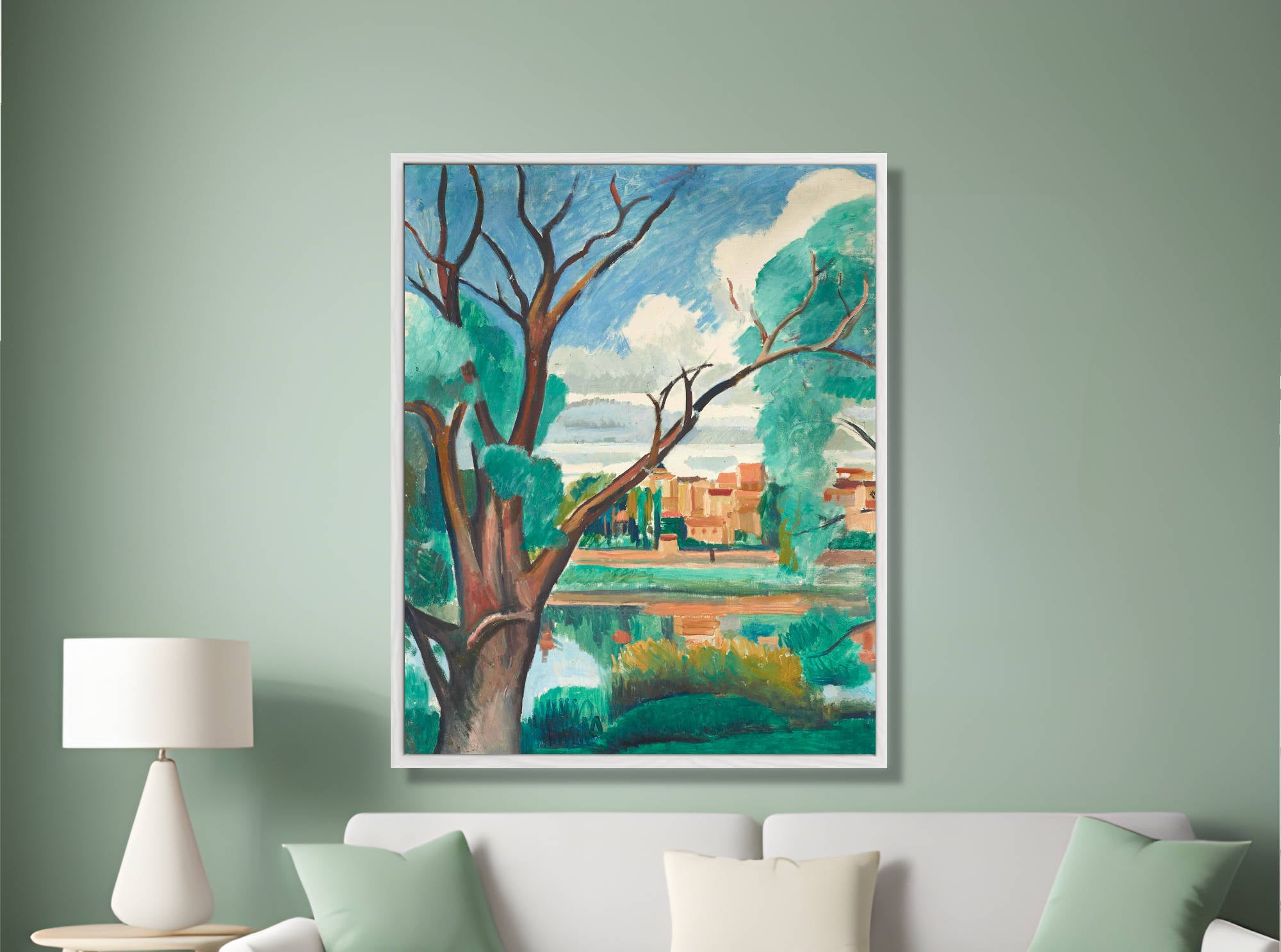
White, cream, putty and pale grey walls provide excellent backgrounds for the vivid palette, while natural timber furniture complements the painting particularly well in contemporary and Scandinavian-inspired interiors.
The wide horizontal composition makes it suitable for placement above sofas, beds, sideboards and console tables.
It can work particularly well in living rooms, dining rooms, bedrooms, hallways, studies and home offices.
For admirers of modern art, however, Waterloo Bridge offers considerably more than decorative appeal. It represents the extraordinary moment when one of the founders of Fauvism applied the movement's liberated colour to the heart of Edwardian London.
Frequently Asked Questions
When did André Derain paint Waterloo Bridge?
Derain painted Waterloo Bridge in 1906 as part of his celebrated series of Fauvist London paintings.
Where is the original Waterloo Bridge by André Derain?
The original is held by the Museo Nacional Thyssen-Bornemisza in Madrid as part of its permanent collection.
What is the museum inventory number?
The Museo Nacional Thyssen-Bornemisza records Waterloo Bridge under inventory number 524 (1972.17).
What size is the original Waterloo Bridge?
The original painting measures approximately 80.5 × 101 cm.
What medium did André Derain use?
The original Waterloo Bridge was painted in oil on canvas.
Where did Derain view Waterloo Bridge from?
The composition shows the old Waterloo Bridge from Victoria Embankment on the north bank of the River Thames.
What buildings can be seen in Waterloo Bridge?
The painting includes the old Waterloo Bridge, Whitehall Court, the industrial chimneys around Baltic Wharf on the south bank and the Houses of Parliament in the distance.
Is Waterloo Bridge a Fauvist painting?
Yes. The Museo Nacional Thyssen-Bornemisza regards the work as a masterpiece of Derain's Fauvist period. Its brilliant non-naturalistic colour and mosaic-like brushwork are characteristic of his London paintings of 1906–07.
Why is Waterloo Bridge painted blue?
Derain did not restrict colour to literal description. The brilliant blue bridge provides a powerful horizontal structure within the composition while also contrasting with the surrounding greens, purples, yellows and golds.
Why does the River Thames contain so many colours?
Derain uses separate greens, blues, purples, yellows, pinks and golds to suggest moving water and reflected light. The colours interact across the surface rather than reproducing a single naturalistic river colour.
Was Derain influenced by Pointillism?
Yes. Derain had absorbed ideas from artists such as Paul Signac and used separate touches of pure colour. In Waterloo Bridge, however, these marks are freer and larger, creating a distinctive Fauvist mosaic rather than following a strict Pointillist system.
Was André Derain influenced by Claude Monet's London paintings?
Monet's celebrated Thames series provided an important precedent for Derain's London commission. Derain deliberately developed a very different response, replacing subtle atmospheric observation with the expressive colour of Fauvism.
Was Derain influenced by J. M. W. Turner?
Yes. Henri Matisse encouraged Derain to study Turner's paintings while he was in London. Turner's freedom in representing light and colour provided another important reference for Derain's treatment of the Thames.
Why did André Derain go to London?
The art dealer Ambroise Vollard sent Derain to London after acquiring his available output in 1905. Between March 1906 and February 1907 Derain made three visits connected with the series and produced approximately thirty views of the Thames.
Did Derain definitely paint Waterloo Bridge entirely in London?
Not necessarily. Technical study has identified a Winsor & Newton stamp on the linen canvas, confirming its British origin, but the museum notes that it remains uncertain whether Derain completed the painting in London or took the canvas back to Paris.
Was Waterloo Bridge restored recently?
Yes. The Museo Nacional Thyssen-Bornemisza completed an extensive fifteen-month technical study and restoration in 2025, designed to stabilise the work and recover the colour and luminosity of Derain's original painting.
Is Waterloo Bridge available as a framed André Derain print?
Yes. GalleryThane offers Waterloo Bridge (1906) in a choice of sizes and formats, including fine art paper prints, framed prints and canvas options.
Where would an André Derain Waterloo Bridge print work well?
Its colourful horizontal format makes it particularly suitable for living rooms, dining rooms, bedrooms, hallways, studies and home offices. It works especially well in contemporary, Scandinavian-inspired, mid-century and eclectic interiors.
All orders for unframed fine art prints and original paintings are dispatched within 2 working days of receipt of payment.
Orders for custom framed prints are dispatched within 4 working days.
All orders are fully tracked from dispatch to delivery at your home or business.
All print and original painting orders are fully insured against loss or damage in transit. We refund or replace any damaged or lost orders.
Buy with confidence - read what our satisfied customers have to say - Reviews
Fine art papers are printed without any additional white border Please let us know at the time of ordering if you would like a small additional white border.
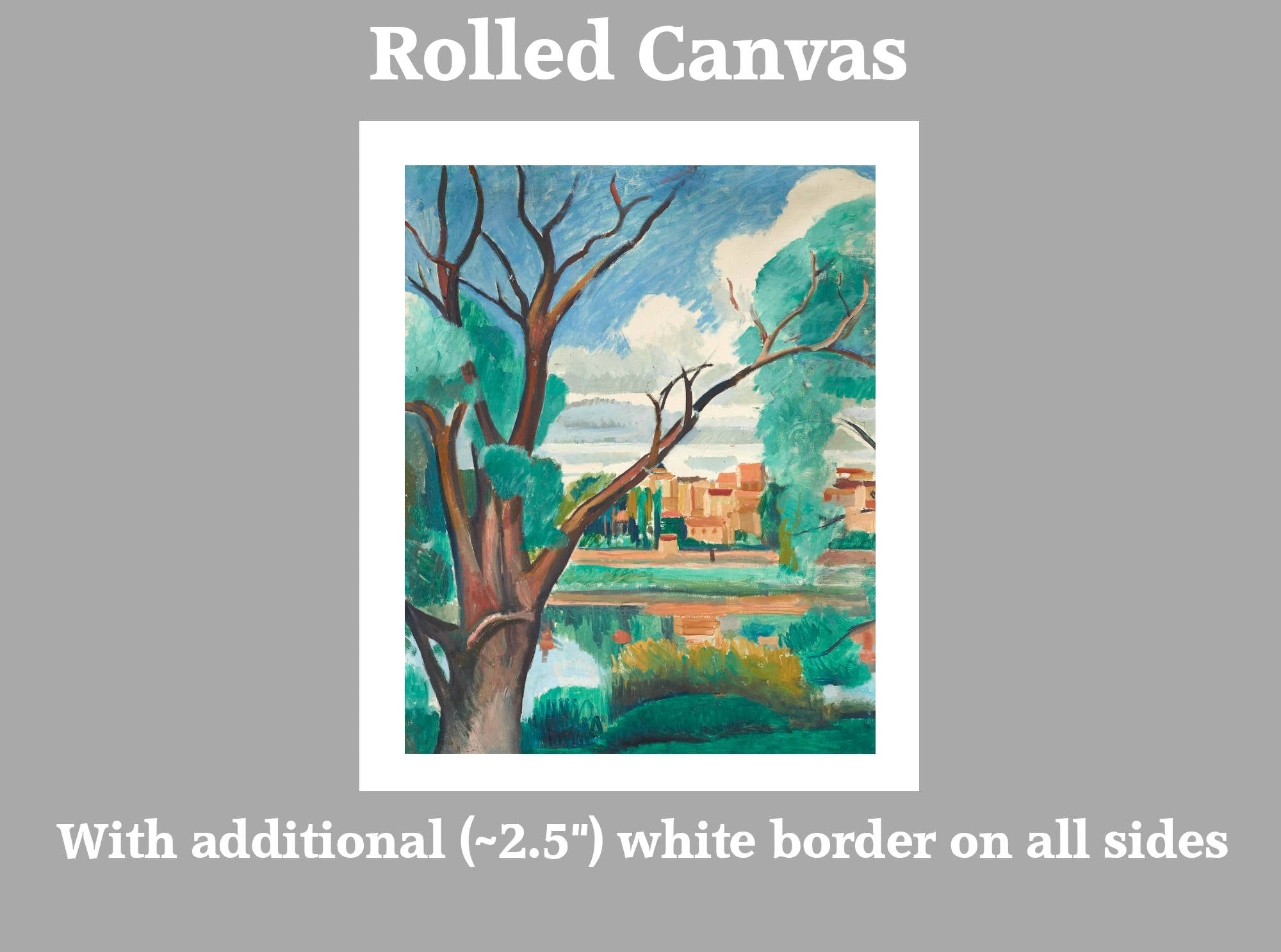
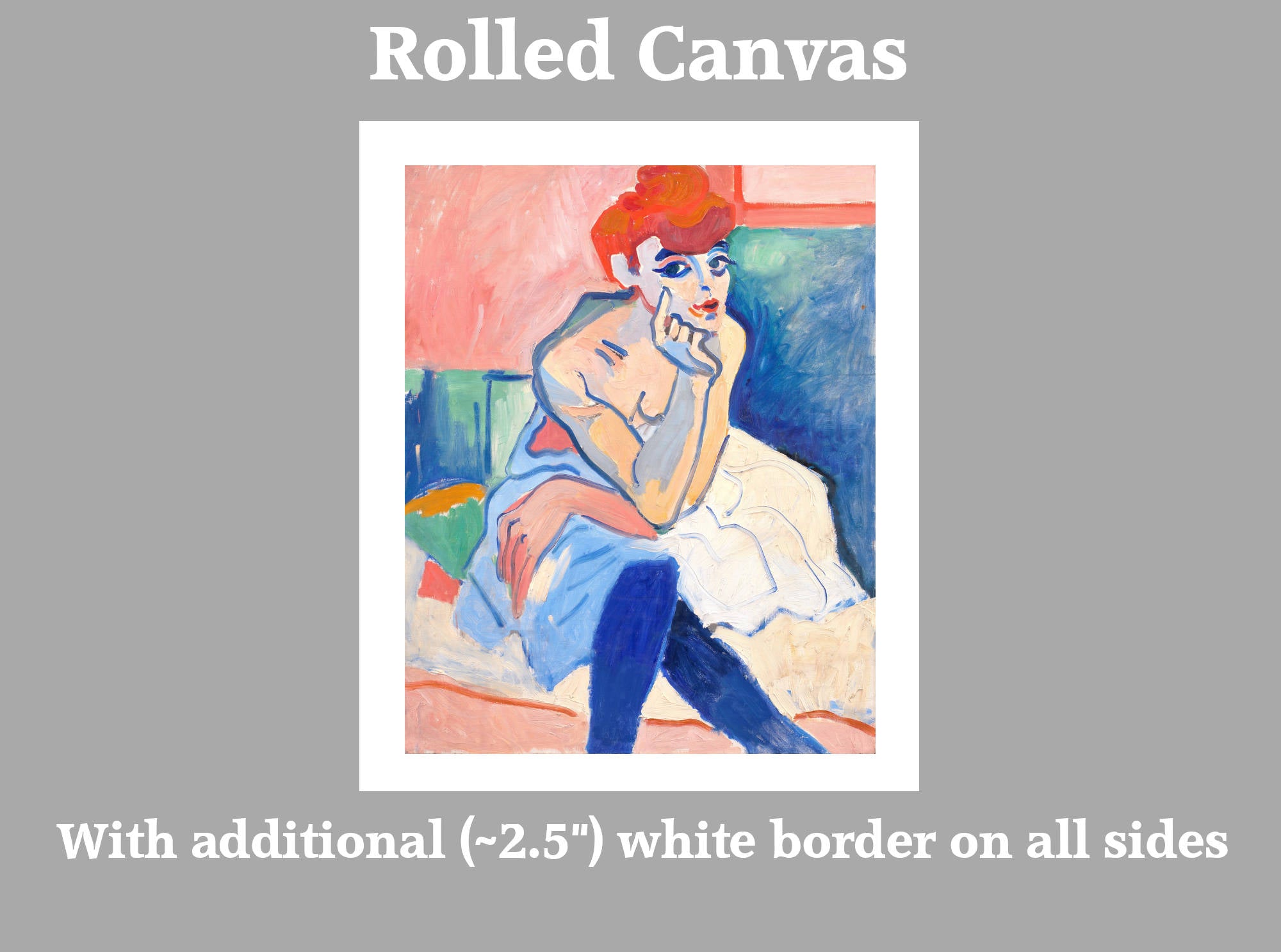
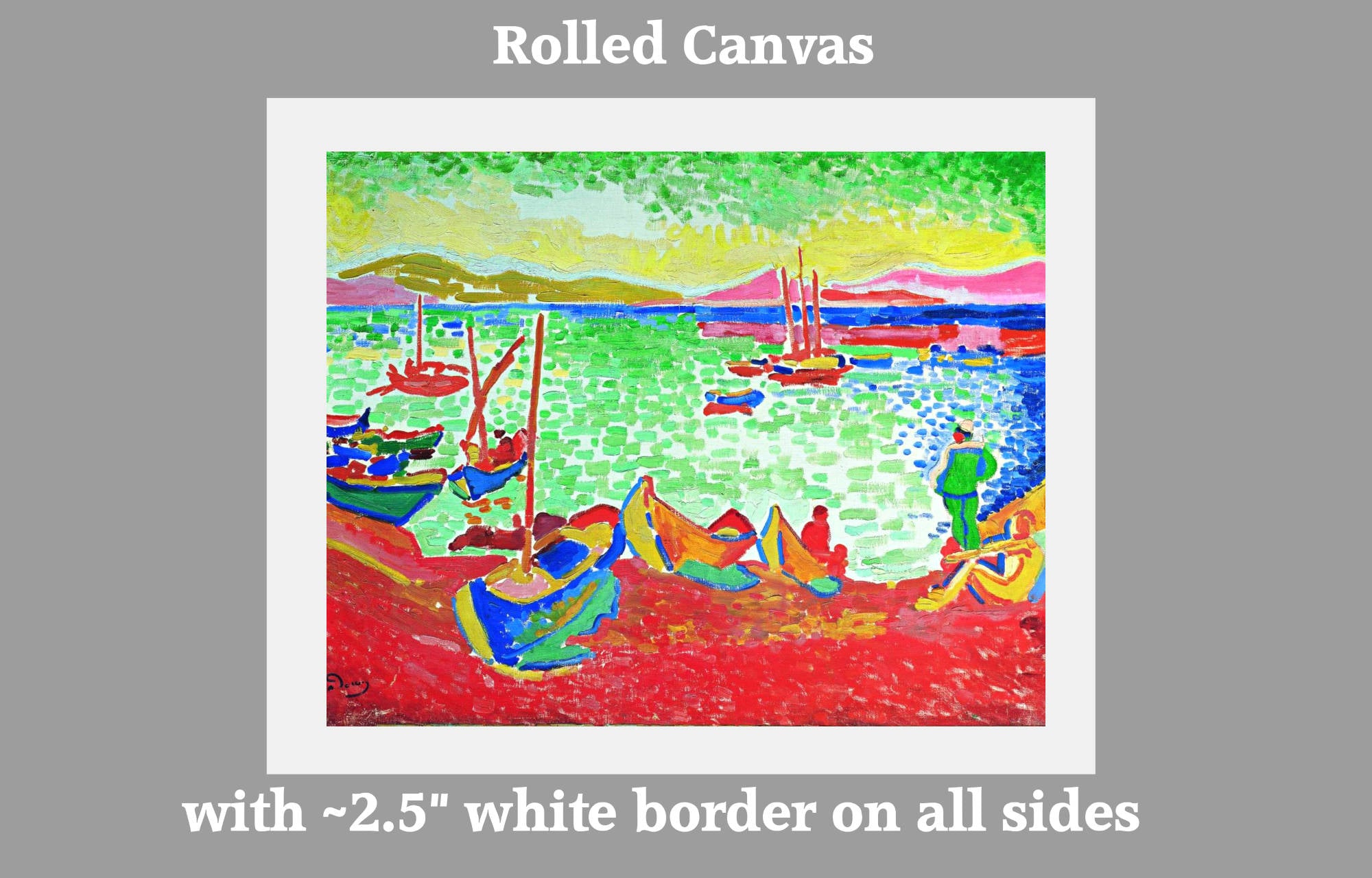
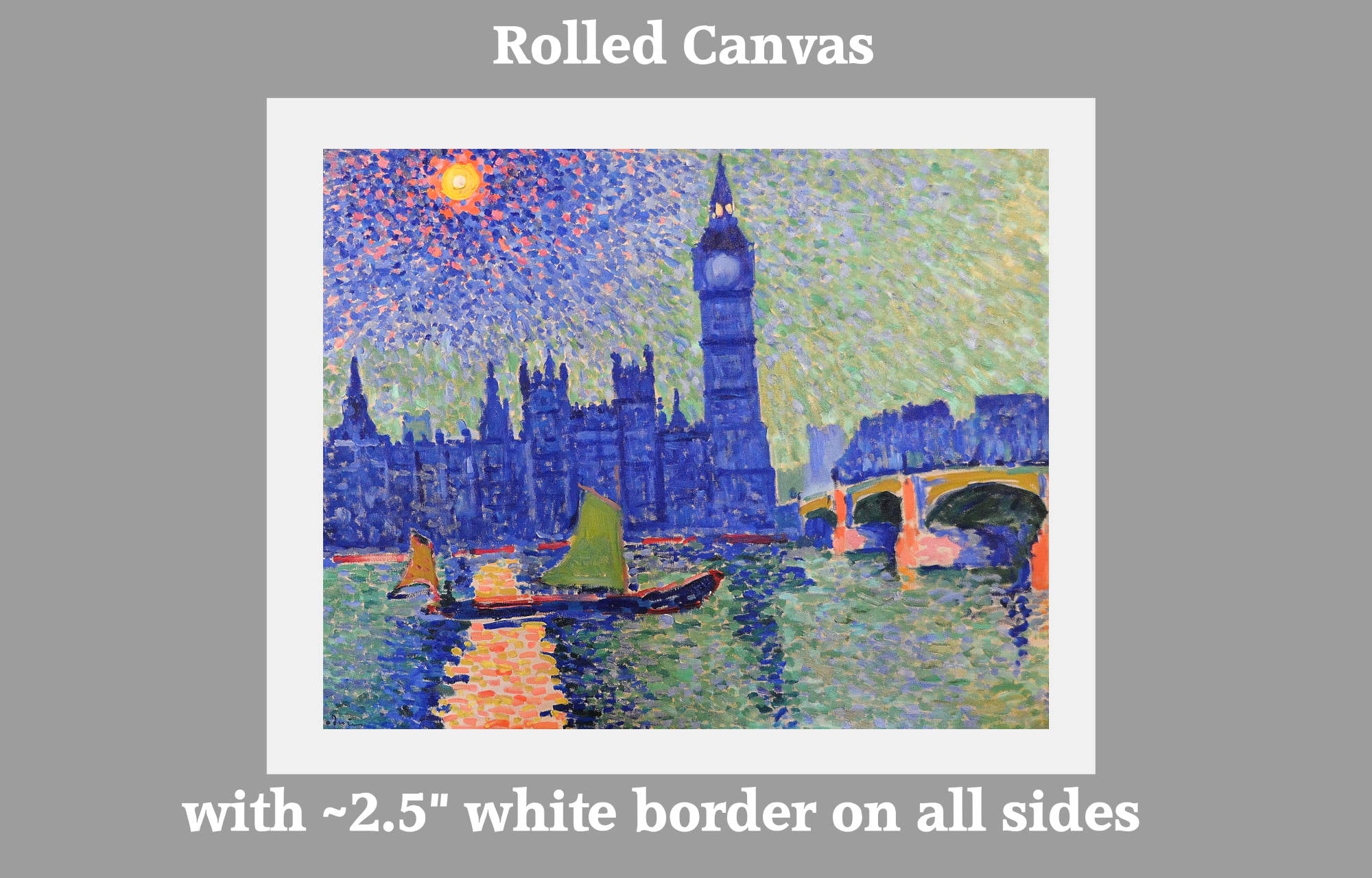
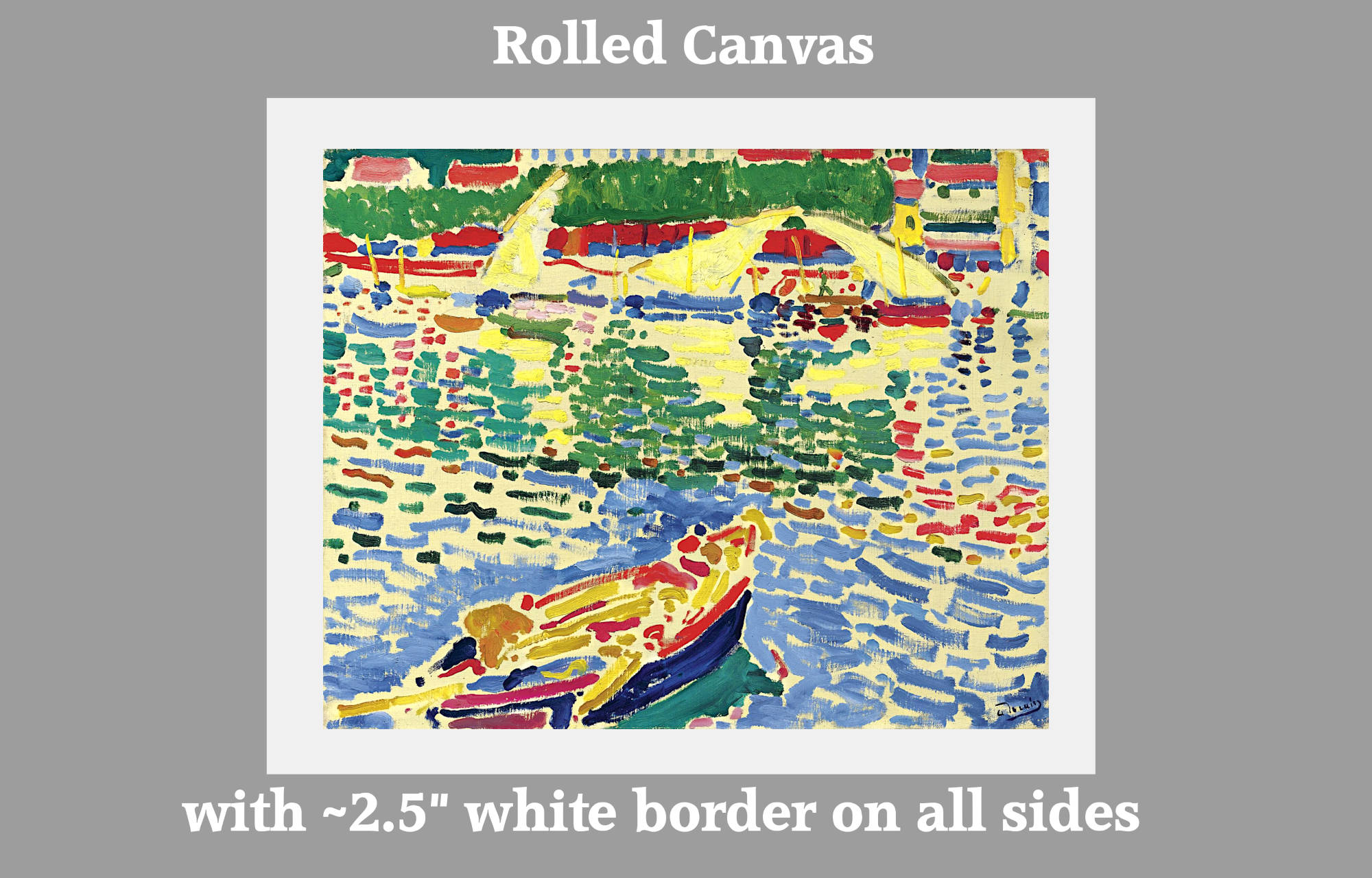
Rolled canvas options have an additional white border of approximately 2.5 inches (7cm) on all 4 sides to aid stretching.
Ready to hang canvas panels are stretched on 1.5 inch deep solid pine frames from sustainable forestry sources. The image is mirrored on all 4 sides to give an aesthetically pleasing finish.
Why not have us gift wrap your order and attach a personalised message to the recipient. Available for all orders. Each order is hand wrapped in high quality gift wrap with meatllic ribbon and bow. Your personalised message is printed on a card which is included with your order.
Have your hand wrapped gift delivered directly to the recipient.
Full tracking and insurance included with every order.
Please note design may vary depending upon availability
Just purchase the gift wrap option HERE
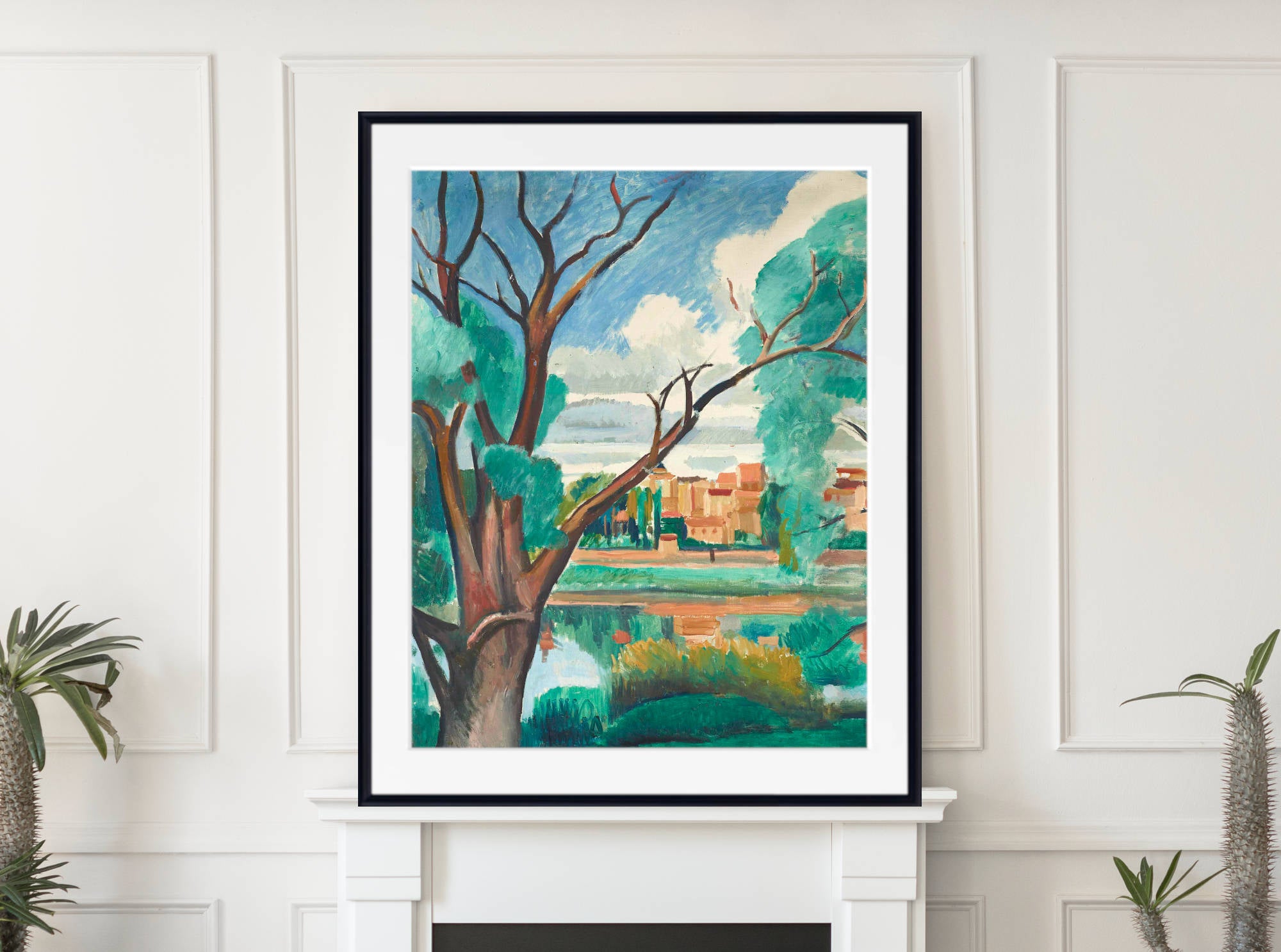
We have a wide range of frames in standard sizes and we also make custom size frames.
To order a framed print:
1. select the print size you would like along with the print materials (matte paper, fine art paper).
2. Add your print choice to the basket.
3. Choose from our range of frames
4. Select the same size as the print you have added to your basket. If the frame size you want is not listed please contact us
5. Choose from the mount or no-mount option
6. Add your frame choice to the basket
7. Proceed to checkout.
Why Choose GalleryThane?
- Printed and framed in-house
- Free UK delivery
- Free EU and USA delivery on orders over £200
- Tracking and insurance included in every order
- Fast 1-3 day dispatch
- Gift wrapping service available
- Gallery quality materials
- Sustainable, eco-friendly packaging
- Great customer support
Explore related collections

What makes our Prints and Canvas Panels so special

Latest Giclee Printing Technology
We have invested in the latest wide format print technology to produce museum quality giclee prints utilising the highest quality pigment inks to give outstanding colour reproduction.

Museum Quality Archival Fine Art Papers
We print on the finest quality fine art papers with textured, smooth and lustre finishes for prints which last a lifetime.
From aceo miniatures to 40x80 inch large format, every print has our lifetime quality guaranteee.

Solid Wood Frames, Cotton Canvas
All of the wood for our canvas panels and frames is responsibly sourced from manages forests. Our cotton canvas is completely seedless for the highest quality reproduction possible.

Have Your Gift Wrapped


