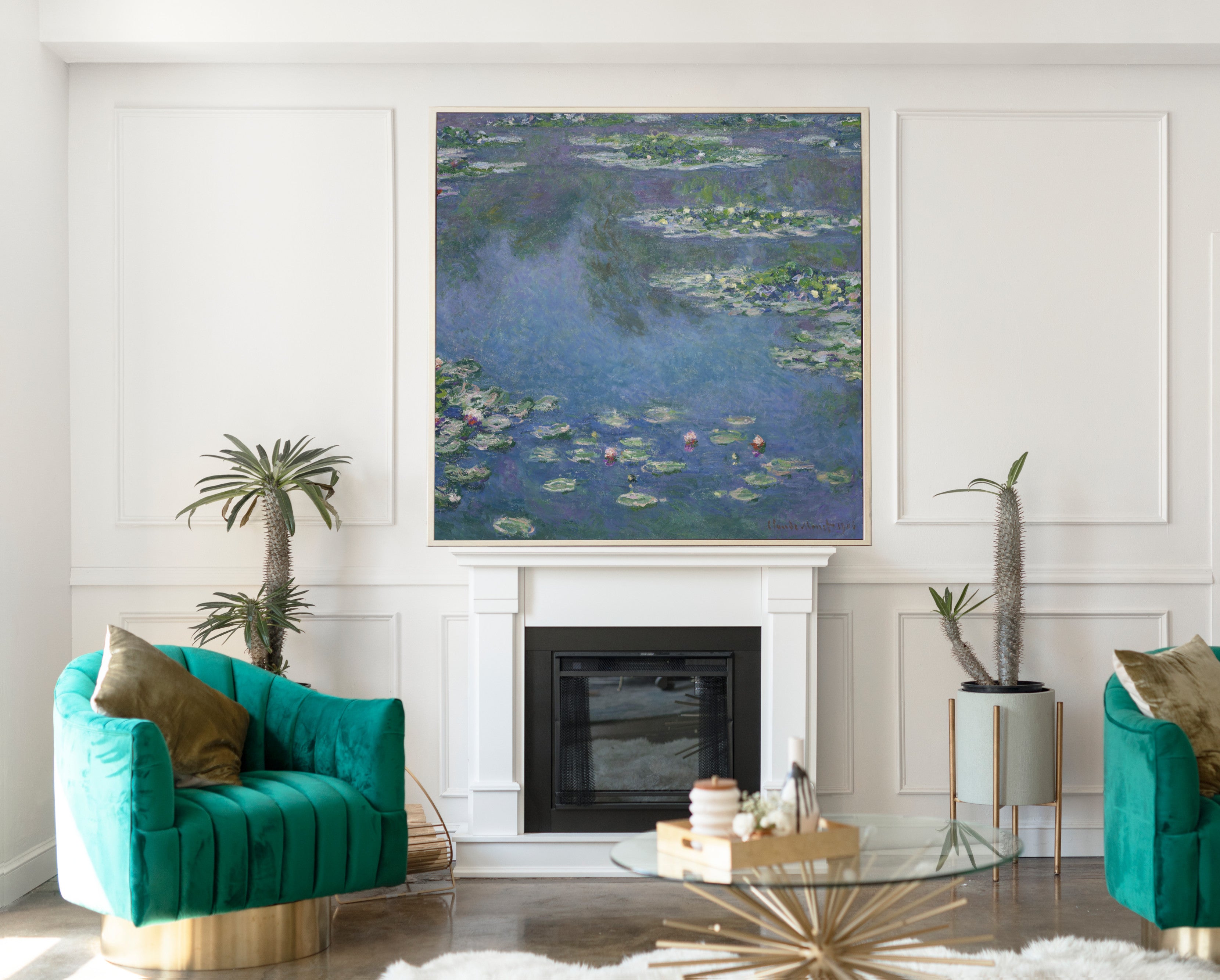
Few artists offer as much scope for a beautiful and coherent gallery wall as Claude Monet. Across gardens, water lilies, London fog, Normandy coastlines, flowers, haystacks and changing light, Monet created groups of paintings that can be combined naturally while still giving every individual artwork its own character.
A well-planned Claude Monet gallery wall can be quiet and contemplative, colourful and romantic, atmospheric and dramatic, or broad enough to tell the story of Monet's entire career. Whether you are arranging two or three smaller prints or building a substantial display of six, seven or eight works, the key is to create a visual connection through colour, subject, series, place or mood.
This guide presents eight distinctive ways to curate Monet prints for your home, from an expansive survey of his most famous paintings to focused arrangements inspired by Giverny, Water Lilies, London, the Normandy coast and the celebrated Haystacks series. You can also explore the complete Claude Monet Gallery Wall Prints collection or browse the broader selection of Claude Monet fine art prints.
For anyone drawn to Impressionist gallery wall art, Monet is an especially rewarding starting point: repeated motifs, shifting seasons and changing light make it possible to combine varied compositions without losing visual unity.
Quick Answer: How Do You Create a Claude Monet Gallery Wall?
The most effective Monet gallery walls connect three to eight paintings through a clear visual idea. You might choose works from one series, such as Water Lilies or Haystacks; one place, such as Giverny or London; one subject, such as gardens or the sea; or a harmonious colour palette built around blues, greens, pinks and purples.
Use one or two stronger paintings as visual anchors, vary square, portrait and landscape formats where appropriate, and maintain consistent spacing. Matching black frames and white mounts can unify works of different sizes and subjects, allowing Monet's changing colours and brushwork to become the focus of the display.
1. The Ultimate Claude Monet Gallery Wall

For a gallery wall that captures the extraordinary range of Monet's art, combine landscapes, figures, gardens, water and changing light. This approach works particularly well on a substantial living-room wall, above a large sofa or sideboard, or in a hallway where the arrangement can be appreciated gradually.
The composition shown here brings together six distinctive paintings:
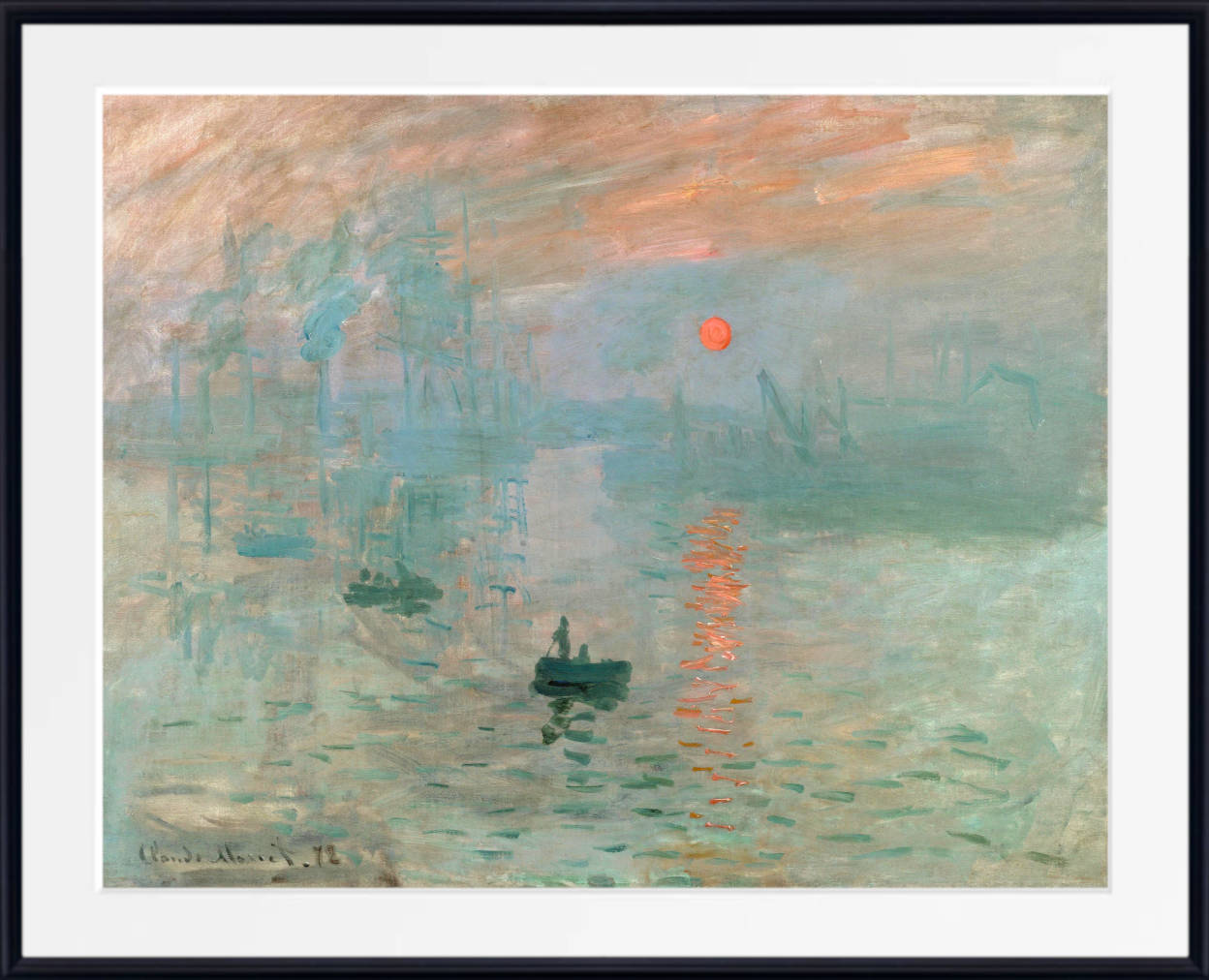
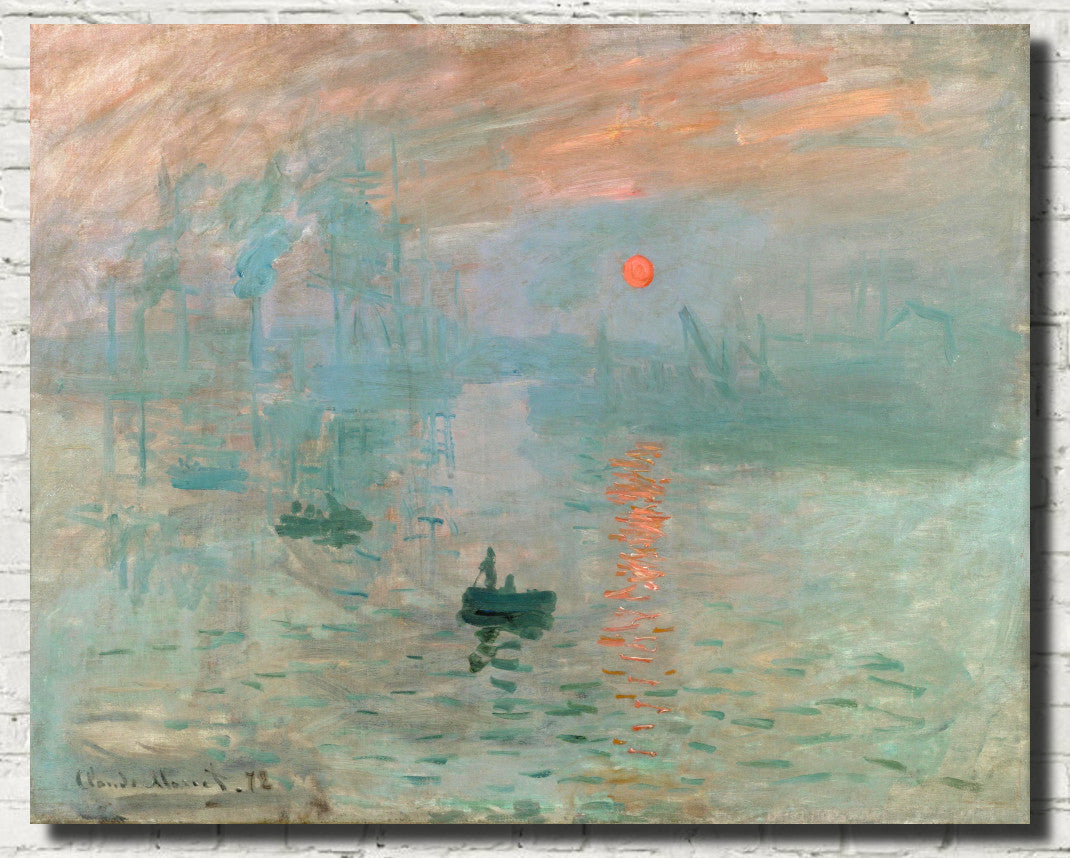
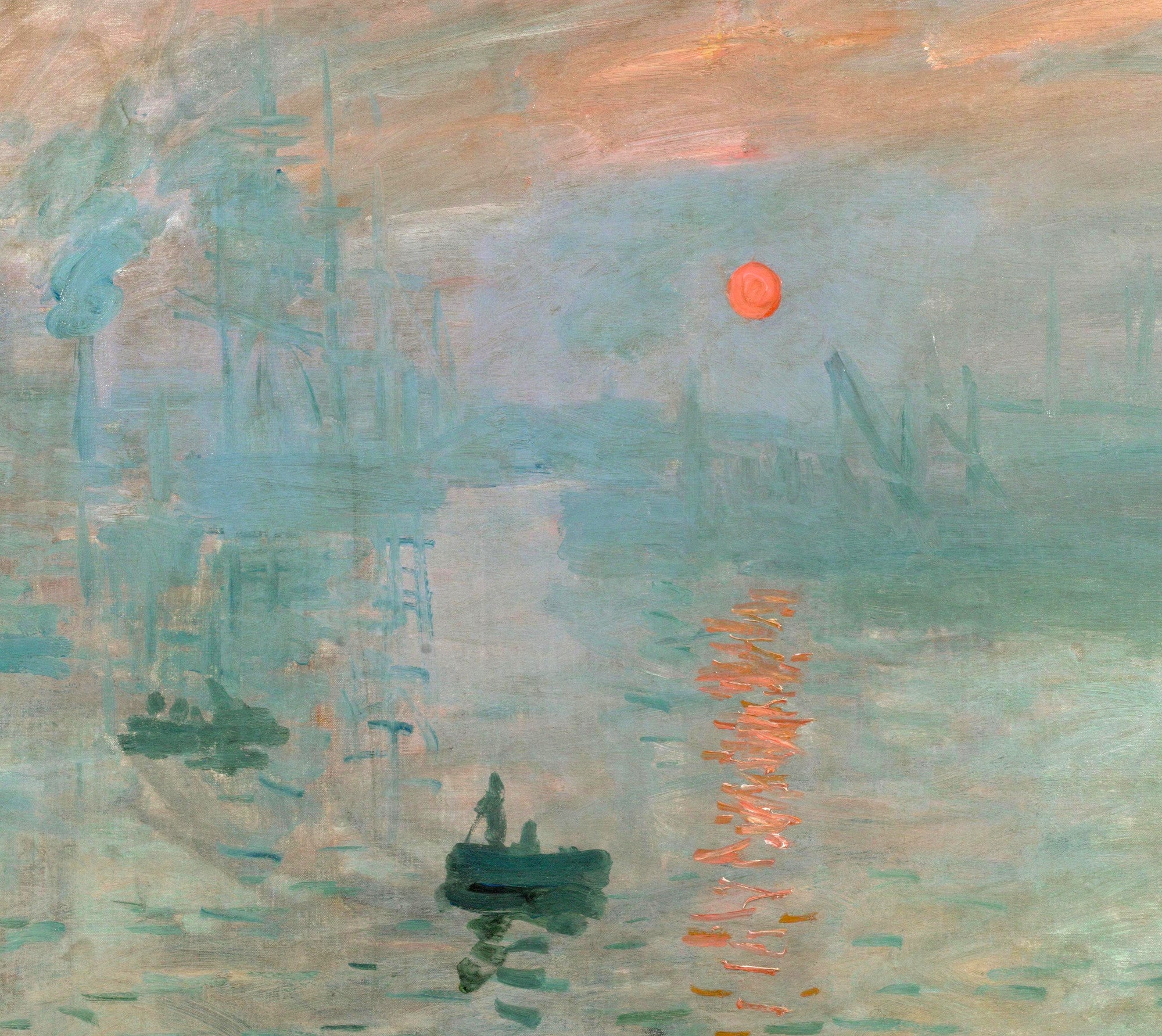
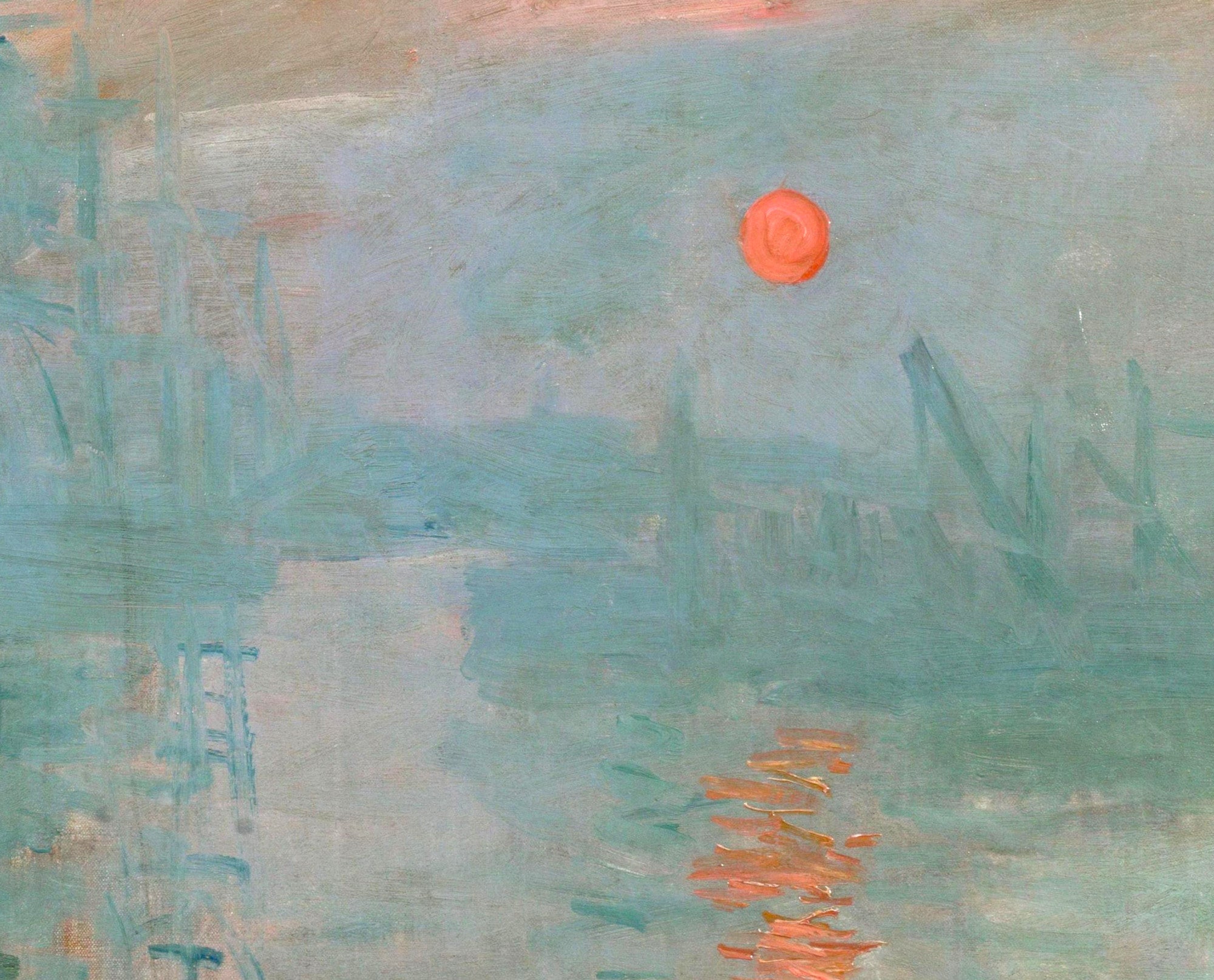
- Impression, Sunrise
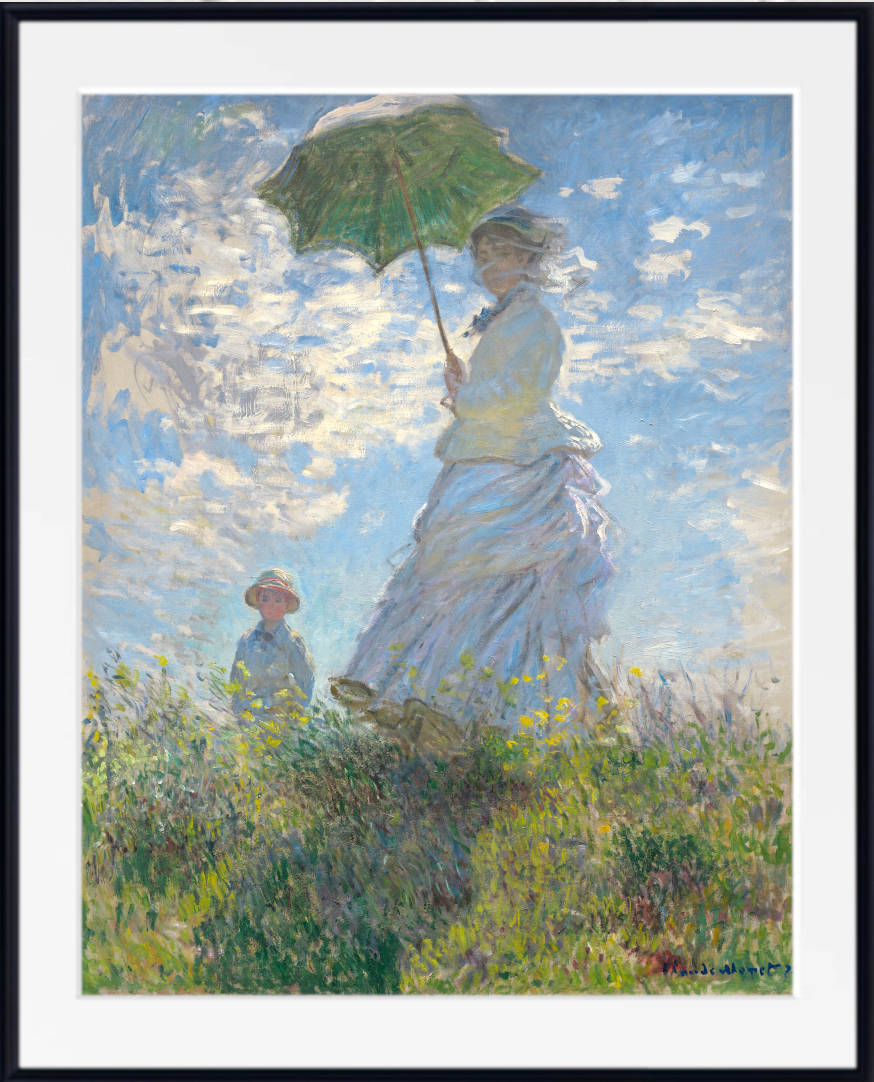
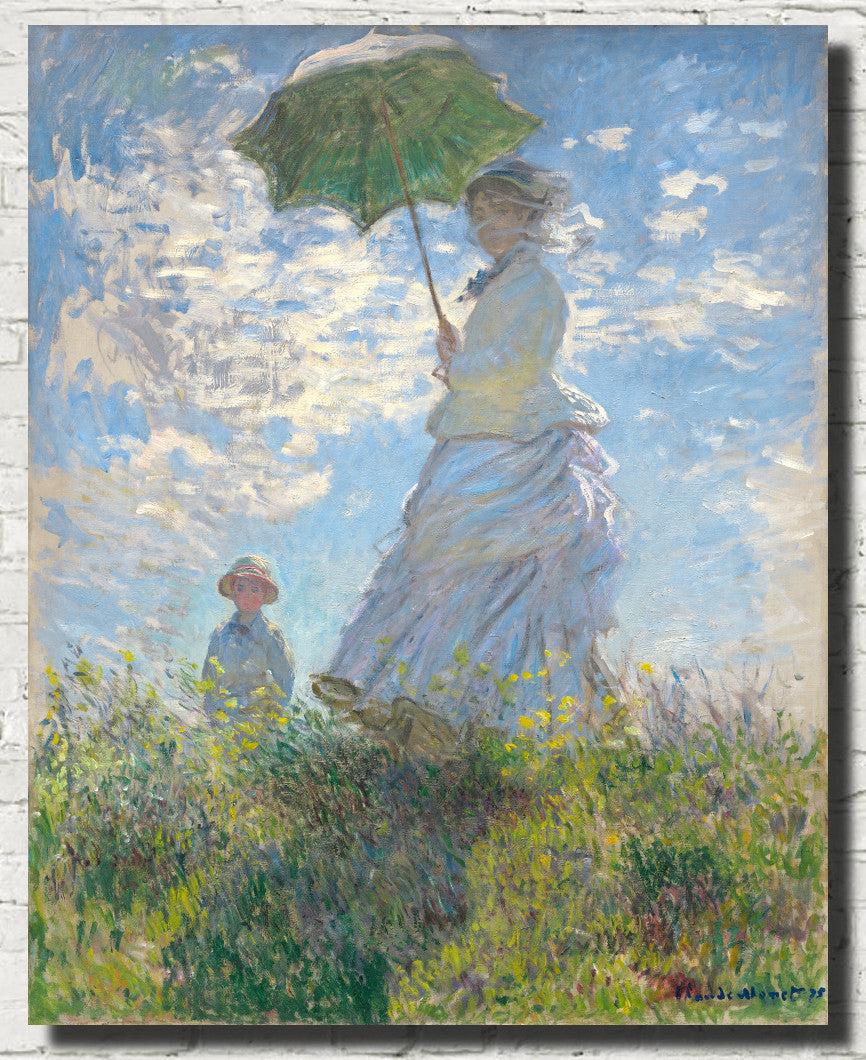
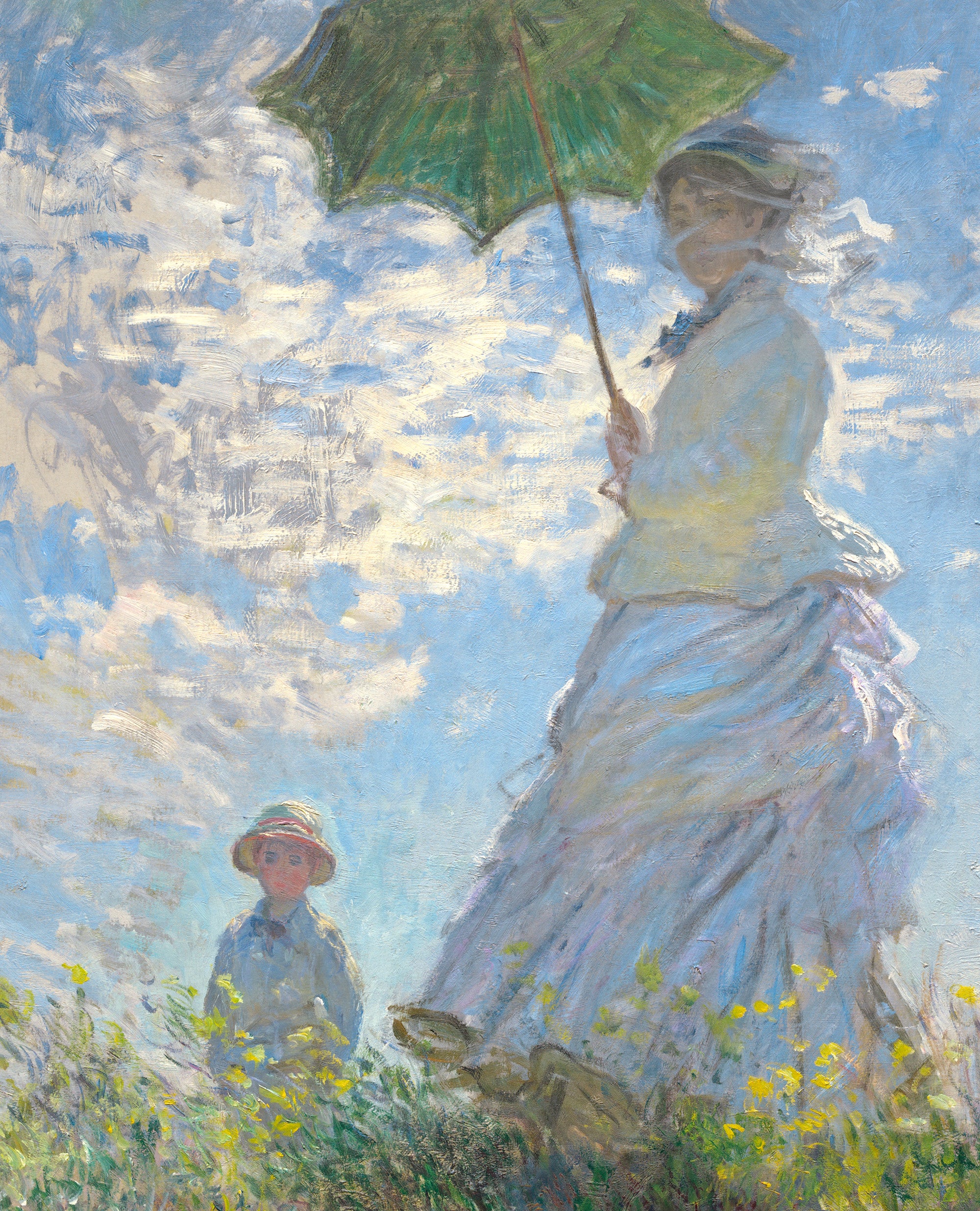
- Woman with a Parasol
- Haystacks
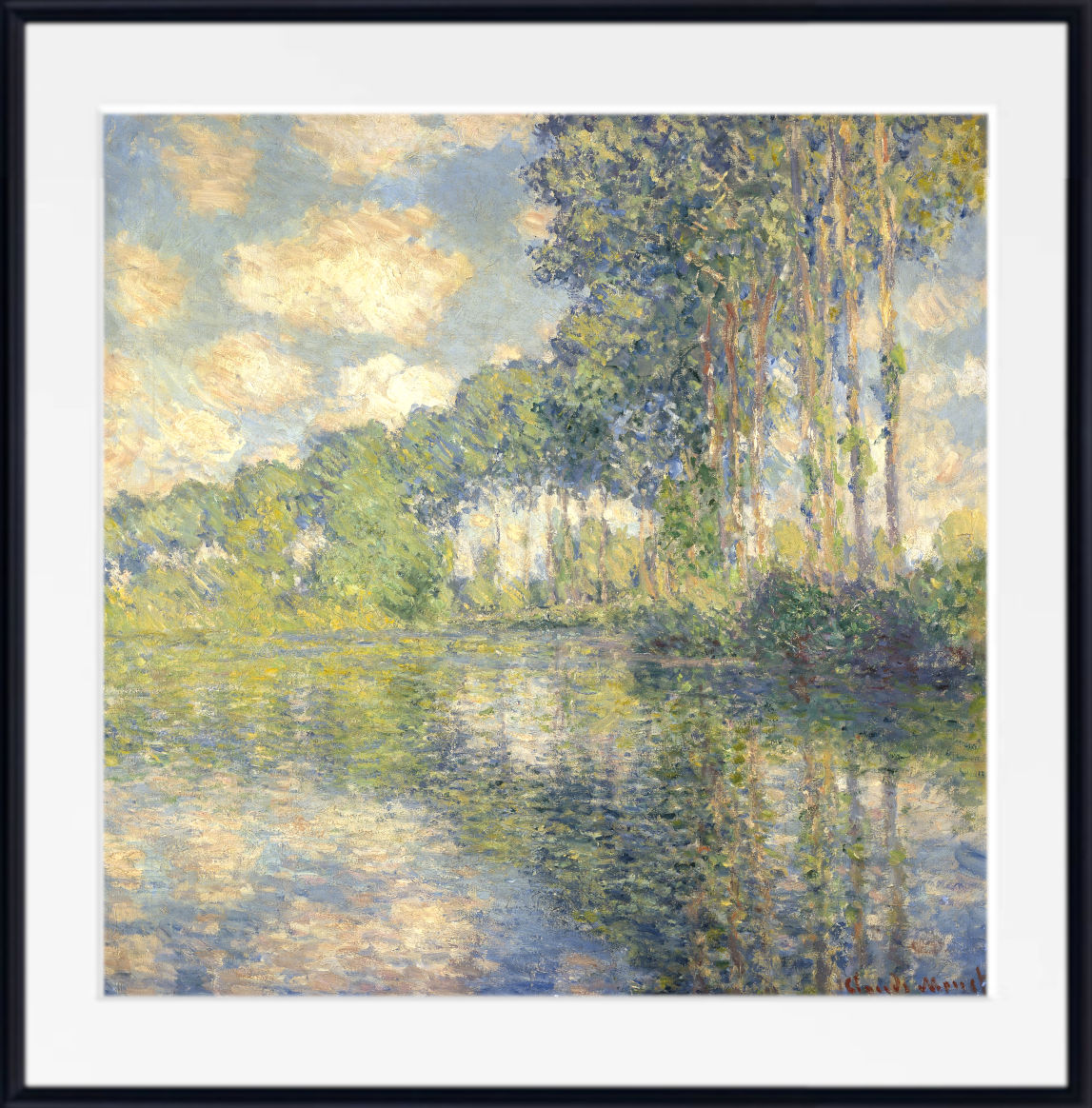
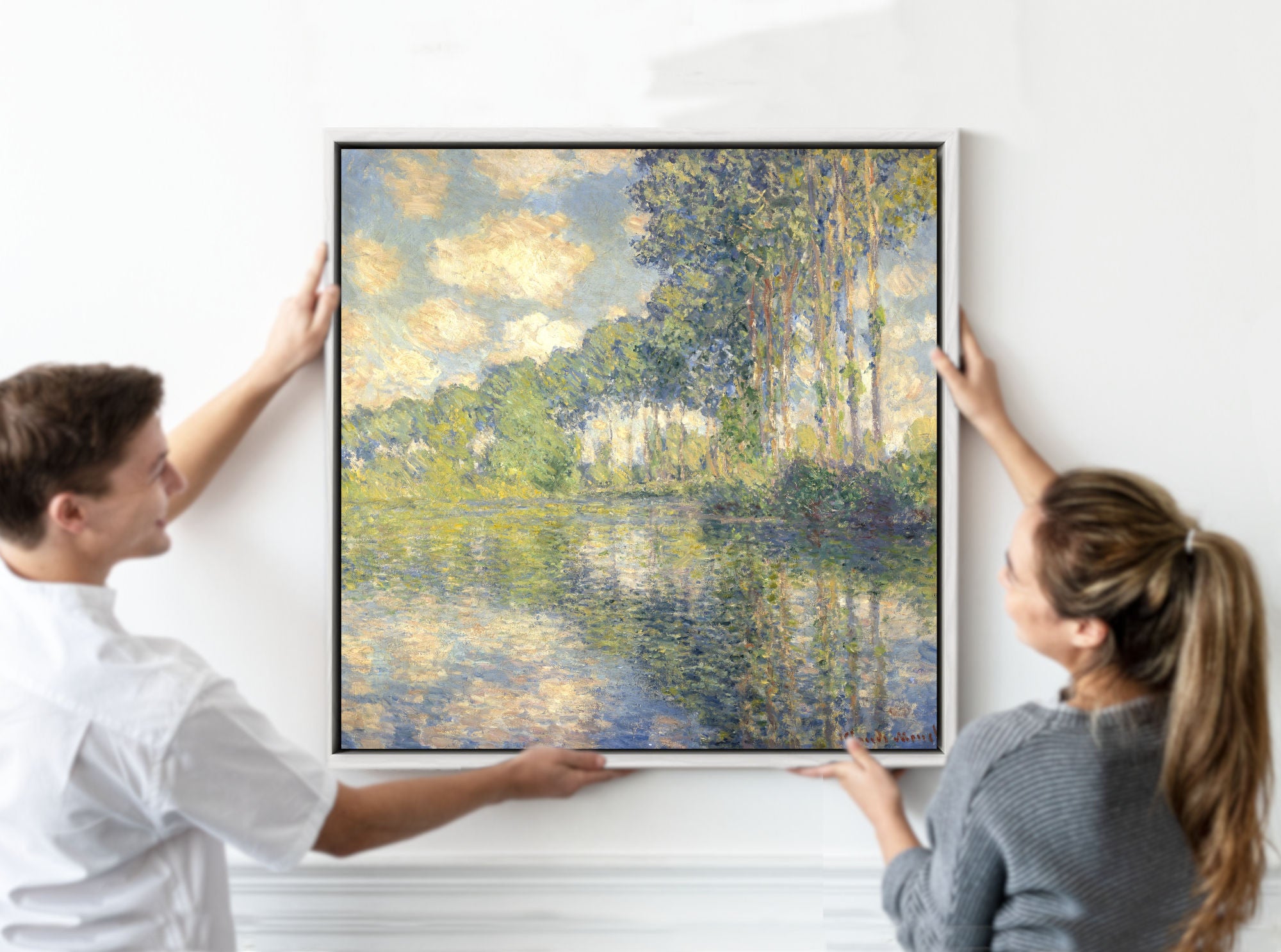
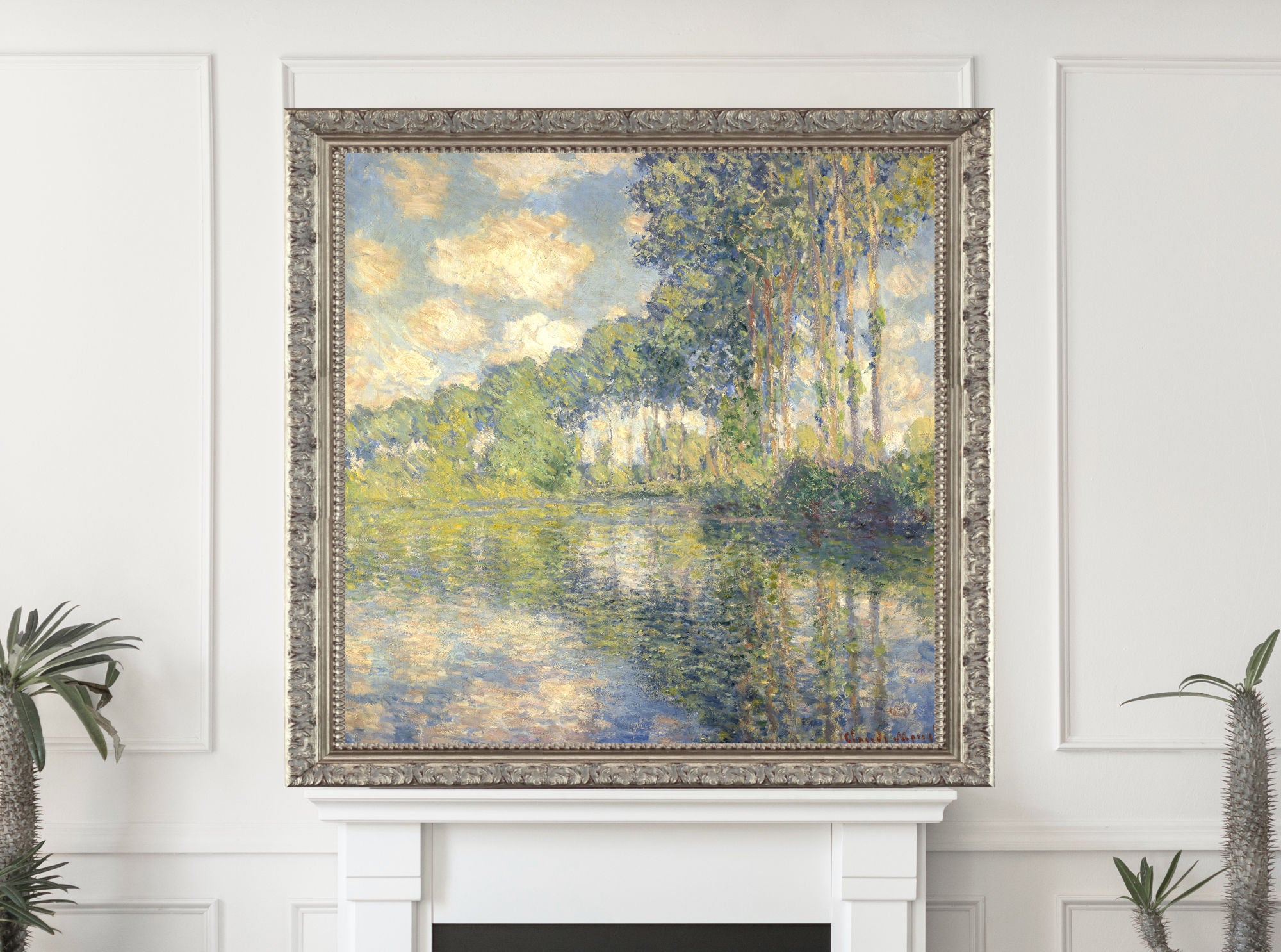
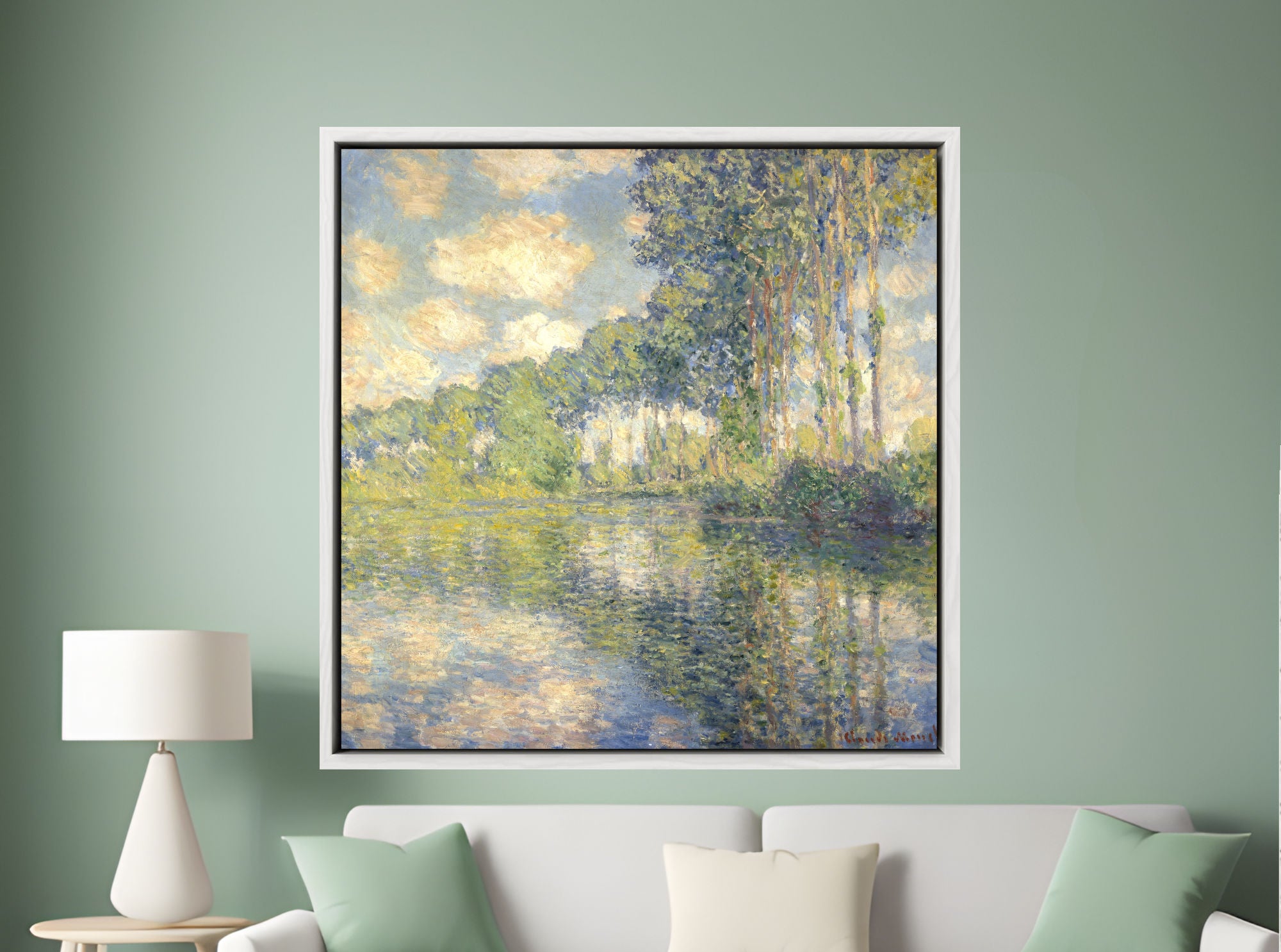
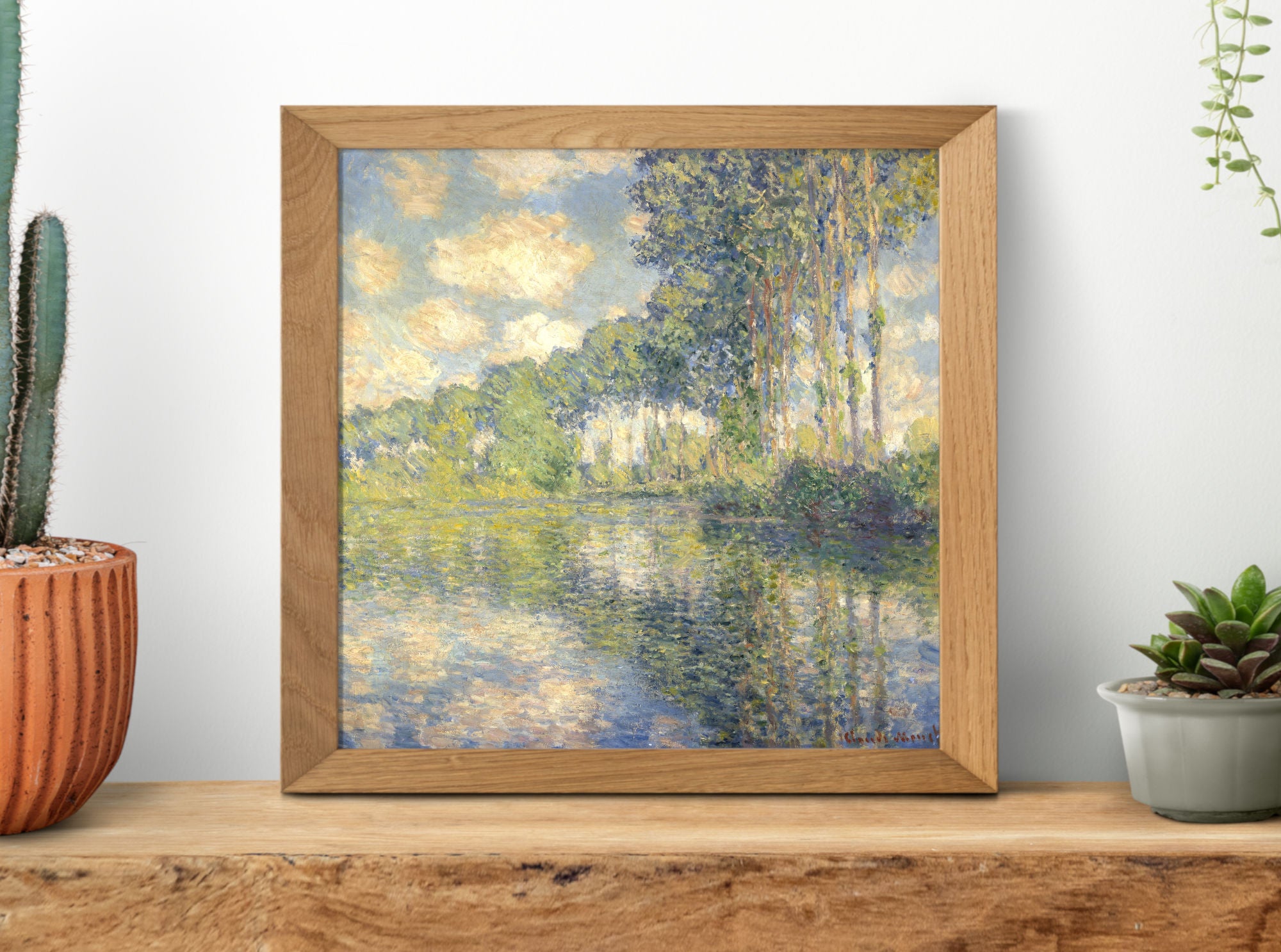
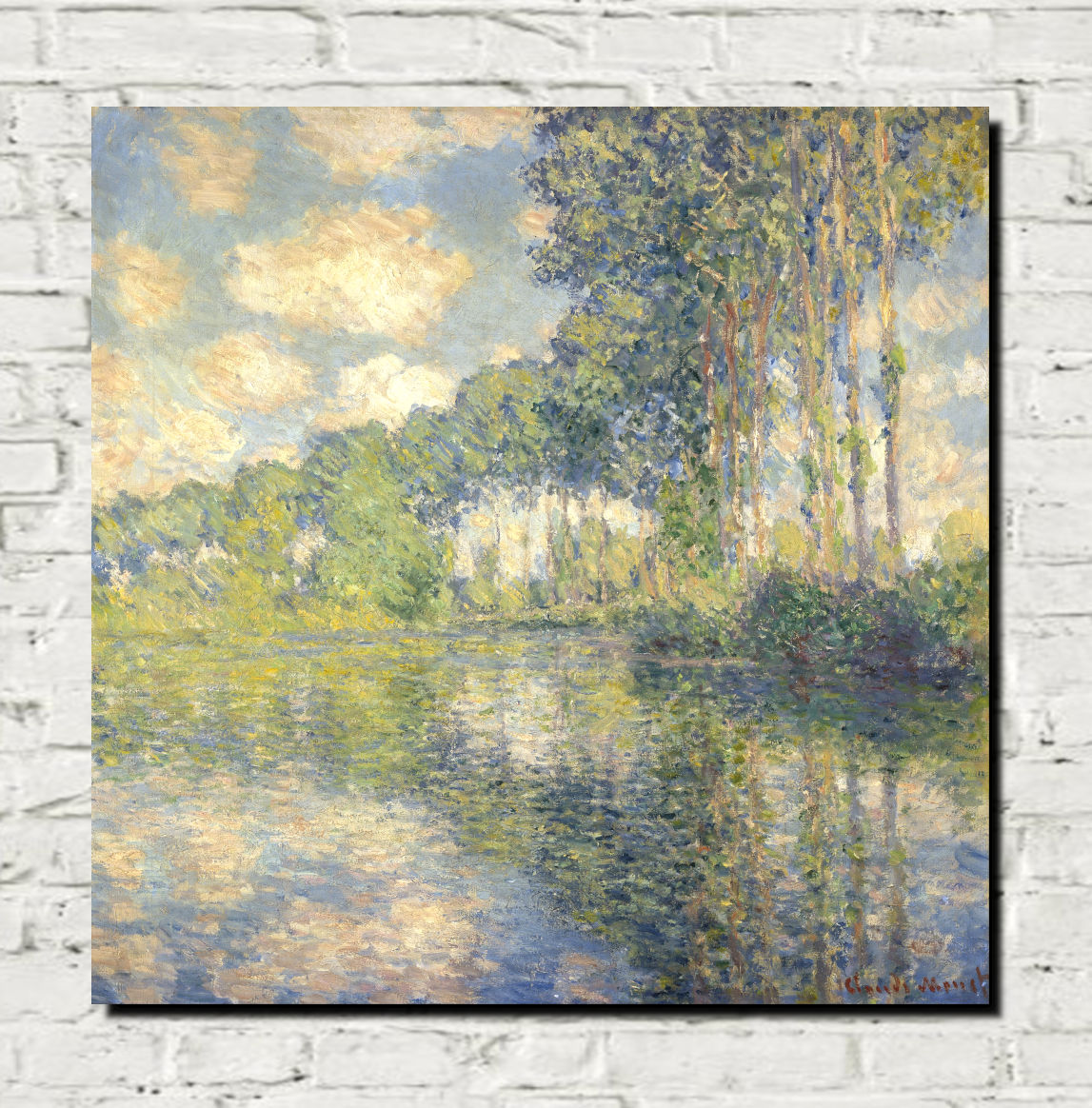
- Poplars on the Epte
- Blue Water Lilies
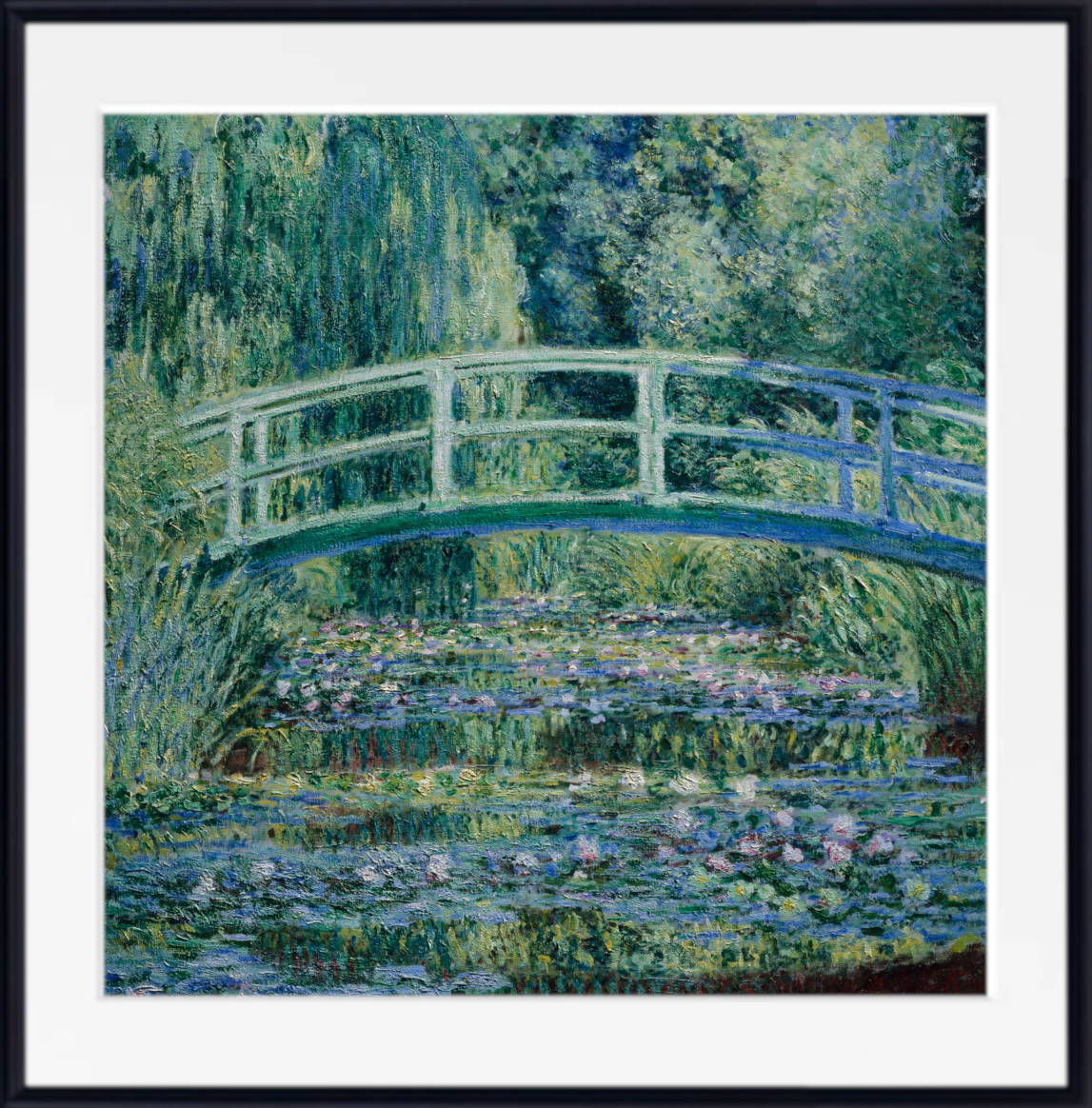
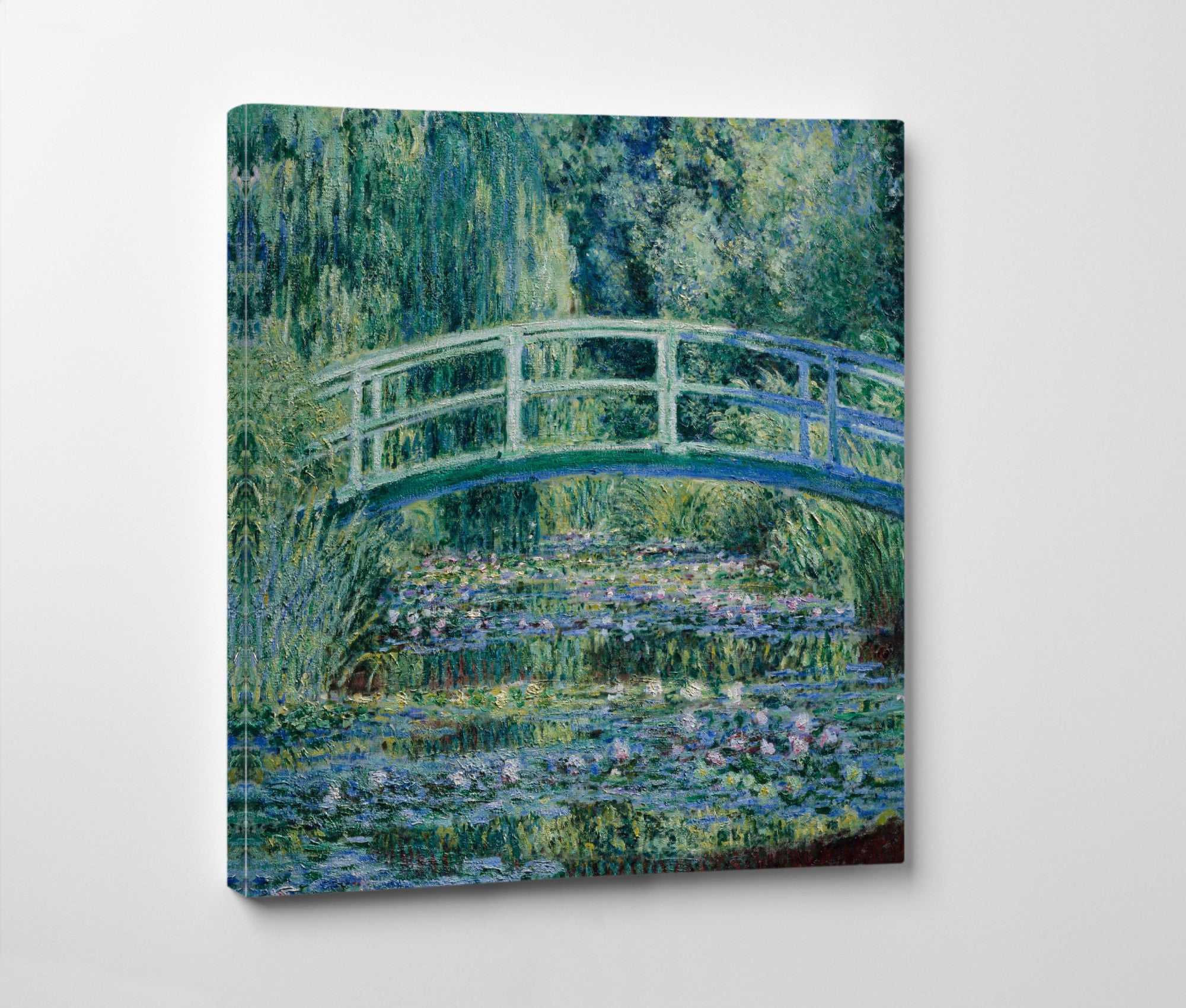
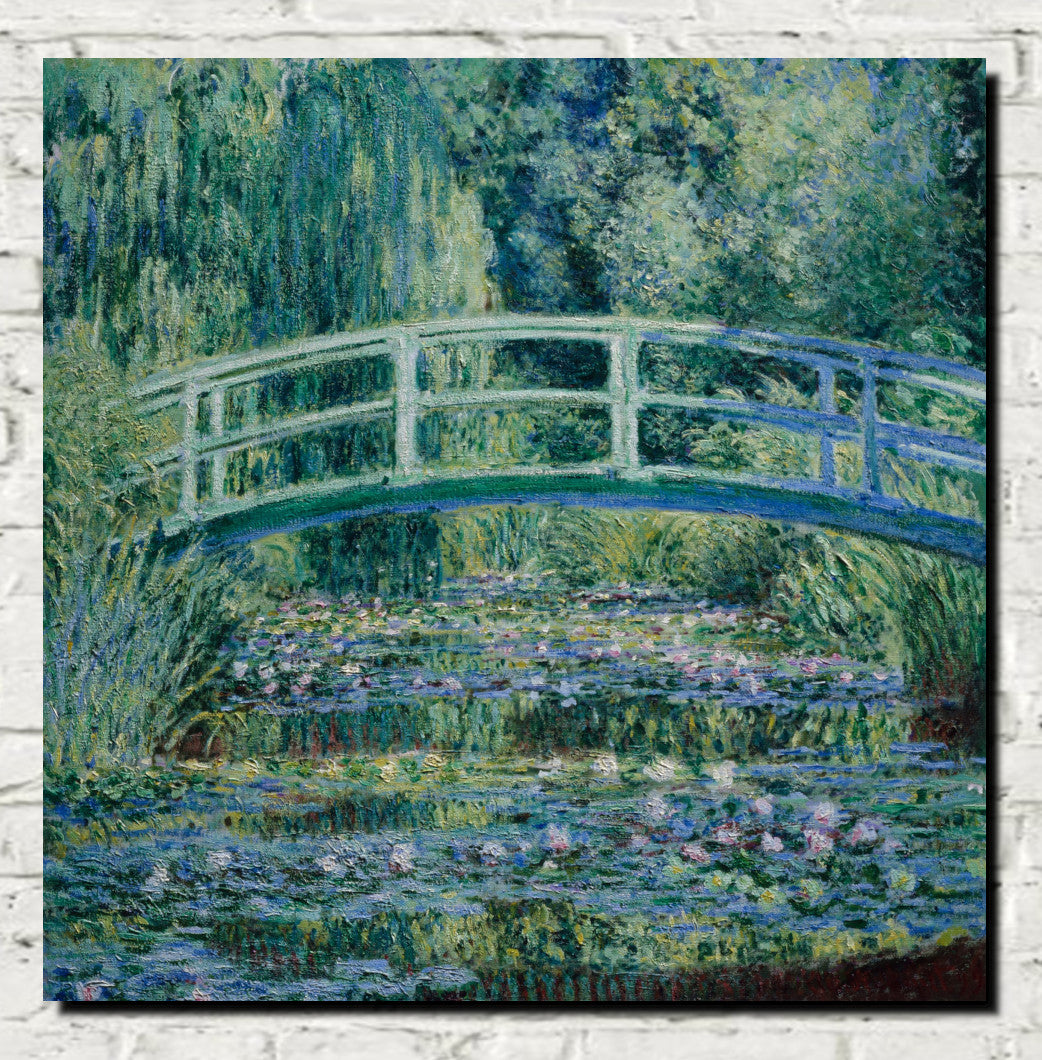
- Water Lilies and Japanese Bridge
The strength of this arrangement comes from contrast within unity. Impression, Sunrise introduces glowing orange against cool mist; Woman with a Parasol brings movement and a human presence; Haystacks and Poplars on the Epte represent Monet's fascination with repeated motifs and changing conditions; while the two Giverny paintings bring the display towards the immersive garden imagery of his later career.
Why this gallery wall works
Although the subjects vary, the paintings share a sensitivity to natural light and atmospheric colour. Blues, greens and violets move through much of the group, while warmer oranges, pinks and yellows provide carefully placed accents. The result feels varied without becoming disconnected.
This is a particularly good choice for someone who wants a representative Monet collection rather than a gallery devoted to one period or series. Browse the complete Claude Monet Gallery Wall Prints collection to develop your own combination.
2. Monet's Garden at Giverny

For a gallery wall with a romantic, natural atmosphere, focus on Monet's garden at Giverny. The artist's flower garden, water garden, paths, trees, house and Japanese bridge provided an almost inexhaustible range of motifs, allowing you to combine paintings that feel closely connected while still varying considerably in colour and composition.
This gallery brings together:
- Water Lilies and Japanese Bridge
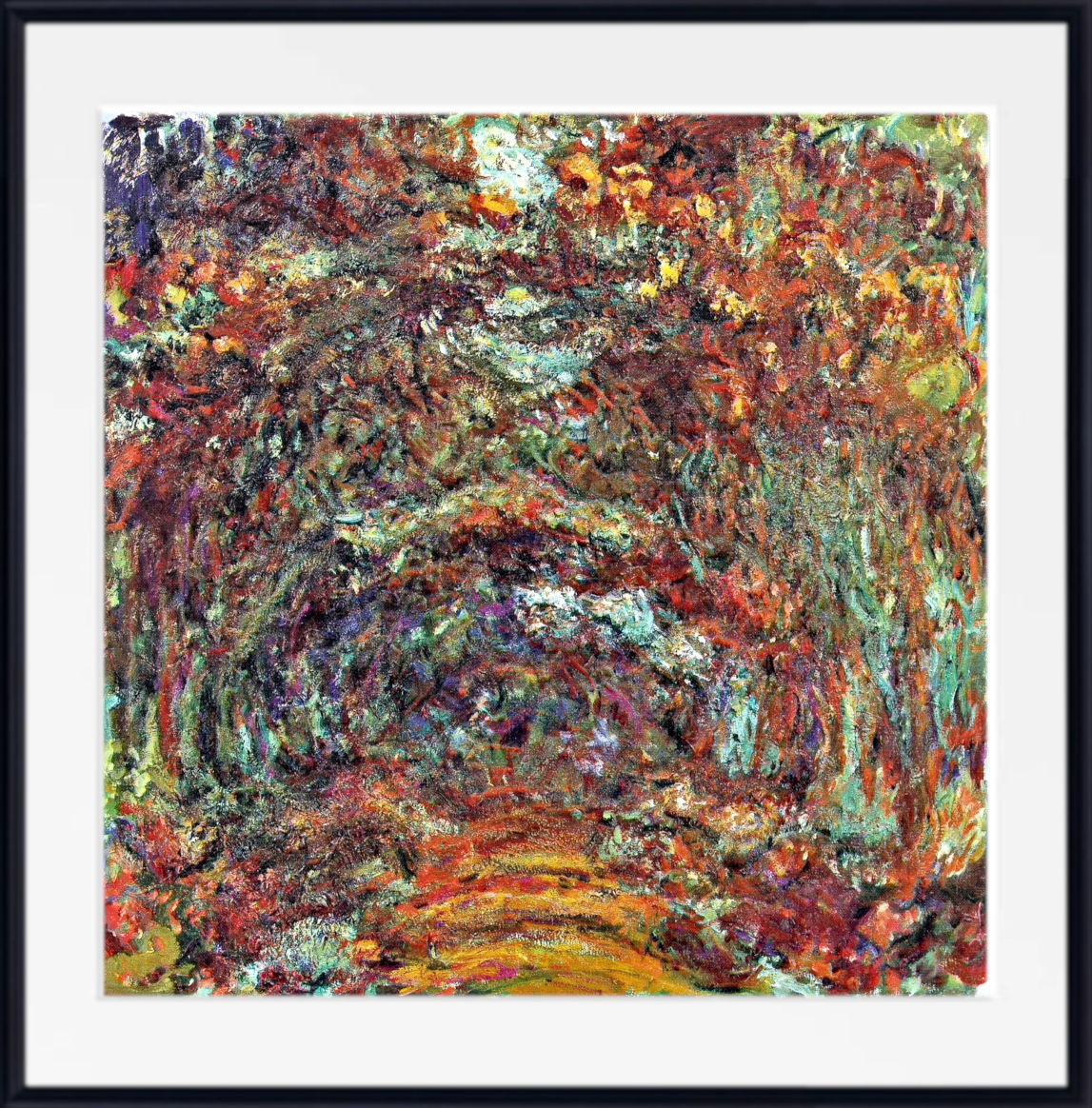
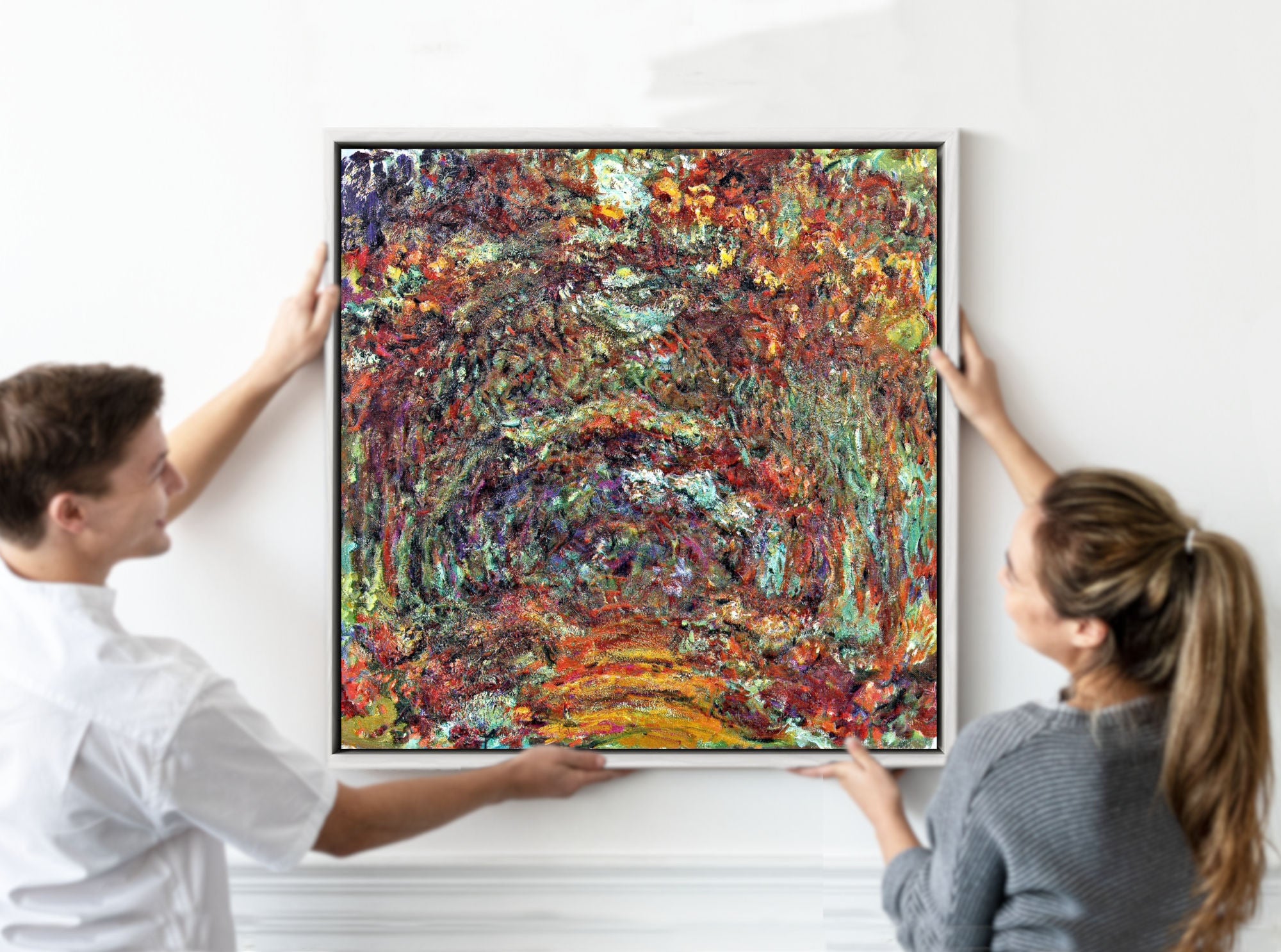
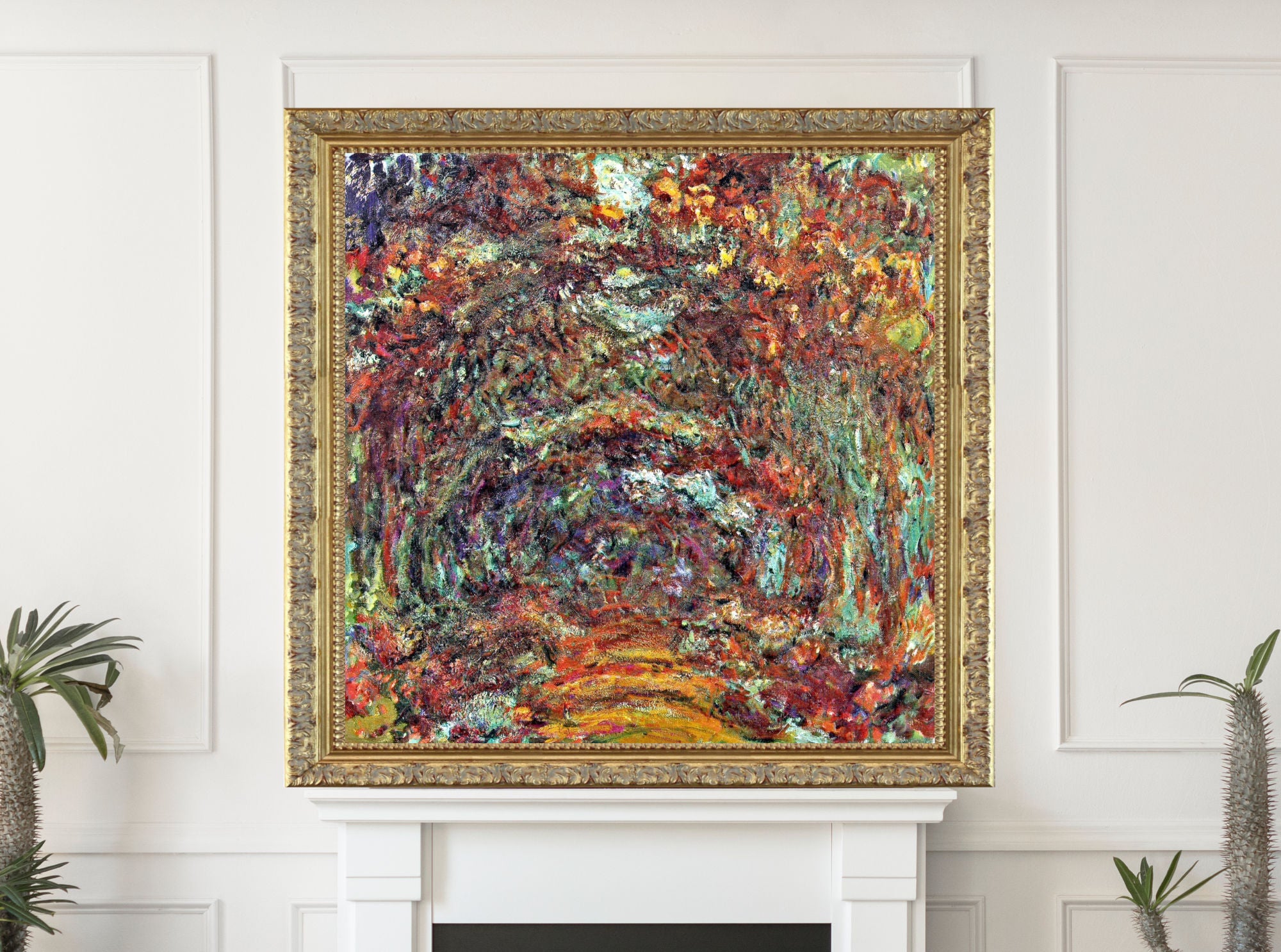
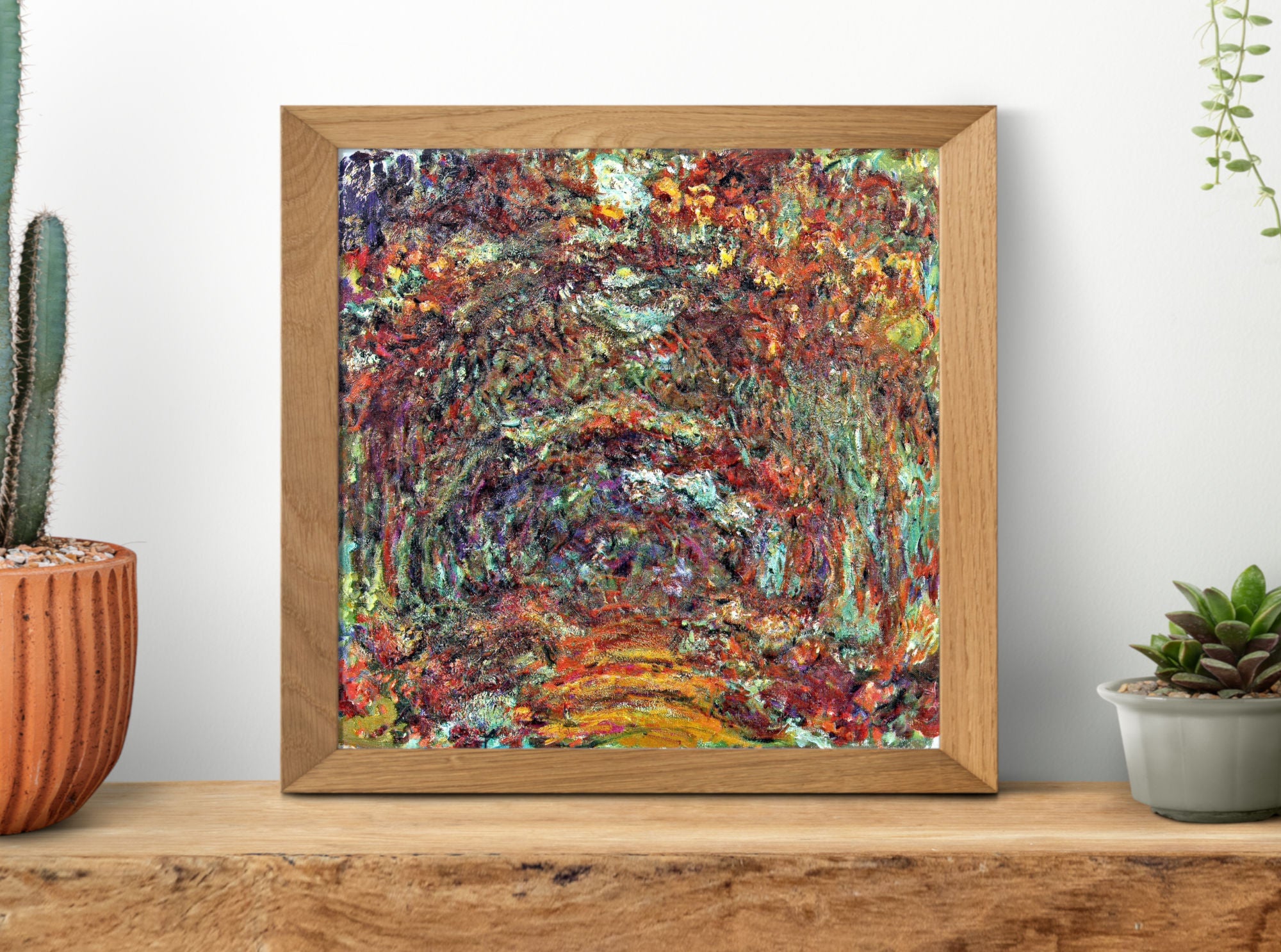
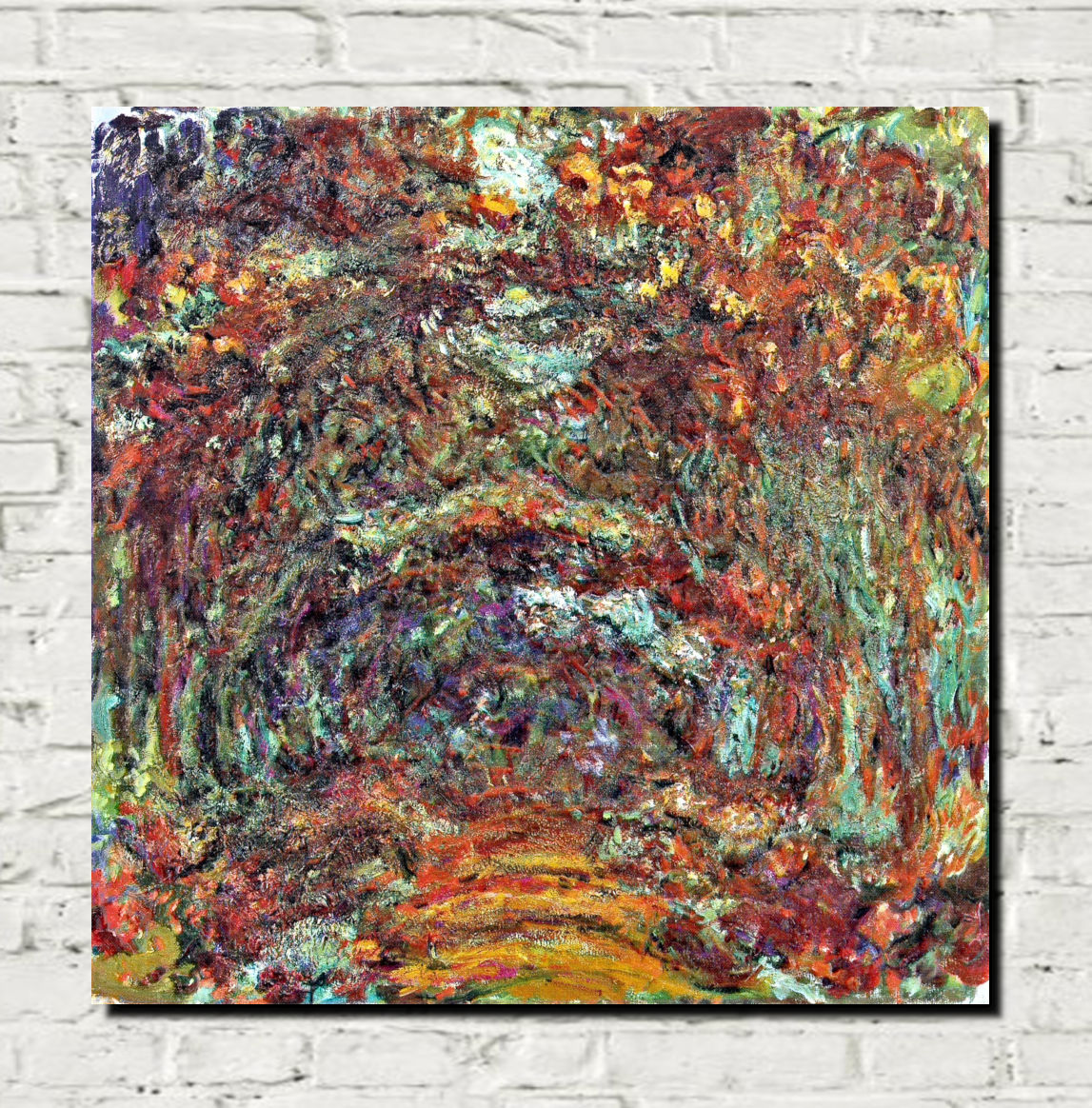
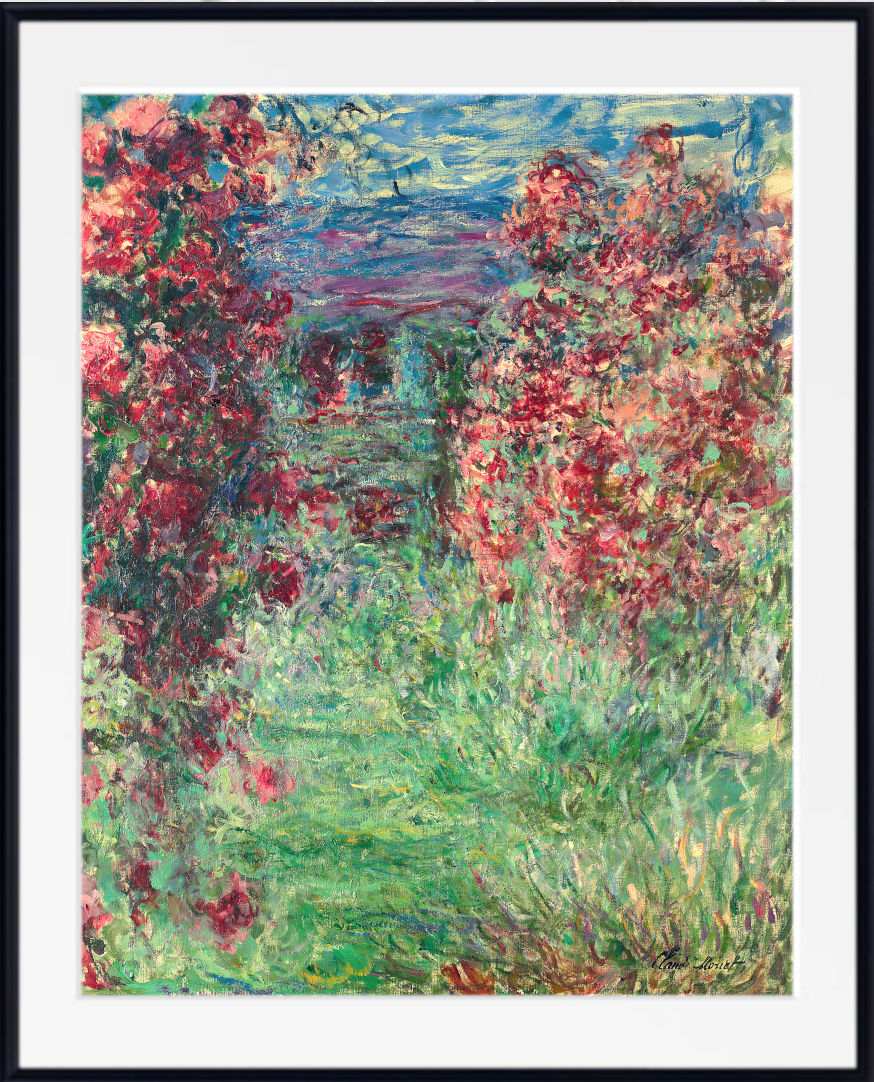
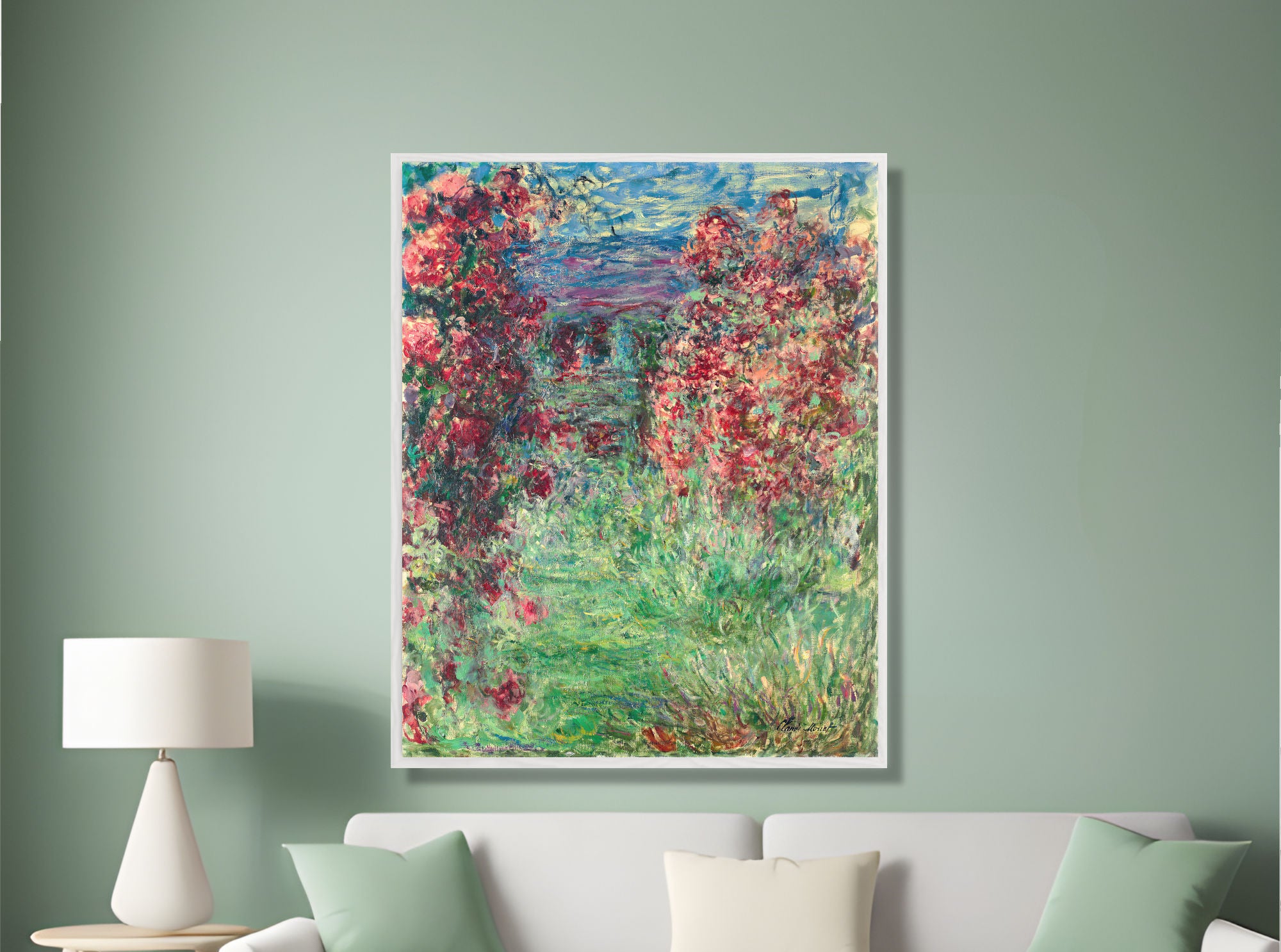
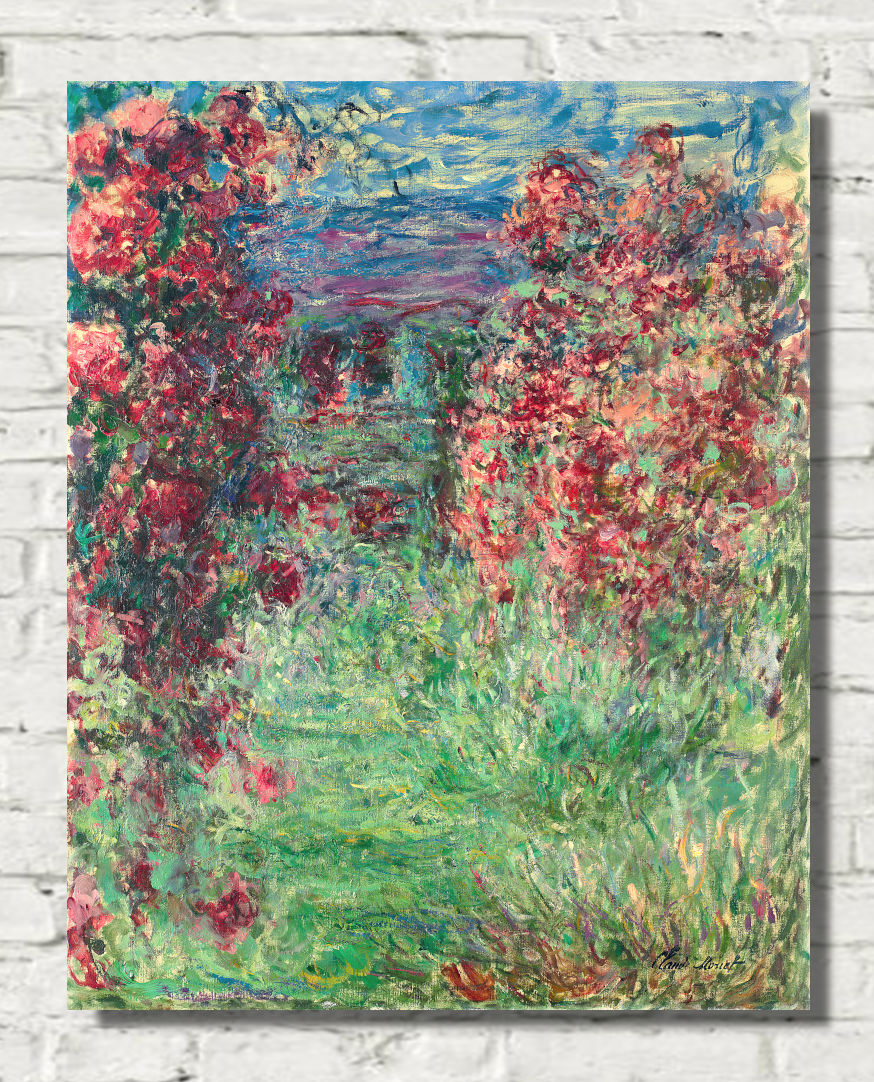
- The Rose Walk, Giverny
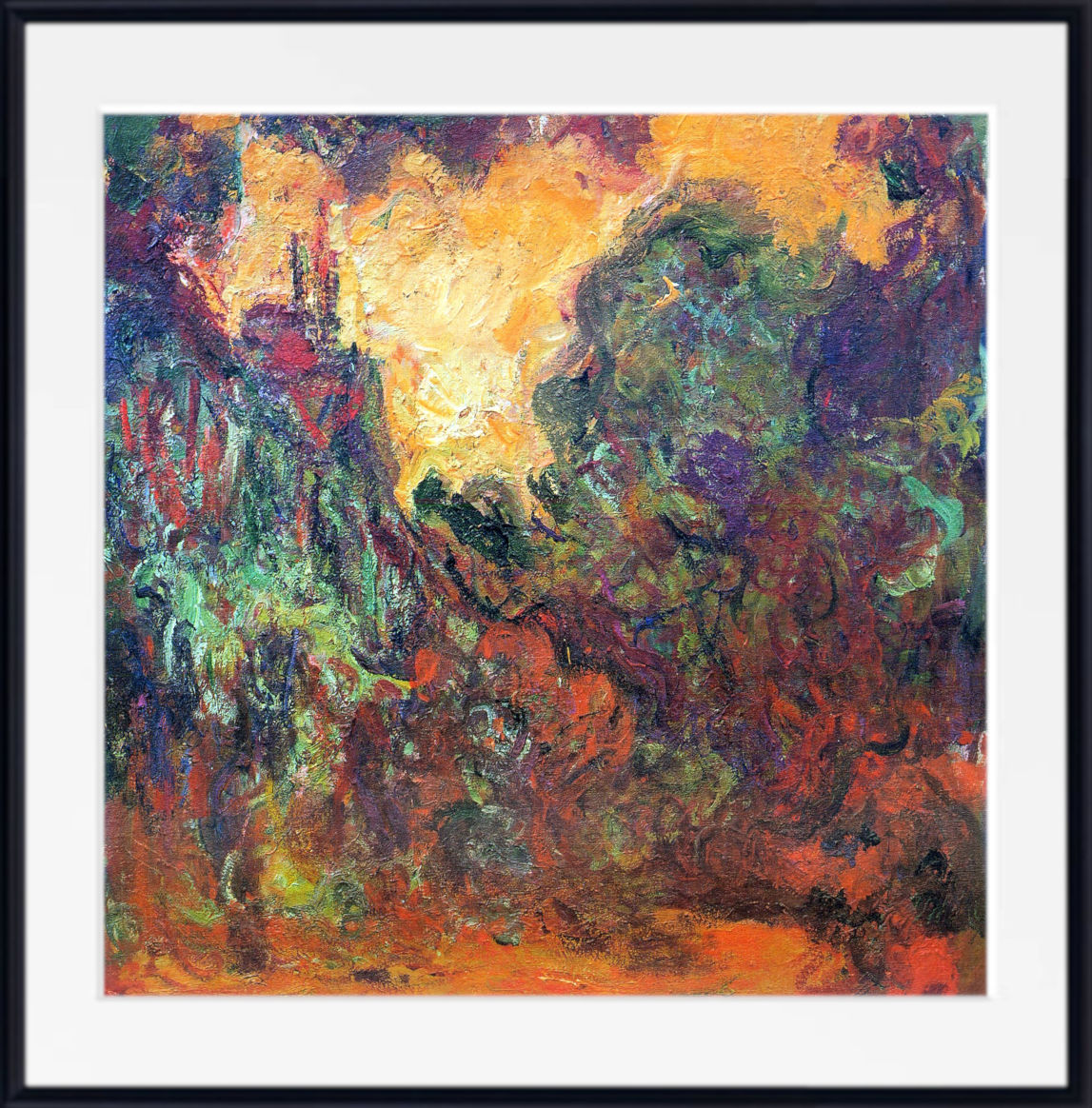
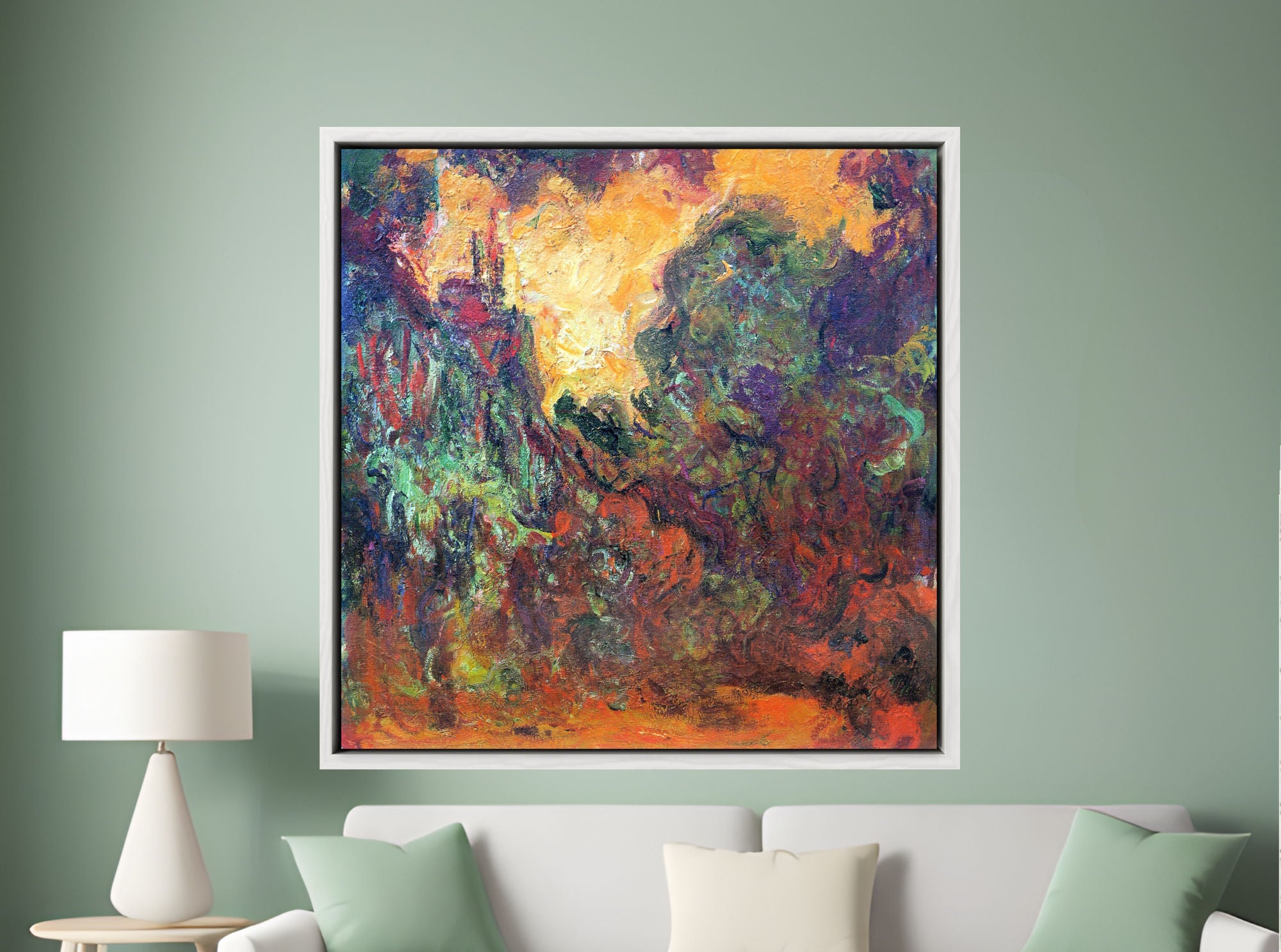
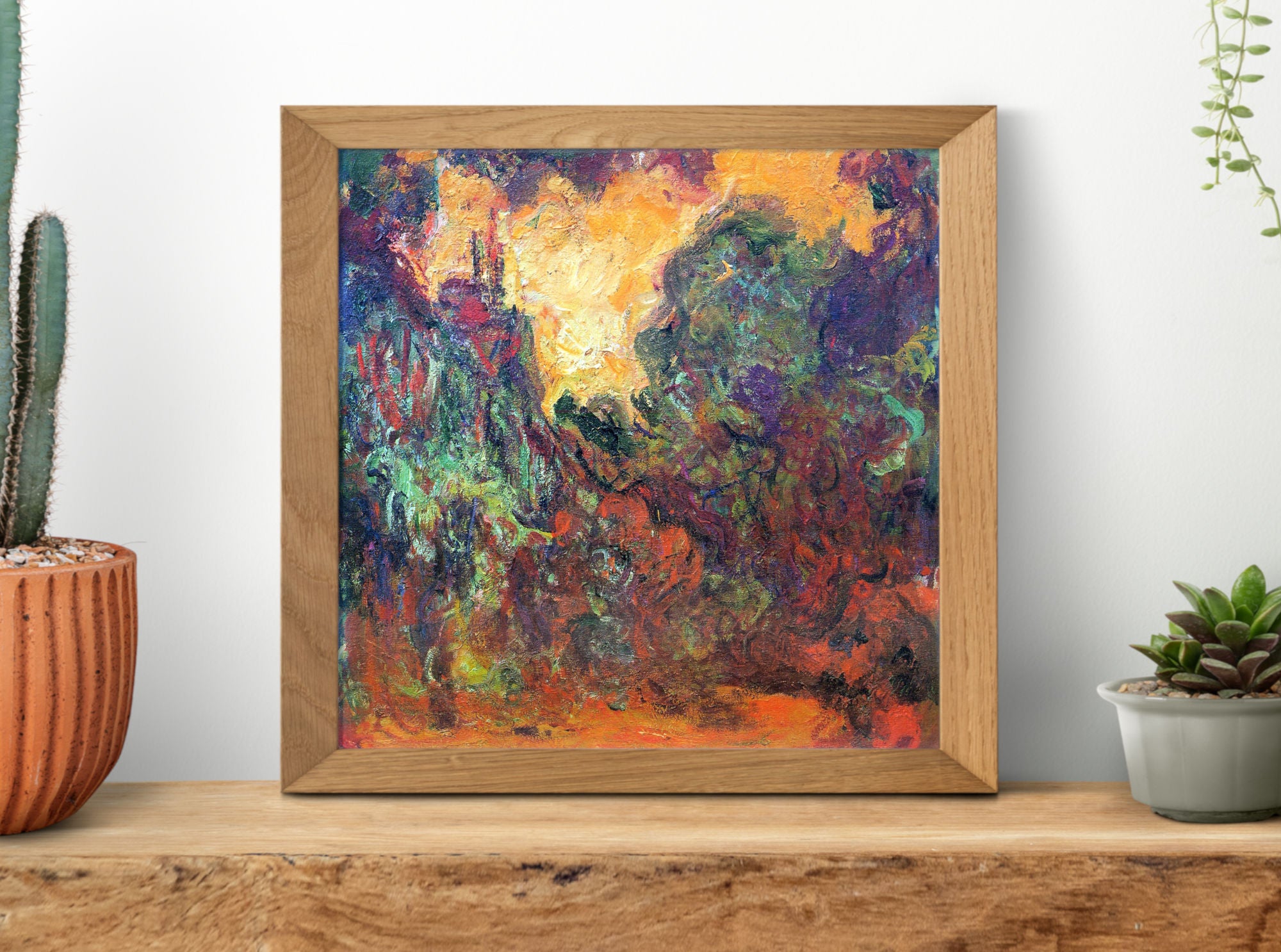
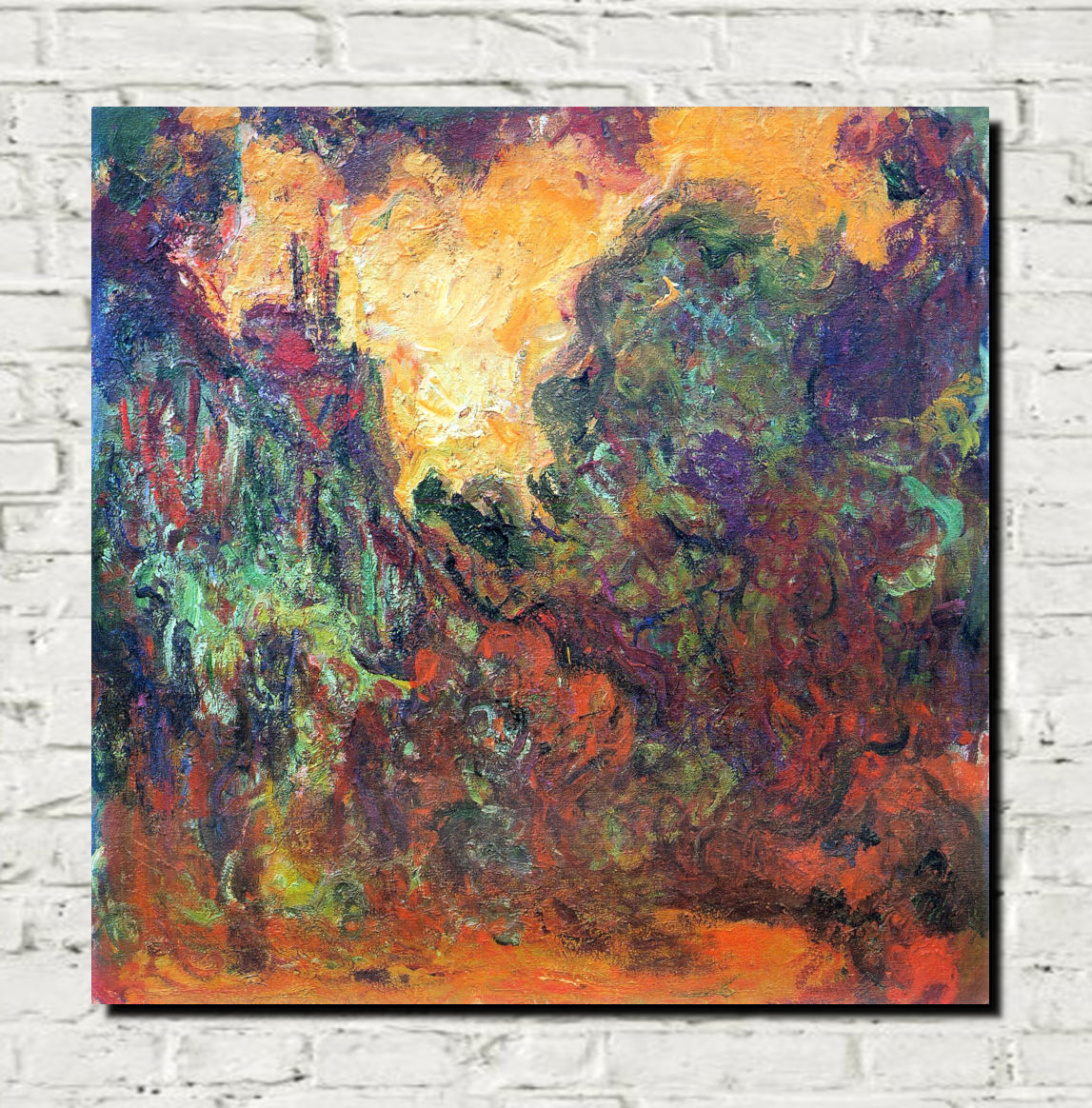
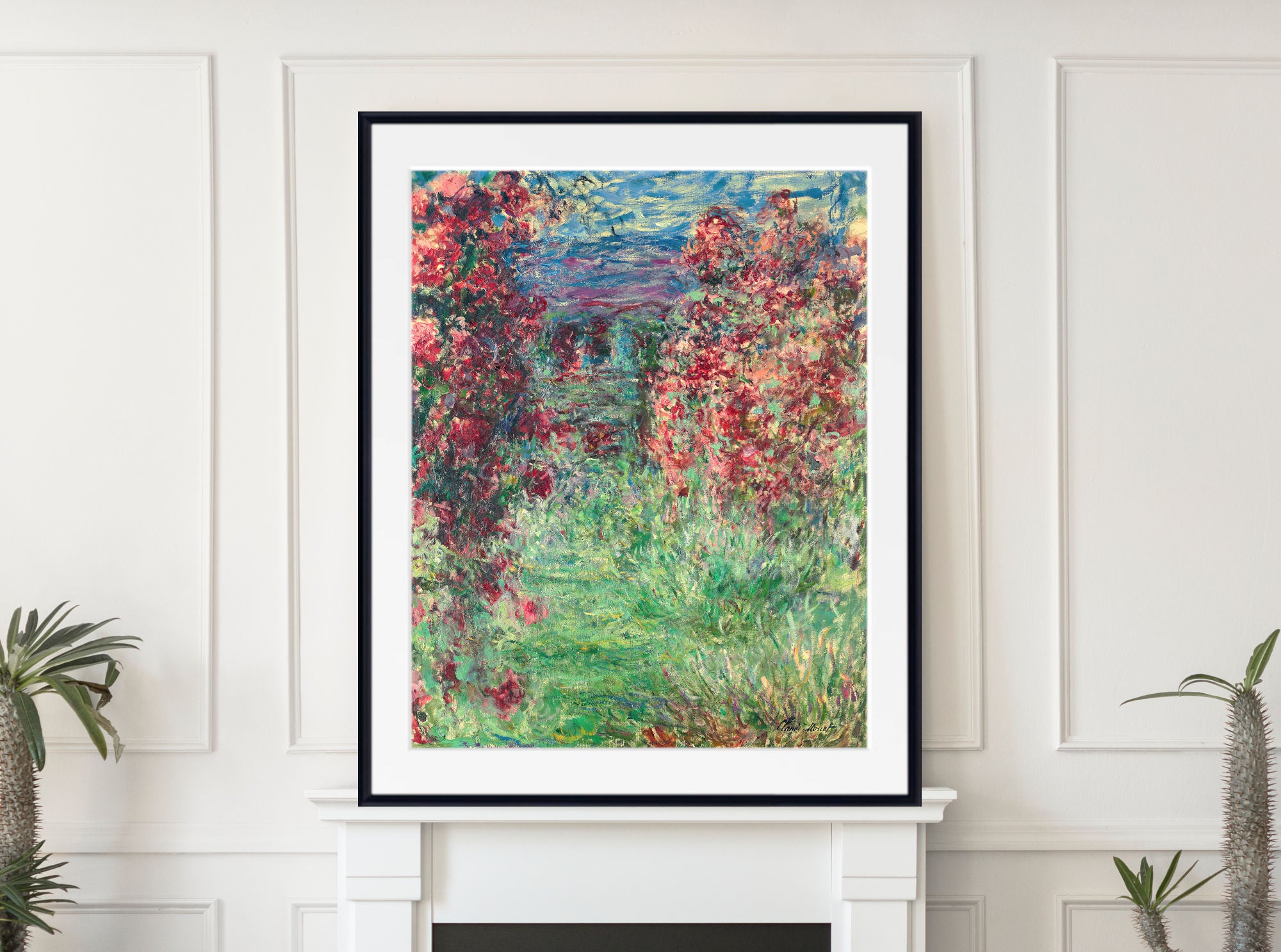
- The Artist's House, View from the Rose Garden
- Wisteria
- In the Woods at Giverny
- The Weeping Willow
The strong greens of foliage and water establish the visual foundation of the group, while pink roses, lilac wisteria, soft blues and warmer flashes of colour prevent the display from becoming monotonous. Portrait, square and landscape formats can be arranged together successfully because the shared setting creates an immediate thematic connection.
Where a Giverny gallery wall works best
Garden imagery is especially effective in living rooms, bedrooms, dining rooms, conservatories and spaces decorated with natural wood, linen, cream, sage green or botanical accents. A Giverny arrangement can also bring colour to a neutral interior without relying on one dominant shade.
Explore the complete Monet's Garden at Giverny Gallery Wall collection, read the story of Claude Monet's garden and the birth of Impressionism at Giverny, or discover the wider community of painters in The Giverny Art Colony.
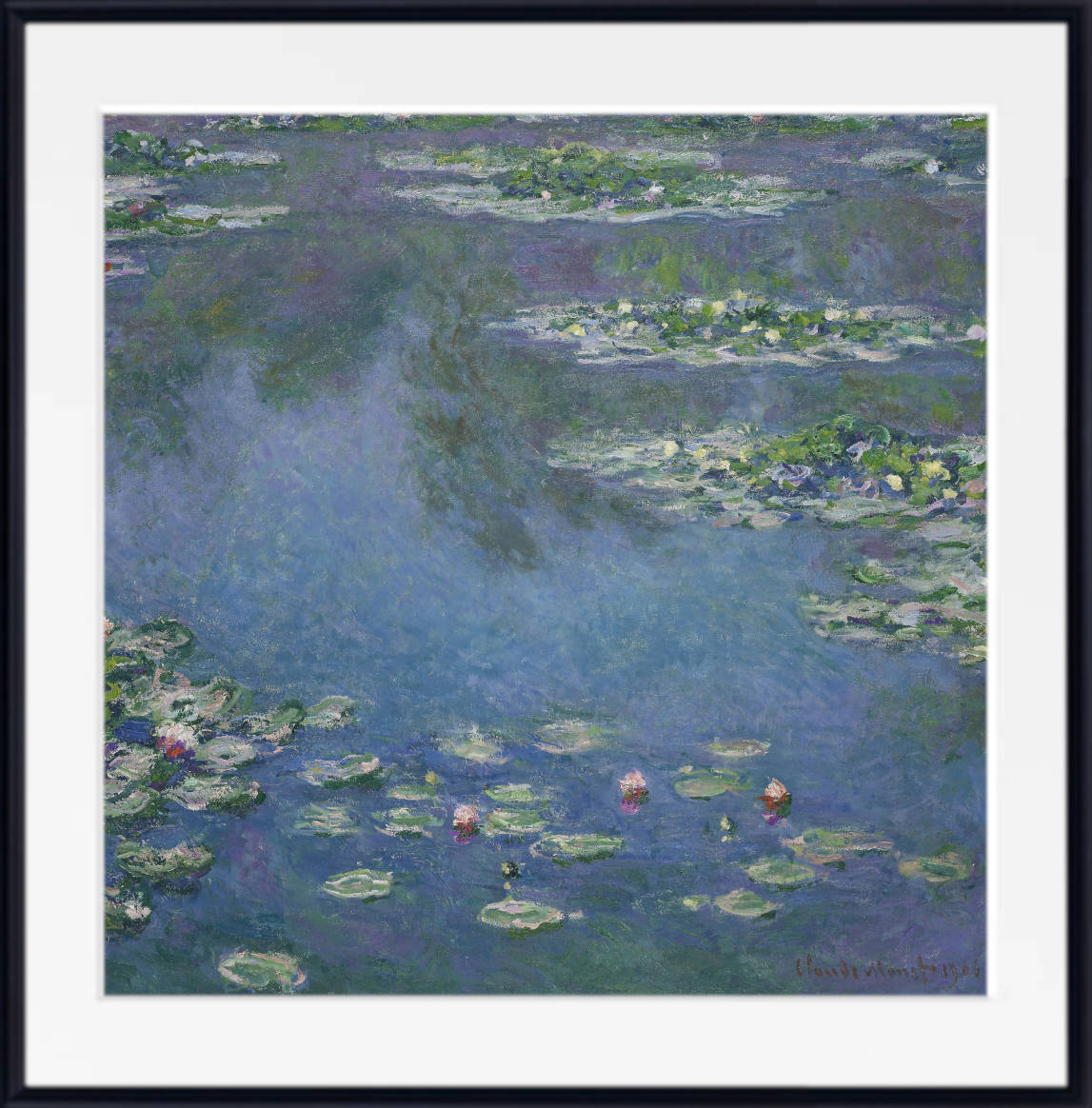
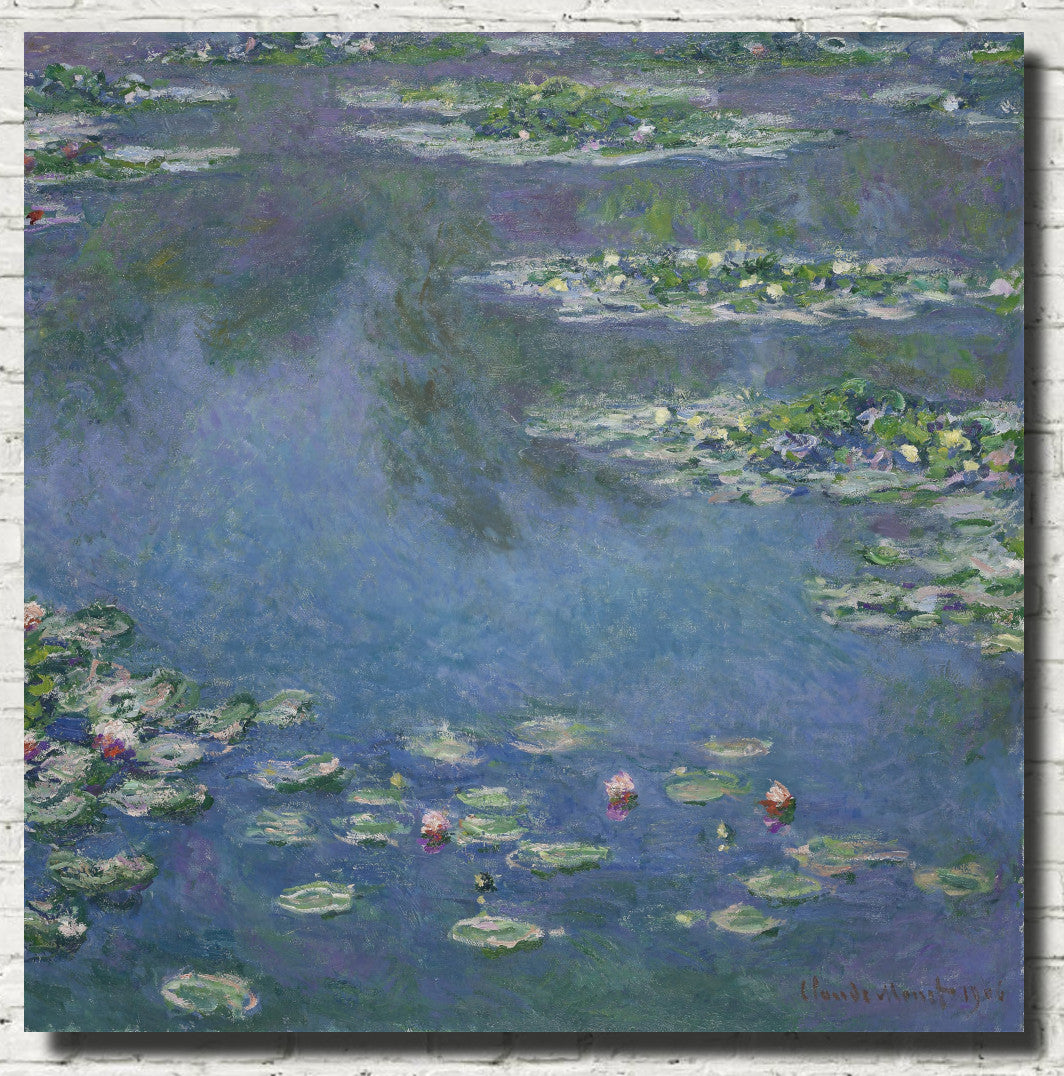
3. Claude Monet Water Lilies Gallery Wall

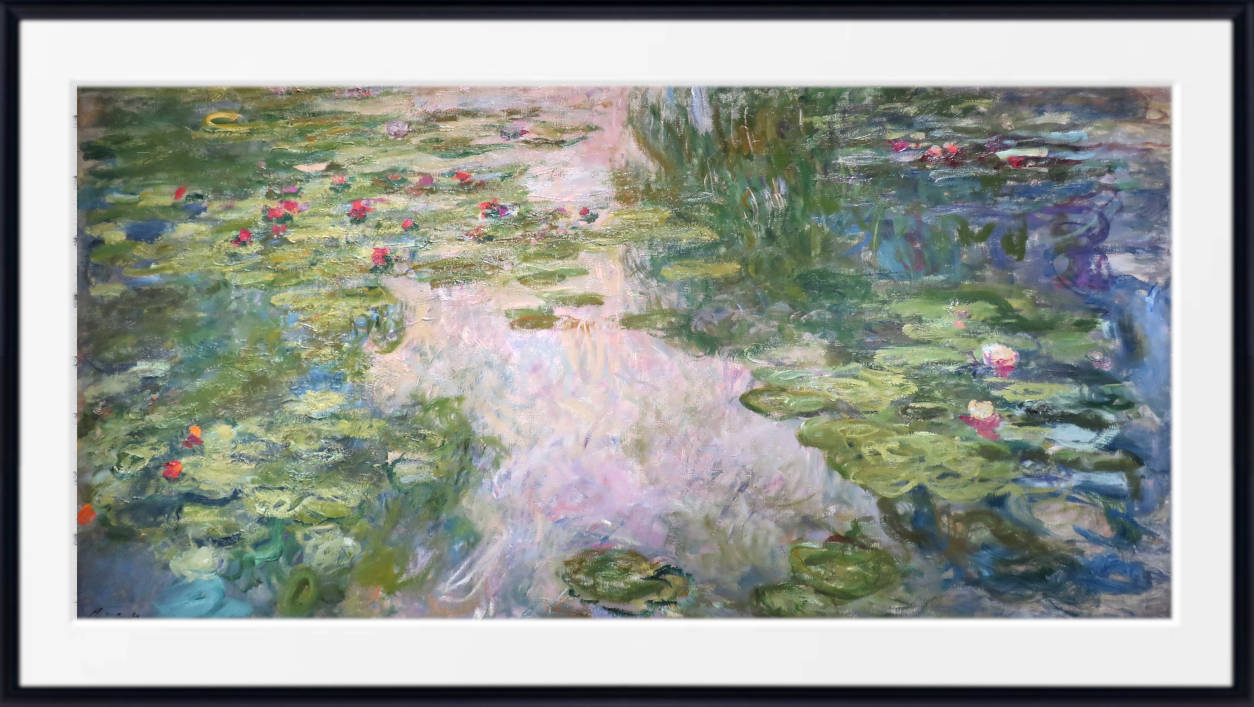
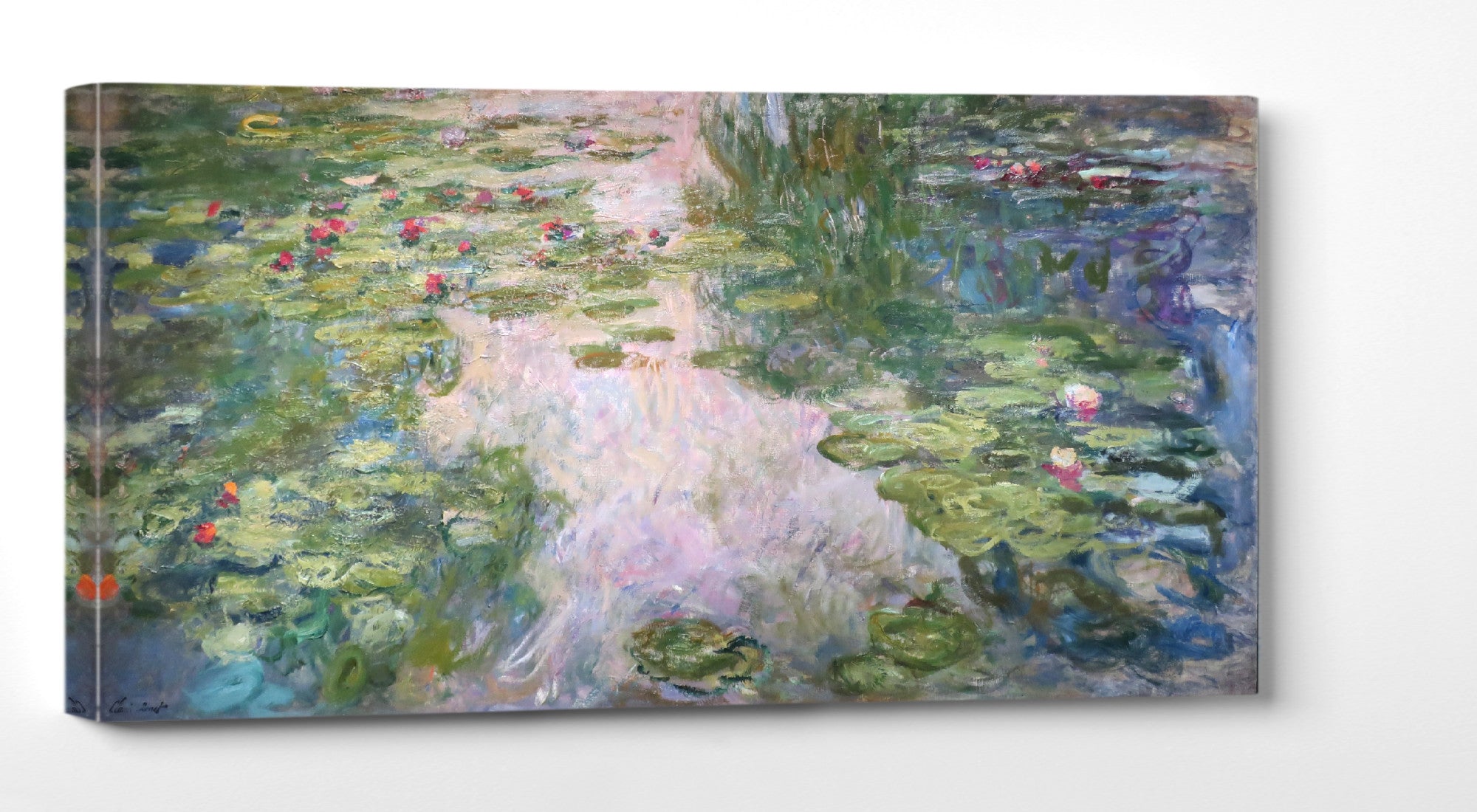
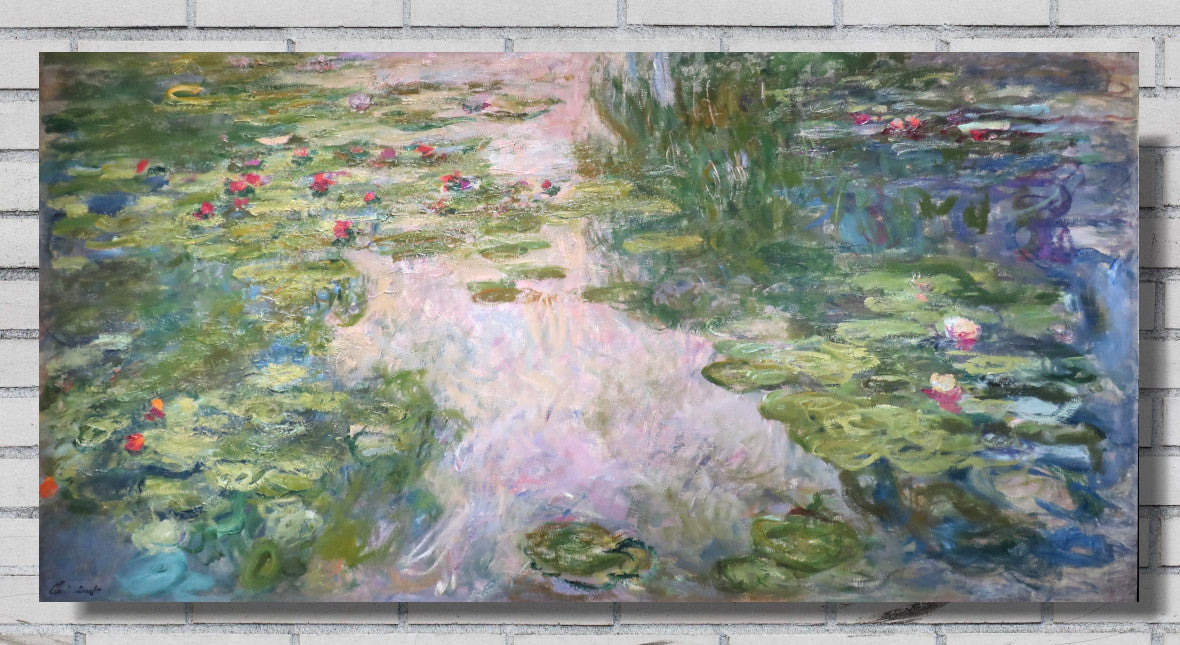
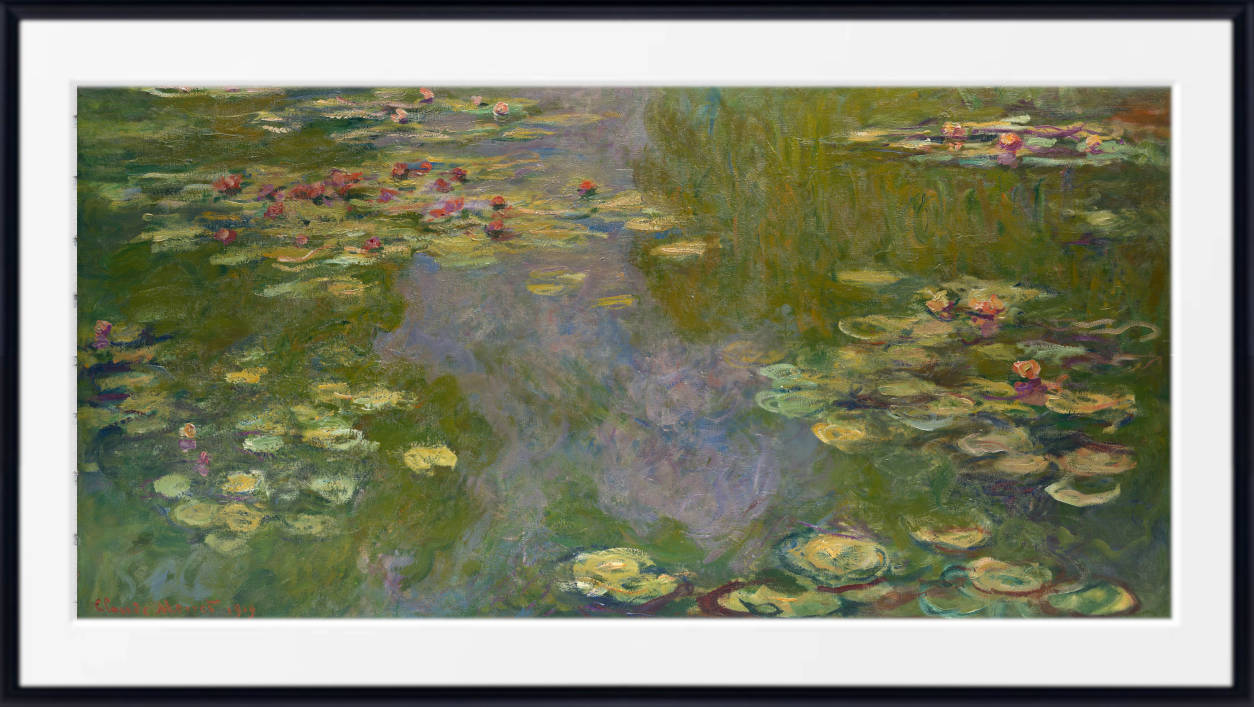
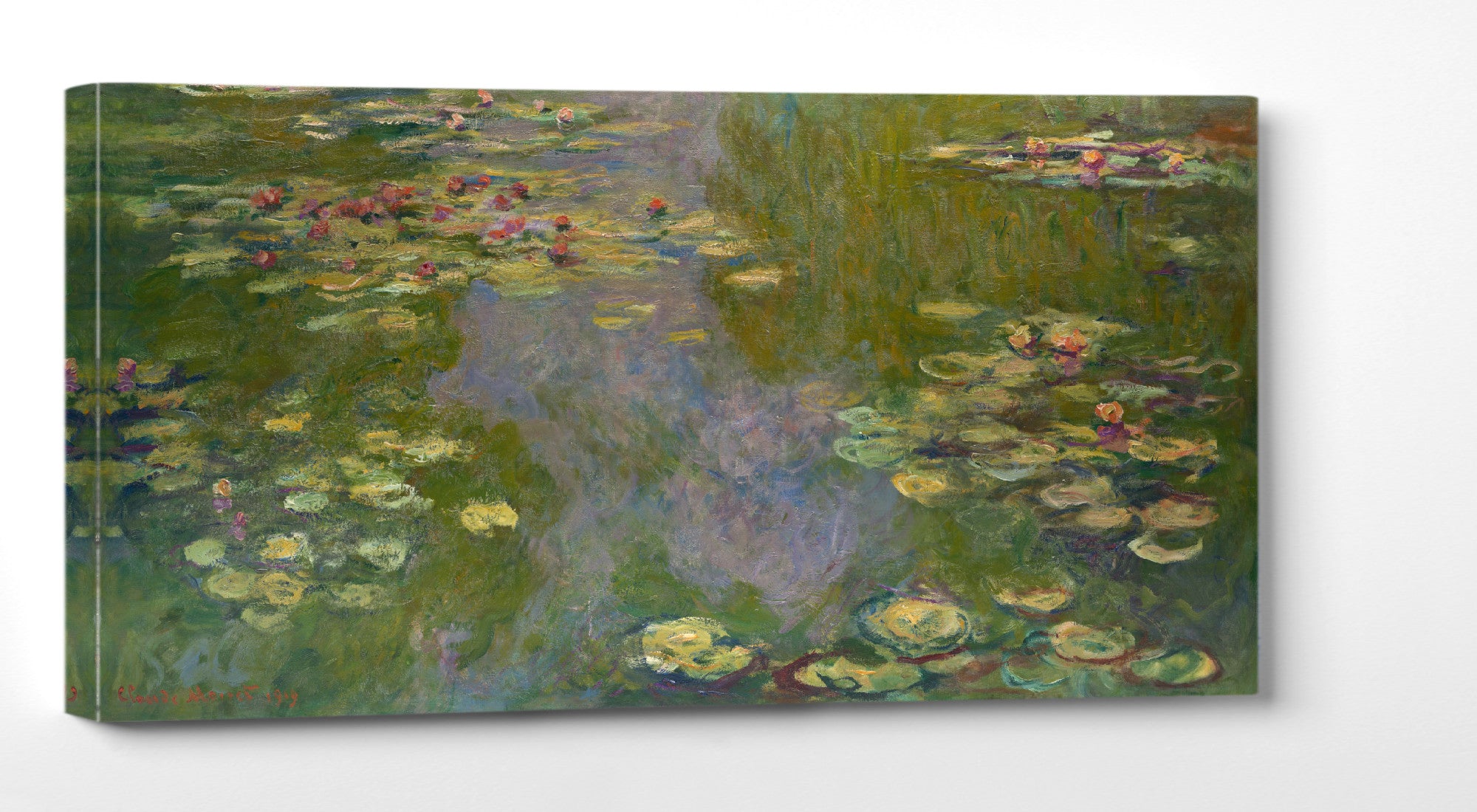
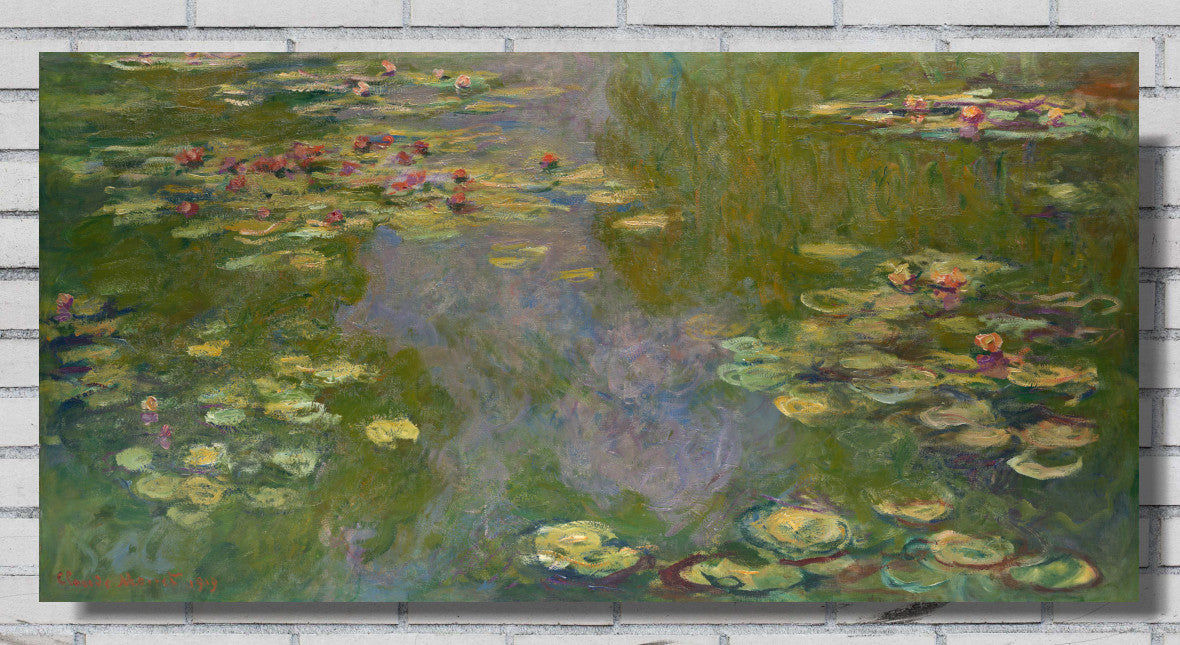
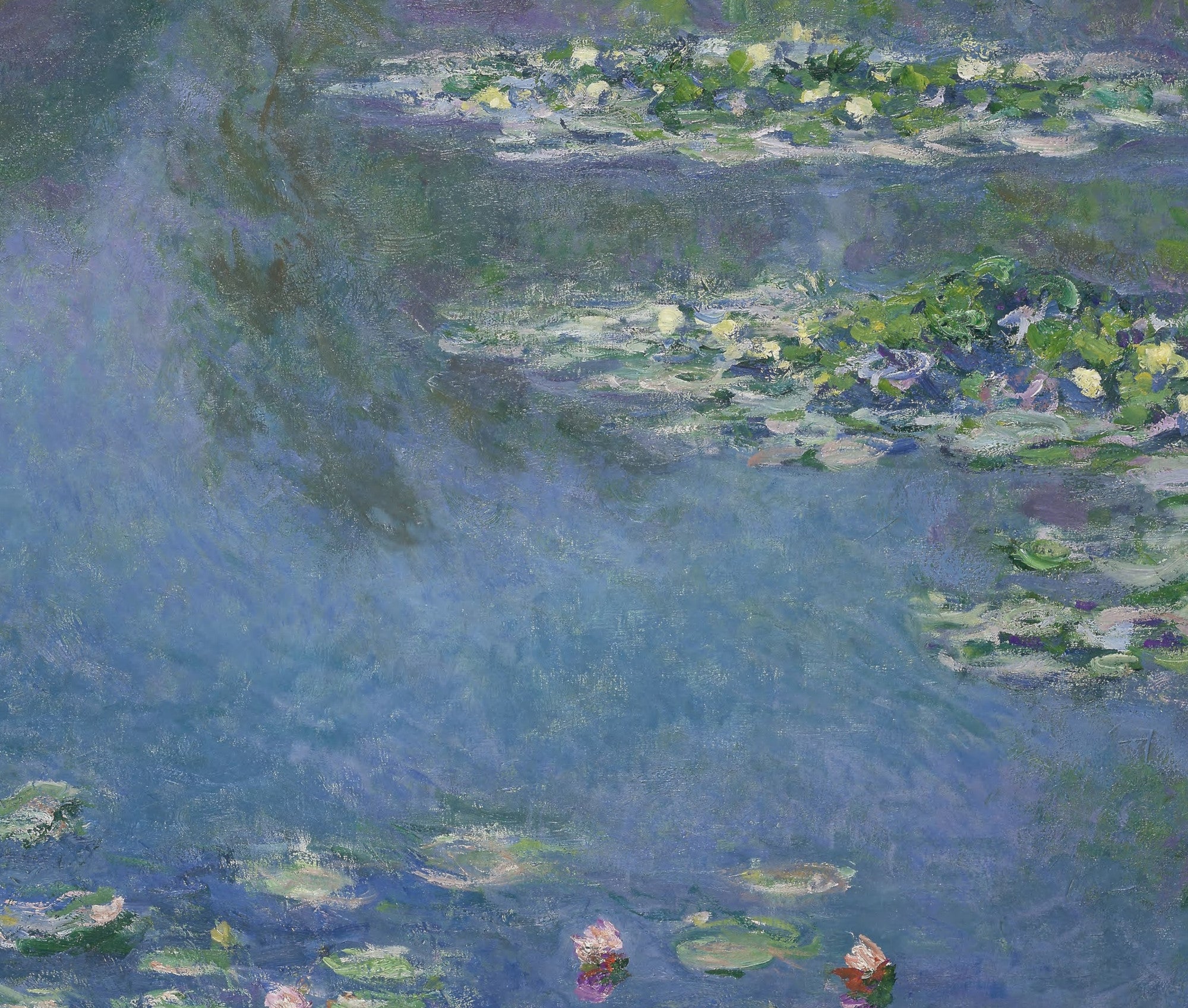
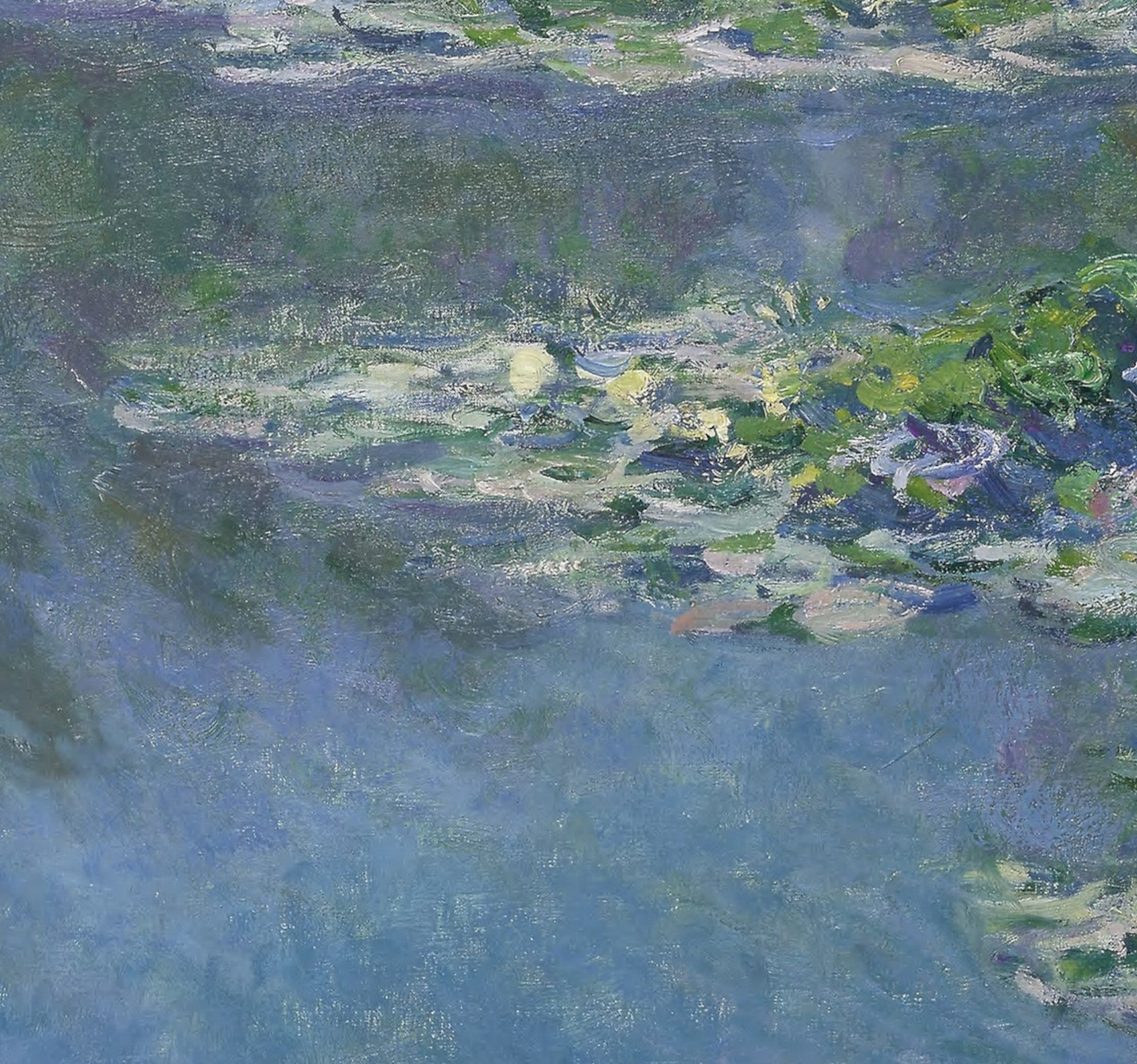
A Water Lilies gallery wall is one of the most cohesive ways to display several Monet prints together. Because the paintings revisit the same water garden under different conditions, they share subject matter and atmosphere while offering enormous variation in colour, brushwork and format.
The arrangement shown here includes:
- Blue Water Lilies
- Water Lilies and Japanese Bridge
- Water Lilies (1906)
- Water Lilies (1917–19)
- Water Lilies (1919)
The three smaller works across the upper row create a steady rhythm, while two wider panoramic paintings below give the composition visual weight. This kind of arrangement is particularly effective above a sofa, bed or long sideboard because the horizontal lower row relates naturally to the furniture beneath it.
Choosing colours for a Water Lilies gallery wall
Monet's Water Lilies paintings make it possible to build a display around cool blues and greens, softer pinks and lavenders, or deeper violet and turquoise combinations. You can choose works with closely related colours for a tranquil effect or combine contrasting paintings for a richer, more painterly wall.
Browse the dedicated Claude Monet Water Lilies collection or explore the history, development and meaning of the series in Water Lilies by Claude Monet: The Complete Guide to the Nymphéas Series.
4. Monet's London in Mist

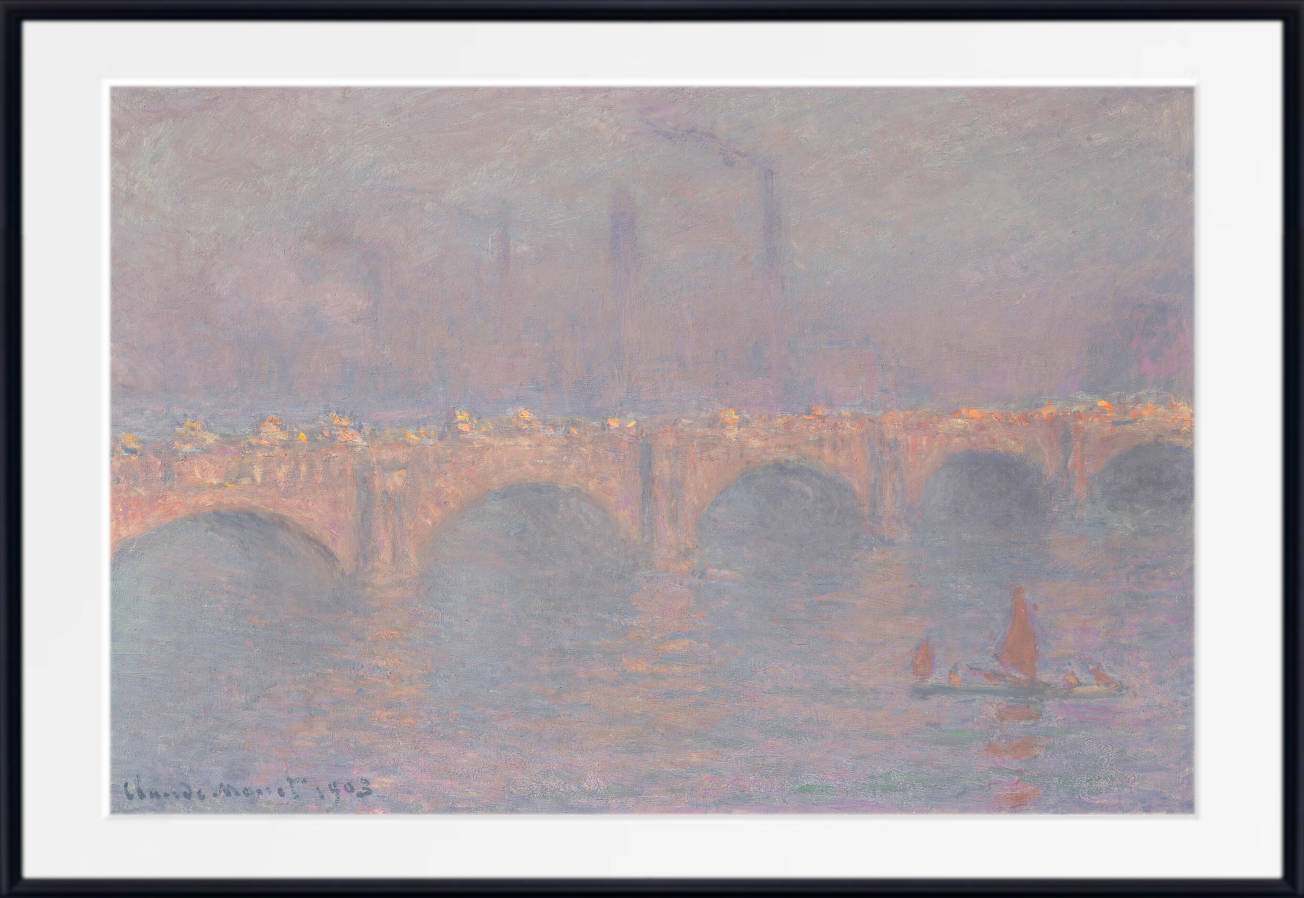
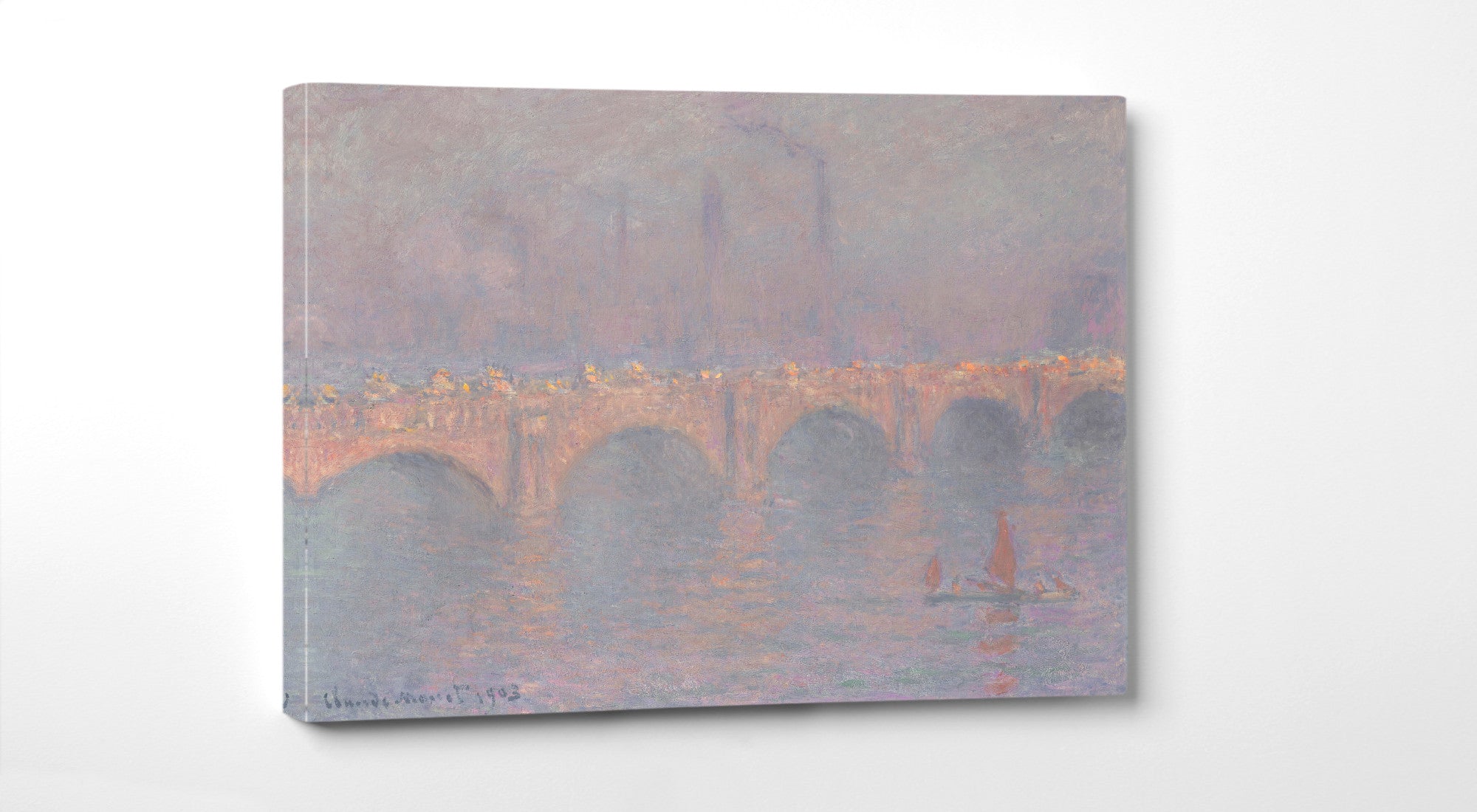
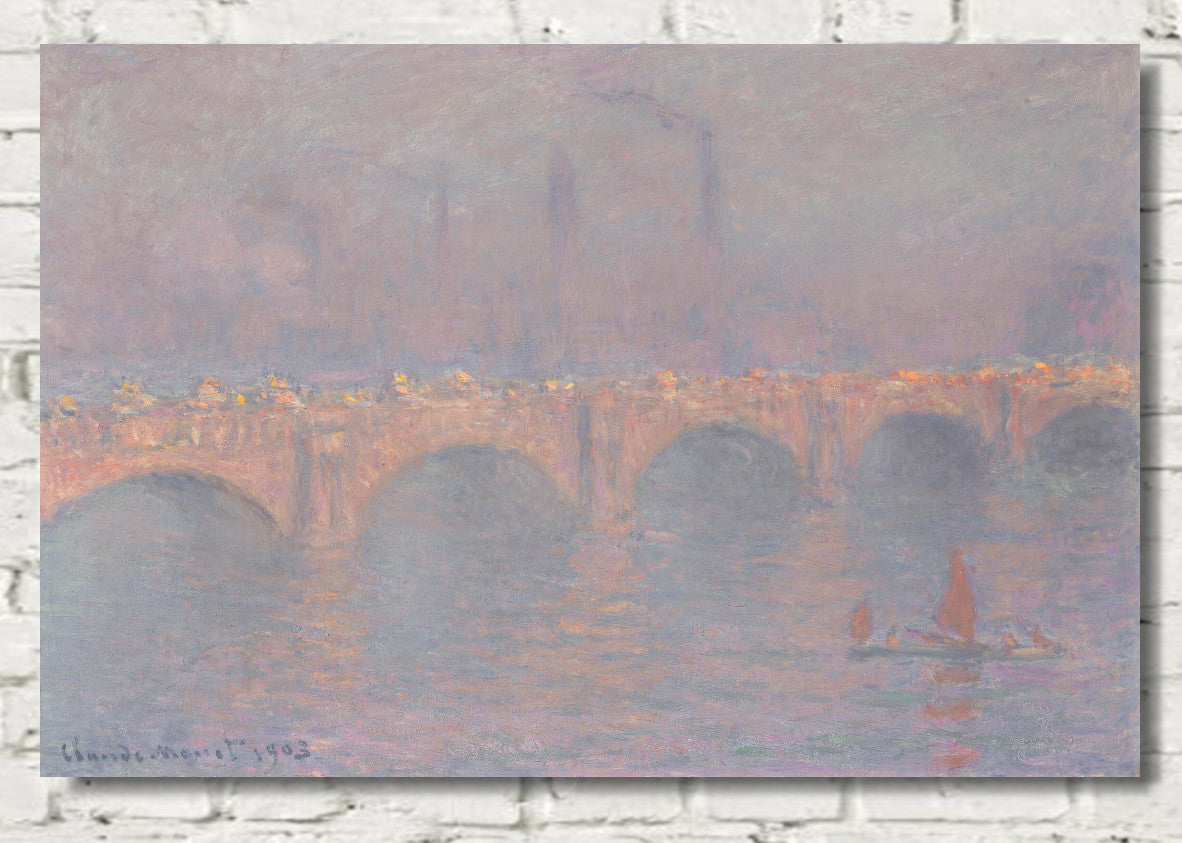
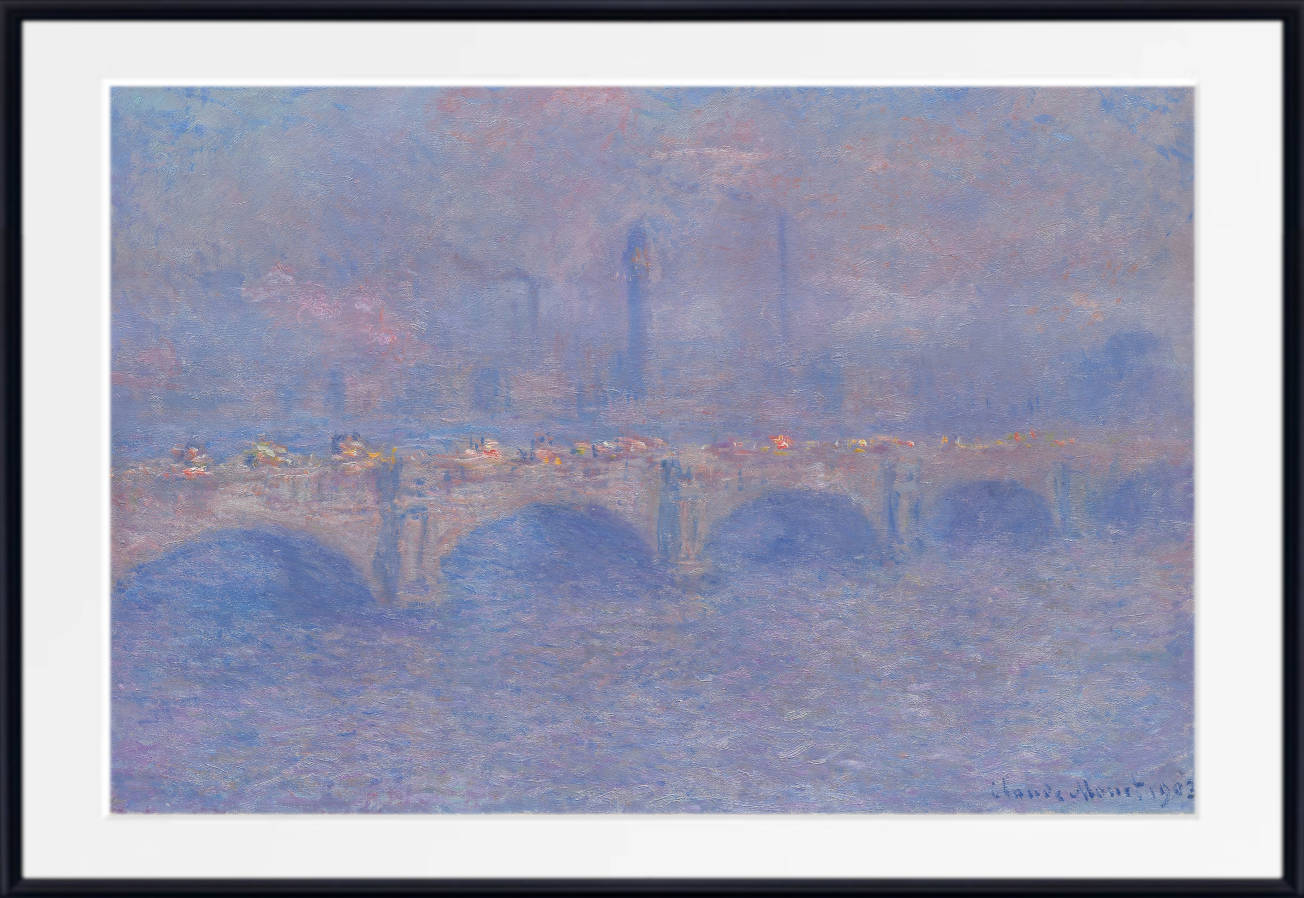
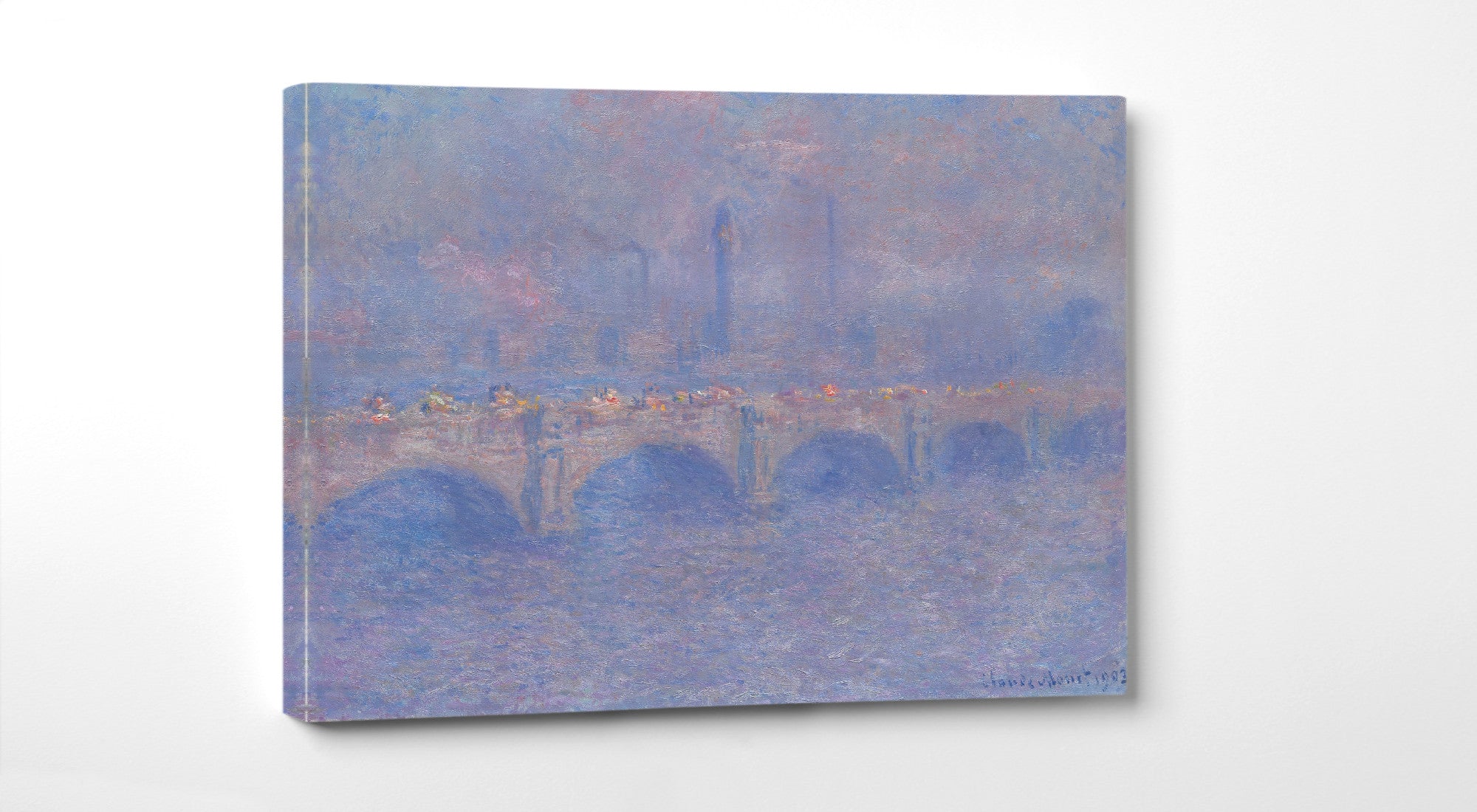
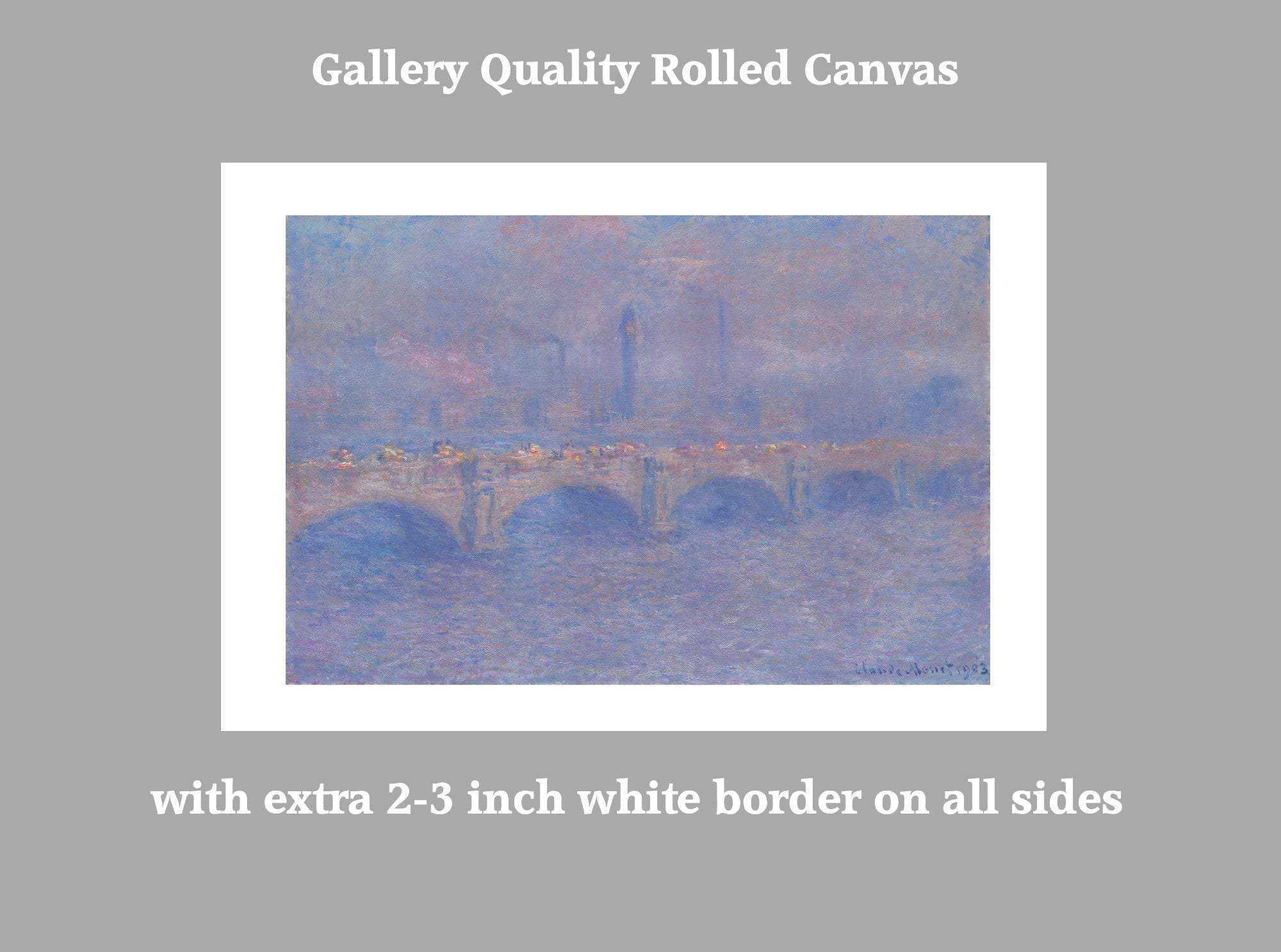
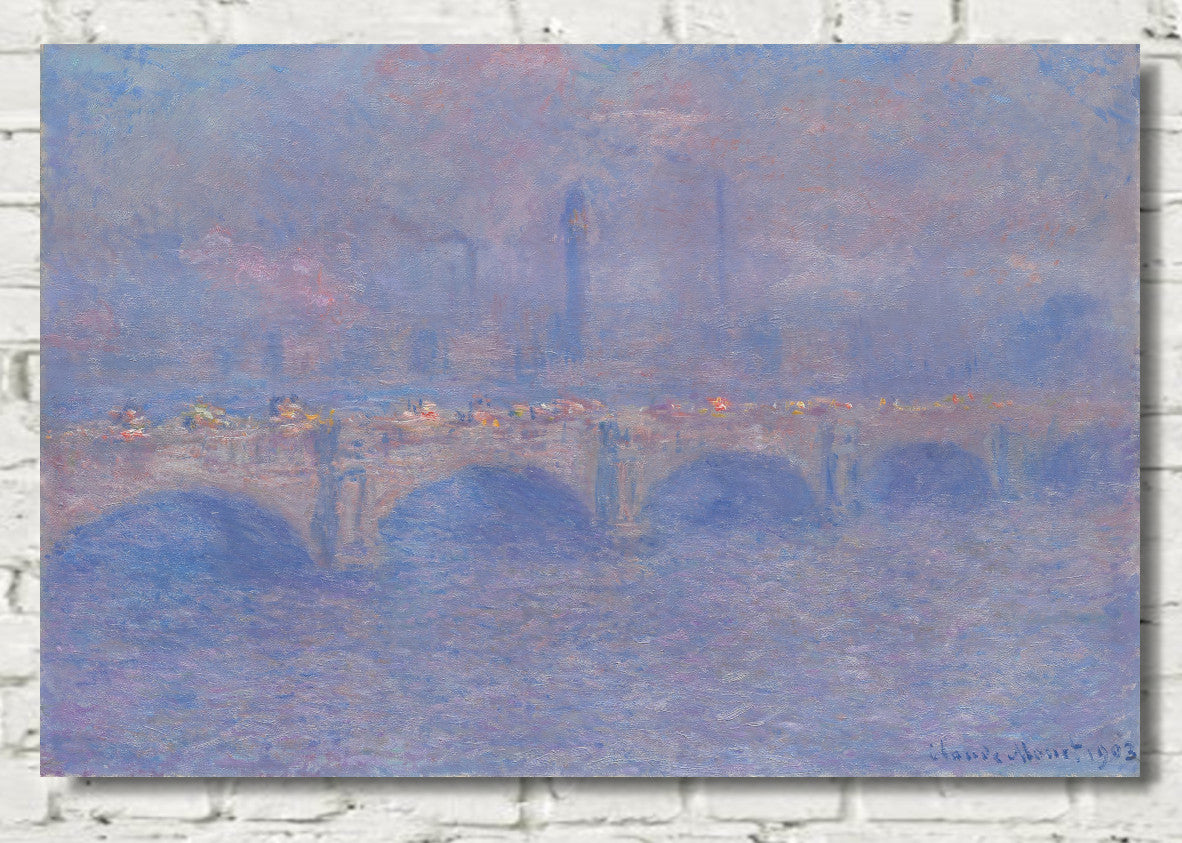
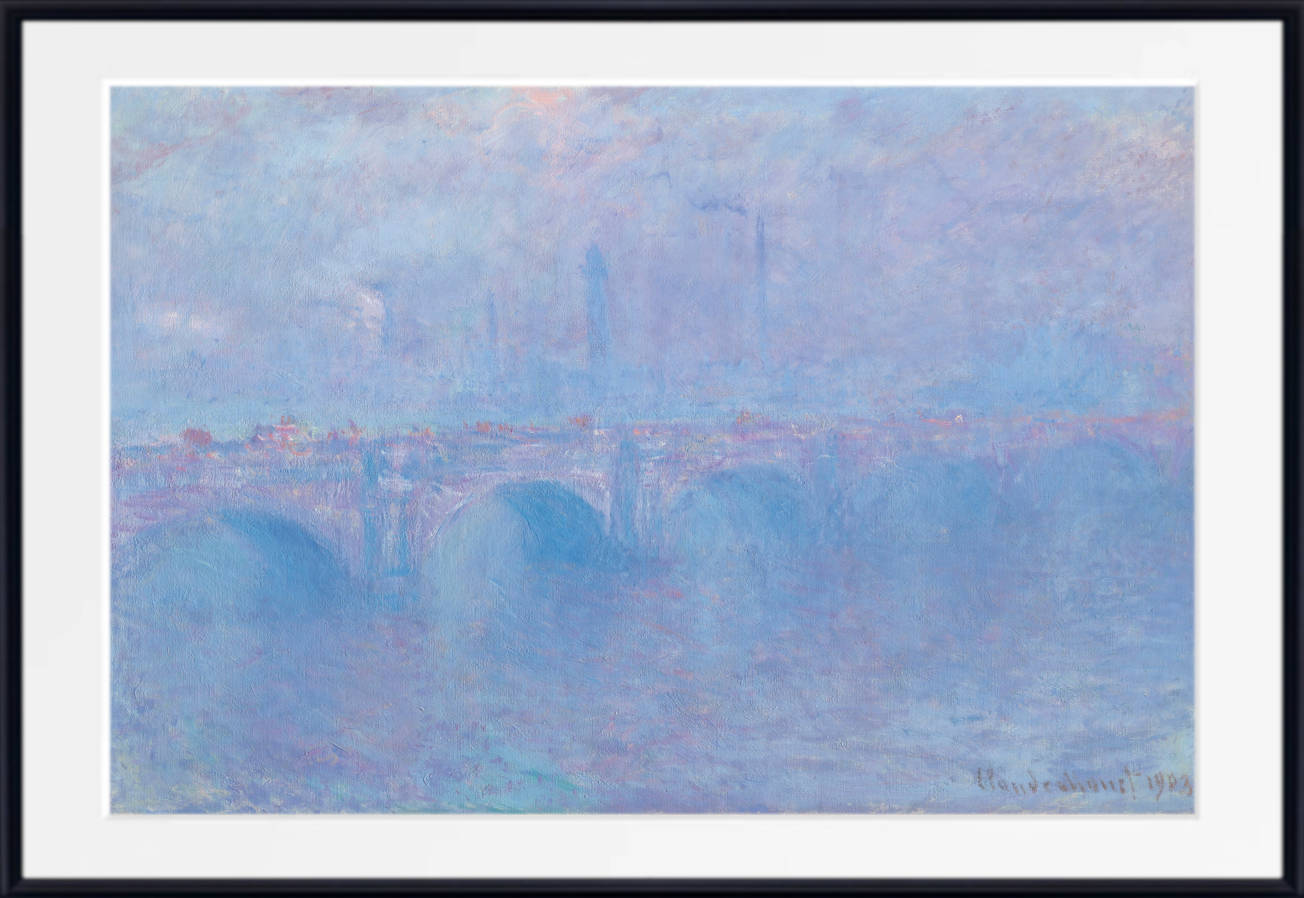
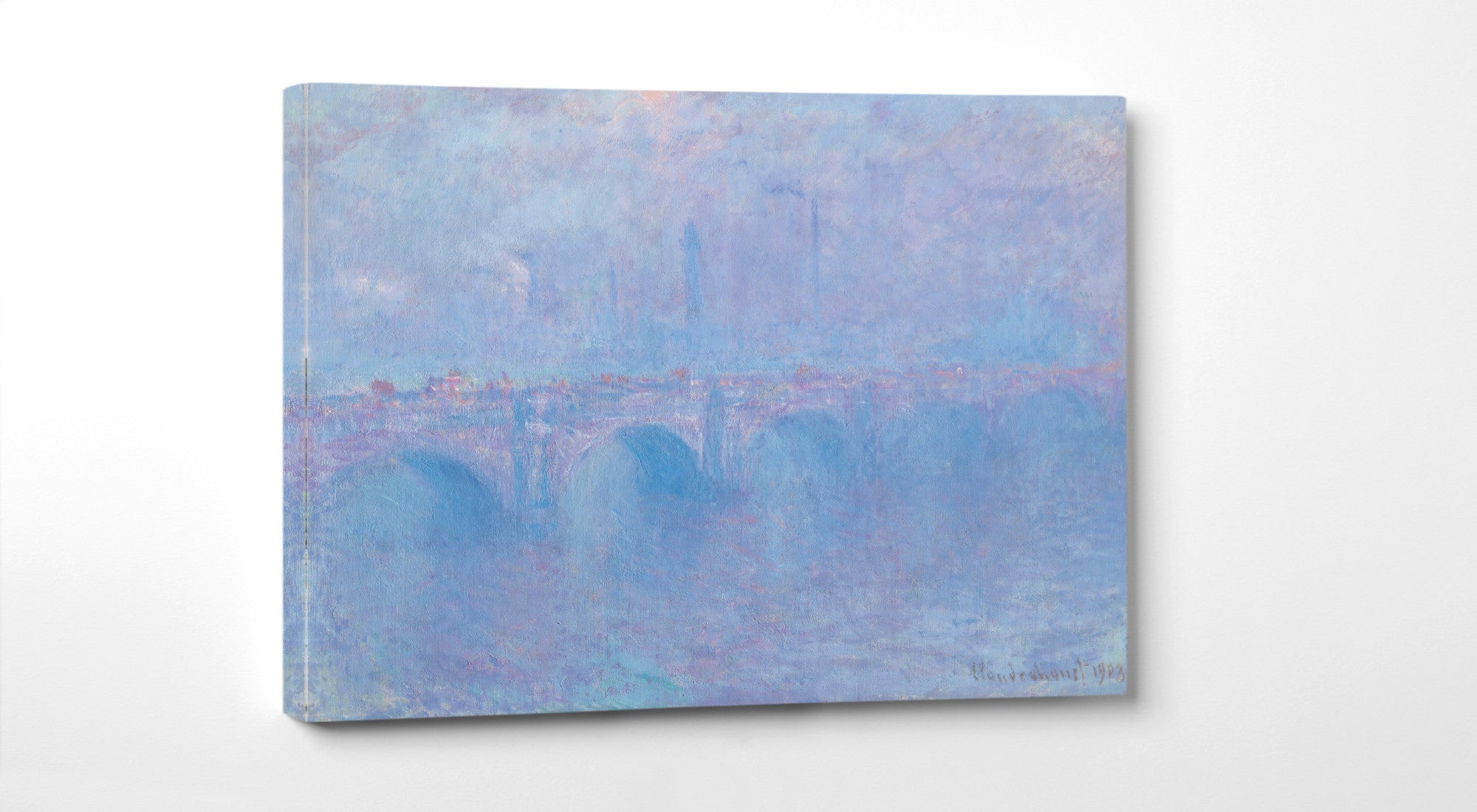
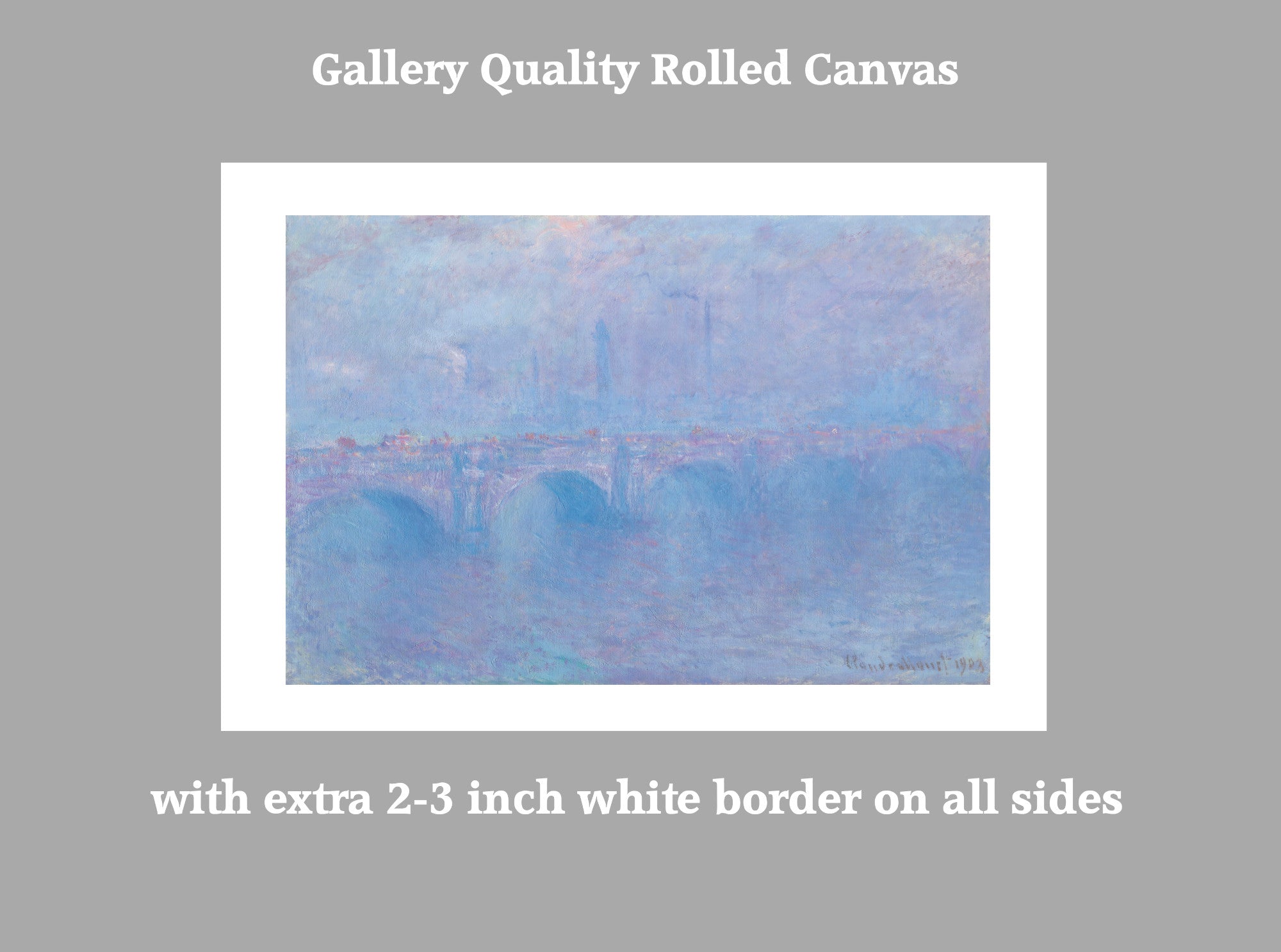
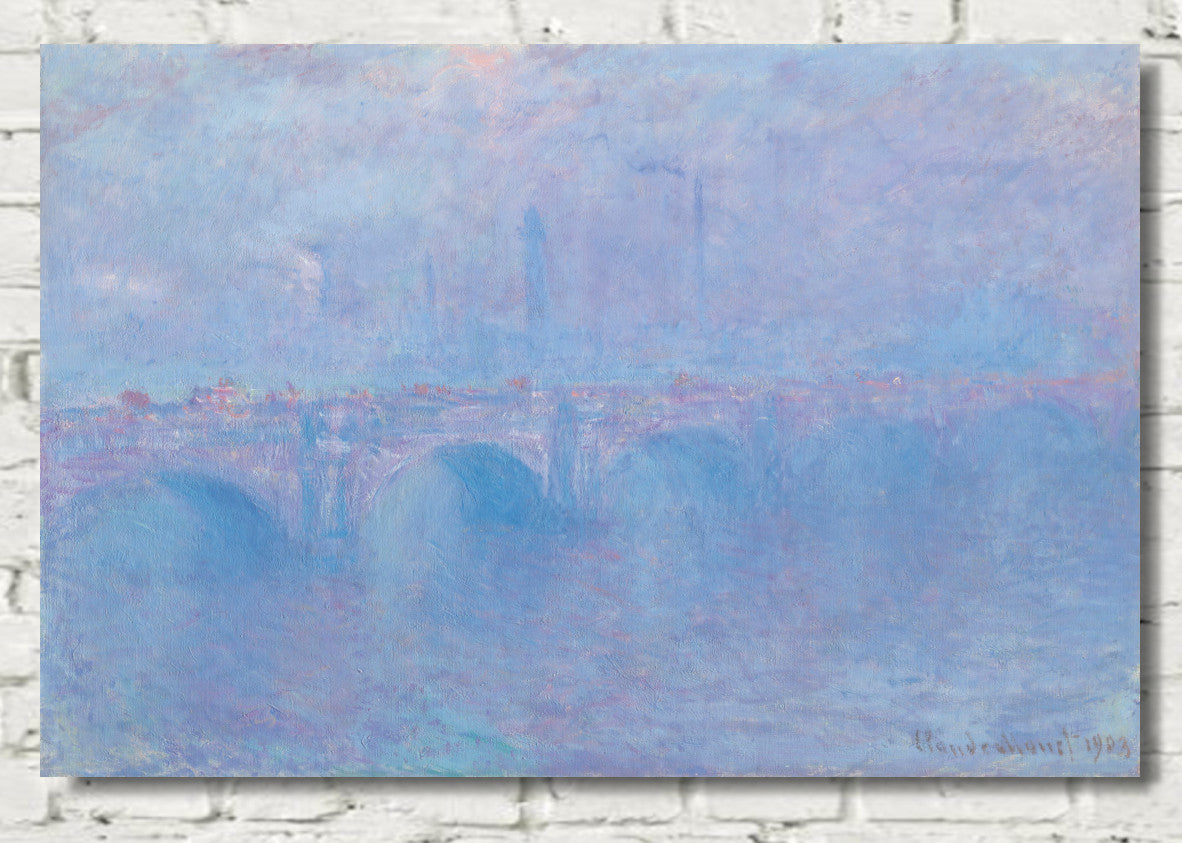
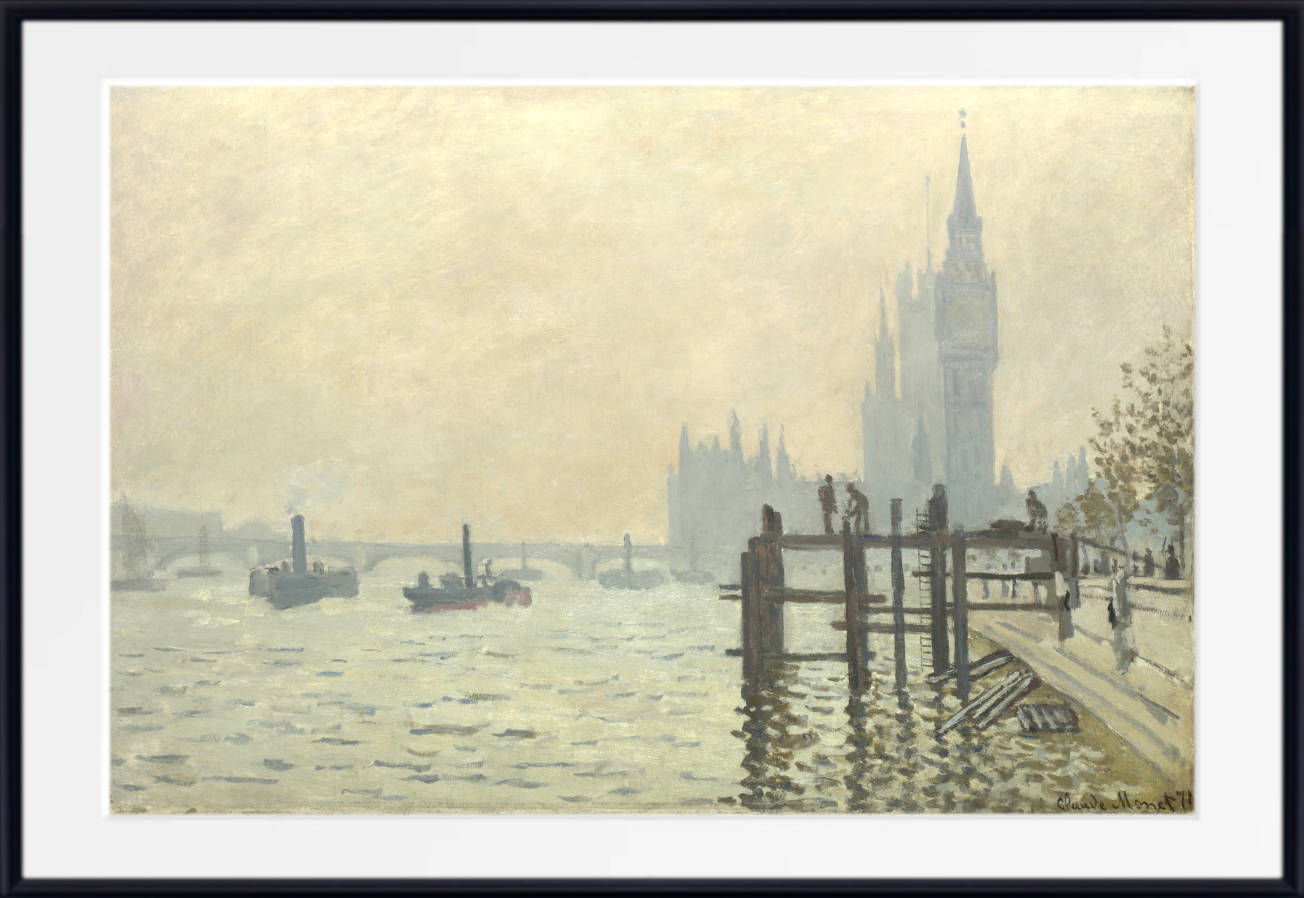
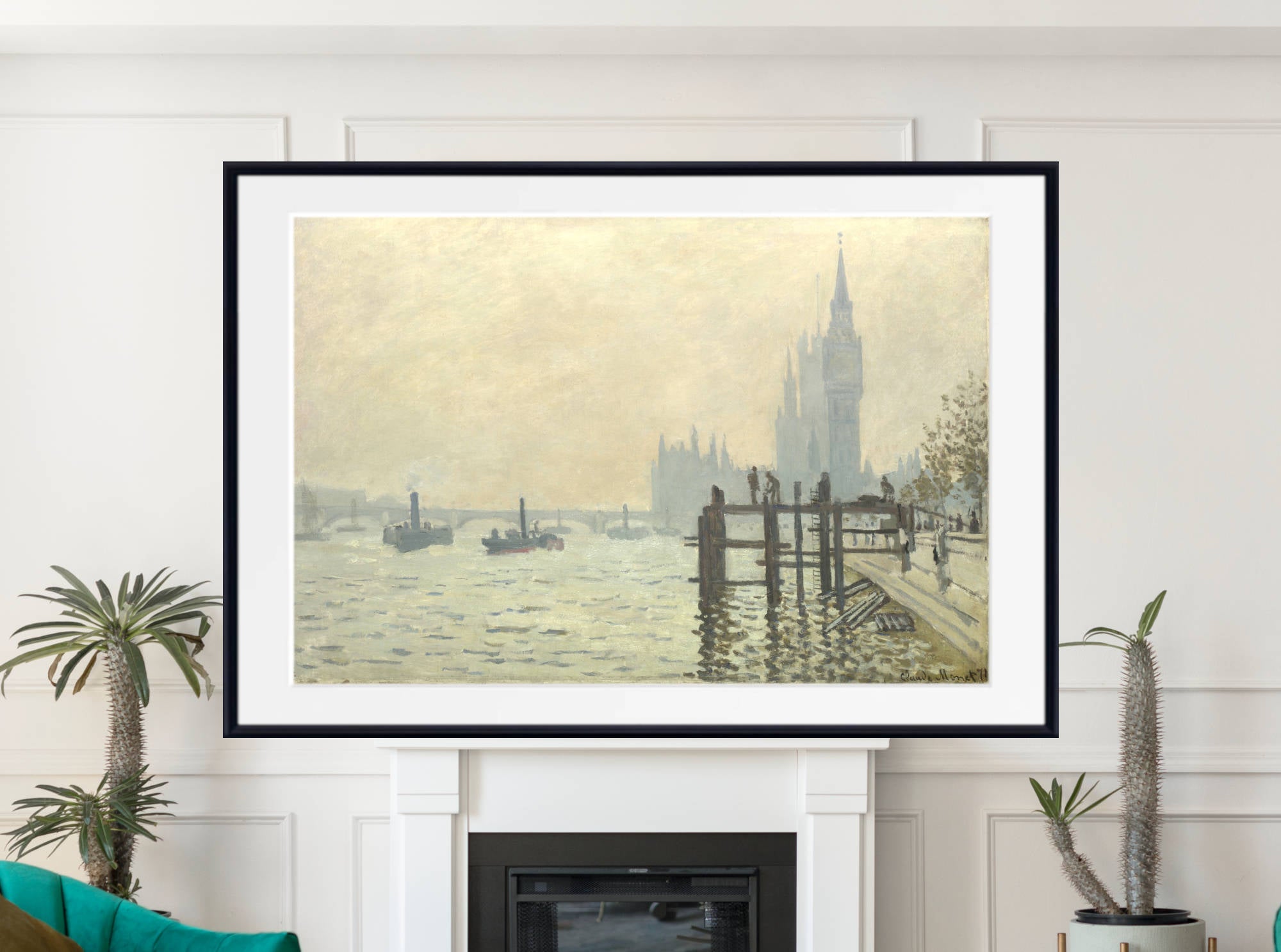
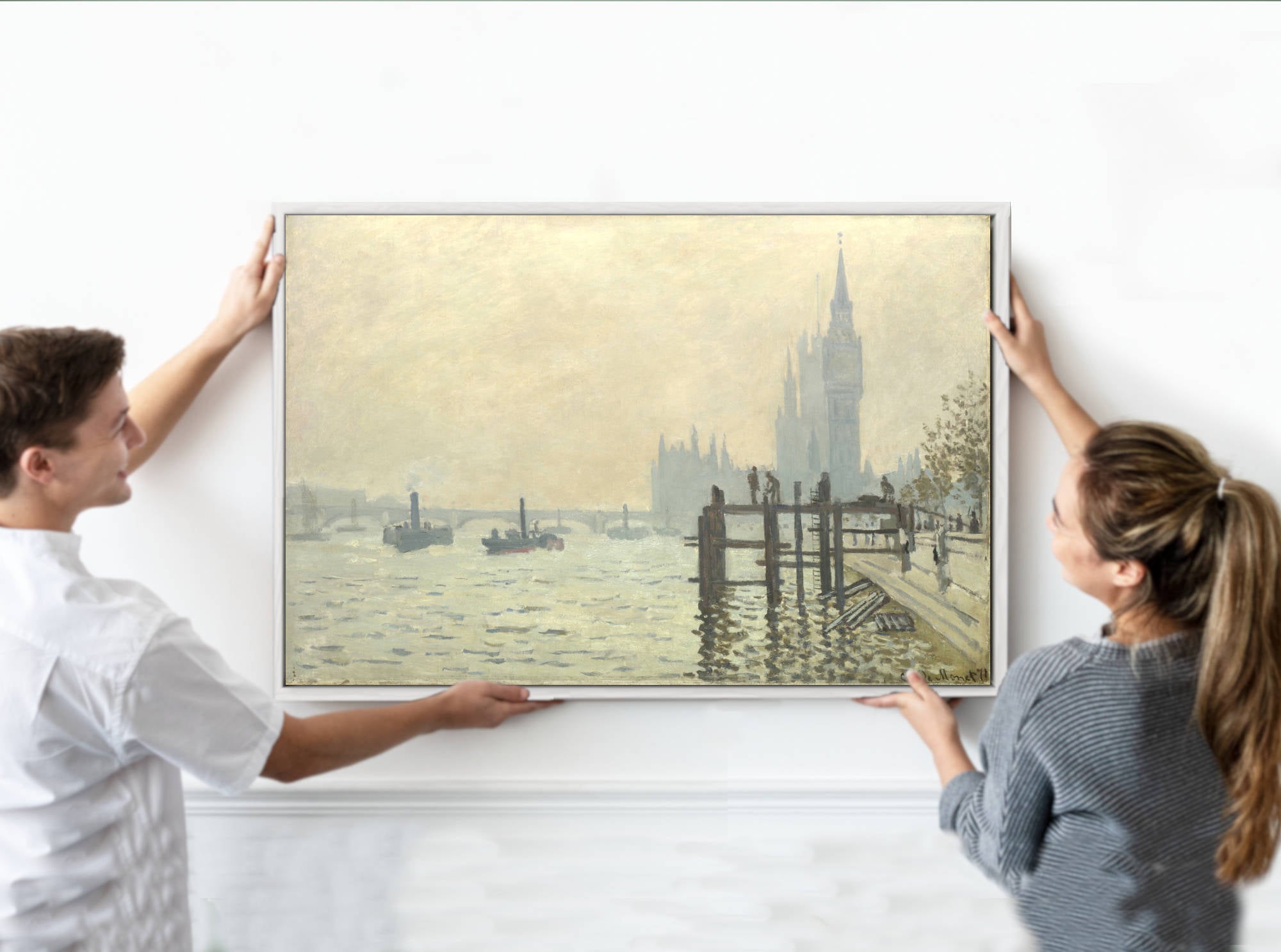
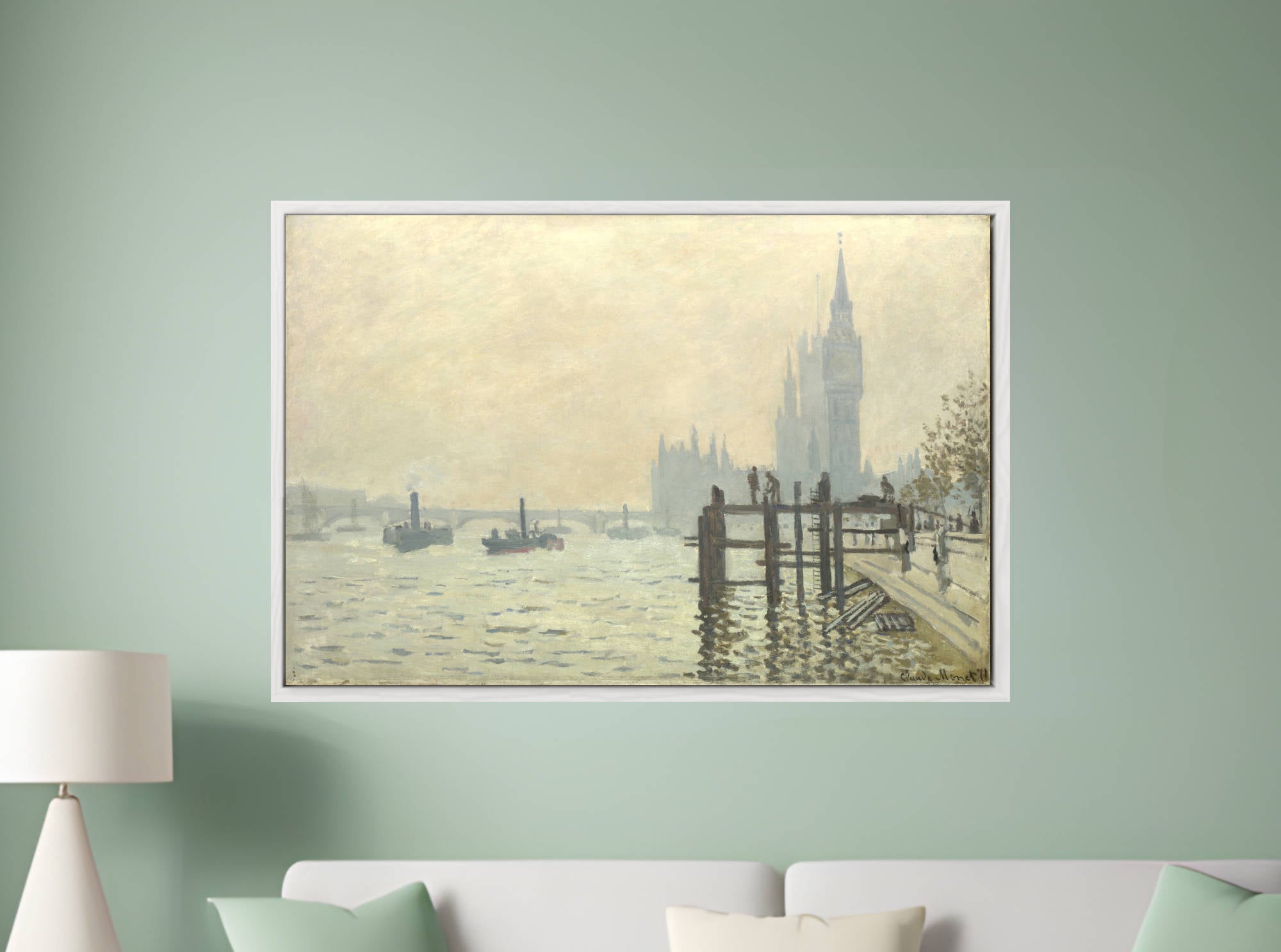
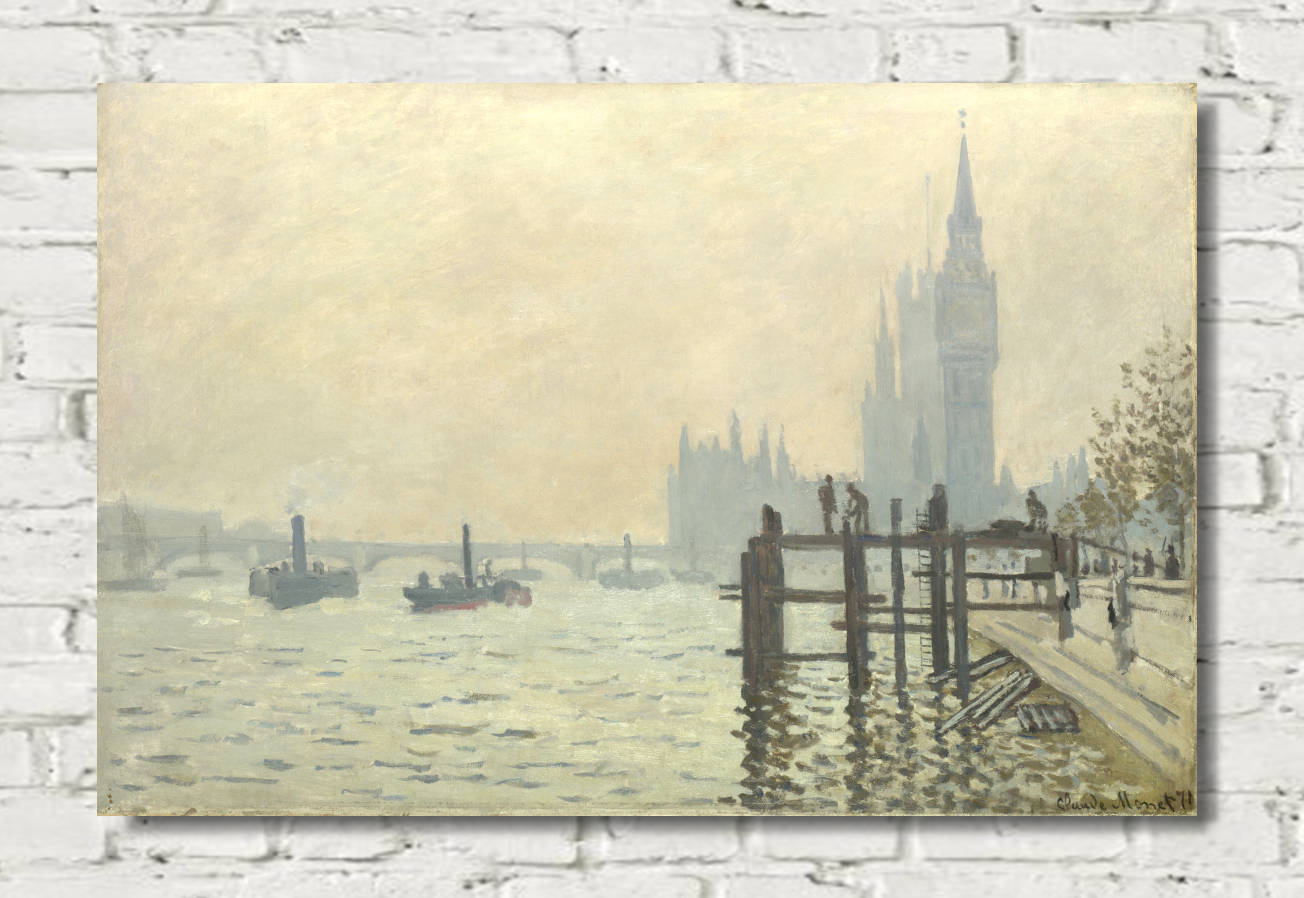
For a more dramatic and sophisticated Monet gallery wall, turn to his paintings of London. Views of the Houses of Parliament and Waterloo Bridge dissolve architecture into mist, smoke, reflected light and glowing colour, making these works particularly effective when displayed as a connected group.
Among the paintings represented in this arrangement are:
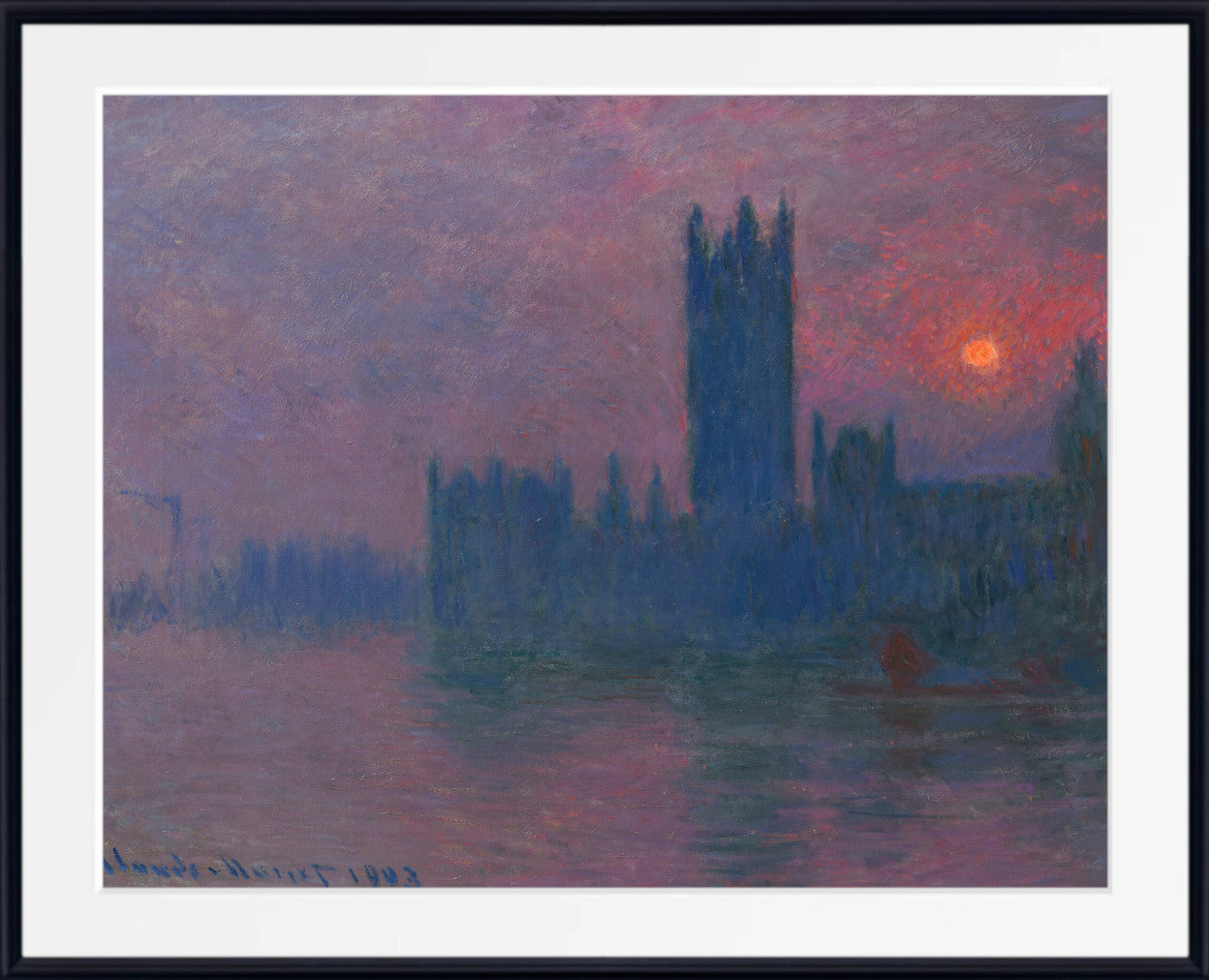
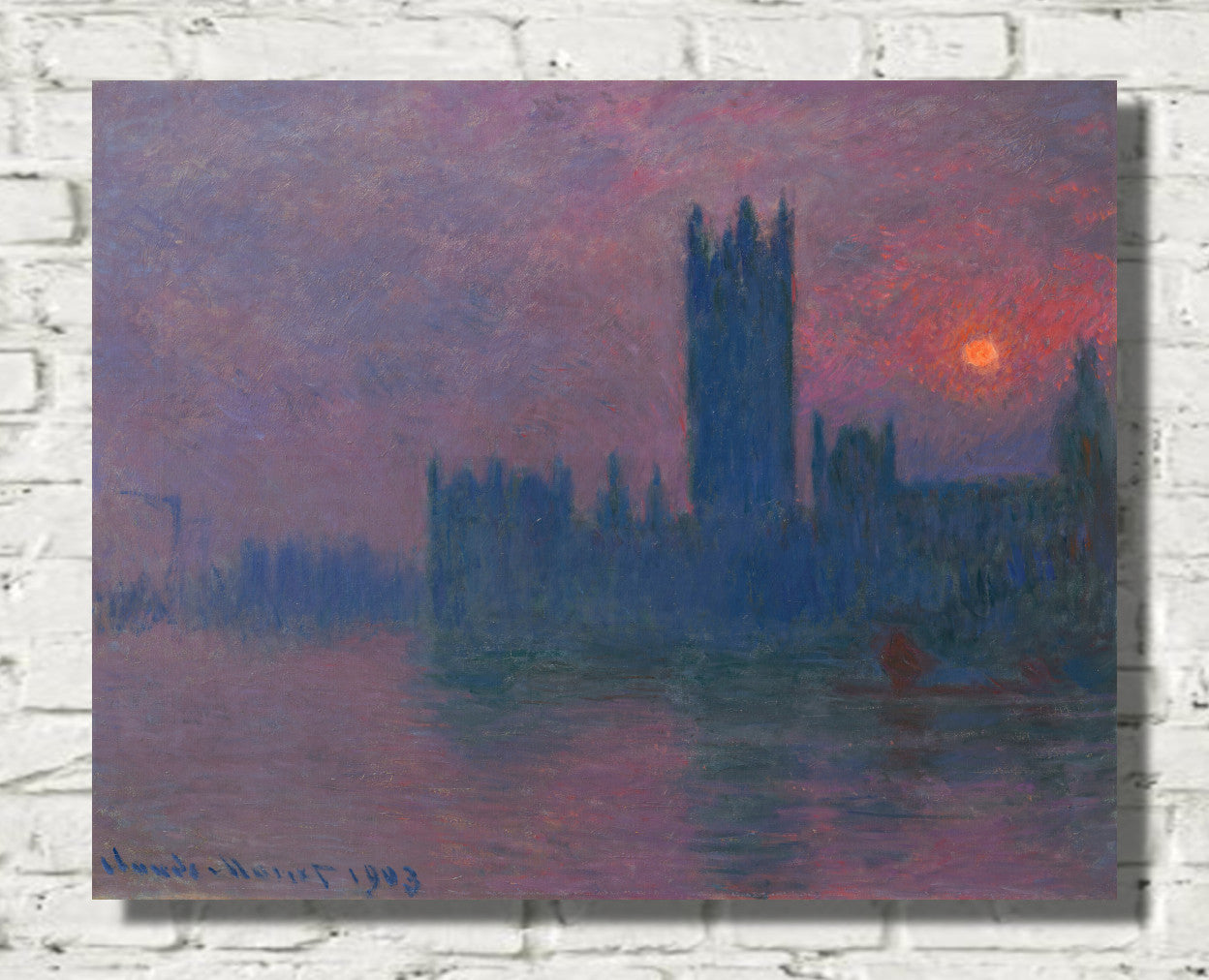
- Houses of Parliament, the Setting Sun
- Waterloo Bridge, London at Sunset
- Waterloo Bridge, Fog Effect
- Waterloo Bridge, Sunlight Effect with Smoke
These paintings work together because Monet treated the city not as a rigid architectural subject but as a place transformed by weather and light. Mauve, blue-grey, pink, gold, orange and violet shift from painting to painting, allowing the same buildings and bridges to appear completely different under changing conditions.
Styling a Monet London gallery wall
This arrangement suits living rooms, dining rooms, studies and sophisticated contemporary interiors particularly well. It can complement charcoal, grey, navy, cream, natural wood and warmer brass or copper accents. The atmospheric palette is also useful where you want city art without the harder graphic quality of conventional architectural prints.
Explore the complete Claude Monet London Prints collection to compare different views, weather conditions and times of day.
5. Blue, Green, Pink and Purple Monet Gallery Walls

You do not need to limit a Monet gallery wall to one series. Another effective approach is to curate by colour, selecting paintings from different periods and subjects that share related blues, greens, pinks, purples or warm contrasting accents.
The gallery shown here moves between Impression, Sunrise, Haystacks, Poplars on the Epte, Blue Water Lilies, Wisteria, The Rose Walk, Giverny, Houses of Parliament, the Setting Sun and Water Lilies (1906).
Blue Monet gallery walls
Blue is one of the easiest colours around which to build a Monet display. Water, sky, mist, reflections and shadows appear in shades ranging from pale blue-grey to turquoise, cobalt and violet. Water Lilies and London paintings can be combined particularly effectively in cool-toned interiors.
For a wider selection, explore Blue Impressionist Prints.
Green Monet gallery walls
For a fresher, botanical effect, combine Giverny gardens, the Japanese bridge, water lilies, trees and woodland paintings. Green works naturally with white, cream, beige, oak and walnut, while pink and violet floral accents keep a predominantly green display from feeling too uniform.
See more possibilities in the Green Impressionist Prints collection.
Pink and purple Monet gallery walls
Soft pinks, lilacs and violets appear throughout Monet's gardens, skies, water reflections and atmospheric paintings. These colours can create a romantic gallery wall without feeling overly decorative when balanced with greens, blues and neutral tones.
Browse Pink Impressionist Prints or combine several colour families through the broader Claude Monet Gallery Wall Prints collection.
6. Monet's Coastal Light: Étretat, Normandy and the Sea

Monet's coastal paintings offer an alternative to the gardens and water lilies most commonly associated with his work. Harbours, seaside resorts, cliffs, open water and changing weather gave him subjects filled with movement, dramatic horizons and constantly shifting relationships between sea and sky.
This five-print gallery includes:
- Impression, Sunrise
- Regatta at Sainte-Adresse
- The Fisherman's House, Varengeville
- Hôtel des Roches Noires, Trouville
- Agitated Sea at Étretat
The combination works because each painting approaches the coast differently. There is the misty harbour of Impression, Sunrise, the brighter openness of Sainte-Adresse, architectural interest at Trouville, dramatic natural scenery around Varengeville and the force of the sea at Étretat.
How to style Monet's coastal paintings
Coastal Monet prints are especially effective in living rooms, bedrooms and dining areas where blues, greens, soft greys and natural materials already appear. They can also work beautifully in contemporary interiors because the expressive brushwork and atmospheric colour prevent the display from feeling conventionally nautical.
For further inspiration, explore Coastal Light and Seaside Impressionism, where Monet can be seen alongside other artists fascinated by beaches, harbours and the changing sea.
7. Flowers, Roses and the Colours of Monet's Giverny Garden

A flower-focused Monet gallery wall can be more colourful and intimate than an arrangement based entirely on one famous series. Roses, irises, wisteria, densely planted borders, garden paths and glimpses of Monet's house create a rich selection of compositions for rooms where warmth and natural colour are especially welcome.
Rather than matching every work by format, use the garden itself as the unifying theme. Square paintings can sit beside vertical garden paths and wider landscape compositions, while repeated greens connect stronger pinks, purples, reds, blues and yellows.
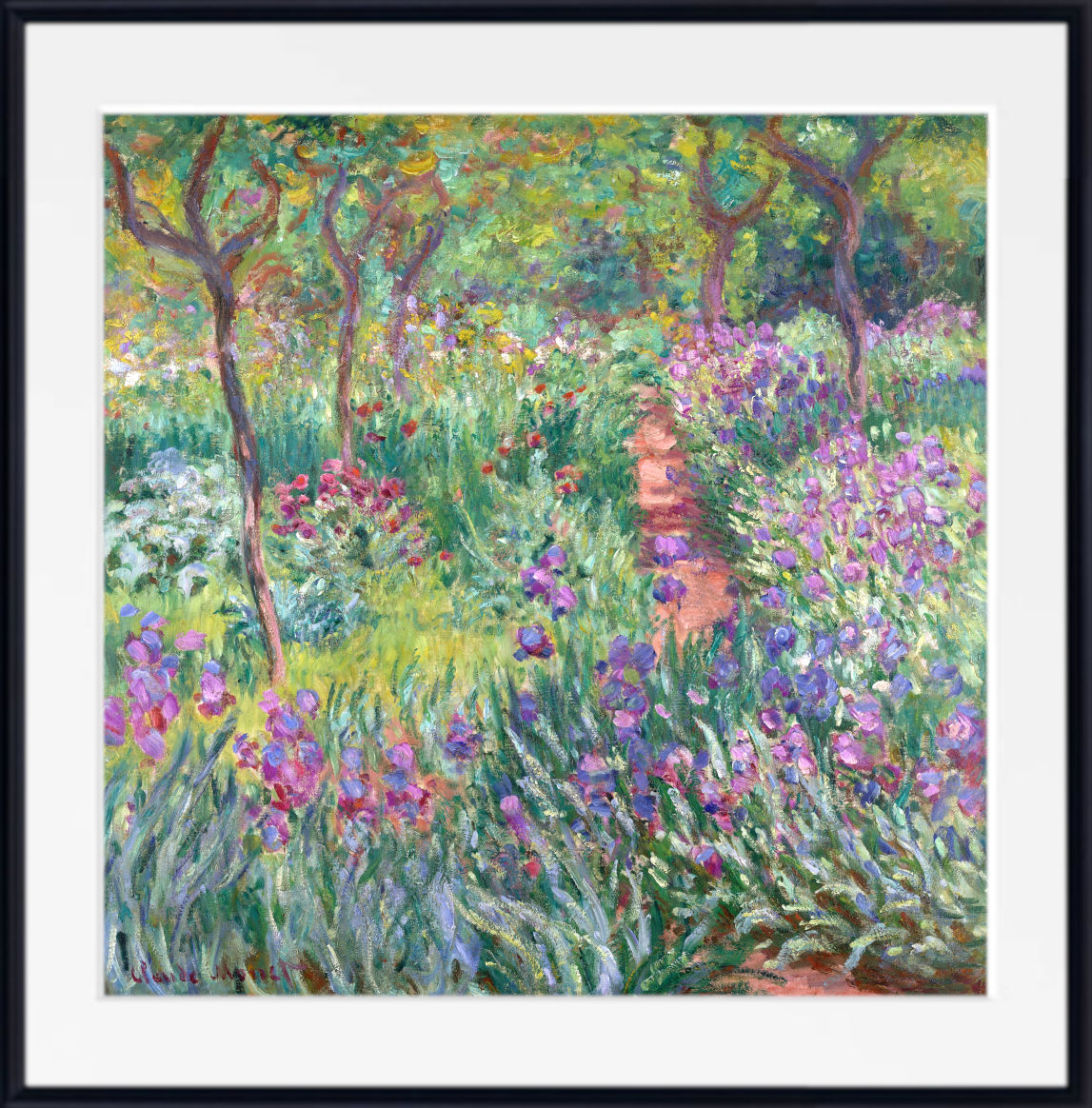
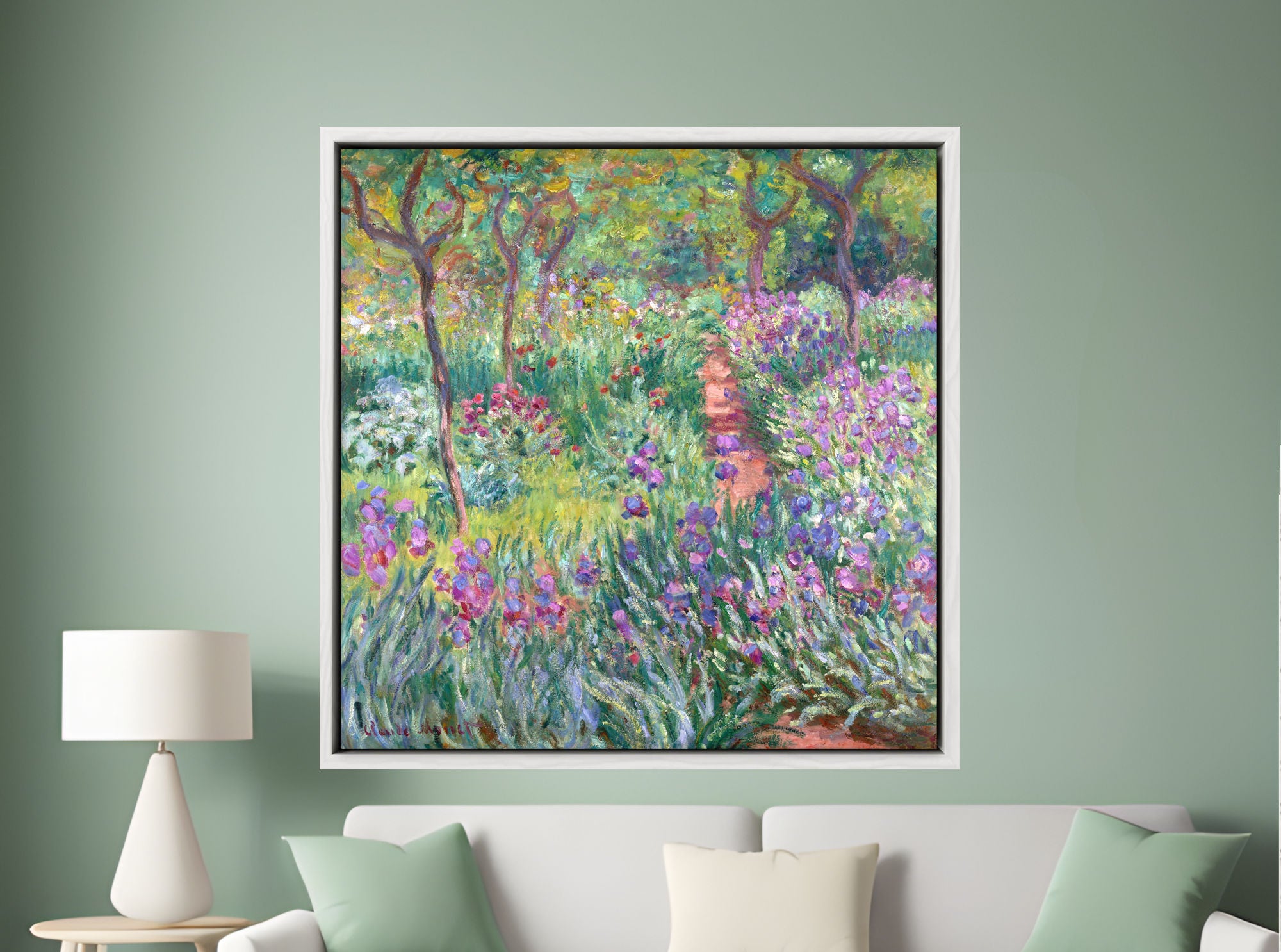
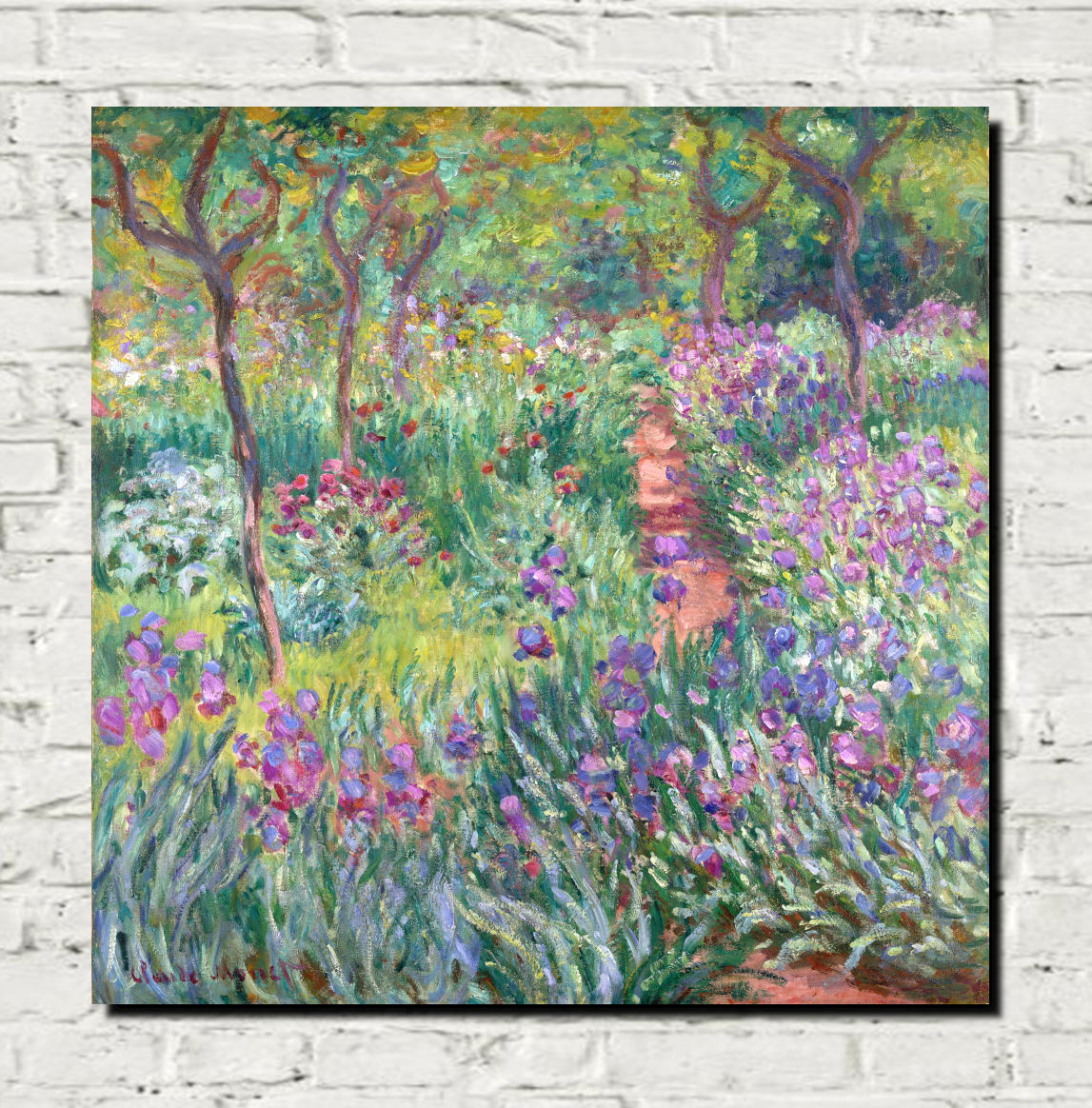
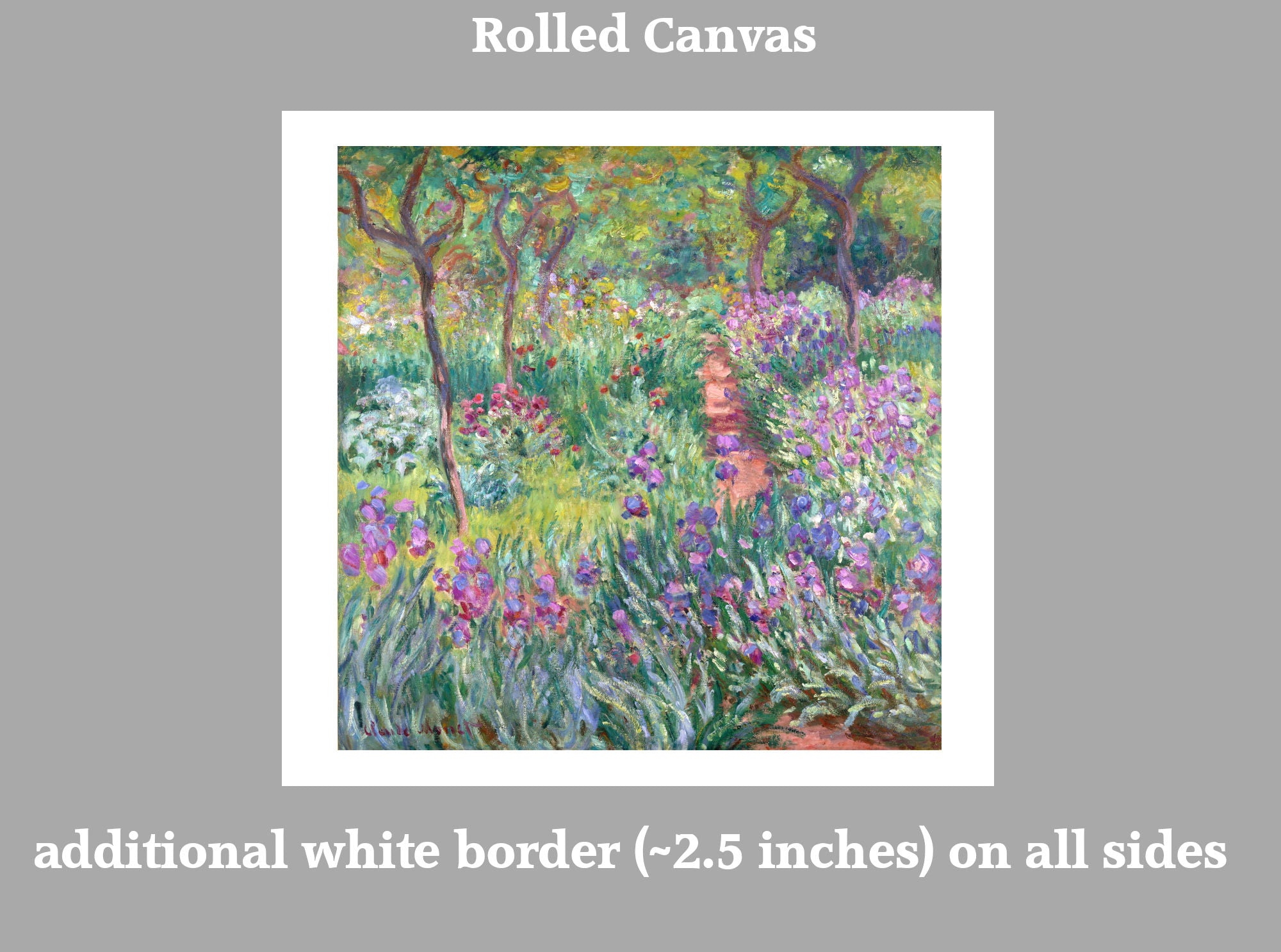
Useful works to consider include The Rose Walk, Giverny, Wisteria, Irises, The Artist's Garden in Giverny and The Artist's House, View from the Rose Garden.
Creating a colourful floral arrangement
Begin with one painting that establishes the dominant mood. A rose garden can introduce pinks and greens; wisteria can lead towards lilac and violet; irises can bring blue and purple; and a broader garden landscape can tie several colours together.
Avoid trying to match every shade exactly. Monet's garden paintings are most convincing in groups when secondary colours echo across several works rather than when every picture has an identical palette.
Explore the Monet's Garden at Giverny Gallery Wall collection, discover more floral Impressionism through Impressionist Gardens and Flowers, or browse the broader Botanical Prints collection.
8. Monet's Famous Series: Haystacks, Poplars and Changing Light

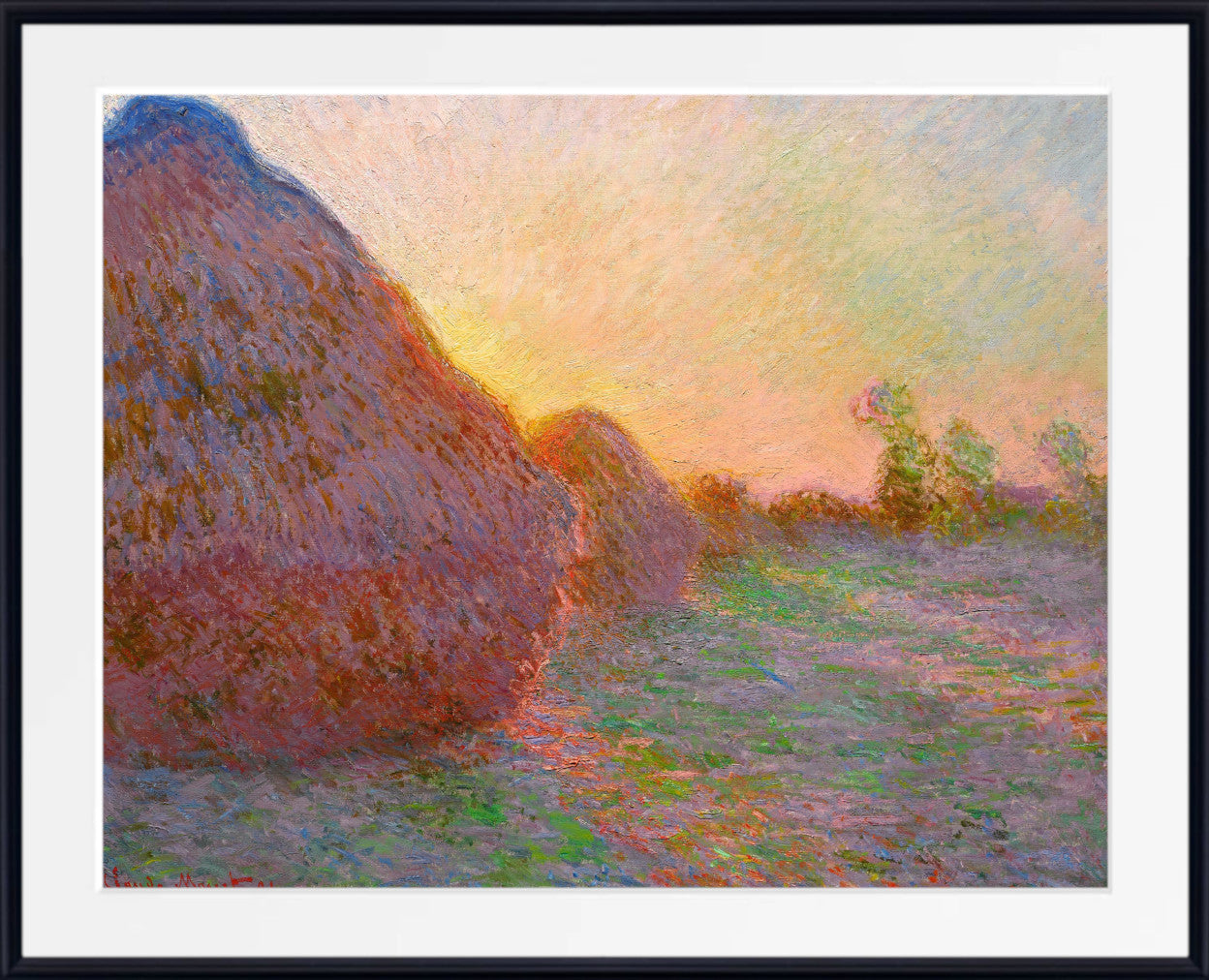
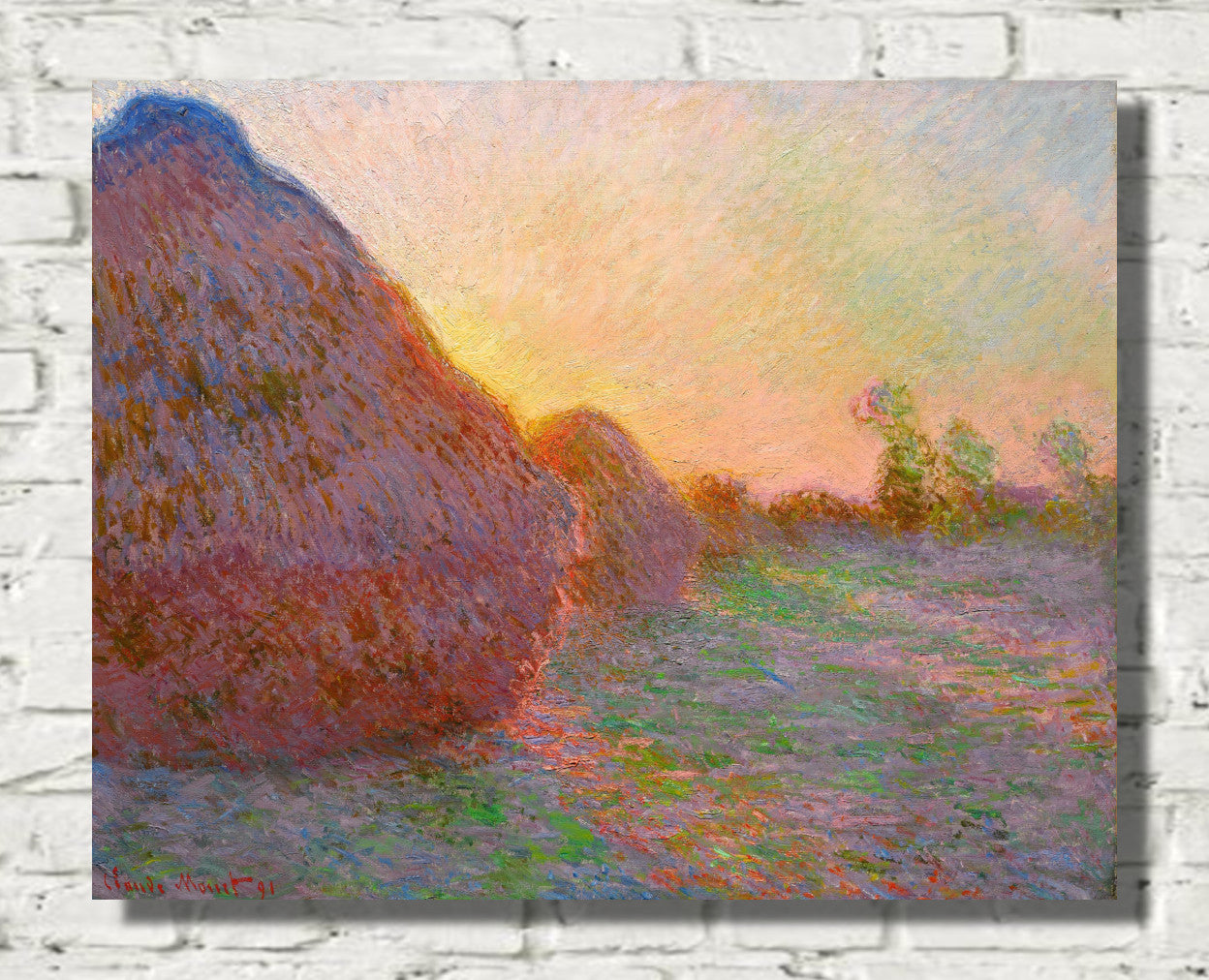
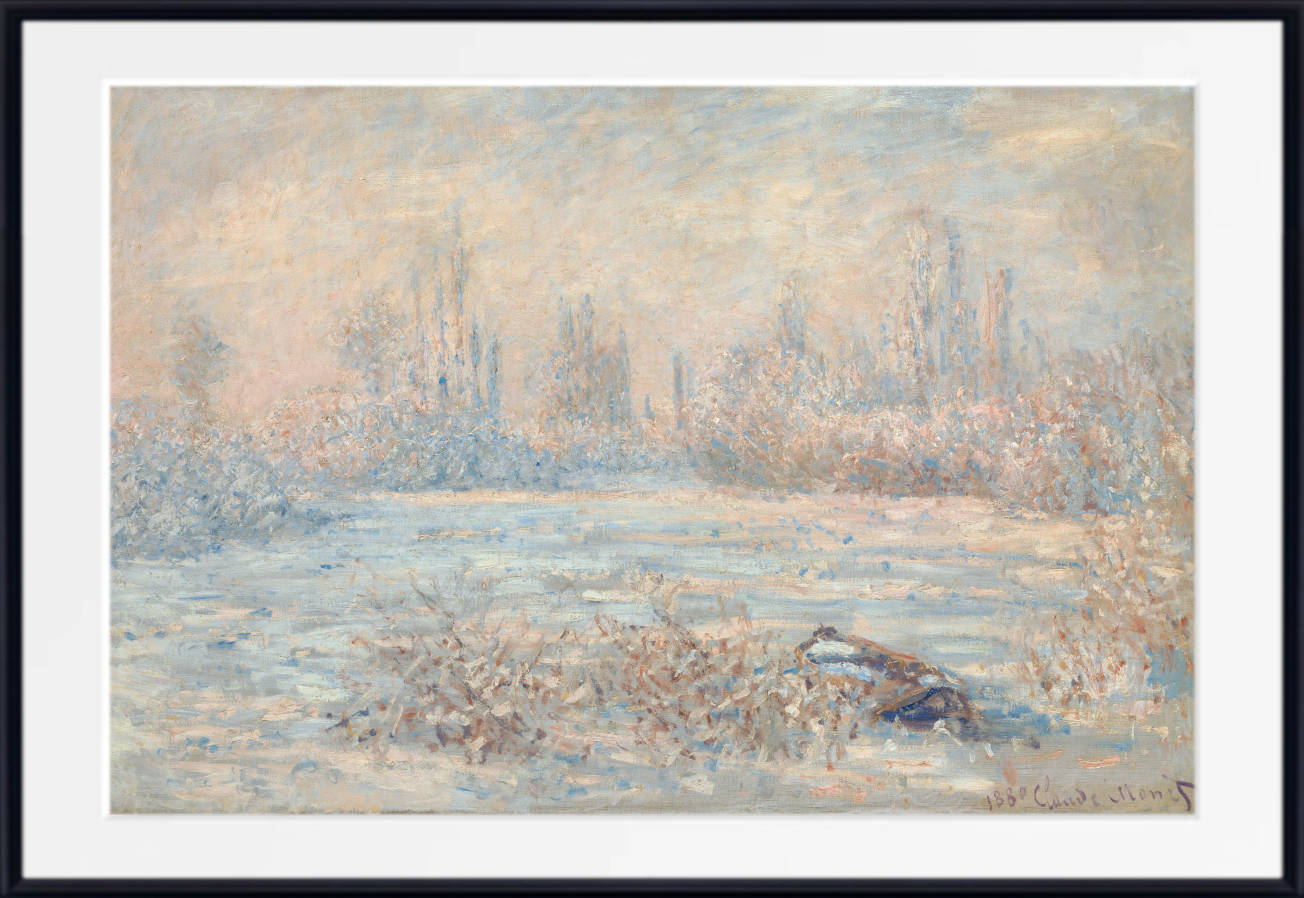
One of the most compelling ways to build a Monet gallery wall is to focus on his repeated treatment of a single motif. Haystacks, wheat stacks and poplars allowed him to explore how familiar forms changed under different light, weather and seasonal conditions.
This six-image arrangement brings together:
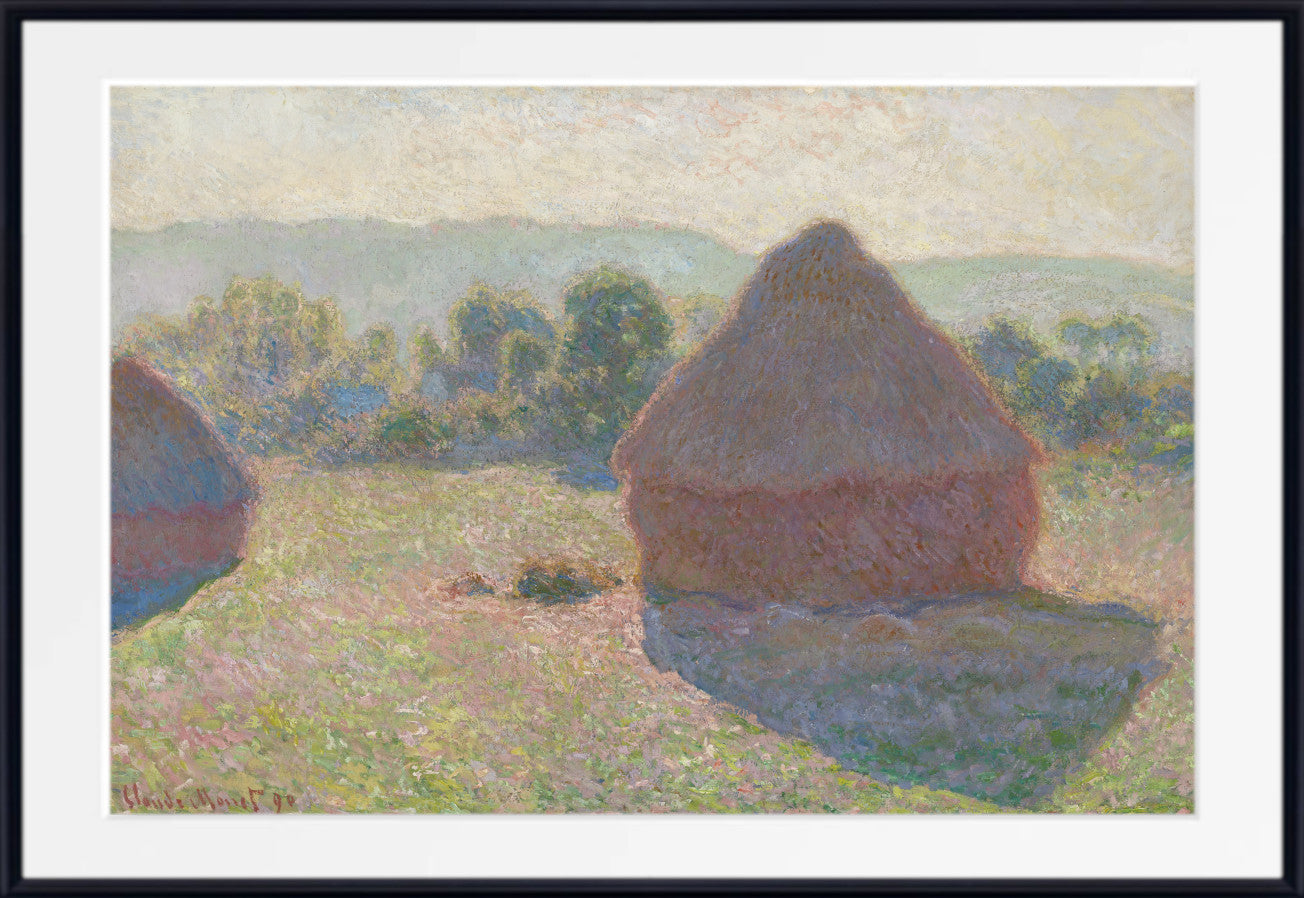
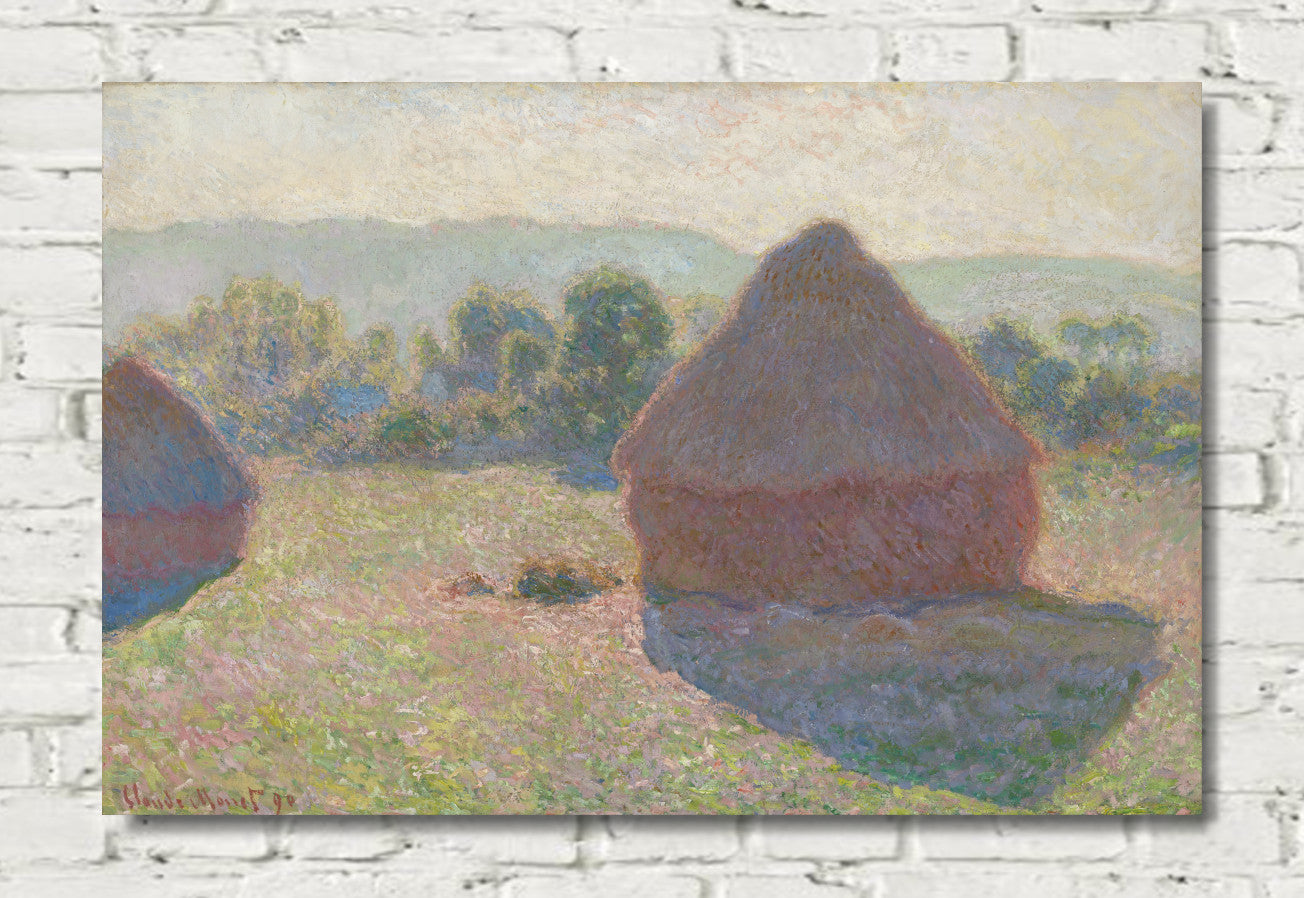
- Haystacks, Midday
- Haystacks, Snow Effect
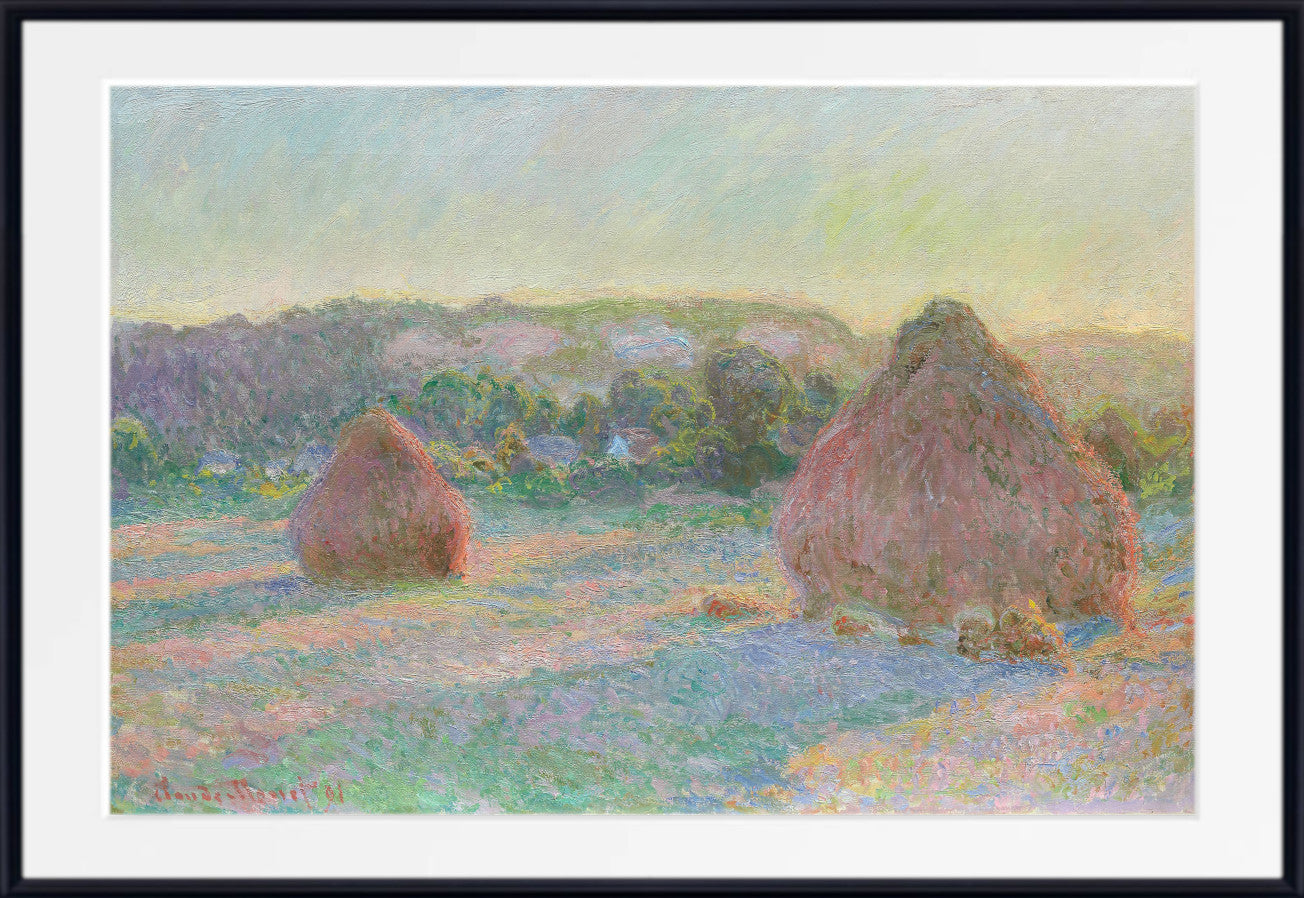
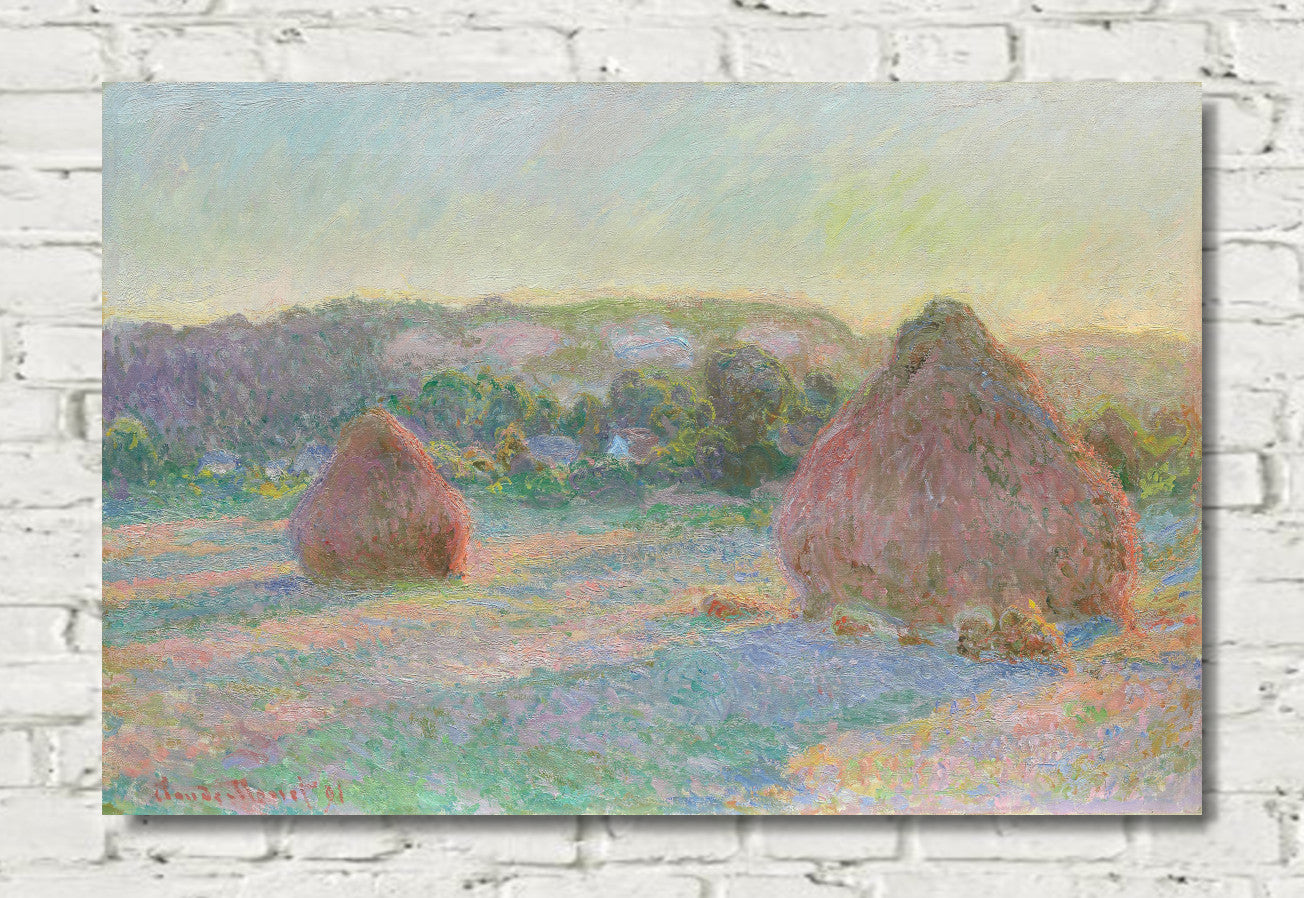
- Stacks of Wheat (End of Summer)
- Impression, Sunrise
- Poplars on the Epte
- Haystacks
Four works related to stacks of grain give the display a strong thematic centre. The addition of Poplars on the Epte introduces another repeated natural motif, while Impression, Sunrise broadens the story towards Monet's lifelong fascination with atmosphere and transient effects.
Why repeated series are ideal for gallery walls
A series-based arrangement achieves unity without requiring identical paintings. Shapes and subjects recur, but colour can change dramatically: warm gold becomes icy blue, summer vegetation gives way to snow, and a familiar landscape is transformed by sunlight, mist or shadow.
This makes the approach particularly suitable for collectors who want a gallery wall with a strong art-historical idea as well as an attractive visual rhythm. More works can be found in the Claude Monet Gallery Wall Prints collection.
How to Create a Cohesive Claude Monet Gallery Wall
The best gallery walls feel collected rather than random. Before choosing individual prints, decide what will connect them. The link might be one series, one location, one dominant colour, one subject or a broader story about Monet's work.
1. Start with an anchor painting
Choose the work you most want to see every day and build around it. This might be Impression, Sunrise, a favourite Water Lilies painting, a Giverny garden or a dramatic view of the Houses of Parliament. Your anchor can be the largest print in the arrangement, but it does not have to be.
2. Choose a clear connection between the paintings
A coherent group might be based on Water Lilies, Giverny, London, the coast, flowers or changing light. Alternatively, connect different subjects through colour. A blue-green palette can bring together water lilies, river scenes and coastal paintings, while pinks and purples can connect flowers, sunsets, mist and reflections.
3. Vary formats without losing balance
A mixture of square, portrait and landscape paintings can create more visual interest than six identically proportioned works. Balance is more important than symmetry. A tall painting on one side can be counterbalanced by two smaller works, while a panoramic landscape can provide visual weight beneath a row of smaller prints.
4. Use consistent framing to create unity
When paintings vary greatly in colour and composition, matching frames and mounts can connect them visually. Black frames with white mounts create a clear gallery-style structure while leaving Monet's colour at the centre of the display.
5. Plan the spacing before hanging
Keep the gaps between neighbouring frames reasonably consistent. Too much space can make a group feel disconnected; too little can make it feel cramped. Lay the arrangement out on the floor first or use paper templates on the wall before fixing the final positions.
6. Match the scale of the gallery wall to the room
Above a large sofa, bed or sideboard, a six- or eight-print arrangement can create a substantial focal point. In a smaller bedroom, study or hallway, two to four well-chosen works may be more effective. The gallery should relate to the furniture and wall beneath it rather than appearing as a small isolated cluster.
For more arrangement ideas beyond Monet, explore Impressionist Gallery Wall Ideas for a Beautiful Curated Display and the accompanying Impressionist Gallery Wall Prints and Ideas collection.
Frequently Asked Questions
What are the best Claude Monet paintings for a gallery wall?
Some of the most versatile choices include Impression, Sunrise, Woman with a Parasol, Haystacks, Poplars on the Epte, Water Lilies paintings, the Japanese bridge, Giverny gardens and Monet's atmospheric views of London. The best combination depends on whether you prefer variety or a more focused theme.
How many Monet prints should I use in a gallery wall?
Three to eight prints work well for many gallery walls. Three or four paintings can create a compact arrangement for a bedroom or smaller wall, while five to eight works can fill the space above a substantial sofa, bed, console or sideboard.
Should all the frames be the same?
Matching frames are not essential, but they are one of the simplest ways to unite paintings with different subjects, colours and proportions. Consistent black frames and white mounts can create a particularly clear gallery-style presentation.
Can I mix different Monet series in one gallery wall?
Yes. A mixed Monet gallery wall can be extremely effective when the paintings share another connection, such as colour or atmosphere. Water Lilies, London views, coastal landscapes and Giverny gardens can all work together when blues, greens, pinks or violets recur across the group.
What colours work best in a Monet gallery wall?
Blue, green, pink and purple are especially adaptable because they recur throughout Monet's water, gardens, skies, flowers, shadows and reflections. Warmer orange, yellow and red accents can add energy and prevent a predominantly cool arrangement from feeling too uniform.
Are Monet gallery walls suitable for small rooms?
Yes. A small Monet gallery wall might use two or three prints rather than a large multi-row arrangement. Closely related works, such as three Water Lilies paintings or a trio of Giverny gardens, can create impact without overwhelming a compact room.
Can I make a gallery wall entirely from Monet's Water Lilies?
Yes. The Water Lilies series is particularly well suited to gallery walls because individual paintings vary greatly in colour, format and atmosphere while remaining connected by subject. Browse the Claude Monet Water Lilies collection to compare different possibilities.
Should I choose framed Monet prints or canvas panels?
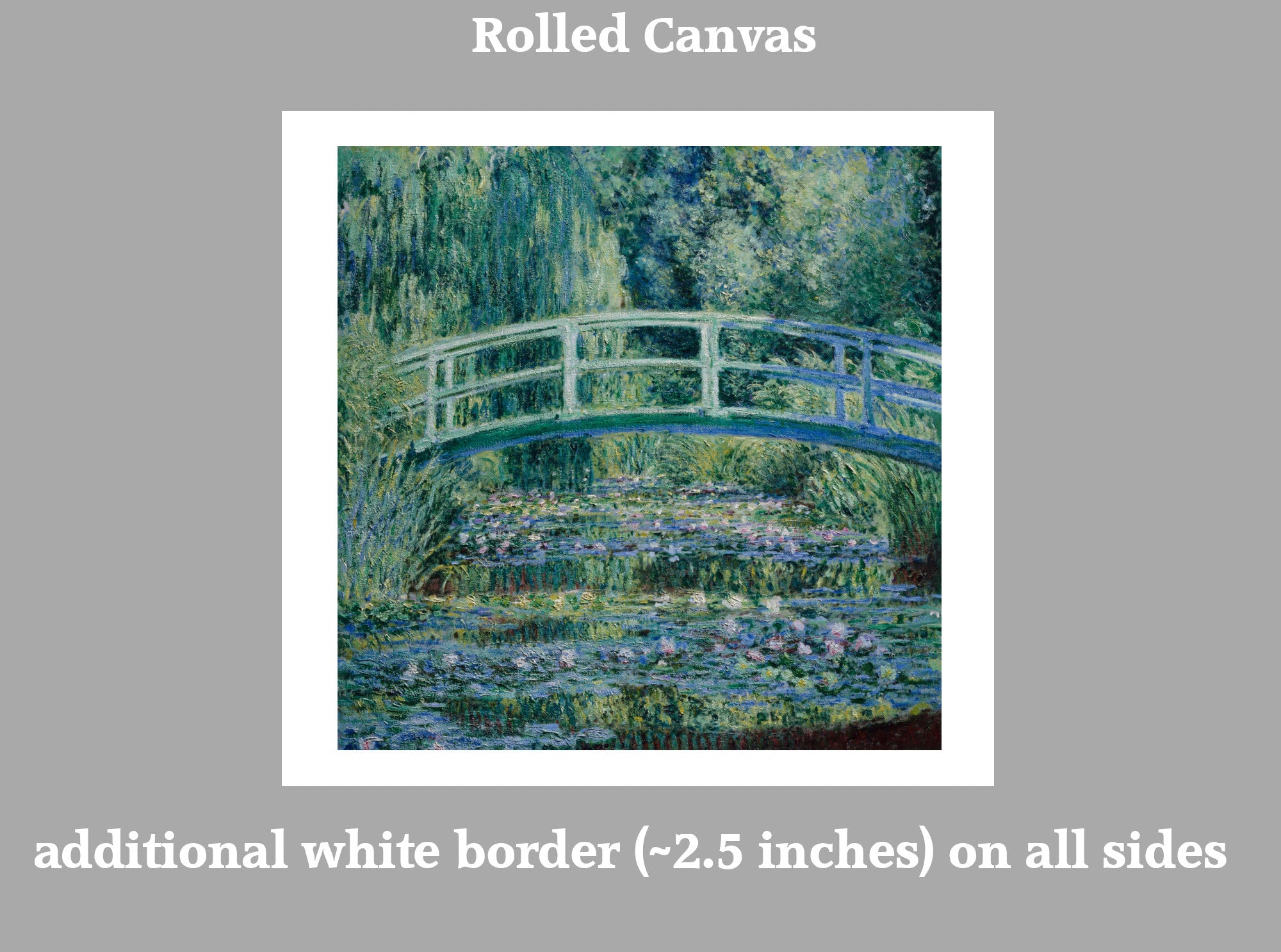
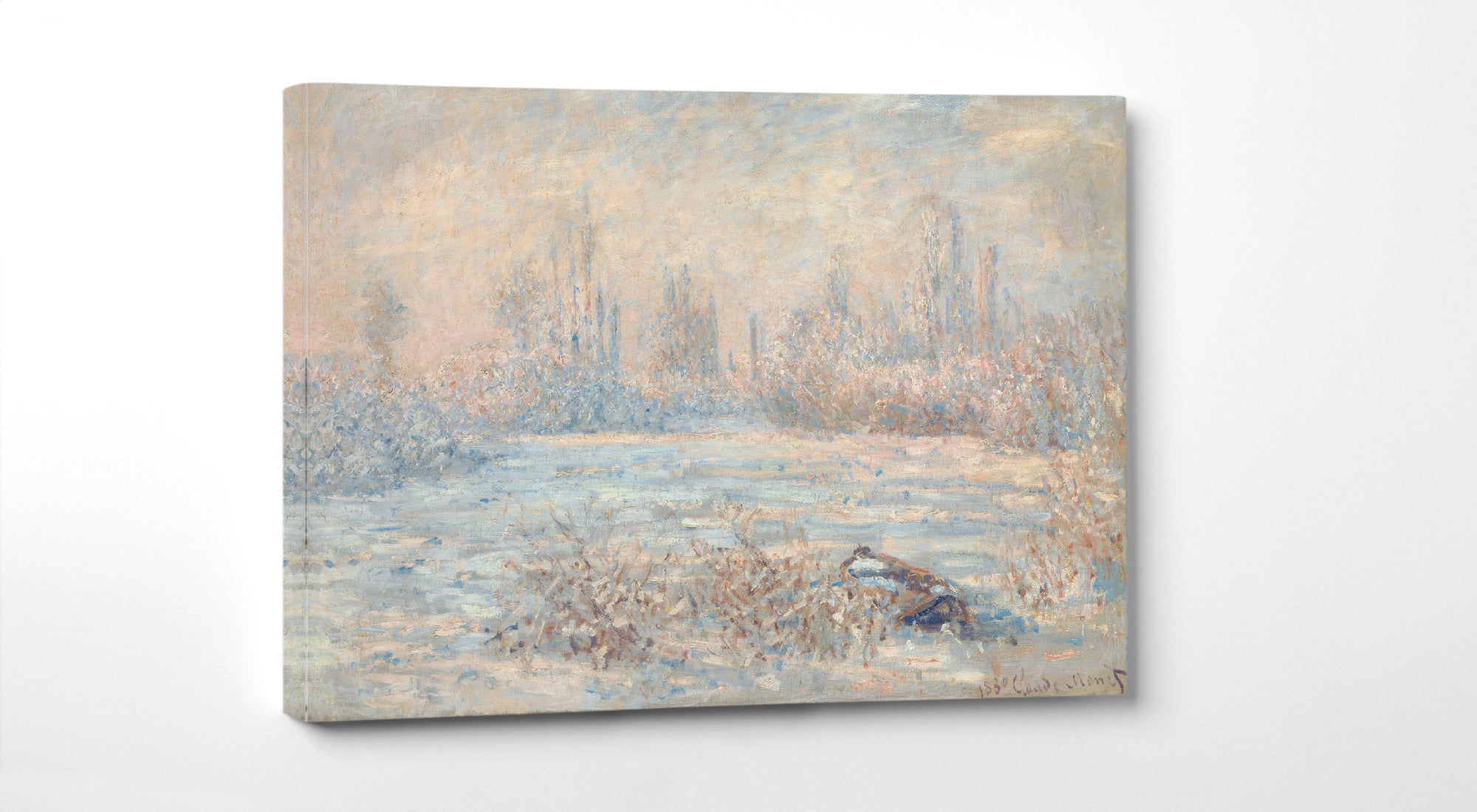
Framed prints are particularly effective when you want a structured gallery wall with clearly defined edges and consistent mounts. Canvas panels can create a more painterly, less formal appearance. For a multi-print arrangement, using the same presentation style across the group usually creates the strongest visual unity.
Where can I find Claude Monet prints for a gallery wall?
Explore the curated Claude Monet Gallery Wall Prints collection for works selected with multi-picture displays in mind, or browse the wider Claude Monet Fine Art Prints collection for an expanded range of subjects and series.
Related Reading
- Claude Monet Artist Profile
- Water Lilies by Claude Monet: The Complete Guide to the Nymphéas Series
- Giverny: Claude Monet's Garden and the Birthplace of Impressionism
- The Giverny Art Colony: The Artists Who Painted in Monet's Garden Village
- Impressionist Gallery Wall Ideas for a Beautiful Curated Display
- Impressionism: Complete Guide to Artists, Paintings and Style
- Impressionist Artists: The Complete List
Create Your Own Claude Monet Gallery Wall
The enduring appeal of a Monet gallery wall lies in the freedom to make it personal. You can follow the changing light across several Haystacks, immerse a room in Water Lilies, recreate the colour of Giverny, explore the fog and smoke of London, bring coastal light into your home or combine famous paintings from across Monet's career.
The strongest arrangement is not necessarily the largest. It is the one in which the paintings speak naturally to one another through colour, atmosphere, subject or place. Start with a work you love, find the connections around it, and allow the gallery to develop into a collection with its own rhythm and character.
Explore the complete Claude Monet Gallery Wall Prints collection or browse all Claude Monet fine art prints to begin creating your own display.