


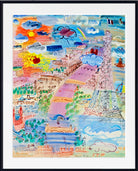
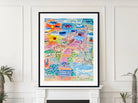
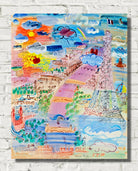
Paris and the Eiffel Tower (1936) by Raoul Dufy
Couldn't load pickup availability
BUY WITH CONFIDENCE
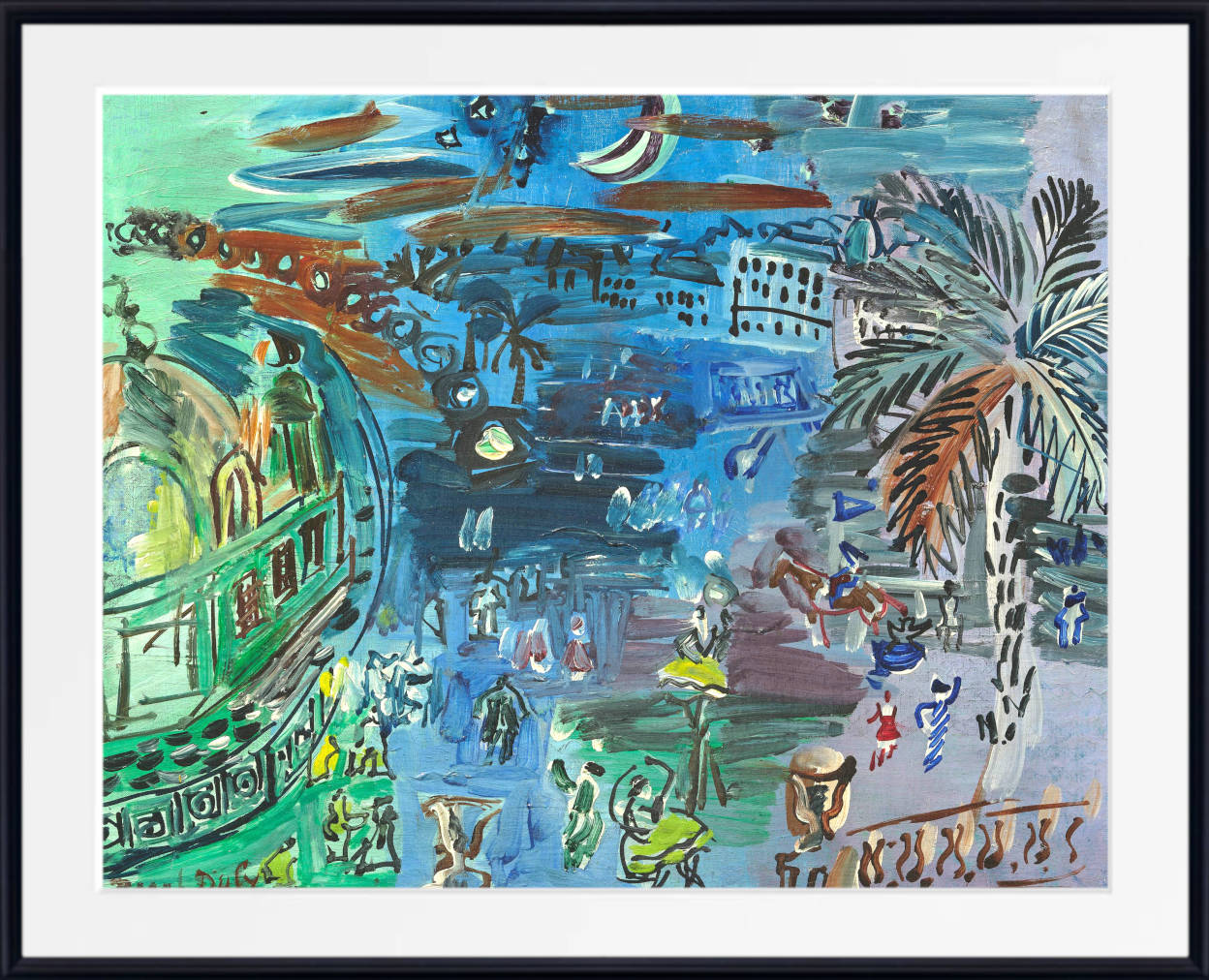
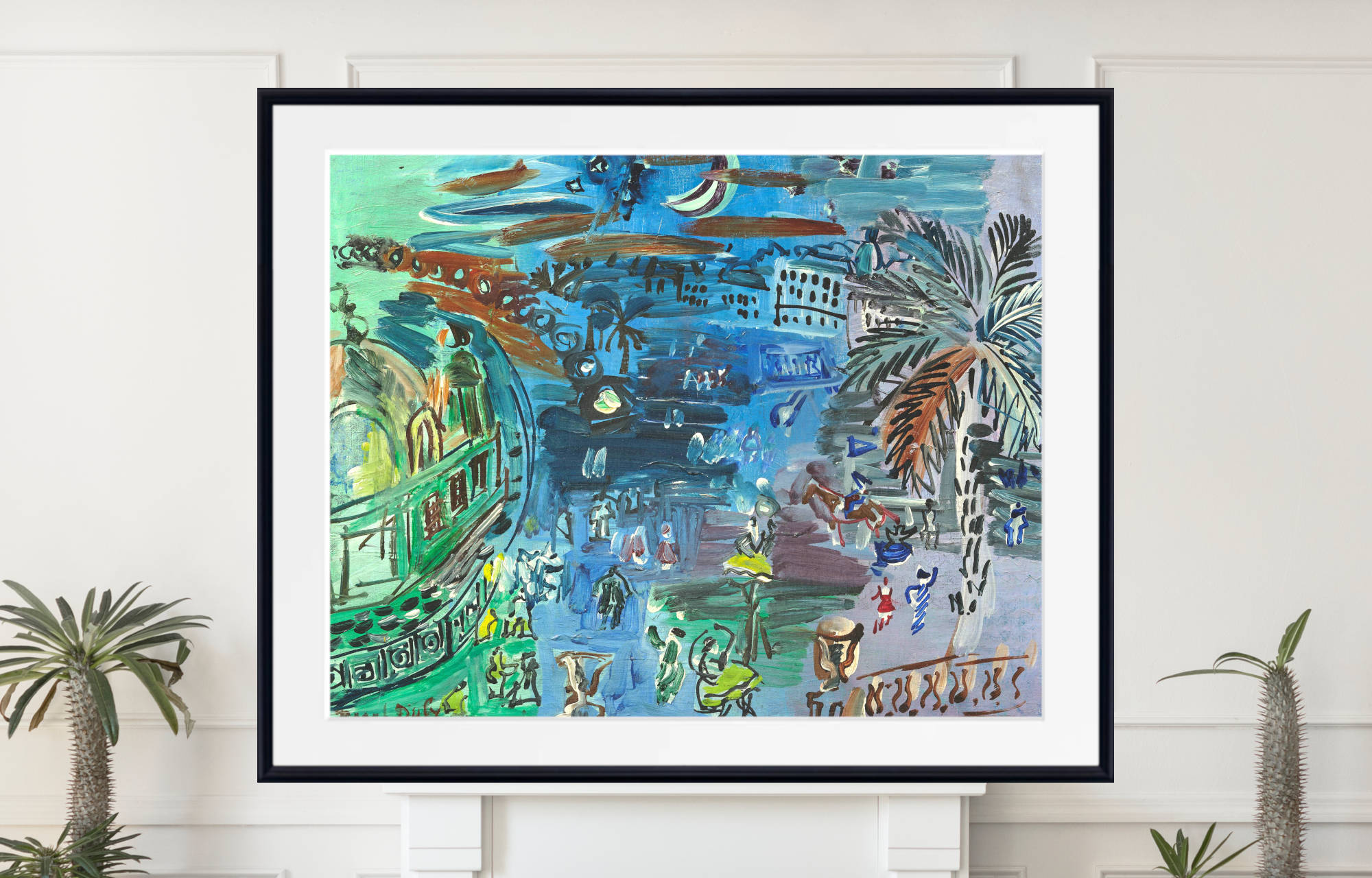
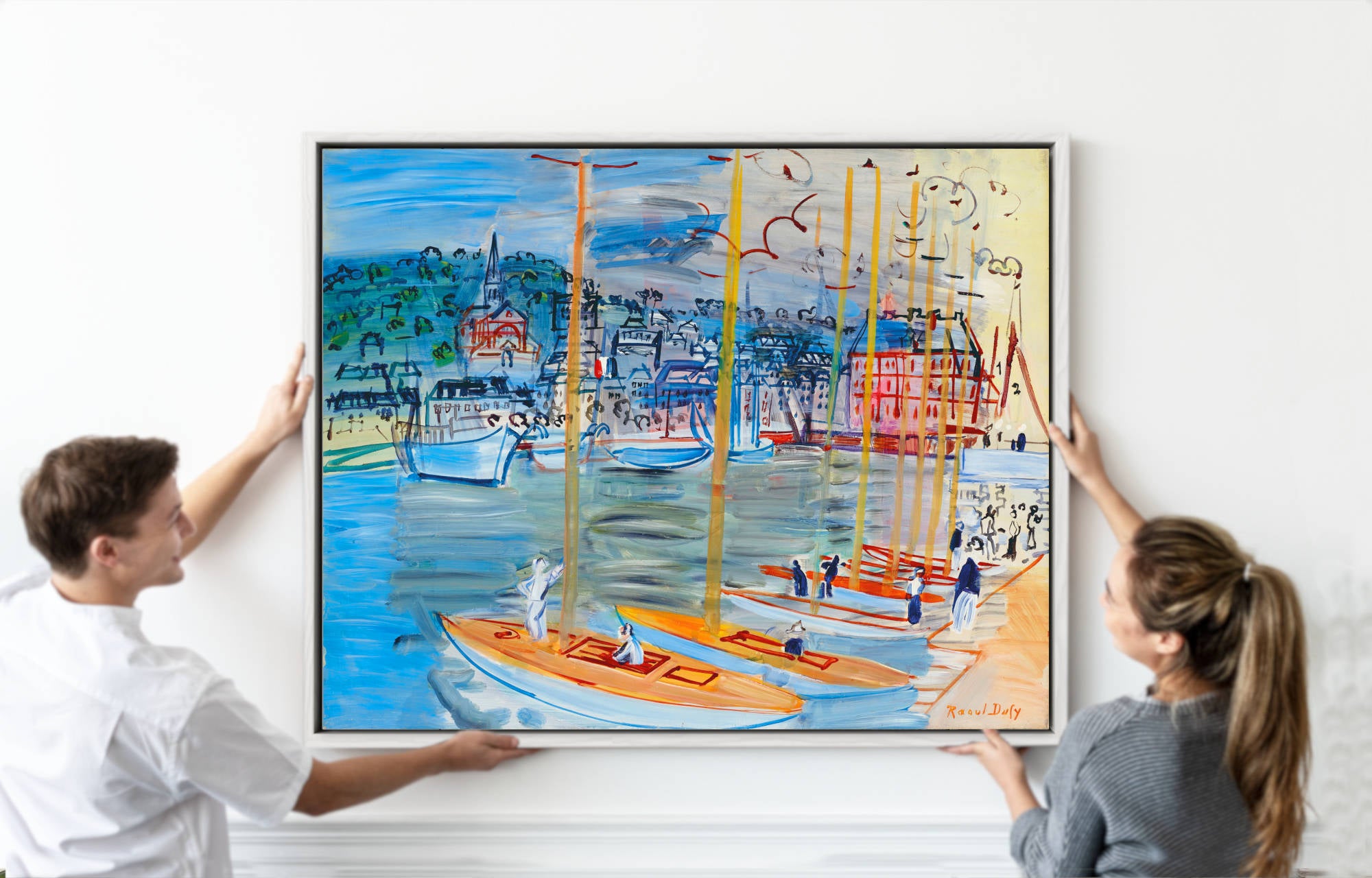
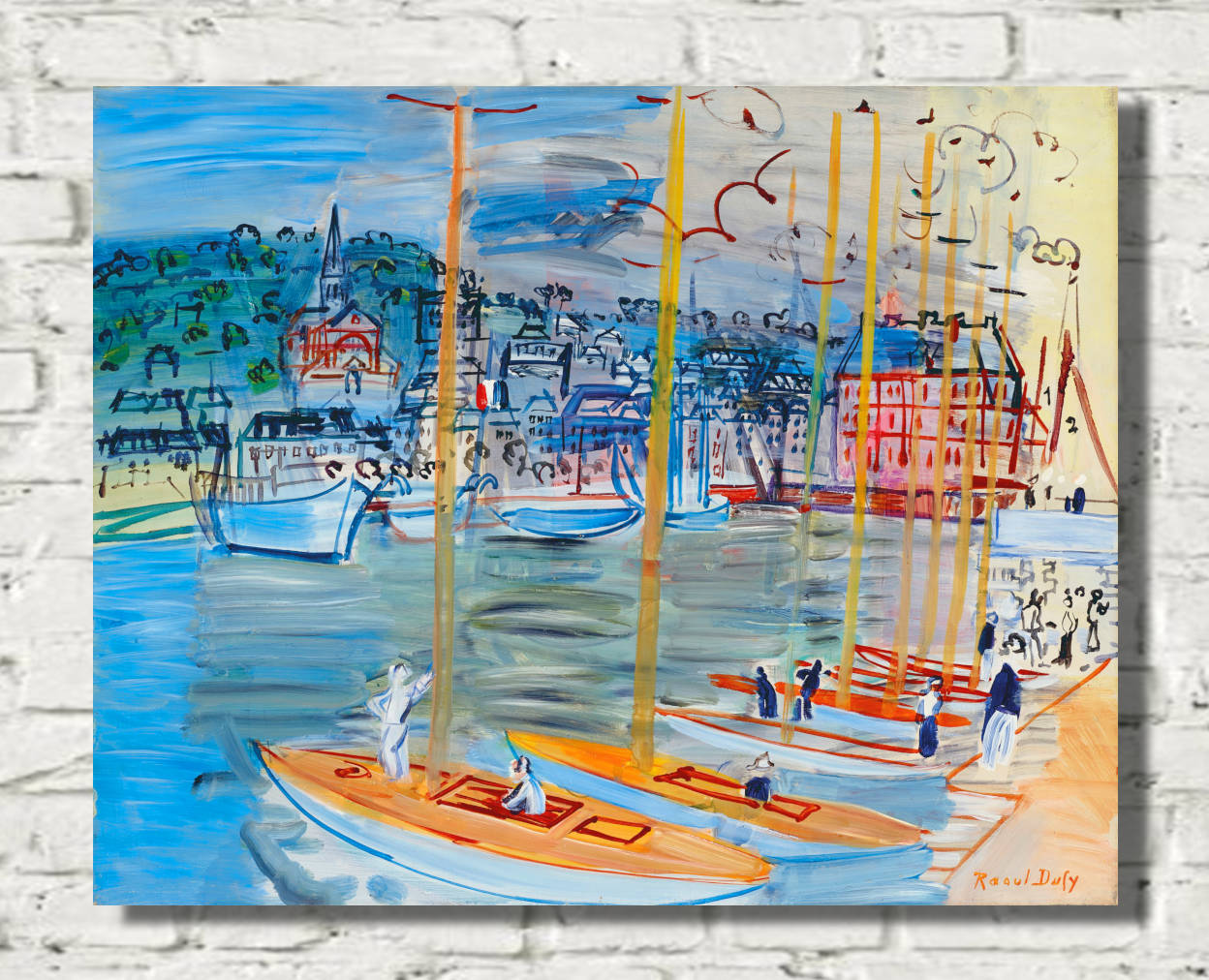
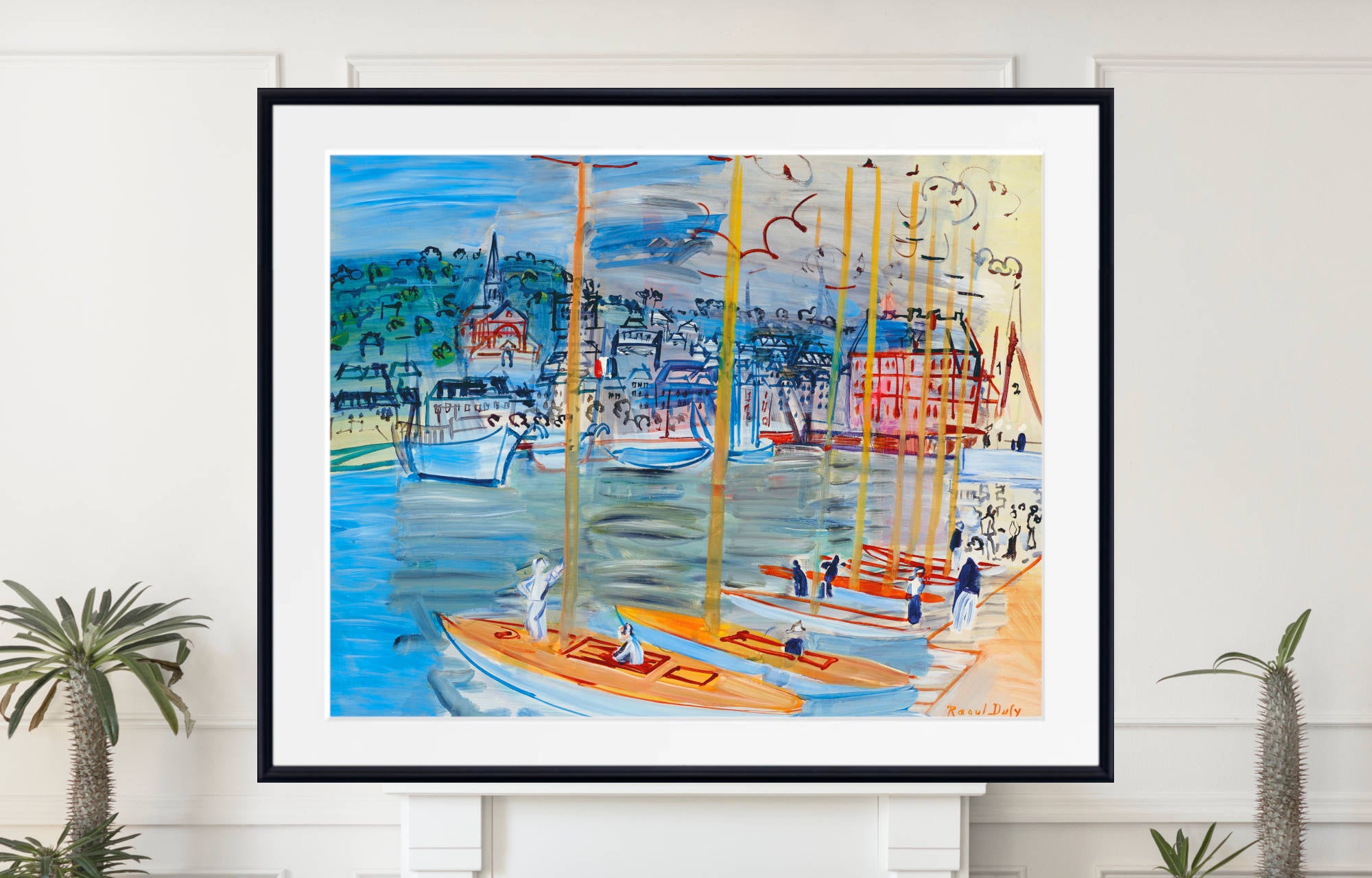
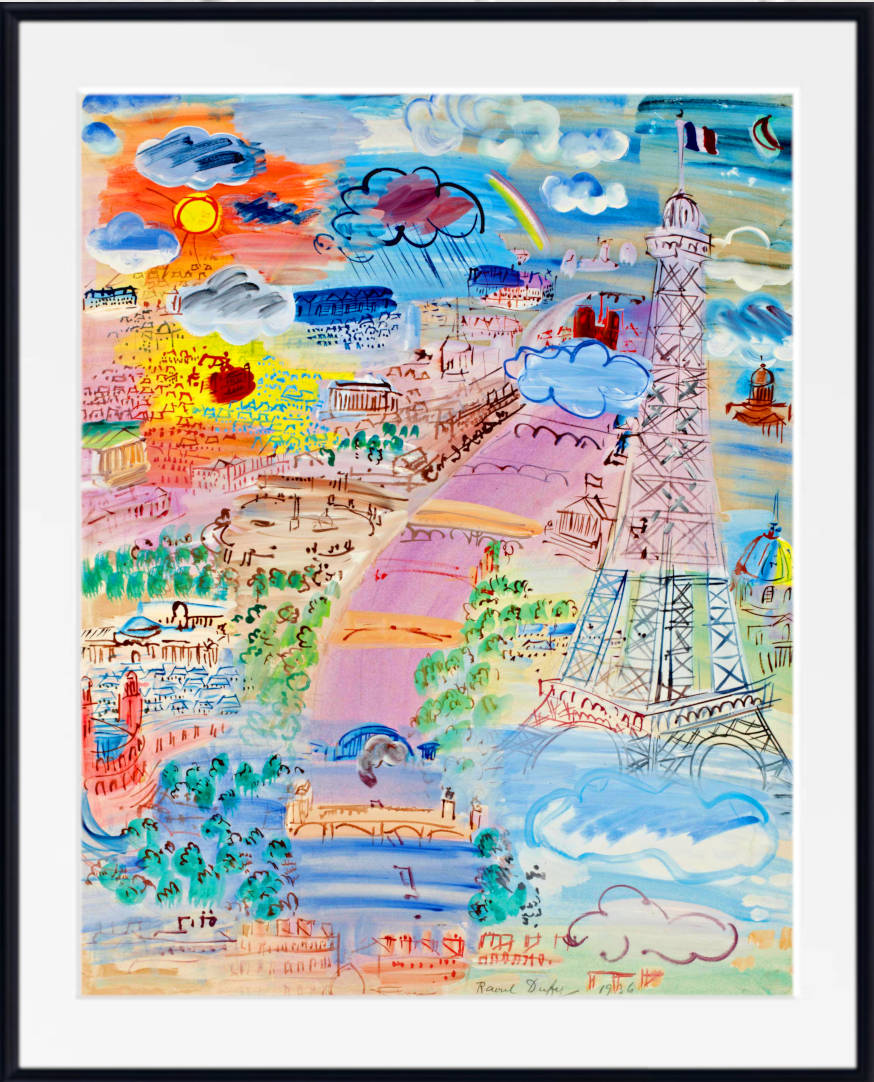
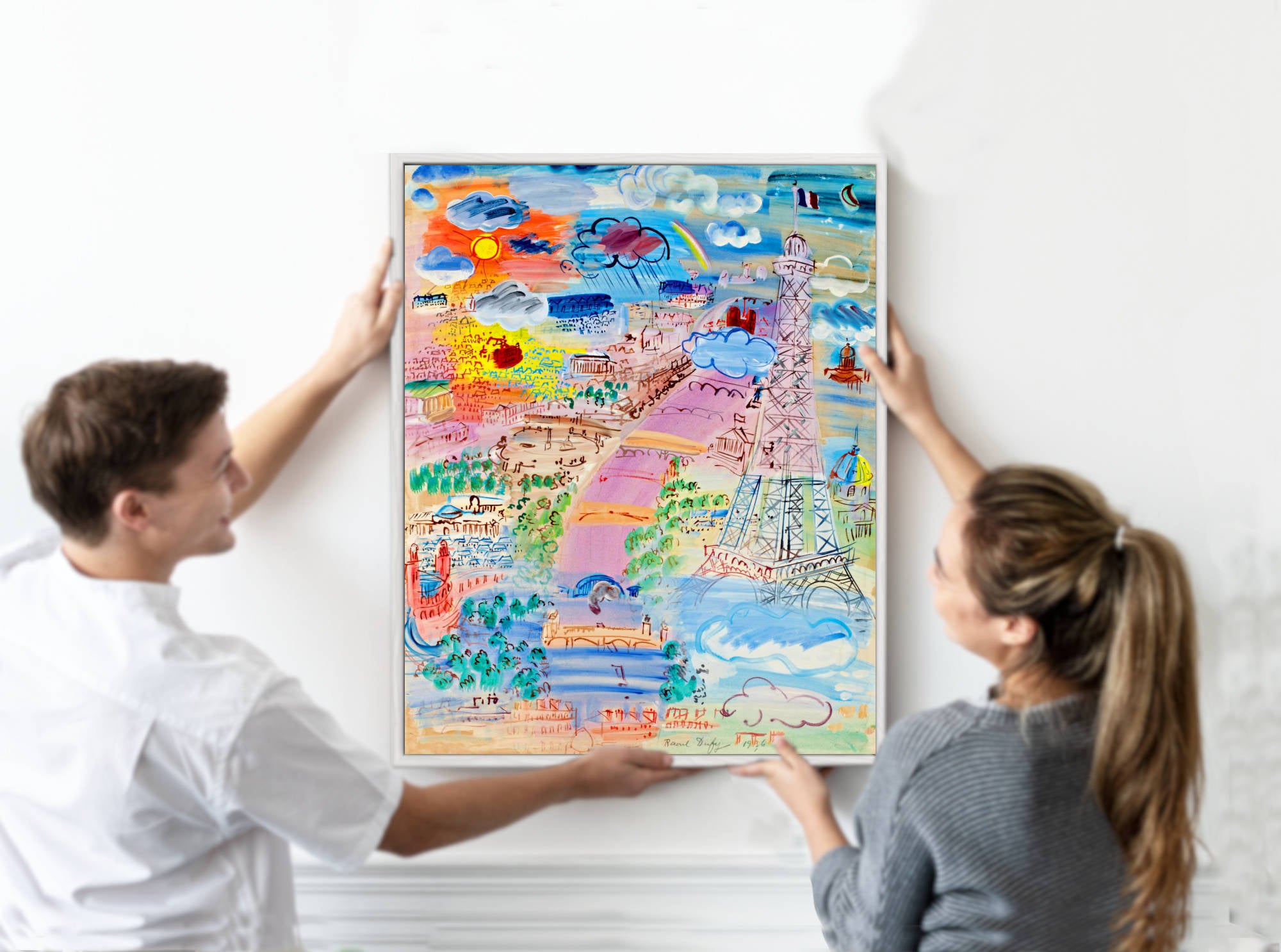
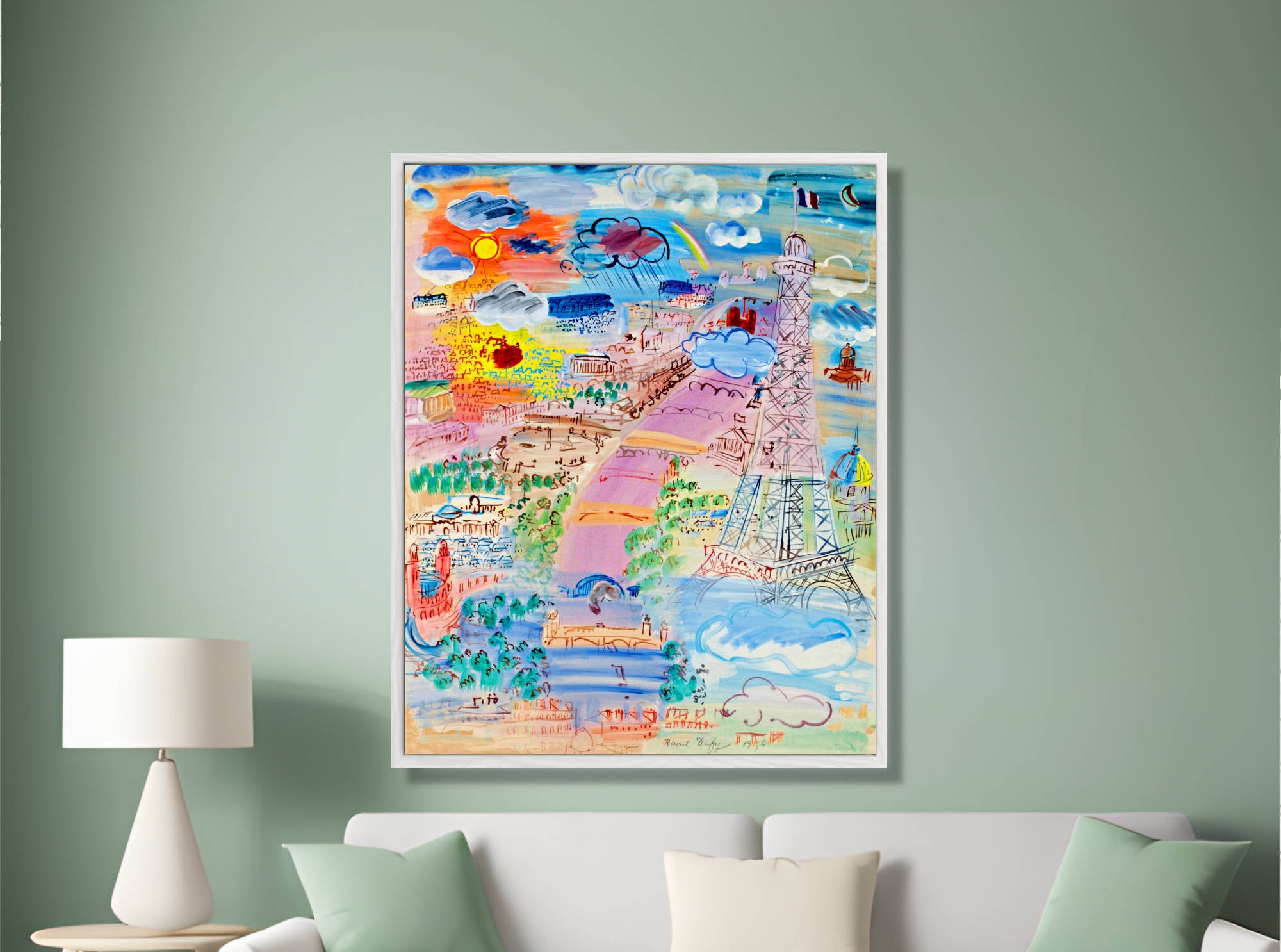
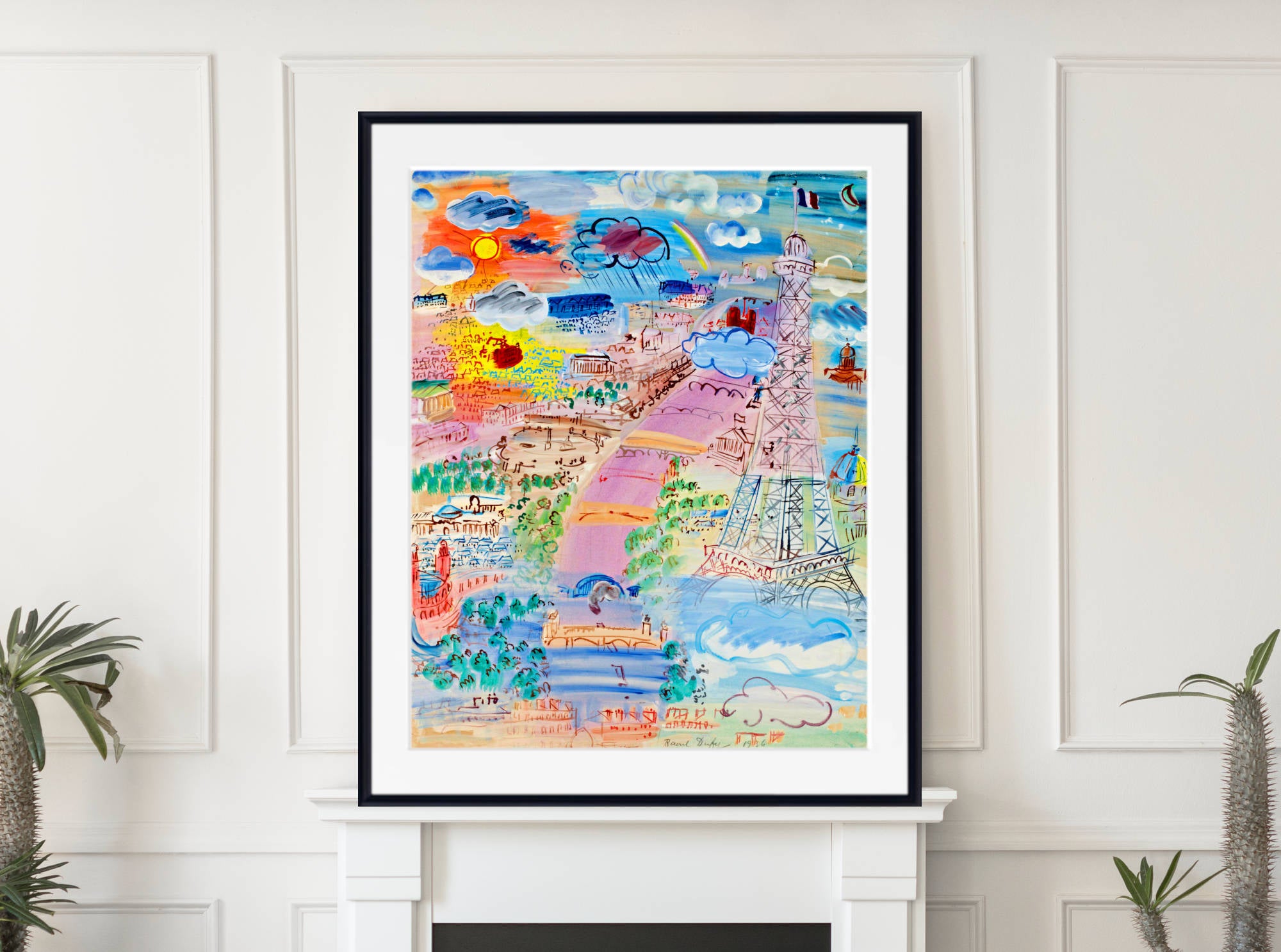
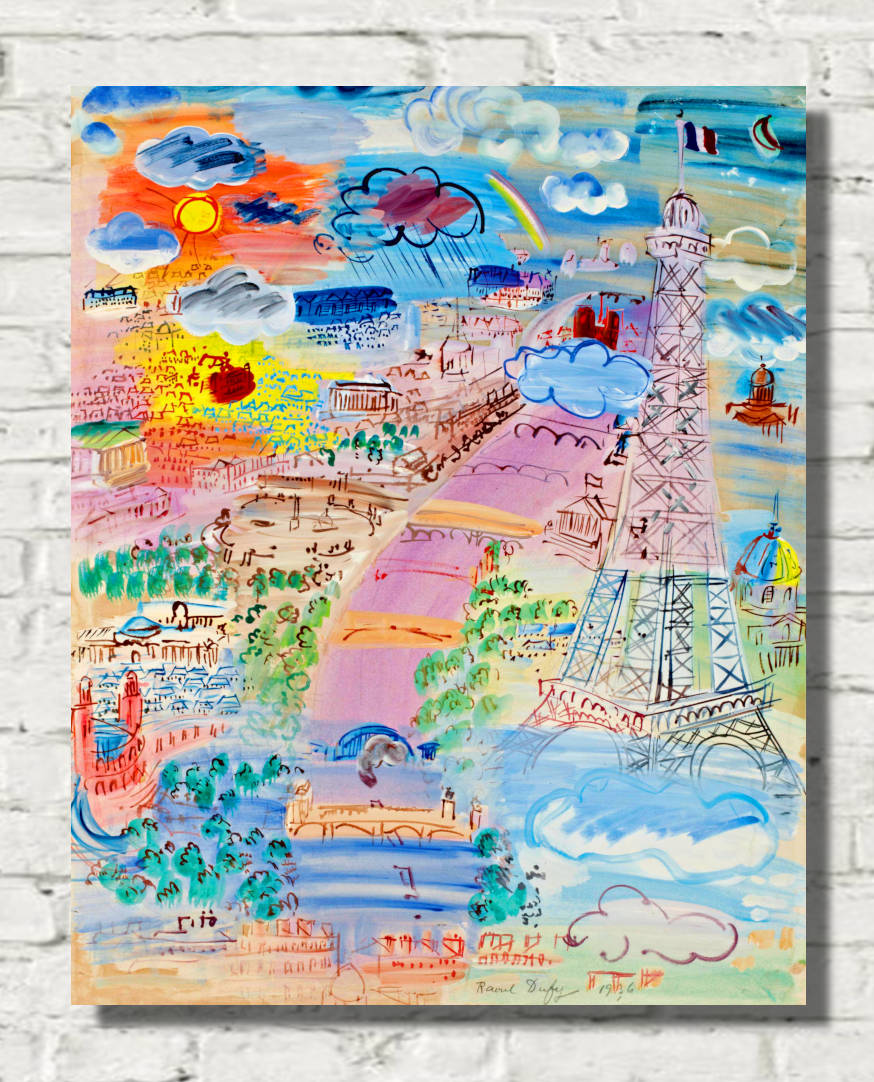
Paris and the Eiffel Tower (1936) by Raoul Dufy transforms the most famous landmark in Paris into a vibrant composition of expressive line and luminous colour. Created in gouache and watercolour on paper, the work places the unmistakable silhouette of the Eiffel Tower within a lively interpretation of the French capital that is characteristically Dufy: elegant, spontaneous and filled with movement.
This Raoul Dufy Eiffel Tower print offers a distinctive alternative to conventional Paris wall art. Rather than presenting the monument as a precisely rendered architectural study, Dufy uses the tower as a visual anchor around which colour, buildings and the energy of the city can unfold. Available as a fine art print, framed print or canvas panel, Paris and the Eiffel Tower combines one of Europe's great landmarks with the unmistakable style of twentieth-century French modern art.
Paris and the Eiffel Tower – Dufy's Vision of the French Capital
The Eiffel Tower had become an enduring symbol of modern Paris by the time Dufy created this work in 1936. For an artist fascinated by contemporary cities, spectacle and modern life, its distinctive structure offered an ideal subject.
Dufy does not approach Paris as a conventional architectural painter. Precise topographical description is secondary to atmosphere. The Eiffel Tower remains immediately recognisable, but the surrounding city is simplified into a fluid arrangement of shapes, lines and colour.
This approach allows the monument to retain its visual importance without dominating the entire composition. Architecture becomes part of the rhythm of the painting rather than an object to be documented in isolation.
The result captures something of the experience of Paris rather than simply its appearance: a city of movement, architecture, open spaces and visual excitement interpreted through Dufy's highly personal artistic language.
Colour, Line and the Eiffel Tower
Paris and the Eiffel Tower was executed in gouache and watercolour, media particularly well suited to Dufy's mature technique. Transparent passages of watercolour could create light and atmosphere, while gouache provided stronger areas of colour where greater visual emphasis was required.
Dufy's drawing is characteristically economical. Instead of painstakingly describing every element of the Eiffel Tower and surrounding architecture, he establishes forms through rapid, confident outlines. Colour is then allowed considerable freedom within and around those forms.
This separation between line and colour became one of the defining characteristics of Dufy's mature art. The two do not always align exactly, creating a sensation of spontaneity and preventing even an architectural subject from feeling rigid.
The Eiffel Tower is especially effective within this approach. Its instantly recognisable iron framework provides a strong geometric contrast to the freer areas of colour surrounding it, giving the composition both structure and movement.
Raoul Dufy and Paris
Paris played a central role in Dufy's artistic development. After beginning his studies in his native Le Havre, he moved to the French capital to continue his training at the École des Beaux-Arts. Paris exposed him to the rapidly changing artistic movements that transformed European painting during the opening decades of the twentieth century.
It was here that Dufy encountered the work of artists including Henri Matisse and became involved with Fauvism. The movement's liberation of colour would have a lasting impact on his work even after he developed a style distinctly his own.
Paris remained an important subject throughout his career. Streets, public spaces, monuments and the spectacle of urban life all provided opportunities to combine recognisable locations with his increasingly abbreviated approach to drawing.
In Paris and the Eiffel Tower, the city is therefore both a real place and a vehicle for Dufy's continuing exploration of colour and line.
Raoul Dufy's Painting Style
Dufy's early paintings were influenced by Impressionism, but his encounter with the brilliant palette of Henri Matisse and the Fauvist painters transformed his approach. Fauvism demonstrated that colour did not need to reproduce nature literally; it could create mood, energy and structure in its own right.
Dufy subsequently developed a lighter and more individual style. By the 1920s and 1930s, fluid calligraphic outlines, simplified forms and freely applied colour had become central to his work.
His method was particularly effective when depicting cities. Complex architecture could be reduced to a surprisingly small number of marks while remaining immediately recognisable. The resulting compositions retain a strong sense of place without becoming burdened by unnecessary detail.
Paris and the Eiffel Tower demonstrates this mature approach especially well. A monumental structure is made to feel light, animated and almost effortless.
About Raoul Dufy
Raoul Dufy (1877–1953) was a French painter, draughtsman, printmaker and designer born in Le Havre, Normandy. After studying at the École des Beaux-Arts in Le Havre, he continued his artistic education in Paris.
Initially influenced by Impressionism, Dufy embraced the expressive colour of Fauvism during the early twentieth century before gradually developing his distinctive personal style. His mature works are celebrated for their brilliant palette, rapid drawing and characteristic separation of colour and line.
Dufy's subjects ranged widely. He painted Paris and other European cities alongside Mediterranean resorts, regattas, horse races, beaches, orchestras, flowers and fashionable social gatherings.
His creativity also extended beyond easel painting. Dufy worked extensively in textile design, illustration, ceramics and monumental decoration, establishing a reputation that bridged modern fine art and decorative design.
A Raoul Dufy Eiffel Tower Print for Your Interior
A Paris and the Eiffel Tower print by Raoul Dufy is particularly appealing for anyone who enjoys Parisian wall art but wants something more distinctive than a conventional photograph or architectural illustration.
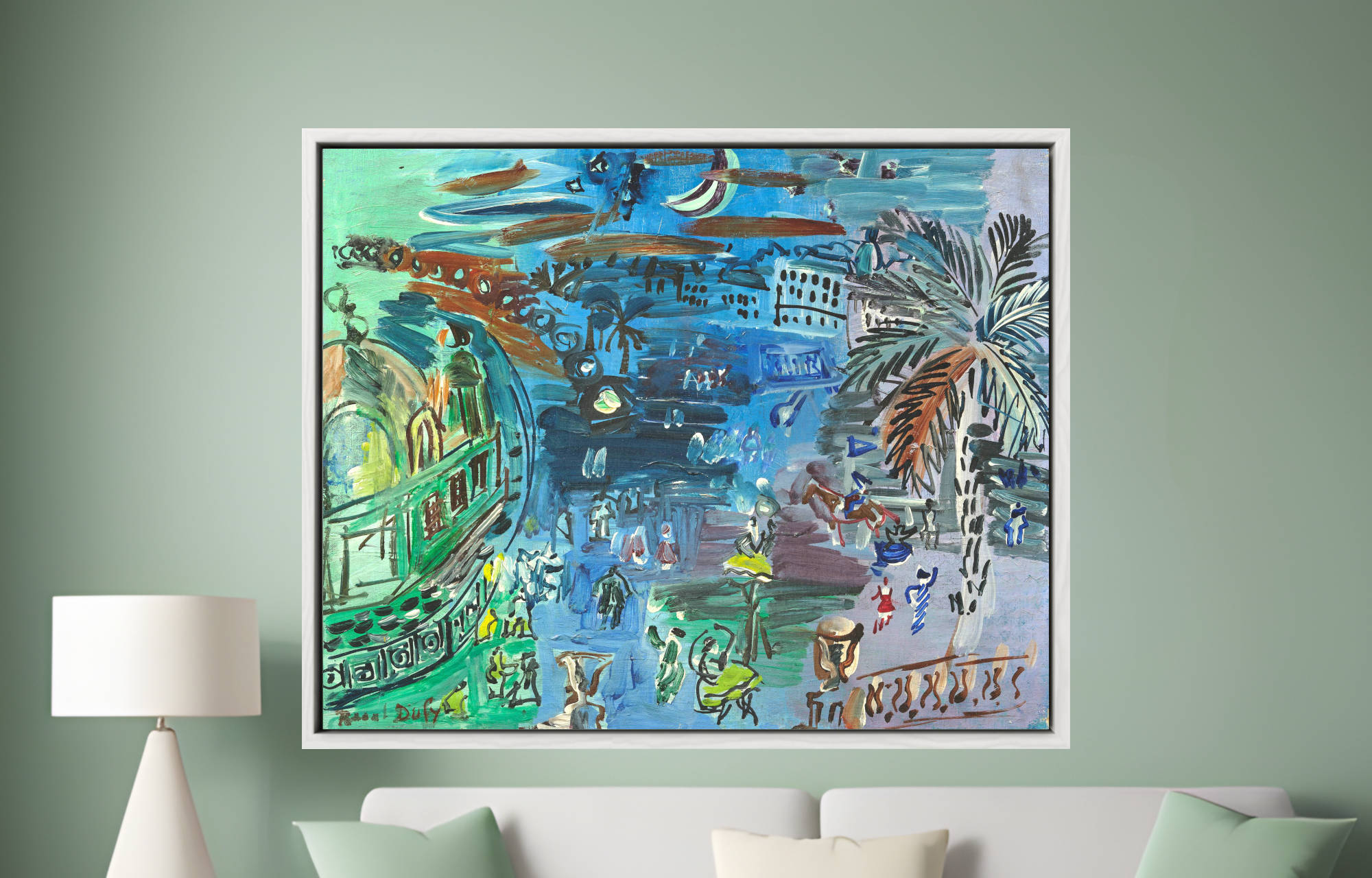
The combination of a recognisable landmark with expressive modern colour allows the work to suit a wide variety of interiors. It can create an effective focal point in living rooms, dining rooms, bedrooms, hallways, studies and home offices.
Dufy's fluid drawing also works particularly well with contemporary and Scandinavian-inspired interiors, where the artwork can introduce colour without appearing visually heavy. In more eclectic or traditional surroundings, the iconic Parisian subject gives the composition an immediate sense of place and cultural history.
For admirers of French art, Paris or the Eiffel Tower, the work offers an unusual meeting point between celebrated city imagery and one of the most recognisable artistic styles of the twentieth century.
All orders for unframed fine art prints and original paintings are dispatched within 2 working days of receipt of payment.
Orders for custom framed prints are dispatched within 4 working days.
All orders are fully tracked from dispatch to delivery at your home or business.
All print and original painting orders are fully insured against loss or damage in transit. We refund or replace any damaged or lost orders.
Buy with confidence - read what our satisfied customers have to say - Reviews
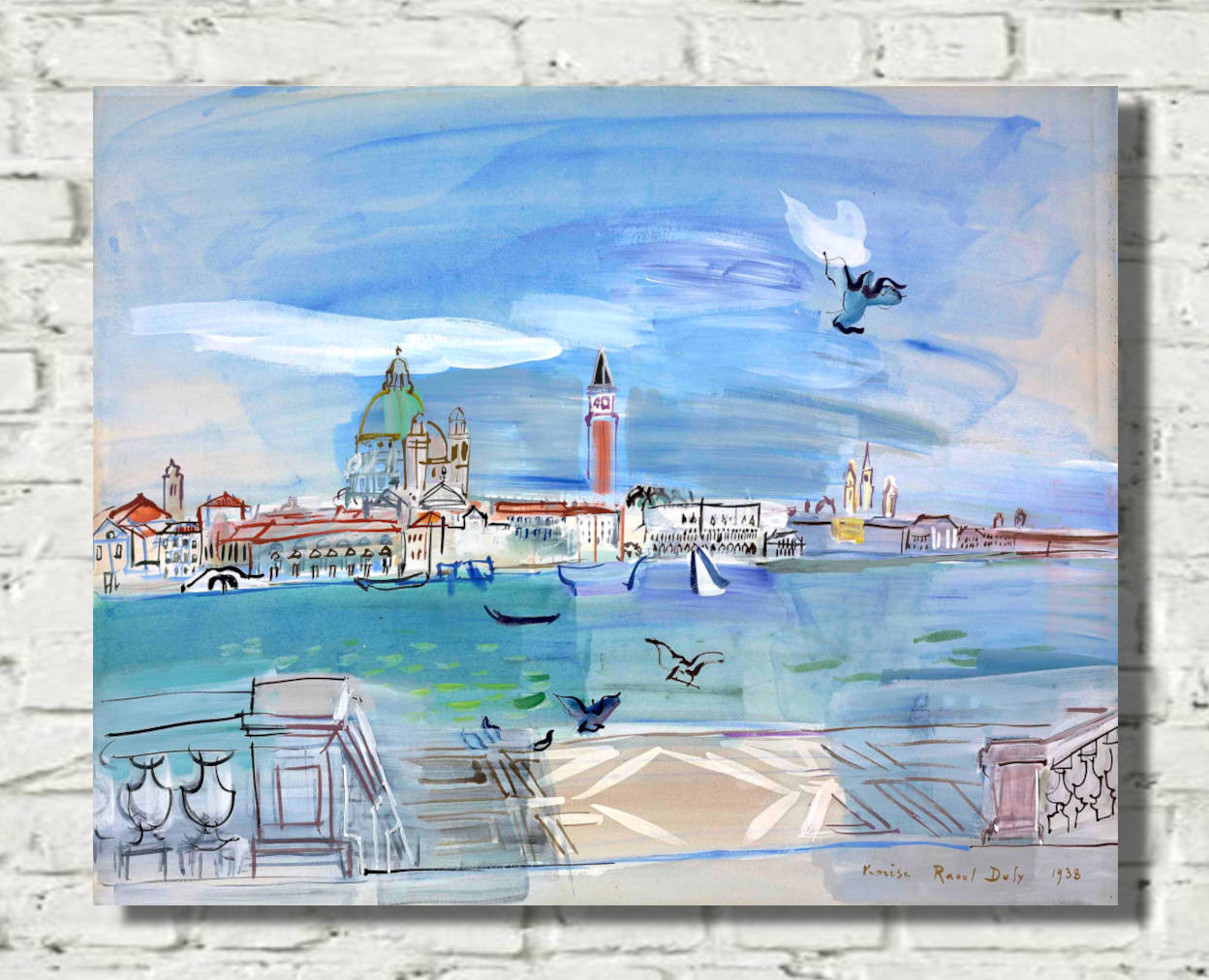
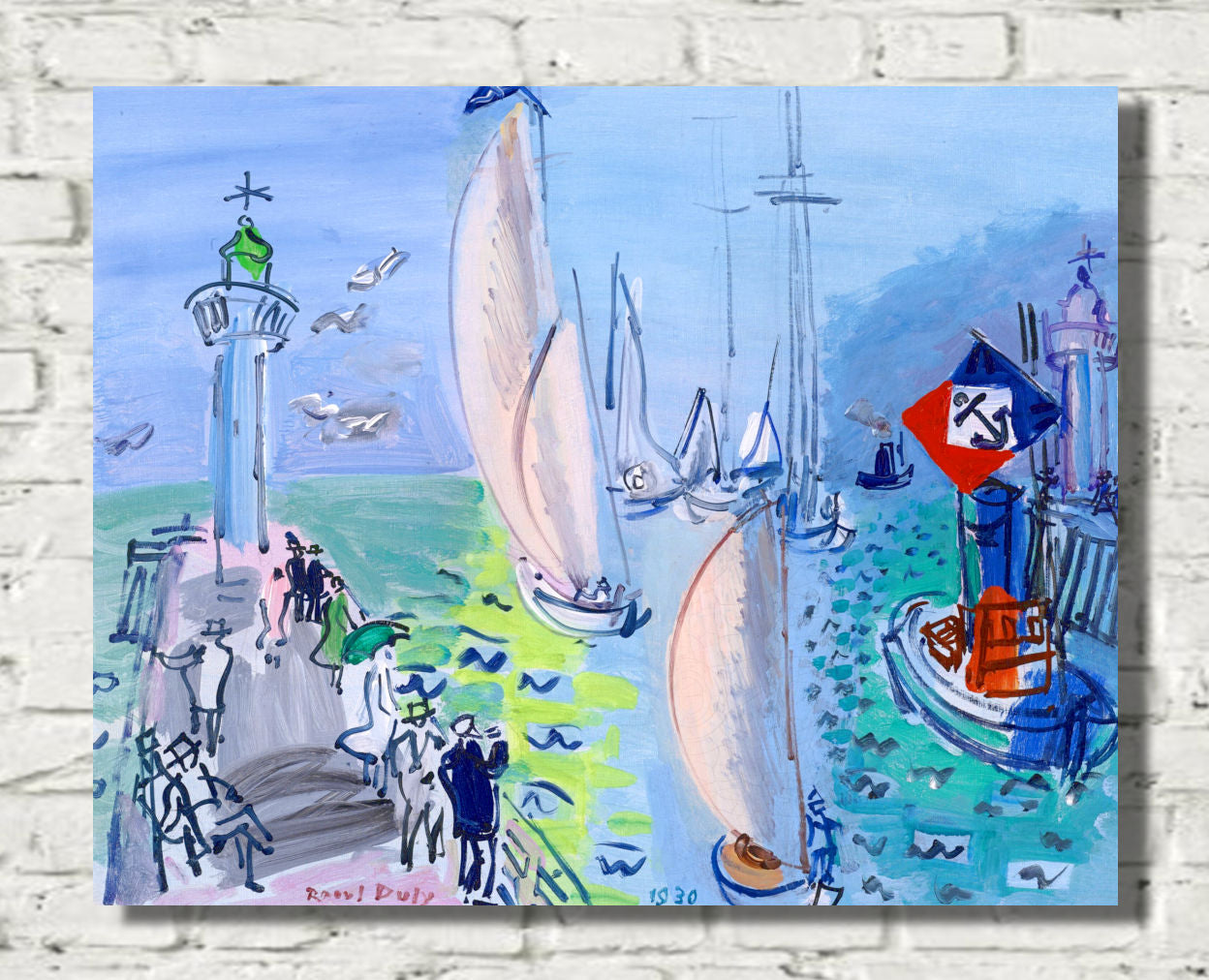
Fine art papers are printed without any additional white border Please let us know at the time of ordering if you would like a small additional white border.
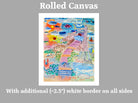
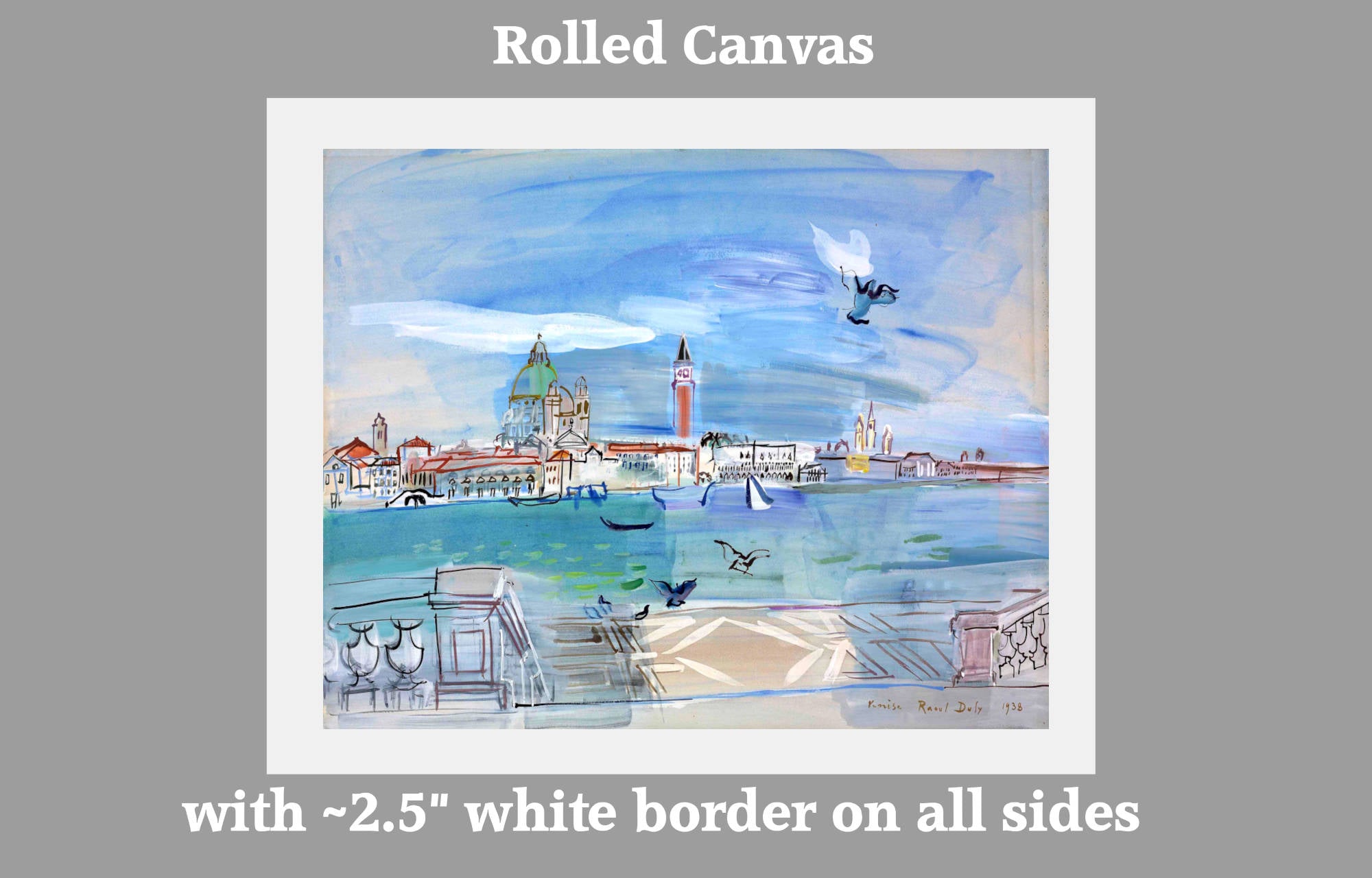
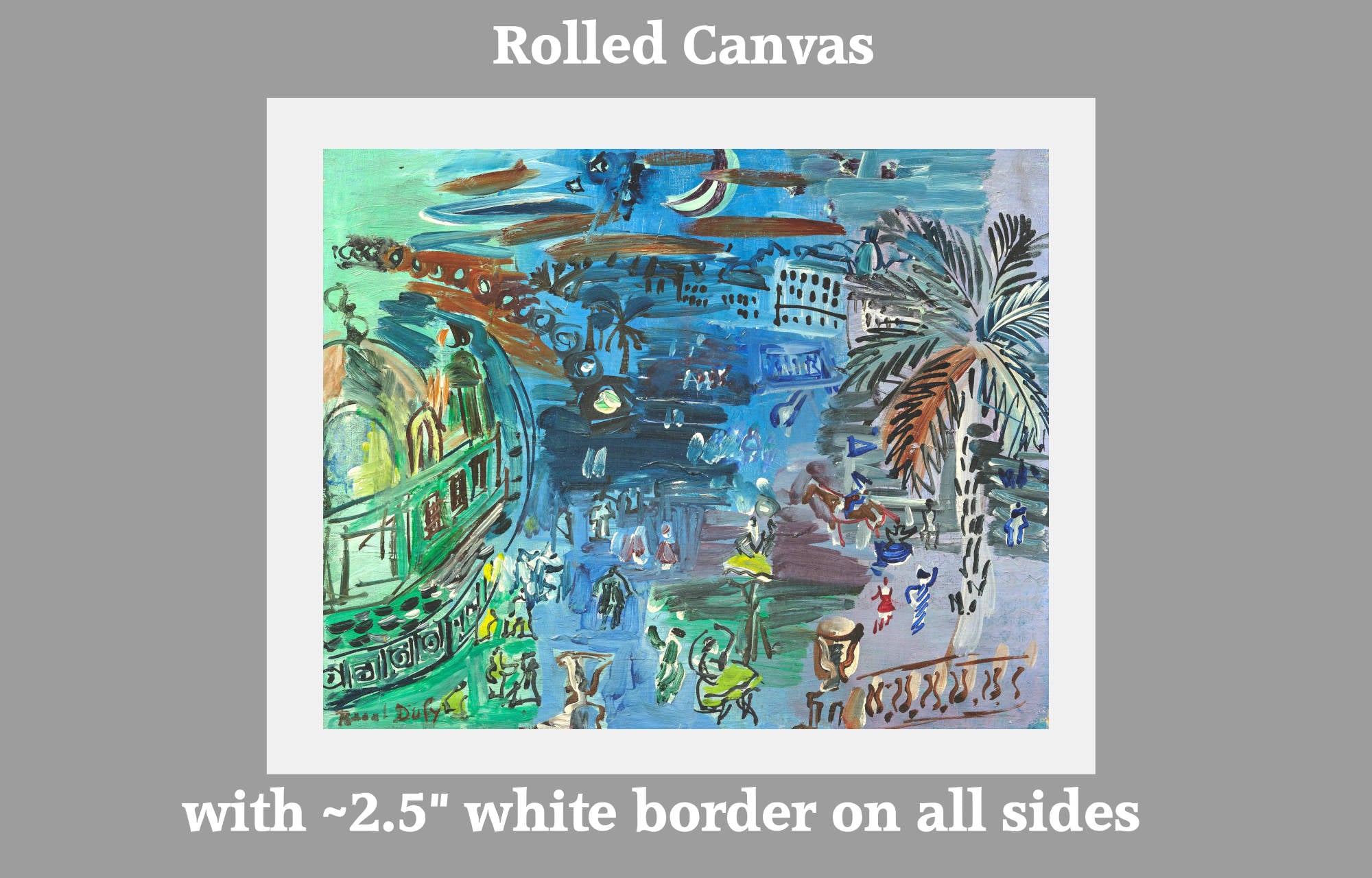
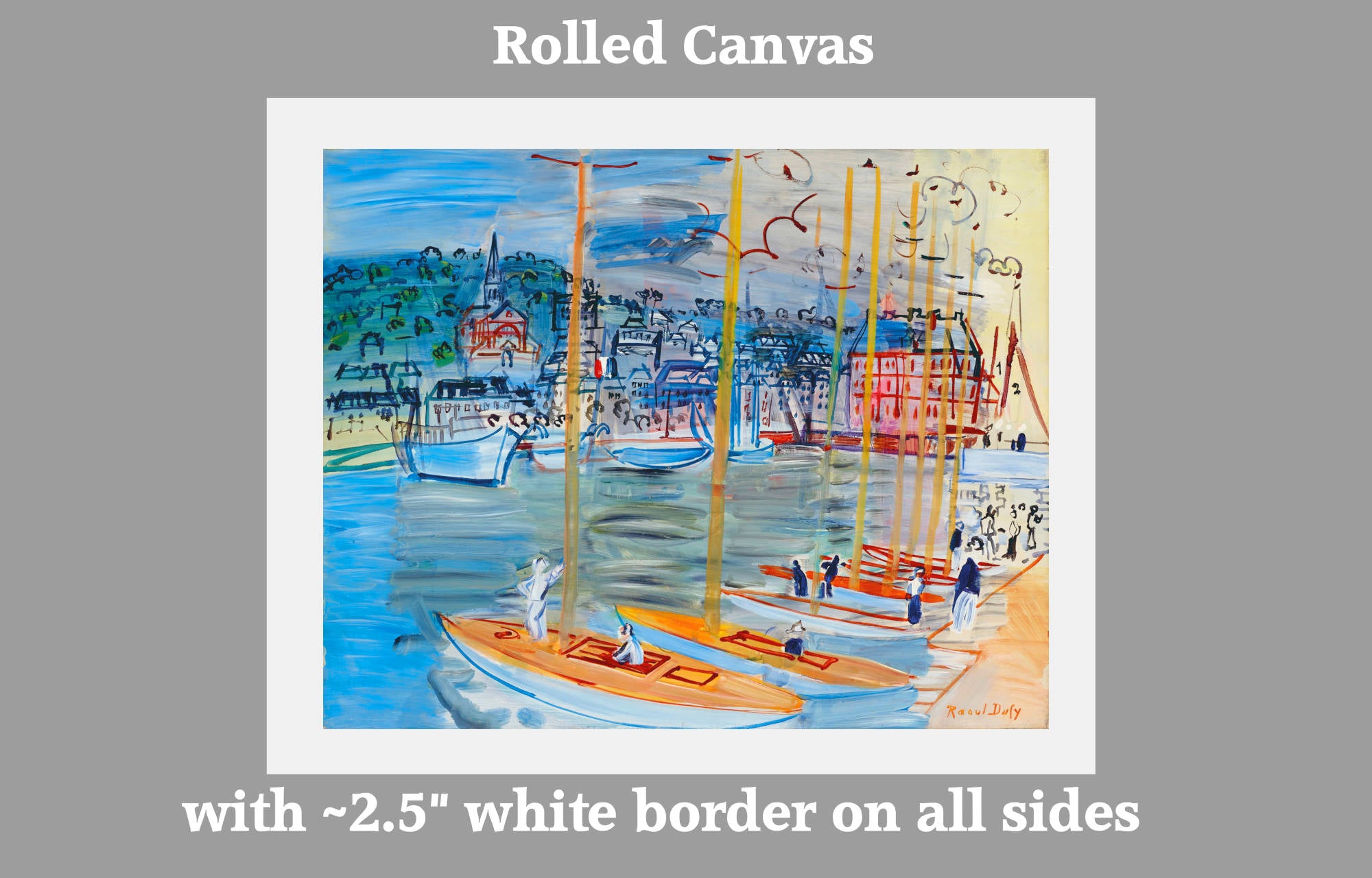
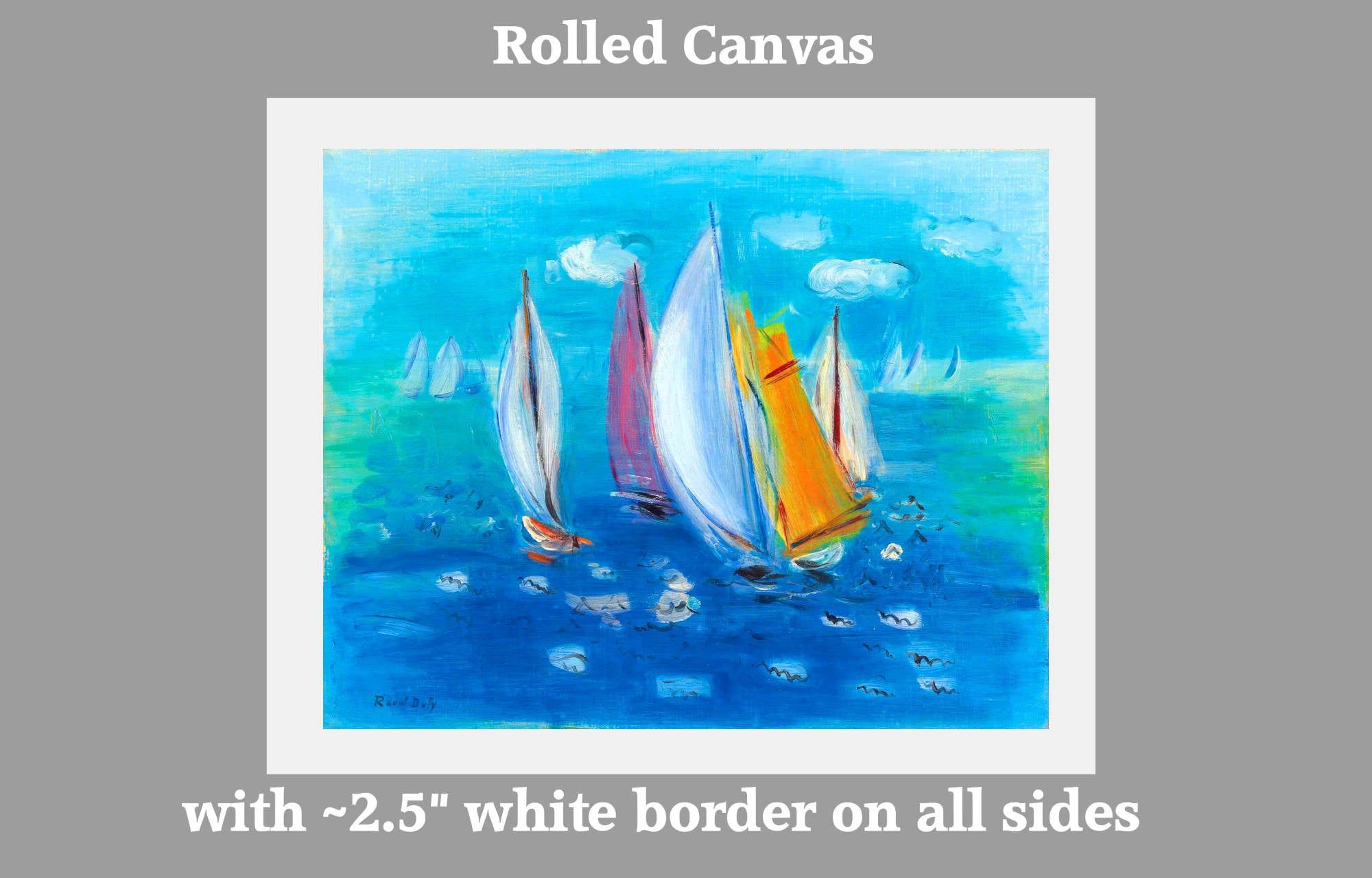
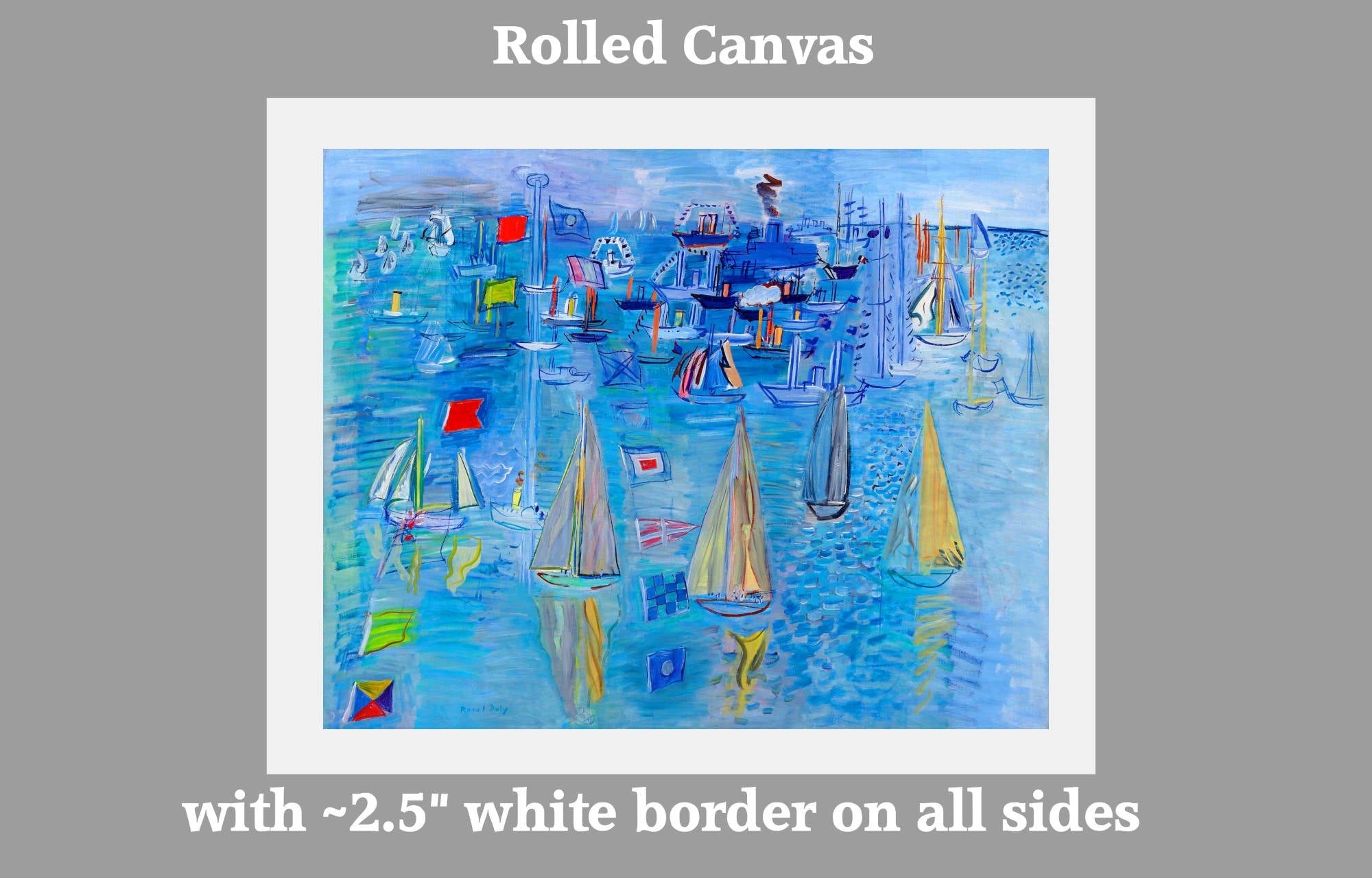
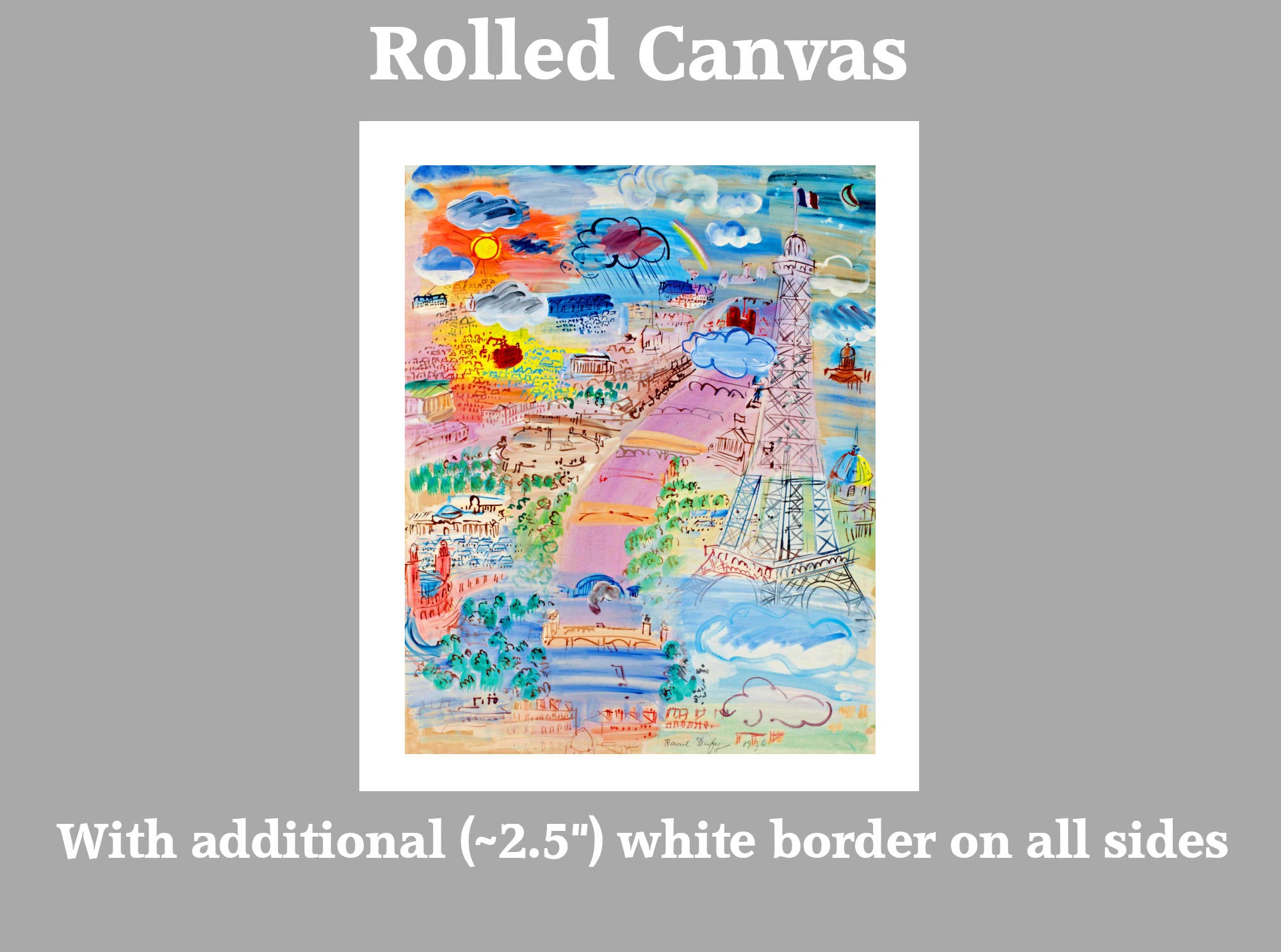
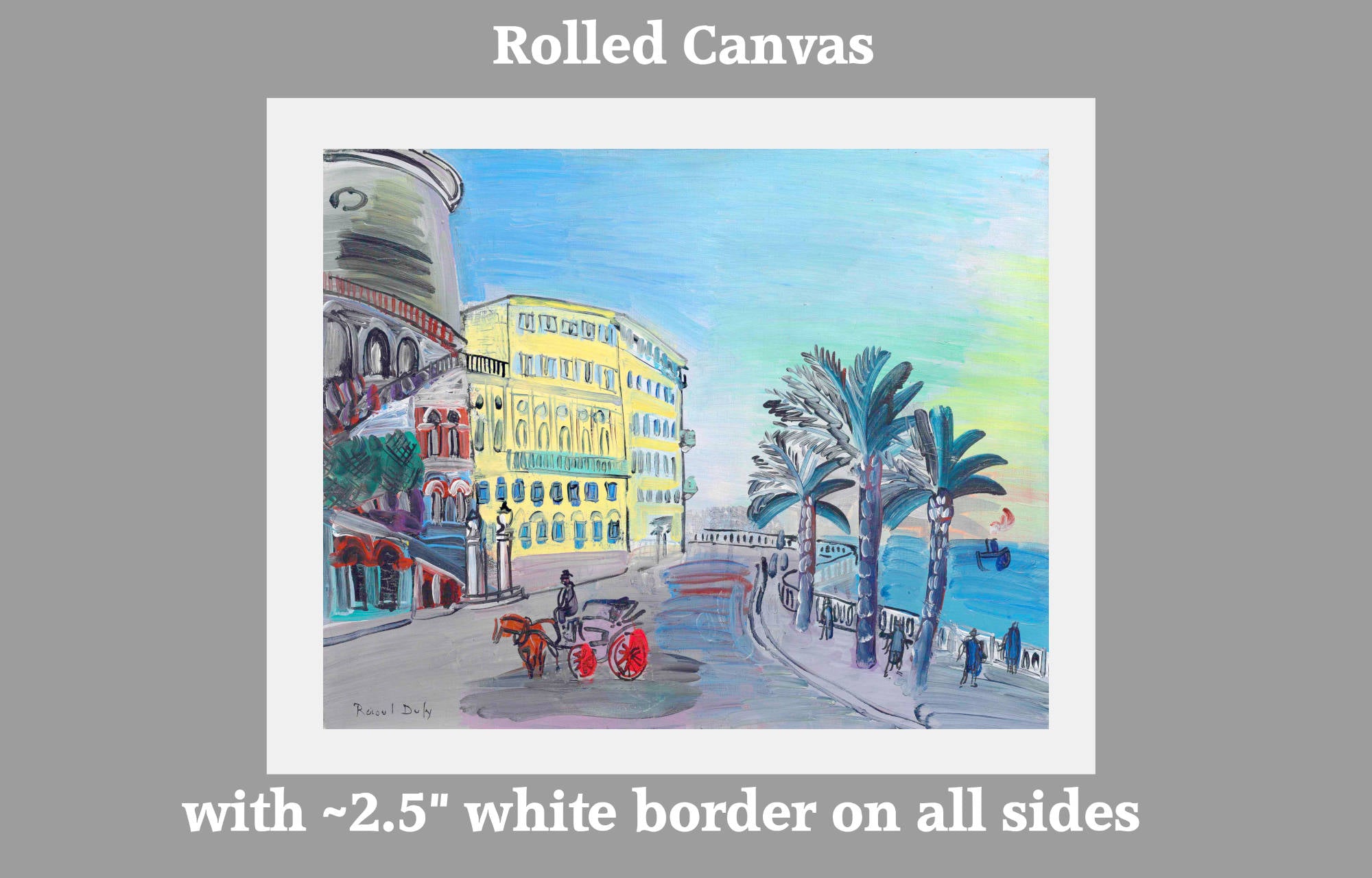
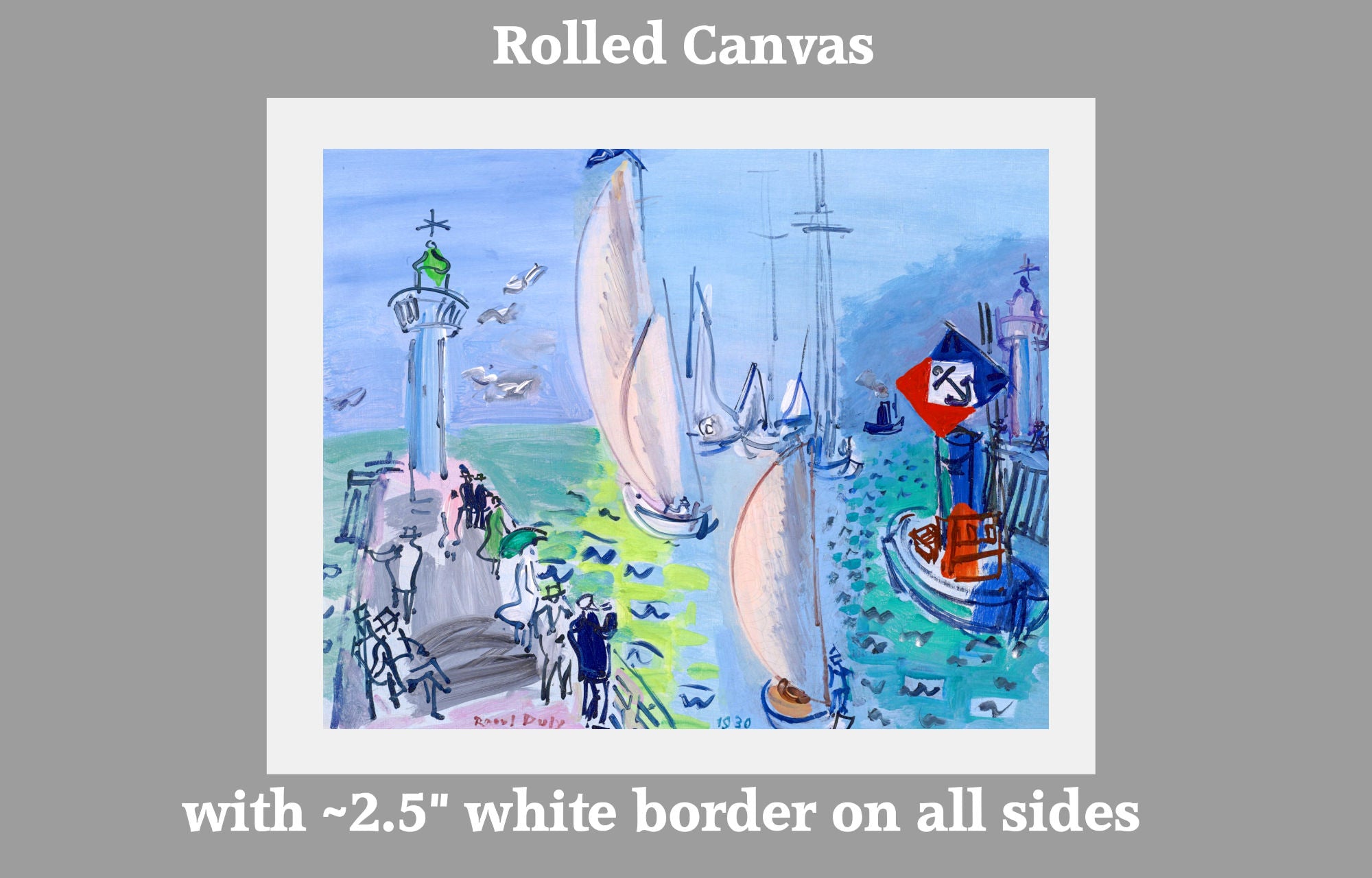
Rolled canvas options have an additional white border of approximately 2.5 inches (7cm) on all 4 sides to aid stretching.
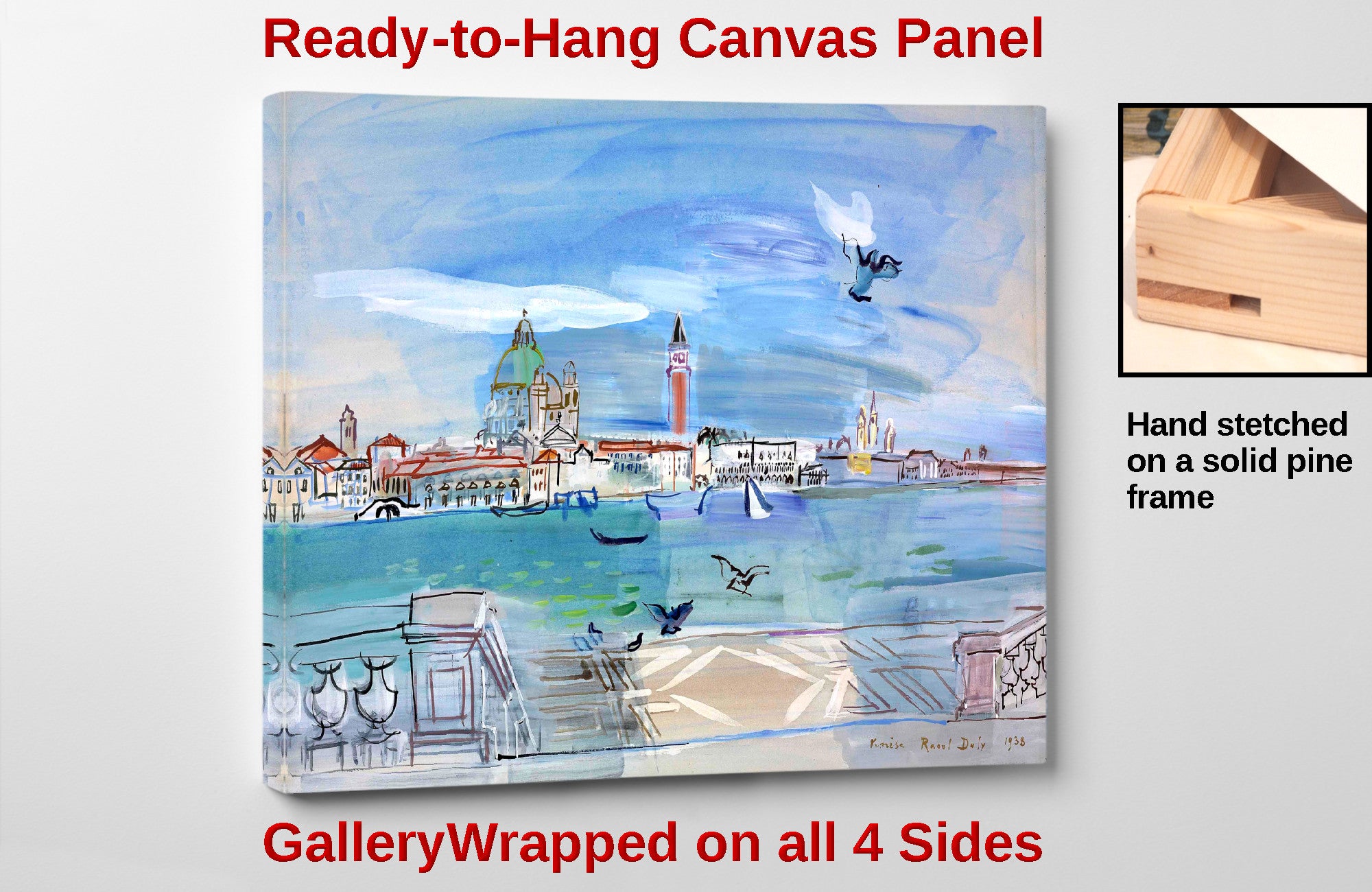
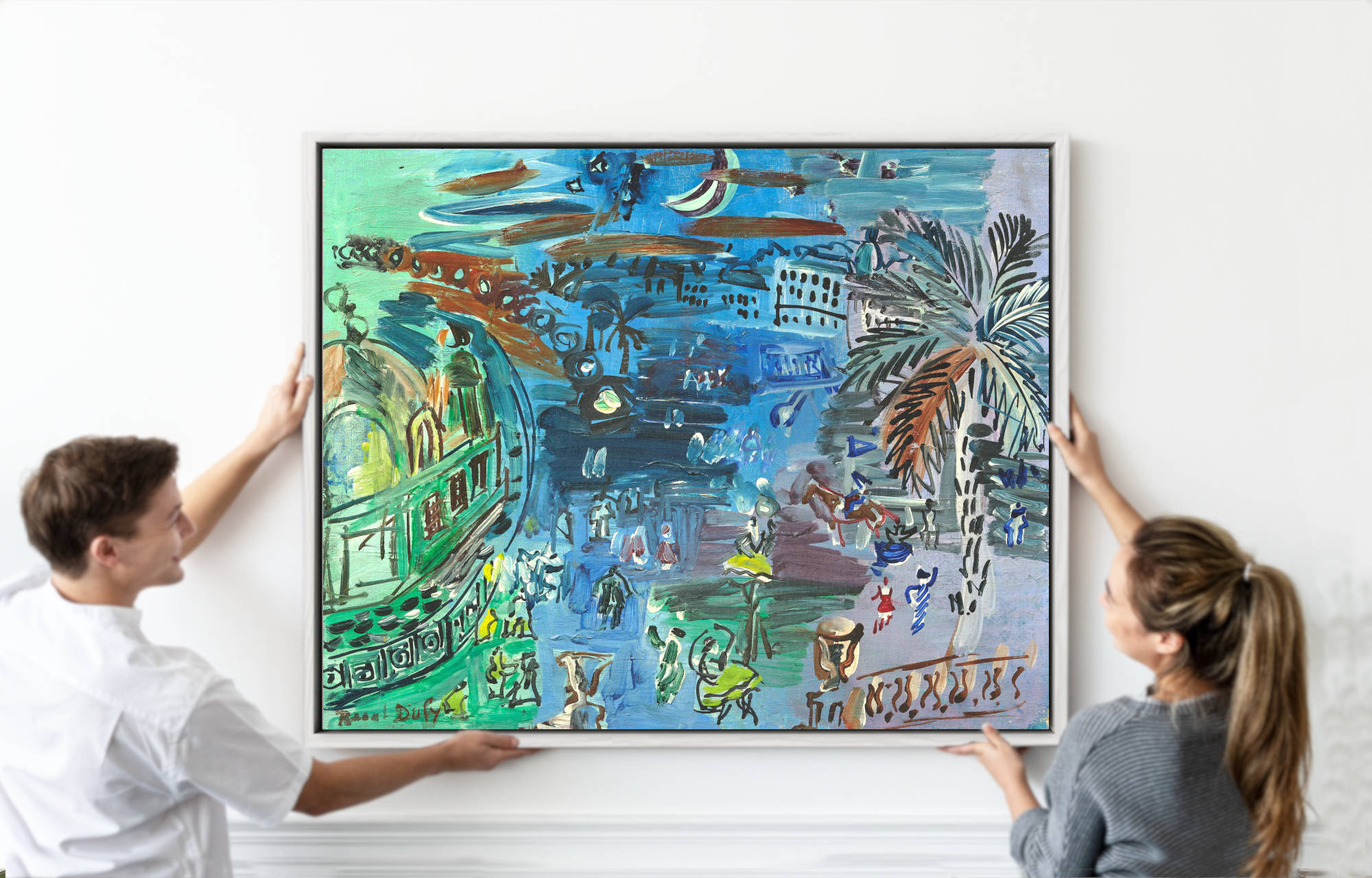
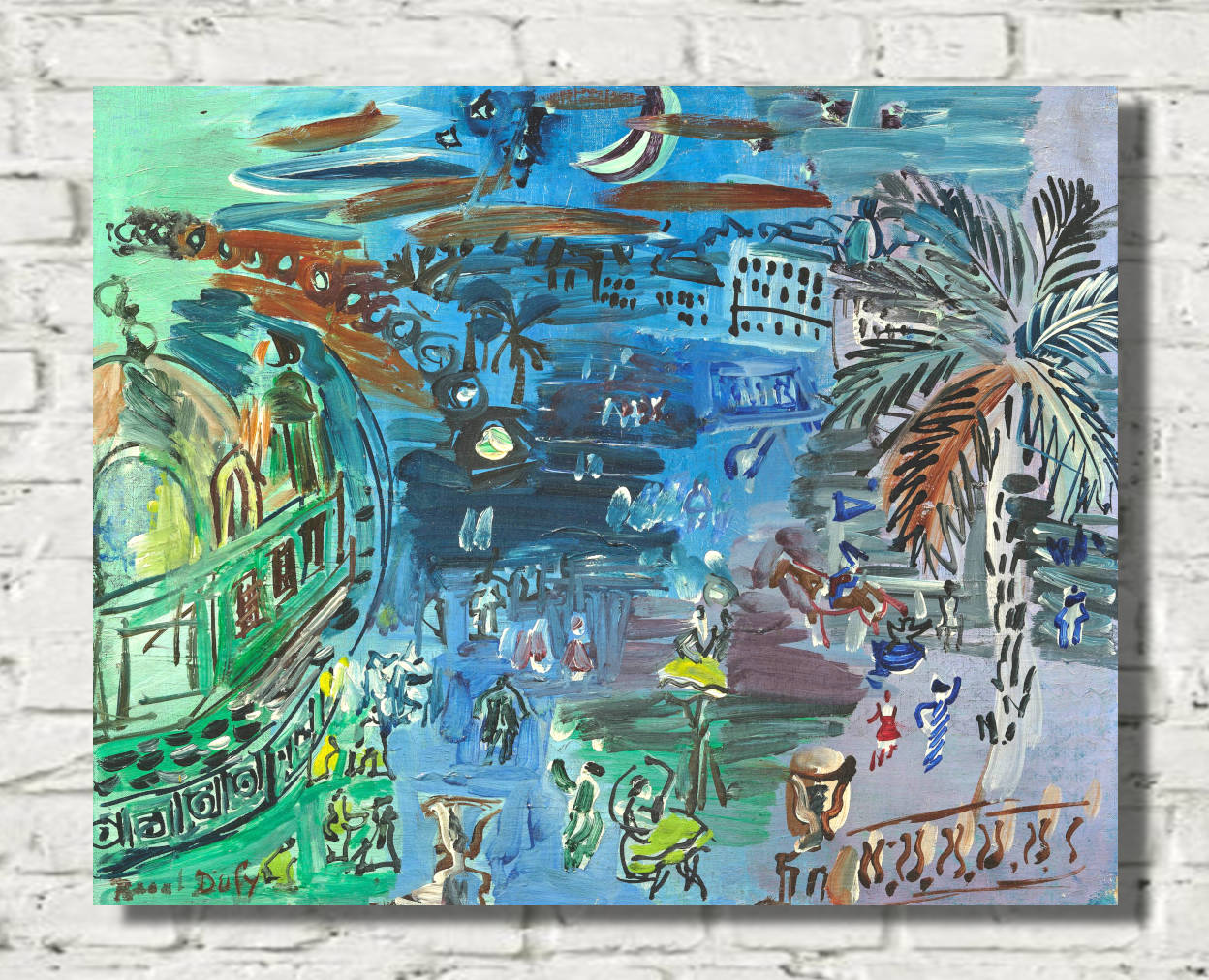
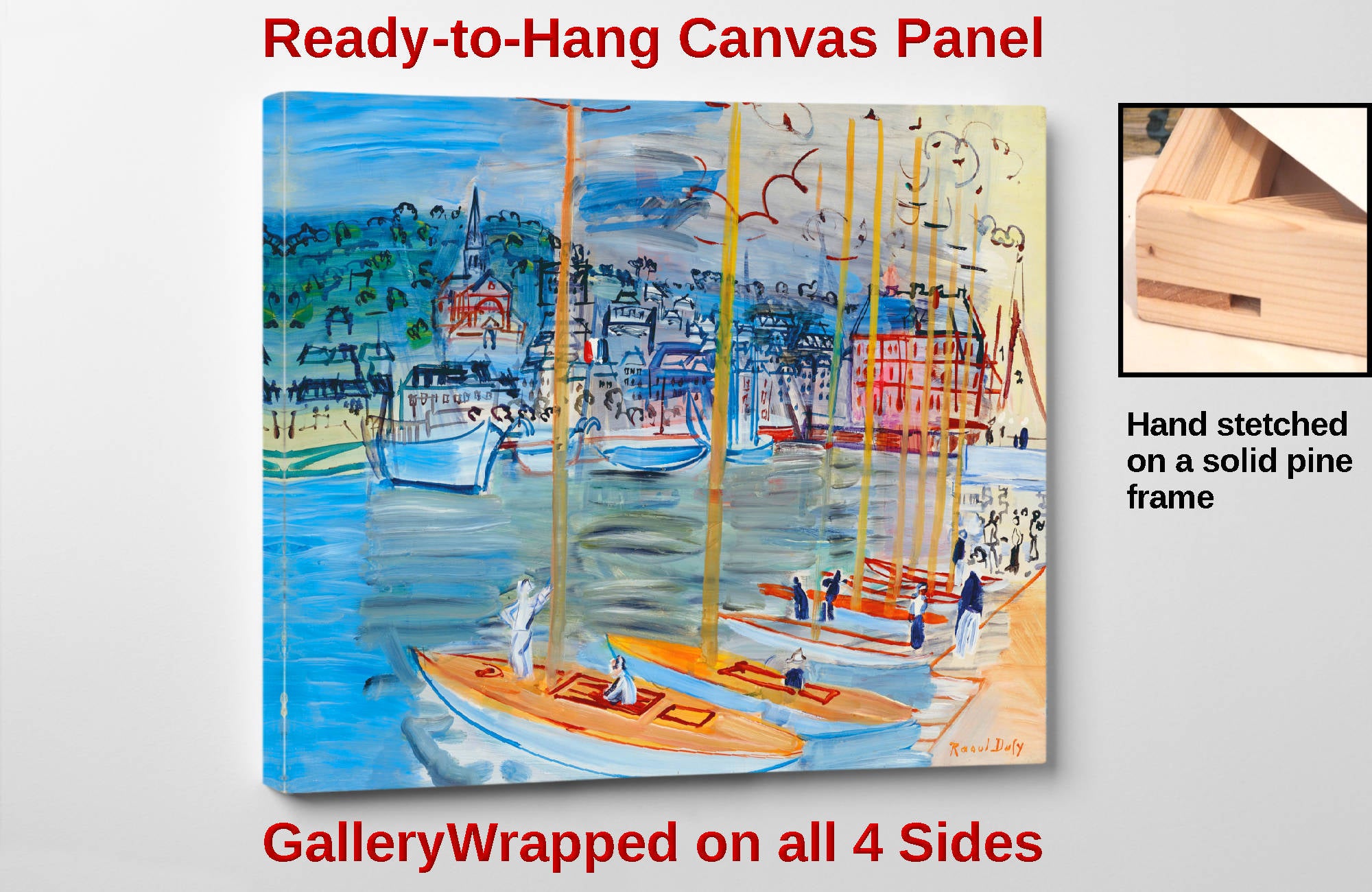
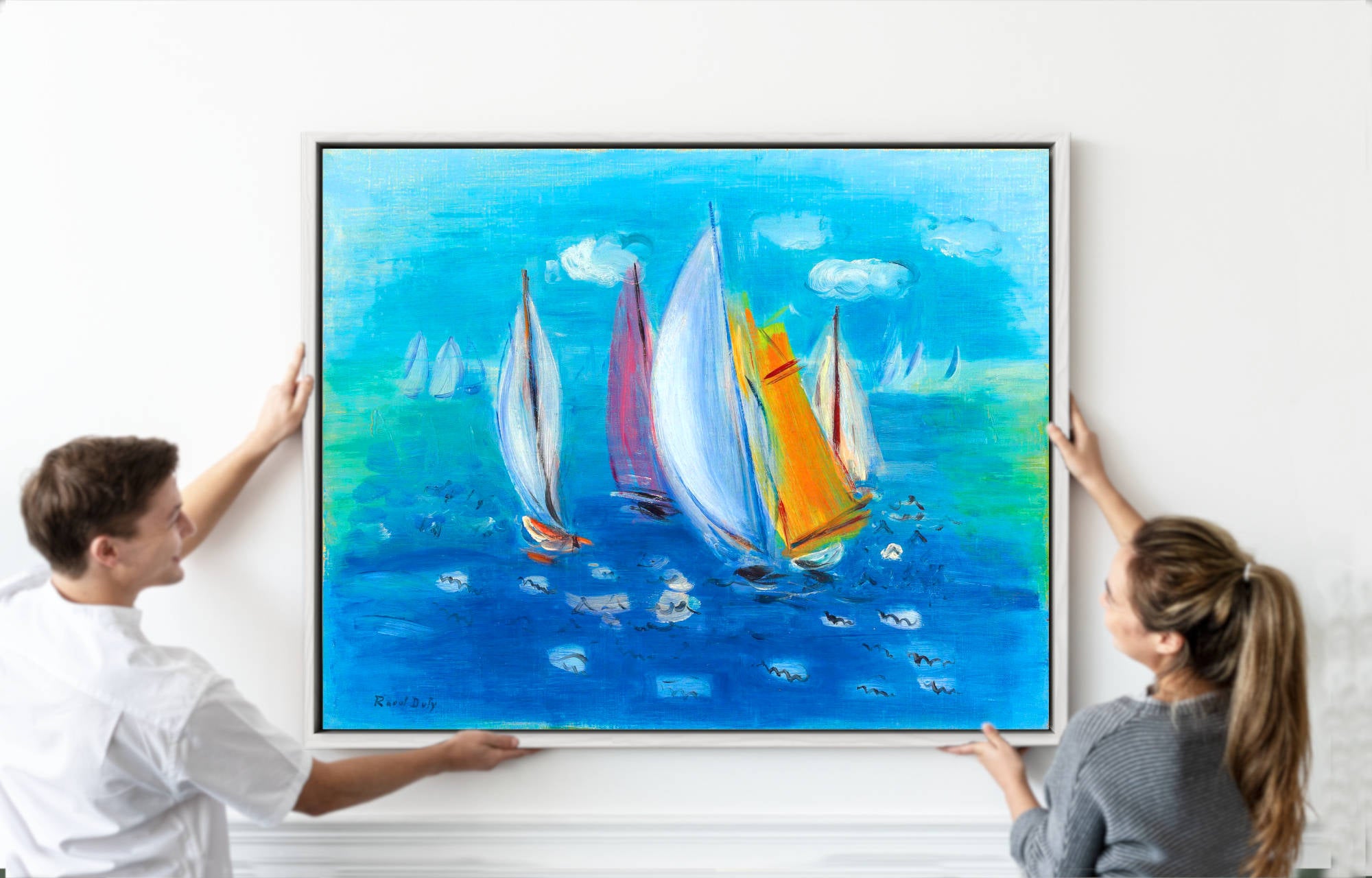
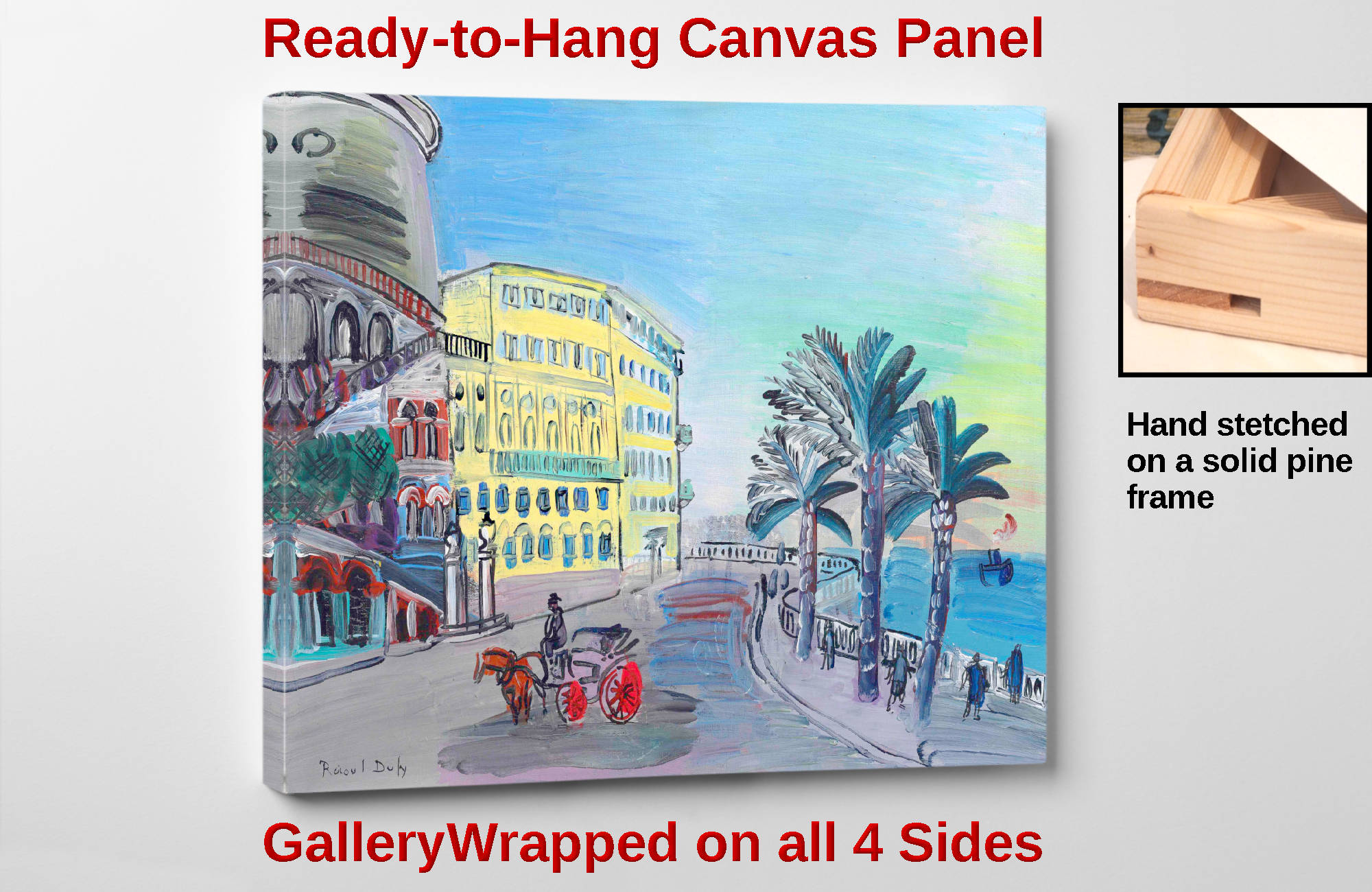
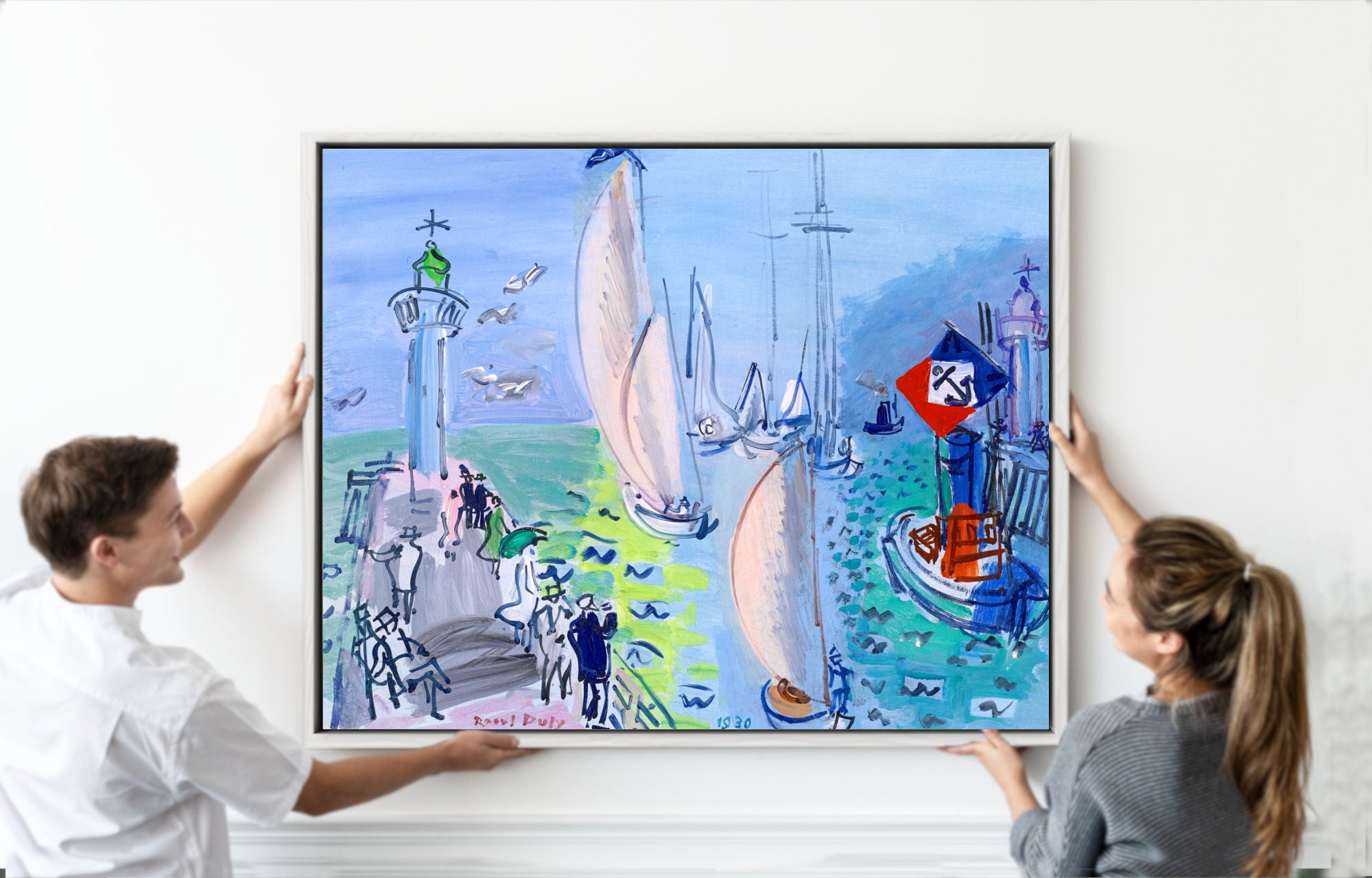
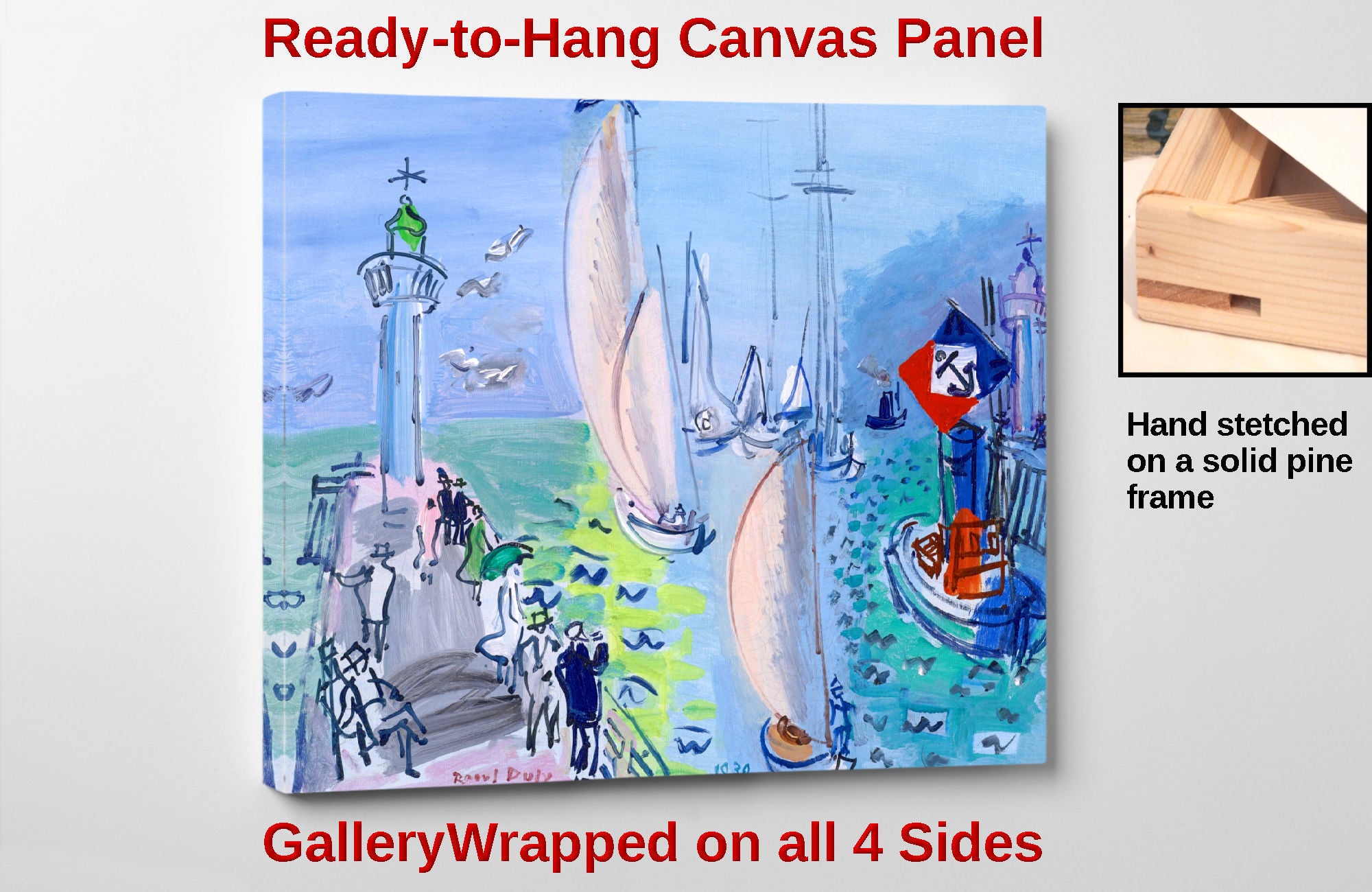
Ready to hang canvas panels are stretched on 1.5 inch deep solid pine frames from sustainable forestry sources. The image is mirrored on all 4 sides to give an aesthetically pleasing finish.
Why not have us gift wrap your order and attach a personalised message to the recipient. Available for all orders. Each order is hand wrapped in high quality gift wrap with meatllic ribbon and bow. Your personalised message is printed on a card which is included with your order.
Have your hand wrapped gift delivered directly to the recipient.
Full tracking and insurance included with every order.
Please note design may vary depending upon availability
Just purchase the gift wrap option HERE
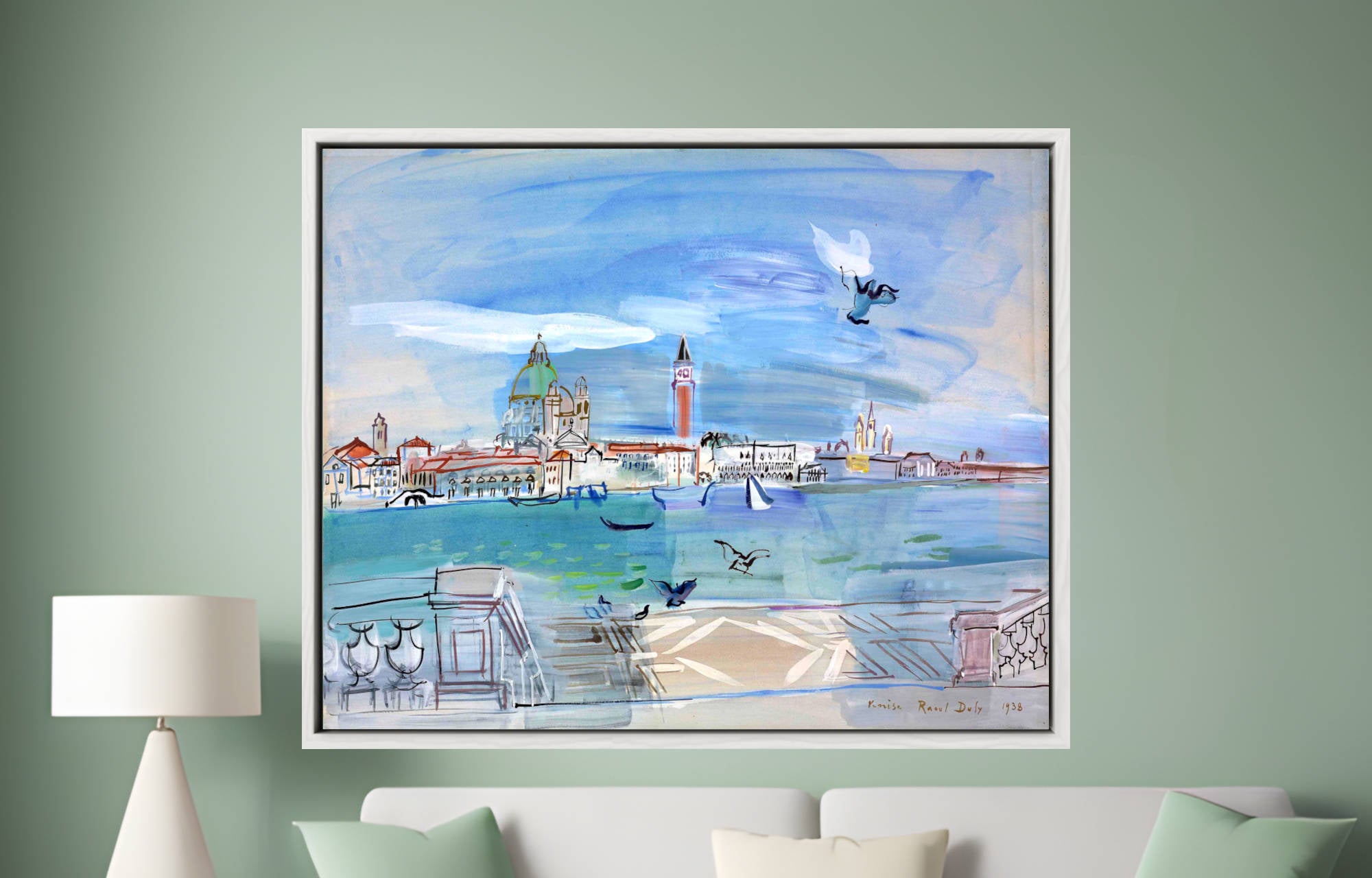
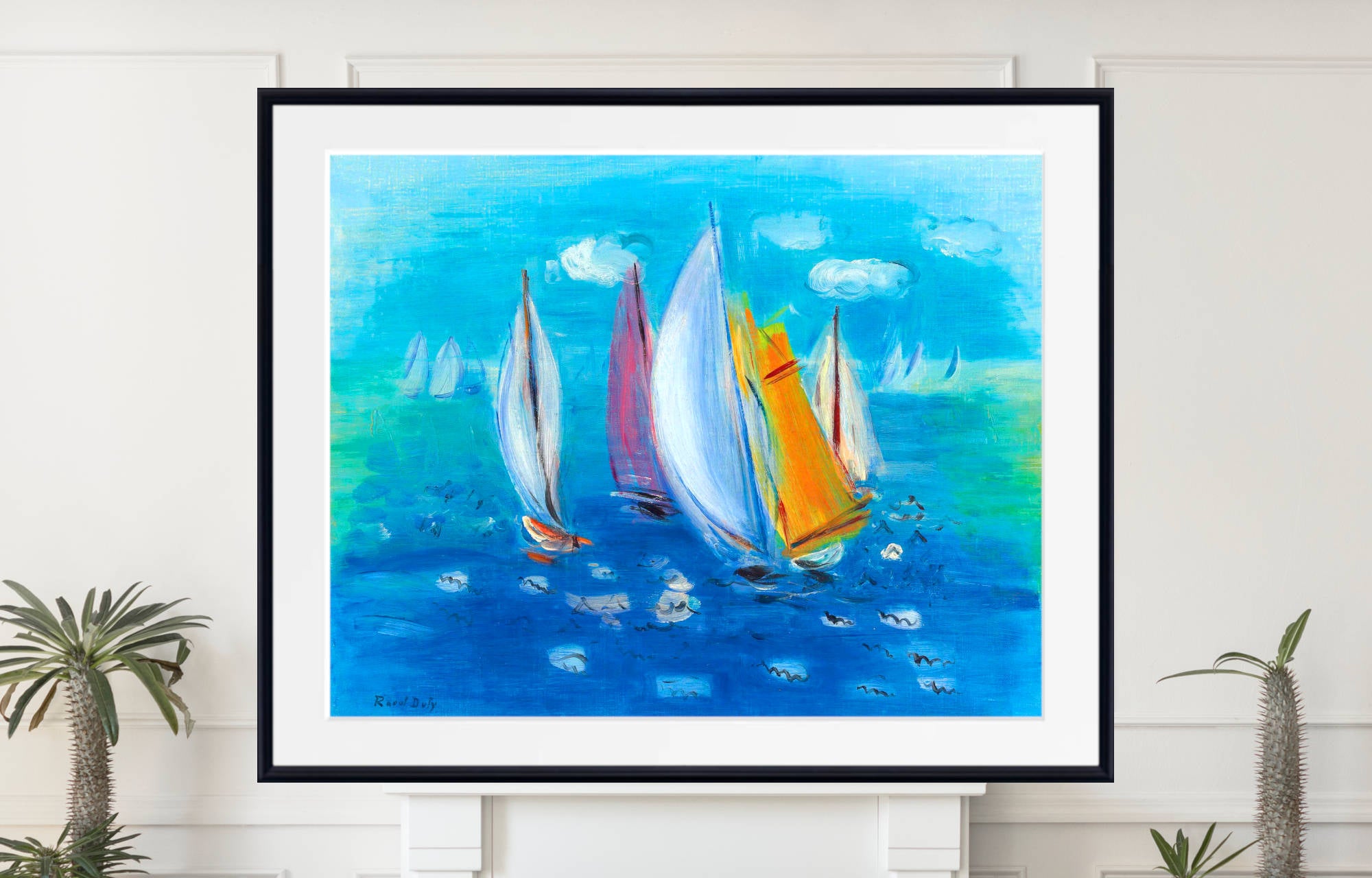
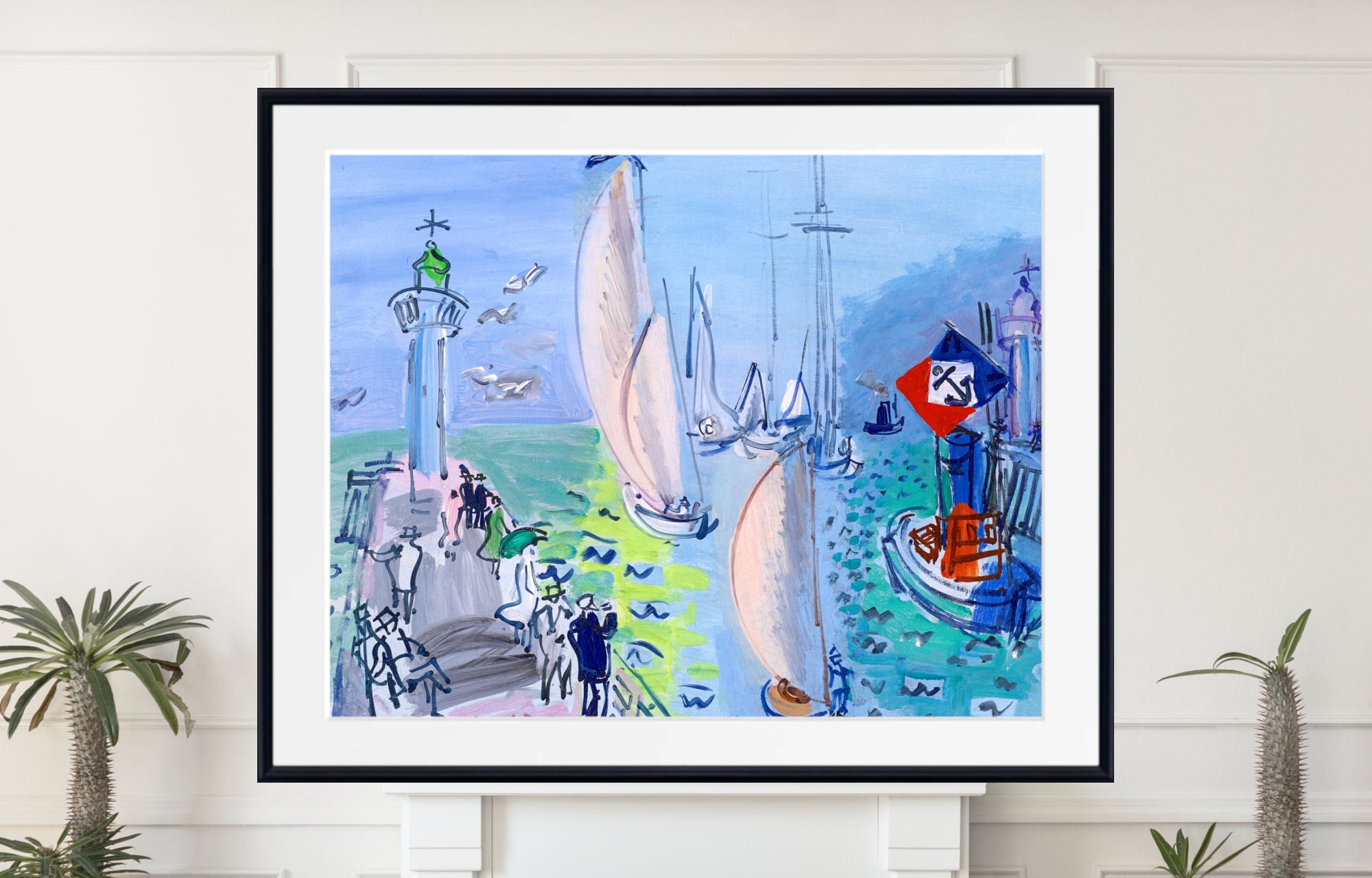
We have a wide range of frames in standard sizes and we also make custom size frames.
To order a framed print:
1. select the print size you would like along with the print materials (matte paper, fine art paper).
2. Add your print choice to the basket.
3. Choose from our range of frames
4. Select the same size as the print you have added to your basket. If the frame size you want is not listed please contact us
5. Choose from the mount or no-mount option
6. Add your frame choice to the basket
7. Proceed to checkout.
Why Choose GalleryThane?
- Printed and framed in-house
- Free UK delivery
- Free EU and USA delivery on orders over £200
- Tracking and insurance included in every order
- Fast 1-3 day dispatch
- Gift wrapping service available
- Gallery quality materials
- Sustainable, eco-friendly packaging
- Great customer support
Explore related collections
What makes our Prints and Canvas Panels so special

Latest Giclee Printing Technology
We have invested in the latest wide format print technology to produce museum quality giclee prints utilising the highest quality pigment inks to give outstanding colour reproduction.

Museum Quality Archival Fine Art Papers
We print on the finest quality fine art papers with textured, smooth and lustre finishes for prints which last a lifetime.
From aceo miniatures to 40x80 inch large format, every print has our lifetime quality guaranteee.

Solid Wood Frames, Cotton Canvas
All of the wood for our canvas panels and frames is responsibly sourced from manages forests. Our cotton canvas is completely seedless for the highest quality reproduction possible.

Have Your Gift Wrapped


Choose a Custom Frame
Popular Collections


EU Representative
Manufacturer
LucasAbstract t/a GalleryThane
15 Campion Way, Bingham NG13 8TR UK
sales@gallerythane.com
EU Authorised Representative
Westwood Sourcing
Fellenoordstraat 52, Unit 2.38
4811 TJ Breda, Netherlands
info@westwoodsourcing.com