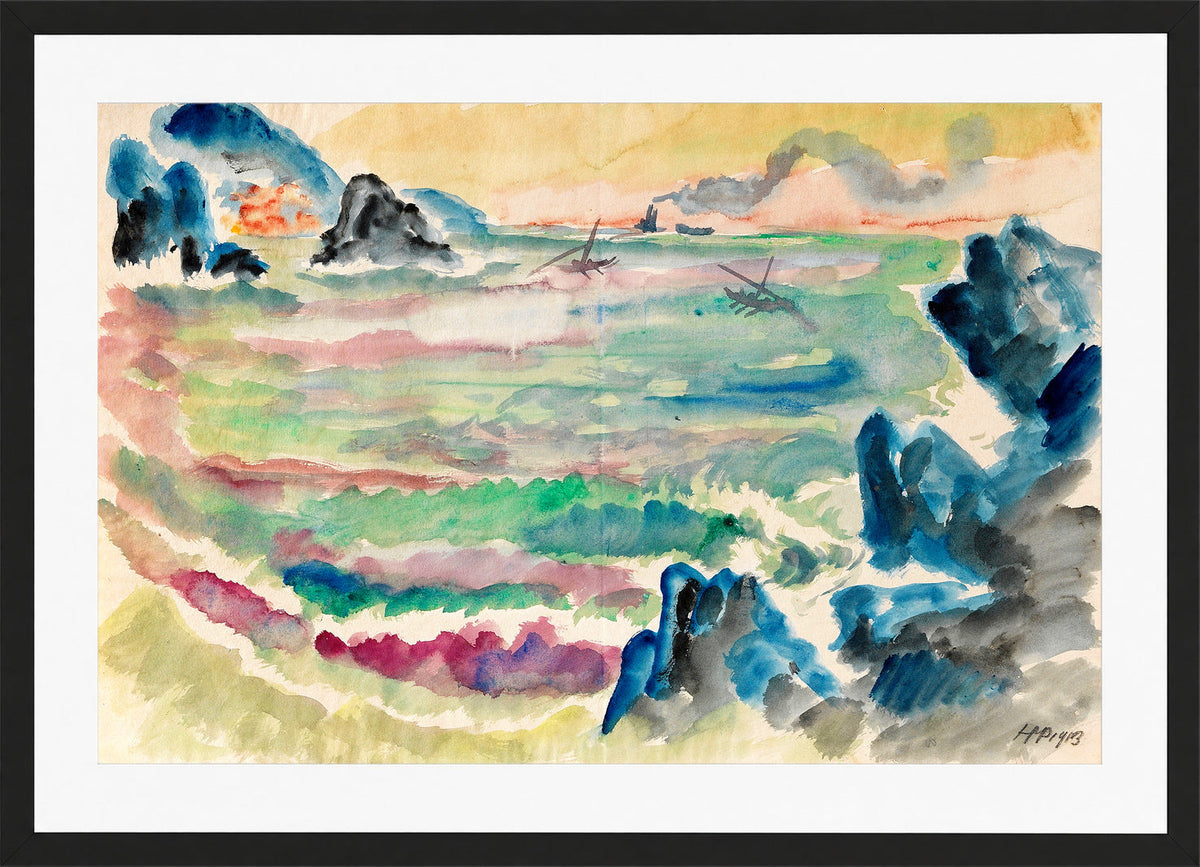
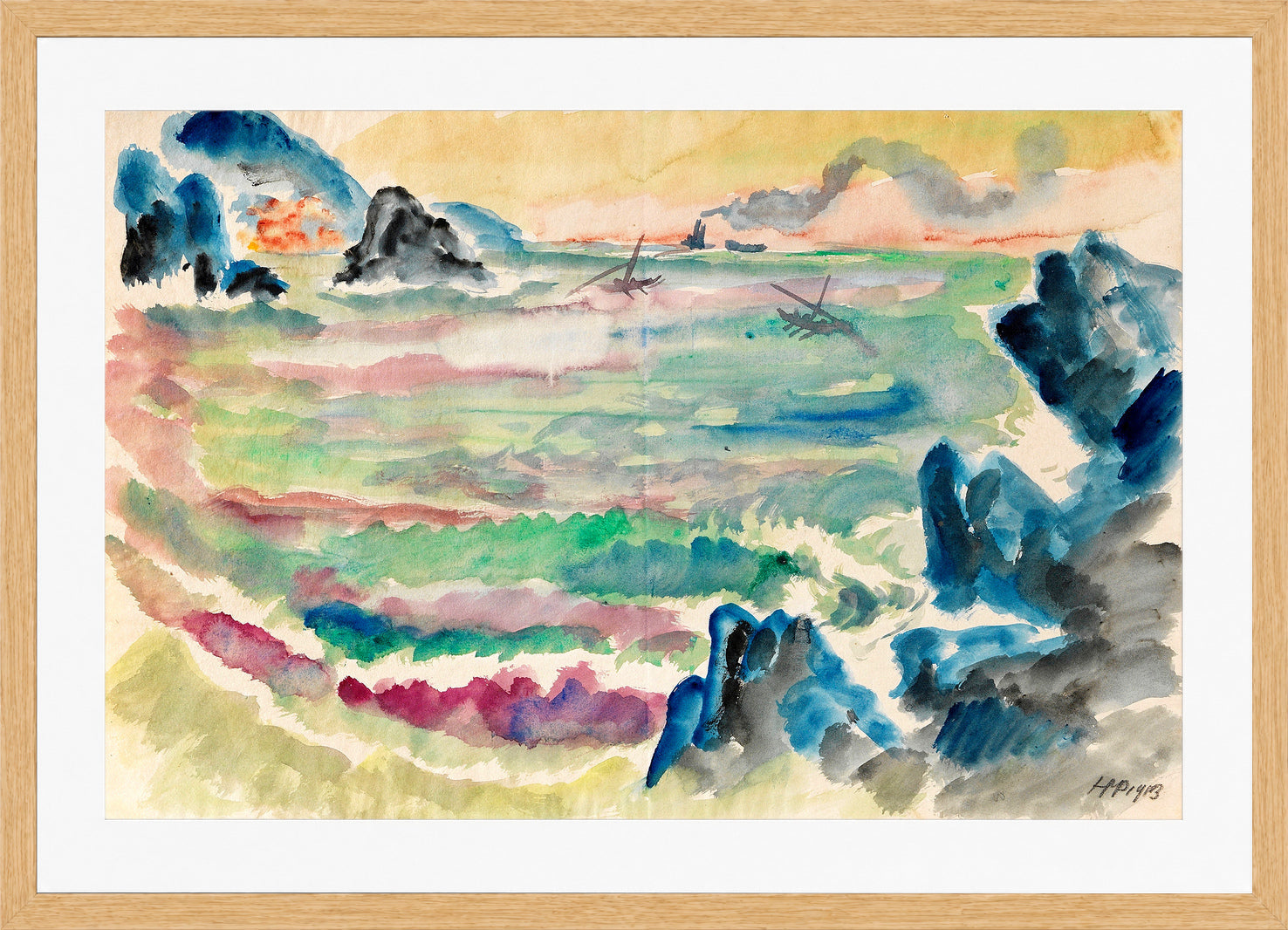
Max Pechstein Landscape Prints
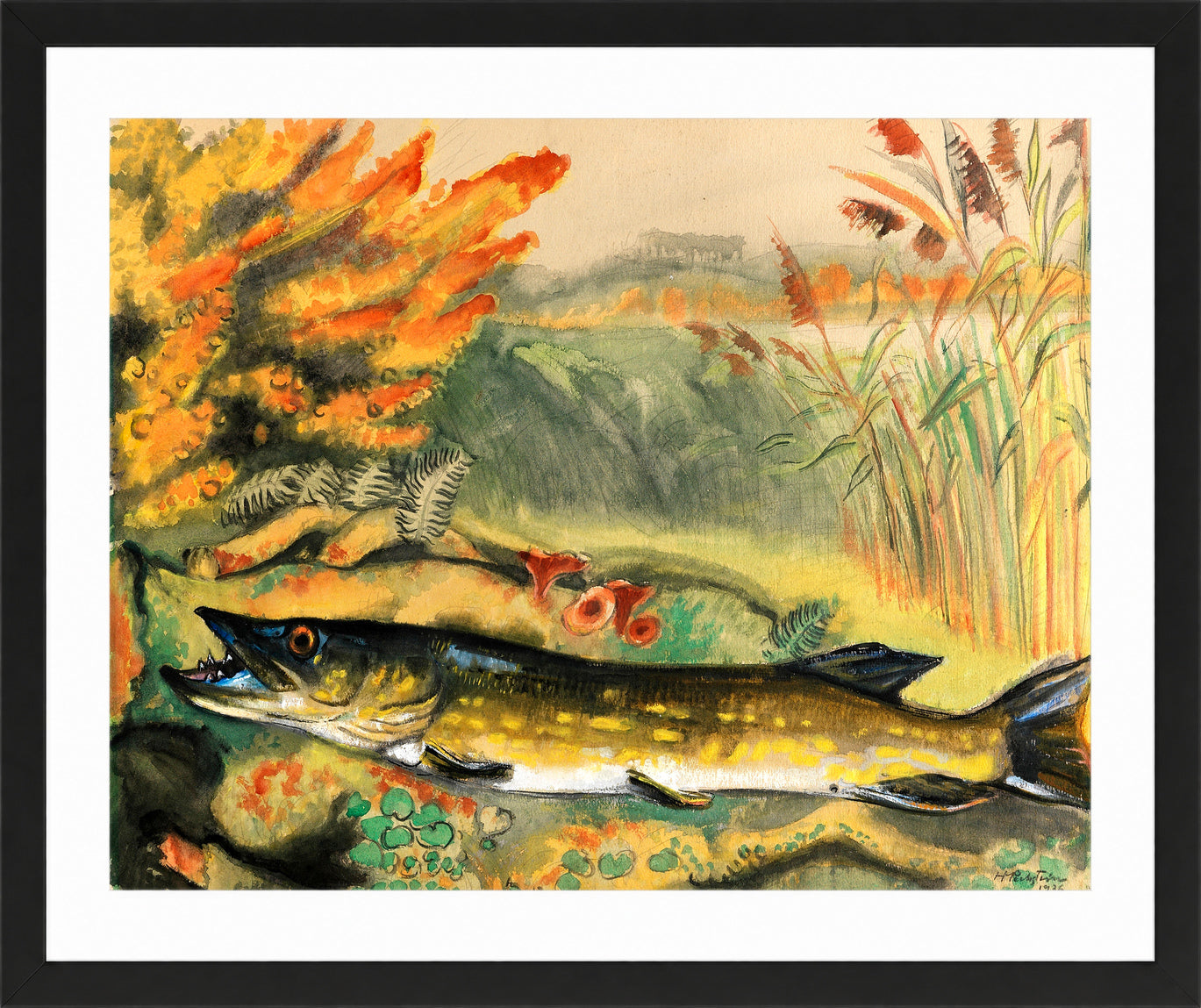
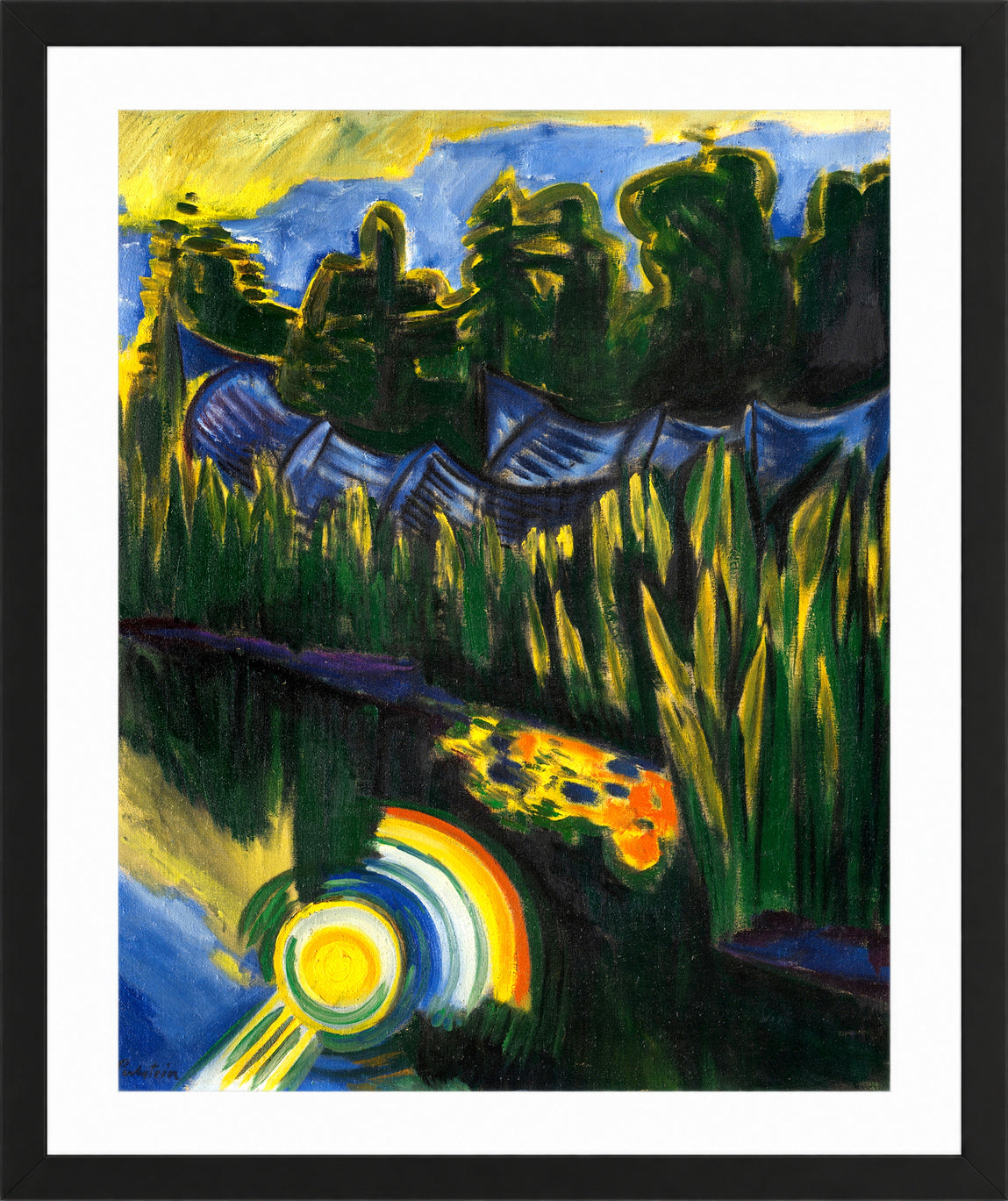
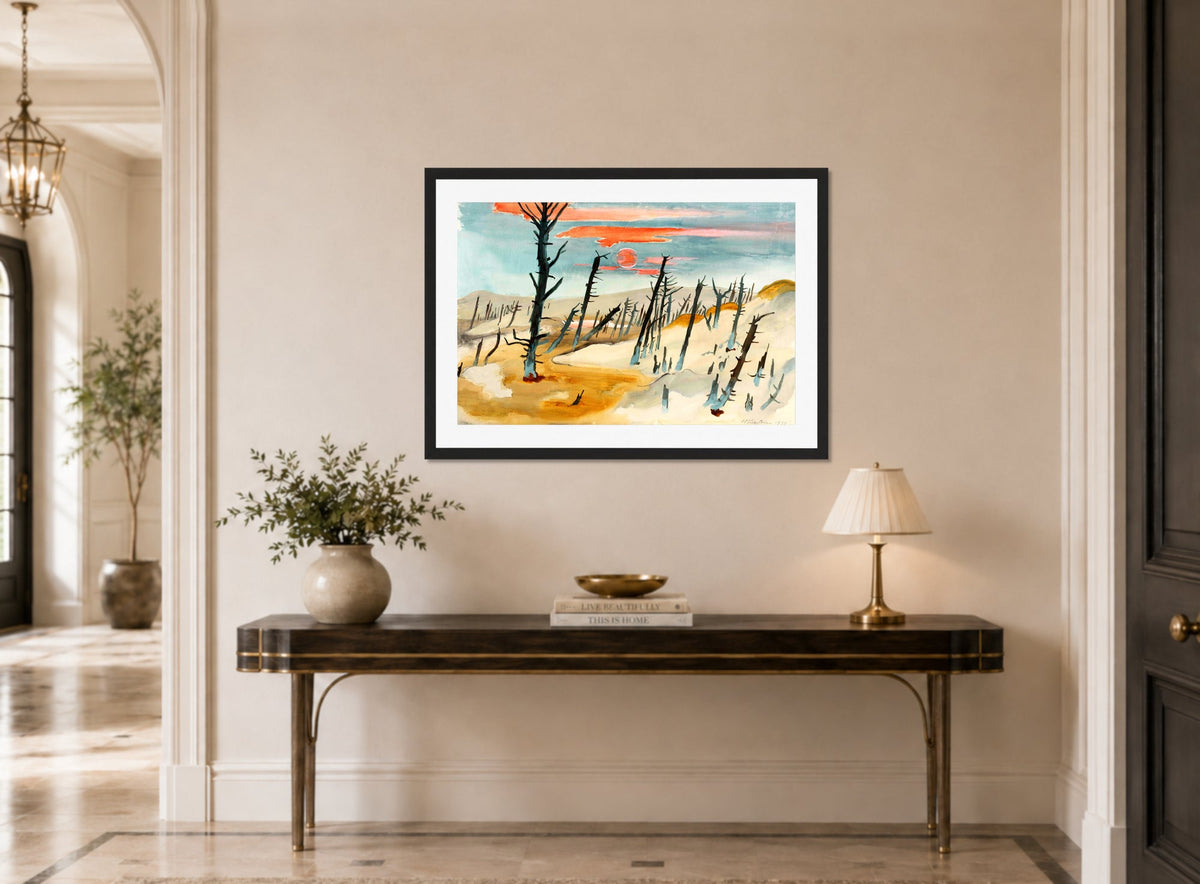
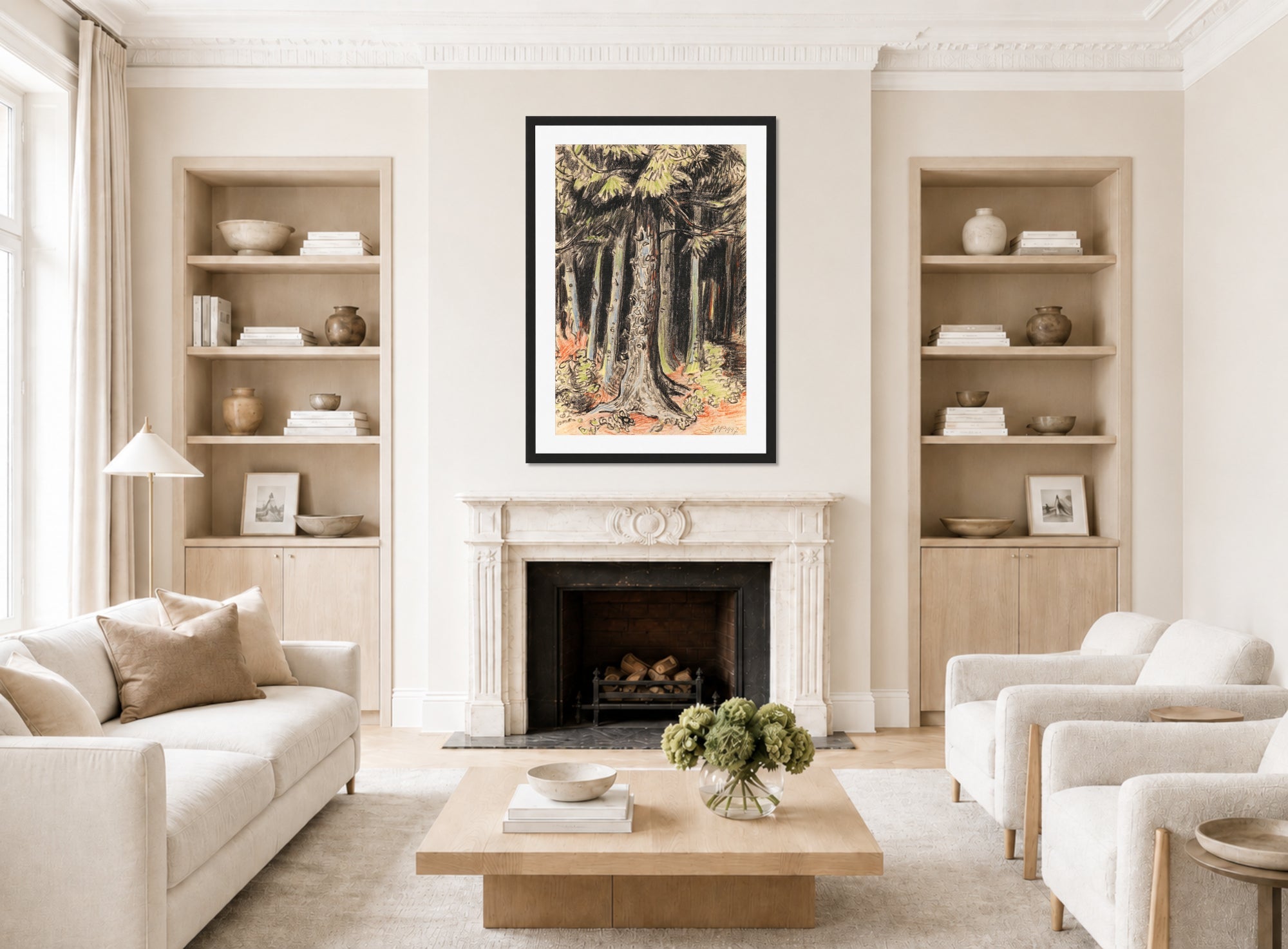
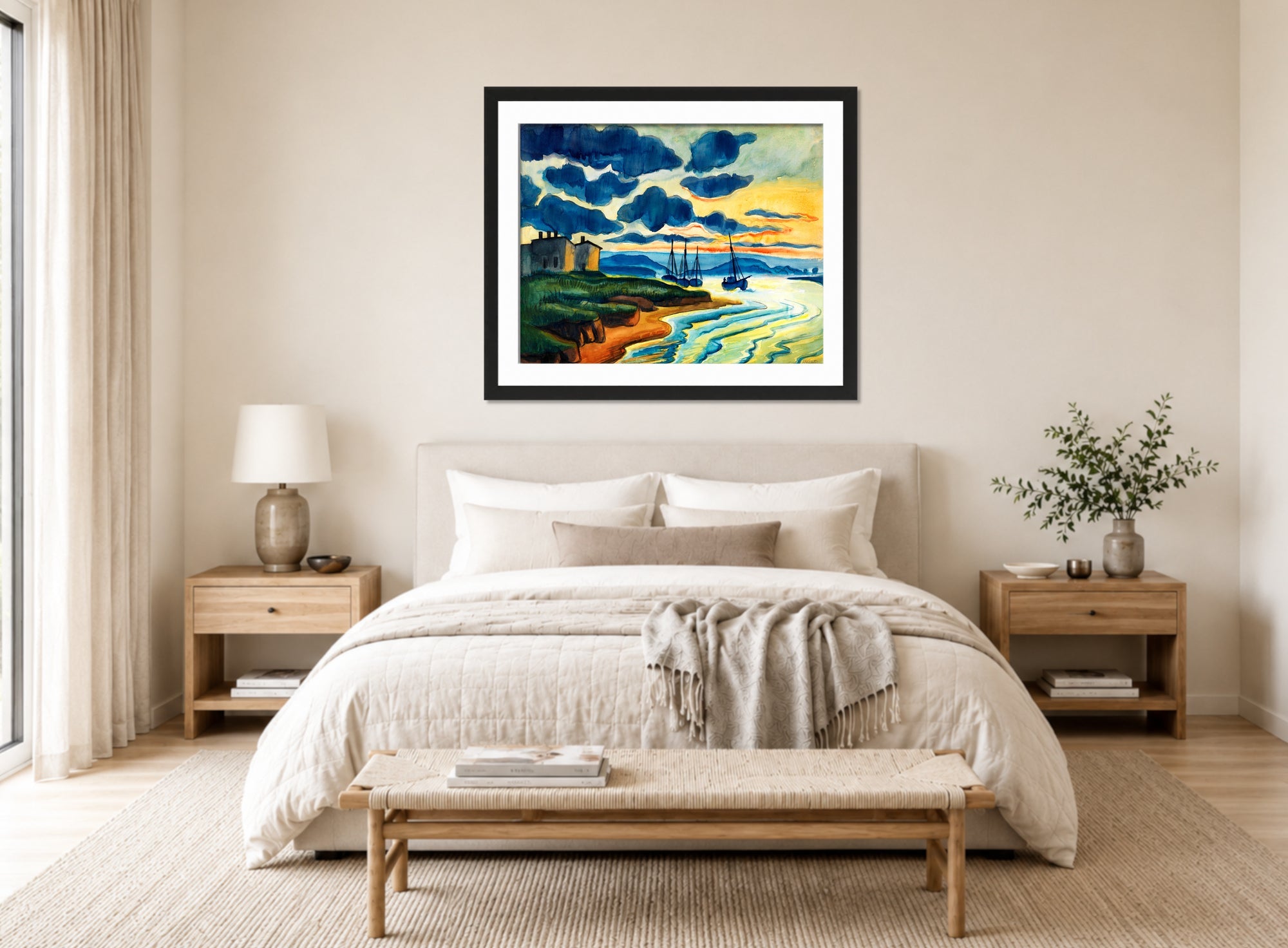
Landscape was one of the most enduring subjects in Hermann Max Pechstein's art. Forests, lakes, fields, villages, gardens and rural scenery gave him opportunities to transform the visible world through the intense colour, simplified forms and forceful outlines that became characteristic of German Expressionism.
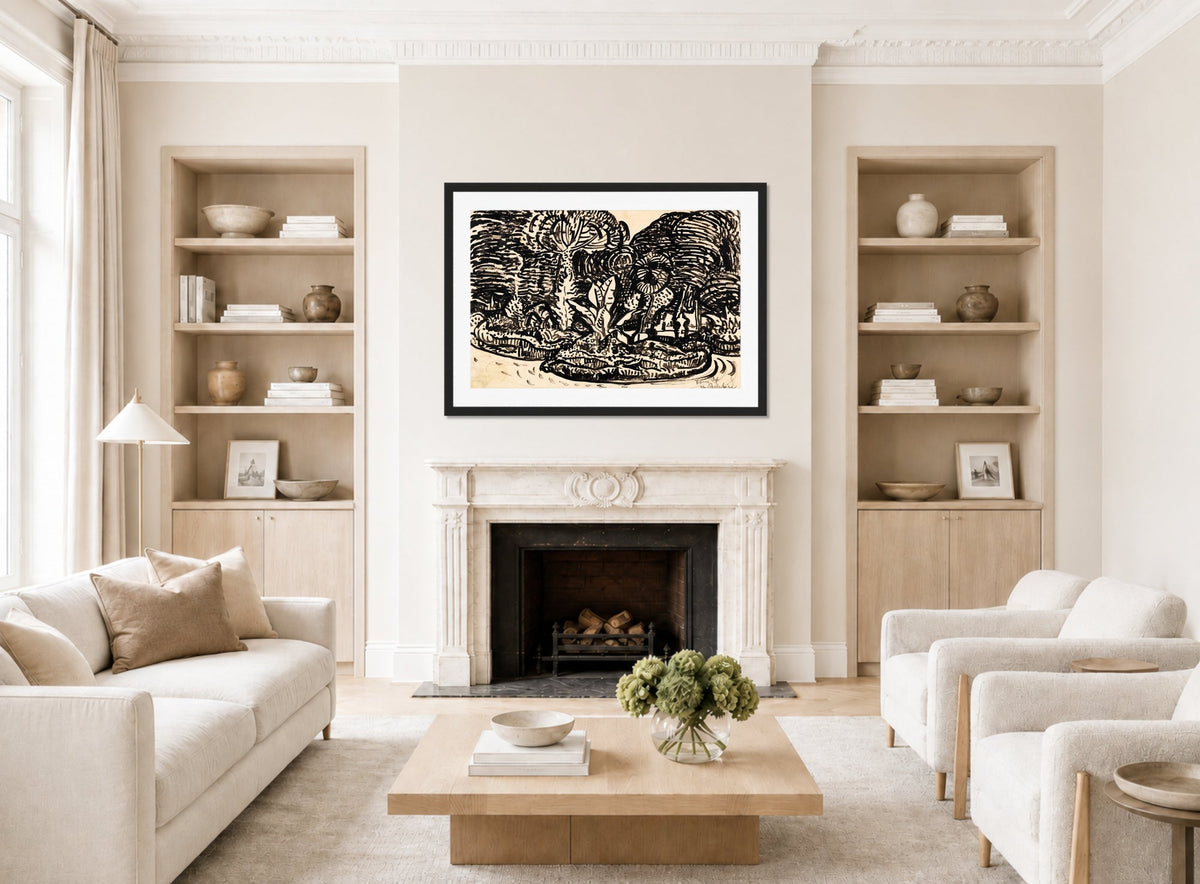
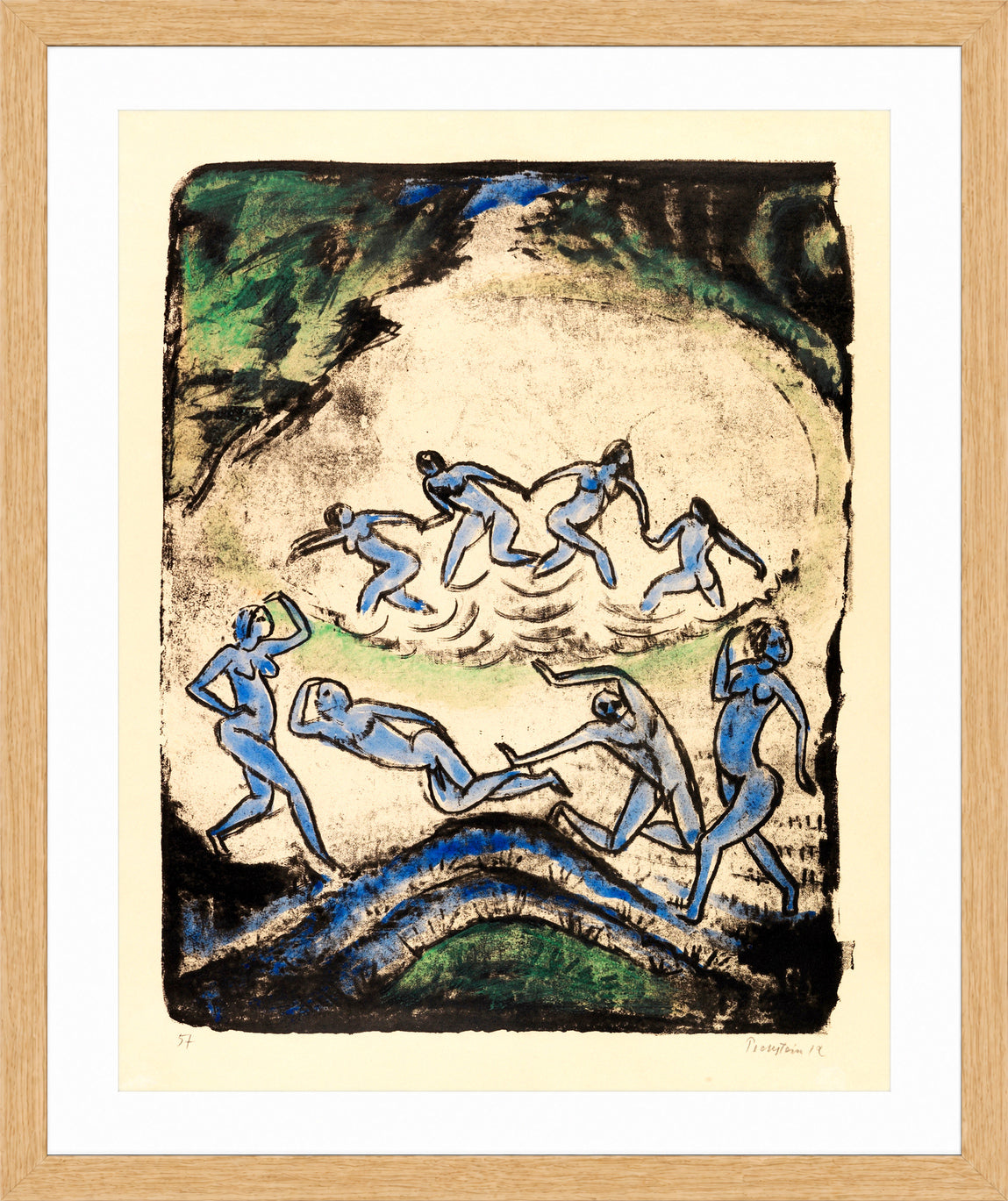
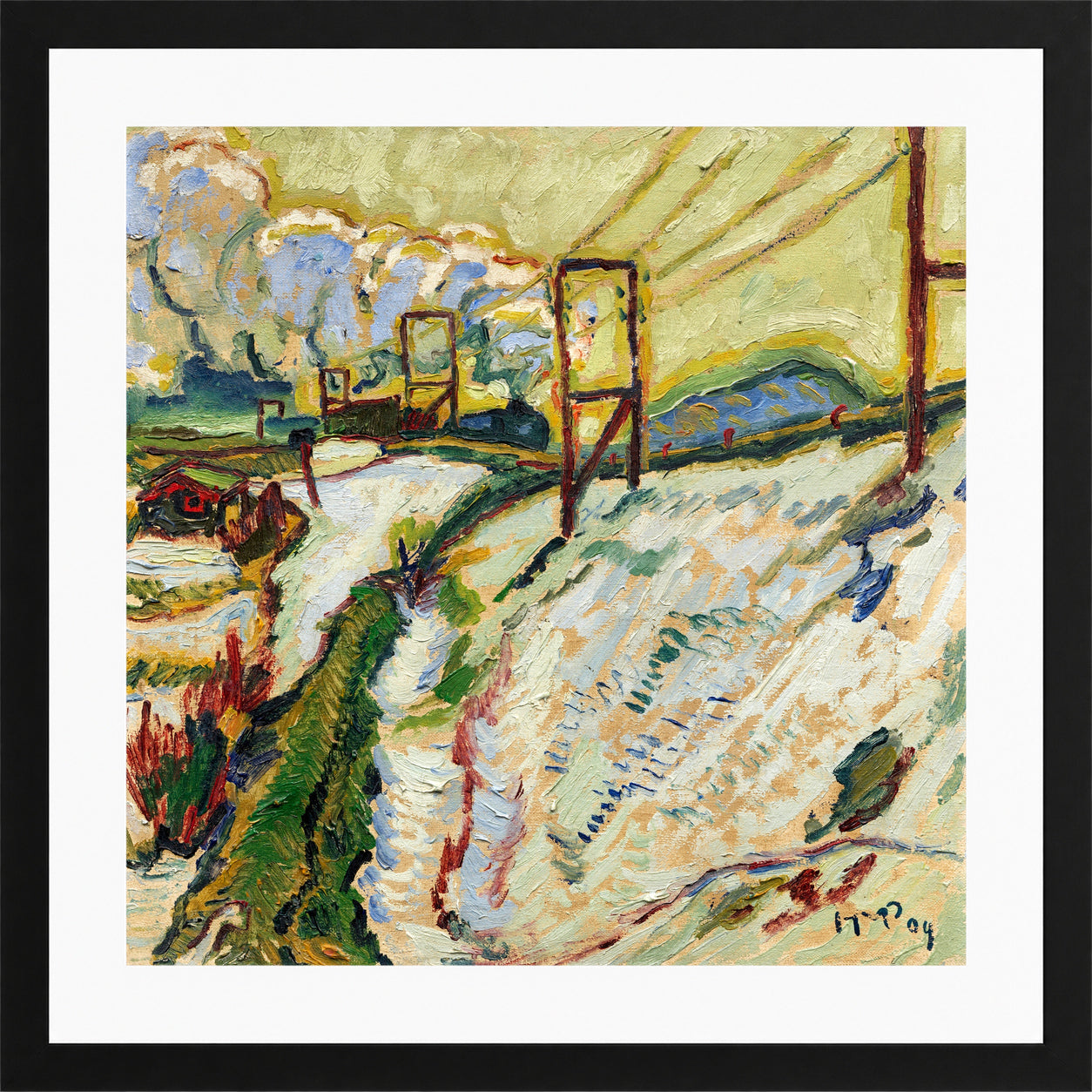
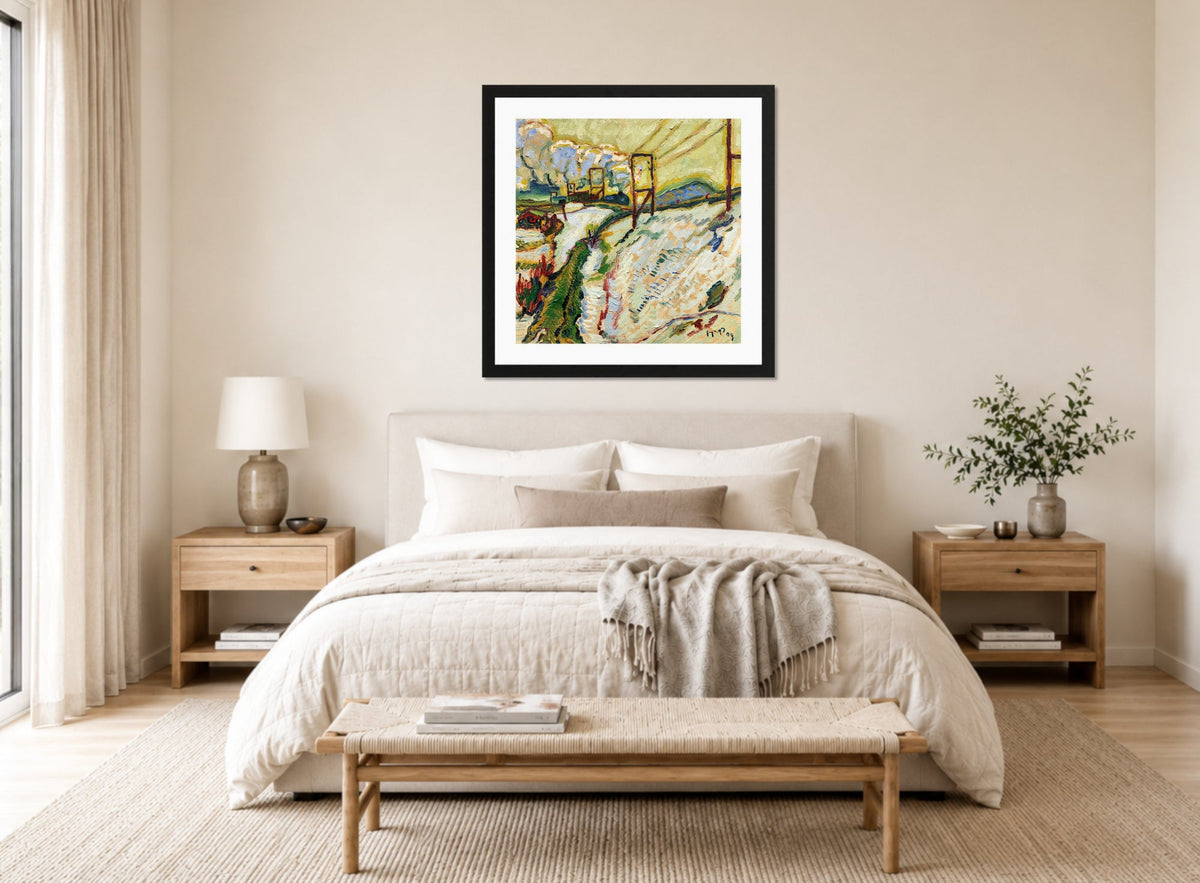
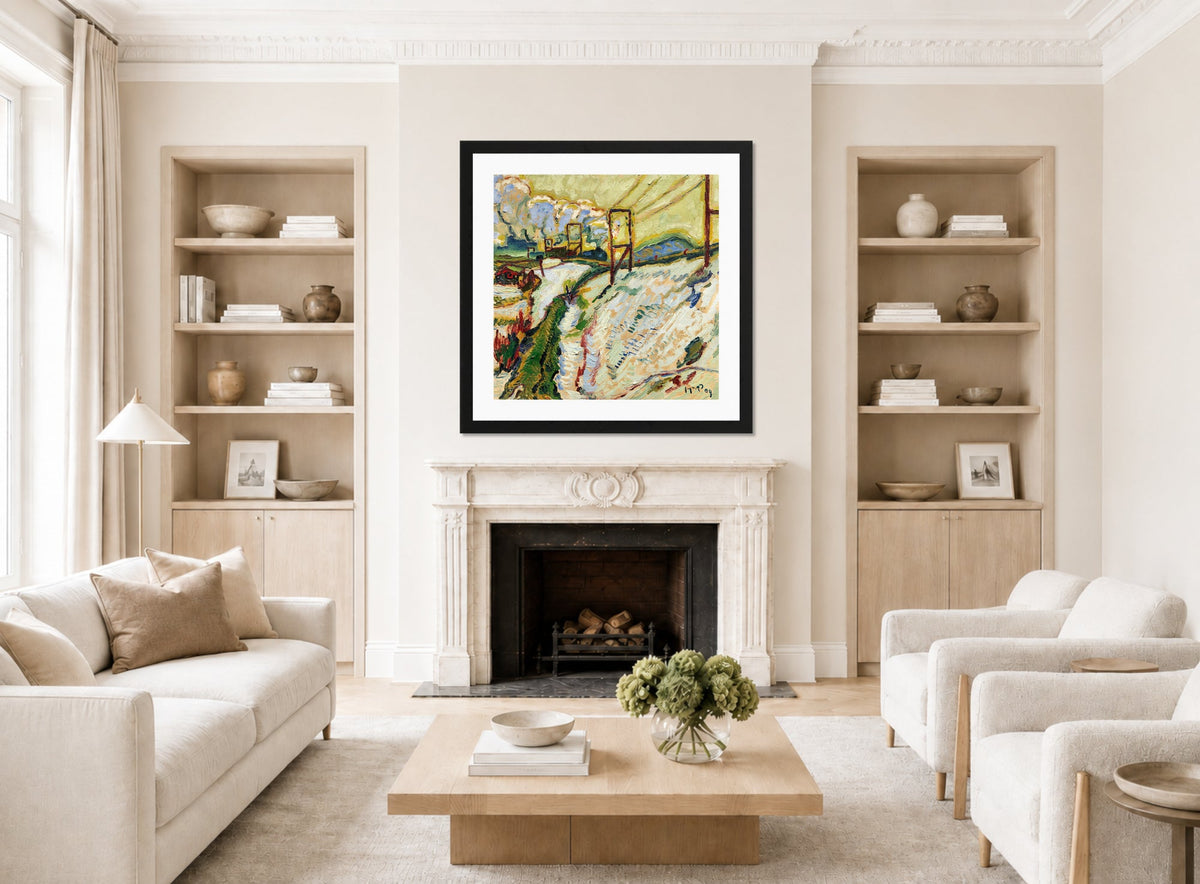
Rather than reproducing a landscape exactly as it appeared, Pechstein frequently reorganised nature into broad areas of colour and strongly defined shapes. Trees become rhythmic vertical forms, hills and fields are compressed into bands of colour, and buildings can be reduced to simple geometric structures within the surrounding landscape.
This collection brings together Max Pechstein landscape prints from across his career. For the complete range of his subjects, including portraits, coastal scenes, nudes and graphic works, browse the Hermann Max Pechstein Prints collection.
Expressionist Landscape Art
Pechstein's approach to landscape developed during the emergence of German Expressionism in the early twentieth century.
He joined Die Brücke in Dresden in 1906 and worked alongside artists including Ernst Ludwig Kirchner, Erich Heckel and Karl Schmidt-Rottluff. The group sought greater immediacy than conventional academic painting allowed, using freer drawing, simplified forms and increasingly independent colour.
Landscape was particularly well suited to this new visual language. A tree did not need to be rendered leaf by leaf, and a field did not need to match its precise natural colour. Instead, individual elements could be intensified, simplified or rearranged according to the needs of the composition.
Pechstein combined these ideas with influences encountered during his travels, including modern French painting and the powerful use of colour associated with artists such as Henri Matisse and Paul Gauguin.
The result was a form of landscape painting in which colour describes not only place but atmosphere and emotional intensity.
For the wider historical context behind his work, read our complete Max Pechstein biography, paintings and prints guide.
Forests, Lakes and Rural Landscapes
Woodland and countryside appear repeatedly throughout Pechstein's work.
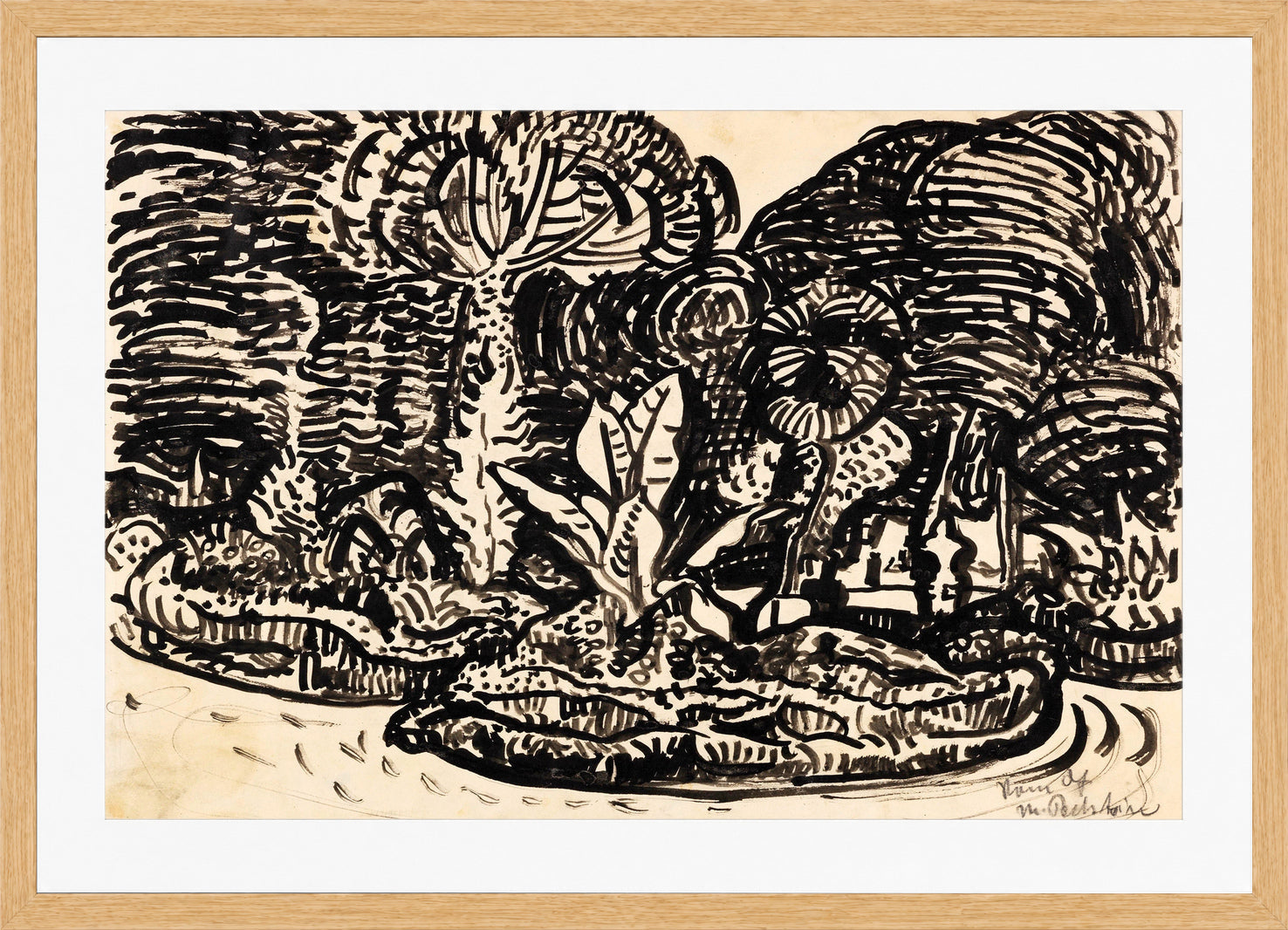
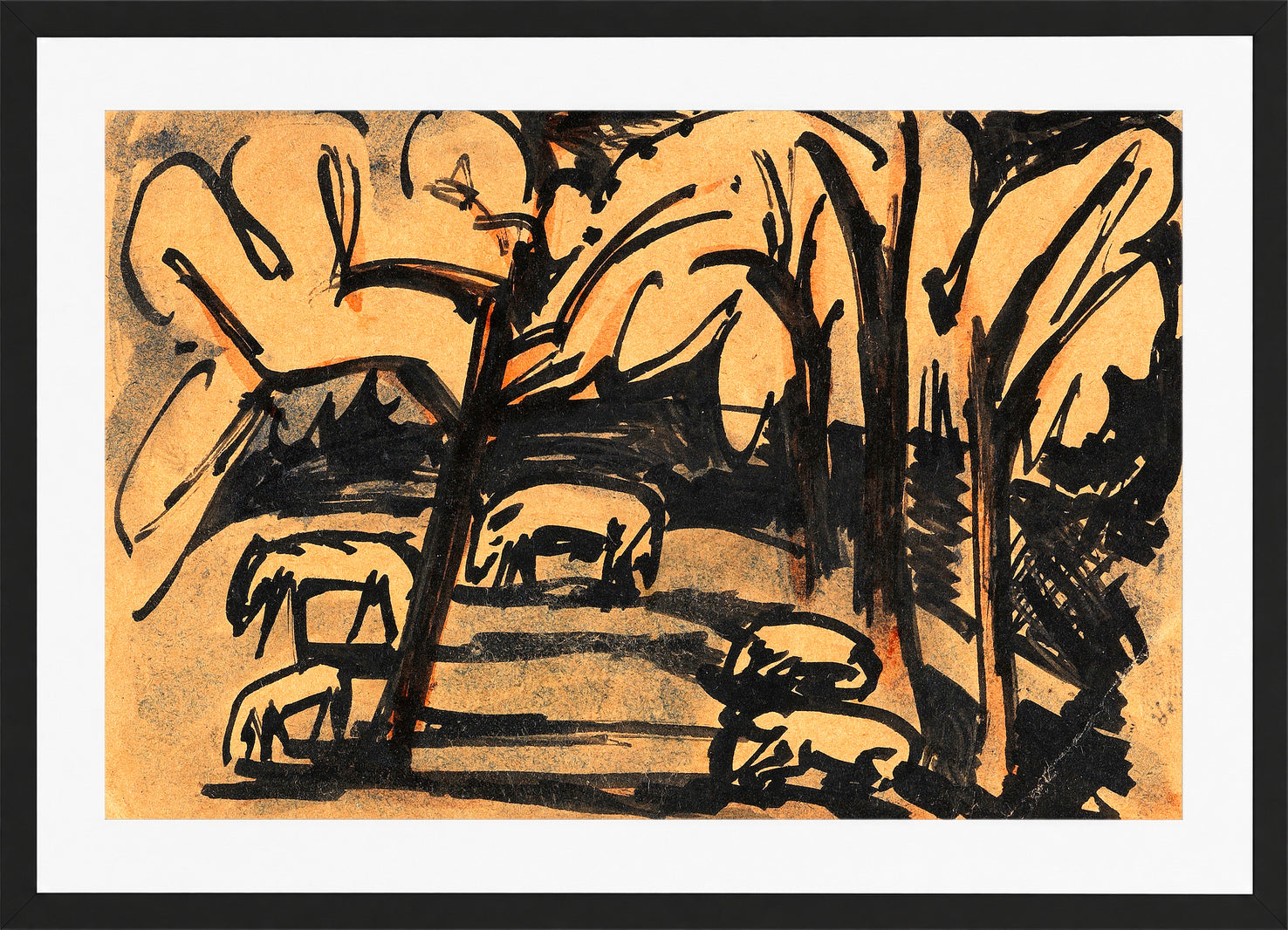
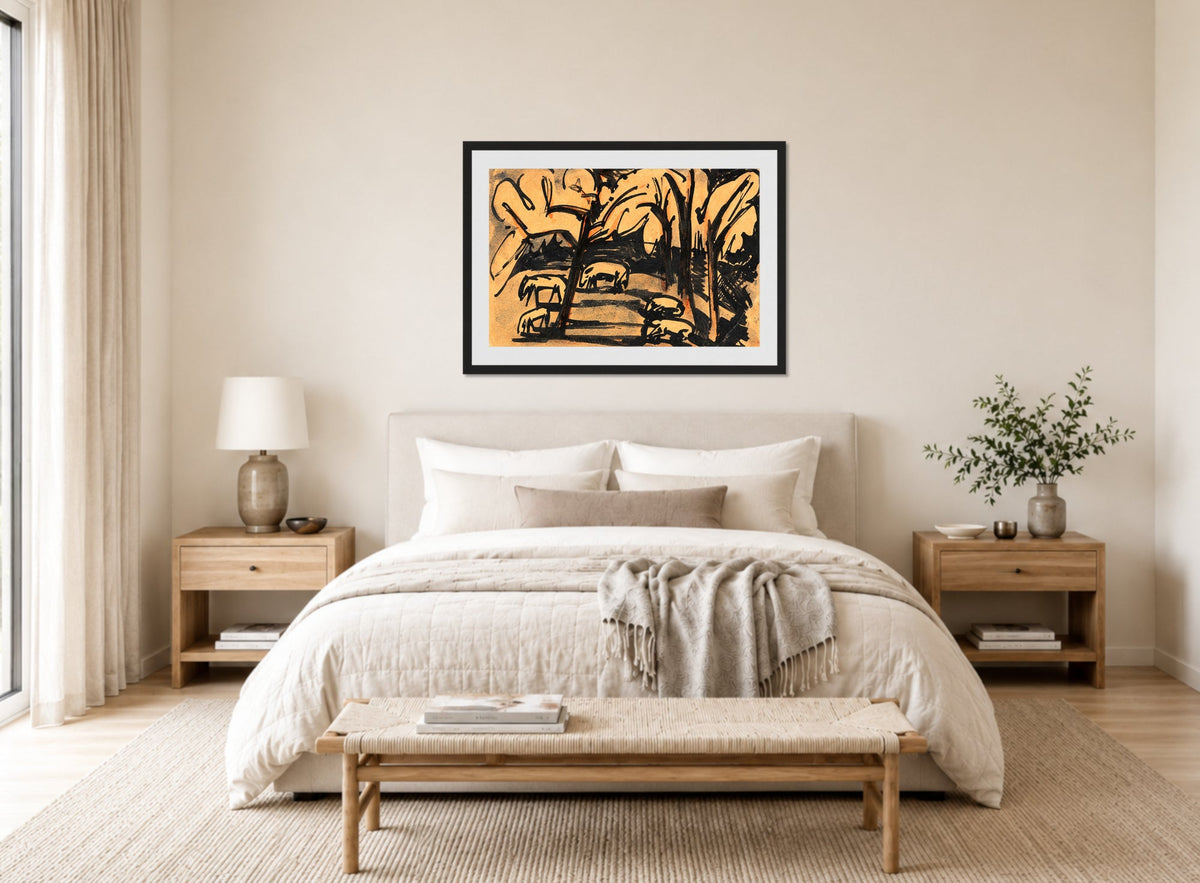
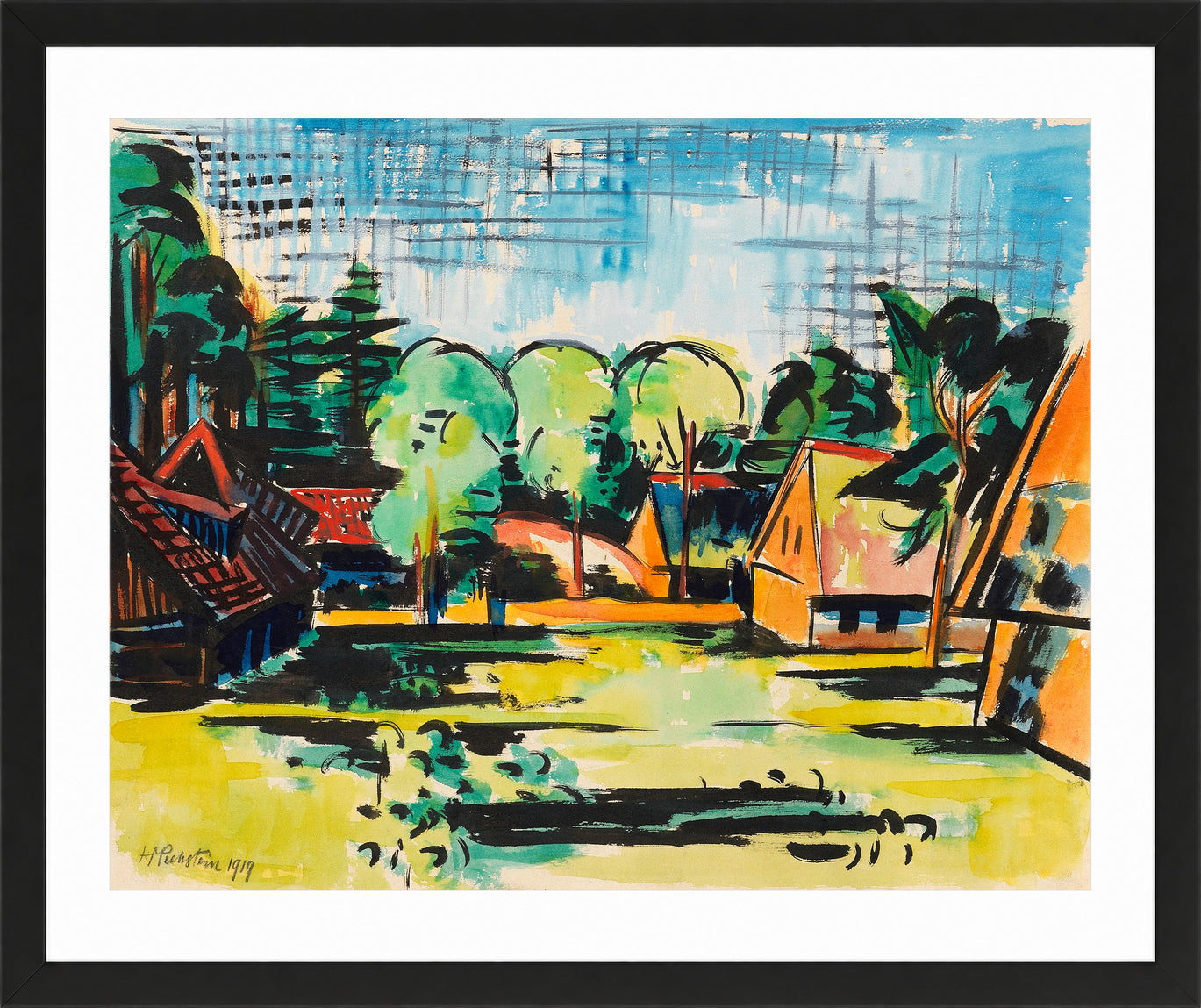
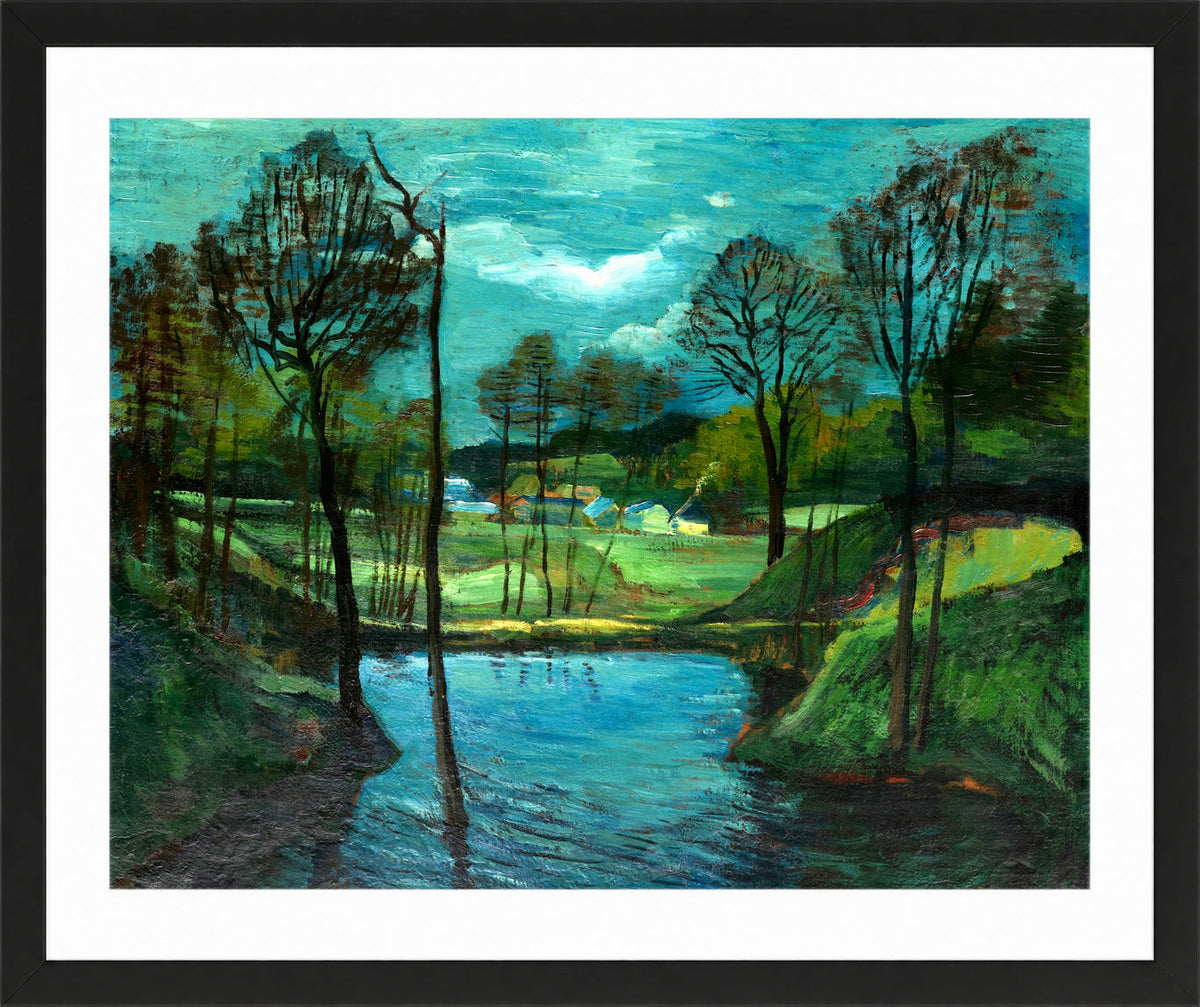
Forests offered especially strong compositional possibilities. Tree trunks could divide the picture vertically, branches could create angular rhythms across the sky, and areas of foliage could be simplified into large masses of green, blue, yellow or red.
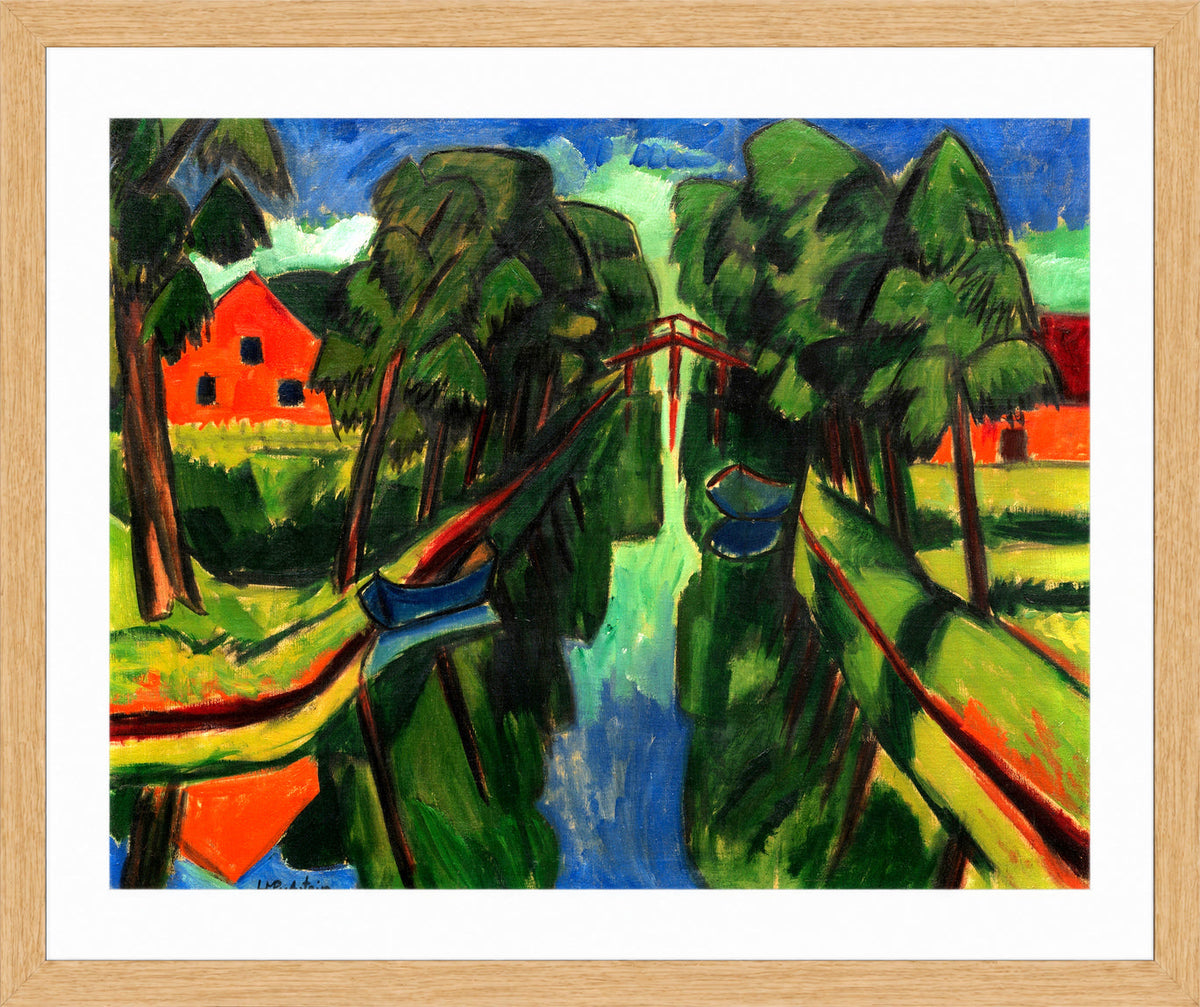
Lakes and rivers introduced a different structure. Reflections created repeated areas of colour, while banks, reeds and distant hills could organise the image into horizontal layers.
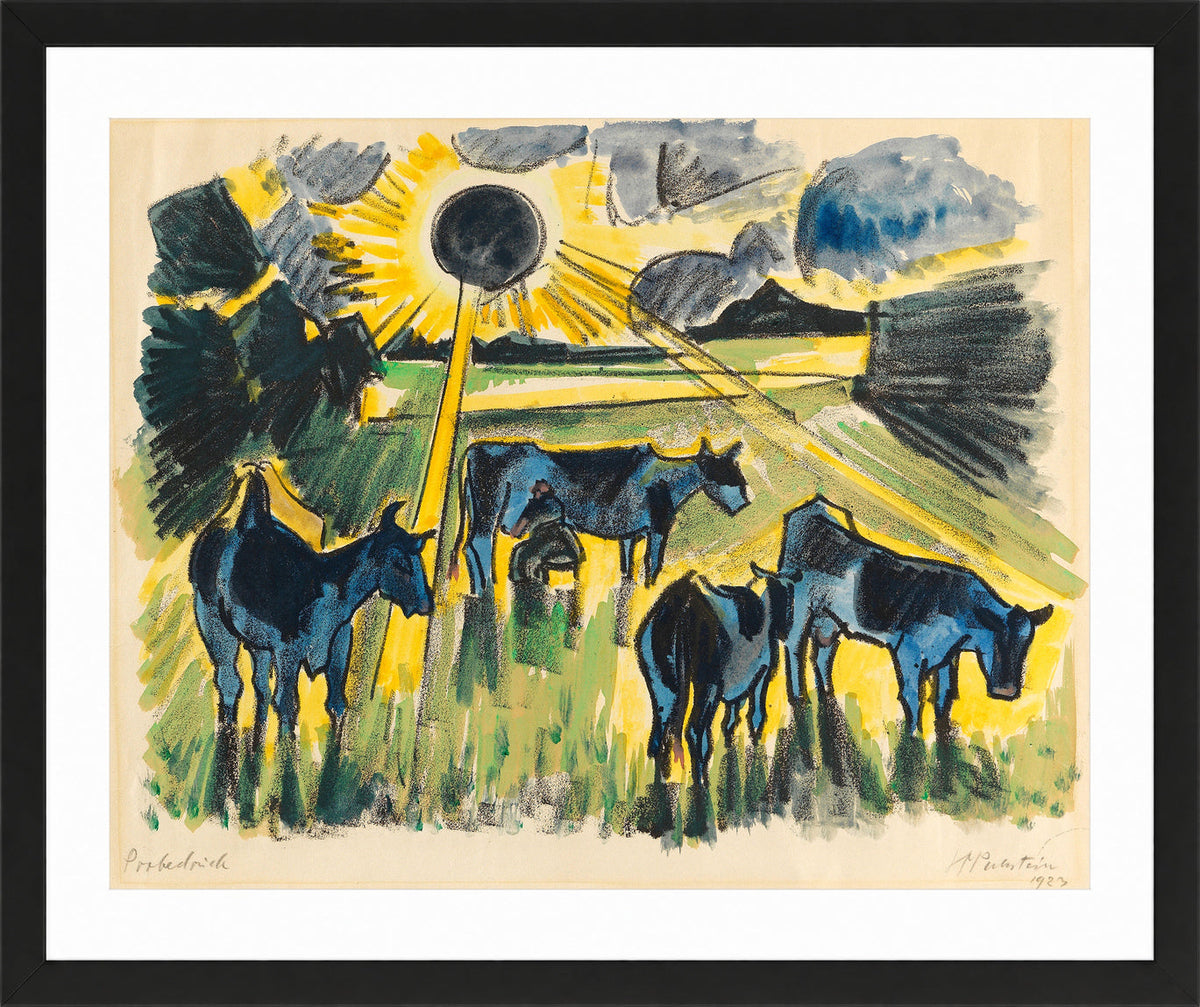
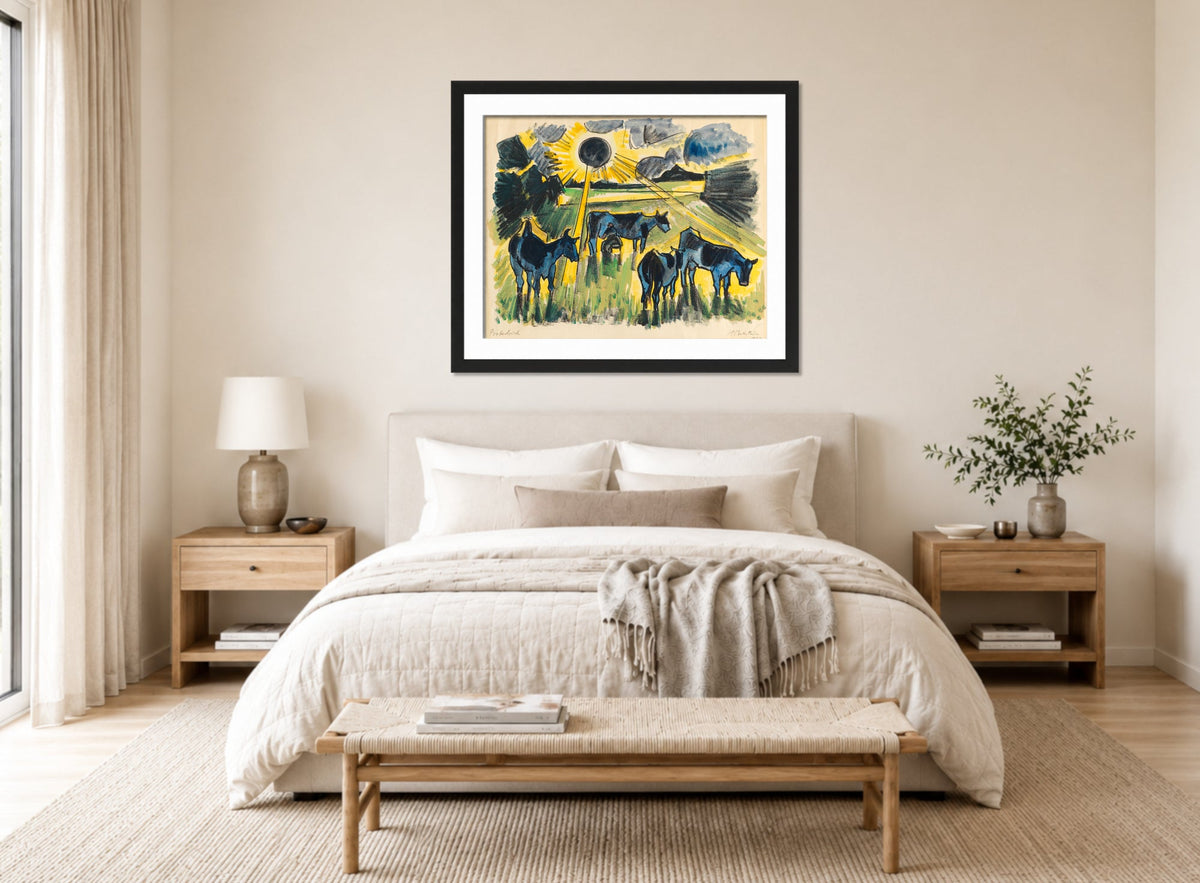
Pechstein also painted agricultural landscapes, fields, grazing animals and people working in the countryside. These scenes often combine landscape with human activity, showing rural life as part of the wider structure of nature rather than treating figures as isolated subjects.
The strength of these compositions comes from Pechstein's ability to simplify a complicated landscape without making it visually empty. Individual details are reduced, but the overall rhythm of the scene becomes stronger.
Villages, Houses and Architecture in the Landscape
Buildings frequently form important elements within Pechstein's landscapes.
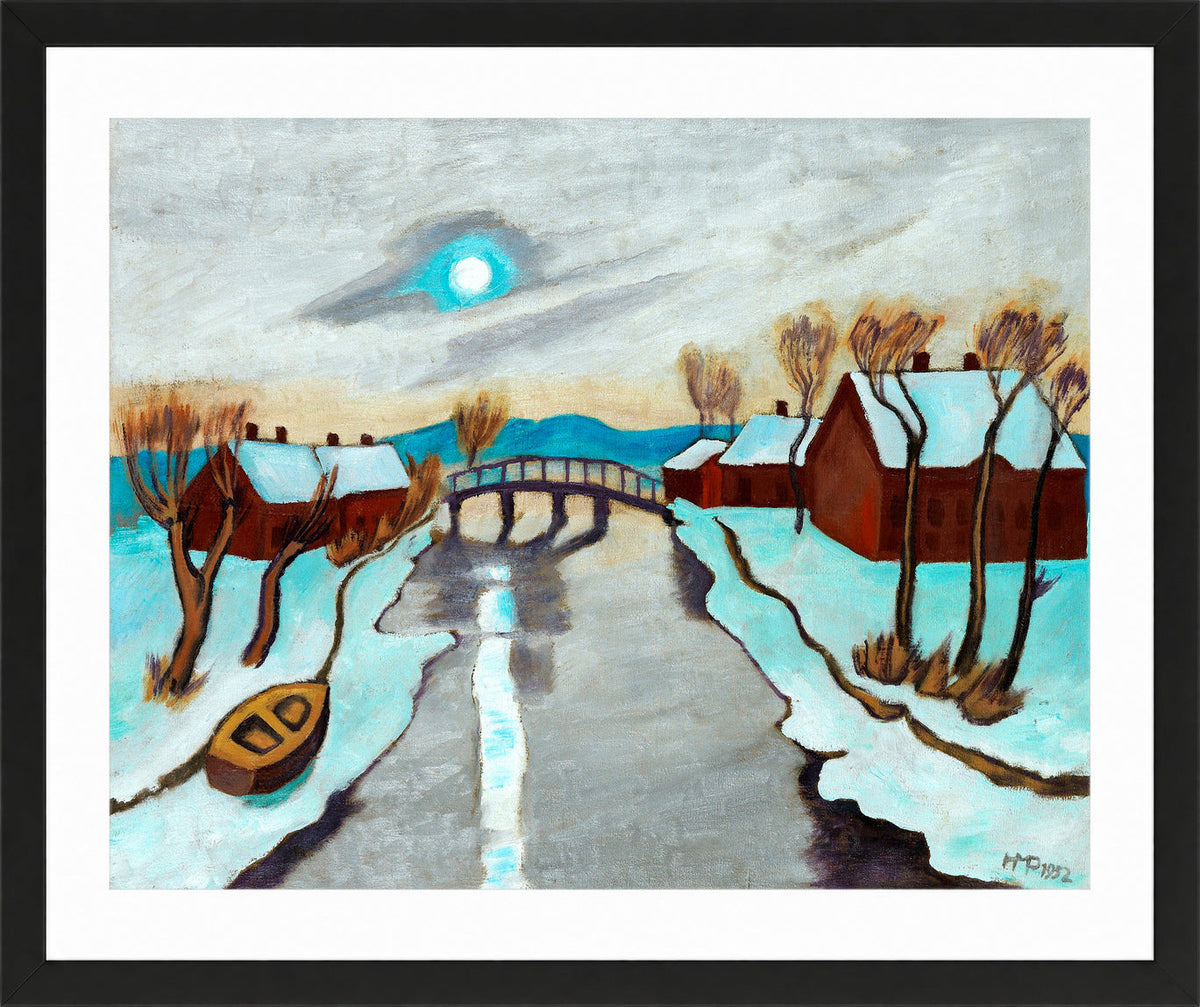
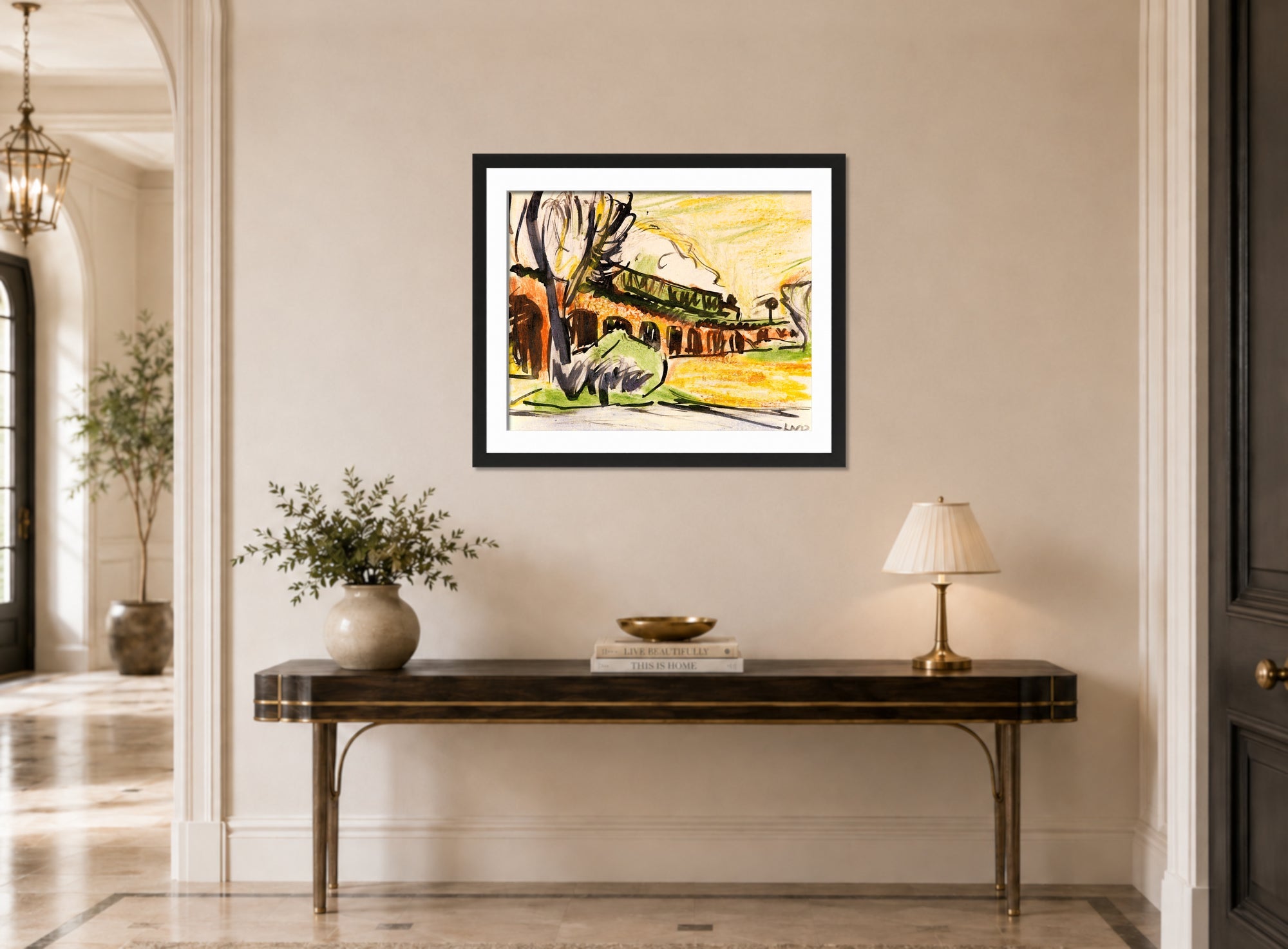
Village houses, bridges, mills and other structures provide strong geometric forms that contrast with the irregular shapes of trees, hills and water.
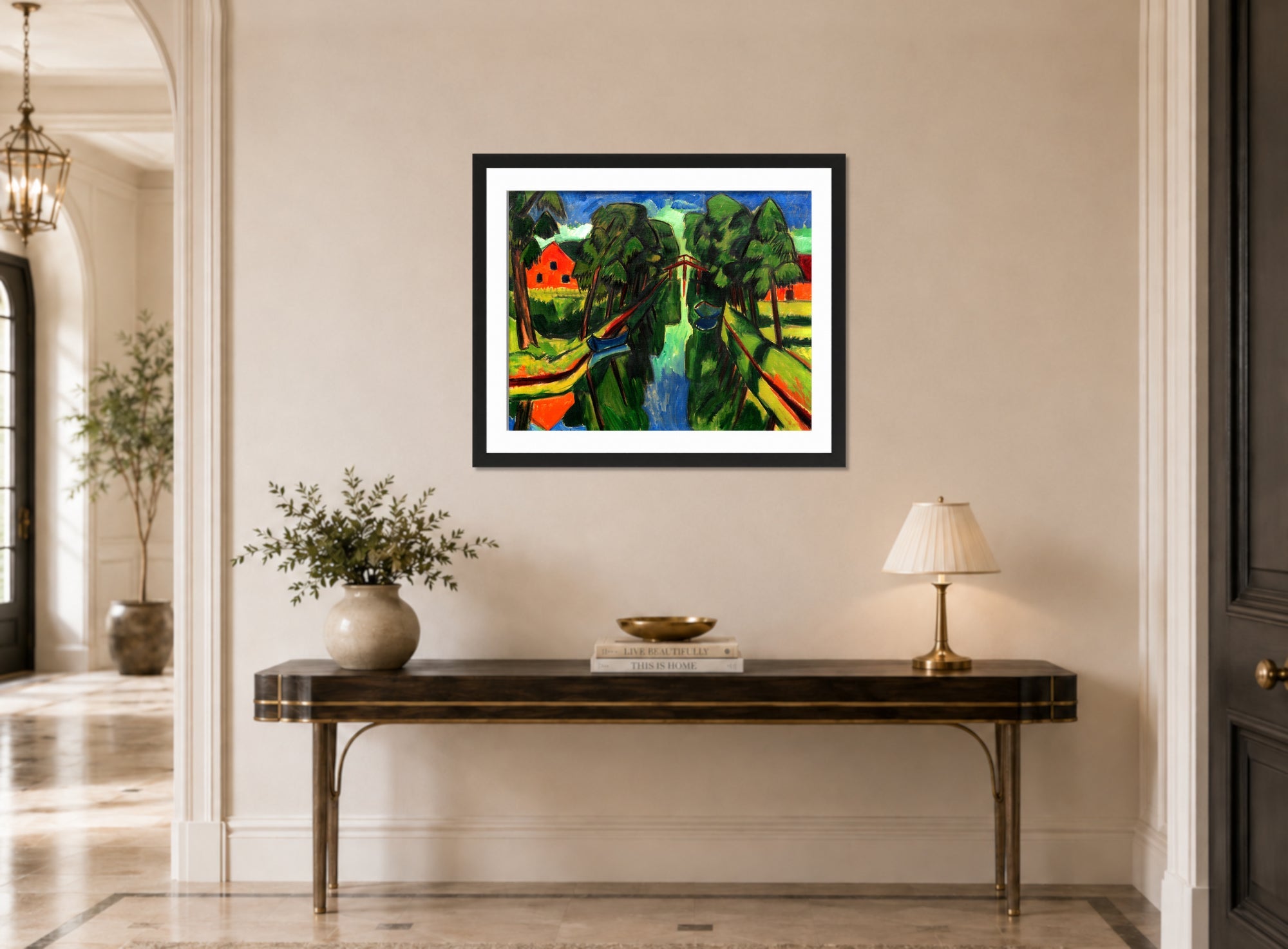
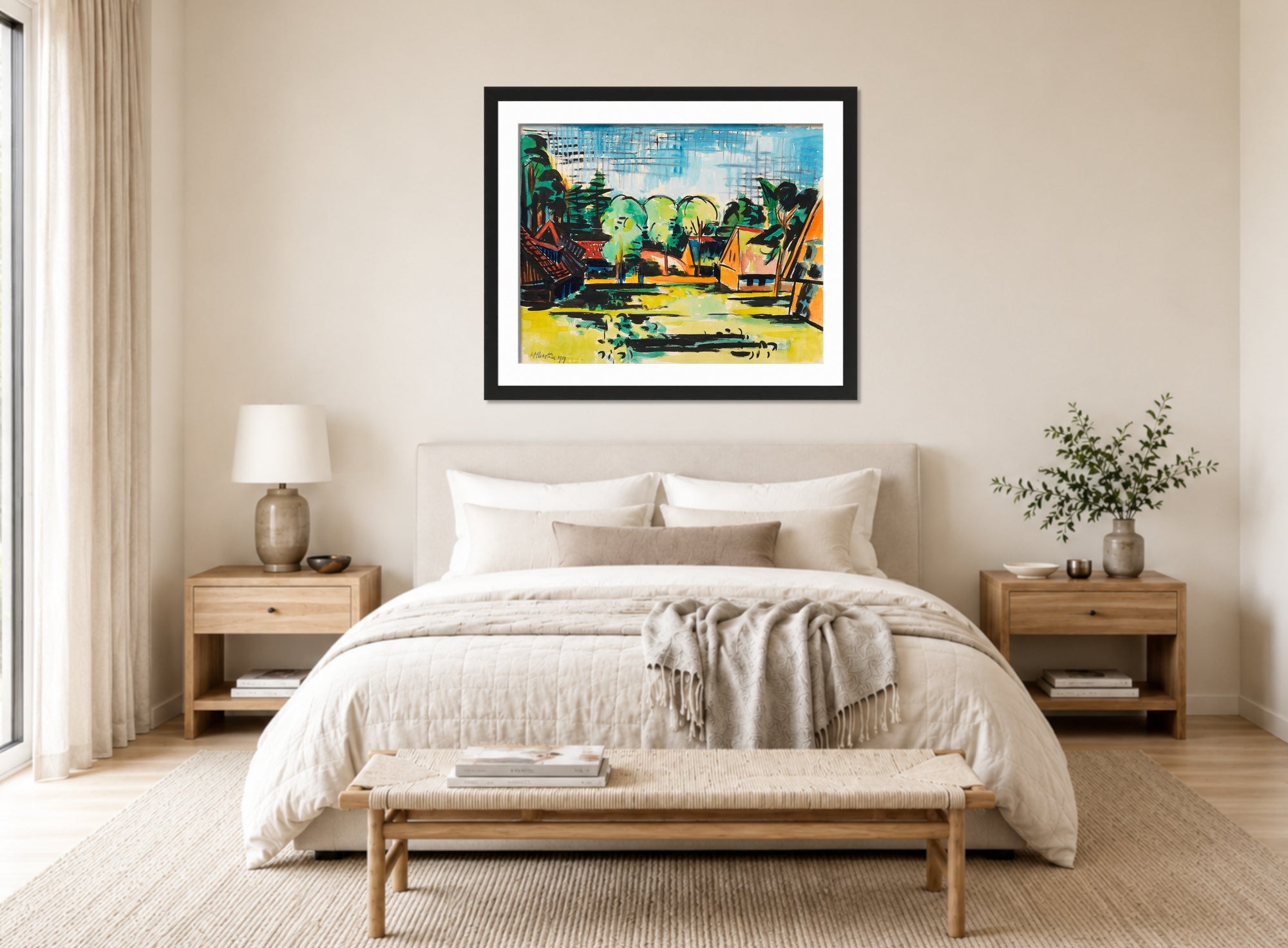
Pechstein often simplifies architecture into blocks of colour defined by dark outlines. Roofs become sharp diagonals, walls become broad planes and windows are reduced to small accents within the larger composition.
This treatment allows architecture to become fully integrated into the surrounding landscape rather than appearing as something separate from it.
Works depicting villages and rural buildings are particularly revealing because they demonstrate how Pechstein could balance recognisable place with the structural simplification of Expressionism.
The Baltic Landscape
The Baltic region became one of the most important sources of landscape imagery in Pechstein's career.
In 1909 he travelled to Nidden on the Curonian Spit, today Nida in Lithuania. The area offered dunes, forests, lagoons, low buildings and an extensive fishing culture, and Pechstein returned to the region repeatedly.
Later he worked in other Baltic locations including Leba and Rowe. These northern landscapes supplied subjects for paintings, drawings and prints over several decades.
The attraction was partly visual. Open water, flat horizons, dunes, reed beds and woodland provided strong natural structures that could be translated easily into simplified Expressionist compositions.
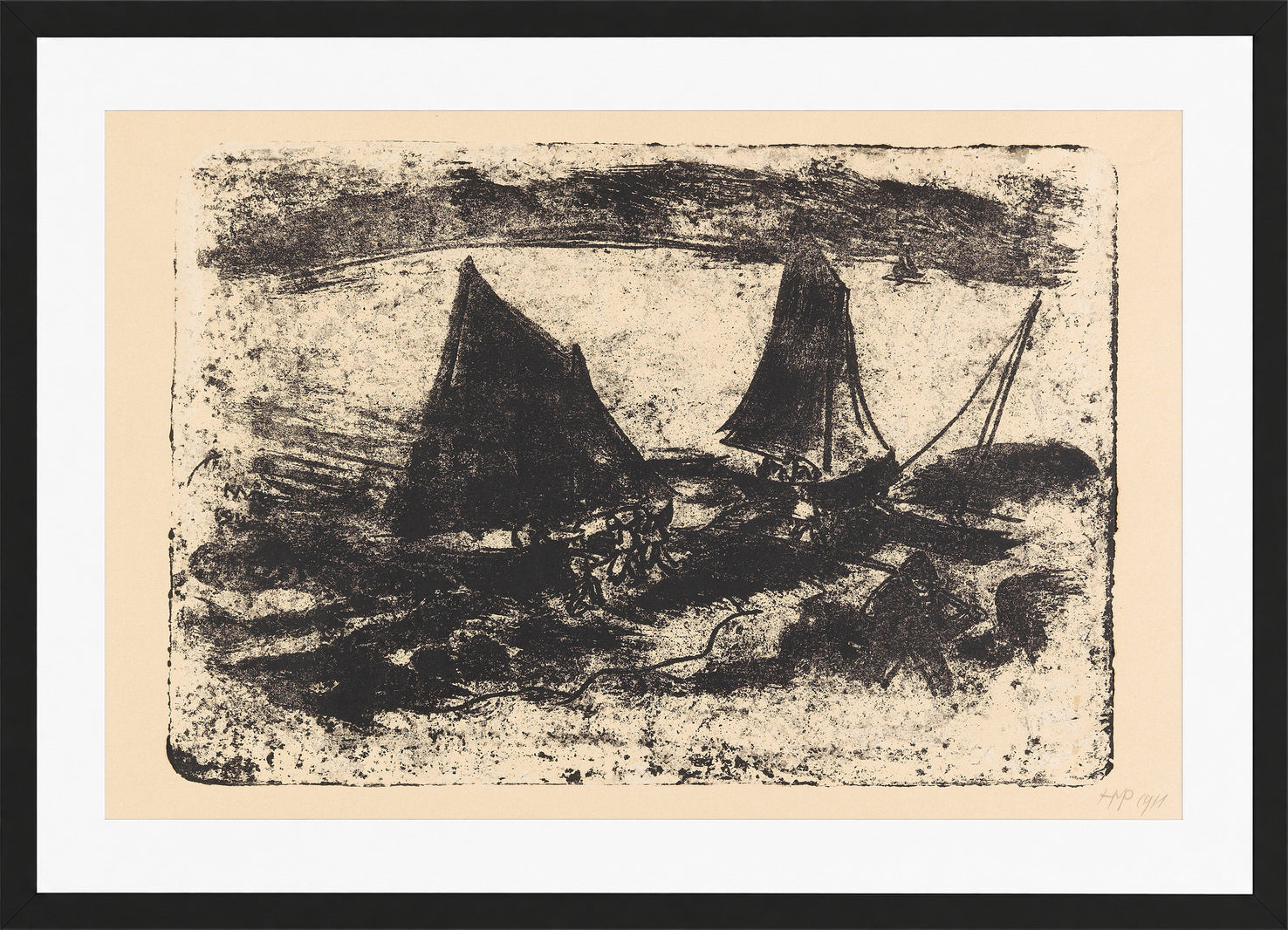
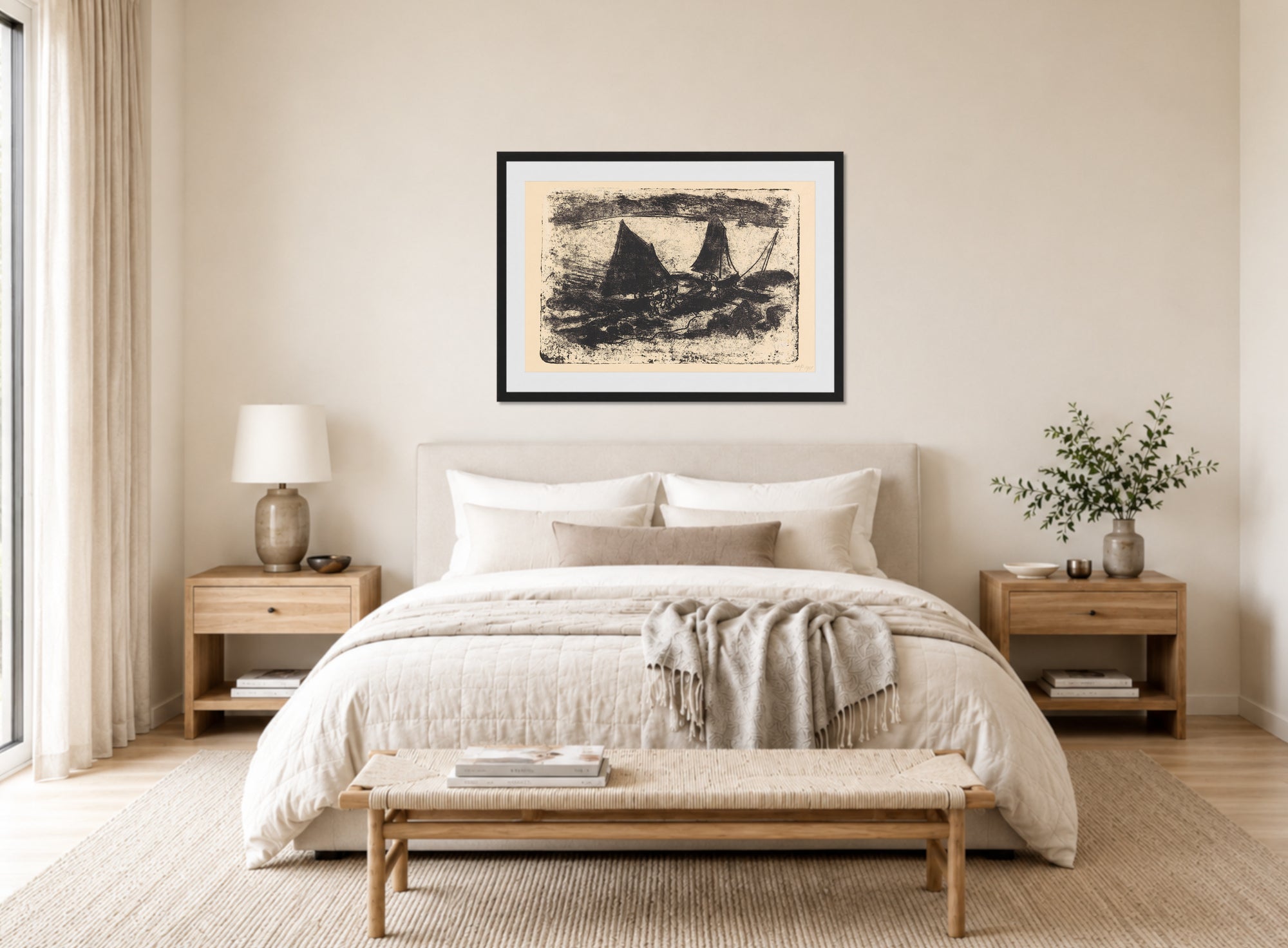
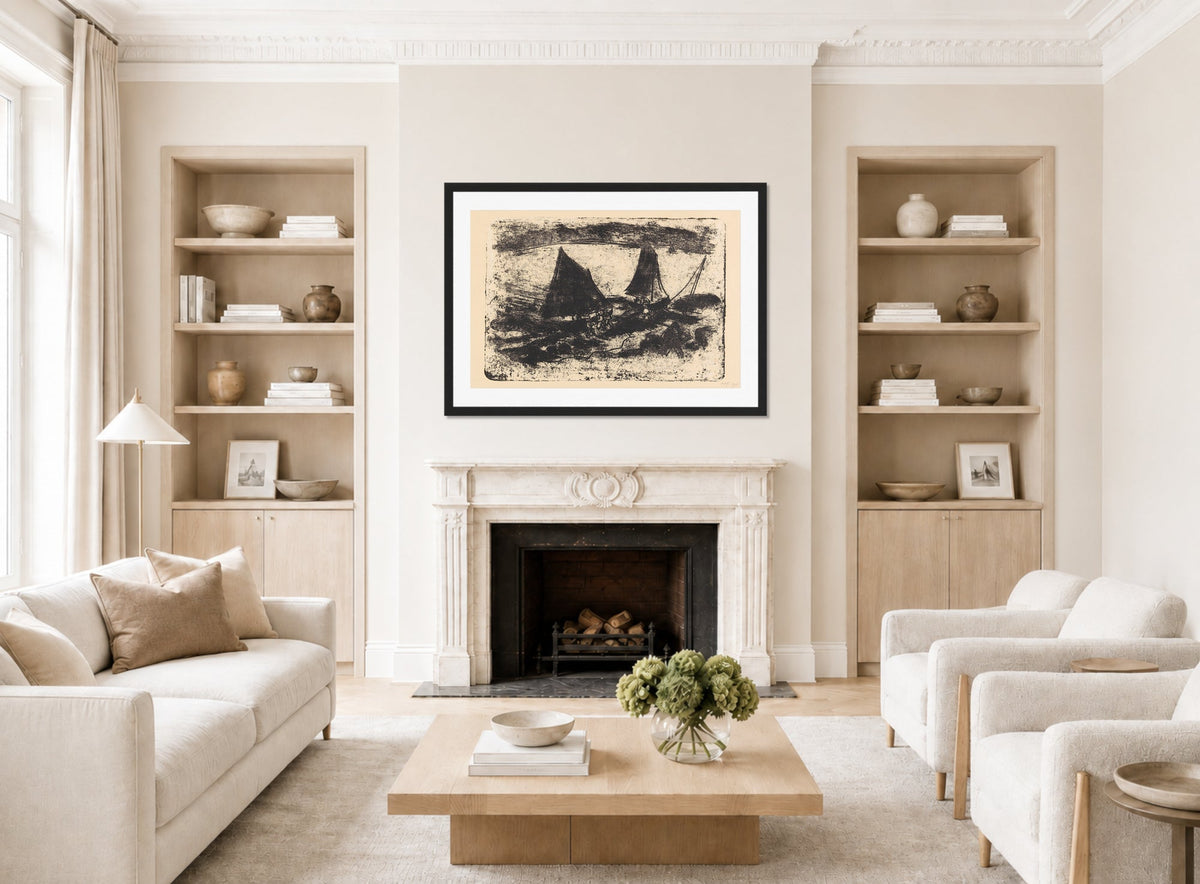
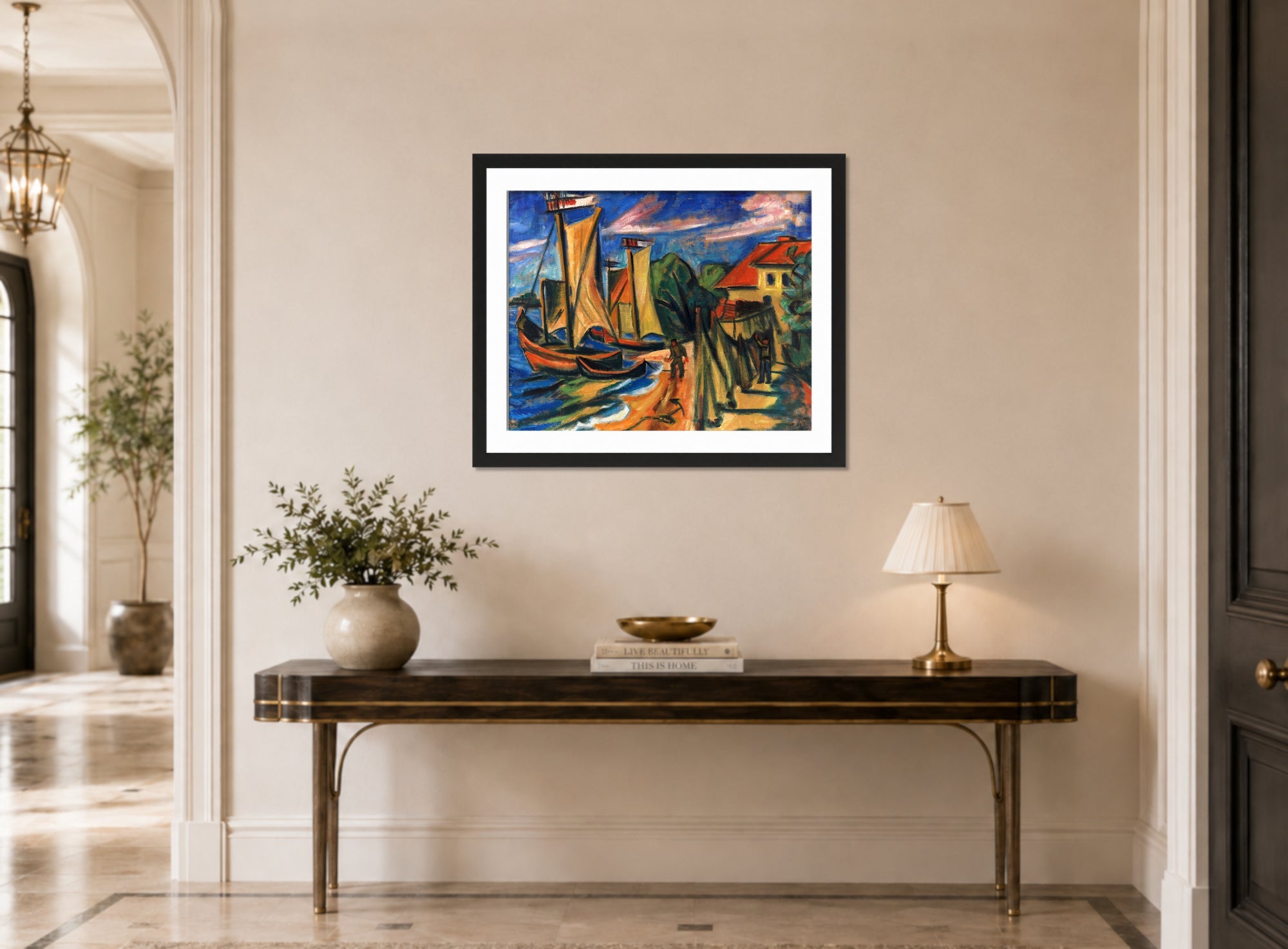
But the Baltic landscape was also inseparable from the communities living within it. Fishing boats, cottages, fishermen and shoreline activity repeatedly appear alongside the surrounding scenery.
For Pechstein works where maritime life becomes the dominant subject, explore the separate Max Pechstein Coastal, Seascape & Fishing Prints collection.
Colour in Max Pechstein's Landscapes
Colour is one of the most distinctive features of Pechstein's landscape art.
Naturalistic colour was rarely an absolute requirement. Greens could become unusually intense, skies might shift towards deep blue or violet, fields could become yellow or orange, and areas of shadow could be transformed into independent blocks of colour.
Strong contrasts often hold the composition together.
A bright field can sit beside a dark tree line. A red or orange roof may become the visual centre of a predominantly green landscape. Blue water can be intensified against yellow vegetation or warm earth.
These combinations give Pechstein's landscapes a physical presence that differs markedly from the softer atmospheric effects associated with Impressionism.
His landscapes remain recognisable places, but colour makes them feel heightened rather than merely observed.
Line, Shape and Simplification
Pechstein's landscapes are equally dependent on line and structure.
Dark contours frequently separate one element from another. Tree trunks, shorelines, roofs and hills can all be defined through strong linear boundaries.
This technique allows very complex scenery to remain visually clear.
Simplification is equally important. Instead of reproducing every visible feature, Pechstein reduces the landscape to the forms necessary to establish its character.
A forest might become a sequence of vertical trunks and broad foliage shapes. A village may be reduced to a handful of roofs and walls. A distant hill can become a single coloured mass.
This economy gives the landscape greater visual force and links Pechstein's painting closely with his work as a printmaker, particularly his woodcuts.
Max Pechstein and German Expressionism
Understanding Pechstein's landscapes also means understanding his place within German Expressionism.
His years with Die Brücke were central to the development of his mature style, but his career continued for more than four decades after joining the group. He carried the principles of expressive colour, strong contour and simplified form through the First World War, the Weimar period, persecution under the Nazi regime and the reconstruction of German cultural life after 1945.
Landscape remained remarkably consistent throughout those changing circumstances.
Locations changed and his handling of paint developed, but the natural world continued to provide a framework within which he could explore colour and structure.
Our detailed Max Pechstein biography and art guide follows this development from his Dresden training and Die Brücke years through Nidden, Palau, the First World War, Nazi persecution and his post-war career.
You can also explore artists working within the wider movement in GalleryThane's Expressionist Art Prints collection.
Max Pechstein Landscape Prints for Contemporary Interiors
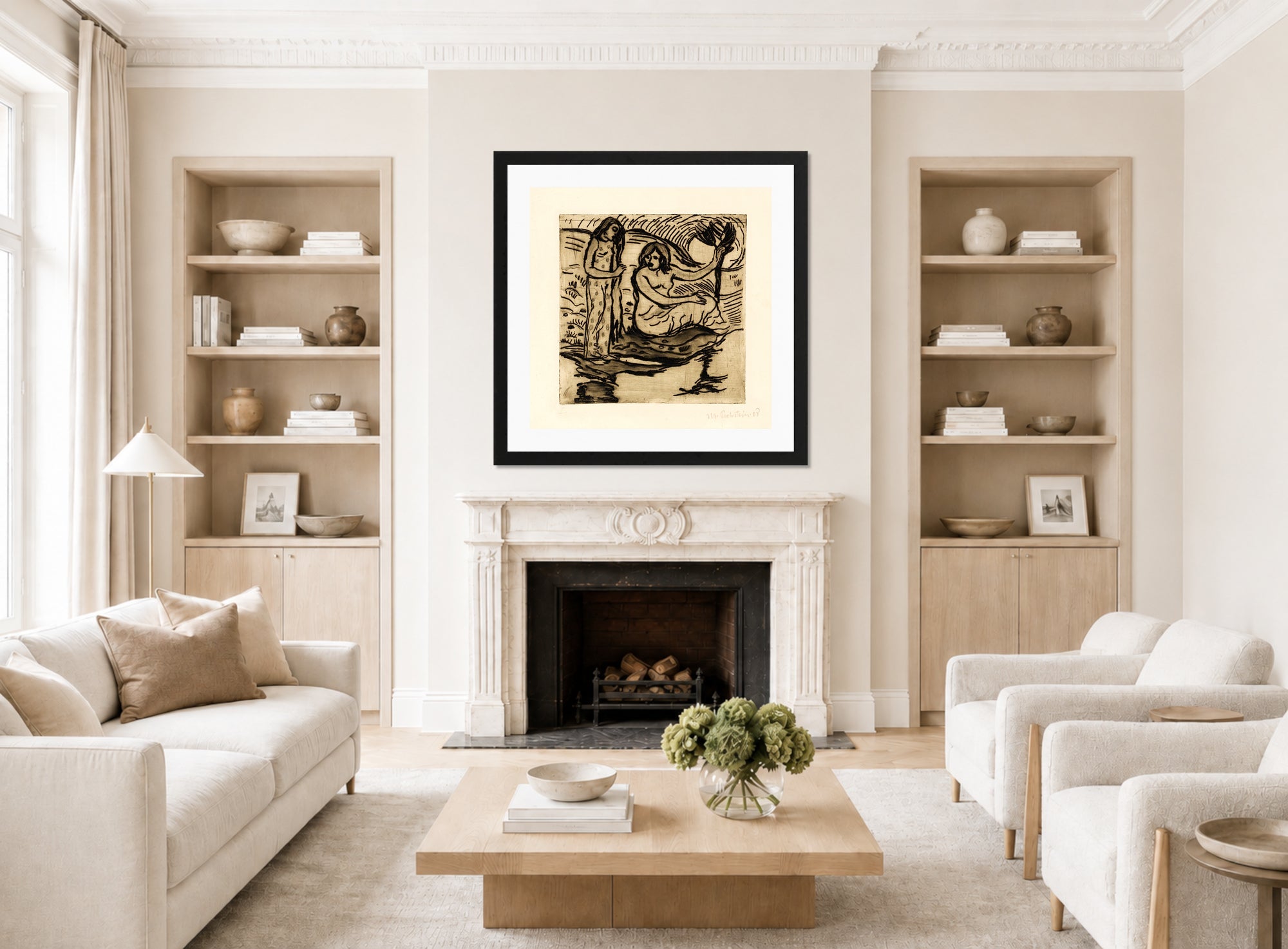
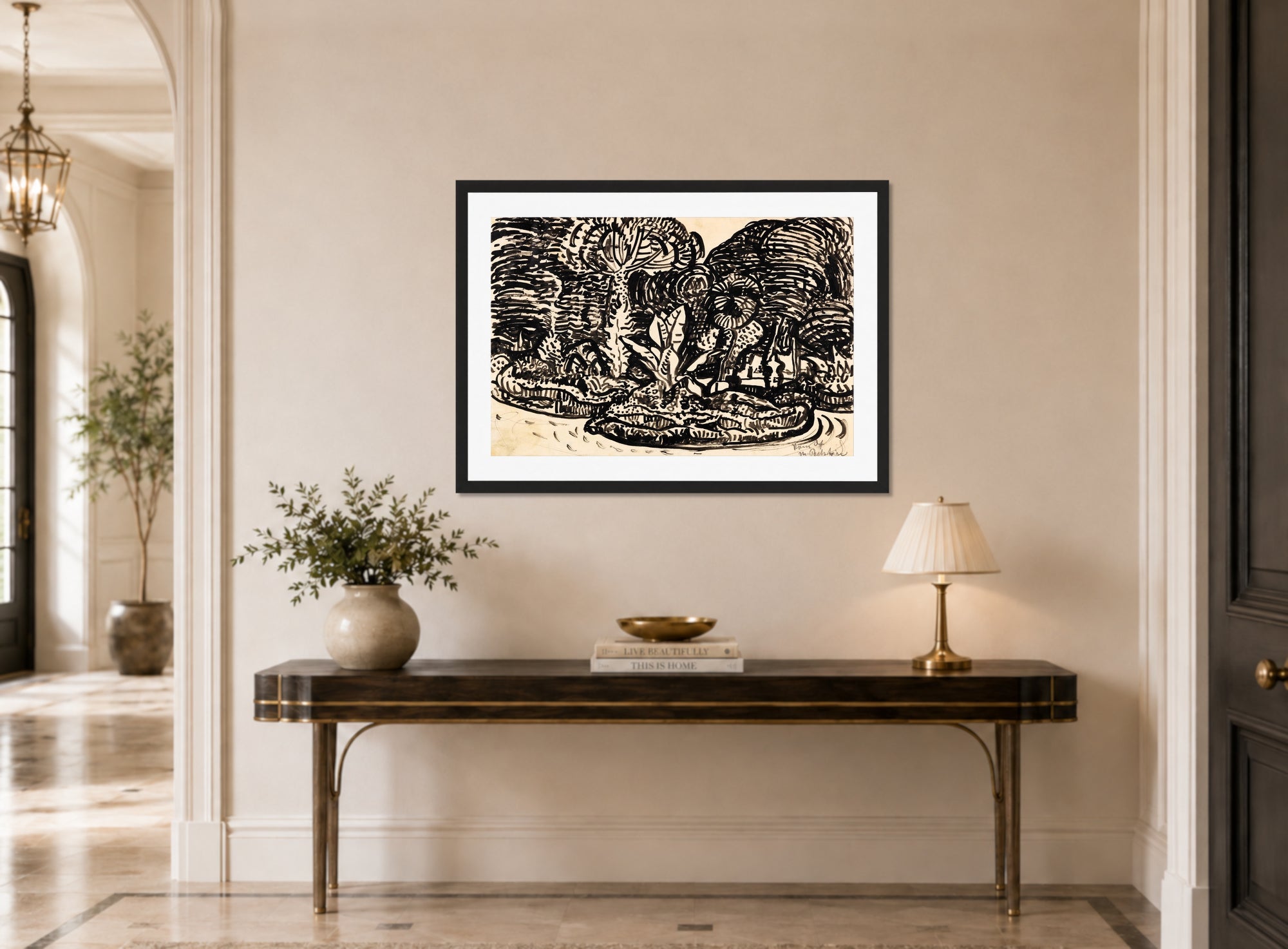
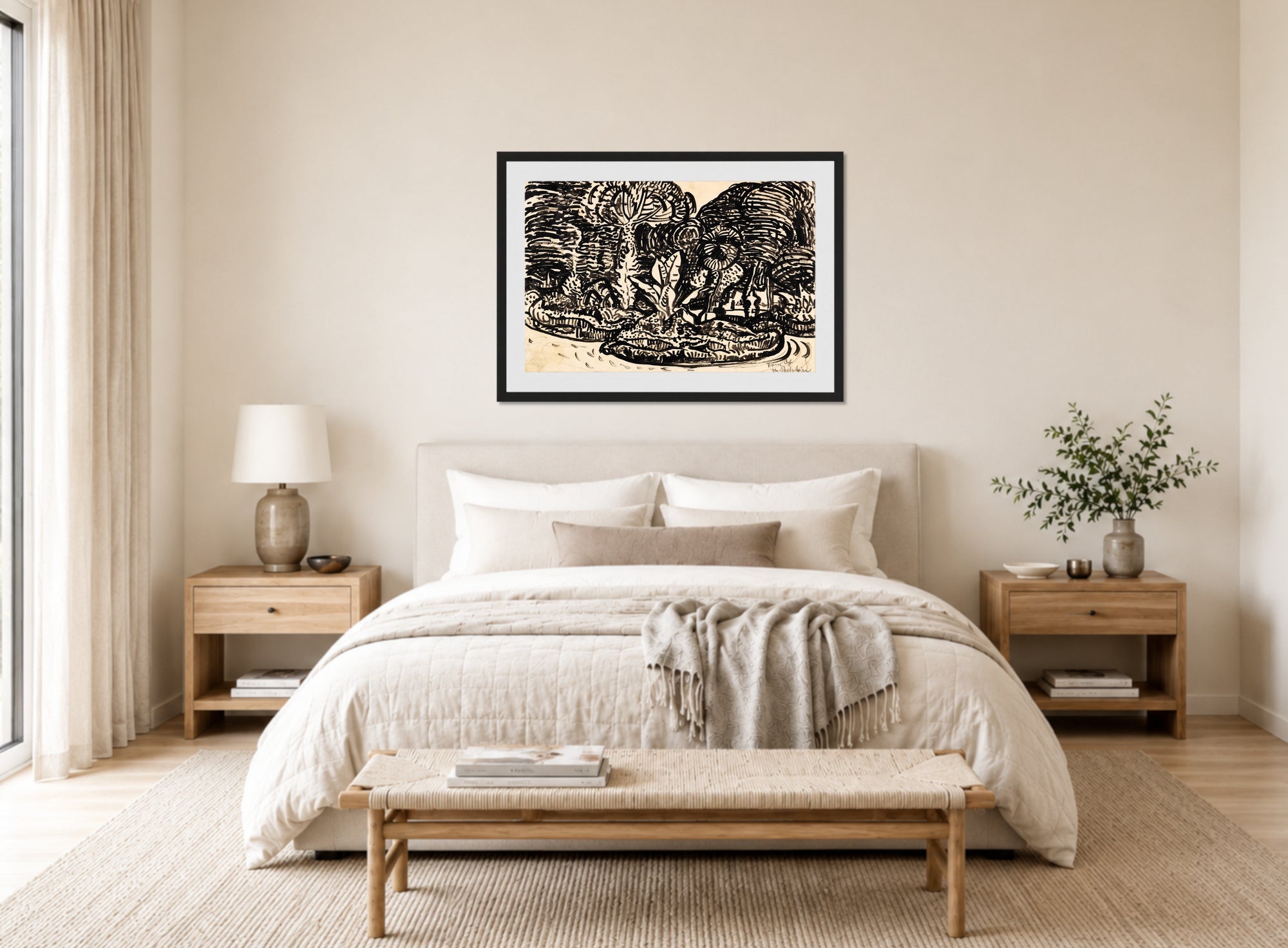
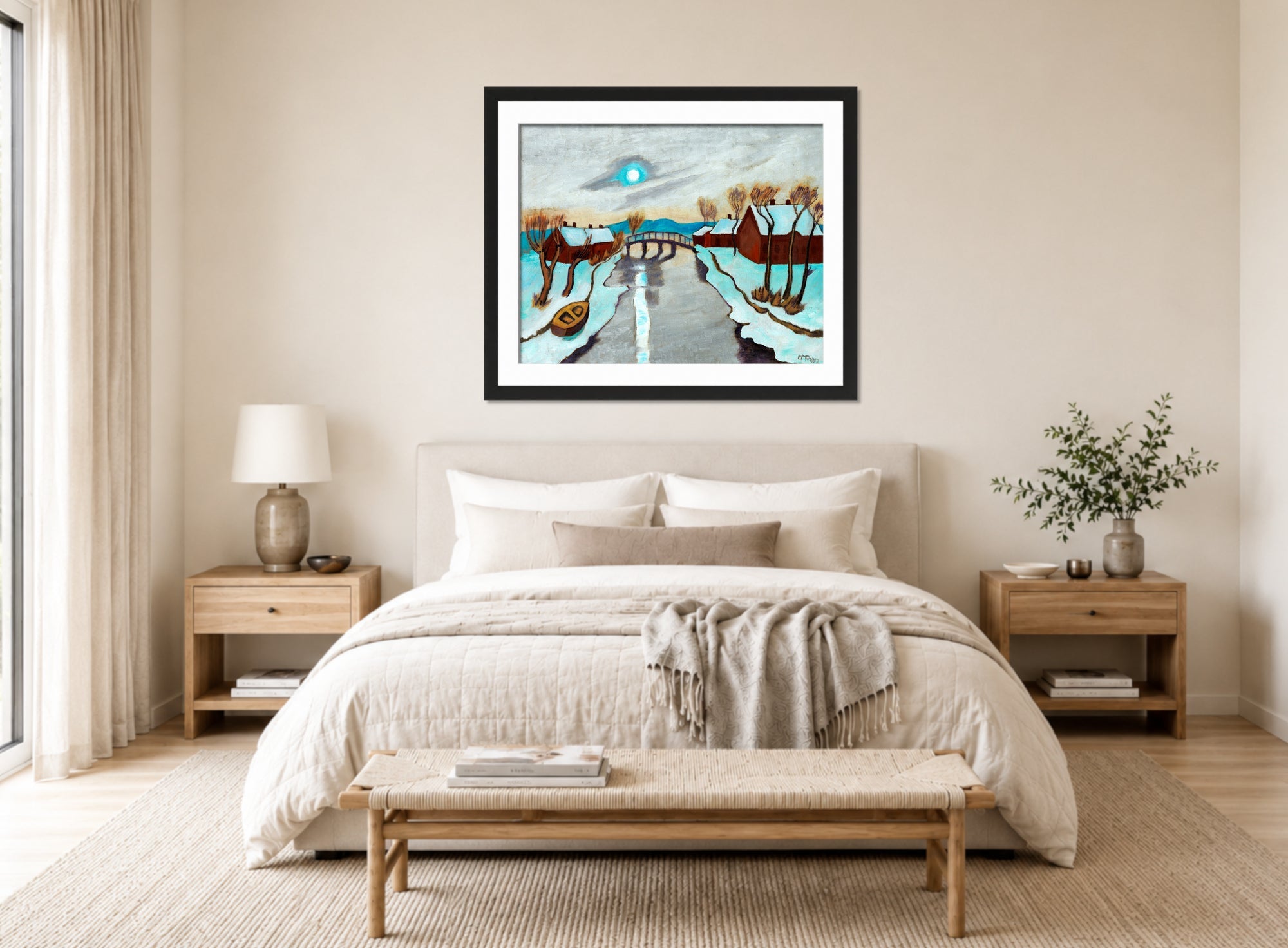
Pechstein's landscapes work particularly well as wall art because their strong compositions remain effective at a wide range of viewing distances.
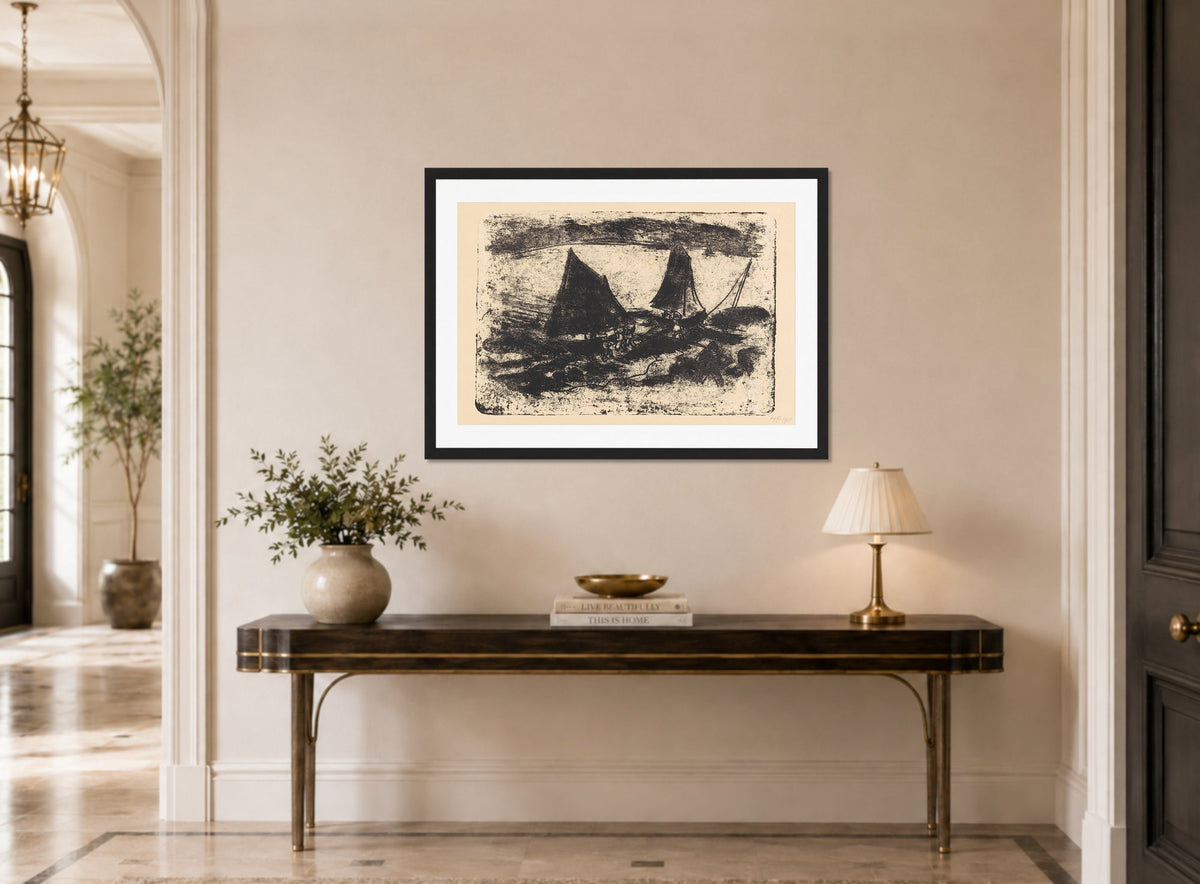
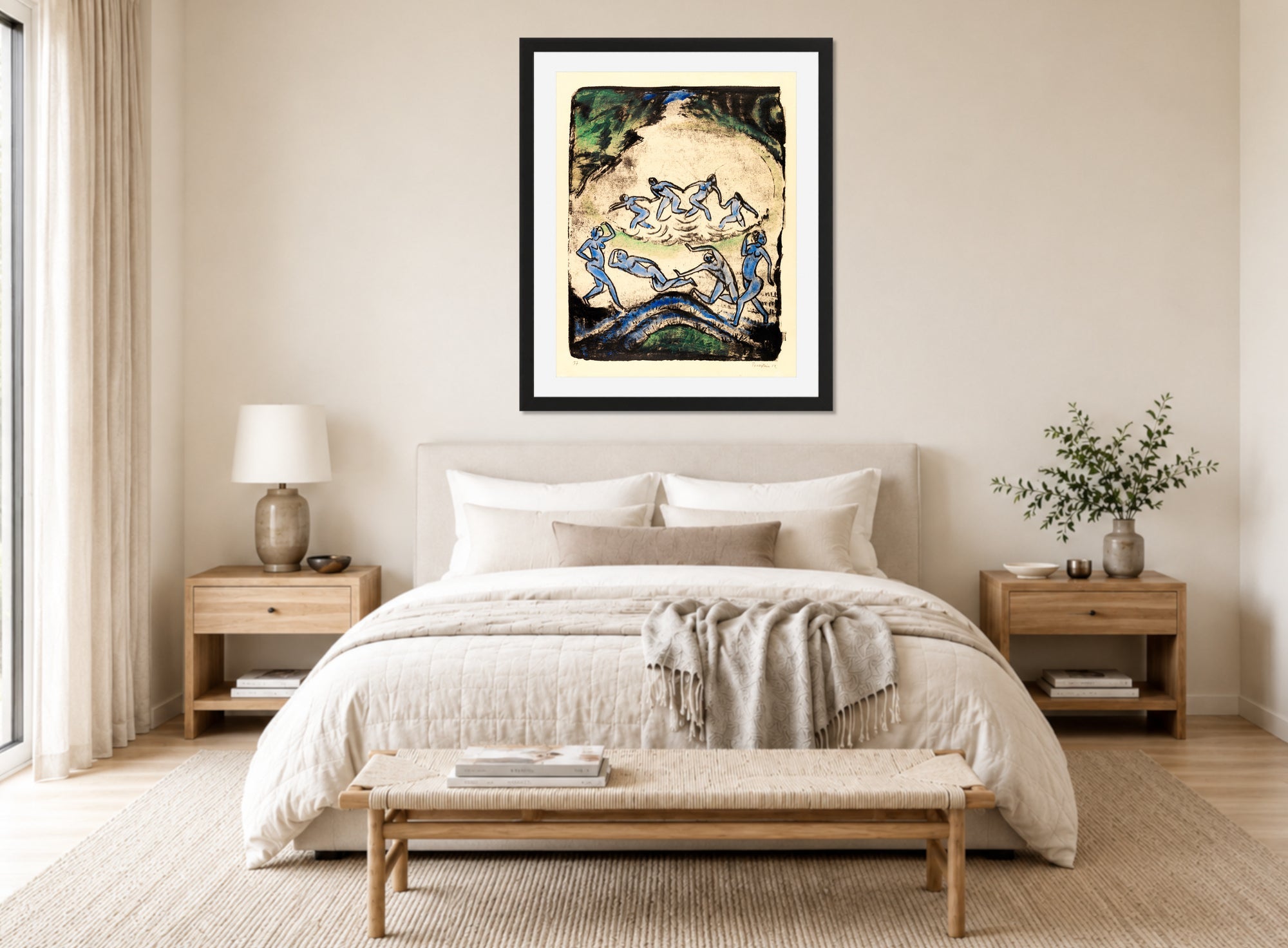
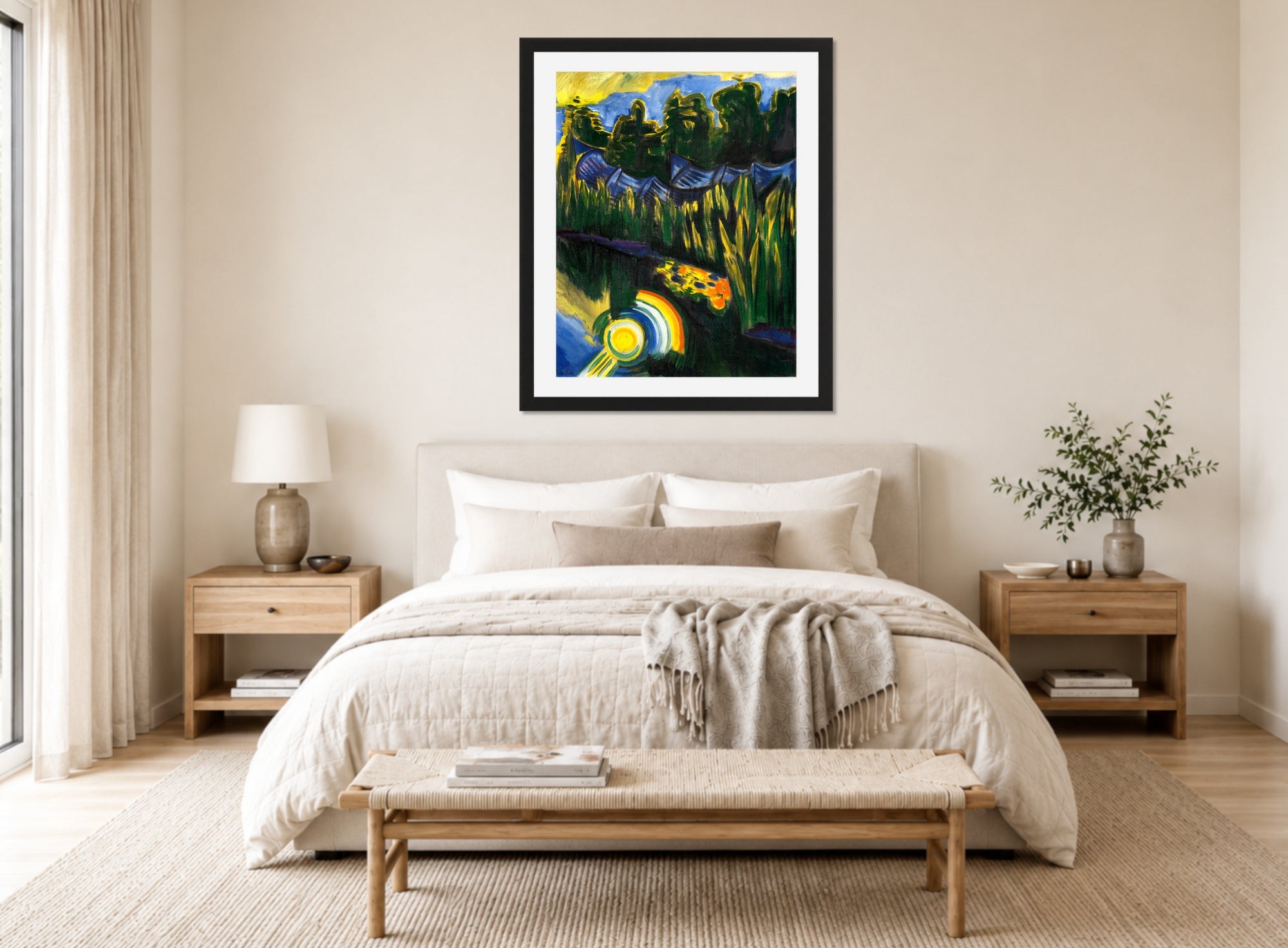
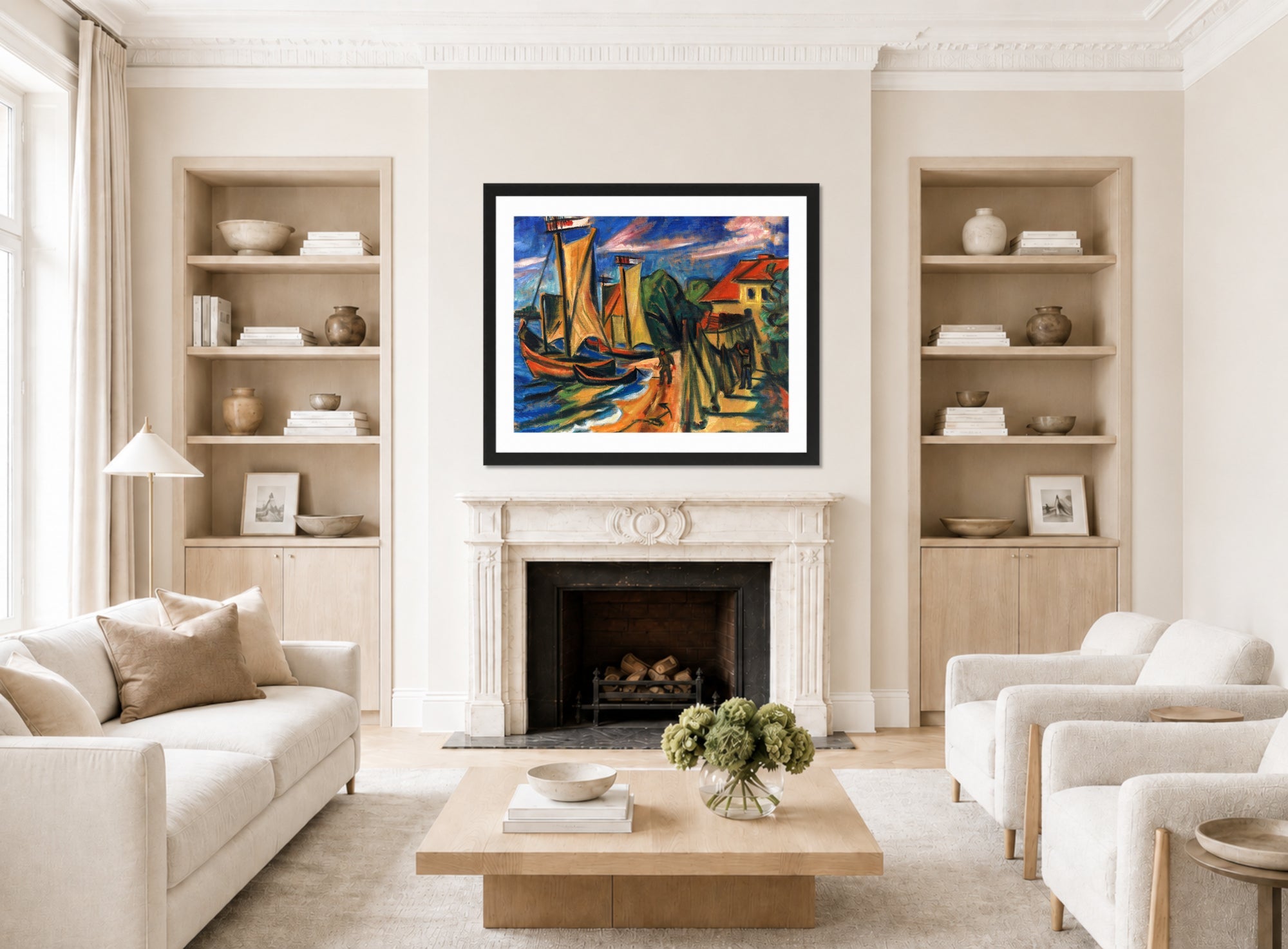
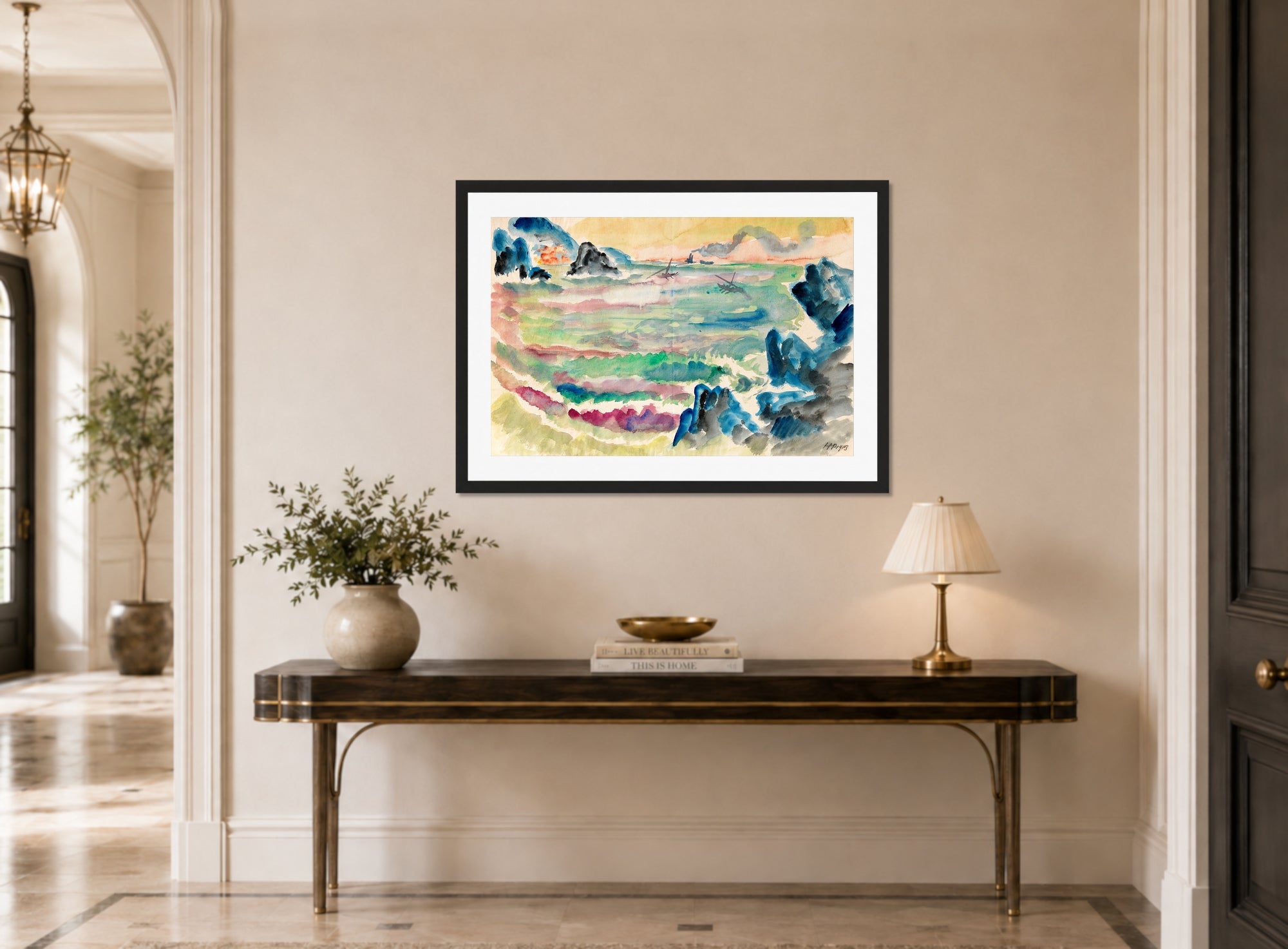
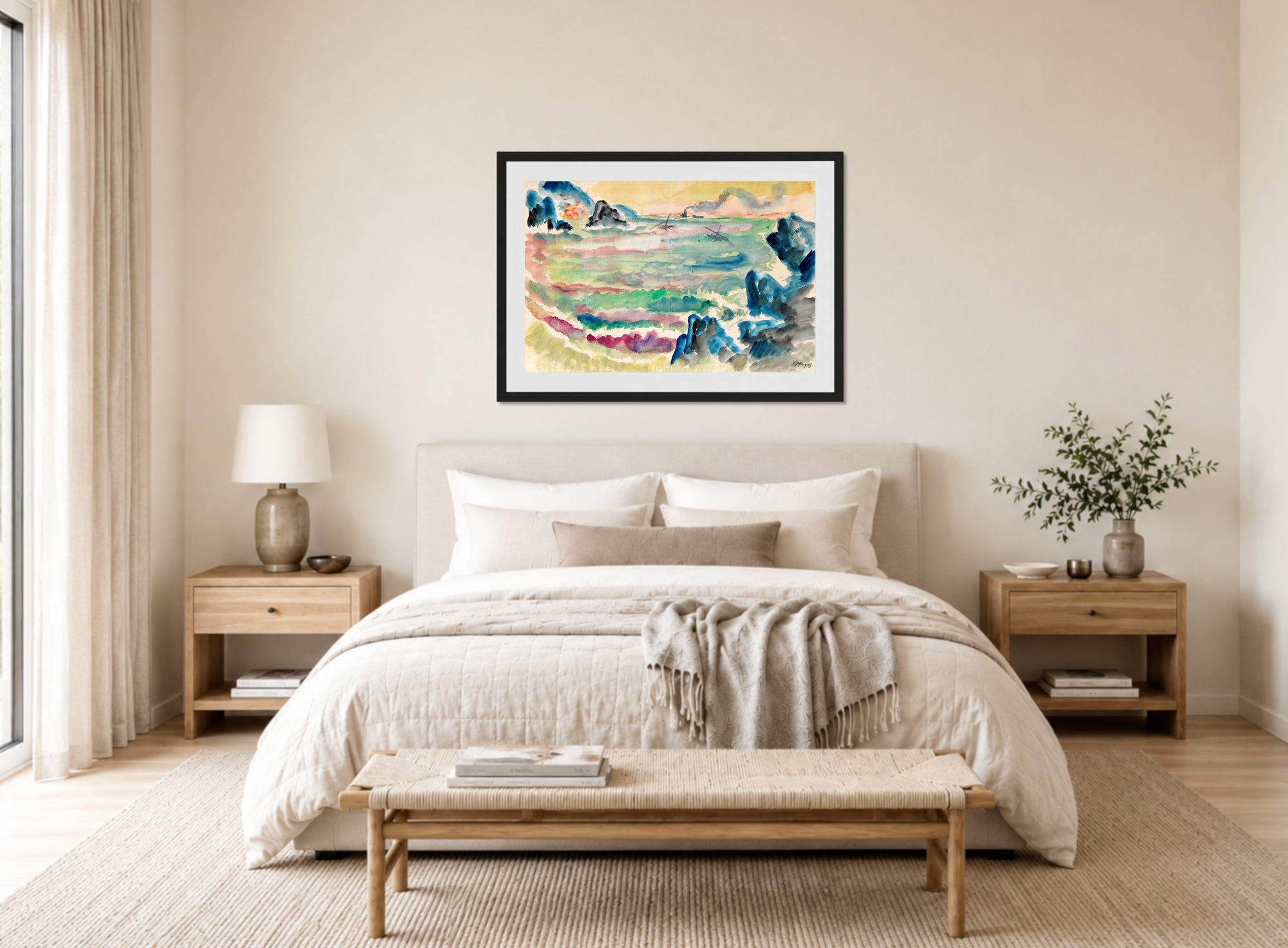
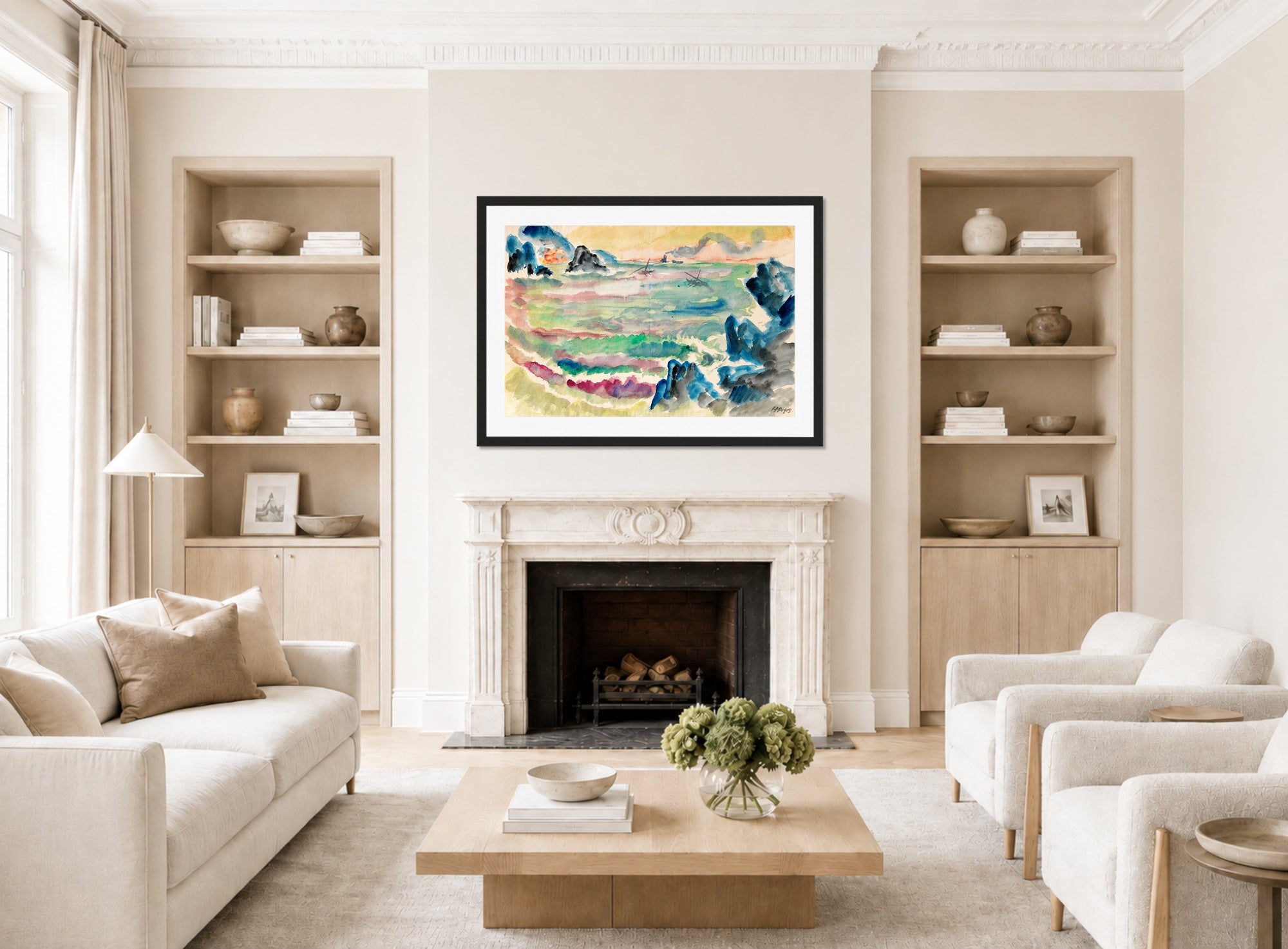
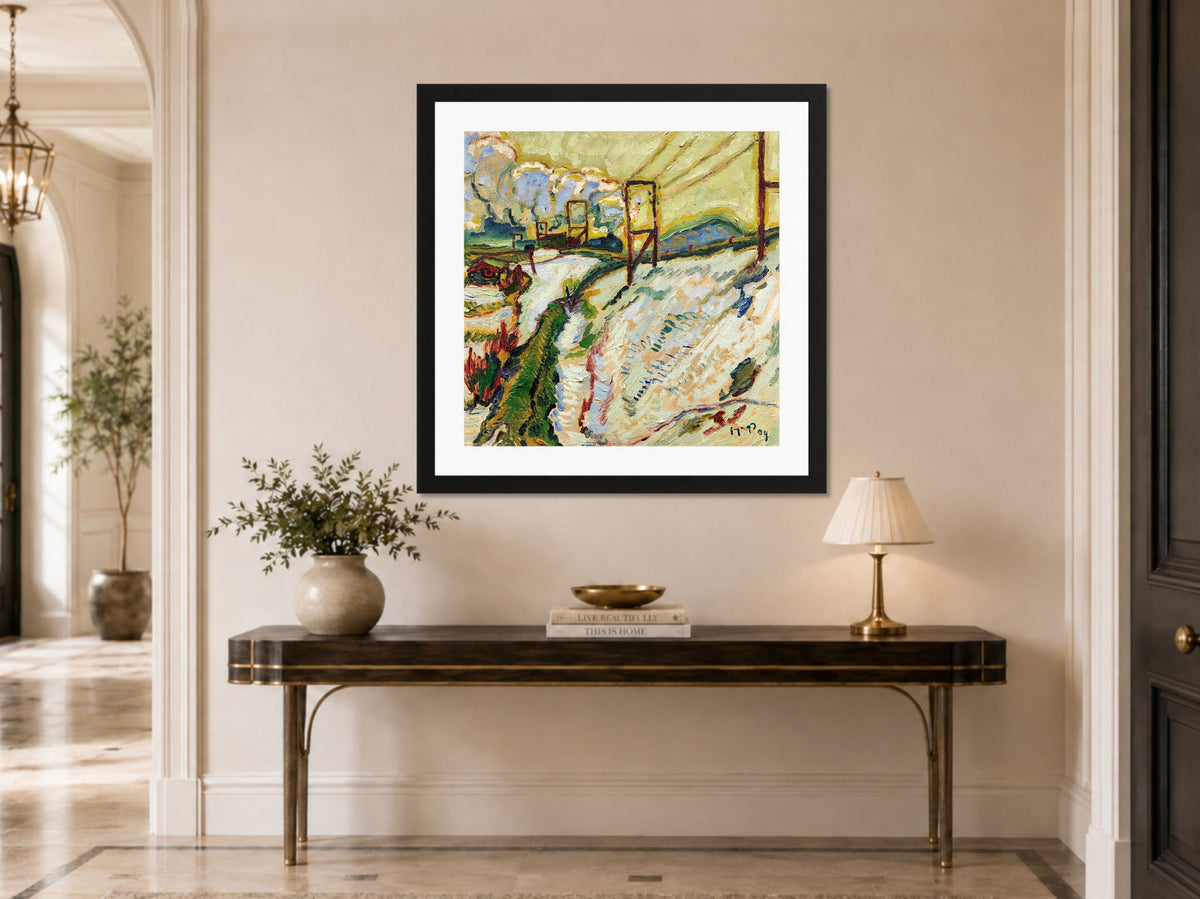
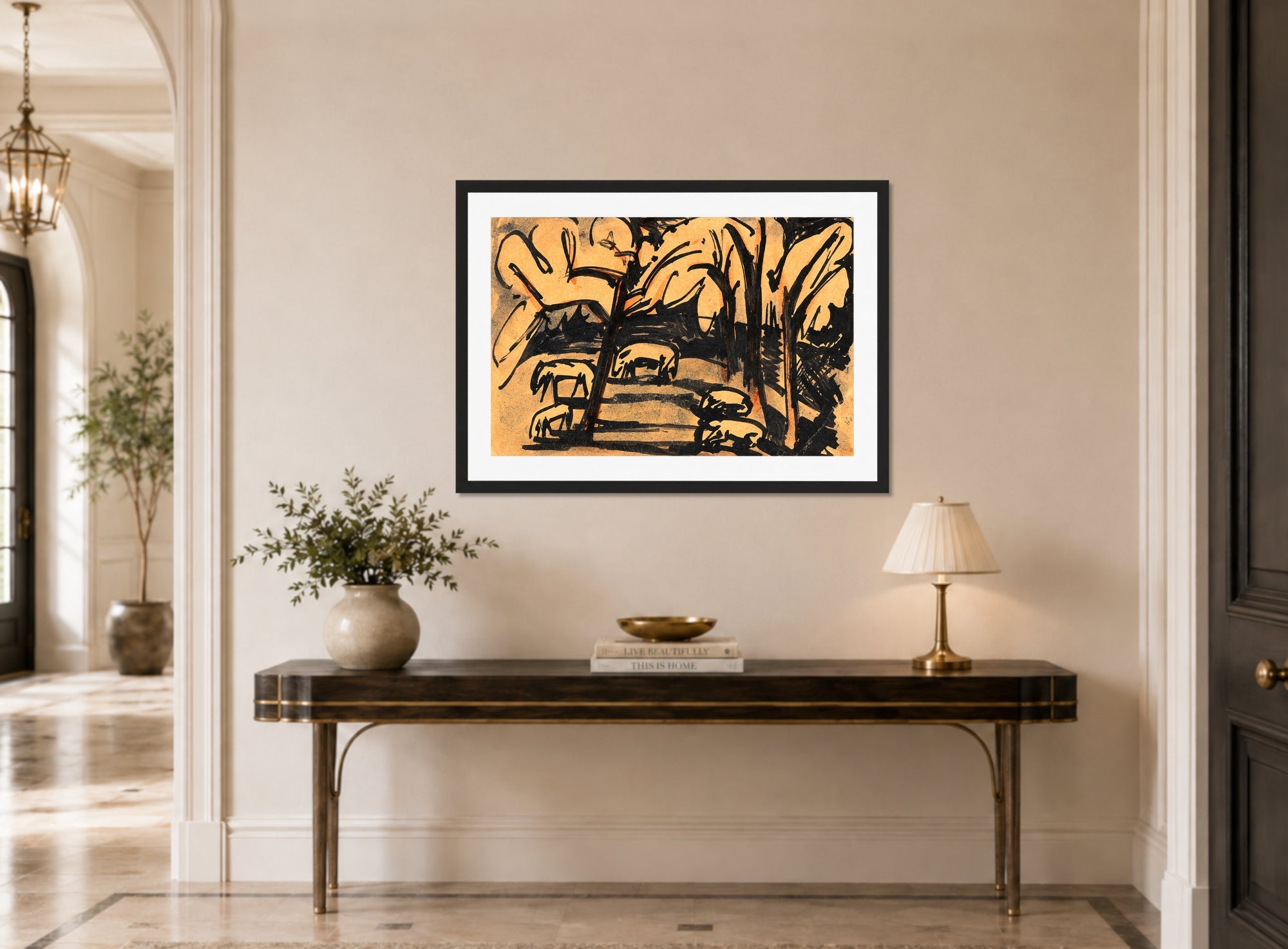
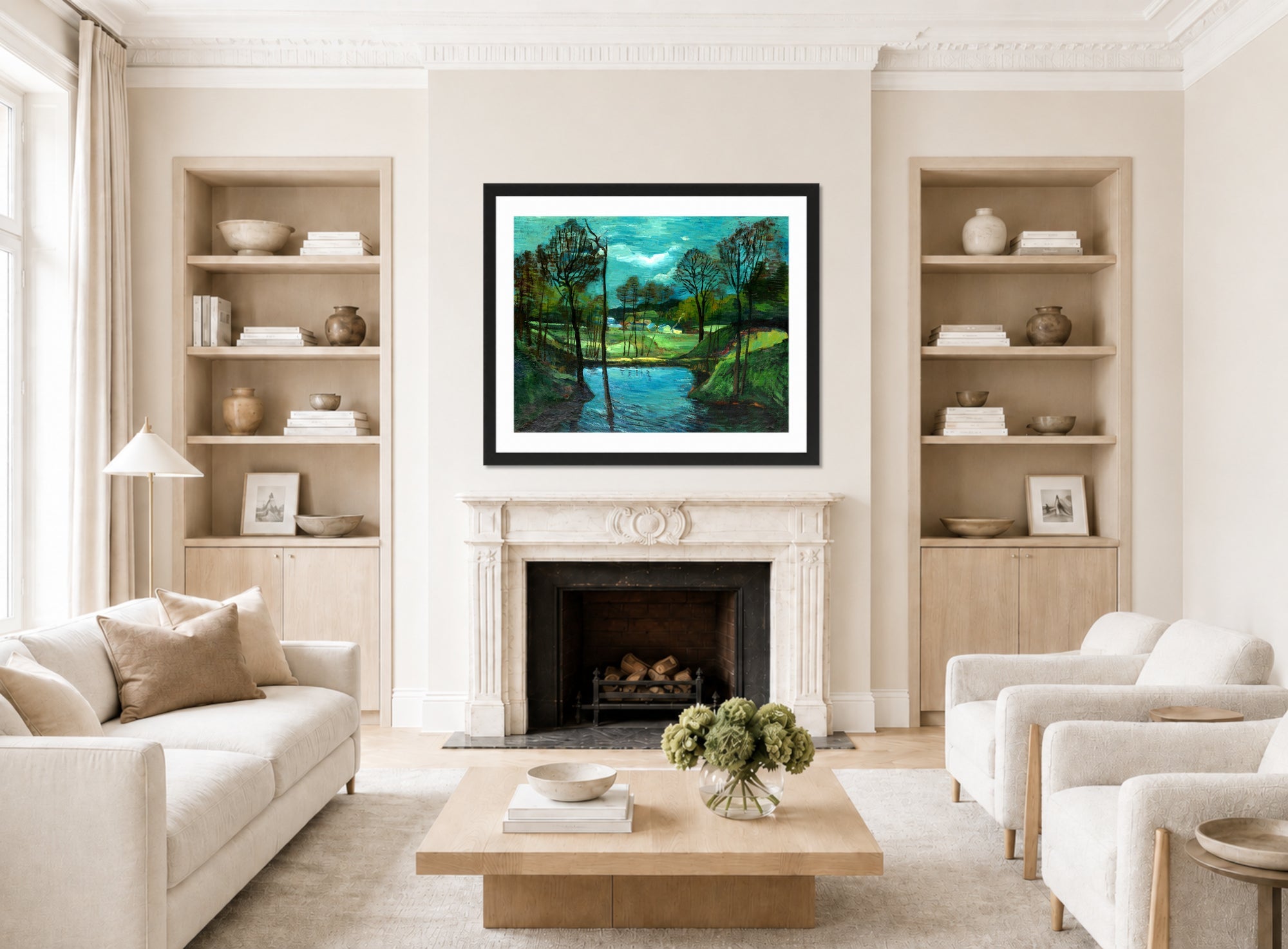
Horizontal landscapes can make natural focal points above sofas, beds, fireplaces and sideboards, while more vertical woodland and village compositions can work effectively in hallways, alcoves and narrower wall spaces.
The intensity of Pechstein's colour can also help determine where a print works best.
Landscapes dominated by blue and green can introduce depth and natural colour into neutral rooms, while compositions containing yellow, orange or red can create a stronger focal point.
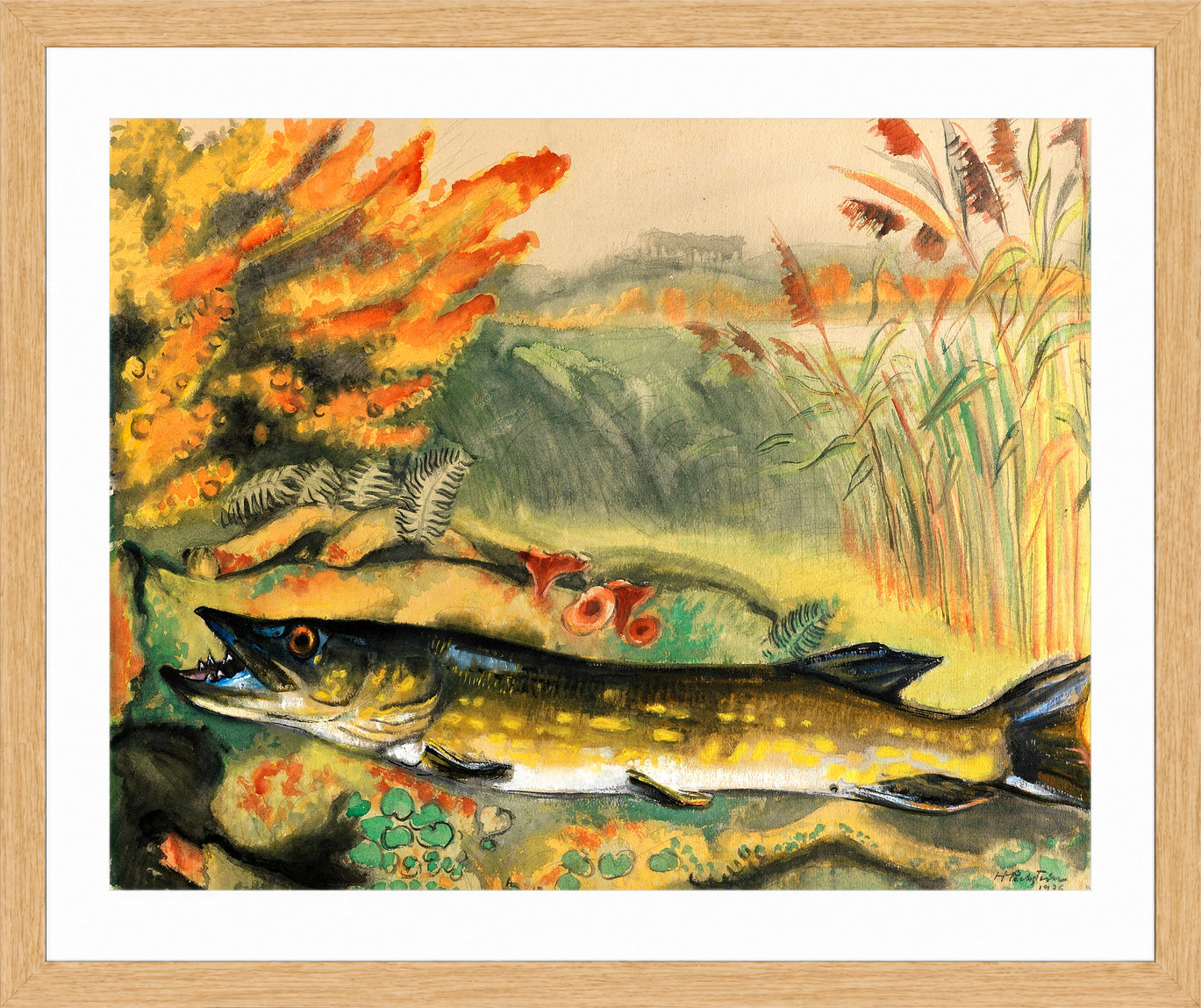
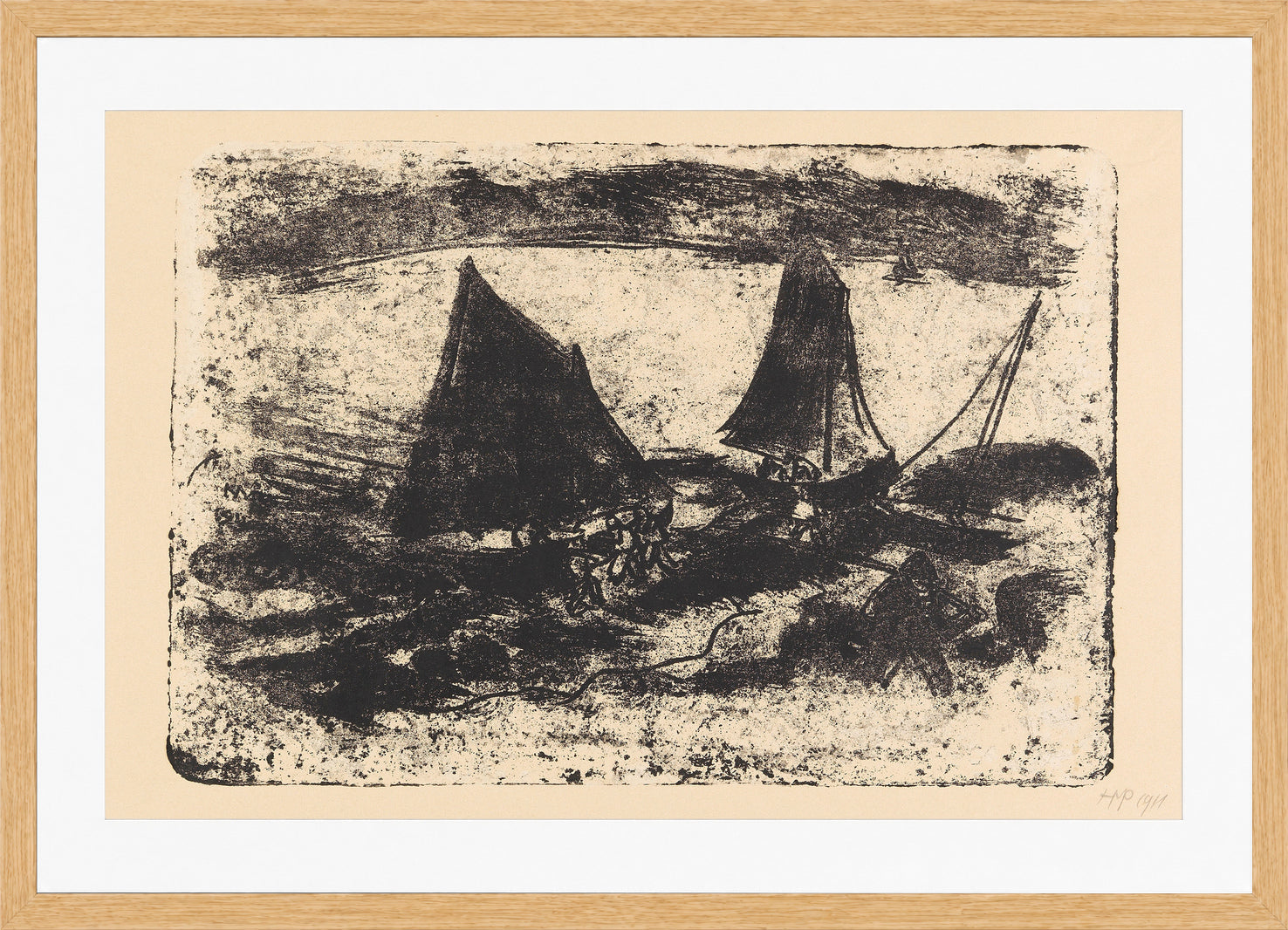
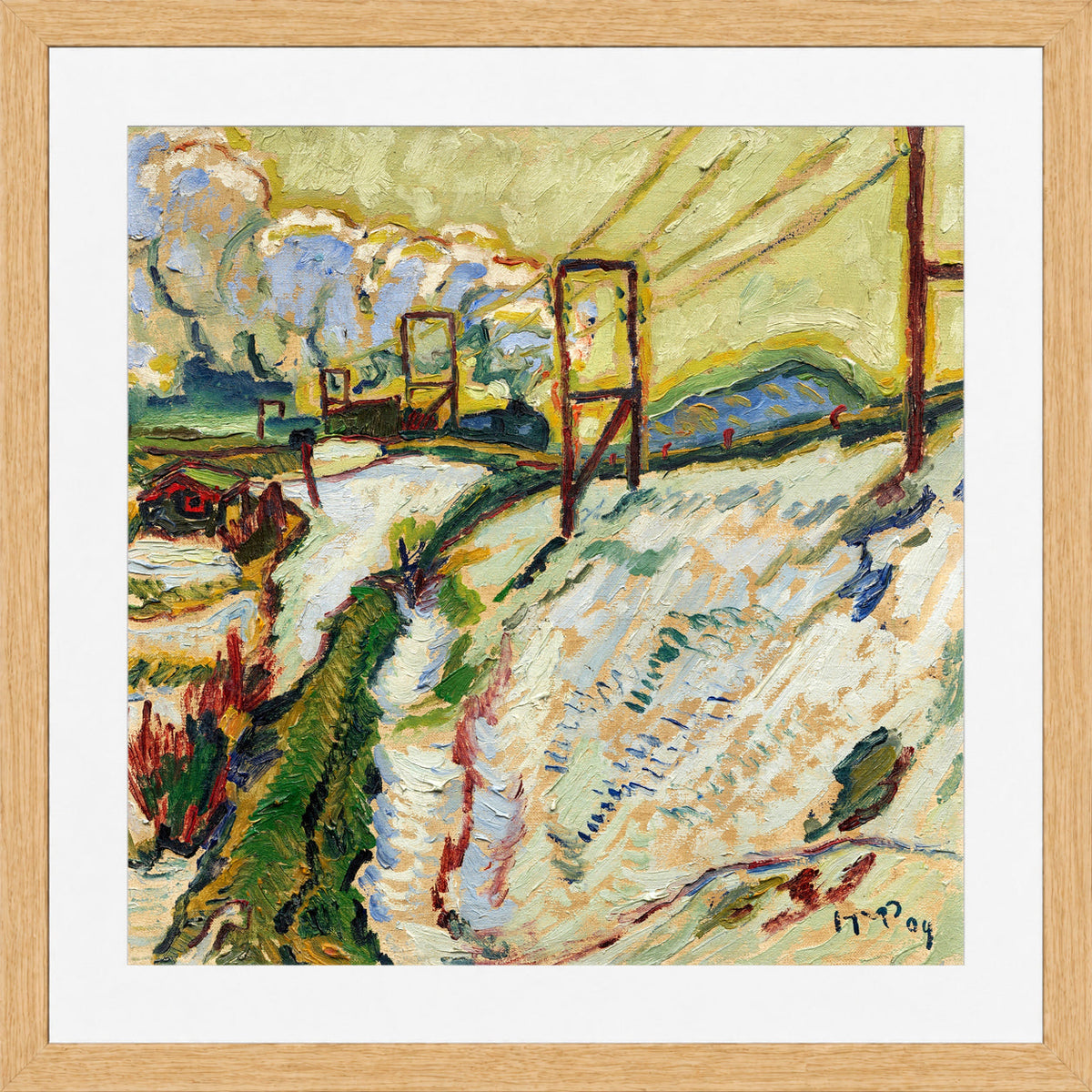
Black frames can emphasise the dark contours found throughout Pechstein's work, while lighter wood frames can create a softer relationship between the artwork and contemporary Scandinavian or natural-material interiors.
GalleryThane's Max Pechstein landscape artworks are available across selected sizes as fine art prints, handmade framed prints and canvas panels.
For a wider selection of scenic artwork by artists from different periods and movements, browse Landscape and Scenery Fine Art Prints.
Frequently Asked Questions
Did Max Pechstein paint landscapes?
Yes. Landscape was one of Pechstein's most important subjects throughout his career. His works include forests, fields, lakes, villages, gardens, Baltic scenery and landscapes incorporating working people and animals.
What style are Max Pechstein's landscapes?
Pechstein's landscapes are principally associated with German Expressionism. They typically use simplified forms, strong outlines, compressed perspective and heightened colour rather than strict naturalism.
Where did Max Pechstein paint landscapes?
Pechstein worked in many locations, but the Baltic region was particularly important. Nidden on the Curonian Spit, Leba and Rowe provided recurring subjects alongside landscapes encountered during travels elsewhere in Germany and Europe.
Why are Max Pechstein's landscape colours so strong?
Pechstein used colour expressively rather than simply attempting to reproduce natural appearance. Colour could strengthen the structure of the composition, create contrast and communicate atmosphere or emotional intensity.
Was Max Pechstein influenced by French modern art?
Yes. Pechstein encountered modern French painting during his travels, including work associated with artists such as Henri Matisse, Paul Gauguin and Paul Cézanne. Their experiments with colour and simplified form contributed to his developing Expressionist style.
Are Max Pechstein landscape prints available framed?
Yes. GalleryThane offers selected Max Pechstein landscapes as fine art prints, handmade framed prints and canvas panels in a range of sizes.
Where can I learn more about Max Pechstein?
Read GalleryThane's complete Max Pechstein biography, paintings and prints guide for his life, Die Brücke period, travels, printmaking, persecution under the Nazi regime and artistic legacy.