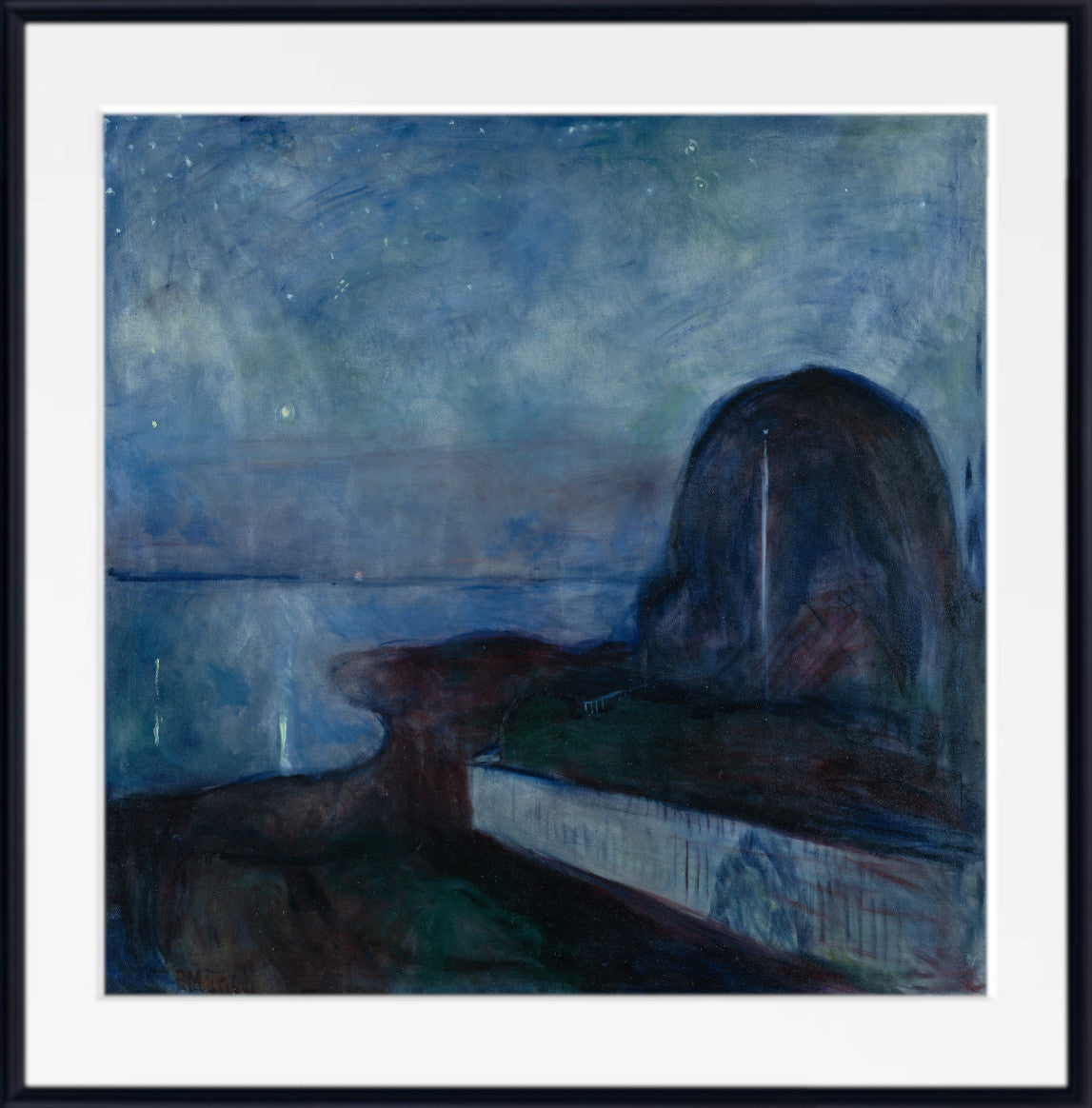
Max Pechstein Coastal, Seascape and Fishing Prints
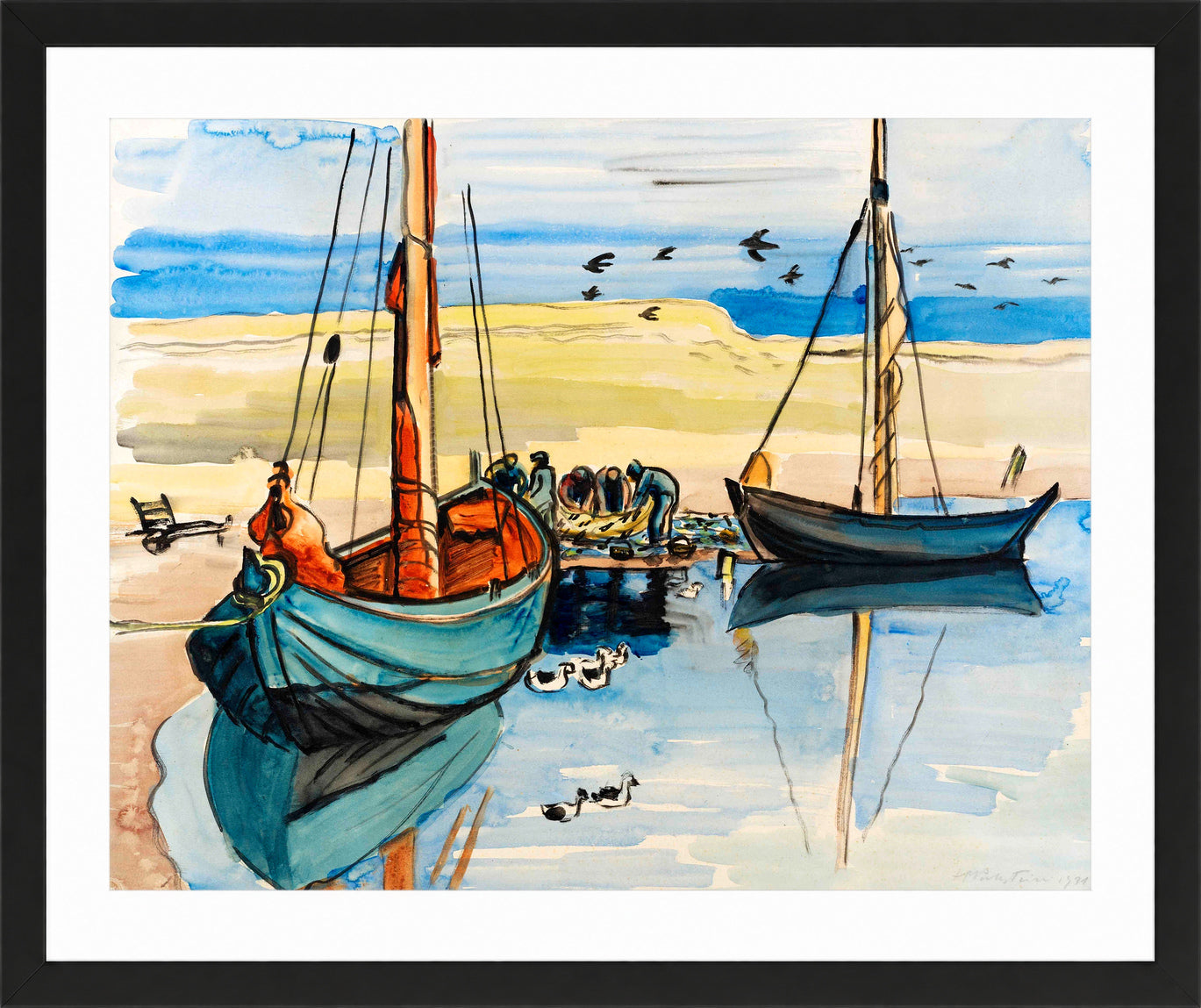
The sea occupied a particularly important place in Hermann Max Pechstein's art. Fishing villages, beaches, harbours, boats and working fishermen appear repeatedly across his paintings, drawings and prints, providing subjects that combined landscape, human activity and the changing movement of water.
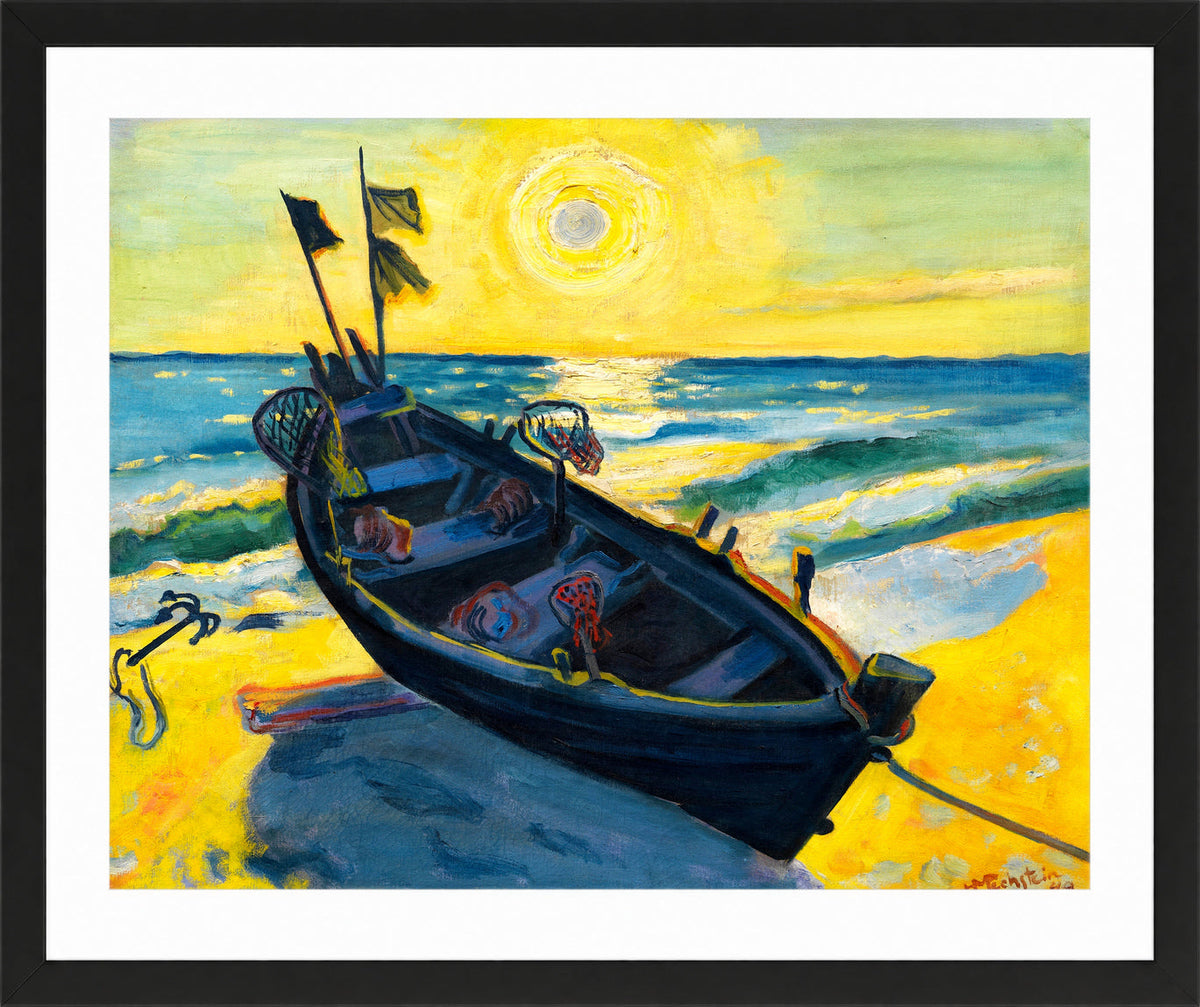
Pechstein was not interested in recording coastal scenery with detached naturalism. He transformed shorelines, boats and figures through strong outlines, compressed perspective and heightened colour, creating maritime compositions with the immediacy and emotional force associated with German Expressionism.
This collection brings together Max Pechstein seascapes, fishing subjects, beach scenes and coastal compositions from across his career.
Explore the complete Hermann Max Pechstein Prints collection for landscapes, portraits, figures and other works by the artist.
Fishing Communities and Working Life
Fishing was more than an incidental motif in Pechstein's work.
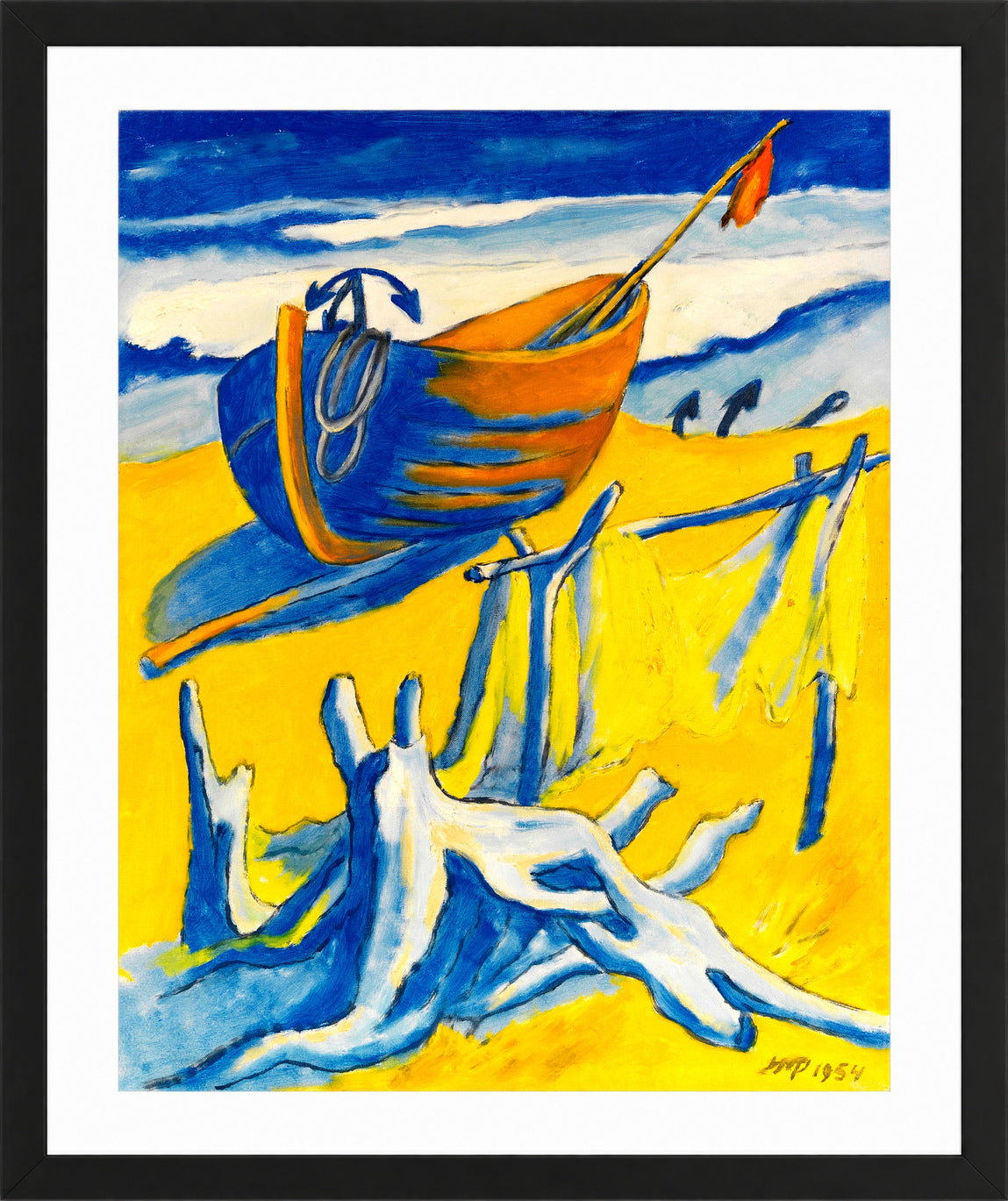
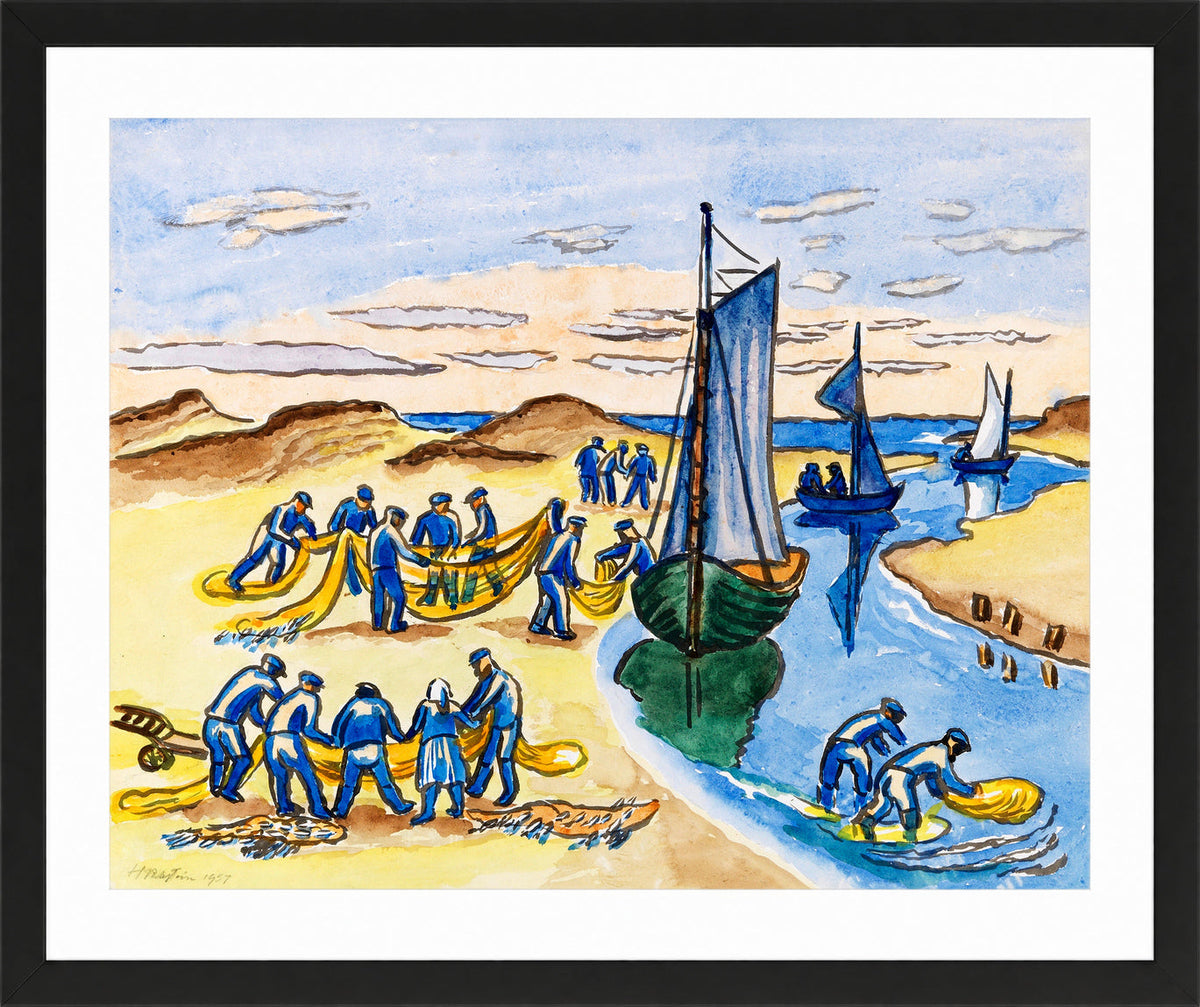
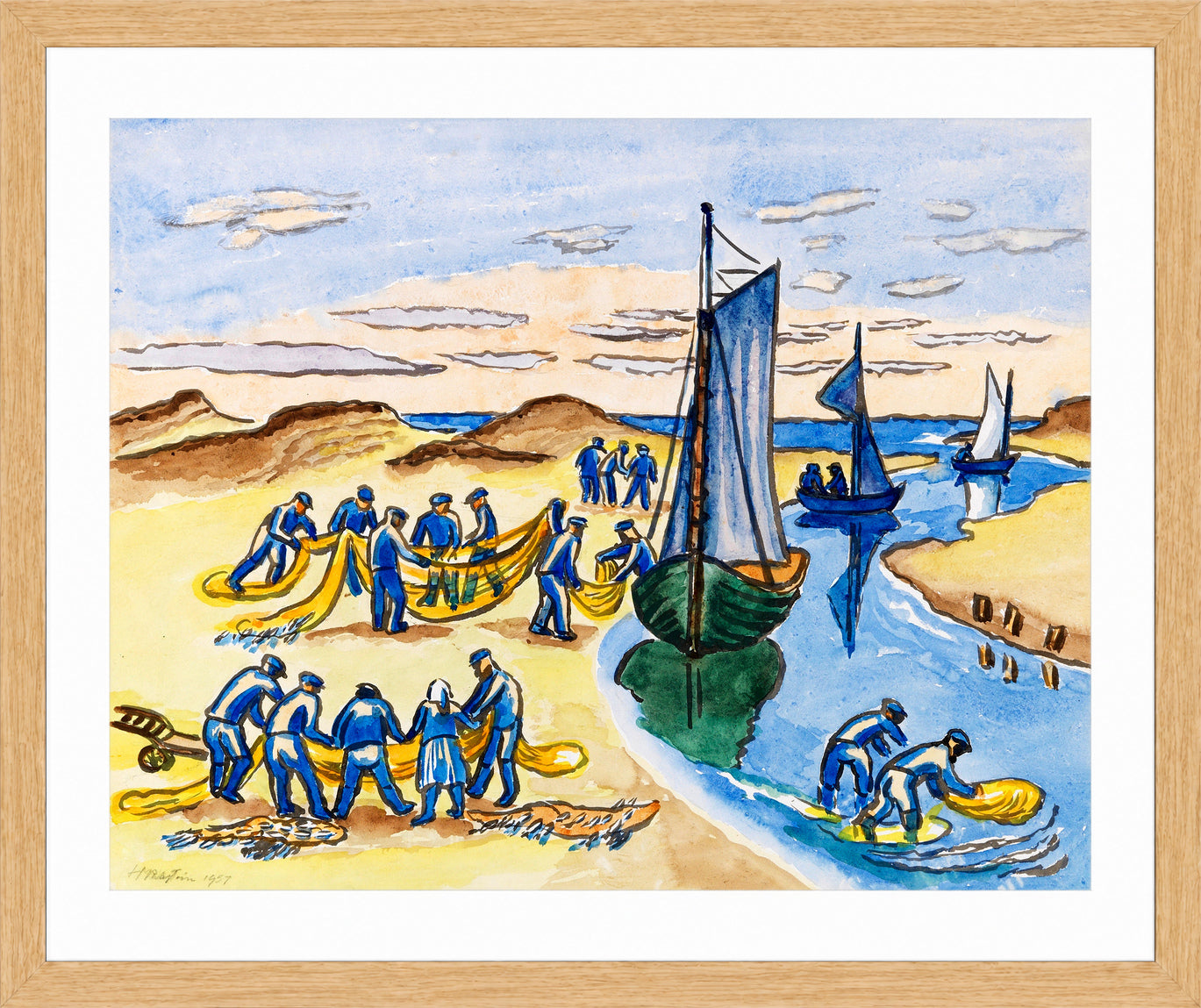
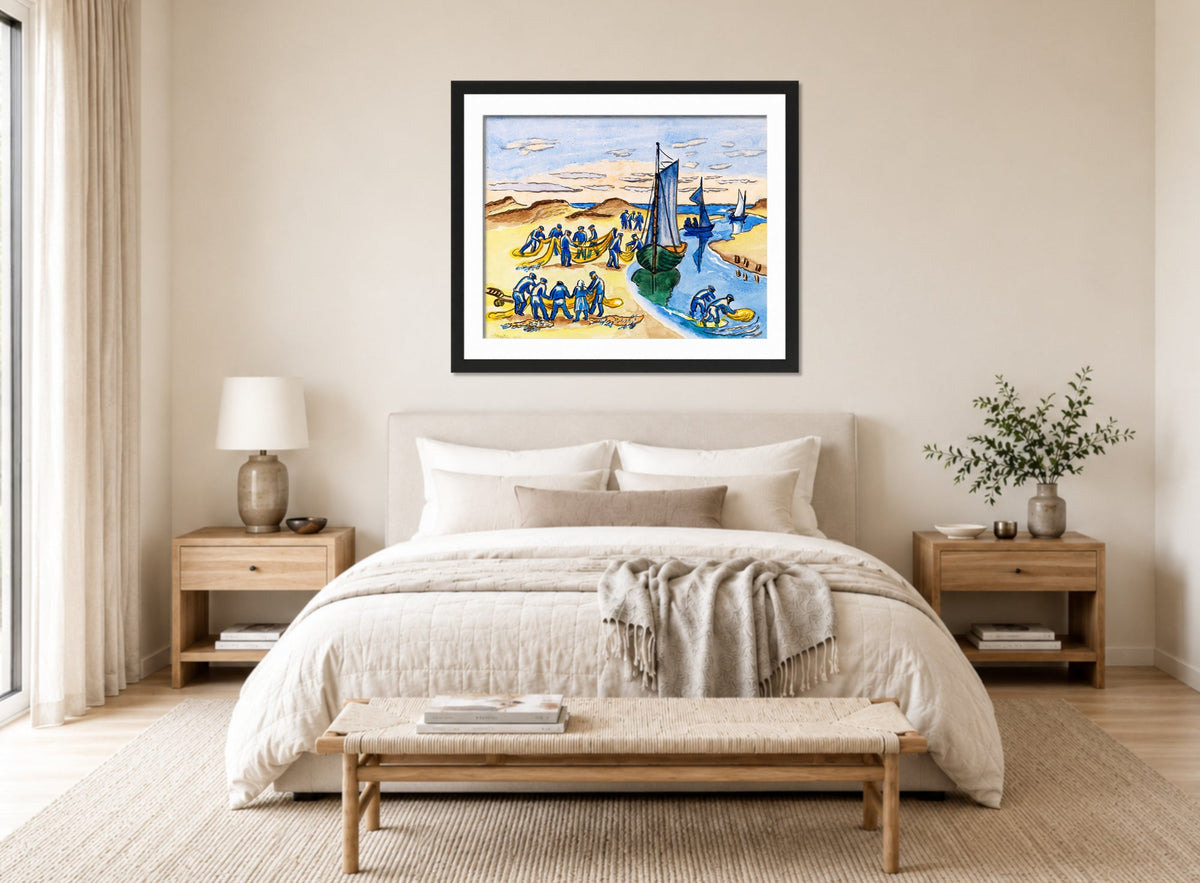
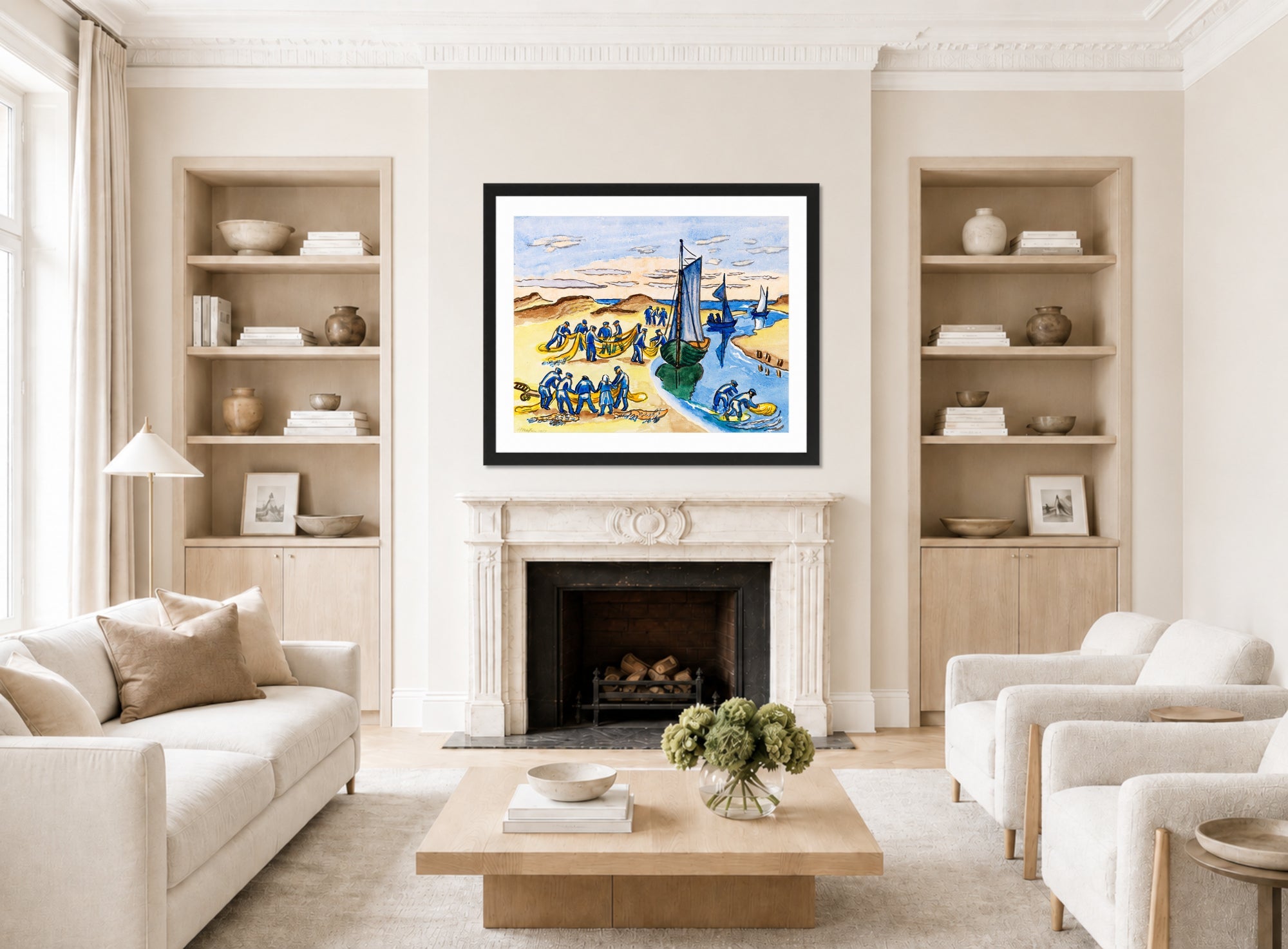
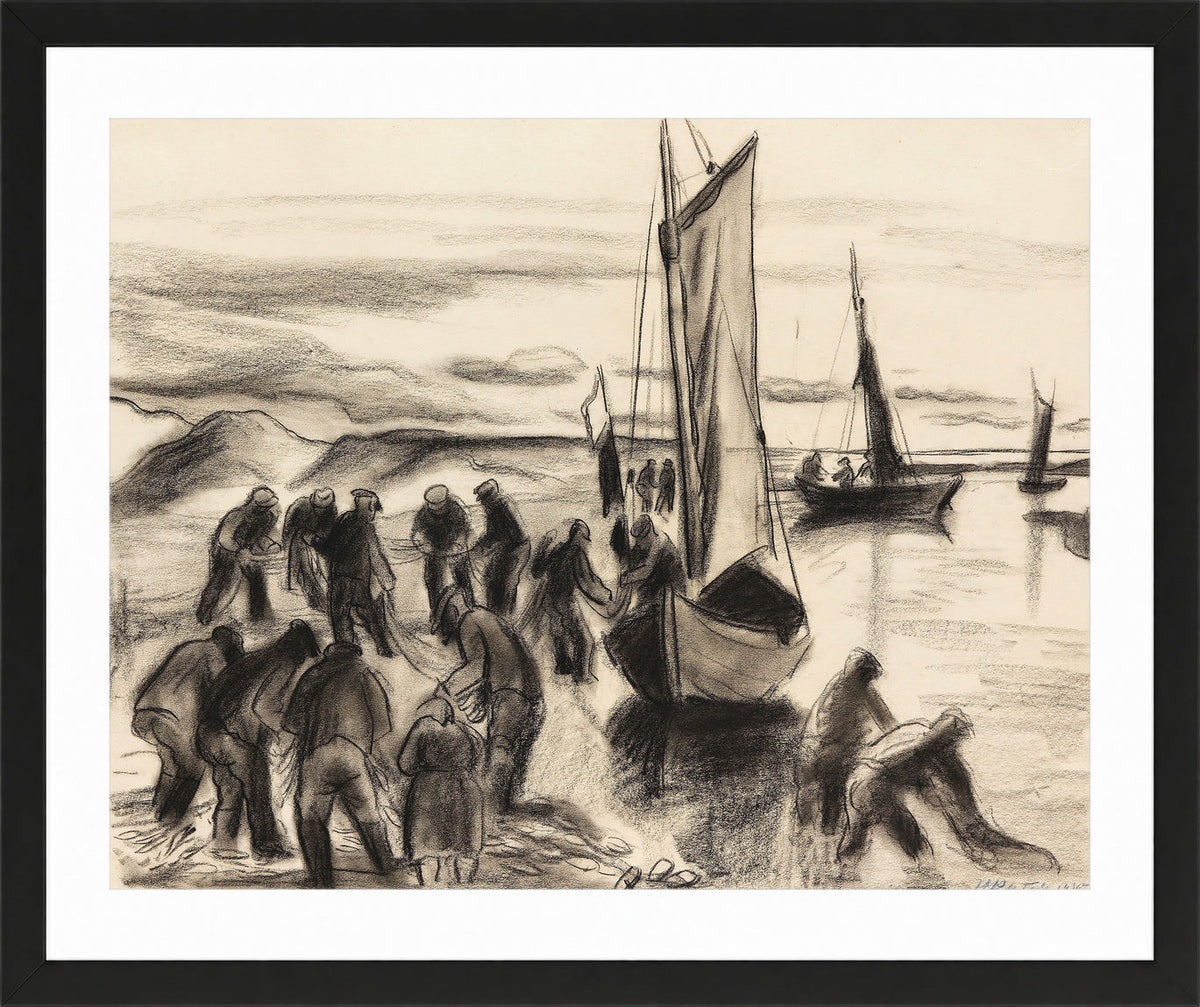
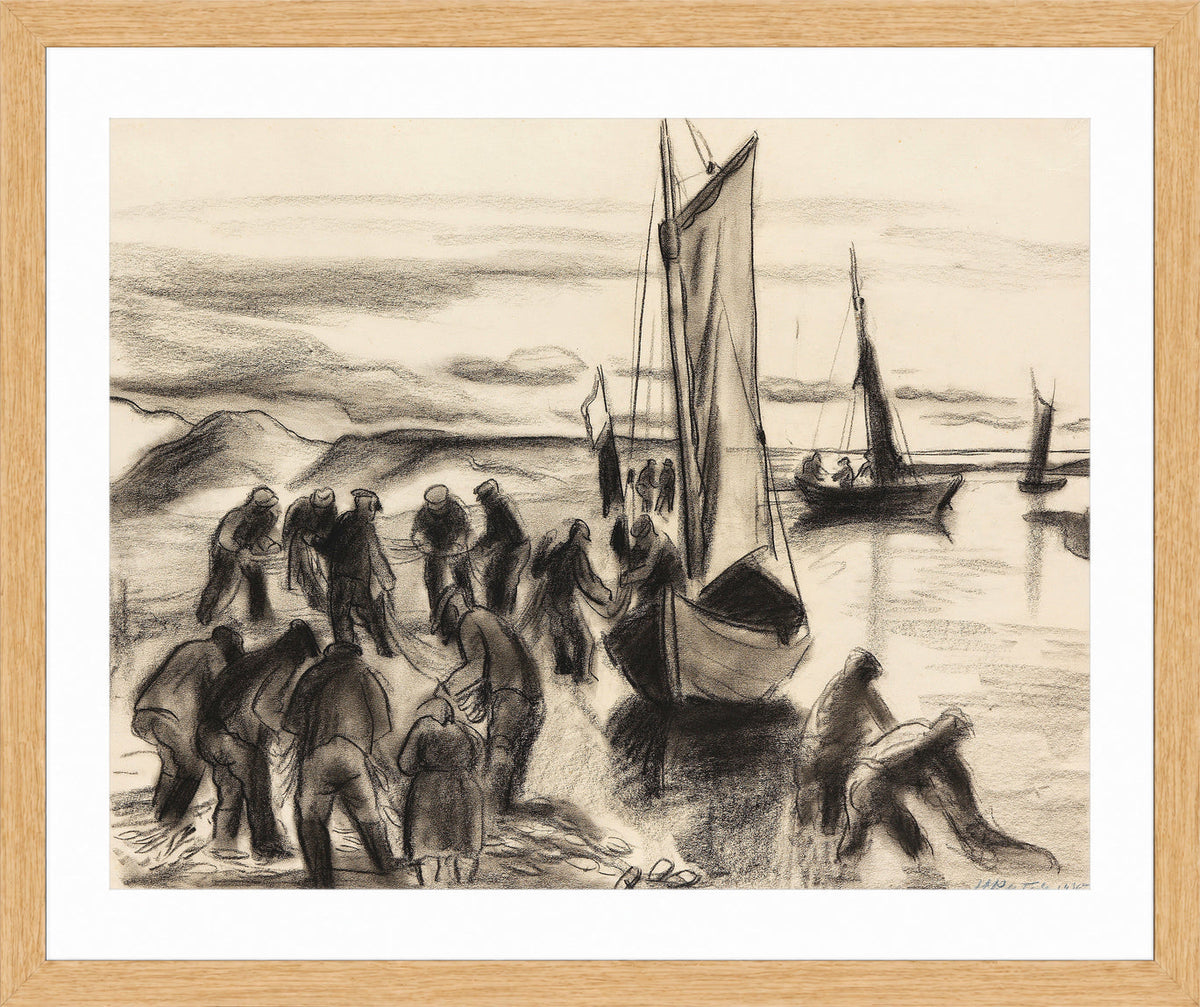
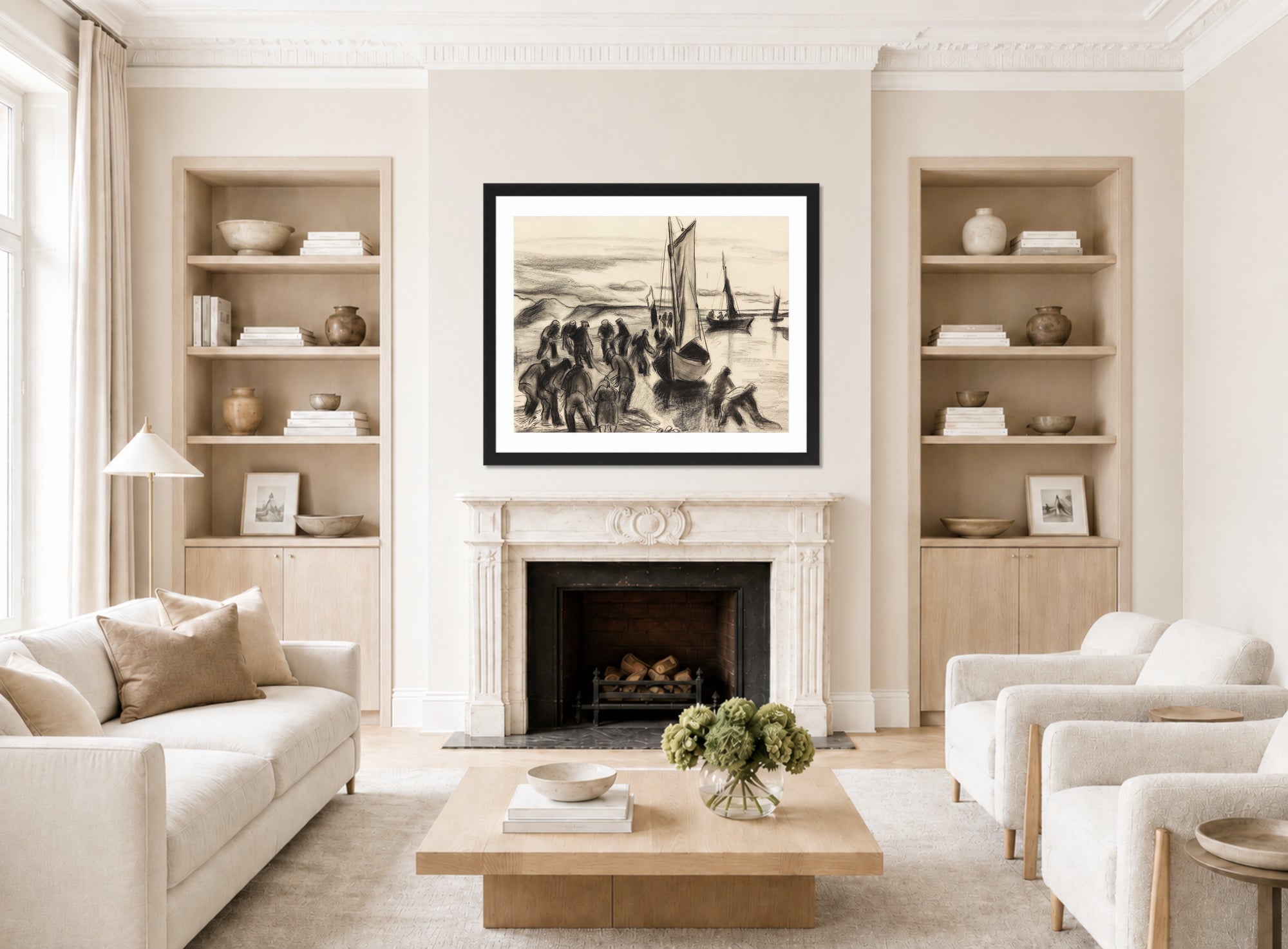
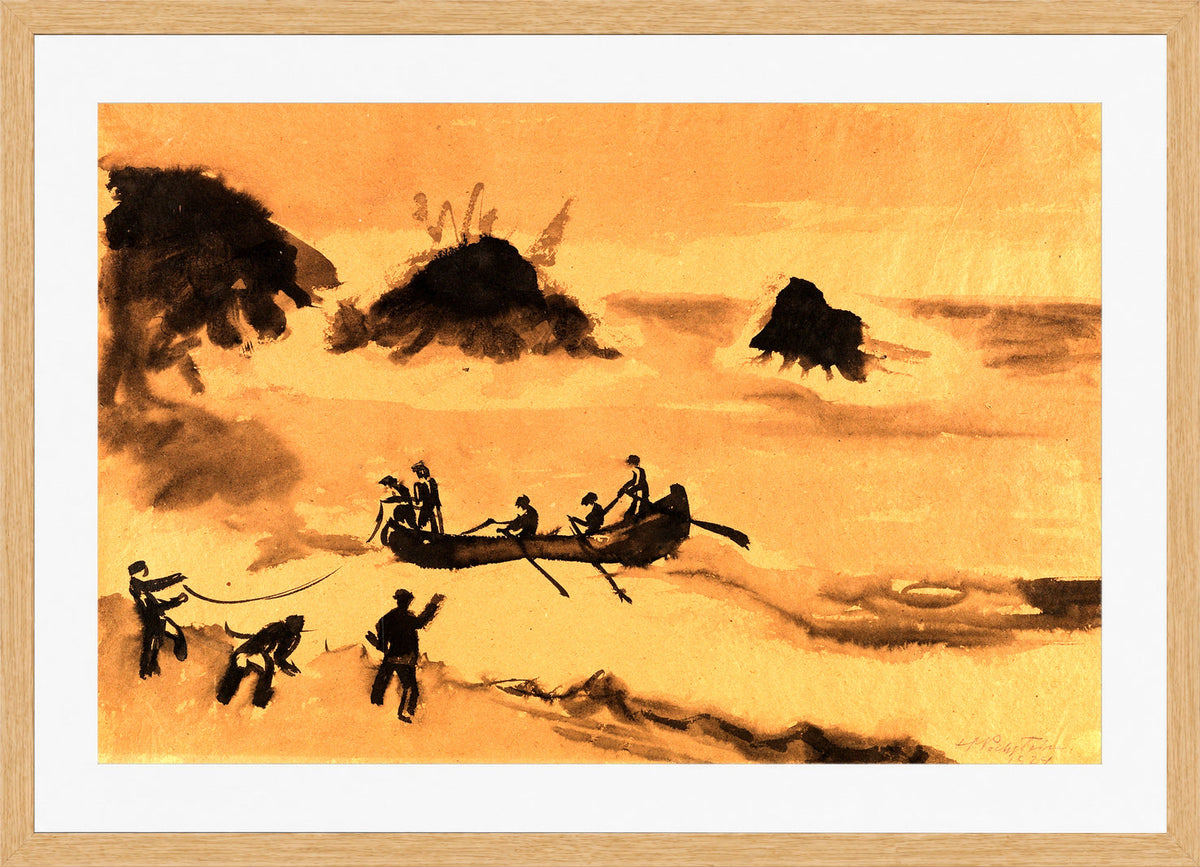
He repeatedly depicted fishermen preparing boats, hauling nets, standing beside the water and working around harbours and beaches. These subjects allowed him to explore both the physical movement of working figures and their relationship with the surrounding landscape.
Rather than concentrating on individual portrait likeness, Pechstein often treated fishermen as part of the larger rhythm of a composition. Bodies, boats, masts, nets and waves can become repeated vertical and diagonal shapes, giving apparently everyday scenes a powerful visual structure.
Works associated with Nidden, Leba, Rowe and Monterosso reflect his sustained fascination with communities whose lives were closely connected to the sea.
For the broader story of how these places fitted into Pechstein's life and career, read our complete Max Pechstein biography, paintings and prints guide.
Boats, Harbours and Coastal Landscapes
Boats are among the most recognisable recurring forms in Pechstein's maritime art.
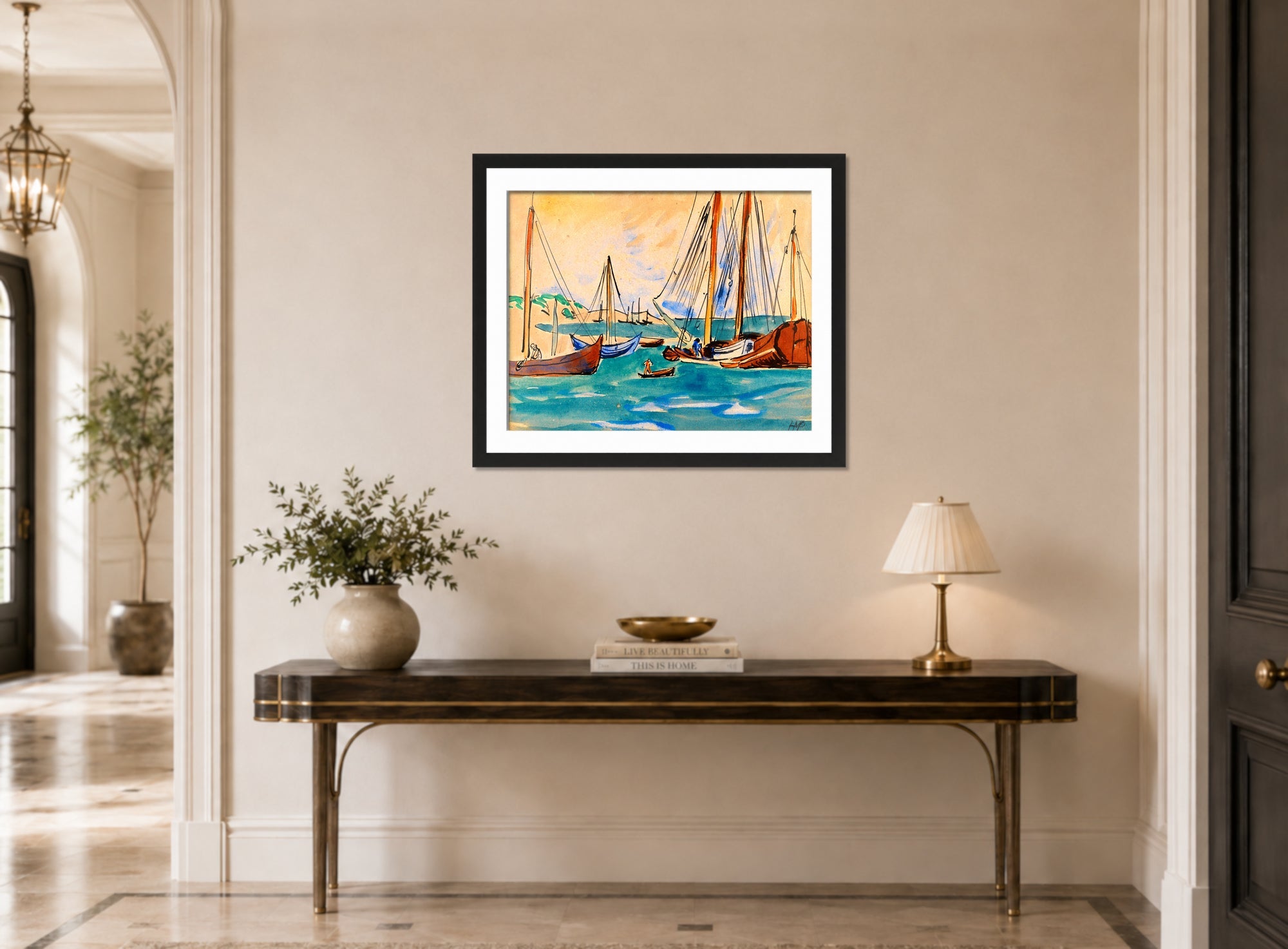
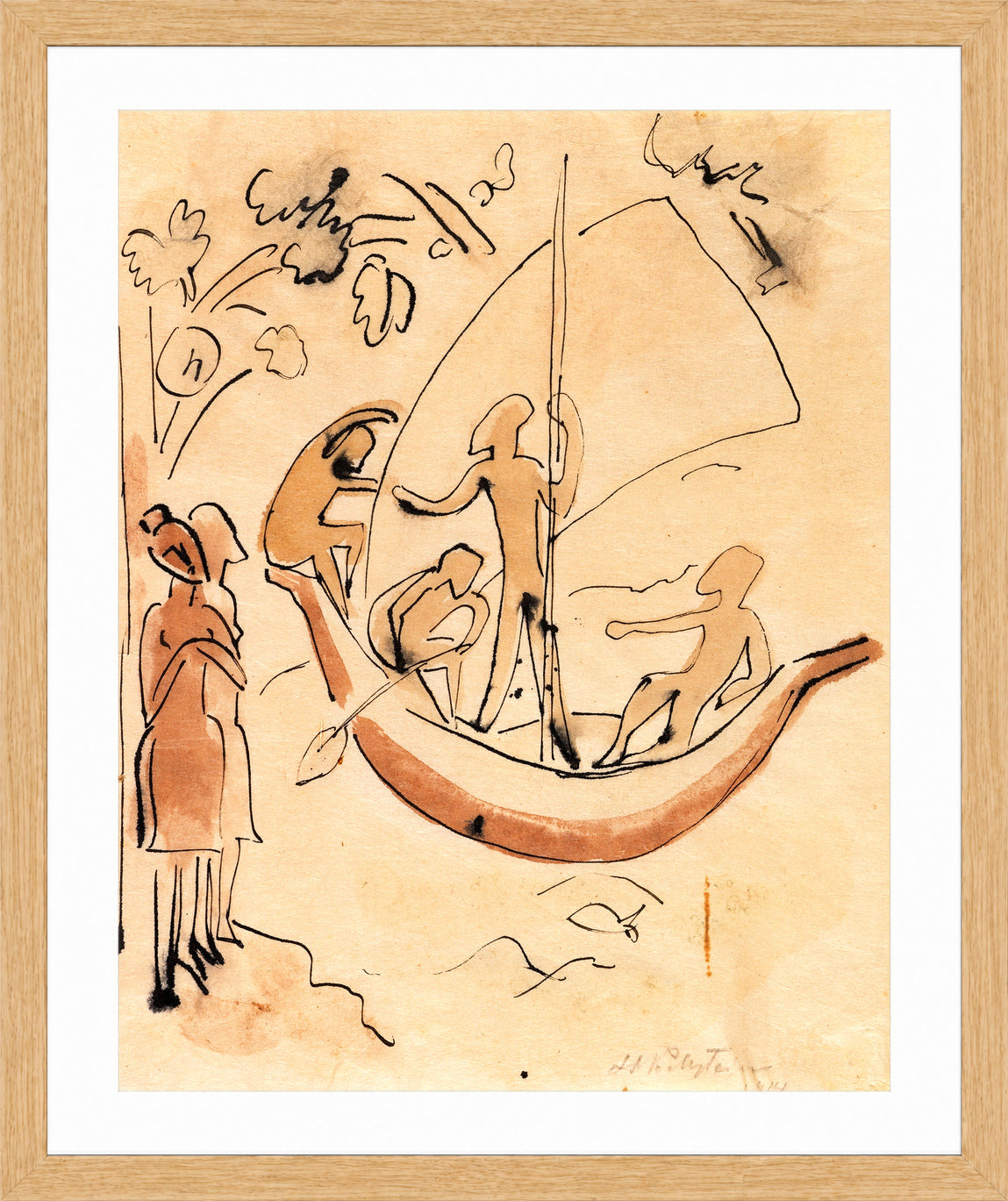
Sailing boats, fishing vessels and smaller craft appear both as subjects in their own right and as structural elements within wider coastal landscapes. Their hulls, masts and sails provided strong geometric forms that suited Pechstein's simplified Expressionist approach.
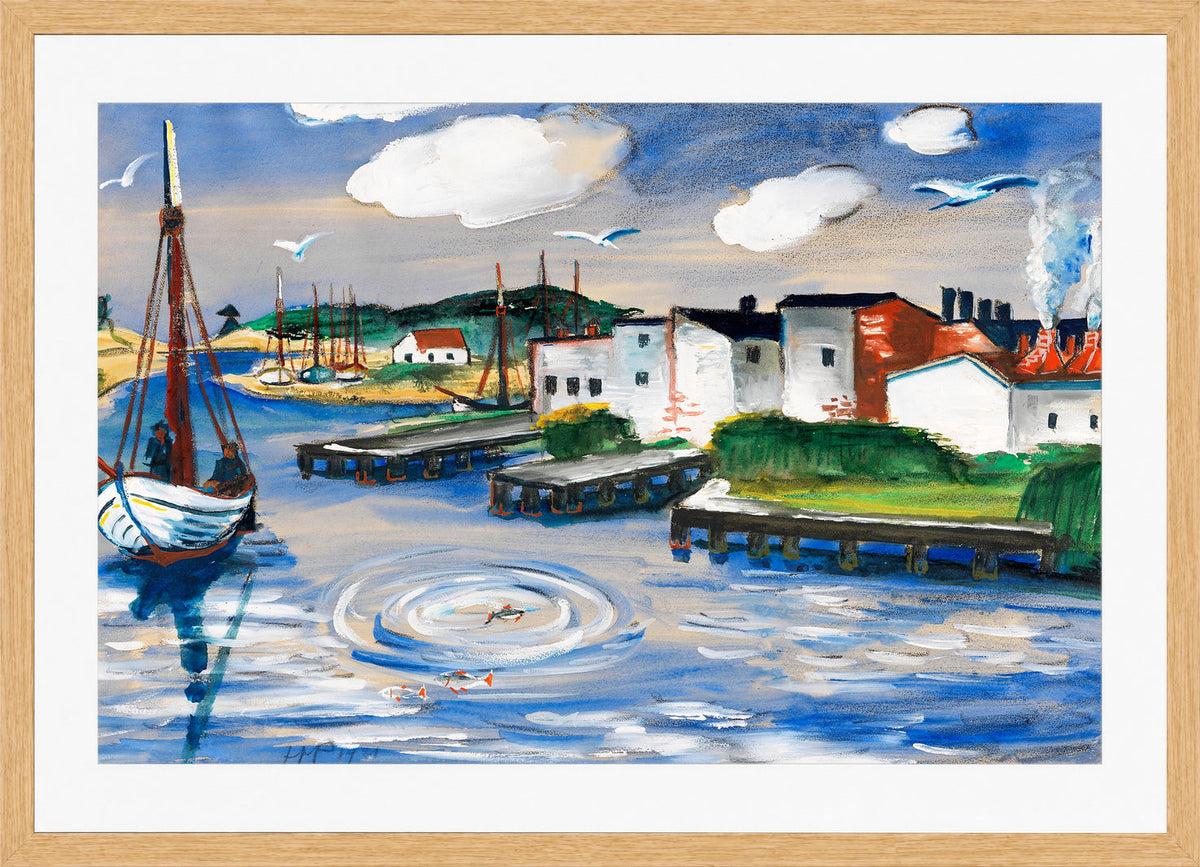
Harbours offered a similarly rich combination of architecture, water and human activity. Pechstein could organise quays, houses, boats and reflections into tightly constructed compositions while retaining the atmosphere of a working coastal settlement.
The resulting scenes often feel more constructed than descriptive. Boats may be reduced to bold silhouettes, harbour buildings simplified into coloured blocks and the water organised into broad horizontal passages.
For a broader selection of maritime art by artists from different periods, explore GalleryThane's Seascape Art Prints.
Beaches, Dunes and the Open Sea
Pechstein also repeatedly returned to beaches, dunes and open stretches of coastline.
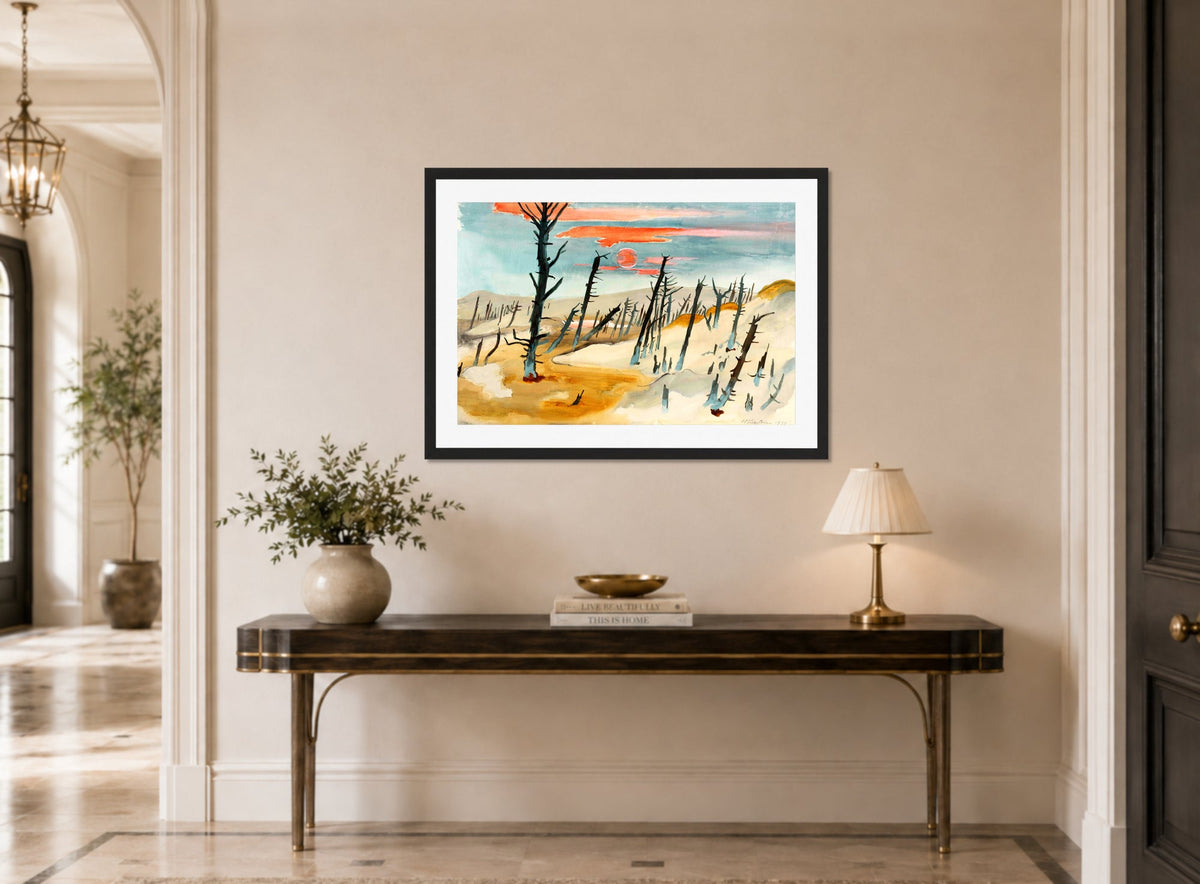
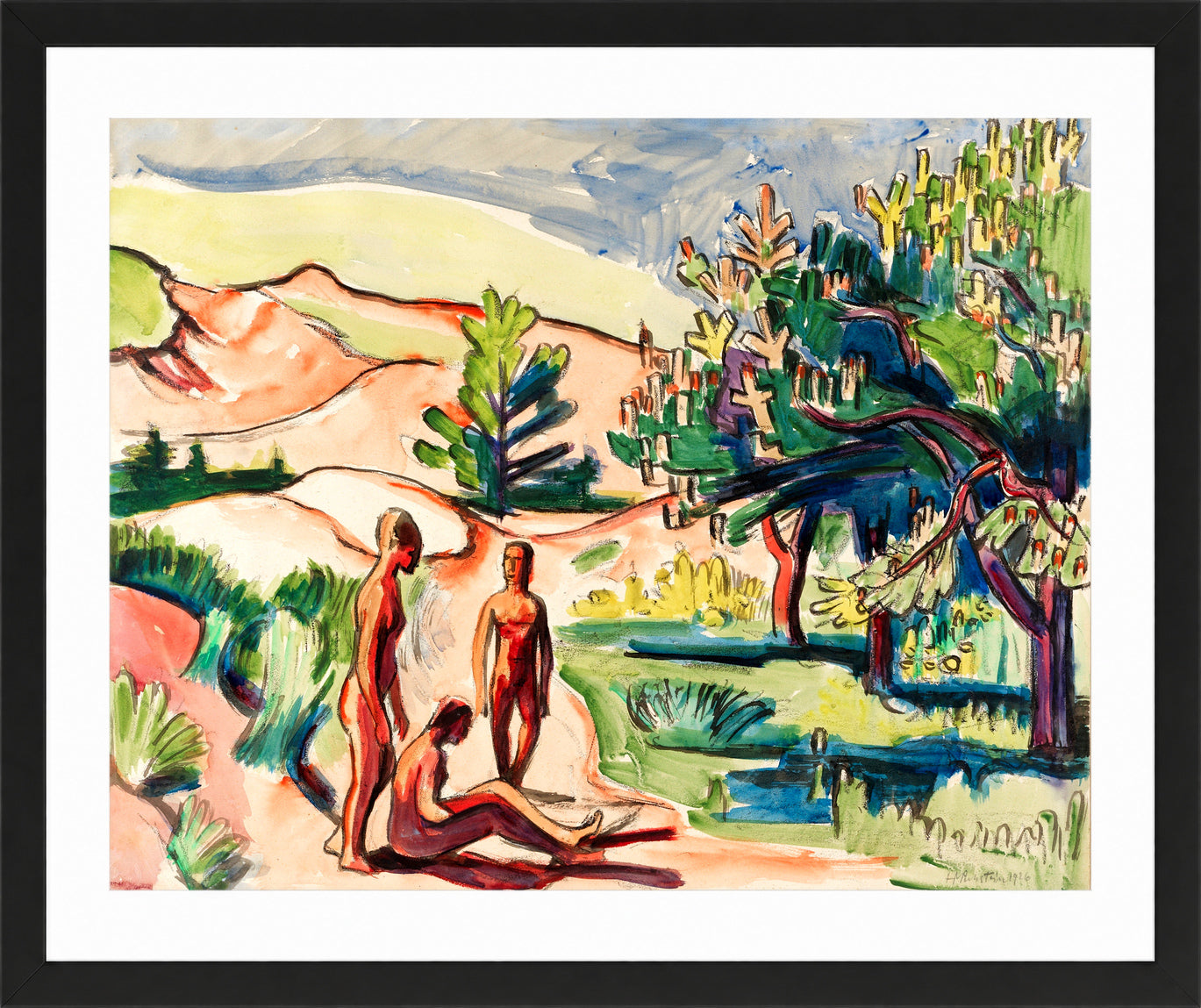
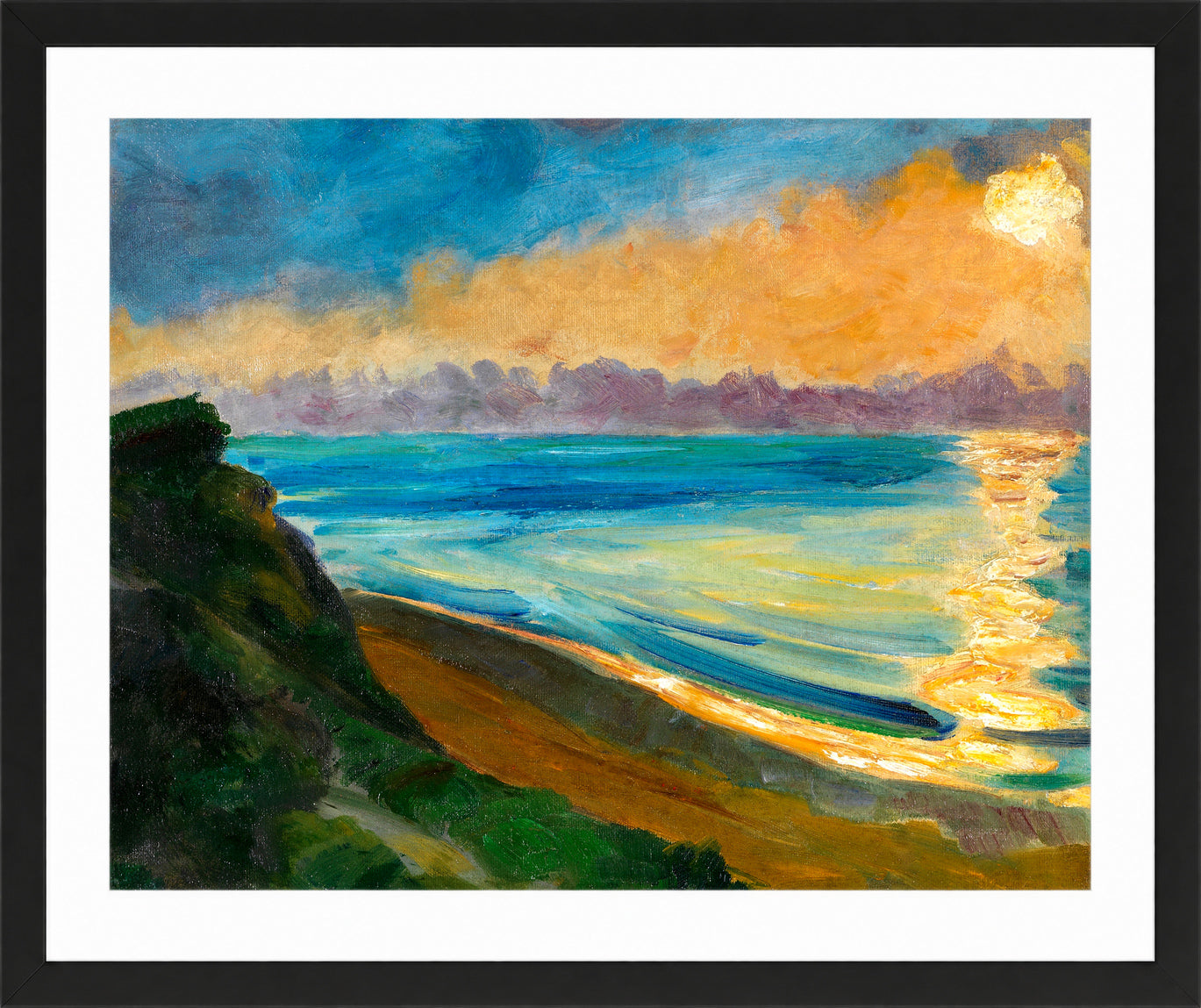
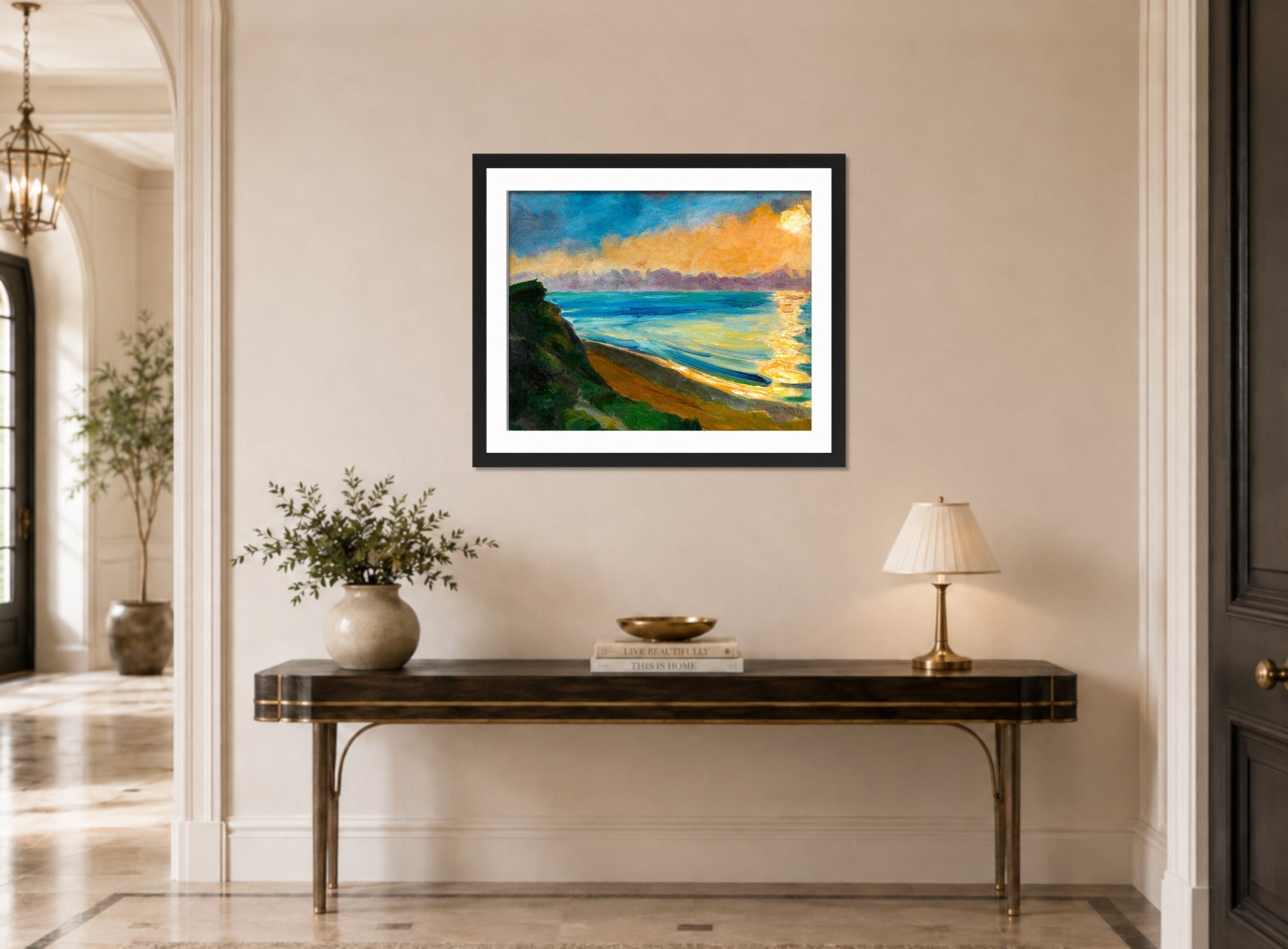
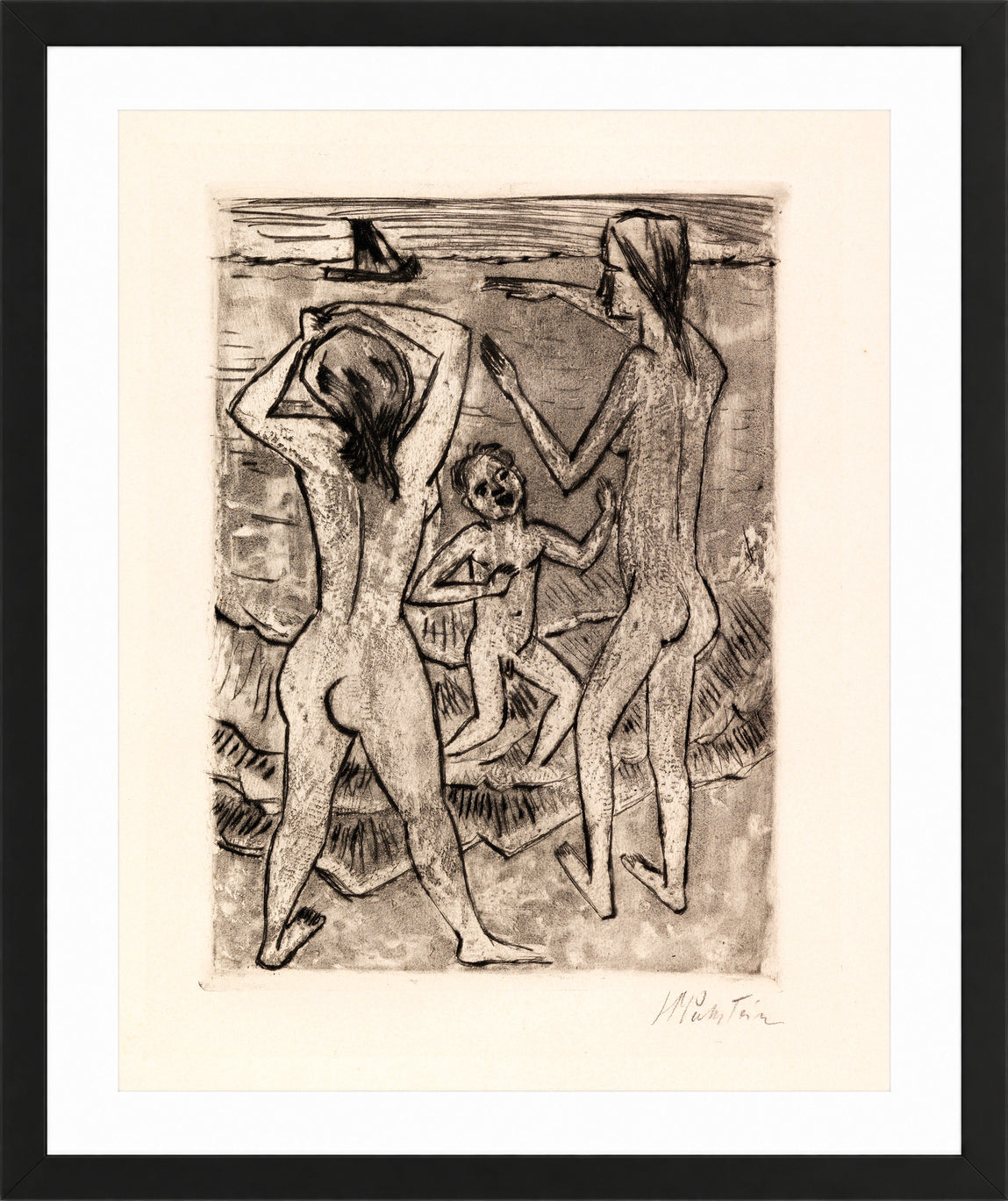
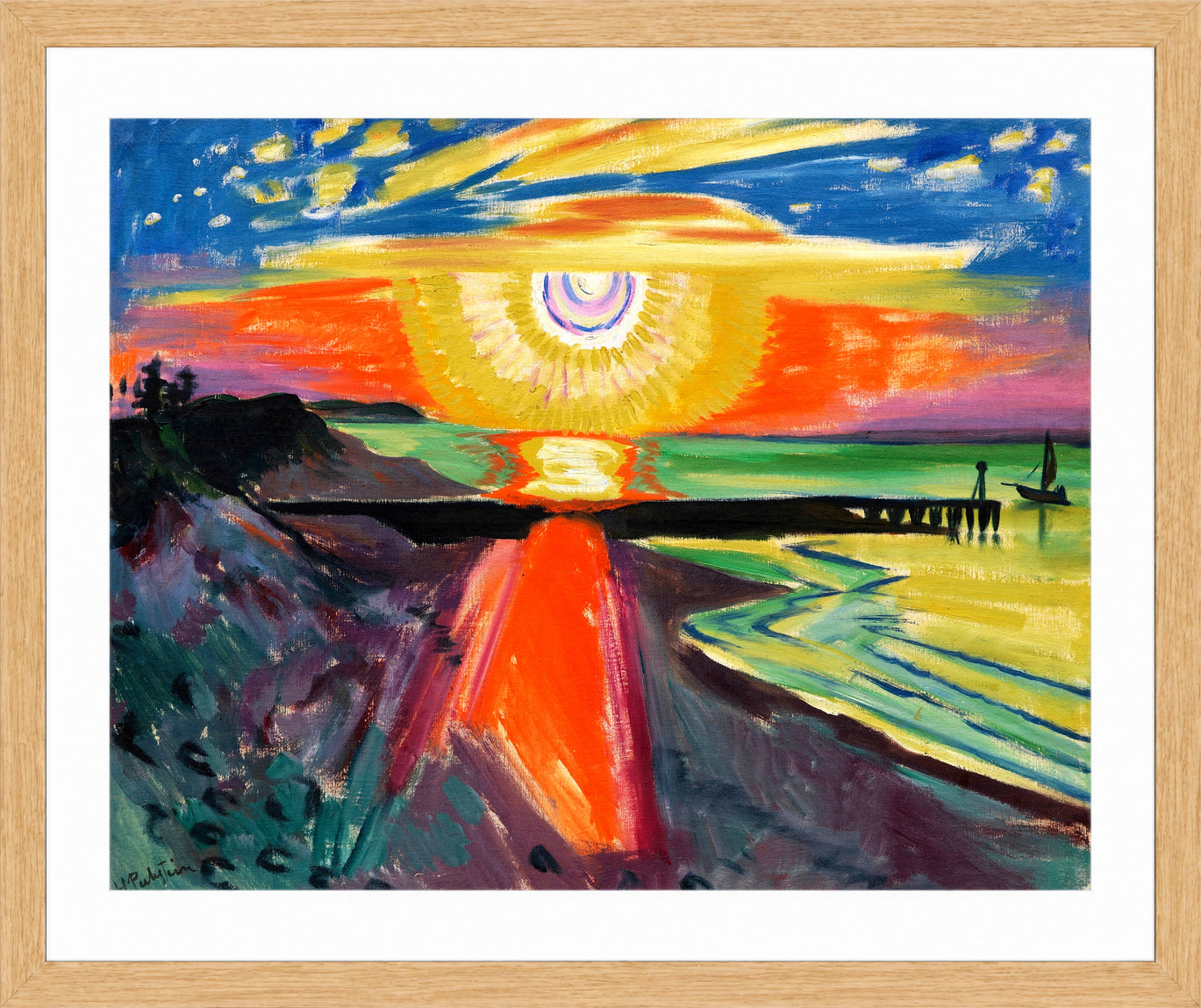
These environments gave him greater freedom to simplify the landscape into broad horizontal areas of sand, water and sky. Figures positioned against these open spaces often become especially prominent, while strong blue, yellow, green and orange colour contrasts heighten the sense of sun, wind and movement.
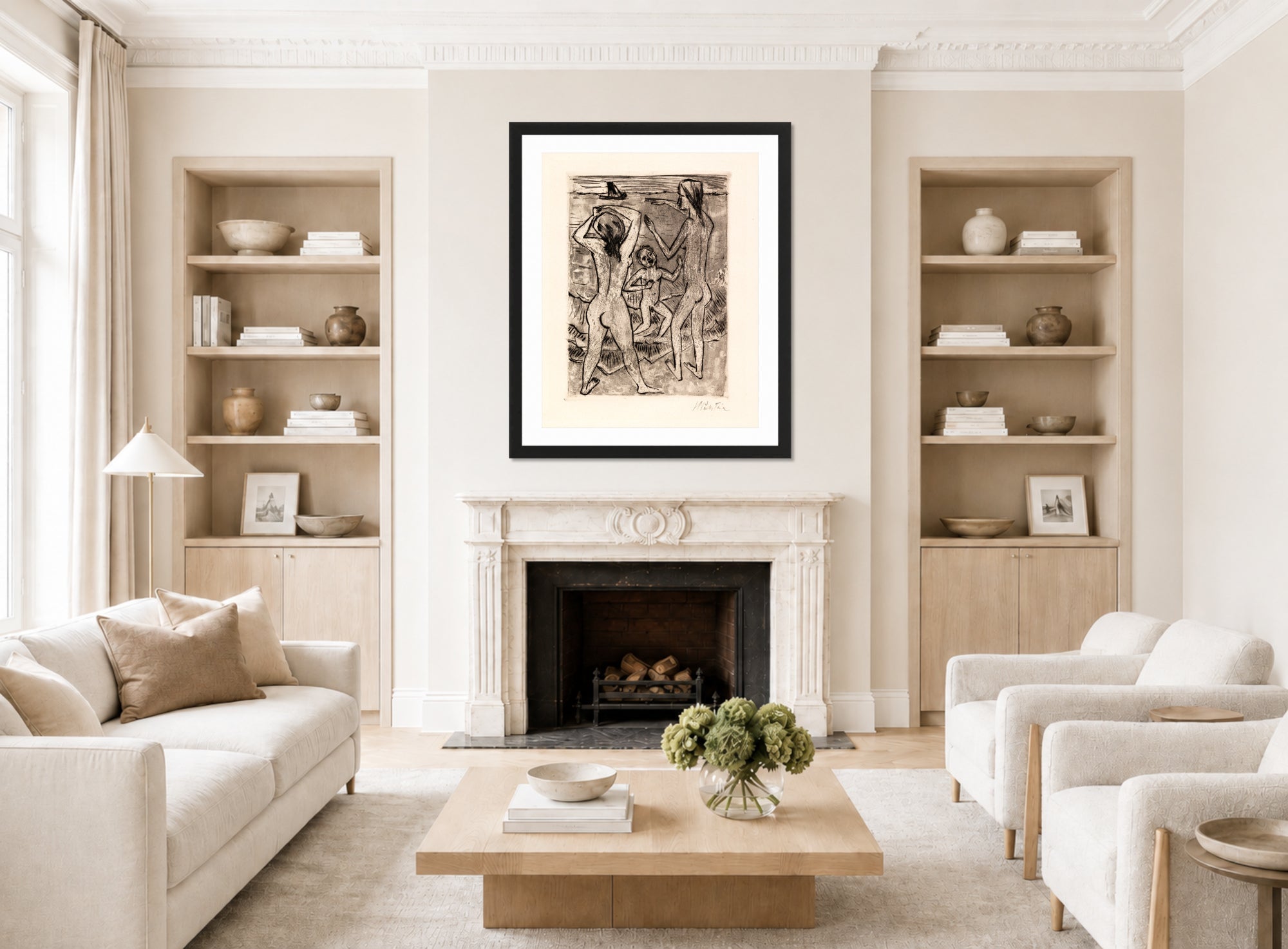
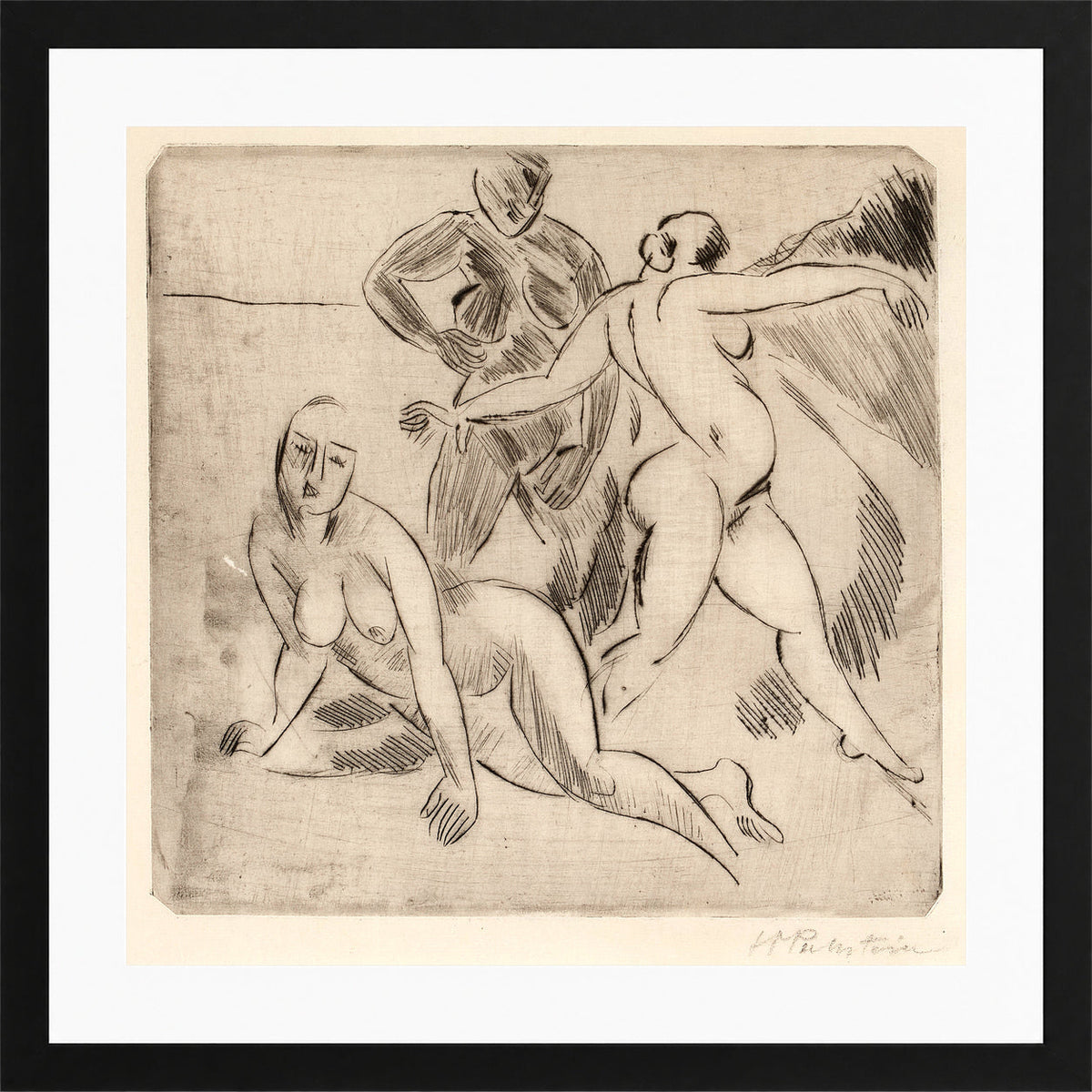
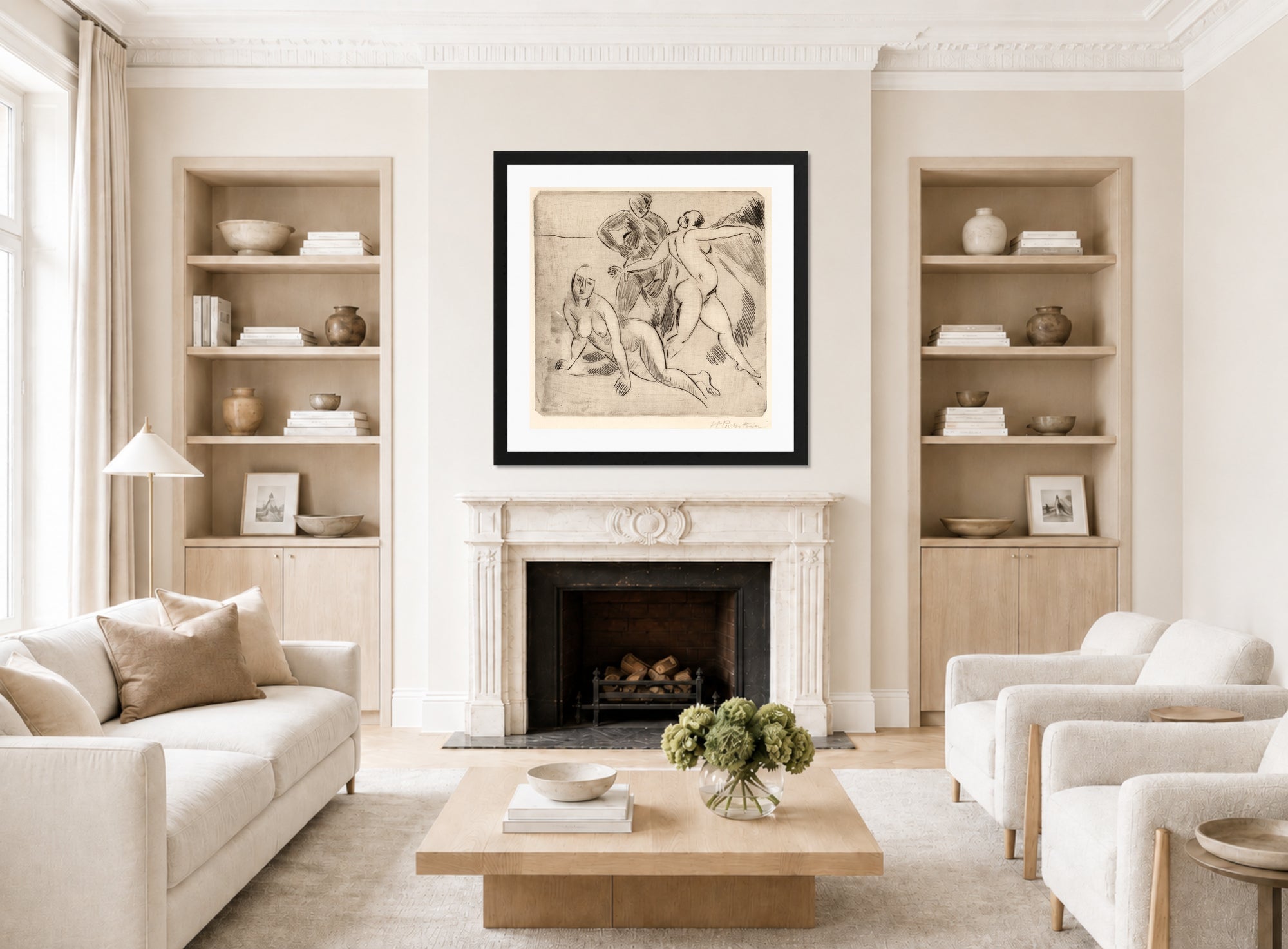
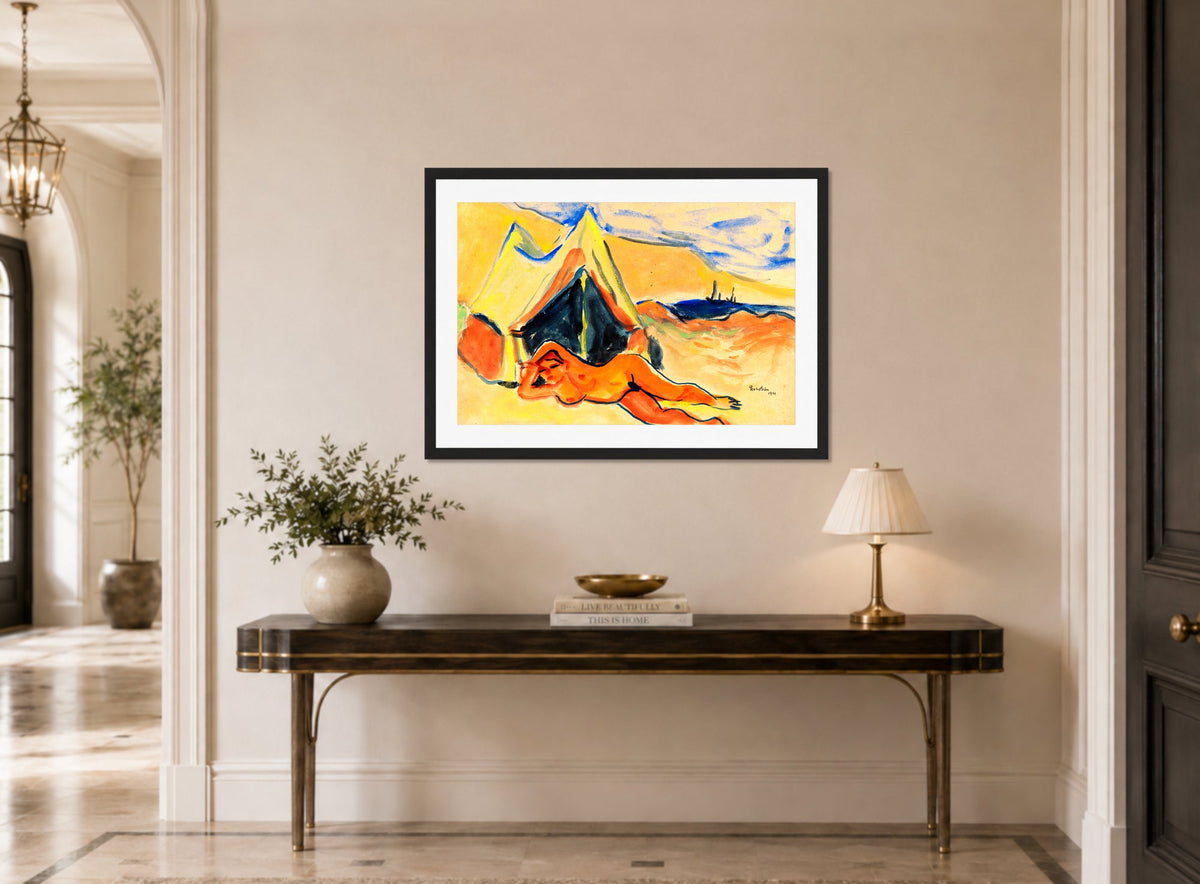
Beach scenes also connect closely with Pechstein's interest in bathers and the human figure. In some works, the shoreline functions primarily as landscape; in others it becomes a setting for fishermen, bathers or reclining figures.
This overlap between landscape, seascape and figure painting is characteristic of Pechstein. He rarely treated his major subjects as completely separate categories. Human activity frequently becomes part of the landscape, while the landscape itself helps determine the rhythm and structure of the figures.
GalleryThane's wider Beach Scenes, Paintings and Prints collection brings together coastal subjects by Pechstein and many other artists.
Nidden and the Curonian Spit
Nidden, today Nida in Lithuania, became one of the most significant locations in Pechstein's artistic life.
He first spent an extended period there in 1909. The settlement on the Curonian Spit offered an unusually concentrated combination of dunes, lagoon, woodland, fishing boats, low houses and people whose livelihoods depended upon the water.
Pechstein returned repeatedly to the region.
The visual attraction is easy to understand. Boats introduced strong curved and diagonal forms. Masts created vertical accents against broad skies. Low horizons divided sea and land into large areas of colour, while fishermen supplied human movement within the wider landscape.
The Curonian Spit helped Pechstein develop a form of maritime Expressionism in which specific places remained recognisable but were transformed through colour and simplified structure.
His years at Nidden form an important part of the wider chronology explored in our Max Pechstein biography and German Expressionism guide.
The Baltic Coast and Pechstein's Art
The wider Baltic region became equally important within Pechstein's landscape and coastal work.
Places including Leba and Rowe provided him with fishing boats, dunes, waterways, harbour structures and working communities. The distinctive relationship between water, flat coastal land and broad northern skies suited his increasingly simplified treatment of space.
In these works, recognisable geography is often transformed into areas of intense colour held together by emphatic contour.
A harbour may become a sequence of interlocking shapes. A boat may be reduced to hull, mast and a few decisive lines. The surface of the sea can become a broad passage of blue or green interrupted by waves, reflections or areas of light.
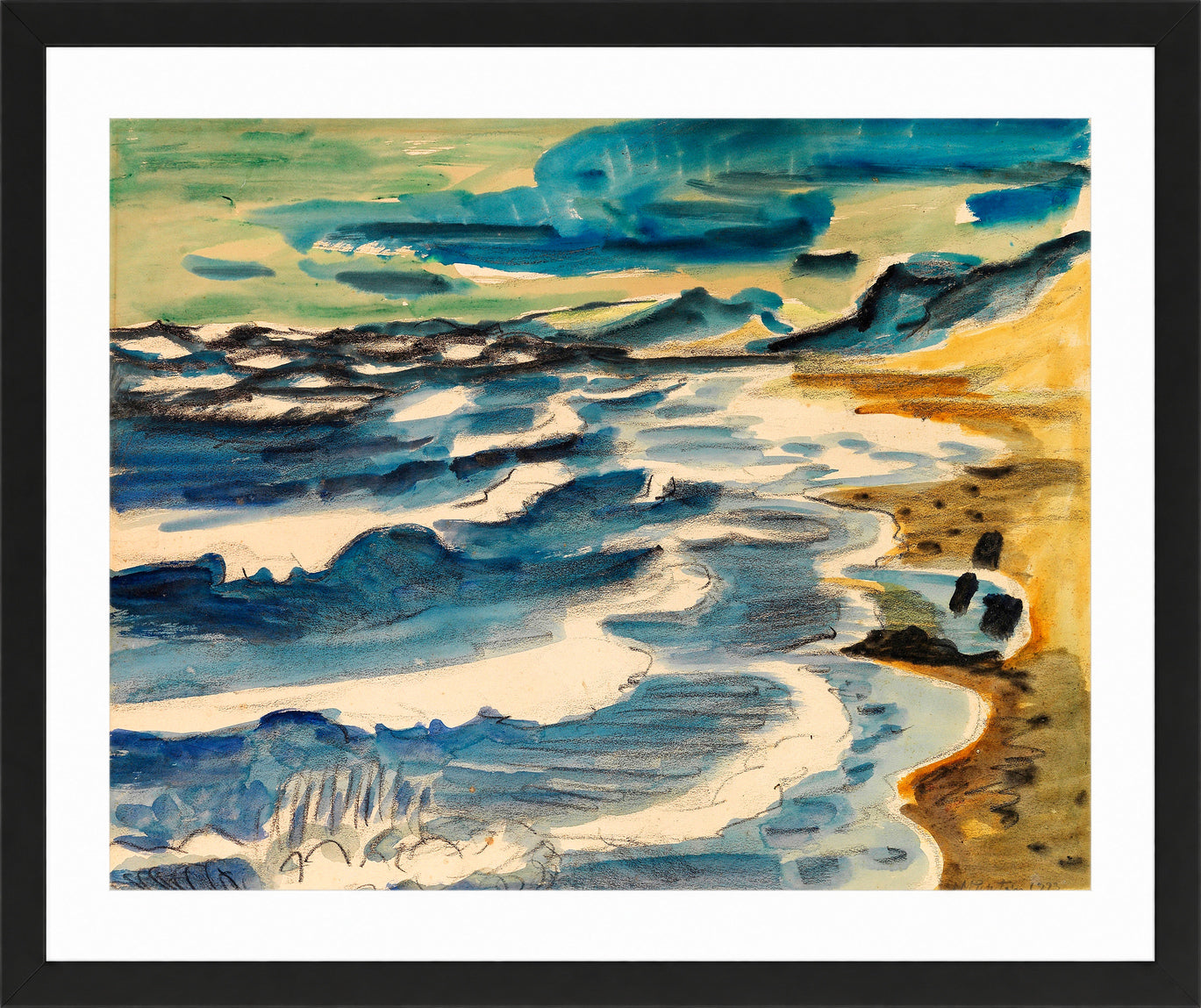
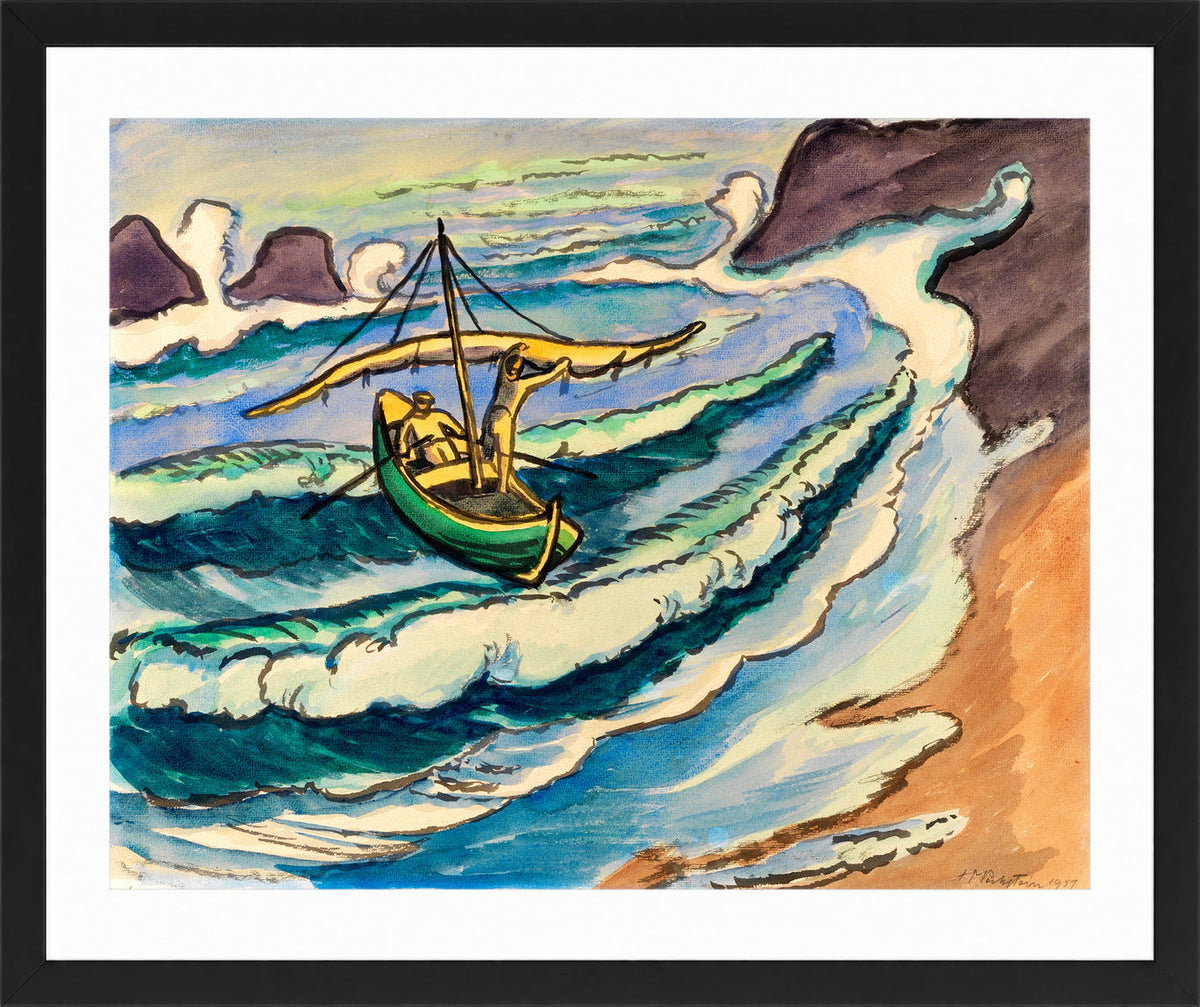
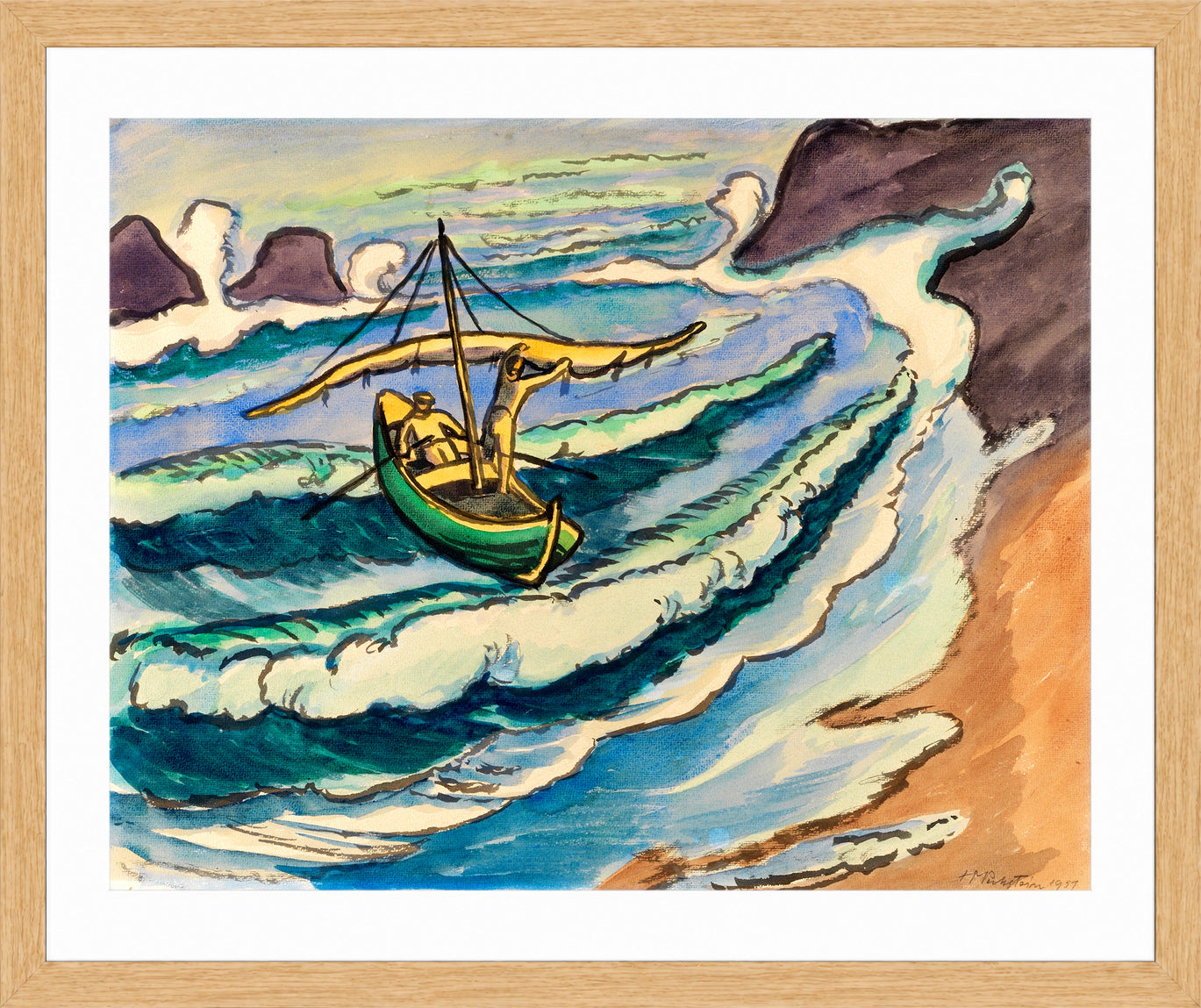
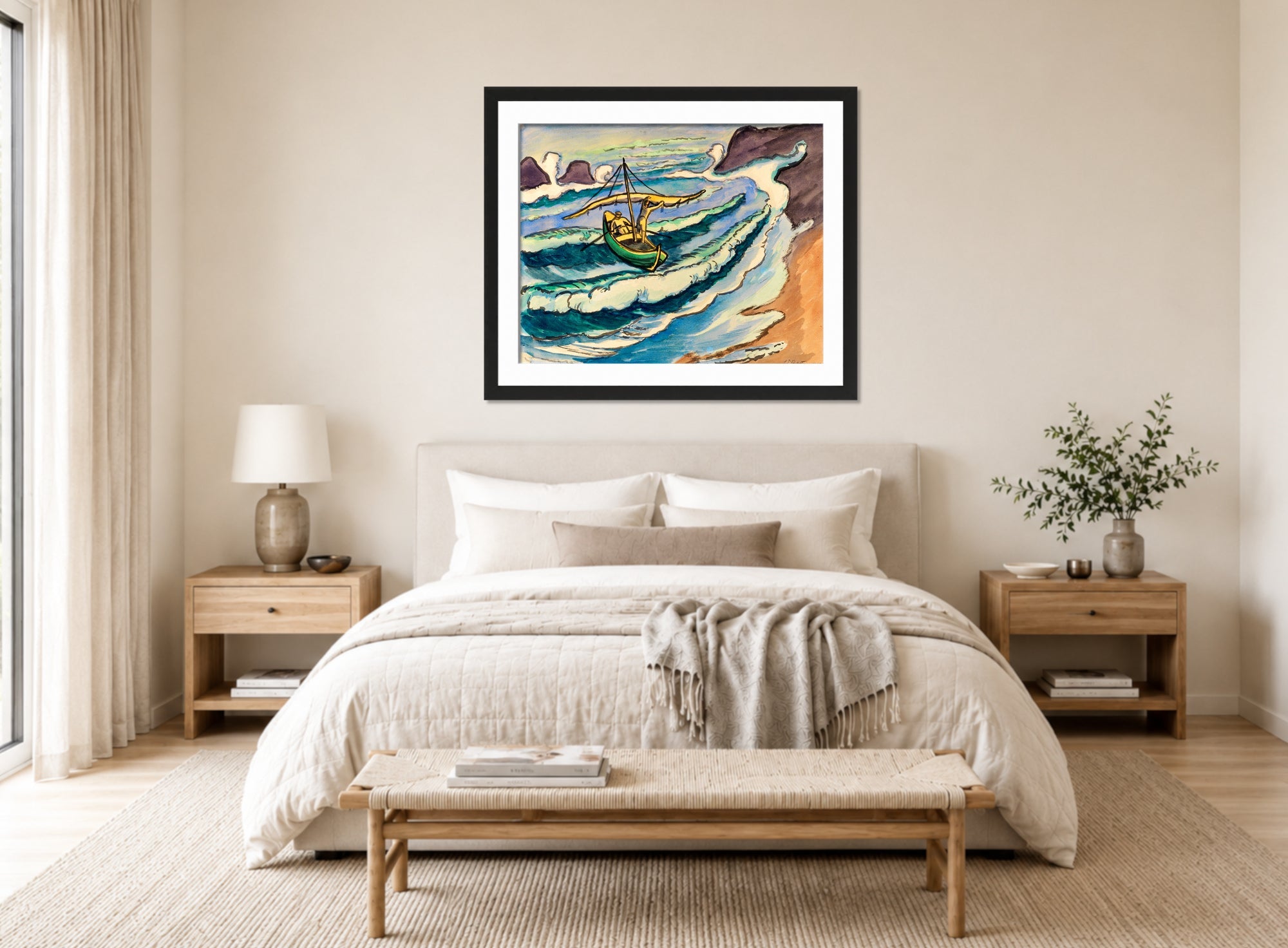
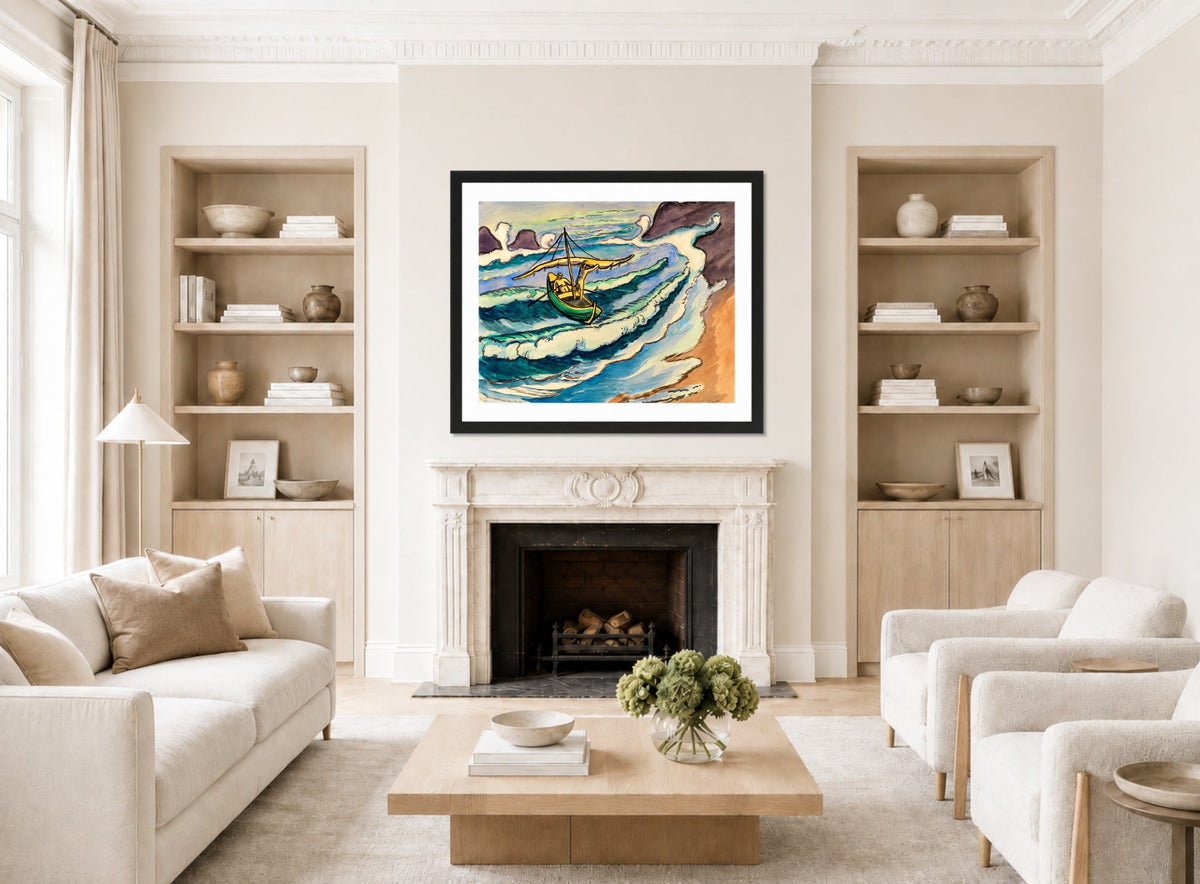
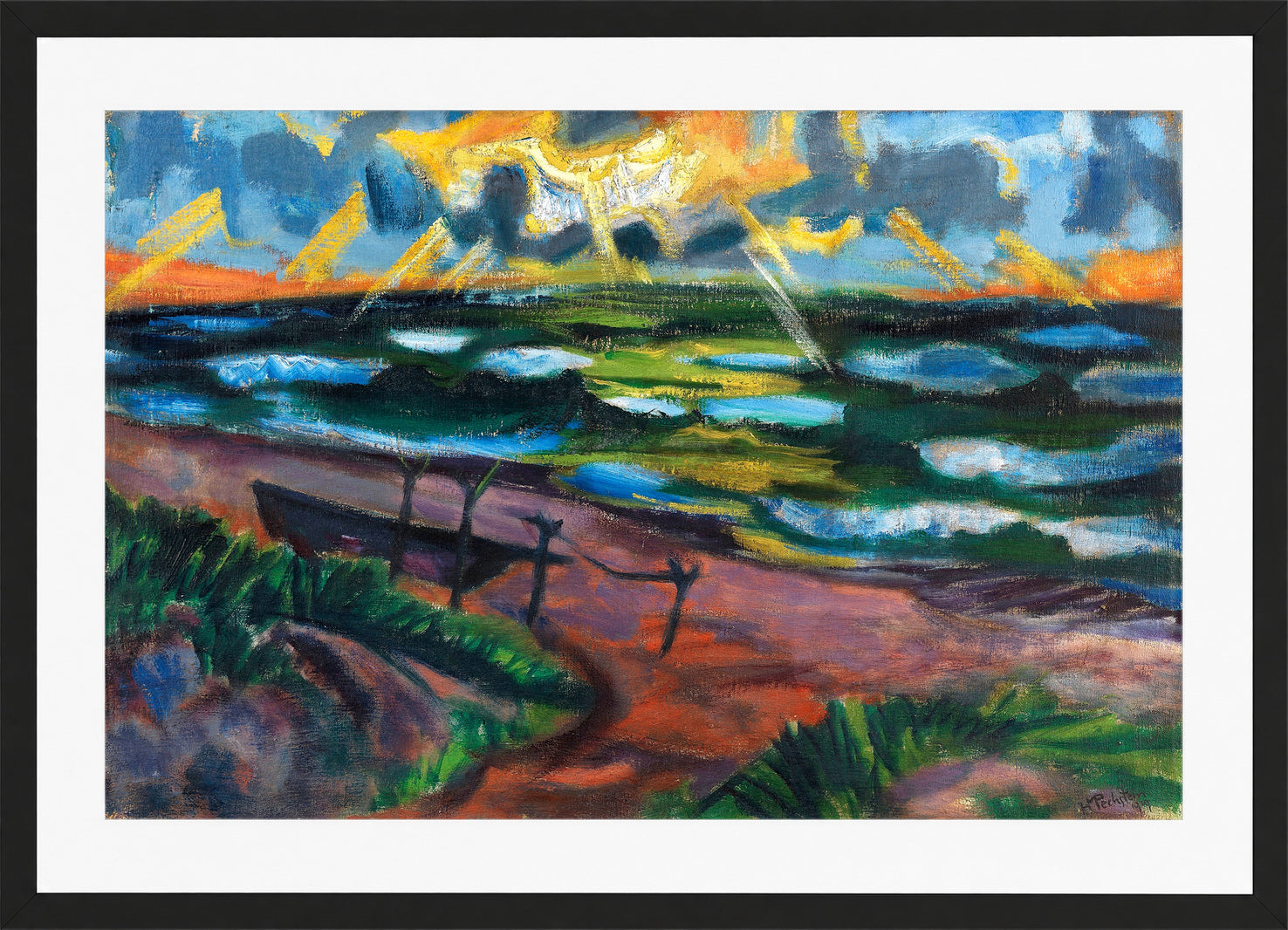
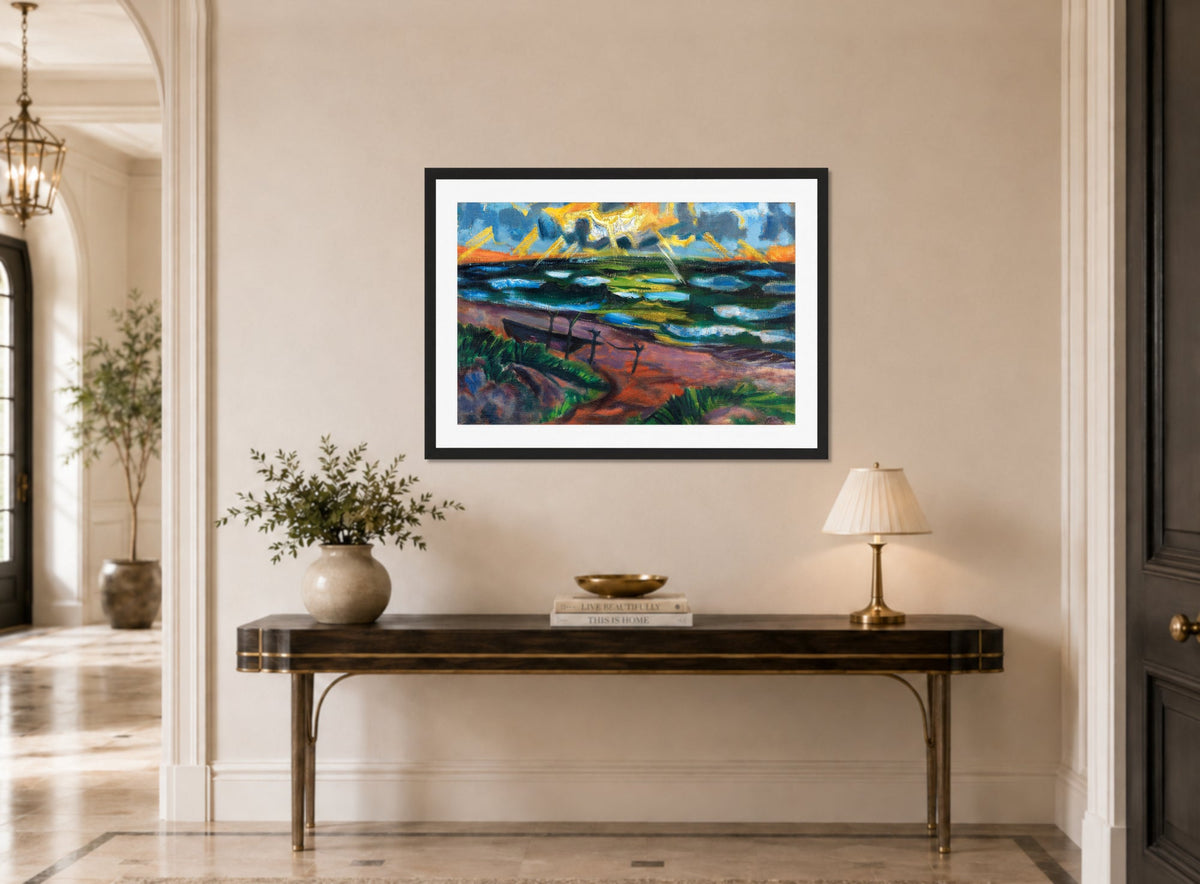
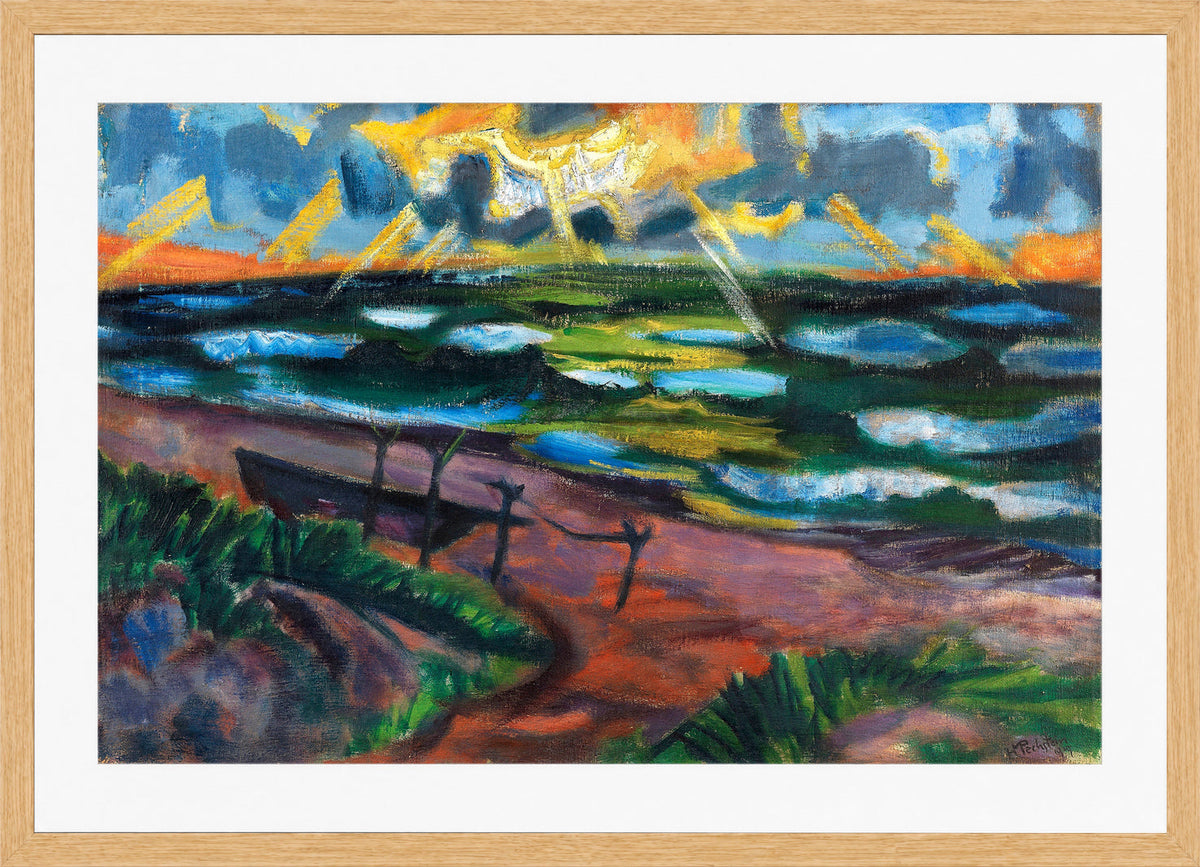
Storms and changing weather also gave Pechstein opportunities to introduce greater movement. Rough water could be described through repeated strokes and angular forms rather than meticulously painted waves.
This ability to turn observed coastal life into a concentrated visual experience is one of the characteristics that makes Pechstein's maritime work so distinctive.
Monterosso and the Mediterranean Coast
Pechstein's coastal subjects were not confined to northern Europe.
His visits to Monterosso al Mare on the Ligurian coast gave him another important fishing environment to explore. Boats, harbour activity and fishermen recur in works associated with the Italian village, but the Mediterranean setting introduced different light and colour from his Baltic subjects.
The attraction was nevertheless closely related.
Pechstein was repeatedly drawn to places where boats, working people and the sea formed a connected visual world. Monterosso allowed him to explore many of the compositional ideas already developed in northern fishing communities within a different landscape and climate.
The comparison between Baltic and Mediterranean subjects also demonstrates that Pechstein's maritime art was not simply a record of one particular coastline. Coastal working life itself was one of his enduring themes.
Fishermen as Expressionist Figures
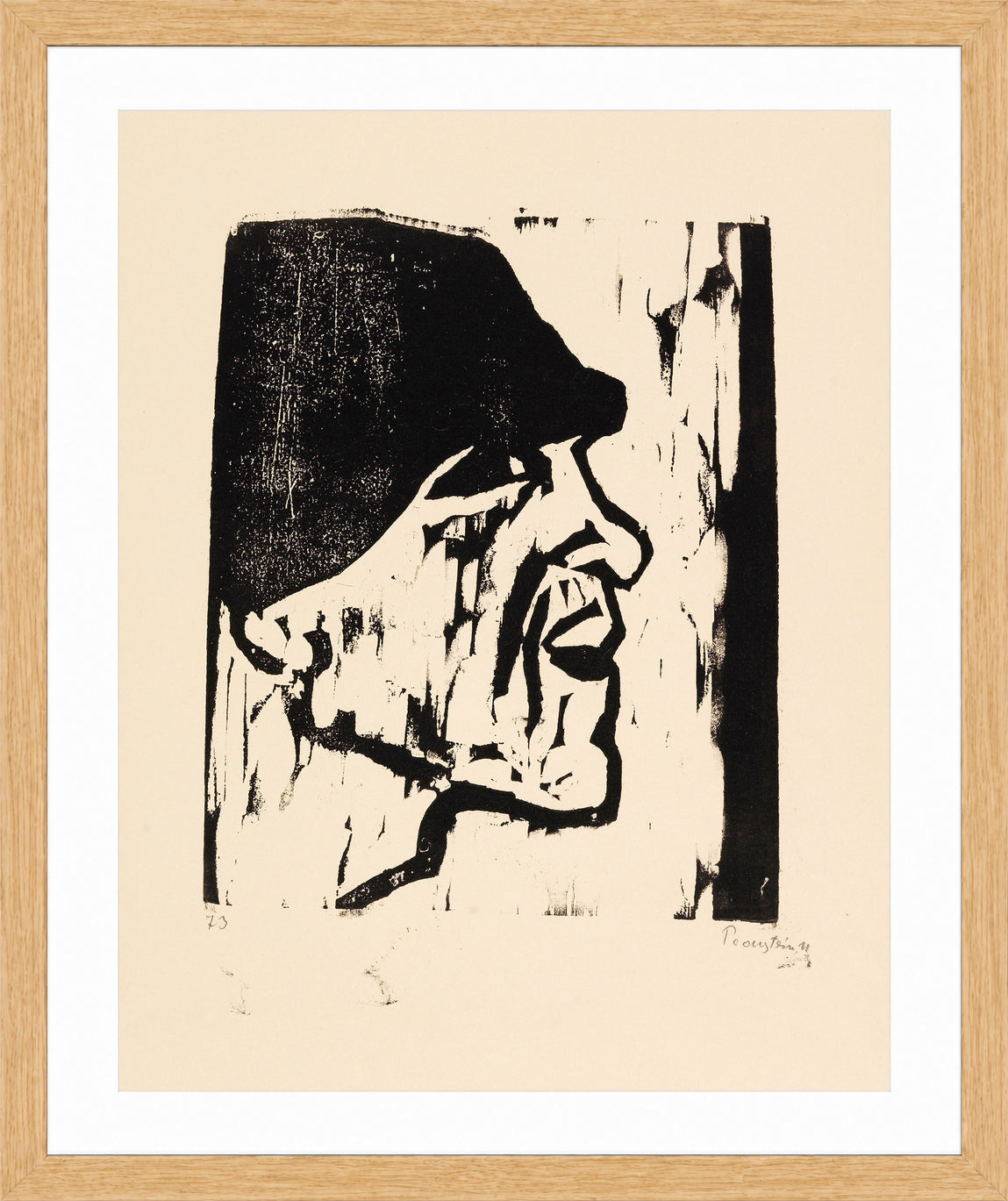
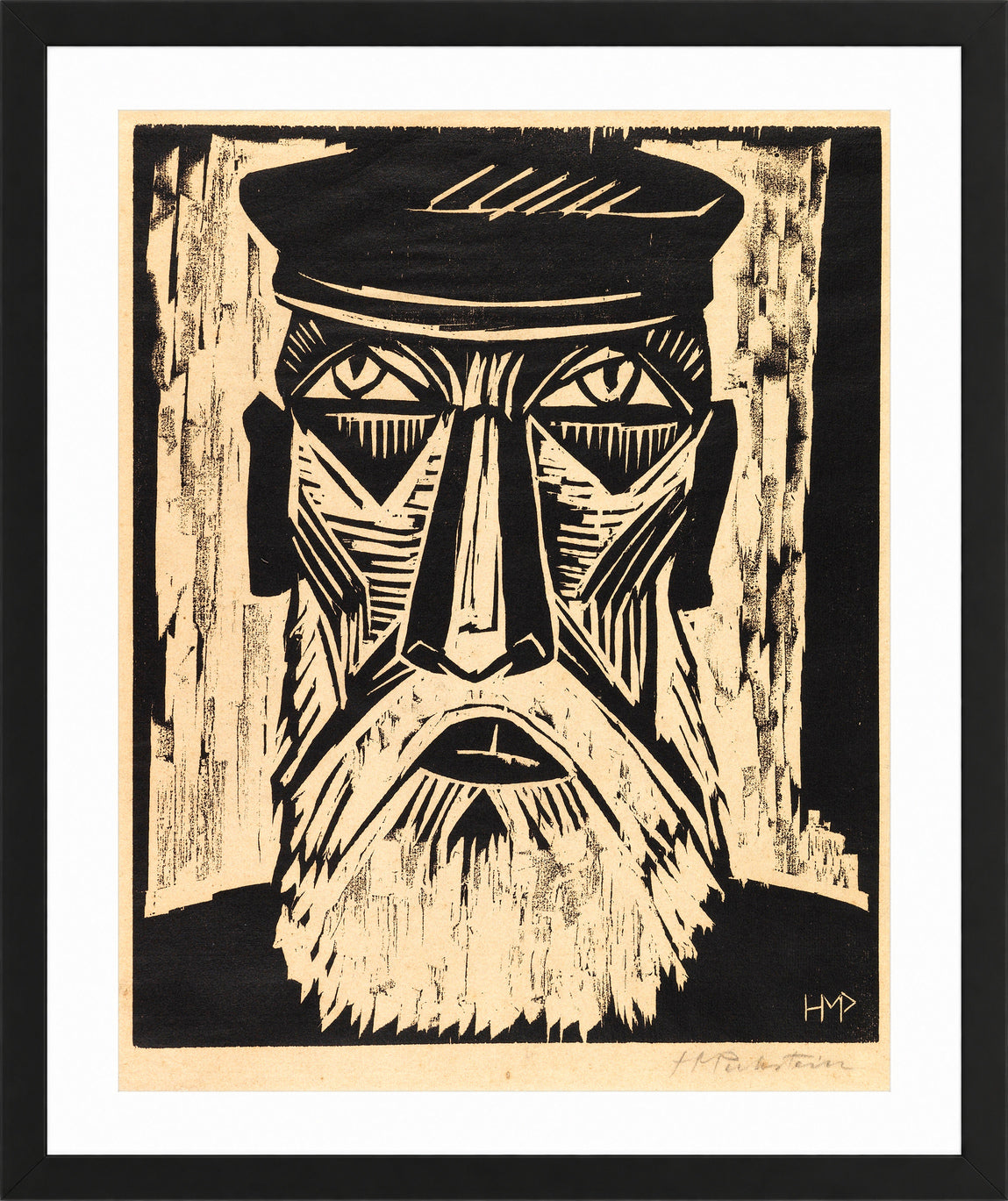
Some of Pechstein's maritime works focus increasingly closely on the fishermen themselves.
Heads and individual figures can become independent subjects, while other works show fishermen actively engaged with boats and nets.
These images connect the coastal collection with Pechstein's wider figurative art. The difference is that the identity of the sitter is frequently less important than occupation, gesture and physical presence.
Faces can be simplified into strong angular forms. Hands, arms and clothing may be organised through the same emphatic contours used to describe boats and shoreline.
The result is a particularly unified form of Expressionist imagery in which people and environment appear to belong to the same visual language.
For Pechstein portraits, working figures and other human subjects beyond the coast, browse Max Pechstein Figurative & Portrait Prints.
German Expressionist Seascapes
Pechstein's treatment of the sea differs markedly from conventional nineteenth-century marine painting.
Rather than concentrating primarily on accurate weather effects, ship detail or atmospheric perspective, he frequently used the coastline as a framework for expressive colour and vigorous structure.
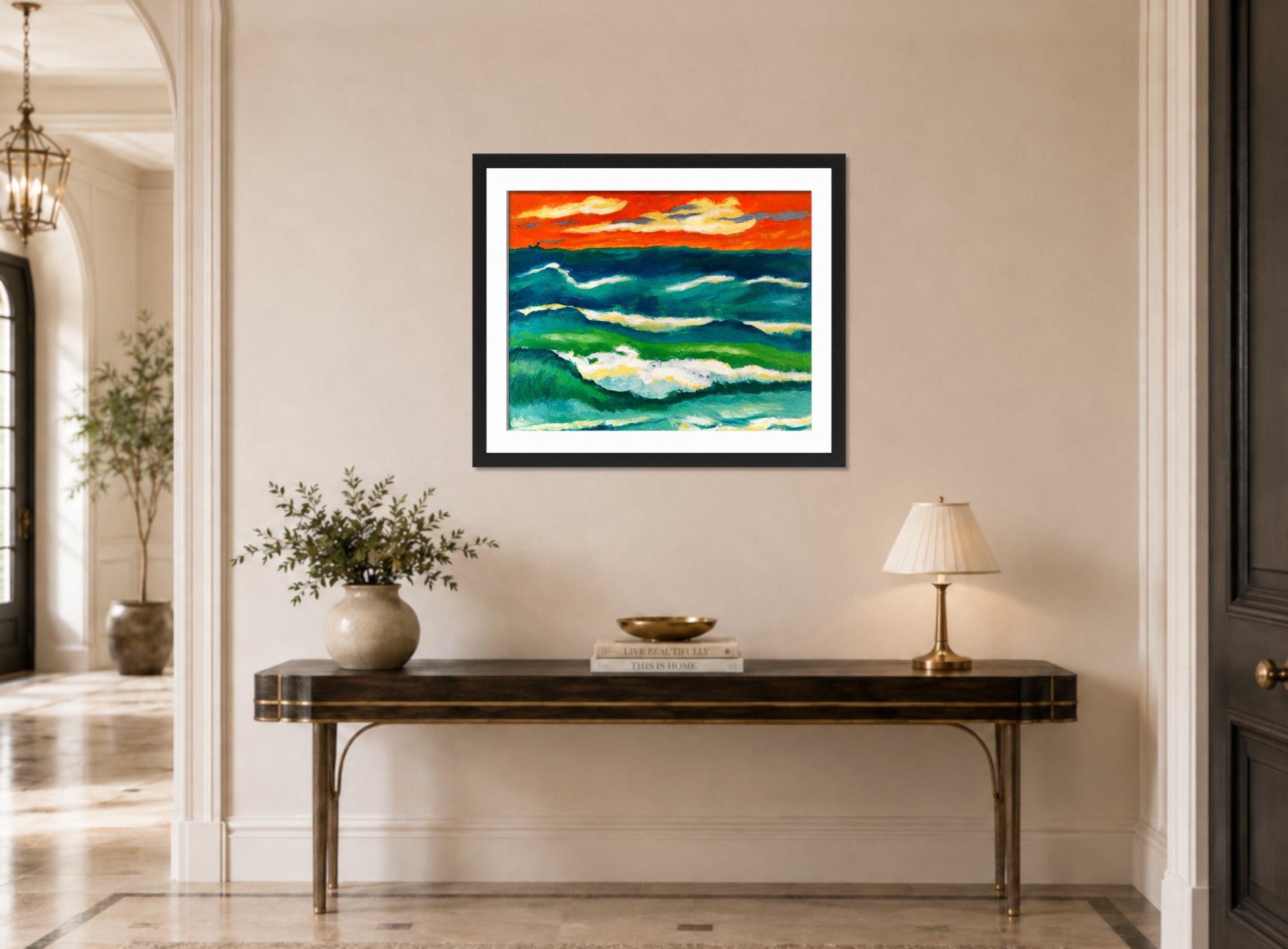
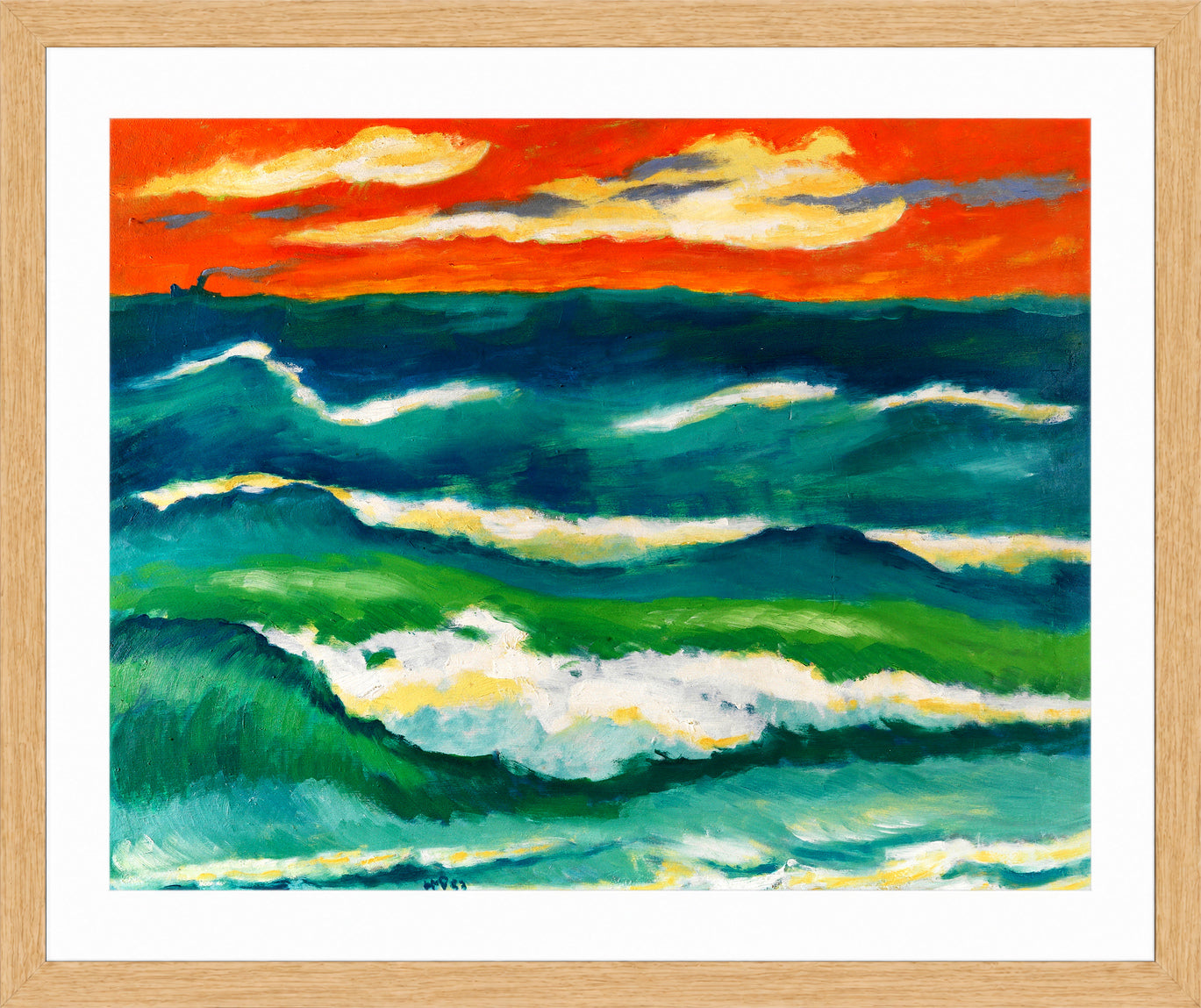
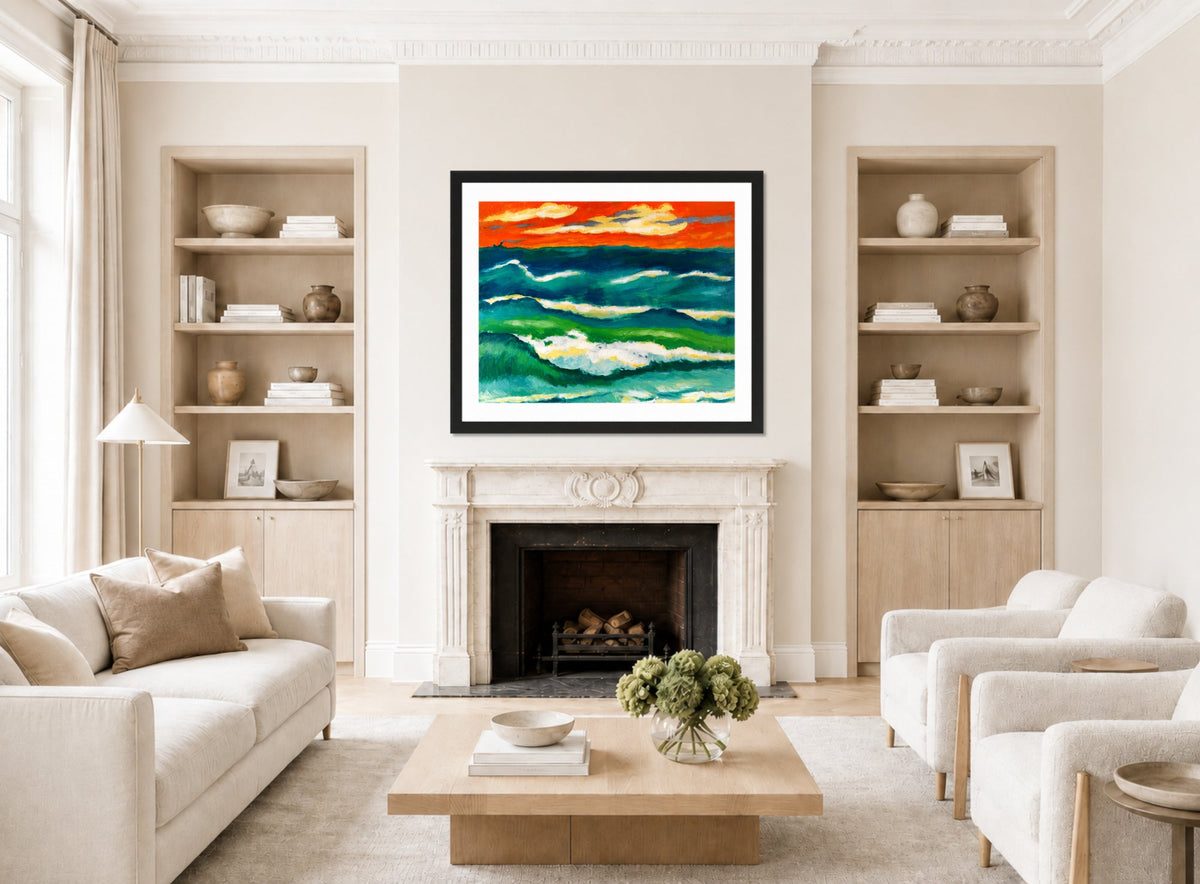
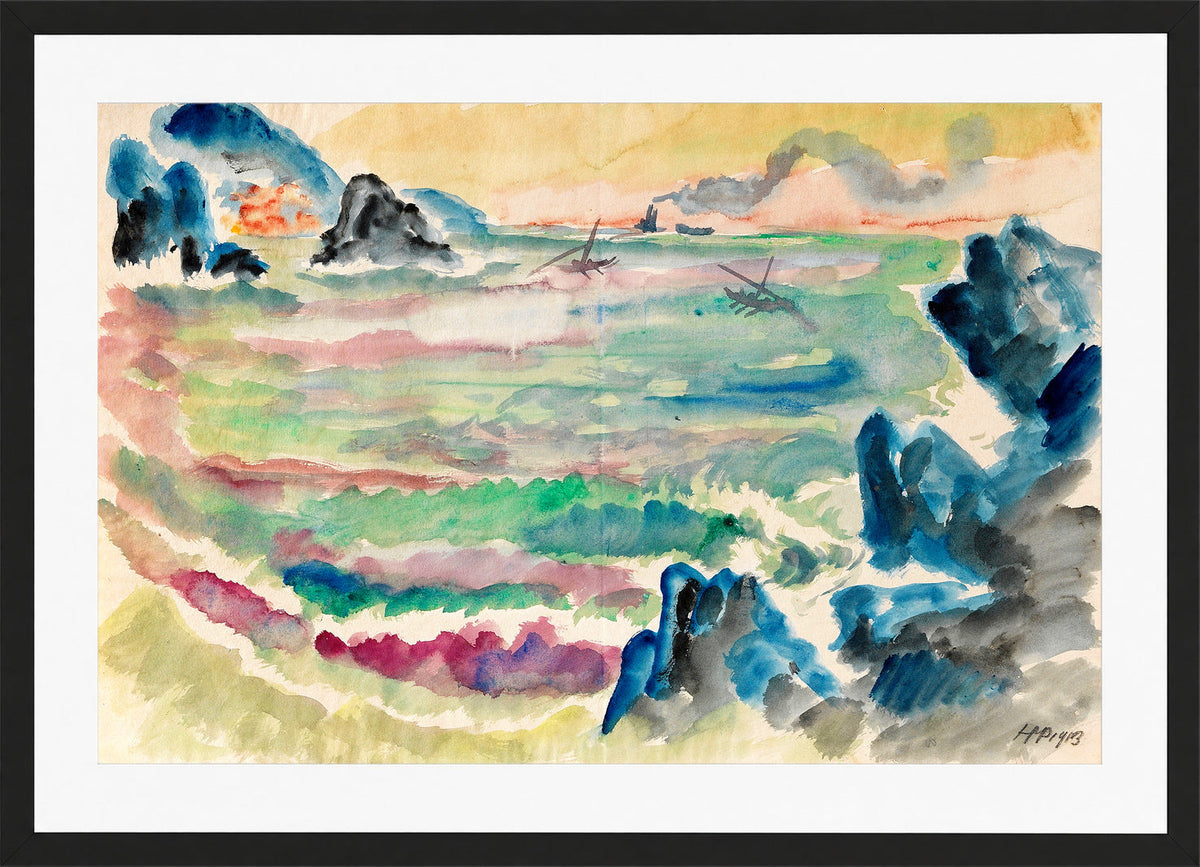
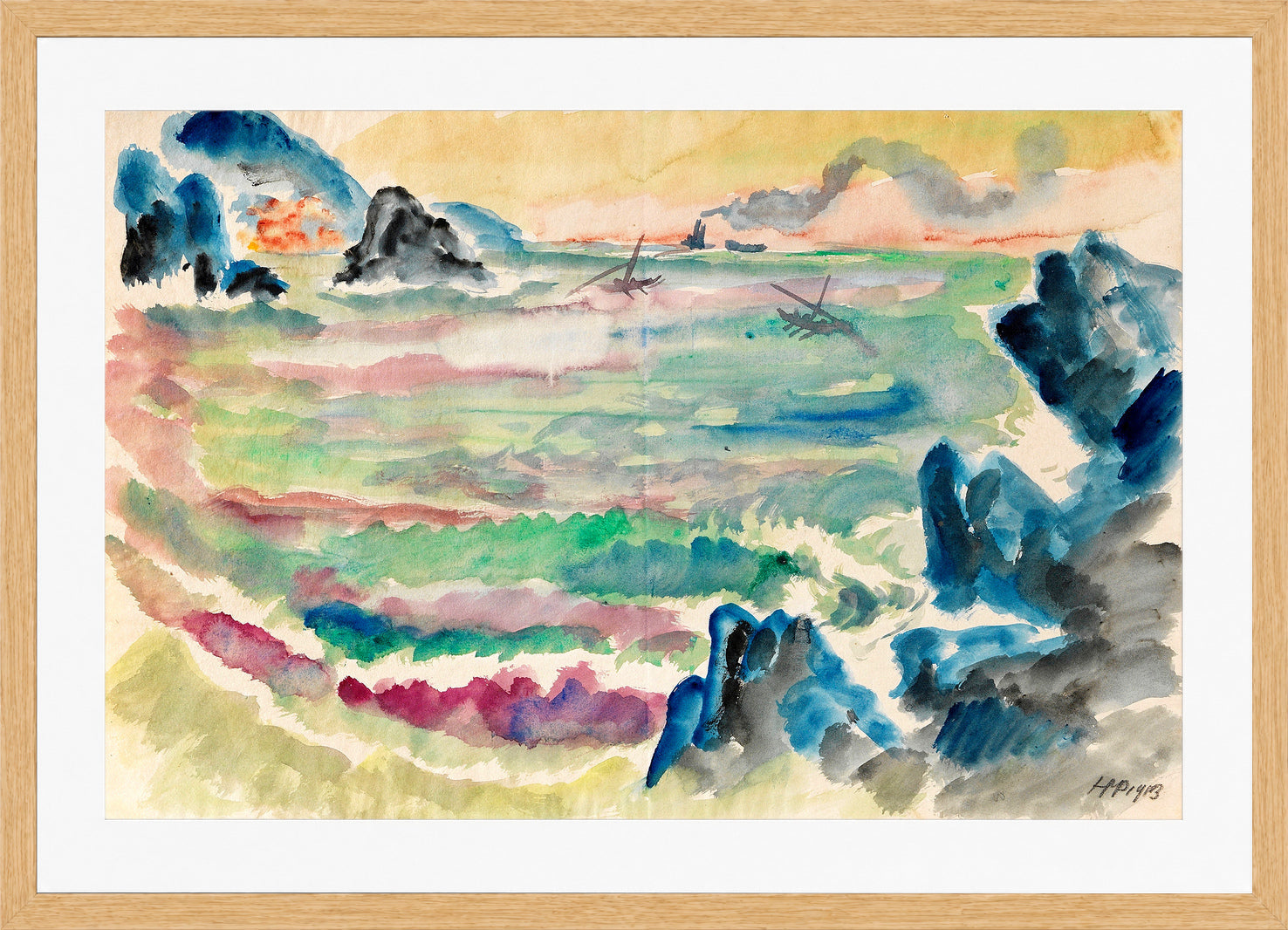
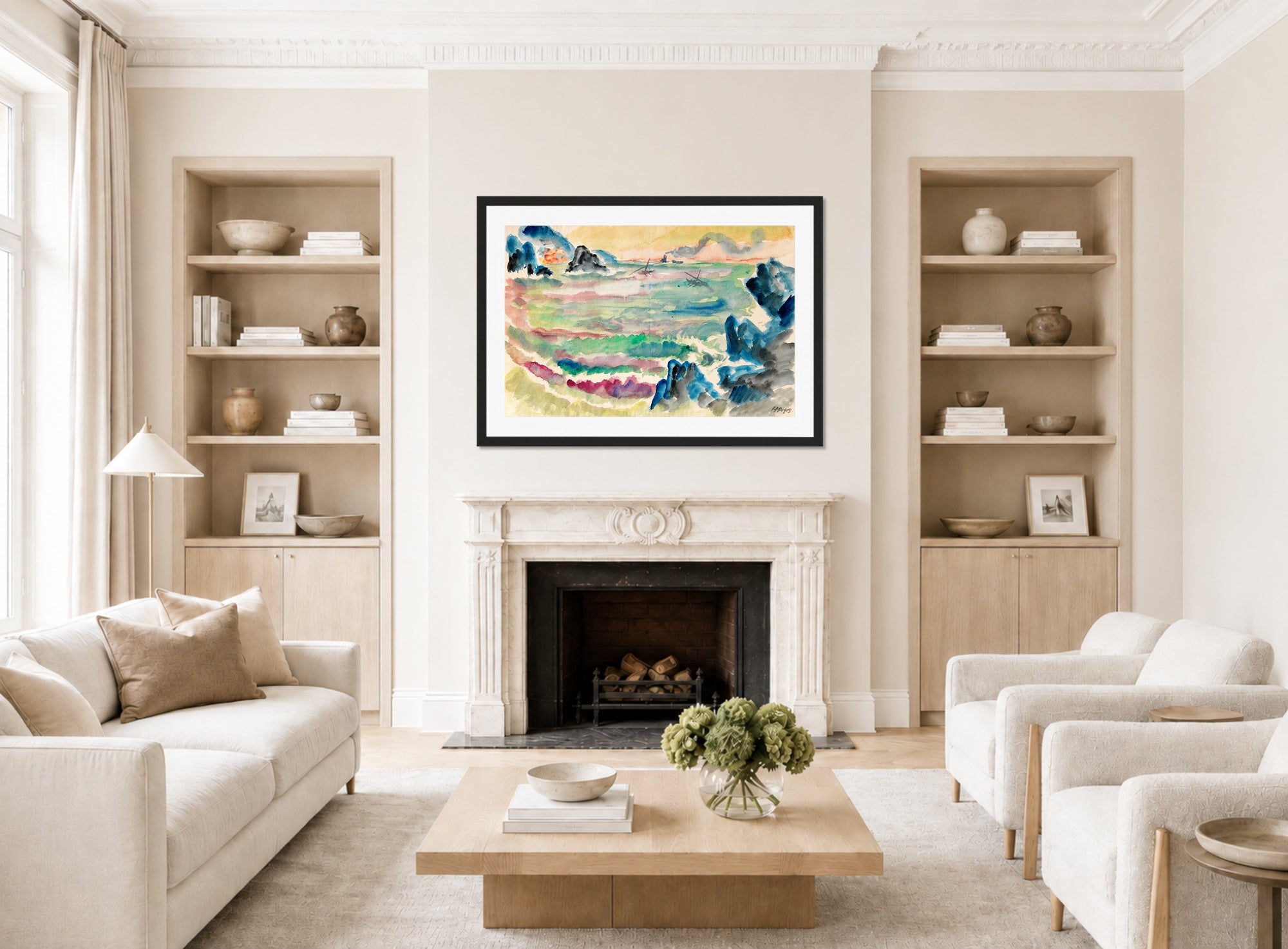
Water can be reduced to broad areas of blue or green. Waves are described through rhythmic strokes or strong contours. Boats may be simplified into highly readable silhouettes, while figures are integrated into the surrounding pattern of sea and shore.
Colour is especially important.
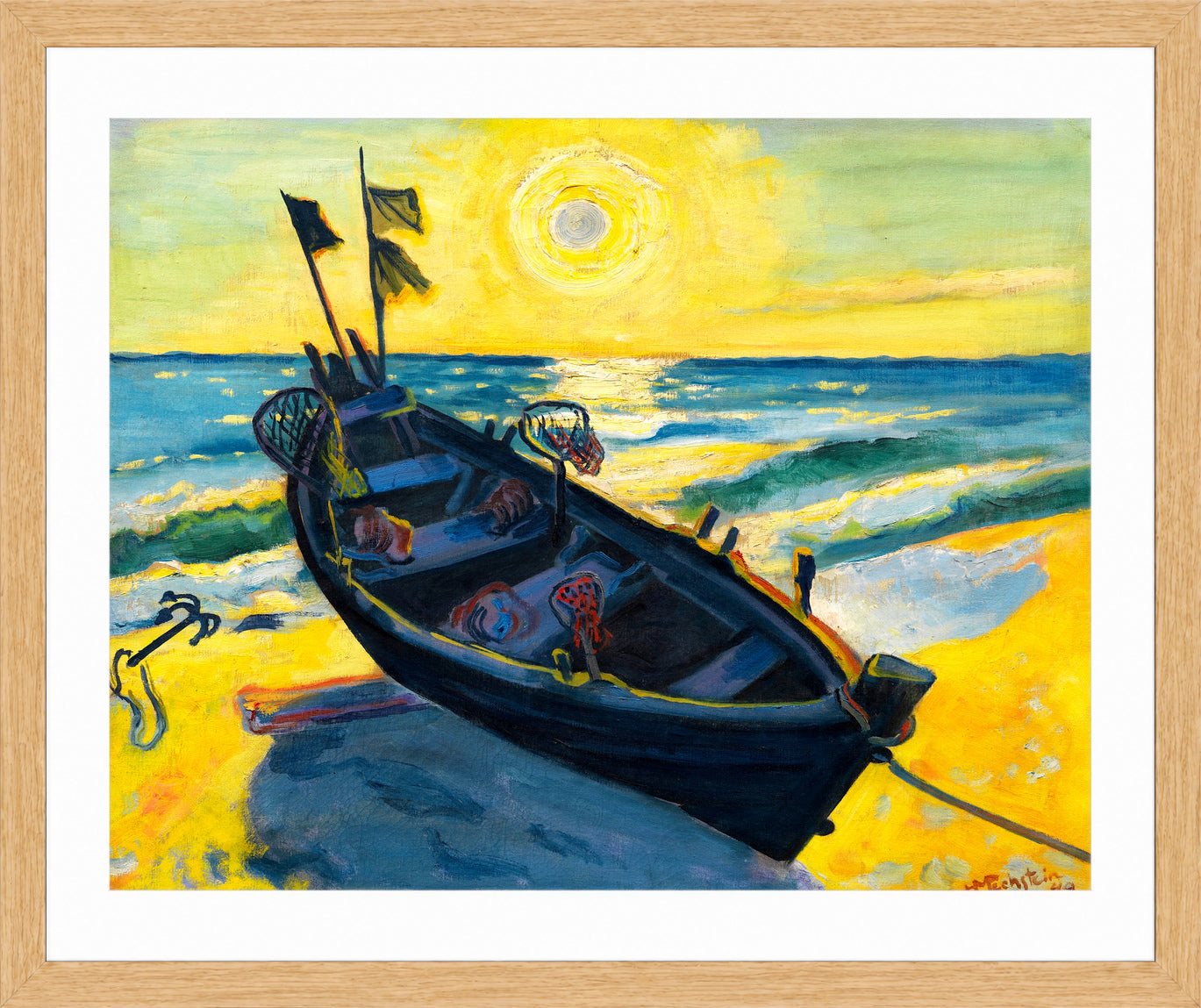
A blue sea may be set against yellow sand, red buildings or green vegetation. Dark boats can cut across brighter water, creating strong tonal contrasts. In storm scenes, the relationship between sea and sky may become more important than any precise description of individual waves.
These qualities link Pechstein's maritime work directly to the wider history of Expressionist Art Prints.
His development from Die Brücke artist to mature coastal painter is explored in greater depth in our Max Pechstein biography, paintings and prints guide.
Coastal Subjects Across Pechstein's Career
One reason the sea is so important when considering Pechstein is the length of time for which maritime imagery remained relevant to him.
His engagement with fishing communities began during the formative Expressionist years before the First World War and continued through the 1920s, 1930s and later career.
Locations changed and his technique evolved, yet boats, beaches and coastal landscapes repeatedly returned.
This continuity makes maritime works particularly useful for understanding Pechstein's artistic development. Early compositions can be compared with later paintings to see how the same basic subjects were reinterpreted across several decades.
The sea was therefore not simply one phase of his art. It became one of the recurring structures through which Pechstein explored colour, landscape, human labour and movement.
Max Pechstein Coastal Prints for Contemporary Interiors
Pechstein's coastal works can be particularly effective as wall art because they combine recognisable scenery with strong modern colour.
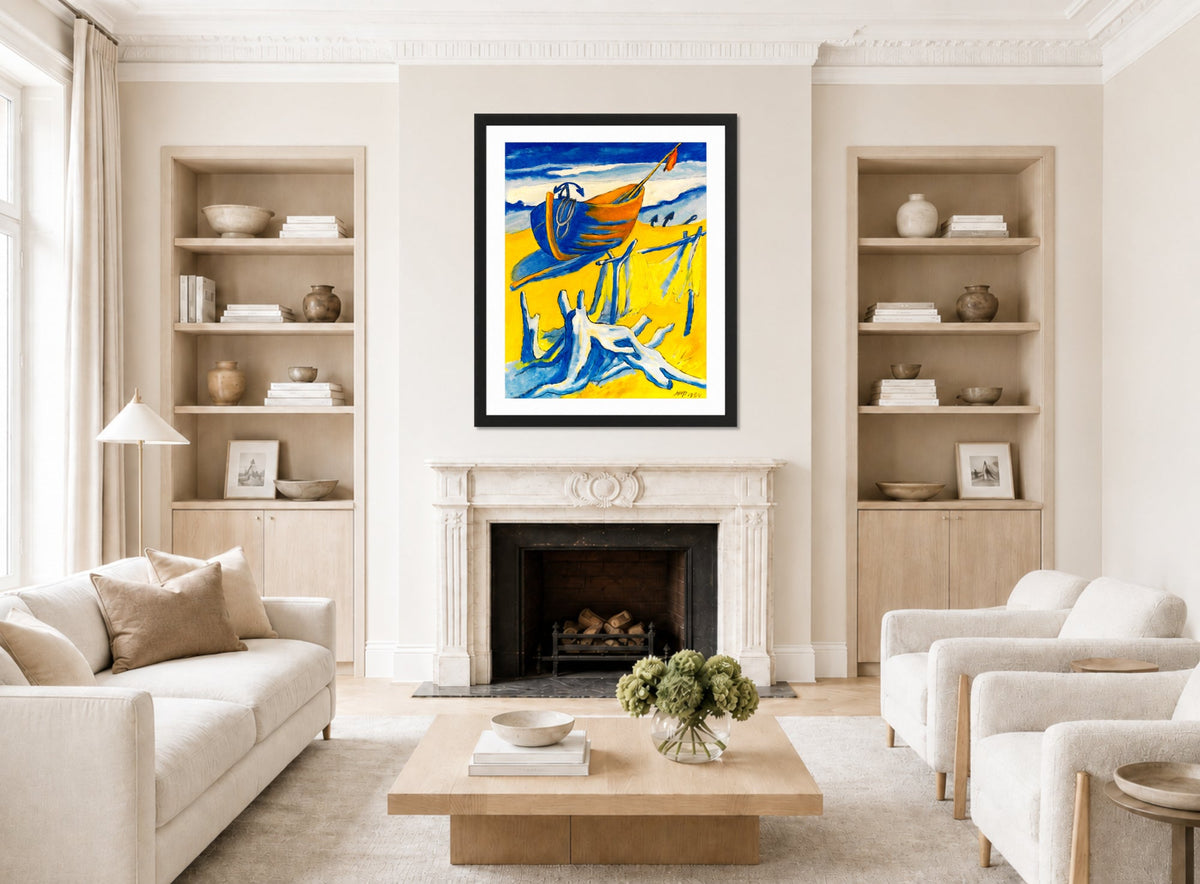
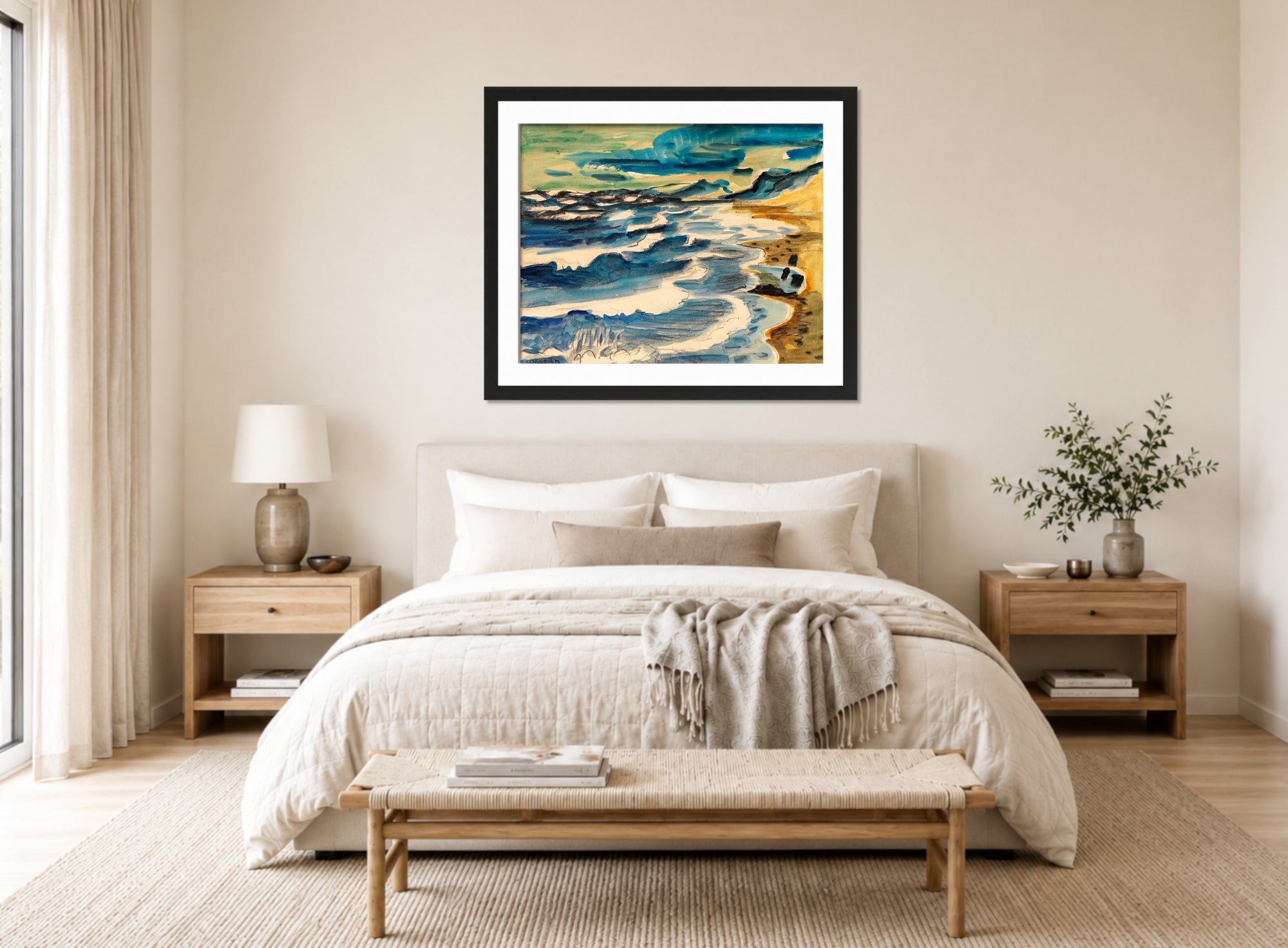
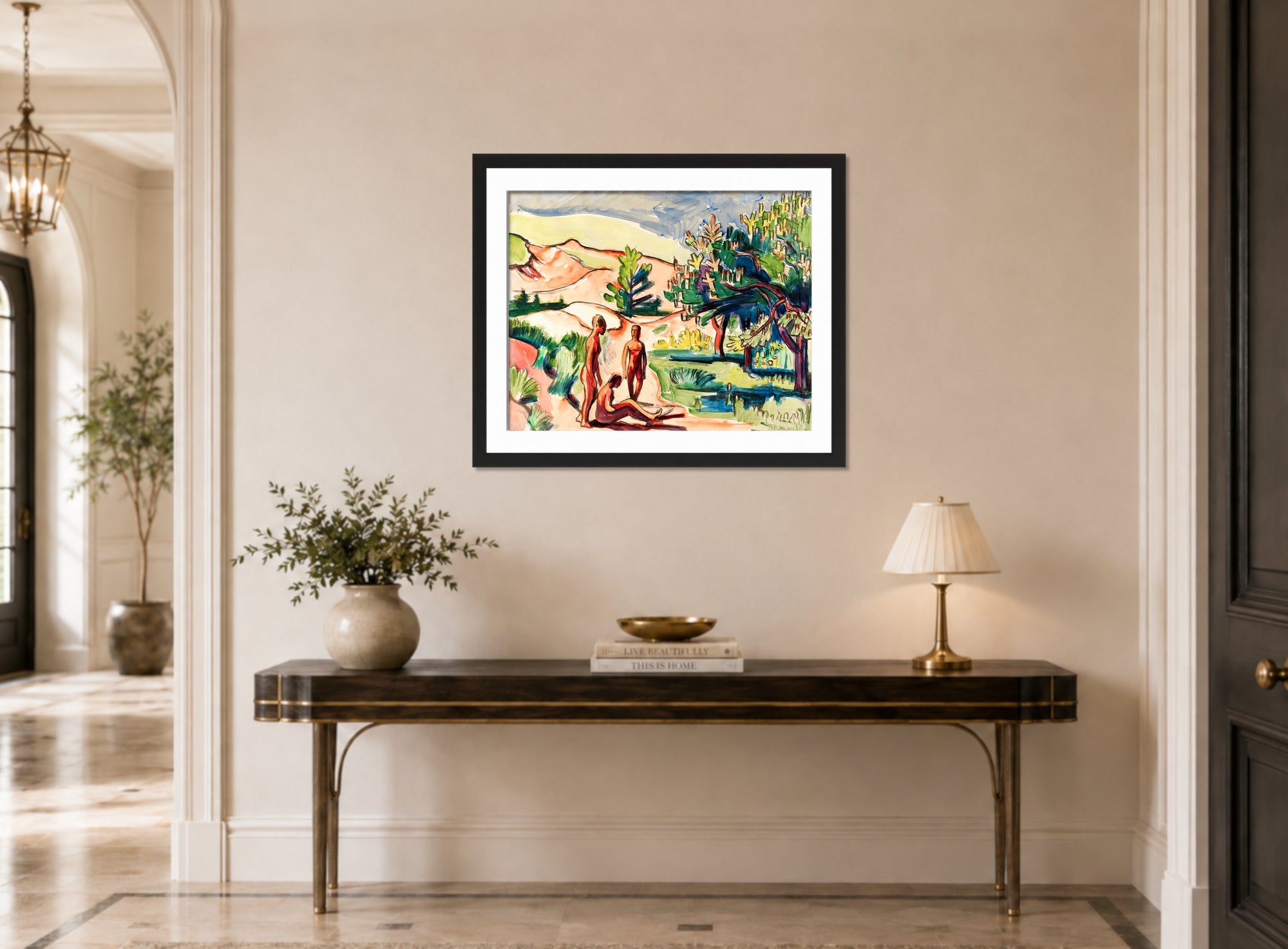
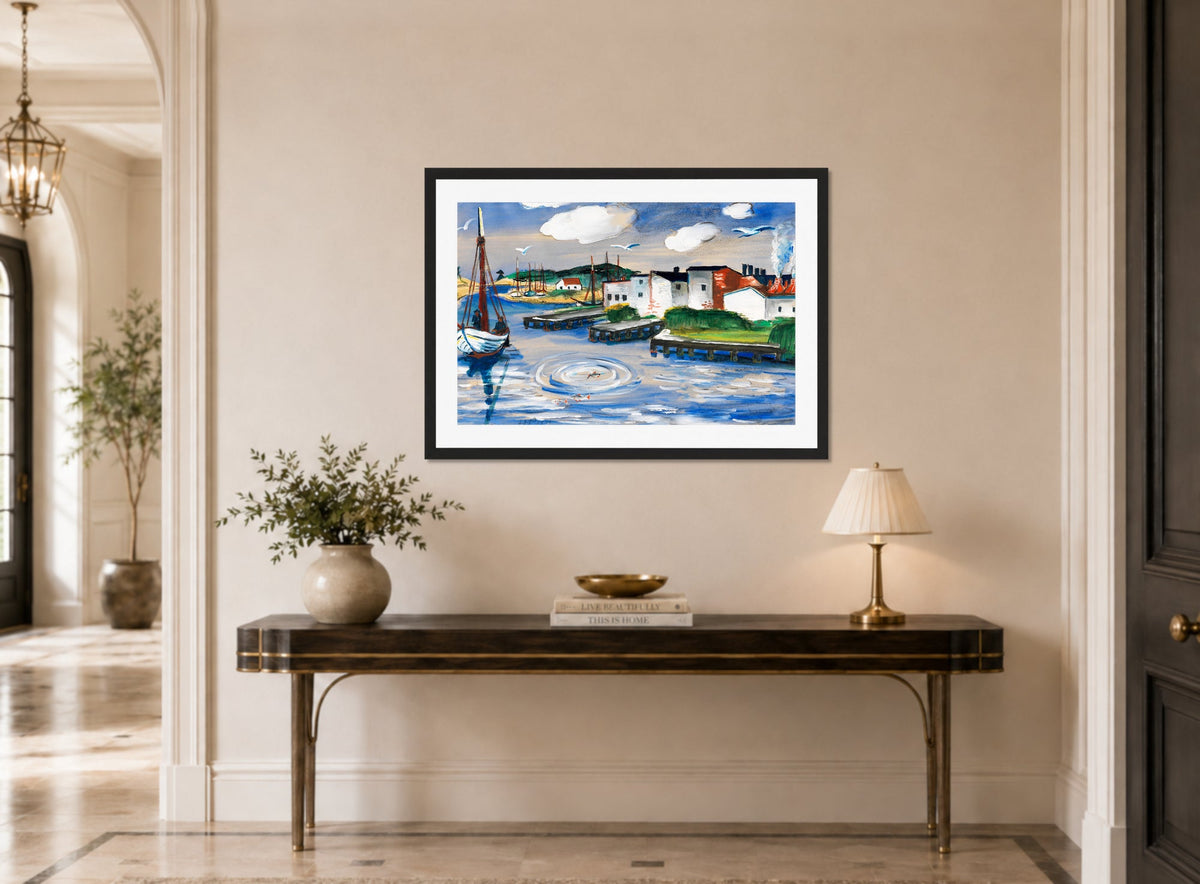
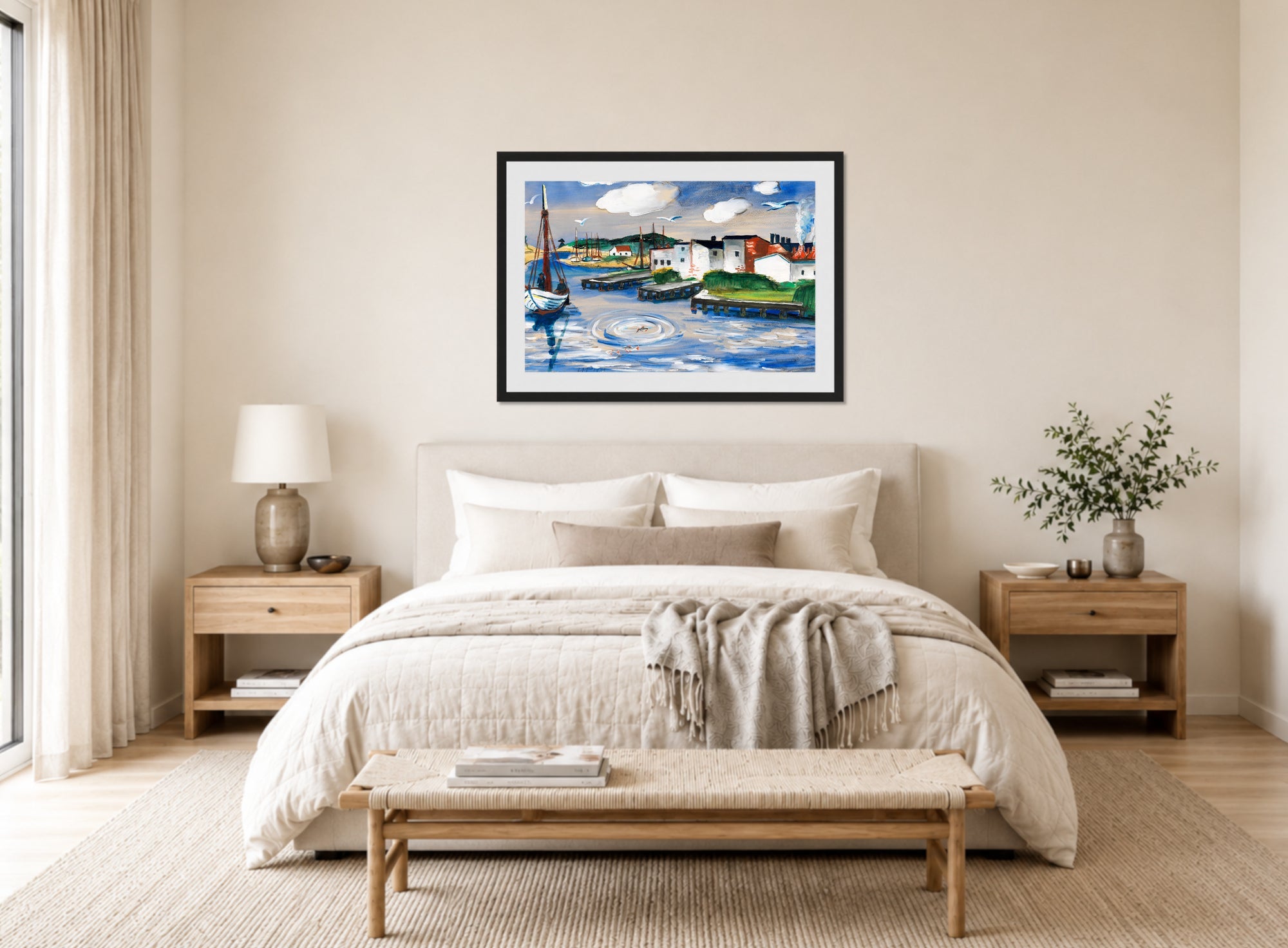
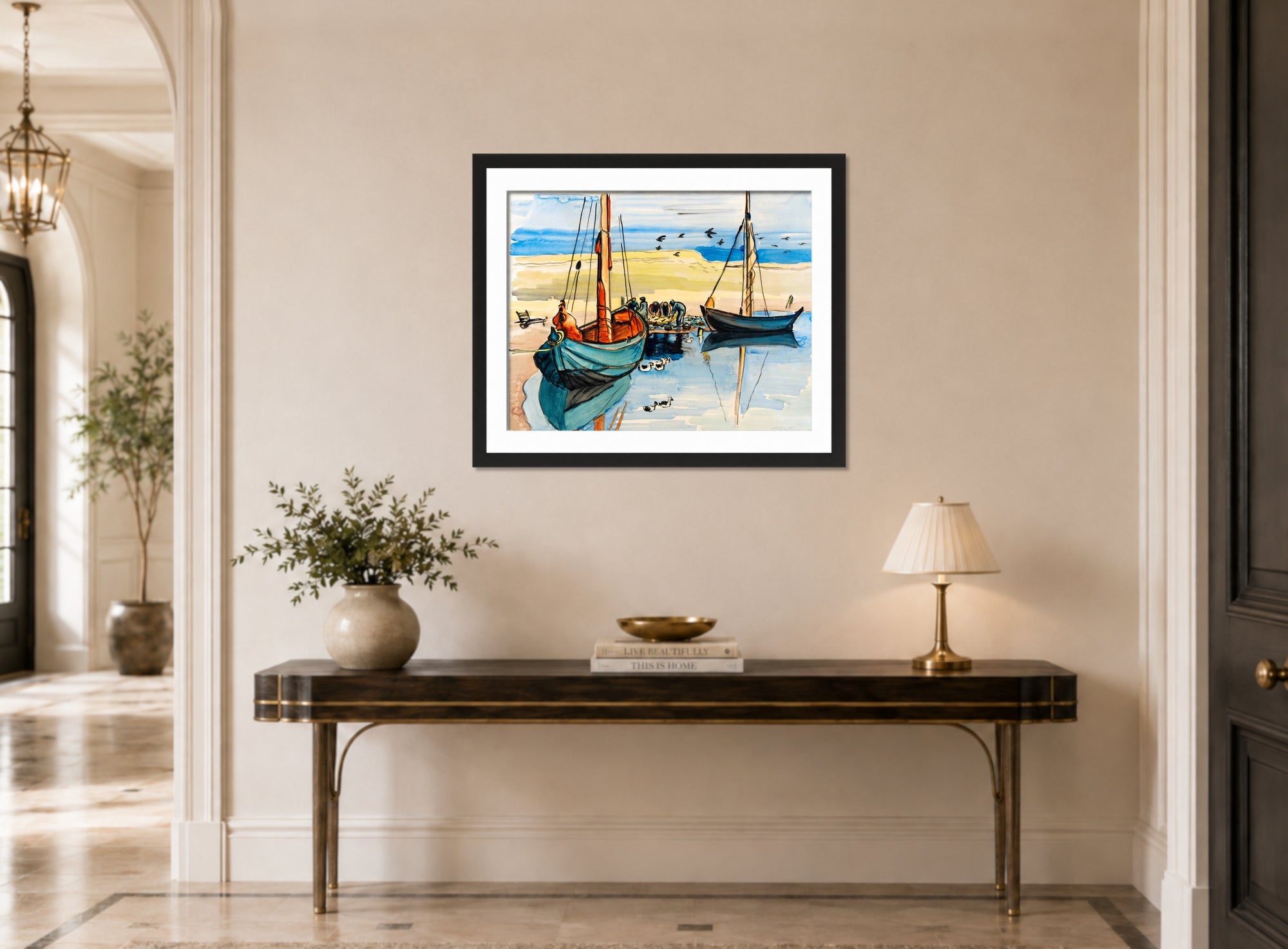
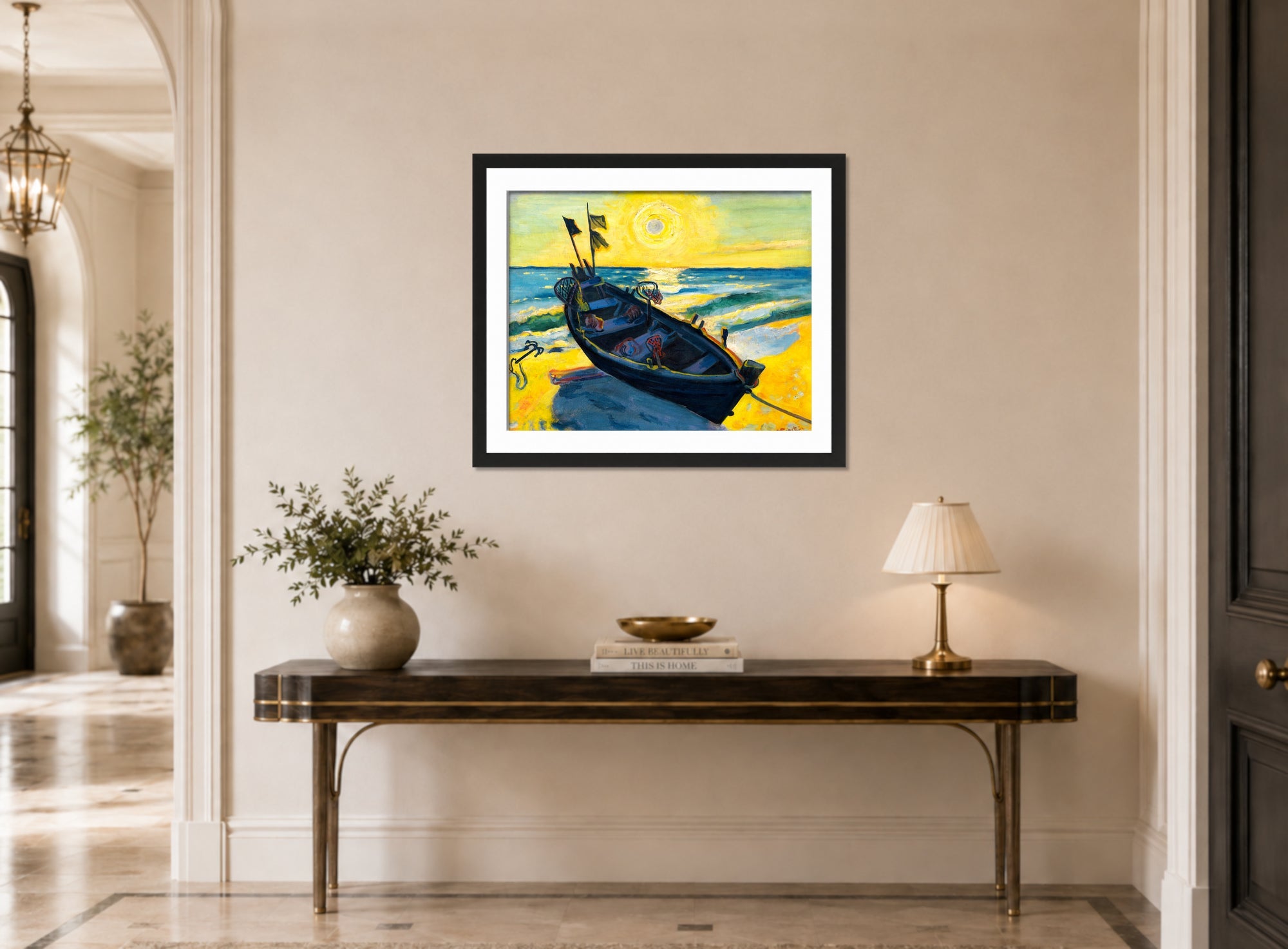
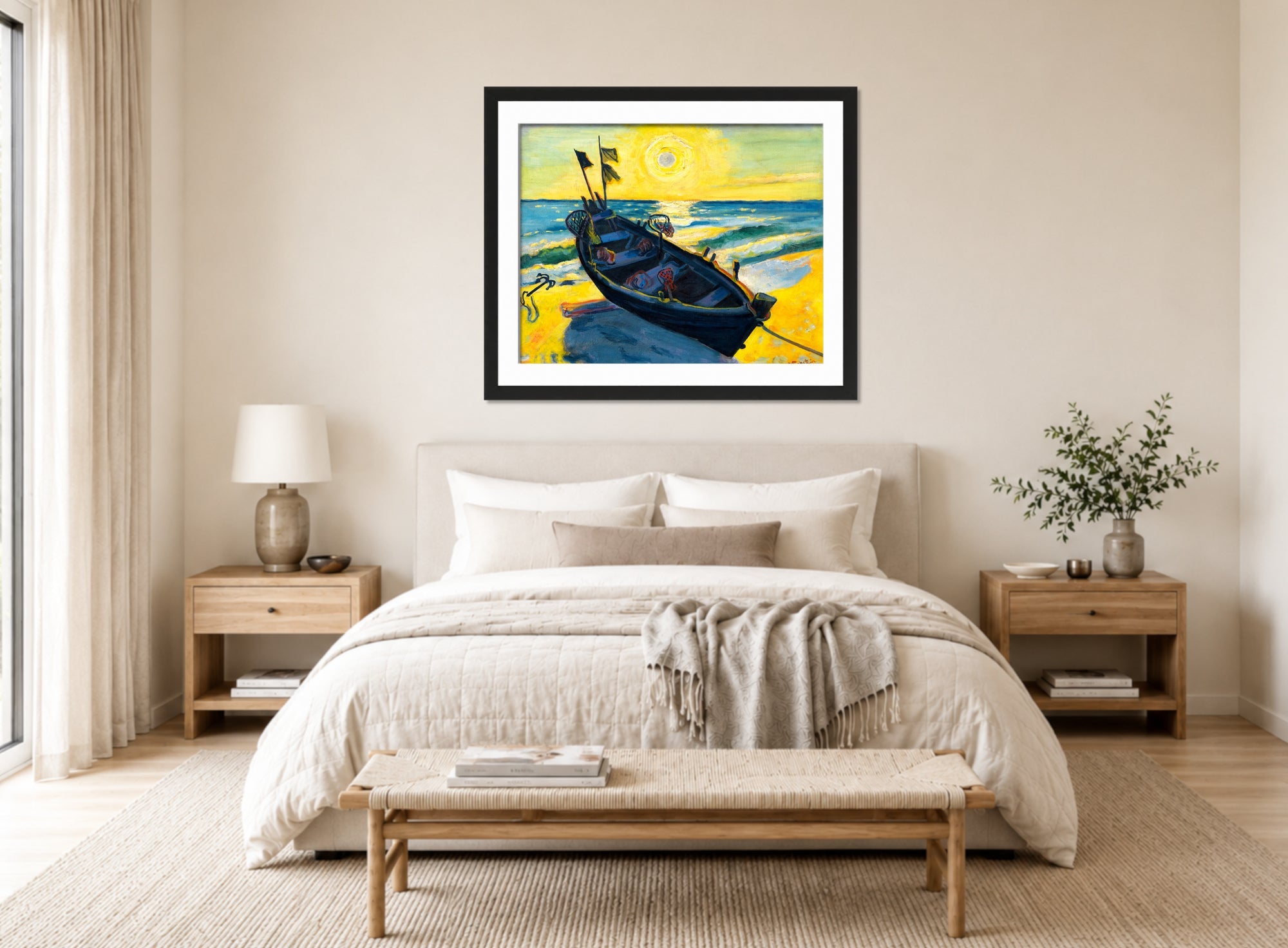
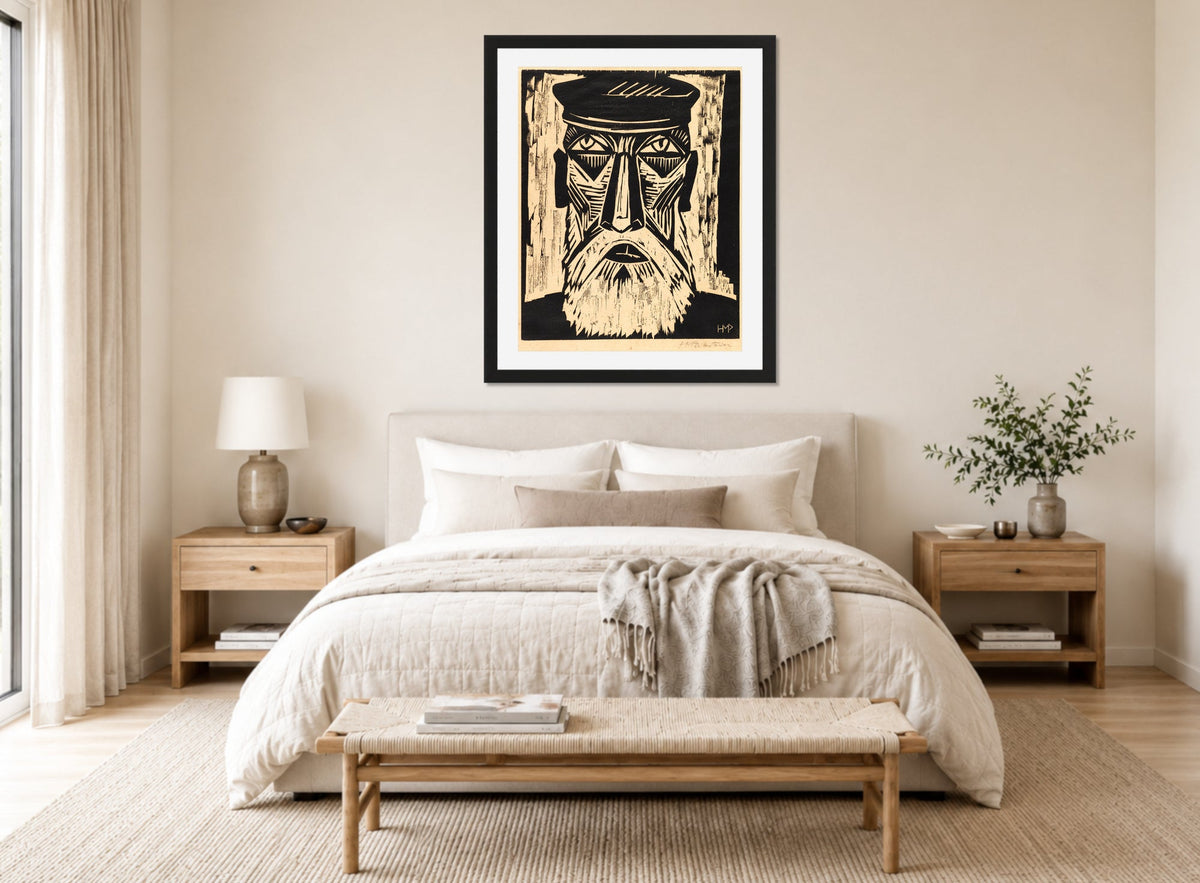
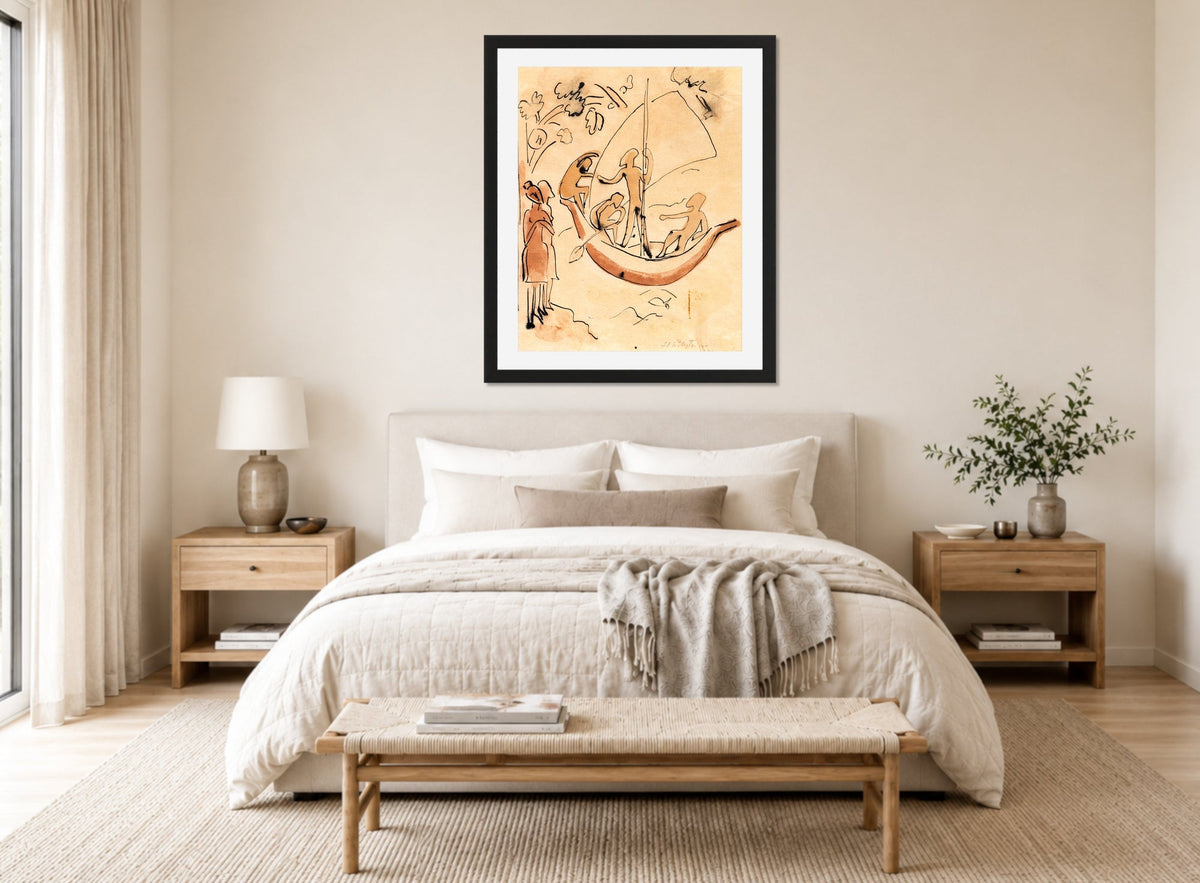
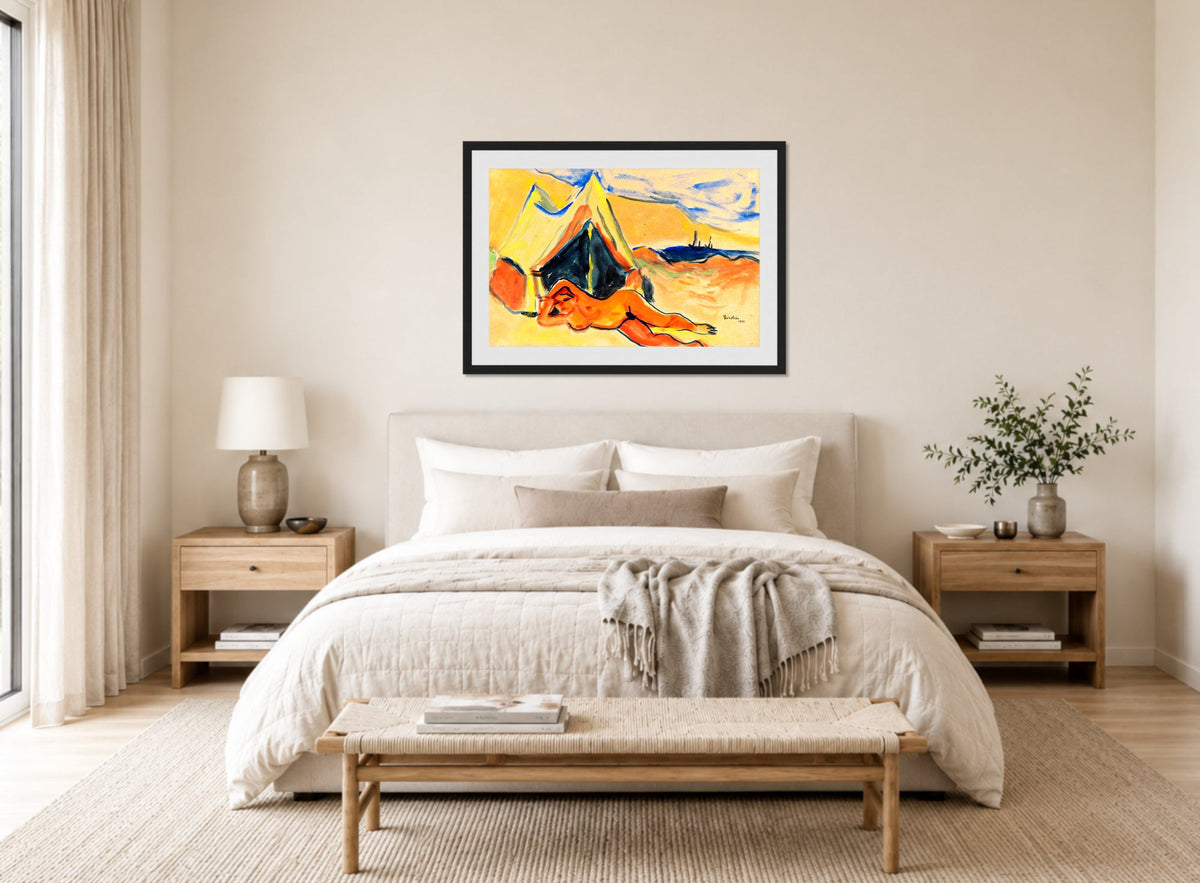
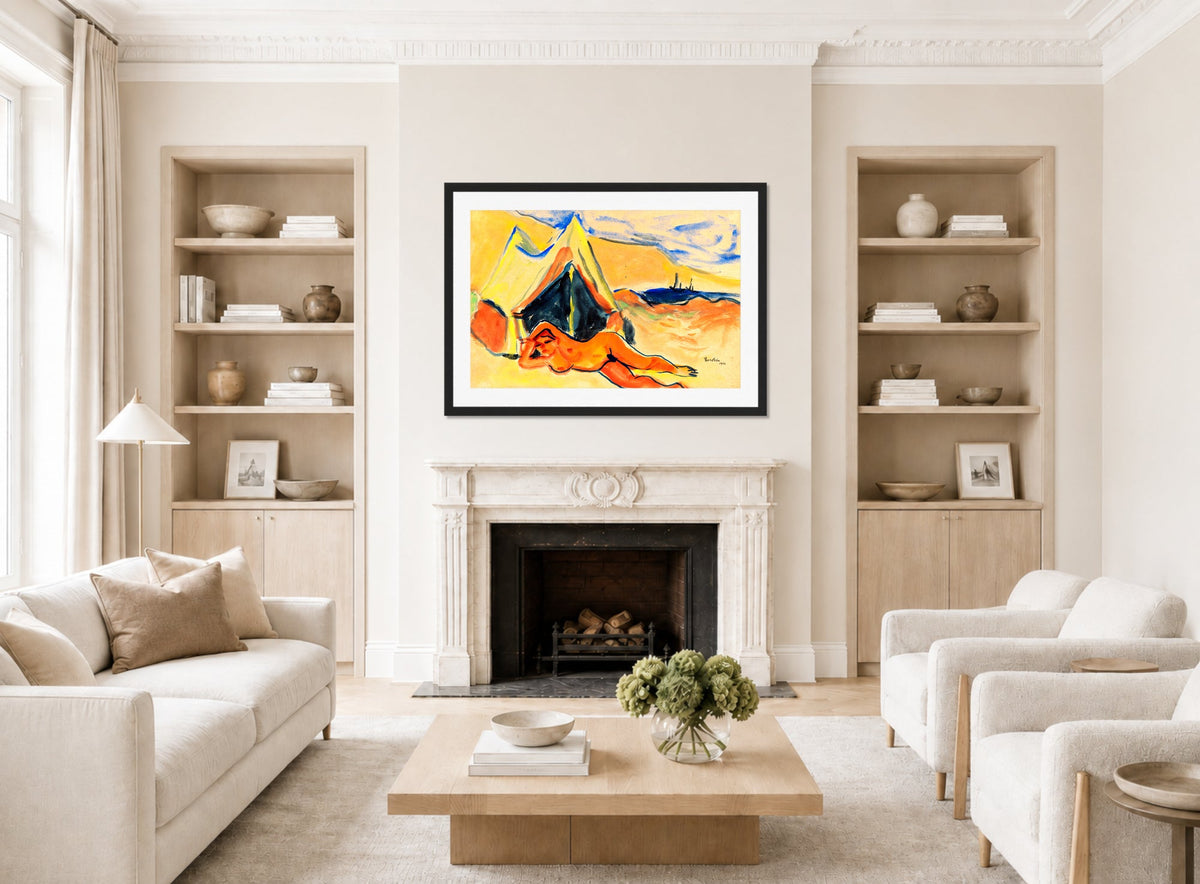
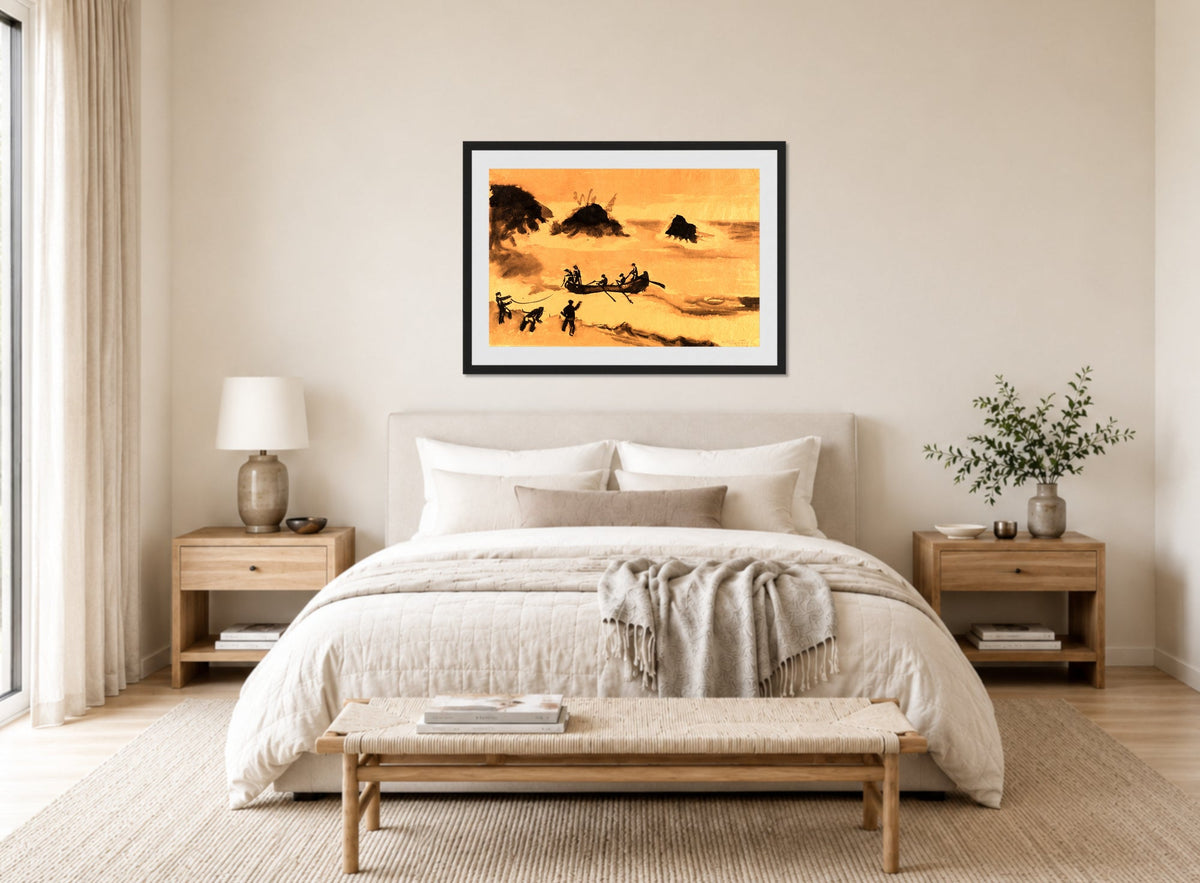
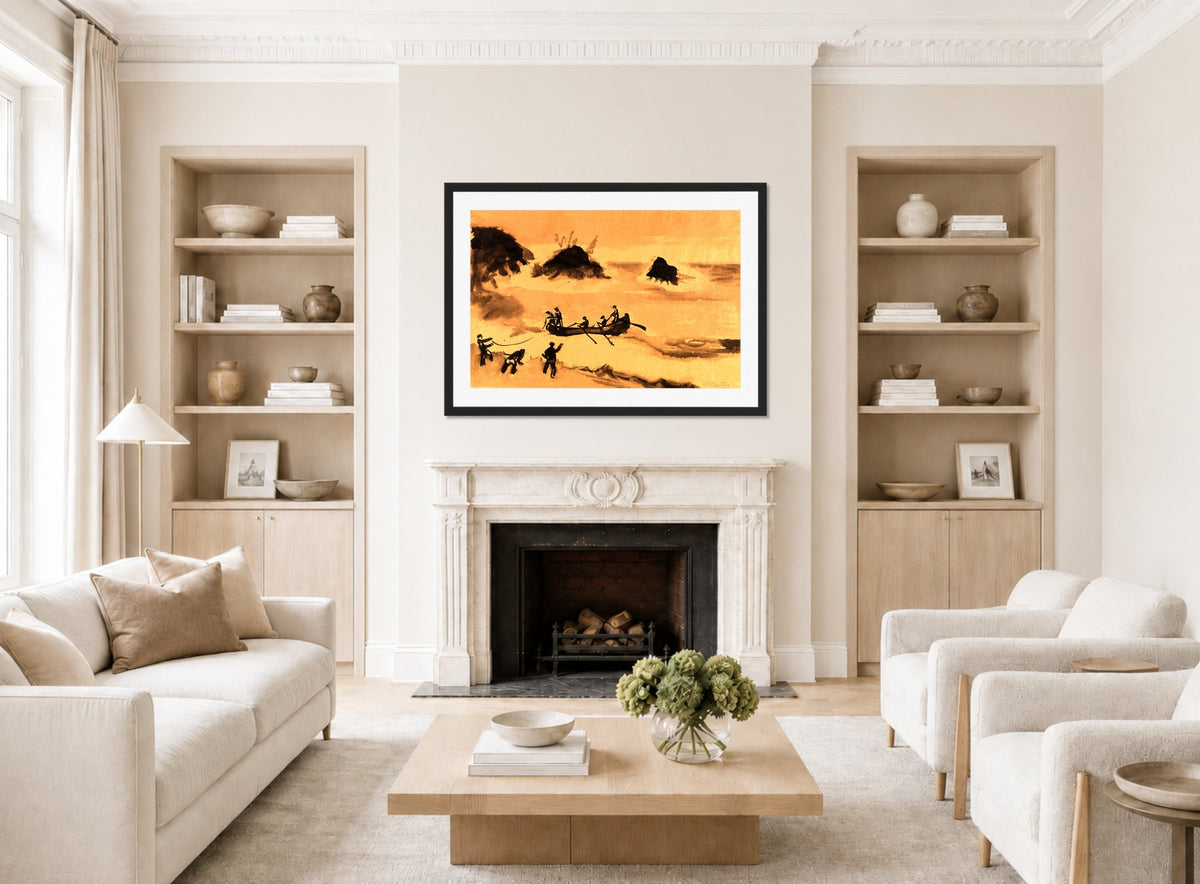
Blue-dominated seascapes can introduce a cool focal point to living rooms, bedrooms and dining areas. Fishing scenes containing warmer sand, ochre and red tones work well with natural wood and neutral interiors, while more graphic boat and harbour compositions can suit studies, hallways and contemporary gallery walls.
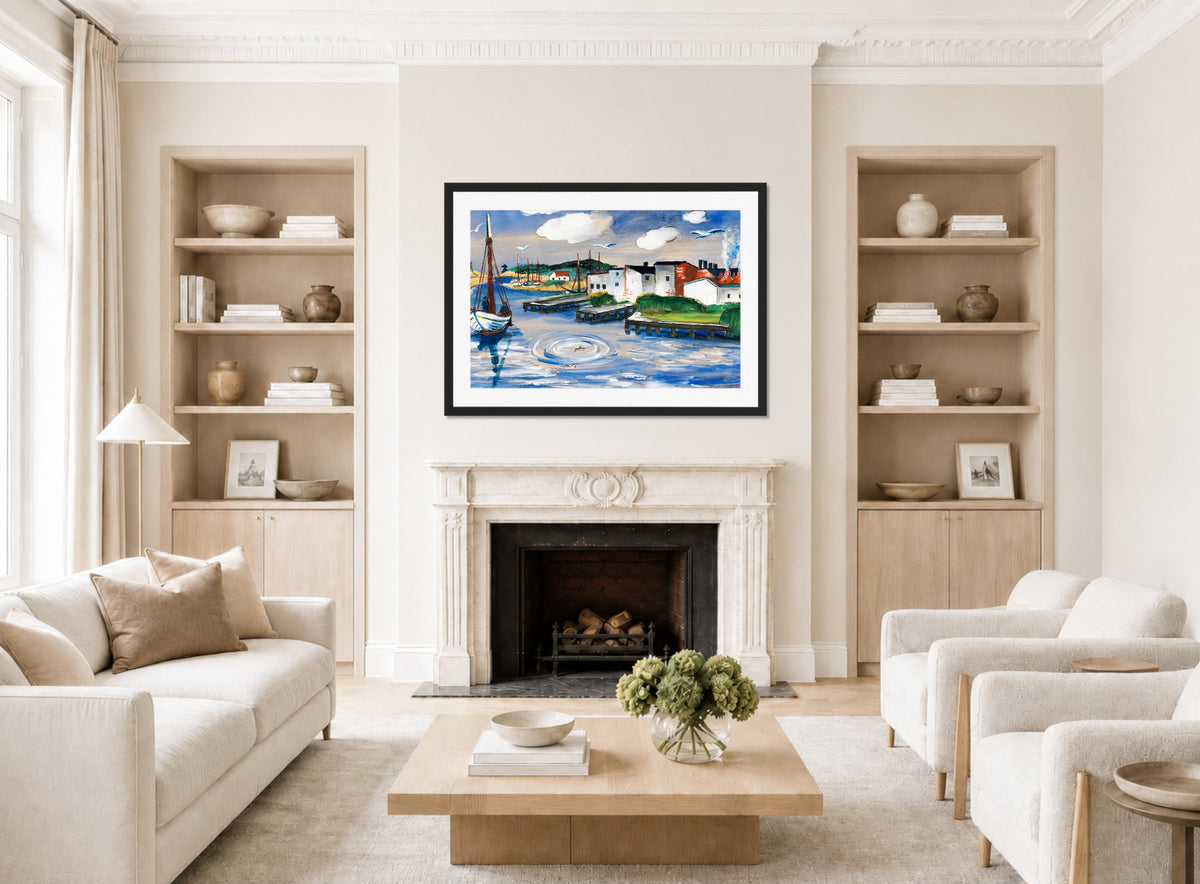
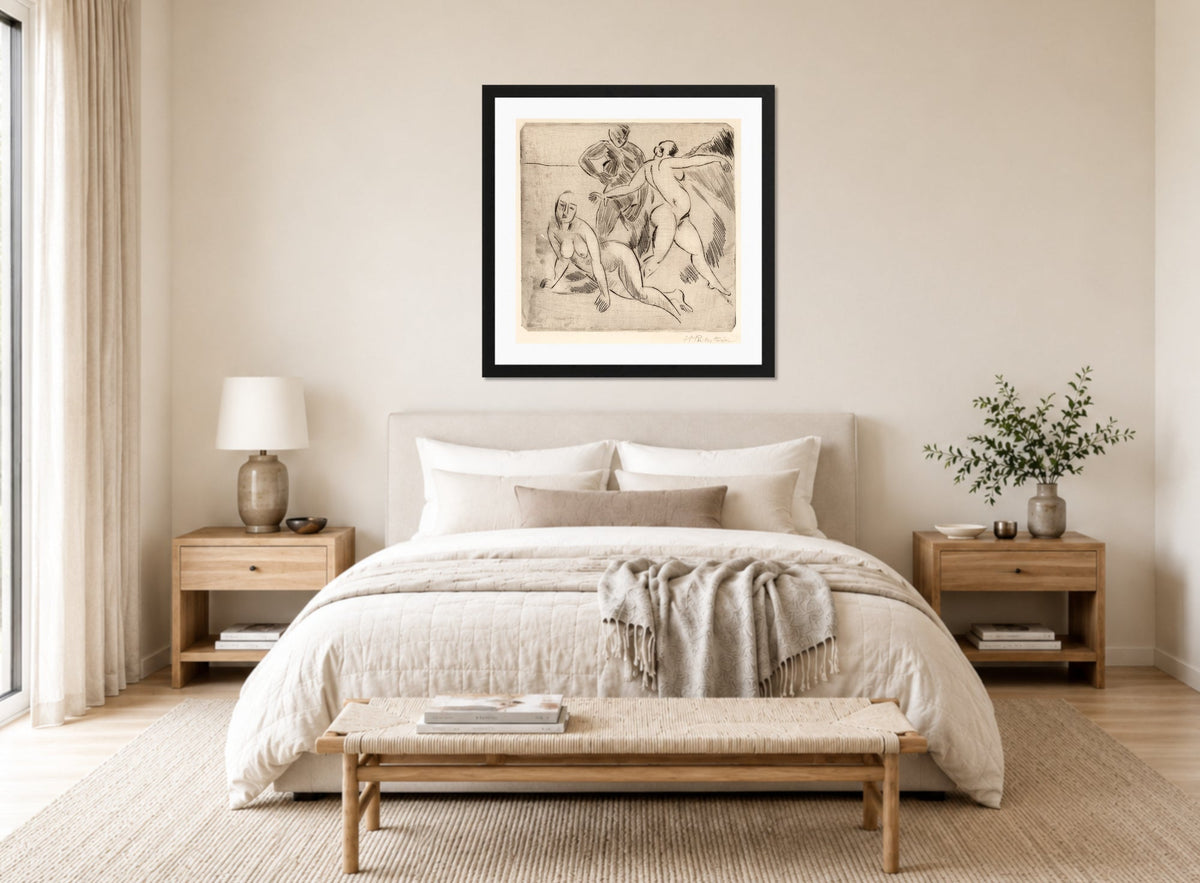
Horizontal maritime compositions work naturally above sofas, beds and sideboards, while square and portrait-format fishing scenes can provide stronger individual focal points on narrower walls.
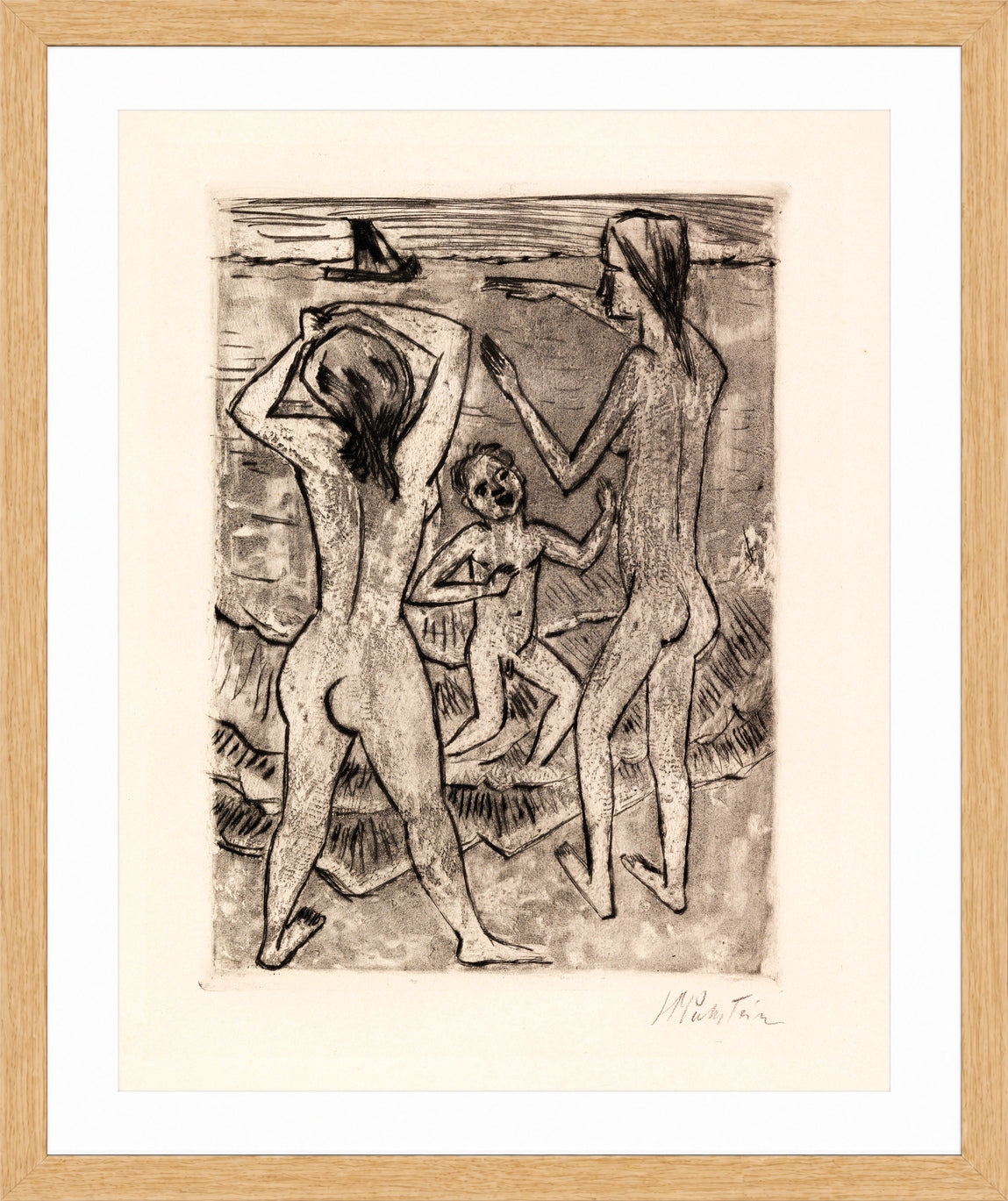
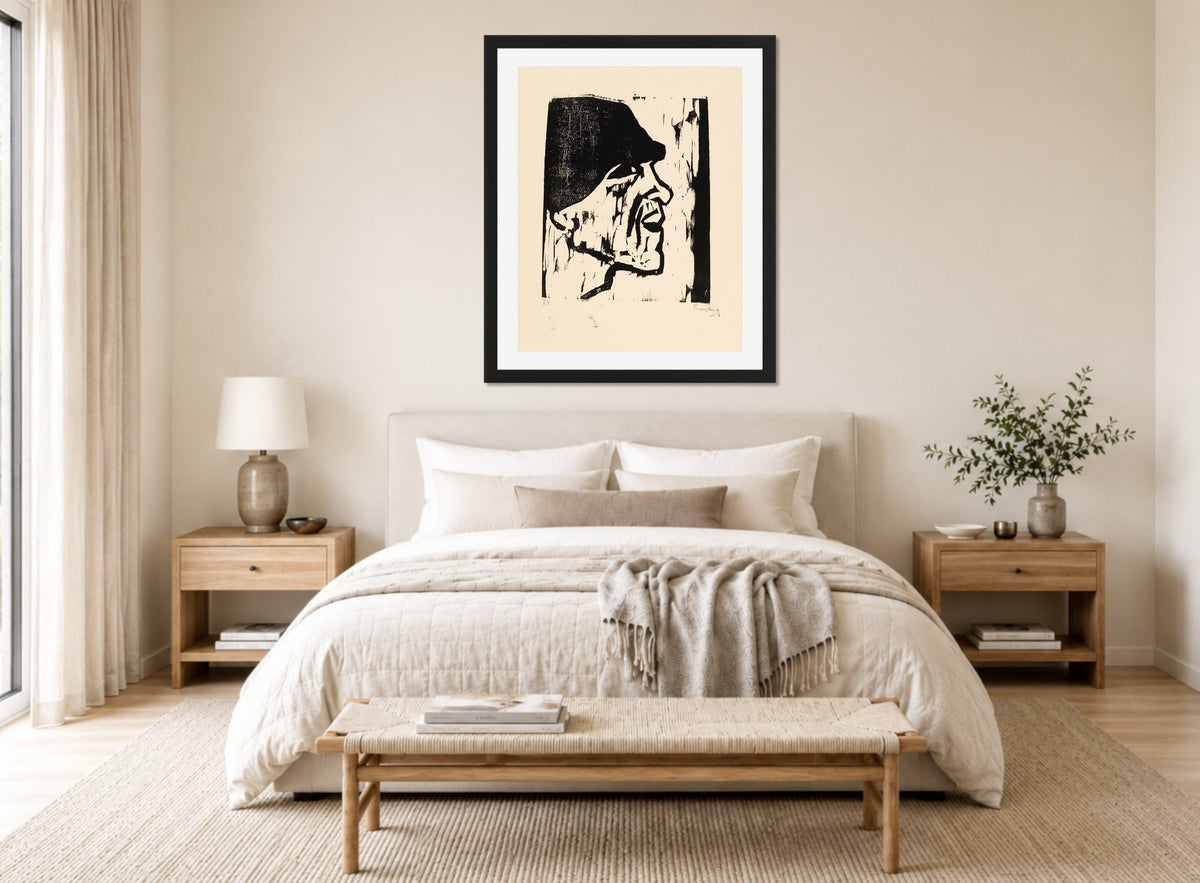
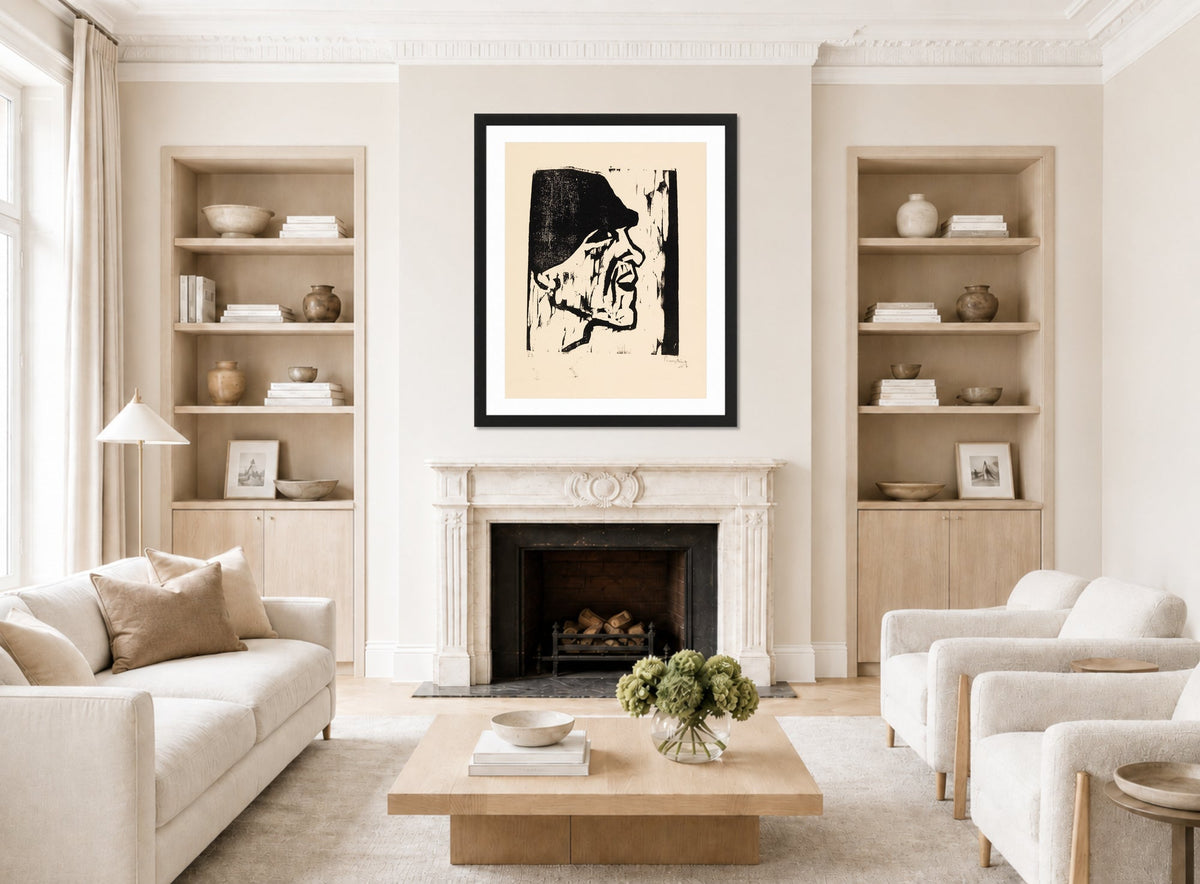
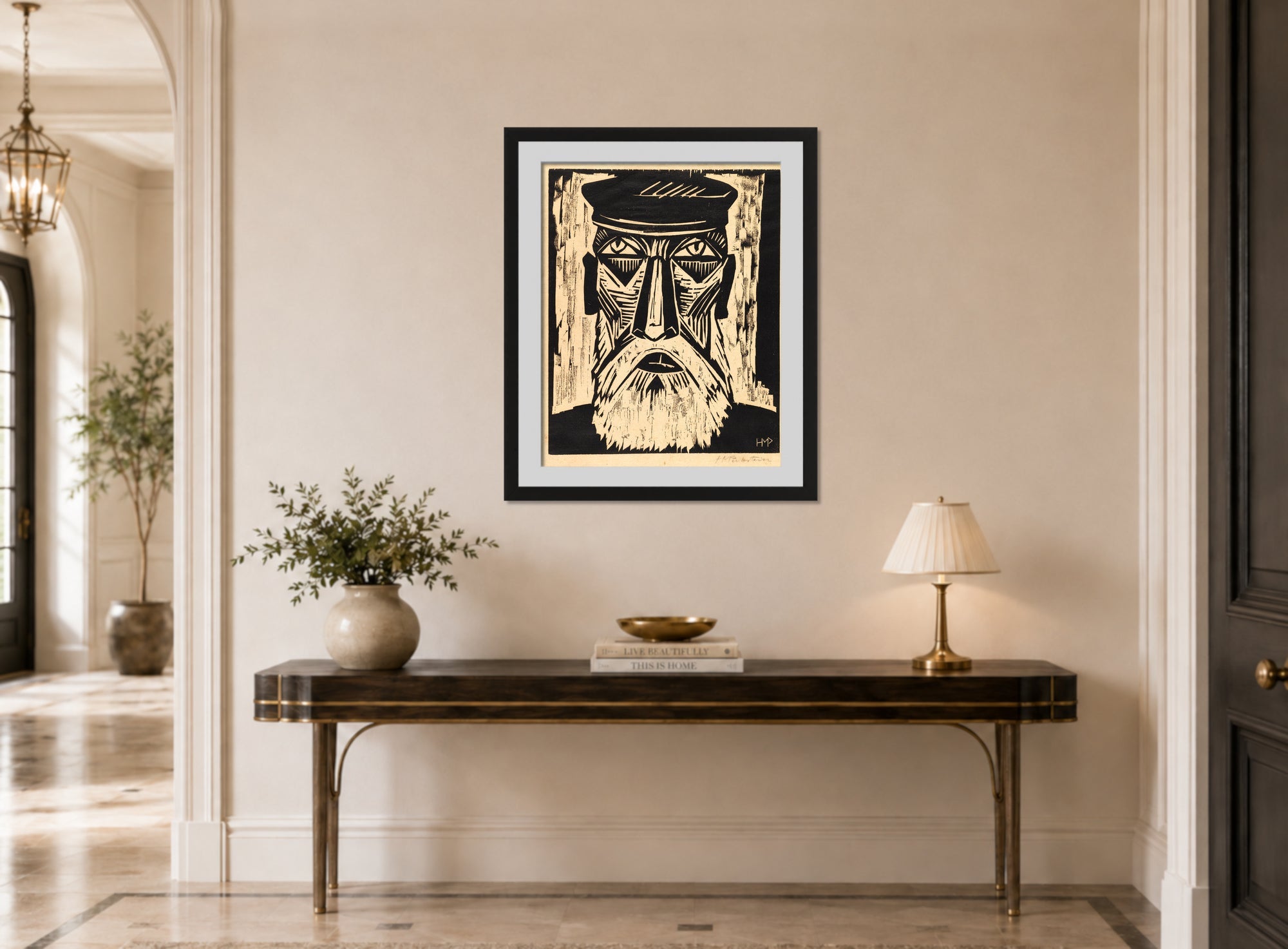
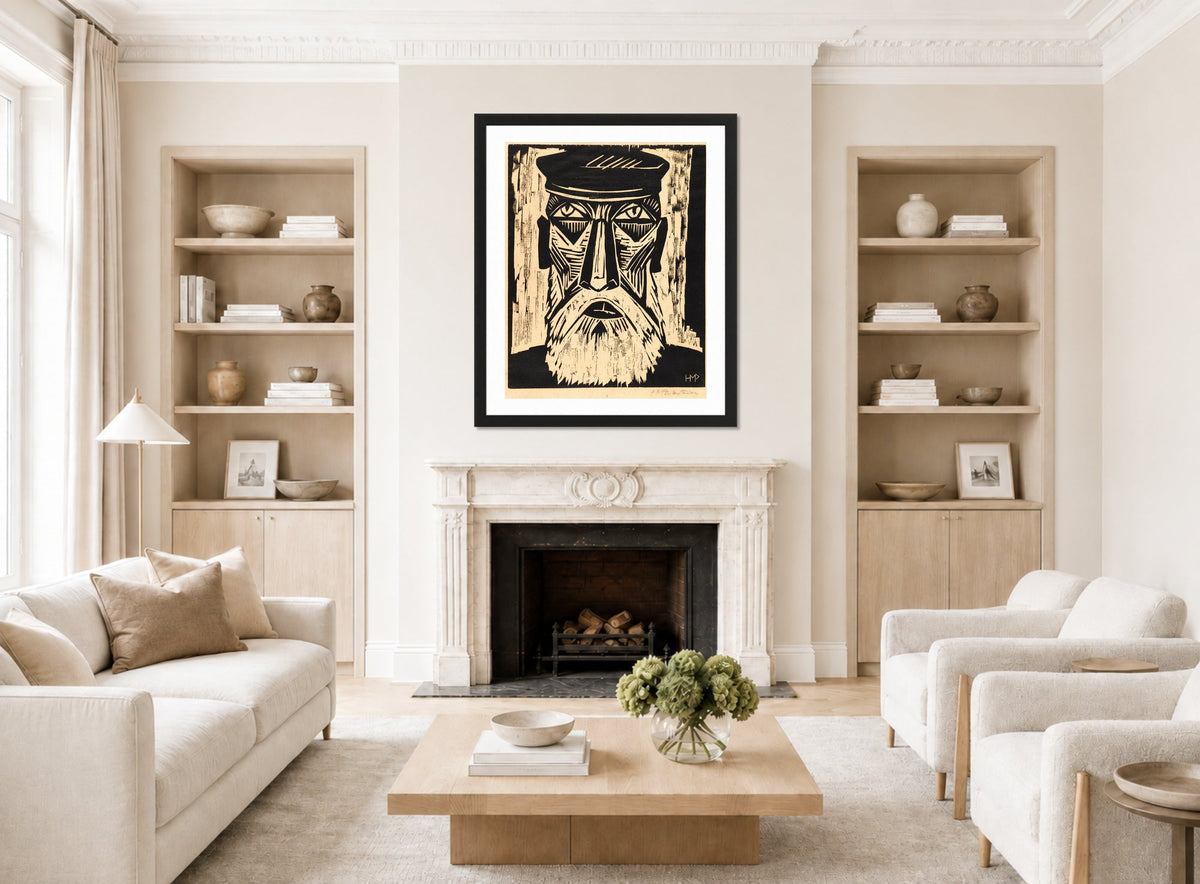
Black framing can emphasise Pechstein's strong contours and the graphic structure of his boats, while lighter wood frames can complement the natural subject matter and work well in Scandinavian-inspired interiors.
GalleryThane's Max Pechstein coastal prints are available across selected sizes as fine art prints, handmade framed prints and canvas panels.
Frequently Asked Questions
Did Max Pechstein paint seascapes?
Yes. Seascapes and coastal environments were major recurring subjects throughout Pechstein's career. He painted and drew beaches, fishing villages, harbours, boats, fishermen and open stretches of sea.
Why did Pechstein paint fishermen so often?
Pechstein was strongly attracted to coastal communities and working life. Fishermen provided him with subjects that combined vigorous human movement with boats, water and landscape, all of which suited his expressive treatment of line and colour.
Which coastal places are associated with Max Pechstein?
Important locations include Nidden on the Curonian Spit, Leba, Rowe and Monterosso al Mare. These places supplied Pechstein with boats, beaches, fishing communities and coastal landscapes over several decades.
What style are Max Pechstein's seascapes?
Pechstein's coastal works are principally associated with German Expressionism. They typically feature simplified forms, strong outlines, compressed perspective and intensified colour rather than strict naturalistic representation.
Why was Nidden important to Max Pechstein?
Pechstein first worked extensively at Nidden in 1909 and returned repeatedly. Its fishing community, dunes, lagoon, boats and broad coastal landscape provided subjects that were especially well suited to his developing Expressionist style.
Did Max Pechstein only paint the Baltic coast?
No. Although Baltic locations were particularly important, Pechstein also worked in other coastal environments, including Monterosso al Mare on the Ligurian coast of Italy.
Are Max Pechstein seascape prints available framed?
Yes. GalleryThane offers selected Pechstein coastal works as fine art prints, handmade framed prints and canvas panels in a range of sizes.
Where can I learn more about Max Pechstein?
Read GalleryThane's complete Max Pechstein biography, paintings and prints guide for his Die Brücke years, Baltic travels, Palau journey, printmaking, wartime experiences and artistic legacy.