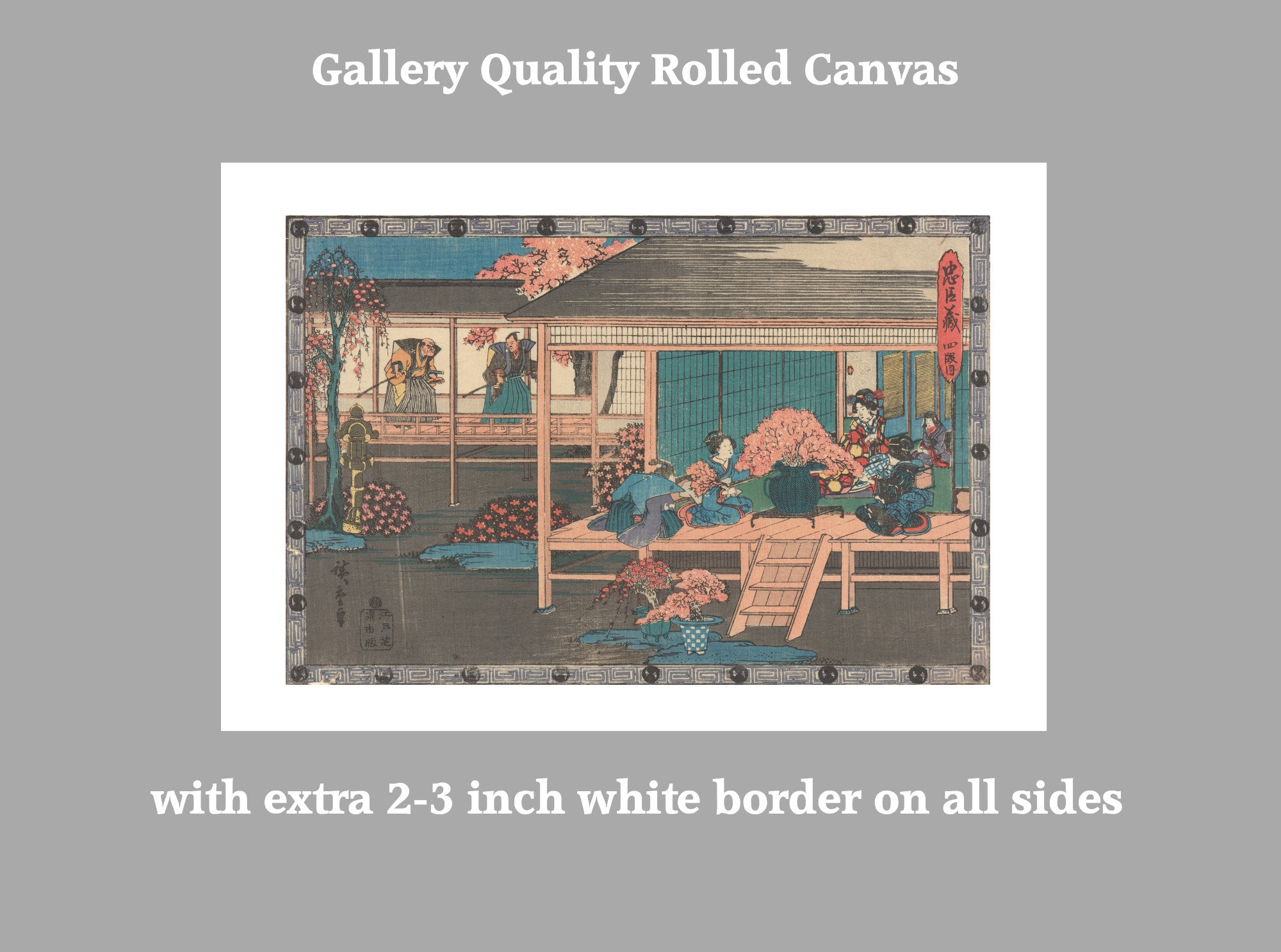
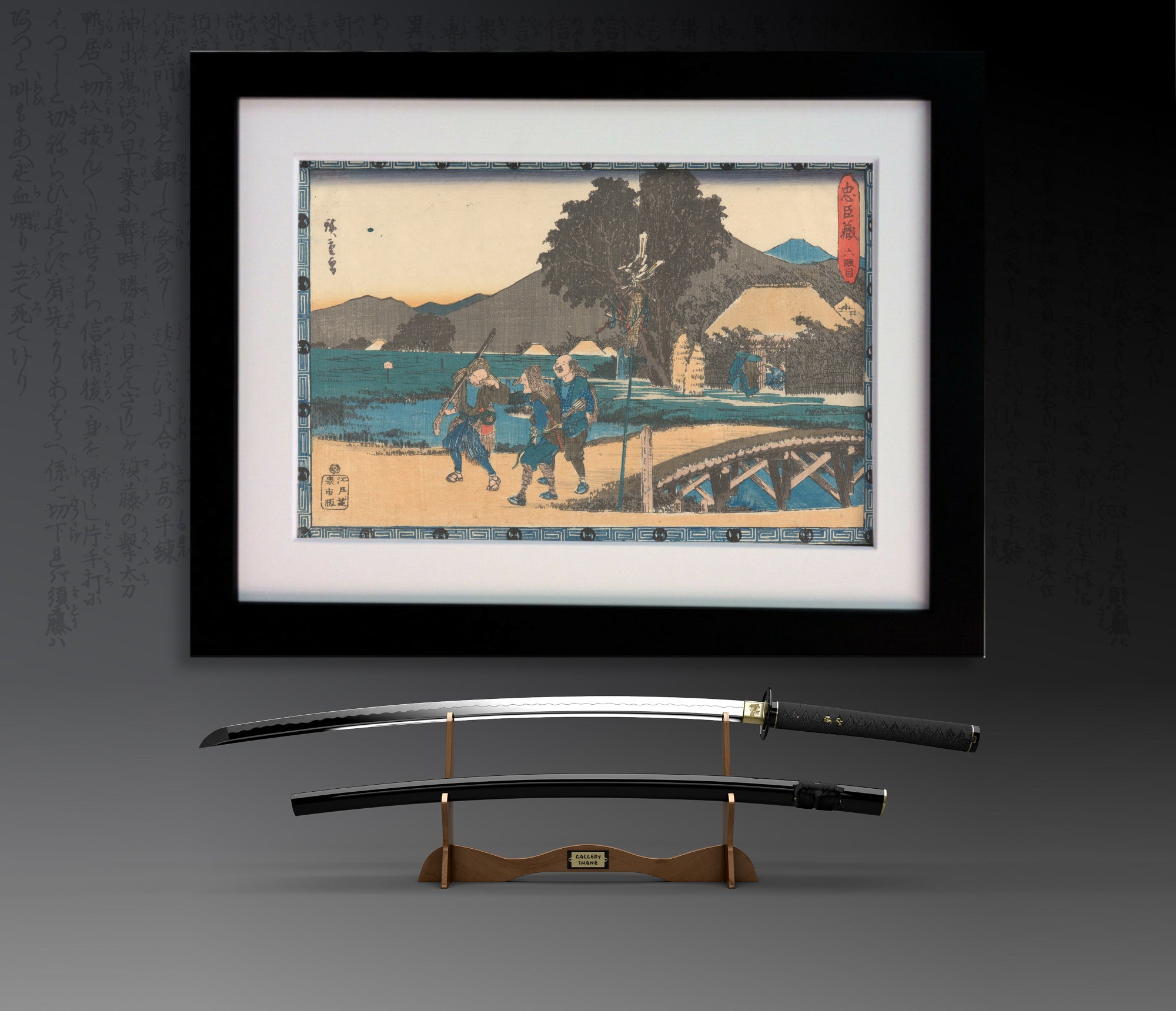
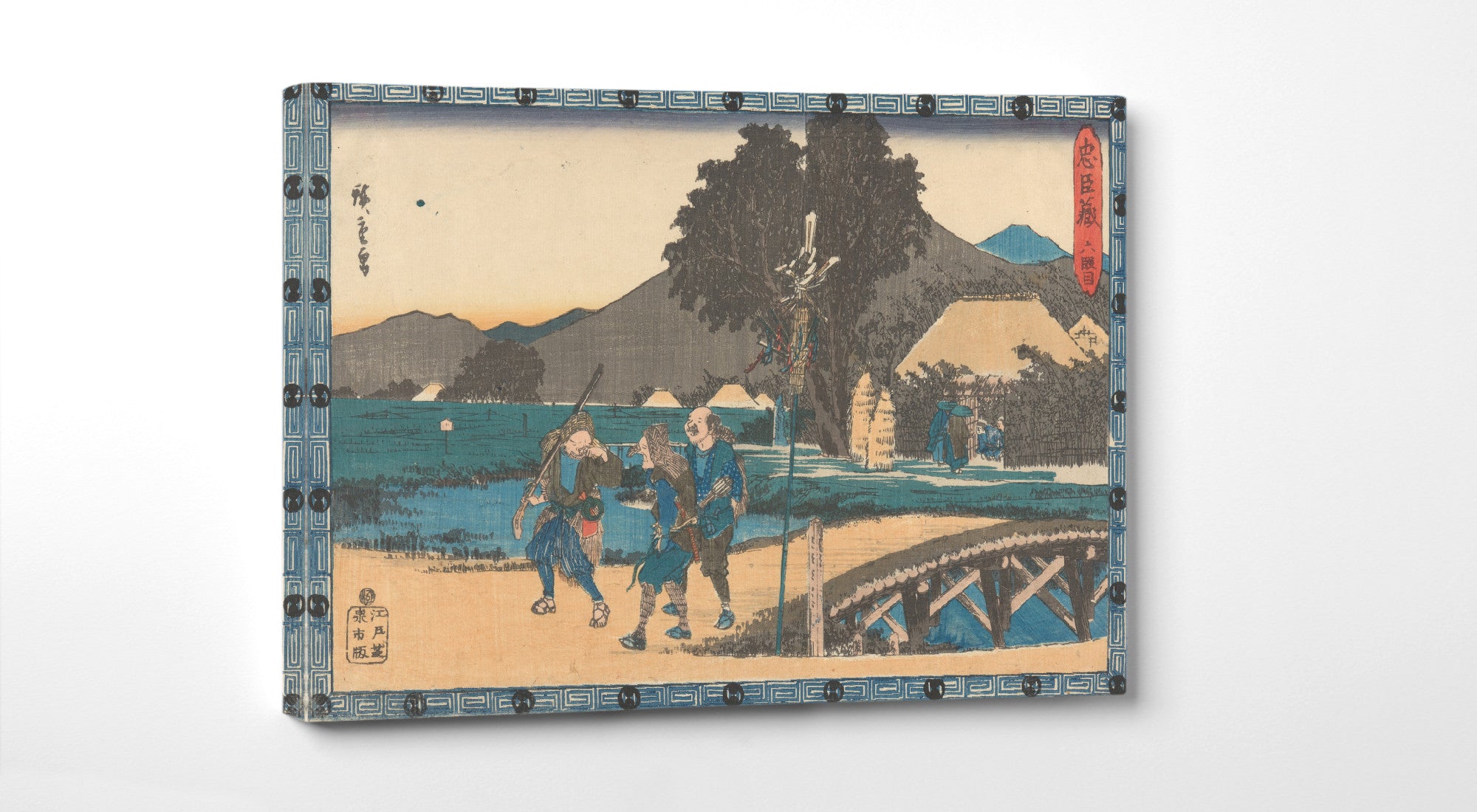
Andō Hiroshige Prints – Japanese Landscapes, Nature and Ukiyo-e
Few Japanese artists captured atmosphere as beautifully as Utagawa Hiroshige, widely known in the West as Andō Hiroshige.
Rain falls across bridges and roads. Travellers move through snow. Boats cross calm water at dusk. Fish and plants are observed with extraordinary economy of line. Cities appear through mist, trees or carefully framed architectural details.
Rather than presenting landscape simply as topography, Hiroshige made weather, season, distance and mood central to the experience of a place.
GalleryThane's collection of Hiroshige prints brings together landscapes, travel scenes, Edo views, fish and nature subjects alongside works from his famous Fifty-Three Stations of the Tōkaidō.
For that series specifically, explore the dedicated Fifty-Three Stations of the Tōkaidō collection.
Who Was Utagawa Hiroshige?
Utagawa Hiroshige was born in Edo, present-day Tokyo, in 1797.
Born Andō Tokutarō into a low-ranking samurai family connected with the shogun's fire brigade, he later entered the Utagawa school of ukiyo-e and became a pupil of Utagawa Toyohiro.
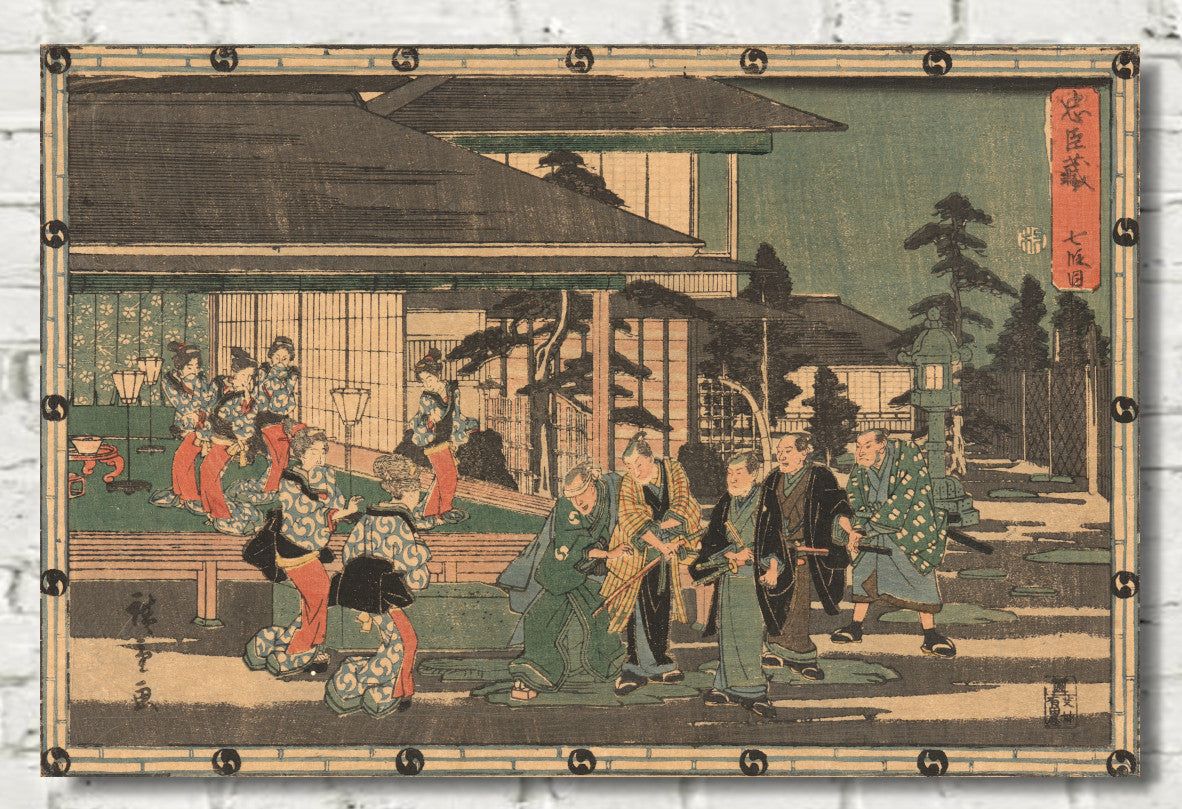
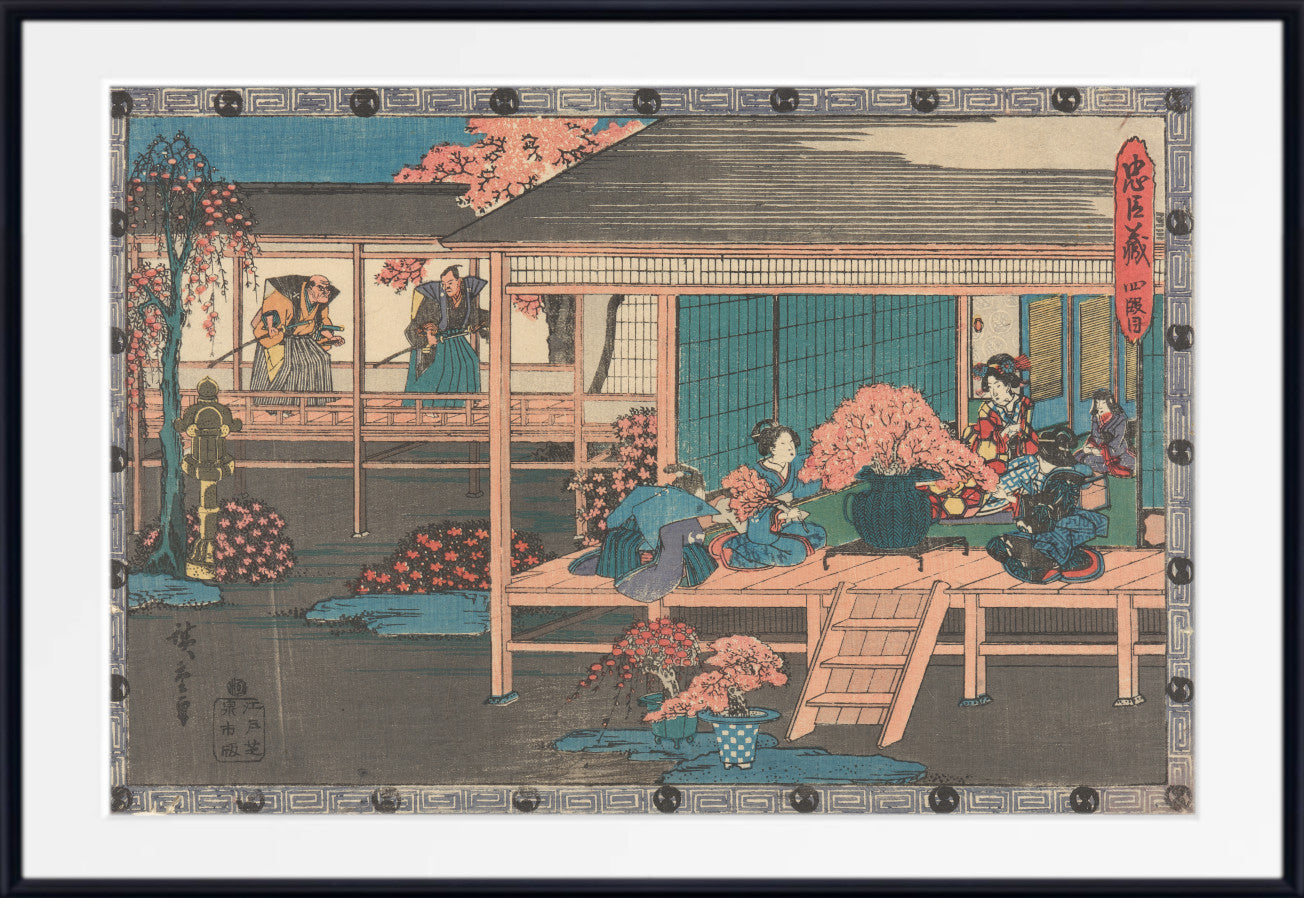
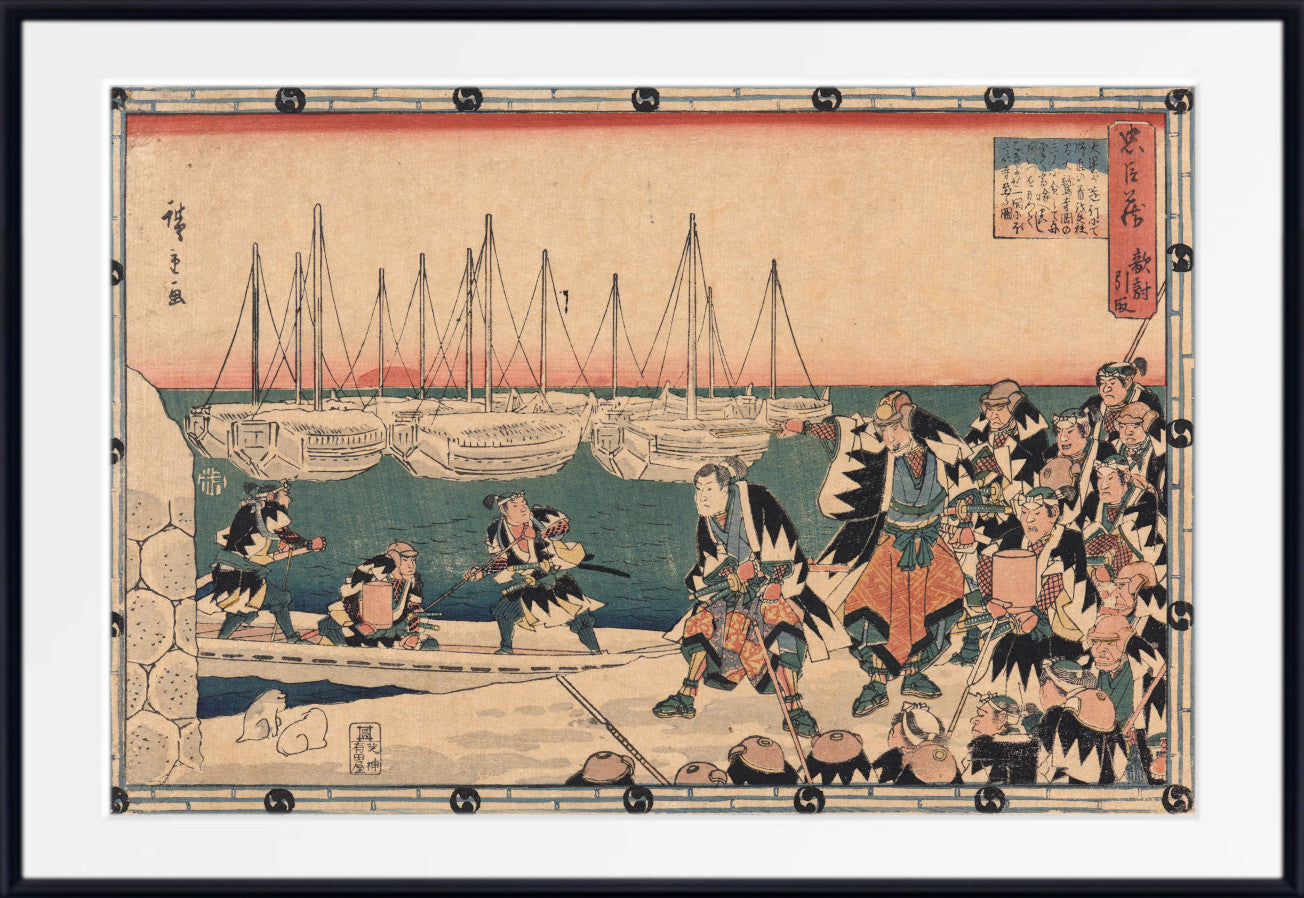
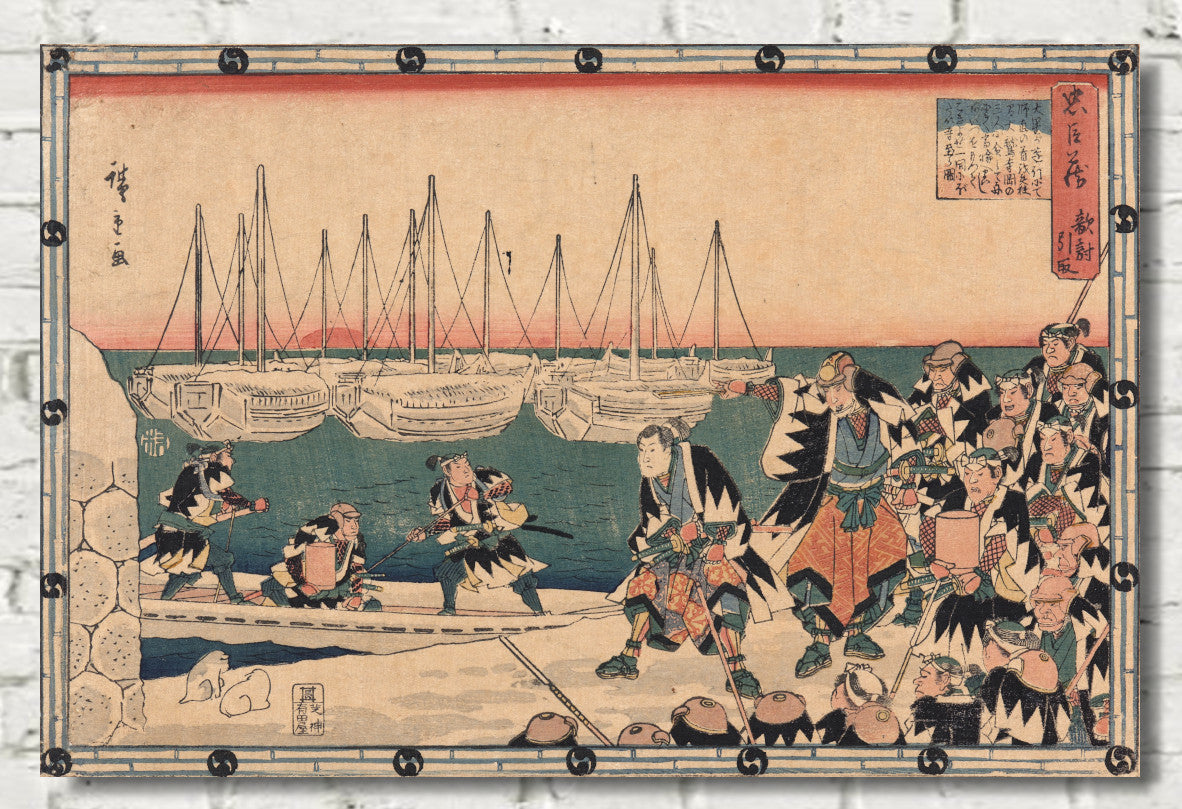
During the 1820s Hiroshige worked with subjects familiar within popular print culture, including figures and warriors, but during the early 1830s landscape became increasingly important to his career.
His ability to combine familiar places with weather, season and human activity eventually made him one of the defining landscape artists of the ukiyo-e tradition.
Hiroshige died in Edo in 1858 after producing thousands of prints as well as paintings and illustrated books.
Hiroshige and the Art of Japanese Landscape
Landscape had already gained new prominence through artists including Katsushika Hokusai, but Hiroshige developed a markedly different visual language.
Where Hokusai often emphasised powerful geometry and dramatic natural forces, Hiroshige frequently concentrated on atmosphere.
His landscapes can be quiet, melancholy, misty or unexpectedly intimate.
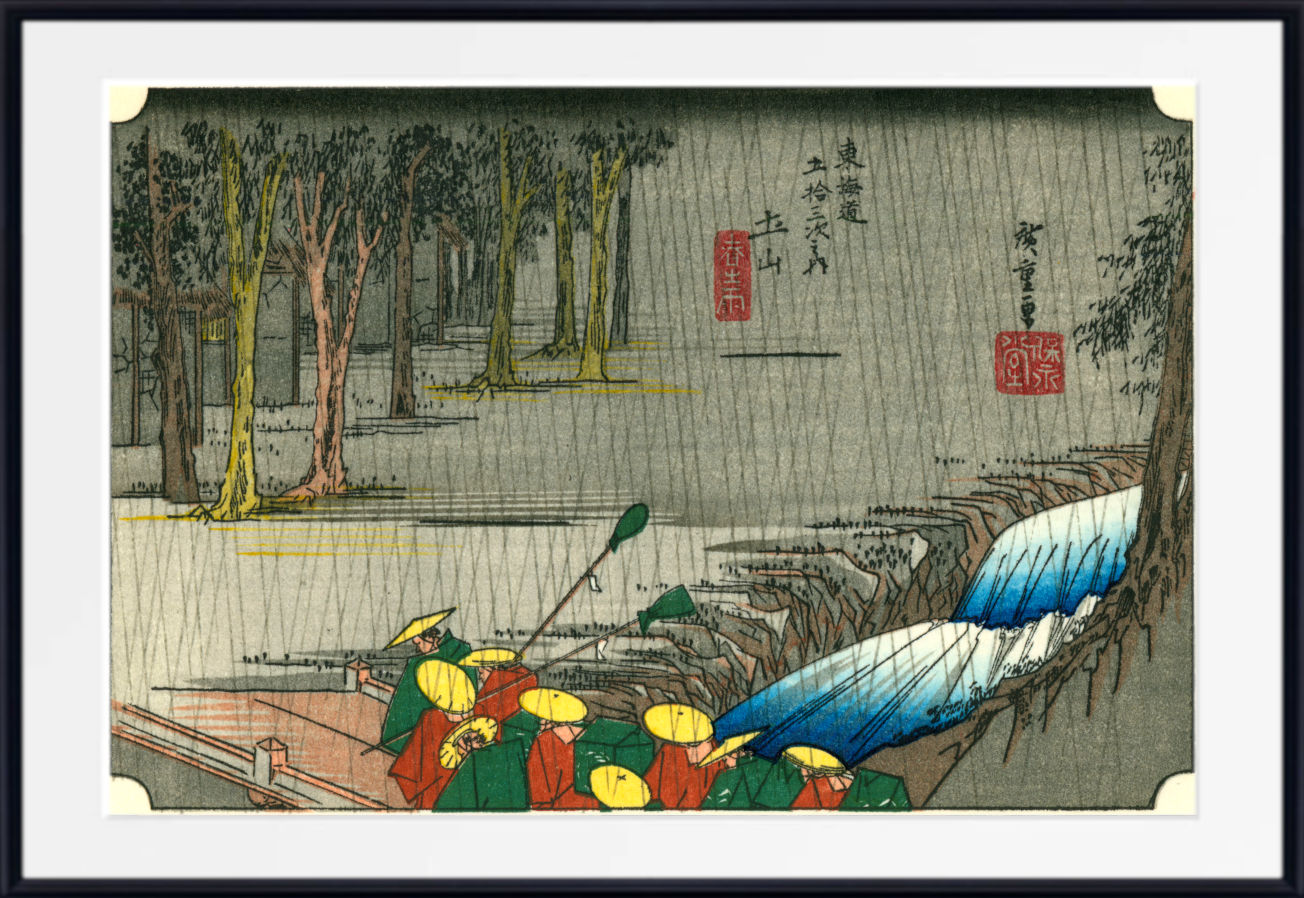
A bridge disappears beneath rain.
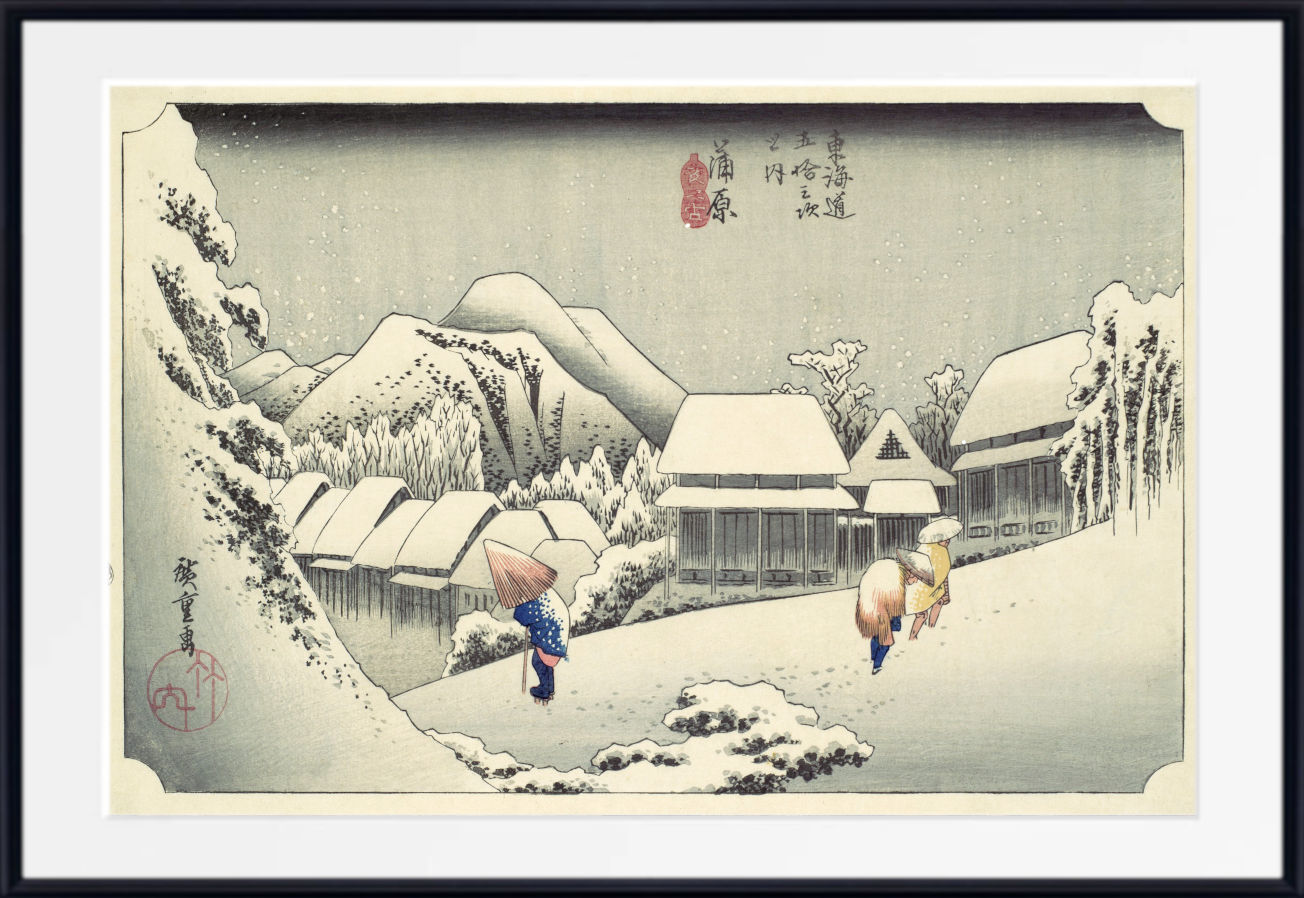
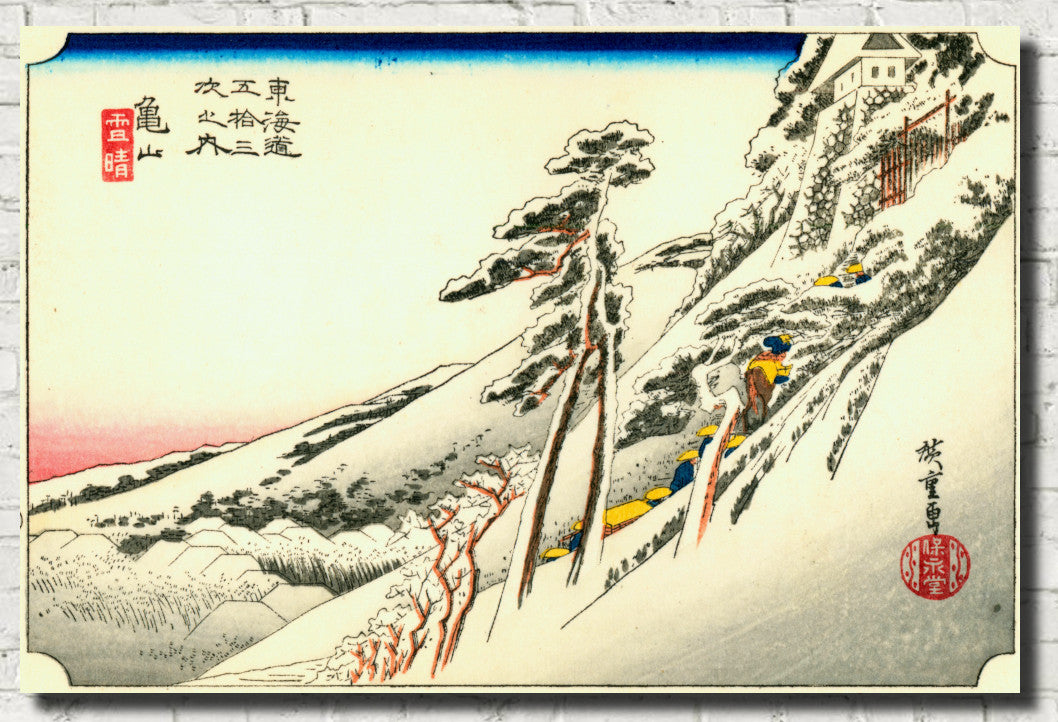
Snow reduces a village to dark silhouettes.
A distant mountain is glimpsed through trees.
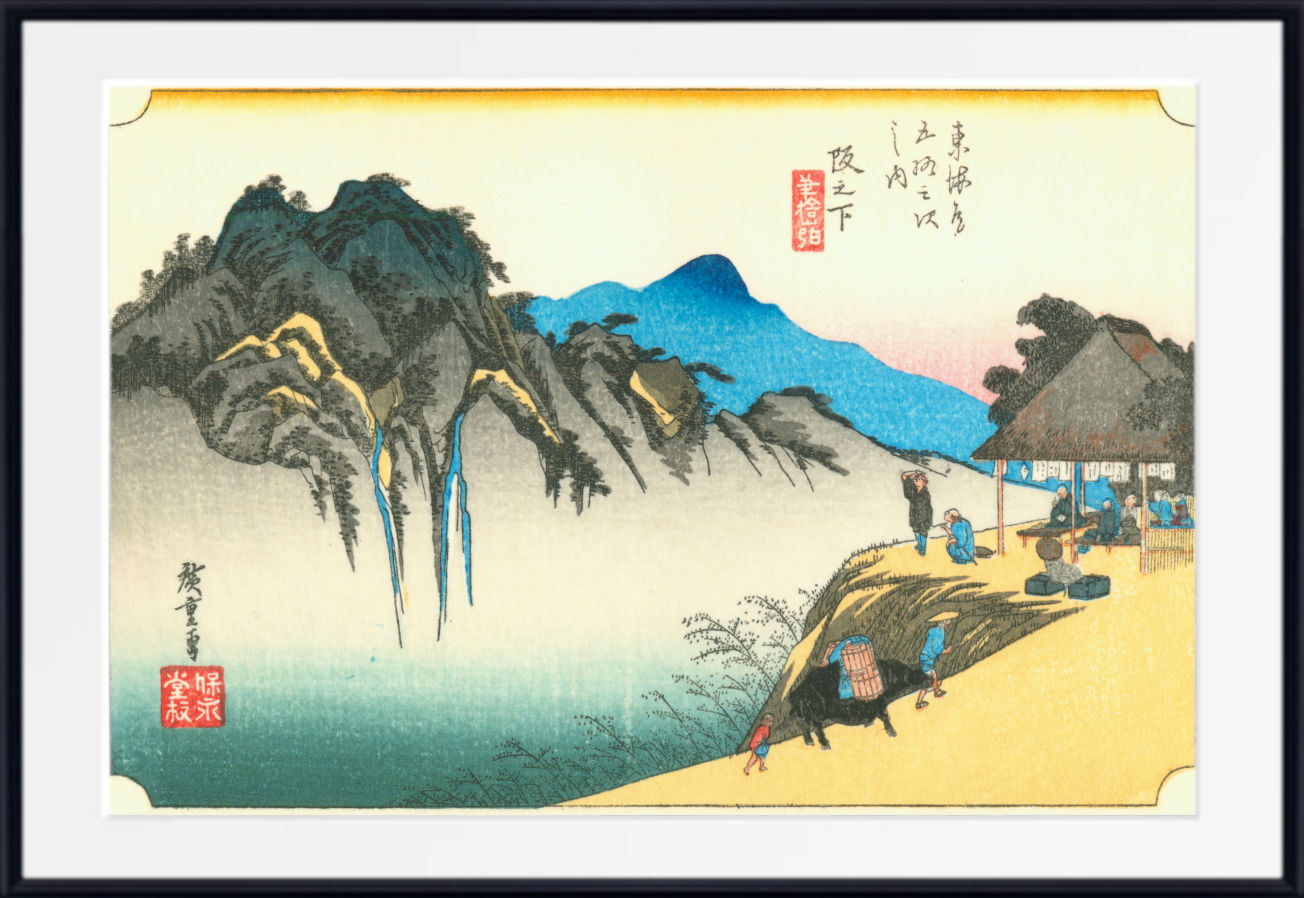
Small figures travel through landscapes that seem much larger than themselves.
This sensitivity to changing conditions made Hiroshige especially effective at depicting the emotional experience of travel.
The Fifty-Three Stations of the Tōkaidō
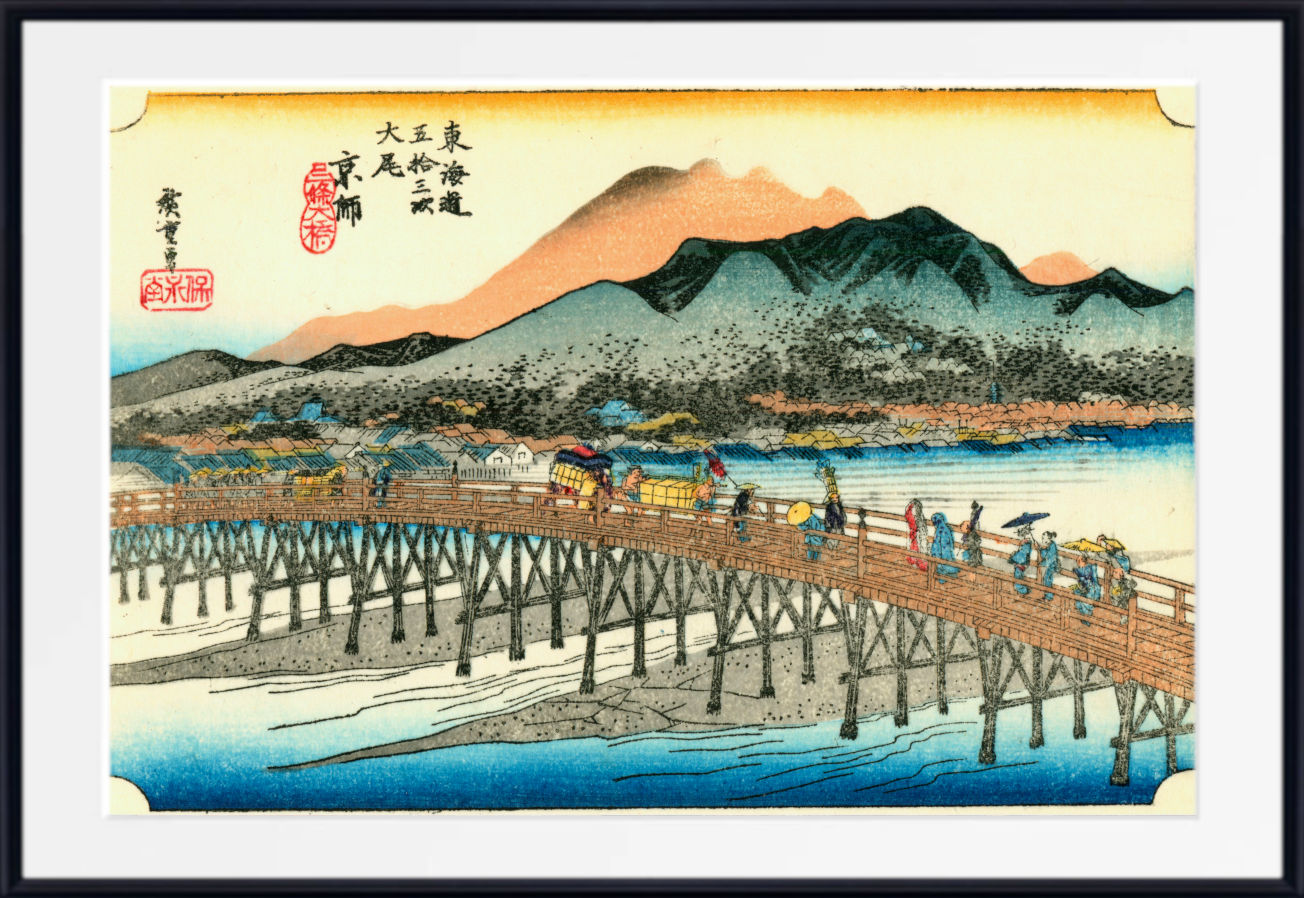
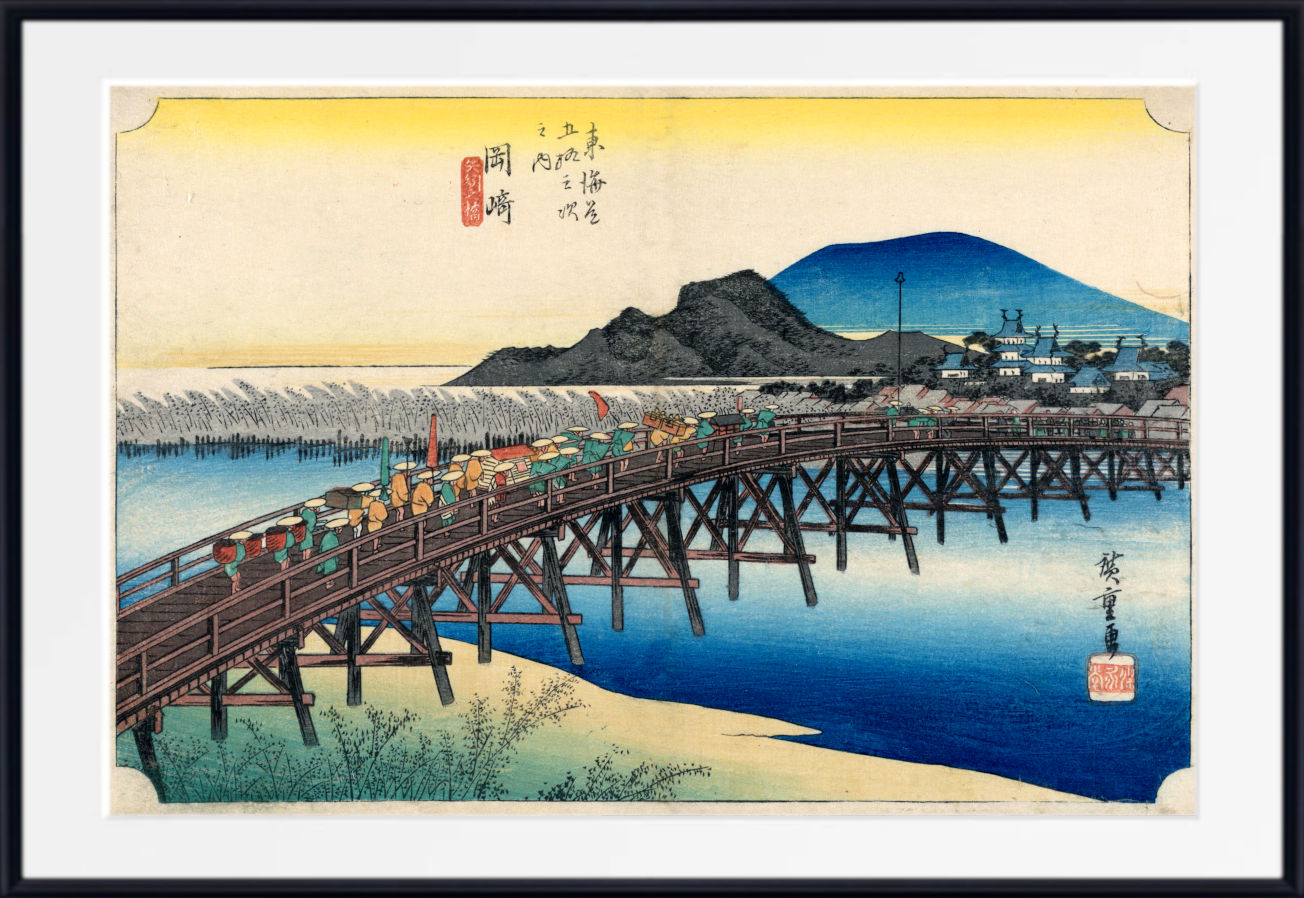
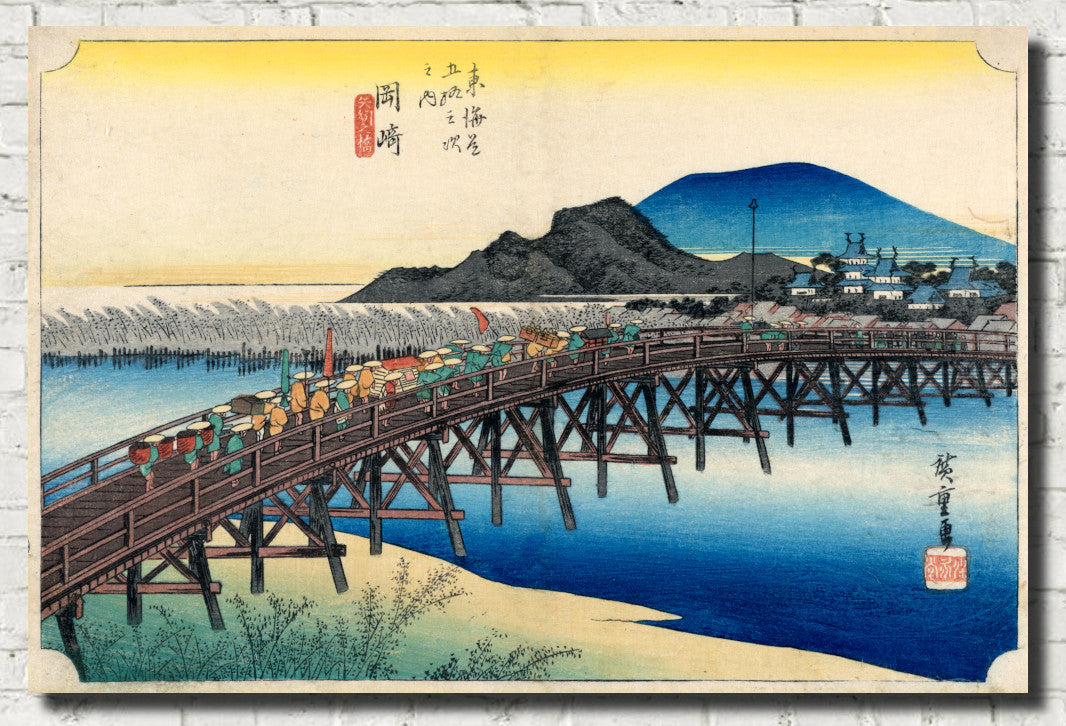
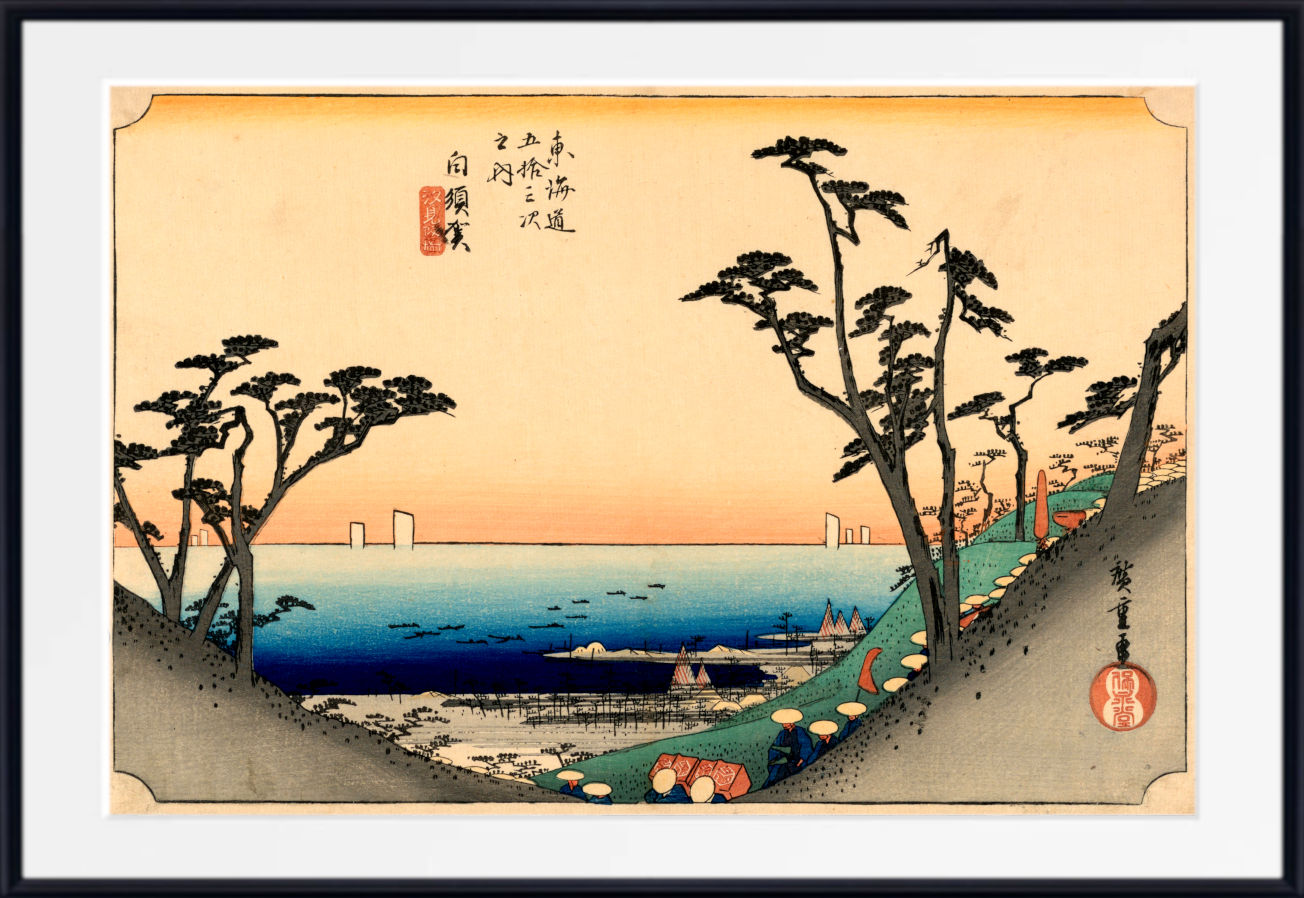
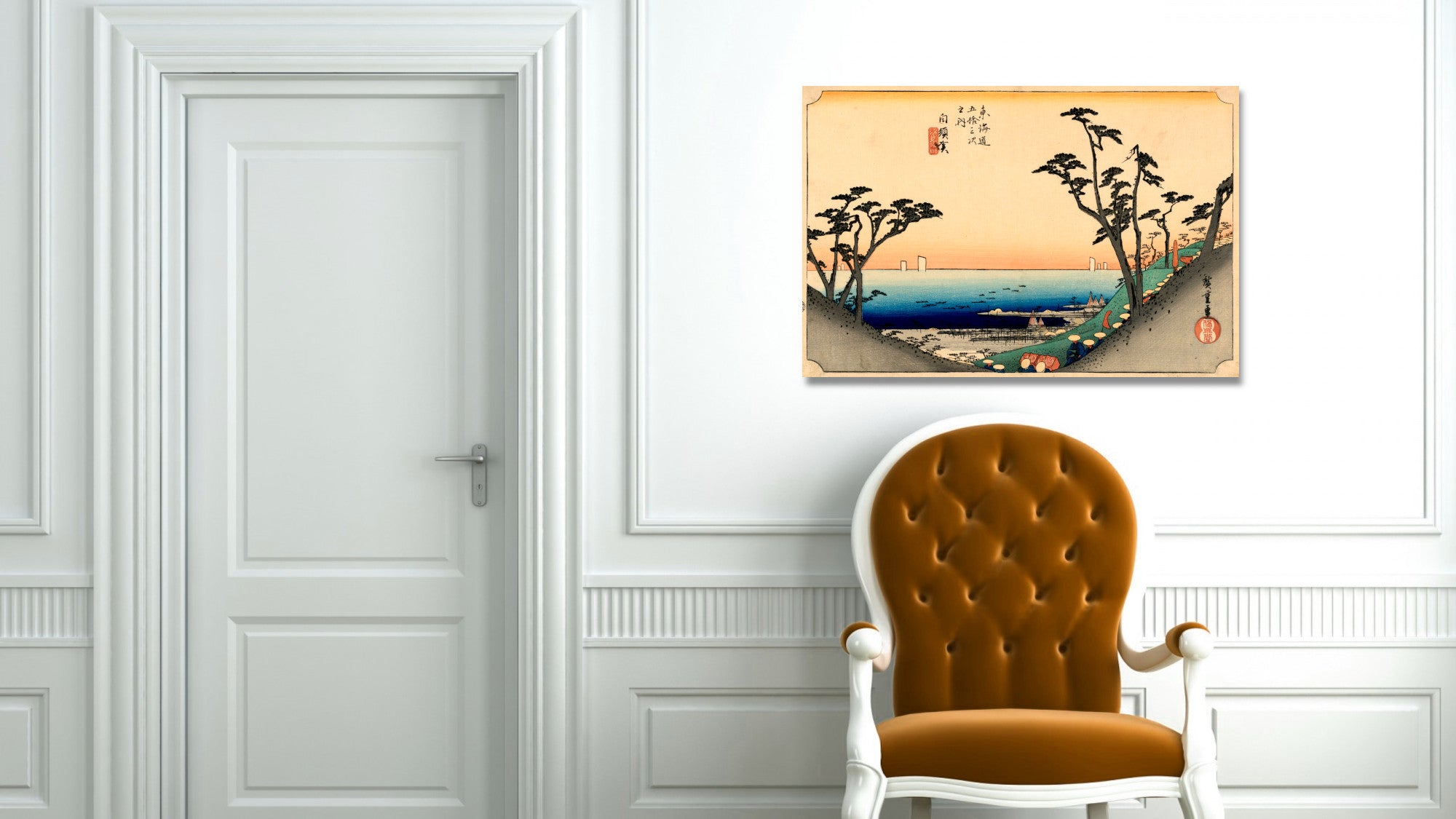
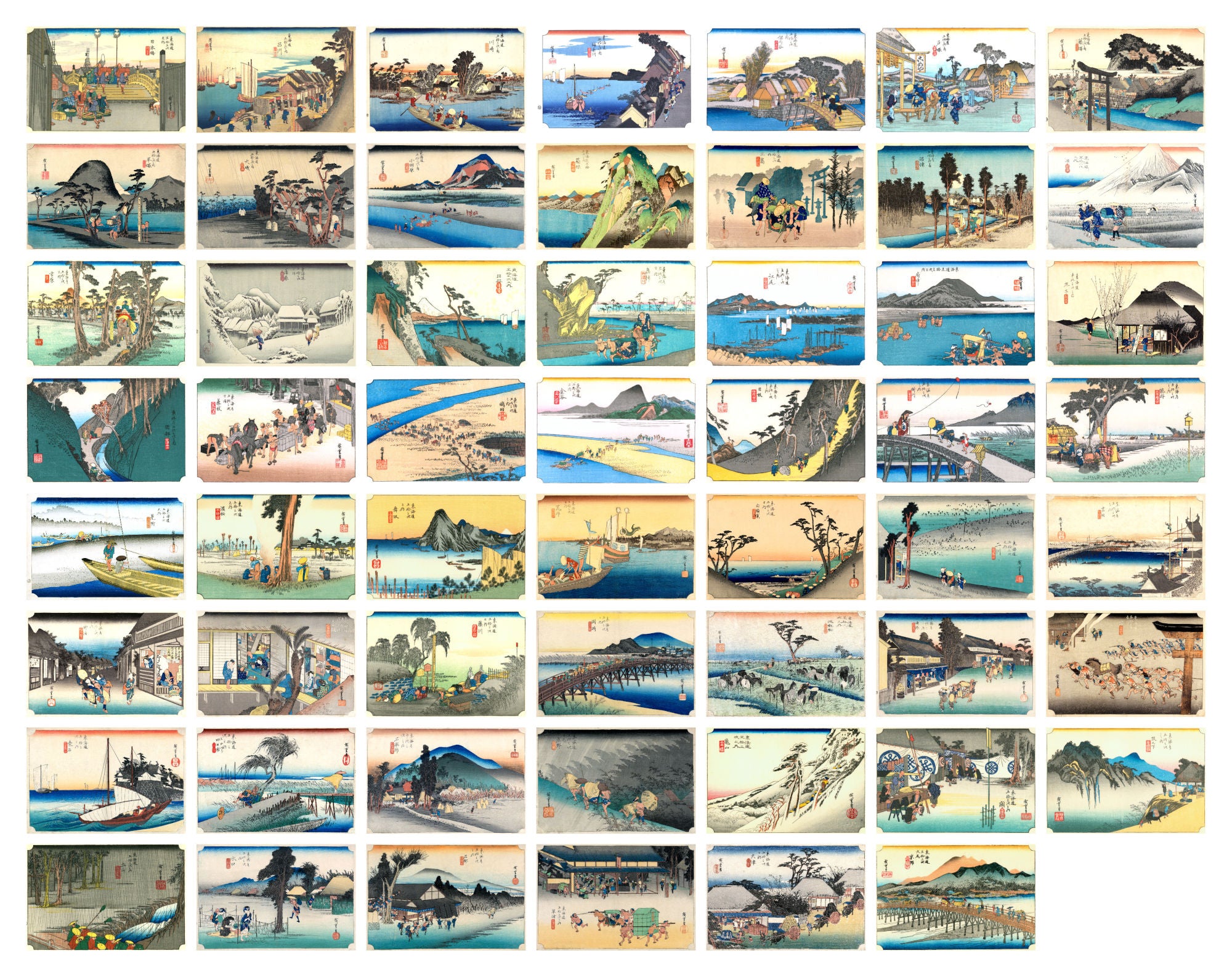
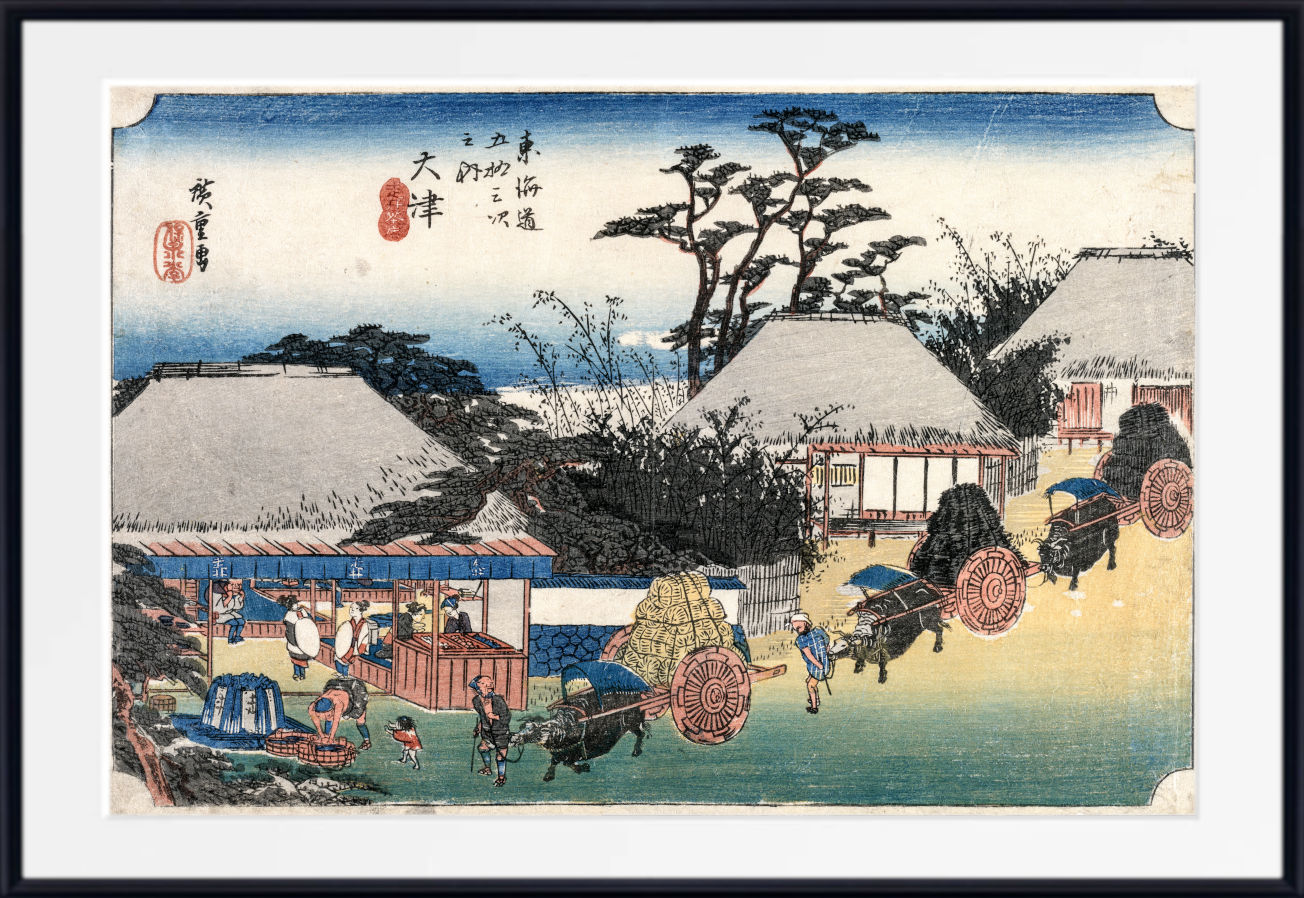
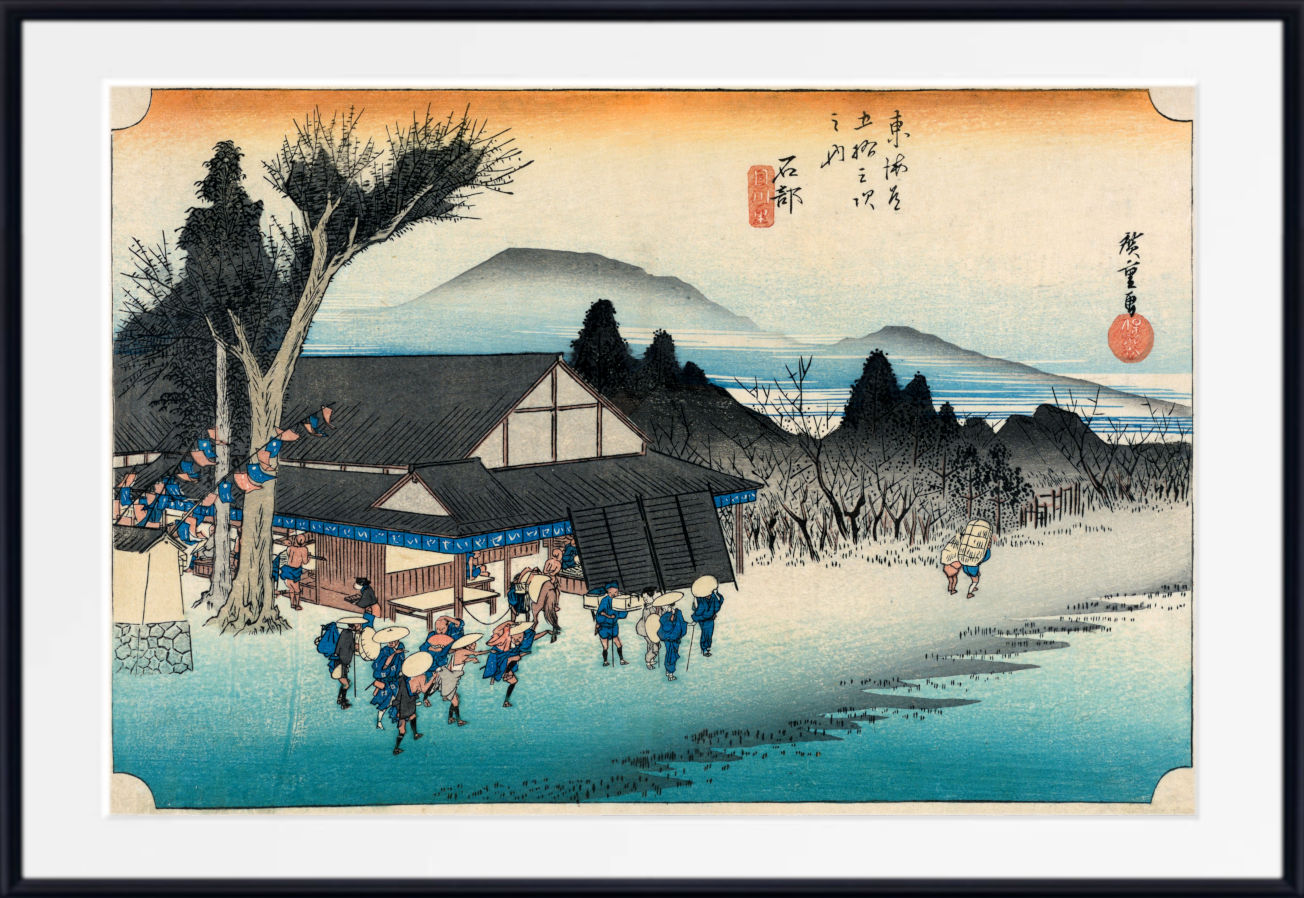
Hiroshige's breakthrough landscape series was The Fifty-Three Stations of the Tōkaidō, produced during the early 1830s.
The historic Tōkaidō highway connected Edo with Kyoto, passing through post stations where travellers could find food, lodging, horses and other services.
Hiroshige turned the journey into a sequence of changing landscapes.
Snow, rain, mountains, rivers, coastal views, villages and busy roads continually transform the experience of travelling westwards.
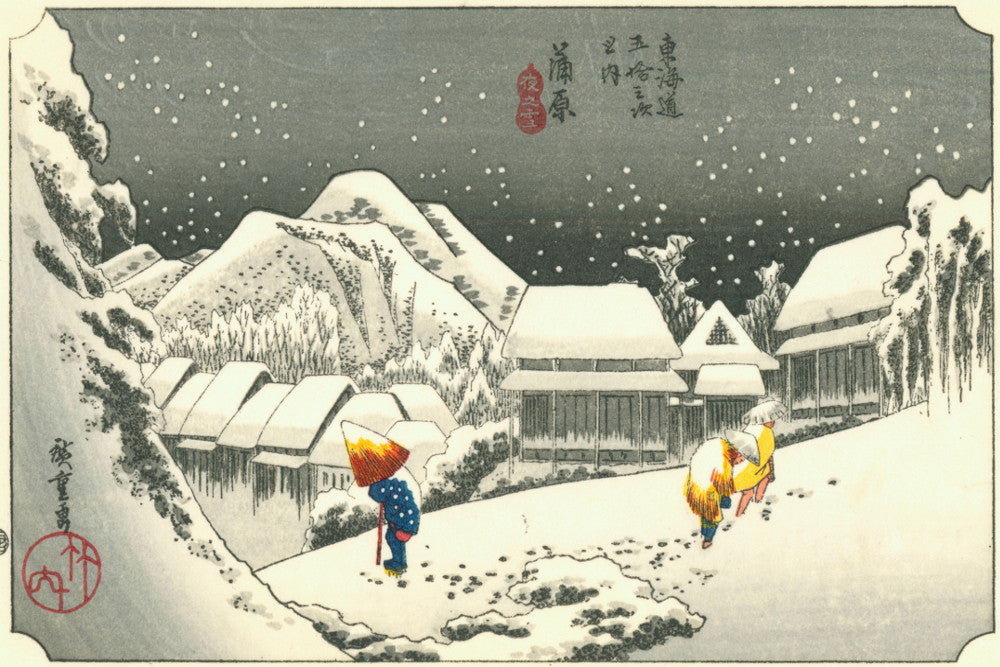
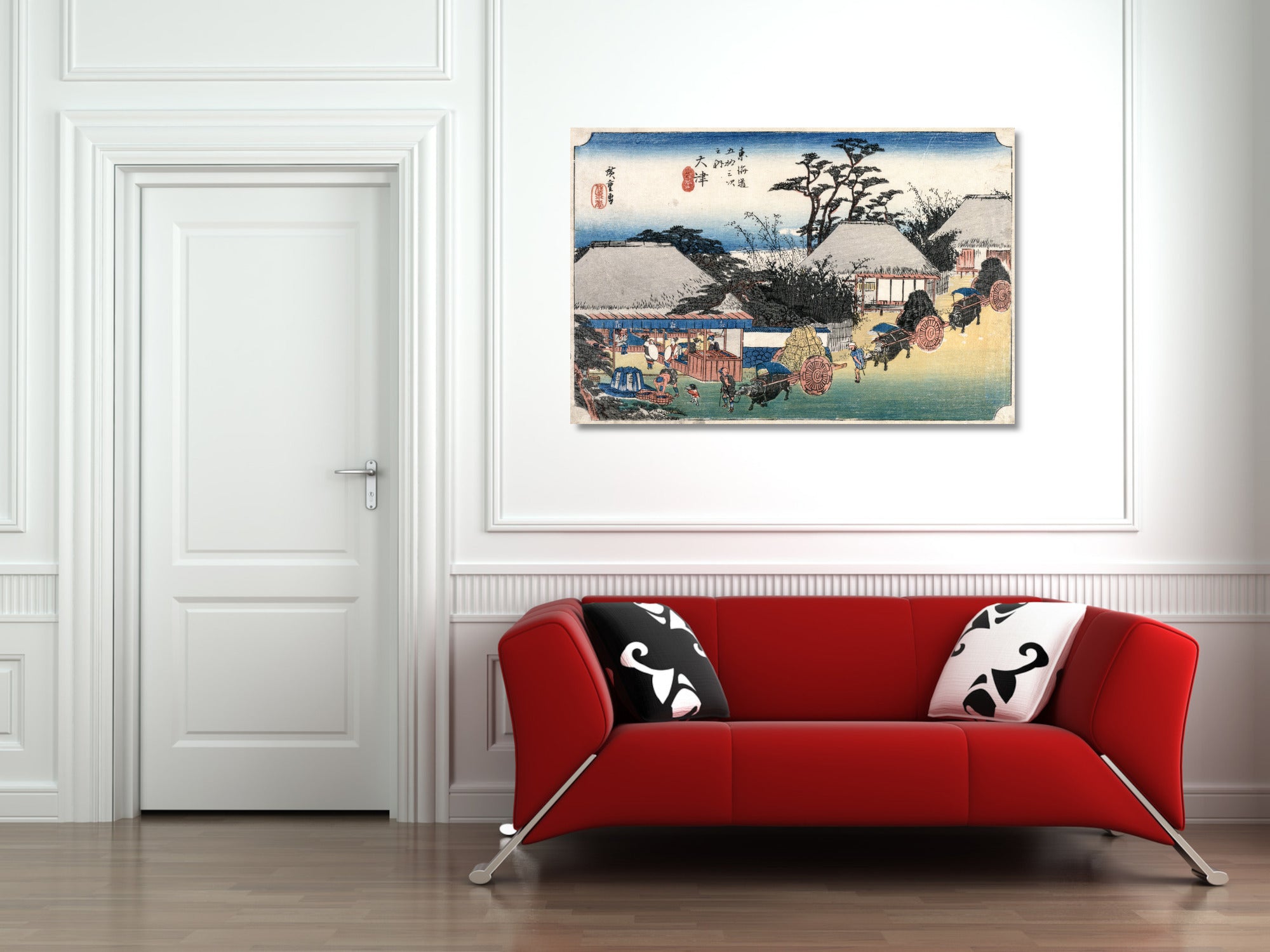
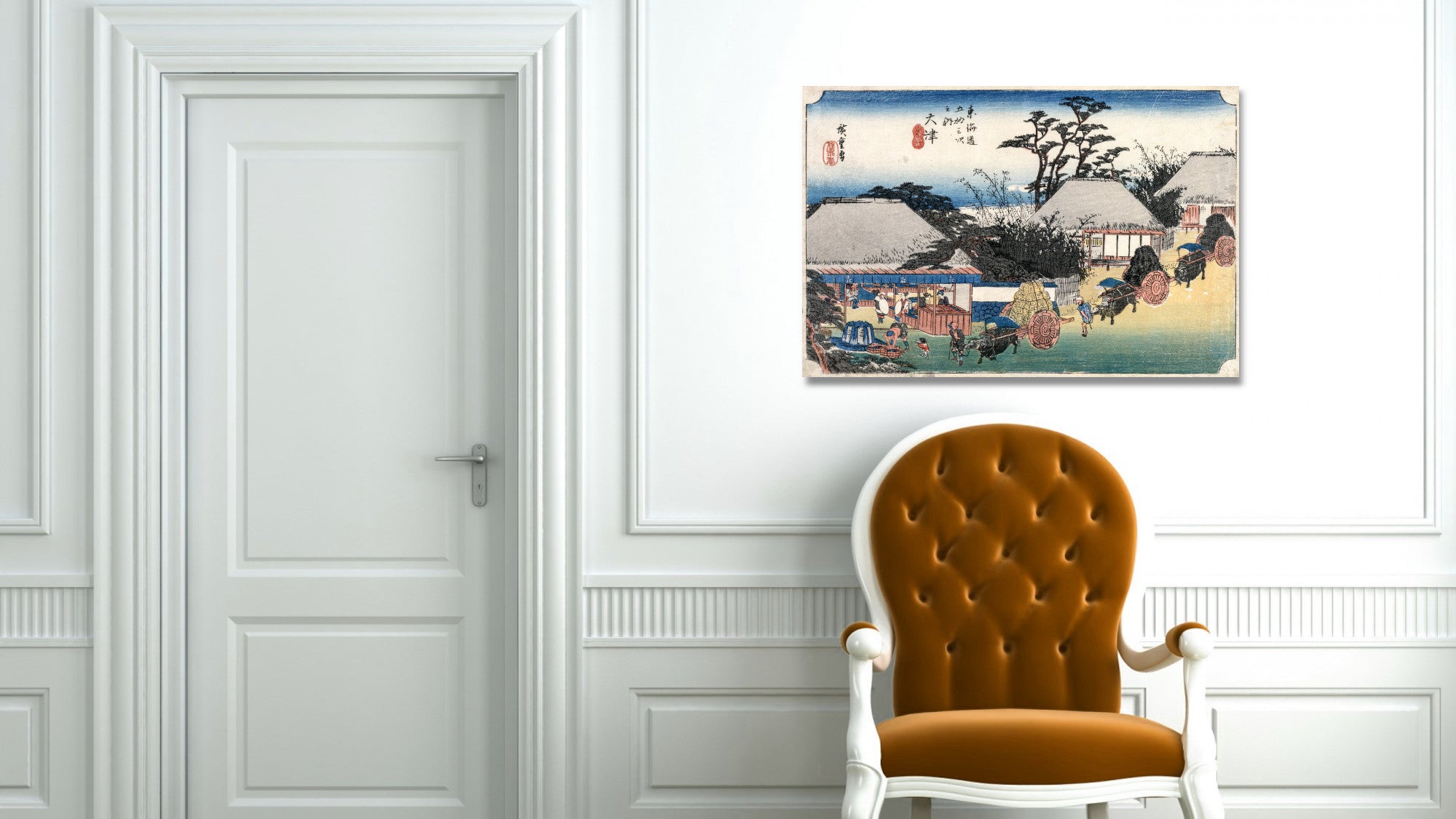
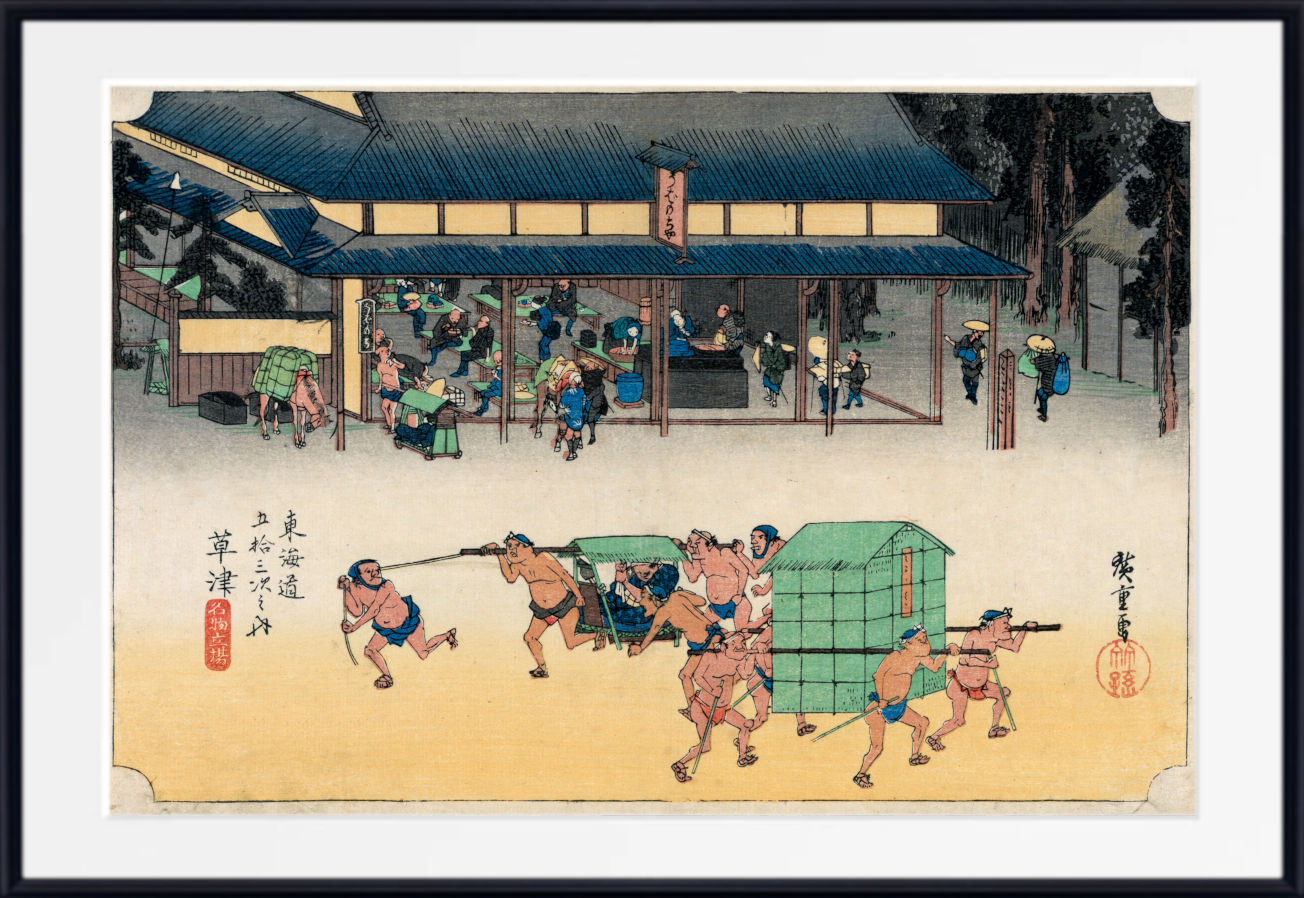
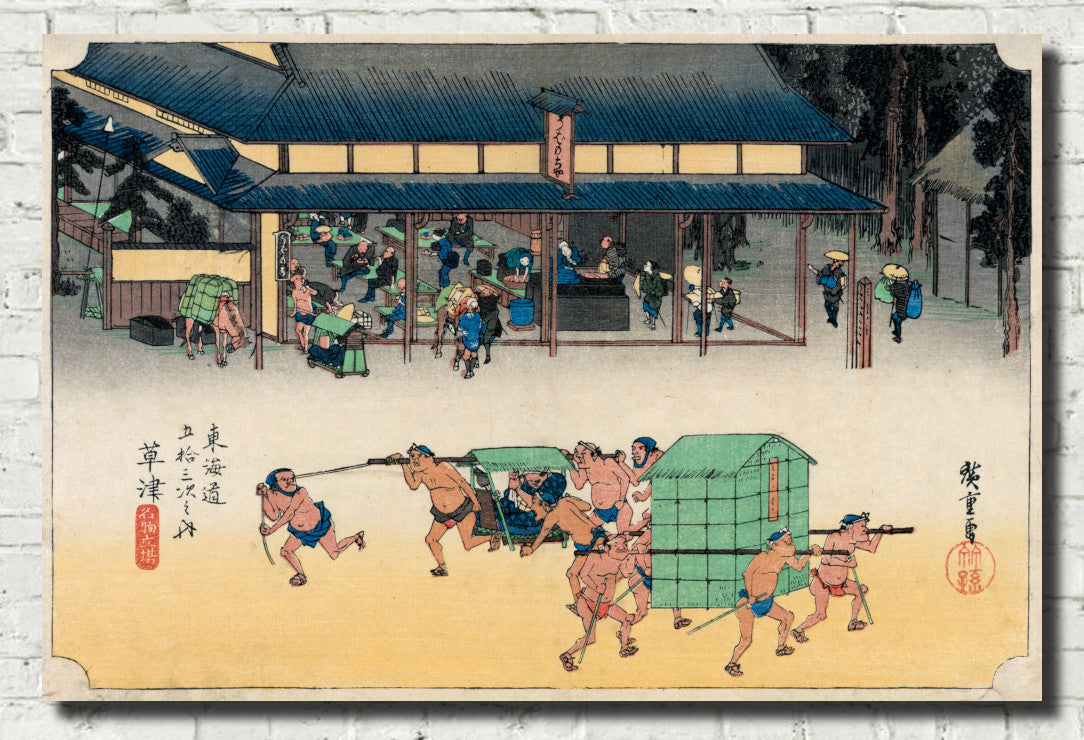
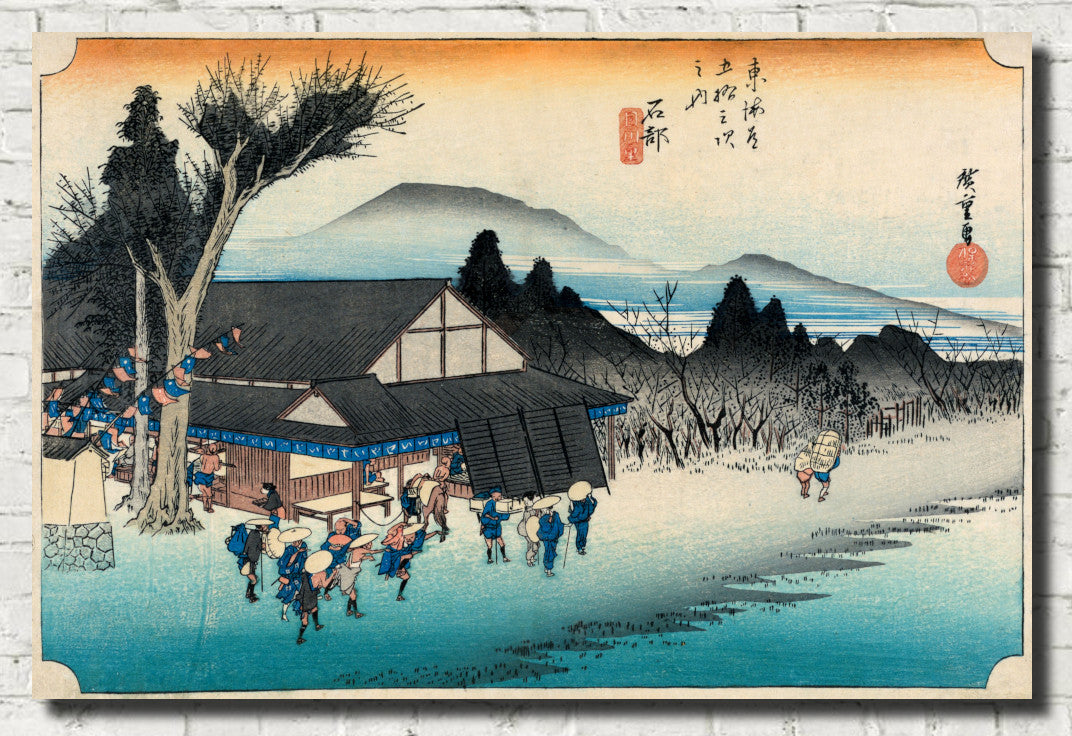
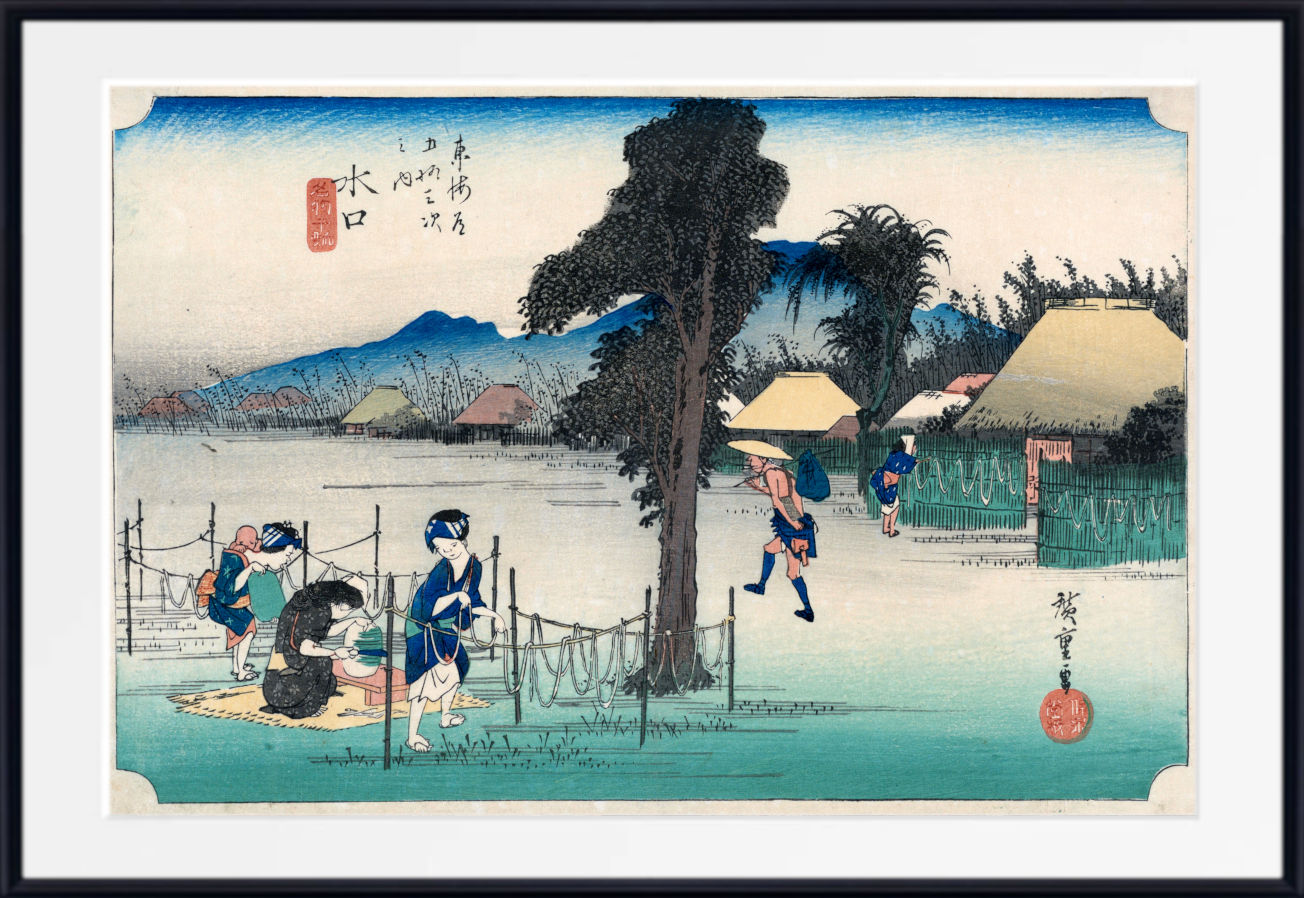
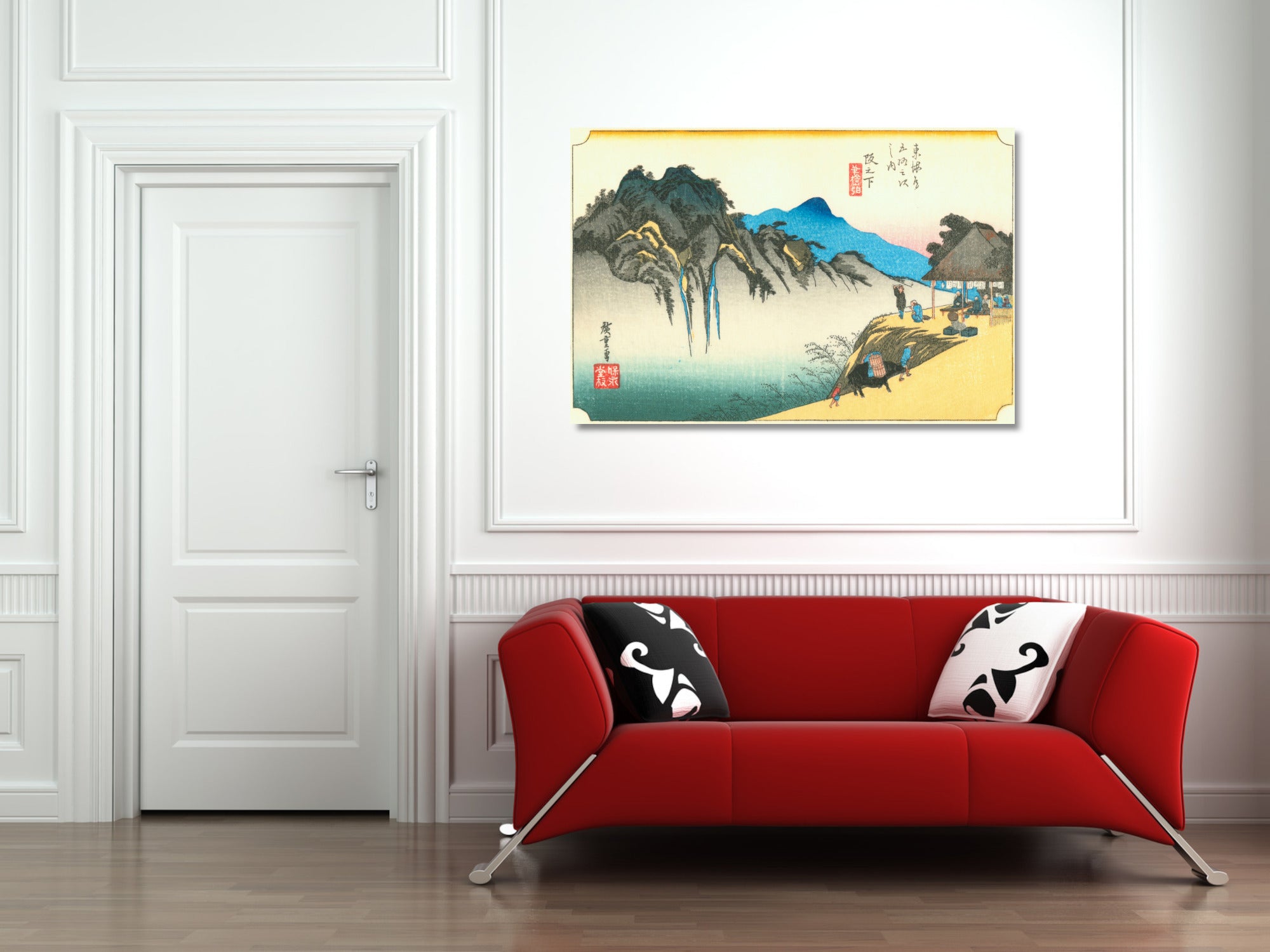
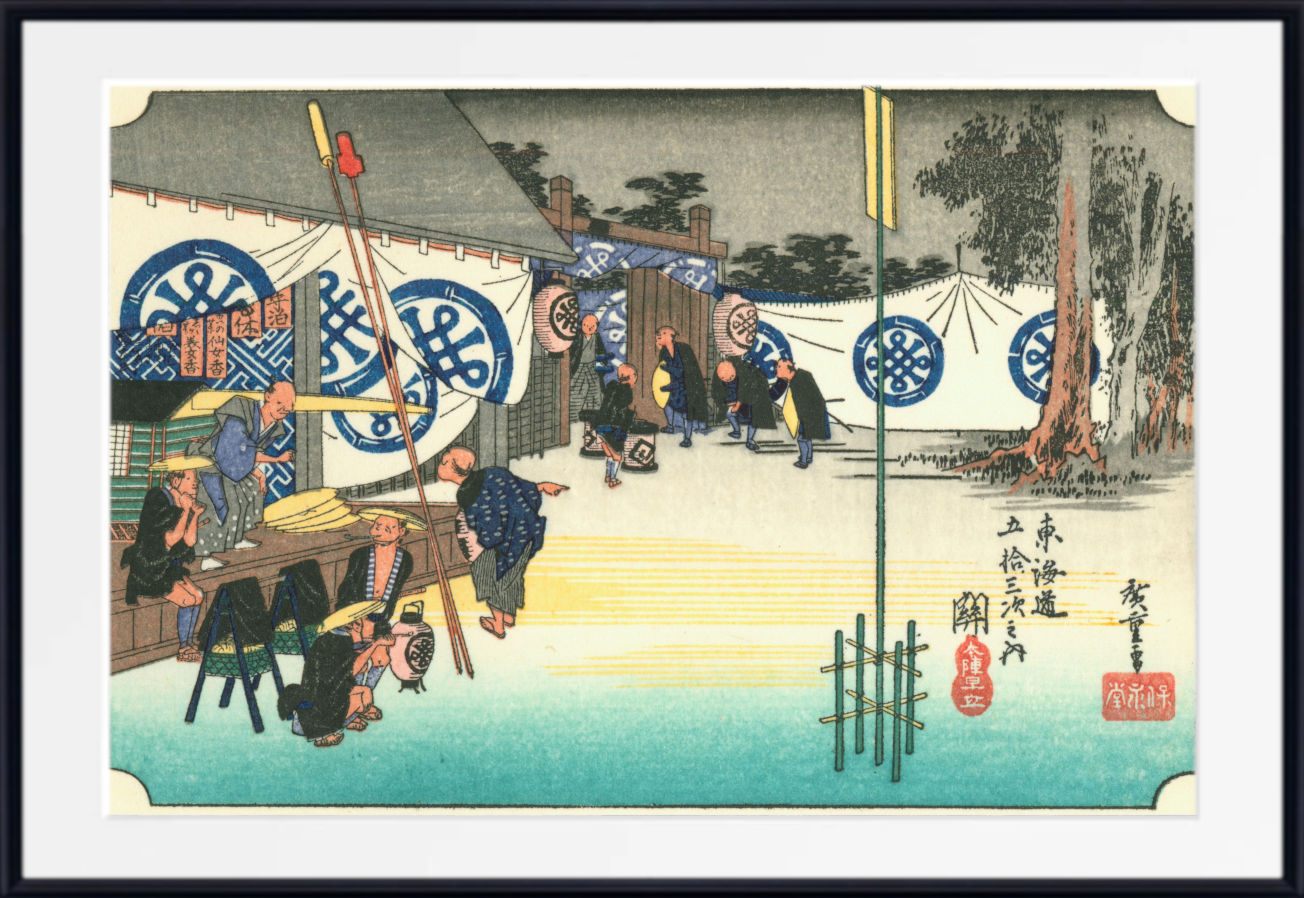
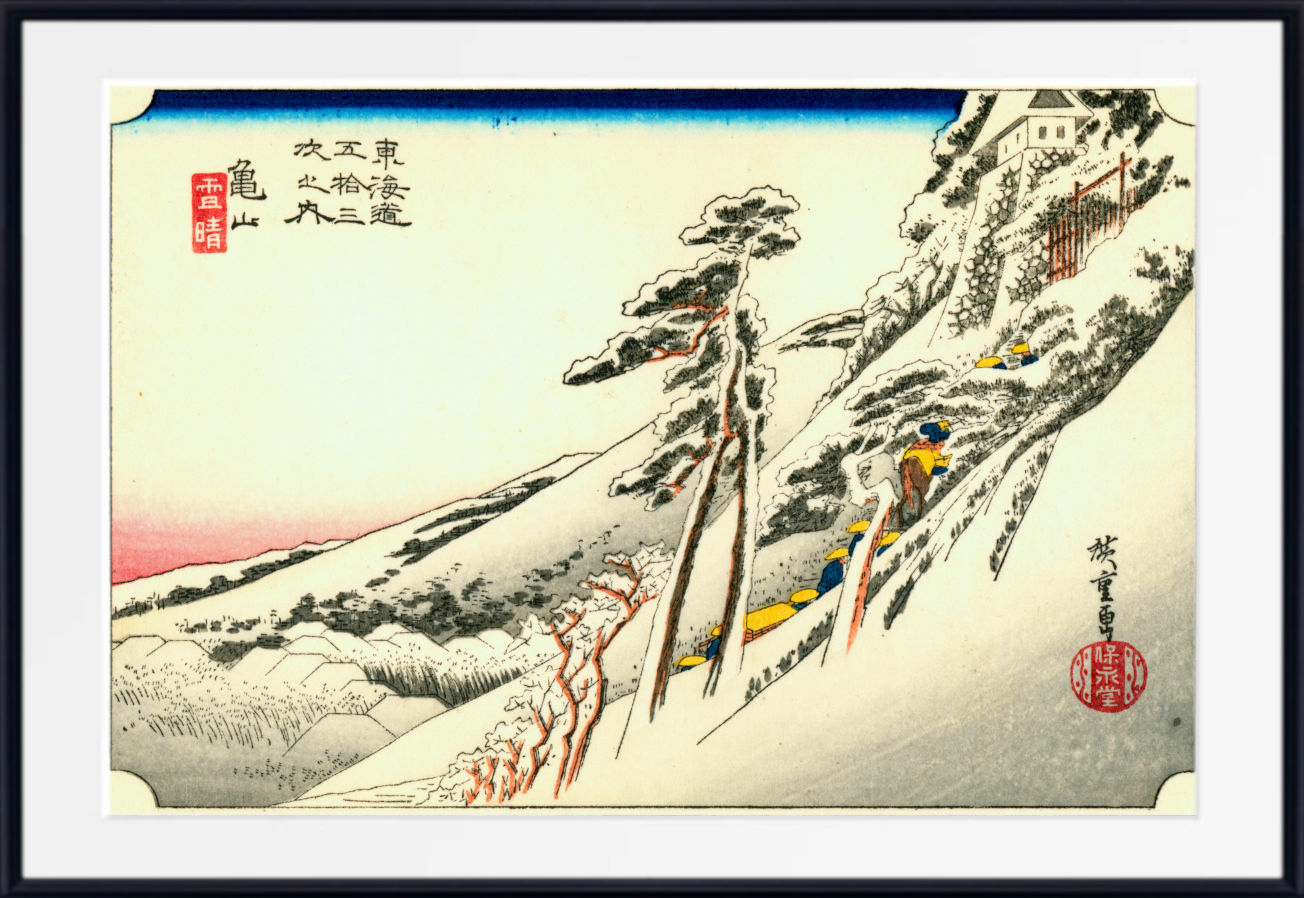
Works such as Kanbara, Shōno, Hakone and Nihonbashi demonstrate how differently Hiroshige could interpret successive places along the same route.
Browse the complete series in GalleryThane's Fifty-Three Stations of the Tōkaidō prints collection.
Edo Views and Urban Landscape
Hiroshige was also one of the great interpreters of Edo.
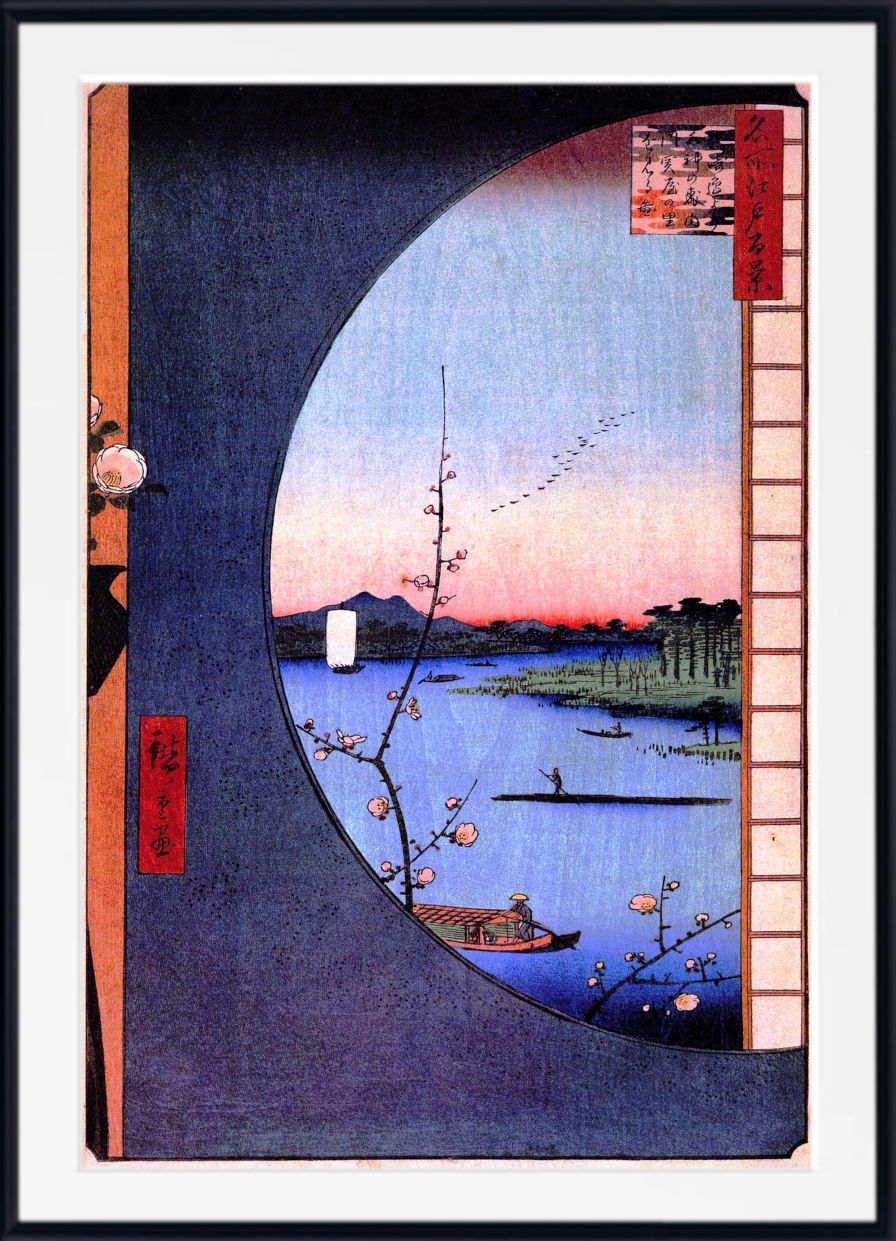
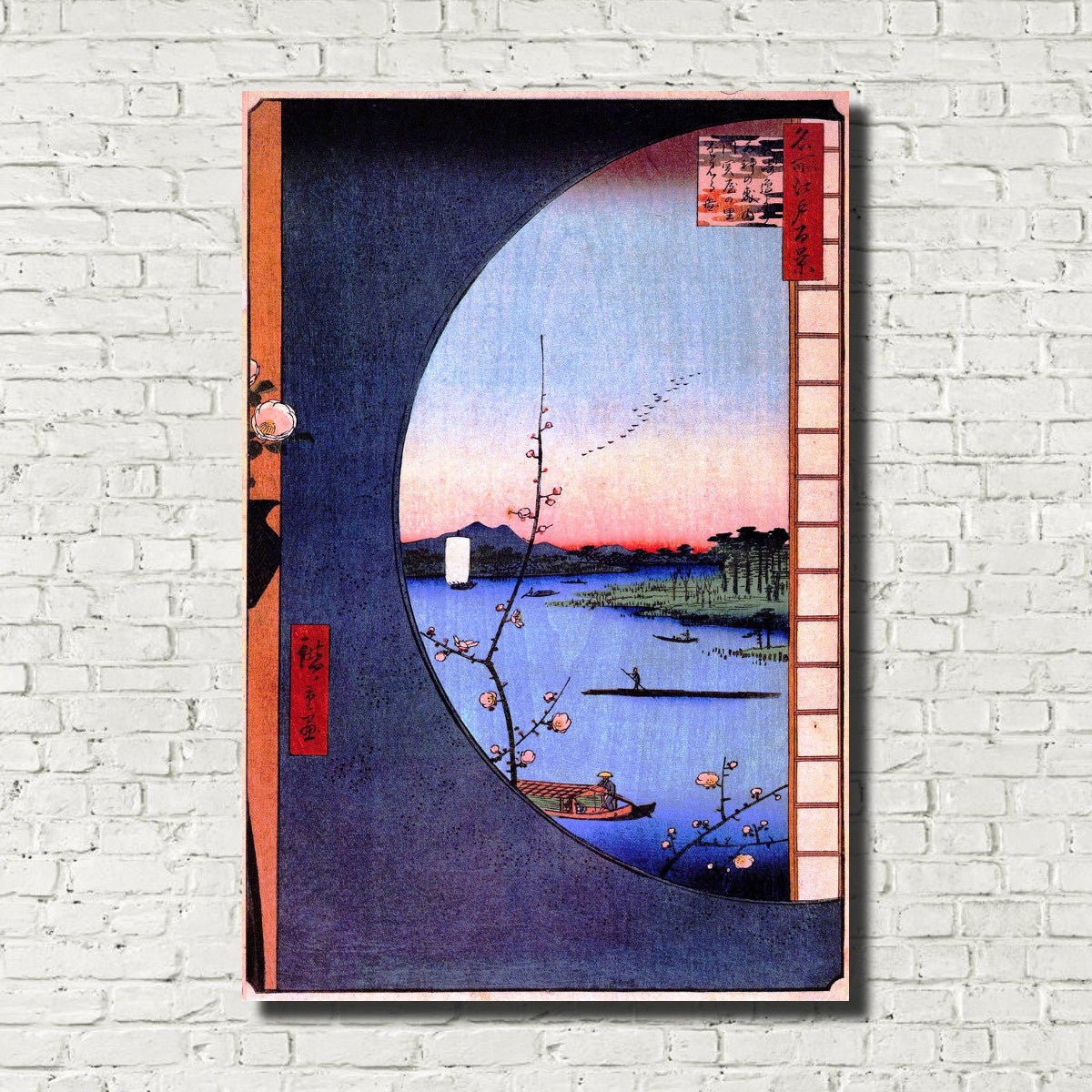
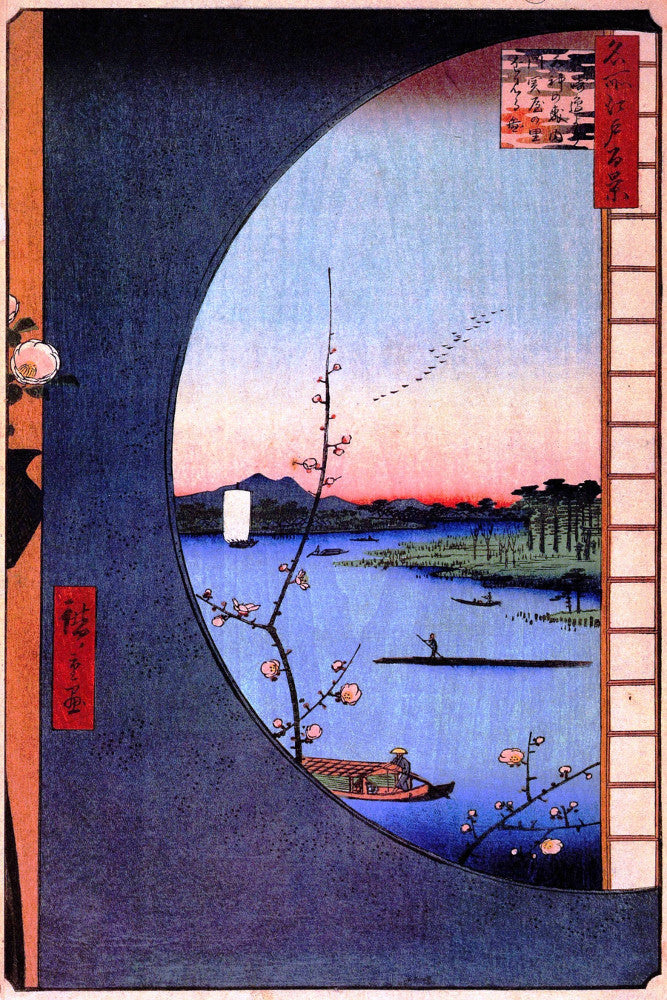
Rather than portraying the city simply as a collection of buildings, he often creates unusual viewpoints through trees, bridges, windows, riverbanks and foreground objects.
Views such as The Plum Garden and View From Massaki demonstrate how readily urban life and landscape could overlap in his work.
Gardens, shrines, rivers, bridges and neighbourhoods become places where changing weather and seasonal colour matter as much as architecture.
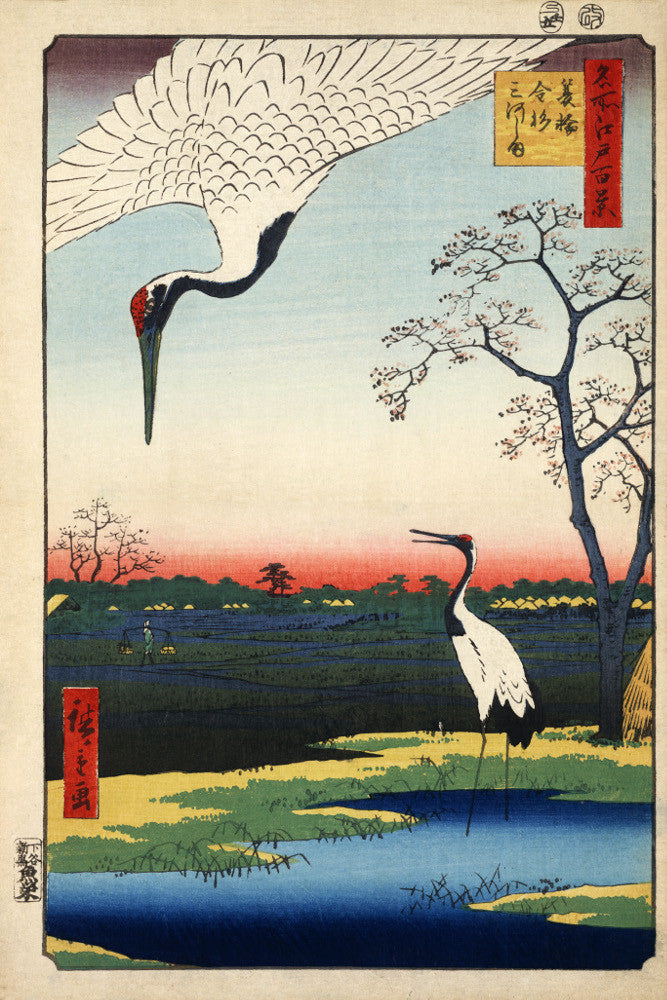
This approach culminated in Hiroshige's late series One Hundred Famous Views of Edo, one of the great achievements of nineteenth-century Japanese printmaking.
Hiroshige's Fish Prints
Landscape was only one part of Hiroshige's artistic output.
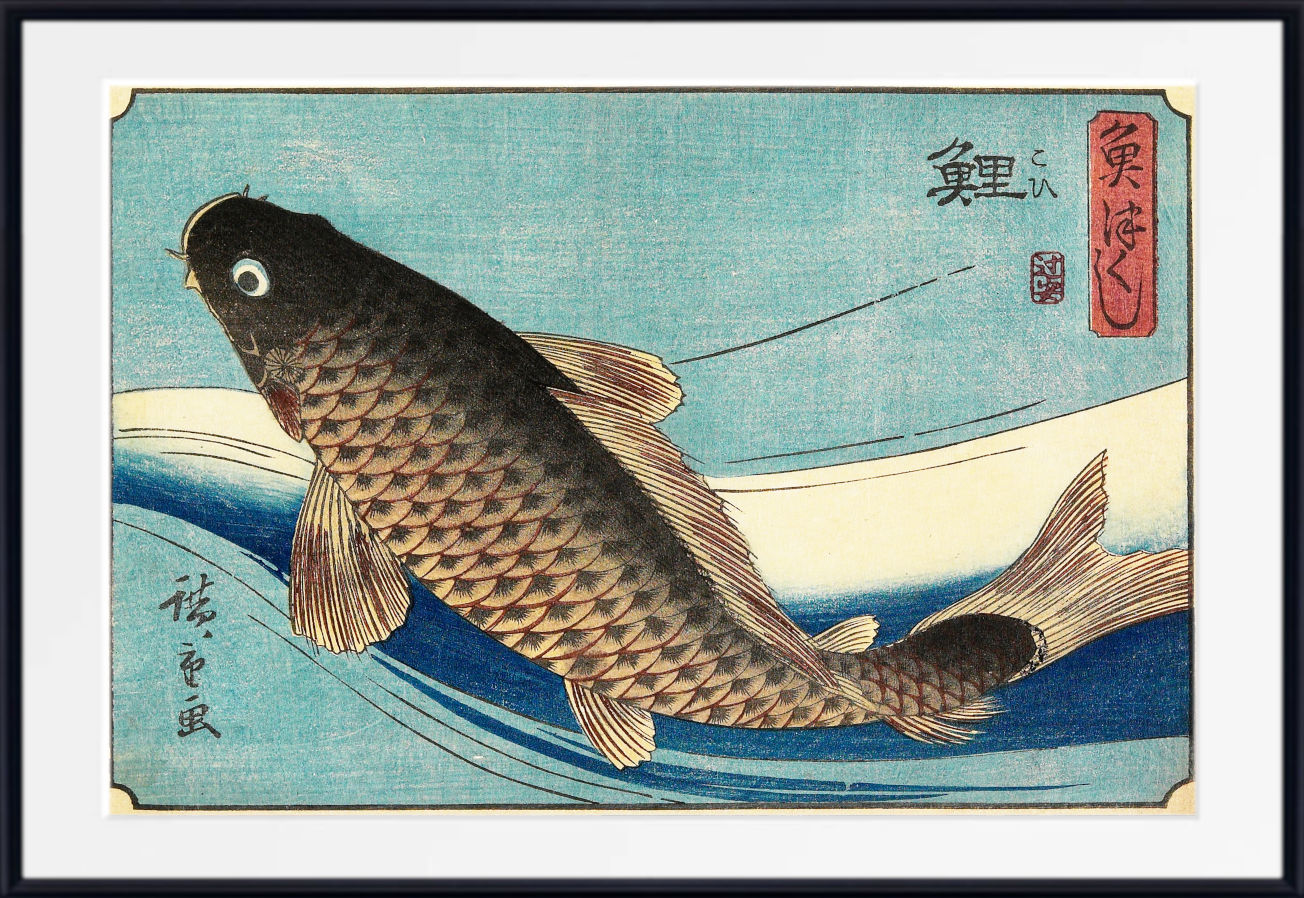
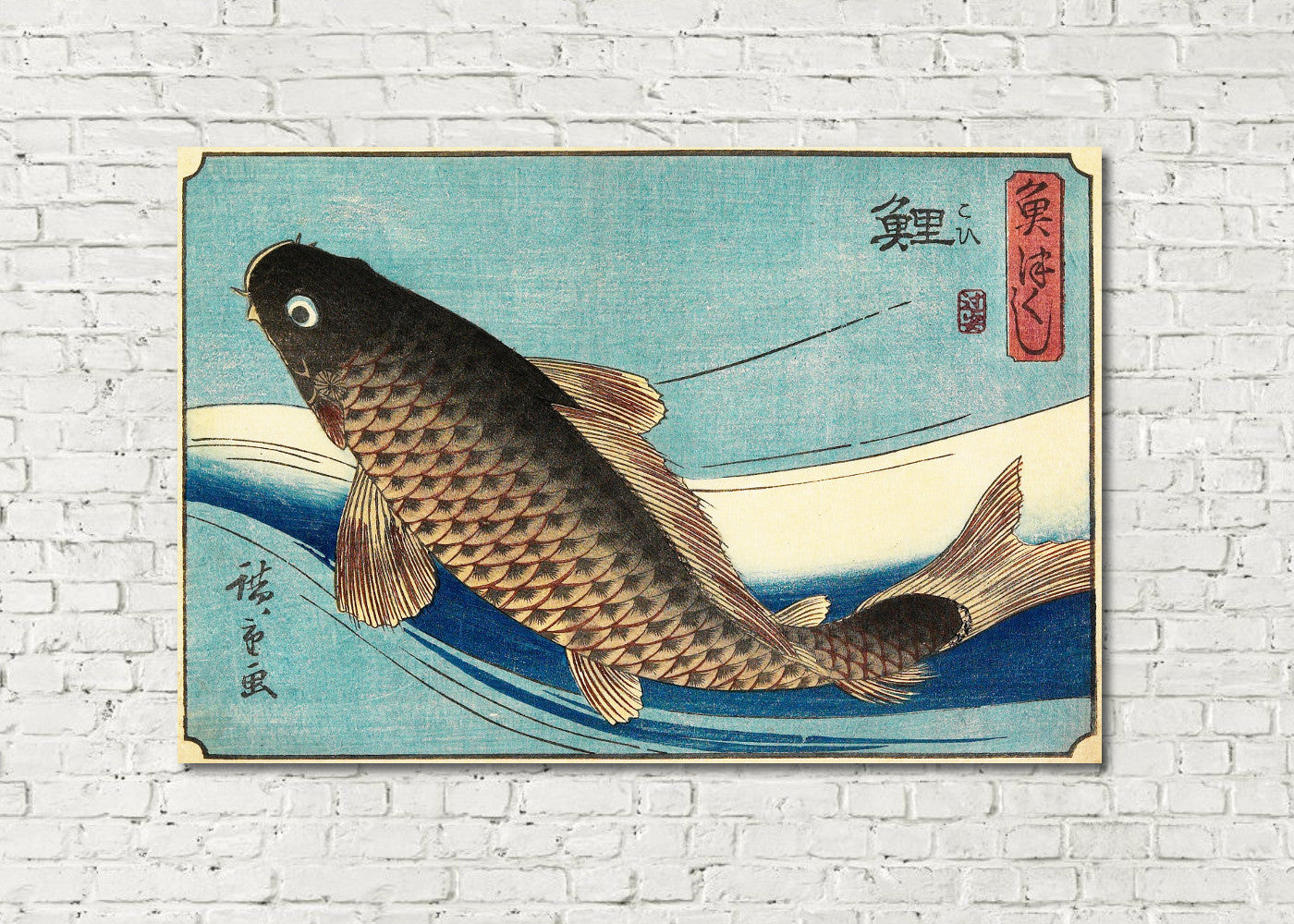
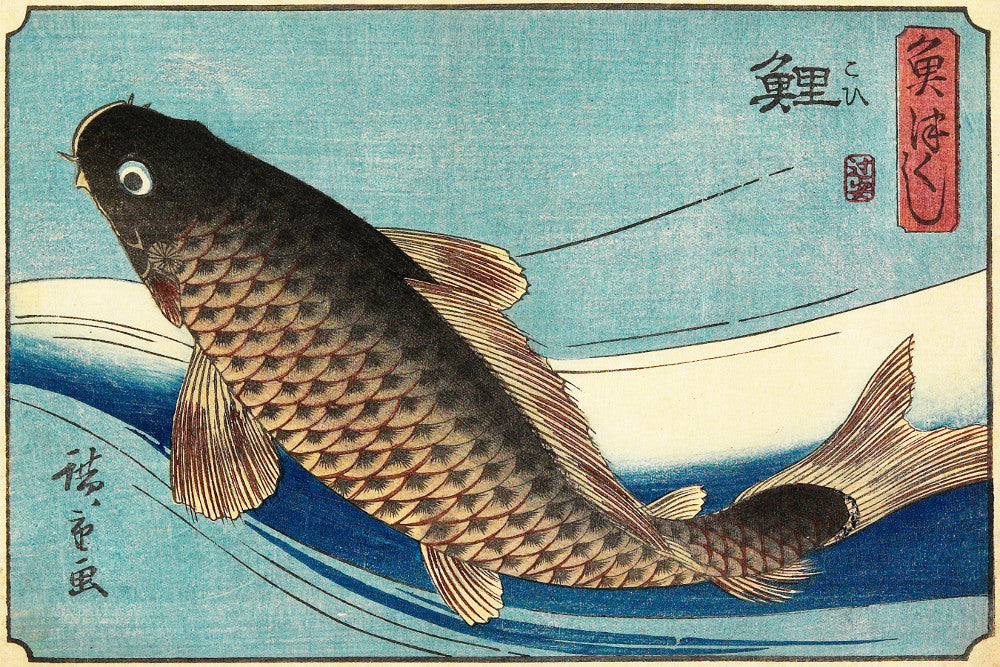
His fish prints demonstrate a very different kind of observation.
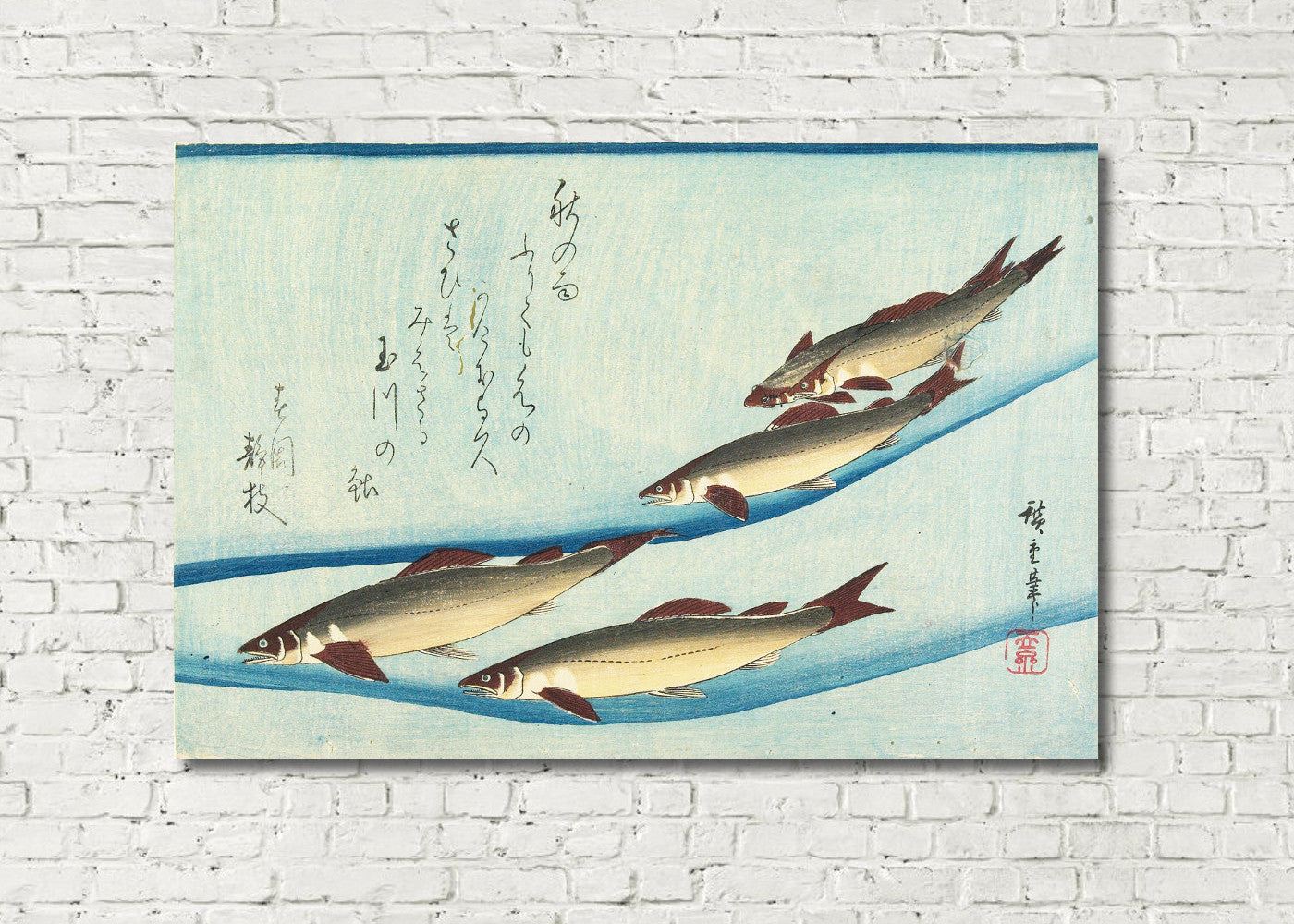
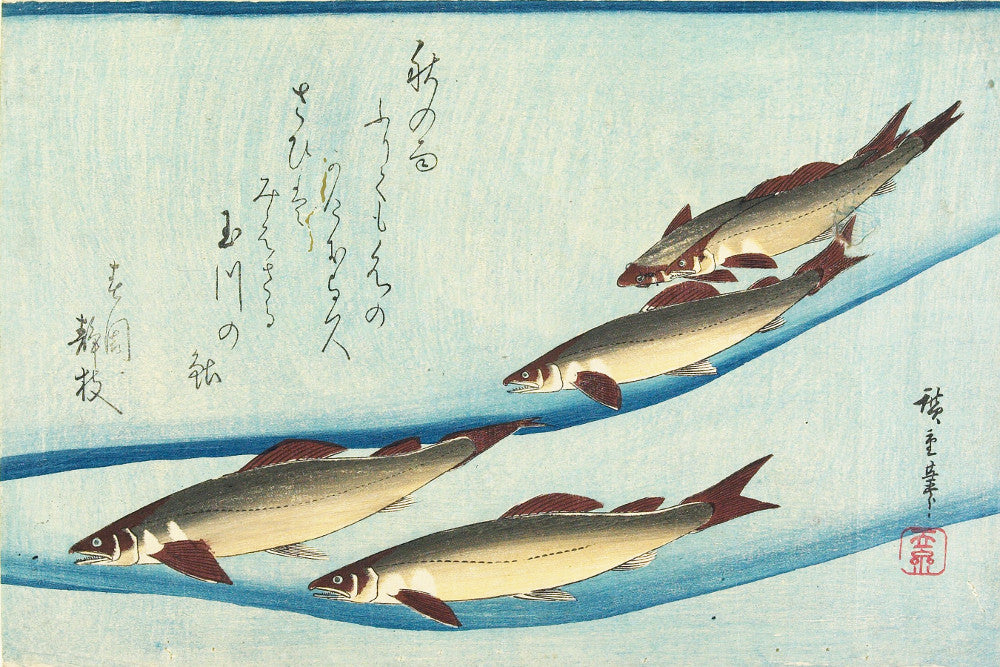
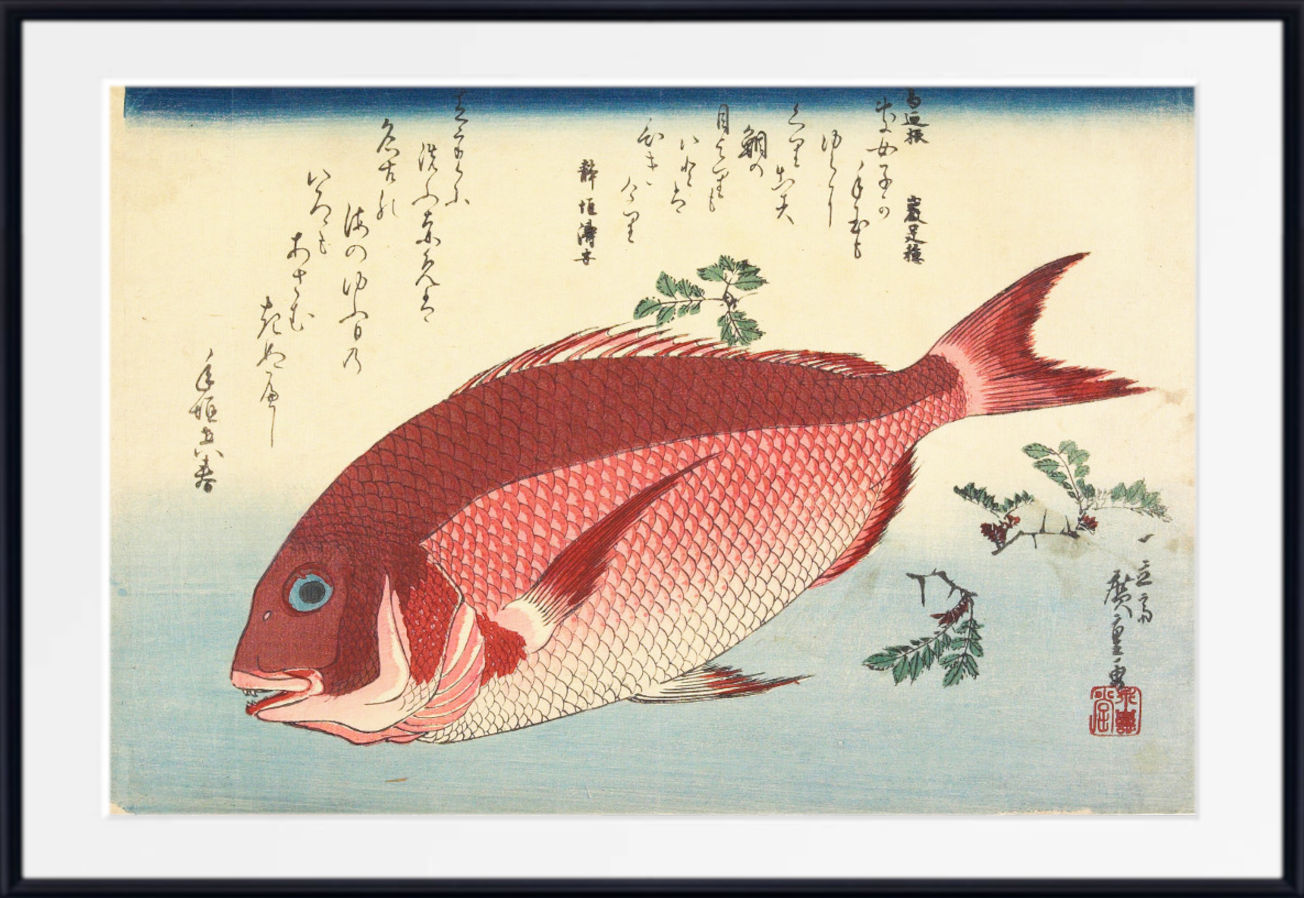
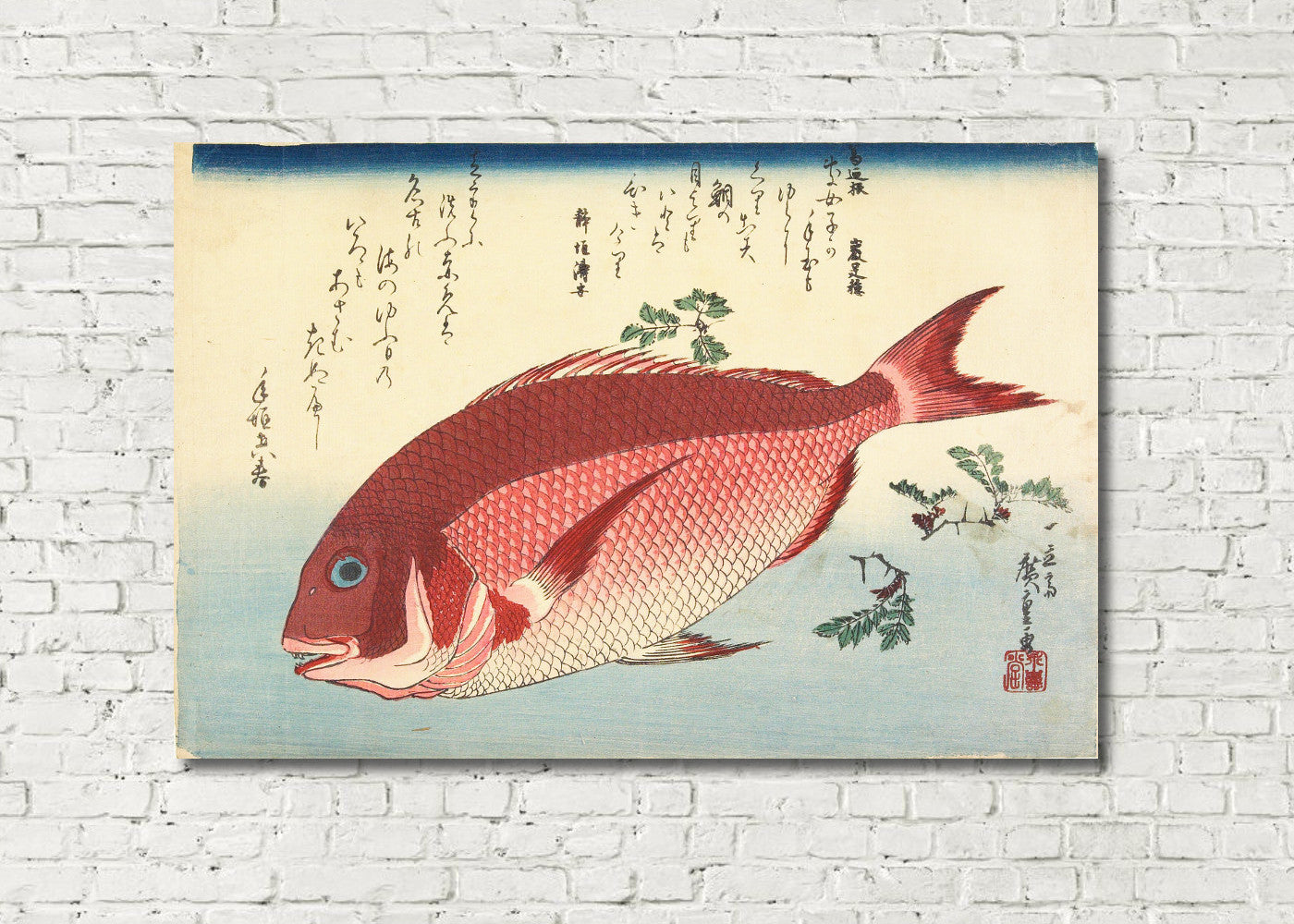
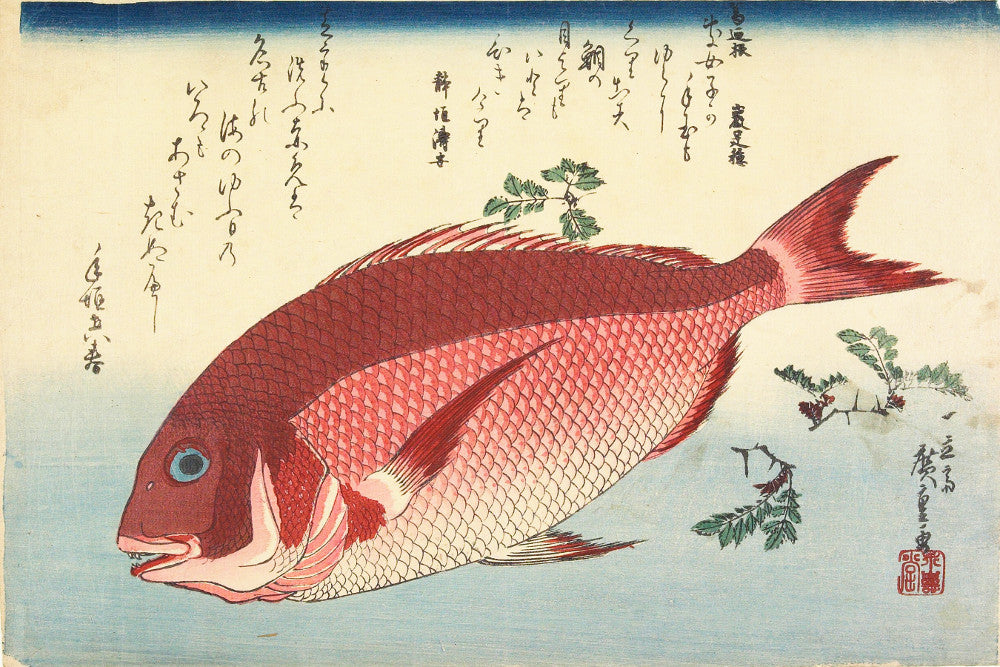
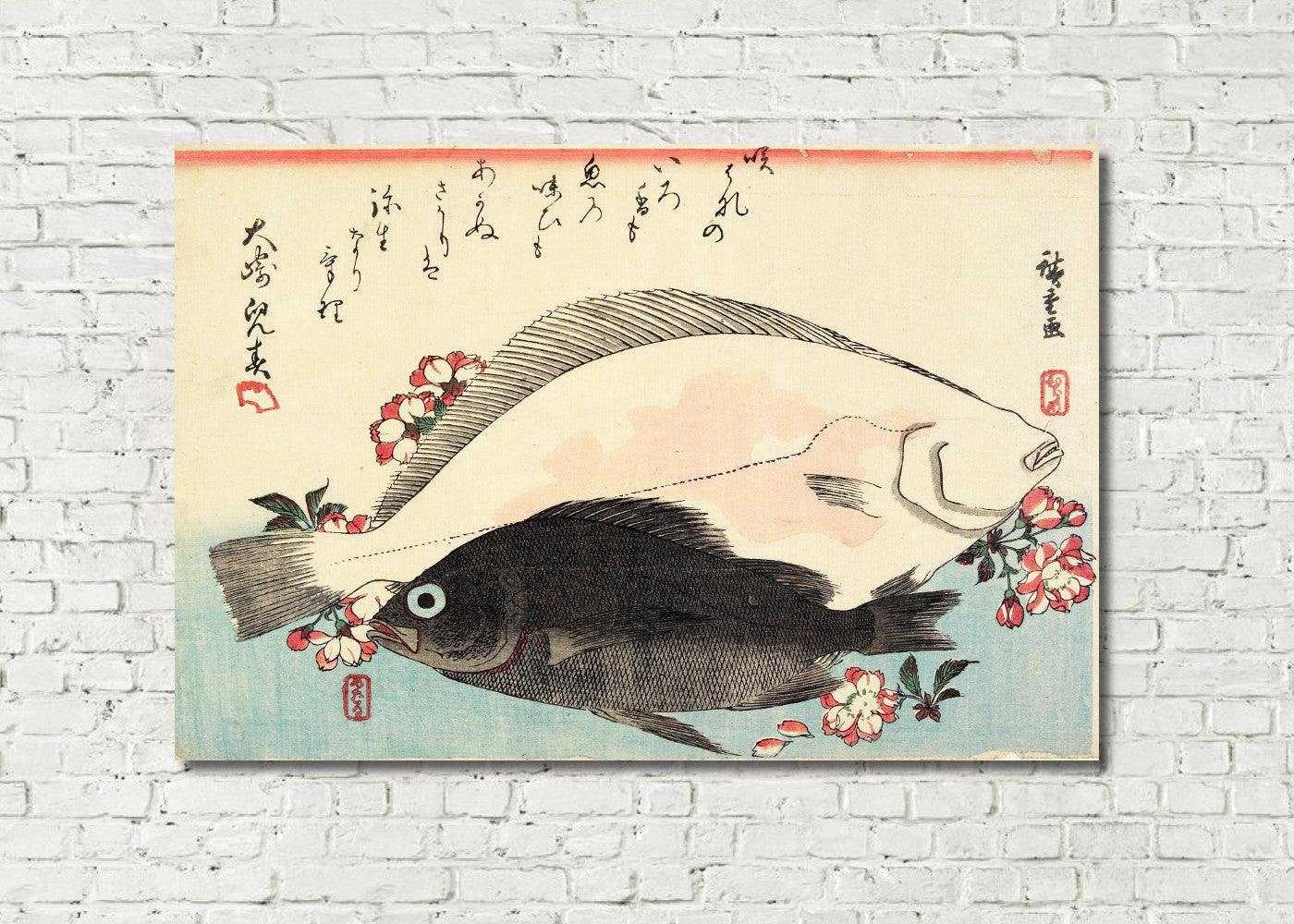
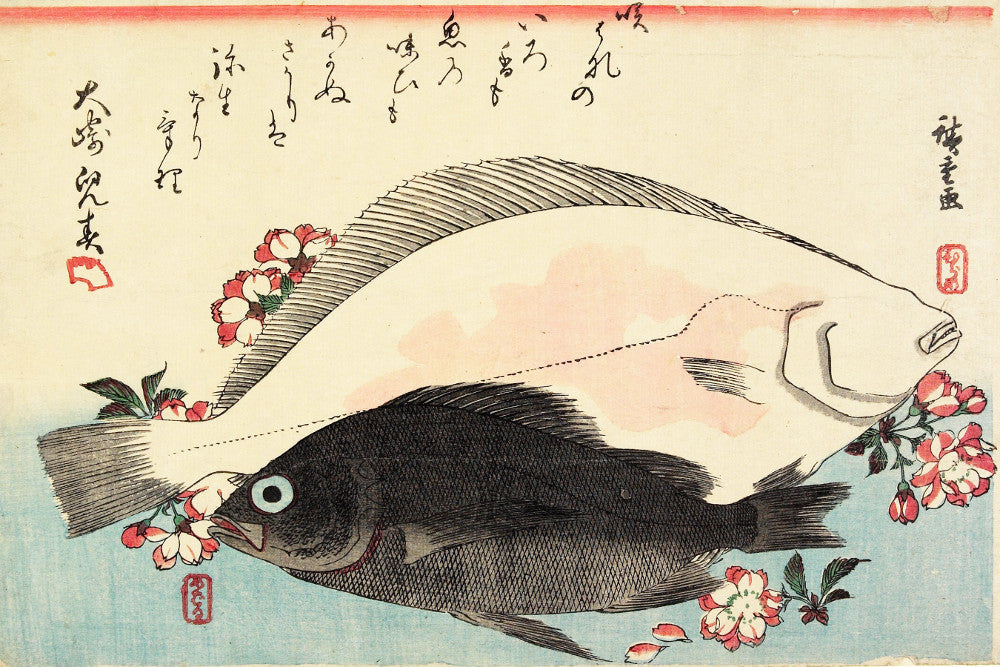
Carp, sea bream, trout and other species are depicted with economical outlines and carefully controlled colour, often accompanied by inscriptions or seasonal plants.
These works belong to the wider Japanese tradition of nature imagery but retain Hiroshige's characteristic ability to make simple subjects visually elegant.
The GalleryThane Hiroshige collection includes individual fish designs as well as grouped sets, making them particularly suitable for kitchens, dining areas and Japanese-inspired gallery walls.
Birds, Flowers and the Natural World
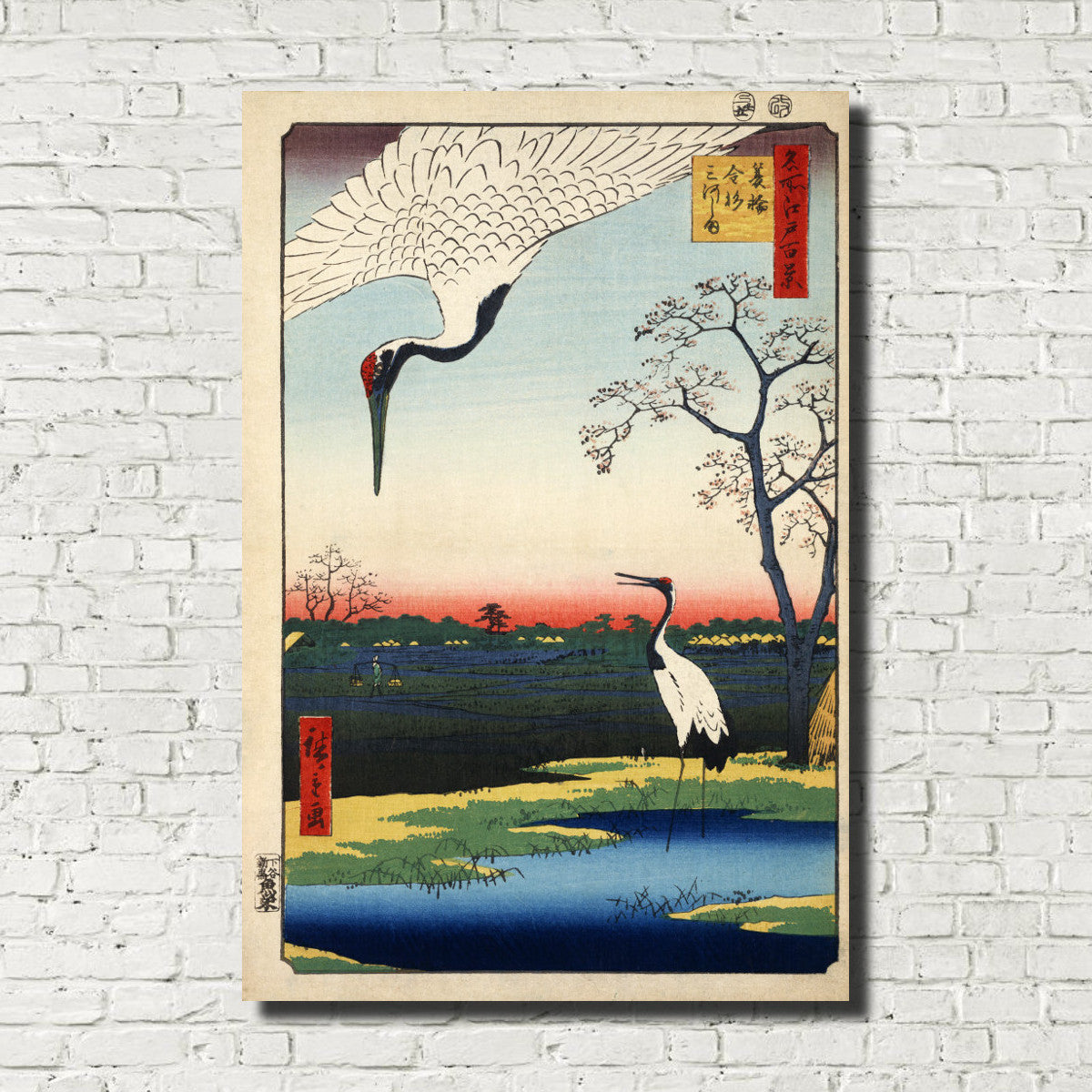
Hiroshige also produced numerous images of birds, flowers, grasses and other natural subjects.
These designs often use unusually generous areas of empty space.
A branch, bird or flower may occupy only part of the sheet, allowing the remaining paper to become an active part of the composition.
This restraint gives Hiroshige's nature prints a decorative clarity that works particularly well in contemporary interiors.
Rain, Snow and Changing Weather
Weather is one of the defining characteristics of Hiroshige's art.
He repeatedly explored rain, snow, mist, wind, dawn and evening light.
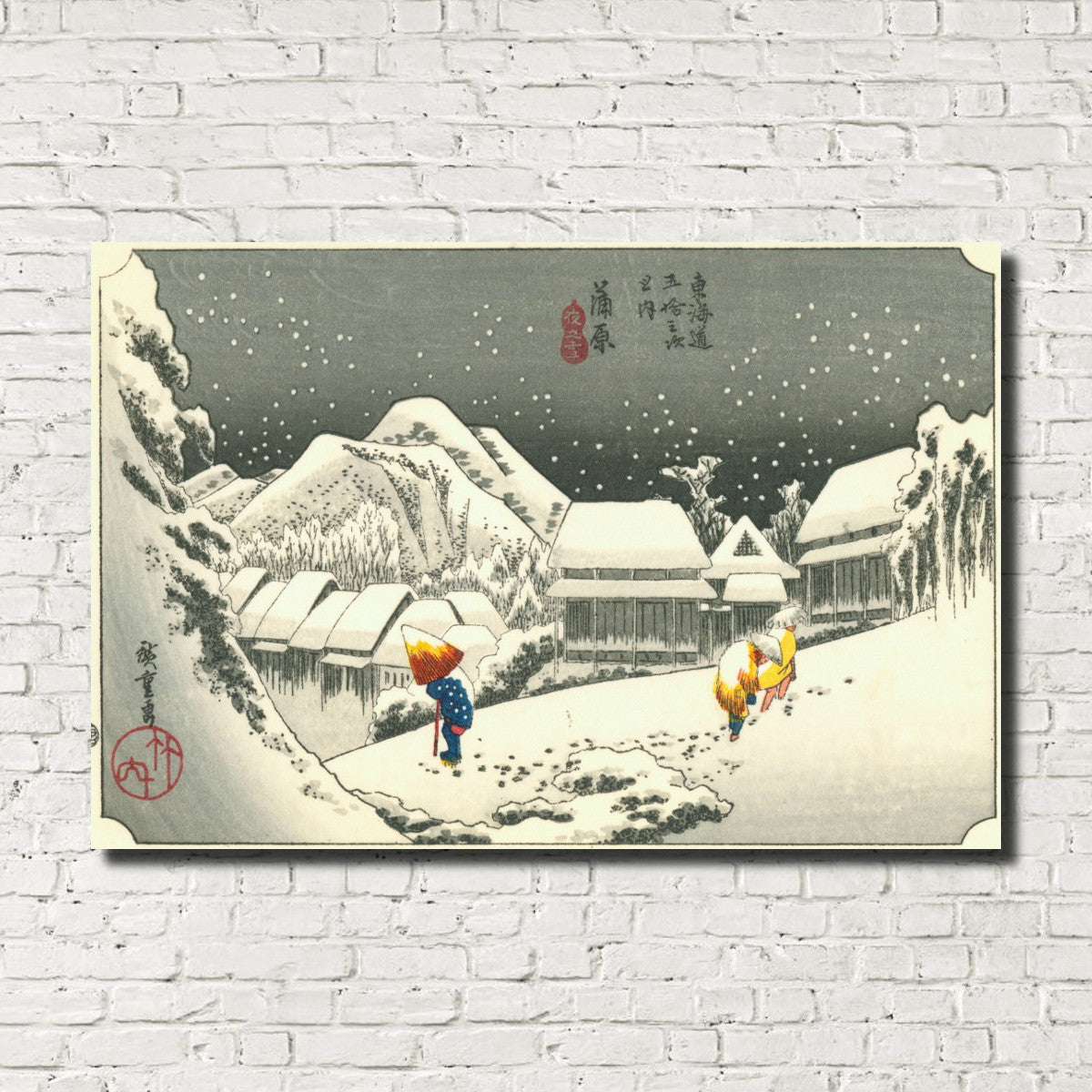
In Kanbara, deep snow muffles the landscape as travellers move quietly through the village.
In Shōno, figures race through sudden rain.
Elsewhere mist dissolves distant forms or evening colour separates foreground silhouettes from the sky.
These effects are not simply decorative.
Weather determines how the viewer experiences the place.
Bokashi – Hiroshige's Gradated Colour
One of the techniques closely associated with Hiroshige's atmospheric landscapes is bokashi, the controlled gradation of colour during woodblock printing.
Rather than applying one flat tone uniformly across the block, the printer could create gradual transitions in sky, water or landscape.
This allowed Hiroshige's designs to suggest dawn, dusk, mist and distance with exceptional subtlety.
Ukiyo-e production was collaborative: the artist supplied the design, while specialist block cutters and printers translated it into the finished colour print.
The skill of those printers was essential to the atmospheric effects for which Hiroshige became famous.
Hiroshige and the Tōkaidō Road
Travel occupied an important place in Edo-period popular culture.
The Tōkaidō connected two of Japan's most important cities and was travelled by merchants, pilgrims, officials, samurai and ordinary travellers.
Hiroshige's landscapes rarely present travel as an abstract idea.
People carry luggage, ride horses, cross ferries, shelter from weather and rest at roadside settlements.
The road becomes a setting for everyday experience.
For a more detailed exploration of the complete journey, read GalleryThane's guide to The Fifty-Three Stations of the Tōkaidō.
Hiroshige and Western Art
Japanese prints became increasingly visible in Europe during the nineteenth century and contributed significantly to the development of Japonisme.
Artists admired ukiyo-e for its unusual cropping, asymmetrical compositions, clear areas of colour and viewpoints that differed markedly from conventional European perspective.
Hiroshige became particularly influential.
Vincent van Gogh studied Japanese prints closely and produced painted interpretations of Hiroshige designs, helping make works such as the plum garden and bridge scenes especially familiar to Western audiences.
The influence was not a matter of simple imitation. Japanese print composition helped European artists reconsider how landscapes and everyday scenes could be organised on a flat surface.
What Makes Hiroshige's Style Distinctive?
Hiroshige's work is particularly recognisable for its balance between observation and simplification.
Important characteristics include:
- strong foreground framing
- dramatic diagonals
- unusual cropping
- elegant silhouettes
- atmospheric gradations of colour
- seasonal weather
- small human figures within large landscapes
- clear areas of blue, green and warm evening colour
The result is art that can feel both highly descriptive and remarkably modern.
Choosing an Andō Hiroshige Print
For a classic Hiroshige landscape, works from the Tōkaidō series offer mountains, rivers, snow, rain and historic travel scenes.
For city views, prints associated with Edo provide more architectural and urban subject matter.
Hiroshige's fish designs are ideal for viewers drawn to Japanese natural history and clean graphic composition, while botanical and nature prints offer quieter decorative alternatives.
Collectors who want a particularly atmospheric work may prefer snow, dusk or rain scenes where Hiroshige's command of colour gradation becomes especially important.
Hiroshige Prints for Modern Interiors
Hiroshige's prints work particularly well in Scandinavian, Japandi, minimalist and contemporary interiors.
Many of his landscapes combine indigo blue, muted green, cream, grey and warm earth tones, making them easy to integrate with natural timber and neutral walls.
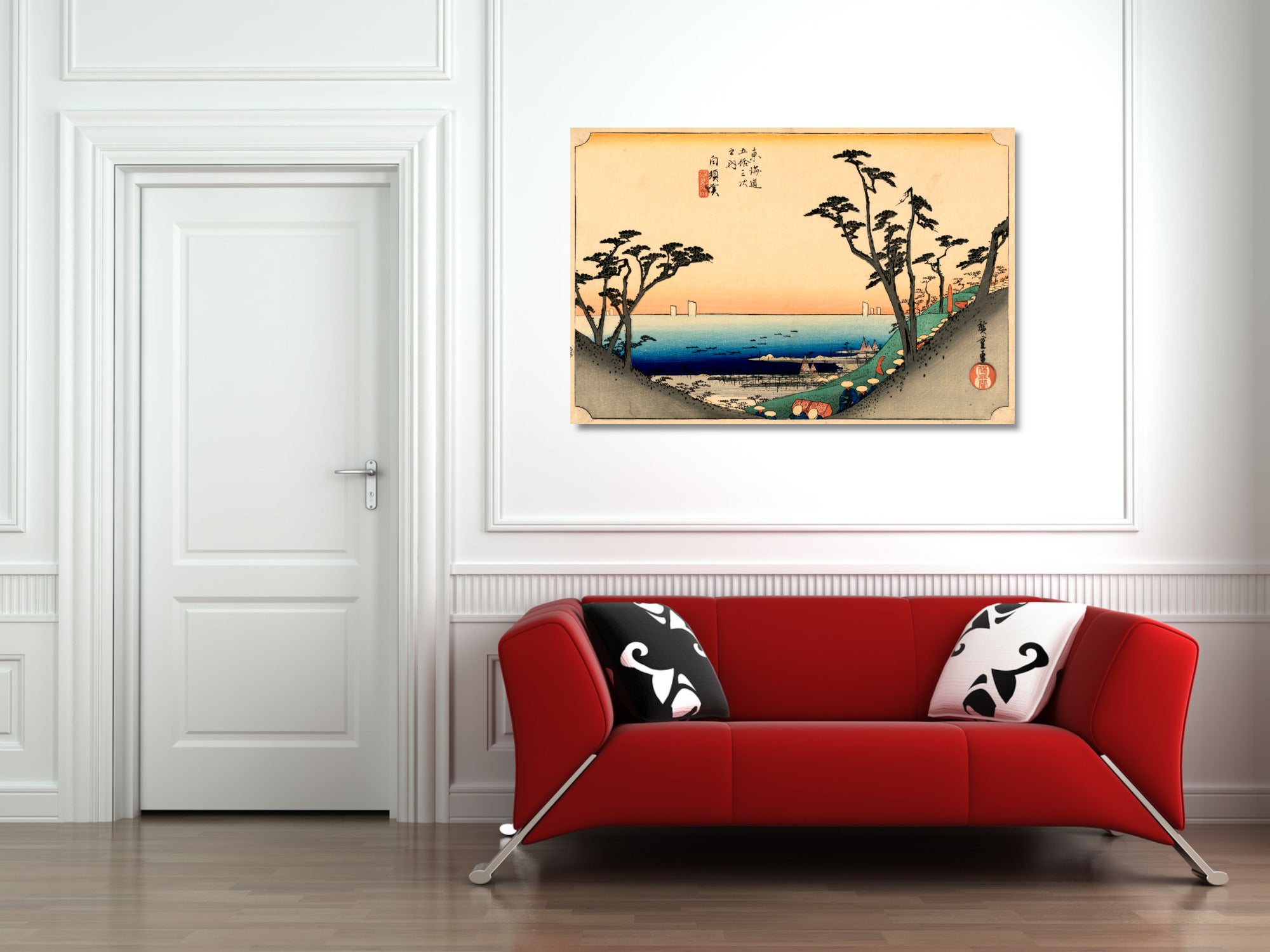
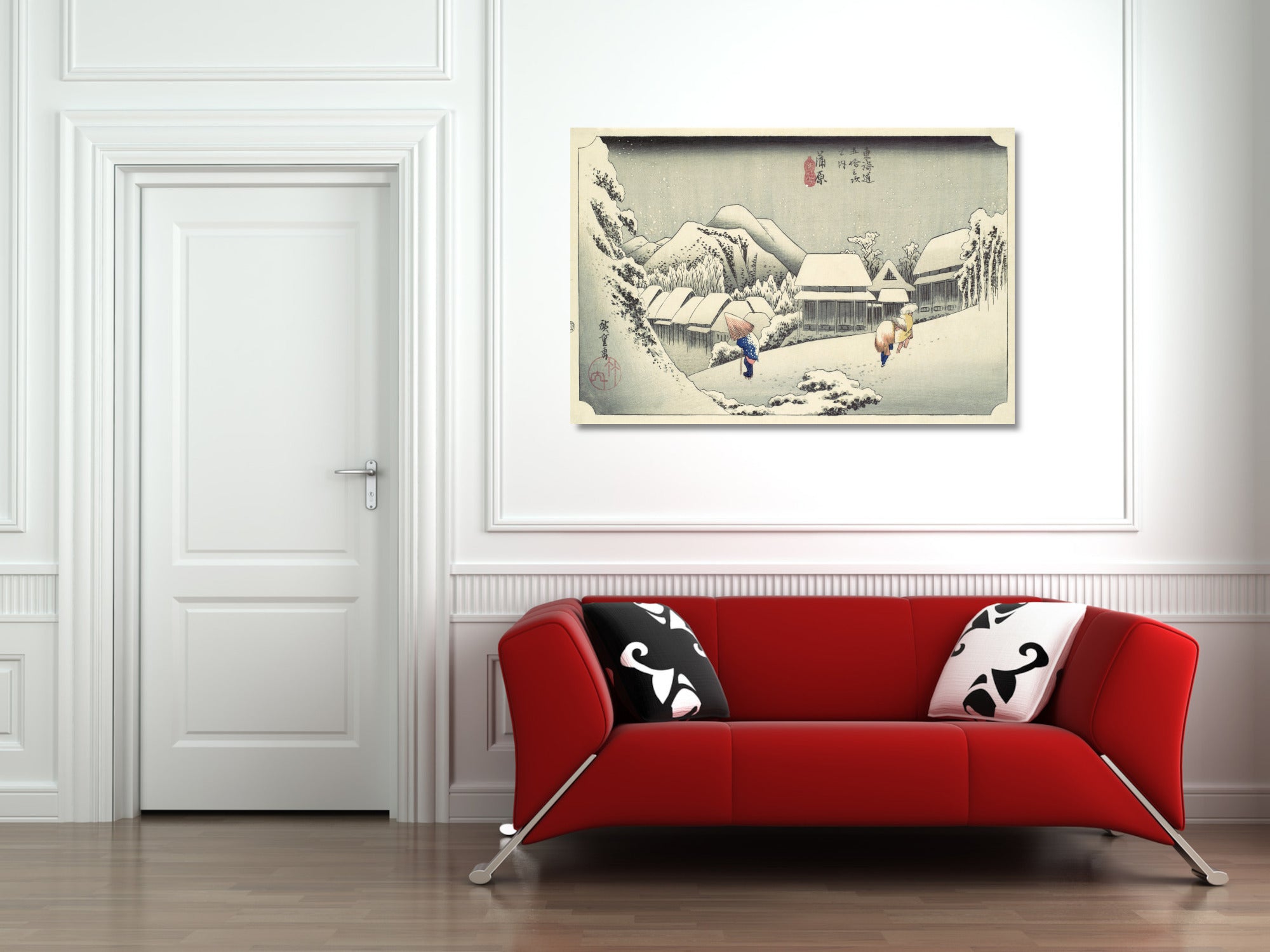
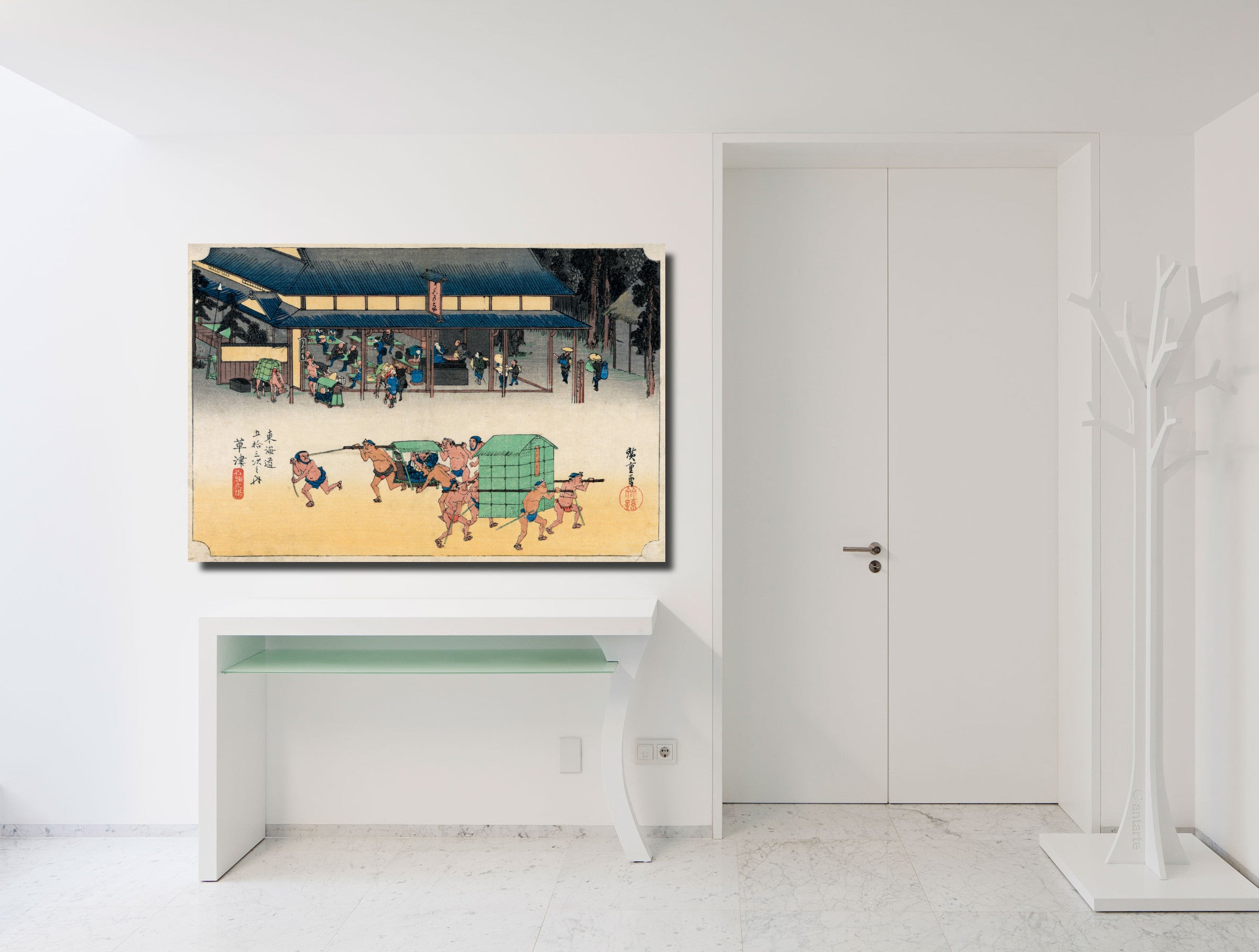
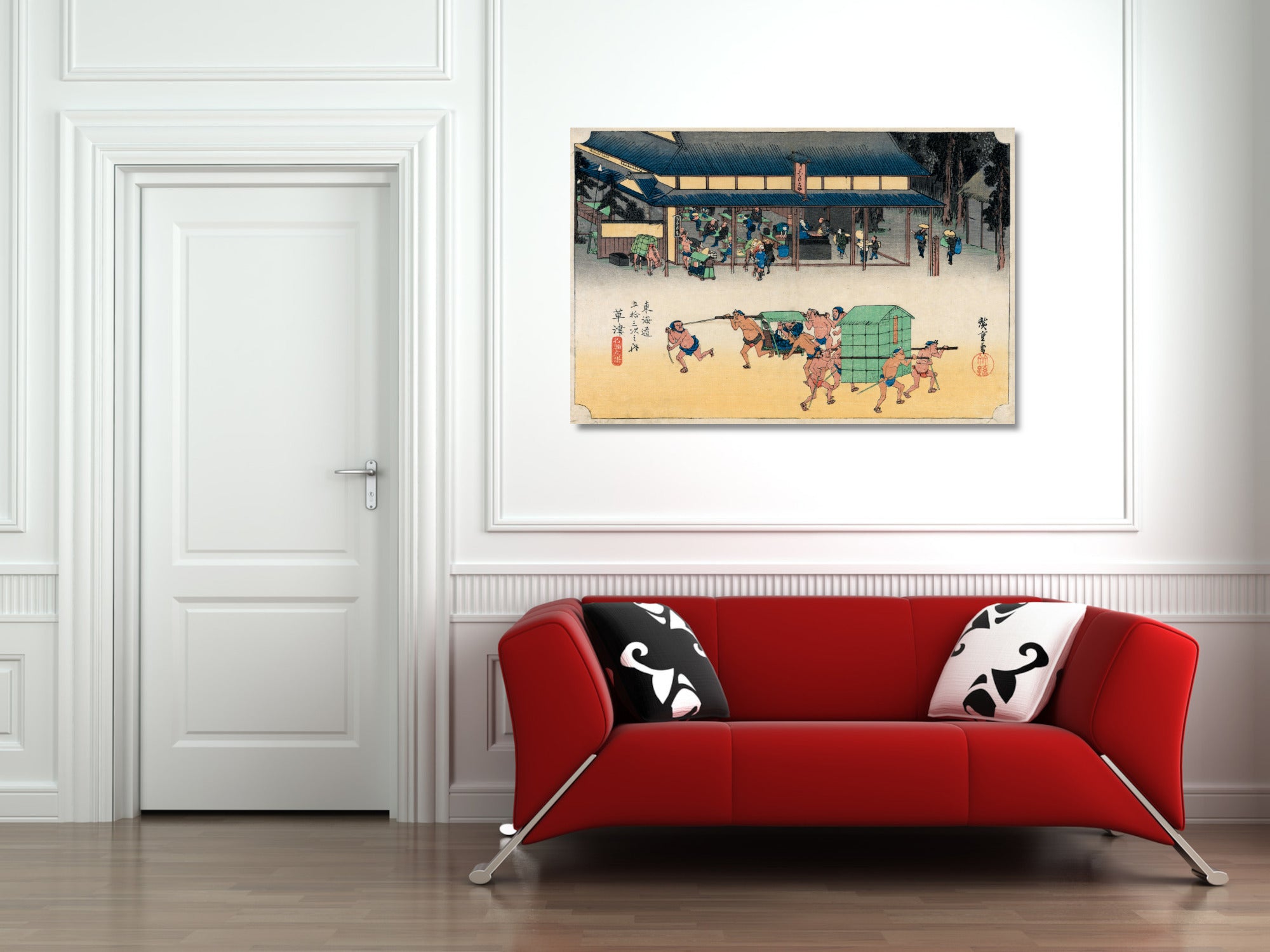
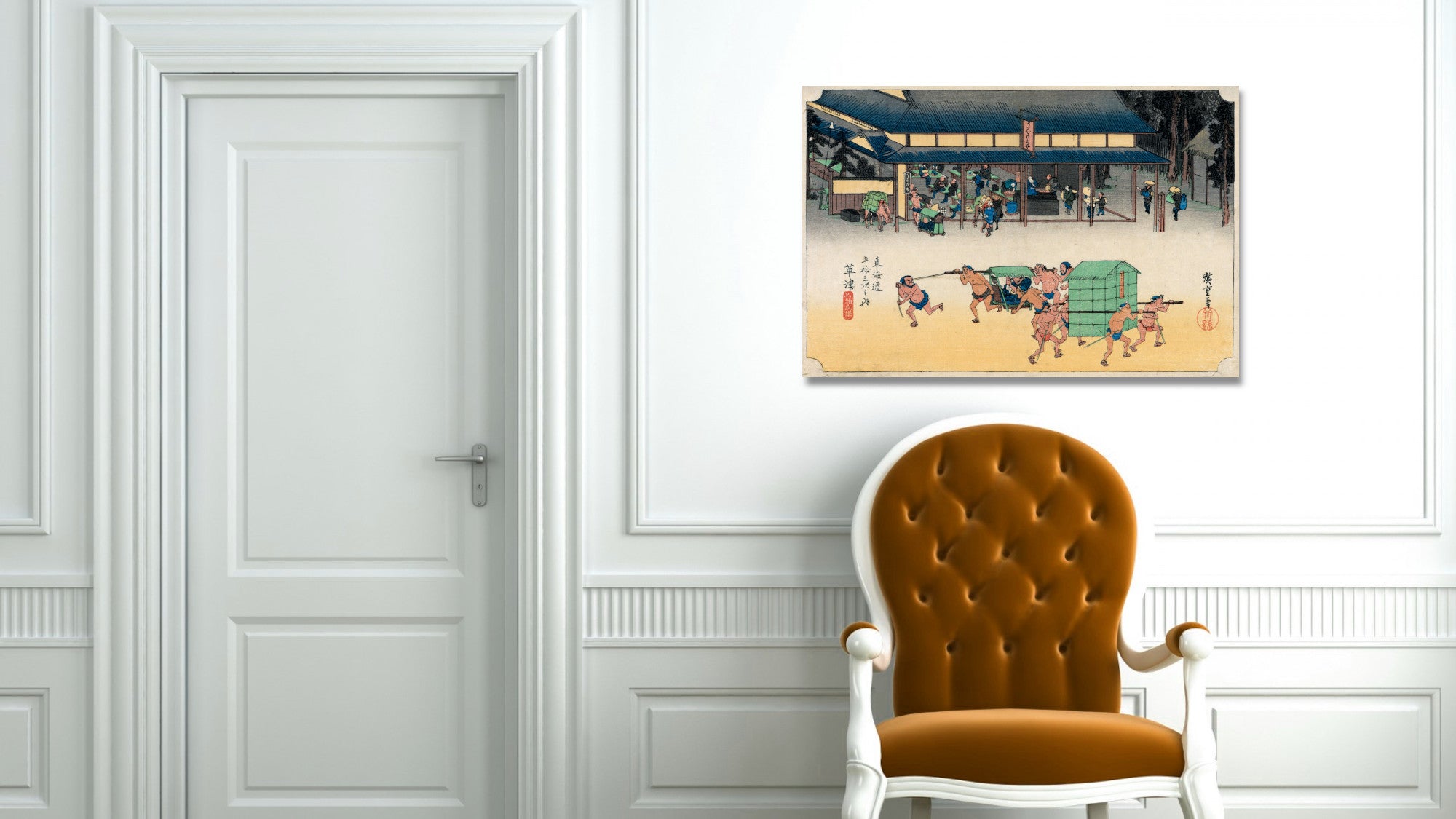
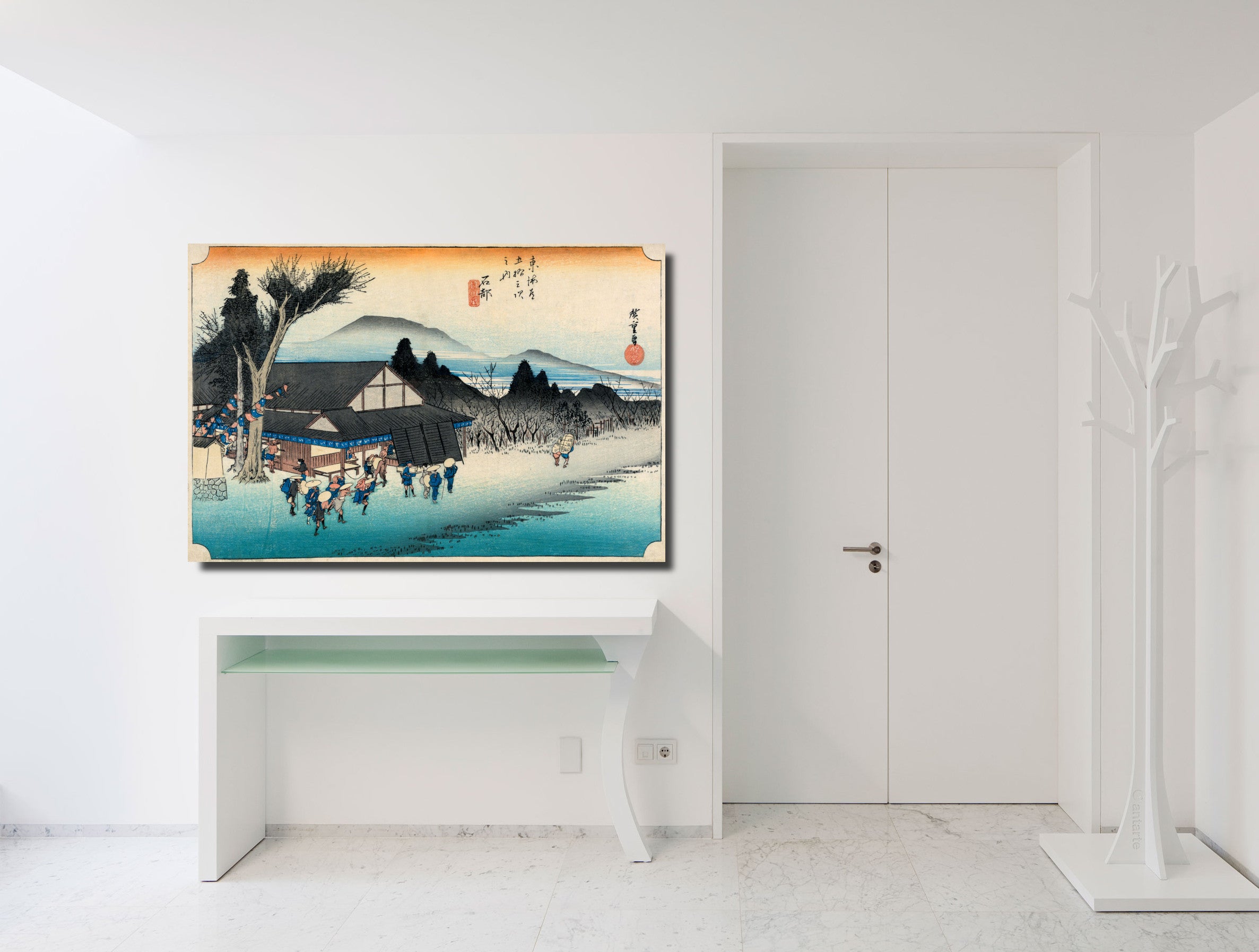
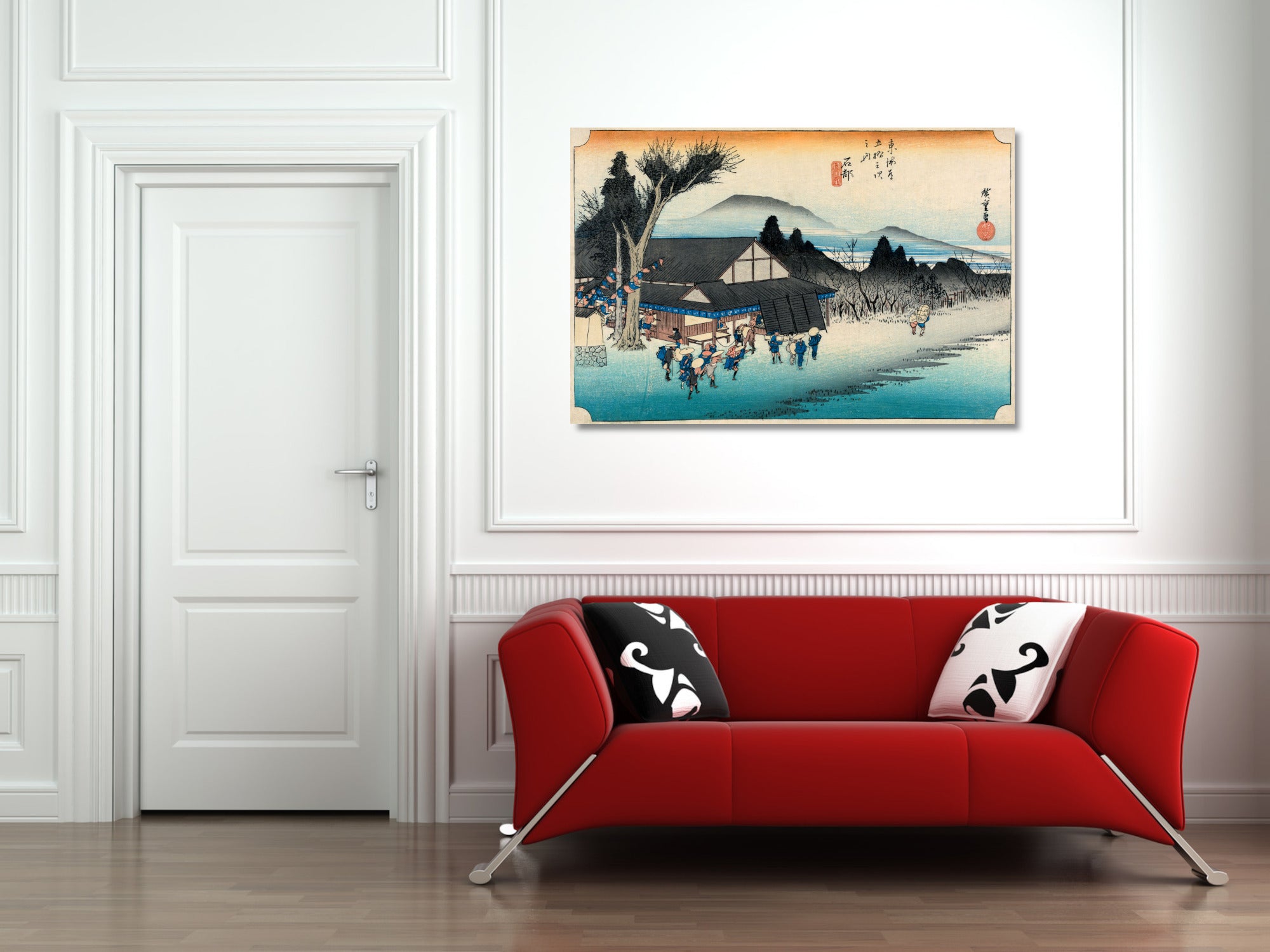
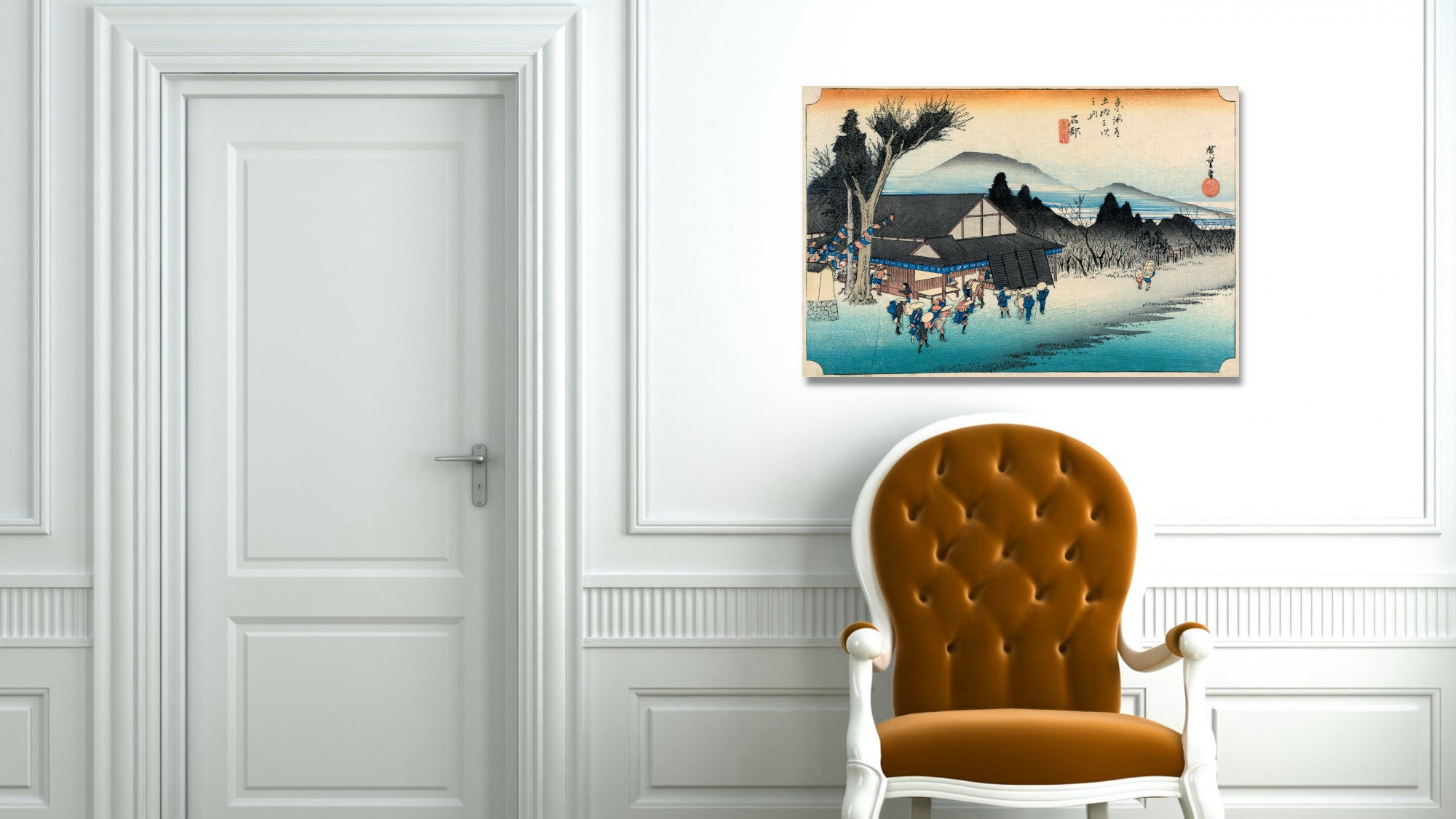
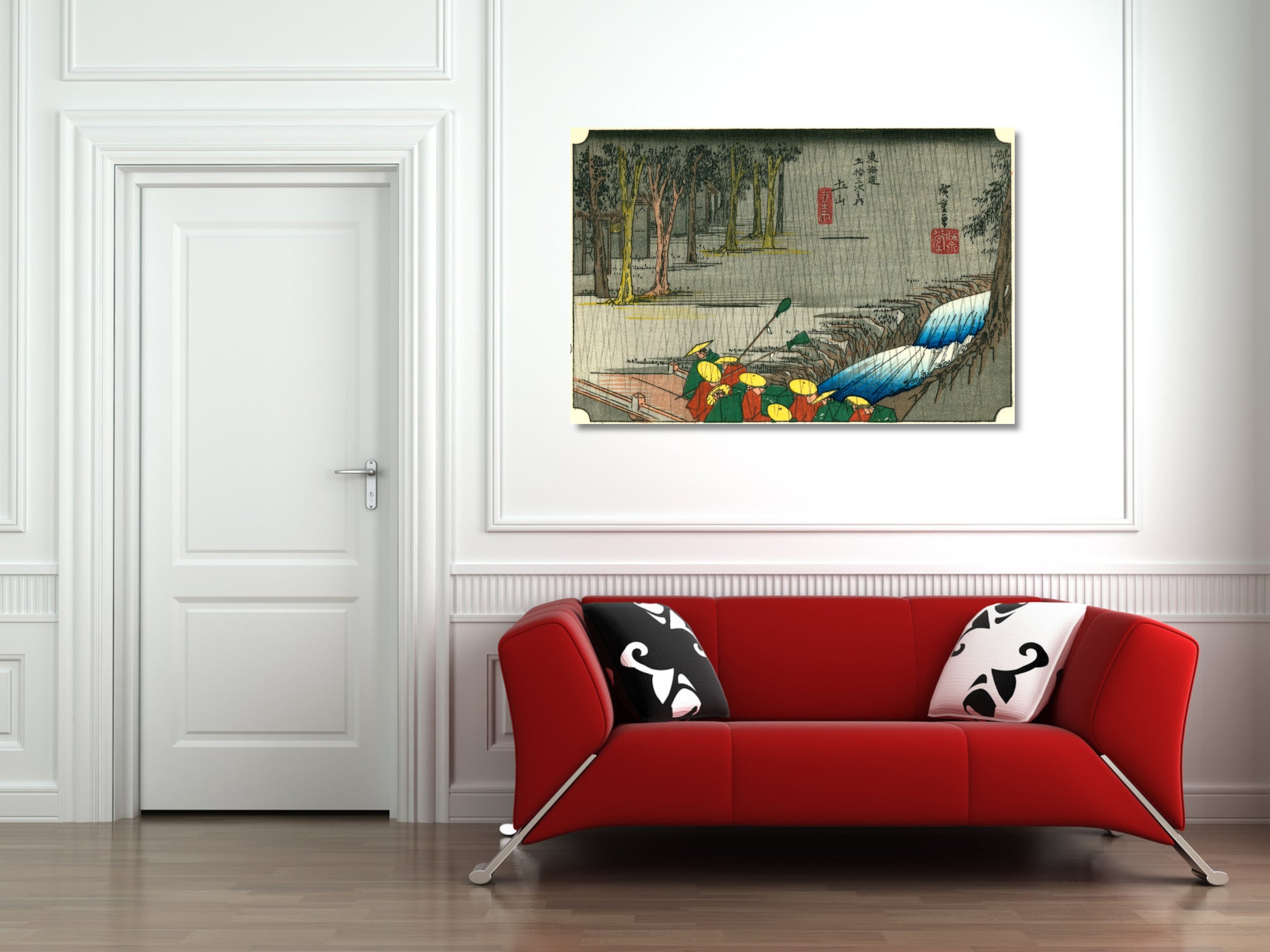
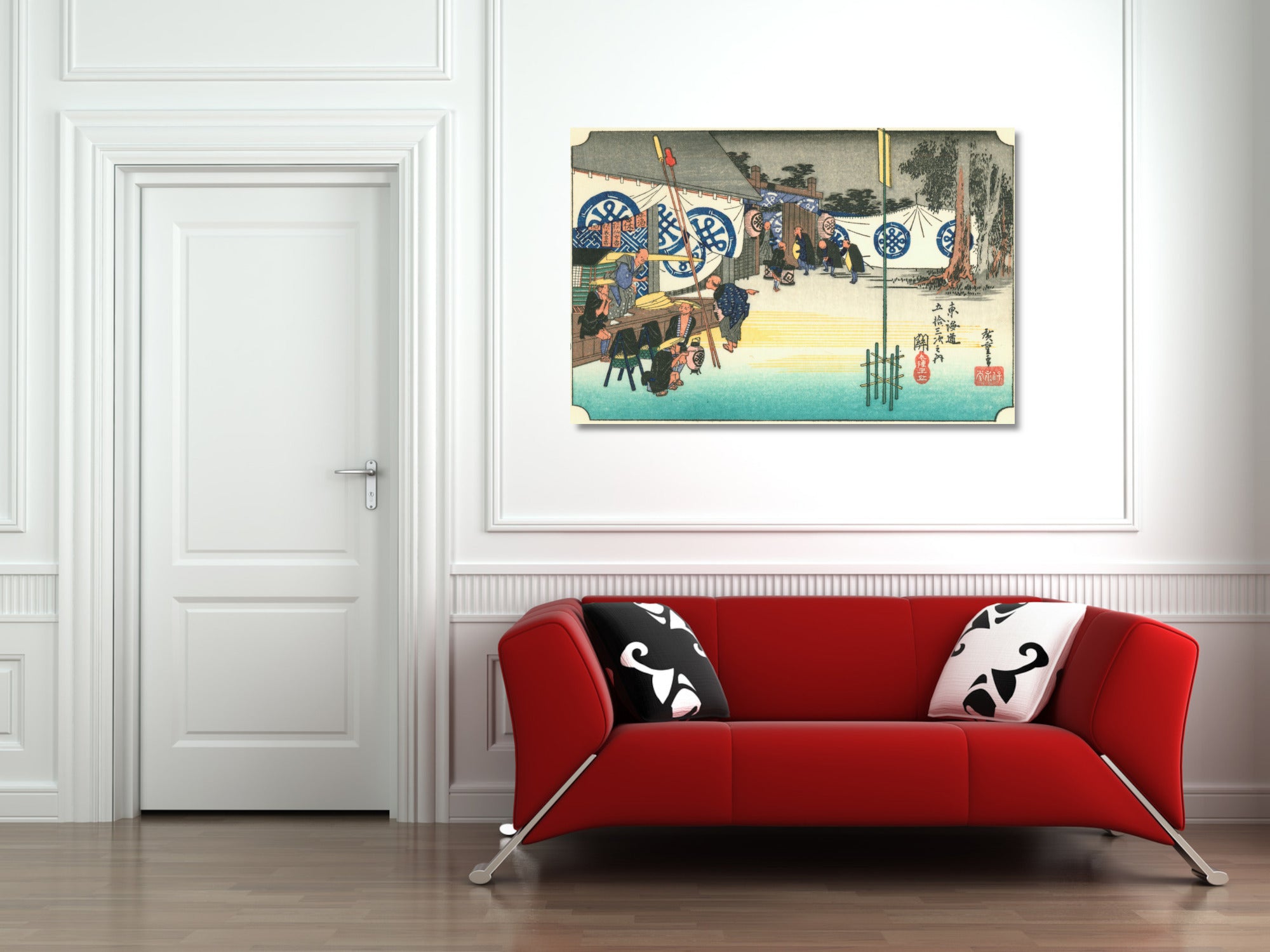
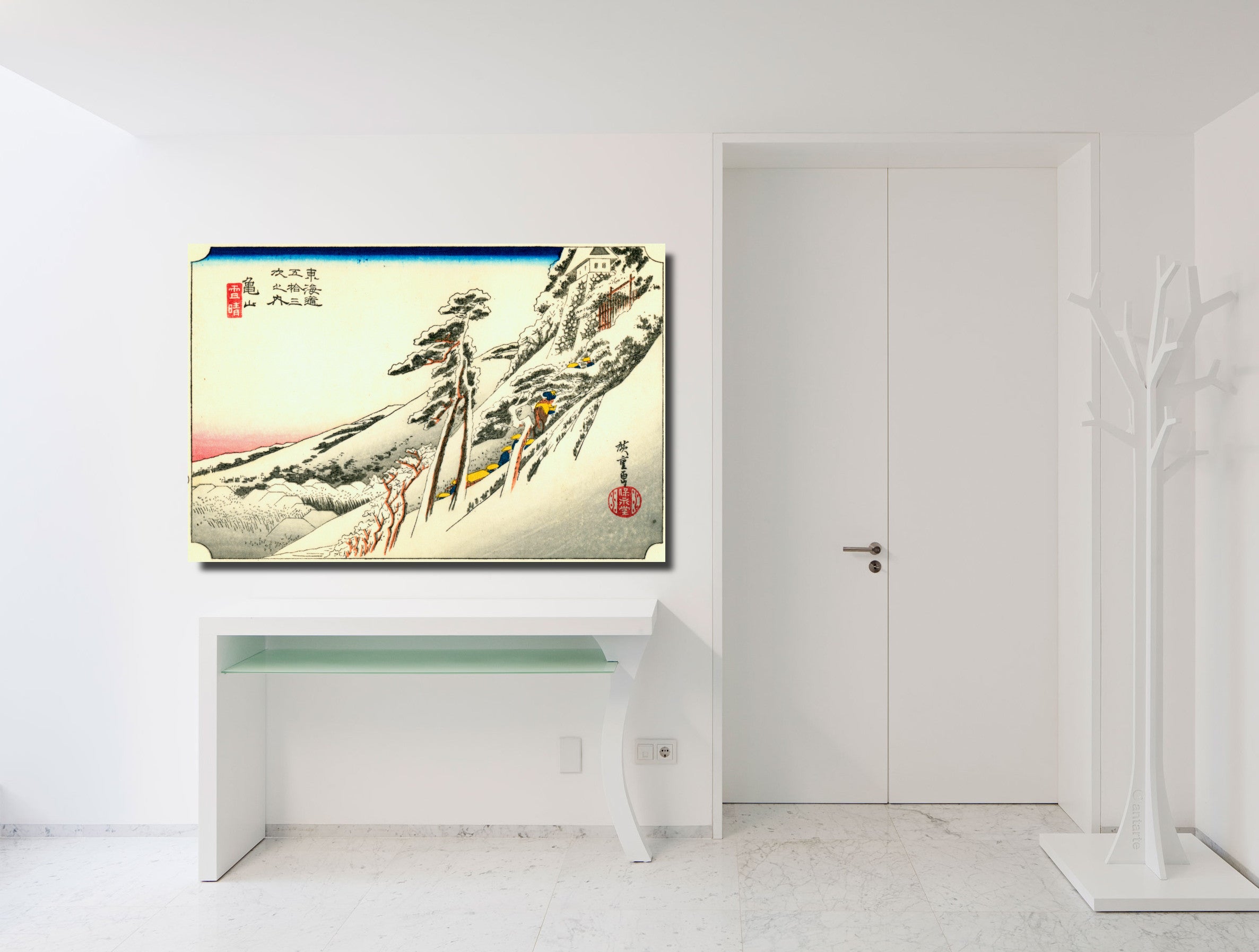
Horizontal landscapes work well above sofas, beds and sideboards, while vertical Edo and nature prints can suit narrower spaces such as hallways, alcoves and console areas.
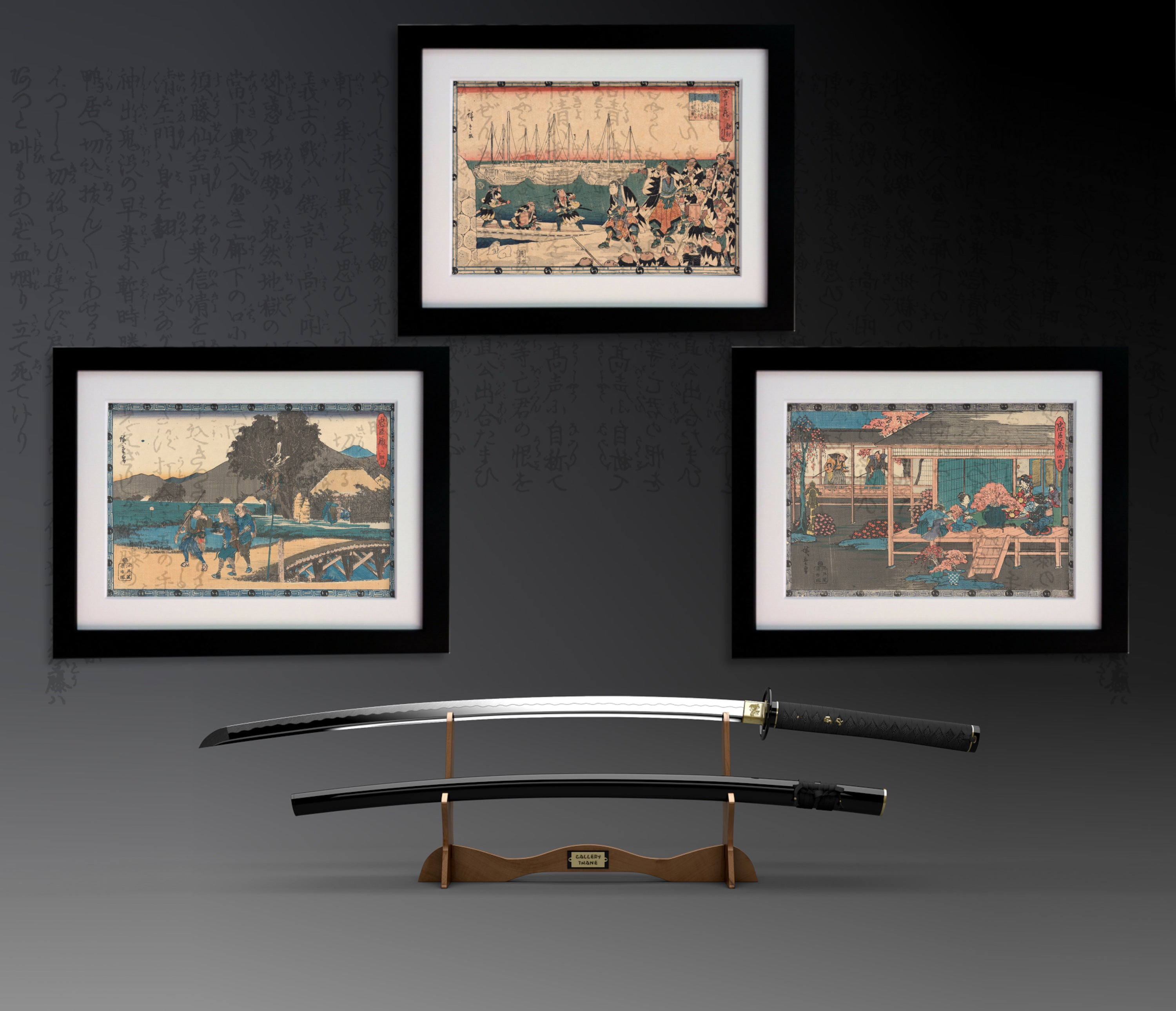
Several Hiroshige prints can also be grouped together to create a Japanese gallery wall unified by related colour, woodblock technique and seasonal imagery.
Explore more artists and printmakers in GalleryThane's Japanese Art Prints collection.
Fine Art Prints, Framed Prints and Canvas Panels
GalleryThane's Andō Hiroshige artworks are available in a choice of fine art print, framed print and canvas formats depending on the individual work.
Fine art prints provide flexibility for customers who already have their own framing plans, while framed options offer a complete presentation.
Canvas panels provide a clean contemporary alternative for selected designs.
GalleryThane prints and frames are produced in our Nottinghamshire workshop using carefully selected printing and framing materials.
Frequently Asked Questions
Who was Andō Hiroshige?
Andō Hiroshige, more commonly known in Japanese art history as Utagawa Hiroshige, was an ukiyo-e artist who lived from 1797 to 1858 and became one of the great masters of Japanese landscape printmaking.
What is Hiroshige most famous for?
He is especially famous for landscape series including The Fifty-Three Stations of the Tōkaidō and One Hundred Famous Views of Edo.
Is Andō Hiroshige the same person as Utagawa Hiroshige?
Yes. Utagawa refers to the artistic school and name Hiroshige adopted, while Andō was his family name. Both forms are widely used when referring to the artist.
What does ukiyo-e mean?
Ukiyo-e is the Japanese tradition of paintings and woodblock prints associated particularly with the Edo period. Subjects included actors, fashionable life, landscapes, travel, nature and famous places.
Did Hiroshige only create landscapes?
No. Although best known for landscapes, Hiroshige also designed prints of fish, birds, flowers, figures and other subjects.
Why are rain and snow so common in Hiroshige's prints?
Hiroshige was fascinated by the way weather changed the appearance and emotional character of a landscape. Rain, snow, mist and evening light became important compositional elements rather than simply background effects.
What is bokashi?
Bokashi is a woodblock-printing technique that creates gradual transitions of colour. Hiroshige used it very effectively for skies, water, mist and atmospheric distance.
Was Hiroshige influenced by Hokusai?
Hokusai's successful landscape prints helped establish a strong market for landscape ukiyo-e, but Hiroshige developed his own distinct approach based particularly on atmosphere, travel and seasonal change.
Did Hiroshige influence Vincent van Gogh?
Yes. Van Gogh collected Japanese prints and made painted interpretations of works by Hiroshige as part of his wider engagement with Japanese art.
What interiors suit Hiroshige prints?
Hiroshige's balanced compositions and restrained palettes suit Japanese-inspired, Japandi, Scandinavian, minimalist, contemporary and eclectic interiors particularly well.
Are Hiroshige prints available framed?
GalleryThane offers selected Hiroshige works as fine art prints, framed prints and canvas options in a range of sizes.