Table of Contents:[hide]
Biography
Early Life and Education
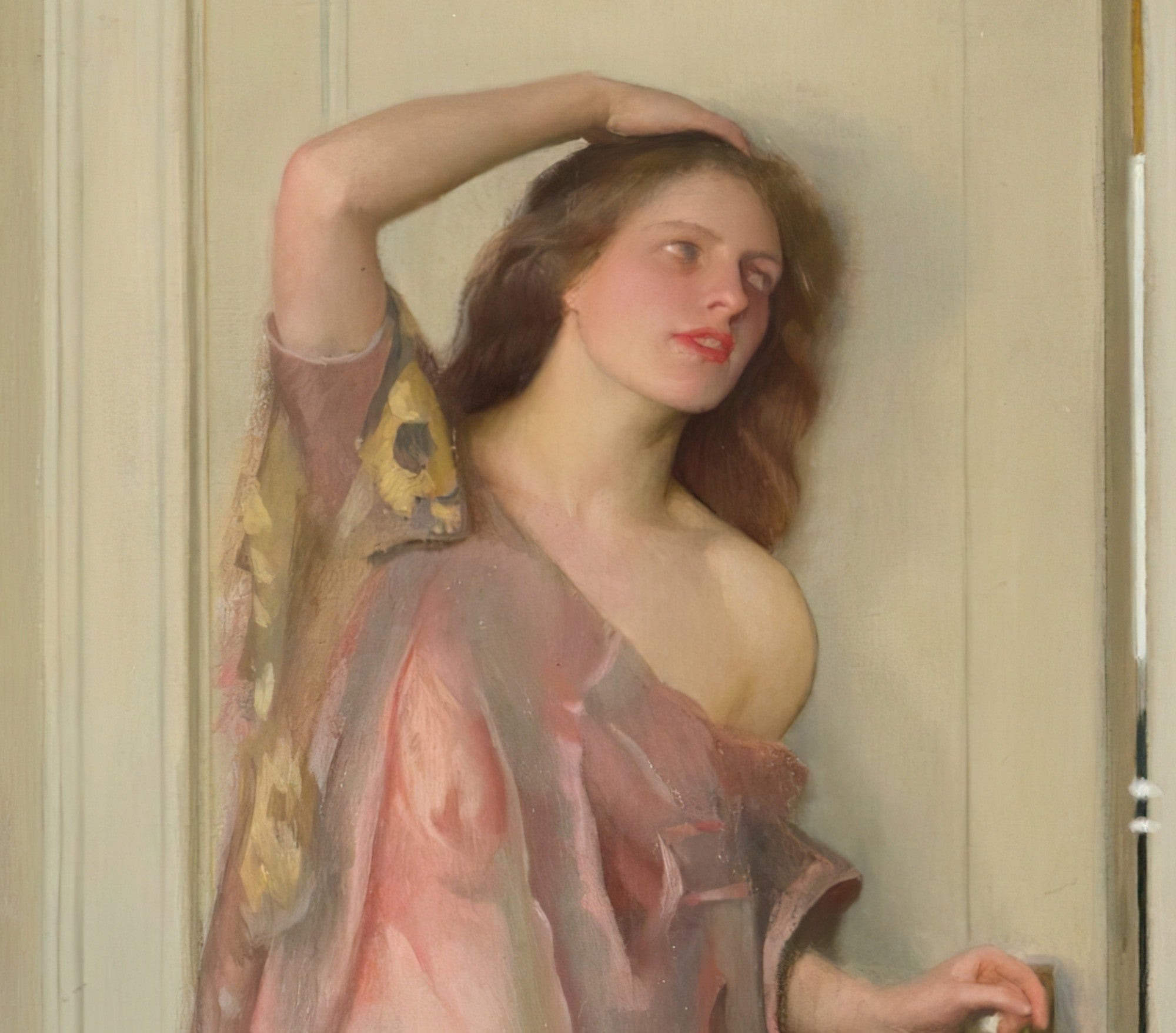
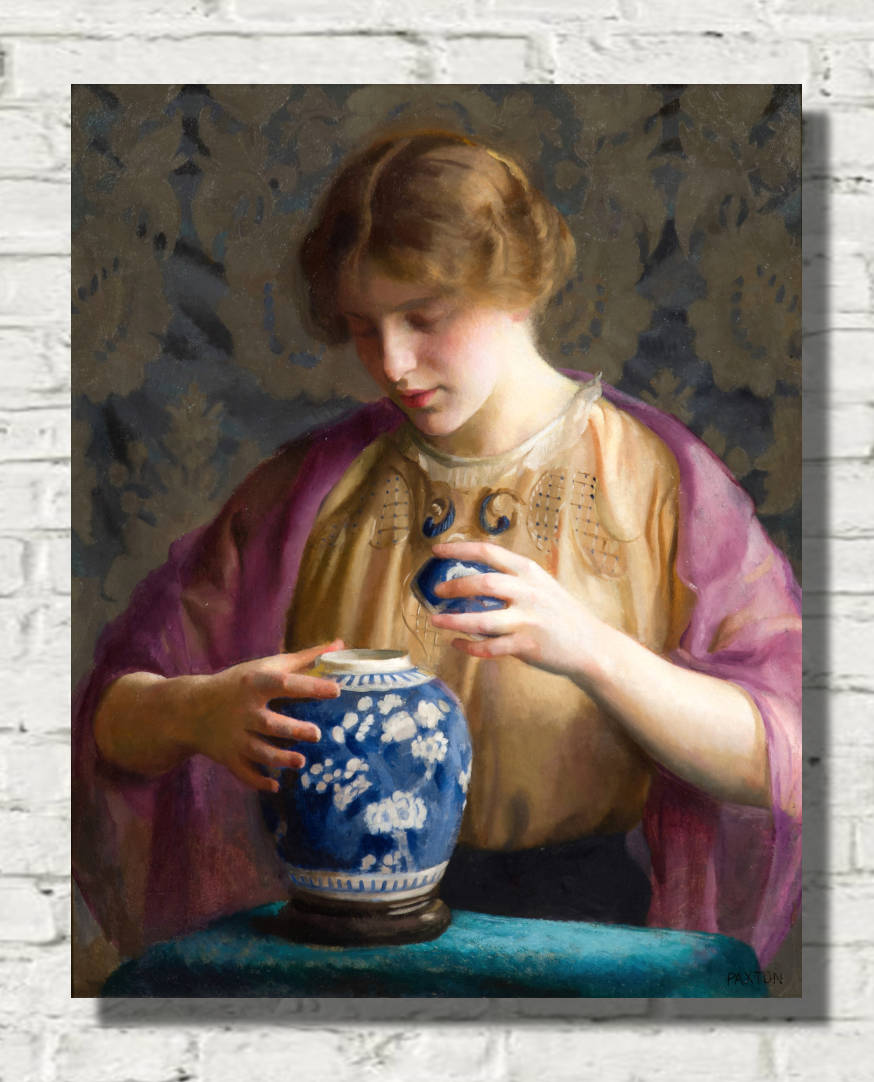
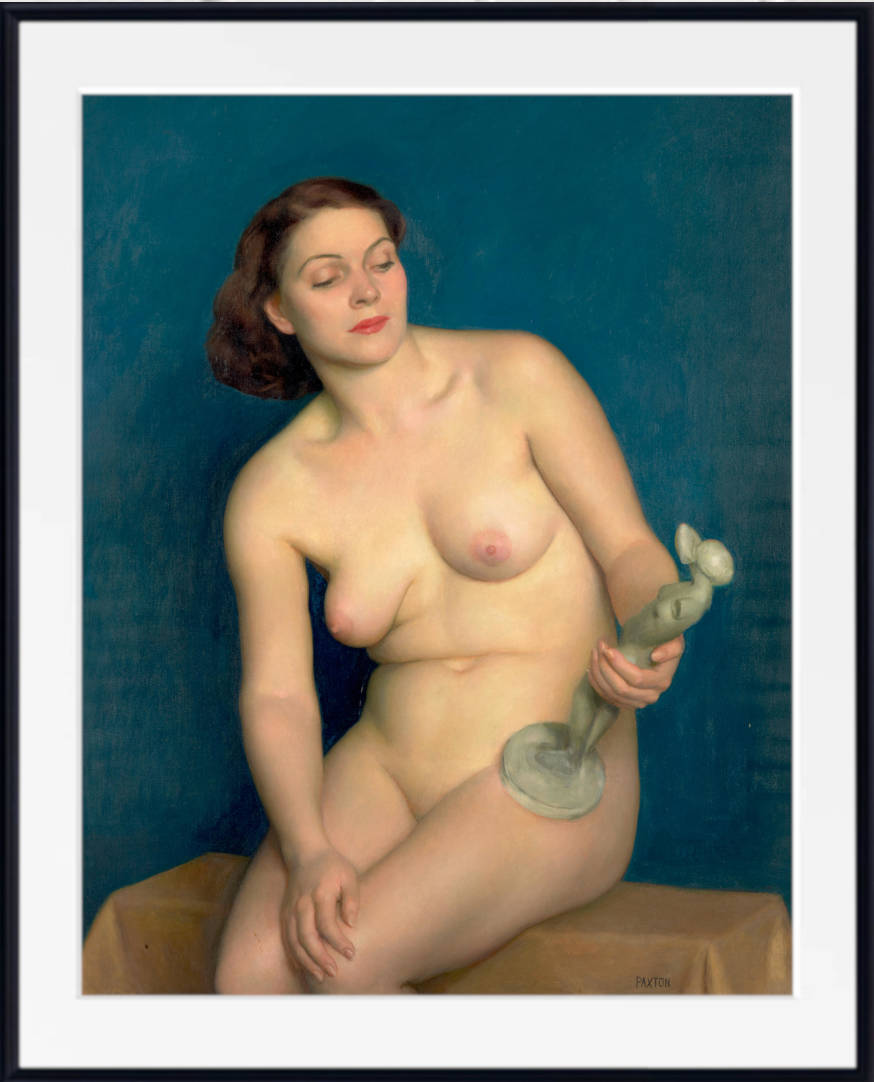
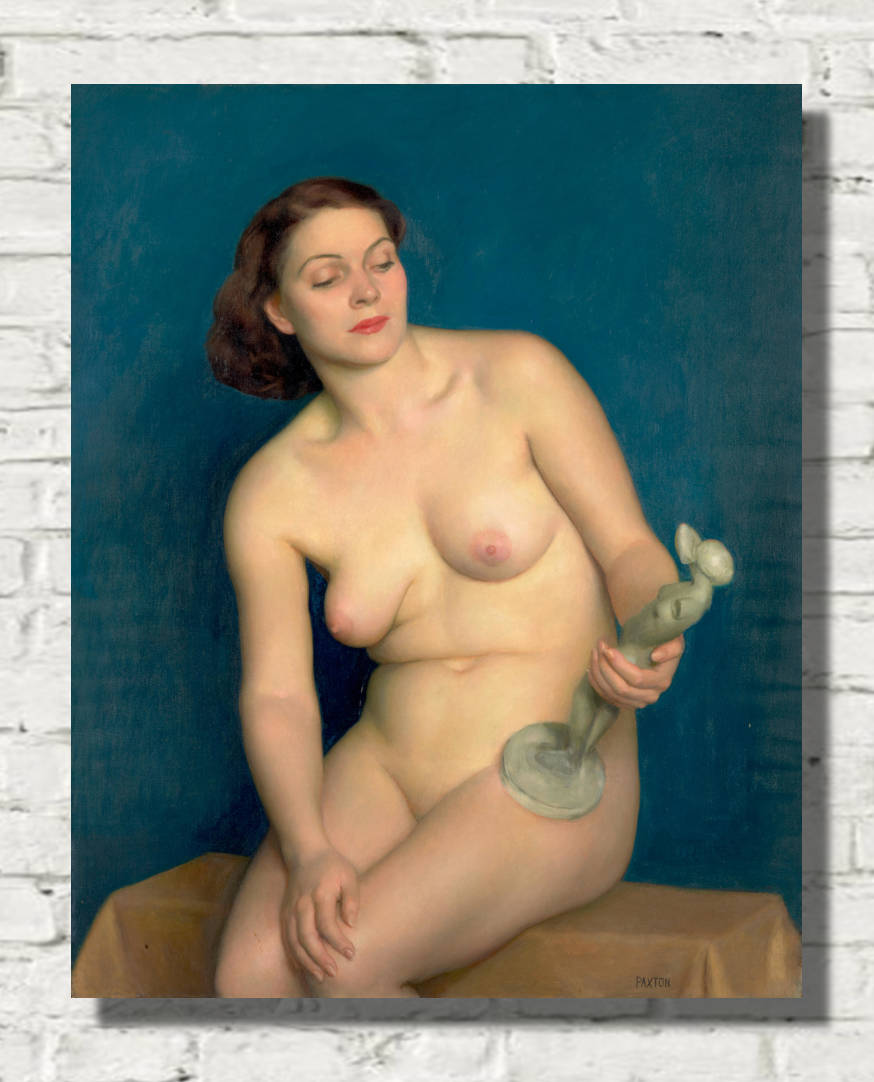
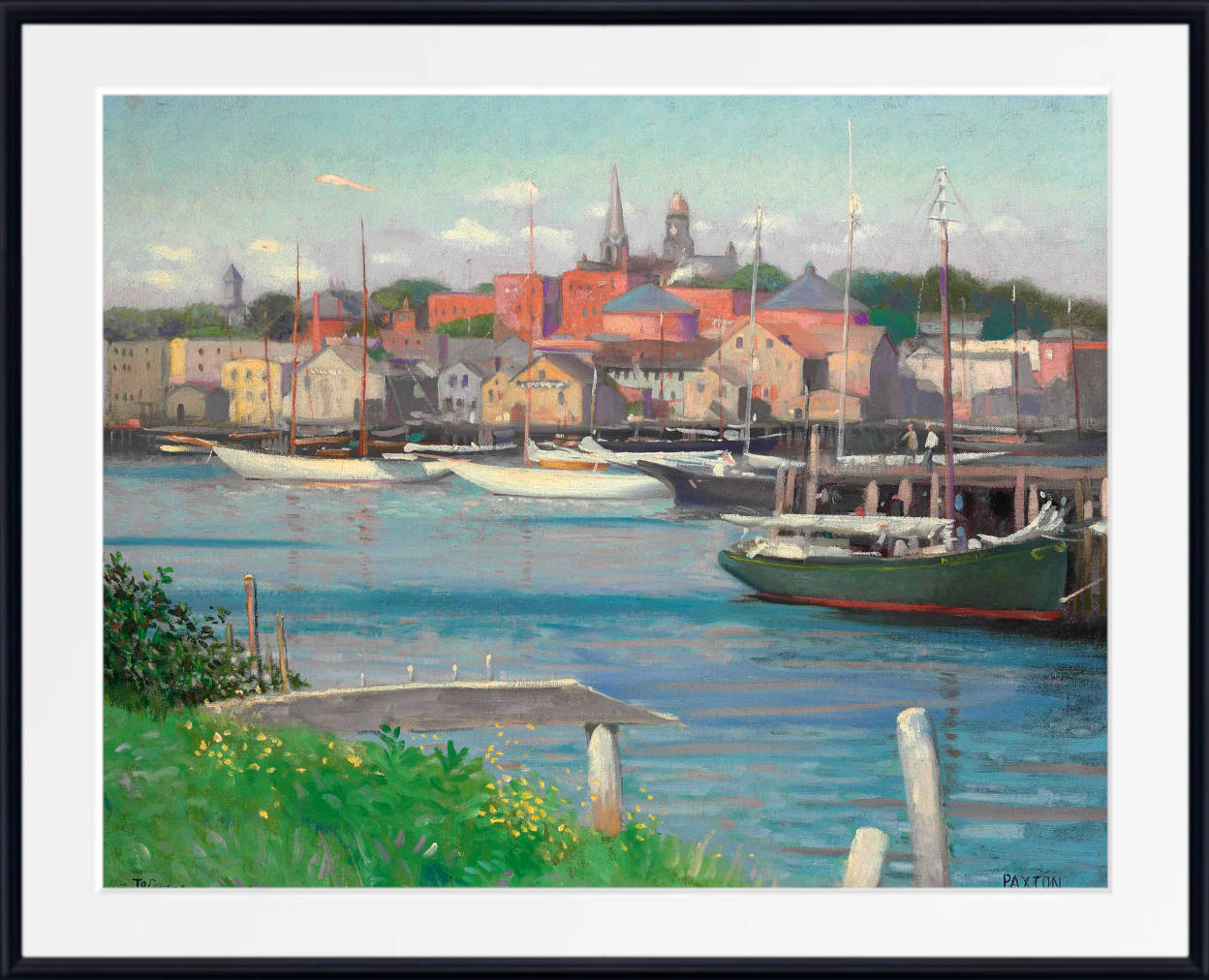
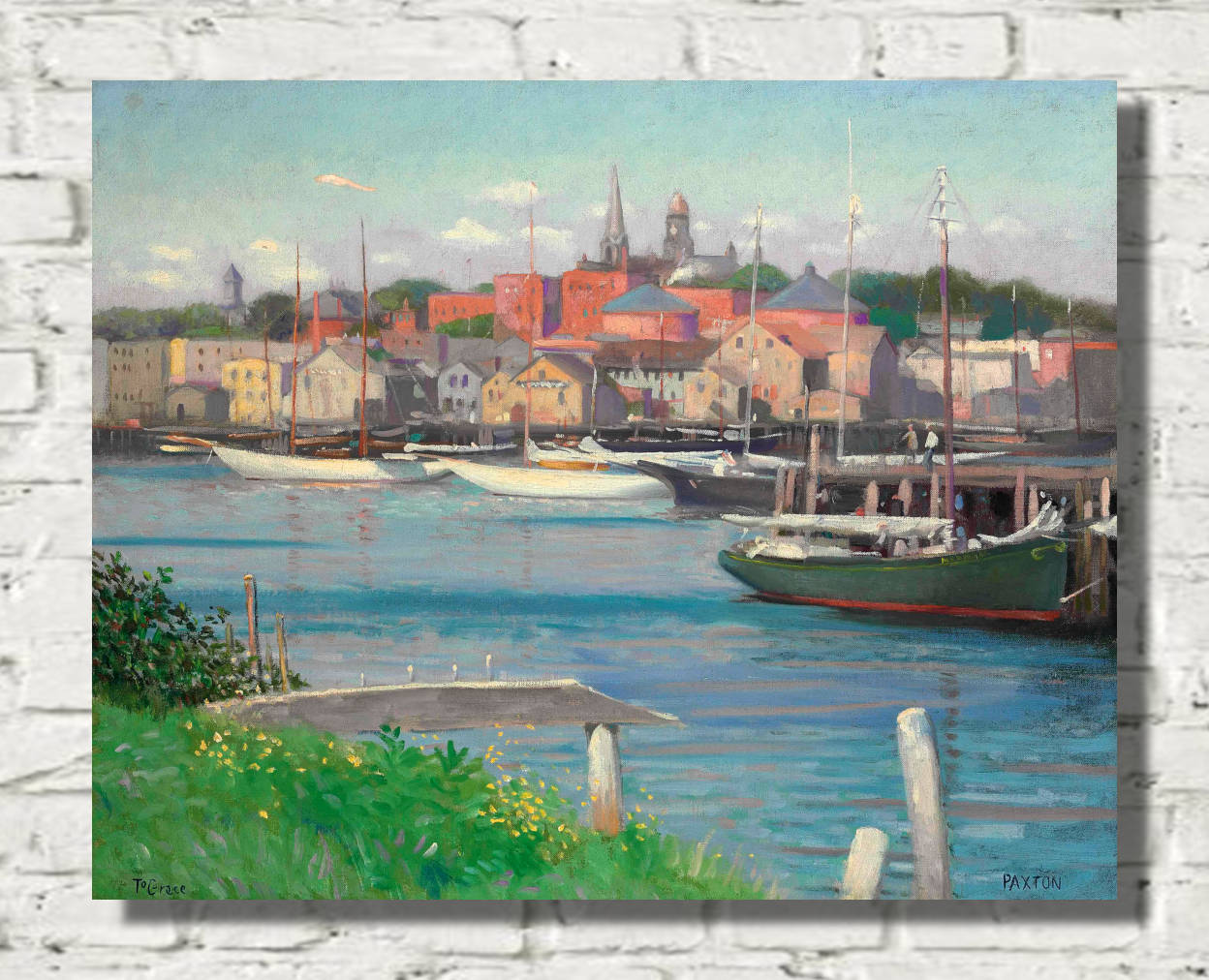
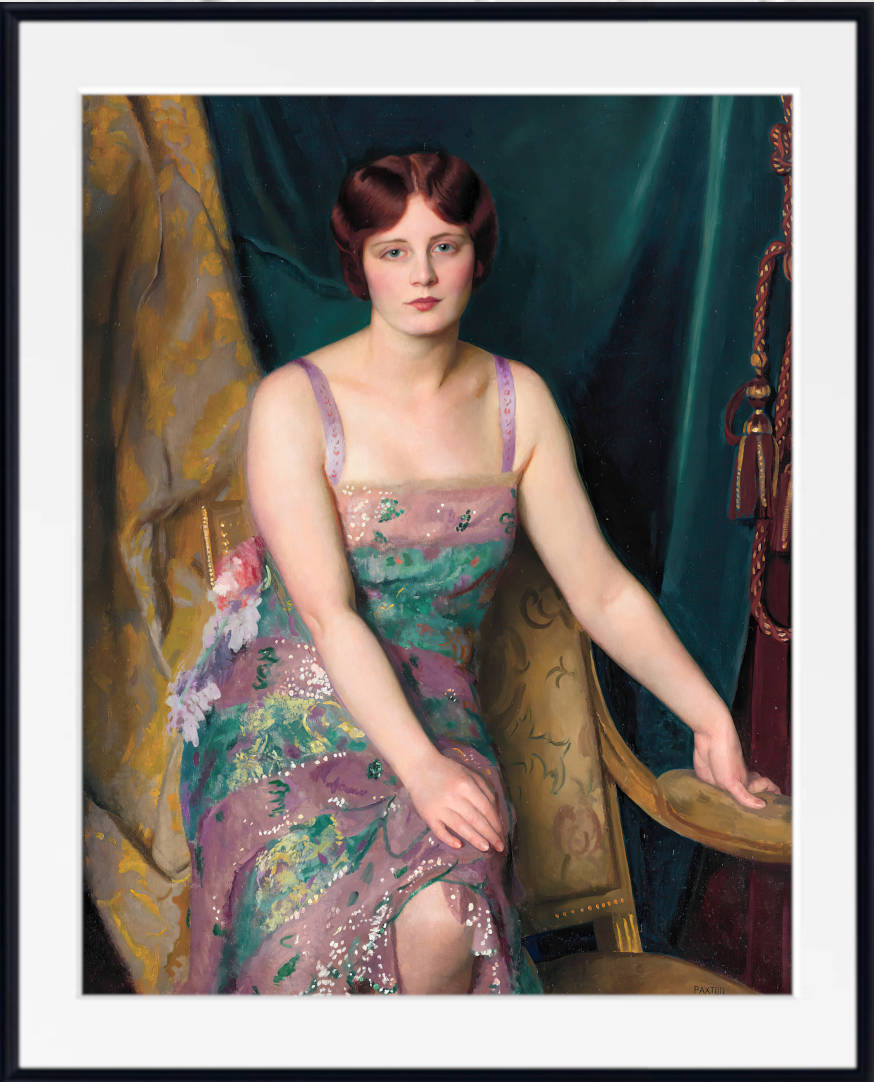
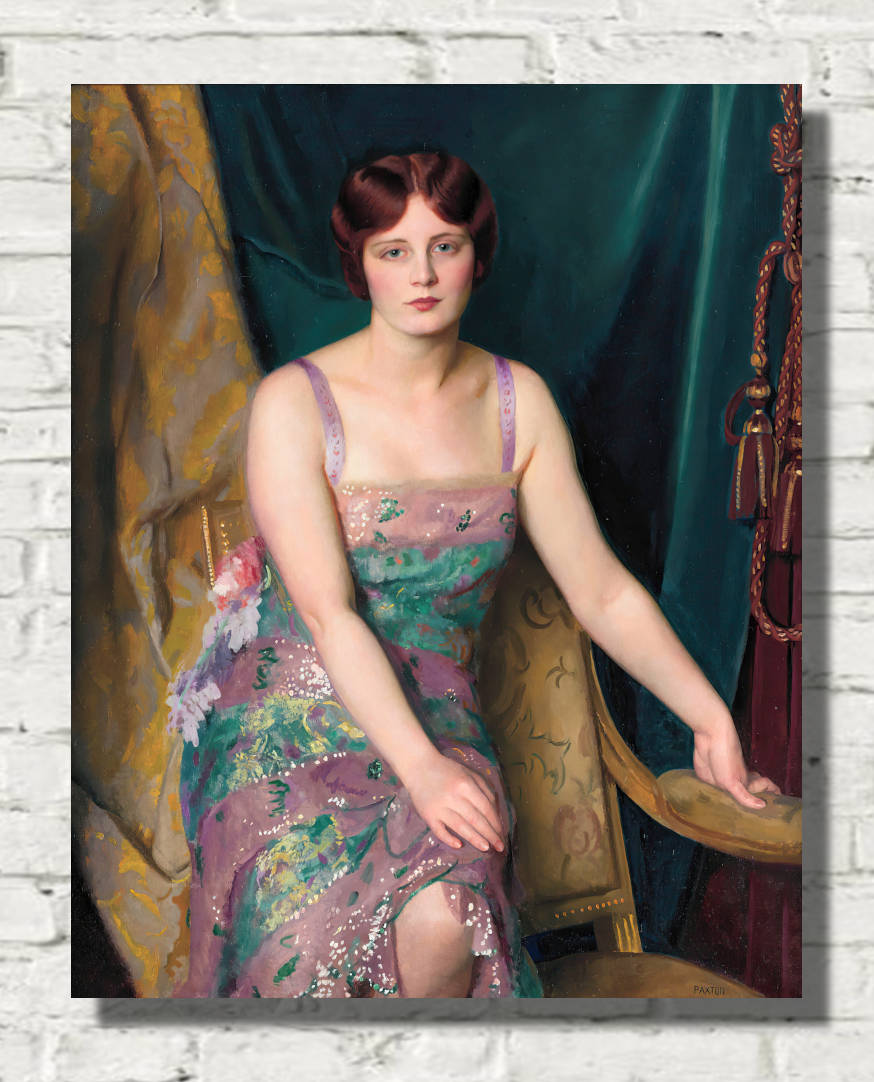
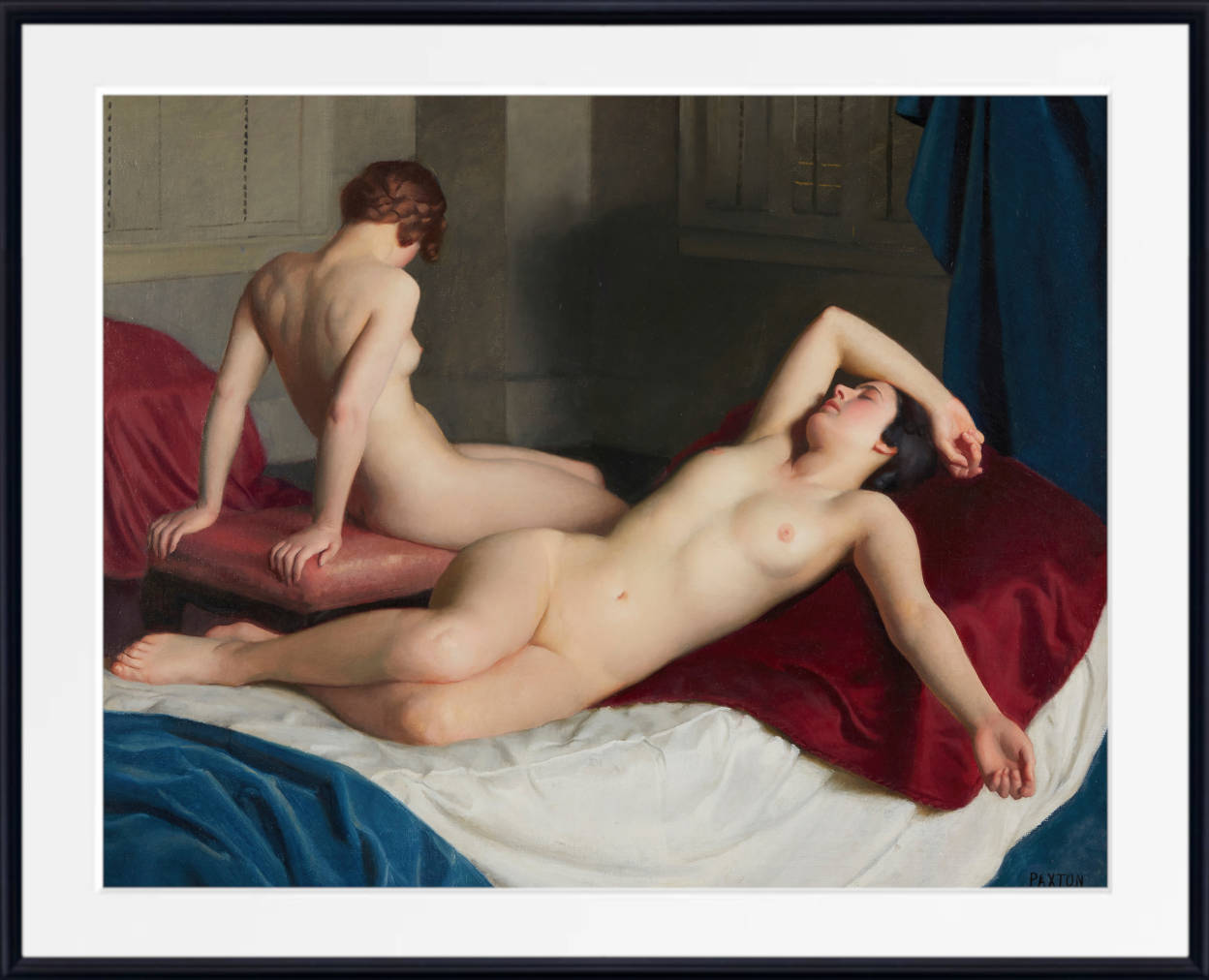
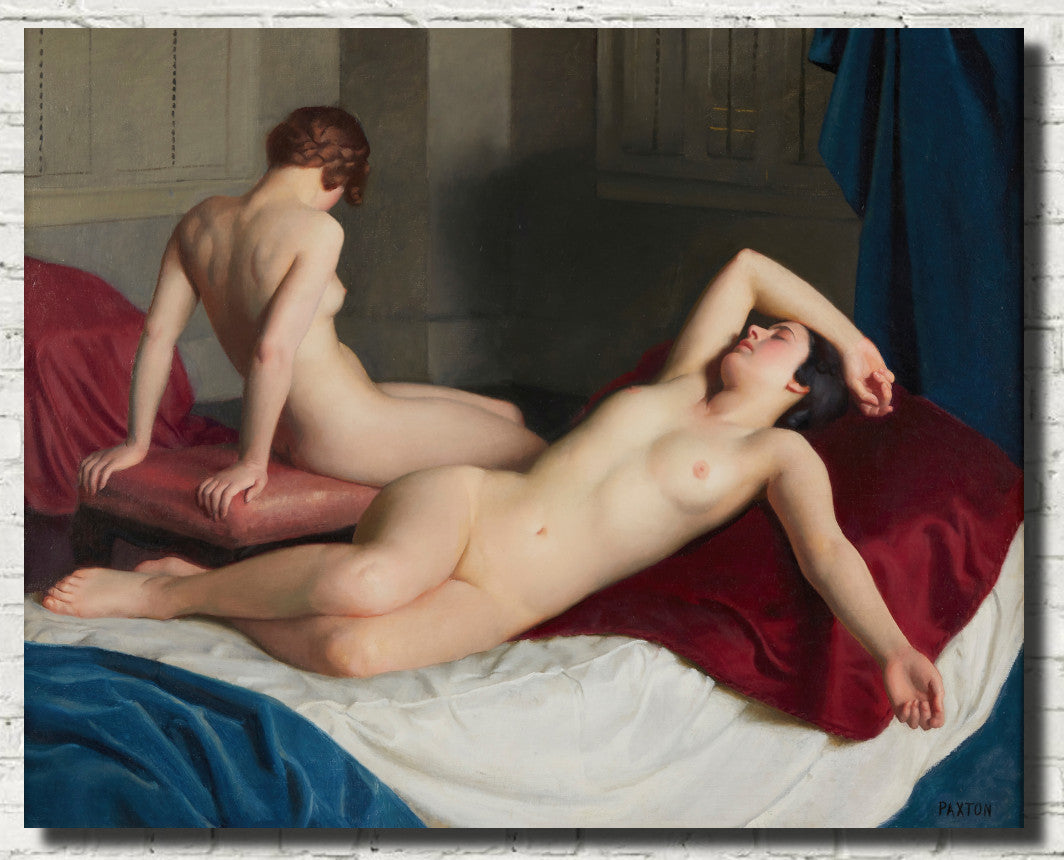
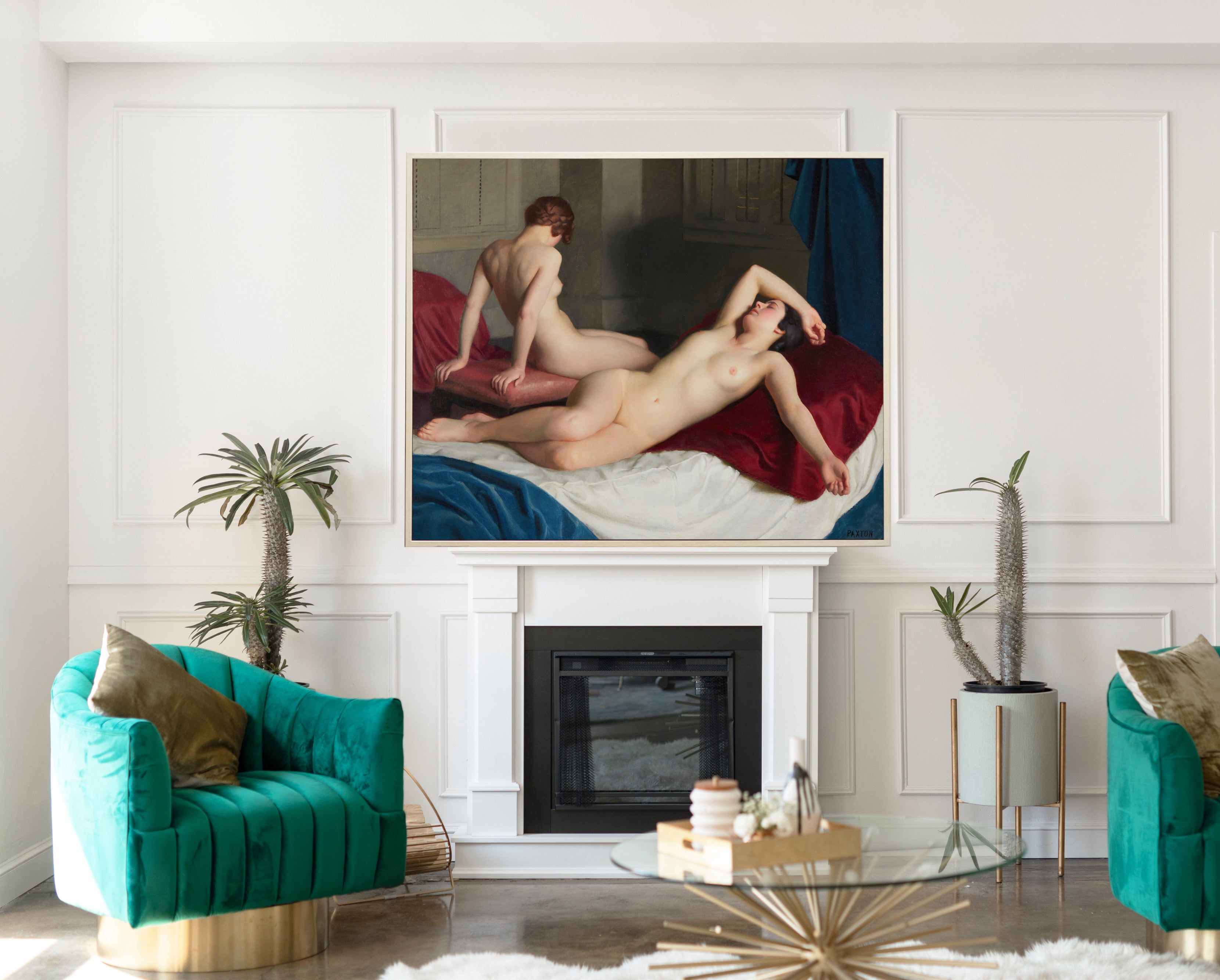
William McGregor Paxton, born on June 22, 1869, in Baltimore, Maryland, stands as a luminary in the American Impressionist movement. Known for his refined portraits, meticulously arranged interiors, and delicate handling of light, Paxton’s art captures the sophistication and elegance of a bygone era. His journey as an artist began in his youth, when his family’s relocation to Newton, Massachusetts, placed him near the vibrant art scene of Boston.
Paxton’s formal education started at the Cowles Art School in Boston, where he studied under Joseph DeCamp, a prominent member of the Boston School. DeCamp’s influence played a significant role in shaping Paxton’s technical precision and focus on capturing subtle gradations of light. Seeking to refine his skills further, Paxton traveled to Paris in 1891 to enroll at the Académie Julian. There, he studied under the celebrated French academic painter Jean-Léon Gérôme, whose emphasis on meticulous draftsmanship and classical techniques profoundly impacted Paxton’s artistic approach.
Career and Artistic Development
Upon returning to Boston, Paxton established himself as a portraitist and genre painter, quickly gaining recognition for his ability to render texture, atmosphere, and the interplay of light with unparalleled finesse. Alongside contemporaries such as Edmund C. Tarbell and Frank Weston Benson, Paxton became a key figure in the Boston School, a group of artists known for their academic training, Impressionist sensibilities, and commitment to beauty in art.
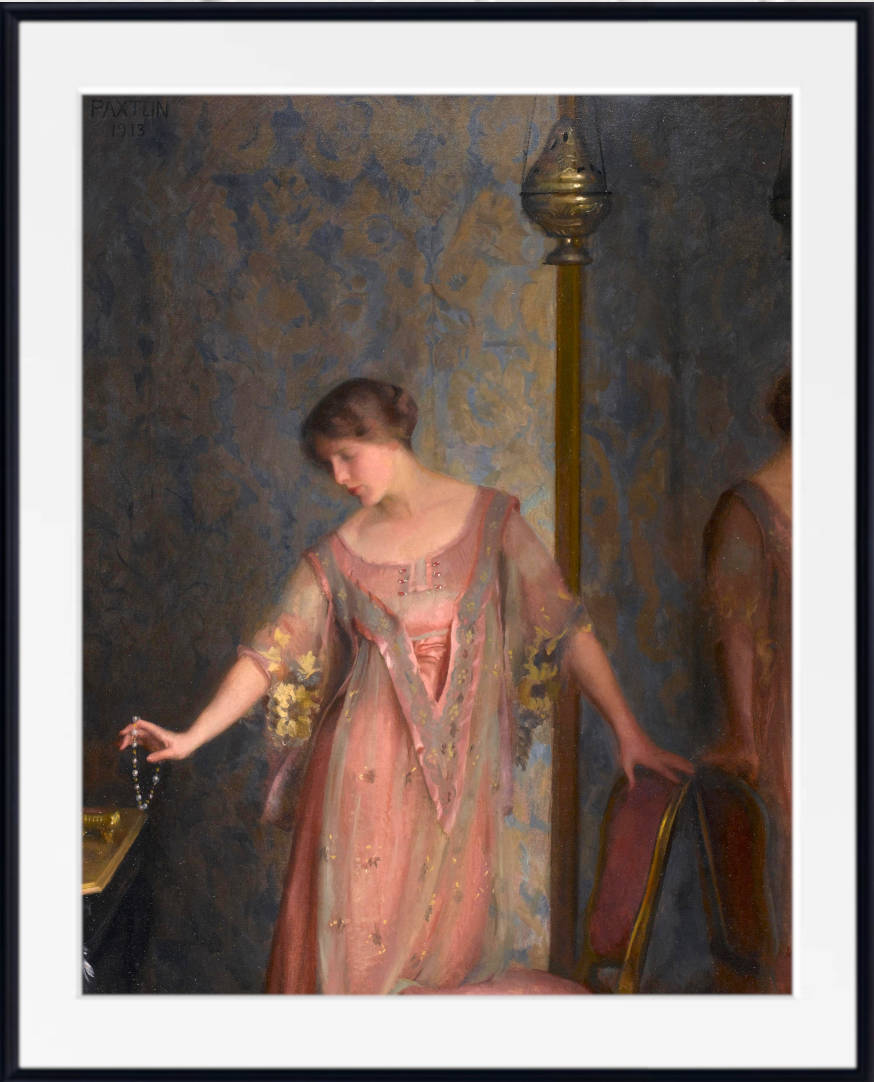
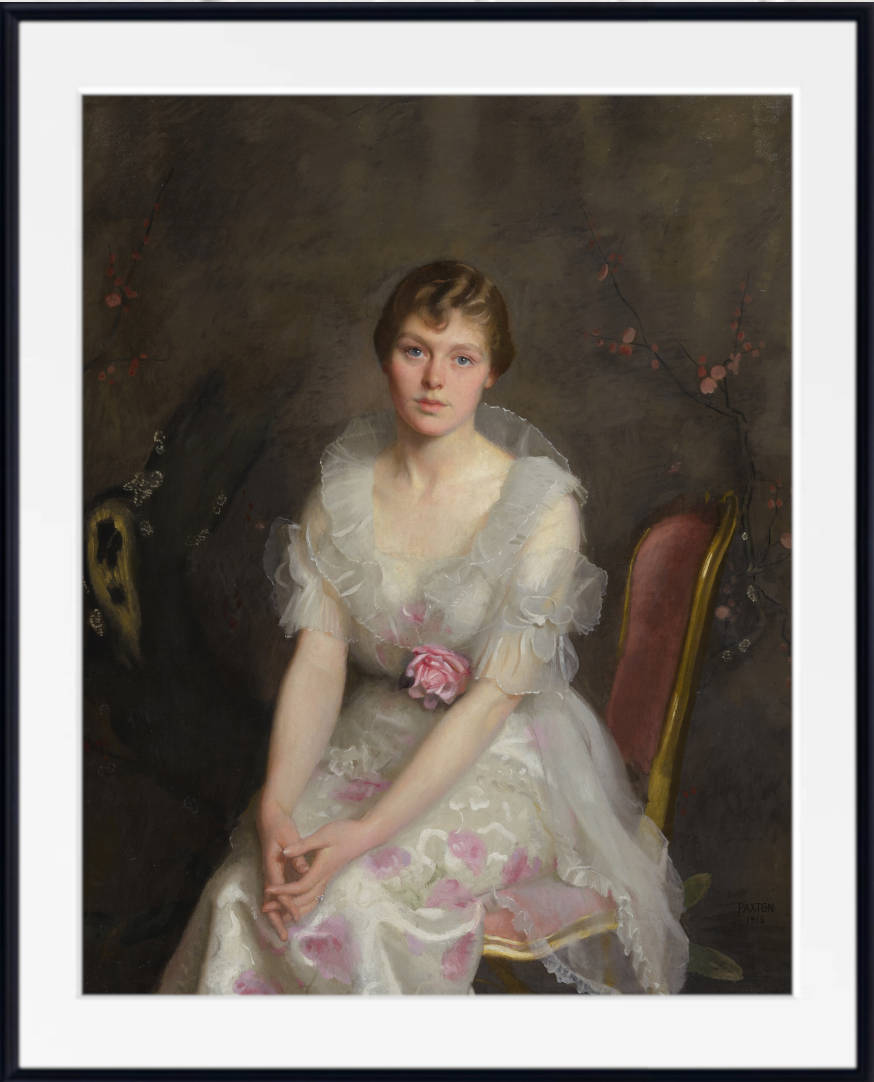
Paxton’s career flourished in the early 20th century, with his work gracing prestigious exhibitions across the United States. He became a sought-after portraitist, painting prominent figures of his time, including President Grover Cleveland and industrial magnates. Paxton’s work reflects a blend of traditional academic techniques and the Impressionist’s love of light and color, positioning him as a bridge between the old and the new in American art.
Personal Life
In 1899, Paxton married Elizabeth Okie, a fellow artist who frequently modeled for his paintings. Their partnership was both personal and professional, with Elizabeth’s presence adding depth and intimacy to many of Paxton’s compositions. The couple settled in Newton, Massachusetts, where Paxton continued to create some of his most iconic works until his death on May 22, 1941.
Notable Paintings by William McGregor Paxton
1. The Other Door

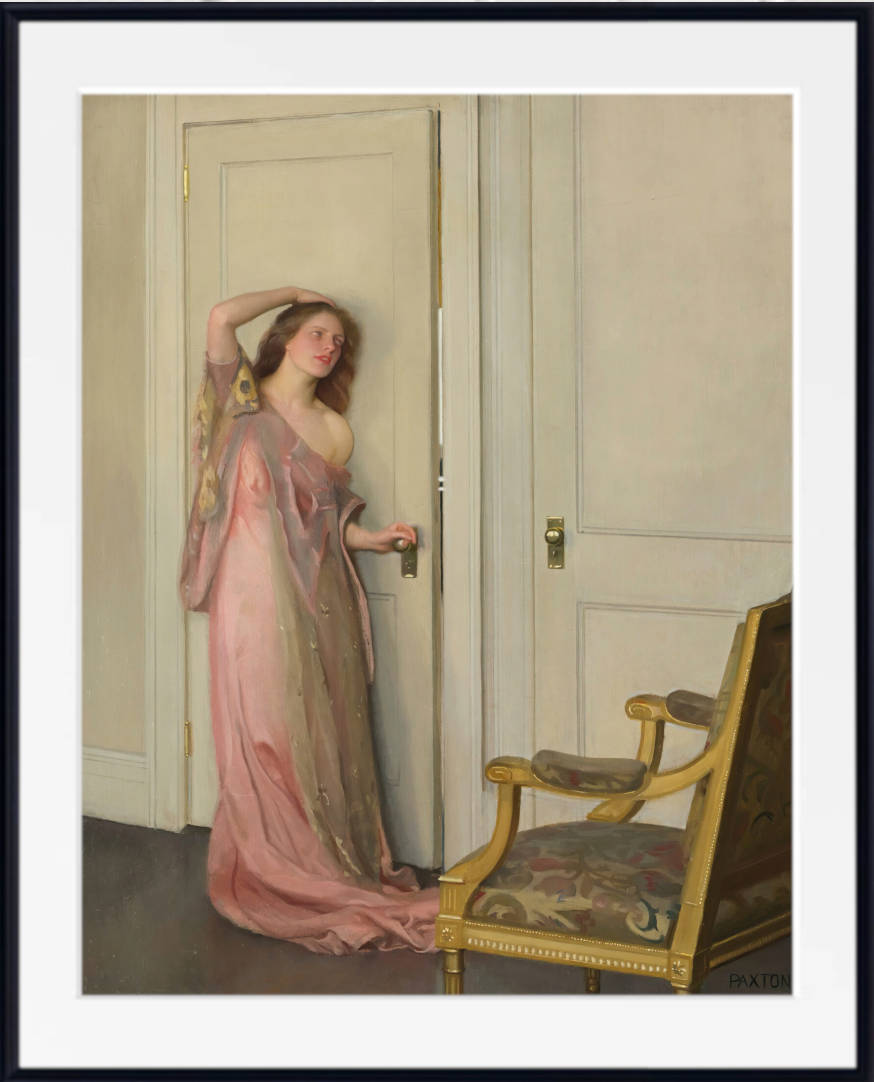
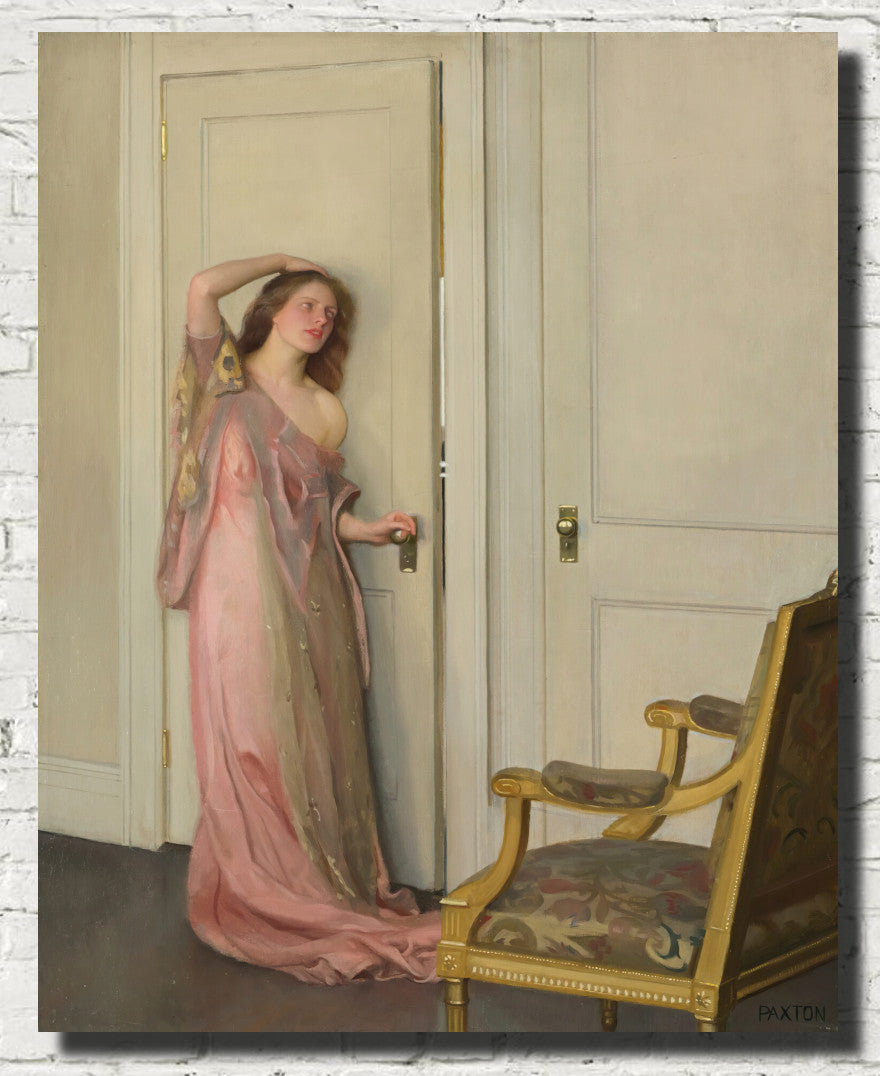
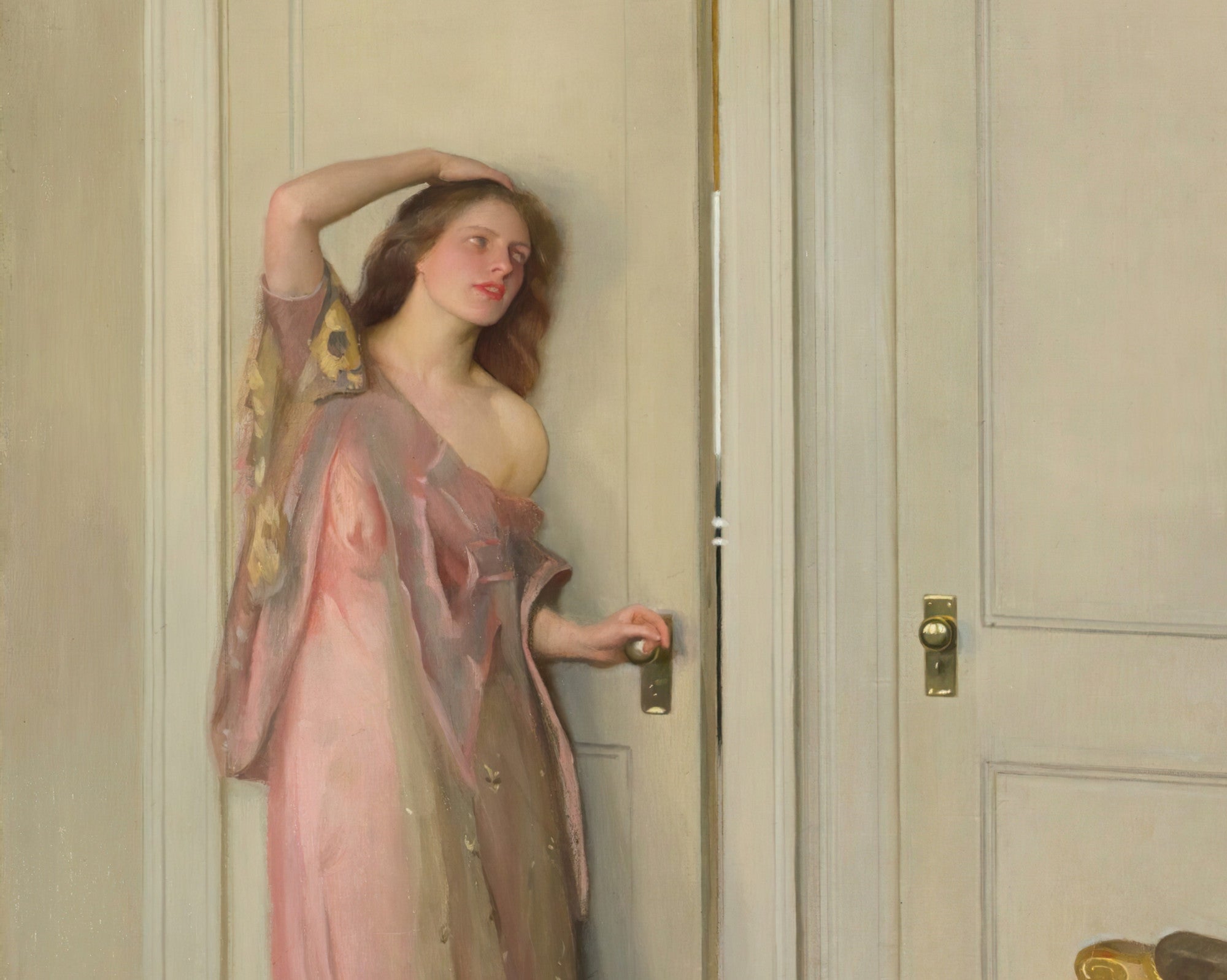
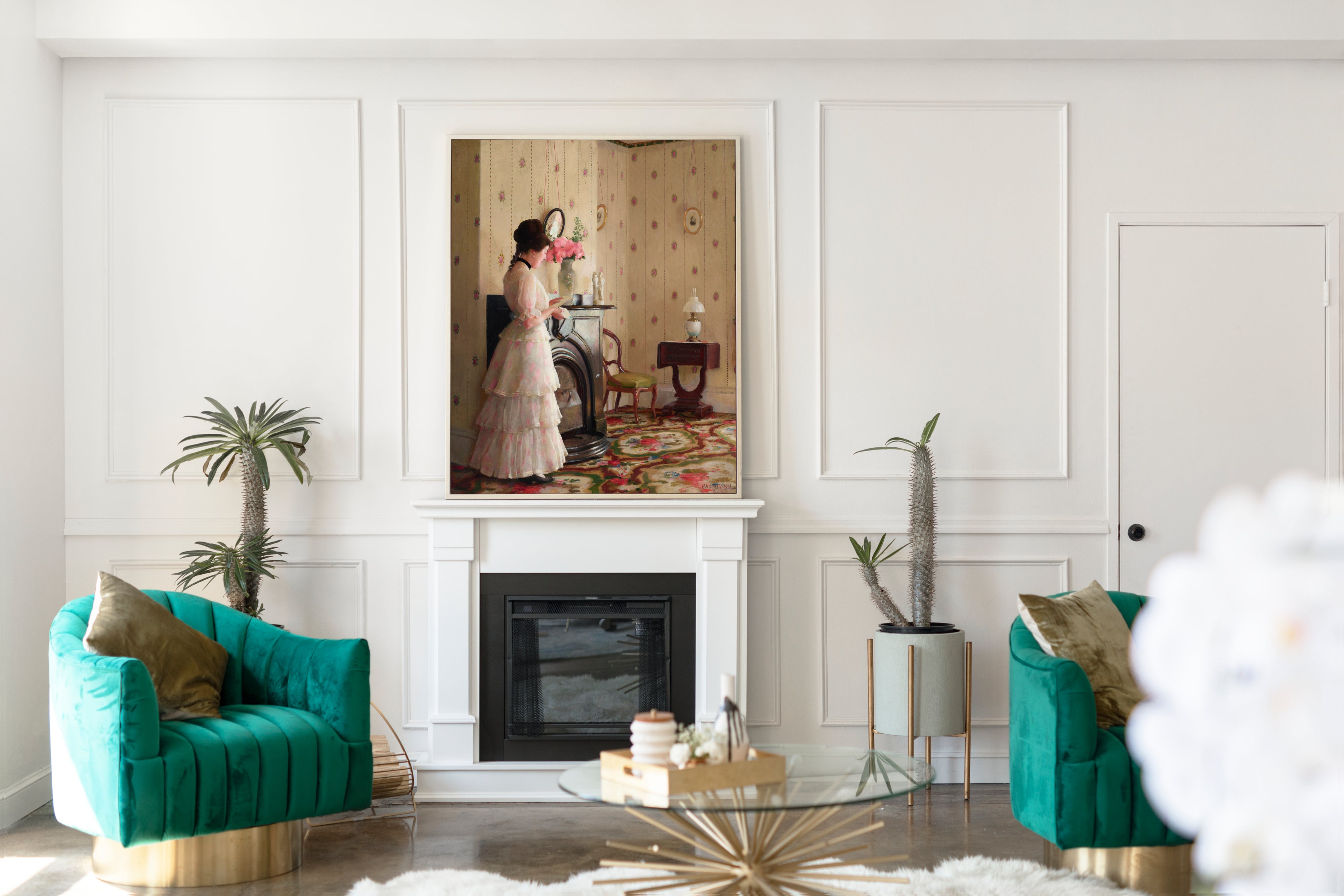
One of Paxton’s most celebrated works, The Other Door, exemplifies his mastery of interior scenes and the Boston School’s emphasis on harmony and refinement. The painting depicts a serene domestic moment: a woman seated near a doorway bathed in soft light. The interplay of textures—the shimmering satin of her gown, the polished surface of the furniture, and the muted tones of the room—demonstrates Paxton’s meticulous attention to detail. The composition’s subtle gradations of light evoke a sense of tranquility and timeless elegance.
2. The Front Parlor

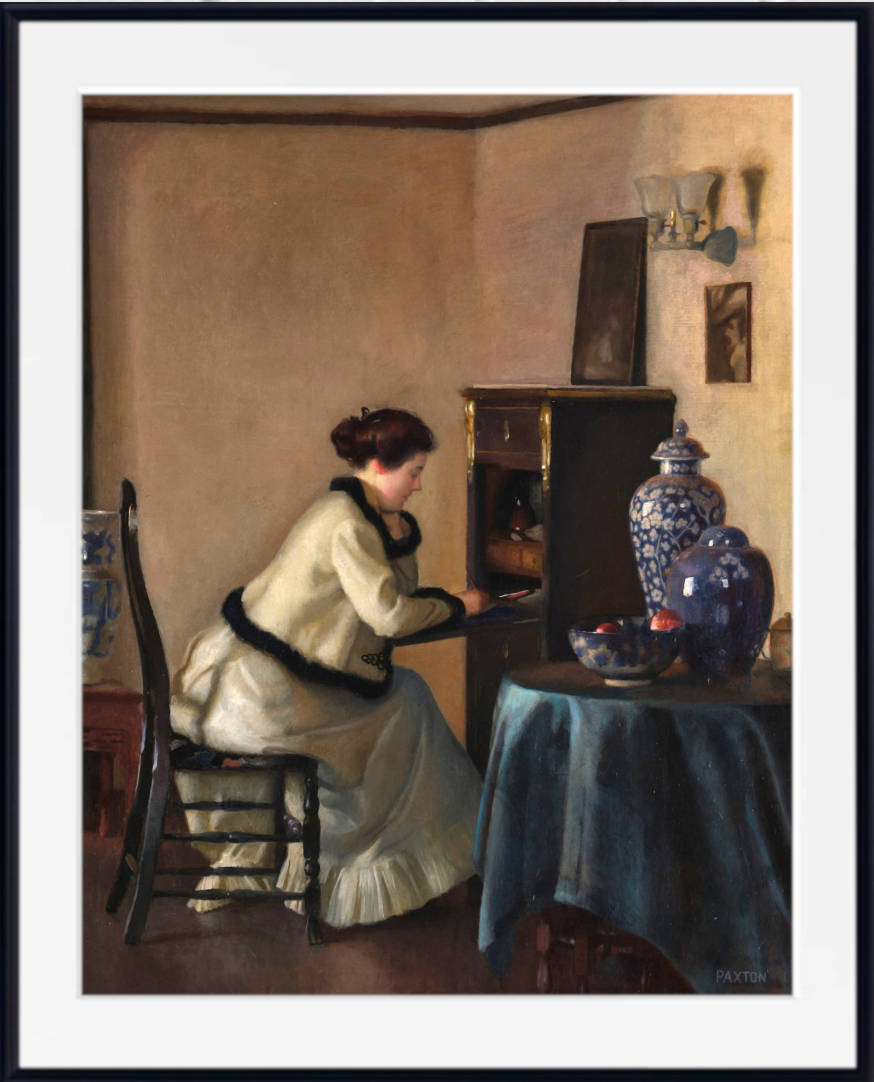
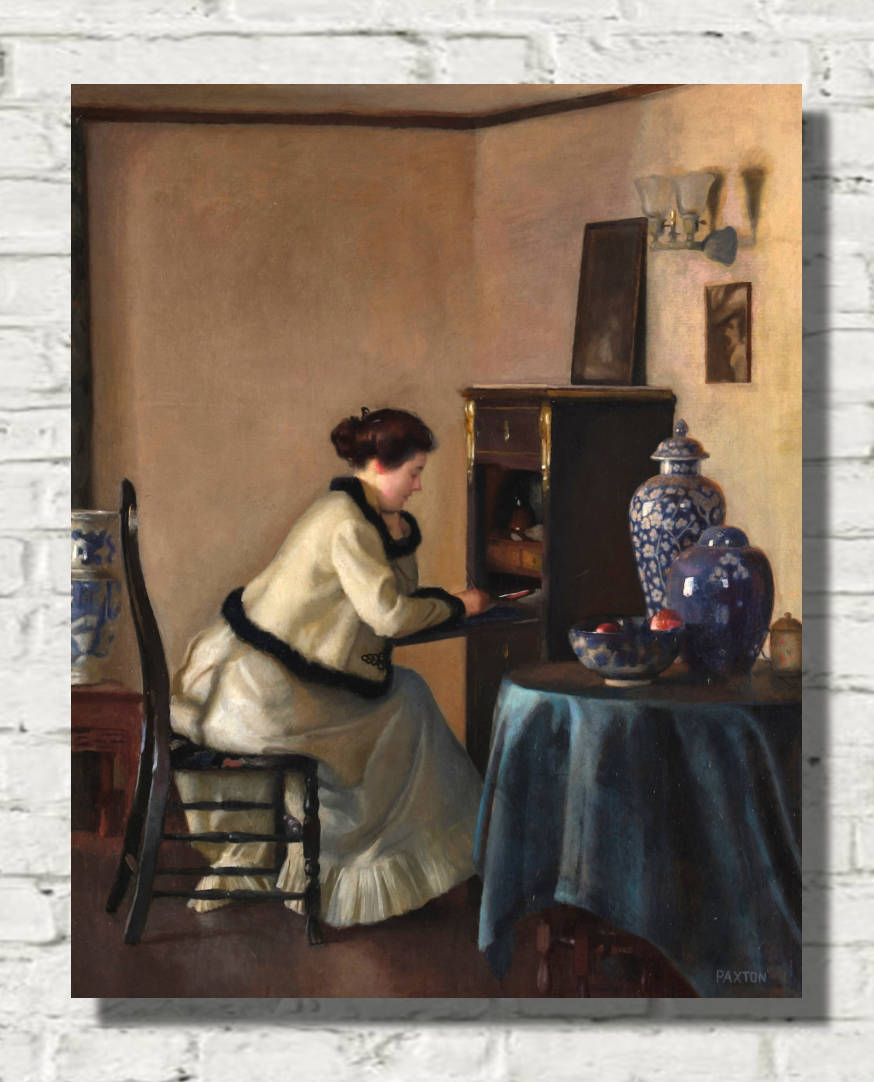
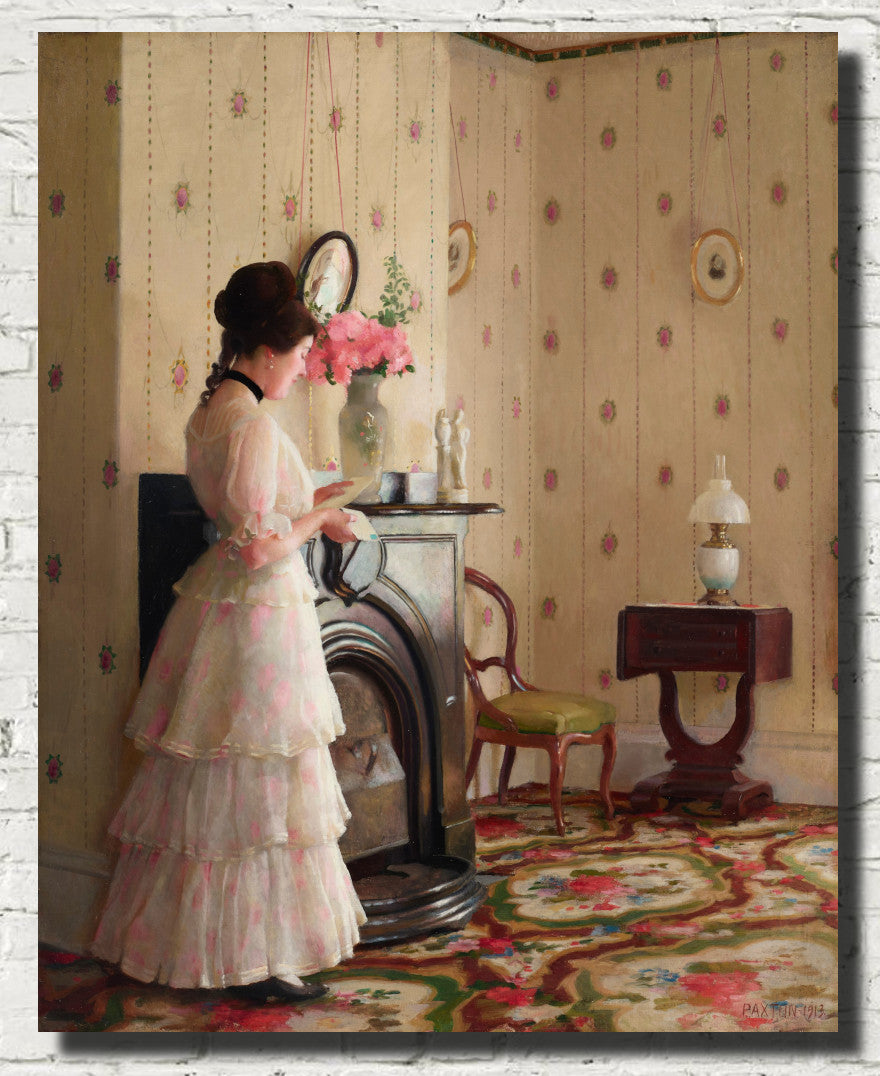
The Front Parlor showcases Paxton’s fascination with light and domestic interiors. The painting features a young woman seated in a well-appointed parlor, her face illuminated by the soft glow of natural light streaming through a nearby window. The composition captures the intimacy of the moment while highlighting Paxton’s ability to render complex optical effects with precision.
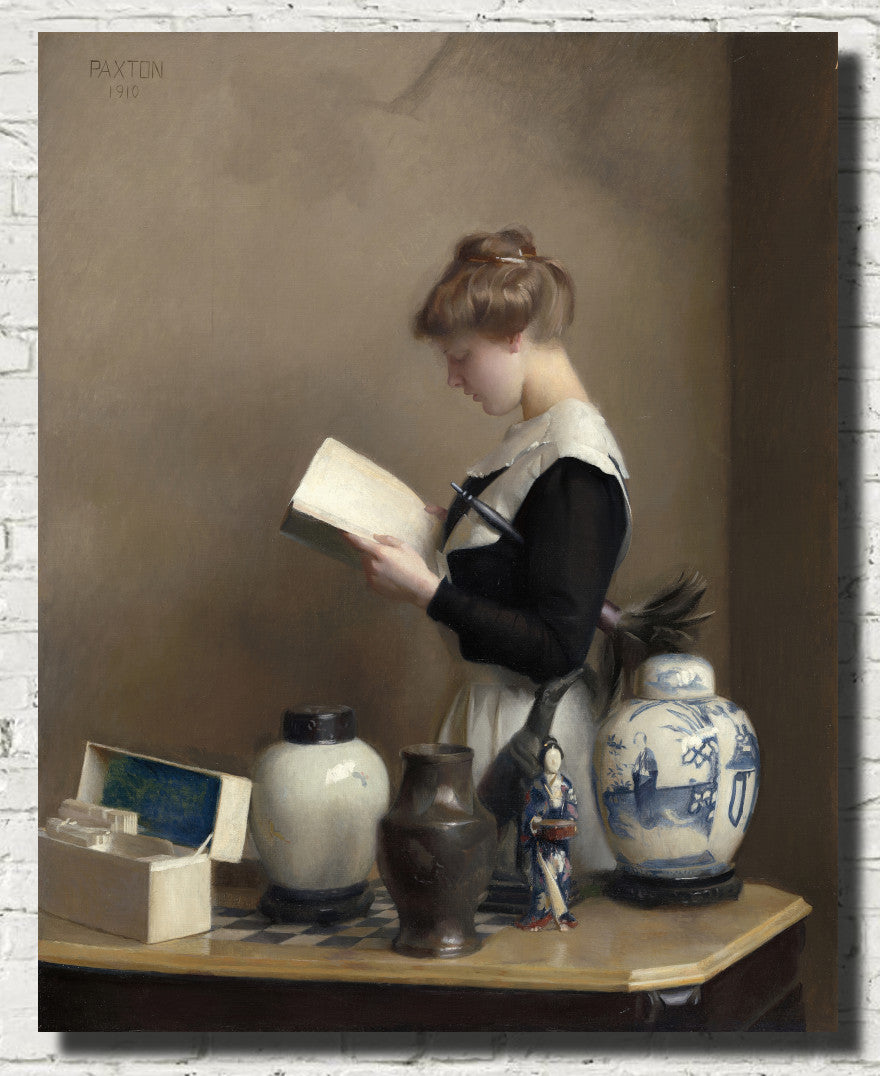
3. The Housemaid (1910)

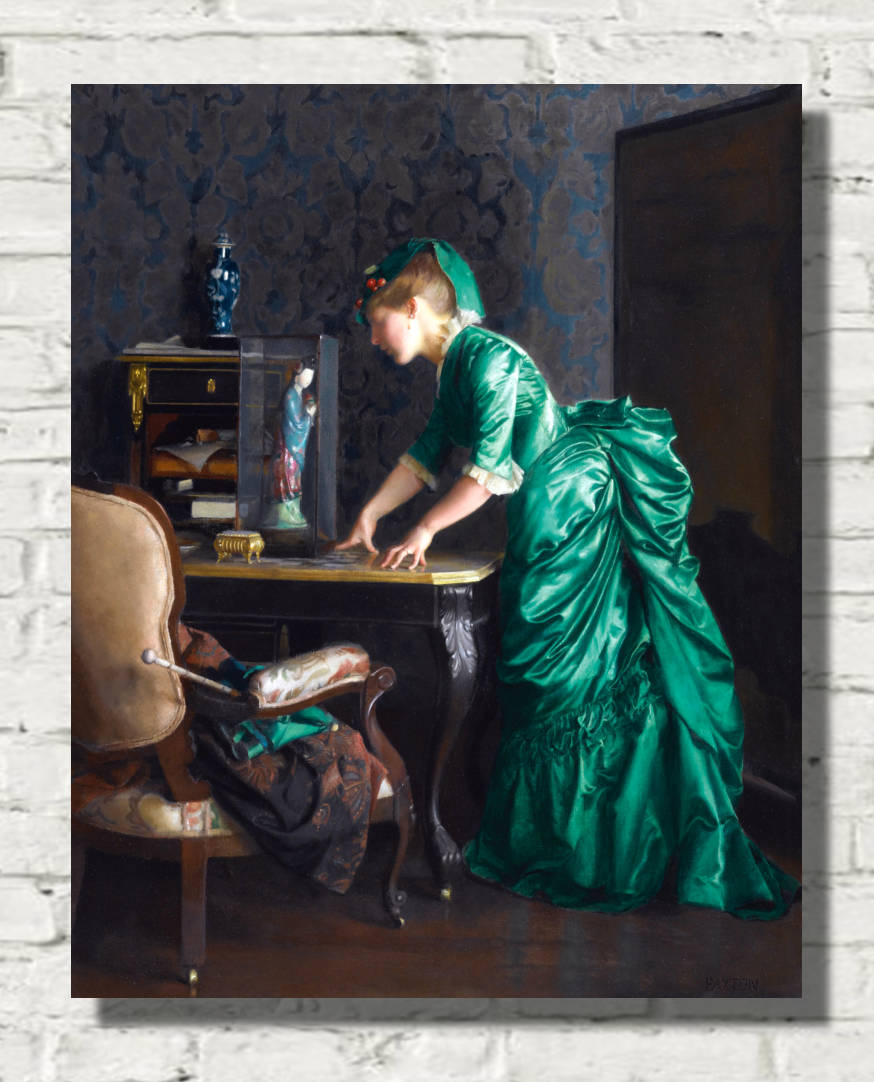
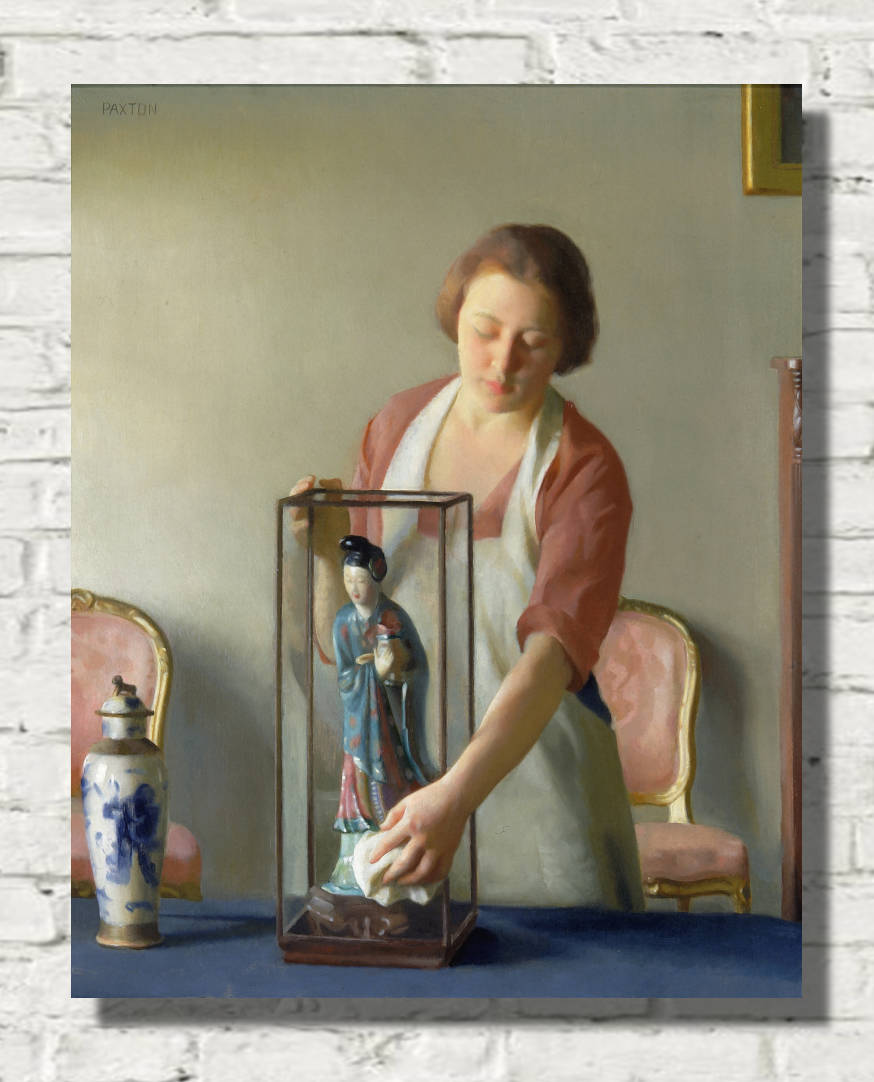
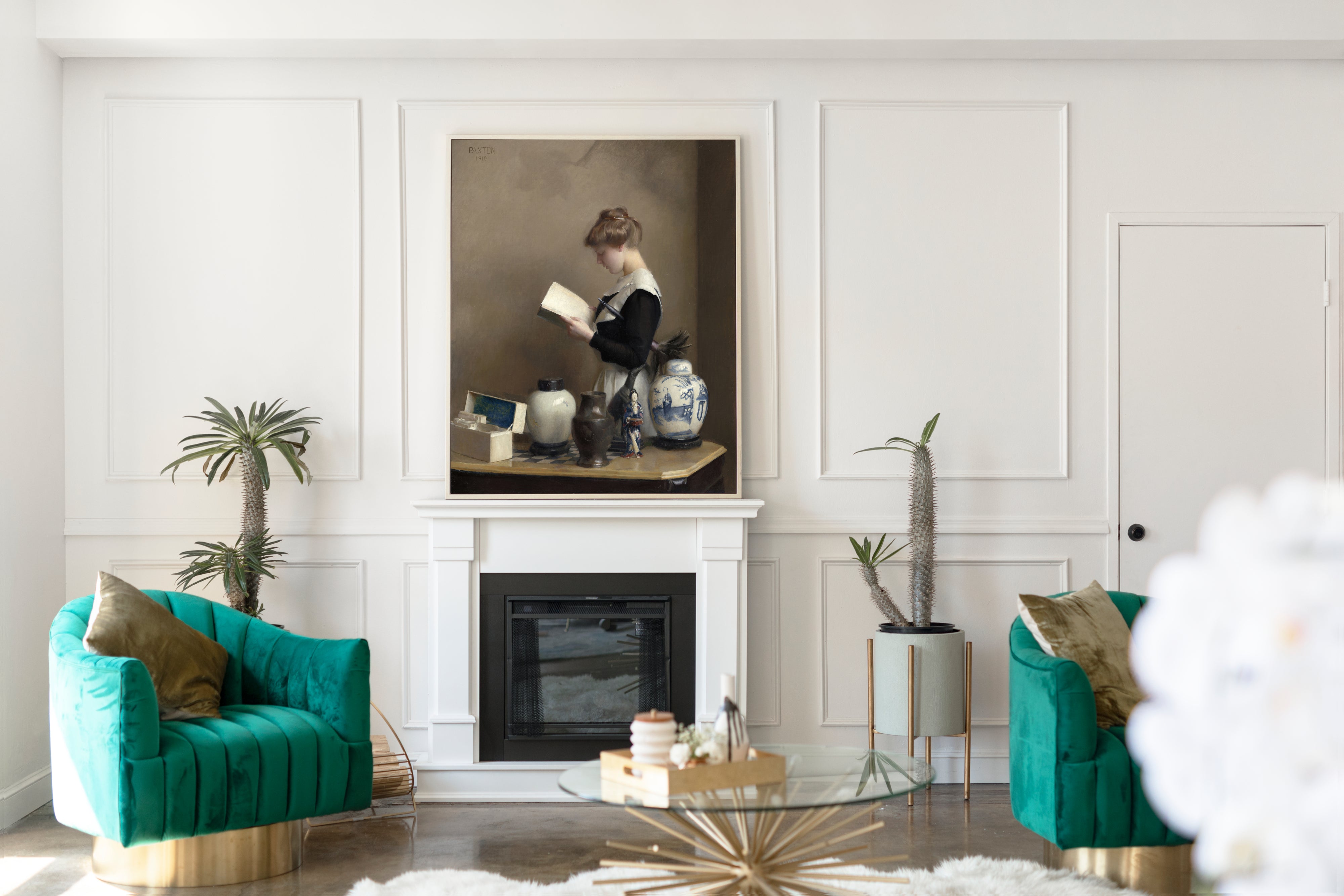
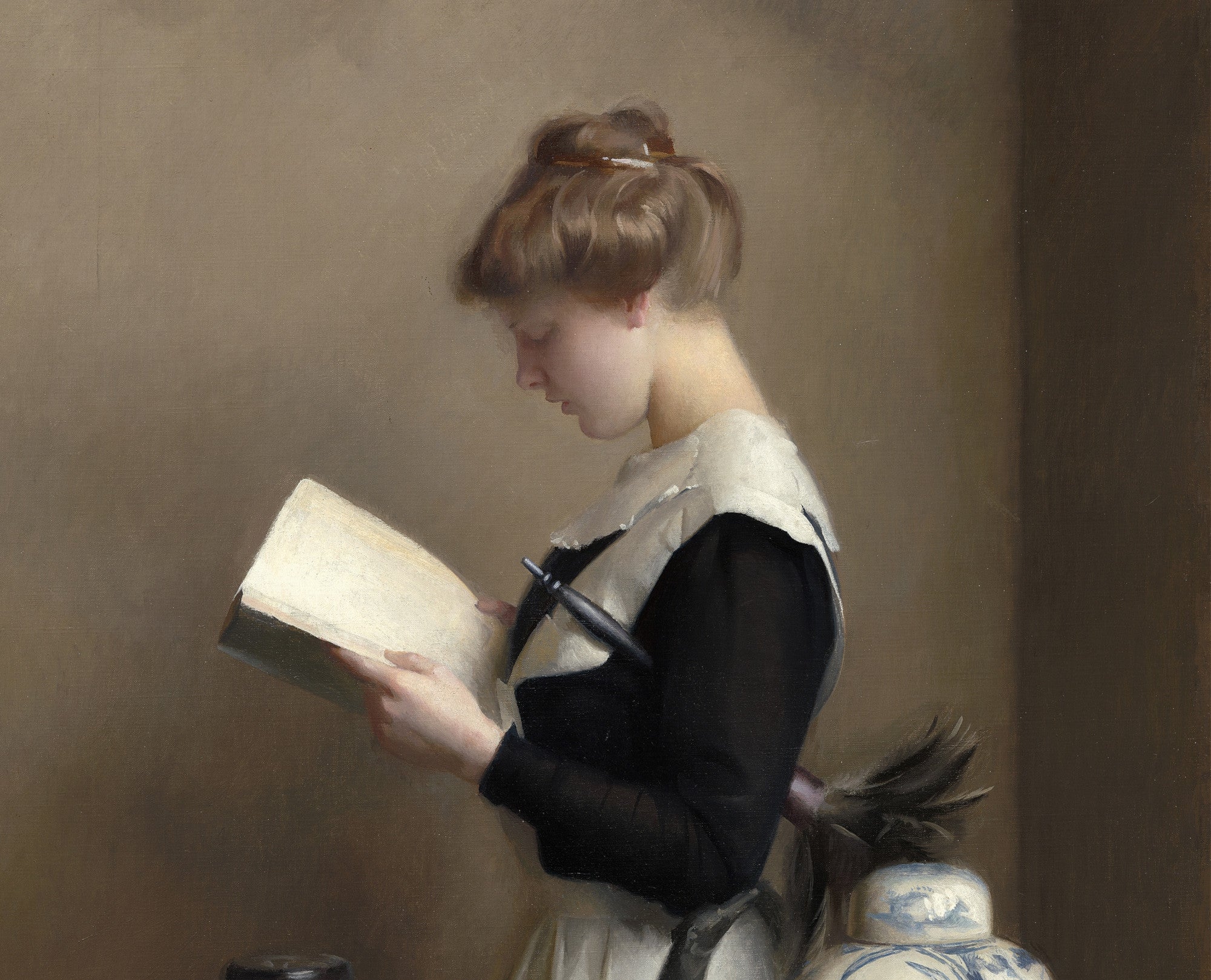
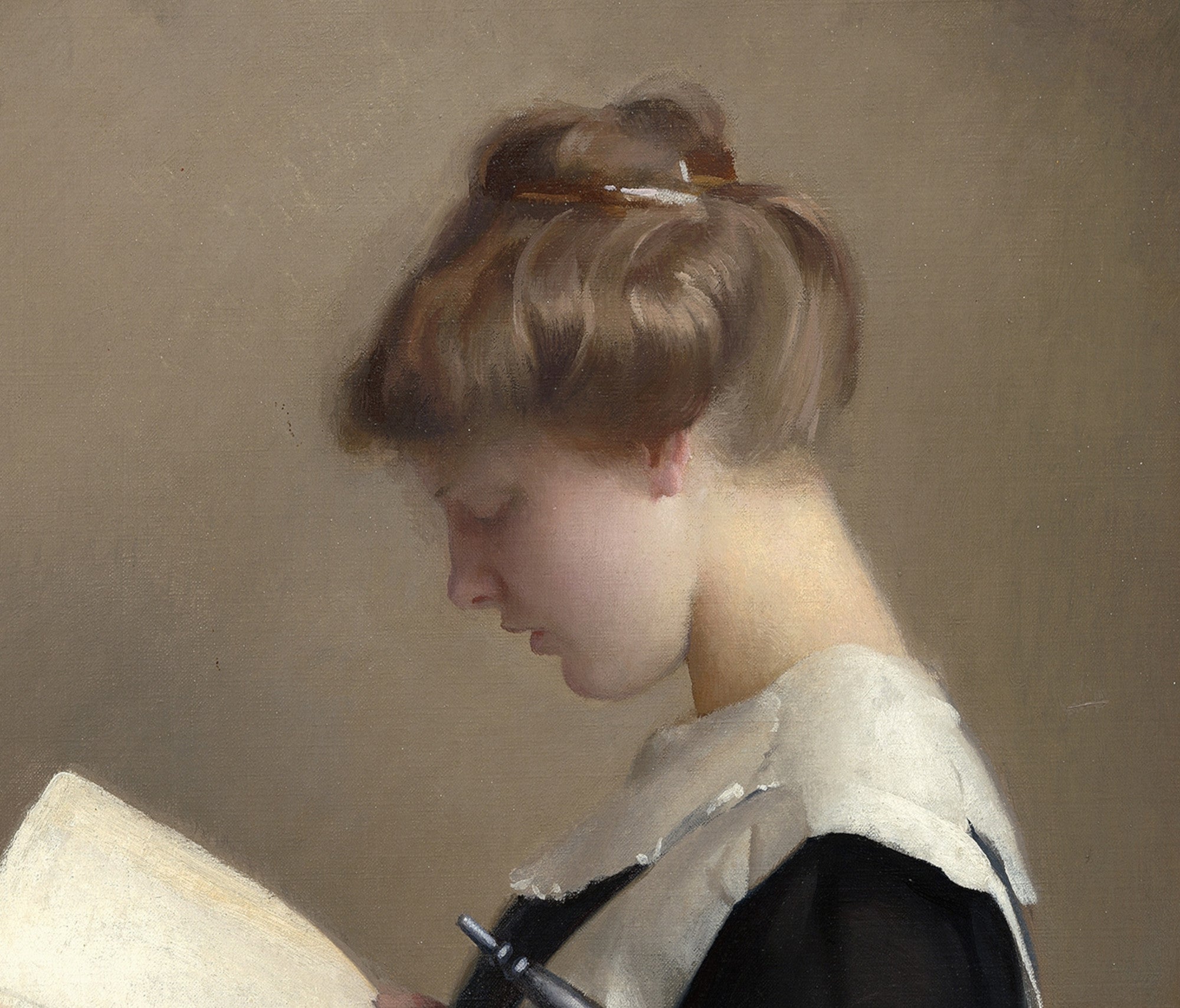
In The Housemaid, Paxton turns his attention to the theme of domestic labor. The painting depicts a housemaid engaged in her duties within a well-appointed interior. The work is notable for its sympathetic portrayal of the subject and its intricate rendering of textures, from the polished wood of the furniture to the crisp folds of the maid’s uniform. Paxton’s use of light imbues the scene with warmth and dignity.
4. Tea Leaves (1909)

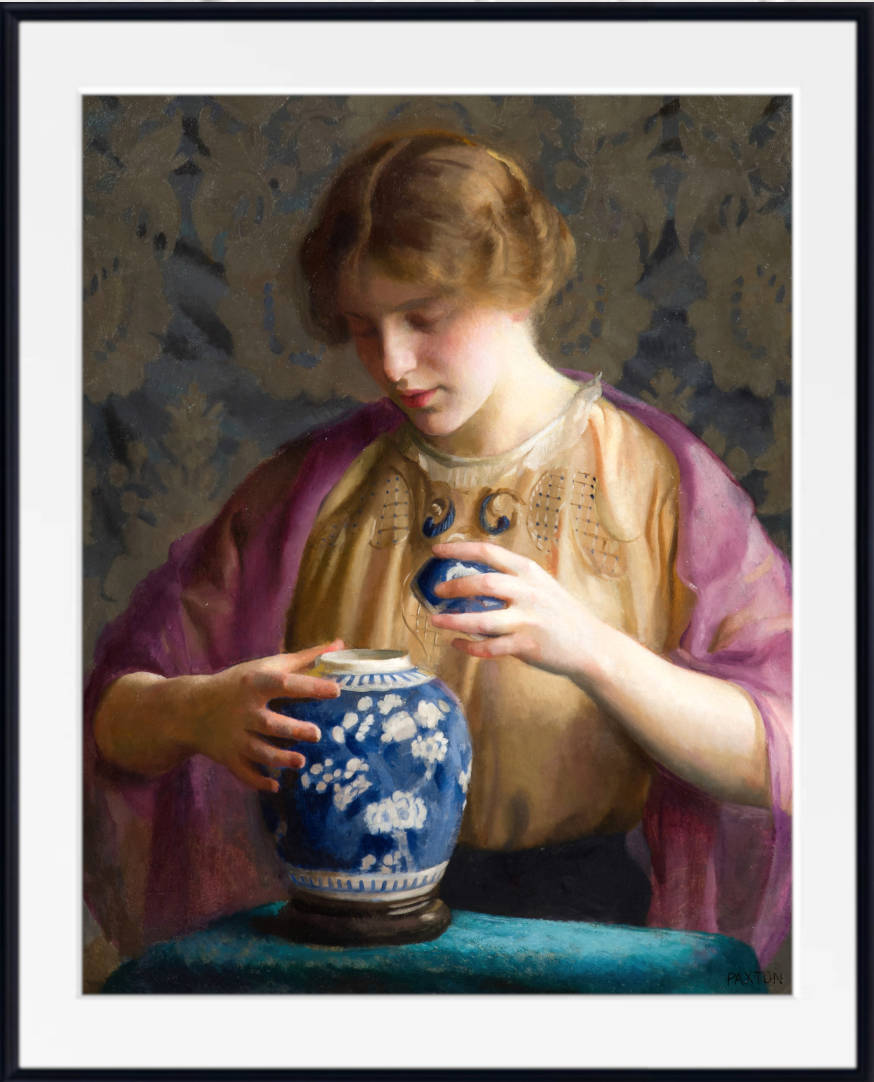
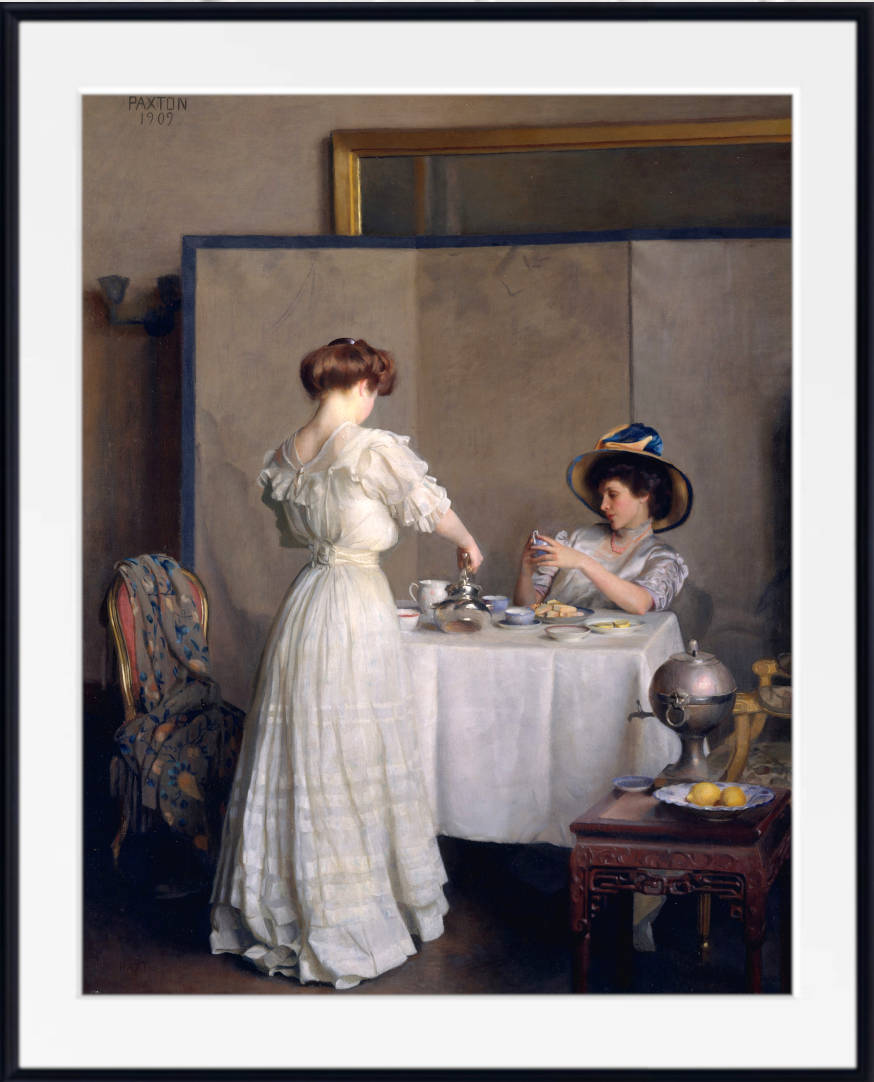
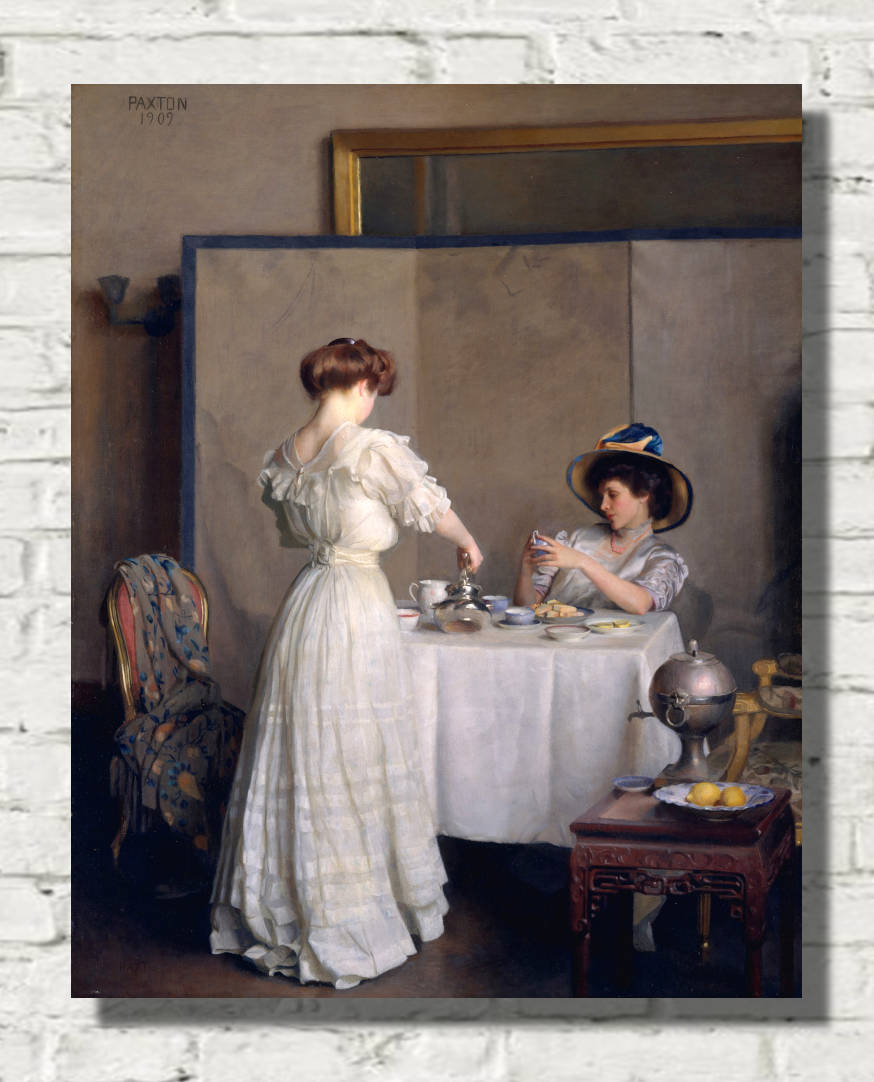
Tea Leaves is a quintessential example of Paxton’s interest in quiet domestic scenes. The painting features a woman thoughtfully examining a tea cup, her surroundings rendered in exquisite detail. The warm, diffused light and the soft color palette create an atmosphere of introspection and calm.
Legacy
William McGregor Paxton’s contributions to American art are enduring. As a leading figure in the Boston School, he upheld the ideals of beauty, craftsmanship, and the harmonious interplay of light and color. His work bridges the gap between traditional academic art and the innovative spirit of Impressionism, making him a pivotal figure in the evolution of American painting.
Today, Paxton’s works are housed in major museums and private collections, including the Museum of Fine Arts in Boston and the Smithsonian American Art Museum. His paintings continue to captivate audiences with their elegance, technical brilliance, and timeless charm.
References
-
Hirshler, Erica E. A Studio of Her Own: Women Artists in Boston, 1870-1940. MFA Publications, 2001.
-
The Athenaeum. “William McGregor Paxton.” Accessed January 2025. https://www.the-athenaeum.org
-
Gerdts, William H. American Impressionism. Abbeville Press, 1984.
-
Paintings by William McGregor Paxton in the Museum of Fine Arts, Boston. https://www.mfa.org
-
Smithsonian American Art Museum. “William McGregor Paxton.” https://americanart.si.edu
-
Boone, E. The Boston School of Painting. Schiffer Publishing, 1991.
-
Paxton, Elizabeth Okie. Memories of a Painter’s Wife. Private Publication, 1945.
-
Art Renewal Center. “William McGregor Paxton Gallery.” Accessed January 2025. https://www.artrenewal.org
Related Articles

Impressionism

American Impressionism