


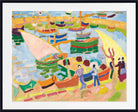
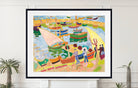
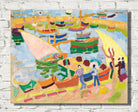
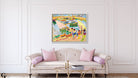
Sailboats and boats in the harbor (1907) by Raoul Dufy
Couldn't load pickup availability
BUY WITH CONFIDENCE
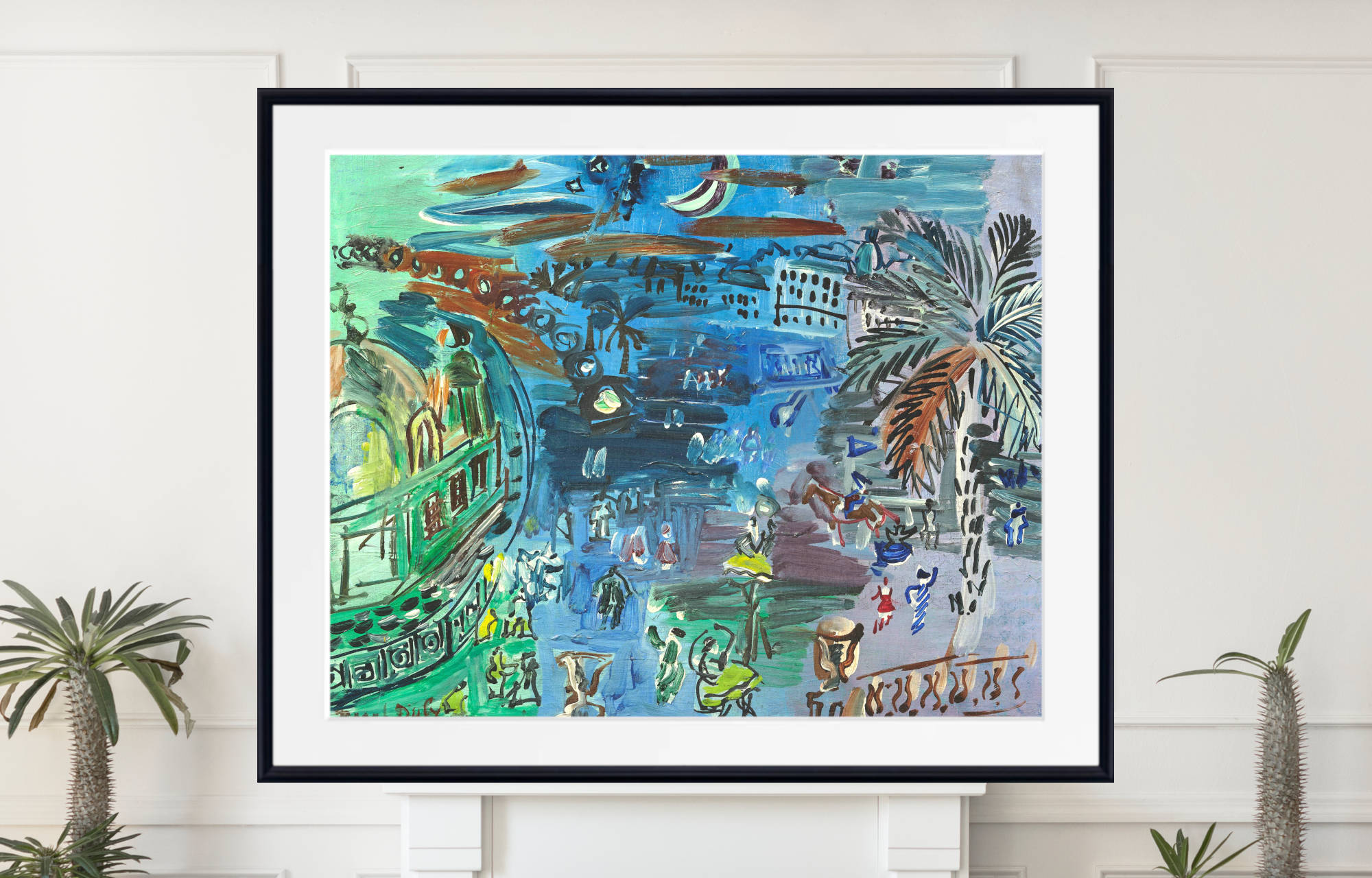
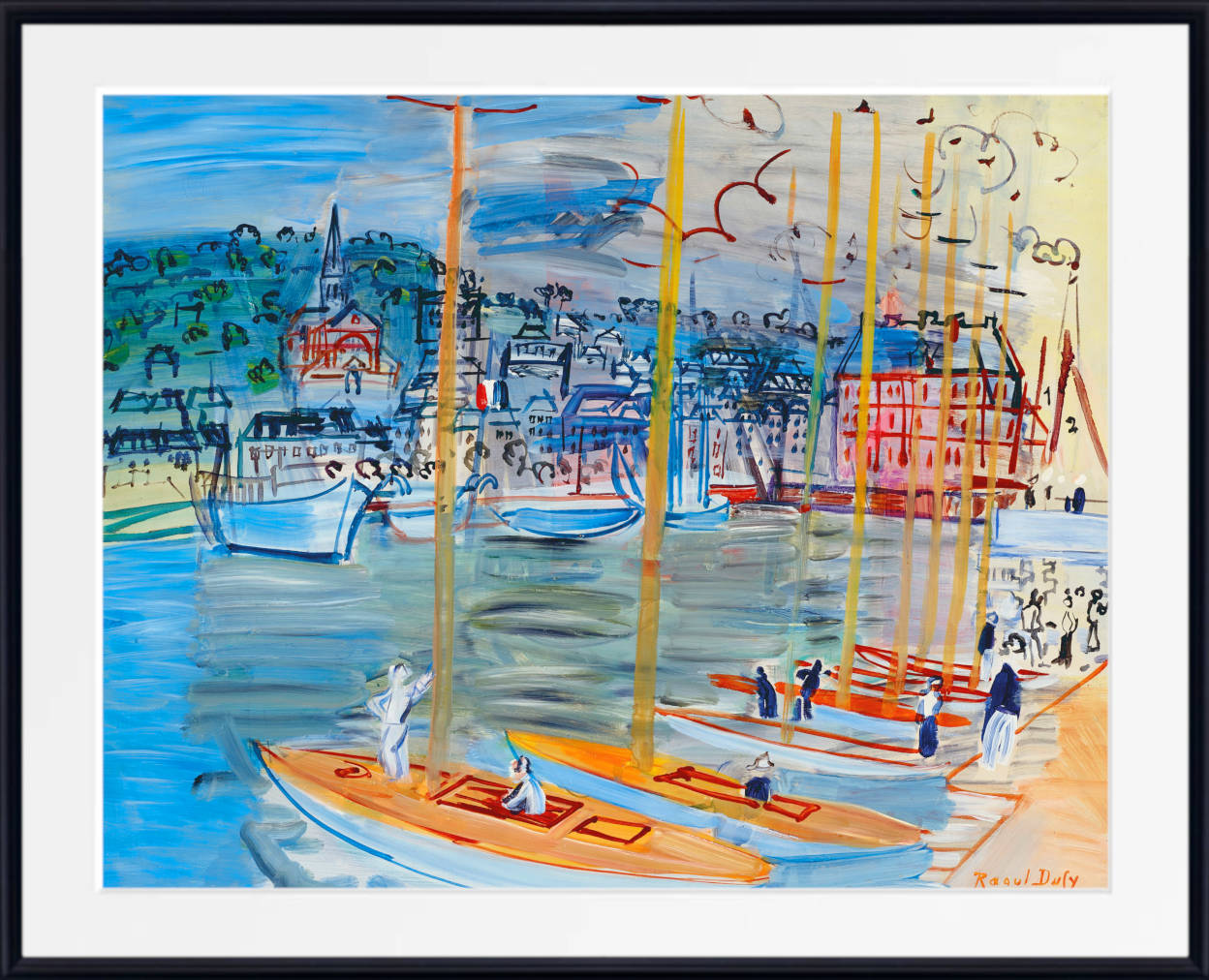
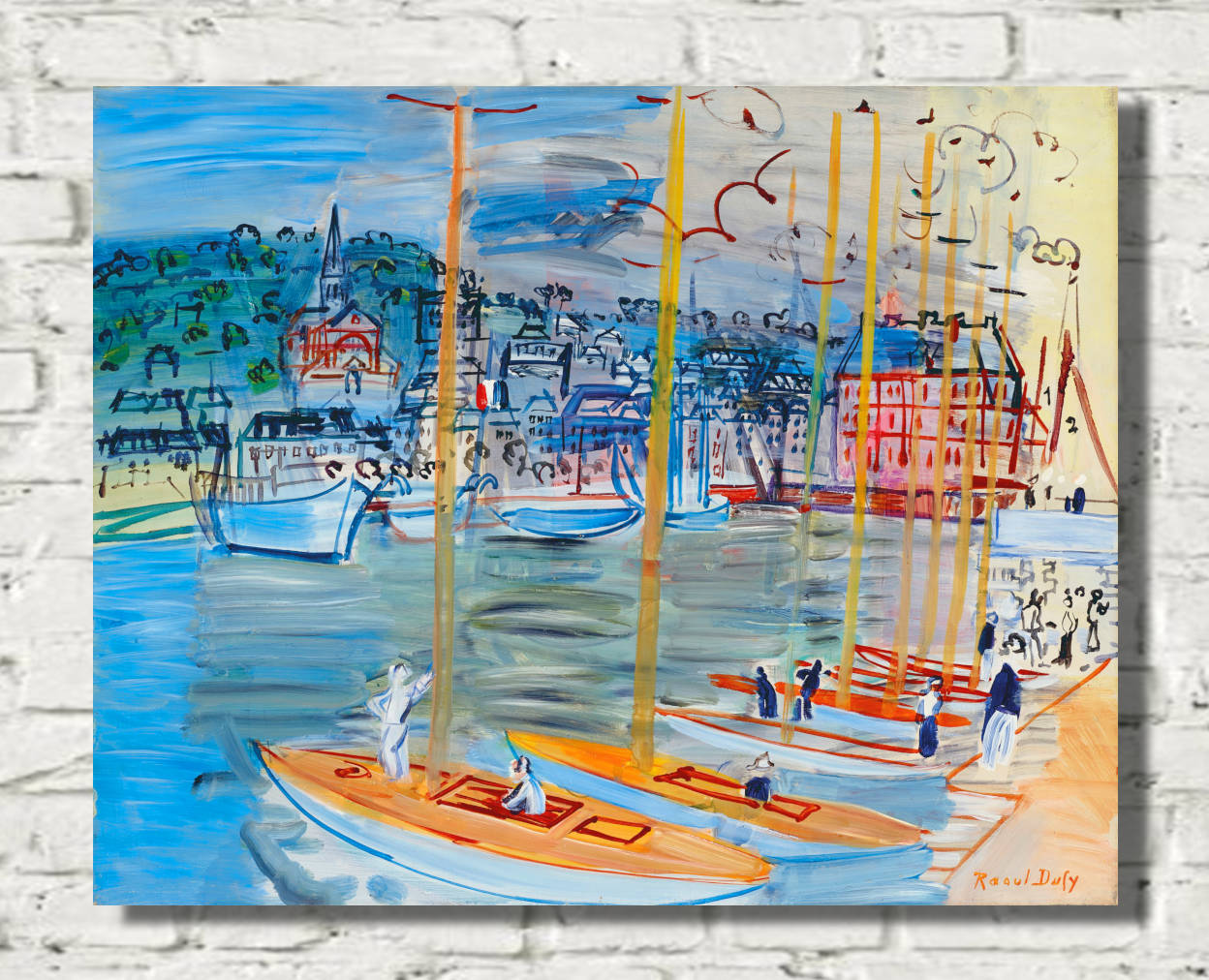
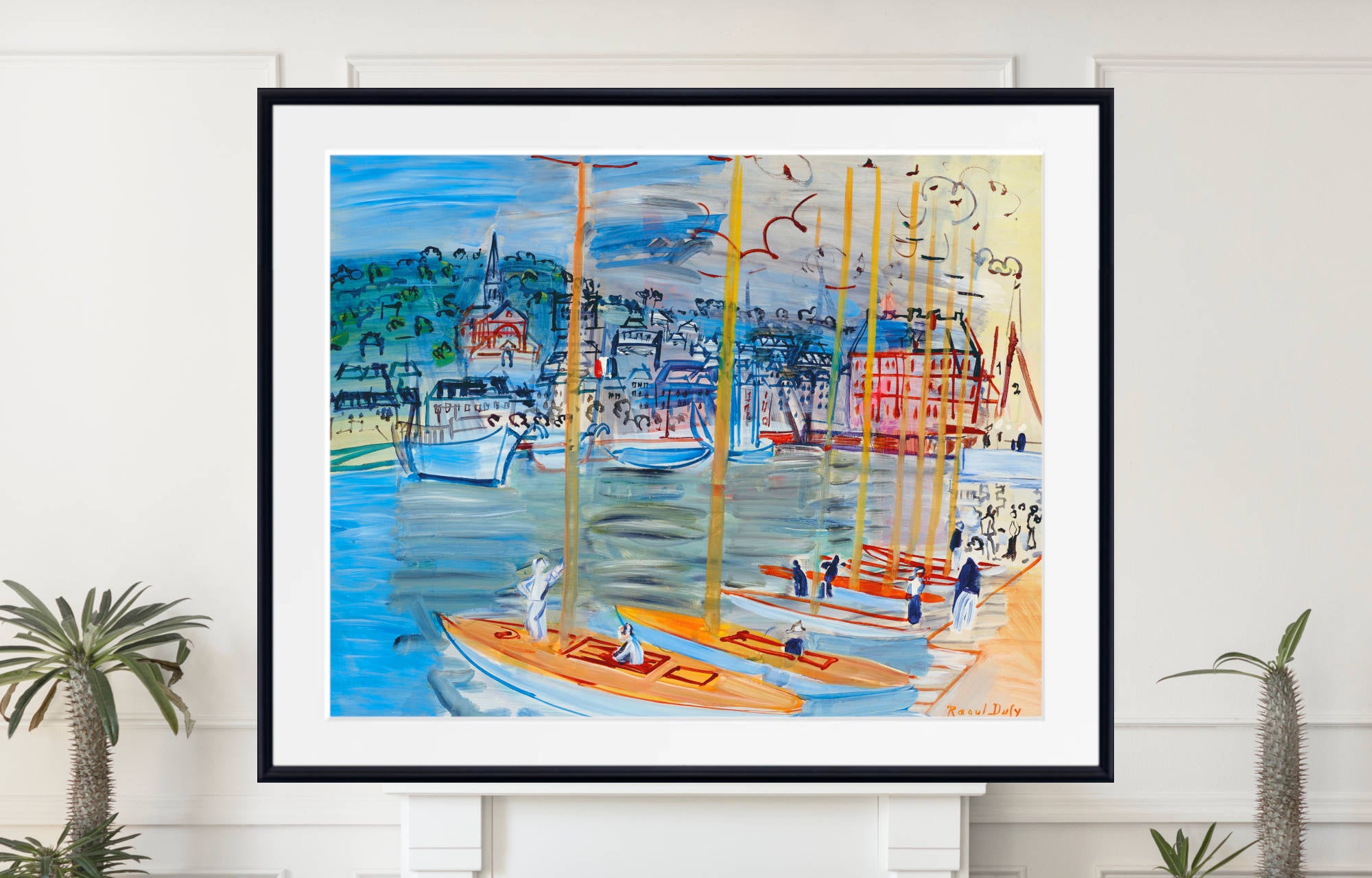
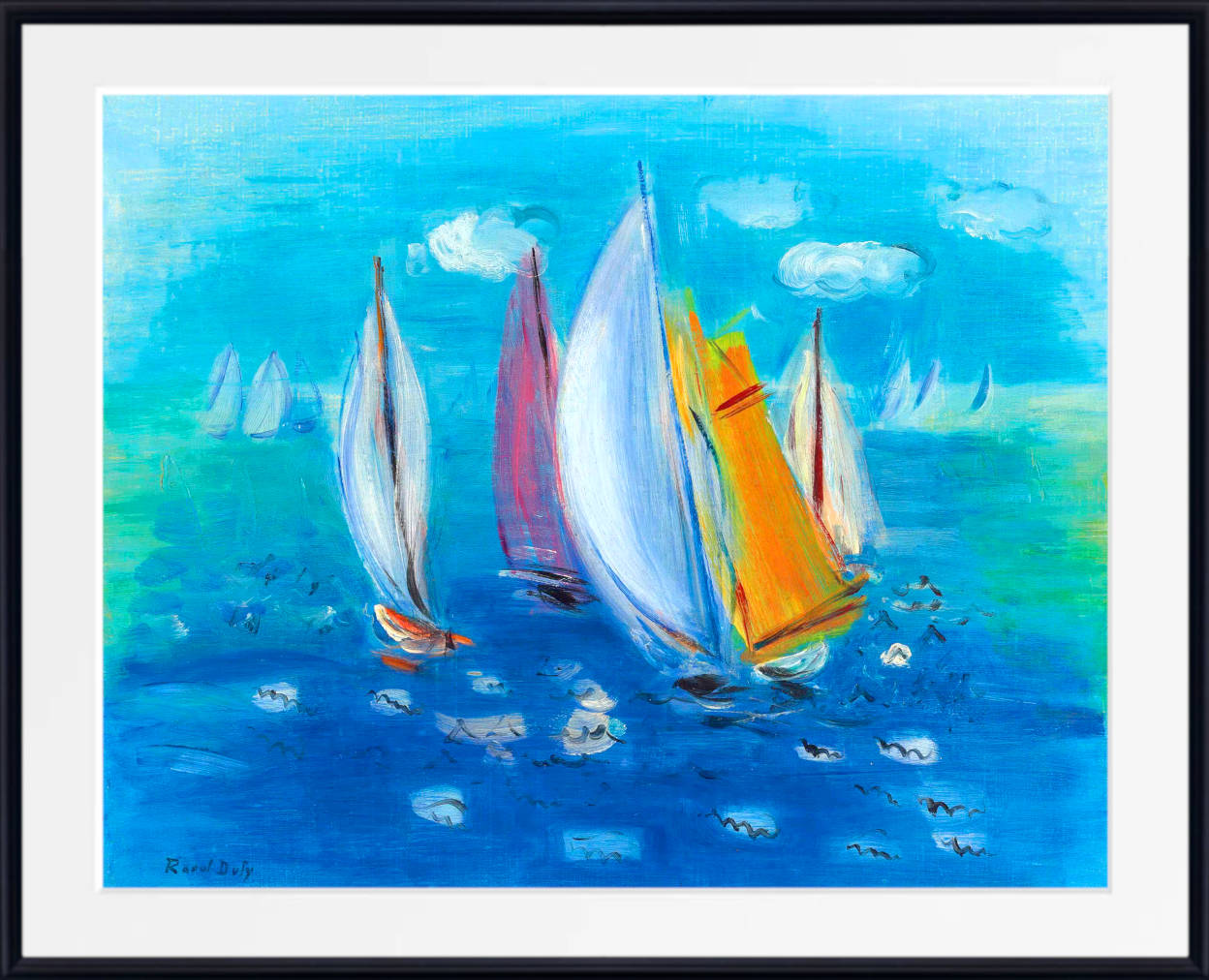
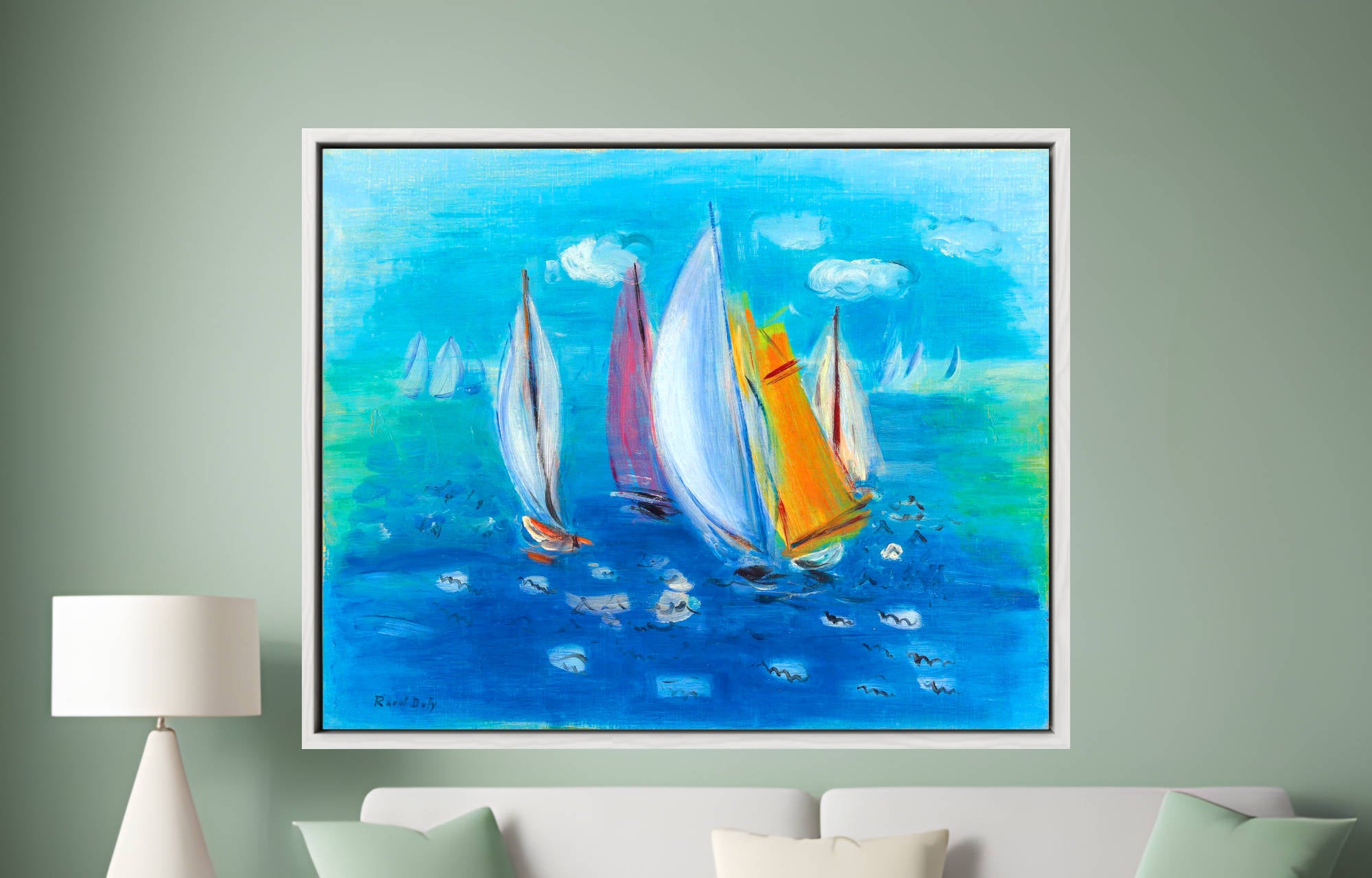
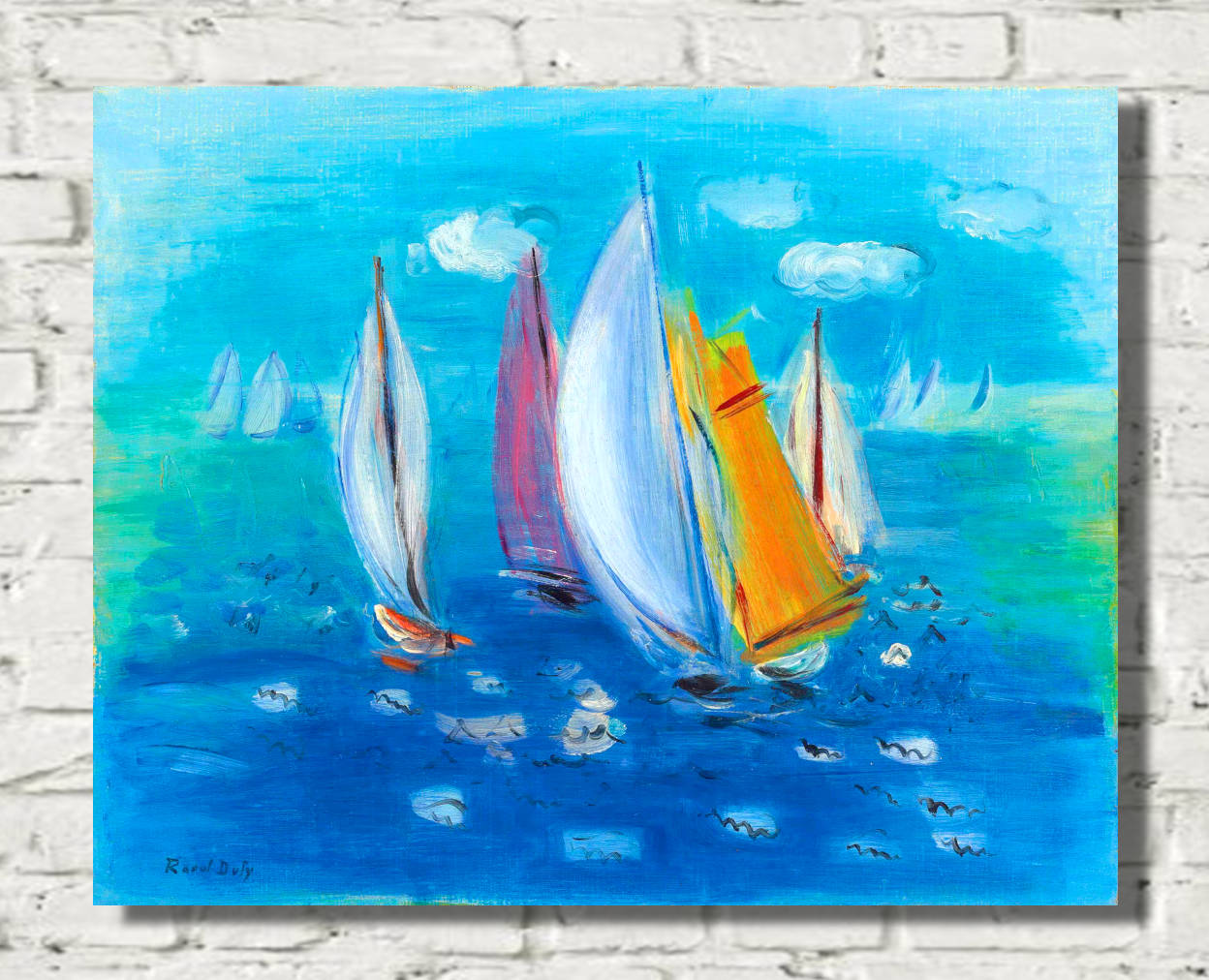
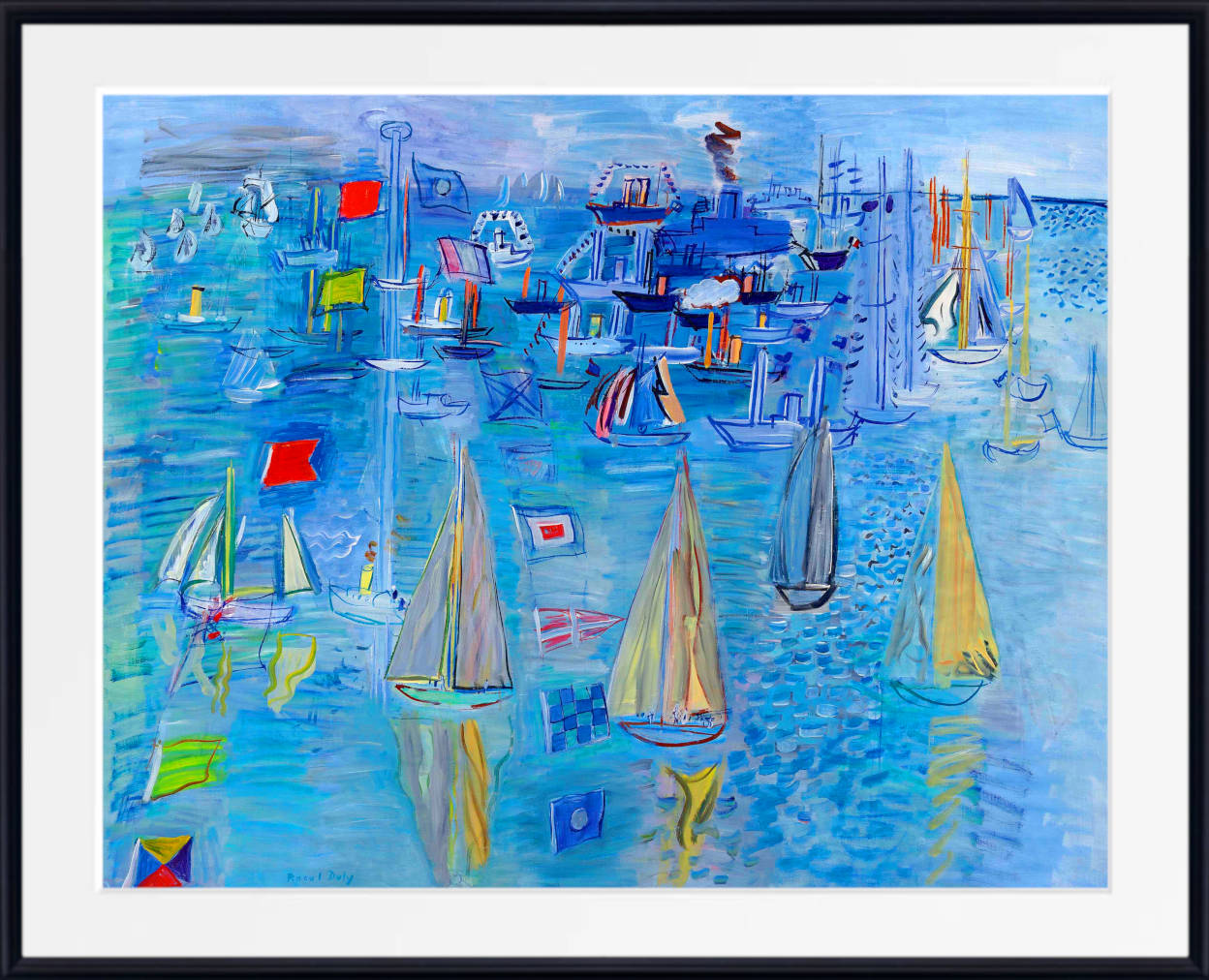
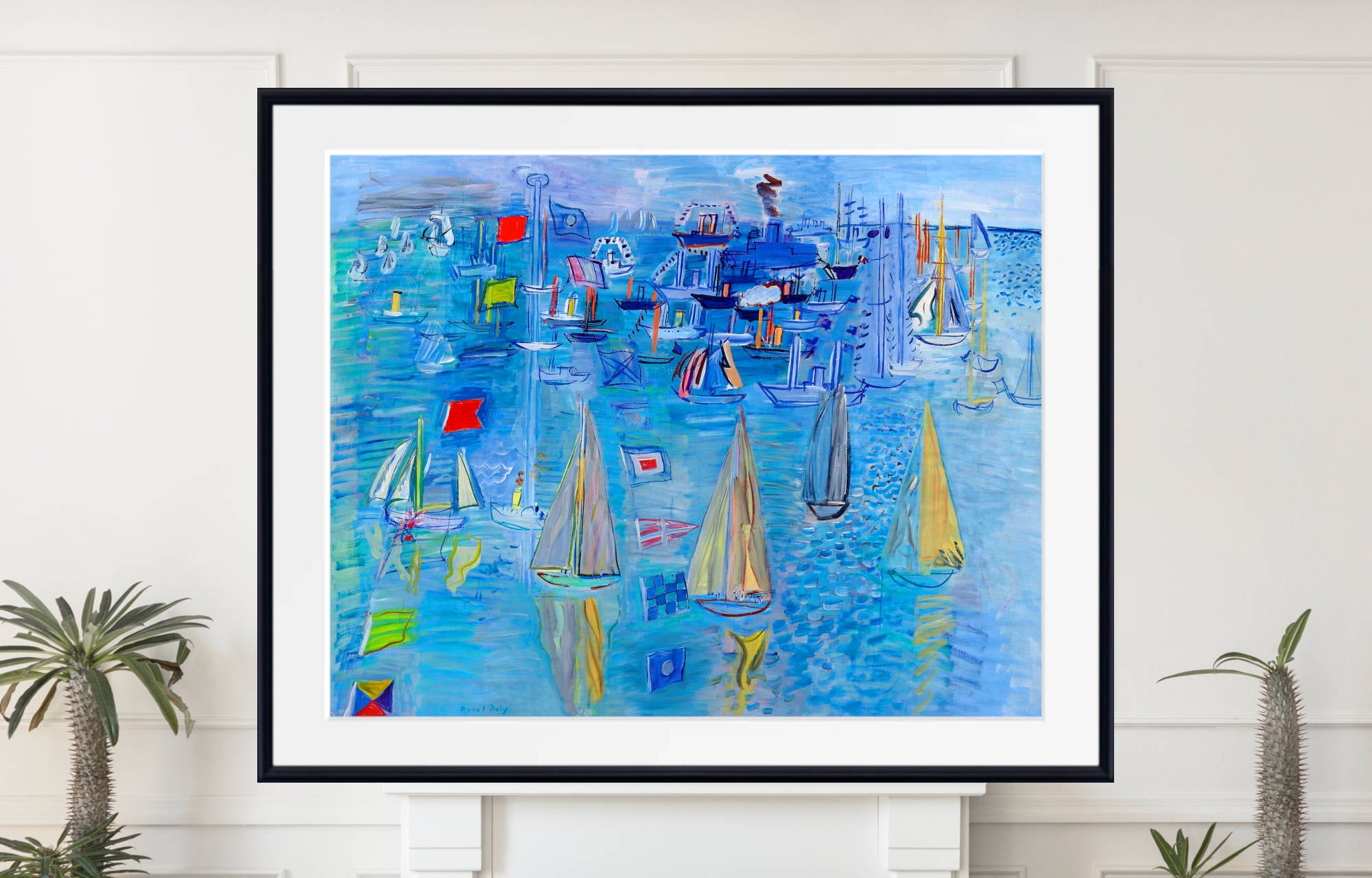
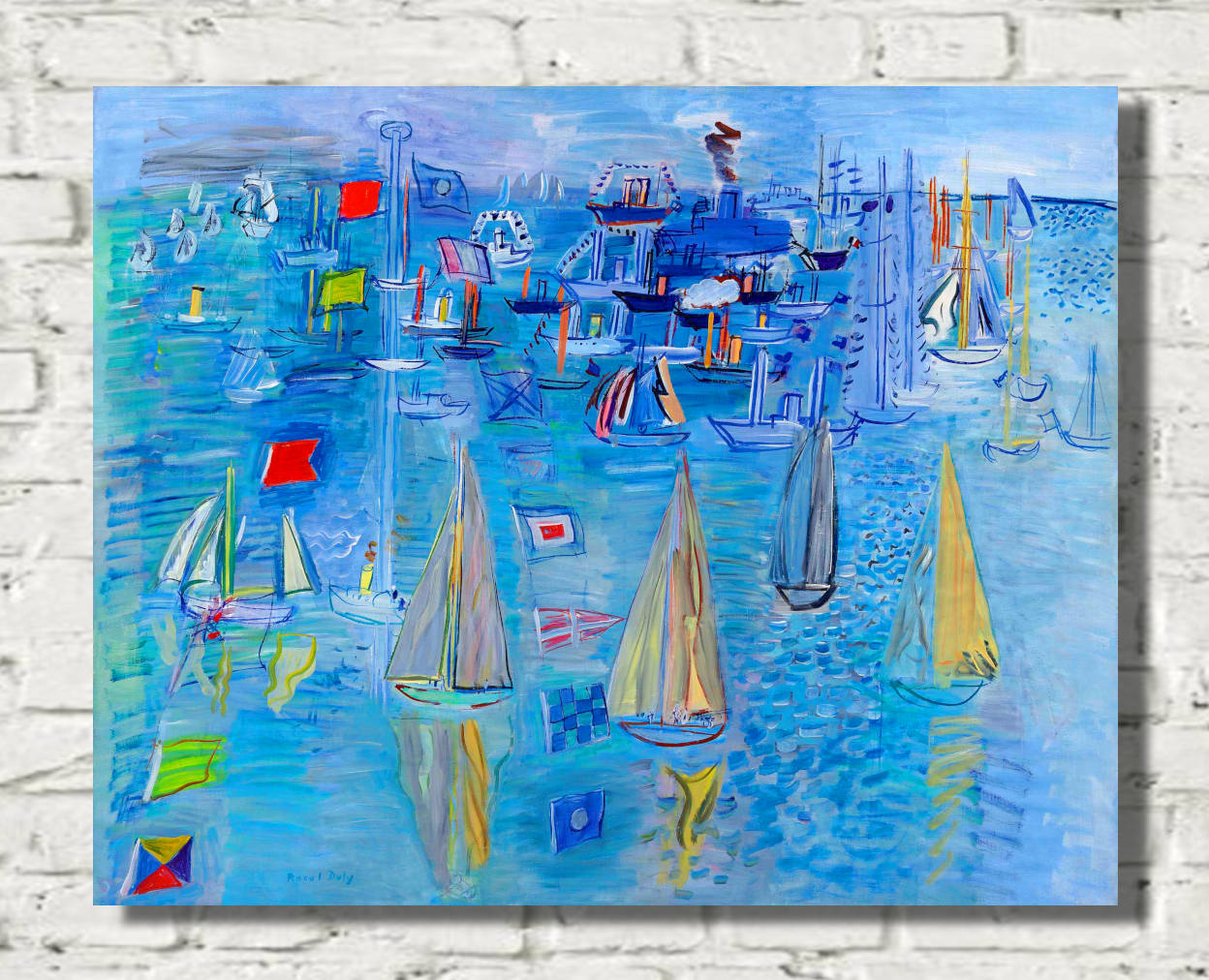
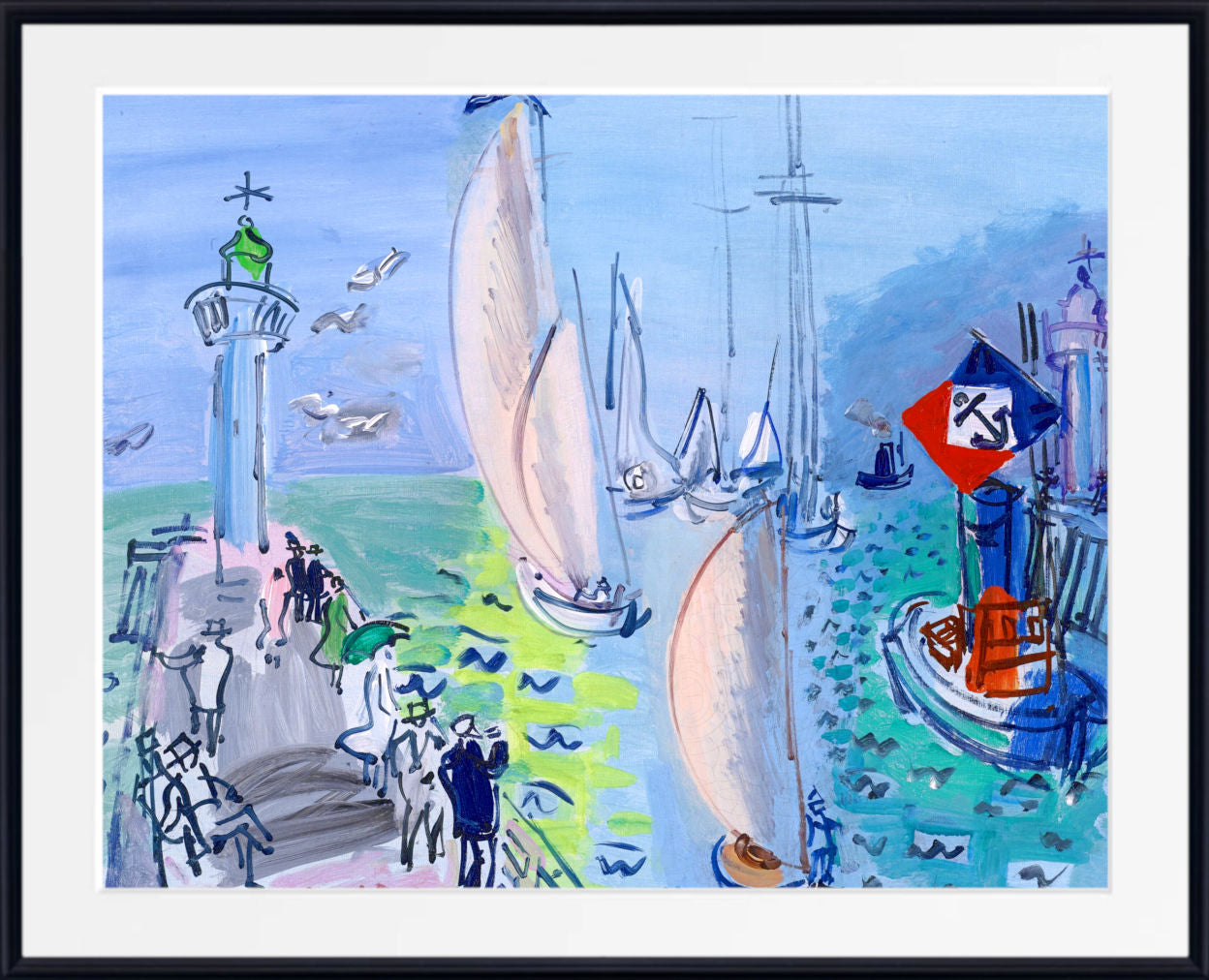
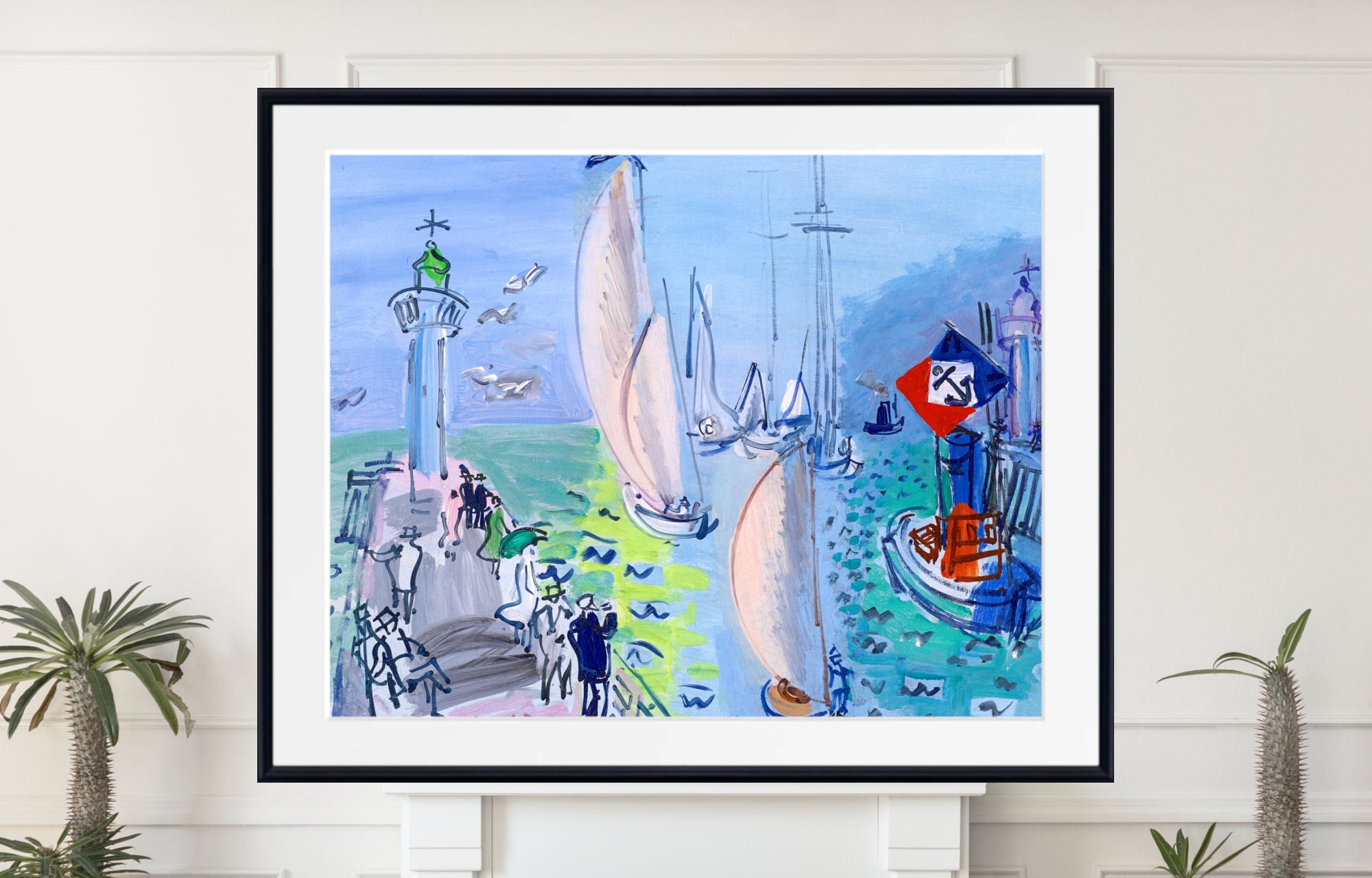
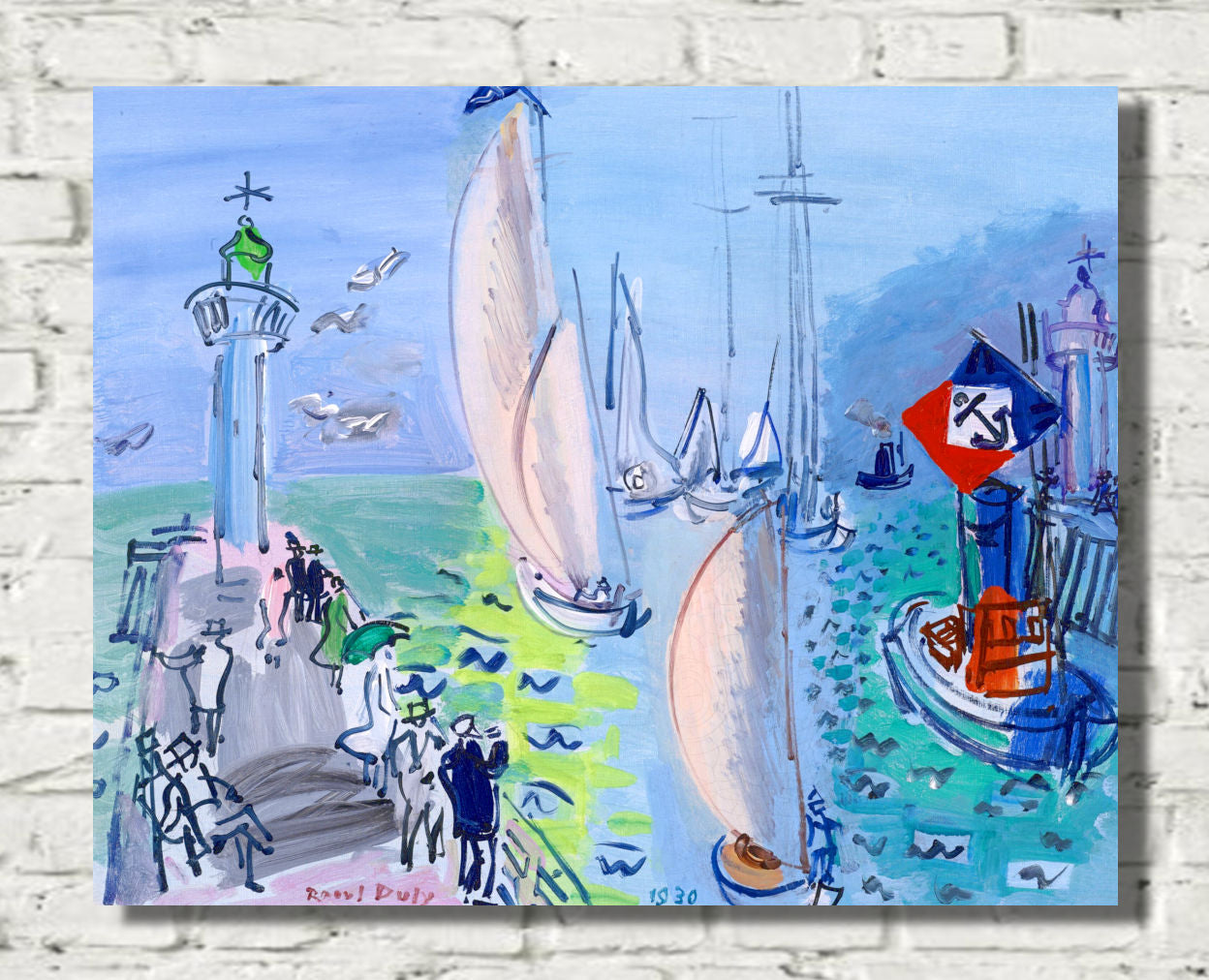
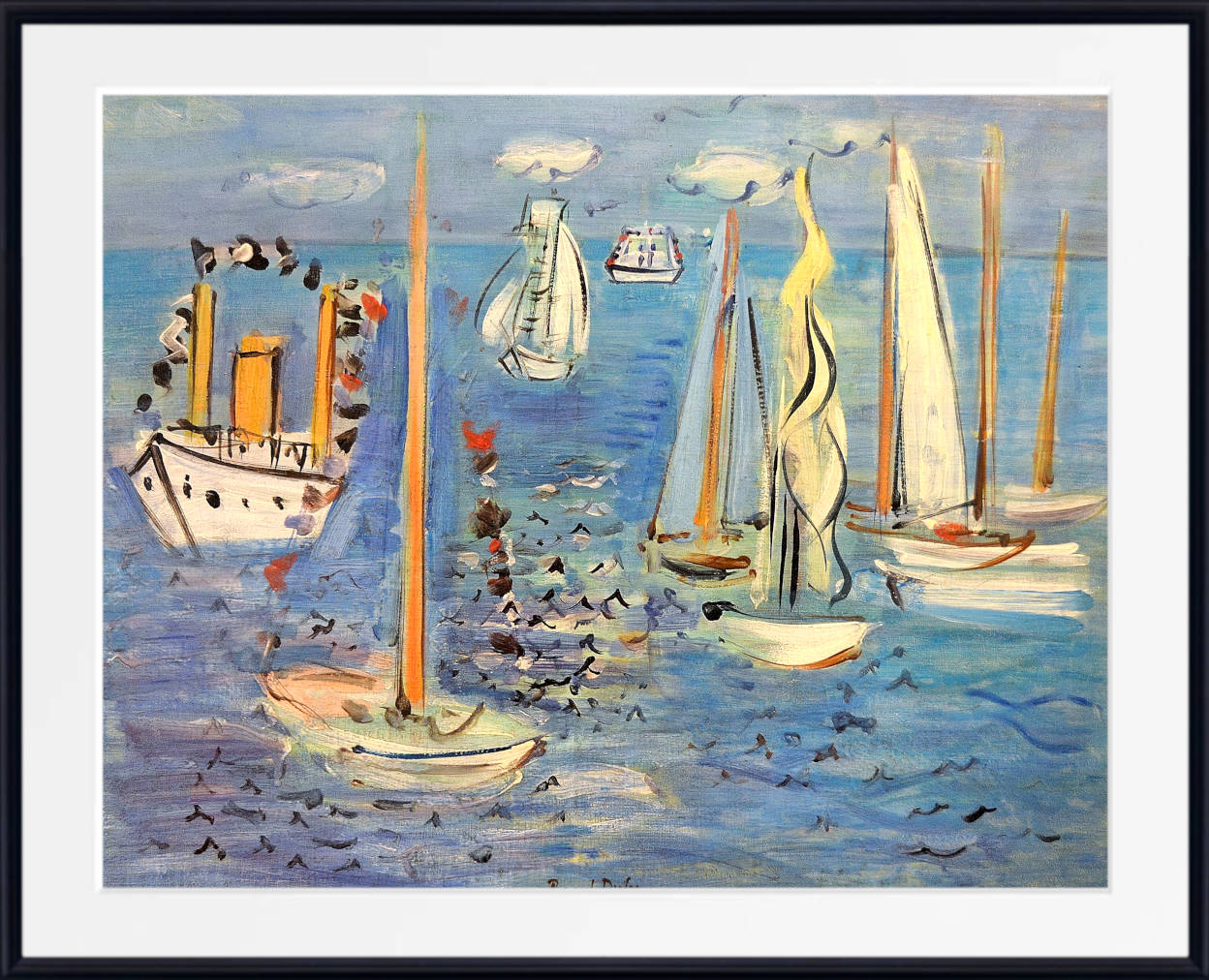
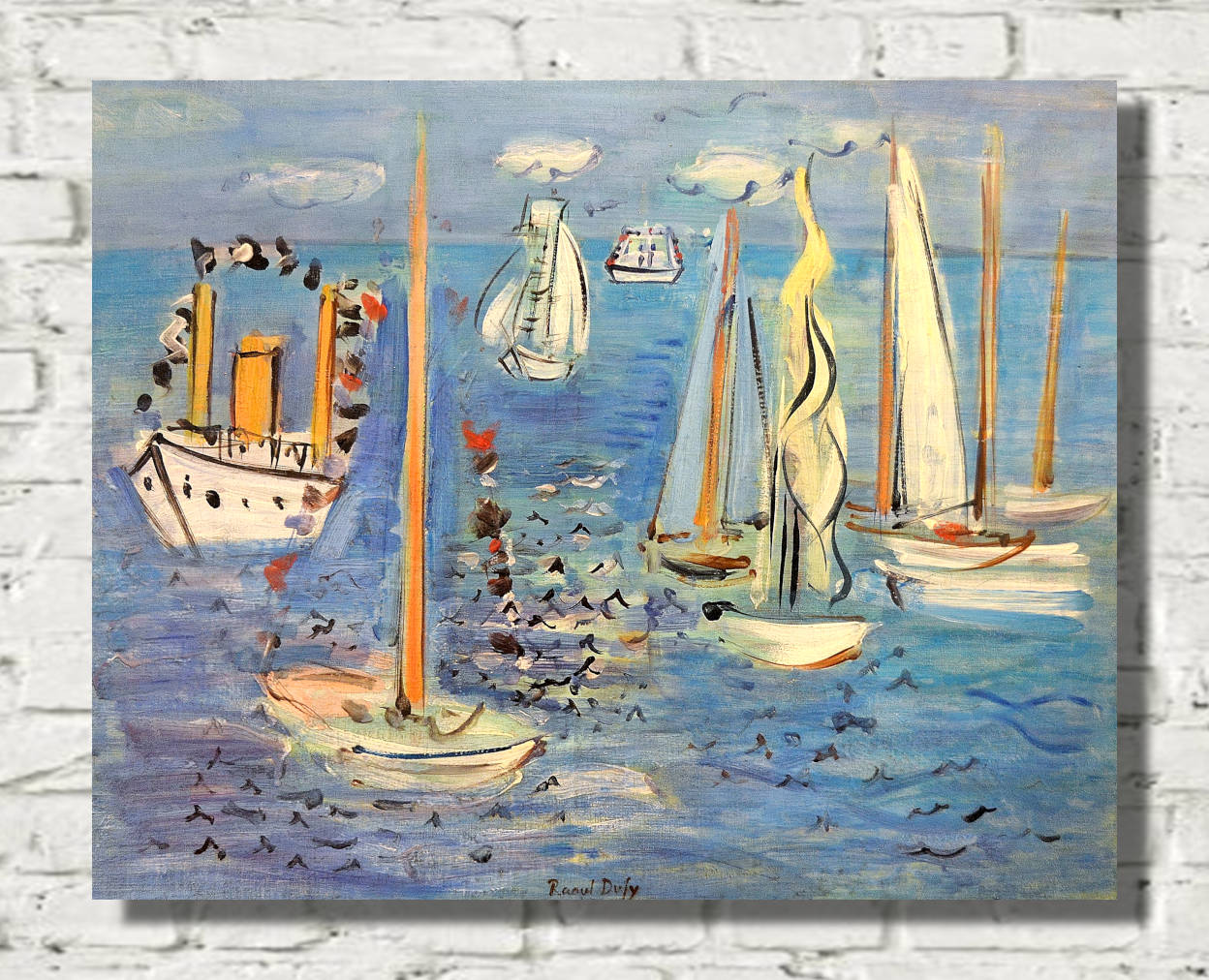
Sailboats and Boats in the Harbor (1907) by Raoul Dufy, originally titled Voiliers et barques dans le port, is a luminous Fauvist harbour scene filled with sailing boats, curved sails, slender masts and brilliant colour. Painted during Dufy's important Fauvist period, the work reduces a busy fishing port to a tightly organised arrangement of boats, reflections and rhythmic lines.
This Raoul Dufy Sailboats and Boats in the Harbor print captures the moment when the artist mastered the pure colour and fluid linear rhythms that would remain fundamental to his later work. Instead of describing the harbour through conventional perspective and modelling, Dufy builds the composition from light areas of pink, yellow, blue and contrasting tones, allowing colour and line to create their own sense of space. Available as a fine art print, framed print or canvas panel, it is an outstanding choice for admirers of Fauvism, colourful maritime art and modern French painting.
Sailboats and Boats in the Harbor – A Fauvist Fishing Port
Dufy painted Sailboats and Boats in the Harbor in 1907, during one of the most adventurous periods of his early career.
The composition presents a closely packed group of sailing boats and smaller vessels within a harbour. Instead of opening the view towards a large expanse of sky or distant landscape, Dufy concentrates attention on the boats themselves.
Hull follows hull, sails overlap and vertical masts punctuate the composition. The harbour becomes an almost self-contained world of geometric and curved forms.
This tight framing is important. Dufy is no longer simply recording a picturesque maritime scene. He is investigating how boats, sails and masts can provide the underlying structure of a modern painting.
The result is recognisably a fishing port, yet the visual excitement comes as much from the relationships between colour, line and shape as from the subject itself.
Where Did Dufy Paint the Harbour?
The precise harbour represented in Voiliers et barques dans le port has not been definitively identified.
The painting belongs, however, to Dufy's documented work of the summer of 1907, when he and Albert Marquet painted along the Normandy coast around Le Havre and Sainte-Adresse.
These locations were deeply familiar to Dufy. He had been born in Le Havre and had grown up surrounded by docks, fishing boats, commercial shipping and the Channel coastline.
Harbours therefore offered much more than an attractive subject. Their combination of moving water, reflections, sails, masts and tightly grouped vessels provided exactly the kind of visual material that suited his changing style.
The brilliant luminosity of this painting has sometimes been compared with the Mediterranean landscapes André Derain had painted at Collioure, even though Dufy's likely setting was the much more northerly Normandy coast.
Pure Colour and the Fauvist Transformation
The most important change in Dufy's work during these years was his increasing freedom with colour.
His earlier paintings had developed from the Impressionist tradition, in which observed light and atmospheric conditions remained central. By 1907, he was approaching colour much more independently.
In Sailboats and Boats in the Harbor, areas of colour are laid down lightly and often remain visually distinct rather than blending into continuous tonal modelling.
Warm pinks interact with sharper yellows and cooler tones. Instead of carefully reproducing every reflection in the harbour, Dufy allows colour to move freely between boats, water and surrounding forms.
This gives the composition its exceptional luminosity.
Rather than painting light as something falling onto objects from outside, Dufy increasingly allows the colours themselves to generate the sensation of light.
This principle would become fundamental to his mature art.
Sails, Masts and Rhythmic Line
One of the most distinctive qualities of the painting is its sense of rhythm.
The sails do not appear as rigid geometric triangles. Their outlines curve and swell, suggesting wind and movement even though the boats remain within the harbour.
Against these curved forms, the masts rise vertically through the composition.
This contrast is crucial. The upright masts interrupt the flatter horizontal structure of the painting and help create a sense of depth without relying heavily on conventional perspective.
Dufy also uses groups of parallel strokes to suggest different planes of water and vessel. These repeated marks establish spatial relationships while retaining the flat decorative quality associated with Fauvism.
The entire harbour therefore becomes rhythmic: curved sails, vertical masts, horizontal water and compact boat hulls interact across the canvas.
This growing interest in fluid line would later become one of the most recognisable features of Dufy's mature style.
A Harbour Without a Dominant Sky
Traditional marine painting often gives enormous importance to the sky, using clouds, weather and atmospheric effects to establish mood.
Dufy takes a different approach in Sailboats and Boats in the Harbor.
He frames the scene closely around the vessels, greatly reducing the importance of the sky. Boats occupy almost the entire visual field.
This creates a much denser composition than a conventional panoramic seascape. Instead of inviting the viewer to look towards a distant horizon, Dufy directs attention to the immediate relationships between boats.
The effect is almost decorative. Hulls, sails and masts become repeated motifs organised across the surface.
This compression also reinforces the modern character of the painting. Dufy is less concerned with creating an illusion of limitless natural space than with constructing a visually compelling arrangement on the flat canvas.
Fishing Boats as Modern Art
Dufy's subject was rooted in everyday coastal life.
Fishing boats and small sailing vessels were familiar sights around Le Havre and the surrounding Normandy coast. Dufy had observed this maritime environment since childhood and returned to it repeatedly throughout his career.
Yet in this painting the boats have been simplified to such a degree that they begin to function almost as abstract shapes.
A sail can simultaneously represent a real piece of canvas catching the wind and act as a coloured plane within the composition. A mast can describe part of a vessel while also providing a vertical line that organises the picture.
This double function — descriptive and decorative — became increasingly important to twentieth-century modern painting.
Dufy therefore transforms an ordinary fishing harbour into a sophisticated exploration of colour, rhythm and pictorial structure.
Dufy and Albert Marquet in 1907
During the summer of 1907, Dufy worked on the Normandy coast in the company of Albert Marquet, another artist associated with Fauvism.
Their partnership had particular significance because the two painters shared an interest in ports, water and modern urban landscapes while developing distinct approaches to colour.
Marquet generally used a more restrained palette and placed considerable emphasis on clear spatial organisation. Dufy was increasingly attracted by stronger colour and more rhythmic surface design.
Working beside one another gave both artists opportunities to reconsider familiar coastal motifs.
For Dufy, the period around 1907 proved particularly productive. Harbour scenes, fishermen, sailing boats and beaches allowed him to consolidate the lessons he had learned from Fauvism while beginning to discover a more individual visual language.
From Impressionism to Fauvism
The transformation visible in Sailboats and Boats in the Harbor had begun only a few years earlier.
Dufy's early career was strongly influenced by Impressionism and the artistic traditions of Normandy. He initially painted coastal views using relatively subdued natural colour and an emphasis on observed atmosphere.
A decisive moment came in 1905 when he encountered Henri Matisse's Luxe, calme et volupté.
Matisse's brilliant colour suggested a completely different way of approaching painting. Dufy realised that colour did not have to reproduce nature faithfully; it could become a creative element in its own right.
The public emergence of Fauvism later that year reinforced the possibilities offered by this new freedom.
During 1906 and 1907 Dufy's palette intensified rapidly. Beaches, harbours and city streets were increasingly reduced to bold forms and pure colour.
Sailboats and Boats in the Harbor belongs to the mature stage of this brief Fauvist experiment.
The Le Havre Fauvist Circle
Dufy formed part of a distinctive group of painters connected with Le Havre who became involved with Fauvism.
Othon Friesz had studied with Dufy and likewise embraced vivid colour during the middle years of the decade. Georges Braque, another artist closely associated with Le Havre, passed through Fauvism before moving towards the development of Cubism.
Their northern coastal environment differed substantially from the Mediterranean surroundings associated with Henri Matisse and André Derain.
Nevertheless, Normandy's harbours, fishing fleets and beaches proved exceptionally suitable for experiments with modern colour.
Dufy in particular discovered that the repeated geometry of boats and sails could be combined with strong colour to produce paintings that were increasingly decorative and rhythmic.
Raoul Dufy's Fauvist Painting Style
Sailboats and Boats in the Harbor demonstrates several characteristics of Dufy's Fauvist work:
- strong pure colour
- simplified vessels and harbour forms
- lightly applied areas of paint
- minimal conventional modelling
- repeated vertical masts and curved sails
- compressed pictorial space
- colour used to generate light
- increasing emphasis on line and arabesque
The last of these is particularly important.
Dufy's mature paintings would become famous for the apparent independence of drawing and colour. Fluid outlines frequently move across broad coloured areas rather than remaining tightly attached to them.
The seeds of that mature language are already visible here. Curves and verticals increasingly possess their own visual energy, while colour spreads lightly across the surface.
The painting therefore represents not only Dufy's engagement with Fauvism but an important stage in the emergence of his personal style.
About Raoul Dufy
Raoul Dufy (1877–1953) was a French painter, draughtsman, printmaker and designer born in Le Havre, Normandy.
He studied at the École Municipale des Beaux-Arts in Le Havre before continuing his education at the École des Beaux-Arts in Paris.
Dufy's early paintings reflected Impressionism and the strong landscape tradition of his native Normandy coast. His discovery of Matisse and Fauvism in 1905 transformed his approach to colour.
During the following years he produced increasingly vivid paintings of beaches, harbours, boats and modern urban life.
After briefly exploring the stronger structural ideas associated with Paul Cézanne, Dufy developed the distinctive mature style for which he is now best known: elegant linear drawing combined with luminous, freely applied colour.
Regattas, race meetings, fashionable resorts, concerts, gardens and European cities became favourite subjects.
Dufy also worked extensively in textile design, ceramics, illustration and monumental decoration, establishing an important bridge between modern painting and the decorative arts.
The Original Sailboats and Boats in the Harbor
The original Sailboats and Boats in the Harbor, or Voiliers et barques dans le port, was painted in 1907.
Dufy created the work in oil with traces of ink on canvas.
It measures approximately 54 × 65 cm and is signed R. Dufy at the lower right.
The work is recorded in Maurice Laffaille and Fanny Guillon-Laffaille's catalogue raisonné of Dufy's paintings.
Its documented provenance includes the dancer and choreographer Sir Anton Dolin in Paris. The painting subsequently passed to a private family collection during the 1970s.
Christie's later documented and offered the work at auction, providing detailed information about its Fauvist context and provenance.
A Raoul Dufy Sailboats and Boats in the Harbor Print for Your Interior
A Raoul Dufy Sailboats and Boats in the Harbor print combines a recognisable maritime subject with the colour and simplified design of early modern painting.
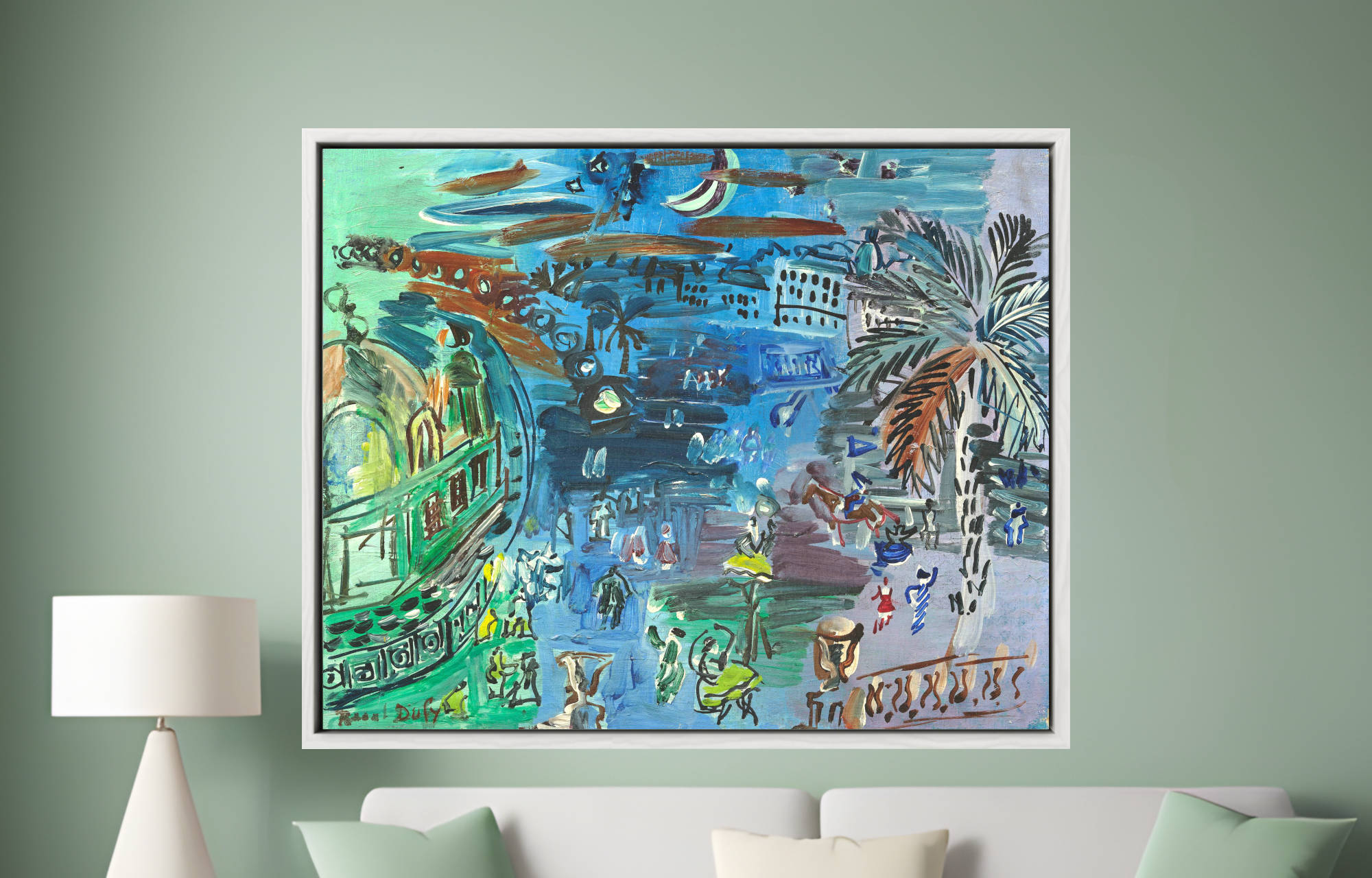
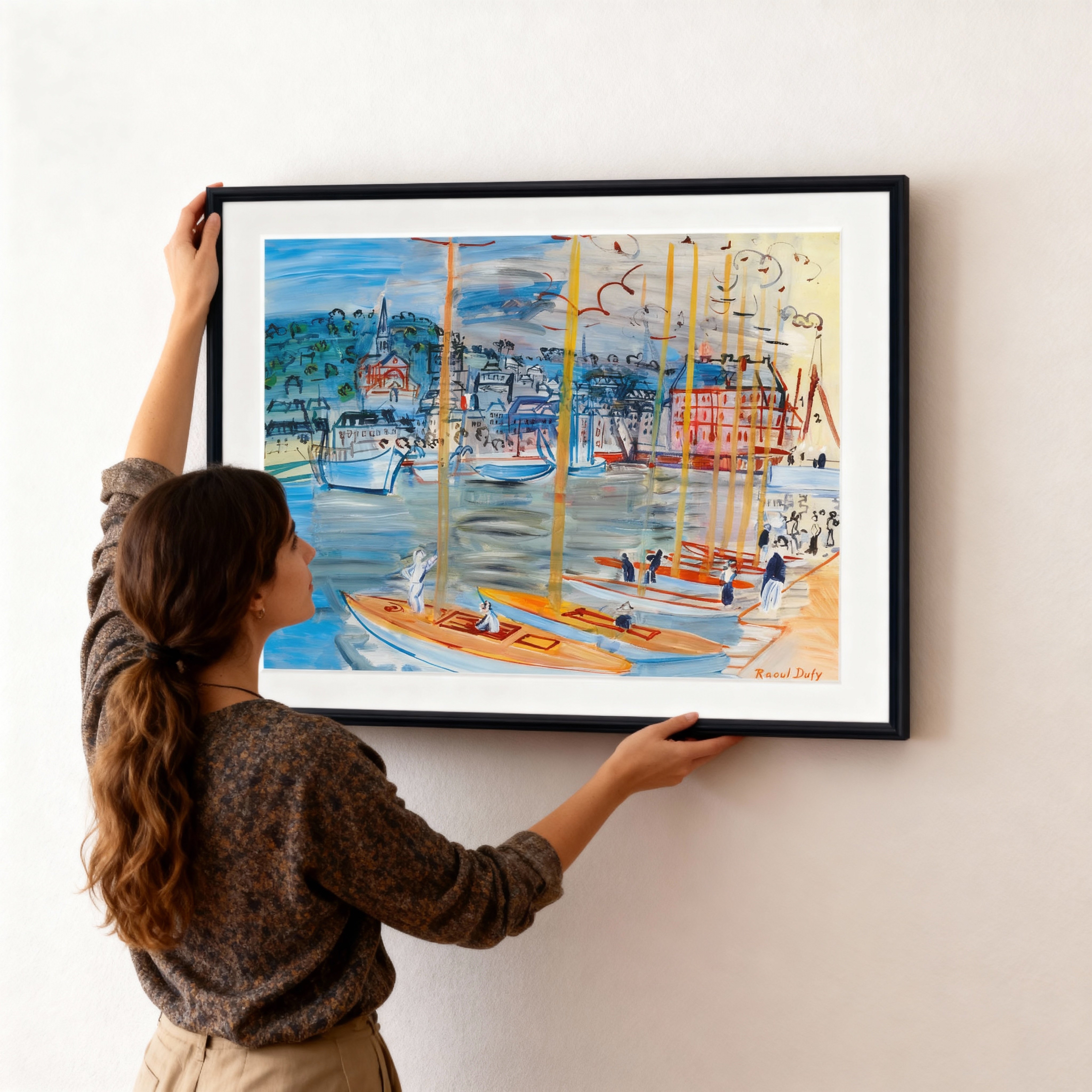
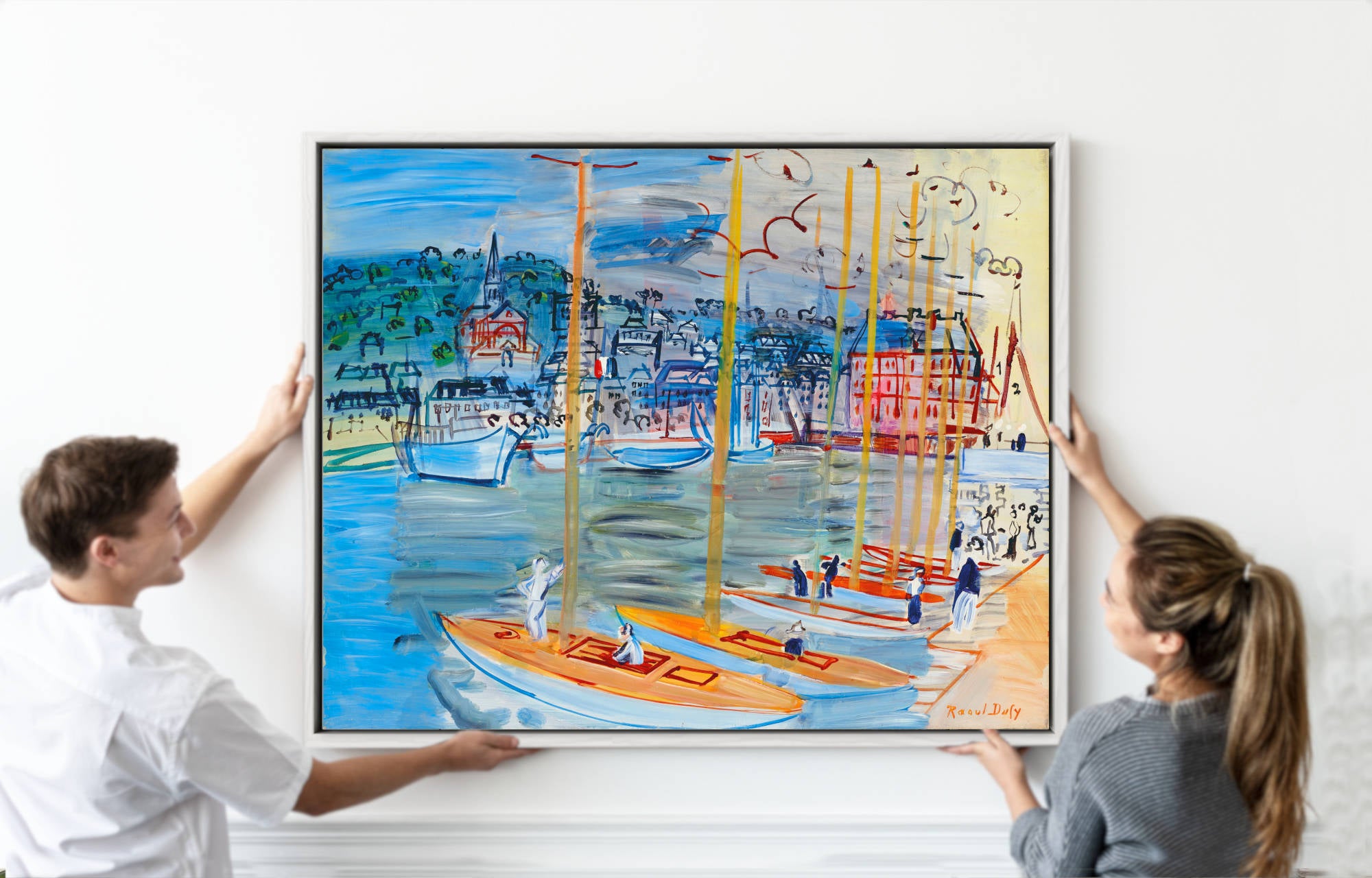
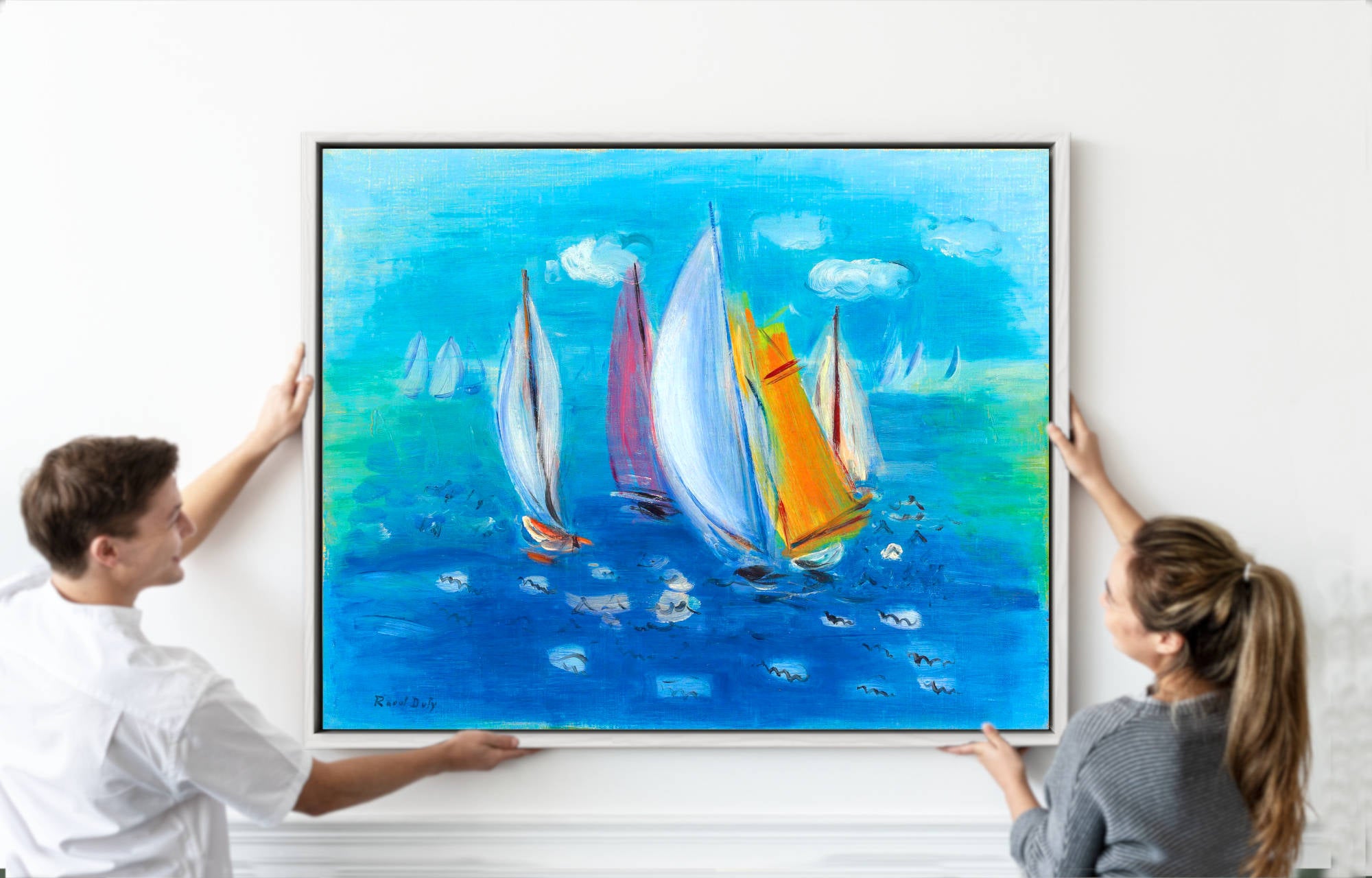
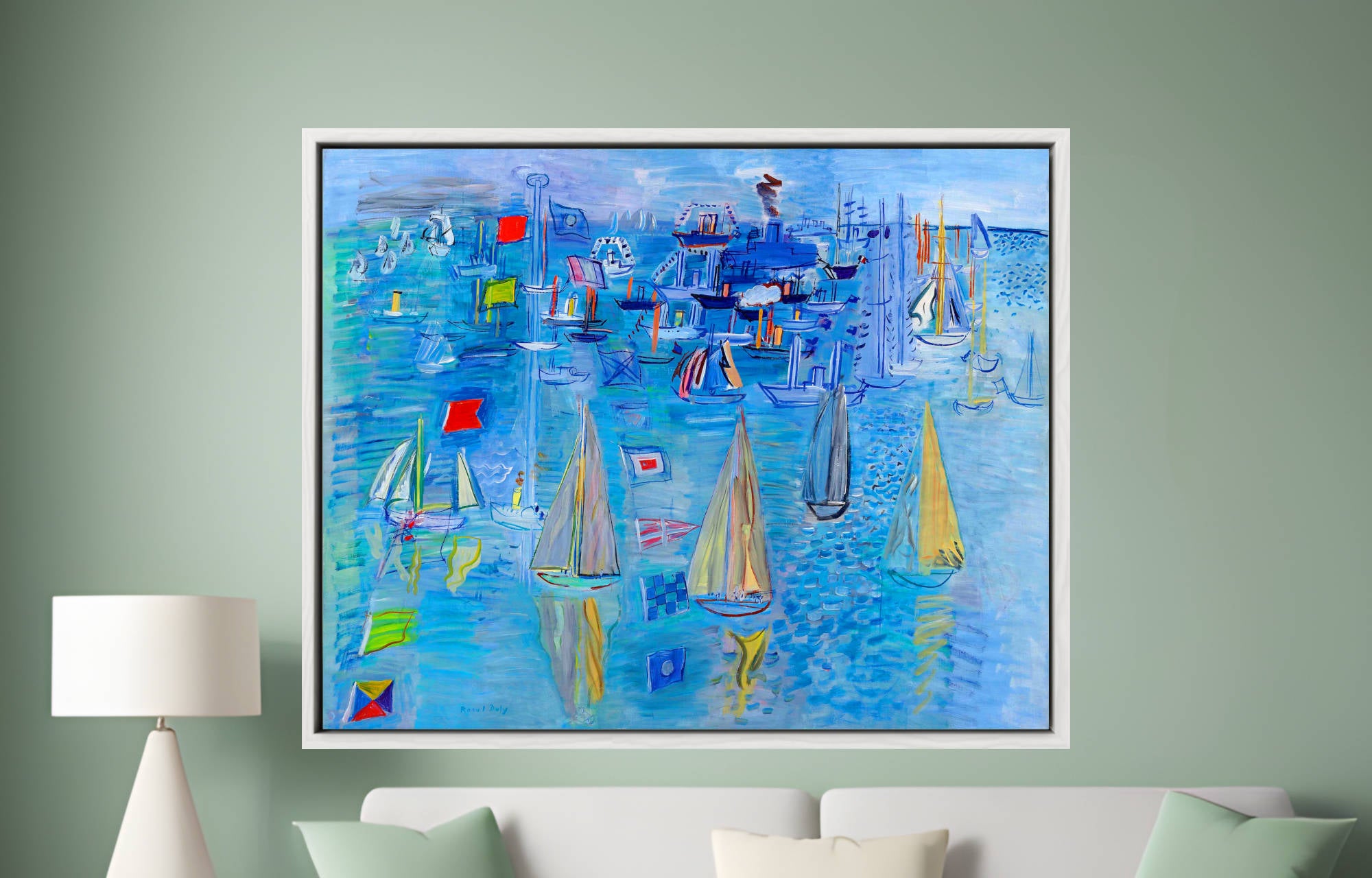
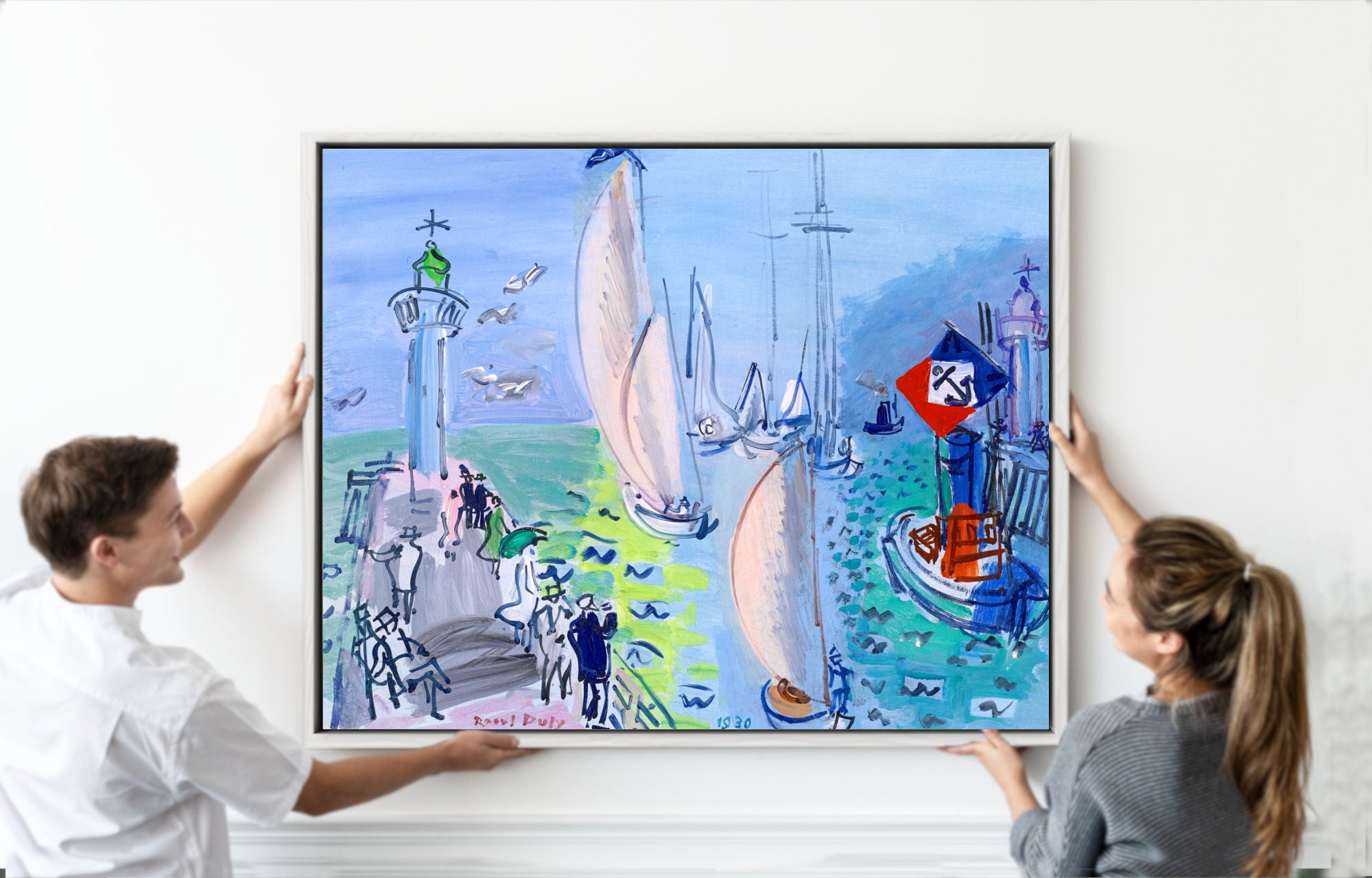
Its compact horizontal composition is particularly effective above sofas, sideboards, console tables and beds, while the repetition of masts and sails creates enough visual movement to make the artwork a strong focal point.
The mixture of cooler and warmer colours allows the painting to complement a wide range of neutral wall colours, including white, cream, putty and pale grey.
Natural timber, Scandinavian-inspired furniture and contemporary interiors can work particularly well with Dufy's simplified shapes and airy palette.
The harbour subject also makes the work well suited to coastal interiors without giving the room the conventional appearance of traditional nautical decoration.
It can be displayed effectively in living rooms, dining rooms, bedrooms, hallways, home offices and holiday properties.
For admirers of Dufy and Fauvism, the painting has additional appeal because it captures the moment when the artist's mastery of pure colour and rhythmic line was beginning to develop into the distinctive language of his mature career.
Frequently Asked Questions
When did Raoul Dufy paint Sailboats and Boats in the Harbor?
Dufy painted Sailboats and Boats in the Harbor in 1907 during his important Fauvist period.
What is the original French title?
The French title is Voiliers et barques dans le port.
What does the painting depict?
The work depicts sailing boats and smaller vessels closely grouped within a fishing harbour. Dufy concentrates on sails, hulls and masts rather than presenting an expansive panoramic view.
Where was Sailboats and Boats in the Harbor painted?
The precise harbour has not been definitively identified. The work dates from the summer of 1907, when Dufy was painting the Normandy coast around Le Havre and Sainte-Adresse with Albert Marquet.
Is Sailboats and Boats in the Harbor a Fauvist painting?
Yes. It was painted during Dufy's Fauvist period and displays the brilliant colour, simplified forms and freedom from traditional modelling associated with the movement.
Why are the boats framed so tightly?
Dufy concentrates attention on the vessels themselves, allowing sails, hulls and masts to create the structure of the composition. This reduces conventional landscape space and strengthens the painting's decorative quality.
Why are the masts important in the composition?
The vertical masts interrupt the flatter horizontal areas of boats and water, helping create visual depth and rhythm without relying heavily on conventional perspective.
What medium did Raoul Dufy use?
The original was created in oil with traces of ink on canvas.
What size is the original painting?
The original measures approximately 54 × 65 cm.
Was Albert Marquet working with Dufy in 1907?
Yes. Dufy and Albert Marquet worked together along the Normandy coast during the summer of 1907, painting around Le Havre and Sainte-Adresse.
Why were harbour scenes important to Raoul Dufy?
Dufy was born in Le Havre and grew up surrounded by maritime life. Fishing boats, sailing vessels, beaches and harbours therefore remained natural subjects throughout his career.
How does this painting anticipate Dufy's later style?
The curved sails, strong vertical masts and lightly applied areas of pure colour anticipate the fluid linear rhythms and separation of drawing and colour that became characteristic of Dufy's mature work.
Is Sailboats and Boats in the Harbor available as a framed Raoul Dufy print?
Yes. GalleryThane offers Sailboats and Boats in the Harbor (1907) in a choice of sizes and formats, including fine art paper prints, framed prints and canvas options.
Where would this Raoul Dufy harbour print work well?
Its horizontal composition and colourful maritime subject make it particularly suitable for living rooms, dining rooms, bedrooms, hallways, offices and coastal interiors, especially contemporary and Scandinavian-inspired spaces.
All orders for unframed fine art prints and original paintings are dispatched within 2 working days of receipt of payment.
Orders for custom framed prints are dispatched within 4 working days.
All orders are fully tracked from dispatch to delivery at your home or business.
All print and original painting orders are fully insured against loss or damage in transit. We refund or replace any damaged or lost orders.
Buy with confidence - read what our satisfied customers have to say - Reviews
Fine art papers are printed without any additional white border Please let us know at the time of ordering if you would like a small additional white border.
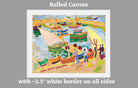
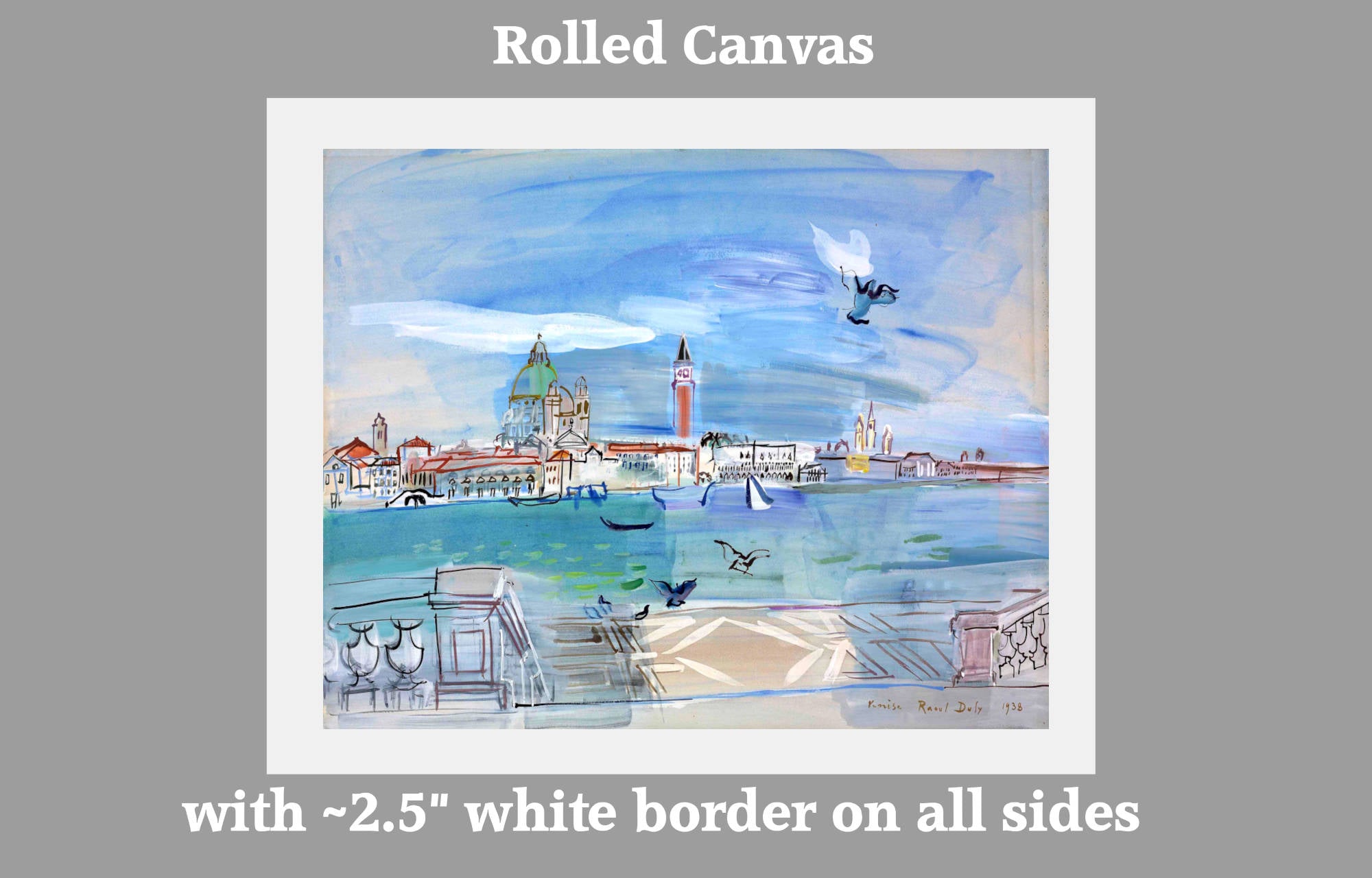
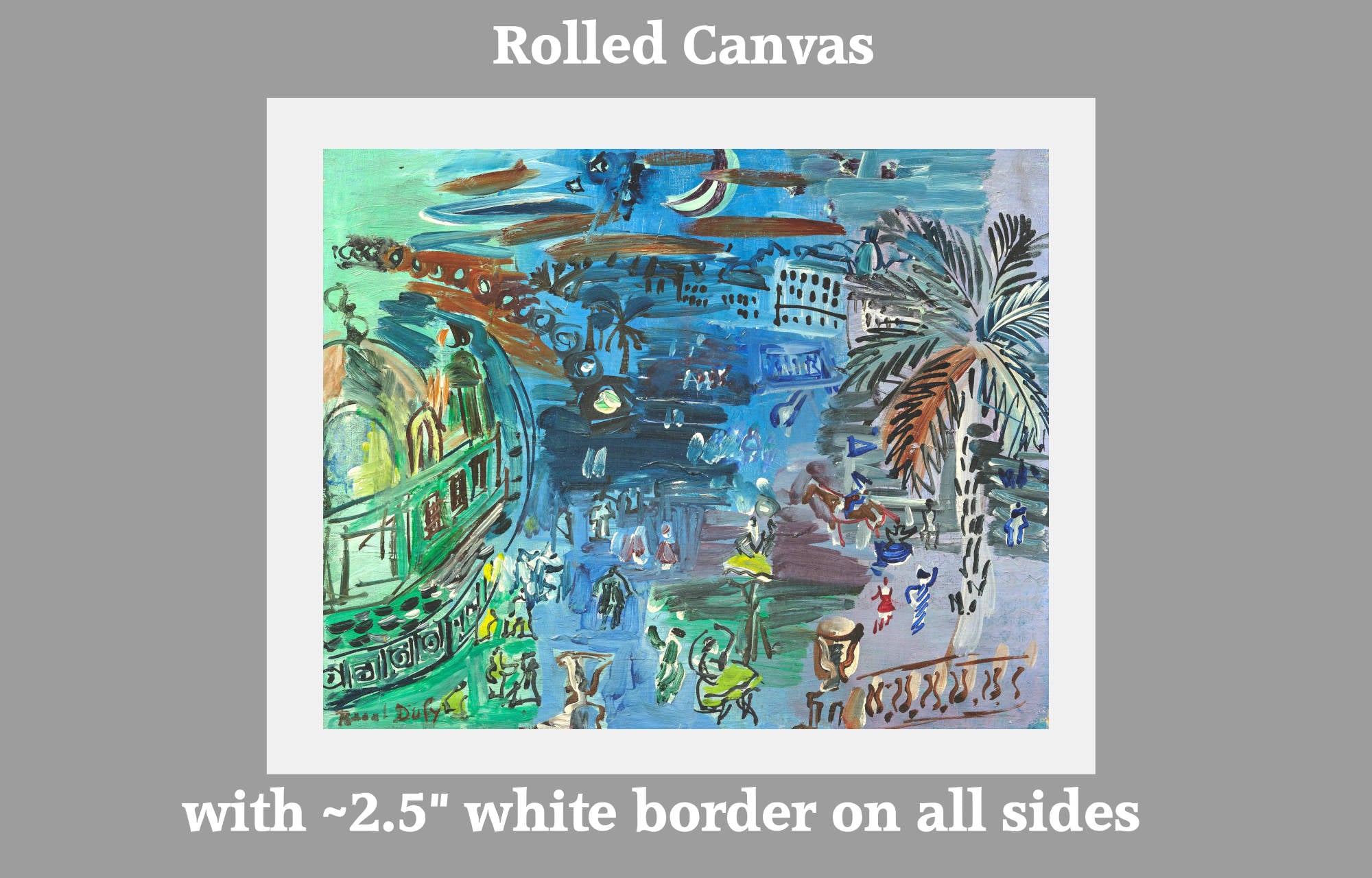
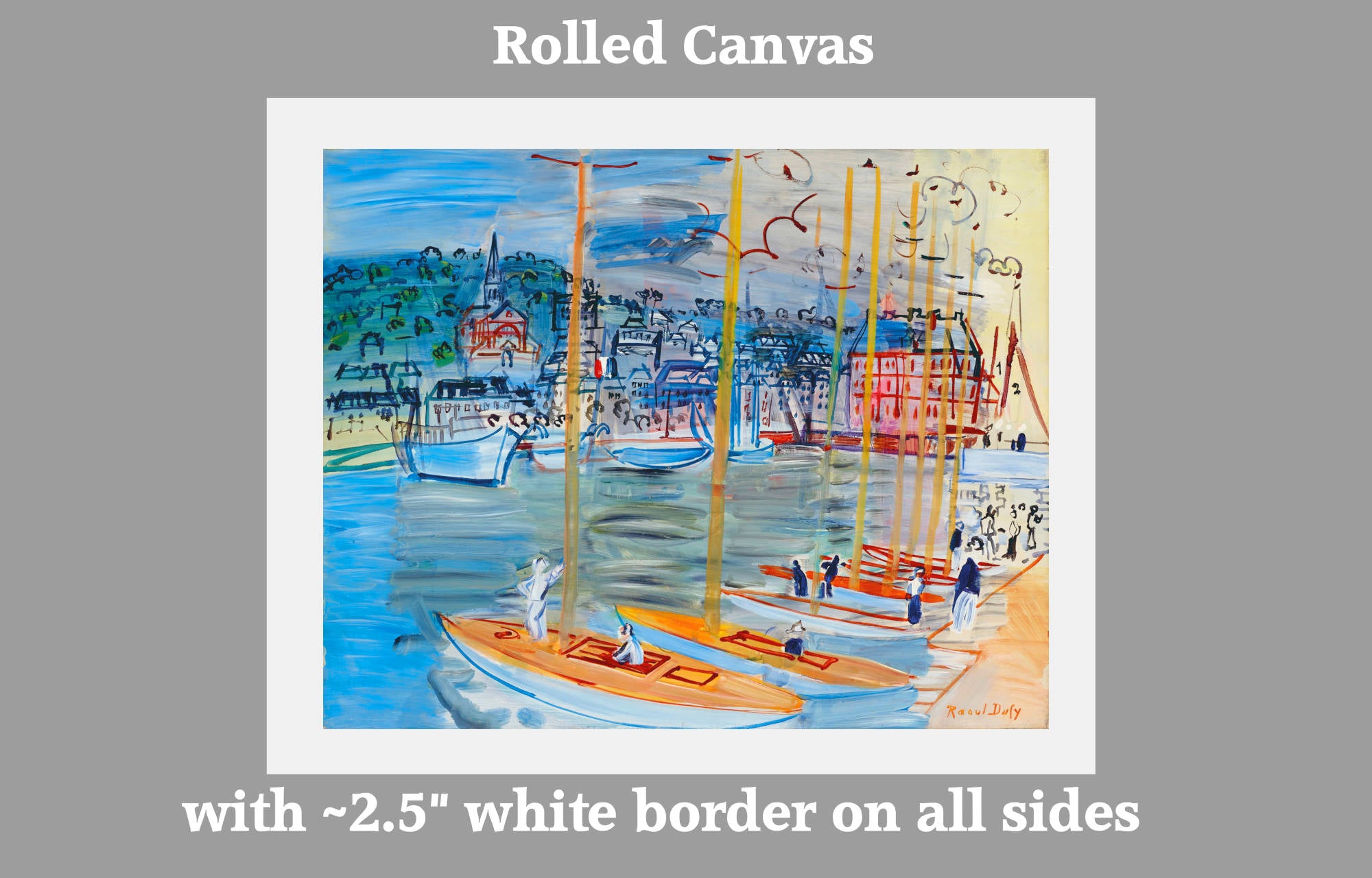
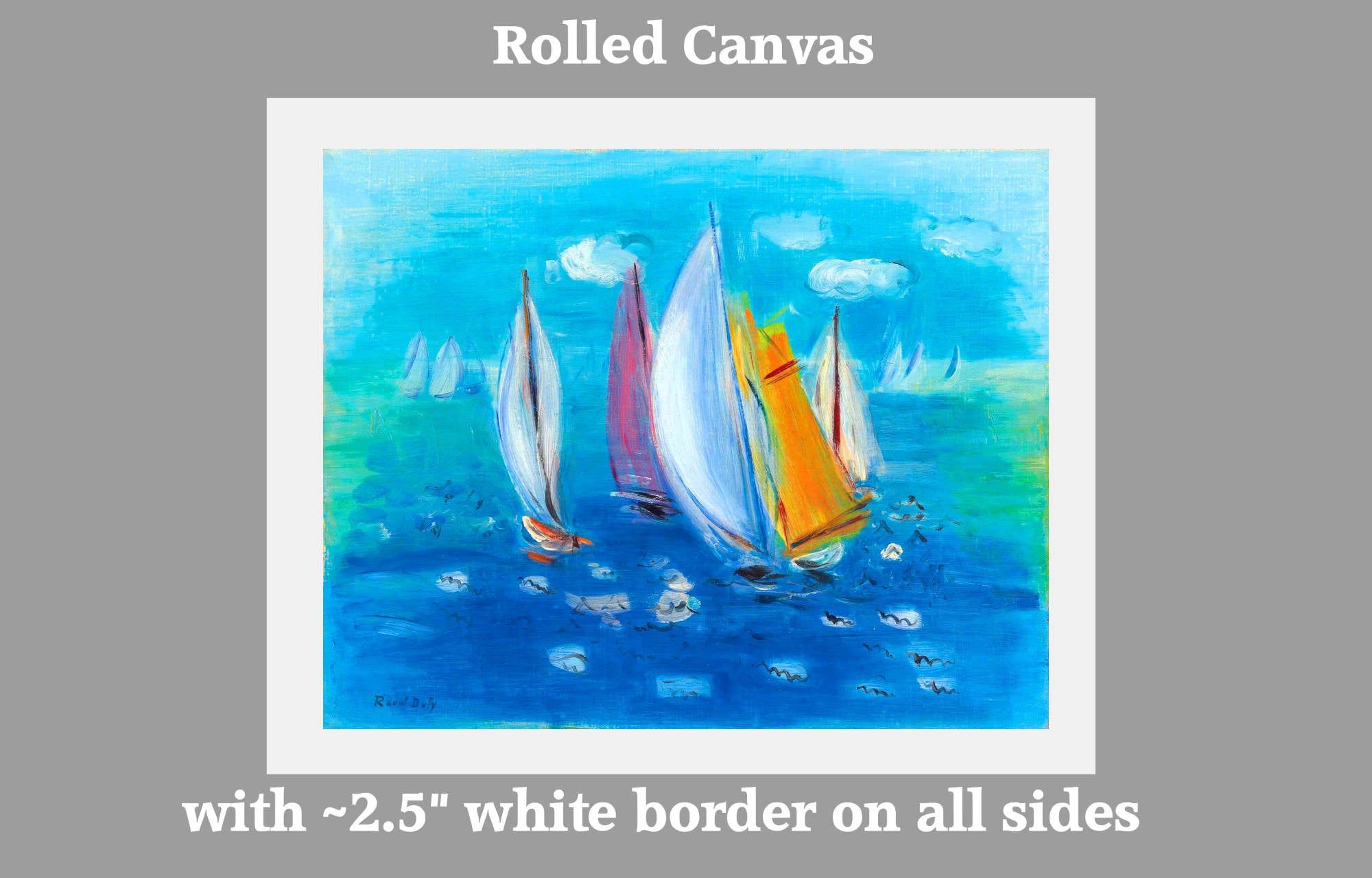
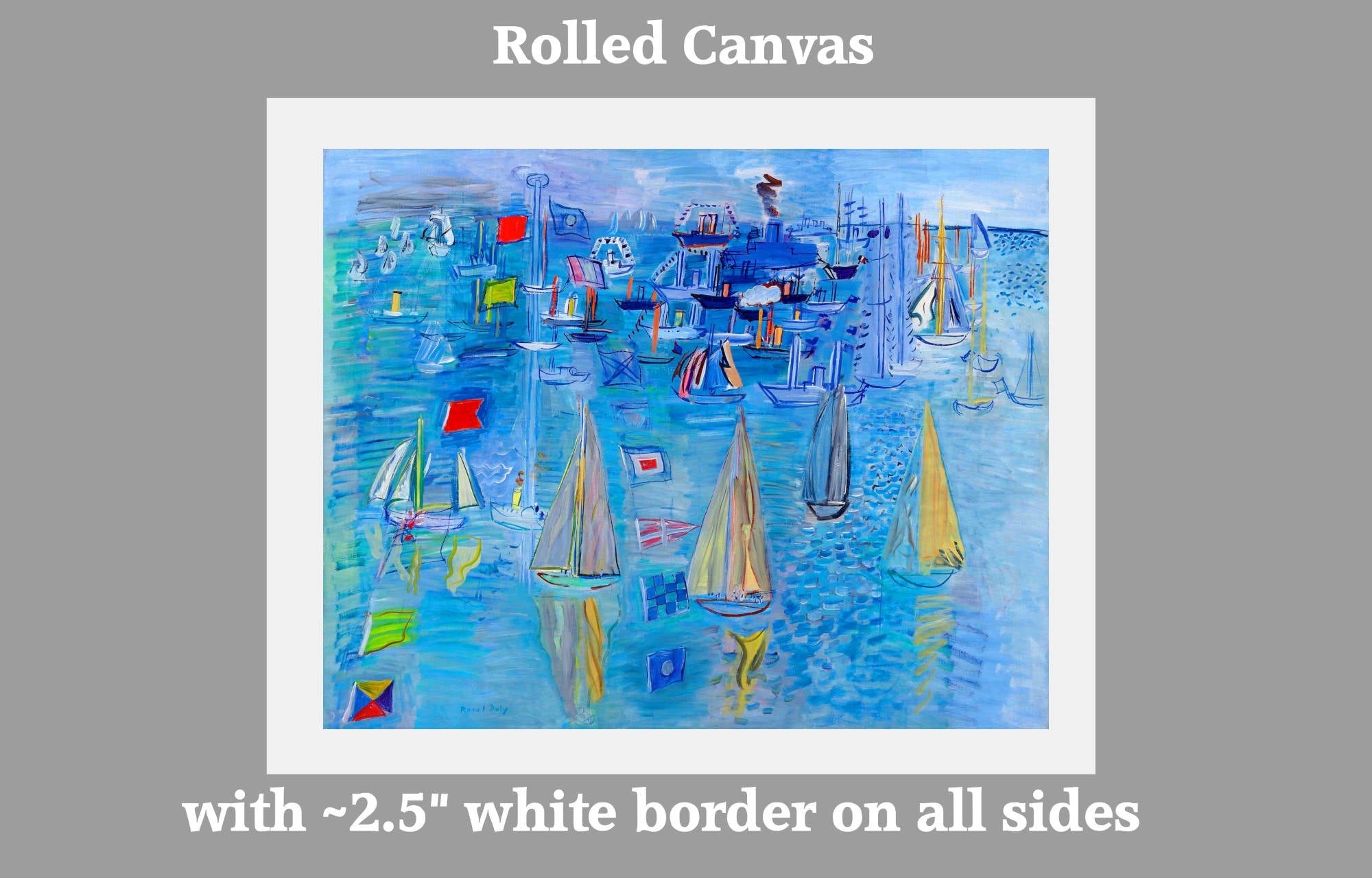
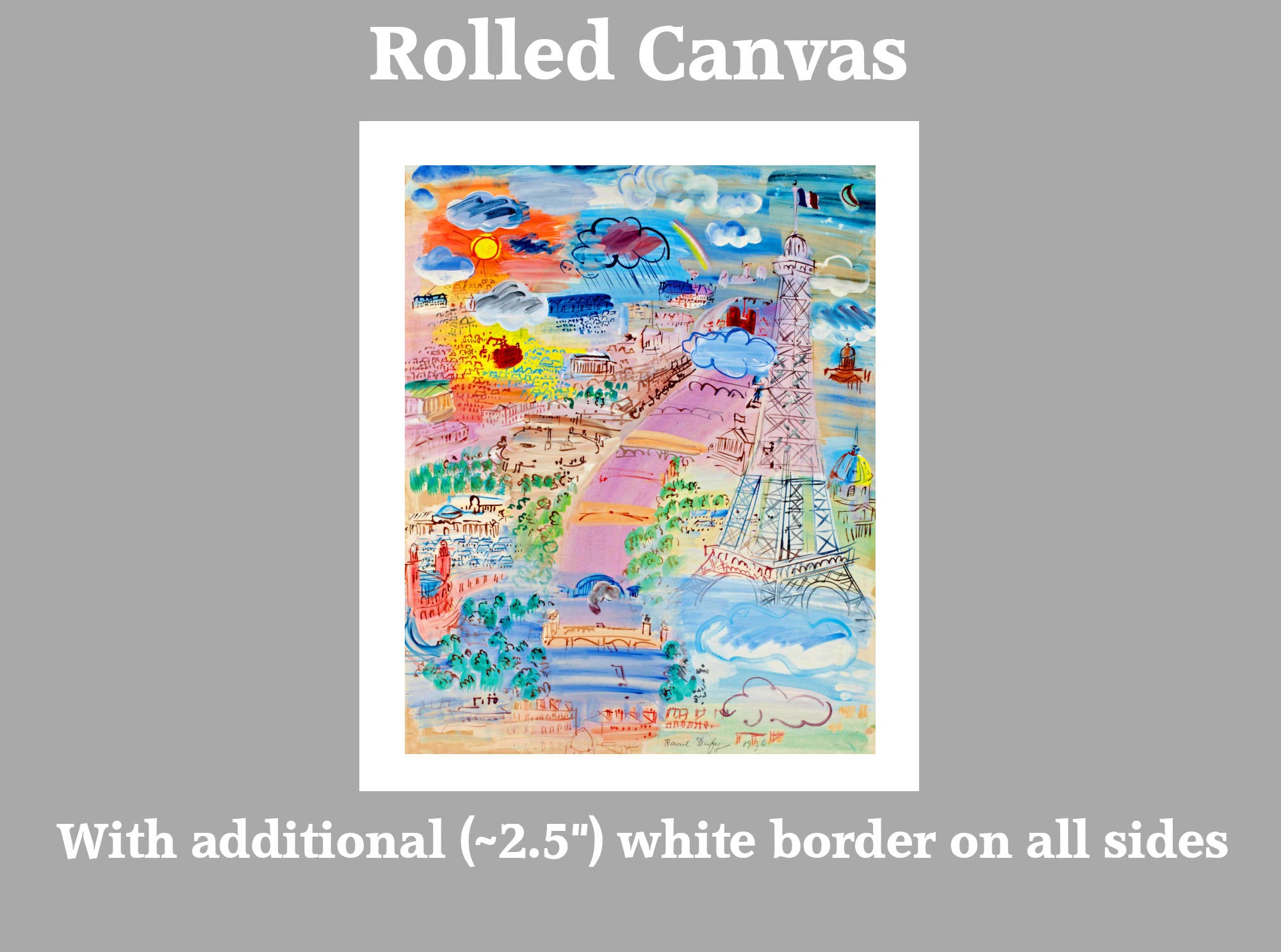
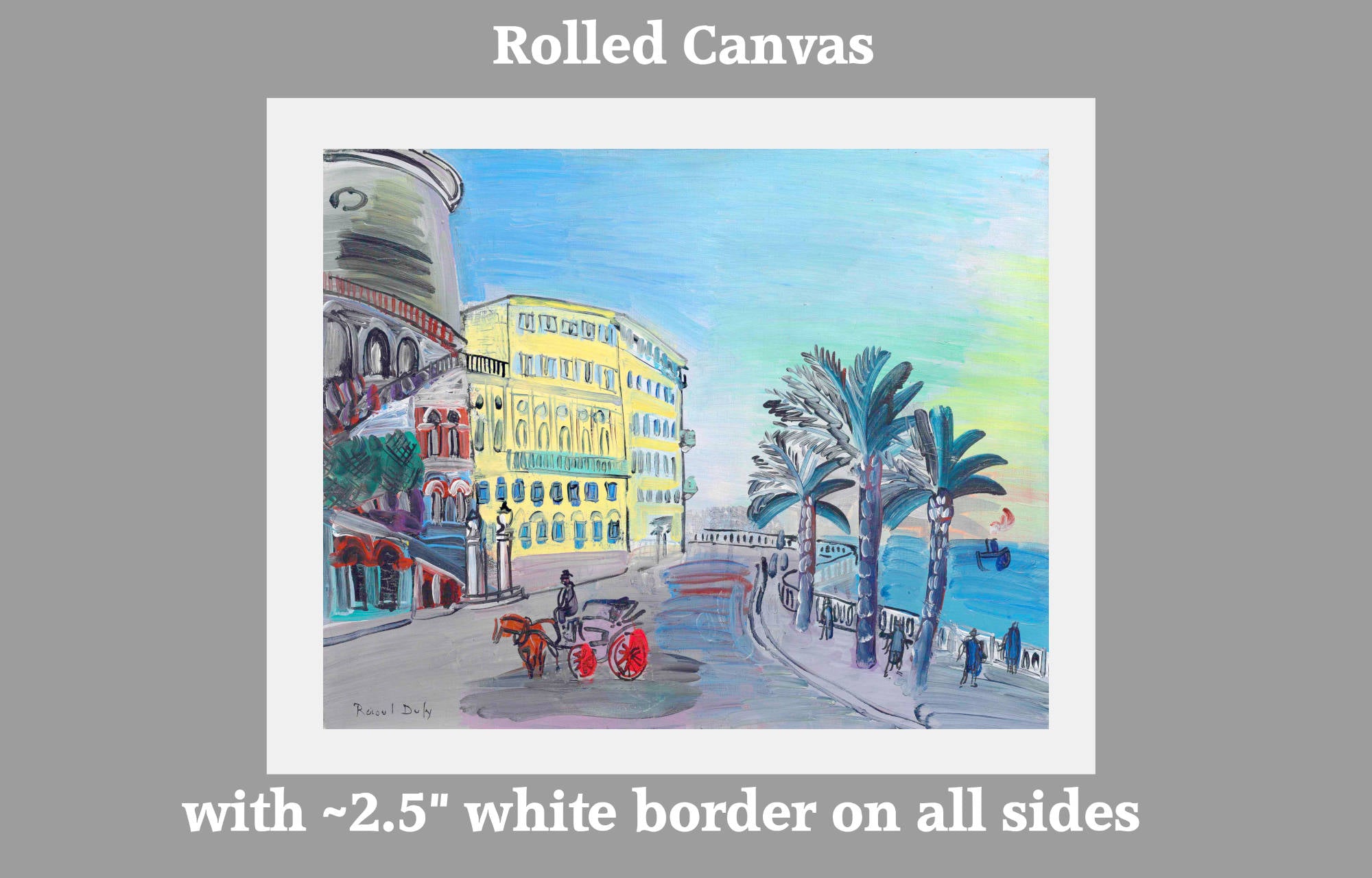
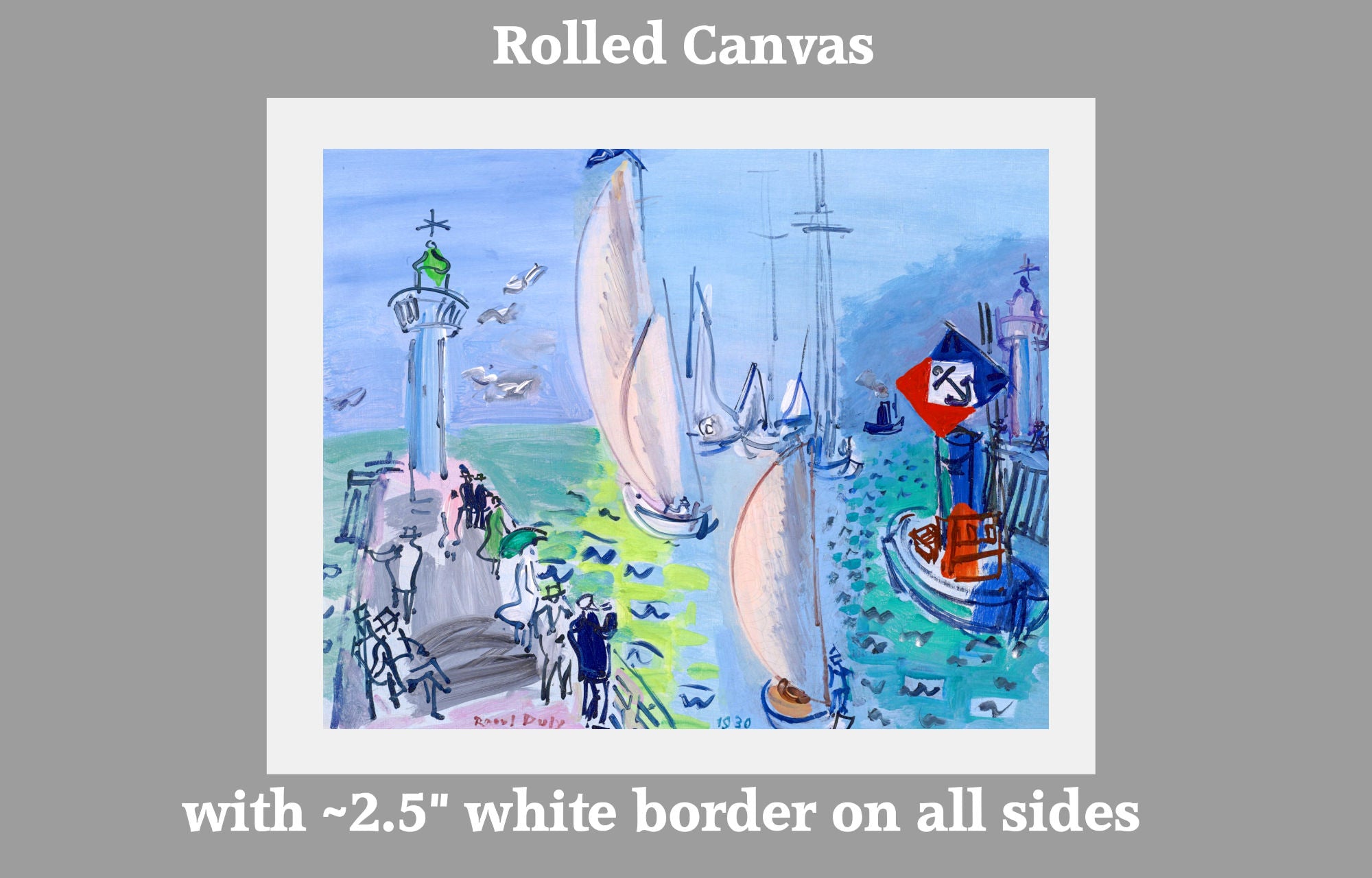
Rolled canvas options have an additional white border of approximately 2.5 inches (7cm) on all 4 sides to aid stretching.
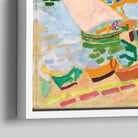
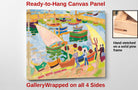
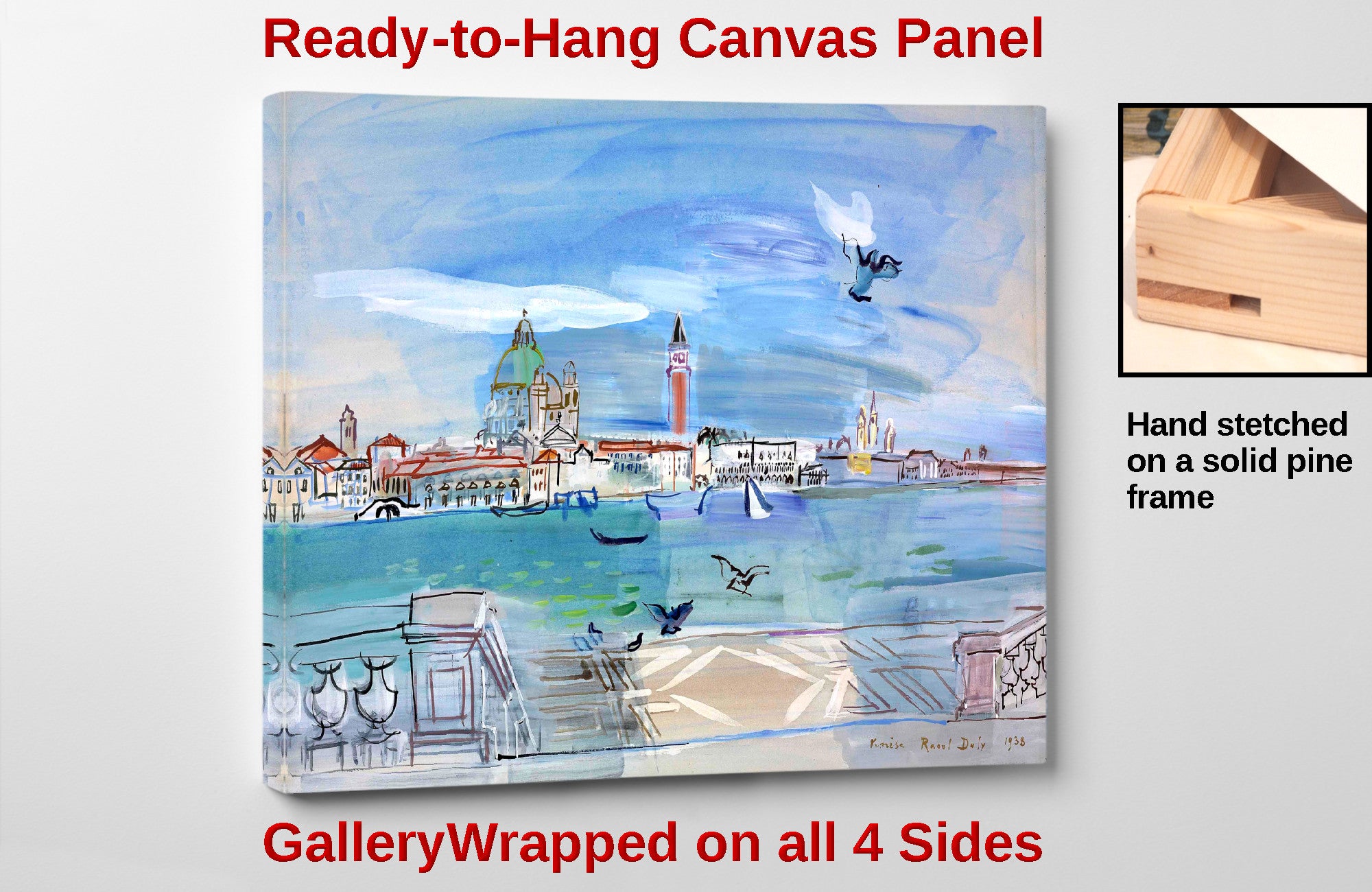
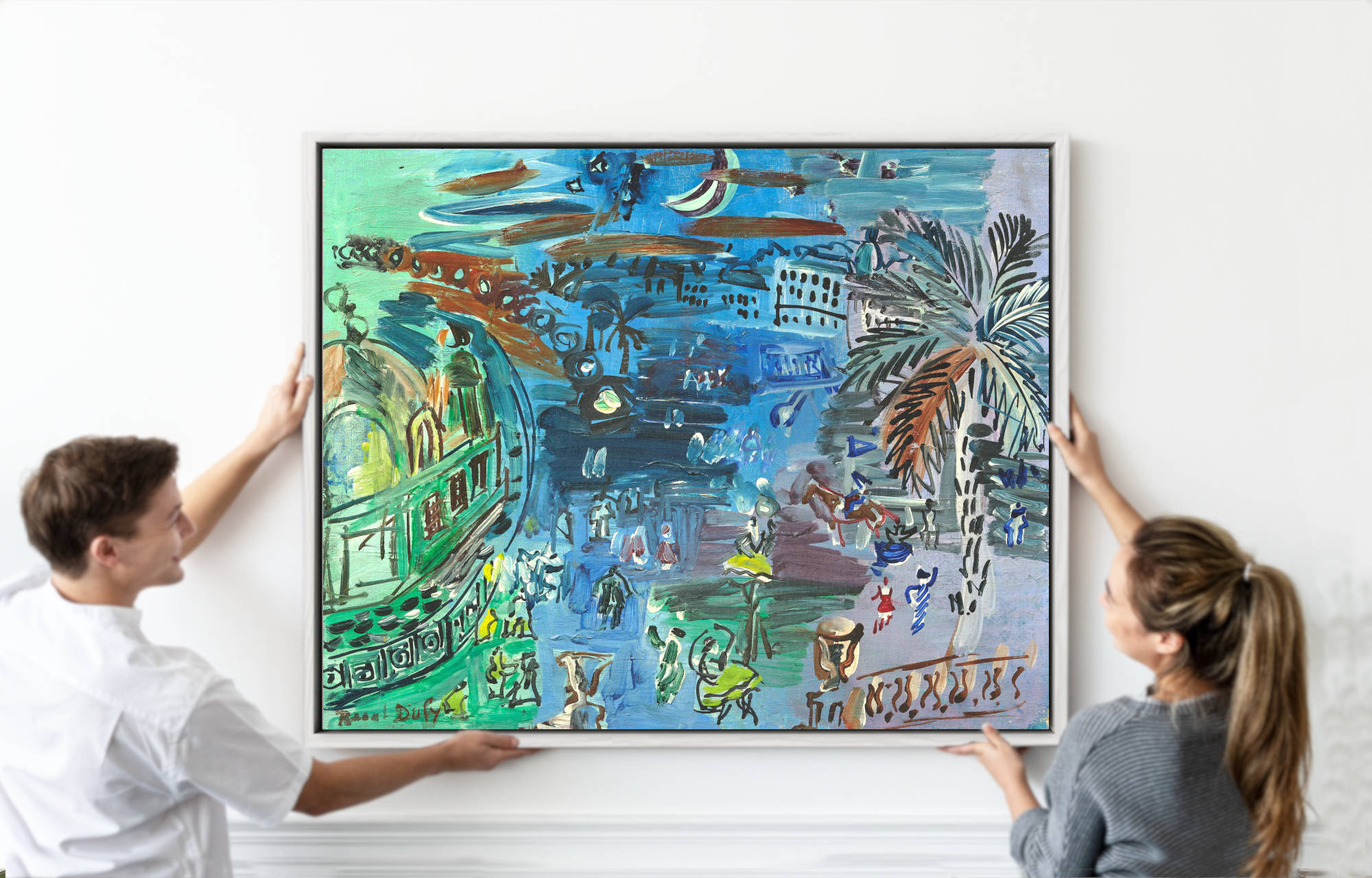
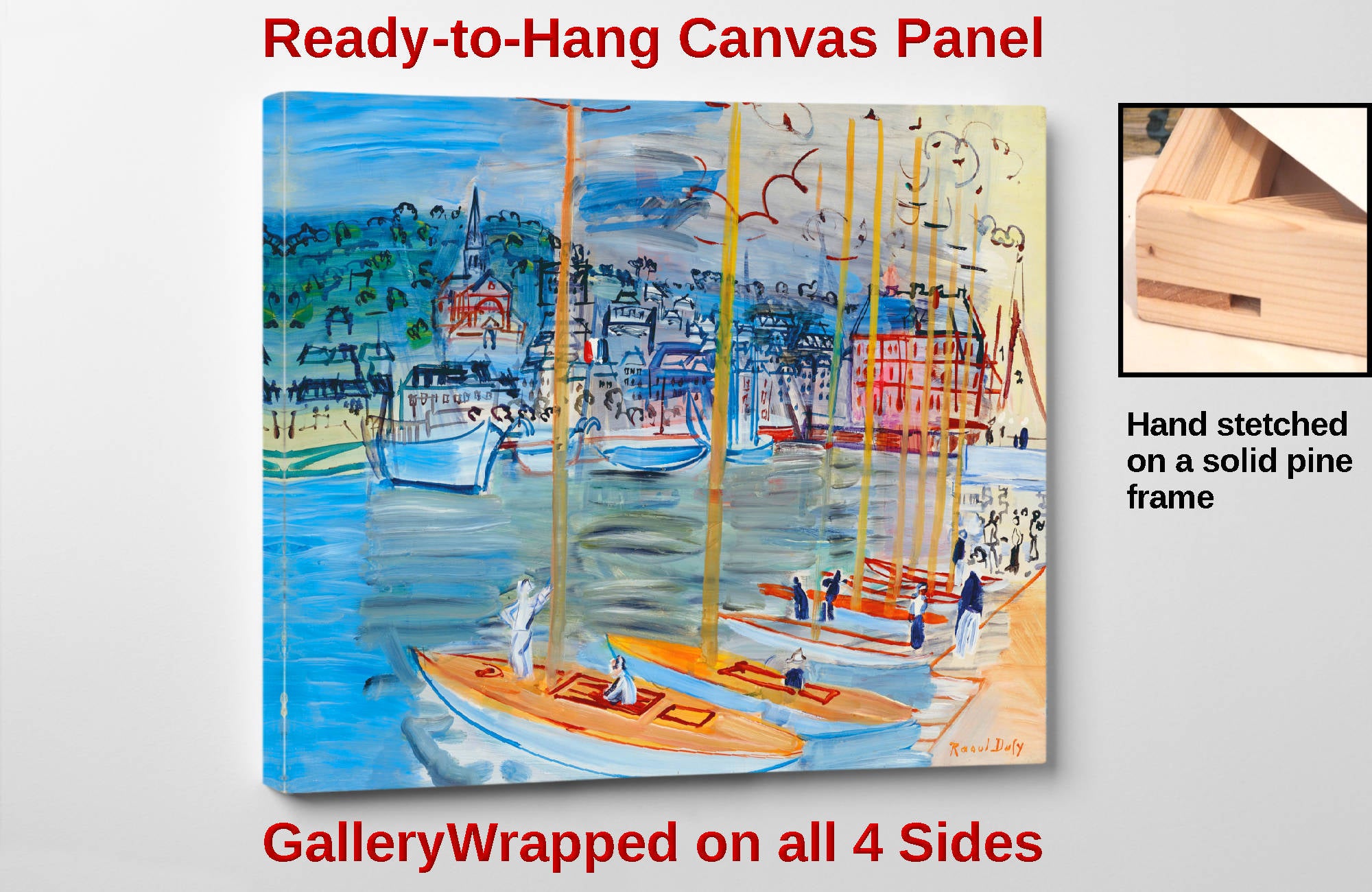
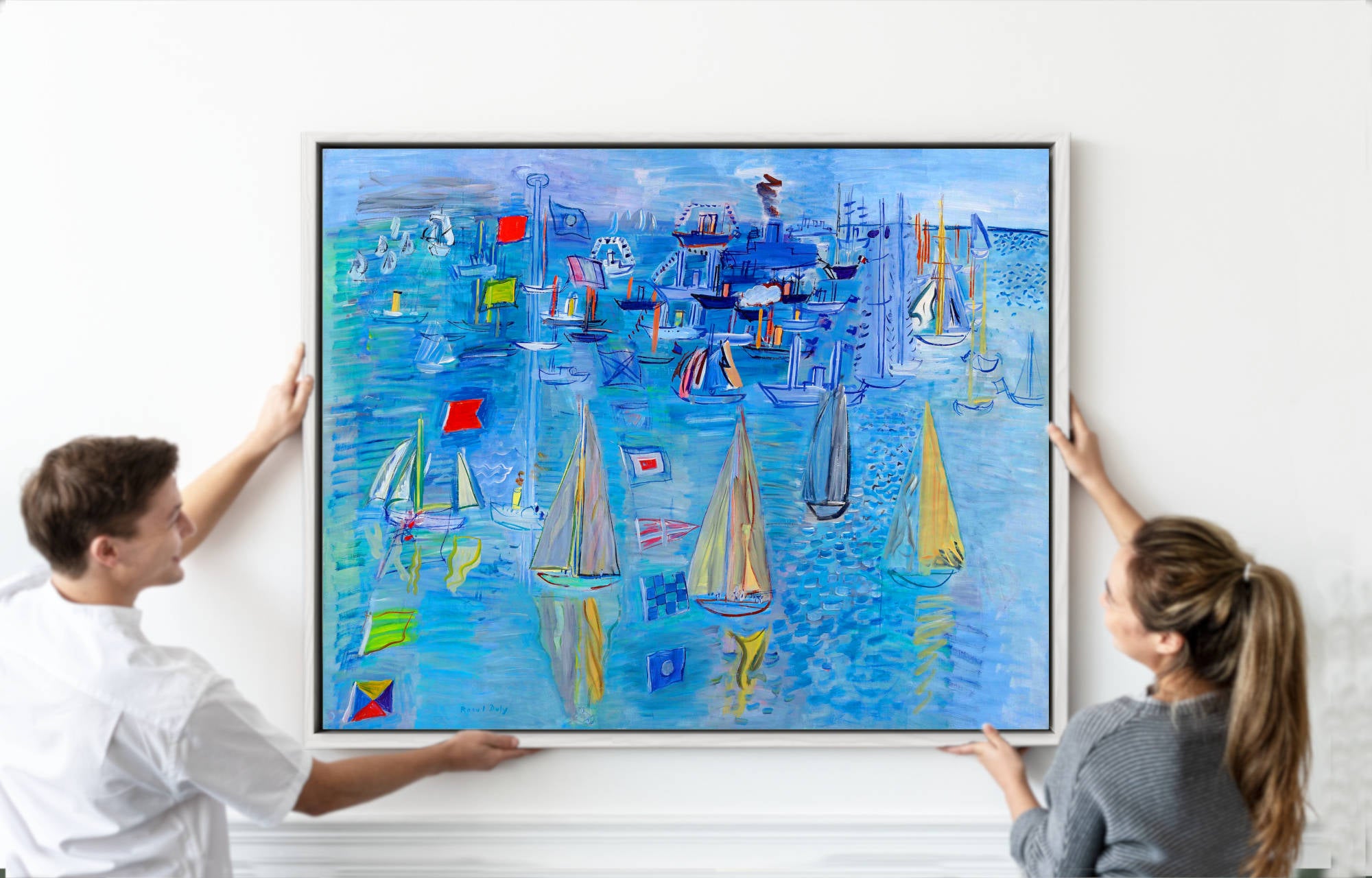
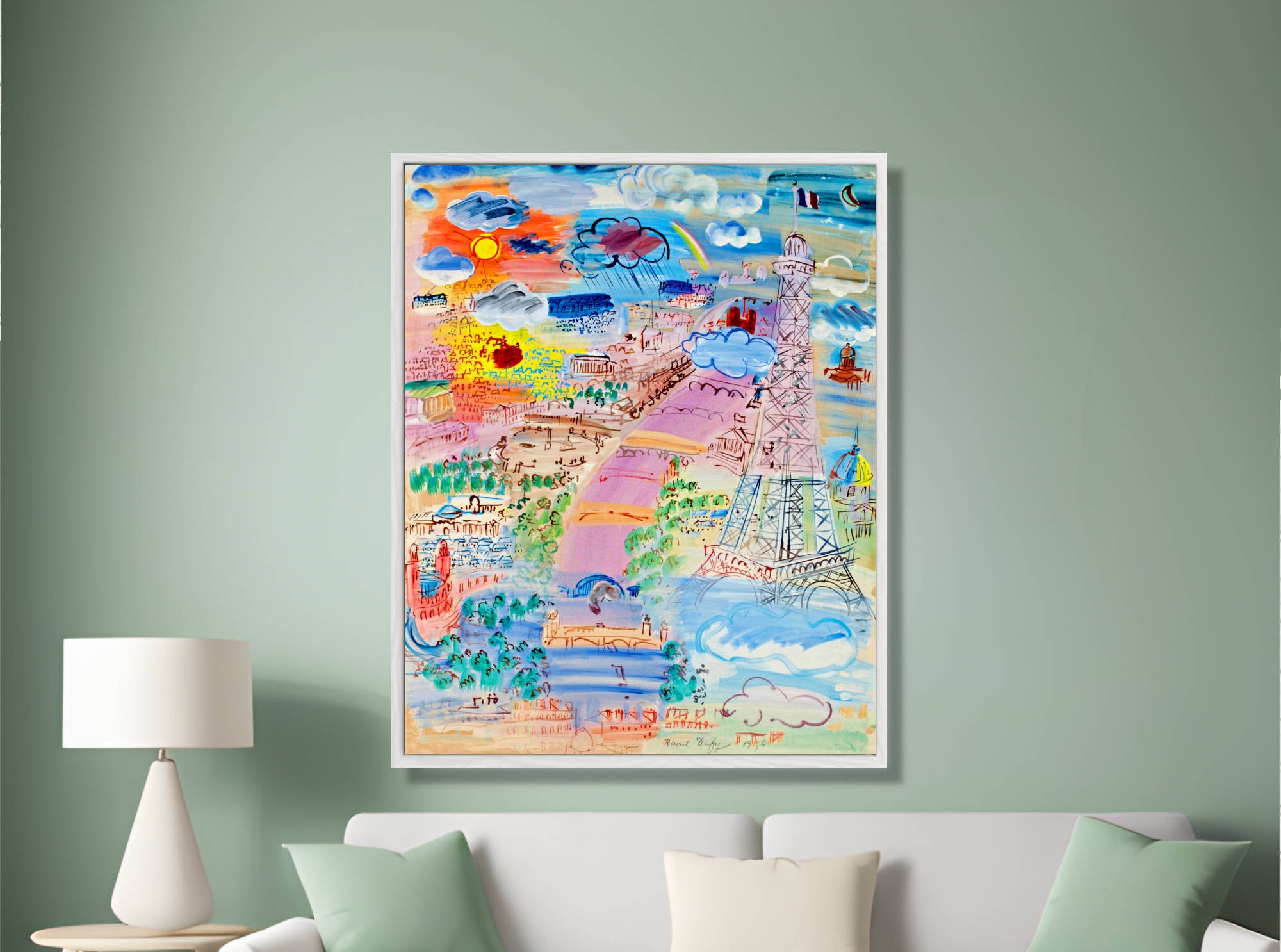
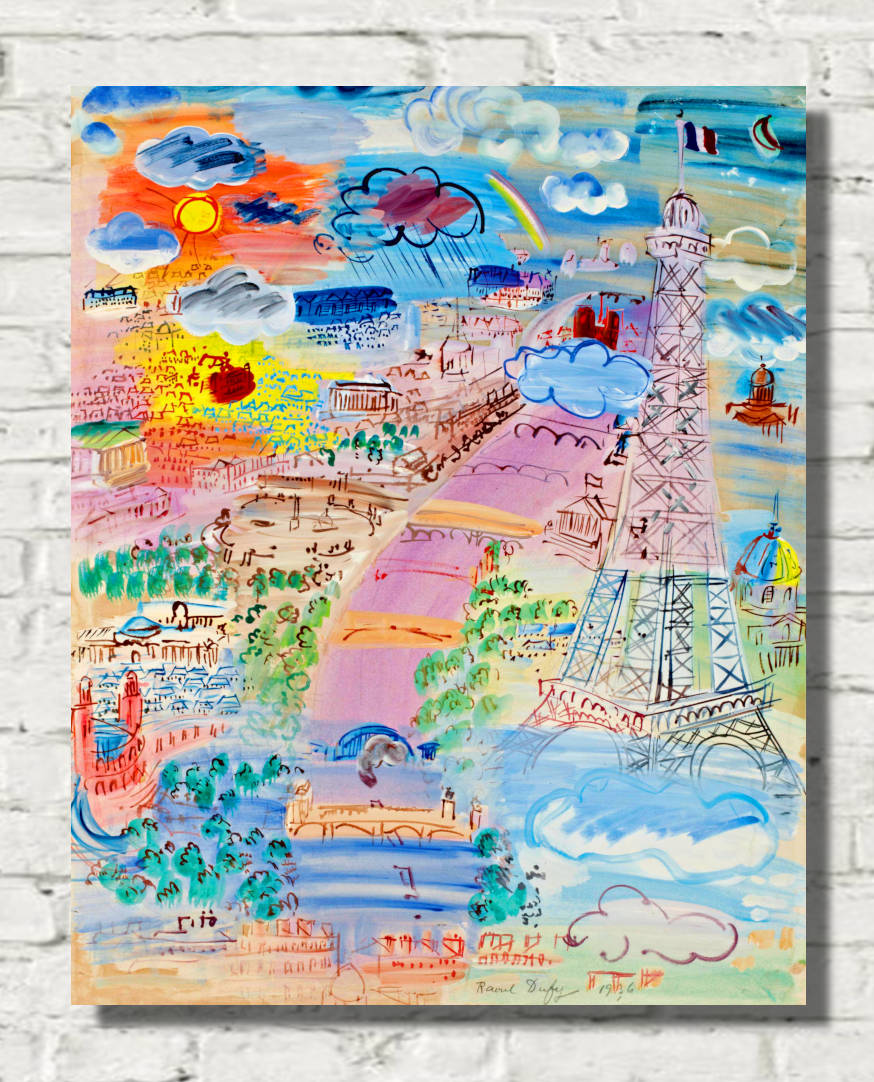
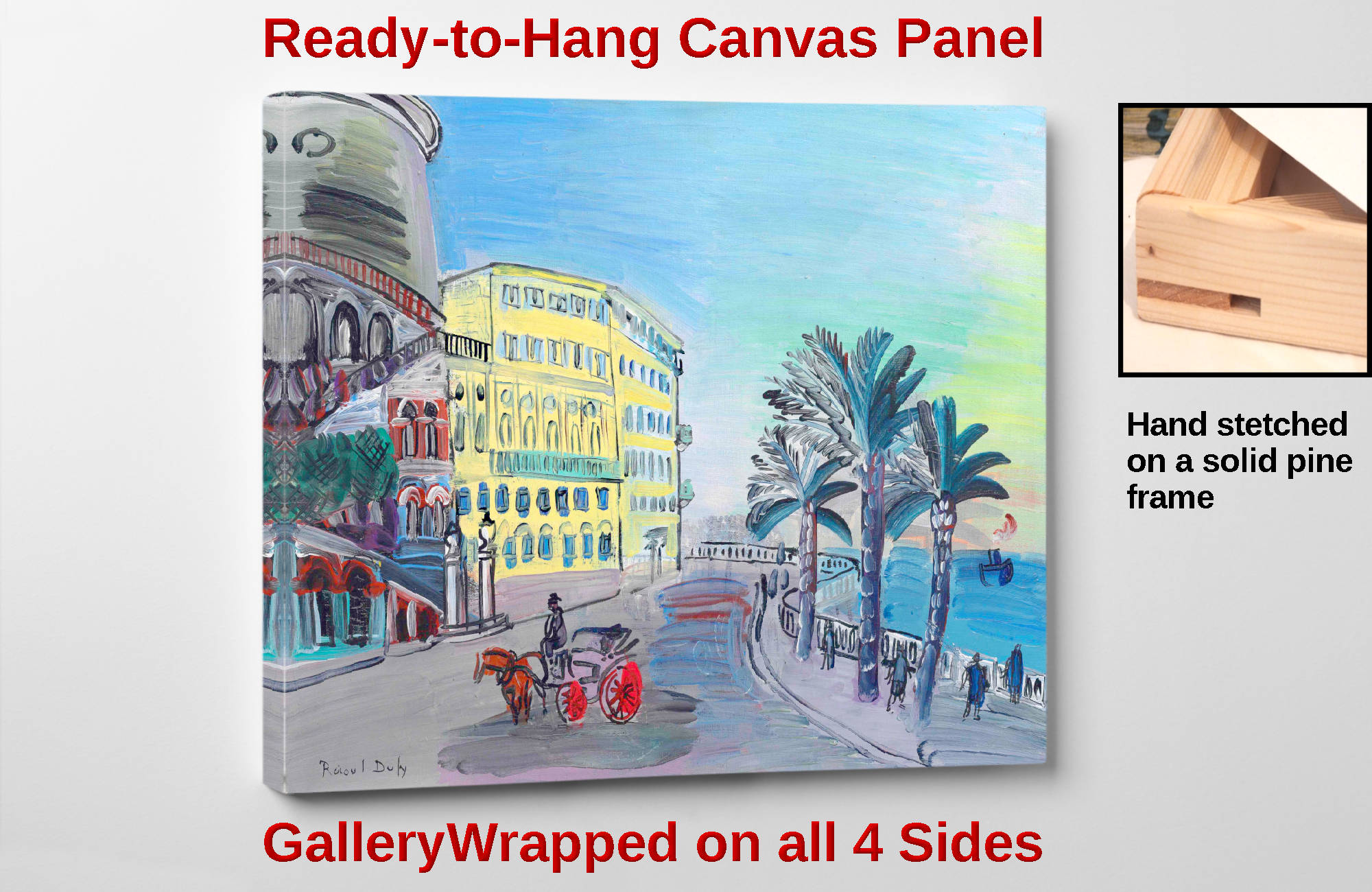
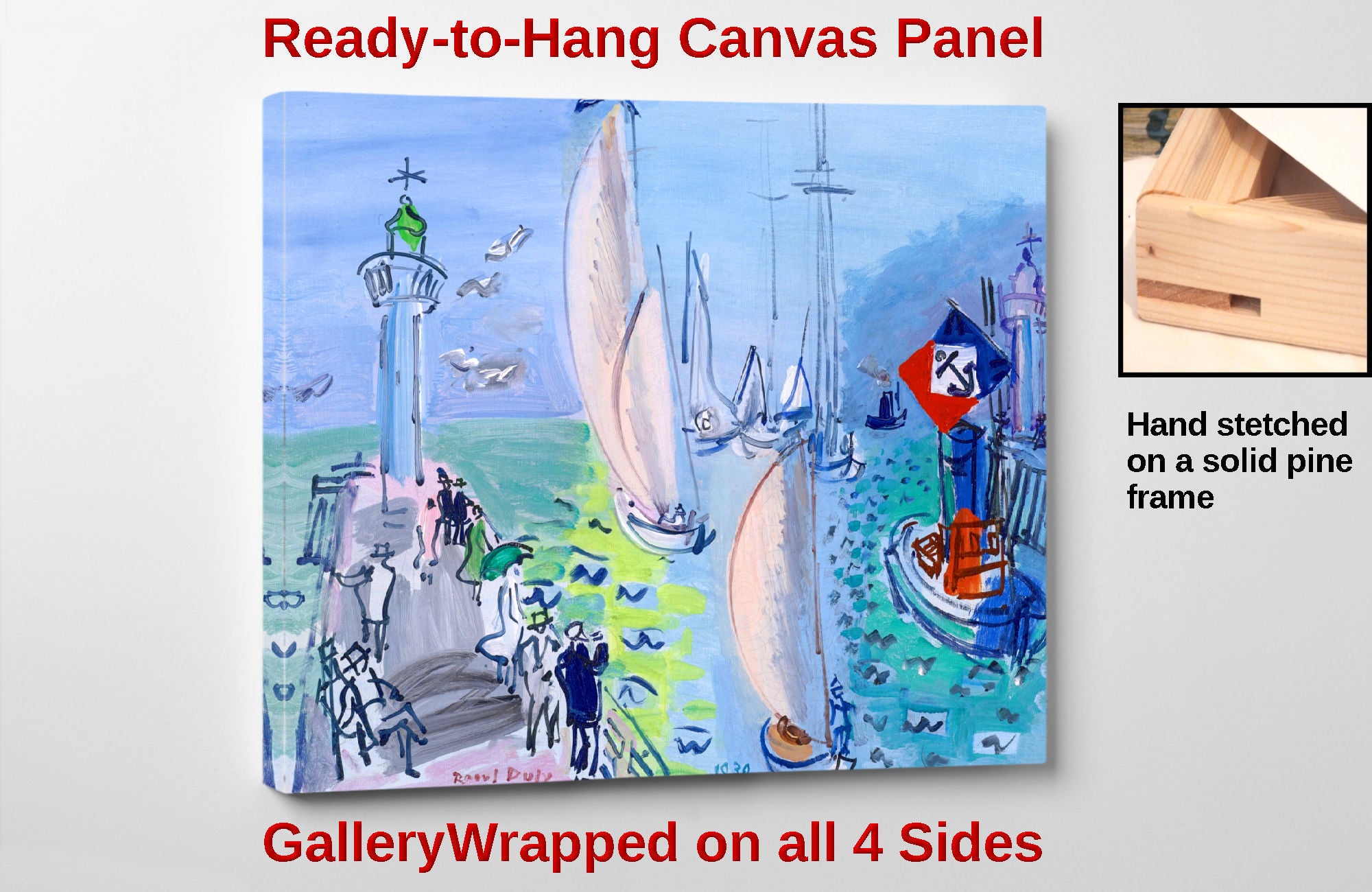
Ready to hang canvas panels are stretched on 1.5 inch deep solid pine frames from sustainable forestry sources. The image is mirrored on all 4 sides to give an aesthetically pleasing finish.
Why not have us gift wrap your order and attach a personalised message to the recipient. Available for all orders. Each order is hand wrapped in high quality gift wrap with meatllic ribbon and bow. Your personalised message is printed on a card which is included with your order.
Have your hand wrapped gift delivered directly to the recipient.
Full tracking and insurance included with every order.
Please note design may vary depending upon availability
Just purchase the gift wrap option HERE
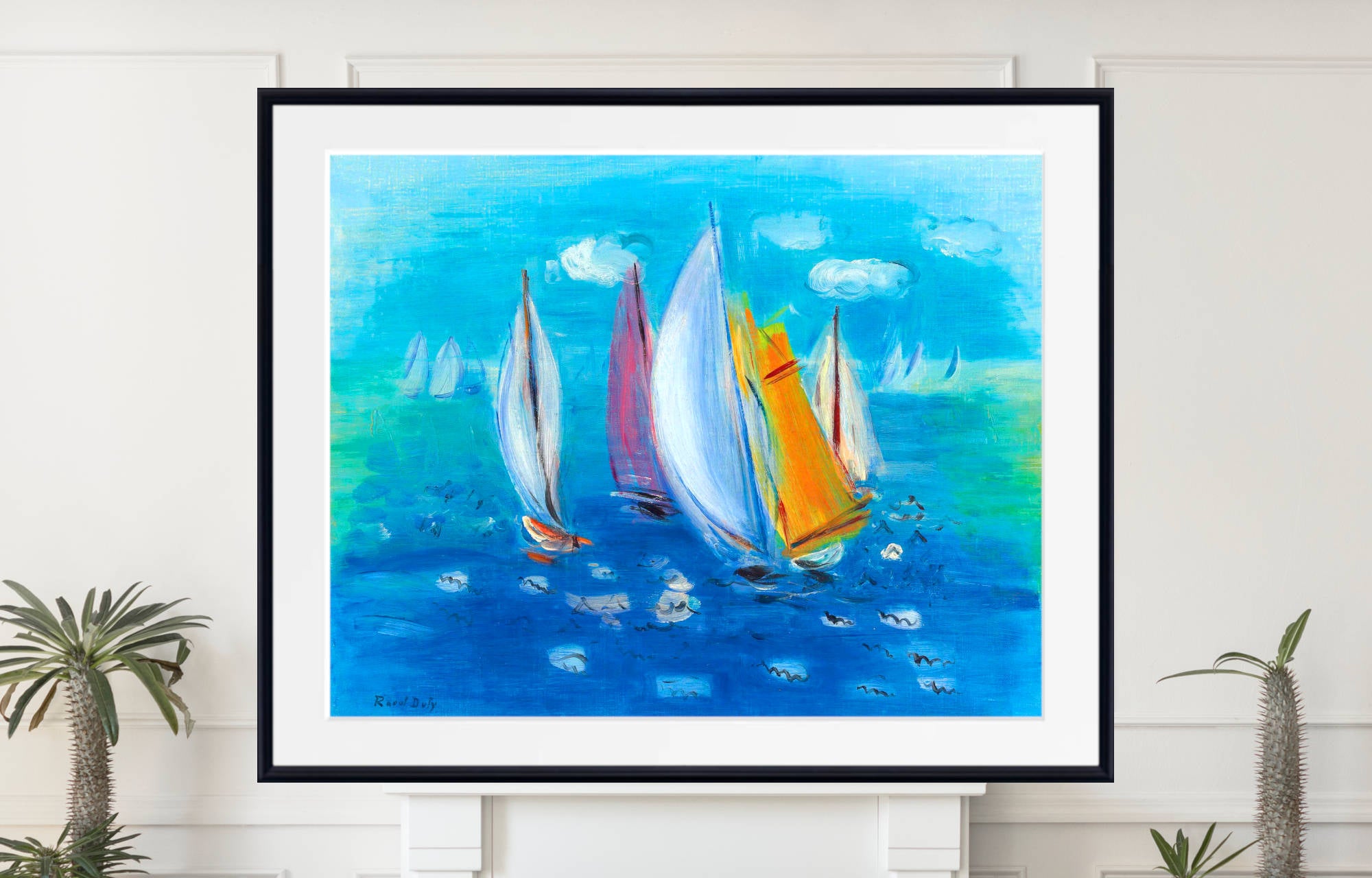
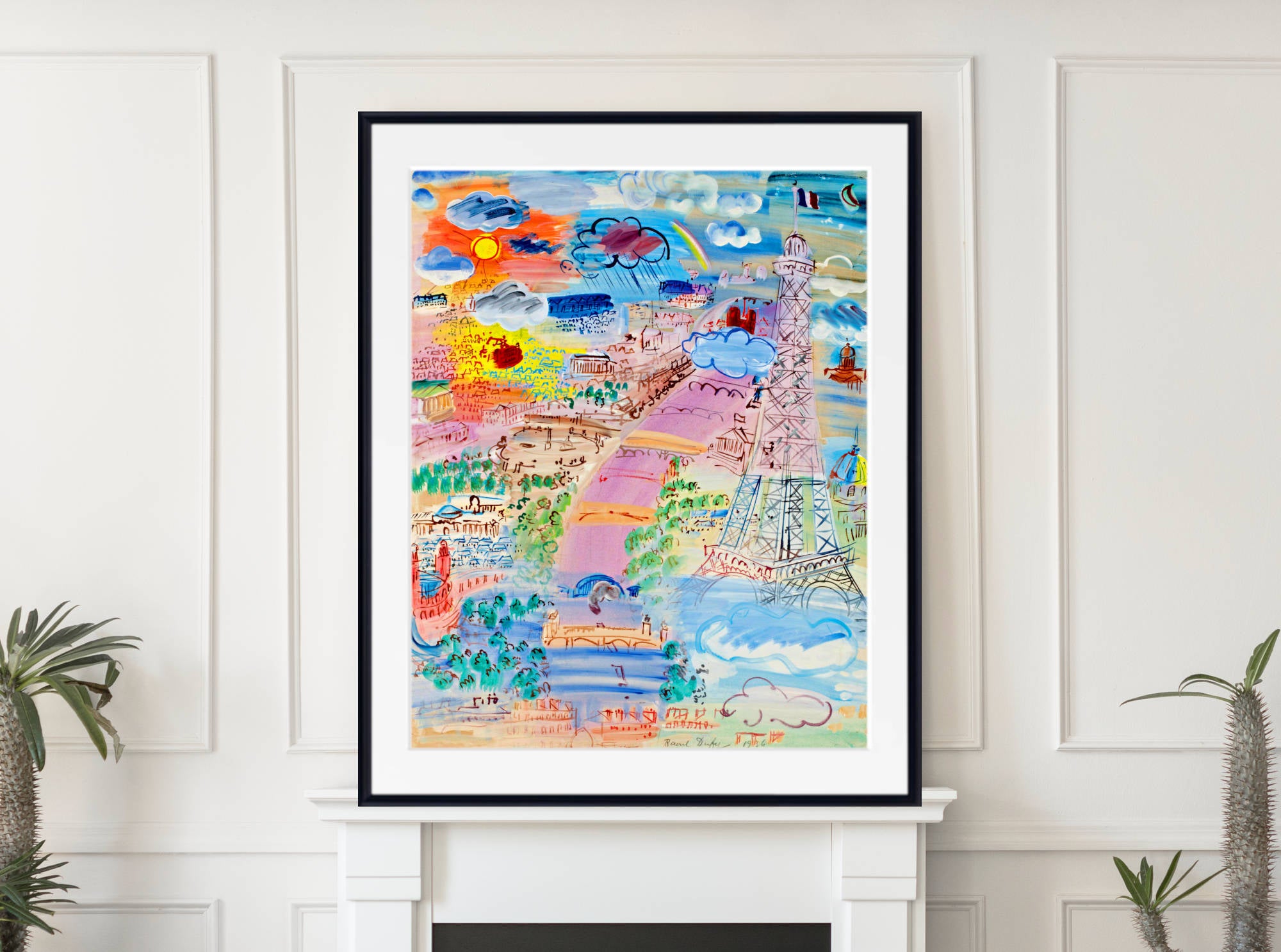
We have a wide range of frames in standard sizes and we also make custom size frames.
To order a framed print:
1. select the print size you would like along with the print materials (matte paper, fine art paper).
2. Add your print choice to the basket.
3. Choose from our range of frames
4. Select the same size as the print you have added to your basket. If the frame size you want is not listed please contact us
5. Choose from the mount or no-mount option
6. Add your frame choice to the basket
7. Proceed to checkout.
Why Choose GalleryThane?
- Printed and framed in-house
- Free UK delivery
- Free EU and USA delivery on orders over £200
- Tracking and insurance included in every order
- Fast 1-3 day dispatch
- Gift wrapping service available
- Gallery quality materials
- Sustainable, eco-friendly packaging
- Great customer support
Explore related collections
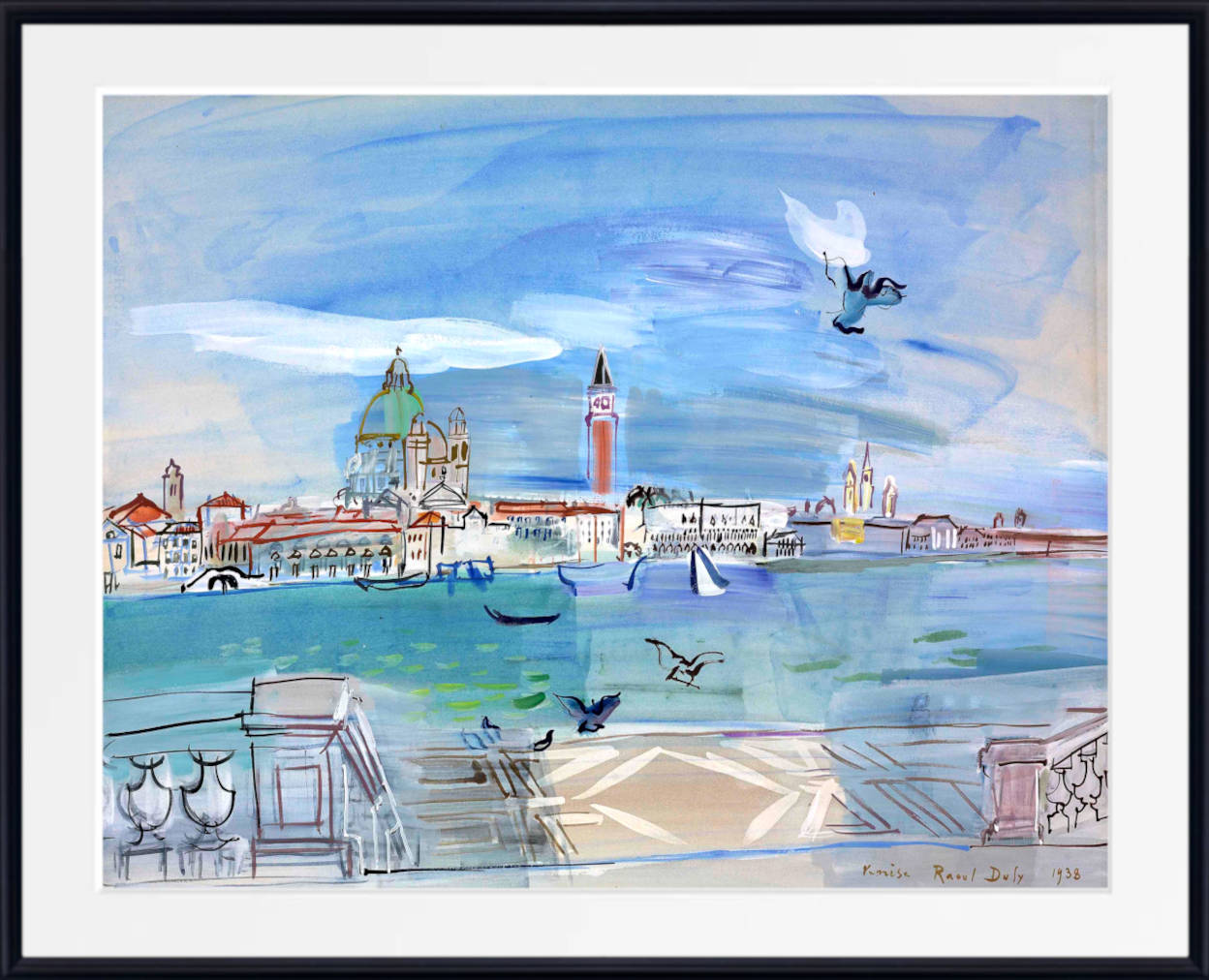
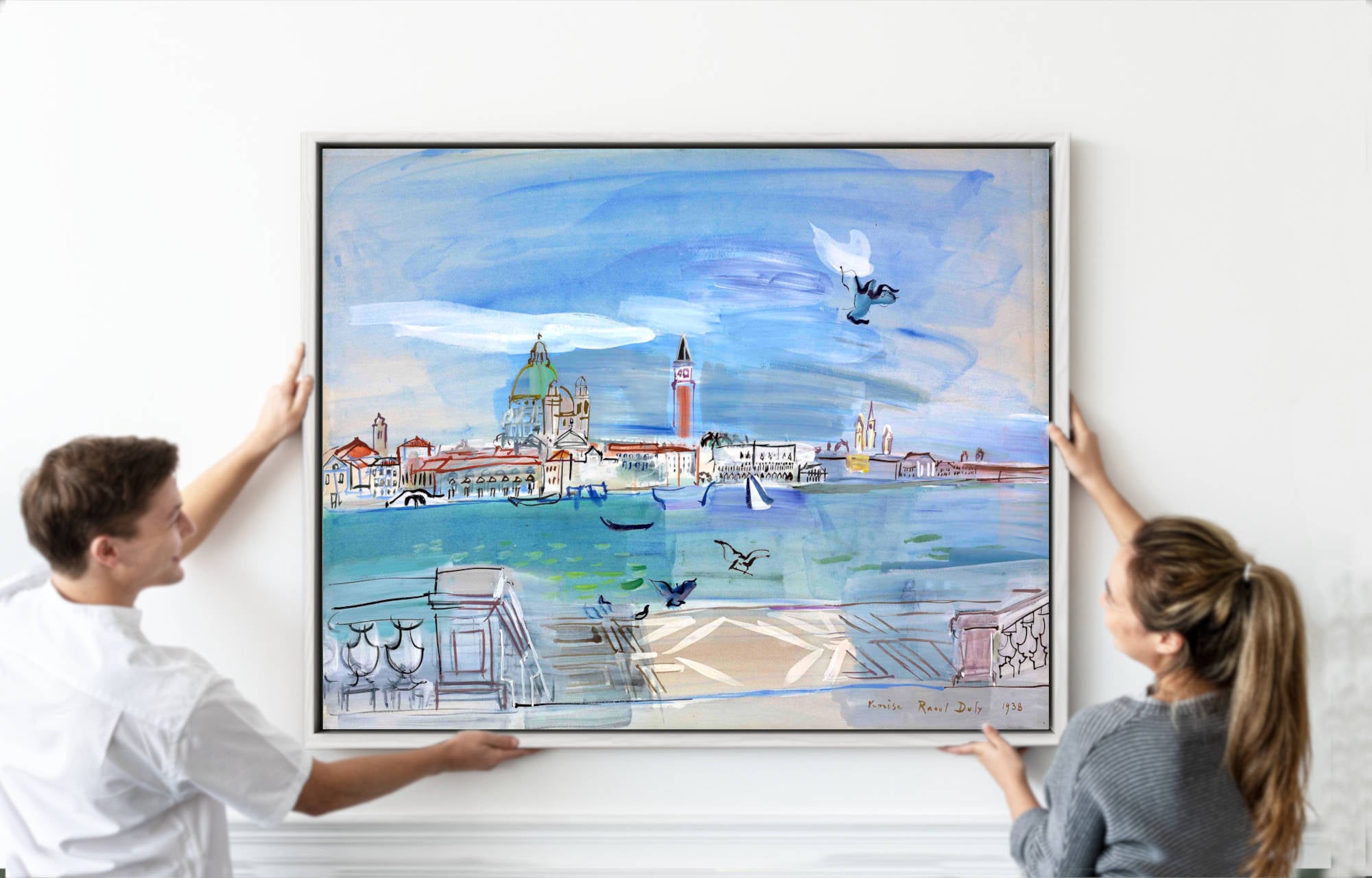
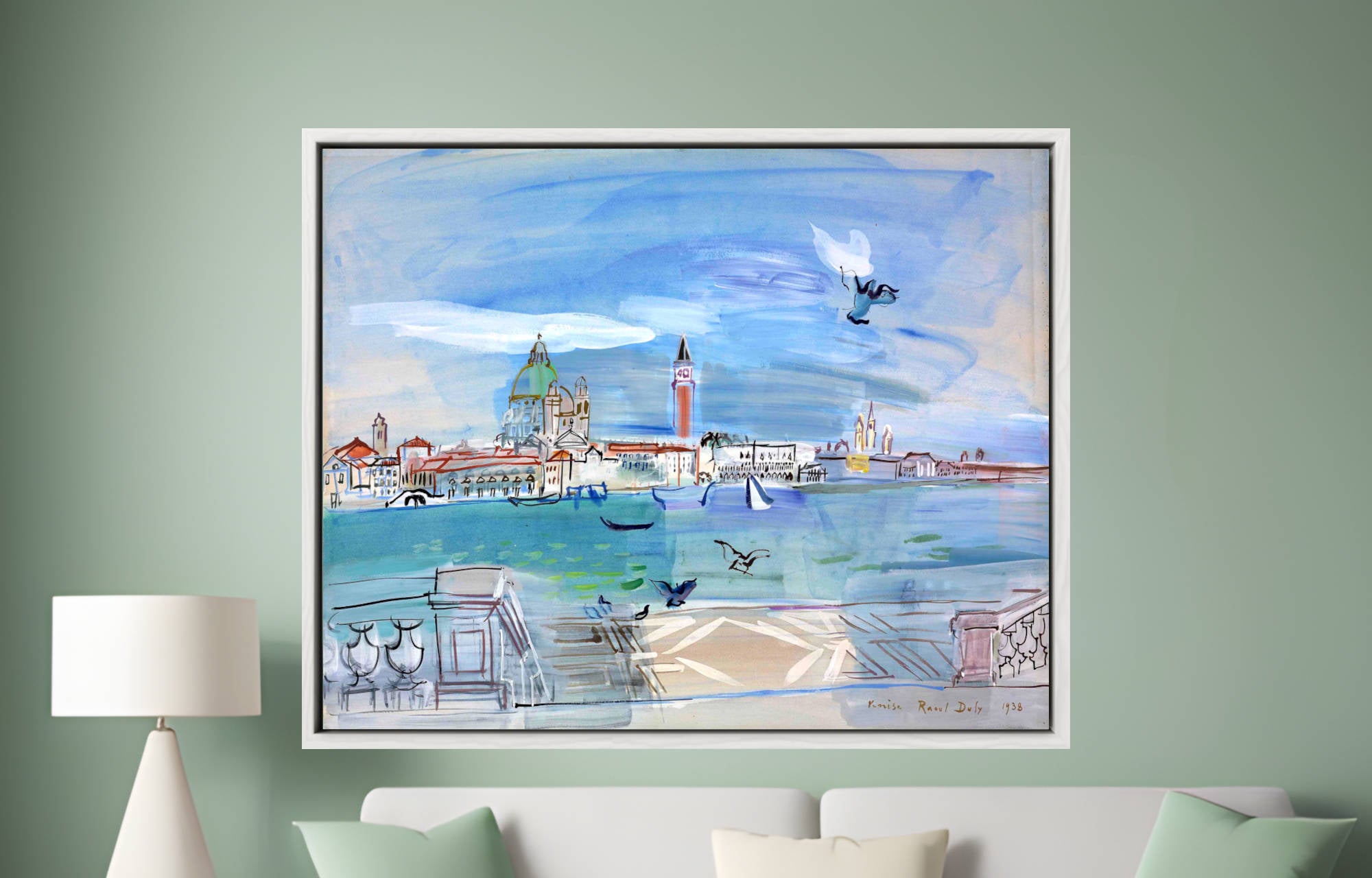
What makes our Prints and Canvas Panels so special

Latest Giclee Printing Technology
We have invested in the latest wide format print technology to produce museum quality giclee prints utilising the highest quality pigment inks to give outstanding colour reproduction.

Museum Quality Archival Fine Art Papers
We print on the finest quality fine art papers with textured, smooth and lustre finishes for prints which last a lifetime.
From aceo miniatures to 40x80 inch large format, every print has our lifetime quality guaranteee.

Solid Wood Frames, Cotton Canvas
All of the wood for our canvas panels and frames is responsibly sourced from manages forests. Our cotton canvas is completely seedless for the highest quality reproduction possible.

Have Your Gift Wrapped


Choose a Custom Frame
Popular Collections


EU Representative
Manufacturer
LucasAbstract t/a GalleryThane
15 Campion Way, Bingham NG13 8TR UK
sales@gallerythane.com
EU Authorised Representative
Westwood Sourcing
Fellenoordstraat 52, Unit 2.38
4811 TJ Breda, Netherlands
info@westwoodsourcing.com