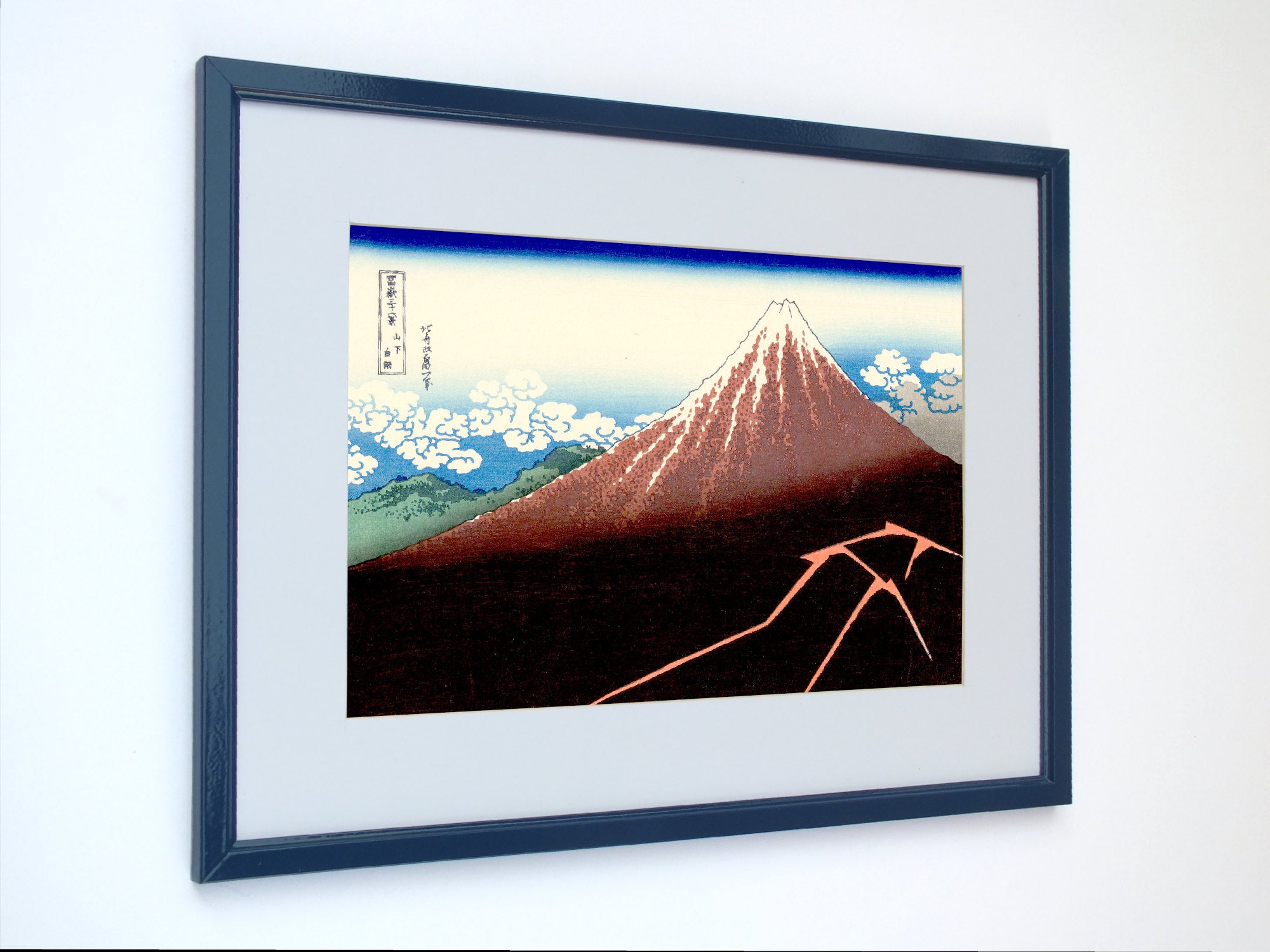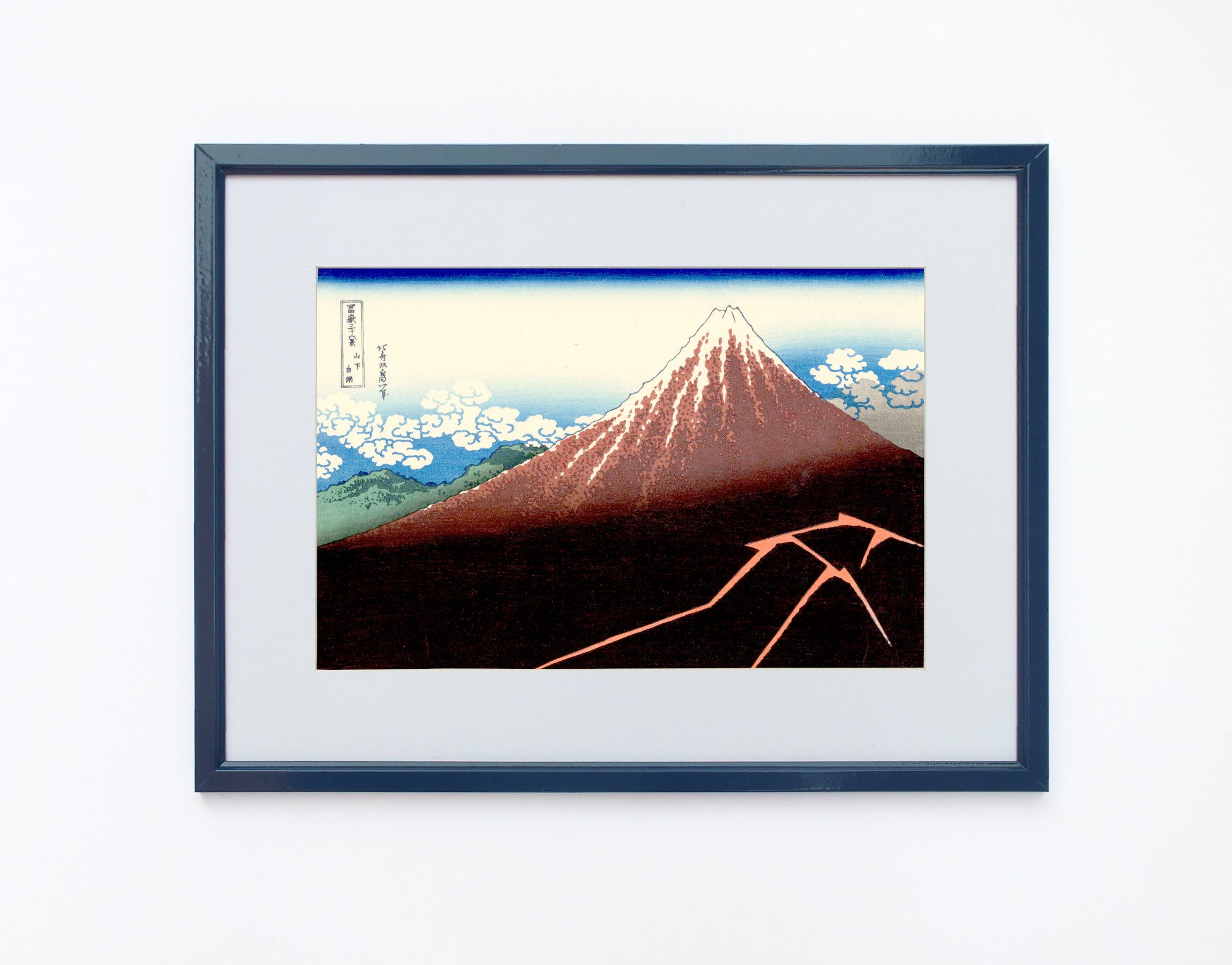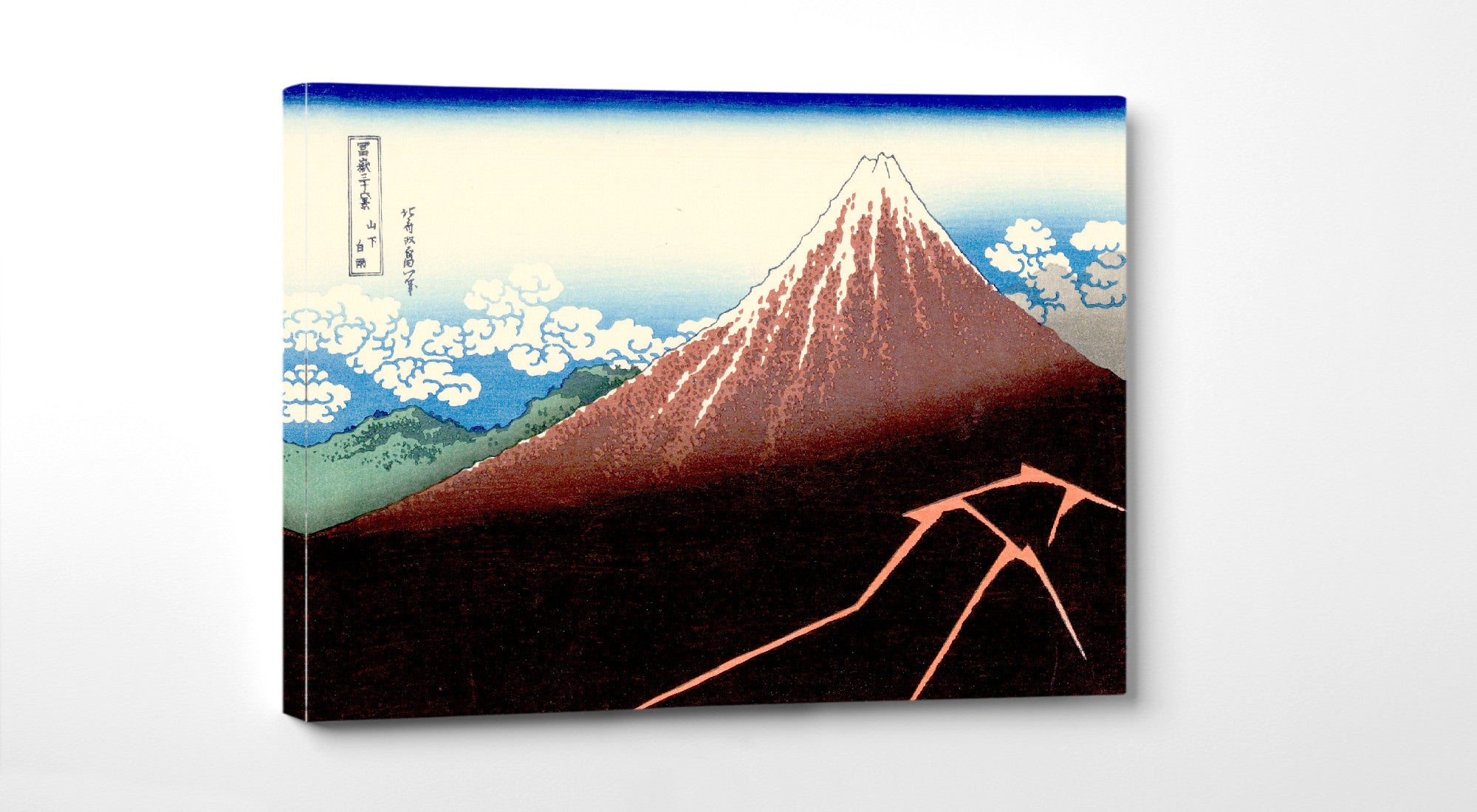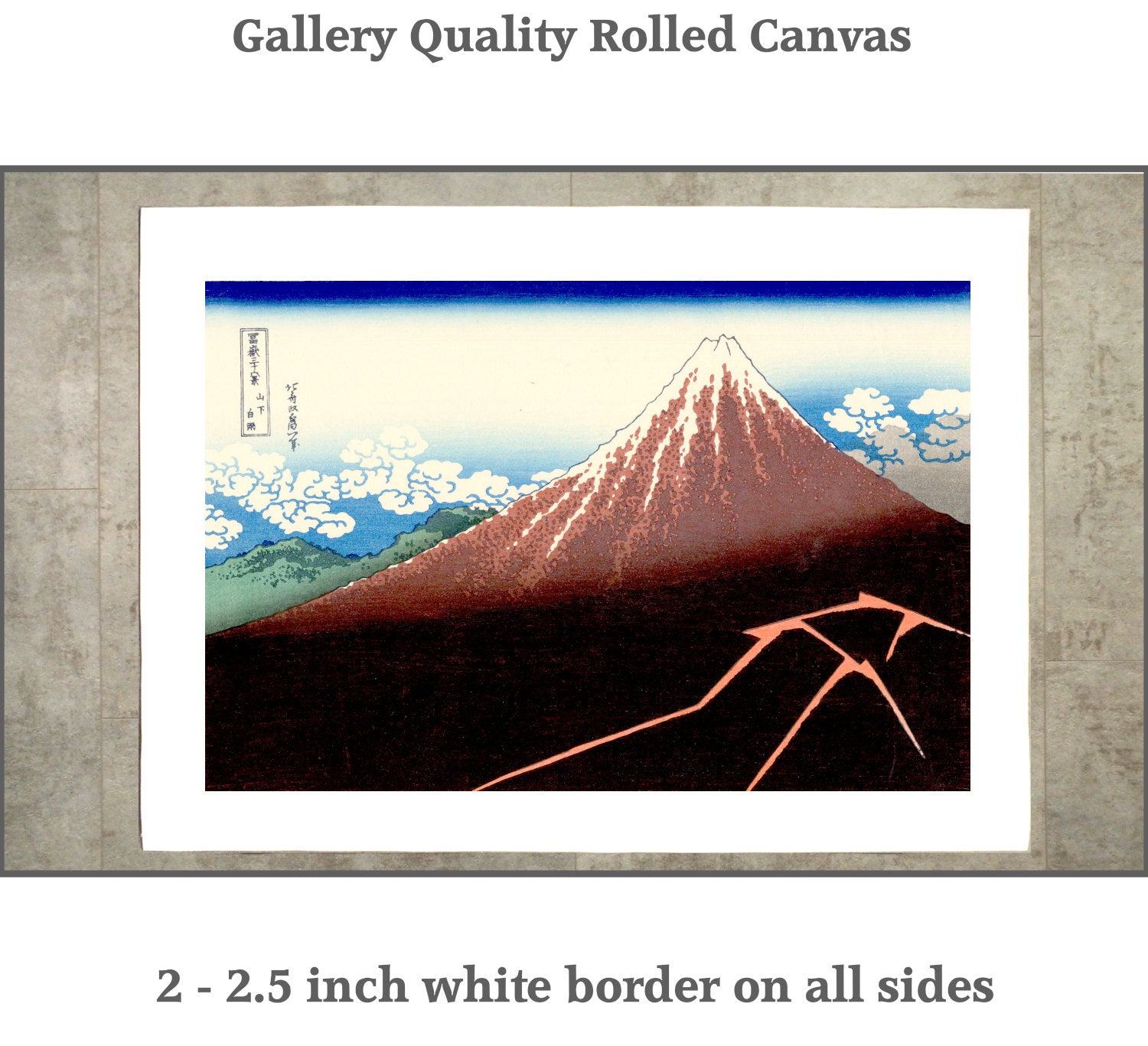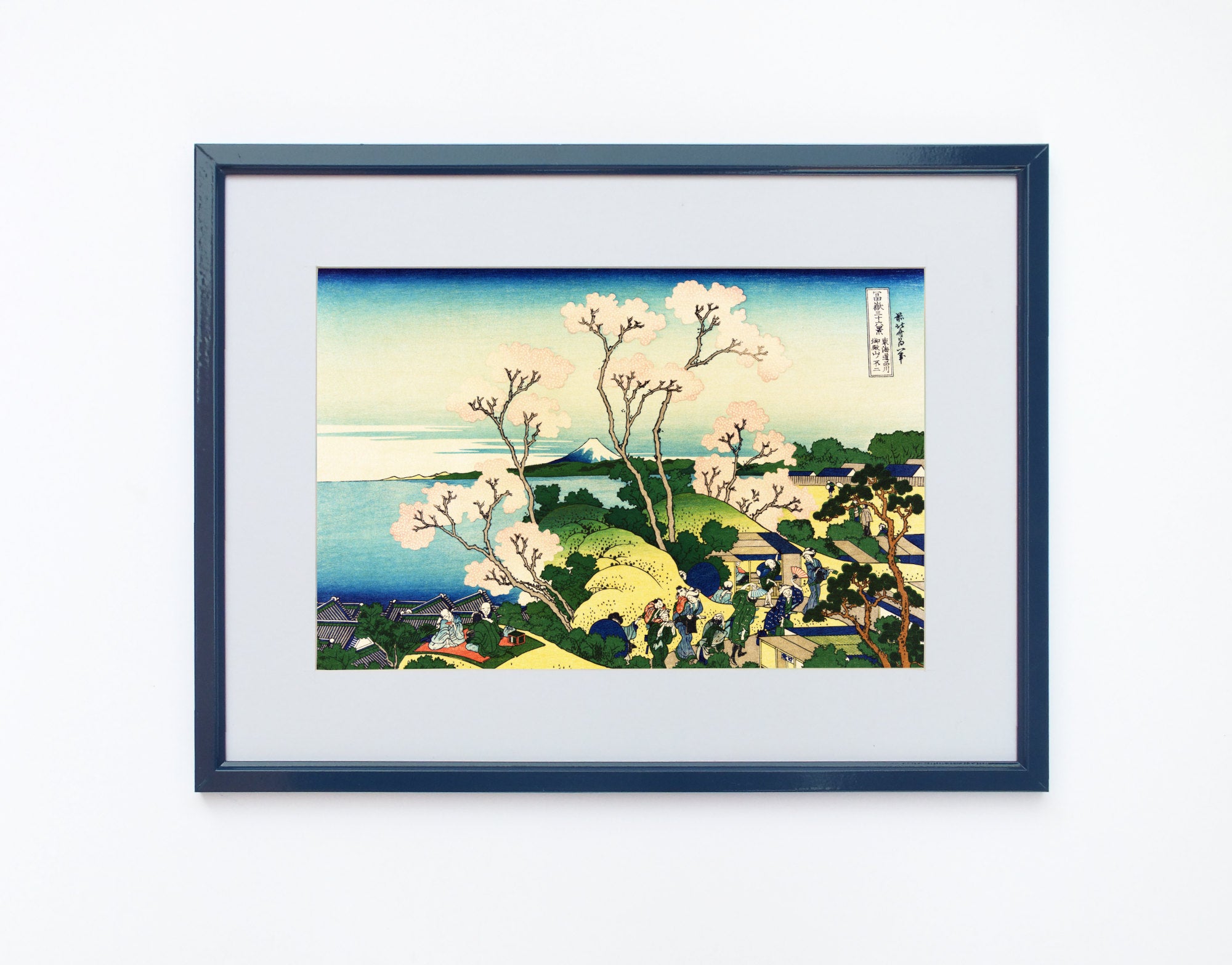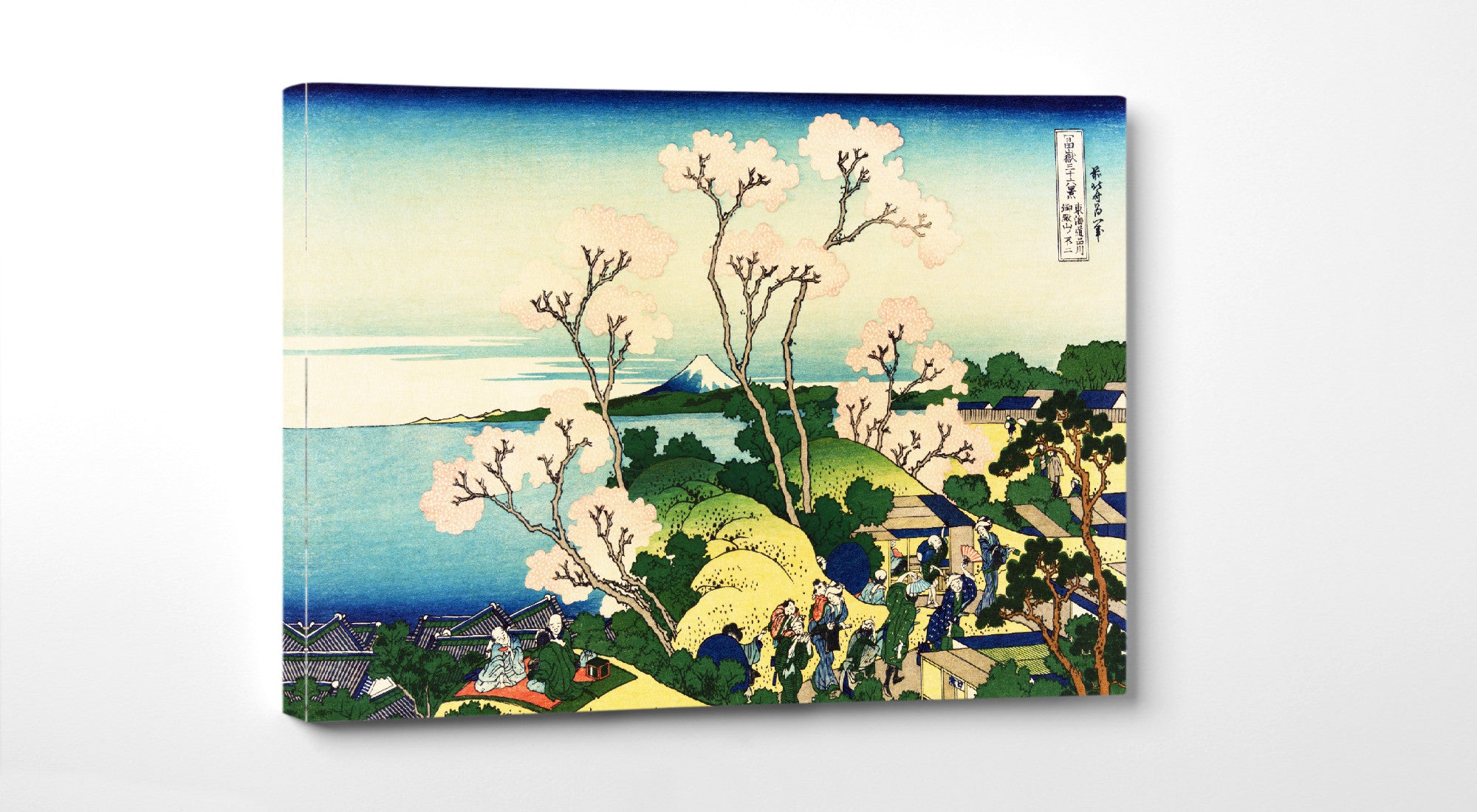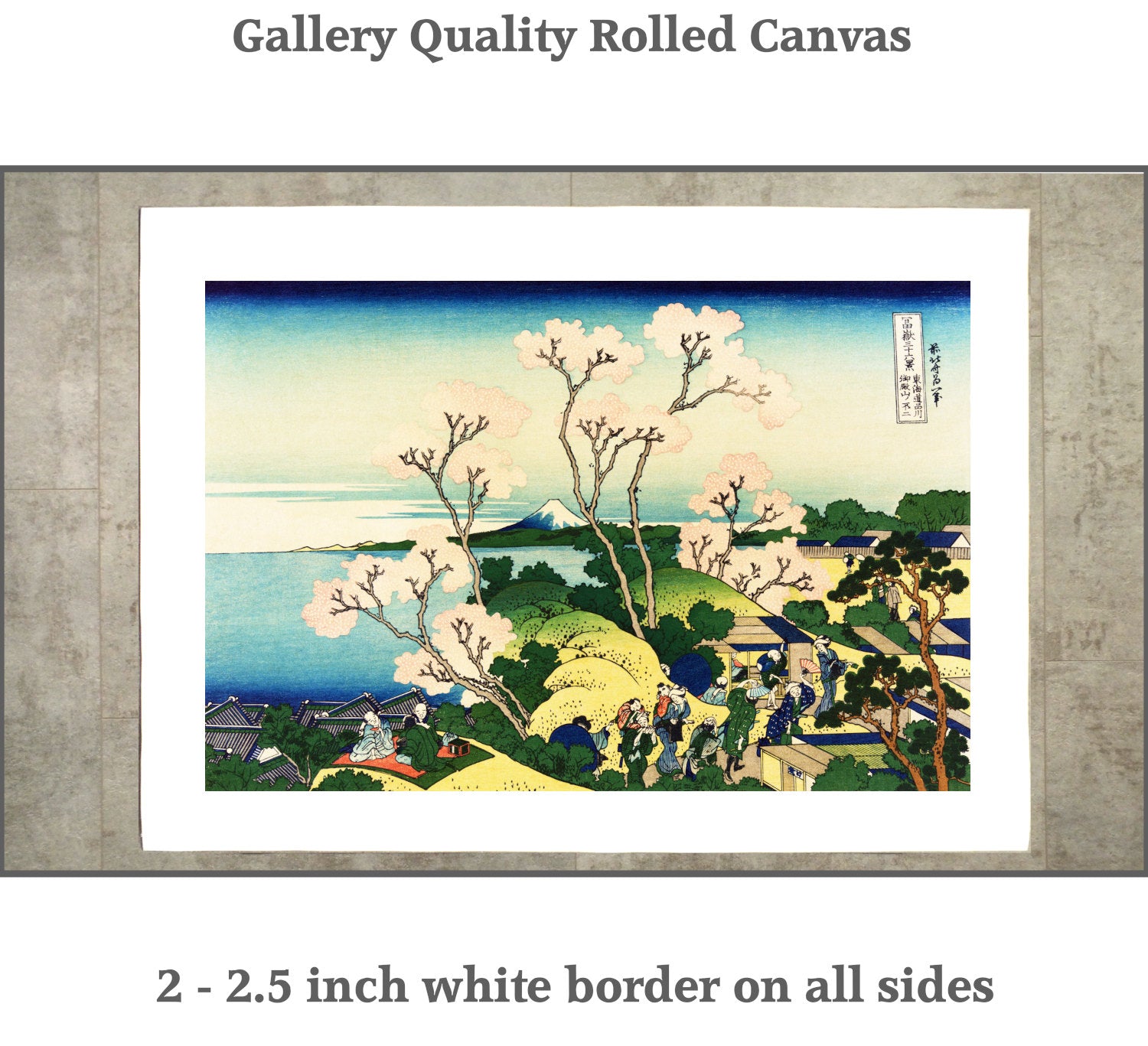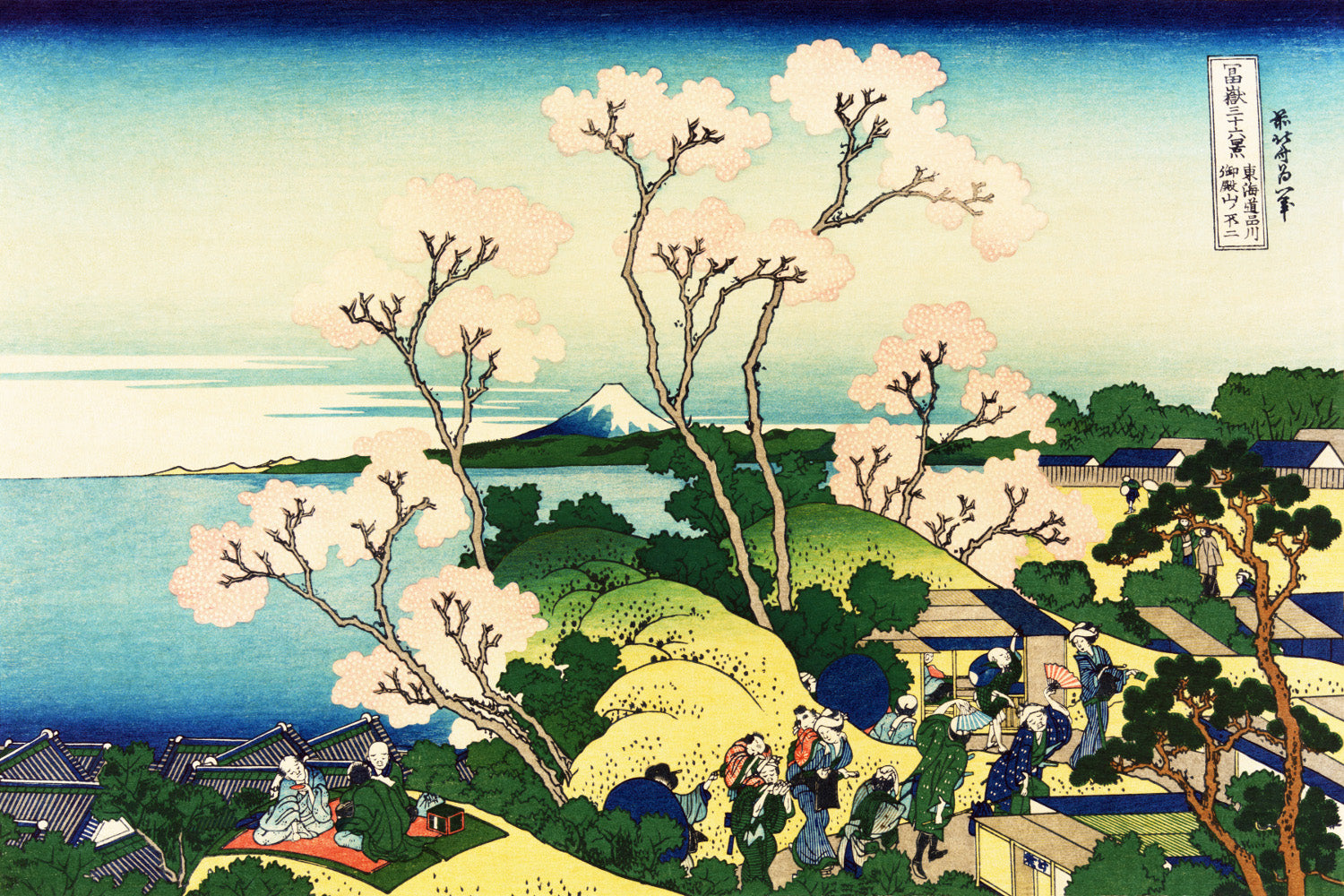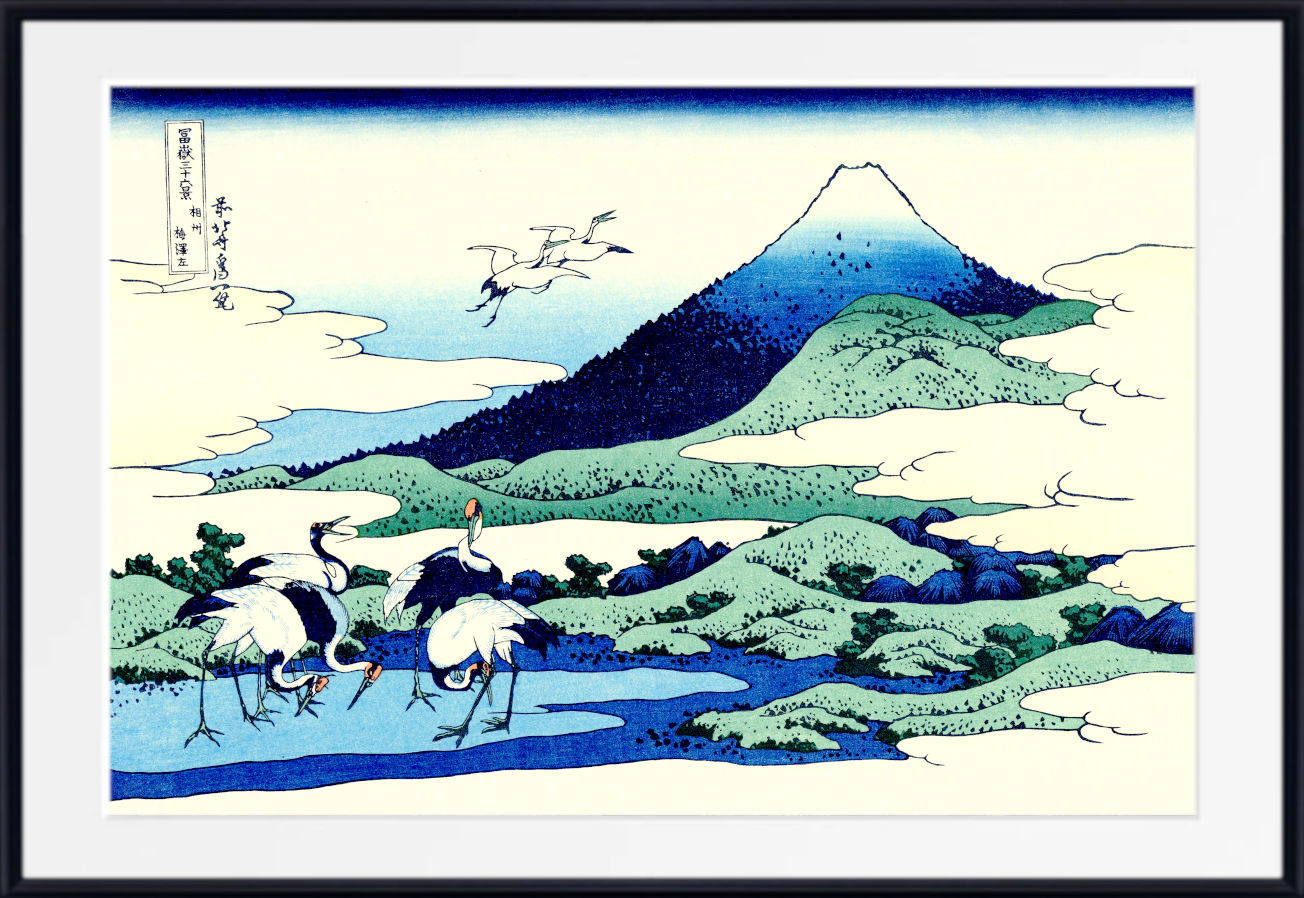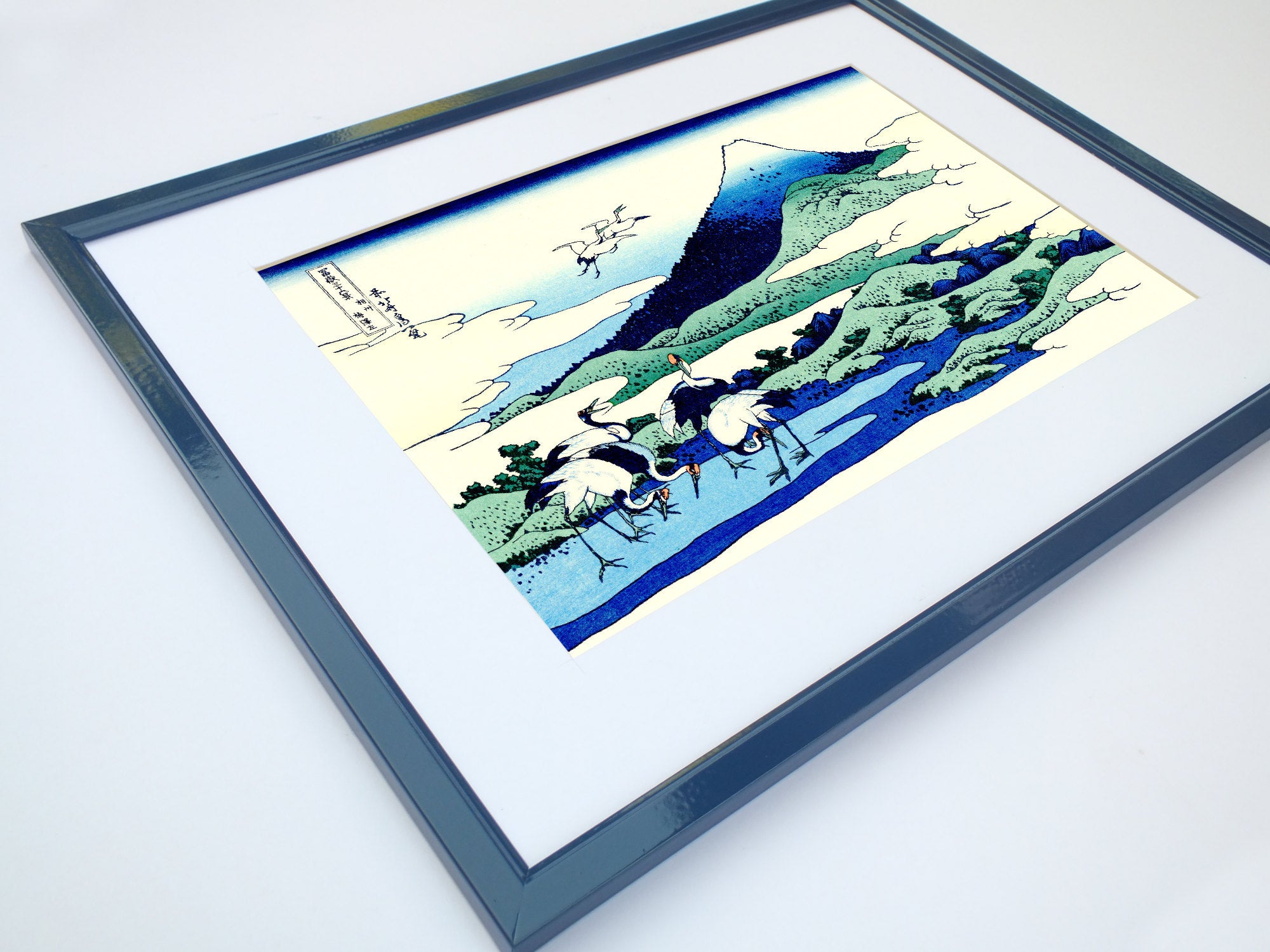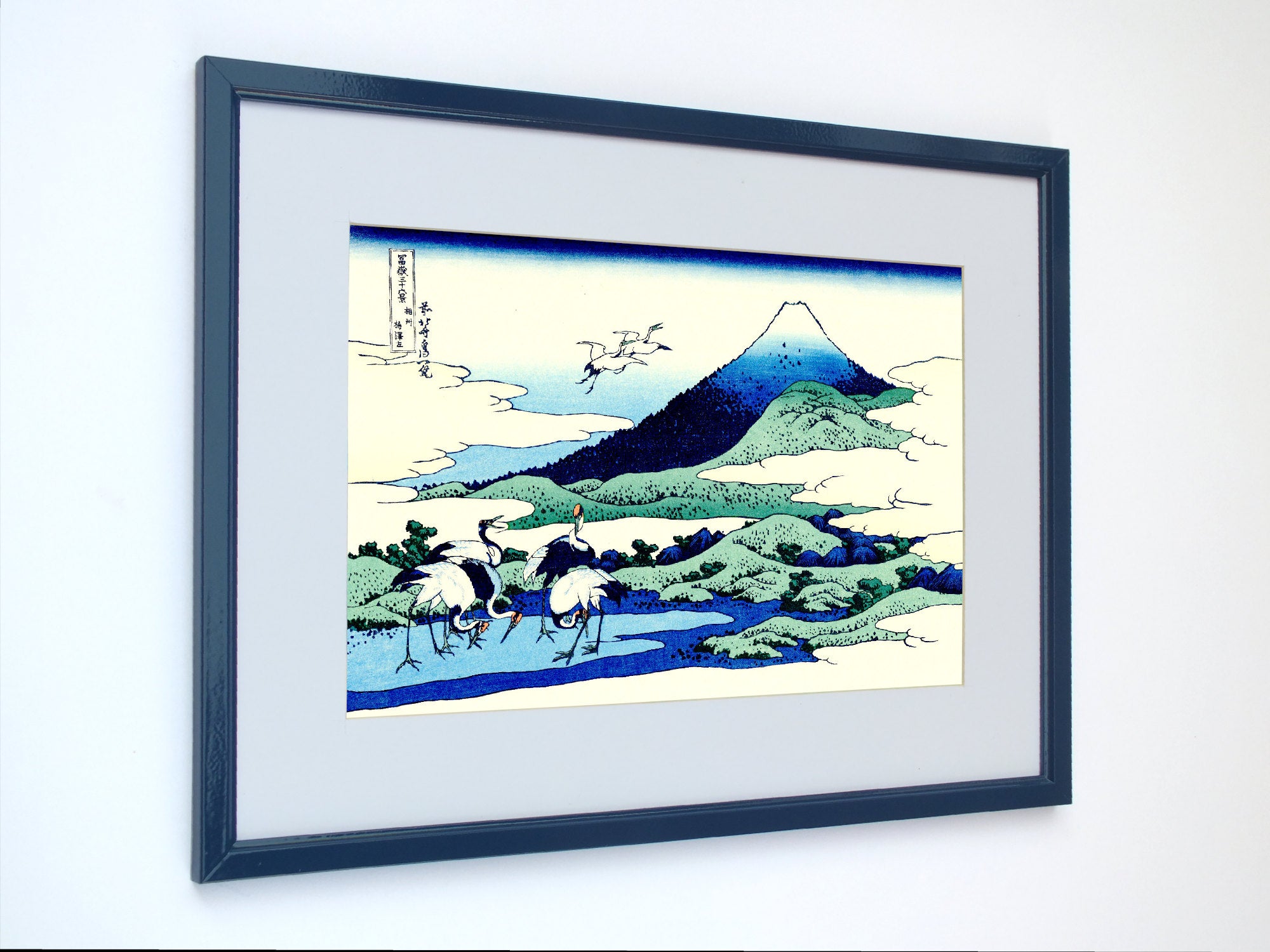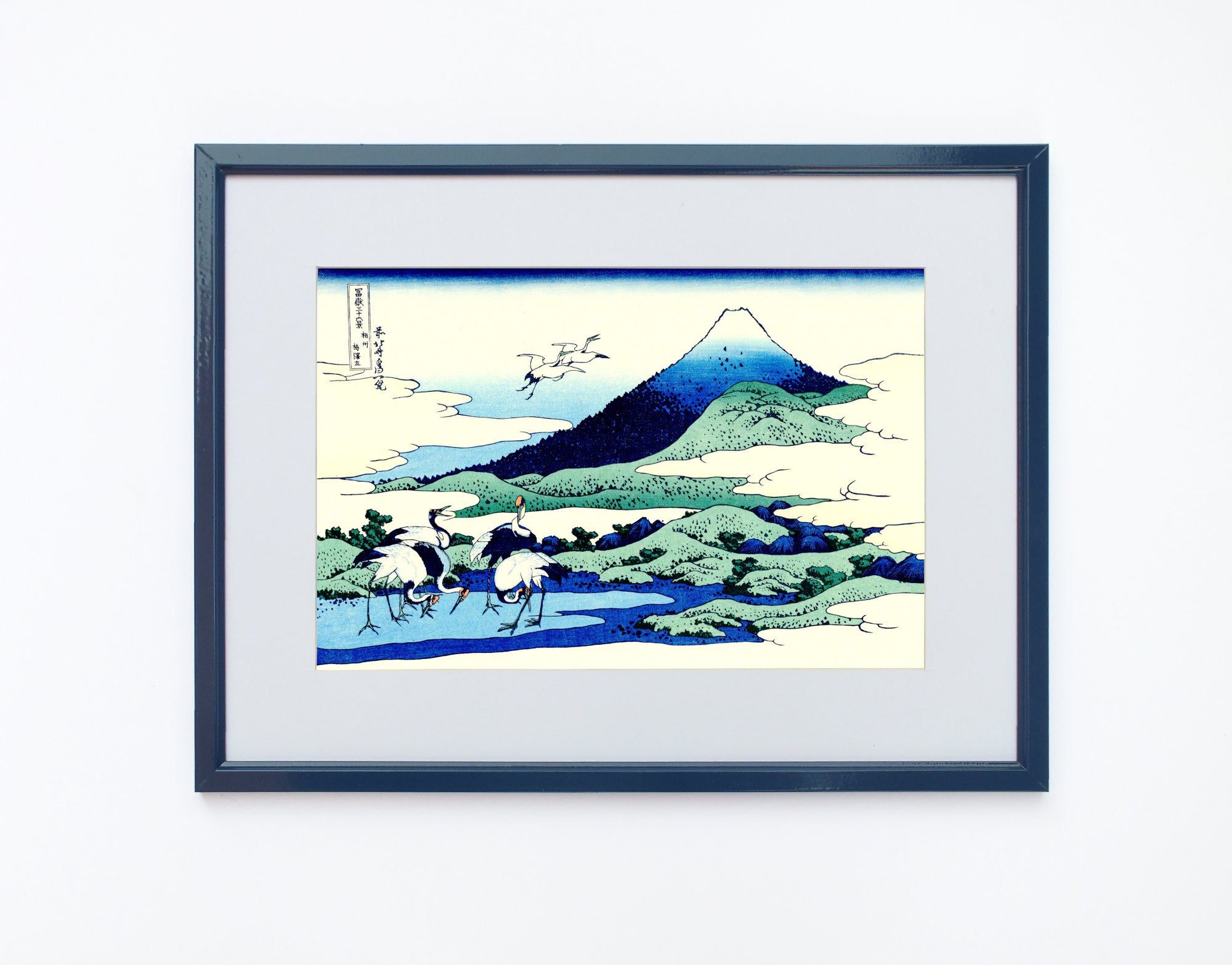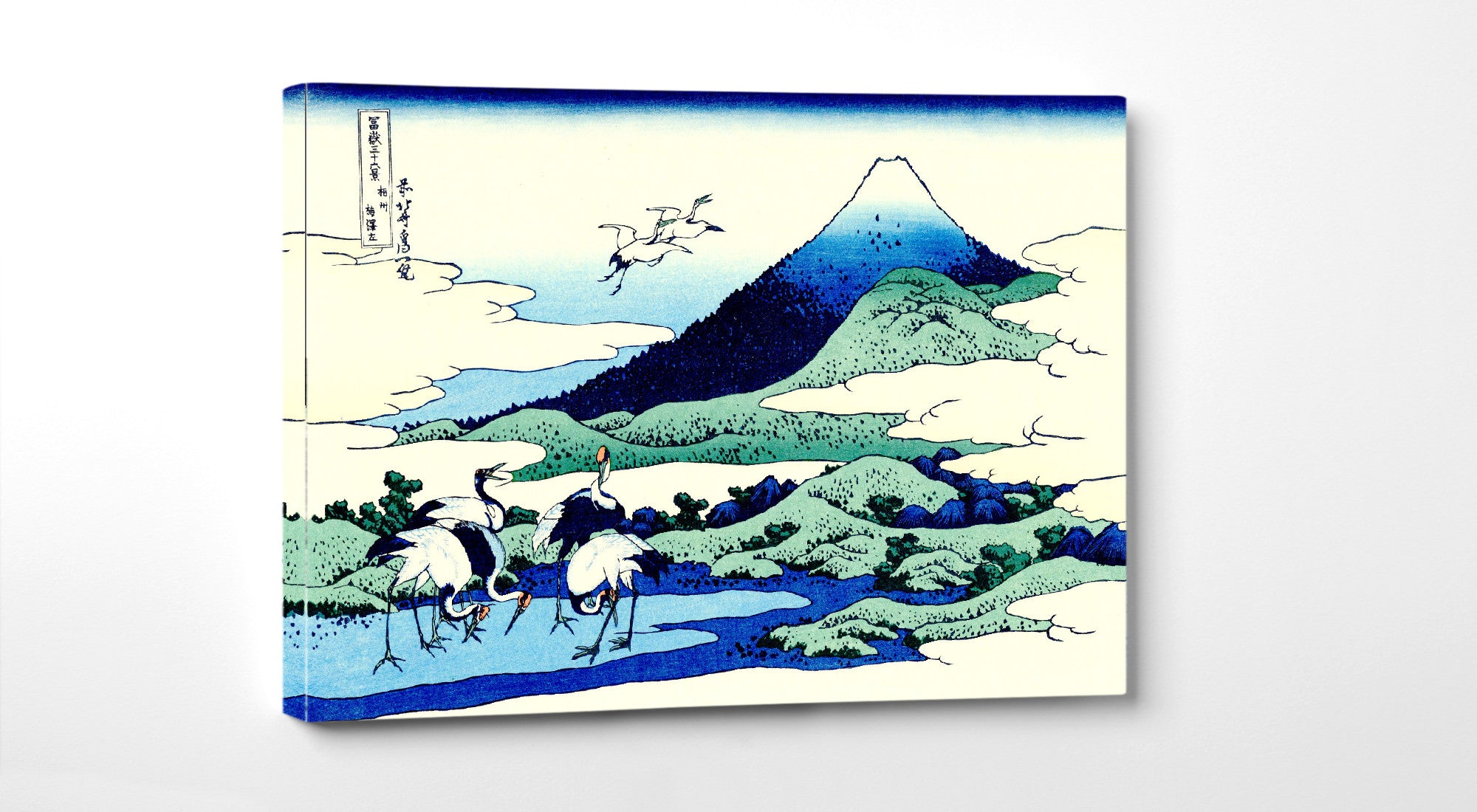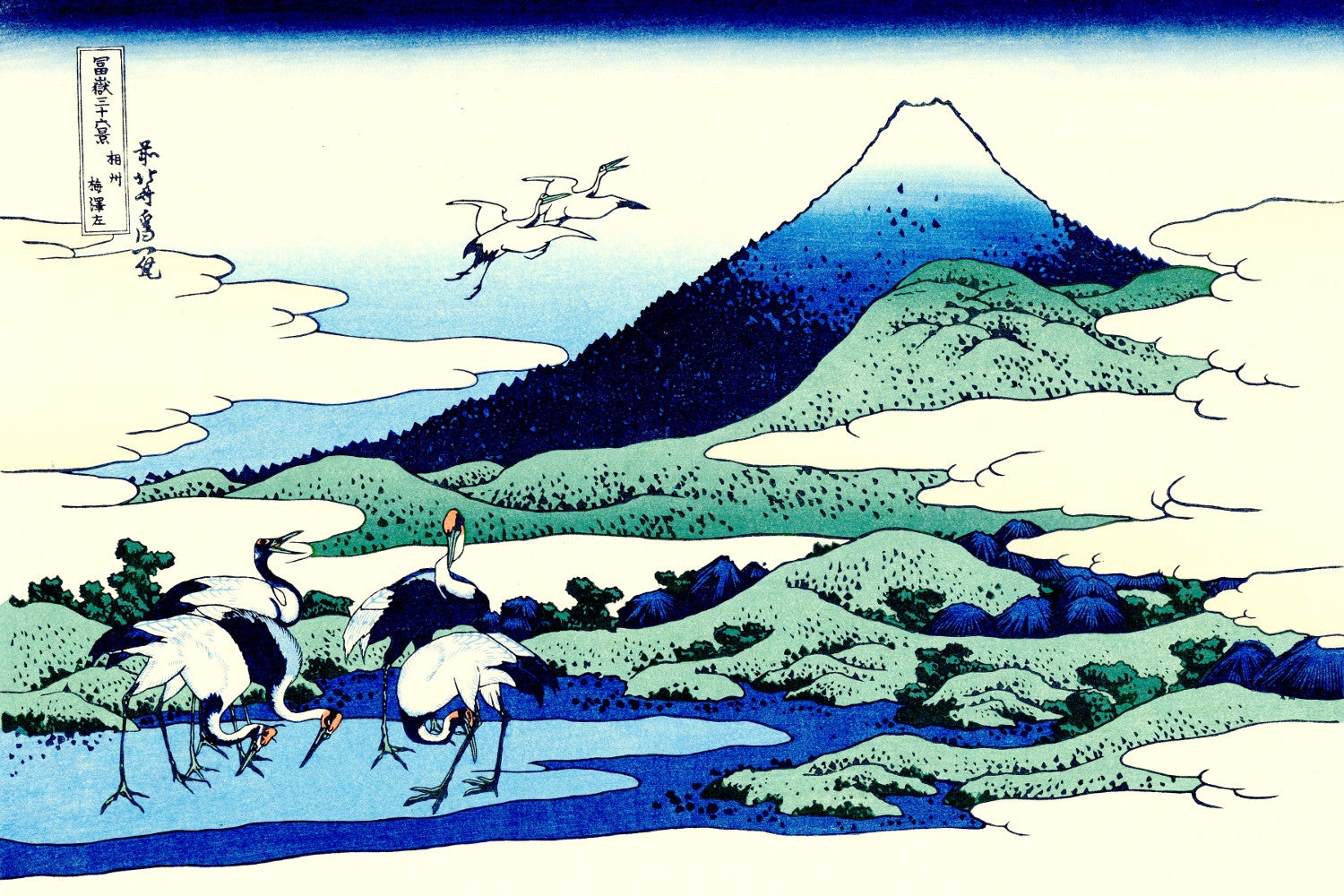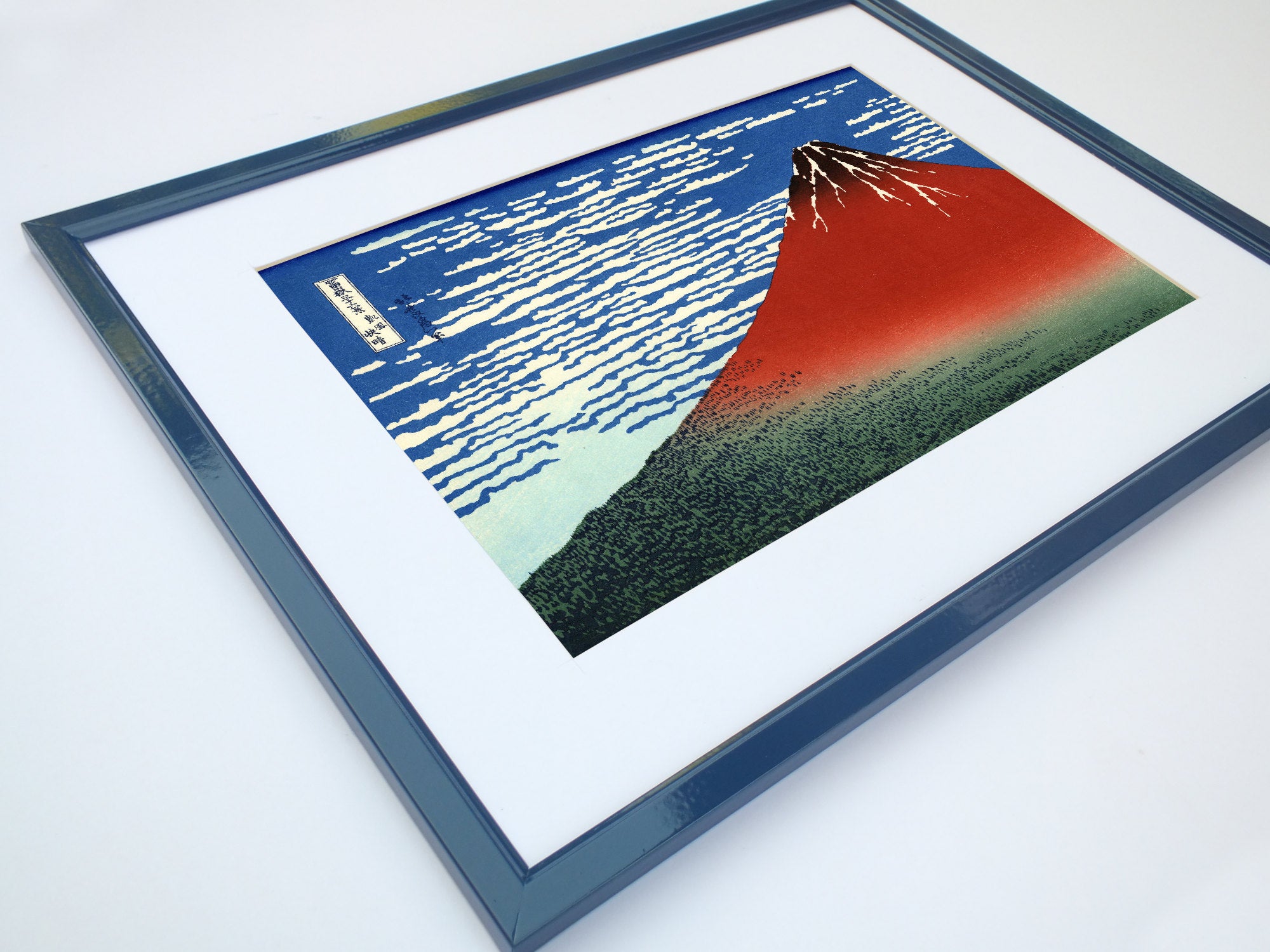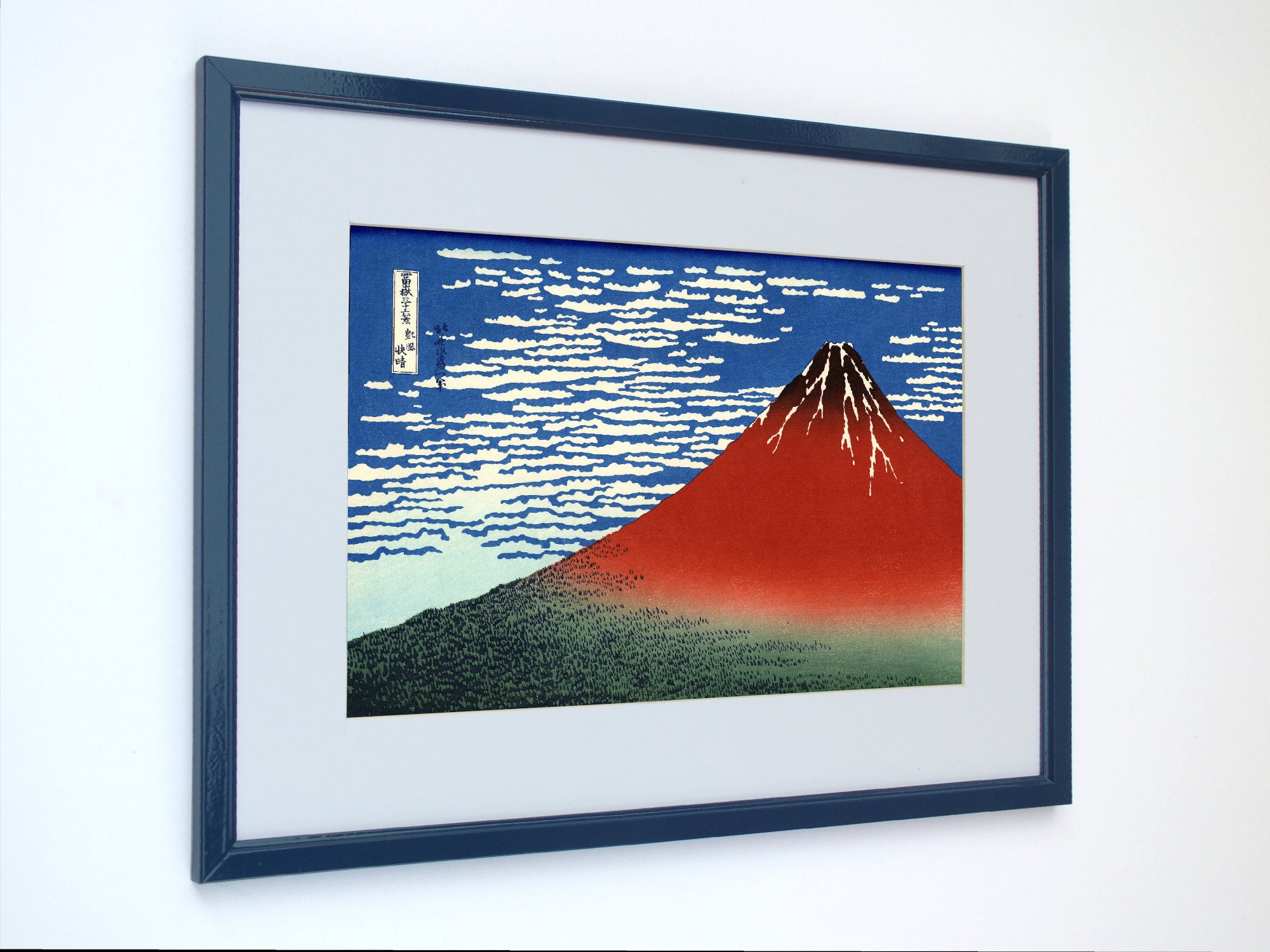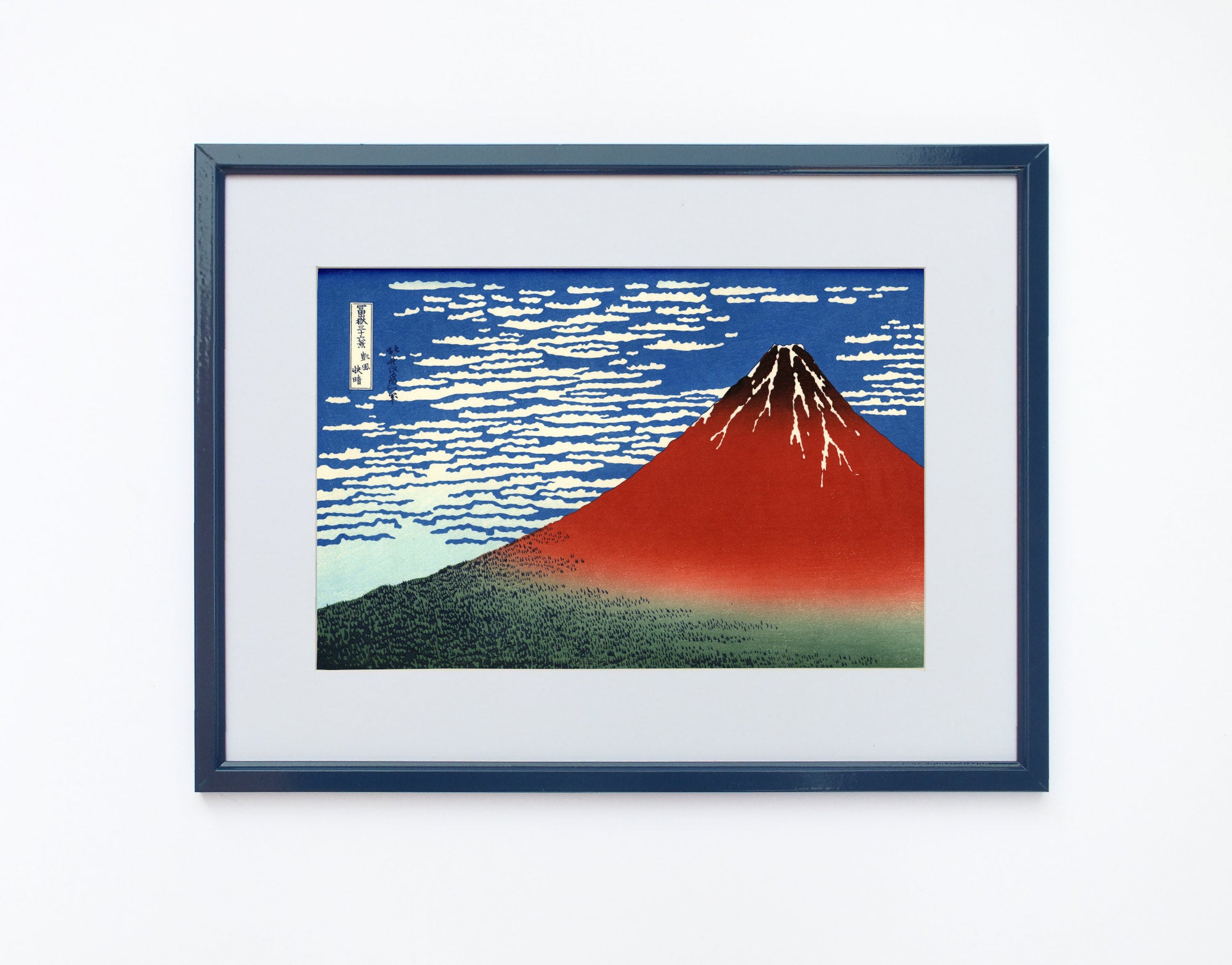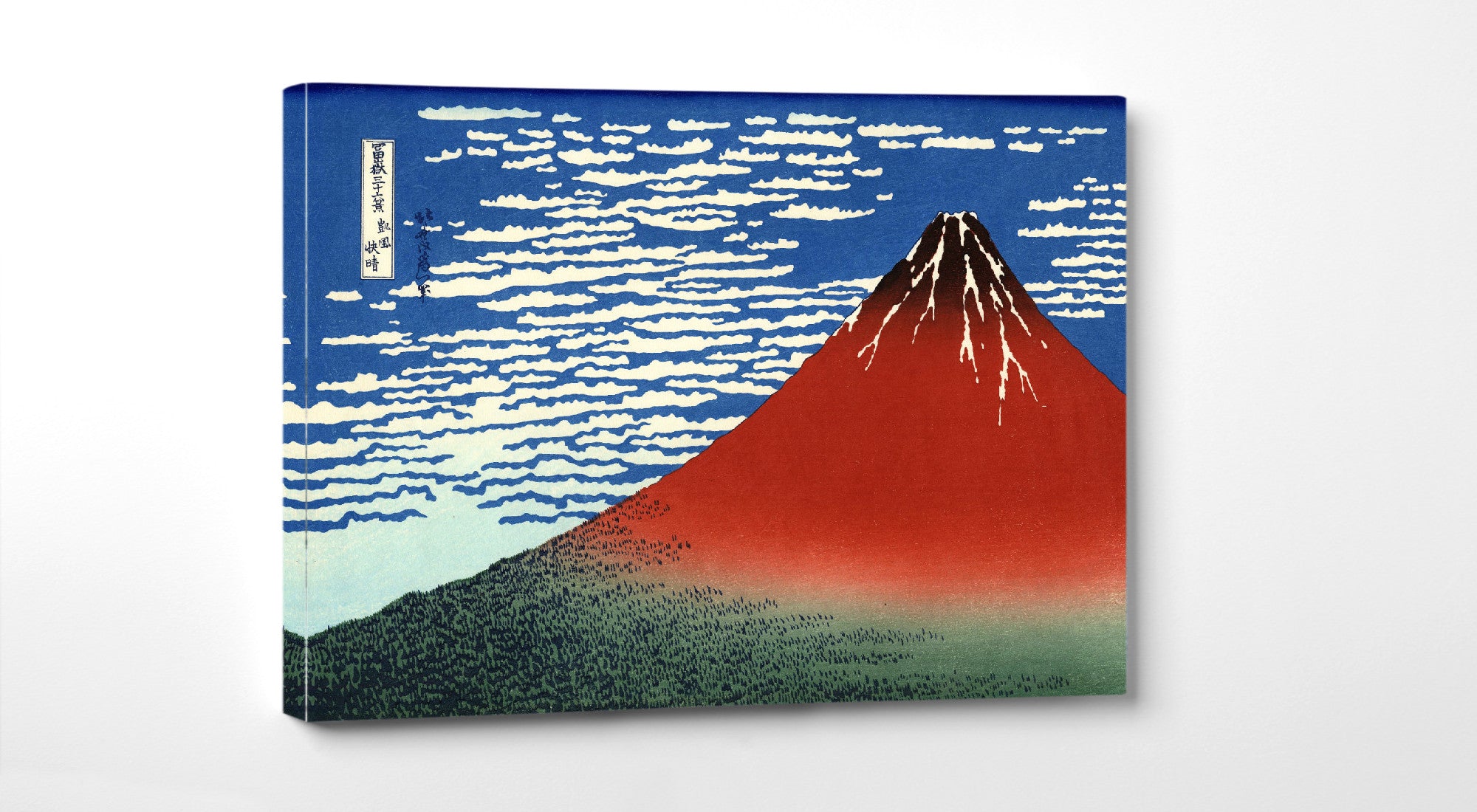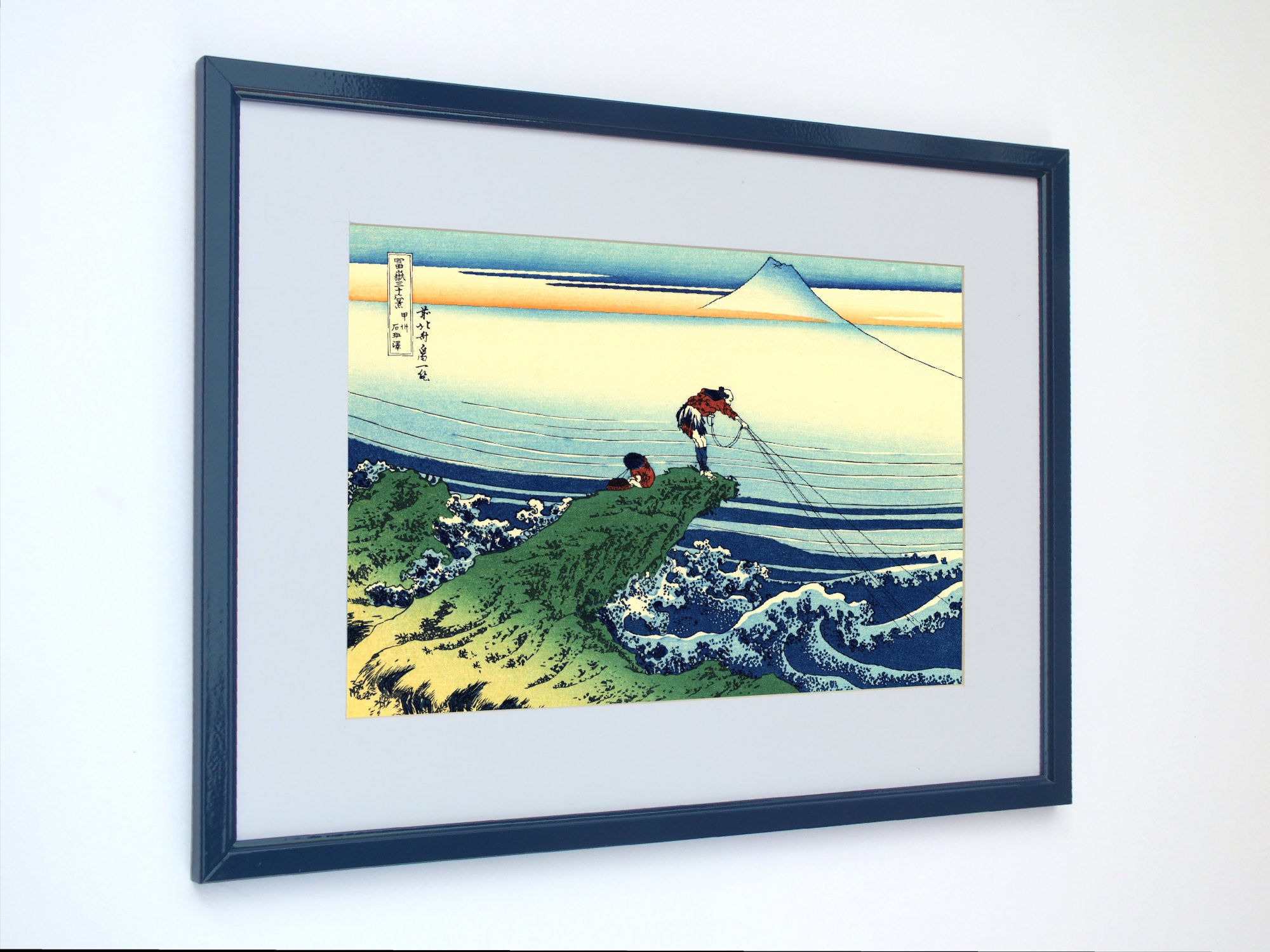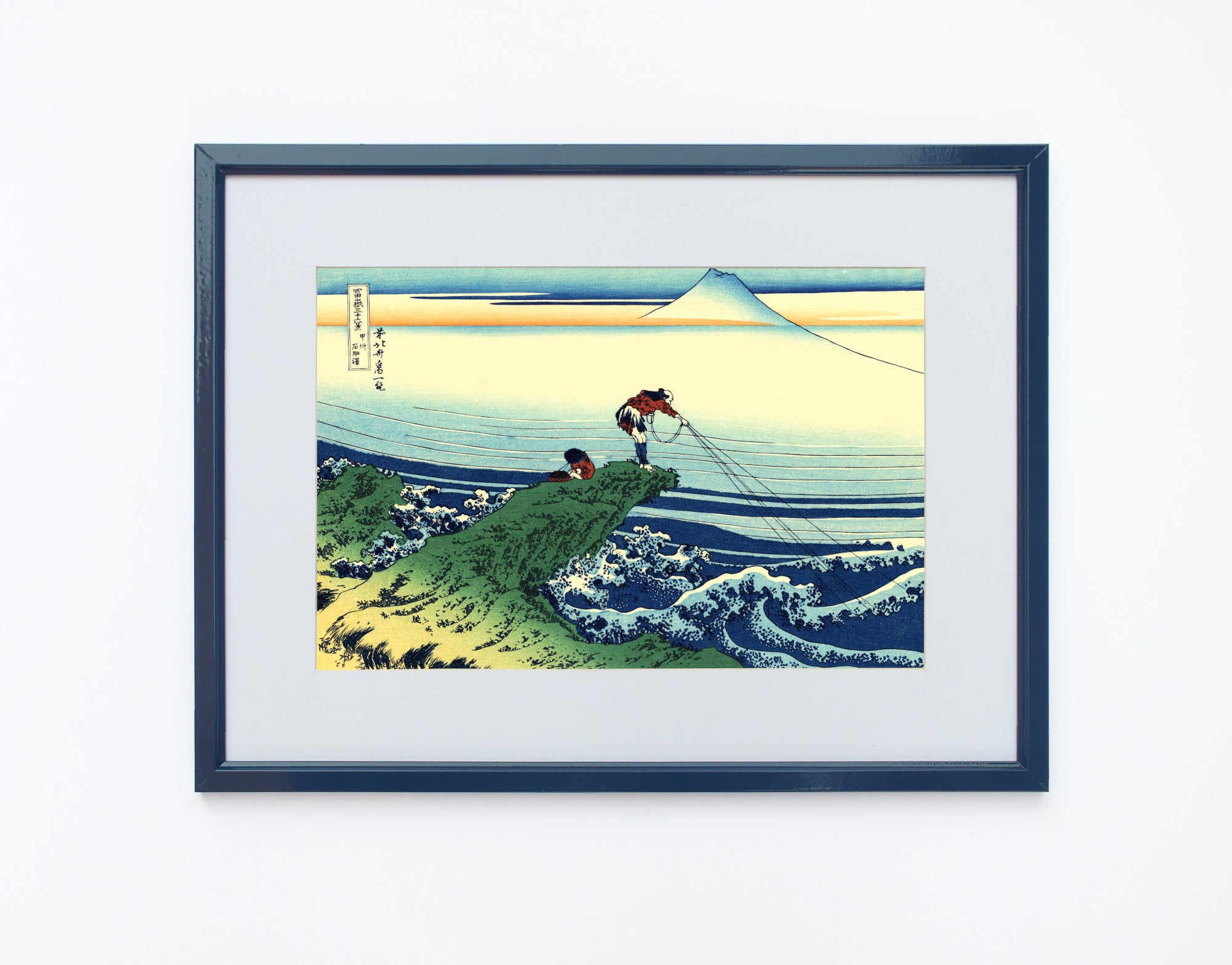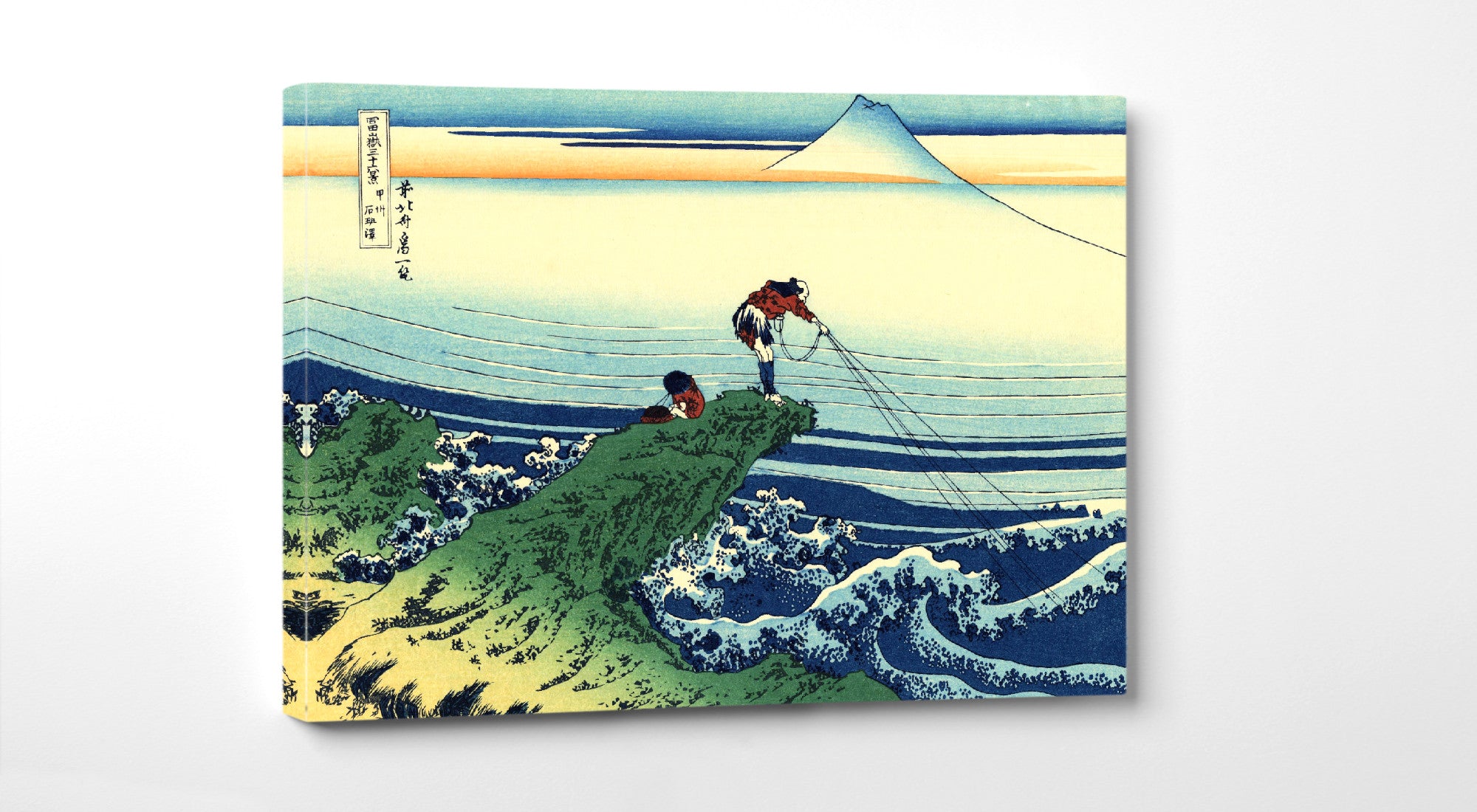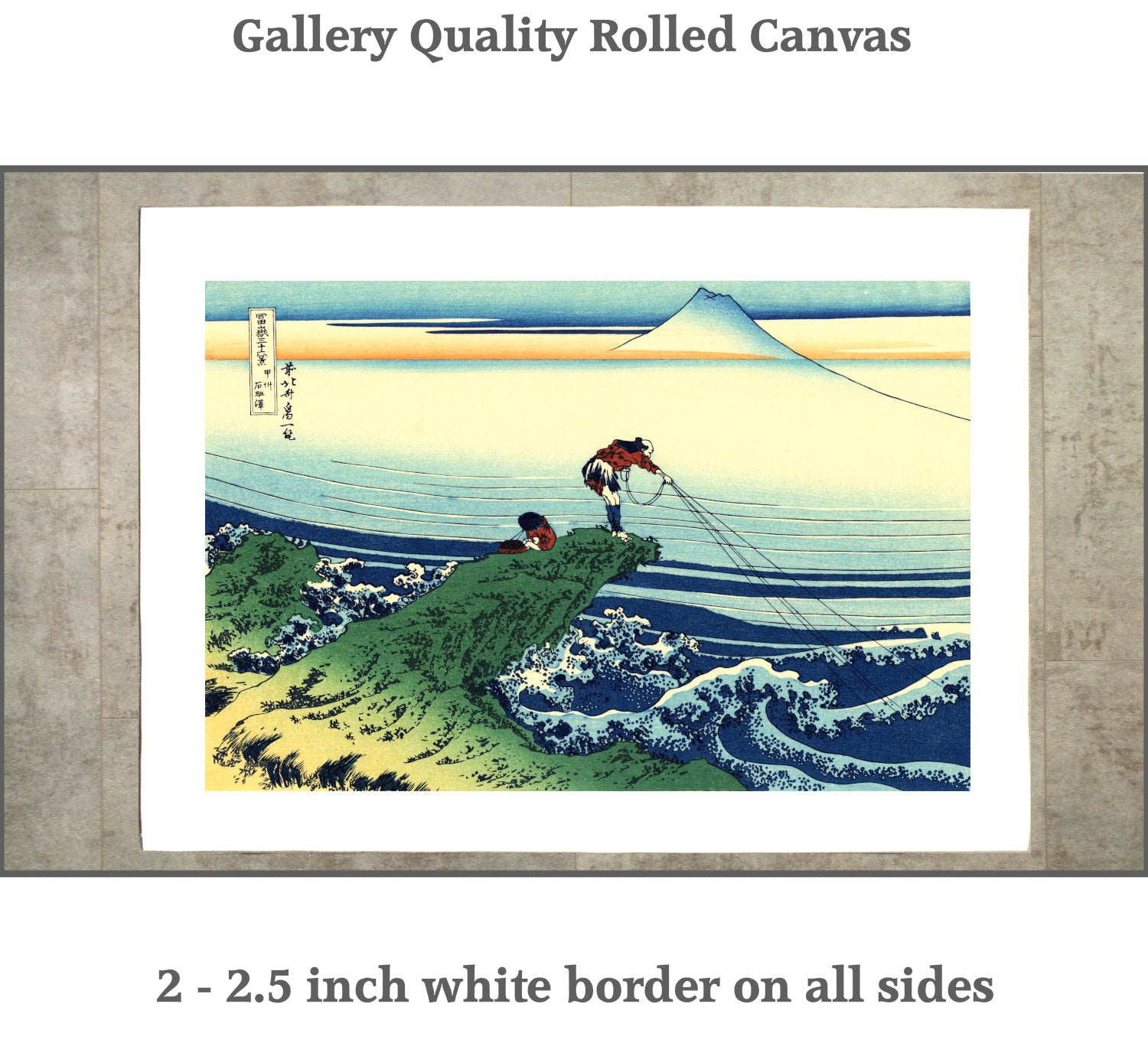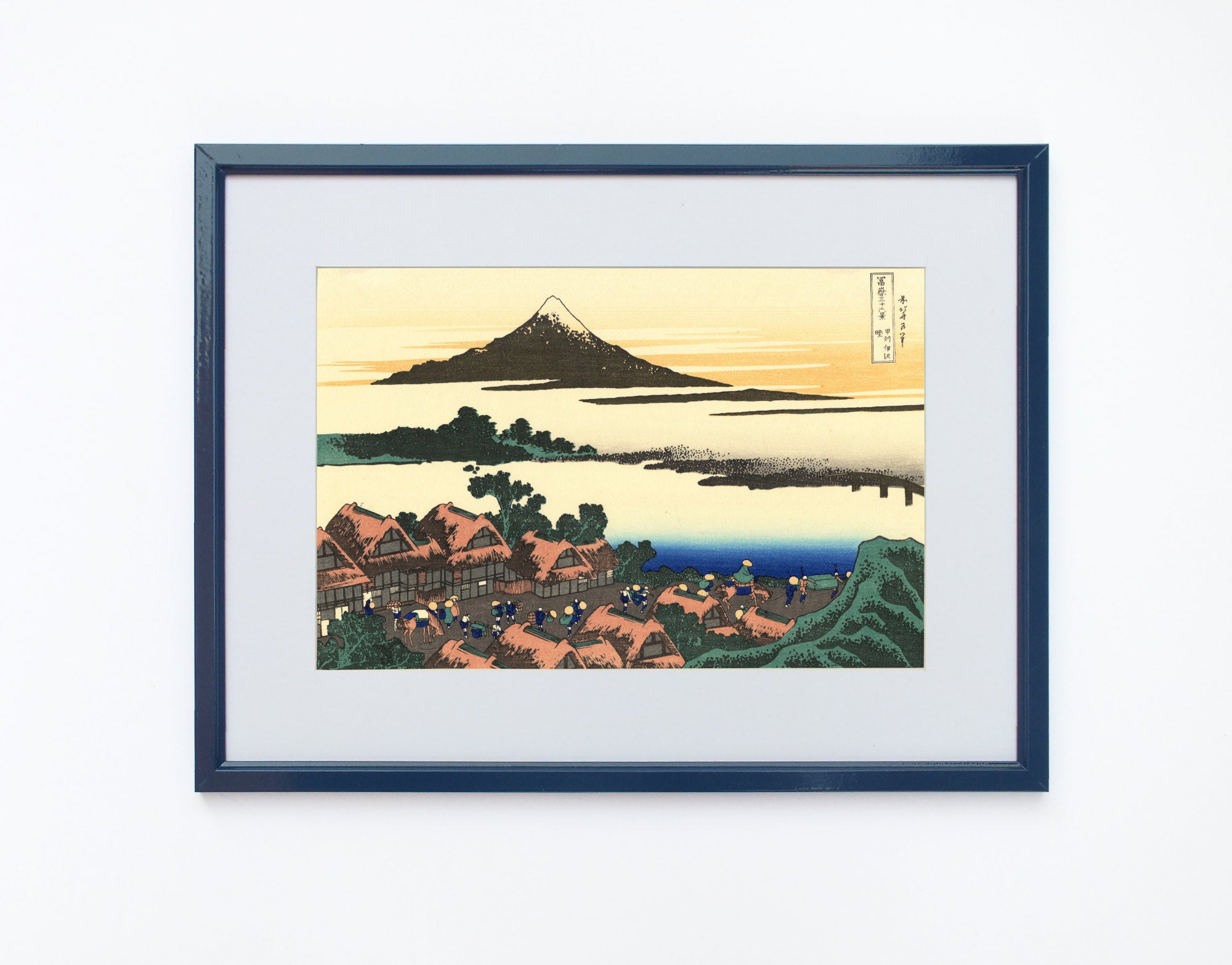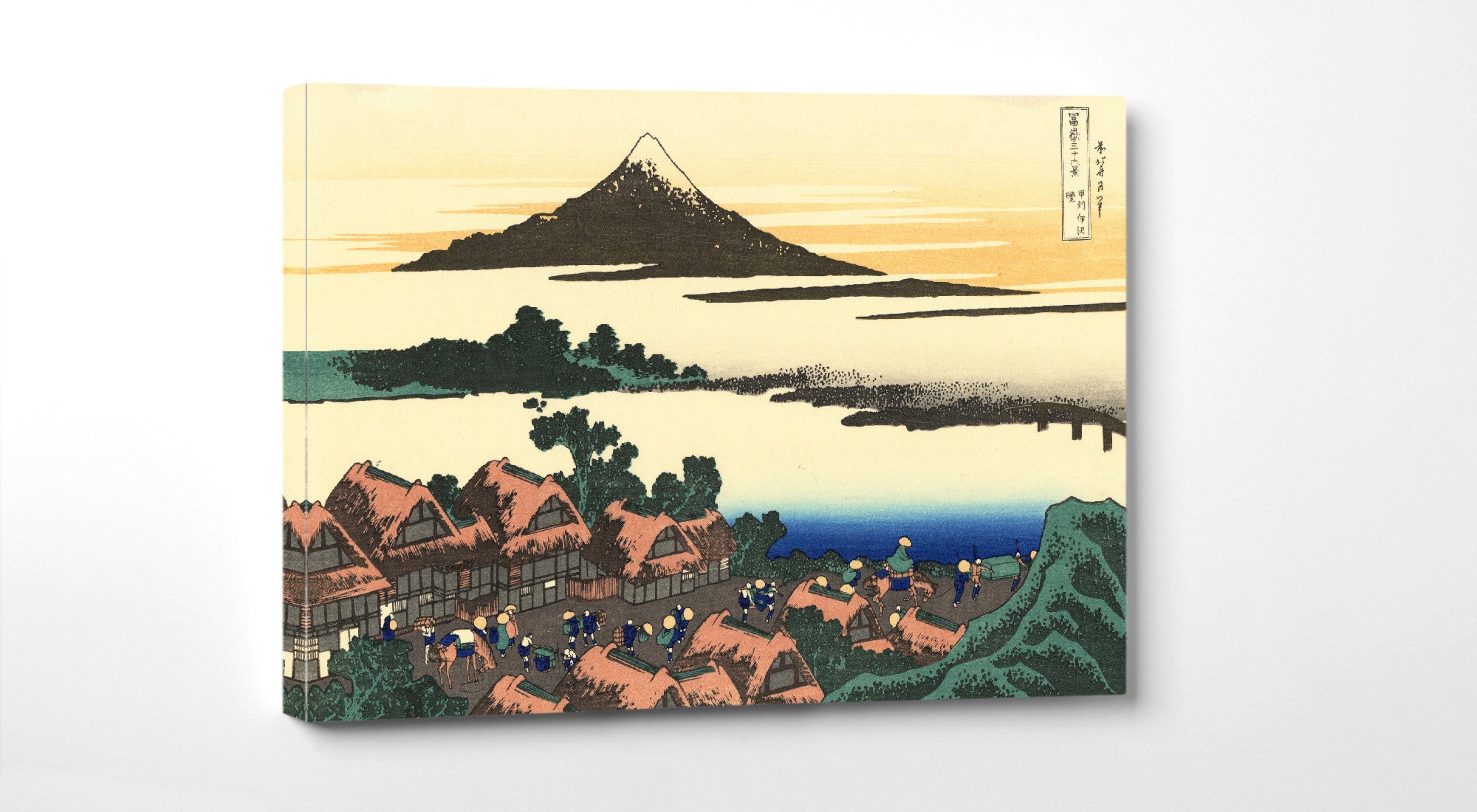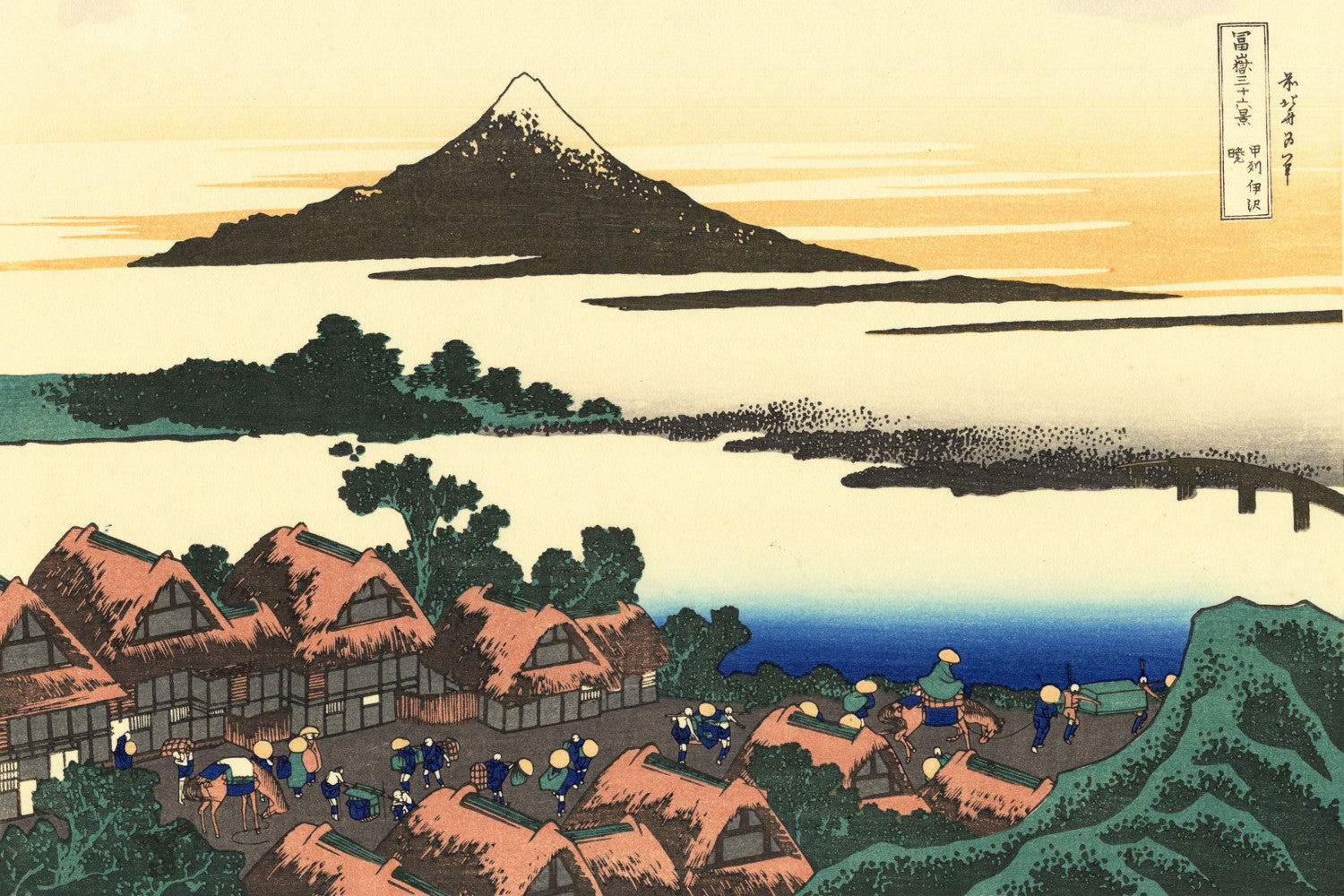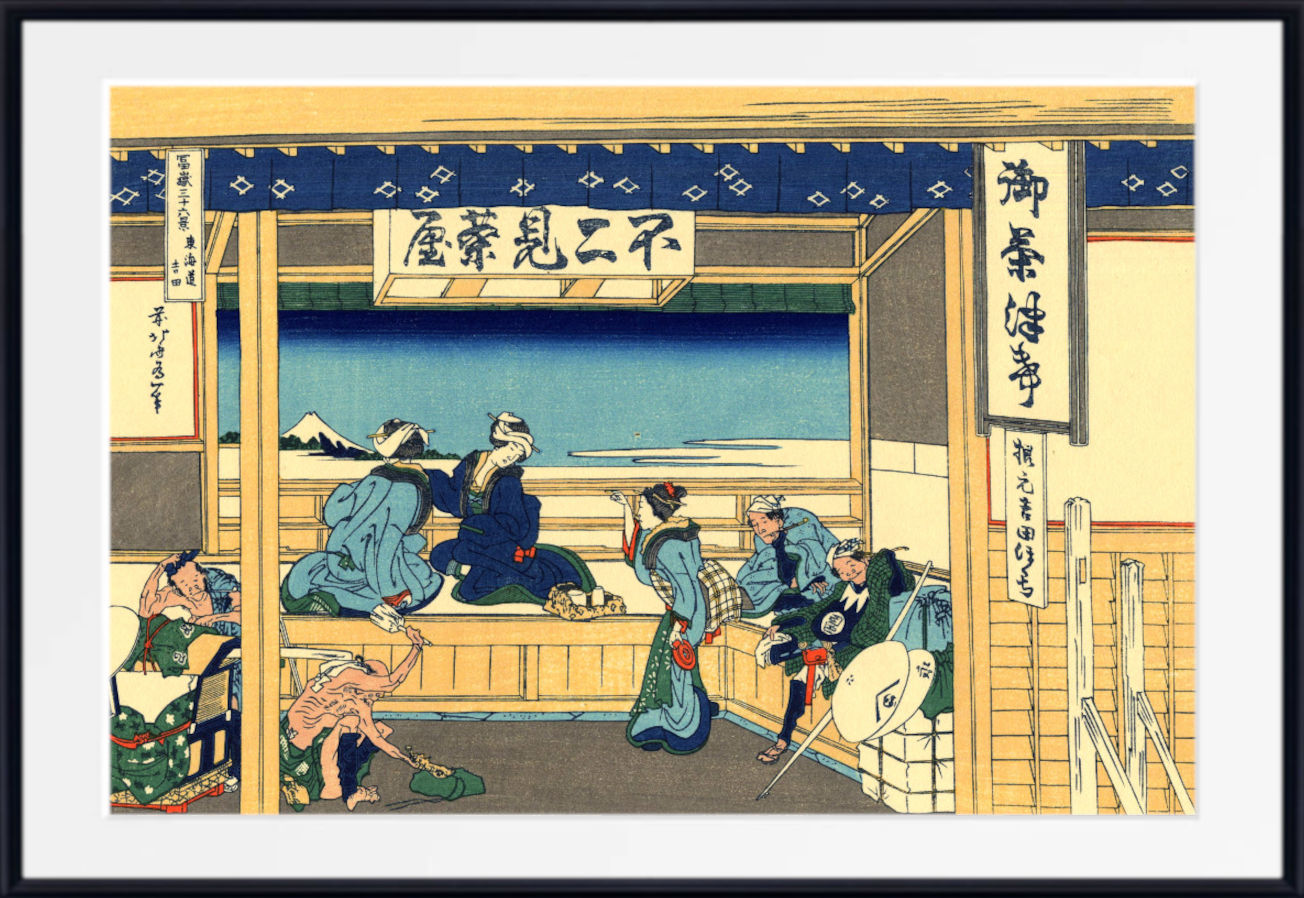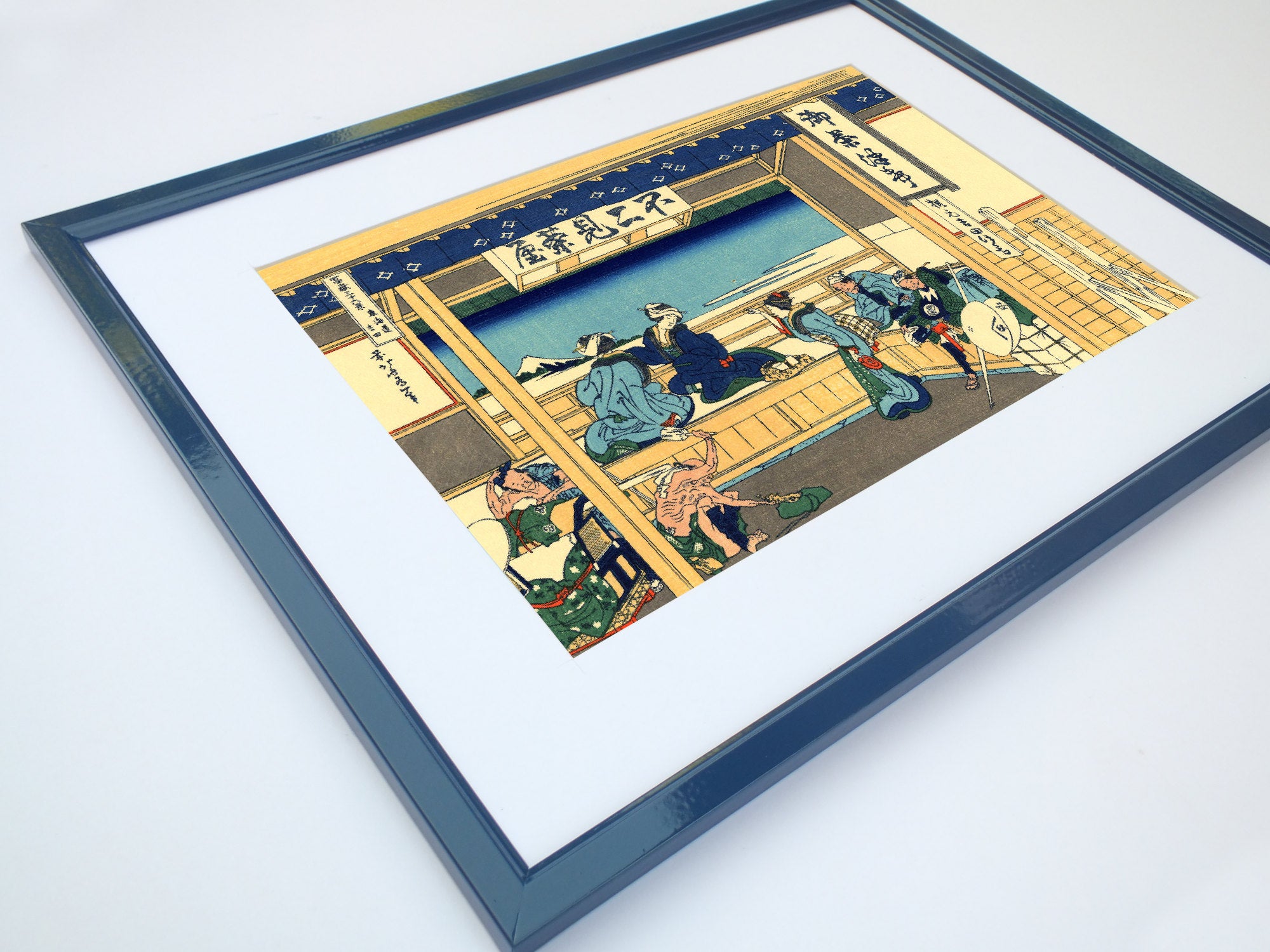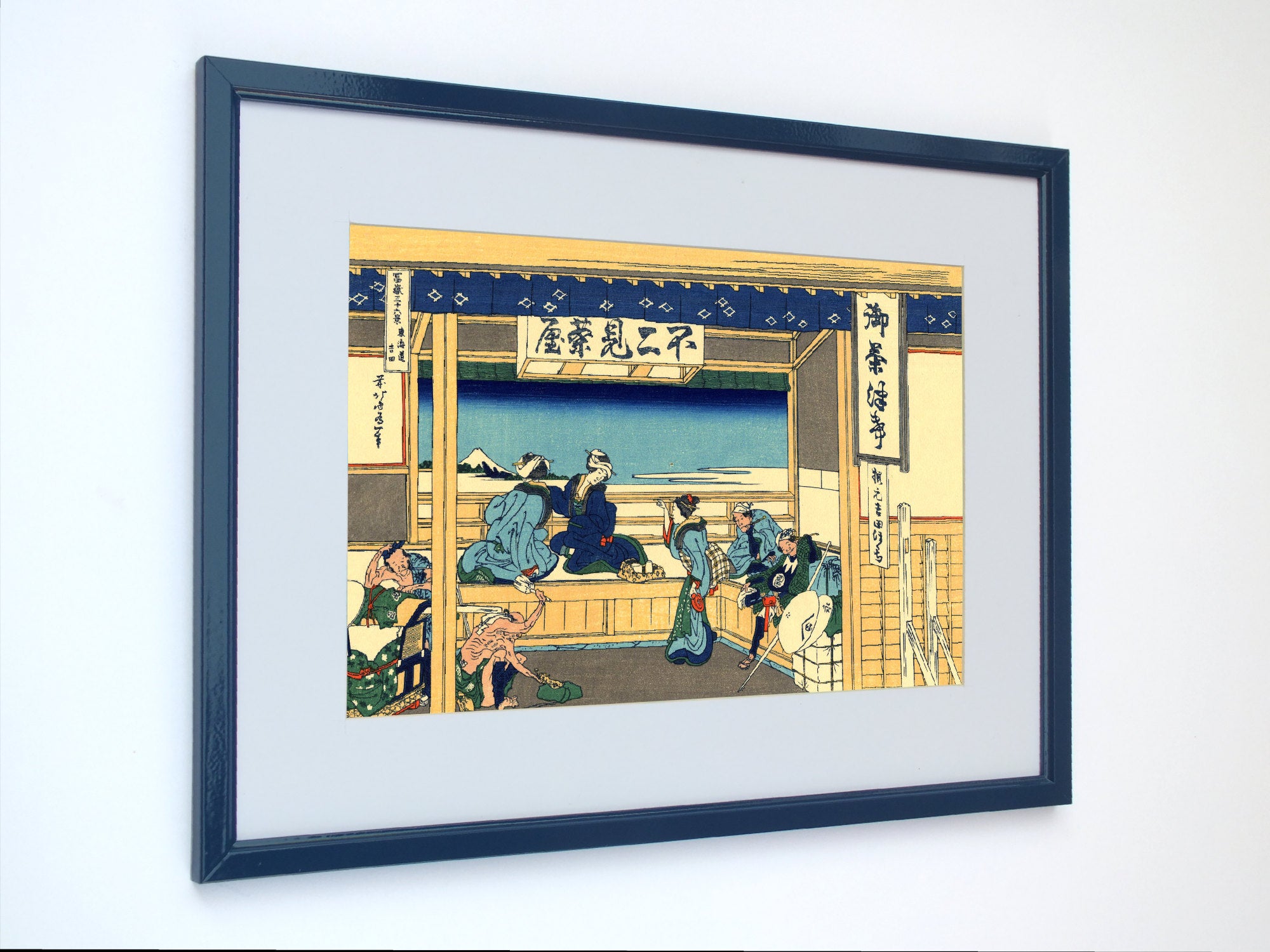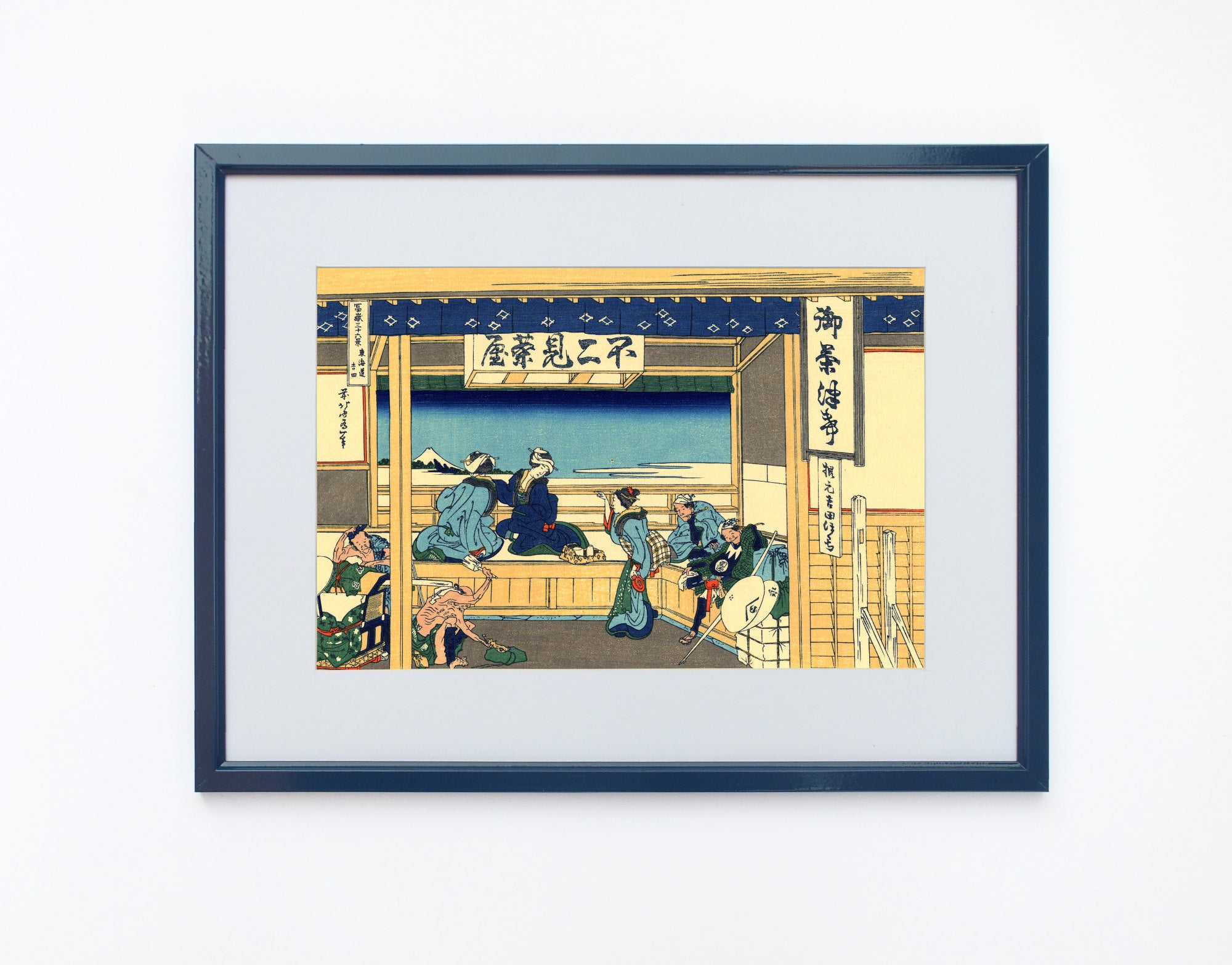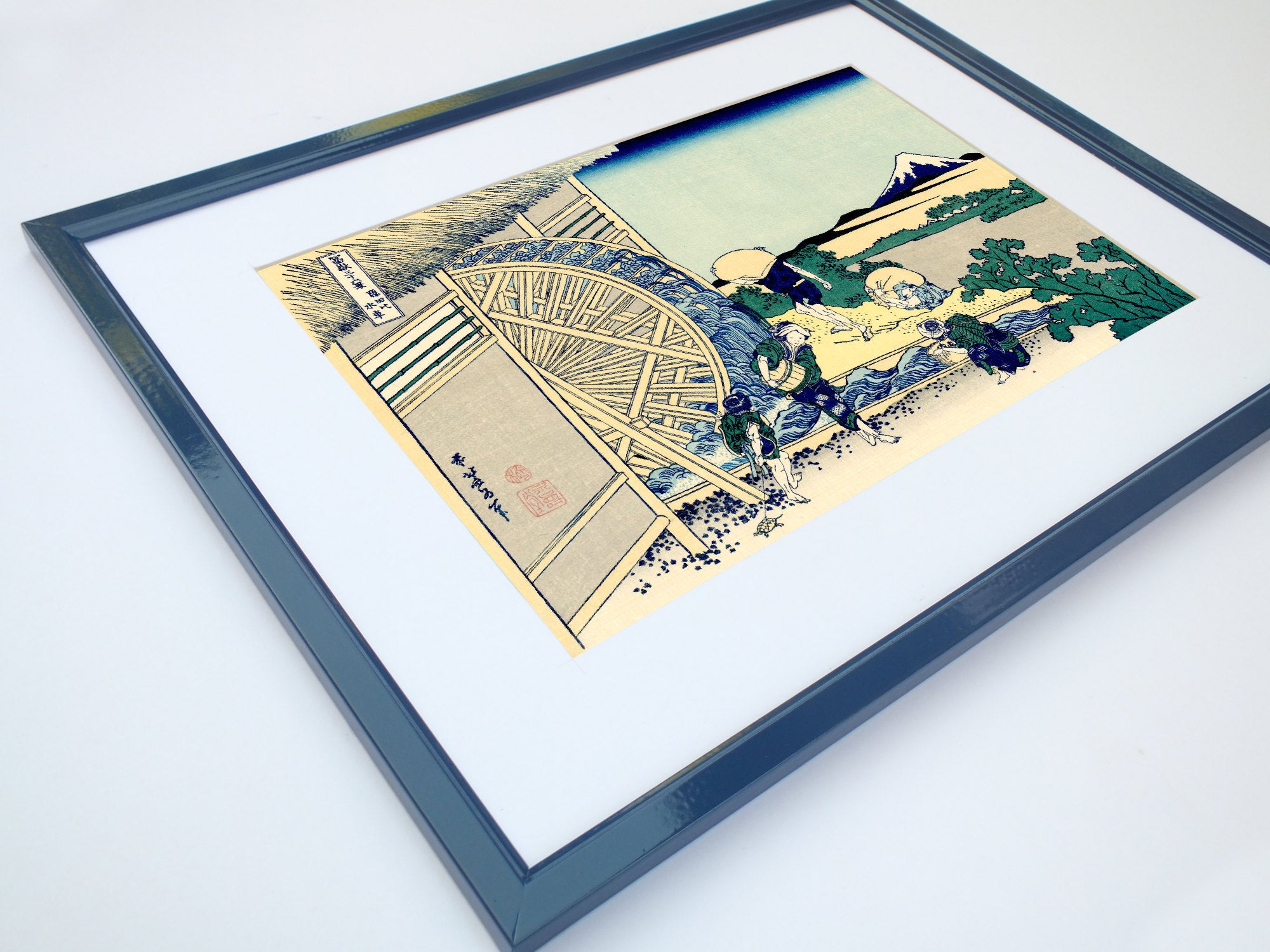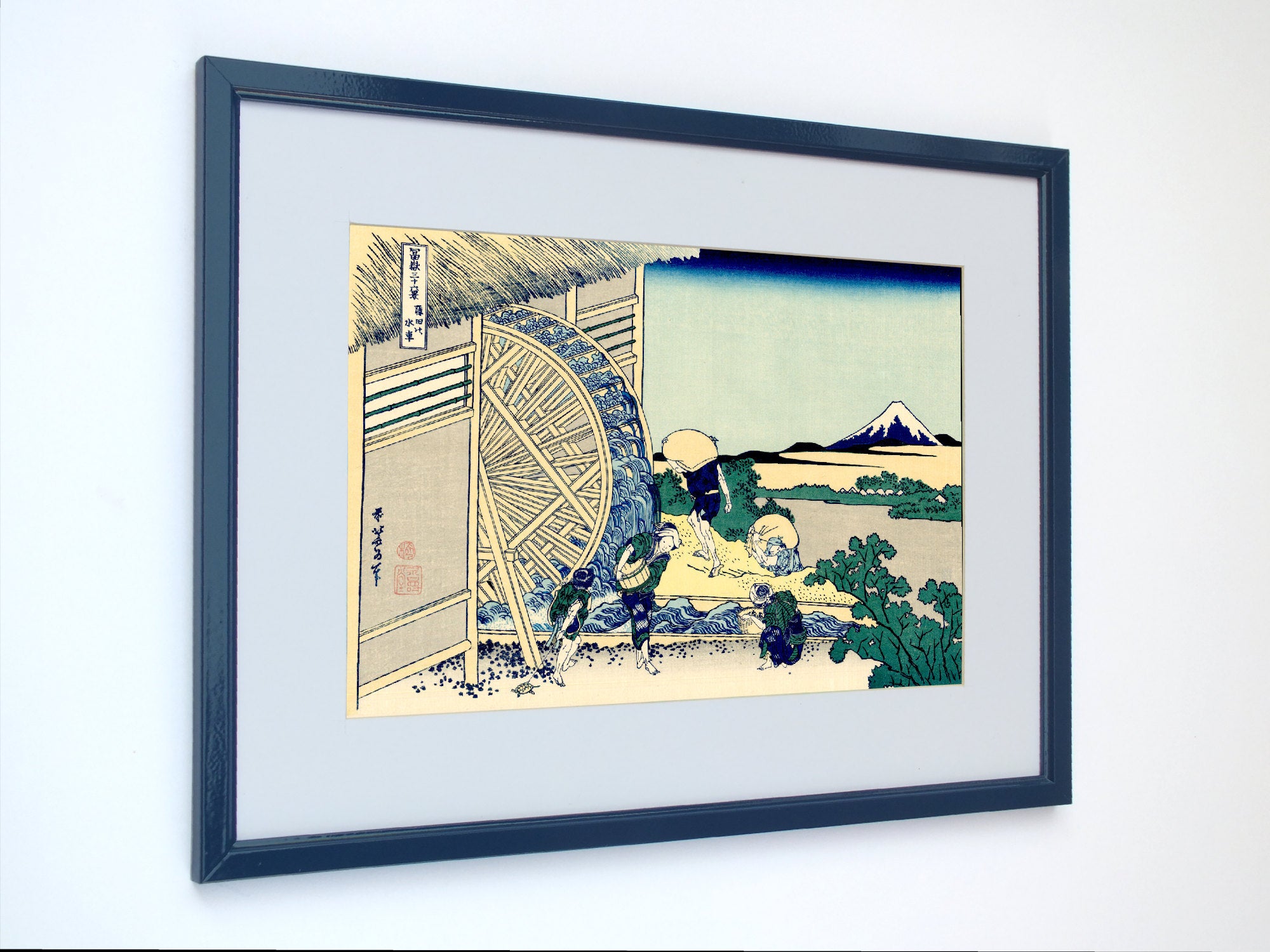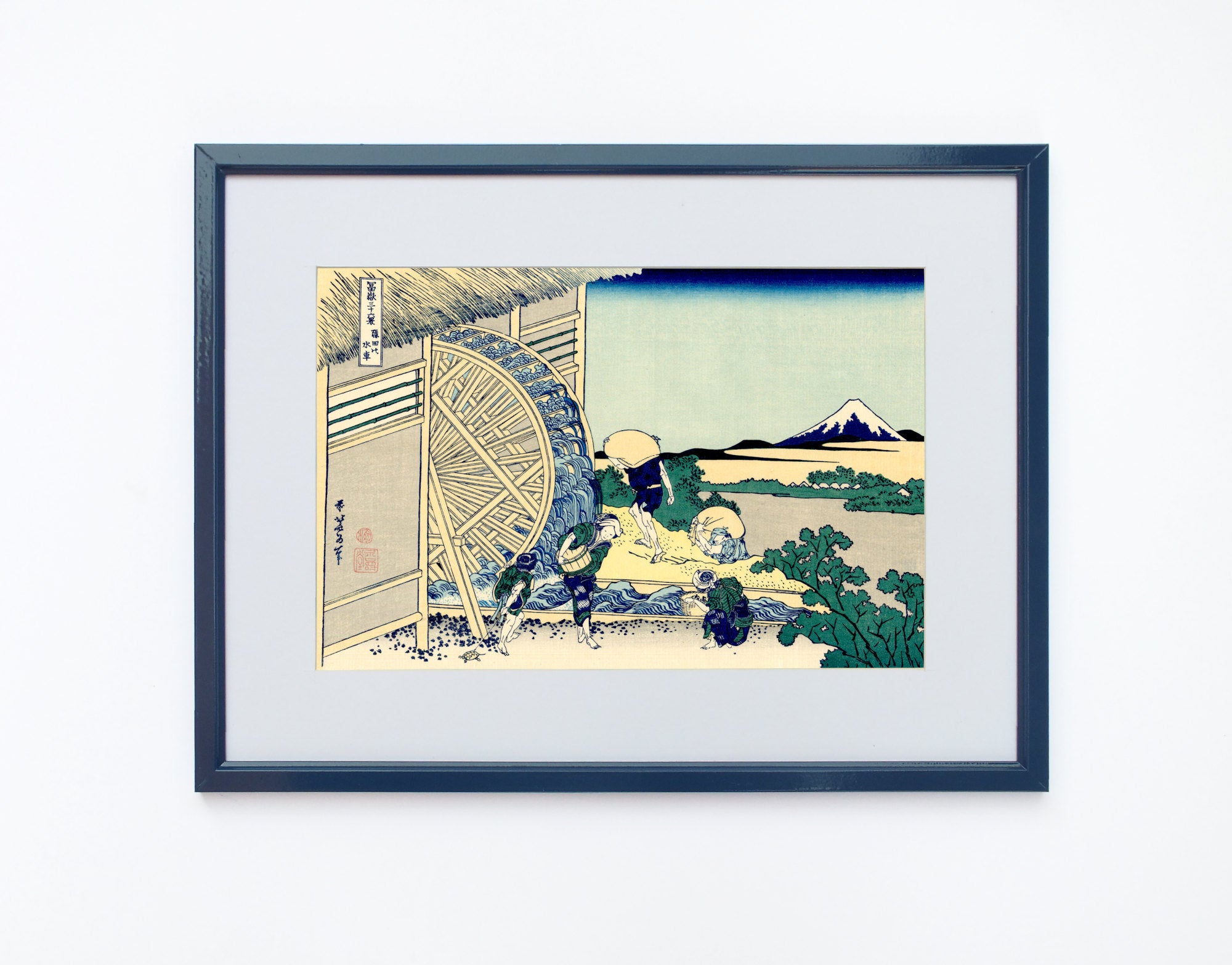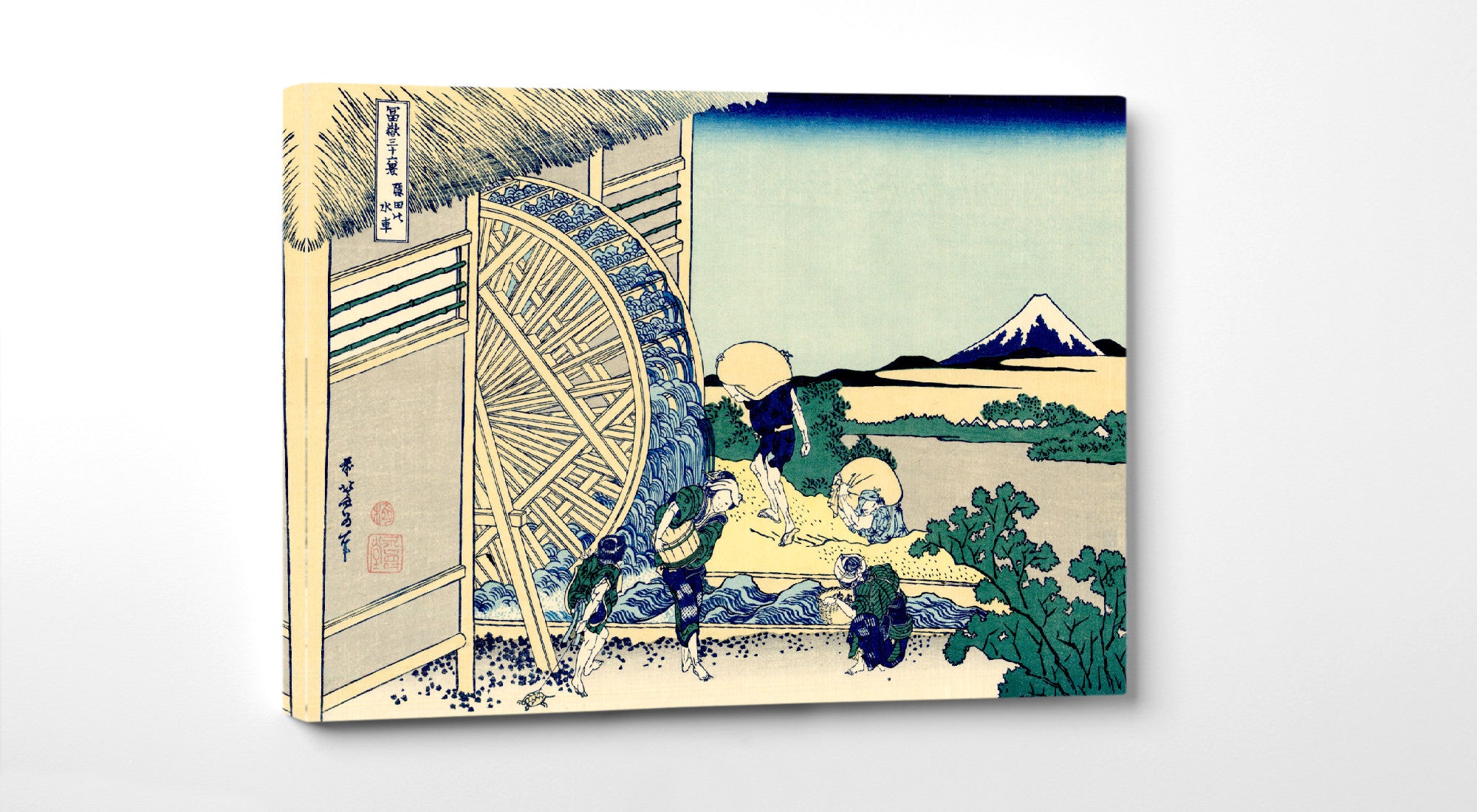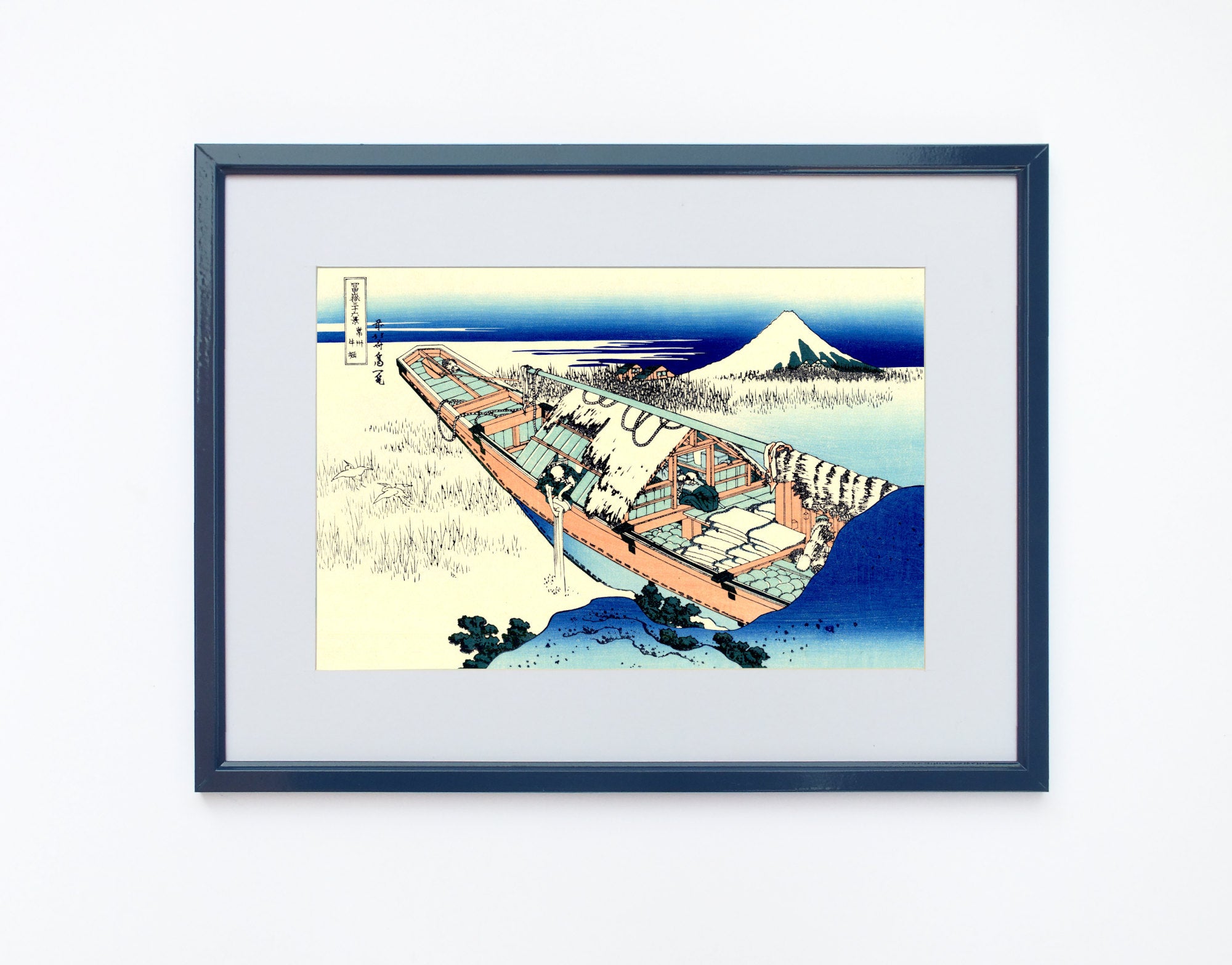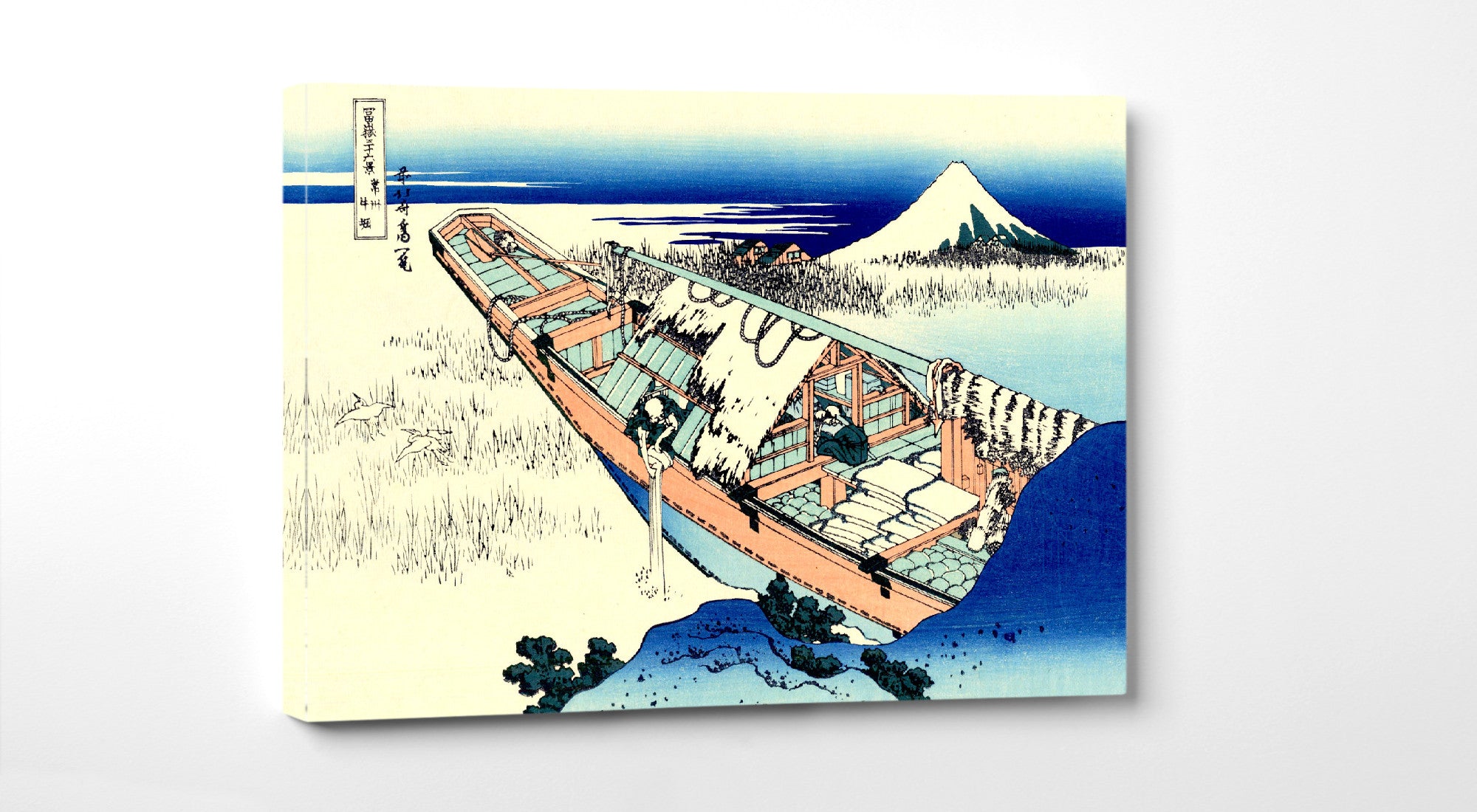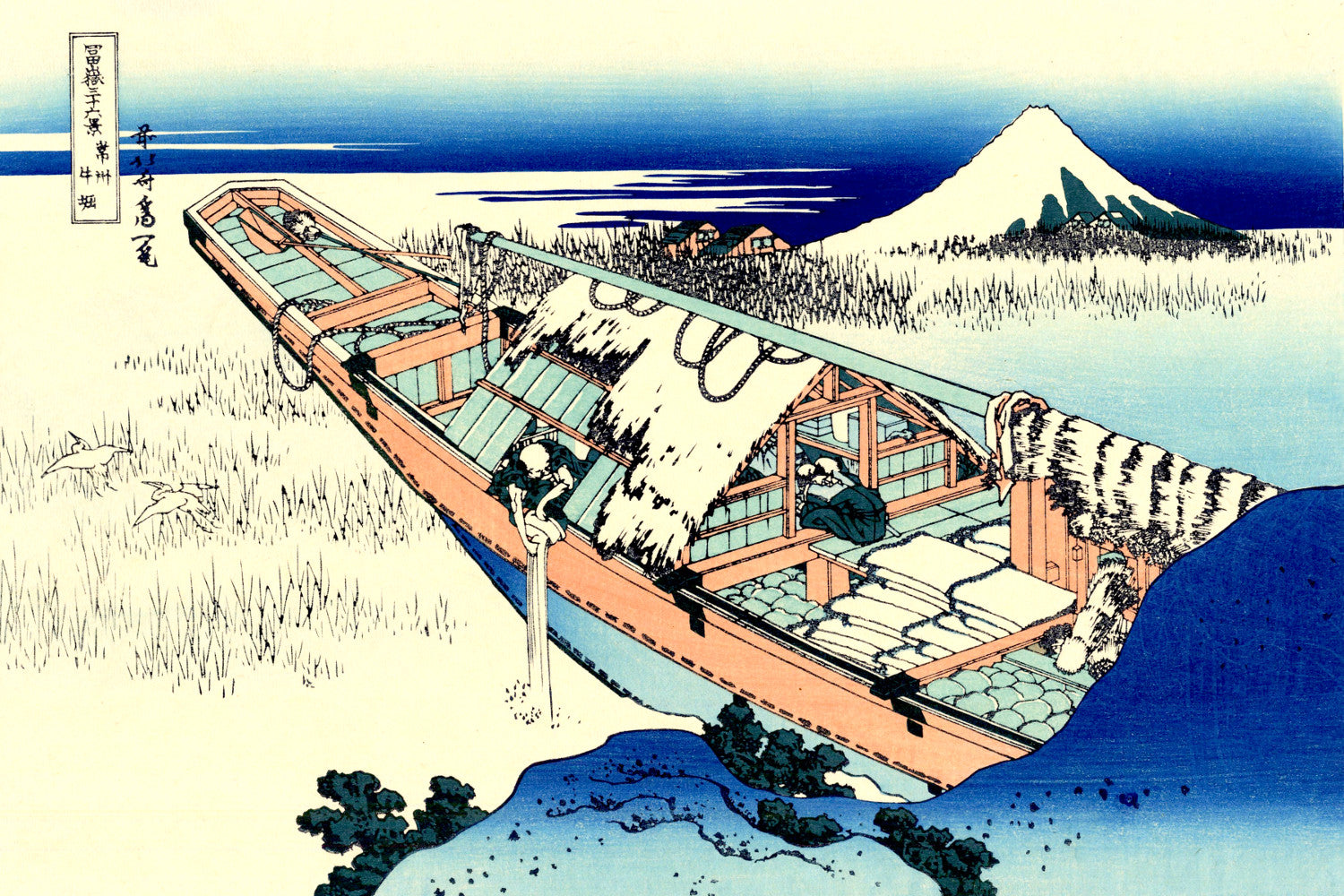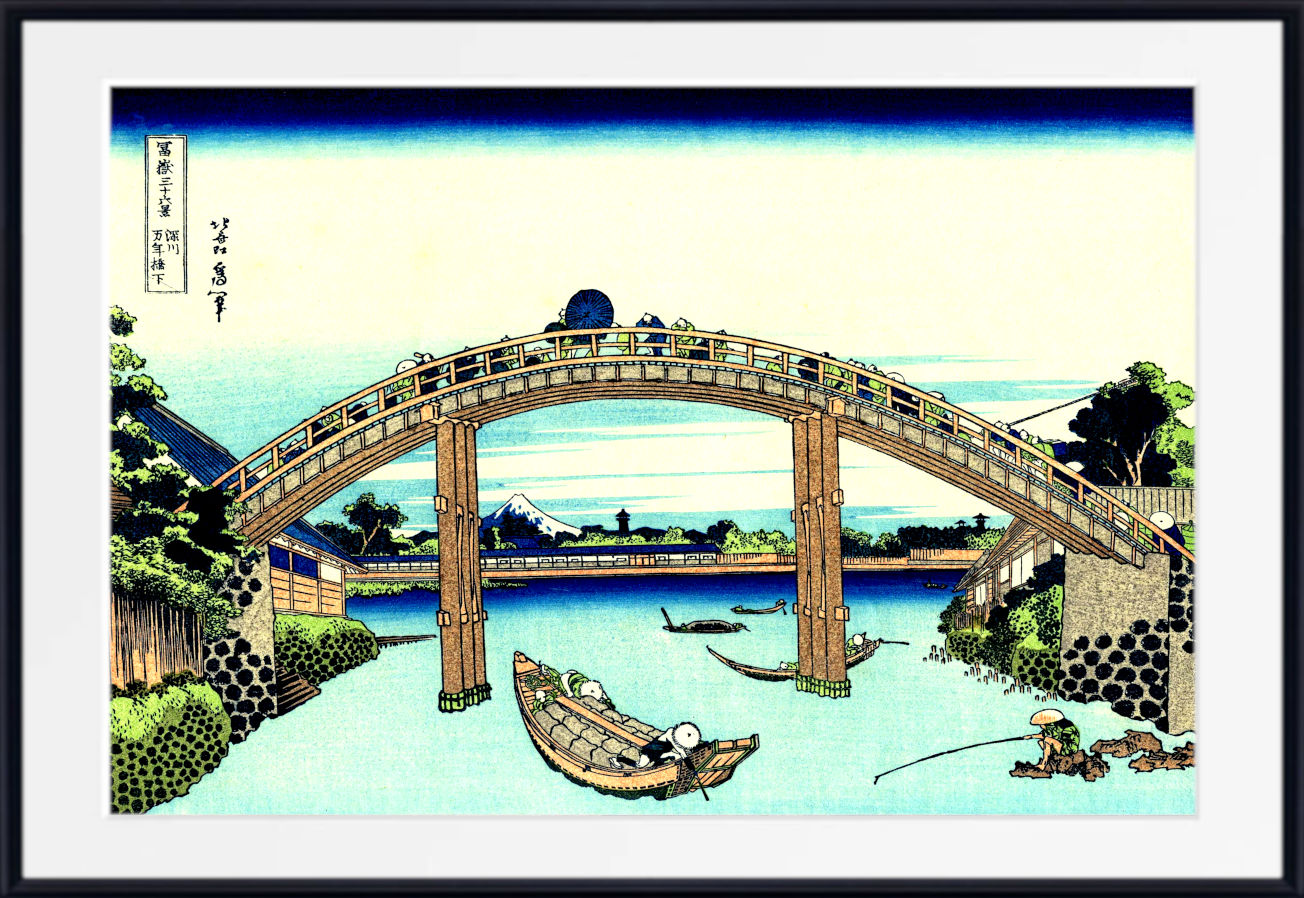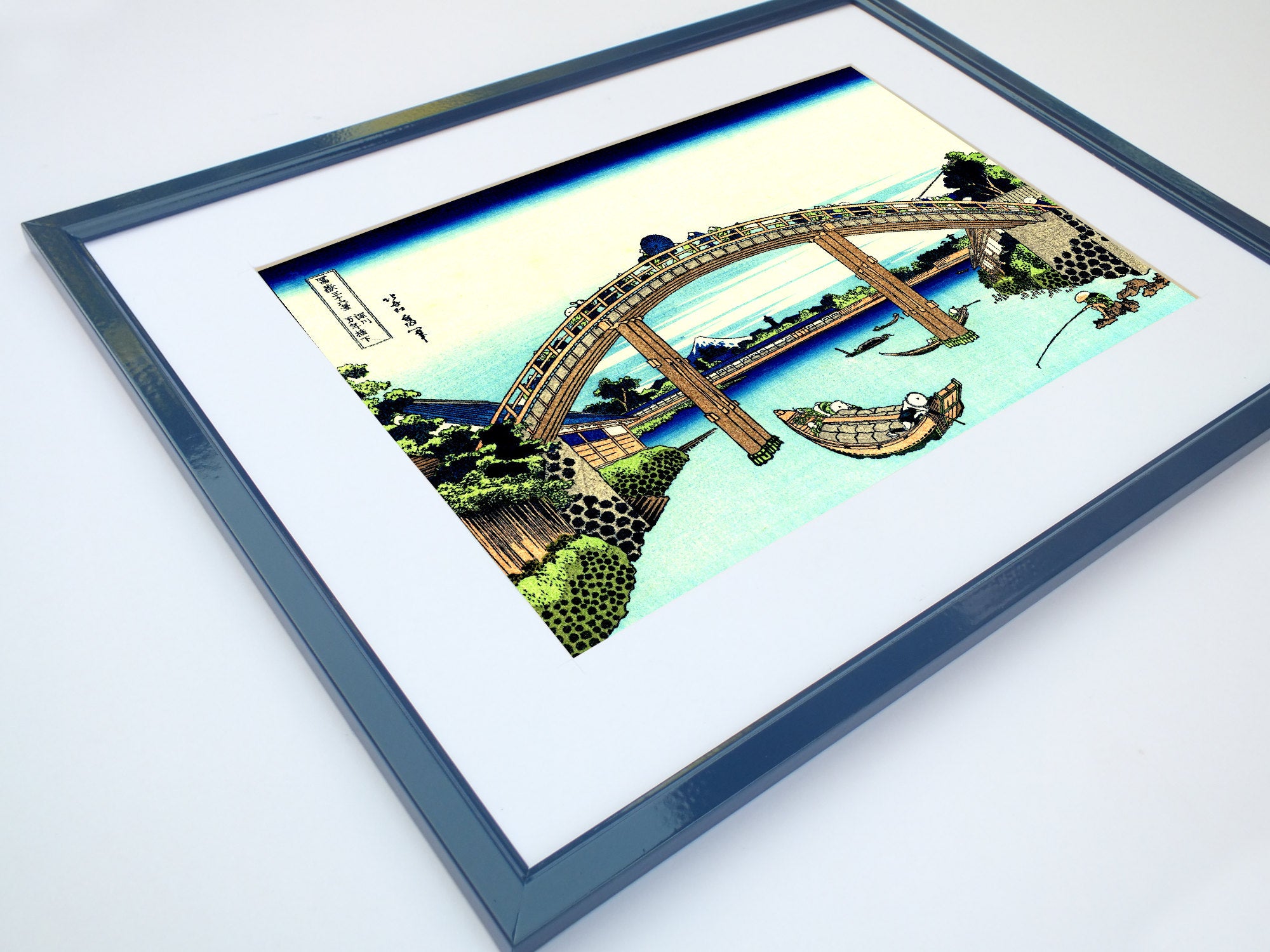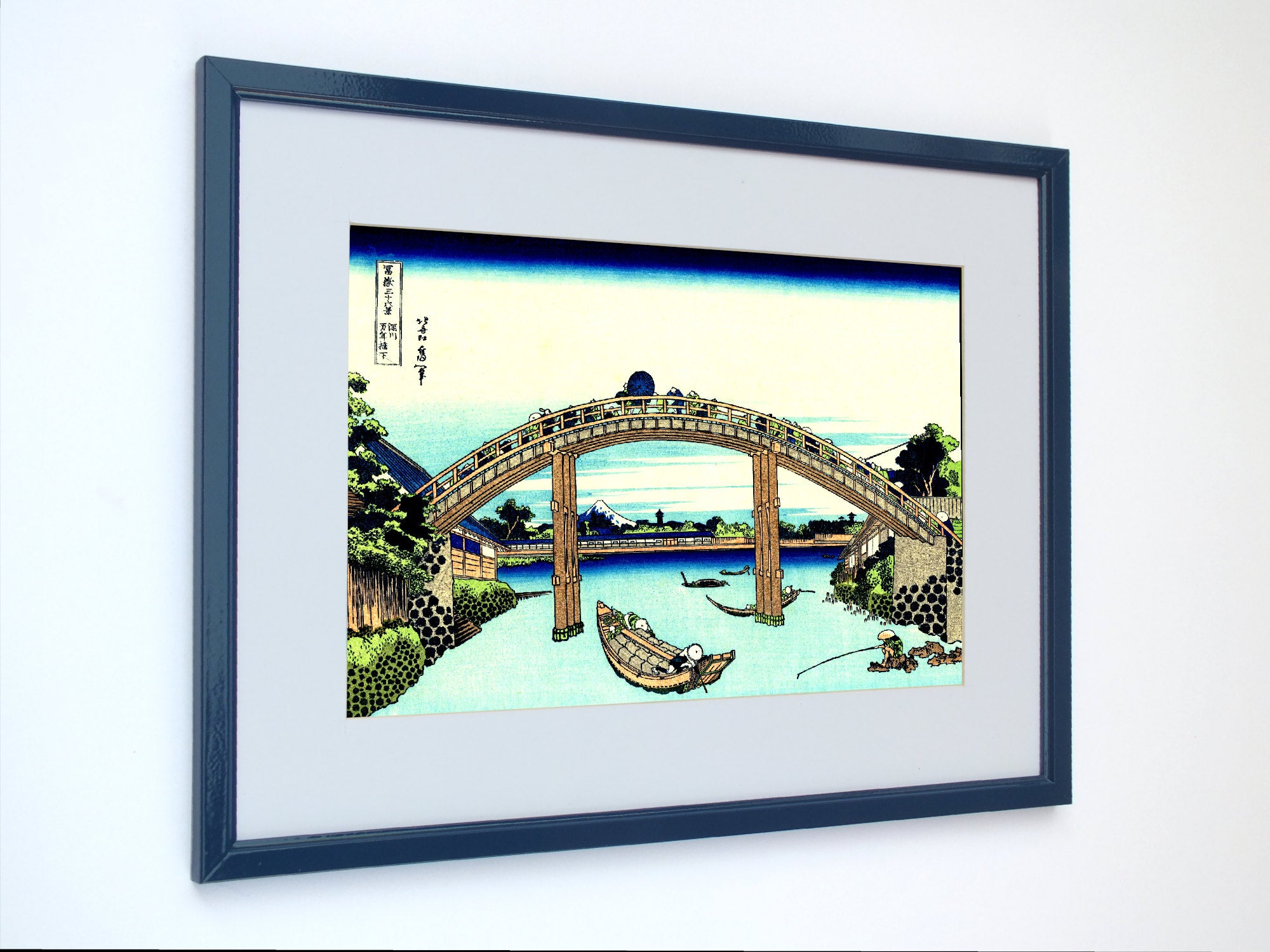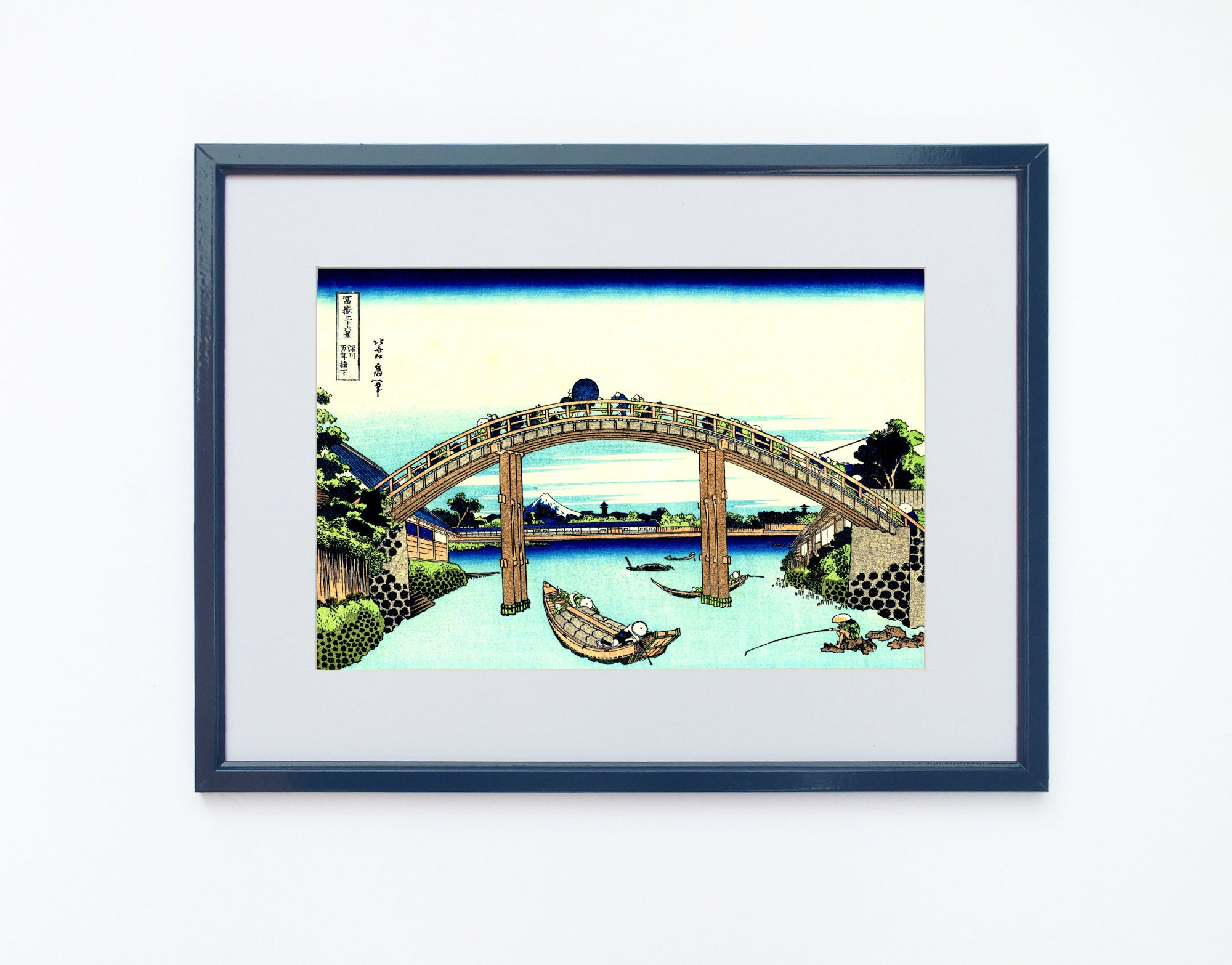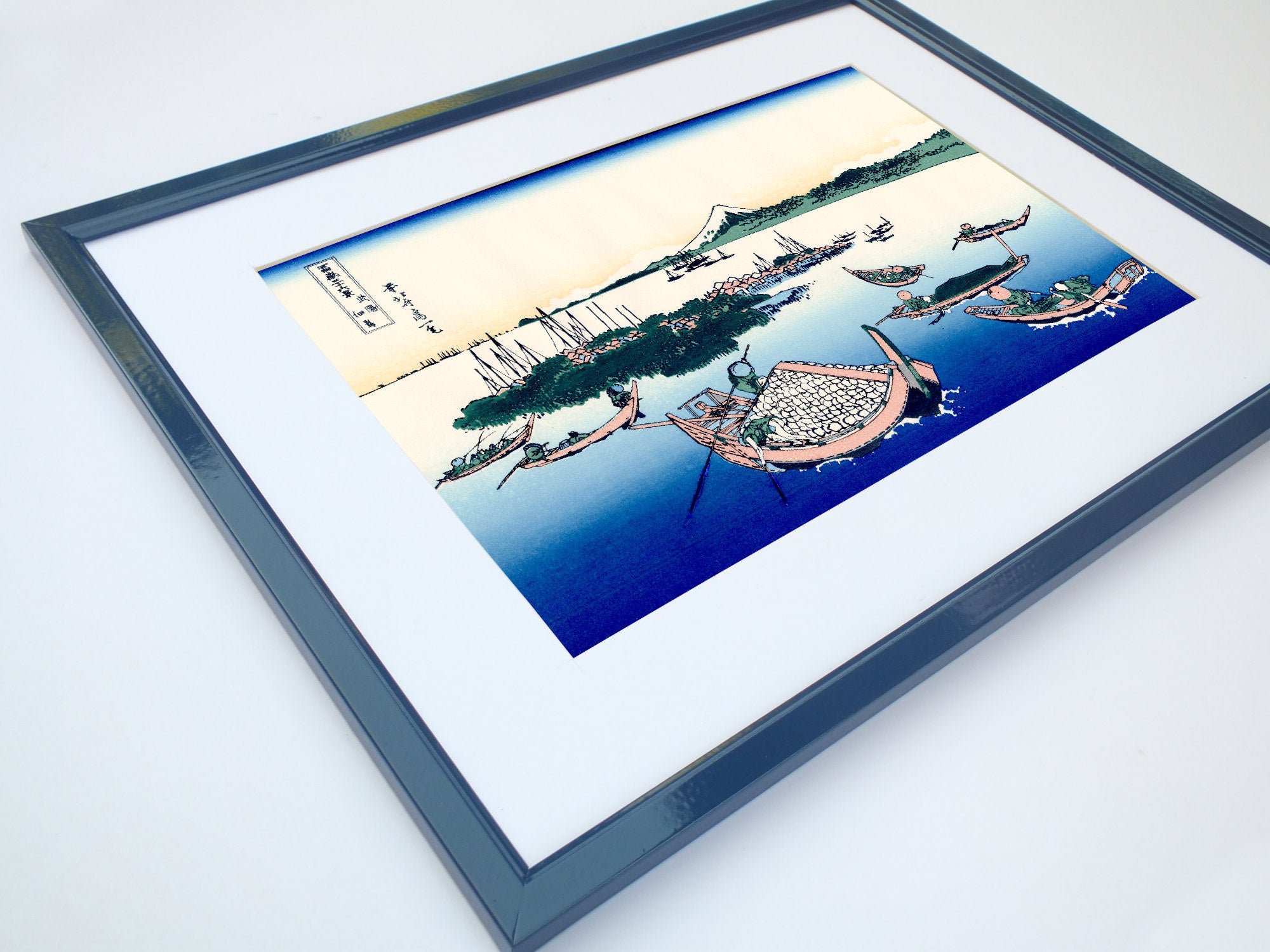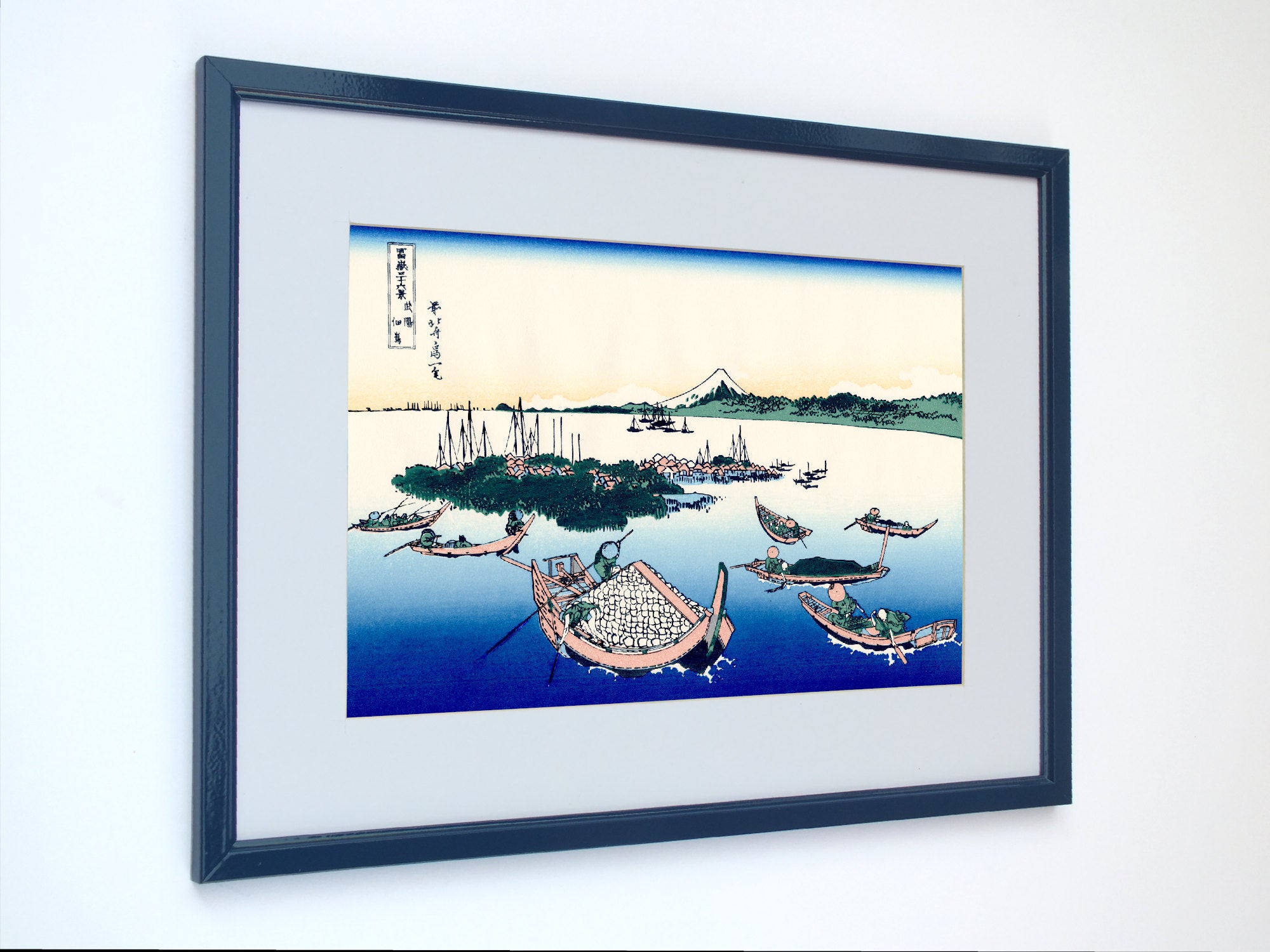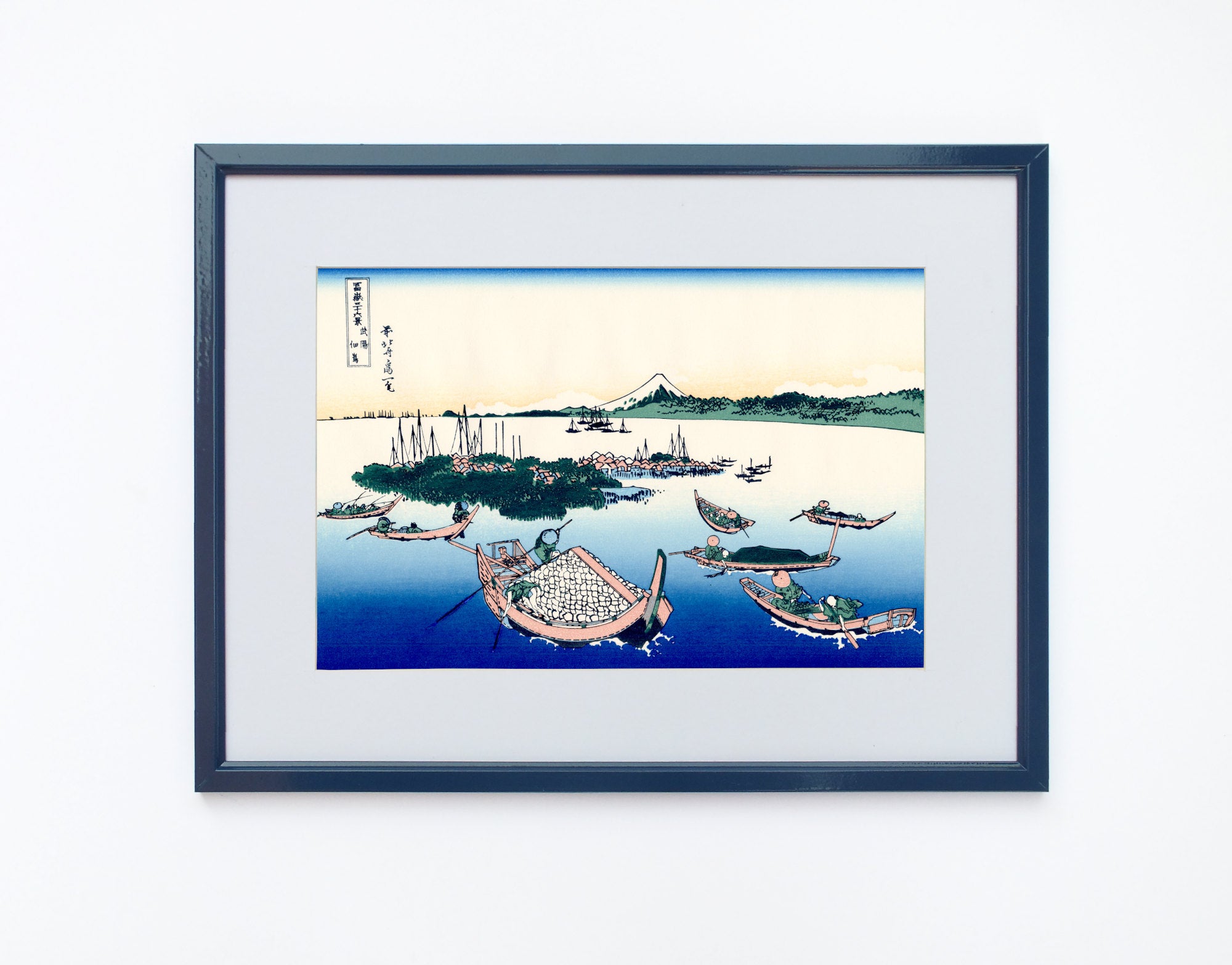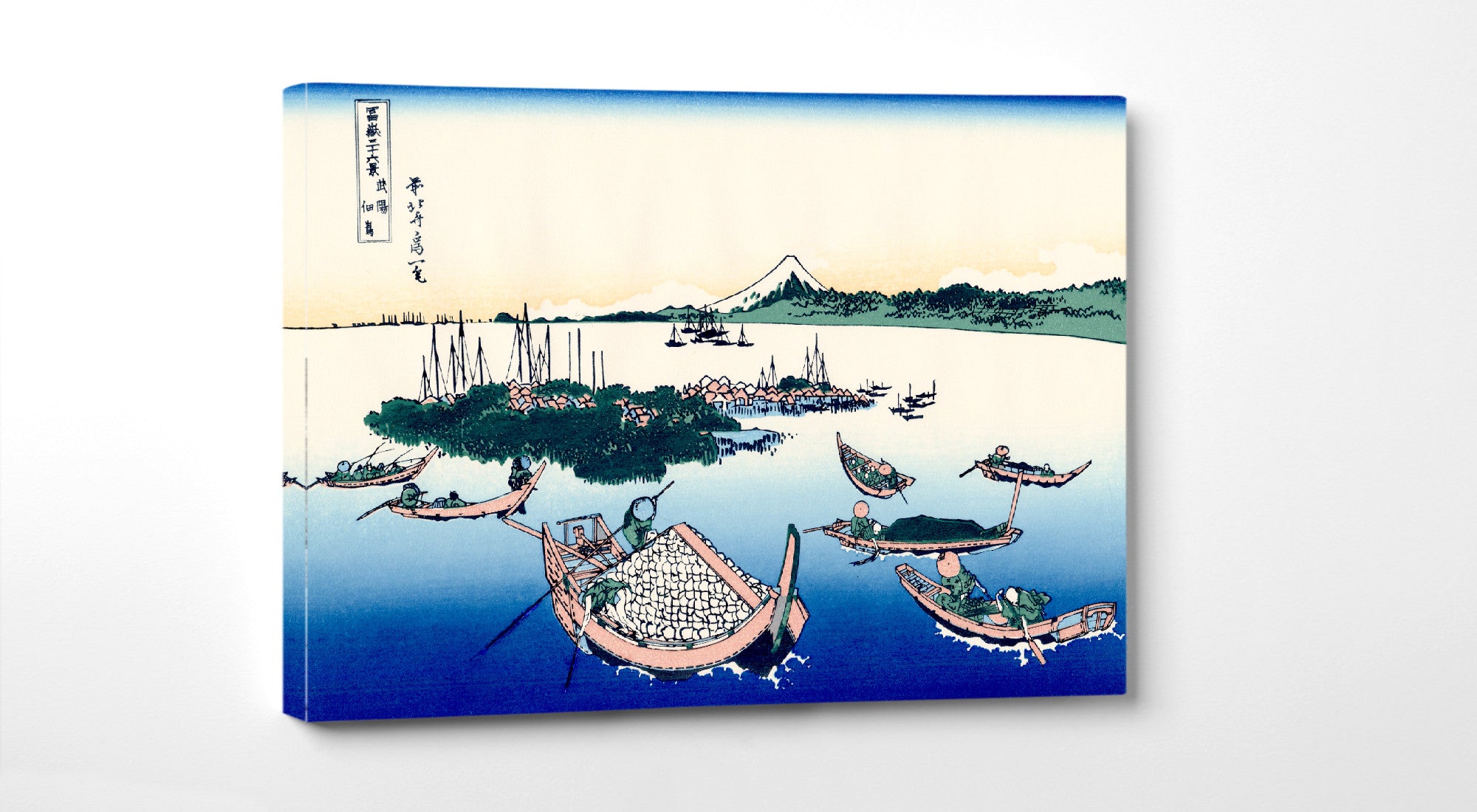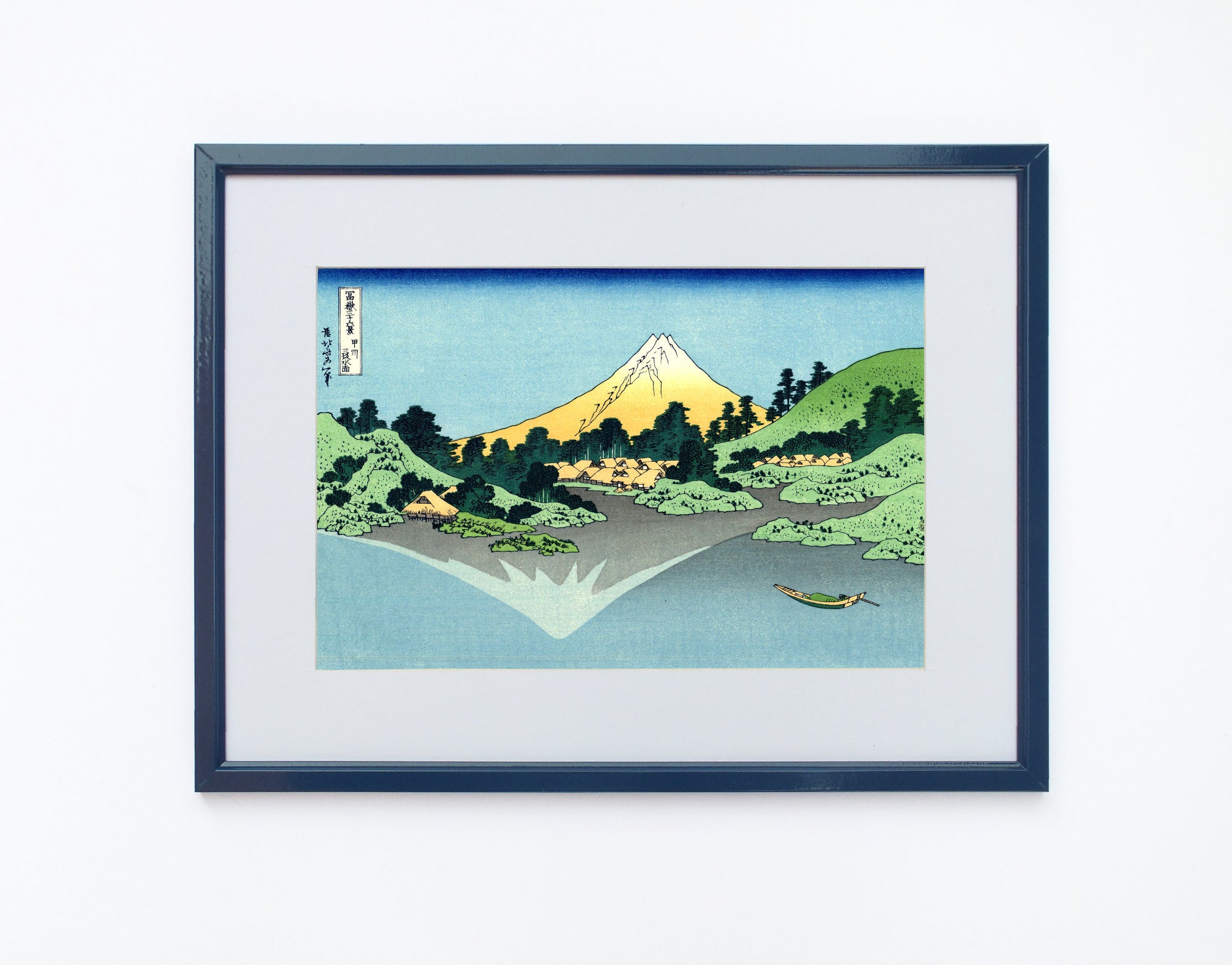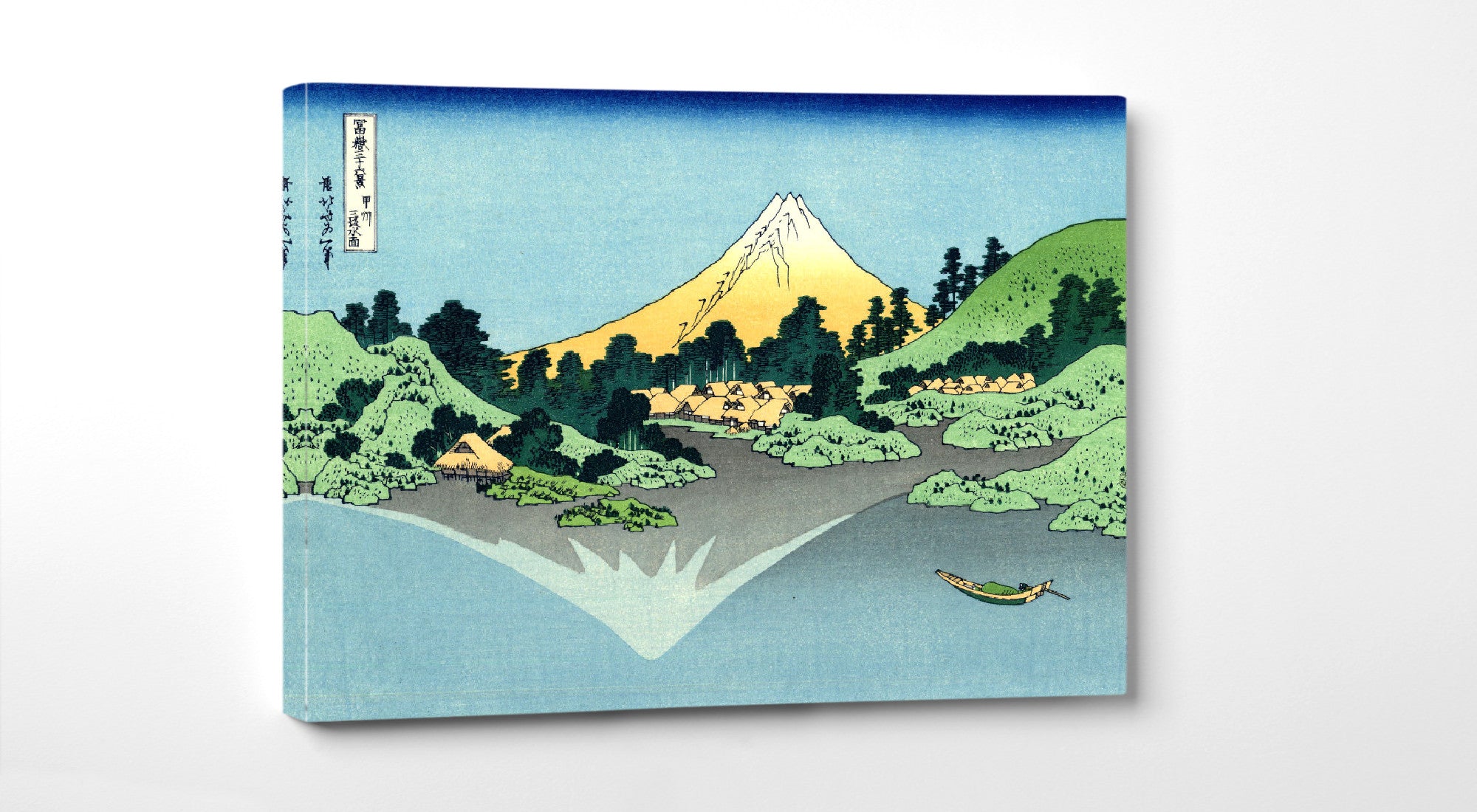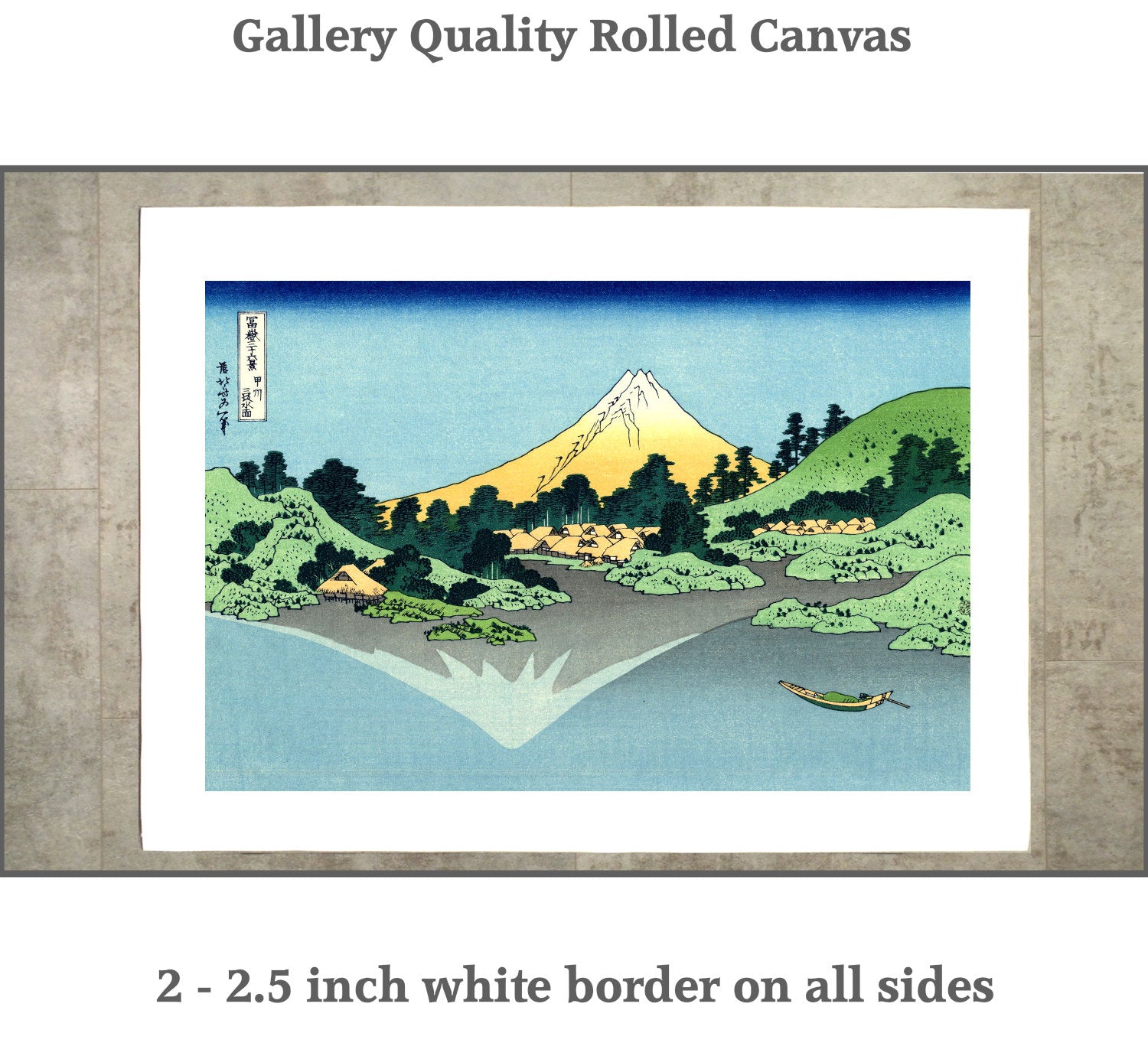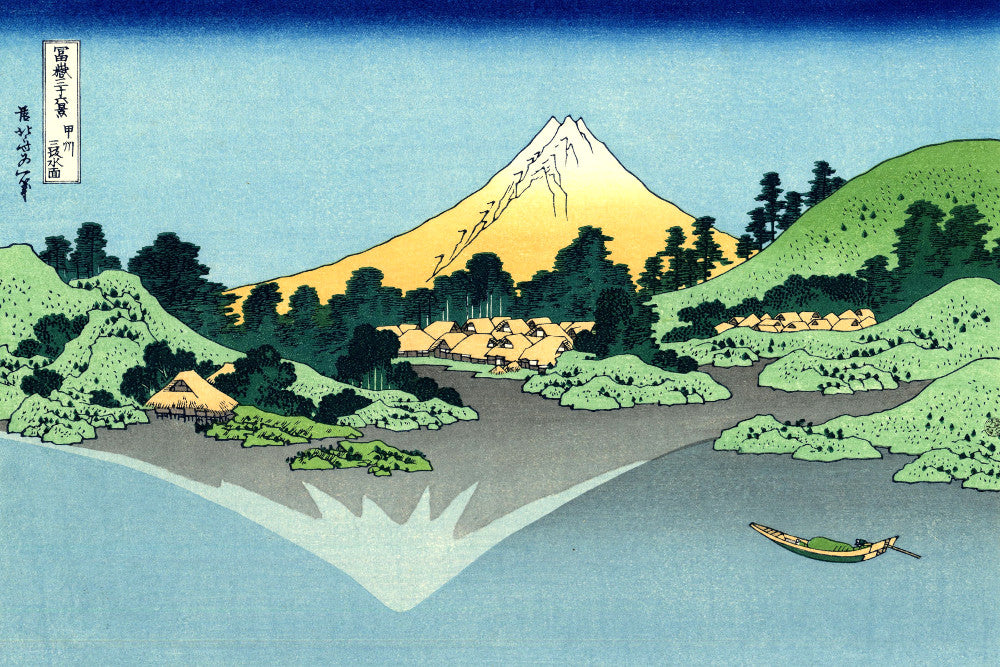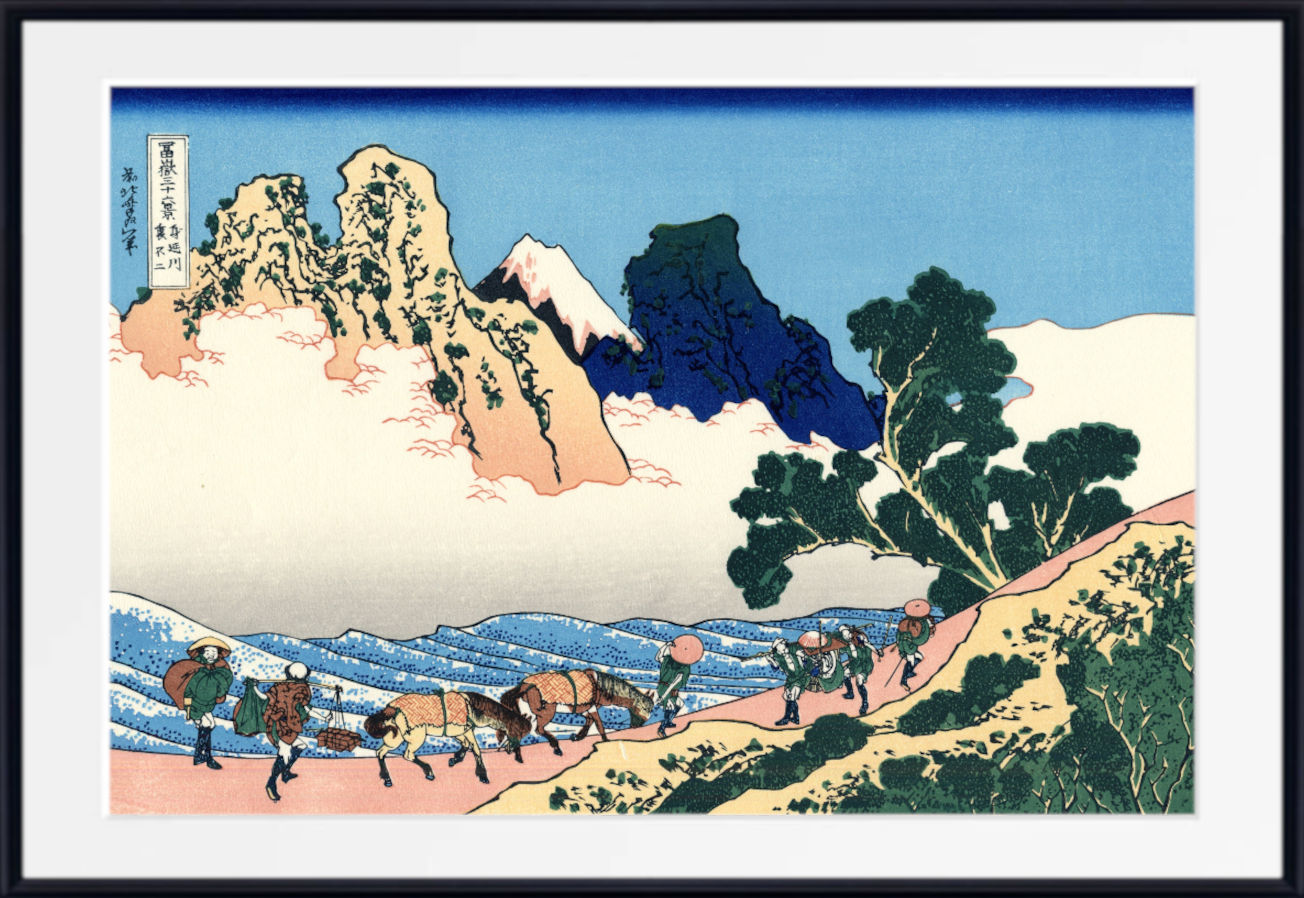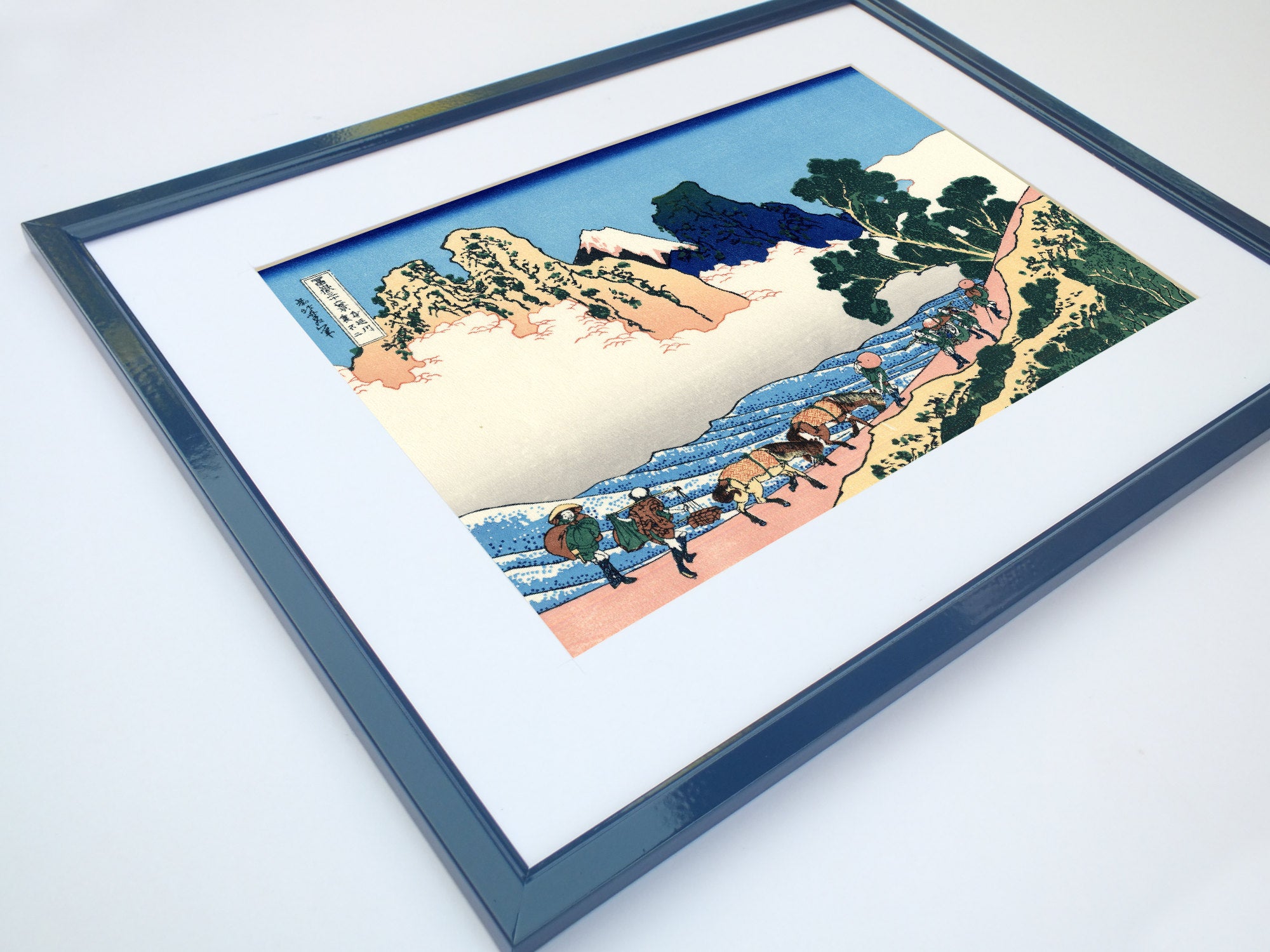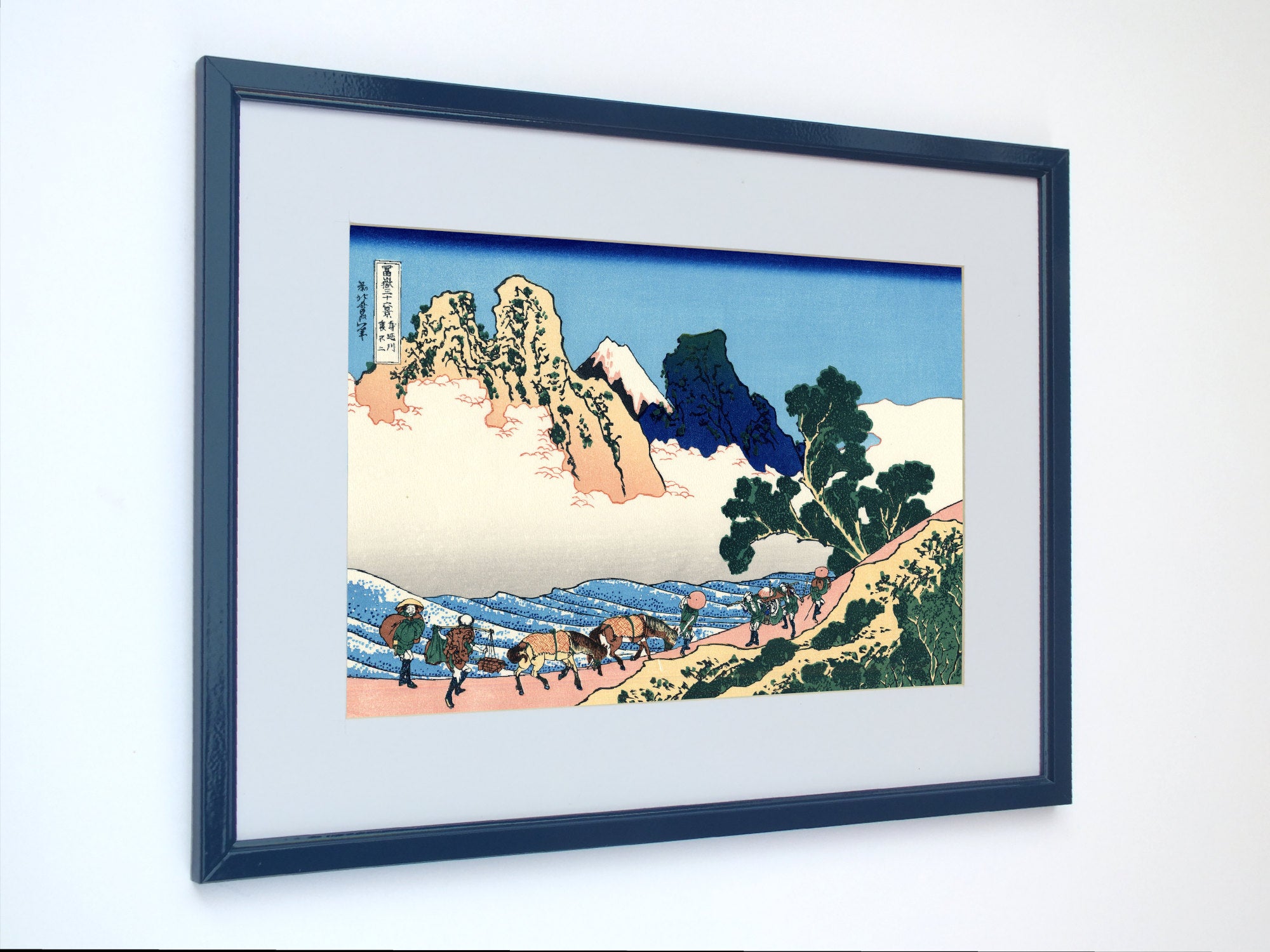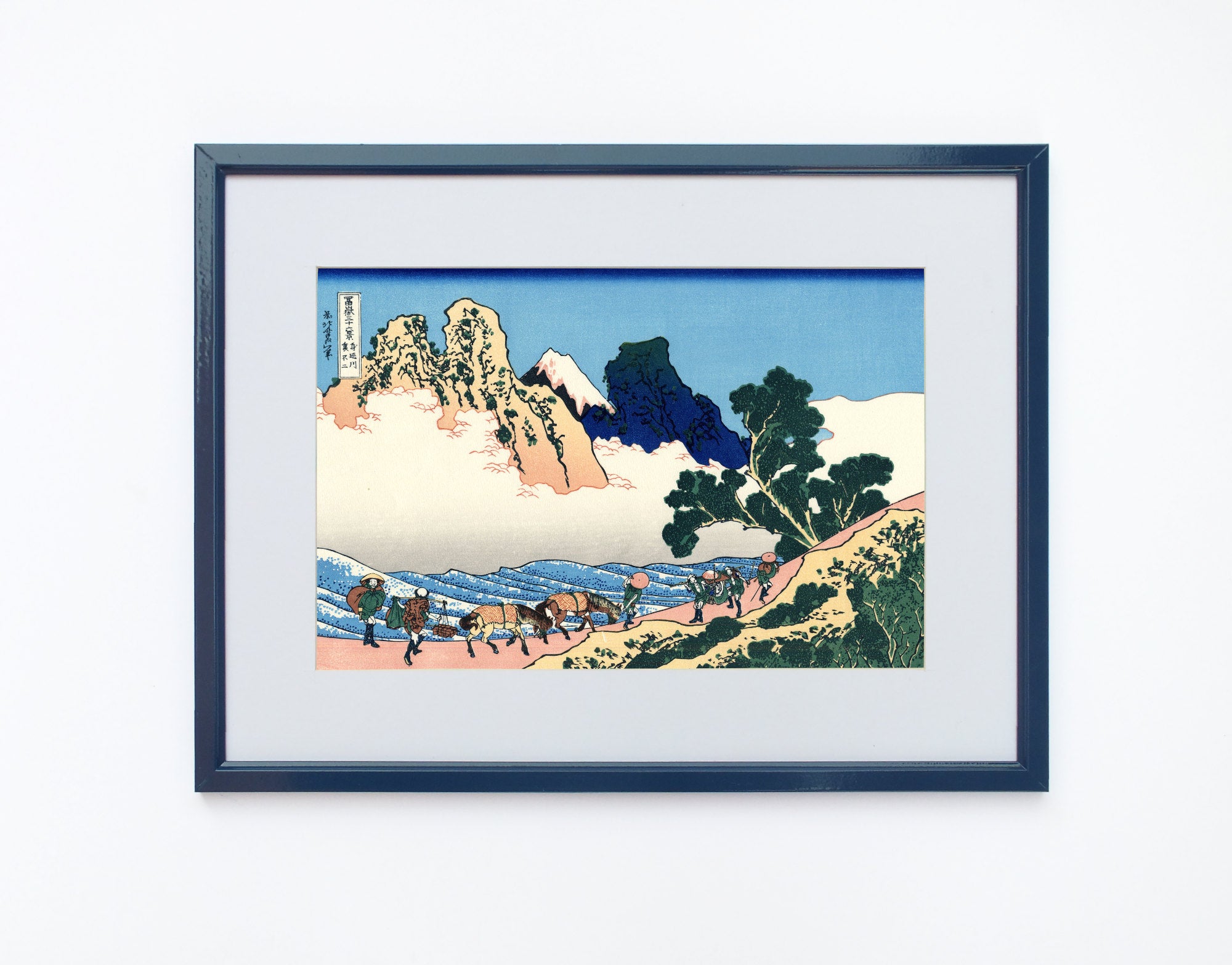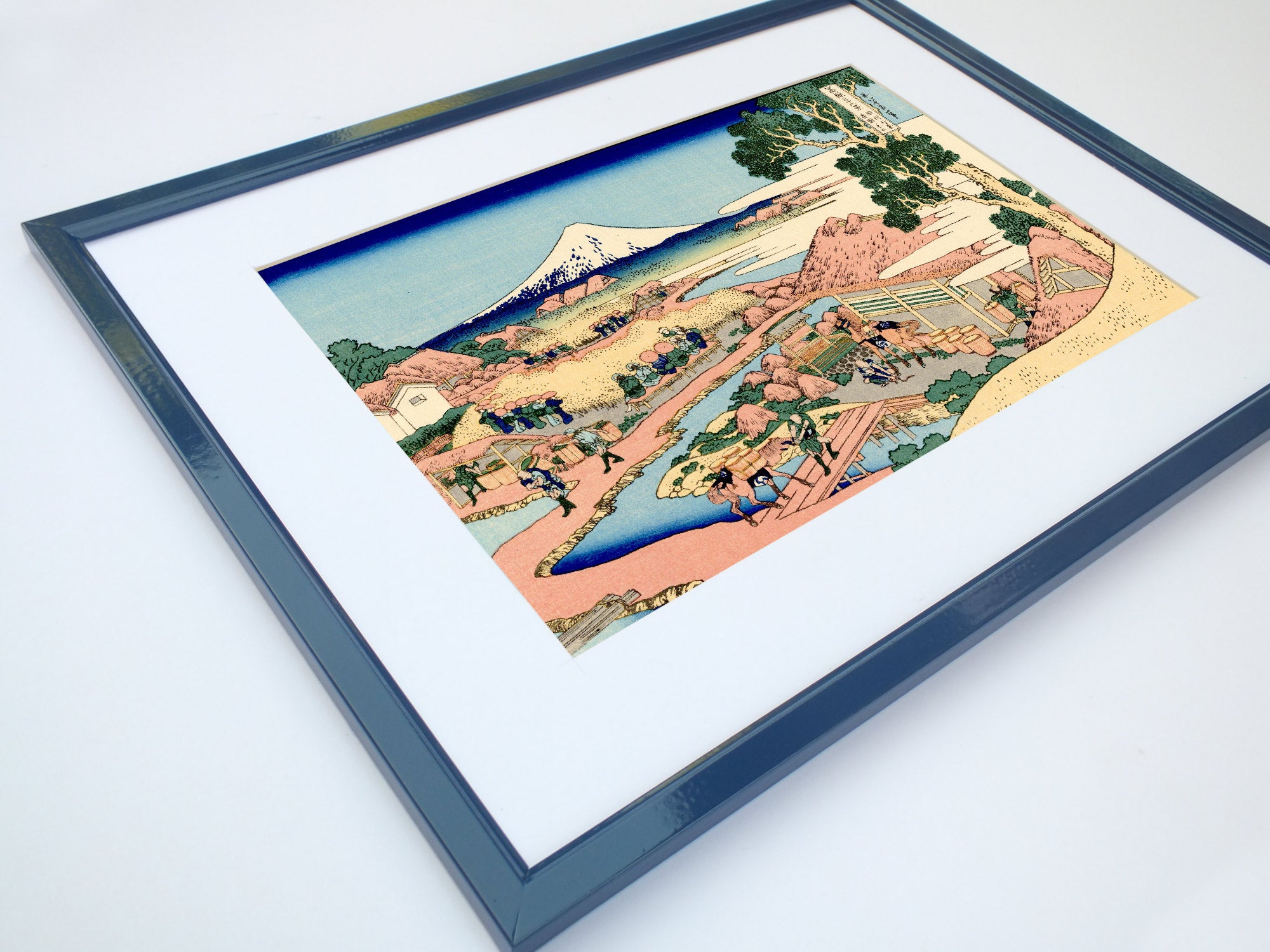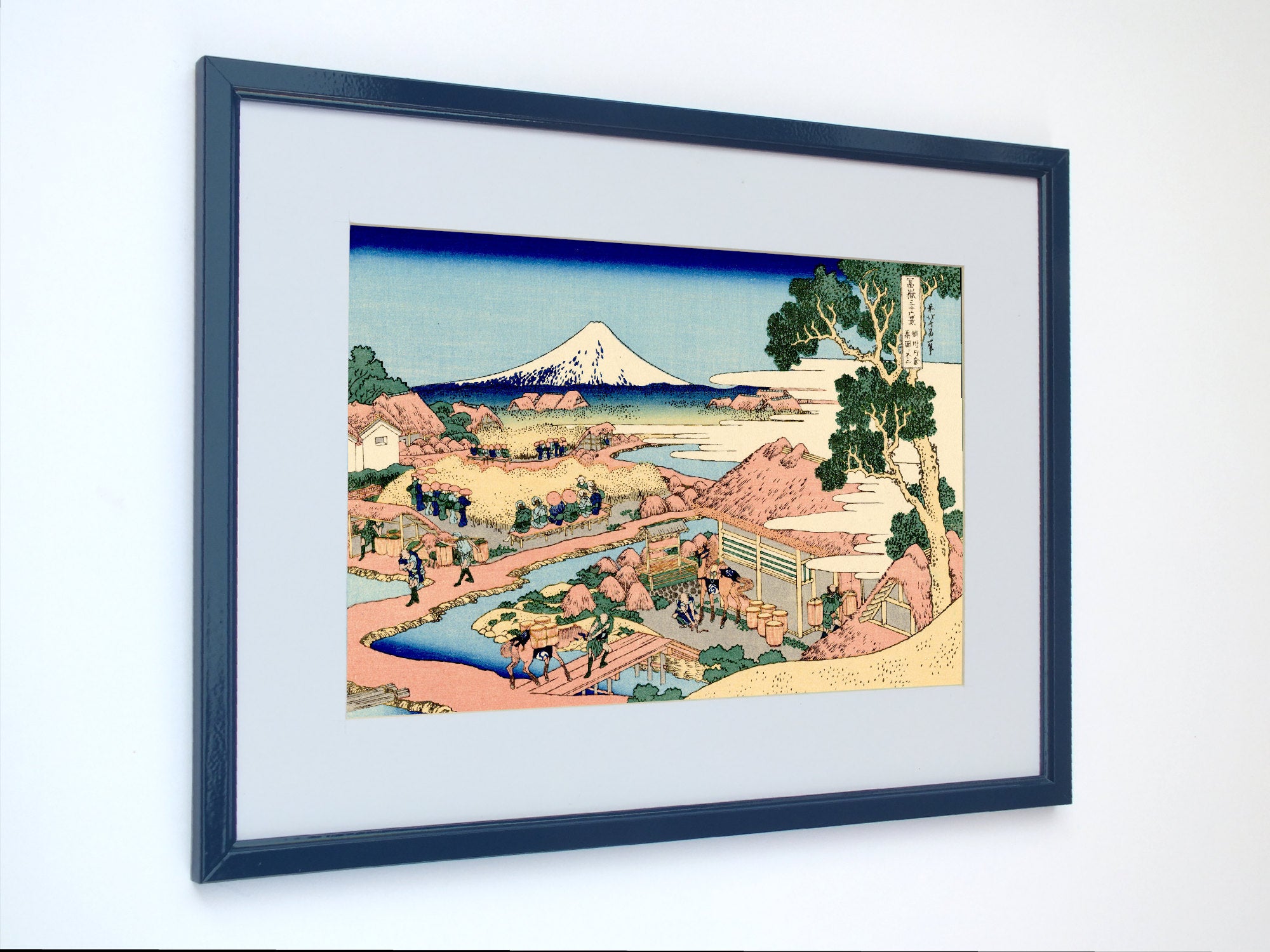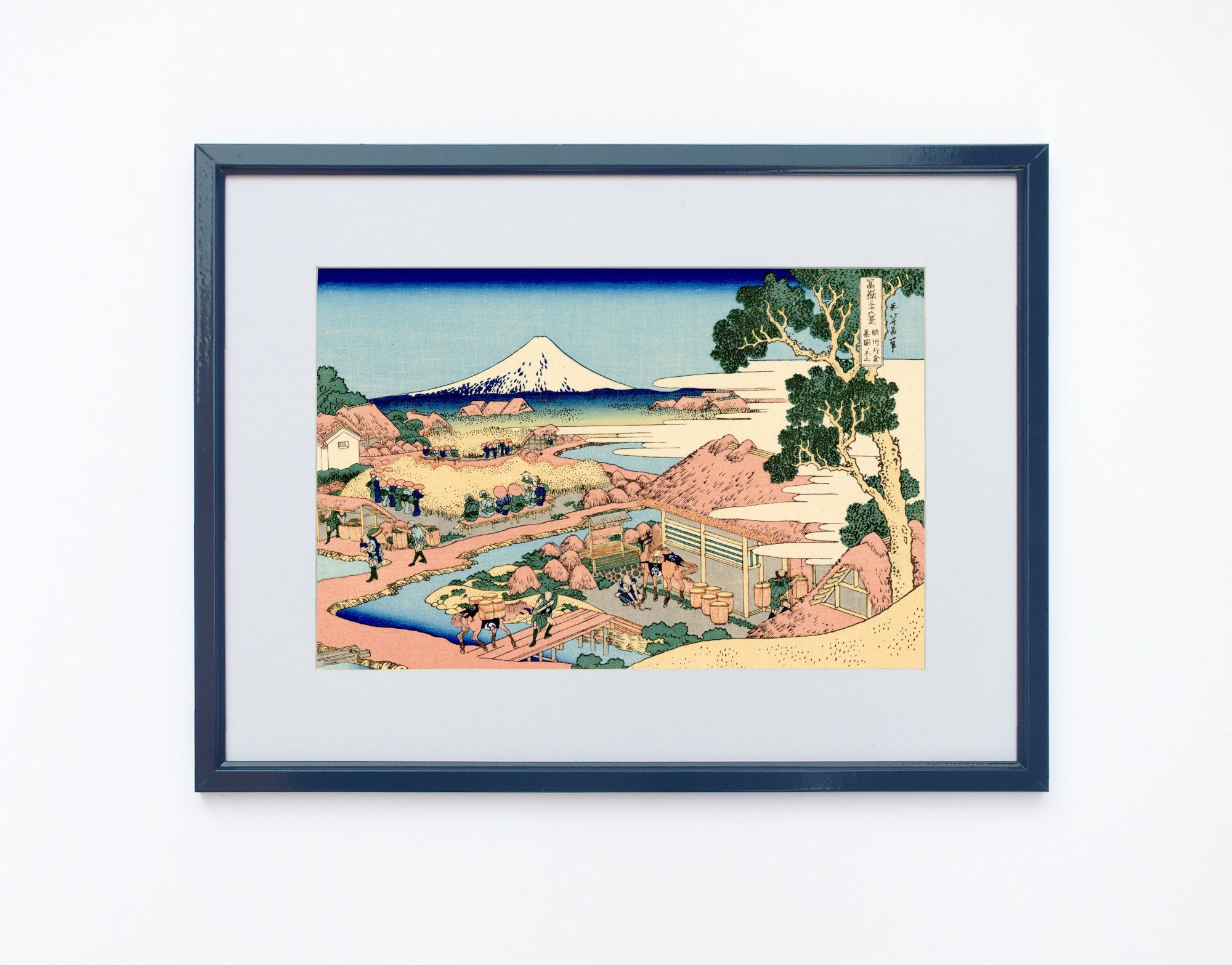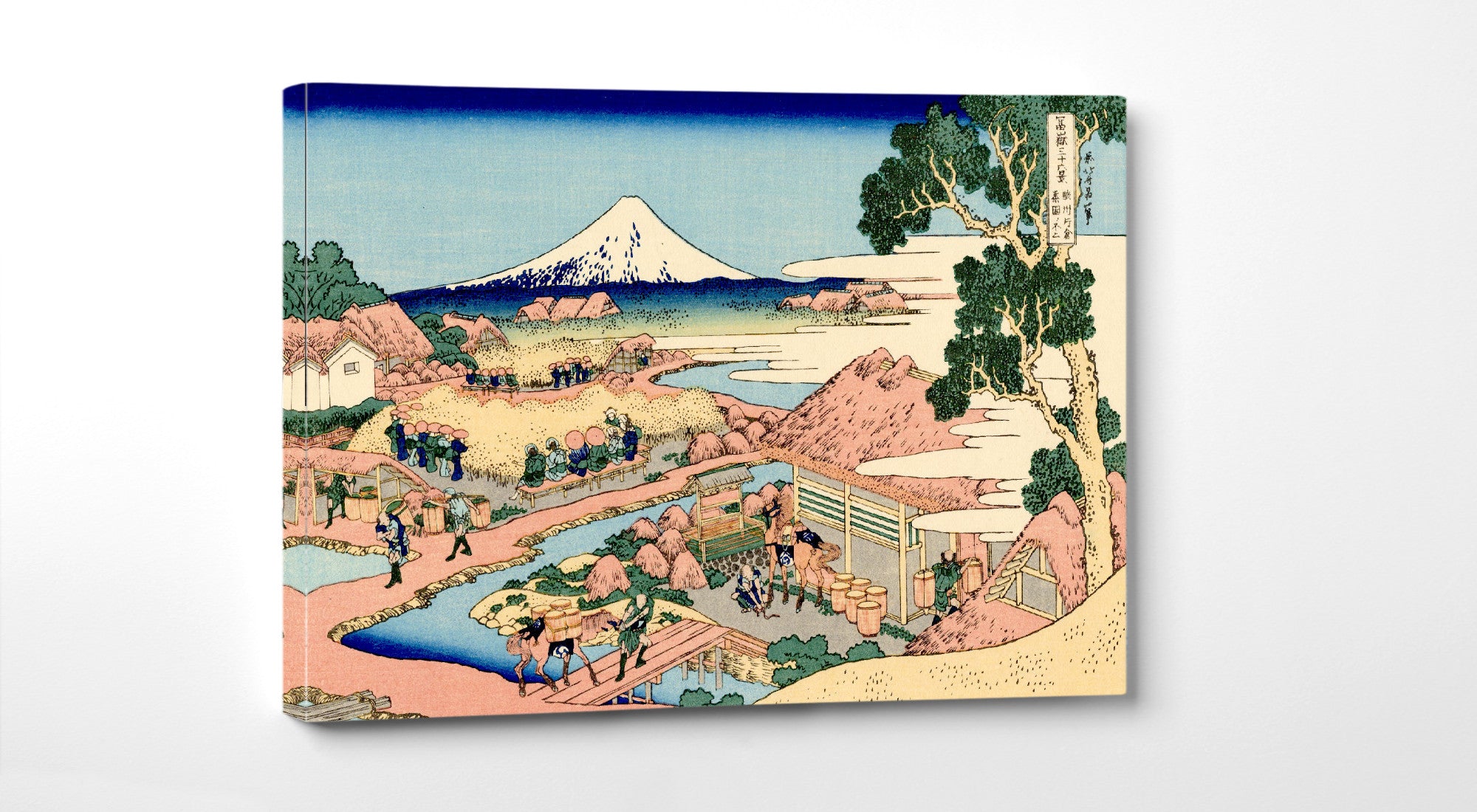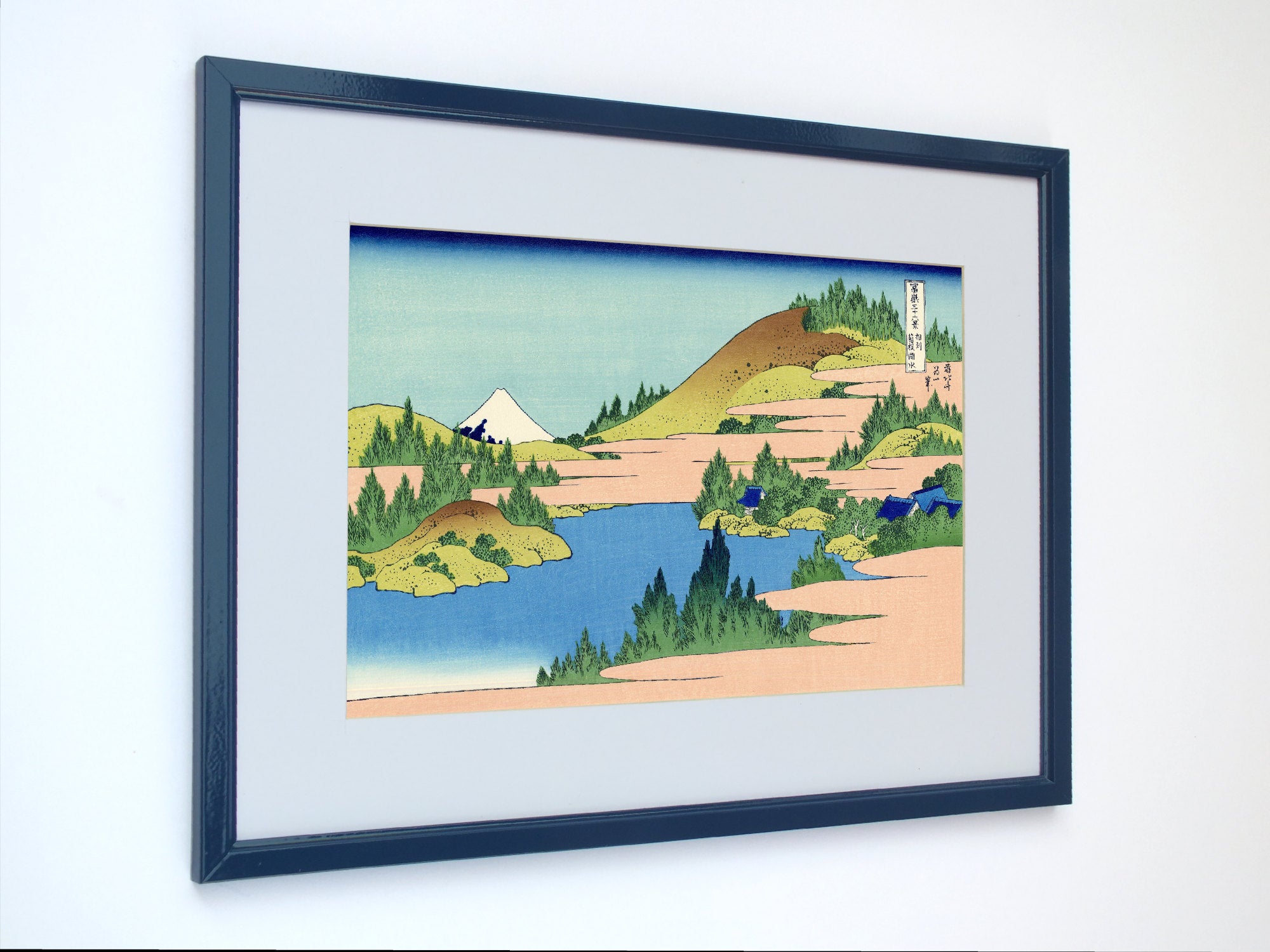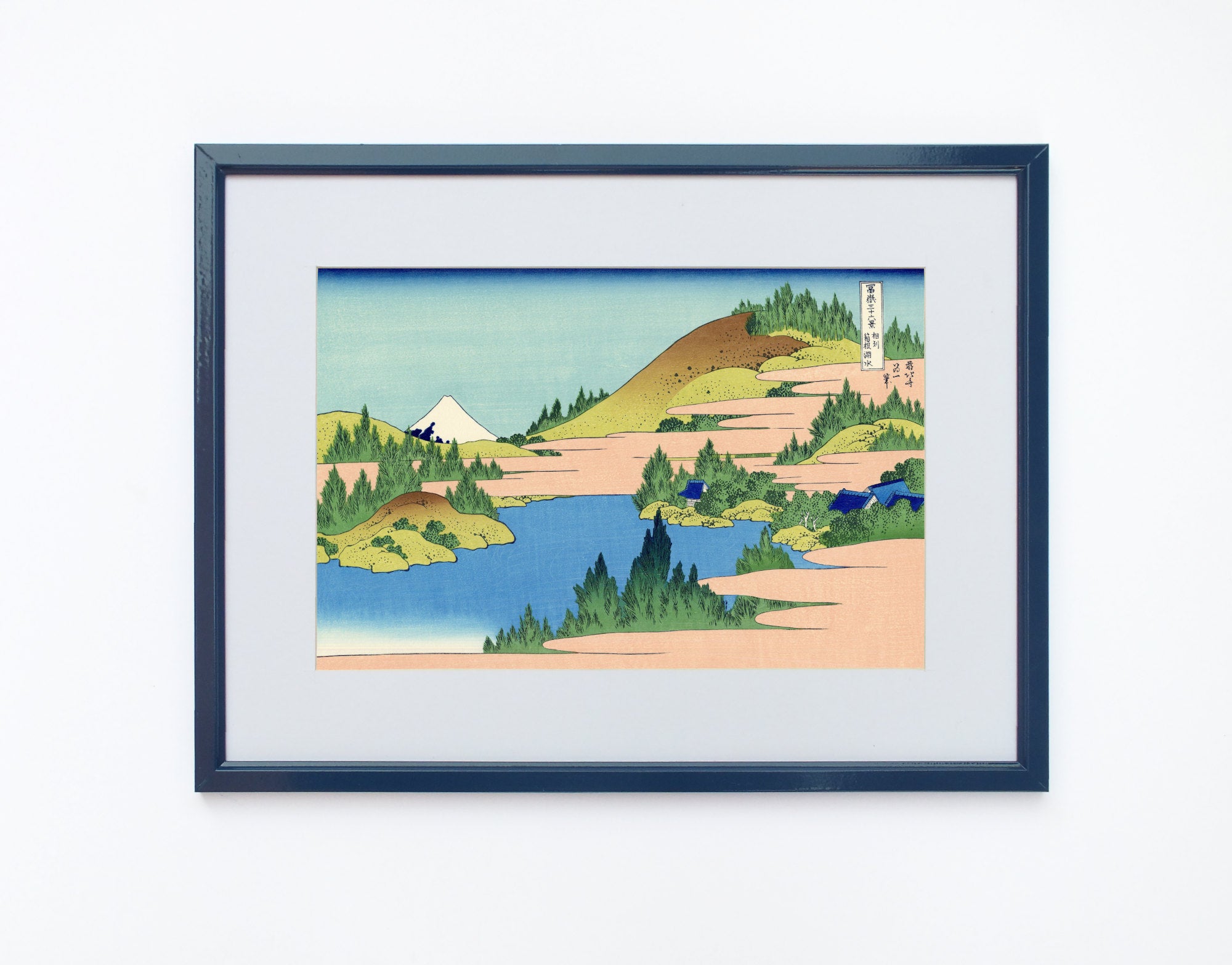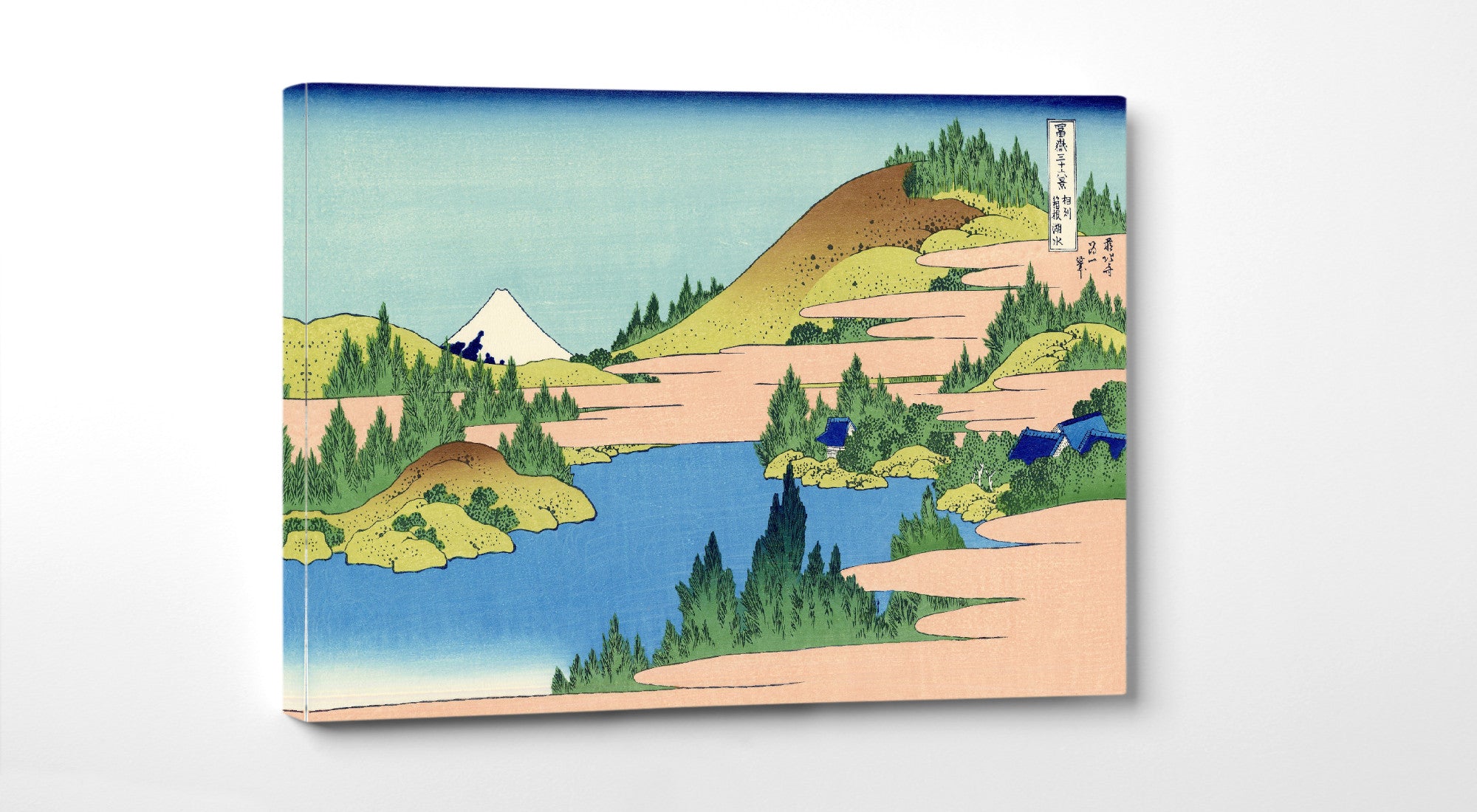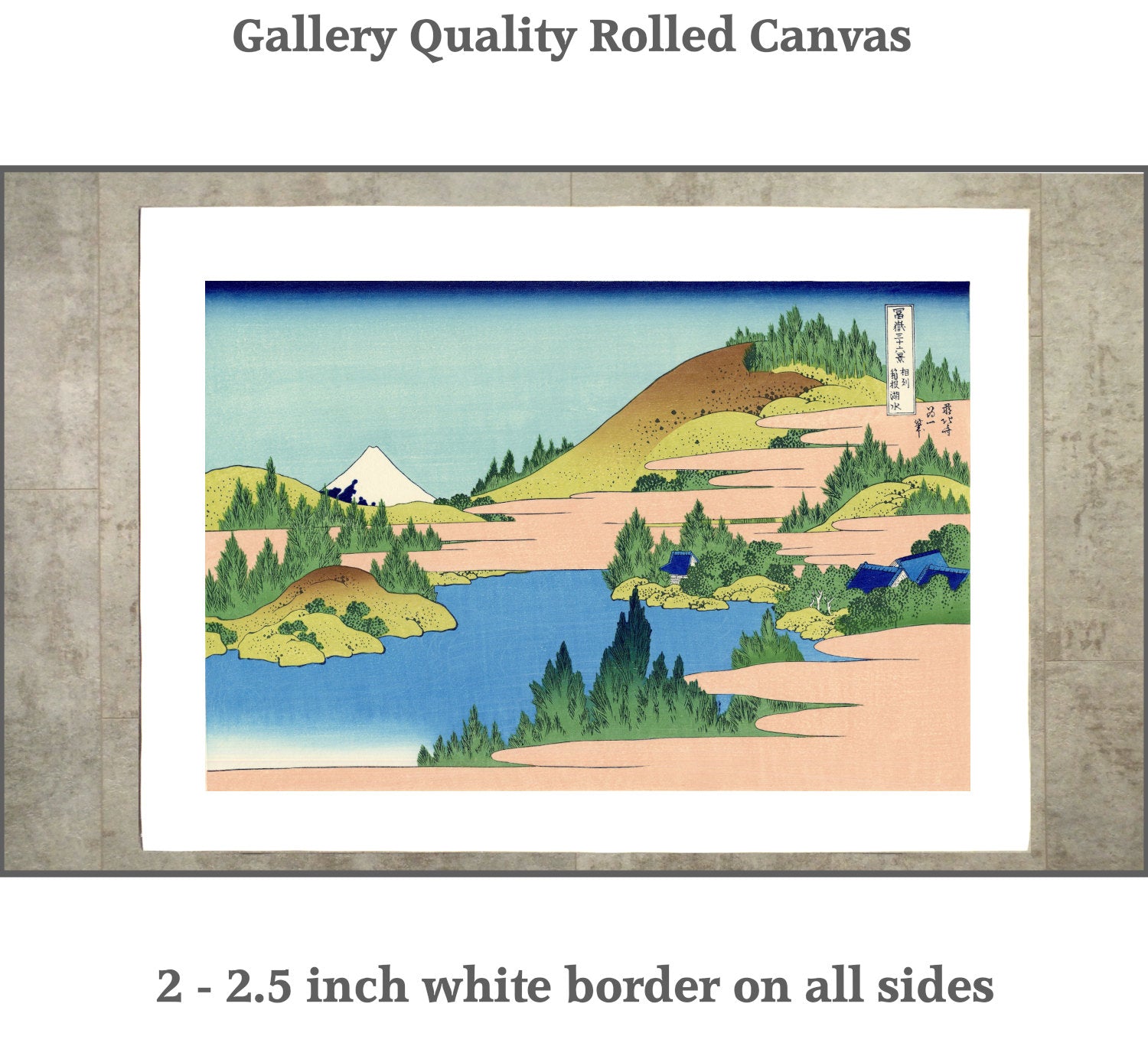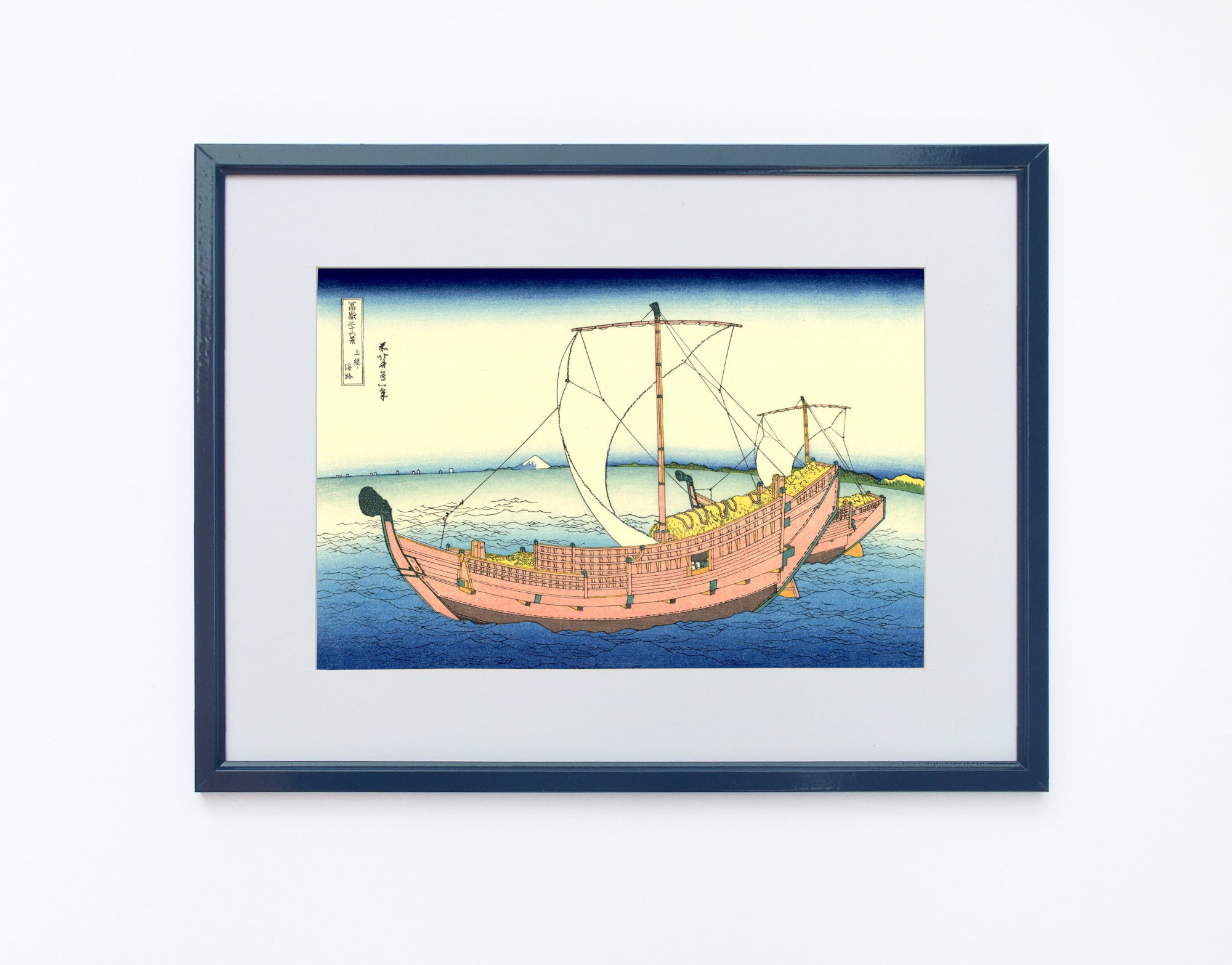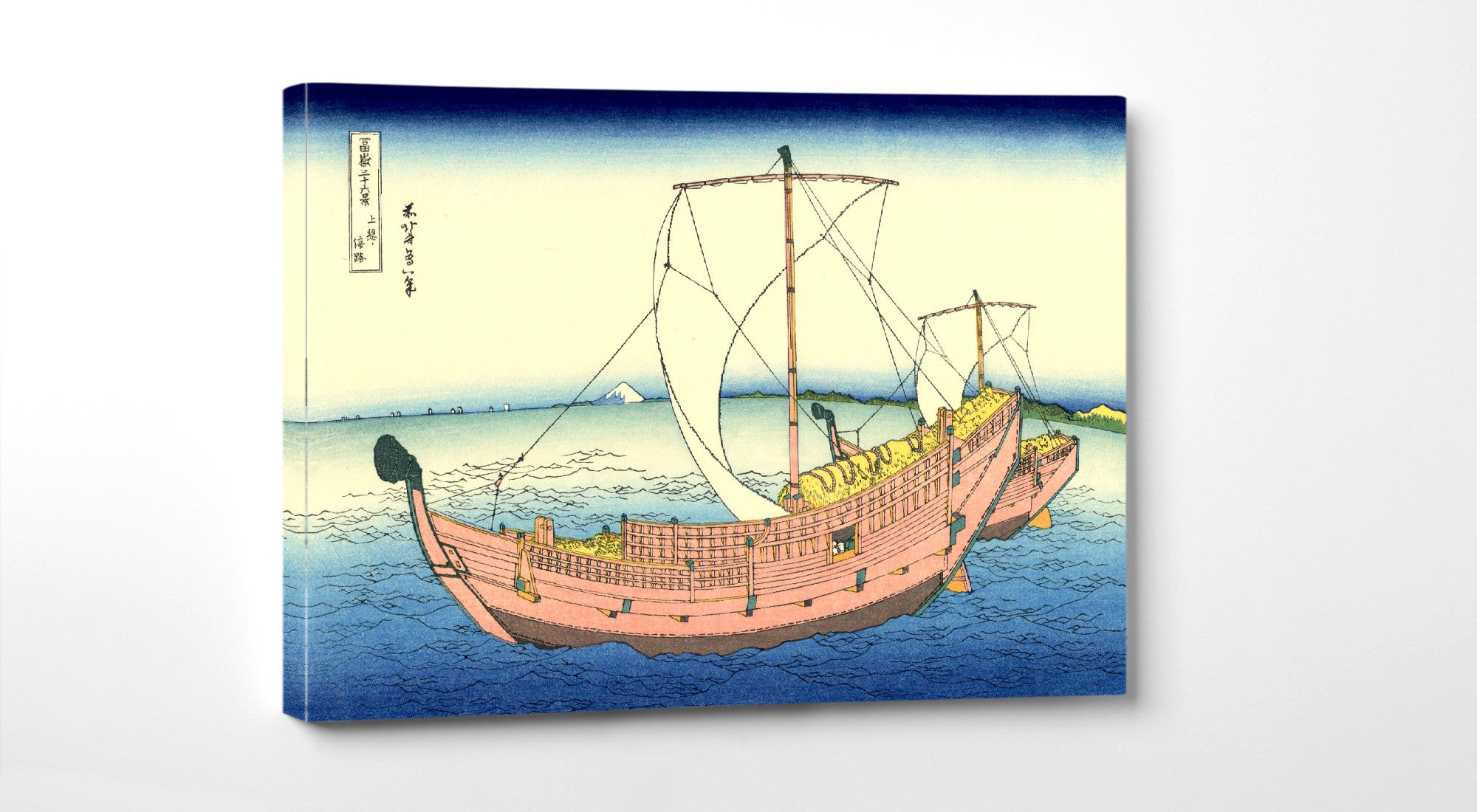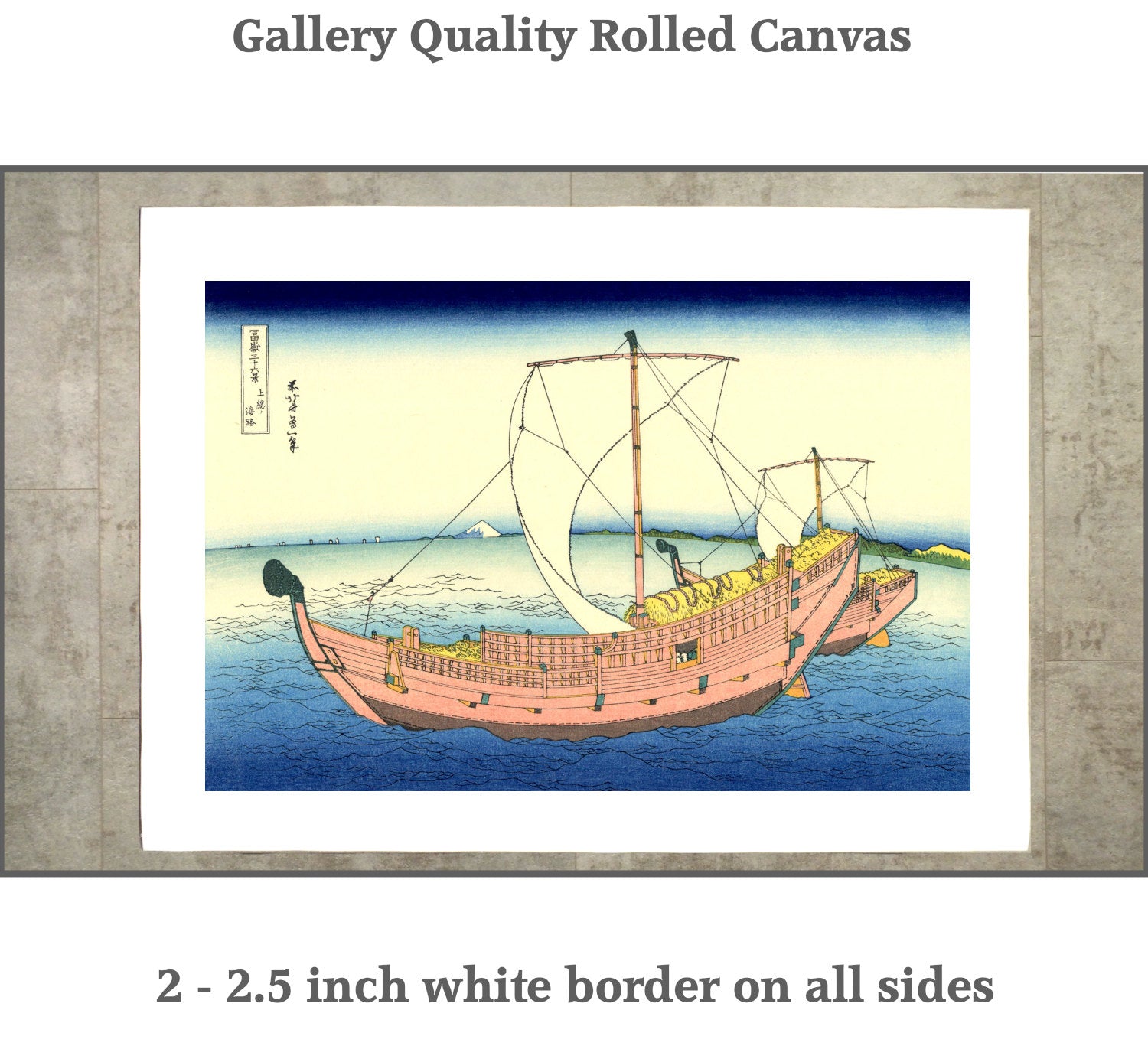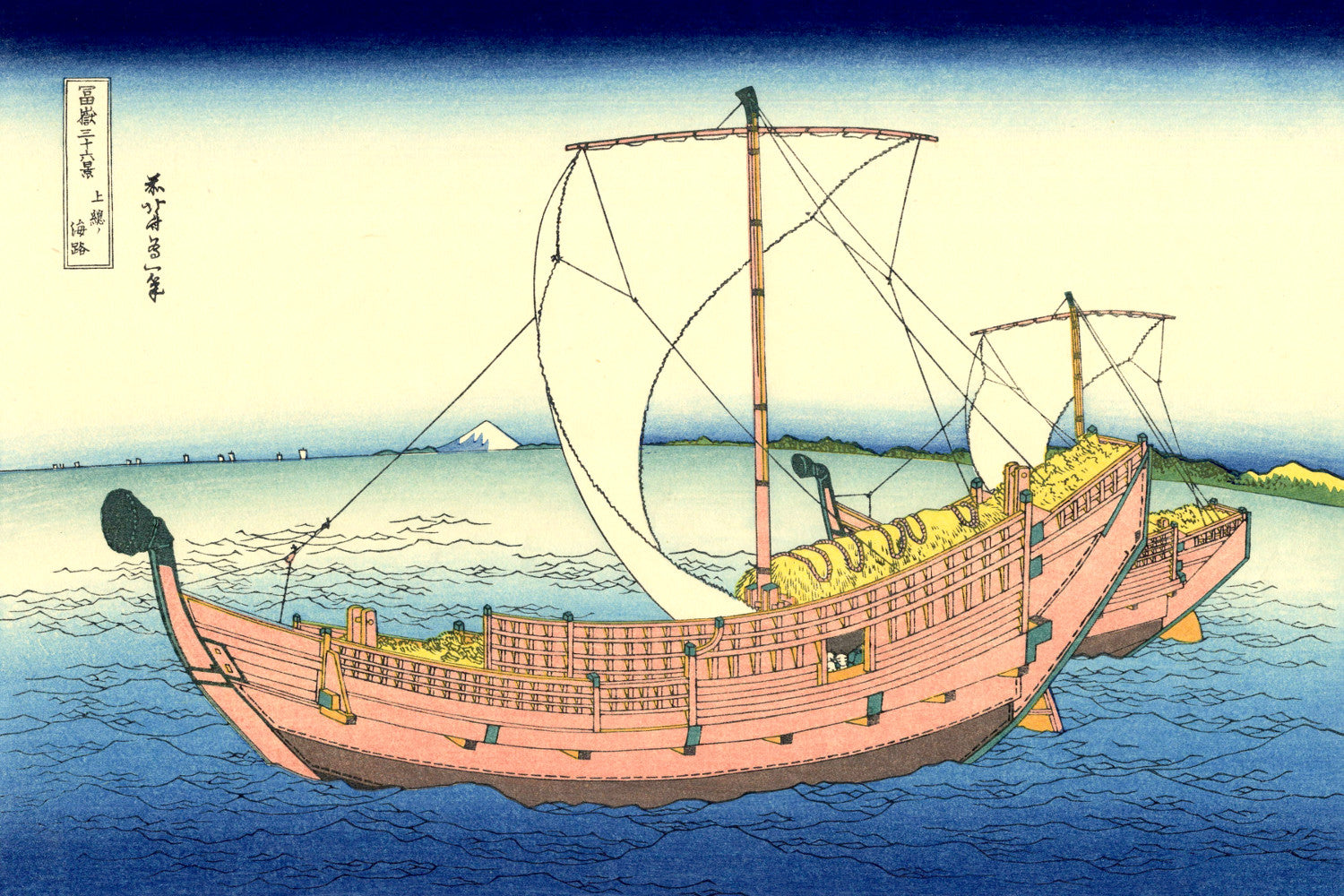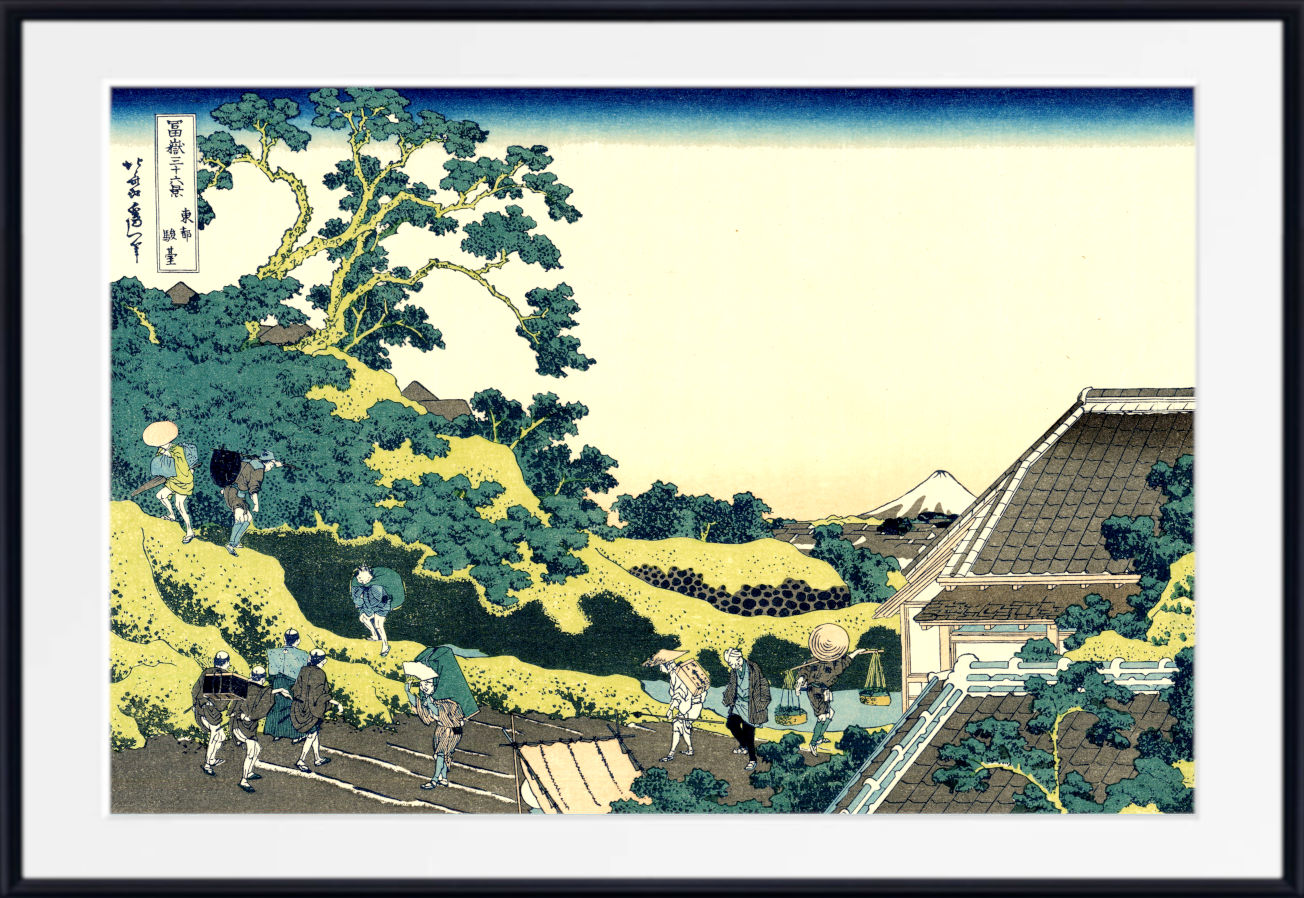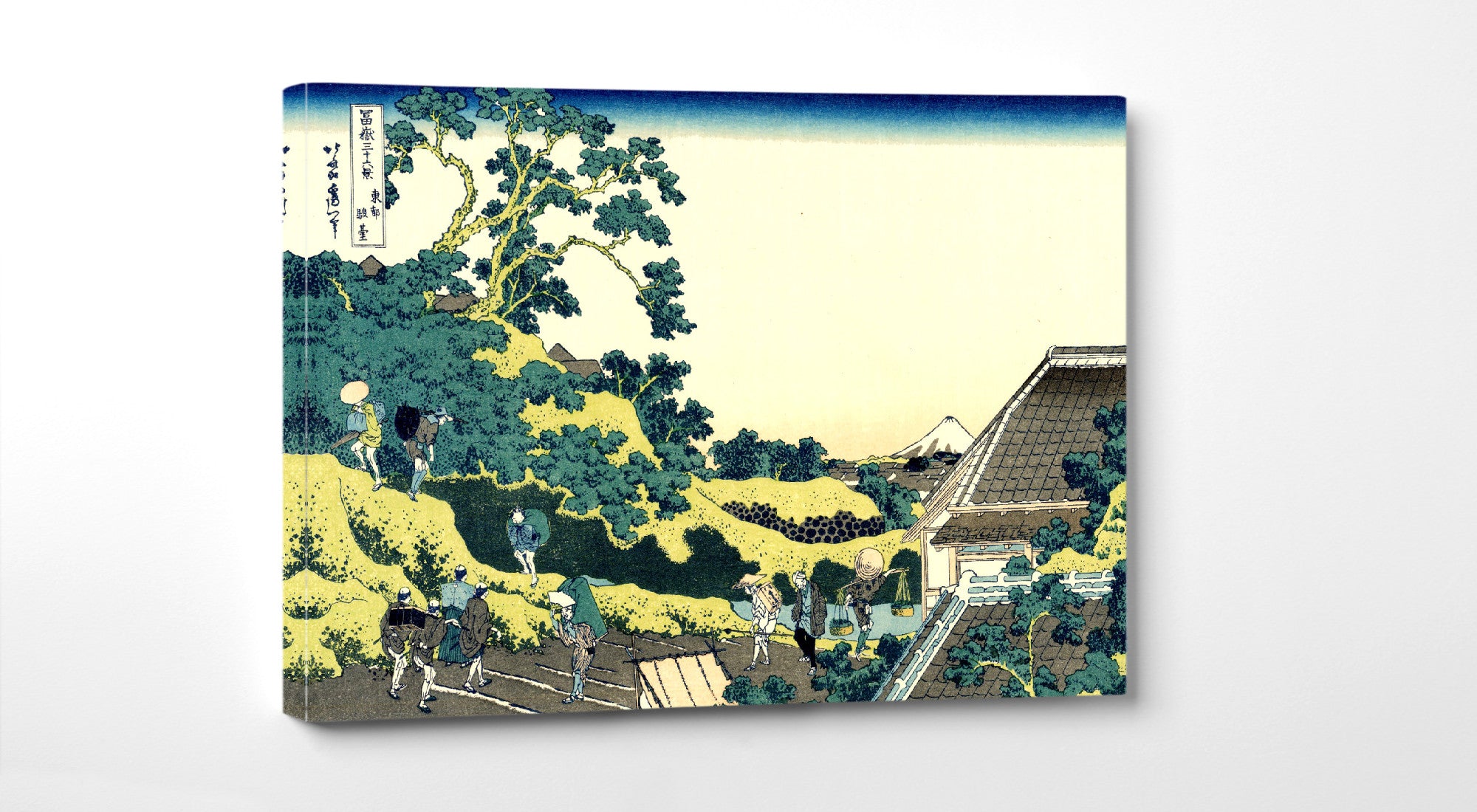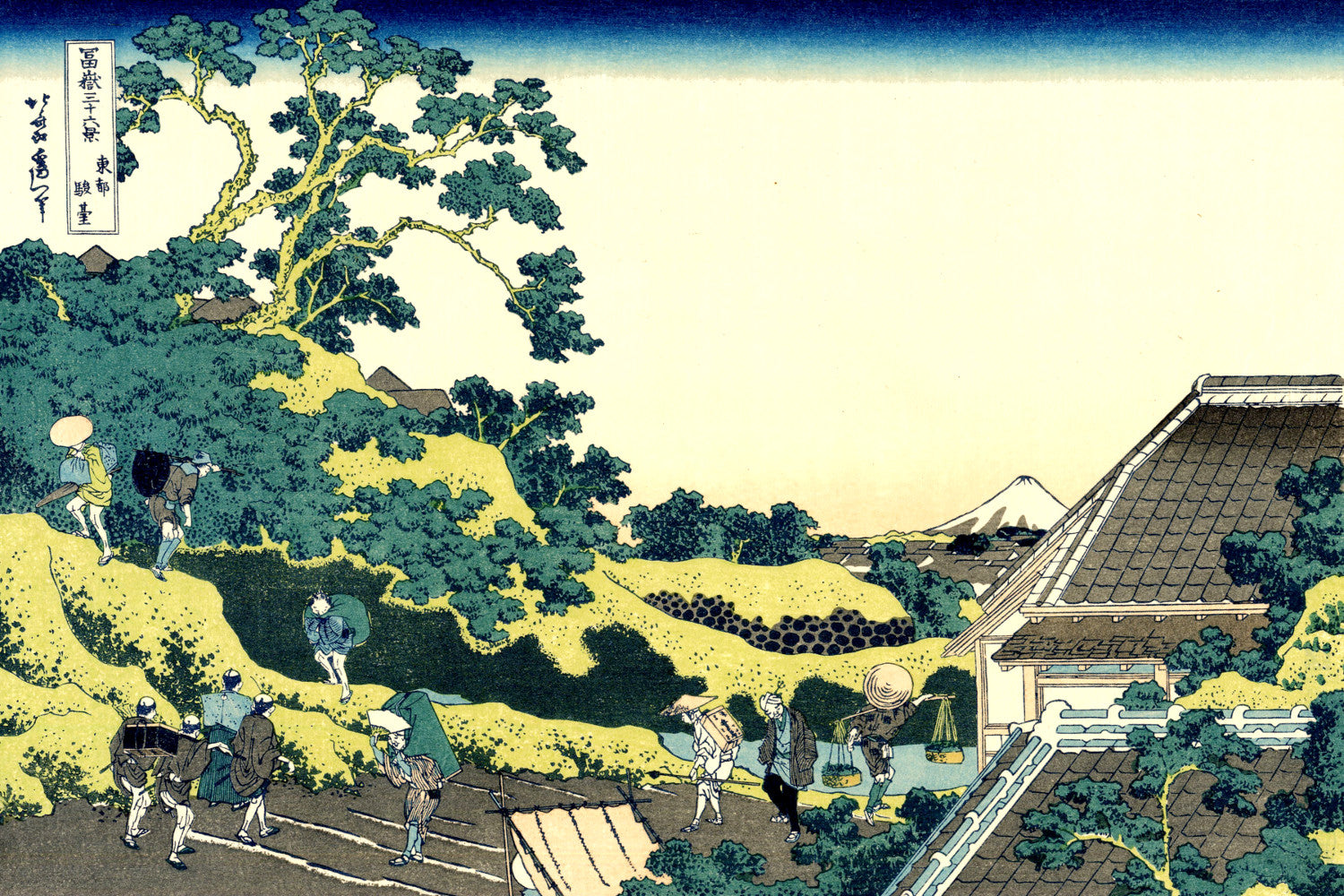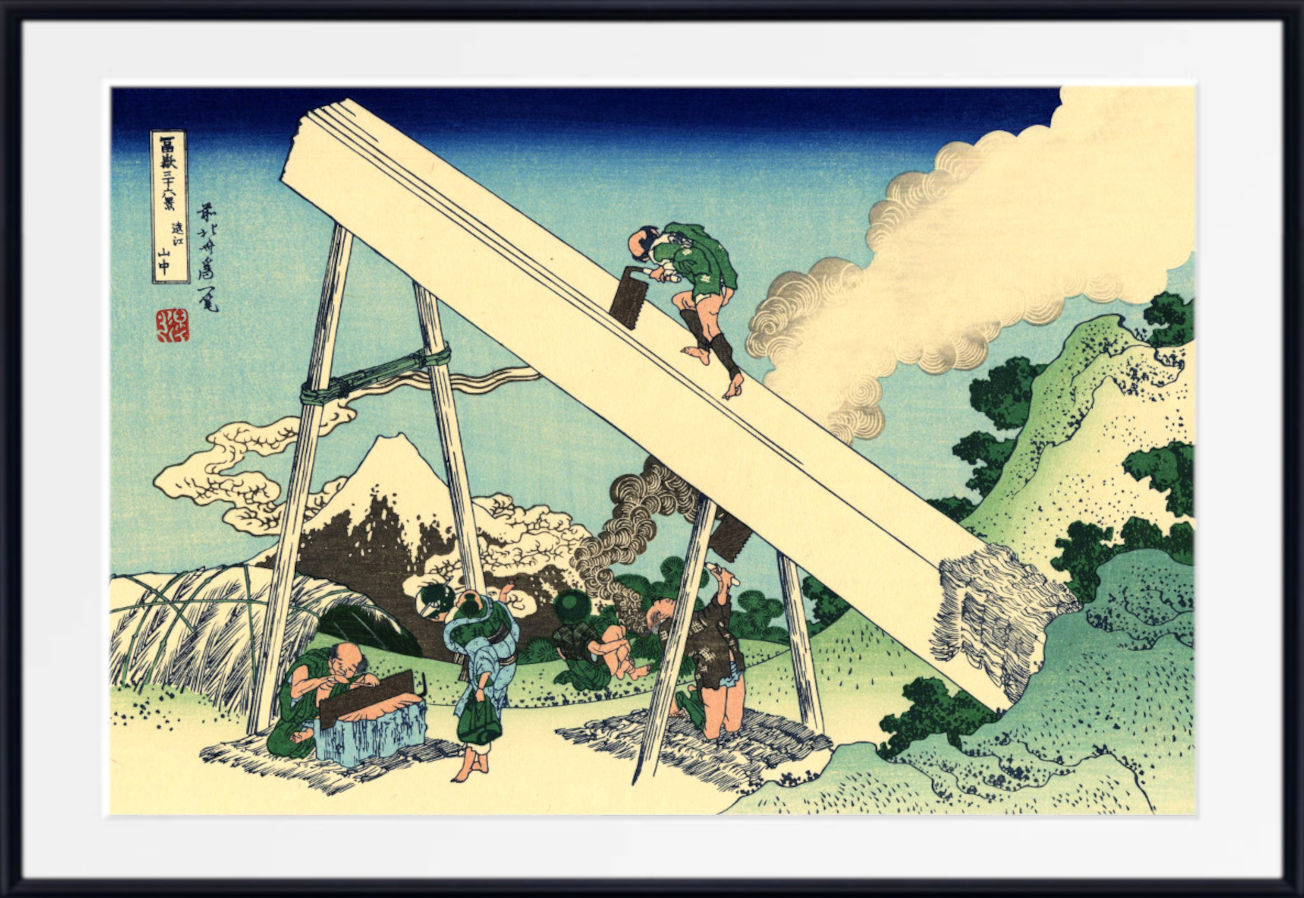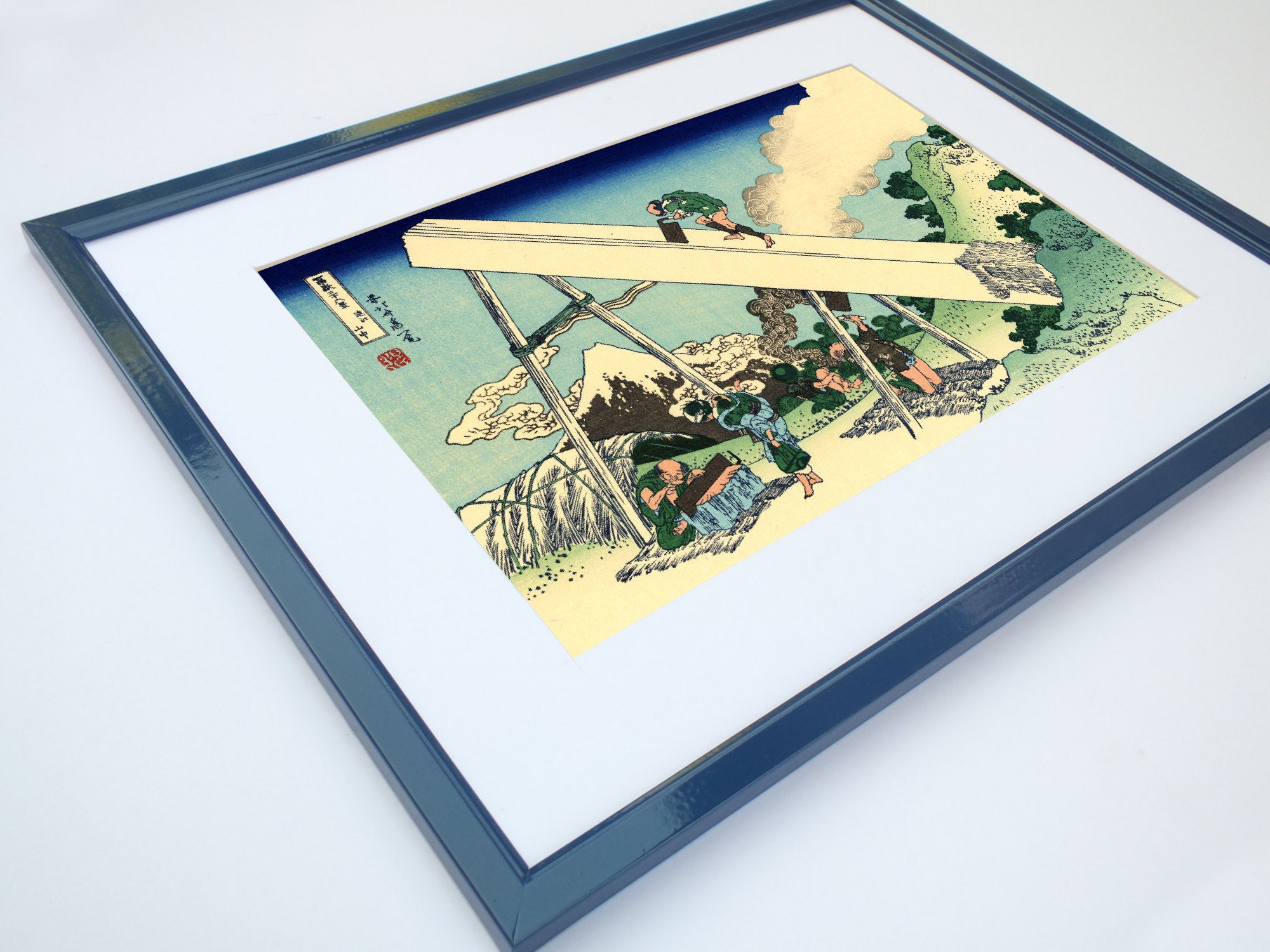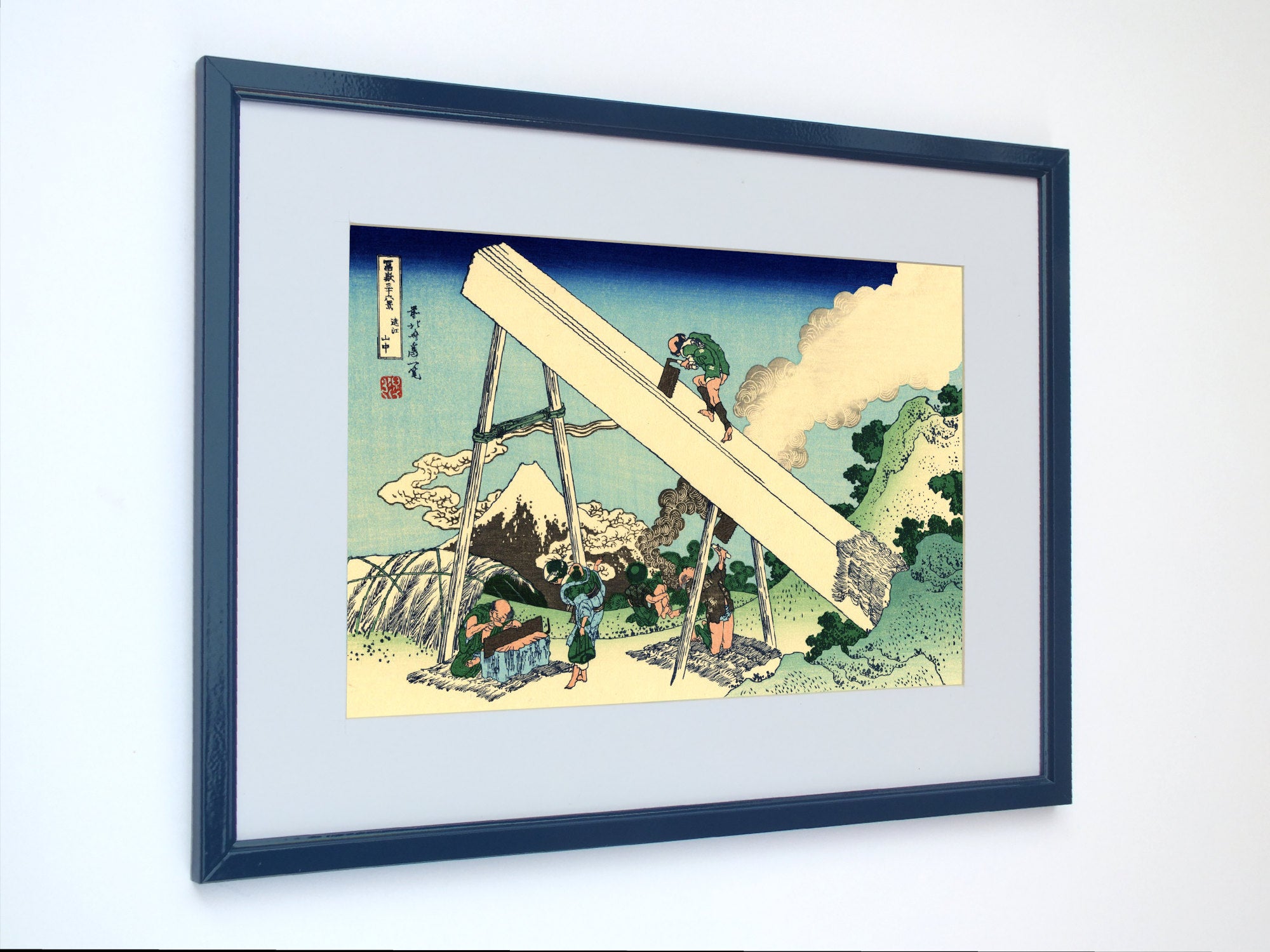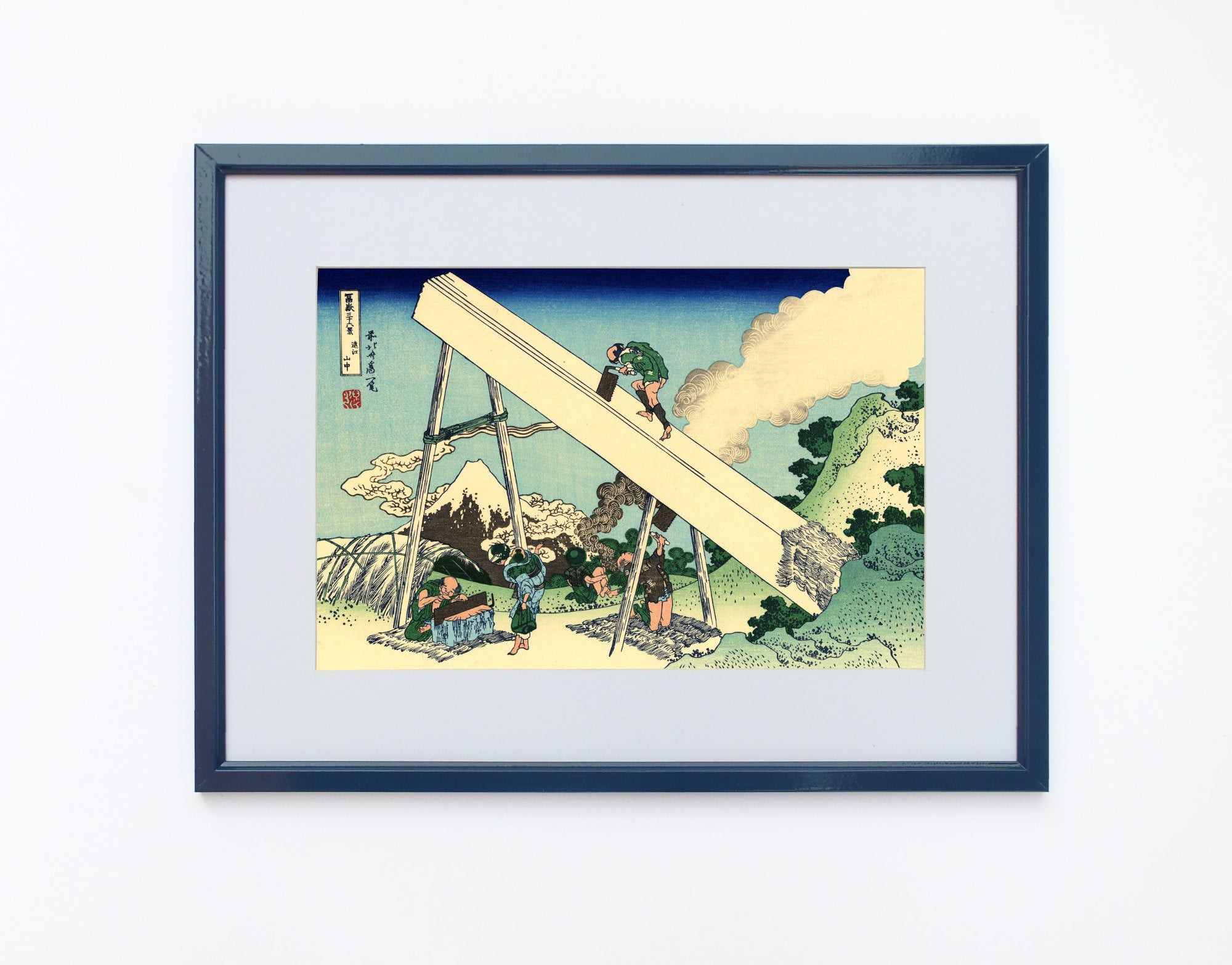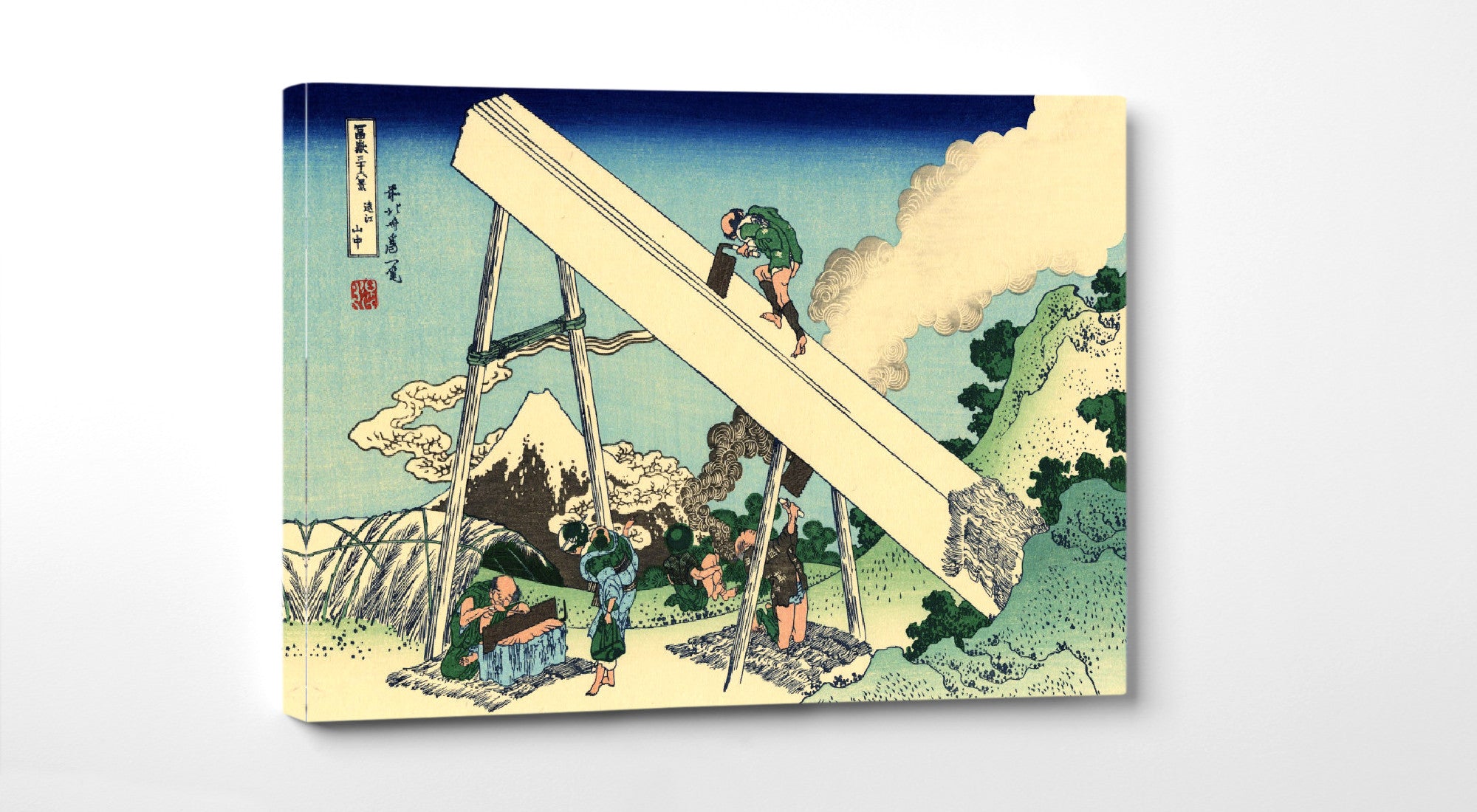
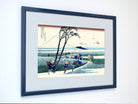
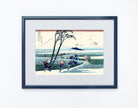
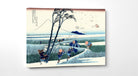
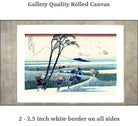
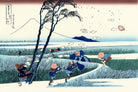
36 Views of Mount Fuji, Ejiri in Suruga Province, Katsushika Hokusai, Japanese Print
Couldn't load pickup availability
Details
Katsushika Hokusai – Ejiri in Suruga Province Prints
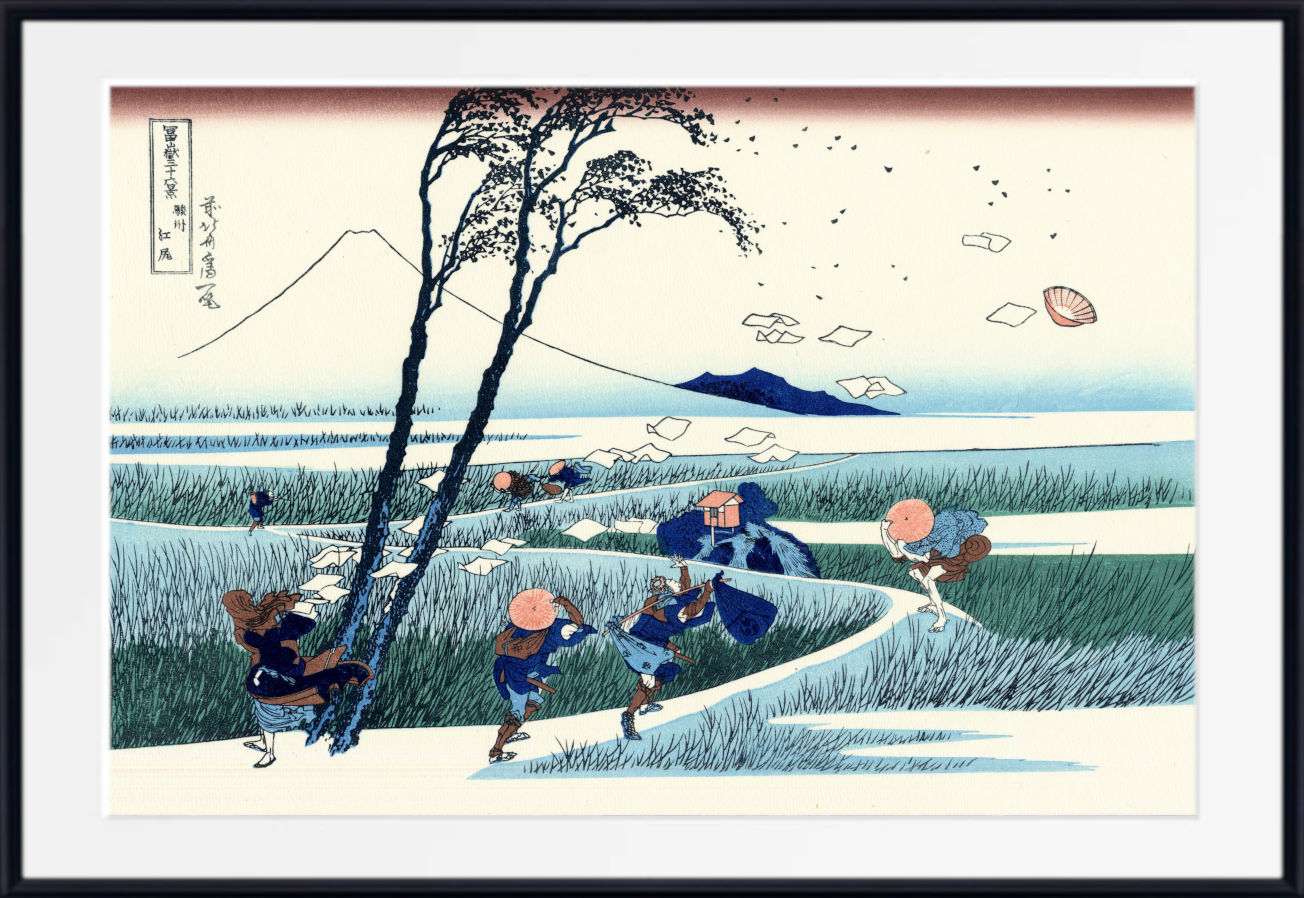
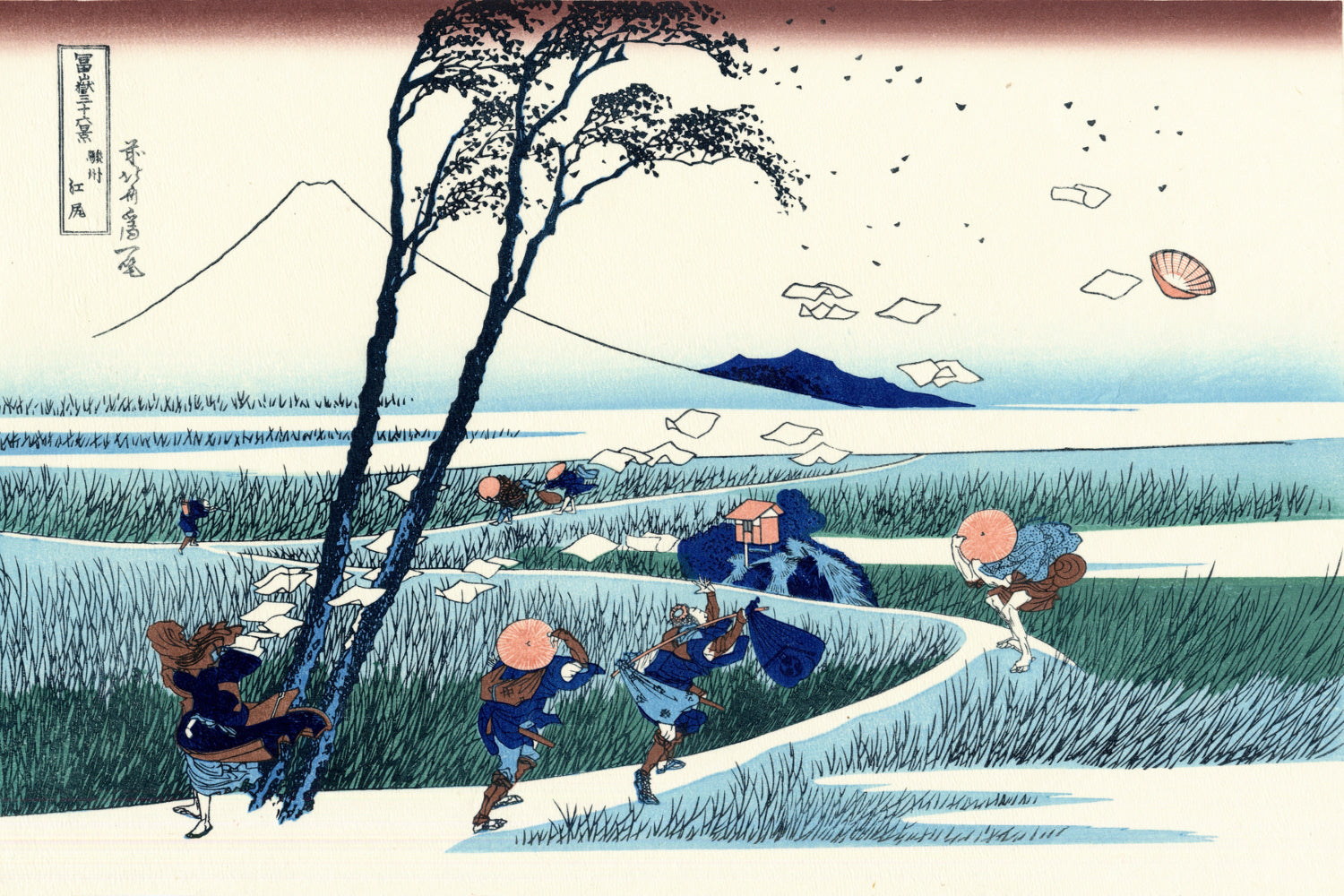
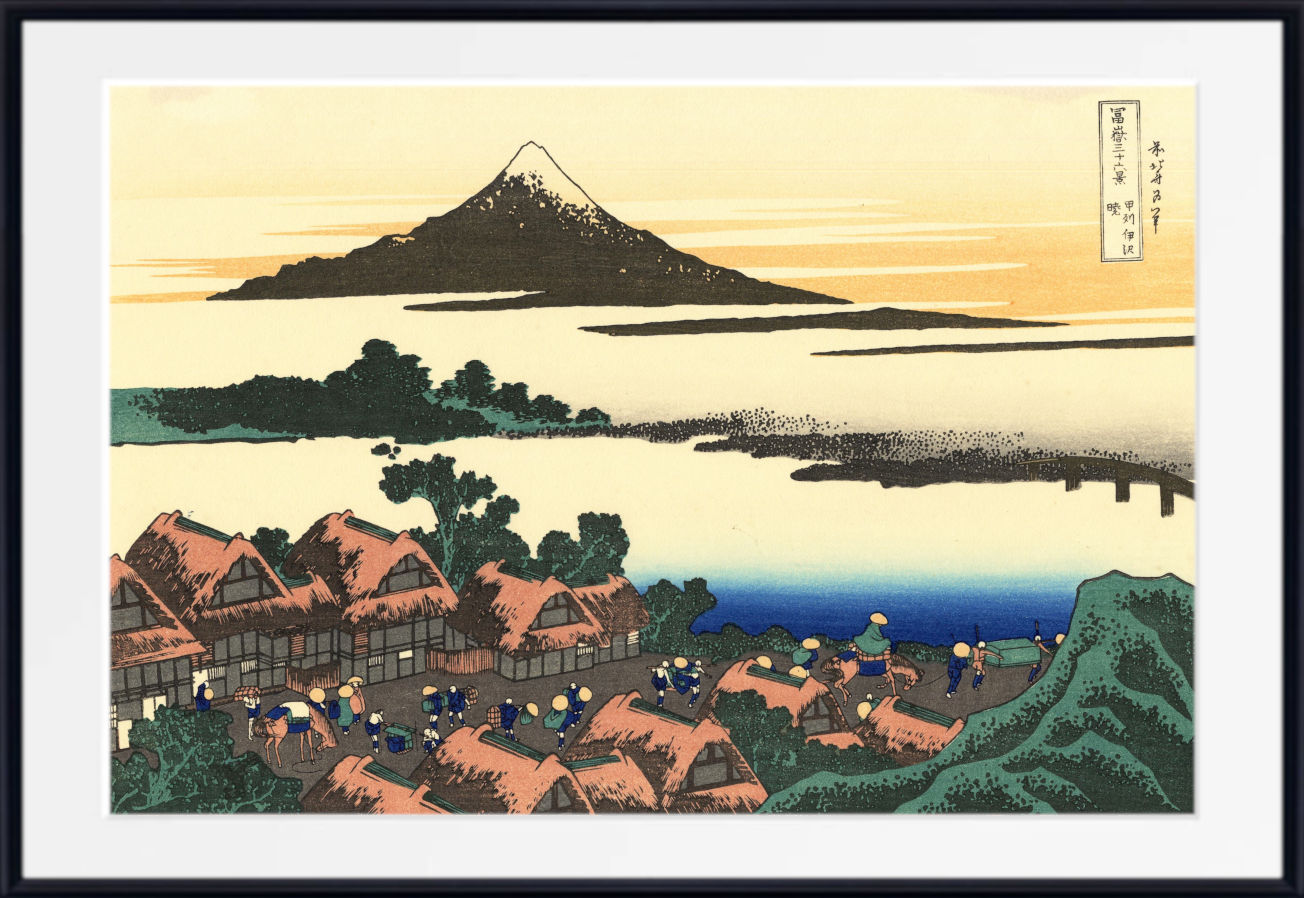
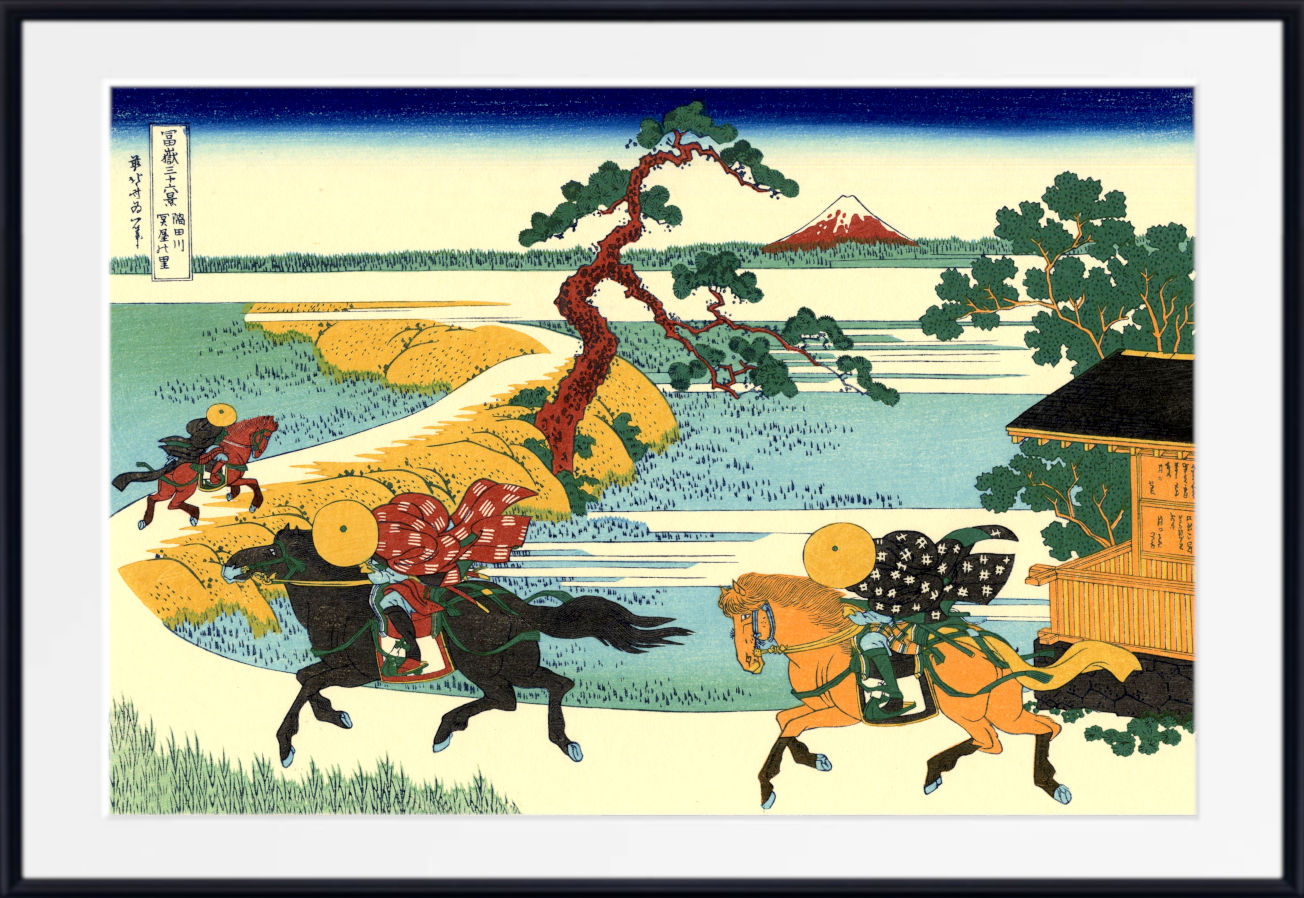
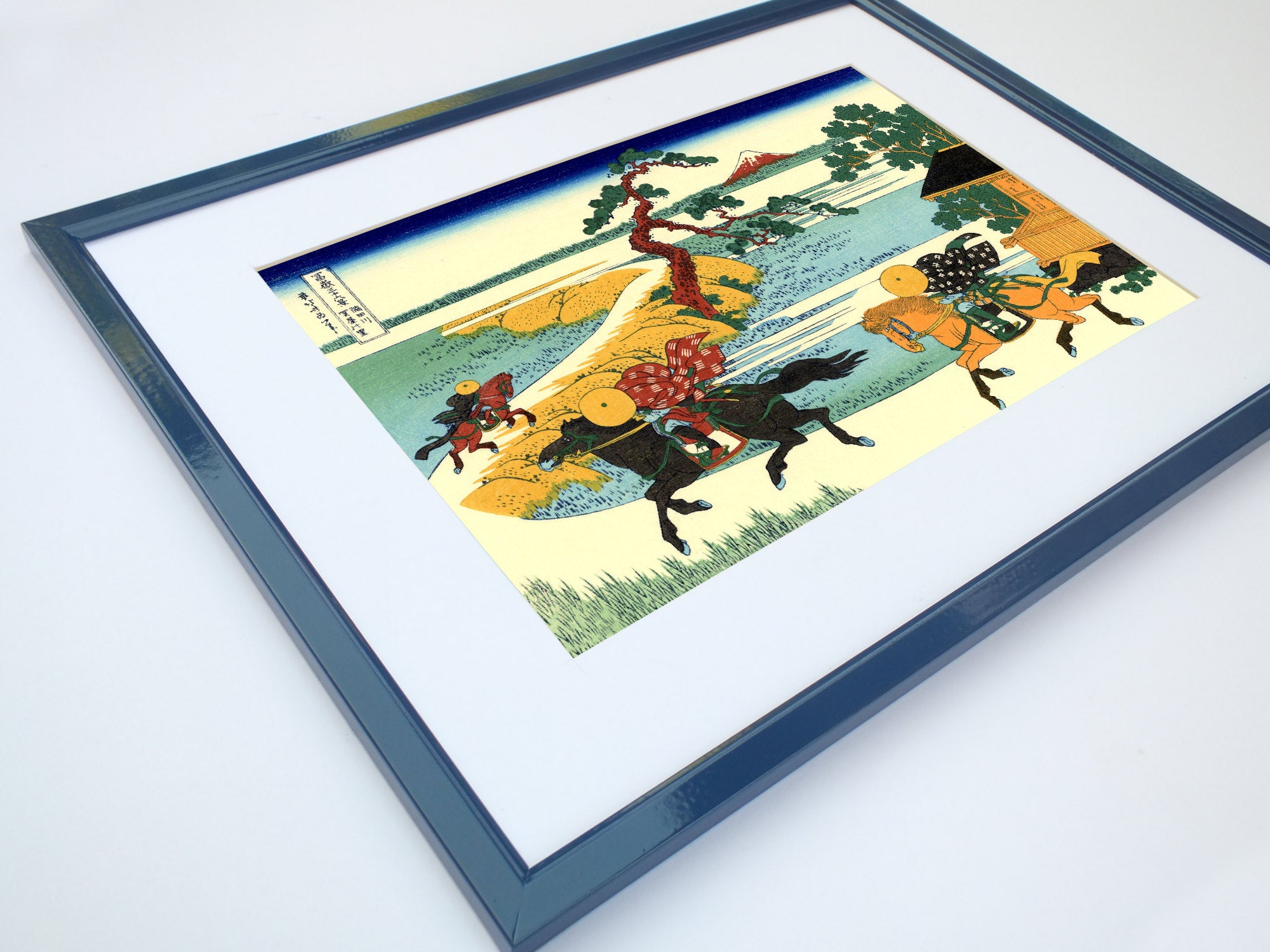
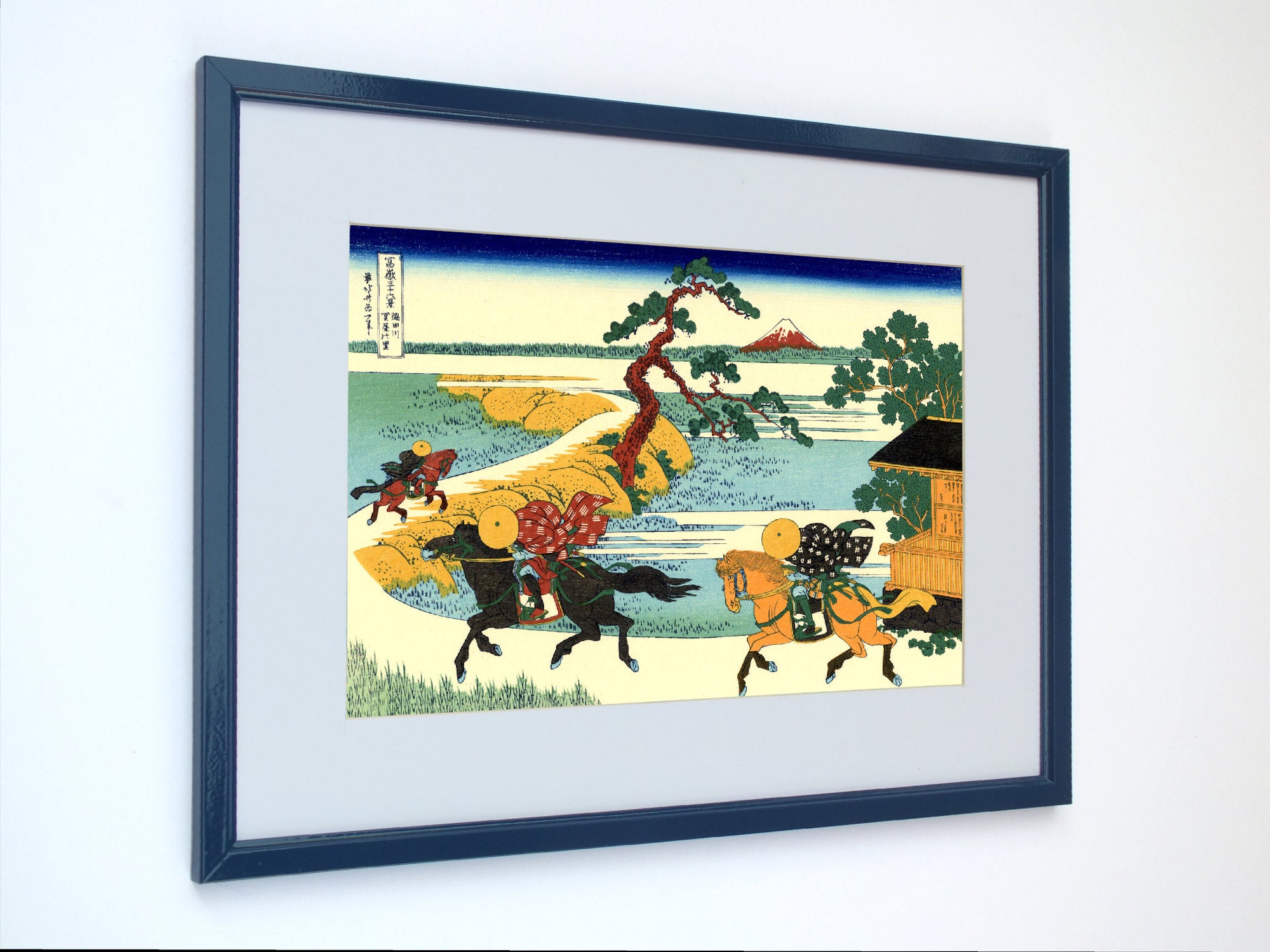
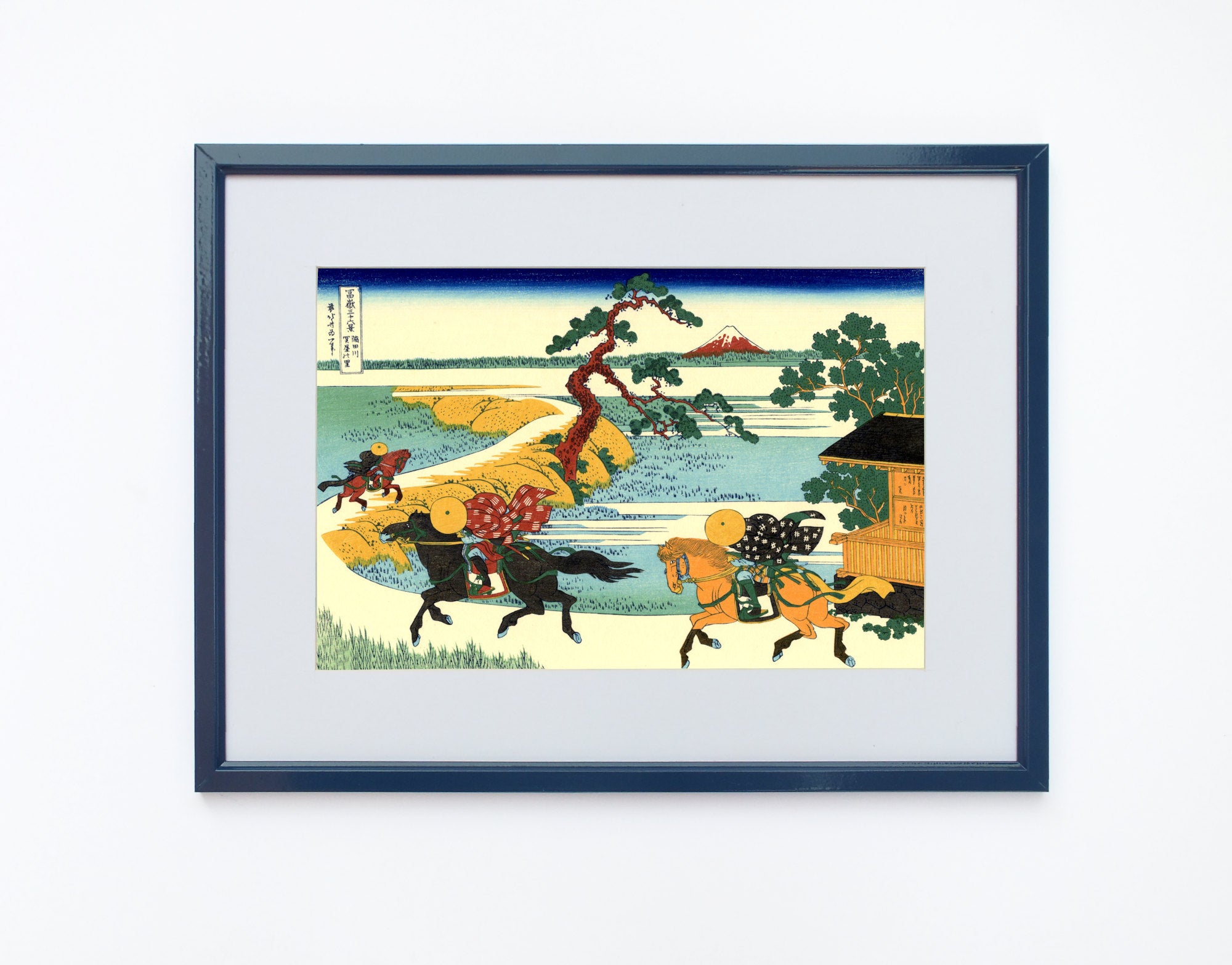
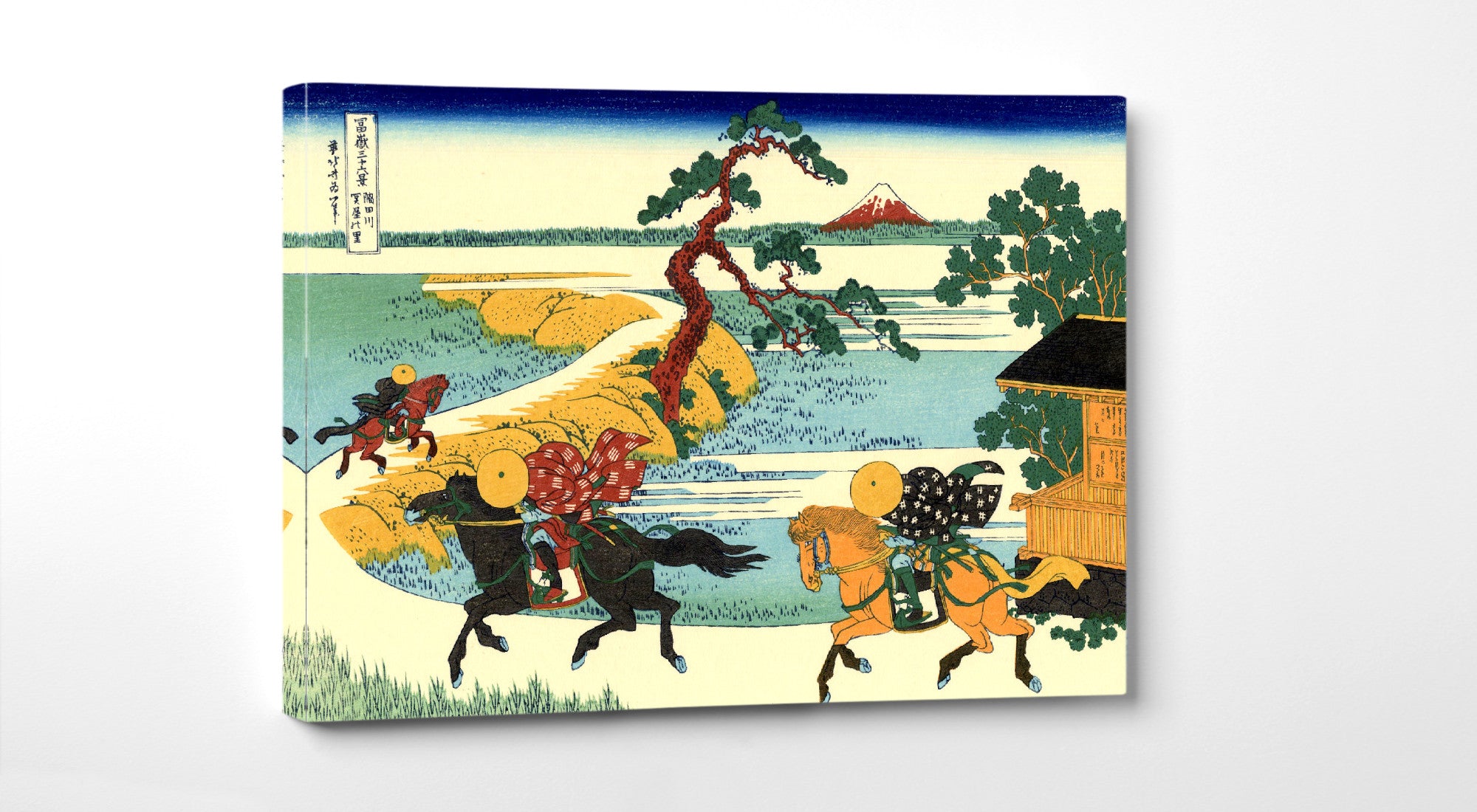
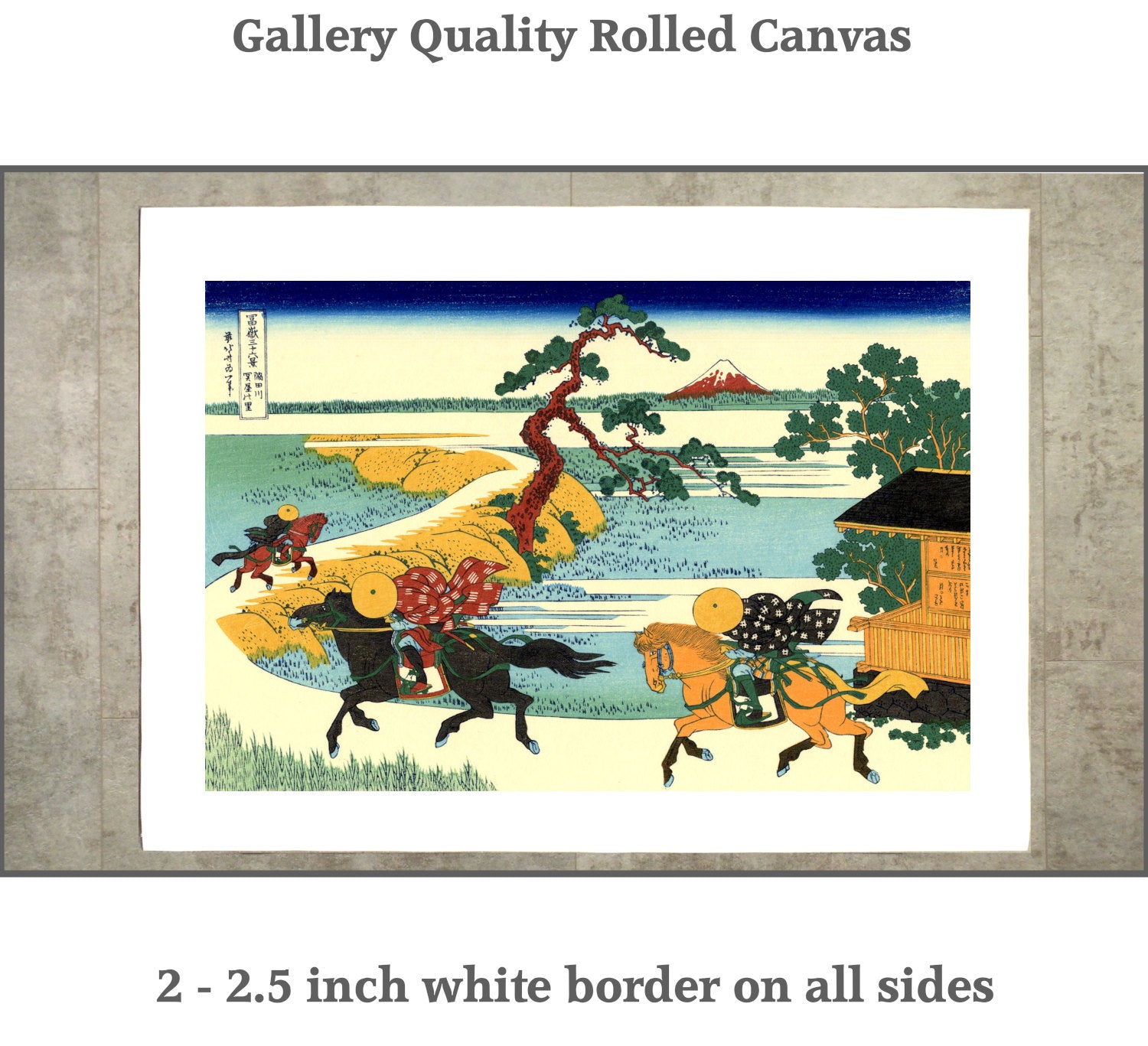
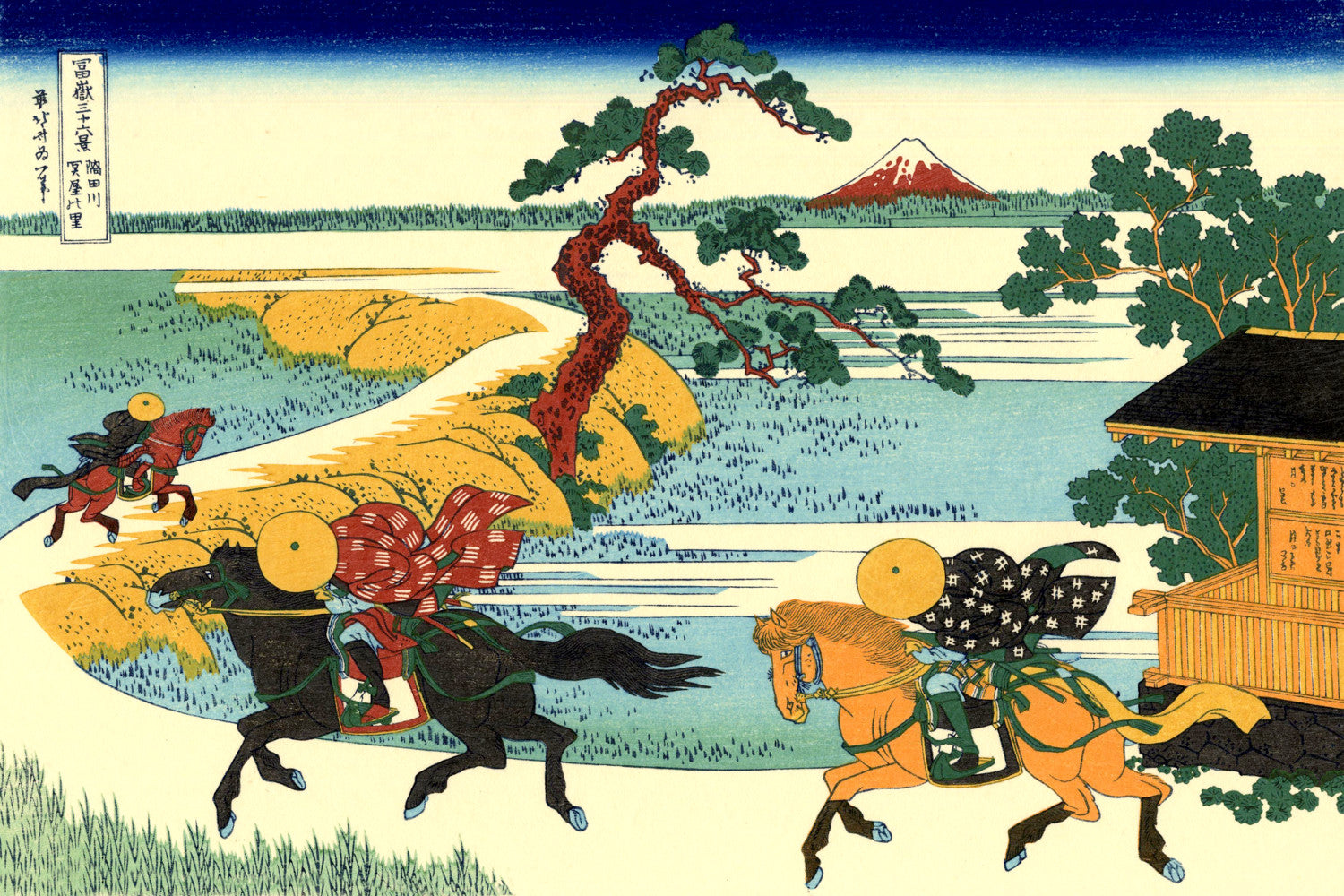
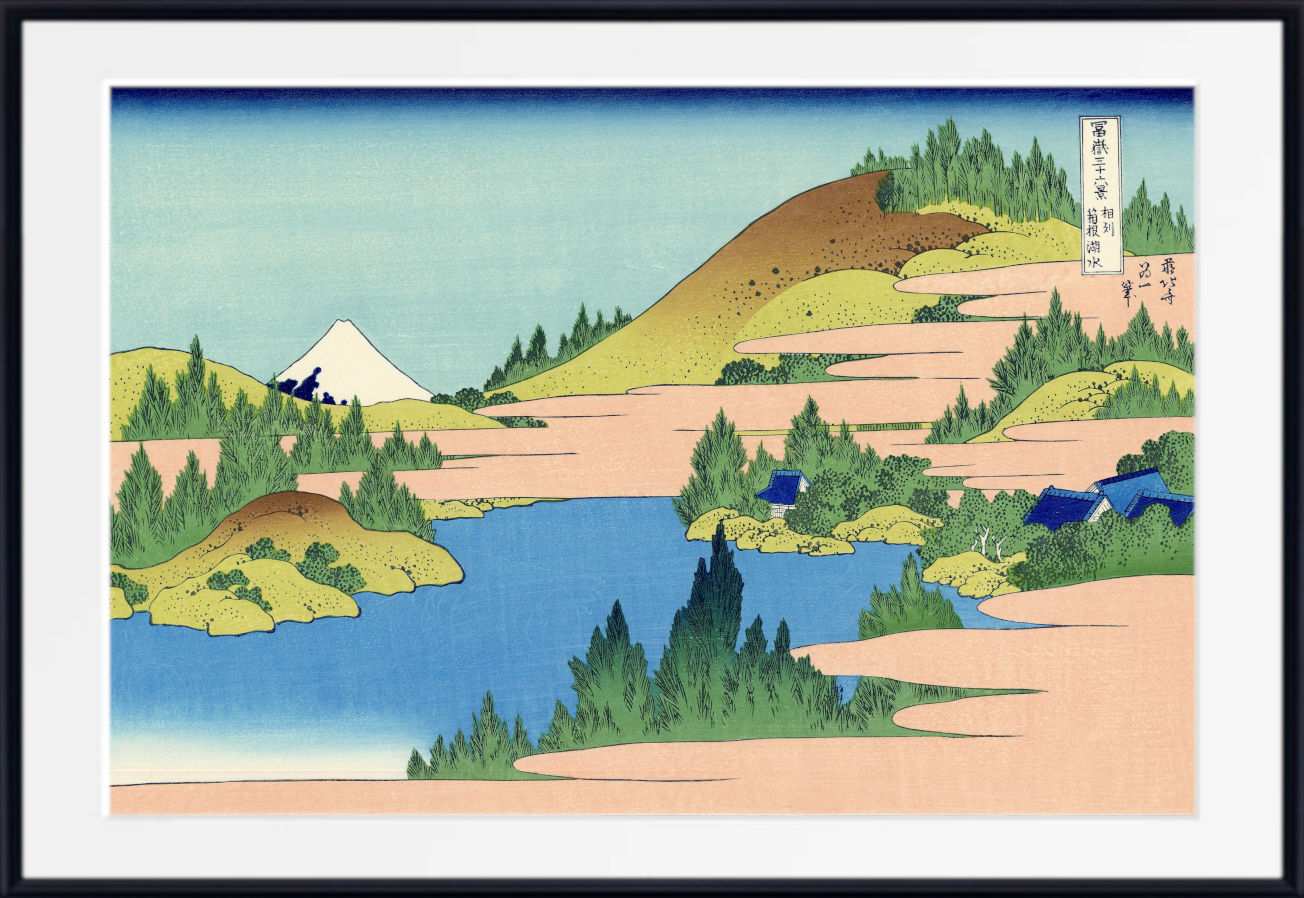
See Hokusai turn invisible wind into unforgettable visual movement with an Ejiri in Suruga Province print. Created around 1830–32 as part of Thirty-Six Views of Mount Fuji, this celebrated Japanese woodblock design shows travellers struggling against a sudden violent gust while the distant mountain remains perfectly still.
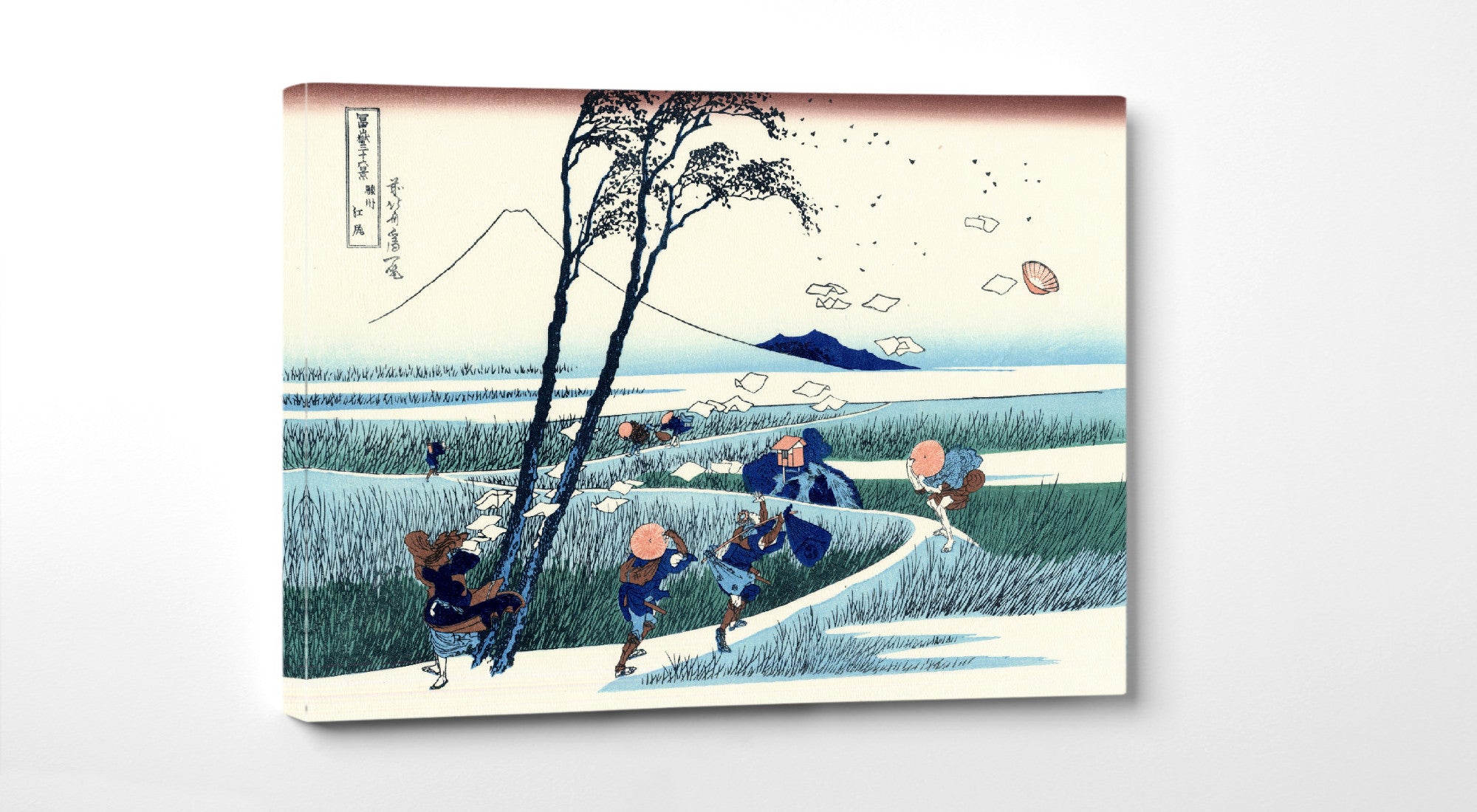
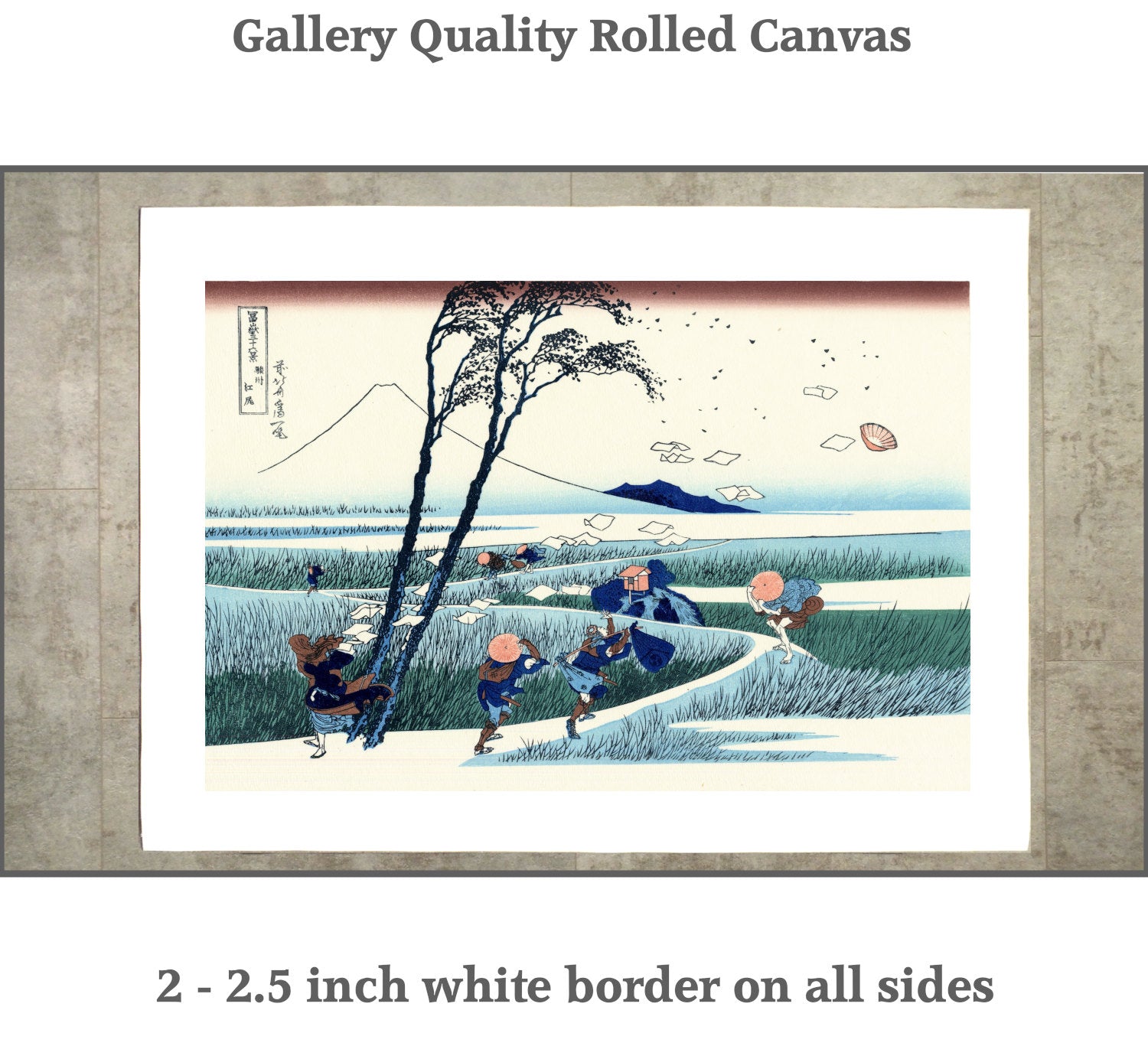
Hats lift from heads, loose sheets of paper spiral into the sky and trees bend under the force of the wind. Mount Fuji sits quietly on the horizon, creating one of the series' finest contrasts between temporary human disruption and enduring landscape.
Travellers on the Tōkaidō
Ejiri was located in Suruga Province along the historic Tōkaidō route linking Edo and Kyoto.
Hokusai depicts travellers making their way along a winding path through the landscape.
The road itself is unremarkable. What transforms the scene is the weather.
A sudden gust catches everyone by surprise. Travellers lean into the wind, clothing is blown sideways and objects escape into the air.
Painting Style and Composition
How Hokusai Makes Wind Visible
Wind cannot be represented directly, so Hokusai shows its effect on everything it touches.
Trees bend in the same direction. Hats are carried away. Sheets of paper stream across the sky. Clothing and bodies respond to the gust.
These repeated directional movements allow the viewer to understand instantly both the direction and strength of the invisible force.
The result is one of the most ingenious depictions of weather in Japanese art.
Movement Against Stillness
The frantic foreground activity is deliberately contrasted with Mount Fuji.
While people, trees and paper are thrown into confusion, Fuji remains completely stable in the distance.
This relationship appears repeatedly throughout the Thirty-Six Views series.
Human activity and weather change from moment to moment; the mountain provides continuity.
A Landscape Filled with Everyday Life
One of Hokusai's great achievements was his ability to combine monumental landscape with ordinary experience.
His travellers are not heroic figures posing before Fuji. They are people attempting to continue along a road despite difficult weather.
This humour and observation make the scene immediately understandable even to viewers far removed from Edo-period Japan.
The Composition of Ejiri
The winding path creates depth by leading the eye towards Fuji.
At the same time, windblown paper rises diagonally into the sky, preventing the landscape from becoming static.
The mountain is deliberately kept relatively small, leaving the temporary drama of the travellers to dominate the foreground.
Hokusai therefore makes a supposedly secondary event – a strong gust of wind – the real protagonist of the image.
Ejiri Wall Art for Modern Interiors
An Ejiri in Suruga Province Hokusai print is an excellent choice for viewers who want something more unusual than The Great Wave while retaining the graphic clarity of Hokusai's greatest landscapes.
Its open sky, muted ground and blue Fuji work naturally with neutral, Scandinavian and Japanese-inspired interiors.
The sense of movement also makes it an excellent addition to a gallery wall combining different weather conditions from the Thirty-Six Views series.
About Katsushika Hokusai
Katsushika Hokusai (1760–1849) was a Japanese print designer, painter and illustrator whose extraordinary career continued into his late eighties.
His fascination with the observed world extended far beyond famous landmarks. Workers, travellers, weather, waves, plants and animals all became subjects worthy of careful study.
Hokusai's landscapes often combine these ordinary experiences with radical compositional ideas.
In Thirty-Six Views of Mount Fuji, the mountain provides a recurring visual anchor while the lives and environments surrounding it constantly change.
Frequently Asked Questions
When was Ejiri in Suruga Province created?
The print is generally dated to around 1830–32.
What series is Ejiri part of?
It belongs to Hokusai's Thirty-Six Views of Mount Fuji.
What is happening in the picture?
Travellers on the Tōkaidō route are caught in a violent gust of wind that blows hats and sheets of paper into the air.
Where is Mount Fuji?
Fuji appears calmly in the distance beyond the travellers and windblown trees.
Why is Ejiri considered an important Hokusai print?
It demonstrates Hokusai's exceptional ability to represent an invisible natural force entirely through the movement of people, trees, clothing and loose objects.
Is Ejiri a woodblock print?
Yes. The original is a colour woodblock print using ink and colour on paper.
What interiors suit an Ejiri print?
Its restrained colours and dynamic composition suit Scandinavian, minimalist, contemporary and Japanese-inspired rooms particularly well.
Frame Details
SIZING - FRAMED PRINTS:
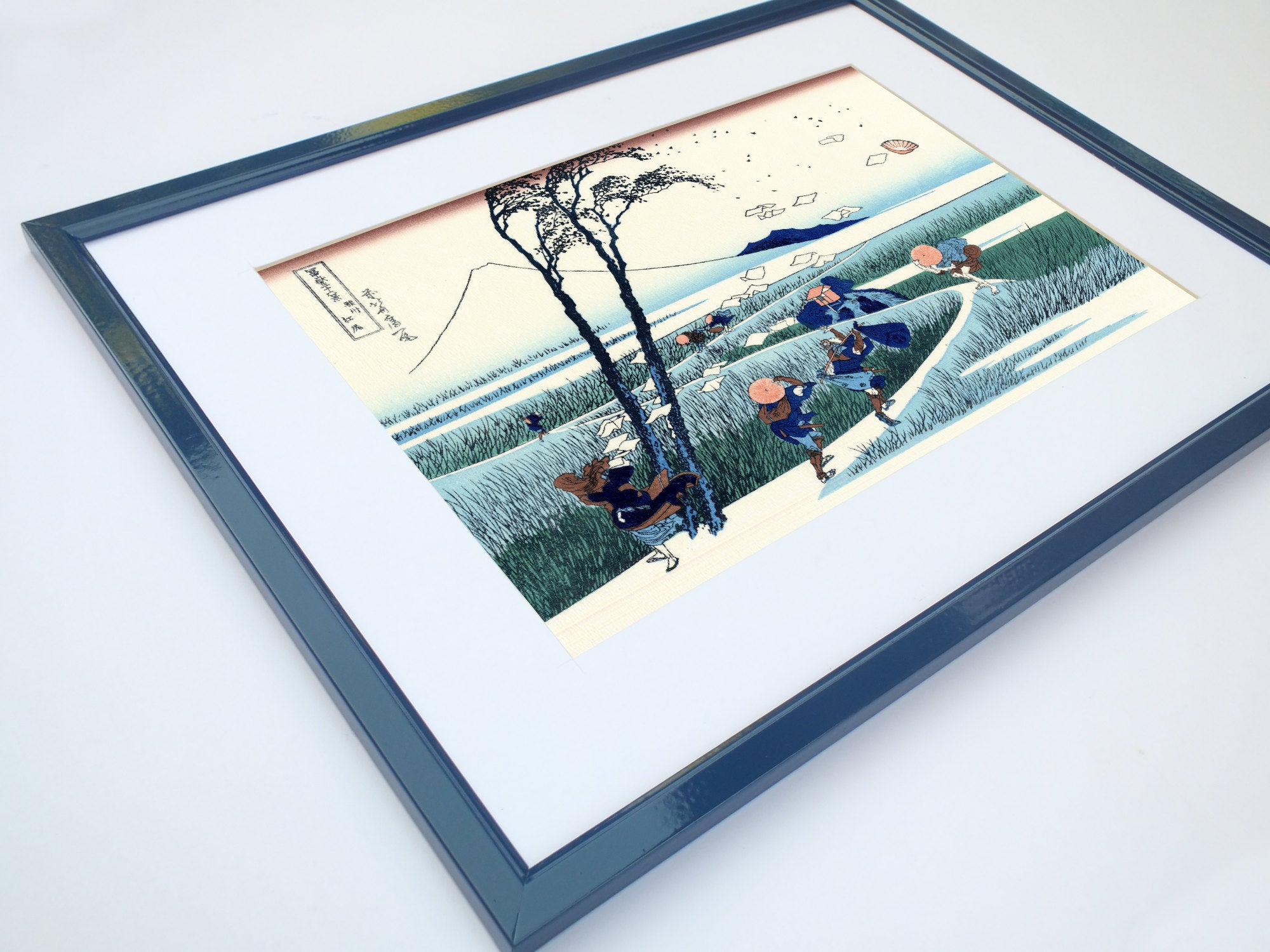
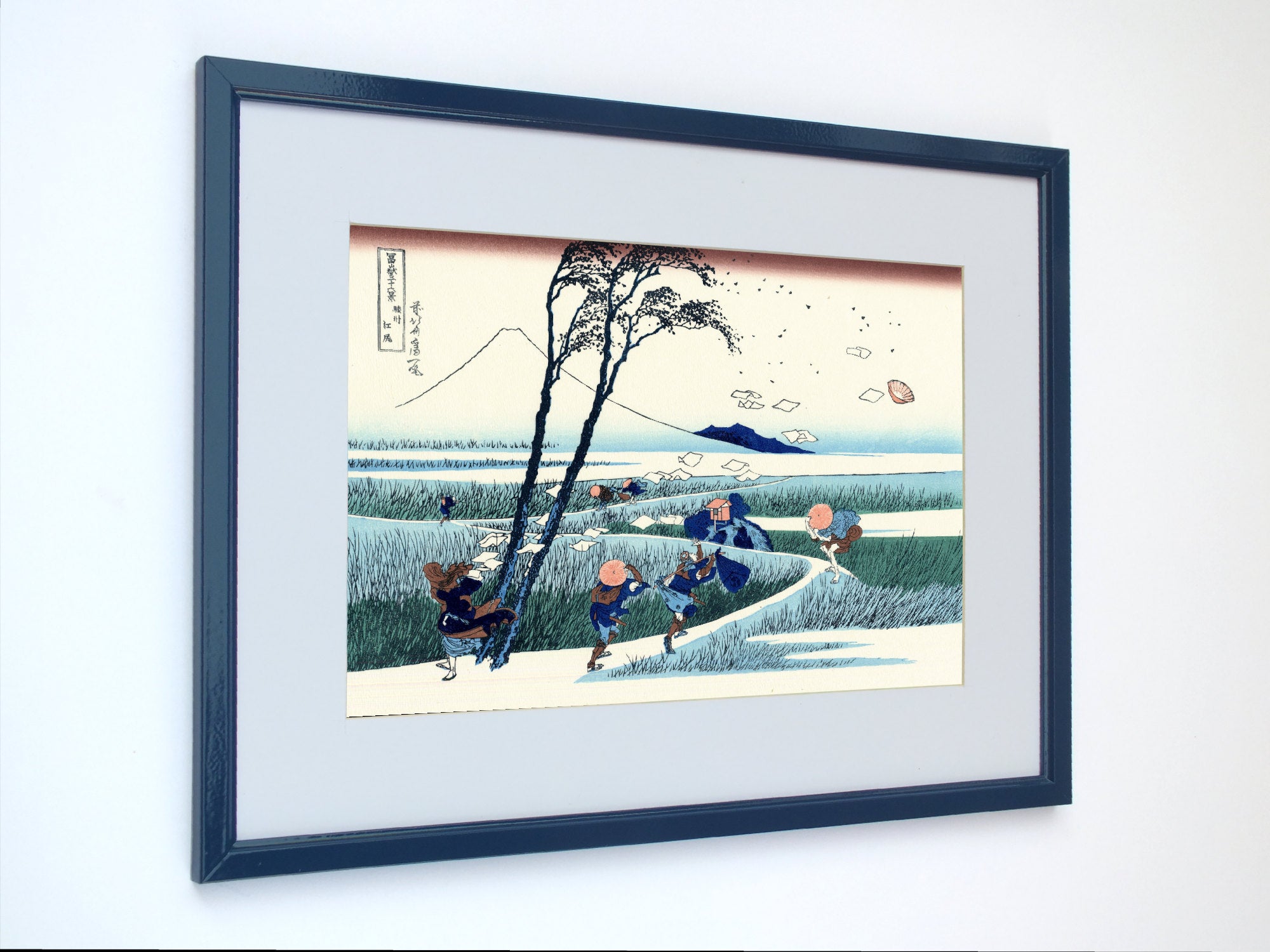
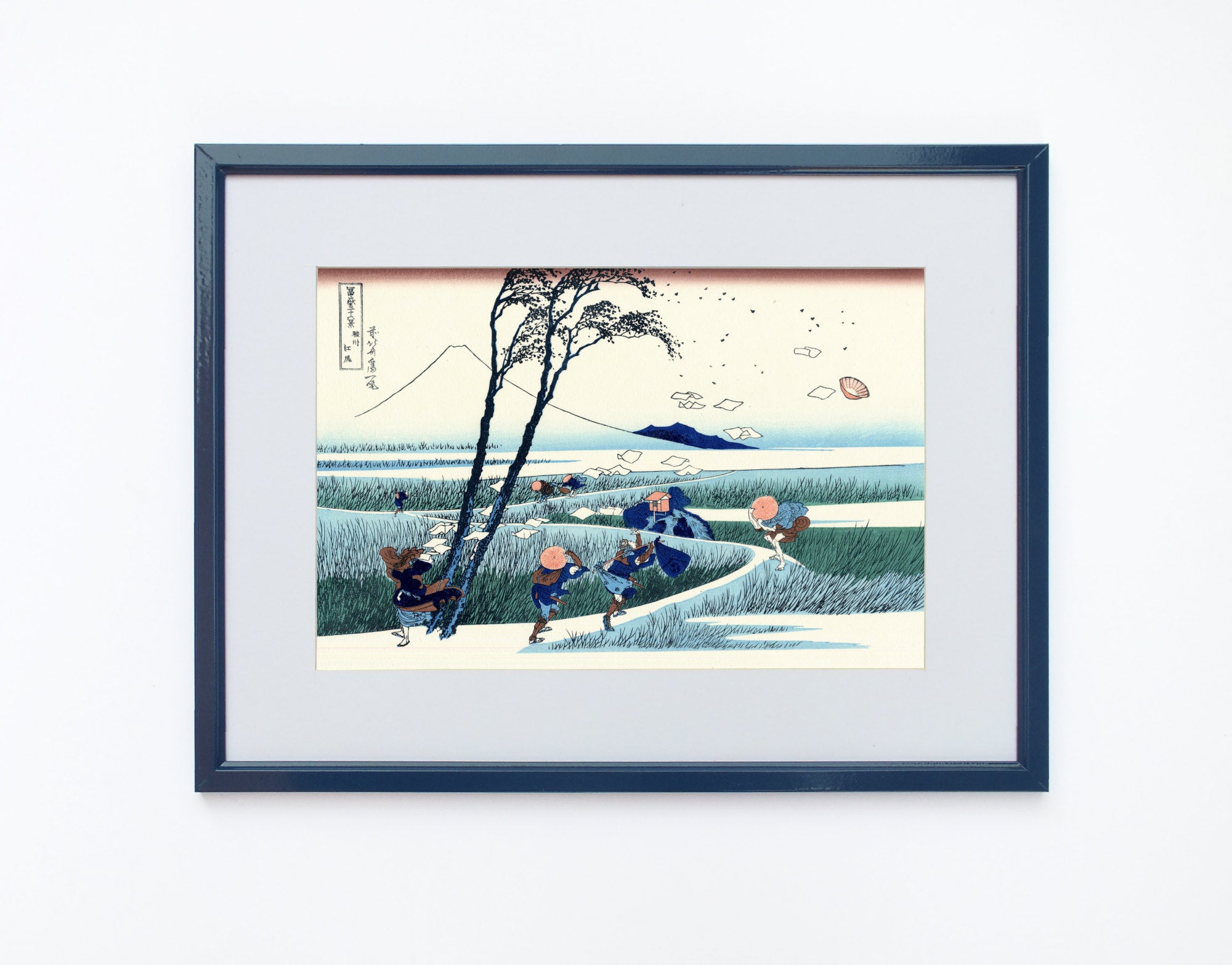
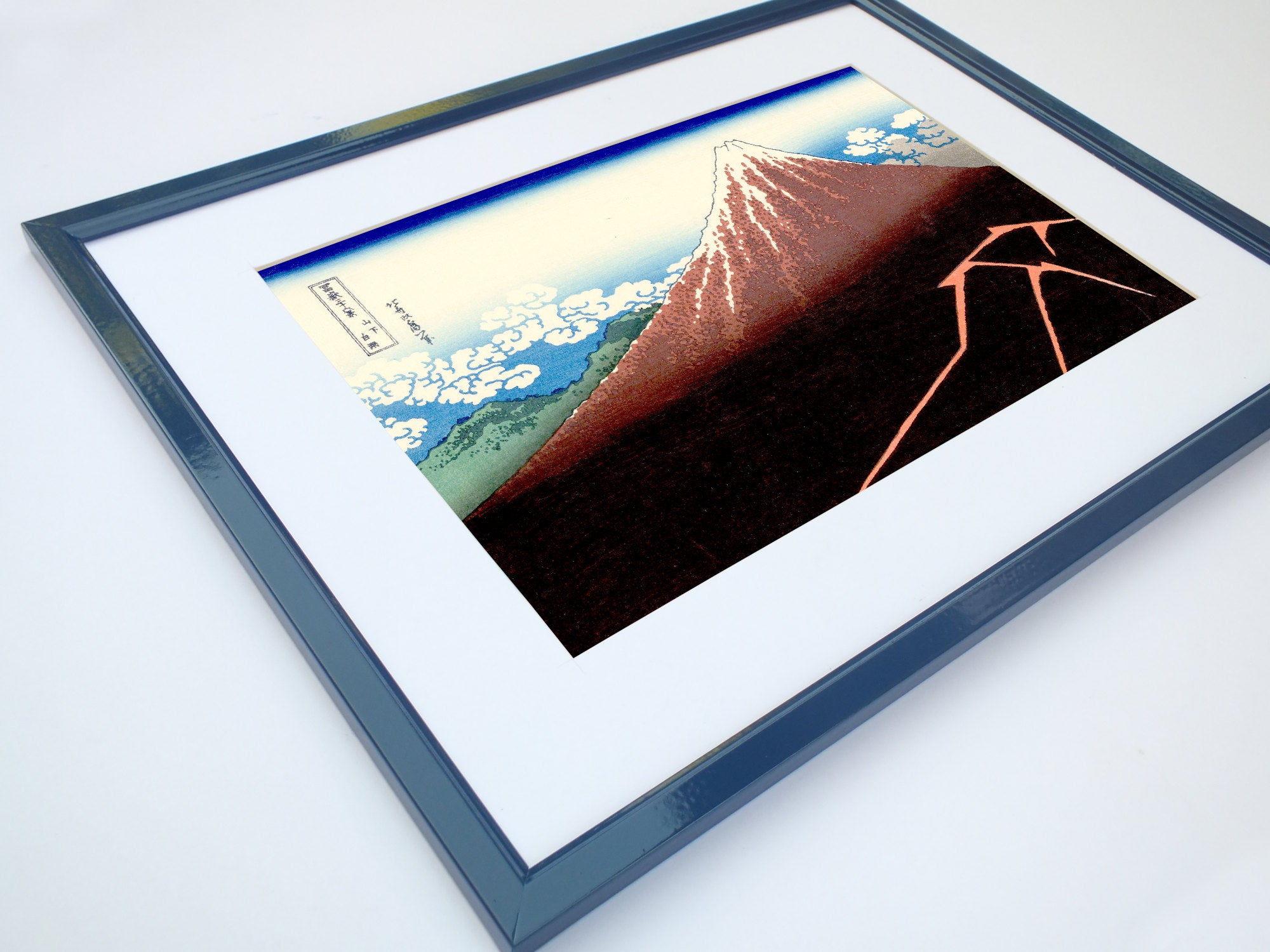
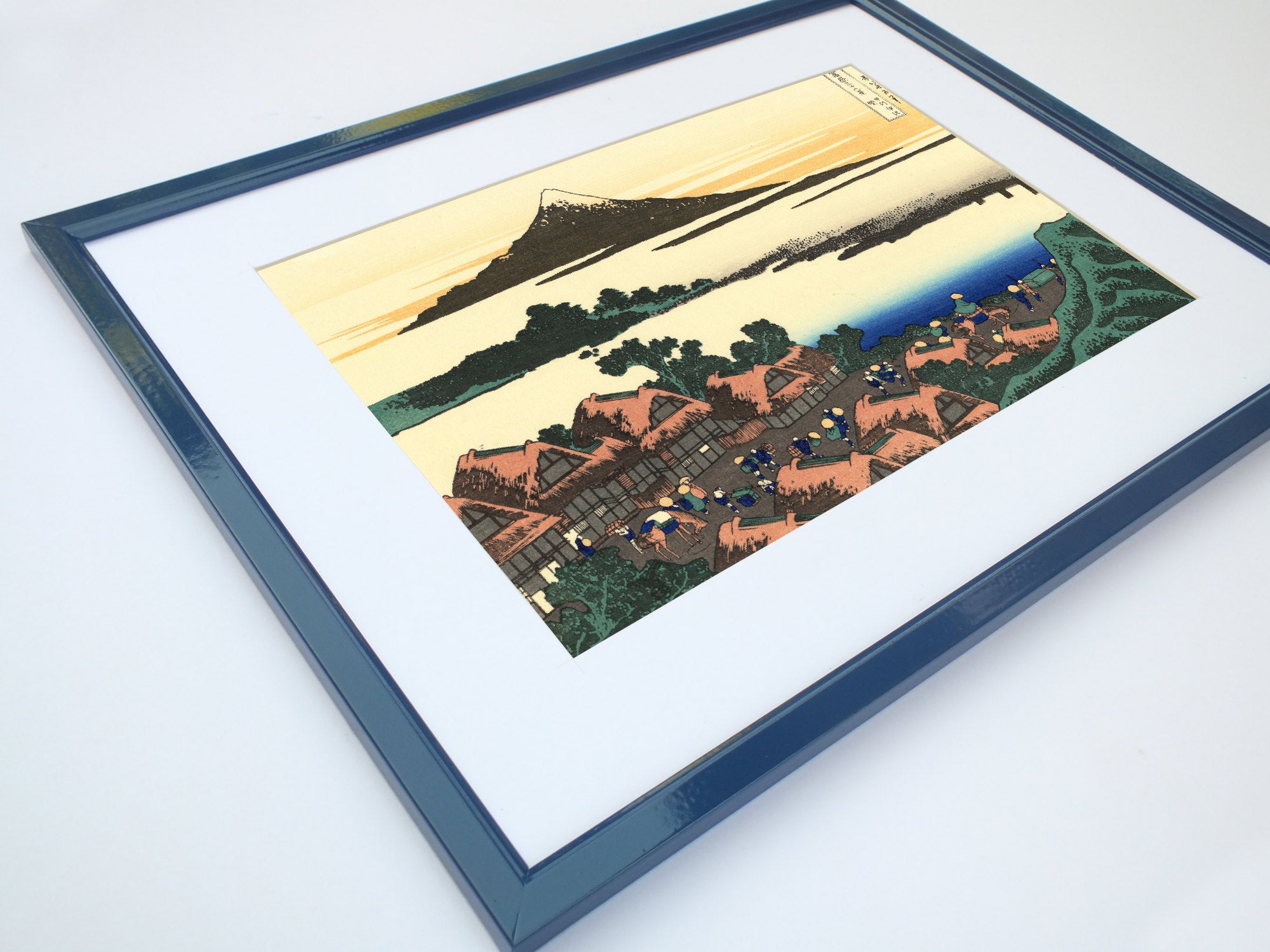
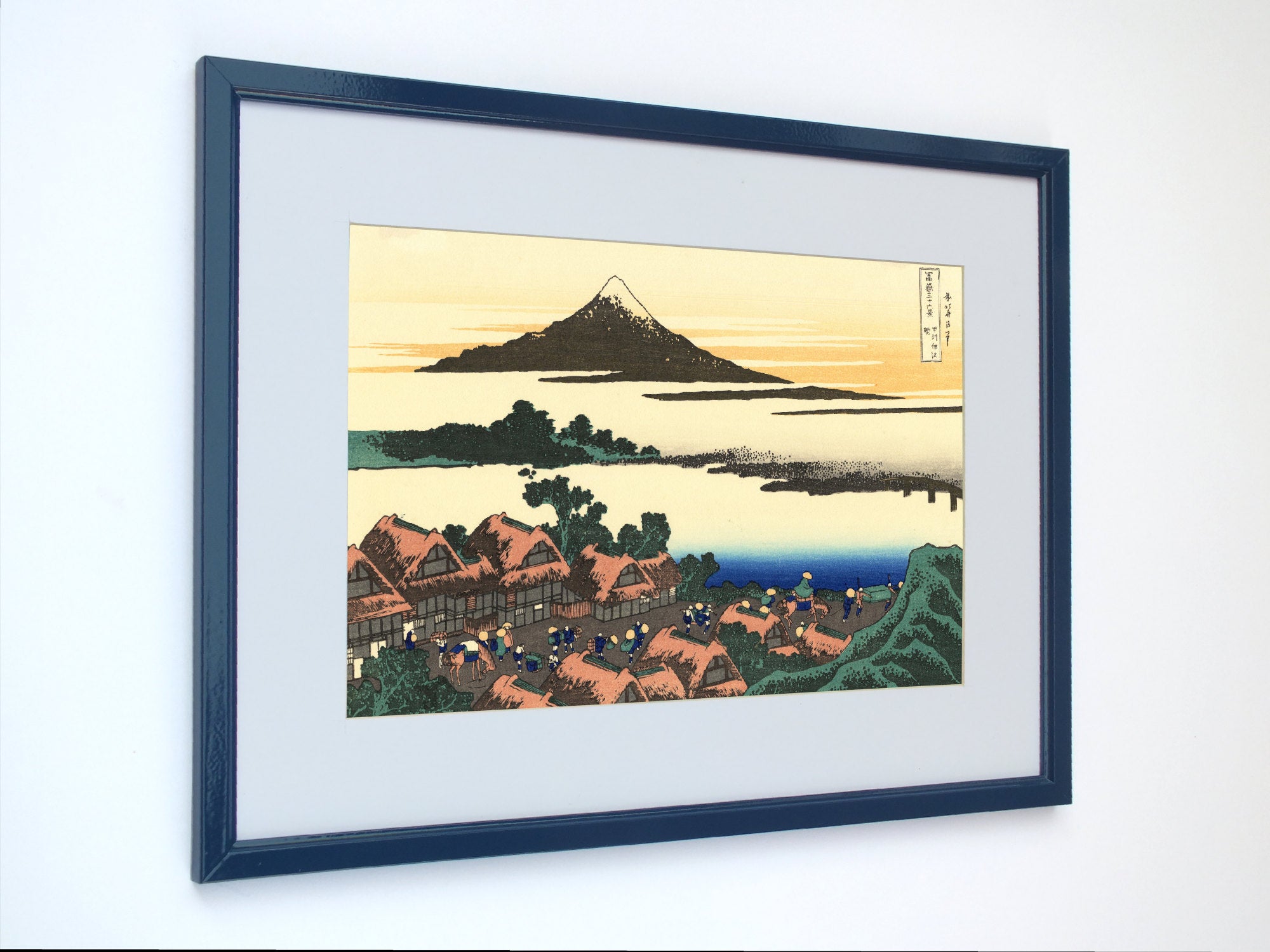
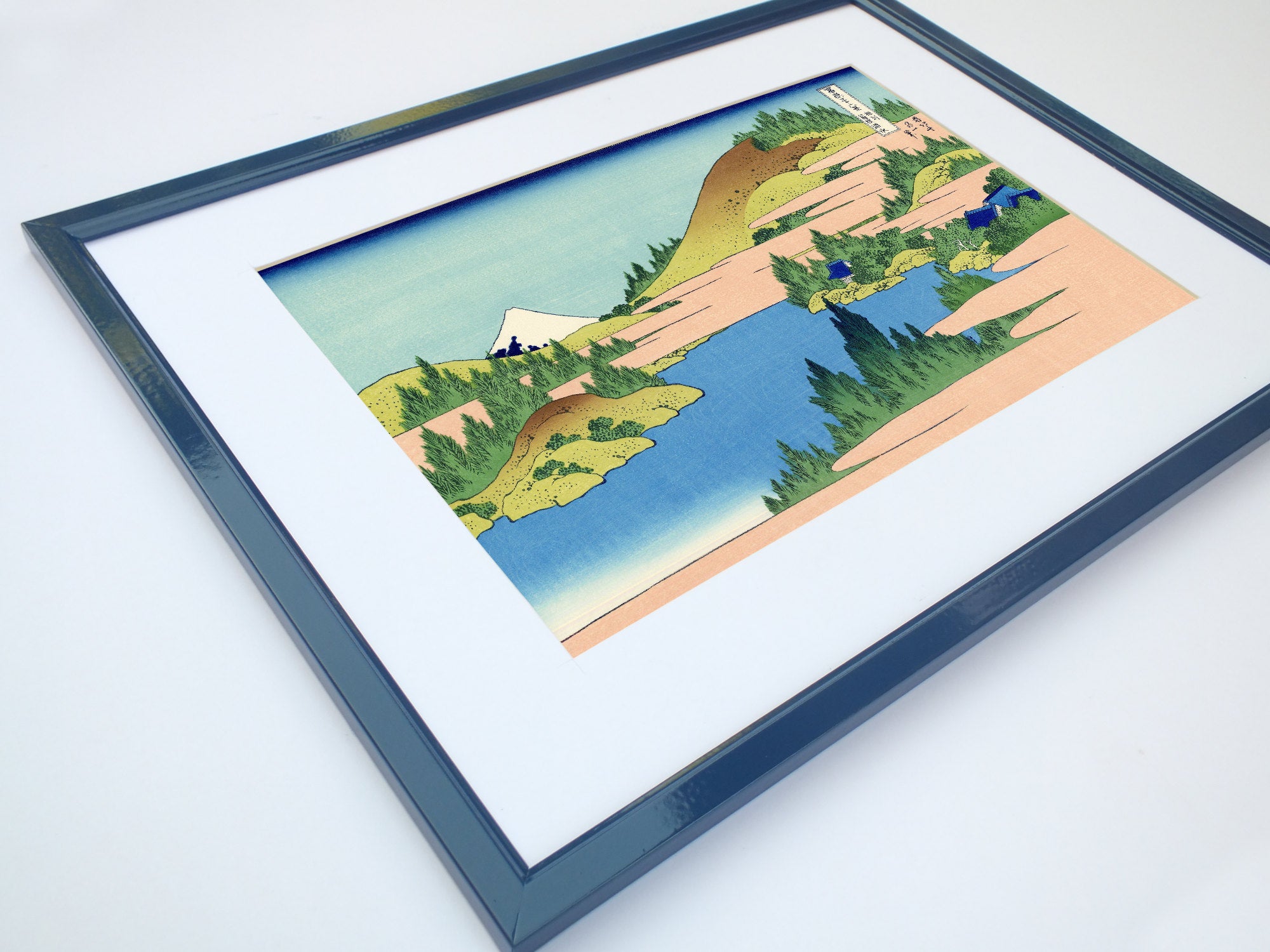
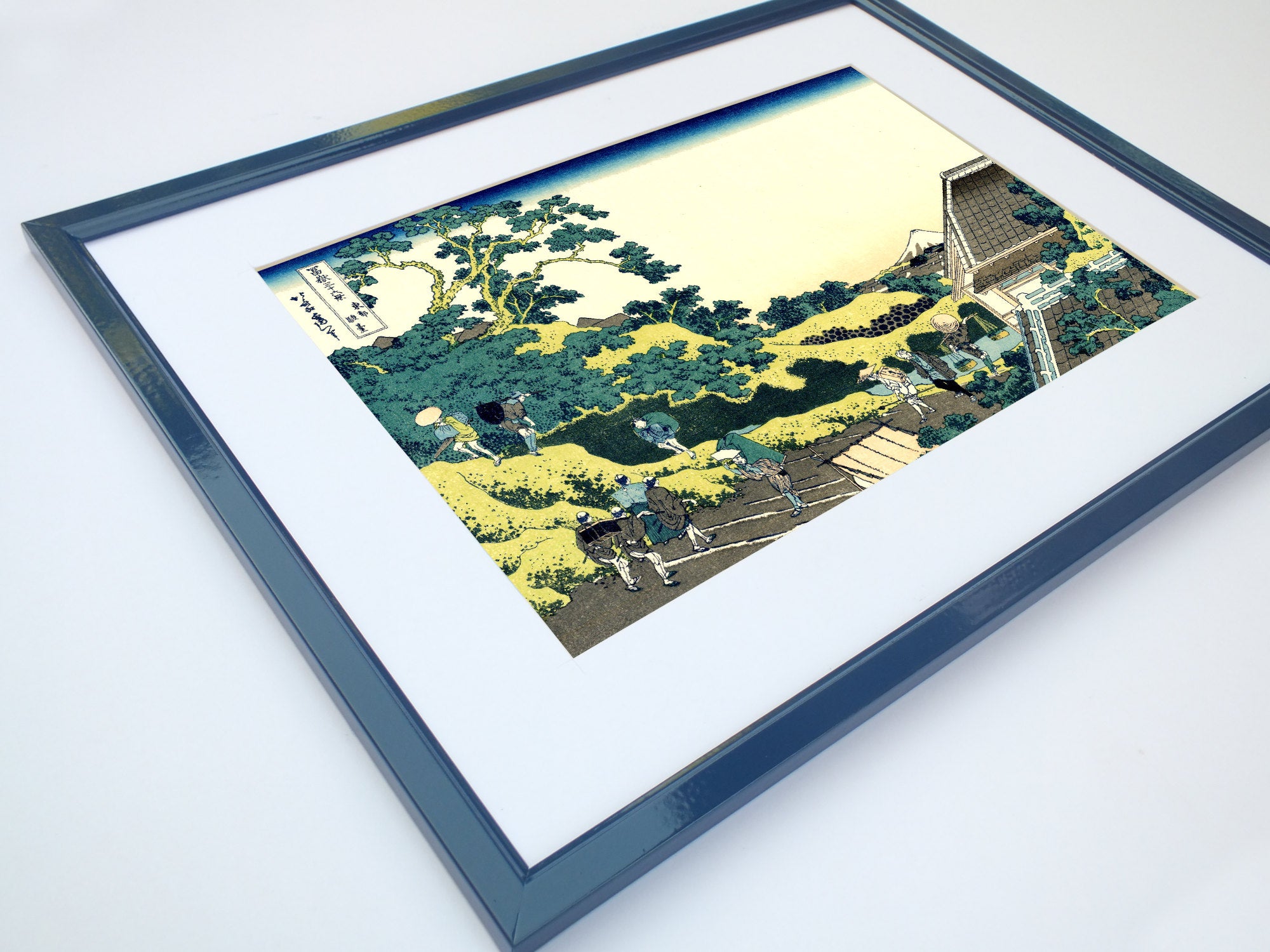
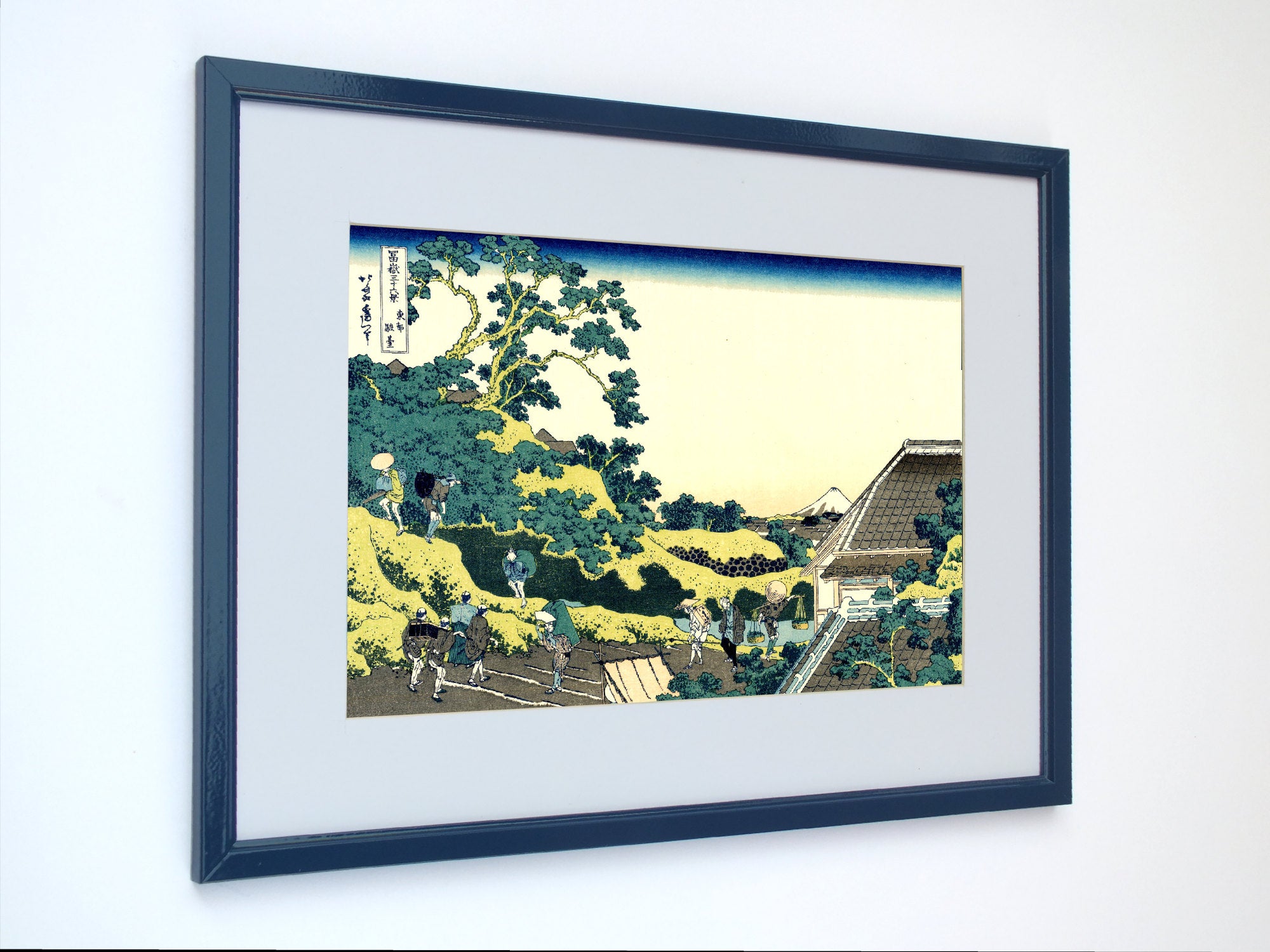
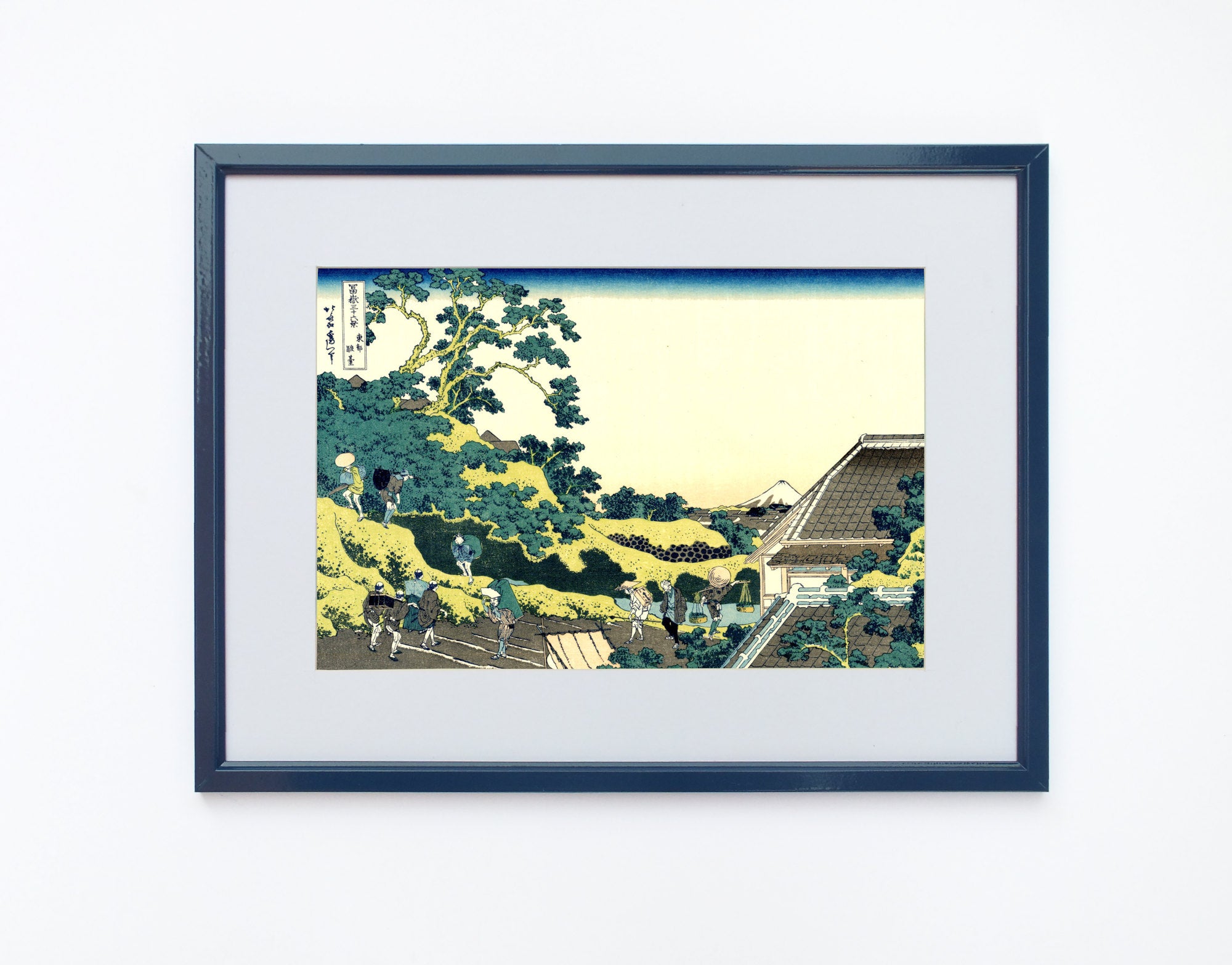
The sizes refer to the print area - framed prints have approx 2 inch wide white mount and approx 1 inch wide frame
Frames are made from responsibly sourced wood and gallery quality acrylic glazing.
Shipping
All orders for unframed fine art prints and original paintings are dispatched within 2 working days of receipt of payment.
Orders for custom framed prints are dispatched within 4 working days.
All orders are fully tracked from dispatch to delivery at your home or business.
All print and original painting orders are fully insured against loss or damage in transit. We refund or replace any damaged or lost orders.
Buy with confidence - read what our satisfied customers have to say - Reviews
Size Chart
SIZING - EUROPEAN A7 - A0:
A7 2-15/16 x 4-1/8 in 74 x 105 mm
A6 4-1/8 x 5-7/8 in 105 x 148 mm
A5 5-7/8 x 8-1/4 in 148 x 210 mm
A4 8-1/4 x 11-3/4 in 210 x 297 mm
A3 11-3/4 x 16-1/2 in 297 x 420 mm
A2 16-1/2 x 23-3/8 in 420 x 594 mm
A1 23-3/8 x 33-1/8 in 594 x 841 mm
A0 33-1/8 x 46-13/16 in 841 x 1188 mm
Explore related collections