


The Port of Le Havre (1906) by Raoul Dufy
Couldn't load pickup availability
BUY WITH CONFIDENCE
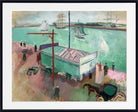
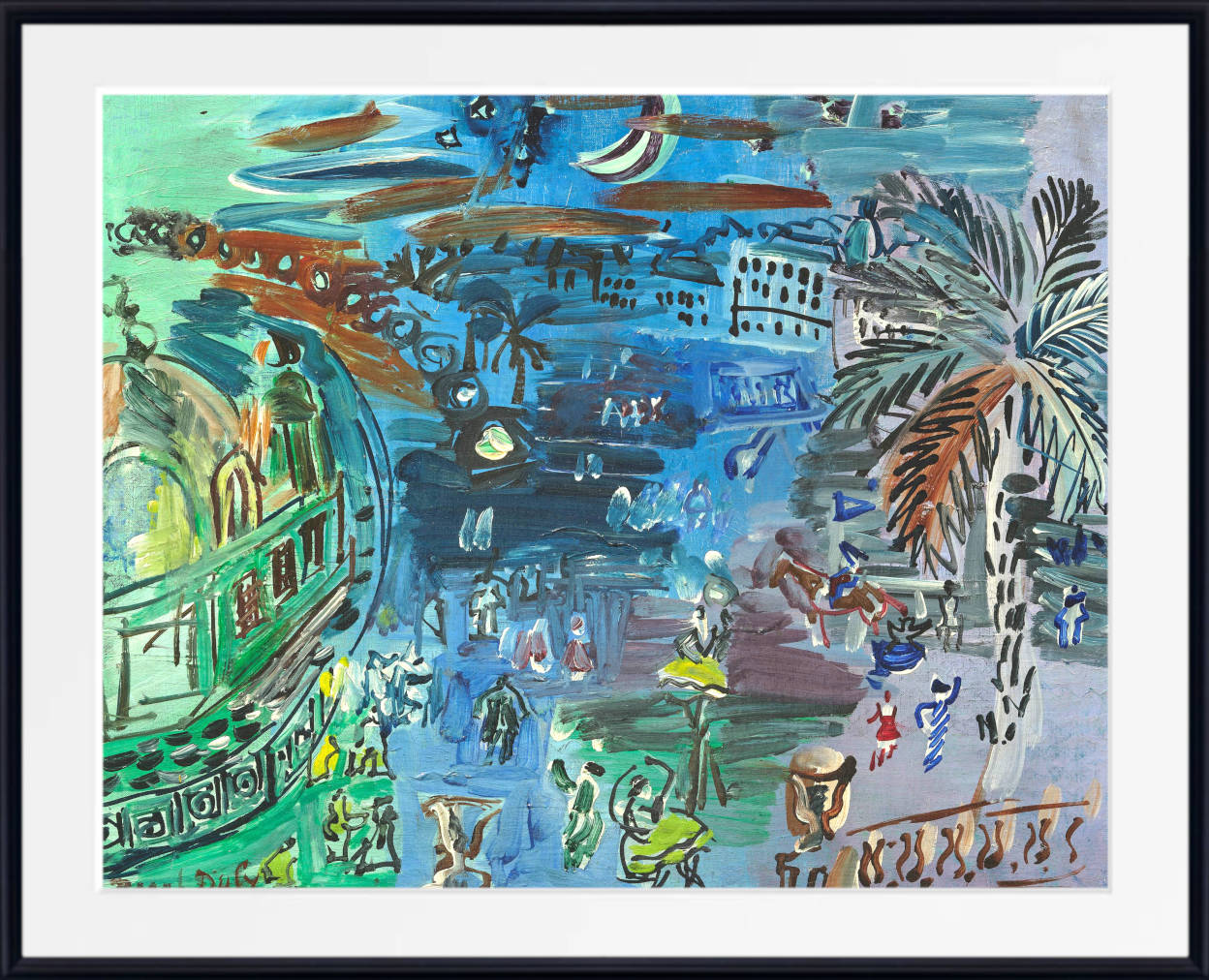
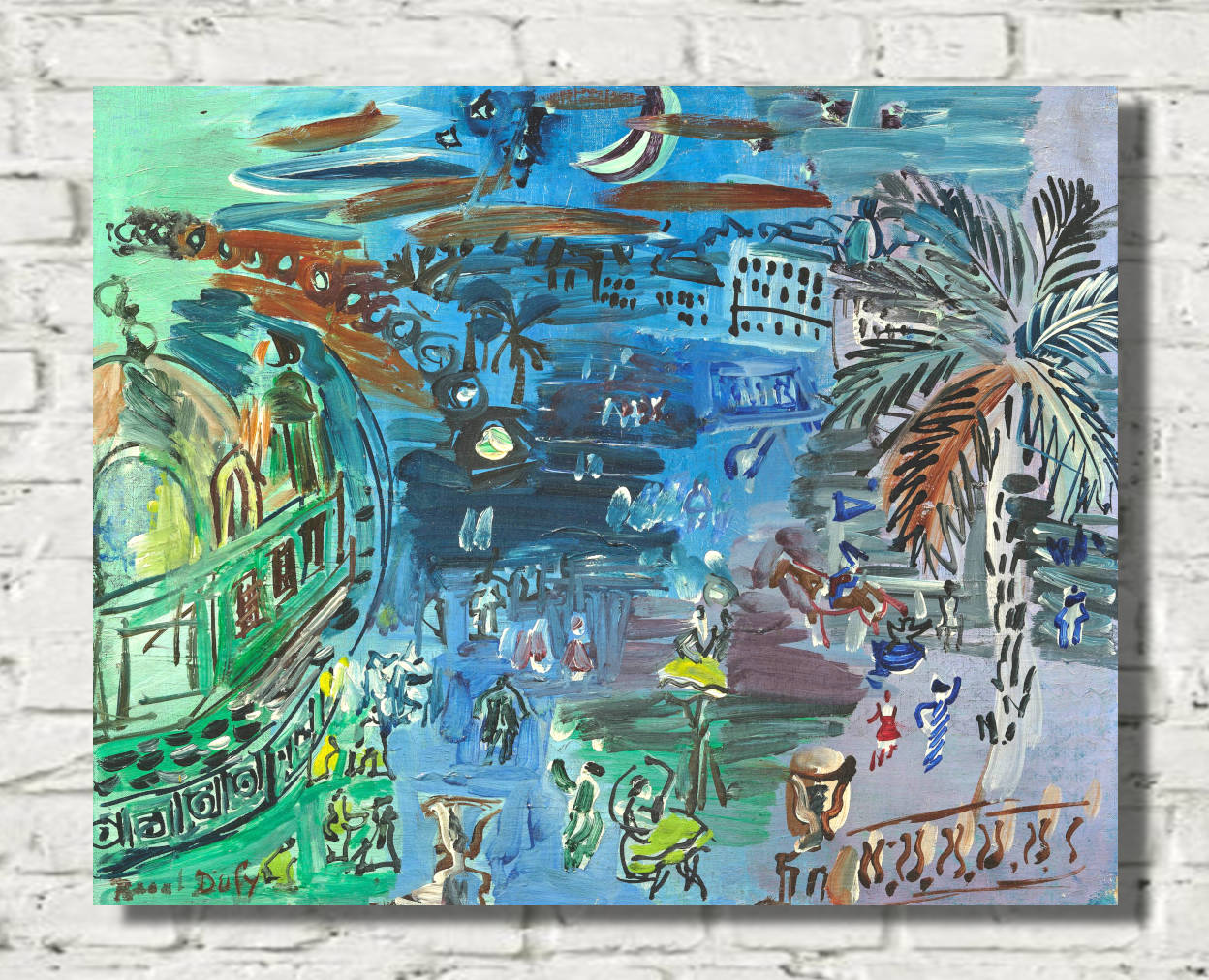
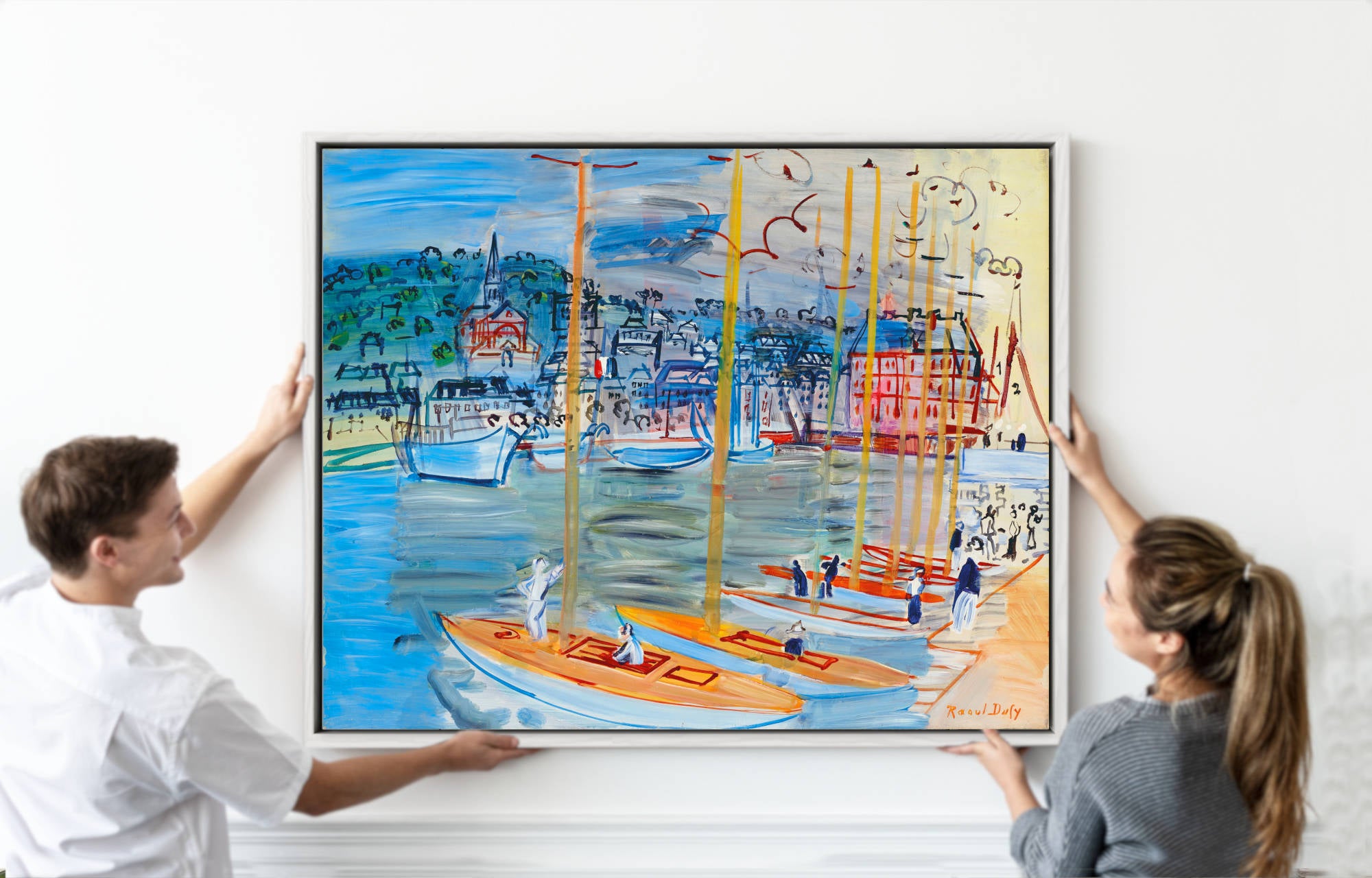
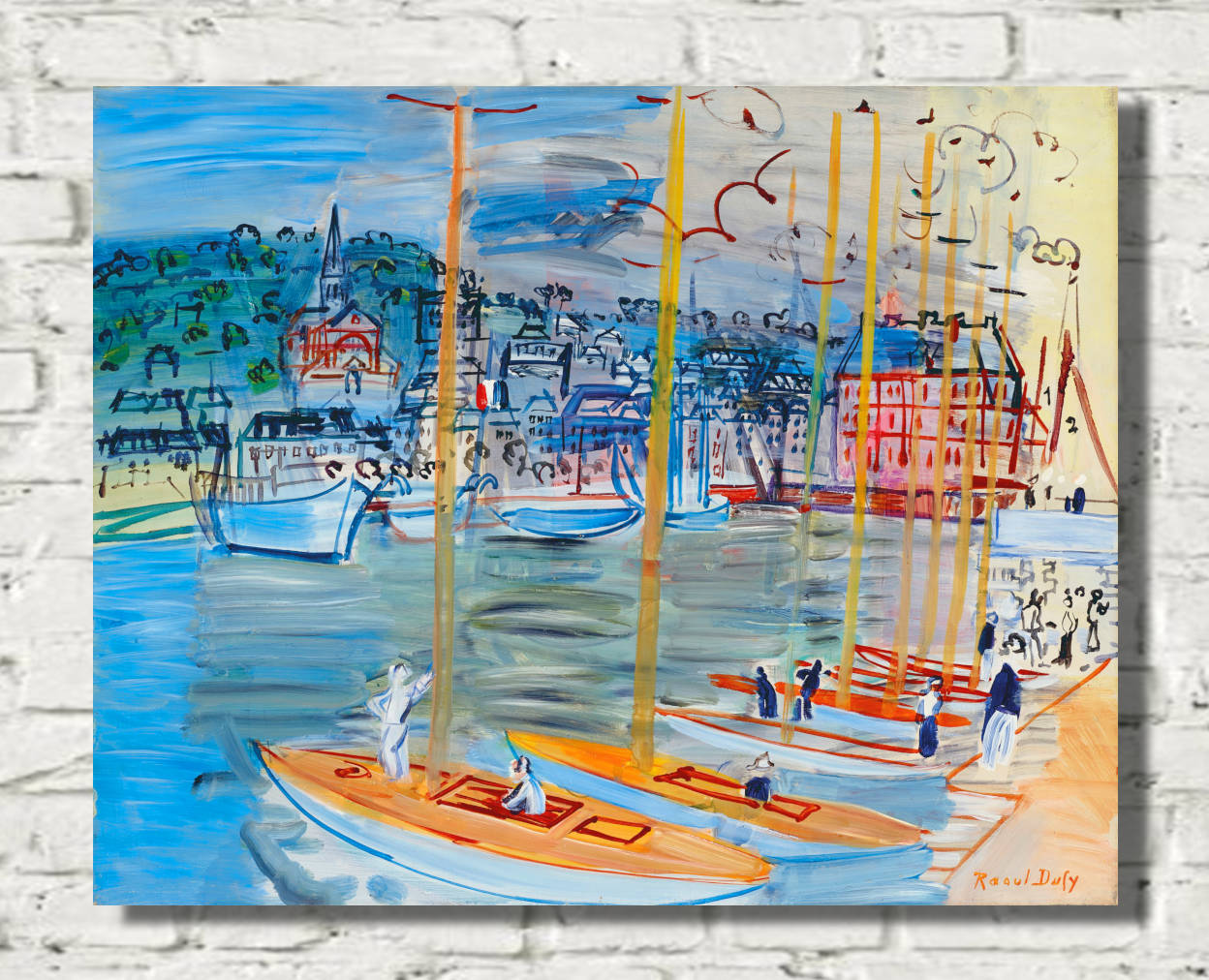
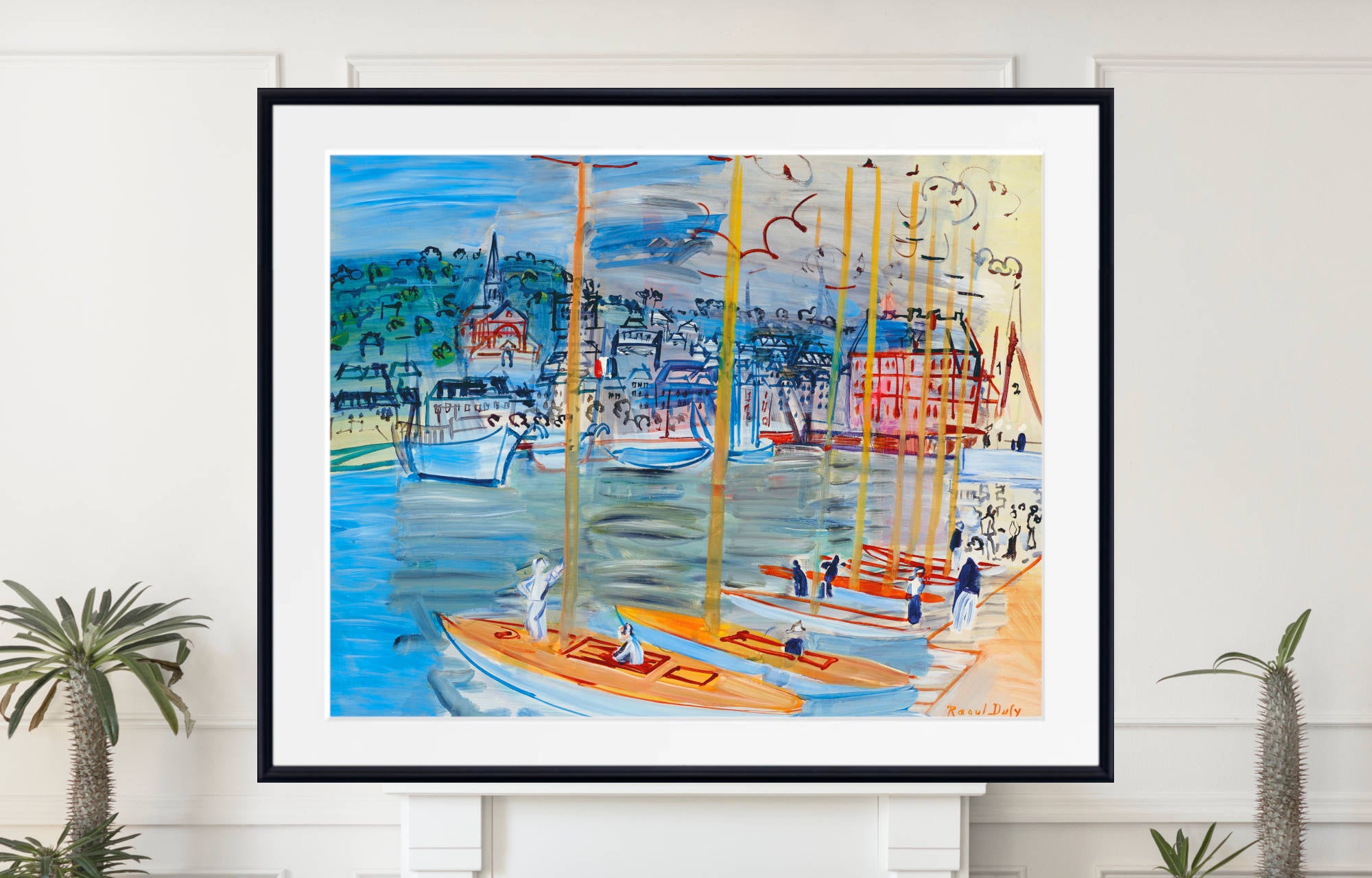
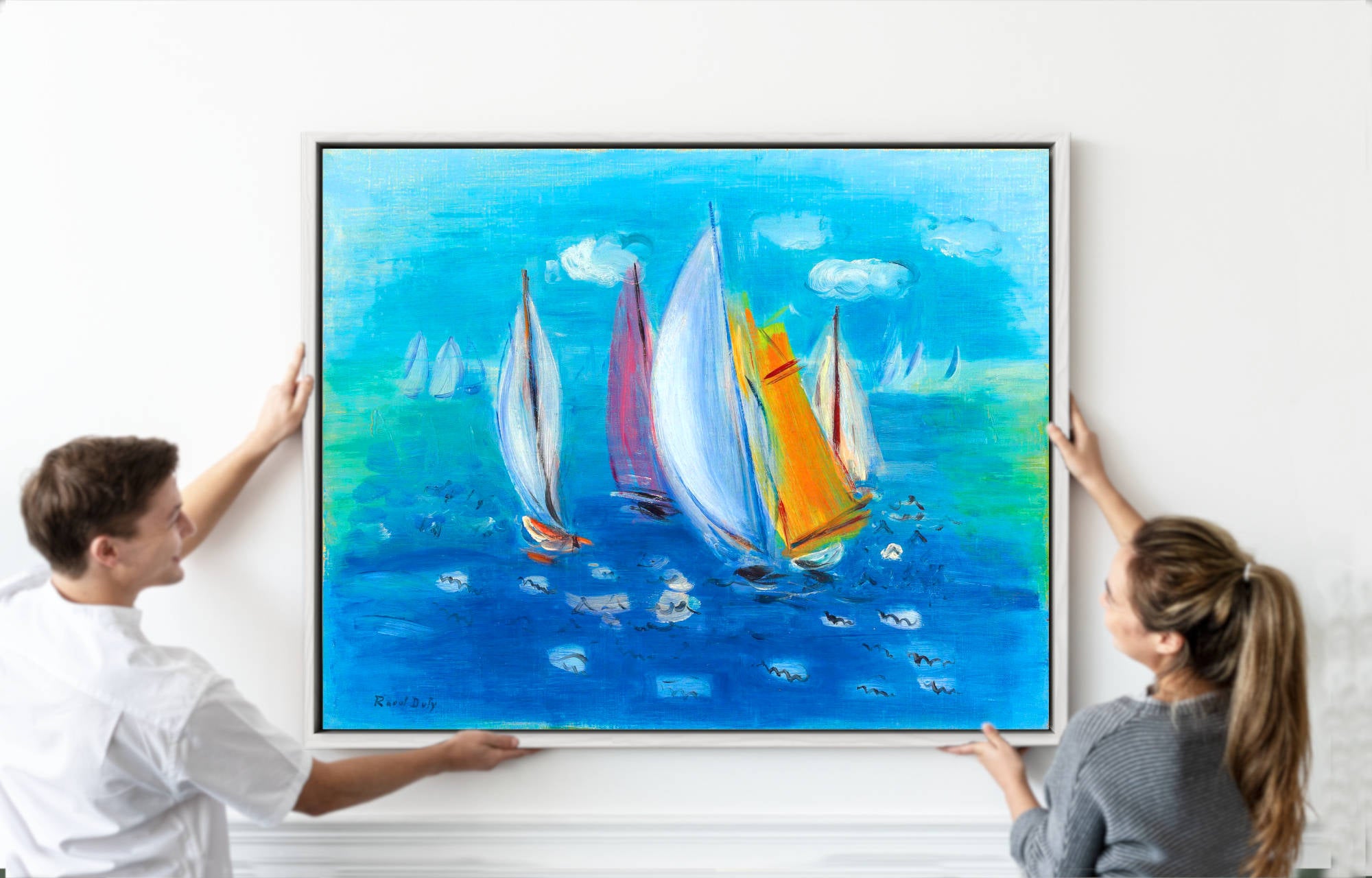
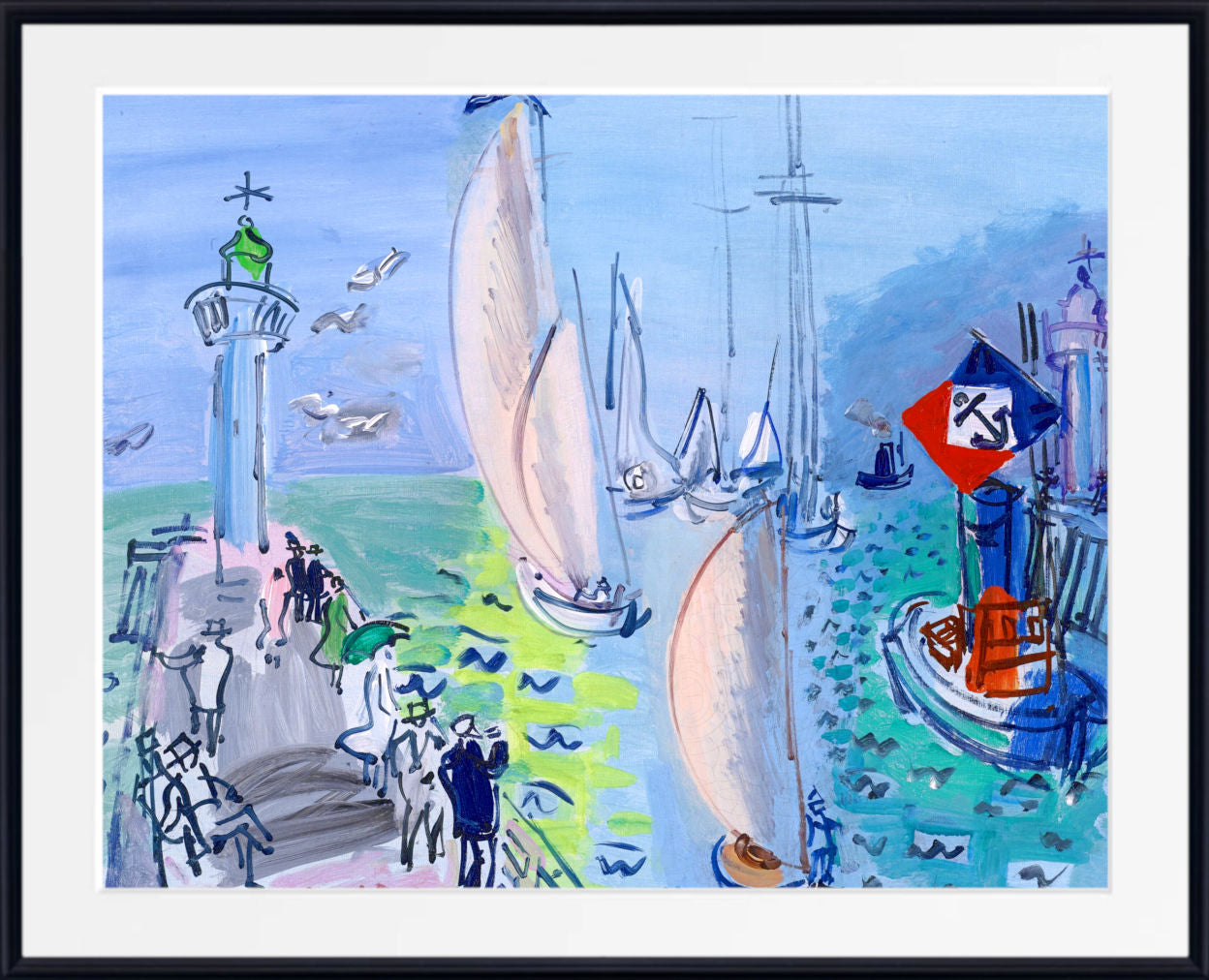
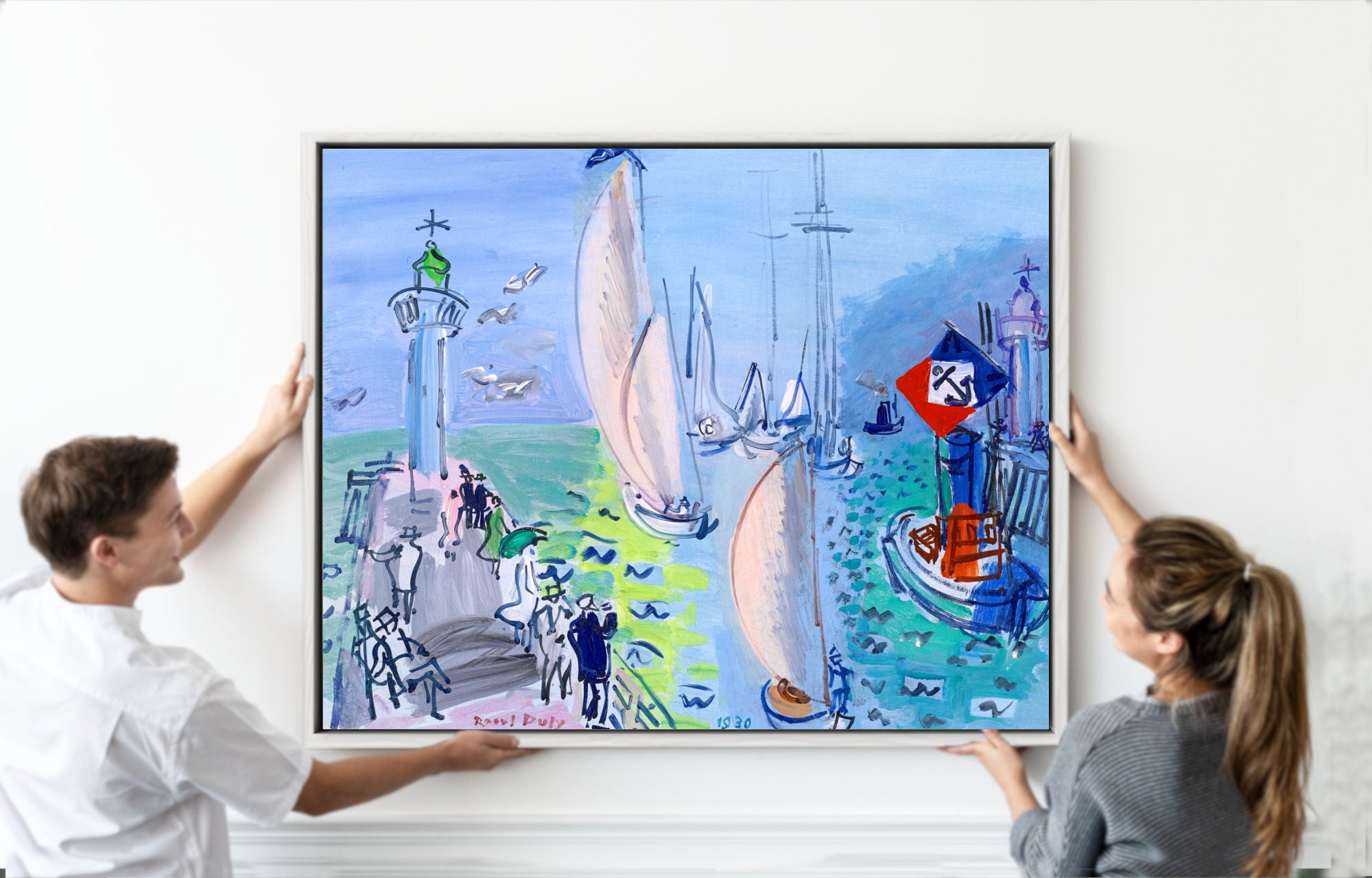
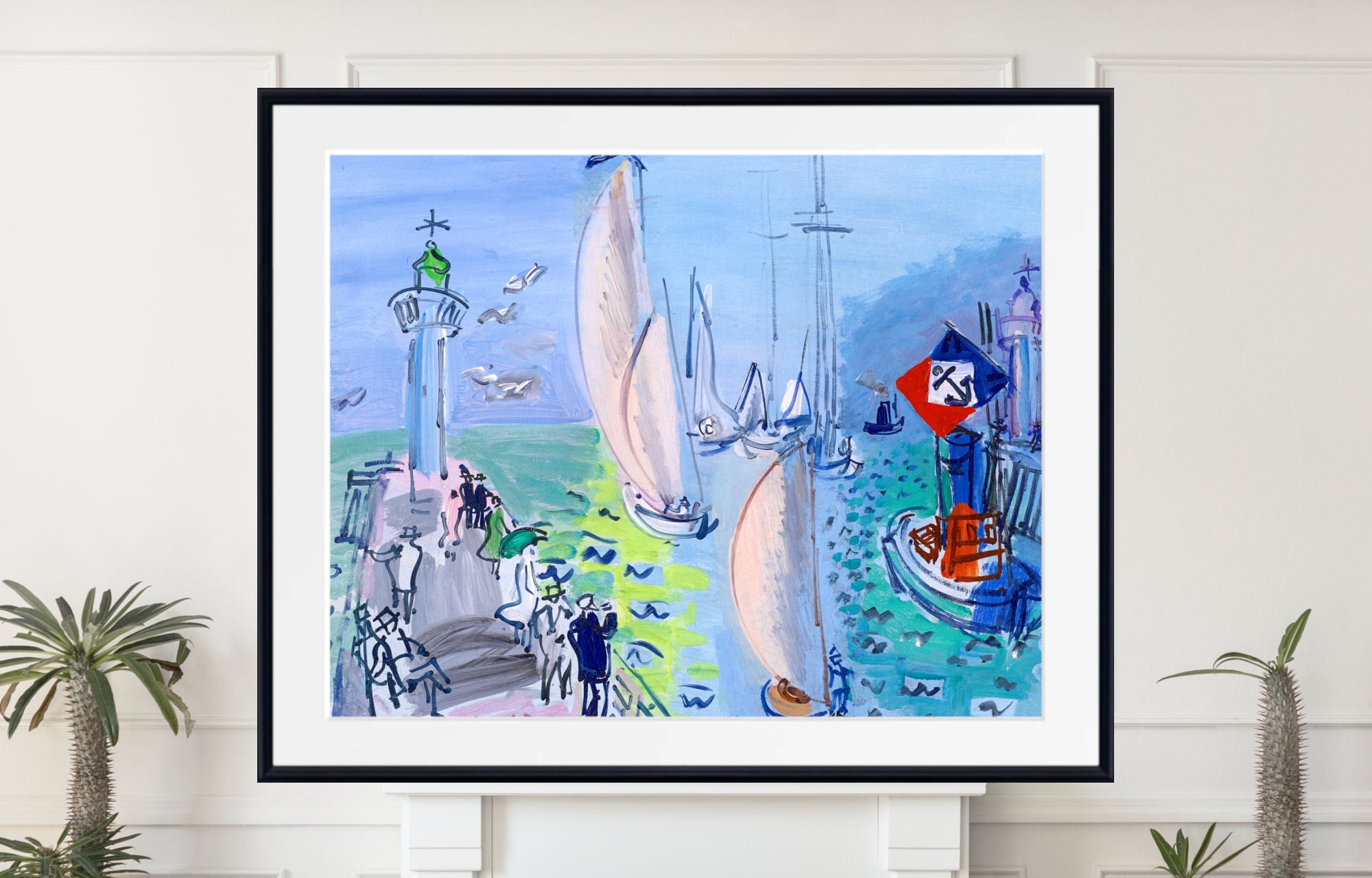
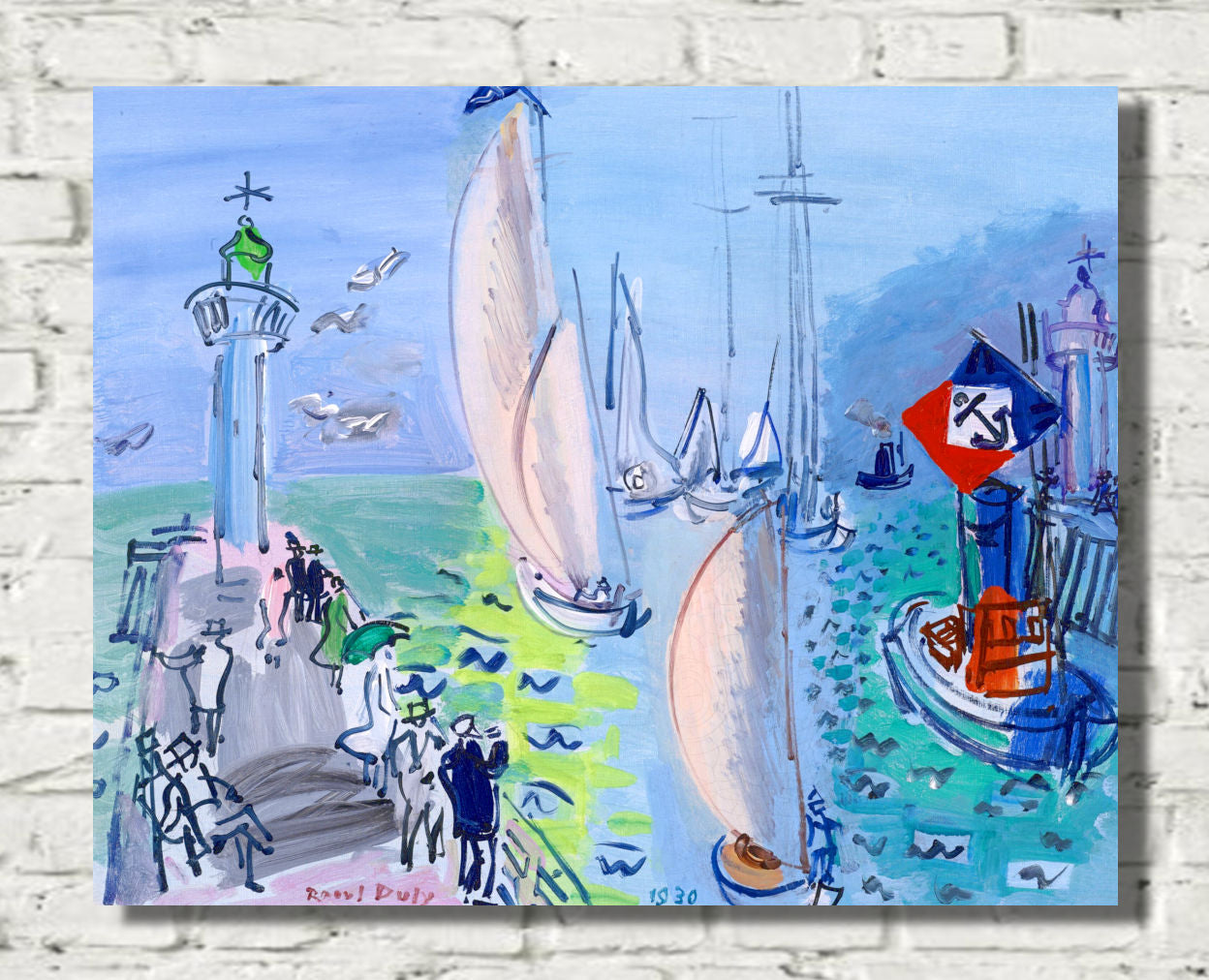
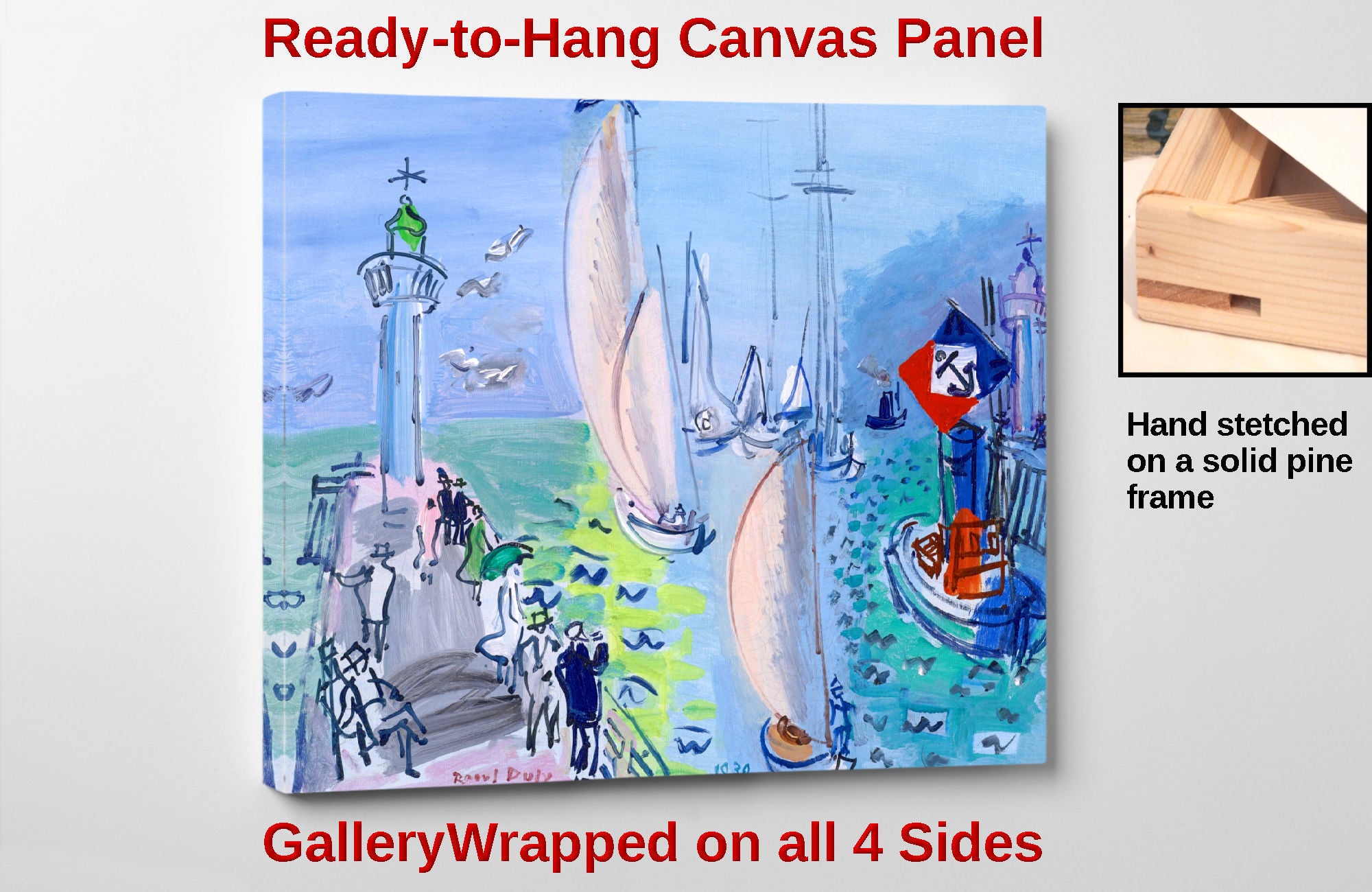
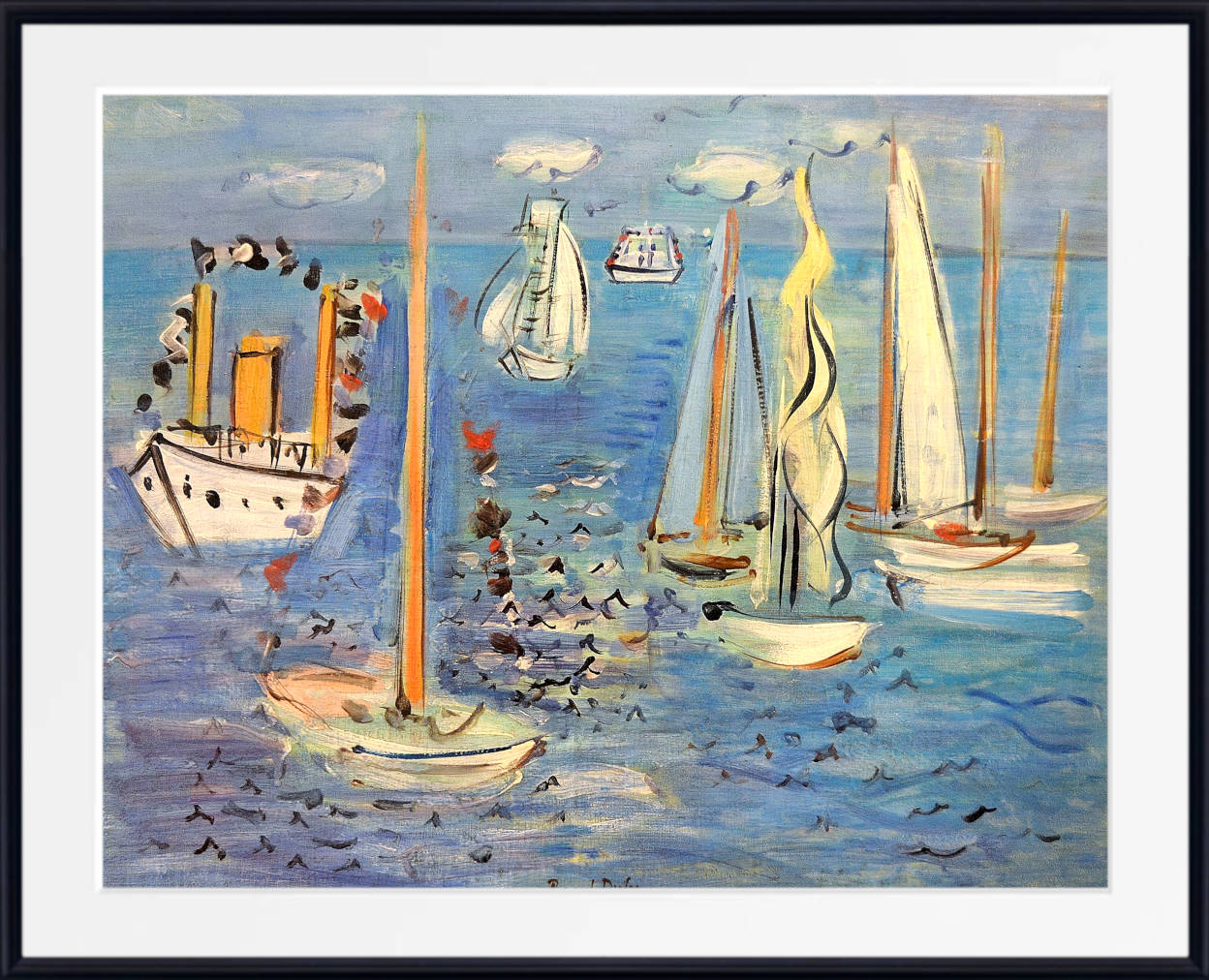
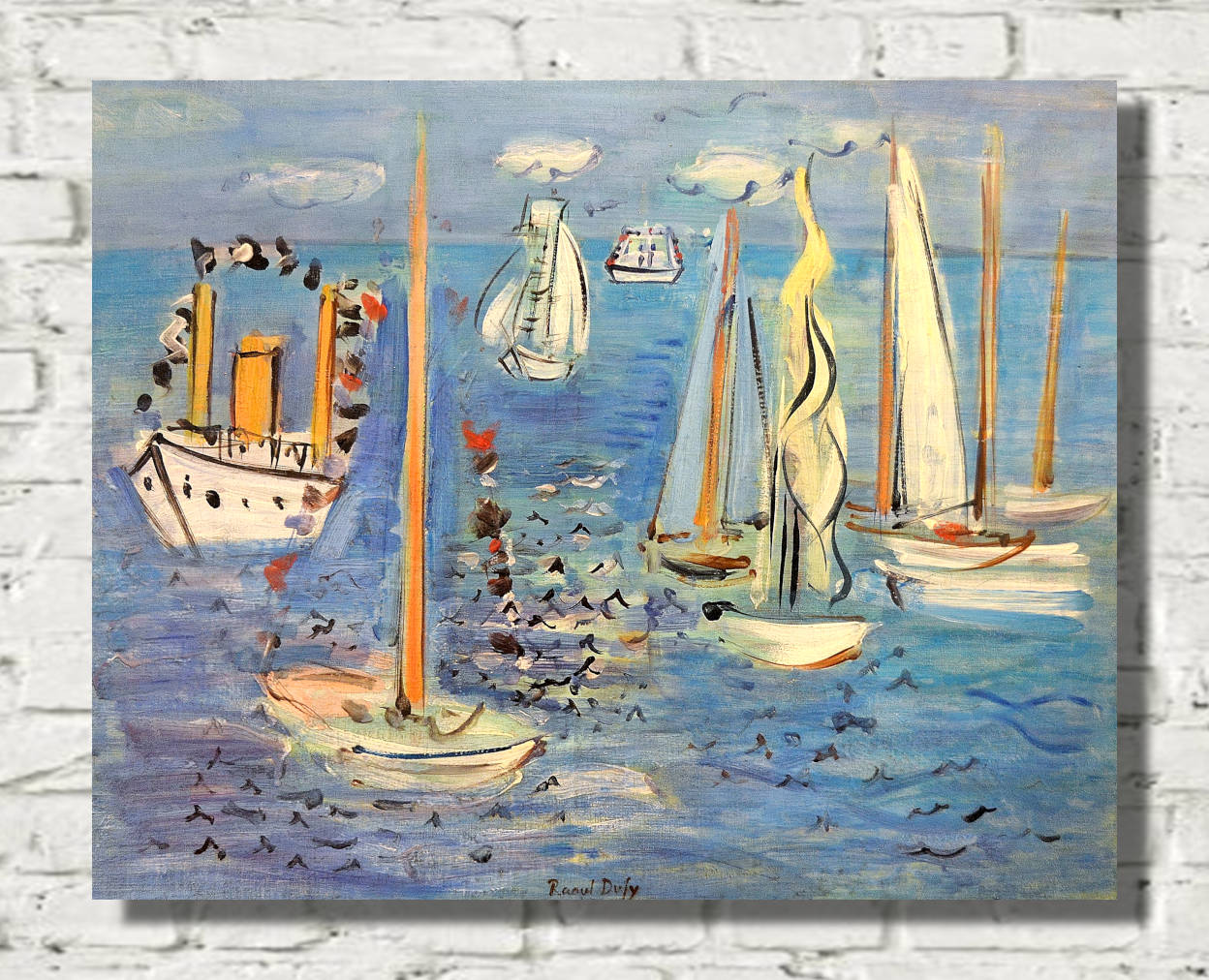
The Port of Le Havre (1906) by Raoul Dufy, known in French as Le Port du Havre, captures the artist's native harbour during one of the most important periods of his early career. Seen from an elevated viewpoint, sailing boats cross brilliant turquoise-green water while ships, harbour buildings and masts extend along the distant quay. In the foreground, figures, carts and a horse-drawn vehicle introduce the everyday activity of the working port.
This Raoul Dufy Port of Le Havre print belongs to the period when the artist was abandoning Impressionist naturalism and embracing the expressive colour of Fauvism. Instead of reproducing the harbour through subtle observed tones, Dufy transforms water, buildings and foreground activity into broad areas of green, pink, violet, red and blue. Available as a fine art print, framed print or canvas panel, The Port of Le Havre is an outstanding choice for admirers of Dufy, Fauvist painting, colourful maritime art and modern French seascapes.
The Port of Le Havre – Dufy's Native Harbour
Few places were as important to Raoul Dufy as Le Havre.
He was born in the Normandy port in 1877 and spent his childhood and adolescence surrounded by docks, sailing boats, fishing vessels, beaches and the constantly changing light of the Channel coast.
The port consequently became much more than an occasional subject. Dufy returned to it throughout his career, interpreting Le Havre repeatedly as his artistic style changed from Impressionism through Fauvism and later towards the distinctive combination of colour and drawing found in his mature work.
In The Port of Le Havre of 1906, the harbour is viewed during a particularly radical moment in that development.
Dufy looks down towards the water from an elevated position. Sailing boats move across the harbour while larger vessels and industrial structures occupy the distant quay. In the foreground, a building, scattered figures, carts and a horse-drawn vehicle create an animated contrast with the open water beyond.
The scene remains recognisably Le Havre, but the painting is increasingly constructed according to the independent demands of colour, line and design.
Le Havre and the Birth of a Colourist
The year 1906 was decisive for Dufy's understanding of colour.
Only a year earlier his paintings had remained strongly indebted to Impressionism. Like many painters working on the Normandy coast, he had been interested in atmospheric light, changing weather and the direct observation of nature.
His encounter with Henri Matisse's work in 1905 transformed that outlook.
Matisse demonstrated that colour did not need to reproduce exactly what the artist saw. It could be intensified, simplified and selected according to the emotional and structural requirements of the painting.
Dufy quickly absorbed this idea.
By 1906, his paintings of Le Havre had become markedly more vivid. The port that he had known since childhood became the setting for experiments with pure colour, energetic brushwork and simplified forms.
The Port of Le Havre represents this transformation particularly clearly.
Colour as Light
One of Dufy's most important discoveries during 1906–07 was the idea that colour itself could generate the sensation of light.
Instead of trying to follow every change in natural illumination, he increasingly distributed light throughout the composition by means of colour.
In The Port of Le Havre, the harbour water becomes an extraordinary expanse of turquoise-green. This intense area provides the dominant colour of the composition and immediately separates the painting from a conventional naturalistic harbour scene.
Against it, white and green sails, deep blue masts, red-brown harbour structures and pink or mauve foreground areas produce a network of contrasts.
These colours do not merely describe the local appearance of boats, water and buildings. Their relationships create luminosity.
The bright water appears illuminated because of the darker and warmer colours surrounding it. Reflections are suggested through freely handled areas of pigment rather than meticulously reproduced.
This approach marks an important shift from Impressionism.
Where an Impressionist painter might follow the changing appearance of sunlight, Dufy increasingly sought to create an equivalent sensation of light within the painting itself.
The Elevated Viewpoint
The elevated viewpoint is one of the most distinctive features of The Port of Le Havre.
Dufy places the viewer above the immediate waterfront, looking down across foreground activity towards the harbour.
This allows several different layers of the port to occupy the same composition.
Closest to the viewer are pedestrians, carts, a horse-drawn vehicle and a low building. Beyond them stretches the broad area of water, populated by sailing boats. At the far side of the harbour, larger vessels, warehouses and industrial structures form a horizontal band below the sky.
The unusual viewpoint creates depth without relying on conventional academic perspective.
It also allows Dufy to treat different sections of the image almost as independent colour zones: pink and mauve foreground, brilliant green water and a cooler band of sky and distant harbour structures.
From Impressionism to Fauvism
Dufy's early relationship with Impressionism was particularly understandable given his Normandy background.
Le Havre had played an important role in the development of modern French landscape painting. Eugène Boudin worked extensively along the coast, while Claude Monet's connections with Le Havre helped establish the region as one of the historic centres of Impressionism.
Dufy inherited that tradition.
His earliest paintings included harbour scenes, beaches and landscapes treated with relatively natural colour and atmospheric brushwork.
After 1905, however, the priorities changed.
Fauvism encouraged him to simplify the motif and use increasingly saturated colour. The purpose of painting was no longer simply to reproduce what was before him but to translate the experience of looking into an autonomous arrangement of colour and form.
The harbour therefore remained recognisable while becoming increasingly modern.
The Fauvist Port
Harbours were ideal subjects for Fauvist experimentation.
They offered an unusually rich collection of visual elements:
- brightly painted boat hulls
- vertical masts
- curved sails
- reflections on moving water
- quays and harbour buildings
- large expanses of sky and water
- strong contrasts between land and sea
- constant human and maritime activity
Dufy could therefore retain direct contact with a real modern environment while reorganising it through increasingly expressive colour.
In The Port of Le Havre, the sailing boats are particularly important. Their white, green and grey sails interrupt the broad turquoise water, while their masts introduce a network of vertical lines.
The distant ships and harbour buildings establish another layer of structure across the horizon.
The entire harbour consequently becomes a coherent arrangement of colour, line and movement.
Figures and Everyday Harbour Life
The painting is not simply a view of boats on water. Dufy also includes numerous details of everyday activity around the waterfront.
Small figures move through the foreground and along the edge of the harbour. A horse and carriage occupy the lower right, while carts and other objects are scattered nearby.
These figures are not developed as individual portraits.
Dufy reduces them to rapid silhouettes and strokes of colour, allowing them to contribute to the rhythm of the composition without distracting from the larger structure.
This treatment anticipates an important characteristic of his mature art. In later paintings of racecourses, regattas and fashionable resorts, people are frequently represented through economical calligraphic marks rather than detailed modelling.
The Port of Le Havre therefore shows elements of Dufy's mature visual language beginning to appear during his Fauvist period.
Dufy and the Le Havre Fauvist Circle
Dufy was not the only artist associated with Le Havre to become involved in Fauvism.
Othon Friesz, who had studied alongside Dufy, also embraced strong Fauvist colour during the middle years of the decade.
Georges Braque, another painter with close connections to Le Havre, passed through an important Fauvist phase before moving towards Cubism.
Dufy also worked alongside Albert Marquet on the Normandy coast during the summer of 1906, painting in and around Le Havre, Trouville and Honfleur.
This northern group approached Fauvism from a different environment to Henri Matisse and André Derain, whose famous experiments at Collioure had taken place beneath intense Mediterranean light.
The Channel coast was cooler and more changeable, but its harbours, beach resorts, sailing boats and maritime activity proved equally suitable for liberated modern colour.
Le Havre as a Laboratory for Modern Painting
Dufy repeatedly returned to Le Havre because the city offered an extraordinary variety of subjects within a relatively concentrated area.
The commercial port provided ships and quays. Nearby Sainte-Adresse offered beaches, bathing and the Casino Marie-Christine. Streets could be transformed by flags during public celebrations, while yachts, fishing boats and harbour traffic provided constantly changing arrangements of colour and line.
During 1906 Dufy produced numerous works around the city, including 14 Juillet au Havre, The Casino and several separate paintings titled or associated with Le Port du Havre.
Together, these paintings demonstrate how quickly his art was changing.
Rather than travelling elsewhere to invent a new pictorial language, Dufy repeatedly tested new ideas against the city he knew best.
Le Havre therefore became both a physical landscape and an artistic laboratory.
Boats, Masts and Pictorial Rhythm
The boats in The Port of Le Havre are important not only because they identify the subject as a harbour.
They also provide part of the structural vocabulary of the painting.
The sails create triangles and curves across the green water. Above them, masts rise as repeated vertical lines, echoed by the rigging and larger ships on the distant quay.
A particularly strong dark mast near the centre divides the harbour vertically and gives the composition an important visual anchor.
These contrasting directions generate a strong internal rhythm.
Dufy would continue exploiting this visual vocabulary throughout his career. In later regatta paintings, elegant masts and curved sails frequently become almost calligraphic signs moving across broad areas of colour.
Here, those mature ideas are still developing.
Raoul Dufy's Fauvist Painting Style
The Port of Le Havre displays several characteristics central to Dufy's Fauvist period:
- vivid, saturated colour
- colour increasingly independent of natural appearance
- visible and energetic brushwork
- simplified boats, figures and architecture
- reduced traditional modelling
- strong contrasts between neighbouring hues
- colour used to generate the sensation of light
- an increasing emphasis on the decorative organisation of the canvas
Dufy's Fauvist phase lasted only a relatively short time.
After 1907 he became increasingly interested in Paul Cézanne and more strongly structured composition. His later work subsequently evolved into the fluid and luminous style for which he became famous.
The Fauvist years nevertheless transformed his understanding of colour permanently.
About Raoul Dufy
Raoul Dufy (1877–1953) was a French painter, draughtsman, printmaker and designer and one of the most distinctive colourists of twentieth-century French art.
Born in Le Havre, Dufy studied at the École Municipale des Beaux-Arts before continuing his artistic education in Paris.
His earliest work developed from Impressionism and the Normandy landscape tradition. Exposure to Henri Matisse and the emerging Fauvist movement in 1905 led to a dramatic transformation in his palette.
During 1906 and 1907 Dufy produced some of the most intensely coloured paintings of his career, particularly around Le Havre and the surrounding coastline.
After briefly exploring Cézanne-inspired structure, he gradually developed his mature approach based on fluid drawing and luminous, freely distributed colour.
Regattas, race meetings, fashionable resorts, orchestras, gardens and European cities became recurring themes.
Dufy also worked extensively in textile design, book illustration, ceramics, tapestries and monumental decoration, successfully crossing the traditional boundary between fine art and decorative design.
The Original The Port of Le Havre
The original The Port of Le Havre, or Le Port du Havre, represented by this GalleryThane reproduction was painted in 1906.
Dufy created the work in oil on canvas. It measures approximately 65.4 × 81.3 cm and is signed Raoul Dufy at the lower right.
The composition looks across the busy harbour from an elevated viewpoint. Sailing boats move across the striking turquoise-green water, while larger ships, harbour buildings and masts extend along the distant quay. In the foreground, figures, carts, a horse-drawn vehicle and a waterside structure bring everyday activity into the scene.
The painting is particularly revealing of Dufy's Fauvist development in 1906. Naturalistic harbour colour has been transformed into broad areas of turquoise-green water, pink and mauve foregrounds, deep reds and intense blues. Boats and figures are simplified, while the vertical masts and harbour structures provide a strong framework for the freely applied colour.
The work is recorded in Maurice Laffaille's catalogue raisonné of Dufy's paintings as catalogue number 125.
Its documented provenance includes Galerie Marcel Bernheim in Paris, Perls Galleries in New York and the collection of Albert Dreitzer. The work was exhibited at The Metropolitan Museum of Art in New York in 1966 and was subsequently offered at Christie's in New York in November 2022.
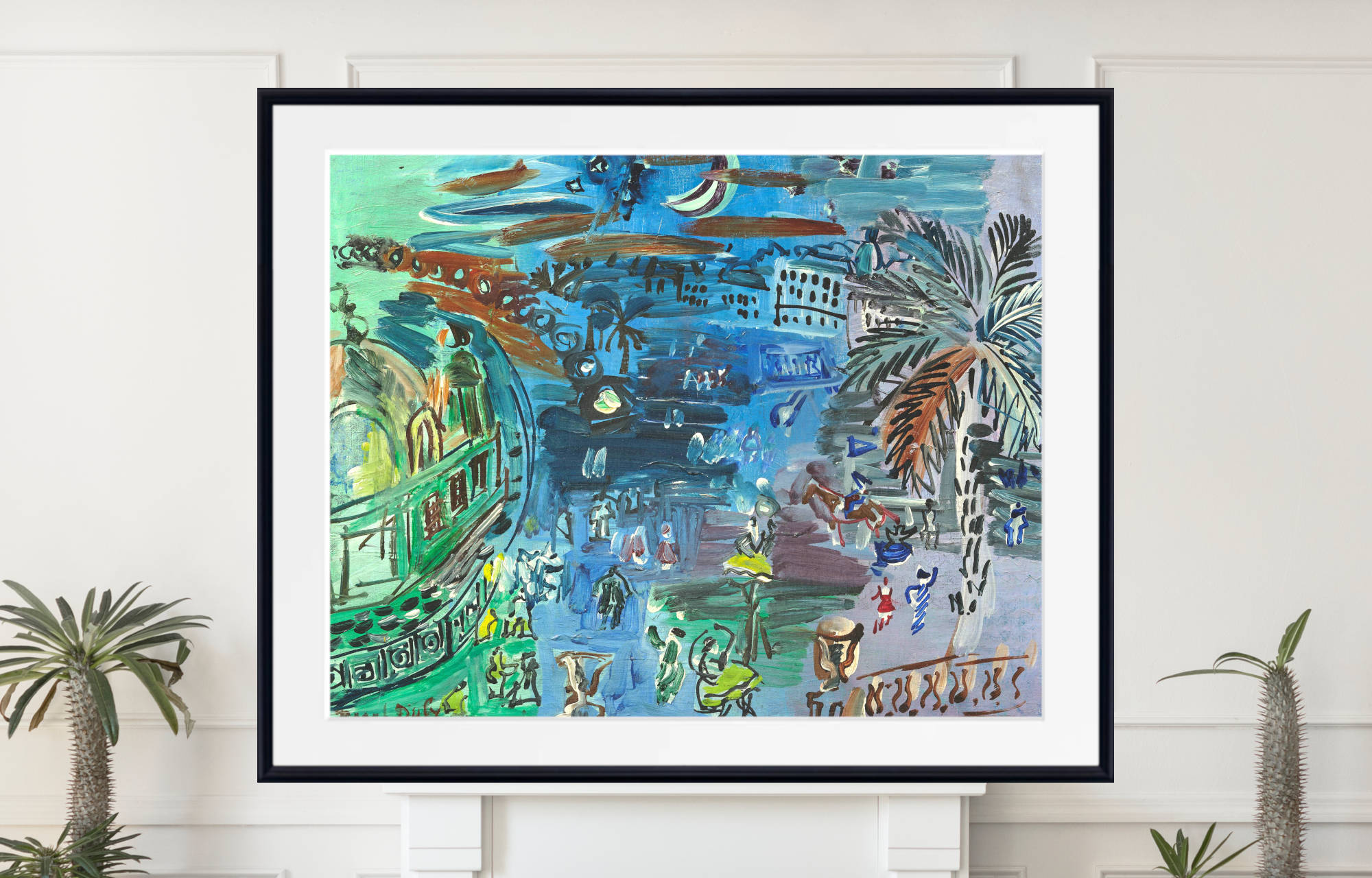
A Raoul Dufy Port of Le Havre Print for Your Interior
A Raoul Dufy Port of Le Havre print combines maritime imagery with the brilliant colour of early twentieth-century modernism.
The boats and harbour provide a recognisable subject, while the simplified forms and Fauvist palette give the artwork a much more contemporary character than a traditional marine painting.
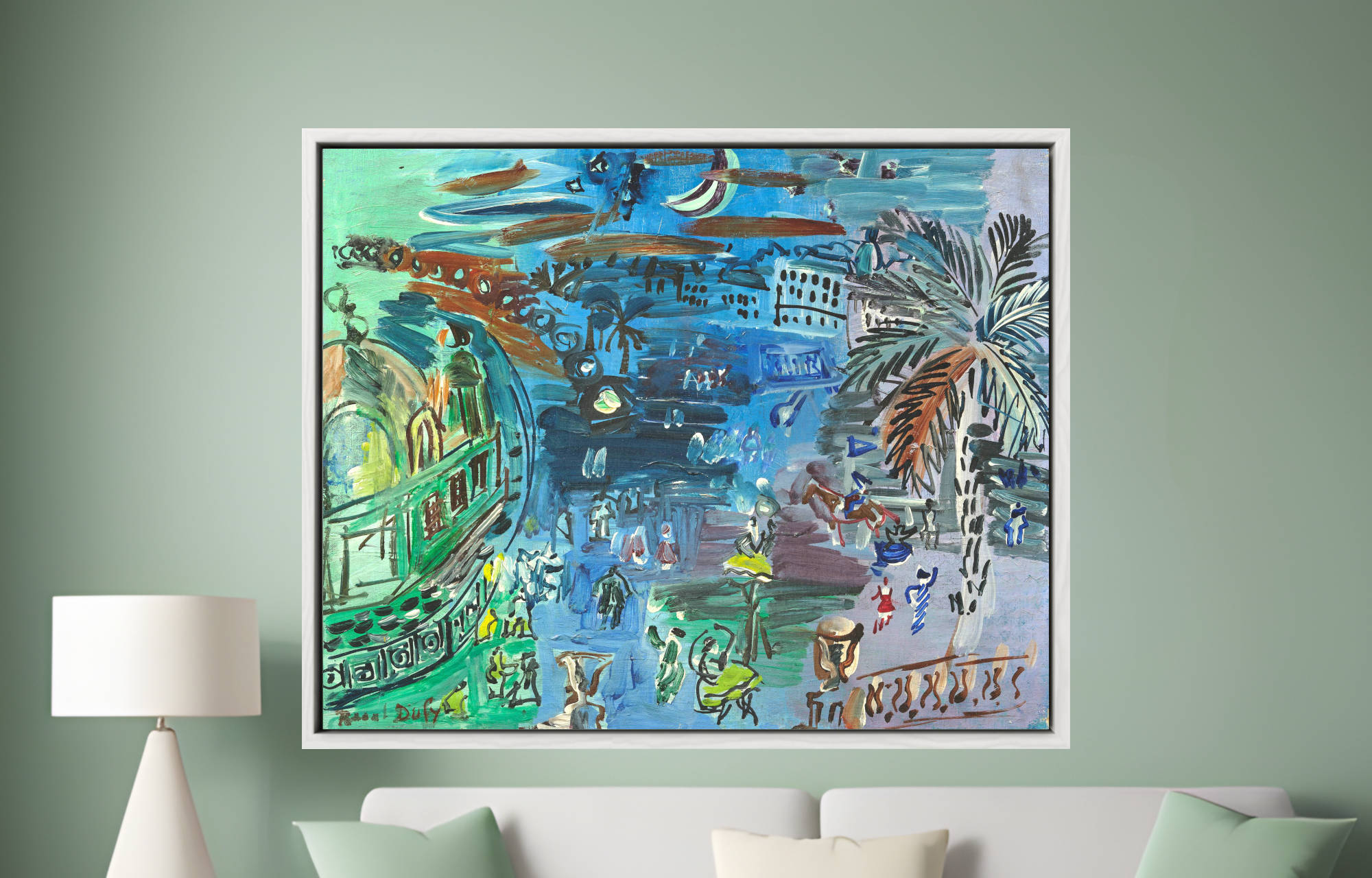
The extraordinary turquoise-green water provides a particularly distinctive colour note, complemented by pinks, mauves, reds, blues and softer neutral areas.
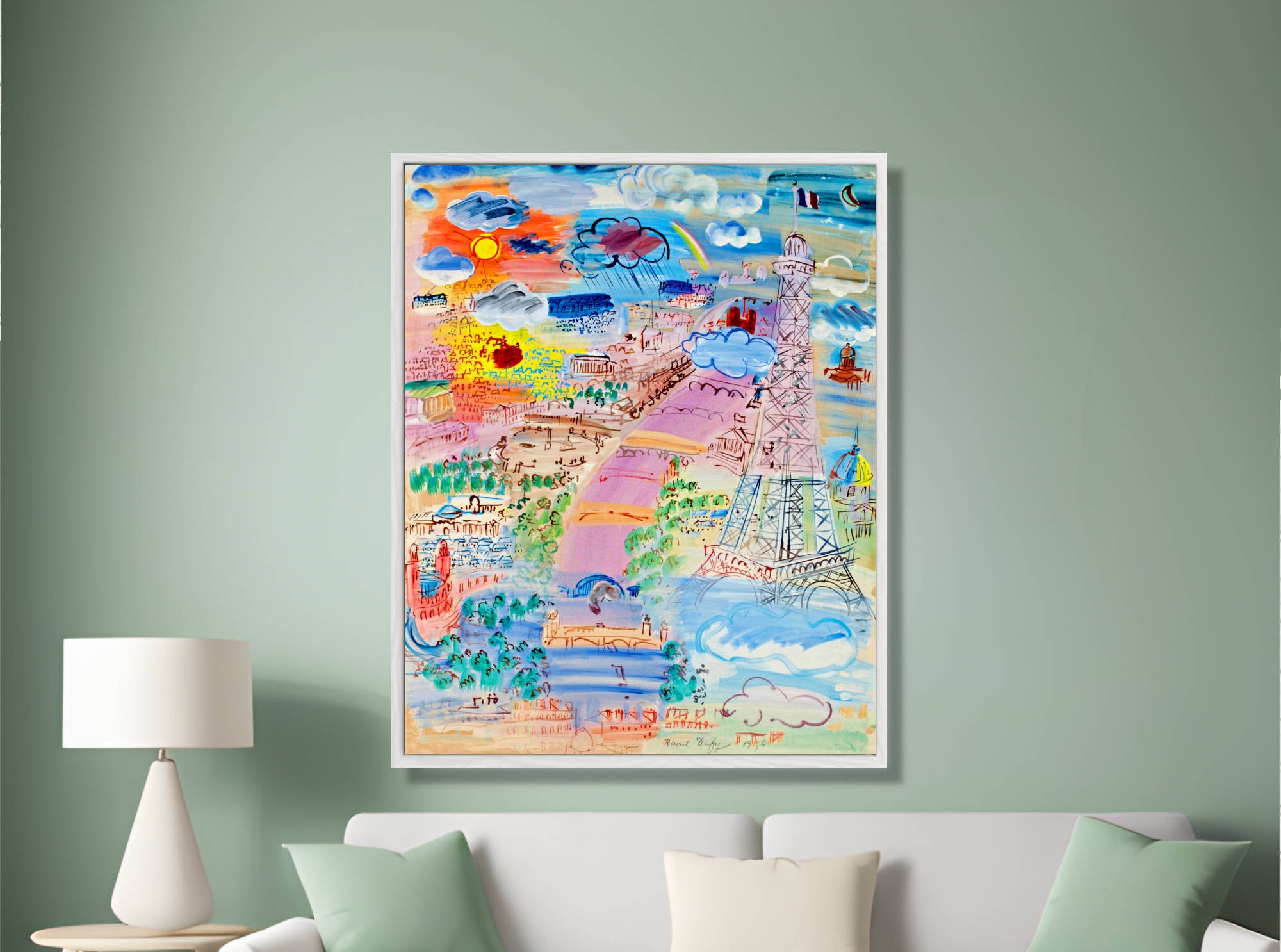
These colours can work particularly well against white, cream, putty and pale grey walls.
The harbour subject also complements natural timber, contemporary furniture and Scandinavian-inspired interiors.
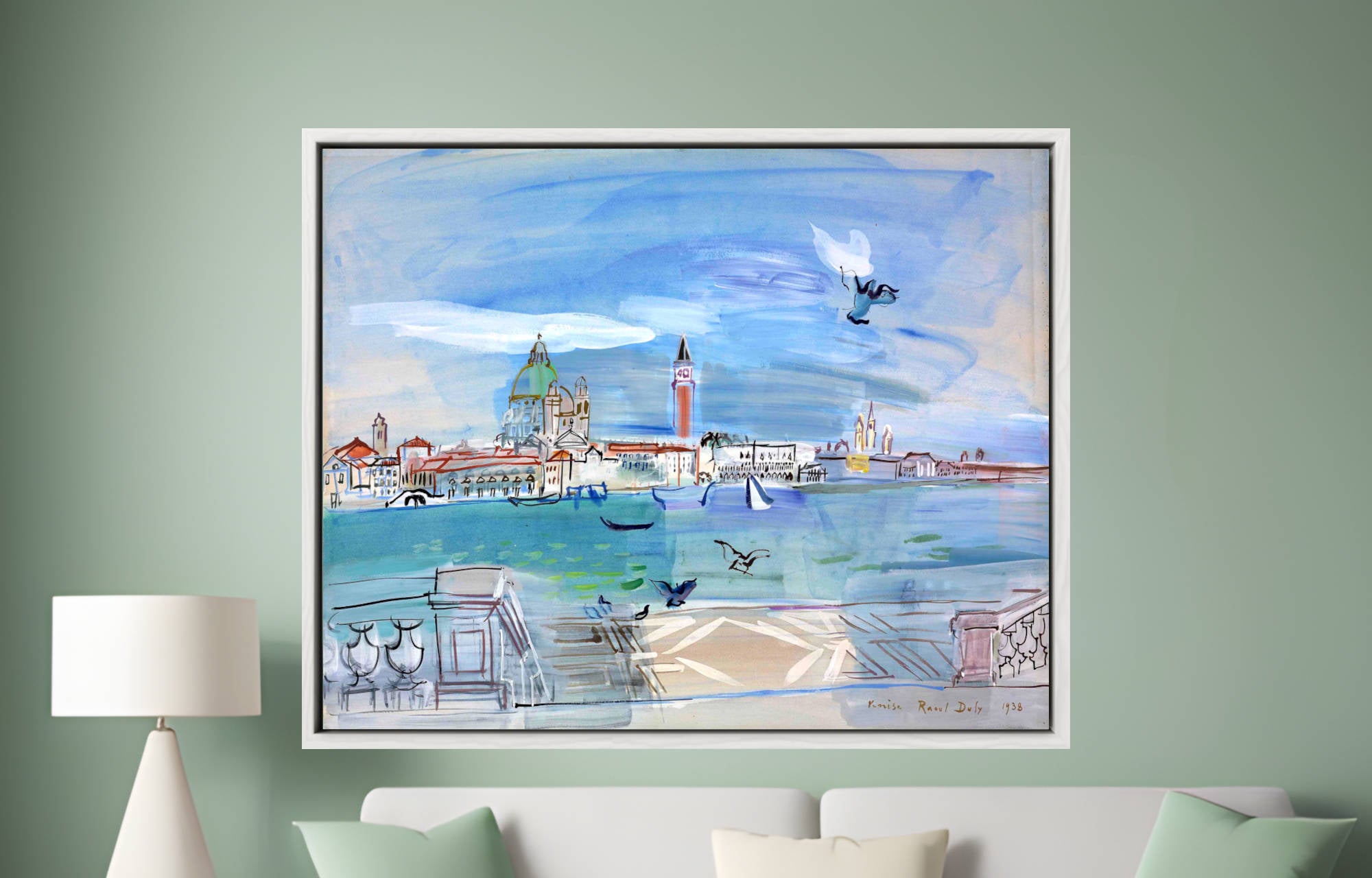
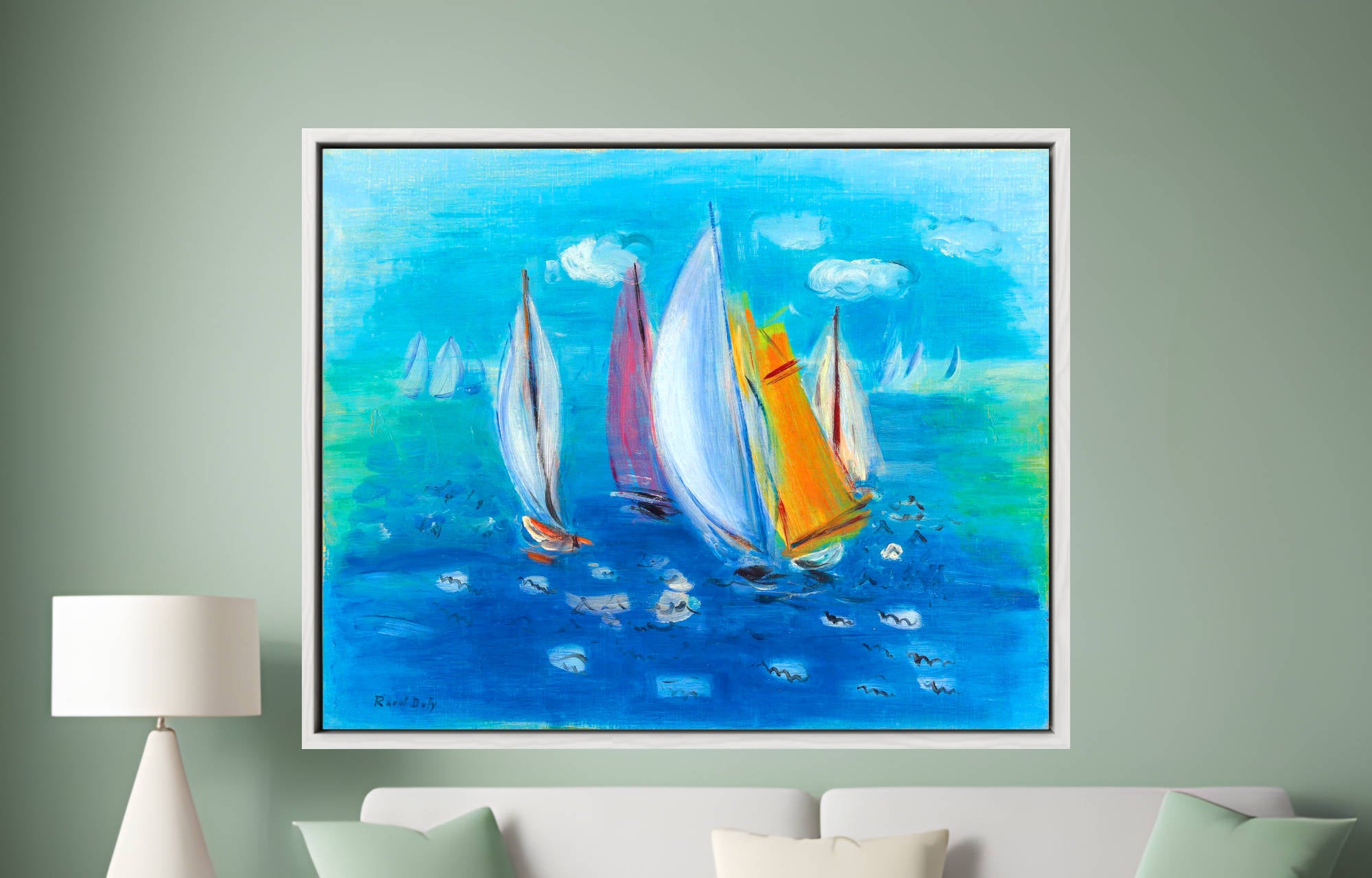
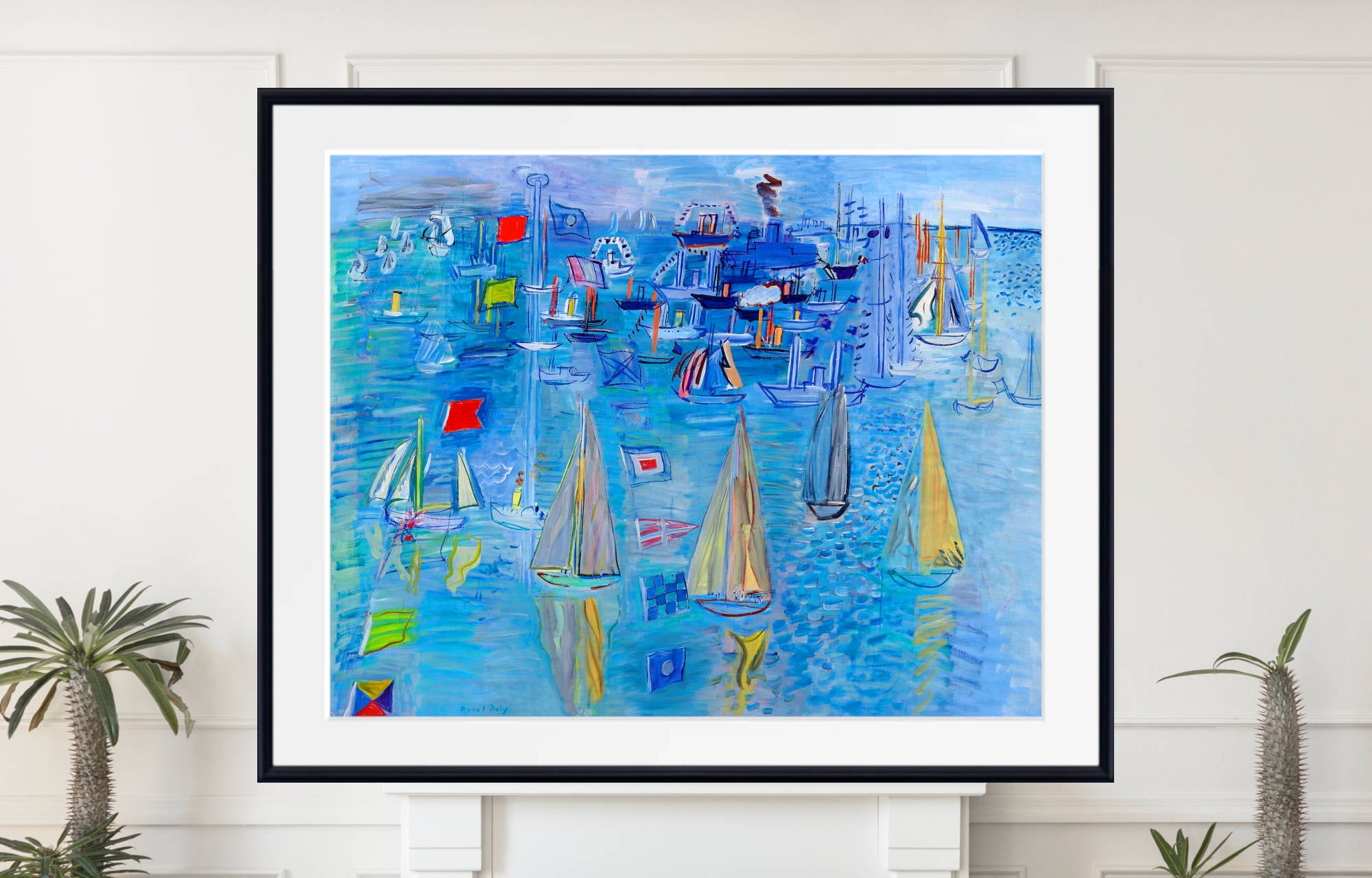
Its landscape format makes it suitable for display above sofas, beds, sideboards and console tables, while the combination of boats, figures, vehicles and masts gives the composition enough visual detail to remain engaging at close range.
The work is particularly suited to living rooms, dining rooms, bedrooms, hallways, home offices and coastal properties.
For collectors of Raoul Dufy and Fauvism, The Port of Le Havre has additional importance as a record of the year in which Dufy's relationship with colour changed decisively.
Frequently Asked Questions
When did Raoul Dufy paint The Port of Le Havre?
Dufy painted this version of The Port of Le Havre in 1906, during the height of his early Fauvist experimentation.
What is the French title of The Port of Le Havre?
The work is known in French as Le Port du Havre.
What does The Port of Le Havre depict?
The painting looks across Dufy's native harbour from an elevated viewpoint. Sailing boats cross the turquoise-green water, larger ships occupy the distant quay and figures, carts and a horse-drawn vehicle animate the foreground.
Is The Port of Le Havre a Fauvist painting?
Yes. The work belongs to the crucial period in 1906 when Dufy had embraced the vivid colour, simplified forms and increasingly independent approach to colour associated with Fauvism.
Why is Le Havre important to Raoul Dufy?
Dufy was born in Le Havre in 1877 and grew up surrounded by its beaches, harbour and maritime activity. He repeatedly returned to the city as a subject throughout his career.
Why is the harbour water so green?
Dufy was no longer attempting to reproduce natural colour literally. The brilliant turquoise-green water creates luminosity and provides the dominant colour field against which the boats, foreground and distant harbour structures are organised.
What did Dufy mean by colour creating light?
Dufy increasingly treated light as something that could be generated through relationships between colours rather than reproduced solely through conventional highlights and shadows.
Did Dufy paint more than one Port of Le Havre?
Yes. Dufy painted several distinct views of Le Havre harbour during this period, and more than one work is known as Le Port du Havre. The painting reproduced by GalleryThane is the 1906 oil on canvas measuring approximately 65.4 × 81.3 cm and recorded in Dufy's catalogue raisonné as number 125.
What medium did Raoul Dufy use for this painting?
The original was painted in oil on canvas.
What size is the original The Port of Le Havre?
The original reproduced by GalleryThane measures approximately 65.4 × 81.3 cm.
What is the catalogue raisonné number for this painting?
This version of Le Port du Havre is recorded as number 125 in Maurice Laffaille's catalogue raisonné of Raoul Dufy's paintings.
Did Albert Marquet paint with Dufy in Le Havre?
Yes. Dufy worked alongside Albert Marquet on the Normandy coast during the summer of 1906, including in Le Havre and neighbouring seaside towns.
How did Fauvism change Dufy's art?
Fauvism encouraged Dufy to move away from subtle Impressionist realism towards stronger colour, simplified forms and a more independent relationship between colour and observed nature.
Is The Port of Le Havre available as a framed Raoul Dufy print?
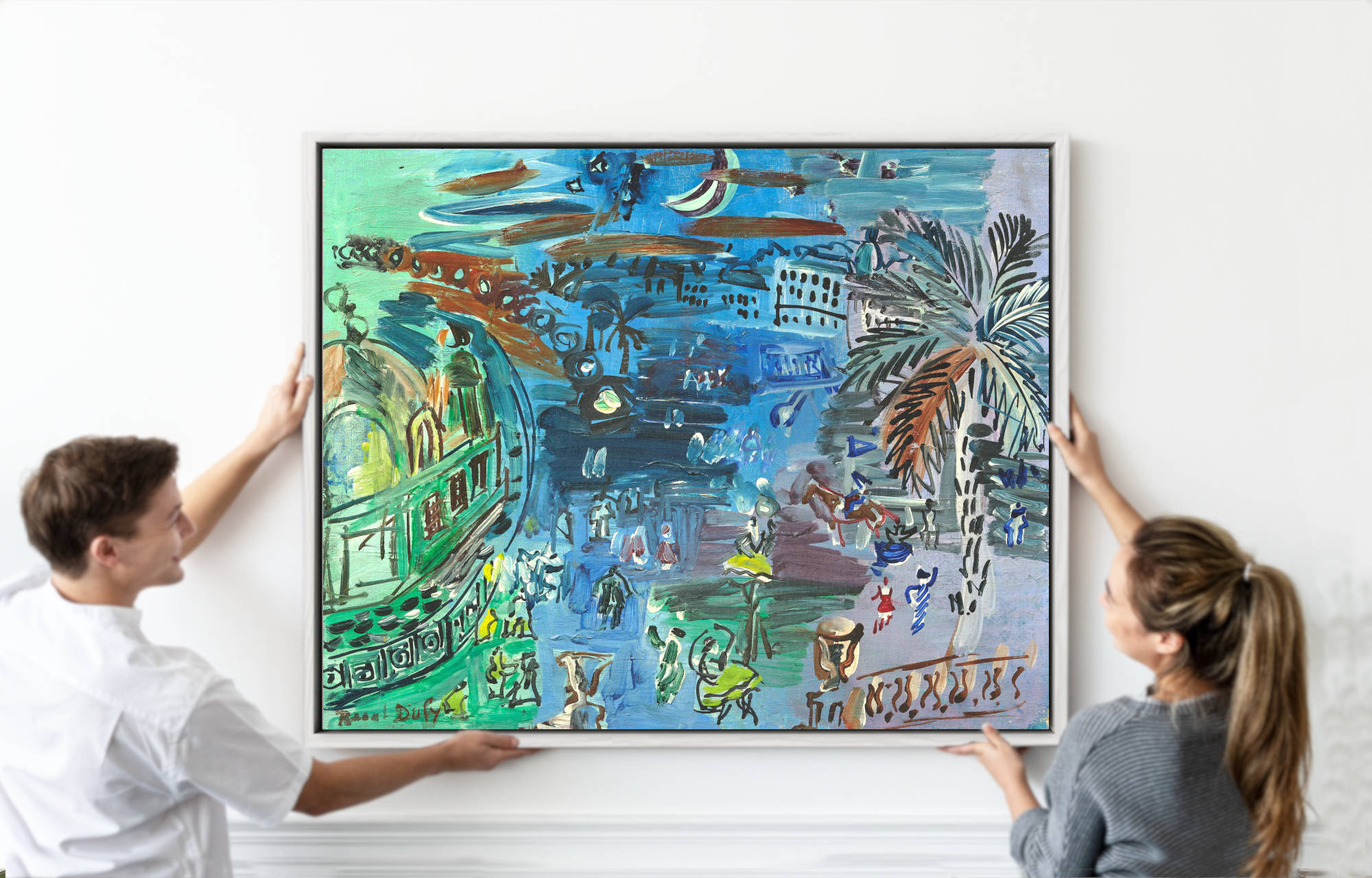
Yes. GalleryThane offers The Port of Le Havre (1906) in a choice of sizes and formats, including fine art paper prints, framed prints and canvas options.
Where would a Port of Le Havre print work well?
Its colourful maritime subject and horizontal composition make it particularly suitable for living rooms, dining rooms, bedrooms, hallways, home offices and coastal interiors, especially contemporary and Scandinavian-inspired spaces.
All orders for unframed fine art prints and original paintings are dispatched within 2 working days of receipt of payment.
Orders for custom framed prints are dispatched within 4 working days.
All orders are fully tracked from dispatch to delivery at your home or business.
All print and original painting orders are fully insured against loss or damage in transit. We refund or replace any damaged or lost orders.
Buy with confidence - read what our satisfied customers have to say - Reviews
Fine art papers are printed without any additional white border Please let us know at the time of ordering if you would like a small additional white border.
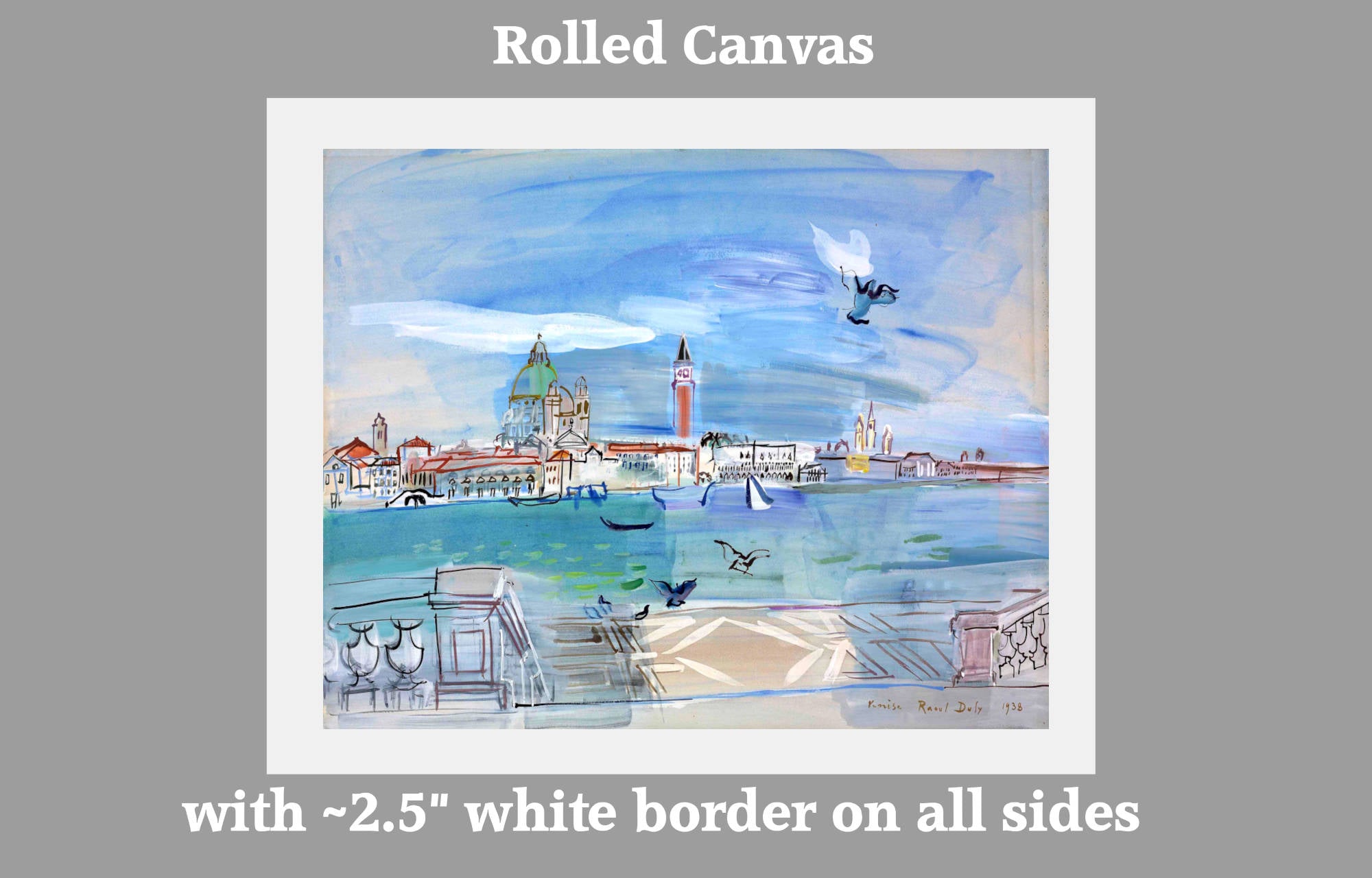
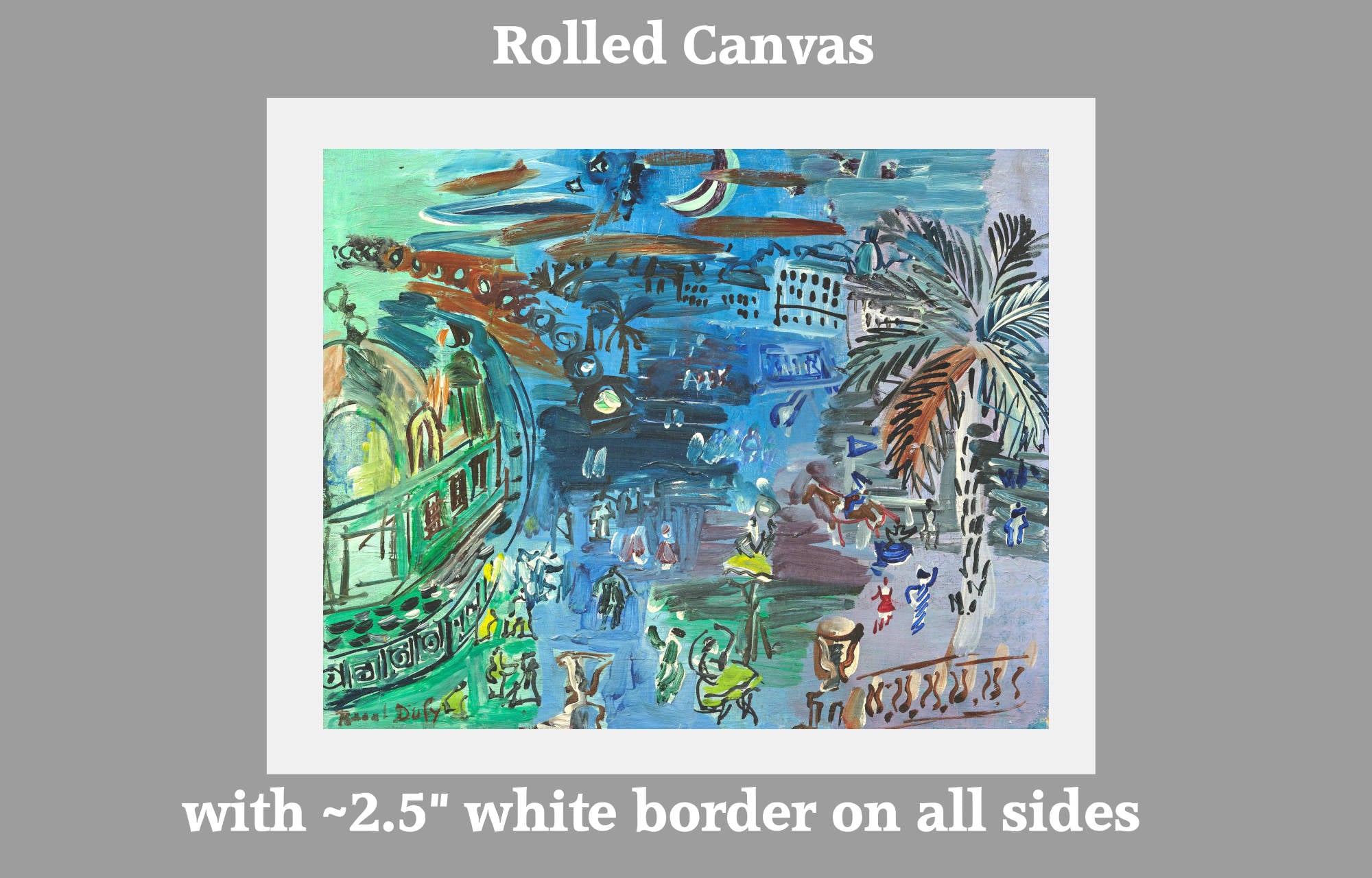
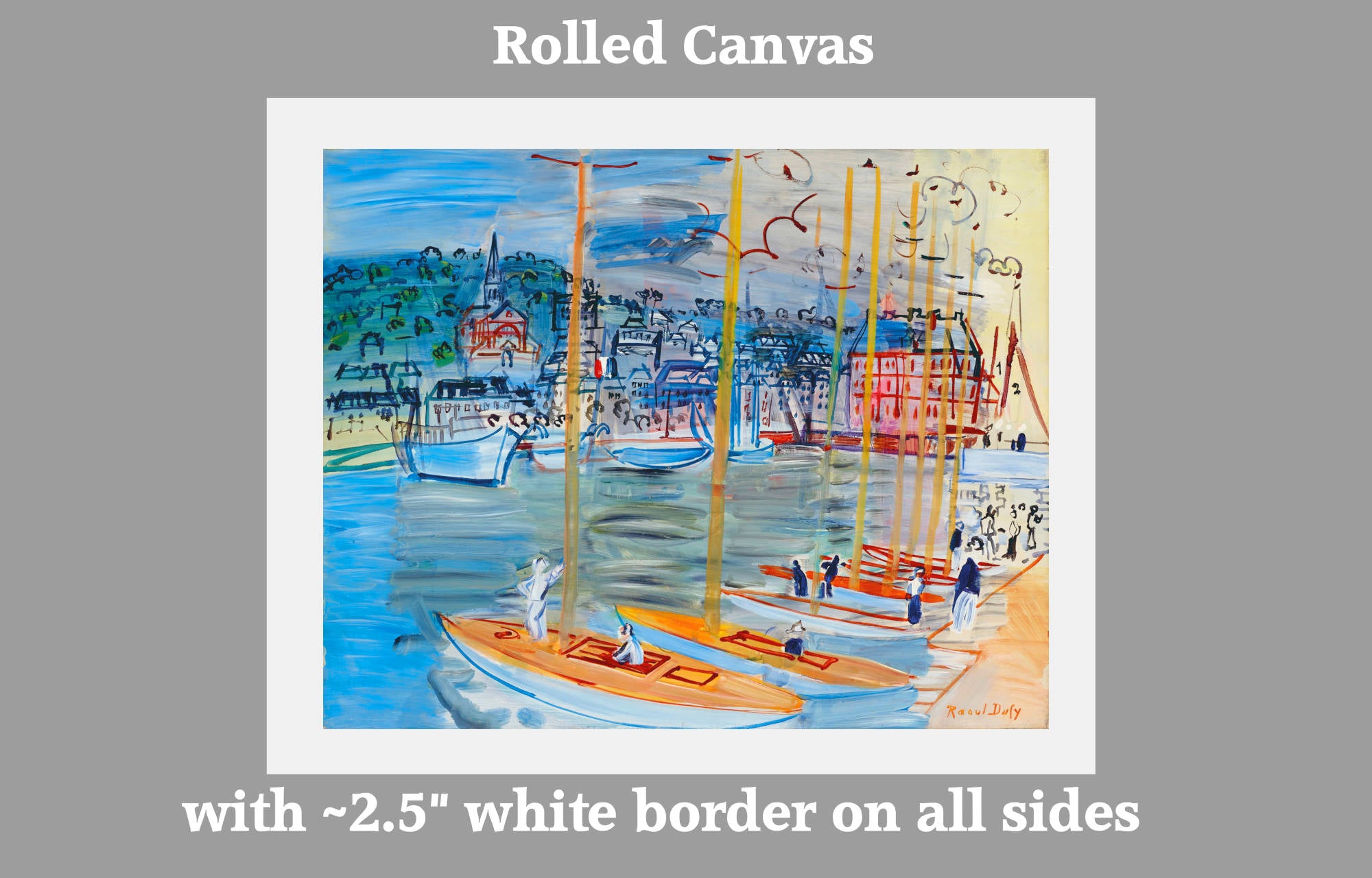
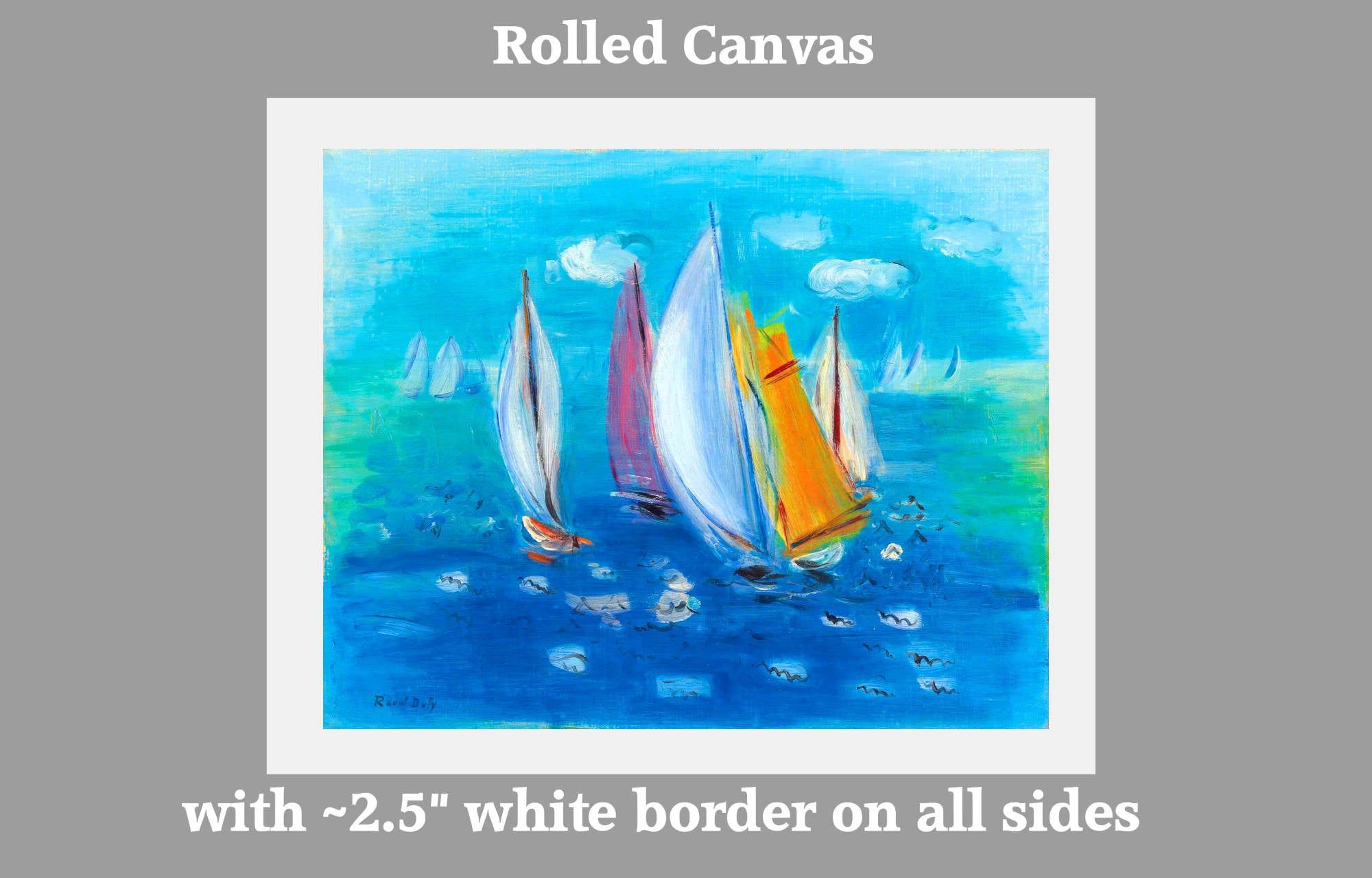
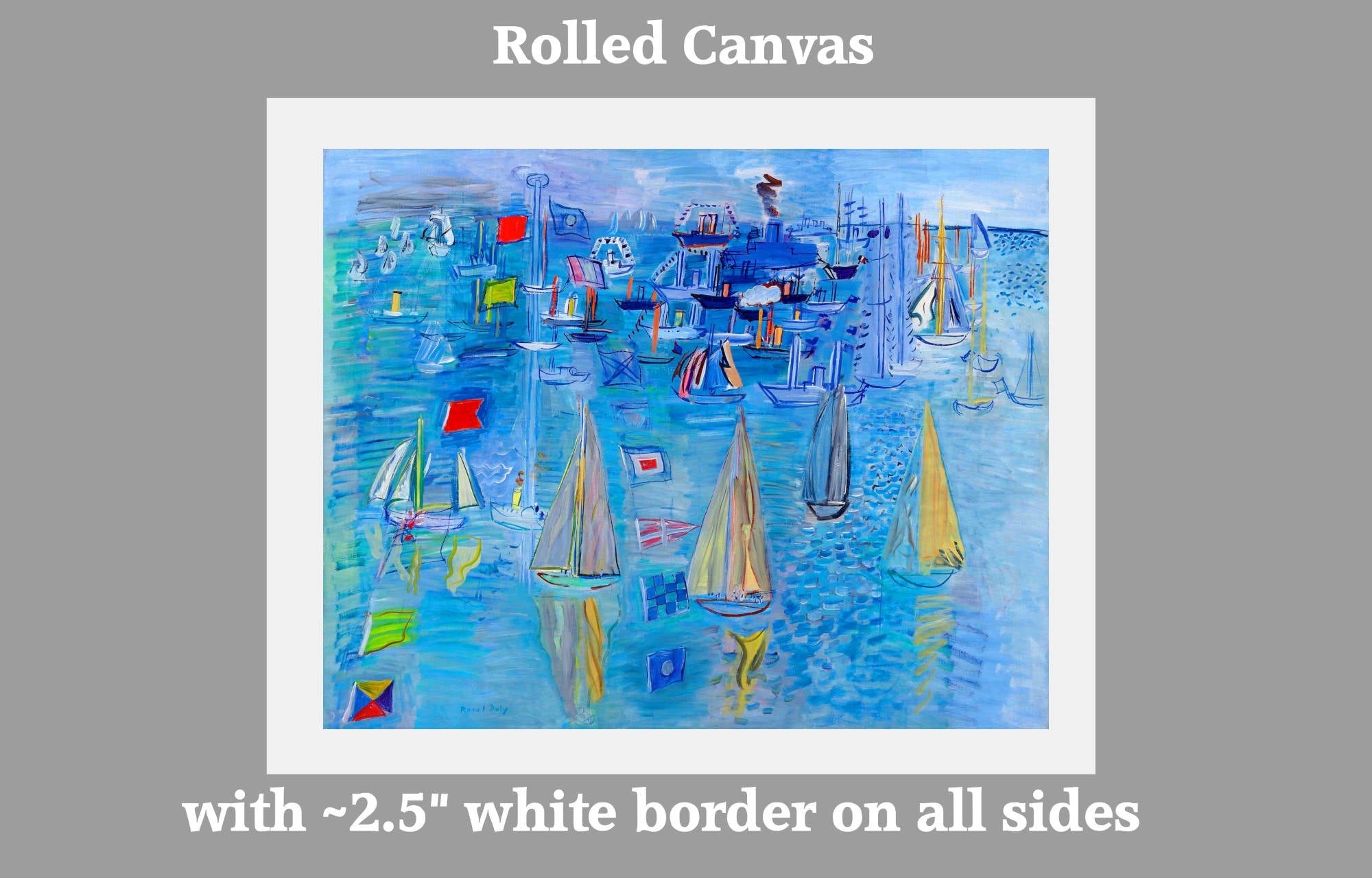
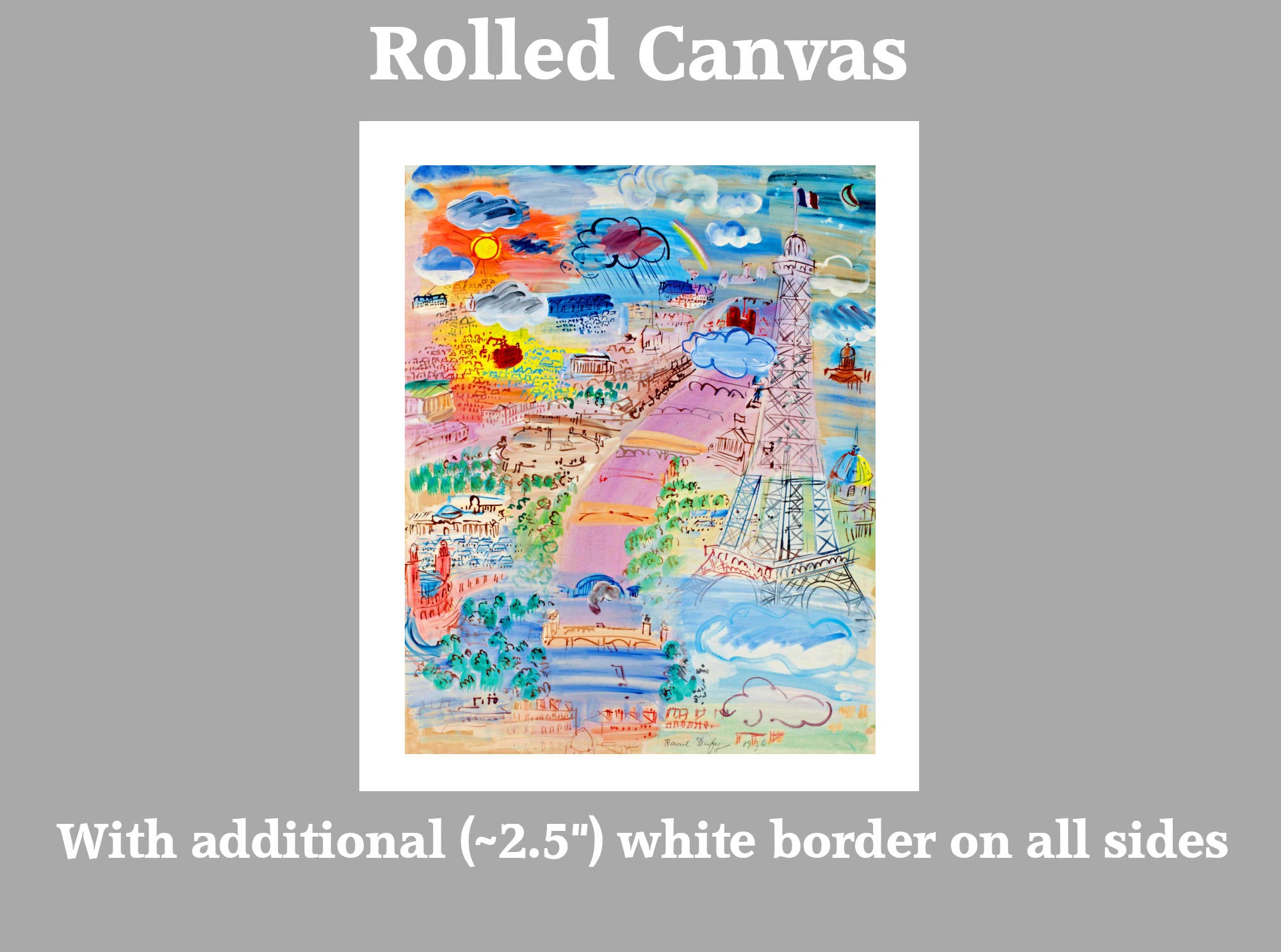
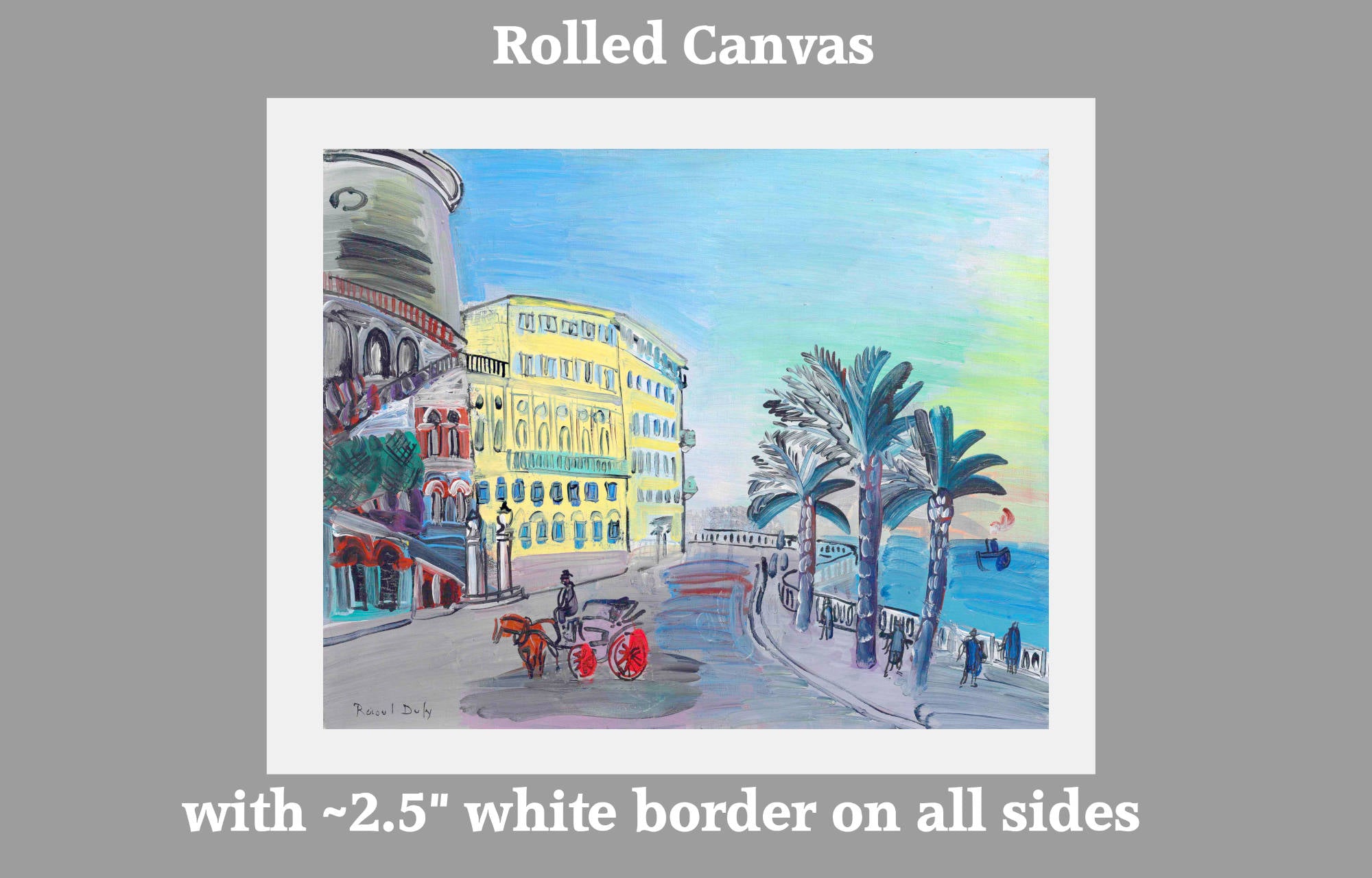
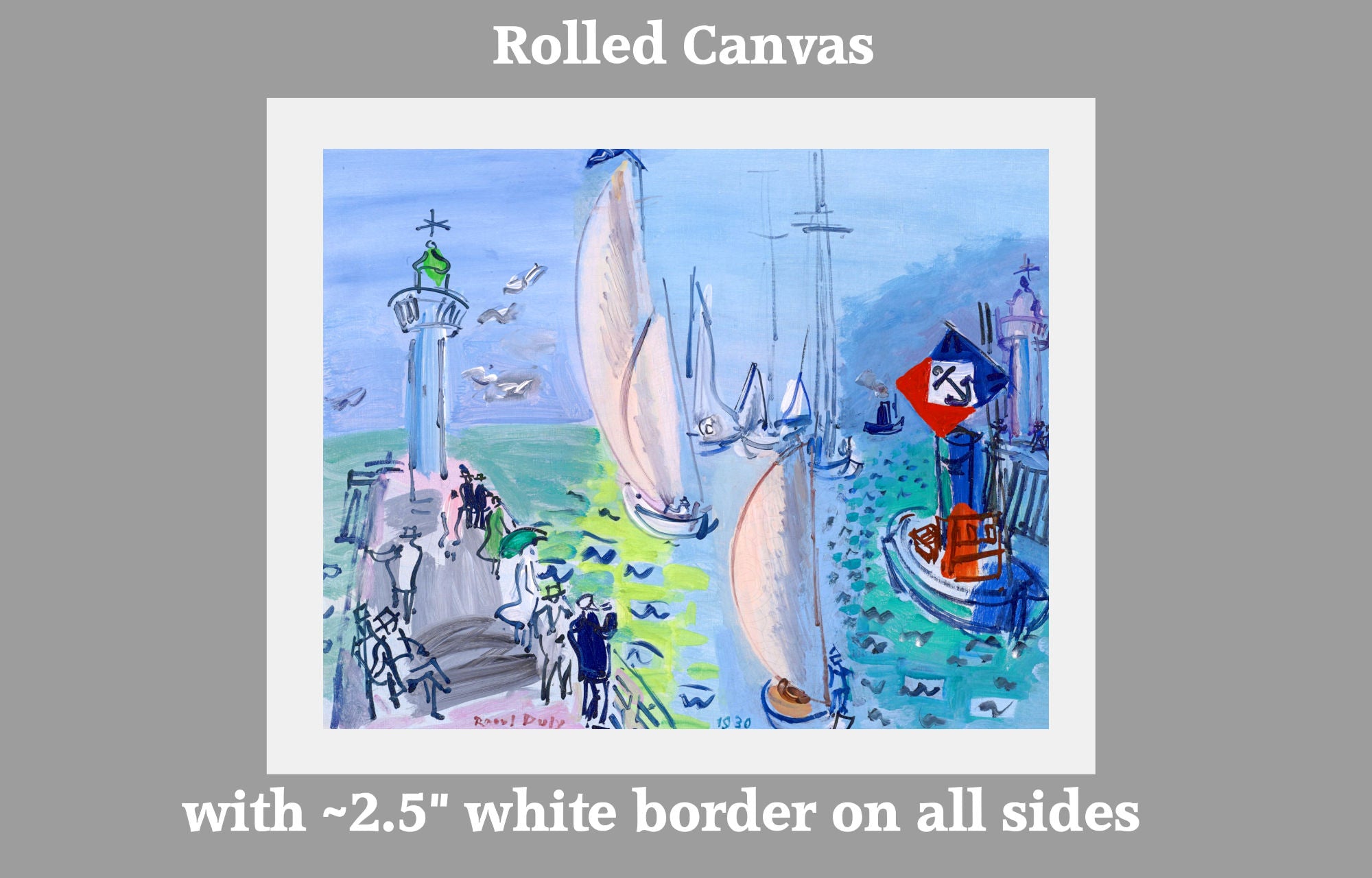
Rolled canvas options have an additional white border of approximately 2.5 inches (7cm) on all 4 sides to aid stretching.
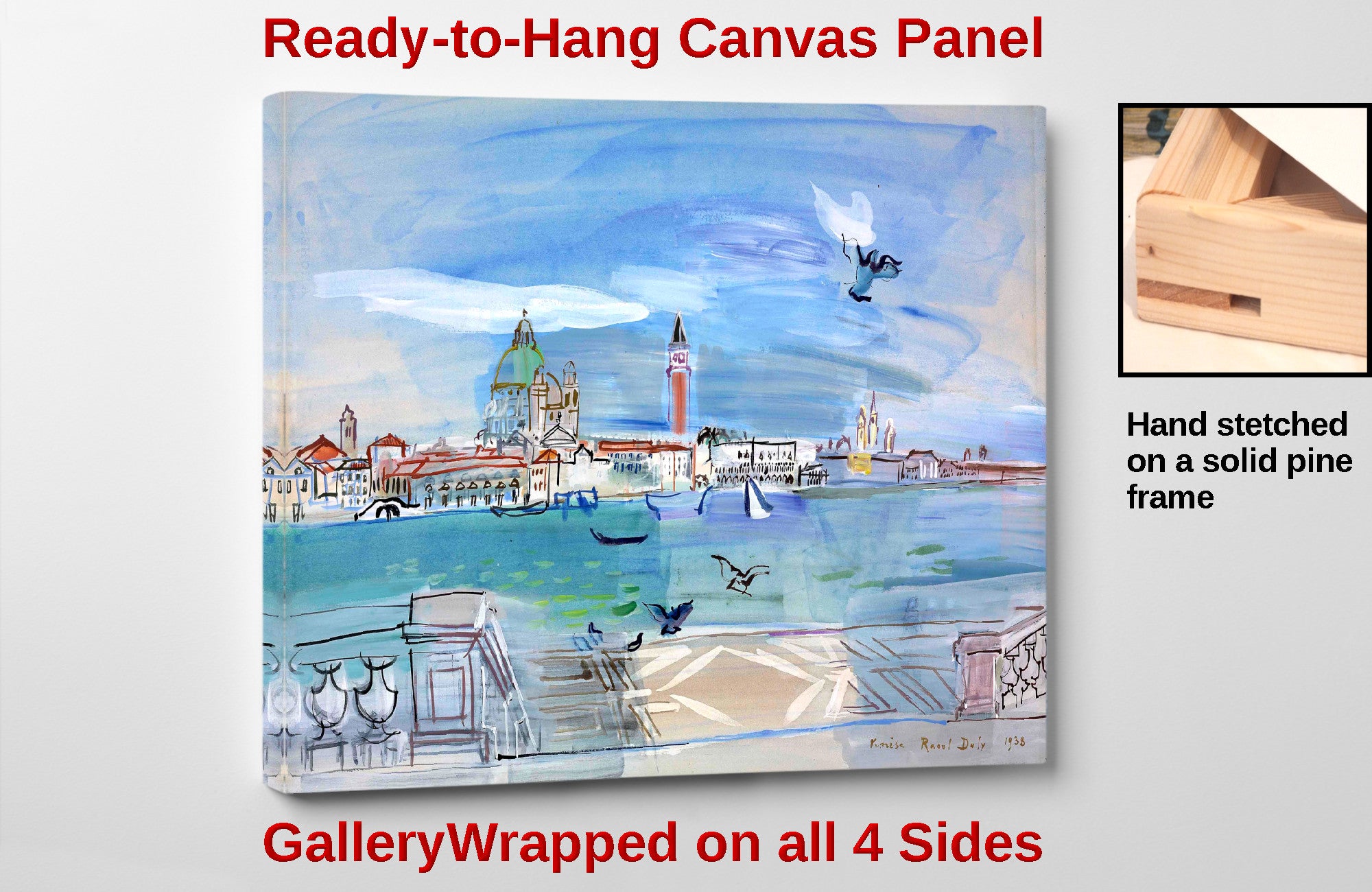
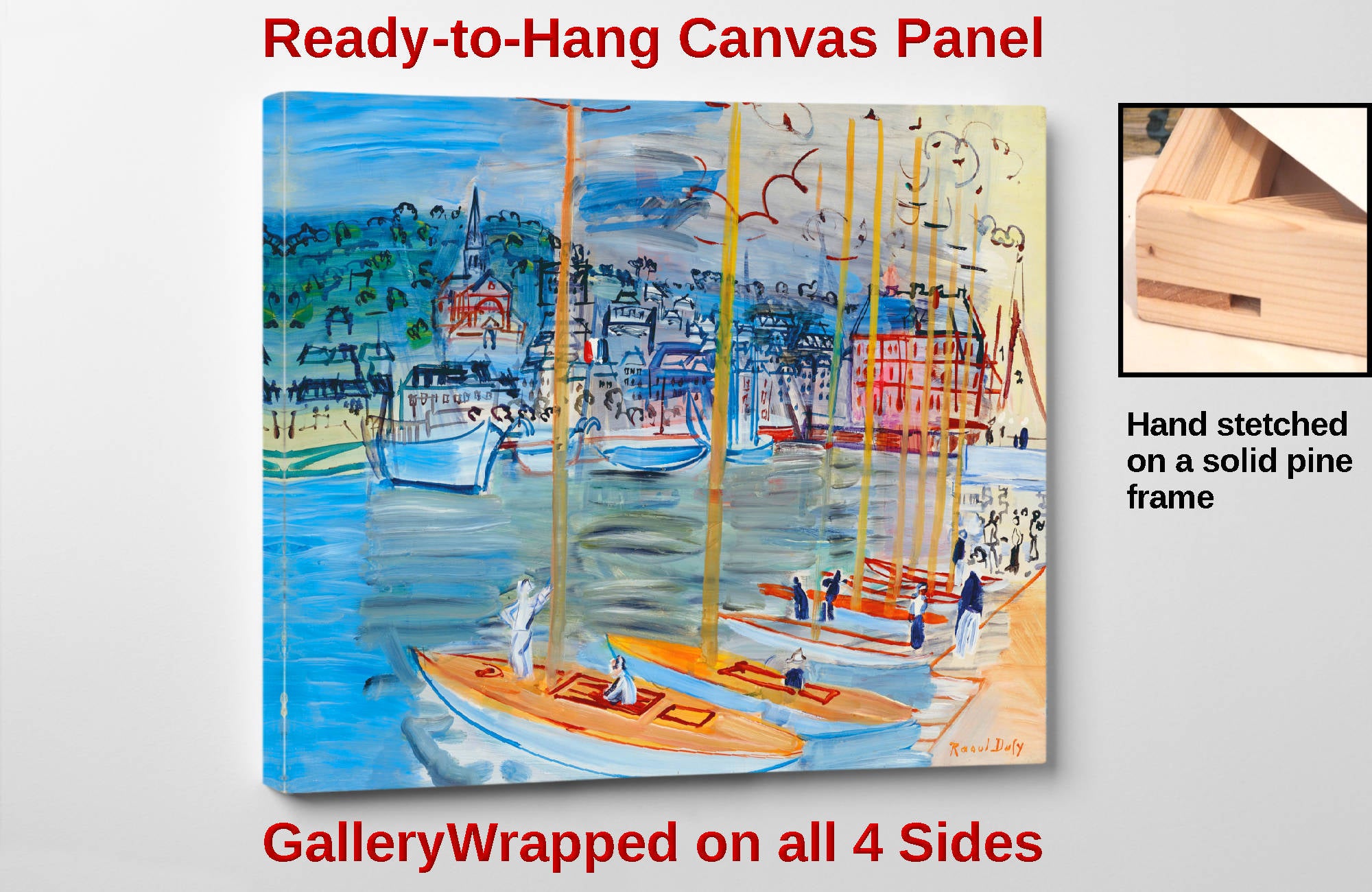
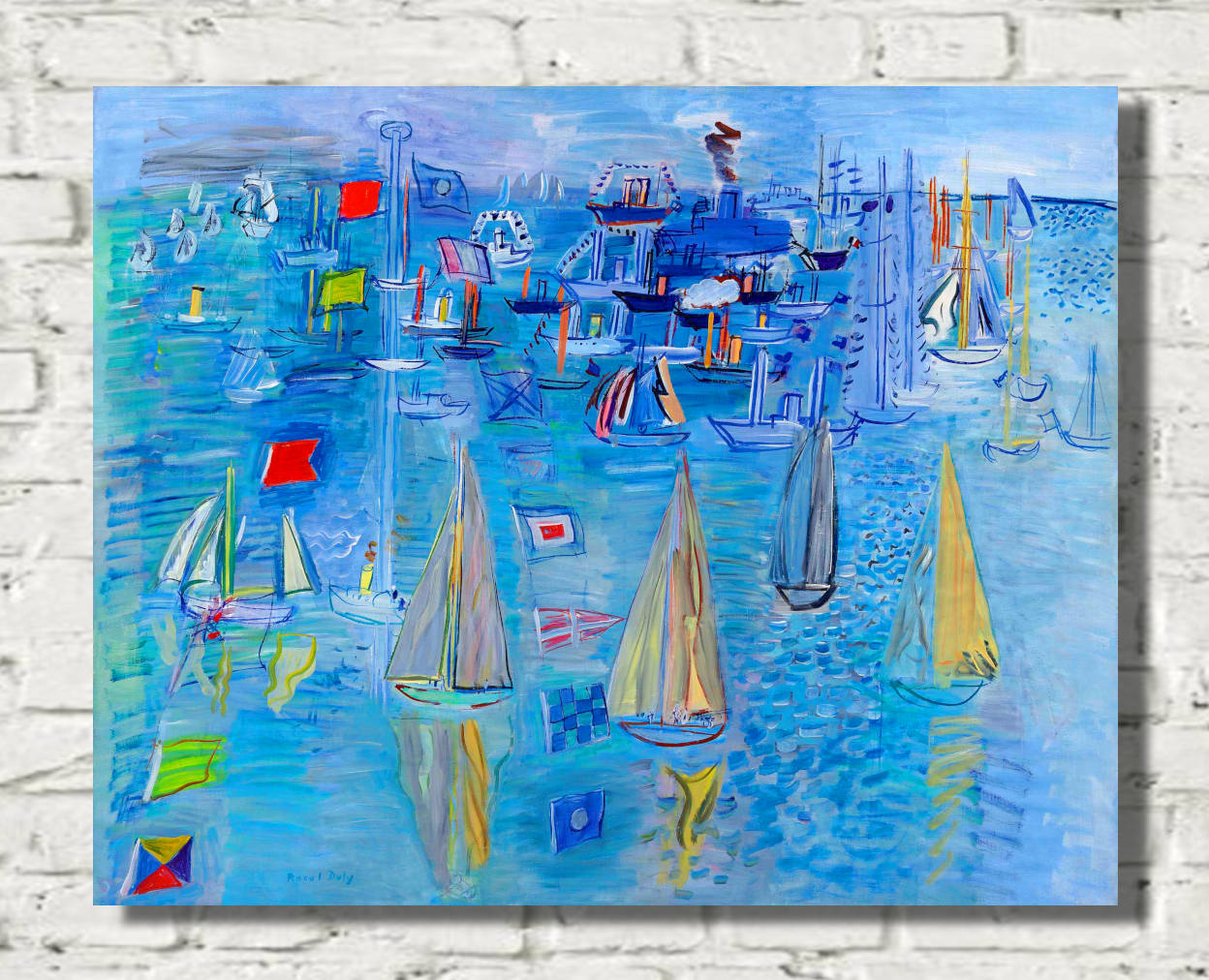
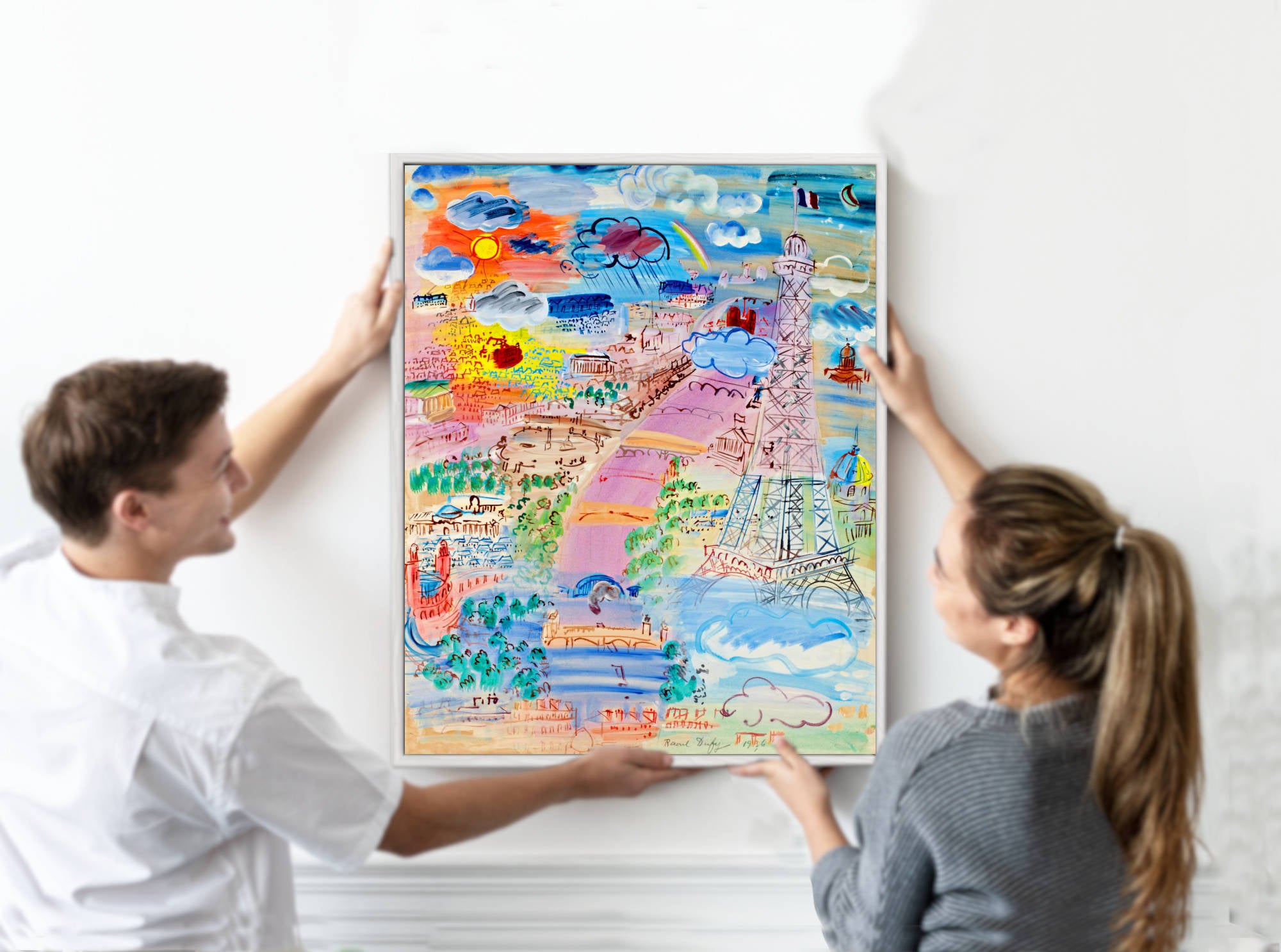
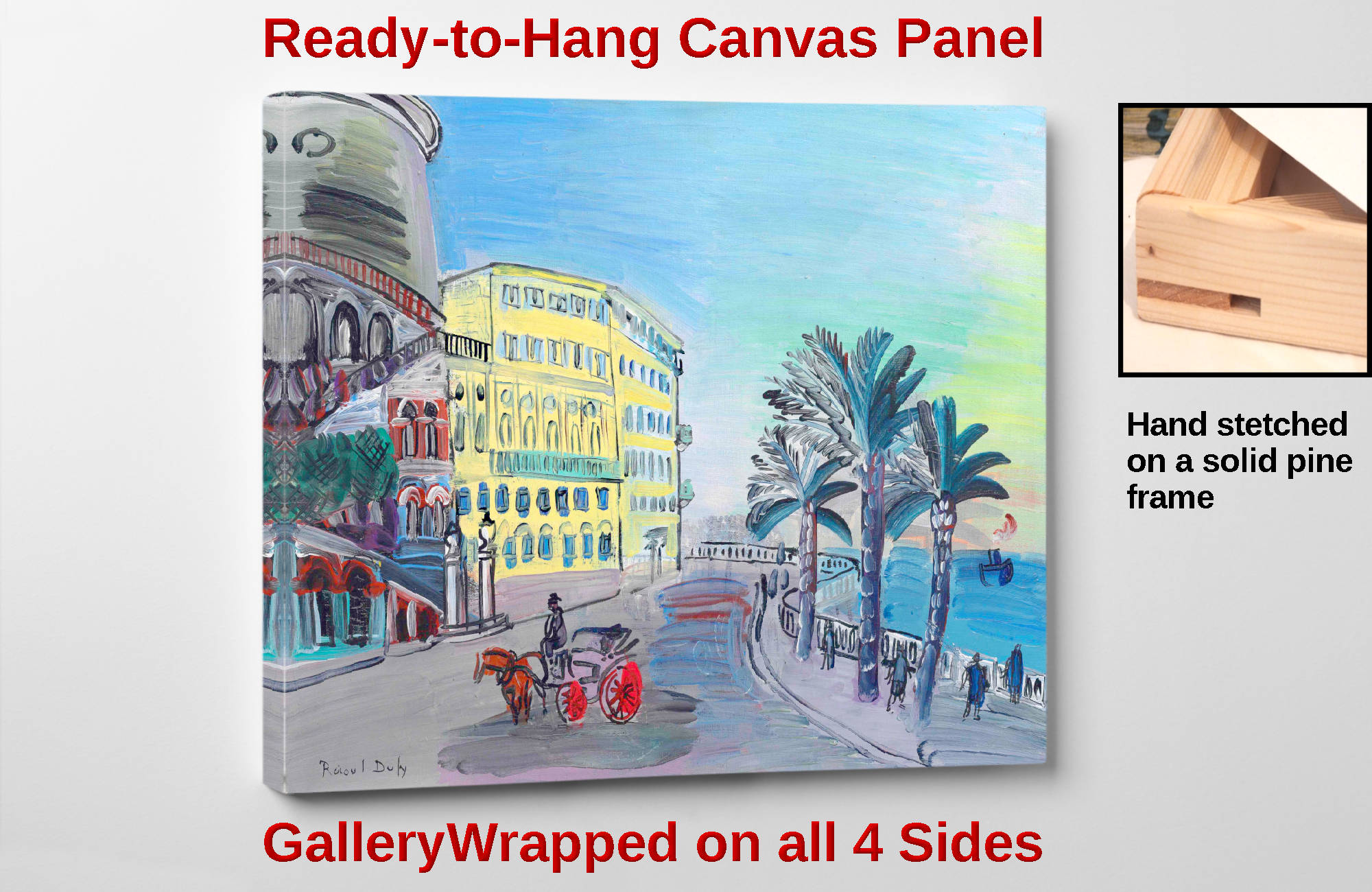
Ready to hang canvas panels are stretched on 1.5 inch deep solid pine frames from sustainable forestry sources. The image is mirrored on all 4 sides to give an aesthetically pleasing finish.
Why not have us gift wrap your order and attach a personalised message to the recipient. Available for all orders. Each order is hand wrapped in high quality gift wrap with meatllic ribbon and bow. Your personalised message is printed on a card which is included with your order.
Have your hand wrapped gift delivered directly to the recipient.
Full tracking and insurance included with every order.
Please note design may vary depending upon availability
Just purchase the gift wrap option HERE
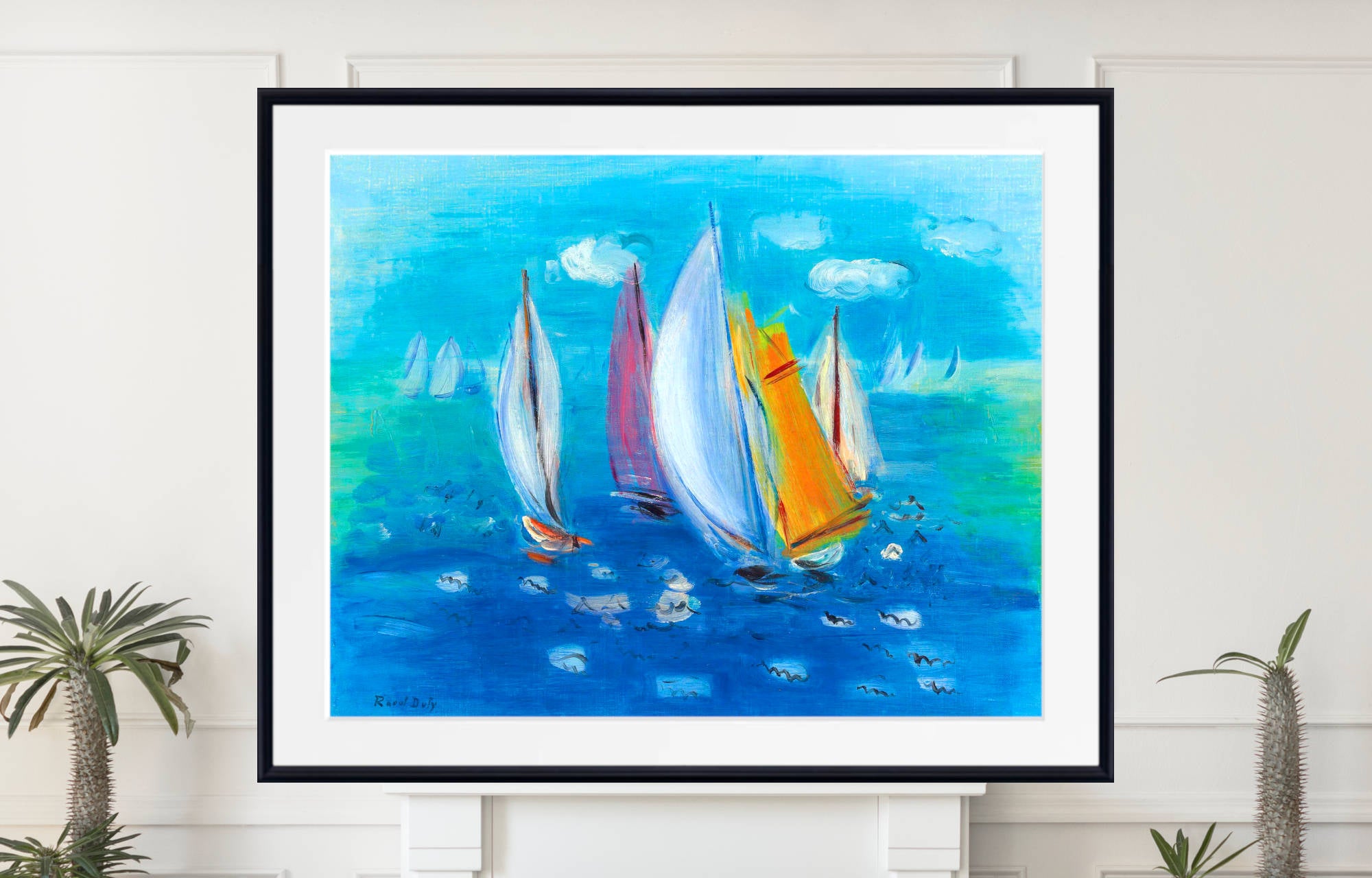
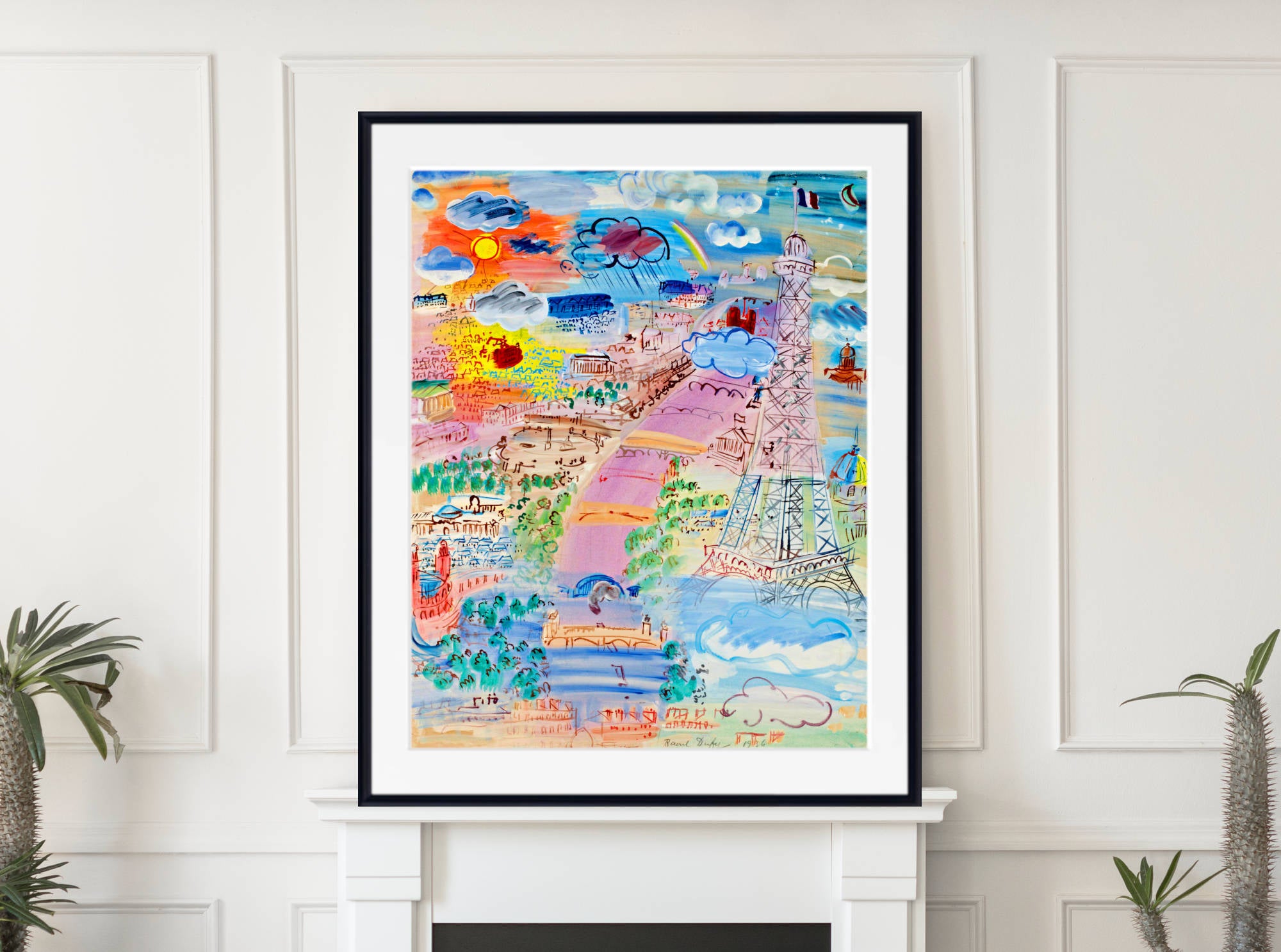
We have a wide range of frames in standard sizes and we also make custom size frames.
To order a framed print:
1. select the print size you would like along with the print materials (matte paper, fine art paper).
2. Add your print choice to the basket.
3. Choose from our range of frames
4. Select the same size as the print you have added to your basket. If the frame size you want is not listed please contact us
5. Choose from the mount or no-mount option
6. Add your frame choice to the basket
7. Proceed to checkout.
Why Choose GalleryThane?
- Printed and framed in-house
- Free UK delivery
- Free EU and USA delivery on orders over £200
- Tracking and insurance included in every order
- Fast 1-3 day dispatch
- Gift wrapping service available
- Gallery quality materials
- Sustainable, eco-friendly packaging
- Great customer support
Explore related collections
What makes our Prints and Canvas Panels so special

Latest Giclee Printing Technology
We have invested in the latest wide format print technology to produce museum quality giclee prints utilising the highest quality pigment inks to give outstanding colour reproduction.

Museum Quality Archival Fine Art Papers
We print on the finest quality fine art papers with textured, smooth and lustre finishes for prints which last a lifetime.
From aceo miniatures to 40x80 inch large format, every print has our lifetime quality guaranteee.

Solid Wood Frames, Cotton Canvas
All of the wood for our canvas panels and frames is responsibly sourced from manages forests. Our cotton canvas is completely seedless for the highest quality reproduction possible.

Have Your Gift Wrapped


