




Woman with a Hat by Henri Matisse
Couldn't load pickup availability
BUY WITH CONFIDENCE
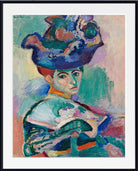
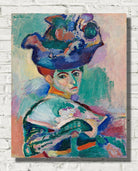
Woman with a Hat (1905) by Henri Matisse, also known by its French title Femme au chapeau, is one of the defining paintings of Fauvism and a landmark in the development of modern art. Matisse transforms a portrait of his wife, Amélie, into an extraordinary arrangement of greens, blues, yellows, pinks, reds and violets, rejecting conventional flesh tones in favour of colour chosen for its expressive and compositional power.
This Henri Matisse Woman with a Hat print captures the moment when colour was liberated from the need to reproduce visible reality. The enormous decorated hat, vivid face and energetic brushwork give the portrait an unmistakable presence, making it an exceptional choice for admirers of Fauvist art, colourful portraiture and early twentieth-century modern painting. Available as a fine art print, framed print or canvas panel, Woman with a Hat brings one of Matisse's most revolutionary images into the home.
Woman with a Hat – A Portrait That Changed Modern Art
Matisse painted Woman with a Hat in 1905, using his wife Amélie as the sitter. At first glance, the composition retains many elements of a conventional portrait: a seated woman turns towards the viewer, wearing gloves, holding a fan and crowned by an elaborate fashionable hat.
Almost everything about the colour, however, rejects traditional portrait painting.
Amélie's face is constructed from passages of green, yellow, pink, violet and grey. A prominent green stroke runs down her nose, while warmer colours appear across her lips and chin. Her clothes, gloves and enormous hat are treated with equally unexpected combinations of colour.
The background is not described as a recognisable room. Instead, loosely brushed areas of pink, lilac, yellow, green and coral surround the sitter, allowing figure and setting to merge into a single field of expressive colour.
Matisse therefore retains the basic structure of portraiture while abandoning many of the conventions through which portraits had traditionally created convincing appearances of skin, fabric, space and light.
The 1905 Salon d'Automne and the Birth of Fauvism
Woman with a Hat became famous when Matisse exhibited it at the Salon d'Automne in Paris in 1905.
The exhibition brought together intensely coloured paintings by Matisse, André Derain, Henri Manguin, Albert Marquet and other like-minded artists. Their work appeared startlingly unconventional compared with much of the surrounding art.
Critic Louis Vauxcelles responded to the group with the expression les fauves — “the wild beasts”. What began as a critical description soon became the name of the movement itself: Fauvism.
Woman with a Hat was particularly controversial because Matisse applied the new freedom of colour to a human face. Viewers accustomed to portraits constructed through carefully observed skin tones and conventional light and shadow were confronted instead by green, blue and violet.
The painting became one of the most prominent symbols of the new movement and remains one of the works most closely associated with the public emergence of Fauvism.
Why Did Matisse Use Such Unusual Colours?
The extraordinary palette of Woman with a Hat was not the result of Matisse being unable to reproduce natural colour. It was a deliberate rejection of the idea that colour needed to imitate visible reality.
Matisse increasingly treated colour as an independent element. A green stroke could define the structure of a face because of its relationship with neighbouring reds and pinks rather than because the sitter's skin literally appeared green.
Colour could therefore perform several functions simultaneously. It could create contrast, separate forms, suggest light, organise the composition and establish emotional intensity.
This was one of Fauvism's most important innovations. Once colour no longer had to correspond exactly to the observed world, painters gained far greater freedom to construct images according to the requirements of the painting itself.
In Woman with a Hat, Matisse pushes this idea particularly far. The sitter remains recognisable as a woman wearing an elaborate hat, yet almost every part of the image has been reinvented through colour.
Amélie Matisse – The Woman Behind the Portrait
The sitter was Amélie Matisse, Henri Matisse's wife and an important presence throughout his early career.
Amélie appears in several significant paintings by her husband, including portraits produced during the years in which his style was changing most rapidly. Rather than simply recording her appearance, these portraits often became opportunities for Matisse to test increasingly radical ideas about colour and representation.
In Woman with a Hat, the elaborate headwear dominates the upper part of the composition. Its oversized brim and exuberant arrangement of colours add both height and drama, while the sitter's comparatively restrained pose provides a stable foundation beneath the energetic paintwork.
This tension between traditional portrait pose and radical colour is central to the painting's power. Matisse does not discard portraiture; he reinvents what a portrait can look like.
The Hat, Fan and Fashionable Dress
The spectacular hat gives the painting both its title and much of its visual character. Broad patches of blue, orange and green suggest flowers, feathers or other decorations without describing them in precise detail.
Matisse similarly reduces the sitter's clothing and accessories to energetic strokes and coloured shapes. Her green gloves contain flashes of pink, while the open fan is suggested through pale and violet passages rather than carefully defined folds.
These fashionable accessories would normally have invited an artist to demonstrate technical skill through detailed representation of fabric, texture and ornament.
Matisse deliberately does the opposite. Detail is sacrificed in favour of the relationships between colour, line and shape.
The effect is both elegant and confrontational. The sitter remains recognisably fashionable, but the painting refuses to behave like a conventional society portrait.
Henri Matisse's Fauvist Painting Style
Matisse's Fauvist period developed rapidly during the opening years of the twentieth century. Earlier experiments with Impressionism, Post-Impressionism and Neo-Impressionism had already encouraged him to explore increasingly brilliant colour.
A decisive development came during the summer of 1905, when Matisse worked alongside André Derain at Collioure on the Mediterranean coast. The intense southern light and colourful harbour environment encouraged both artists to move beyond optical colour towards increasingly arbitrary and expressive combinations.
Paint applied in broad areas, visible brushstrokes and simplified forms became central to this new approach.
Woman with a Hat transfers those discoveries from landscape painting into portraiture. The same freedom that allowed Matisse to make trees red or shadows blue could now be used across the human face.
The painting therefore demonstrates several defining Fauvist characteristics:
- brilliant non-naturalistic colour
- visible and energetic brushwork
- simplified modelling
- flattened pictorial space
- strong colour contrasts
- colour used independently of observed reality
Matisse would continue developing these ideas well beyond the short Fauvist period, making colour one of the central concerns of his long career.
About Henri Matisse
Henri Matisse (1869–1954) was a French painter, draughtsman, sculptor and printmaker and one of the most influential artists of modern times.
Born in Le Cateau-Cambrésis in northern France, Matisse initially studied law before turning seriously to art. His early development took him through academic painting, Impressionism, Post-Impressionism and Neo-Impressionism before he became the central figure of Fauvism.
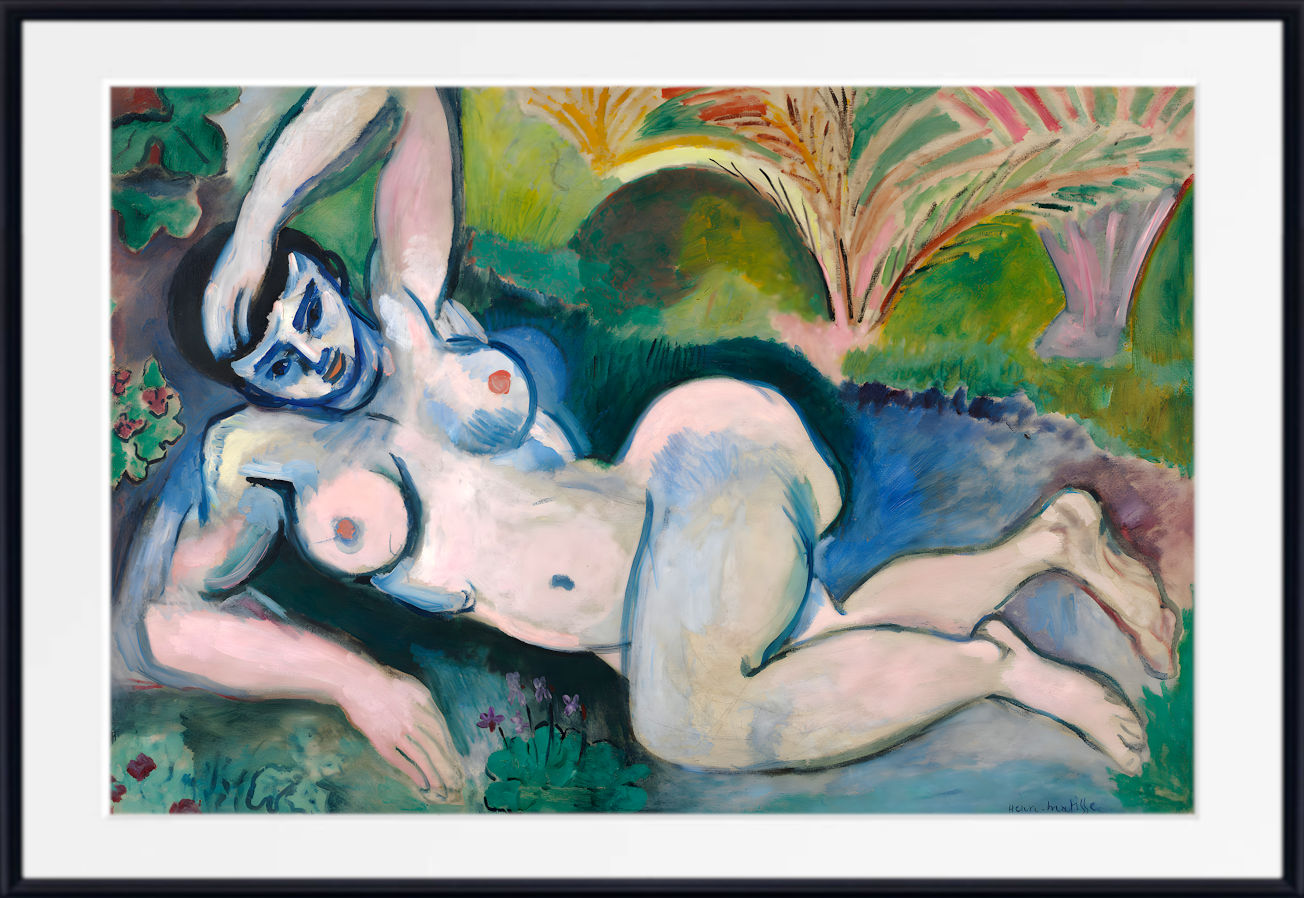
The breakthrough paintings of 1905–07 established Matisse as one of the leading figures of the European avant-garde. Works such as Woman with a Hat, The Green Line, The Joy of Life and Blue Nude demonstrated an increasingly radical approach to colour and form.
Fauvism itself lasted only a few years, but Matisse continued to explore colour, pattern, interiors and the human figure throughout his career. His later paintings and celebrated paper cut-outs extended many of the principles he had first explored during the Fauvist period.
The Original Woman with a Hat
The original Woman with a Hat, or Femme au chapeau, was painted in 1905.
Matisse created the work in oil on canvas. It measures approximately 80.8 × 59.7 cm.
The painting is now in the collection of the San Francisco Museum of Modern Art. It entered SFMOMA's collection in 1991 through the bequest of Elise S. Haas and has become one of the museum's best-known works.
Its comparatively modest physical dimensions contrast with its enormous historical importance. Few portraits from the early twentieth century played such a visible role in changing contemporary expectations about colour and representation.
A Henri Matisse Woman with a Hat Print for Your Interior
A Woman with a Hat print by Henri Matisse is an especially effective choice for interiors where colour and figurative art are intended to provide a strong focal point.
The painting contains such a broad palette that it can interact with many different decorative schemes. Greens, blues, oranges, pinks and yellows make it particularly effective against white, cream, putty, pale grey and other neutral walls.
Its combination of recognisable portraiture and modern colour works well in contemporary, Scandinavian-inspired, mid-century and eclectic interiors. The strong vertical format also makes the artwork particularly suitable for spaces between furniture, above console tables, beside fireplaces or as part of a carefully arranged gallery wall.
The painting can work effectively in living rooms, bedrooms, dining rooms, hallways, dressing areas and home offices.
For admirers of Matisse and modern art, however, its appeal extends beyond decoration. Woman with a Hat represents one of the pivotal moments when twentieth-century painters demonstrated that colour could be liberated from literal representation.
Frequently Asked Questions
When did Henri Matisse paint Woman with a Hat?
Matisse painted Woman with a Hat in 1905, during the crucial year in which Fauvism emerged publicly as a major new direction in French modern art.
Who is the woman in Woman with a Hat?
The sitter is Matisse's wife, Amélie Matisse. She appeared in several important paintings produced during the artist's early career.
What is the French title of Woman with a Hat?
The French title is Femme au chapeau.
Why is Woman with a Hat so important?
The painting became one of the defining works of Fauvism after being exhibited at the 1905 Salon d'Automne. Its unconventional use of colour challenged traditional expectations of portraiture and helped establish Matisse as a leading figure of modern art.
Why is the woman's face green?
Matisse was deliberately using colour independently of natural appearance. The green passages help structure the face and create contrasts with surrounding pinks, reds and warmer tones rather than attempting to reproduce literal skin colour.
Is Woman with a Hat a Fauvist painting?
Yes. It is one of the most famous and historically important Fauvist paintings and was exhibited at the 1905 Salon d'Automne associated with the emergence of the movement.
What medium did Henri Matisse use for Woman with a Hat?
The original painting was created in oil on canvas.
What size is the original Woman with a Hat?
The original measures approximately 80.8 × 59.7 cm.
Where is the original Woman with a Hat?
The painting is held by the San Francisco Museum of Modern Art.
What does Fauvism mean?
The name comes from the French expression les fauves, meaning “the wild beasts”. The term became associated with Matisse, Derain and other painters whose intensely coloured works attracted attention at the 1905 Salon d'Automne.
Is Woman with a Hat available as a framed Henri Matisse print?
Yes. GalleryThane offers Woman with a Hat in a choice of sizes and formats, including fine art paper prints, framed prints and canvas options.
Where would a Woman with a Hat print work well?
The painting's strong vertical format and extensive palette make it particularly effective in living rooms, bedrooms, dining rooms, hallways and home offices. It works especially well in contemporary, Scandinavian-inspired, mid-century and eclectic interiors.
All orders for unframed fine art prints and original paintings are dispatched within 2 working days of receipt of payment.
Orders for custom framed prints are dispatched within 4 working days.
All orders are fully tracked from dispatch to delivery at your home or business.
All print and original painting orders are fully insured against loss or damage in transit. We refund or replace any damaged or lost orders.
Buy with confidence - read what our satisfied customers have to say - Reviews
Fine art papers are printed without any additional white border Please let us know at the time of ordering if you would like a small additional white border.
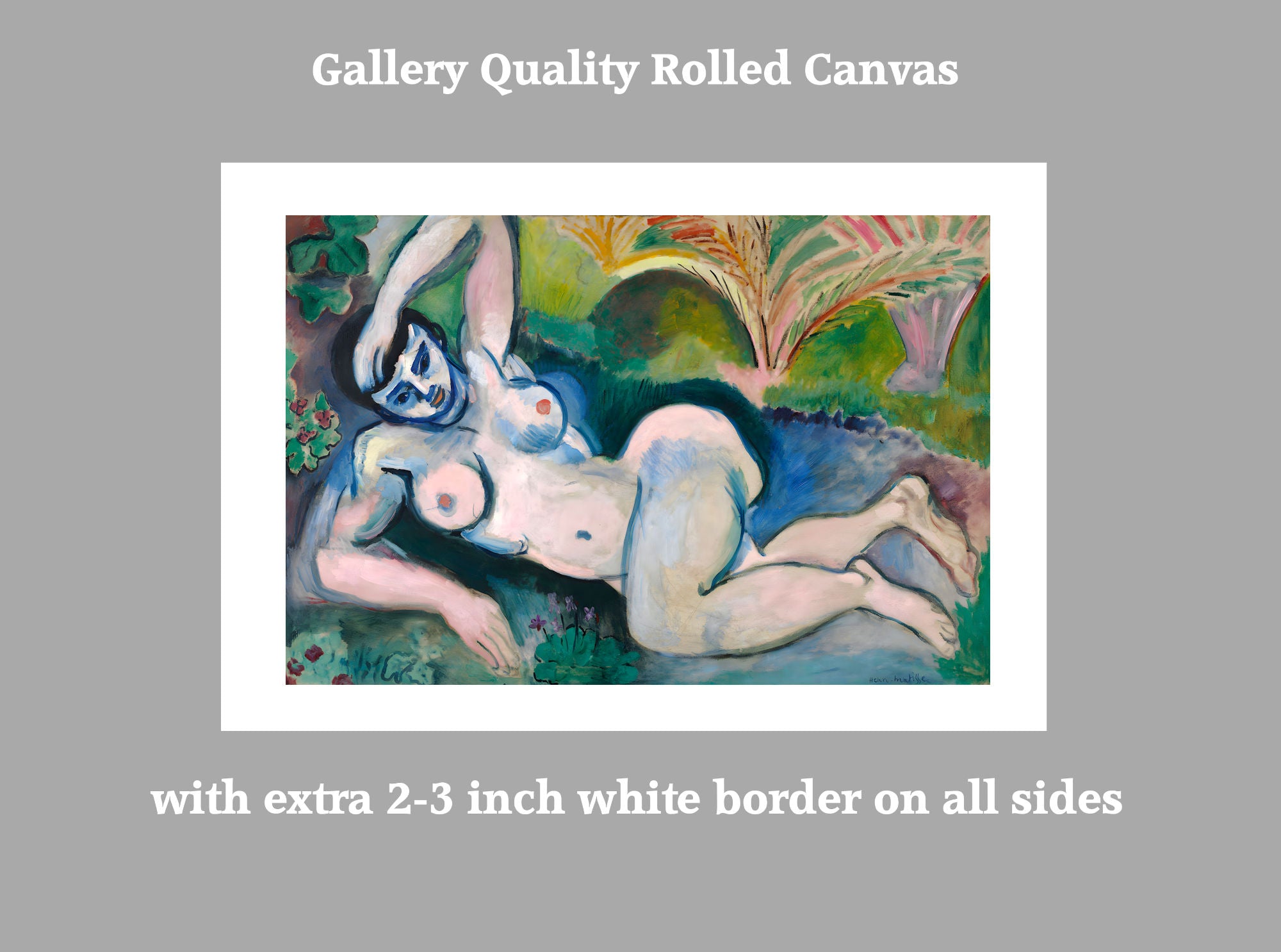
Rolled canvas options have an additional white border of approximately 2.5 inches (7cm) on all 4 sides to aid stretching.
Ready to hang canvas panels are stretched on 1.5 inch deep solid pine frames from sustainable forestry sources. The image is mirrored on all 4 sides to give an aesthetically pleasing finish.
Why not have us gift wrap your order and attach a personalised message to the recipient. Available for all orders. Each order is hand wrapped in high quality gift wrap with meatllic ribbon and bow. Your personalised message is printed on a card which is included with your order.
Have your hand wrapped gift delivered directly to the recipient.
Full tracking and insurance included with every order.
Please note design may vary depending upon availability
Just purchase the gift wrap option HERE
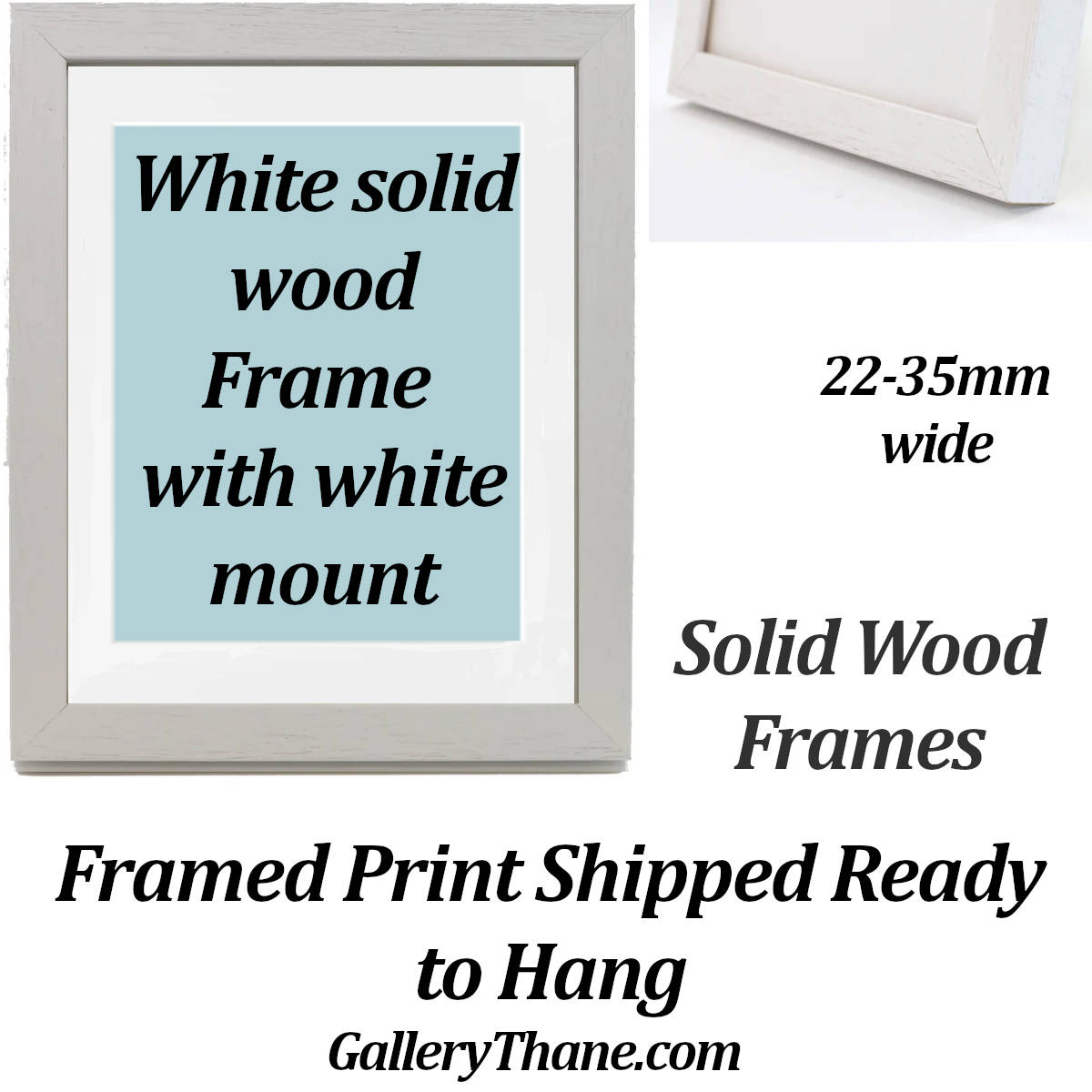
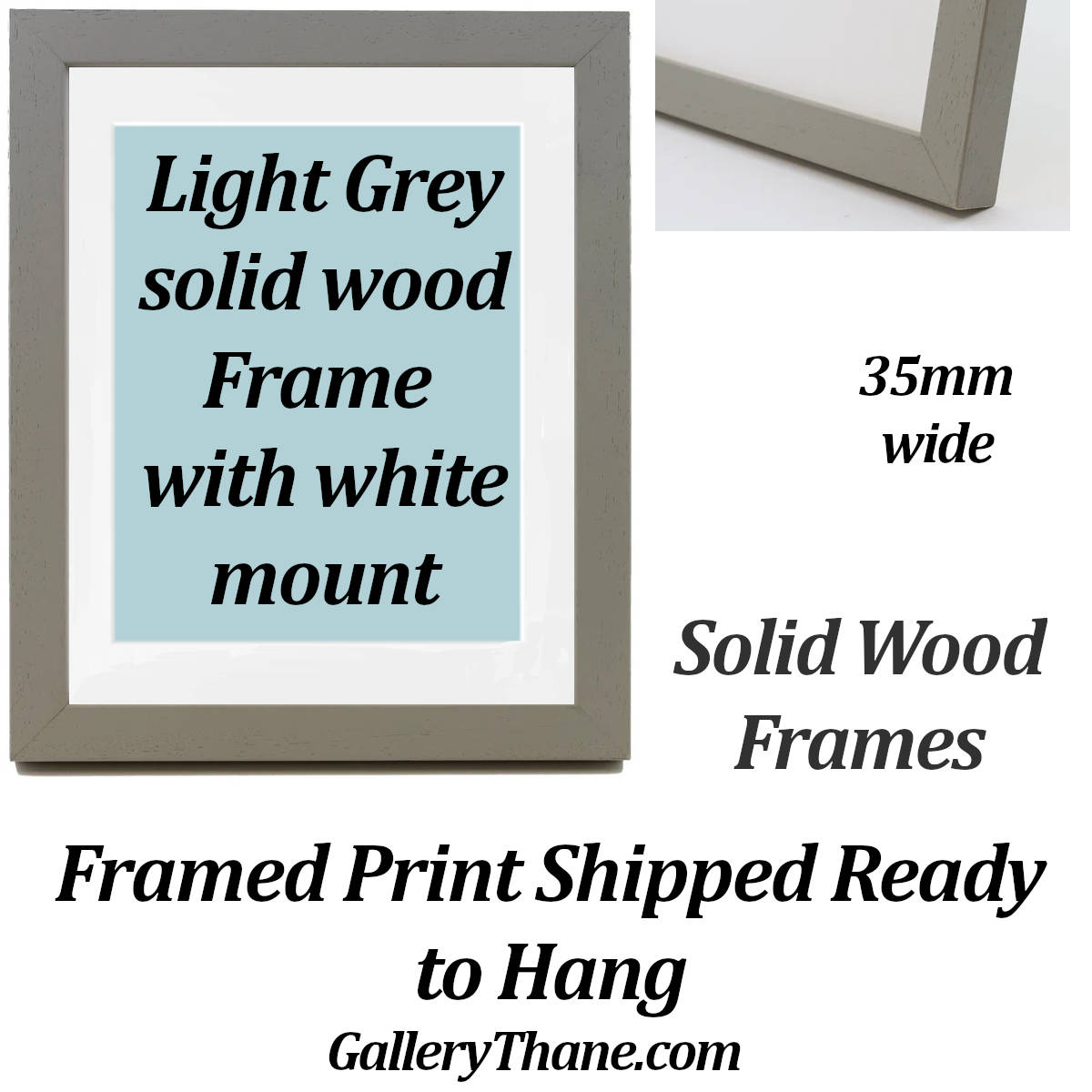
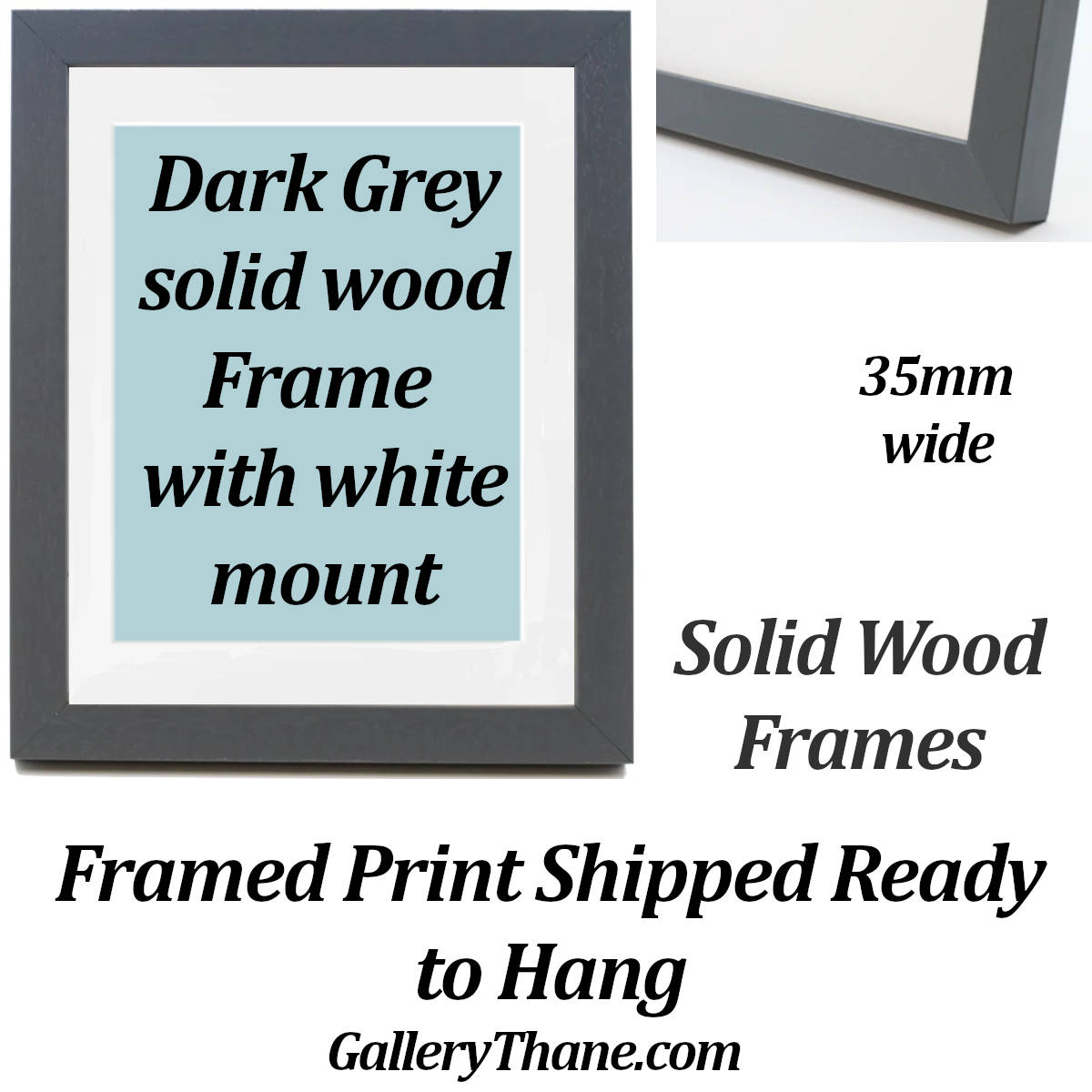
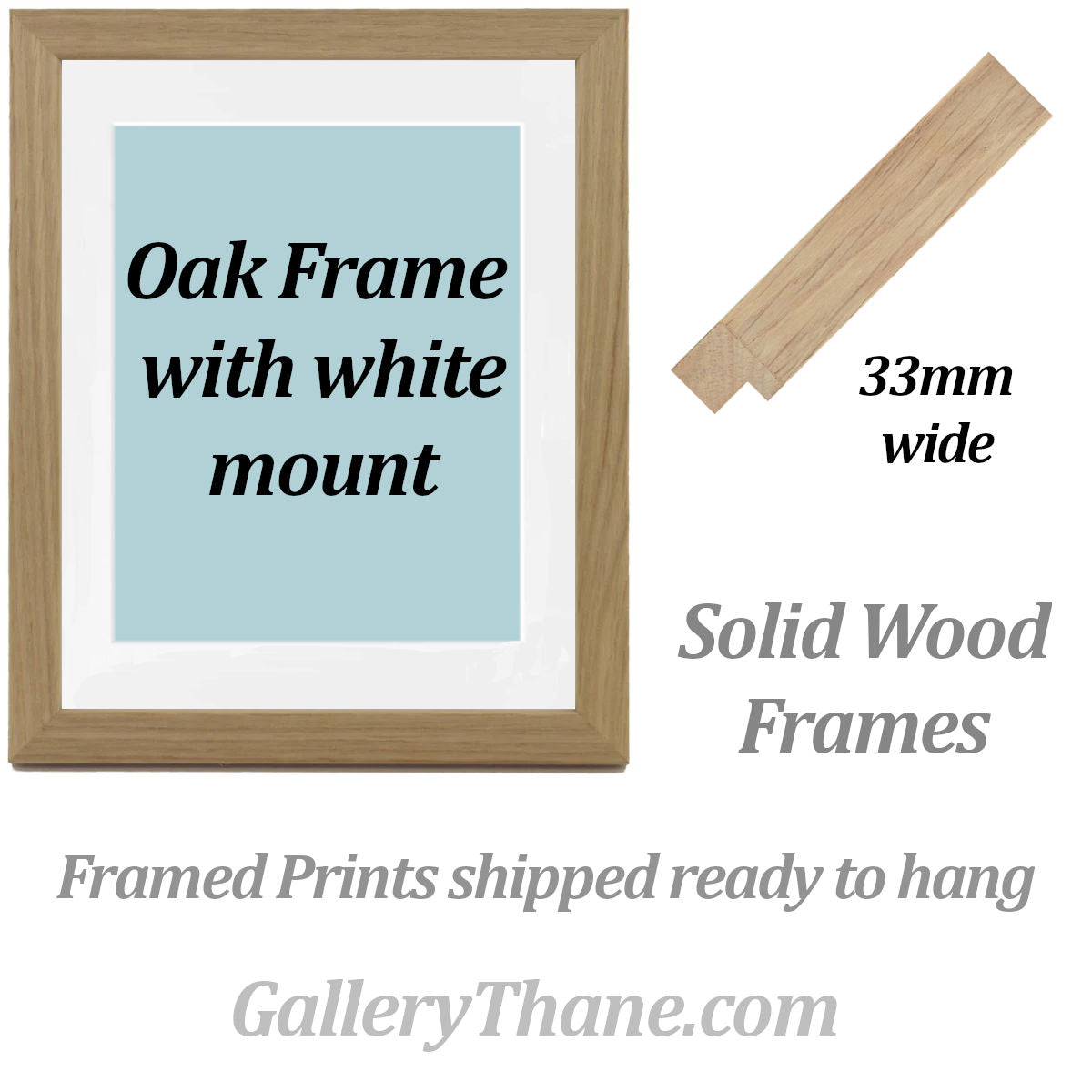
We have a wide range of frames in standard sizes and we also make custom size frames.
To order a framed print:
1. select the print size you would like along with the print materials (matte paper, fine art paper).
2. Add your print choice to the basket.
3. Choose from our range of frames
4. Select the same size as the print you have added to your basket. If the frame size you want is not listed please contact us
5. Choose from the mount or no-mount option
6. Add your frame choice to the basket
7. Proceed to checkout.
Why Choose GalleryThane?
- Printed and framed in-house
- Free UK delivery
- Free EU and USA delivery on orders over £200
- Tracking and insurance included in every order
- Fast 1-3 day dispatch
- Gift wrapping service available
- Gallery quality materials
- Sustainable, eco-friendly packaging
- Great customer support
Explore related collections

What makes our Prints and Canvas Panels so special

Latest Giclee Printing Technology
We have invested in the latest wide format print technology to produce museum quality giclee prints utilising the highest quality pigment inks to give outstanding colour reproduction.

Museum Quality Archival Fine Art Papers
We print on the finest quality fine art papers with textured, smooth and lustre finishes for prints which last a lifetime.
From aceo miniatures to 40x80 inch large format, every print has our lifetime quality guaranteee.

Solid Wood Frames, Cotton Canvas
All of the wood for our canvas panels and frames is responsibly sourced from manages forests. Our cotton canvas is completely seedless for the highest quality reproduction possible.

Have Your Gift Wrapped


