Henri Matisse Prints: Colour, Pattern and the Reinvention of Modern Art
Henri Matisse transformed twentieth-century art through an extraordinary command of colour, line and decorative form. Across a career lasting more than five decades, he moved from early landscapes and still lifes through the explosive colour of Fauvism, richly patterned interiors and portraits, Mediterranean subjects and finally the radically simplified paper cut-outs of his later years.
GalleryThane’s collection of Henri Matisse prints reflects this remarkable range. It includes colourful landscapes, portraits, still lifes, interiors, figure studies and works related to his celebrated Jazz portfolio, allowing you to explore how Matisse’s visual language changed while his fascination with colour remained constant.
Matisse did not regard colour simply as a means of reproducing the visible world. Red, blue, green and yellow could organise an entire composition, establish mood and make apparently flat surfaces feel alive. This approach helped make him one of the defining artists of modernism and continues to give Matisse wall art an unusually contemporary character.
Henri Matisse and the Birth of Fauvism
Matisse’s decisive breakthrough came in southern France during the opening years of the twentieth century.
In the summer of 1905 he worked at Collioure on the Mediterranean coast alongside André Derain. The intense southern light encouraged both painters to move increasingly away from naturalistic colour.
Trees could become red or blue. Shadows might become violet or green. Hills, water and human figures could be constructed from brilliant contrasting hues rather than the colours expected in nature.
When paintings by Matisse, Derain and related artists appeared at the Salon d’Automne in Paris later that year, critic Louis Vauxcelles famously referred to the painters as les fauves — “the wild beasts”. The name gave rise to Fauvism, one of the first major avant-garde movements of the twentieth century.
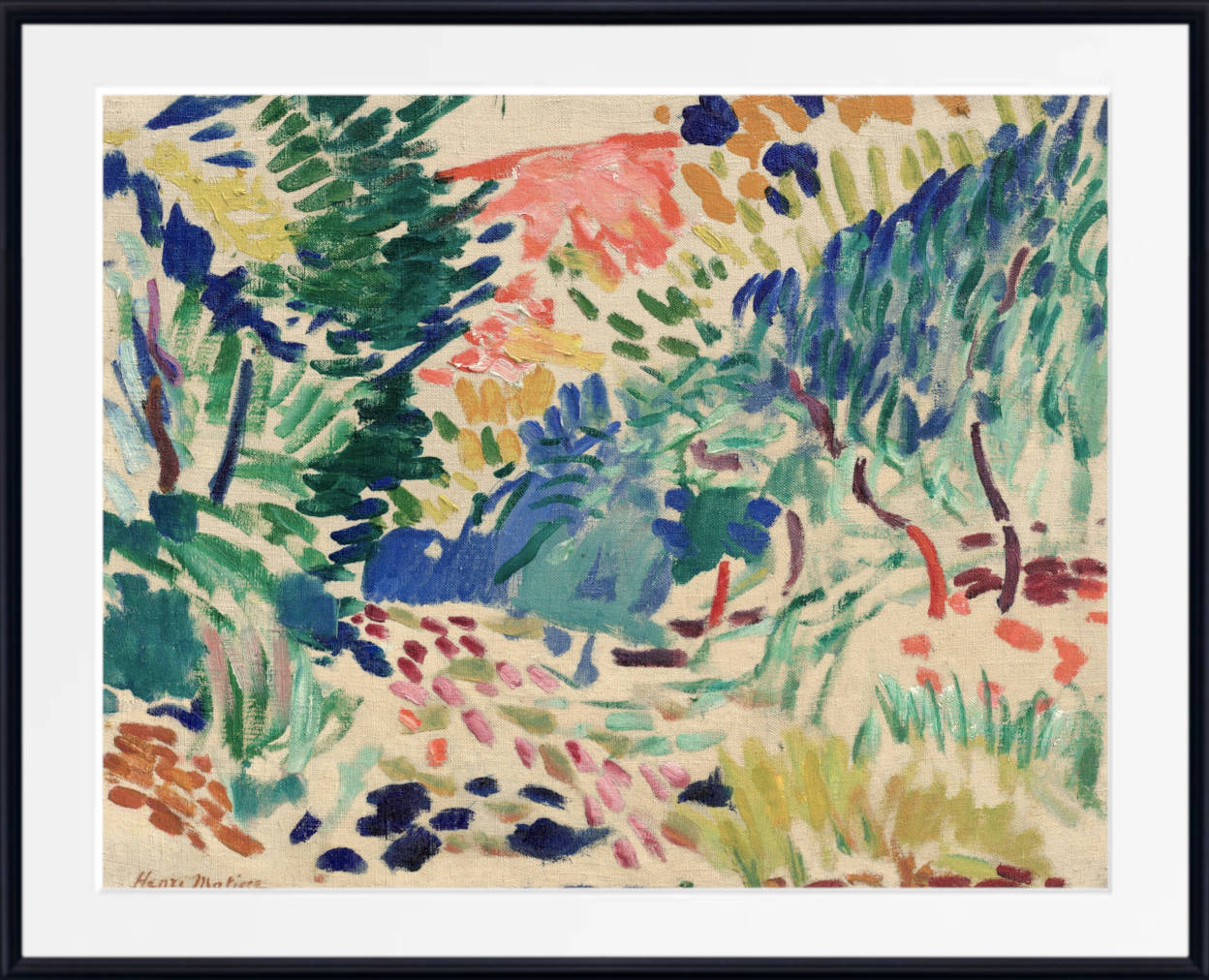
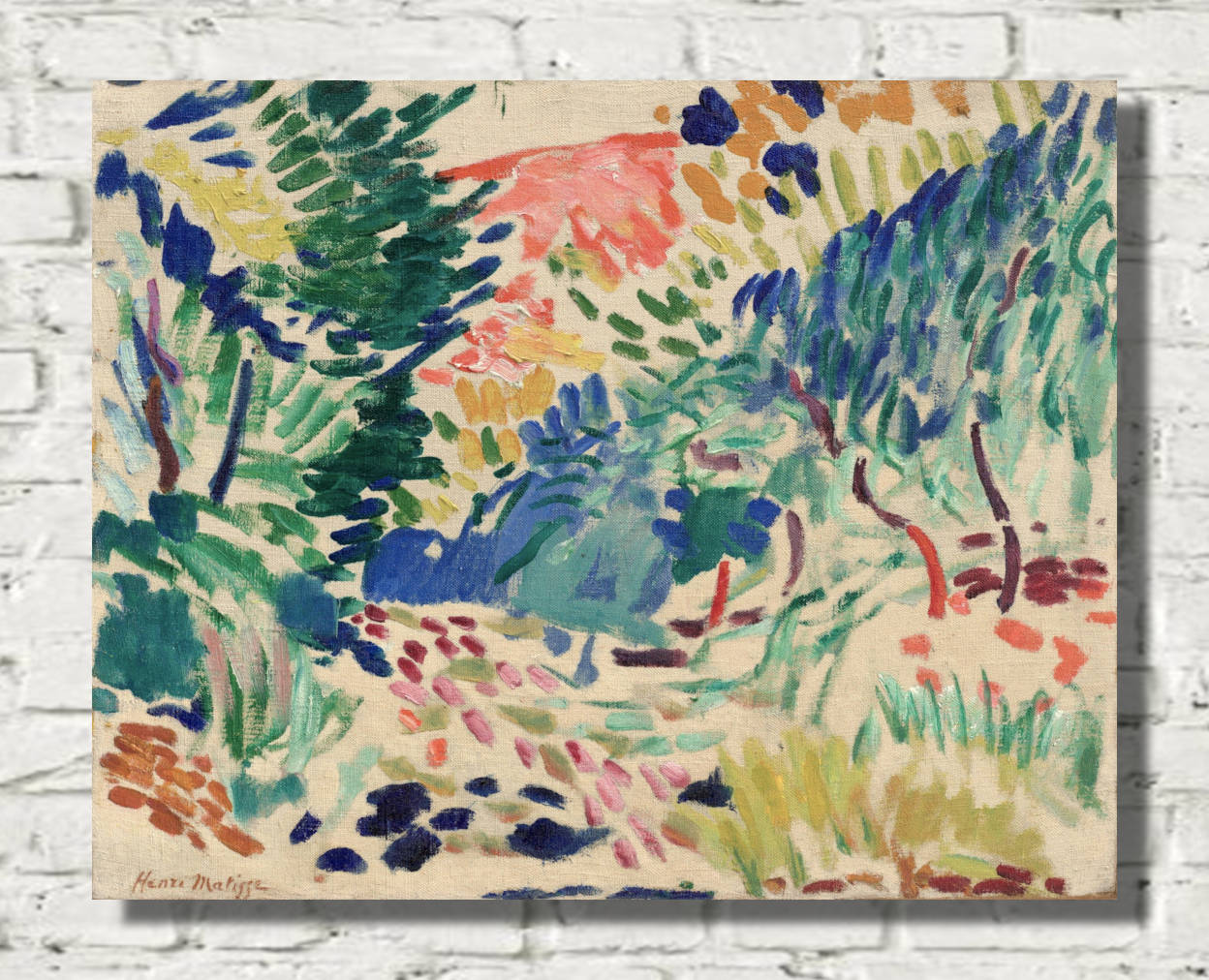
Works such as Woman with a Hat, Landscape at Collioure and Matisse’s portraits and interiors from this period demonstrate the extraordinary freedom that Fauvism introduced into his painting.
Collioure and the Liberation of Colour
Collioure became one of the pivotal locations in Matisse’s career.
The Mediterranean fishing port offered brilliant sunlight, colourful boats, hills, olive trees and tightly clustered buildings. More importantly, it gave Matisse an environment in which colour could be pushed far beyond conventional Impressionist observation.
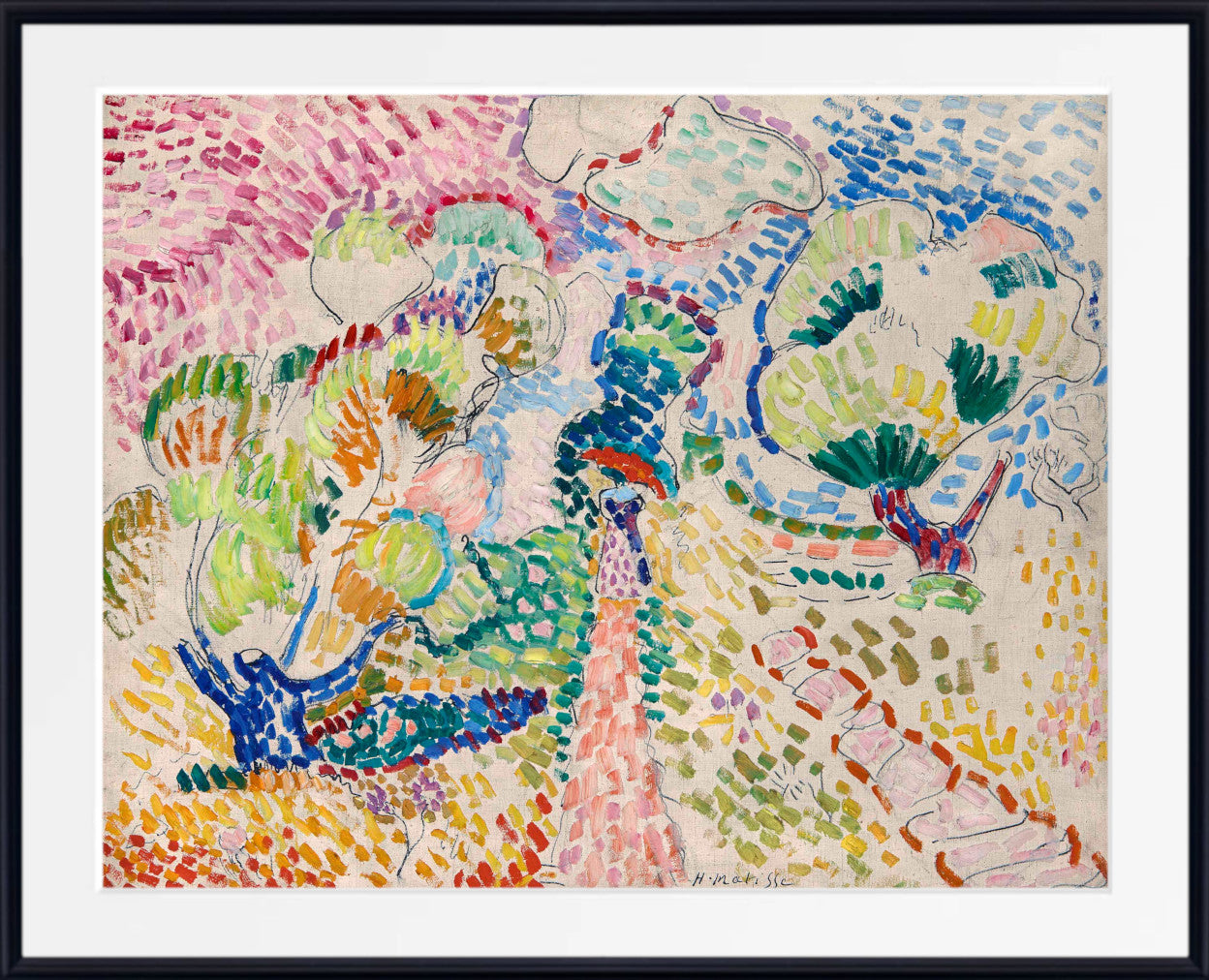
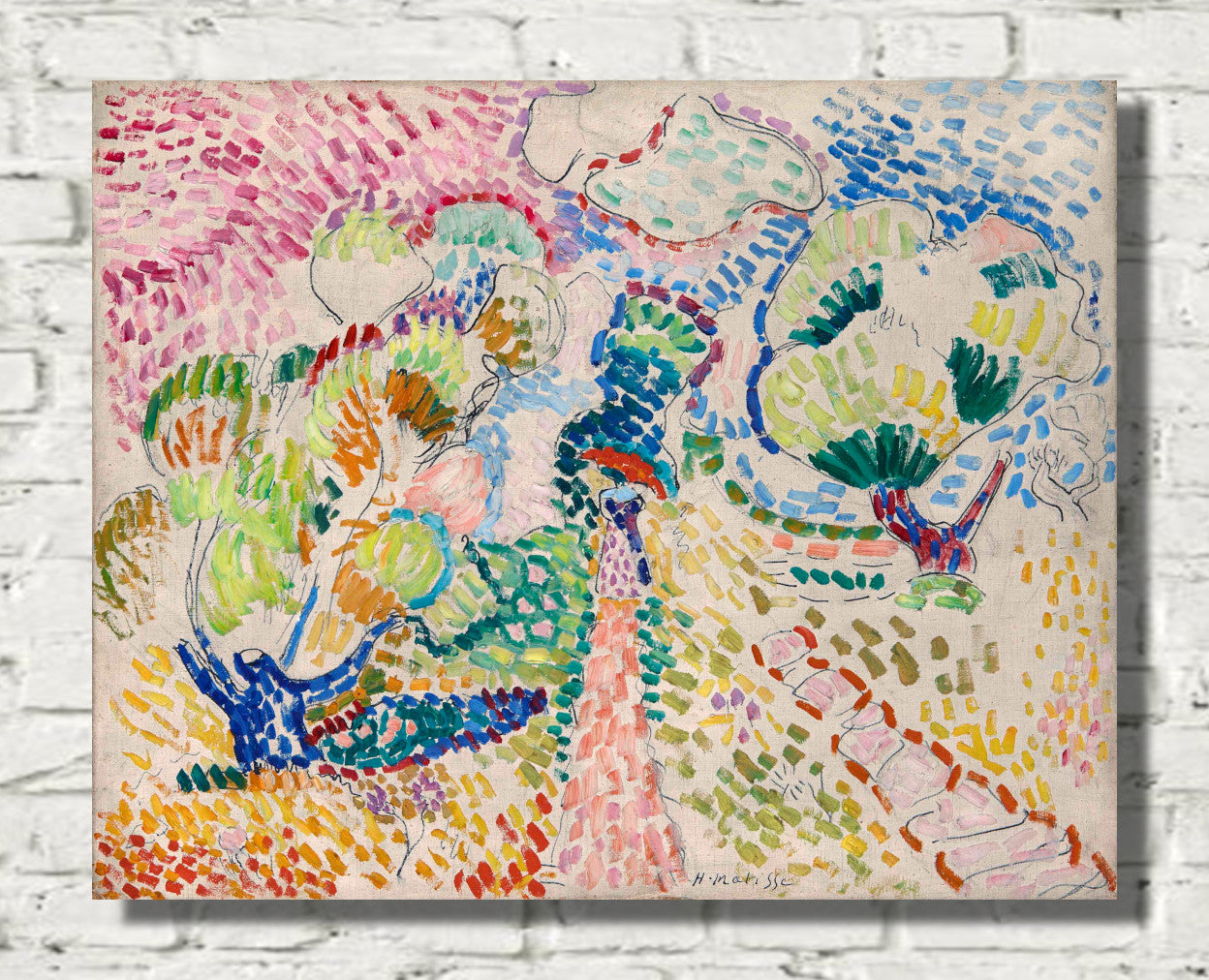
In paintings such as Olive Trees at Collioure and Landscape at Collioure, individual brushstrokes remain clearly visible. Areas of unpainted or lightly painted canvas may sit beside intense blues, oranges, pinks and greens.
Rather than hiding the process of painting, Matisse allows the viewer to see how the image has been constructed.
This freedom became fundamental to his subsequent work. Even when his style changed, Matisse continued to treat colour as an active structural element rather than a finishing layer applied to a drawing.
Colour as Structure
One of the most important ideas in Matisse’s art is that colour can build a painting.
Traditional European painting often relied heavily upon perspective, modelling and gradual changes from light to dark to create the illusion of three-dimensional space.
Matisse increasingly discovered that relationships between colours could perform much of this work.
A warm red might appear to advance towards the viewer while a cooler blue receded. A green placed beside red could increase the intensity of both. A large field of one colour could unify areas that would otherwise appear spatially separate.
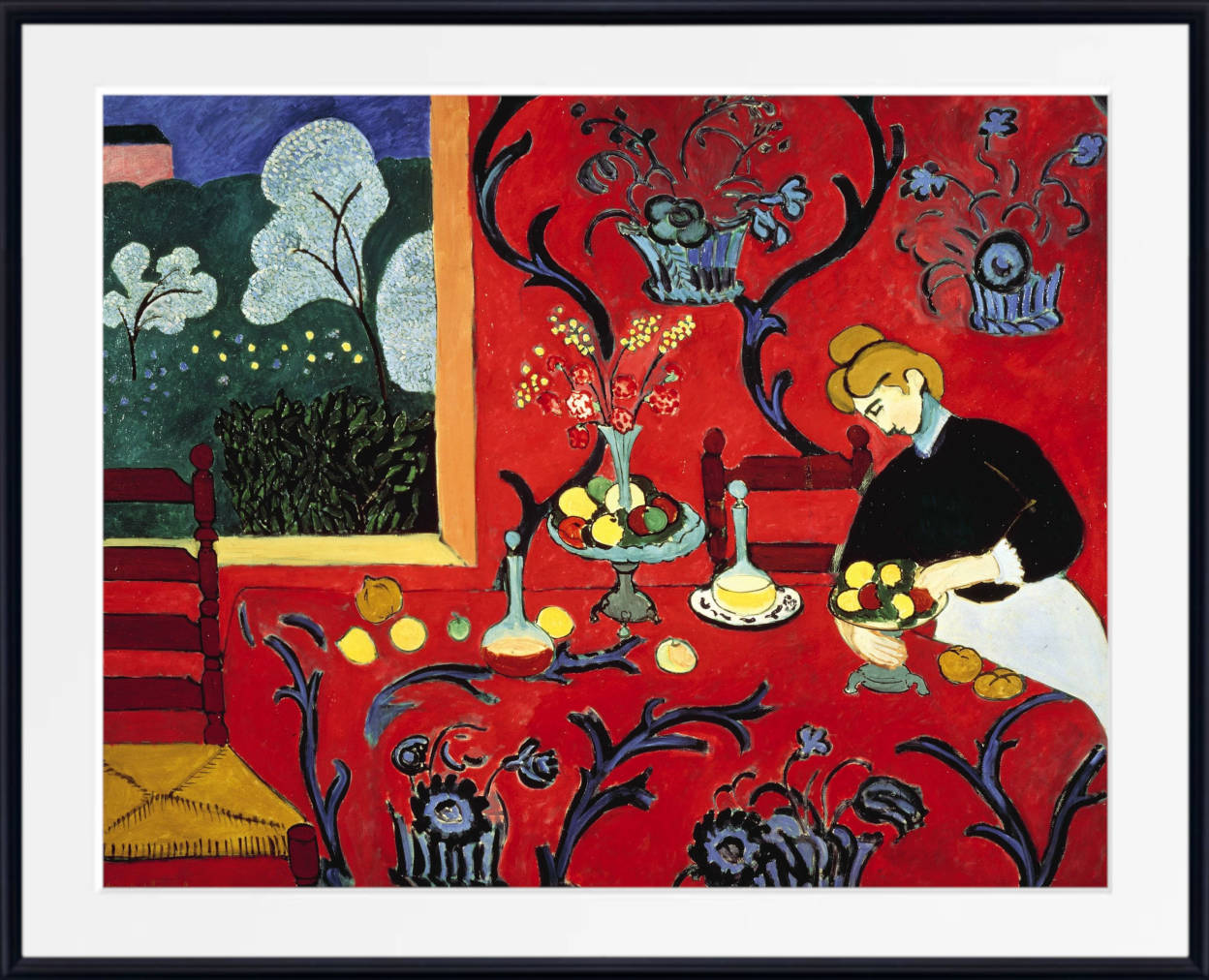
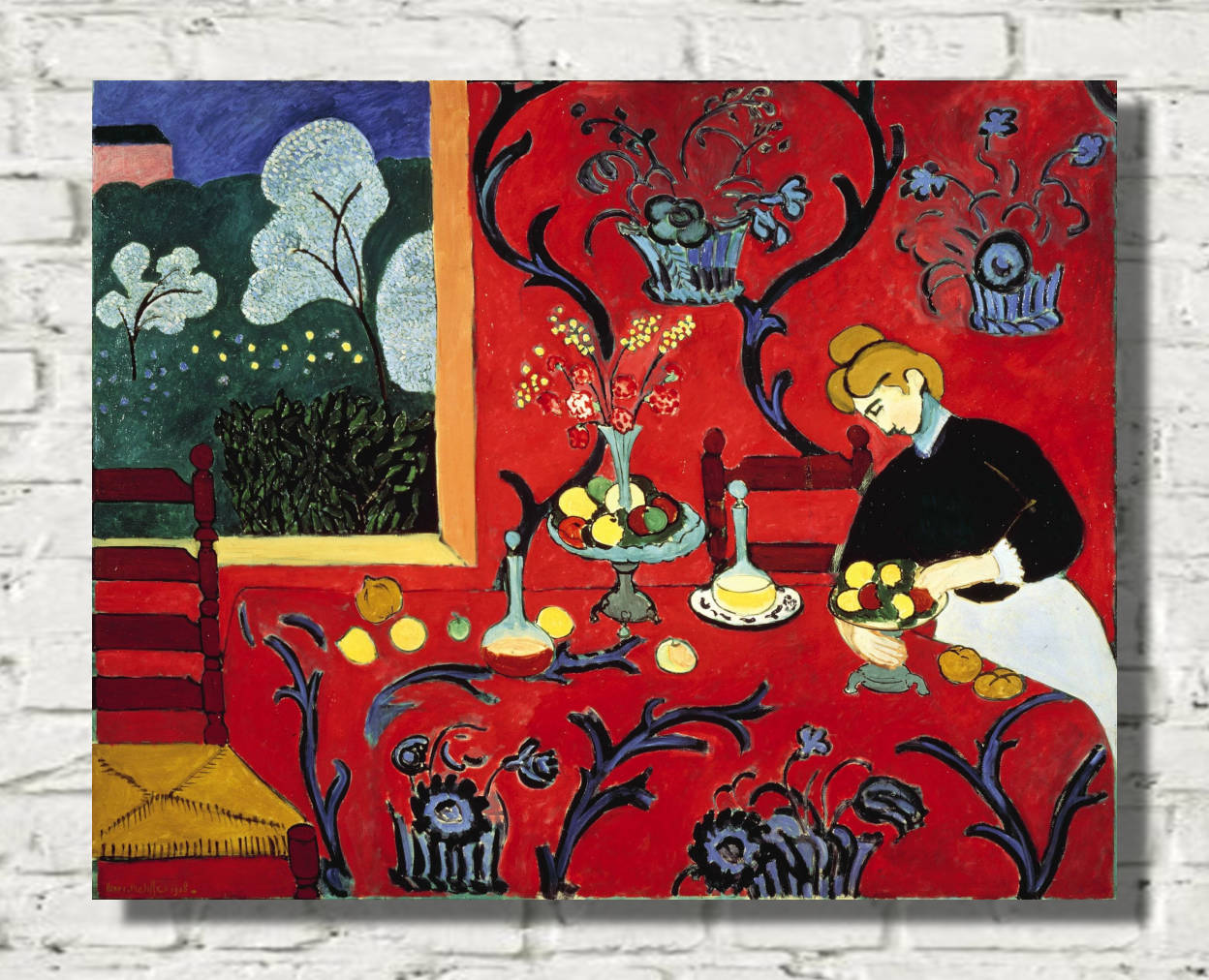
This approach reaches a remarkable level in The Dessert – Harmony in Red, where a red tablecloth and red wall almost merge into a single surface covered by flowing blue arabesques.
The painting remains recognisable as an interior, yet conventional depth competes constantly with flat decorative pattern.
It is this tension between representation and decoration that makes so many Matisse prints immediately recognisable.
Matisse and Decorative Pattern
Pattern became increasingly important throughout Matisse’s career.
His interest had deep roots. He grew up in northern France in an area associated with textile production and later assembled his own collection of fabrics, rugs and decorative objects from Europe, North Africa and the Middle East.
Textiles repeatedly appear in his paintings.
Patterned tablecloths, screens, carpets, curtains and wallpaper are rarely passive backgrounds. They interact with figures and objects and often spread visually across the entire painting.
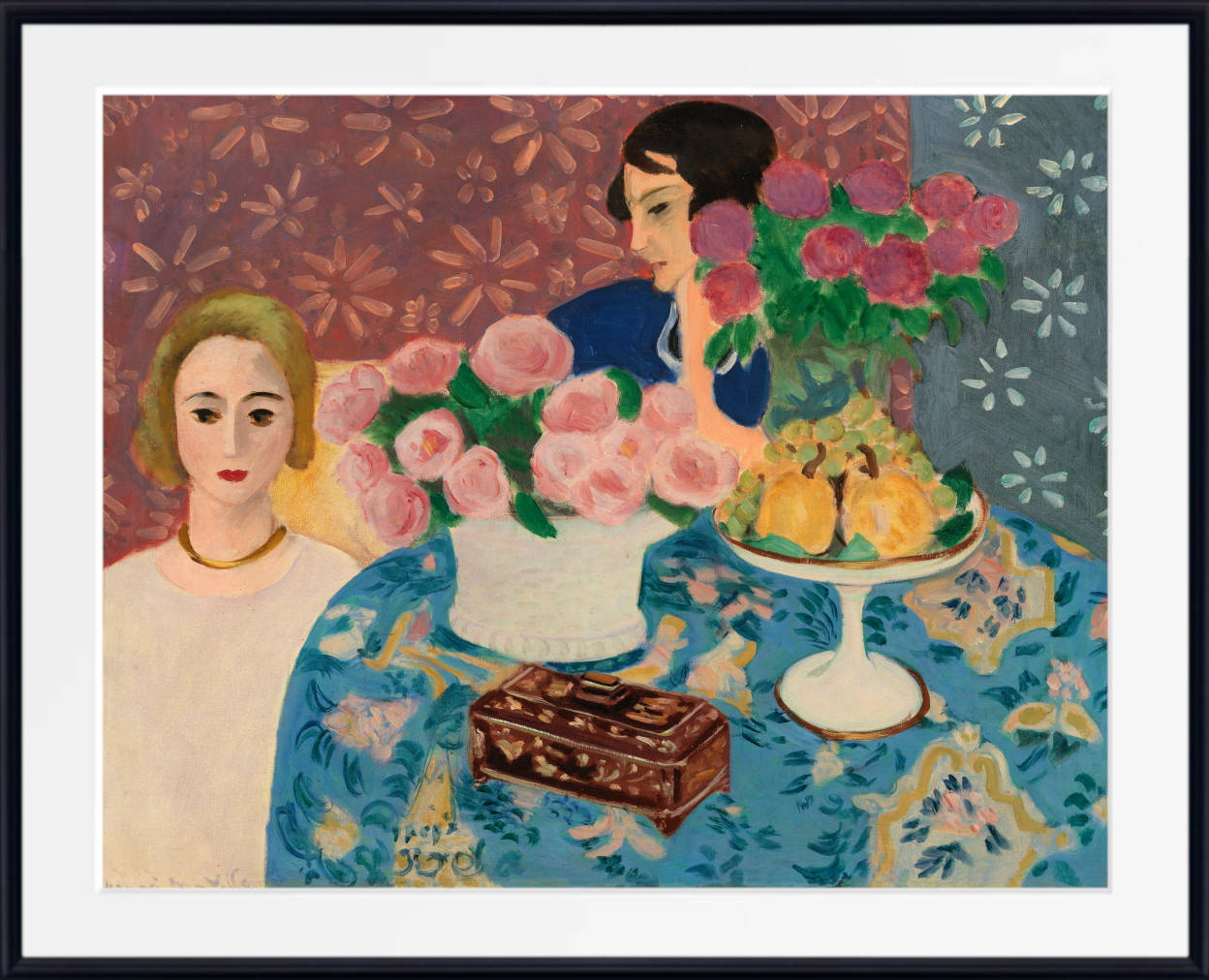
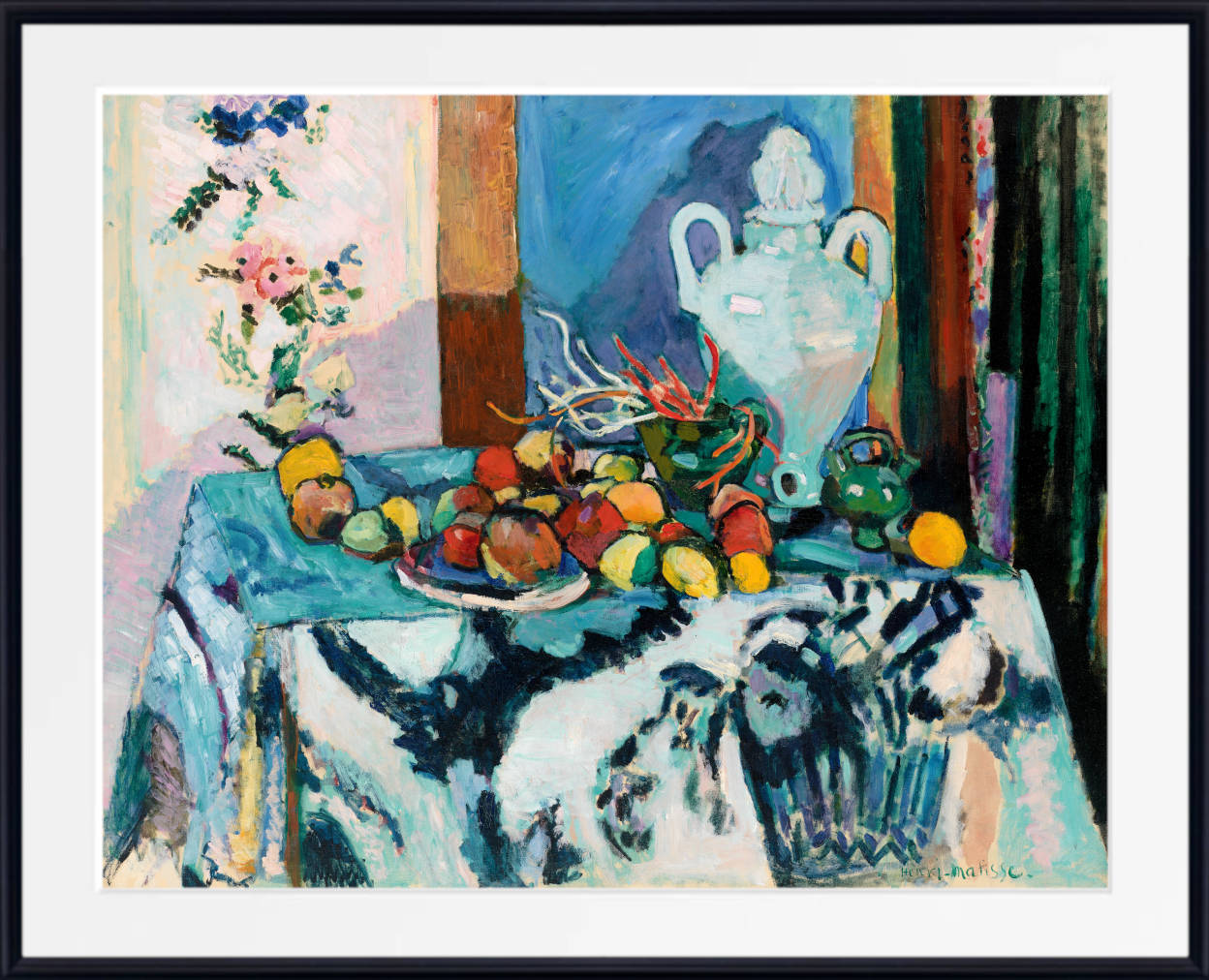
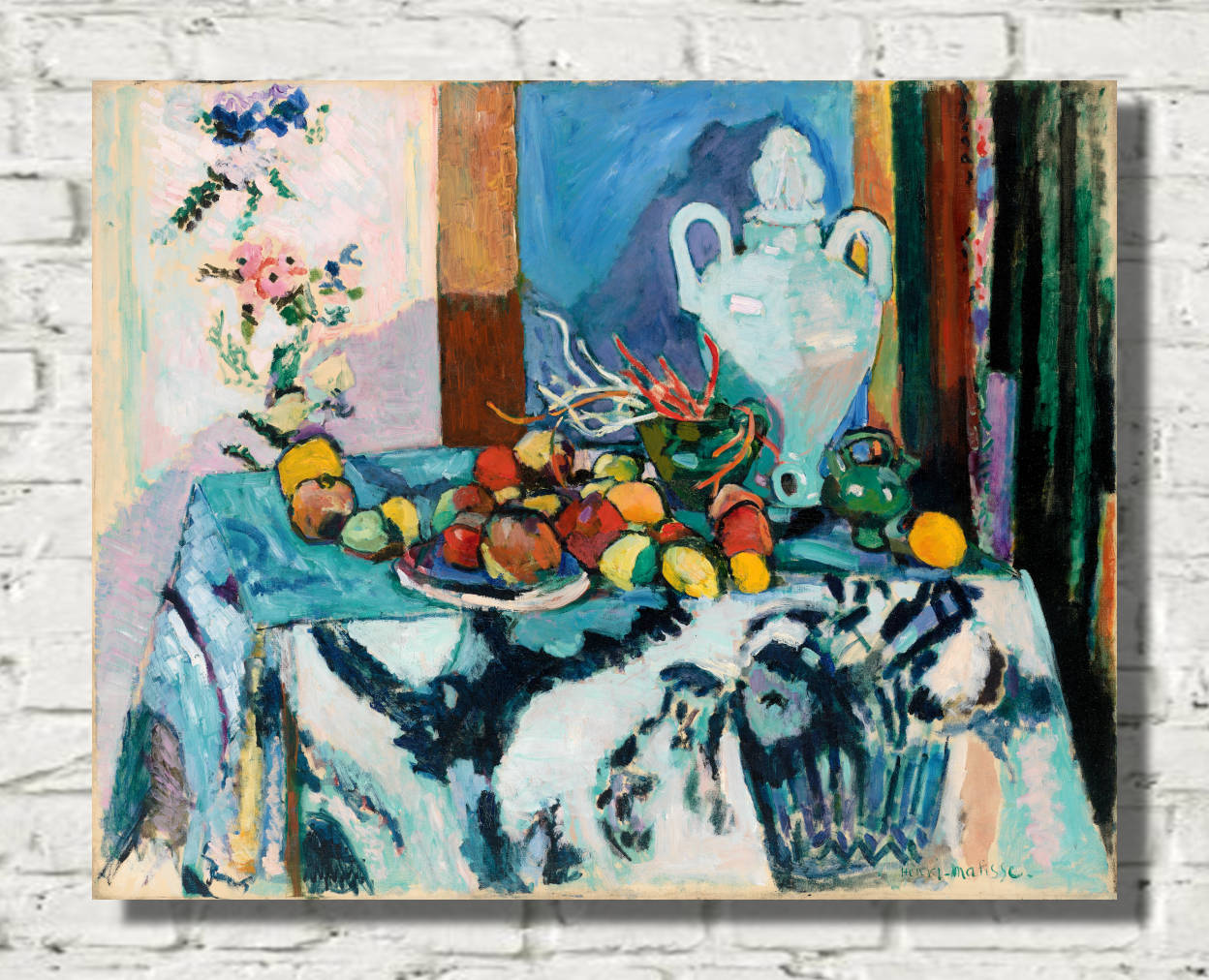
In Blue Still Life (Nature morte bleue), for example, patterned textiles compete with fruit and vessels for attention. In Harmony in Red, decoration becomes even more dominant, spreading across furniture and architecture until the distinction between the two begins to disappear.
This fascination with surface and pattern helps explain why Matisse’s paintings work particularly well as wall art in contemporary interiors.
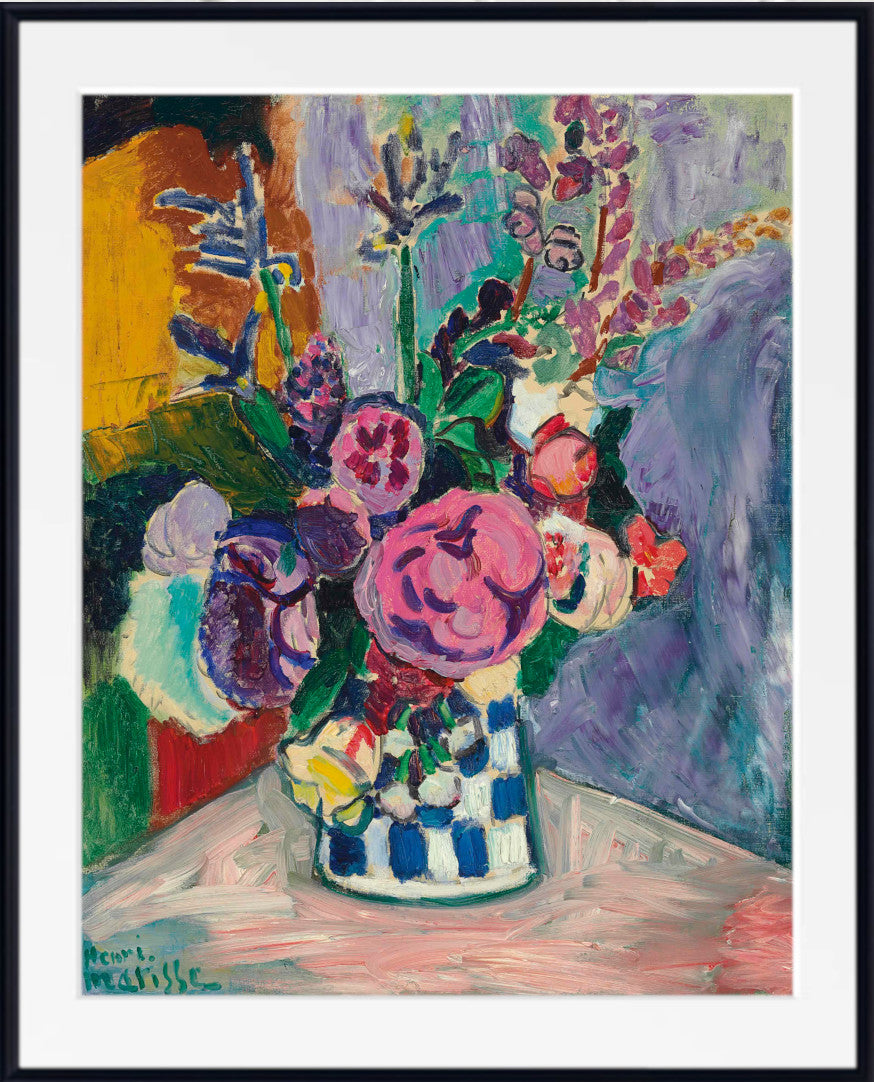
Matisse Still Life Prints
Still life gave Matisse an ideal setting in which to experiment.
Fruit, flowers, pitchers, bowls and decorative objects could be moved and rearranged until their colours and shapes created the relationships he wanted.
Rather than treating a still life as a collection of isolated objects, Matisse increasingly considered the whole canvas as one interconnected design.
Explore GalleryThane’s broader collection of Still Life Prints to see how Matisse’s approach compares with other artists working across different periods and movements.
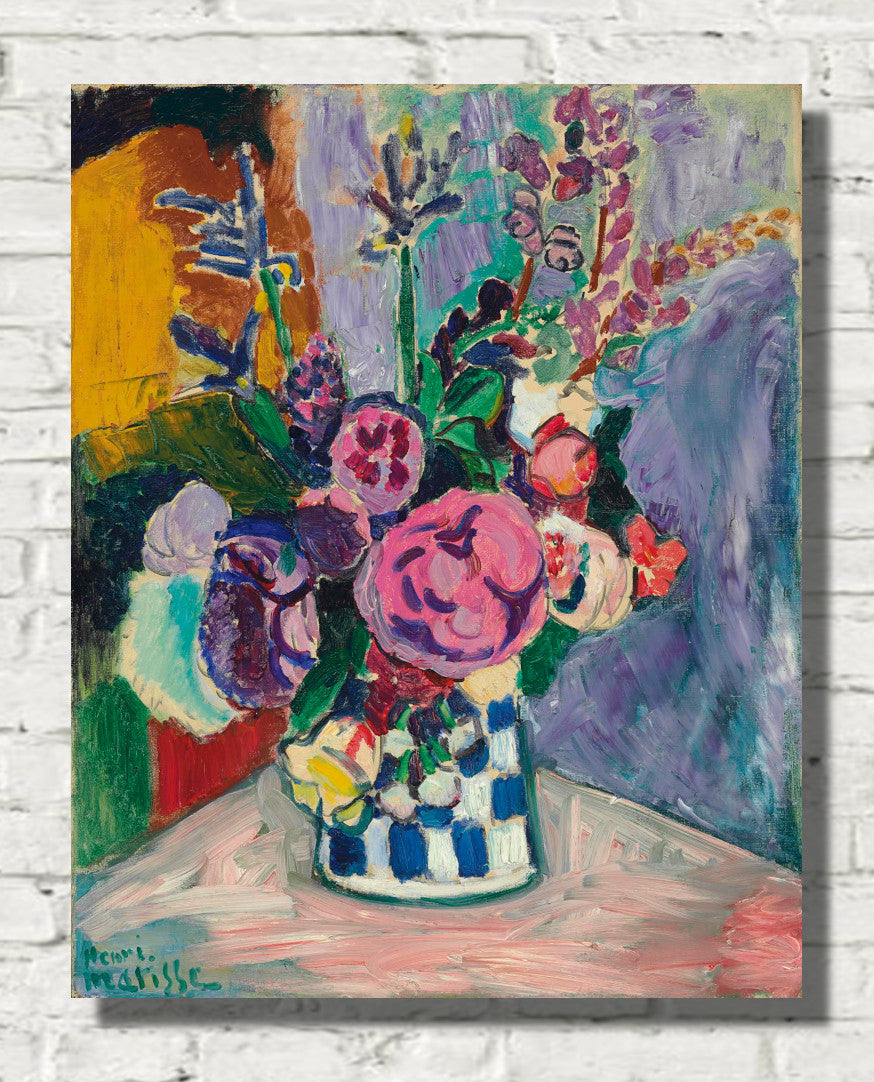
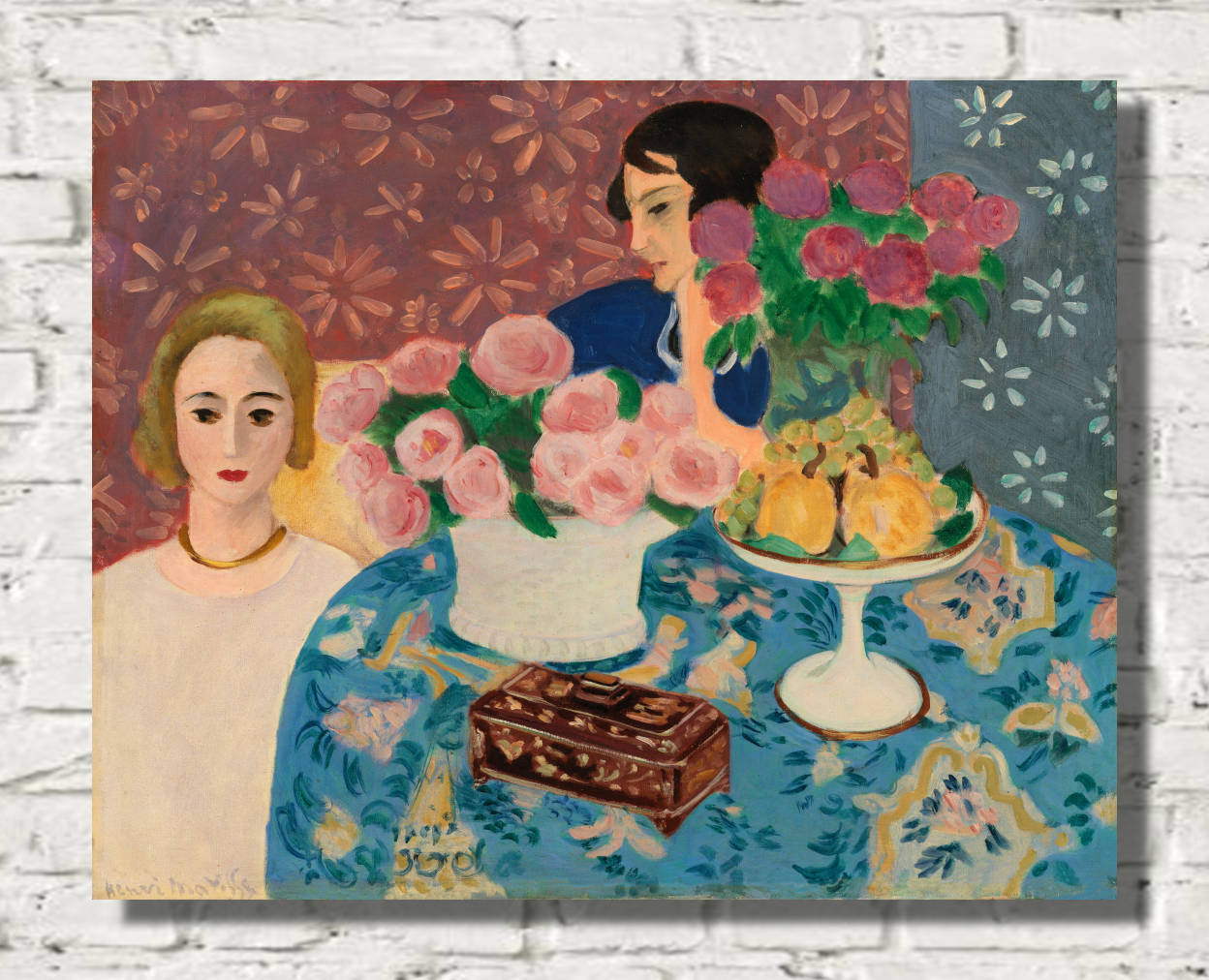
Works such as Blue Still Life, Peonies and other floral and tabletop compositions demonstrate that a familiar domestic subject could become a laboratory for some of the most radical developments in modern painting.
Interiors and the World of Matisse
The interior became one of Matisse’s most important subjects.
Rooms offered everything he needed: figures, furniture, patterned textiles, windows, still-life objects and contrasting planes of colour.
In paintings such as Interior with a Young Girl (Girl Reading), conventional perspective is already being deliberately challenged. Tables tilt towards the viewer and furniture competes visually with the human figure.
As his art developed, interior spaces became increasingly flexible.
A wall might function less as distant architecture than as a large colour field. A window could become a painting within a painting, offering a contrasting glimpse of landscape or garden. Pattern could link foreground and background.
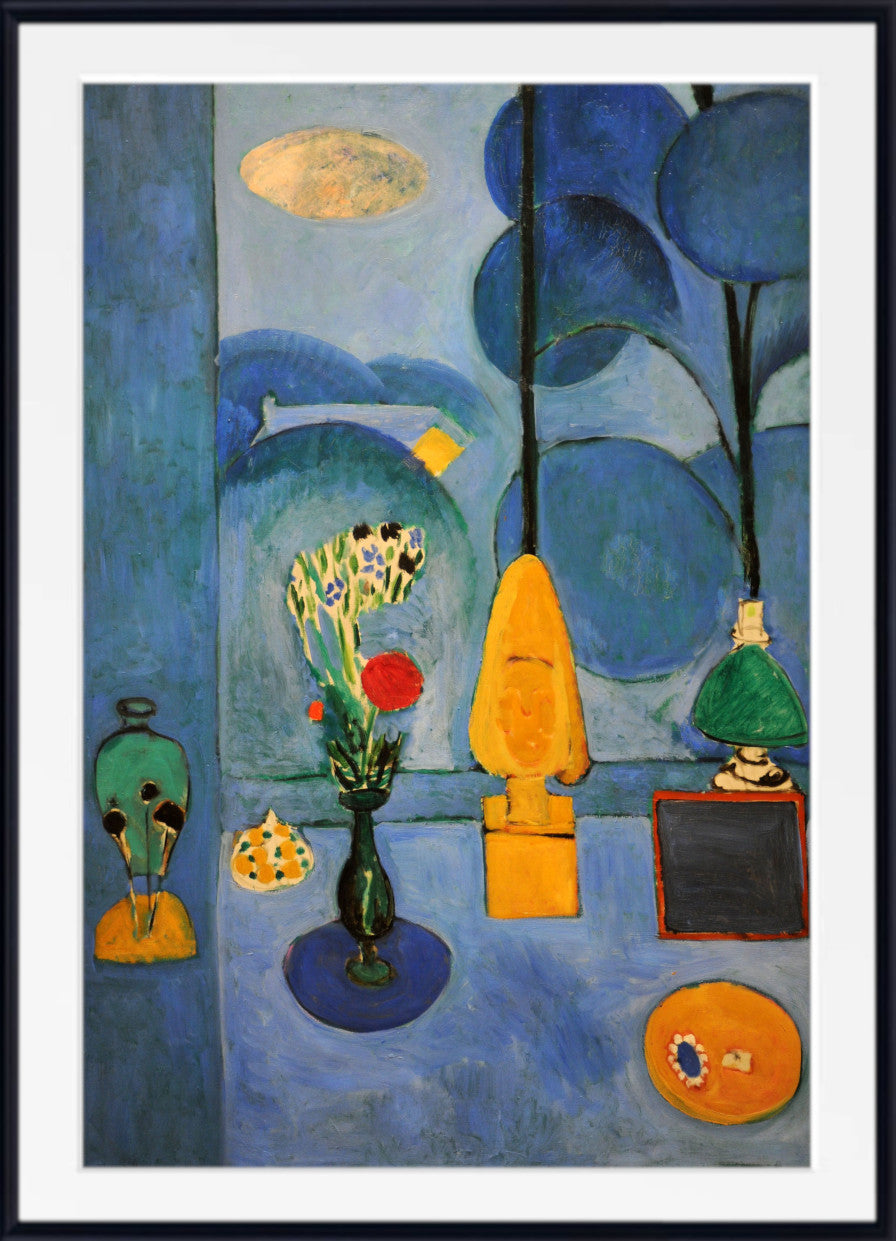
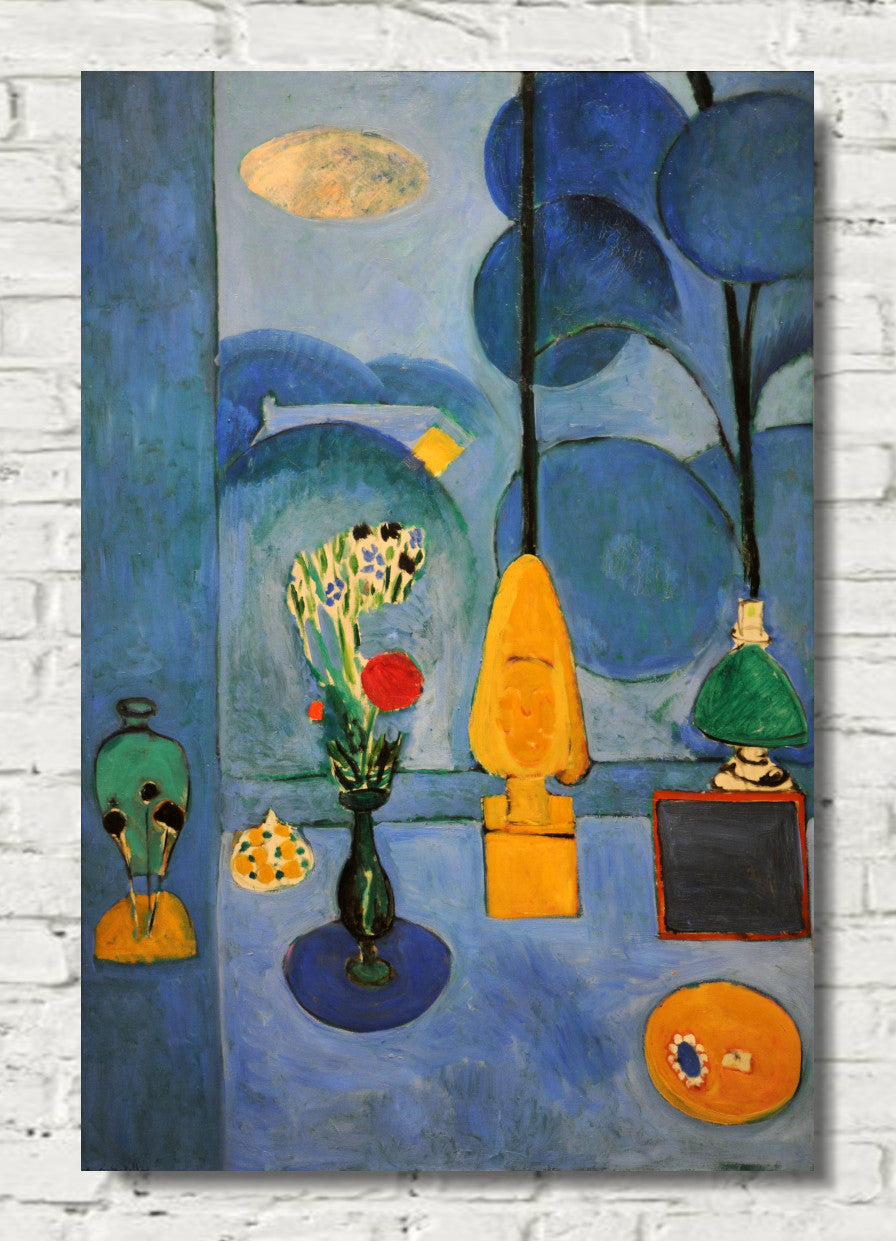
The Blue Window is an especially compelling example of Matisse’s ability to make colour itself define the atmosphere of an interior.
Goldfish and Matisse’s Studio Paintings
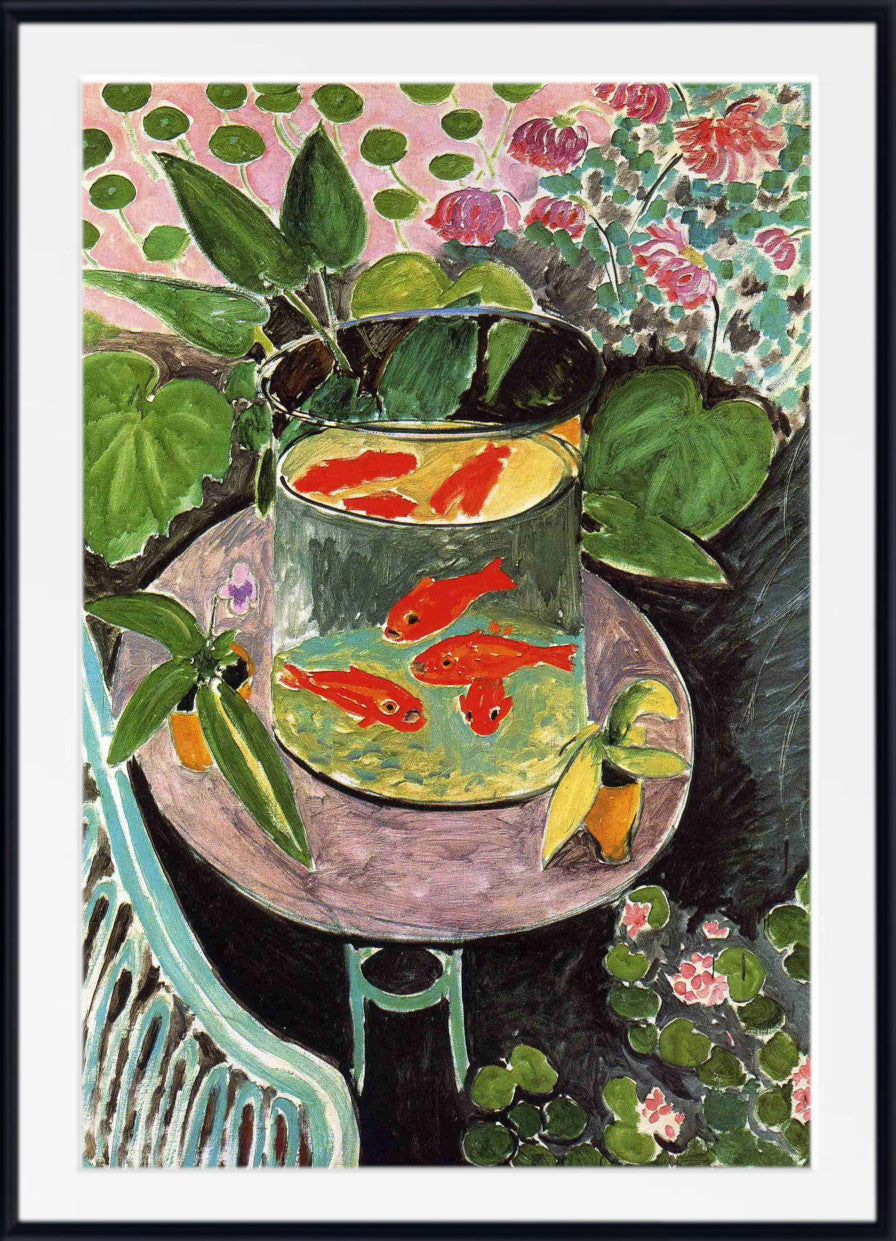
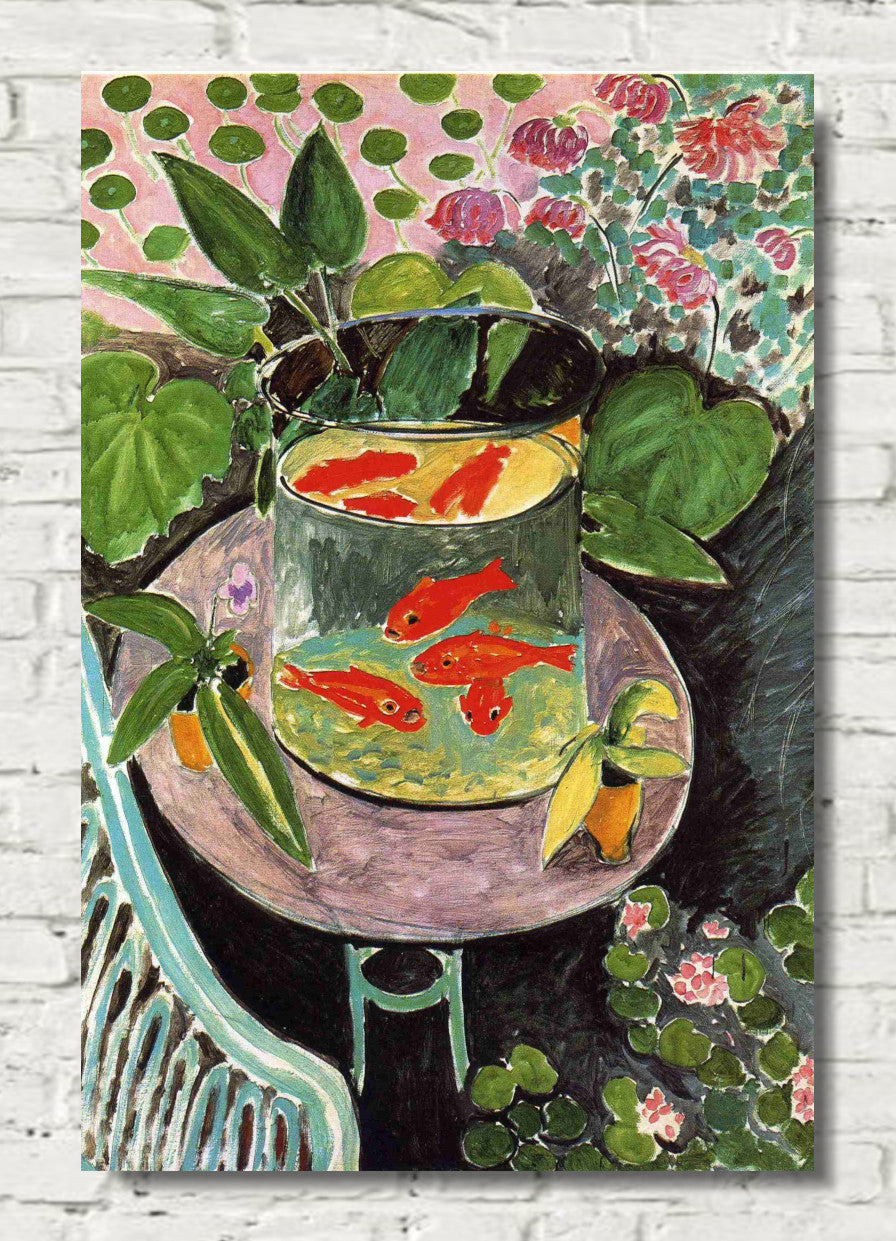
Goldfish became a recurring motif in Matisse’s work during the early 1910s.
Their vivid orange provided an ideal contrast with the greens and blues that frequently surrounded them. Yet the appeal went beyond colour.
Aquariums offered unusual combinations of transparency, reflection and curved space. The fish appear contained within a glass vessel while the surrounding studio becomes increasingly simplified.
Matisse repeatedly returned to the studio as a subject throughout his career. Rather than seeing it merely as the place where paintings were made, he transformed it into a world of its own — filled with artworks, plants, furniture, textiles and objects that could be reorganised through colour.
Morocco and North African Influence
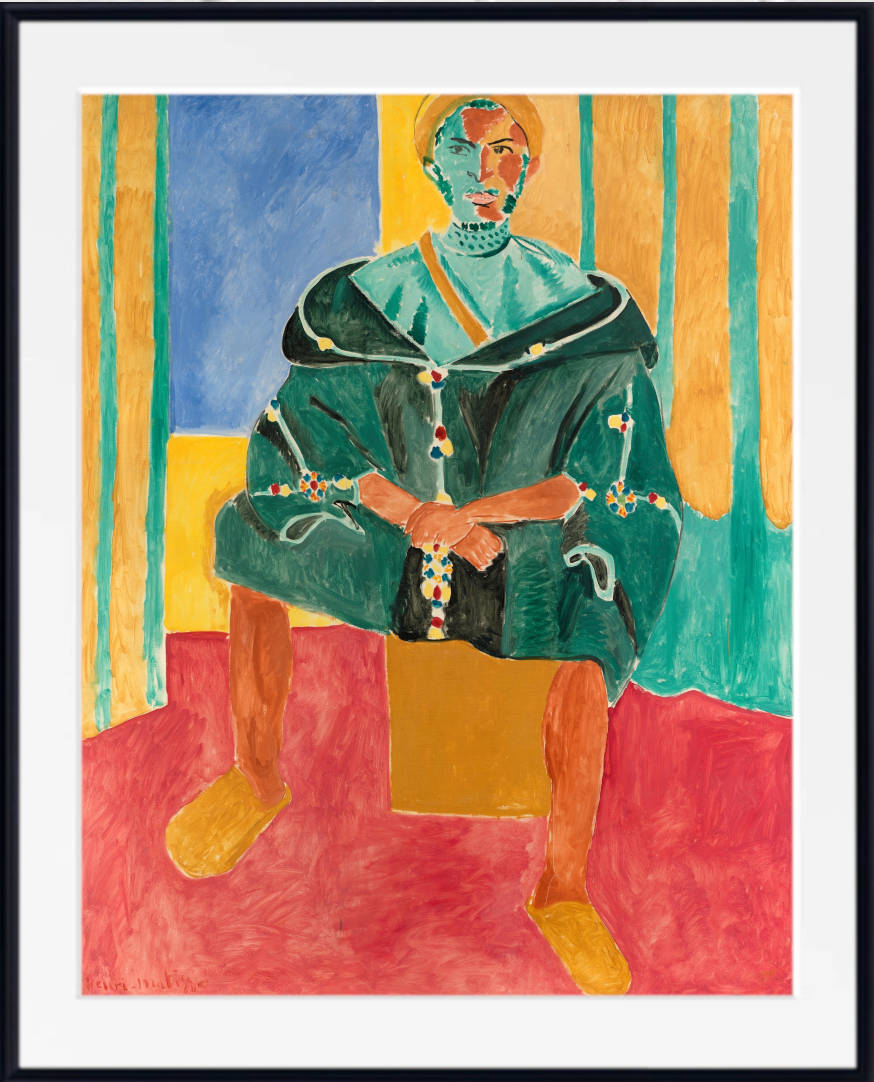
Matisse travelled to Morocco during 1912 and 1913, experiences that had a lasting impact on his art.
North African architecture, gardens, textiles and intense light reinforced his existing fascination with decorative pattern and saturated colour.
Works from and following these journeys often combine simplified figures with richly organised backgrounds.
The influence should not be reduced simply to exotic subject matter. Morocco provided Matisse with another environment in which boundaries between figure, architecture, textile and pattern could be reconsidered.
The resulting paintings form an important bridge between his earlier Fauvist experiments and the decorative interiors that followed.
Matisse’s Nice Period
From the late 1910s, Matisse spent increasing periods on the French Riviera, particularly in Nice.
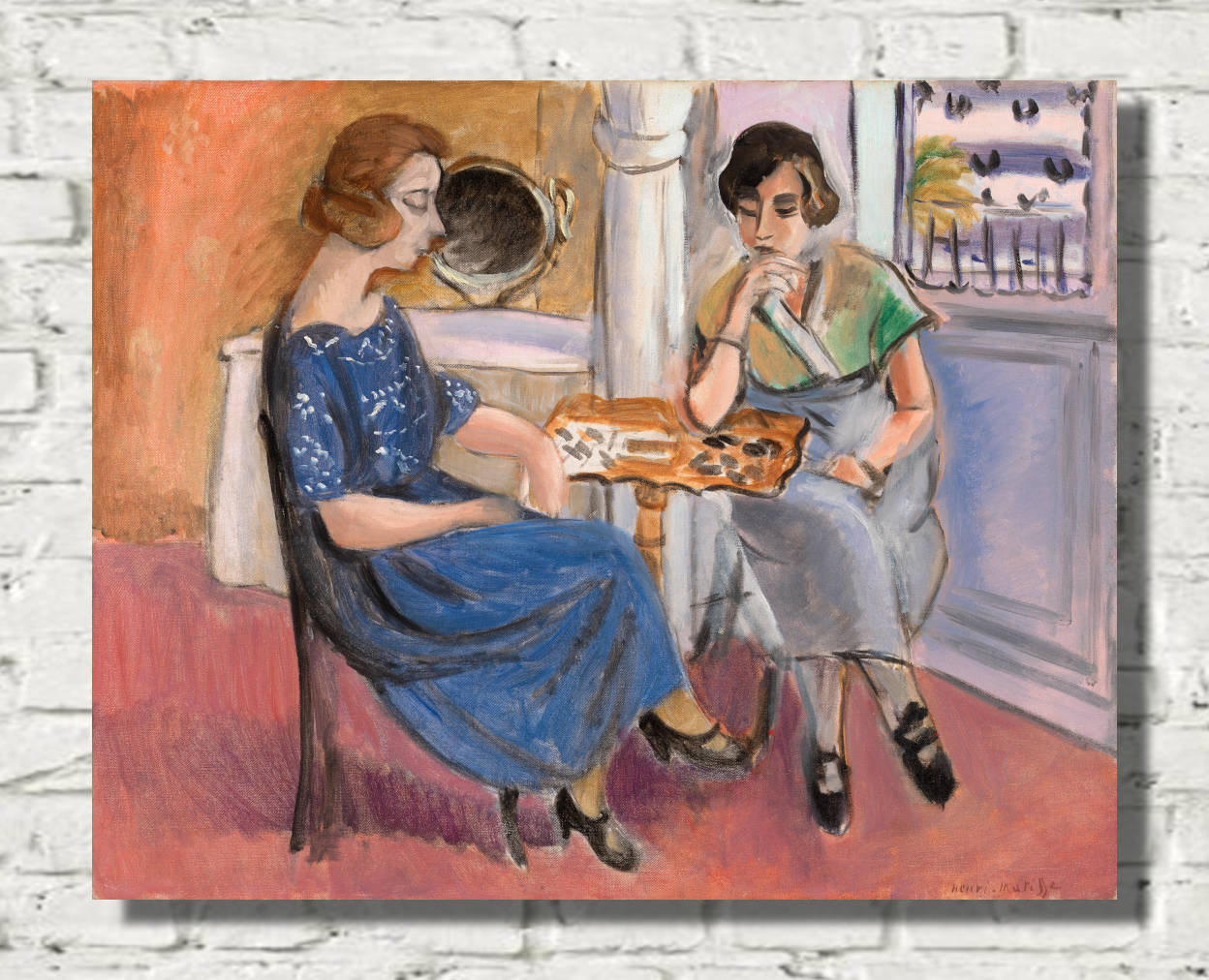
His work during the 1920s frequently depicts women seated or reclining within elaborate interiors filled with patterned fabrics, screens, carpets and decorative furniture.
The odalisque became one of his recurring subjects.
These paintings reflect both Matisse’s travels in North Africa and a much longer European artistic tradition extending through nineteenth-century painters such as Delacroix.
For Matisse, however, the figure also provided a framework for painting colour, textiles and decorative space.
Explore GalleryThane’s wider selection of Nude Art Prints for other approaches to the figure across art history.
Matisse, Cubism and Modern Structure
Matisse worked during the same period in which Pablo Picasso and Georges Braque were developing Cubism, and he engaged seriously with many of the structural questions raised by the new movement.
His work during the 1910s sometimes becomes more austere and geometrically organised than his earlier Fauvist paintings.
However, Matisse did not simply move from Fauvism into Cubism.
Instead, he absorbed aspects of the changing modernist environment while retaining his own priorities: colour, rhythm, observation and the unity of the painted surface.
This independence is central to understanding his career. Matisse repeatedly encountered major artistic movements without allowing himself to be confined by them.
The Human Figure
The human figure remained central throughout Matisse’s career.
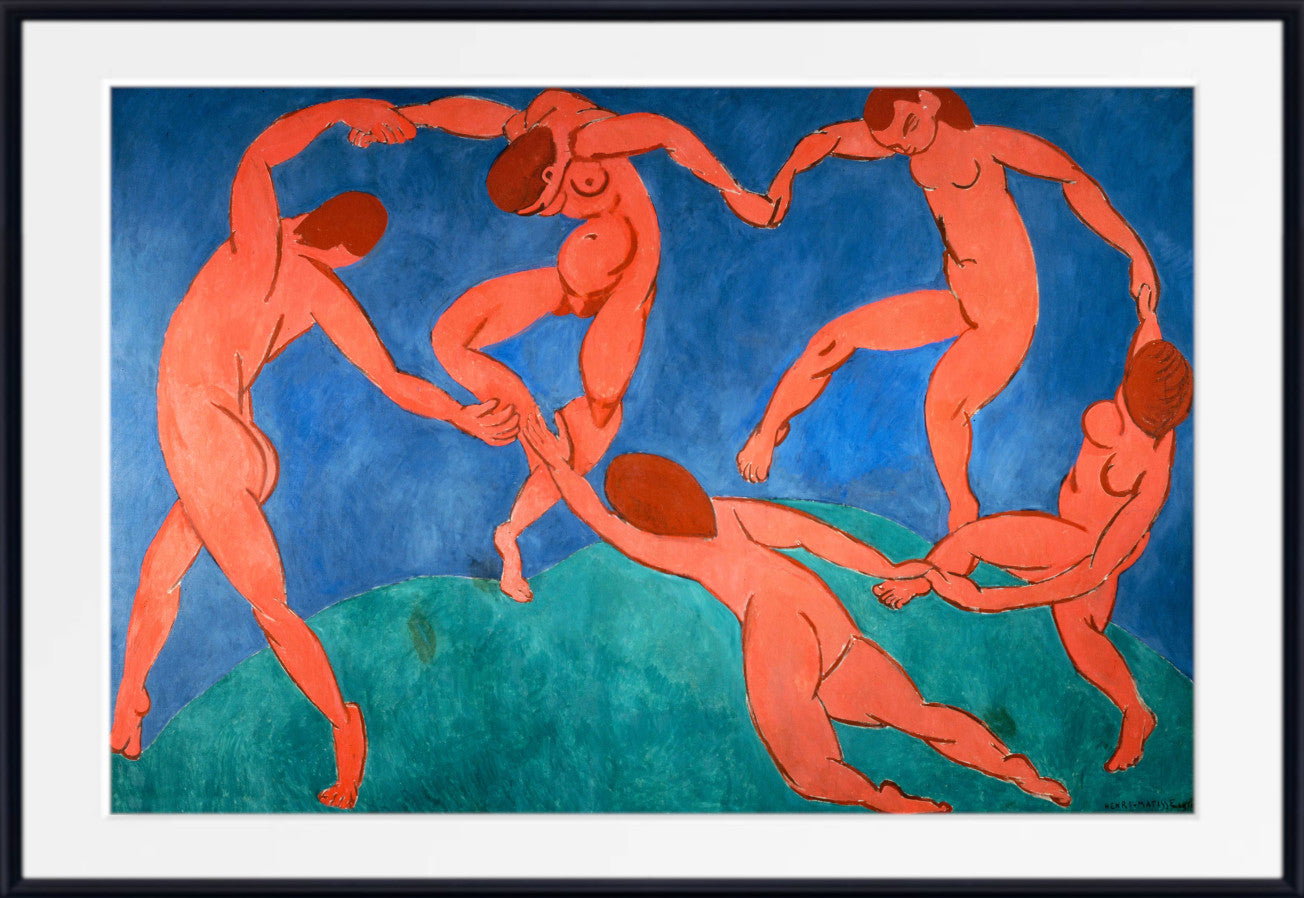
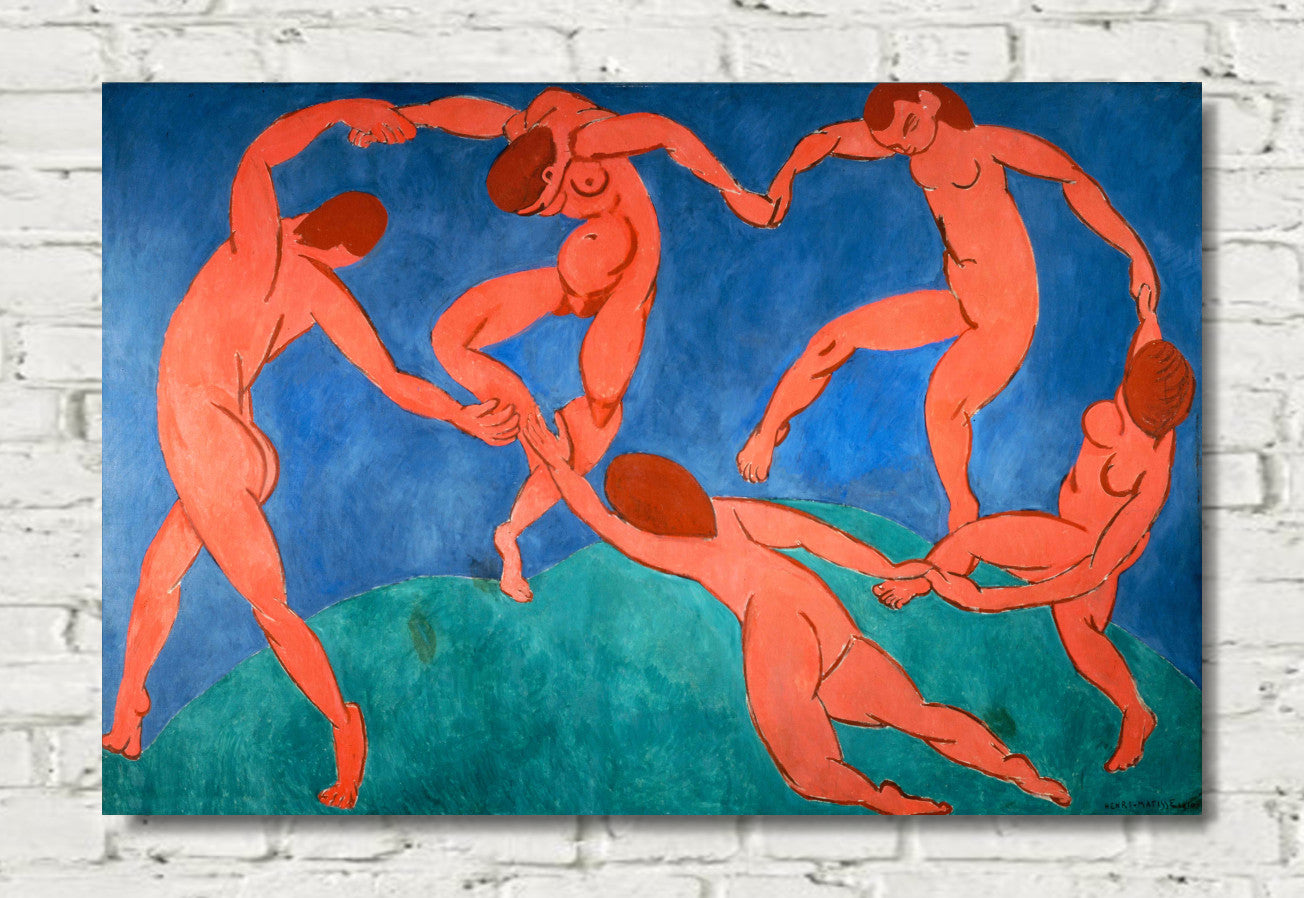
His subjects include family members, models, readers, seated women, dancers and reclining nudes.
He increasingly simplified anatomy according to the needs of the composition.
A face might be indicated with remarkably few lines. Limbs could be elongated or curved. Body shapes could become increasingly rhythmic.
This simplification was never simply a rejection of drawing ability. Matisse was an accomplished draughtsman who deliberately reduced forms in search of greater clarity.
The process eventually reached its most radical expression in the paper cut-outs, where the human body could be reduced to a handful of brilliantly coloured shapes.
From Painting to Paper Cut-Outs
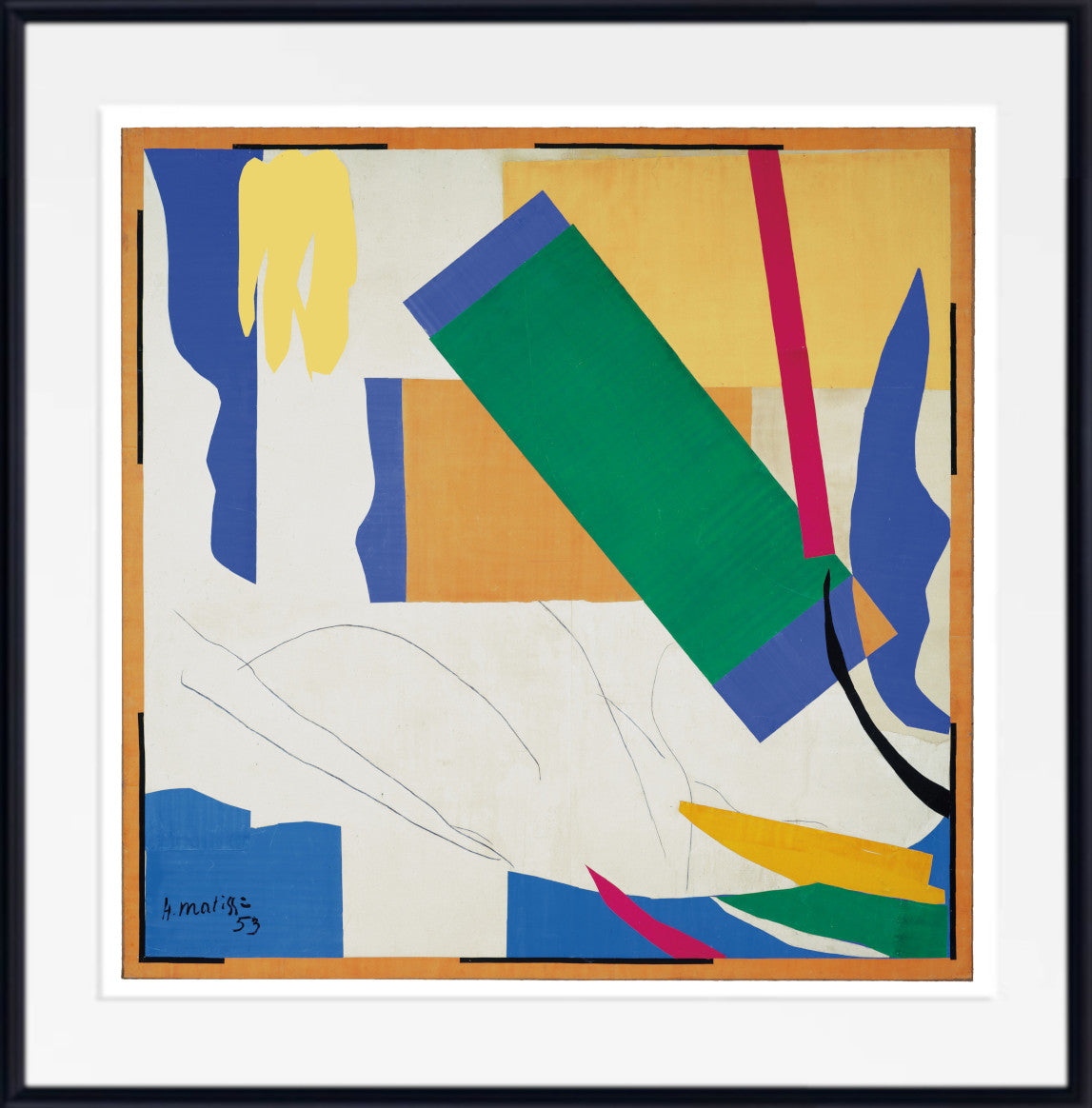
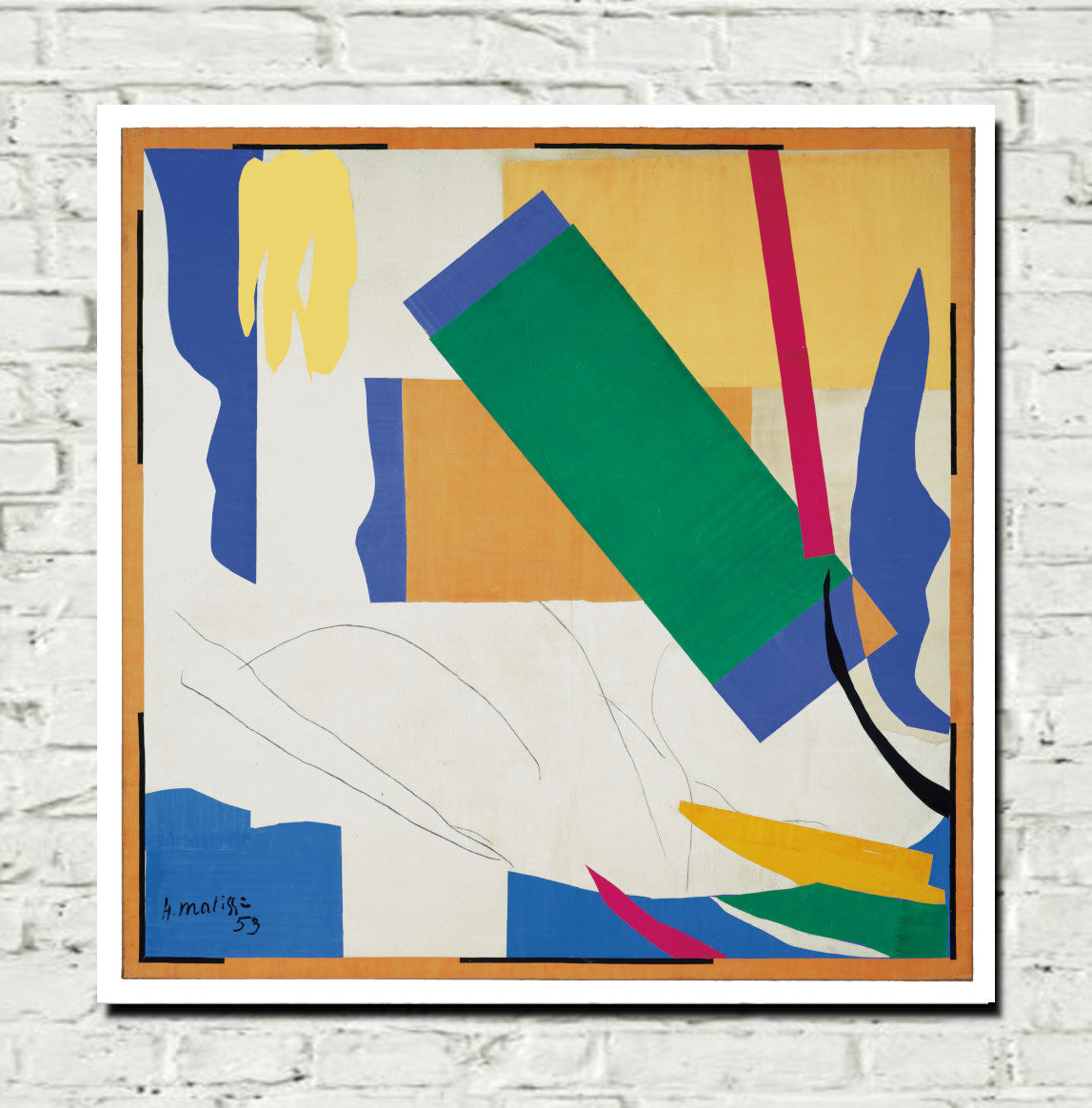
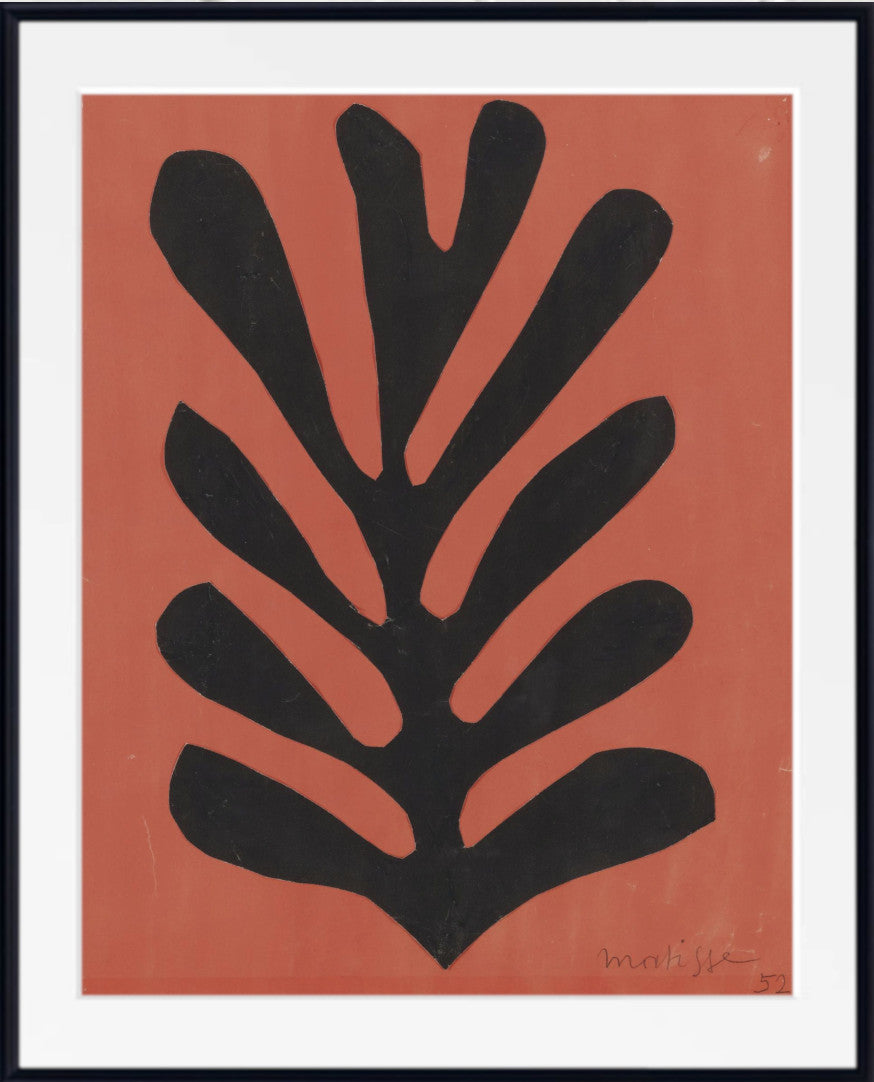
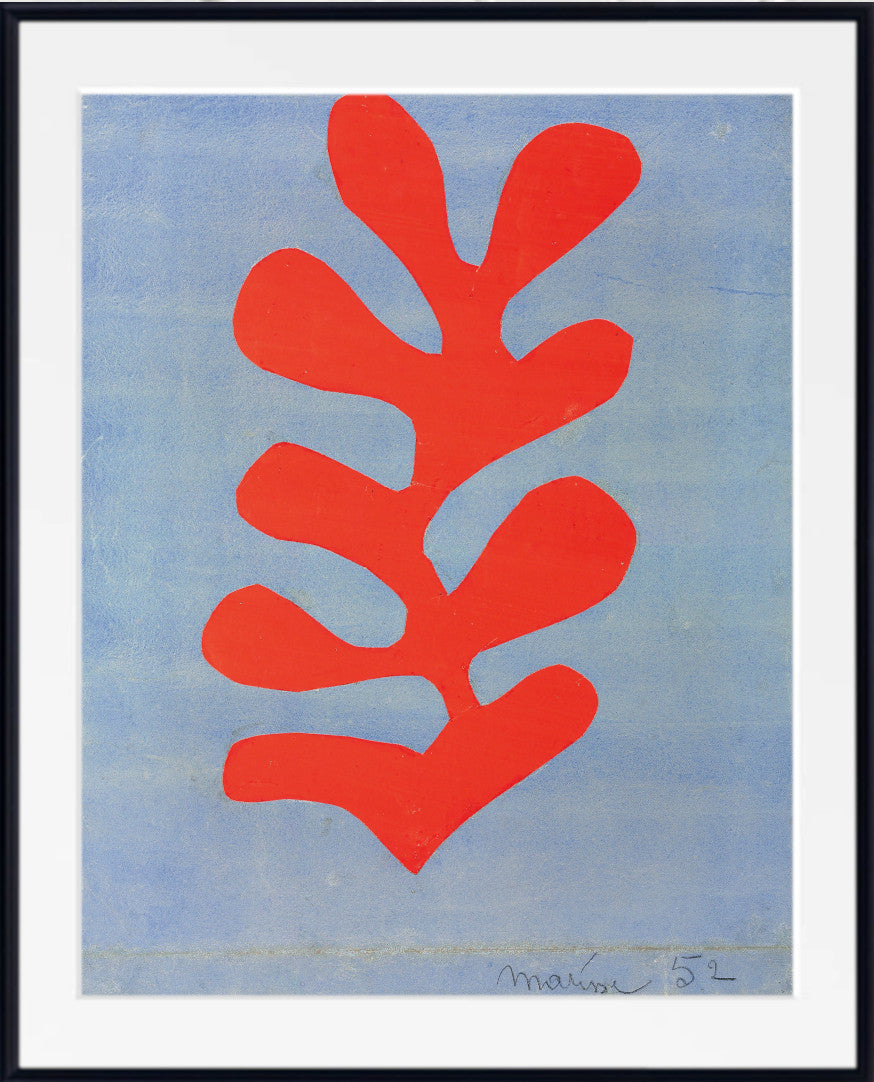
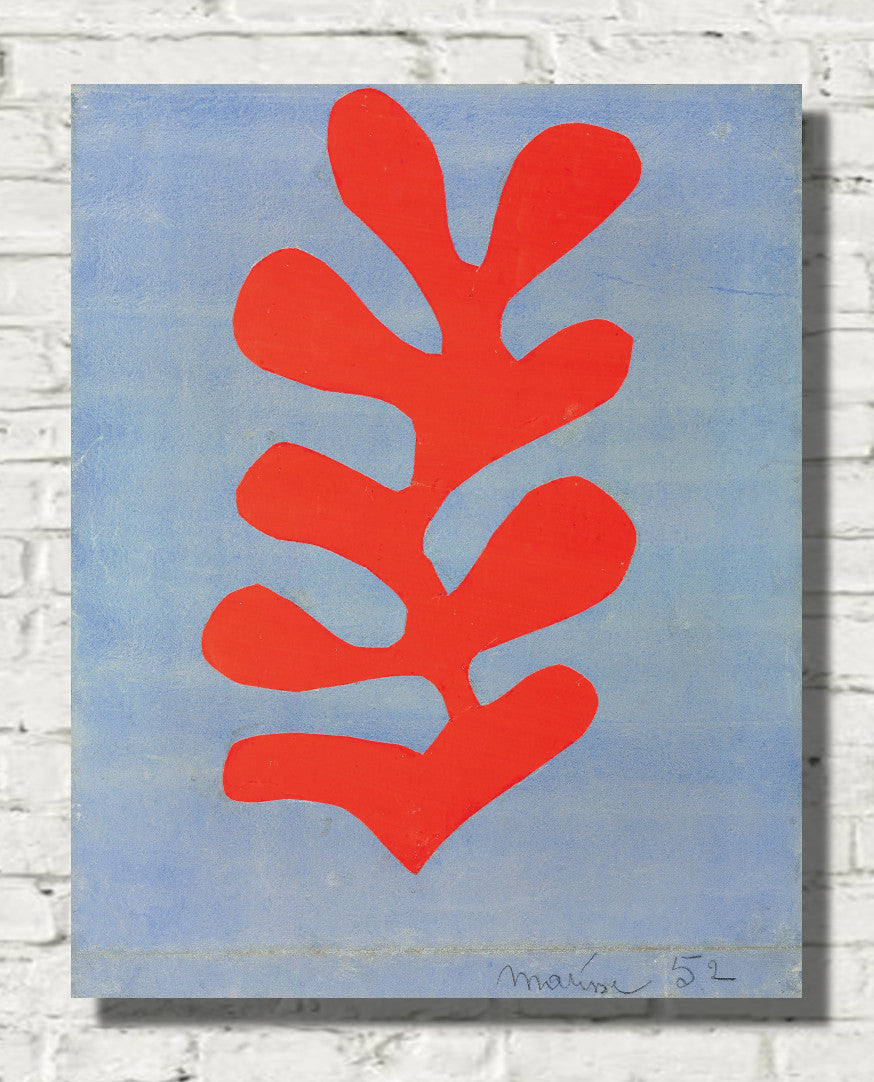
During the final decades of his life, Matisse developed one of the most original techniques in twentieth-century art: the cut-out.
Sheets of paper were painted with gouache and then cut with scissors into organic and geometric shapes. These pieces could be pinned and repositioned until Matisse achieved the arrangement he wanted.
The technique allowed colour and drawing to become almost the same thing.
Instead of drawing an outline and later filling it with colour, Matisse effectively drew directly into colour with scissors.
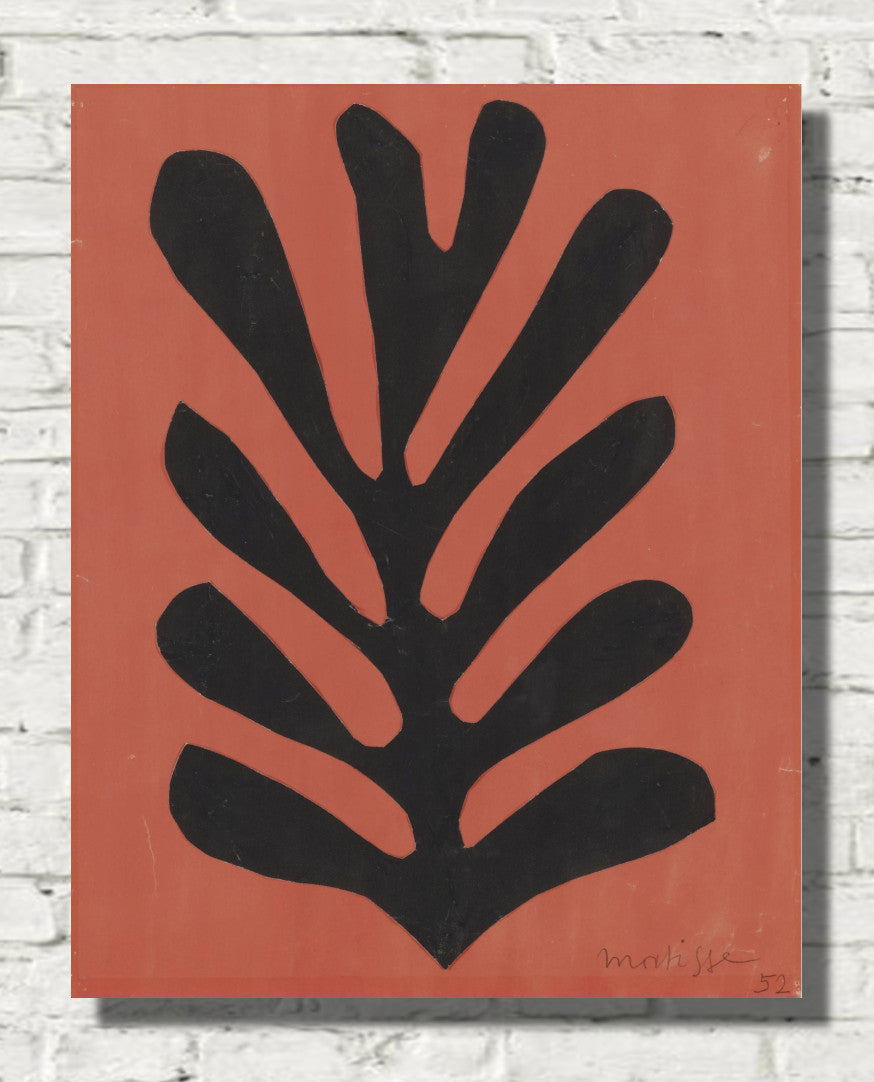
Leaves, dancers, swimmers, stars, flowers and abstract forms could all be reduced to bold silhouettes.
These late works were not a minor final phase. They represented the culmination of ideas Matisse had pursued throughout his career: simplification, rhythm, colour and the relationship between positive and negative space.
Matisse and Jazz
The 1947 publication Jazz is one of the landmarks of Matisse’s later career.
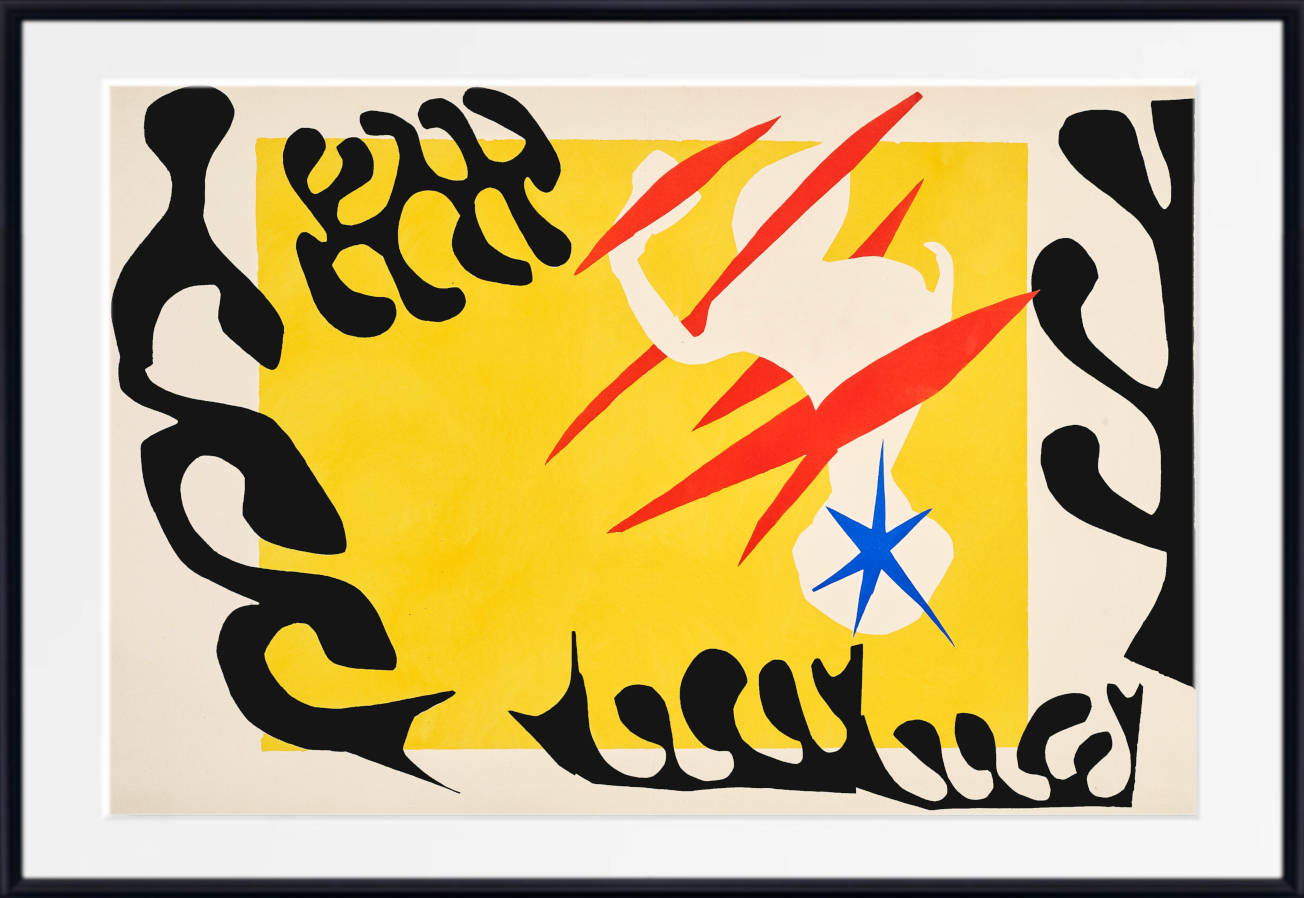
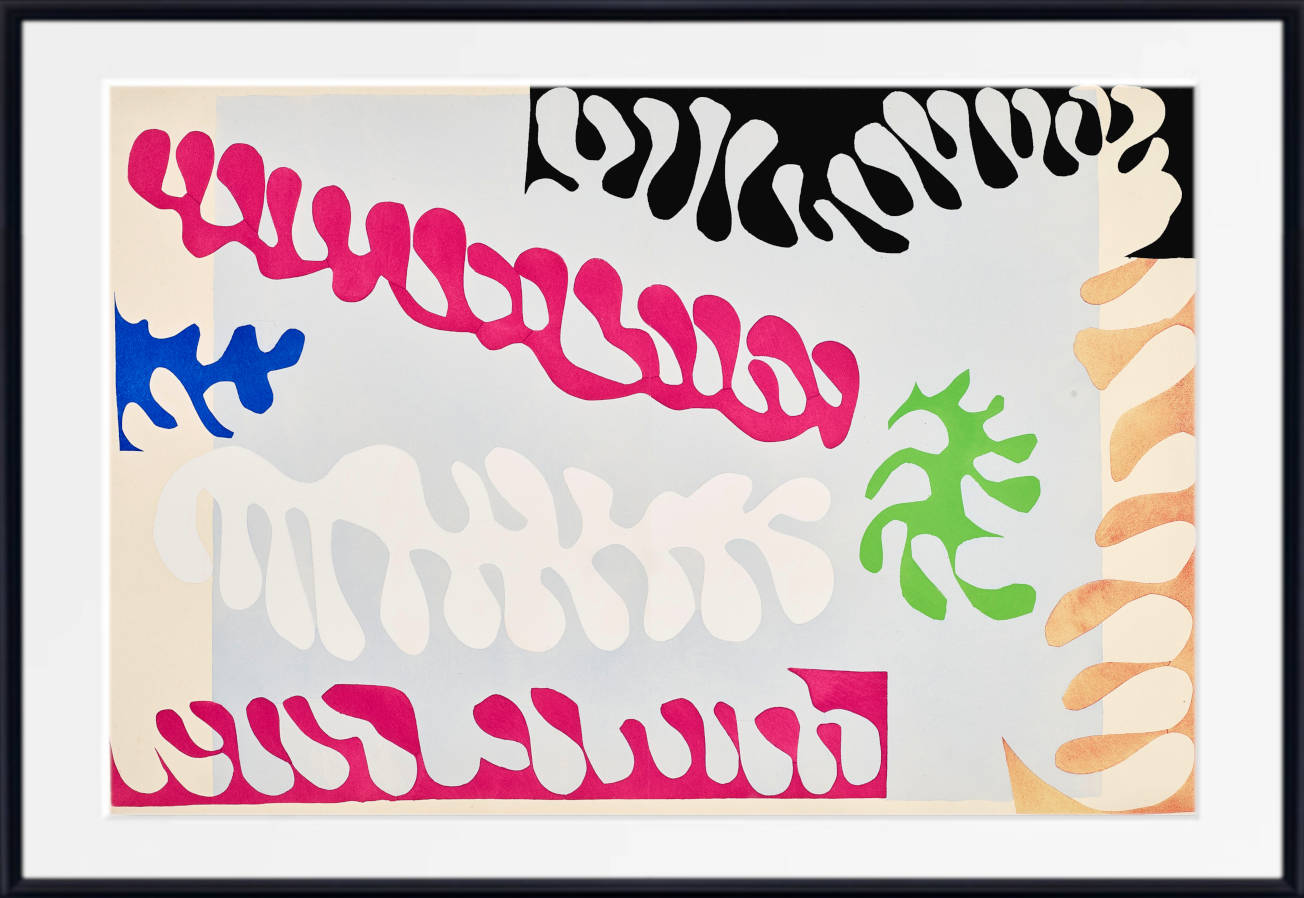
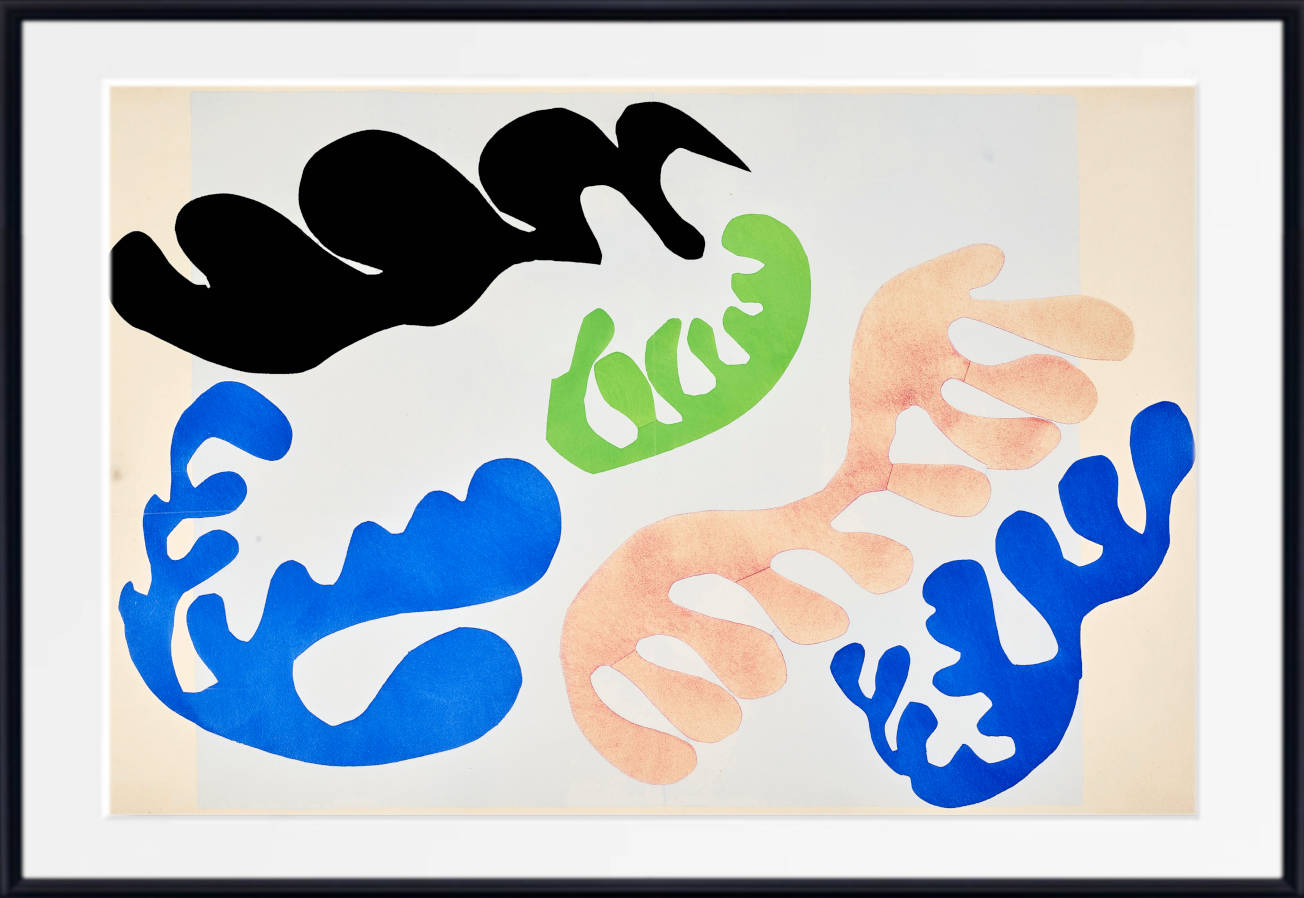
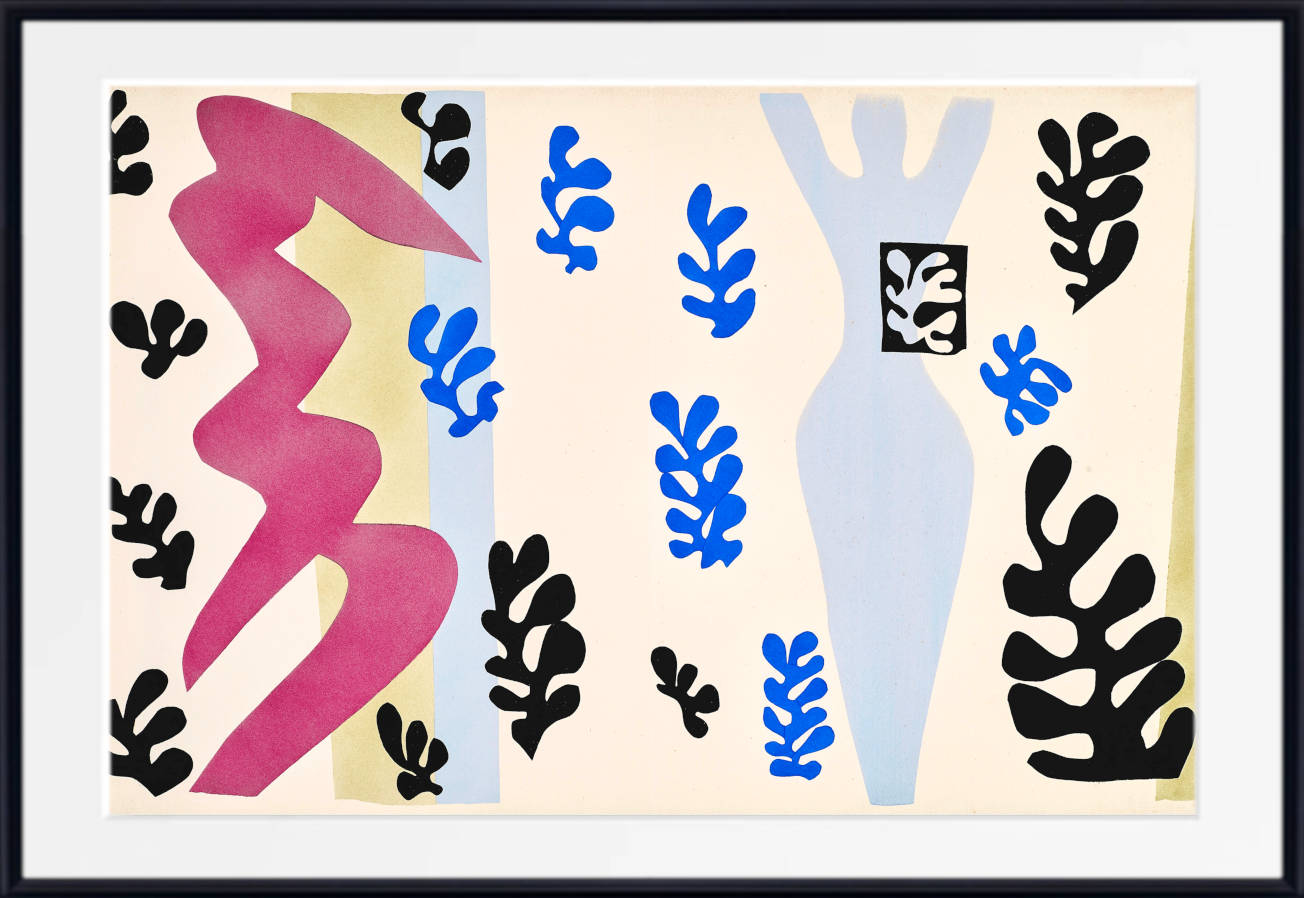
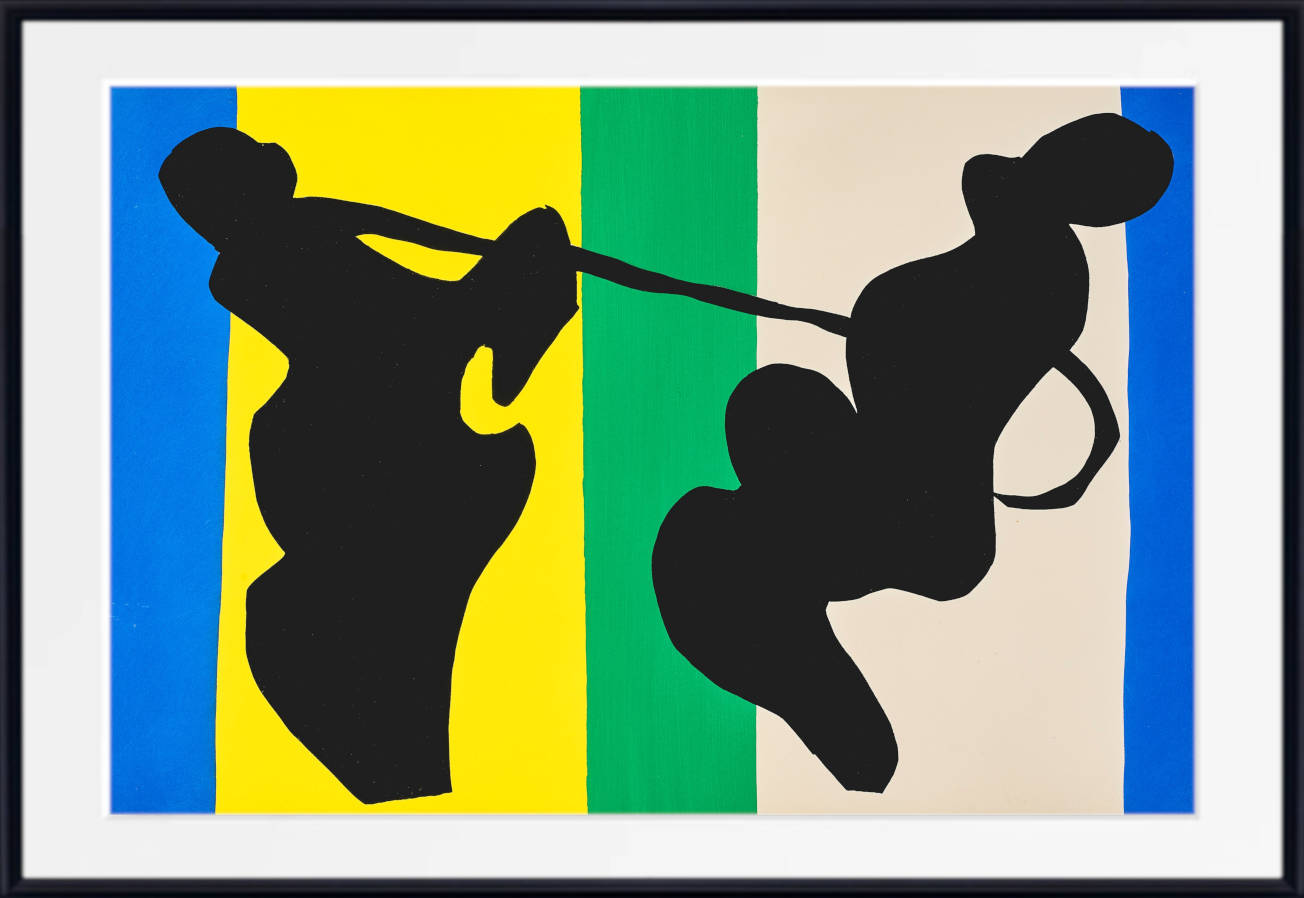
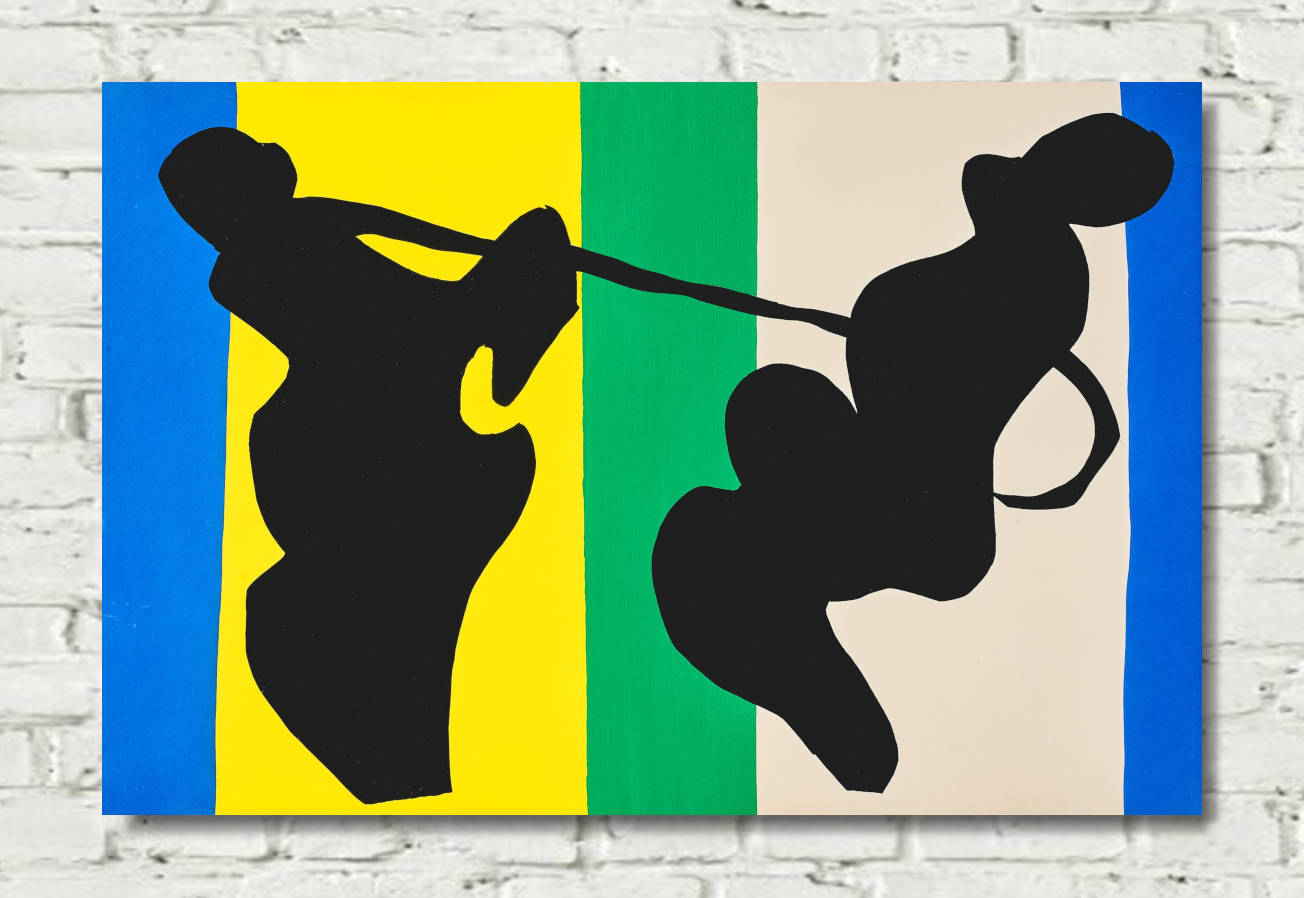
The images originated from his cut-paper method and were reproduced using the pochoir stencil technique to retain the brilliance of the original gouache colours.
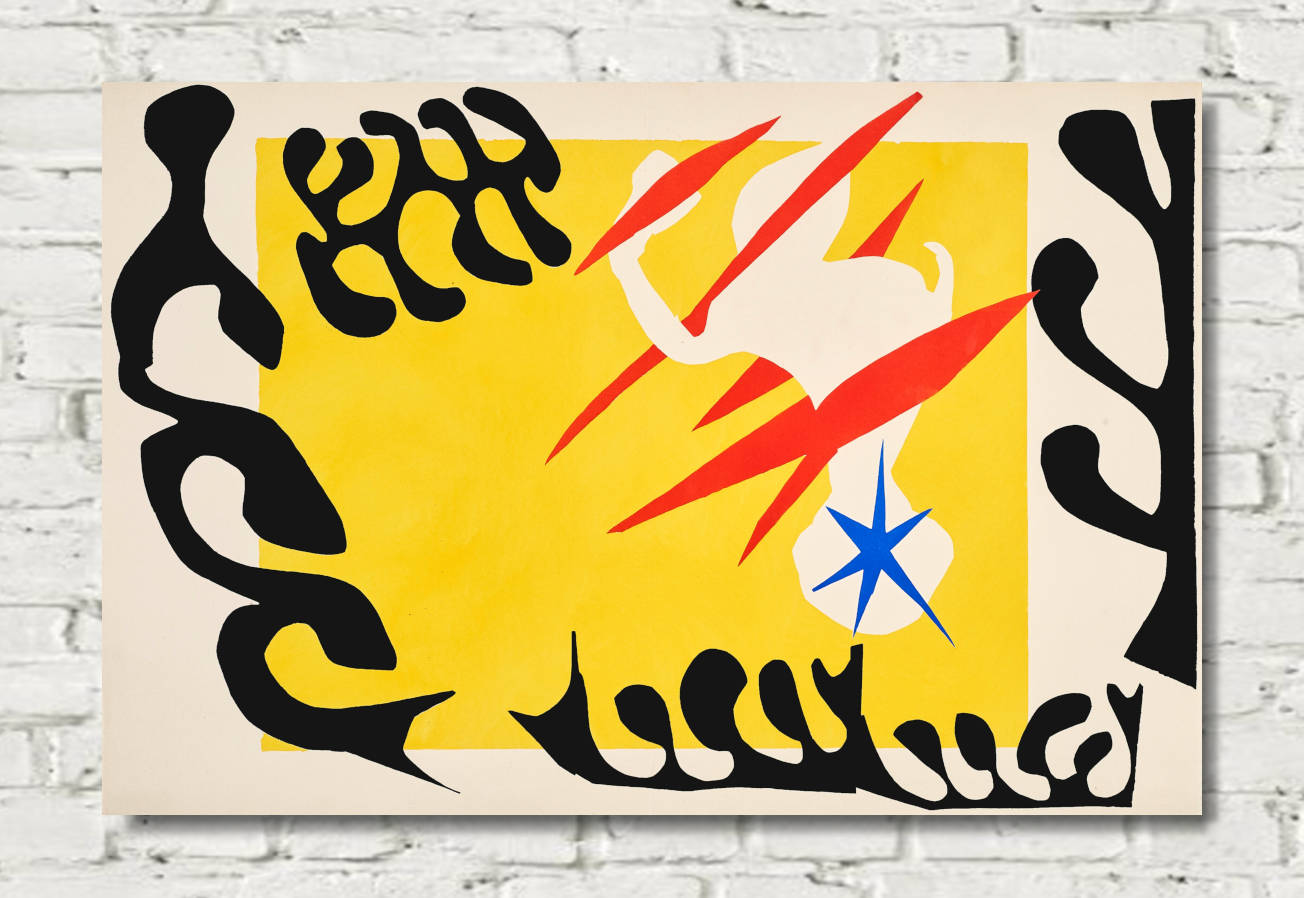
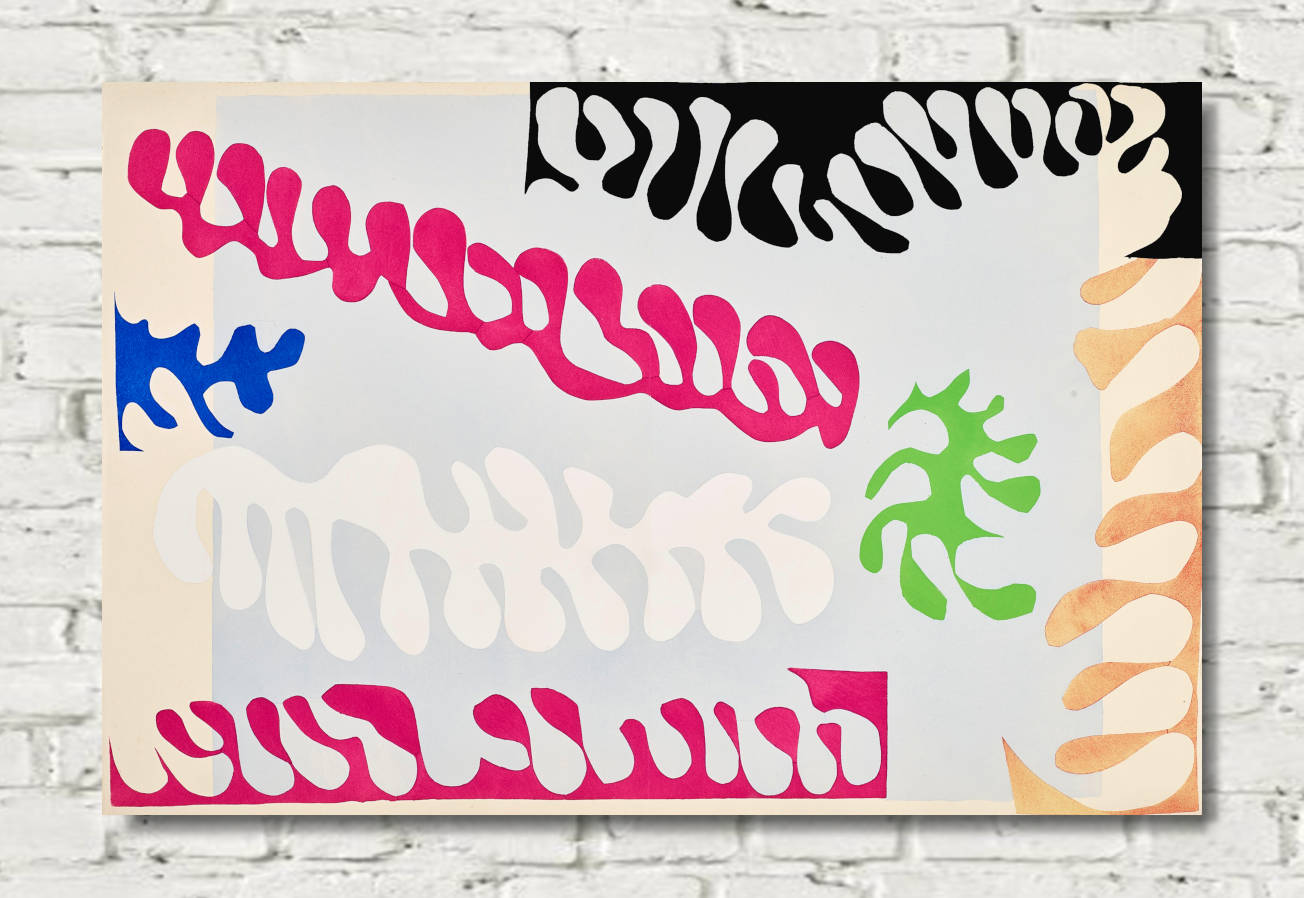
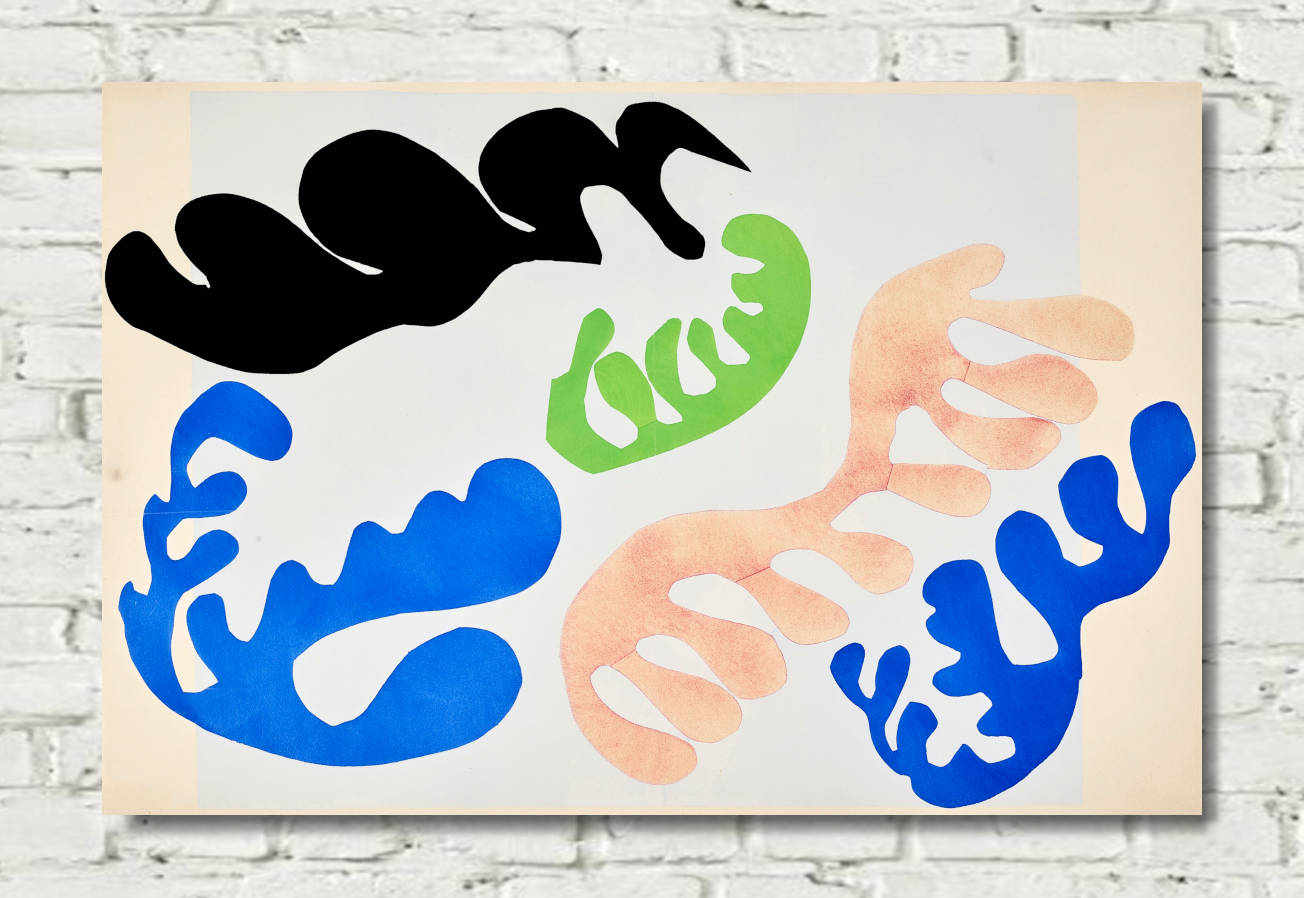
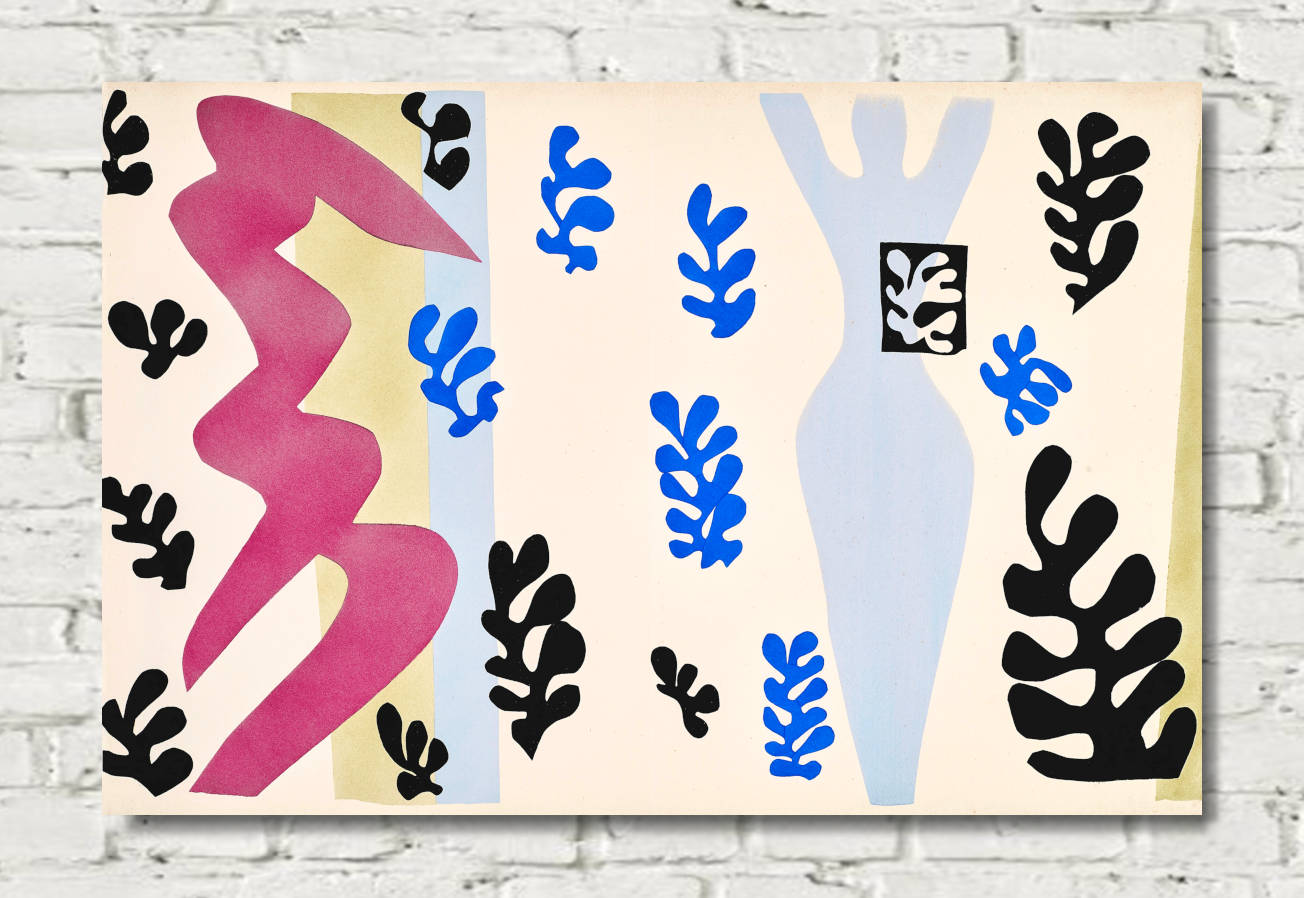
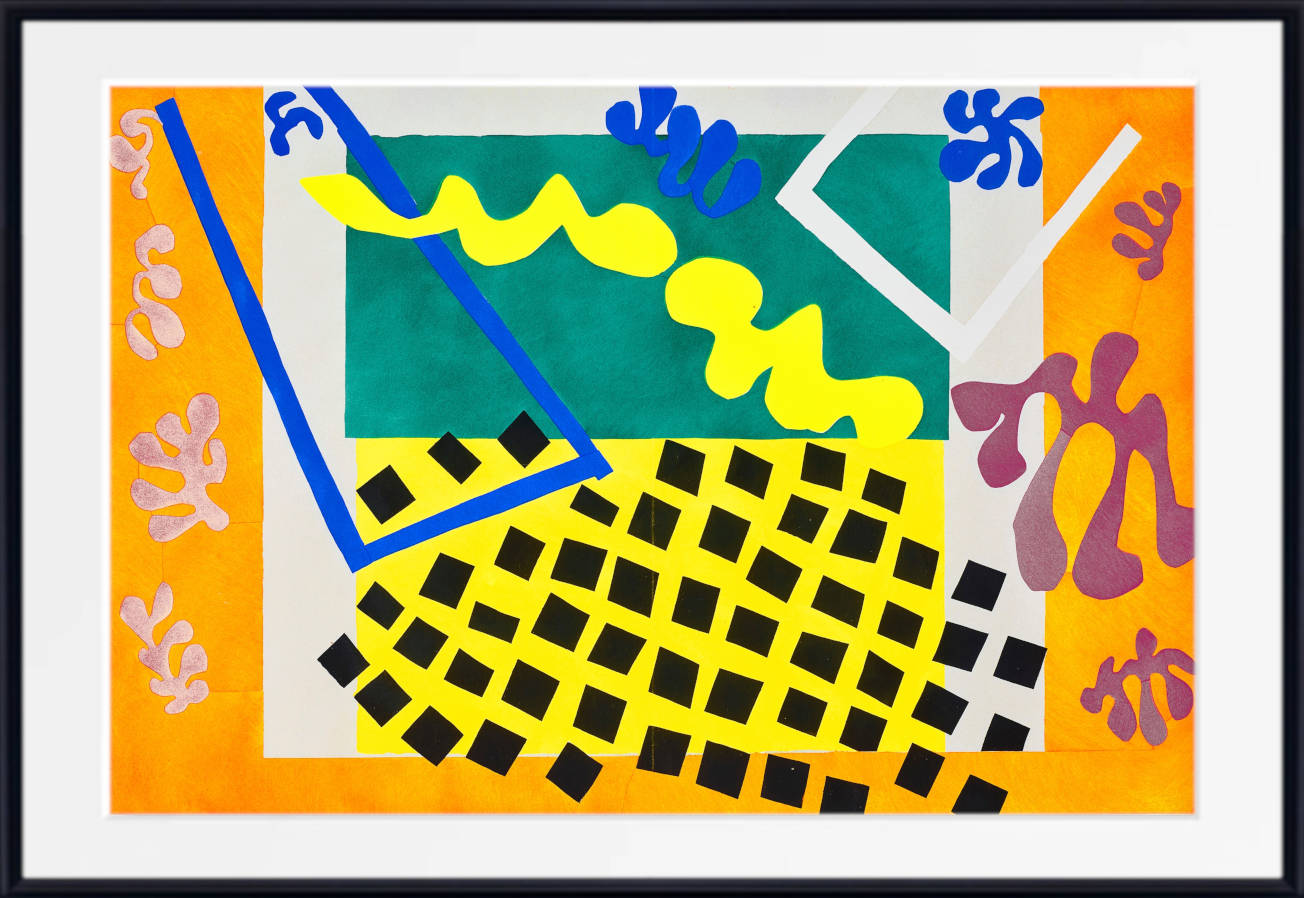
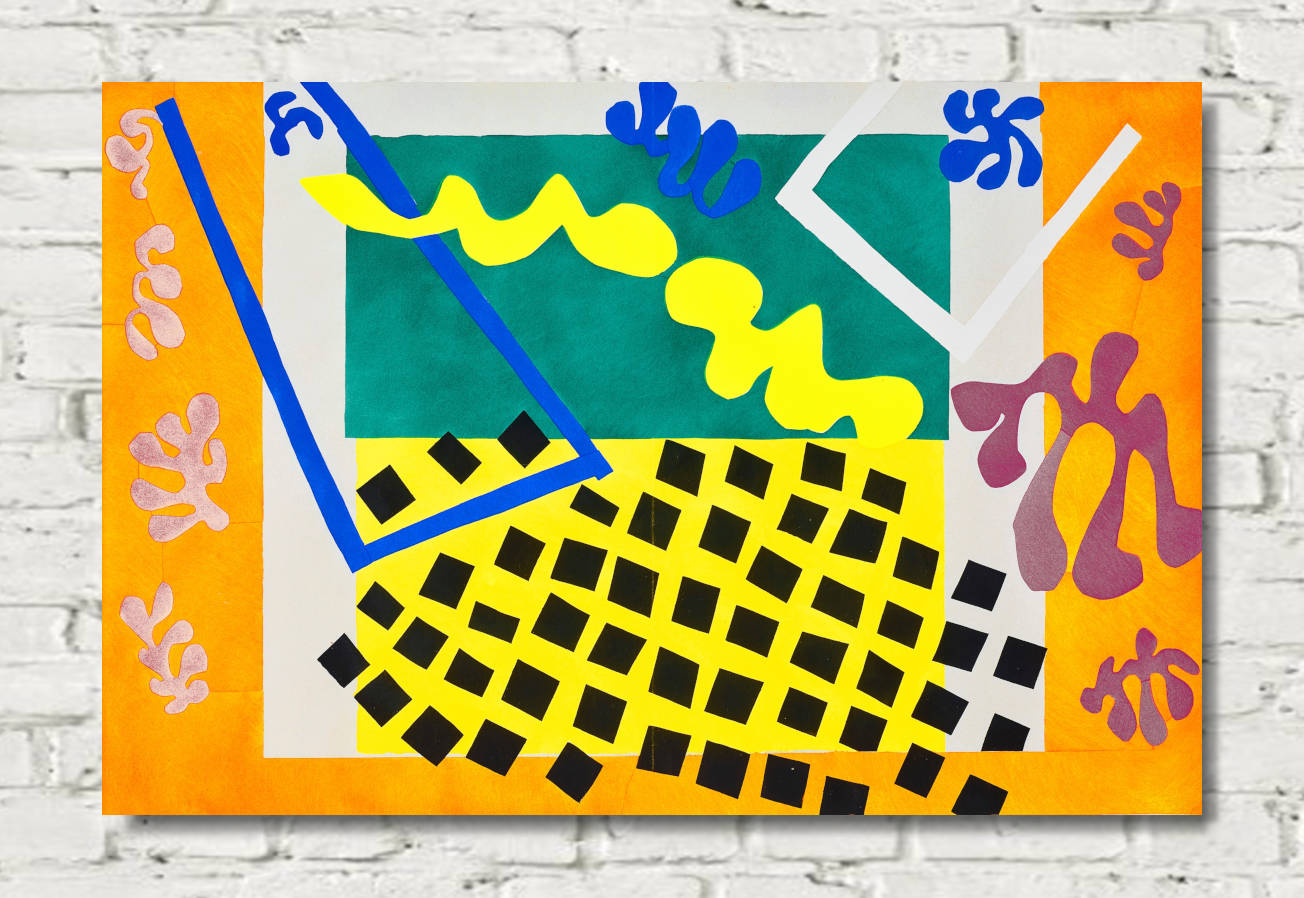
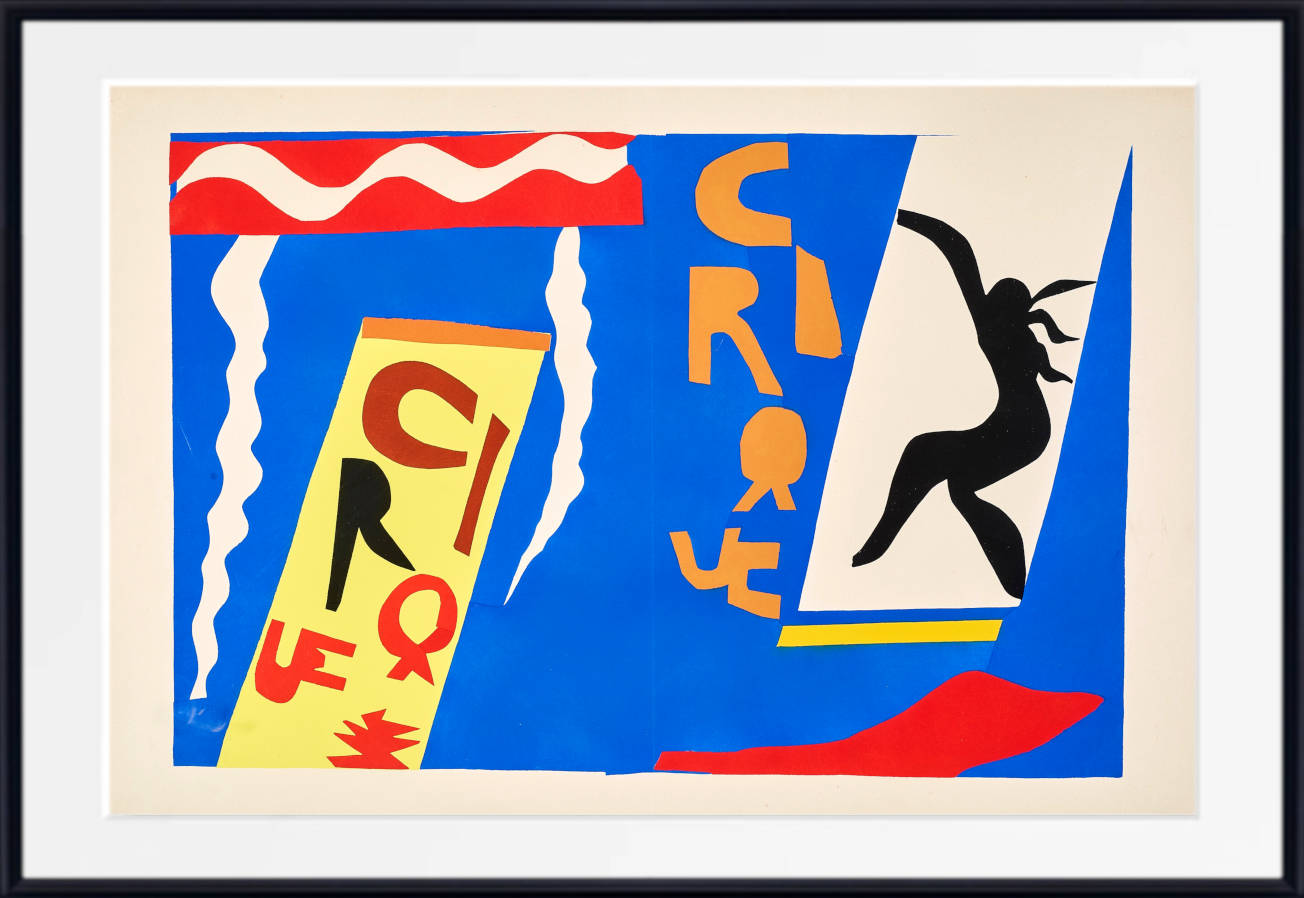
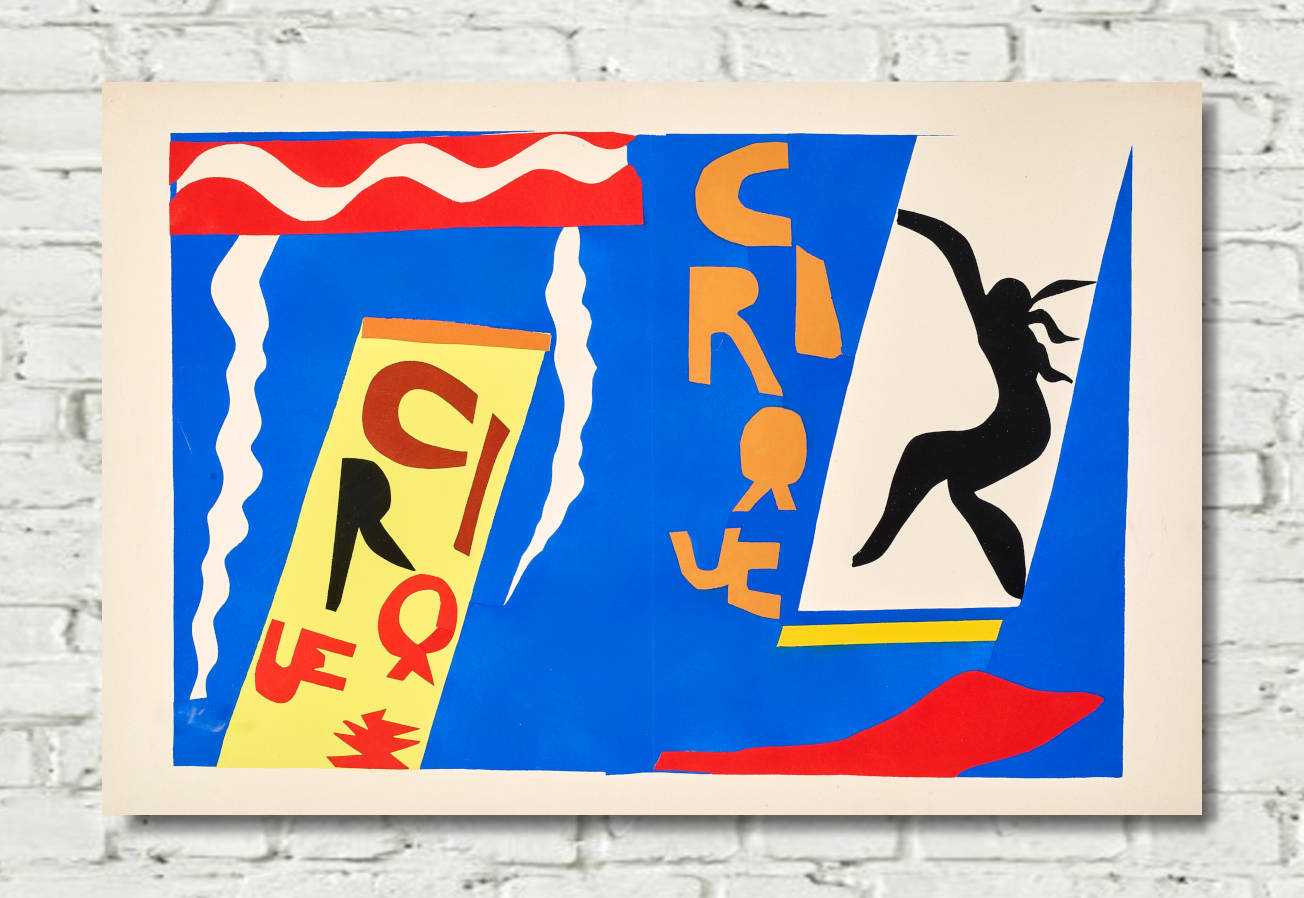
GalleryThane’s Matisse collection includes a number of works associated with Jazz, including subjects such as The Circus, The Cowboy, The Codomas, The Knife Thrower, The Nightmare of the White Elephant and the Lagoon compositions.
Their circus performers, swimmers, stars and abstract shapes demonstrate how radically Matisse had simplified his visual language.
Yet these late works remain connected with his early Fauvist paintings.
The shapes are simpler, but colour still carries the emotional and structural force of the image.
Blue Nudes and the Late Matisse
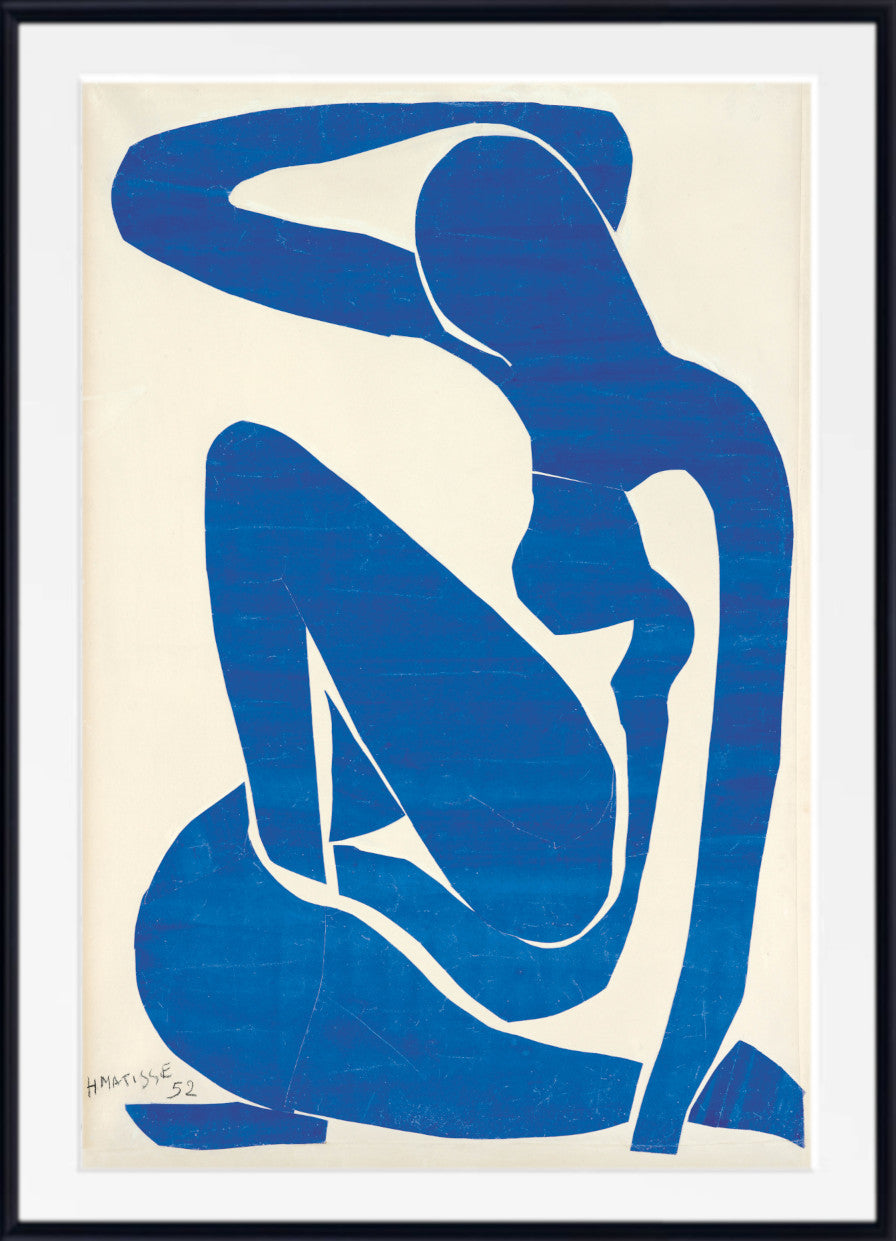
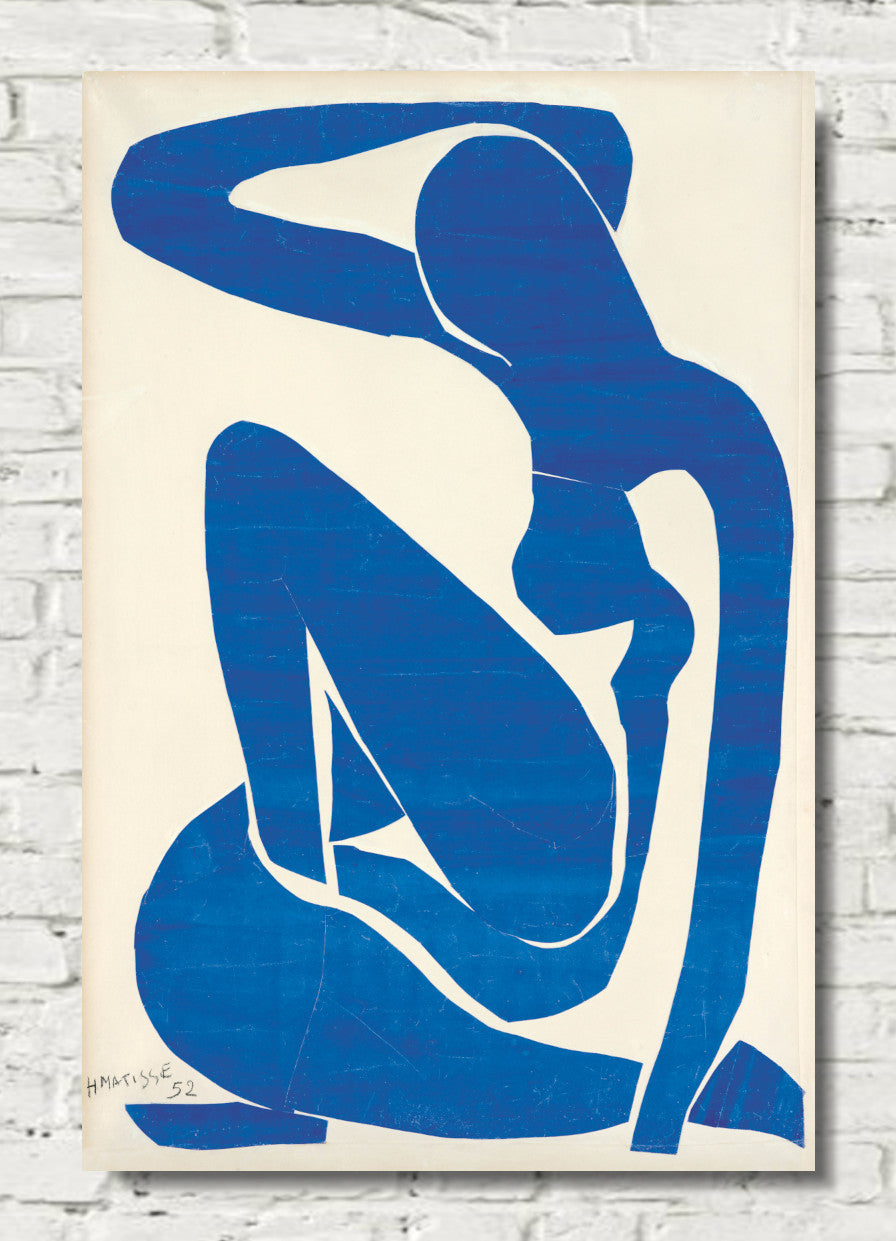
Matisse’s celebrated Blue Nude cut-outs are among the clearest expressions of his late style.
The human body is reduced to interlocking pieces of intense blue against a light ground.
An extraordinary amount of information is communicated with very little material.
A bent knee, raised arm or tilted head can be conveyed through only a few carefully cut shapes.
The Blue Nudes bring together drawing, sculpture and colour in a single process and demonstrate how far Matisse had travelled from conventional figure painting.
They also make an effective bridge between figurative and Abstract Art Prints because recognisable human forms are pushed towards highly simplified arrangements of shape.
Henri Matisse and André Derain
Matisse’s relationship with André Derain was particularly important during the emergence of Fauvism.
Their summer together at Collioure in 1905 produced some of the defining paintings of the movement.
Both artists liberated colour from naturalistic description, but their later careers diverged considerably.
Derain increasingly explored structure, classical traditions and a more restrained palette, while Matisse continued developing colour, pattern and decorative space.
Browse André Derain prints to compare two artists who helped launch Fauvism but subsequently followed very different paths.
Matisse and Other Fauvist Artists
Fauvism was never a rigidly organised movement with a manifesto or fixed membership.
A number of artists briefly shared an enthusiasm for strong colour and direct brushwork before developing independent styles.
Alongside Matisse and Derain, GalleryThane includes significant collections of Raoul Dufy prints and Henri Manguin prints.
Dufy developed an increasingly light, linear and decorative style, while Manguin became particularly associated with Mediterranean landscapes and relaxed figure paintings filled with luminous colour.
Exploring these artists alongside Matisse reveals how varied Fauvism actually was.
Why Henri Matisse Prints Work So Well in Modern Interiors
Matisse’s art has an unusual ability to feel historically important and visually contemporary at the same time.
His simplified shapes, strong colour combinations and decorative surfaces sit naturally within modern interiors.
A Matisse print can introduce colour into an otherwise neutral room without requiring the surrounding furnishings to imitate the painting.
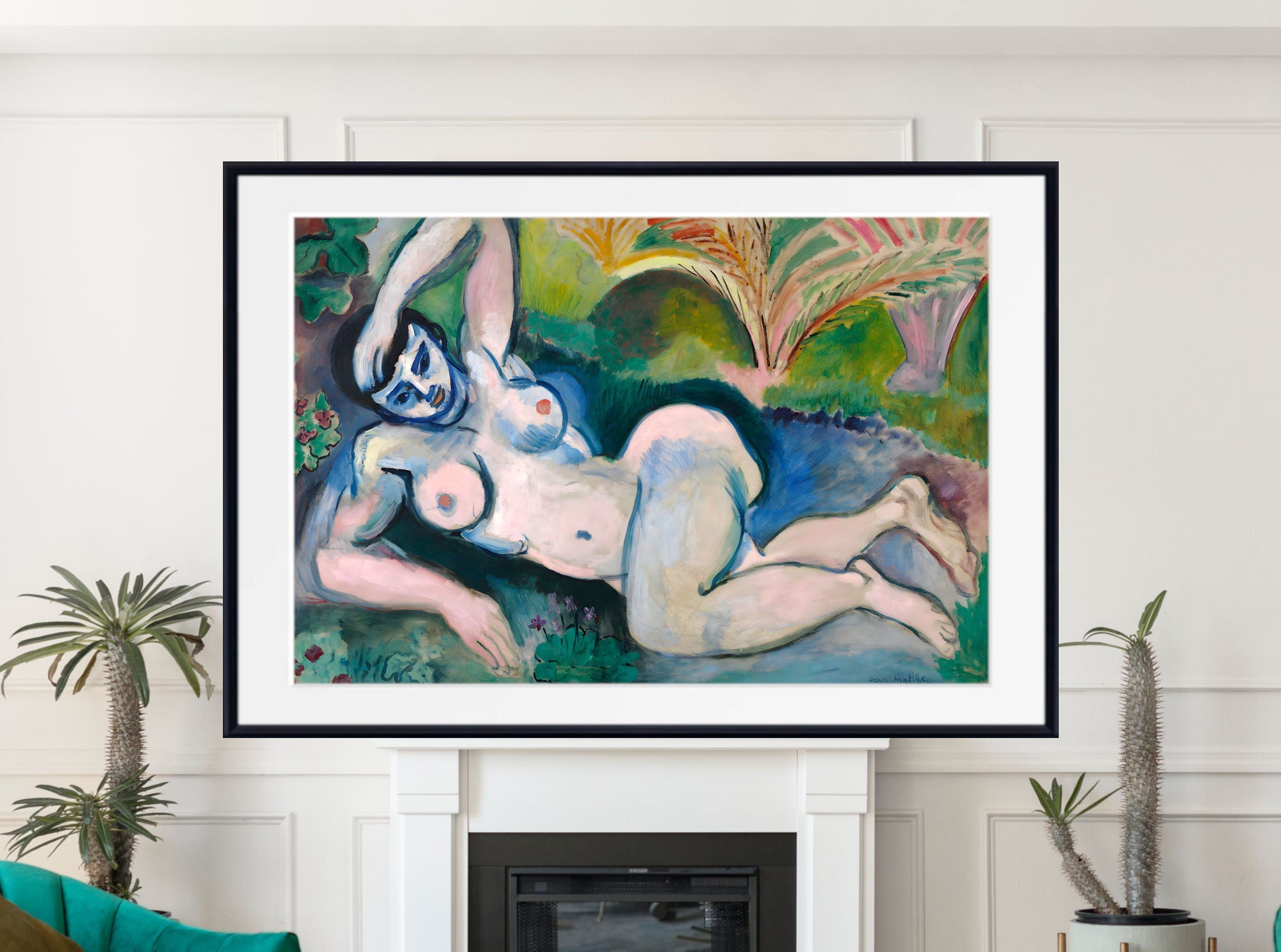
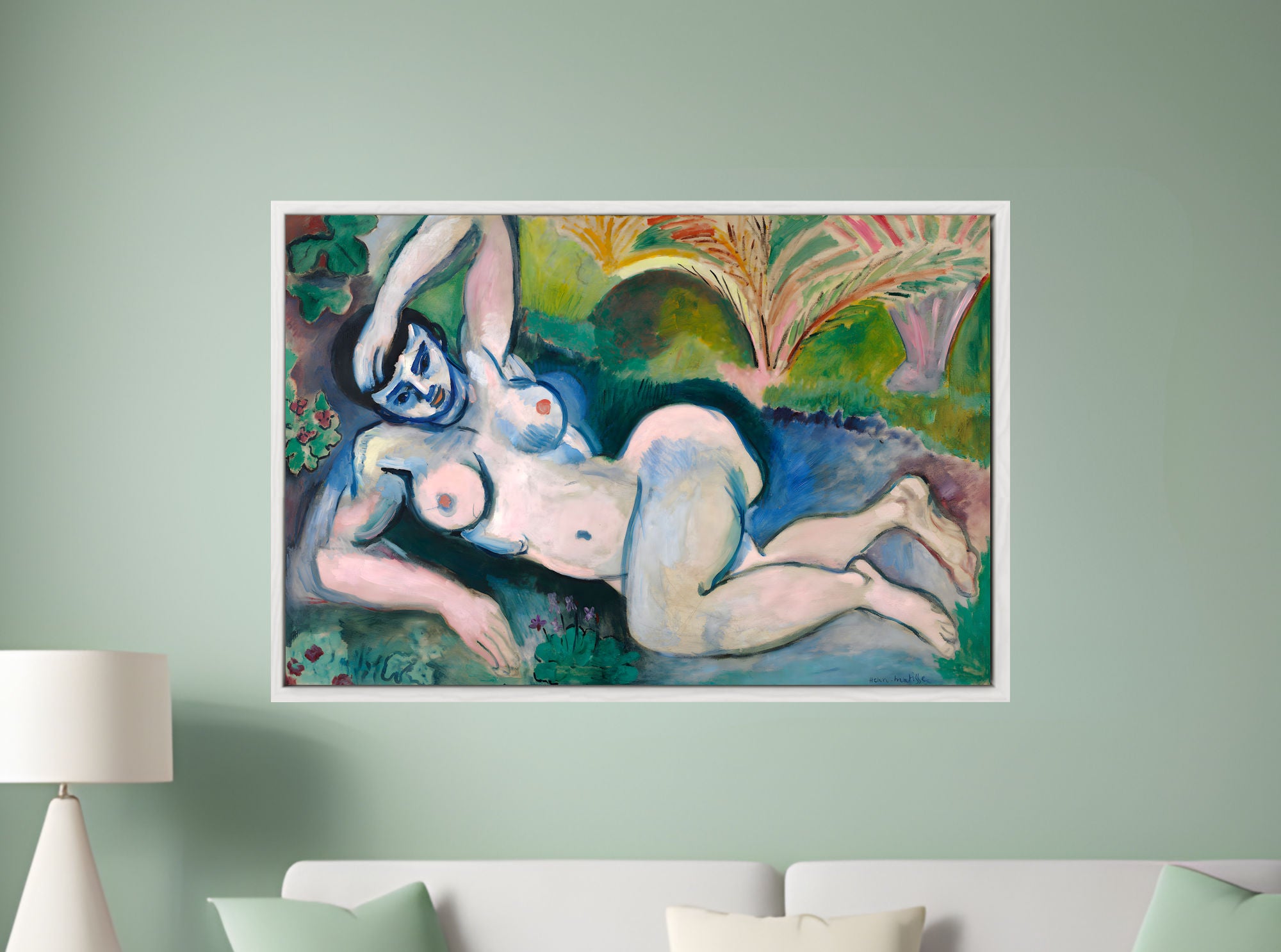
White, cream, soft grey and putty-coloured walls provide a particularly effective backdrop for saturated blues, reds, greens and yellows.
Natural oak and other pale timbers complement many Matisse works and make them especially effective within Scandinavian-inspired interiors.
Mid-century furniture also works naturally with Matisse because both share an interest in strong form, clear silhouettes and expressive colour.
Choosing a Matisse Print by Colour
Colour is often the easiest way to choose between Matisse prints.
For interiors needing blue, consider works such as The Blue Window, Blue Still Life, the Blue Nude compositions and later cut-out designs.
If you want red, Harmony in Red creates a much stronger focal point and can transform an otherwise restrained room.
Green, turquoise and Mediterranean blues appear frequently in landscapes and paintings connected with Collioure and southern France.
The Jazz works offer some of the broadest colour combinations, often combining saturated blue, red, yellow, green and black within dramatically simplified designs.
Rather than trying to match every colour precisely, choose one or two tones from the artwork that already appear elsewhere in the room.
Choosing Matisse Wall Art by Subject
Matisse’s long career provides unusual variety.
For a living room or dining room, colourful interiors and still lifes can create a strong central focal point.
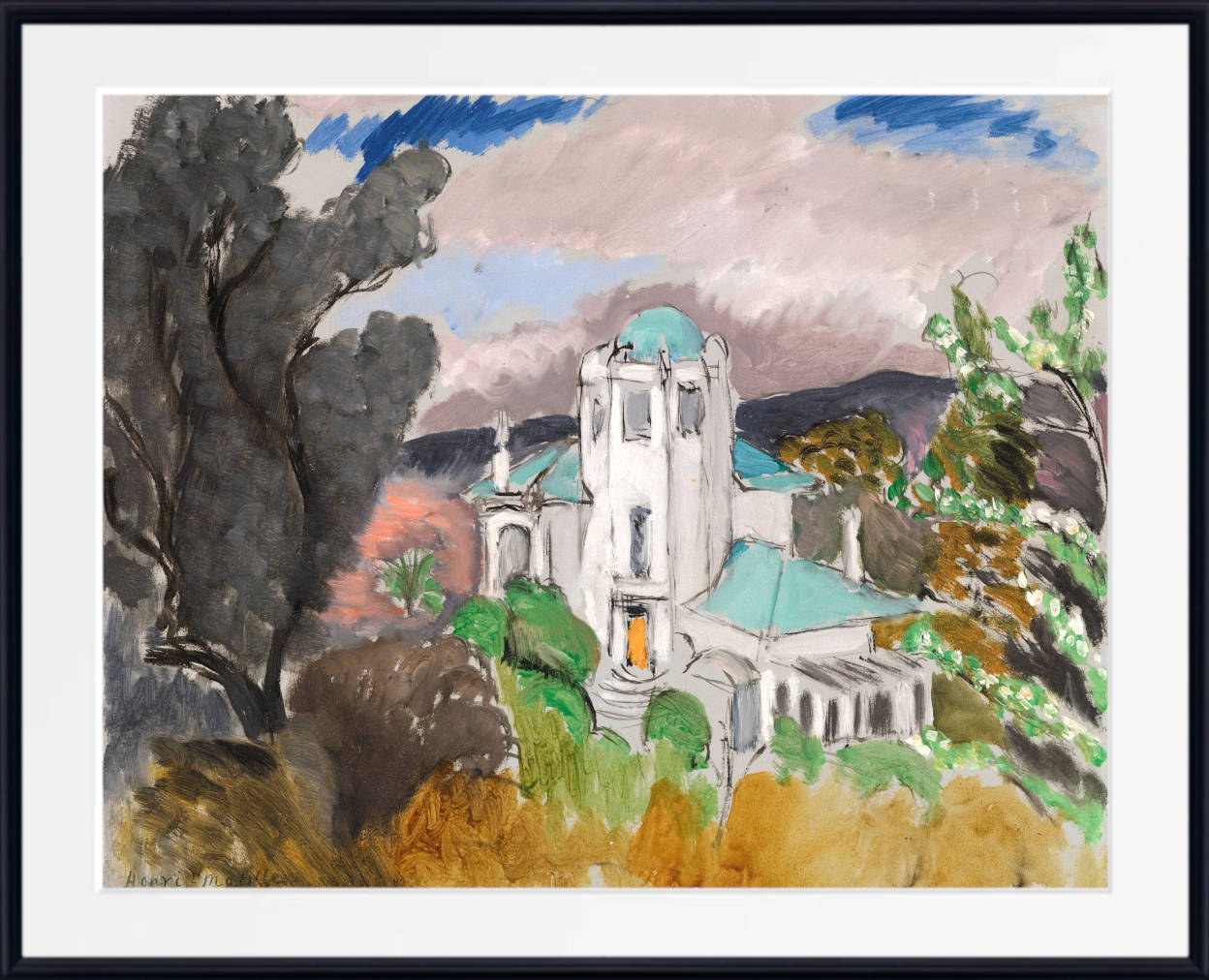
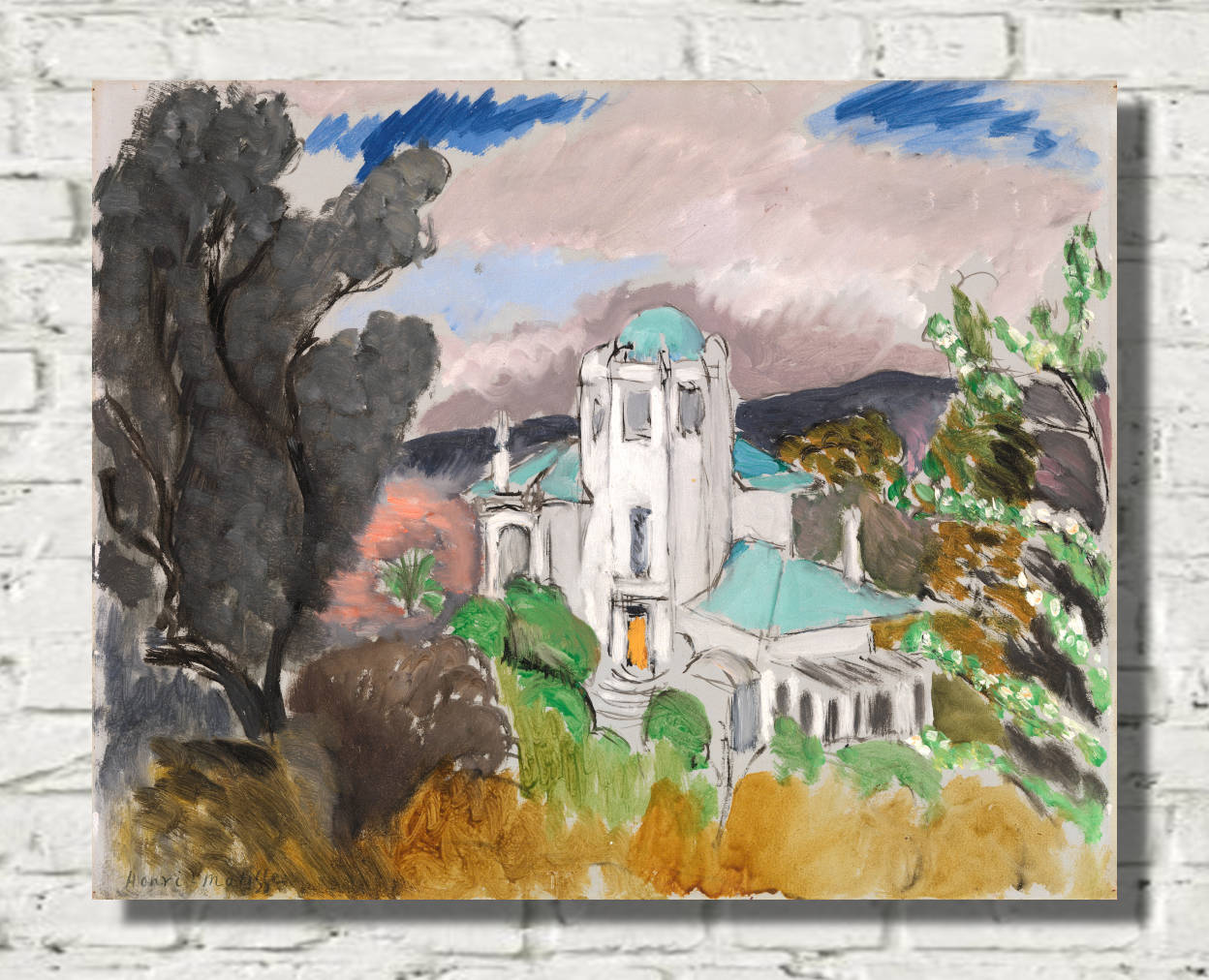
Landscapes work particularly well where you want colour combined with recognisable scenery.
Floral compositions can soften bedrooms and dining areas while retaining the strength of modern art.
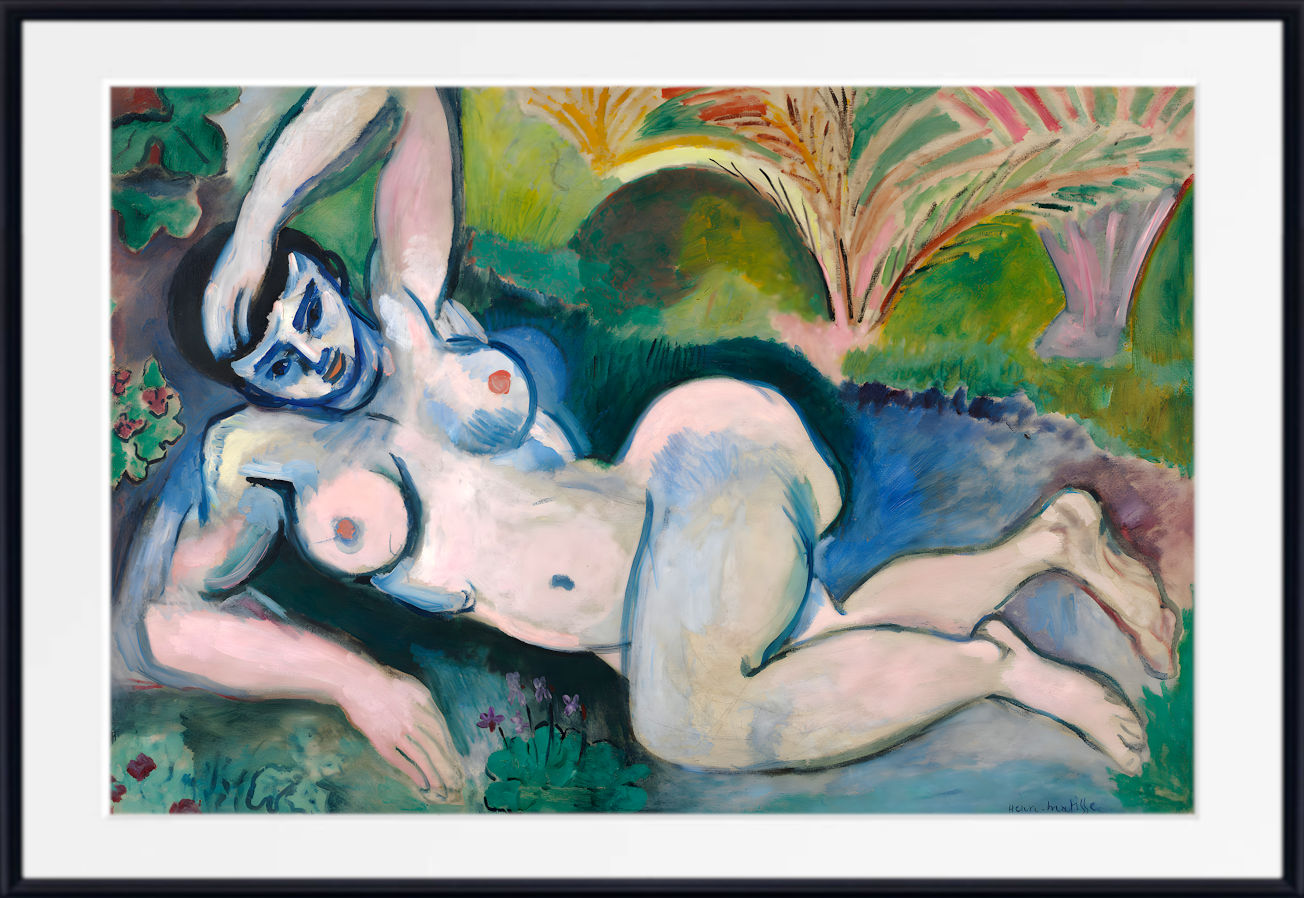
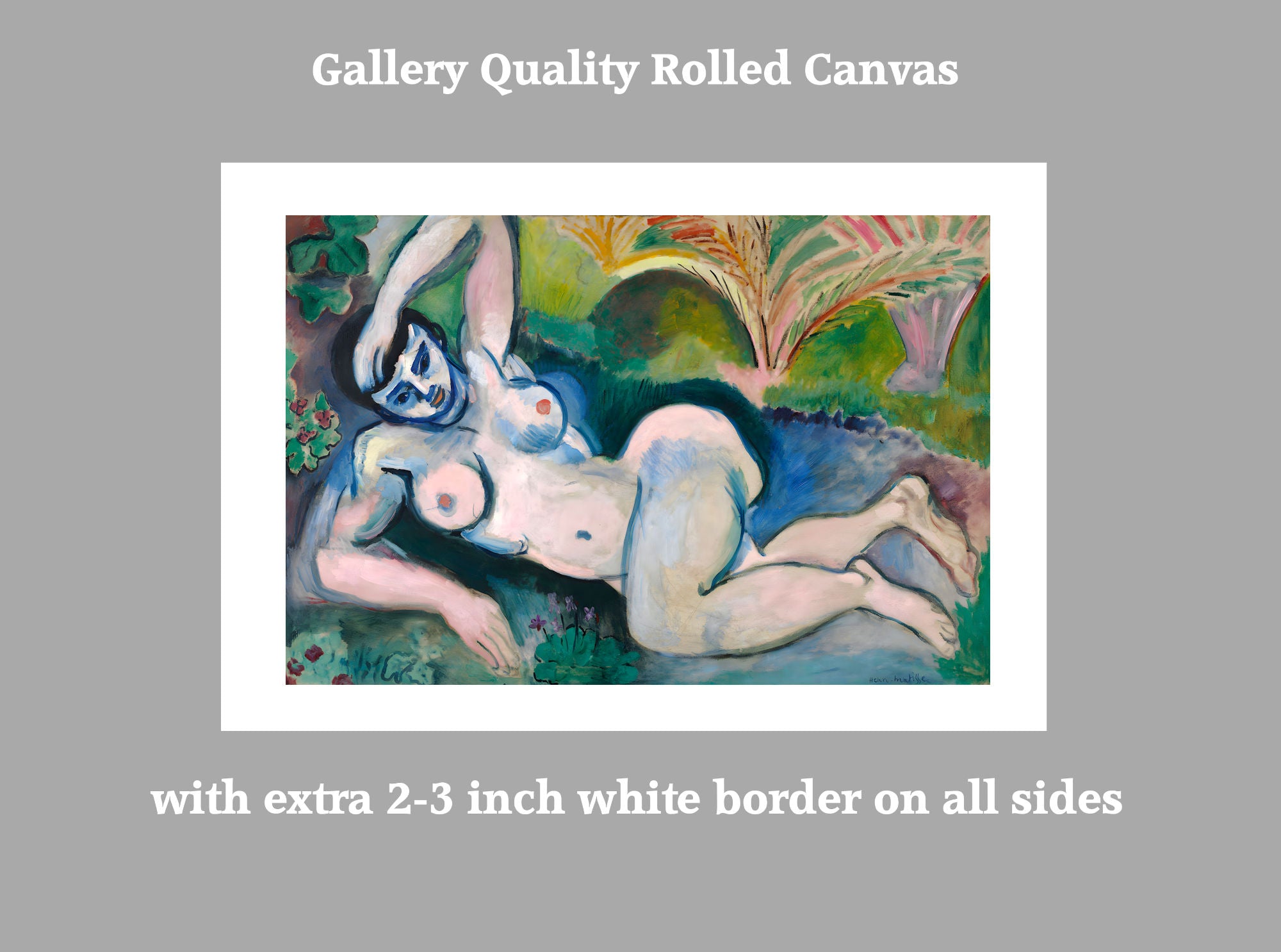
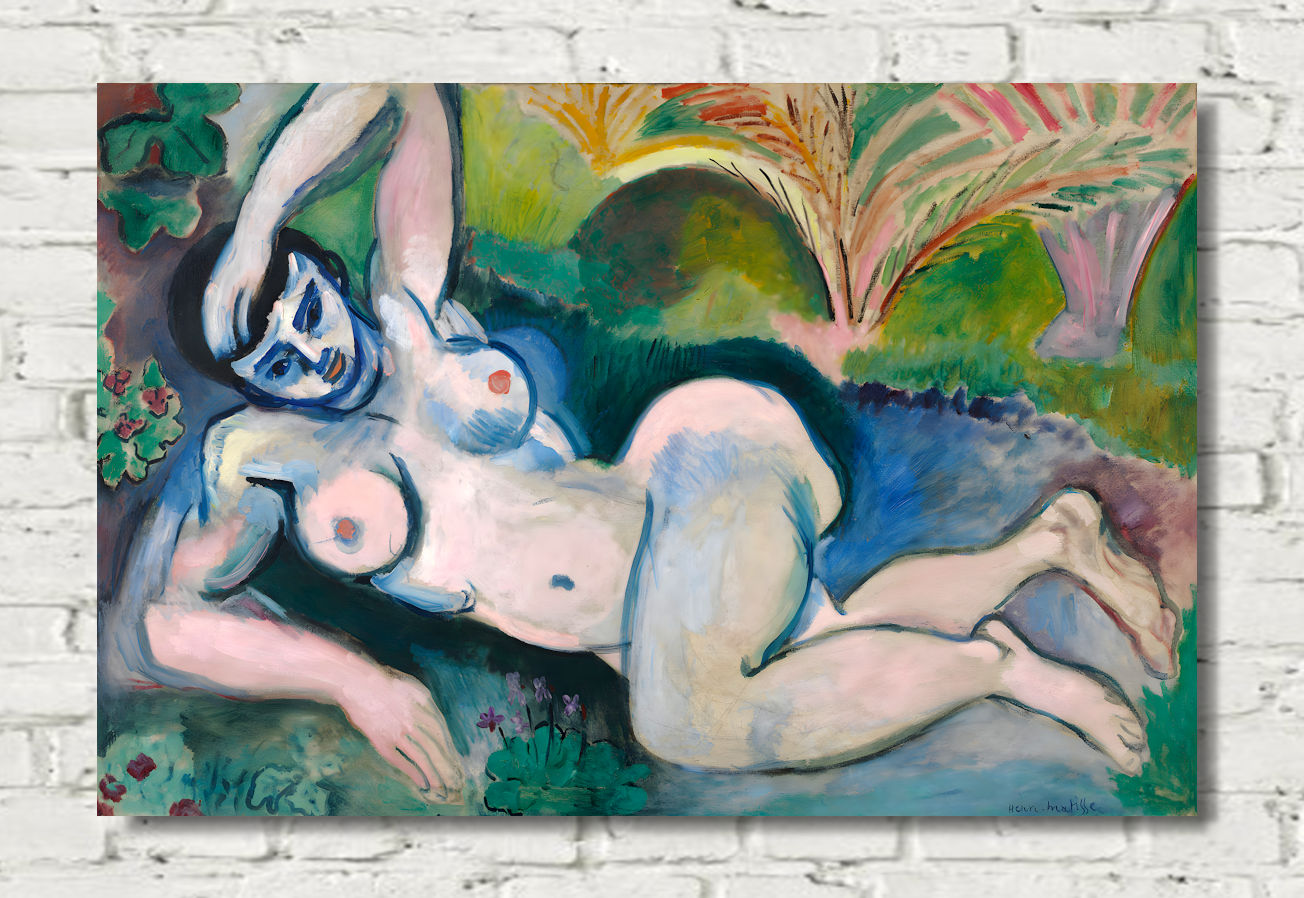
Figure paintings and nudes are effective in bedrooms, dressing spaces and more intimate interiors.
The Jazz prints and late cut-out imagery work particularly well in contemporary spaces, home offices and gallery walls where bold graphic form is desirable.
Framed Henri Matisse Prints
A framed Matisse print can emphasise either the historic character of the work or its modern graphic qualities.
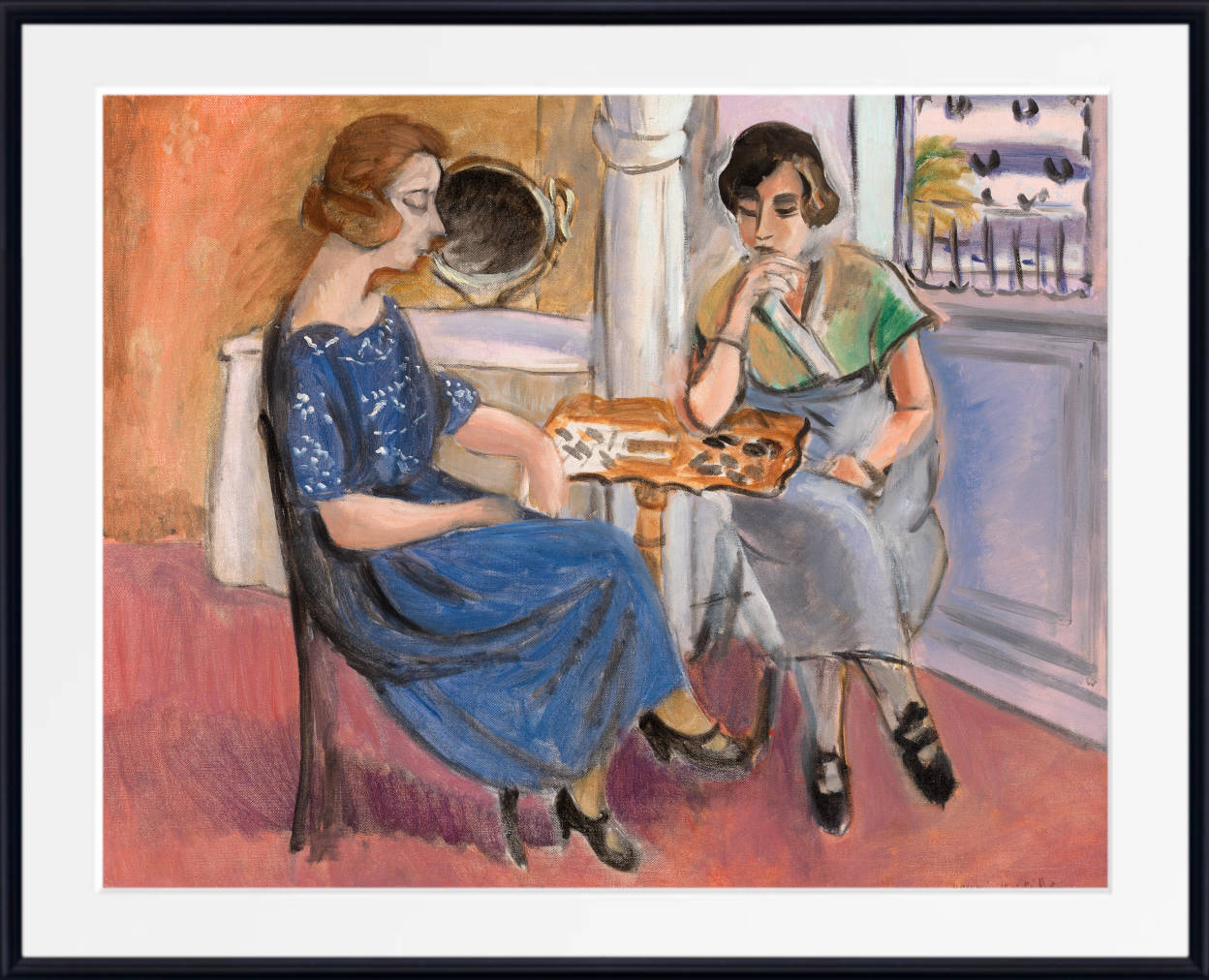
A simple black frame and white mount provides a crisp presentation and works especially well with strongly coloured paintings and cut-out designs.
The white surrounding space separates Matisse’s saturated palette from the wall and allows the composition to remain visually clear.
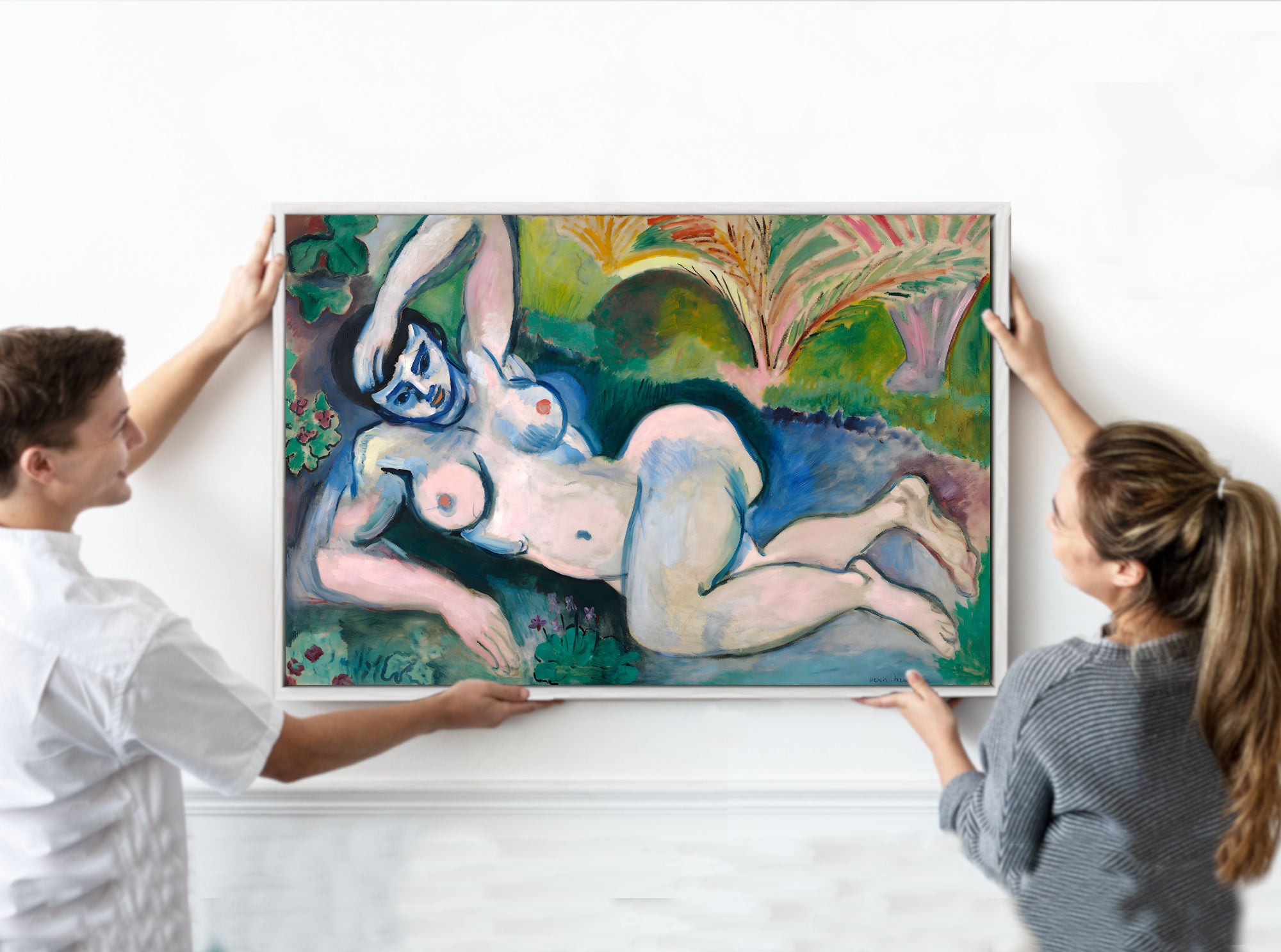
Larger horizontal works can work particularly well above sofas, sideboards and beds, while vertical compositions are useful for narrower spaces beside furniture, fireplaces and doorways.
Groups of smaller Matisse prints can also create an effective gallery wall, particularly when works share a related palette or period.
Henri Matisse: A Career of Continuous Reinvention
What makes Matisse exceptional is not simply that he created one influential style.
He repeatedly reinvented the means through which he could achieve the same fundamental goals.
The brilliant Fauvist paintings of 1905, decorative interiors of the following decades and radical paper cut-outs of his final years can look dramatically different.
Yet all are concerned with colour, rhythm, balance and simplification.
Matisse continually searched for ways to make every part of an image contribute to the whole.
That consistency beneath constant experimentation explains why his work remains so influential — and why Henri Matisse prints continue to feel remarkably fresh in modern homes.
Frequently Asked Questions
Who was Henri Matisse?
Henri Matisse (1869–1954) was a French painter, draughtsman, sculptor and printmaker and one of the most influential artists of twentieth-century modernism. He became the leading figure associated with Fauvism and later developed a highly personal style based on colour, pattern, simplified form and expressive line.
What is Henri Matisse most famous for?
Matisse is particularly famous for his revolutionary use of colour, his role in Fauvism, his decorative interiors and figures, and his late paper cut-outs. Well-known works include Woman with a Hat, Harmony in Red, The Dance, The Red Studio and the Blue Nude compositions.
Was Henri Matisse a Fauvist?
Yes. Matisse was the leading figure associated with Fauvism. The movement emerged publicly in 1905 after paintings by Matisse, André Derain and related artists attracted attention for their brilliant non-naturalistic colour and vigorous brushwork.
What does Fauvism mean?
The name derives from the French word fauves, meaning “wild beasts”. Critic Louis Vauxcelles used the expression after seeing intensely coloured works by Matisse and other artists at the 1905 Salon d’Automne in Paris.
Why did Matisse use such bright colours?
Matisse increasingly treated colour as an expressive and structural element rather than simply using it to reproduce natural appearance. Colours were selected according to their relationships with one another and their role within the entire composition.
Did Matisse invent Fauvism?
No single artist invented Fauvism in isolation. Matisse and André Derain made particularly important colour experiments while working together at Collioure in 1905, while artists including Maurice de Vlaminck, Henri Manguin, Albert Marquet and others were pursuing related developments.
Was Matisse a Cubist?
Matisse engaged seriously with some of the structural ideas emerging around Cubism, but he did not become a Cubist painter in the manner of Picasso or Braque. His own art continued to prioritise colour, decorative organisation, rhythm and direct observation.
What are Matisse cut-outs?
Matisse created his cut-outs using sheets of paper painted with gouache, which he cut with scissors and arranged into compositions. The technique allowed him to combine drawing and colour directly through shape.
What is Matisse’s Jazz?
Jazz is a celebrated illustrated publication issued in 1947. Its twenty colourful images developed from Matisse’s cut-paper compositions and were reproduced using the pochoir stencil-printing technique.
Are the Jazz works paintings?
The original designs developed from cut and arranged gouache-painted papers. The published Jazz plates were produced using pochoir, a stencil-printing process chosen to preserve the intensity of Matisse’s colours.
Why are Matisse’s Blue Nudes important?
The Blue Nudes reduce the human figure to simplified pieces of intense blue paper. They demonstrate Matisse’s ability to combine drawing, colour and sculptural form through the cut-out technique.
Did Matisse paint landscapes?
Yes. Landscape was particularly important during his early career and Fauvist period. Collioure and the Mediterranean coast provided some of the settings for his most important experiments with colour.
Did Matisse paint still lifes?
Yes. Matisse painted still lifes throughout his career. Flowers, fruit, pitchers, bowls, textiles and decorative objects provided ideal subjects for exploring colour and pattern.
Why did Matisse paint so many interiors?
Interiors allowed Matisse to combine figures, still-life objects, furniture, textiles, windows and decorative pattern within a single composition. They became one of the principal subjects through which he explored colour and pictorial space.
What interior styles suit Henri Matisse prints?
Matisse prints work particularly well in contemporary, Scandinavian-inspired, mid-century and eclectic interiors. Their strong shapes and colours can also provide an effective focal point within otherwise restrained neutral rooms.
What colours work well with Matisse wall art?
White, cream, putty and pale grey walls provide a versatile background for Matisse’s strong palette. Natural timber, navy, teal, sage, terracotta and muted pink can also complement colours frequently found in his work.
Where should I hang a Matisse print?
Matisse prints can work in living rooms, bedrooms, dining rooms, hallways, studies and home offices. Horizontal works are particularly effective above sofas, beds and sideboards, while vertical prints suit narrower walls and gallery arrangements.
Are Henri Matisse prints suitable for gallery walls?
Yes. Matisse’s range of landscapes, interiors, figures, still lifes and cut-out designs makes it possible to build a varied gallery wall while retaining a strong connection through colour and style.
What is the best Matisse print for a colourful room?
This depends on the existing palette. Harmony in Red makes an exceptionally strong statement, while The Blue Window and Blue Nude designs suit cooler colour schemes. Jazz works are particularly useful when you want several bold colours within one composition.
What other artists should I explore if I like Matisse?
Start with André Derain, Raoul Dufy and Henri Manguin, all of whom were connected with Fauvism and the broader revolution in modern colour. Their work reveals very different ways in which the discoveries of Fauvism developed after 1905.