Vincent van Gogh’s Olive Trees at Saint-Rémy
Olive trees became one of Vincent van Gogh’s defining landscape subjects during his year at Saint-Rémy-de-Provence. After entering Saint-Paul-de-Mausole in May 1889, Van Gogh found a concentrated group of natural motifs close at hand: olive groves, wheat fields, cypresses and the rugged Alpilles mountains.
Rather than painting a single definitive olive-tree composition, he returned to the groves repeatedly. Changes in sunlight, weather and season allowed him to explore the same subject through dramatically different colours and rhythms.
This GalleryThane collection brings together twelve of these closely related olive-grove and olive-harvest subjects within the wider Vincent van Gogh Prints collection.
Why Did Van Gogh Paint Olive Trees?
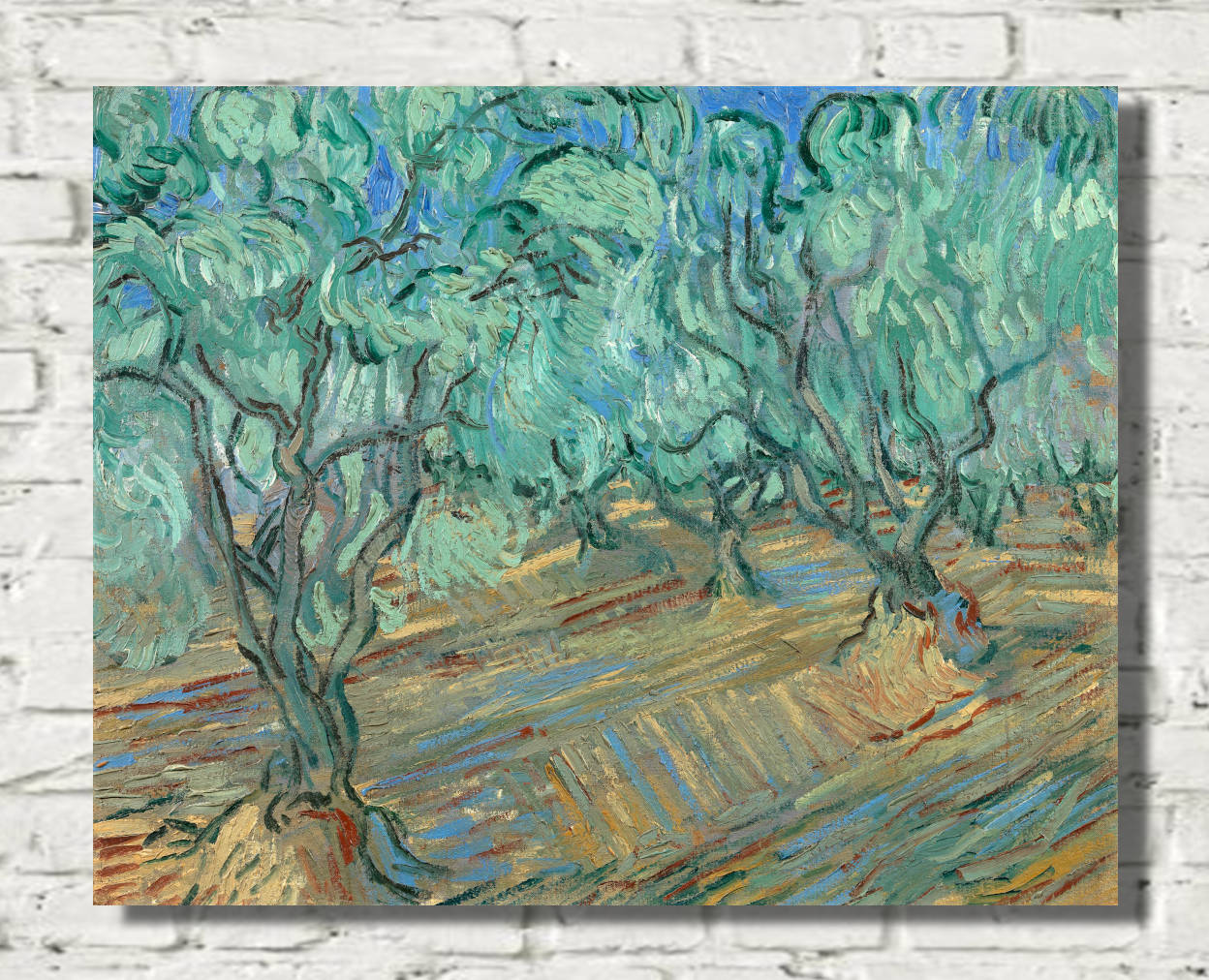
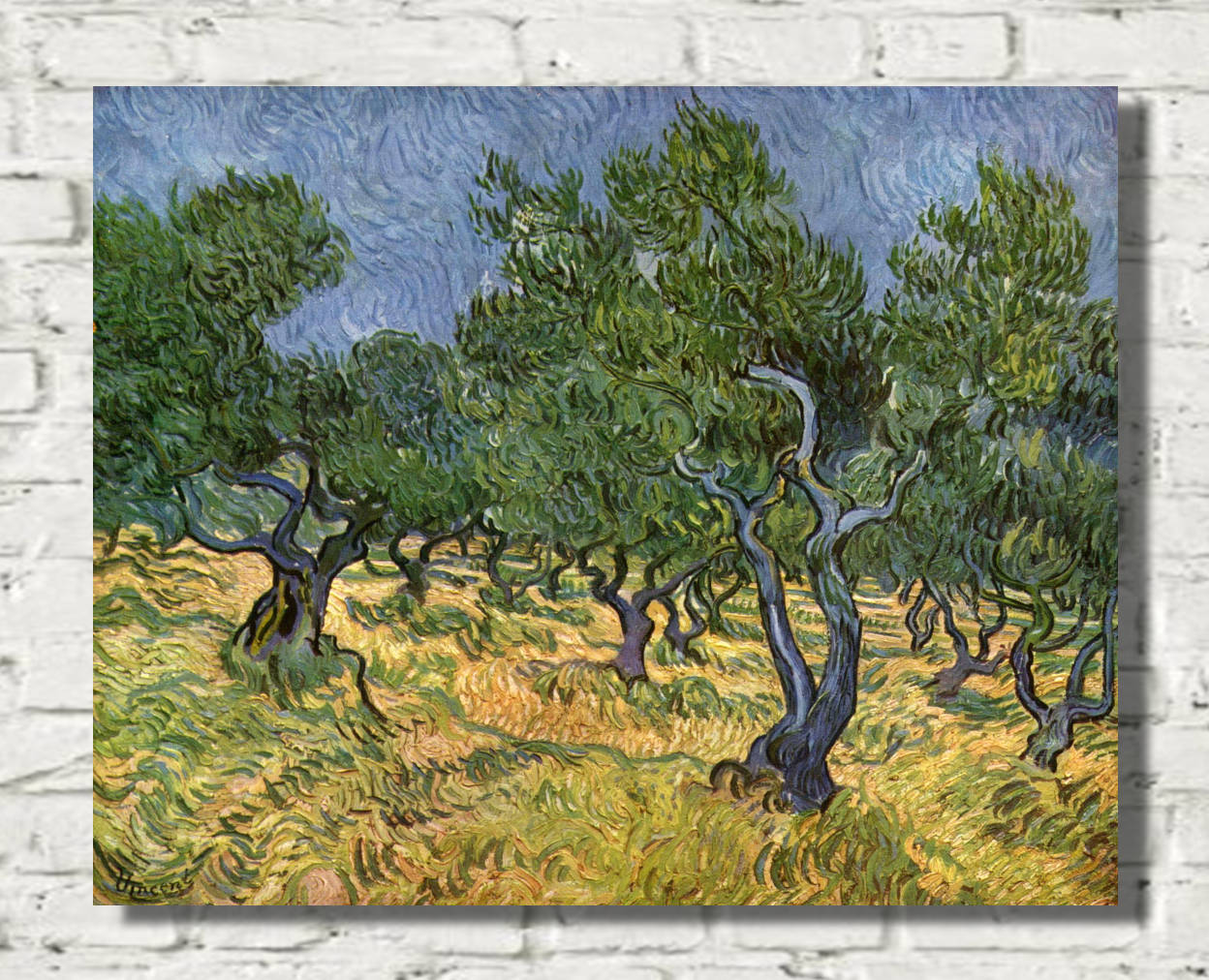
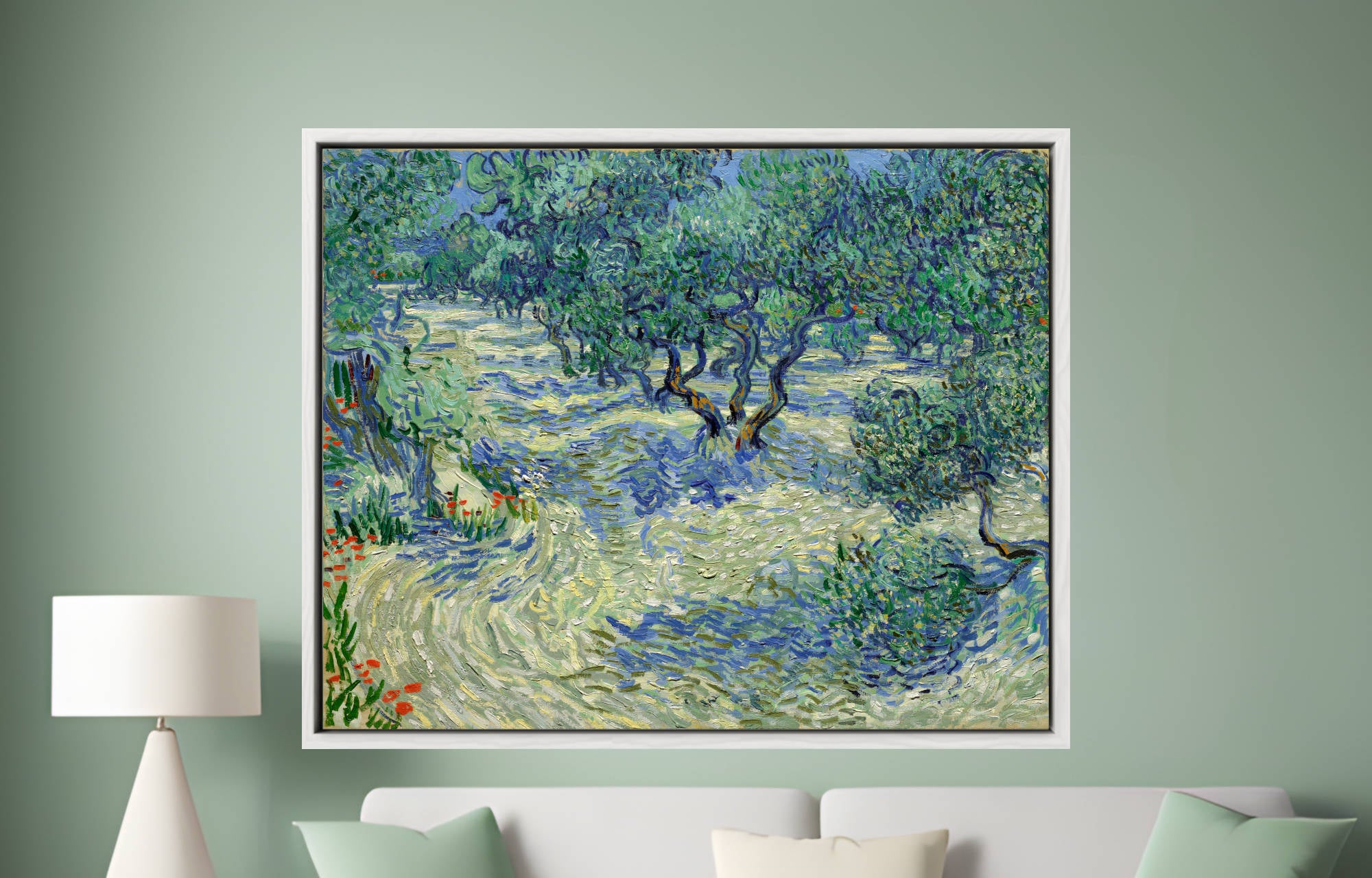
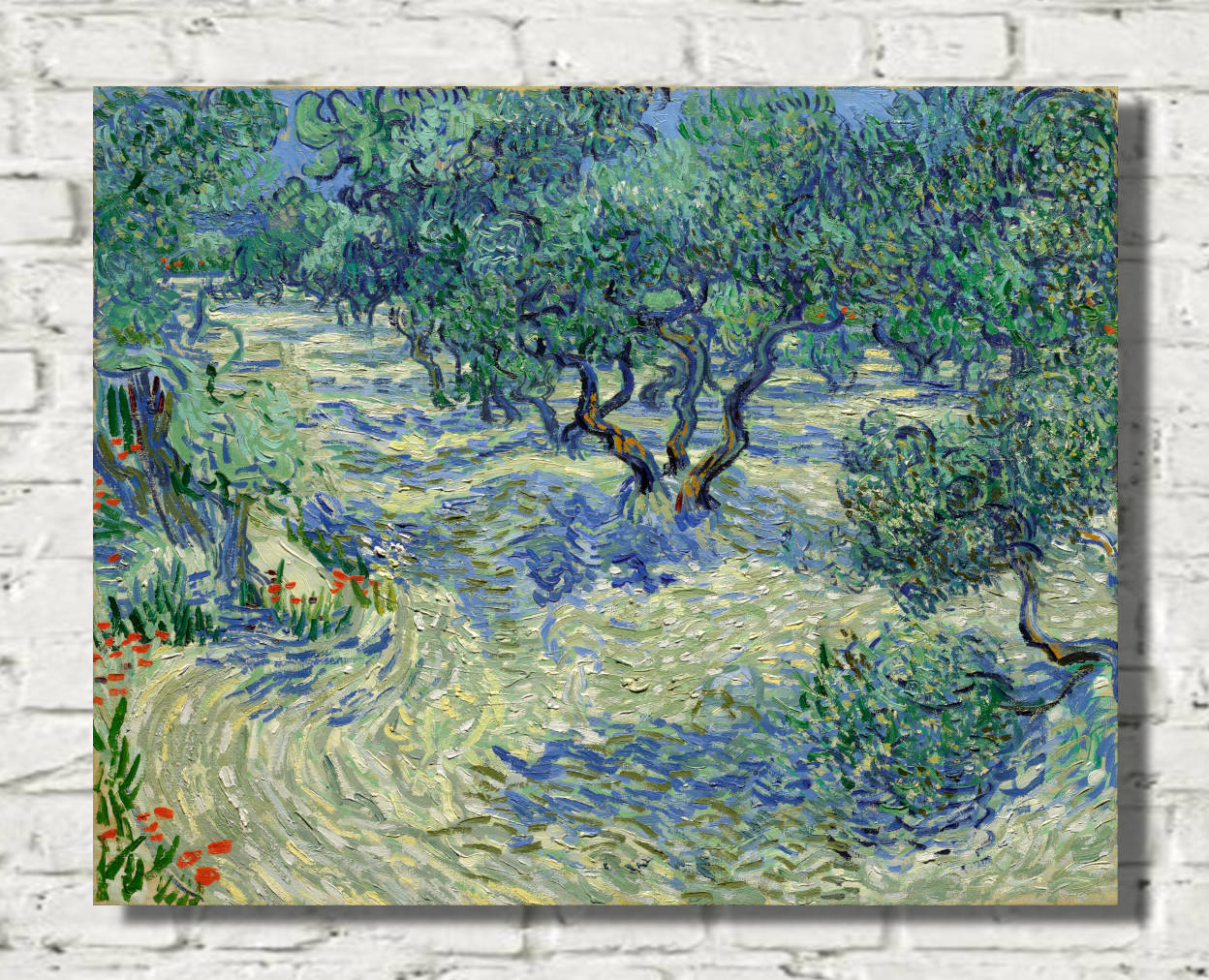
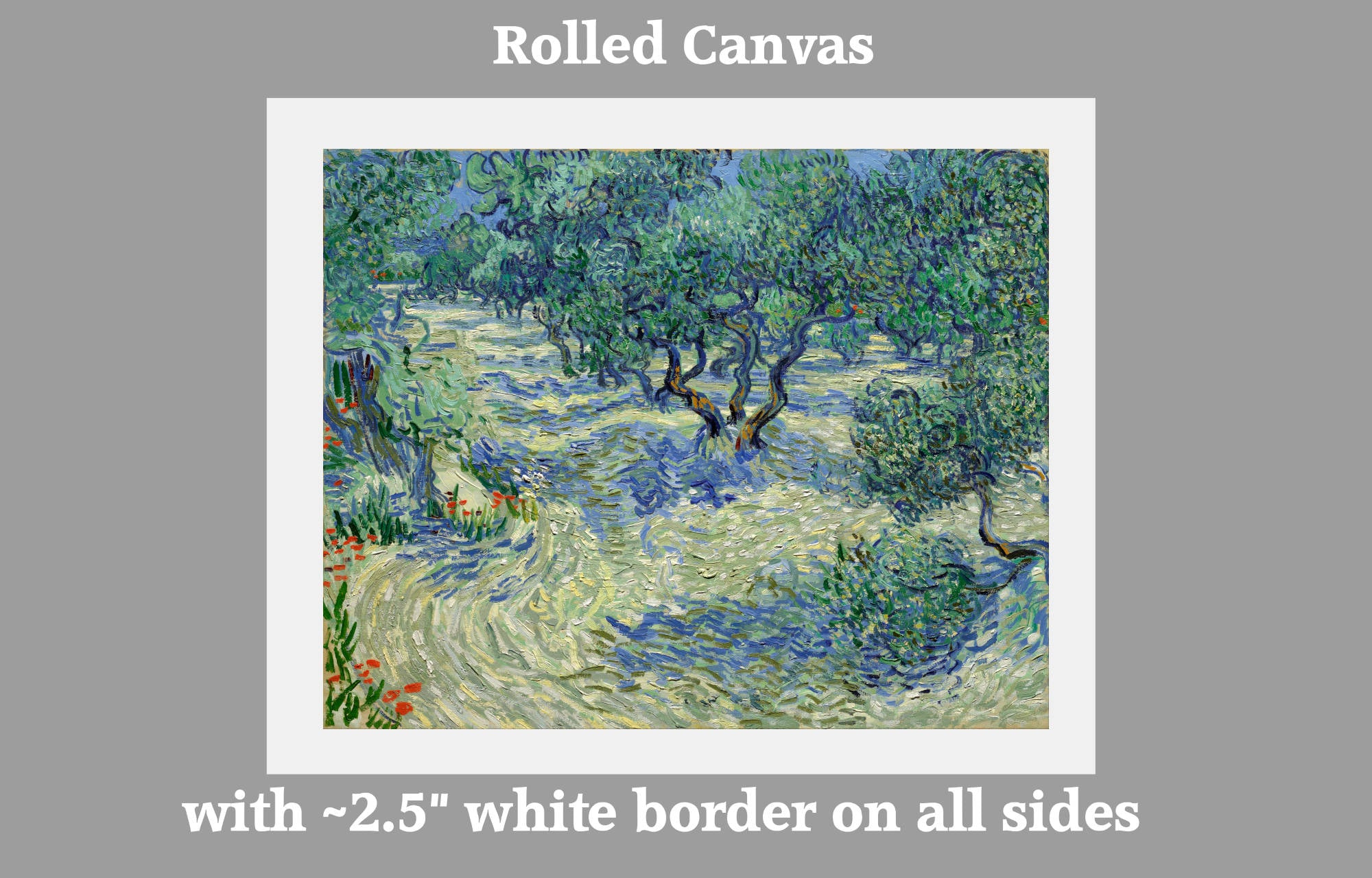
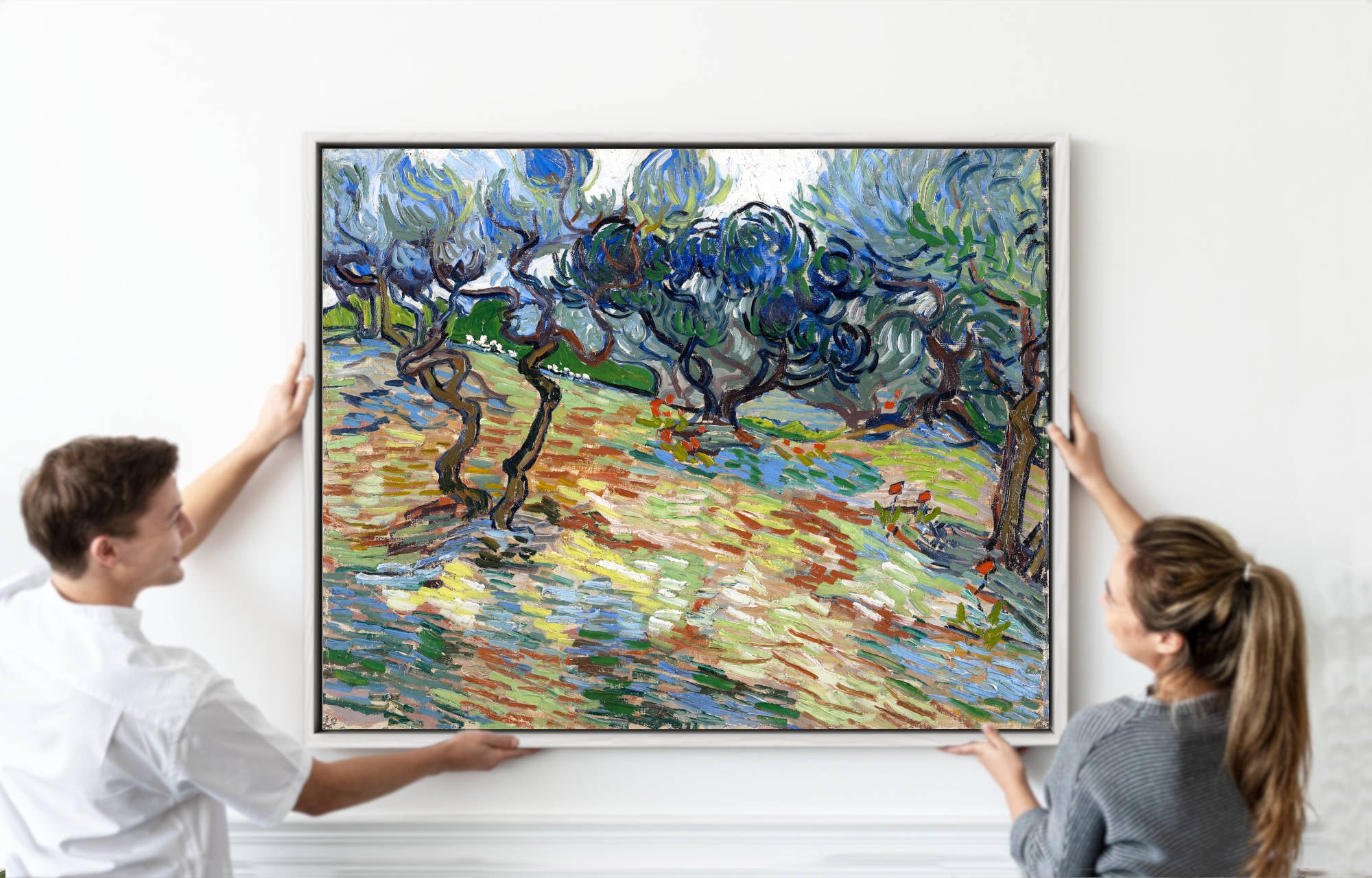
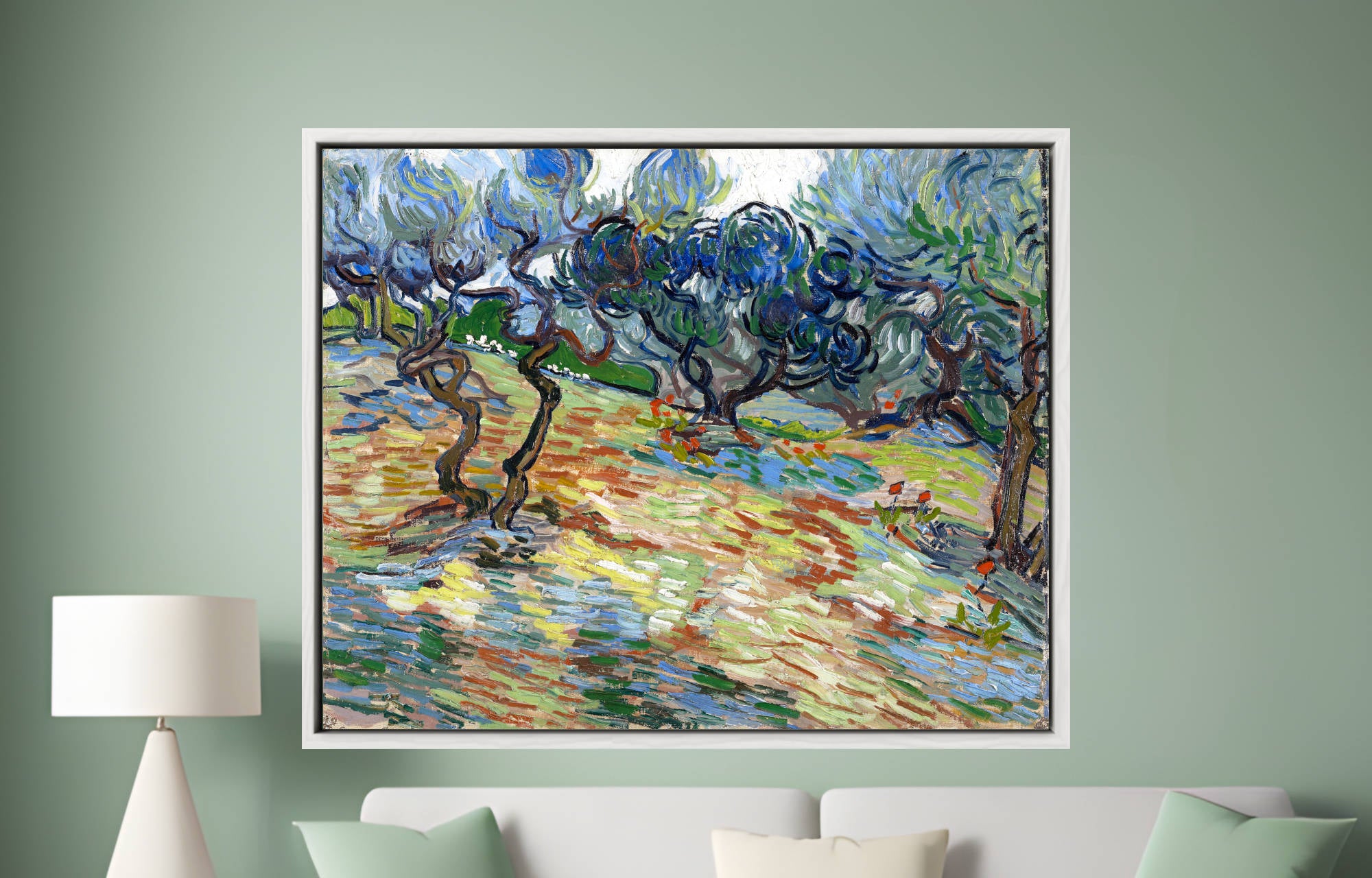
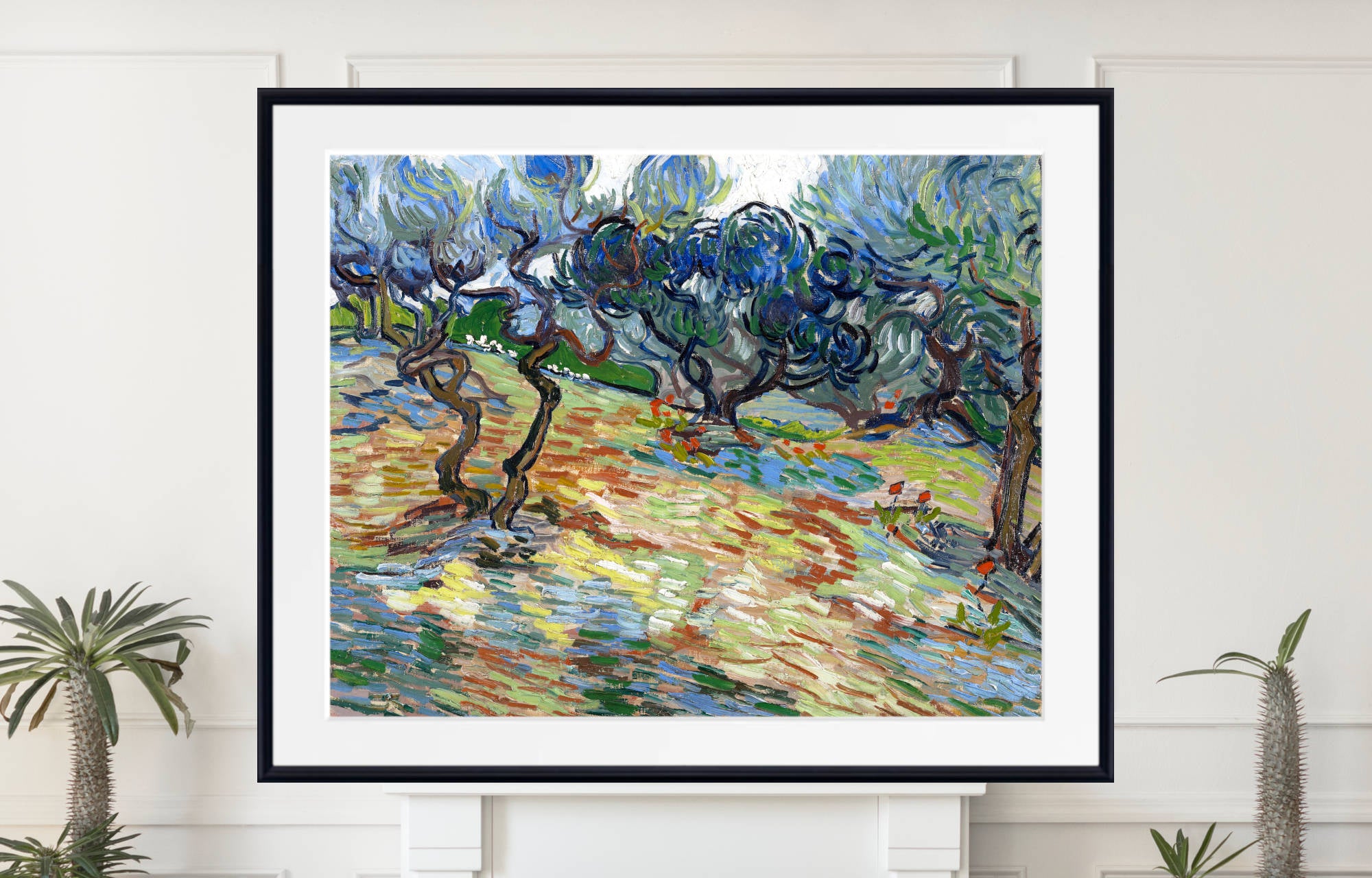
The olive groves of Provence fascinated Van Gogh both visually and technically. Their gnarled trunks, irregular branches and constantly changing foliage presented a very different challenge from the straight vertical forms of the cypresses nearby.
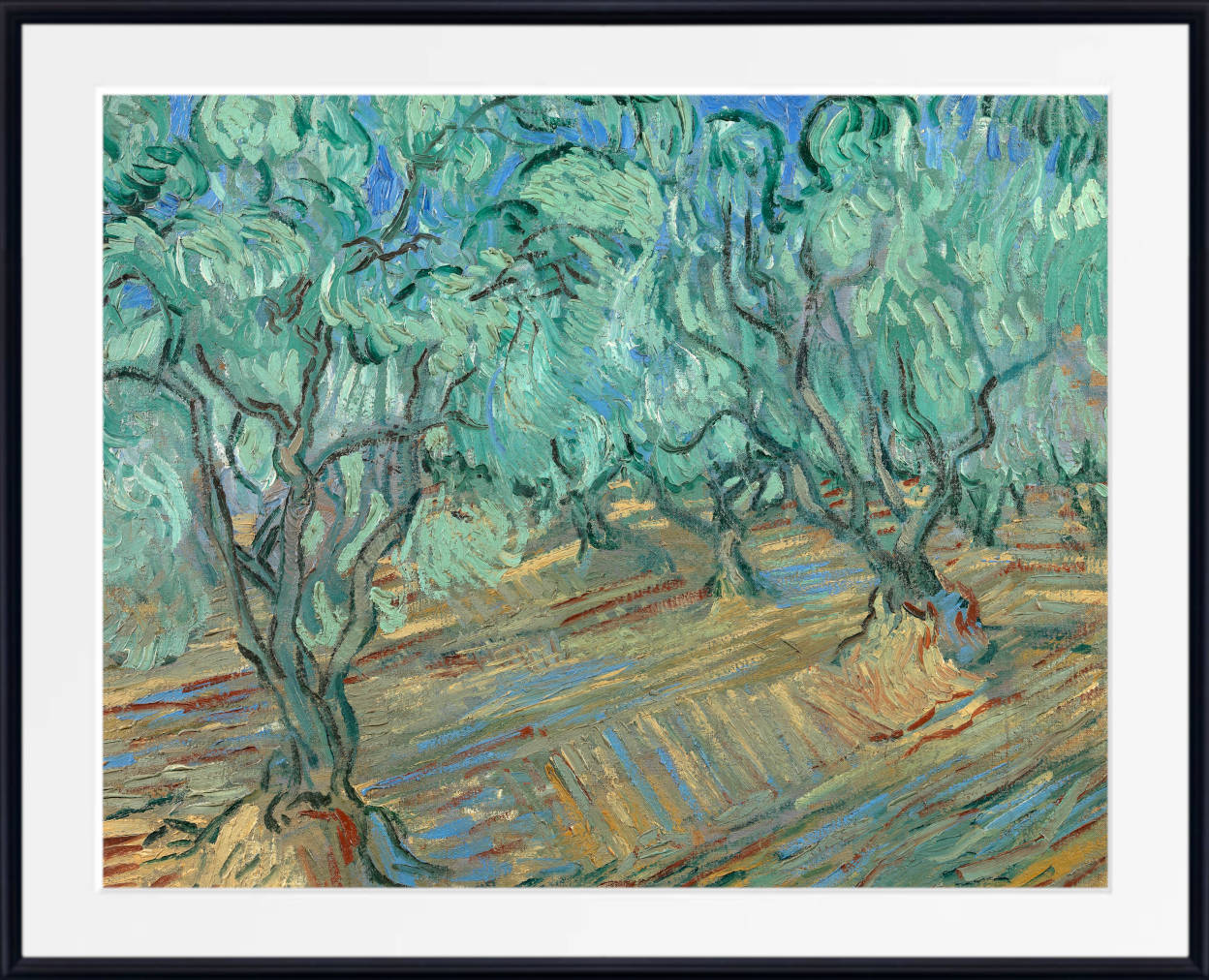
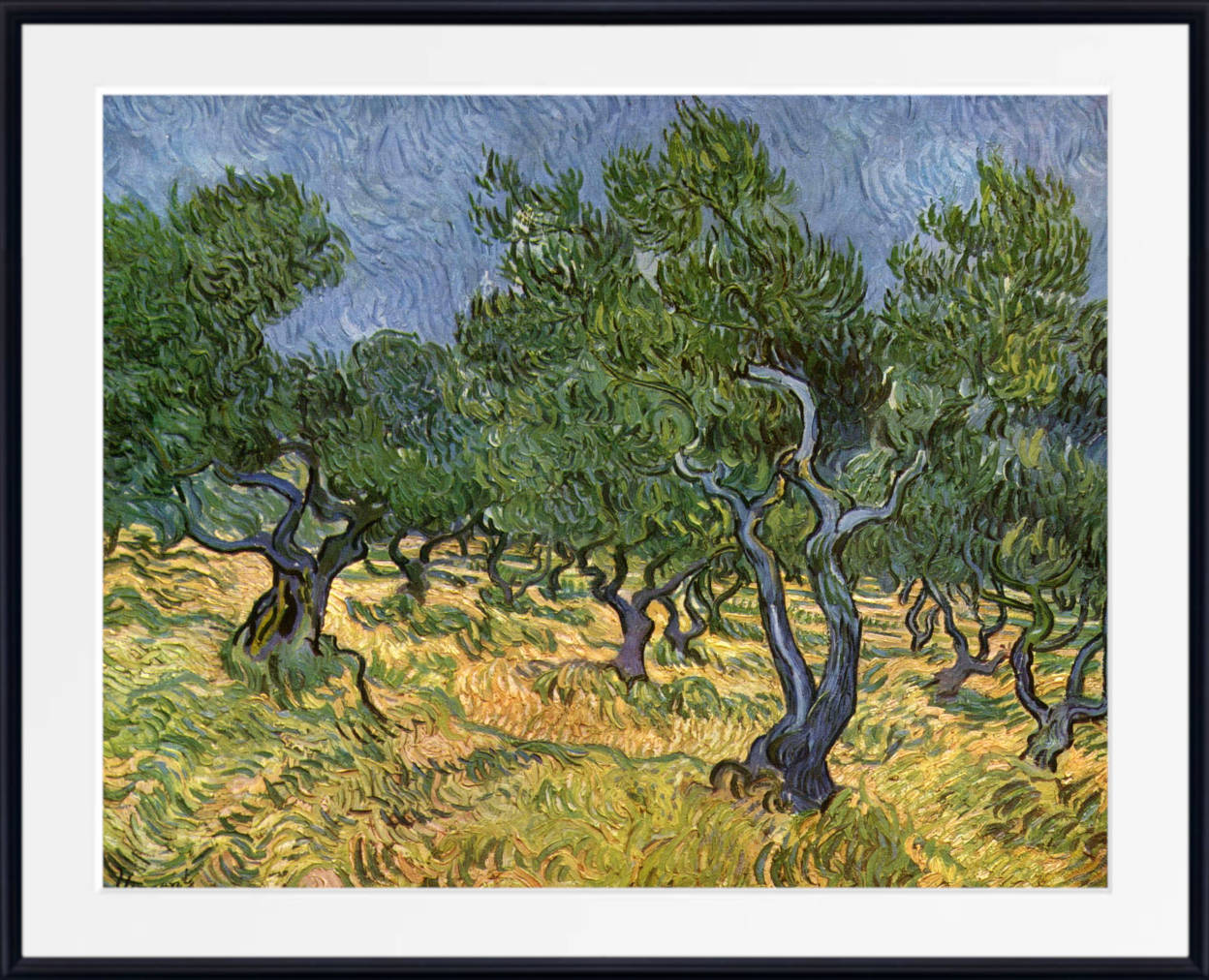
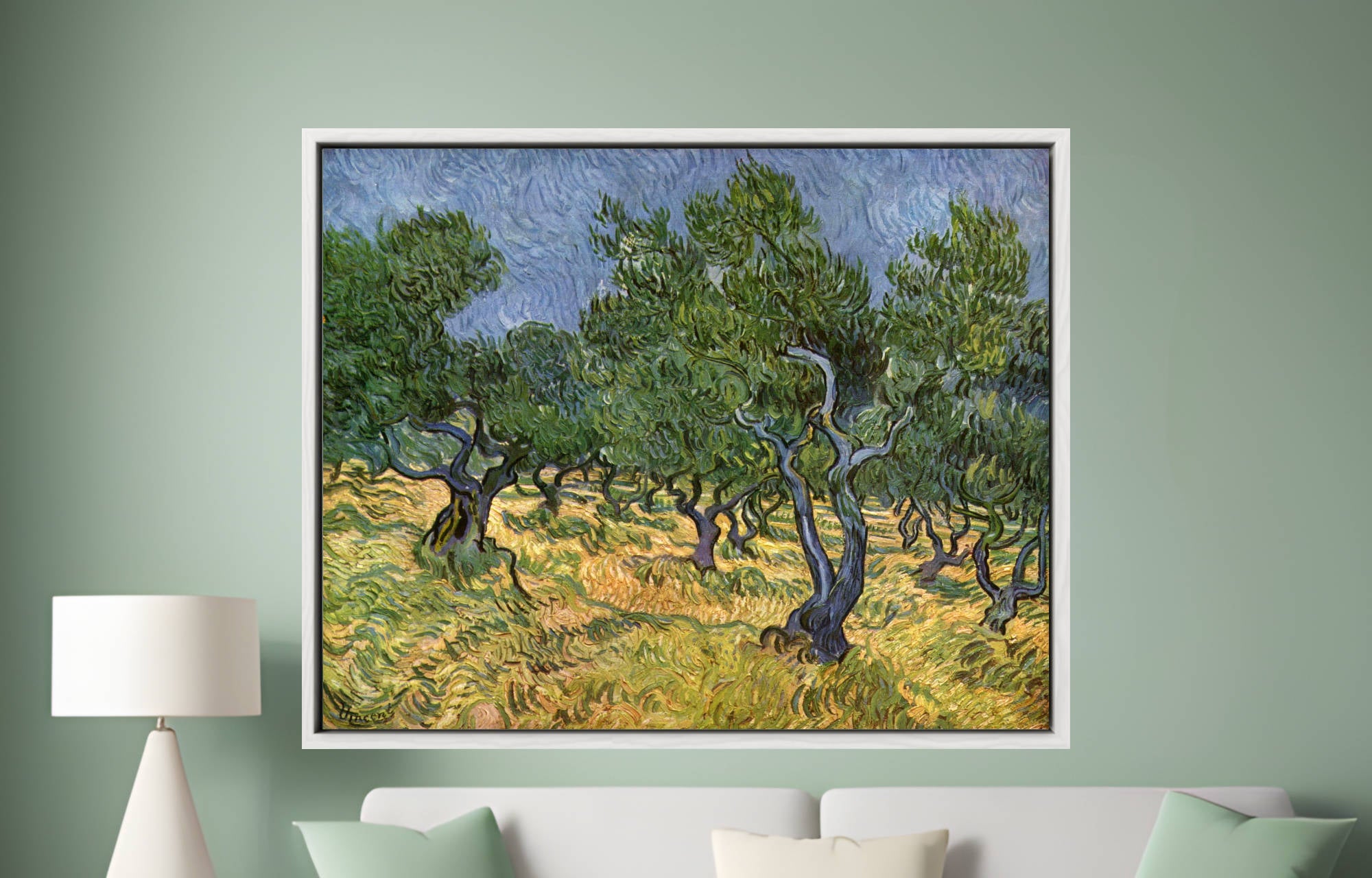
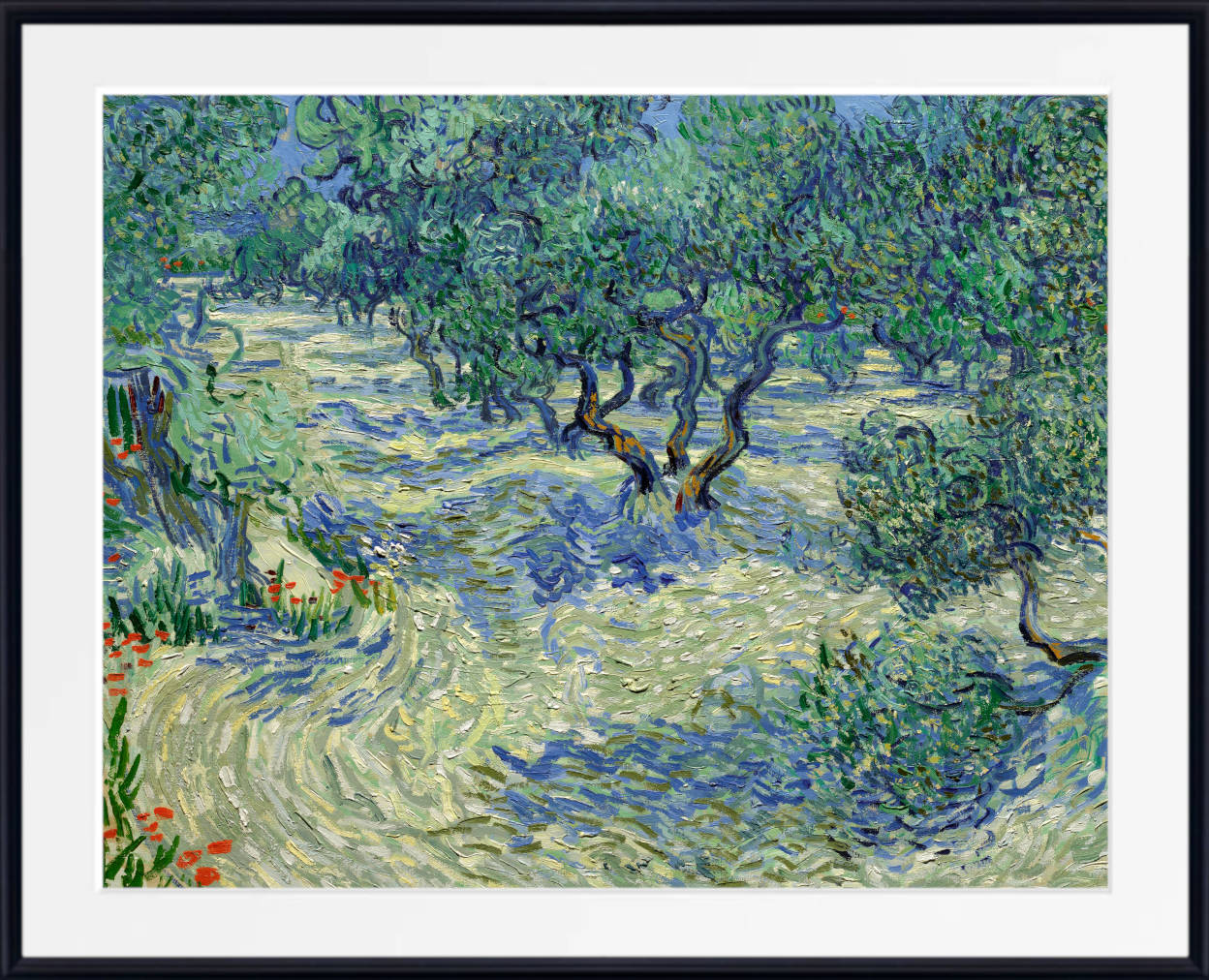
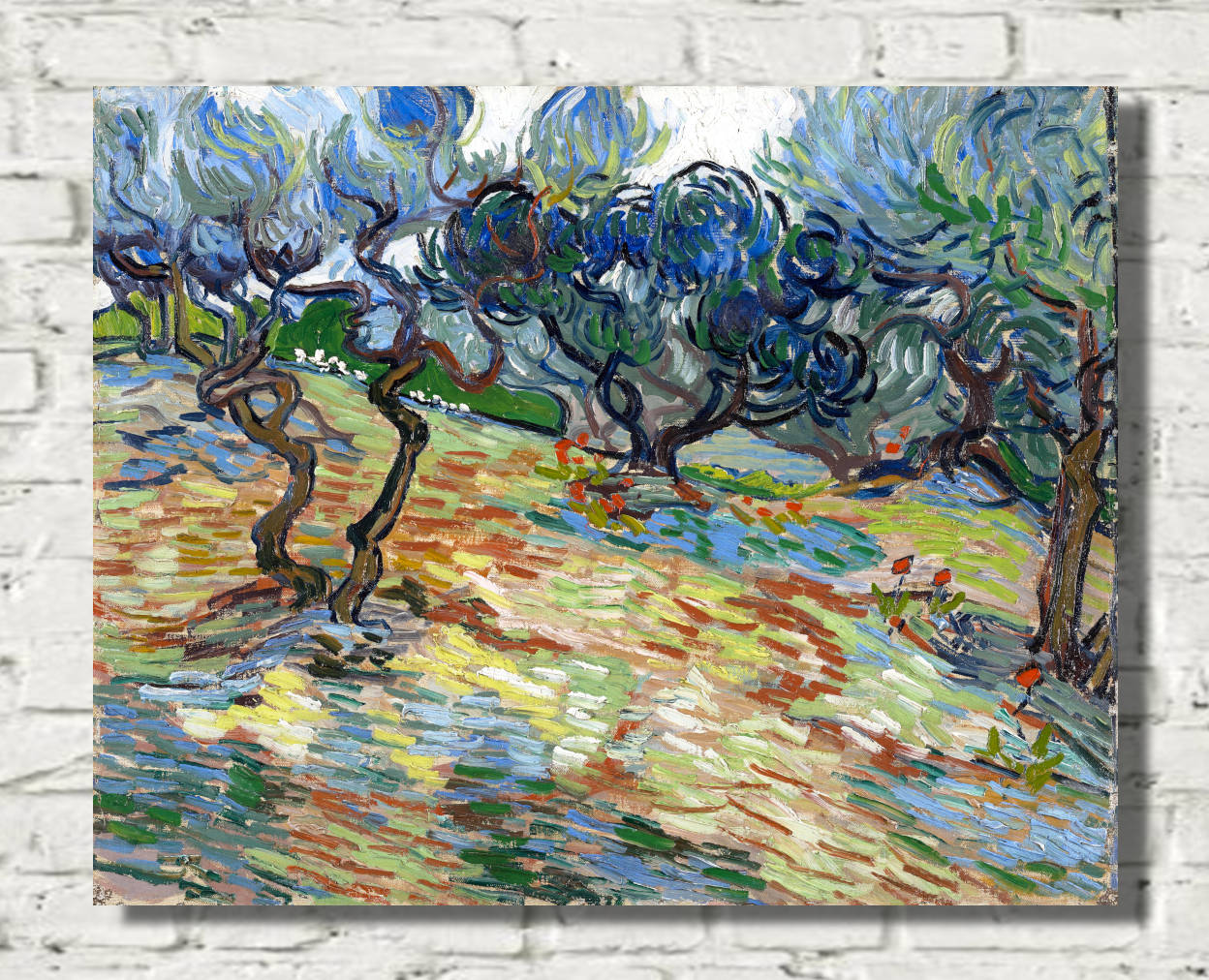
Van Gogh paid particular attention to the extraordinary range of colours he perceived in olive foliage. Depending on the light, the leaves could appear silver, blue, green or bronze, while the earth beneath them shifted through yellow, pink, violet, orange and ochre.
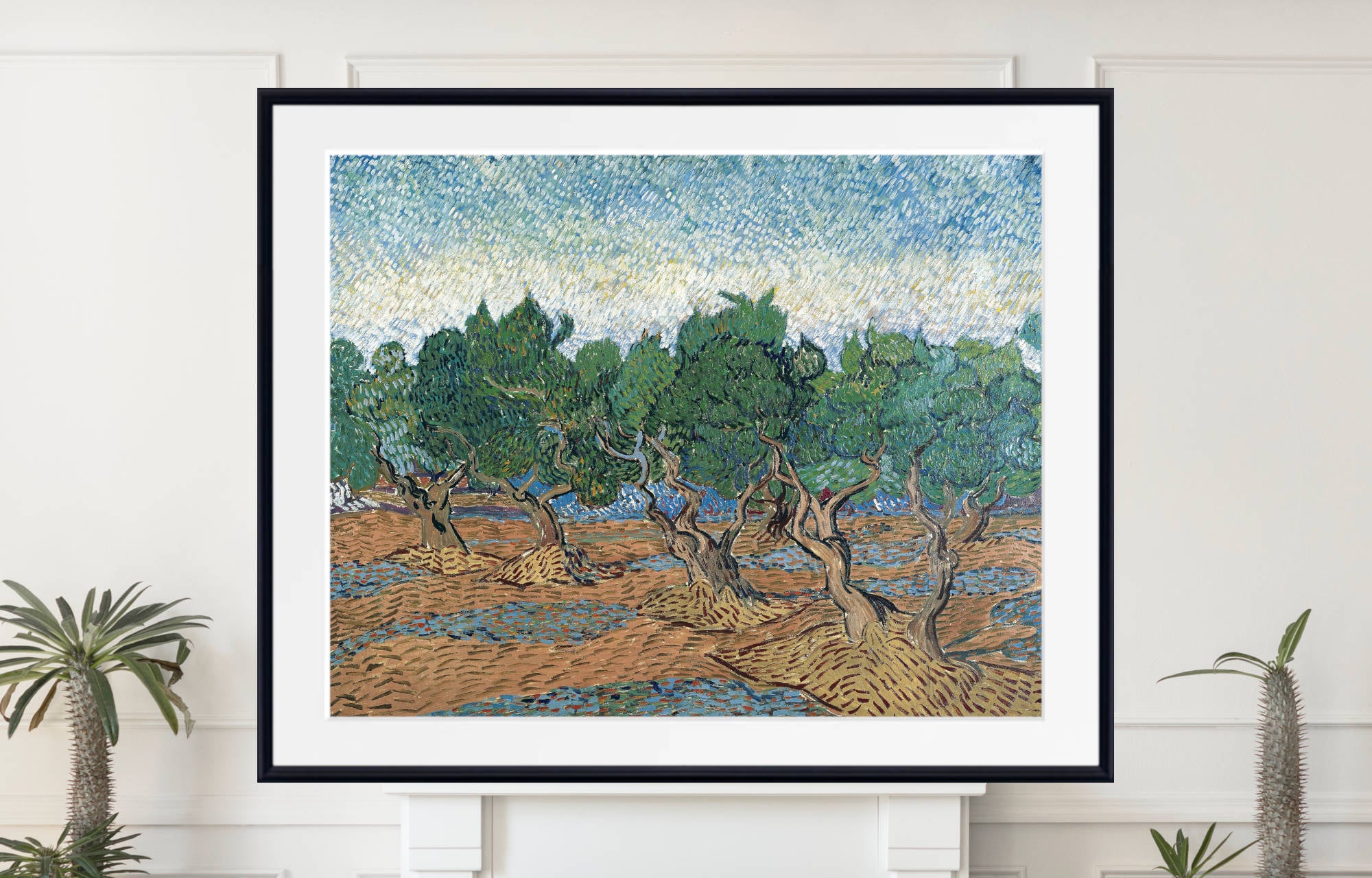
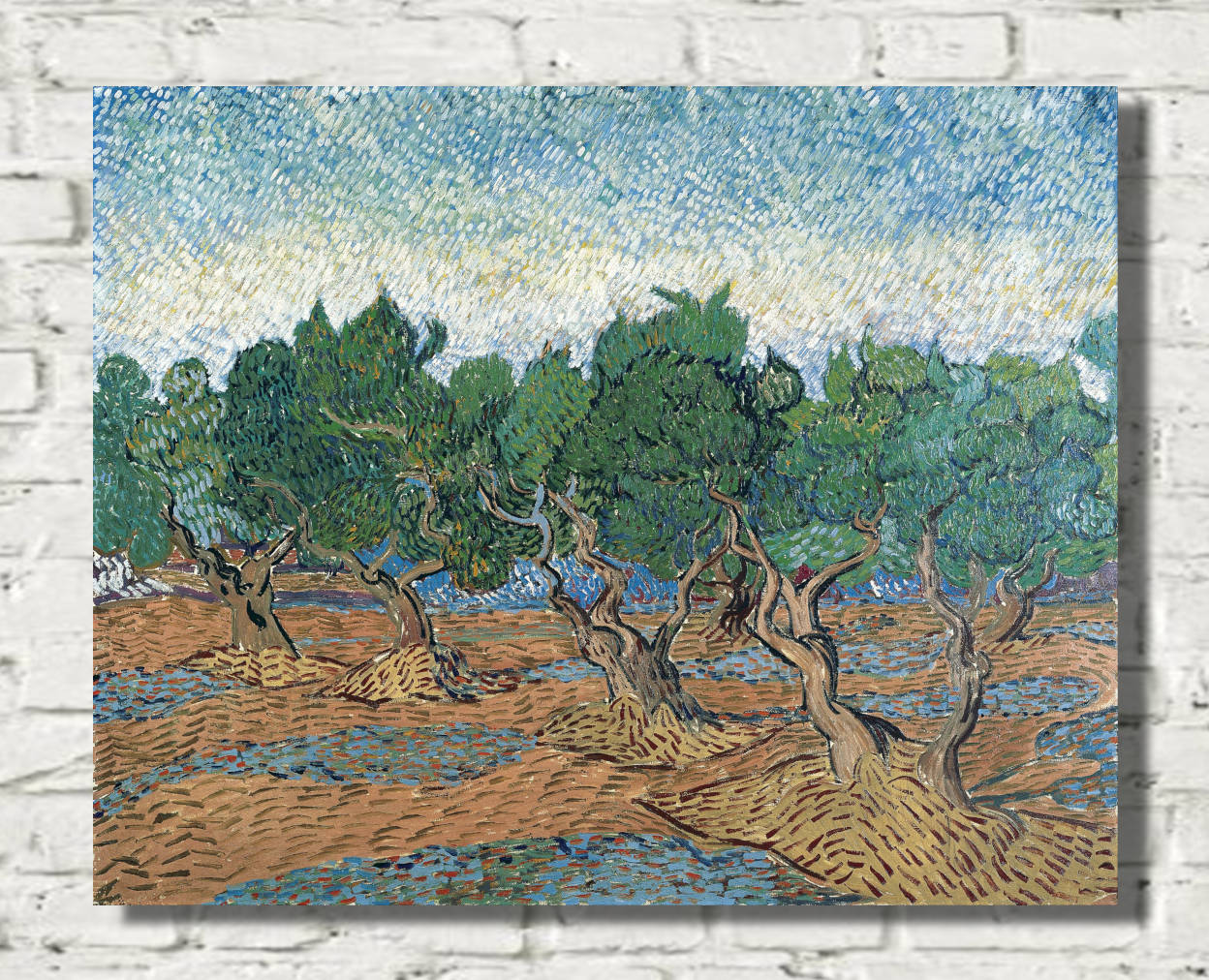
That complexity made olive trees ideal for the increasingly expressive approach to landscape that Van Gogh developed at Saint-Rémy. Instead of simply describing individual leaves and branches, he could build the trees from repeated curves, dashes and directional strokes that seem to carry movement through the whole landscape.
The Olive Grove Series of 1889
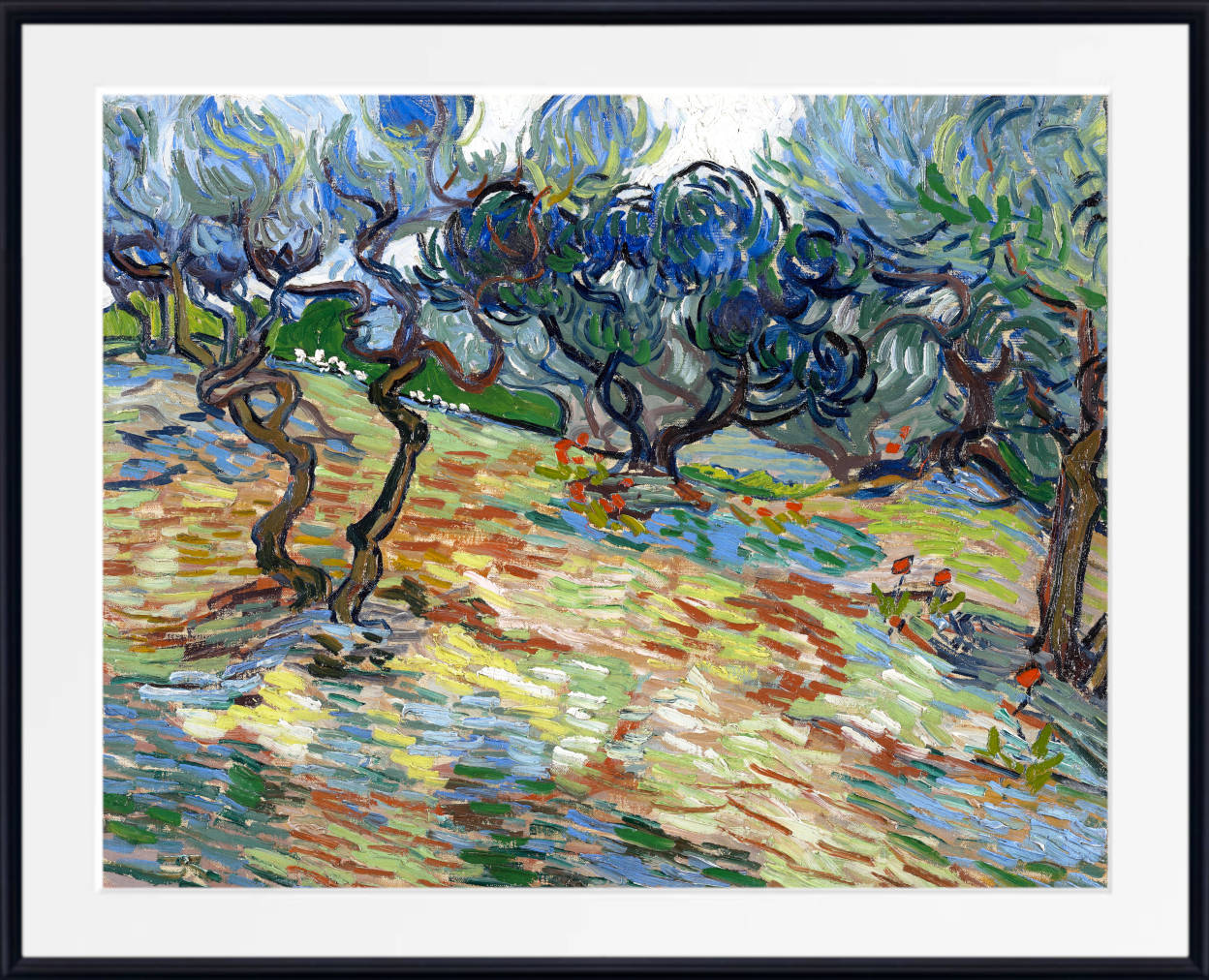
Van Gogh painted approximately fifteen canvases devoted to olive groves during his Saint-Rémy period in 1889. They were not identical repetitions. He continually changed viewpoint, colour, atmosphere and the relationship between the trees and surrounding landscape.
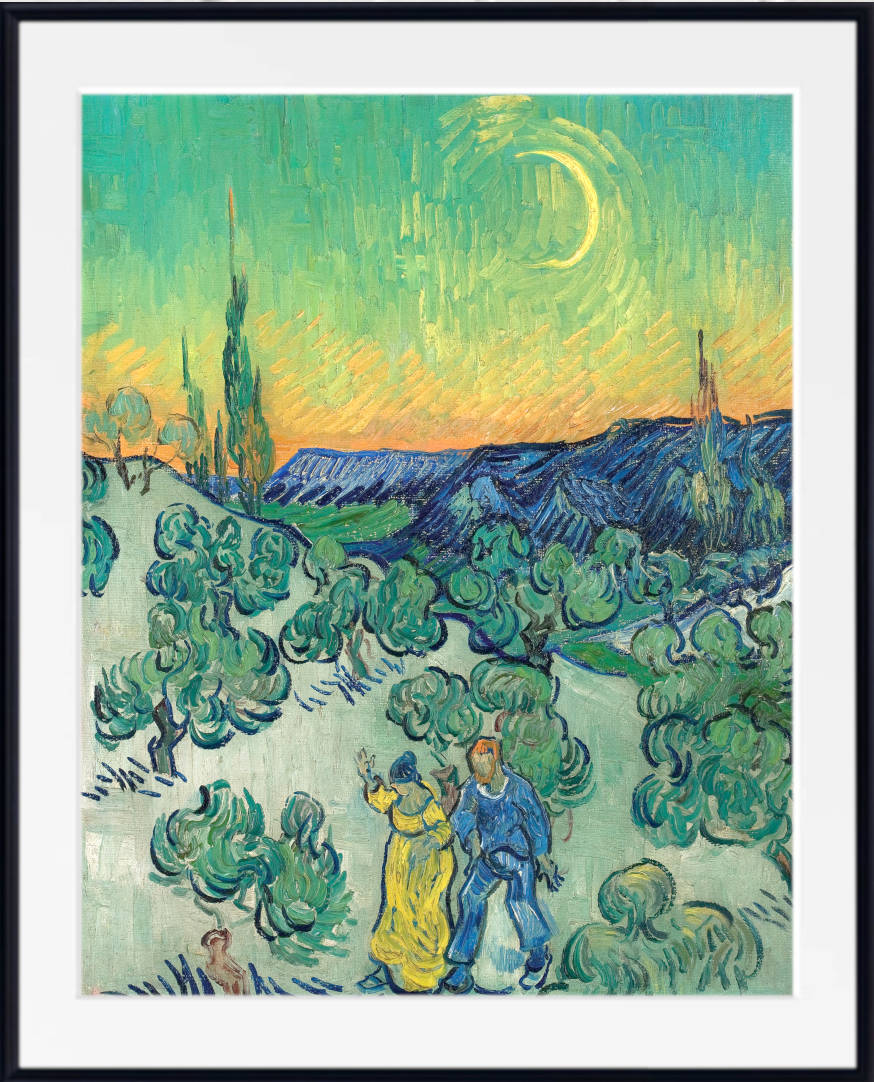
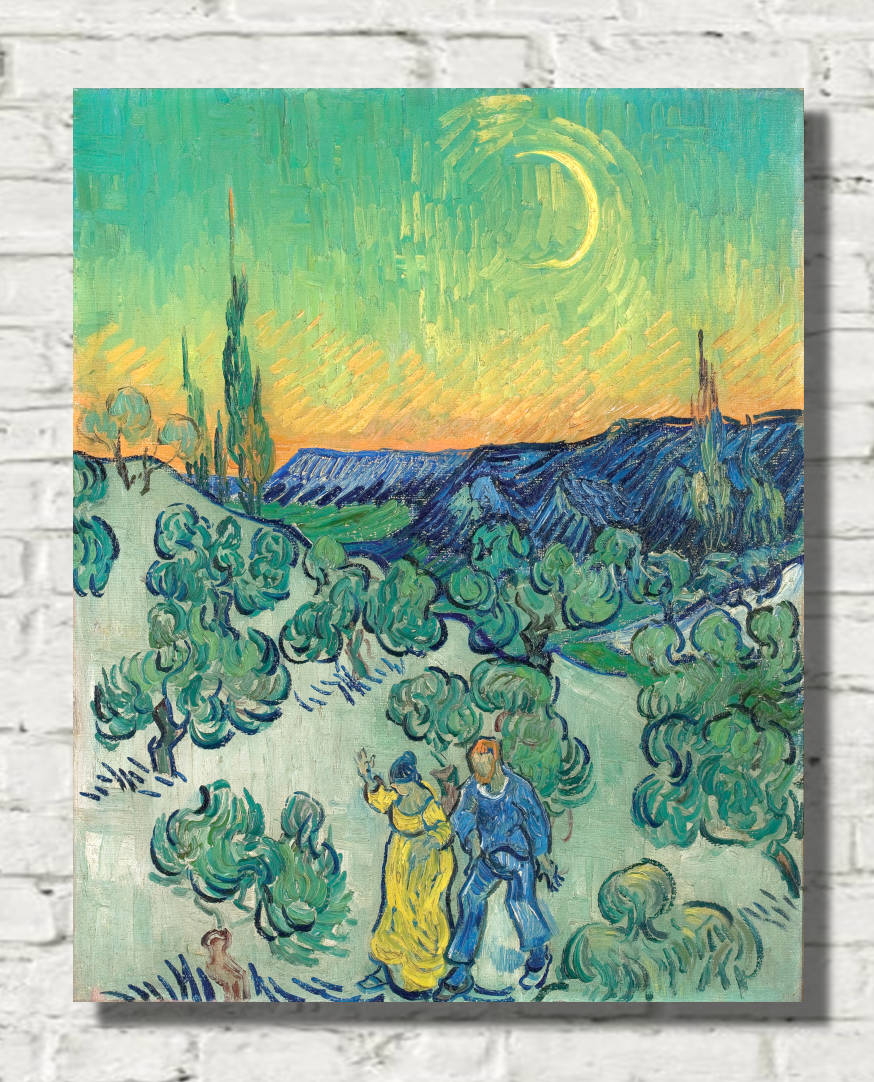
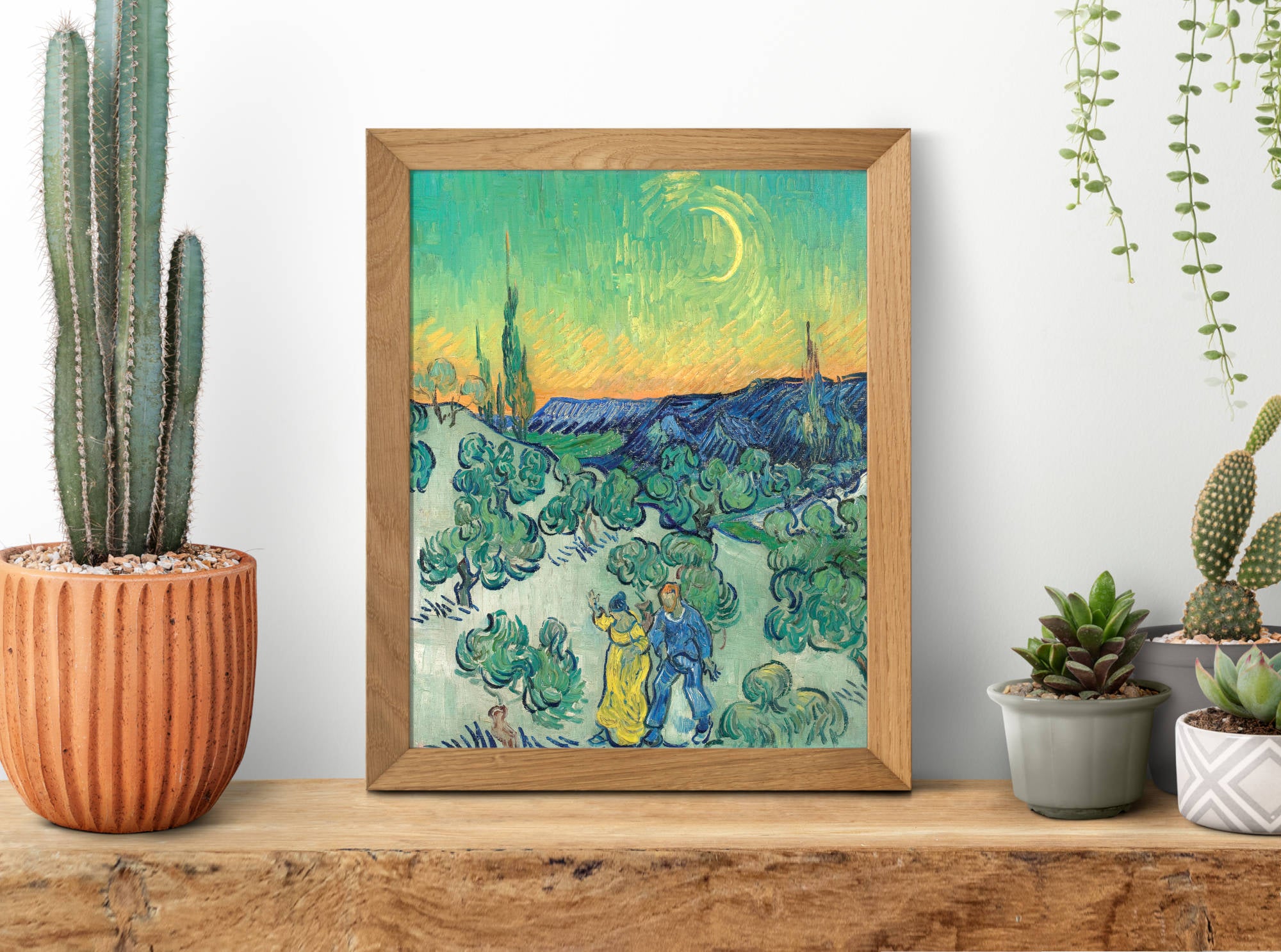
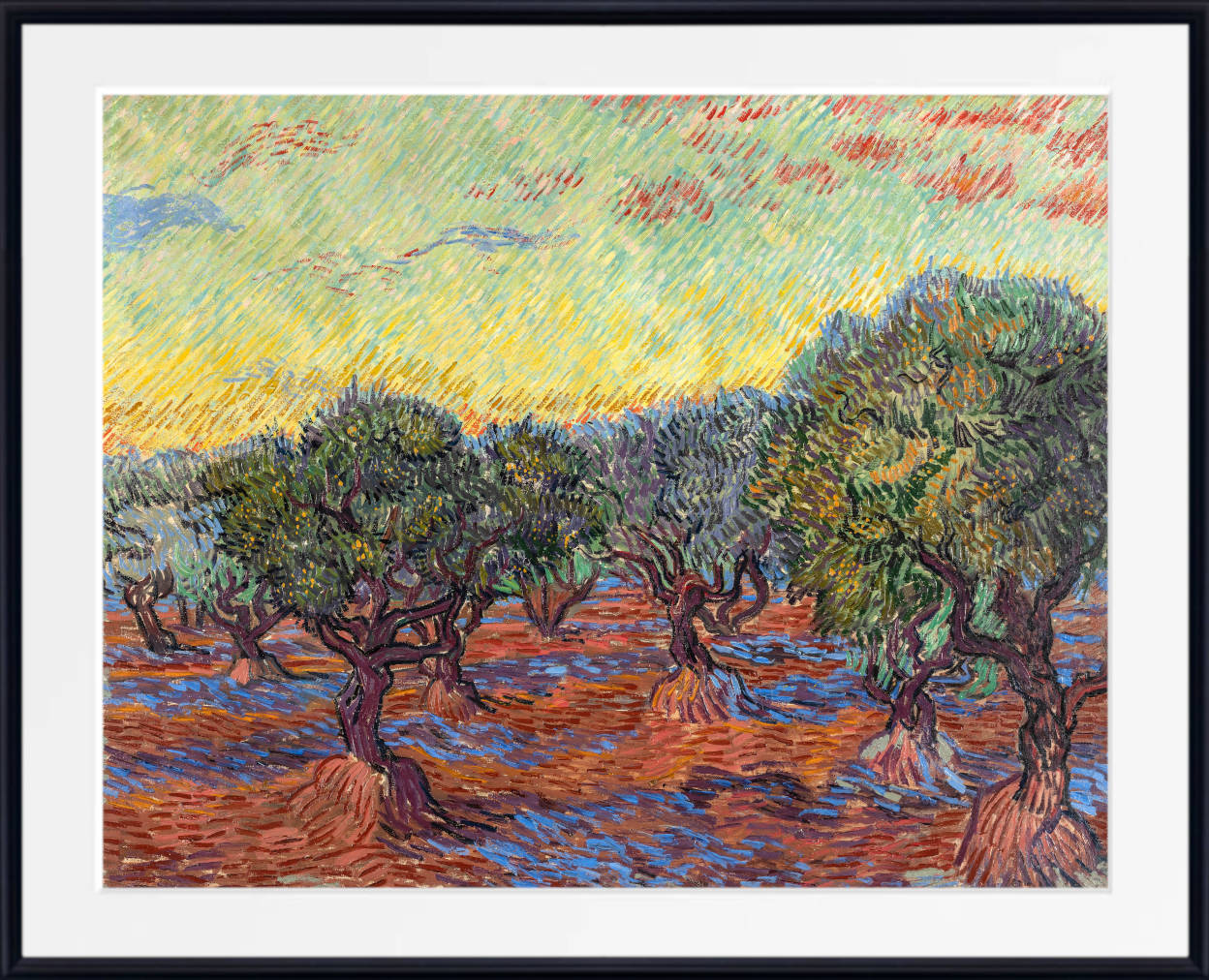
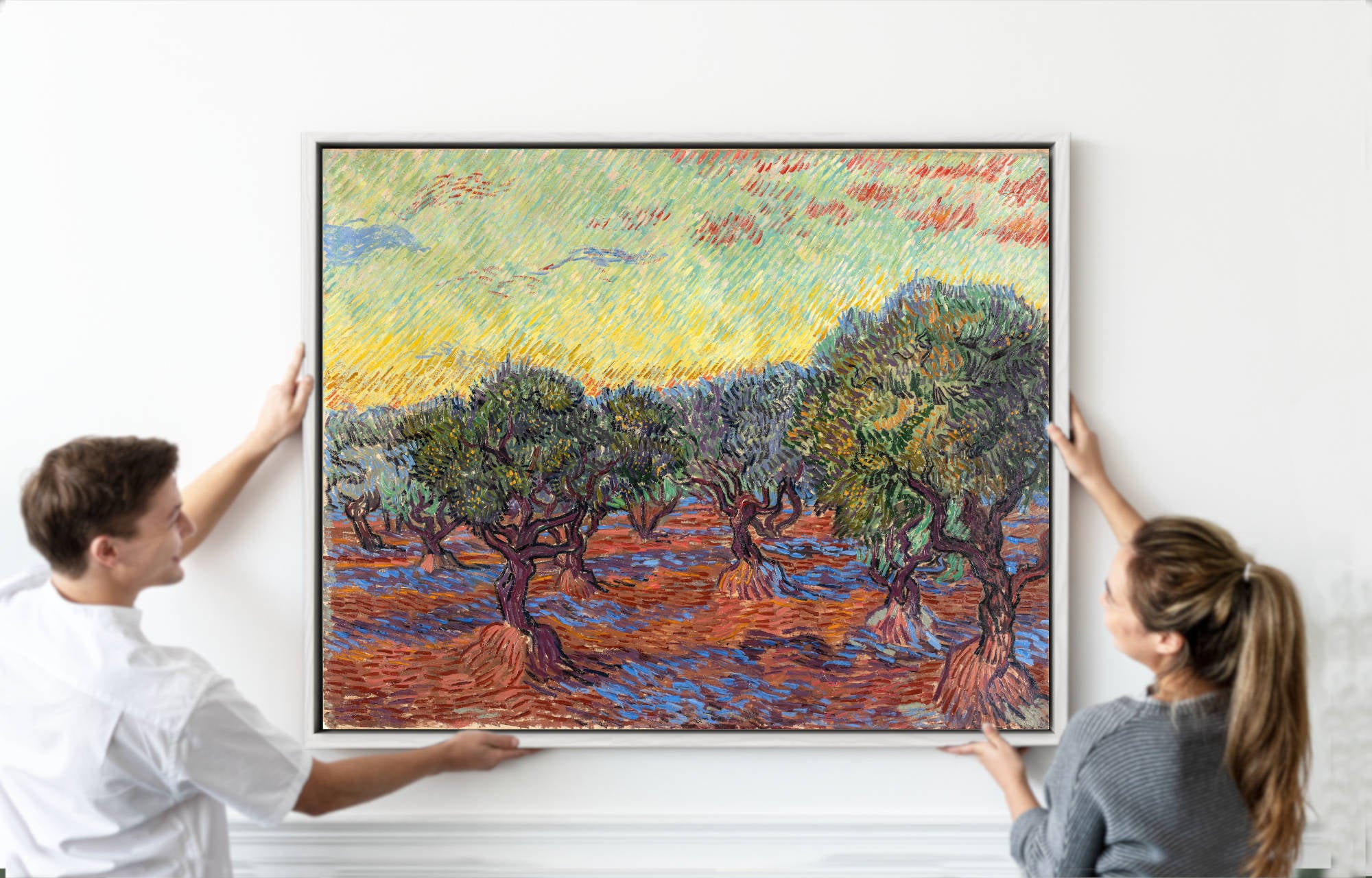
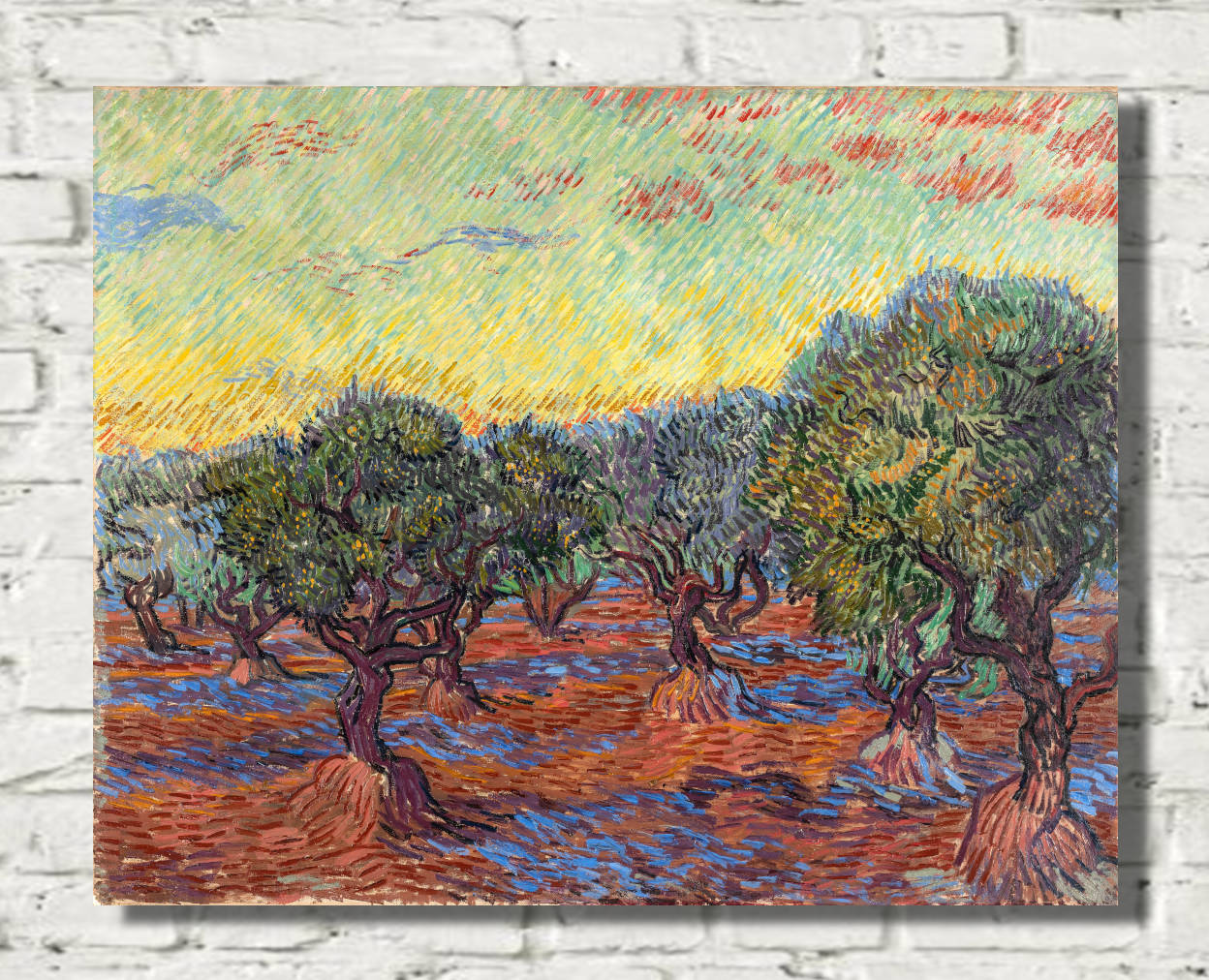
Some show olive trees beneath brilliant daylight, others under more unusual yellow or orange skies. Mountains may rise behind the grove, workers sometimes appear among the trees, and later paintings reflect the changing conditions of autumn and the olive harvest.
Seen together, the paintings reveal Van Gogh’s habit of studying a motif as a sequence rather than exhausting it in a single composition.
Olive Trees and the Alpilles Mountains
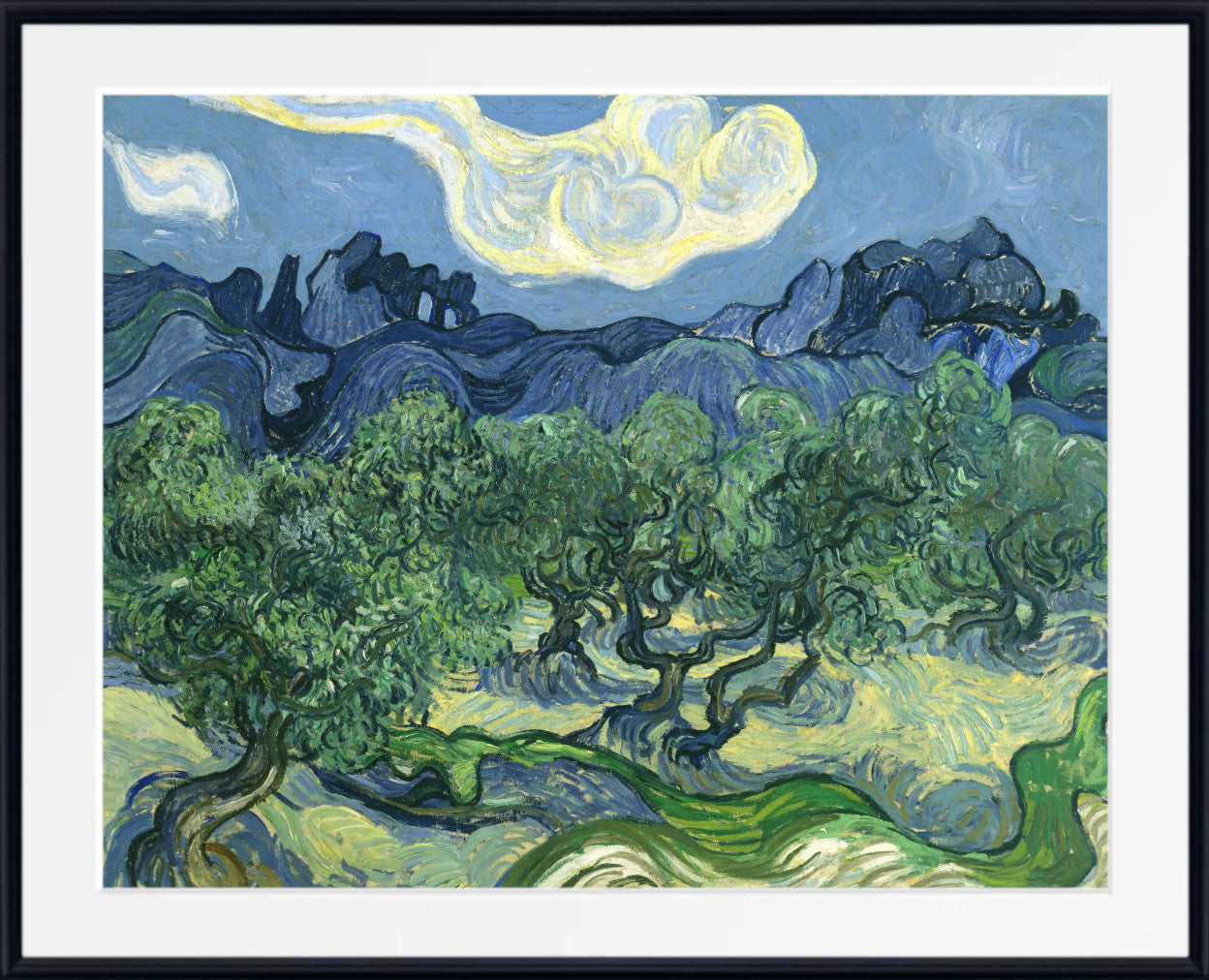
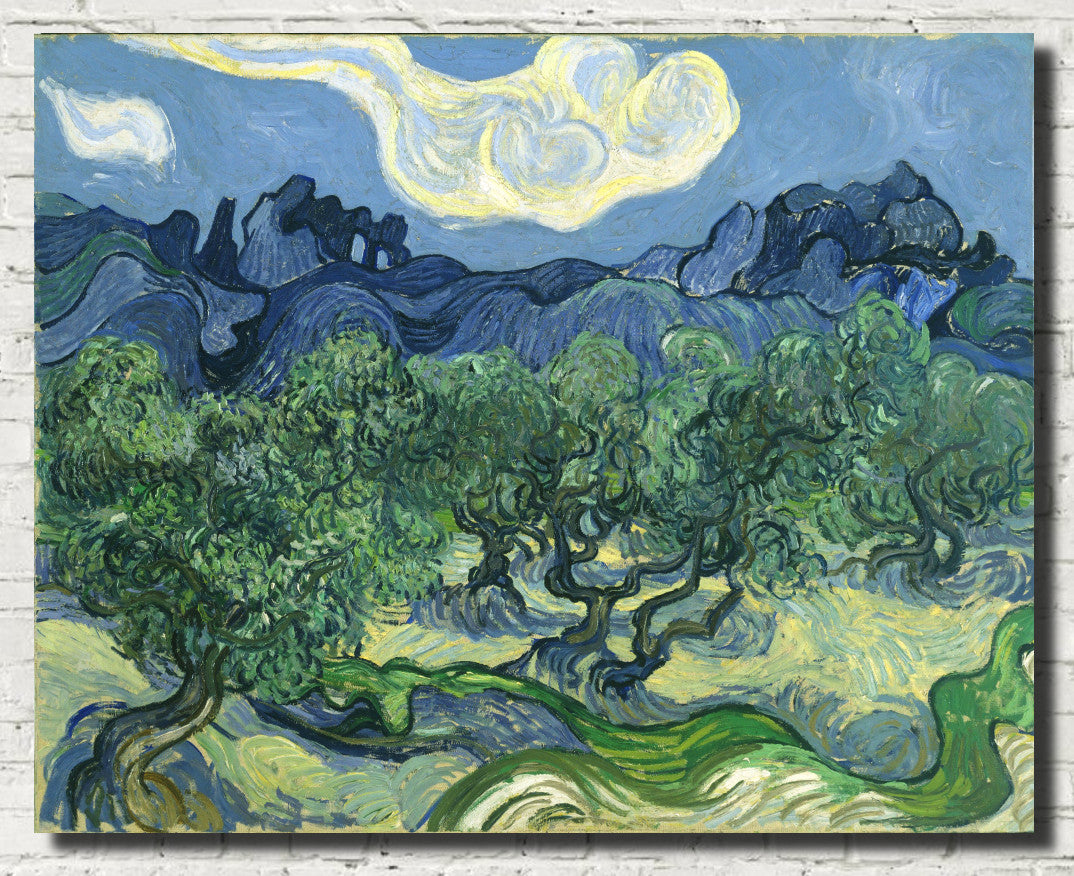
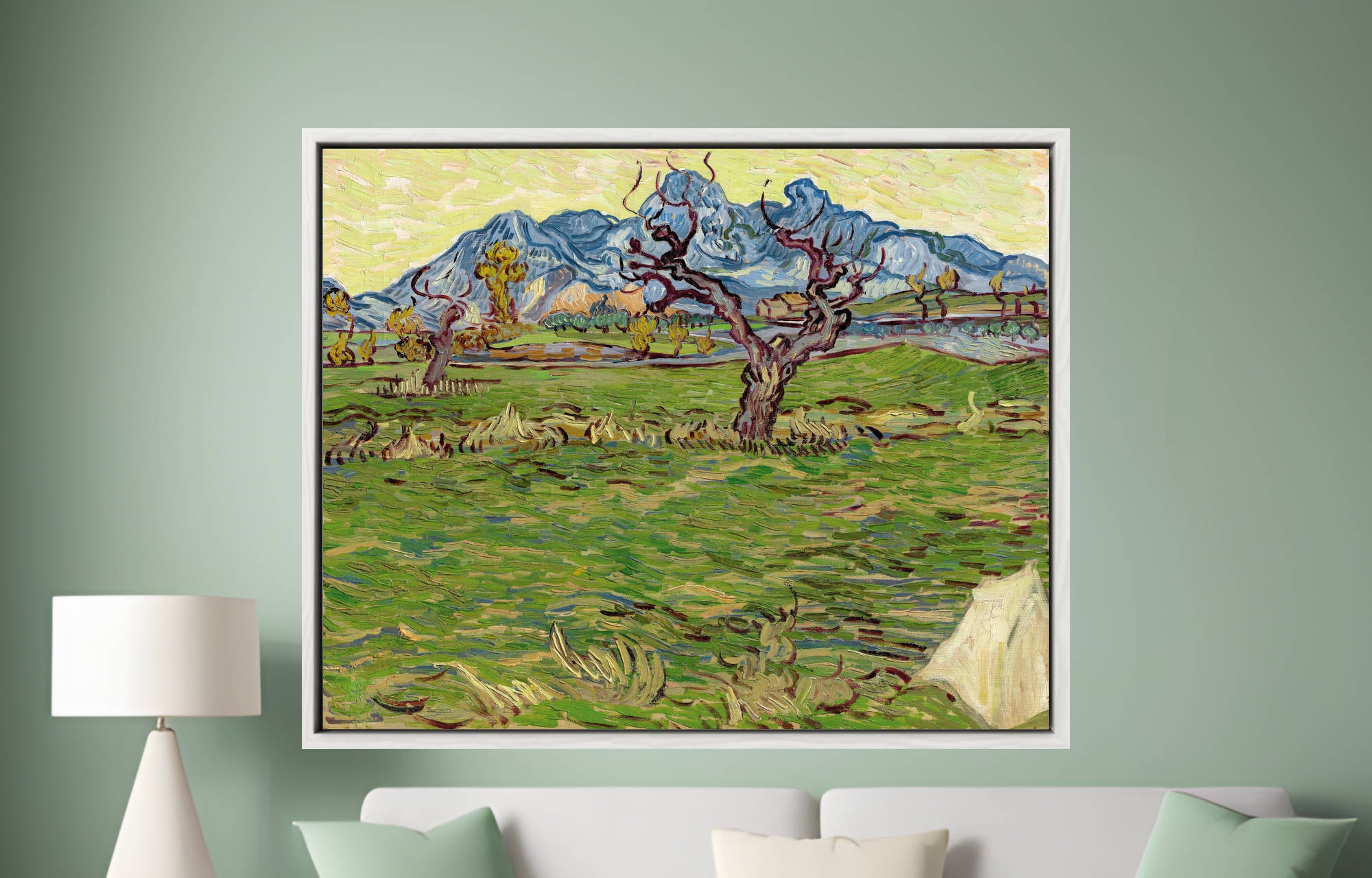
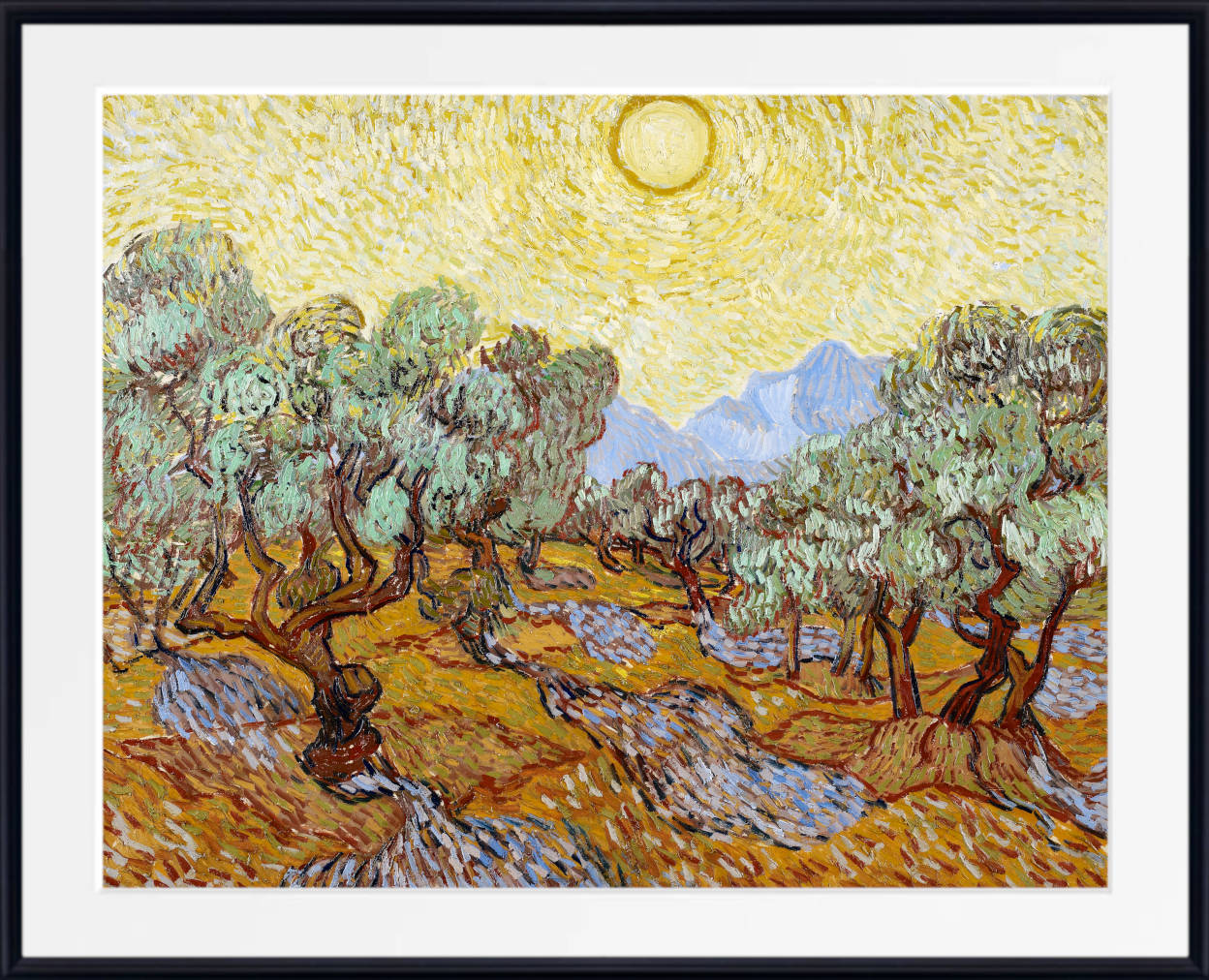
The Alpilles provide an important backdrop to several of Van Gogh’s olive landscapes. Their blue and violet profiles contrast strongly with the irregular green trees and warmer foreground earth.
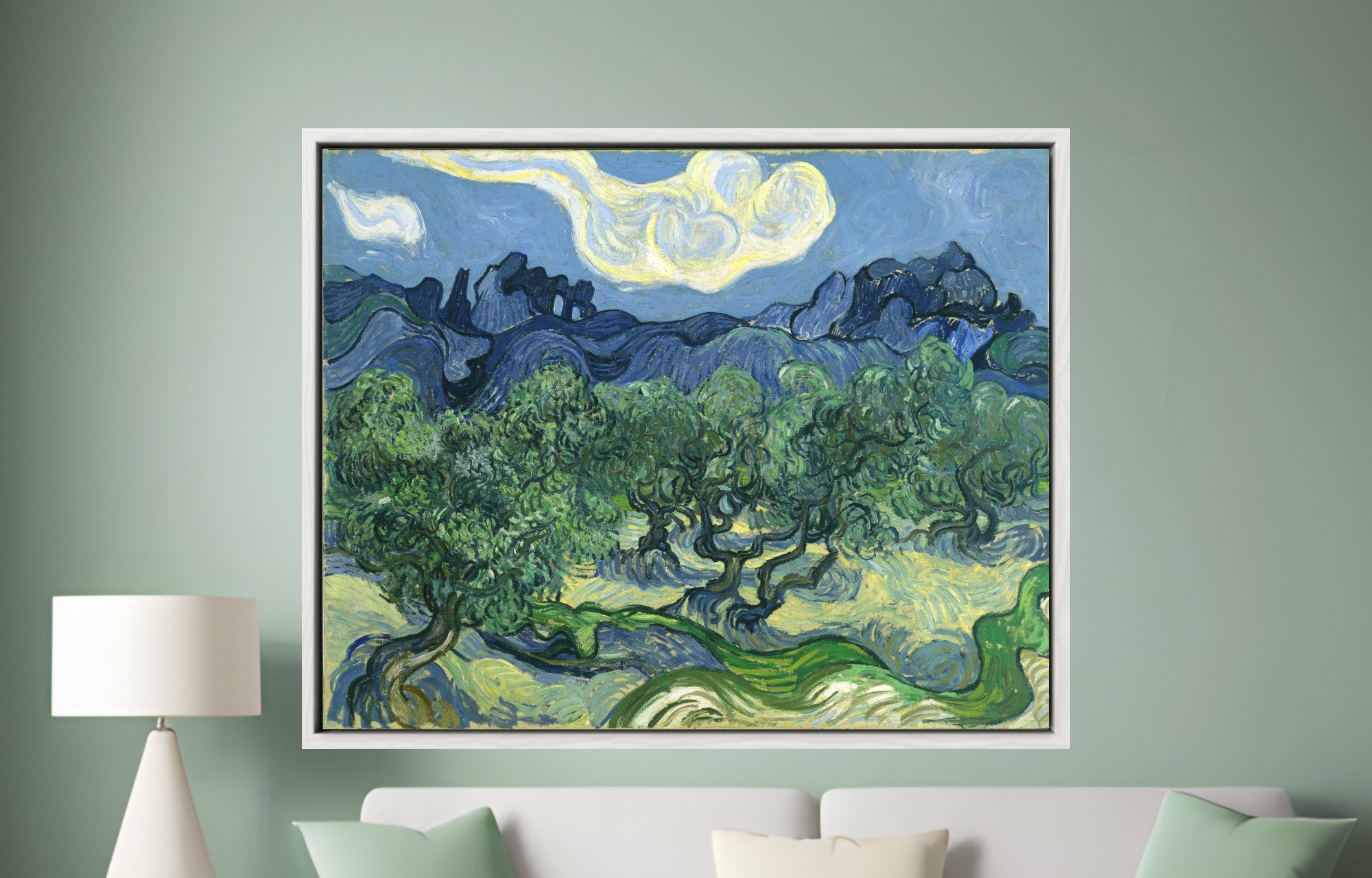
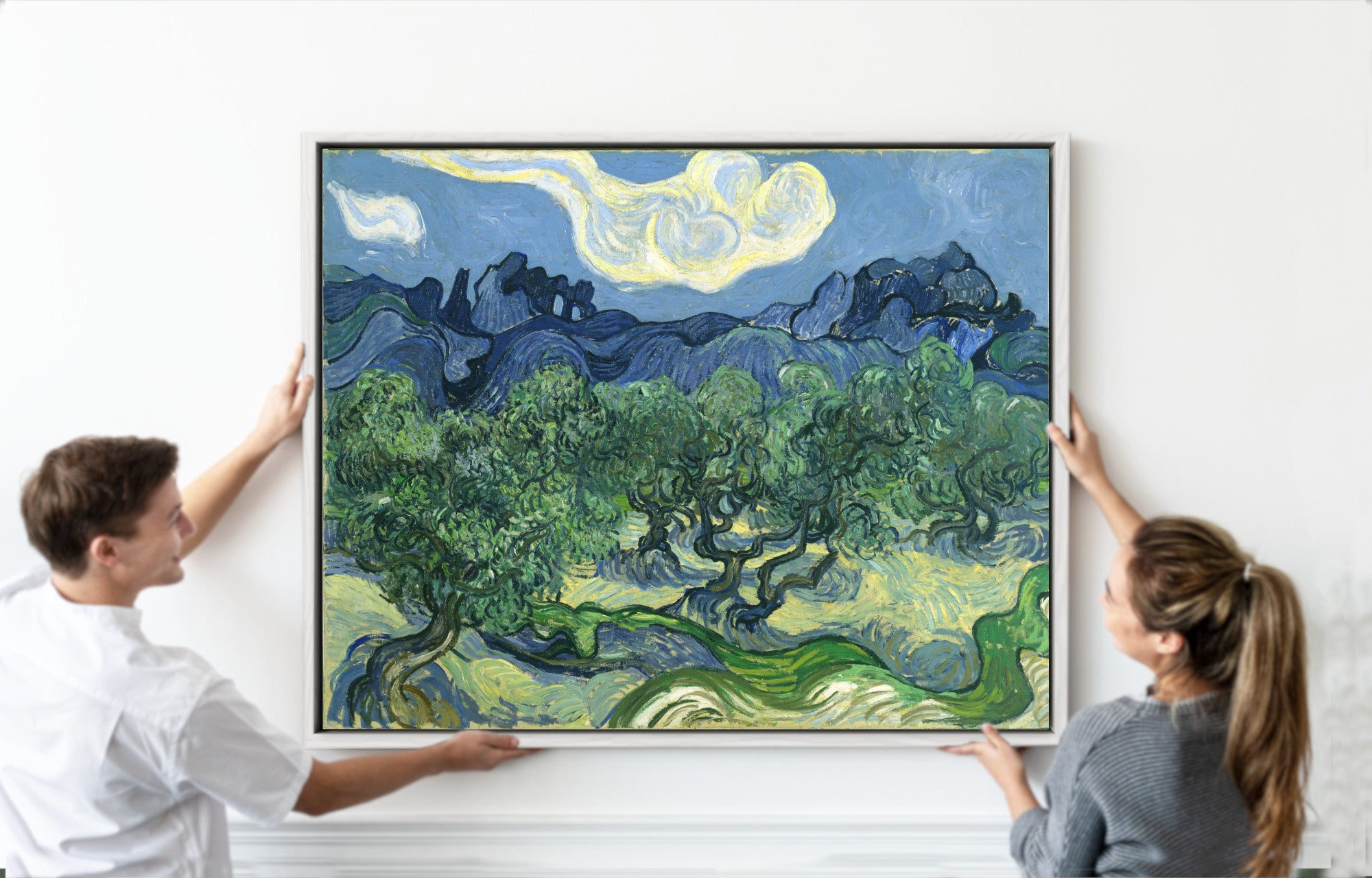
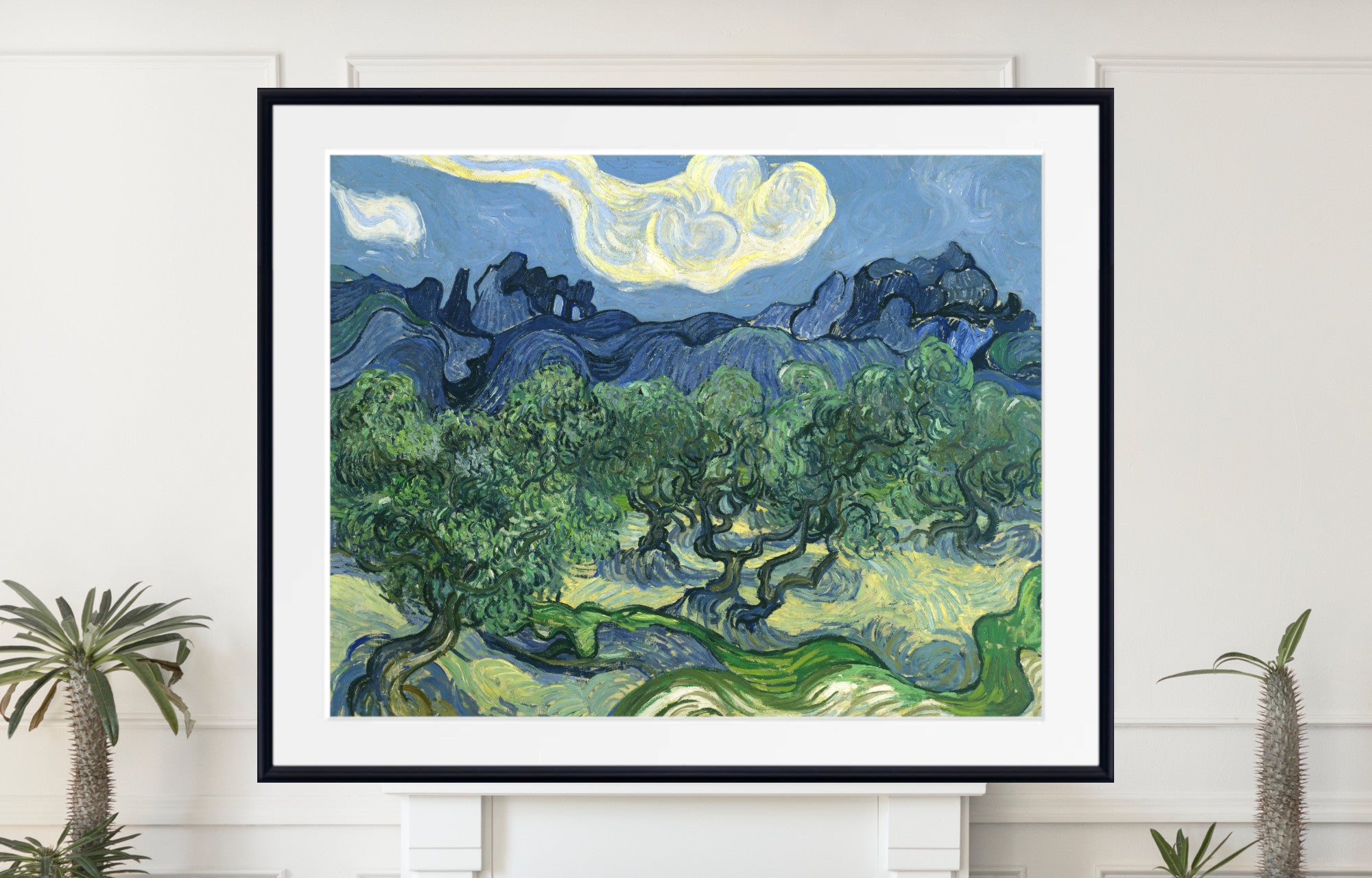
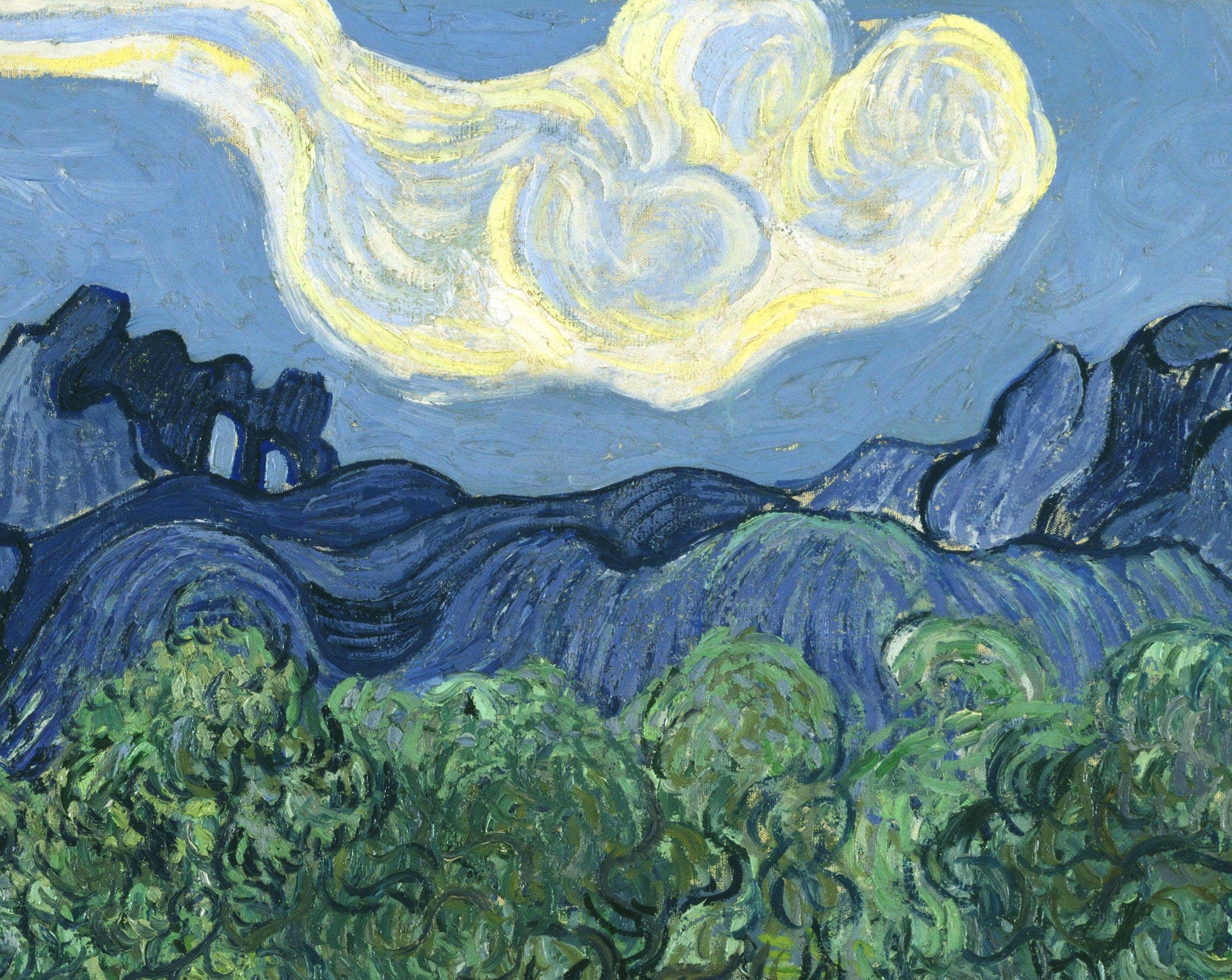
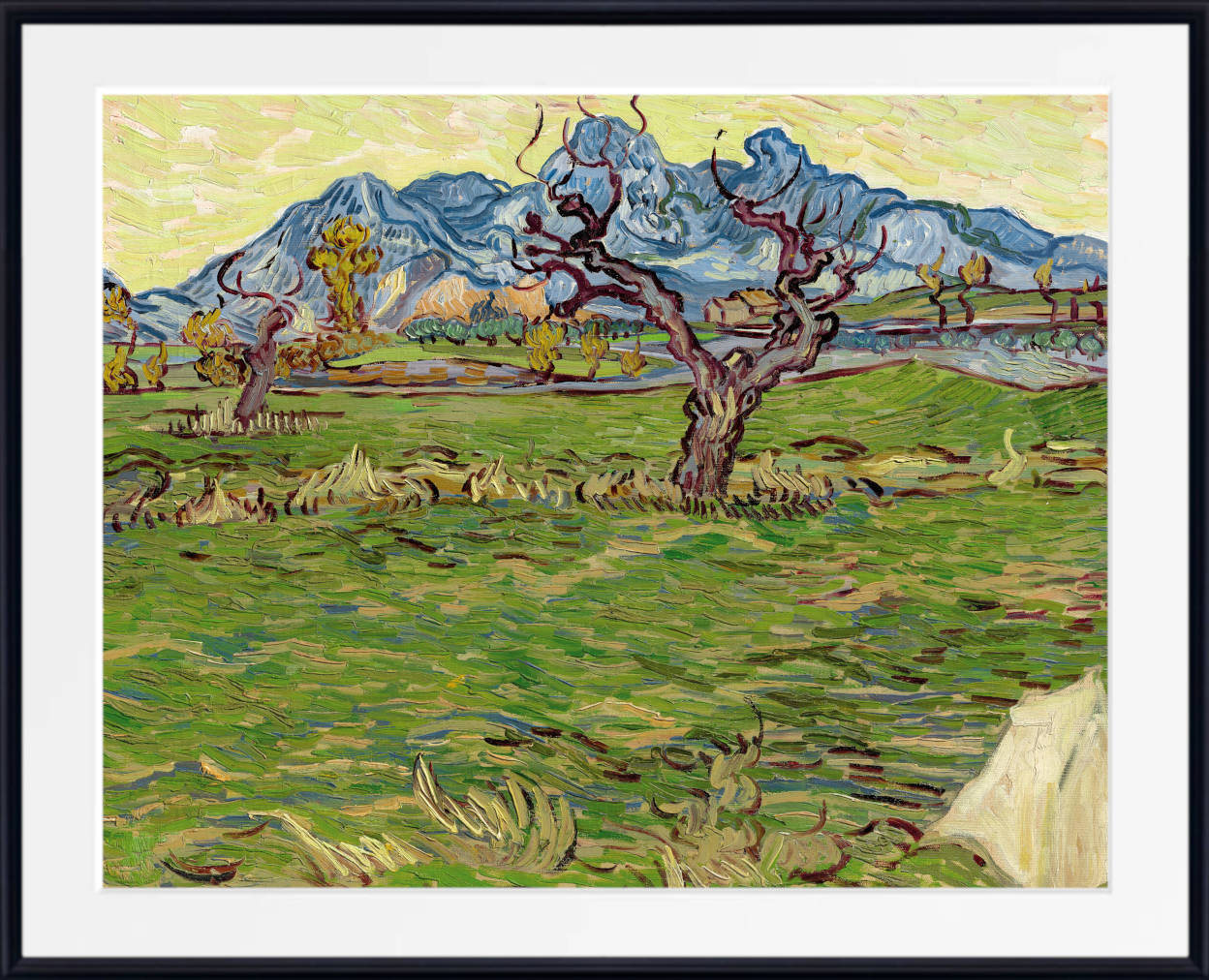
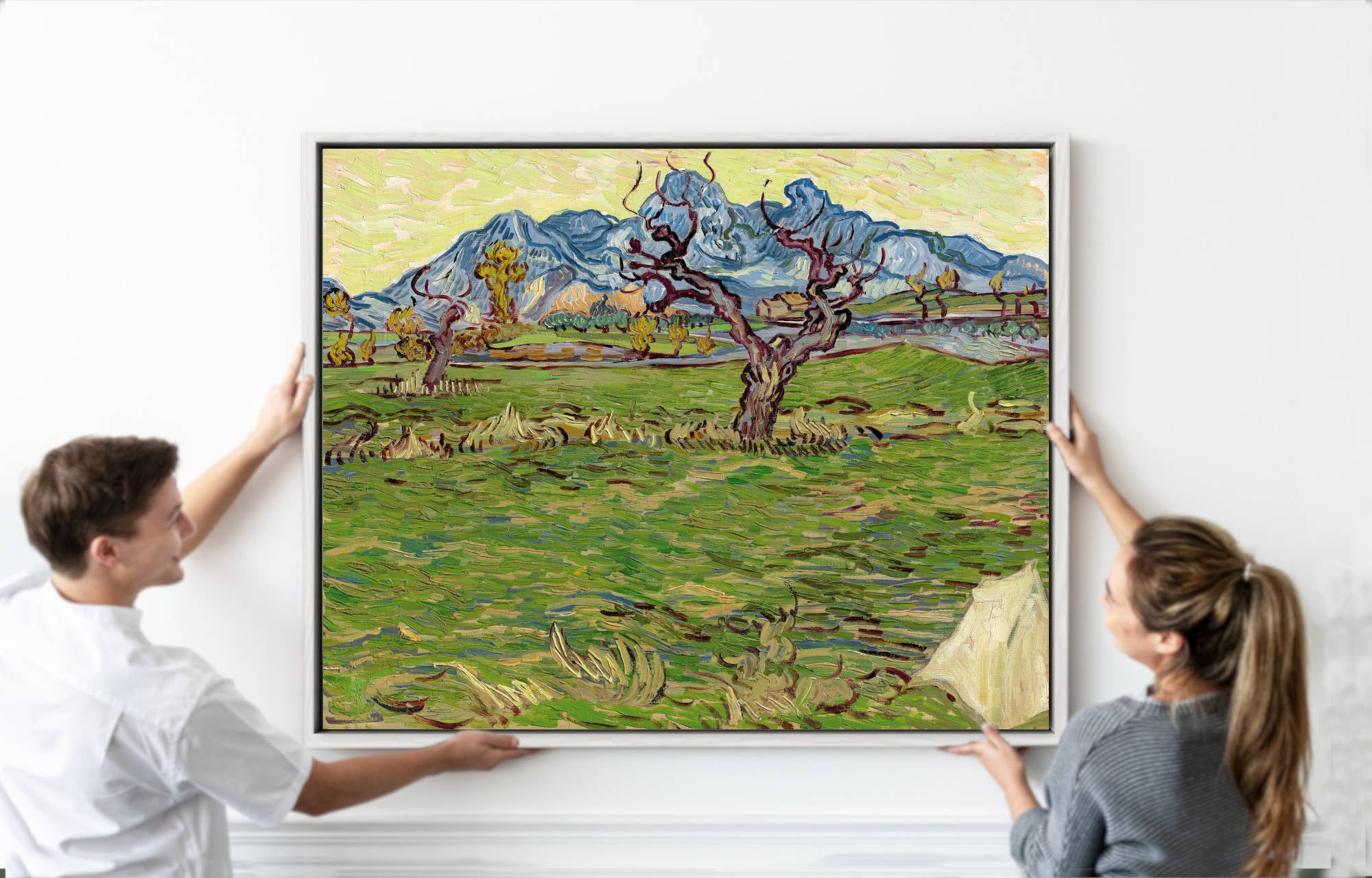
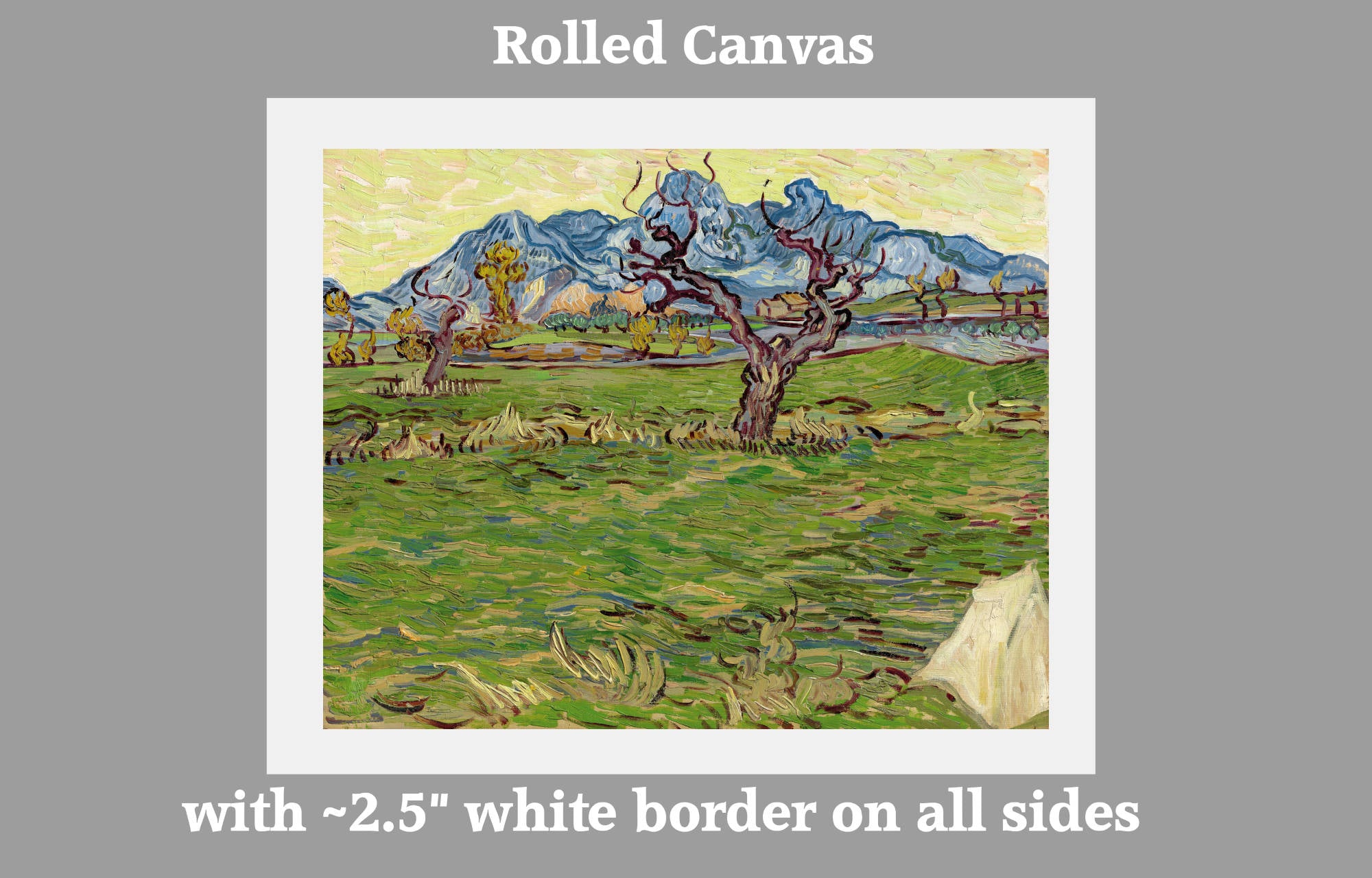
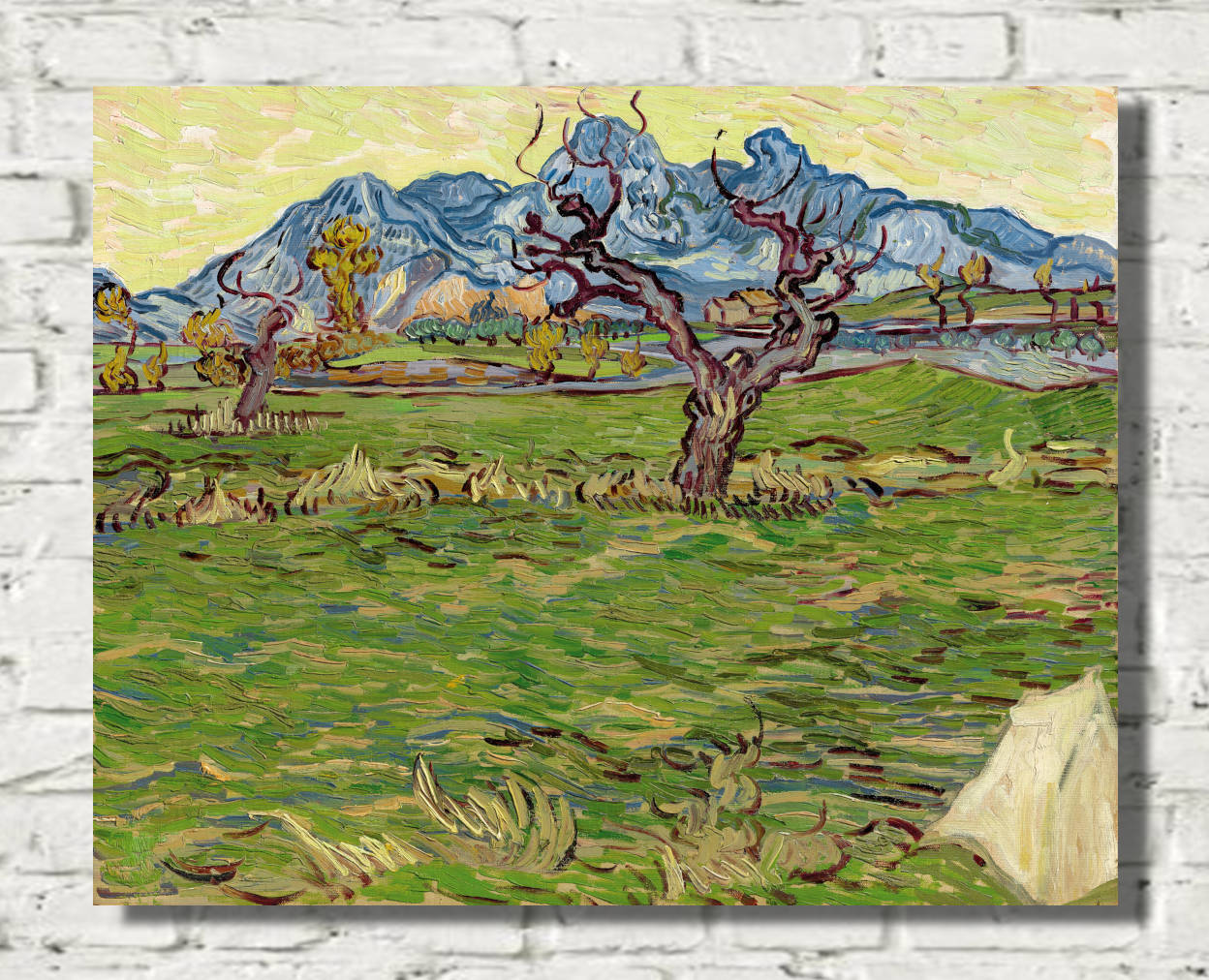
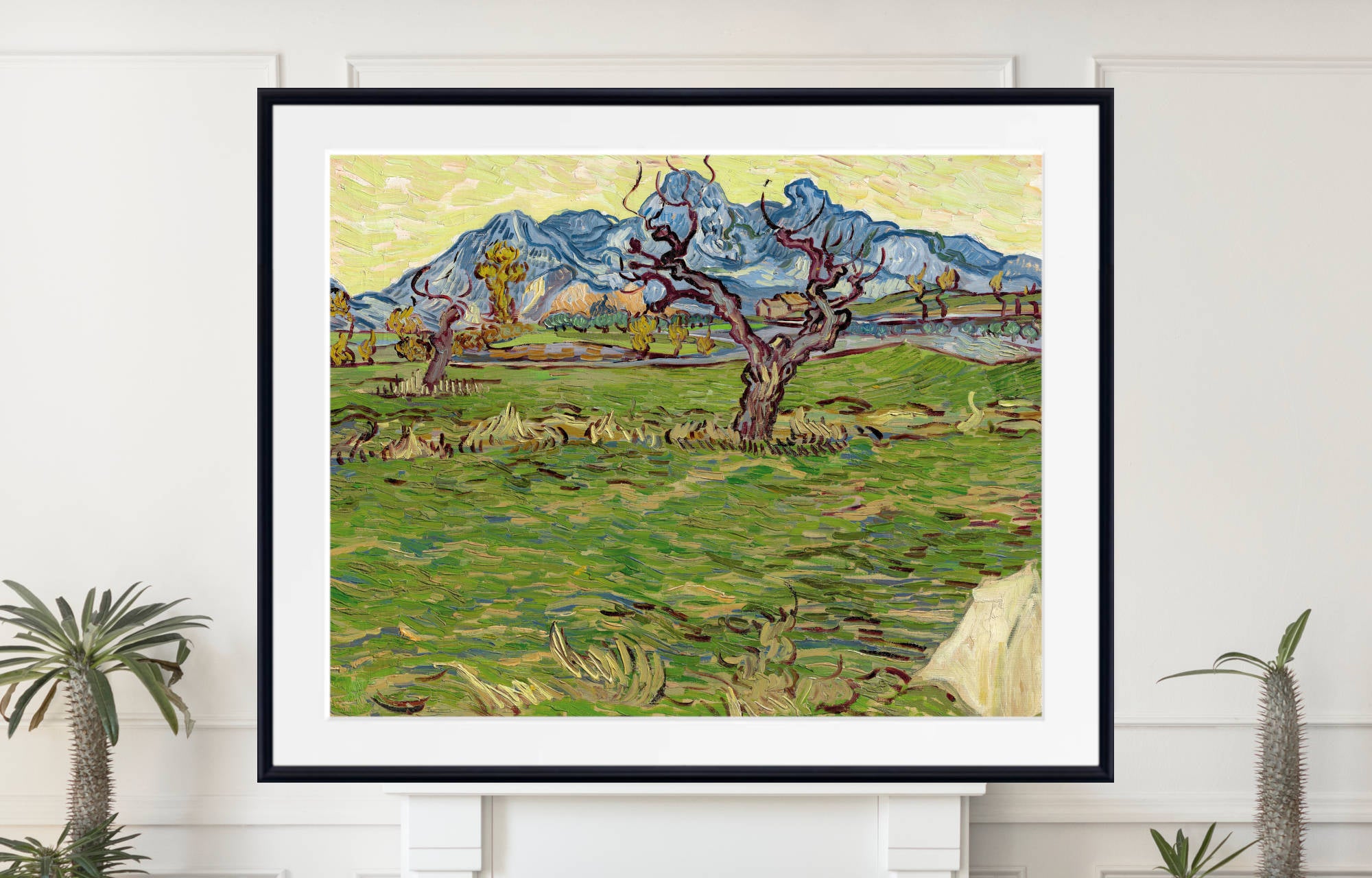
In Olive Trees with the Alpilles in the Background, Van Gogh layers grove, mountains and sky into a landscape in which almost every element appears animated by brushwork. The olive trees spread horizontally and twist across the middle ground while the mountains create a distant rhythmic boundary.
This interaction between tree, earth, mountain and sky is characteristic of his Saint-Rémy landscapes. Nature is not divided into isolated objects; repeated marks connect the different parts of the composition.
Olive Trees, Colour and Changing Light
One of the most striking qualities of Van Gogh’s olive paintings is their extraordinary colour variation.
The trees themselves can shift between deep green, blue-green, turquoise and silvery tones. Trunks may contain orange, violet, ochre and brown, while the ground ranges from warm yellow and orange to pink and purple.
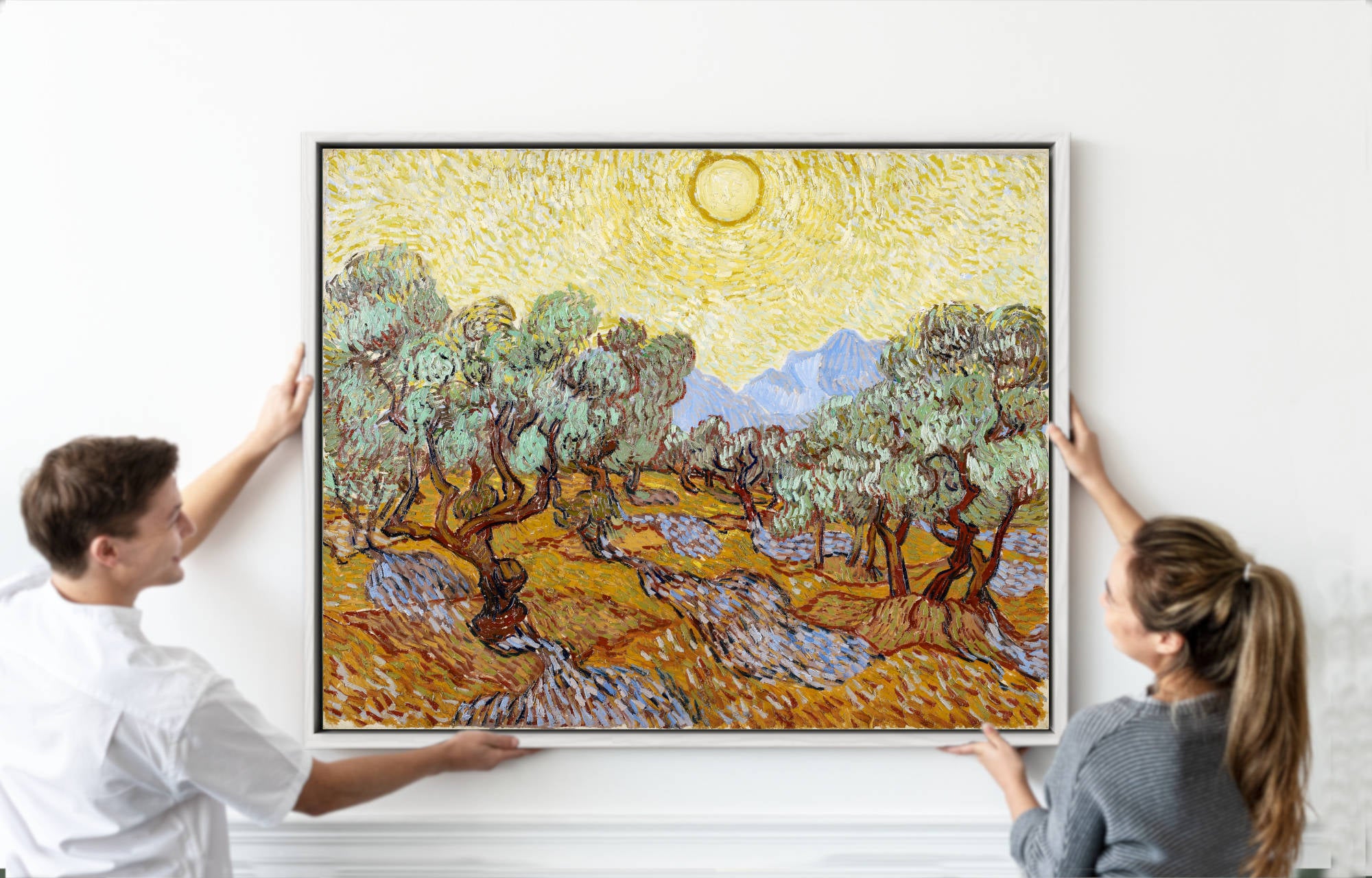
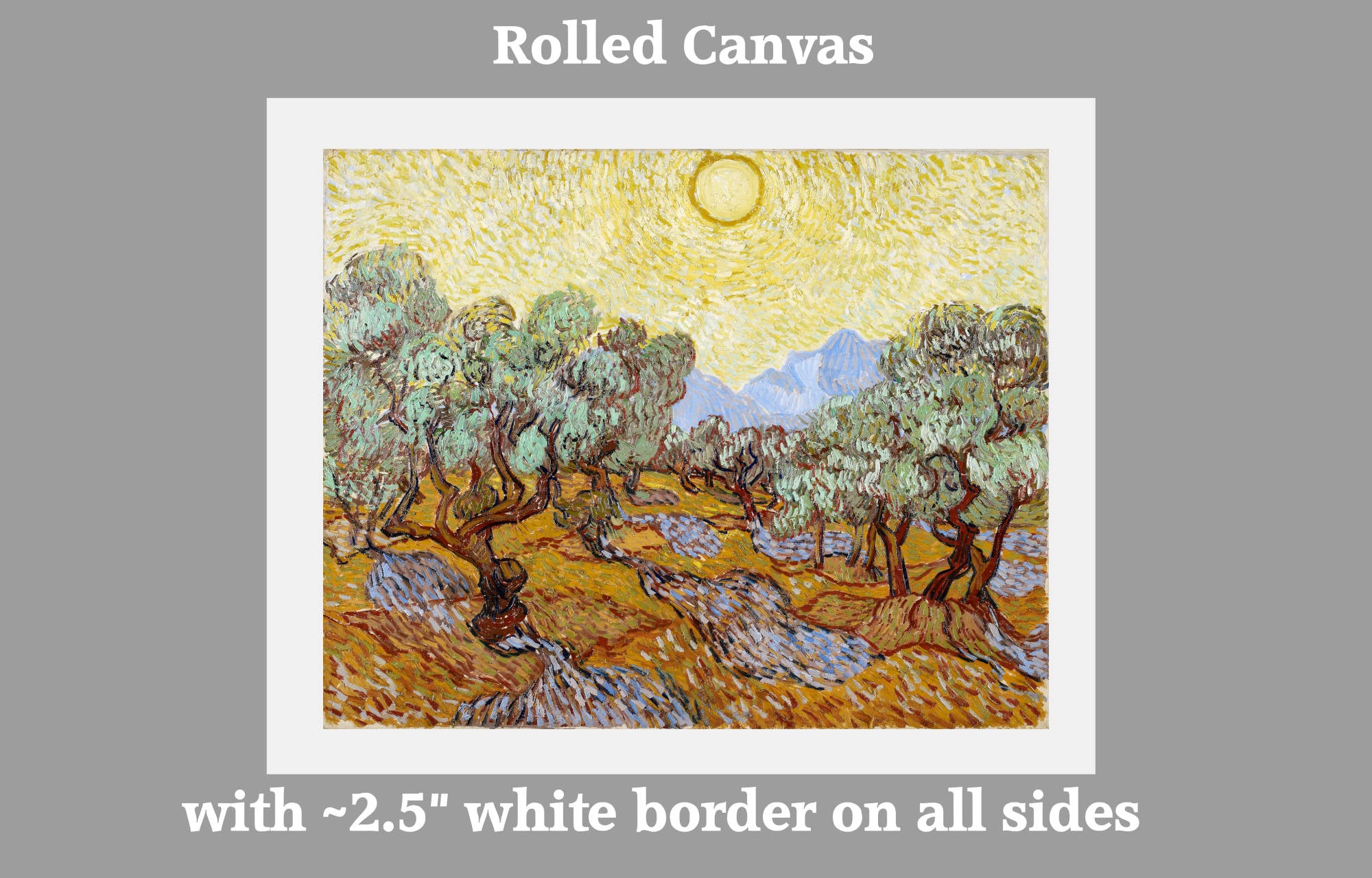
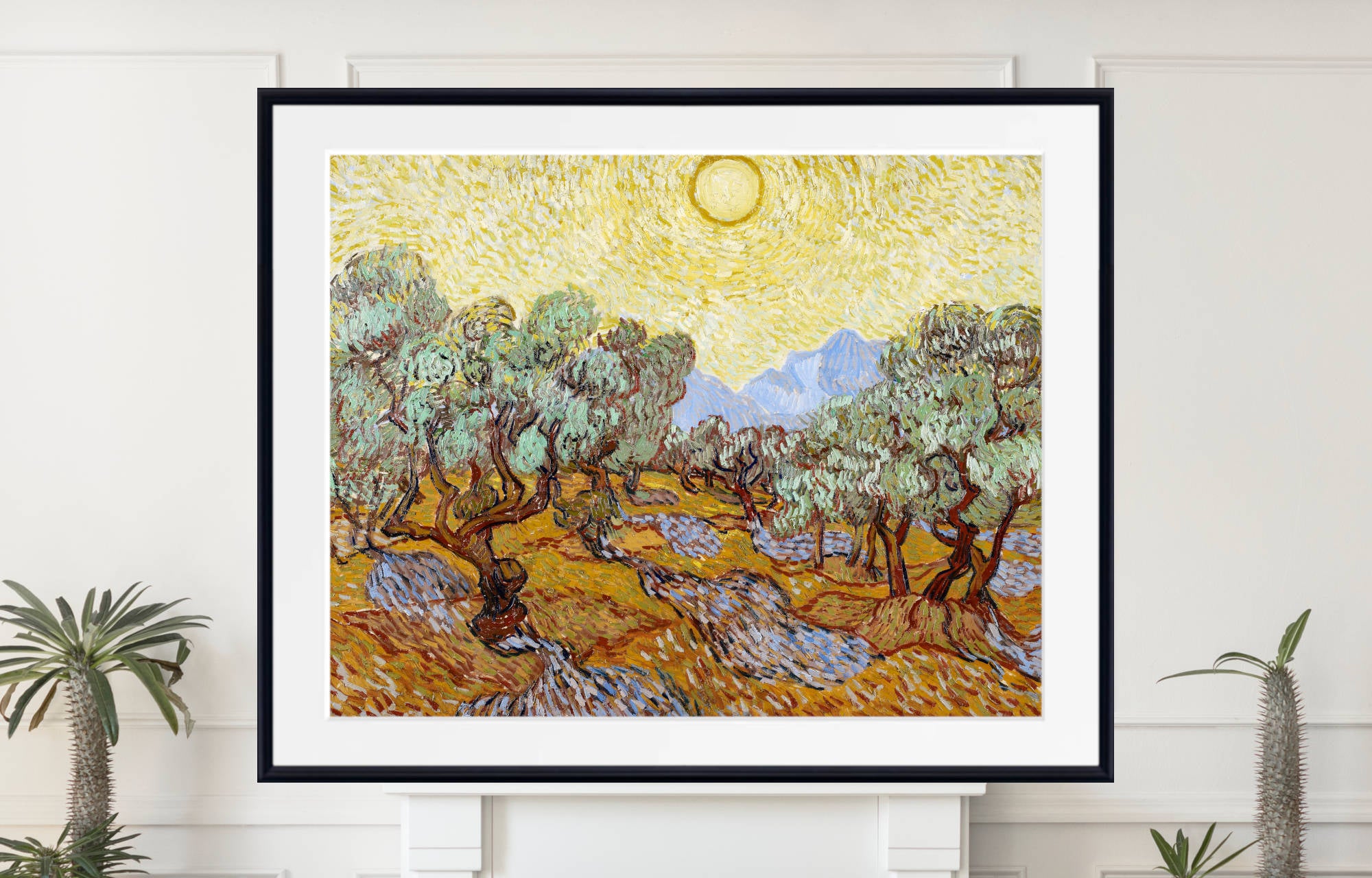
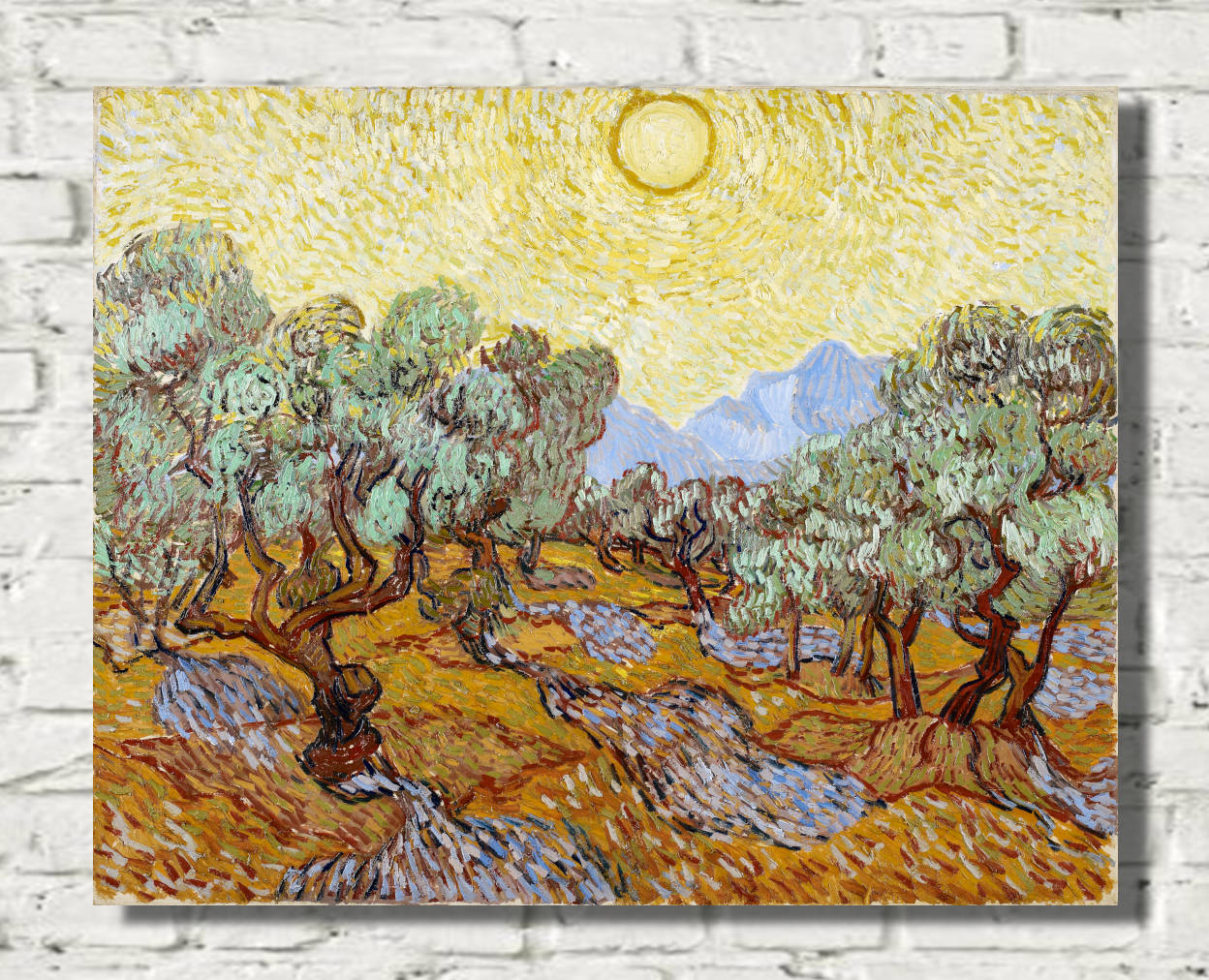
Works such as Olive Trees with Yellow Sky and Sun demonstrate how far Van Gogh was willing to move beyond straightforward naturalistic colour. A yellow sky can intensify the surrounding greens and blues and create a landscape that communicates the sensation of heat and light rather than merely recording their appearance.
Olive Trees and The Starry Night
One of the most interesting connections within Van Gogh’s Saint-Rémy work is the relationship between his olive landscapes and The Starry Night.
In June 1889 Van Gogh worked on an olive landscape at approximately the same time as his celebrated night scene. Museum research shows that he regarded the olive-tree landscape and the nocturnal composition as related experiments in pushing beyond literal visual description.
The comparison is revealing. In both subjects, the landscape is organised through strong outlines and flowing rhythms. Hills, clouds, trees and sky become active components of the composition rather than passive scenery.
Olive Trees and Cypress Trees
Olive trees and cypresses became parallel motifs during Van Gogh’s Saint-Rémy period, yet their shapes offered almost opposite possibilities.
The olive tree tends to spread outward through twisting branches and uneven foliage. The cypress rises dramatically upward, creating a powerful vertical silhouette against the sky.
Van Gogh often exploited this contrast within the Provençal landscape. Explore GalleryThane’s Vincent van Gogh Cypress Prints to compare the low, irregular rhythms of the olive groves with the monumental vertical forms of his cypress paintings.
Olive Groves, Wheat Fields and the Landscape of Provence
The olive groves formed part of a wider agricultural landscape that Van Gogh explored throughout southern France. Fields, orchards, farm buildings and harvested crops recur alongside the characteristic trees of Provence.
At Saint-Rémy, wheat fields and olive groves gave Van Gogh subjects he could revisit as the seasons changed. The contrast between golden wheat, blue mountains and green trees provided especially powerful opportunities for complementary colour.
Explore the Vincent van Gogh Wheat Field & Harvest Prints collection for related landscapes spanning the harvests of Arles, the enclosed fields of Saint-Rémy and the expansive wheatfields of Auvers-sur-Oise.
From the Flowering Orchards of Arles to the Olive Groves of Saint-Rémy
Van Gogh’s fascination with trees had already produced another important group of paintings before he arrived at Saint-Rémy.
During spring 1888 in Arles, flowering peach, pear and apricot trees became the subject of a concentrated sequence of colourful orchard landscapes. A year later, the olive groves offered something visually quite different: ancient twisting trunks, dense foliage and more rugged surroundings.
Compare the two groups in GalleryThane’s Vincent van Gogh Flowering Orchards Prints collection.
Olive Grove Paintings in Summer and Autumn
Van Gogh’s repeated visits to the olive groves allowed him to record their changing appearance across different months.
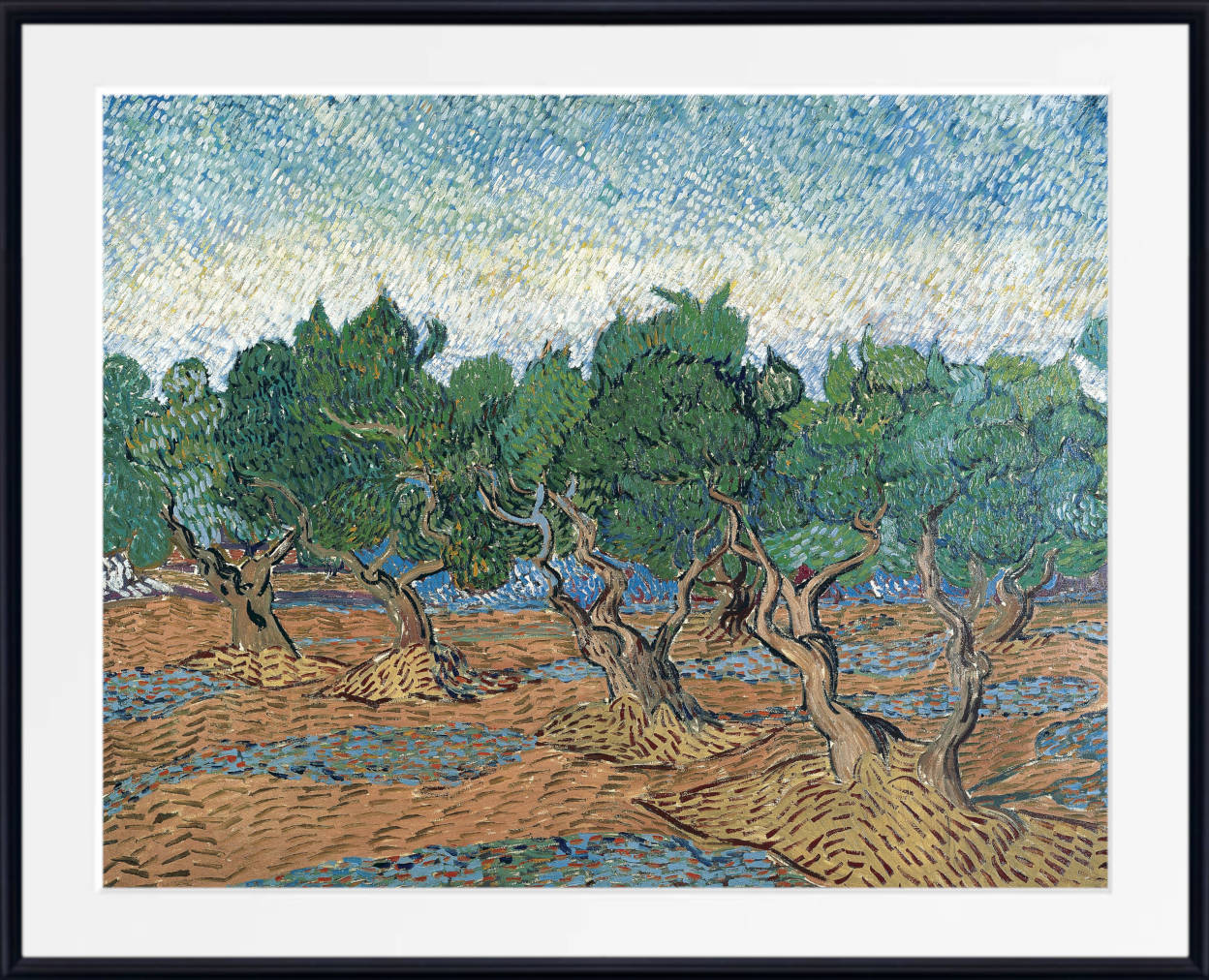
The summer paintings can convey the brilliant light and heat of Provence through intense greens, blues and yellows. By autumn, different combinations of colour and atmosphere emerge, as seen in works such as Olive Grove (November).
This seasonal variation is central to understanding the group. The olive tree was not simply an emblematic Mediterranean object for Van Gogh; it was a living landscape subject whose appearance changed continually according to weather, light and time of year.
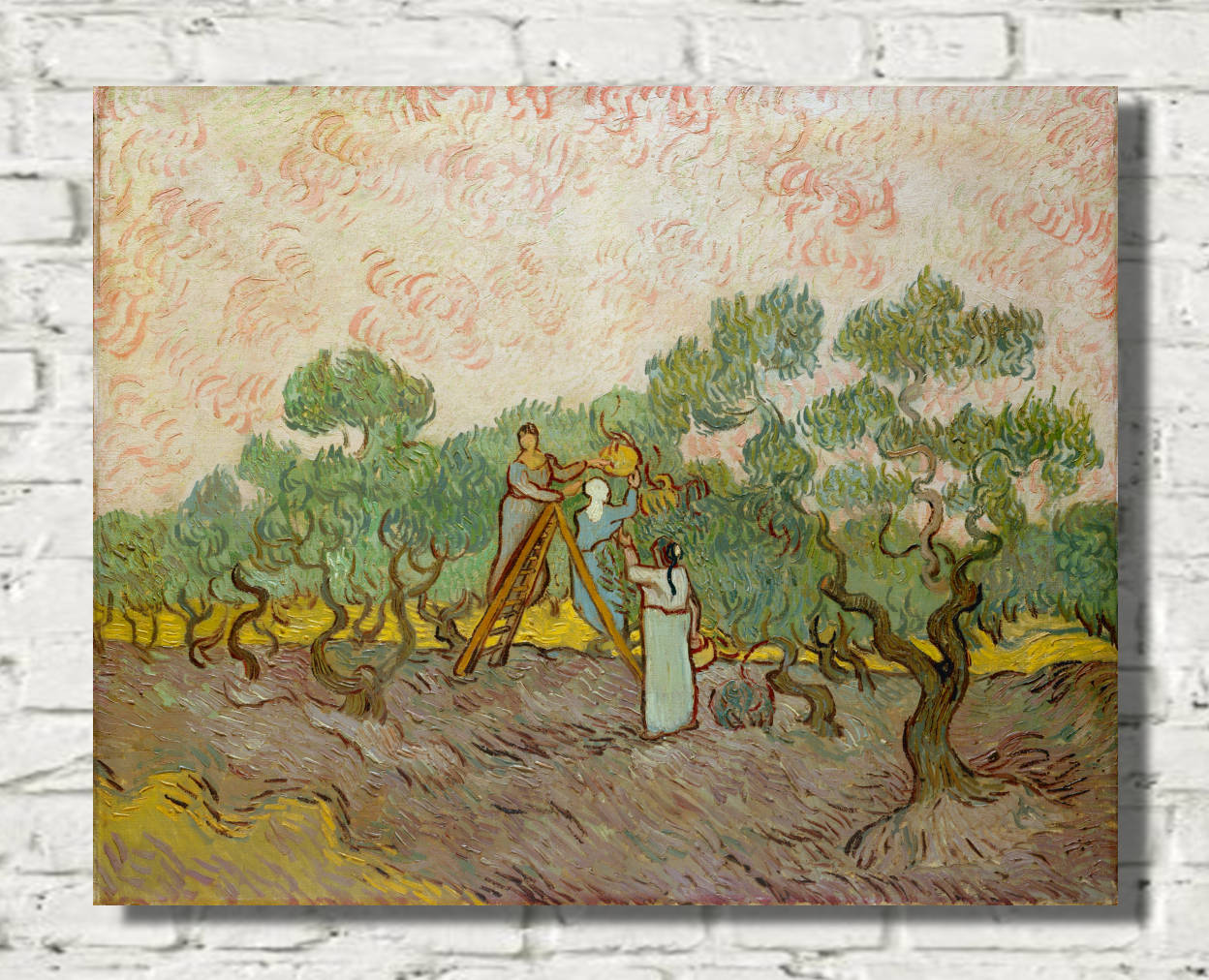
Women Picking Olives
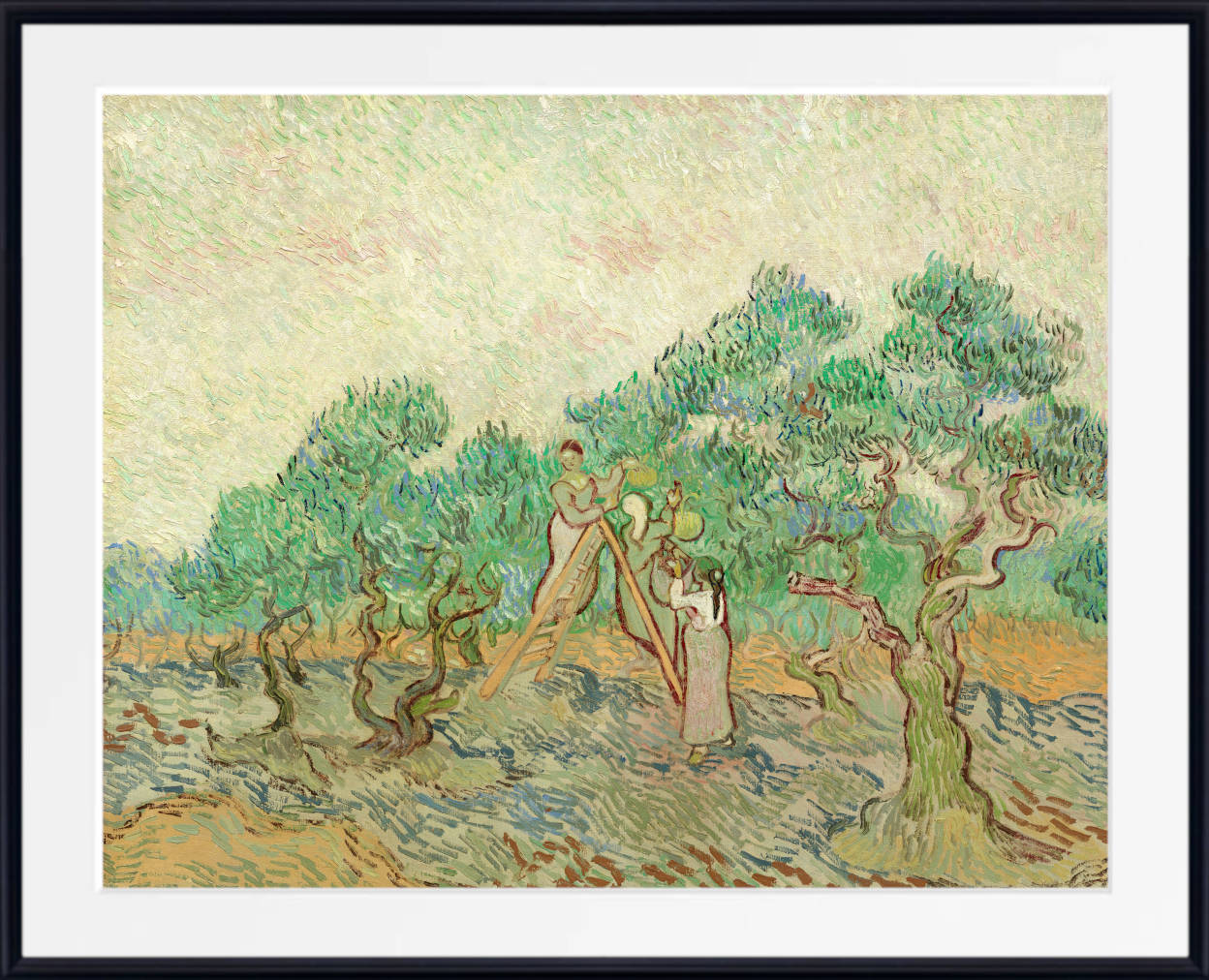
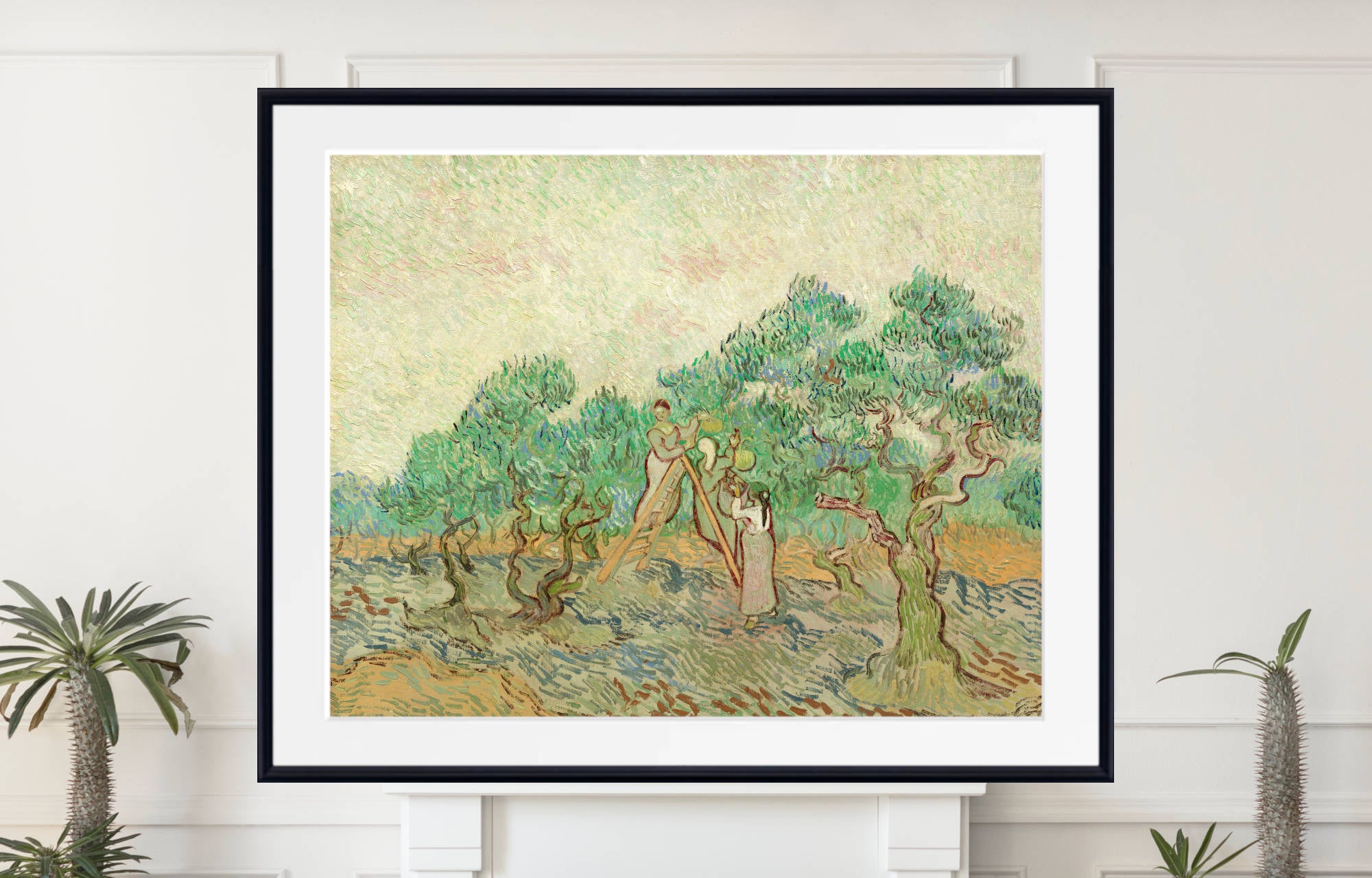
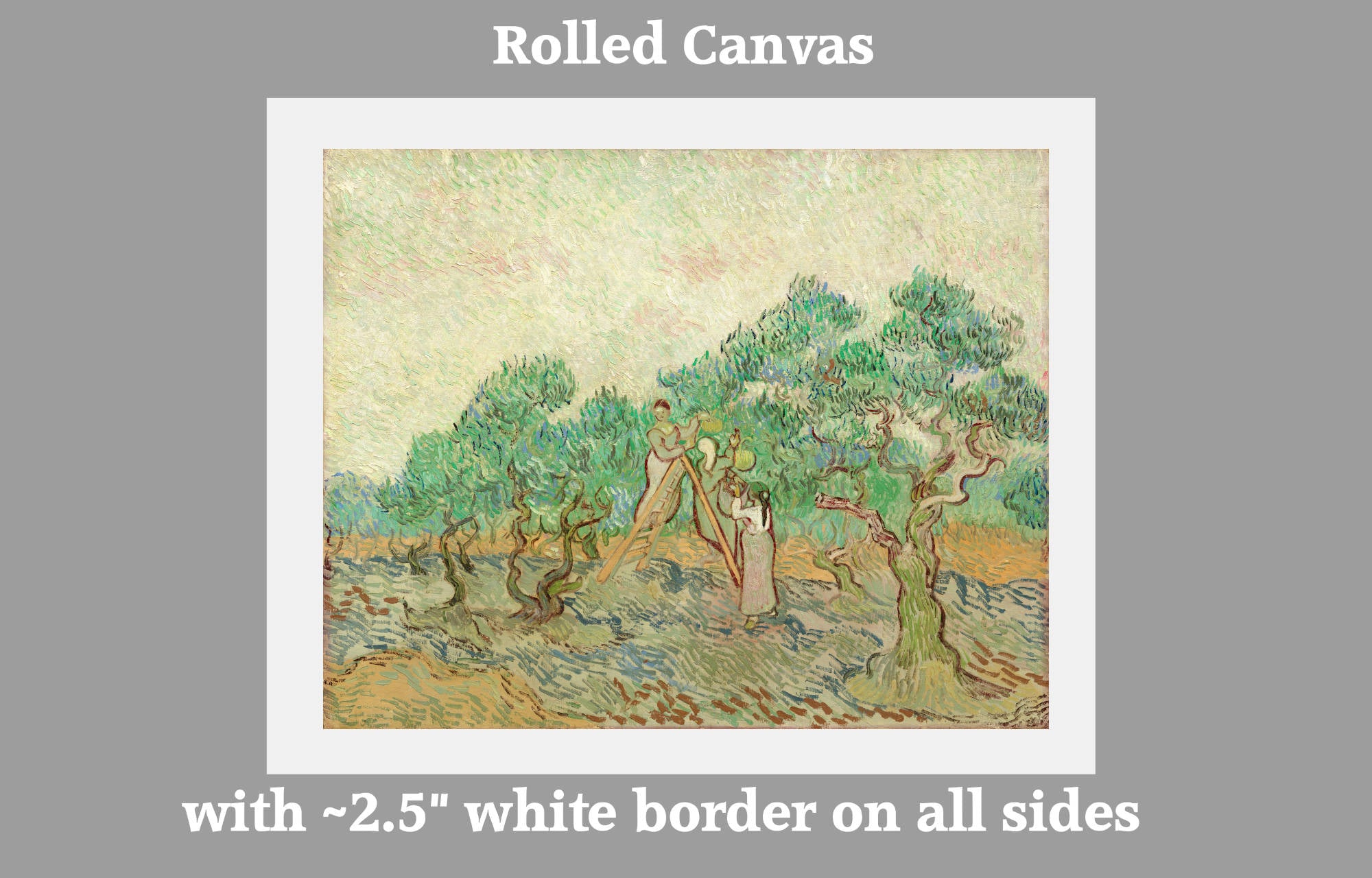
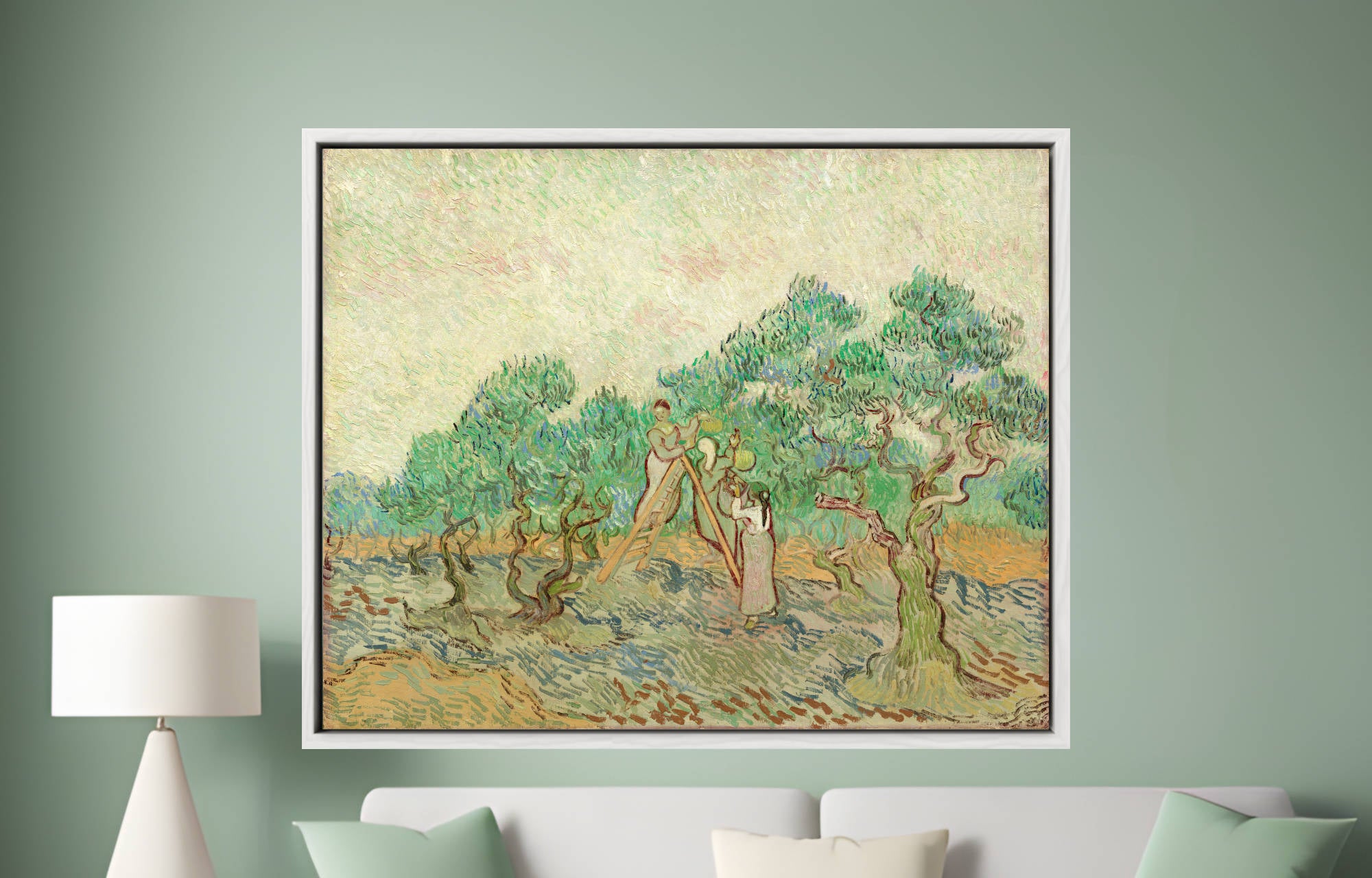
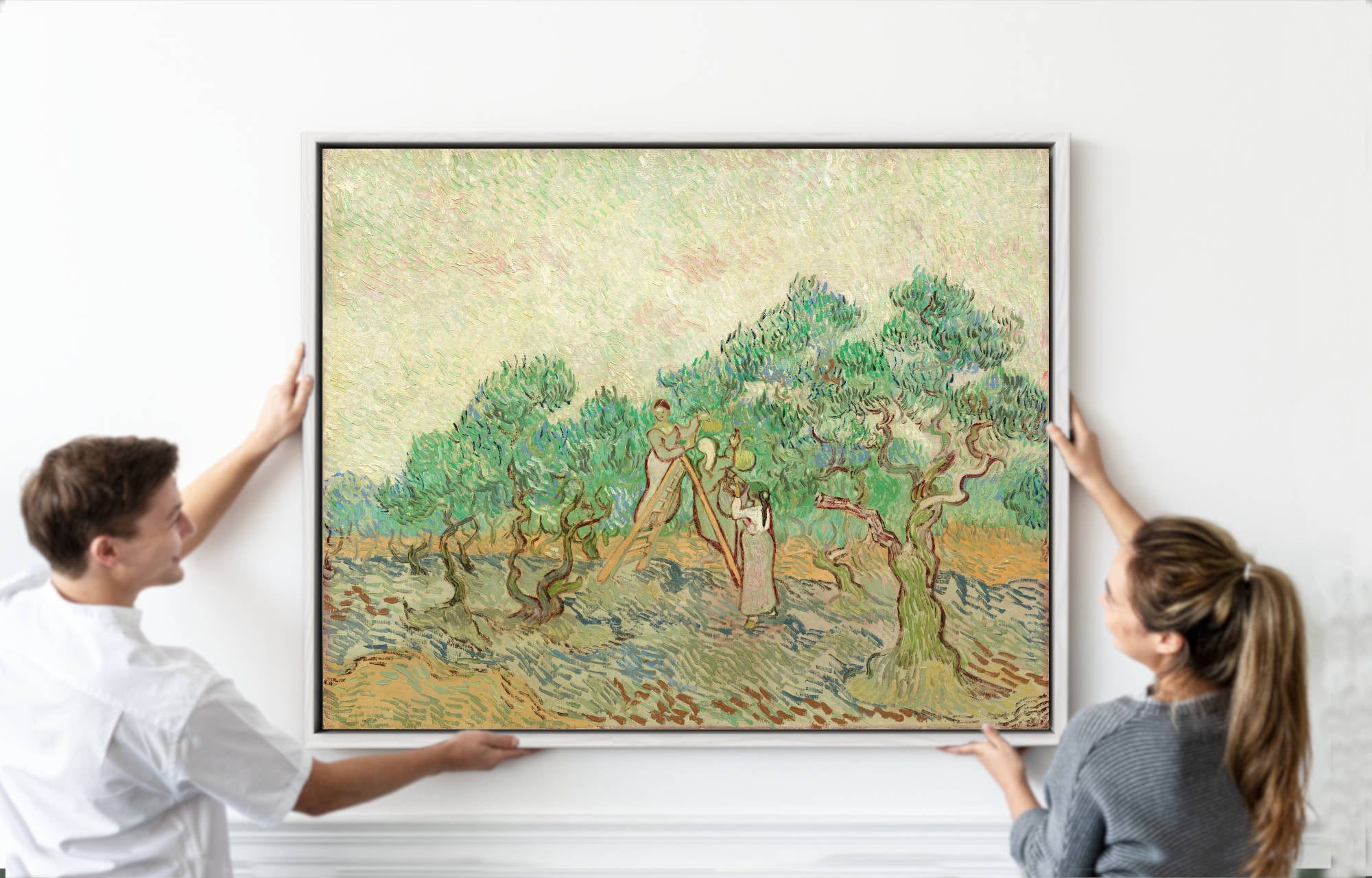
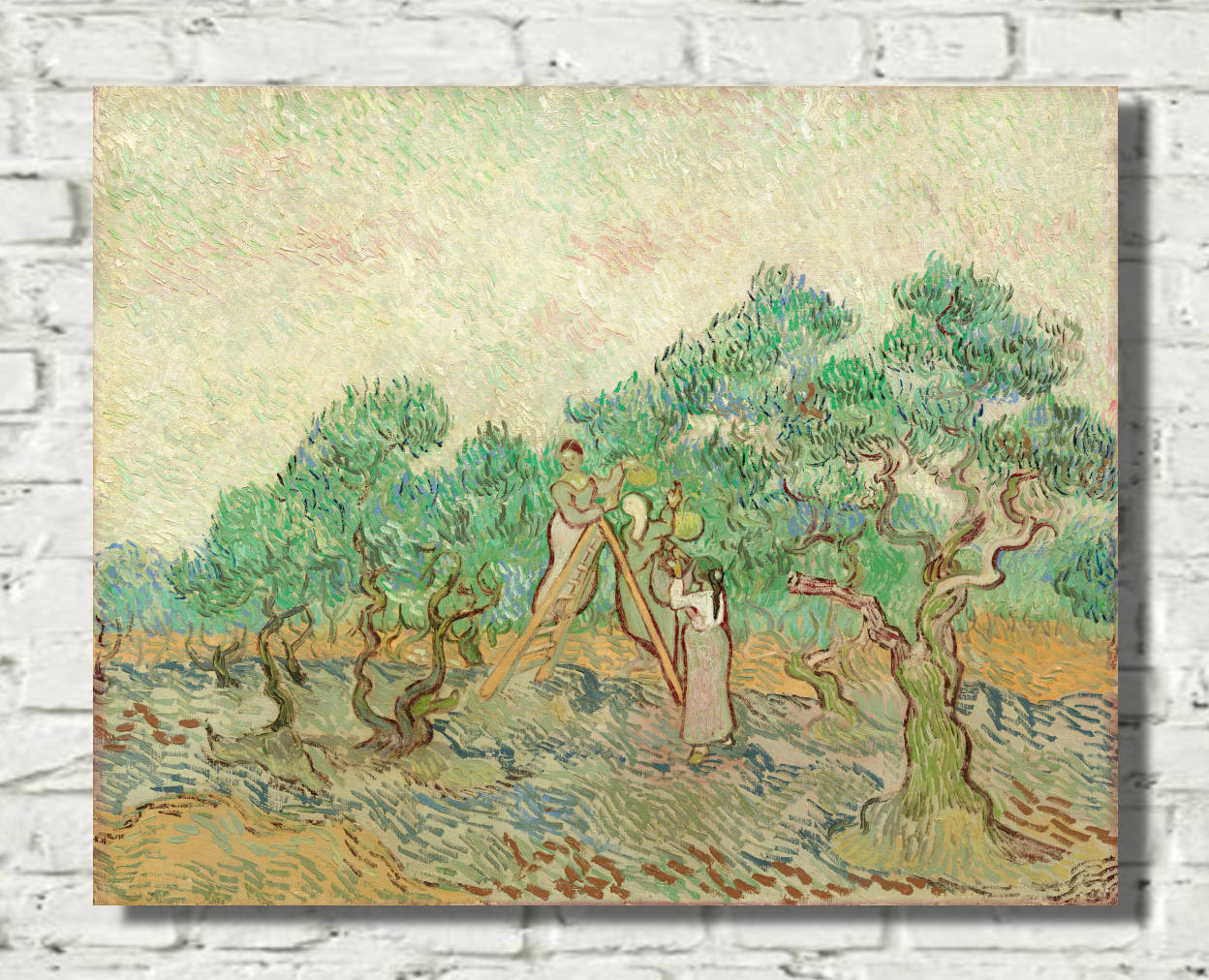
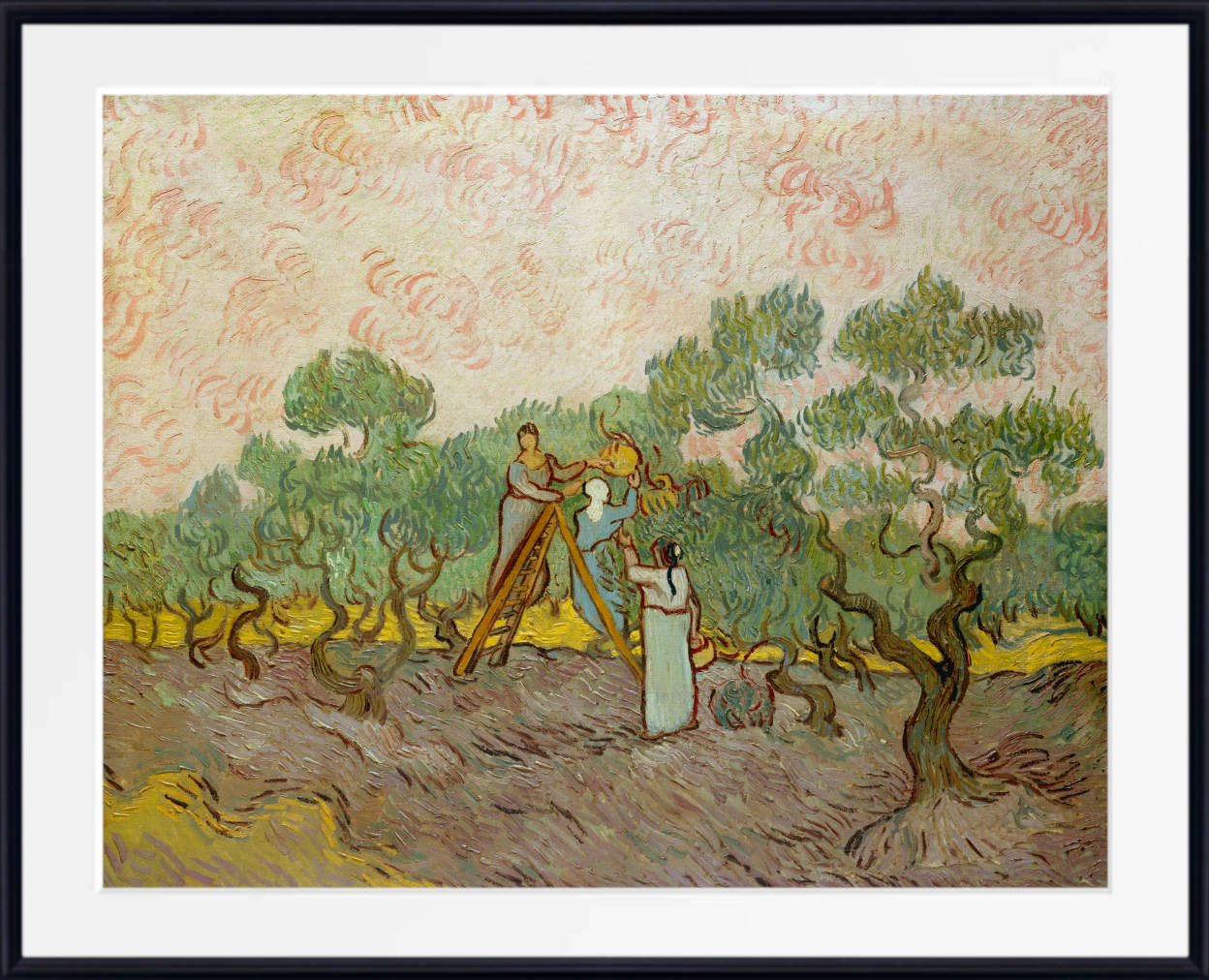
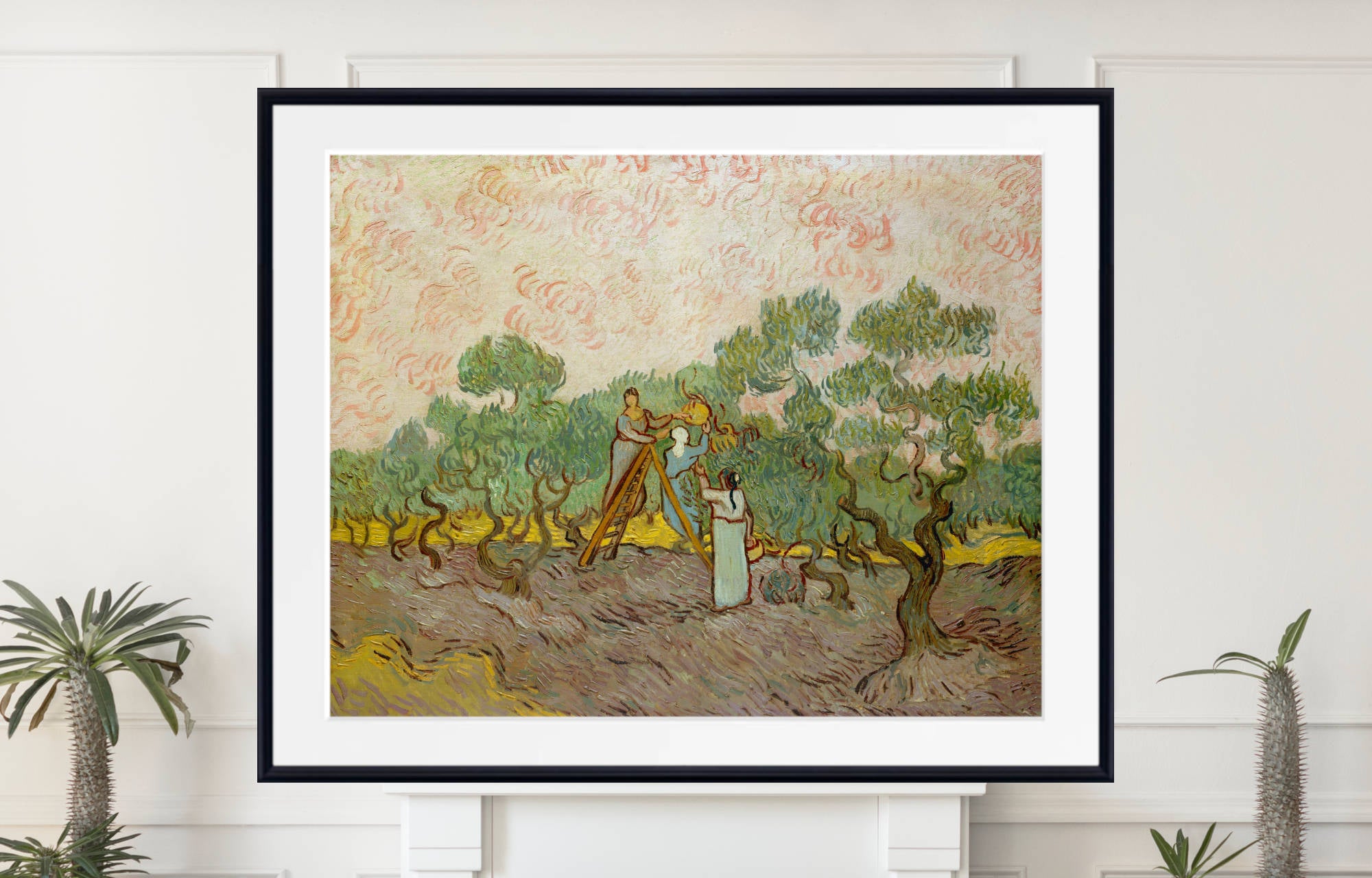
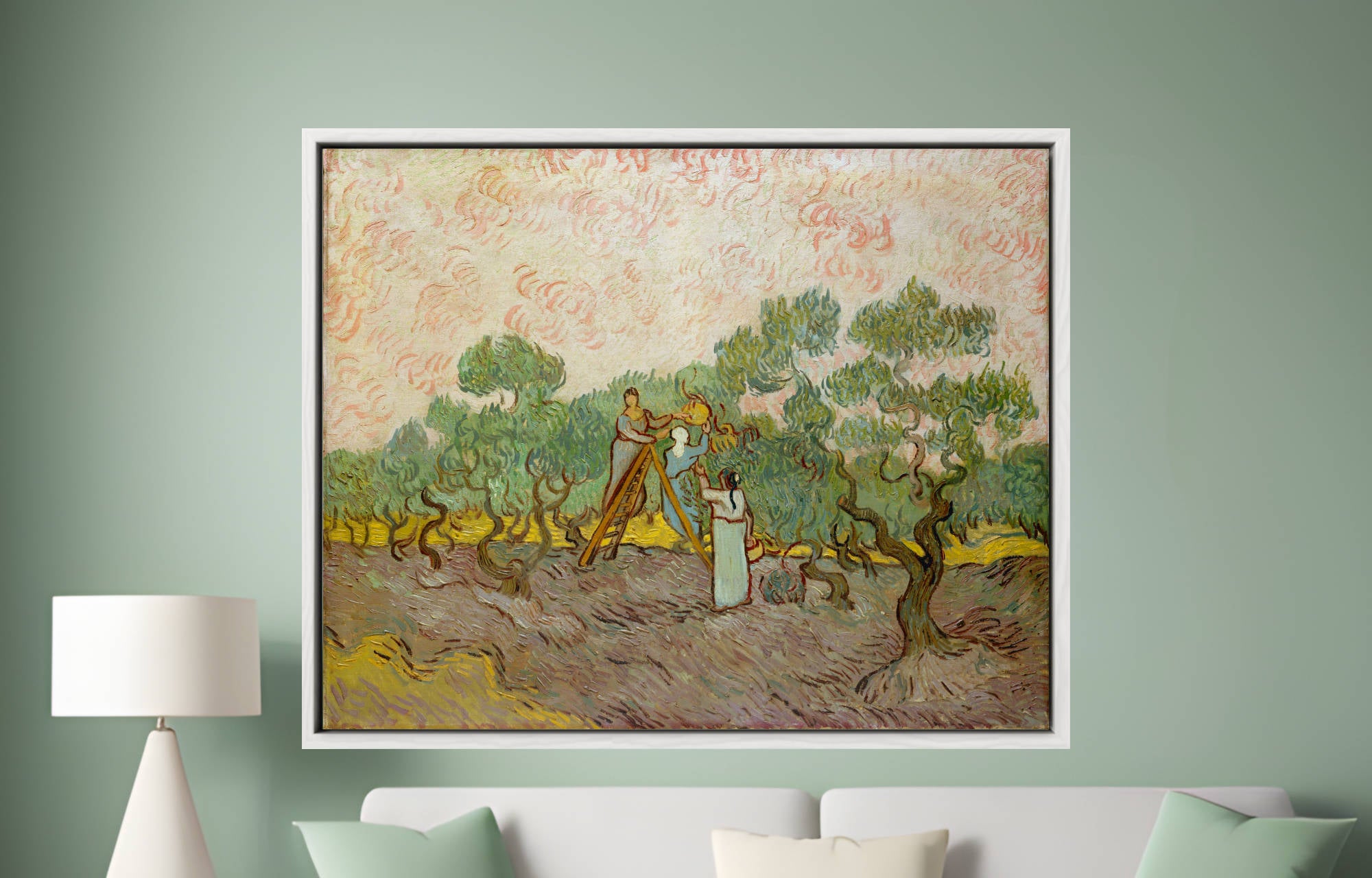
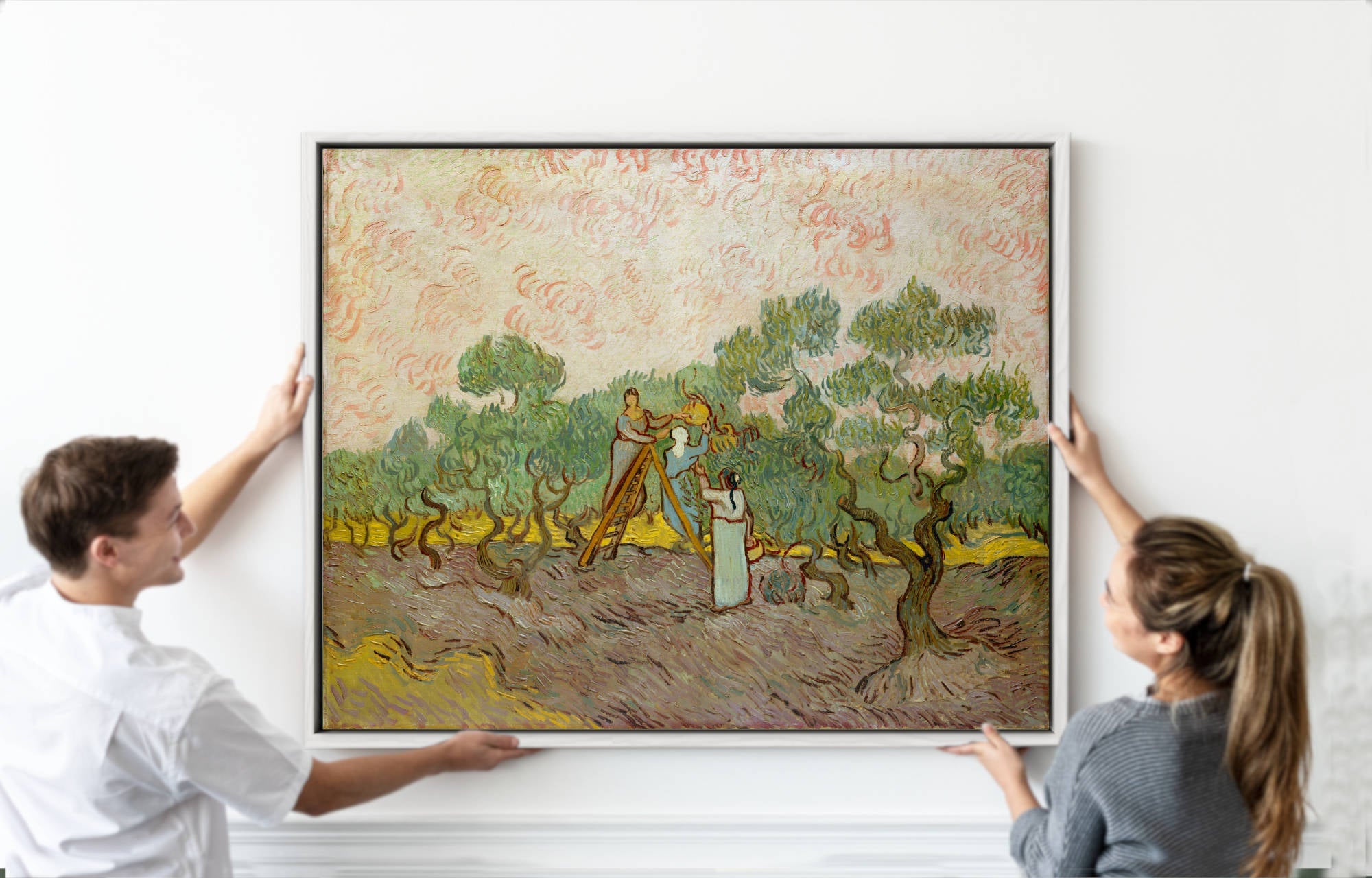
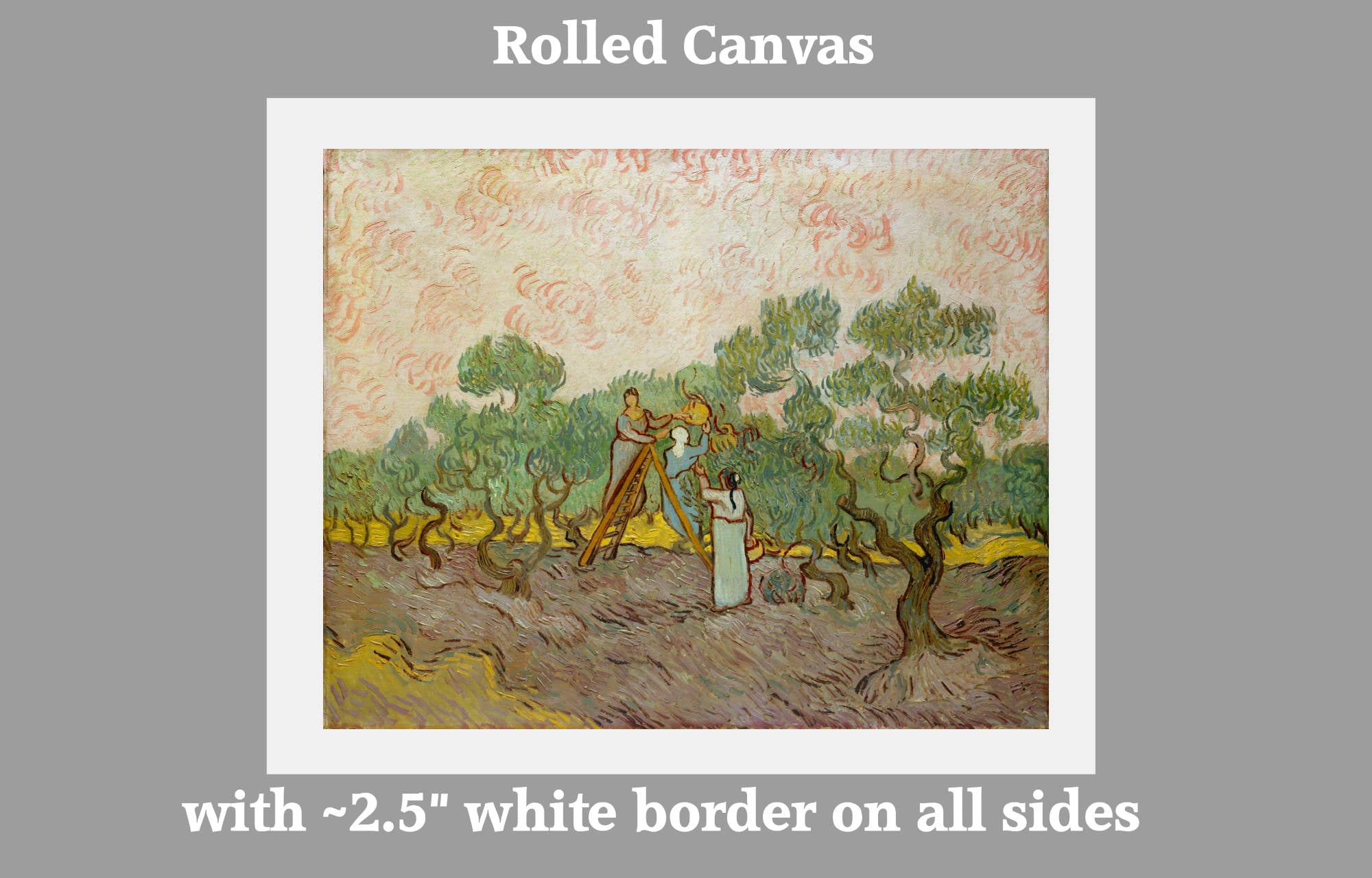
Near the end of 1889, Van Gogh incorporated human figures into several olive-grove compositions showing women harvesting the fruit.
He produced three closely related versions of Women Picking Olives. The figures are relatively small within the surrounding trees, so the paintings remain as much landscapes as scenes of rural labour.
The subject also connects Van Gogh’s interest in the natural world with his long-standing respect for agricultural workers. Throughout his career he repeatedly painted sowers, reapers, harvesters and other people whose work was directly connected to the land.
Van Gogh and the Rhythms of Nature
The olive paintings demonstrate particularly clearly how Van Gogh could transform observation through brushwork.
Individual strokes often follow the twisting structure of trunks and branches, while the ground may ripple in parallel bands of colour. Hills and clouds continue similar movements, creating the impression that the entire landscape participates in one continuous rhythm.
This is one of the distinguishing features of Van Gogh’s mature style. The paint does not disappear into an illusion of reality. The visible marks themselves become part of the subject’s energy.
Olive Trees and Post-Impressionism
Van Gogh’s olive-grove paintings demonstrate why he became one of the defining figures associated with Post-Impressionism.
Colour is intensified rather than restricted to literal description. Brushwork remains highly visible. Natural forms can be simplified, outlined or rhythmically exaggerated to strengthen the experience of the painting.
These qualities distinguish Van Gogh’s landscapes from conventional nineteenth-century naturalism while also separating his highly personal approach from those of other Post-Impressionists such as Cézanne, Gauguin and Seurat.
Van Gogh Olive Tree Prints for Contemporary Interiors
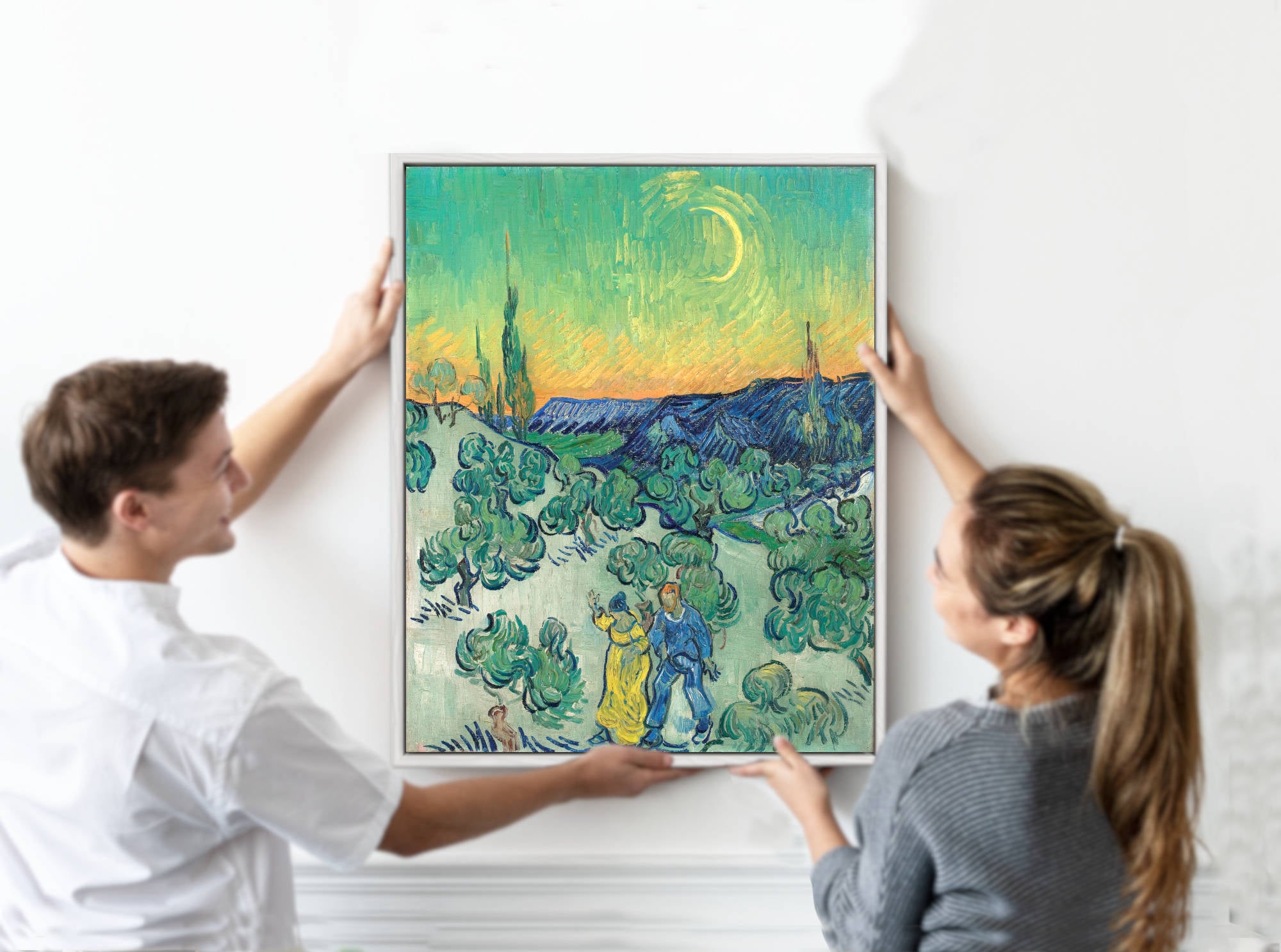
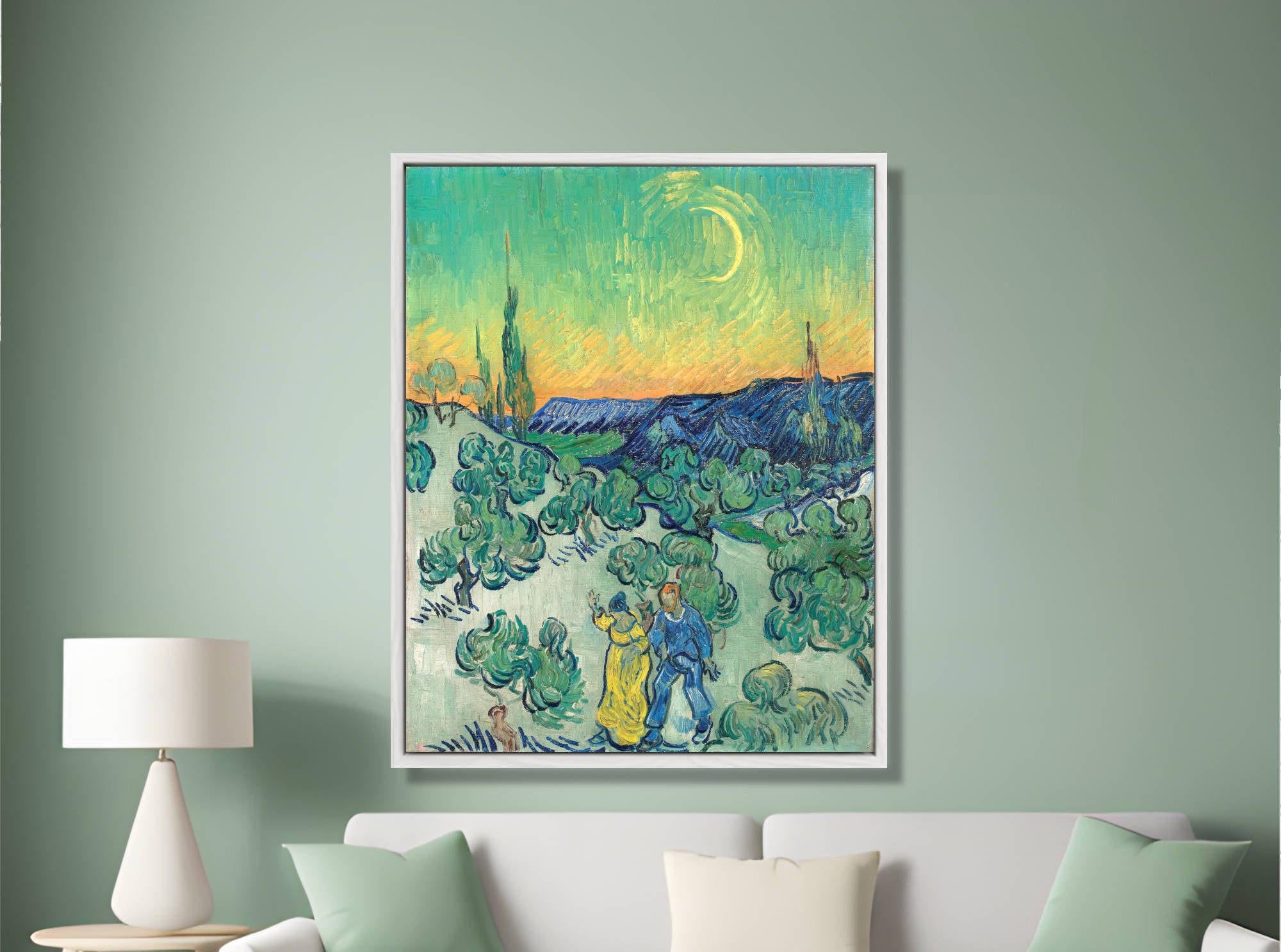
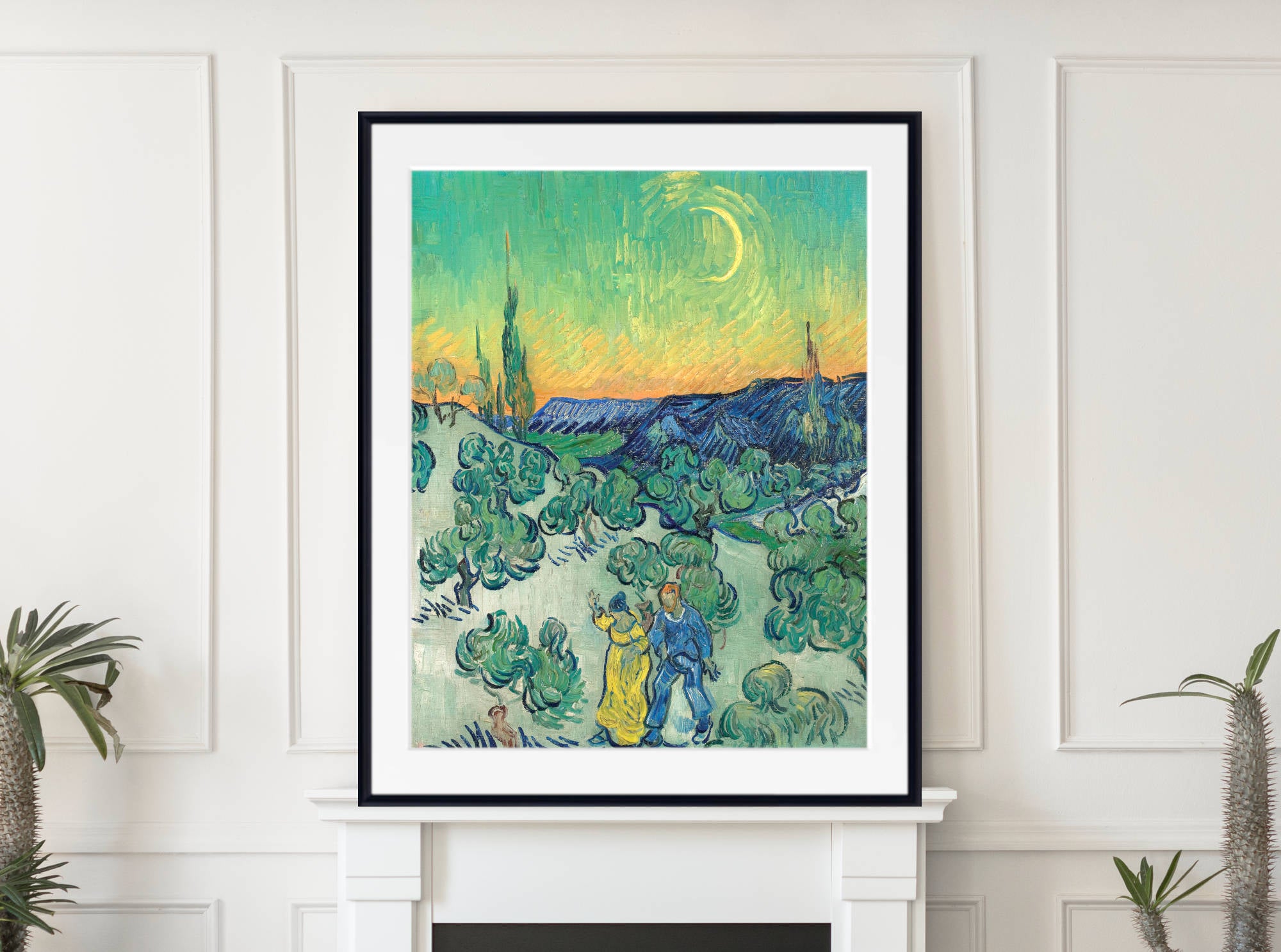
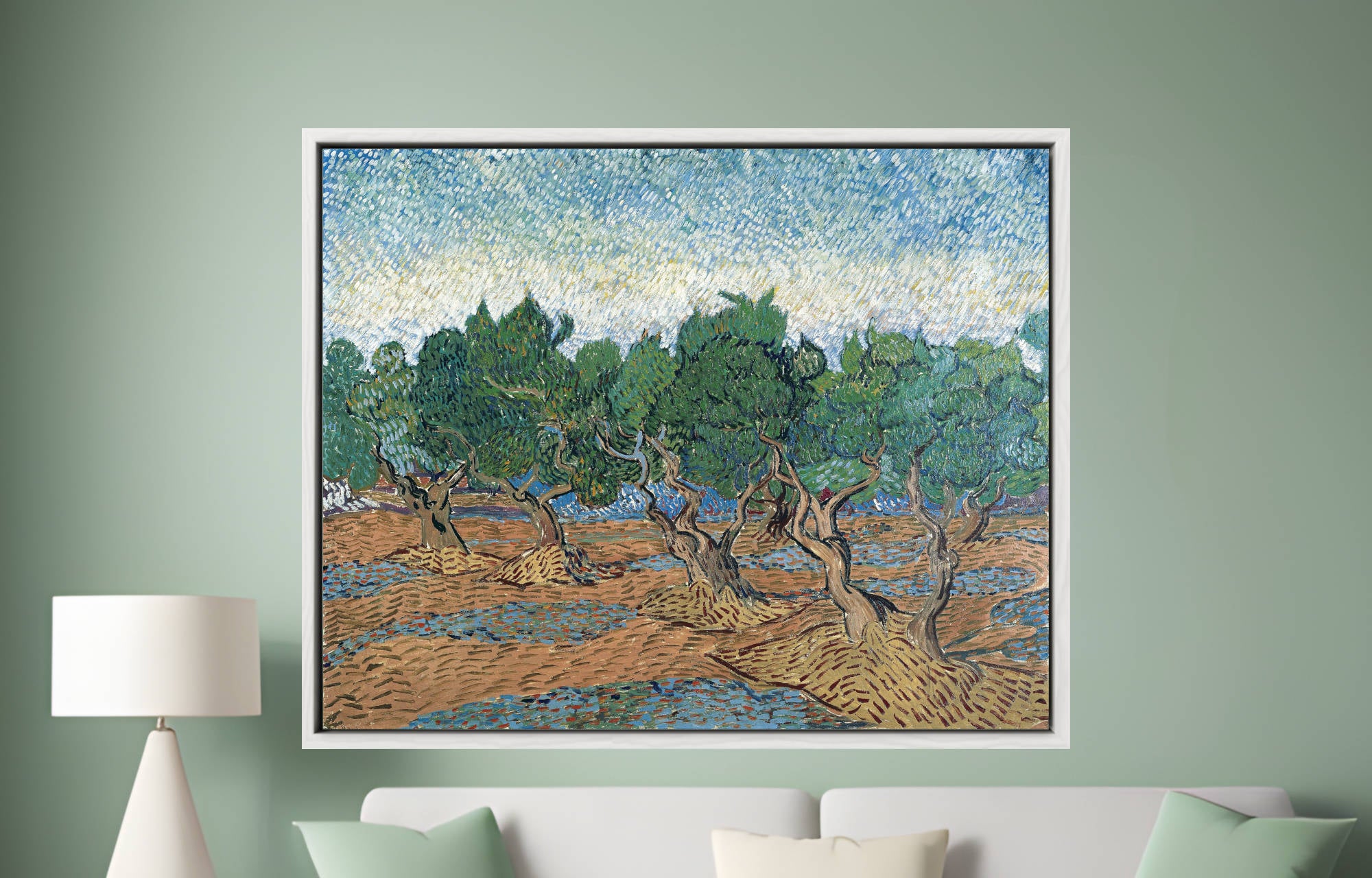
Olive-tree paintings are particularly adaptable as wall art because their palettes combine strong colour with natural landscape tones.
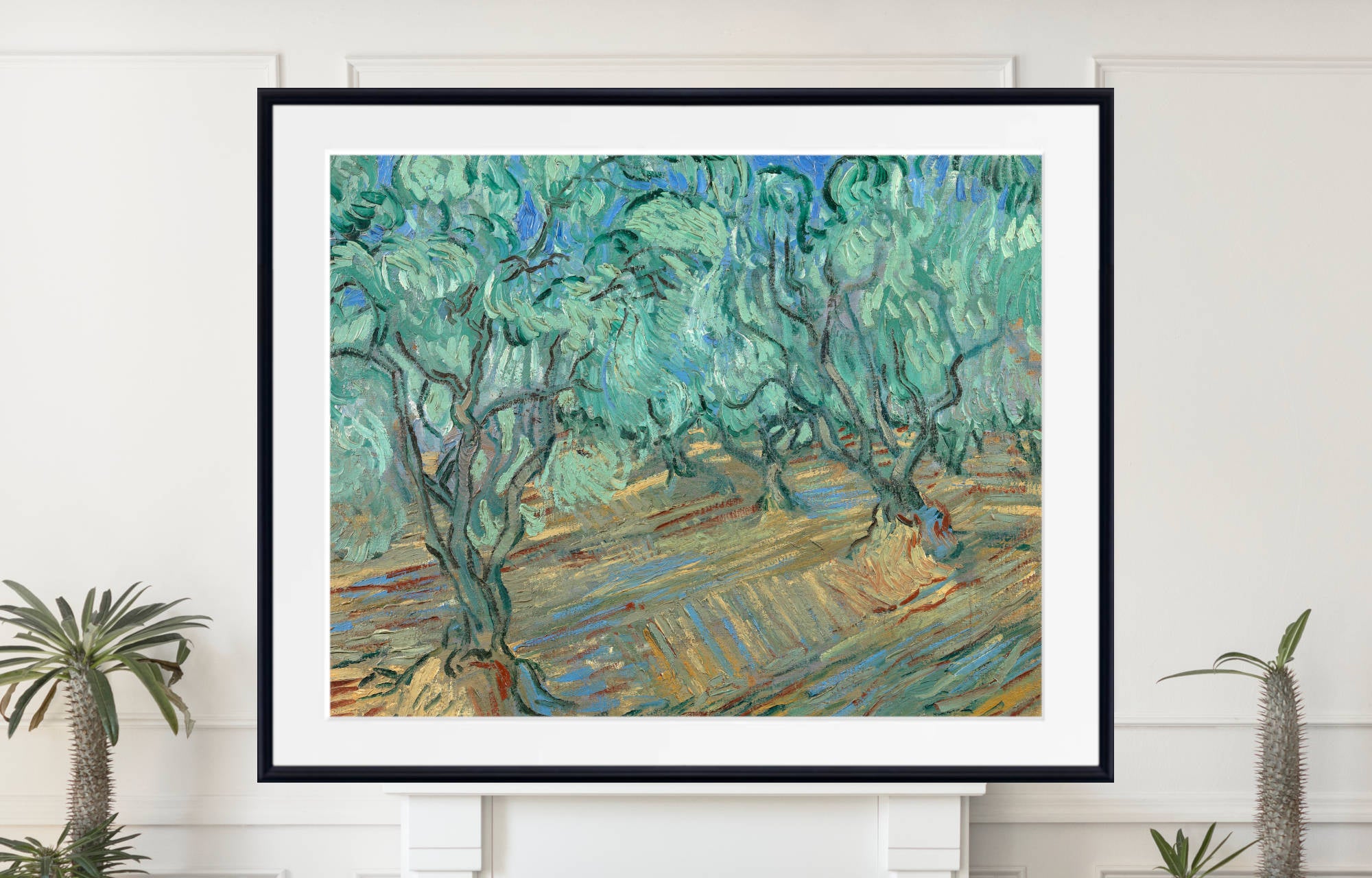
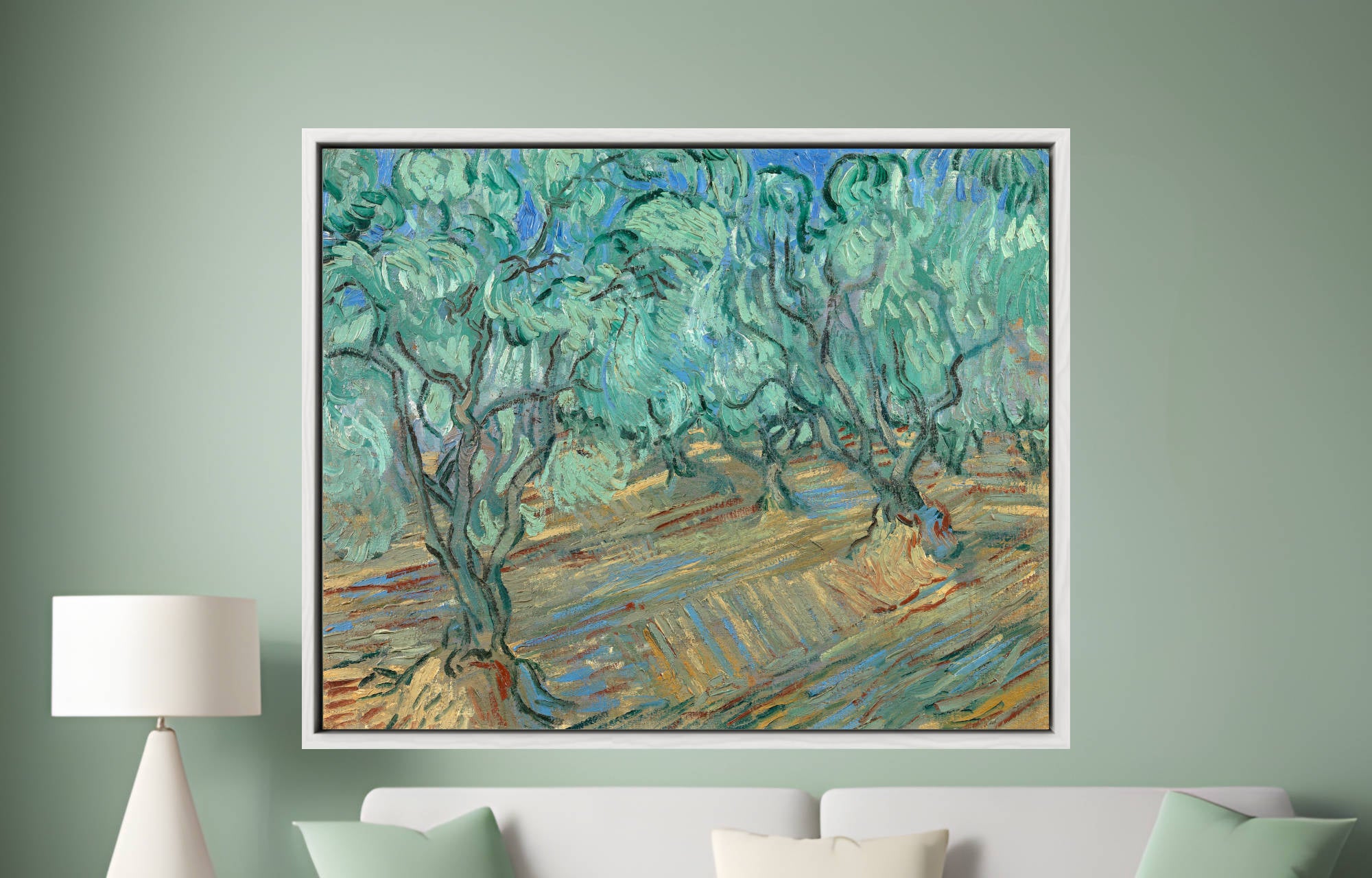
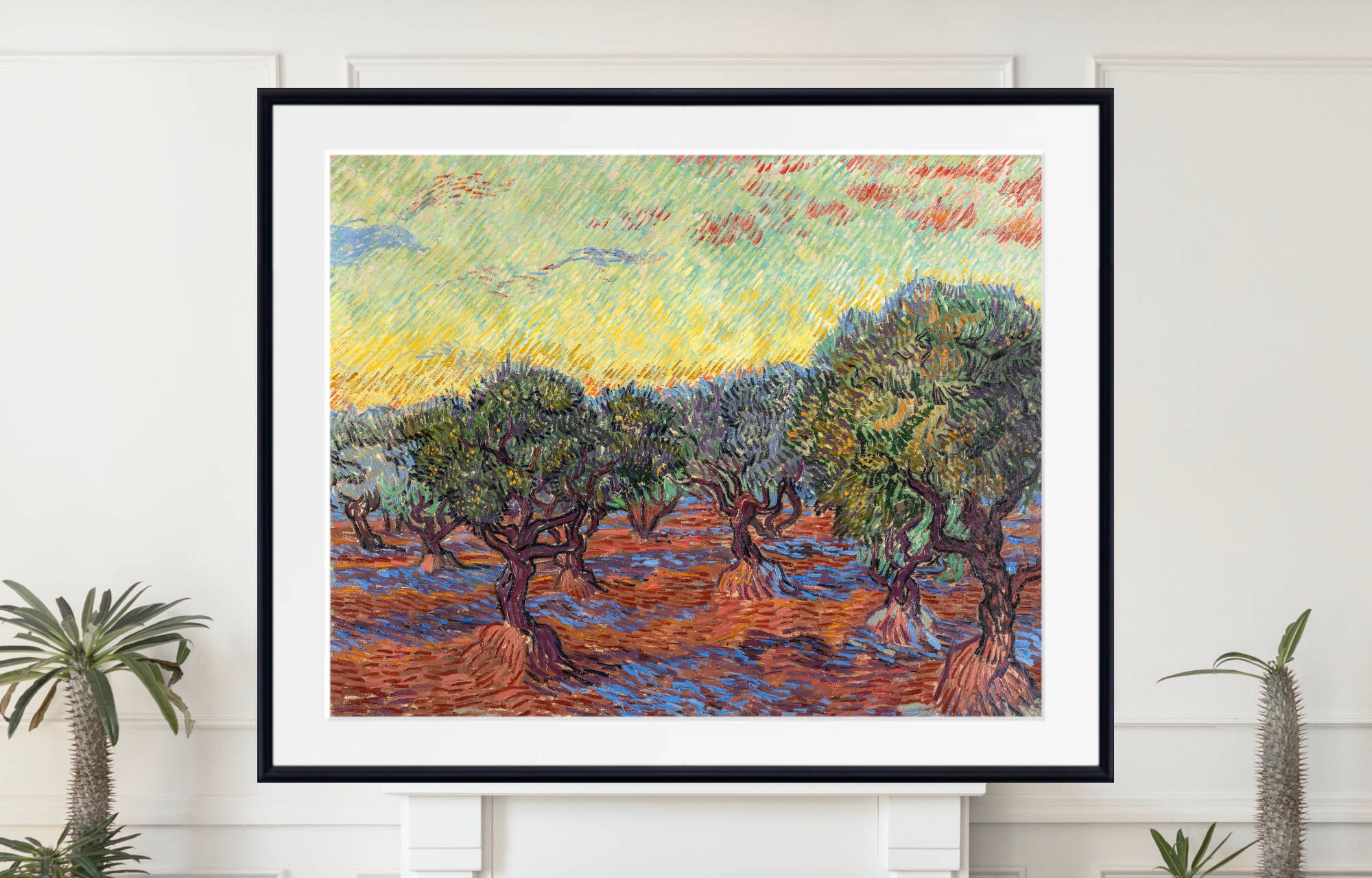
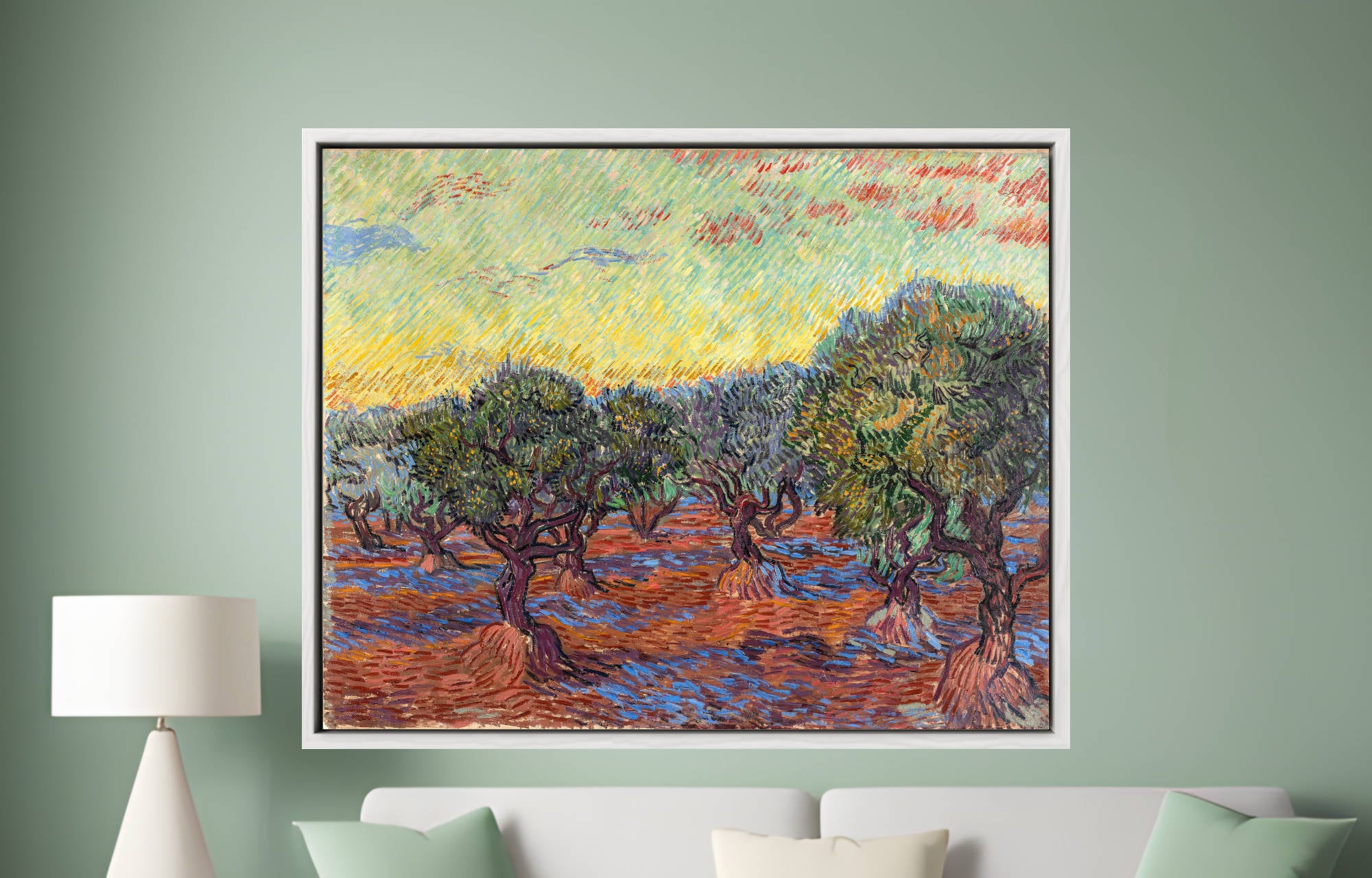
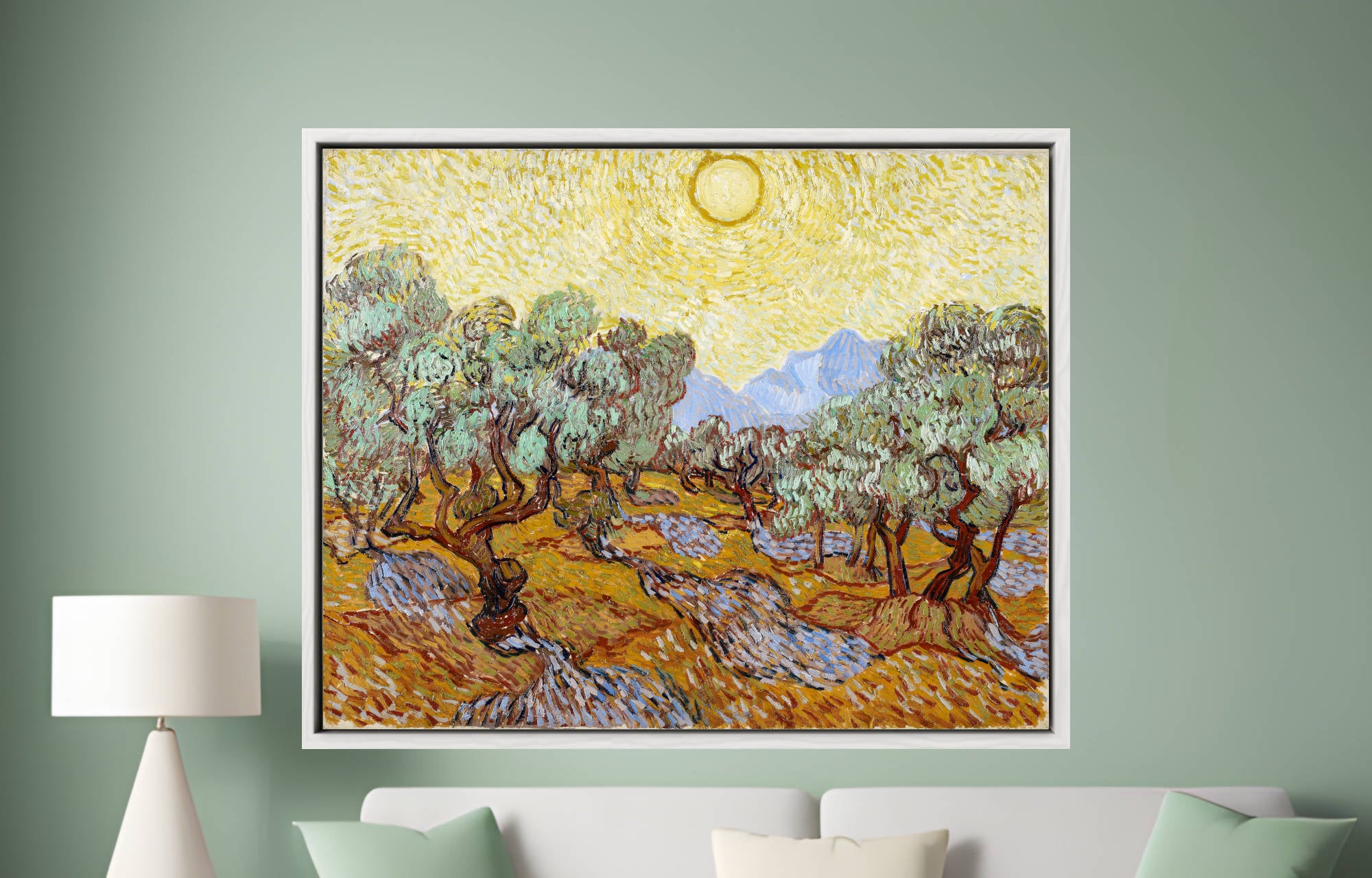
Green and blue olive groves work naturally with putty, cream, sage and warm neutral walls, while paintings with yellow, orange and ochre skies can introduce stronger warmth into a room.
Their organic shapes complement natural timber, linen, stone and other tactile materials, making Van Gogh olive tree prints especially effective in Scandinavian, Japandi, Mediterranean-inspired and relaxed contemporary interiors.
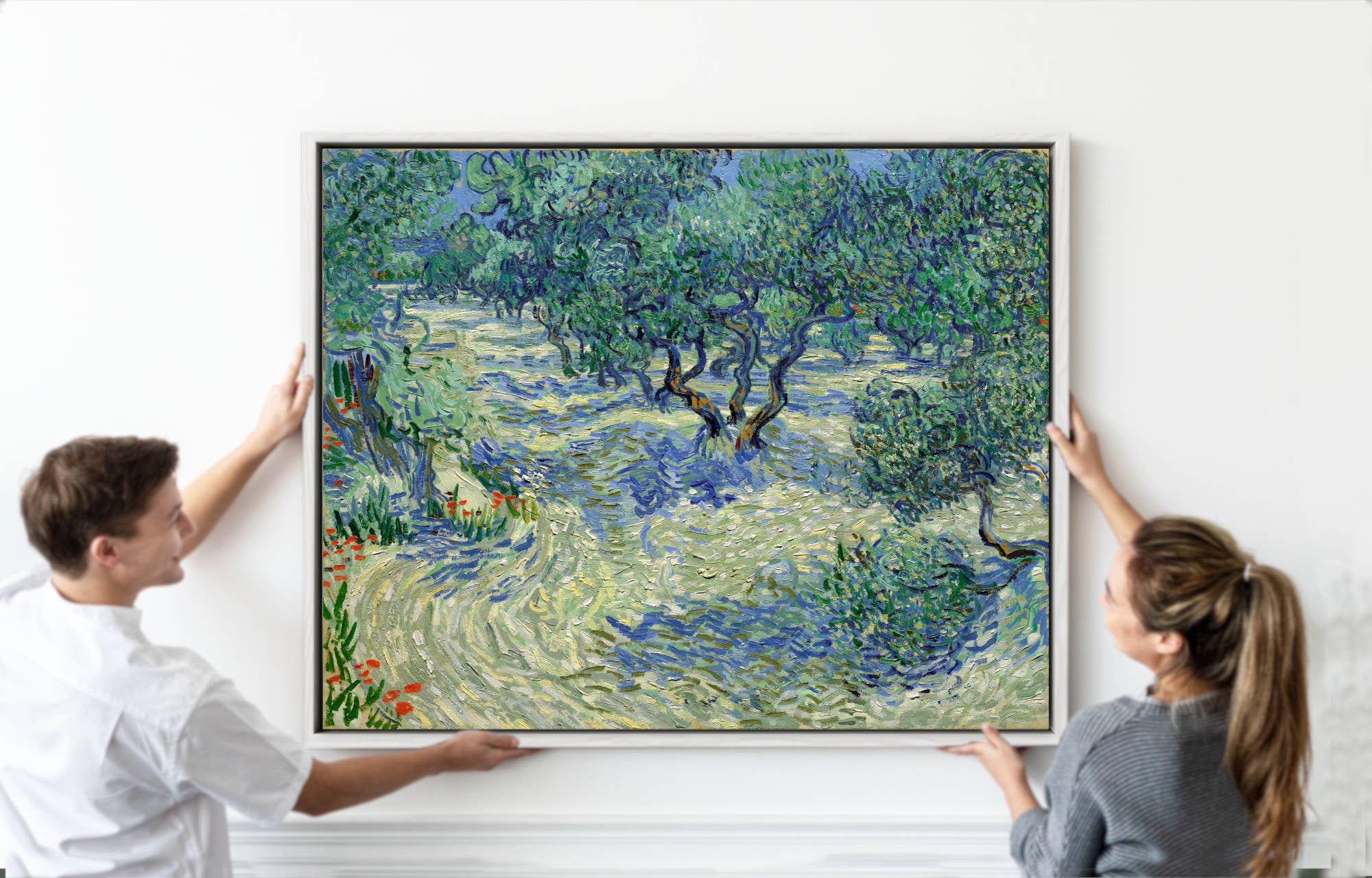
Most compositions are landscape-oriented, making them well suited to positions above sofas, beds, sideboards and console tables or as the central image within a larger Van Gogh gallery wall.
Creating a Van Gogh Landscape Gallery Wall
Olive-grove paintings combine particularly effectively with Van Gogh’s other Provençal landscape subjects.
Pair olive tree prints with cypress paintings and wheat-field landscapes for a Saint-Rémy-led display based around greens, blues and yellows.
Alternatively, introduce lighter flowering orchard prints to create contrast and extend the display back to Van Gogh’s Arles period.
The complete Vincent van Gogh Prints collection offers the widest selection for combining landscapes with flowers, portraits, night scenes and still lifes.
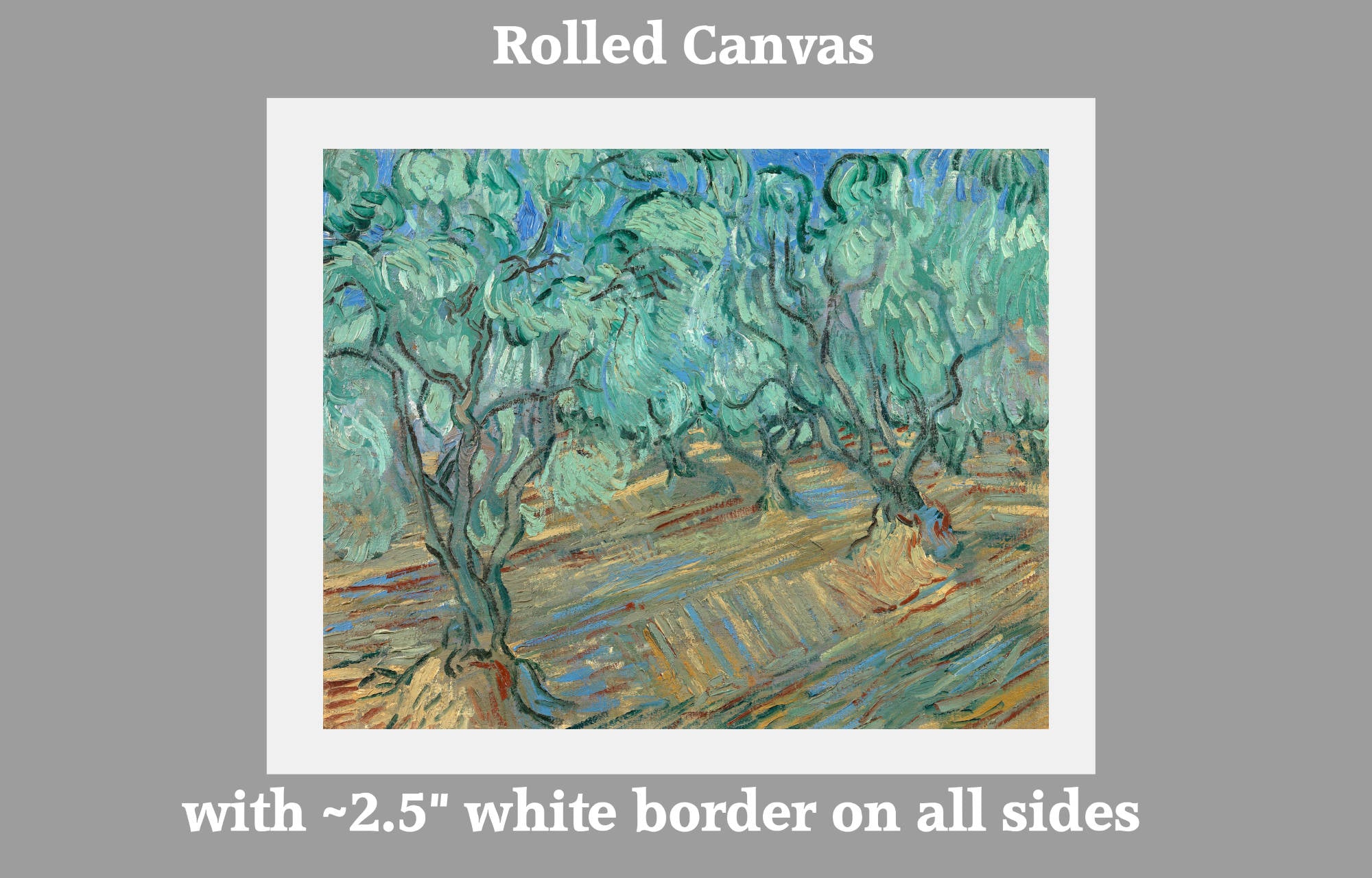
Fine Art Prints, Framed Prints and Canvas Panels
GalleryThane’s Vincent van Gogh Olive Trees collection is available in a range of sizes and presentation options.
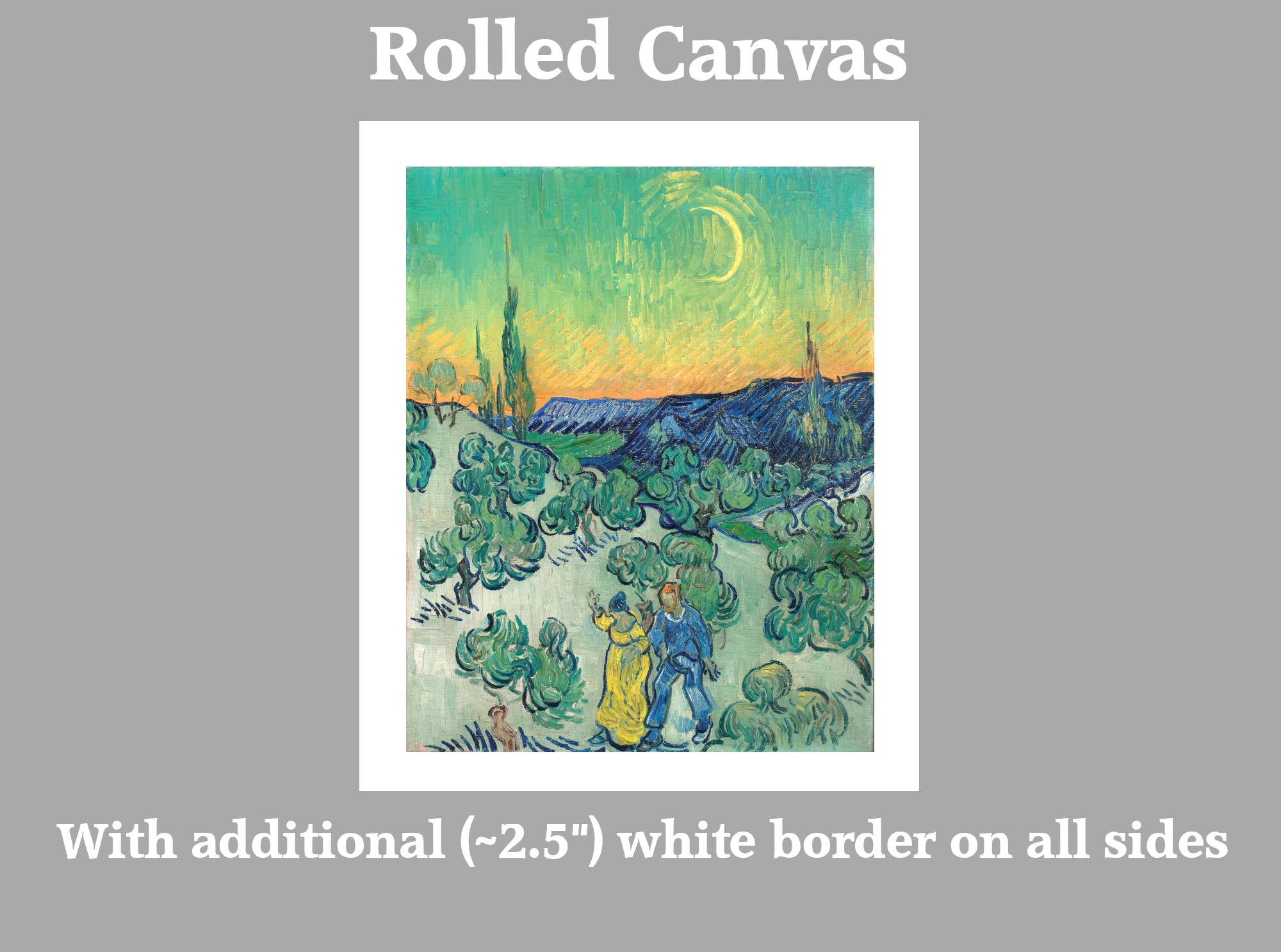
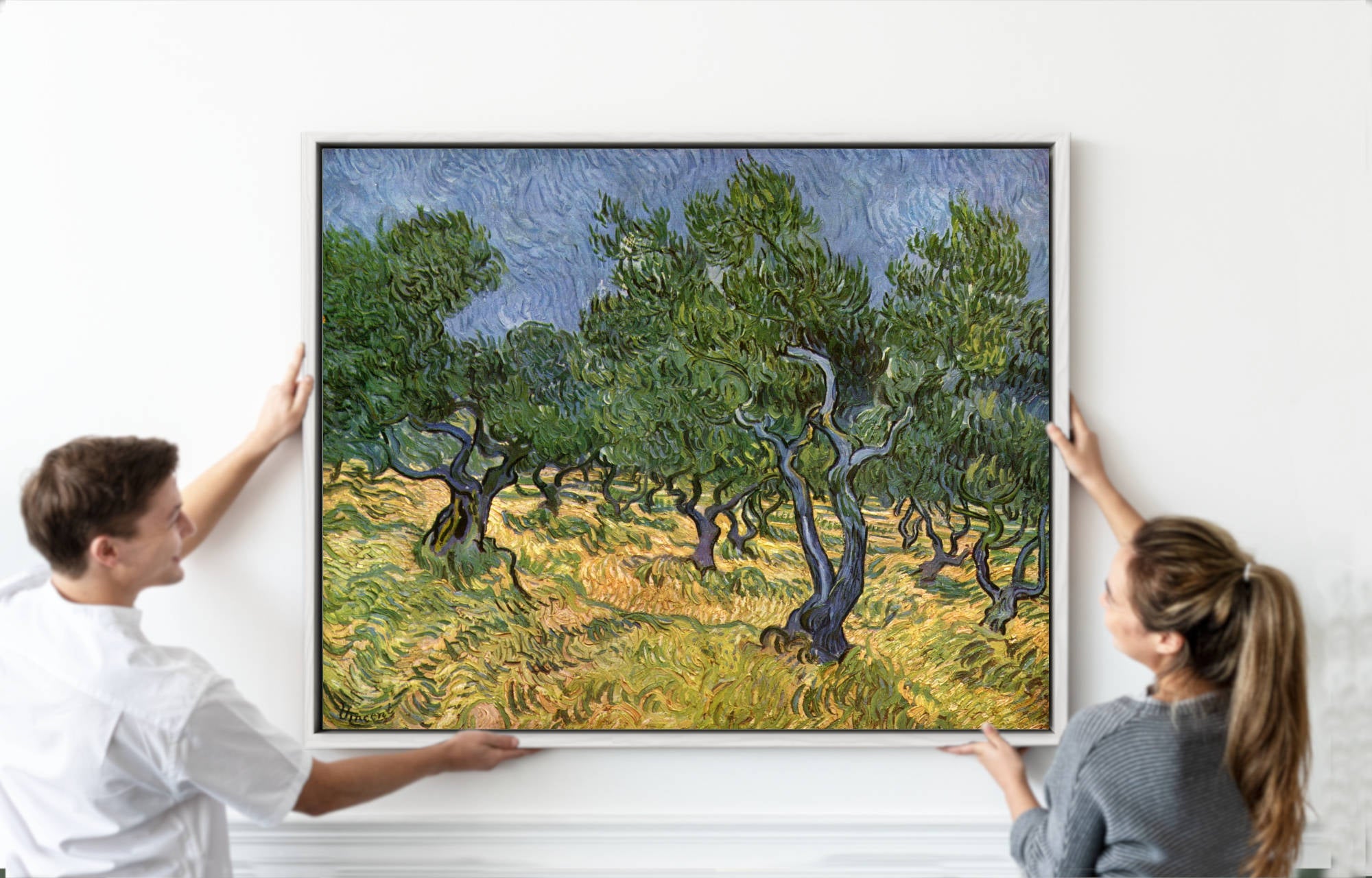
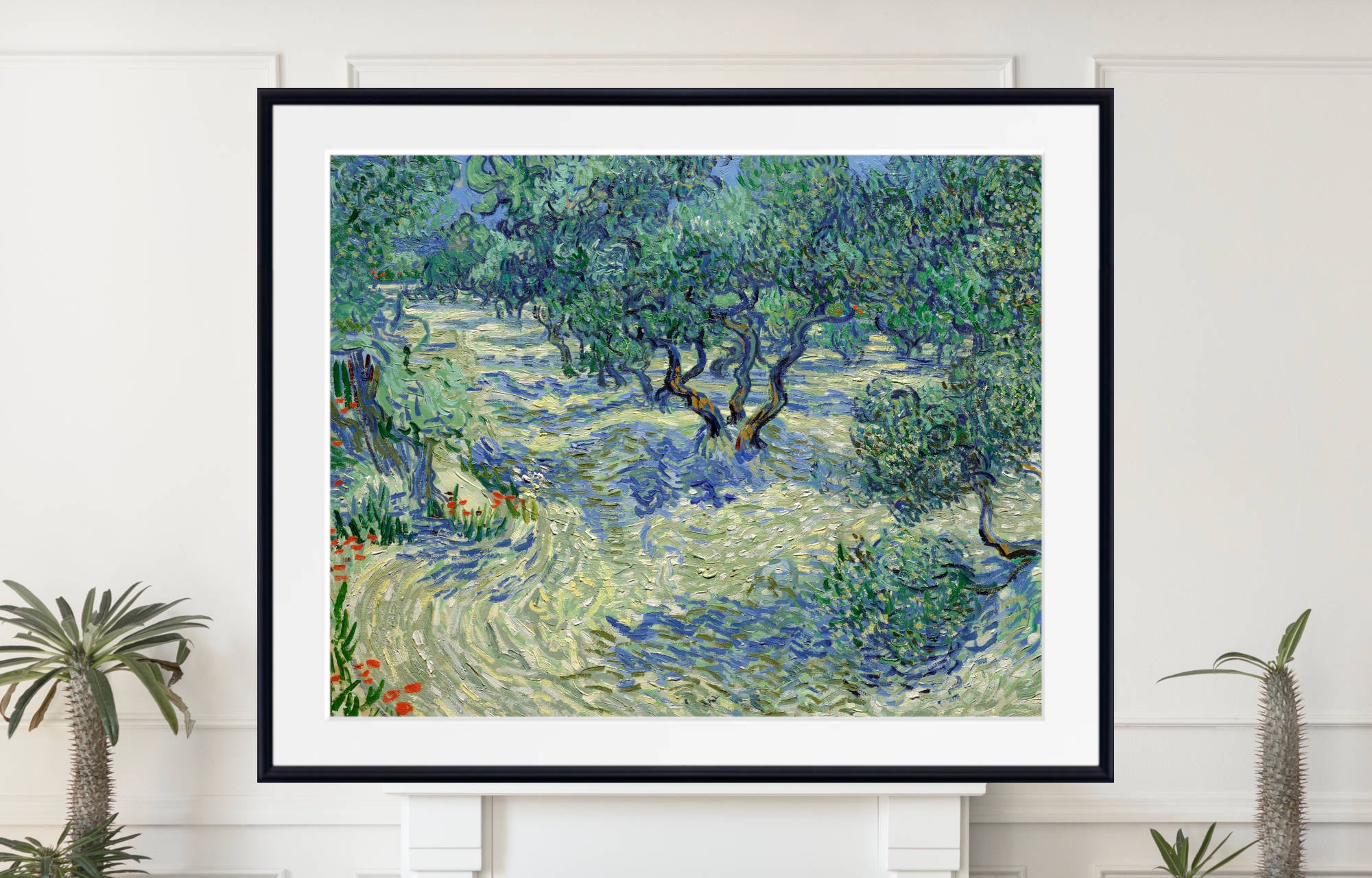
Choose fine art paper prints for flexible framing, professionally framed prints for a complete presentation, or canvas panels for a contemporary alternative. The olive-grove landscapes can be displayed individually as statement pieces or combined with related Van Gogh works in a coordinated gallery wall.
Frequently Asked Questions
When did Vincent van Gogh paint his olive trees?
Van Gogh concentrated on olive-grove paintings during his stay at Saint-Rémy-de-Provence in 1889, returning to the subject during different seasons and under changing conditions of light.
How many olive-tree paintings did Van Gogh make?
Van Gogh produced approximately fifteen paintings centred on olive groves during his Saint-Rémy period, including landscapes painted in summer and autumn and later compositions showing women gathering olives.
Why did Van Gogh paint olive trees?
The irregular trunks, changing foliage and distinctive colours of the Provençal olive groves offered Van Gogh a demanding landscape subject. He was particularly fascinated by the way the trees changed appearance under different light and weather conditions.
Where did Van Gogh paint the Olive Trees series?
The principal olive-grove paintings were created around Saint-Rémy-de-Provence while Van Gogh was staying at Saint-Paul-de-Mausole in 1889.
What colours did Van Gogh use in his olive-tree paintings?
The series contains a remarkably varied palette including silver-green, blue, turquoise and bronze foliage alongside yellow, orange, violet, pink and ochre earth and skies.
What is the connection between The Starry Night and Van Gogh’s Olive Trees?
Van Gogh worked on an important olive-tree landscape during the same Saint-Rémy period as The Starry Night. Both show his growing willingness to intensify outlines, colour and rhythmic movement rather than pursue purely literal description.
Did Van Gogh paint people gathering olives?
Yes. At the end of 1889 he created three closely related versions of Women Picking Olives, integrating rural workers into the olive-grove landscape.
Which Van Gogh collections complement the Olive Trees series?
Van Gogh’s cypress paintings and wheat-field landscapes are particularly closely connected to his Saint-Rémy period, while the flowering orchards provide an earlier comparison with his treatment of trees and seasonal landscape in Arles.