Hasui Kawase and the Art of the Japanese Landscape
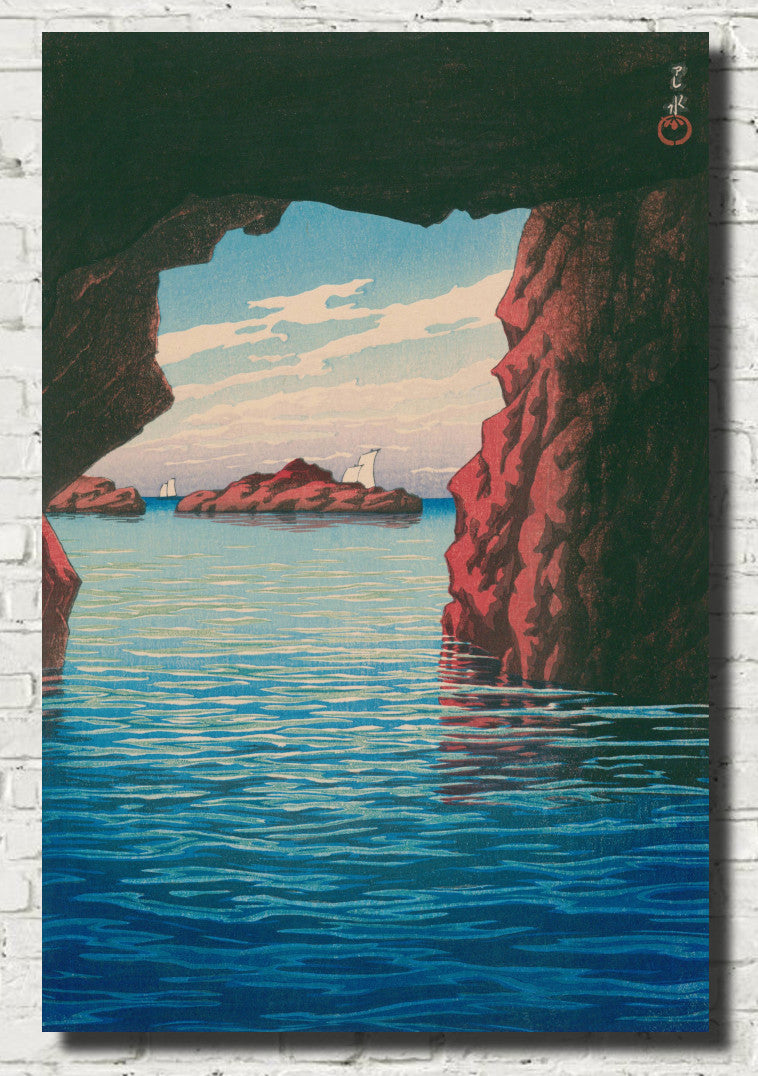
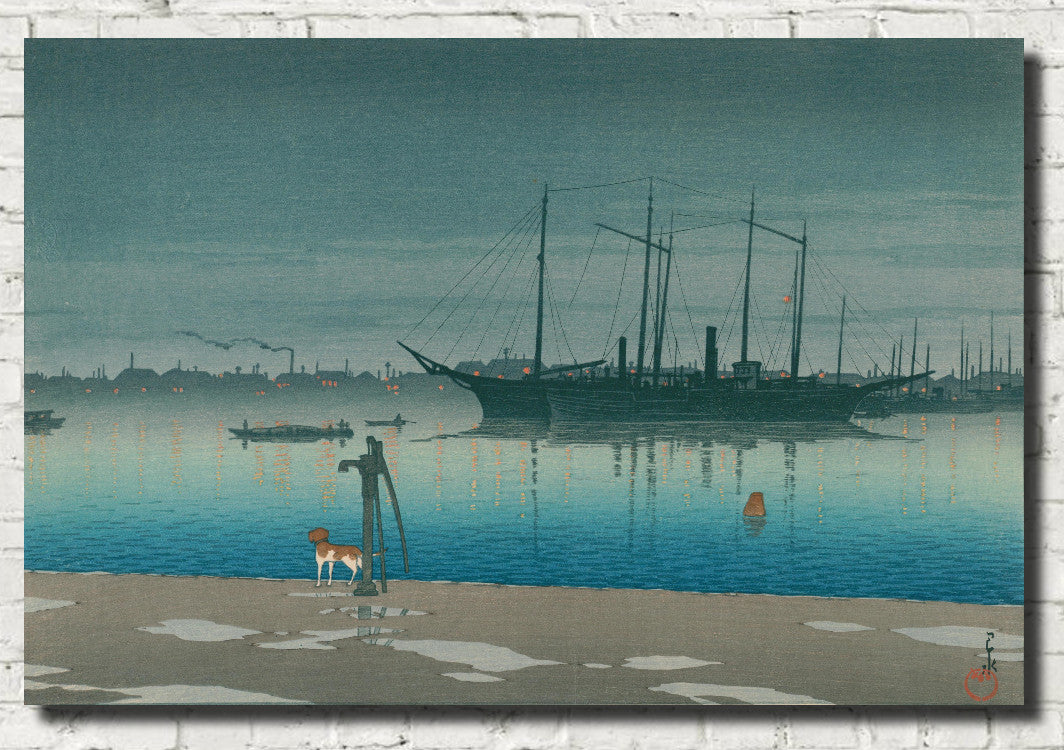
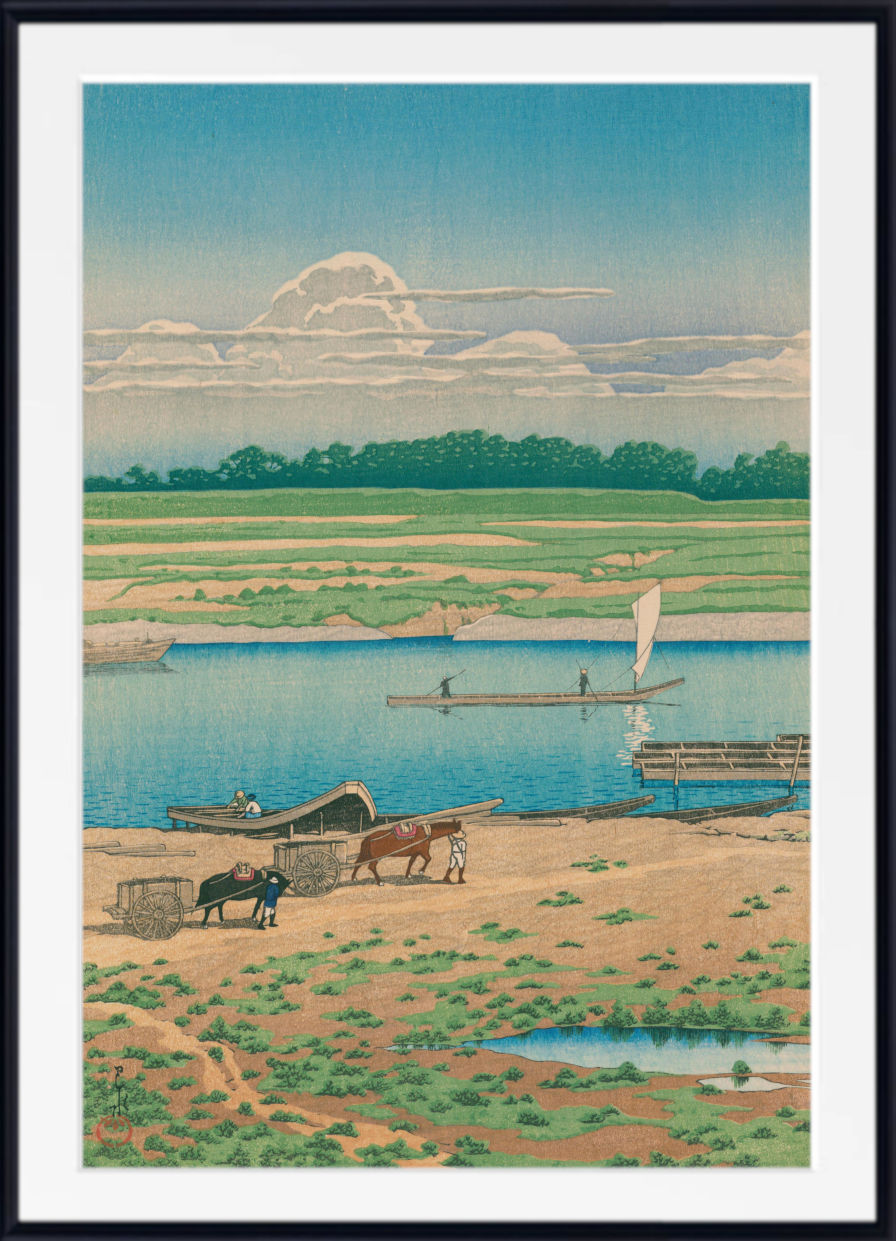
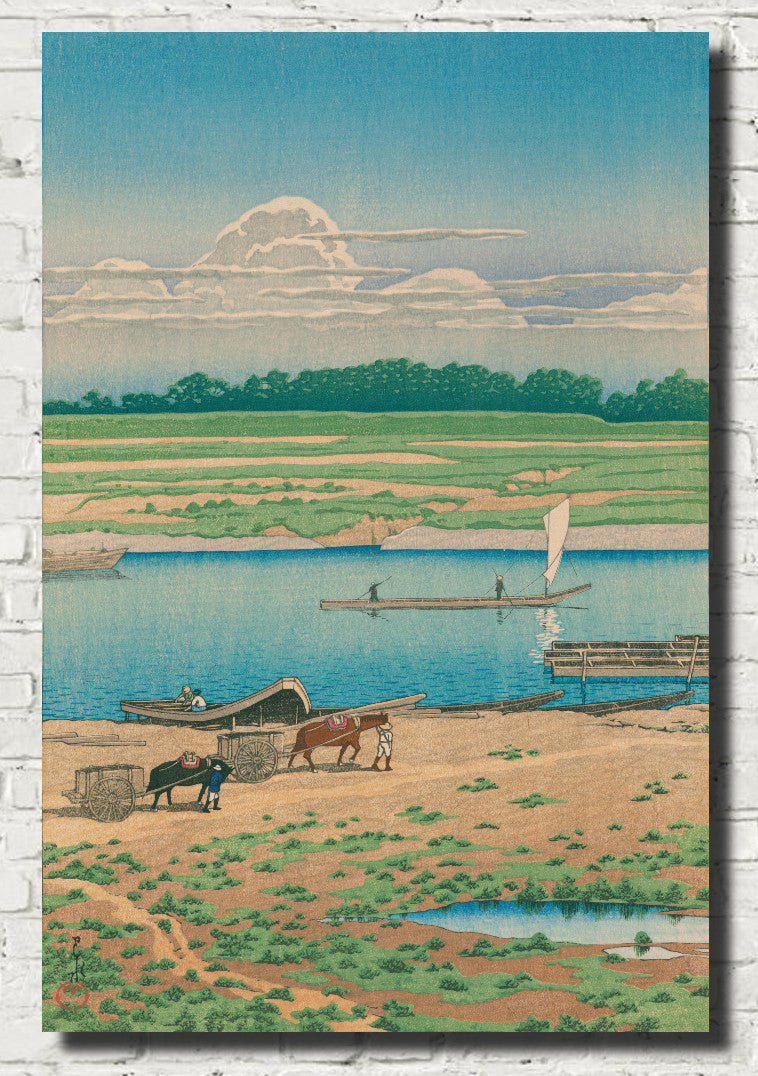
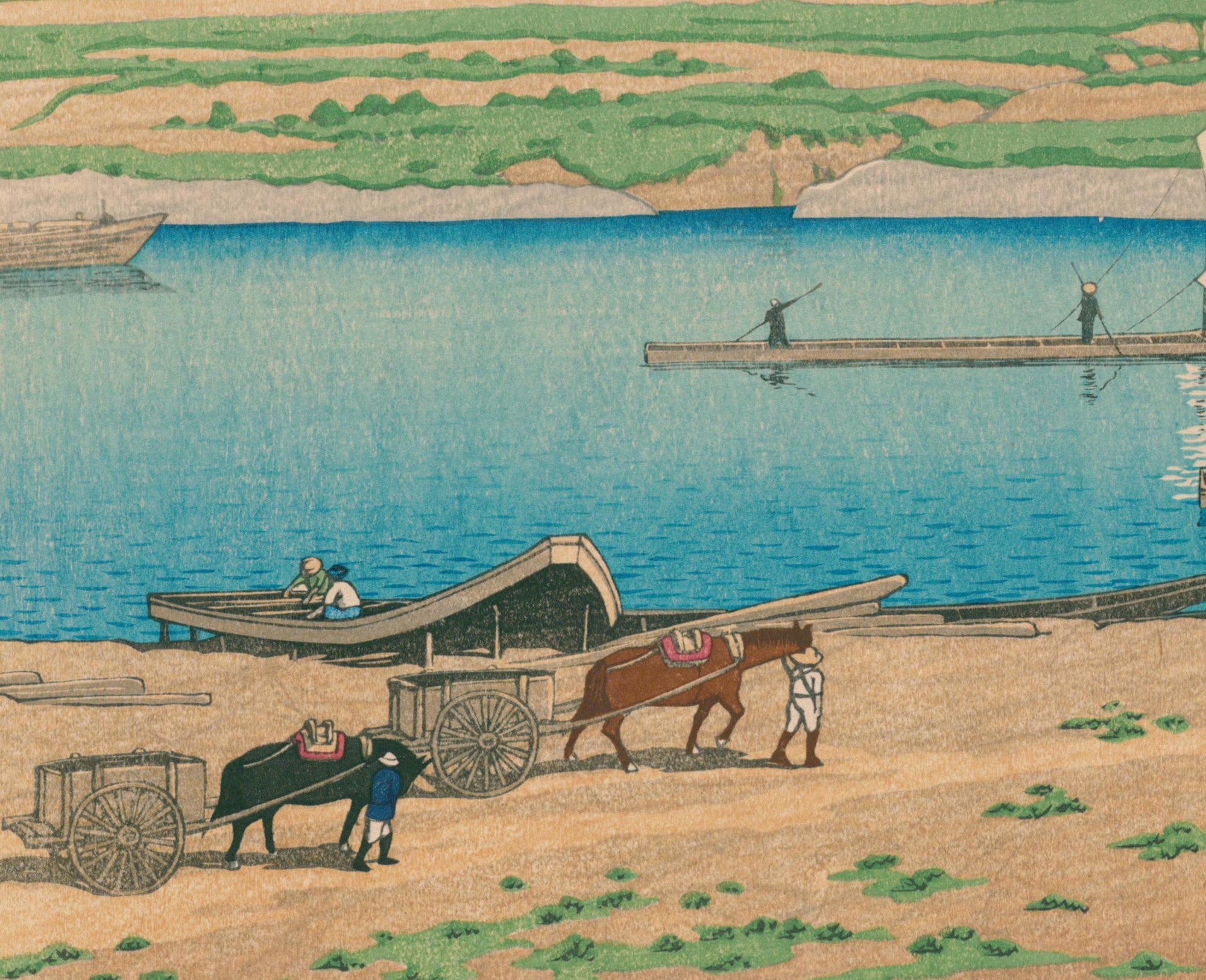
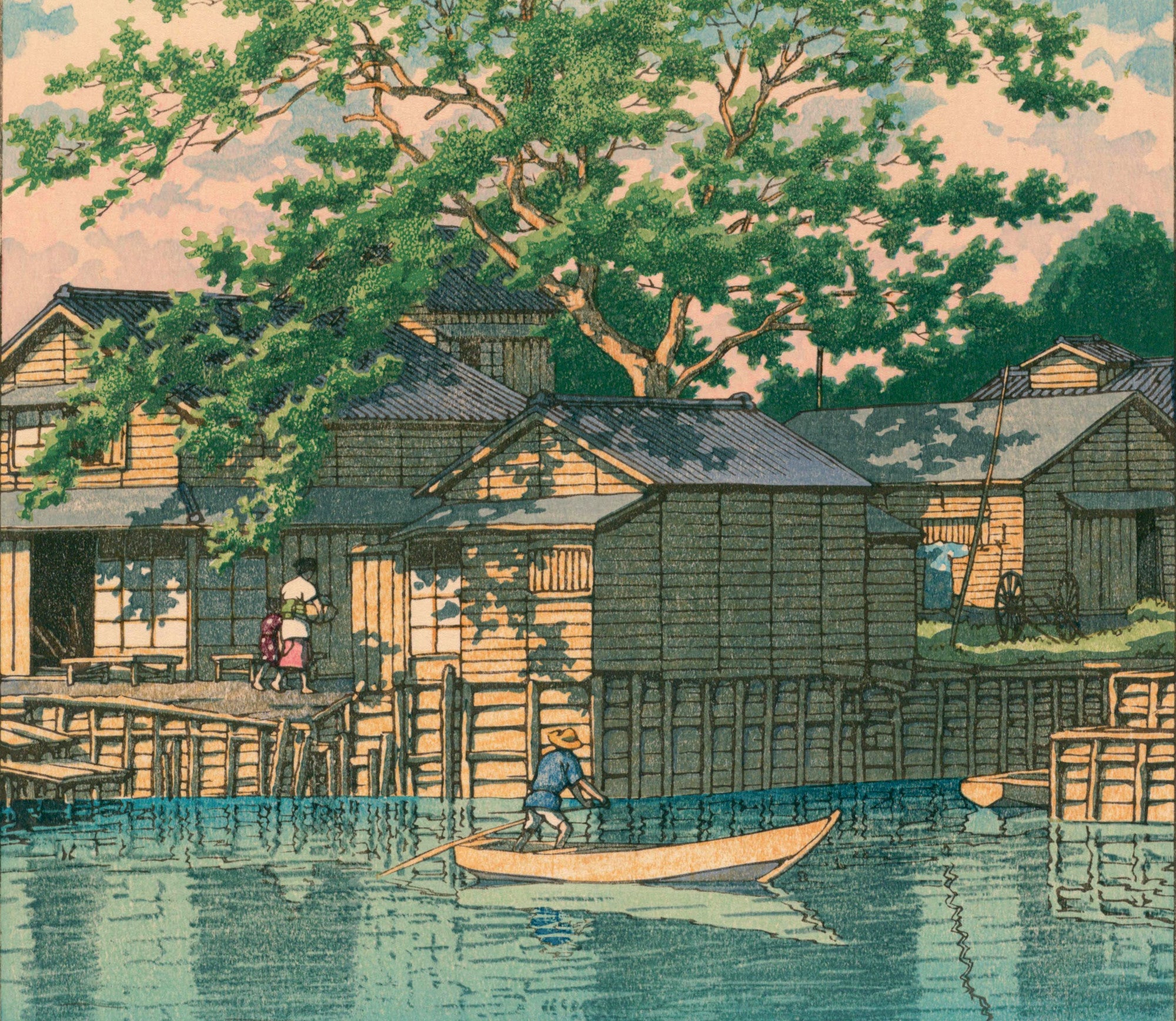
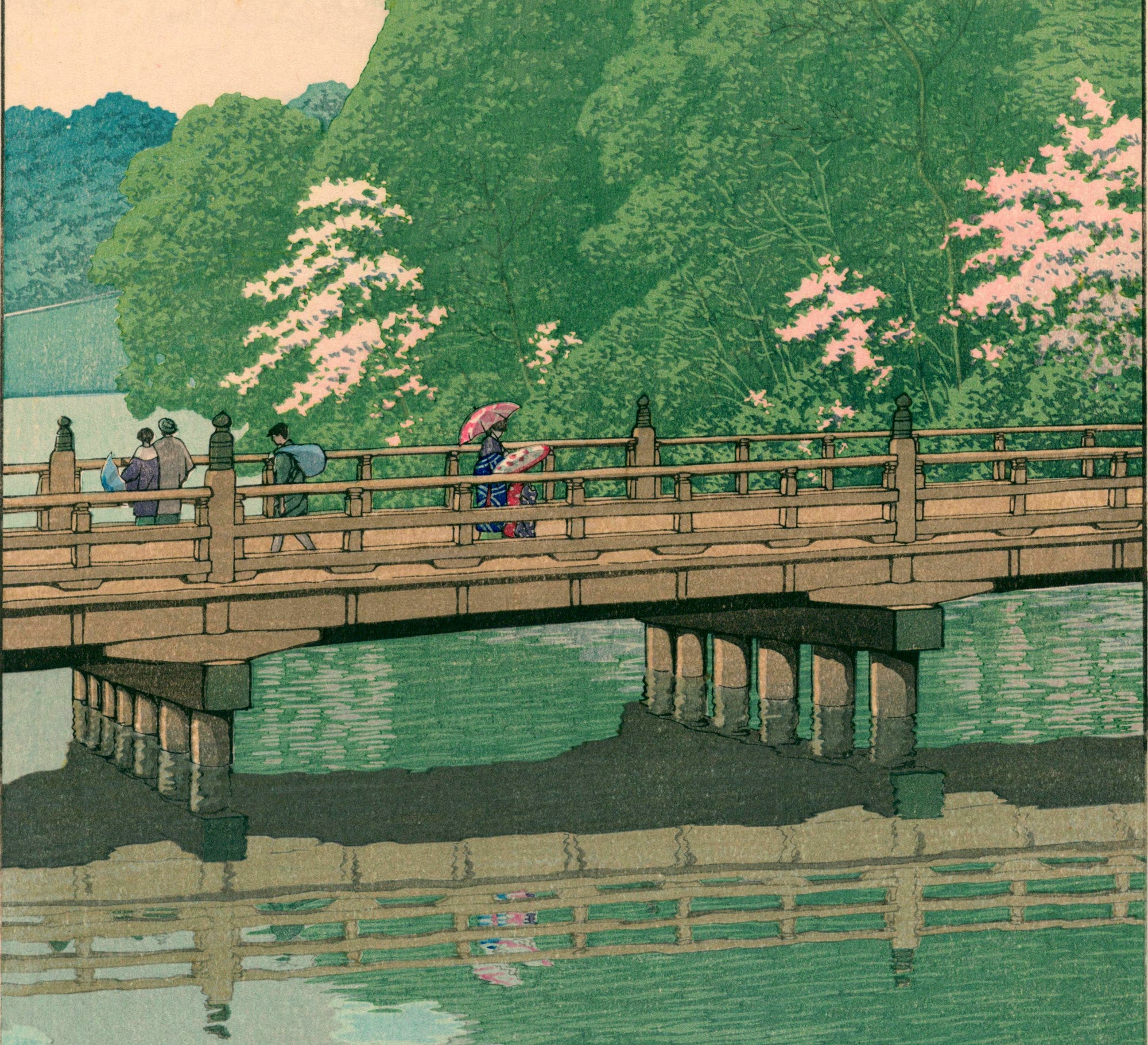
Hasui Kawase (1883–1957) was one of the great landscape artists of twentieth-century Japan and a leading figure in the shin-hanga, or “new prints”, movement. His atmospheric views of temples, bridges, lakes, streets and rural landscapes renewed the Japanese woodblock tradition for a modern age while retaining a deep sensitivity to place, season and nature.
Born in Tokyo, Hasui developed a particular fascination with landscape and weather. Snow, rain, mist, moonlight and the changing light of dawn and evening became central elements of his art. Rather than treating weather merely as background, he used it to shape the mood of an entire scene.
His first landscape prints were published by Watanabe Shōzaburō in 1918–19, beginning a long collaboration that helped establish Hasui as one of the most important artists associated with shin-hanga.
What Is Shin-Hanga?
Shin-hanga emerged in Japan during the early twentieth century as a revival of traditional collaborative woodblock printmaking. Artists, publishers, woodblock carvers and printers worked together to create new prints using established Japanese methods while responding to changing artistic tastes.
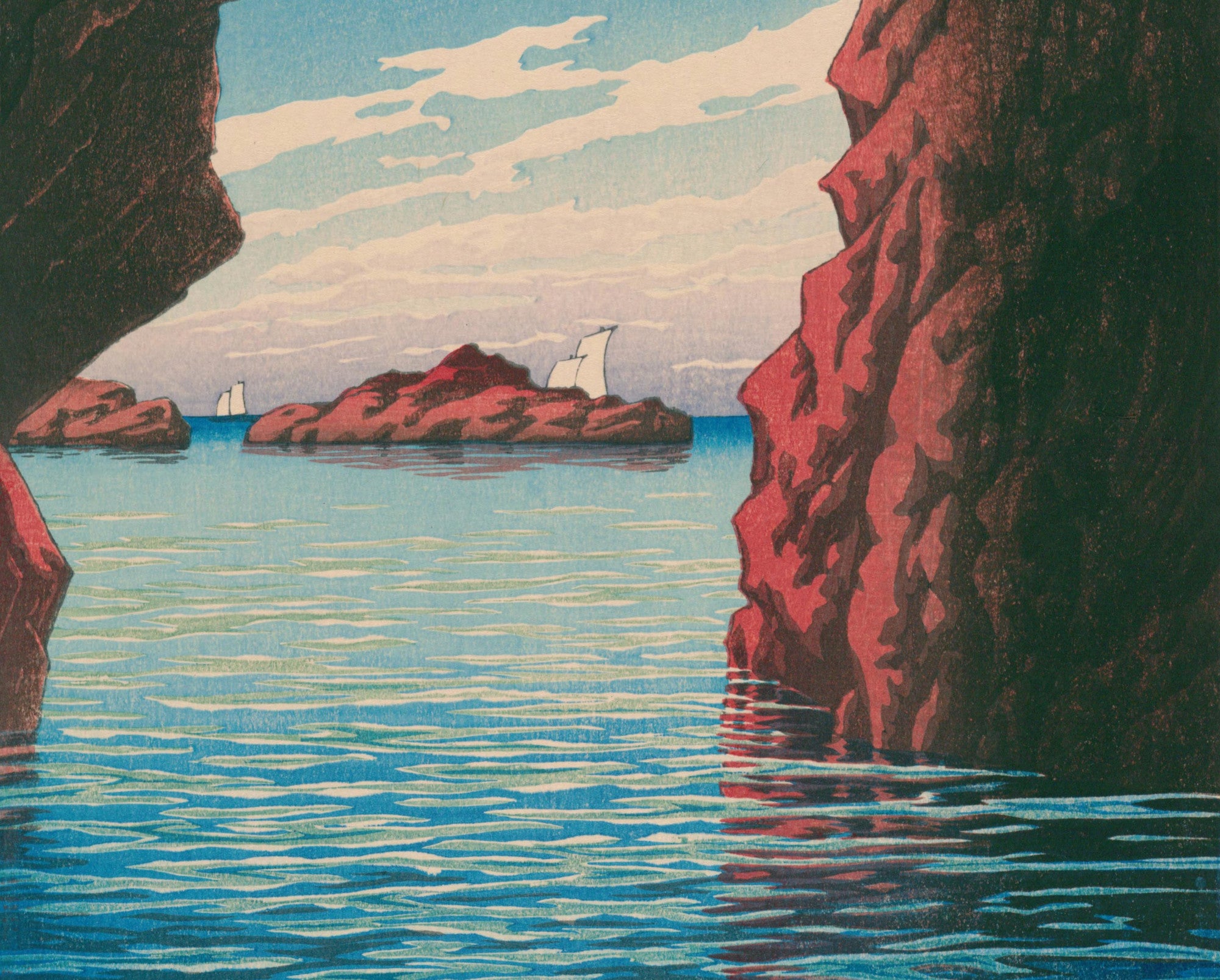
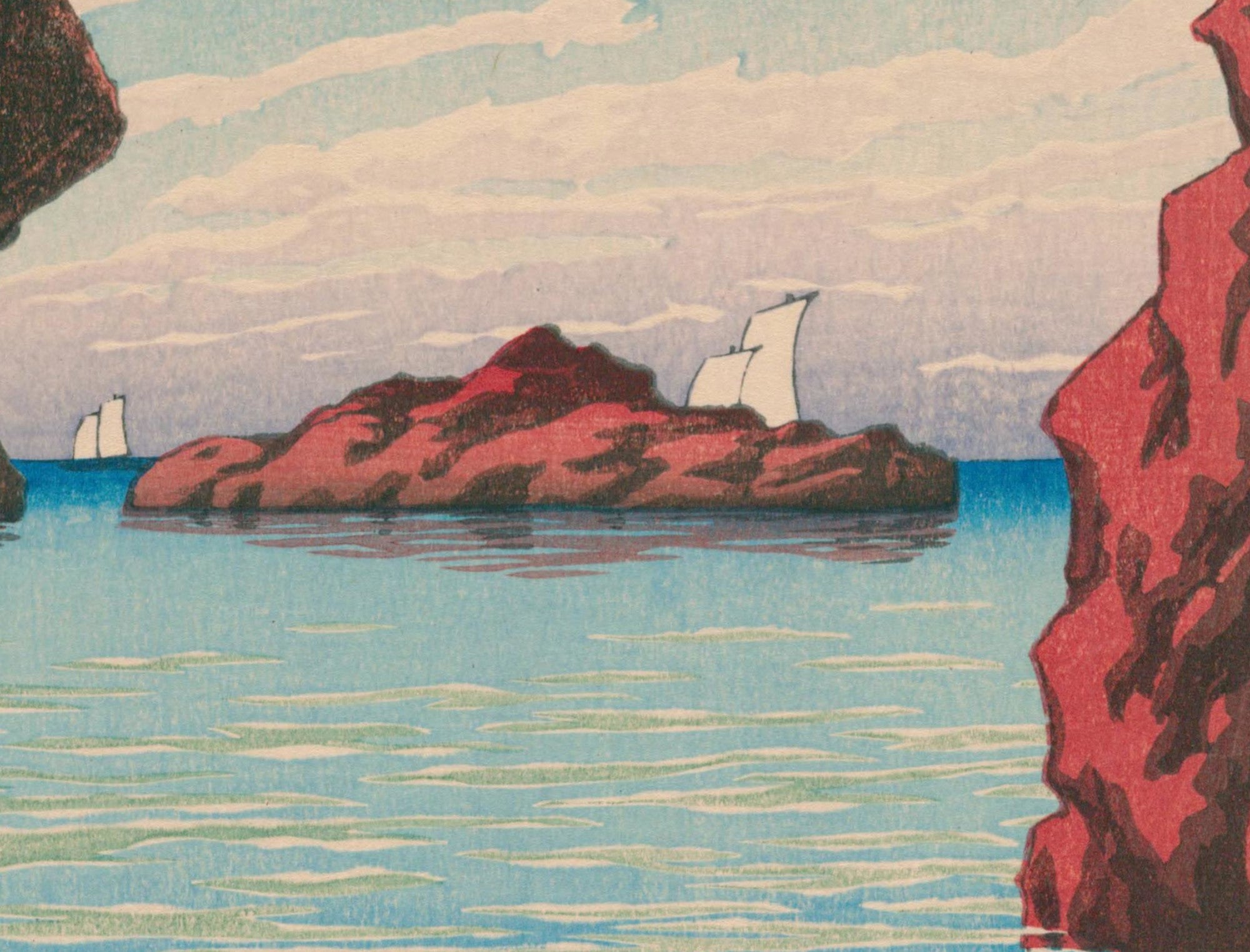
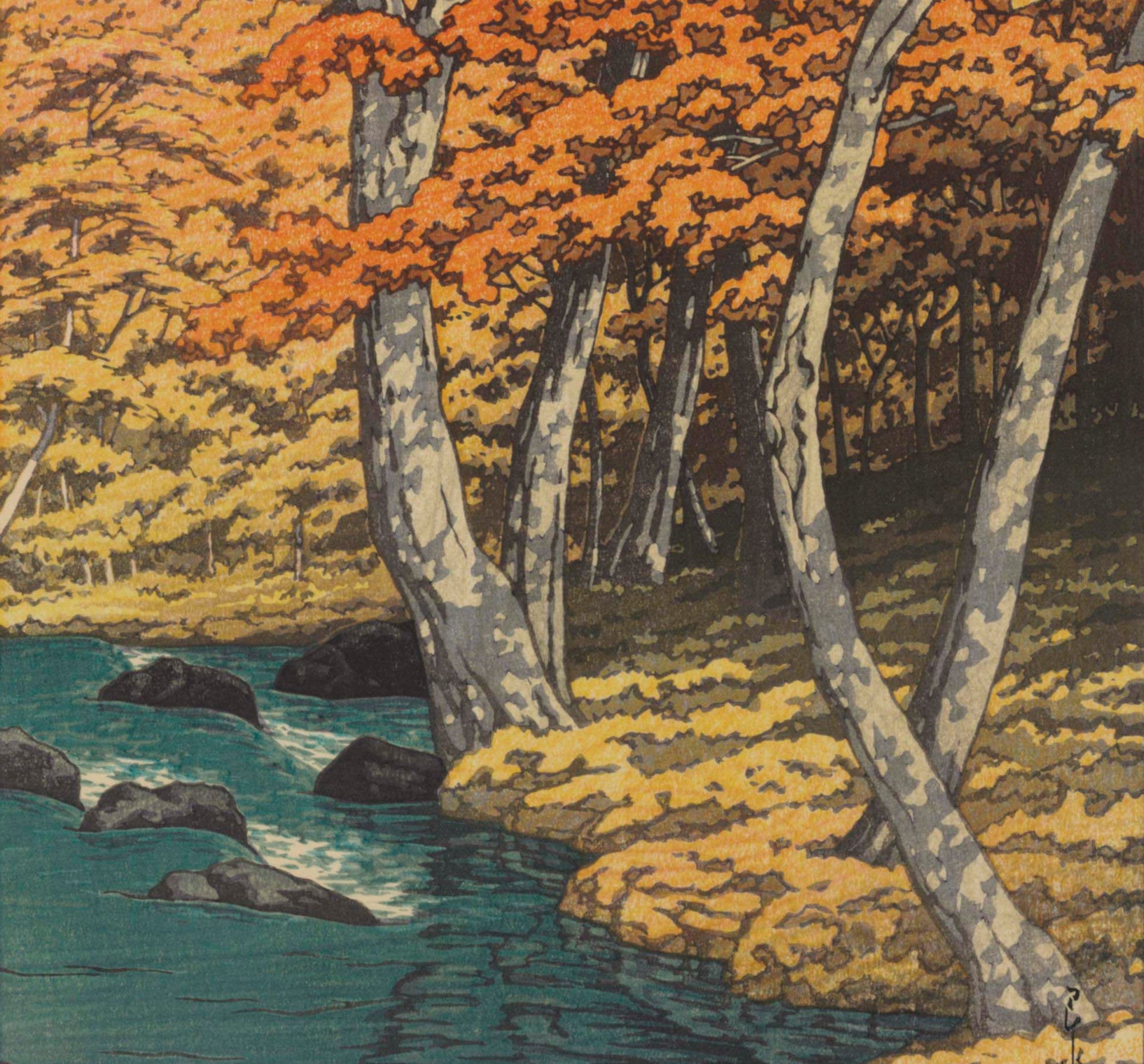
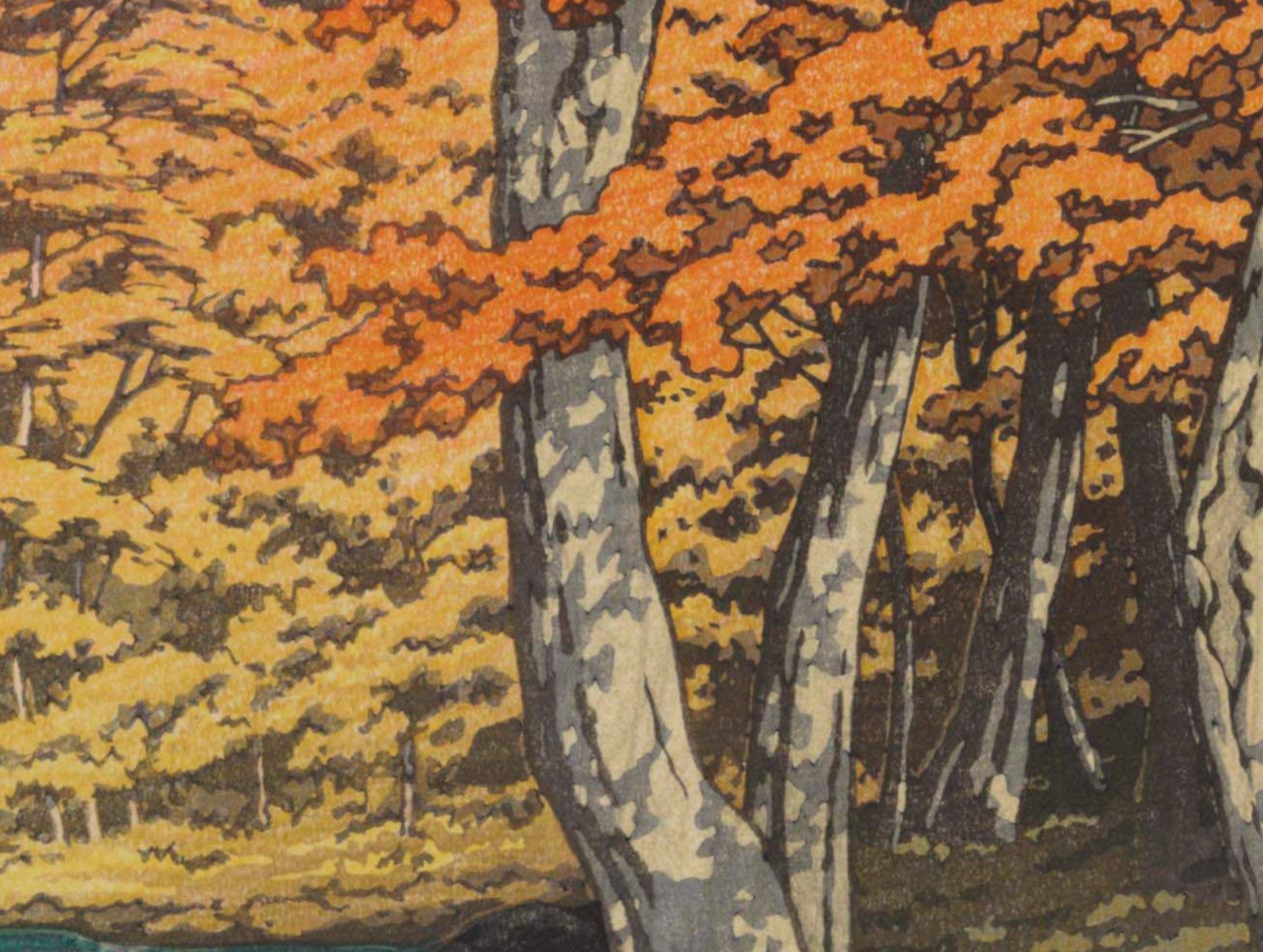
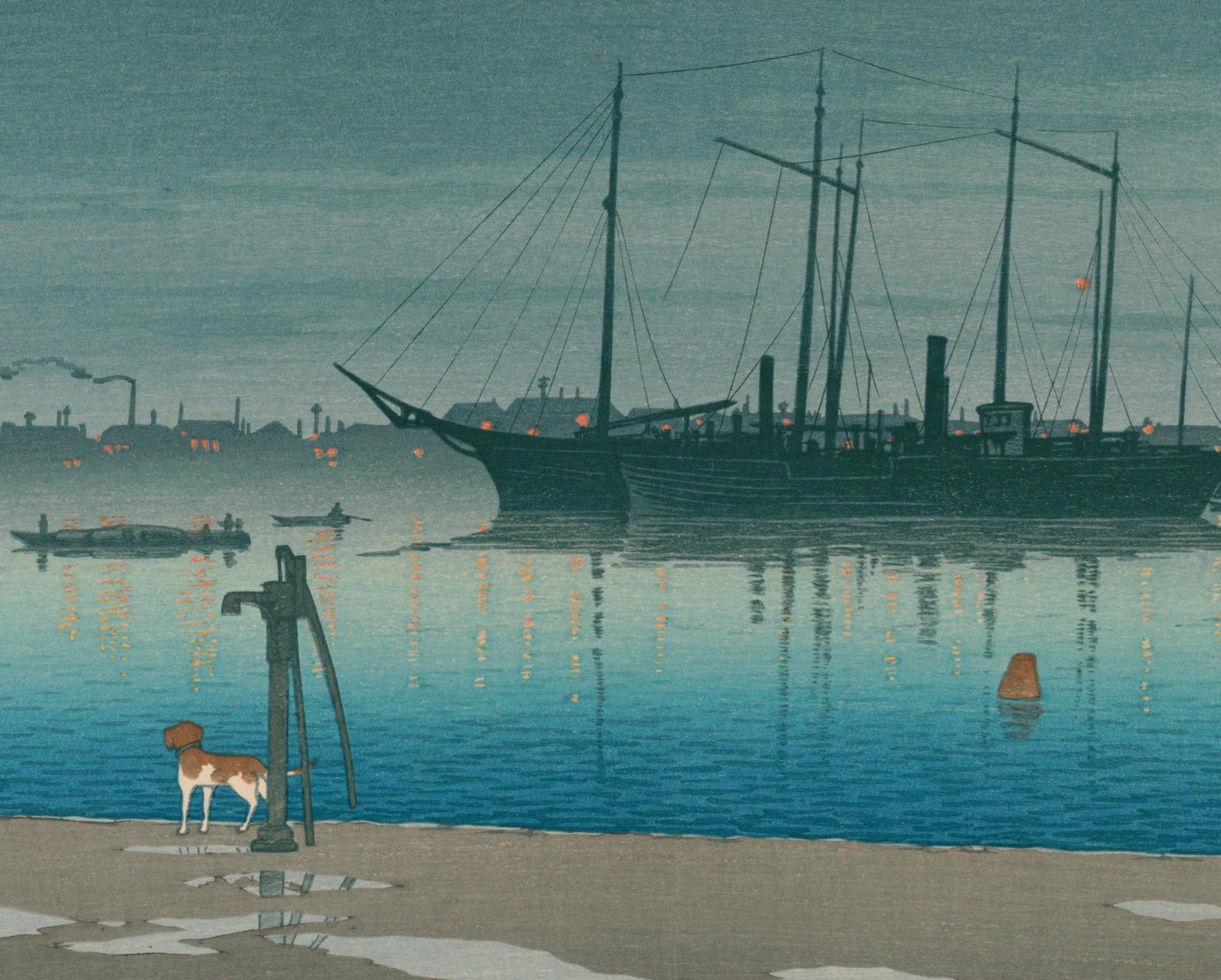
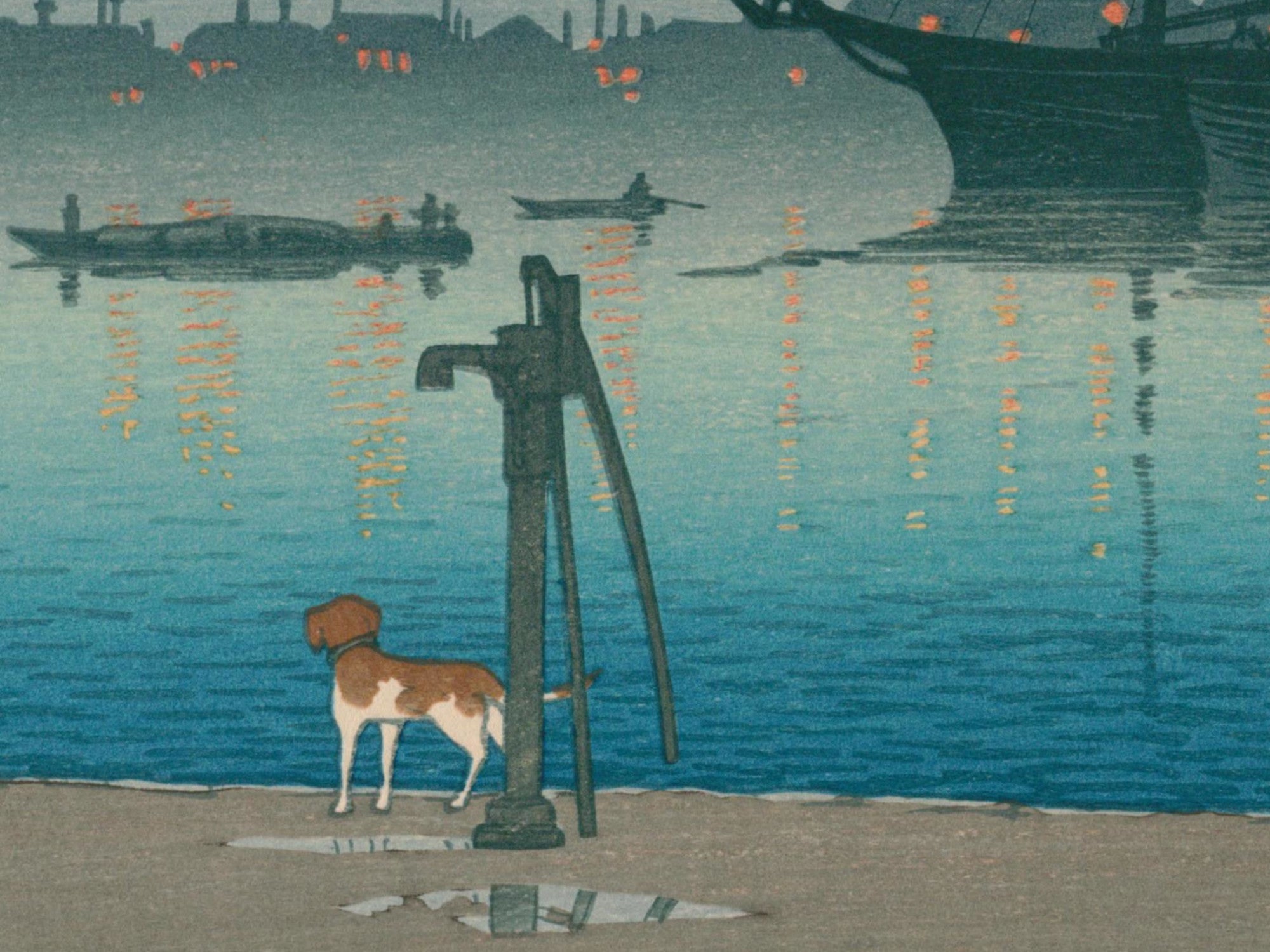
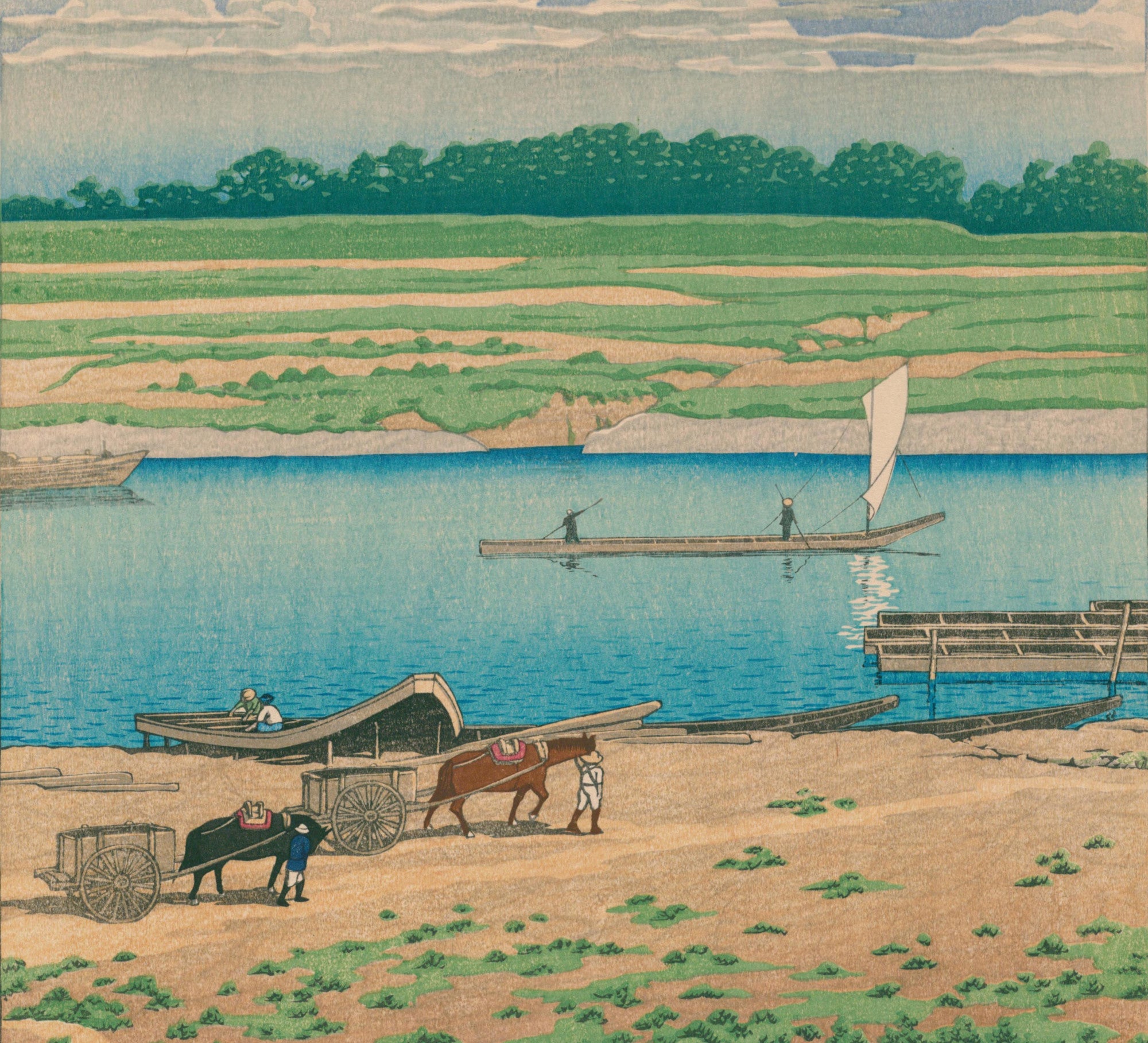
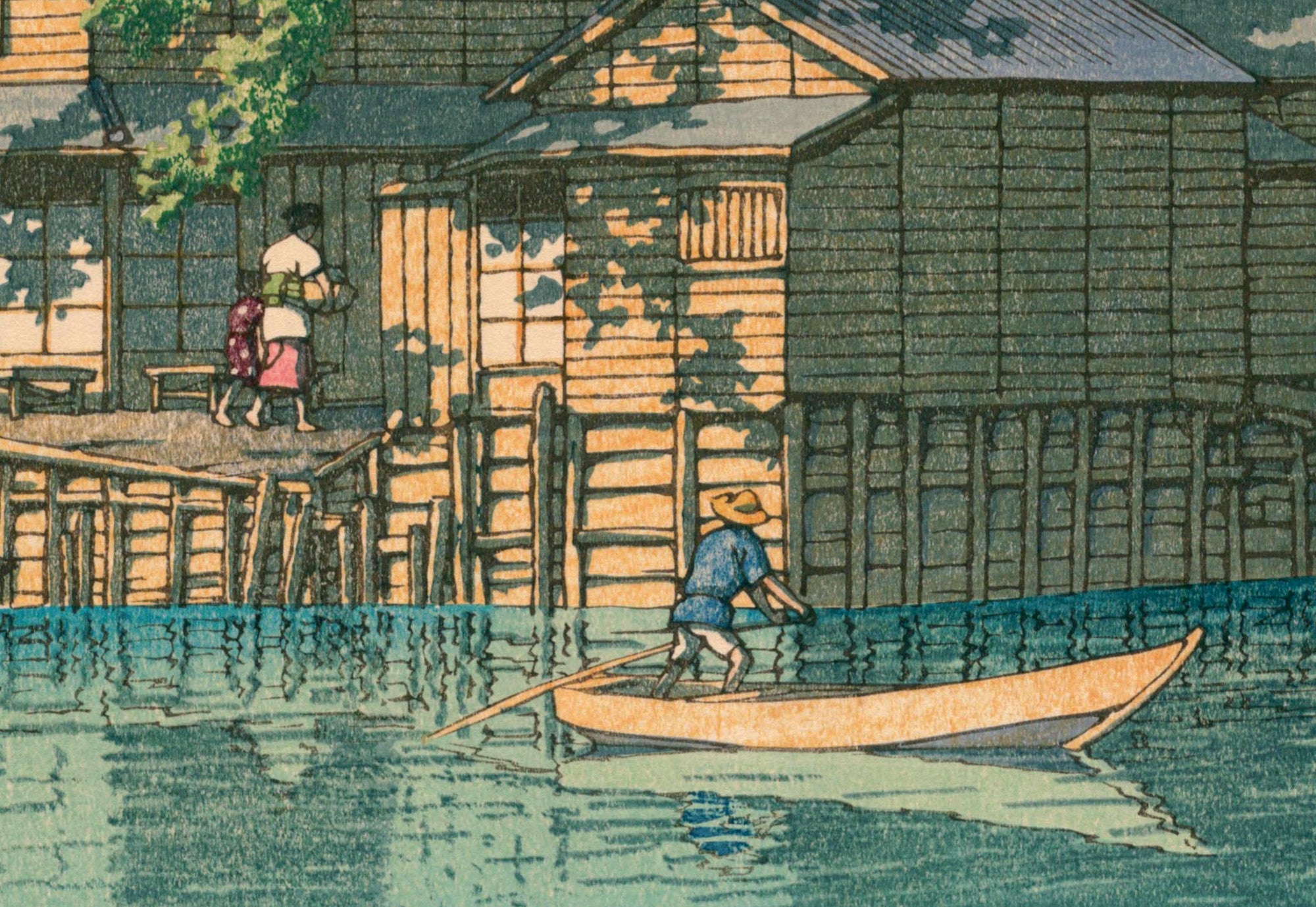
Hasui became particularly important to the landscape branch of the movement. His compositions retain many qualities associated with earlier Japanese printmaking — strong silhouettes, carefully balanced space and an emphasis on nature — while also exploring subtle gradations of colour, reflected light, atmospheric depth and naturalistic weather effects.
For admirers of earlier Japanese printmaking, Hasui provides a fascinating bridge between the landscapes of nineteenth-century ukiyo-e and the visual language of modern Japan. Explore the wider Japanese Art Prints collection to discover works spanning ukiyo-e, shin-hanga and other important Japanese artistic traditions.
Snow, Rain, Moonlight and Evening Light
Atmosphere is one of the defining qualities of a Hasui Kawase print.
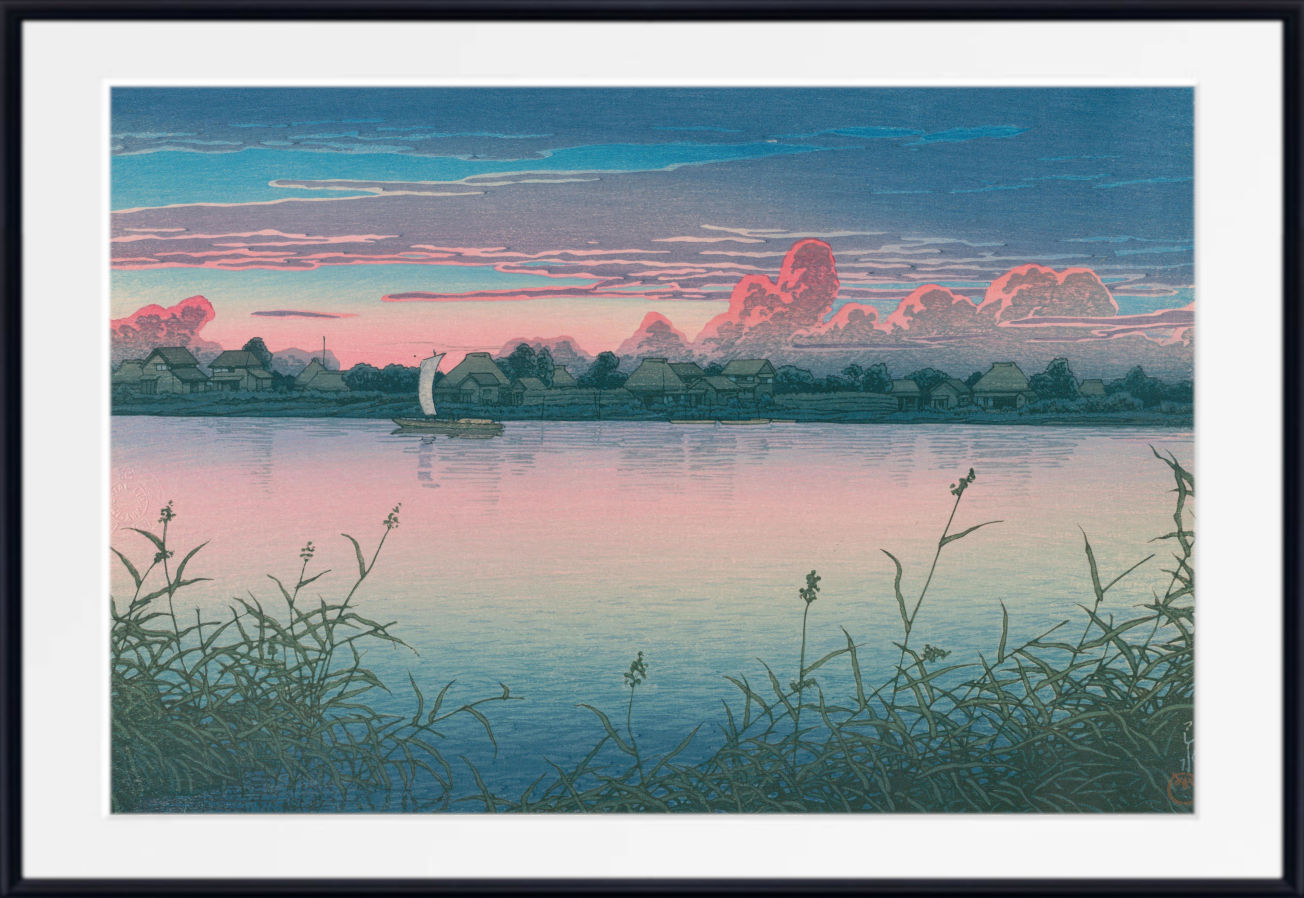
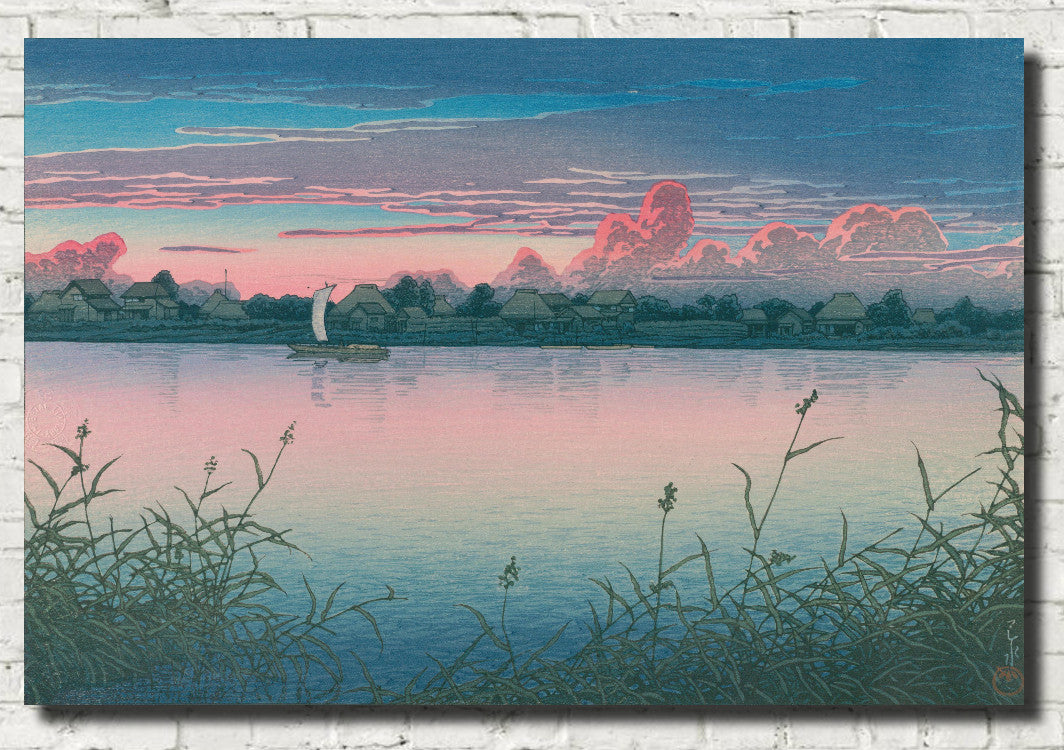
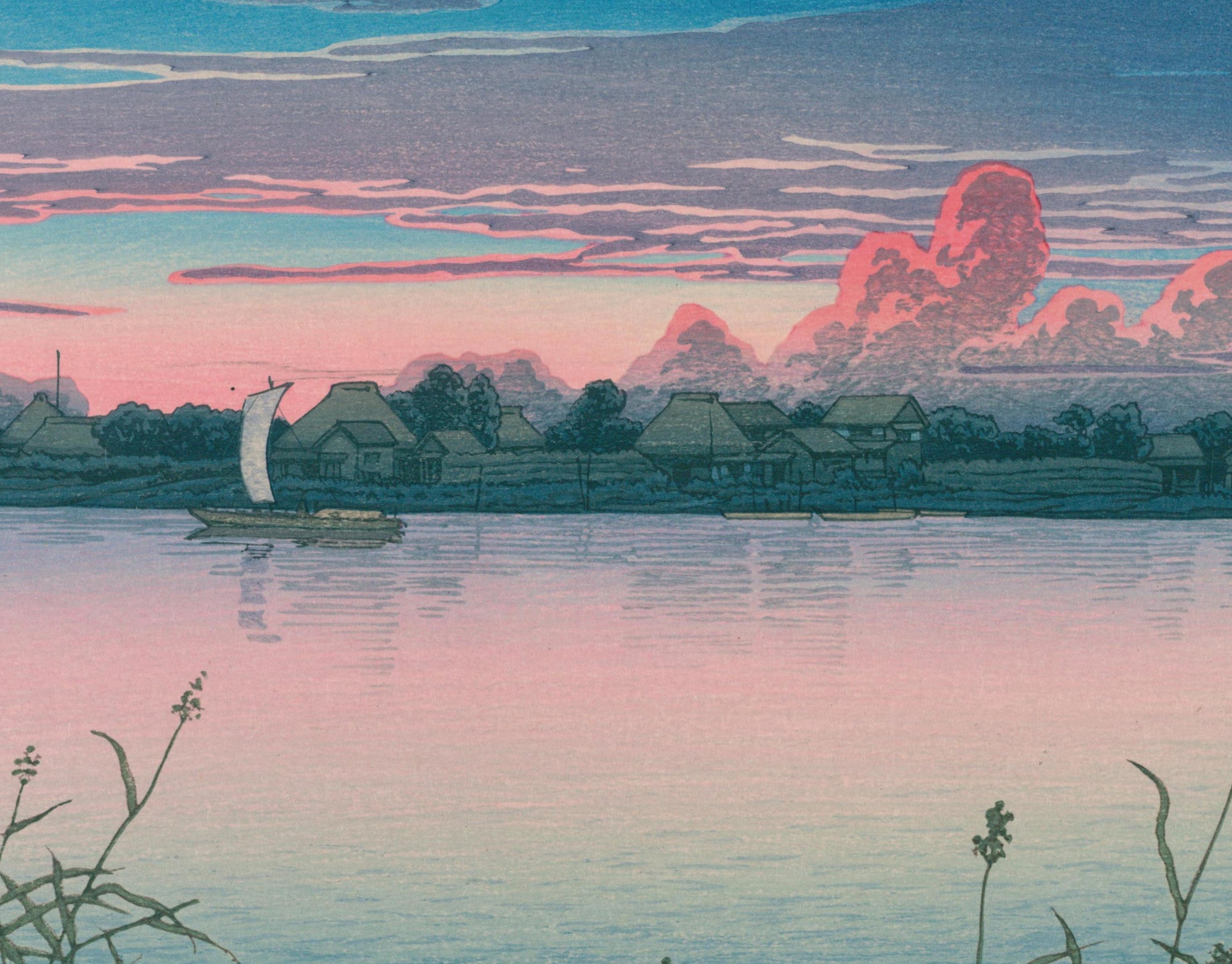
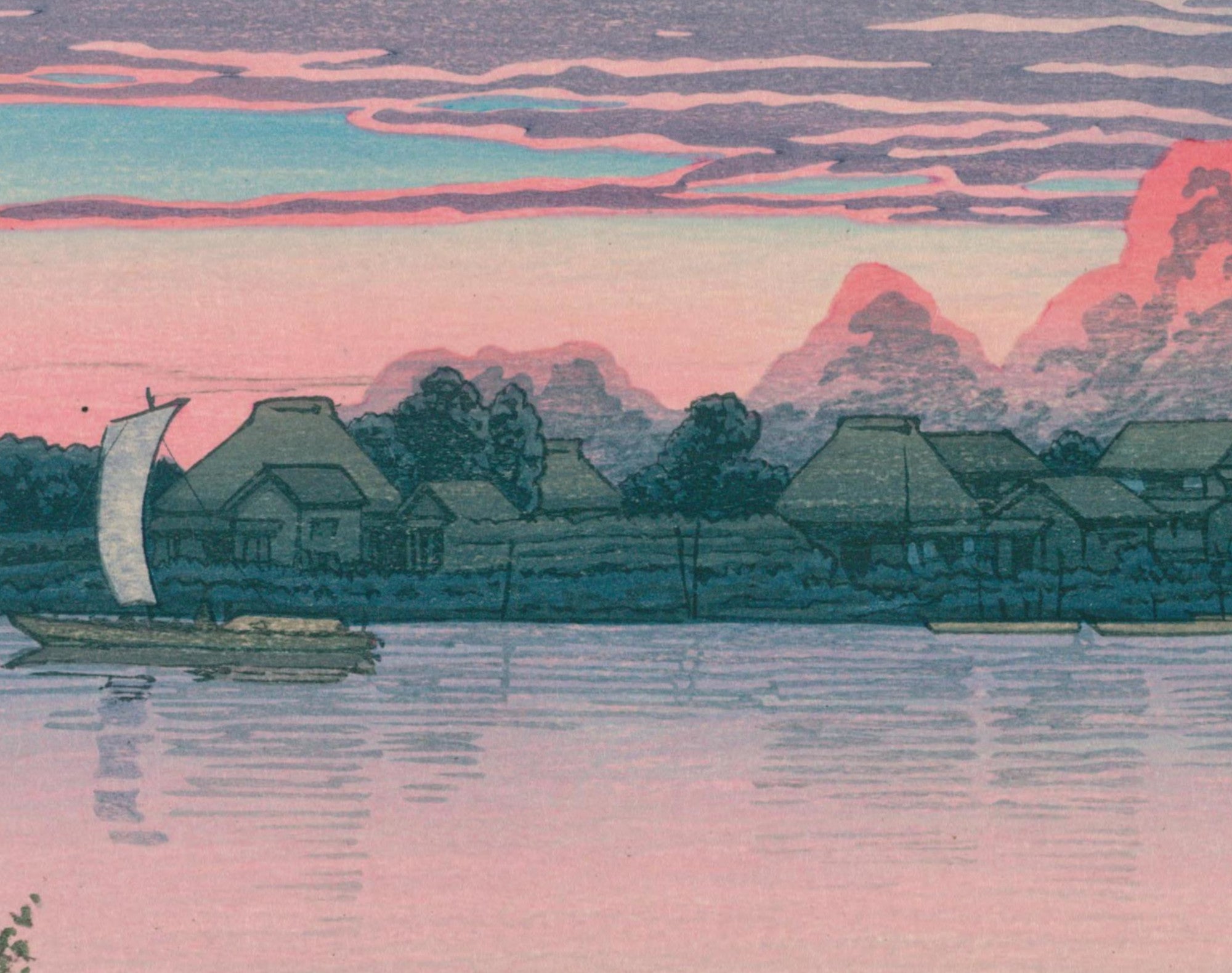
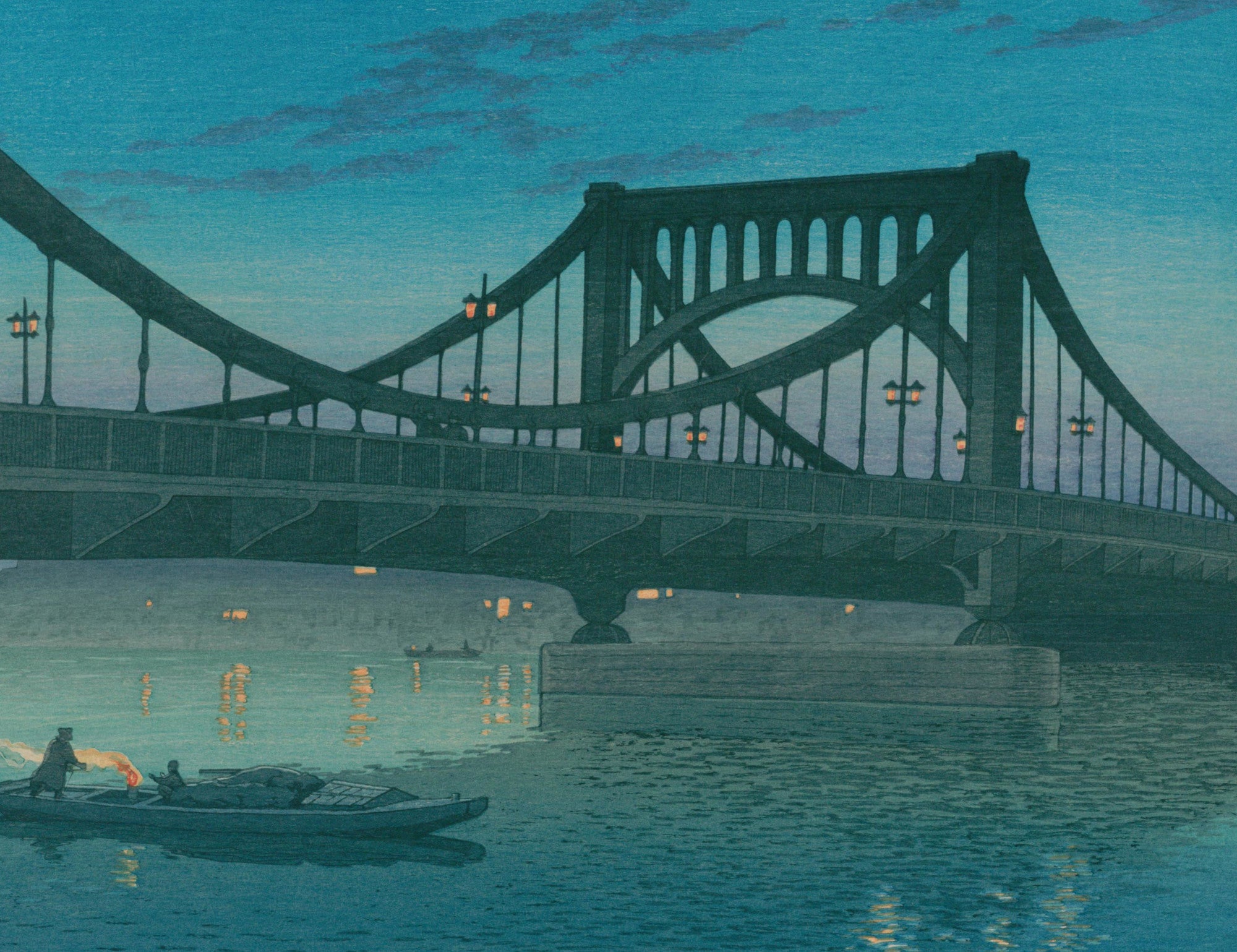
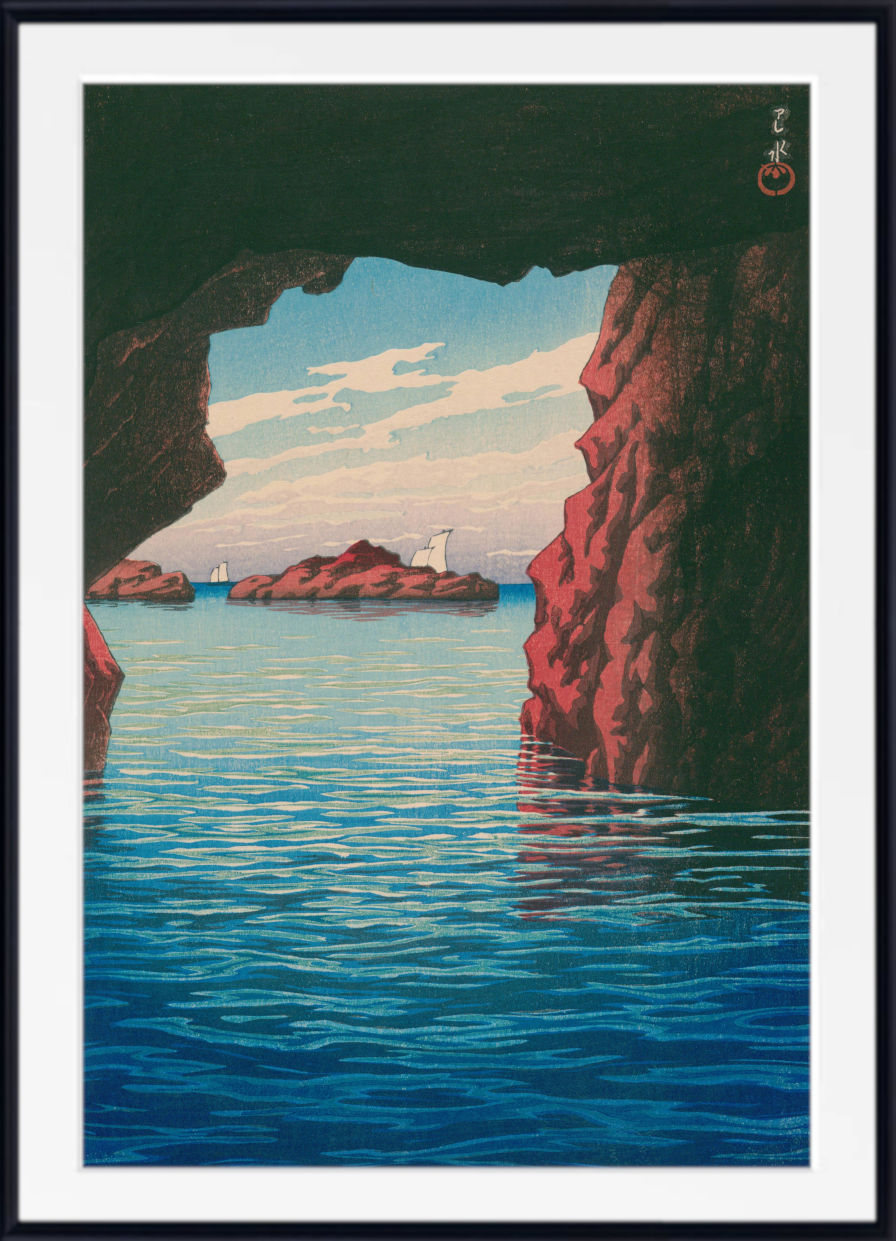
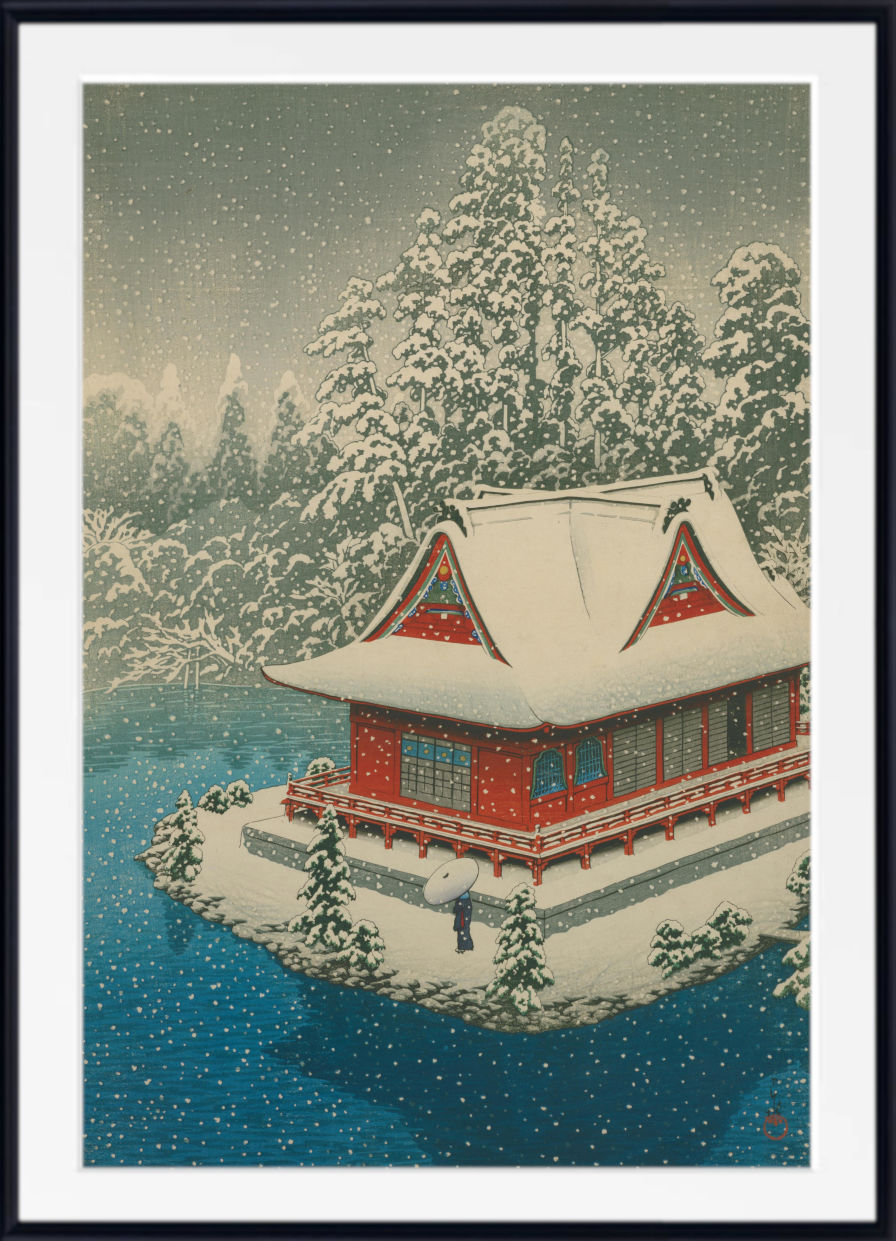
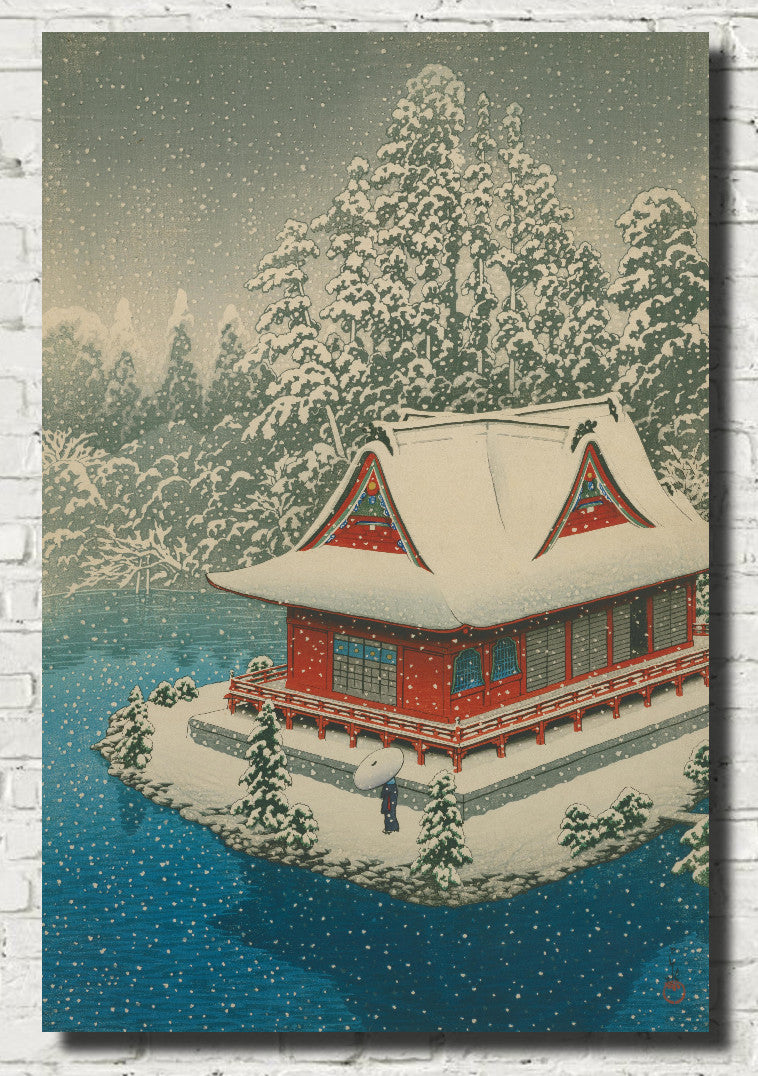
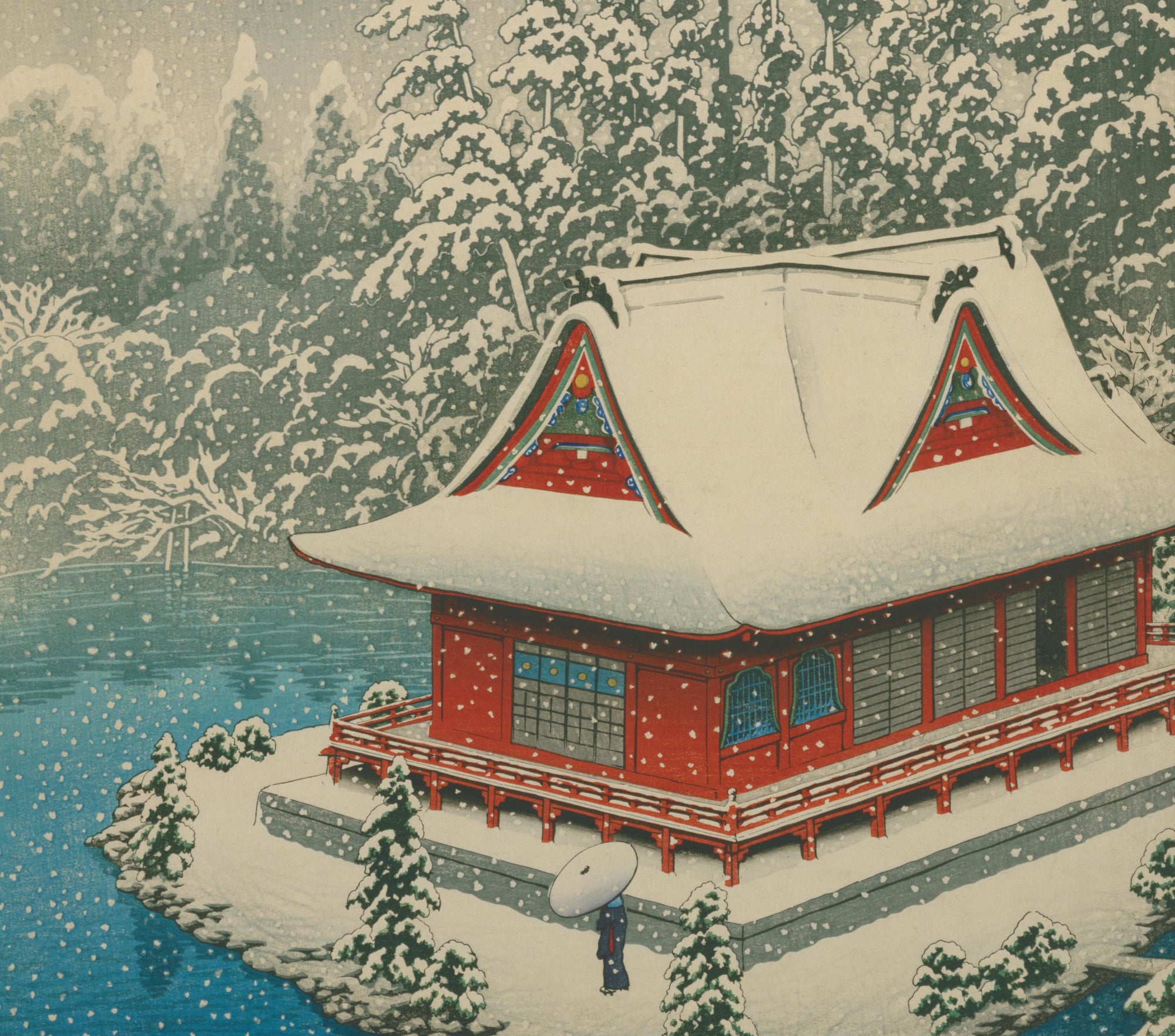
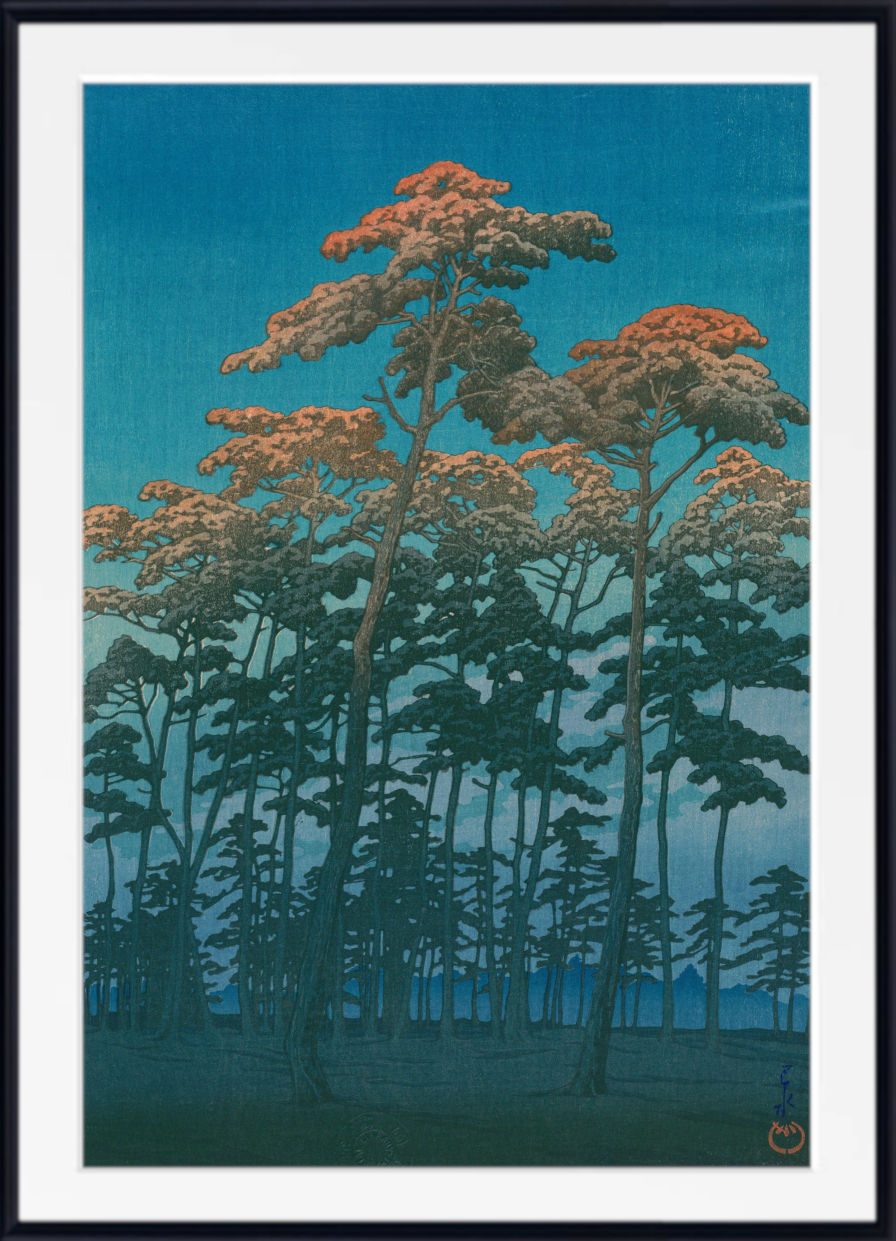
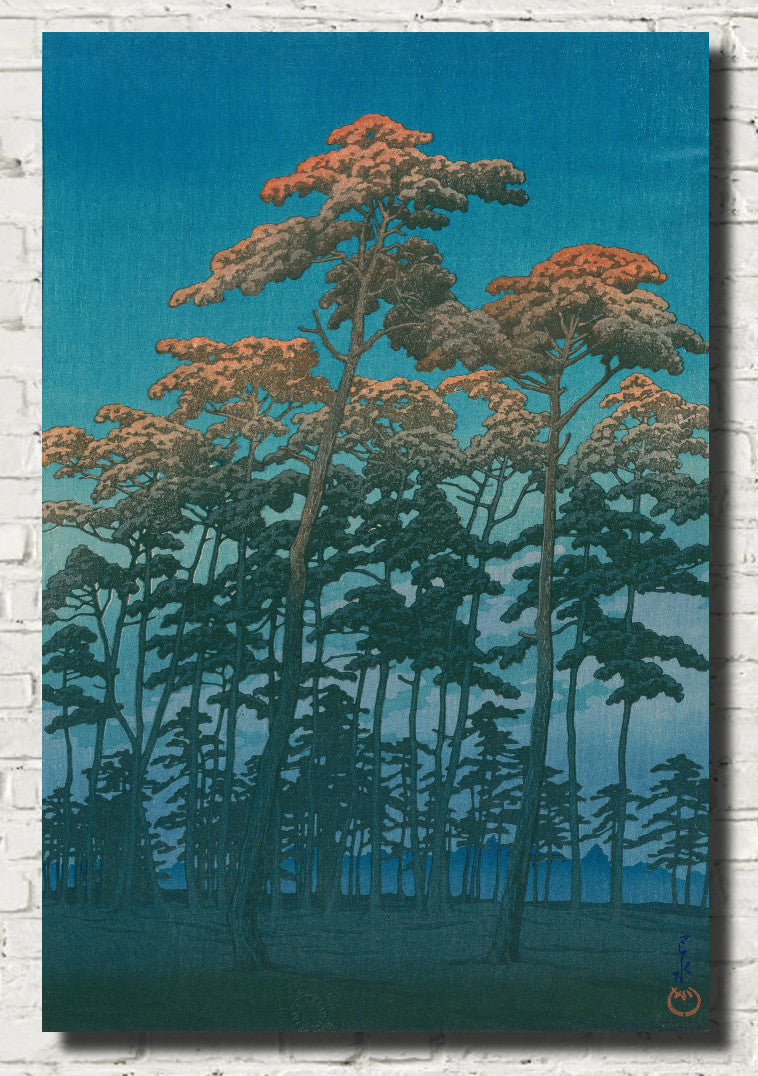
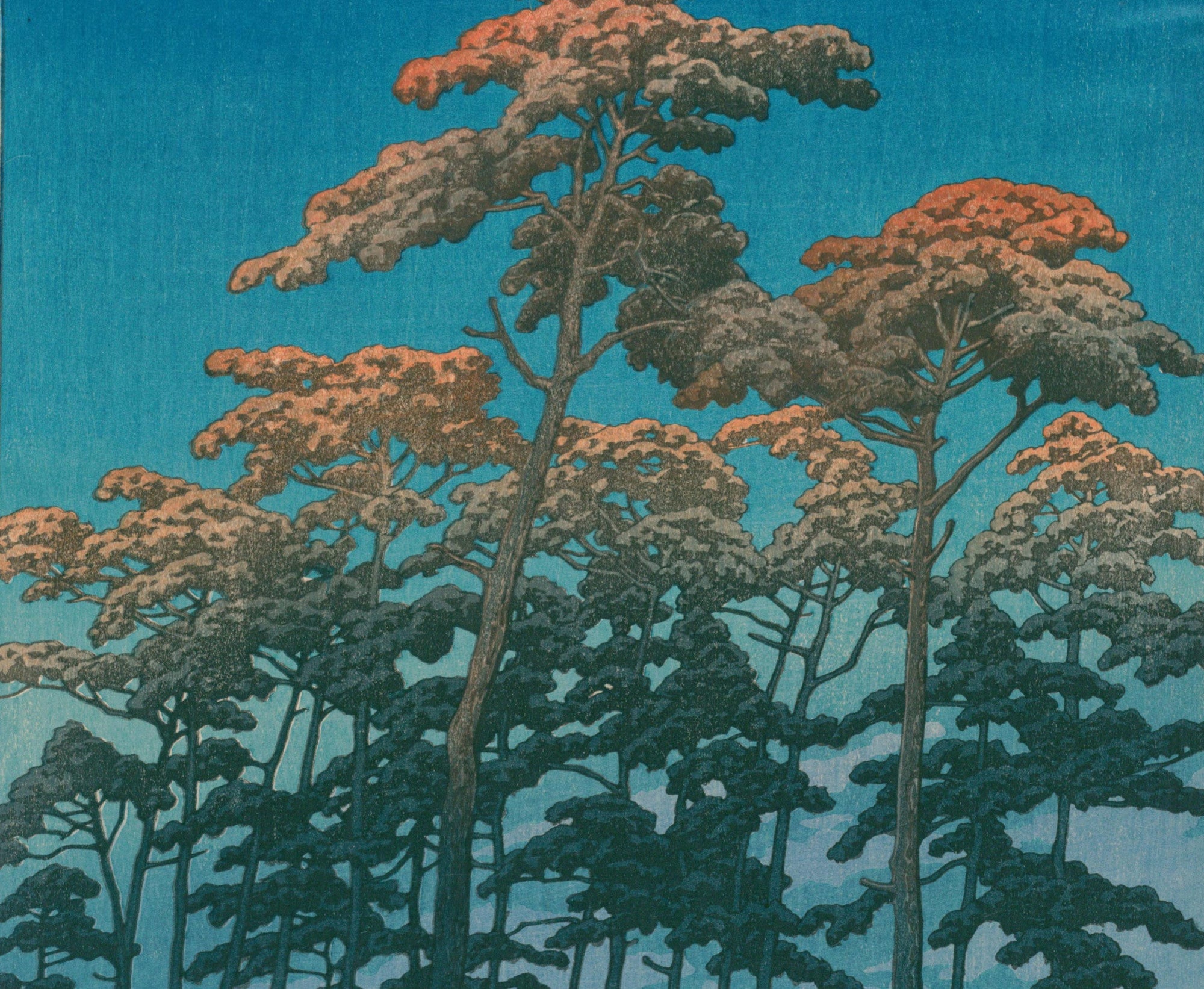
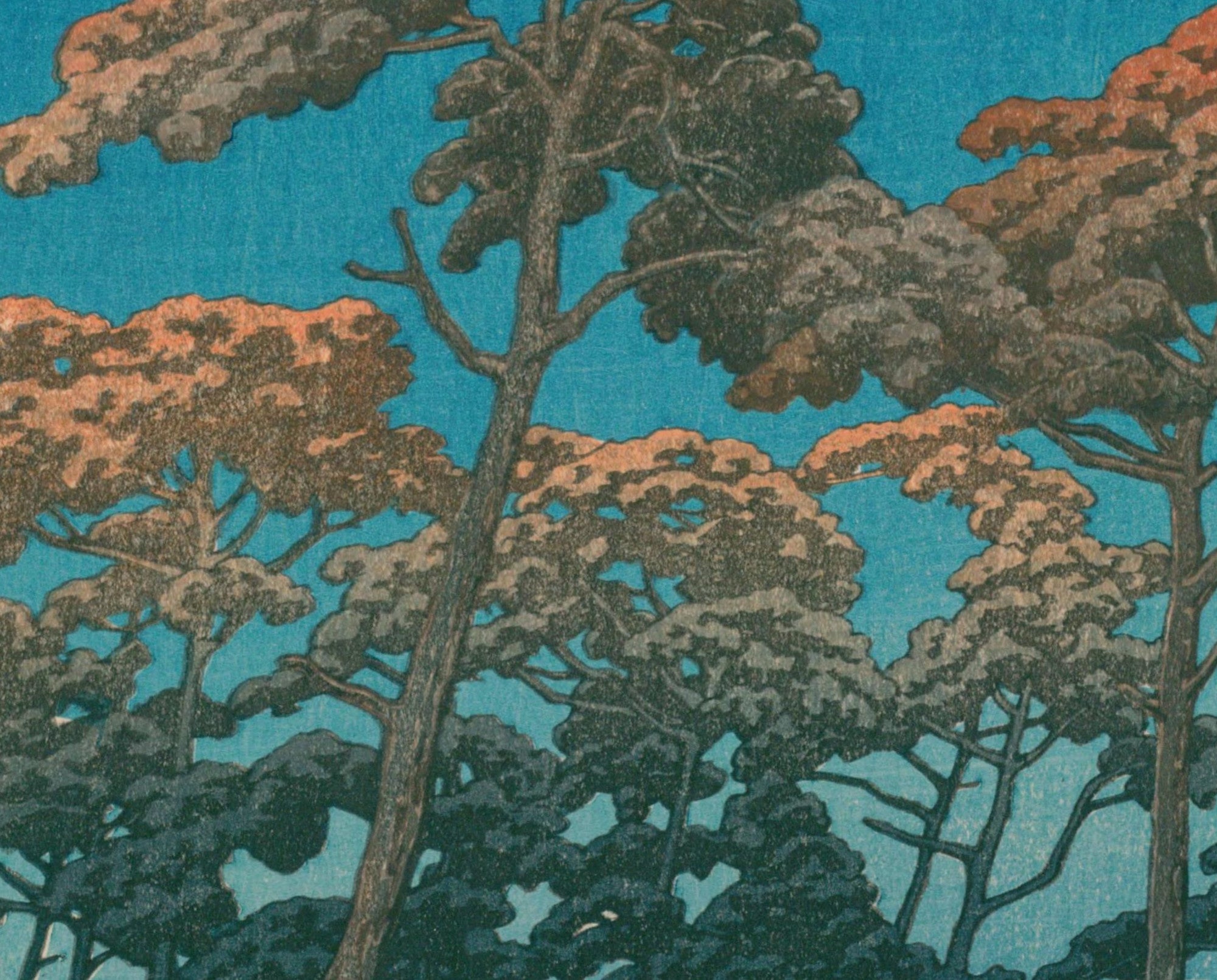
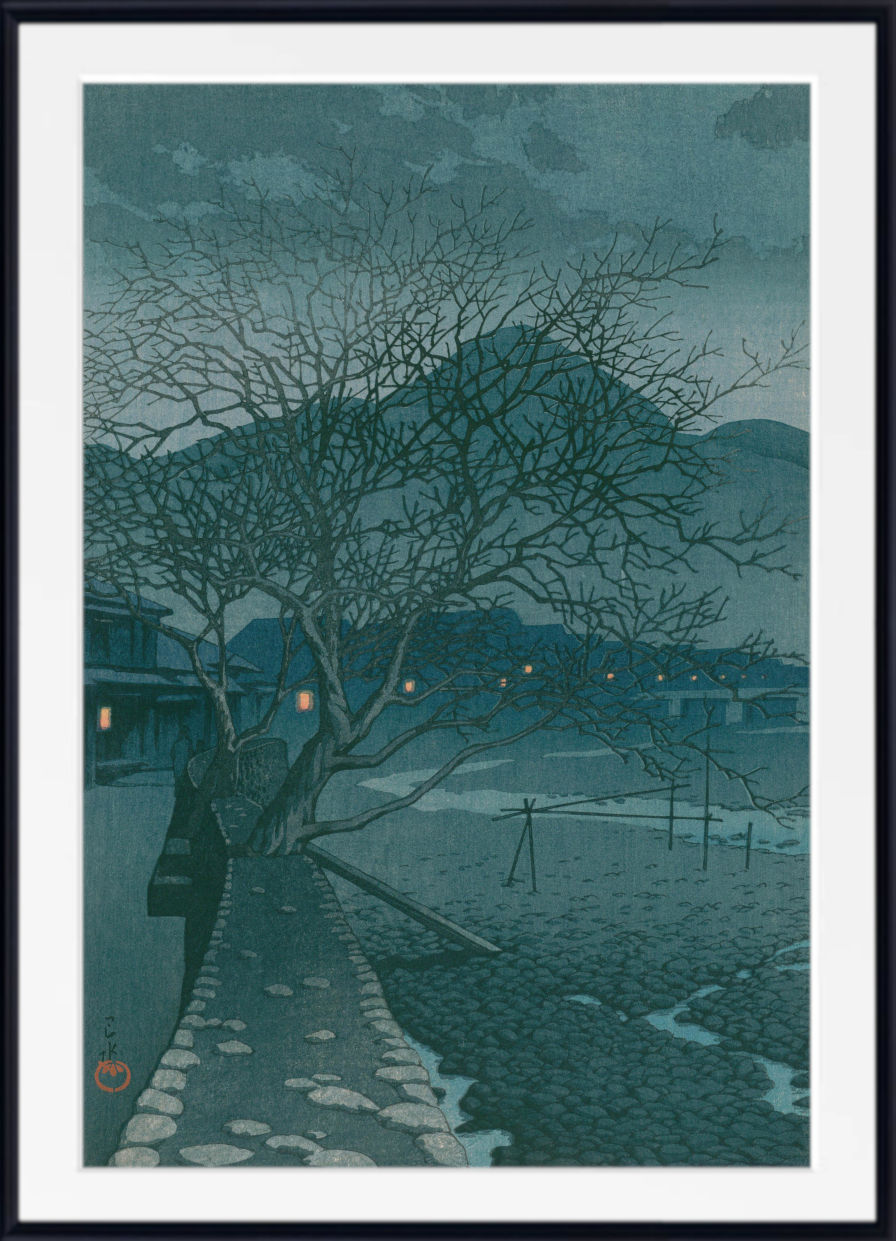
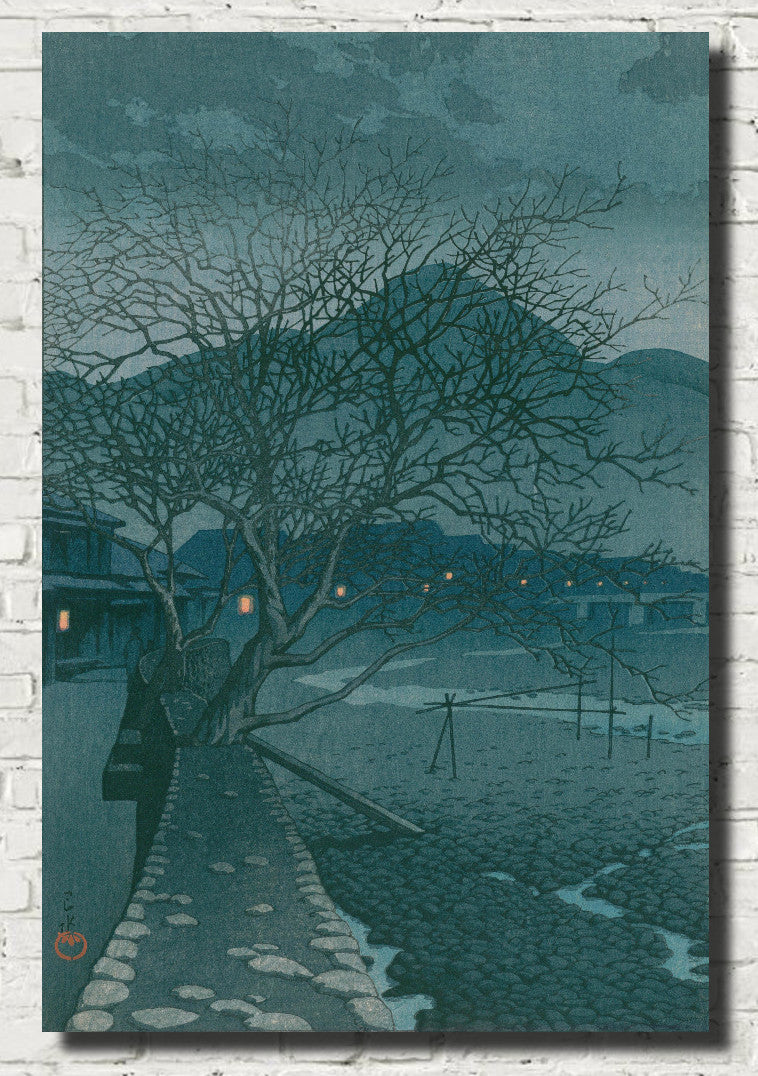
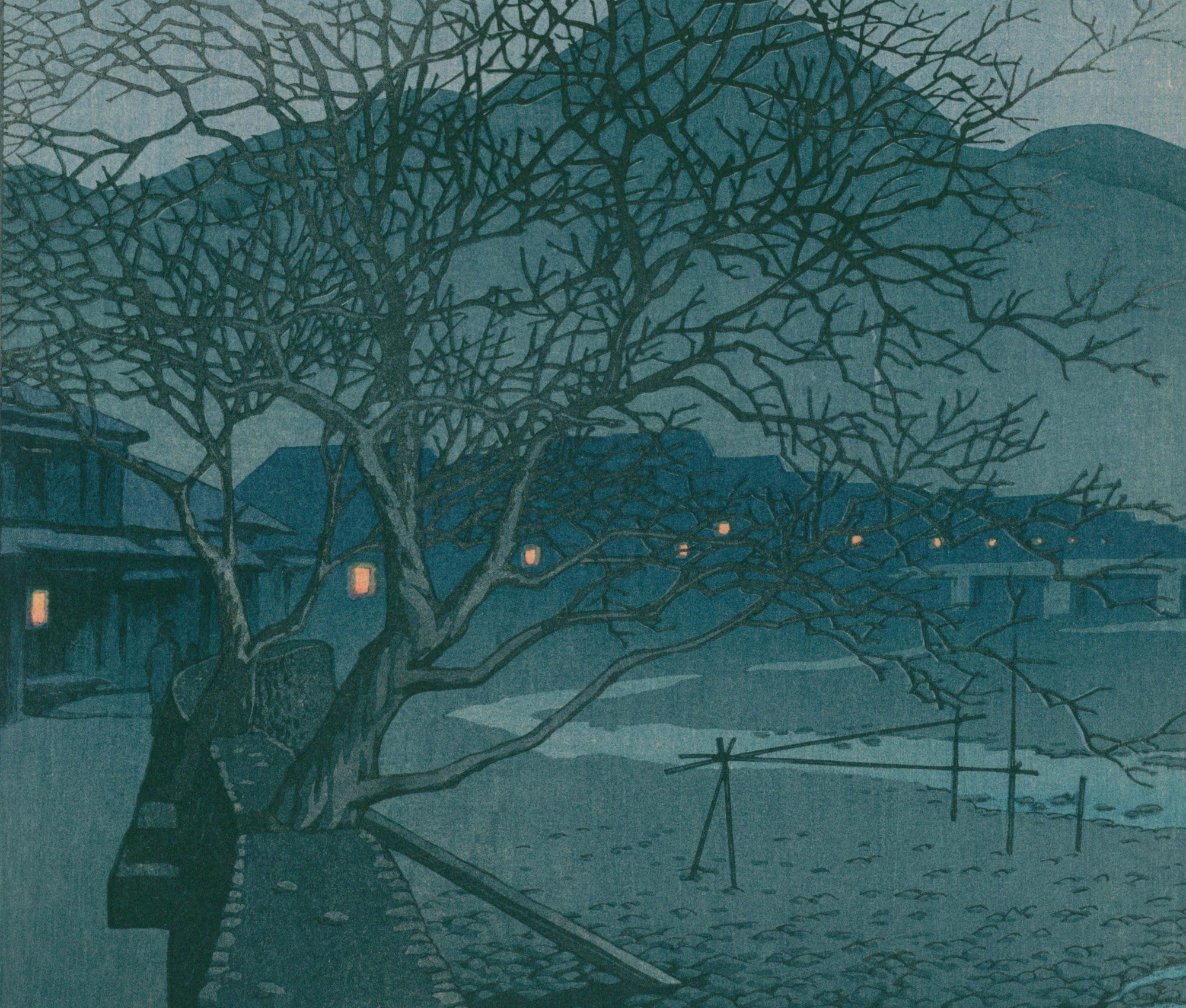
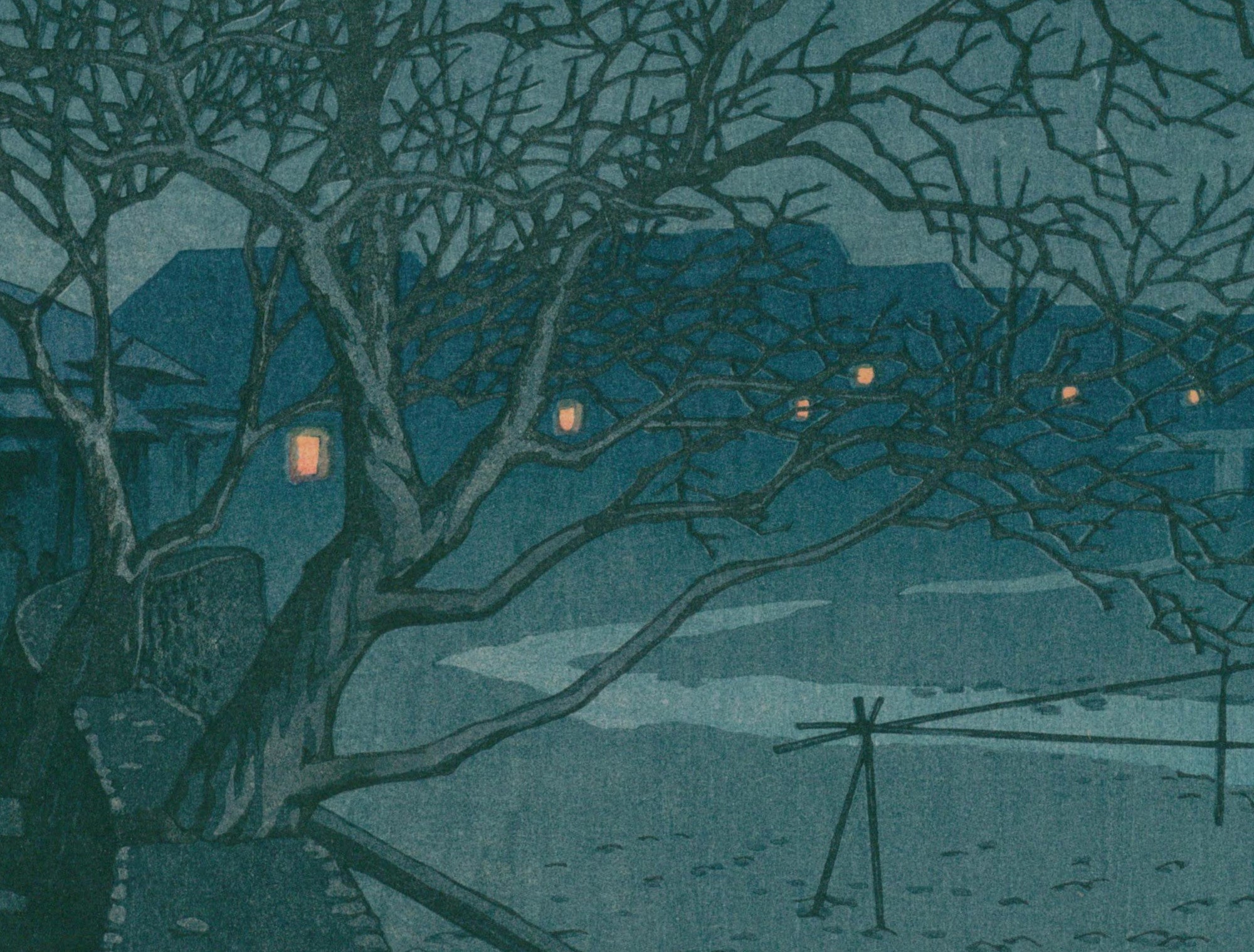
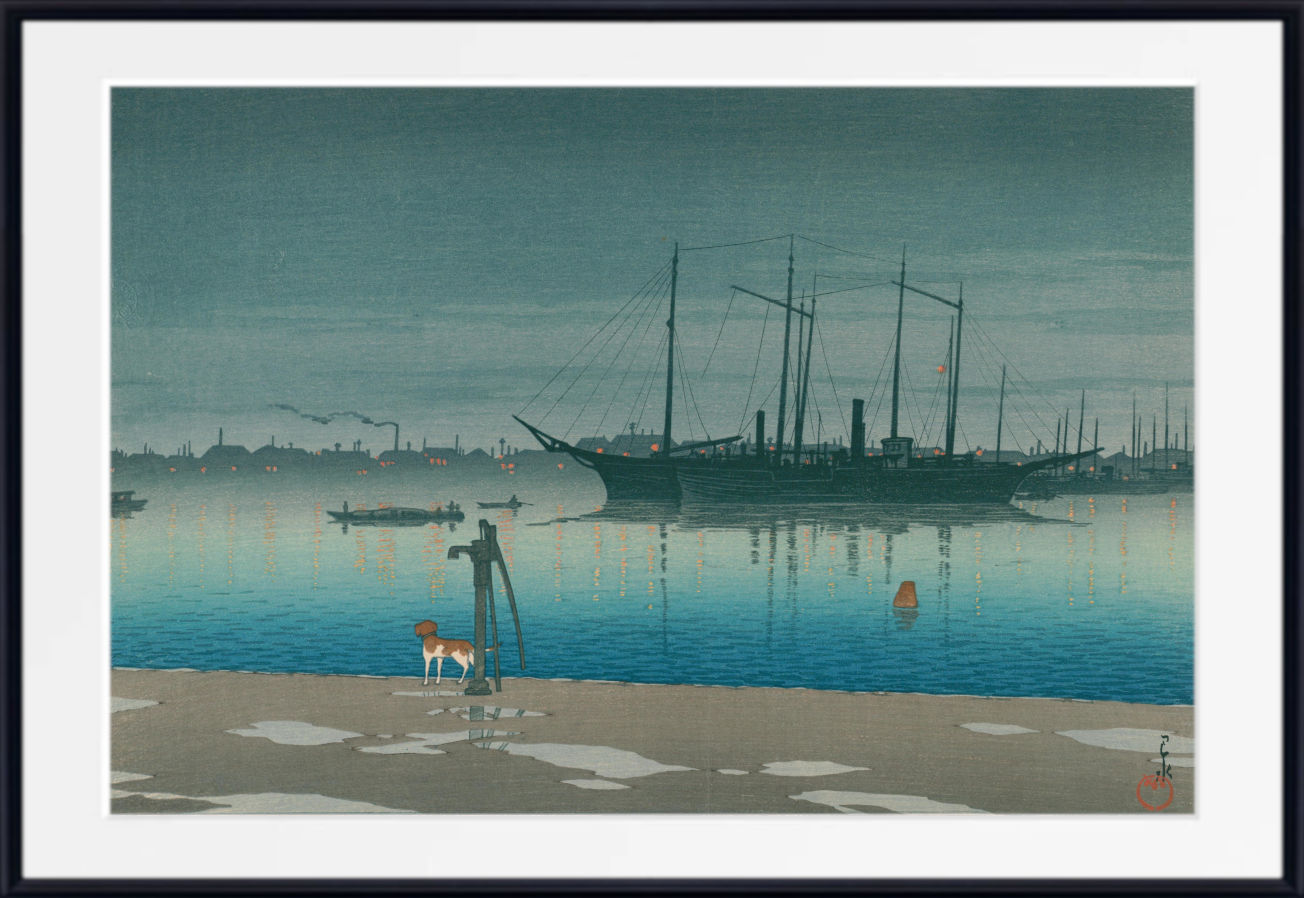
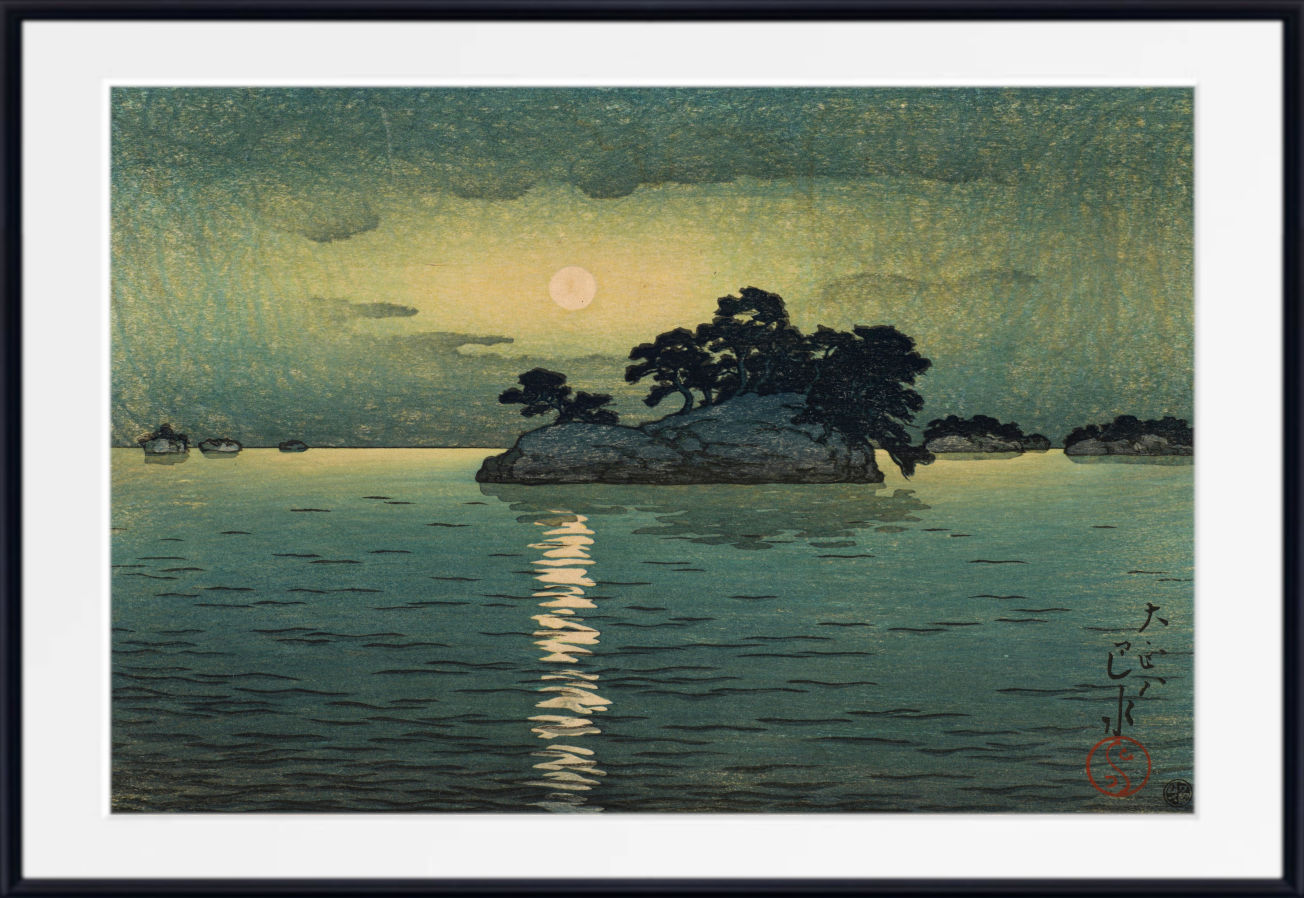
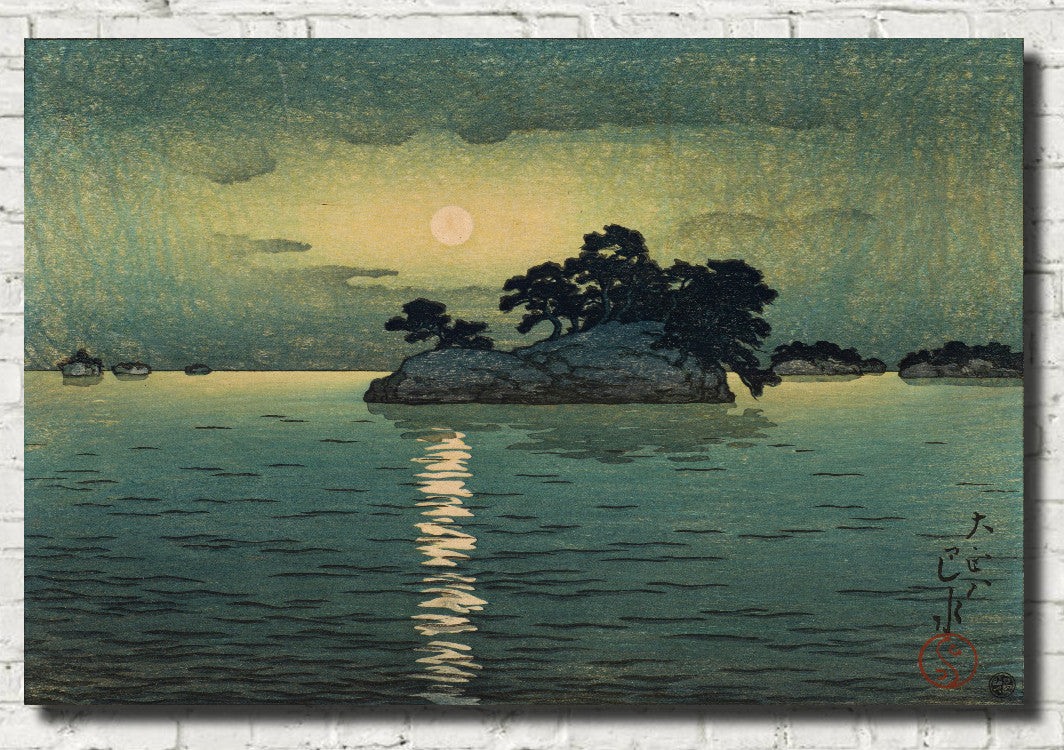
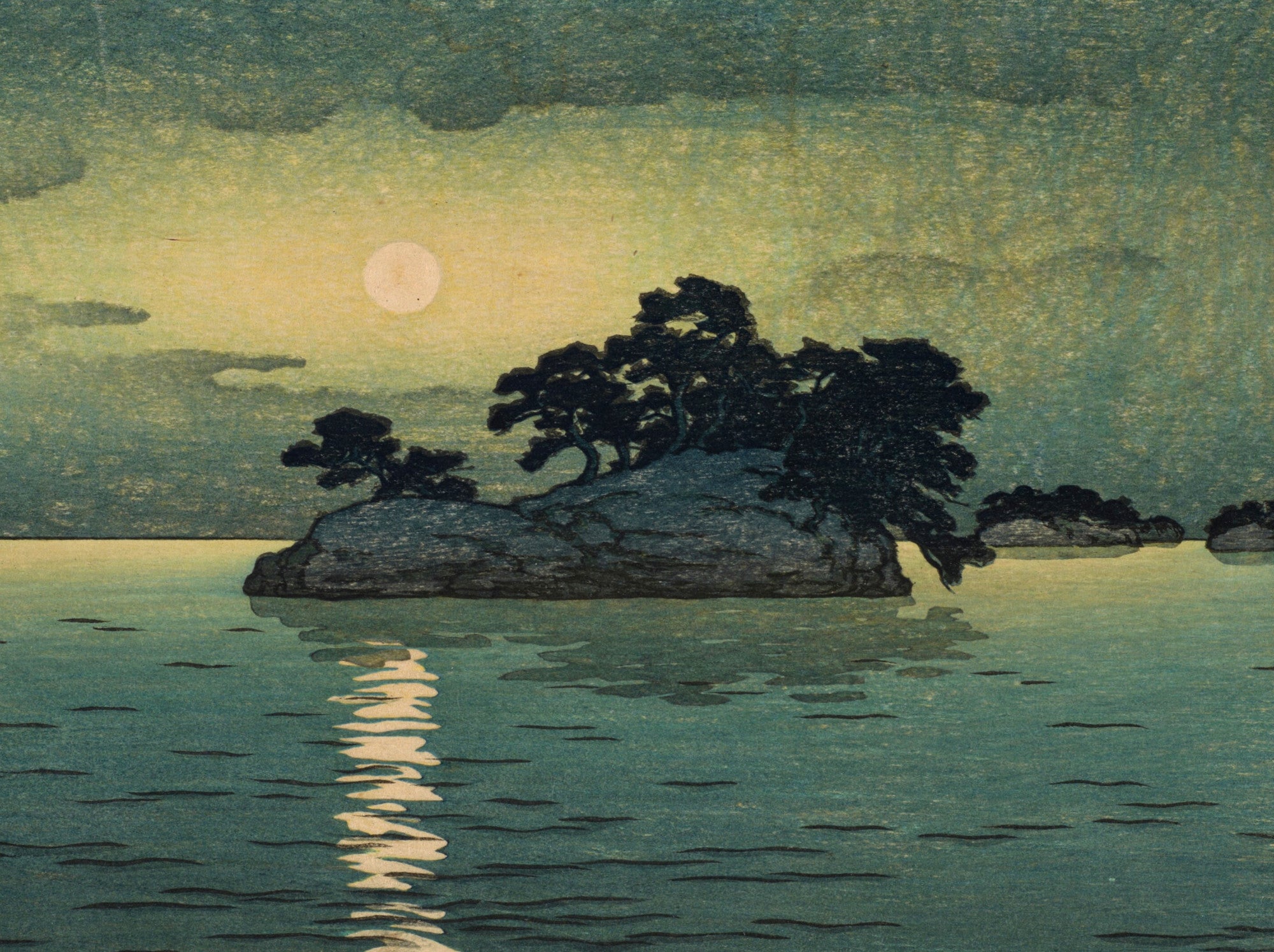
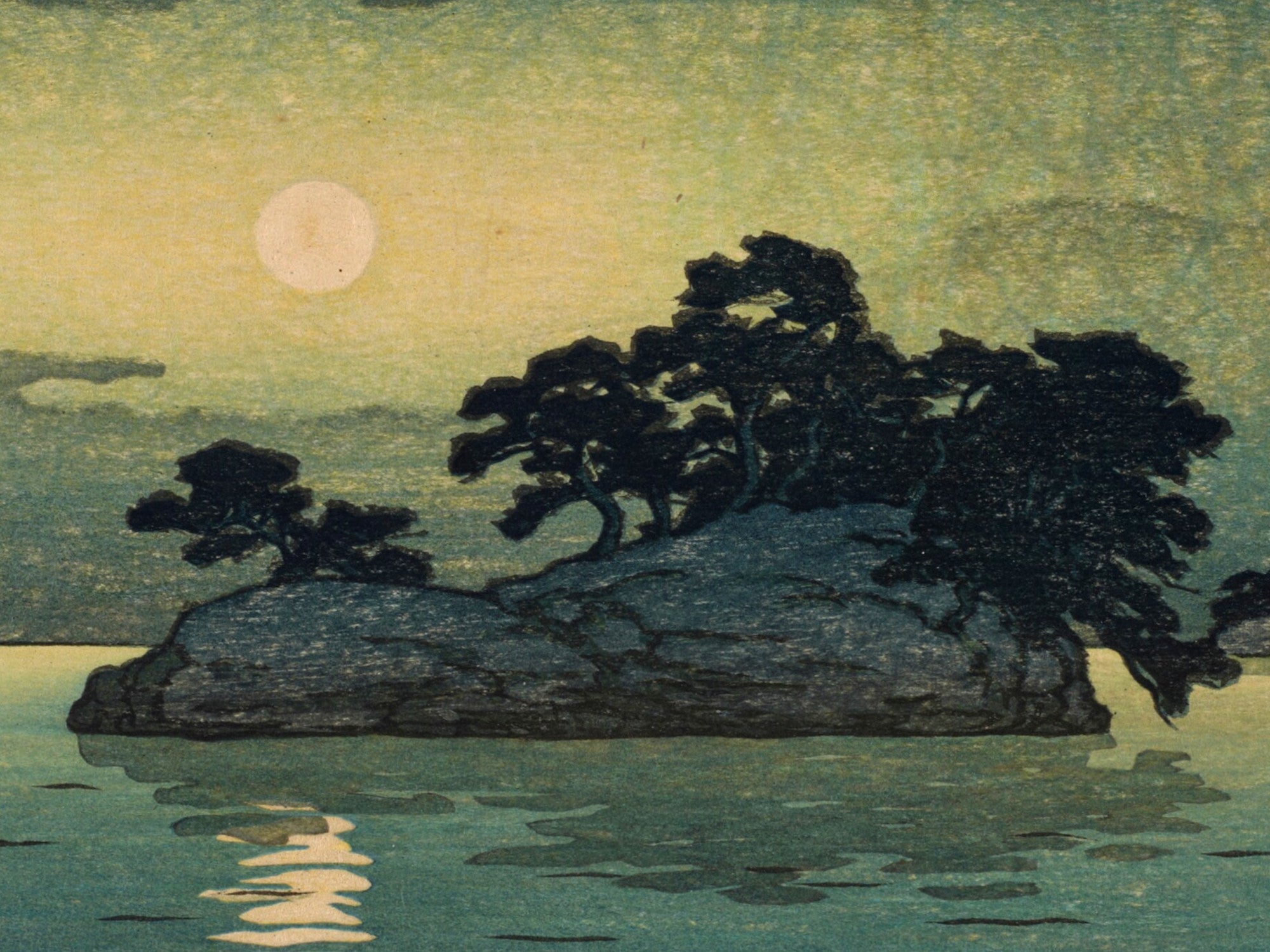
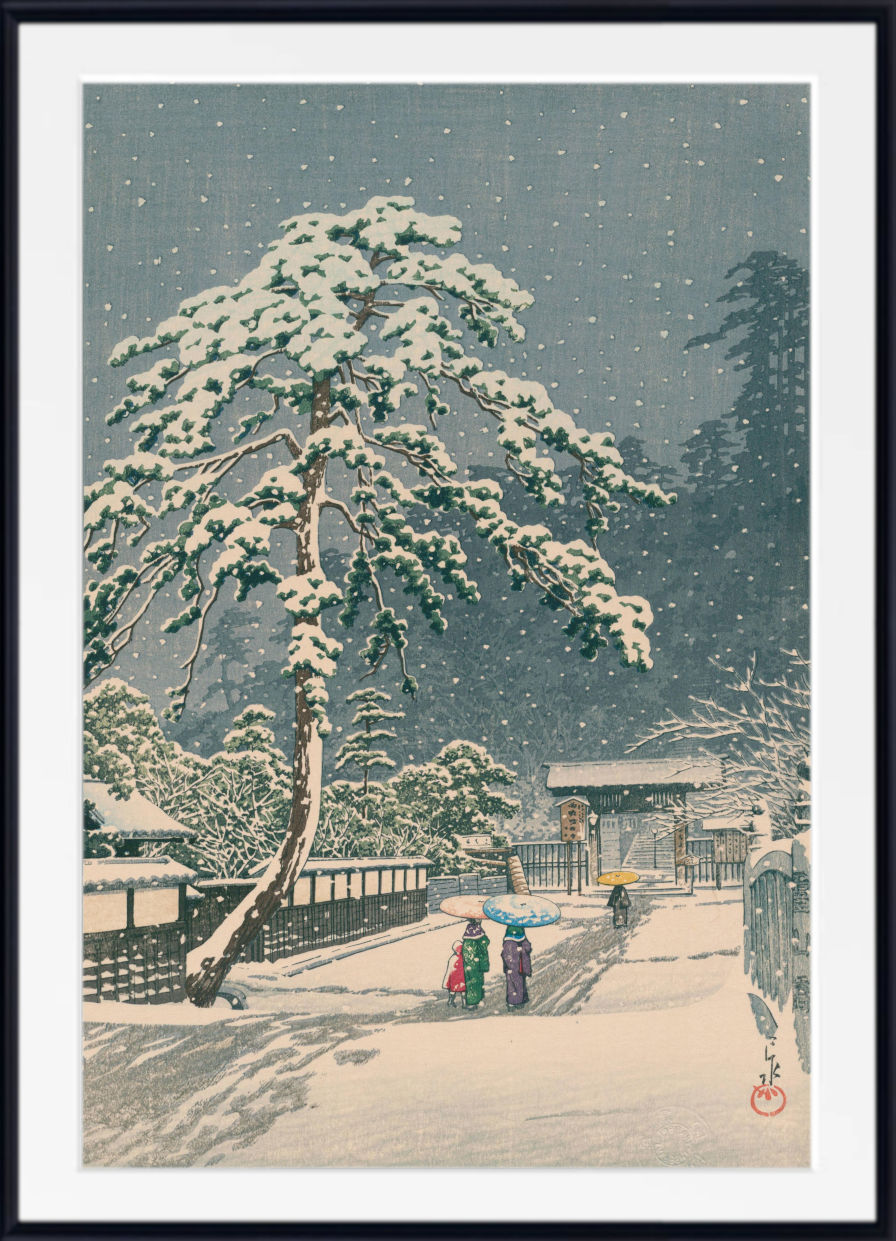
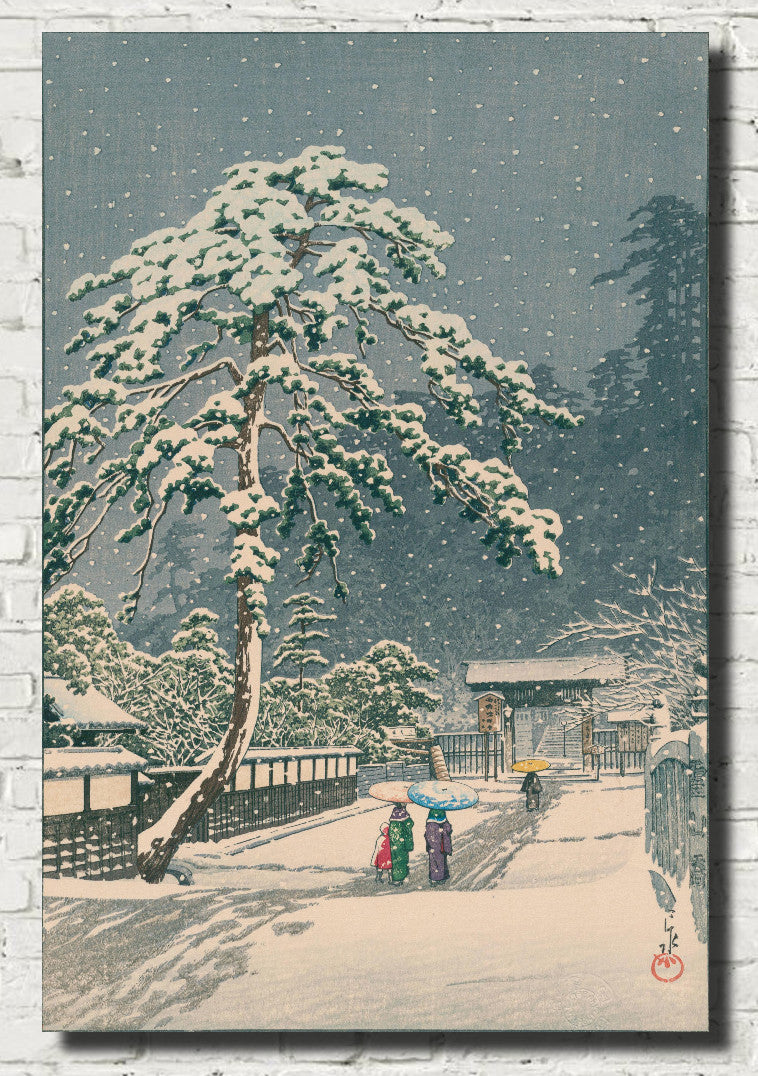
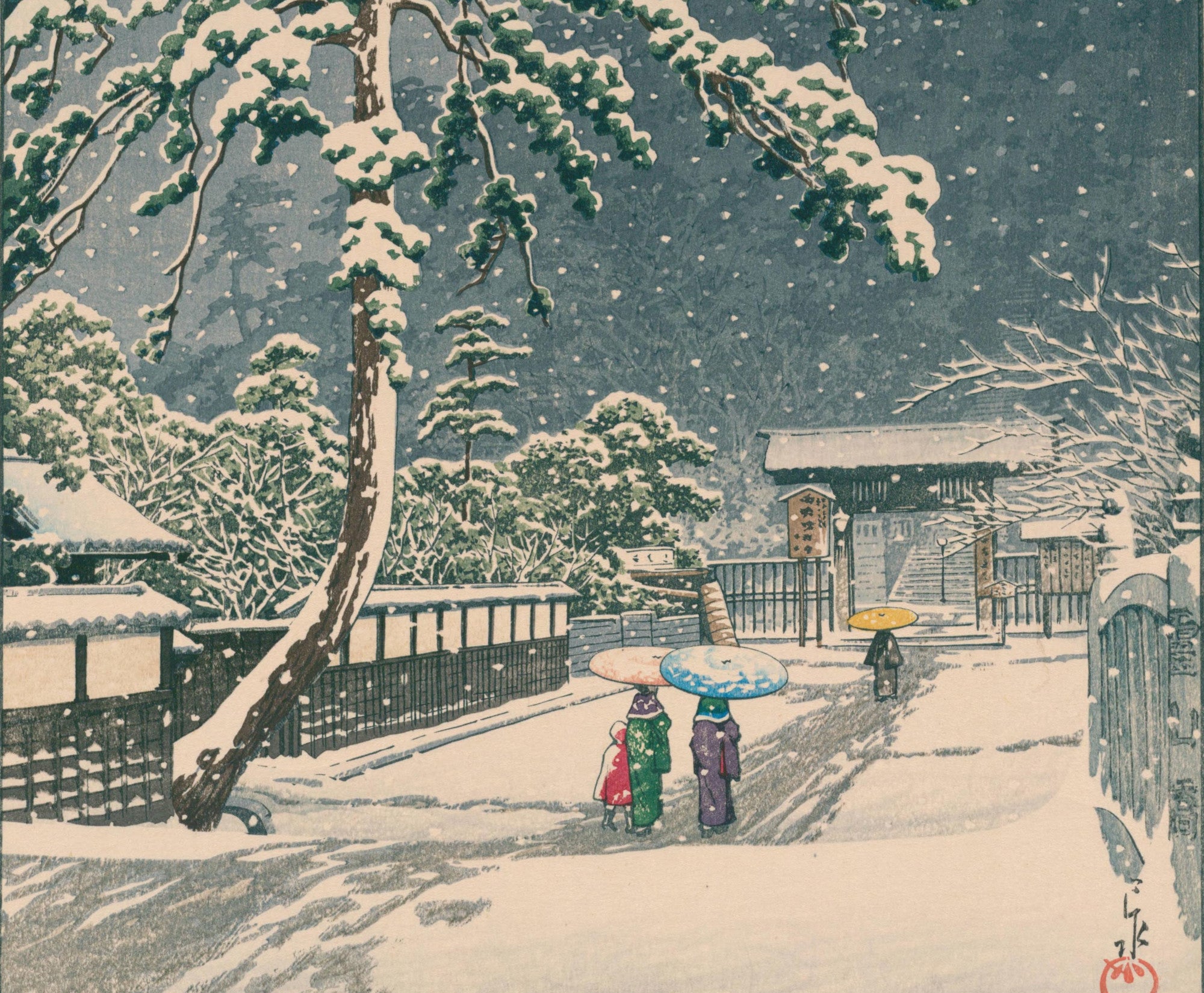
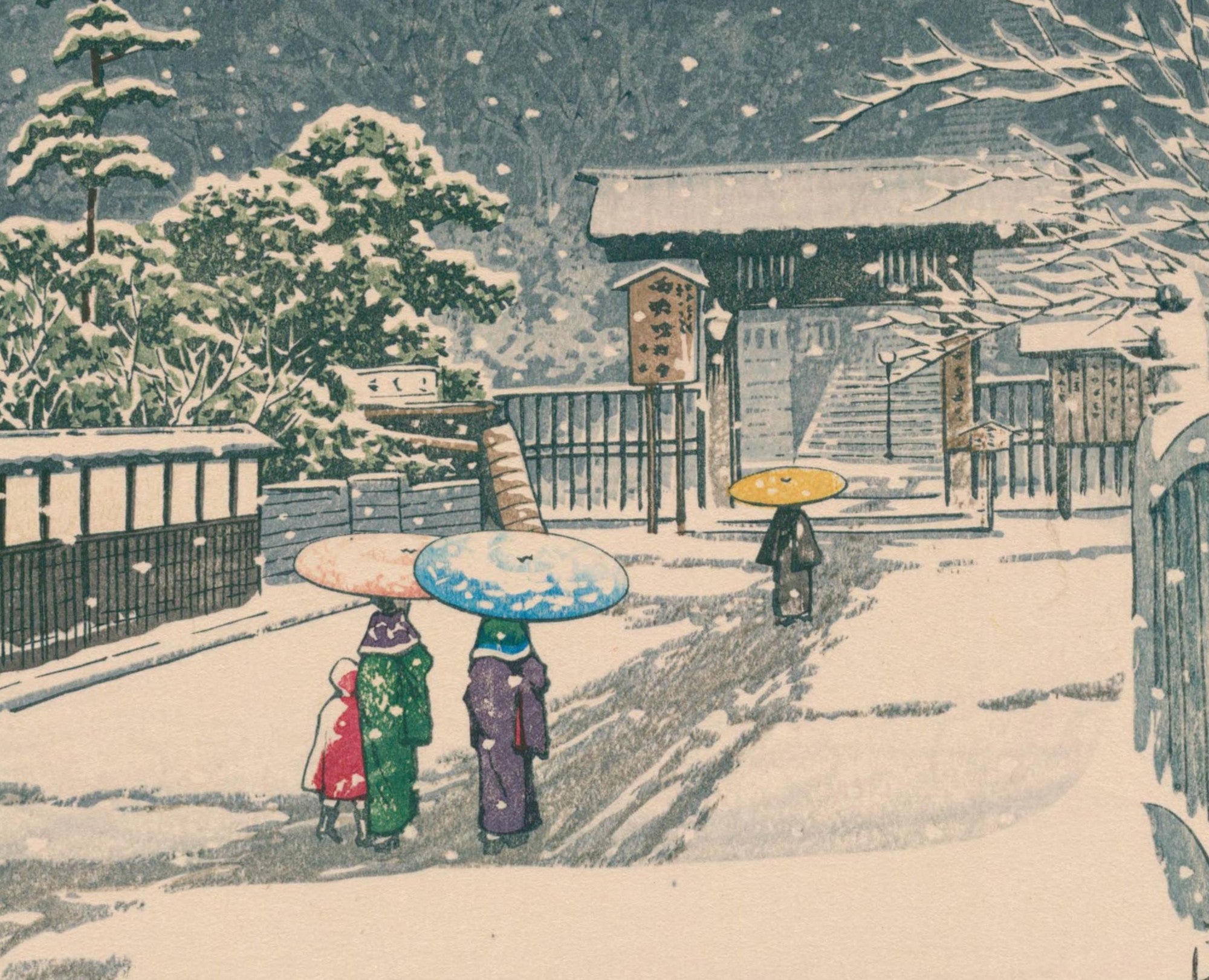
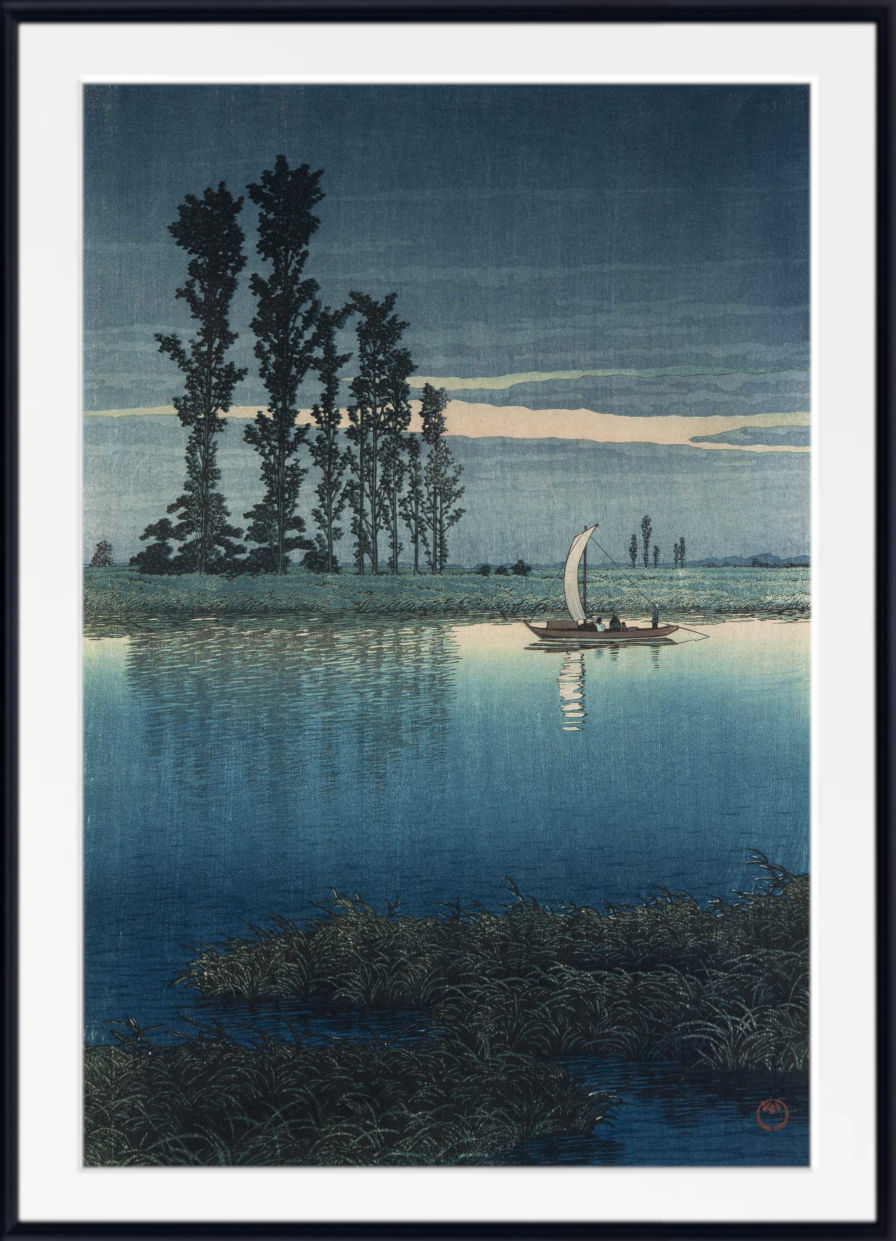
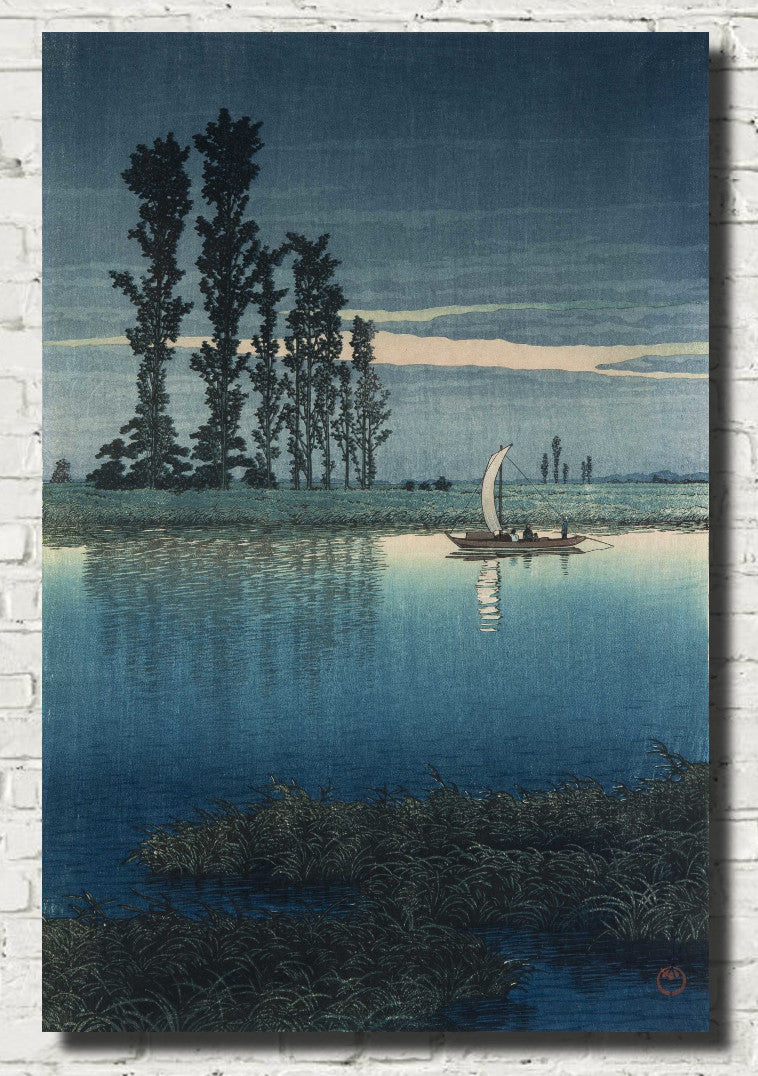
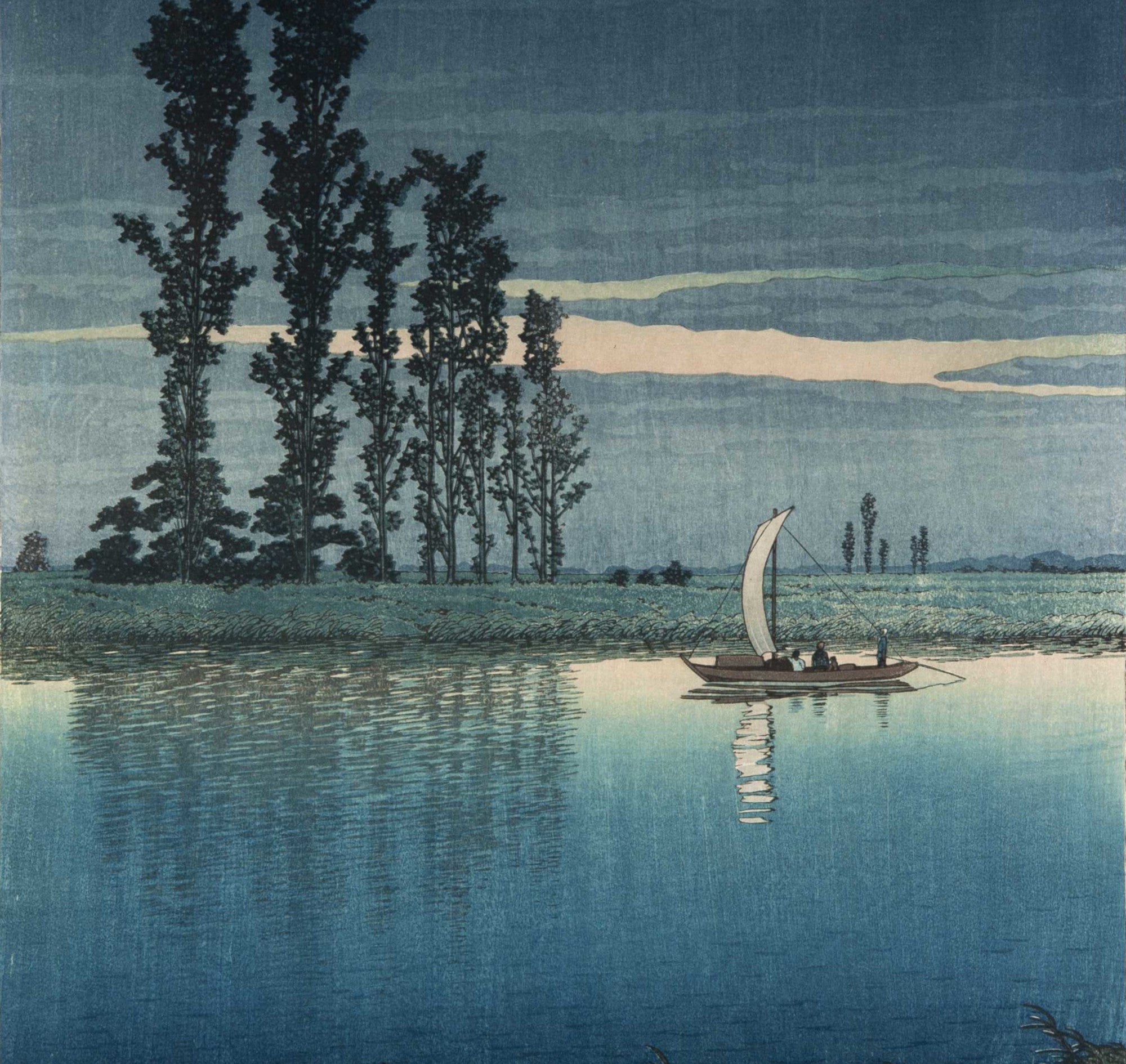
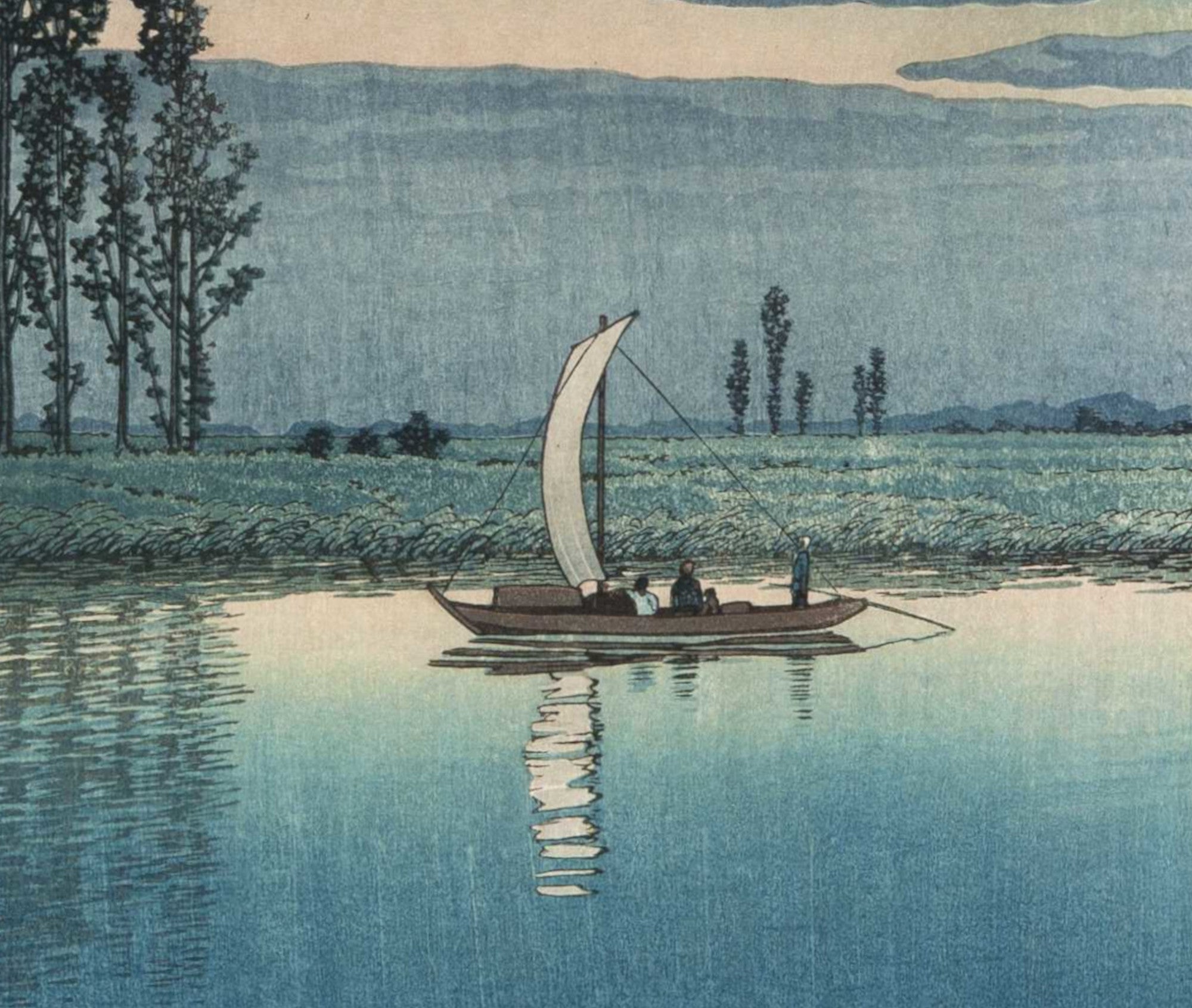
Snow can soften architecture and reduce a landscape to a restrained arrangement of white, grey, blue and dark silhouettes. Rain creates reflective streets, softened distances and an intimate sense of place. Moonlight transforms coastlines, water and trees into quiet nocturnes, while dusk and dawn allow Hasui to explore subtle transitions between warm and cool colour.
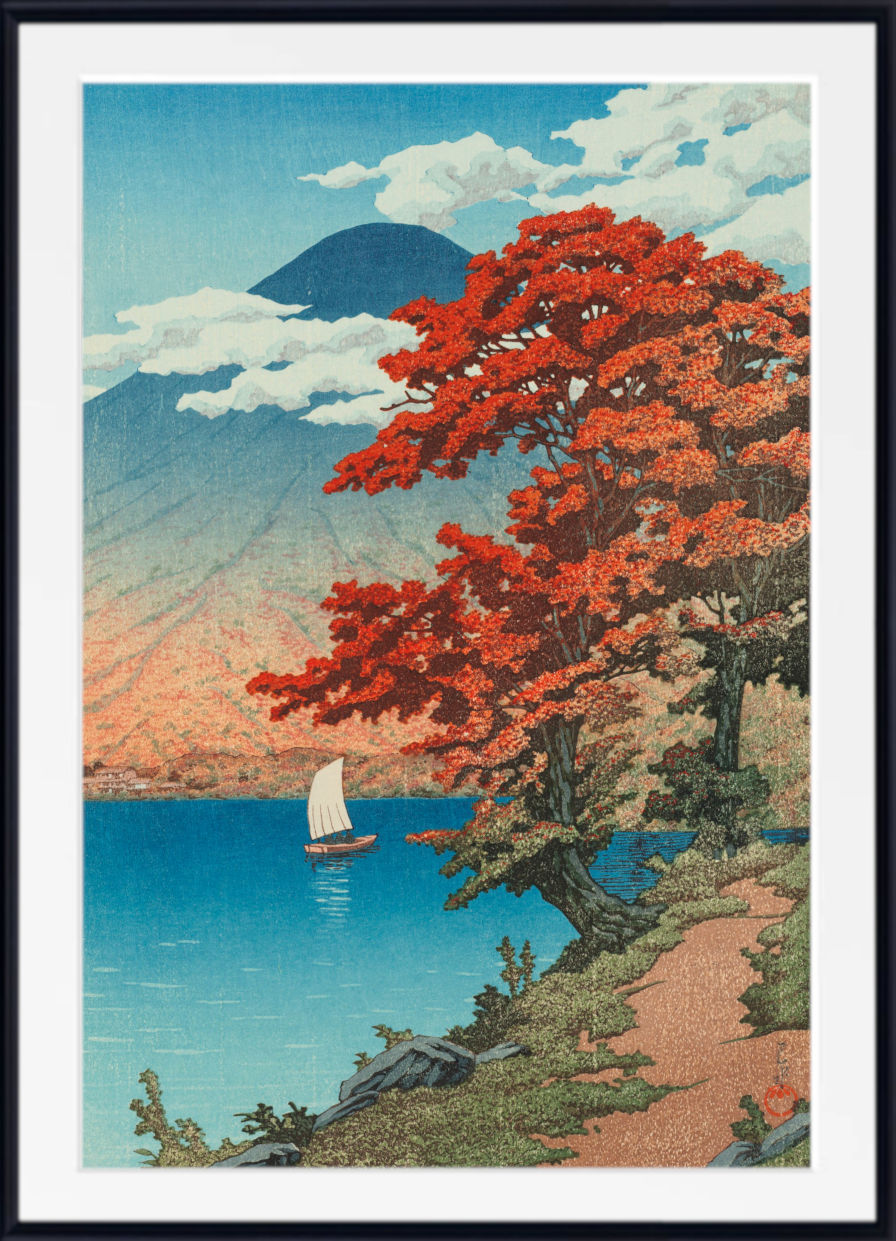
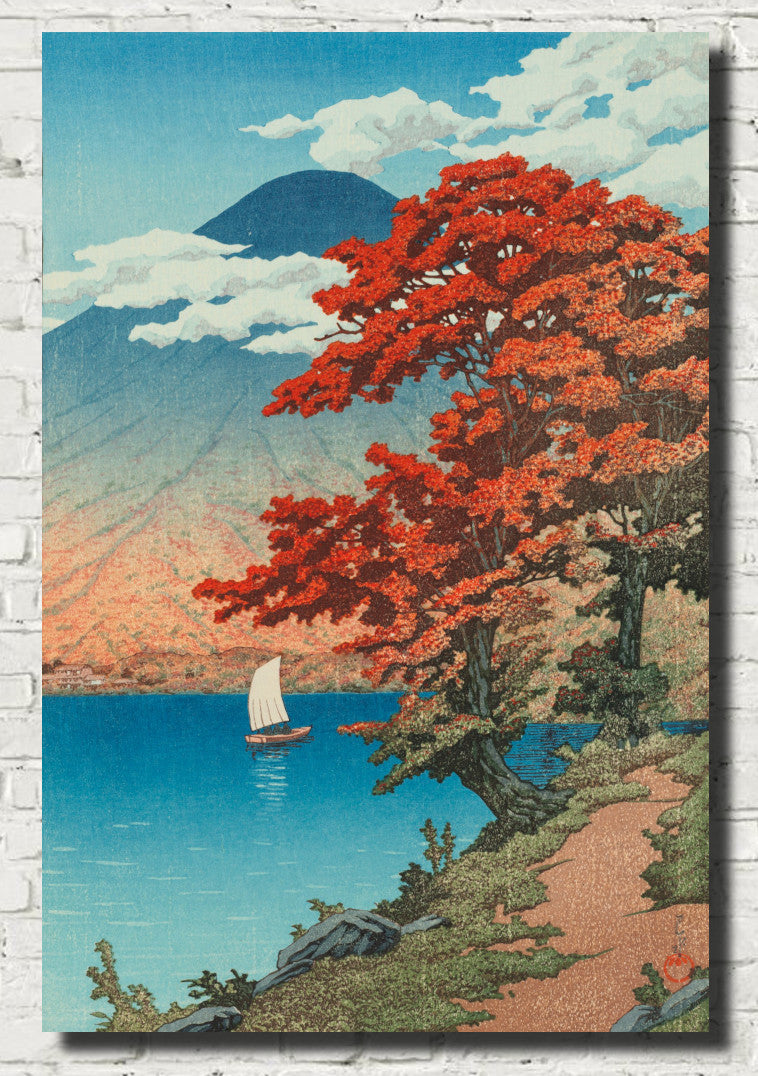
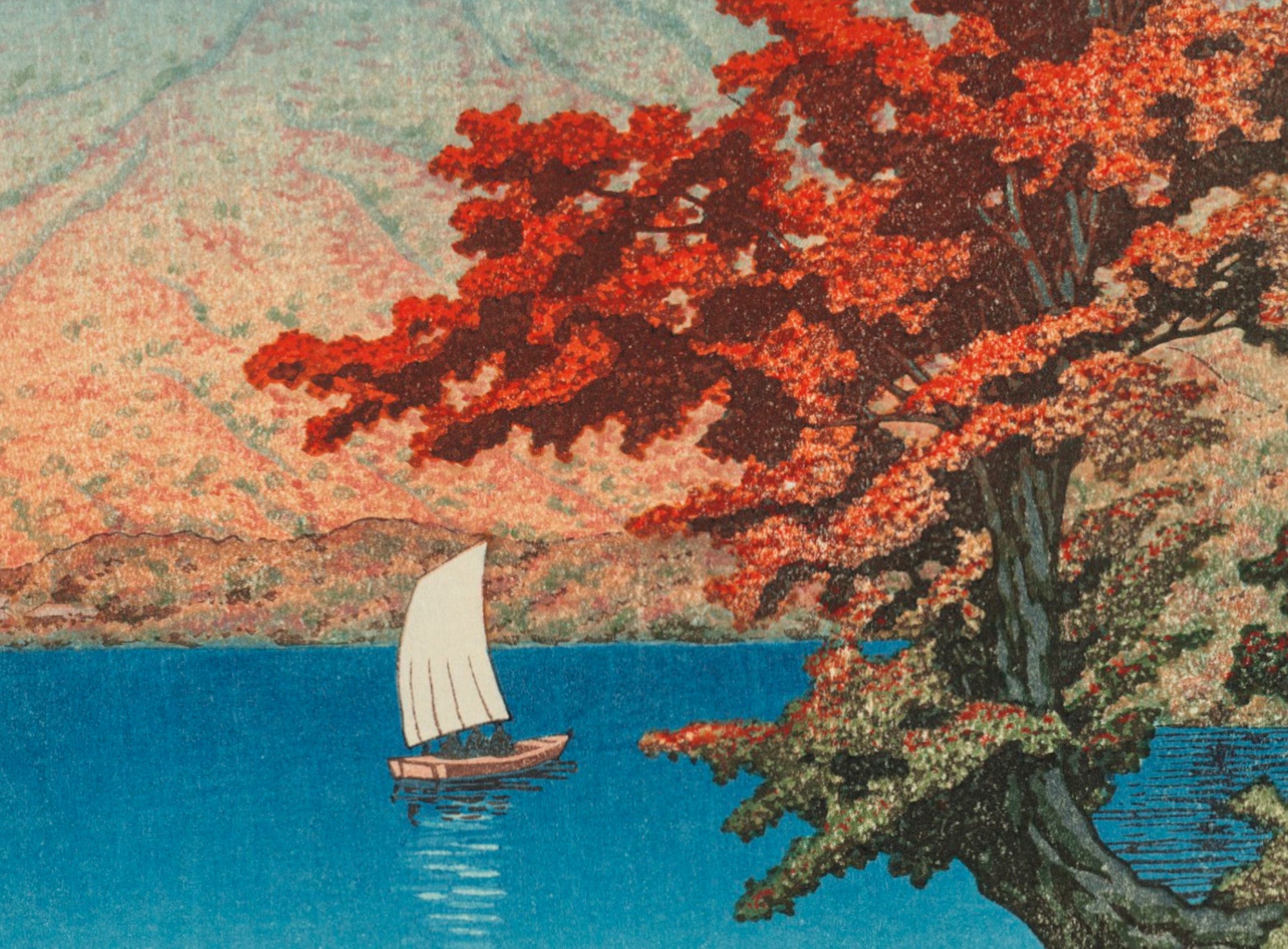
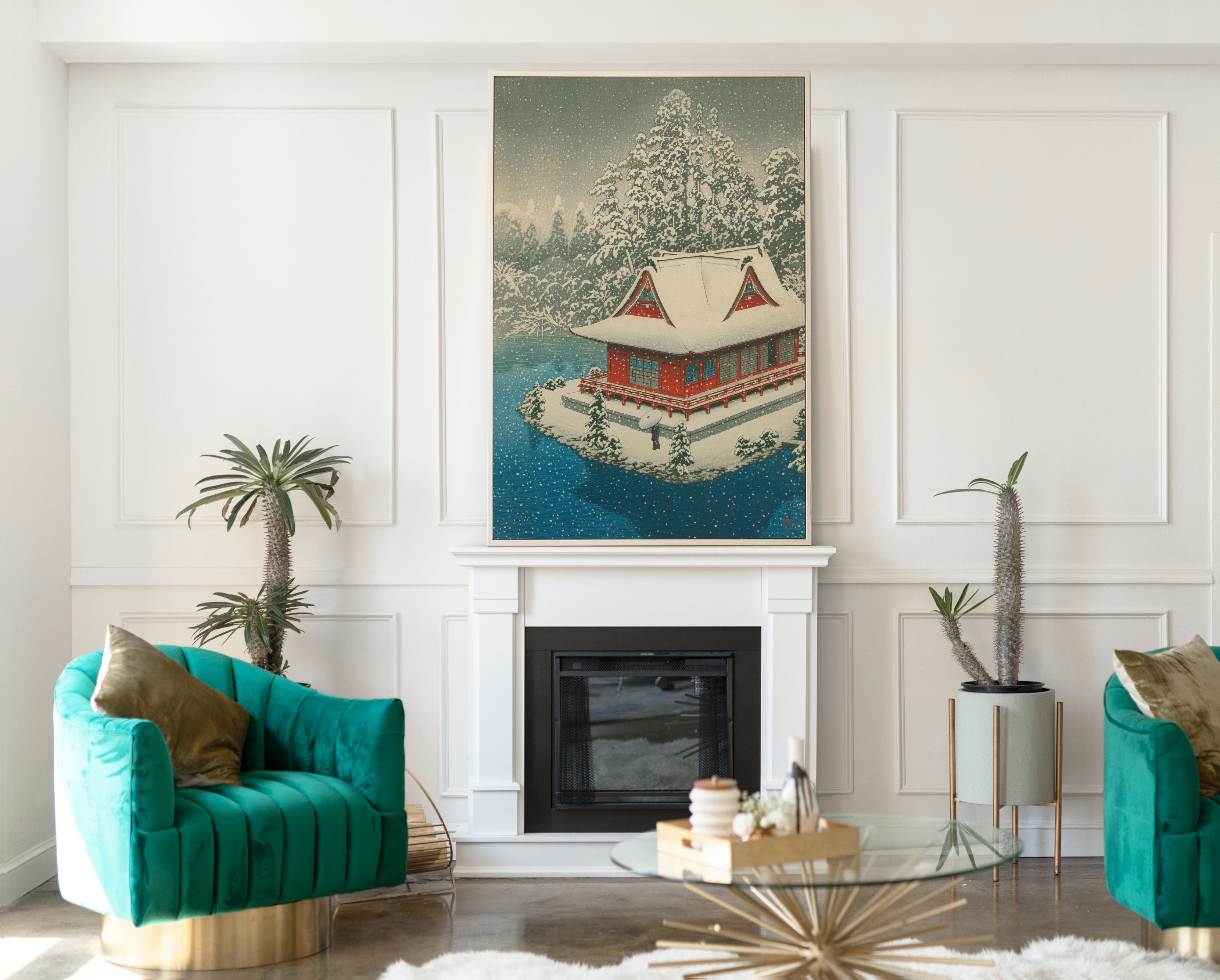
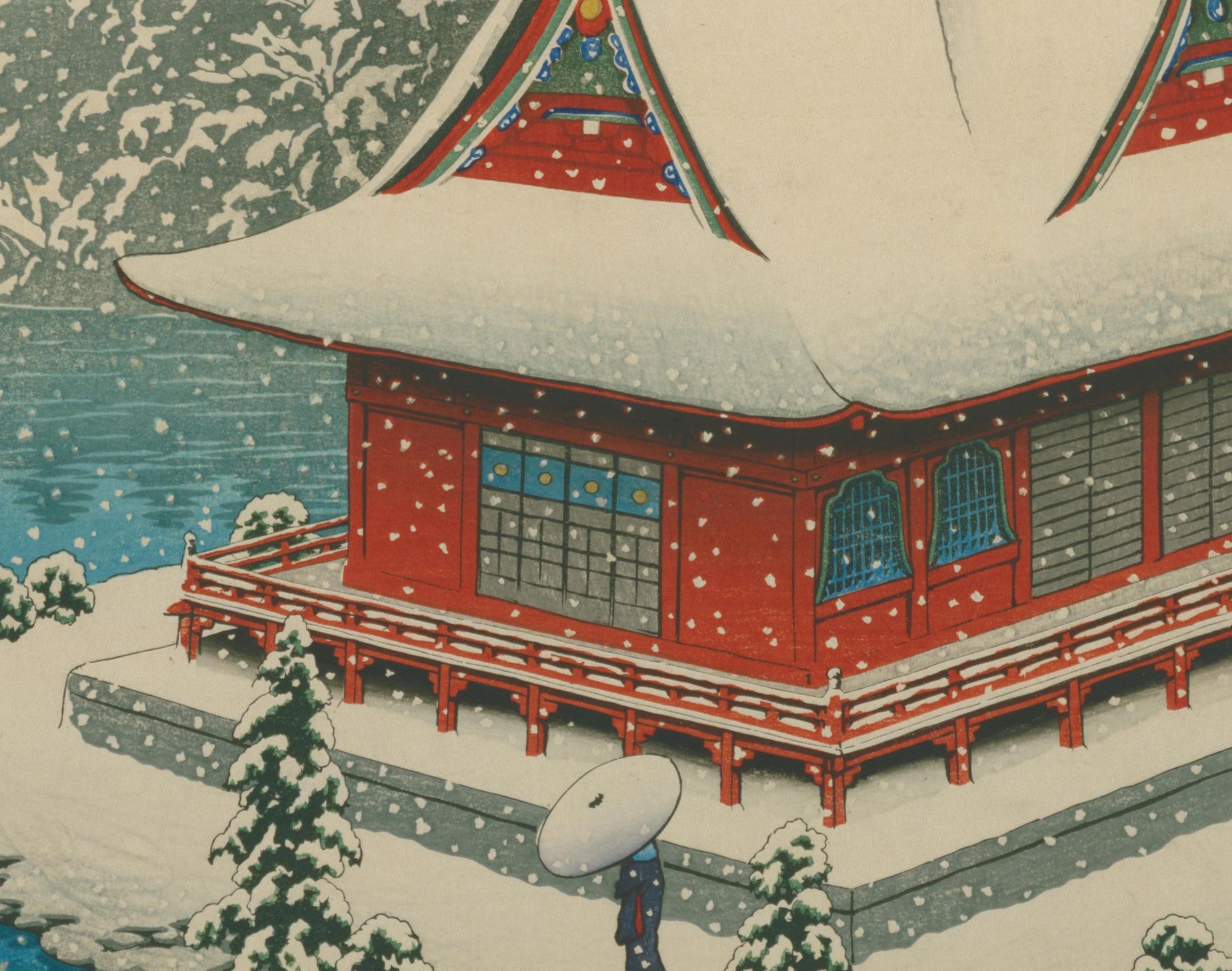
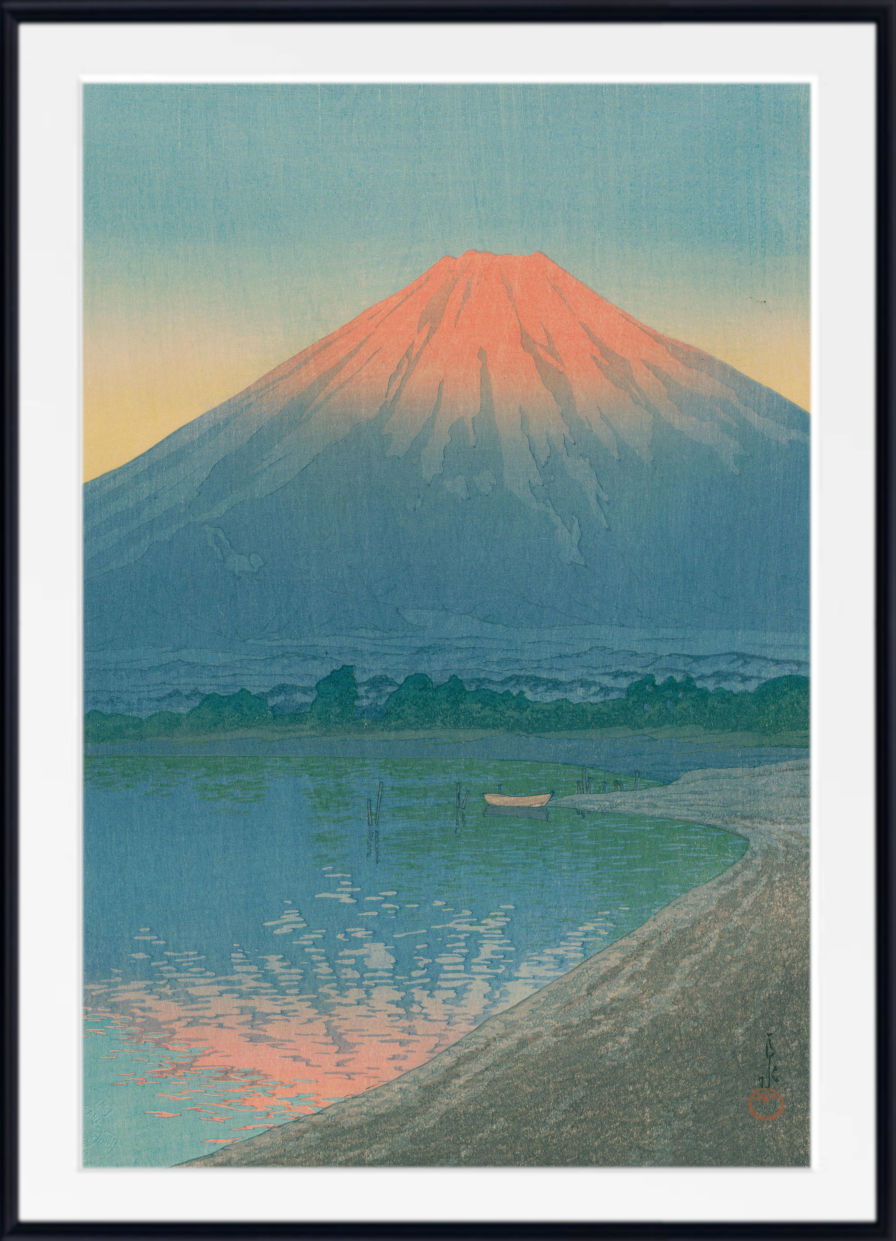
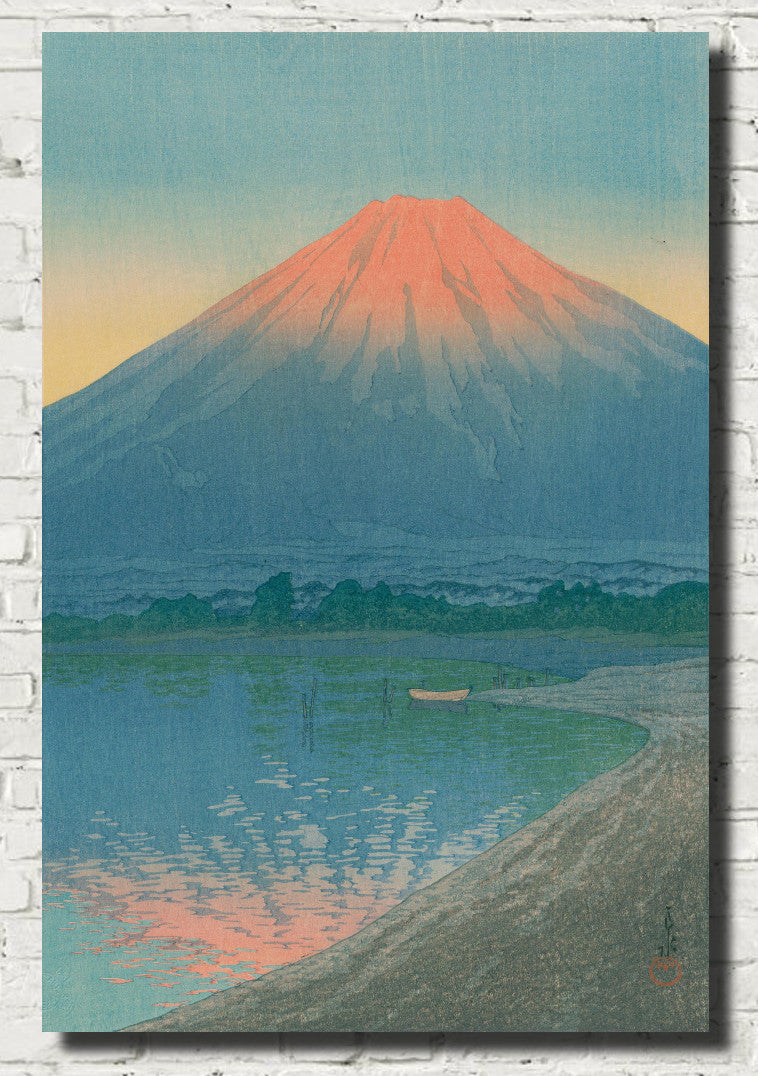
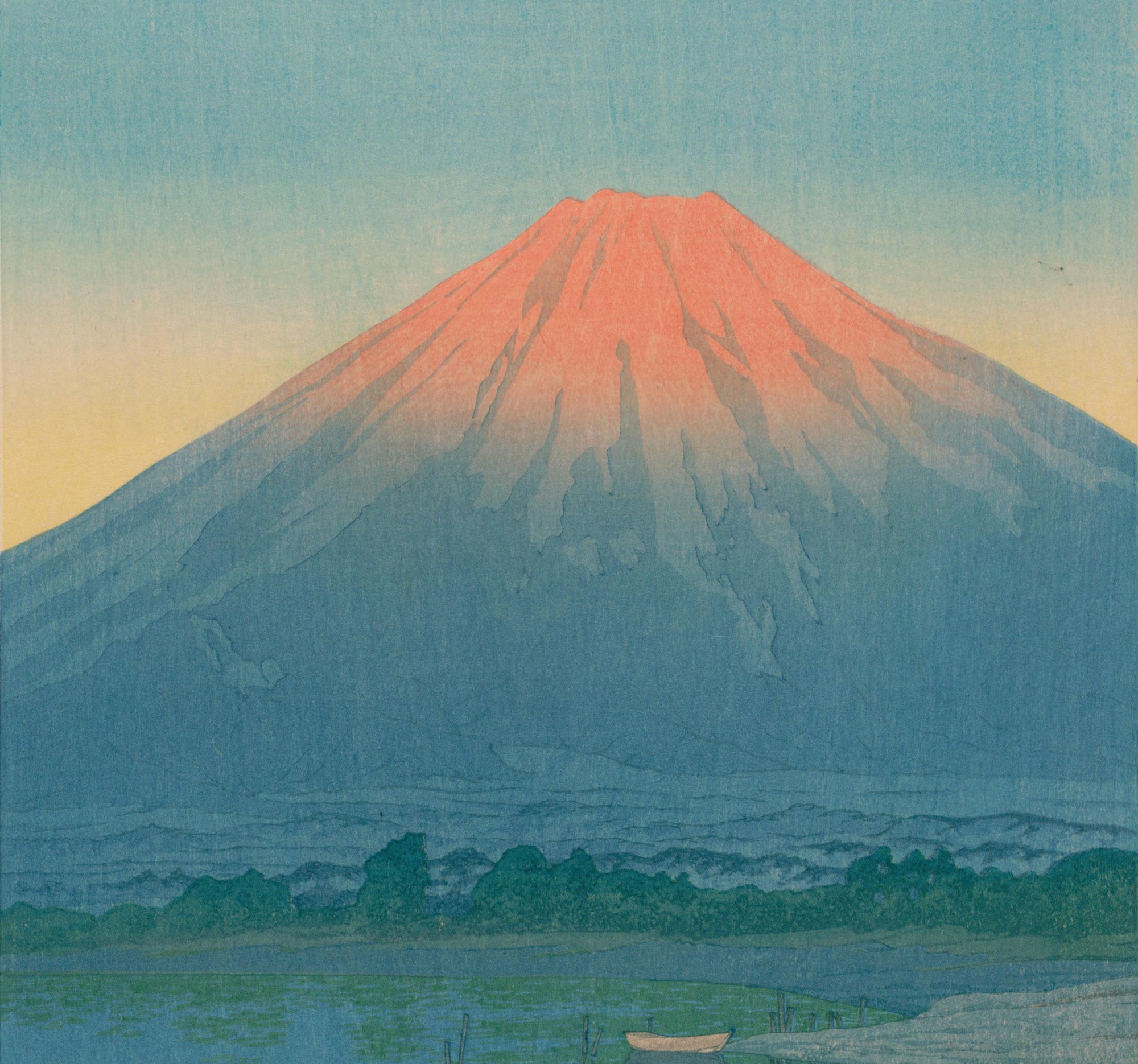
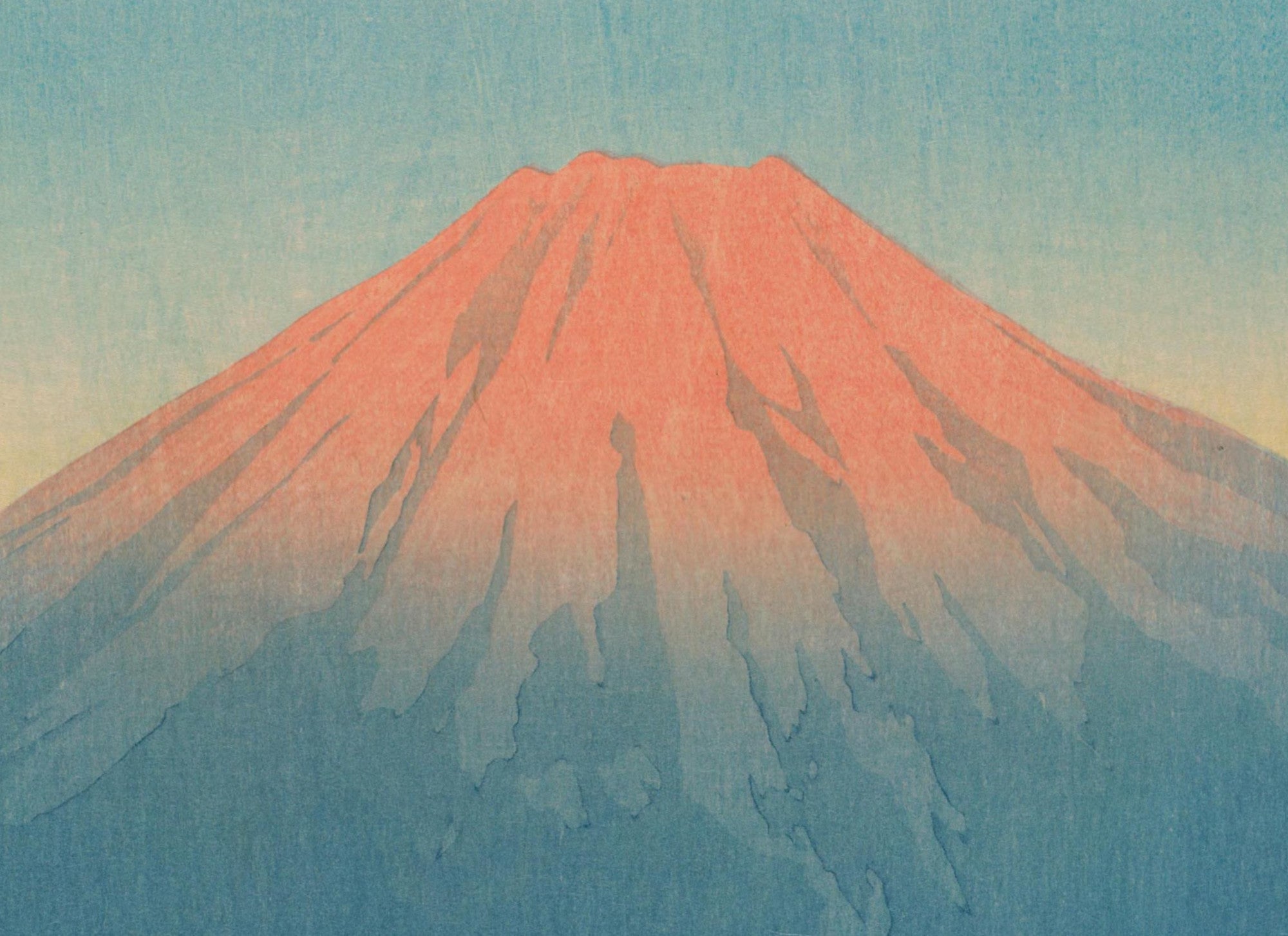
Works in the GalleryThane collection such as Inokashira in Snow, Akashi-chō after Rain, Matsushima in the Moonlight, Evening in Beppu and Daybreak over Lake Yamanaka demonstrate the remarkable variety Hasui could achieve simply by changing season, weather and time of day.
Collectors particularly drawn to indigo, blue-grey and nocturnal landscapes can also explore GalleryThane’s Blue Japanese Prints, where Hasui’s atmospheric use of blue sits alongside other distinctive Japanese works.
Temples, Bridges and the Changing Face of Japan
Although Hasui is often thought of primarily as a landscape artist, architecture plays an equally important role in many of his compositions.
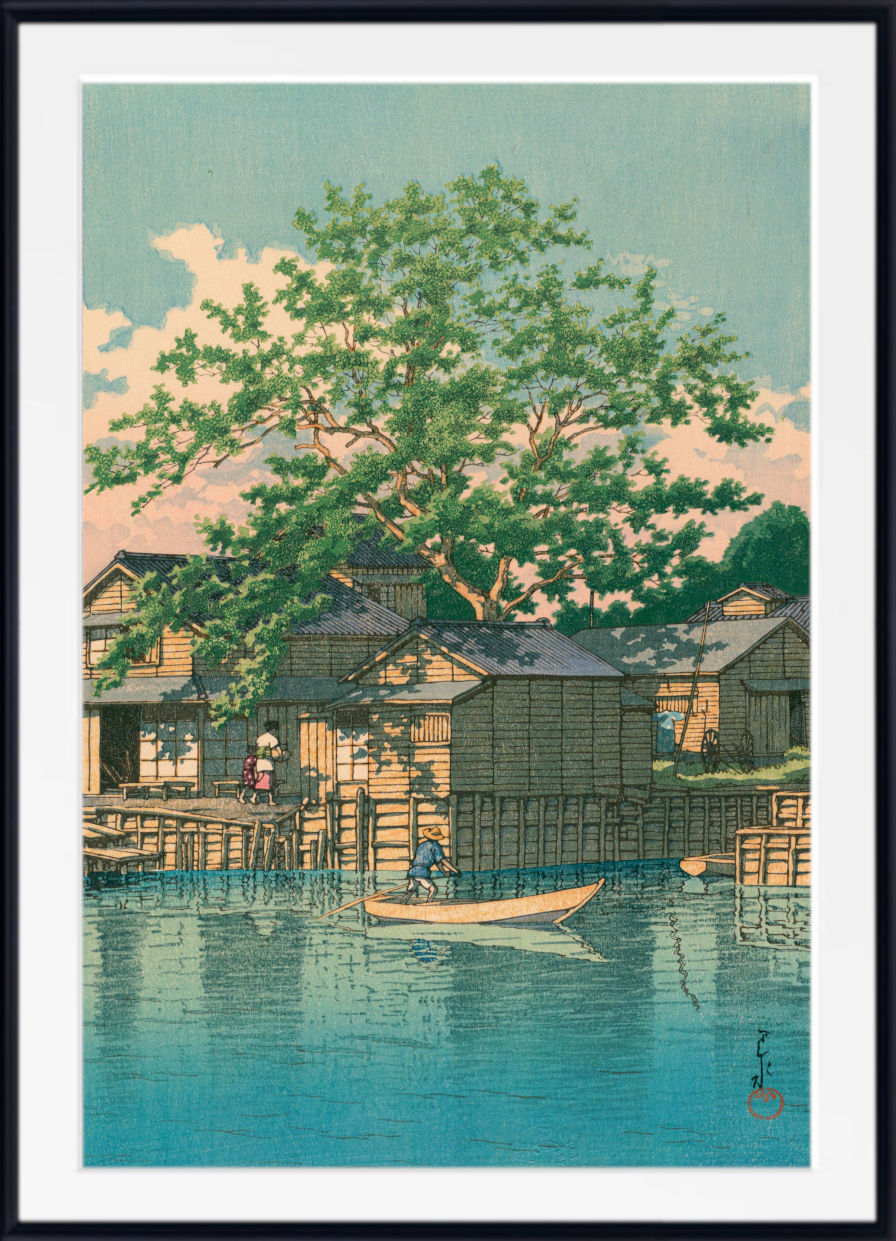
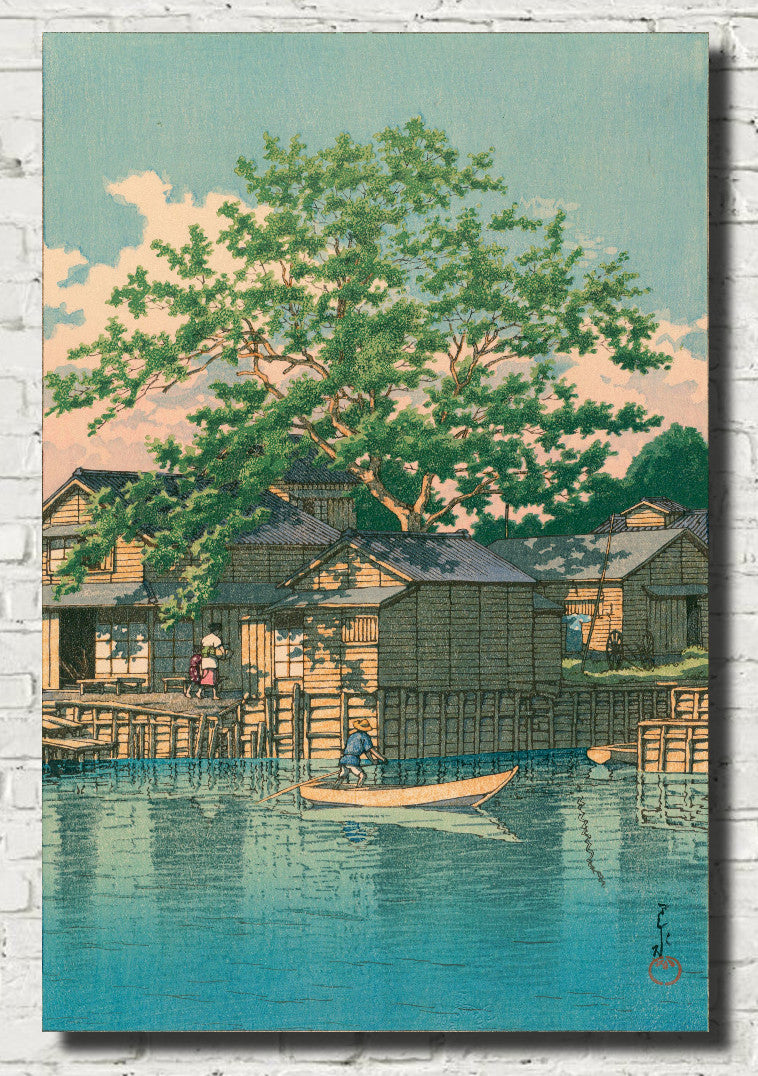
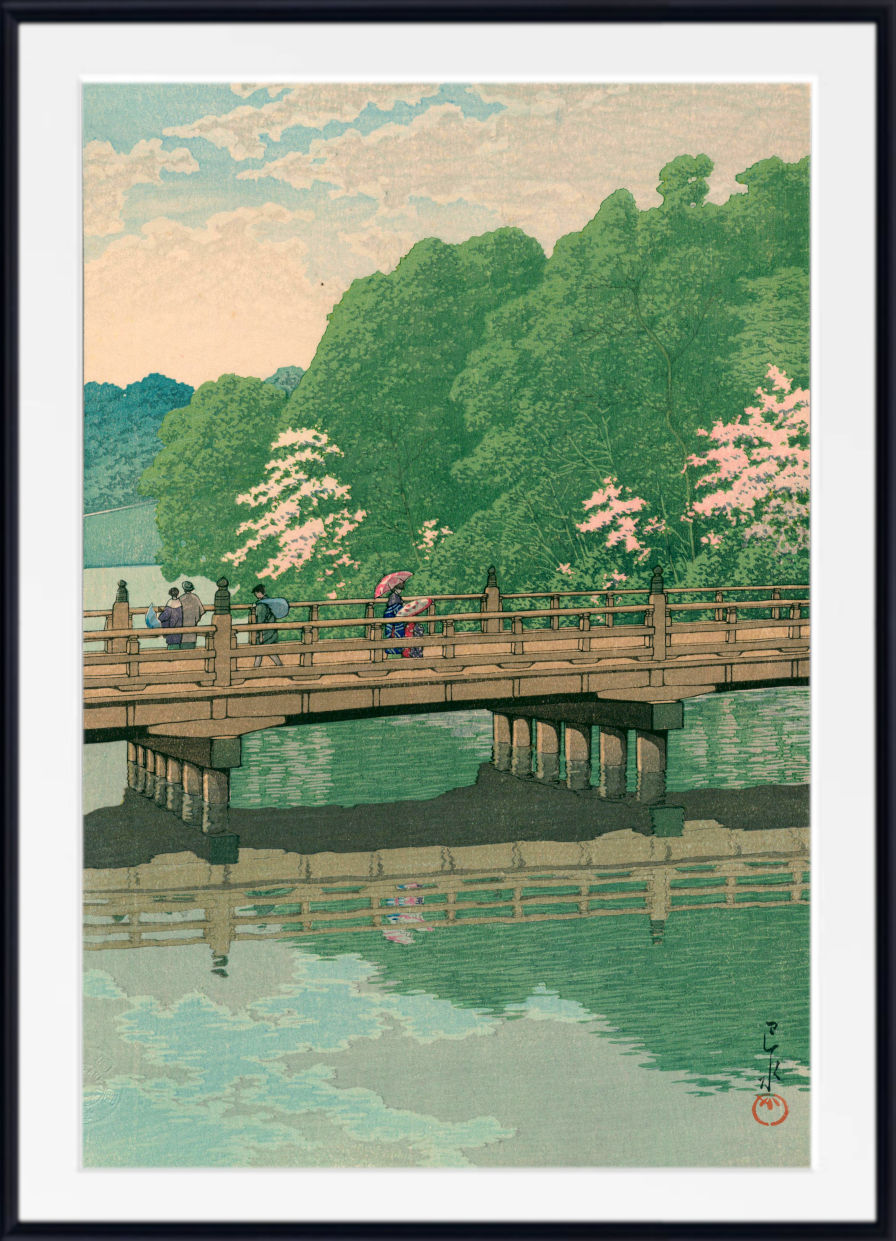
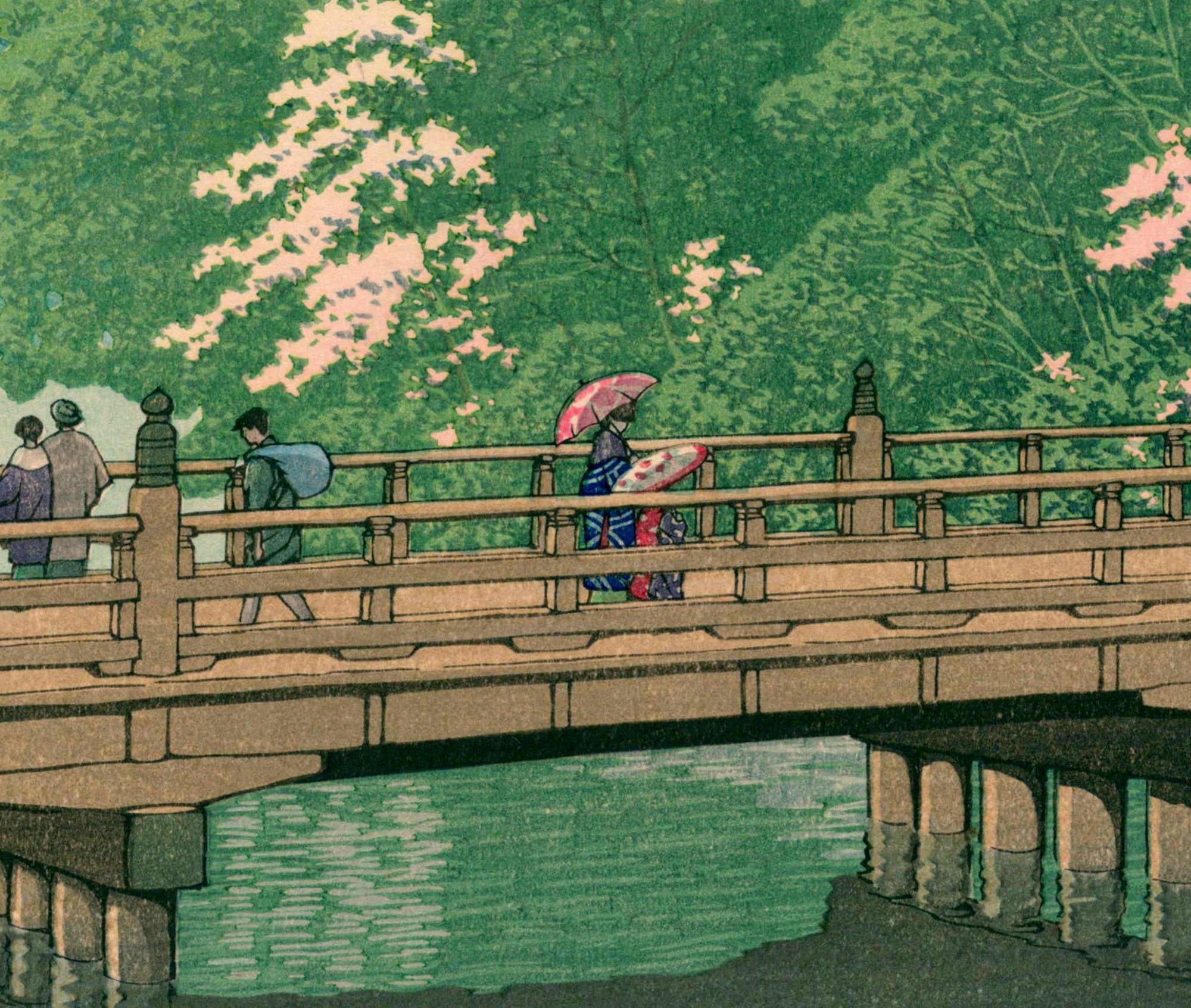
Temples, gates, bridges, houses and quiet streets frequently provide strong structural forms within otherwise atmospheric surroundings. Instead of treating buildings as isolated architectural studies, Hasui places them within weather, vegetation, water and changing light.
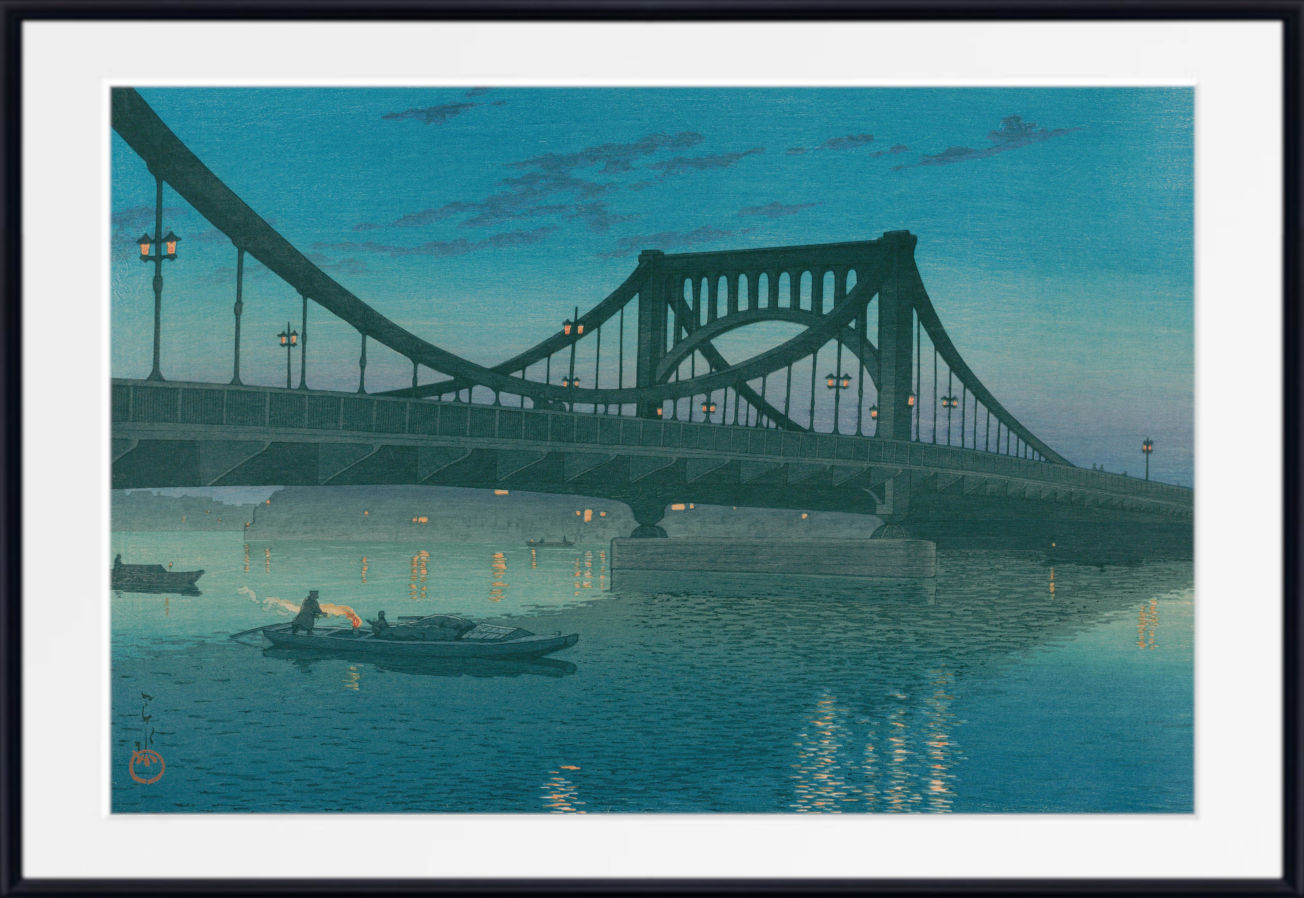
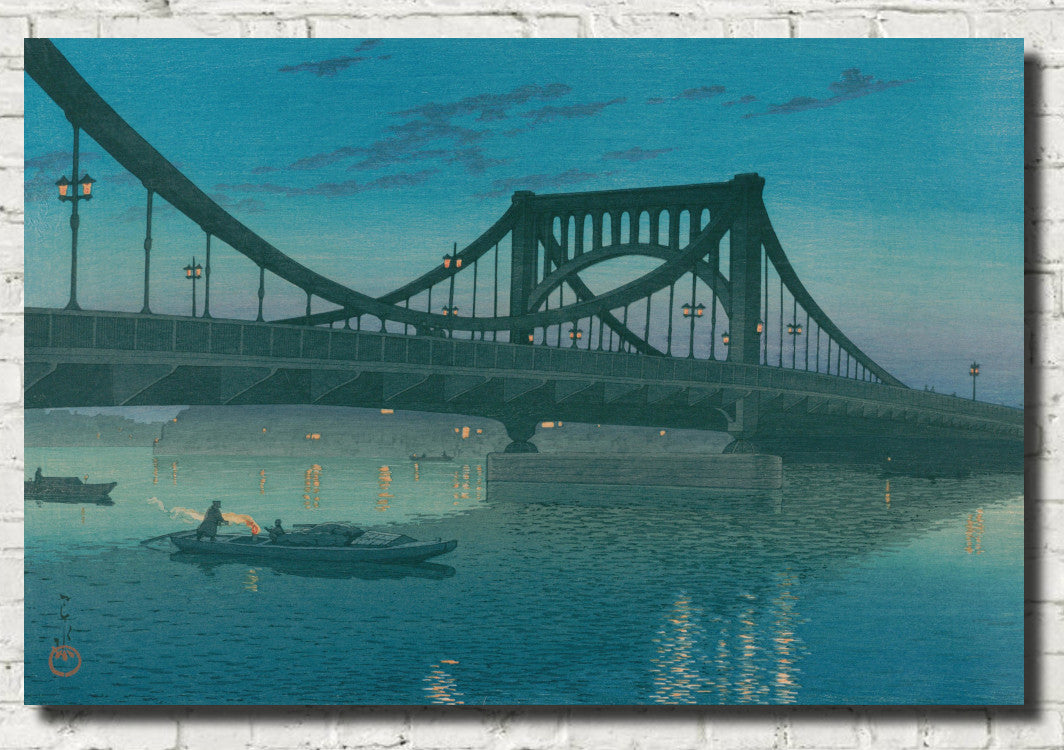
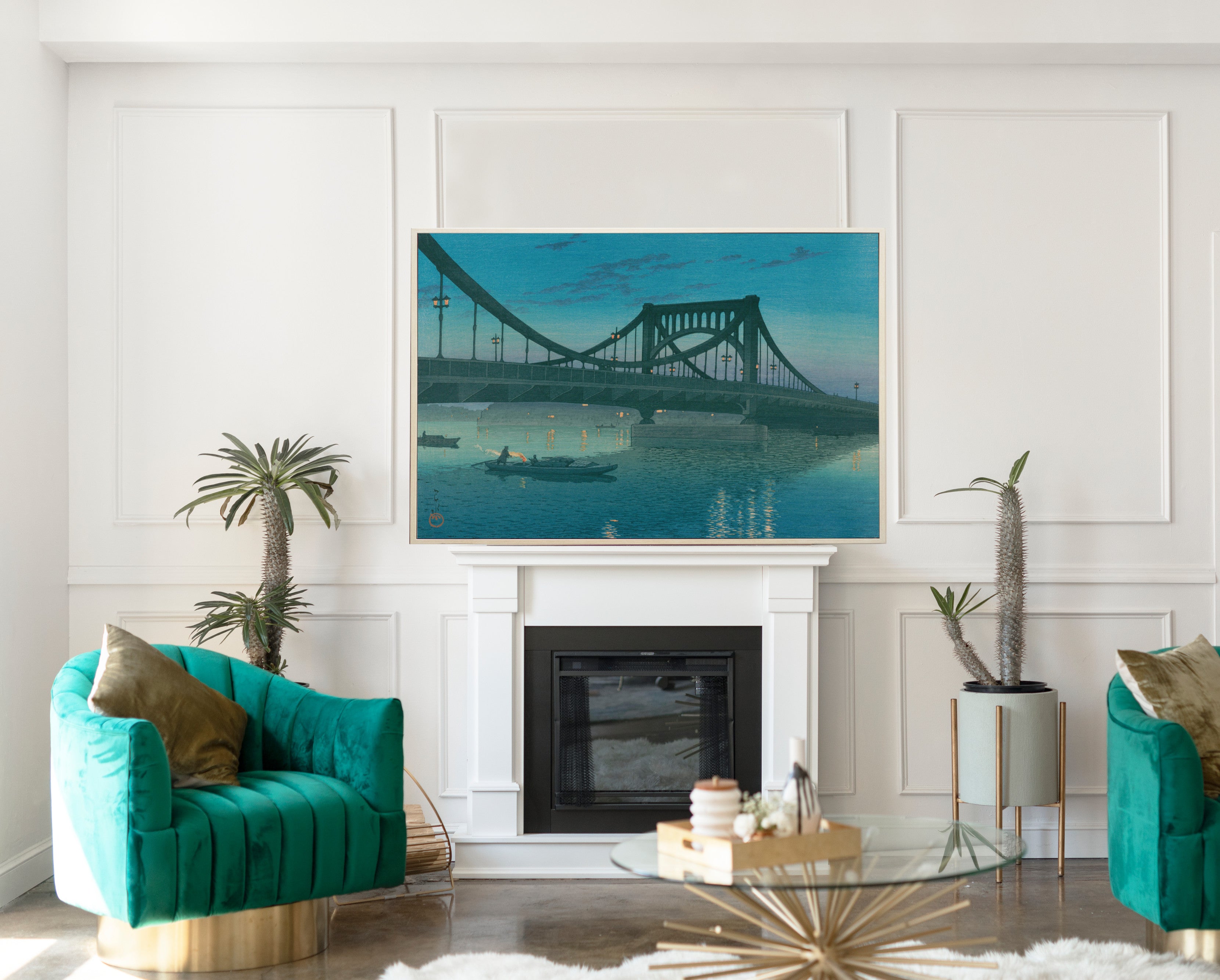
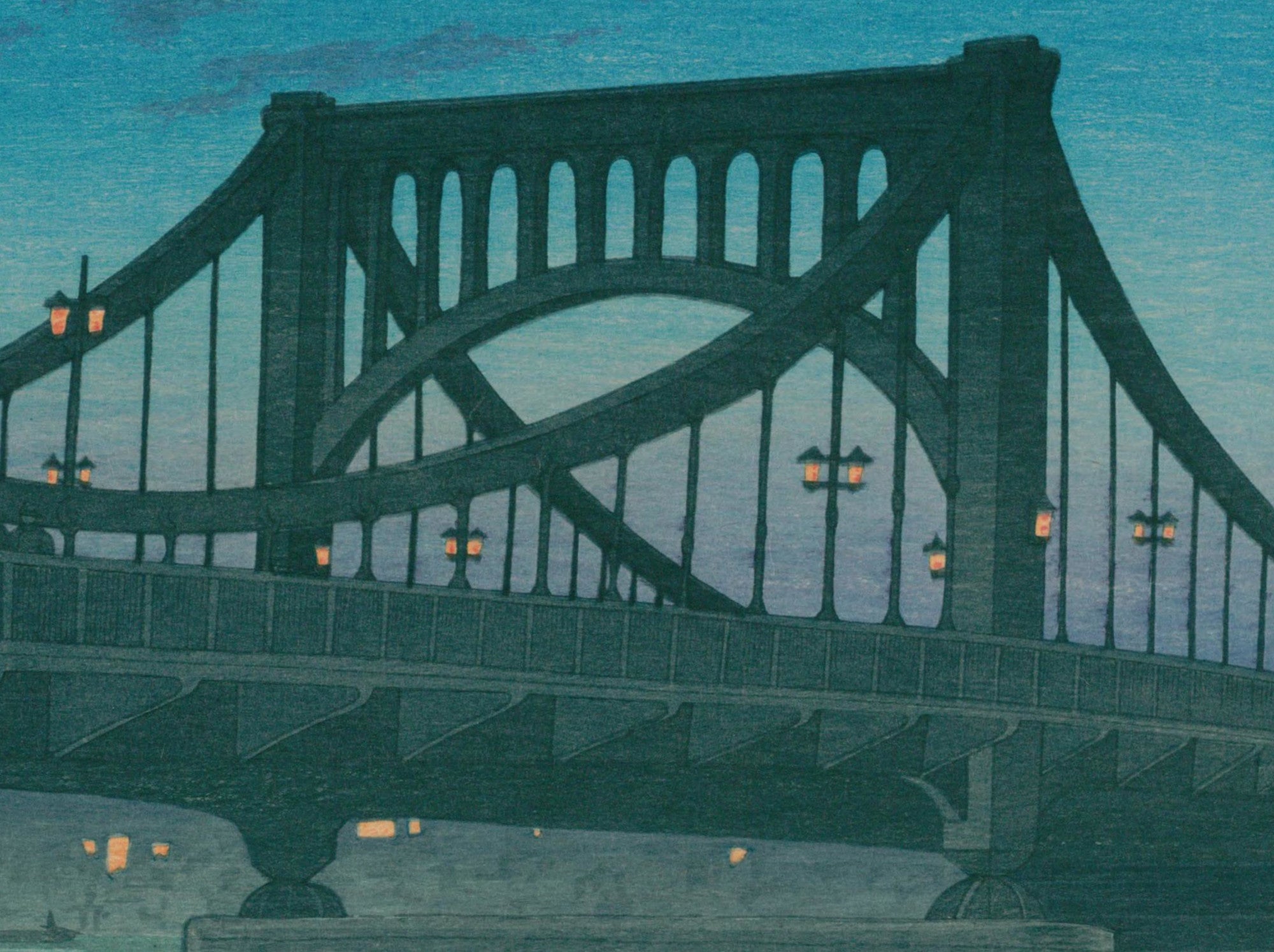
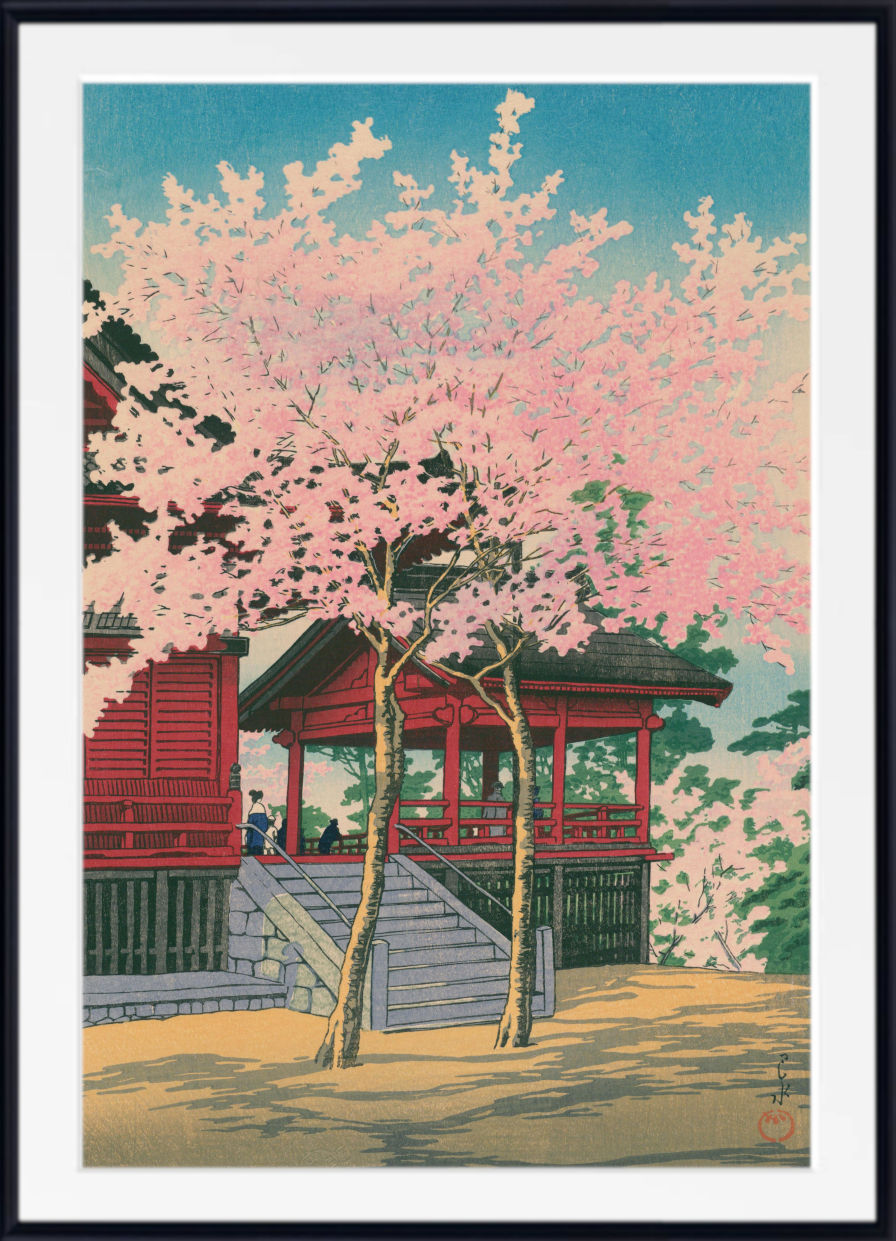
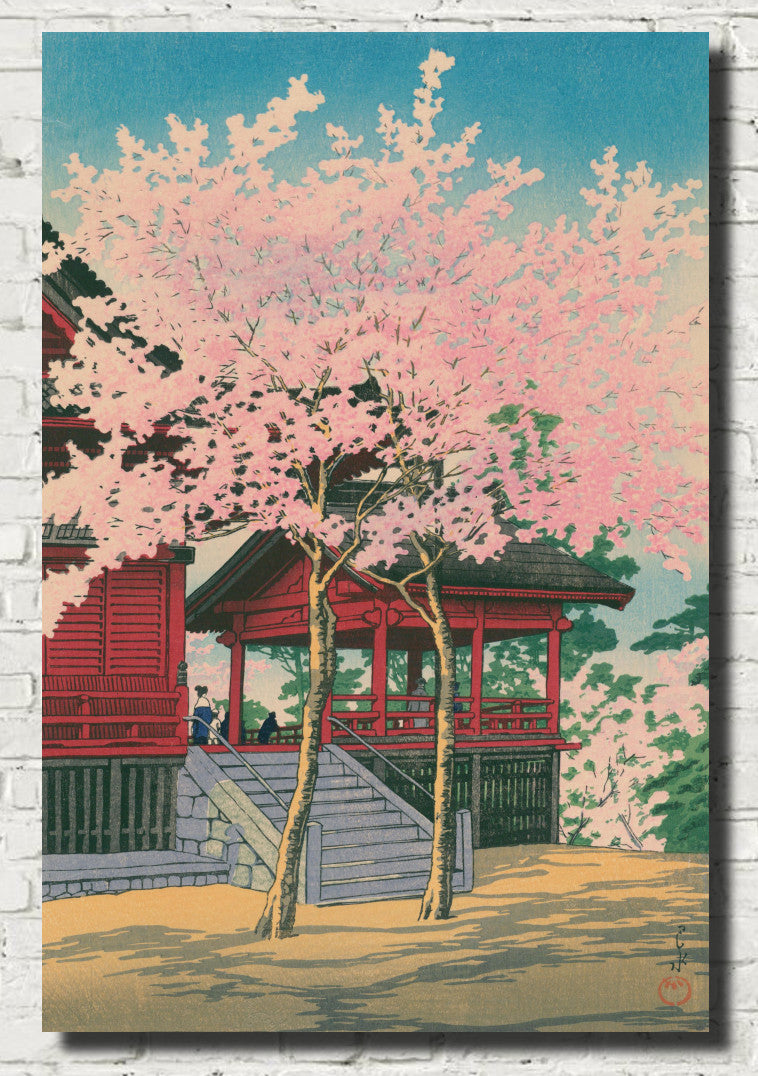
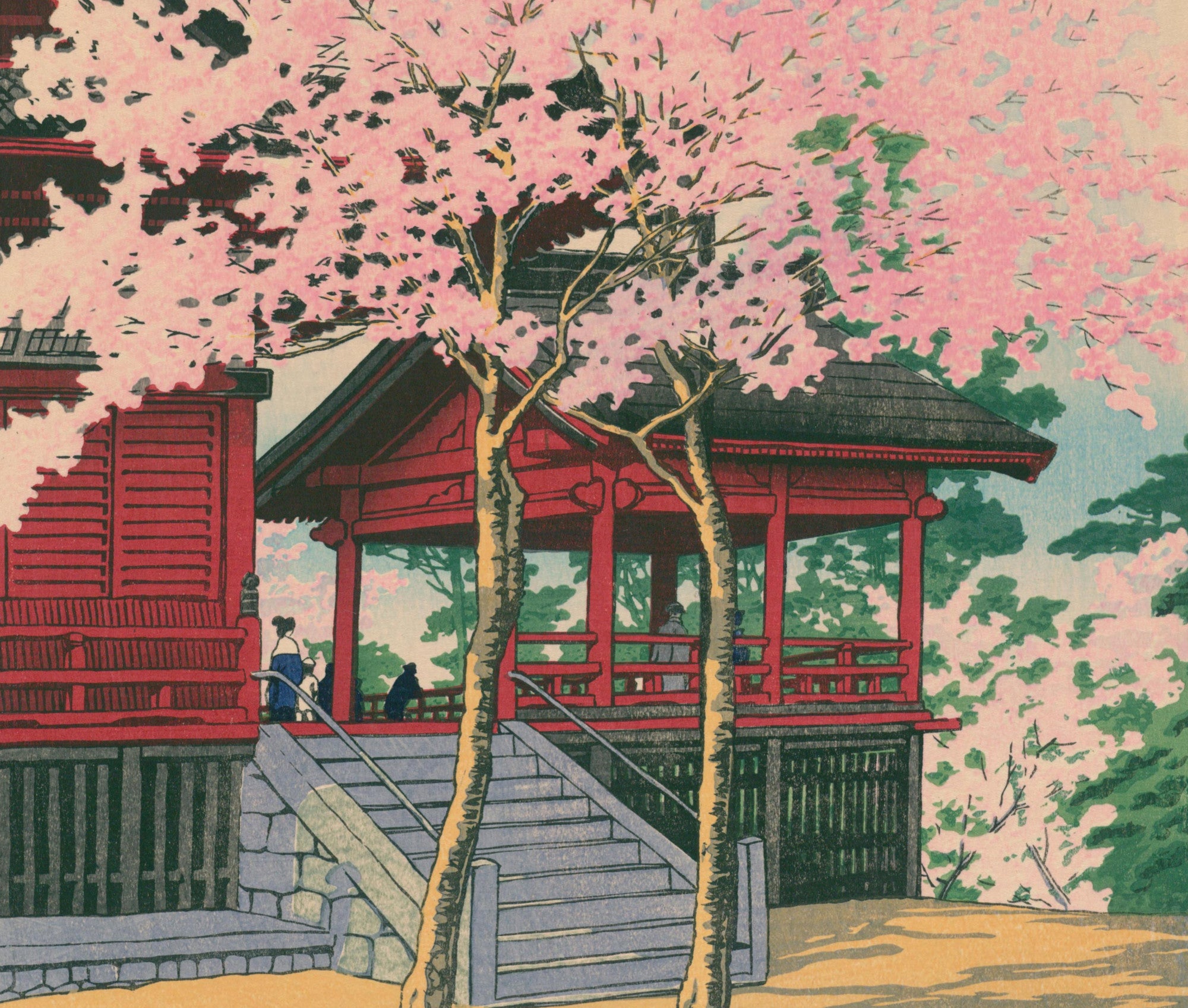
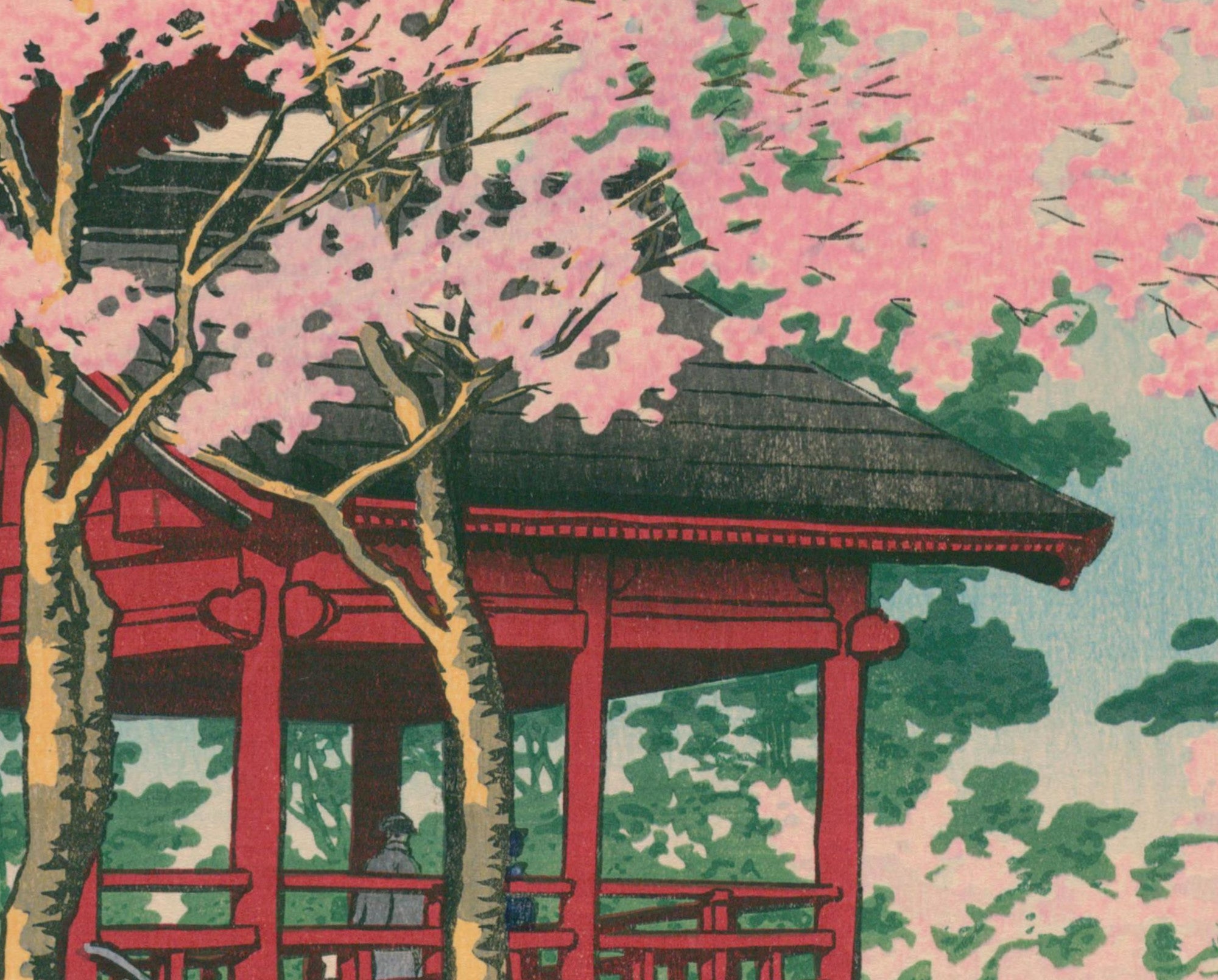
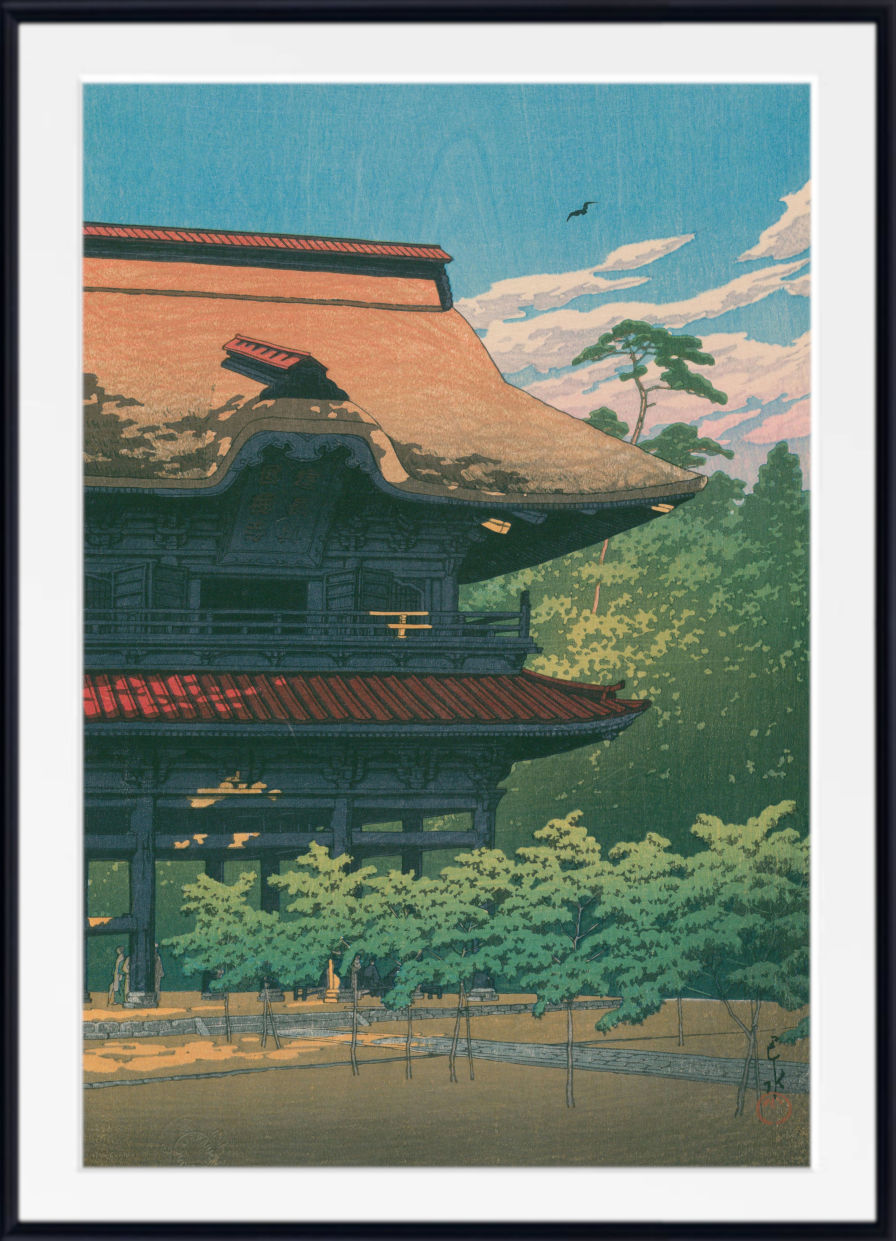
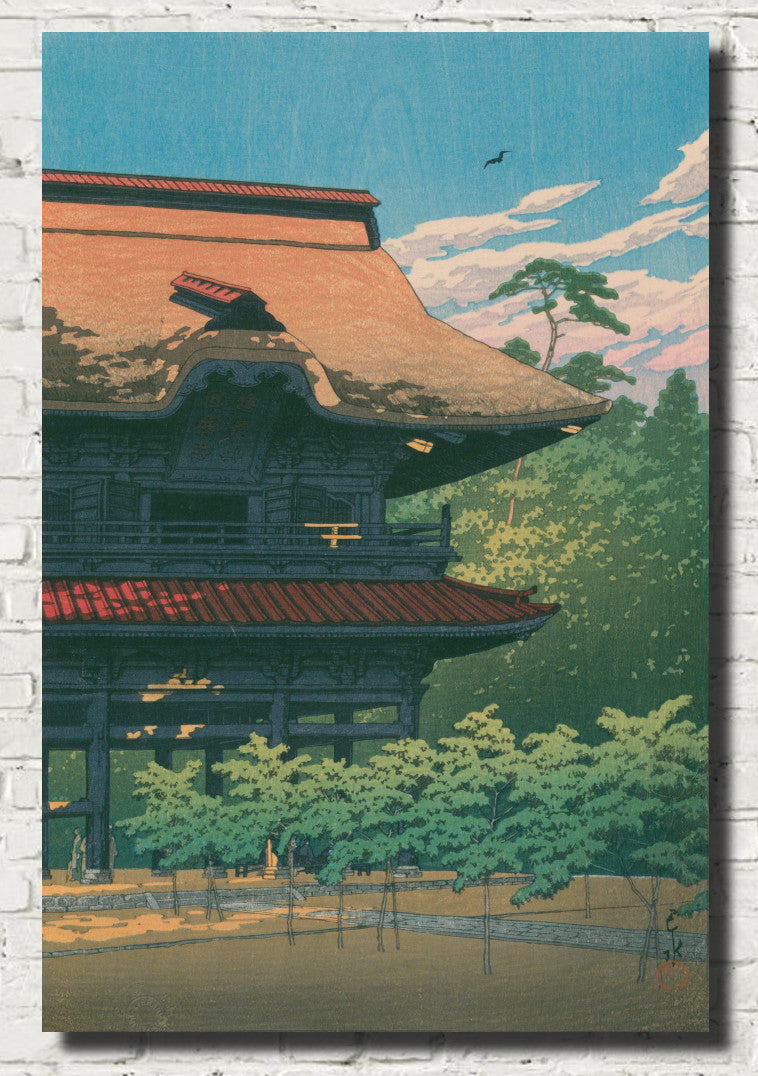
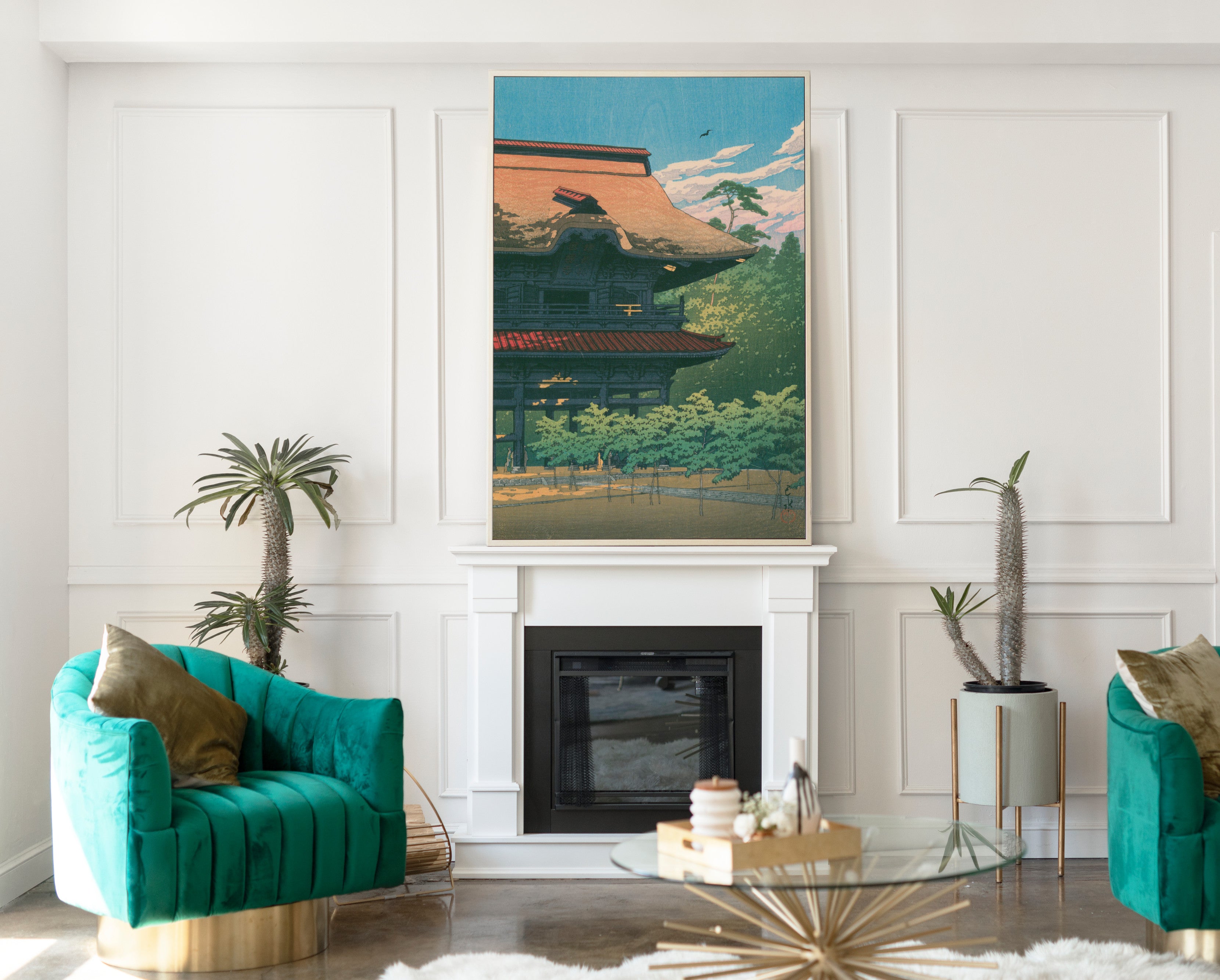
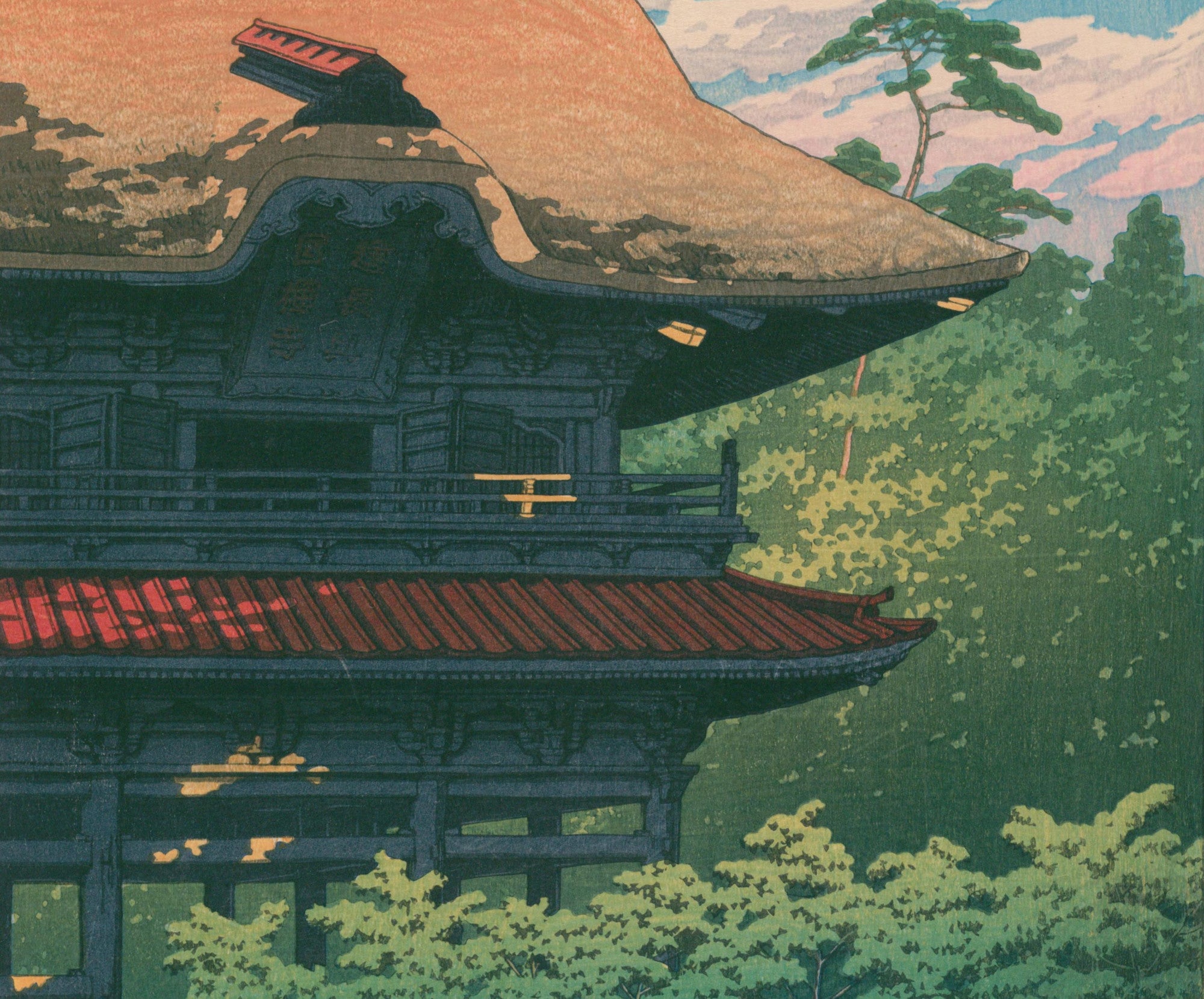
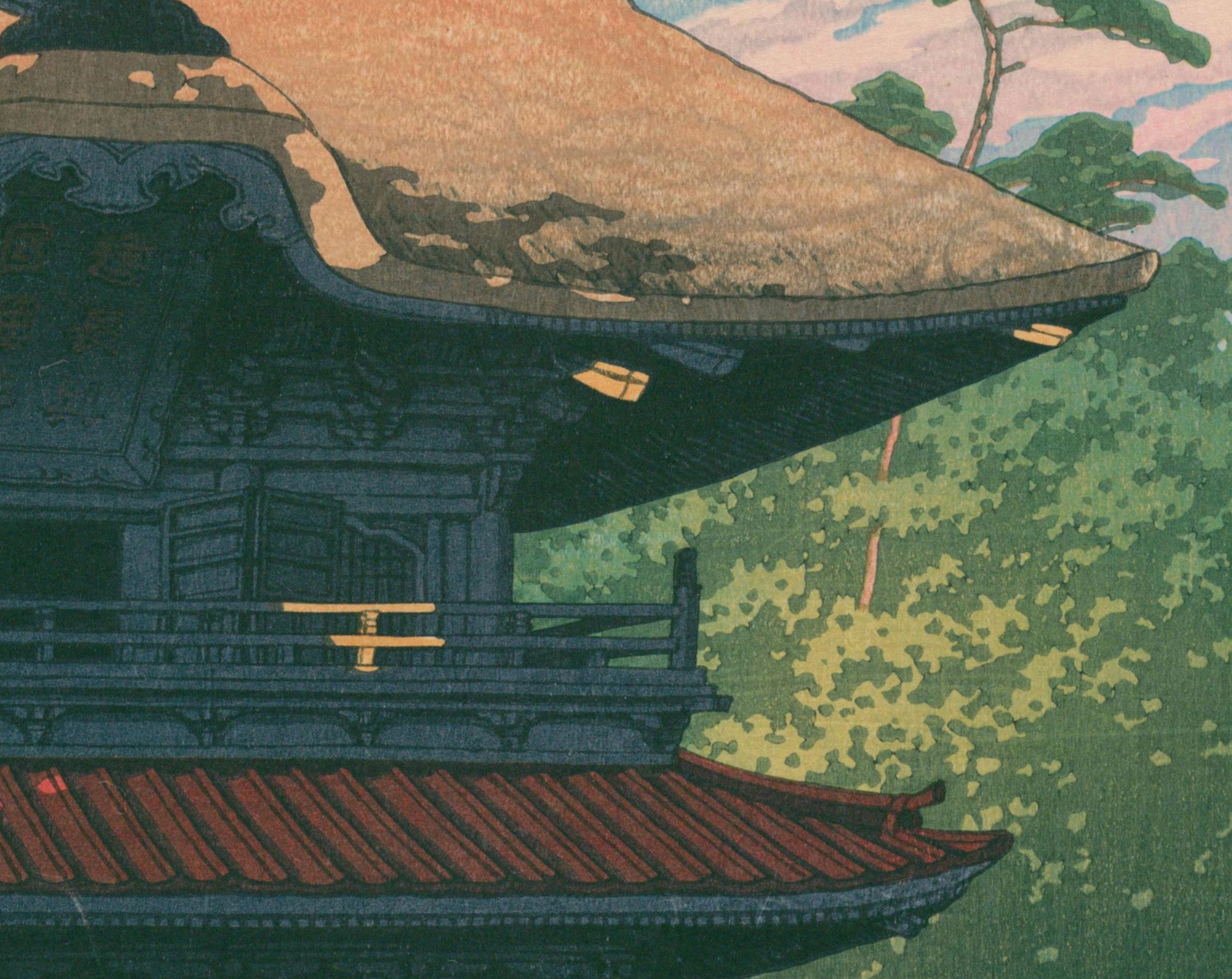
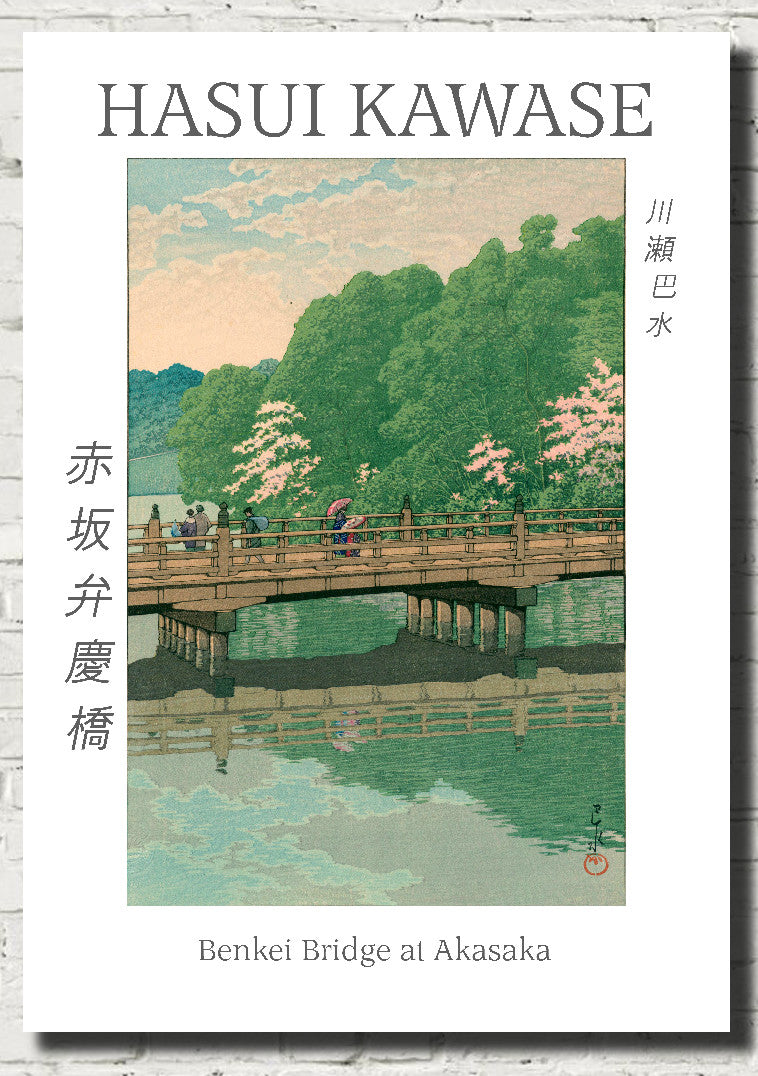
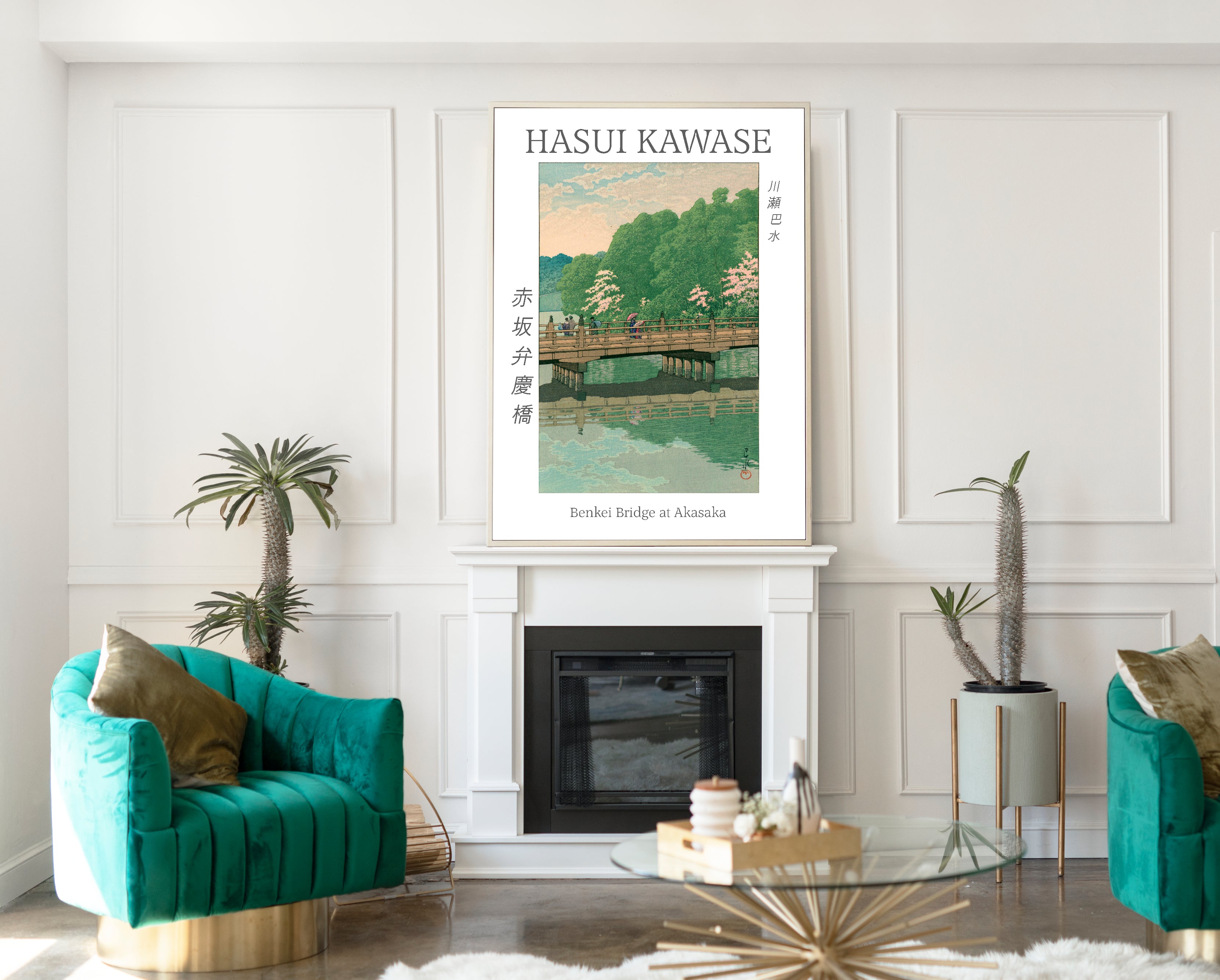
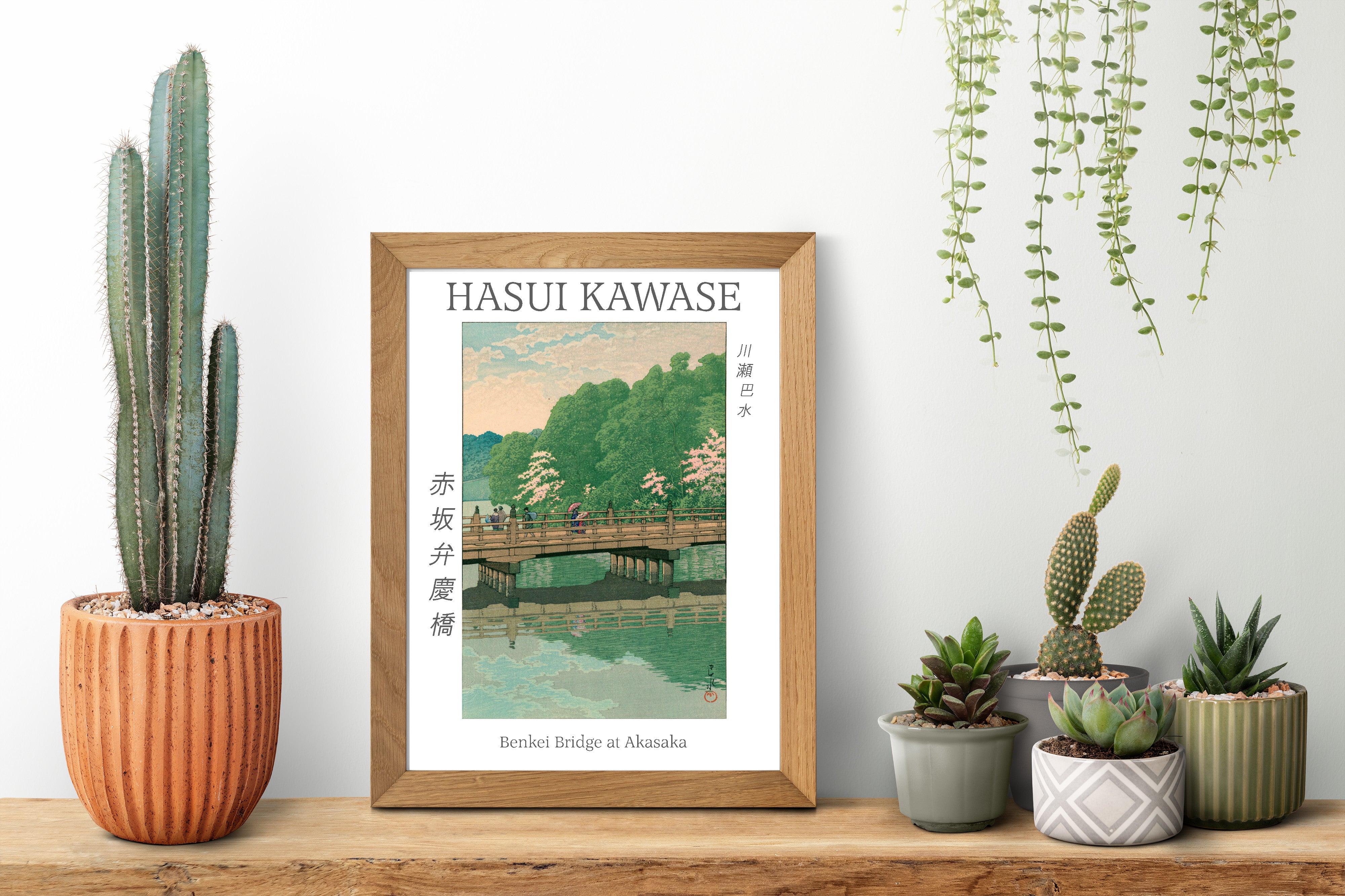
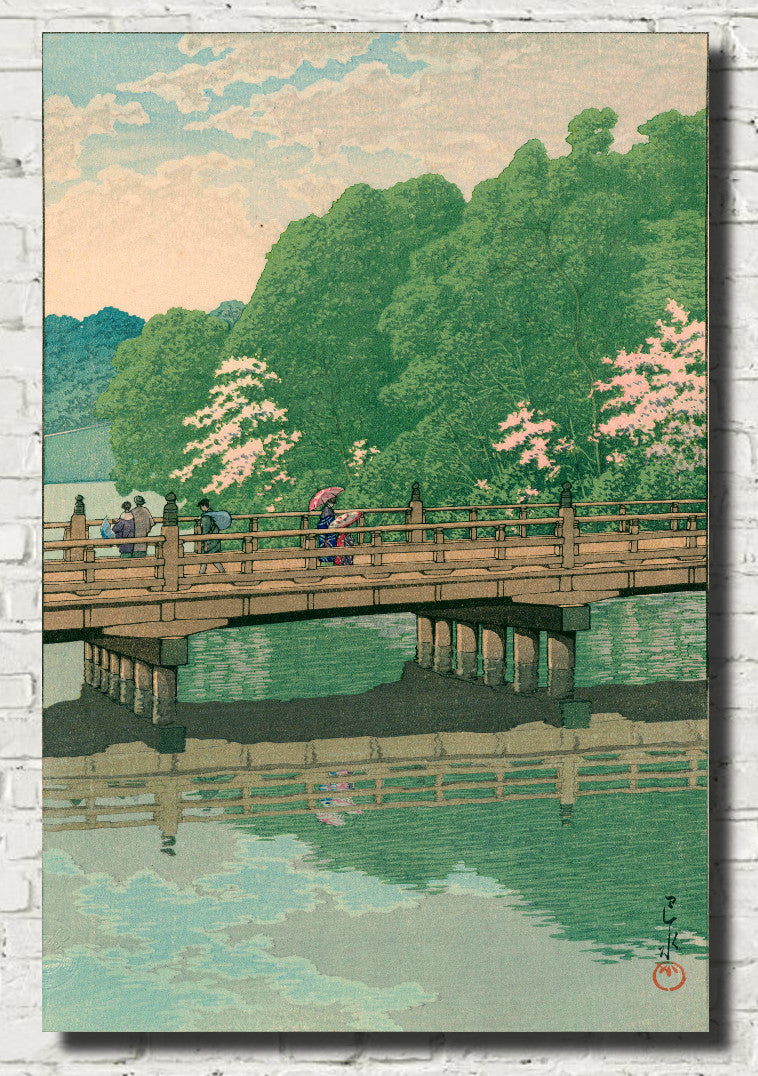
The GalleryThane collection includes subjects such as Kiyosu Bridge, Kenchō Temple, Kamakura, Kiyomizu-dō Temple in Ueno, Honmon-ji Temple in Ikegami and Benkei Bridge at Akasaka. Together they reveal a Japan in which historic temples and traditional neighbourhoods coexist with the infrastructure of a changing twentieth-century city.
This combination makes Hasui especially interesting for collectors of both Japanese landscapes and architecture and cityscape prints.
Hasui Kawase and Twenty Views of Tokyo
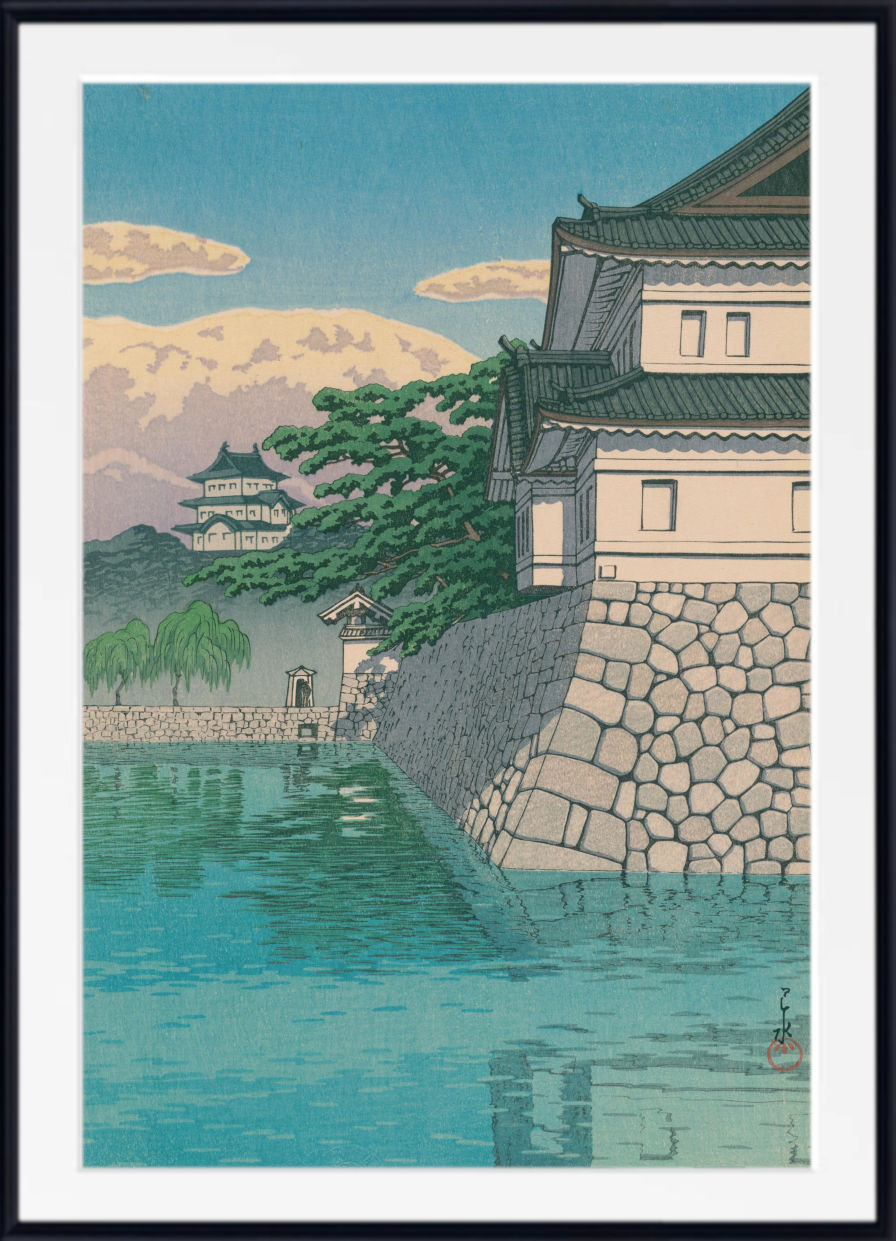
Tokyo was an important subject throughout Hasui’s career. His city views rarely emphasise crowds or modern urban spectacle. Instead, he frequently sought quieter moments: a gate, riverside, bridge, temple or suburban landscape observed in changing weather and light.
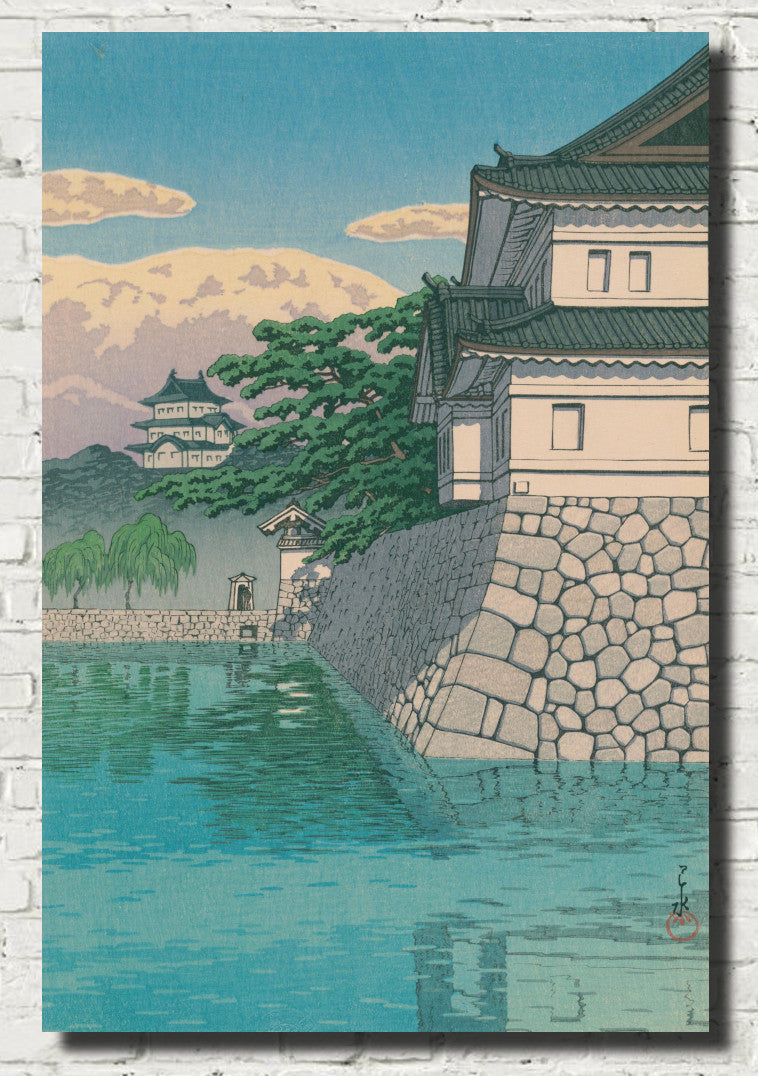
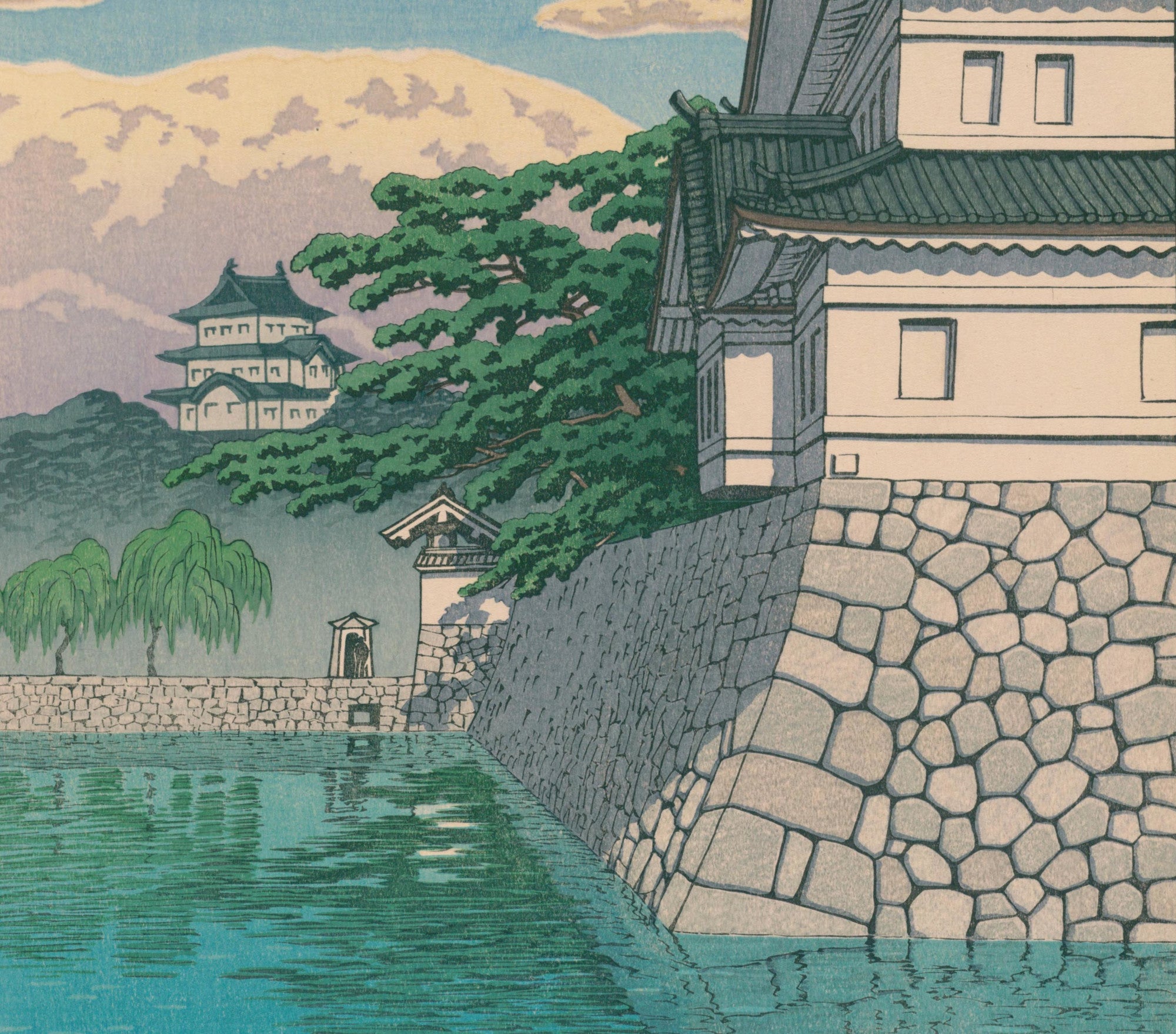
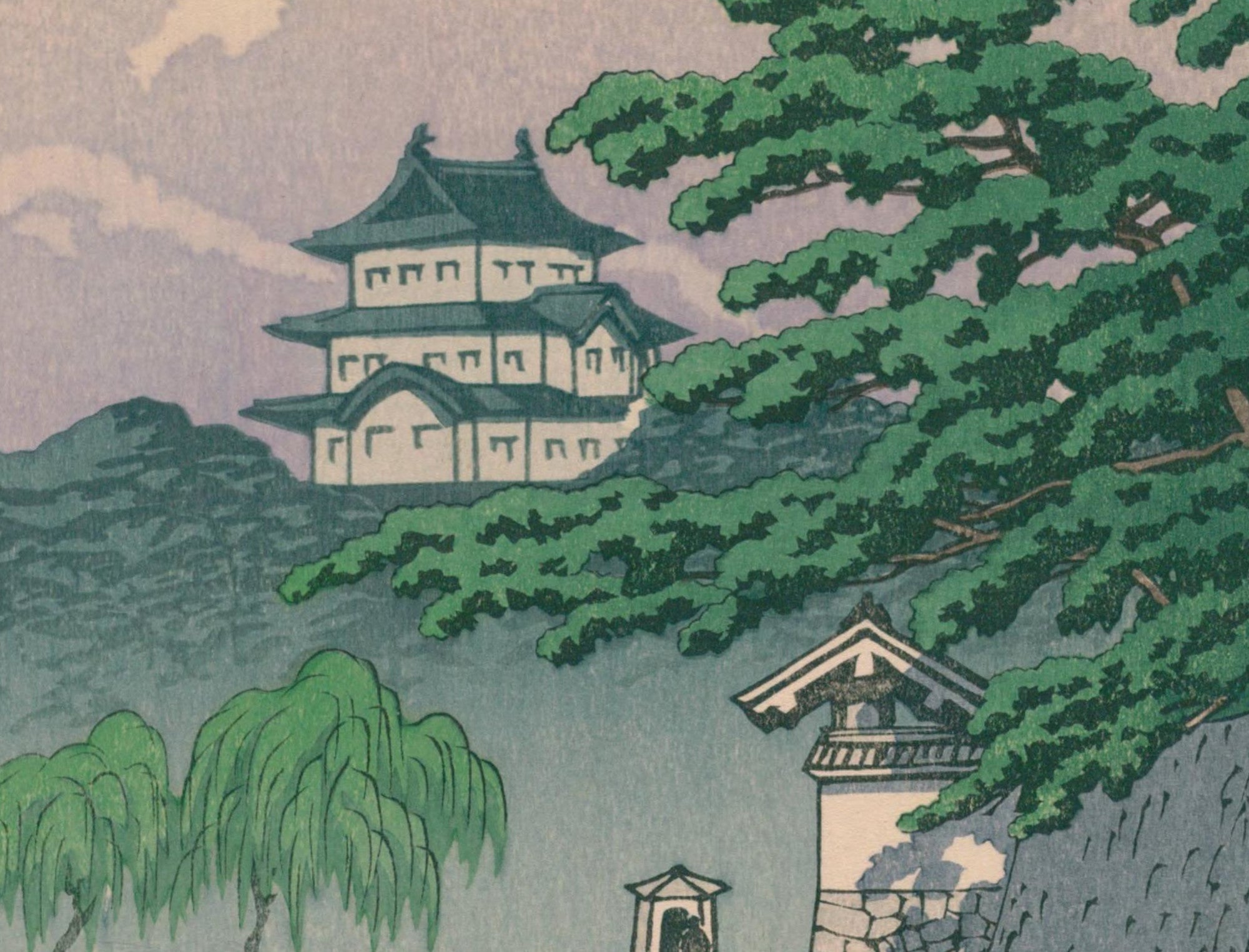
Several works in the GalleryThane collection belong to or are associated with his celebrated Twenty Views of Tokyo, including Kiyomizu-dō Temple in Ueno, Kikyō Gate and Yaguchi.
These prints demonstrate one of Hasui’s greatest strengths: his ability to make familiar locations feel contemplative and almost timeless, even when representing a rapidly modernising city.
Hasui Kawase Prints for Contemporary Interiors
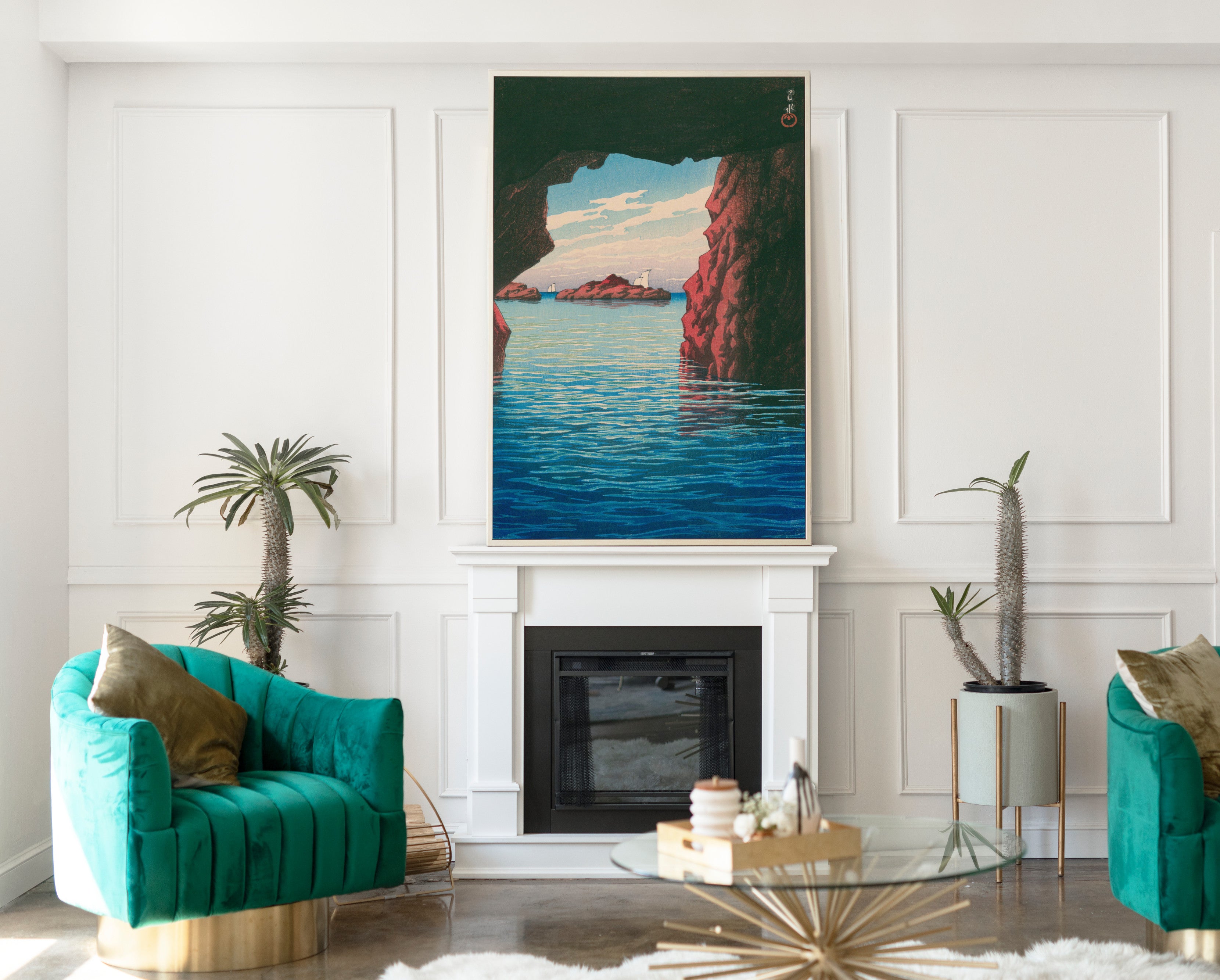
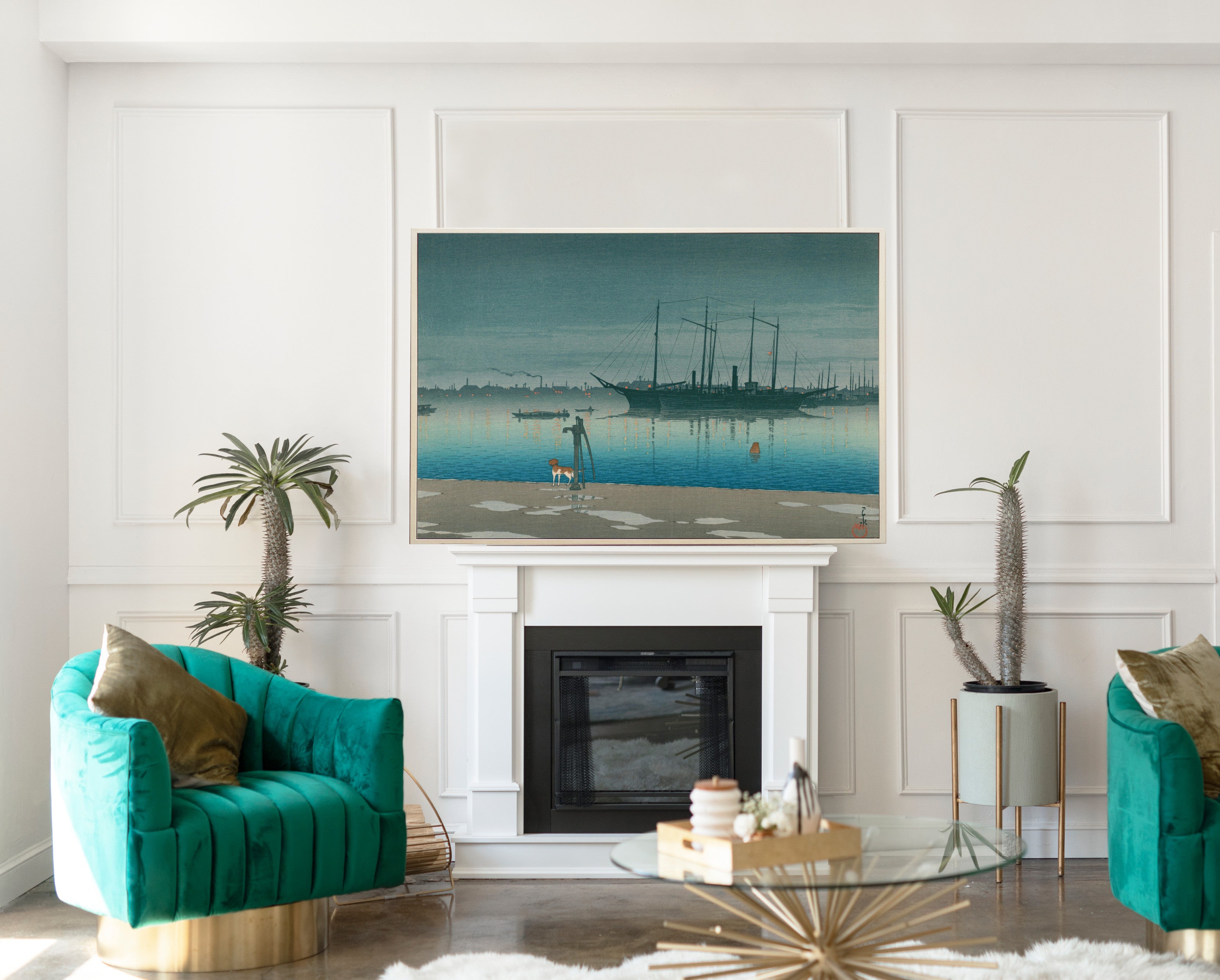
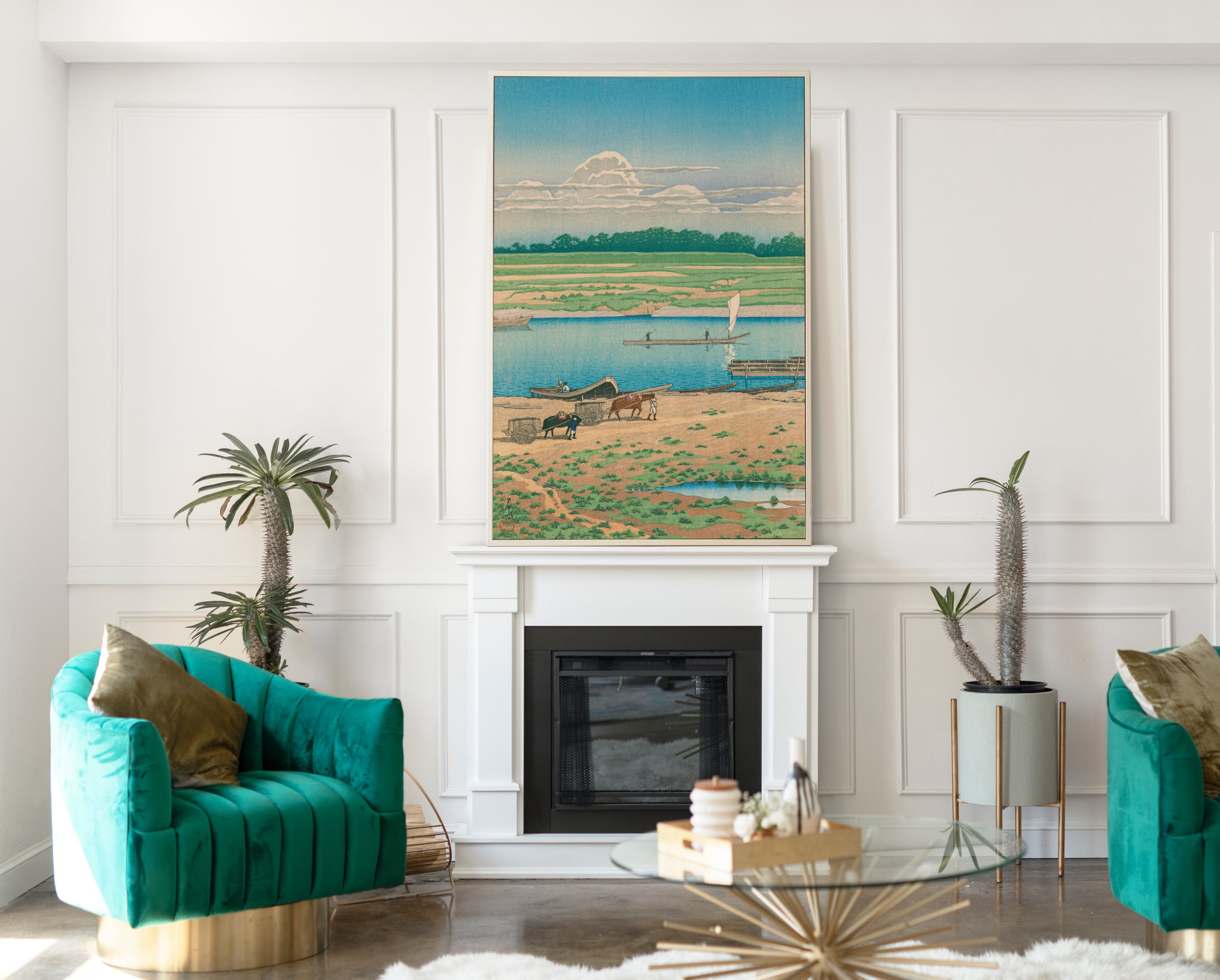
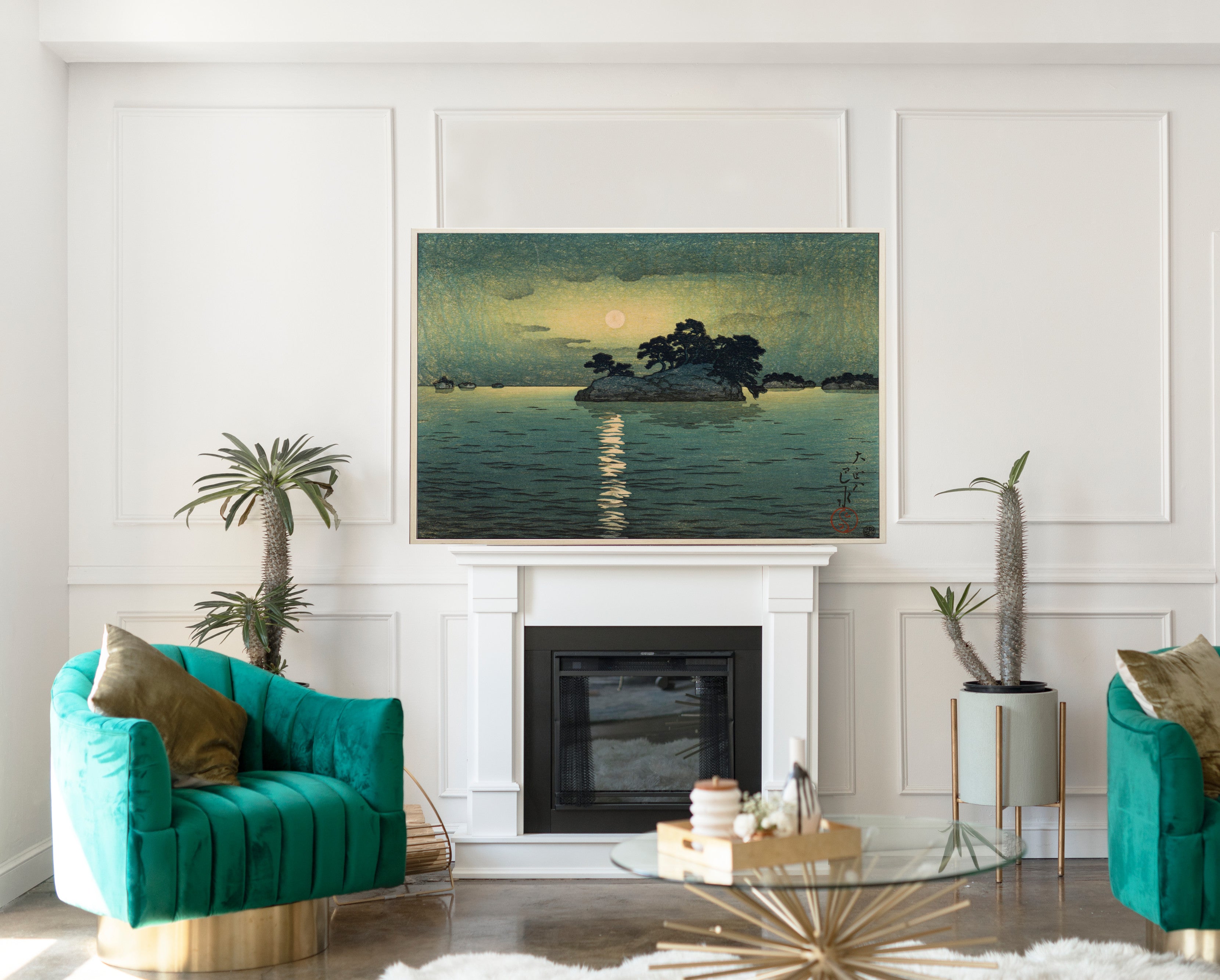
Hasui’s restrained colour palettes and spacious compositions make his landscapes particularly effective in modern interiors.
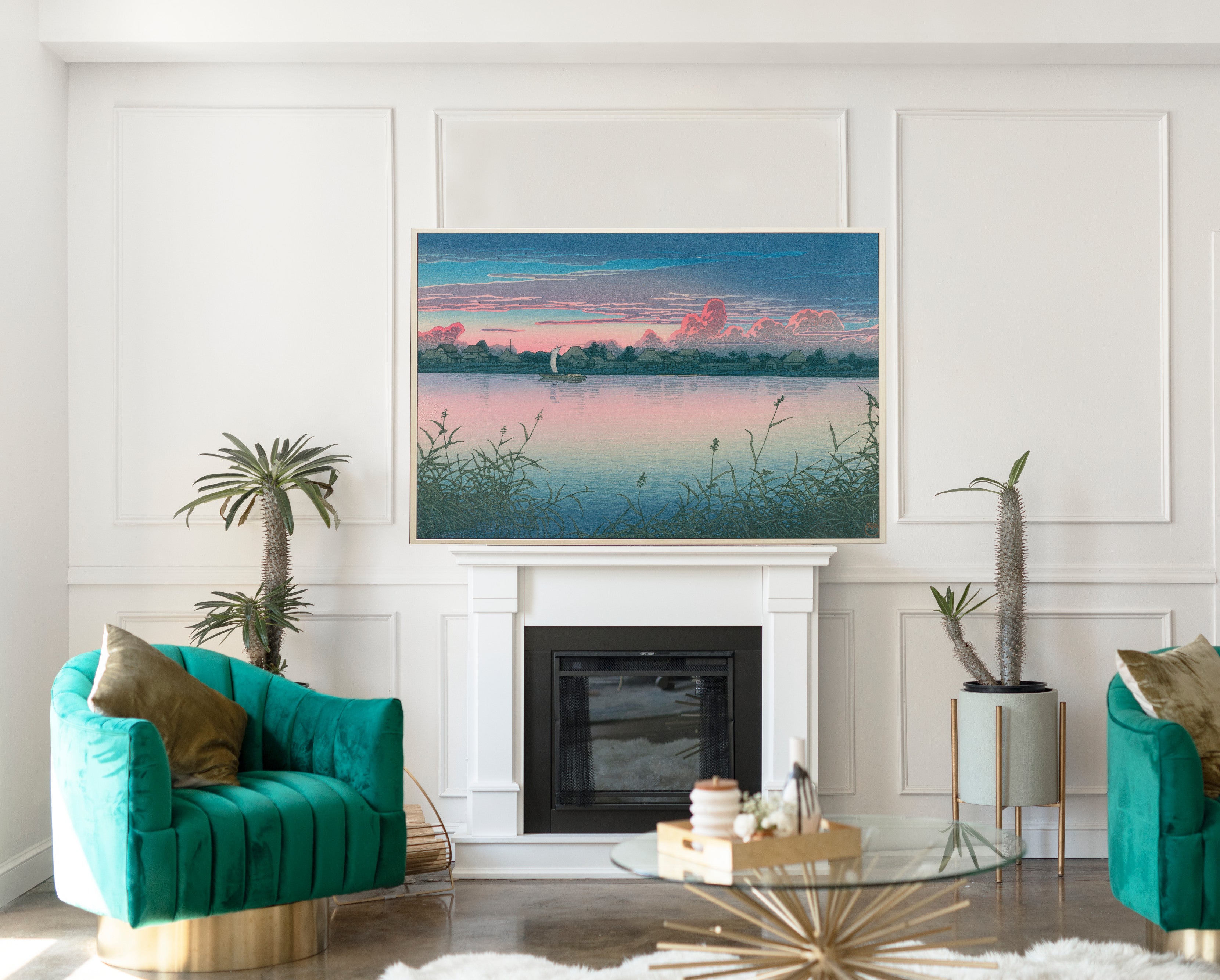
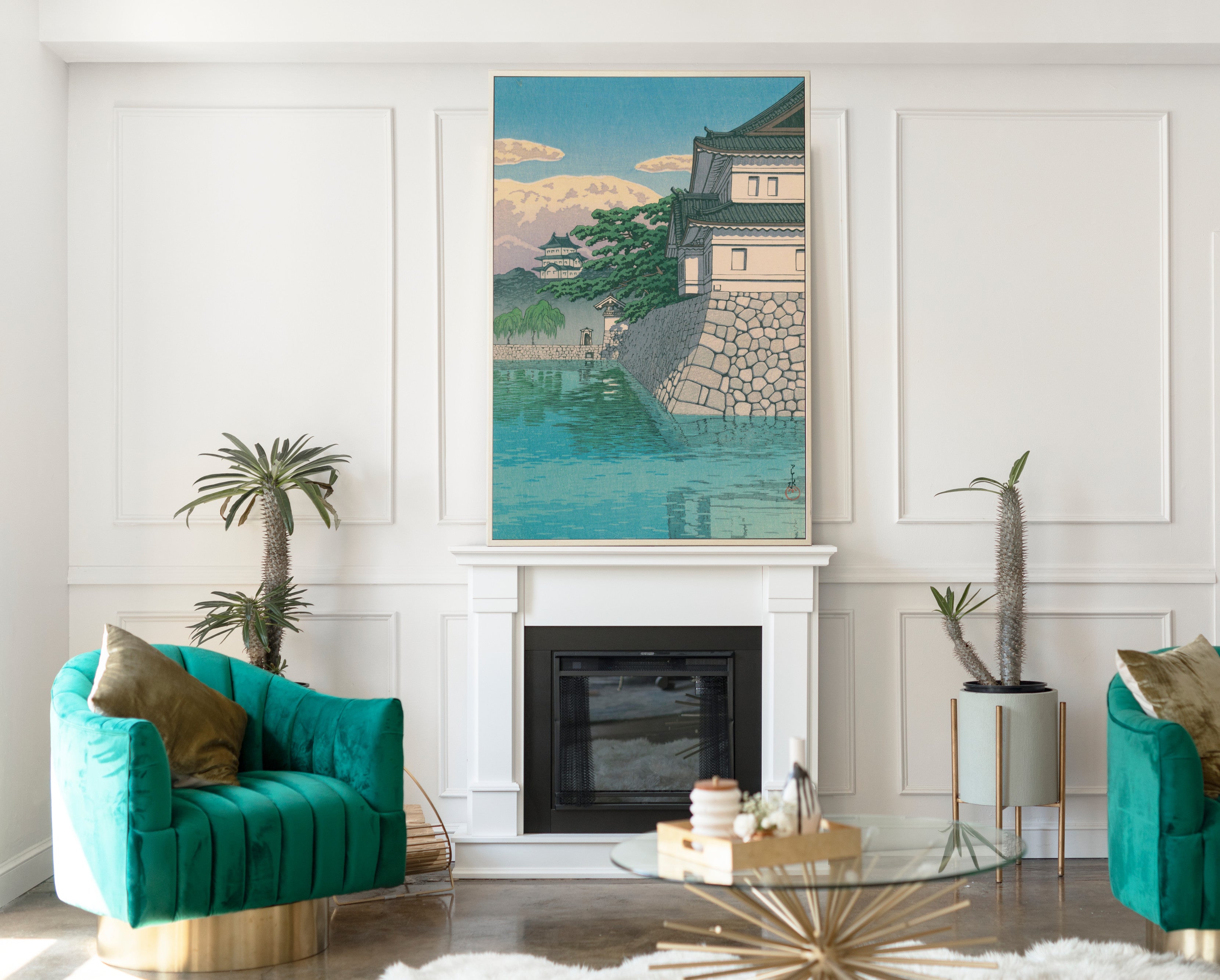
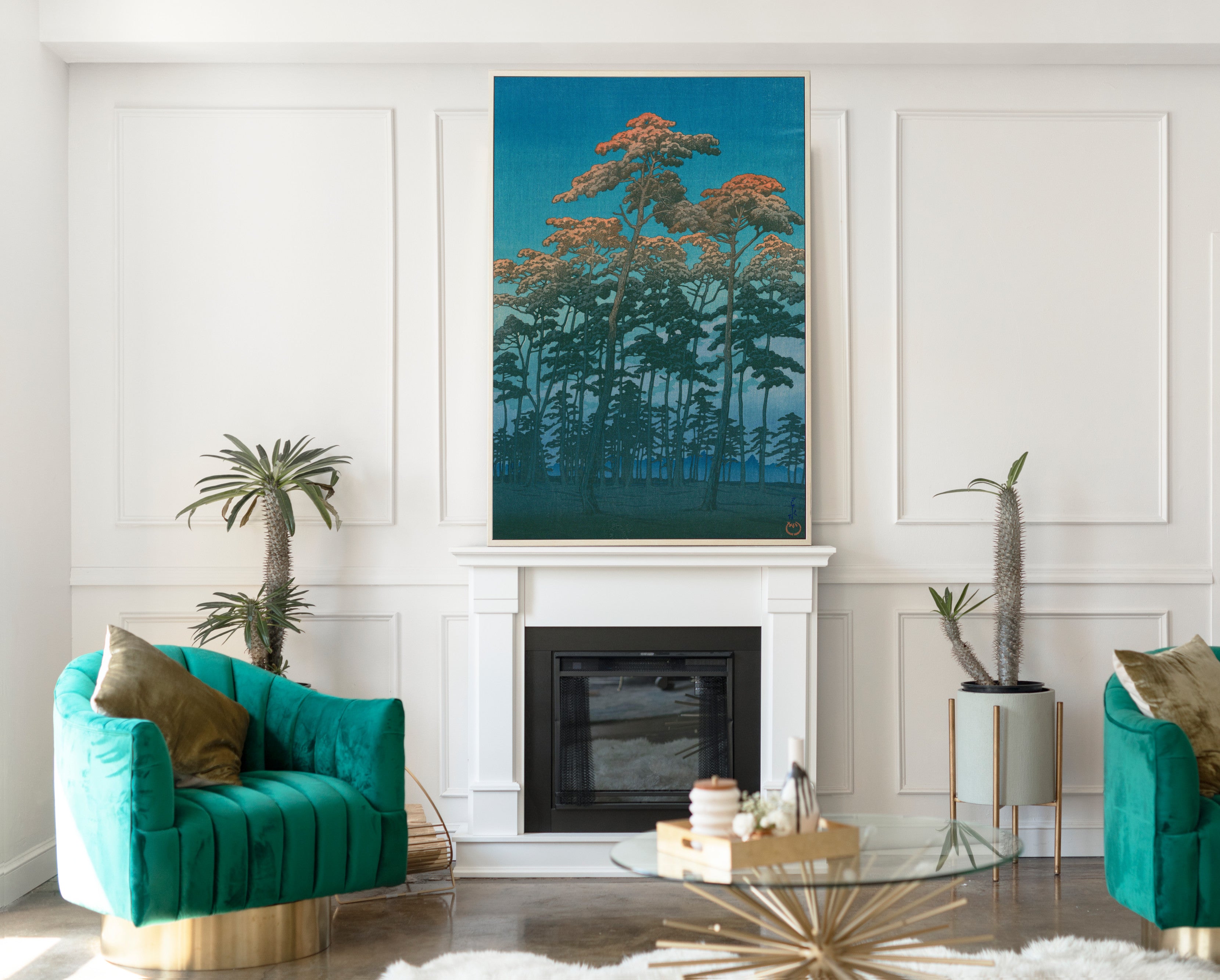
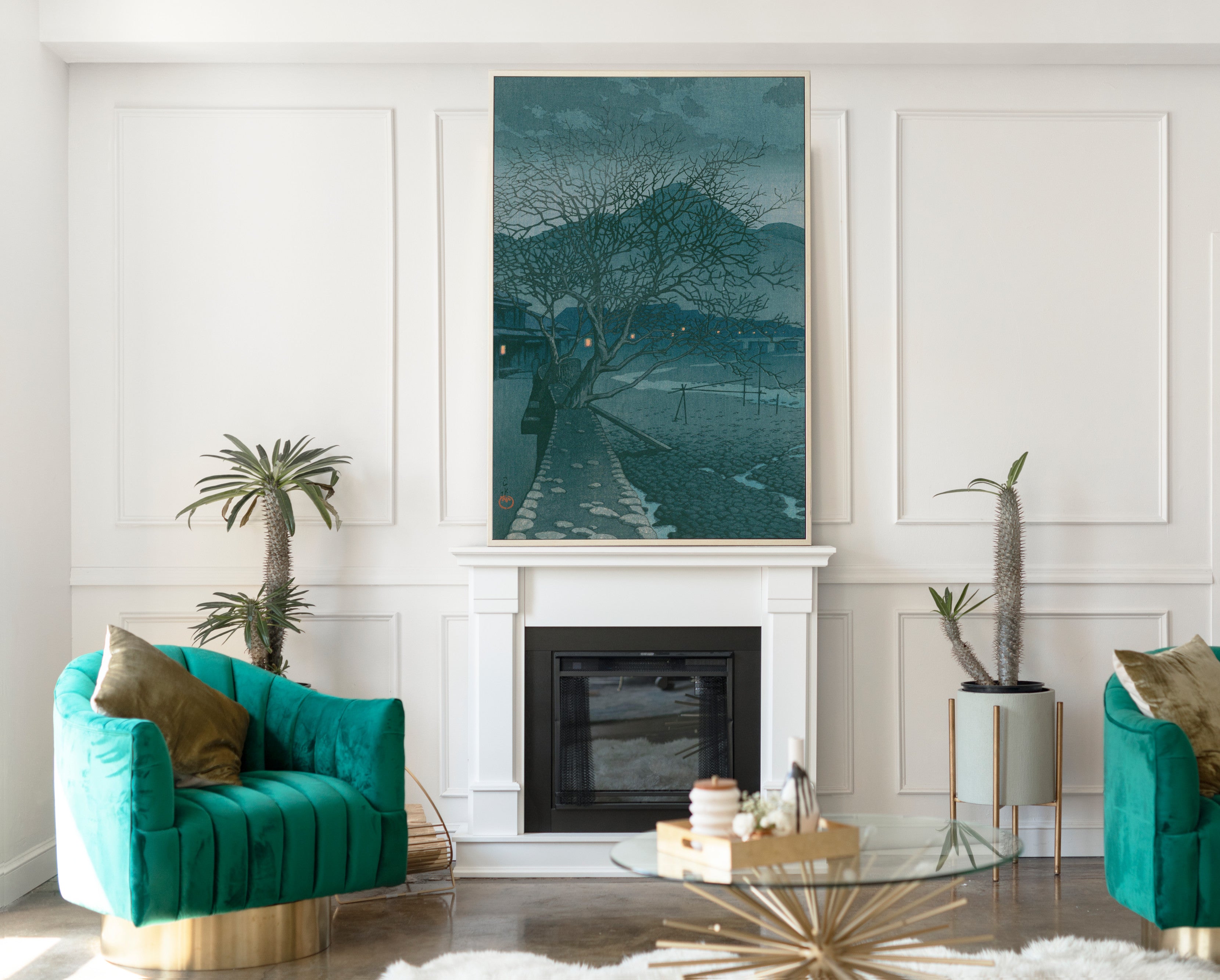
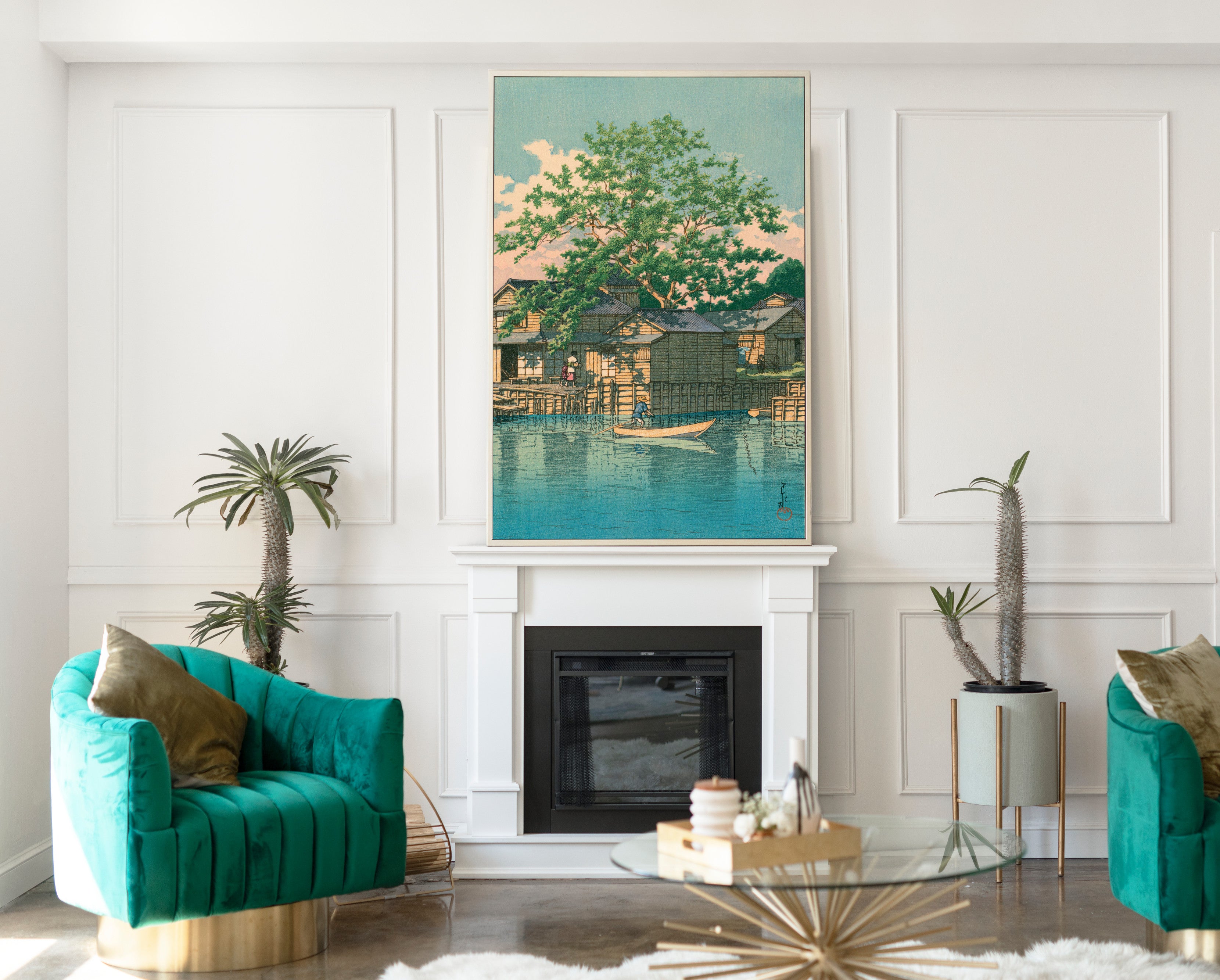
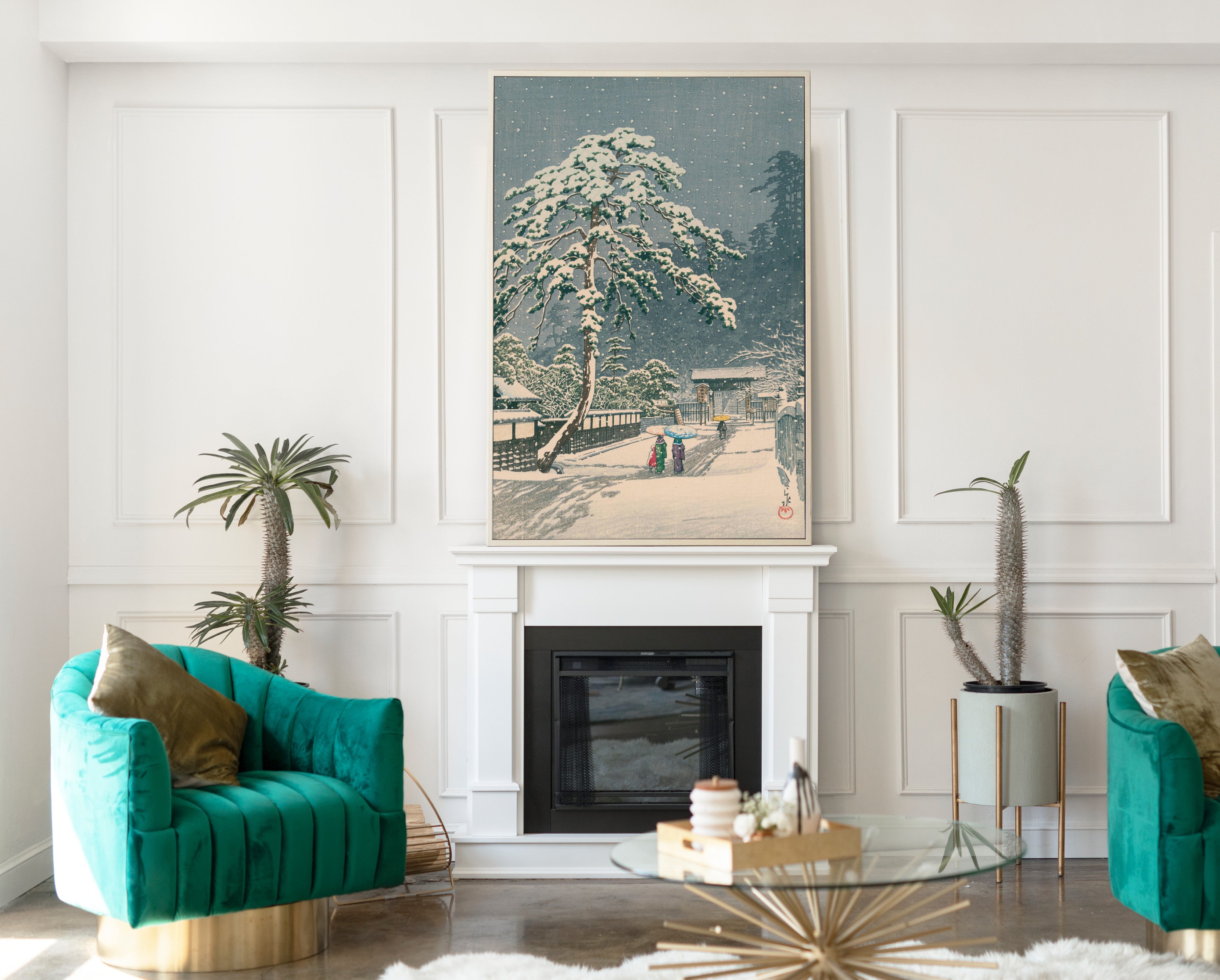
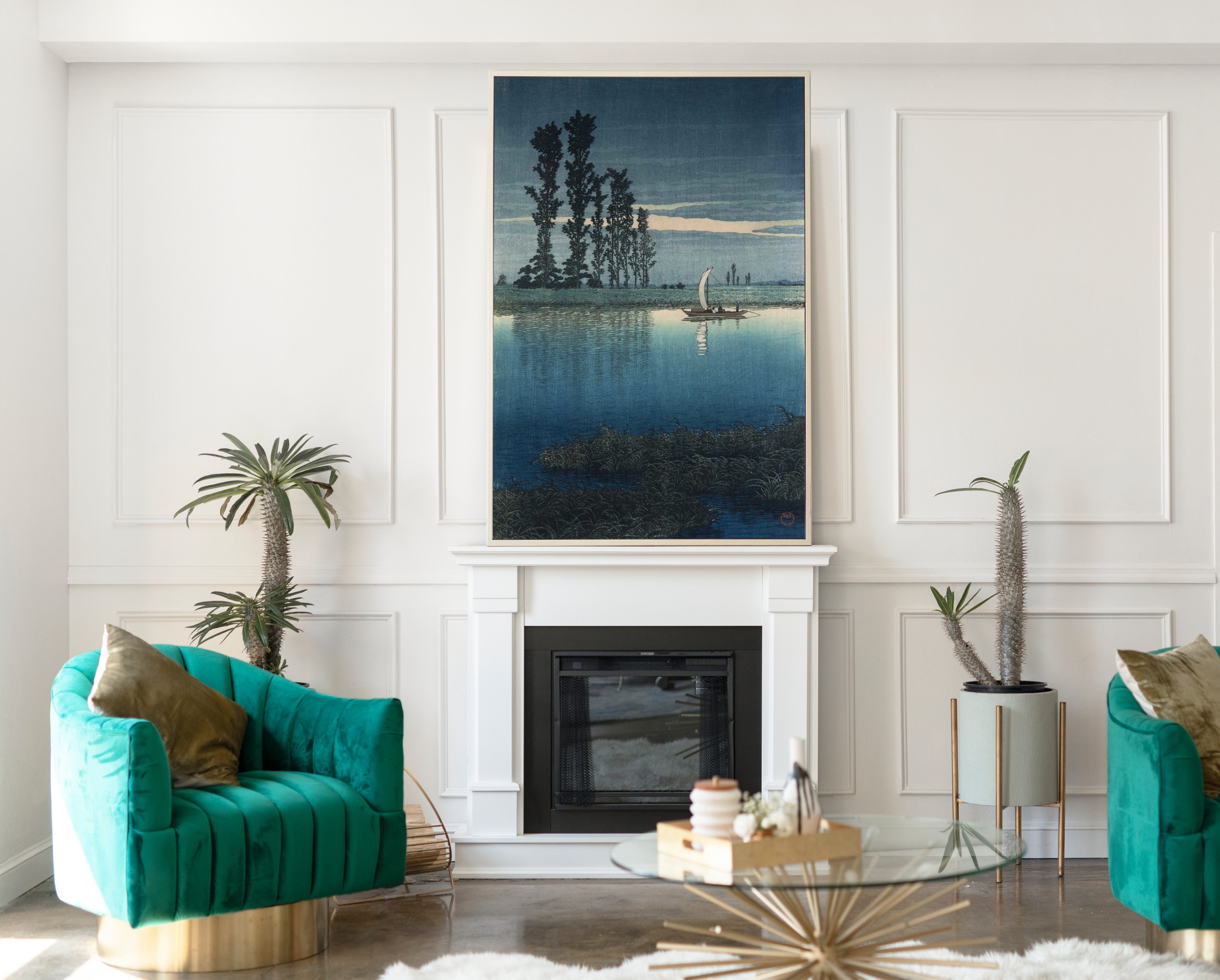
Blue and blue-grey prints can work beautifully with white, cream, putty, pale grey and natural timber. Snow scenes suit calm Scandinavian and Japandi interiors, while deeper moonlit landscapes can provide contrast against warmer neutral walls.
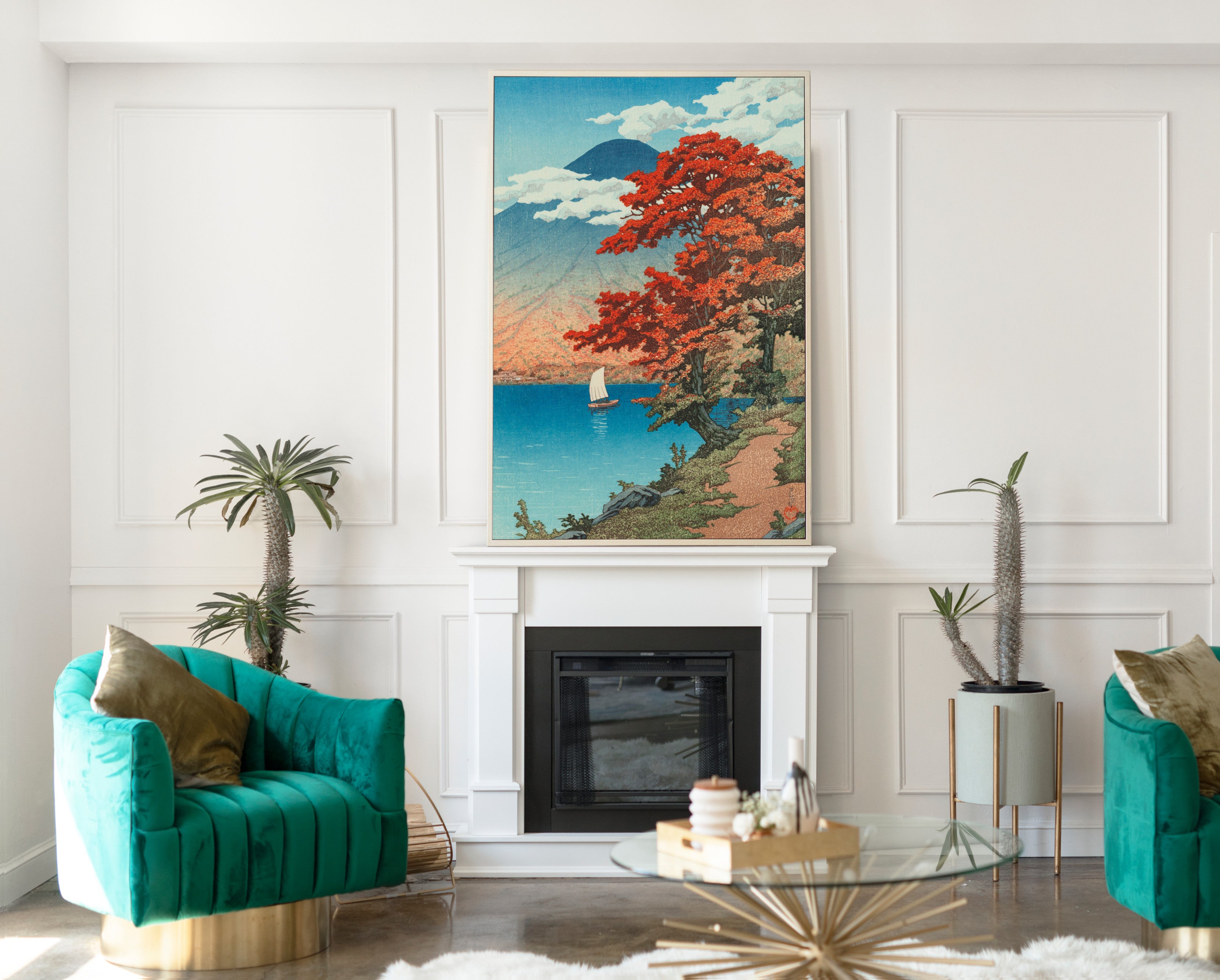
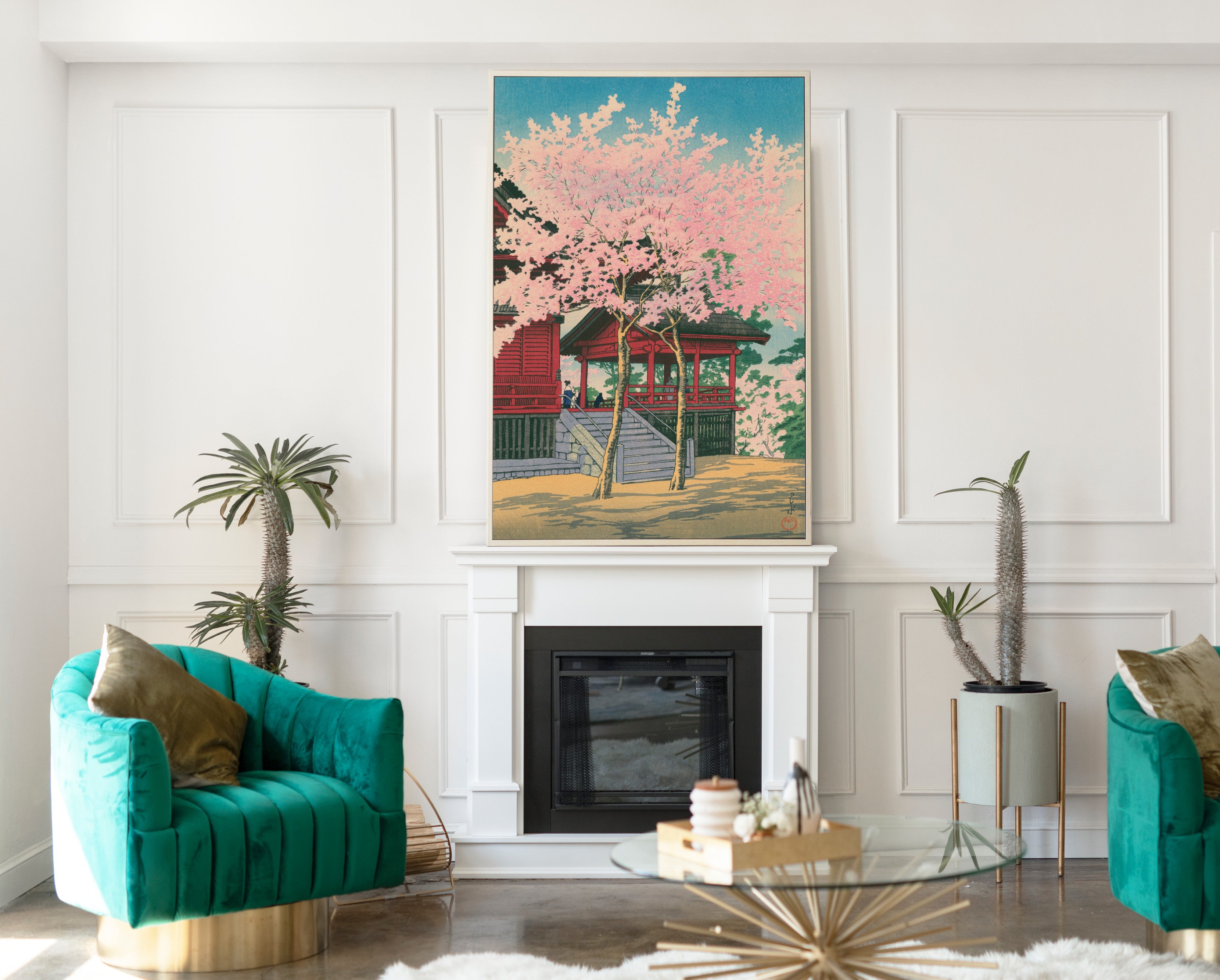
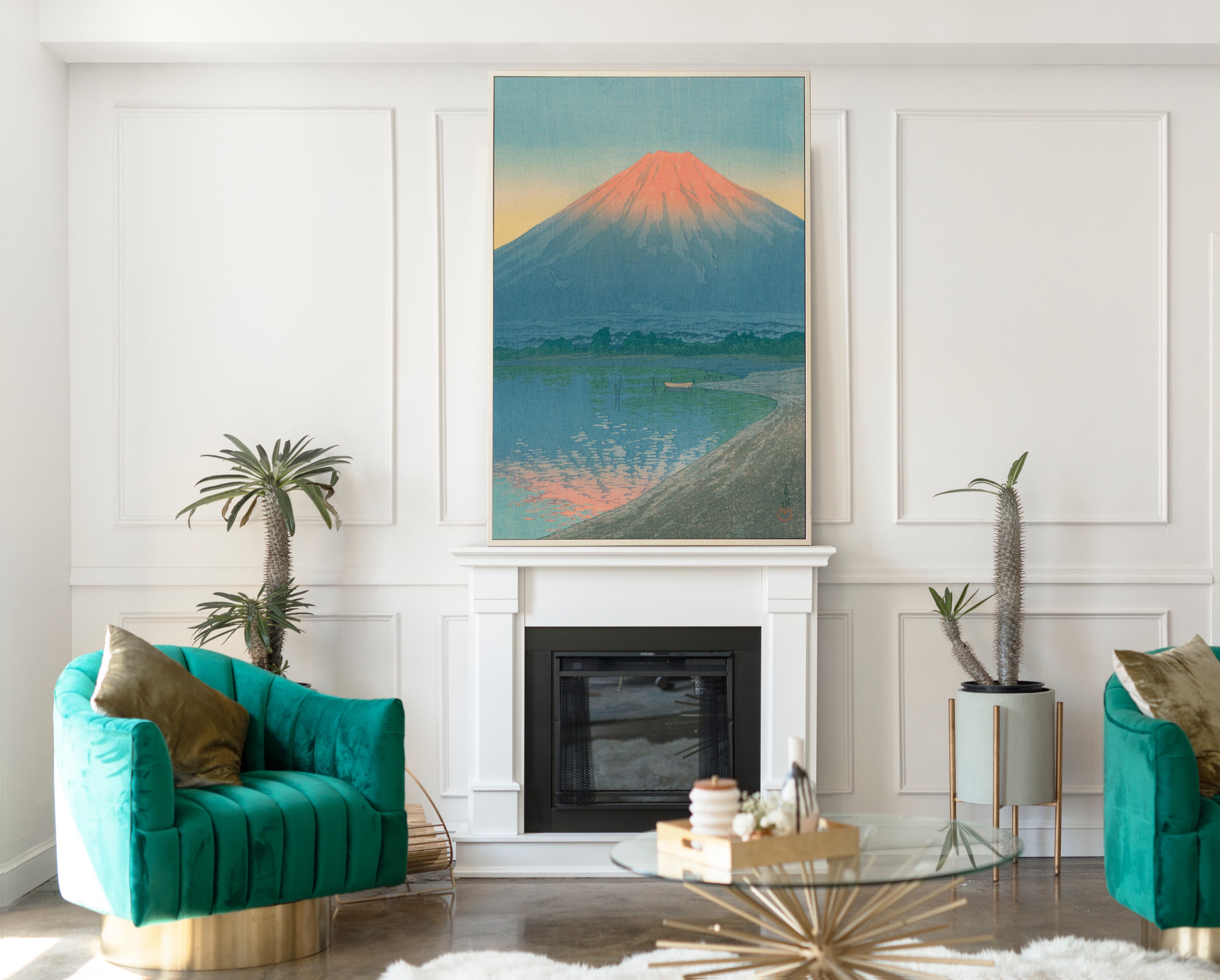
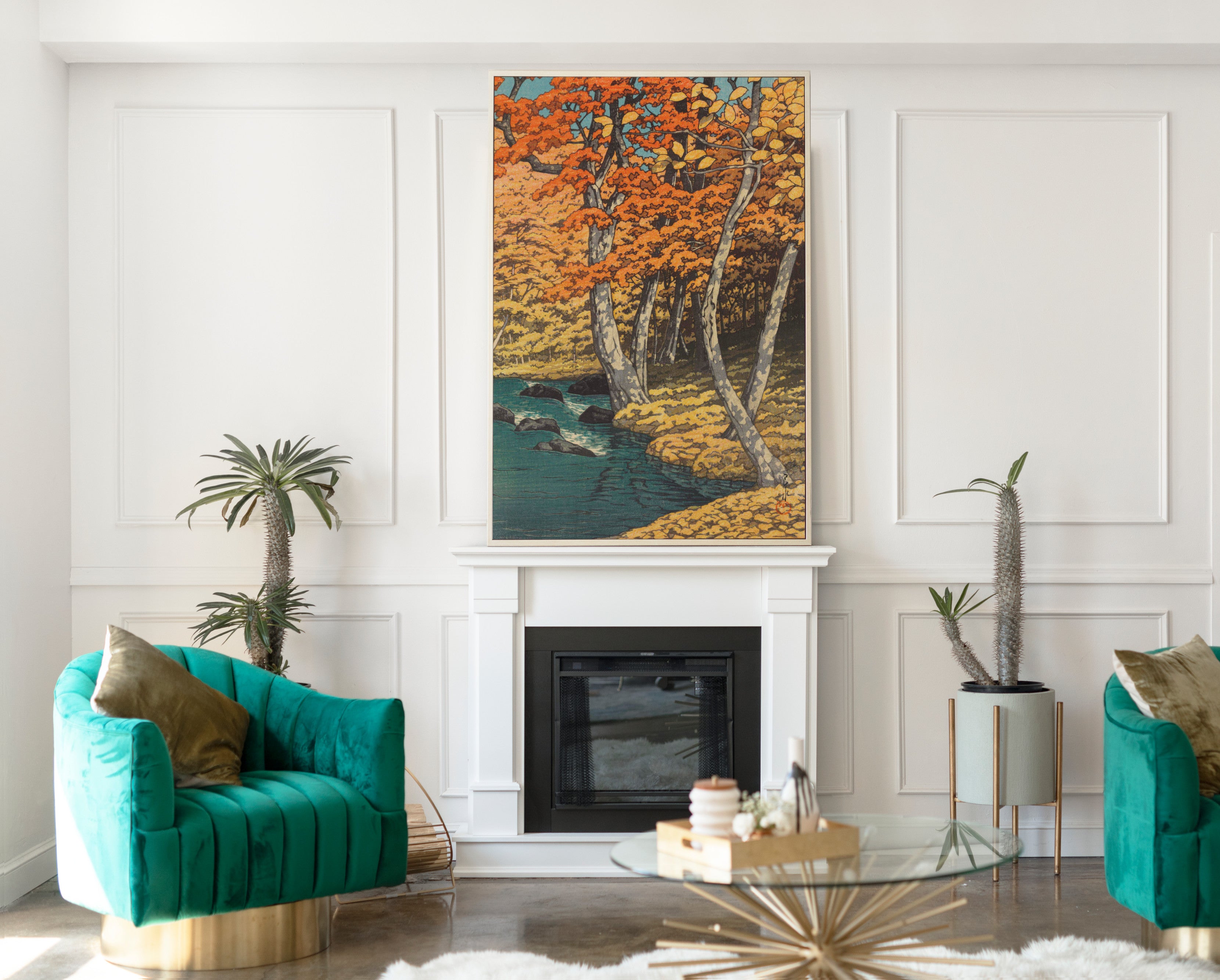
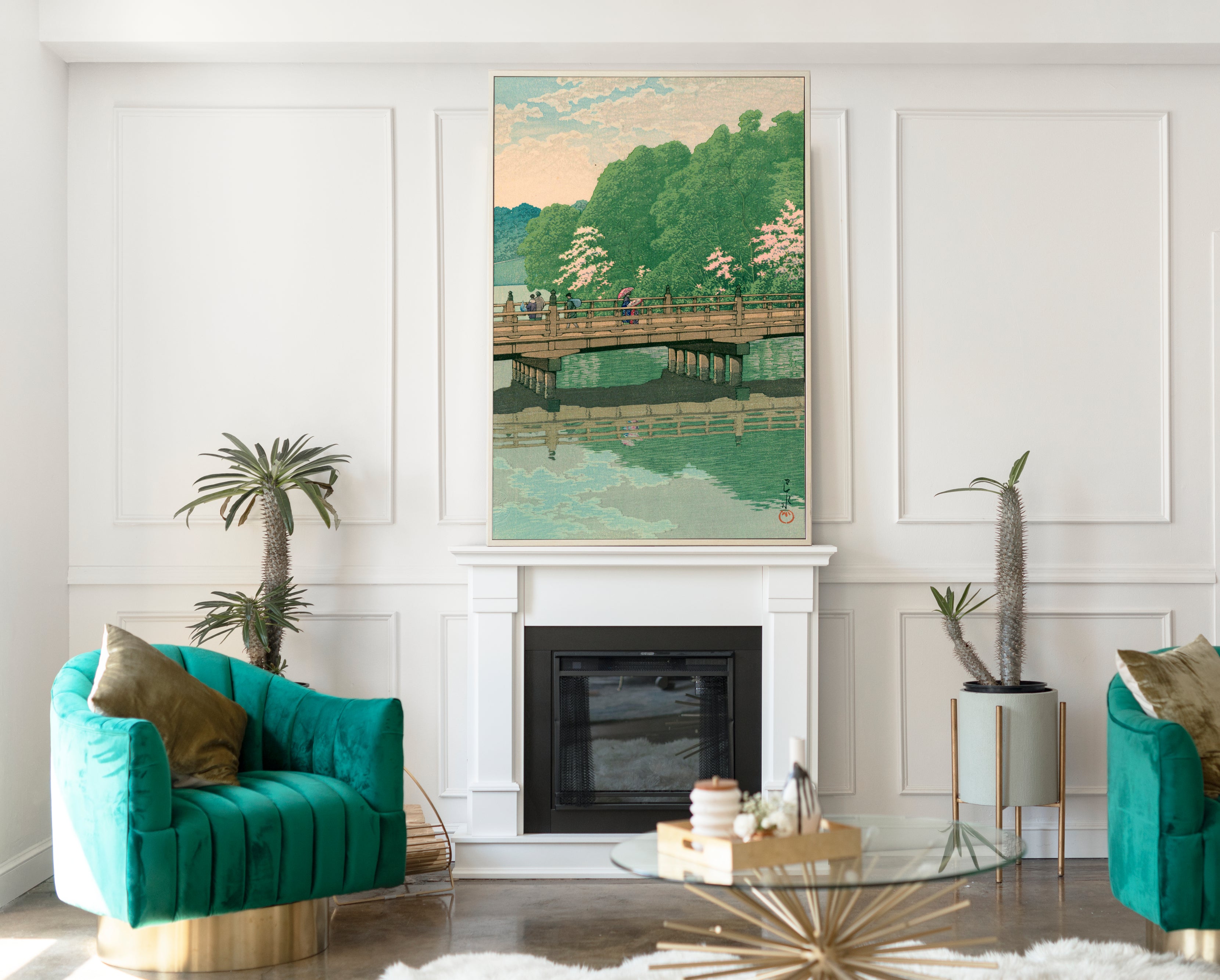
A single large framed Hasui Kawase print can create a quiet focal point above a sofa, sideboard or bed. Smaller landscapes can also be grouped into pairs or gallery walls, particularly when connected by a common theme such as water, snow, temples, bridges or evening light.
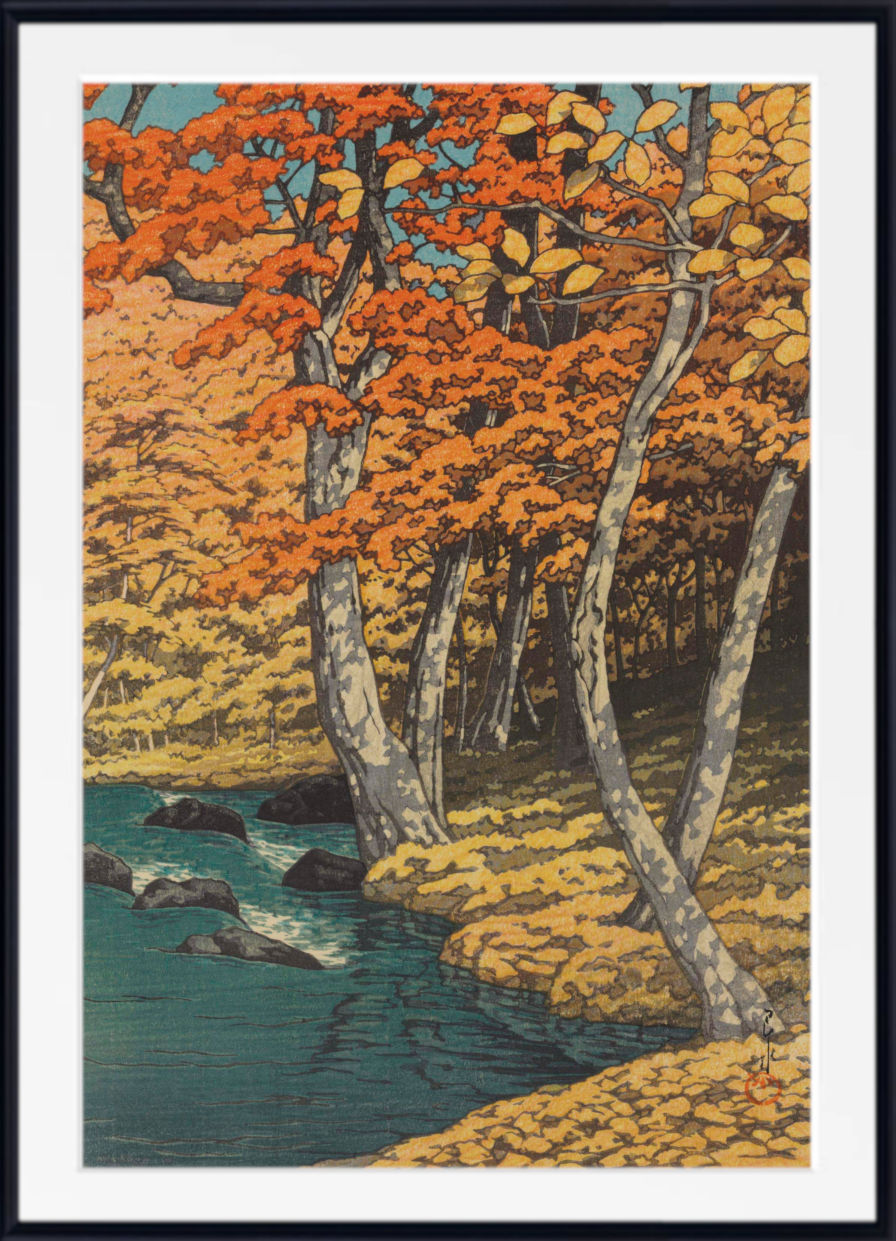
Black frames emphasise the dark silhouettes and graphic structure within many of the compositions, while natural wooden frames can soften the presentation and complement Hasui’s landscape subjects.
For ideas on combining Japanese landscapes, botanical designs and ukiyo-e imagery, explore GalleryThane’s Japanese Art Gallery Wall guide.
Hasui Kawase, Hiroshige and the Japanese Landscape Tradition
Hasui’s work belongs to a much longer Japanese tradition of depicting travel, weather and landscape.
Andō Hiroshige had transformed nineteenth-century ukiyo-e landscape art through images of roads, rivers, bridges, rain, snow and changing seasons. Hasui approached many comparable subjects decades later, but with the increased atmospheric modelling and subtle tonal transitions associated with shin-hanga.
The relationship is particularly interesting for collectors. Hiroshige’s landscapes often emphasise bold compositional structure and the rhythms of travel, while Hasui frequently creates a quieter sense of solitude and stillness.
Together they demonstrate how Japanese landscape printmaking continued to evolve while retaining enduring themes of season, place and human experience within nature.
Fine Art Prints, Framed Prints and Canvas Panels
GalleryThane’s Hasui Kawase collection brings together reproductions of his atmospheric Japanese landscape designs in a range of sizes and formats.
Choose a fine art paper print for flexible framing, a professionally framed print for a complete presentation, or a canvas panel for a clean contemporary alternative. Different proportions and sizes make the collection suitable for individual statement pieces as well as coordinated Japanese gallery walls.
Frequently Asked Questions
Who was Hasui Kawase?
Hasui Kawase was a Japanese landscape artist and print designer who lived from 1883 to 1957. He became one of the leading figures of the twentieth-century shin-hanga movement and is particularly admired for atmospheric landscapes featuring snow, rain, moonlight, temples, bridges and quiet streets.
What is shin-hanga?
Shin-hanga means “new prints”. It was an early twentieth-century Japanese movement that revived traditional collaborative woodblock printmaking while introducing new approaches to colour, light, depth and atmosphere.
What subjects did Hasui Kawase depict?
Hasui concentrated principally on landscapes and views of Japan. His subjects include lakes, rivers, coastlines, mountains, bridges, temples, shrines, streets and villages, often transformed by snow, rain, mist, moonlight or evening light.
Why are Hasui Kawase prints often blue?
Blue and blue-grey were extremely effective for the atmospheric effects Hasui favoured. He used them to suggest night, water, snow, mist, distance and changing light, although his work also includes greens, warm autumn colours, soft neutrals and darker nocturnal palettes.
Are Hasui Kawase prints suitable for modern interiors?
Yes. The combination of restrained colour, strong composition and generous visual space makes Hasui’s work particularly suitable for contemporary, minimalist, Scandinavian and Japandi interiors.
Which Hasui Kawase prints are good for a calm bedroom?
Snow scenes, moonlit landscapes, quiet lakes and evening views are particularly effective in bedrooms because their softer colours and contemplative compositions create a restrained visual focal point.
Can Hasui Kawase prints be combined with older Japanese art?
Yes. Hasui’s shin-hanga landscapes work particularly well alongside prints by Hokusai and Hiroshige. Shared subjects such as mountains, bridges, water, weather and seasonal landscapes can connect works from different periods.