Der Blaue Reiter Prints – The Art of The Blue Rider
Der Blaue Reiter, translated as The Blue Rider, was one of the defining movements of early twentieth-century modern art.
Emerging in Munich in the years immediately before the First World War, the artists associated with the Blue Rider rejected the idea that painting should simply reproduce the visible world. Instead, they explored how colour, line, rhythm and simplified form could communicate emotion, spirituality and inner experience.
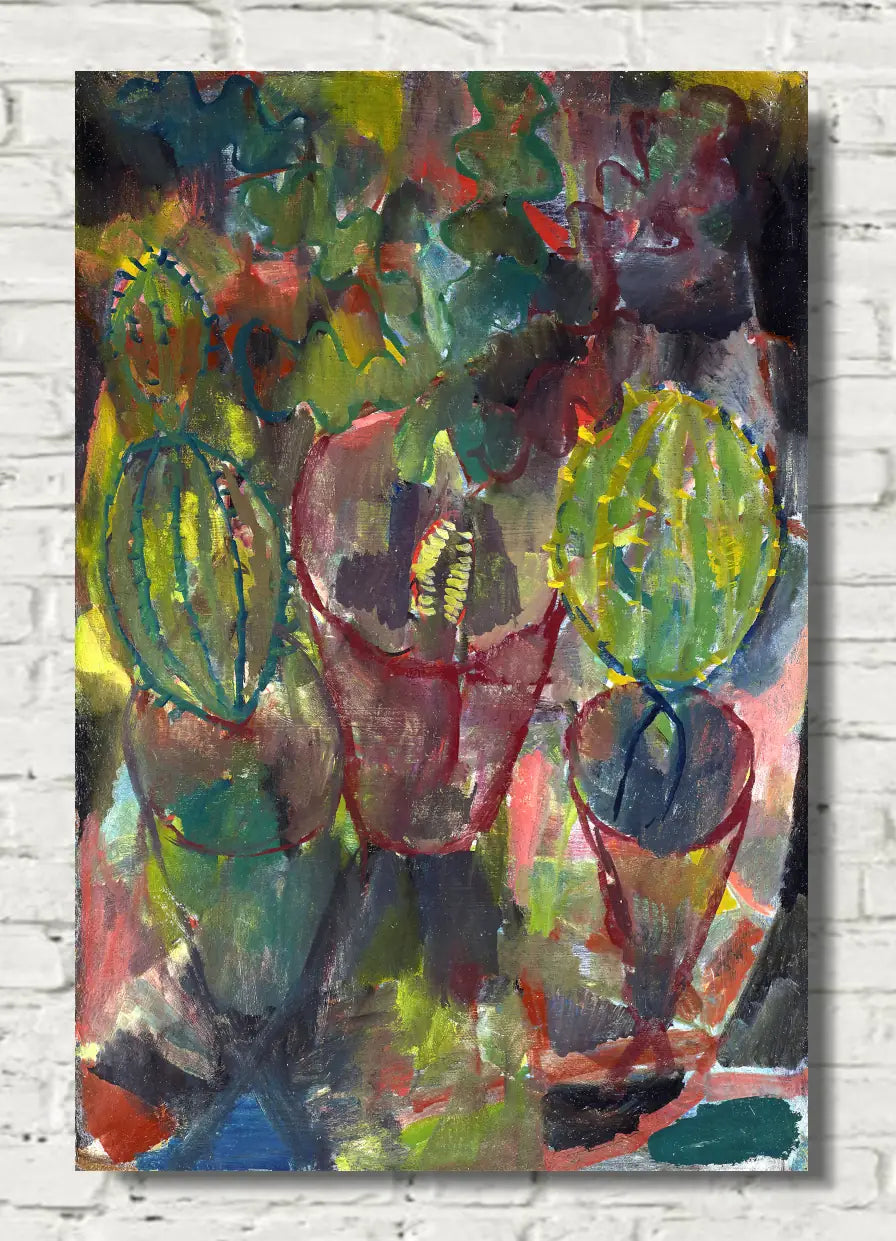
This collection brings together carefully selected works by artists closely connected with Der Blaue Reiter, including Wassily Kandinsky, Franz Marc, August Macke, Alexej von Jawlensky and Marianne von Werefkin.
Rather than including every later painting produced by these artists, GalleryThane’s Der Blaue Reiter collection concentrates on works connected with their Murnau, Munich and pre-war Expressionist development, creating a more focused view of this extraordinary period in European art.
What Was Der Blaue Reiter?
Der Blaue Reiter developed in Munich in 1911 around Wassily Kandinsky and Franz Marc.
The group was not an art school with a single prescribed style. Instead, it was a loose association of progressive artists who shared an interest in creating a more expressive and spiritually meaningful form of modern art.
Their interests extended far beyond conventional painting.
Folk art, medieval imagery, children’s drawings, music and non-European art all contributed to their search for a more universal visual language.
The first Blue Rider exhibition took place in Munich in late 1911. A second followed in 1912, bringing an even broader range of experimental artists into the circle.
Also in 1912, Kandinsky and Marc published the famous Der Blaue Reiter Almanac, bringing together essays, artworks and musical compositions in a radical attempt to break down traditional boundaries between different forms of artistic expression.
Wassily Kandinsky and the Road to Abstraction
Wassily Kandinsky was one of the principal intellectual and artistic forces behind Der Blaue Reiter.
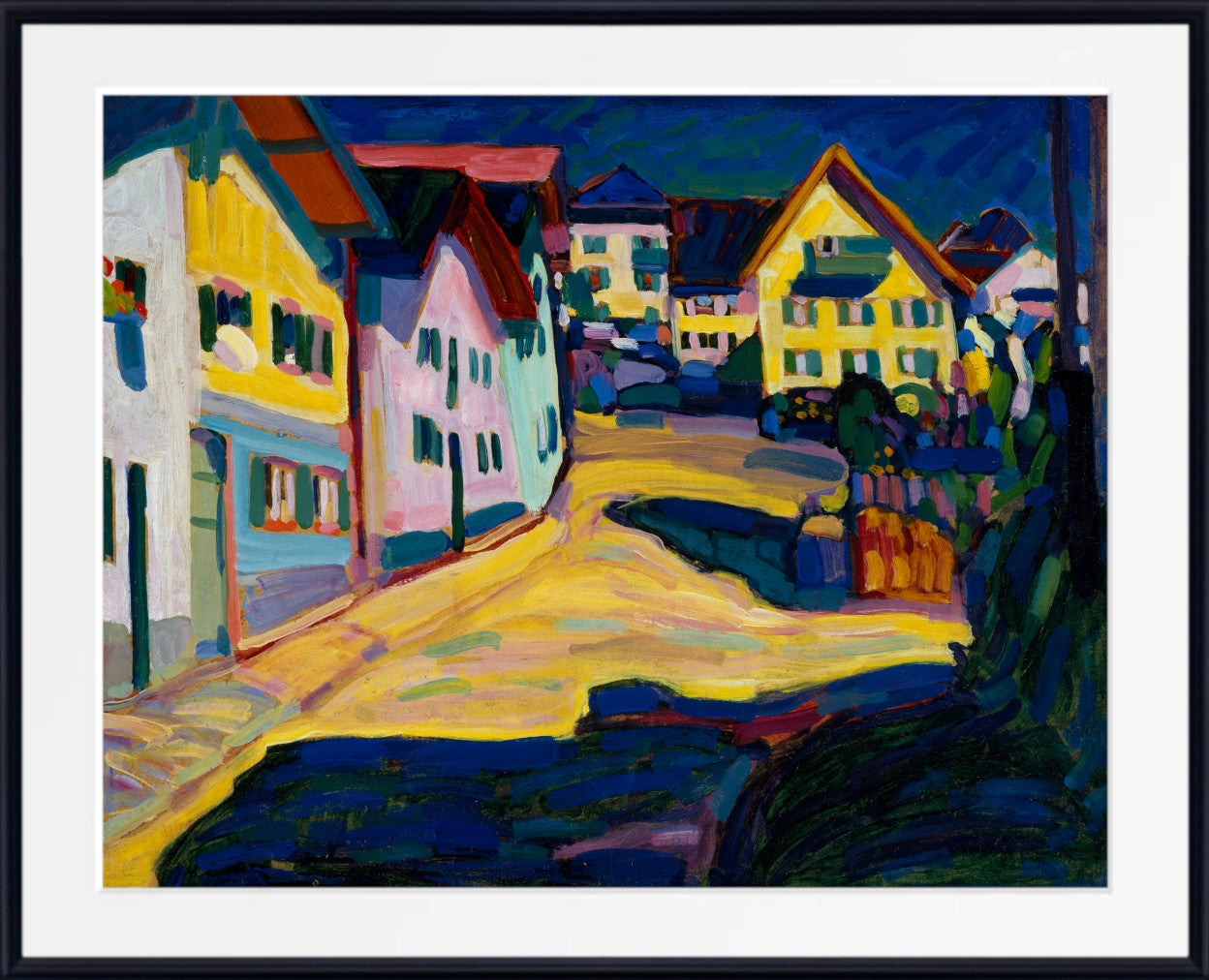
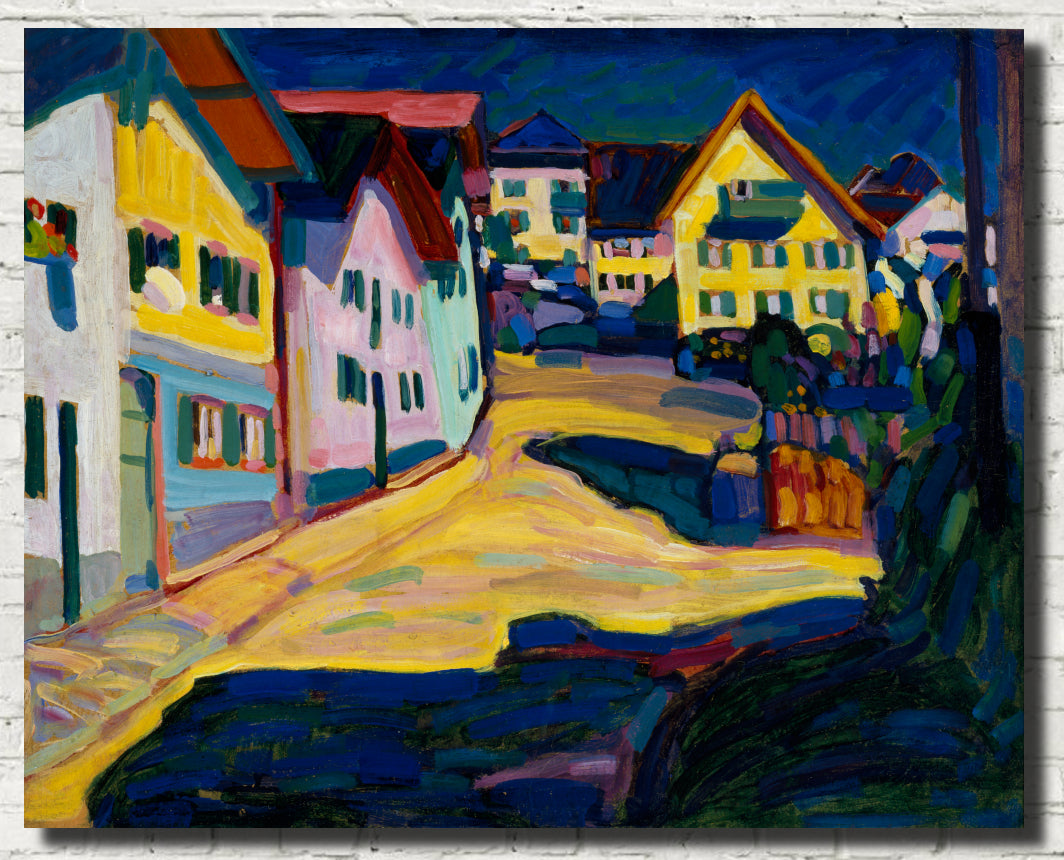
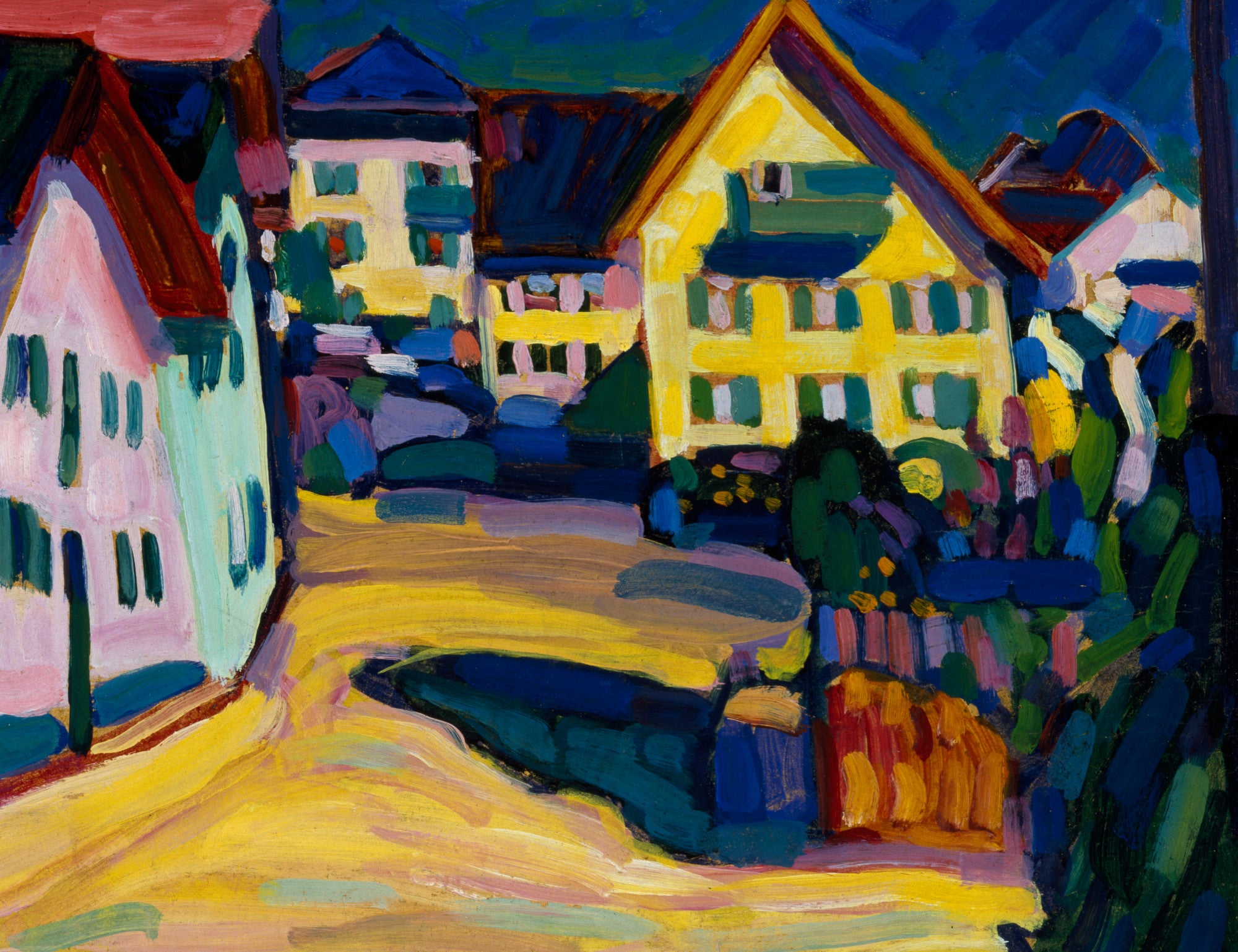
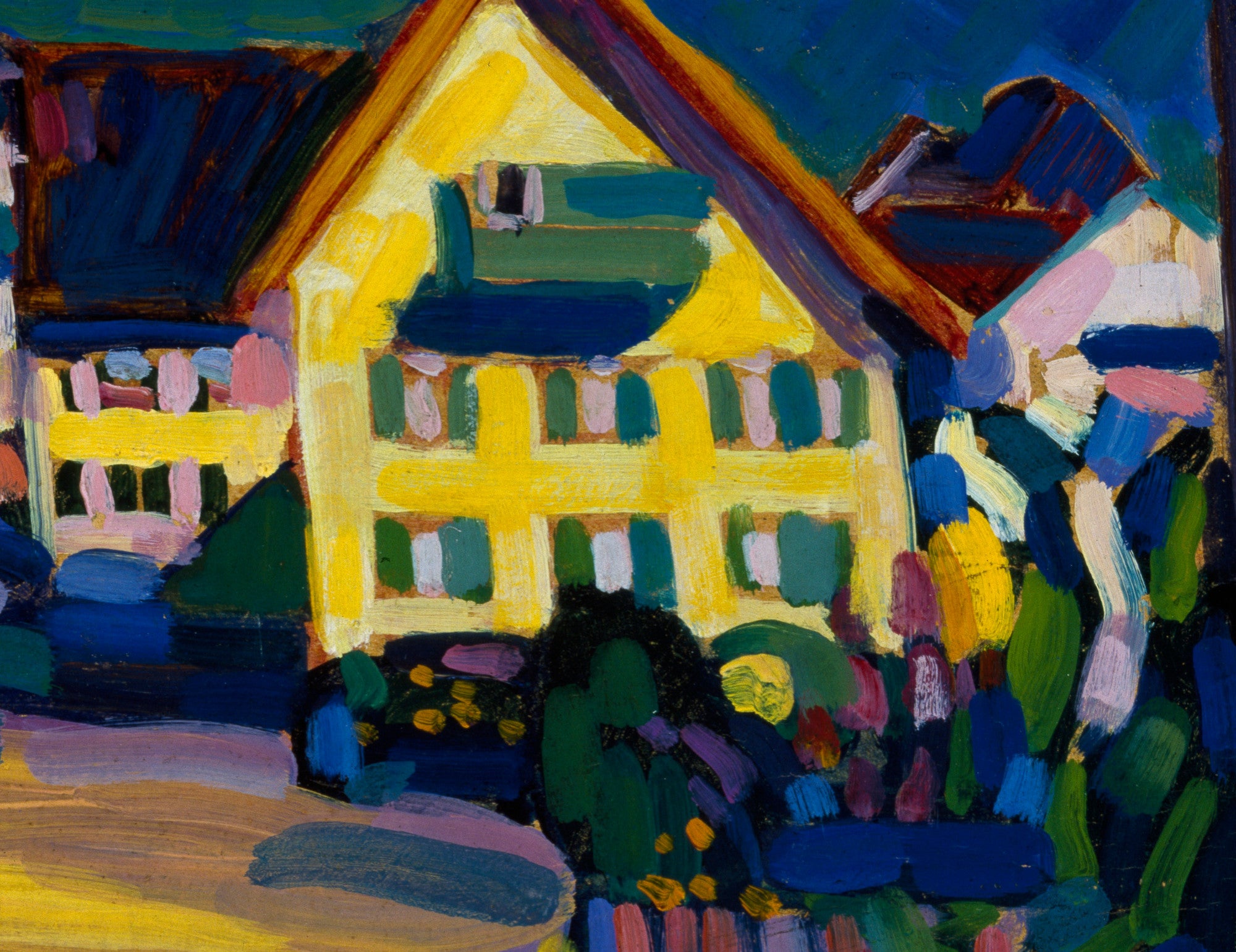
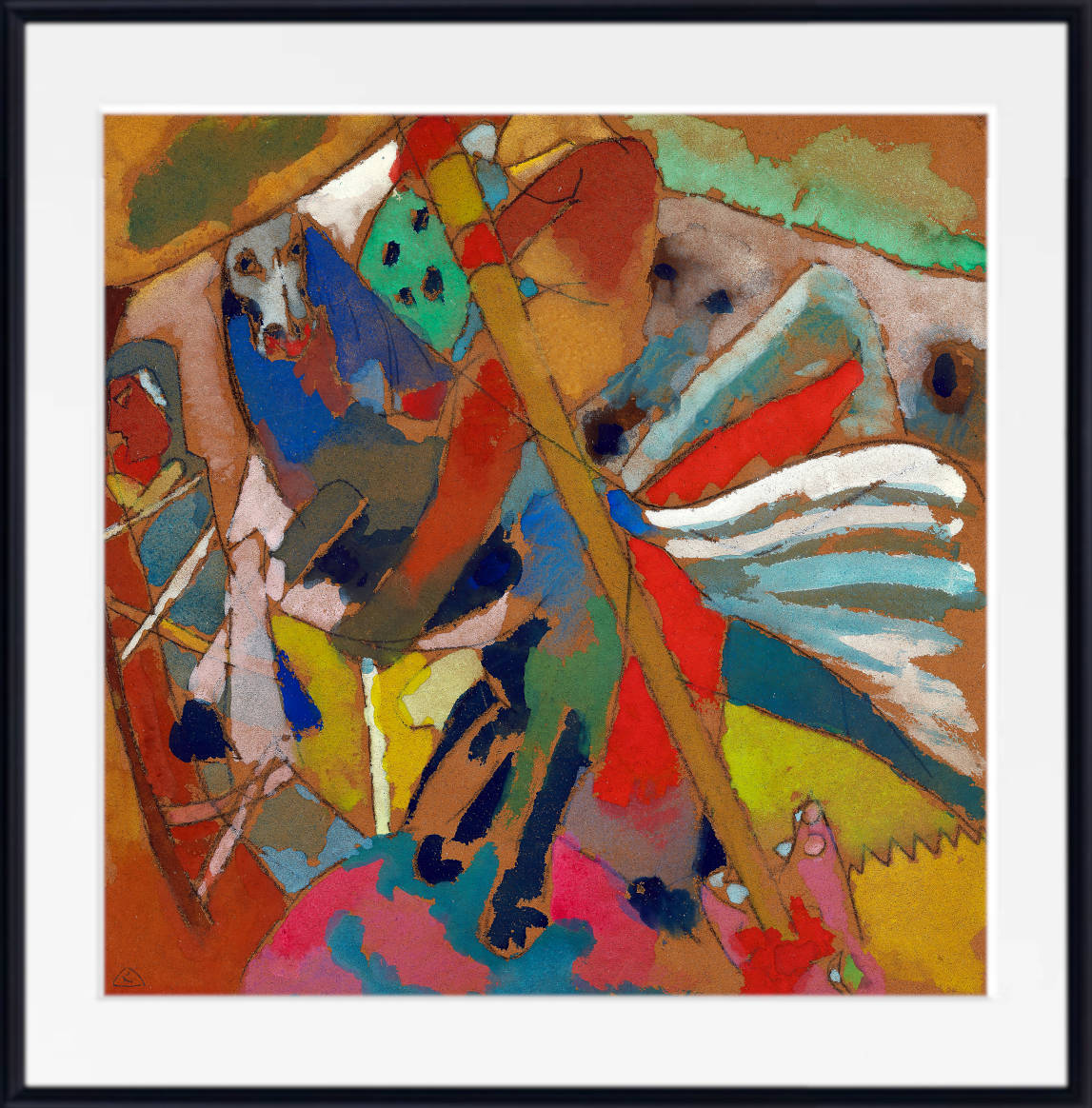
During the years around Murnau from 1908 onwards, Kandinsky’s landscapes became increasingly liberated from naturalistic colour.
Mountains, churches, railway lines, houses and riders remained recognisable, but their forms became simplified and their colours increasingly independent of physical reality.
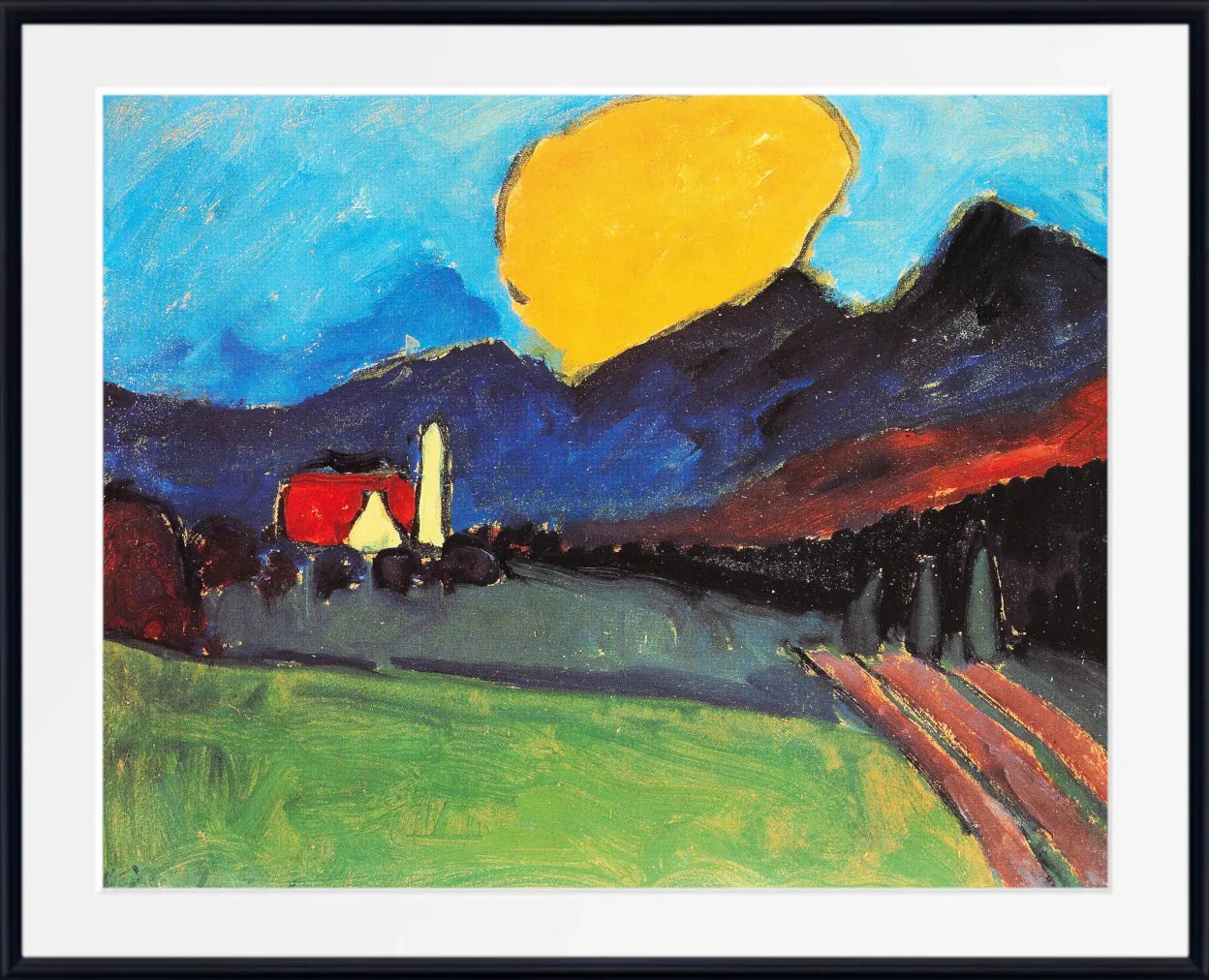
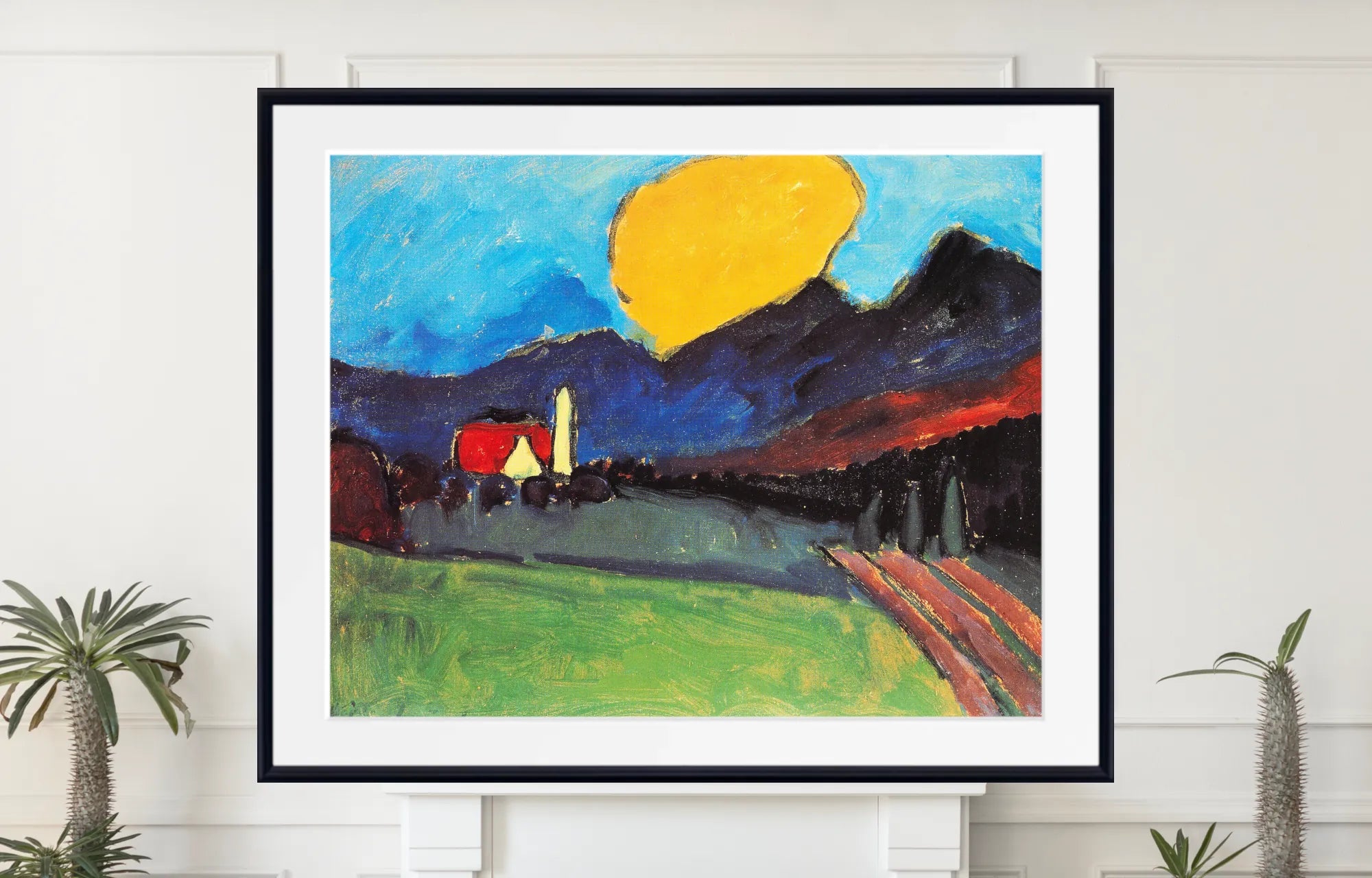
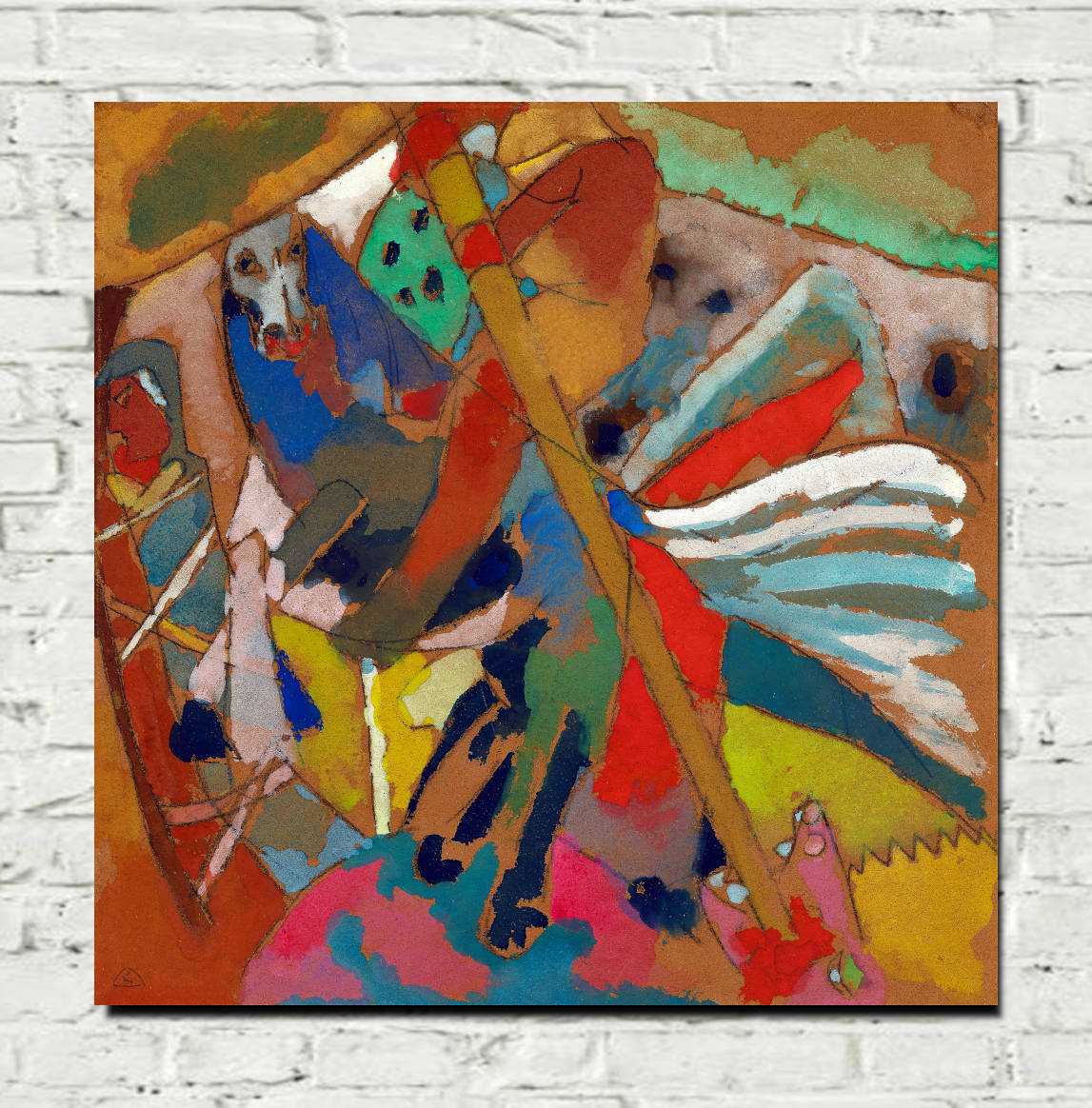
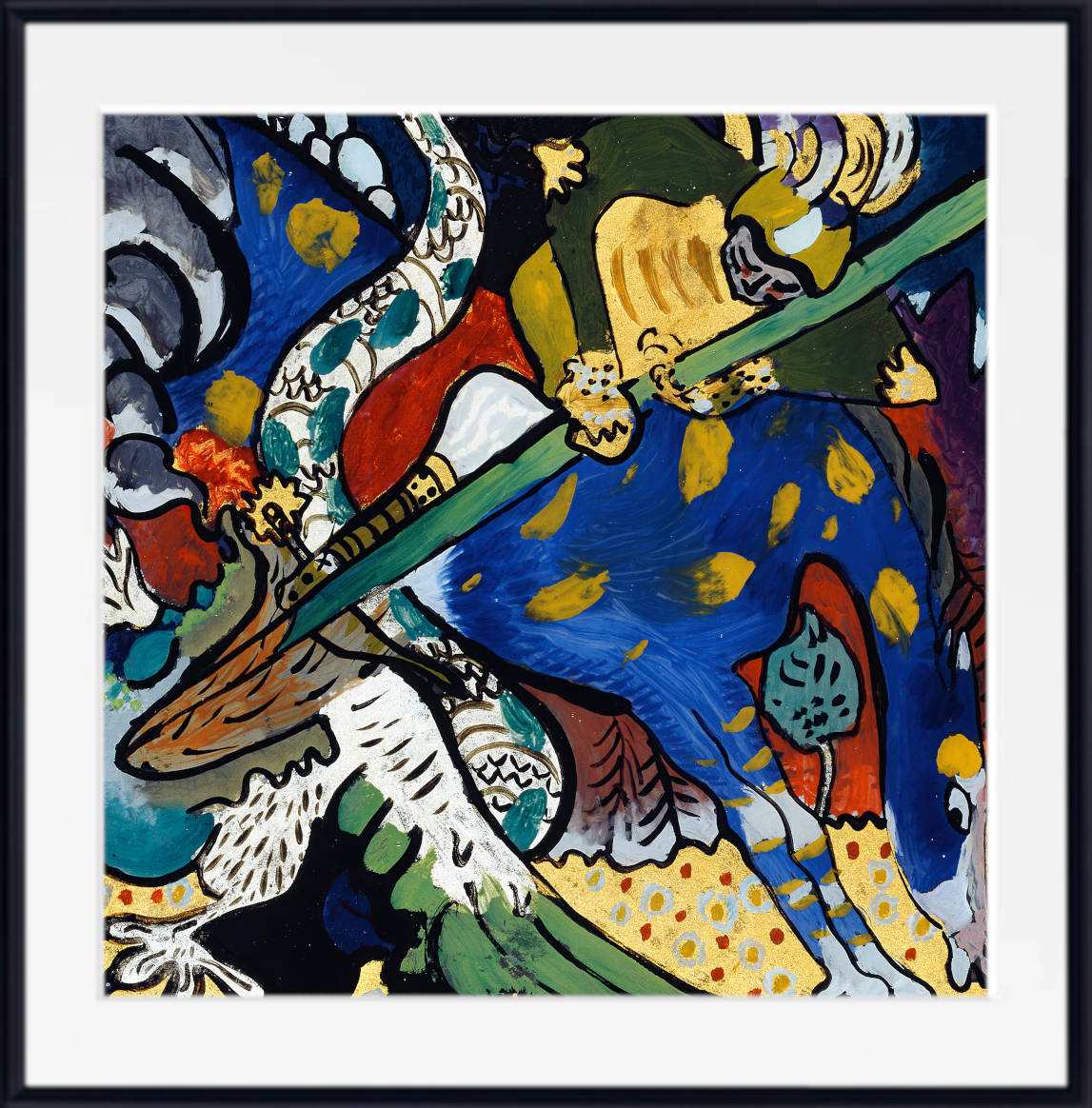
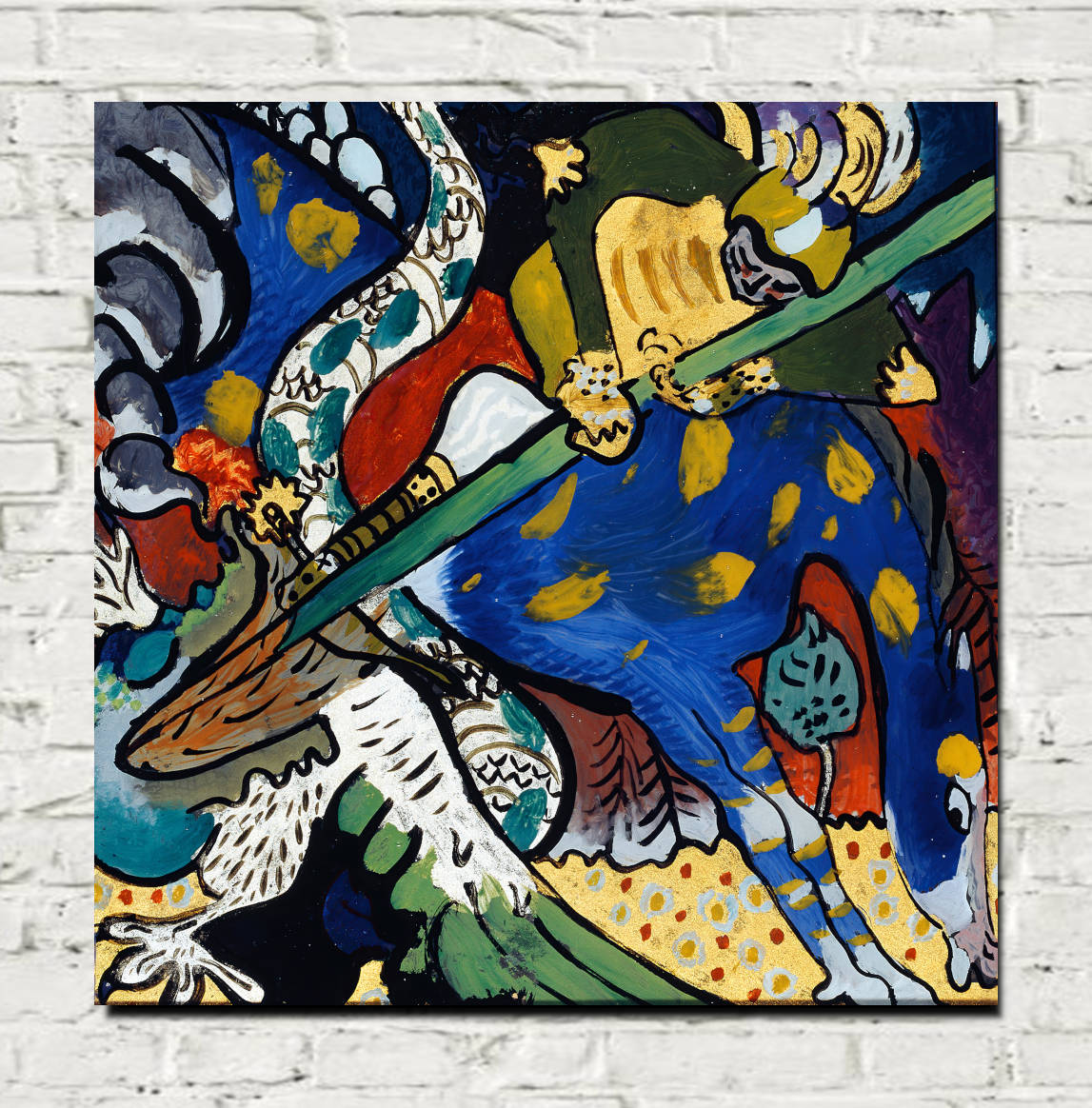
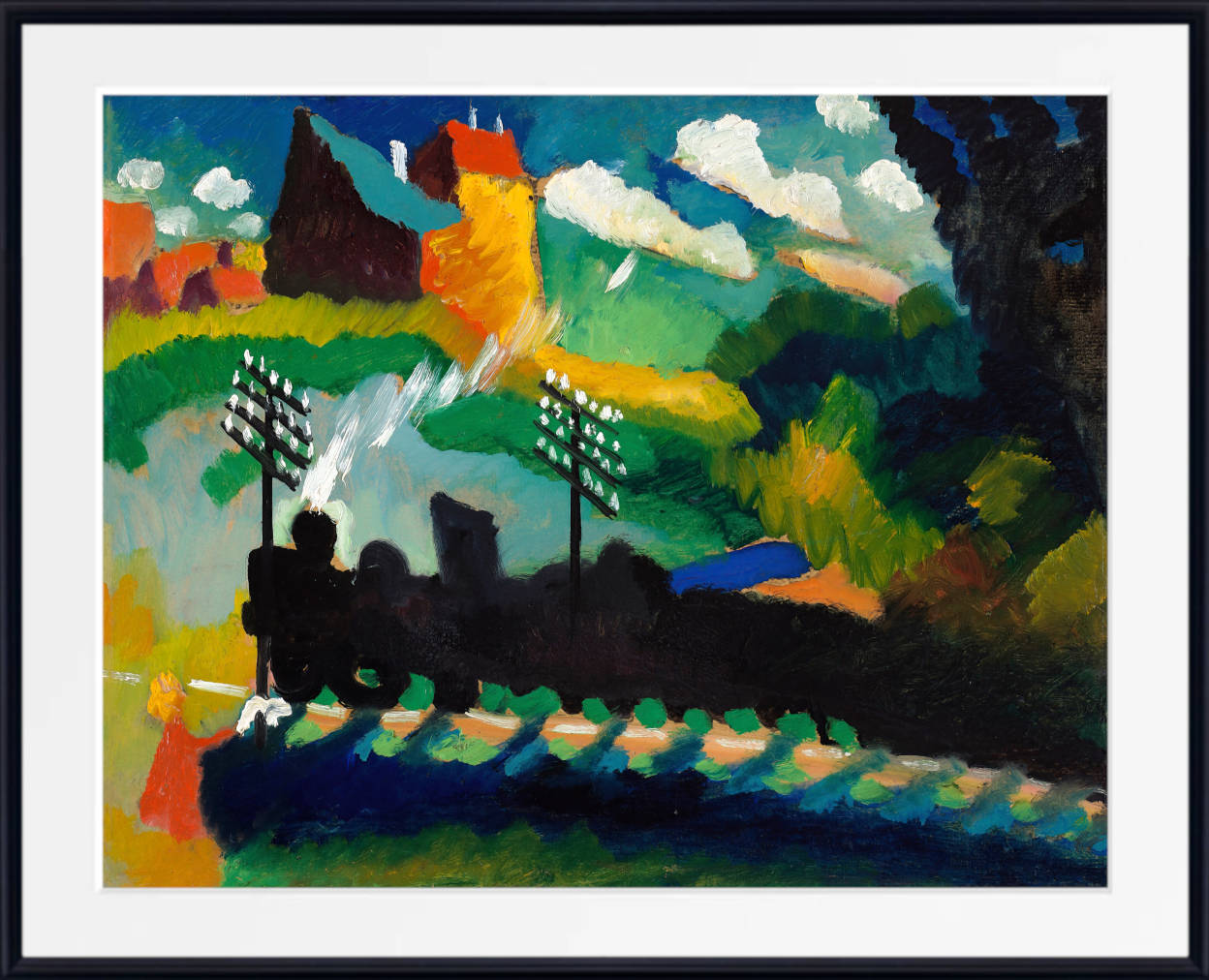
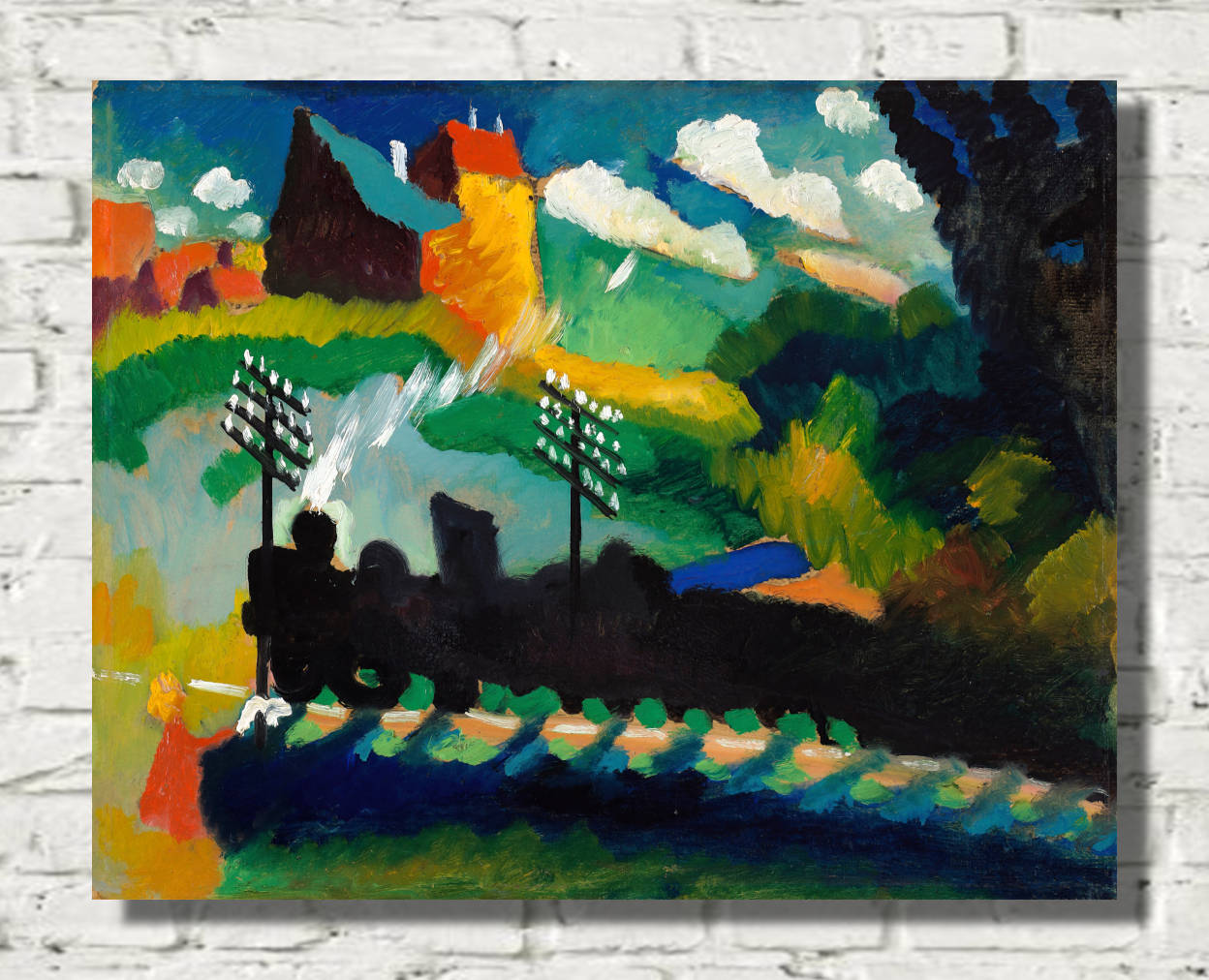
Works such as Murnau, Railway near Murnau, Murnau mit Kirche II, Saint George I and Apocalyptic Riders I show this rapid transformation.
By 1911–1913, recognisable subjects were increasingly dissolving into colour, line and movement.
Major works such as Composition IV, Composition VI, Composition VII and Improvisation No. 30 demonstrate Kandinsky’s movement towards abstraction during the period most closely associated with Der Blaue Reiter.
For Kandinsky, abstraction was not simply a decorative exercise. He believed colour and form could communicate directly with the emotions, much as music could create powerful responses without needing to depict a physical object.
Franz Marc and the Symbolism of Colour
Franz Marc became one of the most recognisable artists associated with Der Blaue Reiter.
Animals dominate much of his mature work.
Horses, deer, cows, foxes, tigers and other animals inhabit landscapes transformed by extraordinary combinations of blue, red, yellow, green and purple.
Marc was not attempting to reproduce nature literally.
Instead, colour became symbolic and expressive.
His famous Blue Horse I transforms the animal into an almost spiritual presence, while The Tiger uses powerful angular forms and intense colour to create a much more concentrated sense of energy.
Other works such as The Foxes, Stables, The Dream, Deer in a Monastery Garden and A Bison in Winter demonstrate Marc’s increasingly radical simplification of natural forms.
Animals offered Marc a way of imagining an existence removed from what he regarded as the materialism and corruption of modern human society.
The combination of spiritual symbolism, intense colour and increasingly abstract composition made his work central to the identity of The Blue Rider.
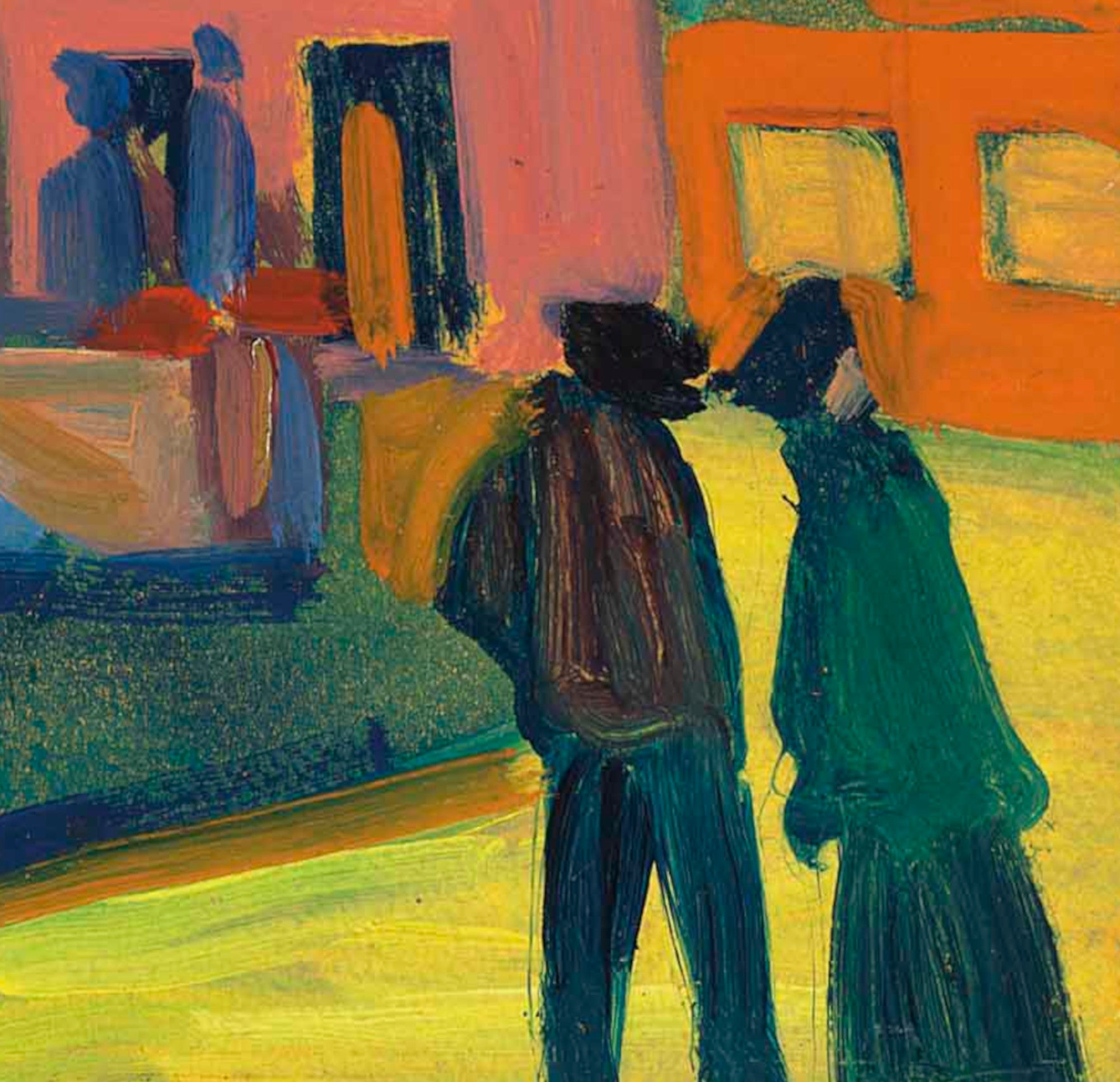
August Macke – Colour and Modern Life
August Macke developed a very different version of Expressionism.
Where Marc frequently turned towards animals and spiritual symbolism, Macke concentrated on modern everyday life.
People walk through parks, look into shop windows, visit cafés and enjoy gardens and public spaces.
His figures are frequently simplified into broad shapes surrounded by brilliant colour.
Paintings such as Lady in the Green Jacket, Fashion Store, Hat Shop, Shop Window and Our Street in Grau transform apparently ordinary scenes into carefully balanced compositions of colour and rhythm.
Macke absorbed influences from French modern painting, Fauvism, Cubism and the colour experiments of Robert Delaunay while remaining highly individual.
His journey to Tunisia in 1914 produced another important phase in his work. The intense North African light reinforced his fascination with pure colour, creating some of the most luminous works of his short career.
Macke was killed during the opening months of the First World War in September 1914, aged only 27.
Despite his remarkably brief career, he became one of the defining painters associated with Der Blaue Reiter.
Alexej von Jawlensky – Portraits, Colour and Expression
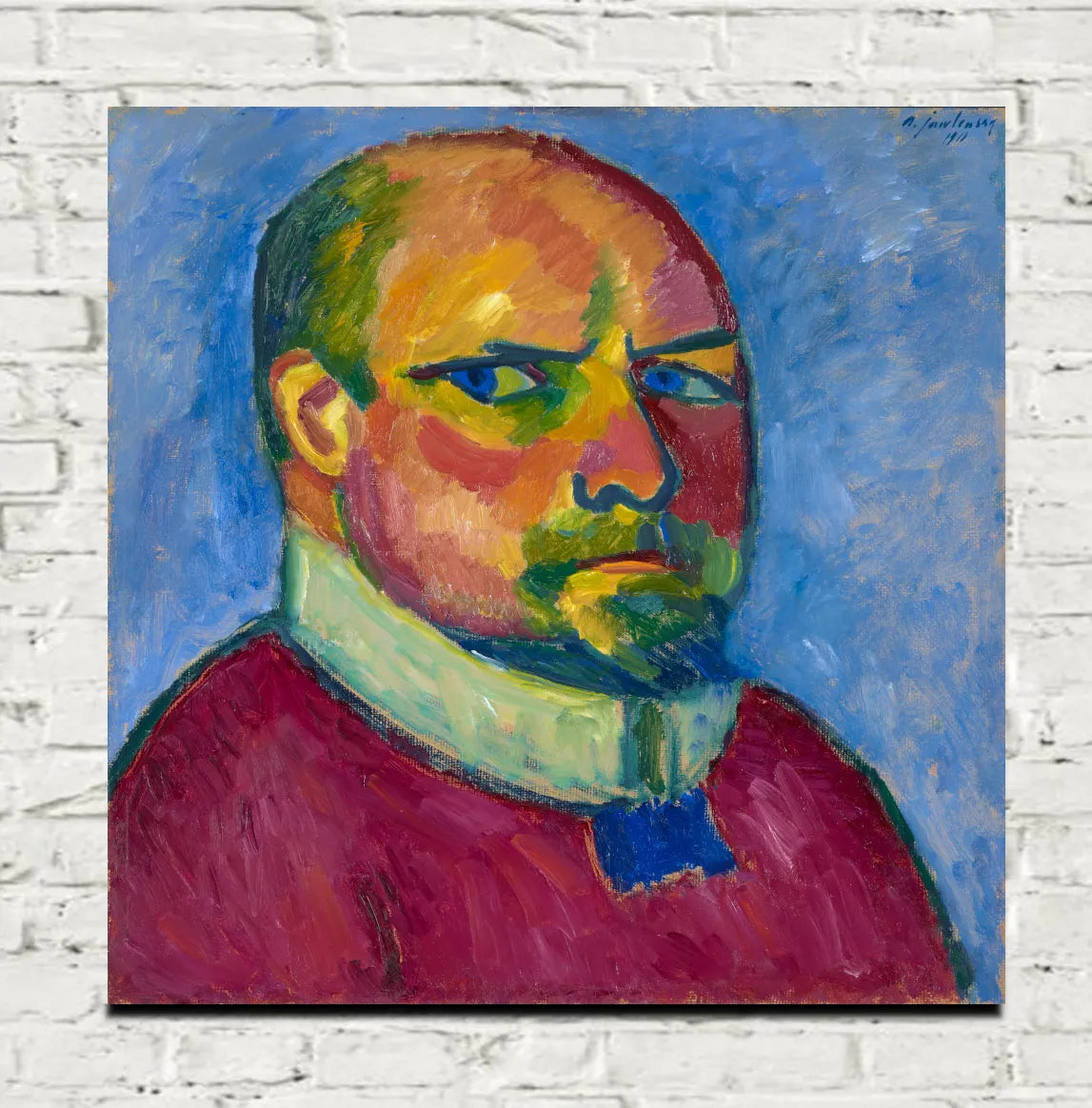
Alexej von Jawlensky brought an intense approach to portraiture and landscape painting to the Munich Expressionist circle.
His paintings from approximately 1908 to 1913 are particularly important to understanding his relationship with the artistic environment from which Der Blaue Reiter emerged.
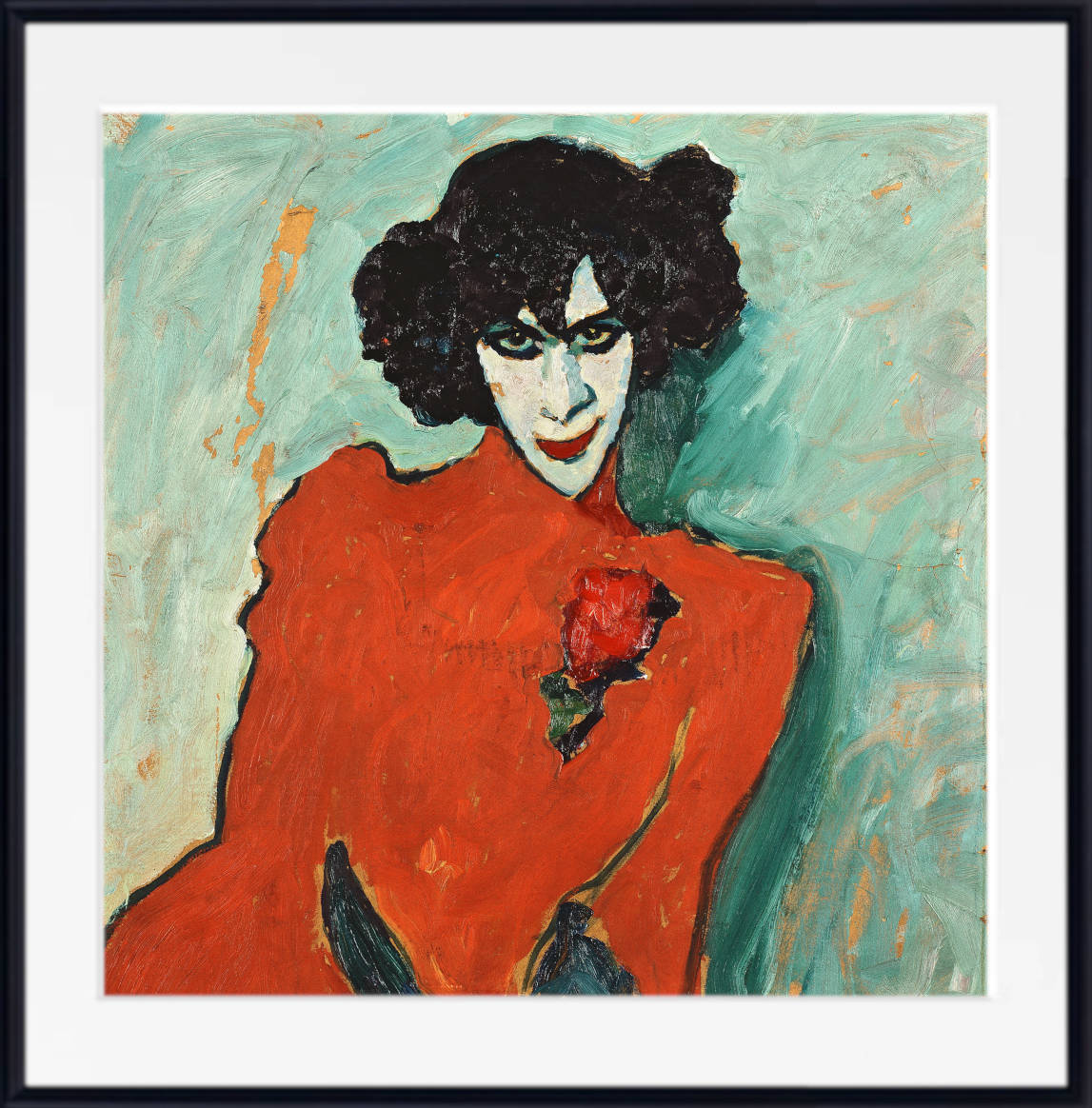
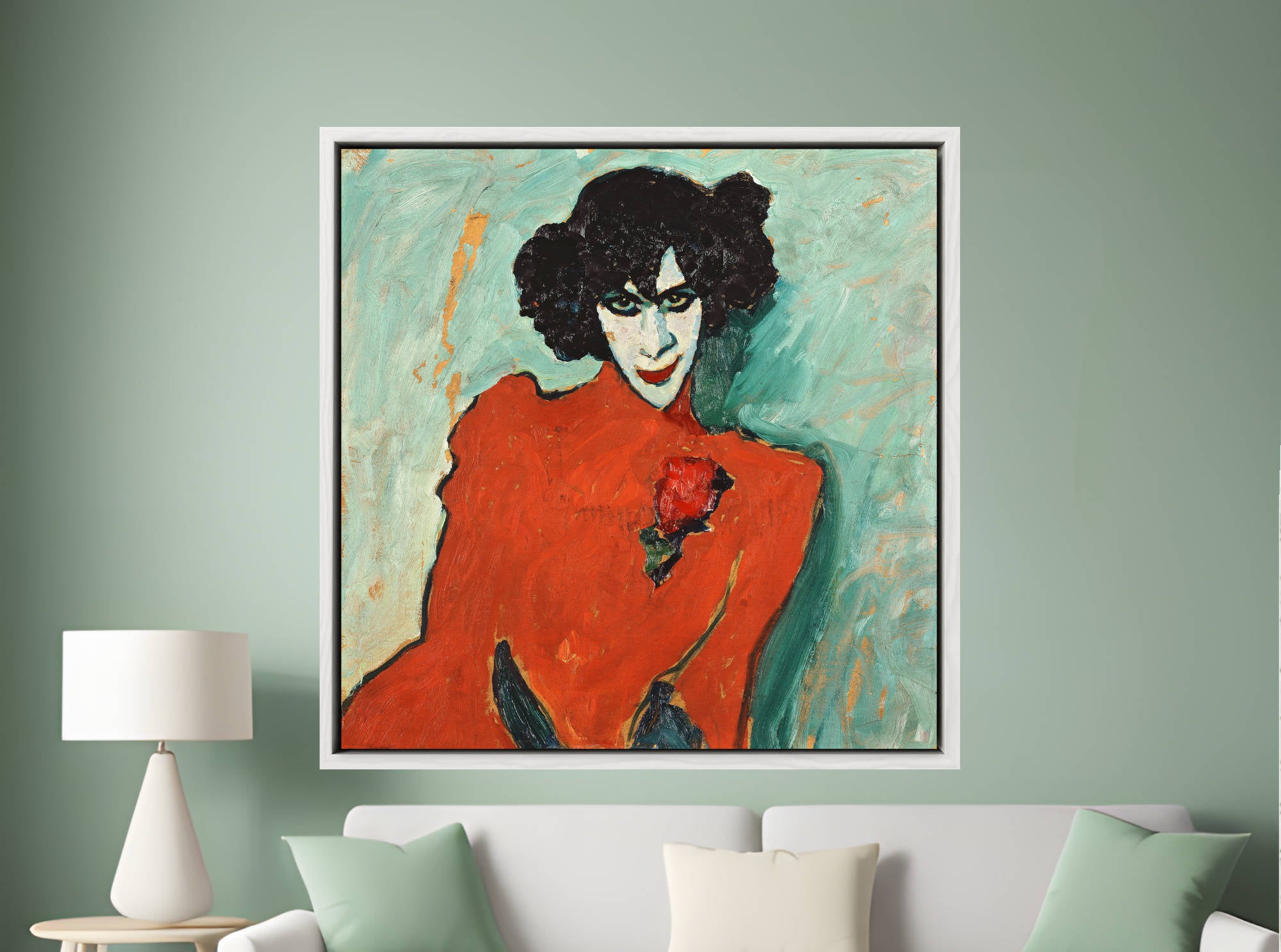
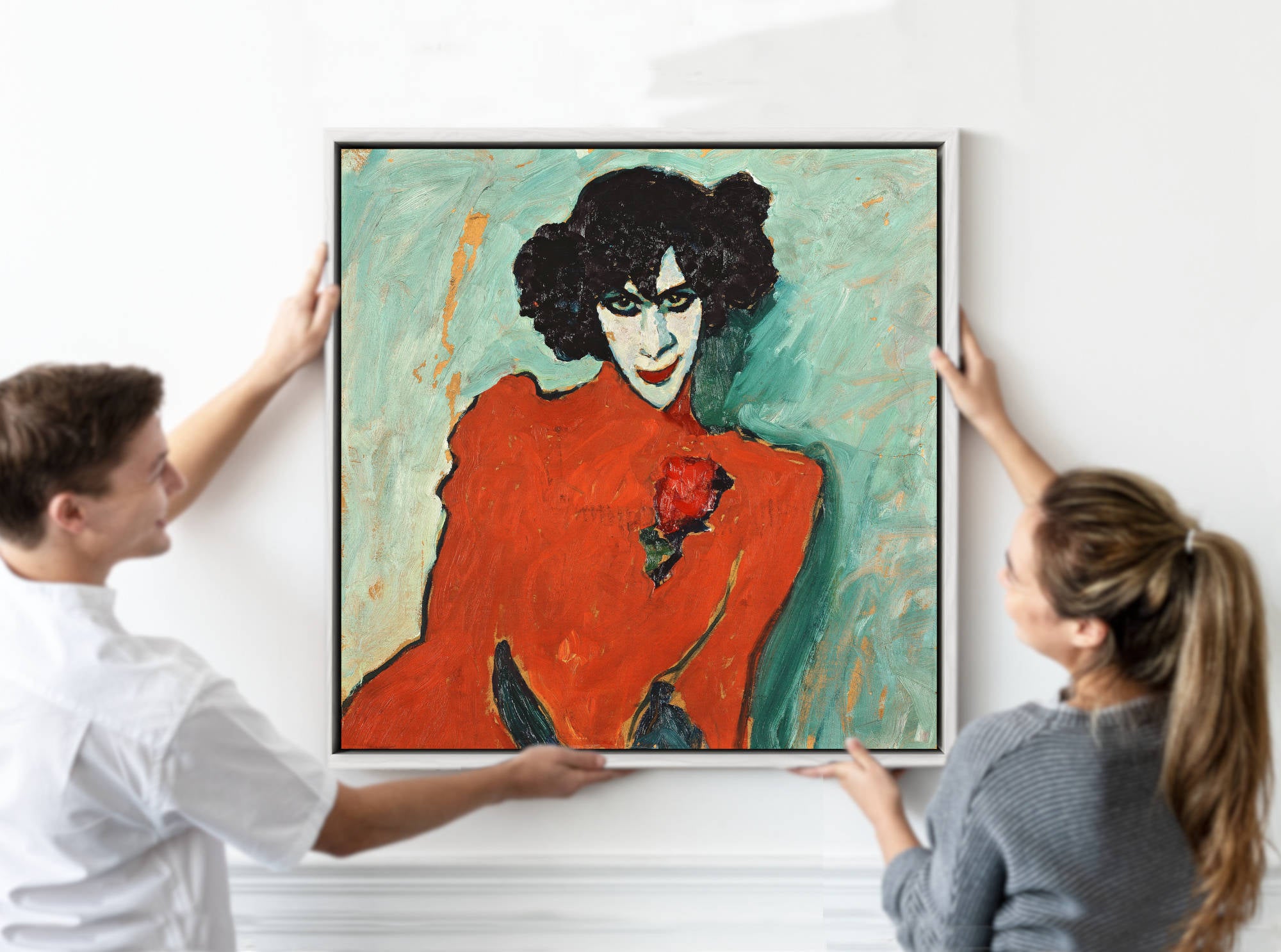
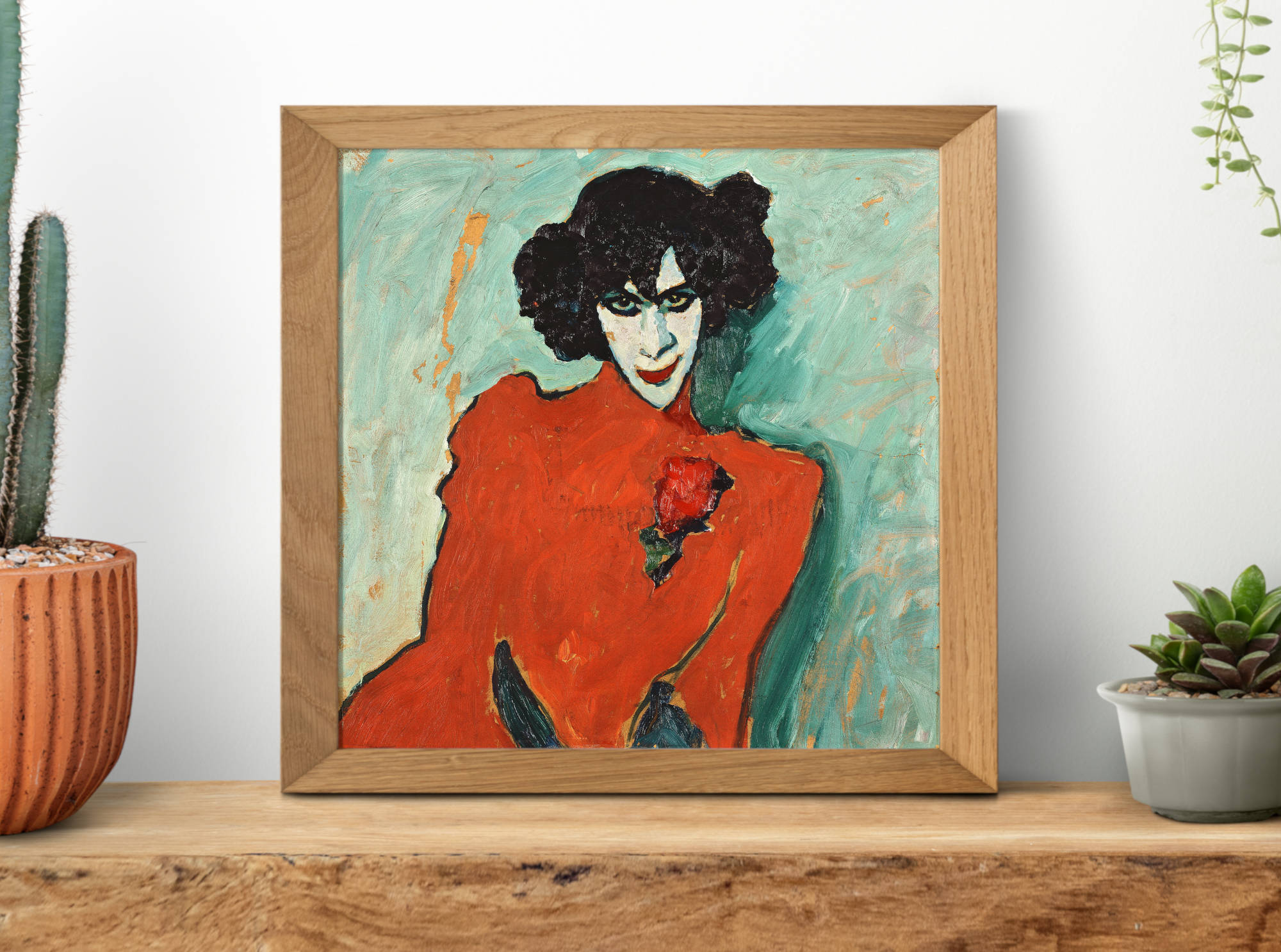
In Portrait of Alexander Sakharoff (1909), the sitter is transformed through saturated reds, greens and blues, strong outlines and dramatically simplified features.
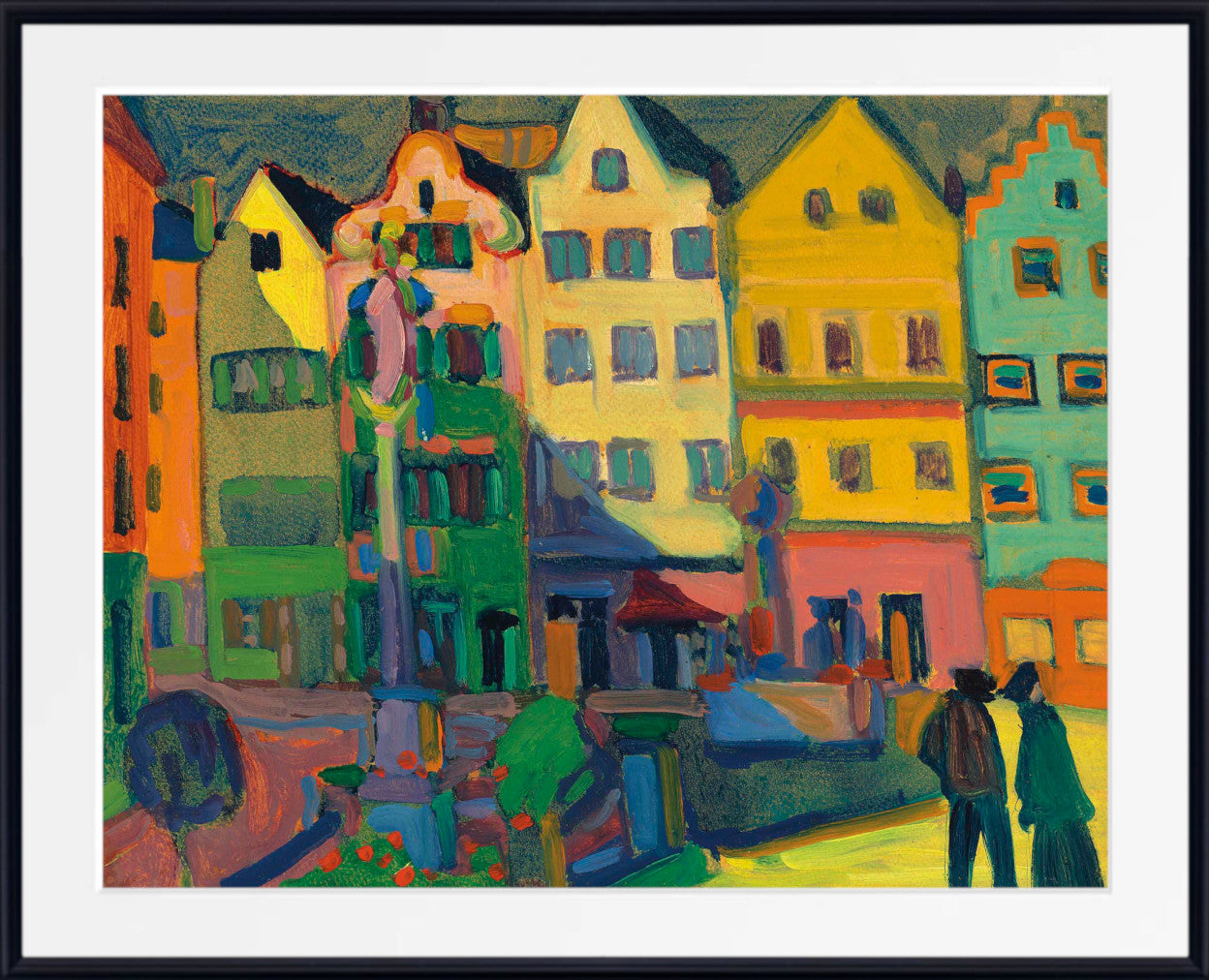
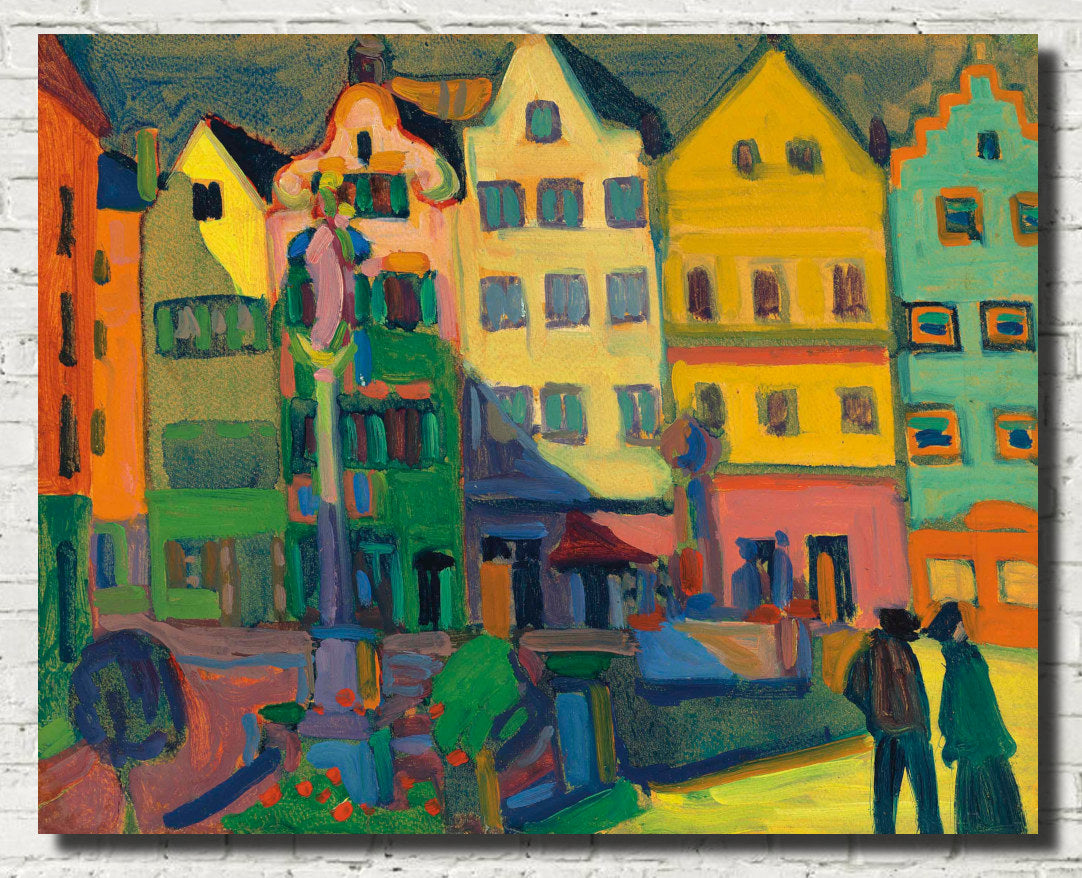
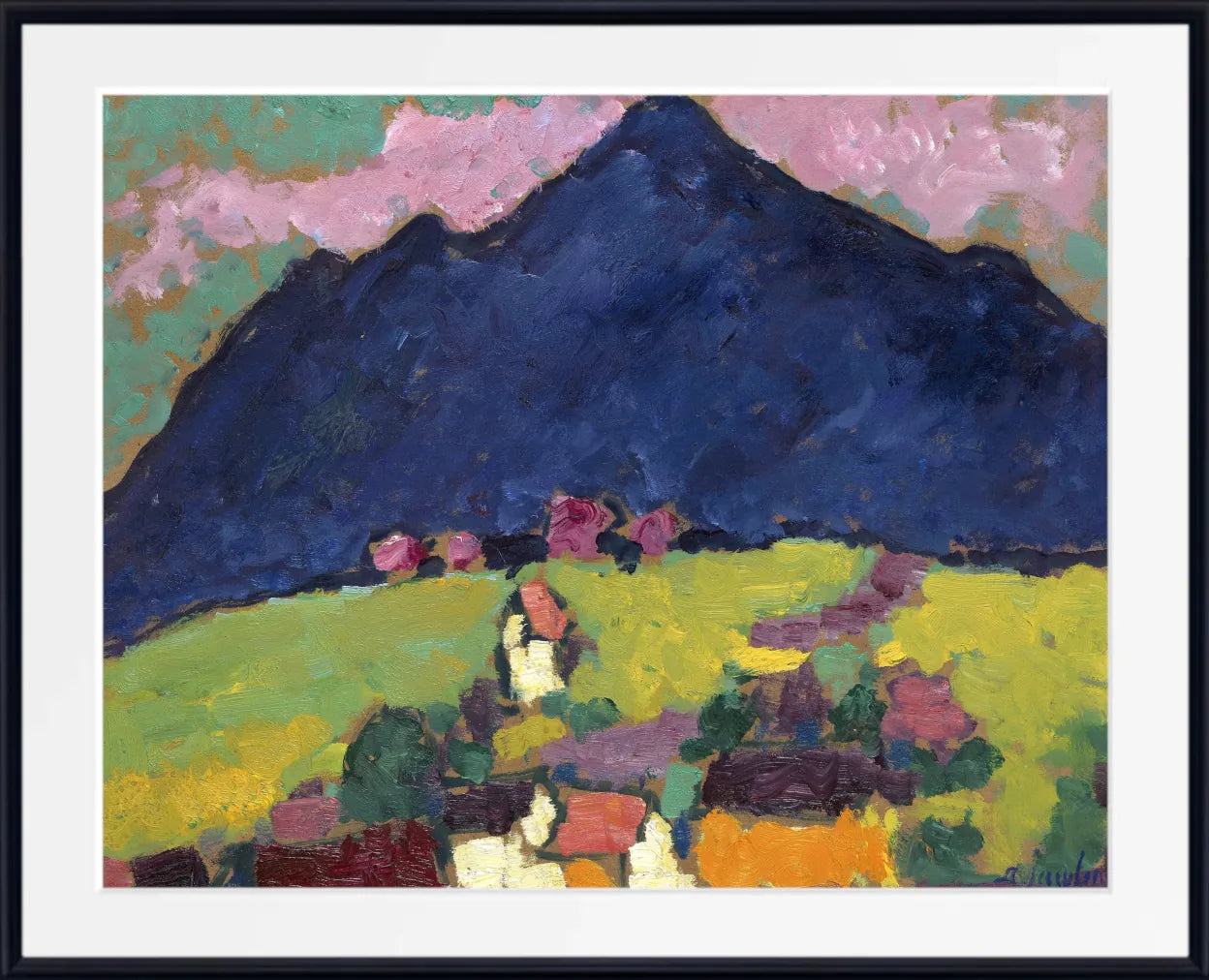
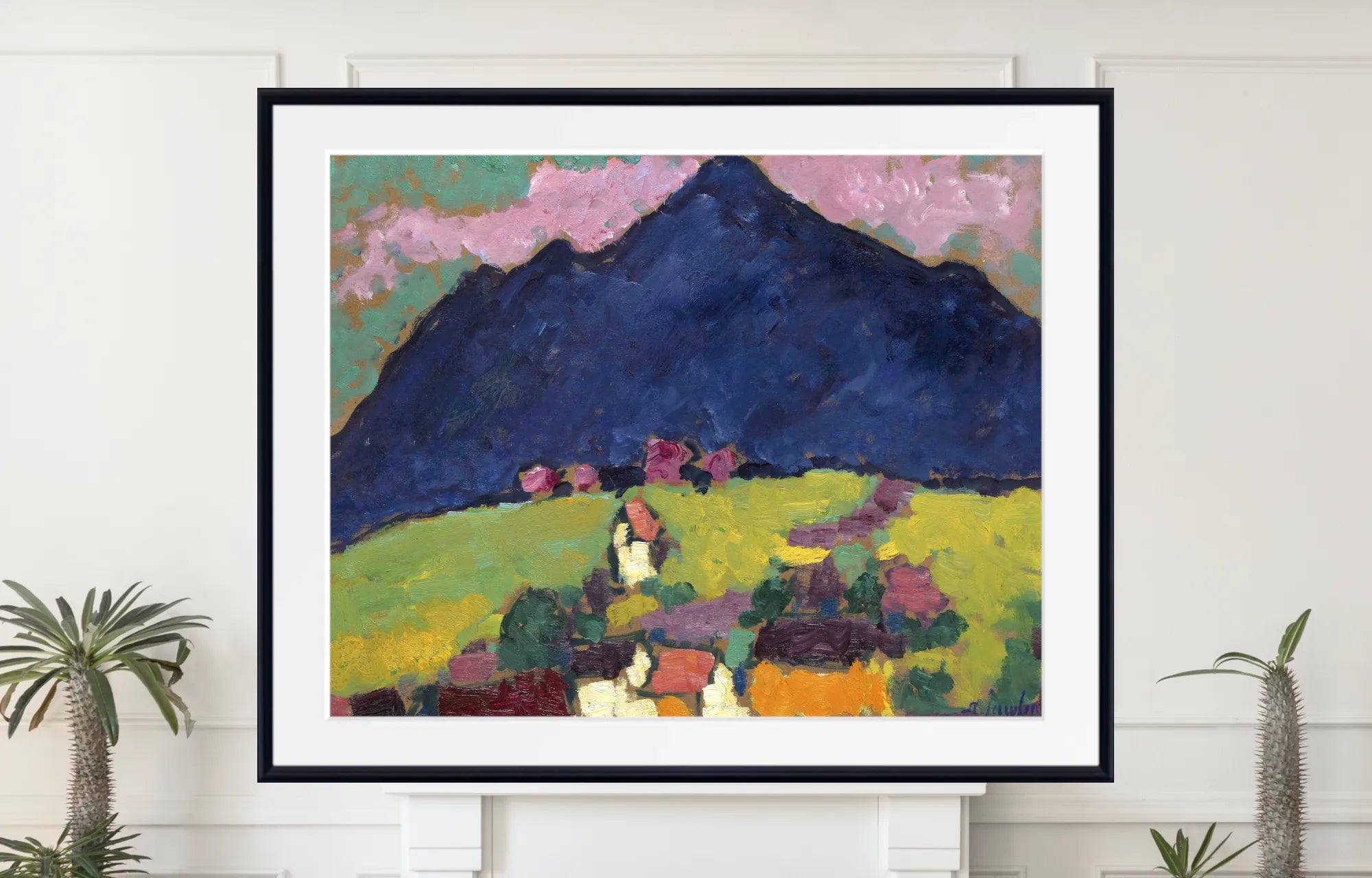
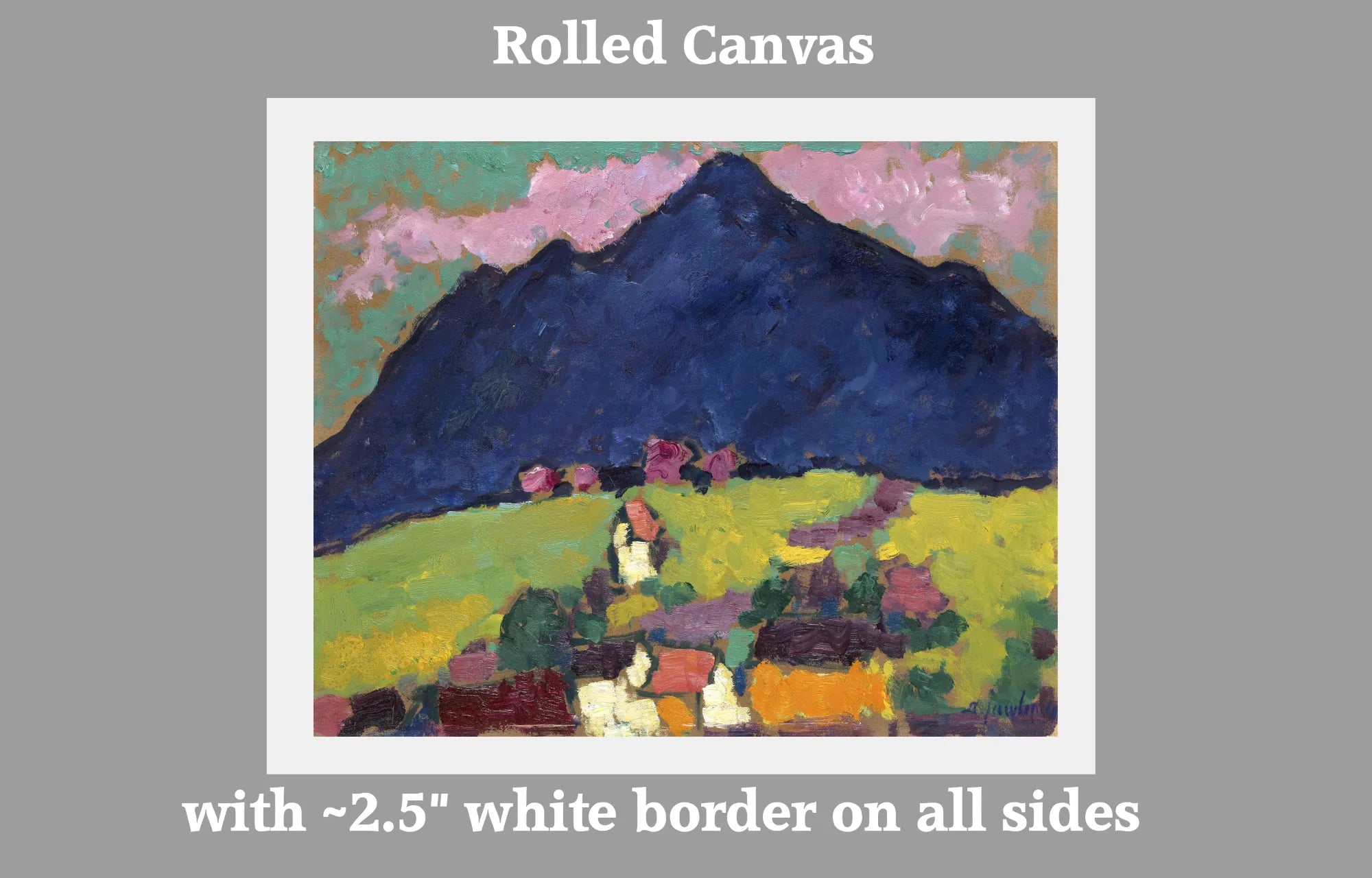
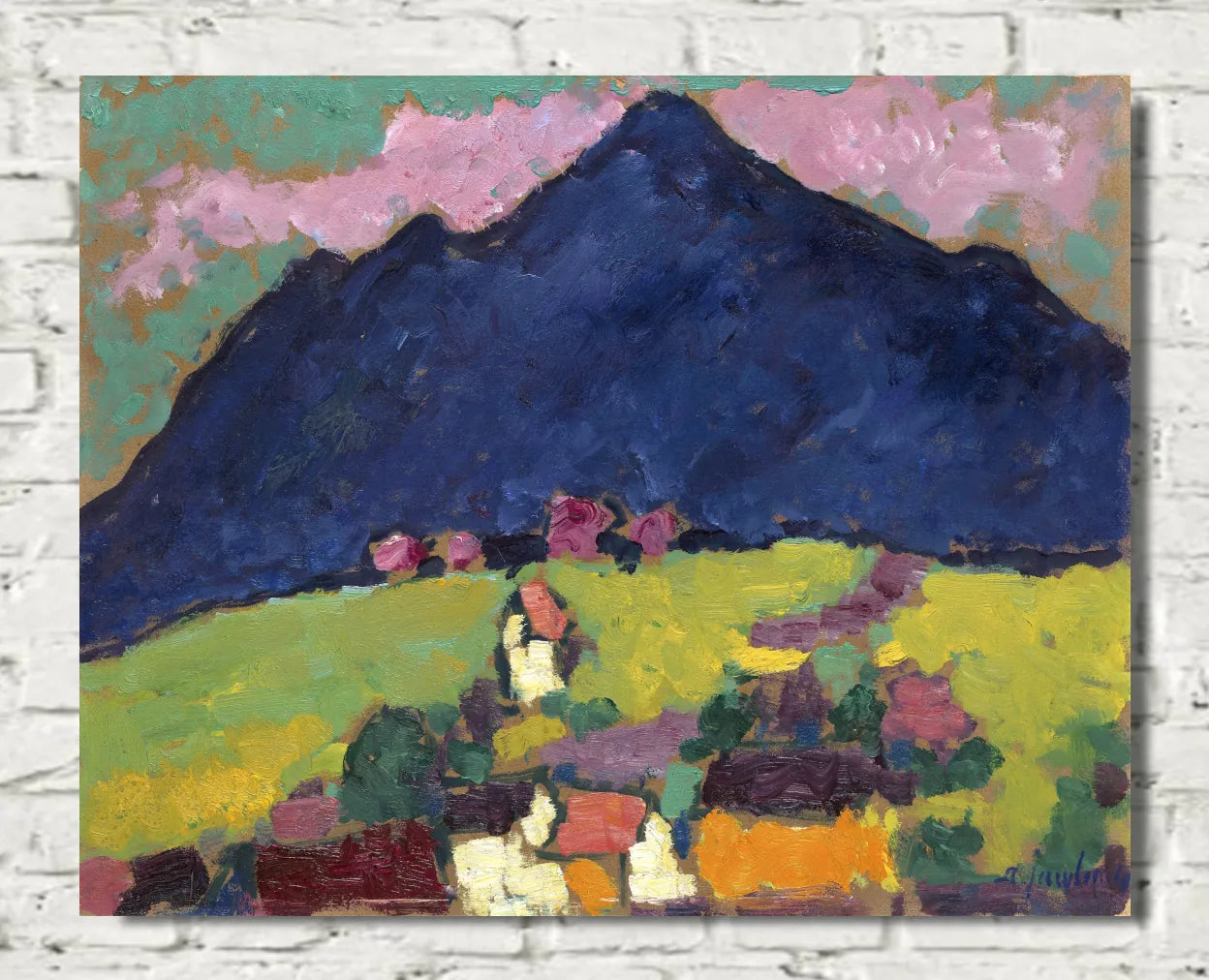
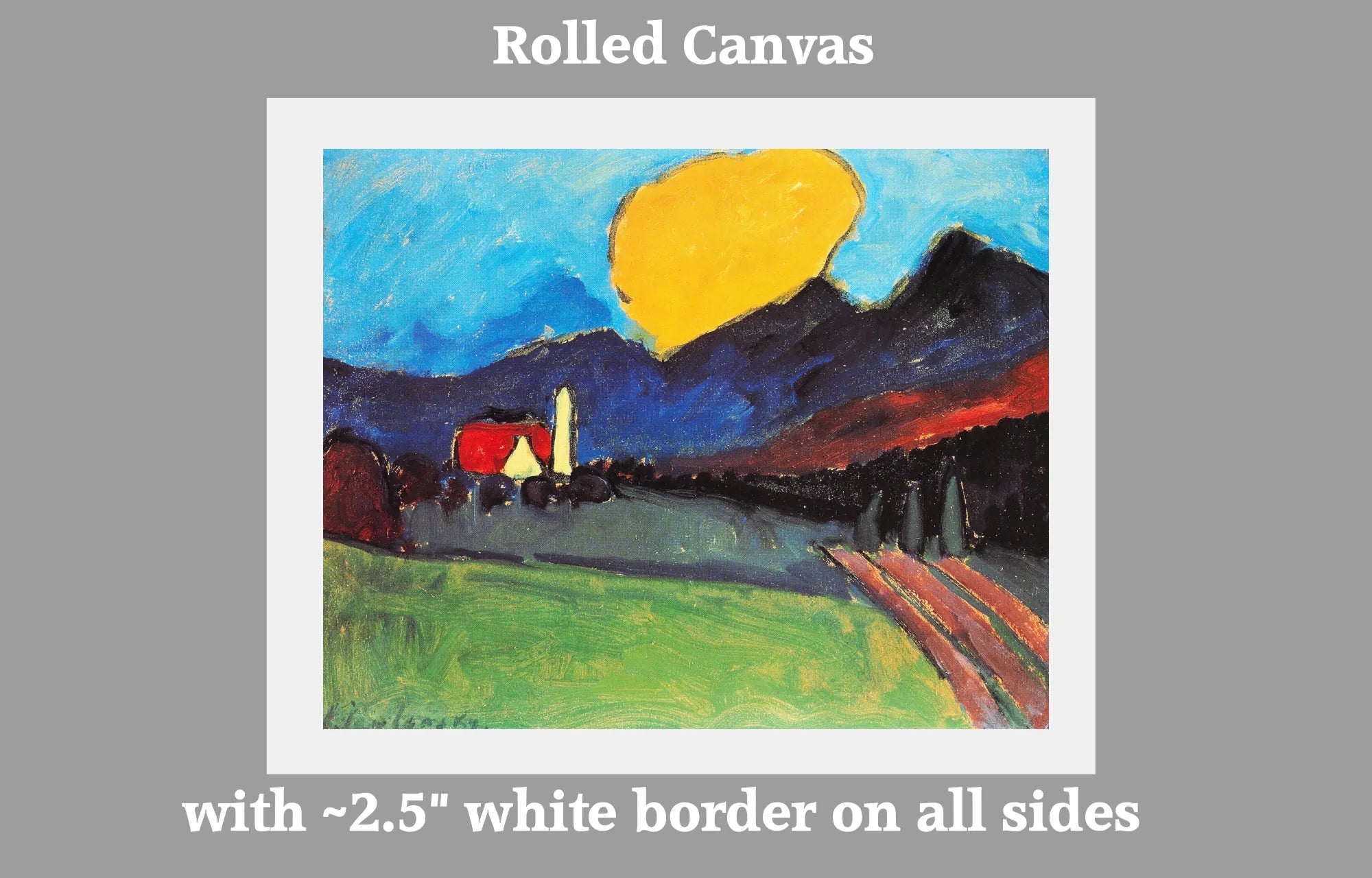
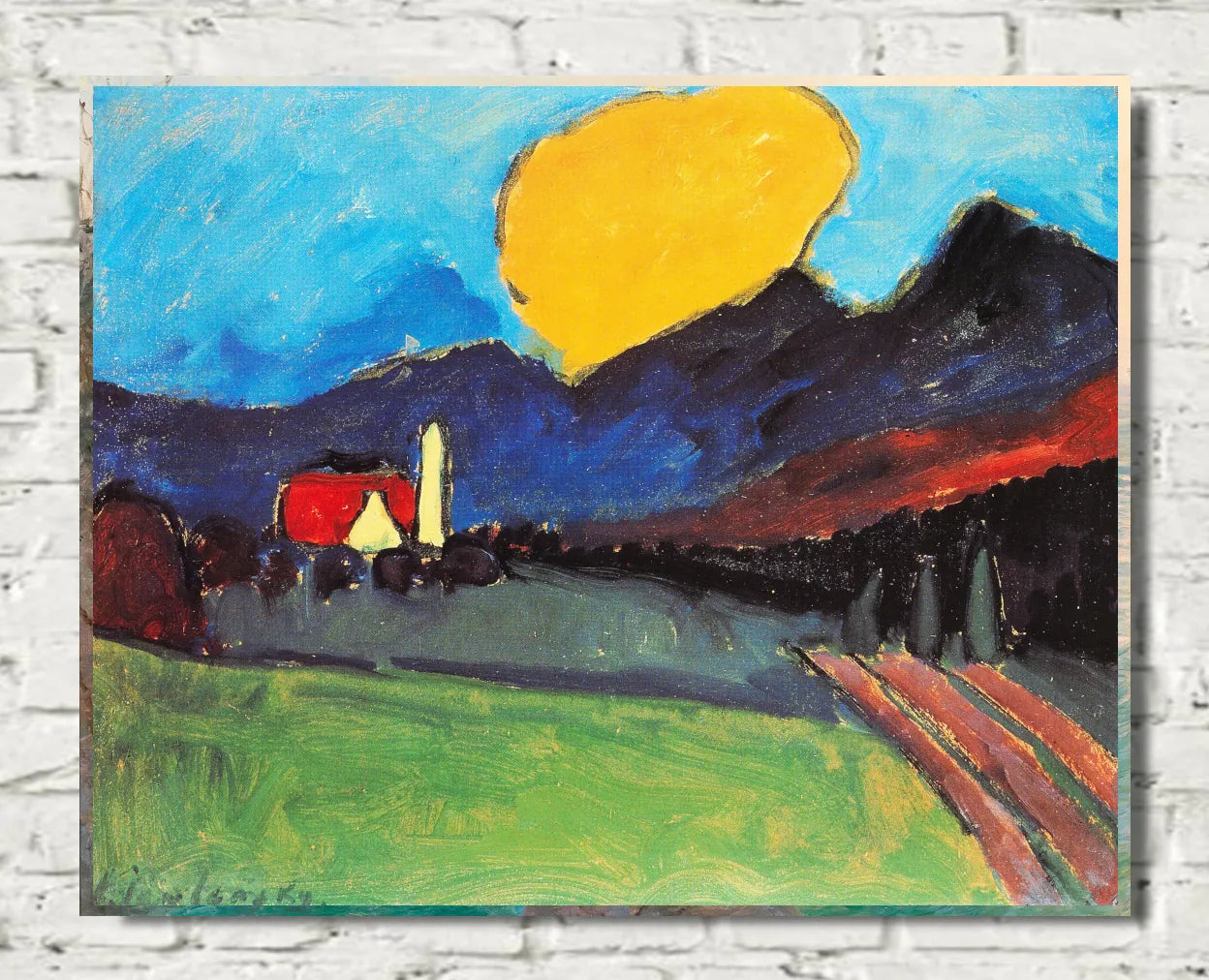
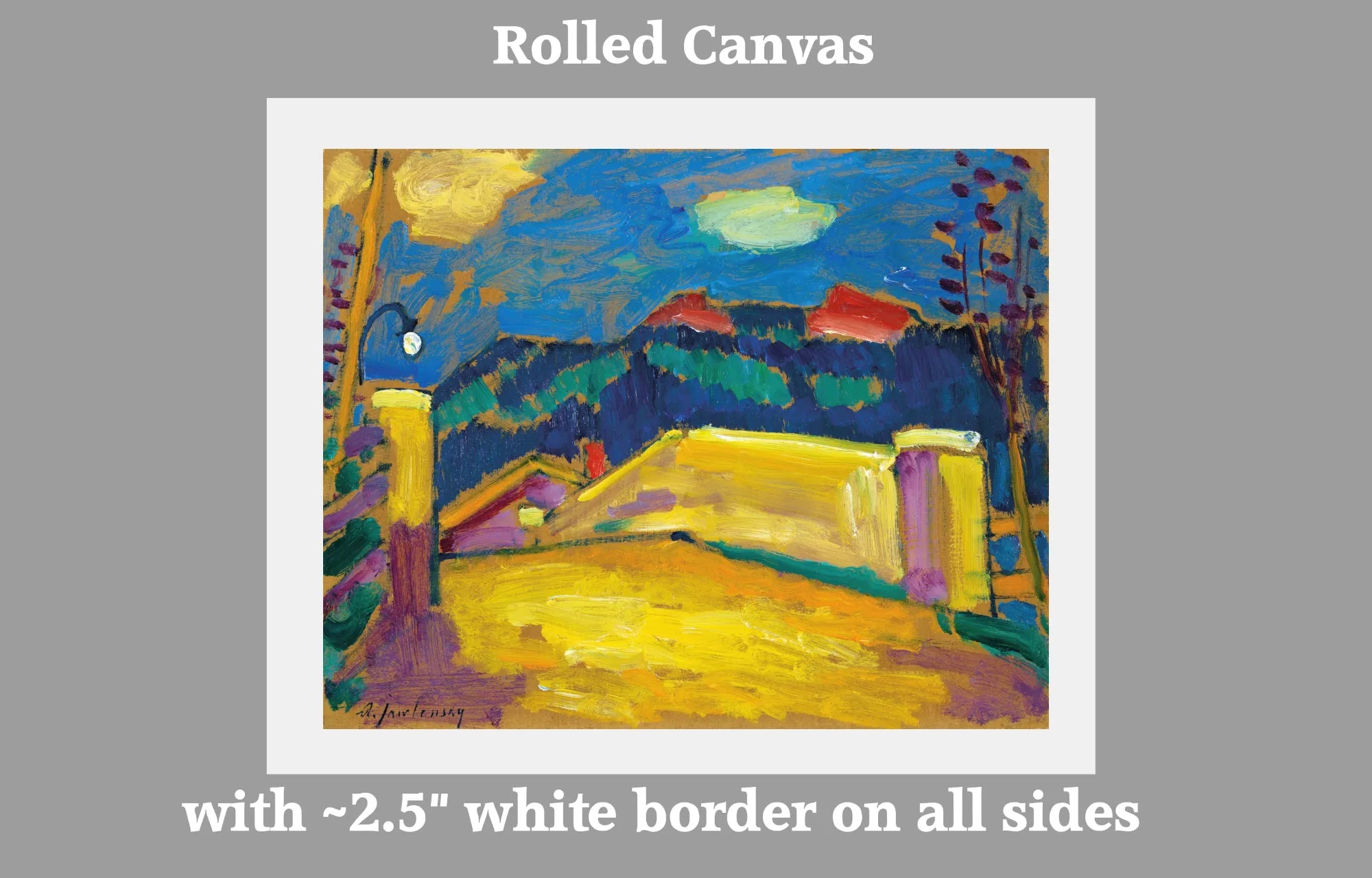
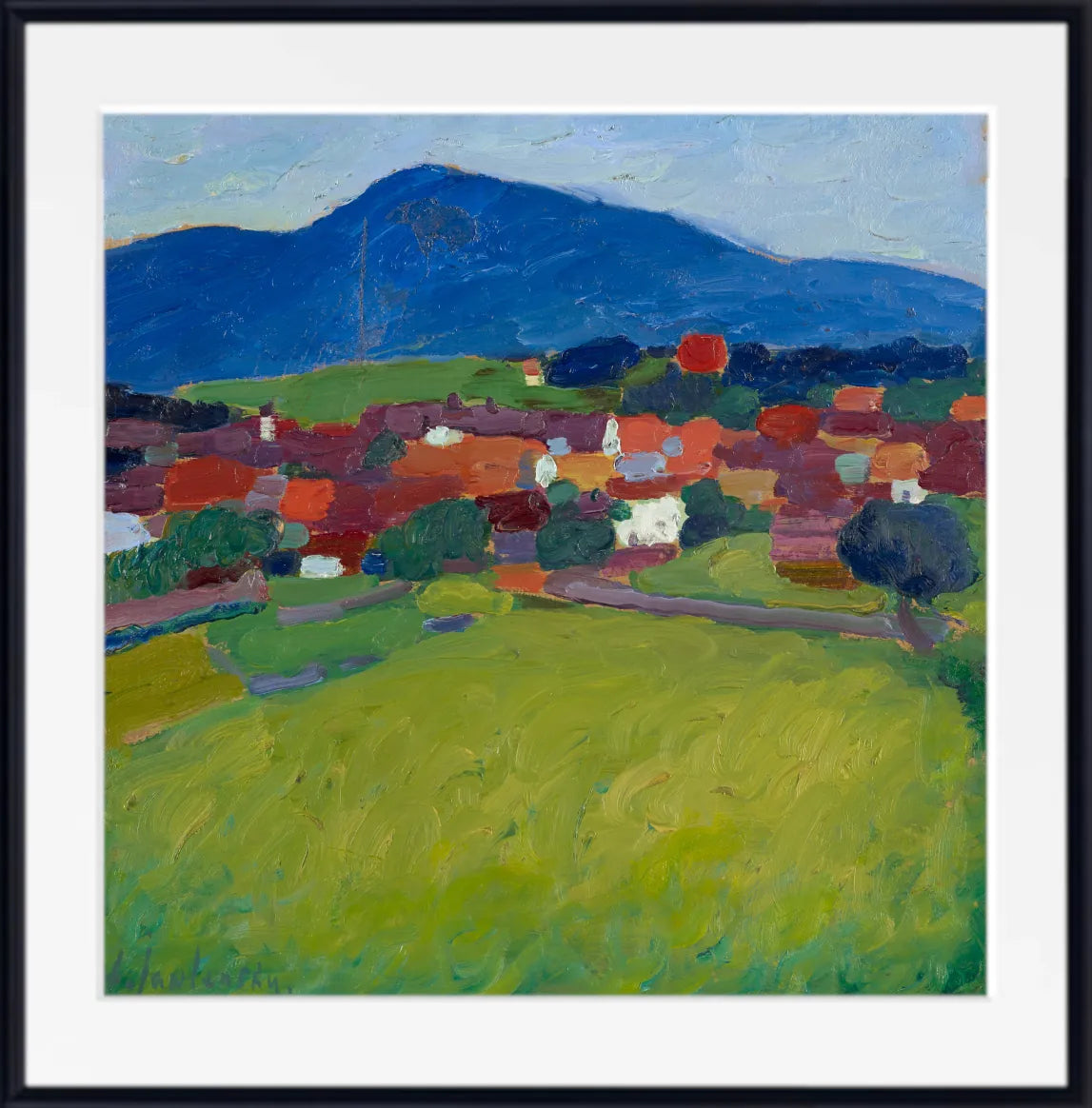
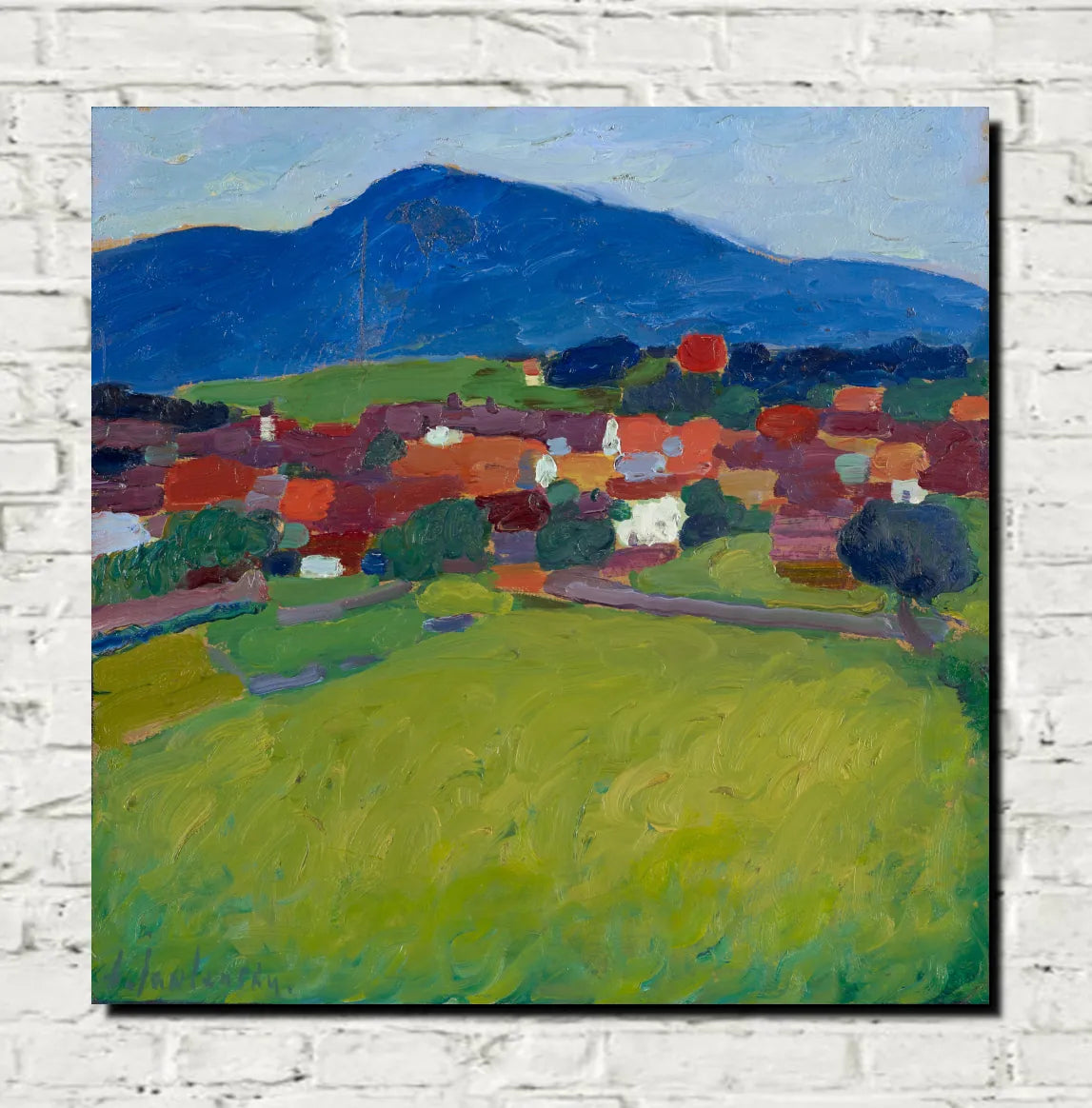
Murnau (1910) demonstrates how Jawlensky could apply the same principles to landscape. Mountains, fields and buildings are reduced to broad areas of brilliant colour rather than carefully modelled naturalistic forms.
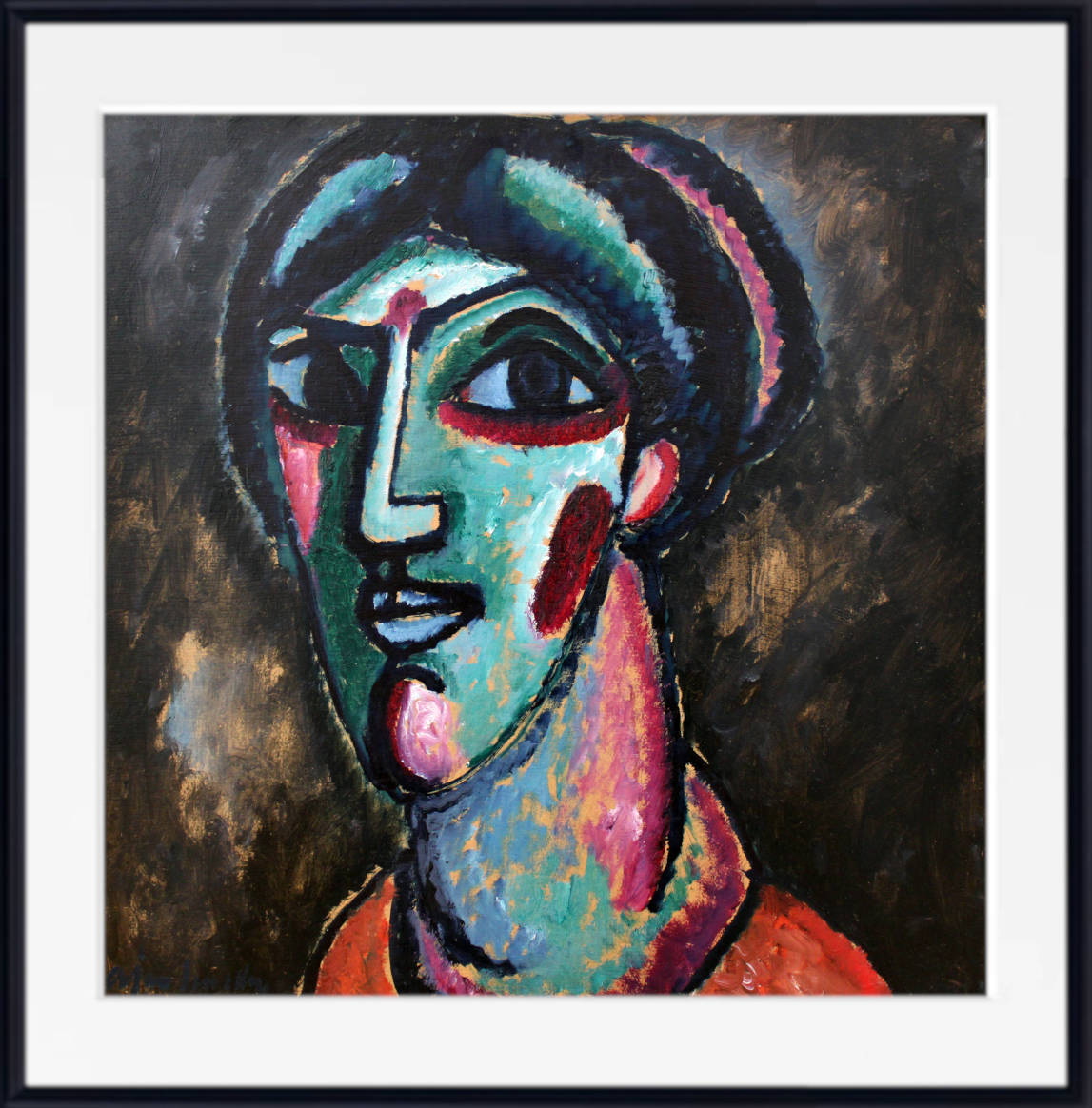
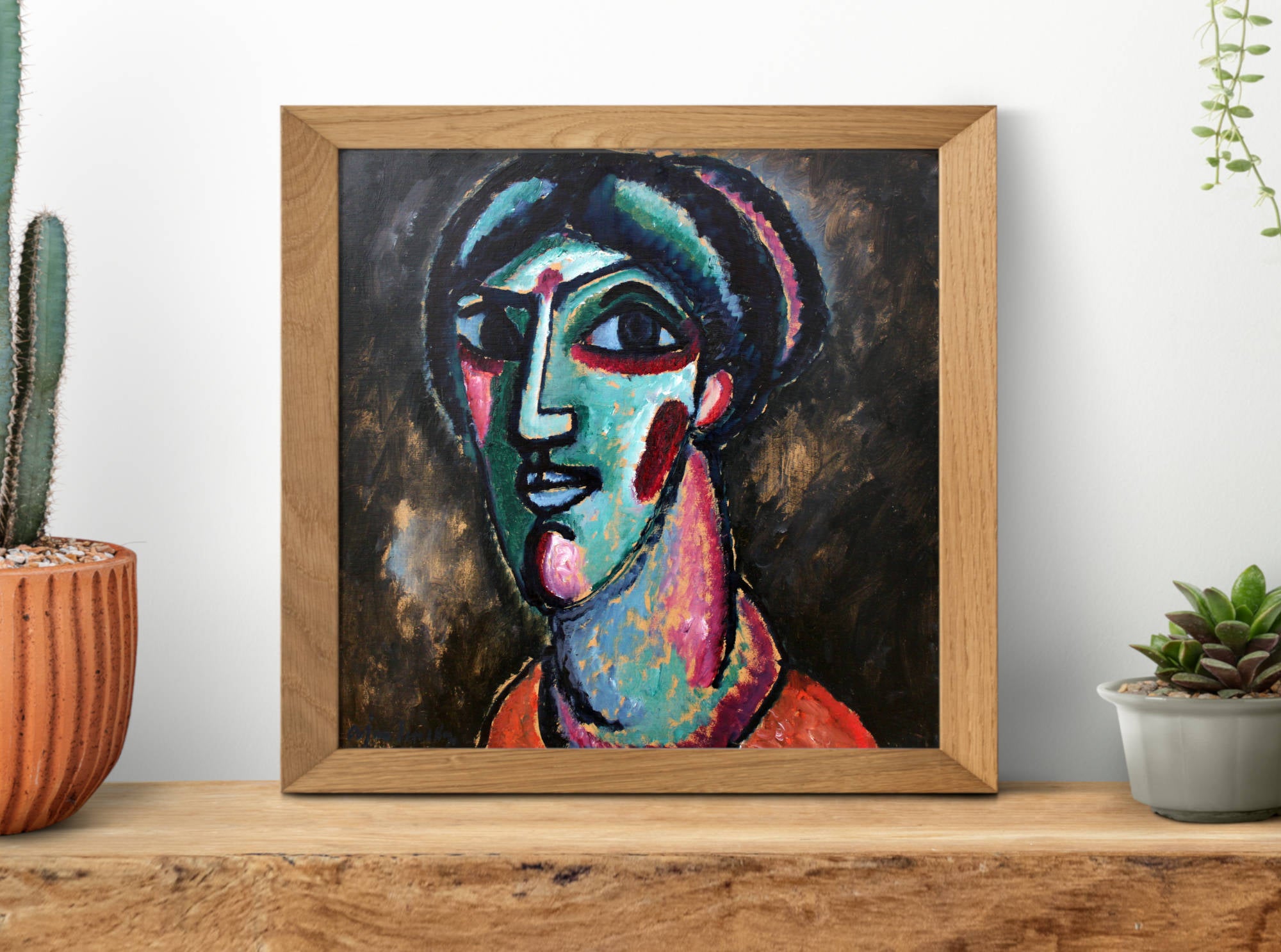
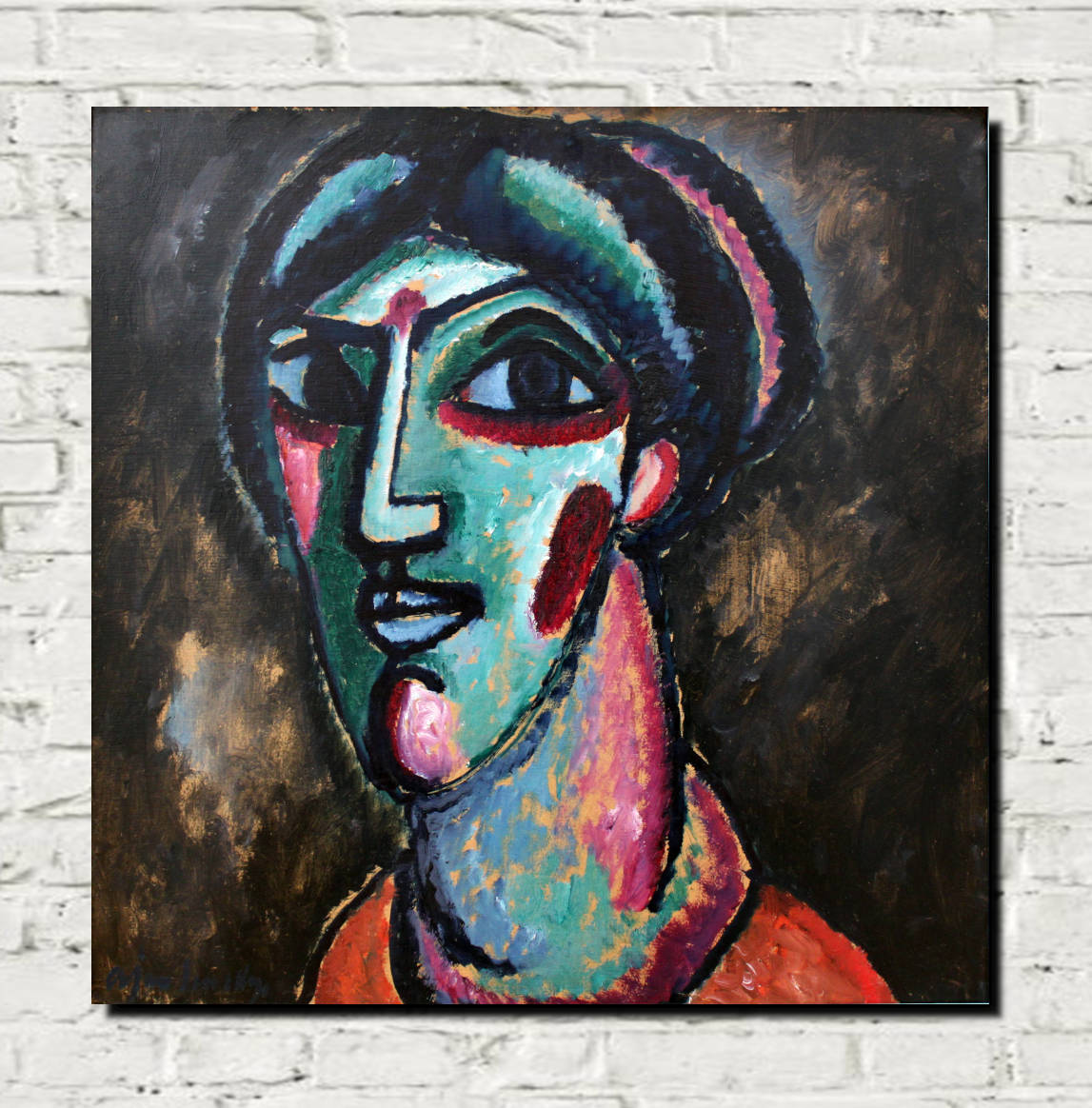
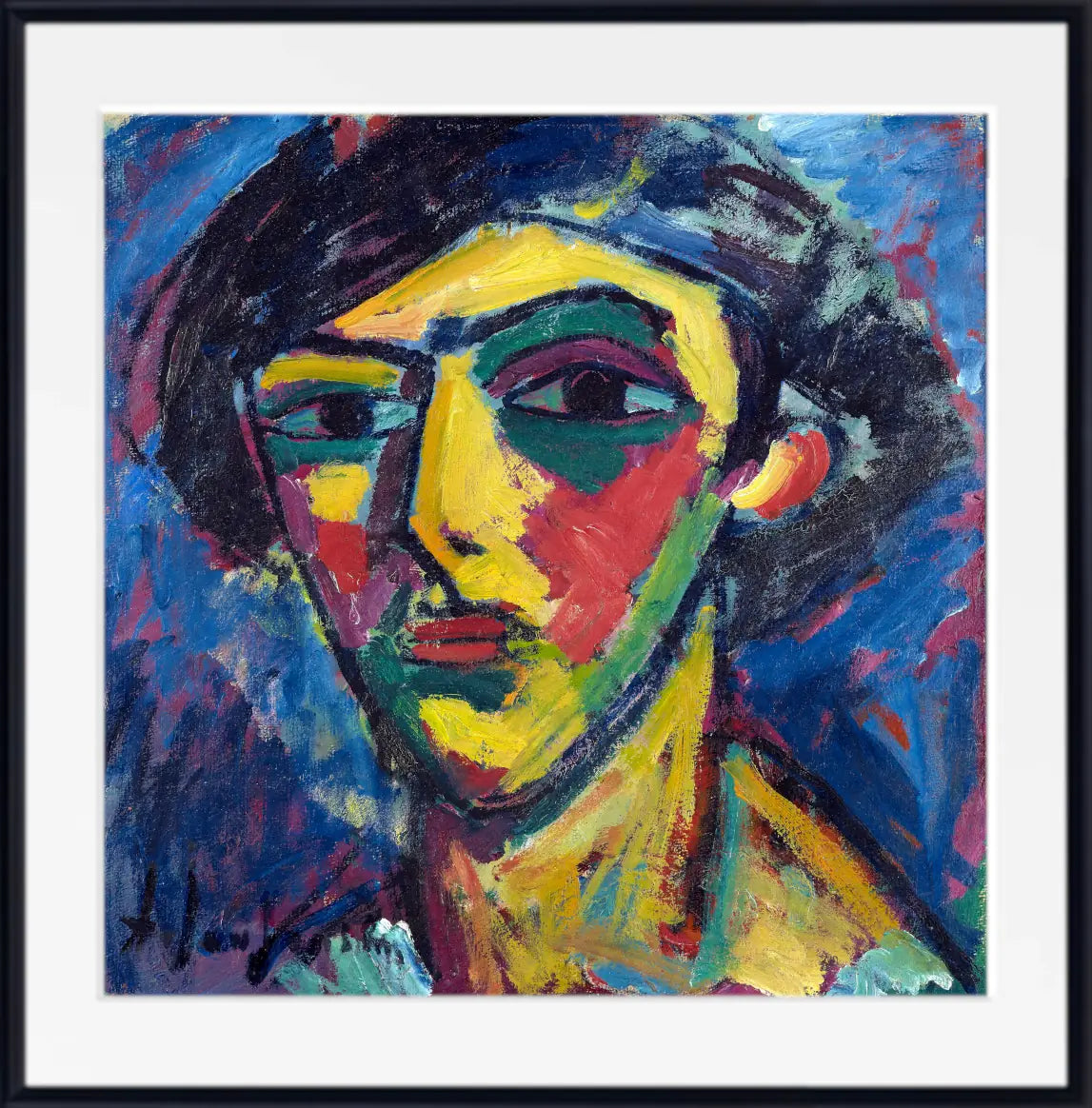
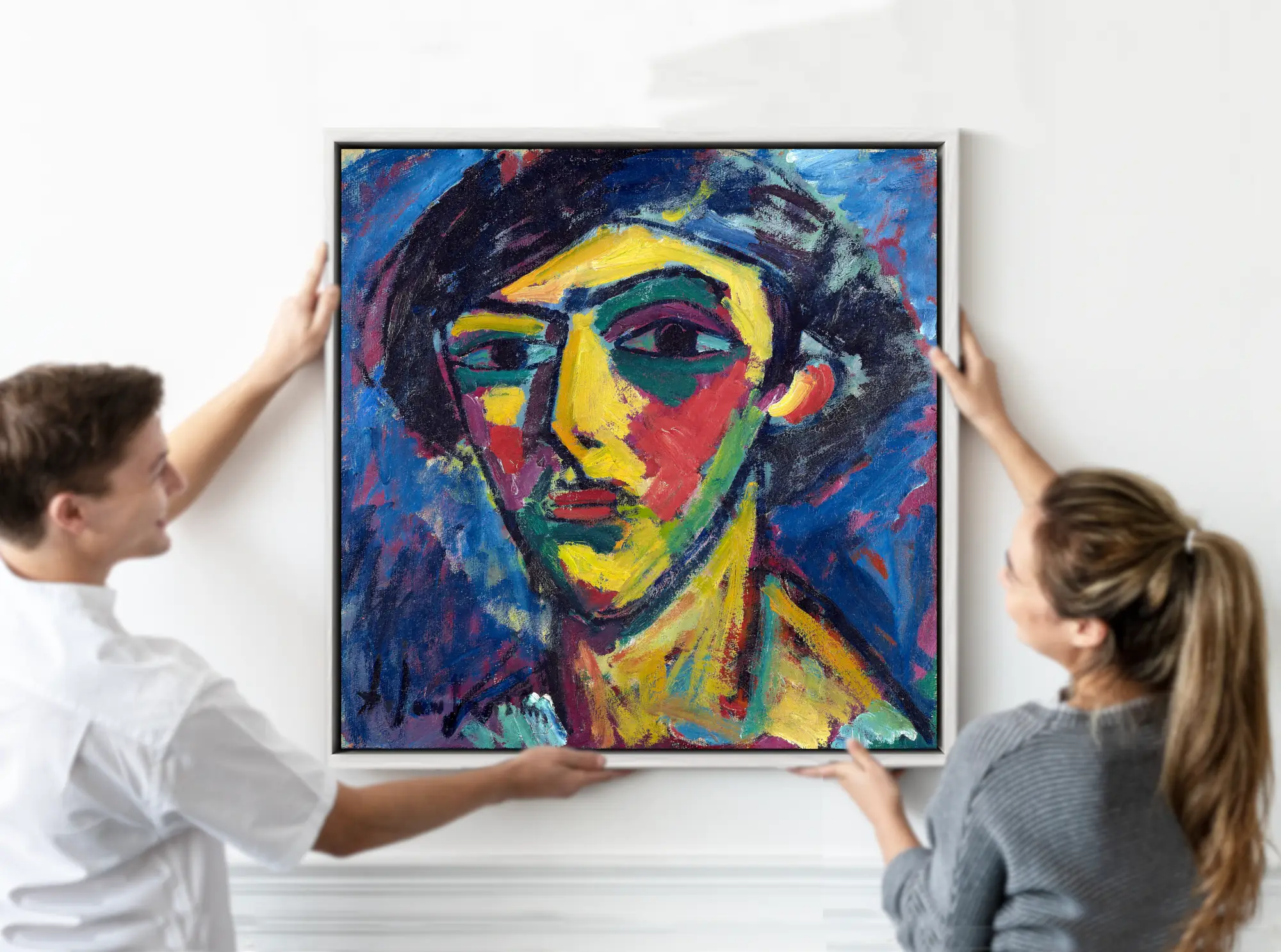
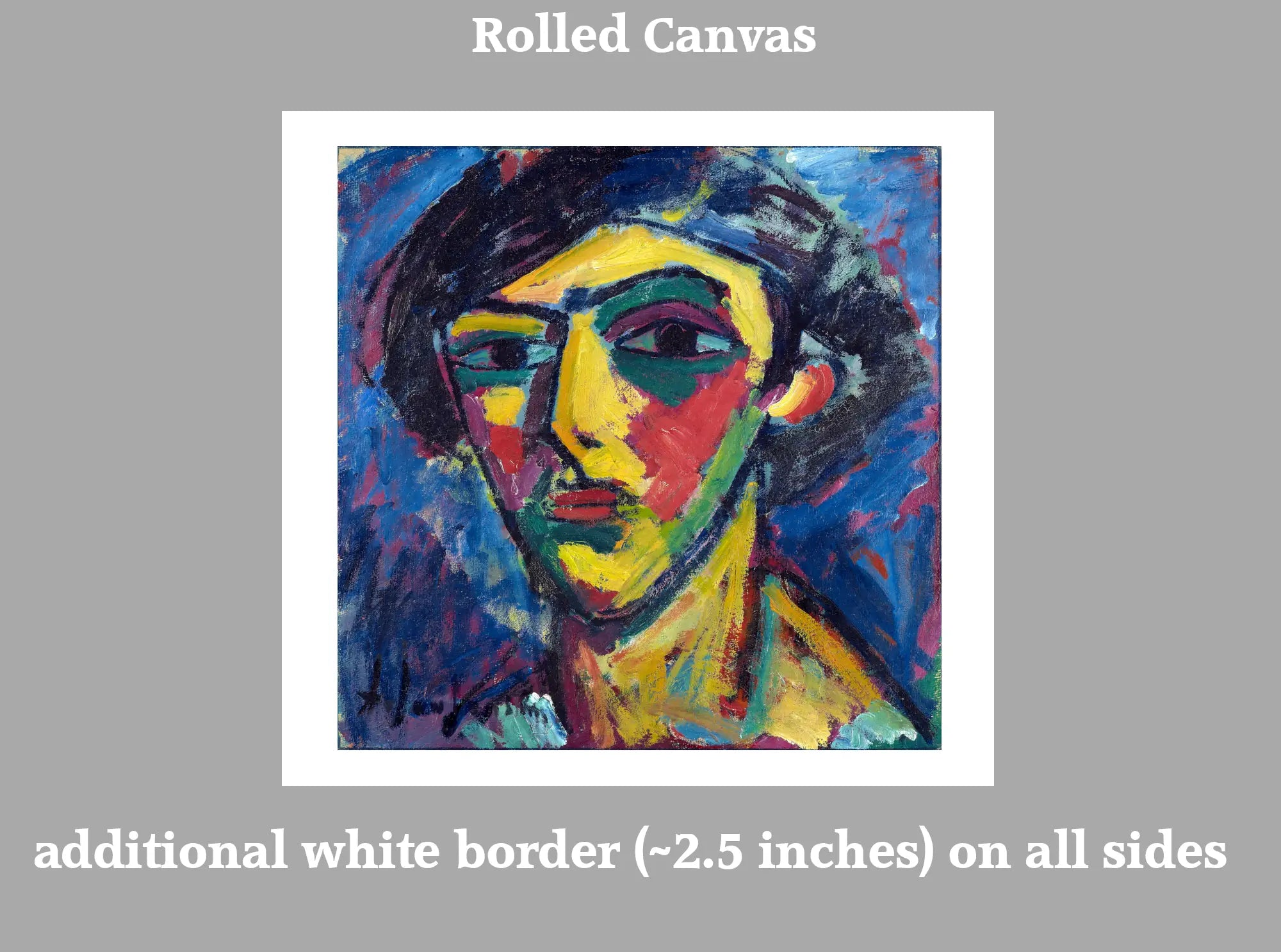
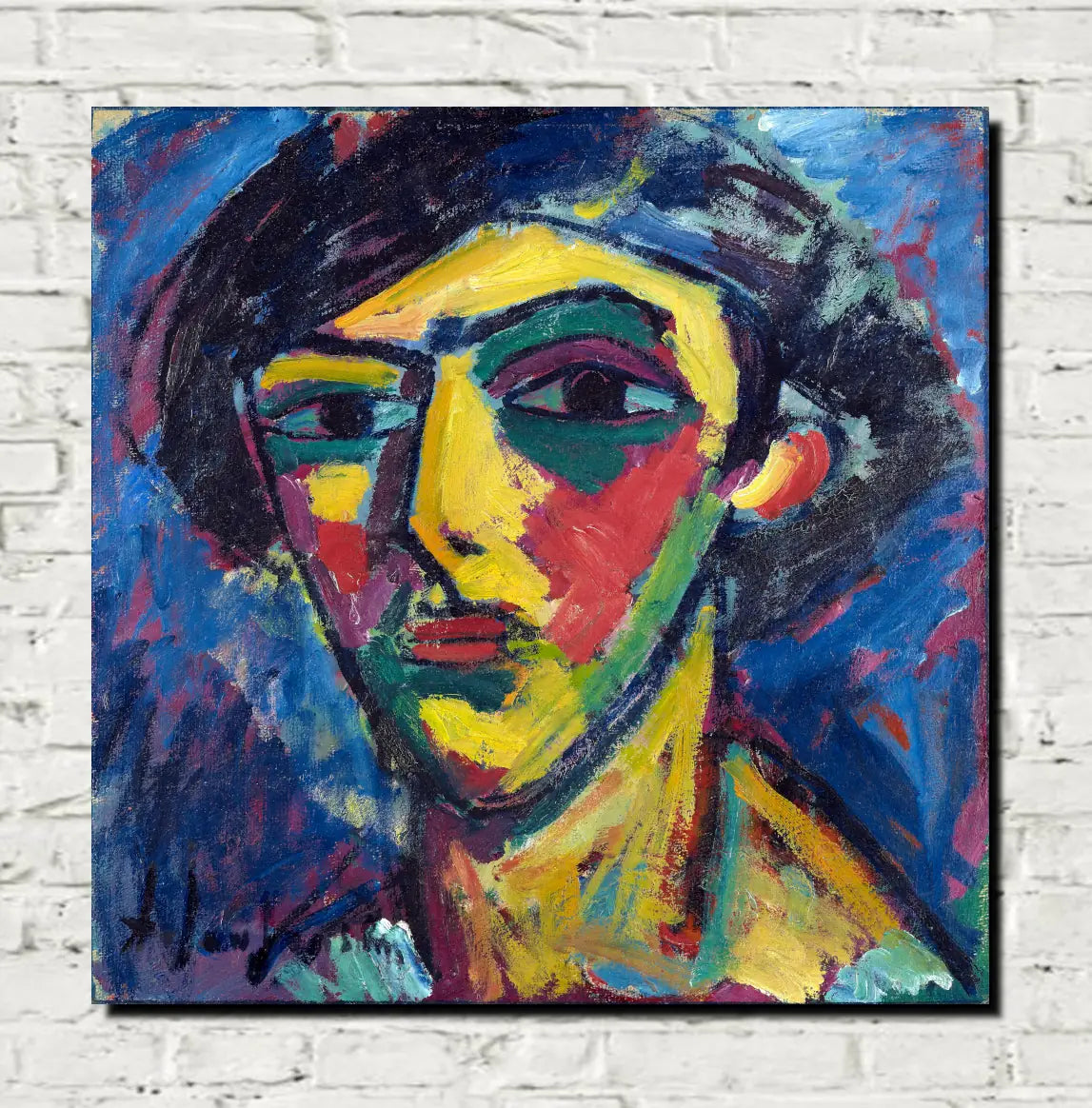
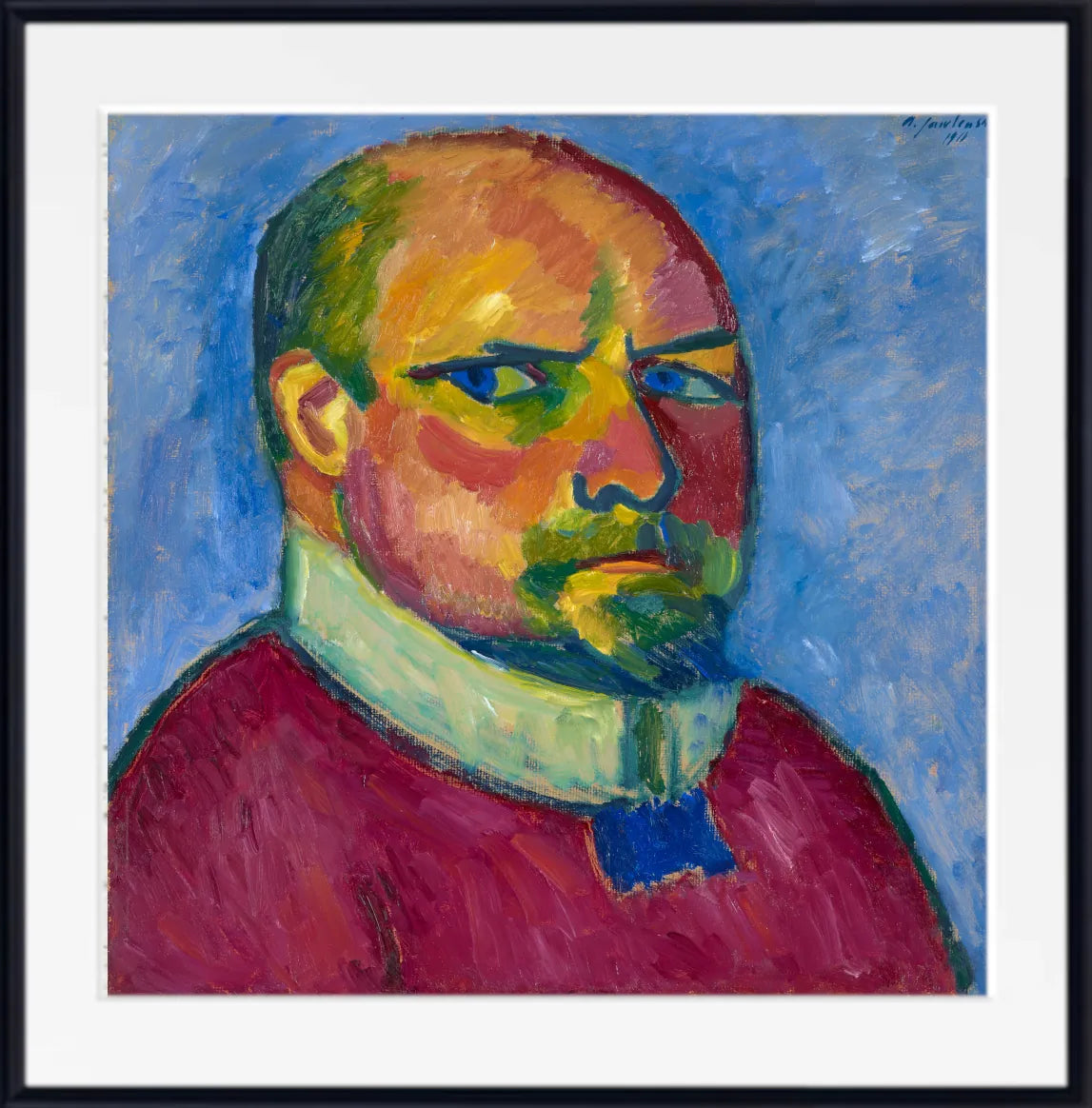
Works such as Head of a Youth (1911) and Head in Black and Green (1913) reveal the increasing importance of the human head in Jawlensky’s work.
Faces become stronger, simpler and more intensely coloured.
These pre-war portraits eventually led towards the highly simplified Mystical Heads, Saviour’s Faces, Abstract Heads and Meditations of his later career.
GalleryThane’s Der Blaue Reiter selection concentrates on Jawlensky’s early Munich and pre-war Expressionist work, rather than automatically including those much later series.
Marianne von Werefkin and the Munich Avant-Garde
Marianne von Werefkin was an important figure within Munich’s progressive artistic community and played a significant role in the environment from which Der Blaue Reiter developed.
Her paintings frequently combine powerful colour with an unusual sense of psychological atmosphere.
Figures may appear isolated within dark landscapes, railway stations or streets. Colours become intense and unnatural, while simplified forms create moods of mystery, loneliness or tension.
Into the Night is a particularly strong example of this approach, transforming figures and landscape into an emotionally charged nocturnal scene.
Other works including Prerow Train Station (Dunes), Golgotha, Self Portrait, Christmas Tree and Ball Scene demonstrate the breadth of Werefkin’s contribution to early Expressionism.
Her work provides an important counterpoint to the more familiar paintings of Kandinsky, Marc and Macke.
Why Colour Was So Important to Der Blaue Reiter
Colour became one of the most revolutionary elements of Blue Rider painting.
Artists no longer felt obliged to paint an object in the colour it appeared in nature.
A horse could become blue.
A face could be green, red or yellow.
A mountain might be purple or deep blue.
The purpose was not simply to make paintings brighter.
Colour could communicate mood, symbolism or spiritual significance.
This freedom allowed Blue Rider artists to move beyond conventional representation and helped create the conditions from which abstract art would develop.
The Influence of Music
Music was particularly important to Kandinsky and to the broader philosophy surrounding Der Blaue Reiter.
A piece of music can communicate emotion without depicting a recognisable object.
Kandinsky believed visual art could achieve something similar.
Colours, lines and shapes could interact like musical notes, producing harmony, tension, rhythm and movement.
His increasing use of titles such as Improvisation and Composition reflected this connection between painting and music.
The Der Blaue Reiter Almanac went even further, publishing musical material alongside visual art and essays.
This willingness to cross traditional boundaries between artistic disciplines was one of the movement’s most radical characteristics.
Animals, Portraits, Landscapes and Modern Life
One of the strengths of Der Blaue Reiter is the extraordinary range of subjects represented within the movement.
Animals
Franz Marc transformed animal painting through symbolic colour and simplified form.
His horses, foxes, deer, cows and tigers became some of the most recognisable images of German Expressionism.
Portraits
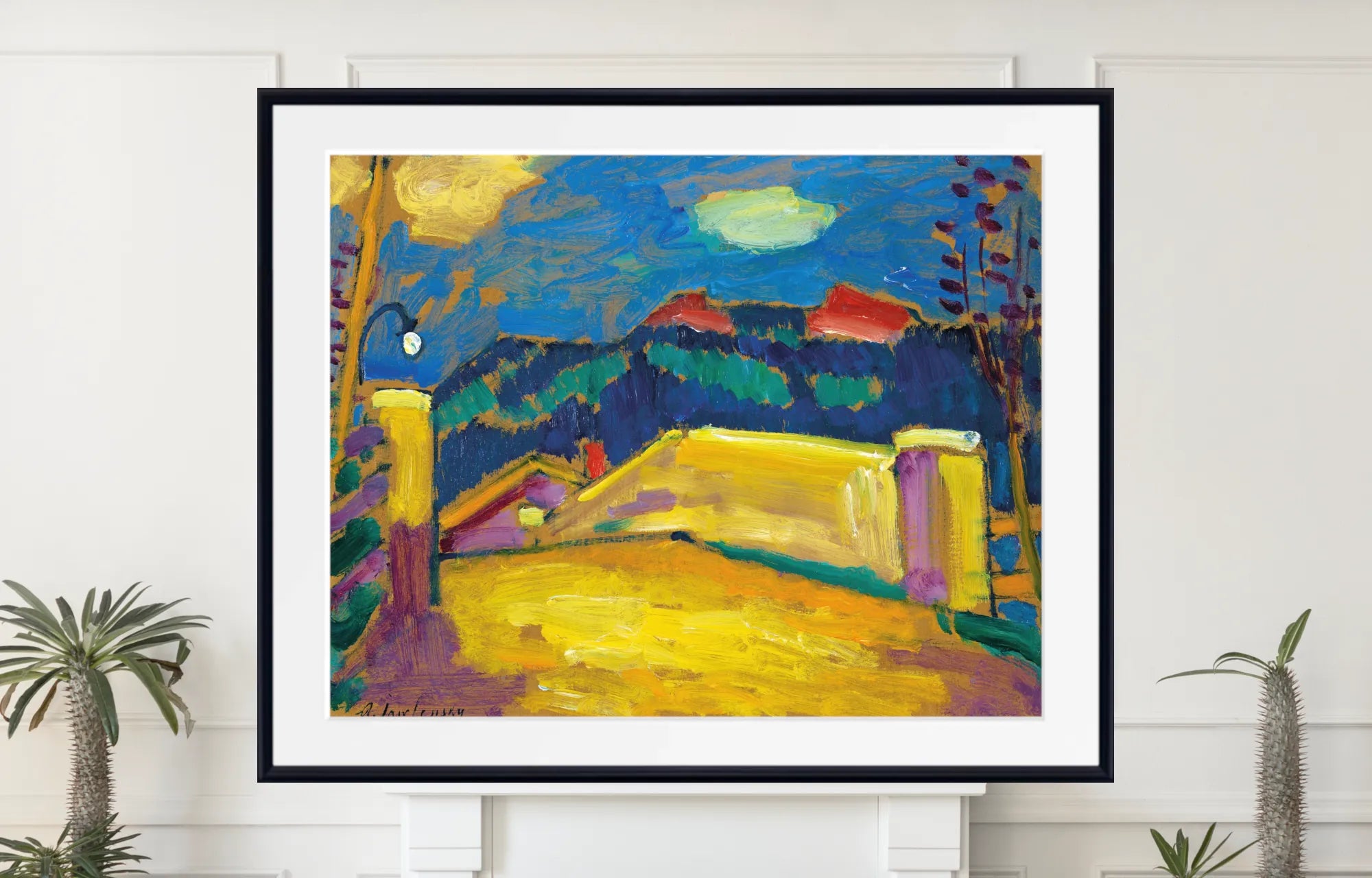
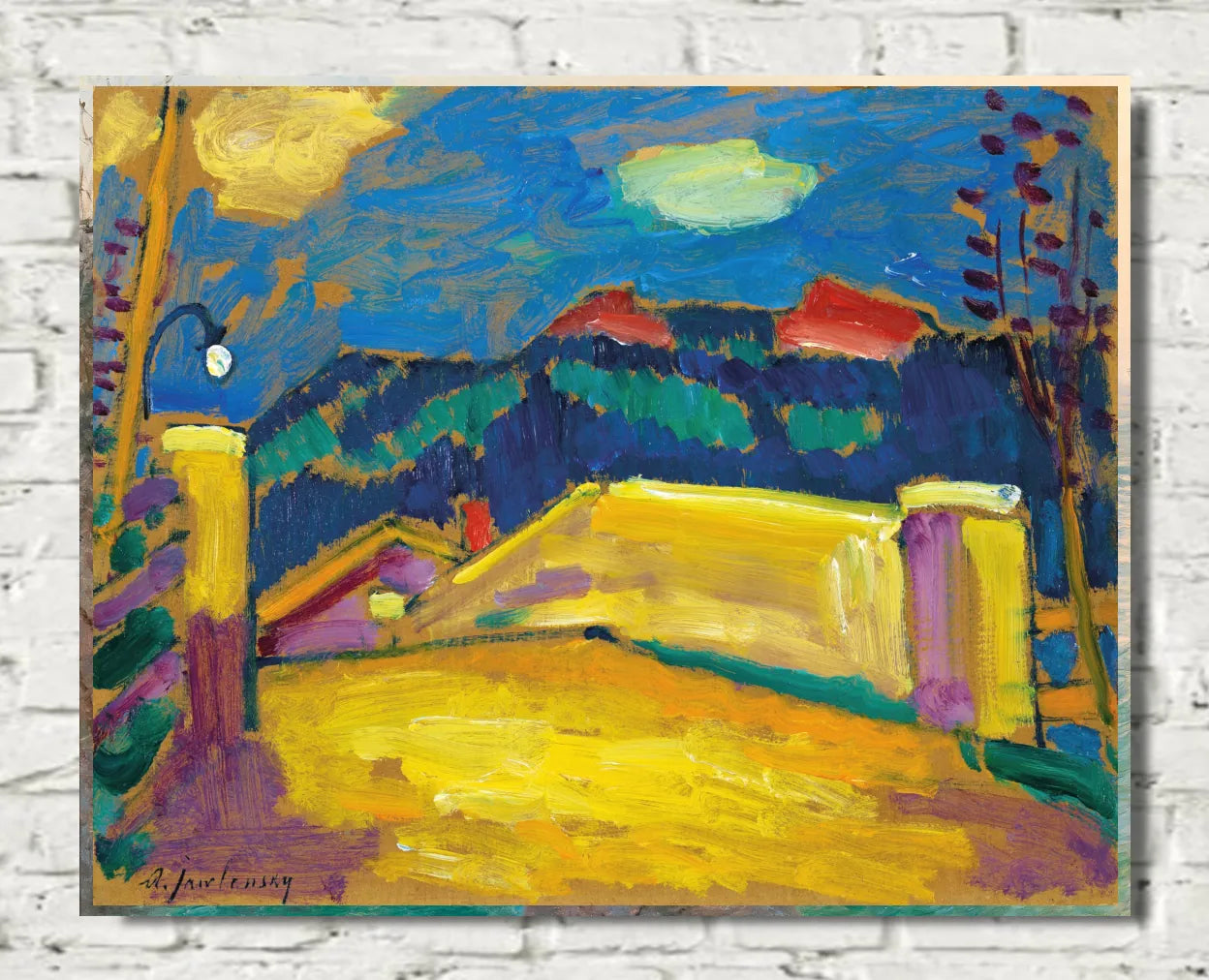
Jawlensky used intense colour and powerful outlines to transform conventional portraiture into something more psychological and eventually spiritual.
Werefkin also explored character and emotional experience through expressive figurative painting.
Landscapes
Murnau and the surrounding Bavarian countryside became especially important to Kandinsky and Jawlensky.
Landscape offered artists a recognisable starting point from which colour and form could increasingly be liberated from naturalistic representation.
Modern Life
Macke found inspiration in the everyday world of shops, parks, cafés, fashion and leisure.
His colourful figures demonstrate that Expressionism did not always need to be dark or psychologically disturbing.
Der Blaue Reiter and German Expressionism
Der Blaue Reiter represents one of the principal strands of German Expressionist art.
Another important group, Die Brücke, developed separately in Dresden and included artists such as Ernst Ludwig Kirchner.
Although both are commonly grouped under the wider heading of German Expressionism, their visual character can be quite different.
Die Brücke is often associated with angular figures, forceful printmaking and the experience of modern urban life.
Der Blaue Reiter frequently placed greater emphasis on colour, spirituality, symbolism and the gradual movement towards abstraction.
These differences are not absolute, but they help explain the remarkable diversity that exists within Expressionism.
From Expressionism Towards Abstract Art
Der Blaue Reiter occupies a particularly important position between figurative Expressionism and the emergence of abstraction.
Many of its paintings still depict recognisable subjects: horses, people, landscapes, villages and buildings.
But increasingly those subjects became frameworks for experimentation with colour and form.
This transition is particularly clear in Kandinsky’s development.
His early Murnau landscapes remain recognisable, but within only a few years his compositions had become increasingly independent of visible reality.
This makes Der Blaue Reiter an important companion to GalleryThane’s wider Abstract Art Prints collection.
A Carefully Curated Blue Rider Collection
An important distinction should be made between an artist associated with Der Blaue Reiter and every work that artist produced throughout an entire career.
Several Blue Rider artists continued working for decades after the movement itself had ended.
Kandinsky later became an important Bauhaus teacher and developed a much more geometric form of abstraction.
Jawlensky produced his famous Abstract Heads and Meditations years after the pre-war Munich period.
For this reason, GalleryThane’s Der Blaue Reiter collection concentrates primarily on works from the artists’ formative Munich, Murnau and Blue Rider years, rather than treating every later painting by a participating artist as a Blue Rider artwork.
This gives the collection a clearer historical identity and allows the remarkable development of the movement to be seen more coherently.
Der Blaue Reiter Art for Modern Interiors
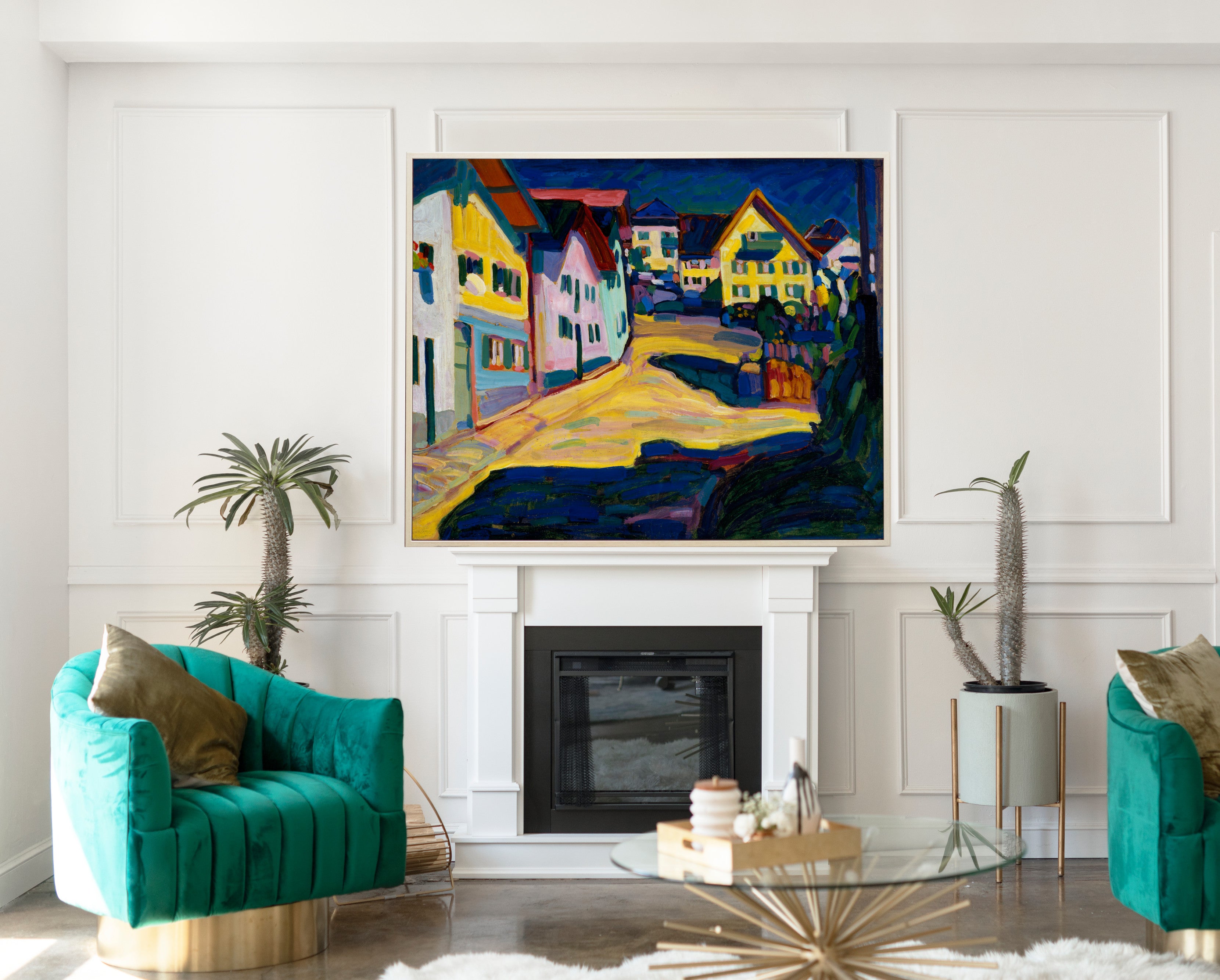
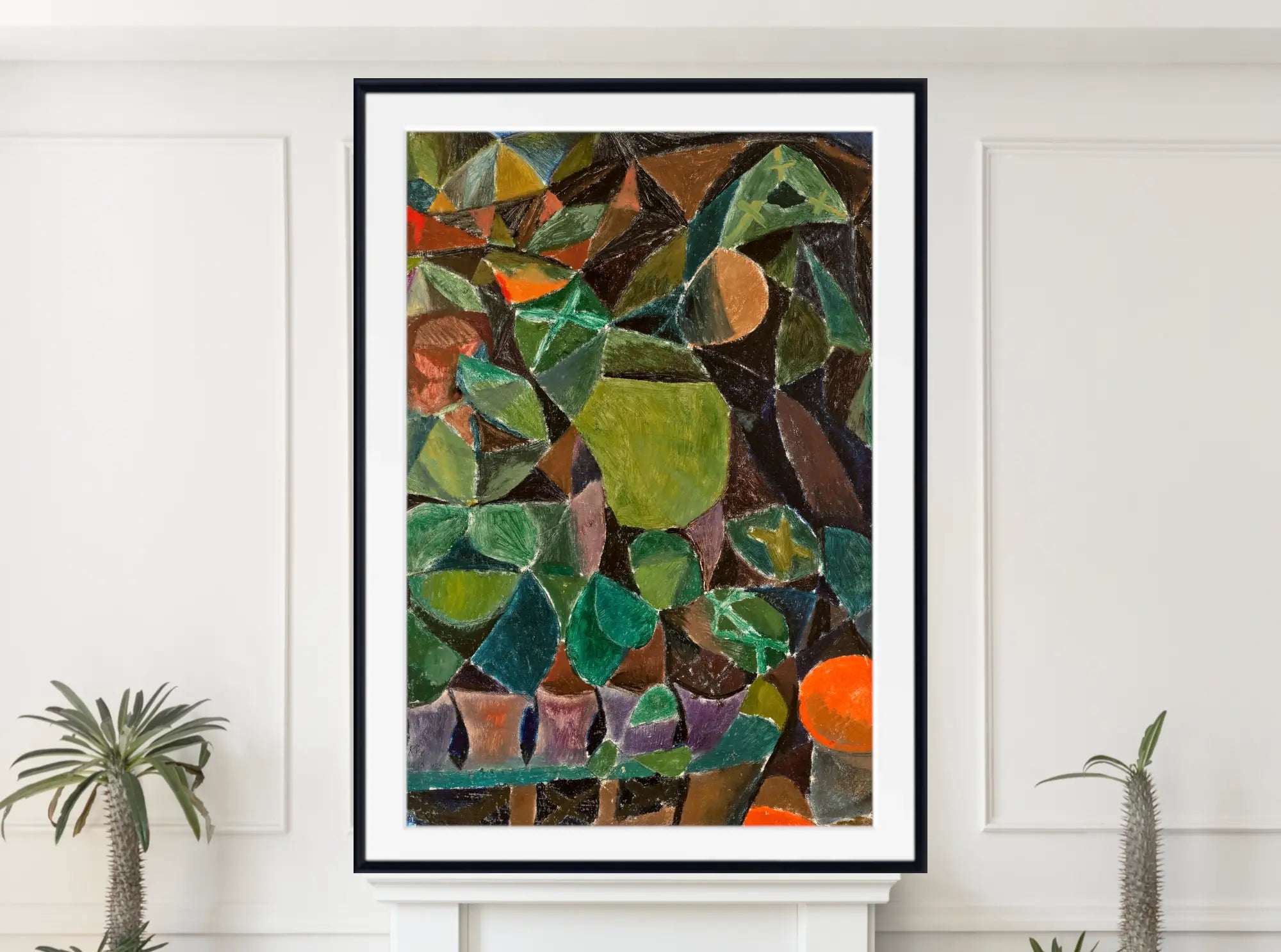
More than a century after they were painted, Blue Rider artworks can look remarkably contemporary.
Franz Marc’s brilliant animal paintings work particularly well where strong colour is wanted.
Kandinsky’s increasingly abstract compositions can create dramatic statement pieces in modern, minimalist and Scandinavian-inspired interiors.
Macke’s colourful scenes of leisure provide a softer, more approachable form of Expressionist wall art.
Jawlensky’s portraits offer bold colour and strong geometric structure, while Werefkin provides atmospheric landscapes and figurative works with a darker emotional character.
Because the movement encompasses landscapes, animals, portraits and abstract compositions, a Der Blaue Reiter print can suit anything from a living room or hallway to a bedroom, study or contemporary workspace.
Fine Art Prints, Framed Prints and Canvas Panels
GalleryThane’s Der Blaue Reiter artworks are available in a range of sizes and formats.
Fine art paper prints provide flexibility if you prefer to choose your own frame and presentation.
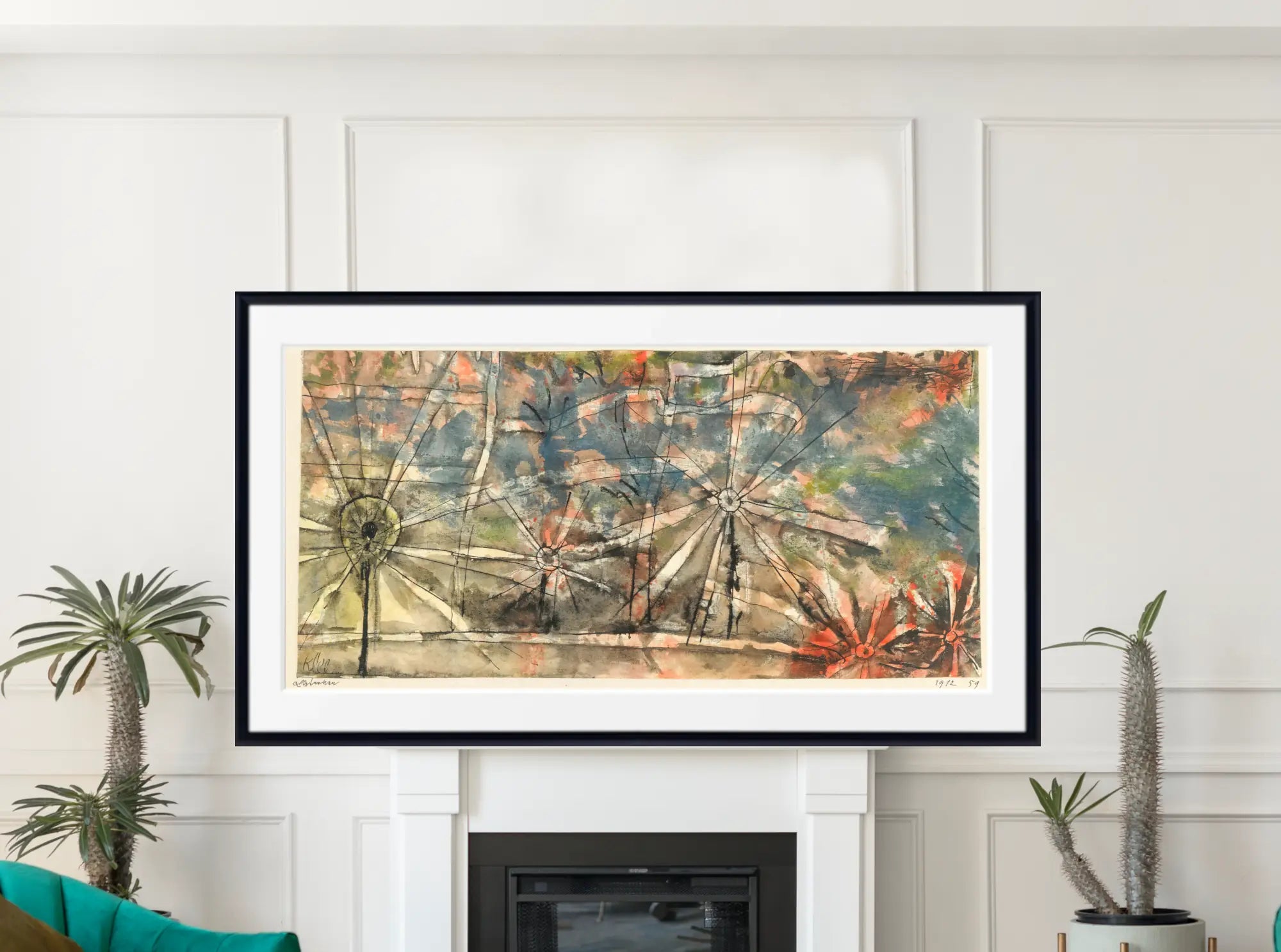
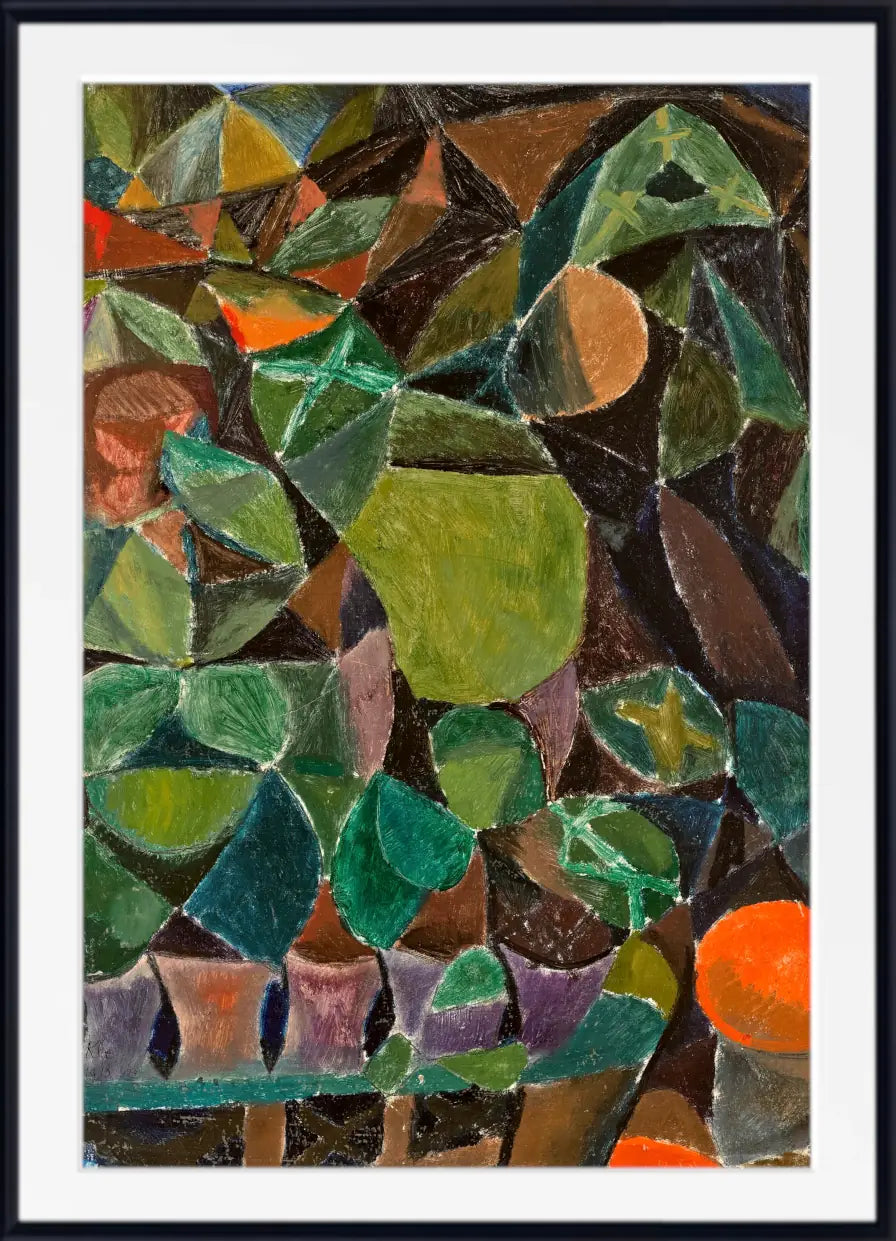
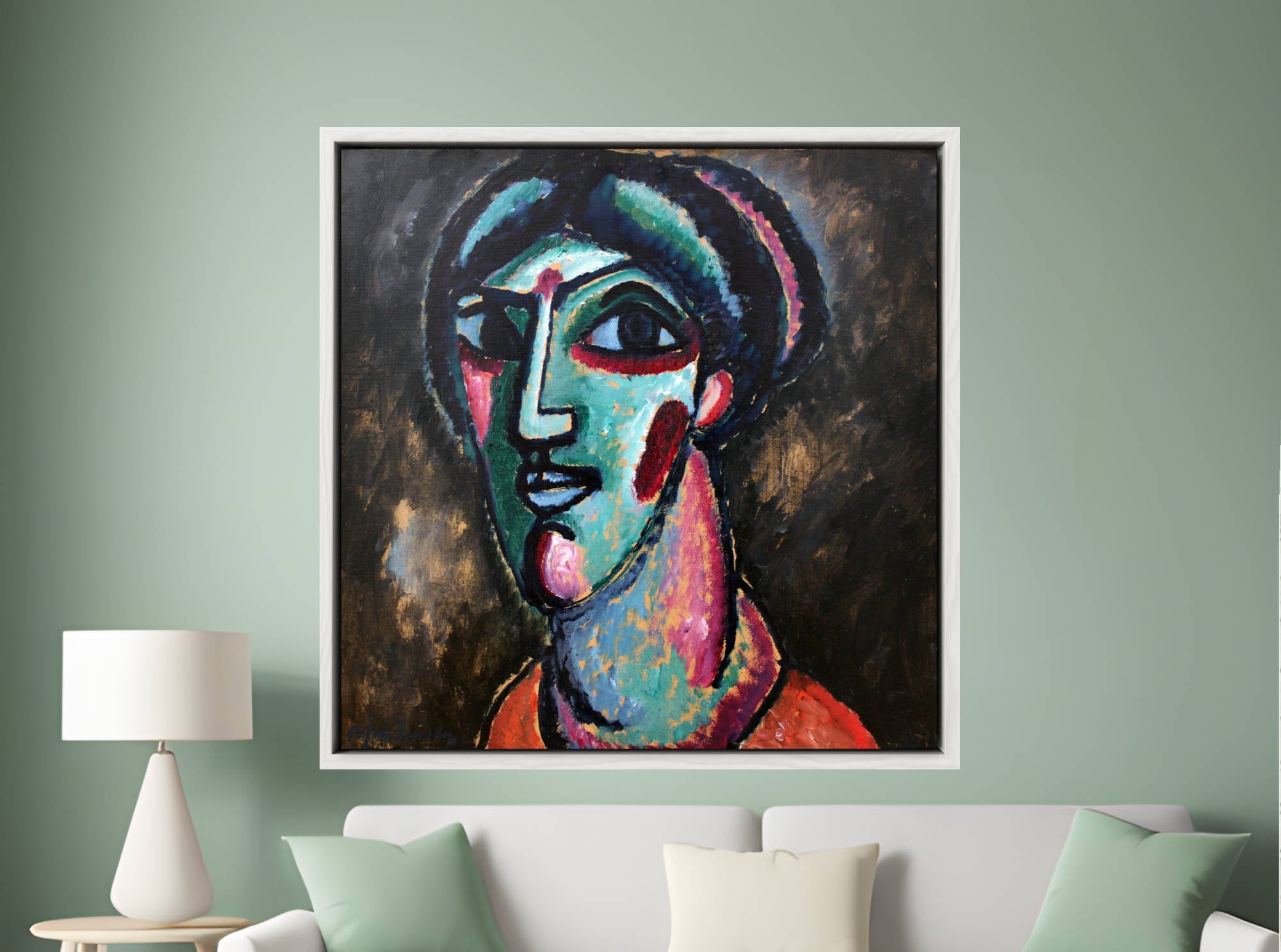
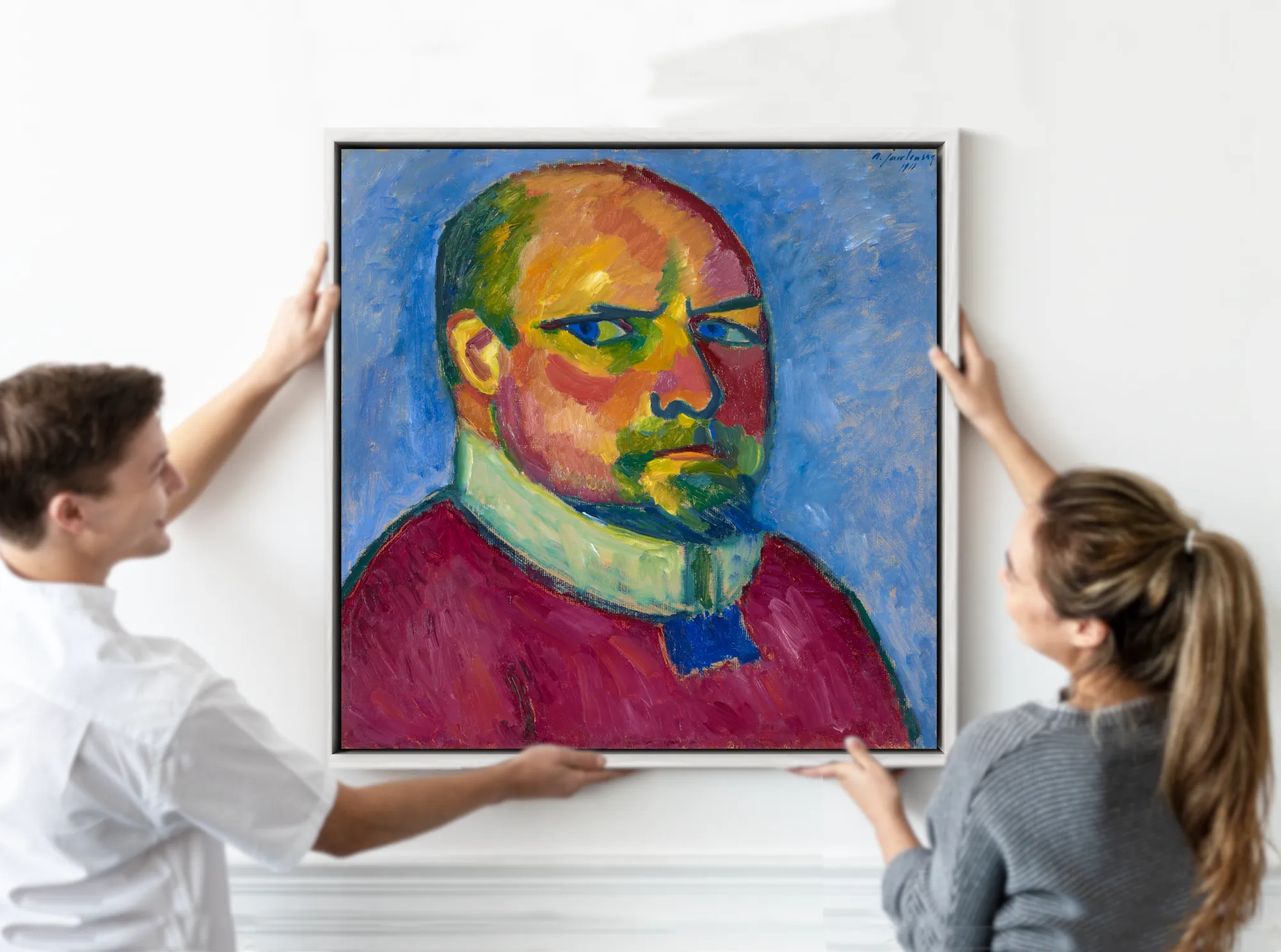
Framed prints offer a complete gallery-style presentation and work especially well with the intense colours and strongly defined compositions found throughout the movement.
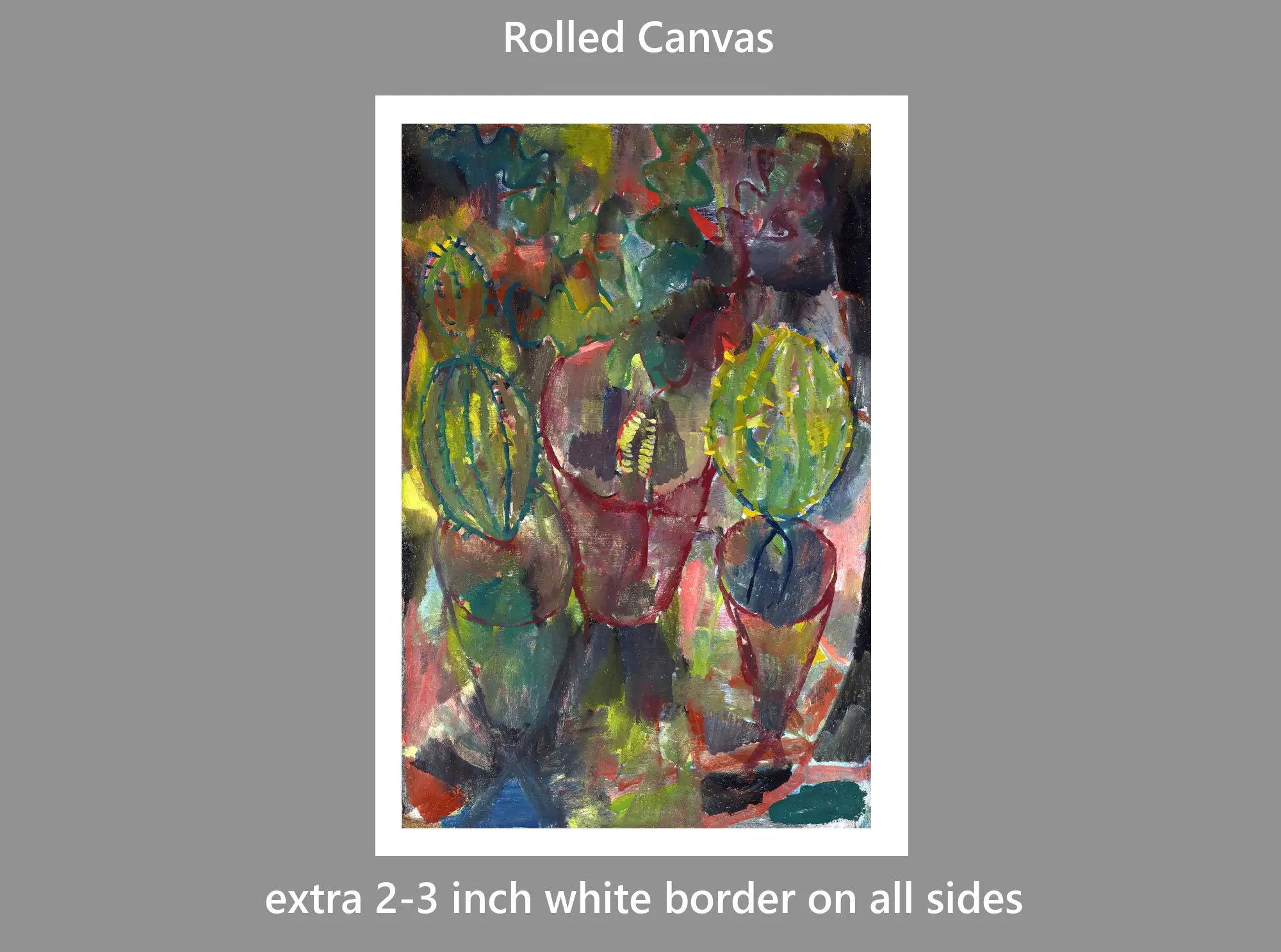
Canvas panels provide a clean, ready-to-hang alternative that complements the painterly character of many Expressionist works.
GalleryThane prints, frames and canvas panels are produced in our Nottinghamshire workshop using carefully selected papers, pigment inks and framing materials.
Explore Blue Rider Artists
Discover Franz Marc prints for vivid horses, deer, foxes, tigers and other Expressionist animal paintings.
Explore August Macke prints for colourful scenes of modern leisure, shops, gardens and figures.
Browse Wassily Kandinsky prints to follow his extraordinary journey from expressive Murnau landscapes towards abstraction.
Discover Alexej von Jawlensky prints for intensely coloured portraits and early Expressionist landscapes.
Explore Marianne von Werefkin prints for atmospheric landscapes and psychologically charged figurative paintings.
You can also explore GalleryThane’s wider Expressionist Art Prints and Abstract Art Prints, or read our detailed guide to Der Blaue Reiter and its artists.
Frequently Asked Questions
What does Der Blaue Reiter mean?
Der Blaue Reiter translates from German as The Blue Rider. The name became associated with the group formed around Wassily Kandinsky and Franz Marc in Munich in 1911.
Was Der Blaue Reiter part of Expressionism?
Yes. Der Blaue Reiter is generally regarded as one of the most important groups associated with German Expressionism, although its artists developed very different individual styles.
Who were the main Der Blaue Reiter artists?
Artists closely connected with the movement included Wassily Kandinsky, Franz Marc, August Macke, Alexej von Jawlensky and Marianne von Werefkin, alongside a wider circle of avant-garde artists.
When was Der Blaue Reiter founded?
The Blue Rider emerged in Munich in 1911. Its first exhibition opened later that year, while the influential Der Blaue Reiter Almanac appeared in 1912.
Why did Franz Marc paint blue horses?
Marc used colour symbolically rather than naturalistically. His blue animals were intended to communicate emotional and spiritual ideas rather than simply reproduce the physical appearance of an animal.
Was Kandinsky a Der Blaue Reiter artist?
Yes. Wassily Kandinsky was one of the central figures behind Der Blaue Reiter. His experiments with colour, music and abstraction were fundamental to the movement’s philosophy.
Was August Macke part of Der Blaue Reiter?
Yes. Macke was closely associated with the Blue Rider circle and contributed to its activities and ideas. His colourful paintings of modern life represent one of the most distinctive approaches within the movement.
Was Alexej von Jawlensky associated with Der Blaue Reiter?
Yes. Jawlensky was part of the progressive Munich artistic environment closely connected with the Blue Rider circle. His pre-war portraits and landscapes share the movement’s intense interest in expressive colour and simplified form.
What is the difference between Der Blaue Reiter and Die Brücke?
Both are major groups associated with German Expressionism. Die Brücke is particularly associated with artists such as Ernst Ludwig Kirchner and often used angular forms and forceful depictions of figures and modern life. Der Blaue Reiter placed particular emphasis on expressive colour, spirituality, symbolism and the development of abstraction.
Are all Kandinsky and Jawlensky paintings Der Blaue Reiter works?
No. Both artists continued developing their art long after the original Blue Rider period. GalleryThane’s collection therefore concentrates on selected works connected with their early Expressionist and Blue Rider development rather than including their entire careers.