
Rudolf Bauer Prints – Abstract Rhythm, Colour & Geometric Forms
Rudolf Bauer prints range from sharply divided figures to compositions built from circles, curves and coloured planes. Some forms remain isolated within open space; others gather into dense, flowing arrangements. Explore these different rhythms alongside abstract prints and geometric art, with colour and placement guiding the comparisons.








A body divided into angular parts
Cubist Dancer breaks the figure into curved and triangular areas within a tall format. Pale limbs remain readable among yellow, purple and red shapes. The pose provides a starting point for a composition in which the surrounding planes share the figure’s sharp changes of direction.
Circles within a flowing field
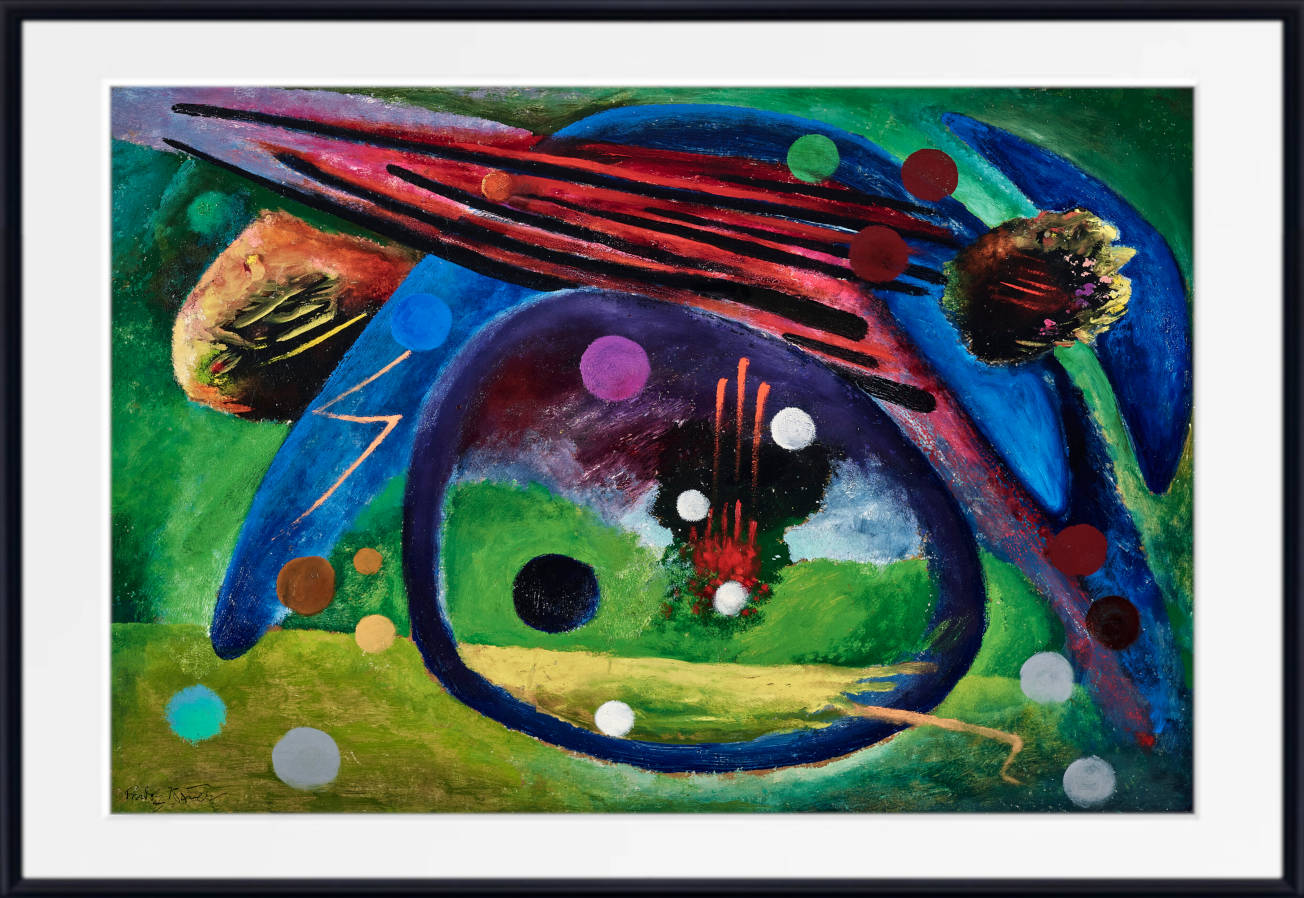
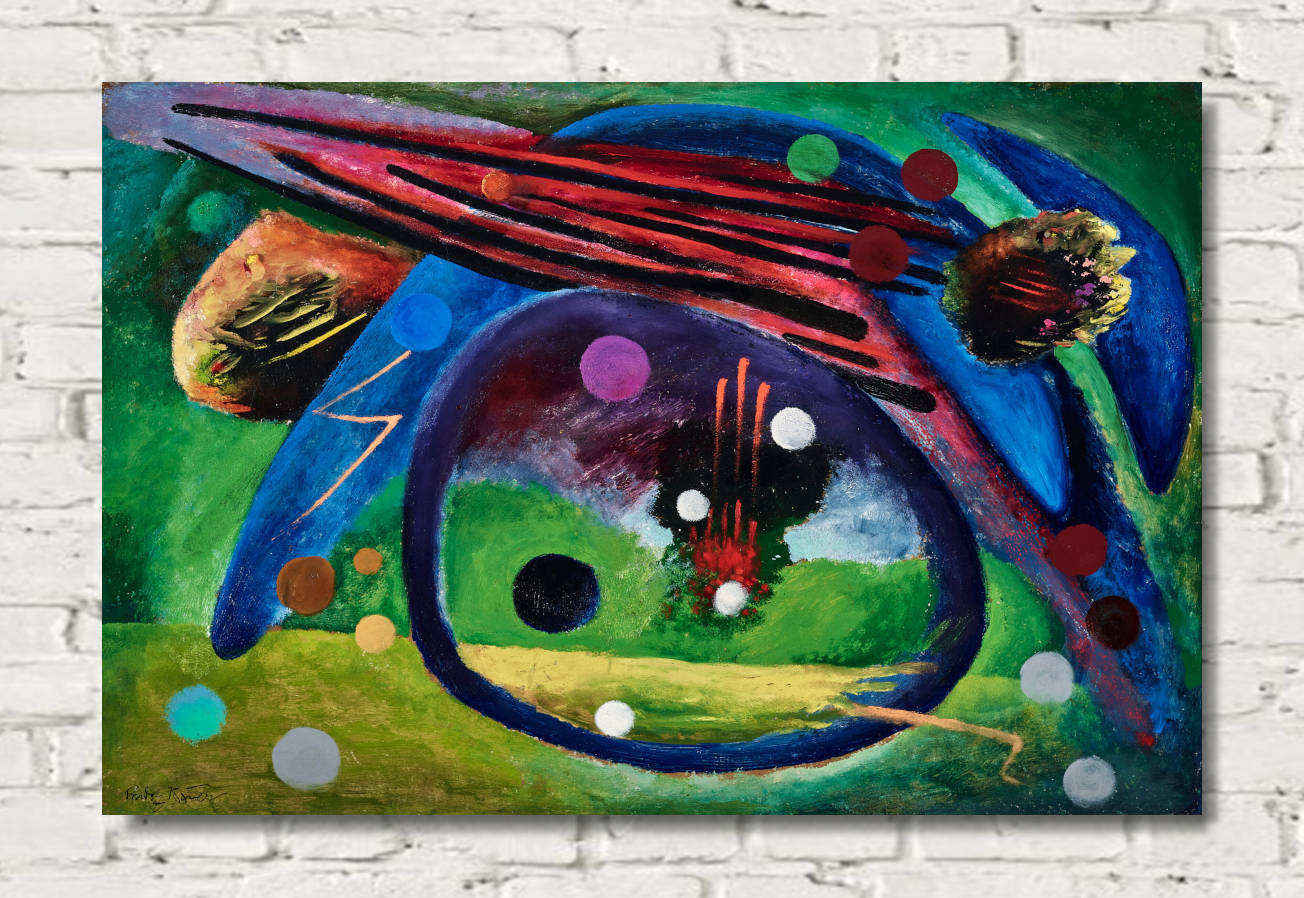
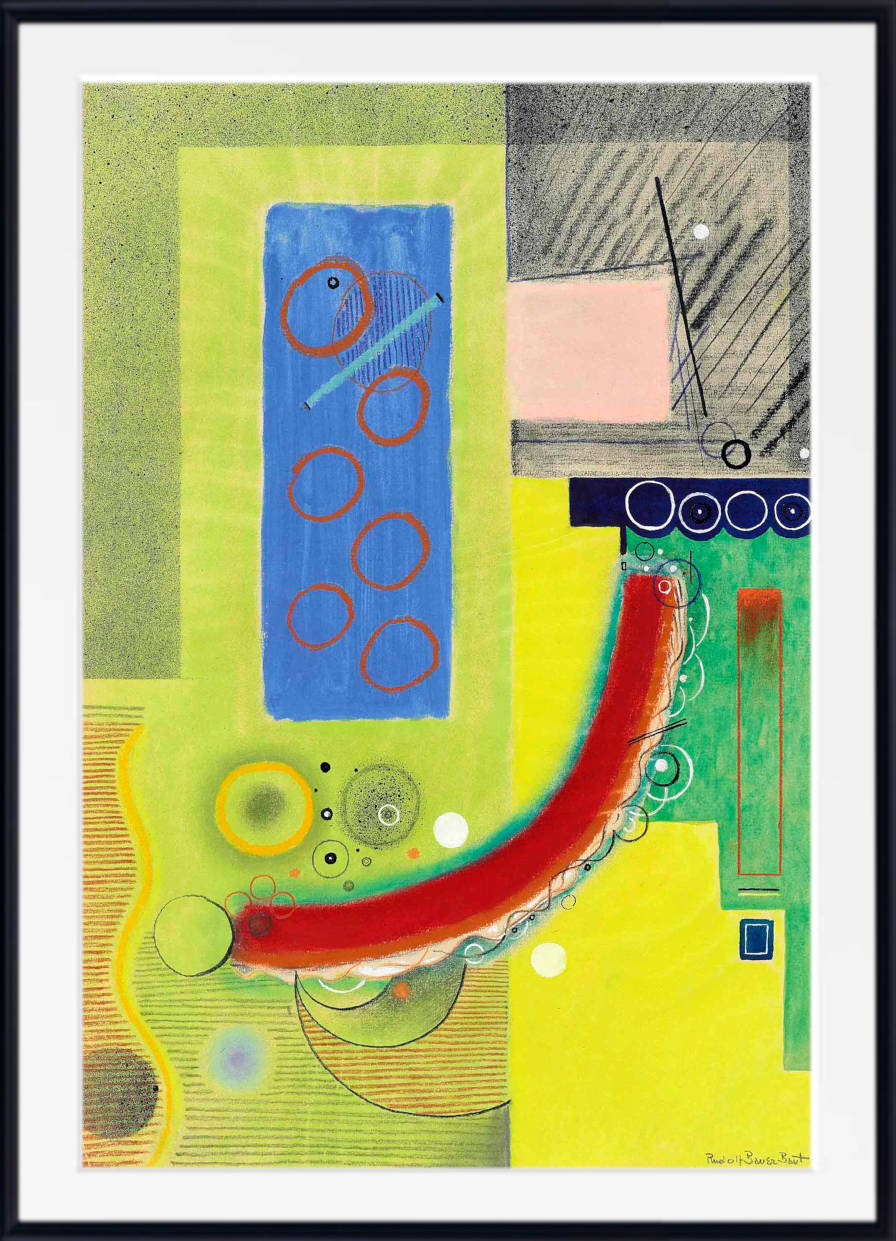
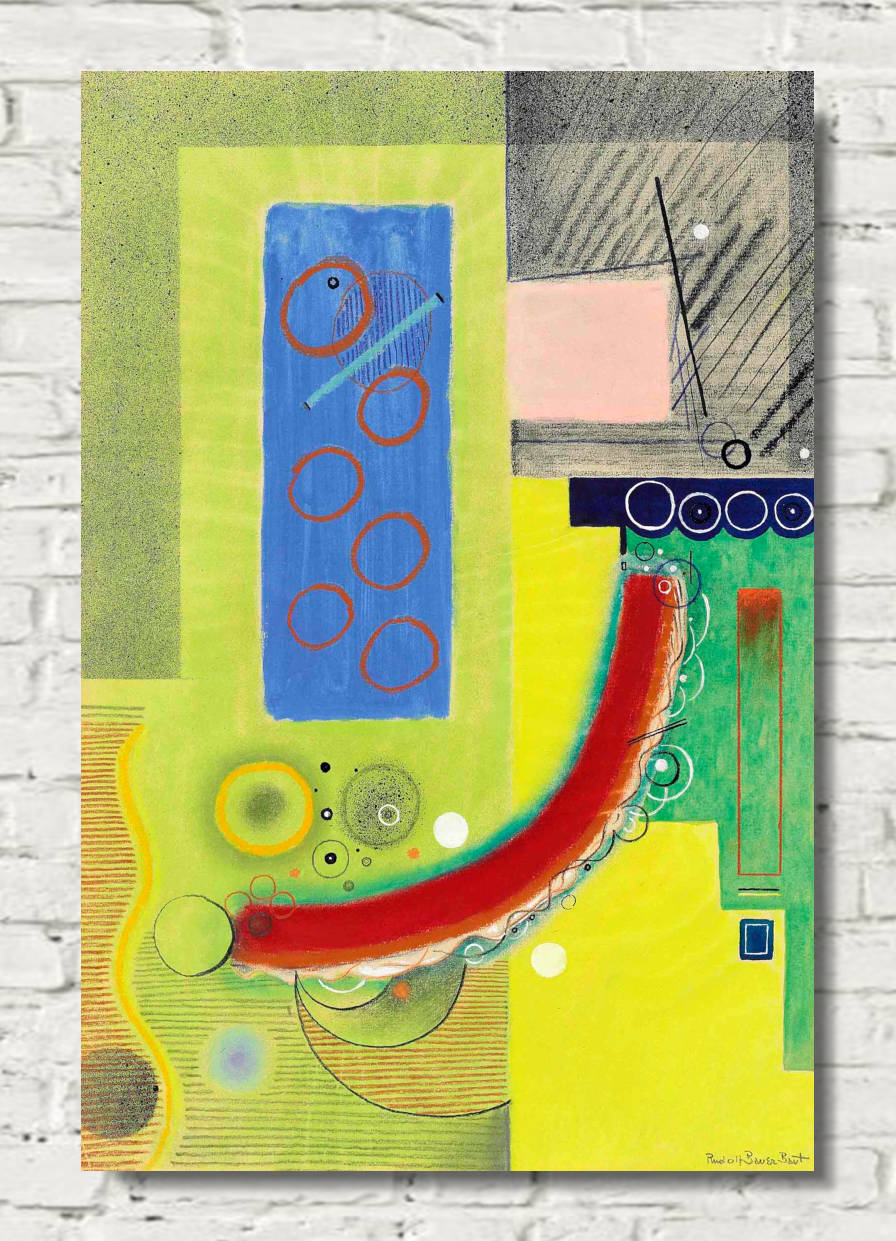
Rondo sets a large rounded form amid blue, green and red areas crossed by sweeping lines. Small circles and bright accents interrupt the broader movement. Unlike the isolated dancer, the forms seem to continue into one another, producing a space without a single fixed foreground or background.
Separate forms in an open arrangement
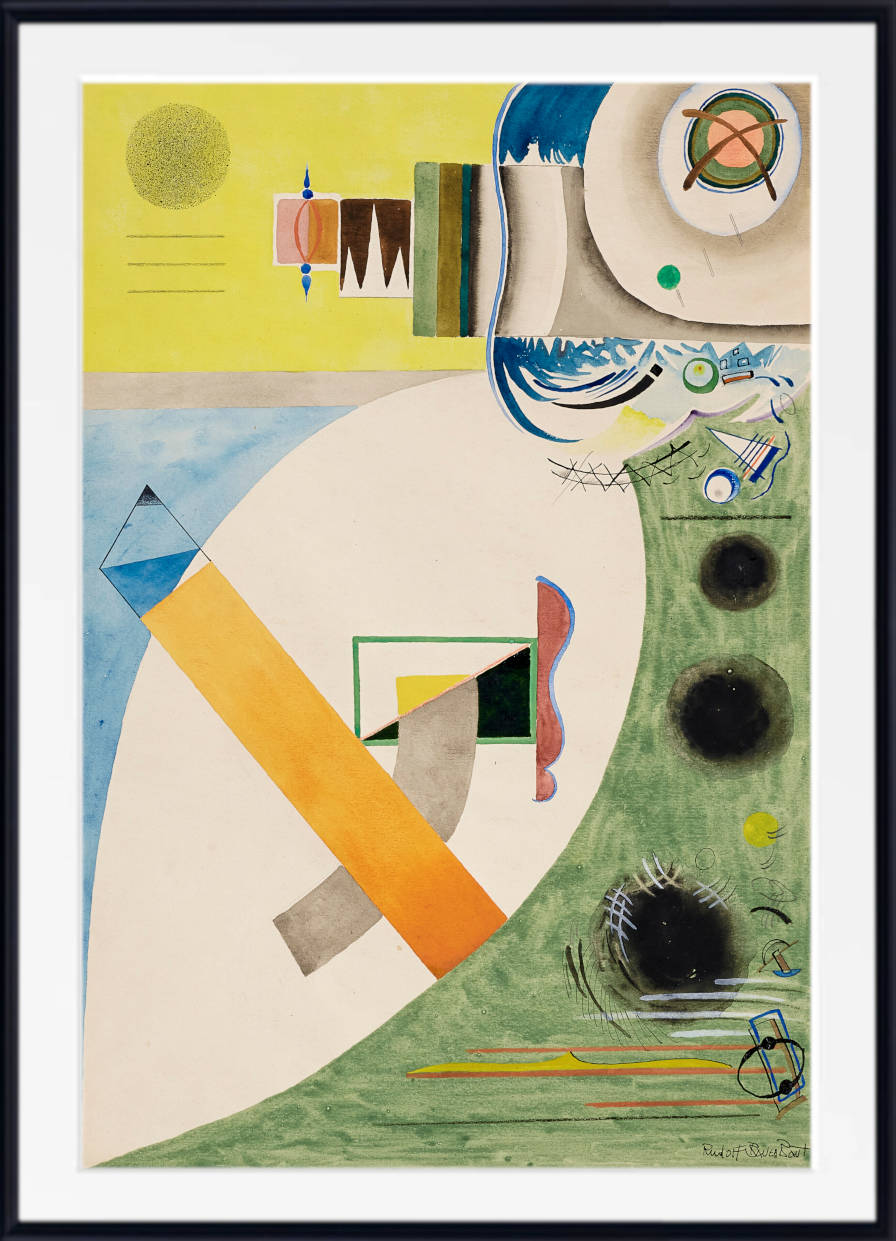
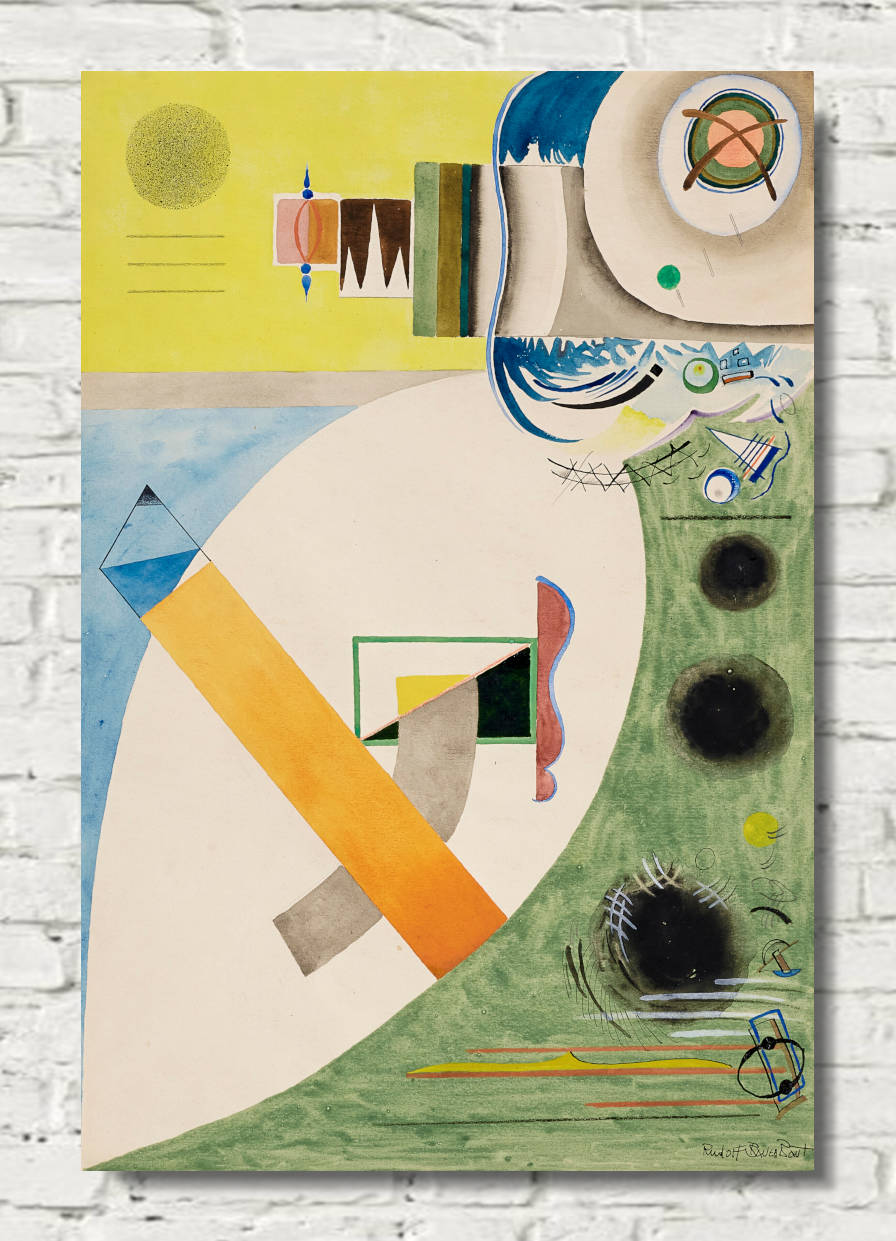
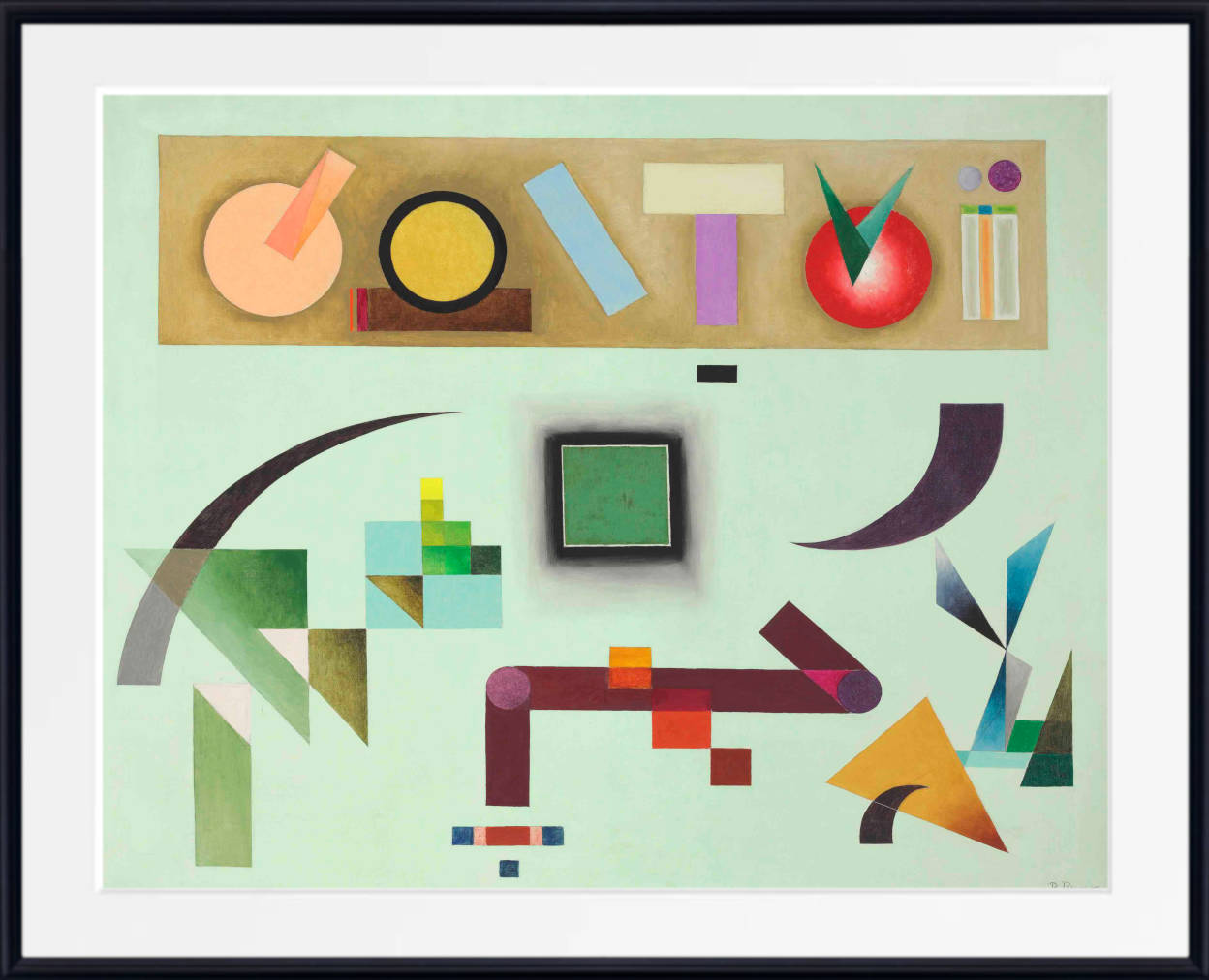
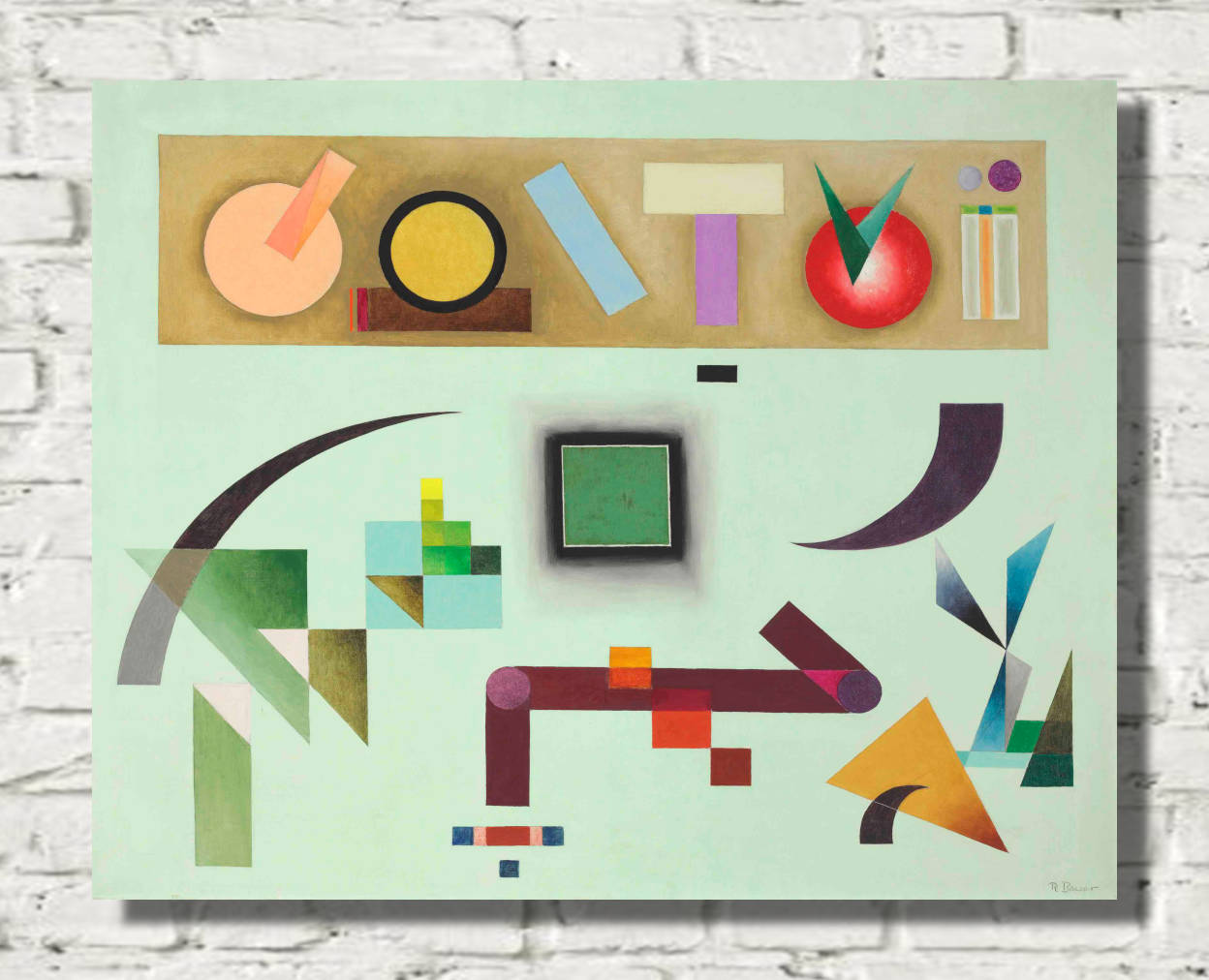
Green Square places a central green square among arcs, circles, bars and angled shapes on a pale ground. The larger empty areas allow each element to remain distinct. Compare this measured spacing with the denser colour of Rondo, where curved forms merge more closely across the surface.
Related artists and collections
Compare line and colour in Wassily Kandinsky, interlocking planes in Otto Freundlich and movement through shape in František Kupka. The wider abstract collection offers further non-figurative work, while geometric abstracts focuses on circles, grids, angles and the spaces between clearly defined forms.
Read more in our guide to Rudolf Bauer.