


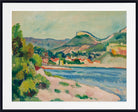
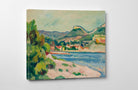
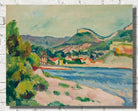
Cassis Landscape, French Riviera, Henri Manguin
Couldn't load pickup availability
BUY WITH CONFIDENCE
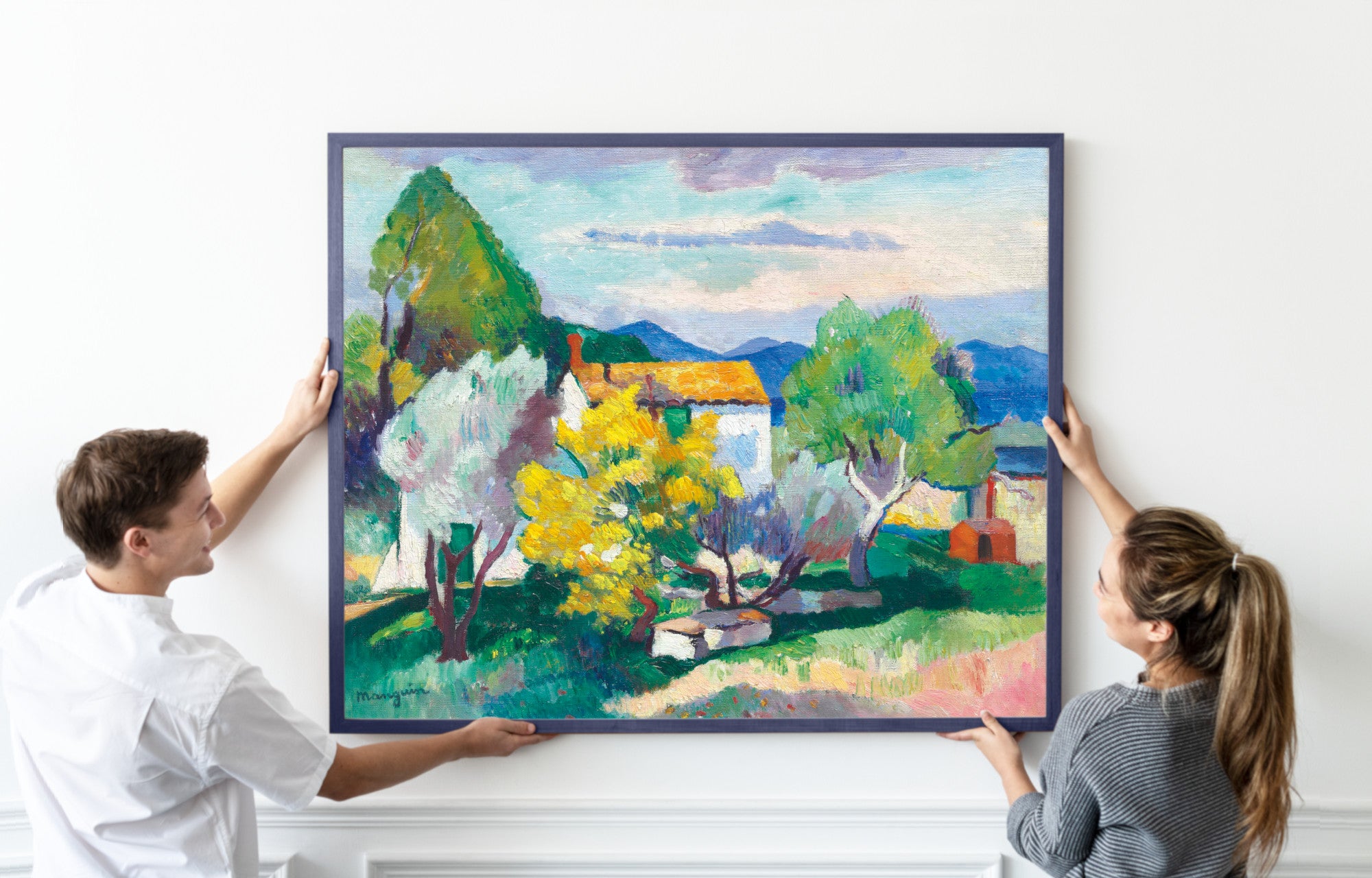
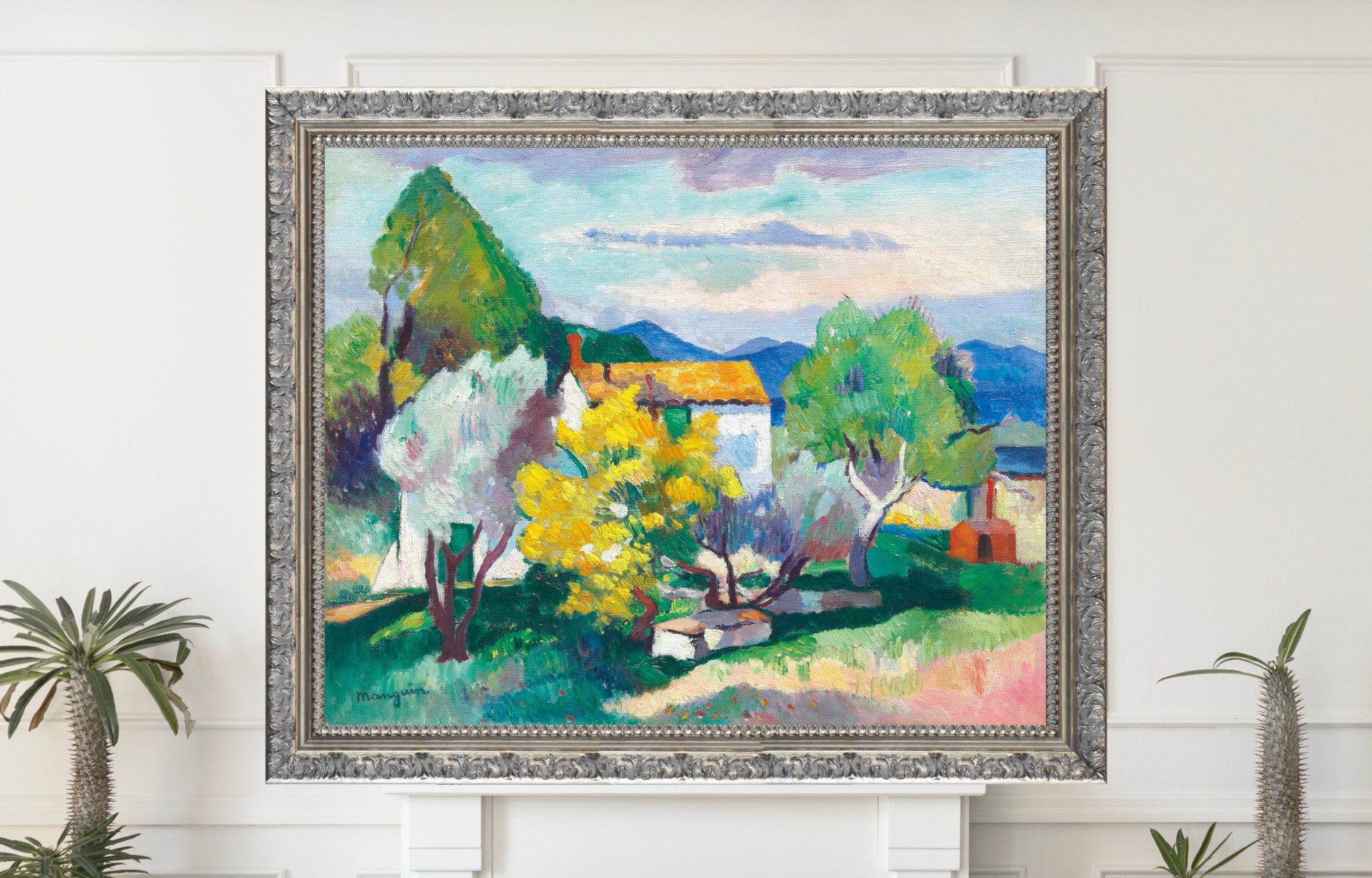
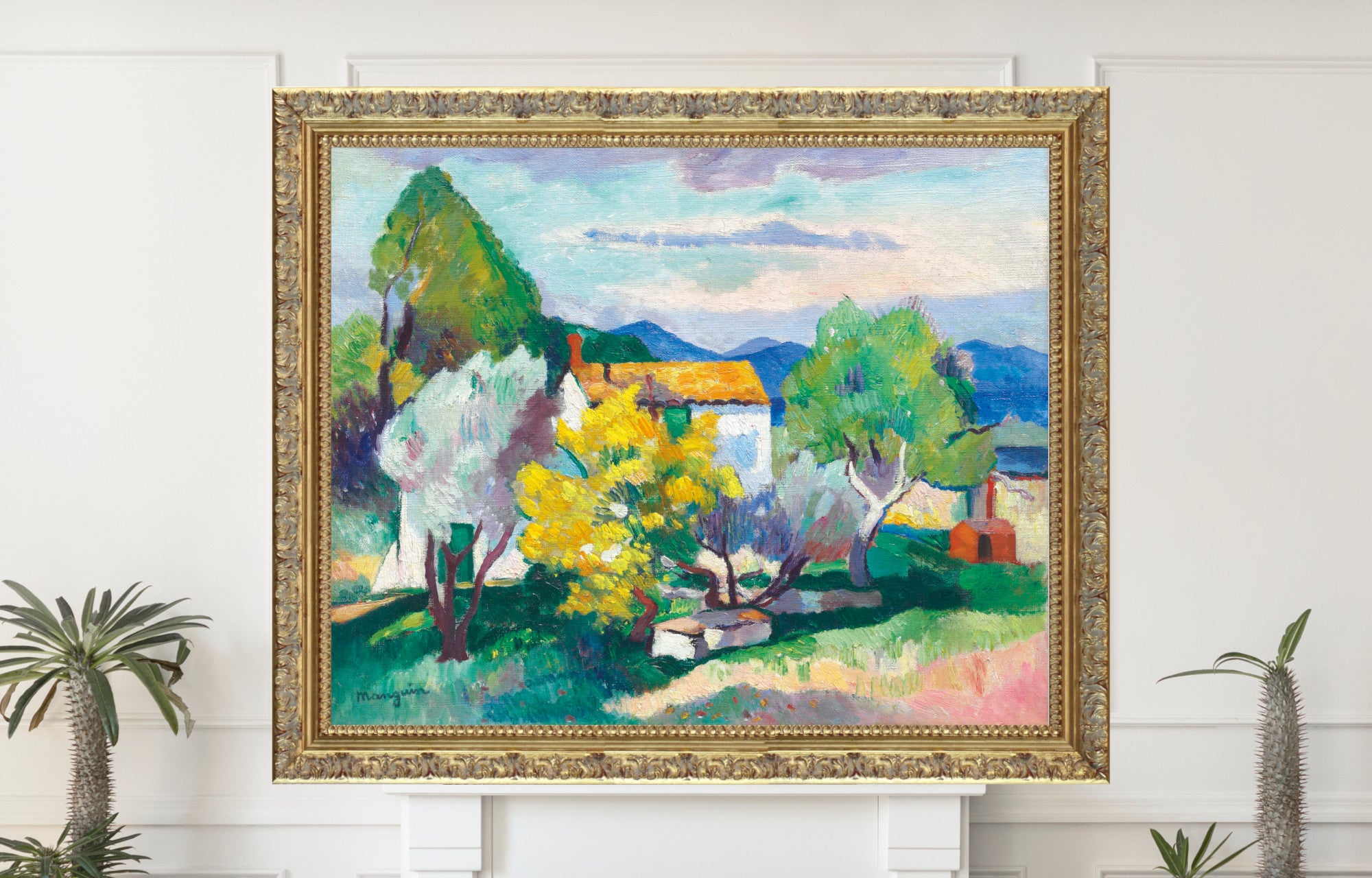
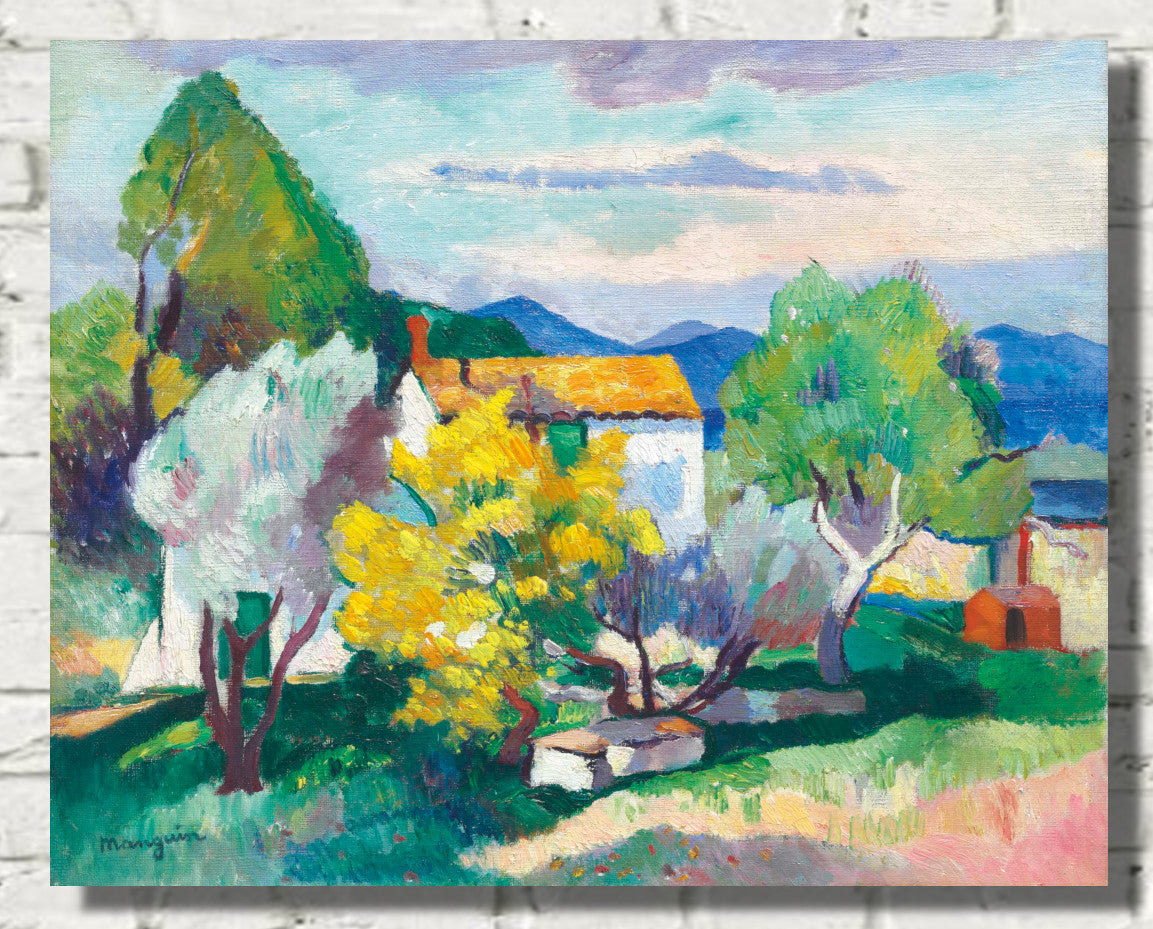
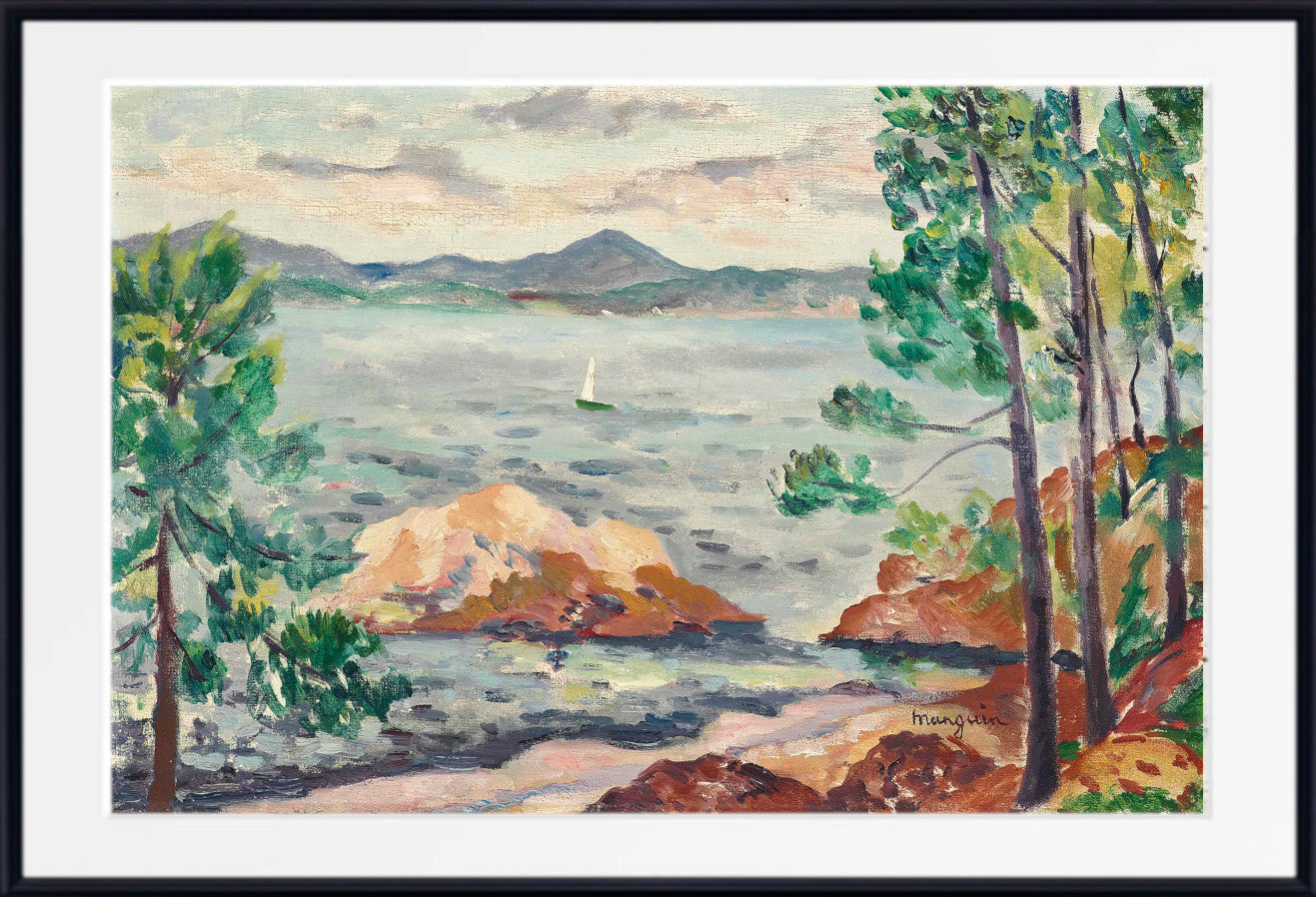
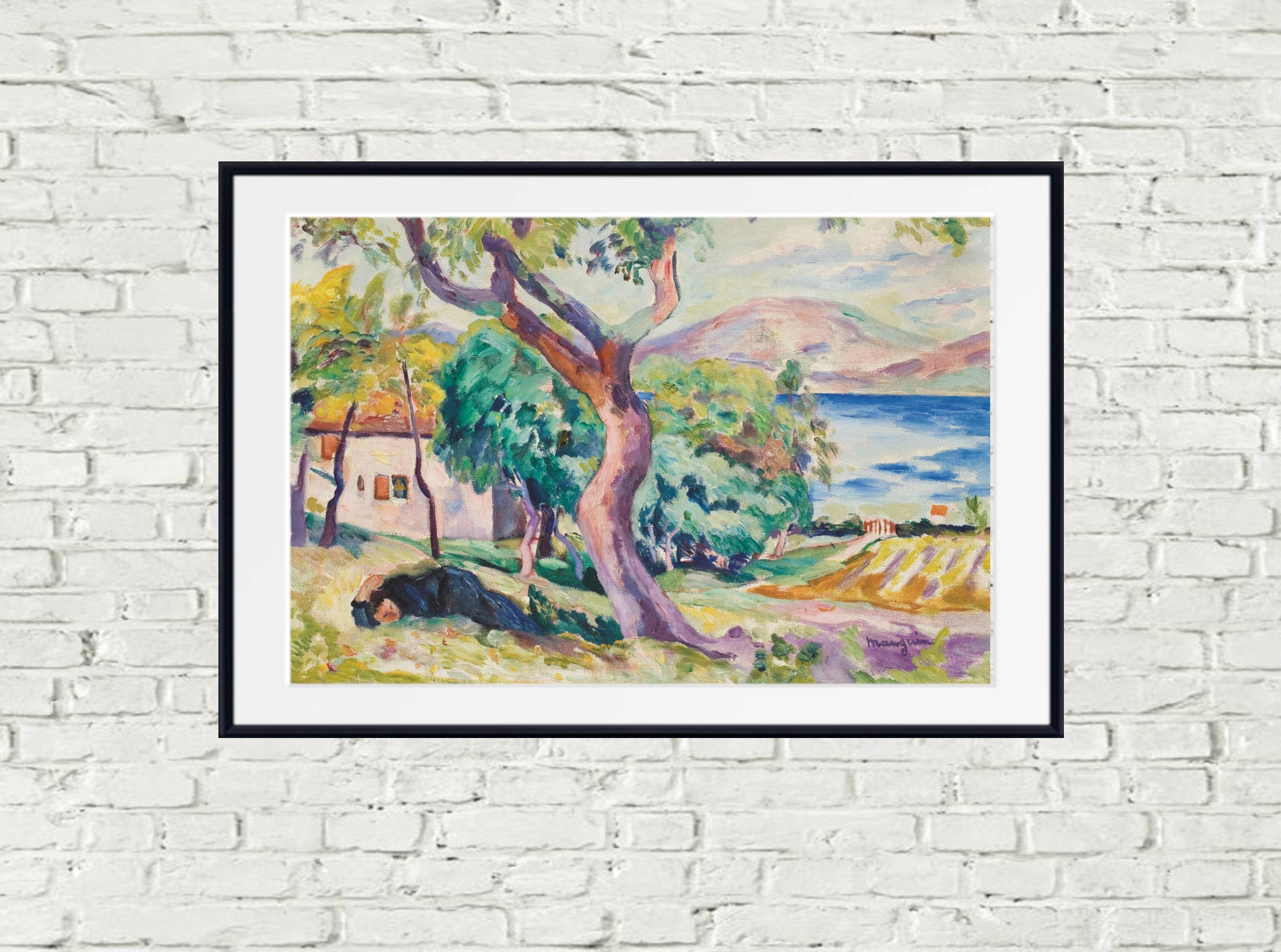
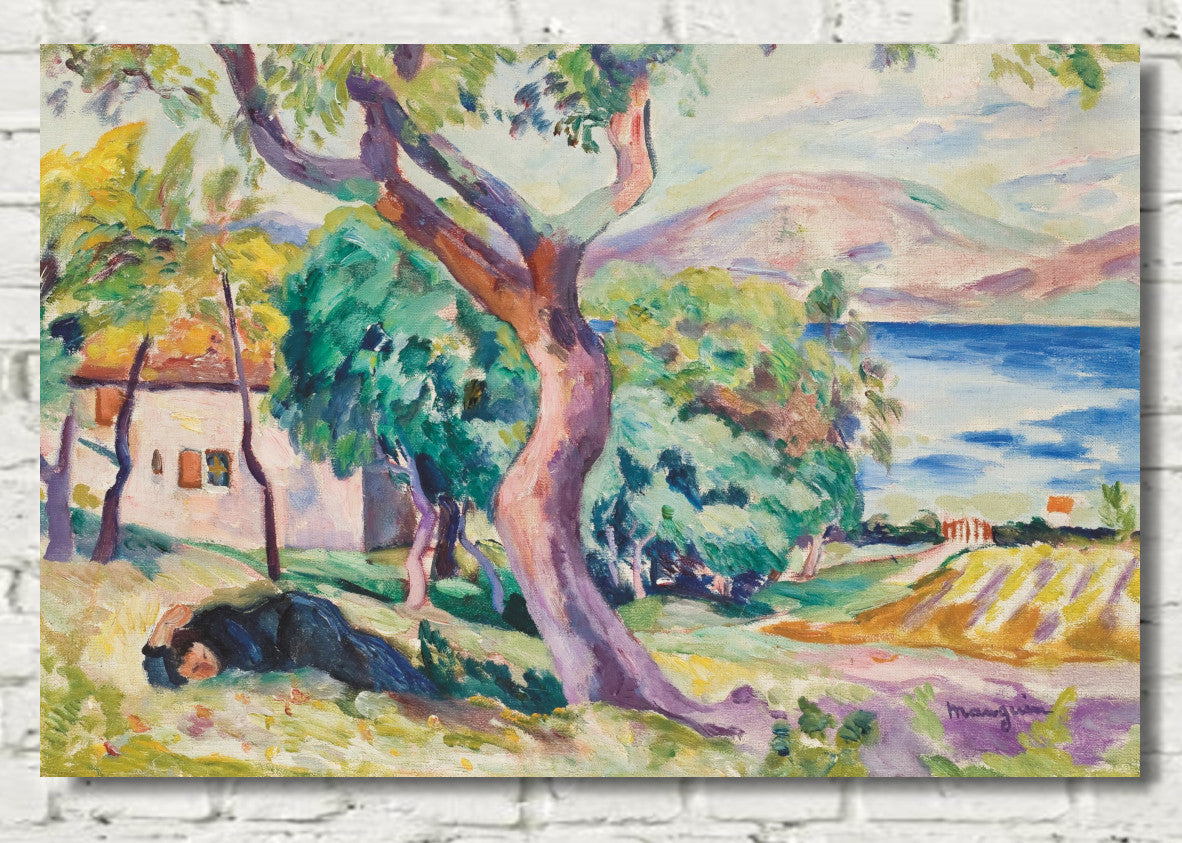
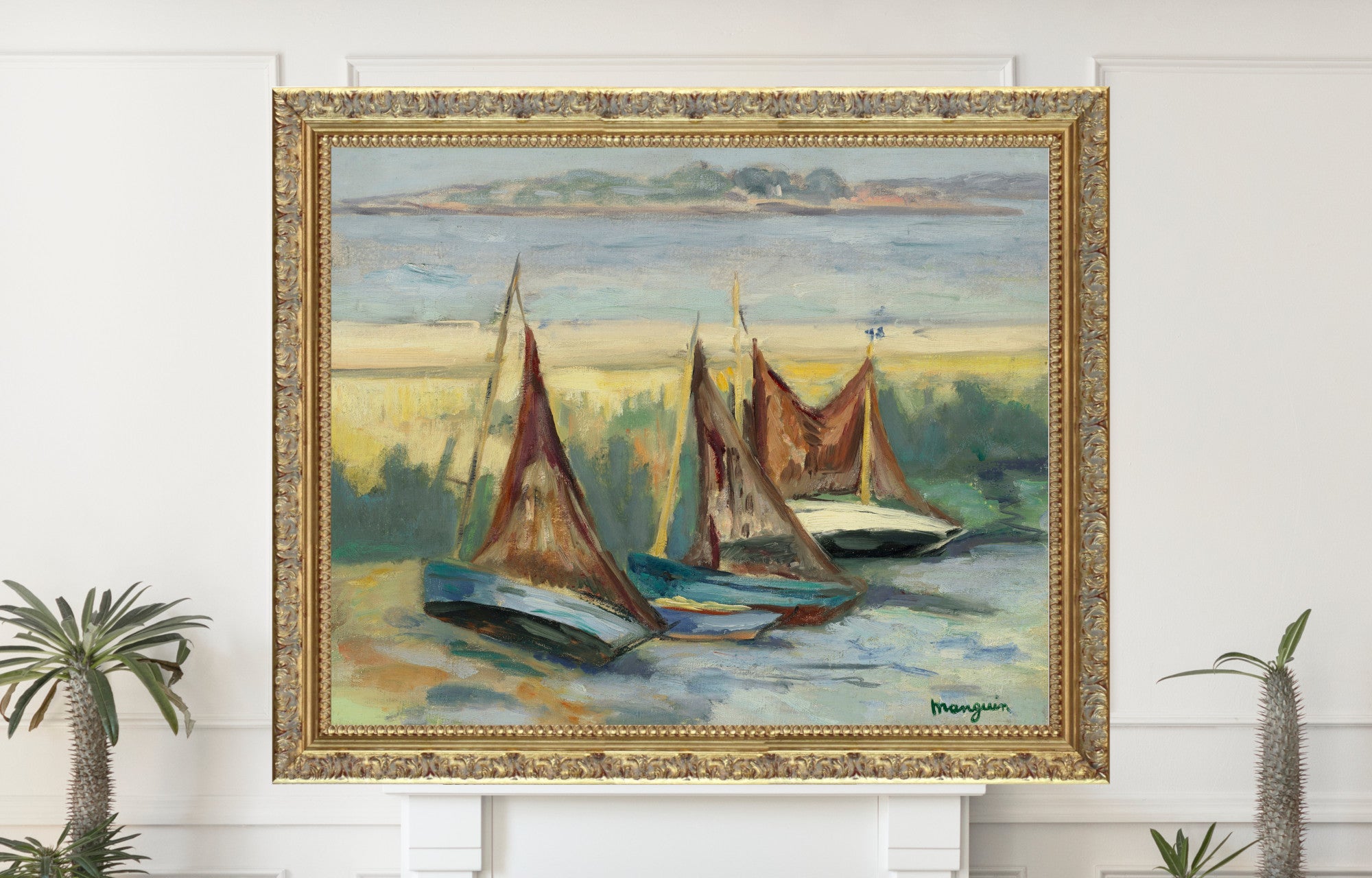
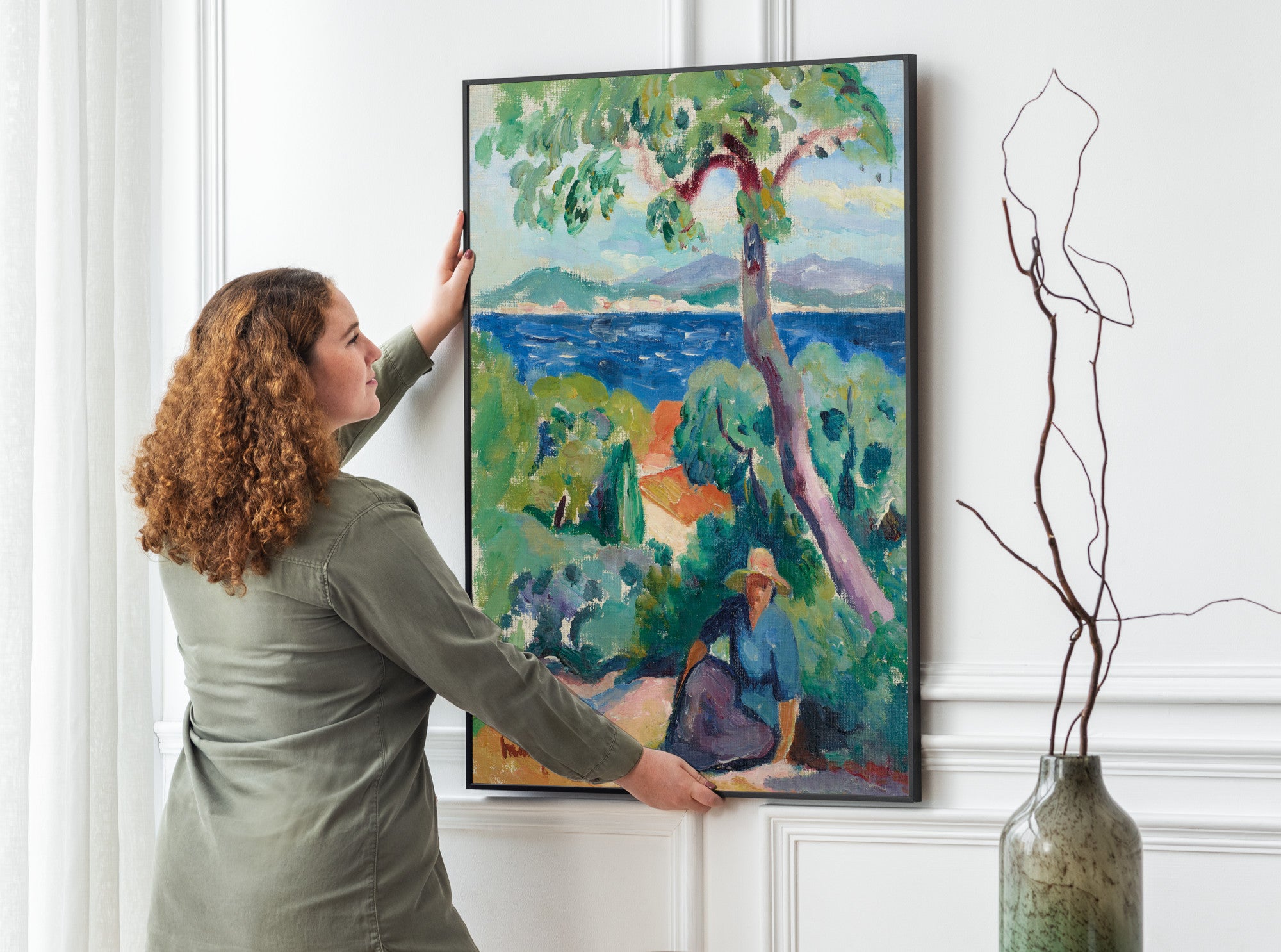
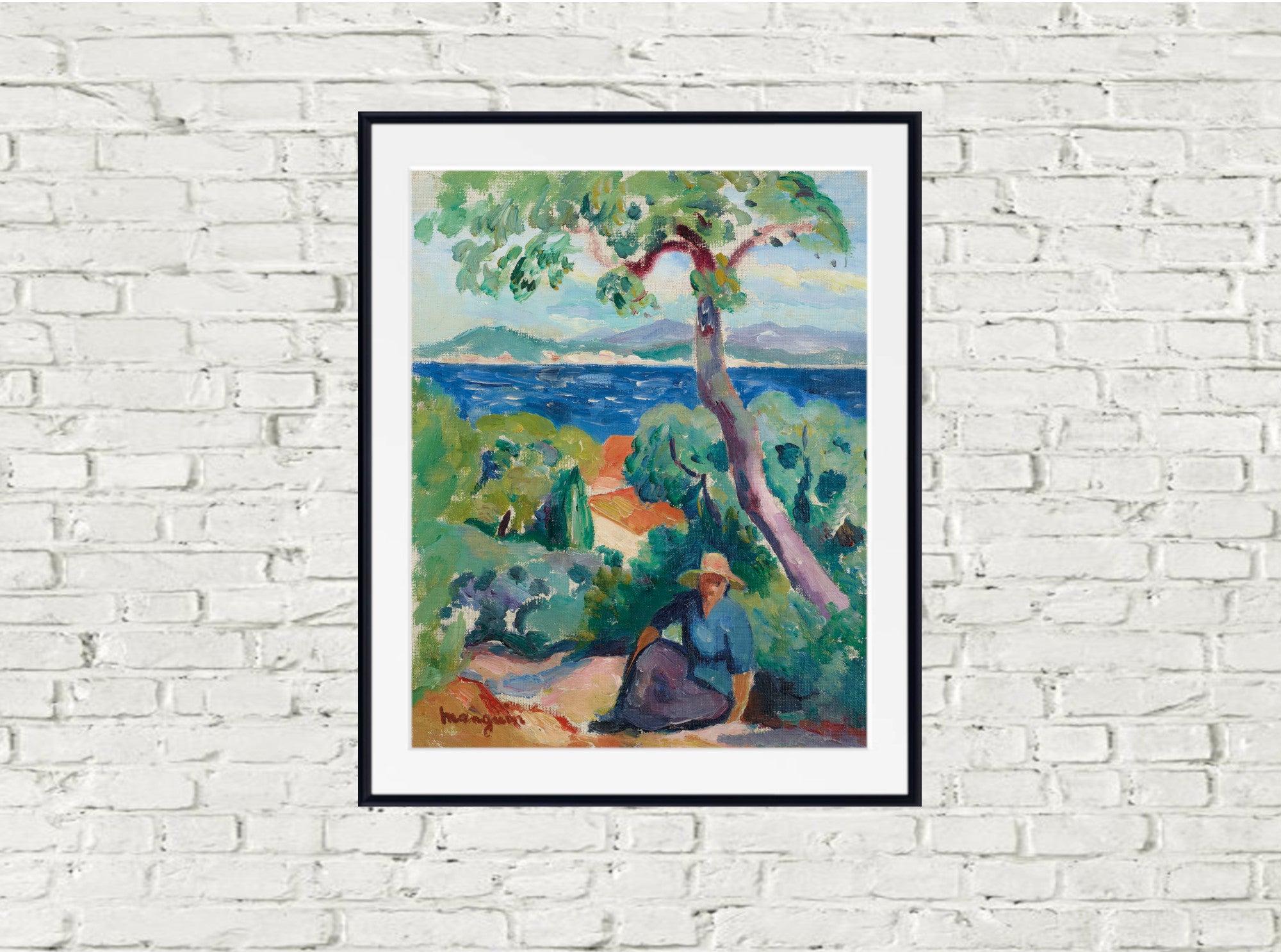
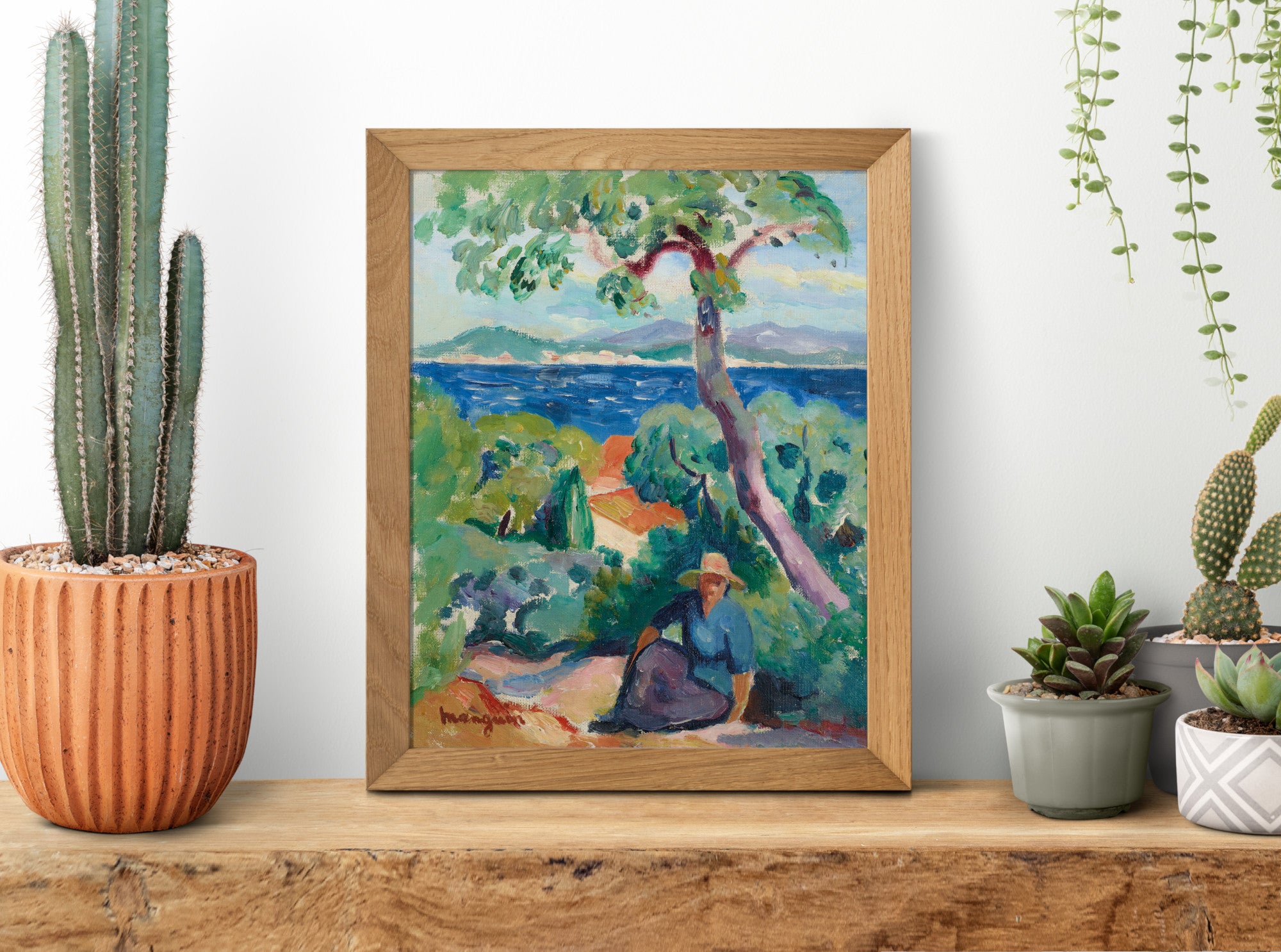
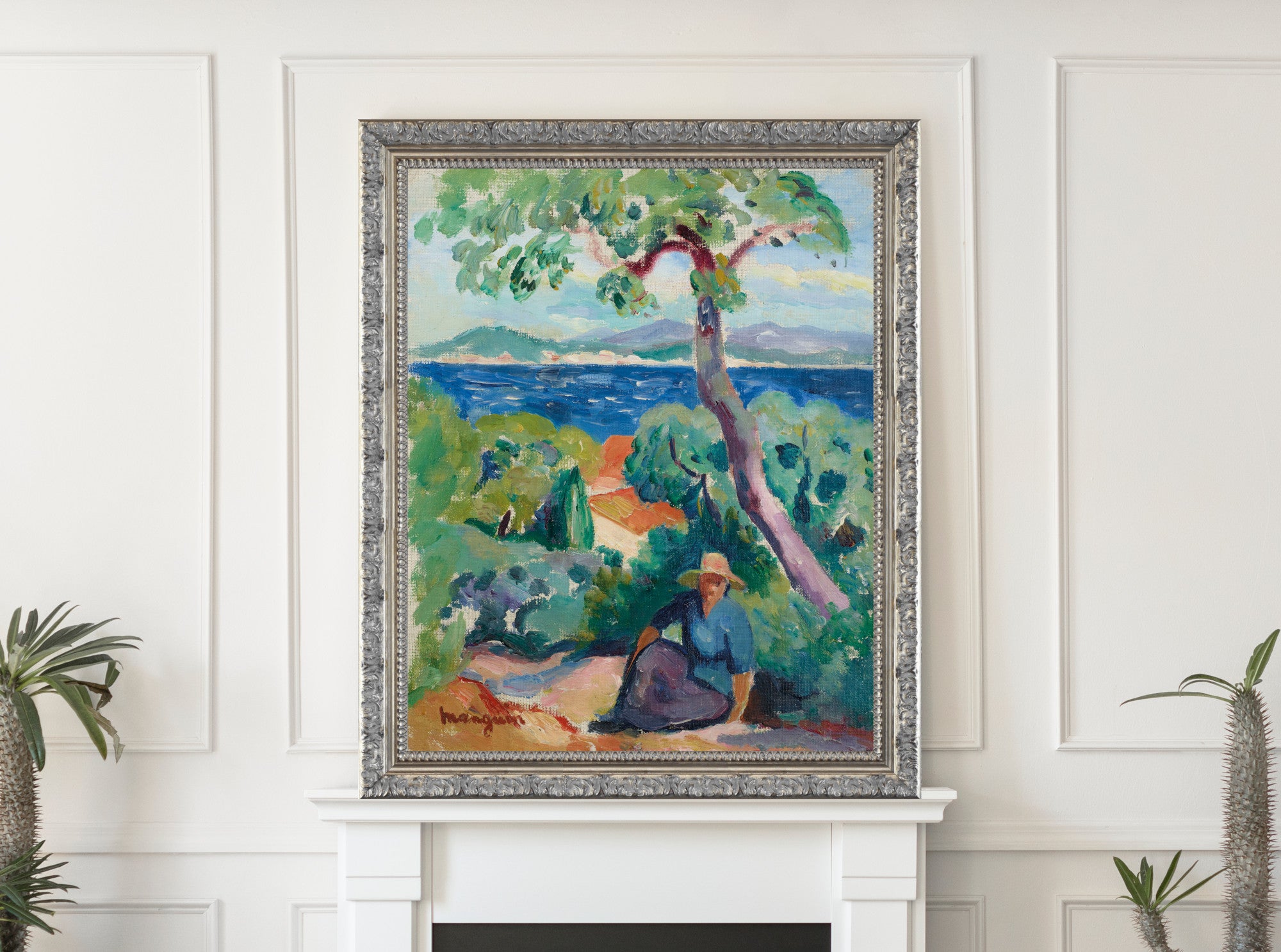
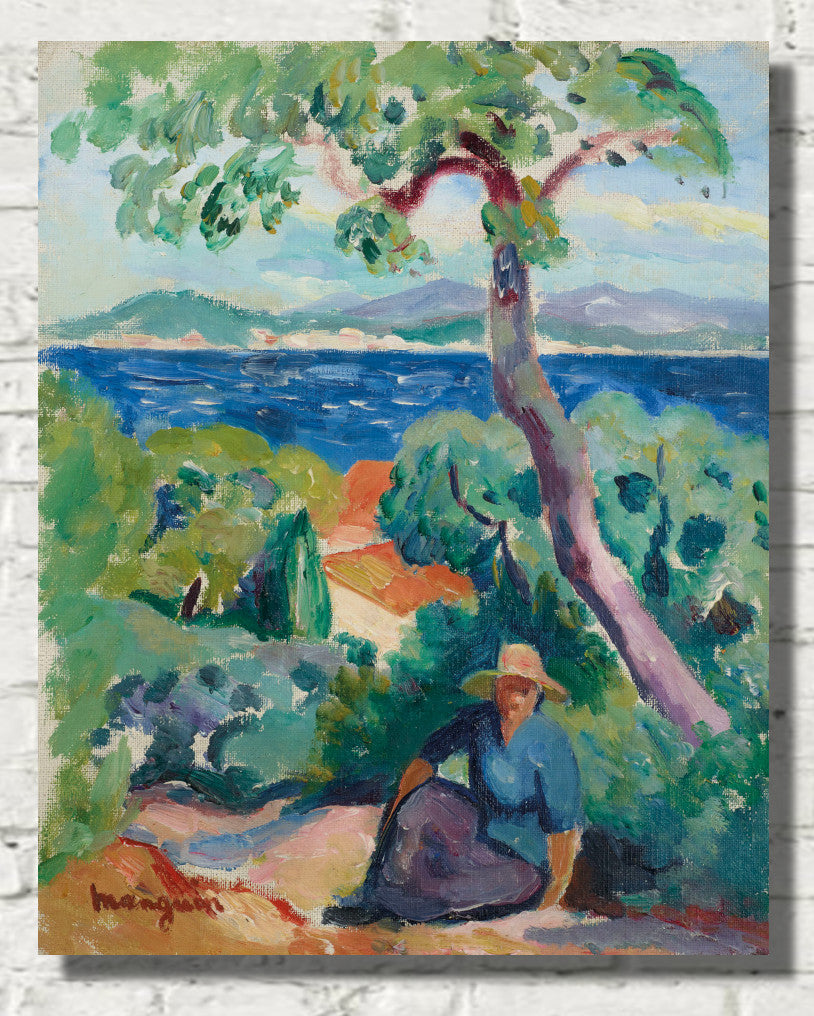
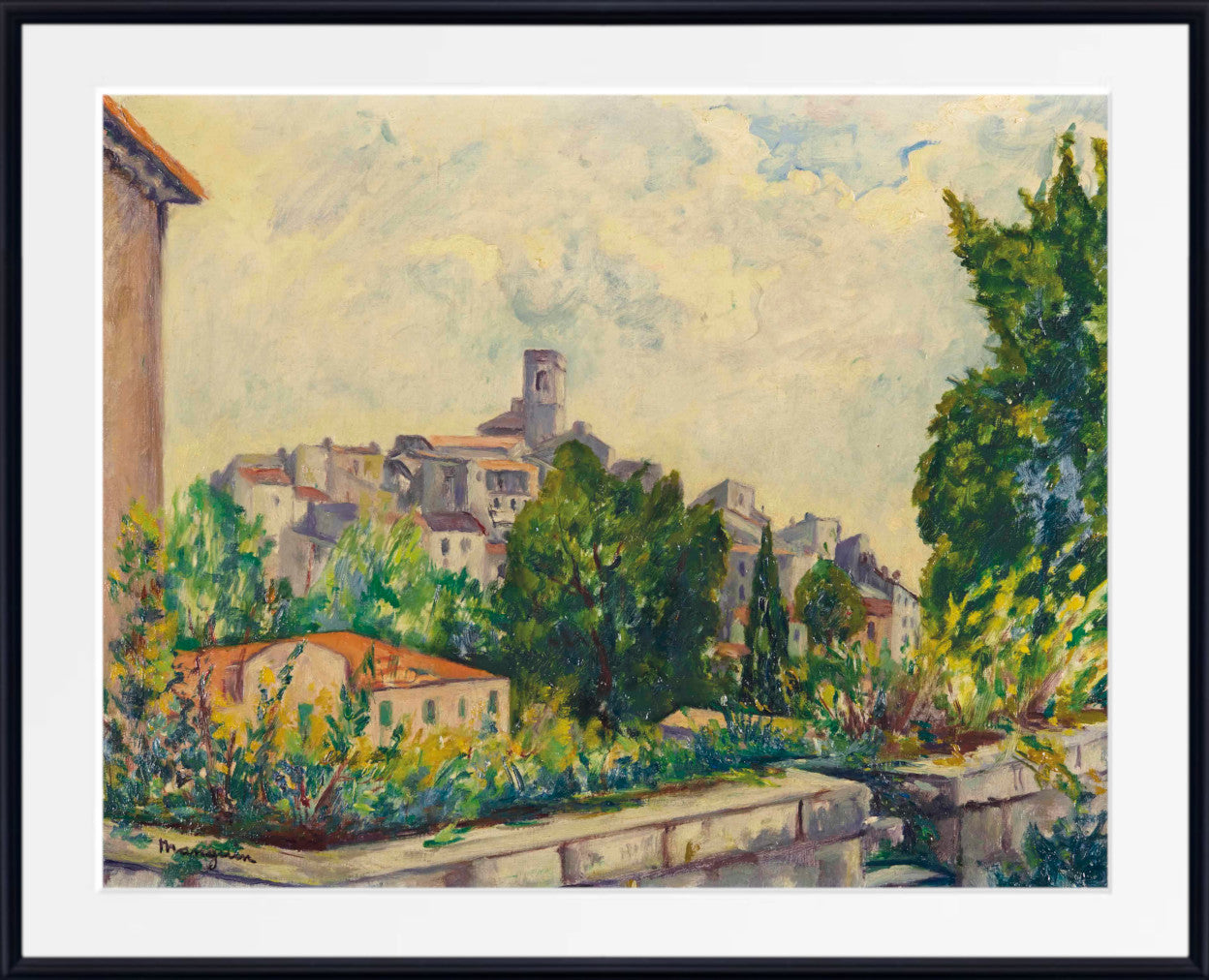
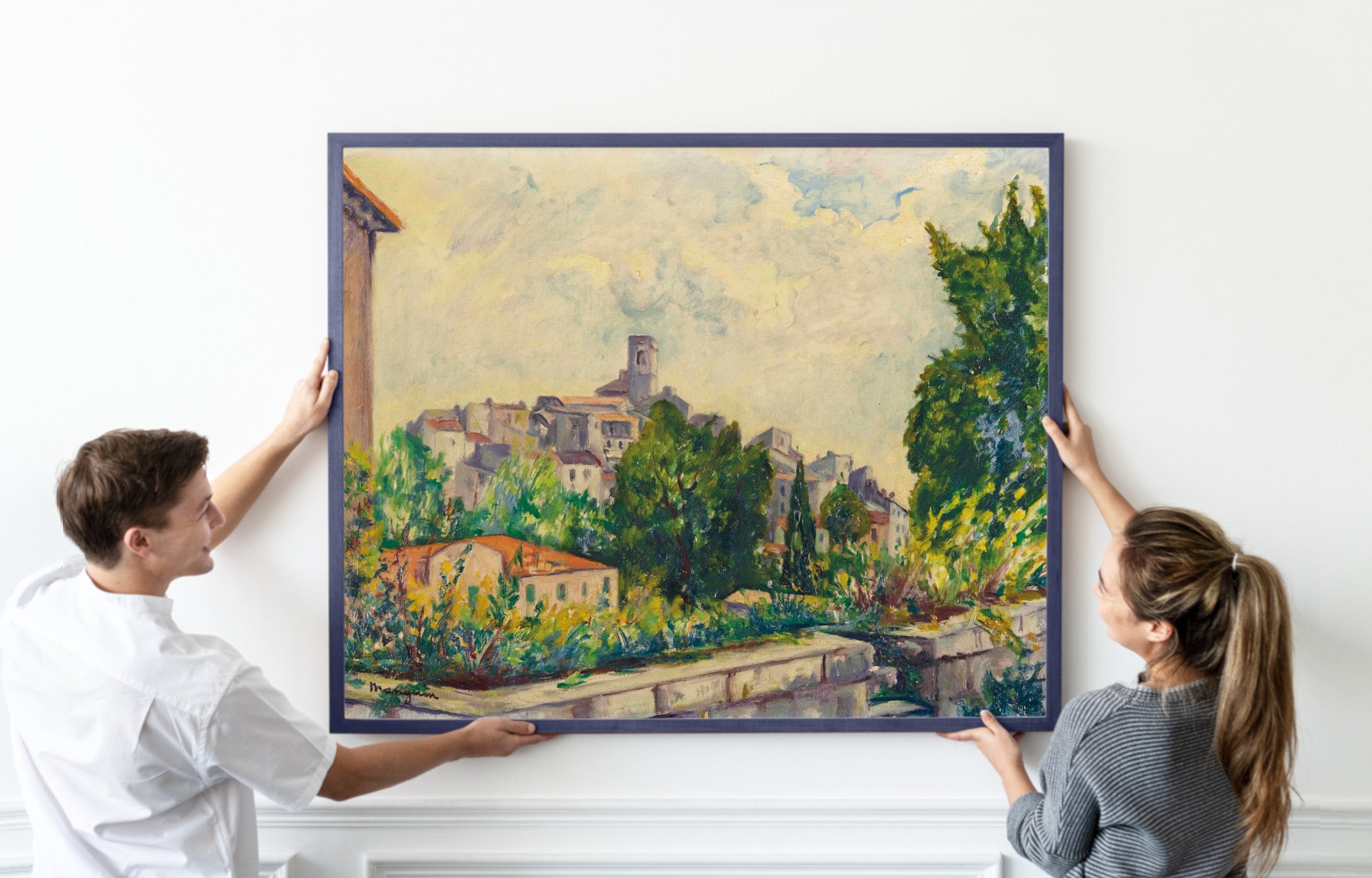
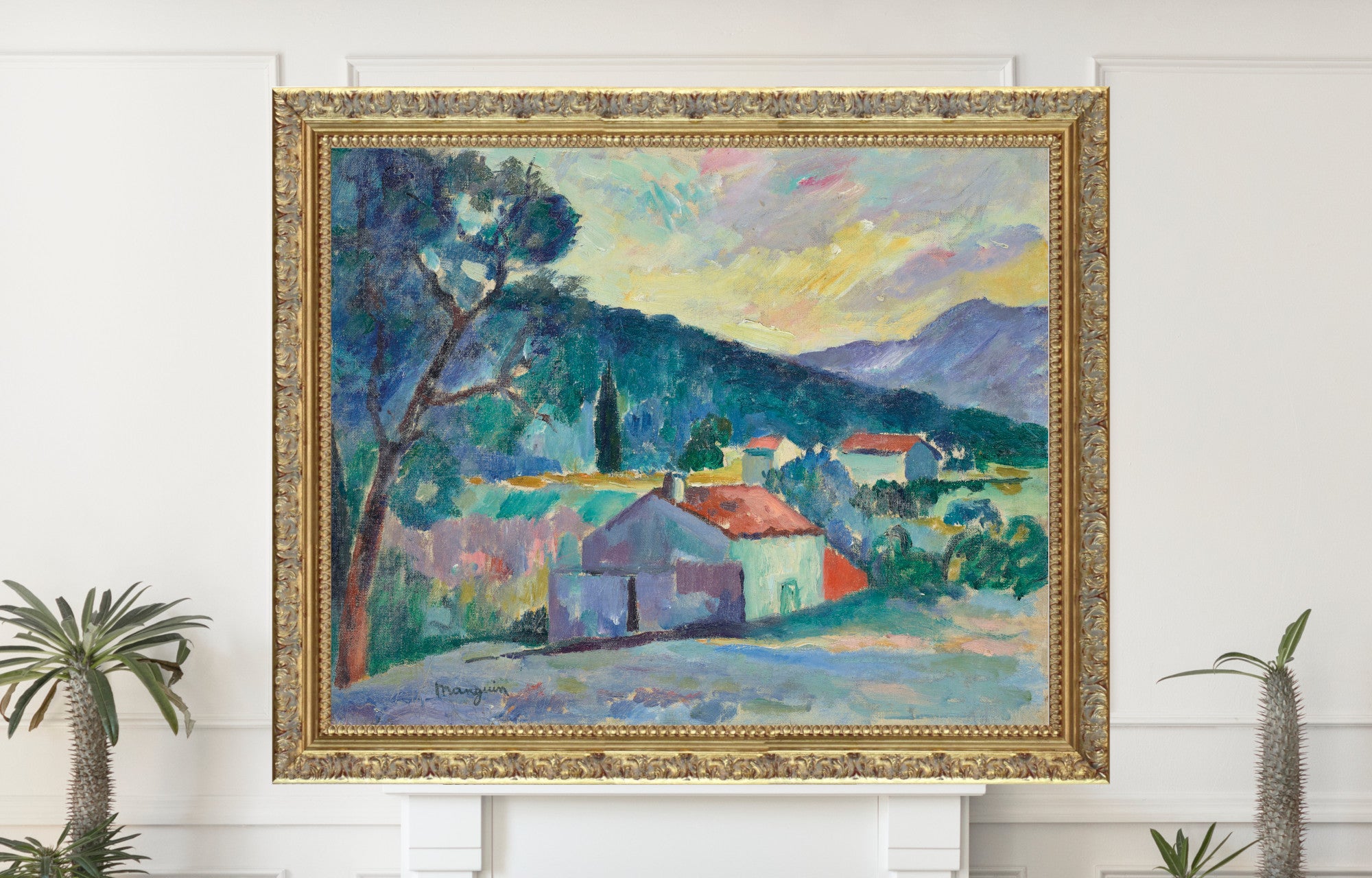
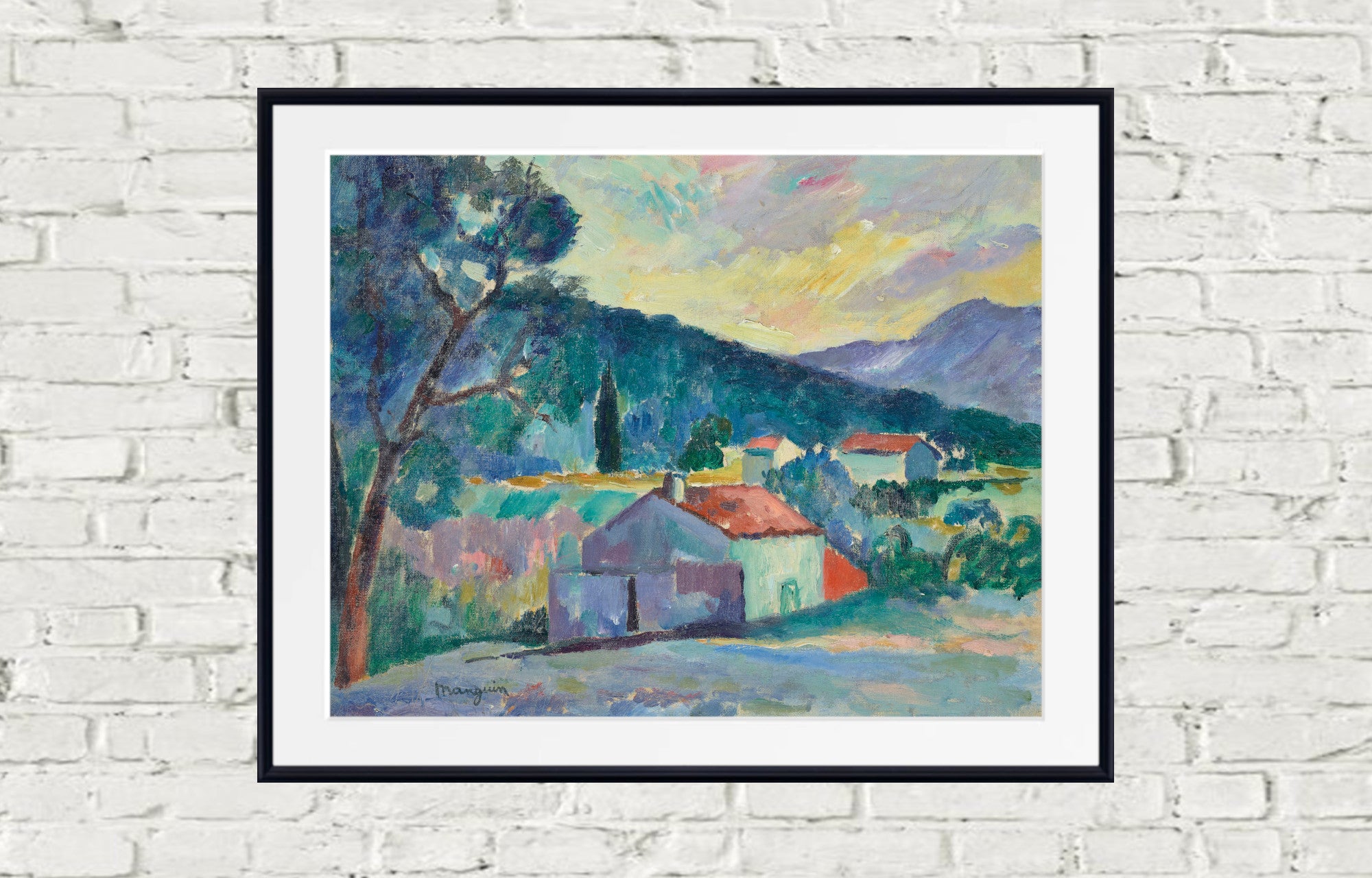
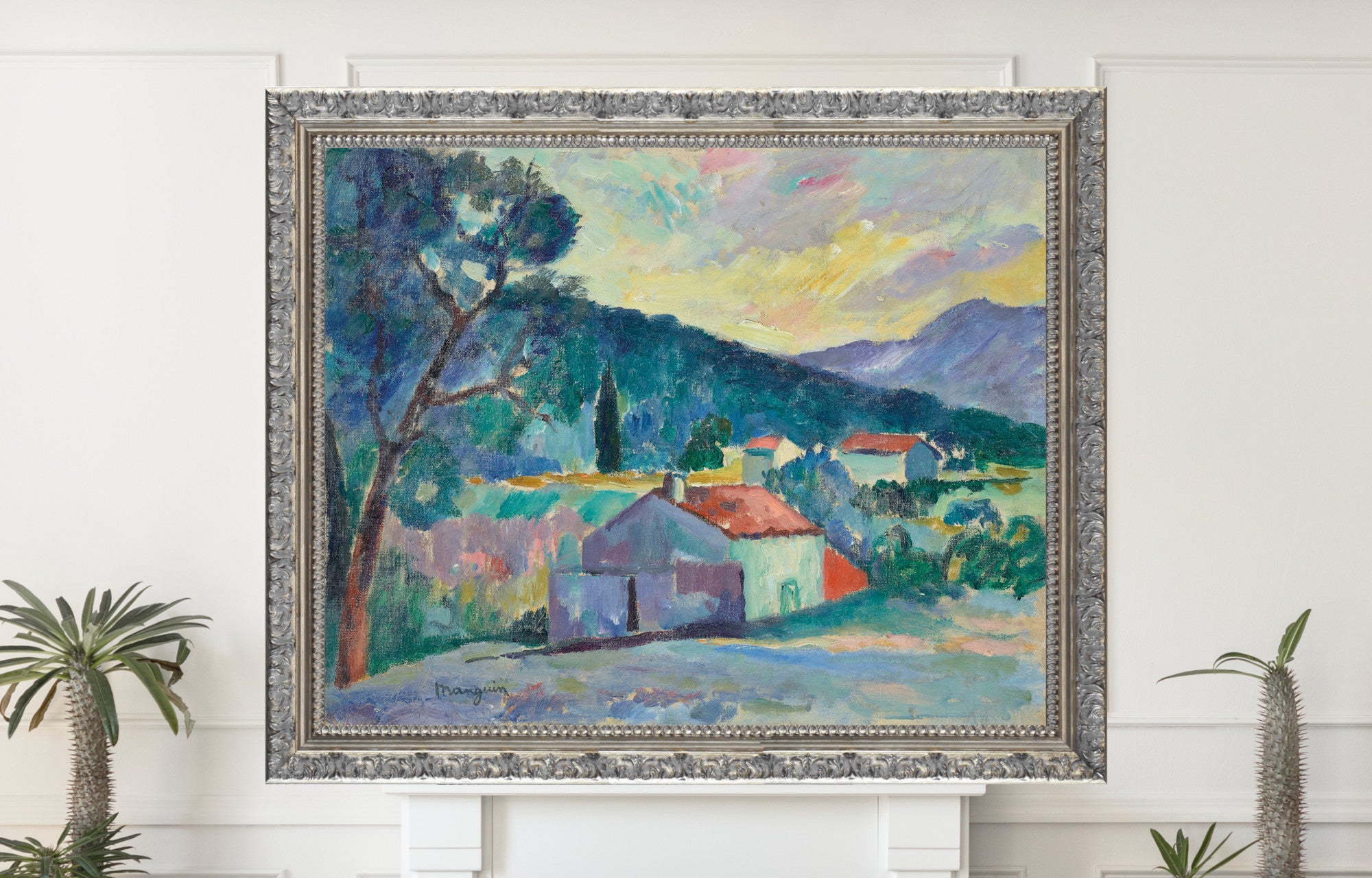
Henri Manguin – Cassis Landscape (1912) Prints
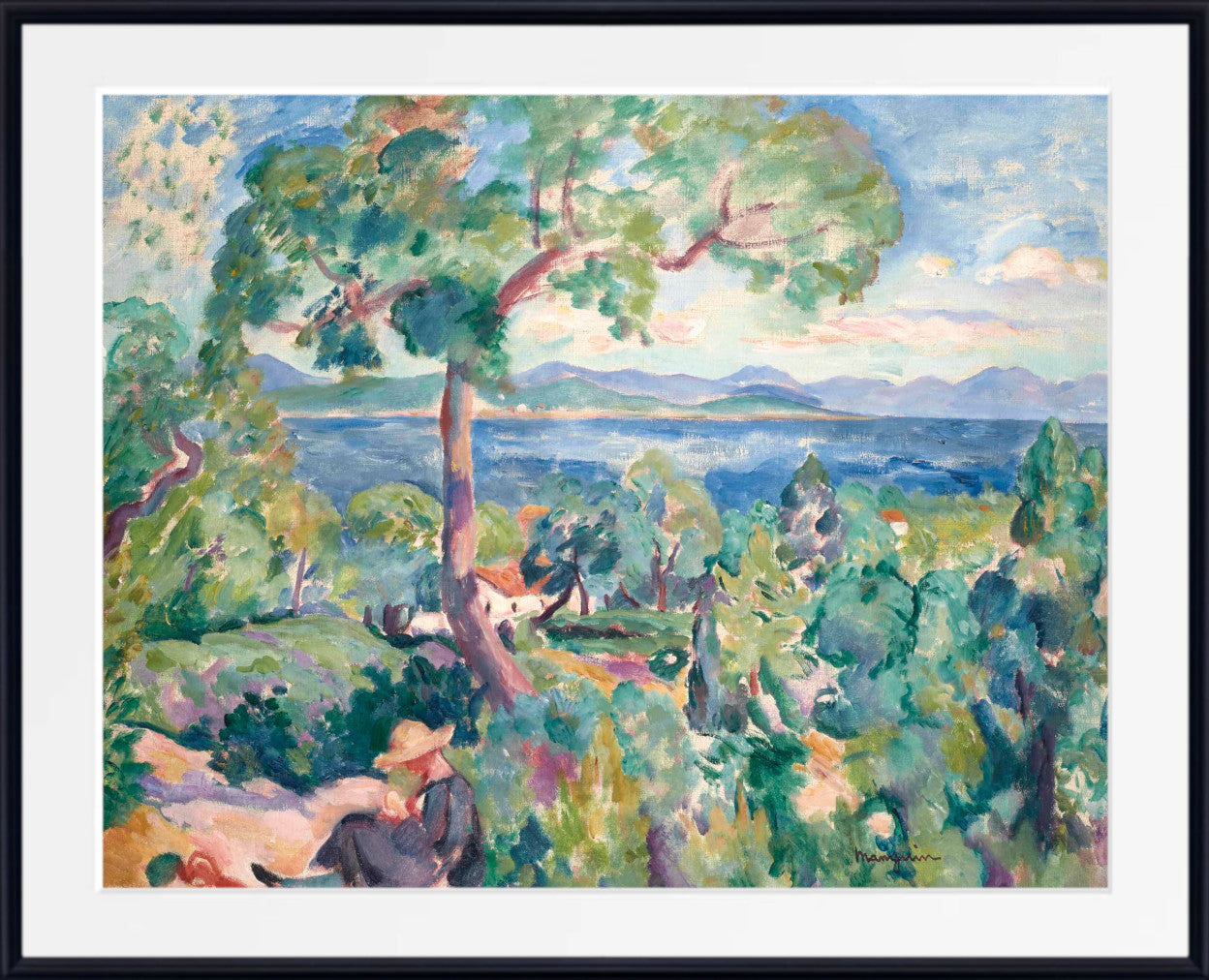
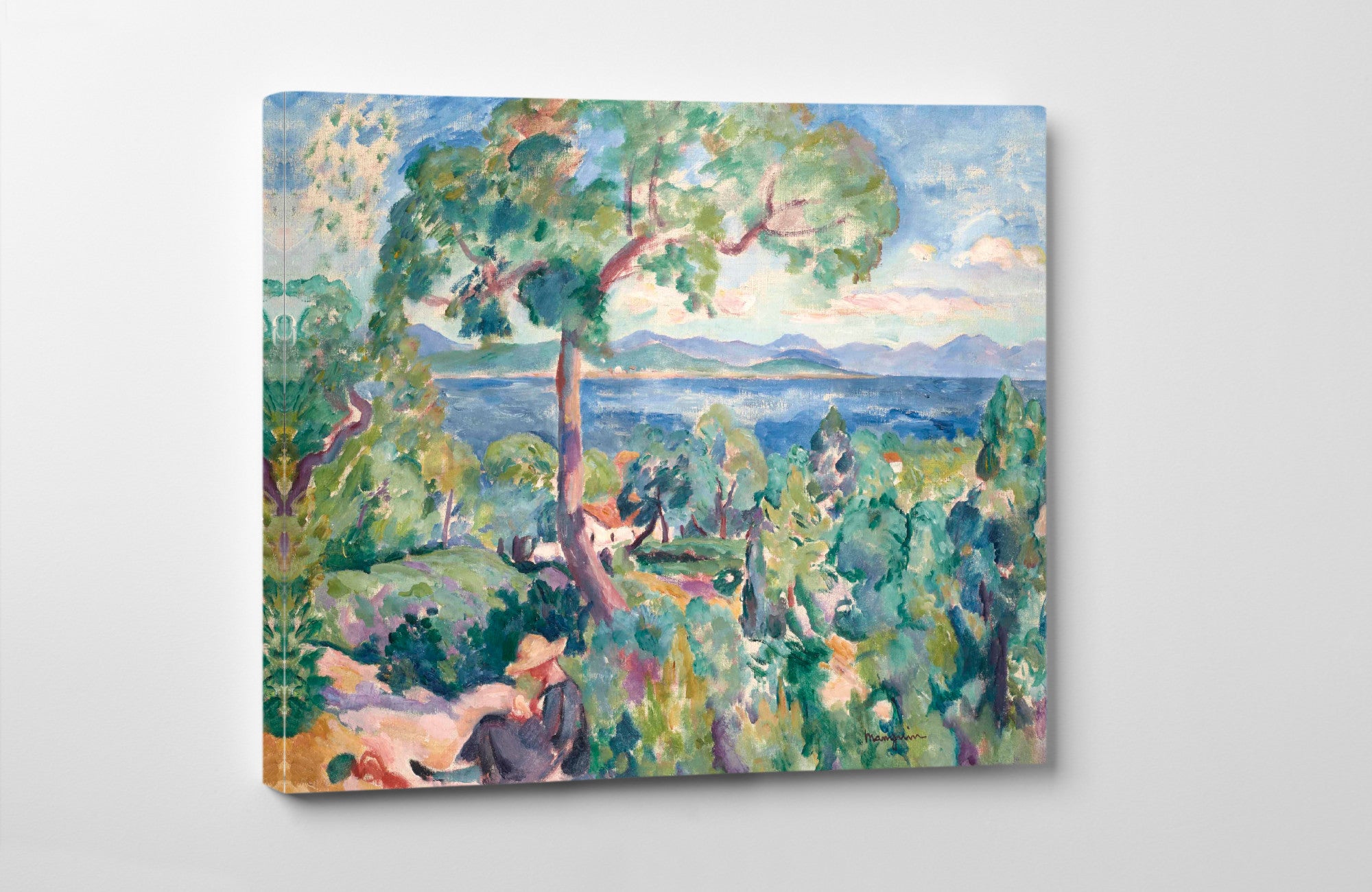
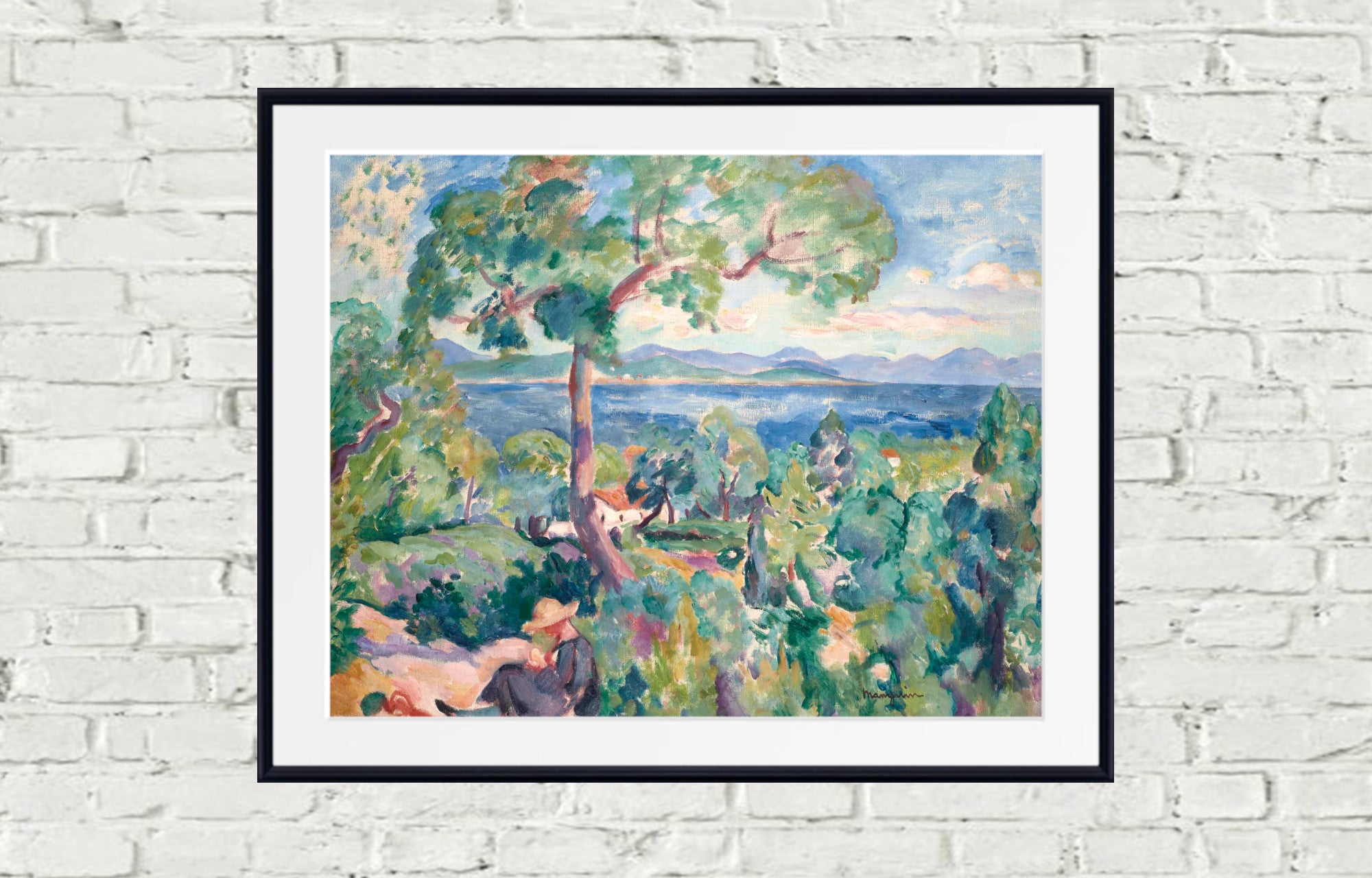
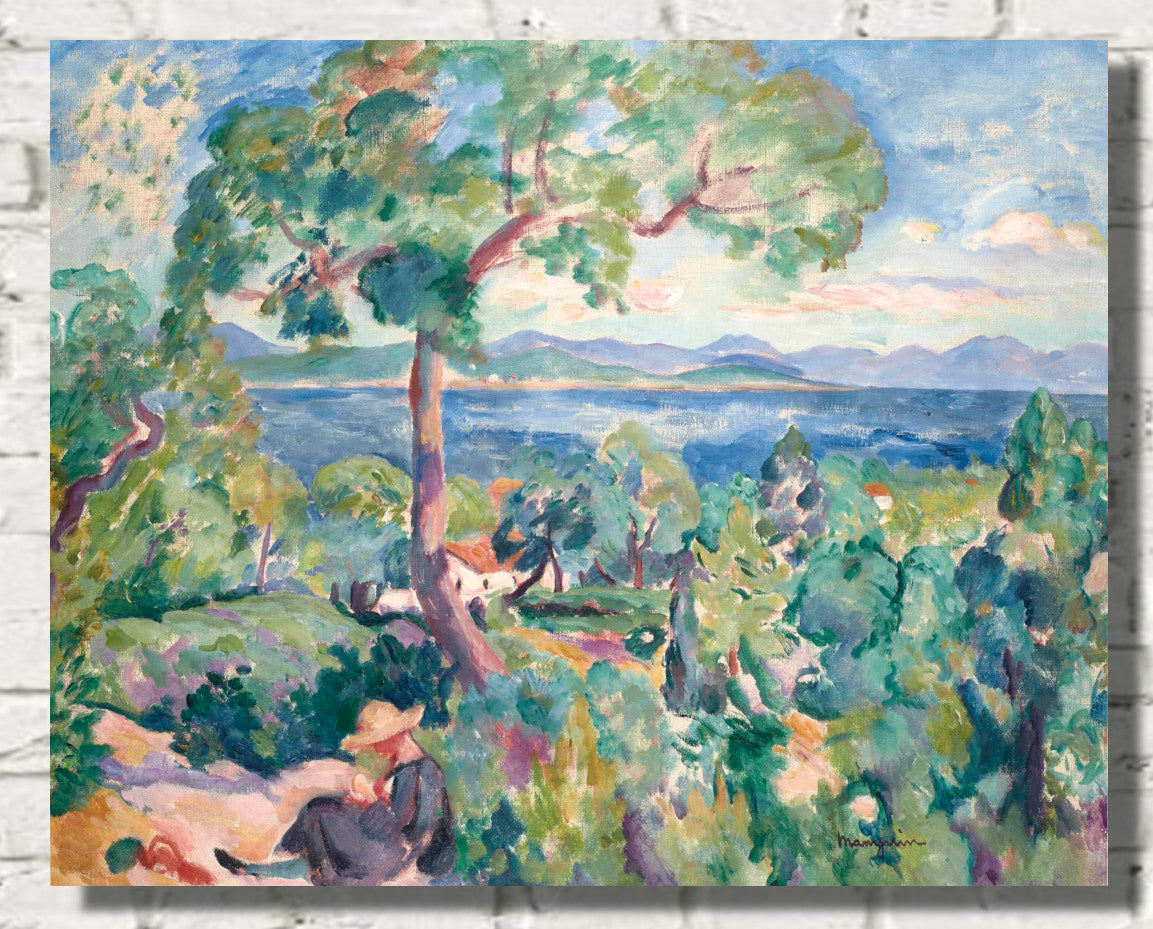
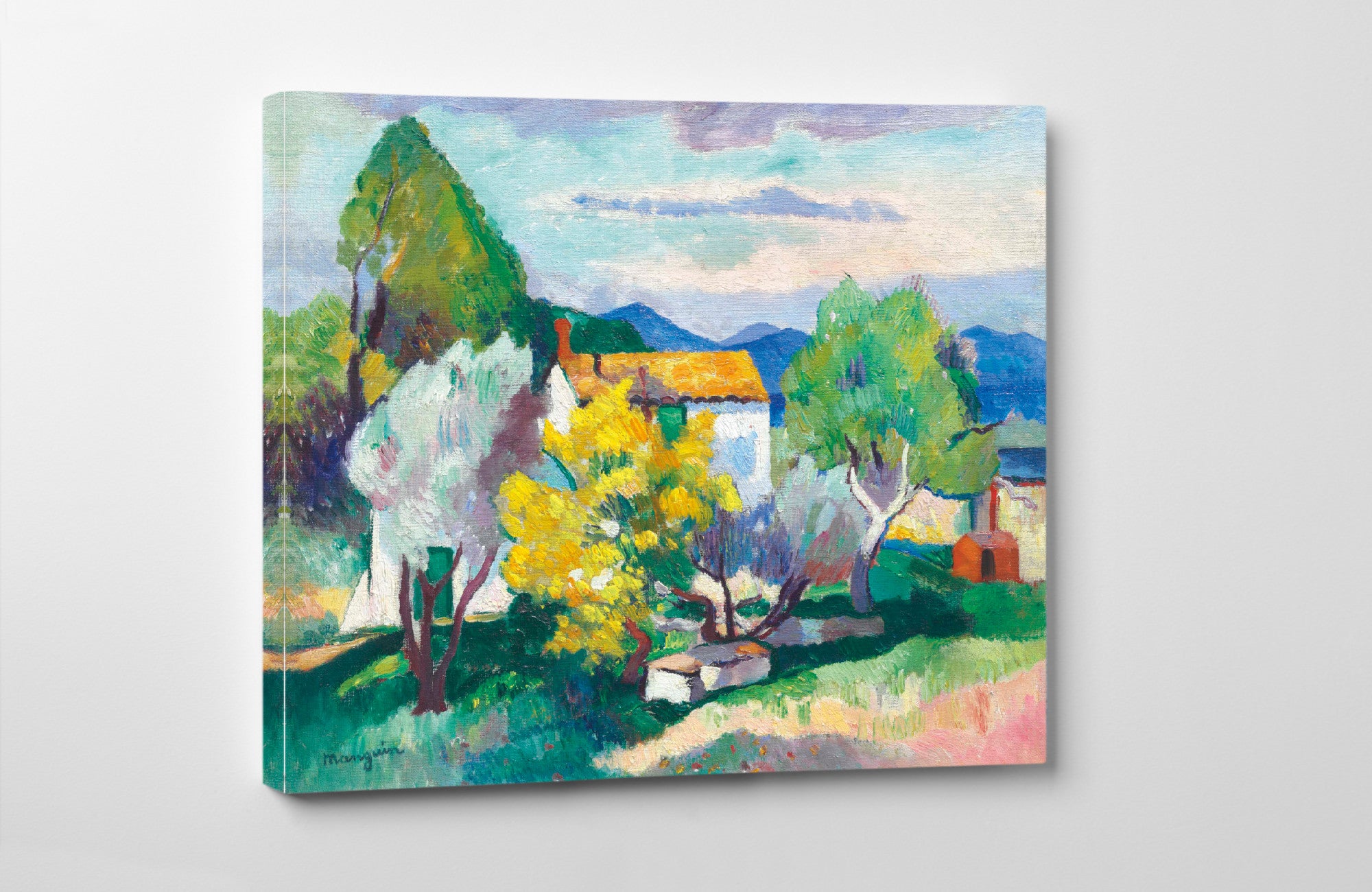
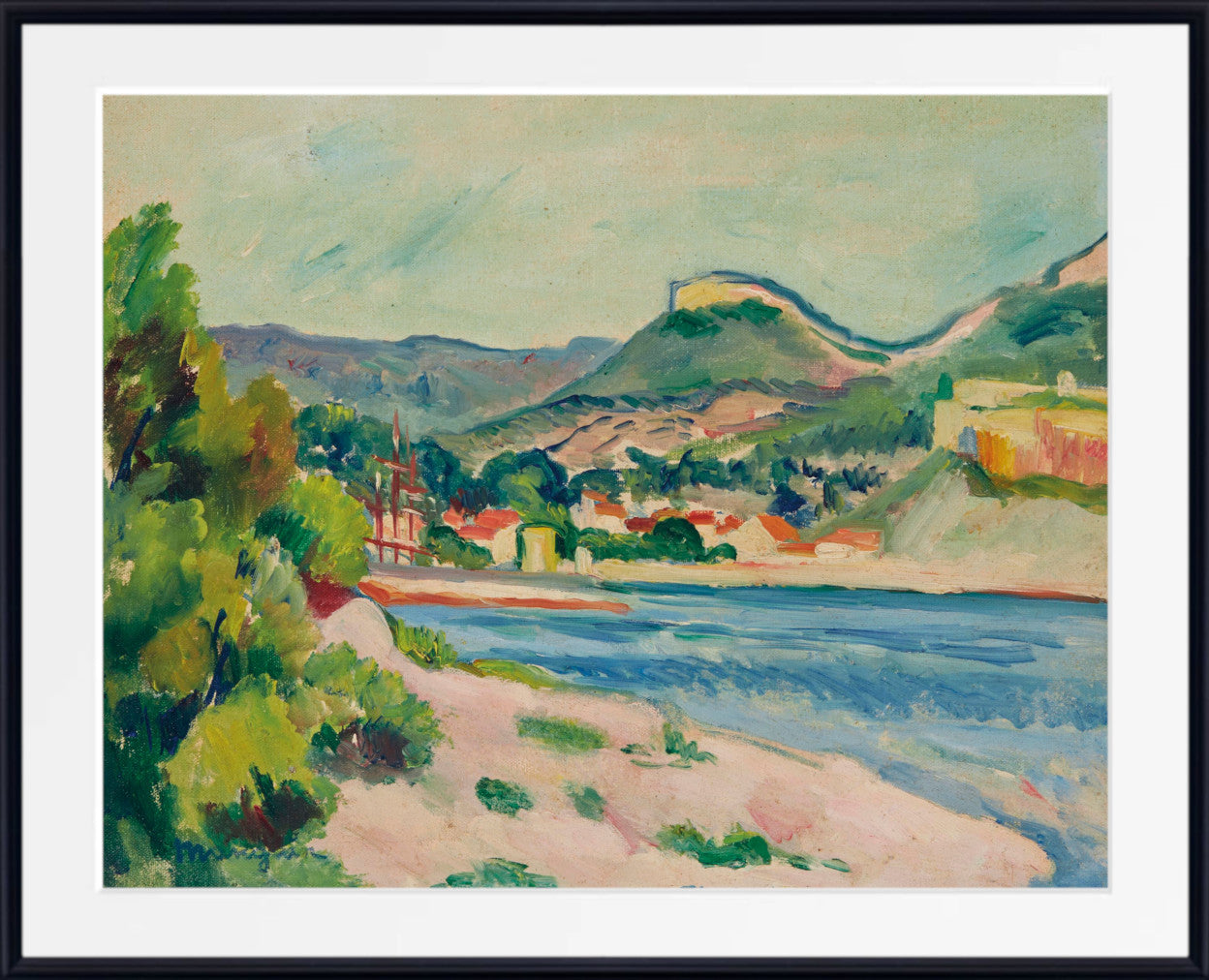
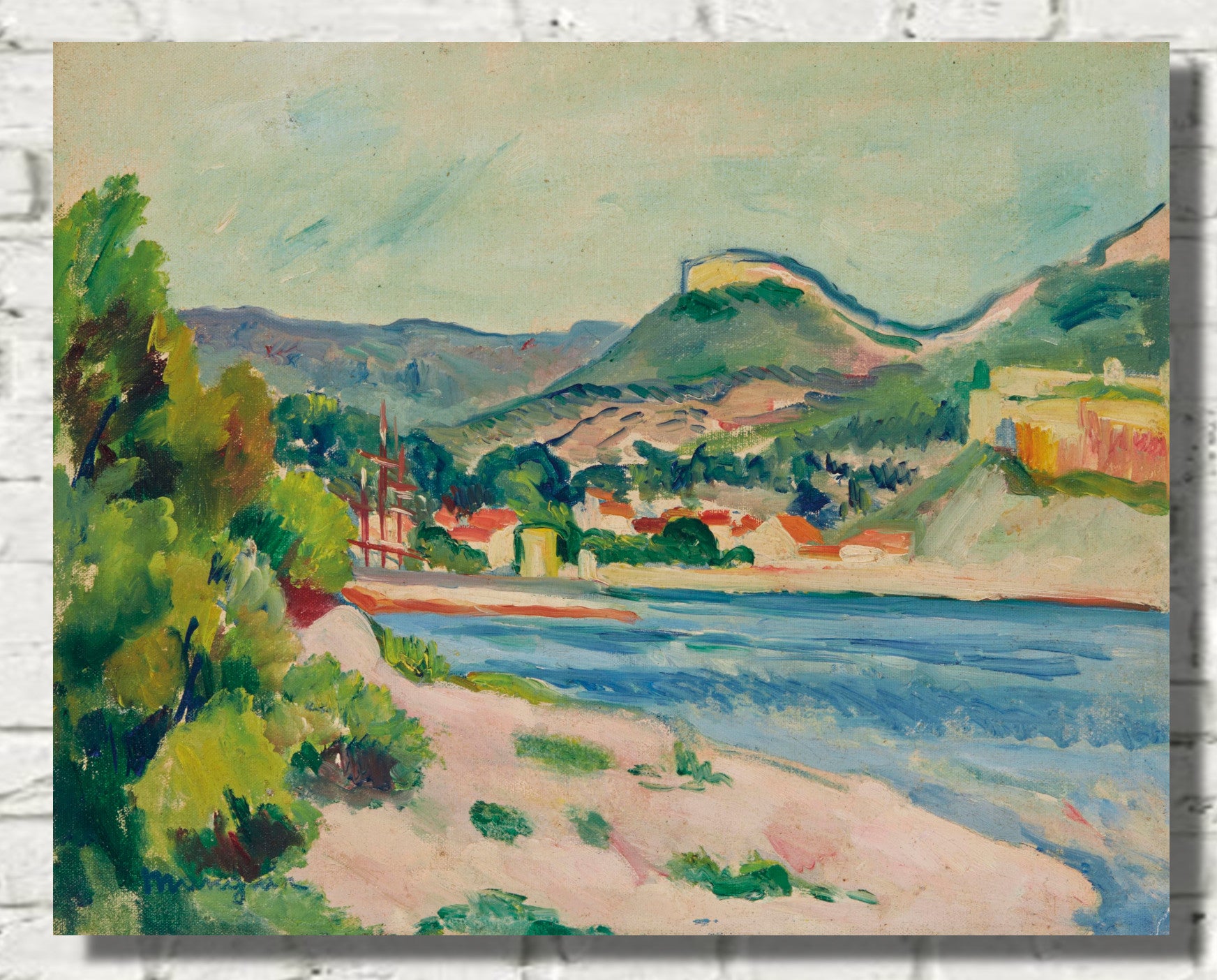
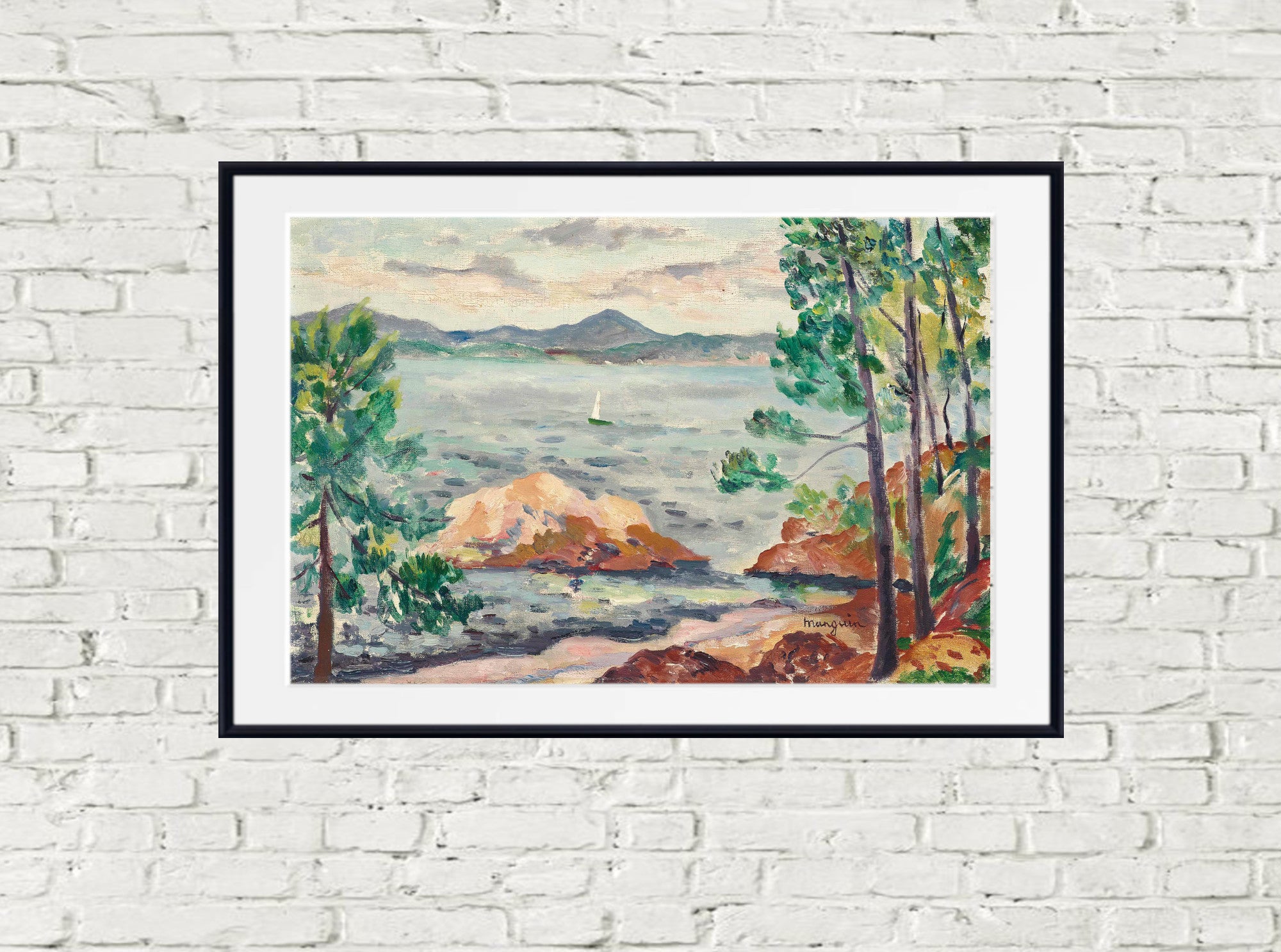
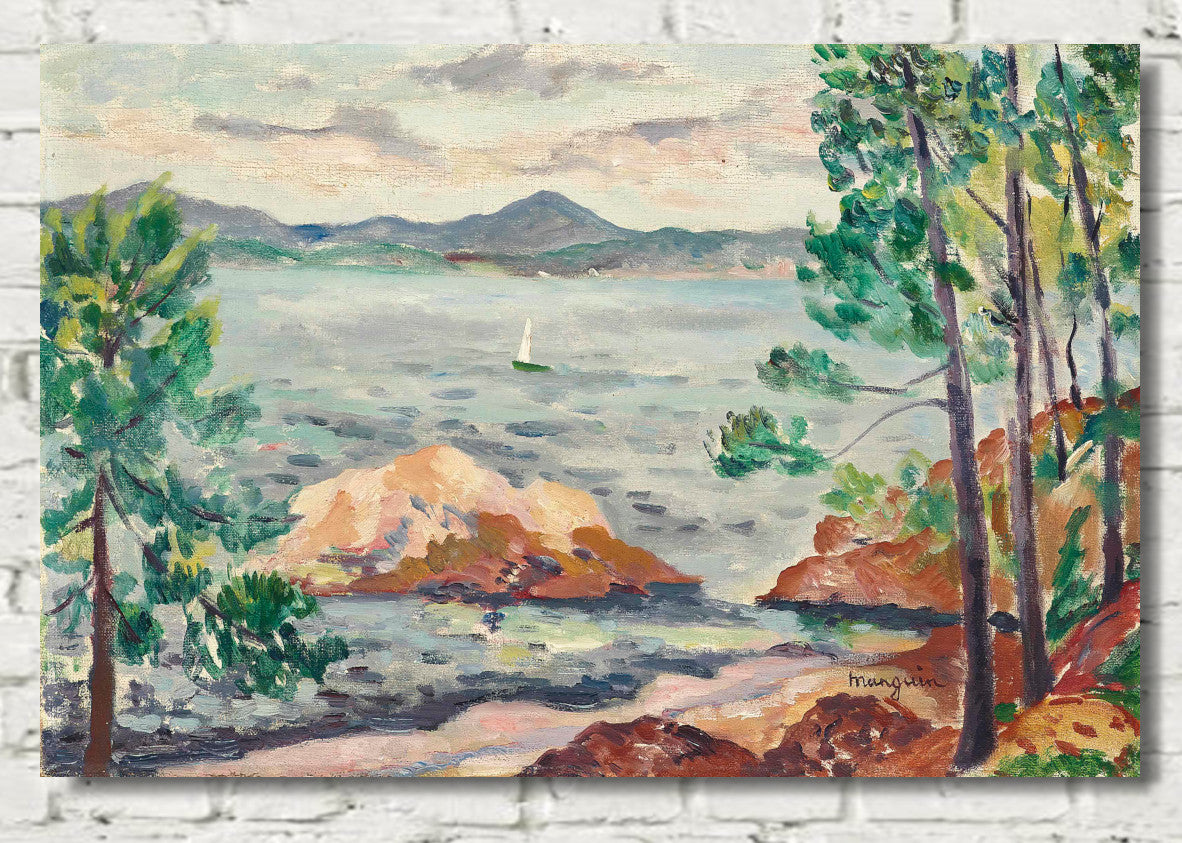
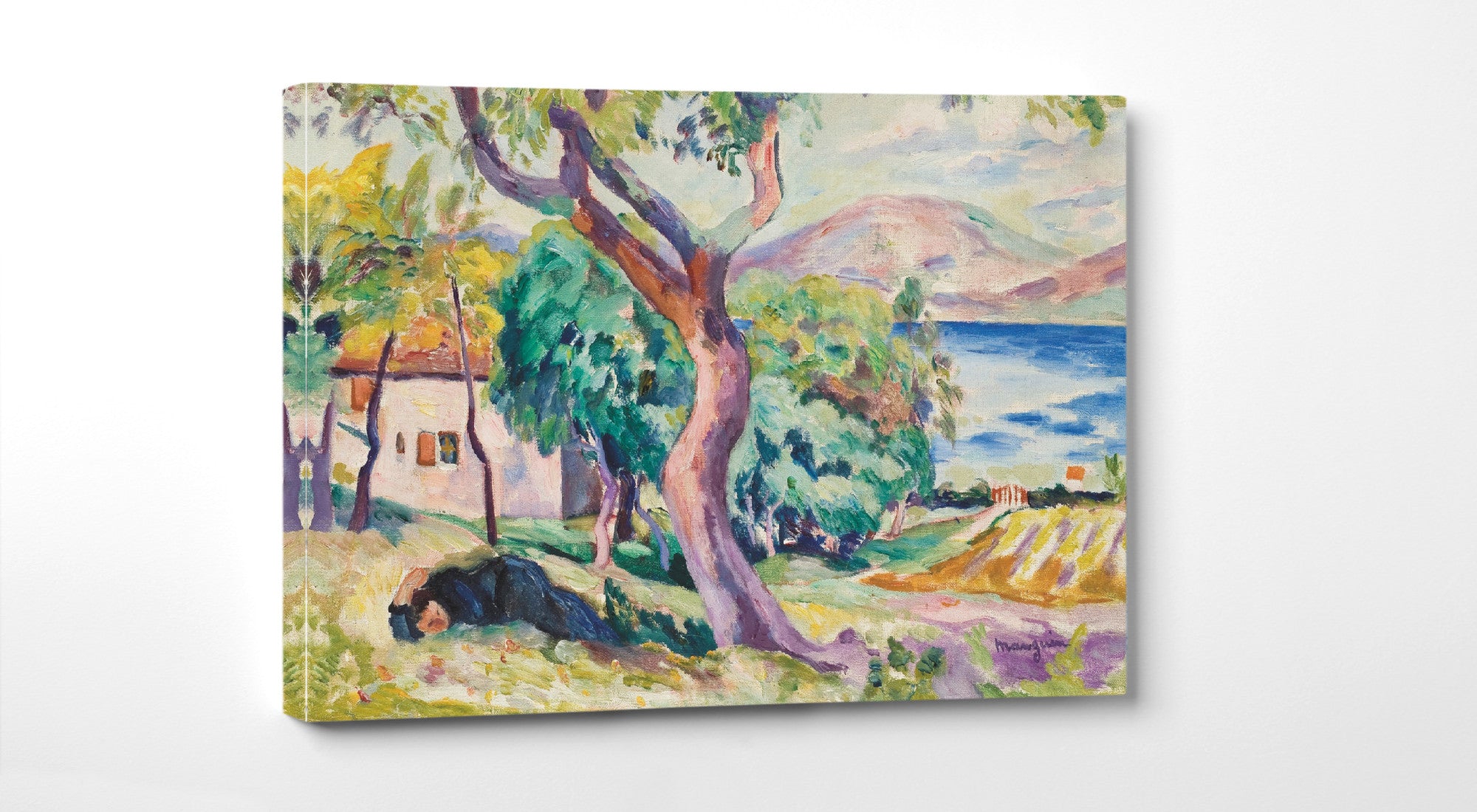
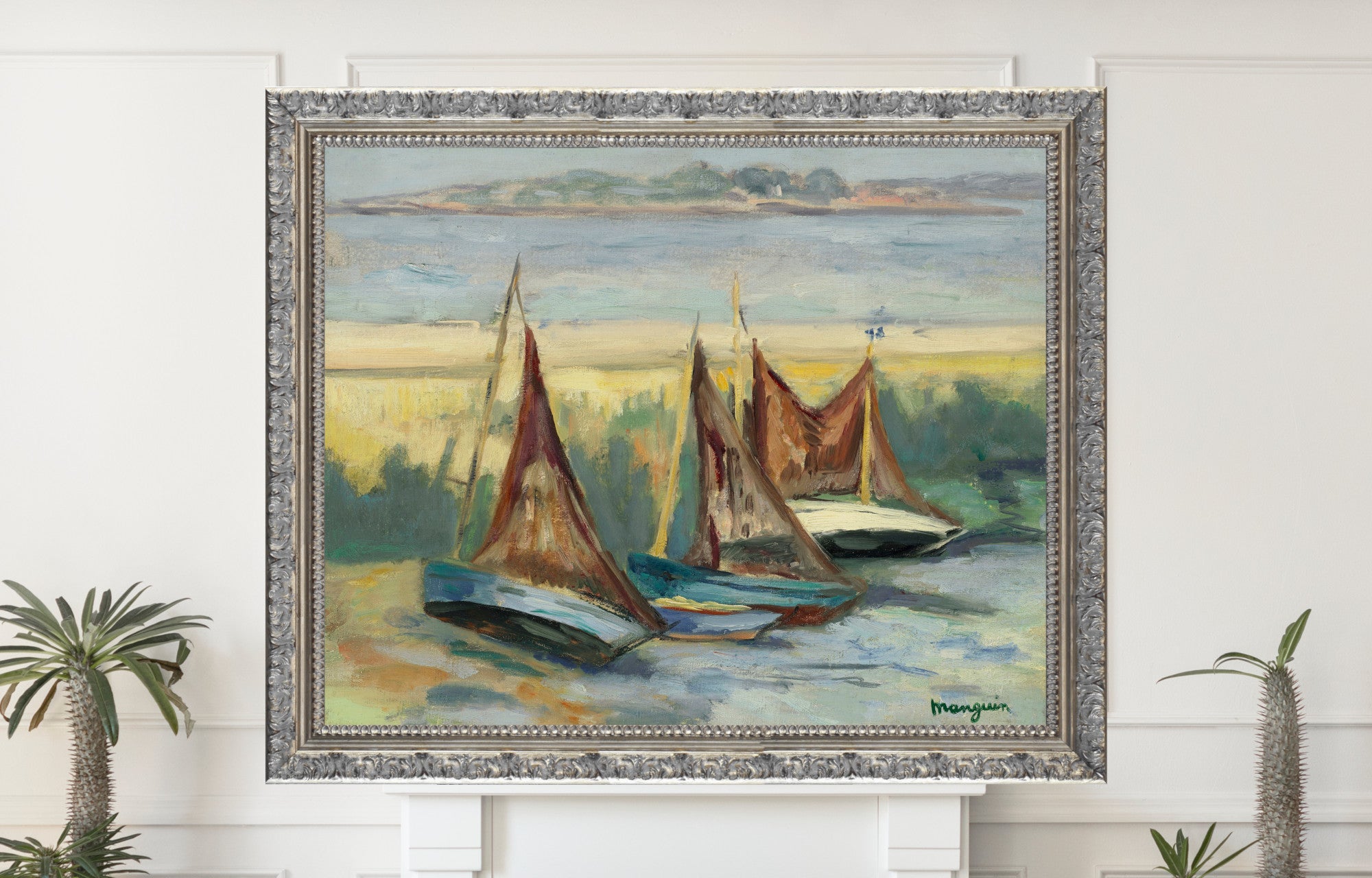
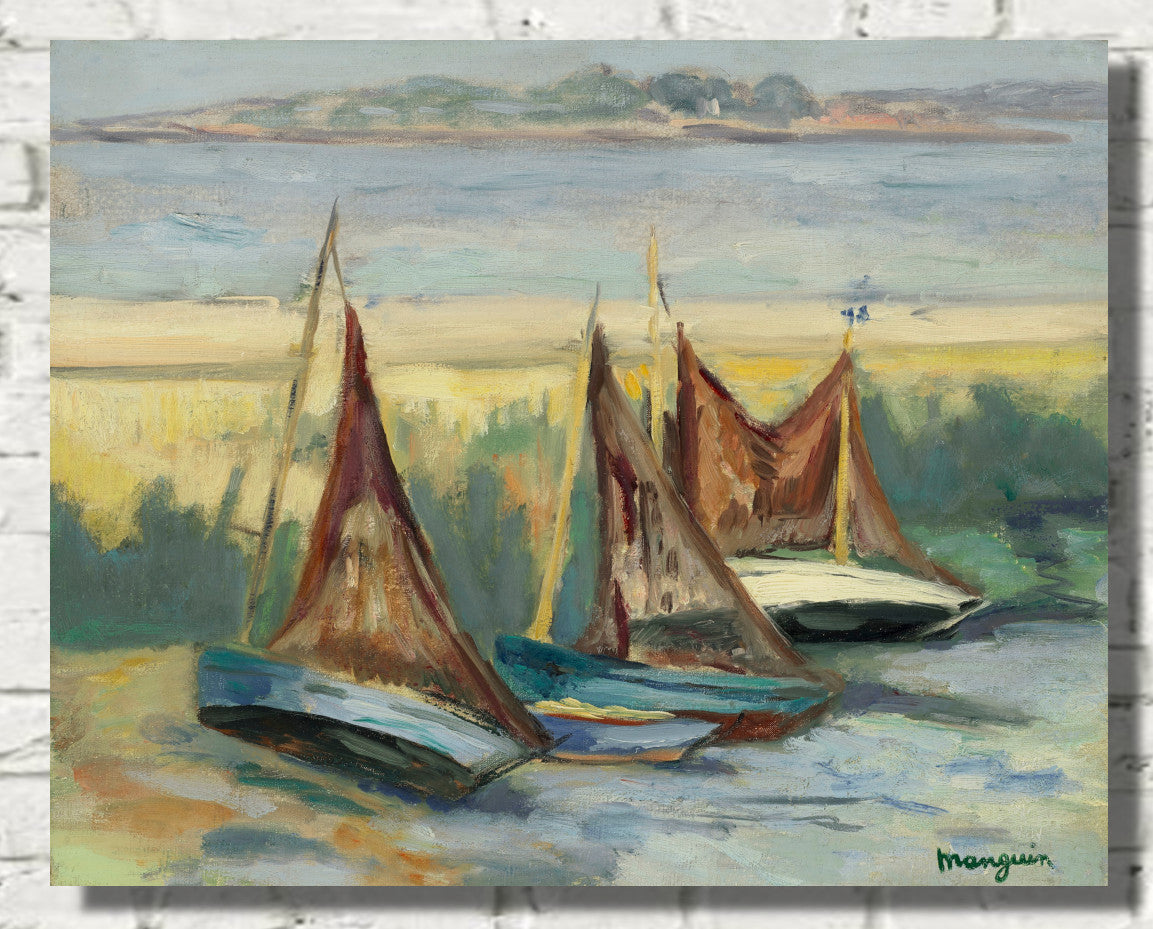
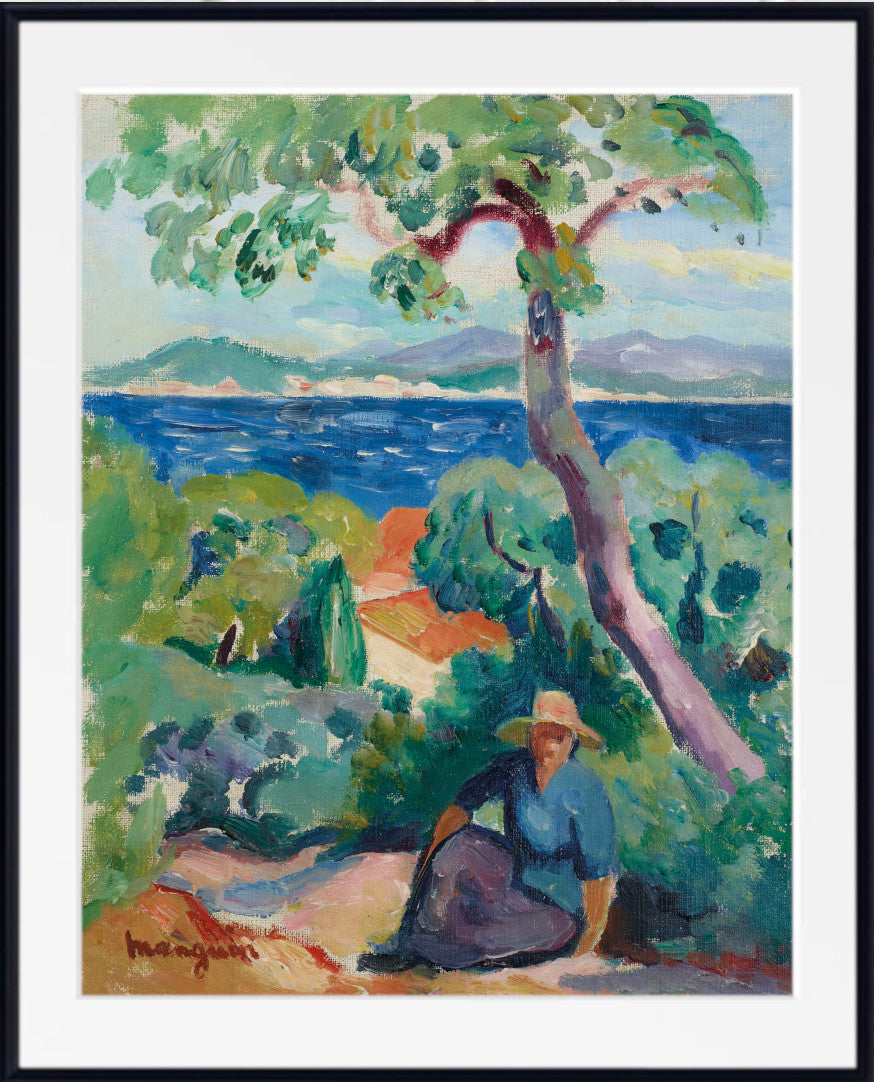
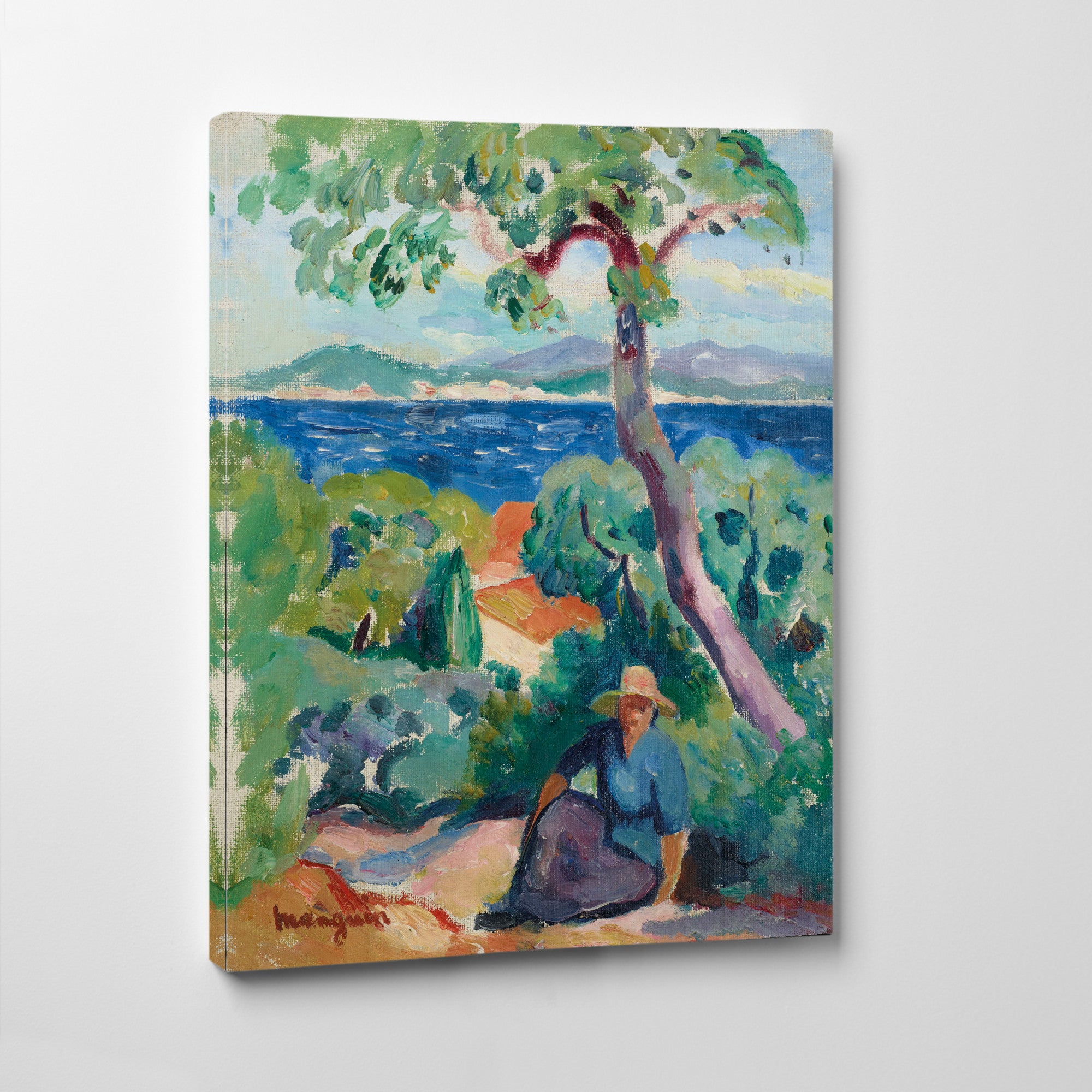
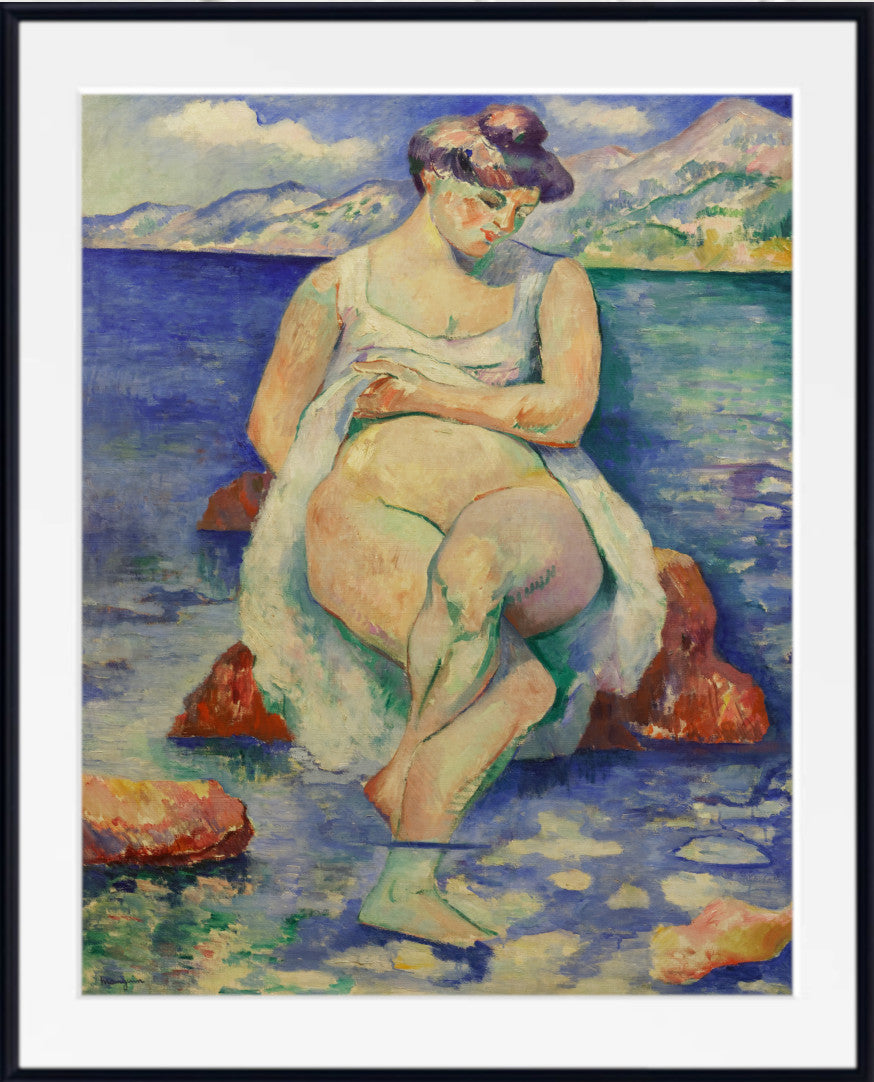
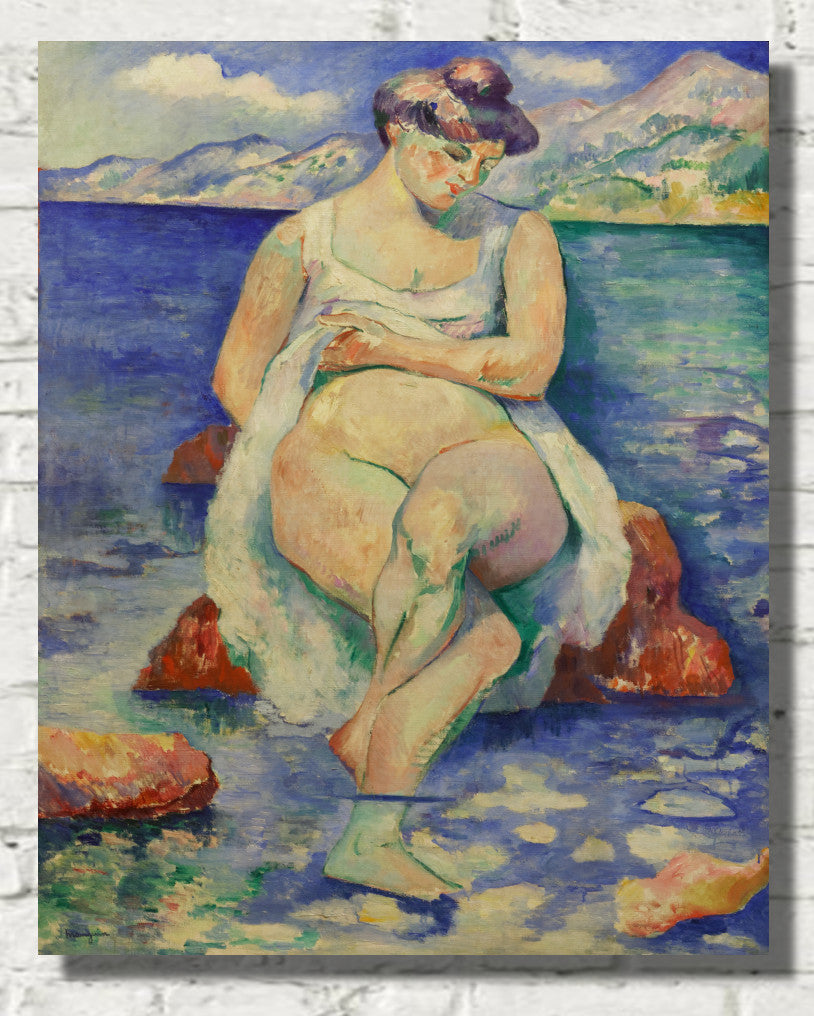
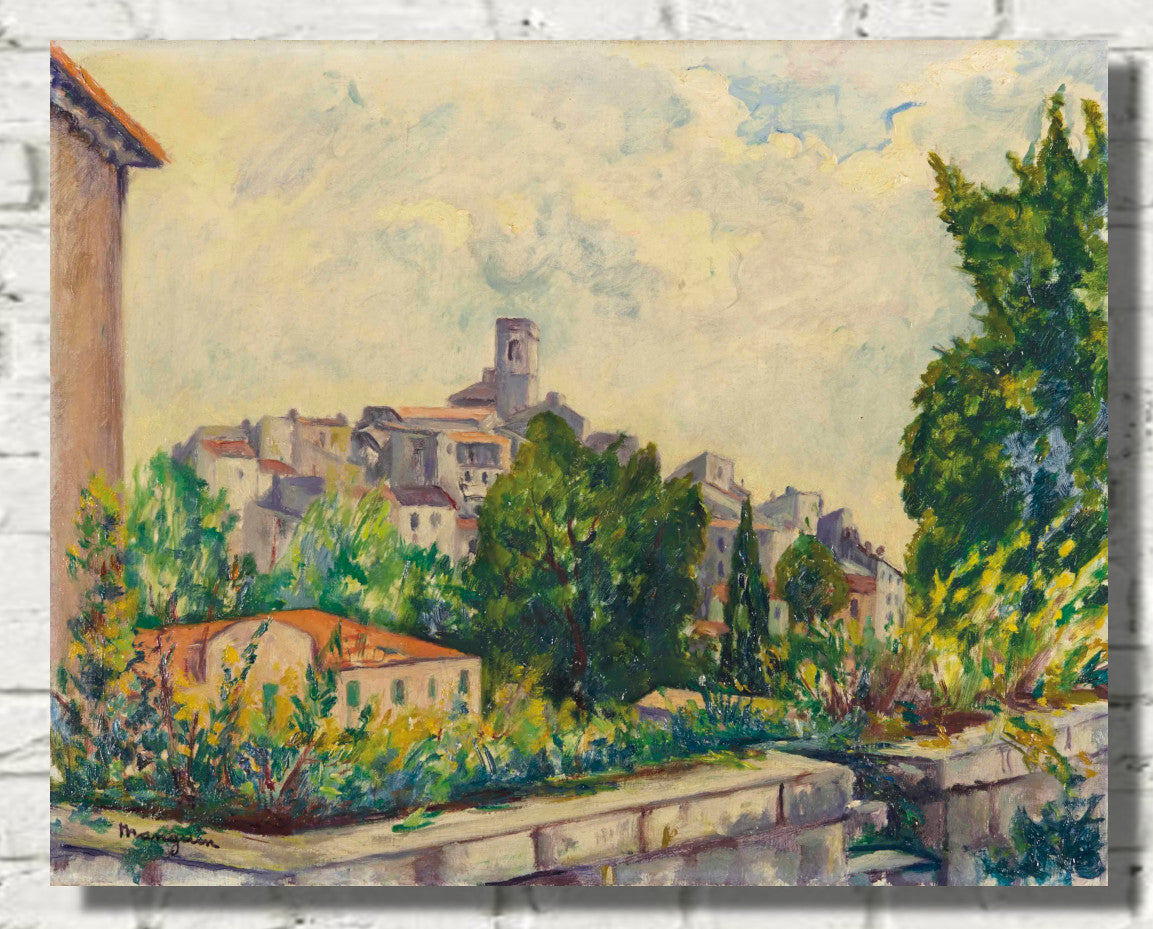
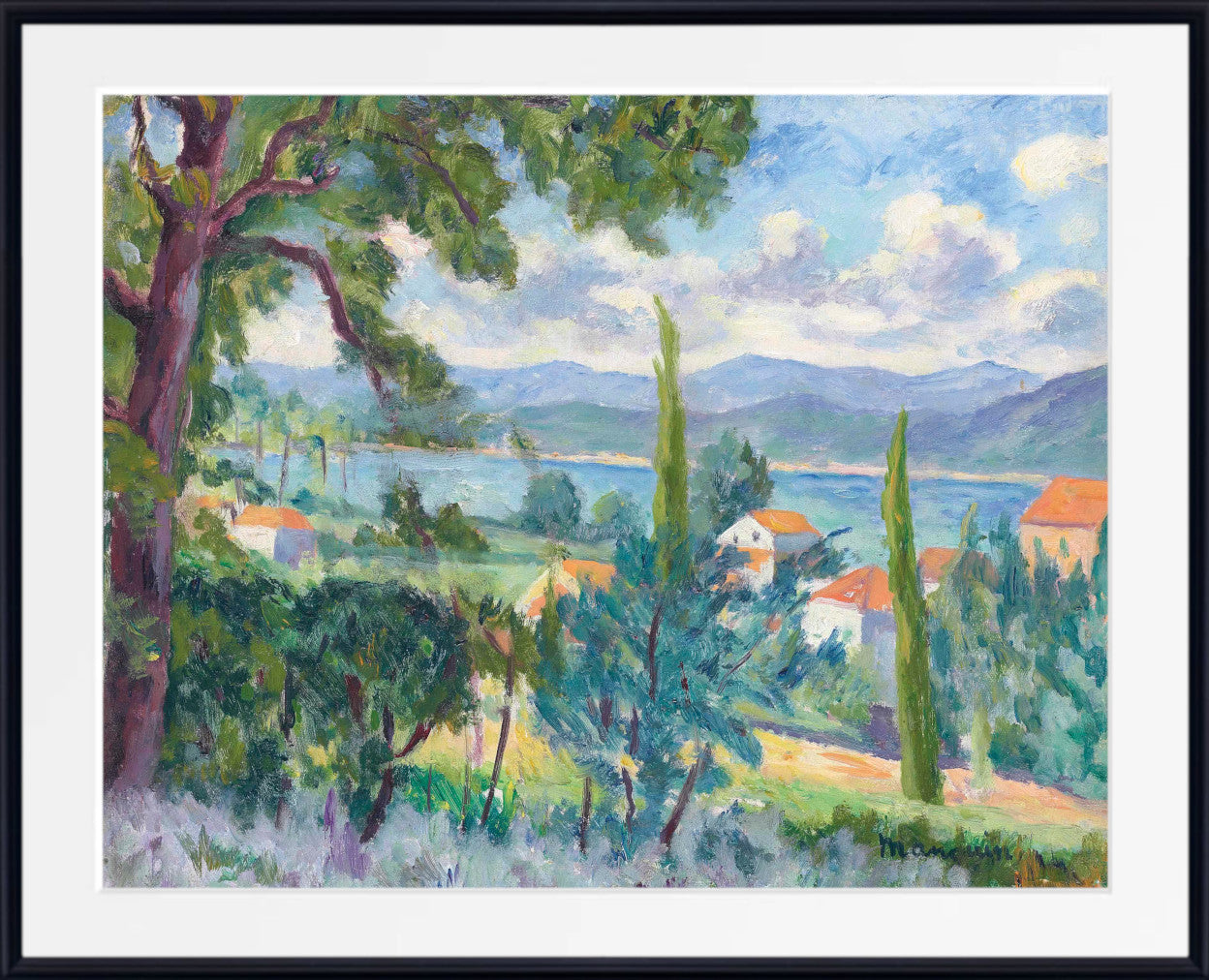
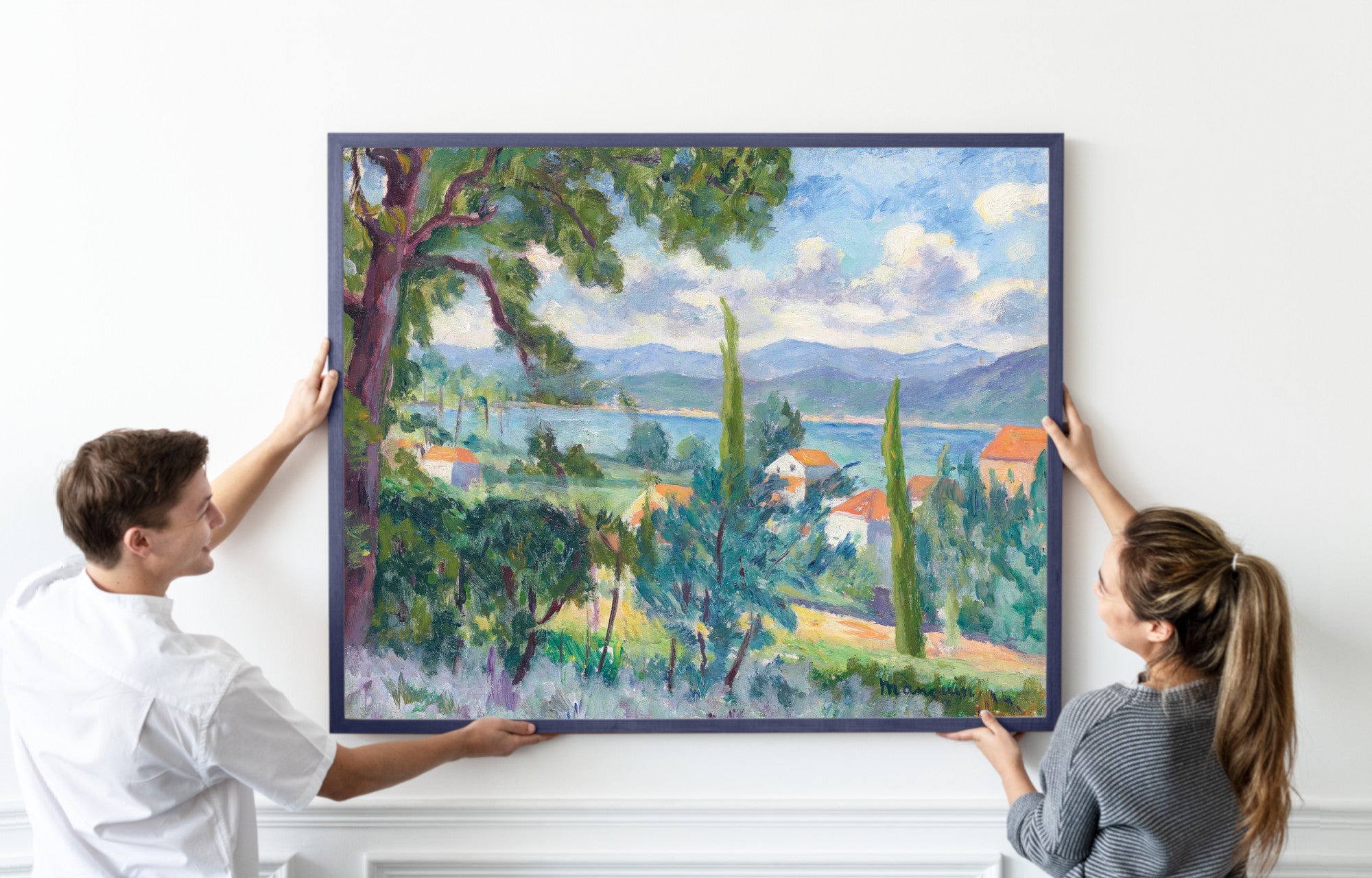
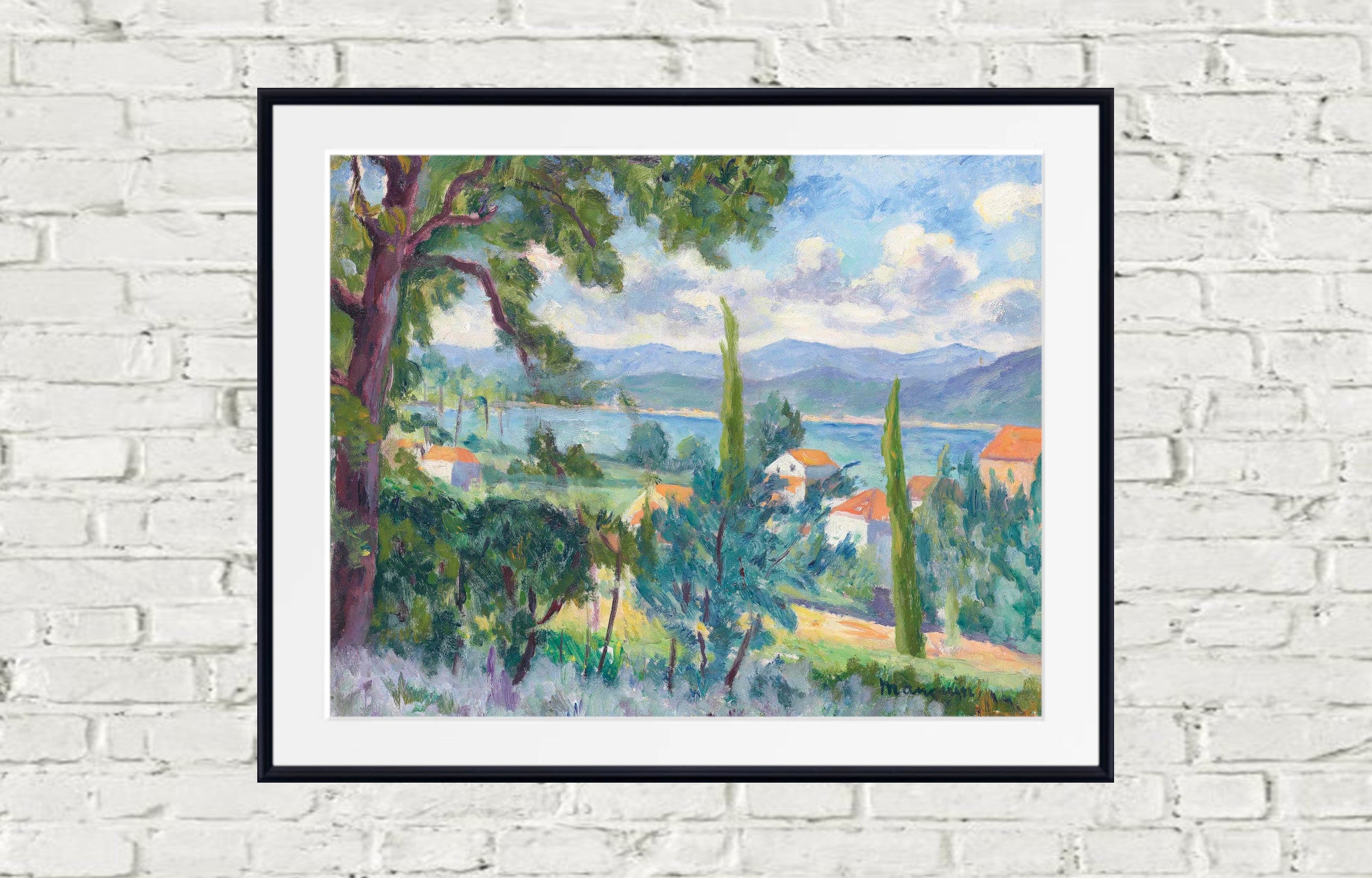
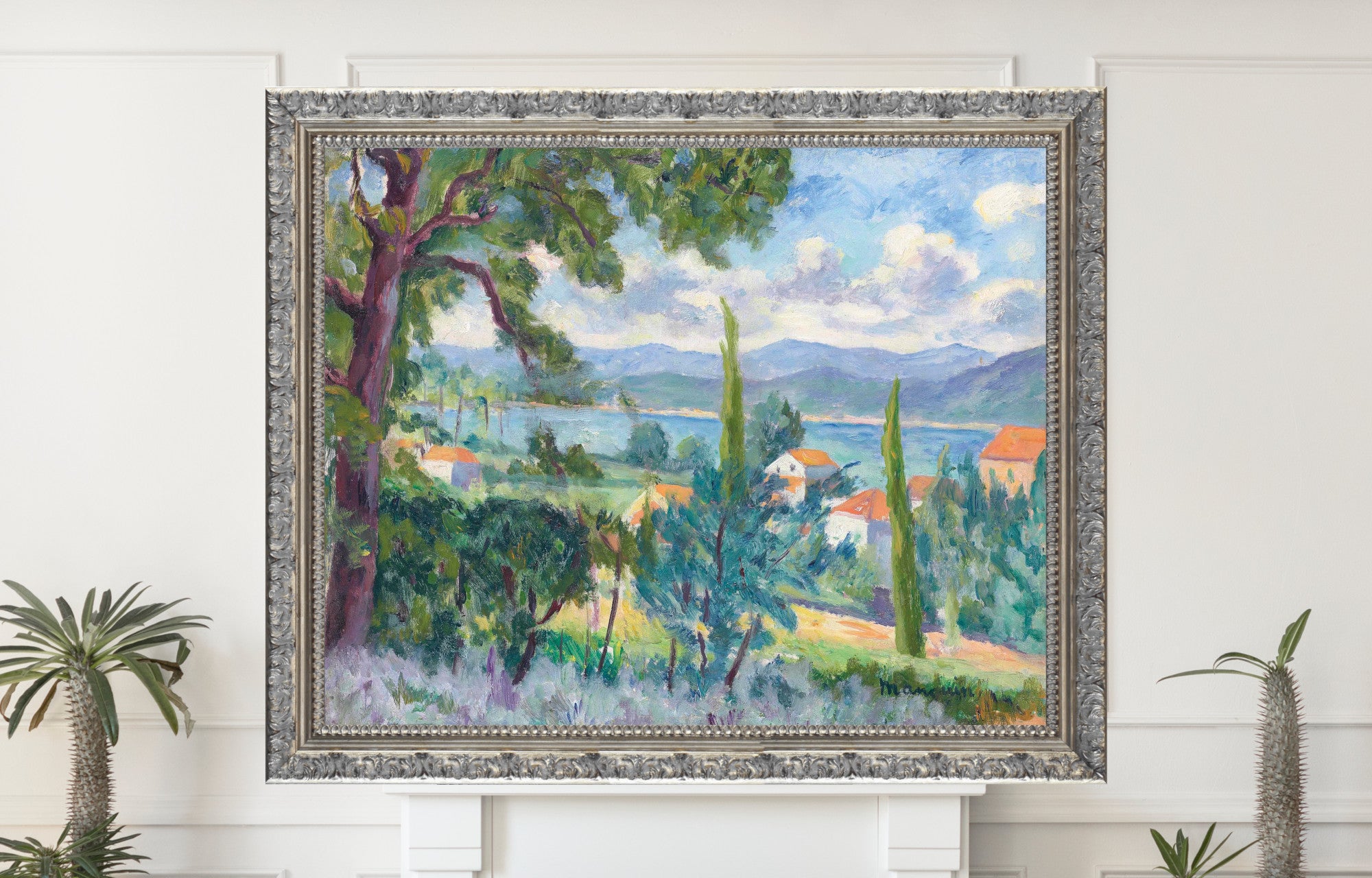
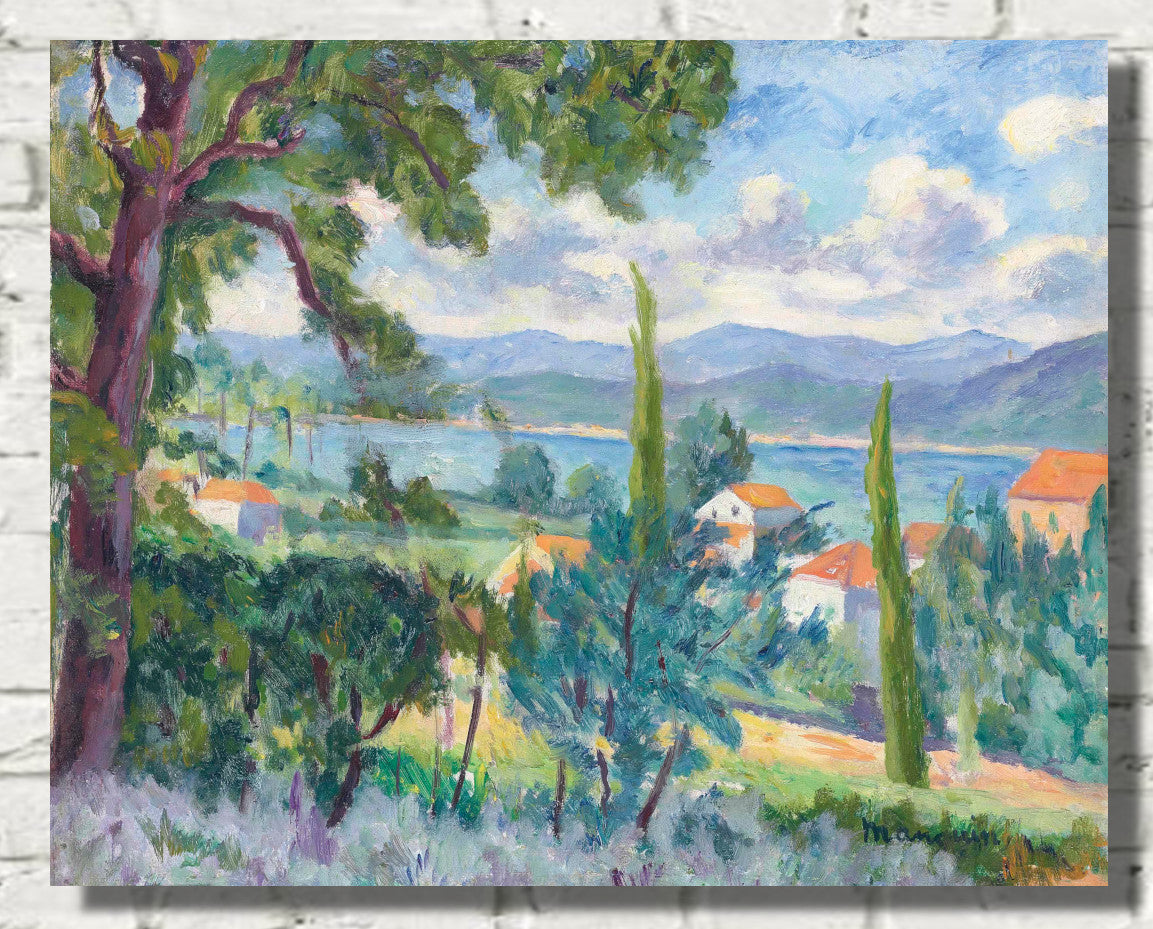
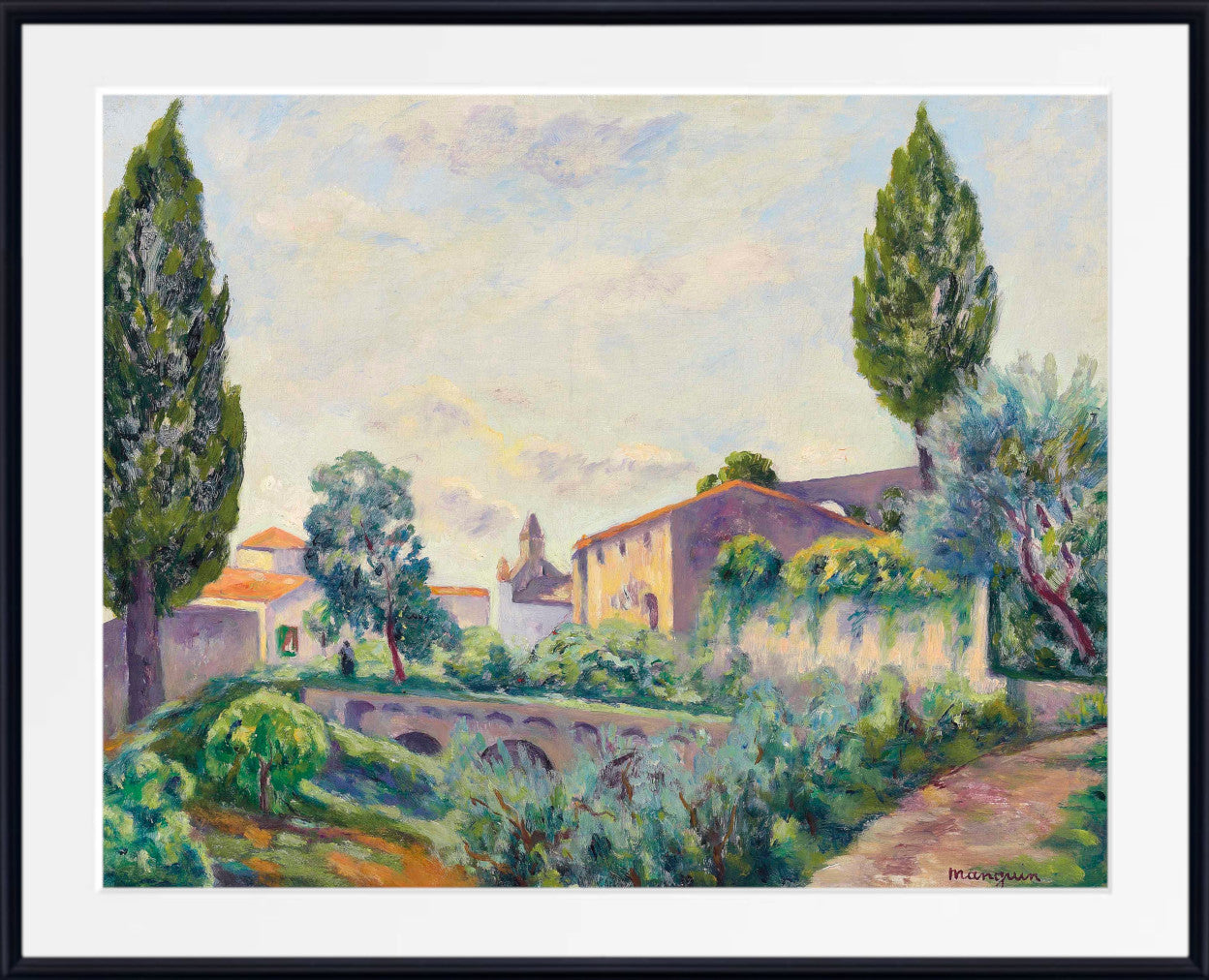
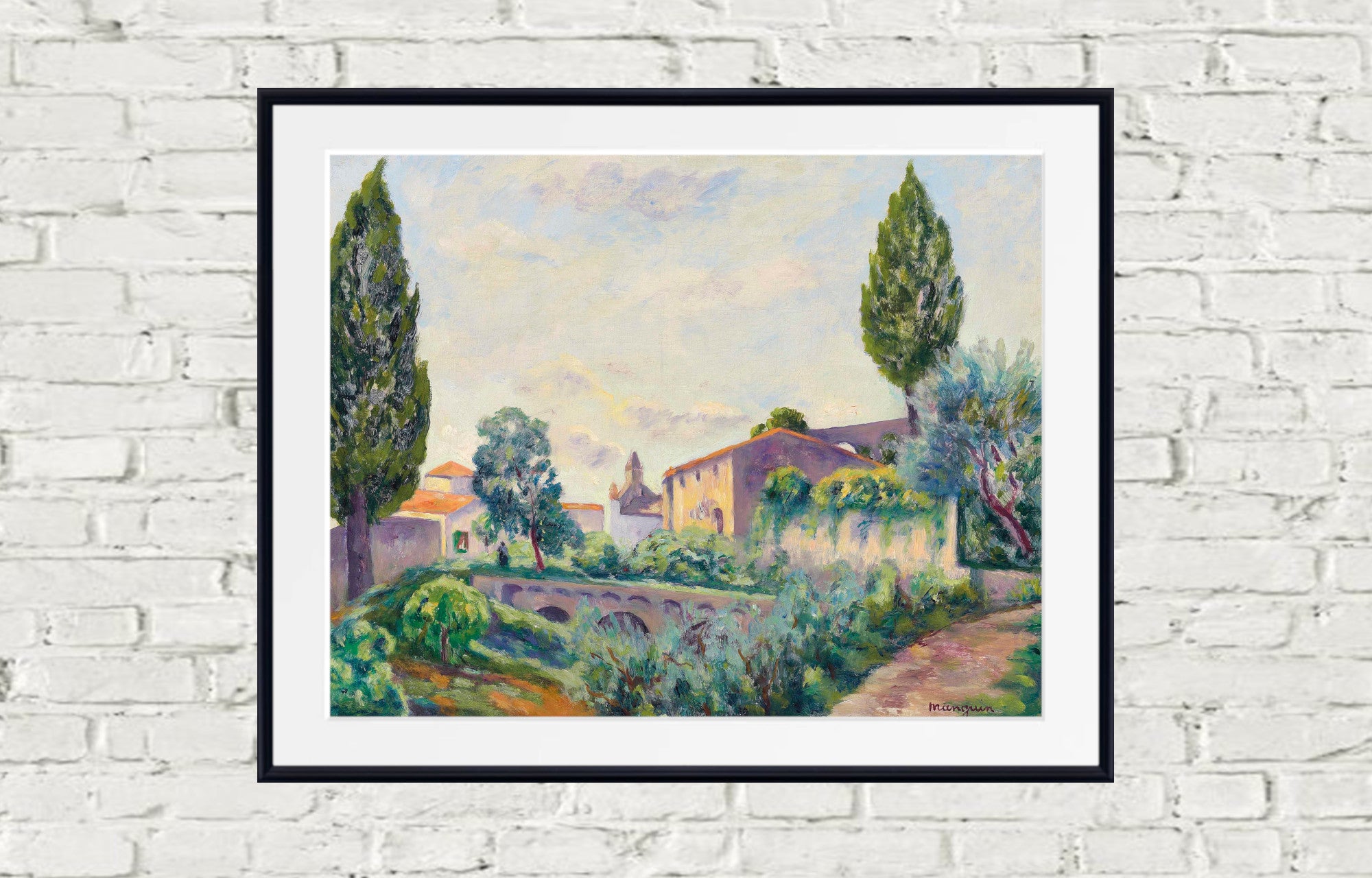
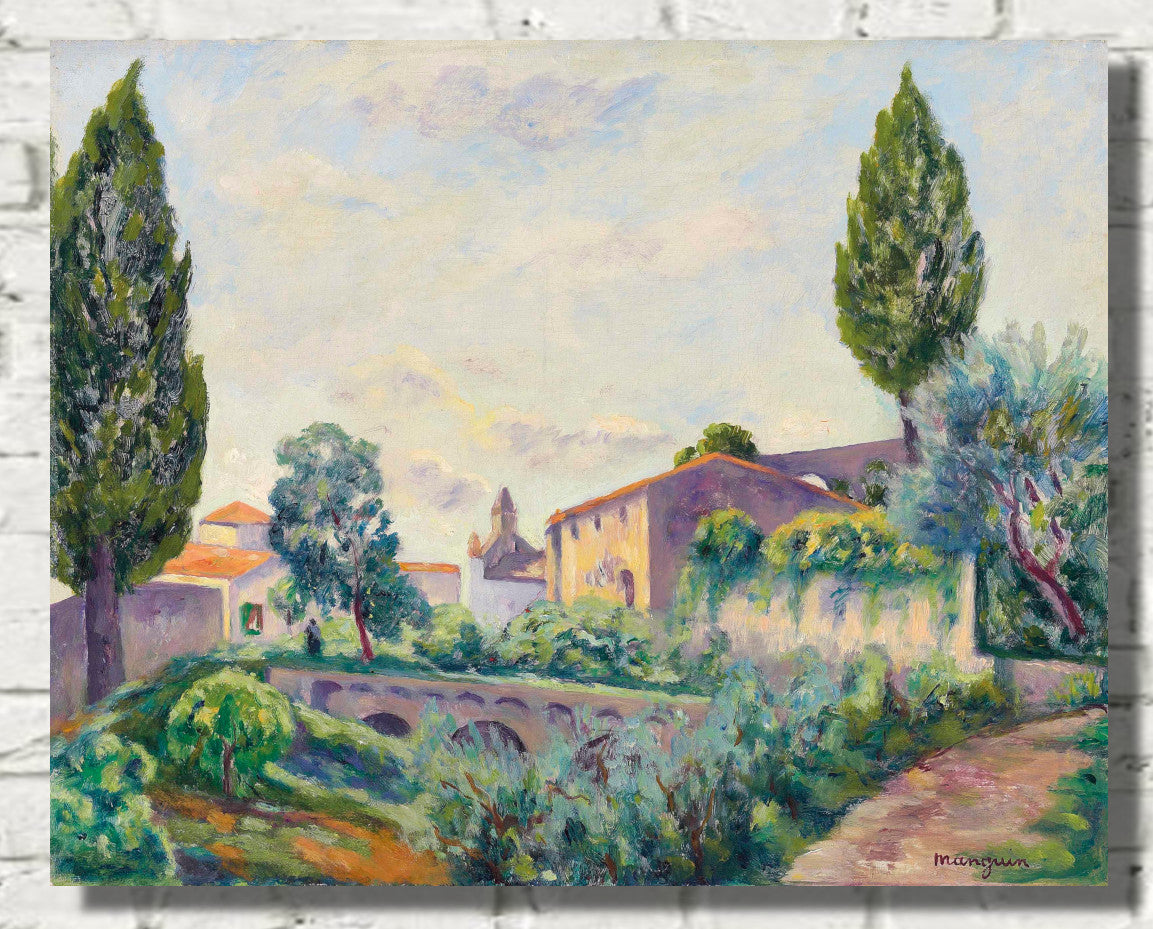
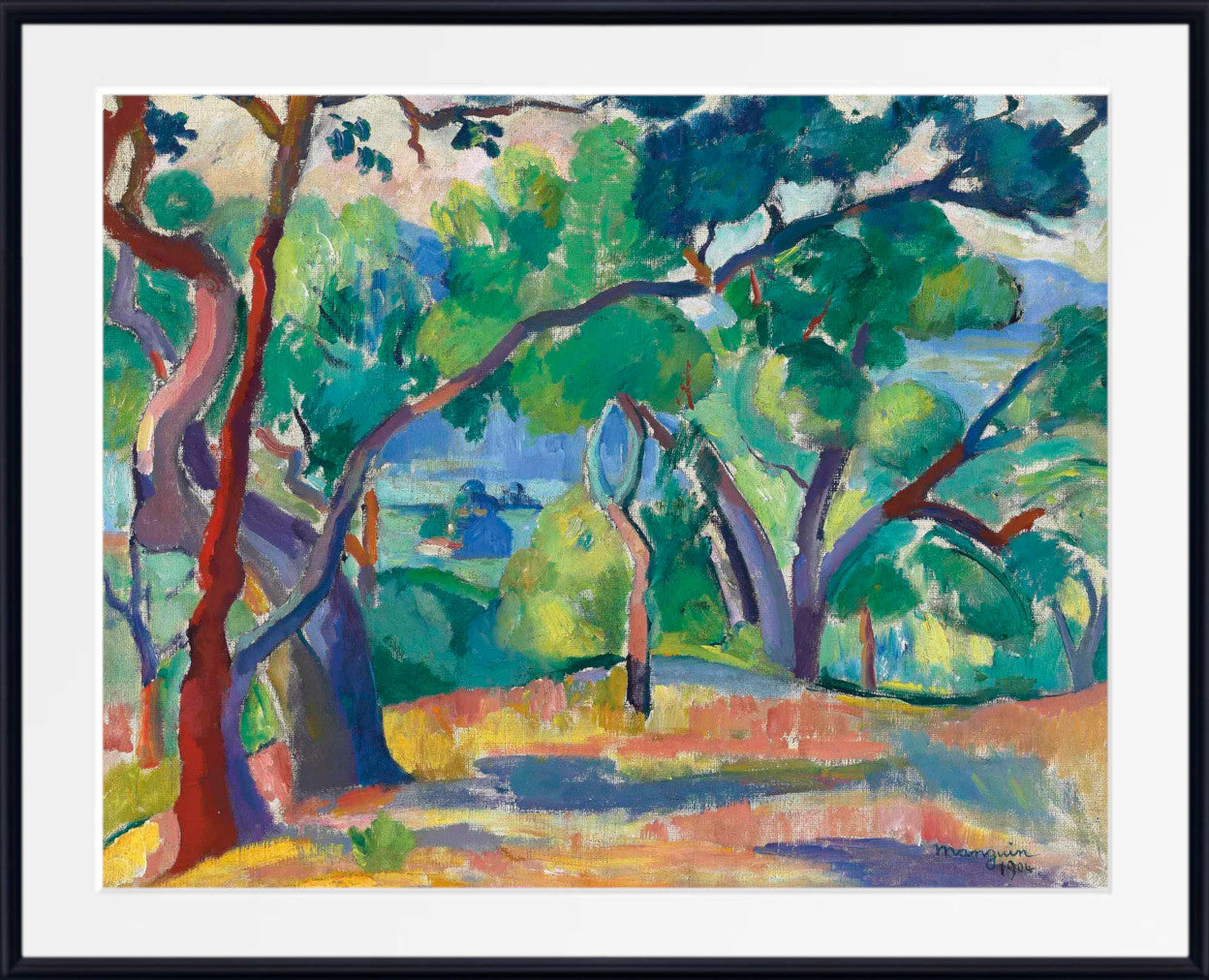
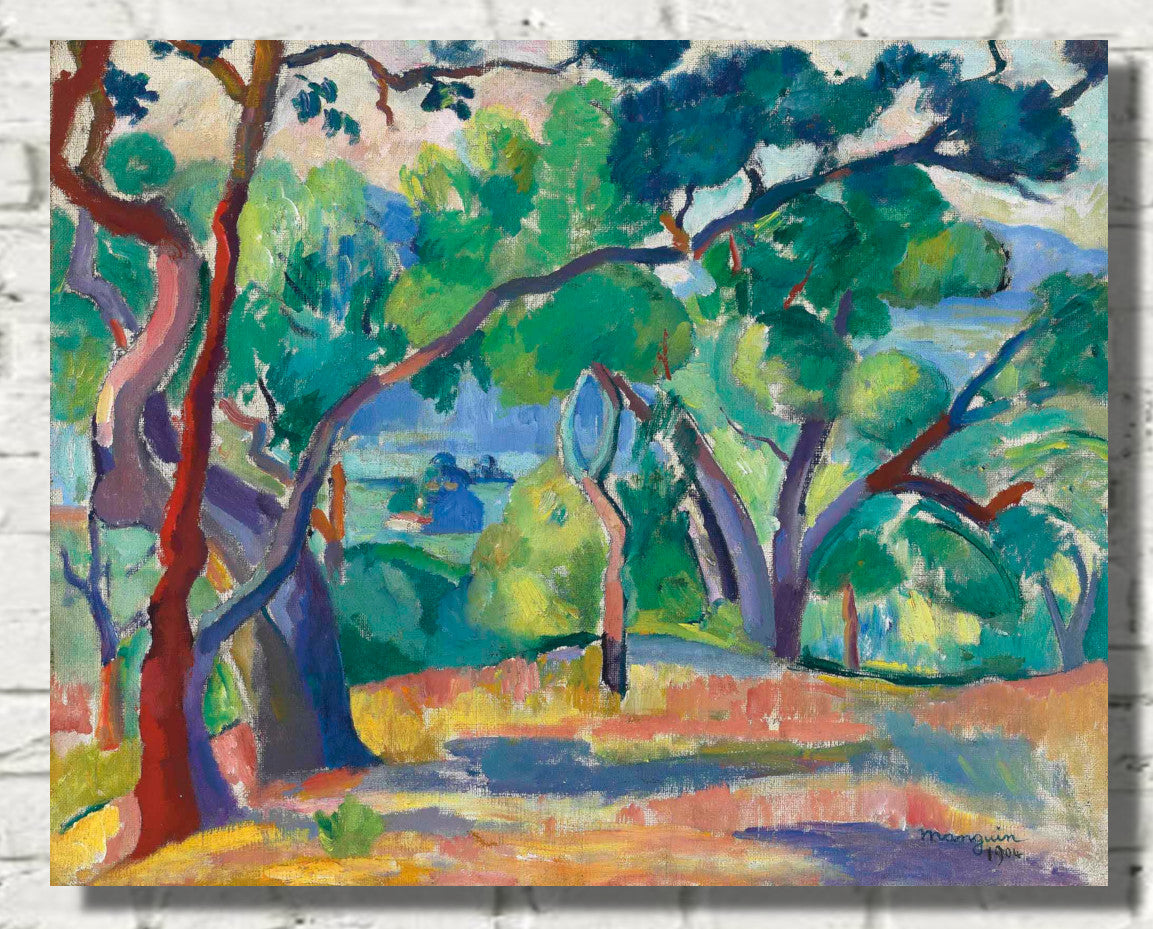
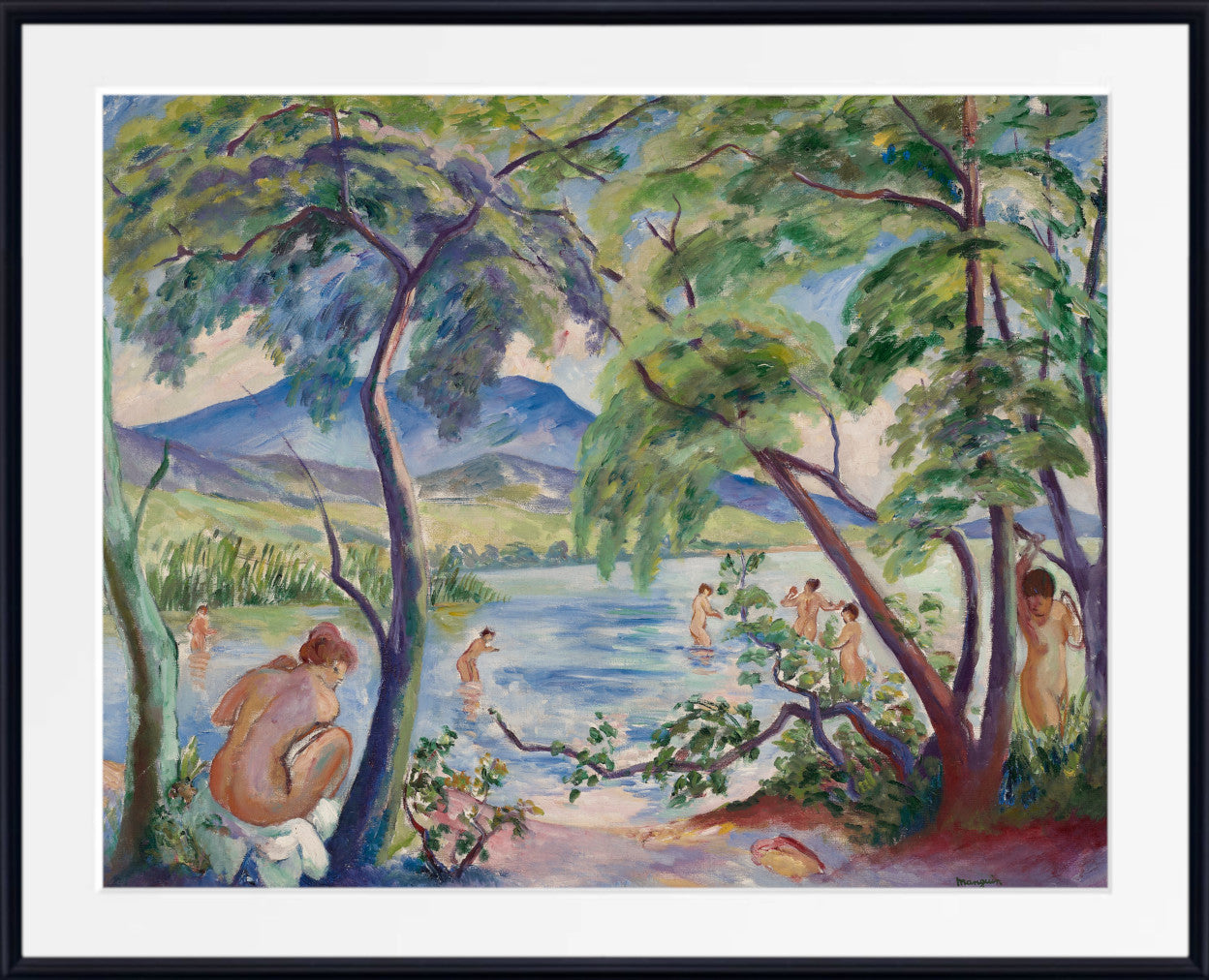
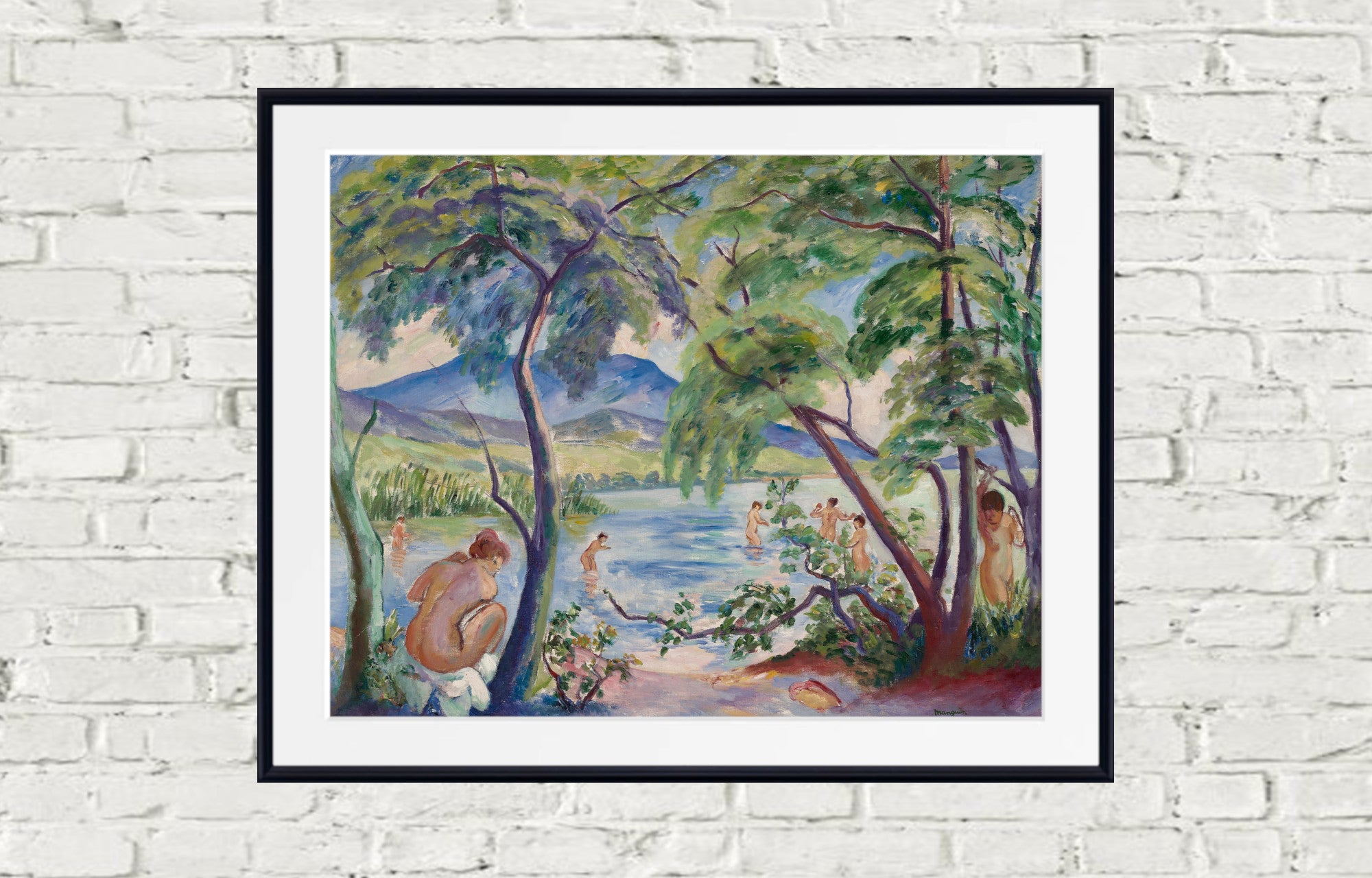
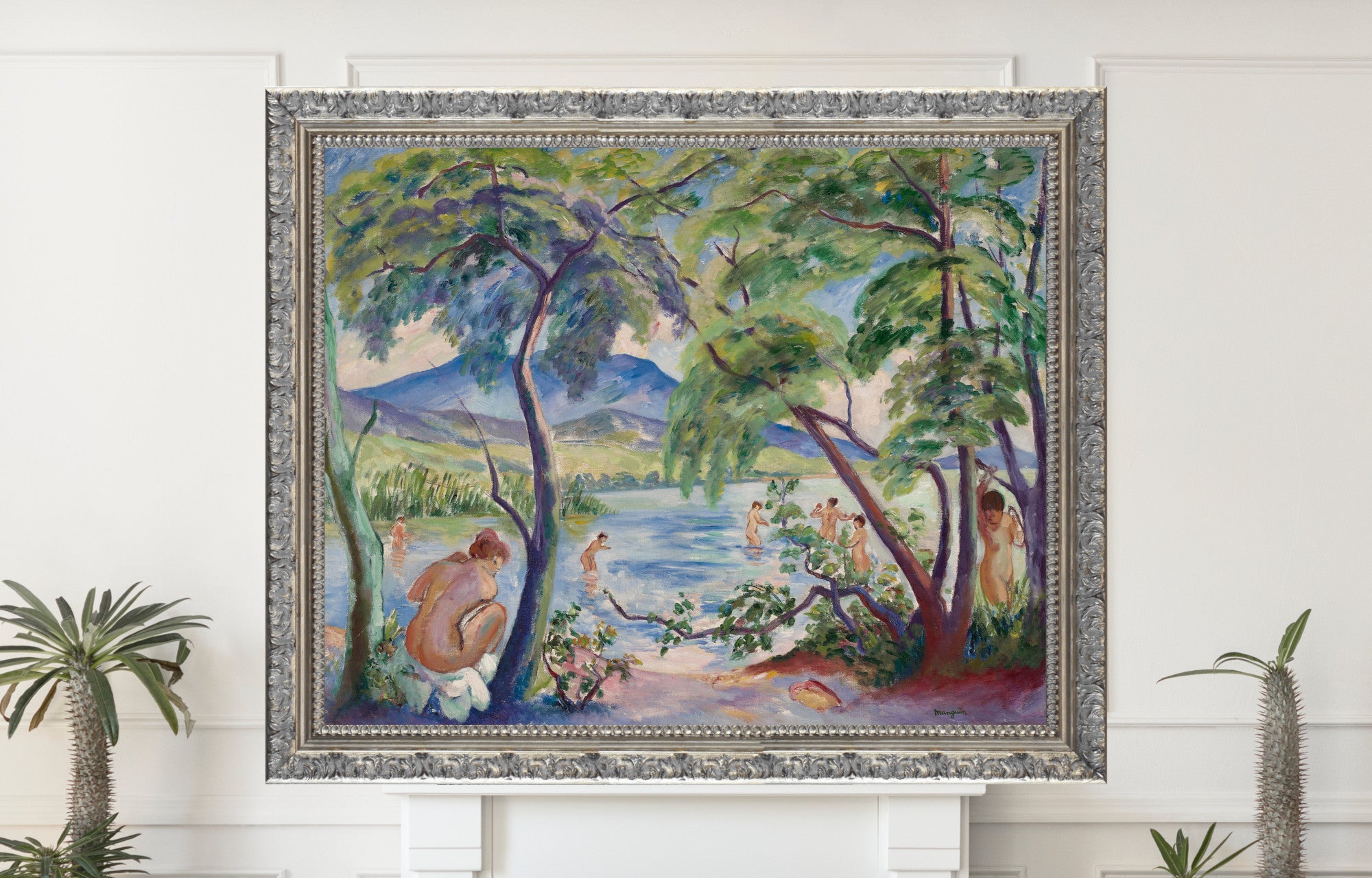
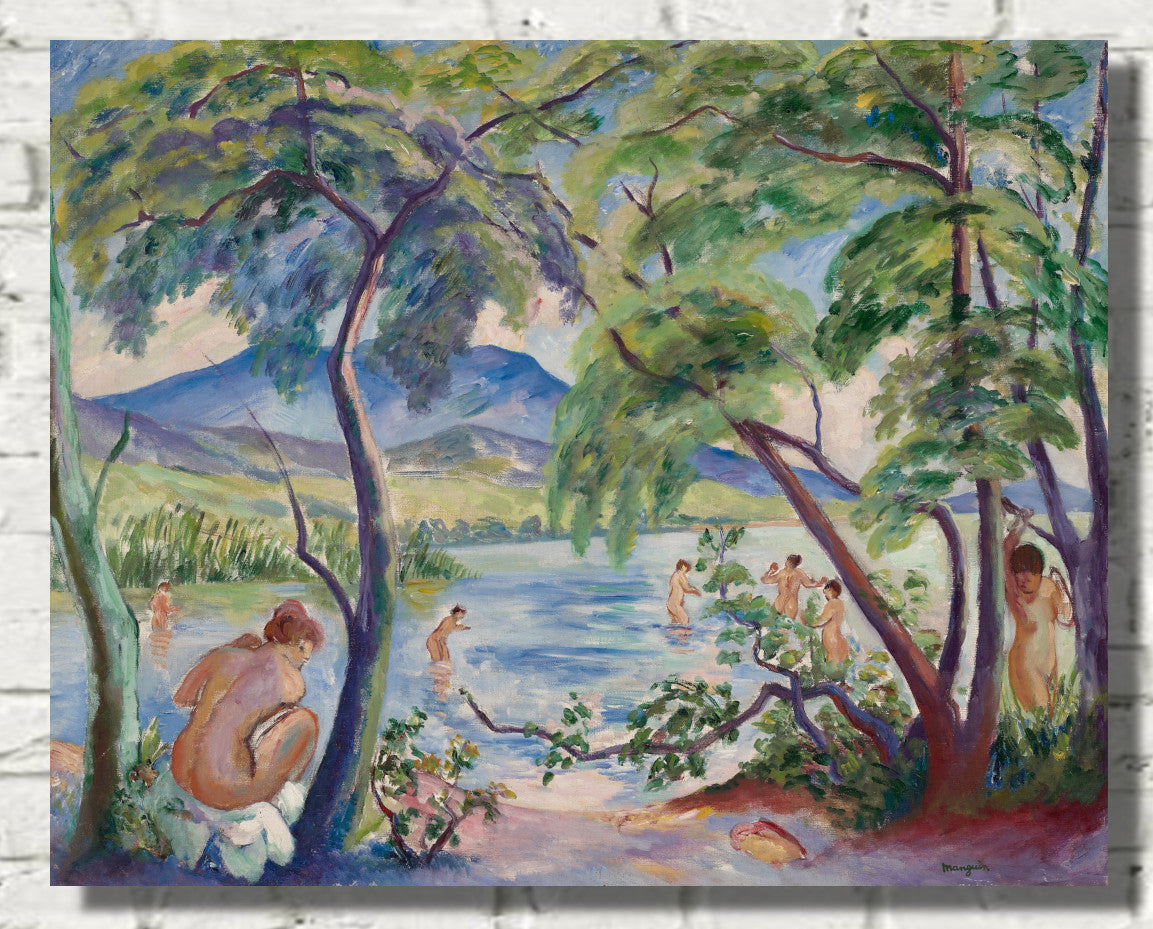
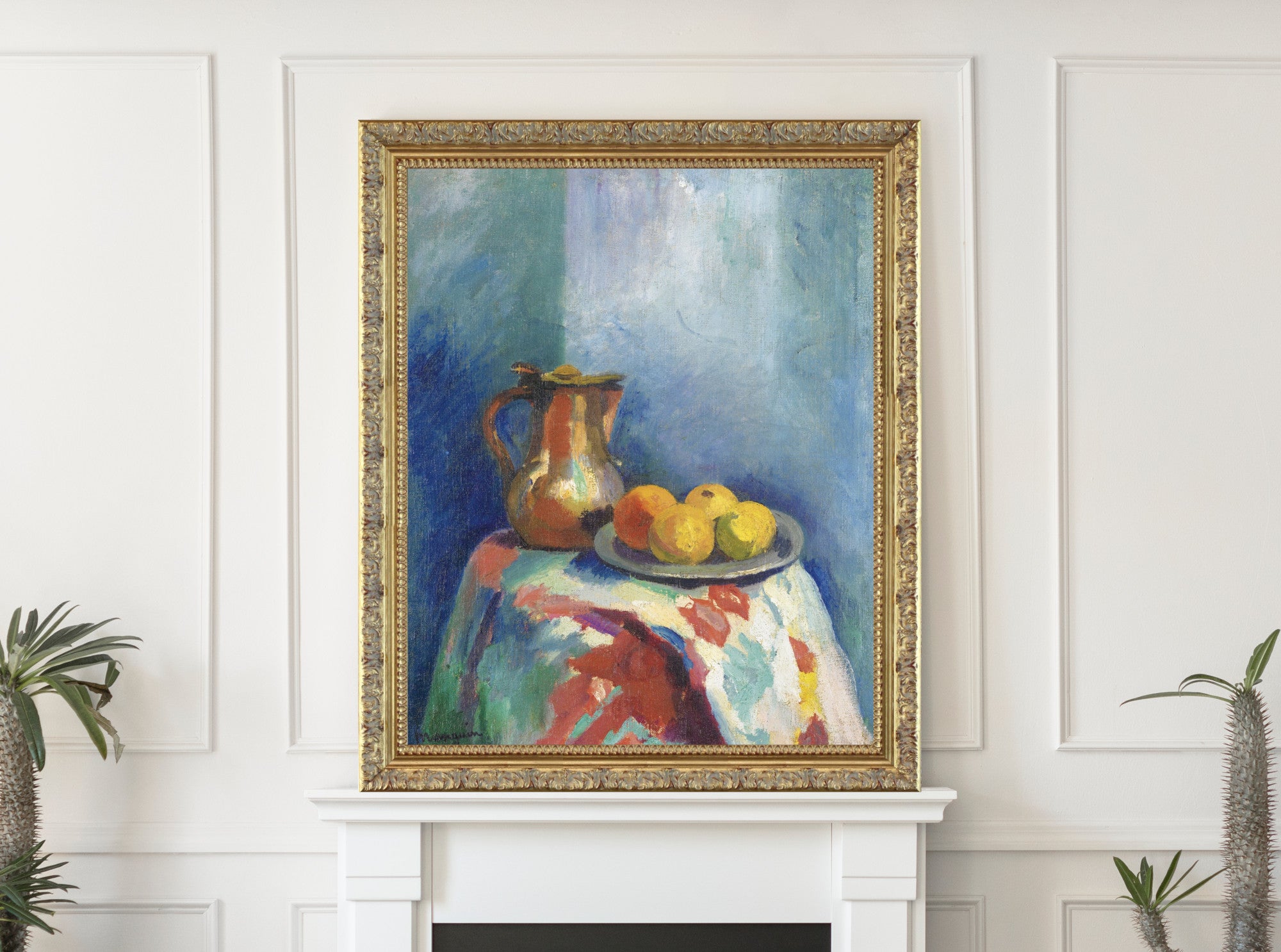
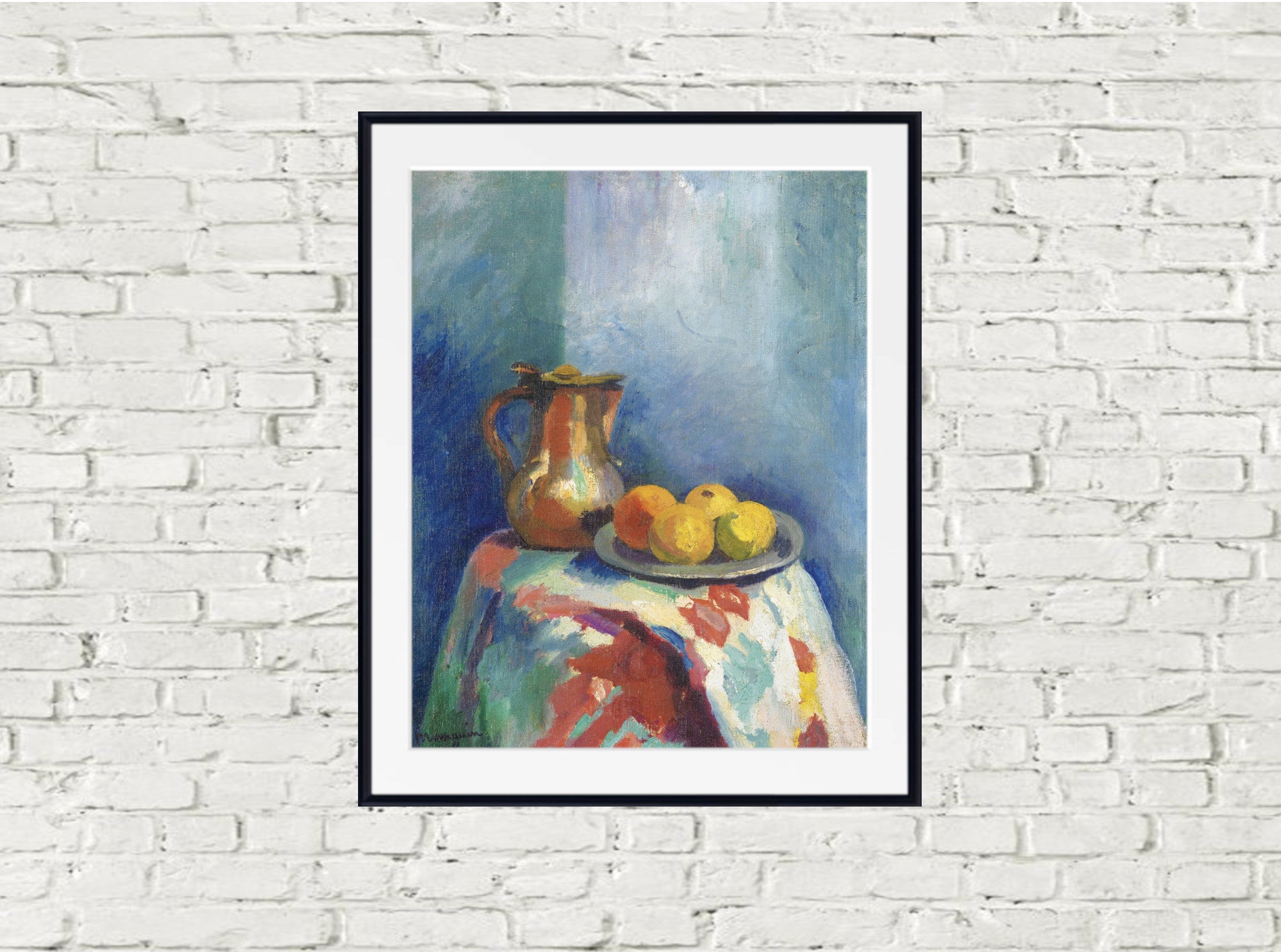
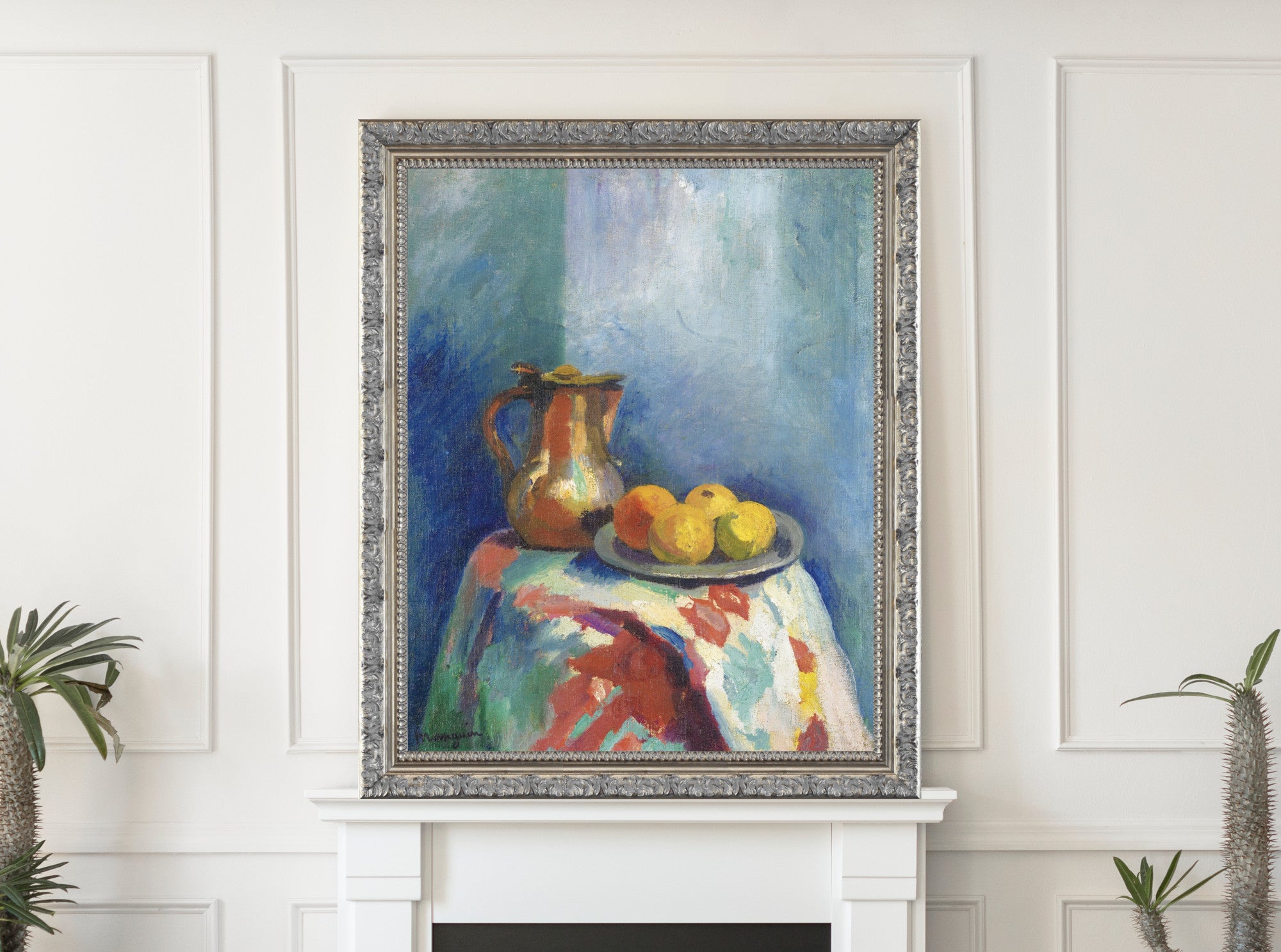
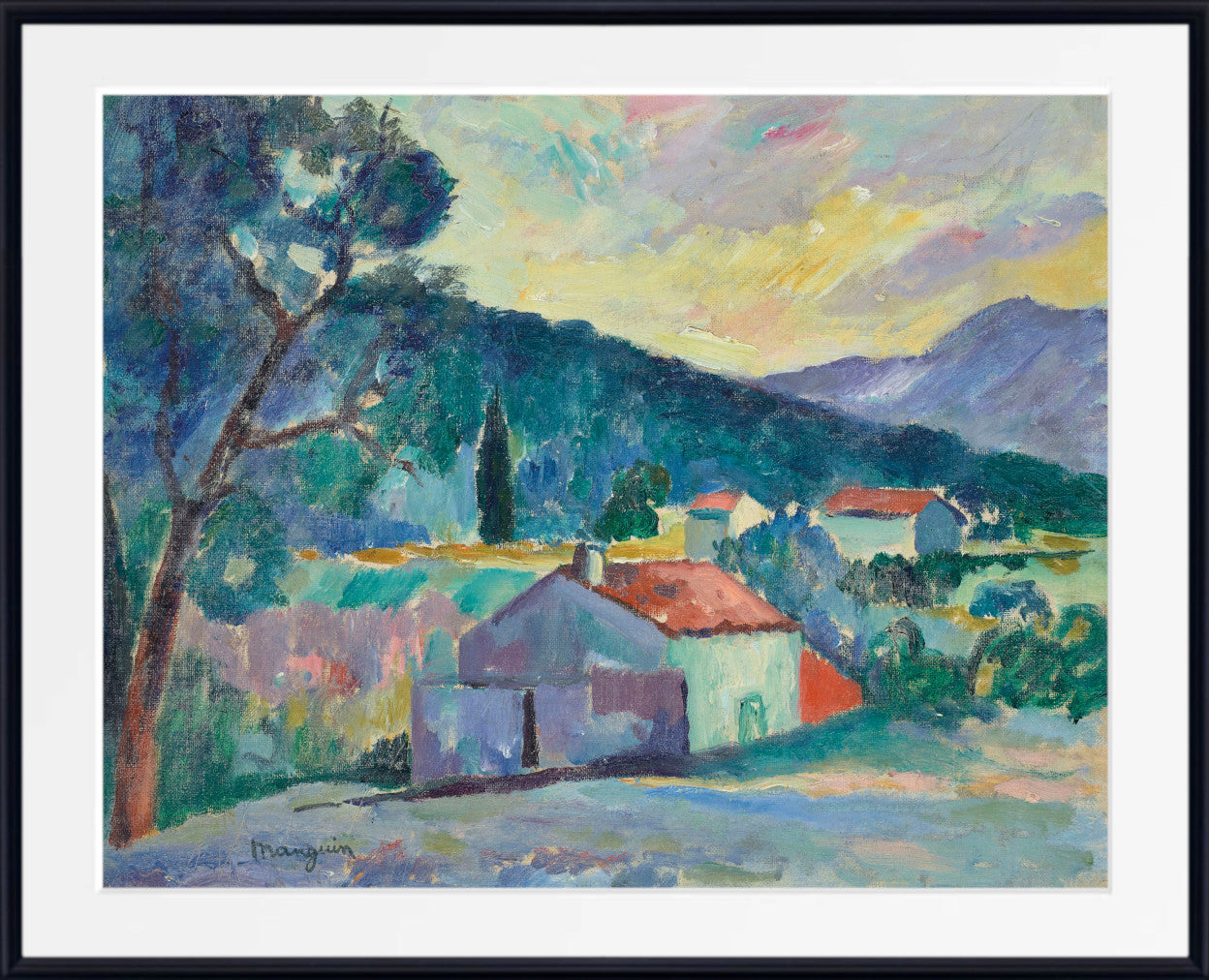
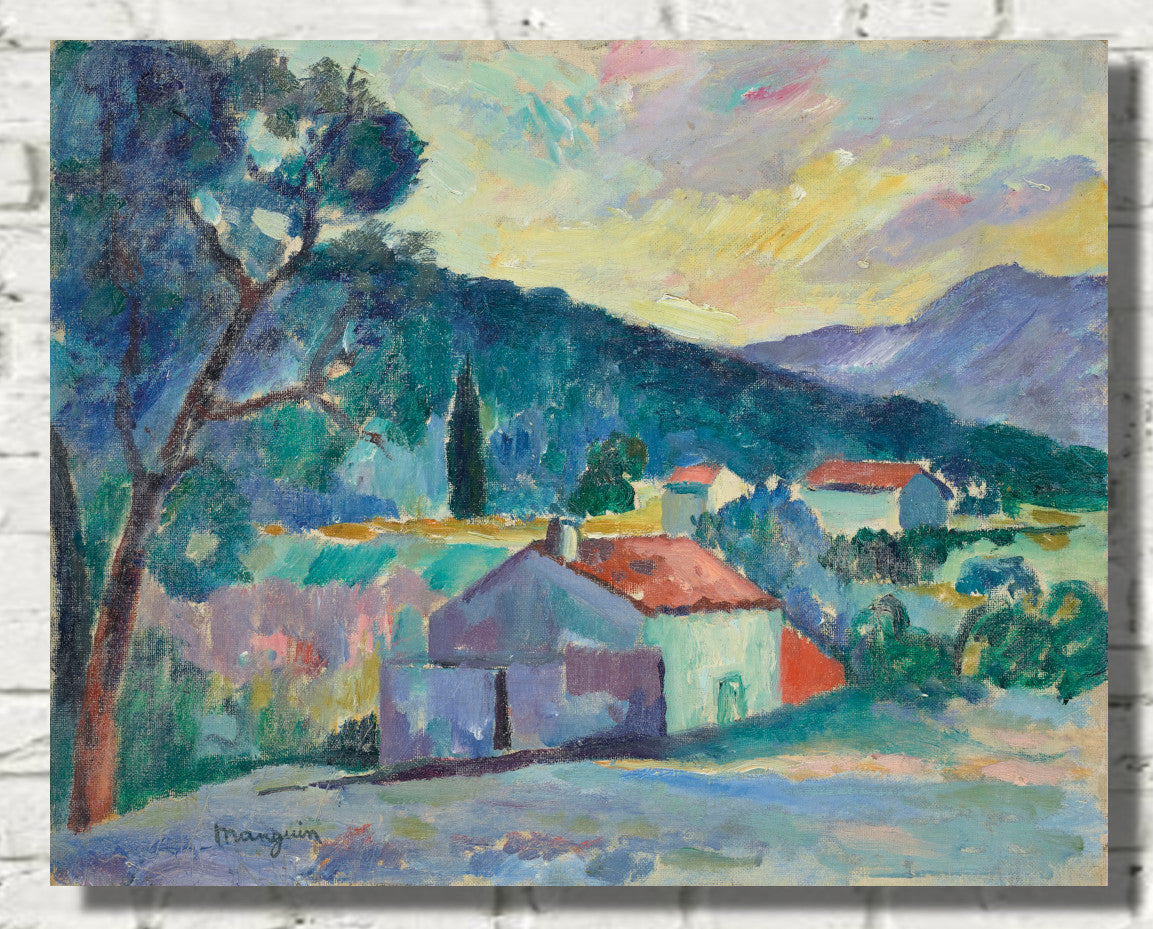
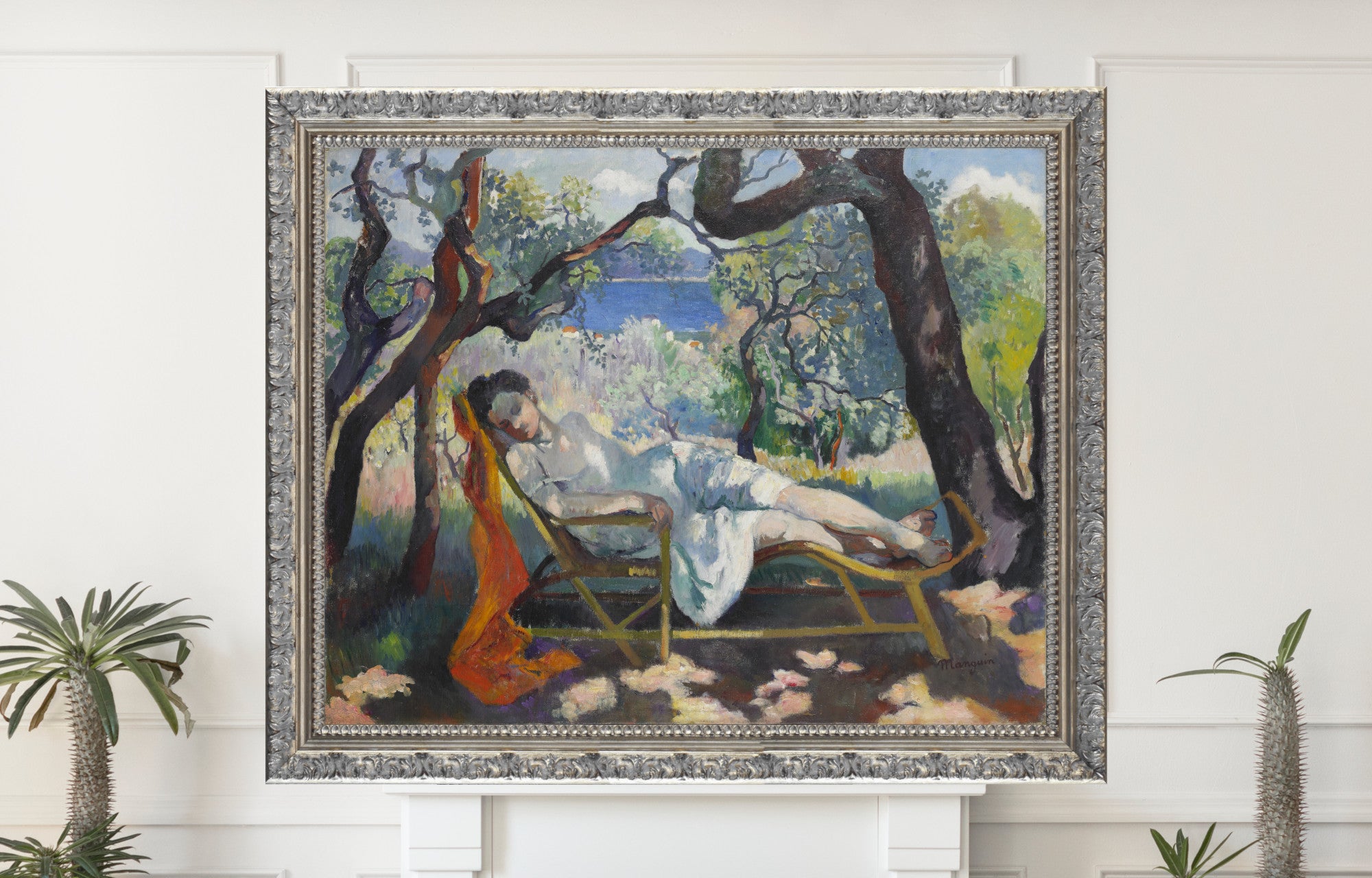
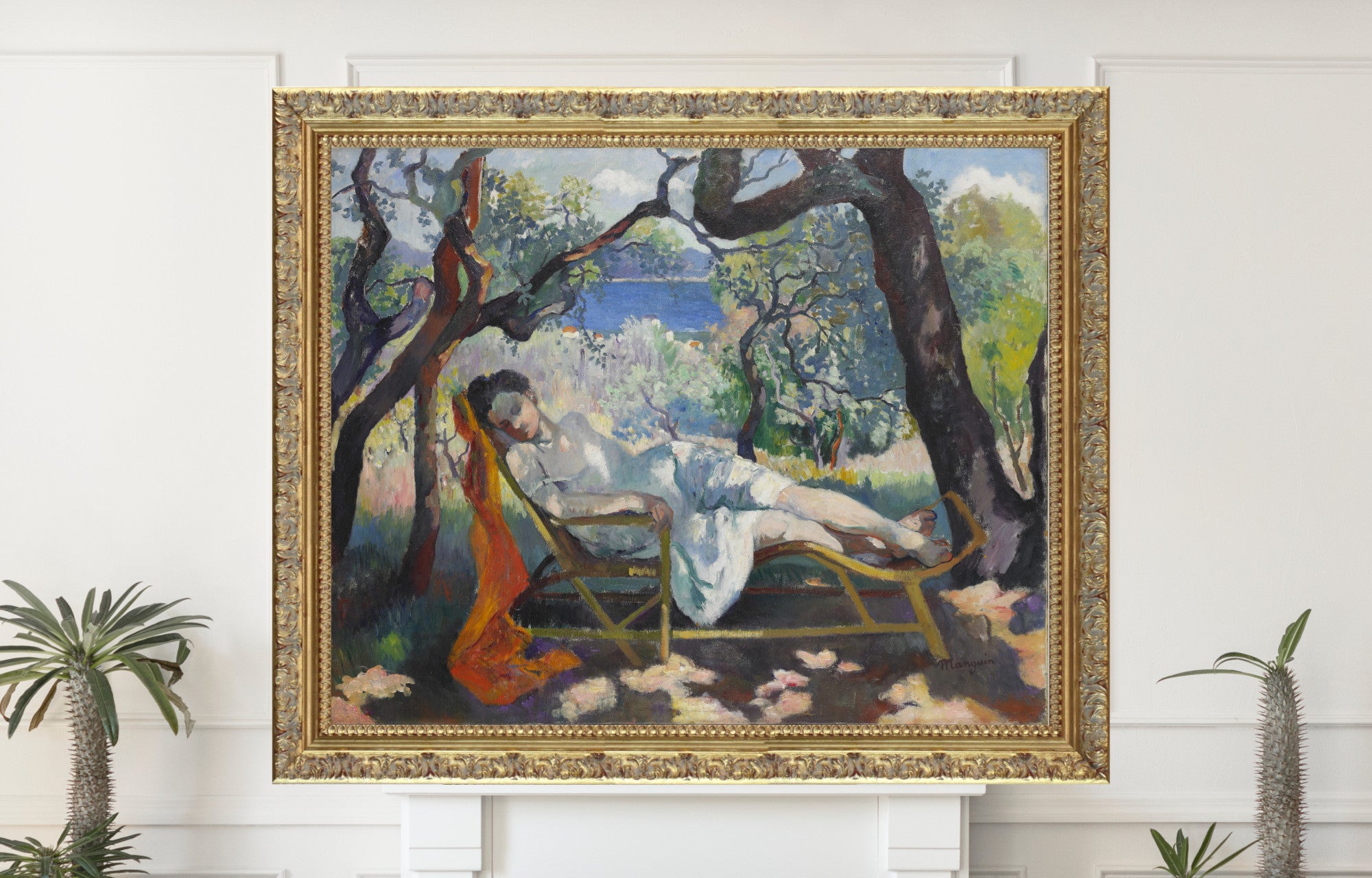
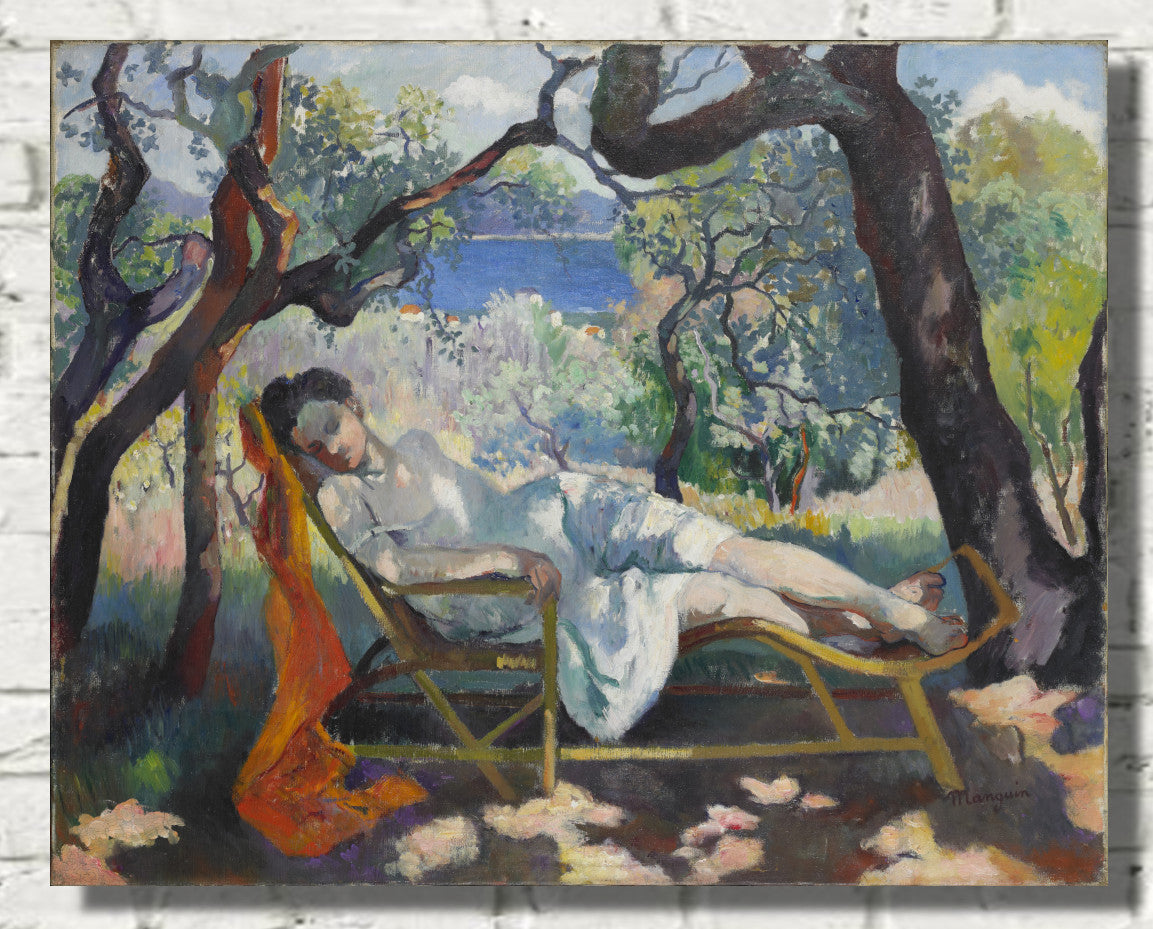
Bring the brilliant light and expressive colour of southern France into your home with a Henri Manguin Cassis Landscape print. Painted in the late summer of 1912, Cassis captures the Mediterranean landscape through the vivid palette and simplified forms that remained central to Manguin's art after his early association with Fauvism.
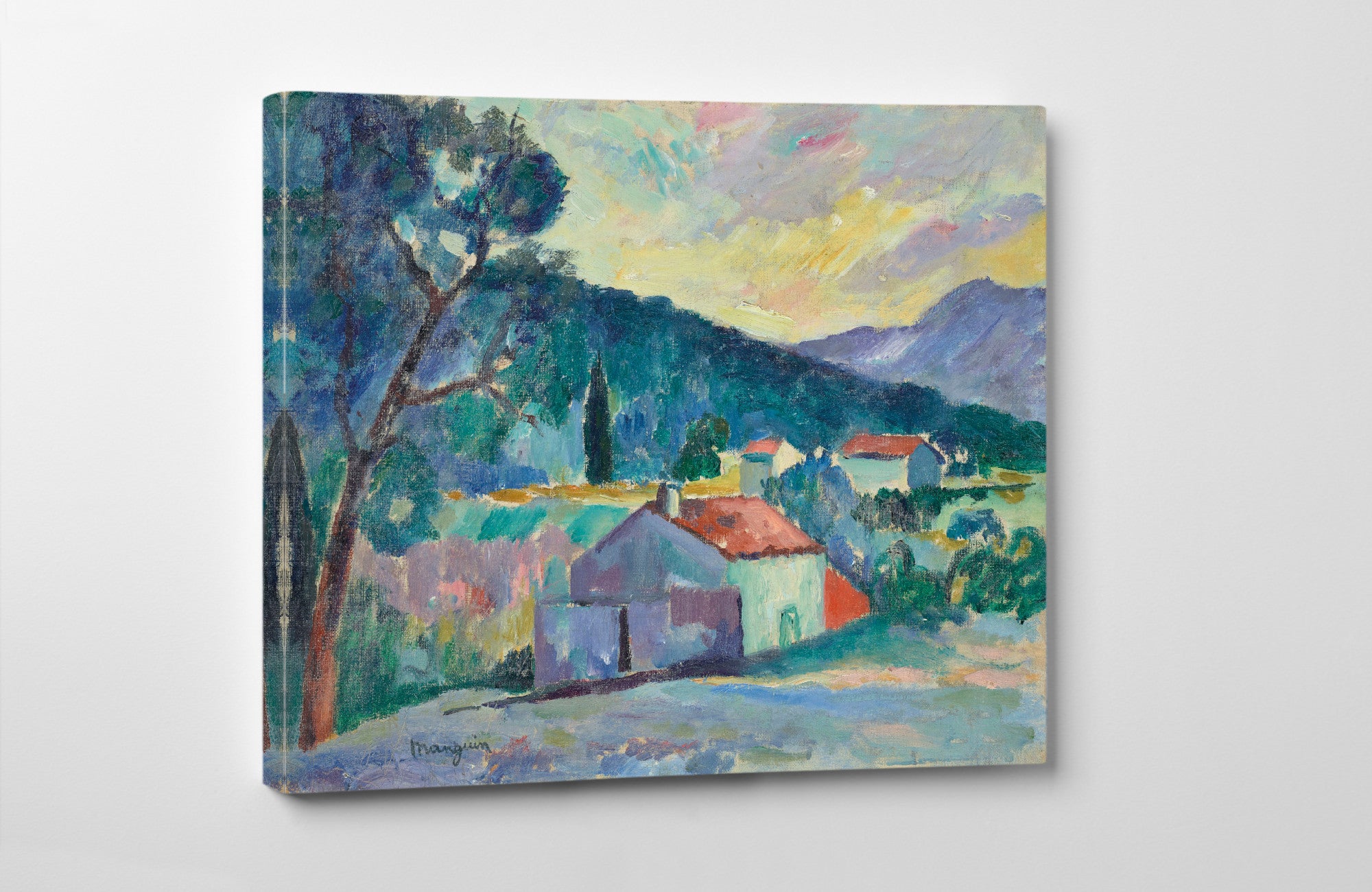
Available as fine art prints and canvas panels, this colourful French Riviera landscape transforms the scenery around Cassis into a harmonious arrangement of blues, greens and warmer Mediterranean tones. Rather than recording every detail literally, Manguin concentrates on colour, light and the underlying structure of the landscape.
Cassis and the French Mediterranean
Cassis lies on the Mediterranean coast east of Marseille, surrounded by limestone hills, sheltered bays and the brilliant light of Provence.
For painters such as Manguin, southern France offered very different visual conditions from Paris. Strong sunlight intensified colour, while the contrast between pale rock, vegetation, sea and sky encouraged increasingly adventurous approaches to landscape painting.
Manguin had already discovered the artistic possibilities of the Mediterranean during the formative years of Fauvism. By the time he painted Cassis in 1912, this fascination with southern light had become a defining feature of his mature work.
Painting Style
Fauvist Colour in Manguin's Mature Landscape Painting
Although the brief historic period of Fauvism had largely passed by 1912, its influence remained fundamental to Manguin's art.
Colour was no longer required to reproduce the landscape exactly as it appeared. Instead, Manguin could intensify or simplify colours to communicate atmosphere and establish relationships between different parts of the composition.
Greens, blues and warmer earth tones are used as structural elements as much as descriptive ones. Hills, vegetation and open spaces are organised into clear passages of colour, allowing the viewer to experience the landscape as both a recognisable place and an arrangement of painted forms.
From Fauvism to a More Harmonious Style
Manguin had exhibited alongside Henri Matisse, André Derain and other Fauvist painters at the famous 1905 Salon d'Automne. Their brilliant, unconventional colours helped redefine the possibilities of modern painting.
As Manguin's career developed, however, his colour became increasingly associated with harmony rather than deliberate visual shock.
In Cassis, the landscape remains vivid, but there is a greater sense of balance and stability than in the most radical Fauvist paintings of 1905–06. The strong palette works together to communicate sunlight and Mediterranean atmosphere without sacrificing the underlying structure of the landscape.
This lyrical approach became one of the distinguishing characteristics of Manguin's mature work.
Landscape Simplified Through Colour
Manguin does not attempt to describe Cassis with photographic precision. Individual details are subordinated to larger shapes and colour relationships.
This simplification gives the painting its modern appearance. Trees, hills and areas of open land are reduced to broad painted forms, allowing the eye to move easily across the composition.
Visible brushwork reinforces the impression of immediacy. Rather than concealing the process of painting beneath a polished surface, Manguin allows individual strokes and passages of colour to remain apparent.
The result is a landscape that feels spontaneous while remaining carefully organised.
The Influence of Cézanne and Southern France
Like many French painters of Manguin's generation, he was deeply aware of Paul Cézanne's transformation of landscape painting.
Cézanne had demonstrated how hills, trees and buildings could be simplified into substantial forms while retaining a convincing sense of place. Manguin combined this structural awareness with the much freer colour he had developed through Fauvism.
Southern France provided an ideal environment for this synthesis. Its strong light encouraged brilliant colour, while the distinctive geology and vegetation of Provence offered clear shapes through which a composition could be organised.
Cassis therefore represents a mature balance between expressive colour and carefully constructed landscape.
A Documented Work from 1912
The original Cassis was painted in the late summer of 1912 in oil on canvasboard.
The Paris dealer Galerie Eugène Druet acquired the painting directly from Manguin in December of that year. It was subsequently shown in the gallery's 1913 exhibition devoted to the artist.
The work is also recorded in the catalogue raisonné of Henri Manguin's paintings, confirming its place within his established body of Mediterranean landscapes.
Cassis Landscape Wall Art for Modern Interiors
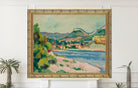
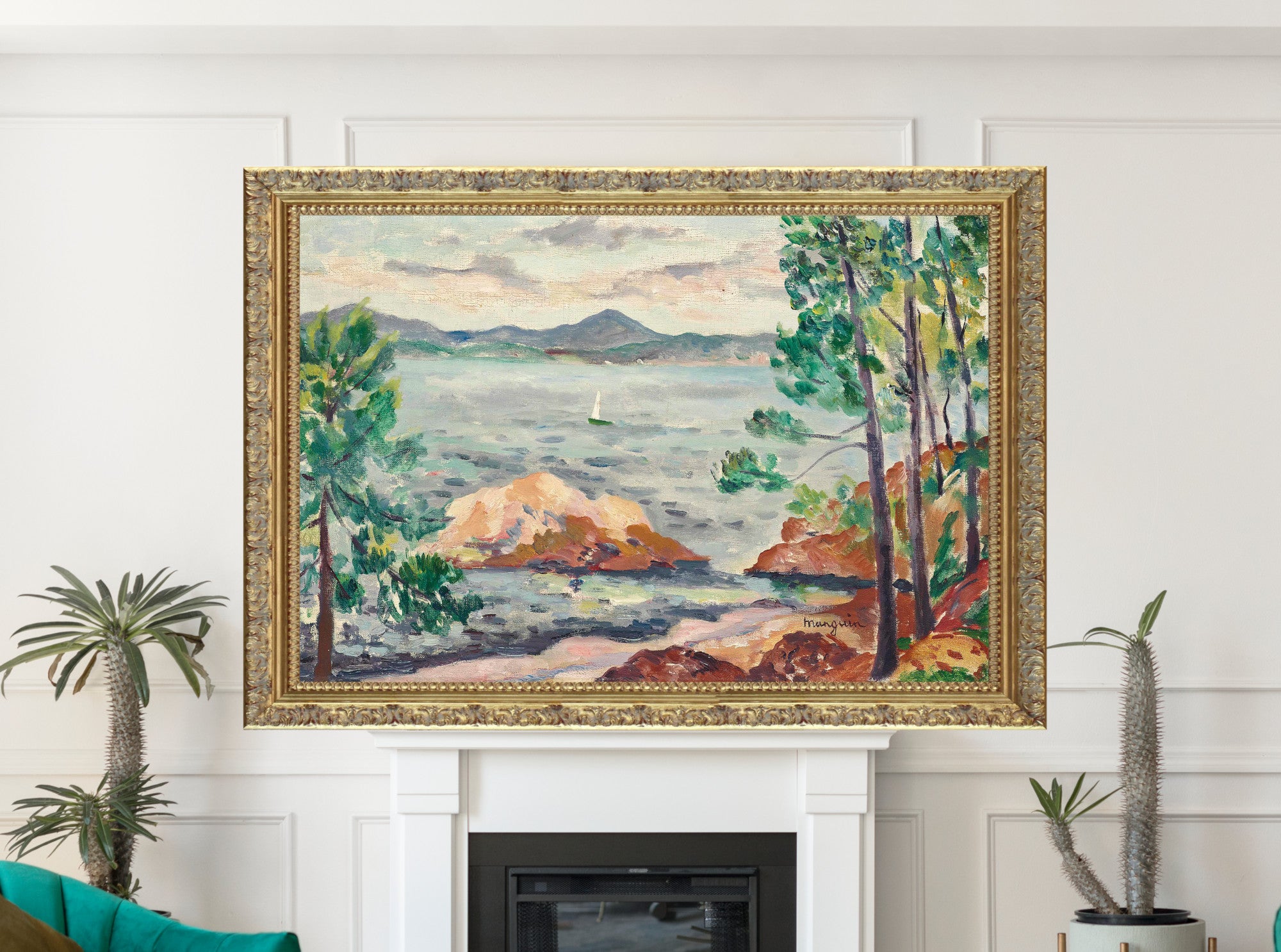
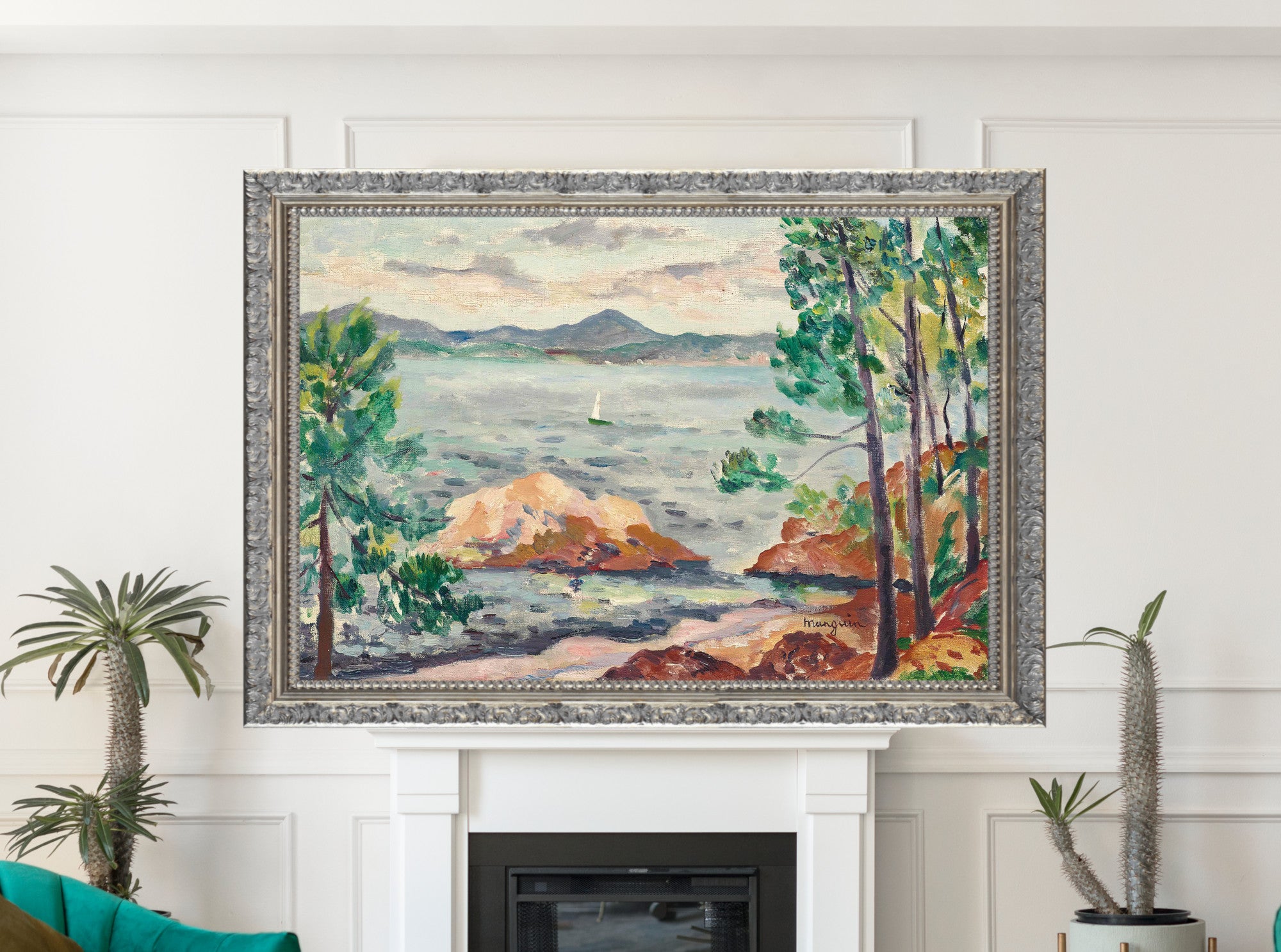
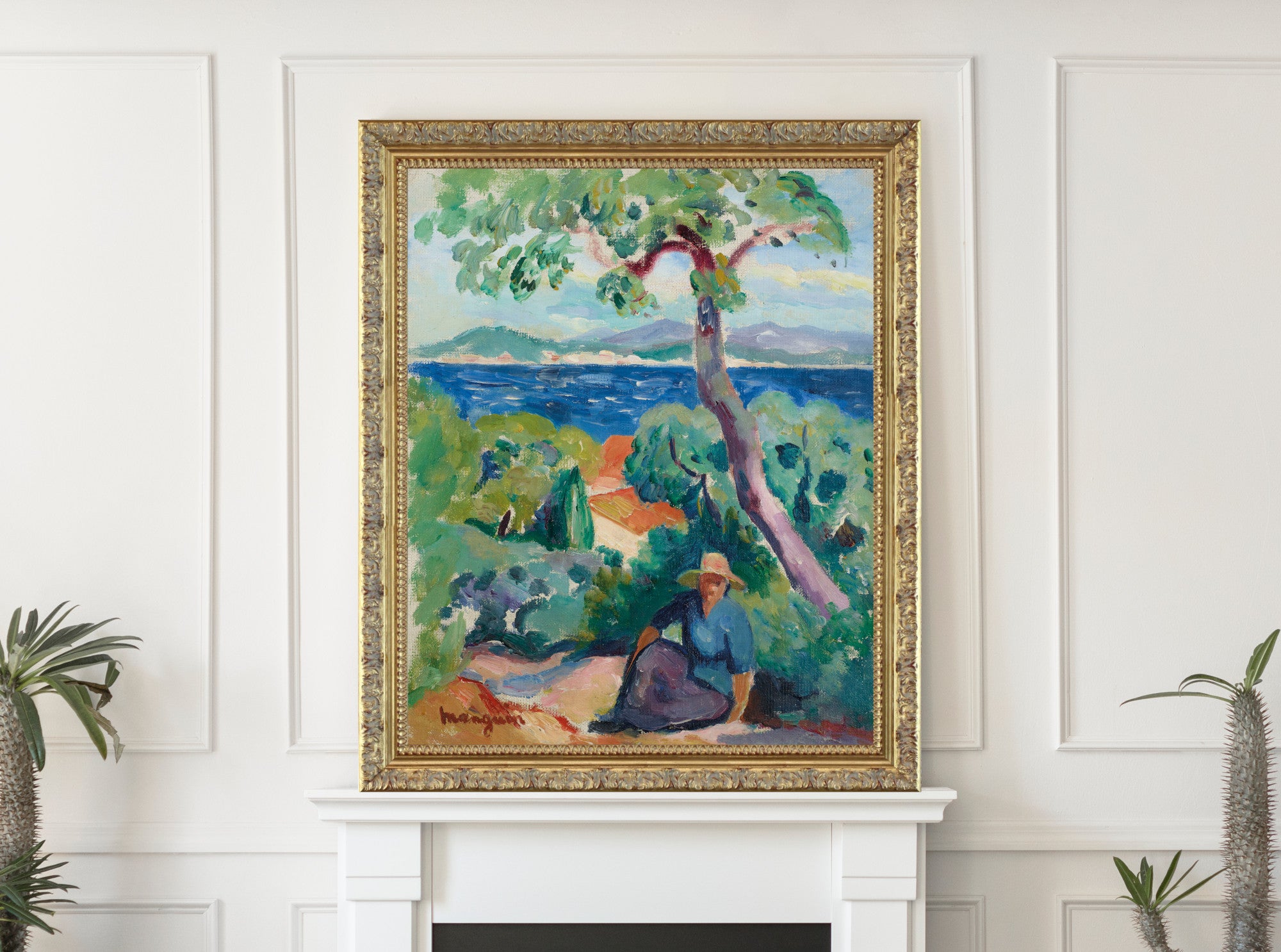
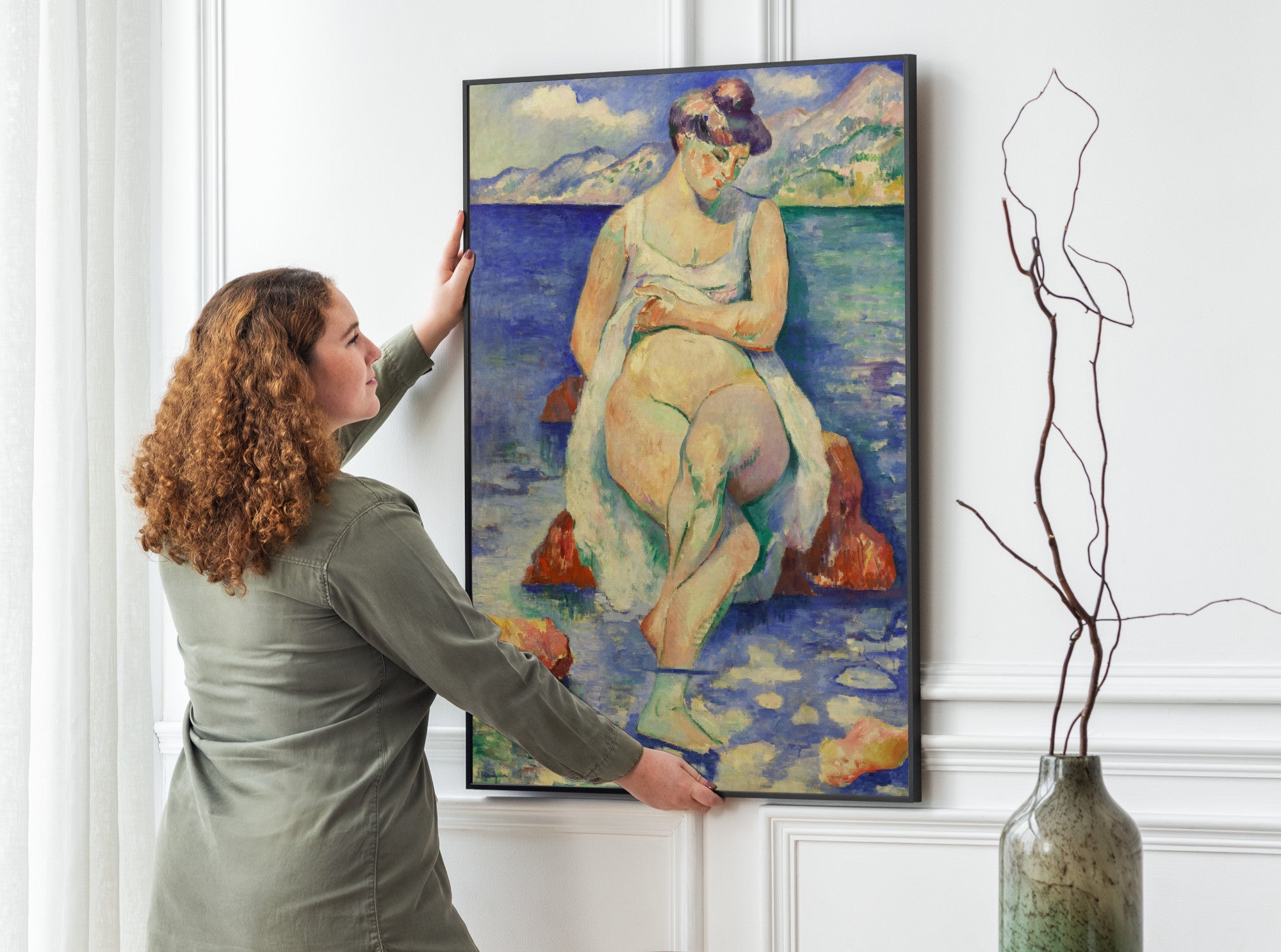
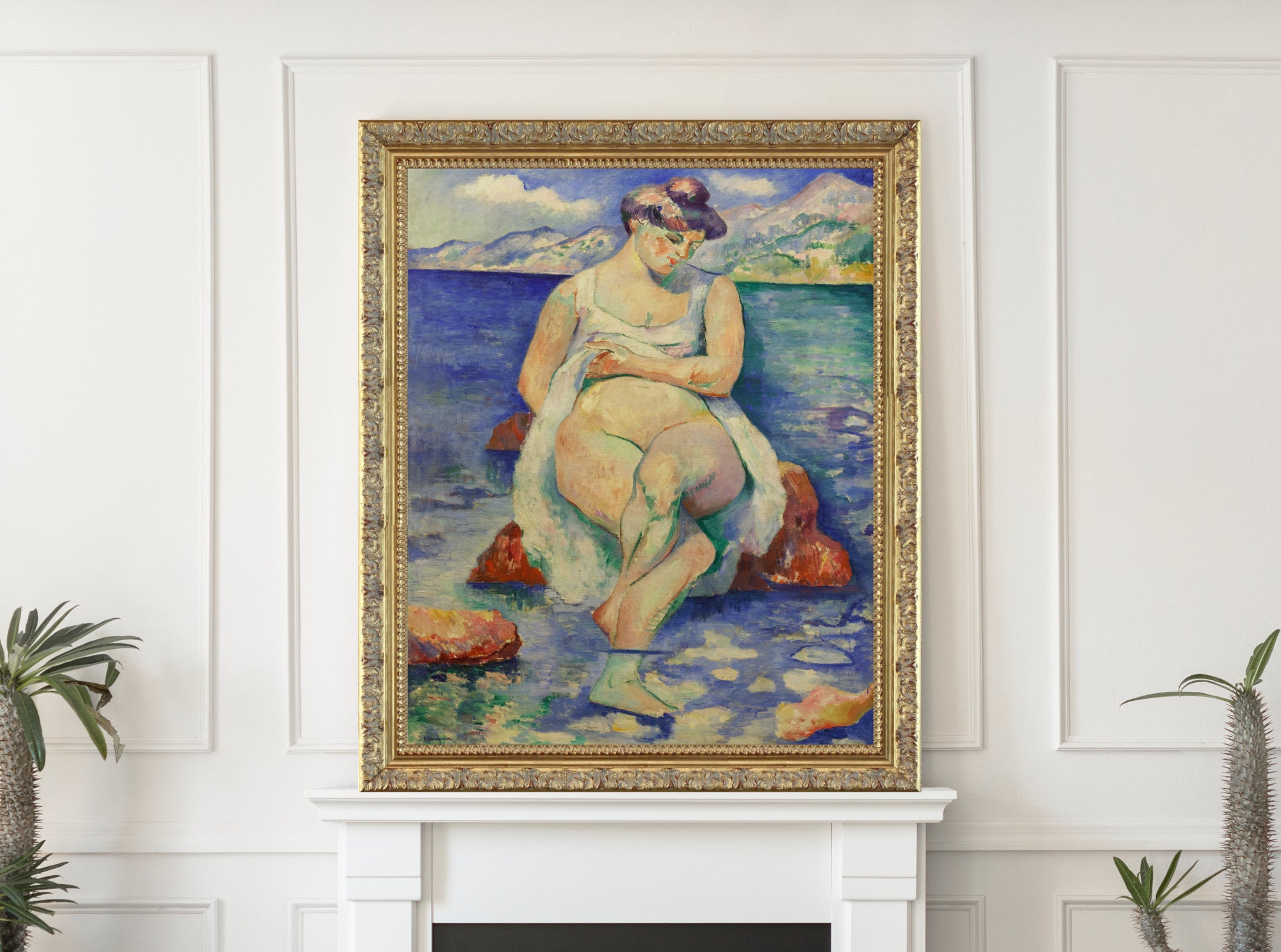
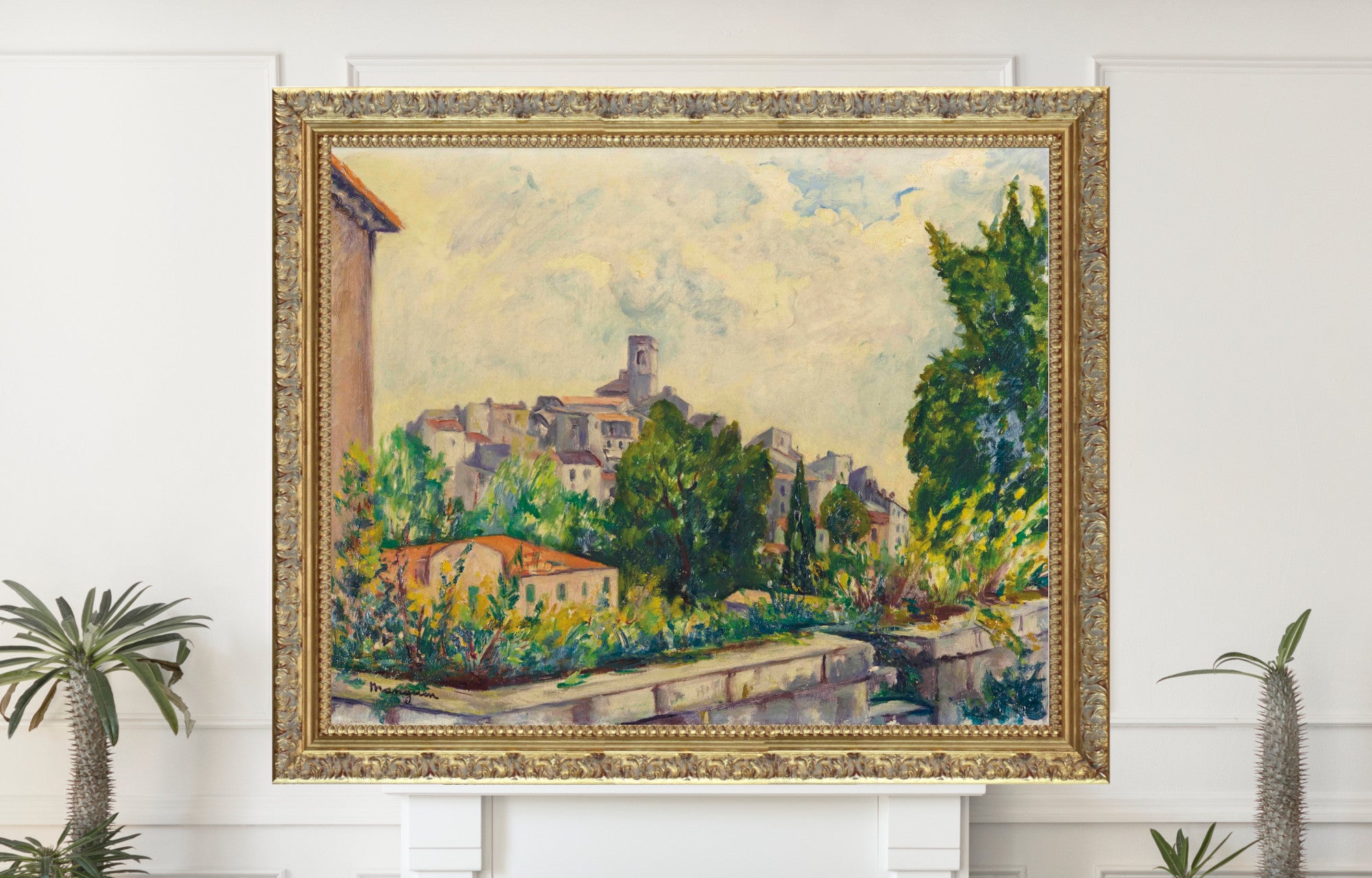
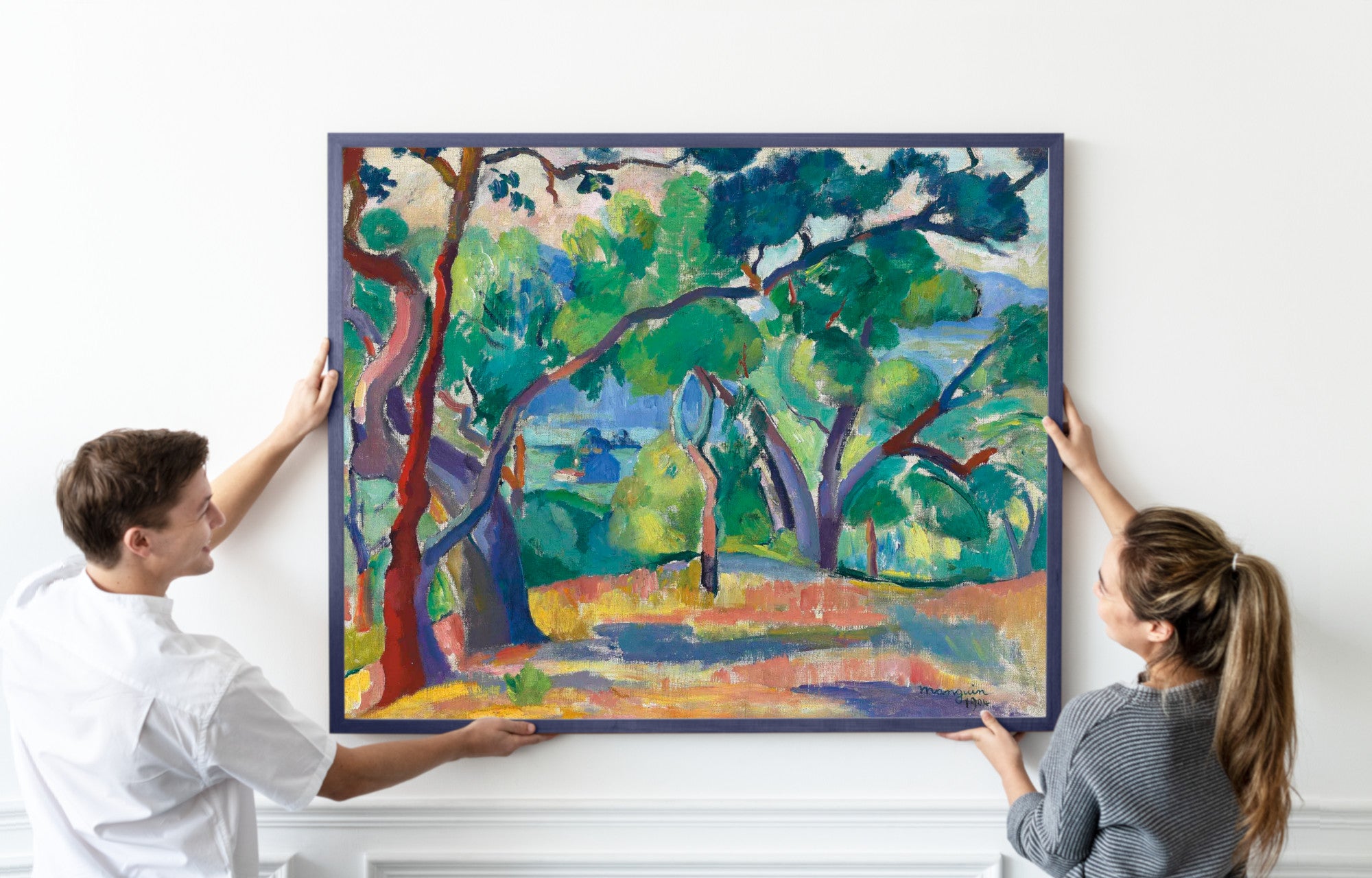
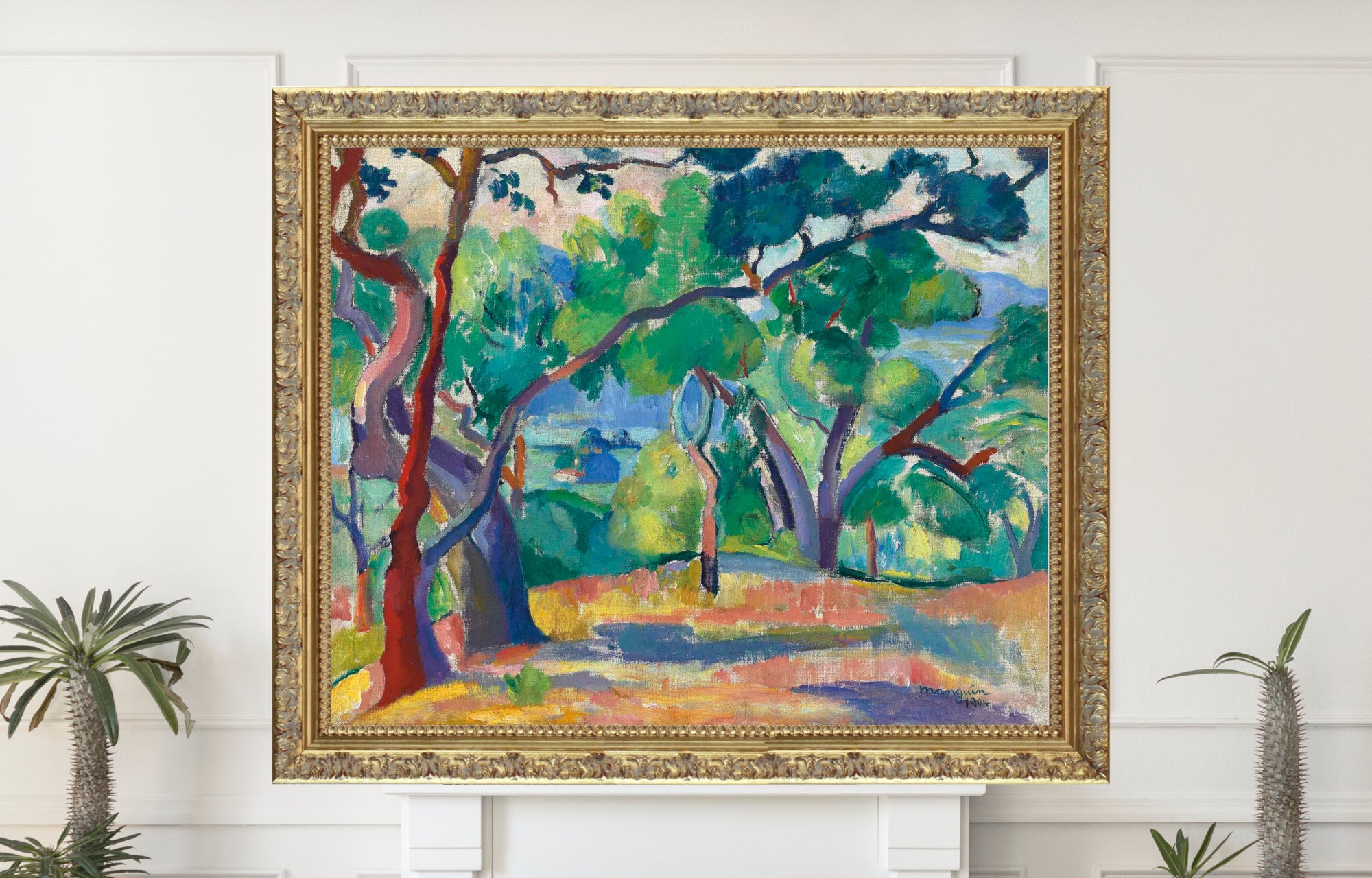
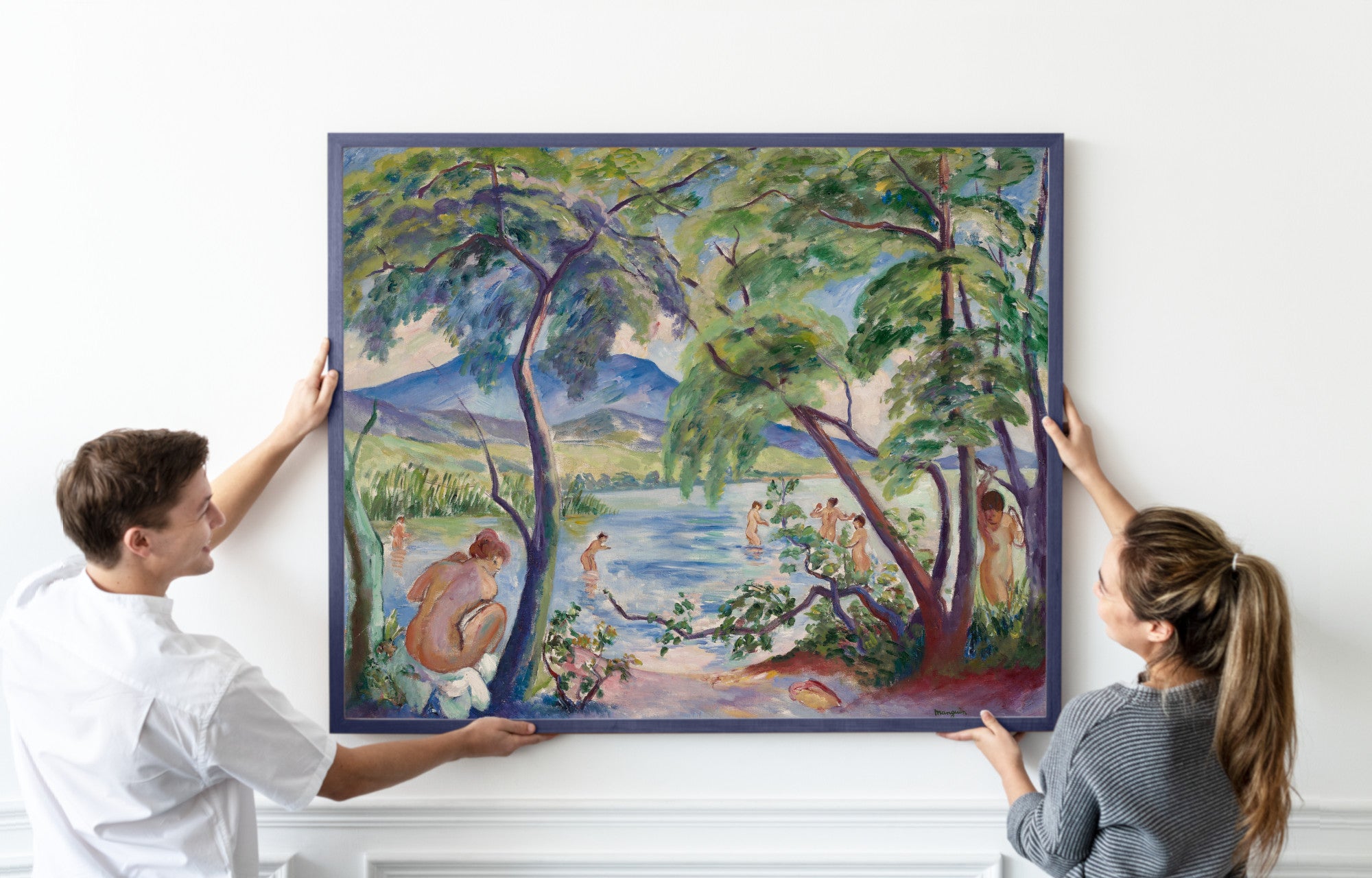
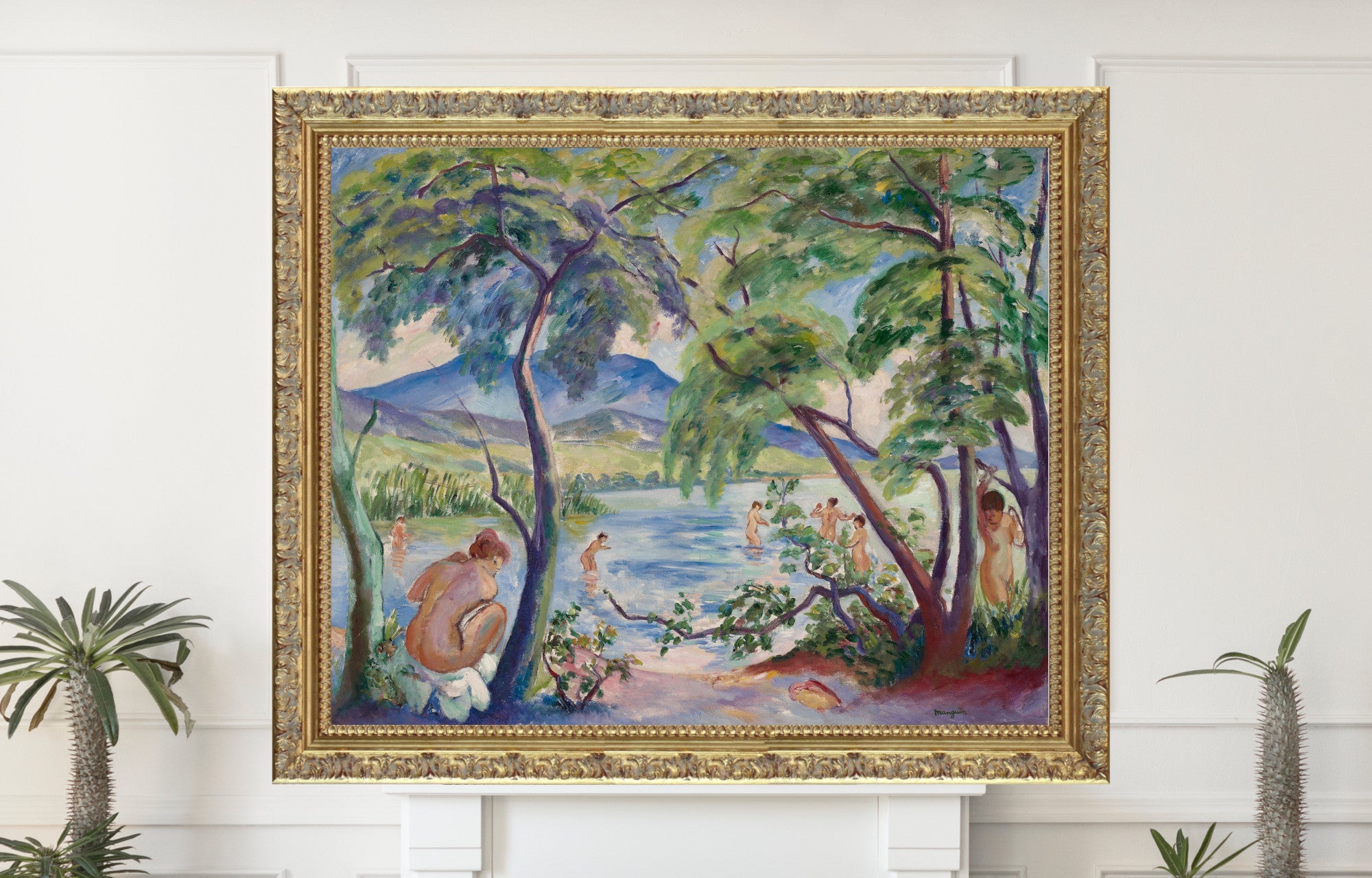
A Henri Manguin Cassis Landscape wall art print is particularly suited to interiors where colour is intended to create warmth without overwhelming the room.
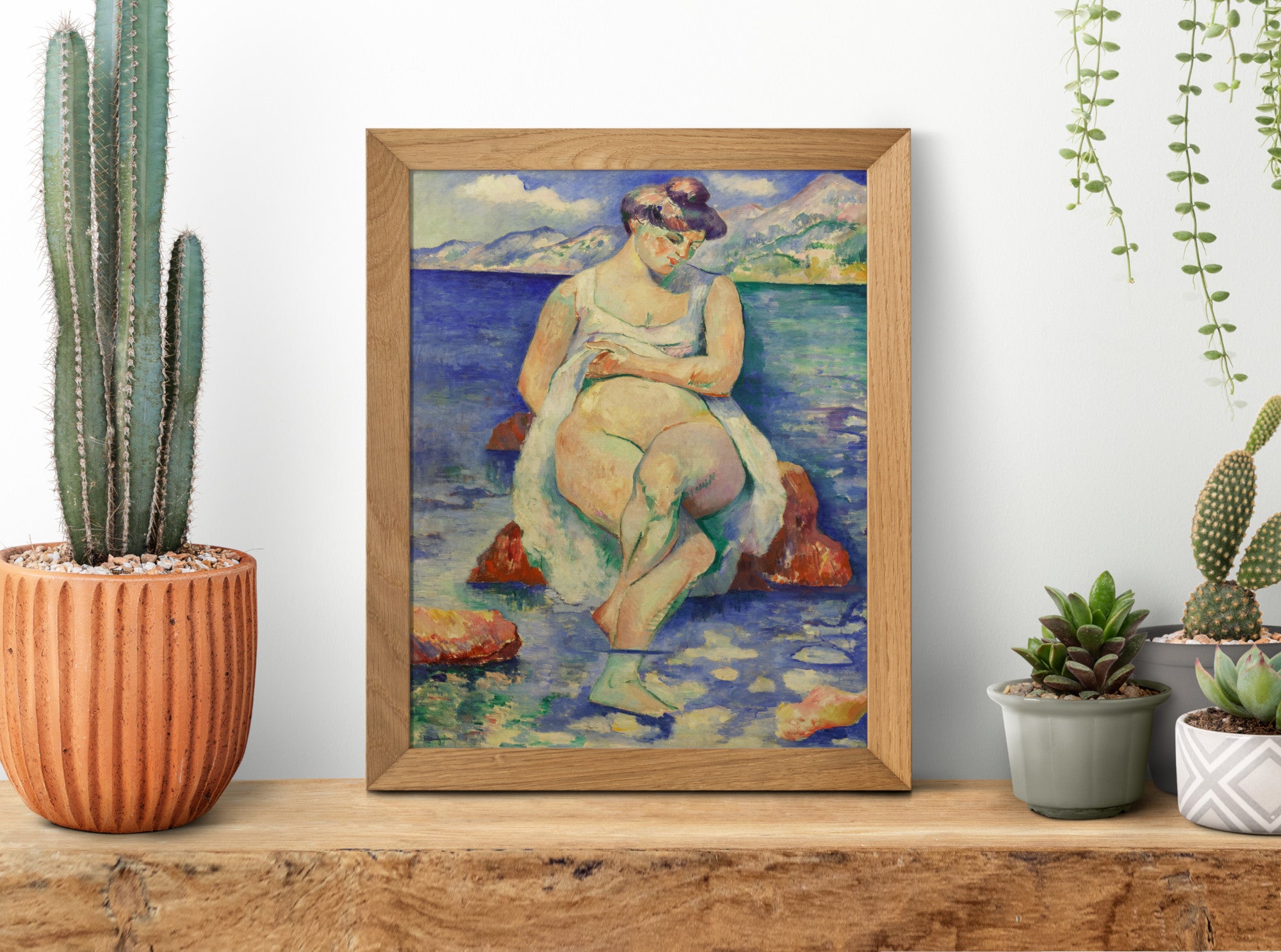
Its Mediterranean palette works well with contemporary, Scandinavian, mid-century modern and Mediterranean-inspired interiors. Neutral walls in white, cream, putty, beige and warm grey allow the stronger colours to become the focal point.
Natural wood, linen and understated furniture complement the landscape's relaxed character particularly well.
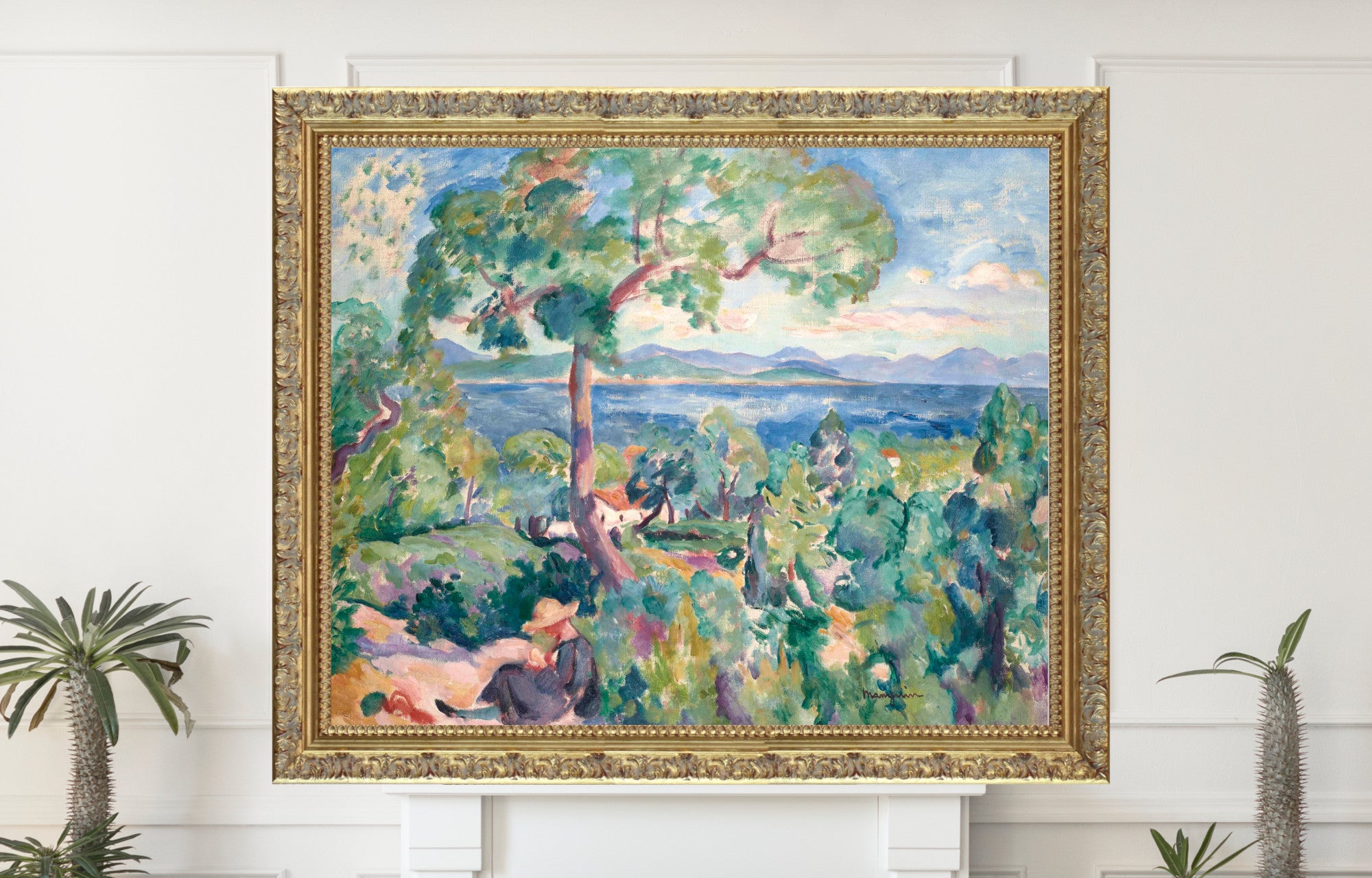
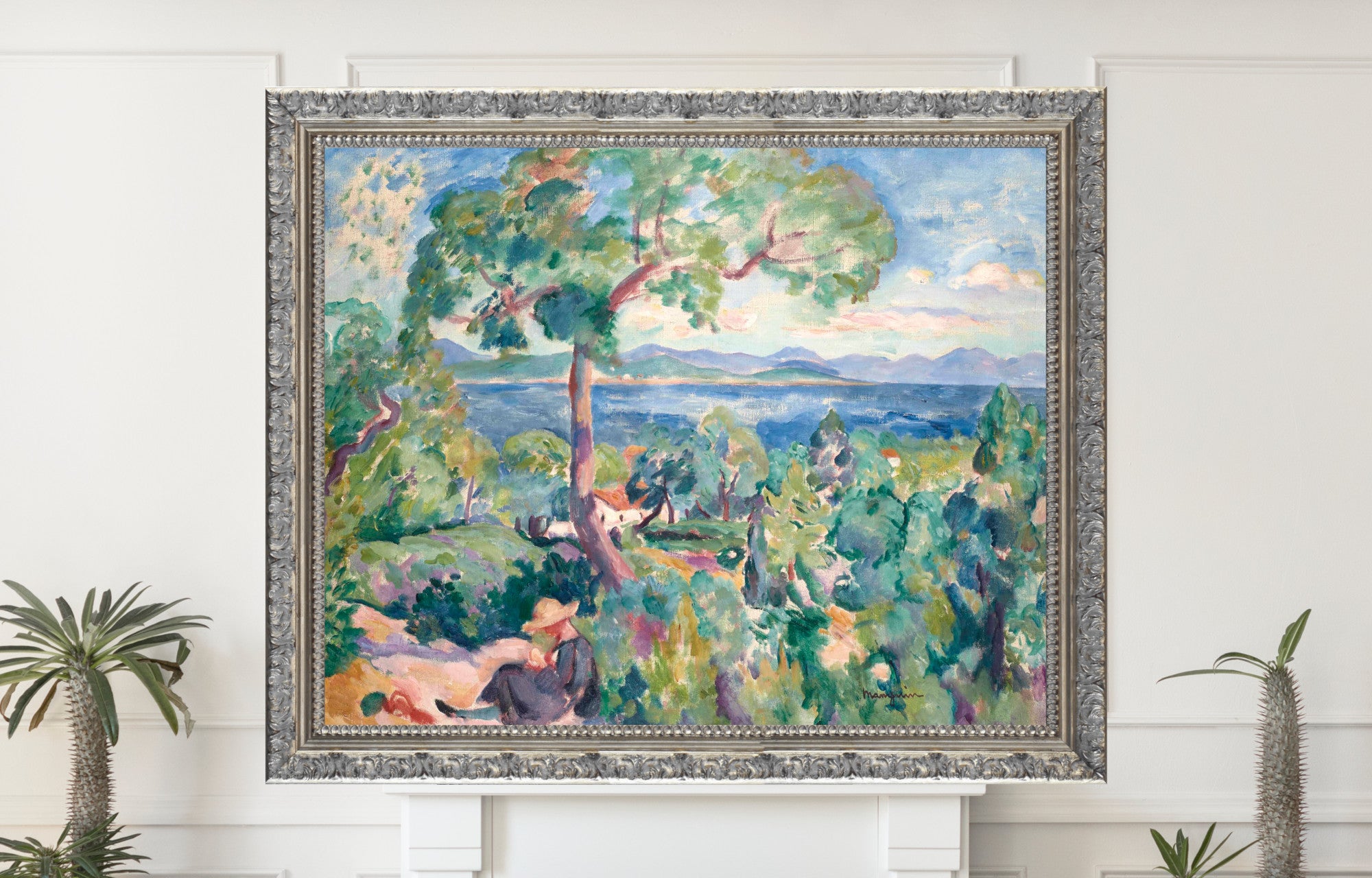
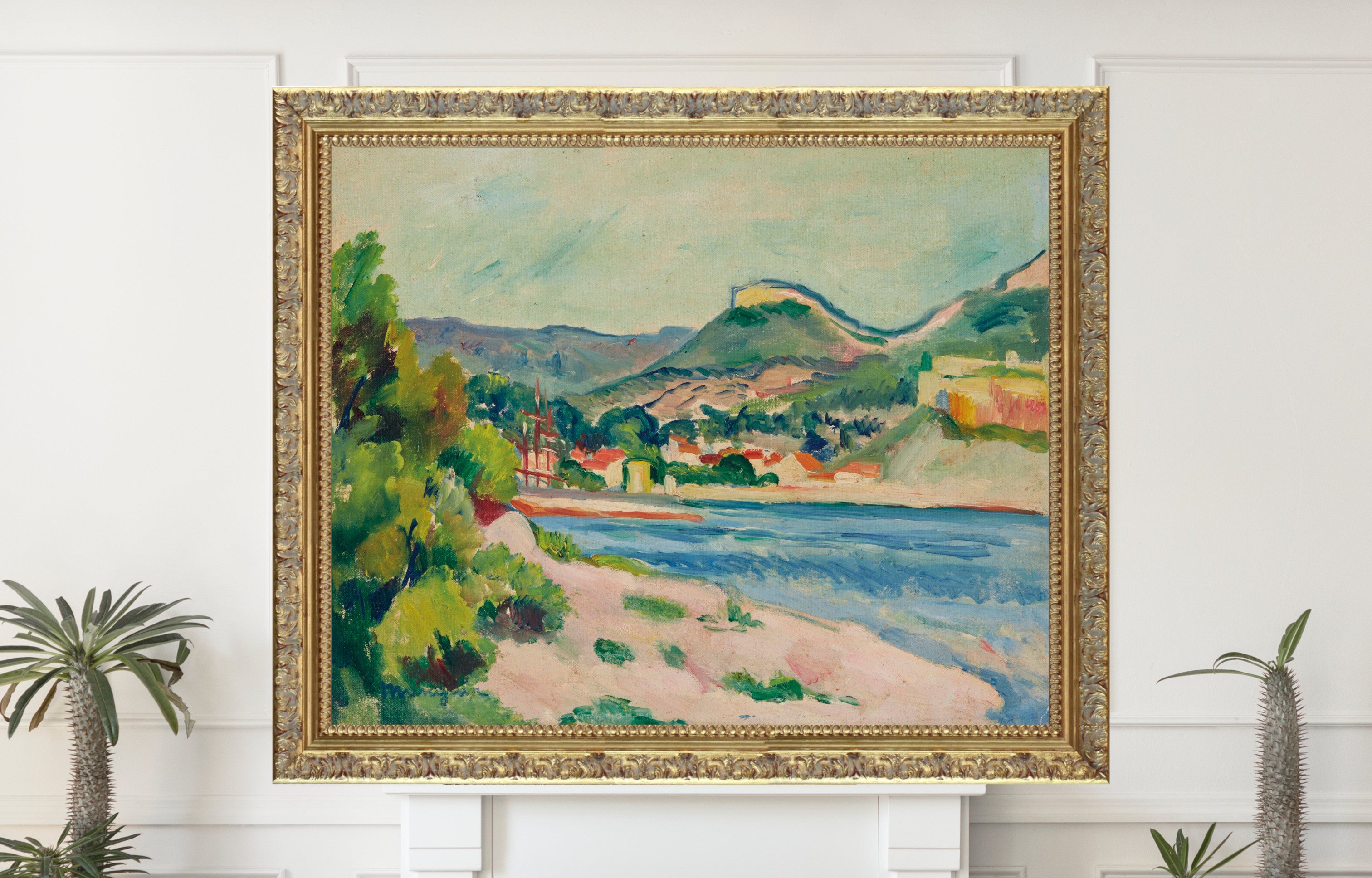
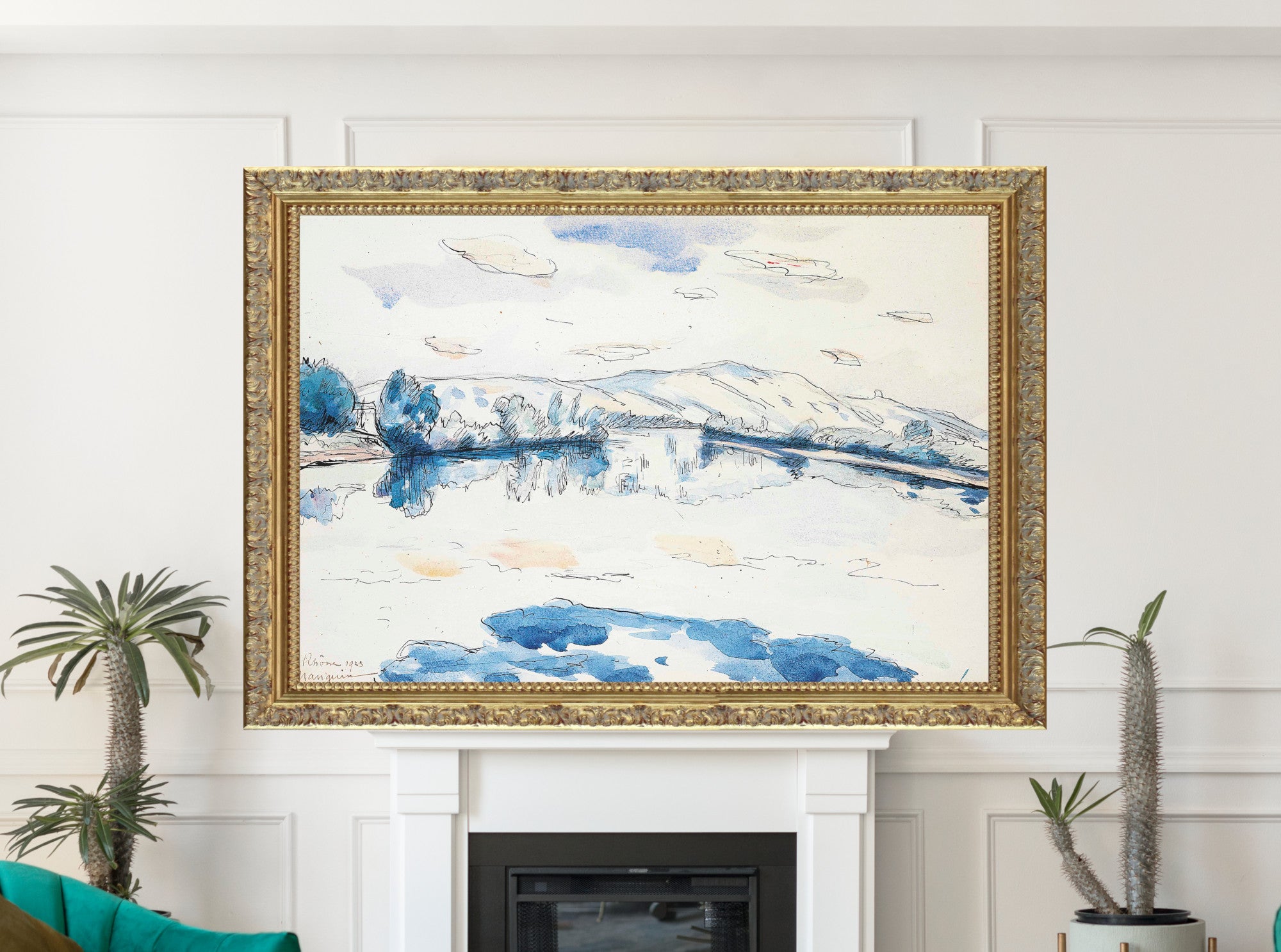
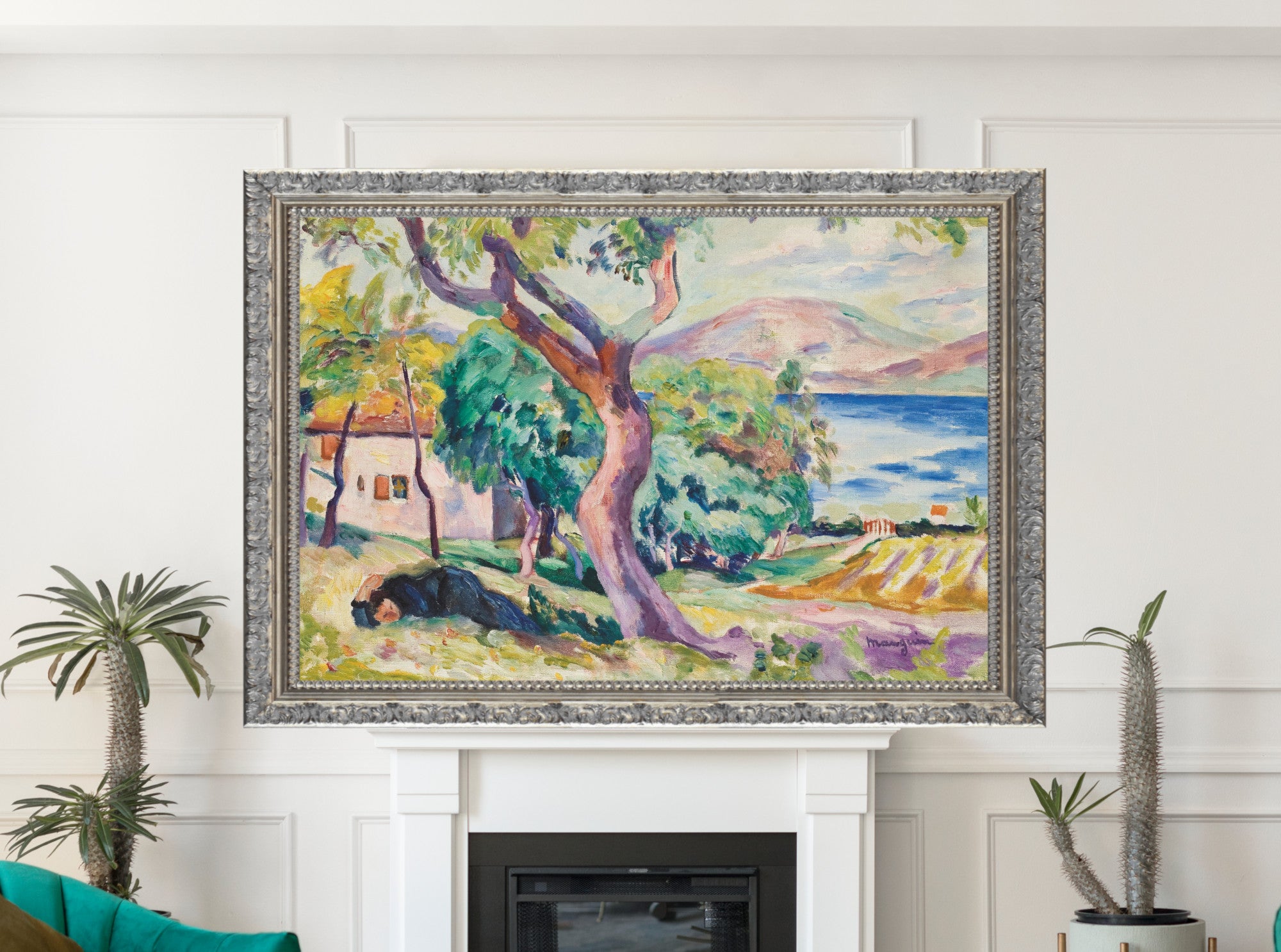
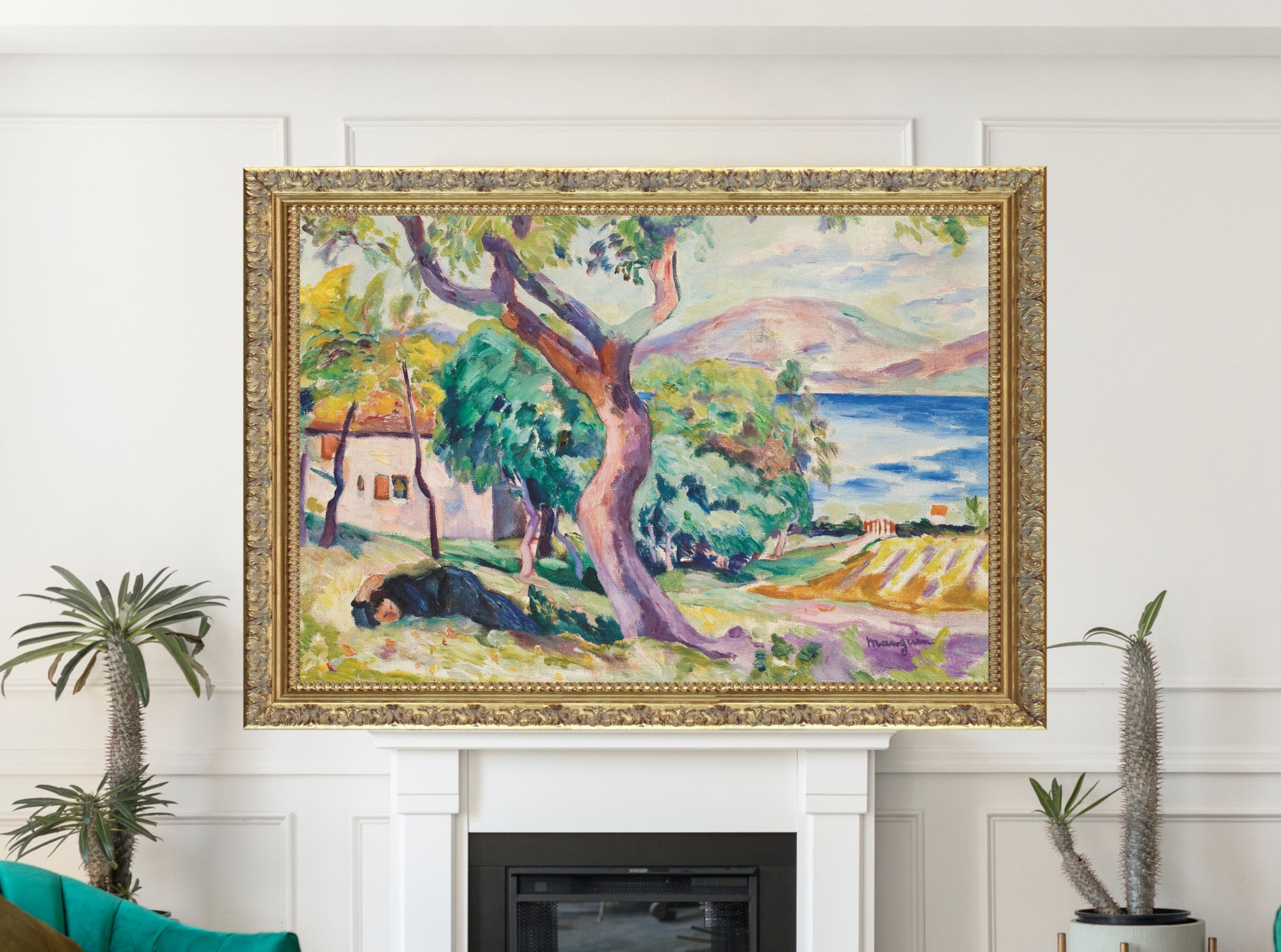
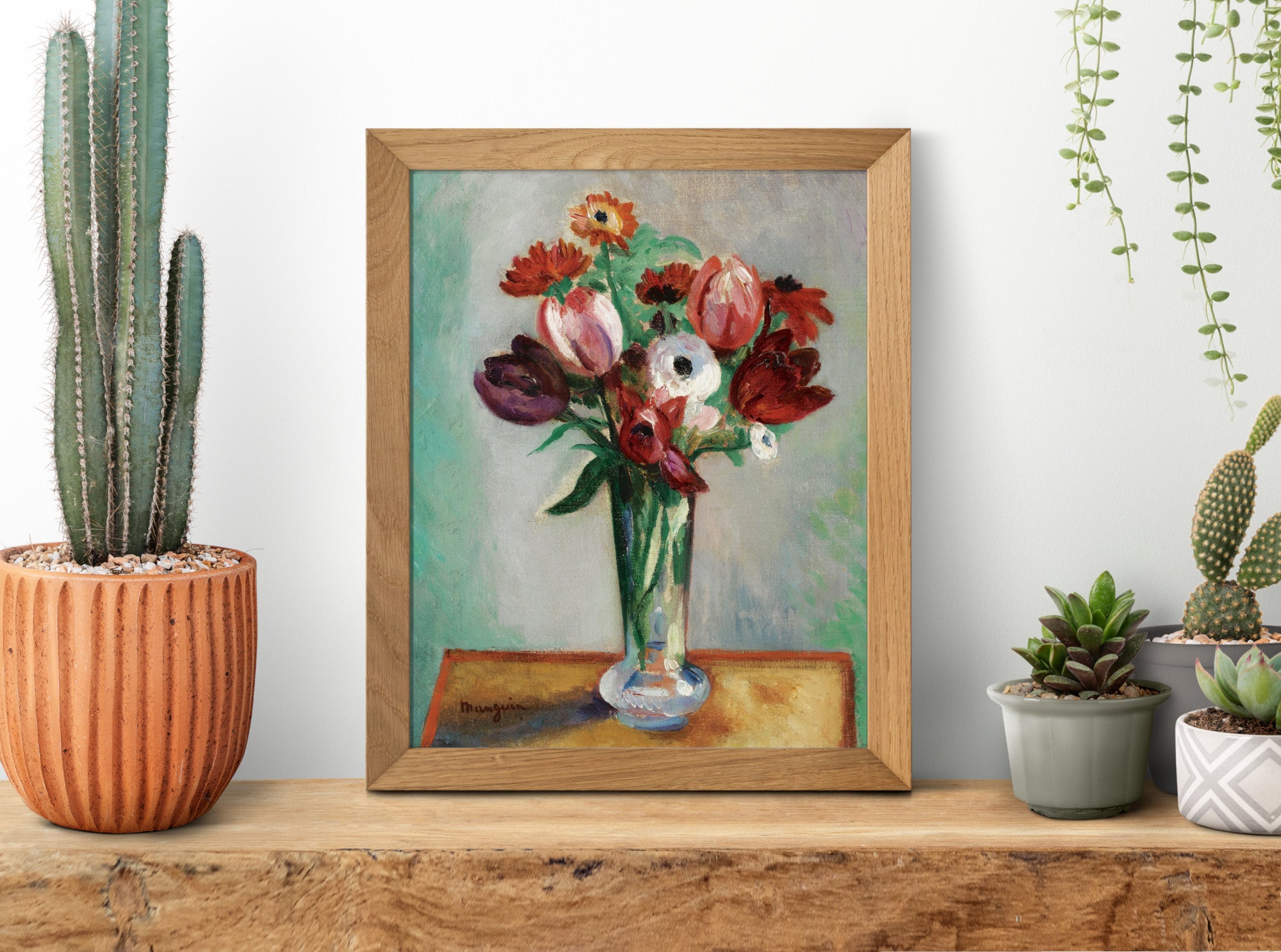
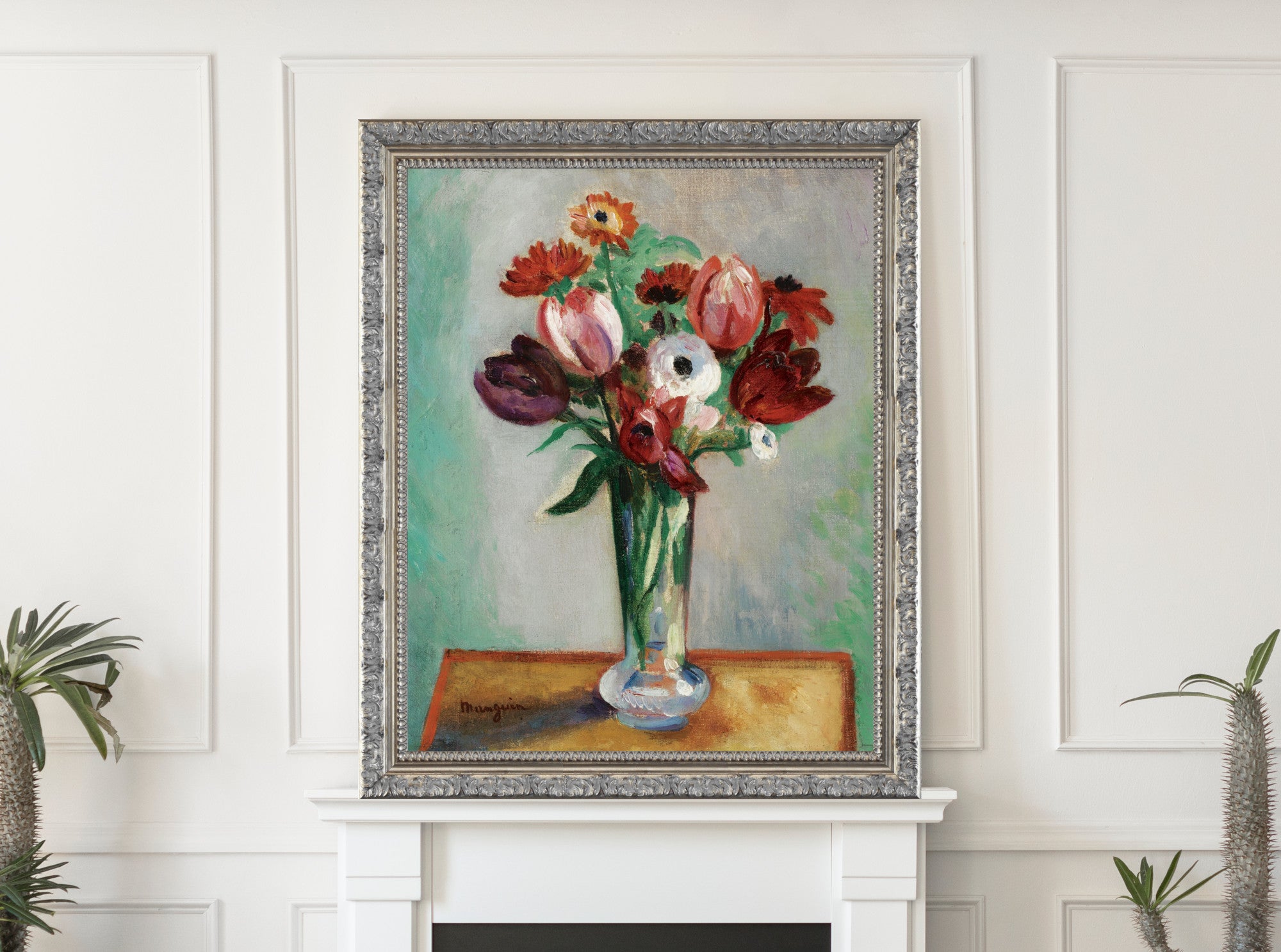
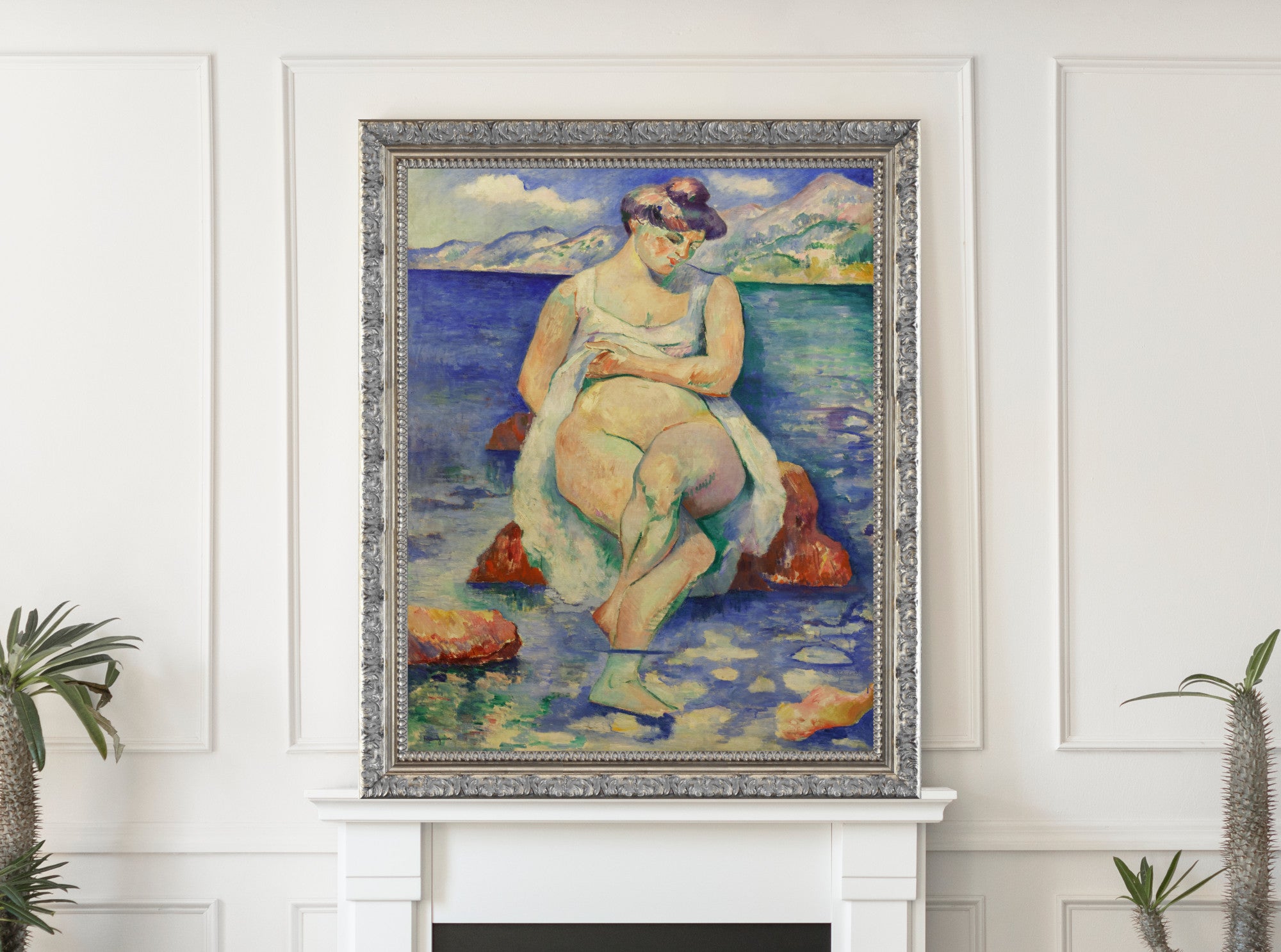
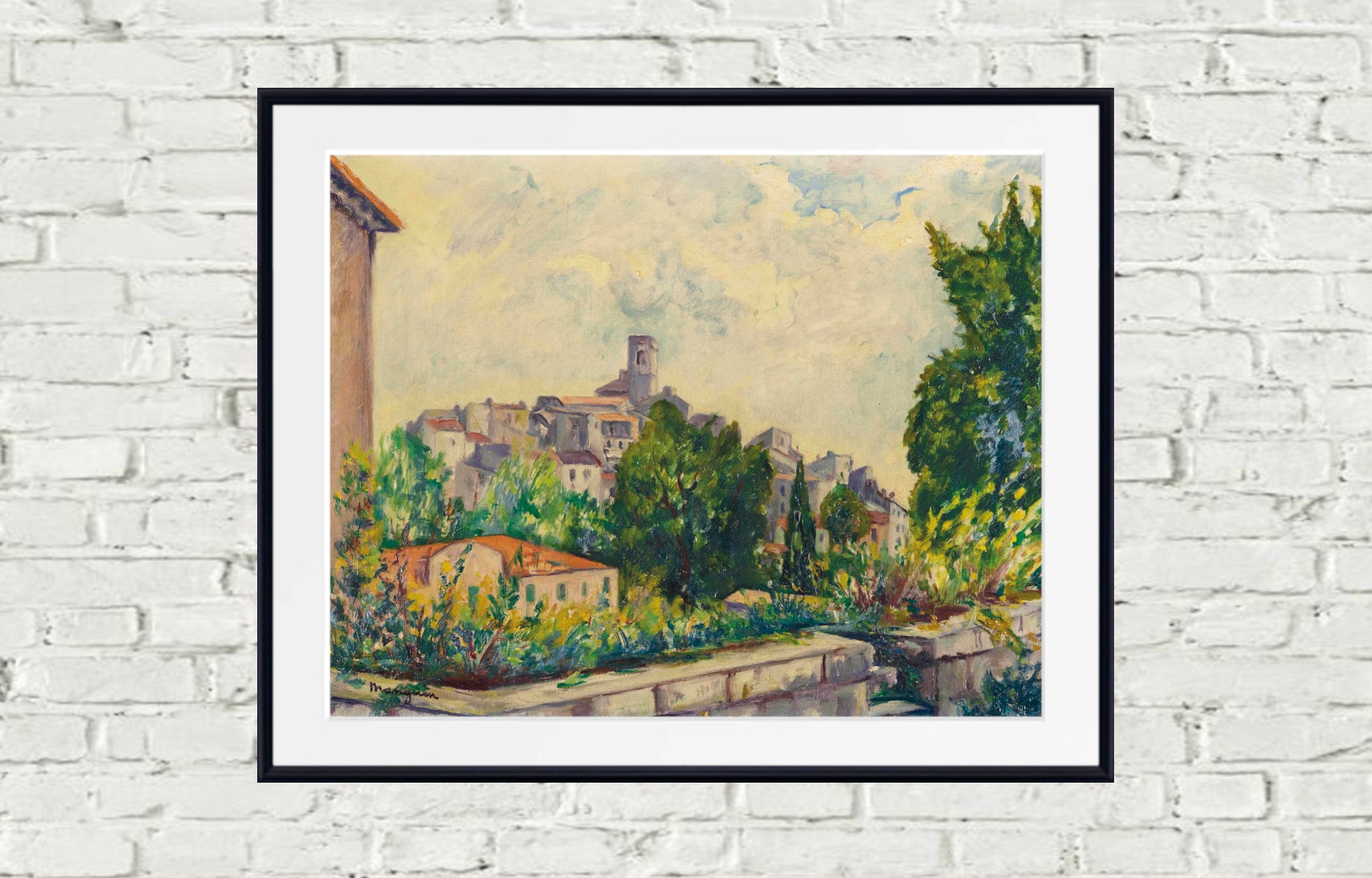
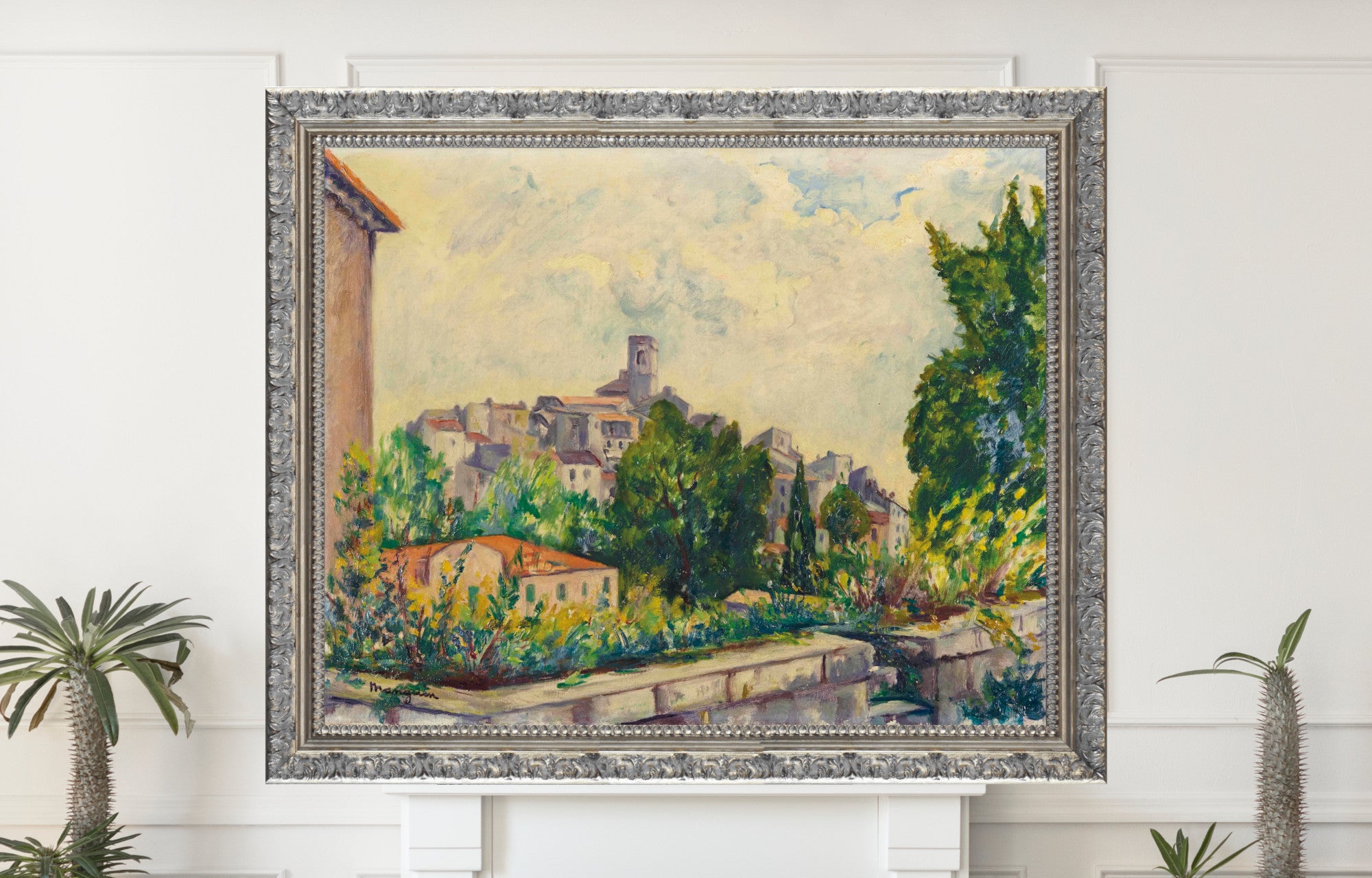
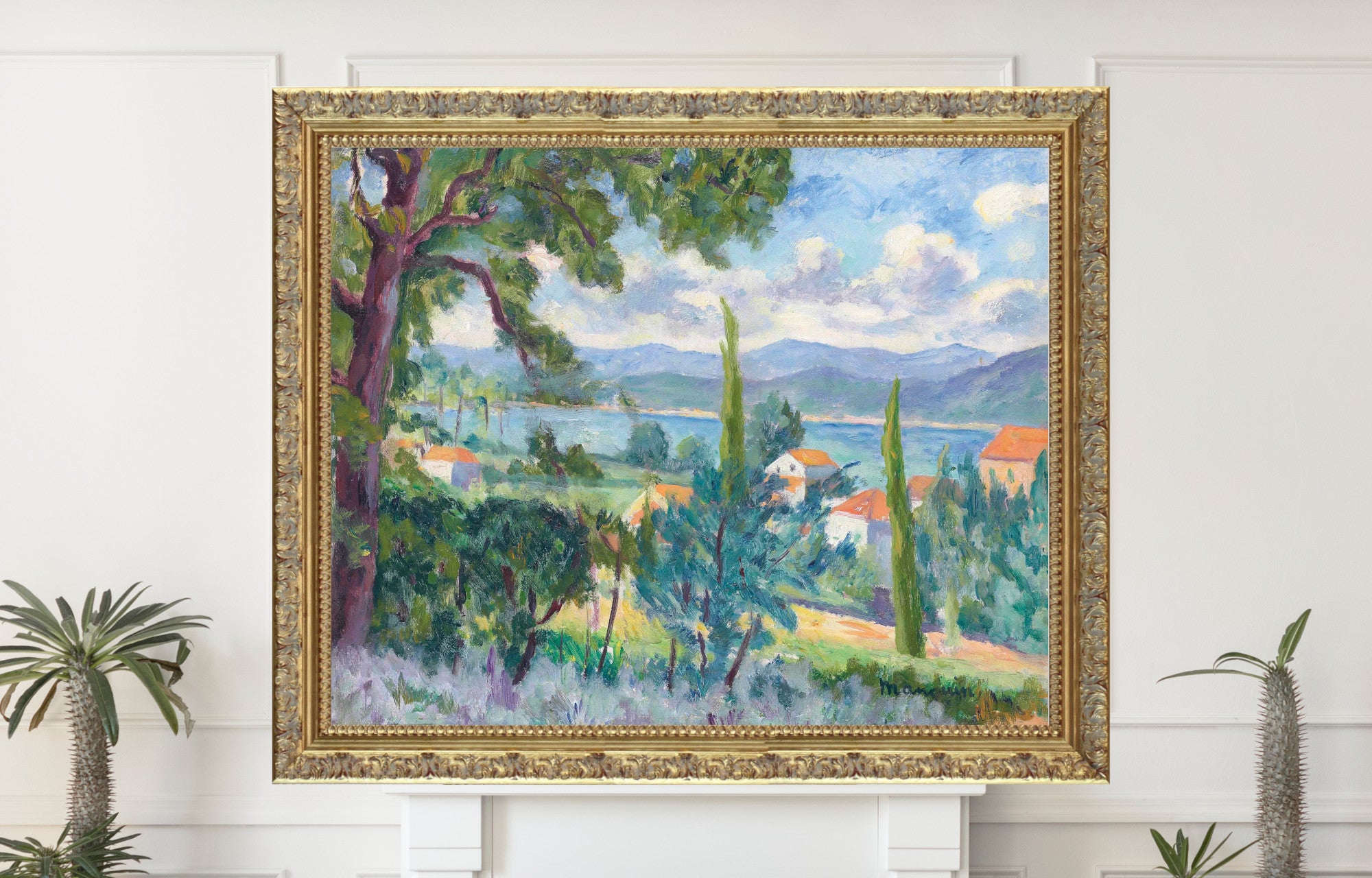
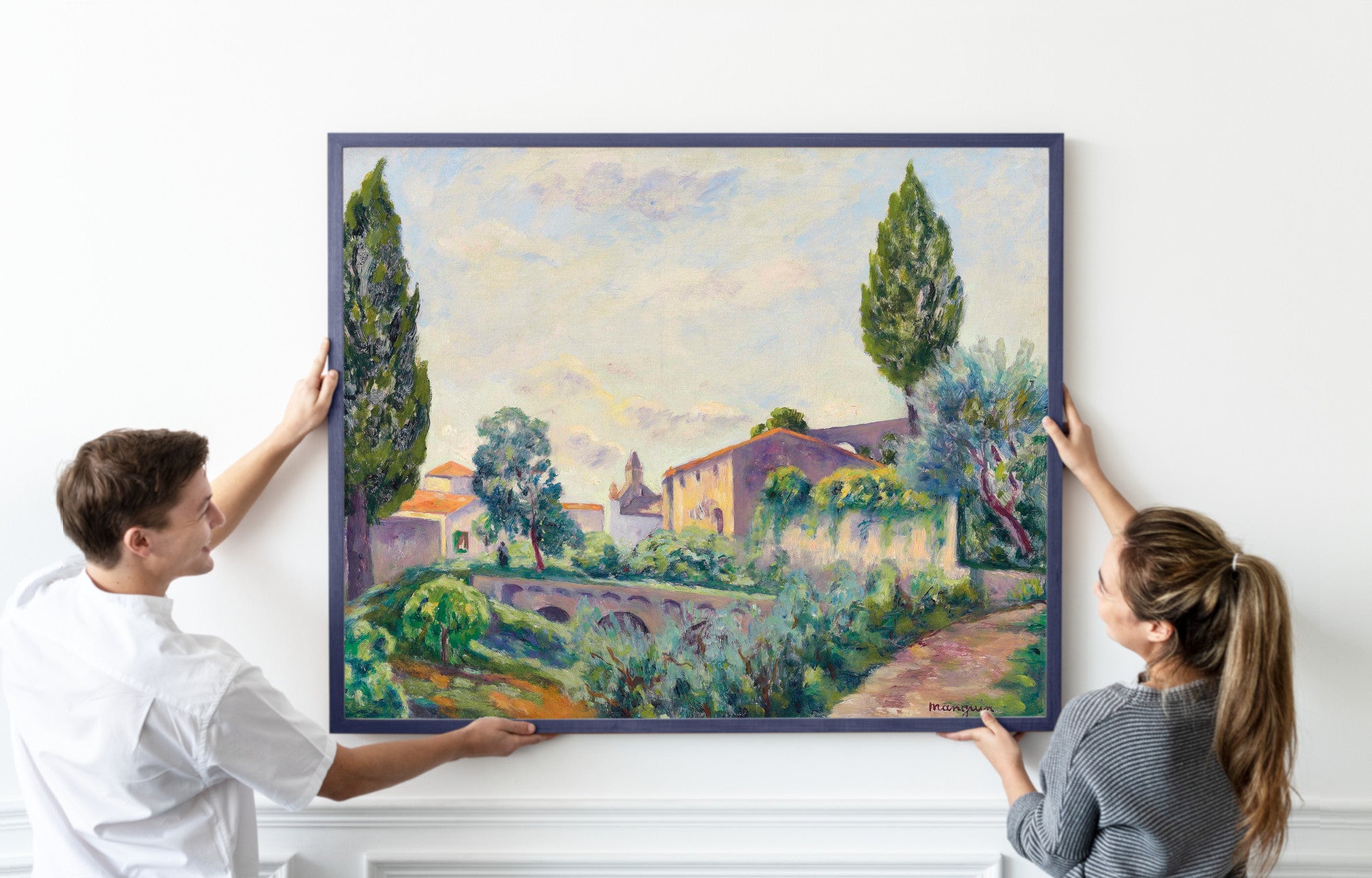
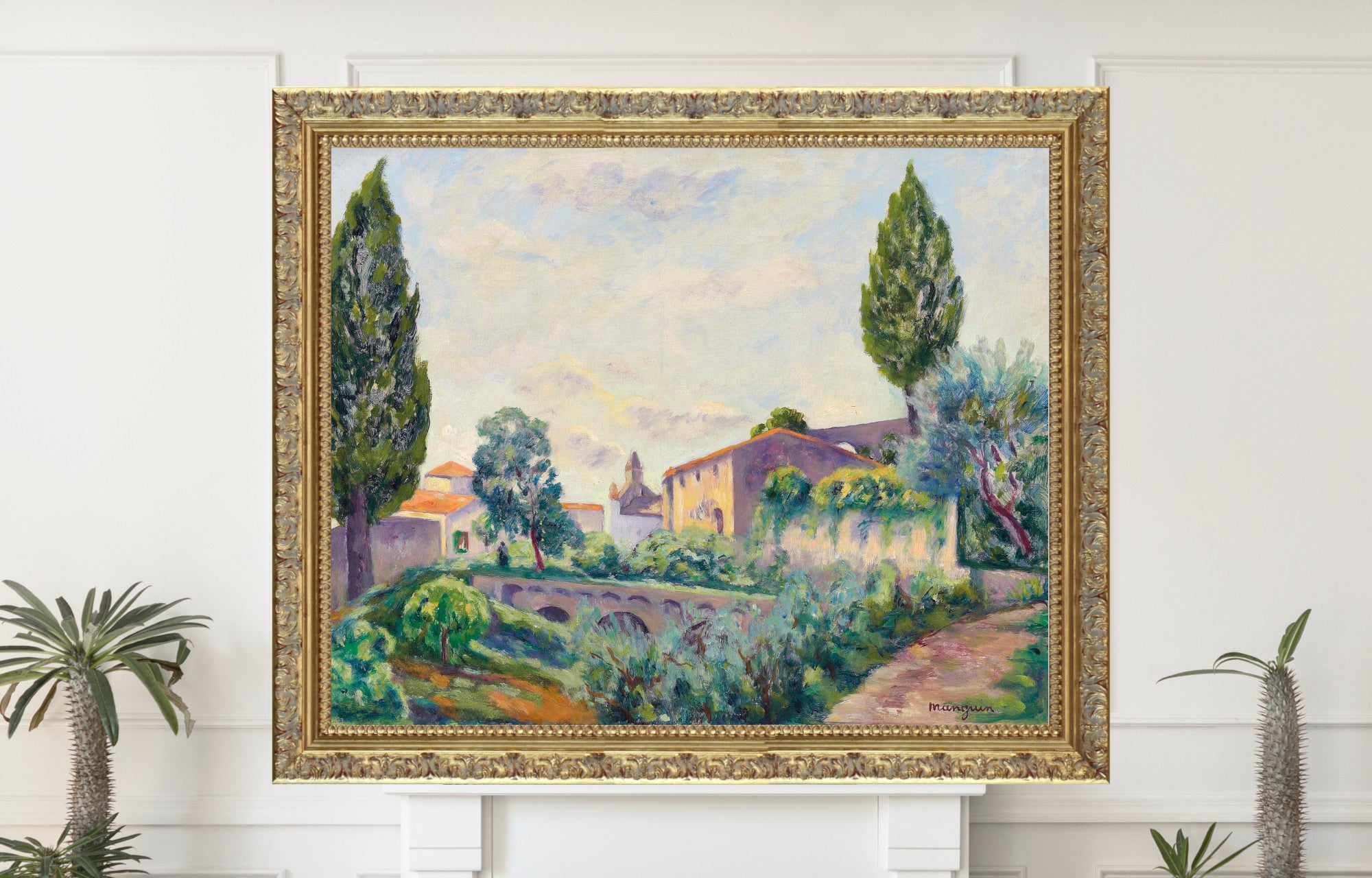
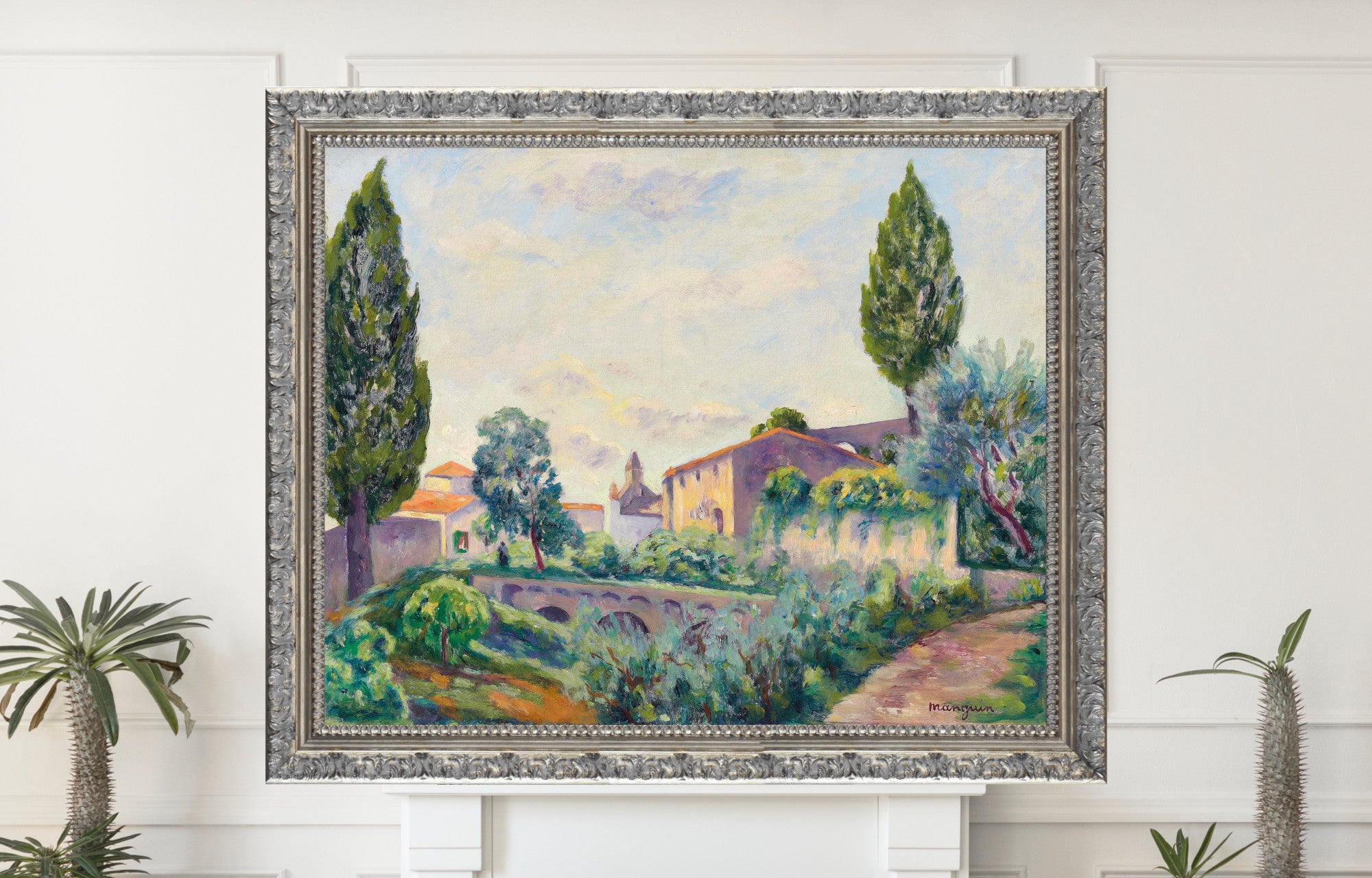
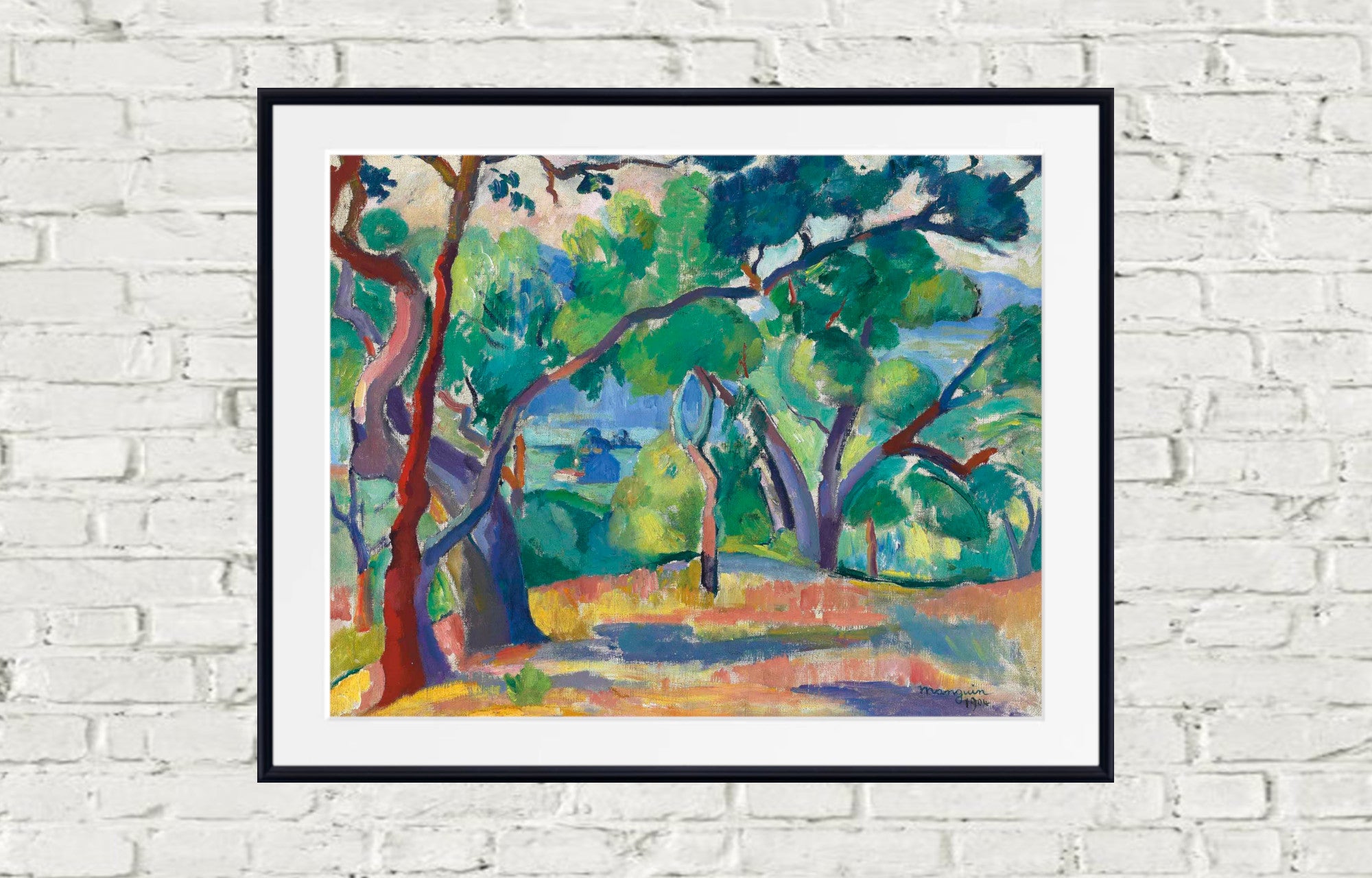
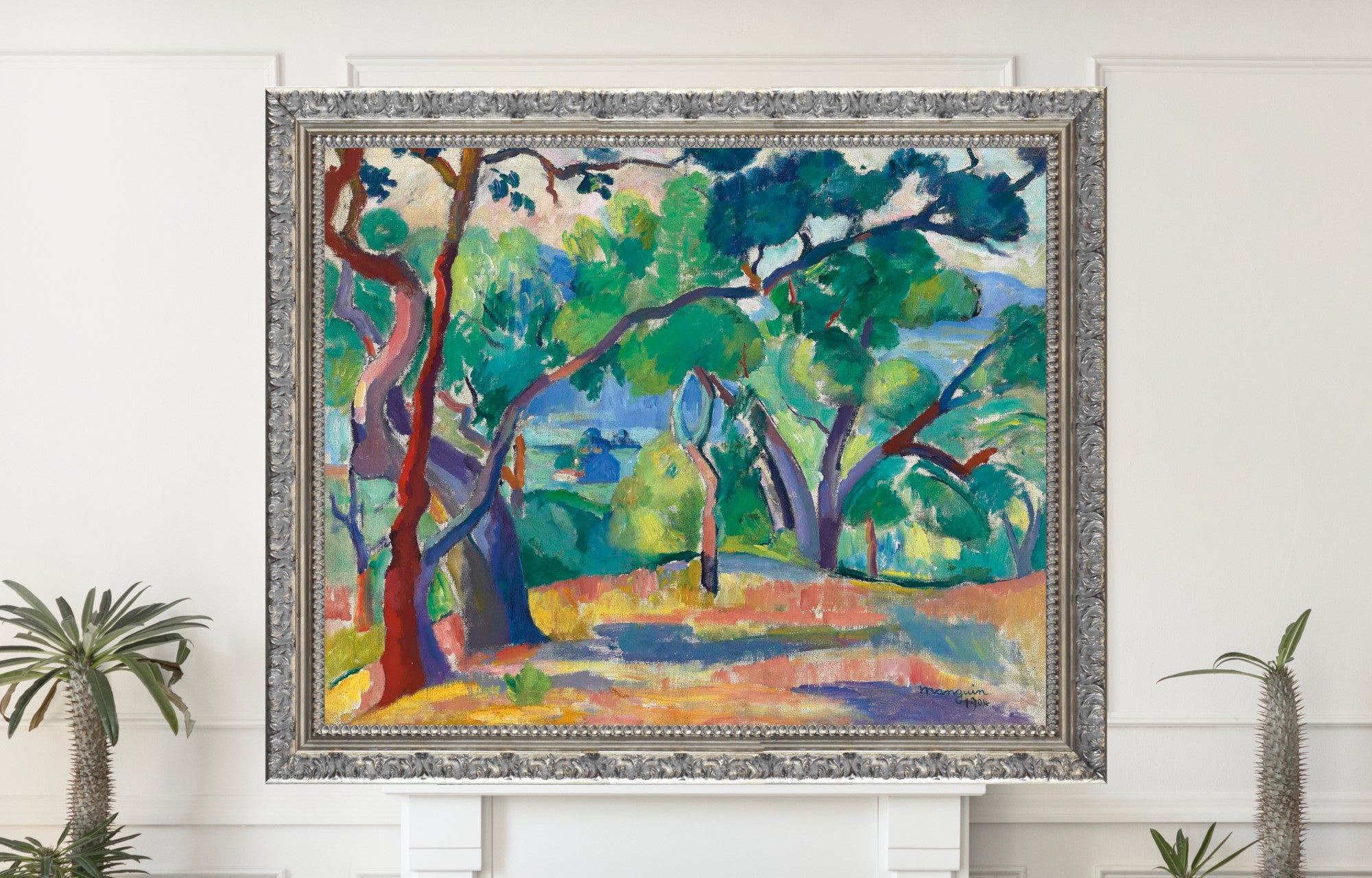
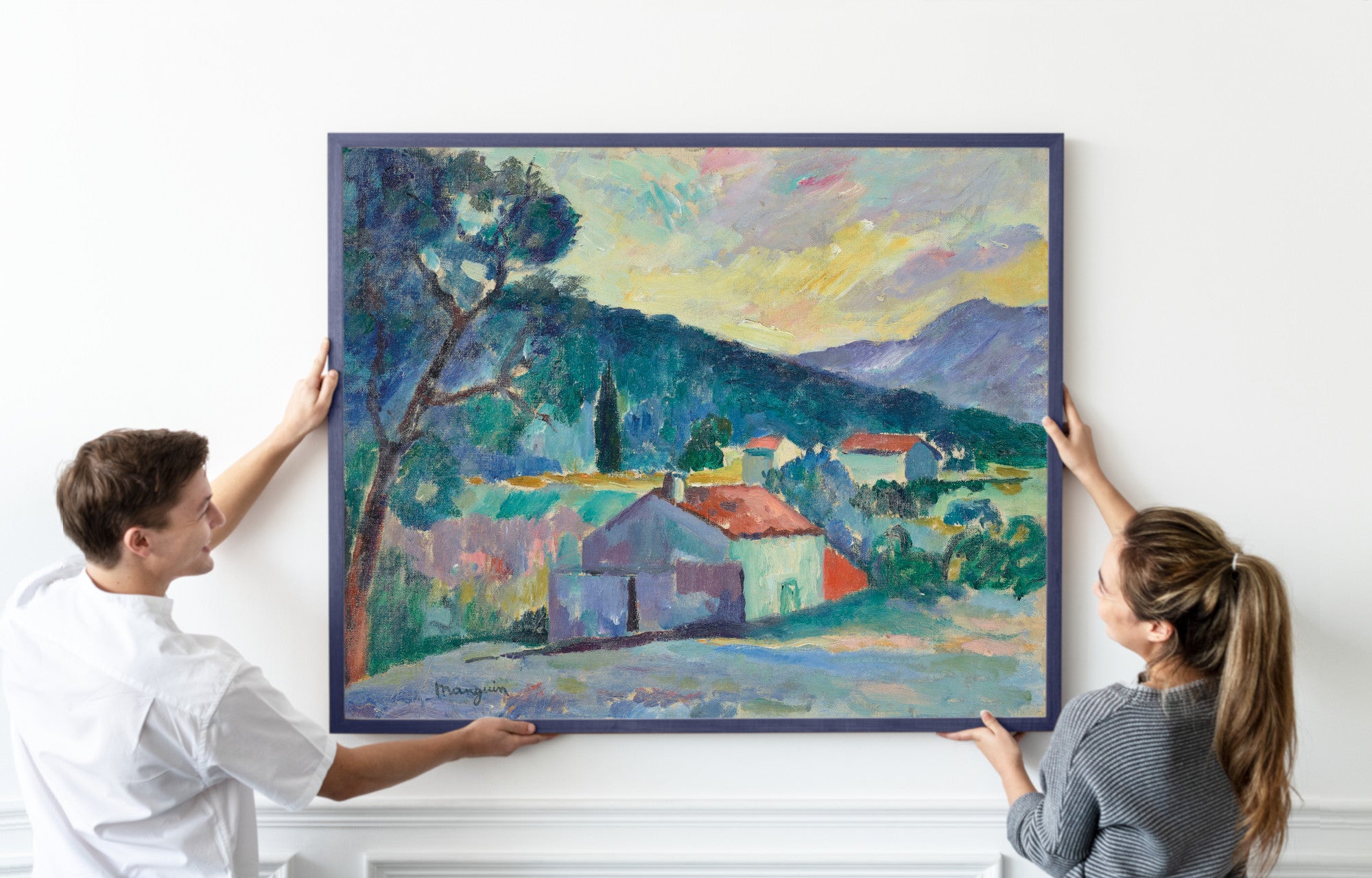
Displayed above a sofa, sideboard, console table or fireplace, a Manguin Cassis print introduces both Mediterranean atmosphere and an important connection with French modern art.
About Henri Manguin
Henri Manguin (1874–1949) was a French painter and an important figure in the development of Fauvism.
Born in Paris, he studied at the École des Beaux-Arts under Gustave Moreau alongside artists including Henri Matisse and Albert Marquet.
Manguin initially absorbed influences from Impressionism before developing the increasingly vivid colour that brought him into the Fauvist circle. In 1905 he exhibited at the Salon d'Automne alongside Matisse, André Derain and other artists whose brilliant palettes led critic Louis Vauxcelles to call them les fauves – “the wild beasts”.
Southern France became one of Manguin's most enduring sources of inspiration. Saint-Tropez, Cassis and other Mediterranean locations provided landscapes filled with the sunlight, vegetation and colour ideally suited to his artistic temperament.
Unlike some of the more forceful Fauvist painters, Manguin generally developed a warmer and more harmonious visual language. Landscapes, bathers, gardens, still lifes and portraits of his wife Jeanne dominate his work.
Today, Henri Manguin prints are admired for their combination of brilliant colour, Mediterranean atmosphere and lyrical modernism.
All orders for unframed fine art prints and original paintings are dispatched within 2 working days of receipt of payment.
Orders for custom framed prints are dispatched within 4 working days.
All orders are fully tracked from dispatch to delivery at your home or business.
All print and original painting orders are fully insured against loss or damage in transit. We refund or replace any damaged or lost orders.
Buy with confidence - read what our satisfied customers have to say - Reviews
Fine art papers are printed without any additional white border Please let us know at the time of ordering if you would like a small additional white border.
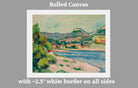
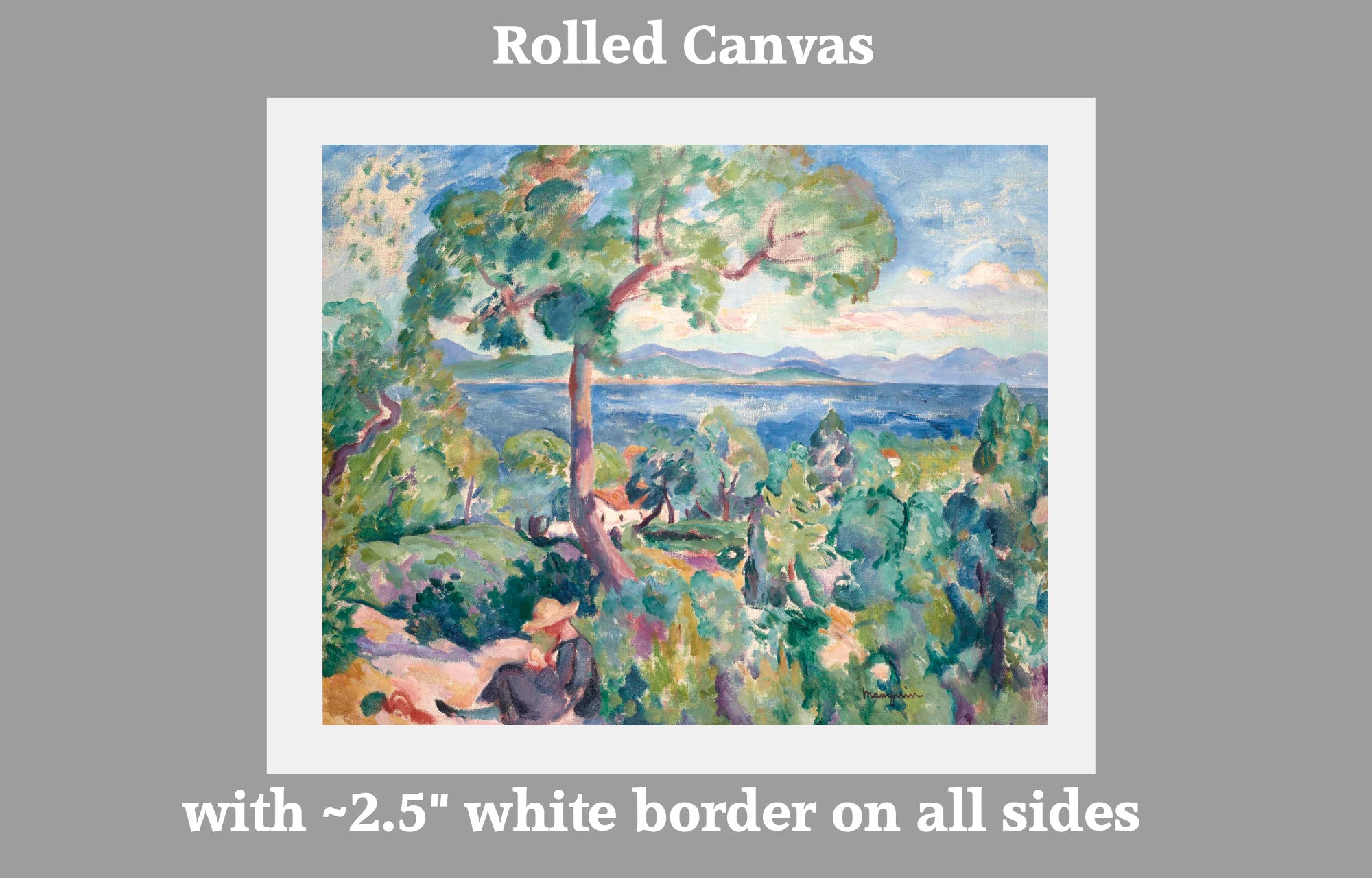
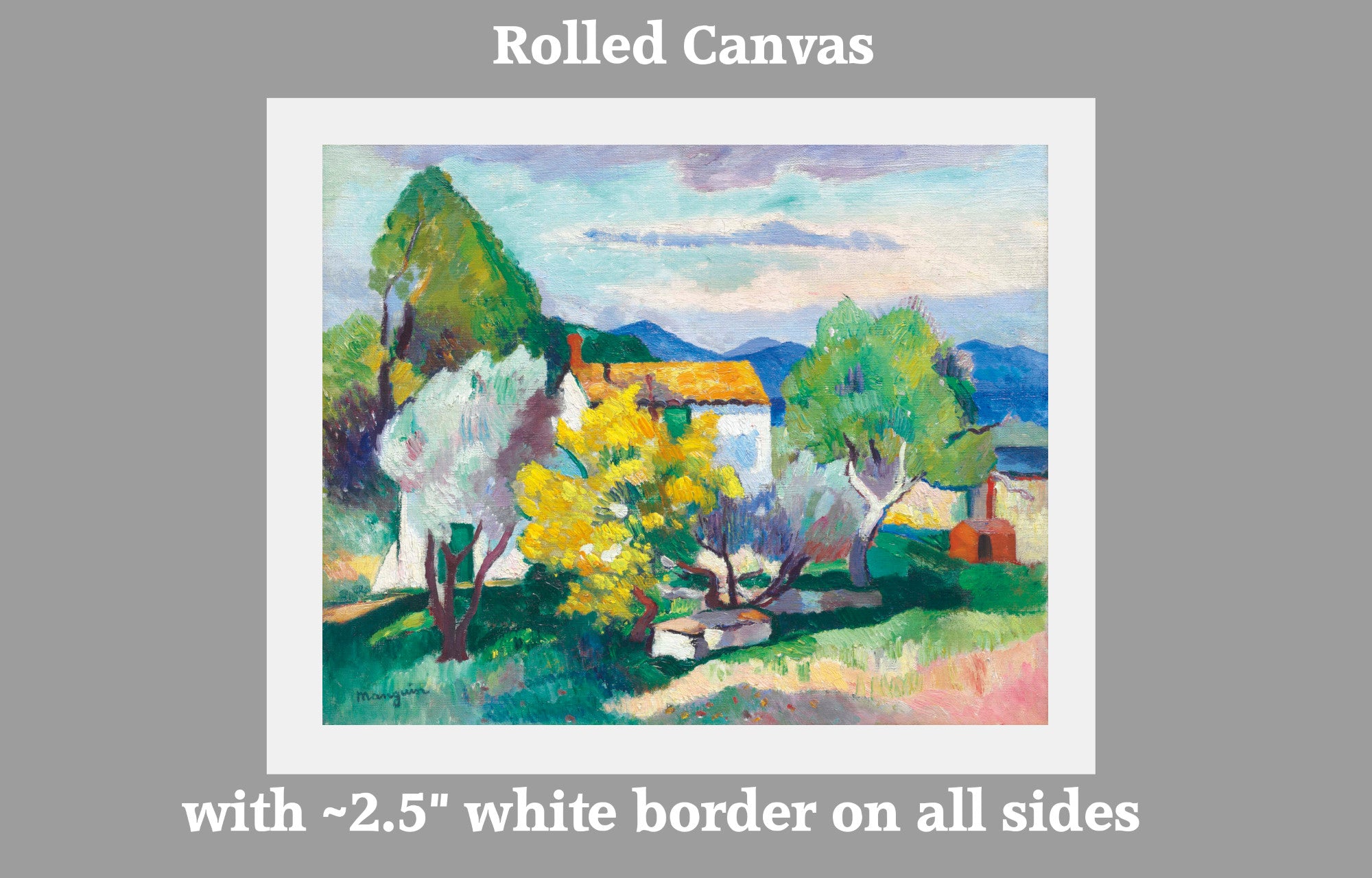
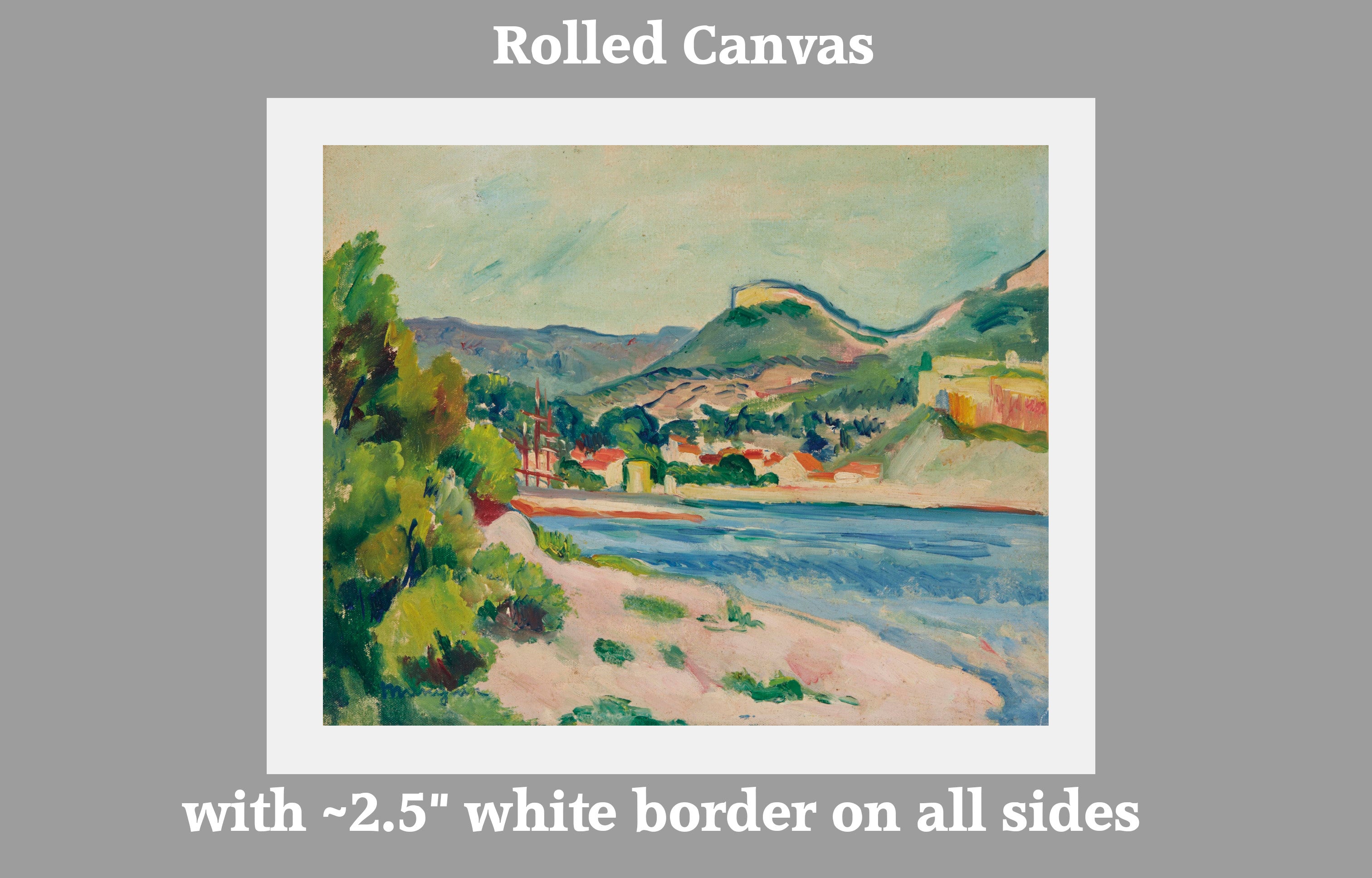
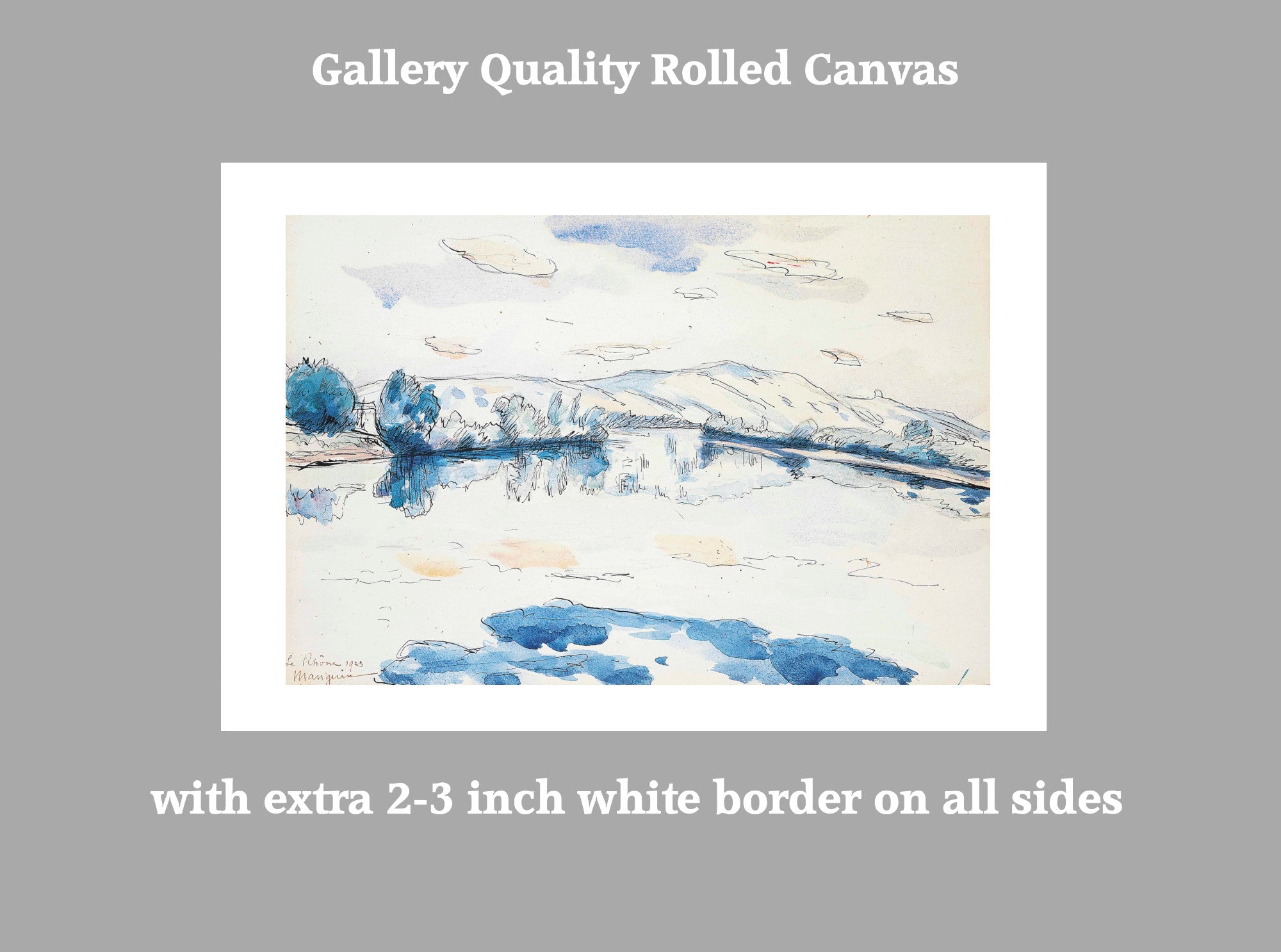
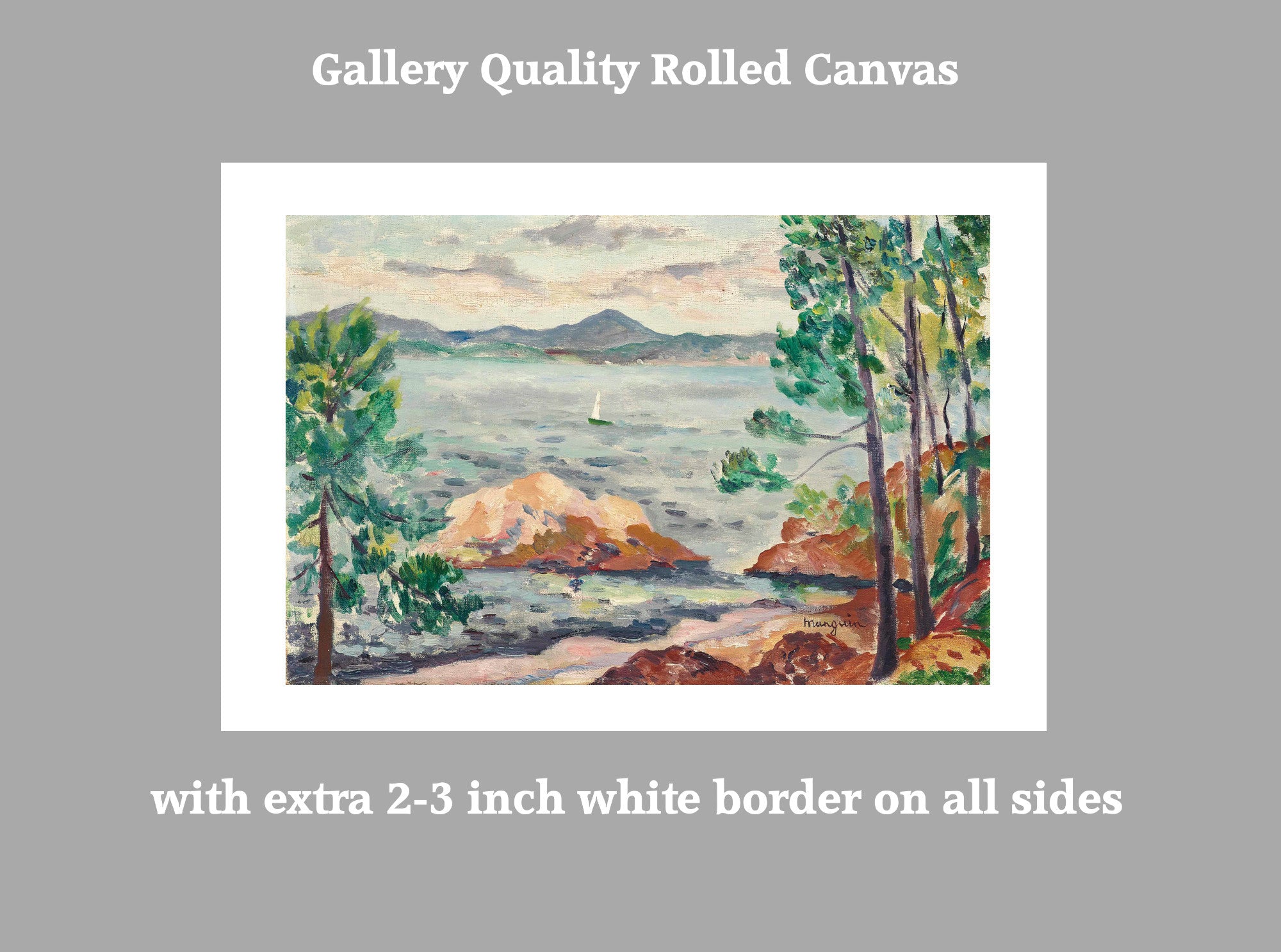
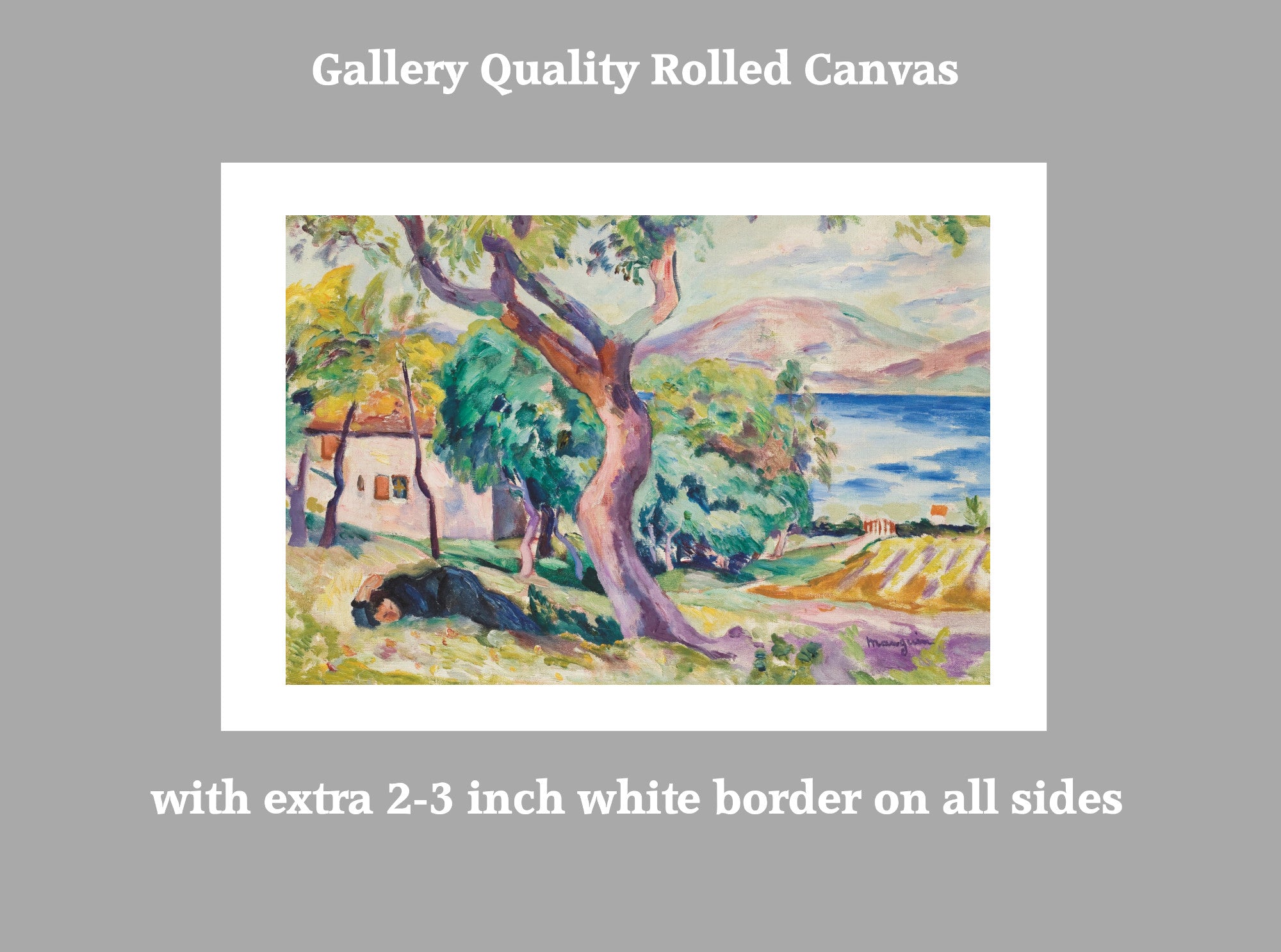
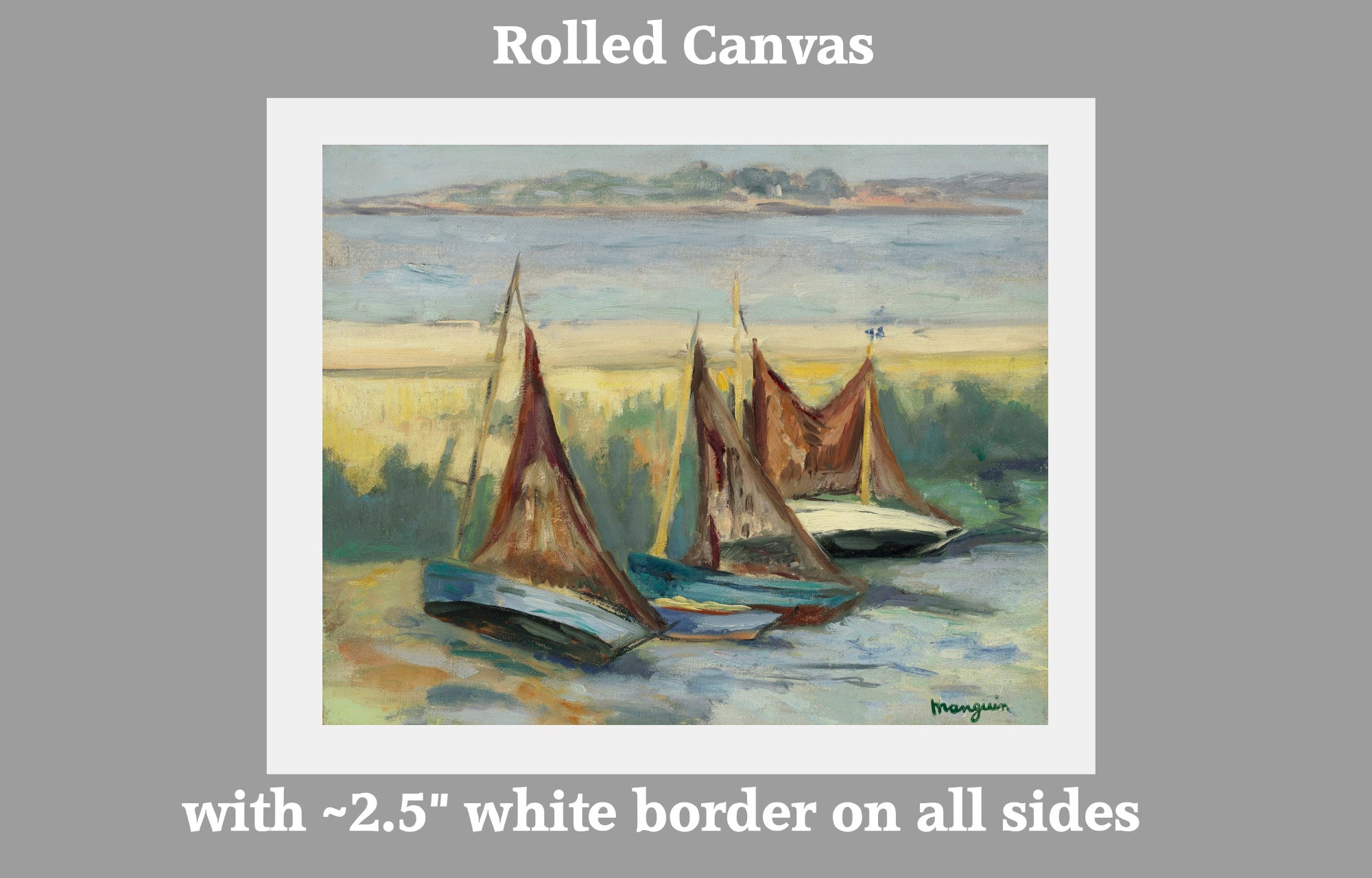
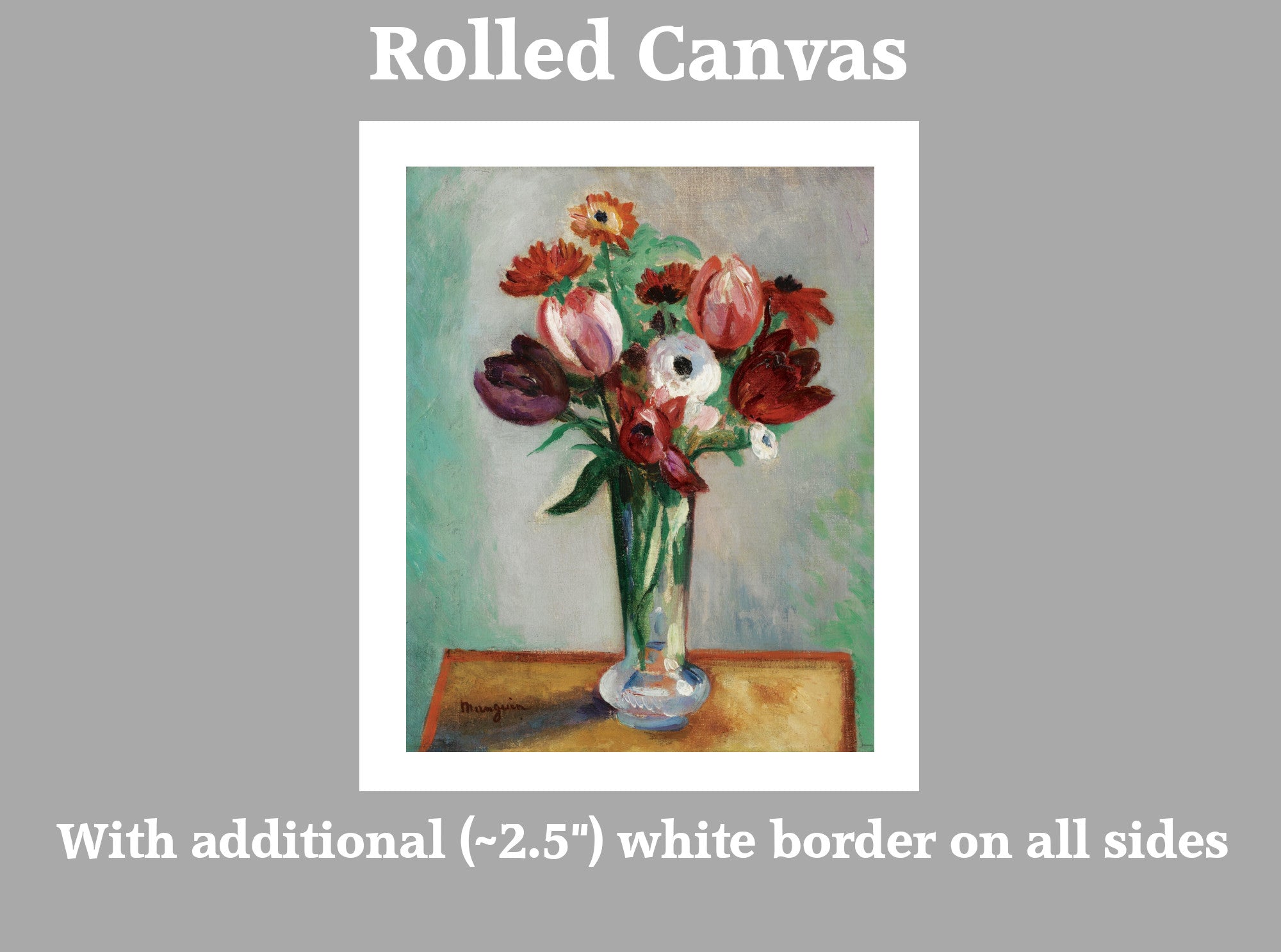
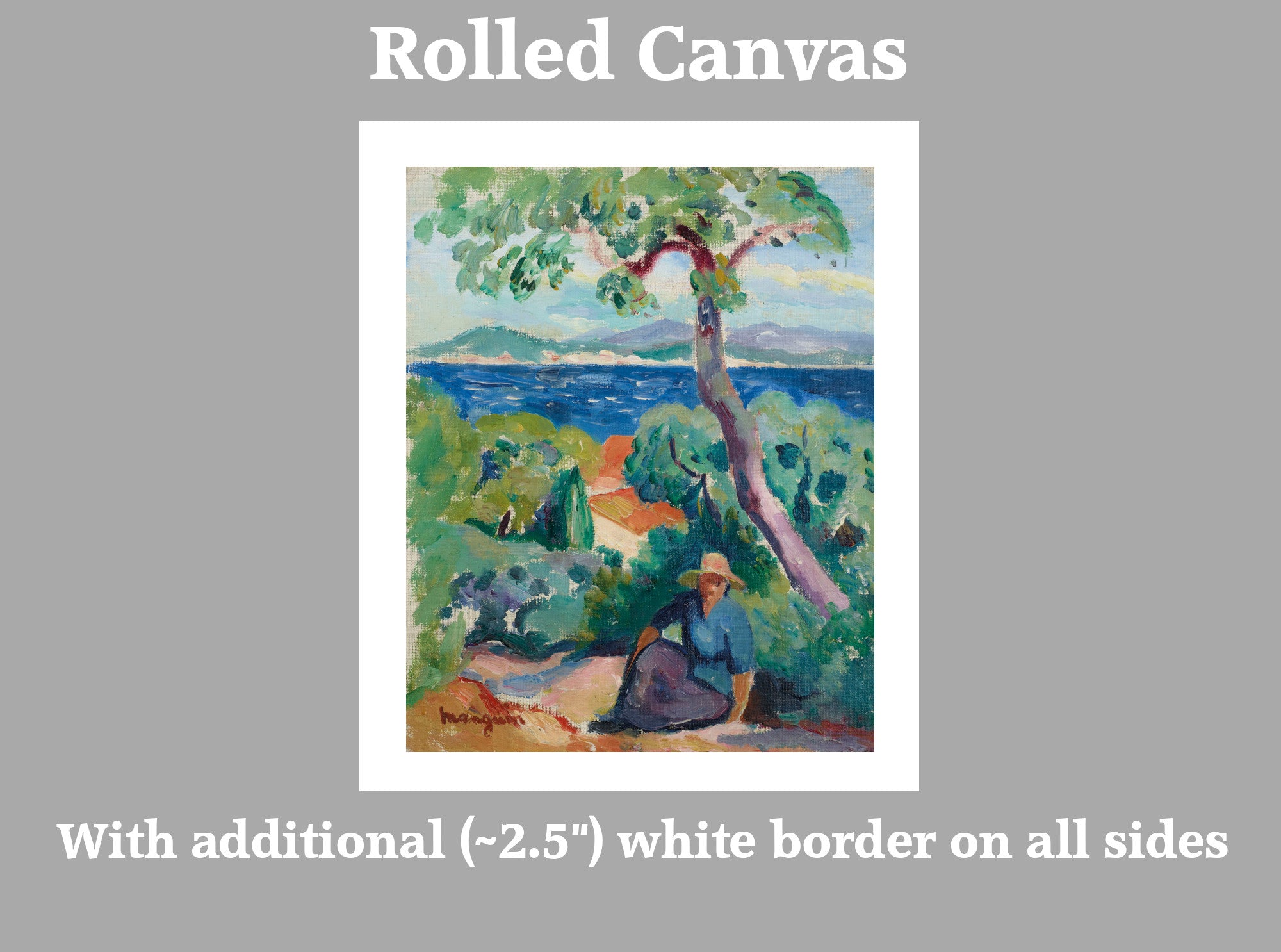
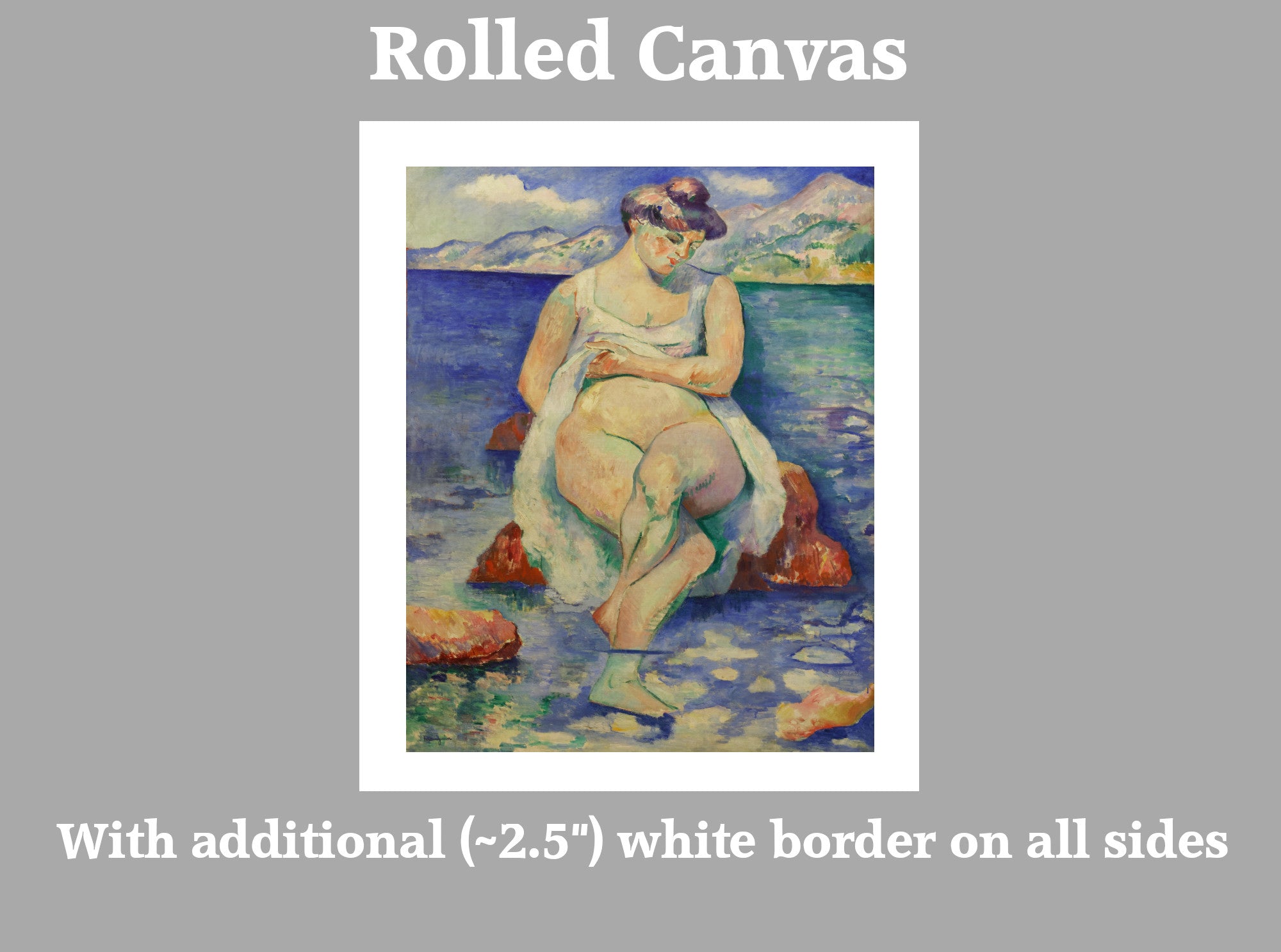
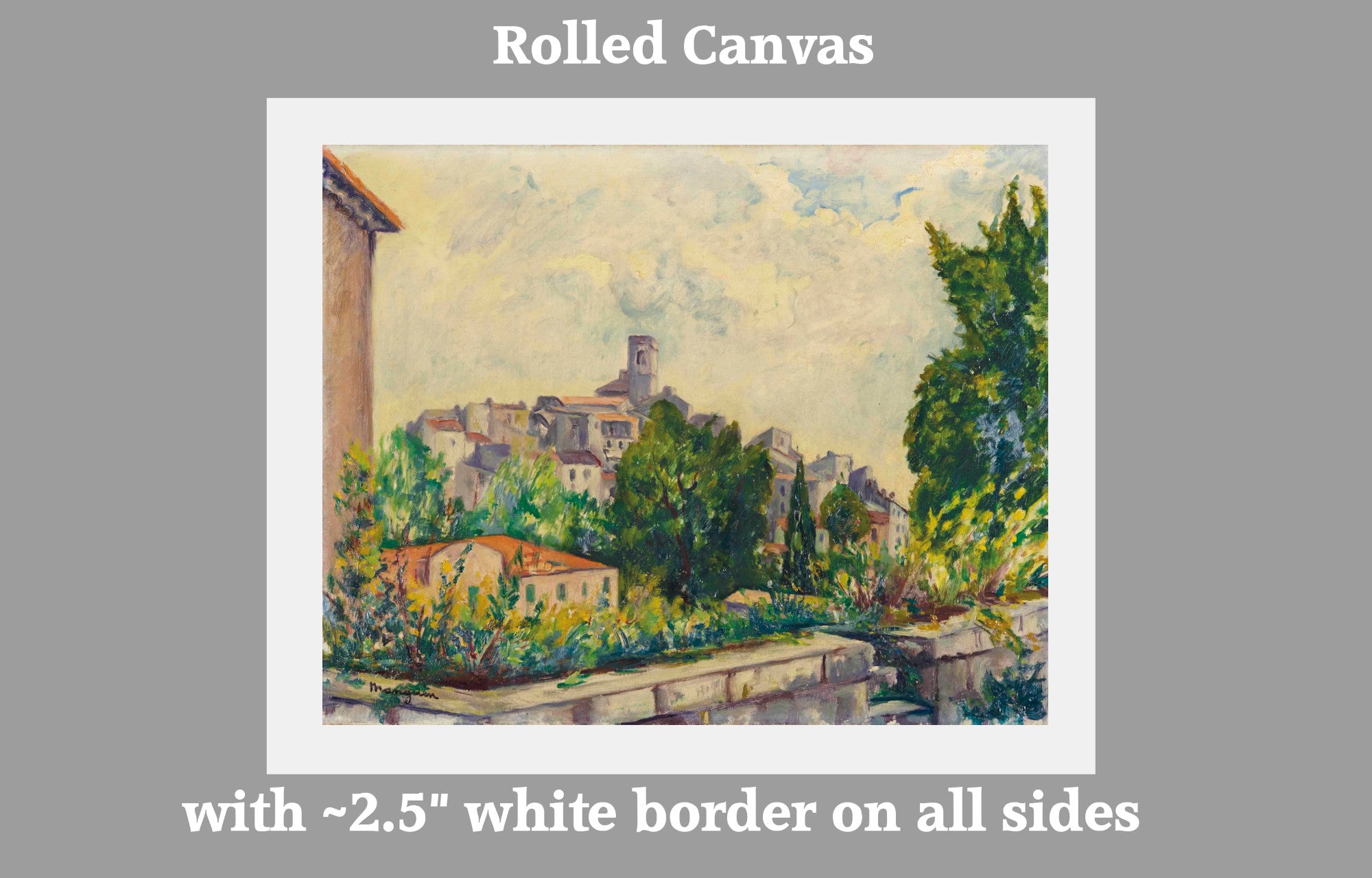
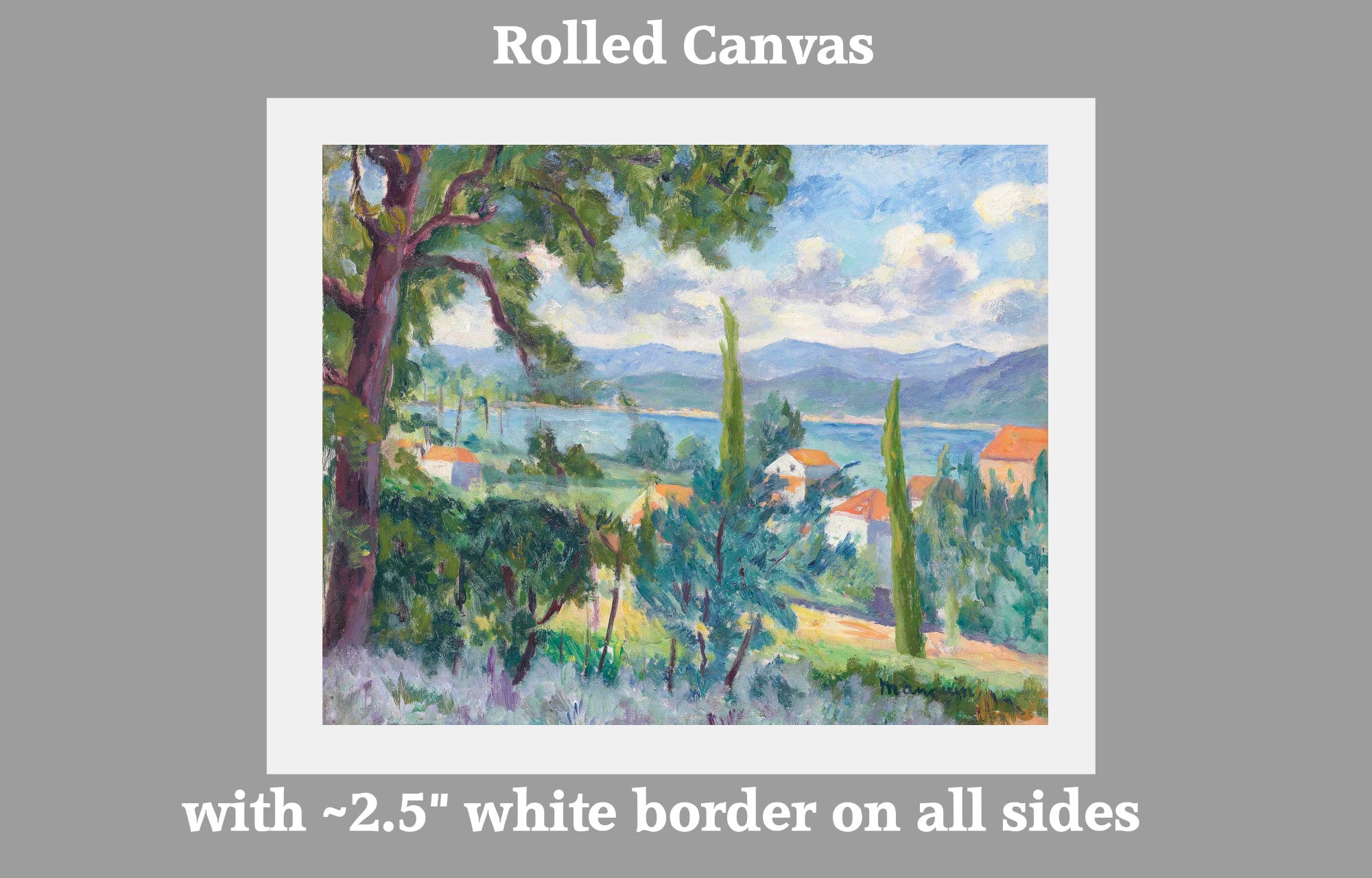
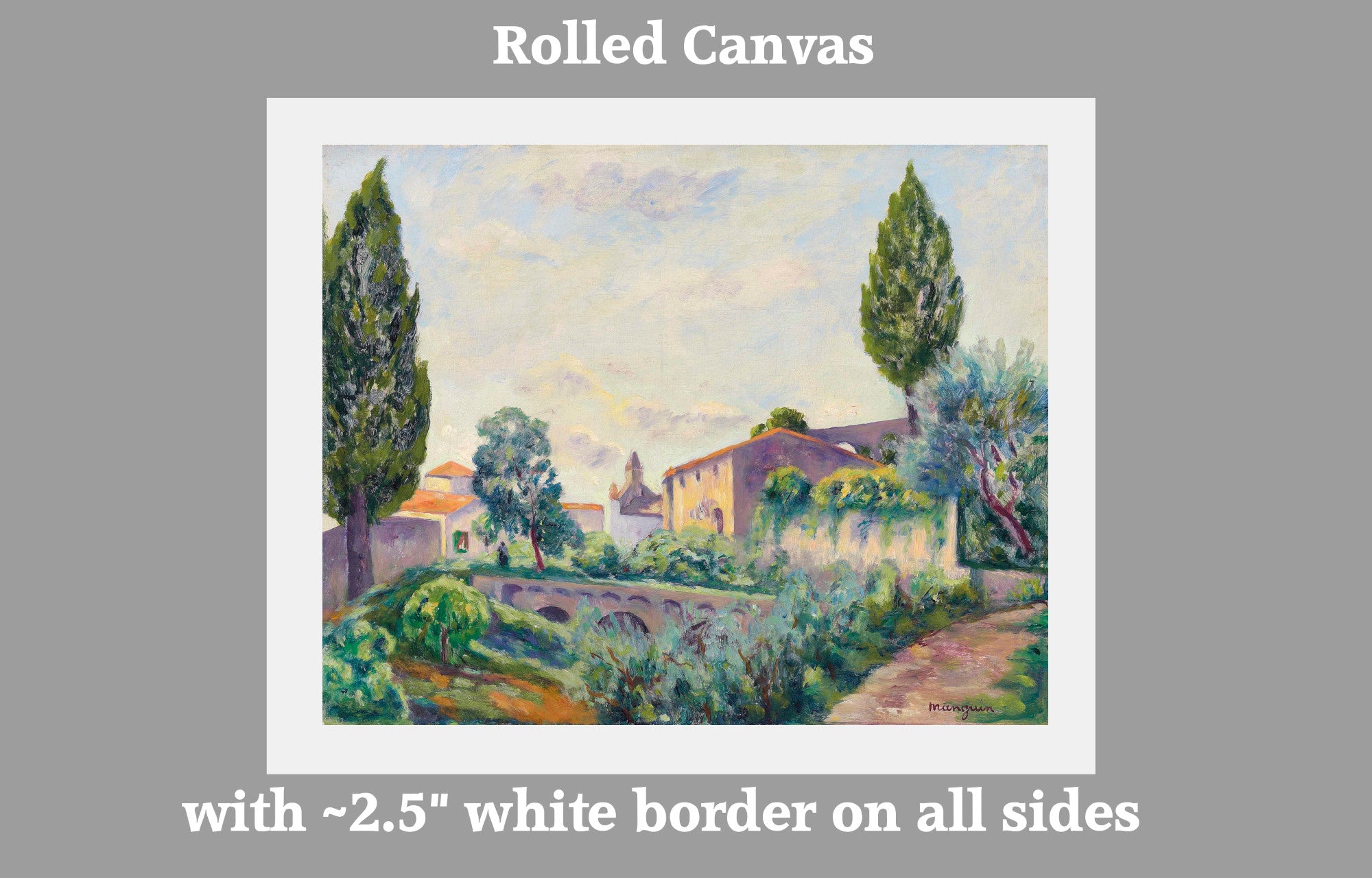
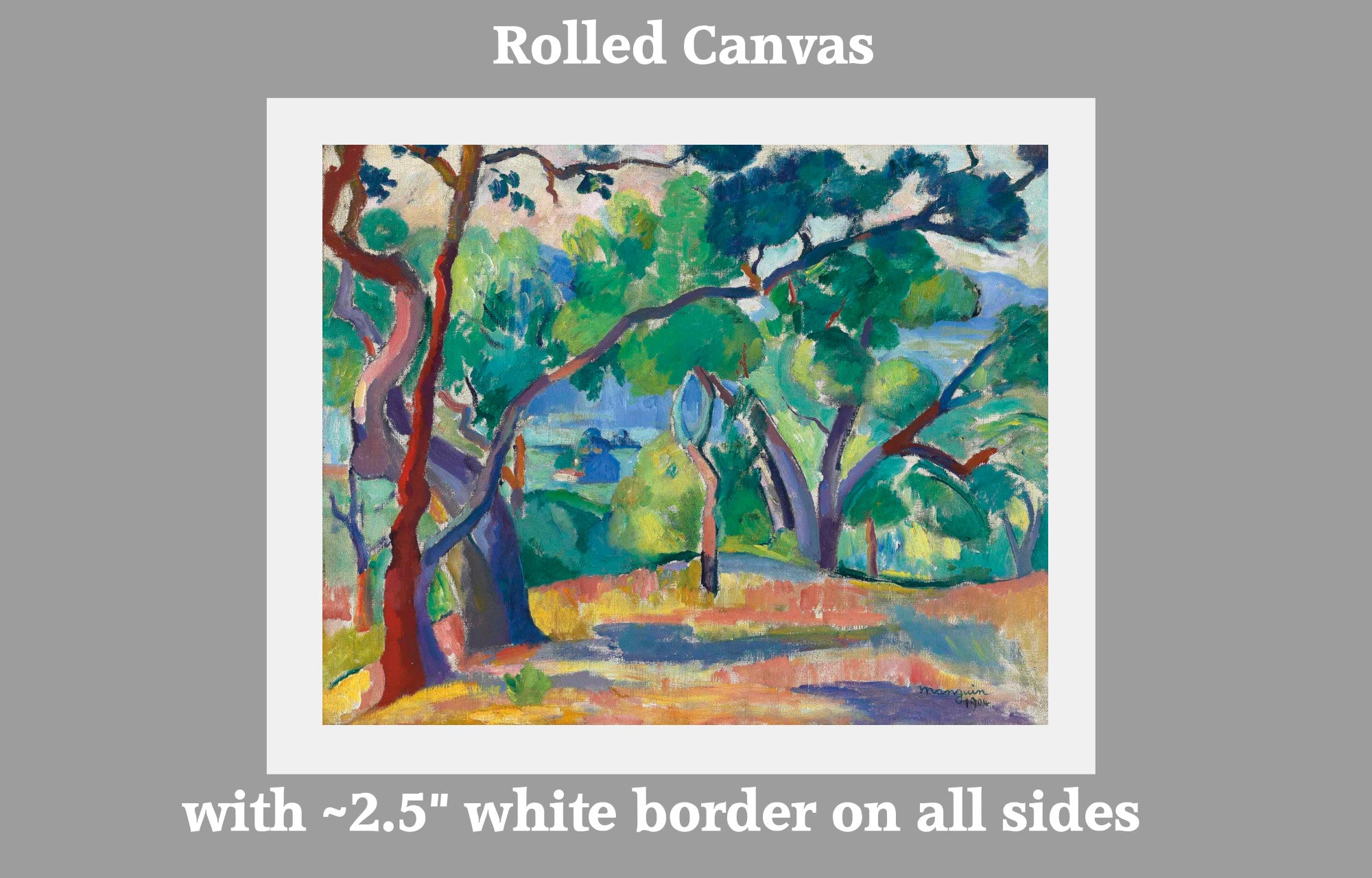
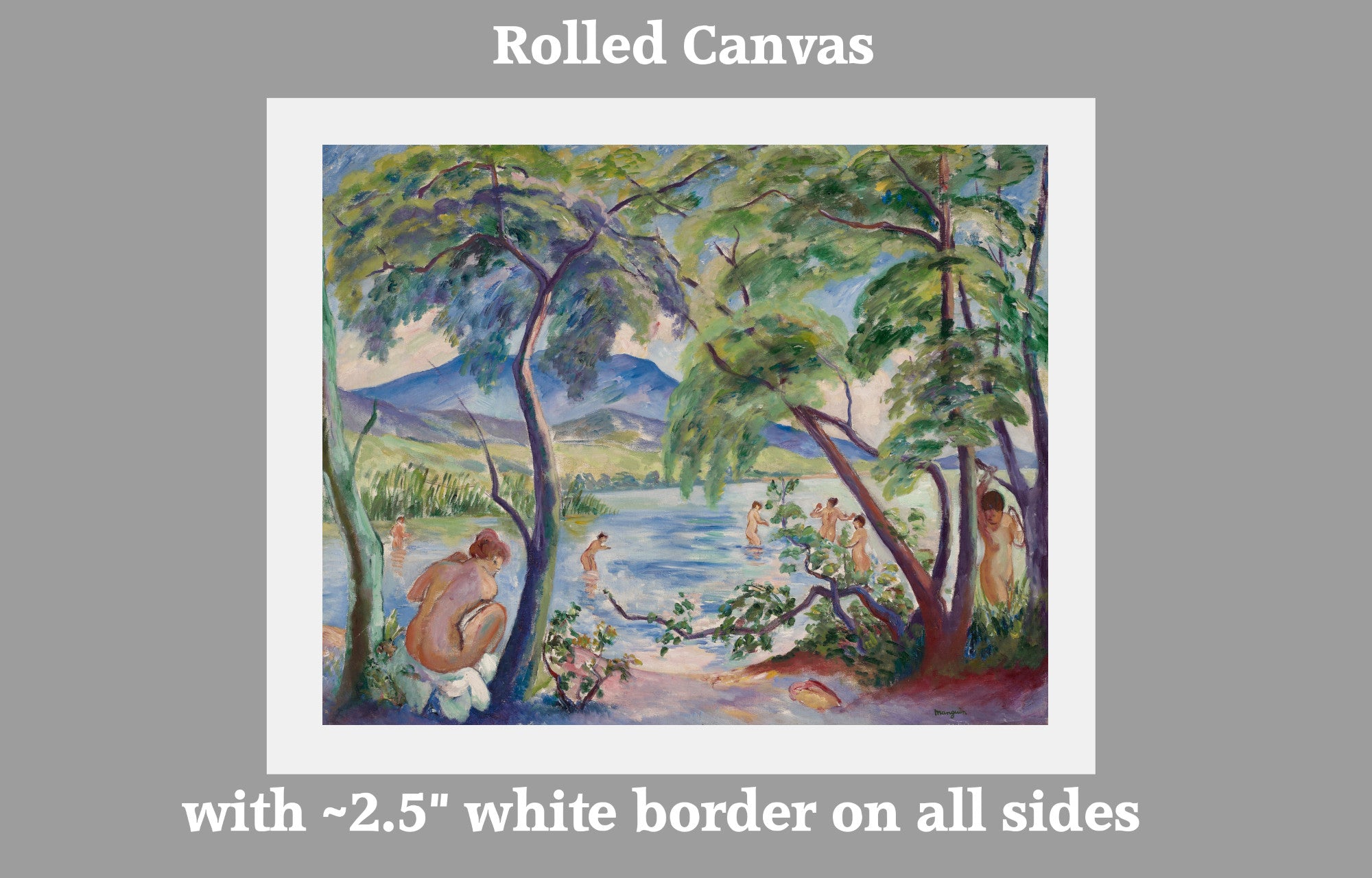
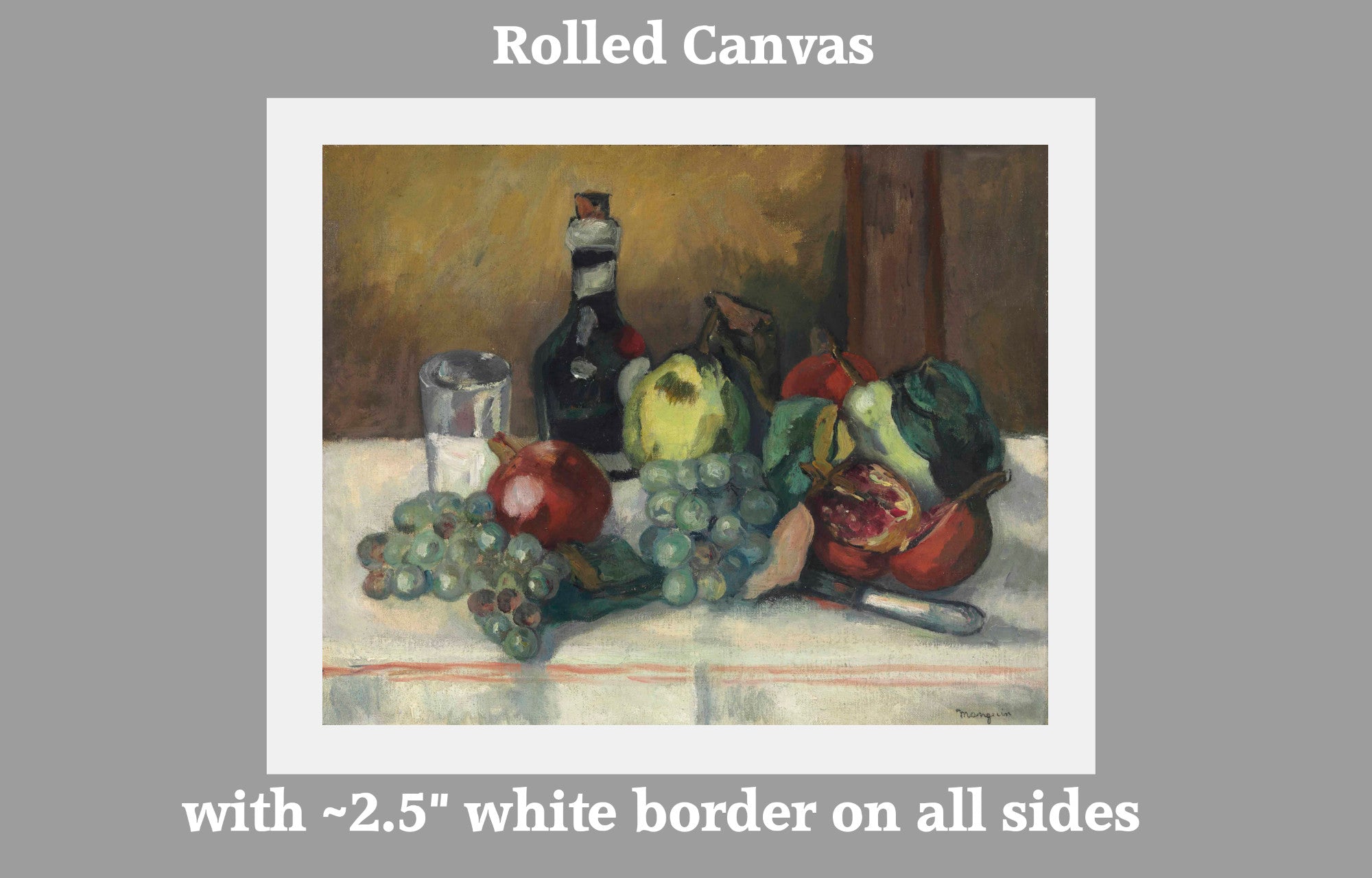
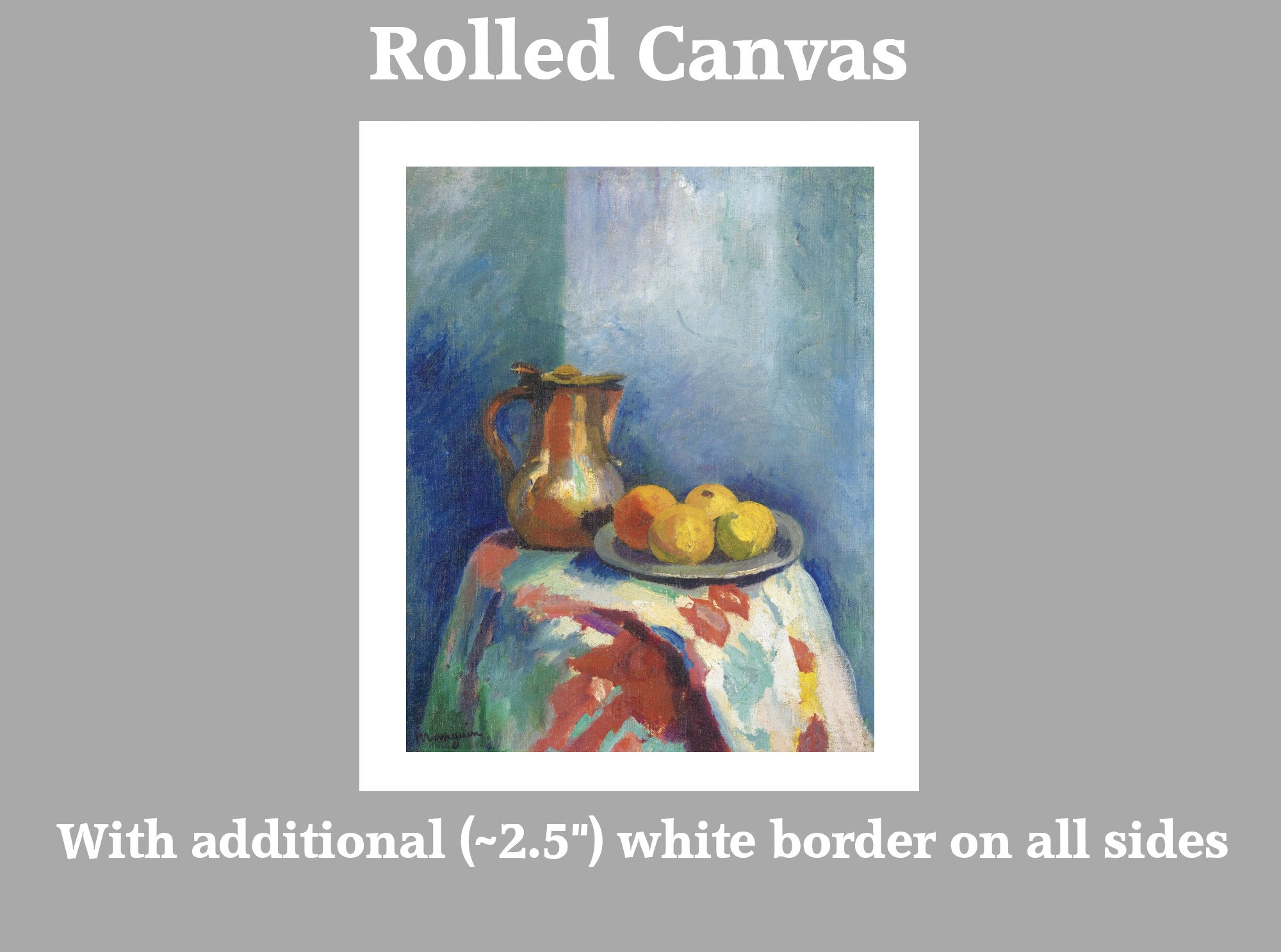
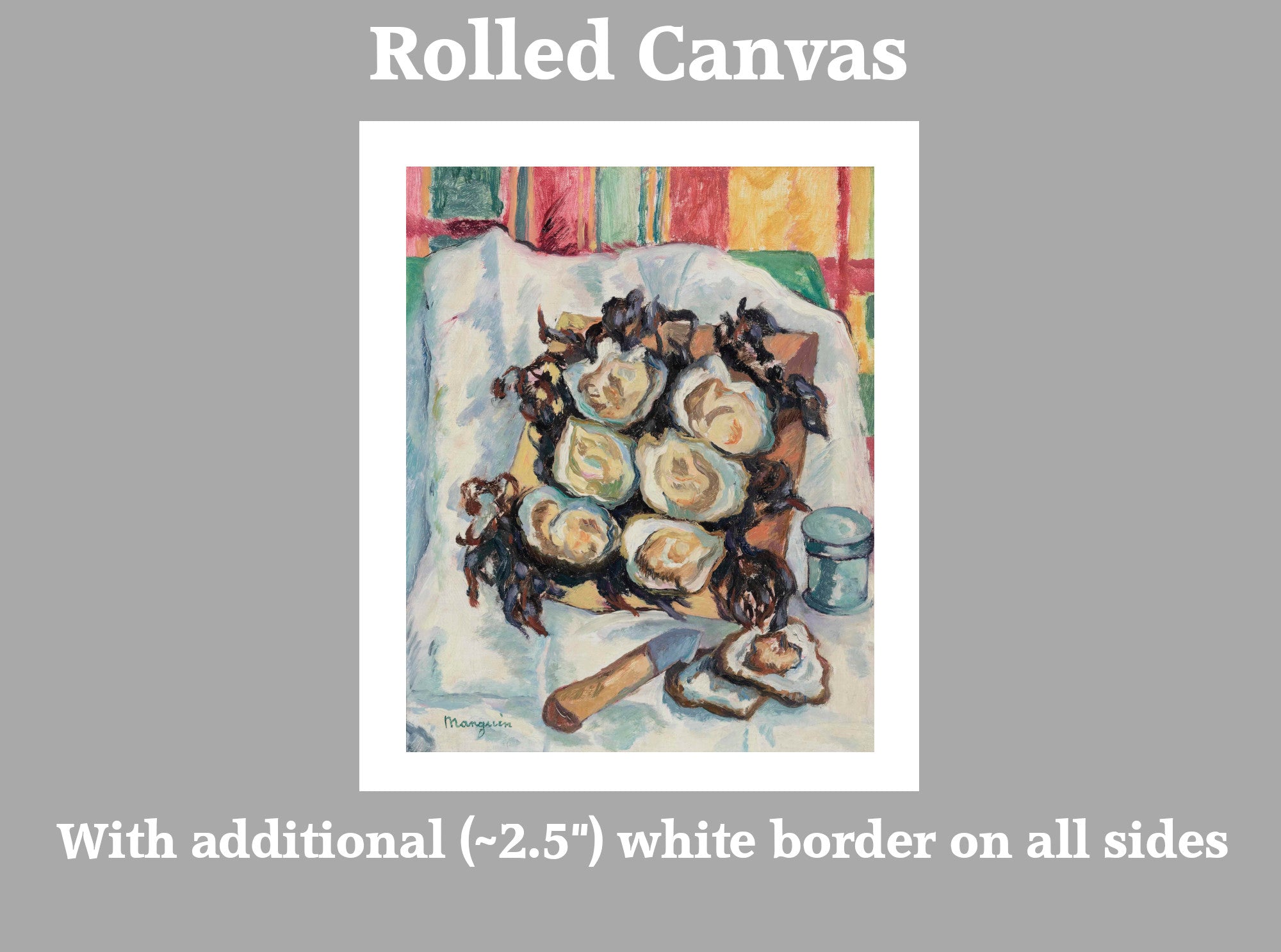
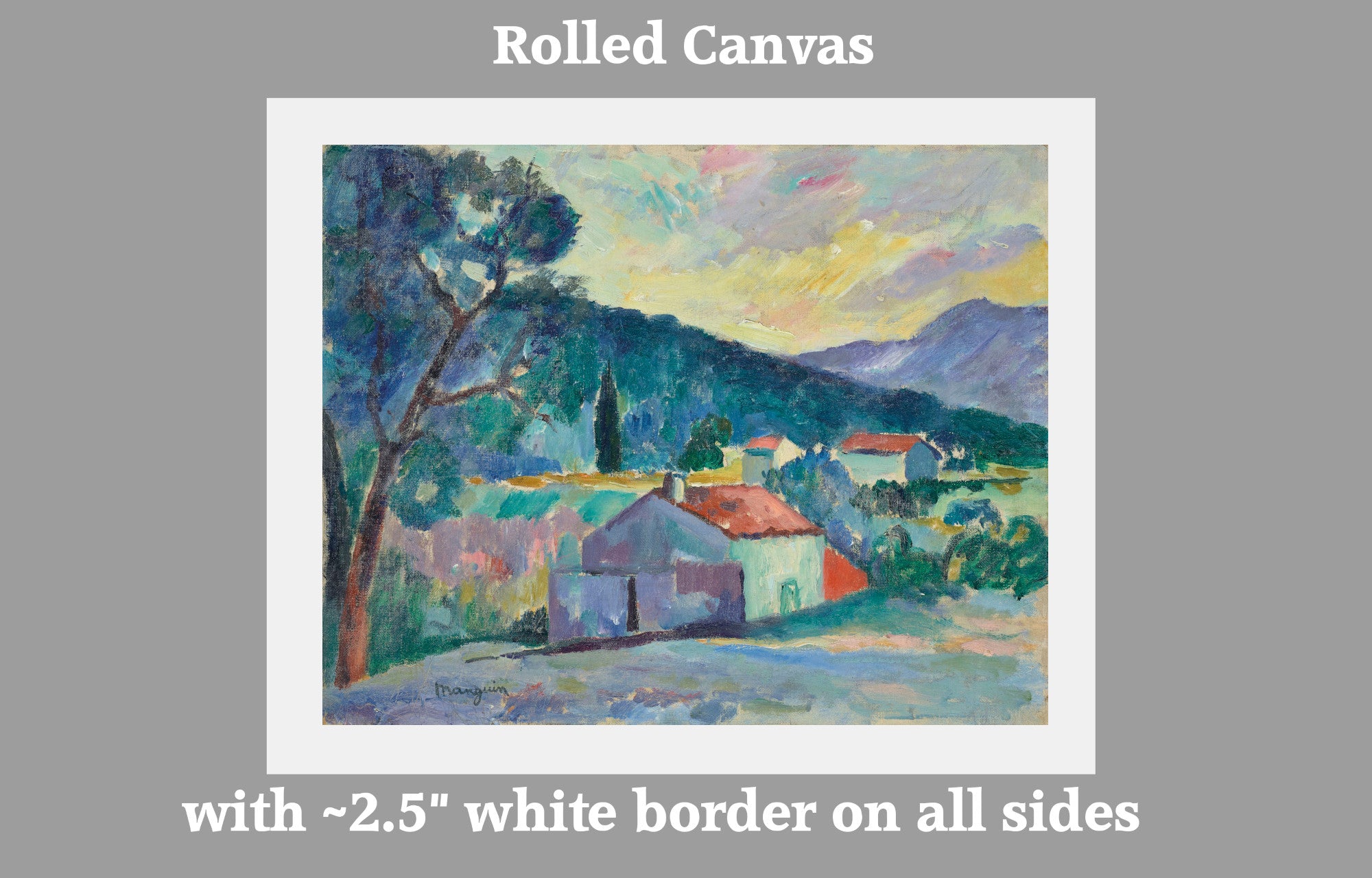
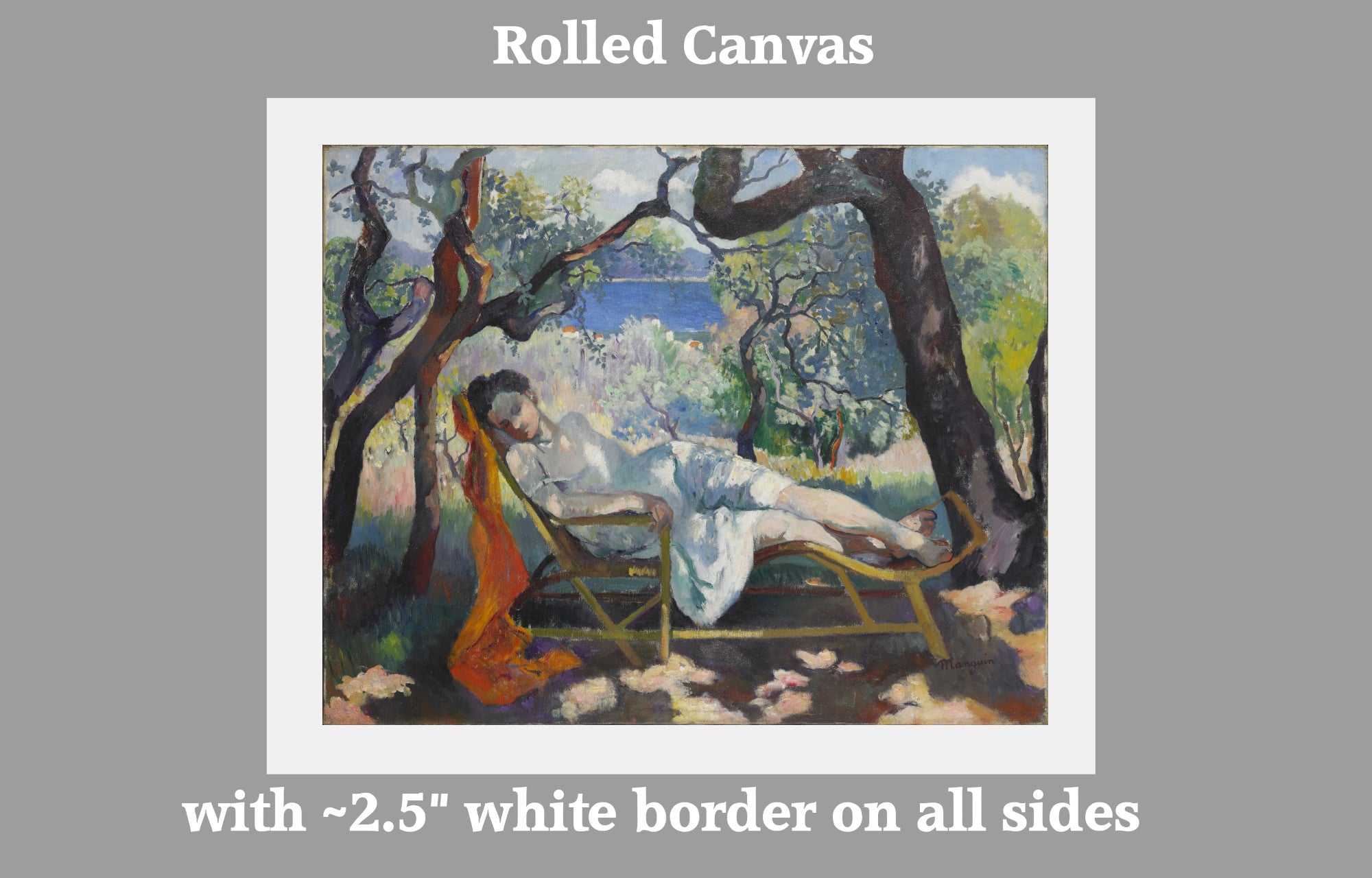
Rolled canvas options have an additional white border of approximately 2.5 inches (7cm) on all 4 sides to aid stretching.
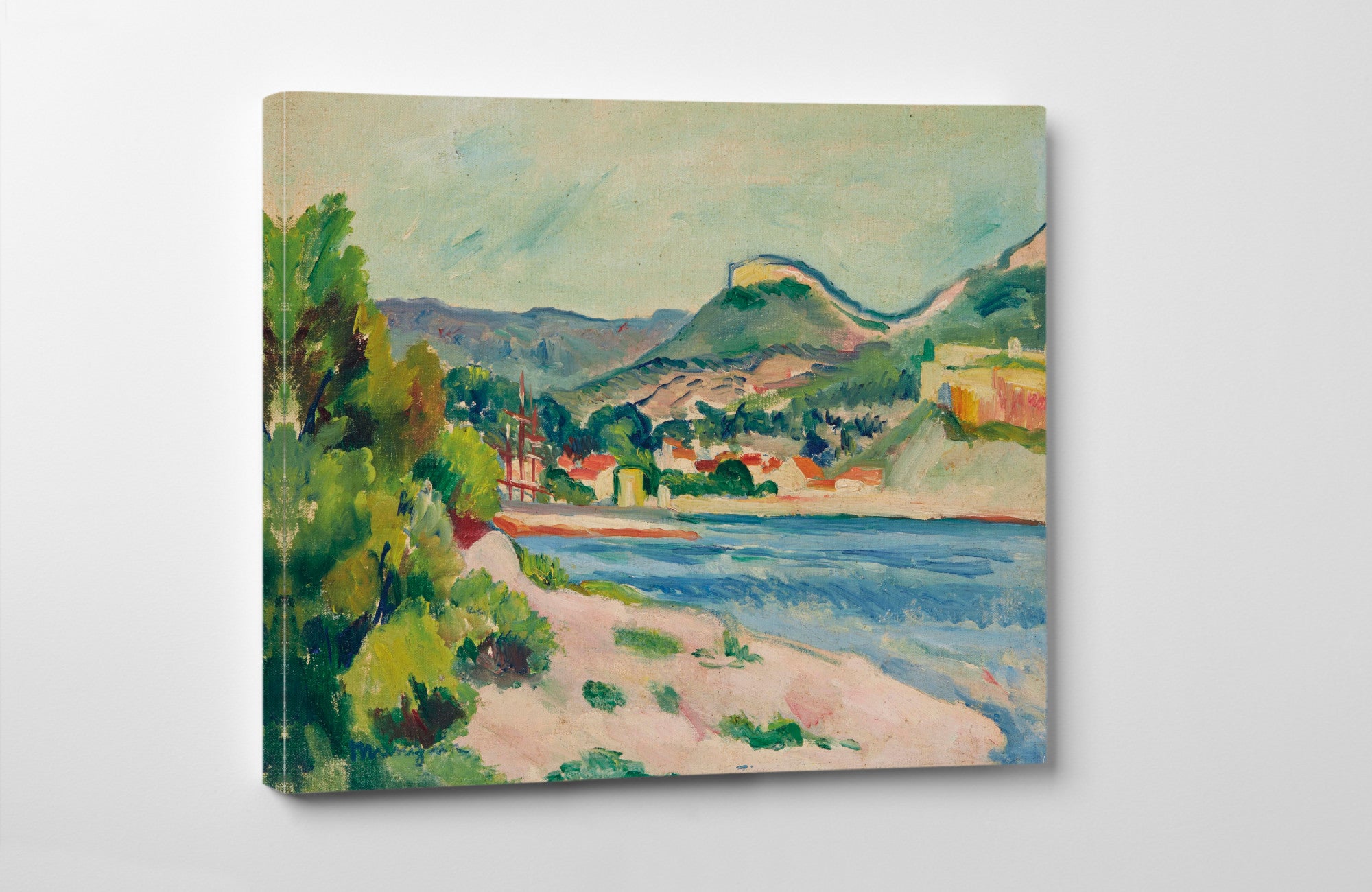
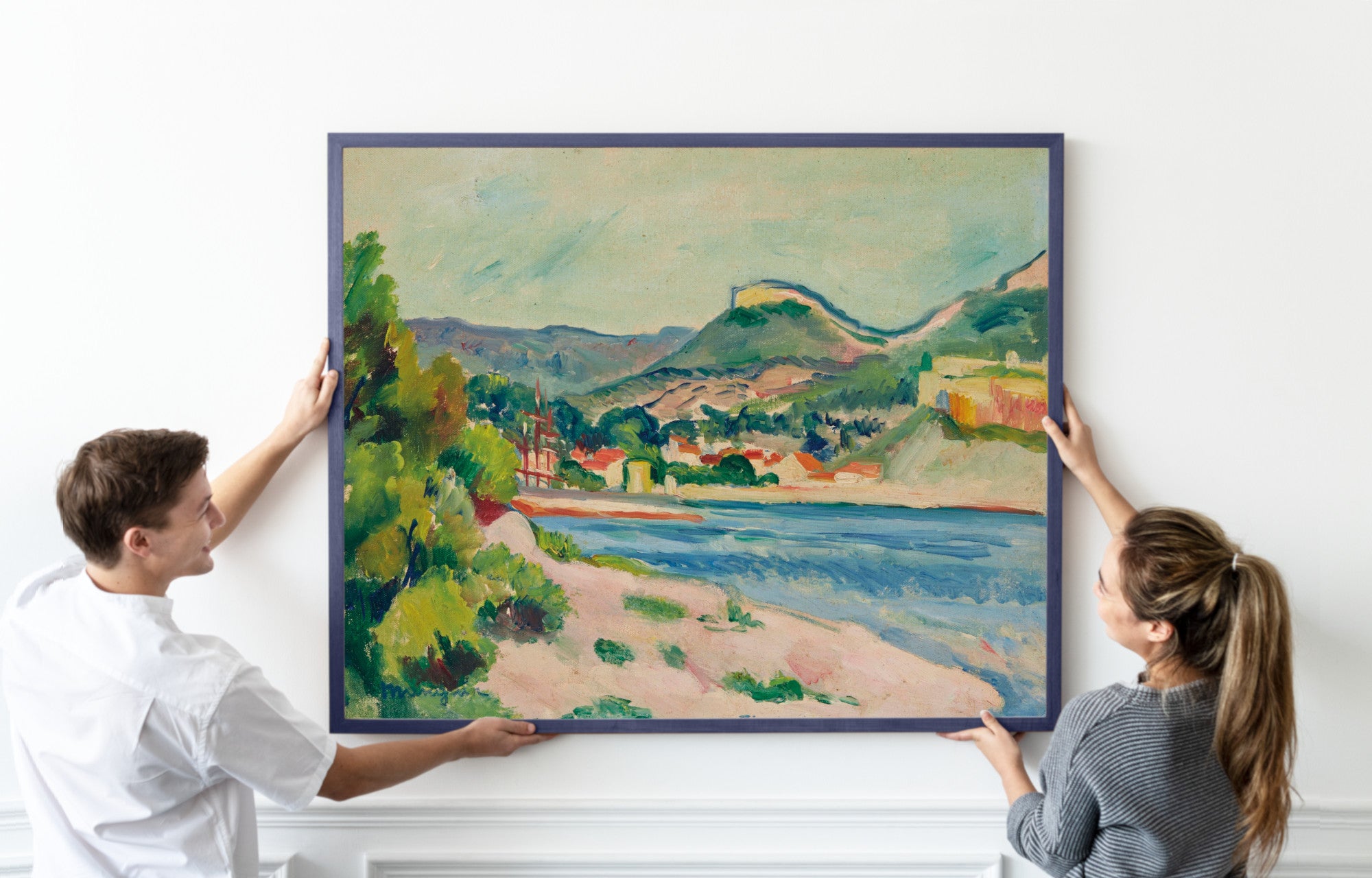
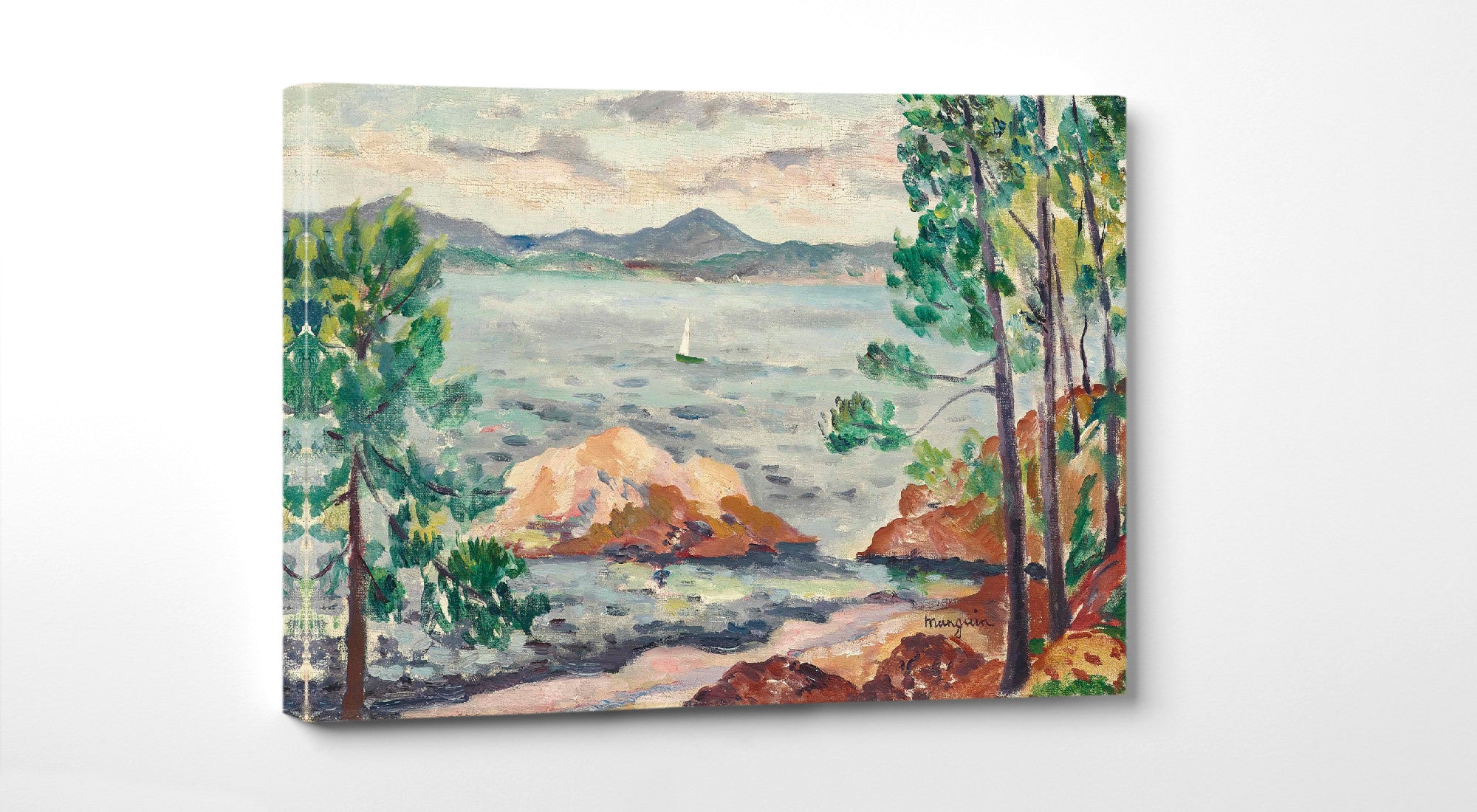
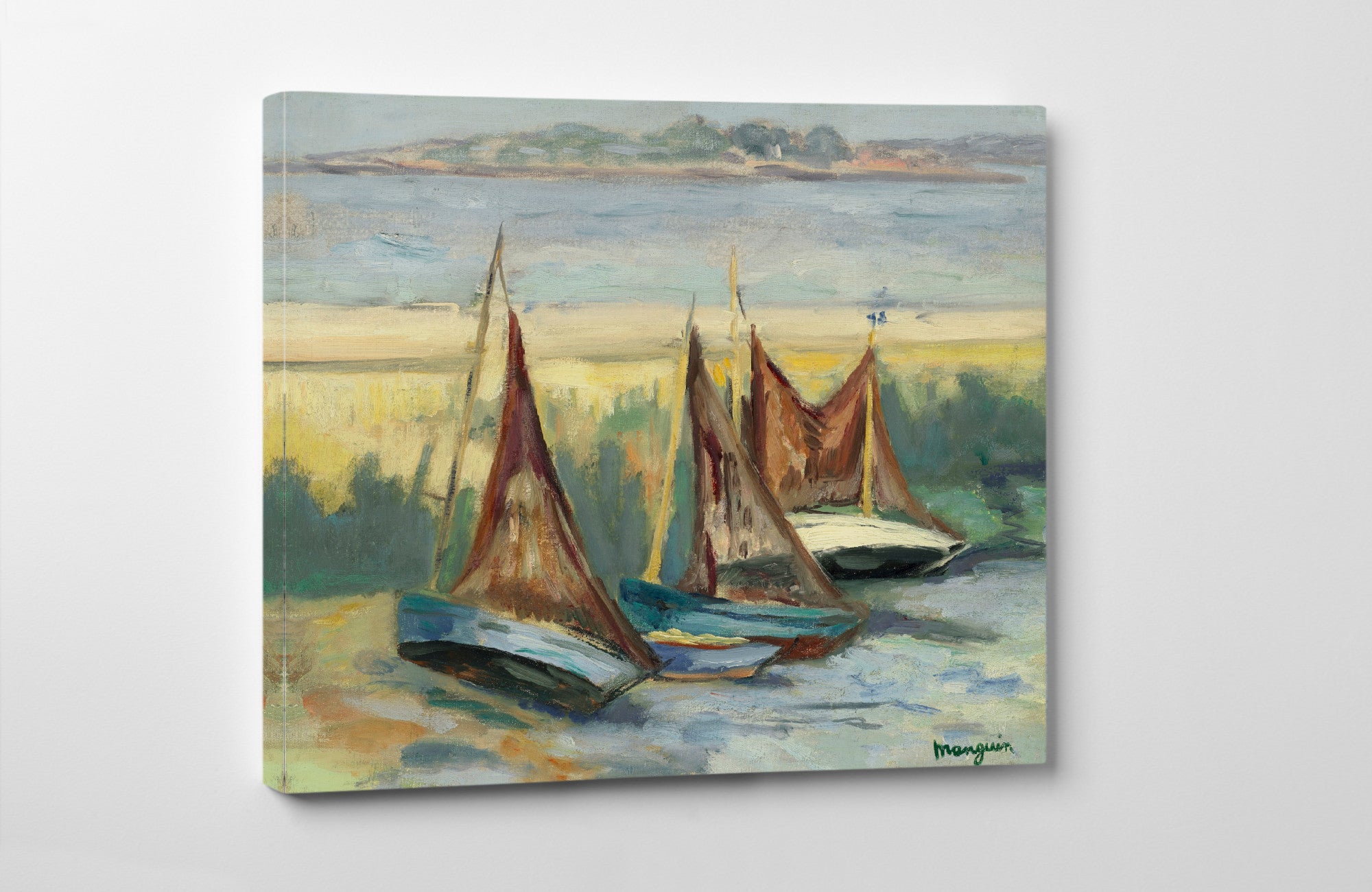
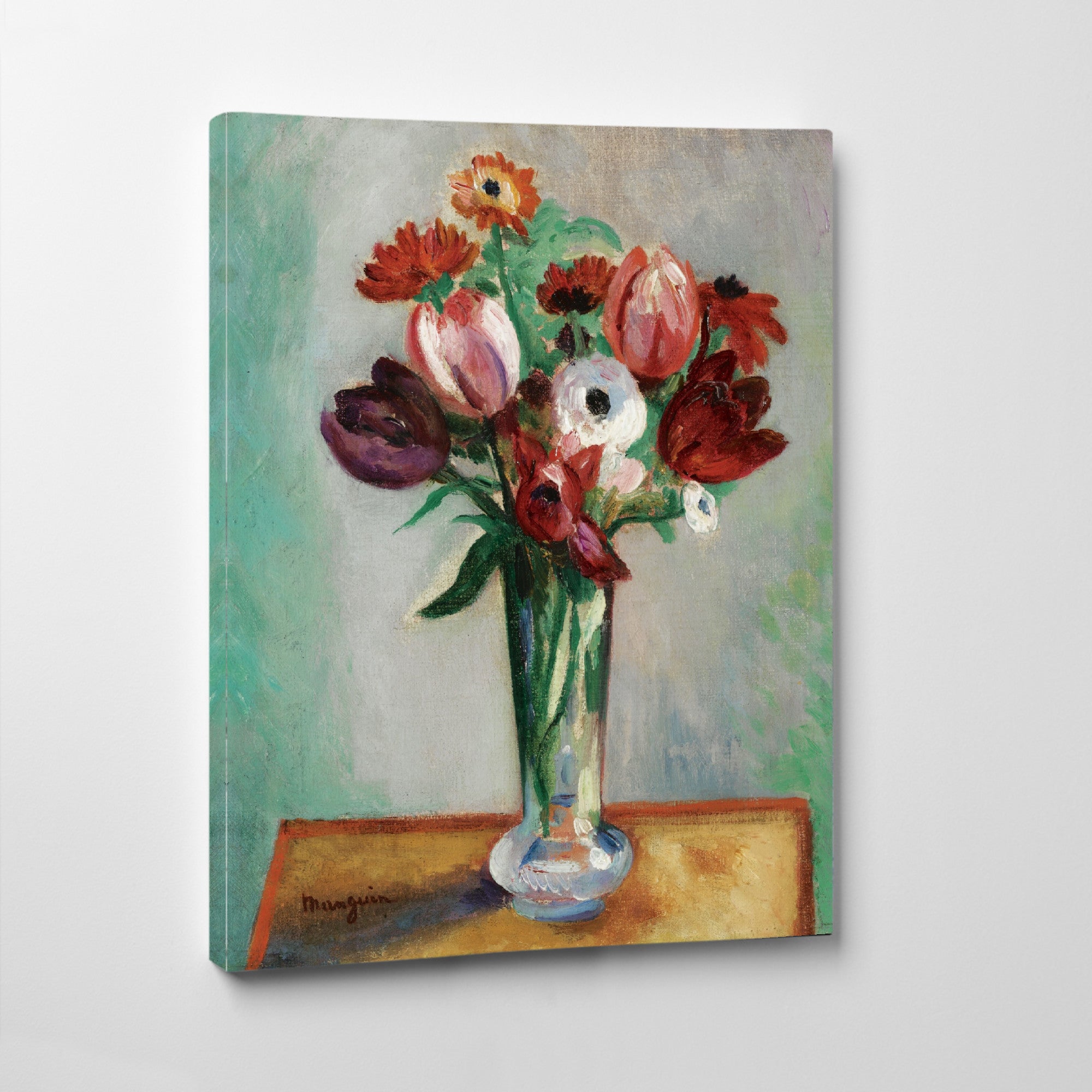
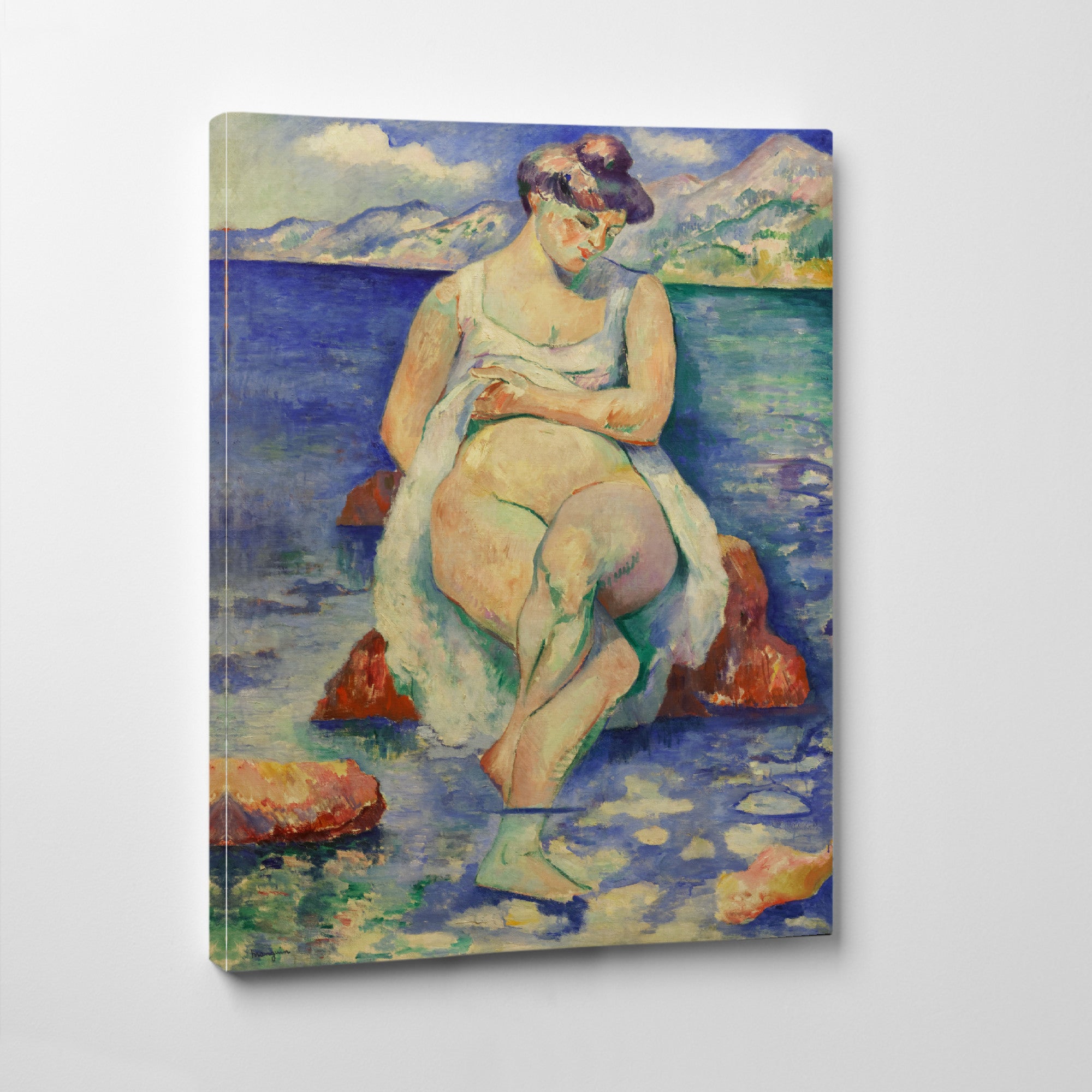
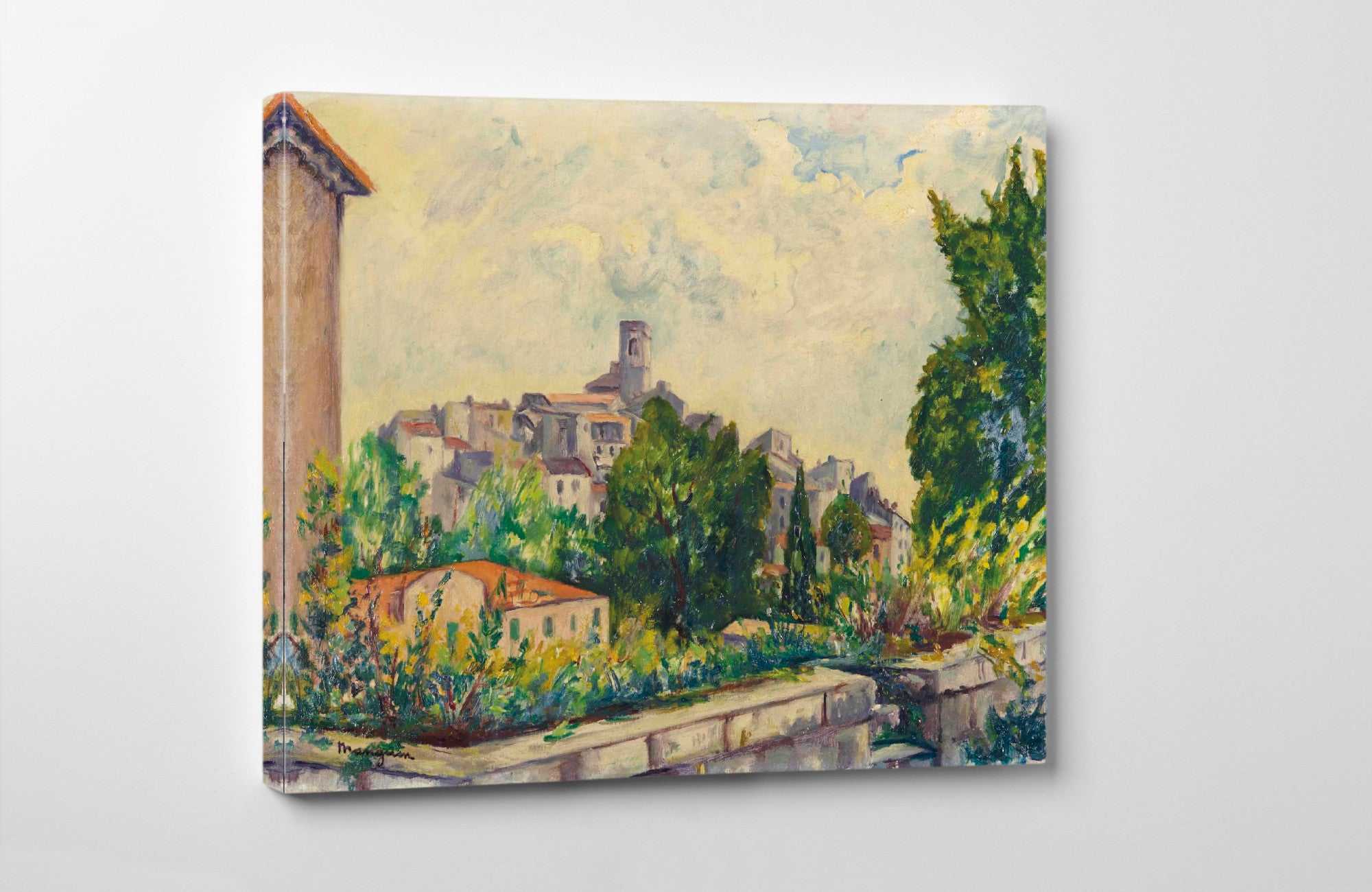
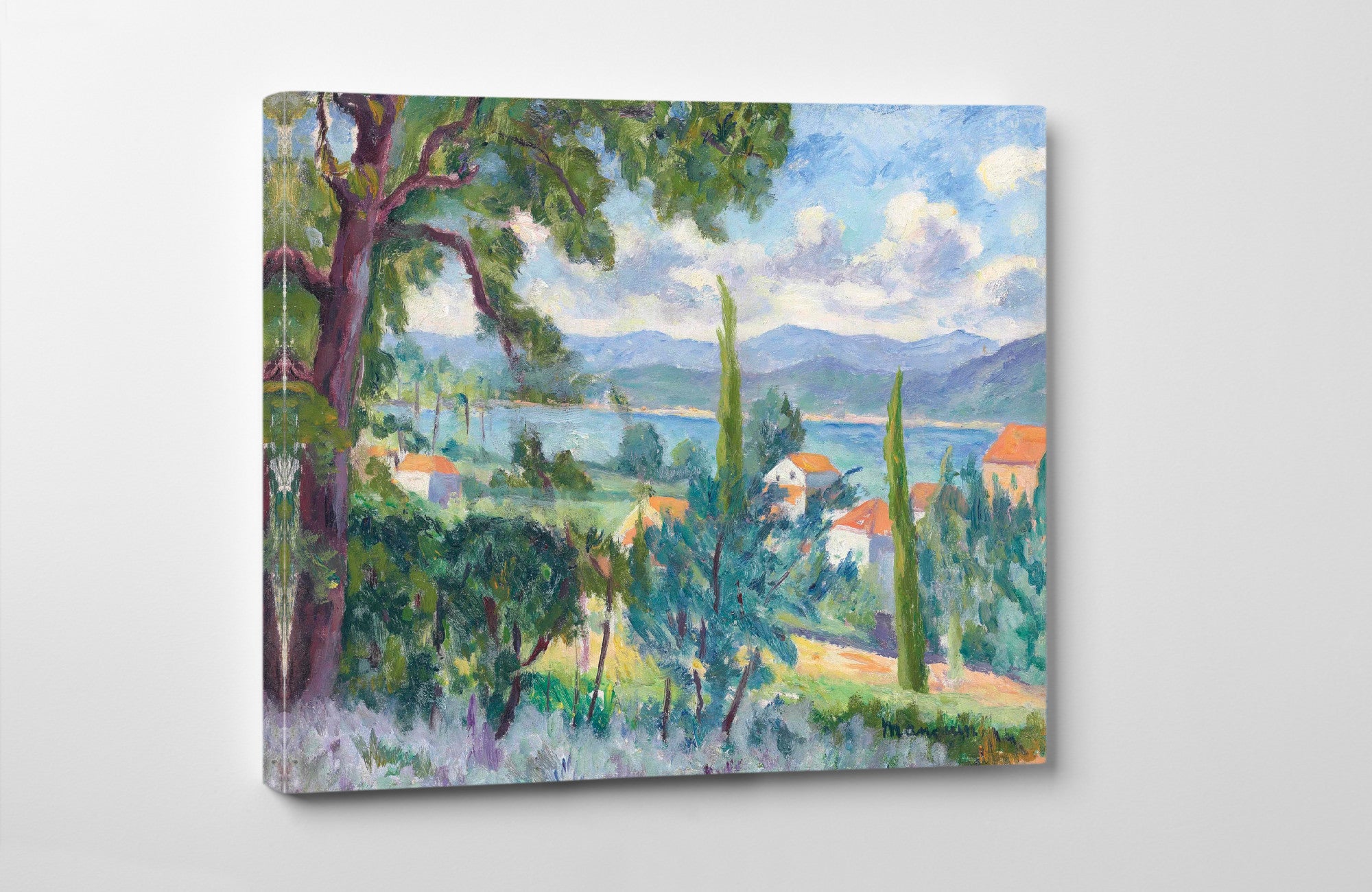
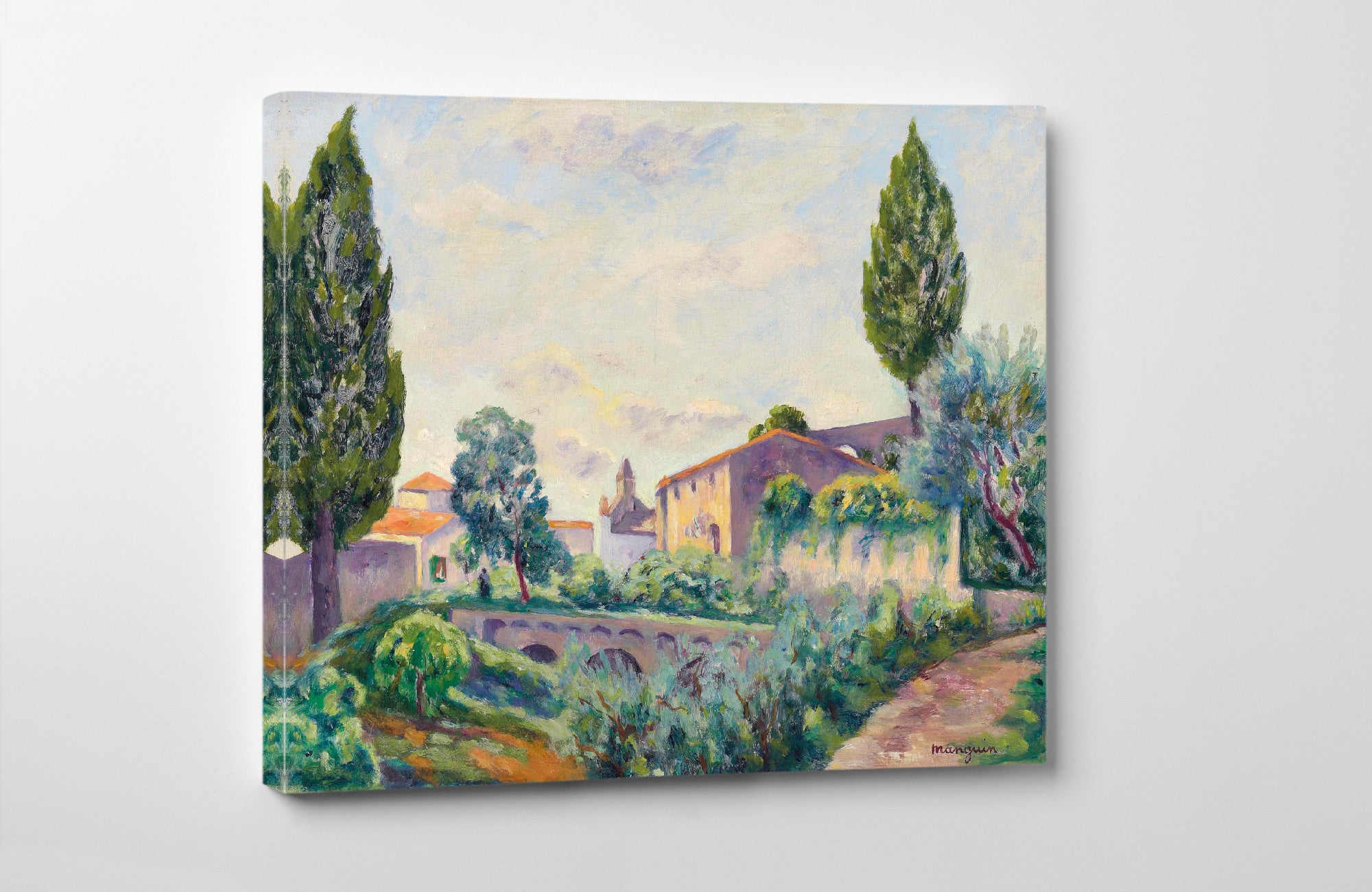
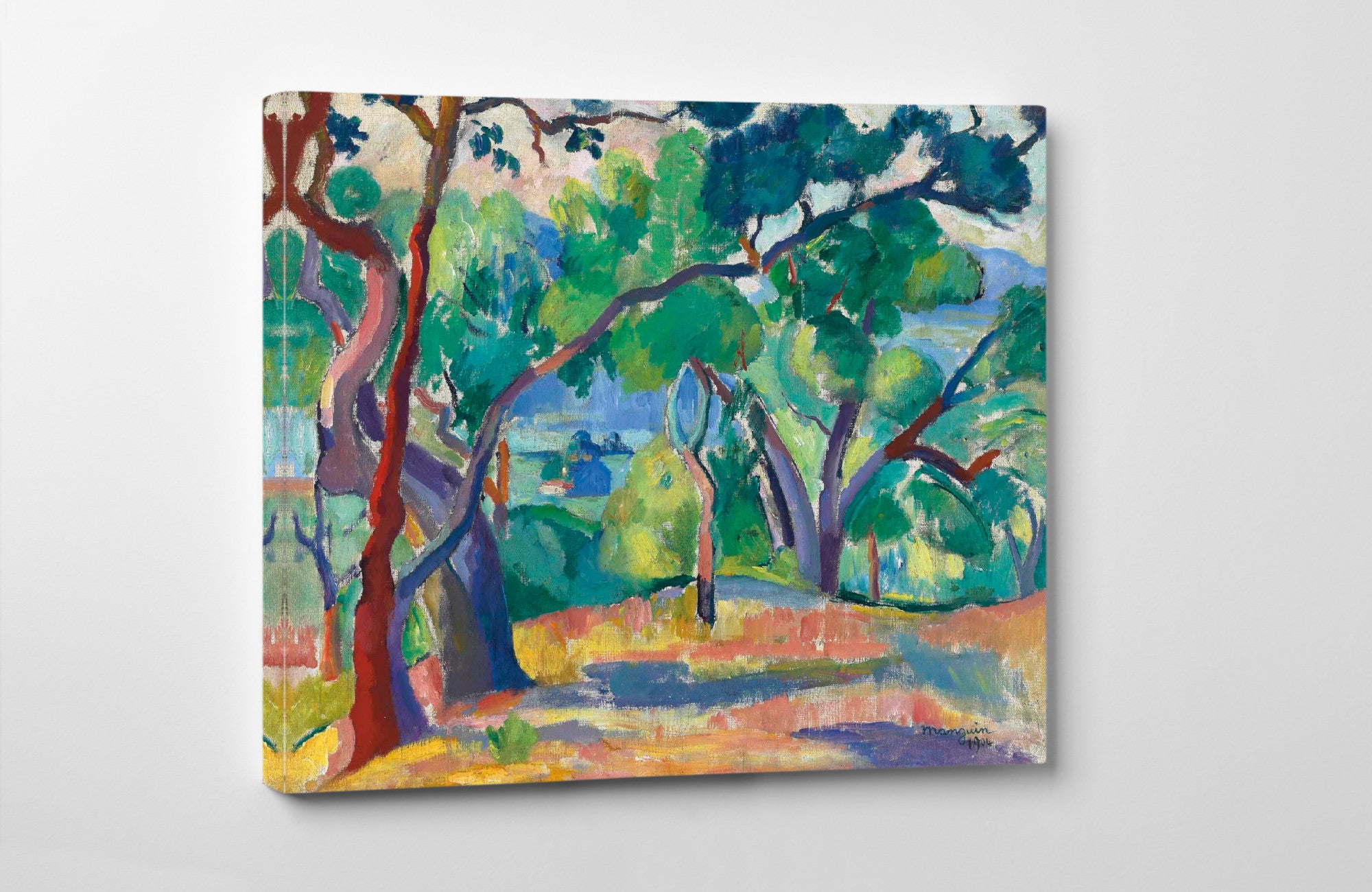
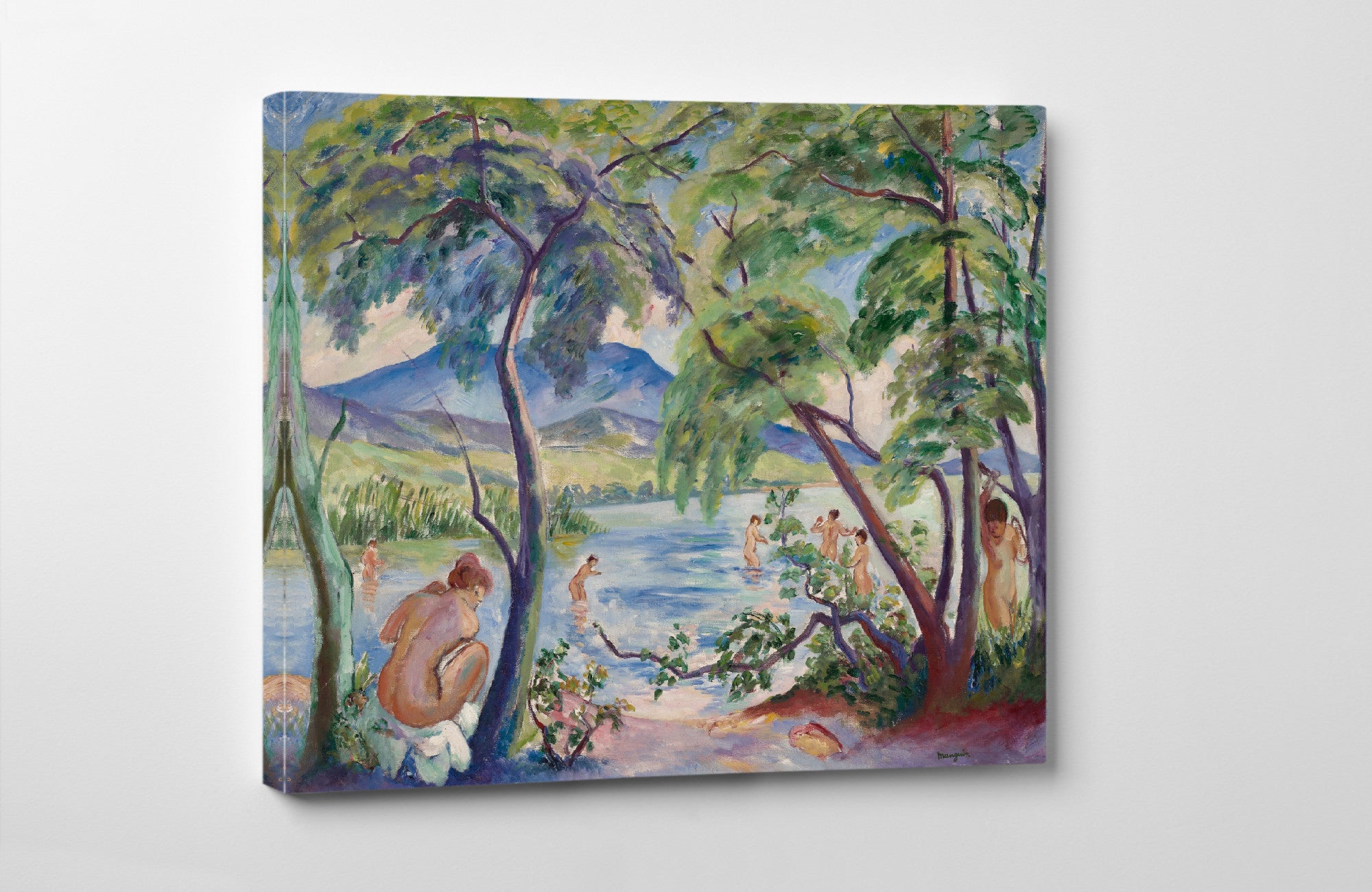
Ready to hang canvas panels are stretched on 1.5 inch deep solid pine frames from sustainable forestry sources. The image is mirrored on all 4 sides to give an aesthetically pleasing finish.
Why not have us gift wrap your order and attach a personalised message to the recipient. Available for all orders. Each order is hand wrapped in high quality gift wrap with meatllic ribbon and bow. Your personalised message is printed on a card which is included with your order.
Have your hand wrapped gift delivered directly to the recipient.
Full tracking and insurance included with every order.
Please note design may vary depending upon availability
Just purchase the gift wrap option HERE
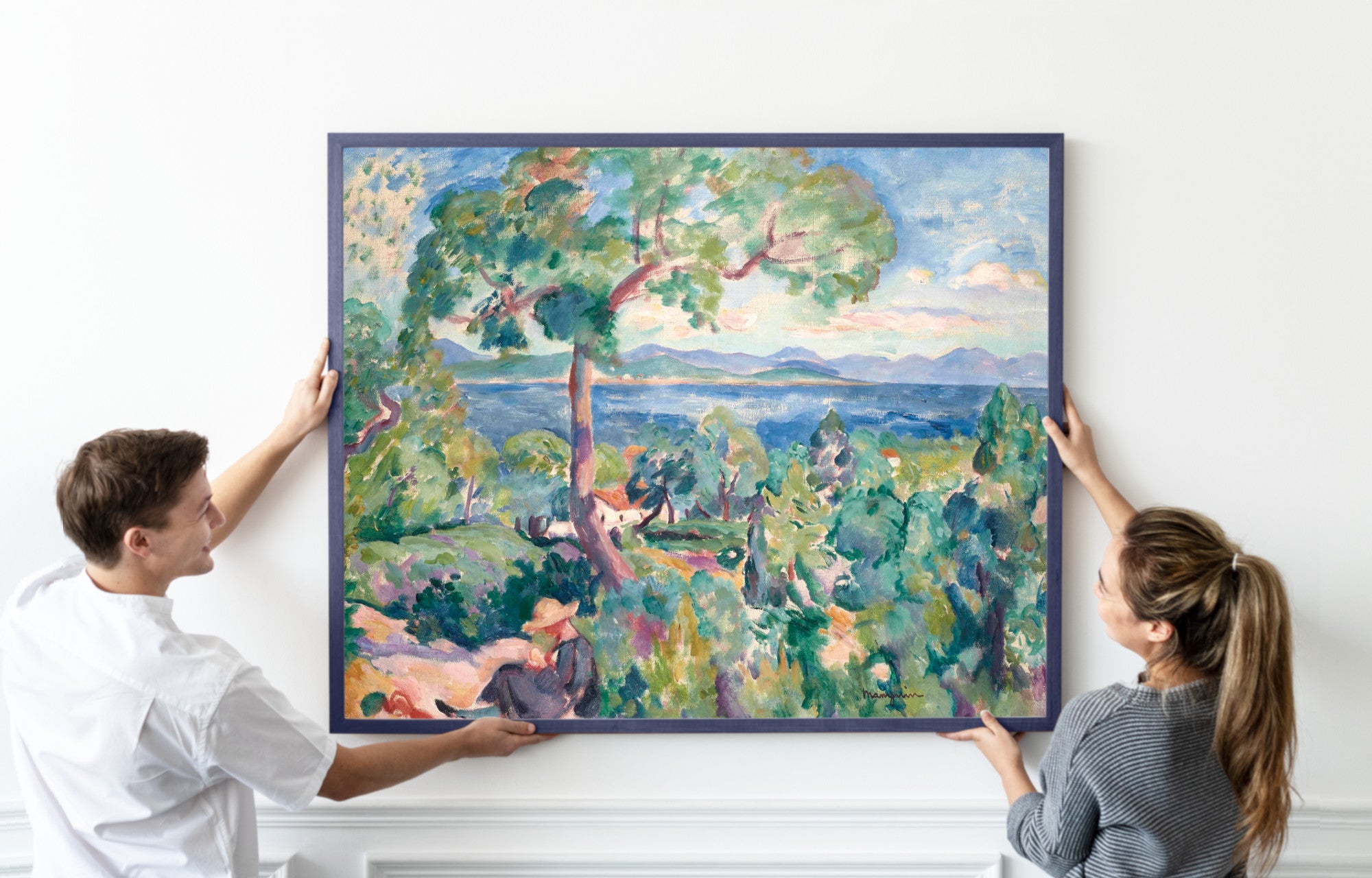
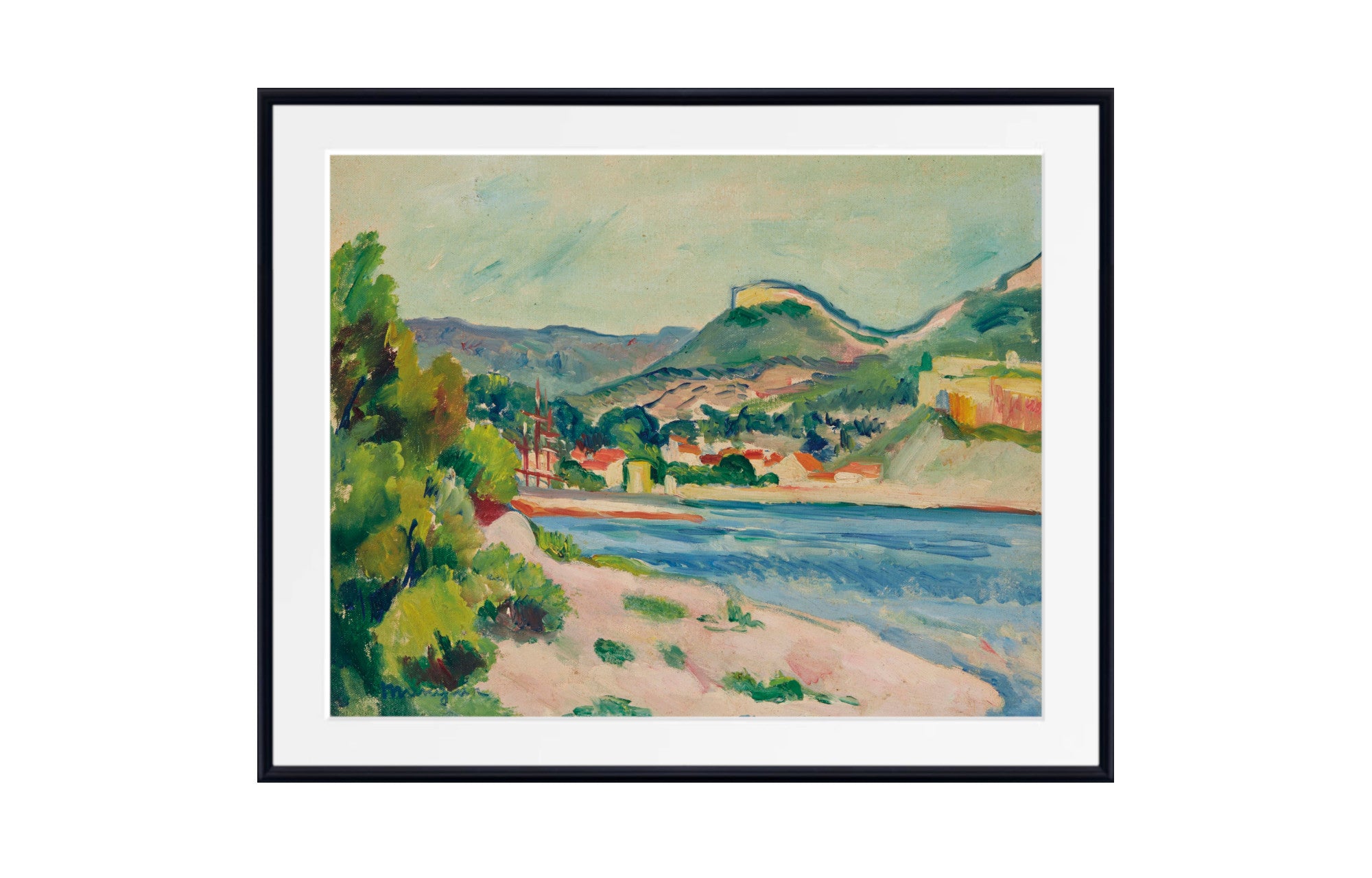
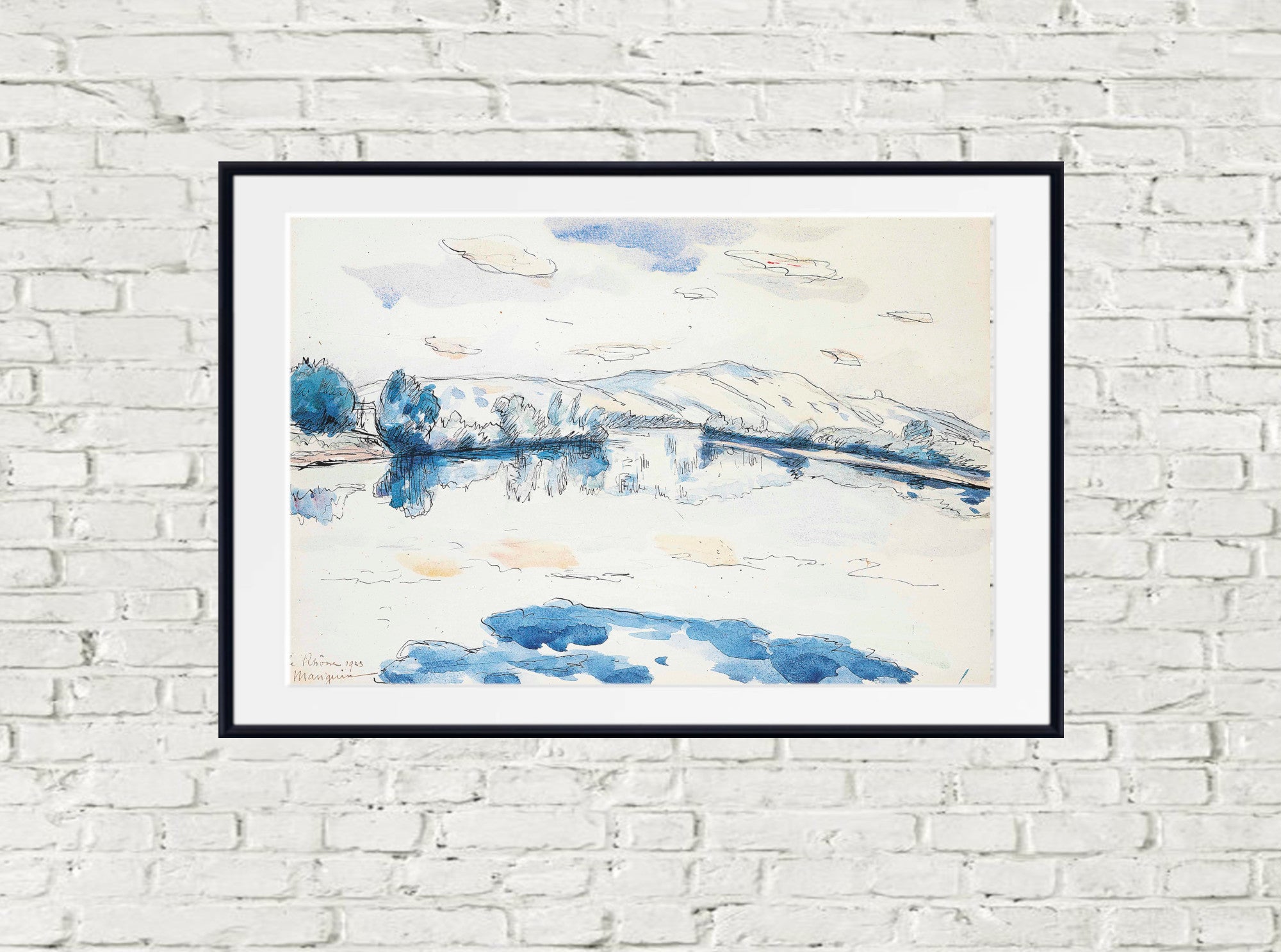
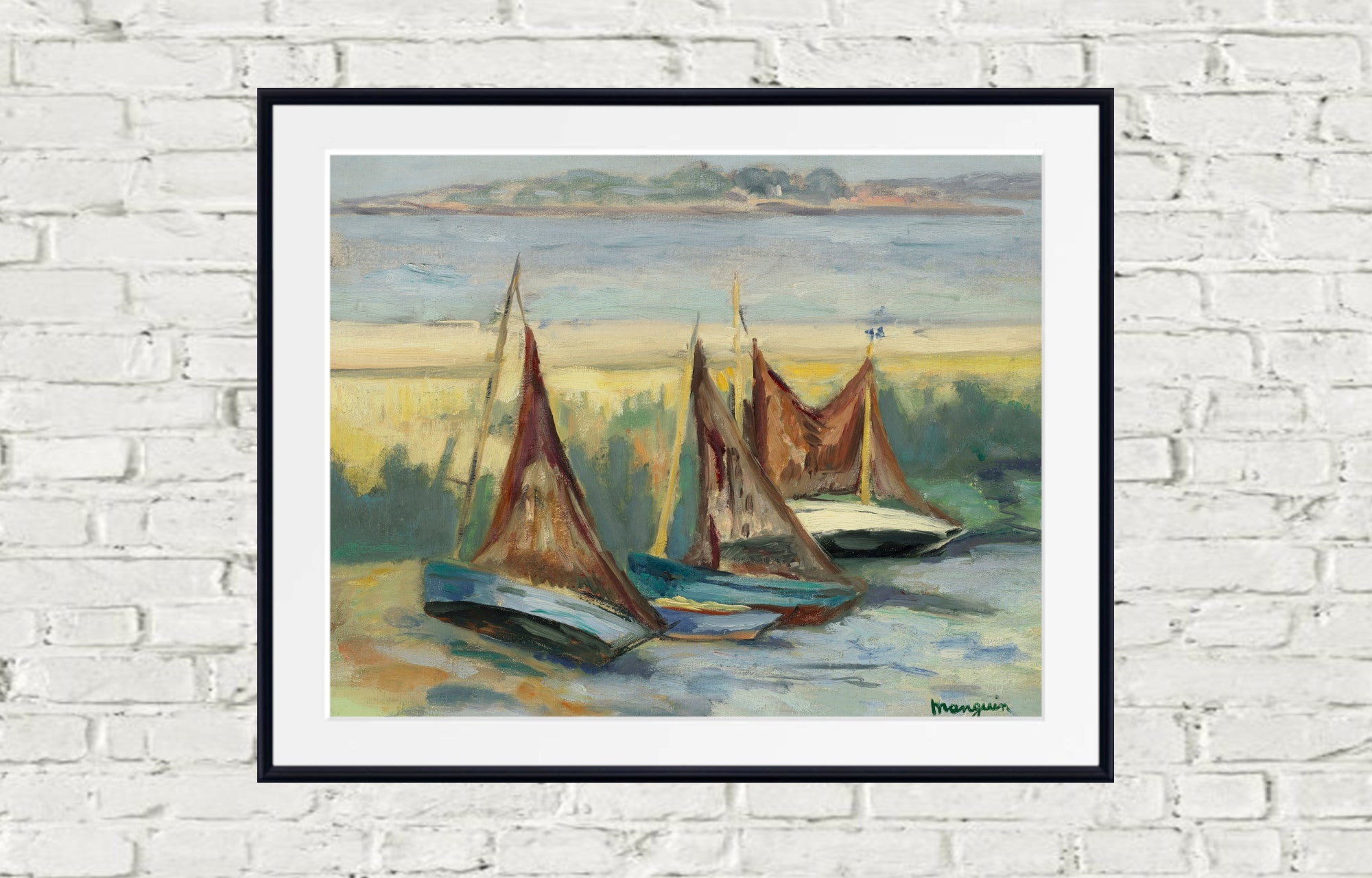
We have a wide range of frames in standard sizes and we also make custom size frames.
To order a framed print:
1. select the print size you would like along with the print materials (matte paper, fine art paper).
2. Add your print choice to the basket.
3. Choose from our range of frames
4. Select the same size as the print you have added to your basket. If the frame size you want is not listed please contact us
5. Choose from the mount or no-mount option
6. Add your frame choice to the basket
7. Proceed to checkout.
Why Choose GalleryThane?
- Printed and framed in-house
- Free UK delivery
- Free EU and USA delivery on orders over £200
- Tracking and insurance included in every order
- Fast 1-3 day dispatch
- Gift wrapping service available
- Gallery quality materials
- Sustainable, eco-friendly packaging
- Great customer support
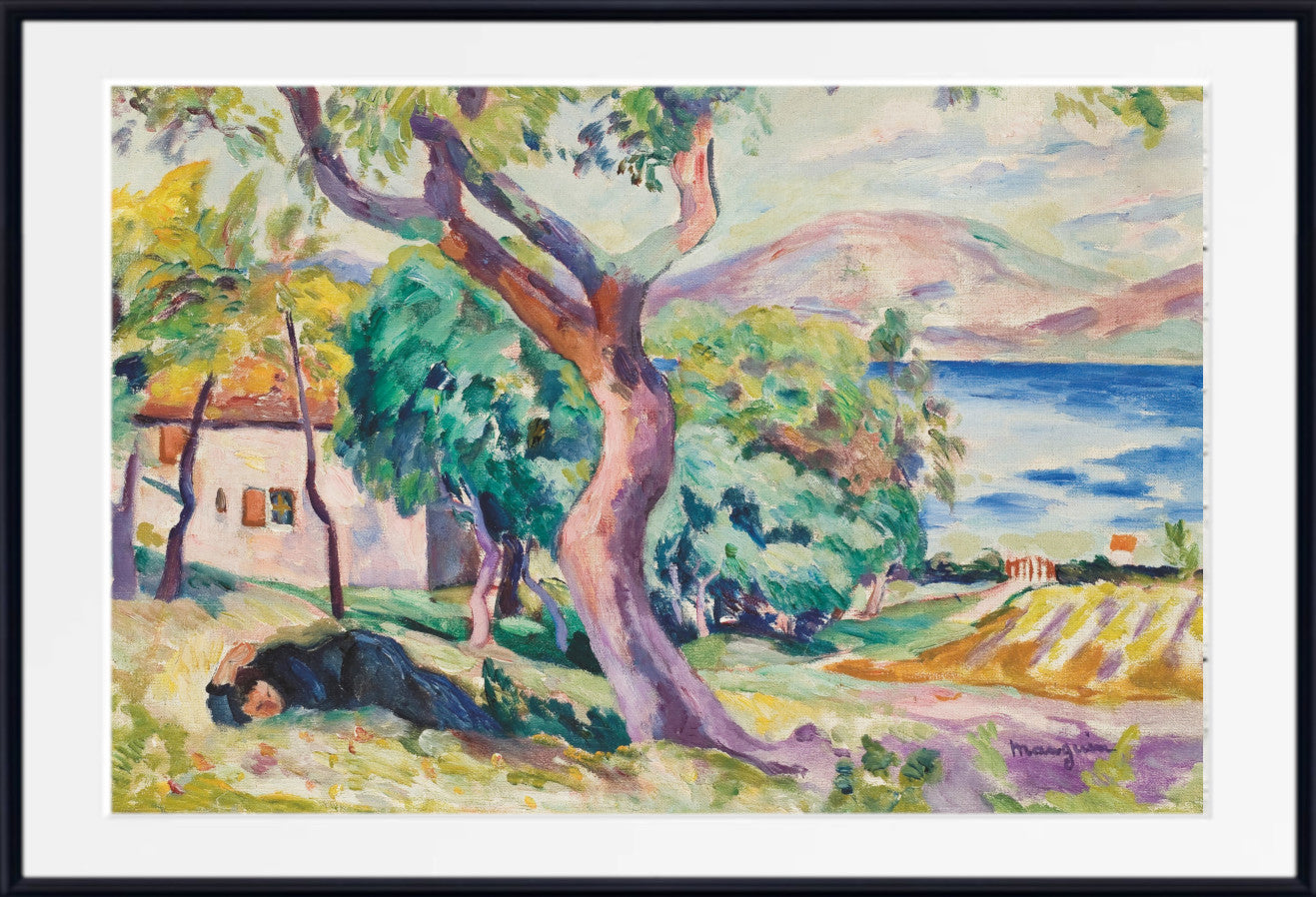
Explore related collections
What makes our Prints and Canvas Panels so special

Latest Giclee Printing Technology
We have invested in the latest wide format print technology to produce museum quality giclee prints utilising the highest quality pigment inks to give outstanding colour reproduction.

Museum Quality Archival Fine Art Papers
We print on the finest quality fine art papers with textured, smooth and lustre finishes for prints which last a lifetime.
From aceo miniatures to 40x80 inch large format, every print has our lifetime quality guaranteee.

Solid Wood Frames, Cotton Canvas
All of the wood for our canvas panels and frames is responsibly sourced from manages forests. Our cotton canvas is completely seedless for the highest quality reproduction possible.

Have Your Gift Wrapped


Choose a Custom Frame
Popular Collections


EU Representative
Manufacturer
LucasAbstract t/a GalleryThane
15 Campion Way, Bingham NG13 8TR UK
sales@gallerythane.com
EU Authorised Representative
Westwood Sourcing
Fellenoordstraat 52, Unit 2.38
4811 TJ Breda, Netherlands
info@westwoodsourcing.com