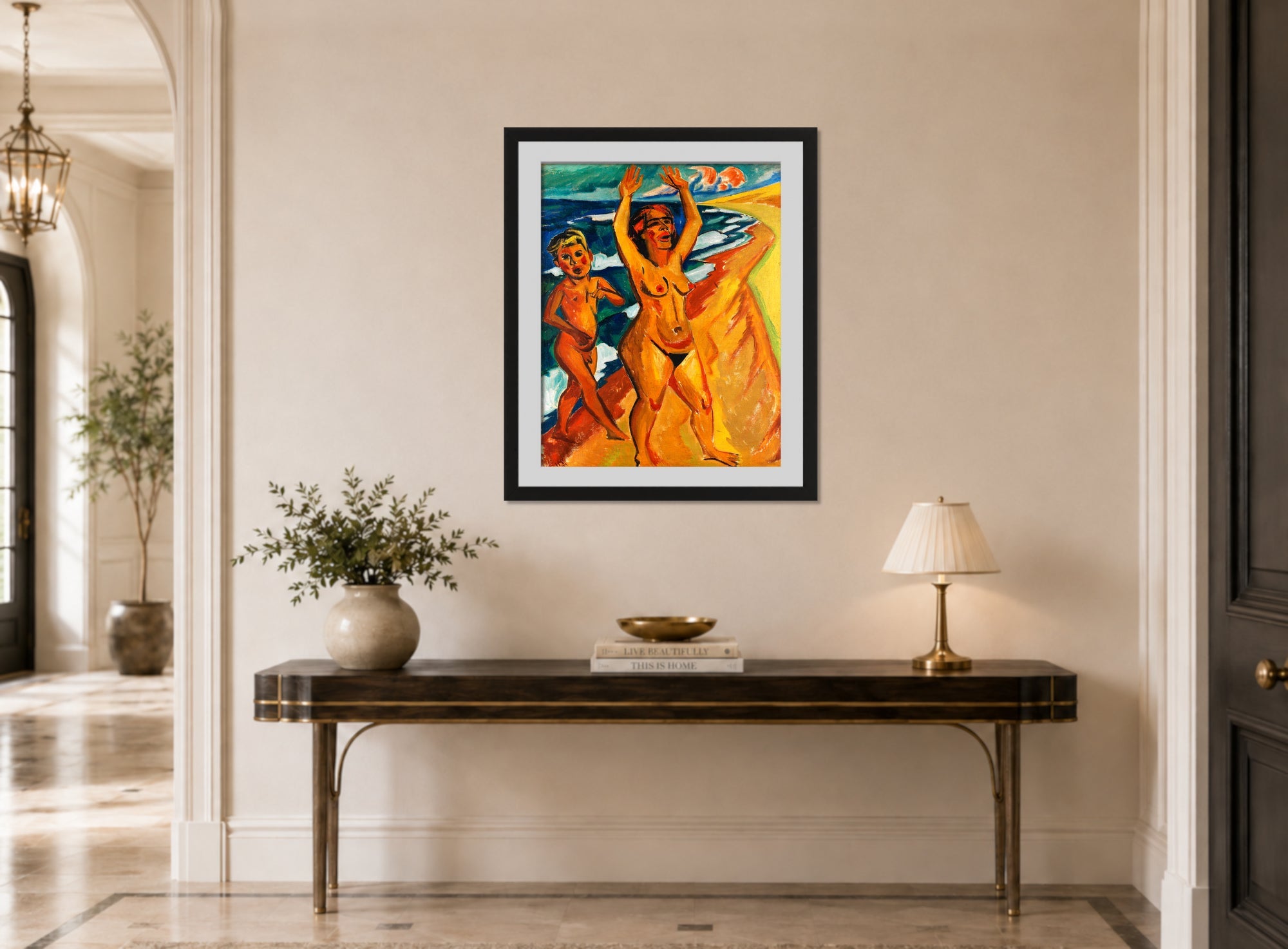
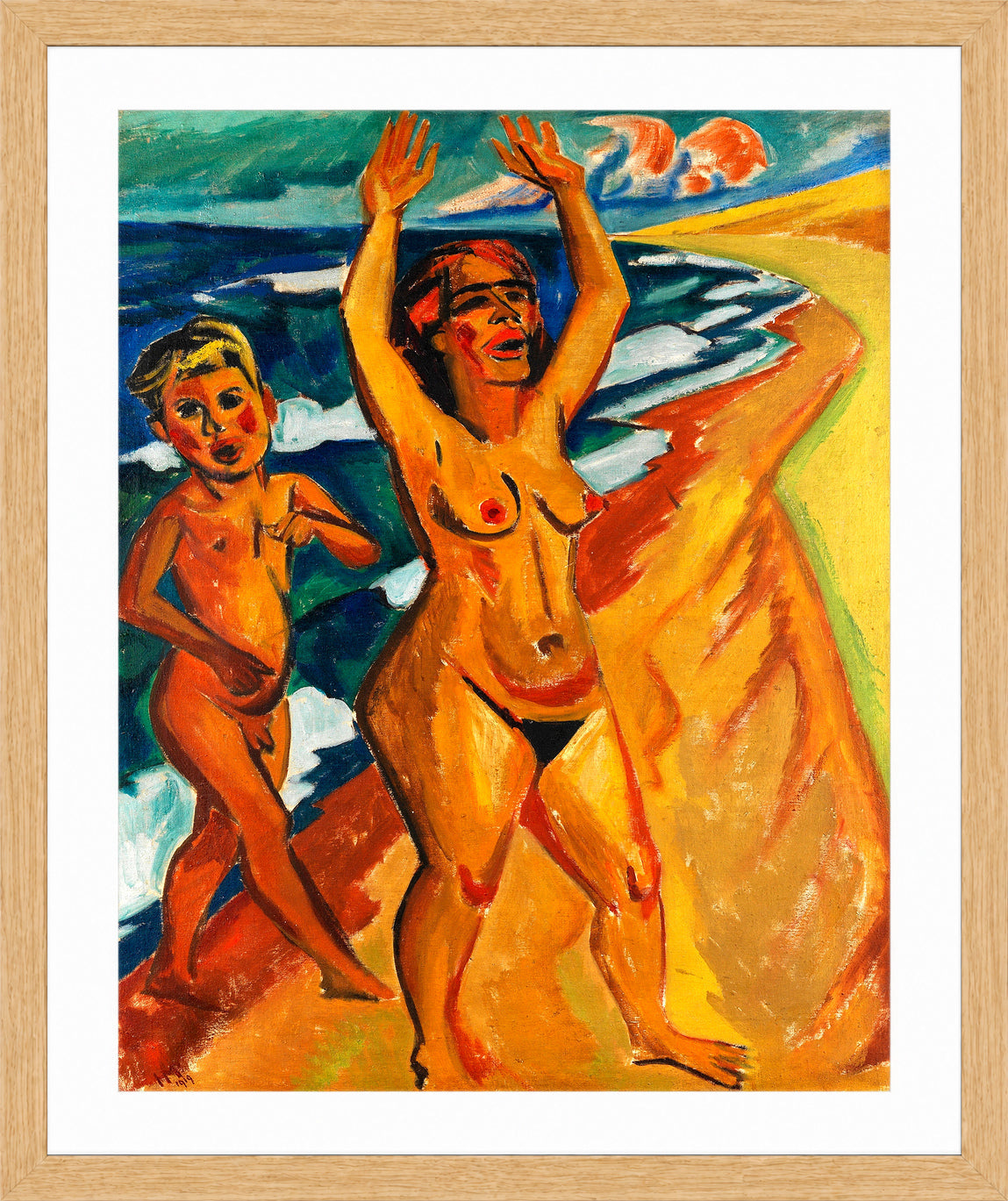
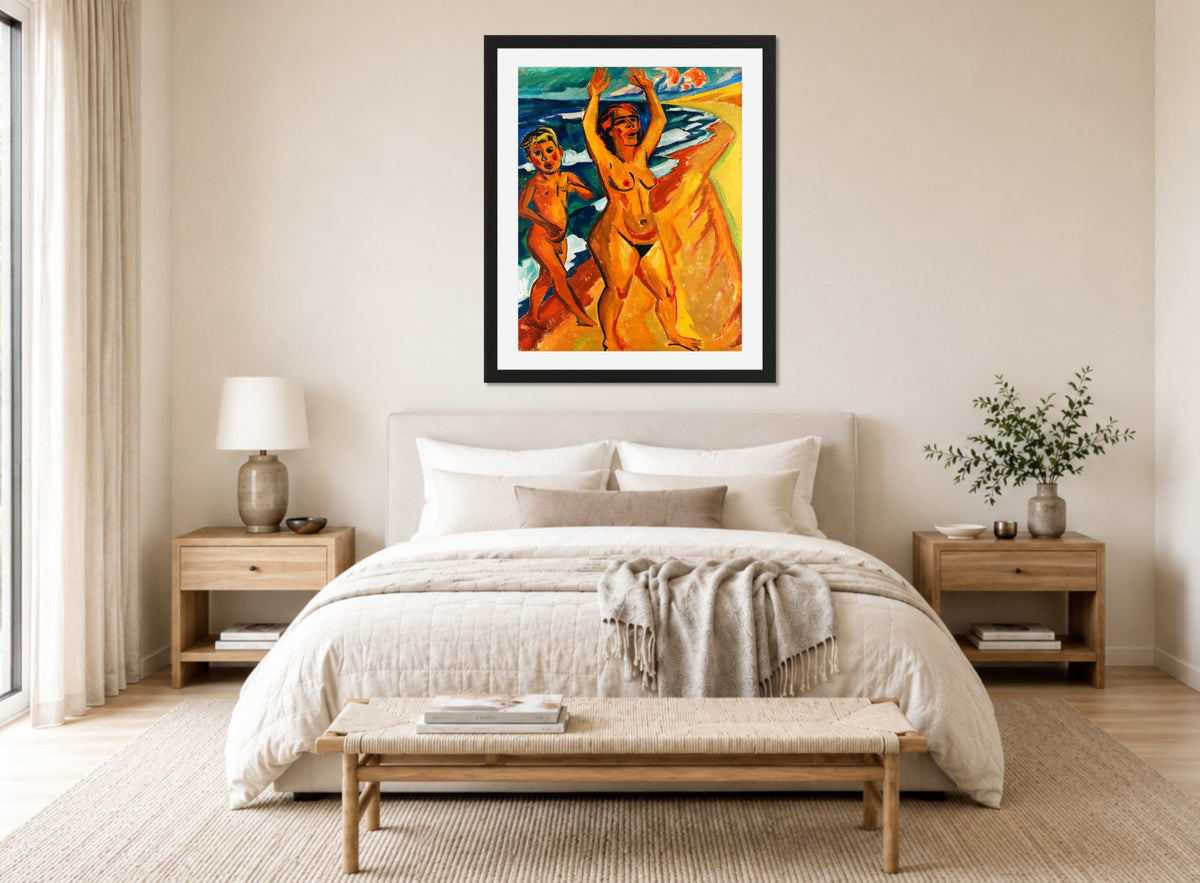
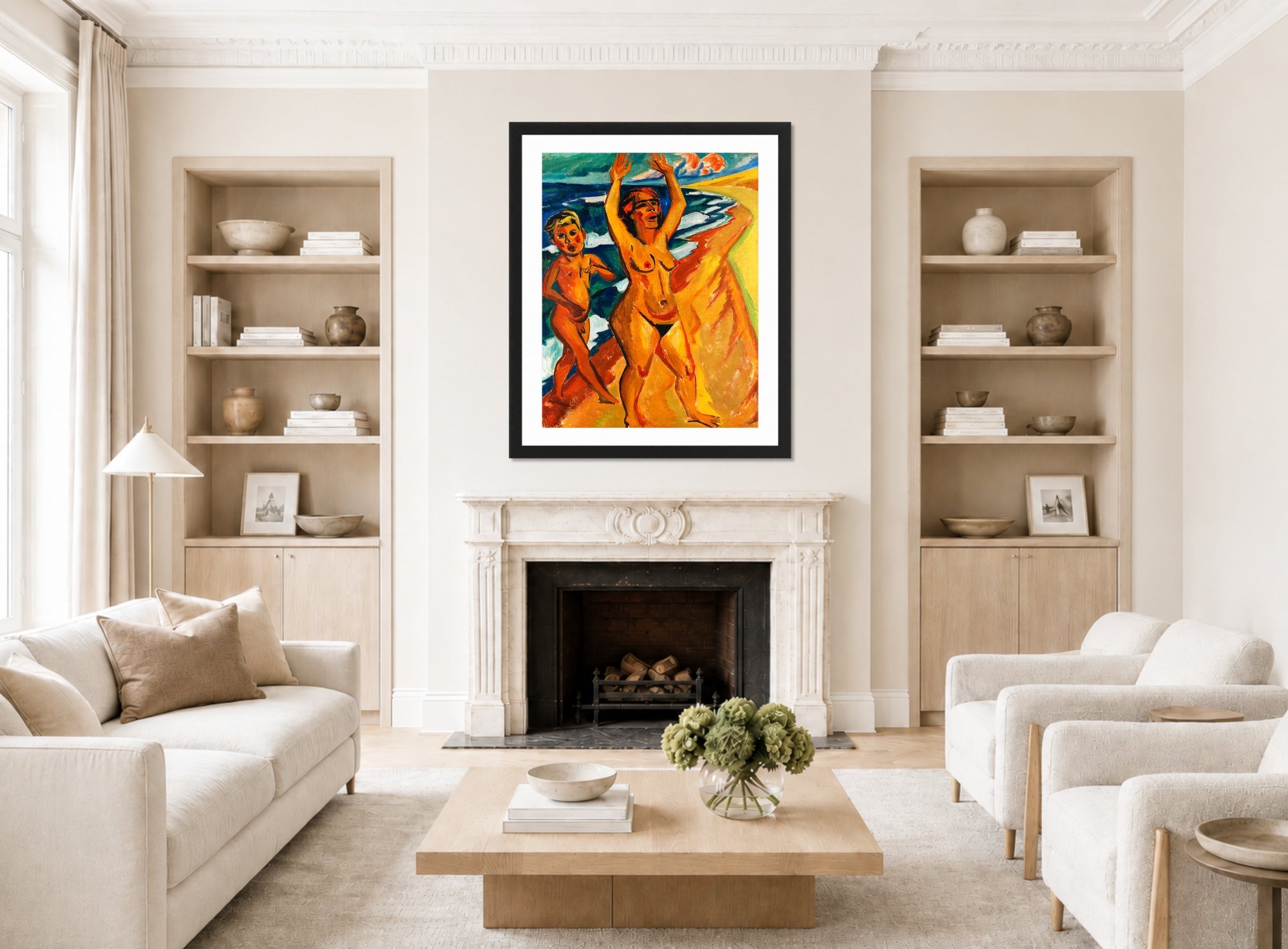
Max Pechstein Nude and Bather Prints
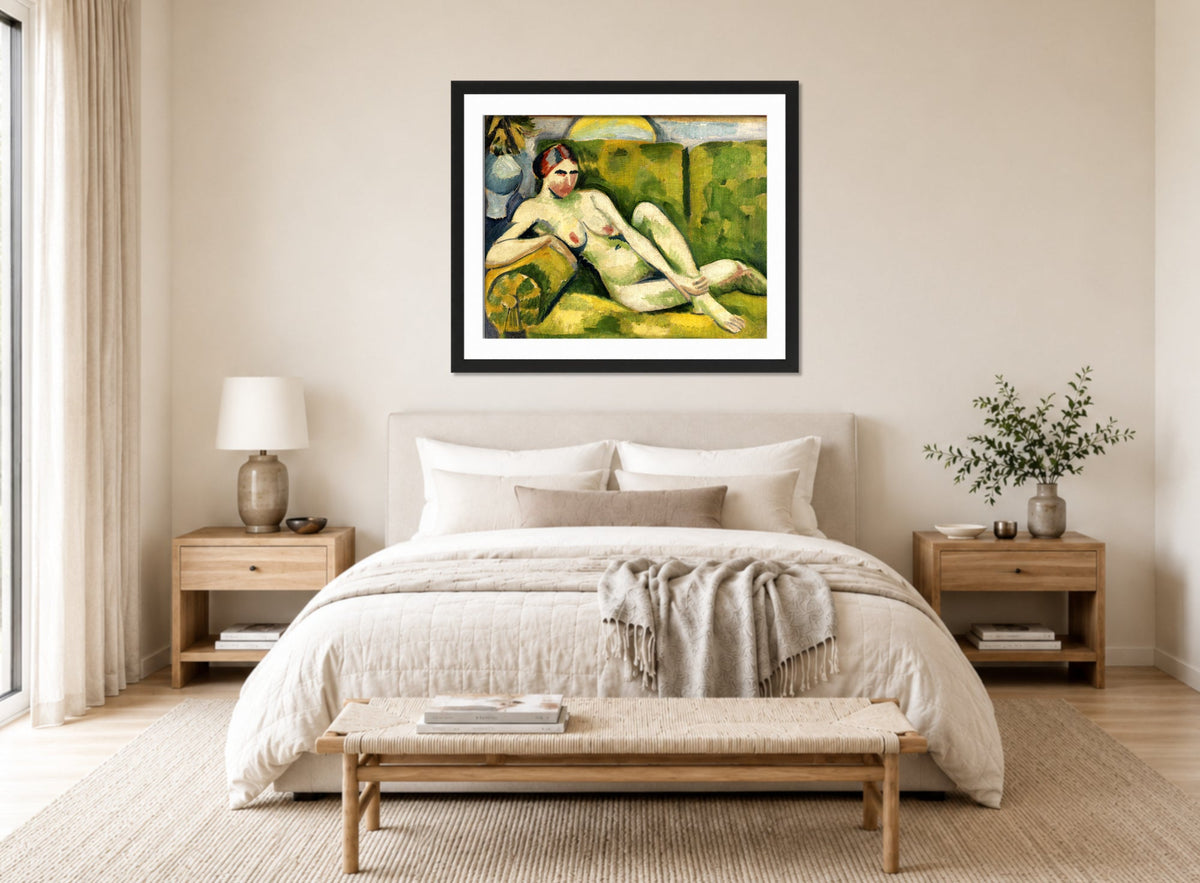
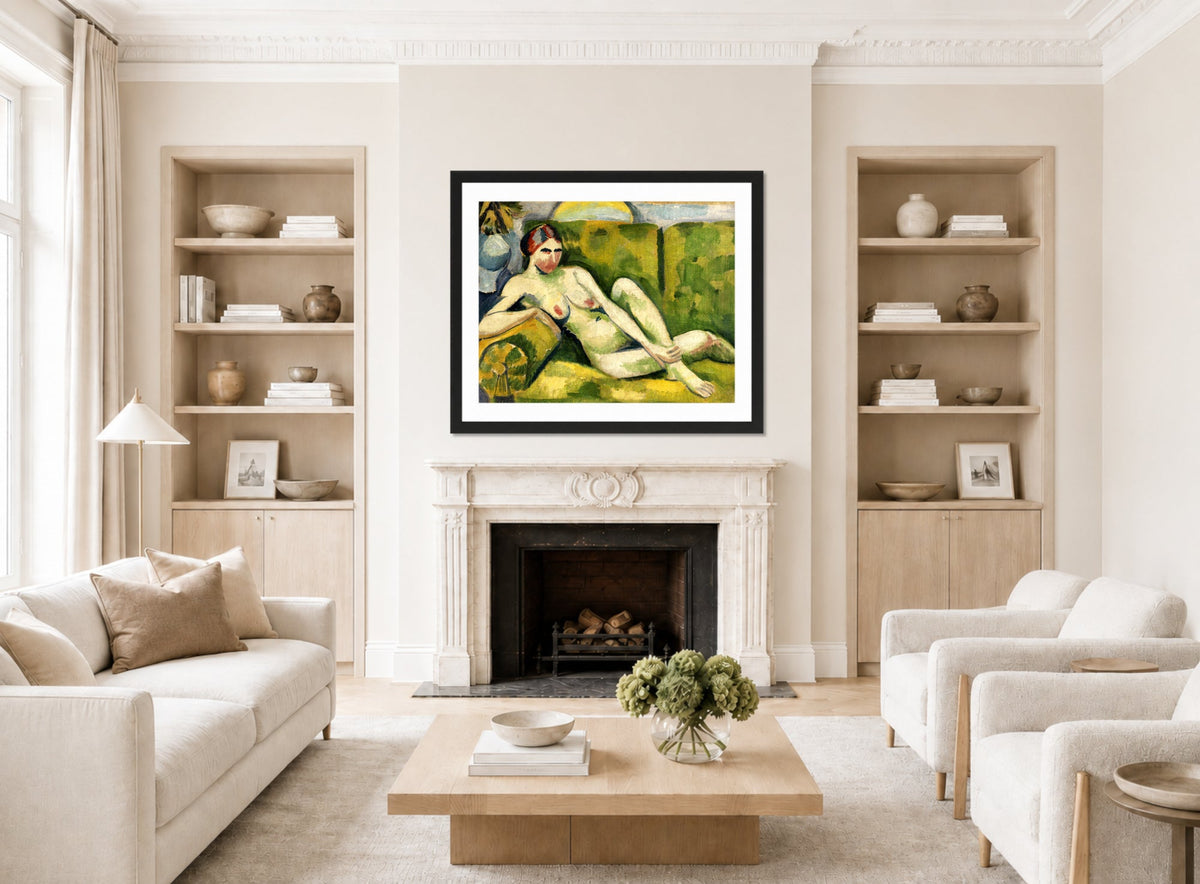
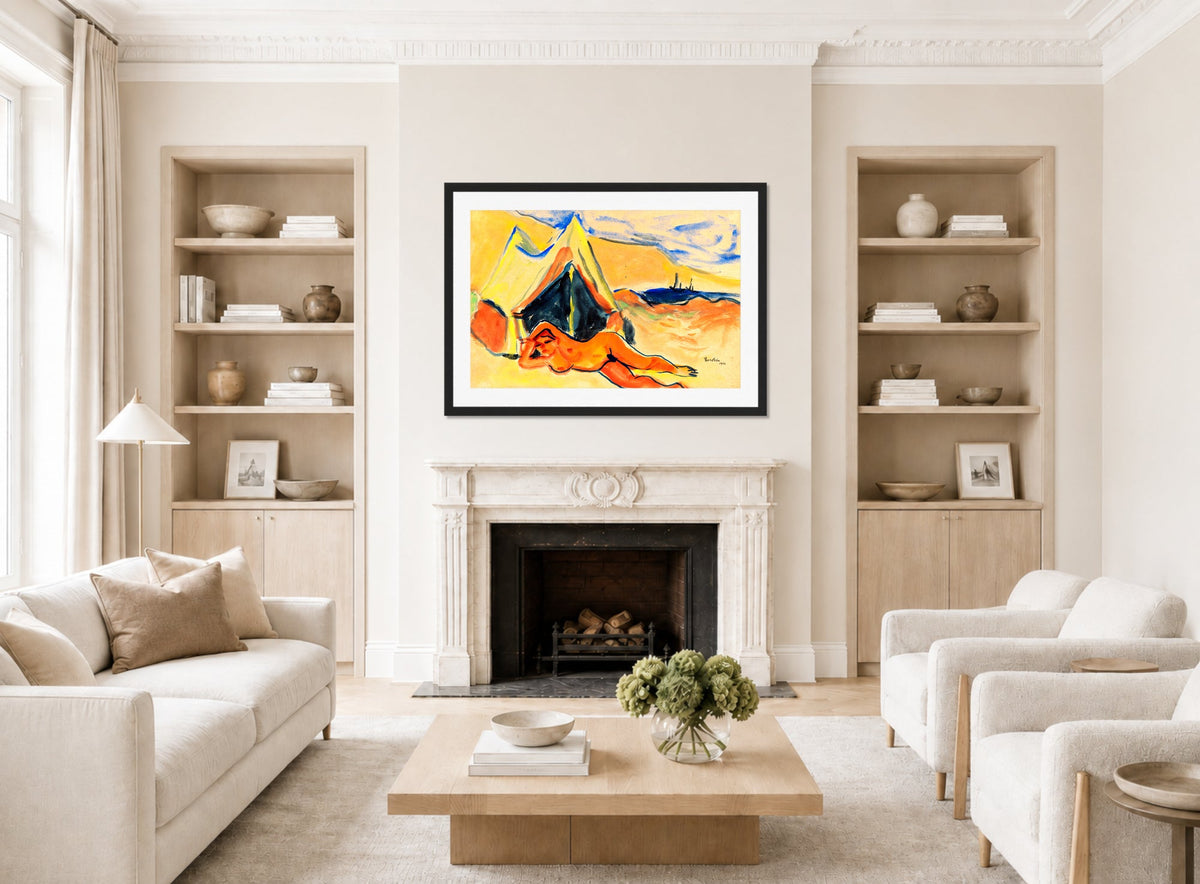
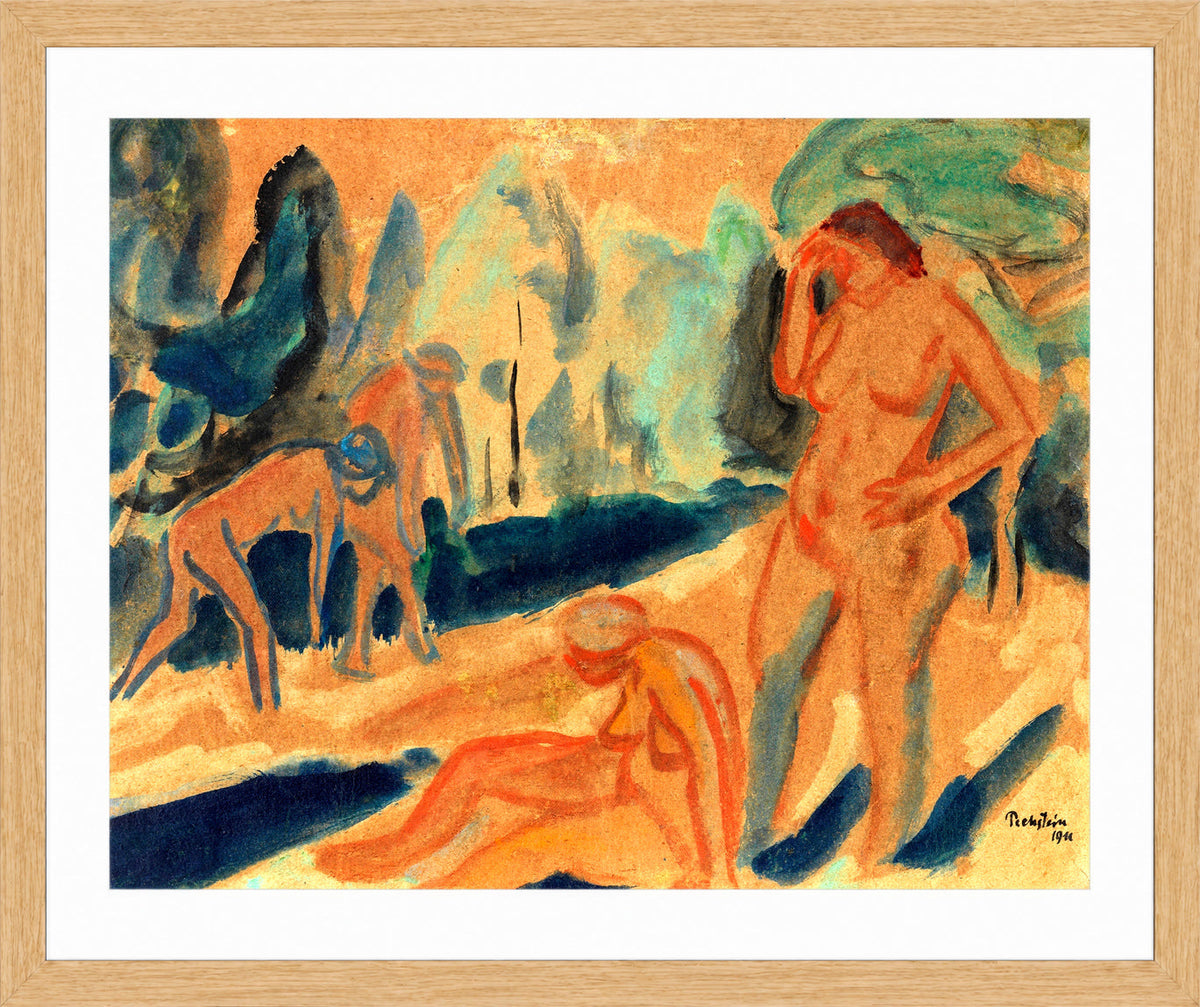
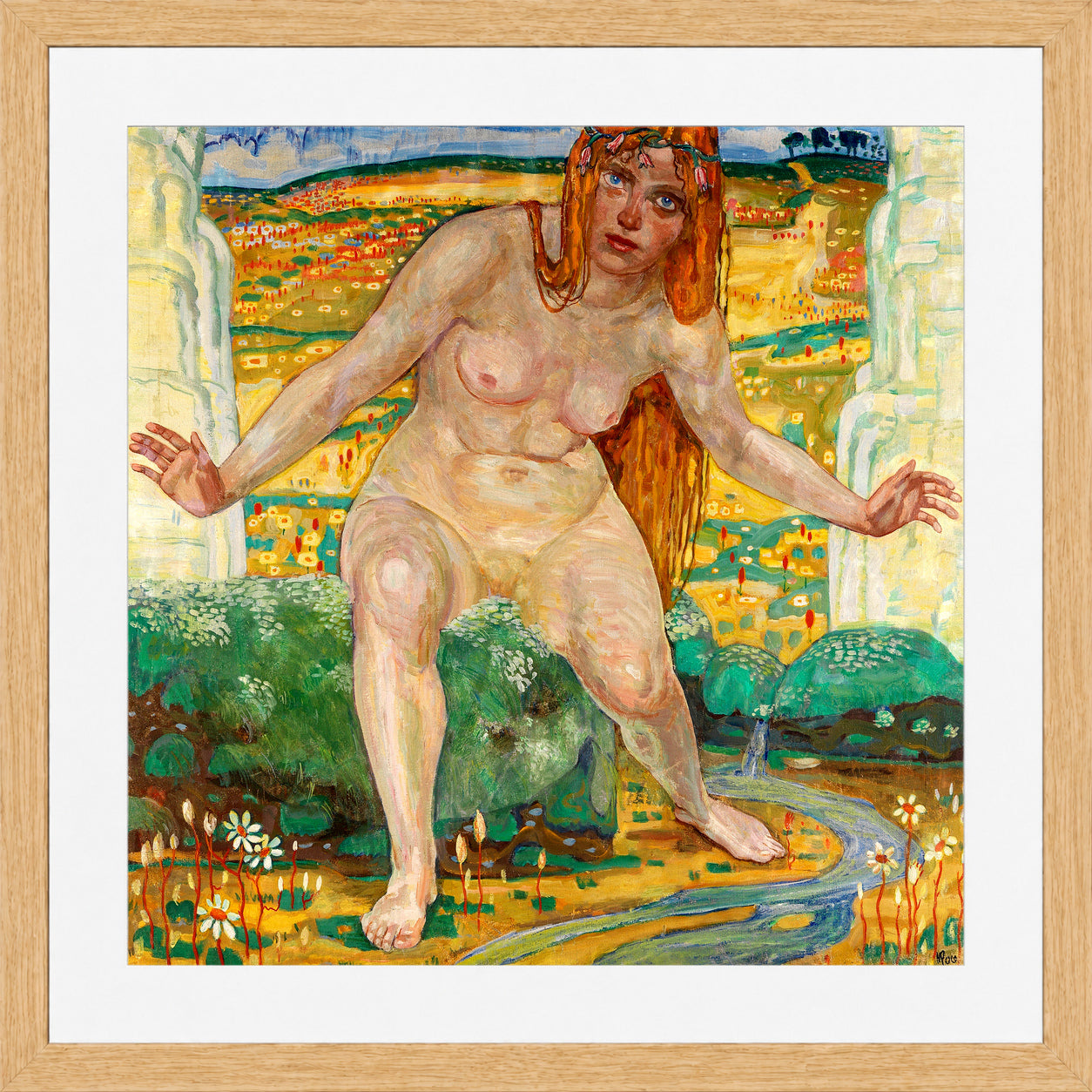
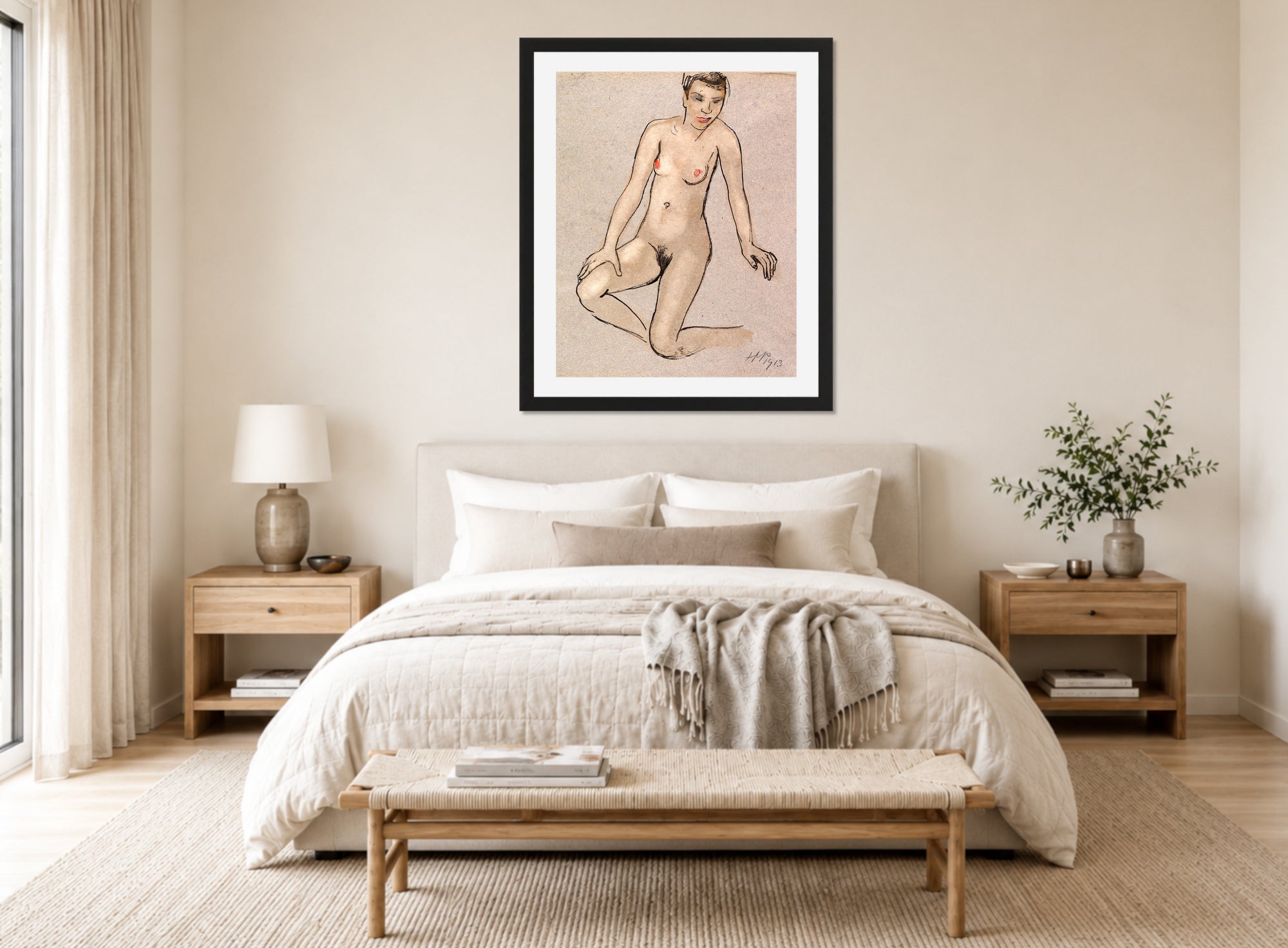
The nude was one of the most important recurring subjects in Hermann Max Pechstein's art. From individual figure studies and reclining nudes to groups of bathers beside beaches, lakes and woodland pools, Pechstein repeatedly used the human body as a vehicle for colour, line and simplified form.
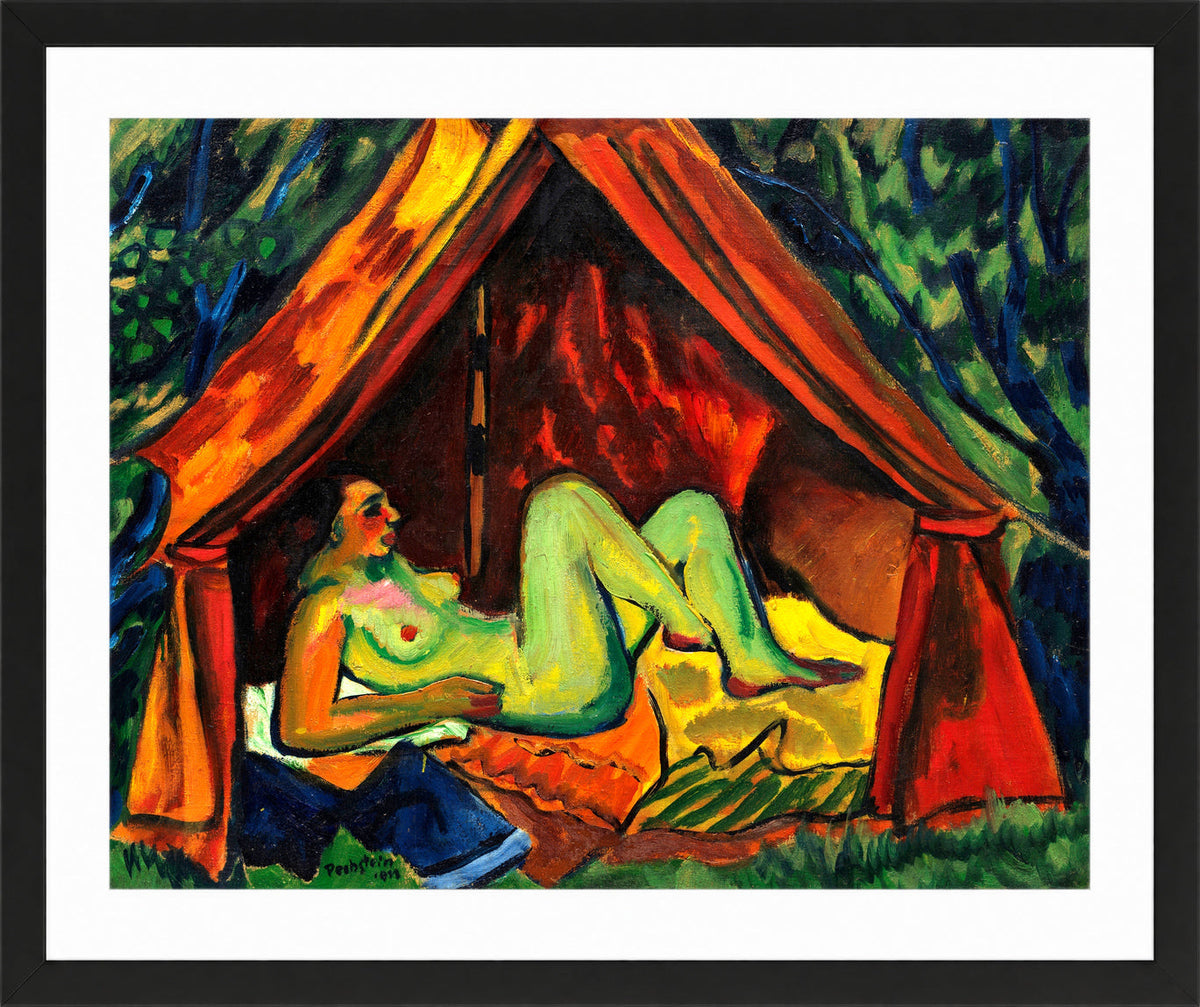
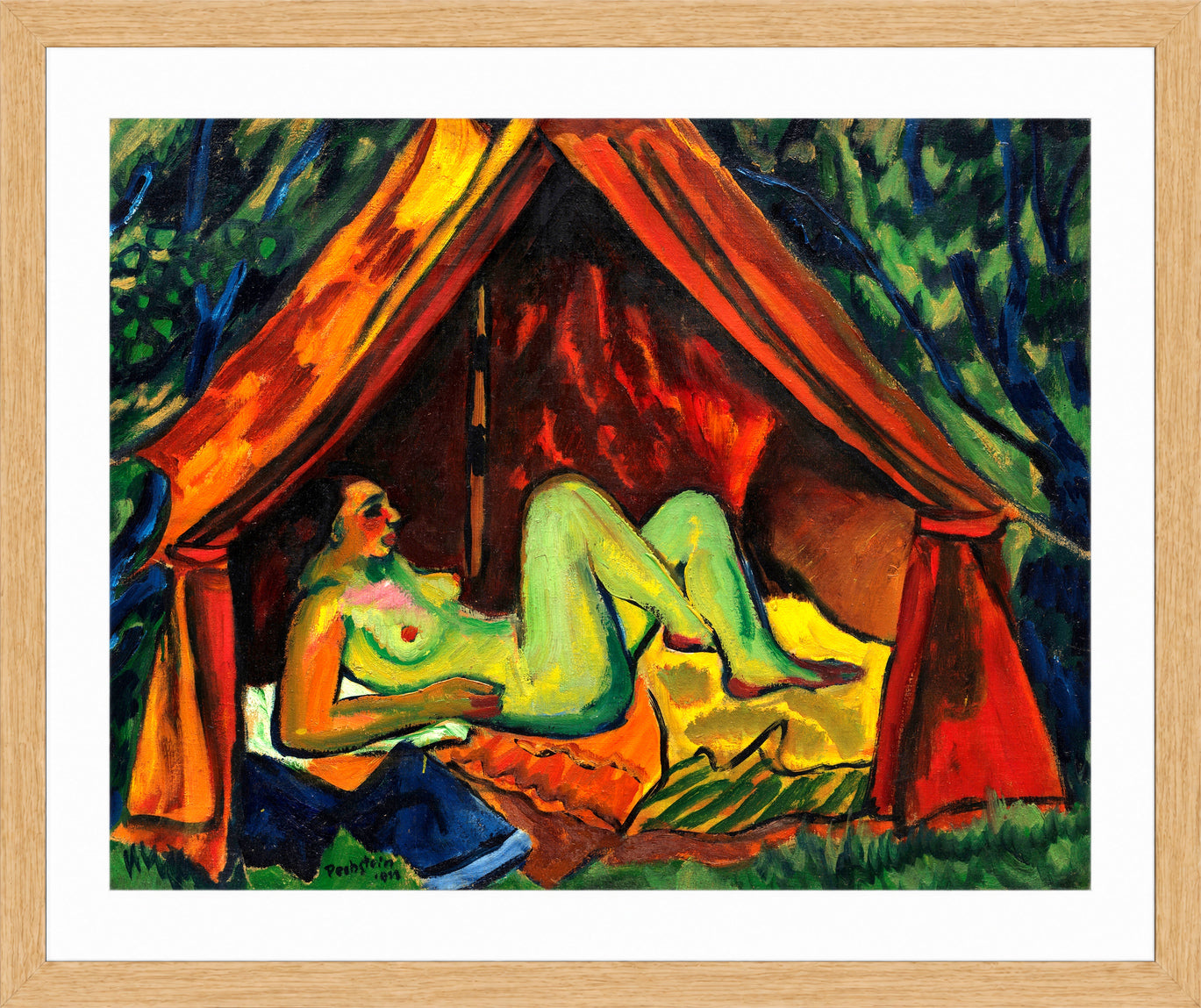
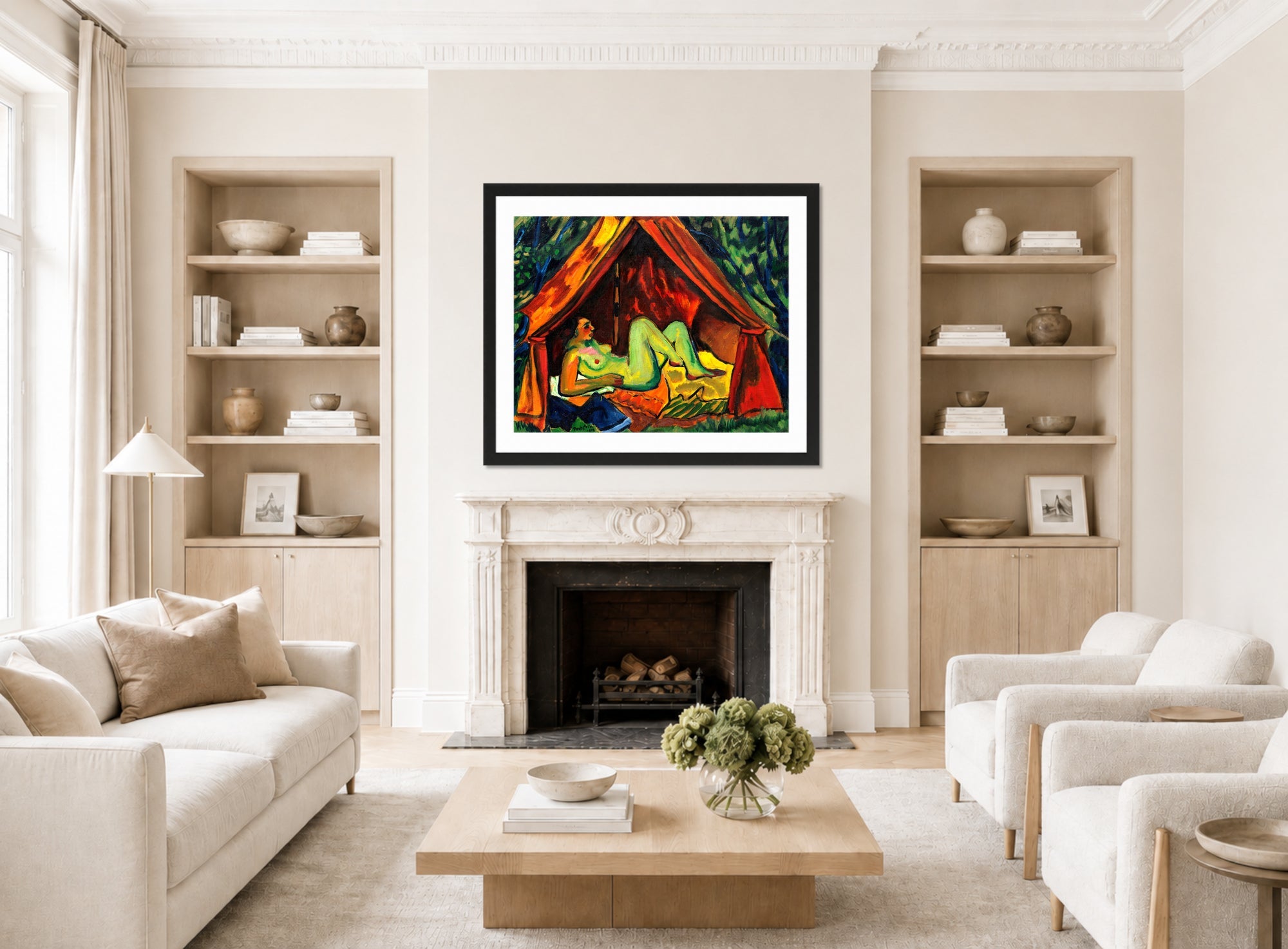
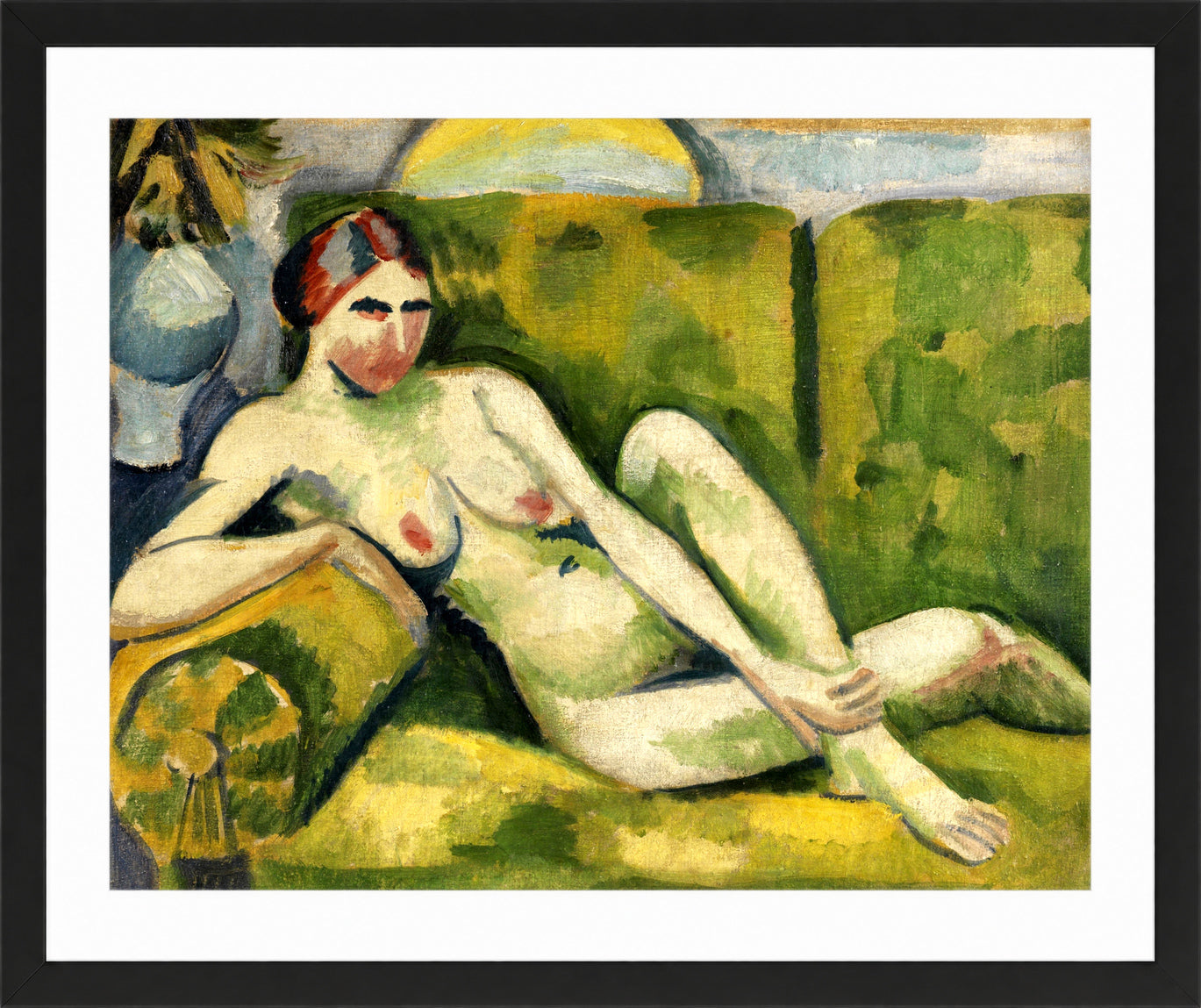
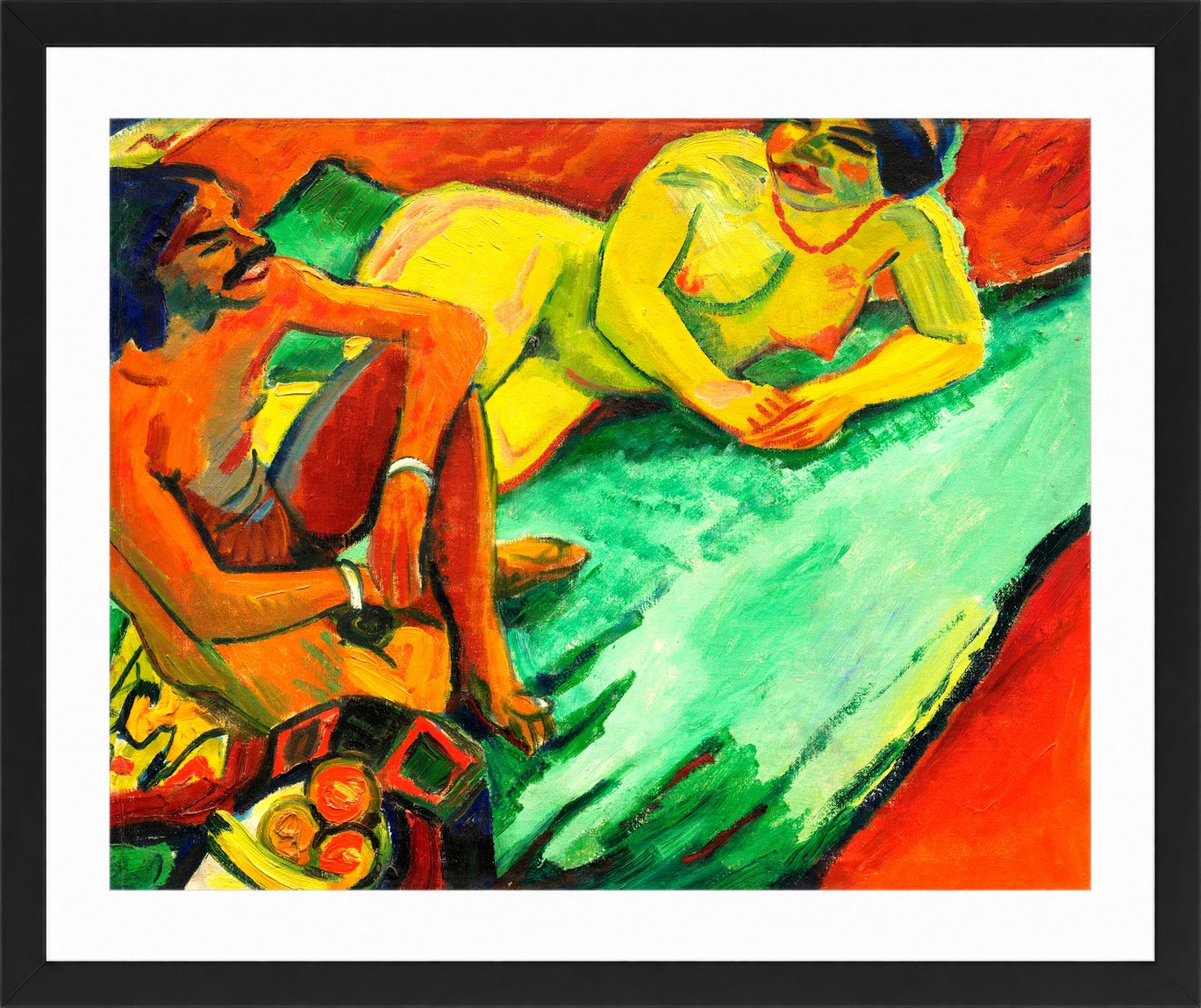
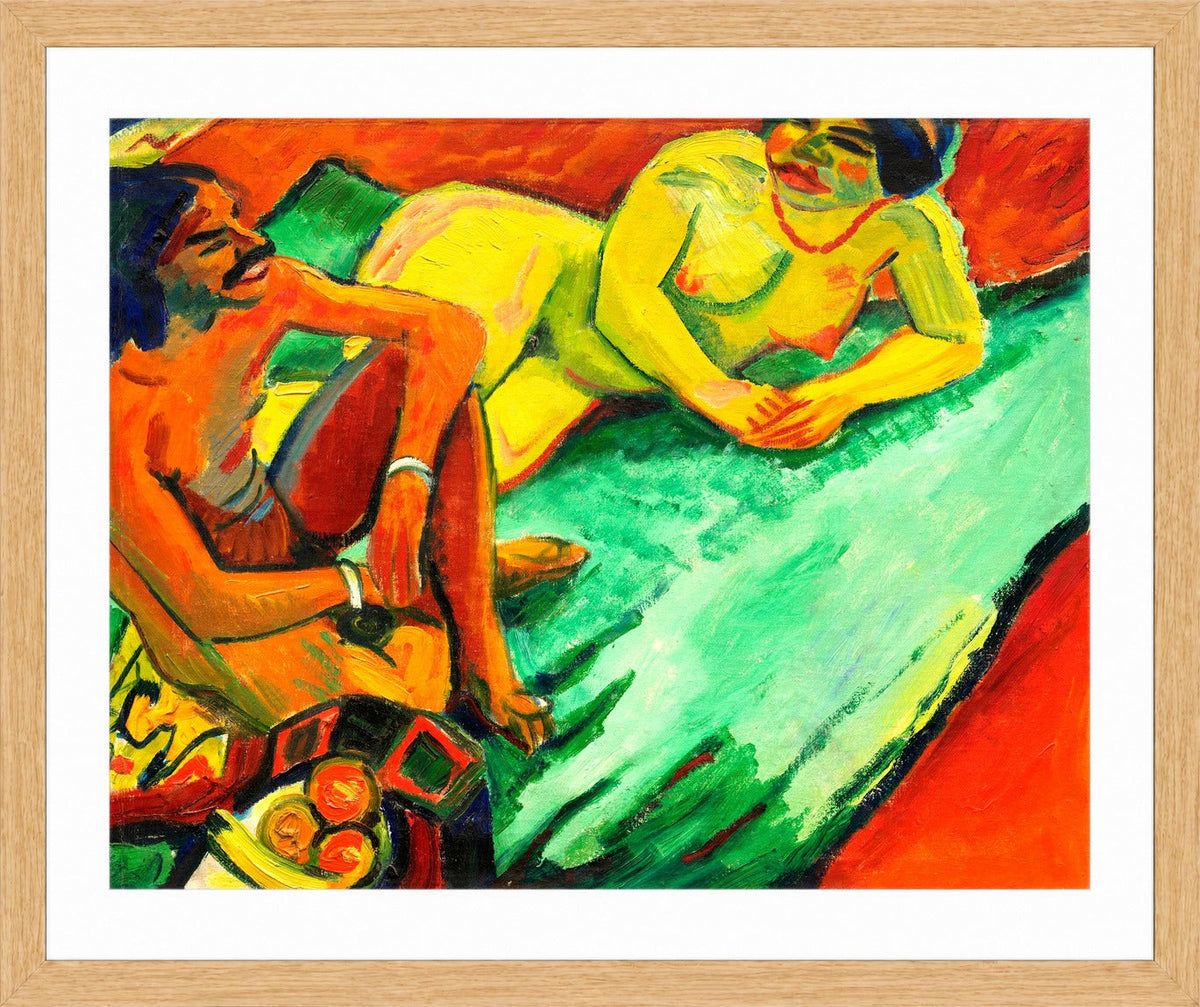
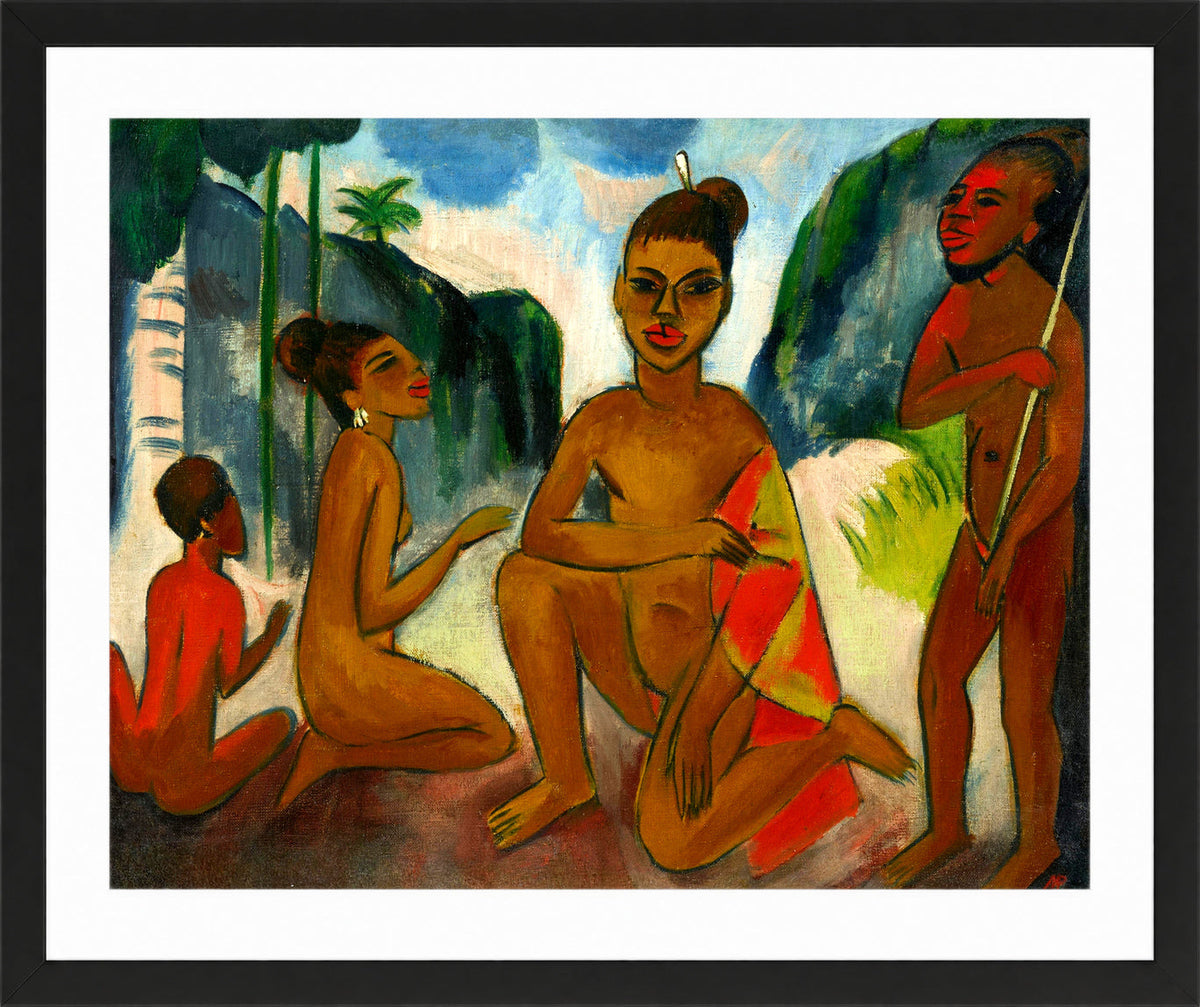
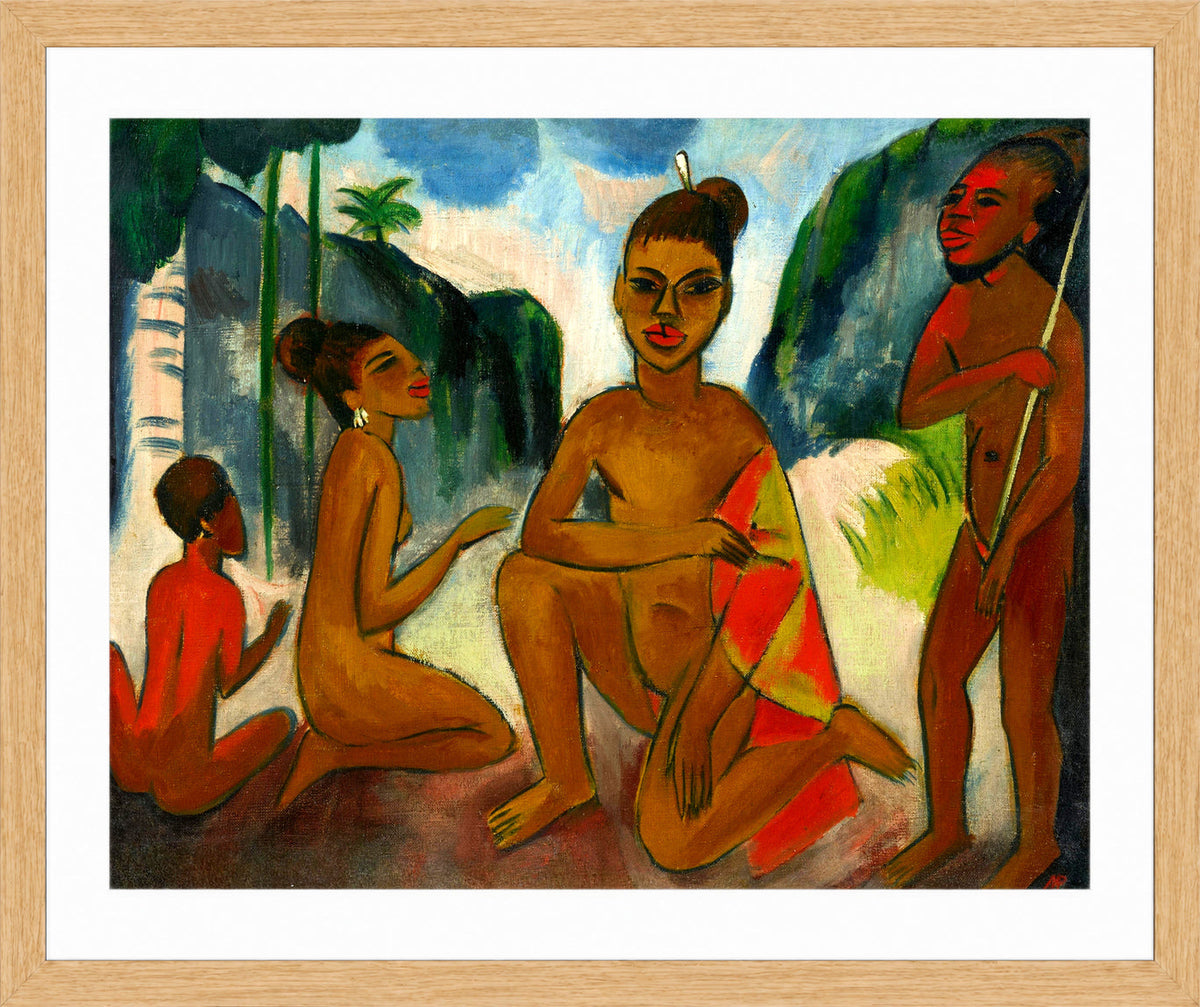
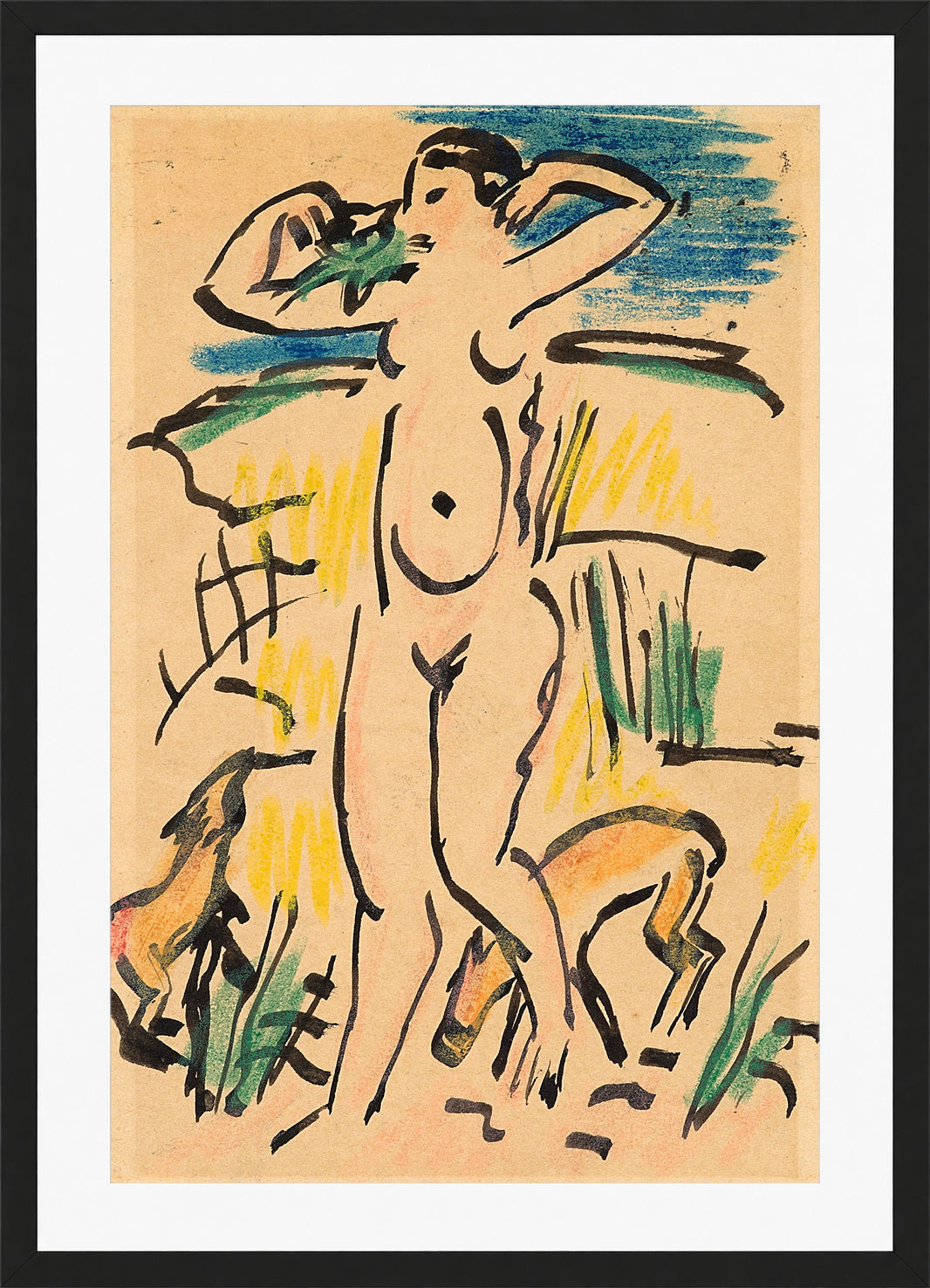
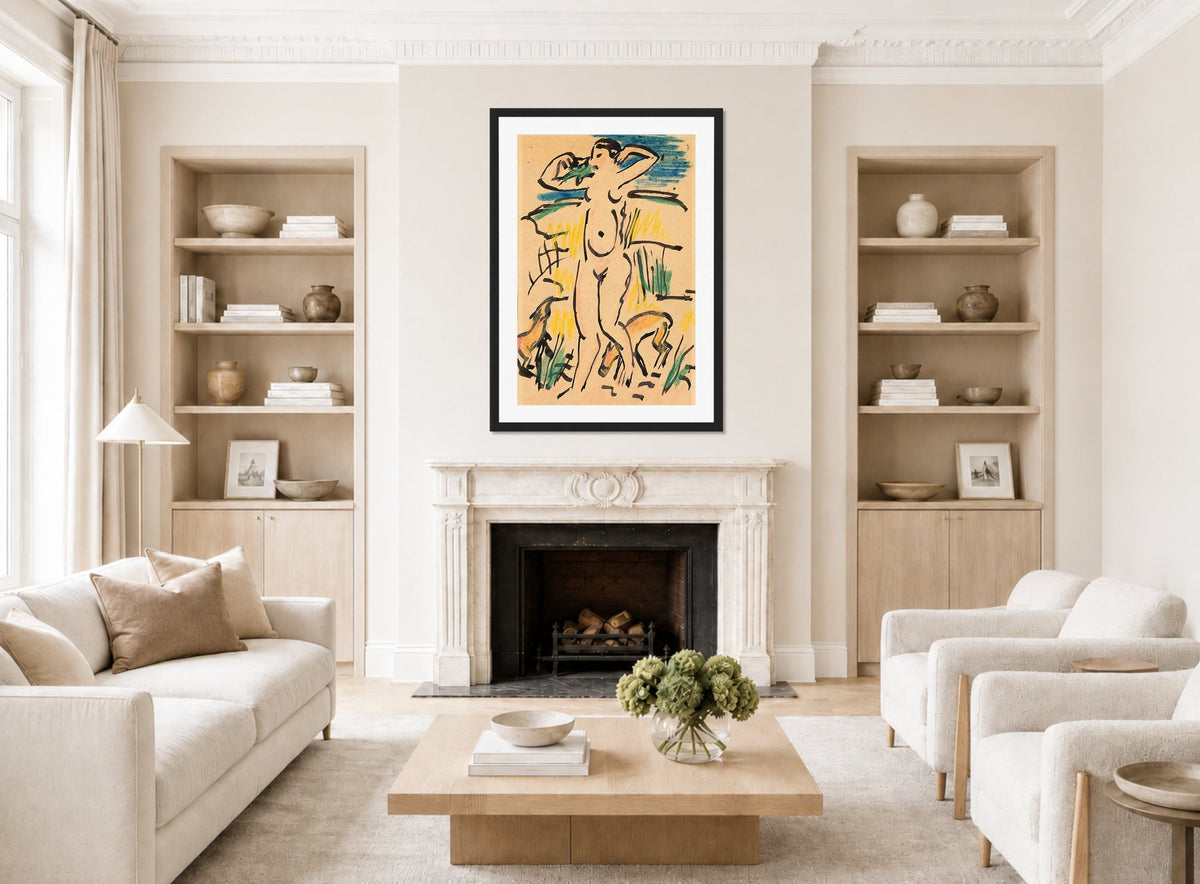
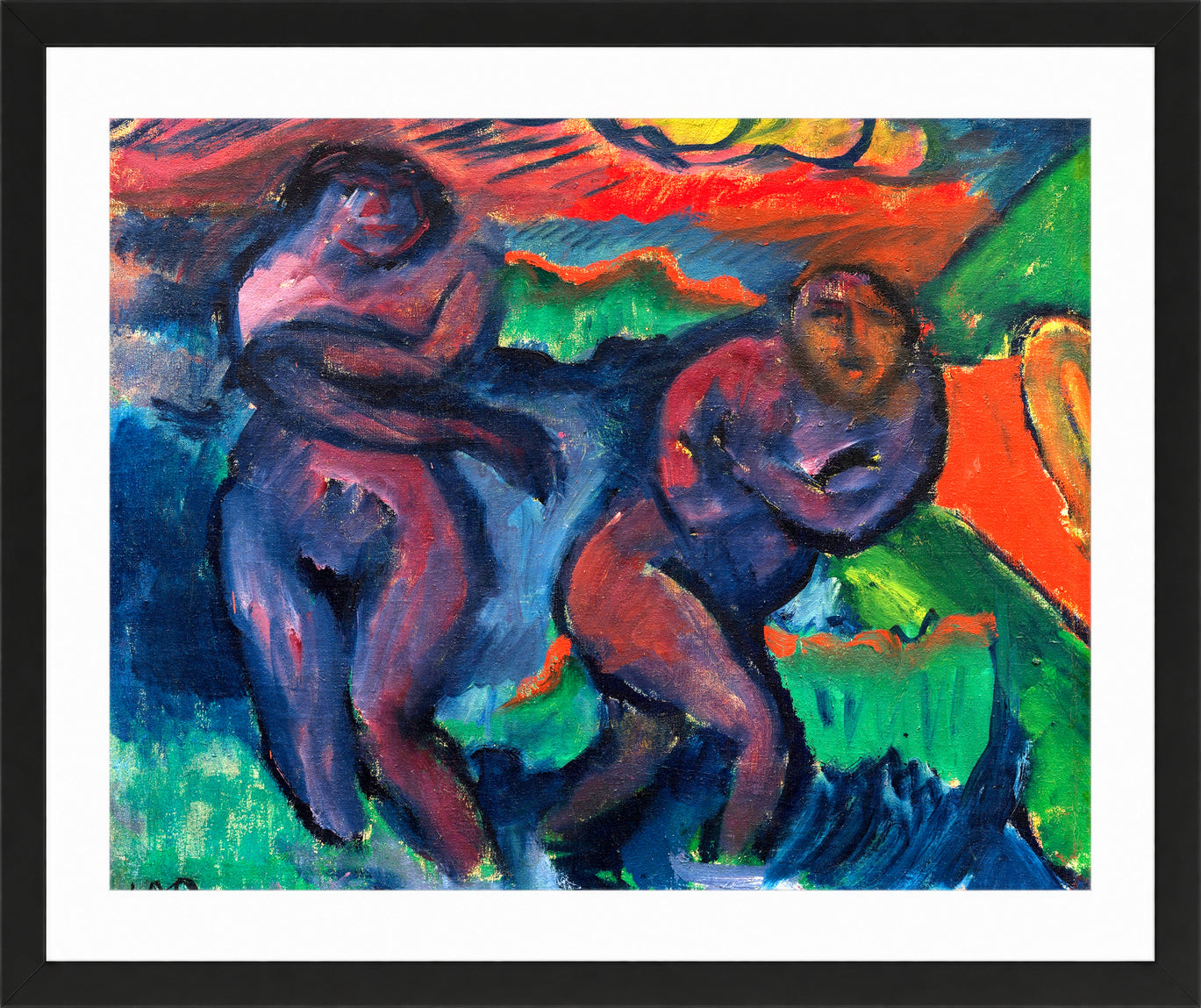
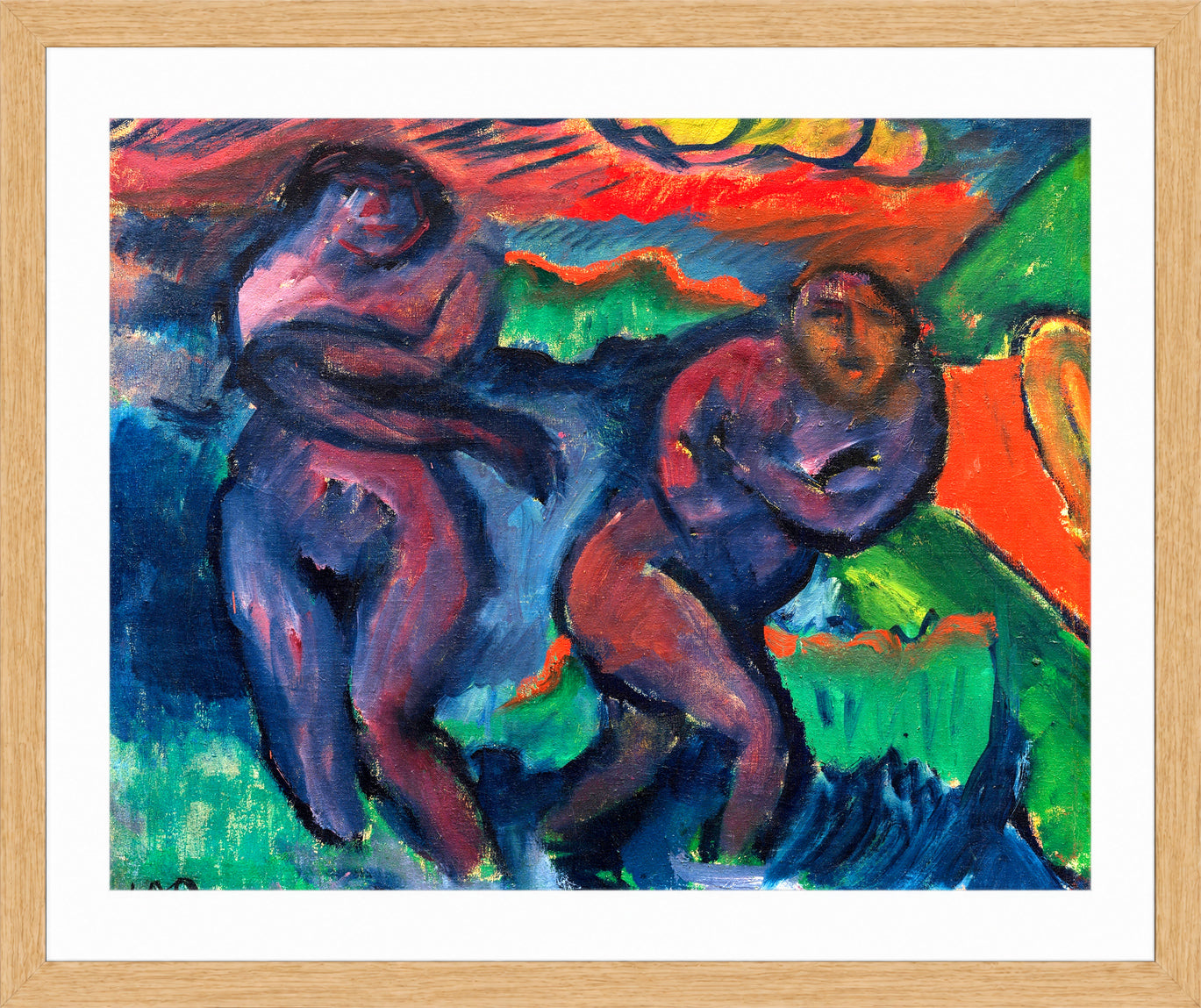
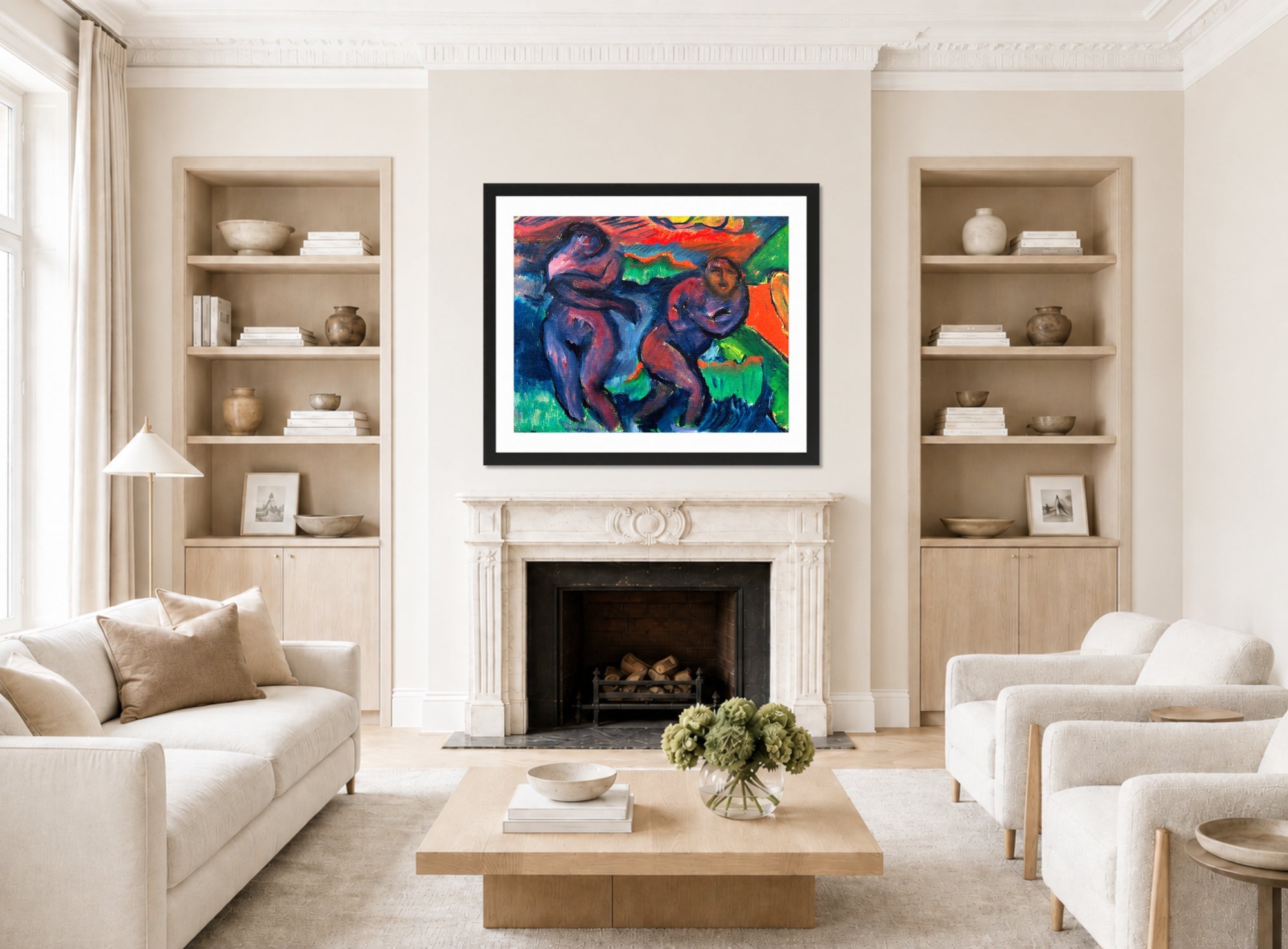
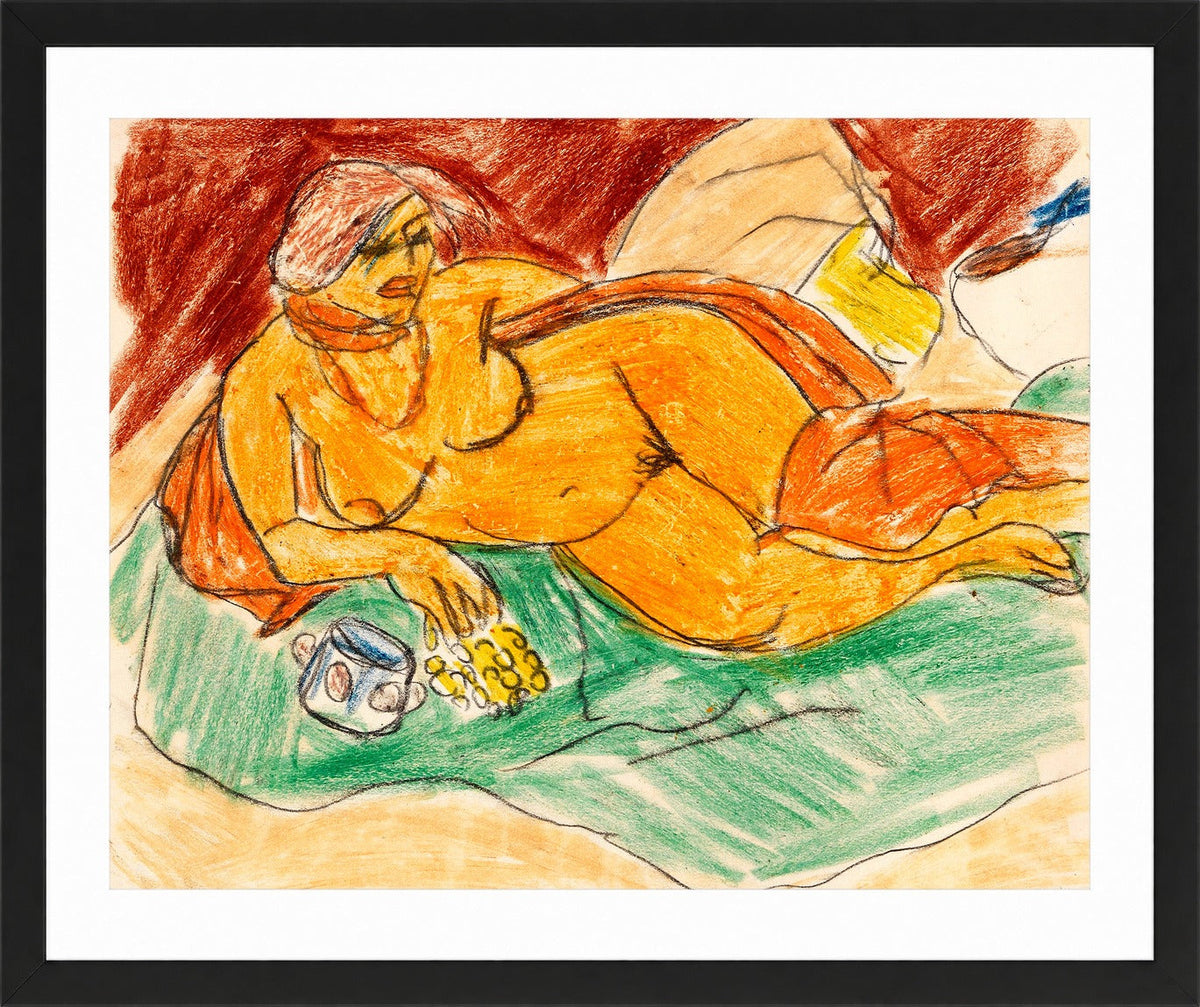
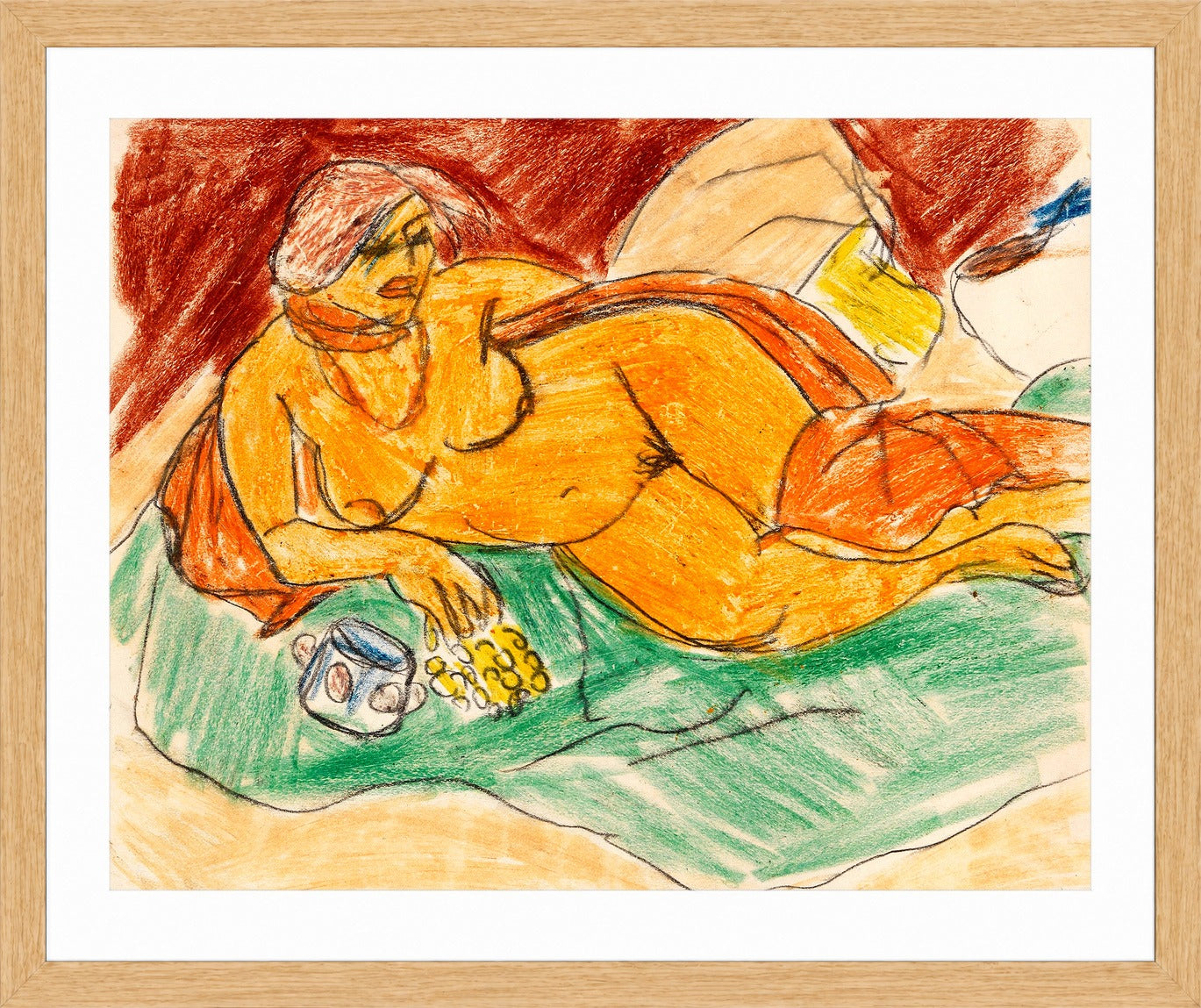
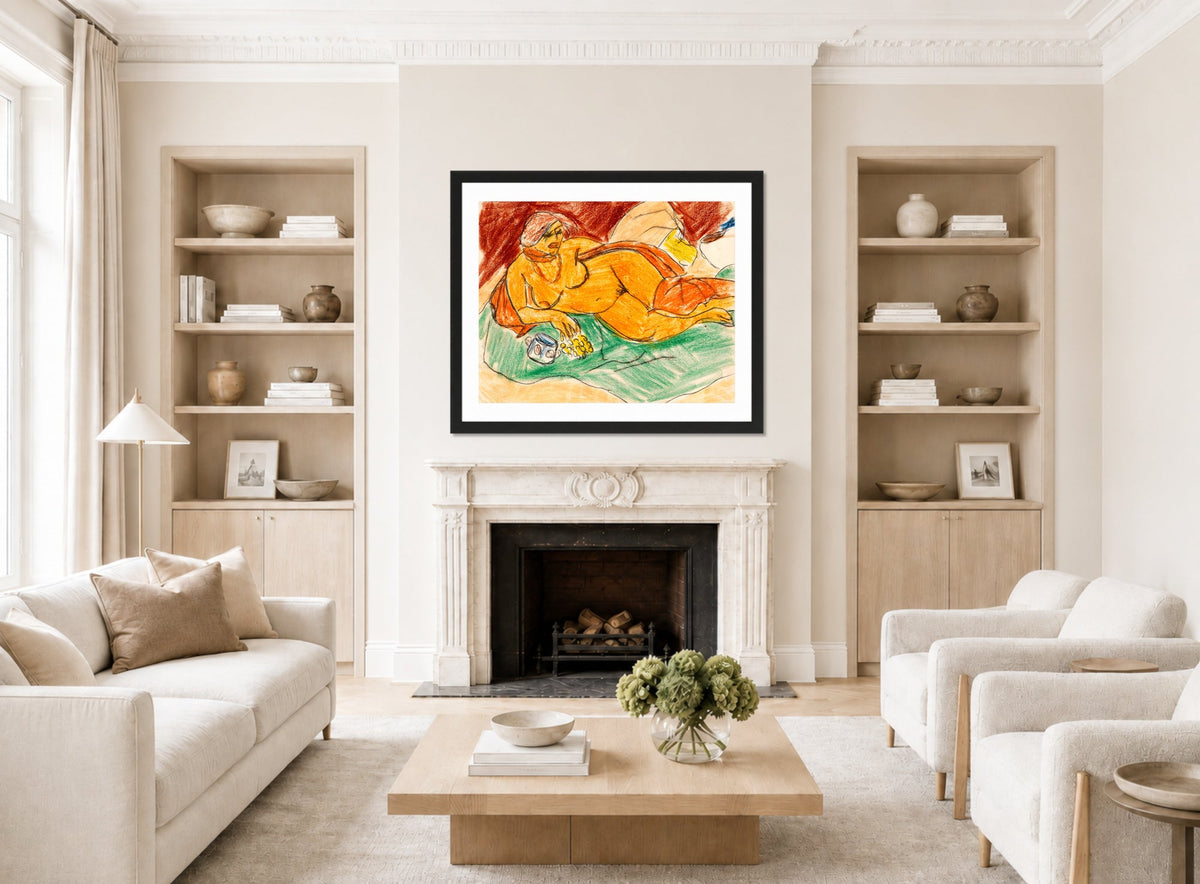
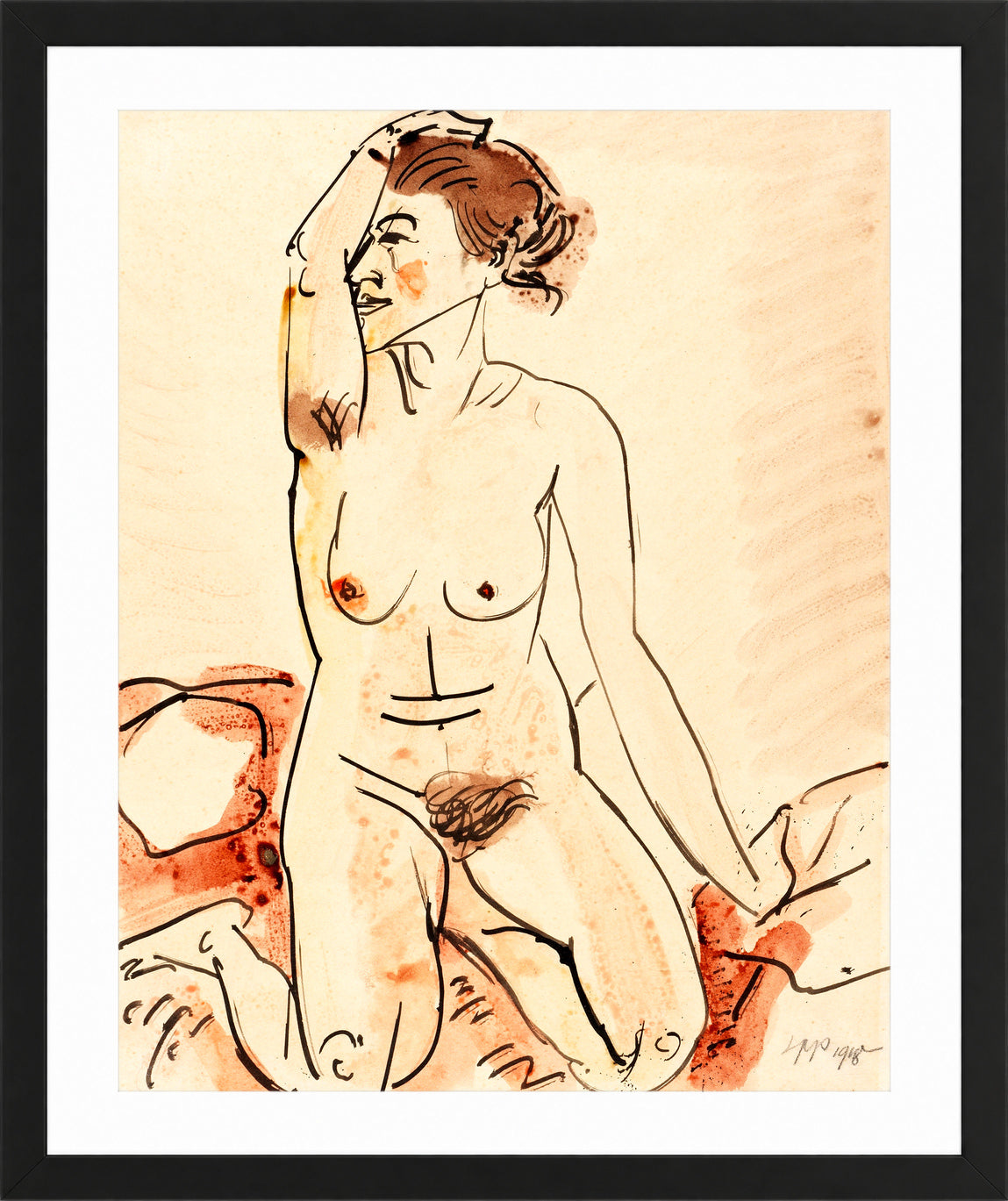
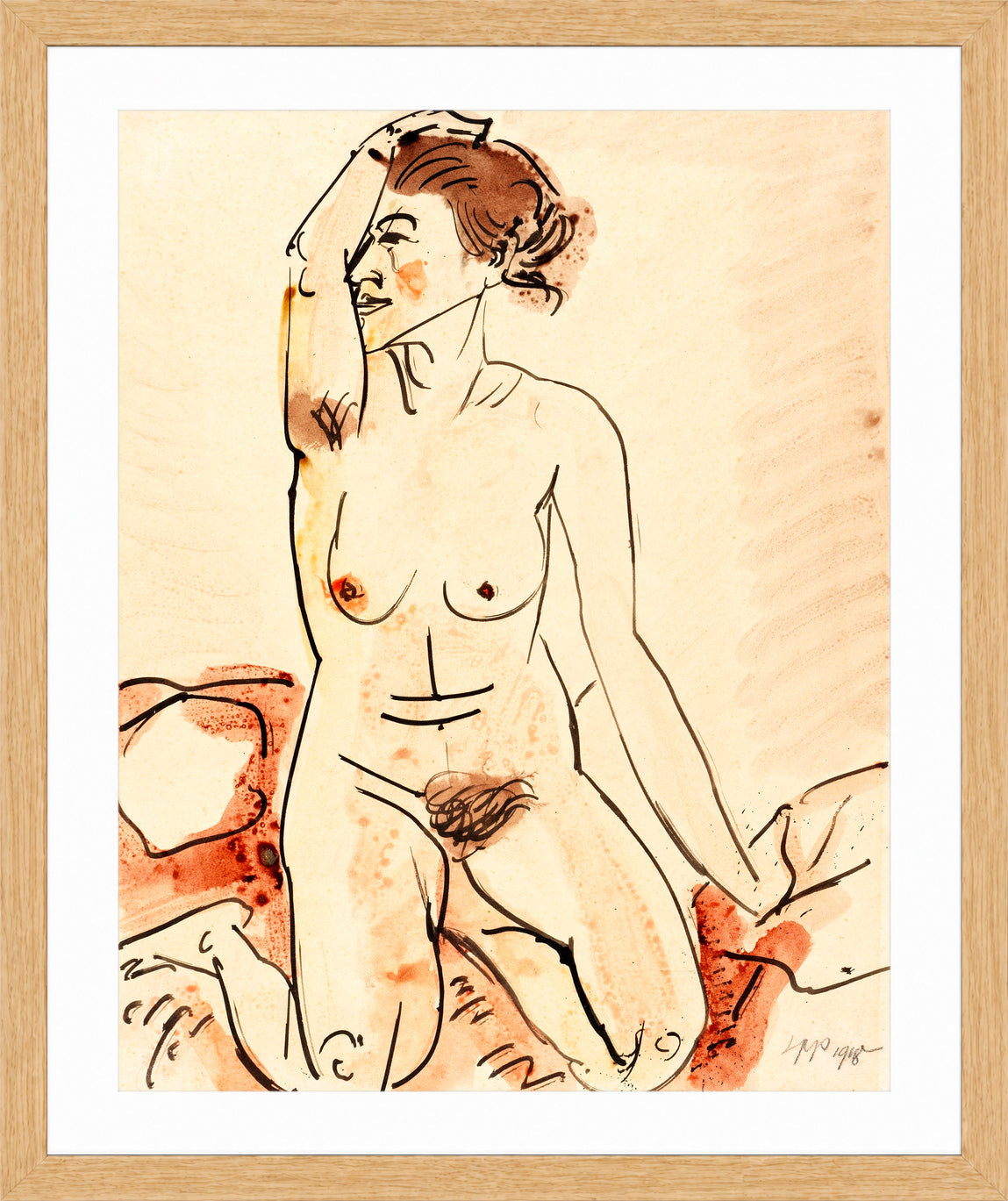
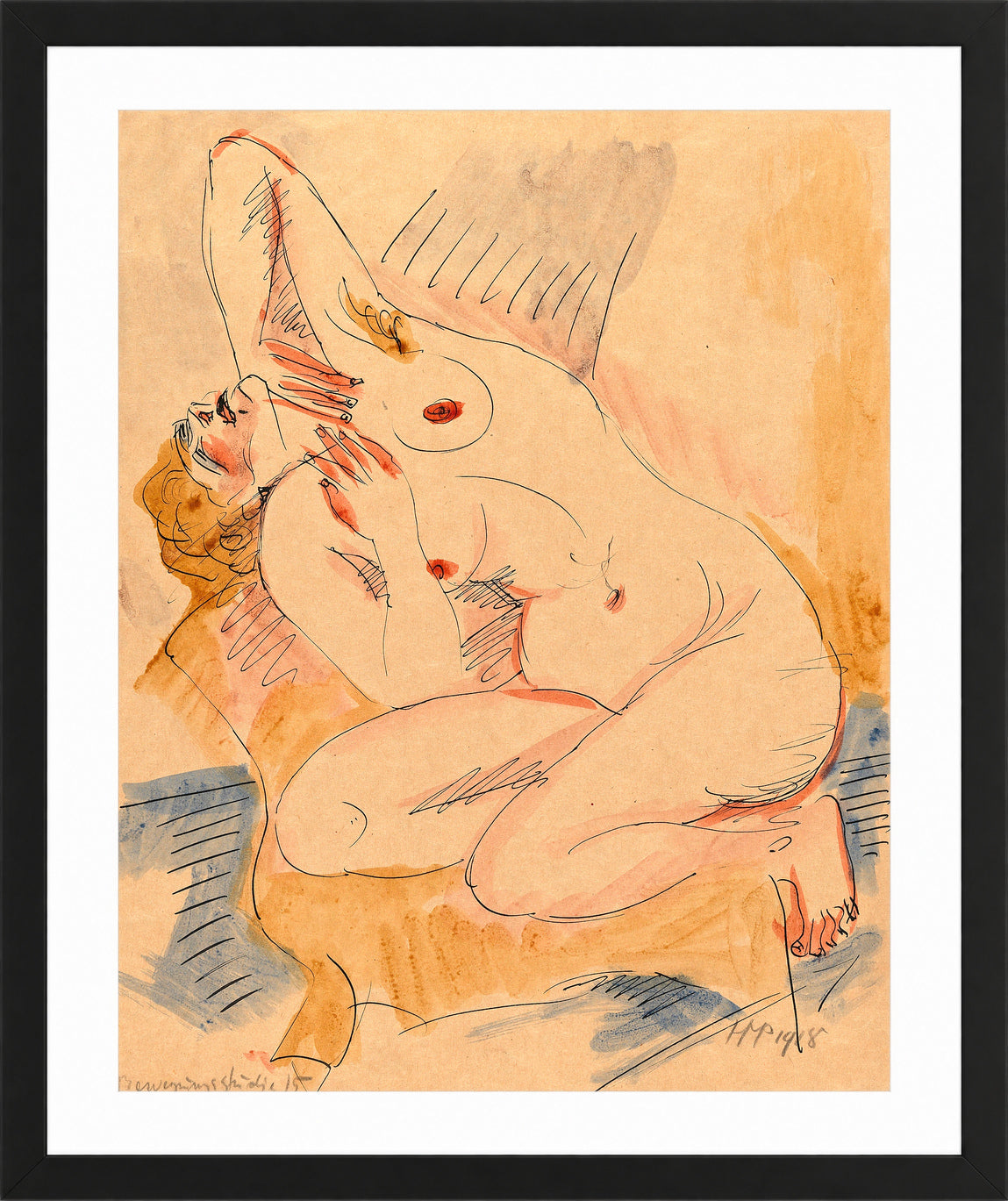
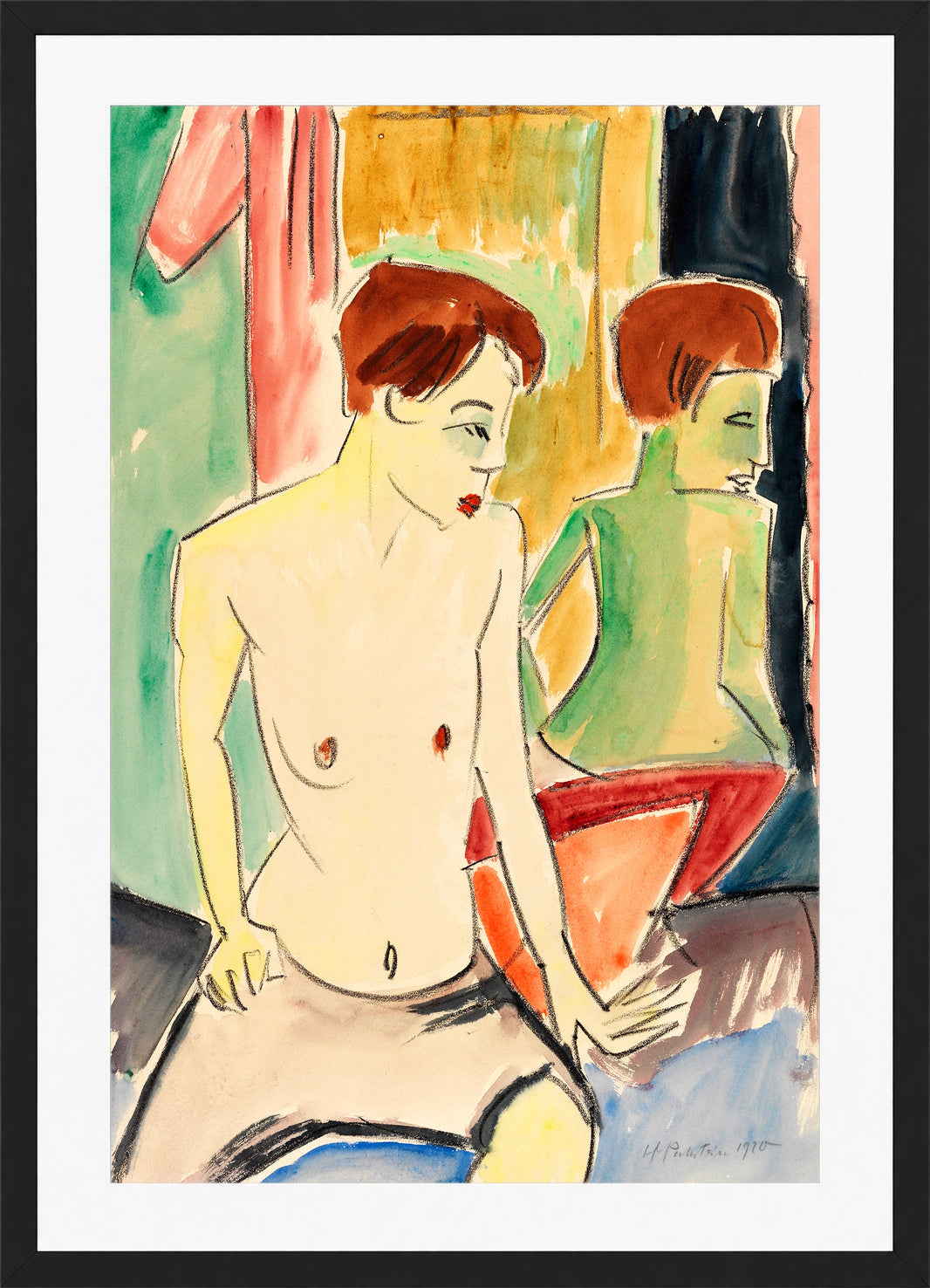
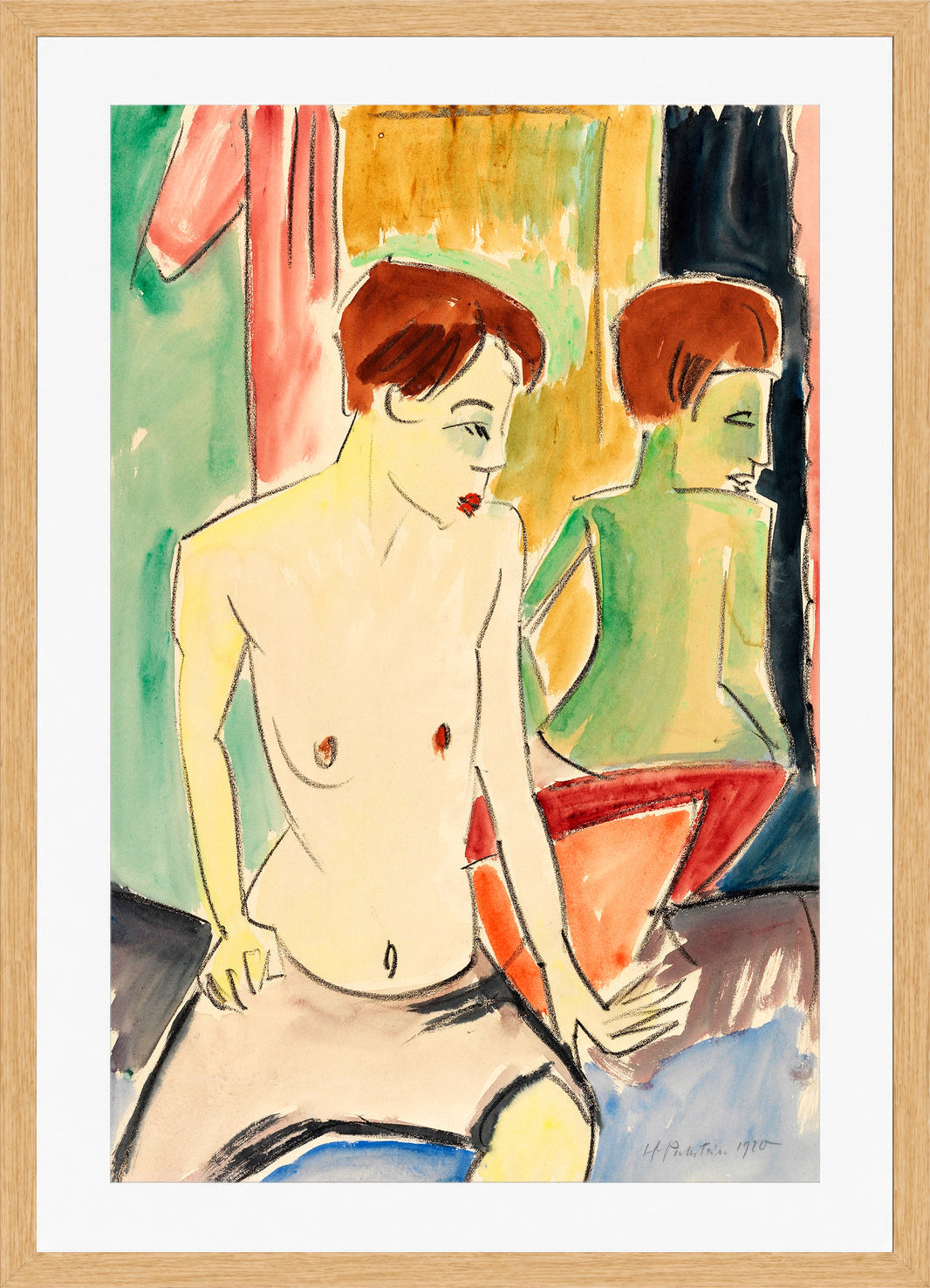
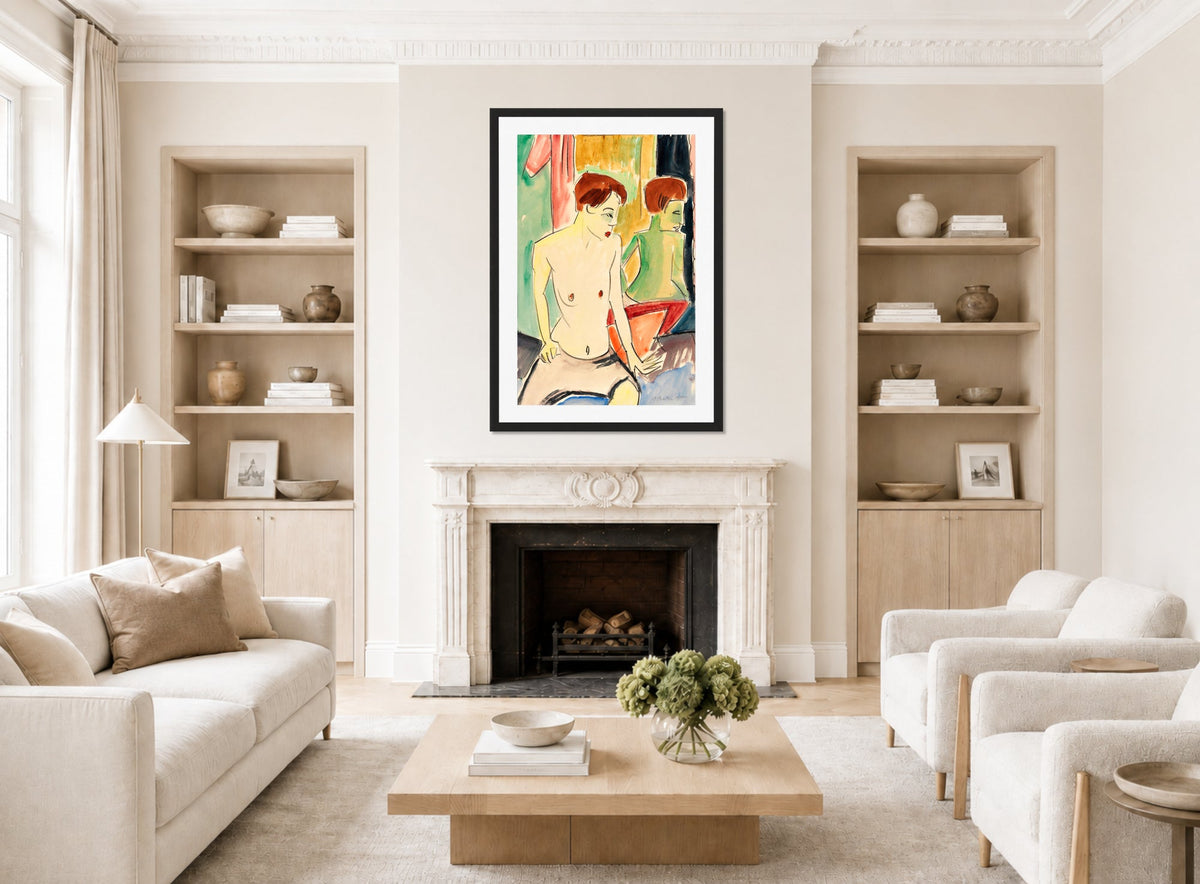
His treatment of the nude differs markedly from the polished academic figure painting of the nineteenth century. Bodies are frequently defined by strong contours, anatomy is simplified and skin tones can shift towards intense pink, orange, red or ochre.
Rather than attempting idealised perfection, Pechstein sought a more immediate and expressive representation of the figure.
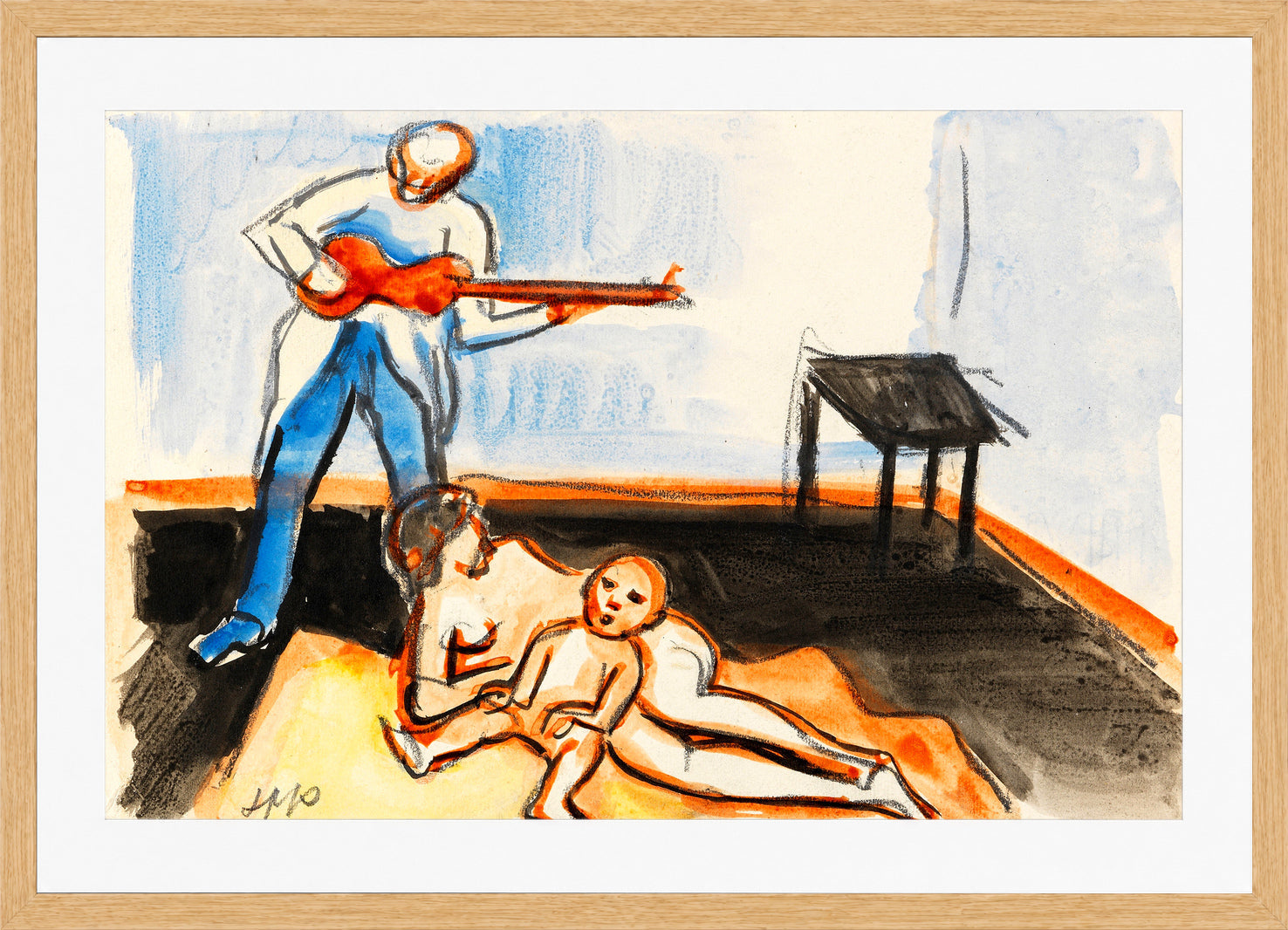
This collection brings together Max Pechstein nude and bather prints from across his career. For portraits, dancers, musicians, families and other clothed figures, browse Max Pechstein Figurative & Portrait Prints.
Explore the complete Hermann Max Pechstein Prints collection for the full range of his landscapes, coastal scenes, figures and graphic works.
Bathers and the Expressionist Figure
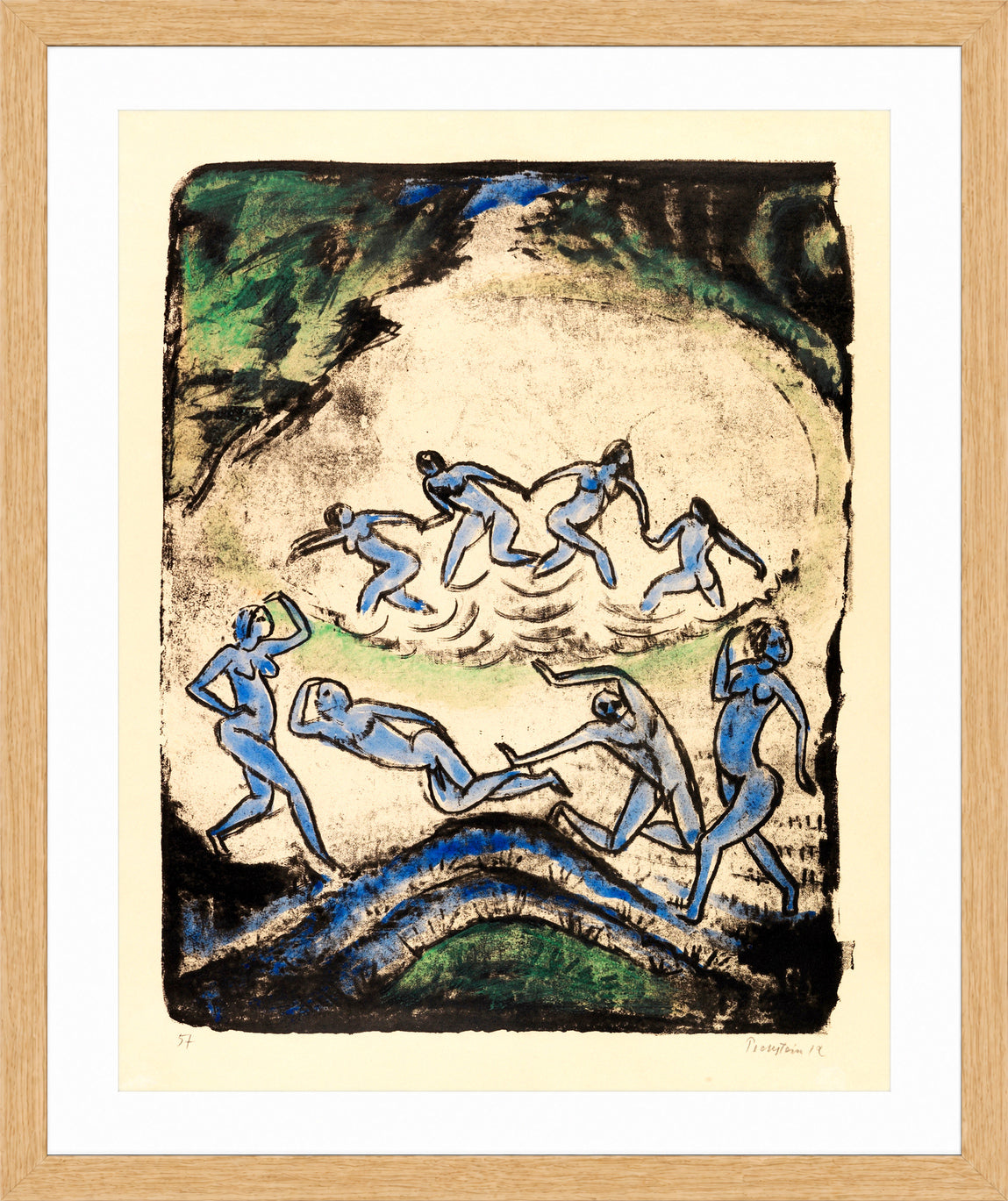
Bathers became an especially important subject for Pechstein and other artists associated with Die Brücke.
The group sought alternatives to the controlled procedures of traditional academic art. Working quickly from models and placing figures within natural surroundings offered a way to explore the body with greater spontaneity.
Beaches, lakesides and woodland pools therefore appear repeatedly as settings for Pechstein's figures.
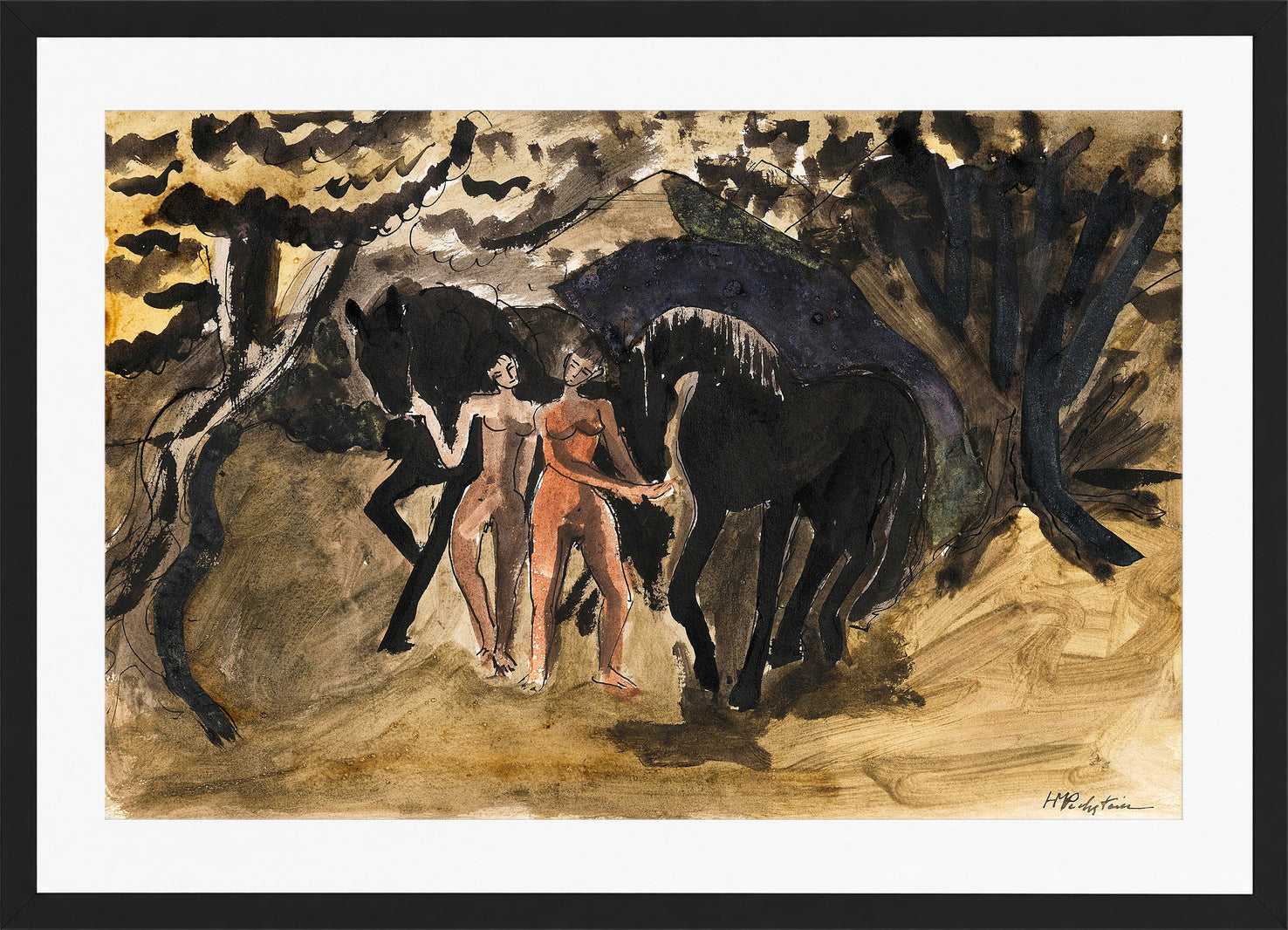
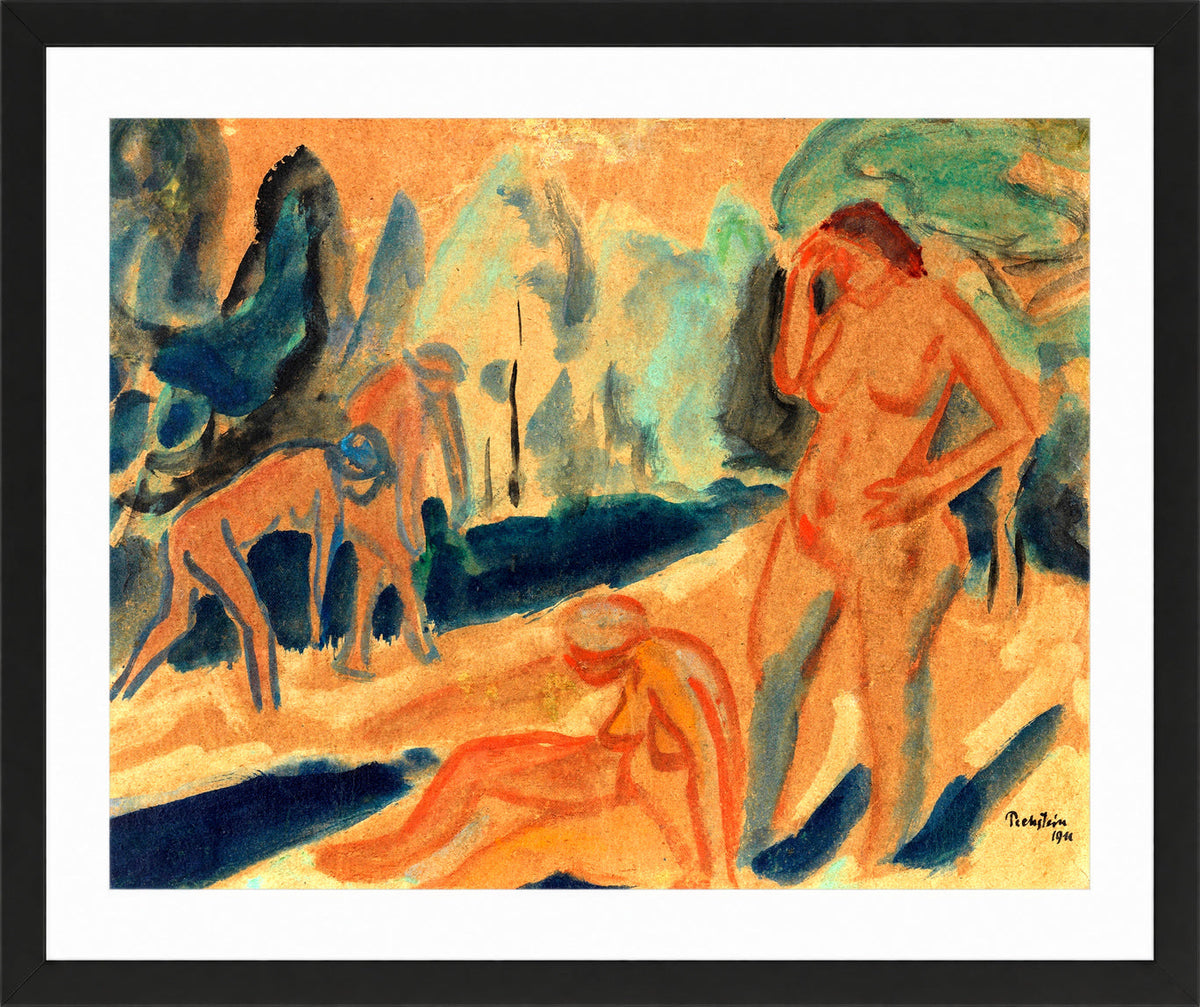
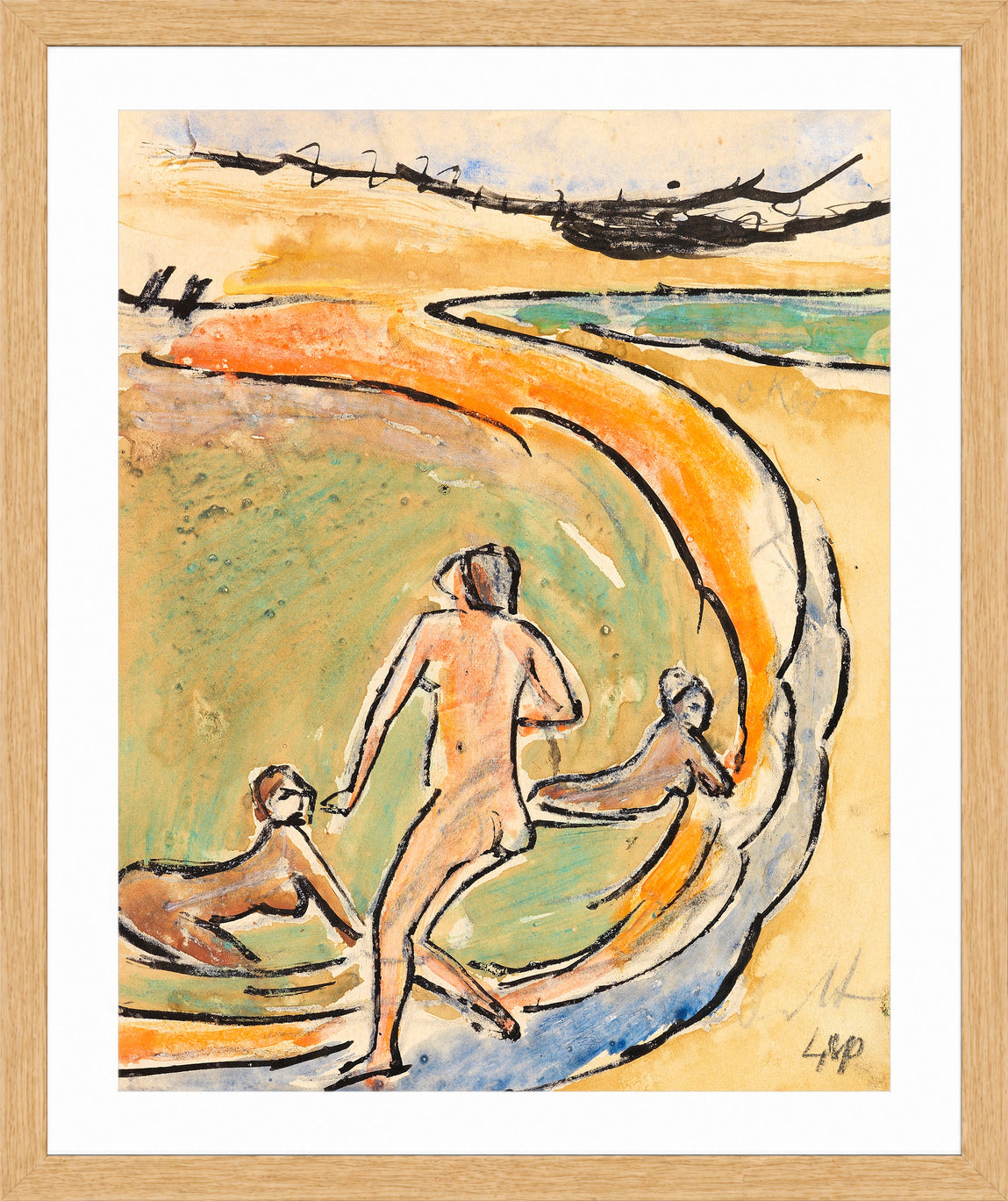
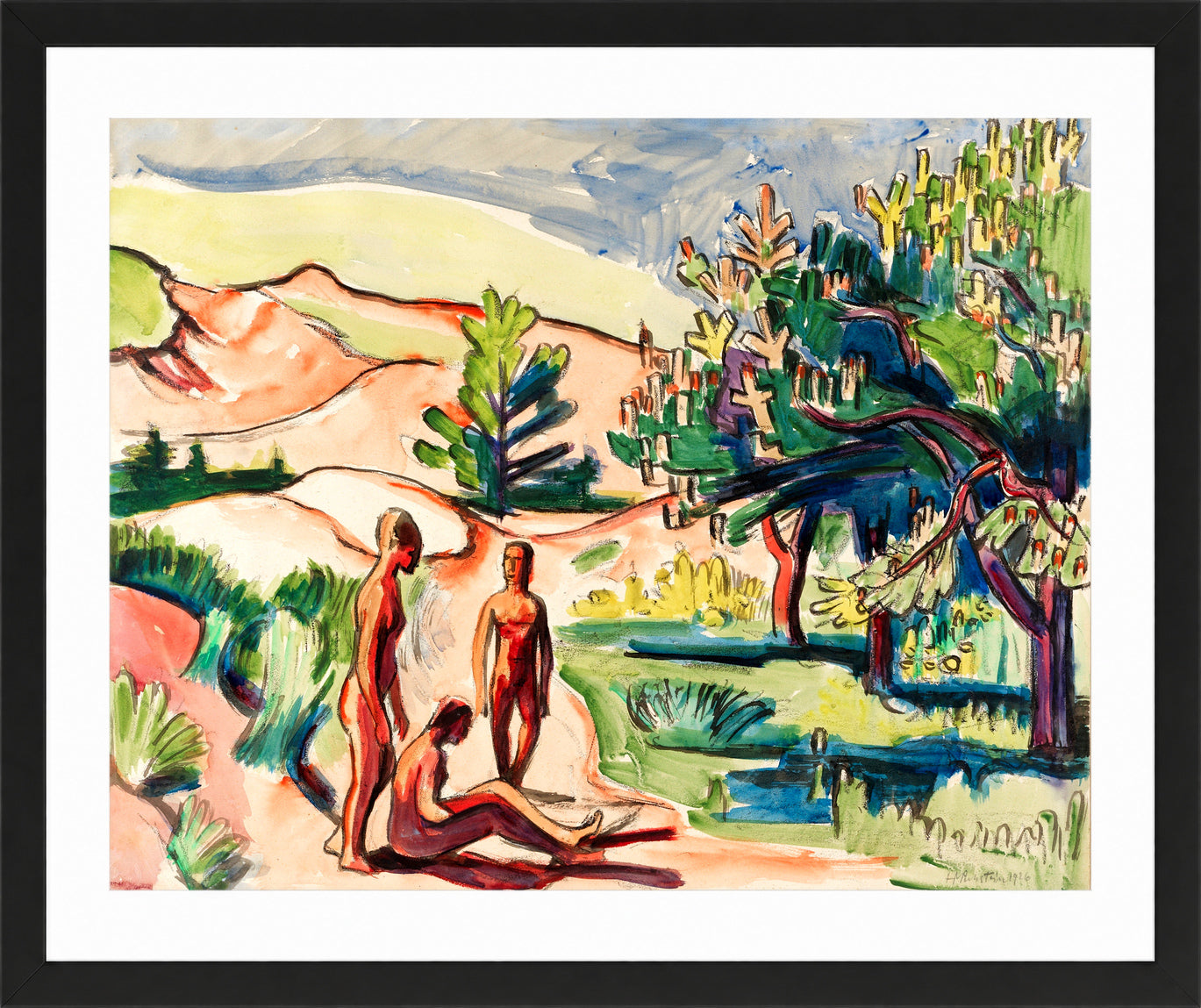
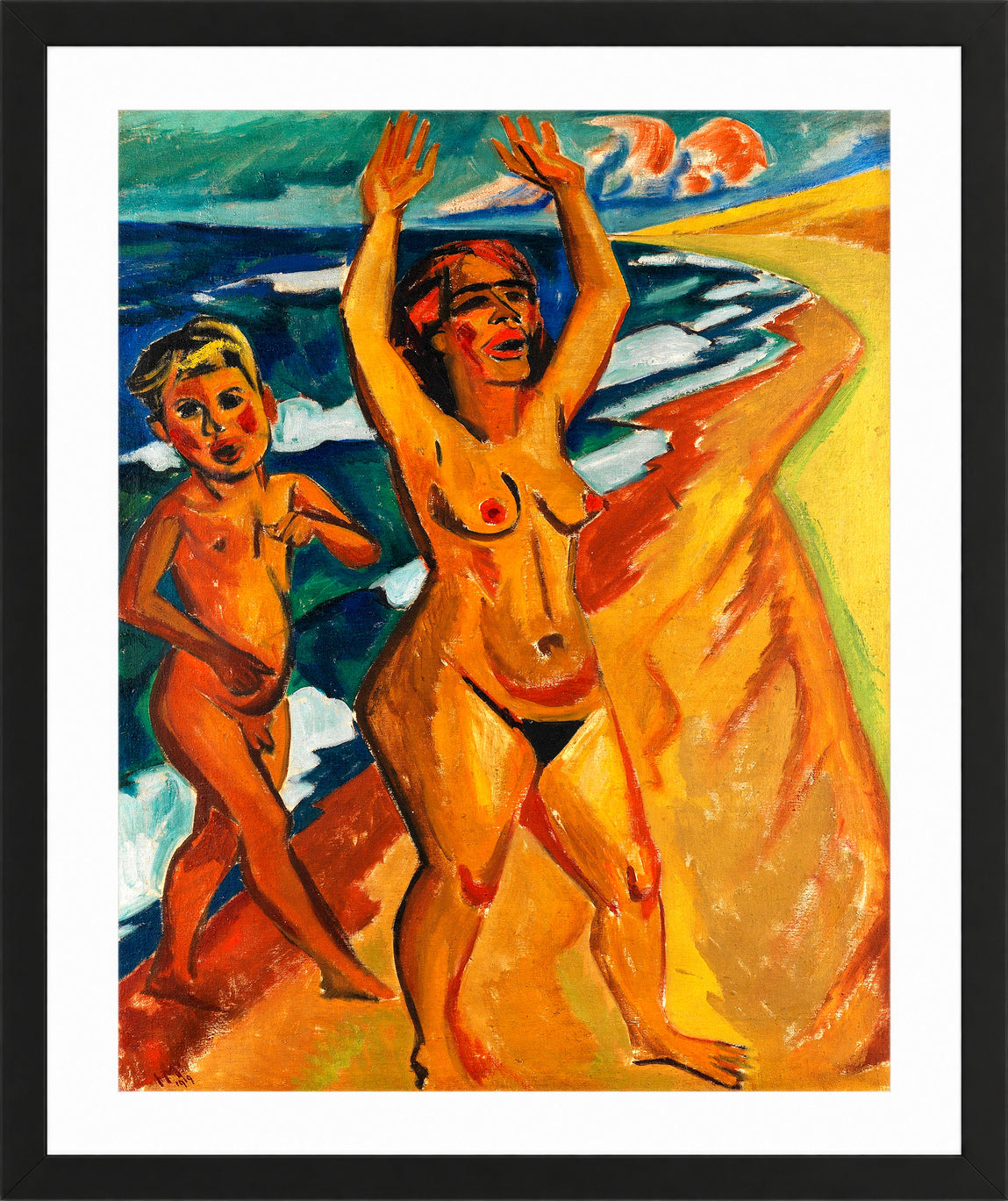
In these works the human body is often integrated closely with the surrounding landscape. A curved back may repeat the line of a shoreline. Arms and legs can echo the direction of branches, rocks or waves. Areas of skin colour sit directly beside equally intense greens, blues and yellows.
The figure becomes one component within the total structure of the composition rather than an isolated object presented against a neutral background.
For the broader history of Pechstein's Die Brücke years and artistic development, read our complete Max Pechstein biography, paintings and prints guide.
Nude Figure Studies
Not all of Pechstein's nude works take place outdoors.
Individual standing, seated and reclining figures allowed him to concentrate more closely on the structure of the body.
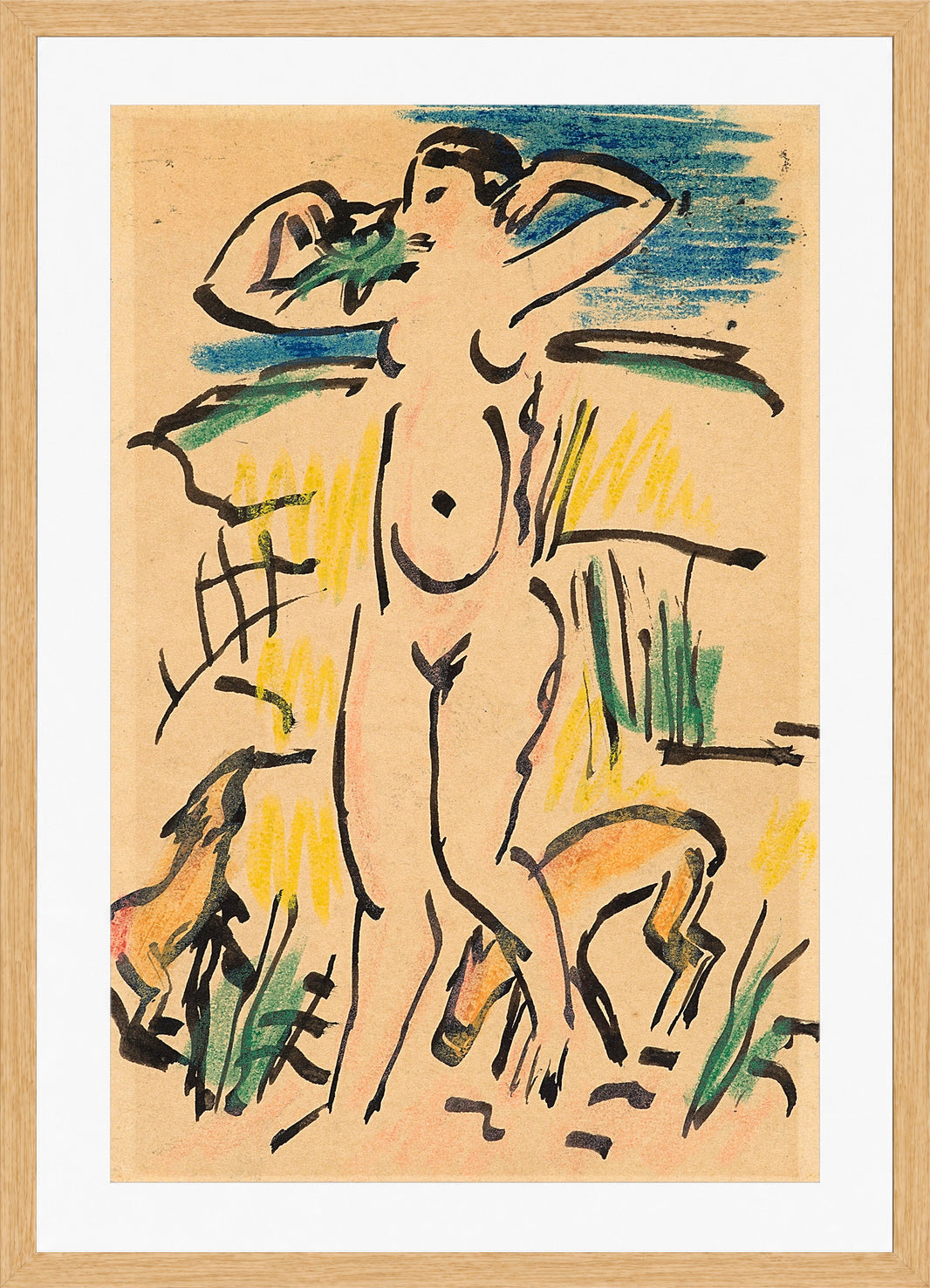
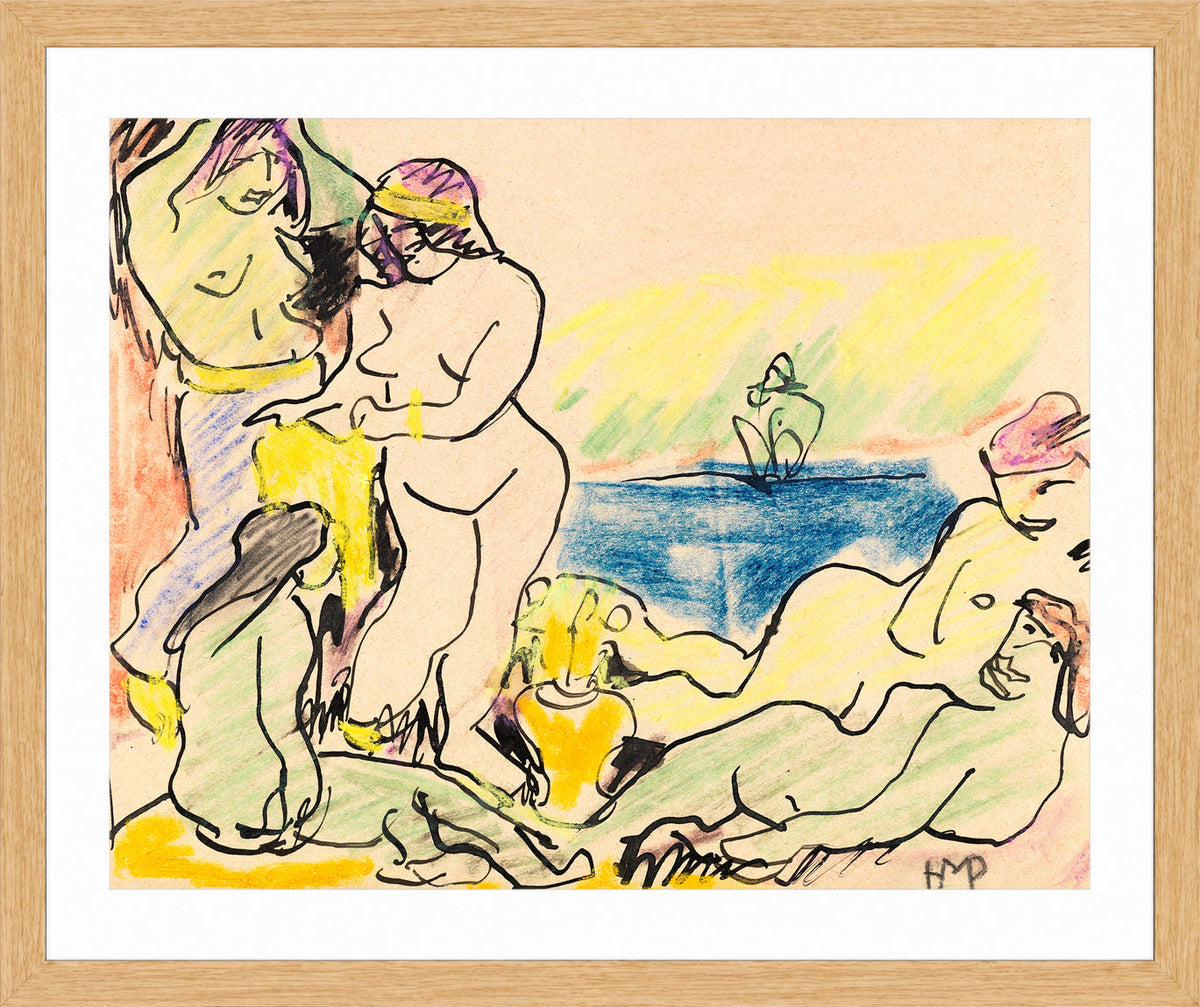
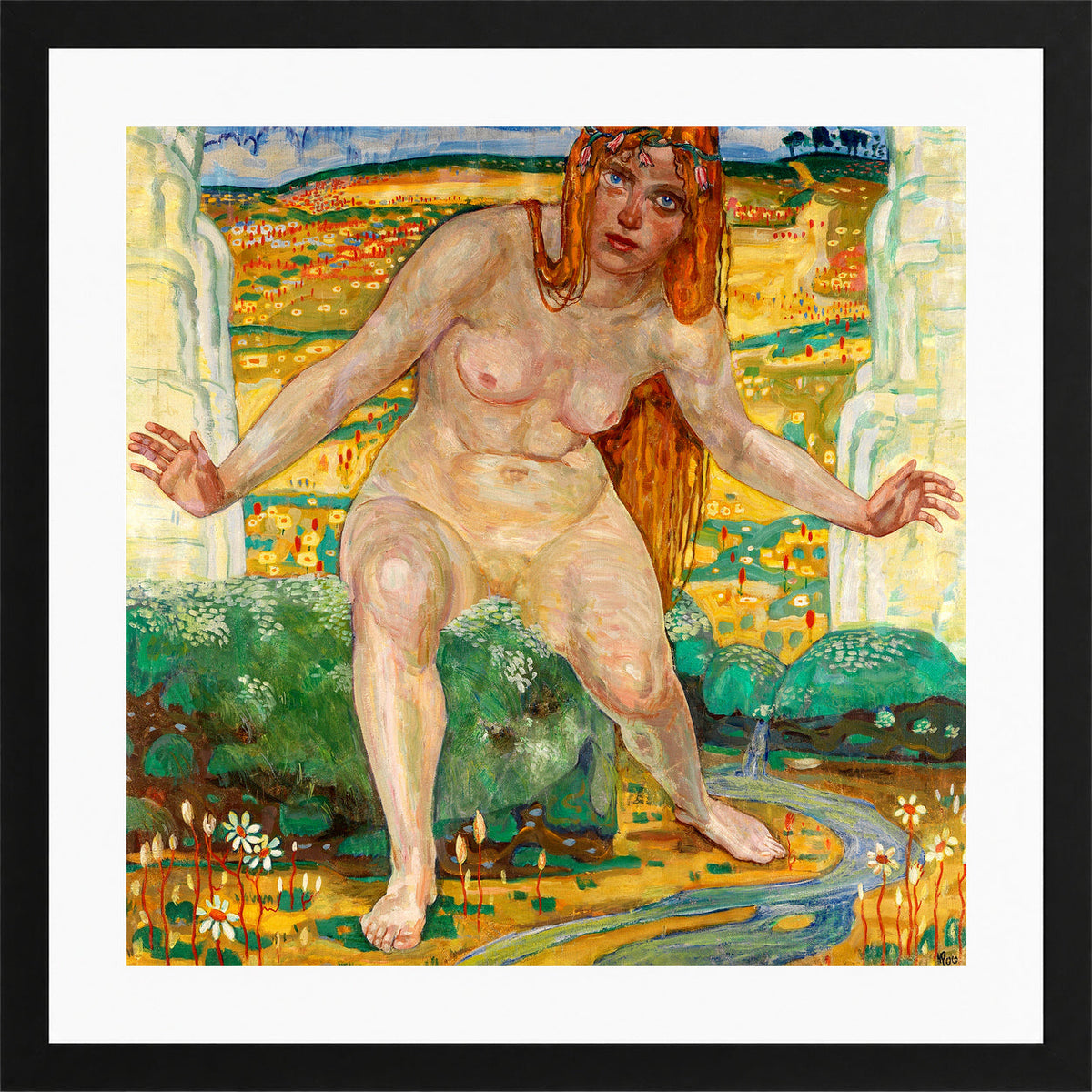
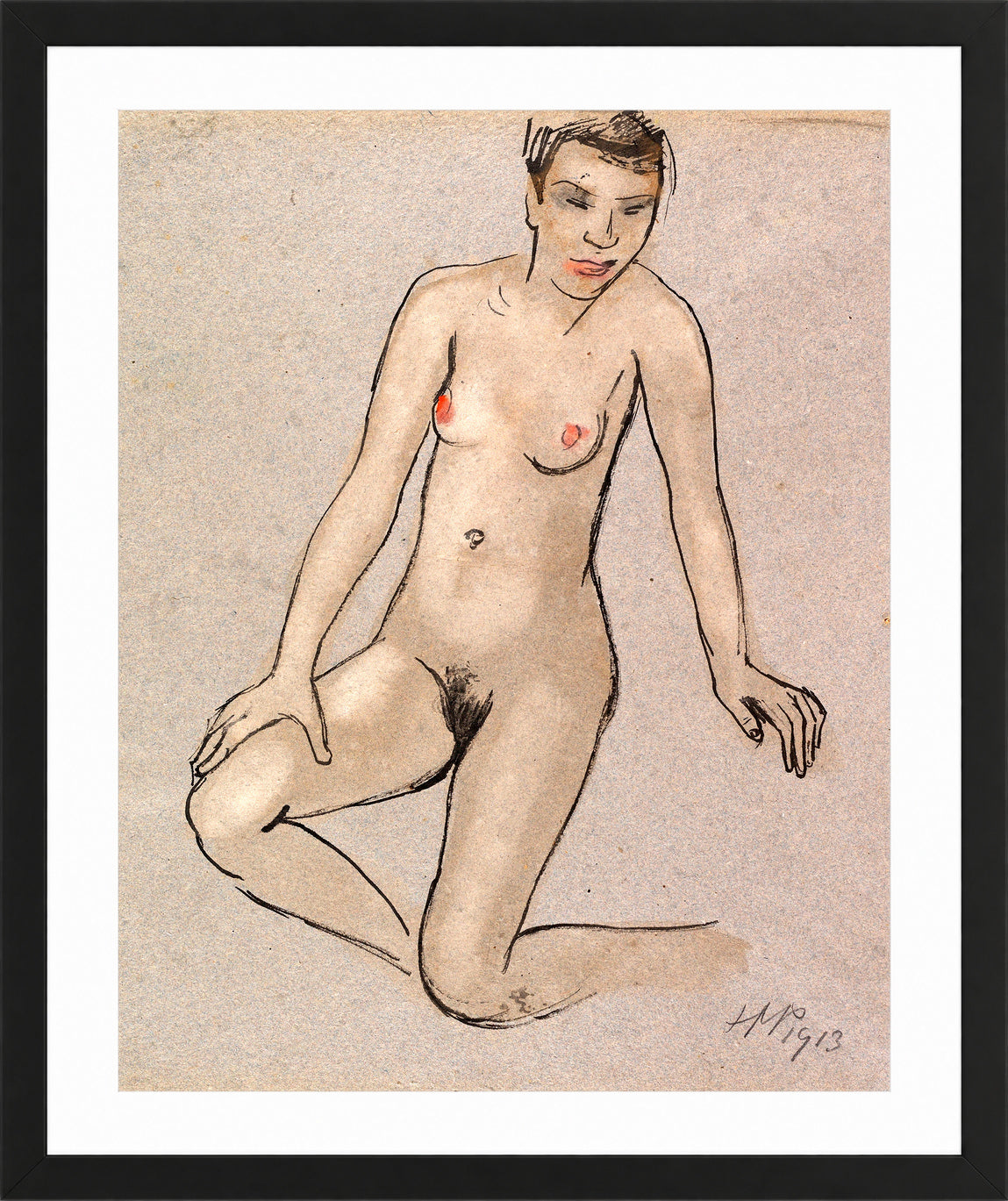
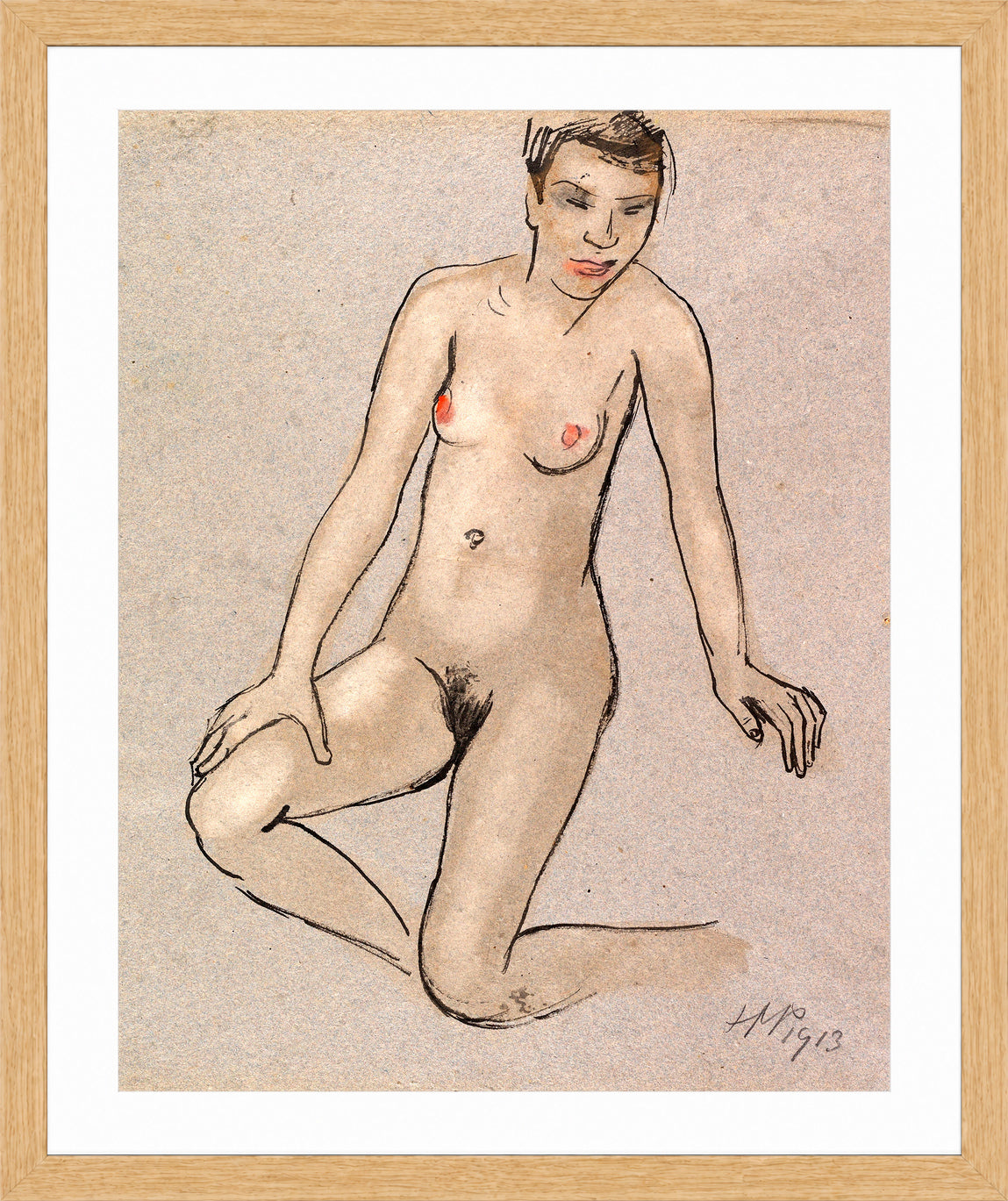
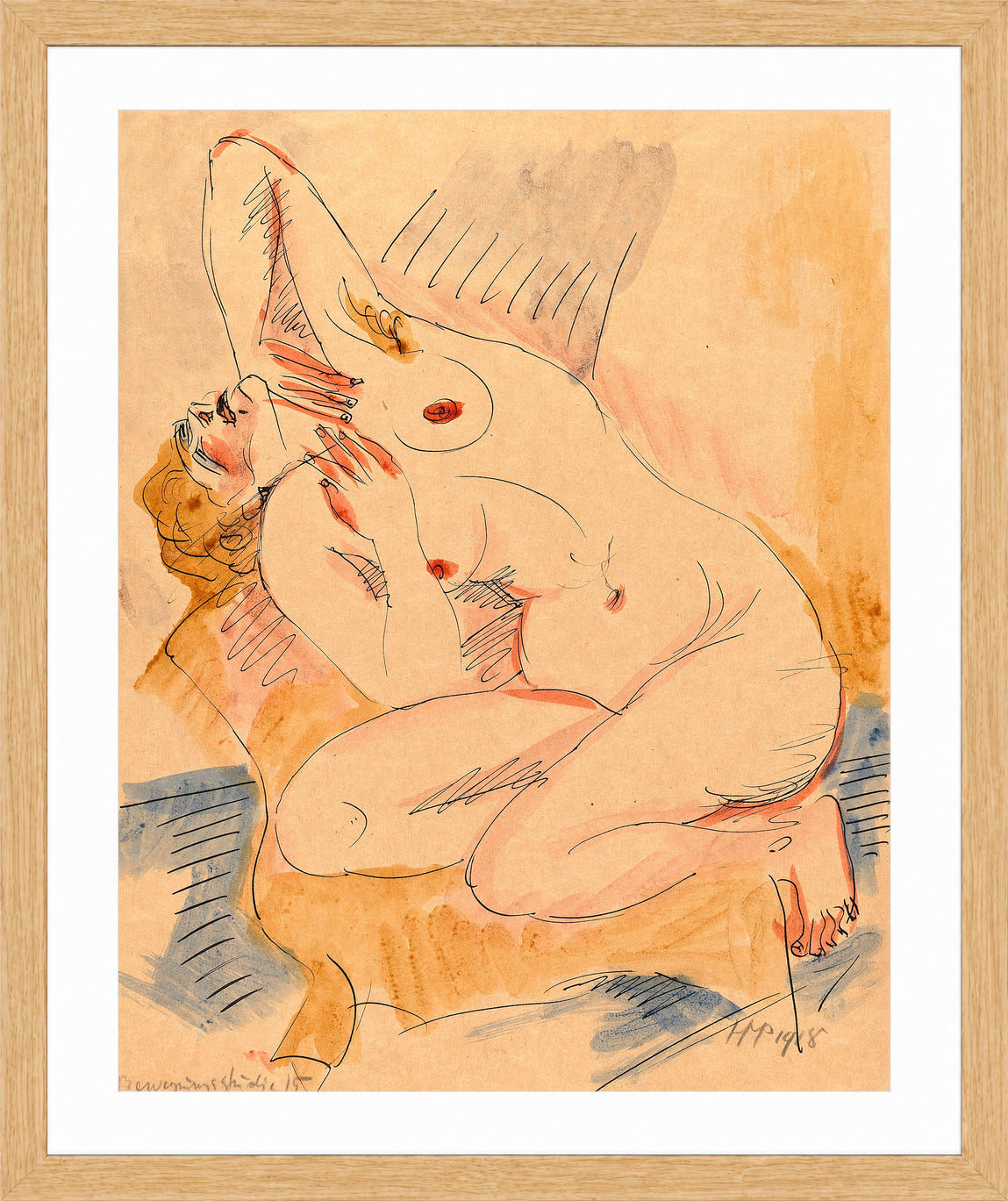
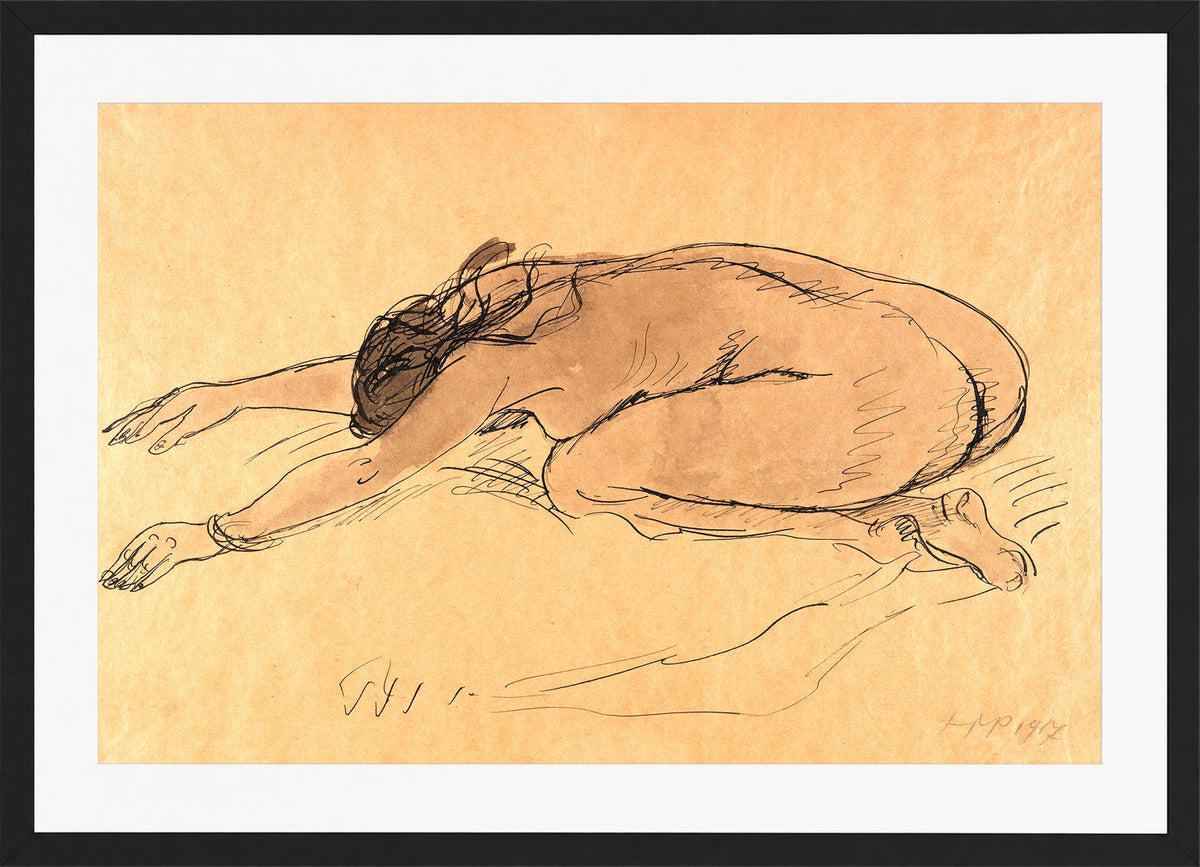
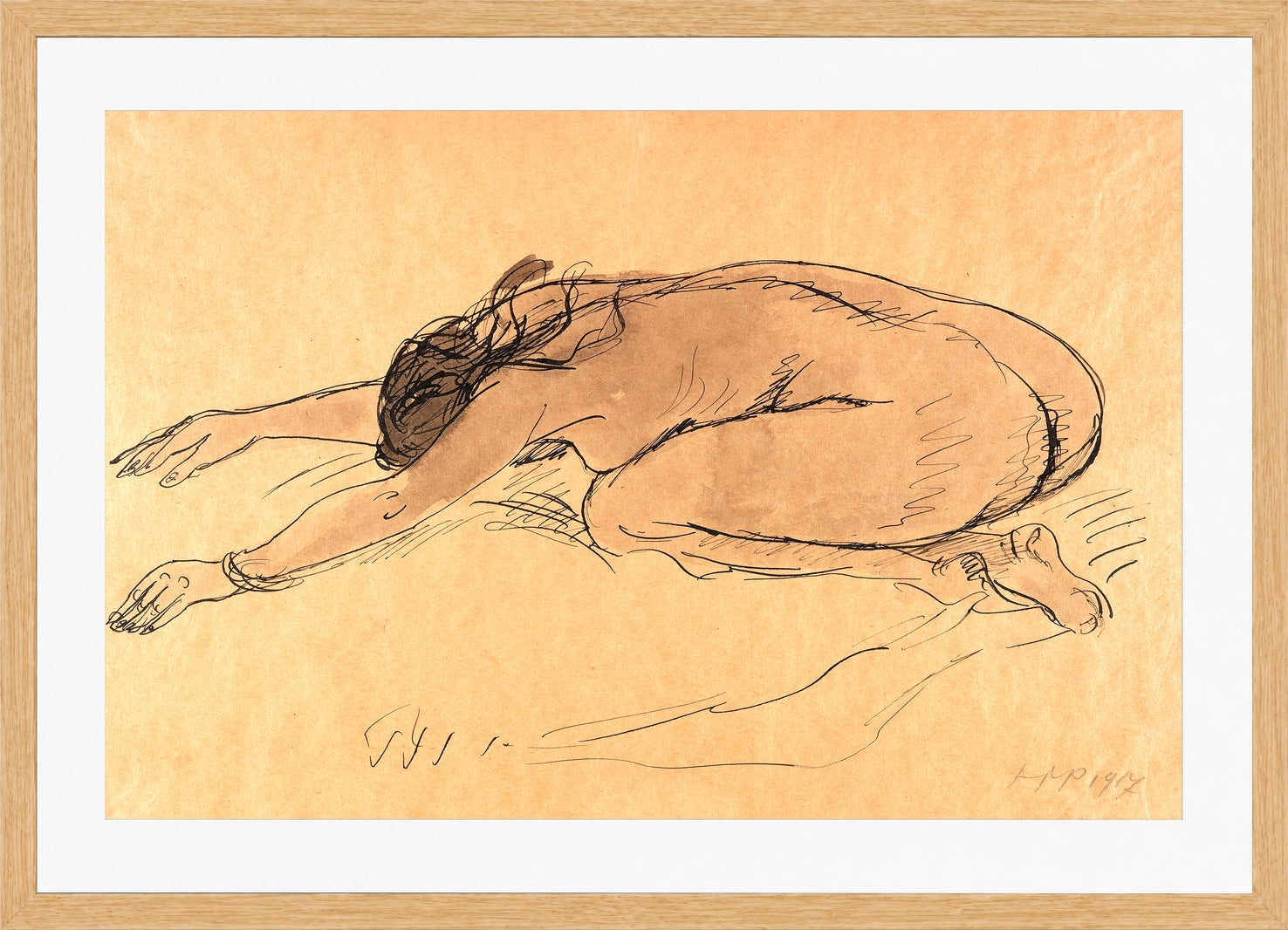
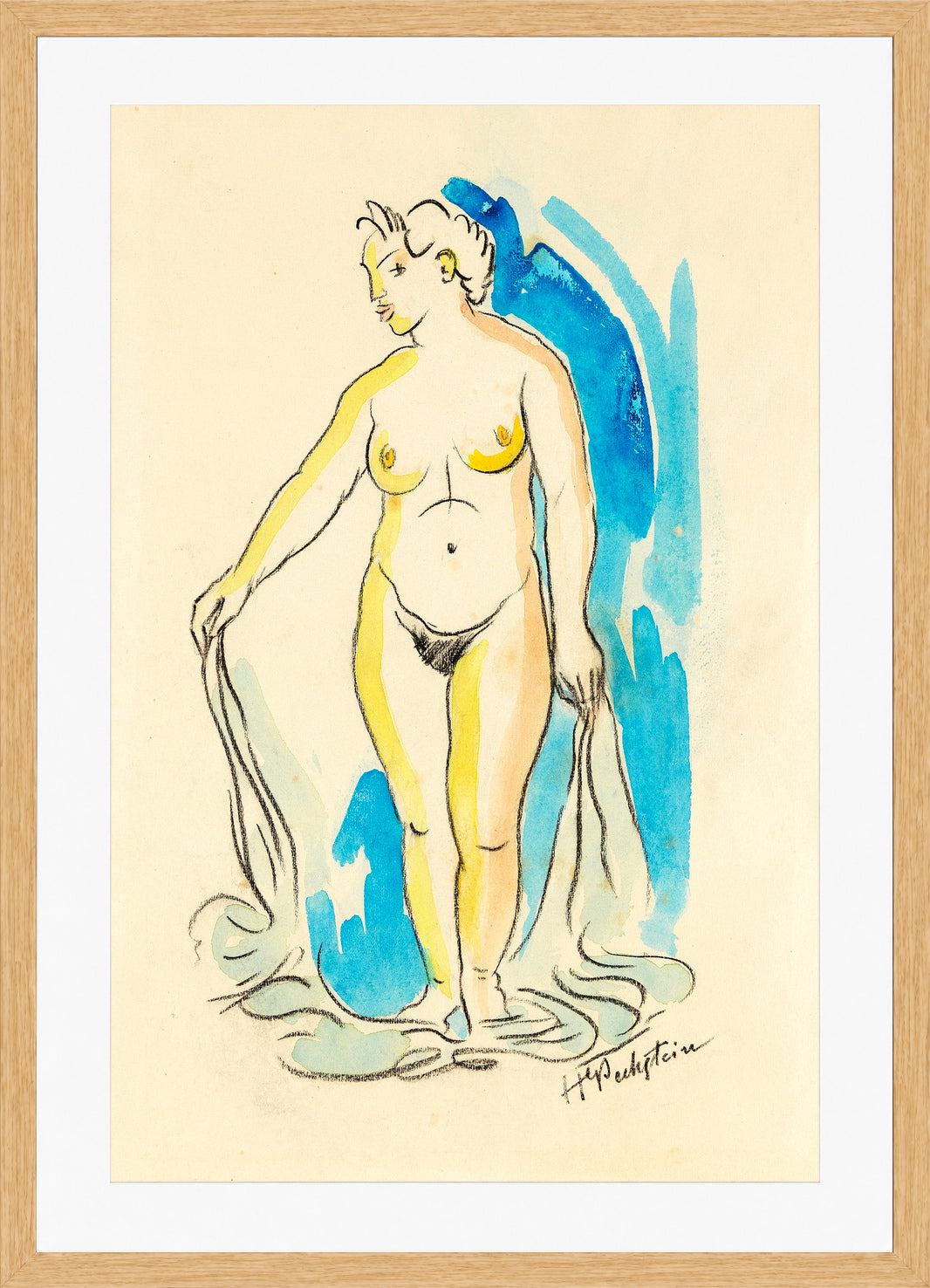
These works reveal how strongly Pechstein relied on contour. A relatively small number of decisive lines can define the head, shoulders, torso and limbs, while large areas of colour give the figure physical weight.
Anatomical detail is frequently reduced.
Hands and feet may be simplified, facial features abbreviated and the modelling of muscles replaced by broad changes of colour. The result is not careless drawing but deliberate reduction.
By removing unnecessary detail, Pechstein gives greater emphasis to pose, movement and the overall shape of the body.
Colour, Line and the Human Body
Colour is central to Pechstein's treatment of the nude.
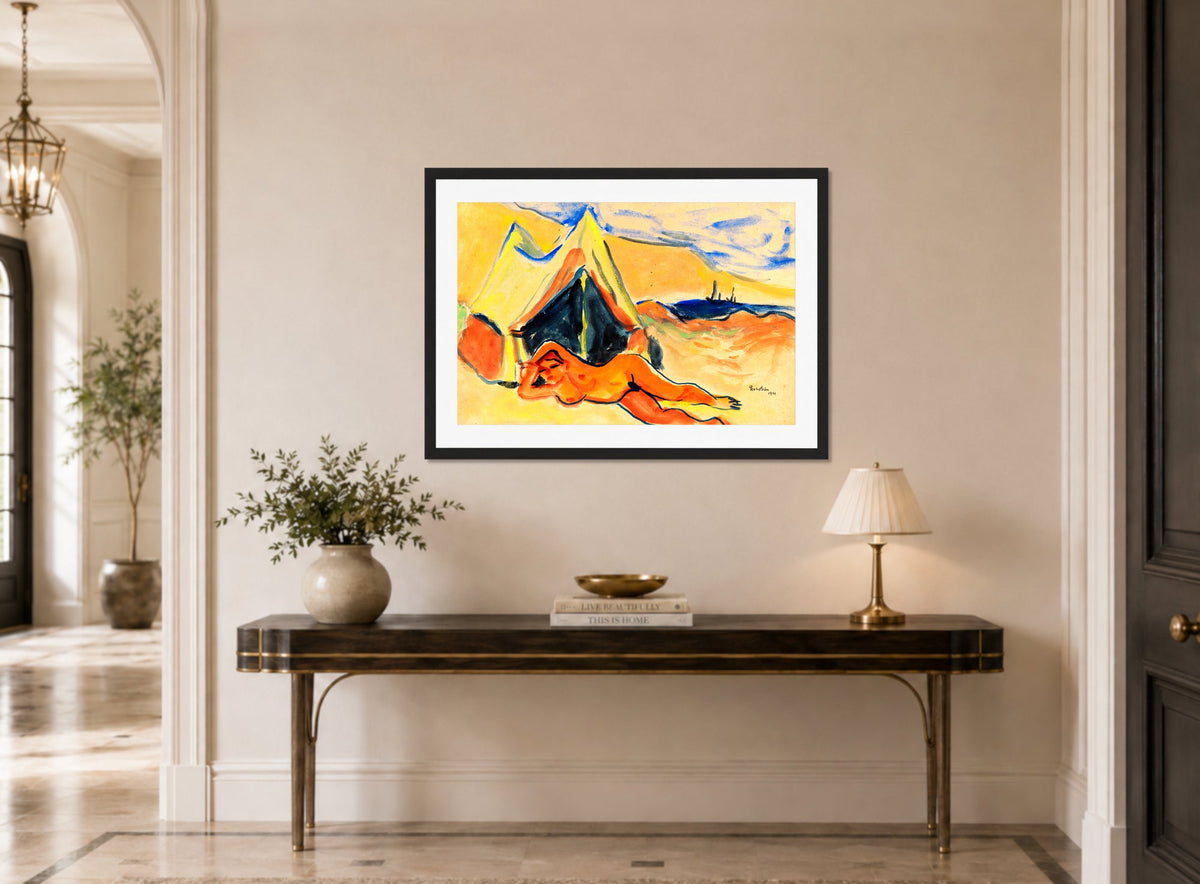
Natural flesh colour rarely restricts him. Skin can become warm orange, pink or red and may be contrasted against blue, green or violet surroundings.
These colour relationships often carry more visual importance than traditional modelling with light and shade.
Strong outlines provide structure.
Dark lines separate bodies from the surrounding environment and frequently divide different areas within the figure itself. Shoulders, hips and limbs become clearly readable forms even when colour is highly non-naturalistic.
This combination of intense colour and forceful contour is one of the clearest connections between Pechstein's figure painting and his work as a printmaker.
Woodcut in particular encouraged the reduction of subjects to strong shapes and decisive lines, and similar qualities can often be recognised in his paintings and drawings.
Max Pechstein, Die Brücke and the Nude
Pechstein joined Die Brücke in Dresden in 1906.
The human figure occupied an important position within the group's search for a more direct form of artistic expression. Traditional studio poses, highly finished surfaces and conventional ideals of beauty were increasingly replaced by rapid drawing, simplified anatomy and unconventional settings.
The Brücke artists often worked from the same models and explored similar subjects, including bathers, dancers and figures within landscape.
Pechstein's formal artistic education distinguished him from several of the group's founding members, but his work during these years became increasingly experimental.
Colour grew stronger. Perspective became flatter. Figures were reduced to broader shapes.
The nude was therefore not simply one subject among many. It provided Pechstein with an especially effective way of testing the new visual language of German Expressionism.
Our Max Pechstein biography and German Expressionism guide follows this development from his Dresden training through Die Brücke, Berlin, Palau and his later career.
You can also explore the movement more broadly through GalleryThane's Expressionist Art Prints.
Beaches, Water and Bathing Scenes
Water frequently provides the setting for Pechstein's bathers.
Beach and lakeside compositions allowed him to combine two of his strongest interests: the human figure and landscape.
A bathing scene might include bodies, sand, sea, trees and sky, yet these elements are often treated with the same simplified visual language. The body is not painted with one degree of realism while the landscape is treated differently. Everything is organised through contour, colour and broad form.
This creates an unusually unified image.
Bathers beside the sea also connect Pechstein's nude imagery with his lifelong fascination with coastal environments.
For works in which the sea, boats, beaches and fishing communities become the principal subject, explore Max Pechstein Coastal, Seascape & Fishing Prints.
Nature and the Ideal of Freedom
The popularity of bathing scenes among early Expressionists was connected to broader ideas about modern life.
Industrialisation and rapidly growing cities had transformed German society. Artists associated with Die Brücke were interested in experiences that seemed less regulated by bourgeois convention.
Swimming, bathing and working outdoors offered opportunities to represent the body outside the formal environments of the studio, drawing room or city street.
For Pechstein, landscapes and coastal locations could therefore provide both visual subjects and an imagined contrast to urban life.
This does not mean that every bather painting should be interpreted symbolically. But the repeated combination of nude figures with beaches, forests and water reflects a wider Expressionist interest in direct experience and the relationship between people and nature.
Palau and the Human Figure
Pechstein's 1914 journey to the Palau Islands introduced another important dimension to his figure painting.
He travelled there after developing a strong interest in Oceanic art and spent several months observing island life before the outbreak of the First World War forced him to leave.
The experience remained visually important after his return to Germany. Memories of Palau appeared in later paintings and prints, particularly in compositions involving figures within tropical landscapes.
These works form part of the history of European modernism but also require historical context.
Pechstein travelled to Palau while the islands were under German colonial rule, and European artists of his generation frequently interpreted non-European societies through ideas now described as primitivism.
Contemporary scholarship examines these works both for their importance within Expressionism and for the colonial assumptions surrounding their creation.
The Palau journey and its impact on Pechstein's art are examined in greater detail in our Max Pechstein biography, paintings and prints guide.
Nude Prints and Expressionist Printmaking
Pechstein was an exceptionally prolific printmaker as well as a painter.
The human figure appears repeatedly in his lithographs, woodcuts and other graphic works.
Printmaking naturally encouraged many of the formal qualities already present in his figure painting. Woodcut favours strong contrasts and simplified outlines, while lithography permits rapid and highly expressive drawing.
A nude figure could therefore be reduced to a surprisingly small number of marks without losing its physical presence.
This economy of line is one reason Pechstein's graphic nudes can feel especially immediate.
Rather than creating reproductive versions of paintings, Pechstein repeatedly adapted his subjects to the particular possibilities of each printmaking technique.
The Nude Beyond Academic Tradition
Pechstein's nudes belong to a much wider change in European art around the beginning of the twentieth century.
For centuries the nude had occupied a central position within academic art, particularly in mythological, historical and allegorical painting.
Expressionist artists retained the human body as a major subject but rejected many of the conventions surrounding its representation.
Idealised anatomy was no longer essential. Smooth finish could be replaced by visible brushwork or carved line. Traditional poses could give way to reclining, crouching, dancing or bathing figures observed more informally.
Pechstein's work sits firmly within this transition.
His figures remain clearly recognisable as human bodies, yet they are transformed by colour, contour and simplification into distinctly modern images.
For a broader selection of the nude across different artists, periods and styles, browse GalleryThane's Nude Art Prints.
Max Pechstein Nude Prints for Contemporary Interiors
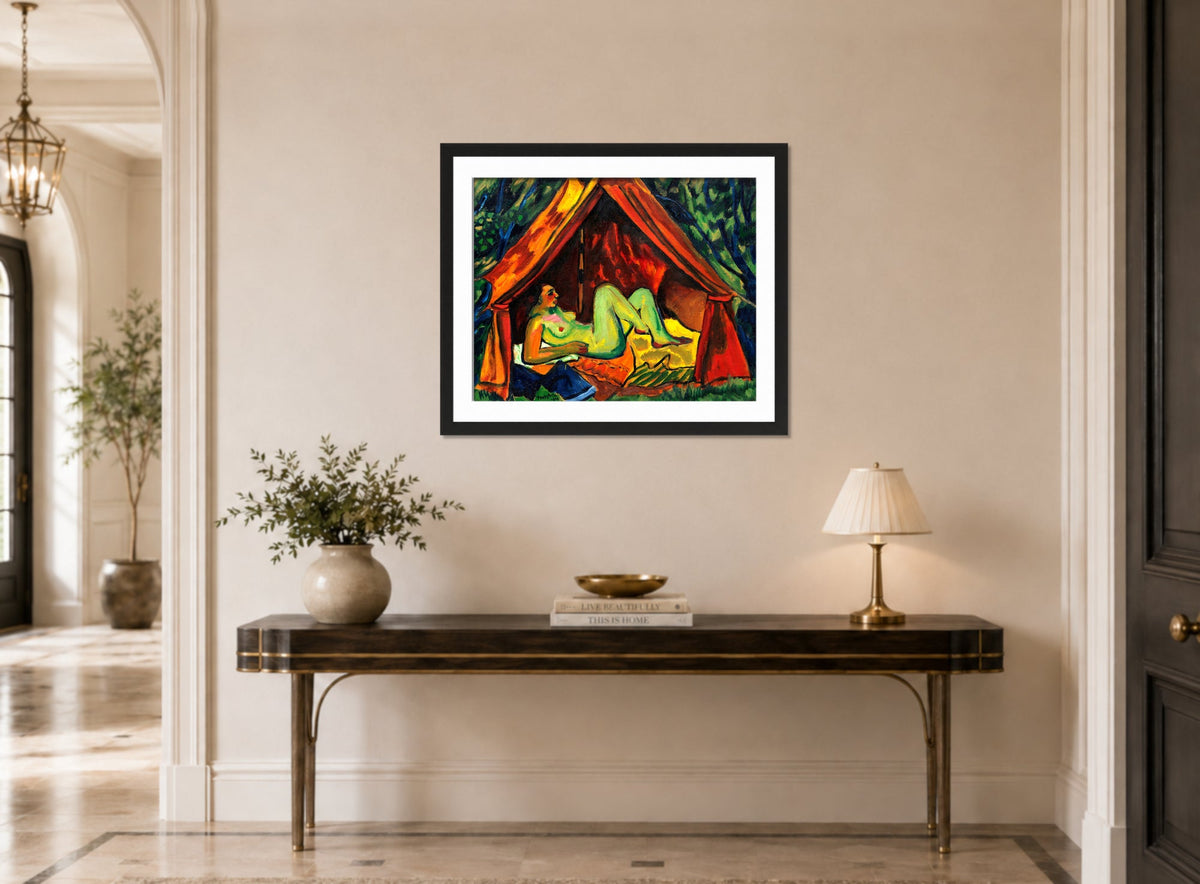
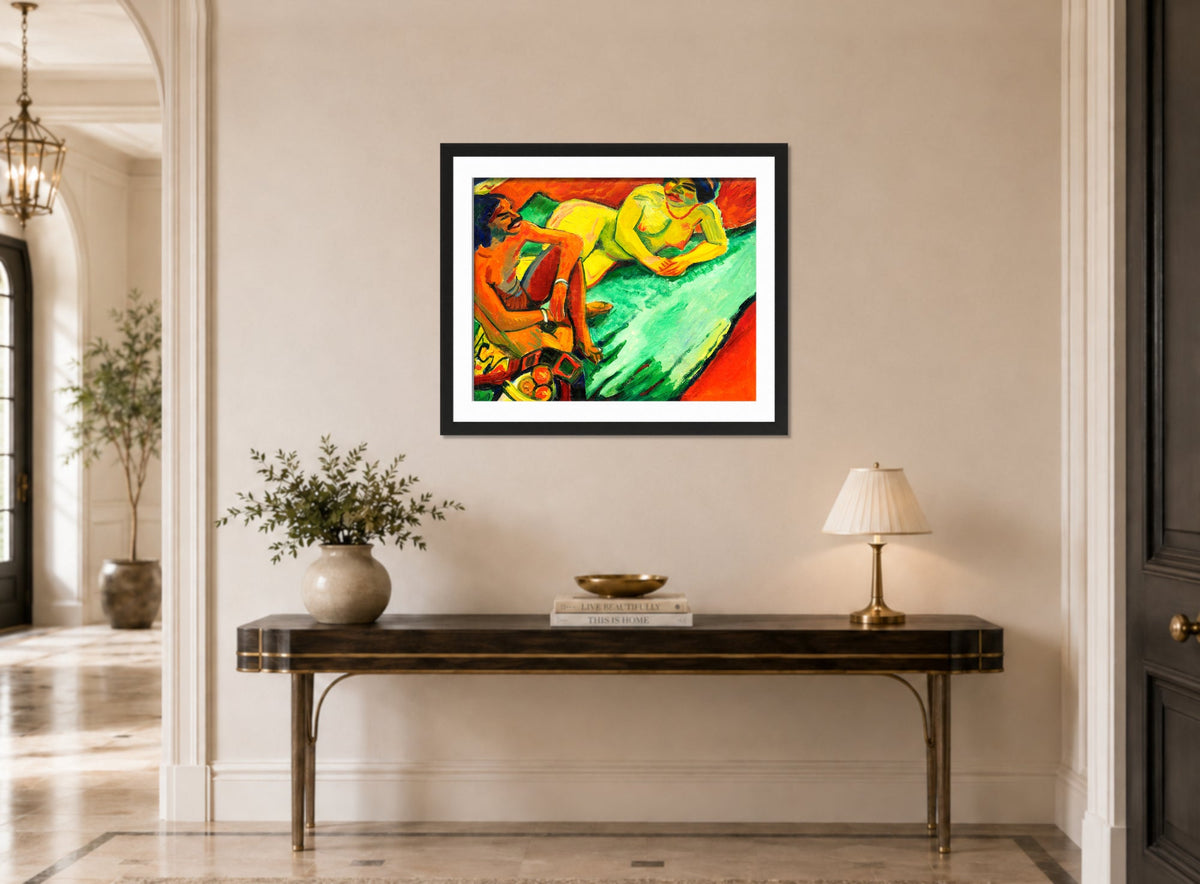
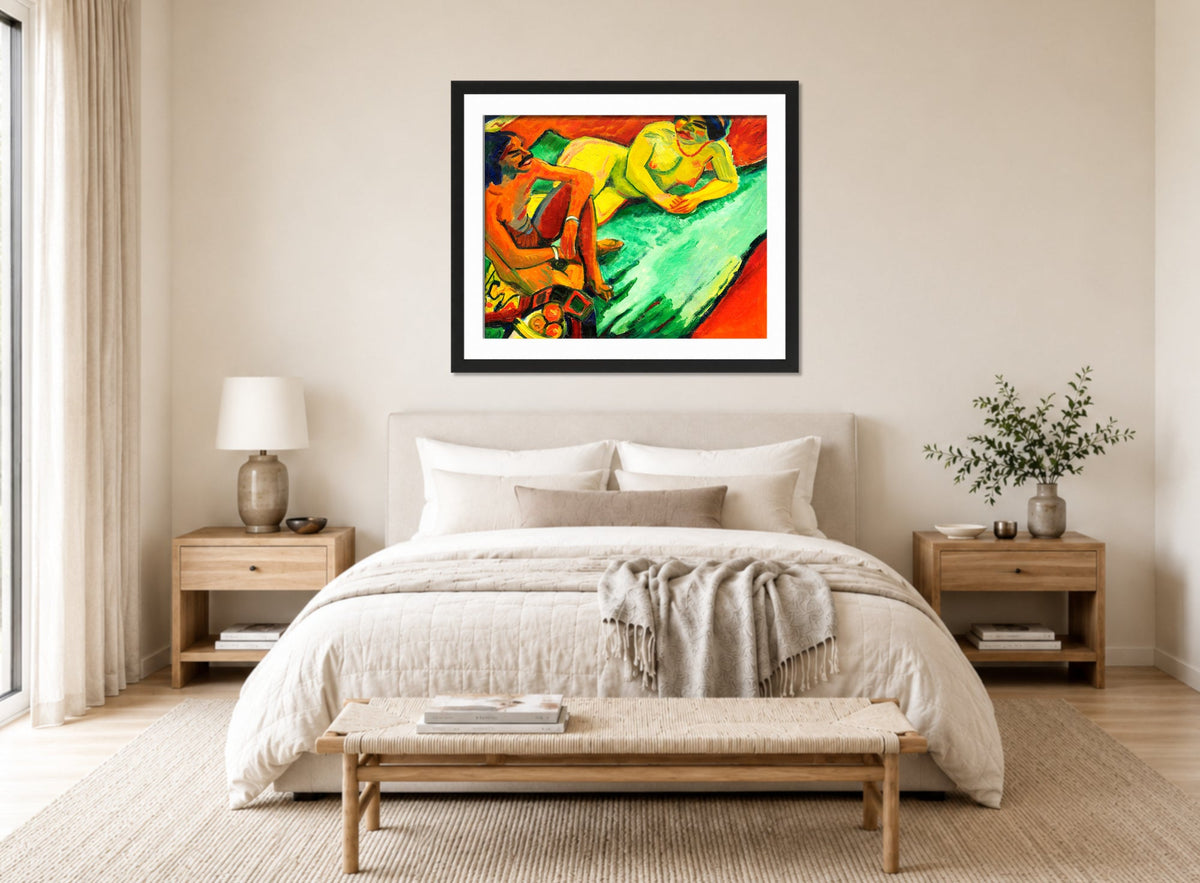
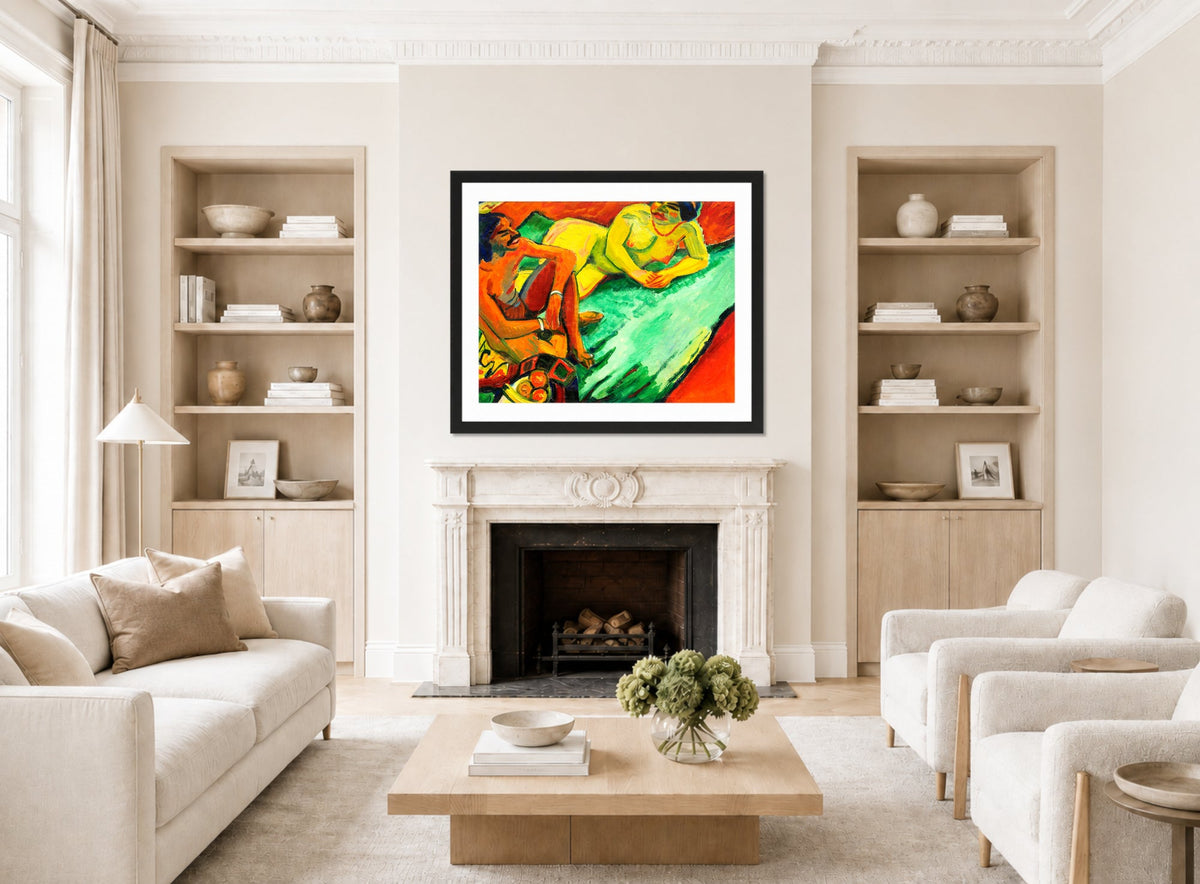
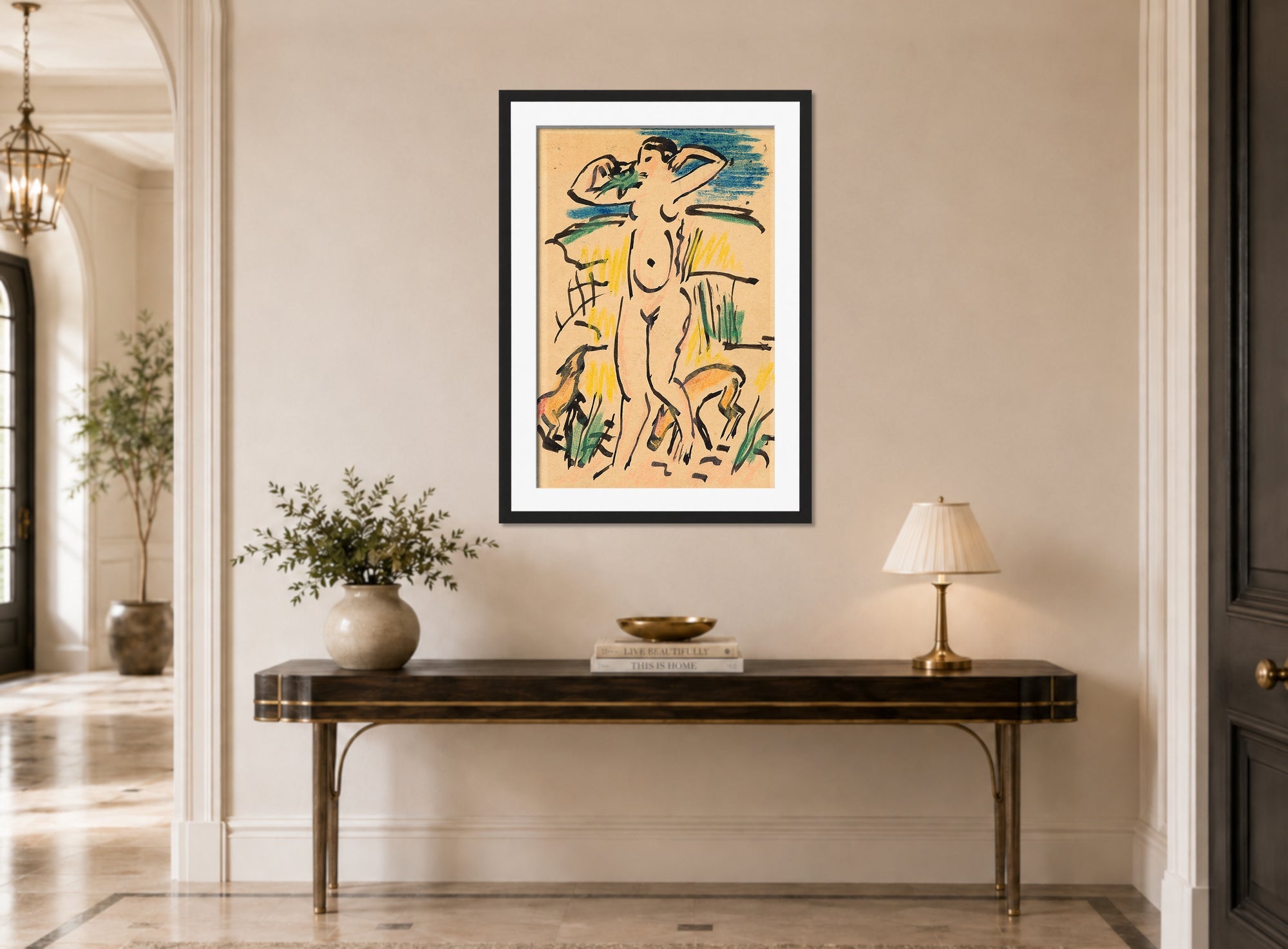
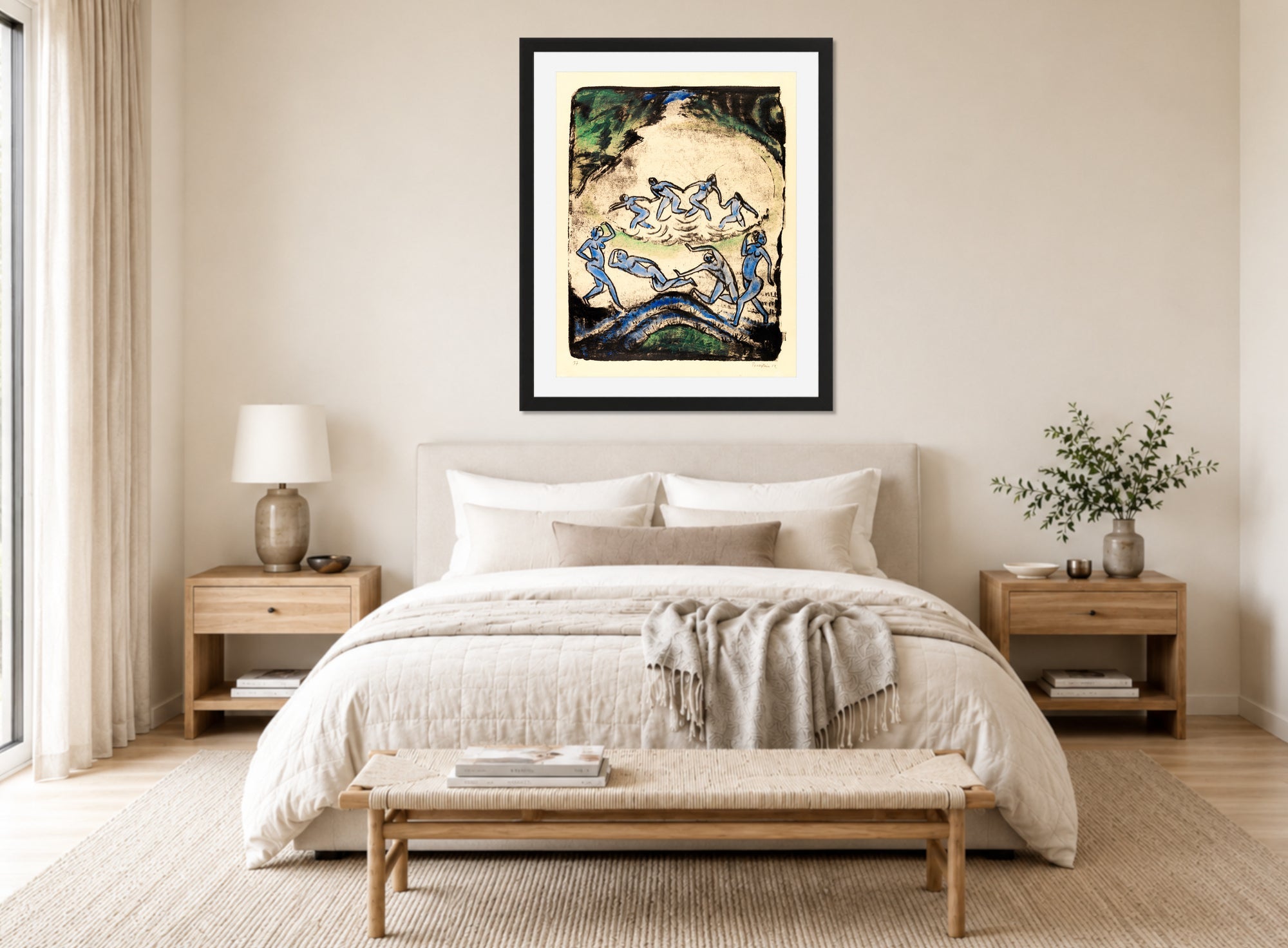
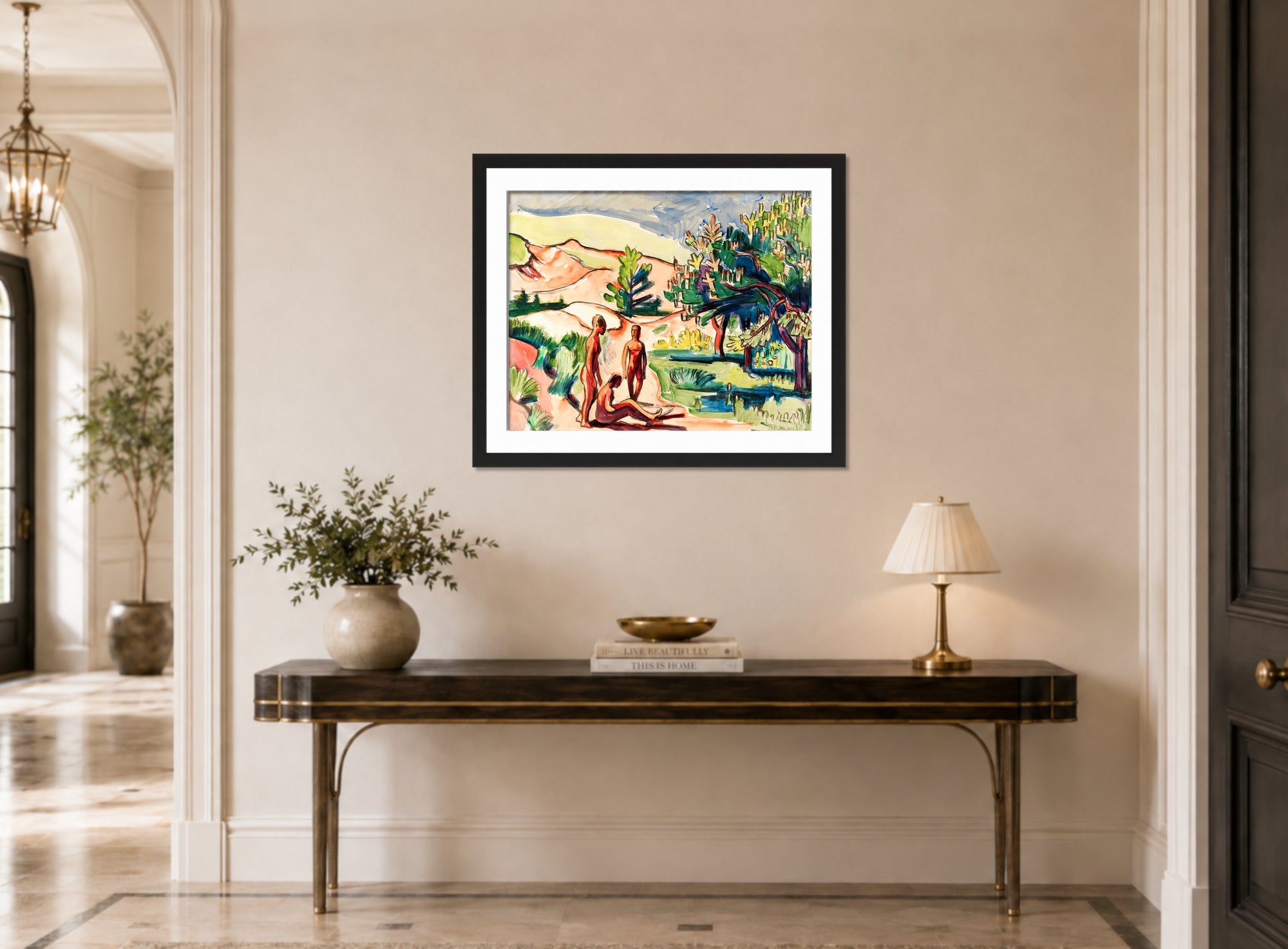
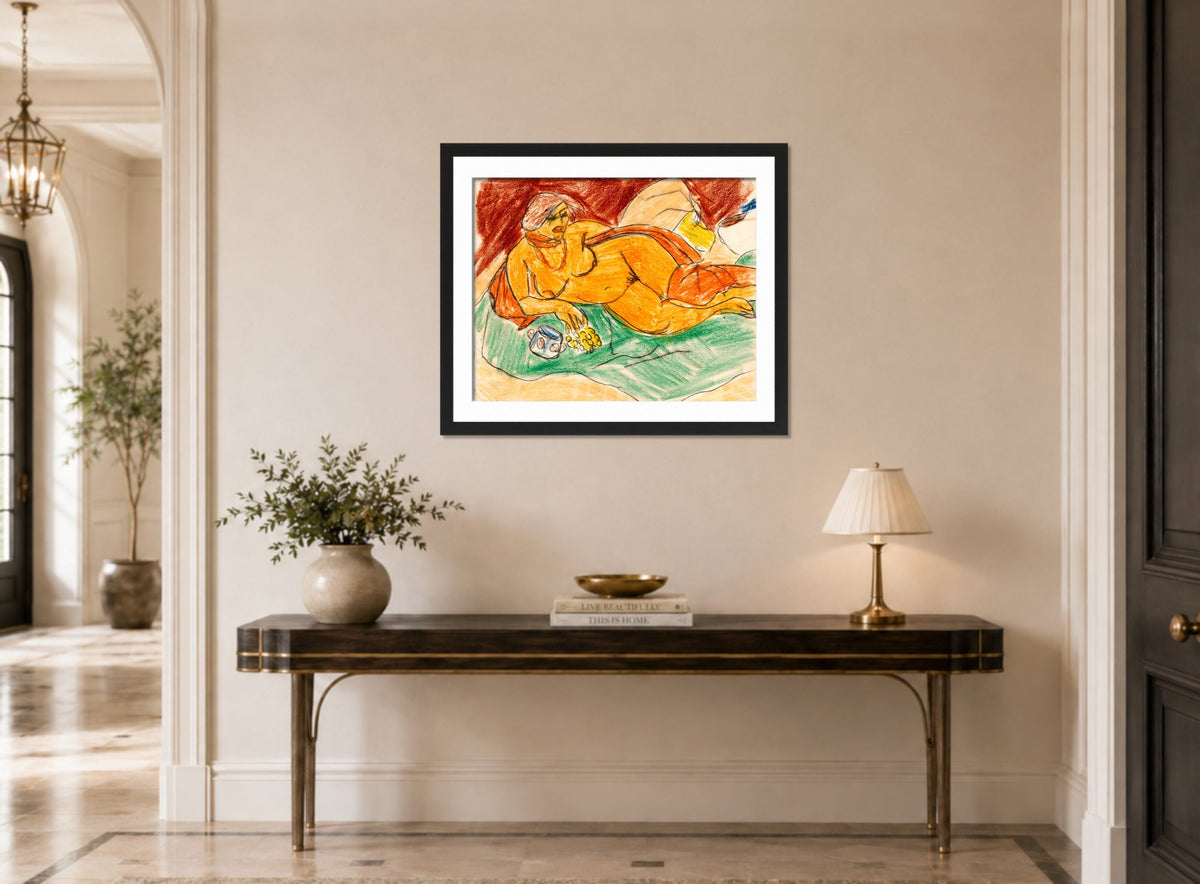
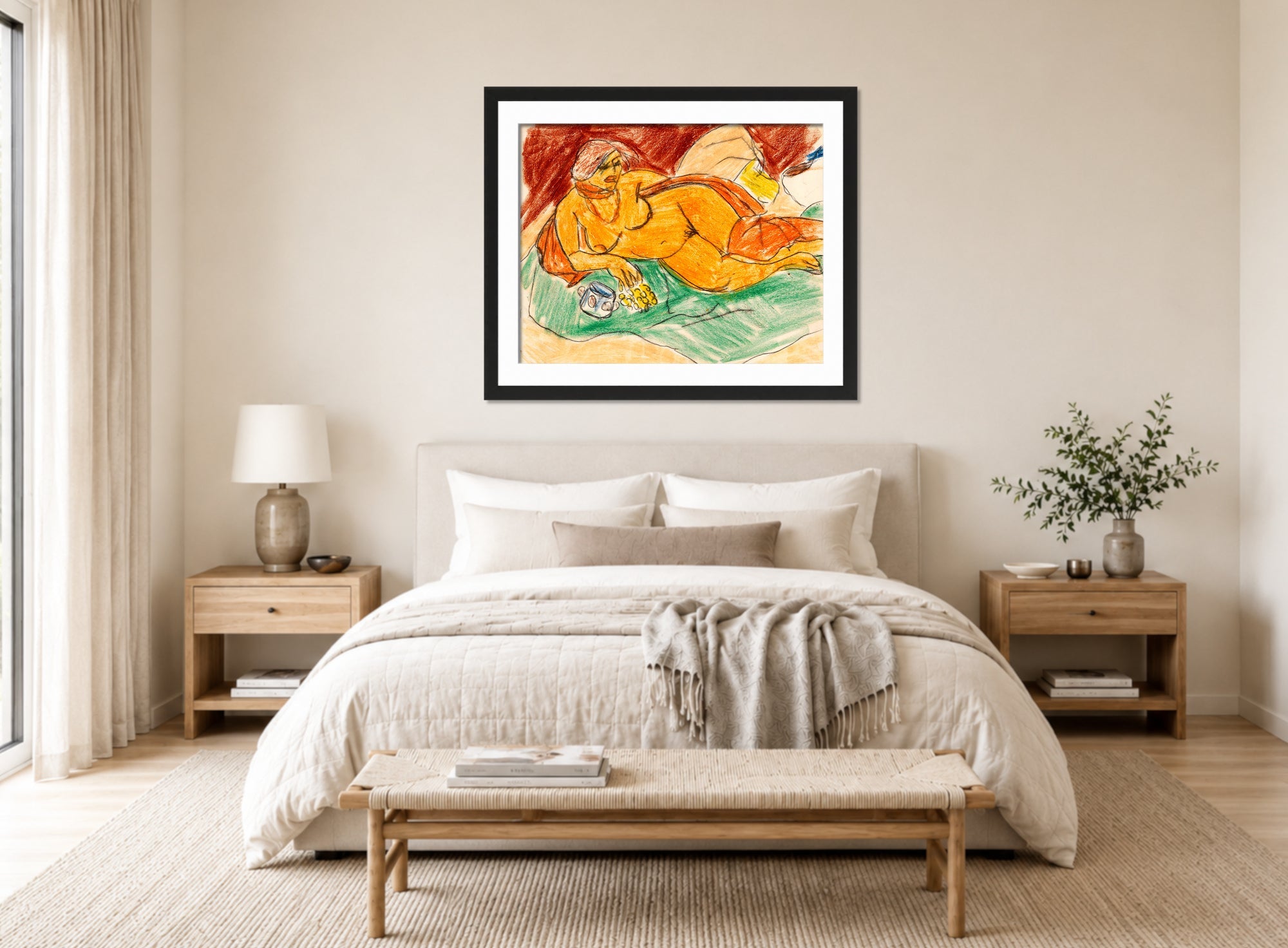
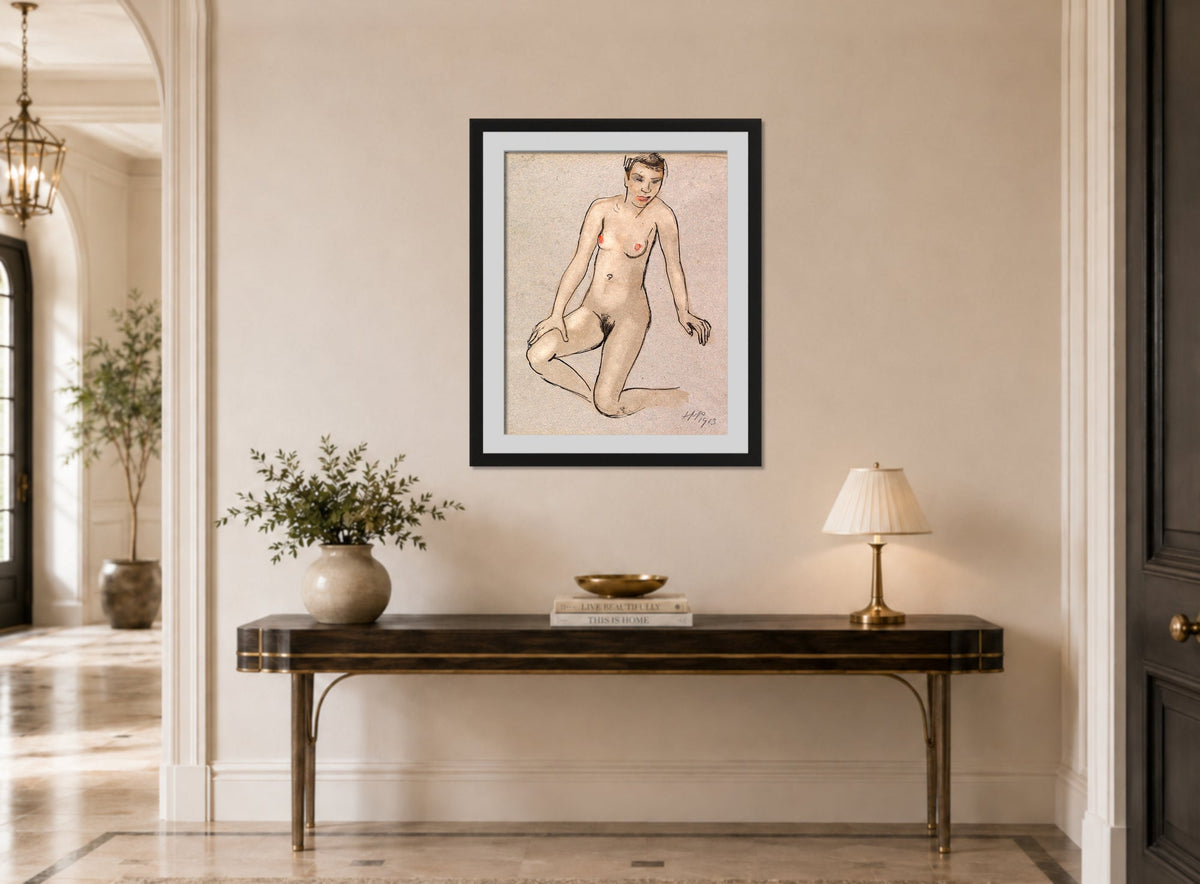
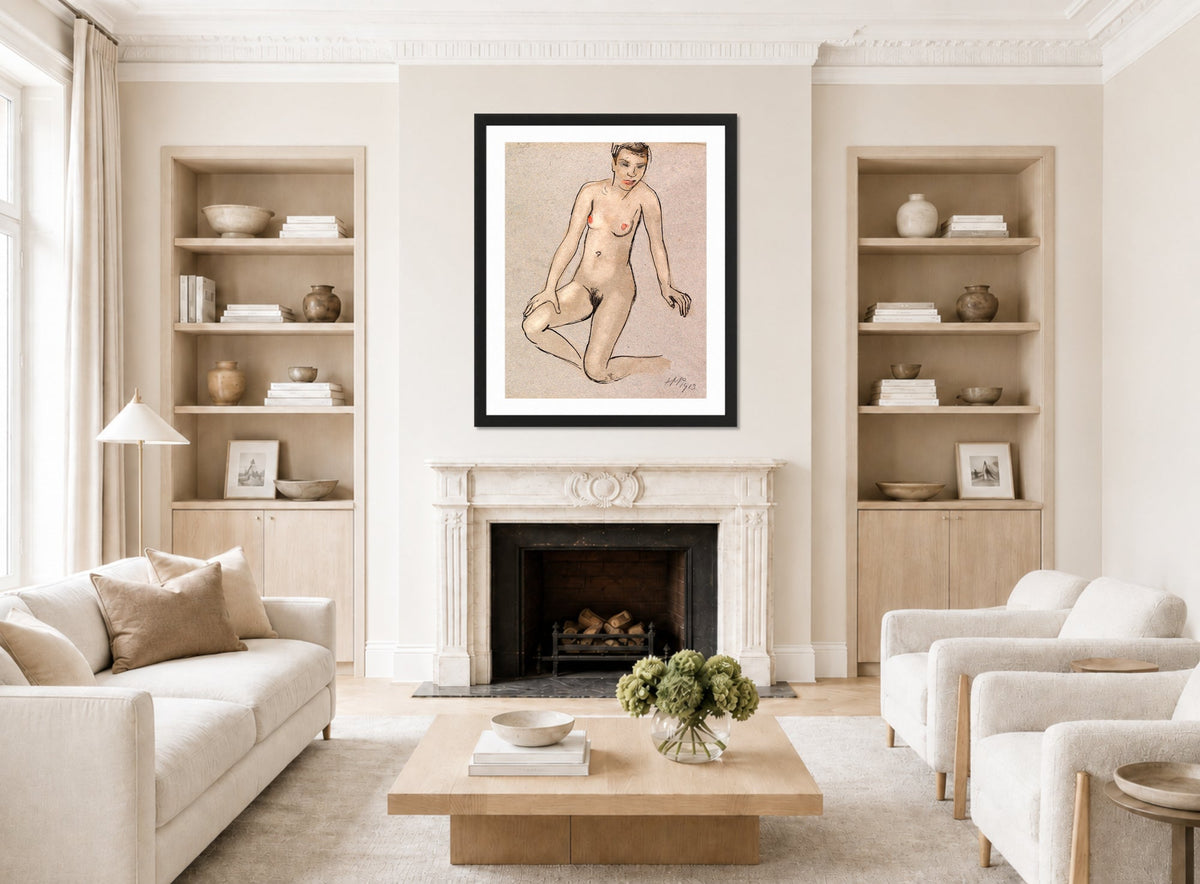
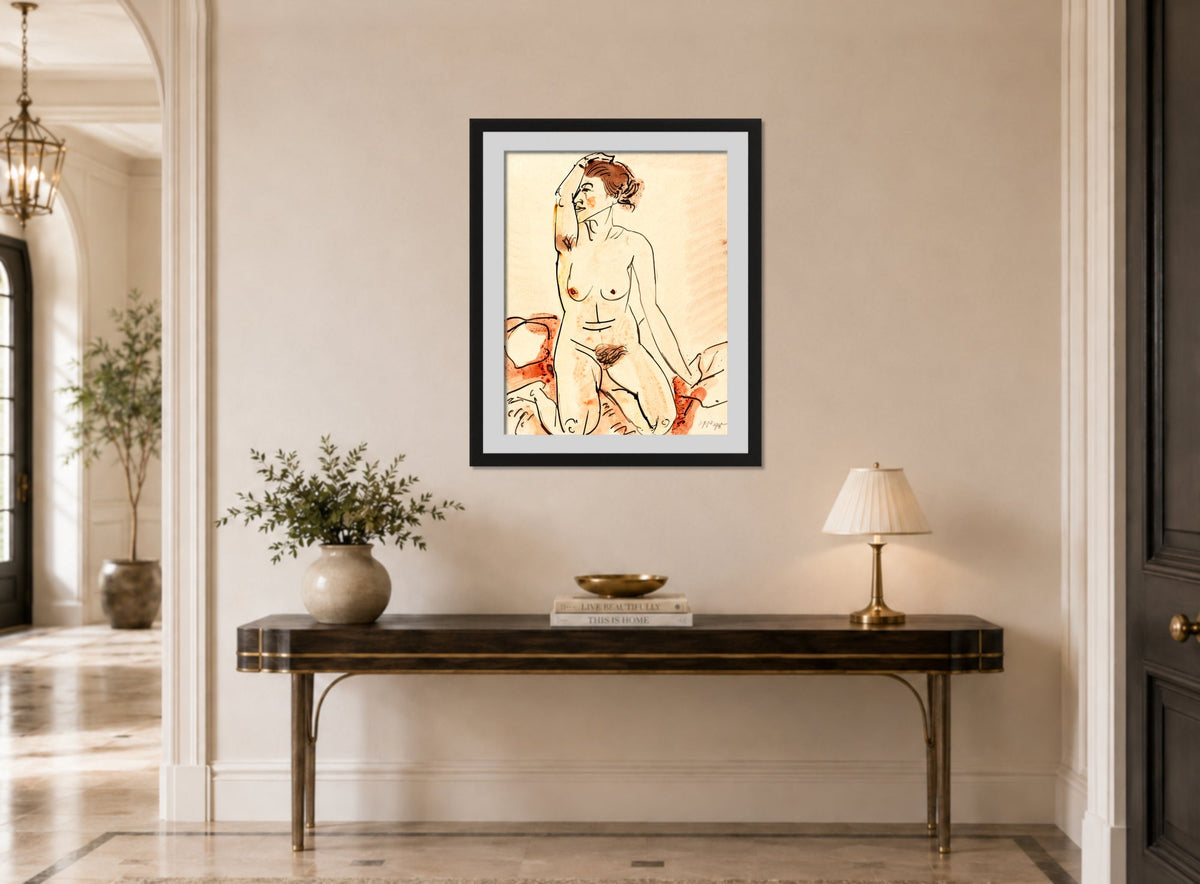
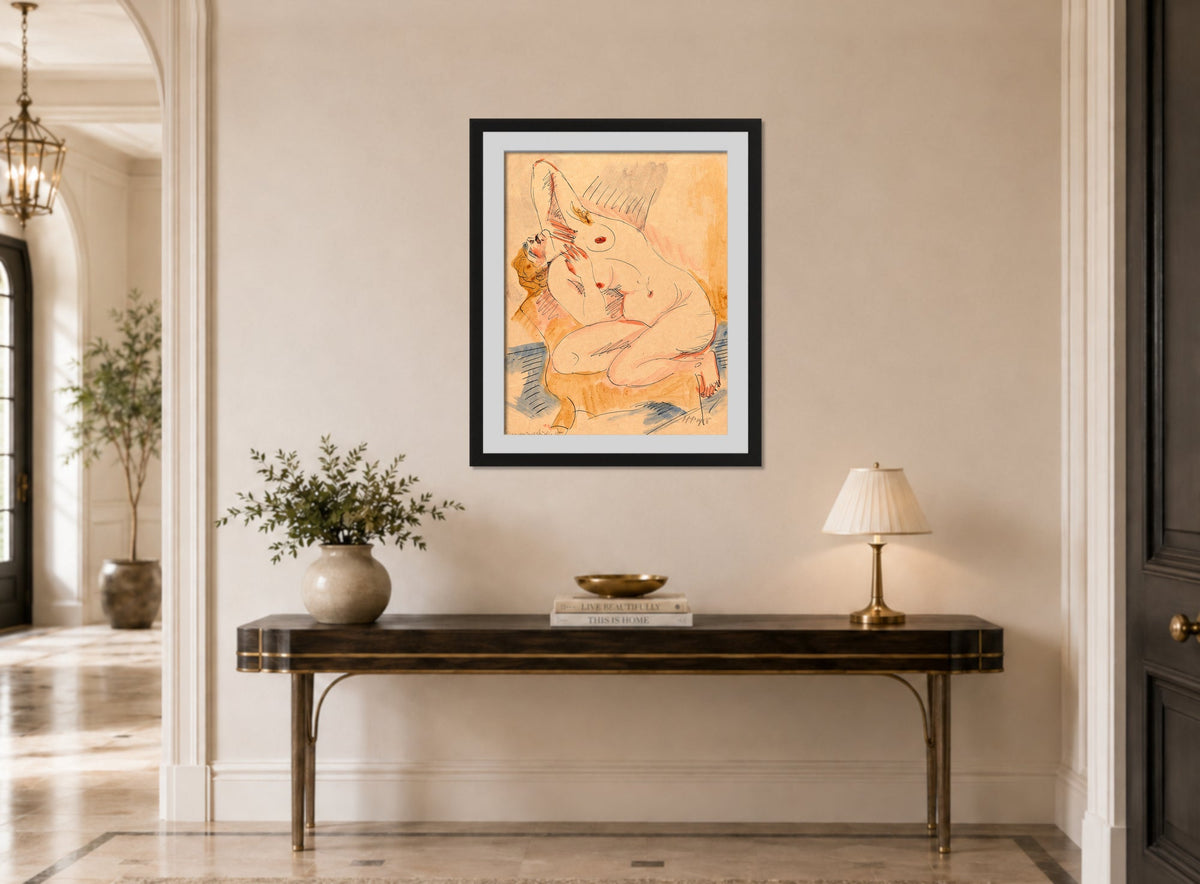
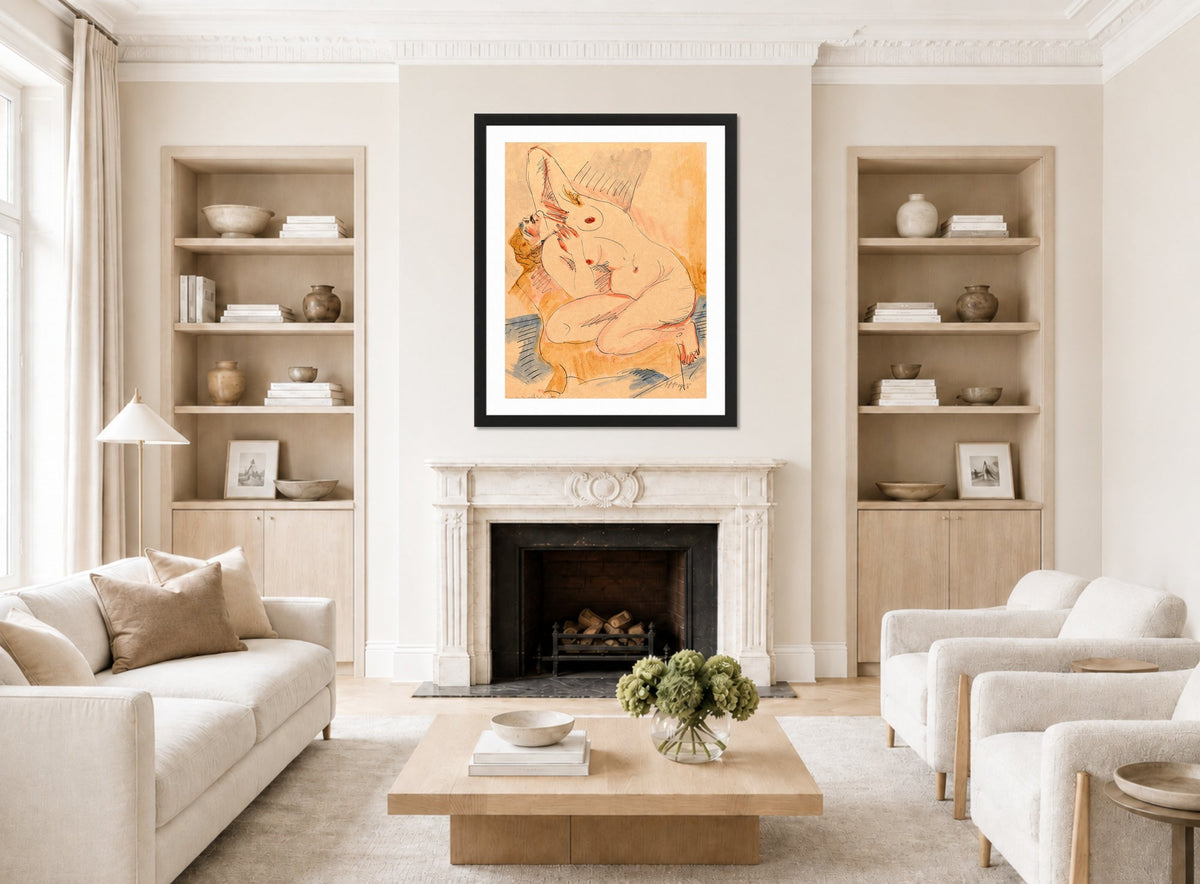
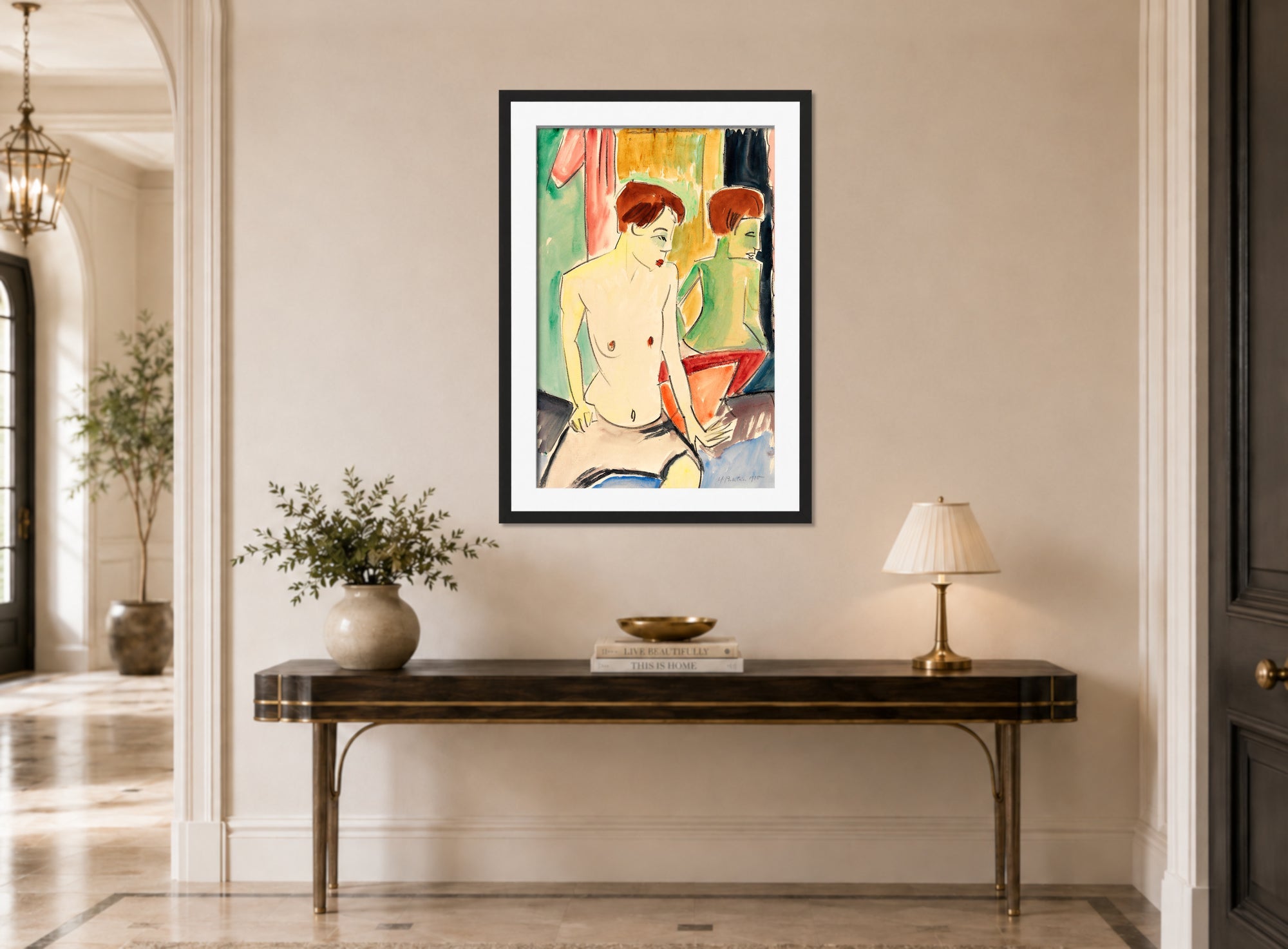
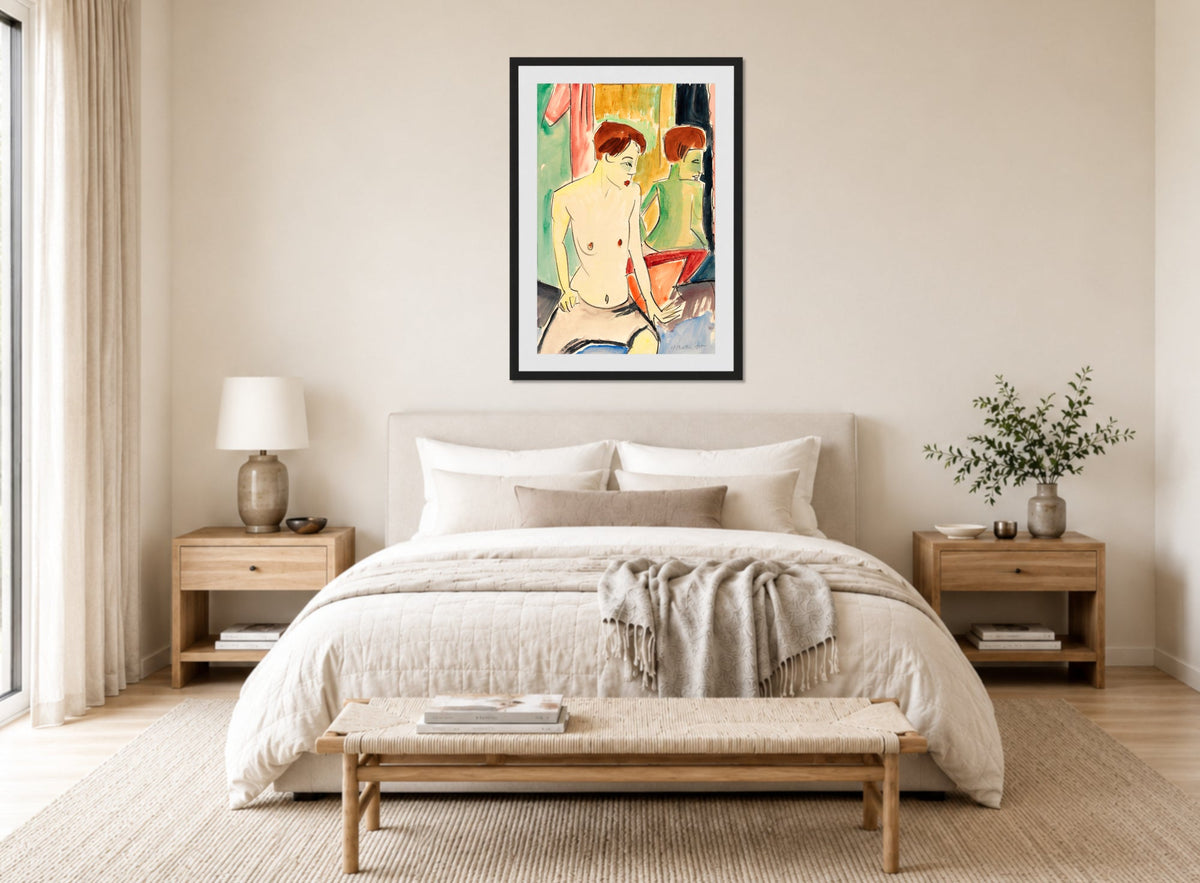
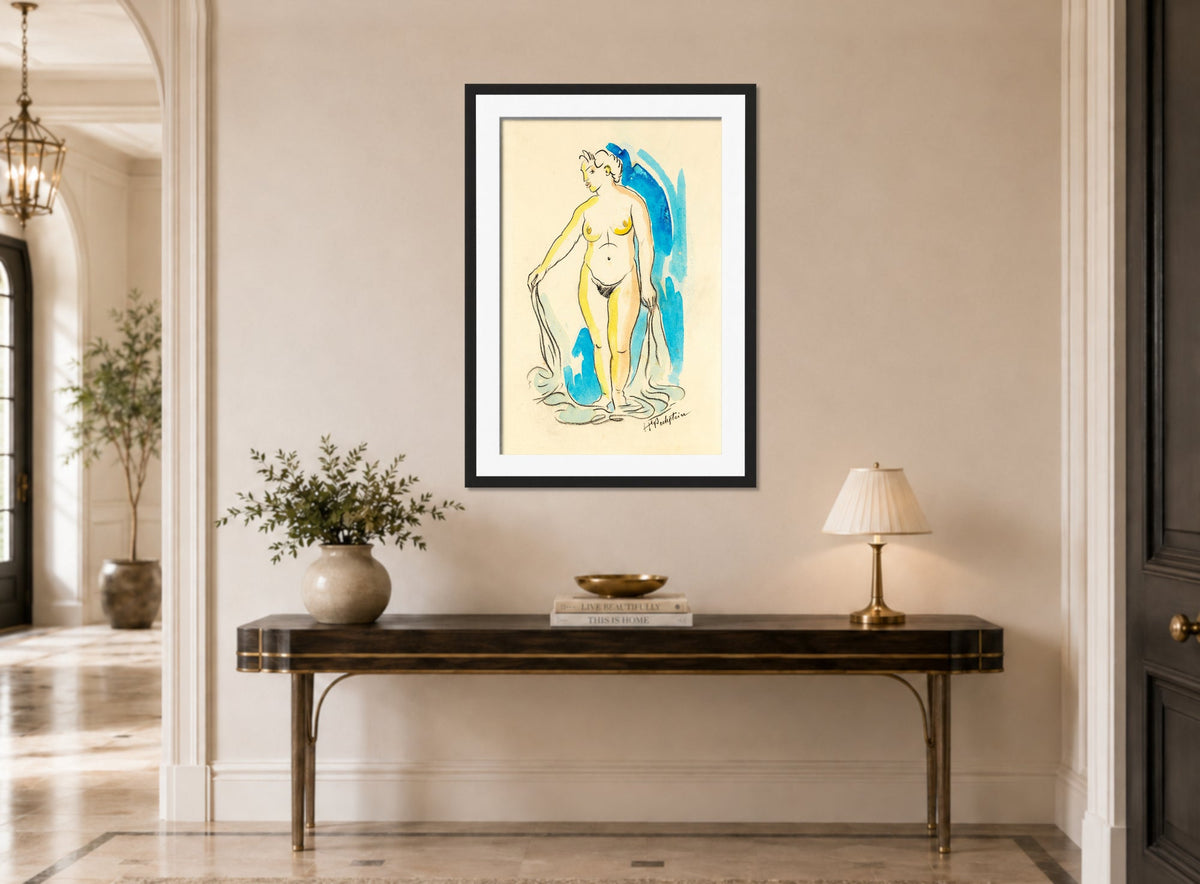
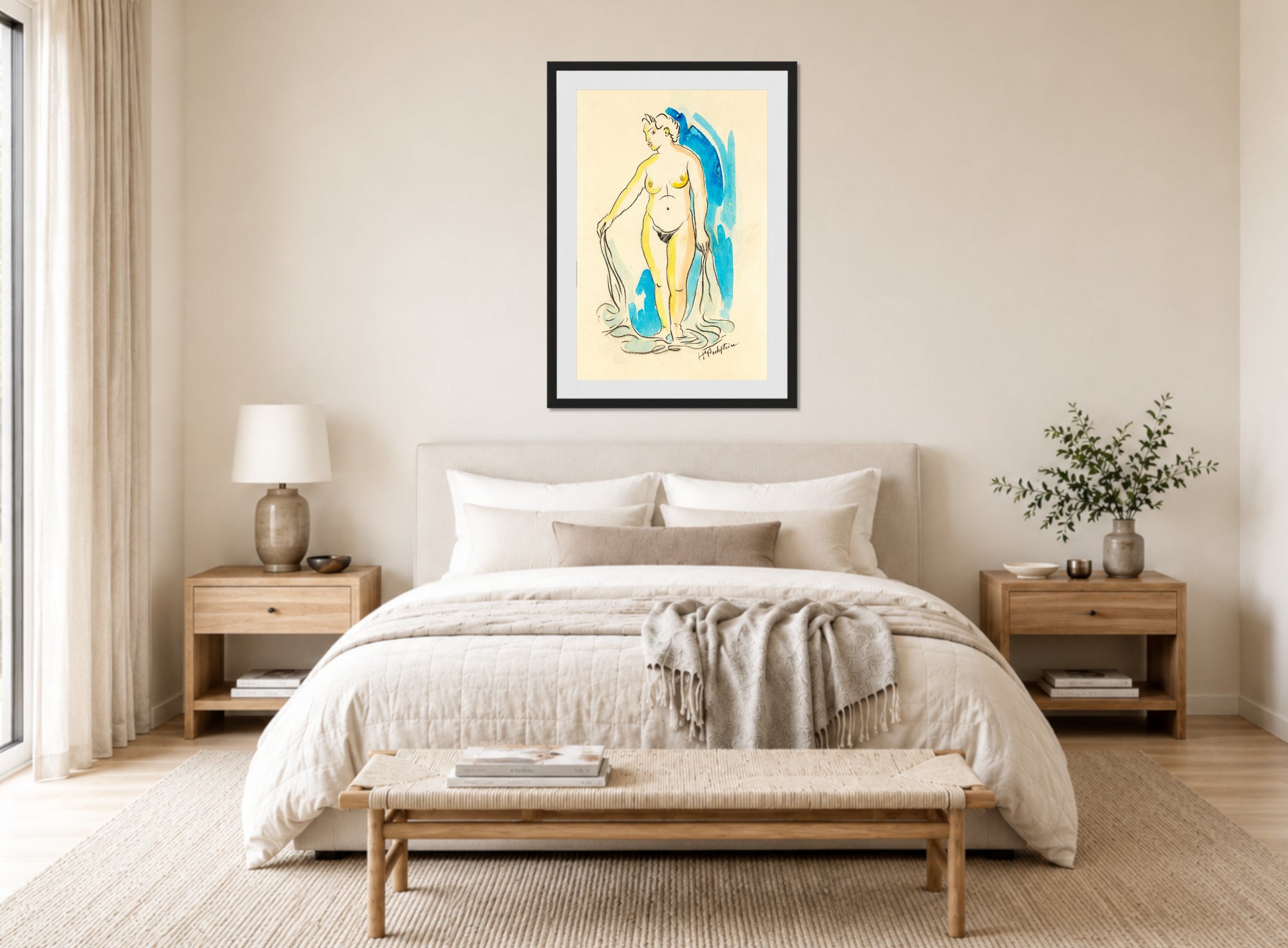
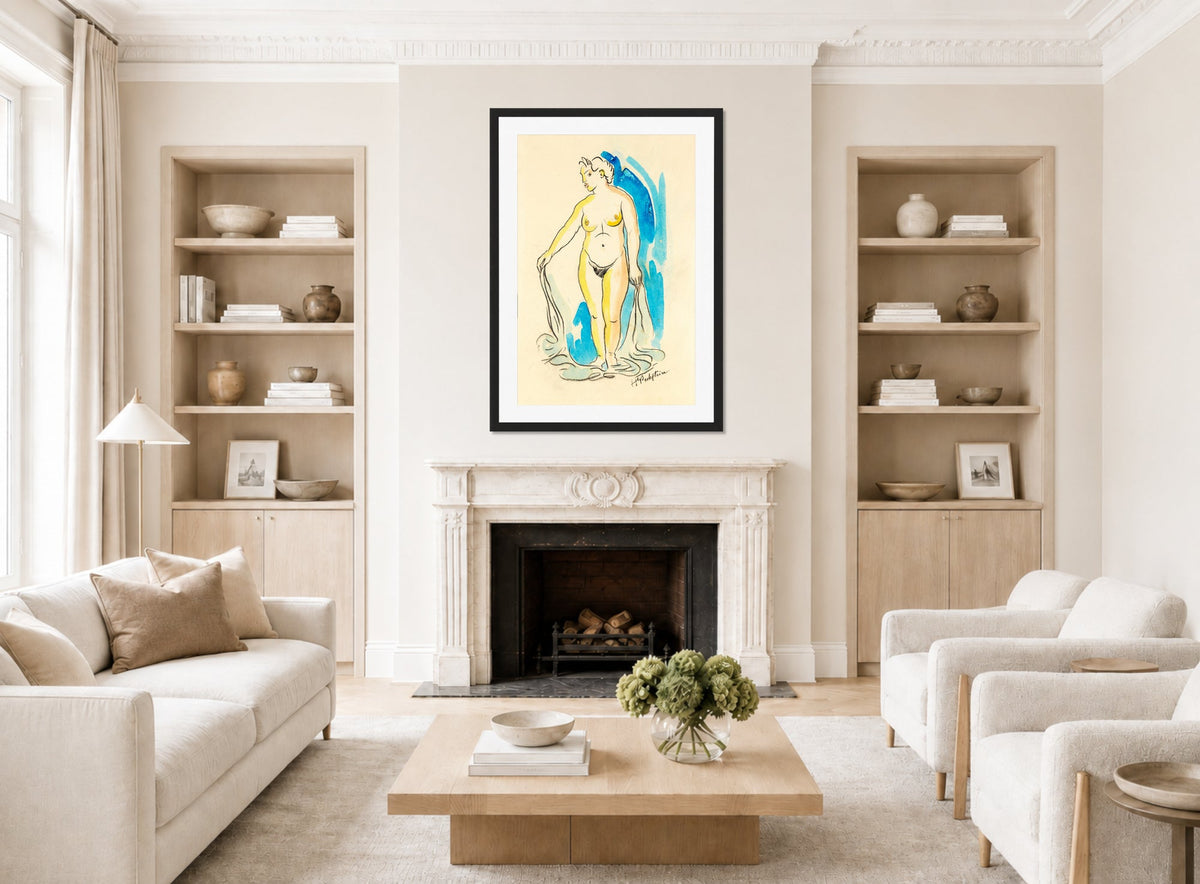
Pechstein's nude and bather prints can work particularly well in interiors where figurative art is intended to provide a strong focal point.
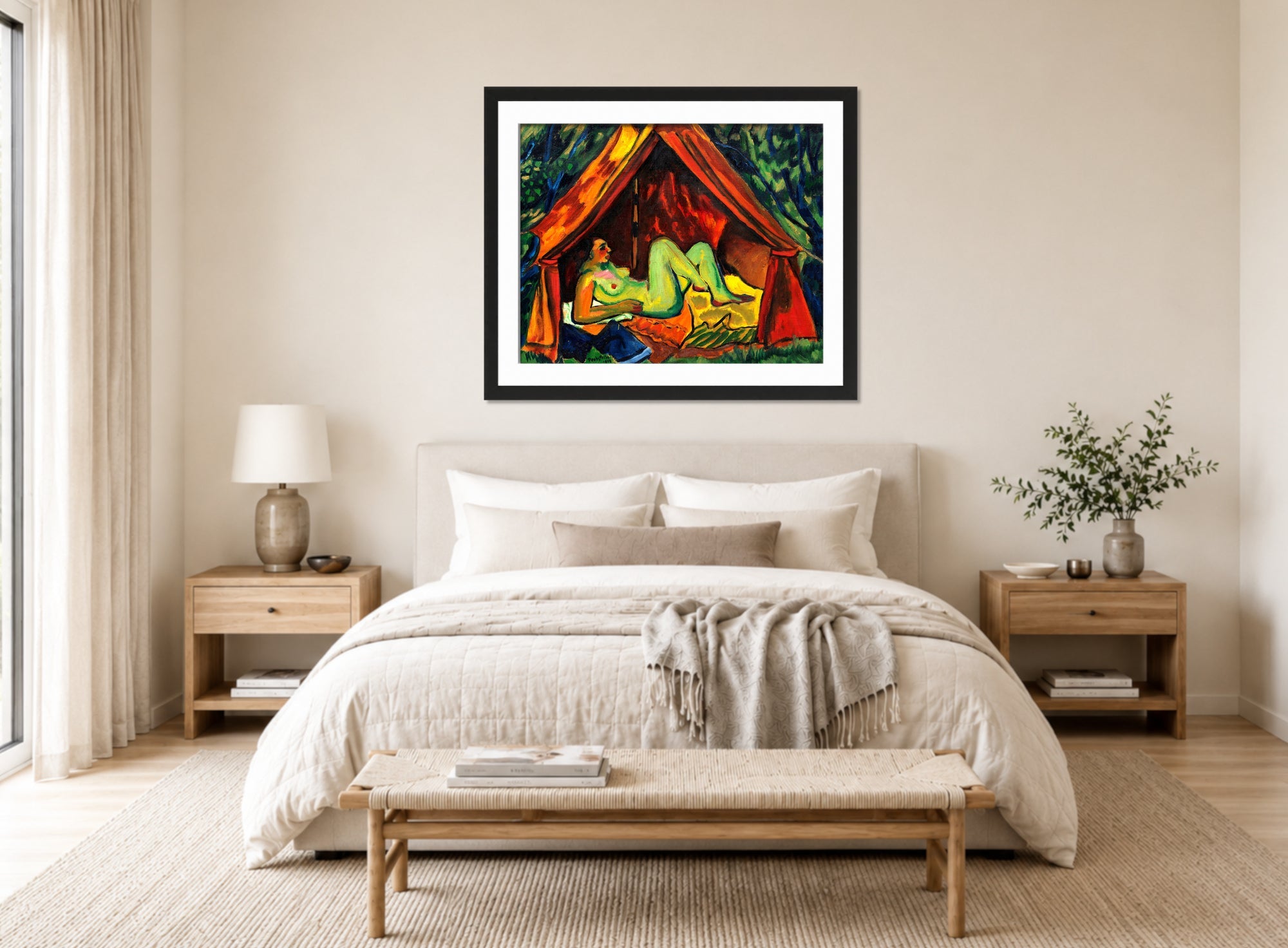
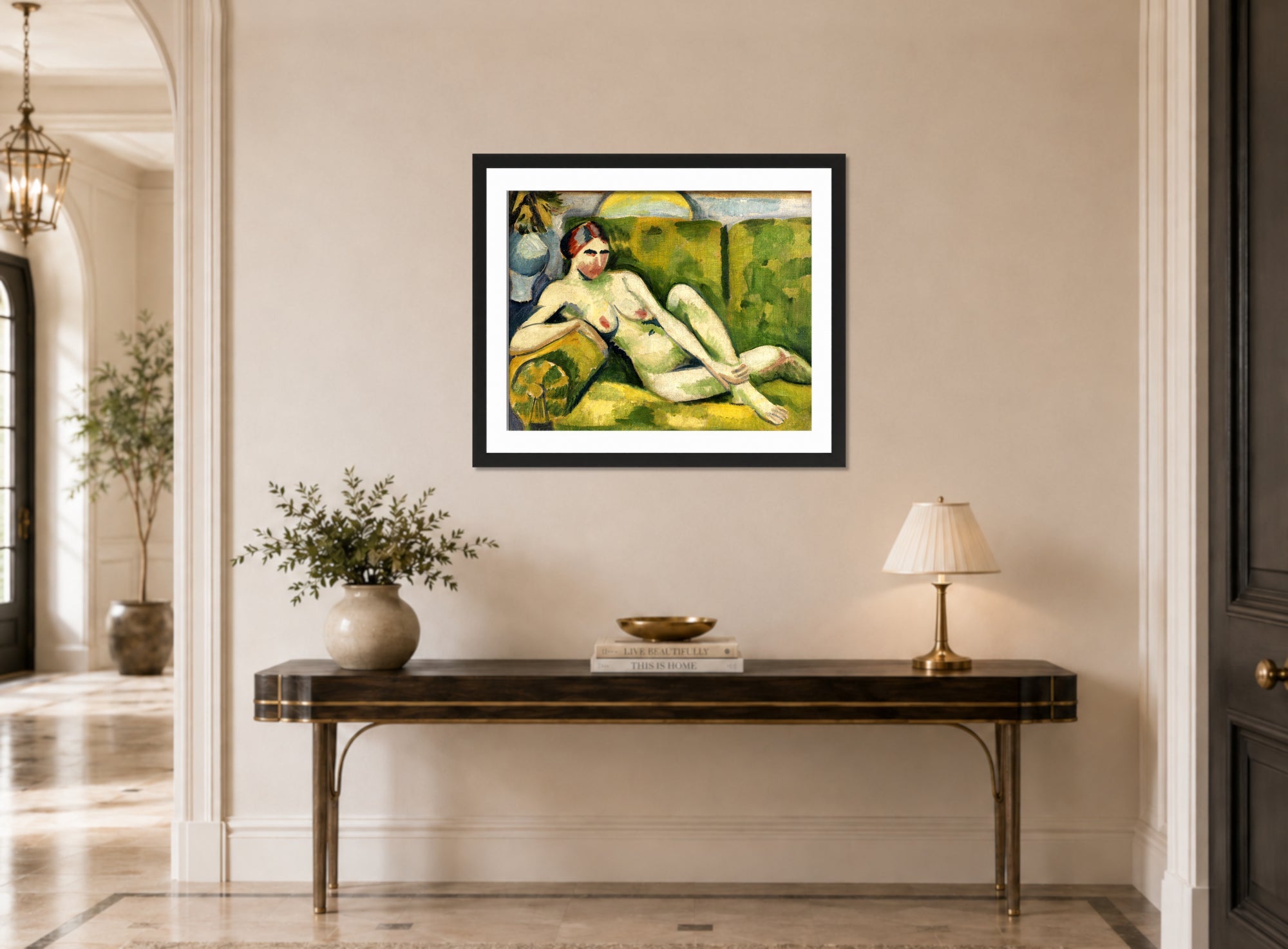
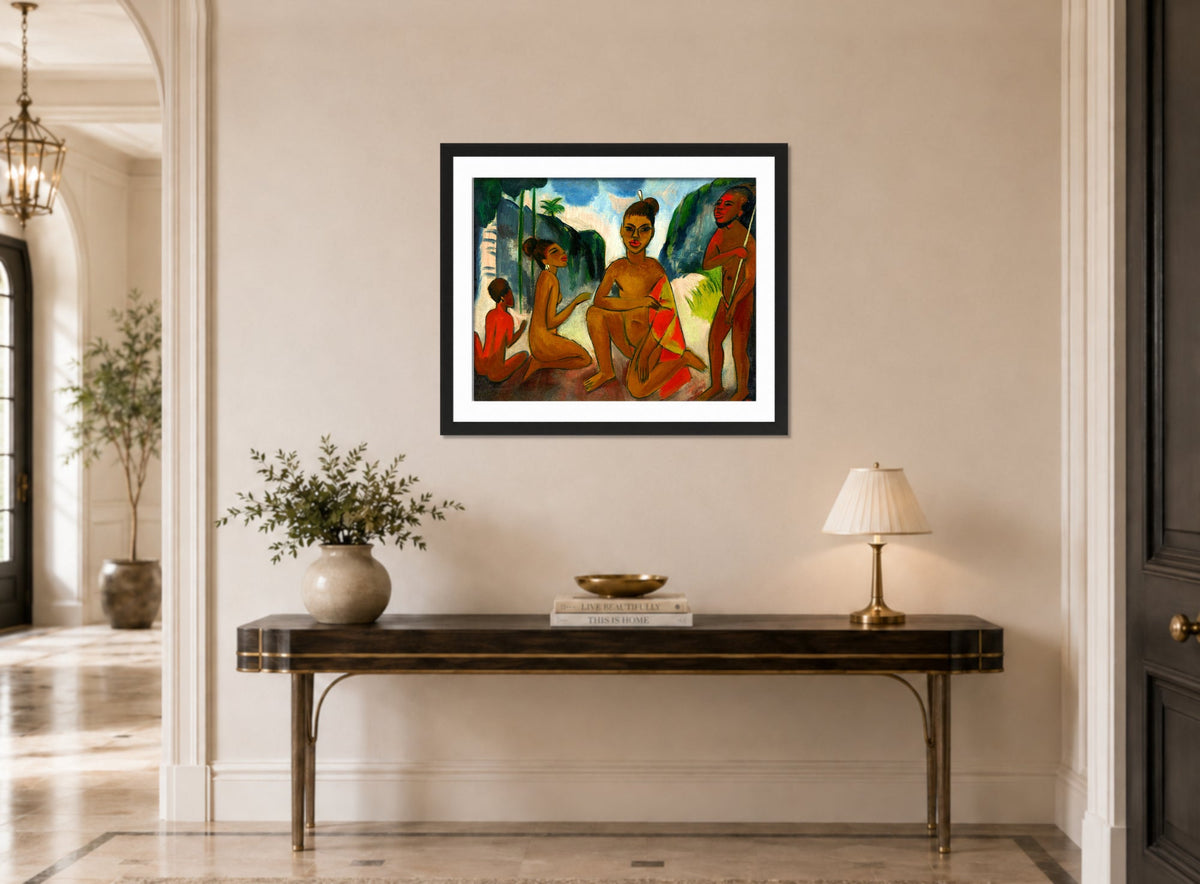
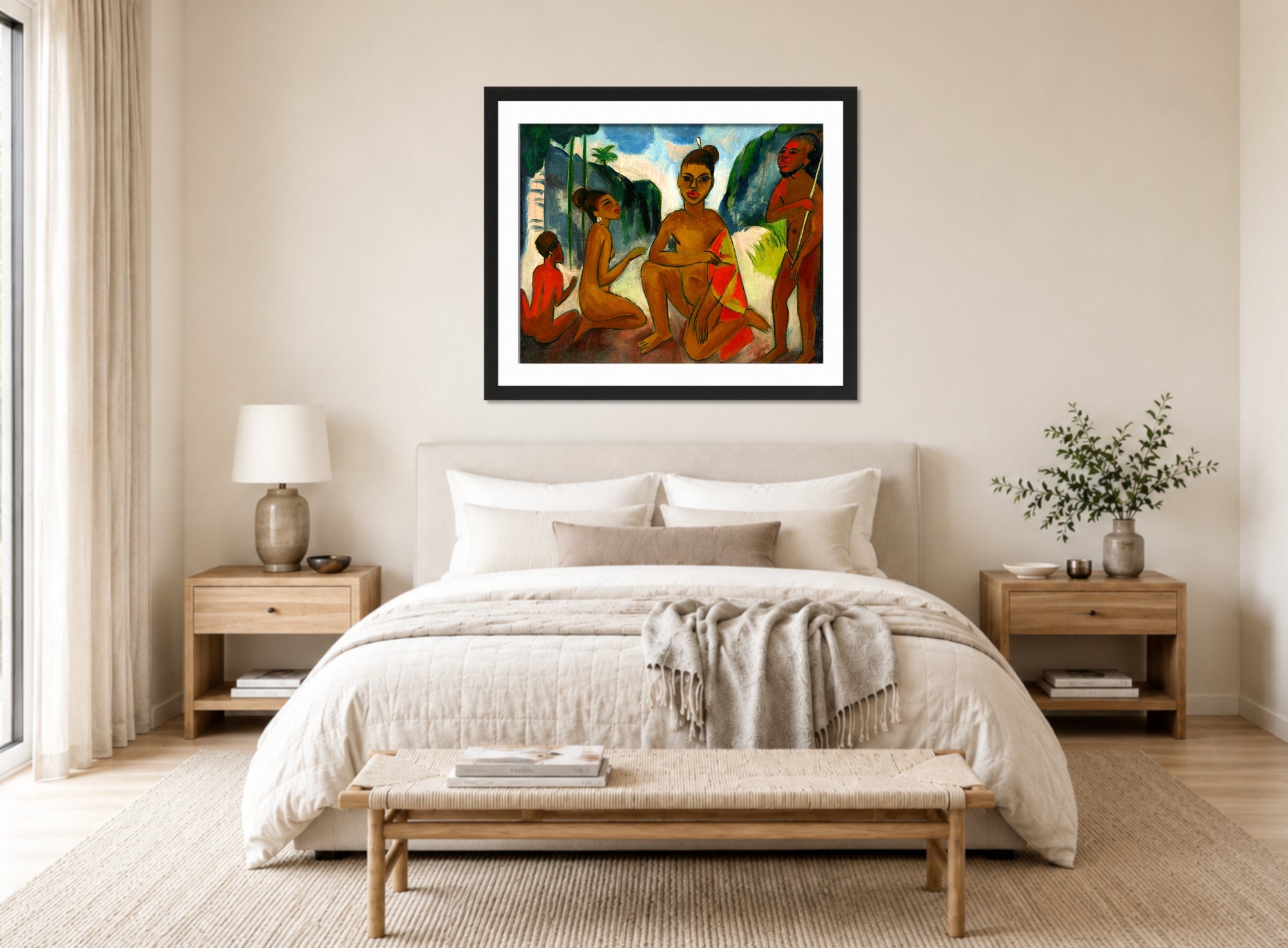
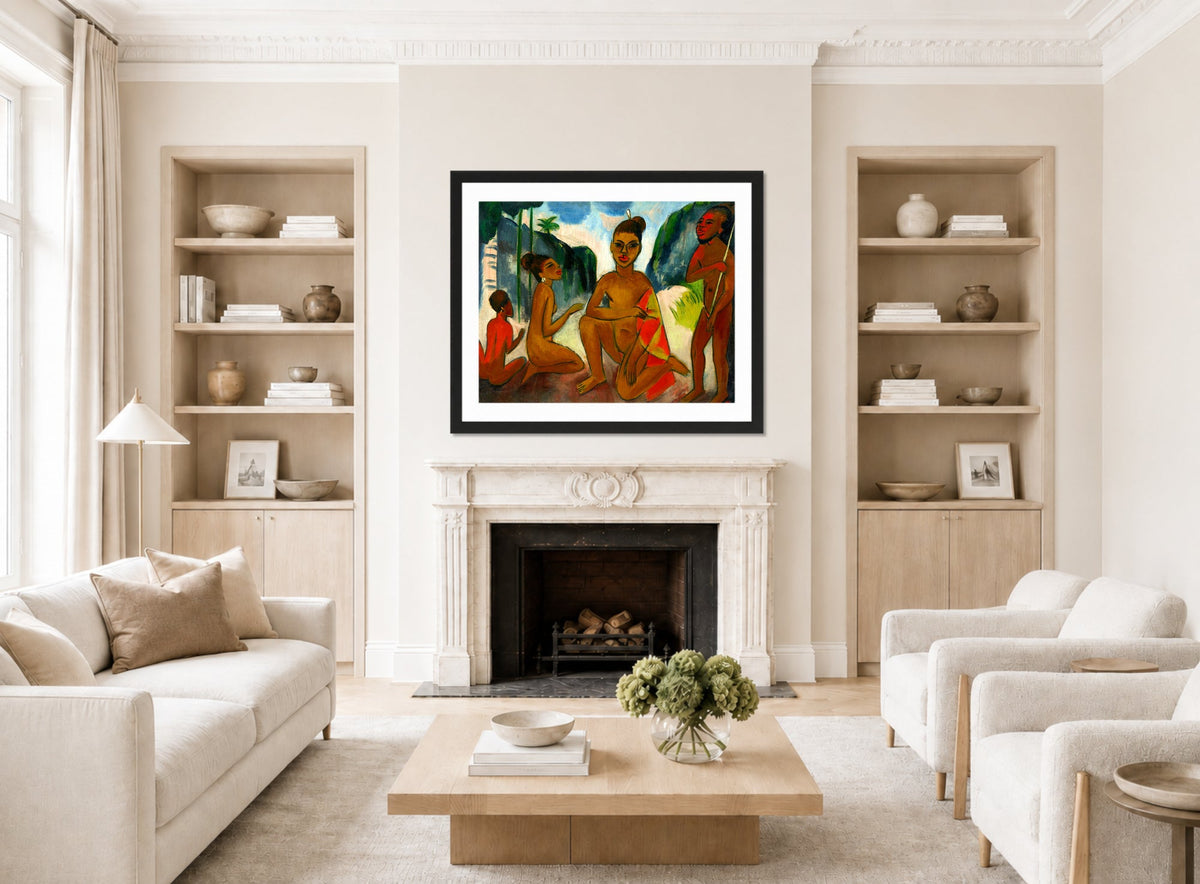
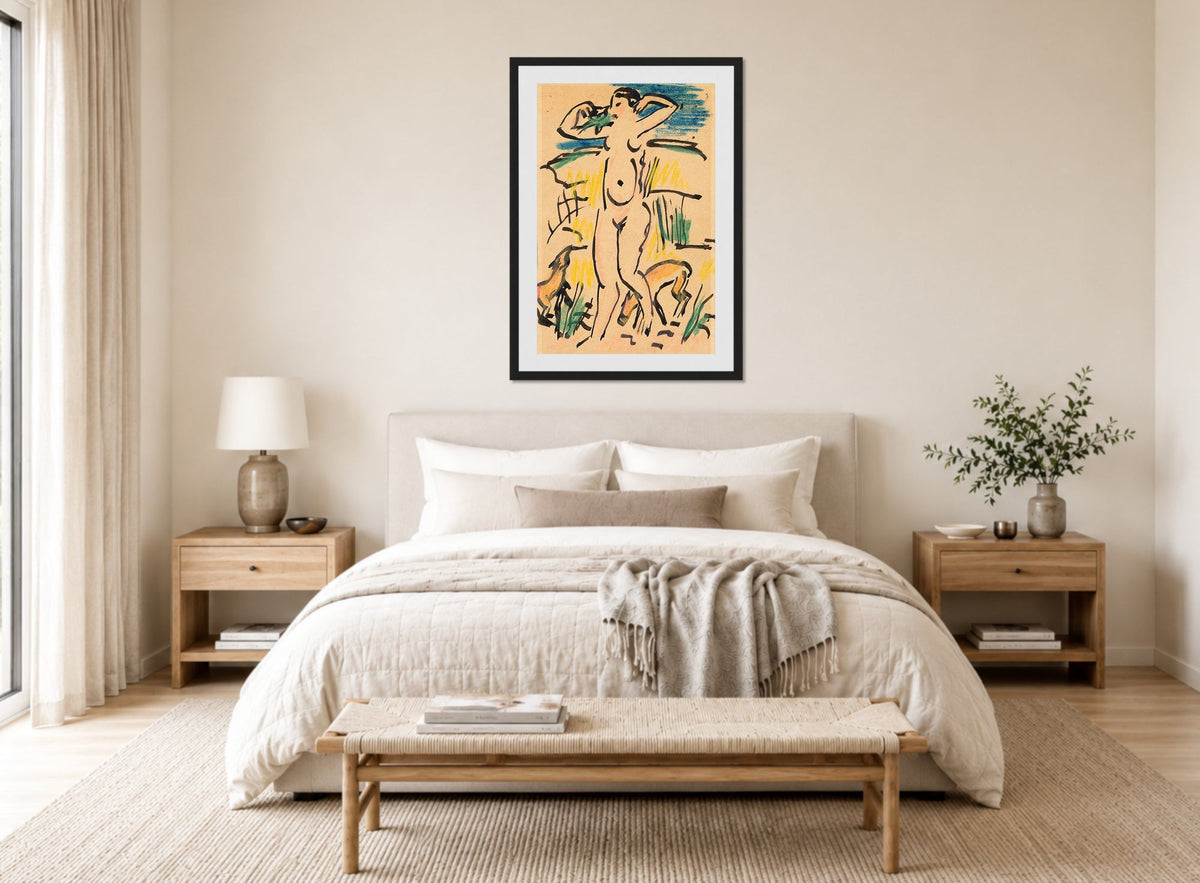
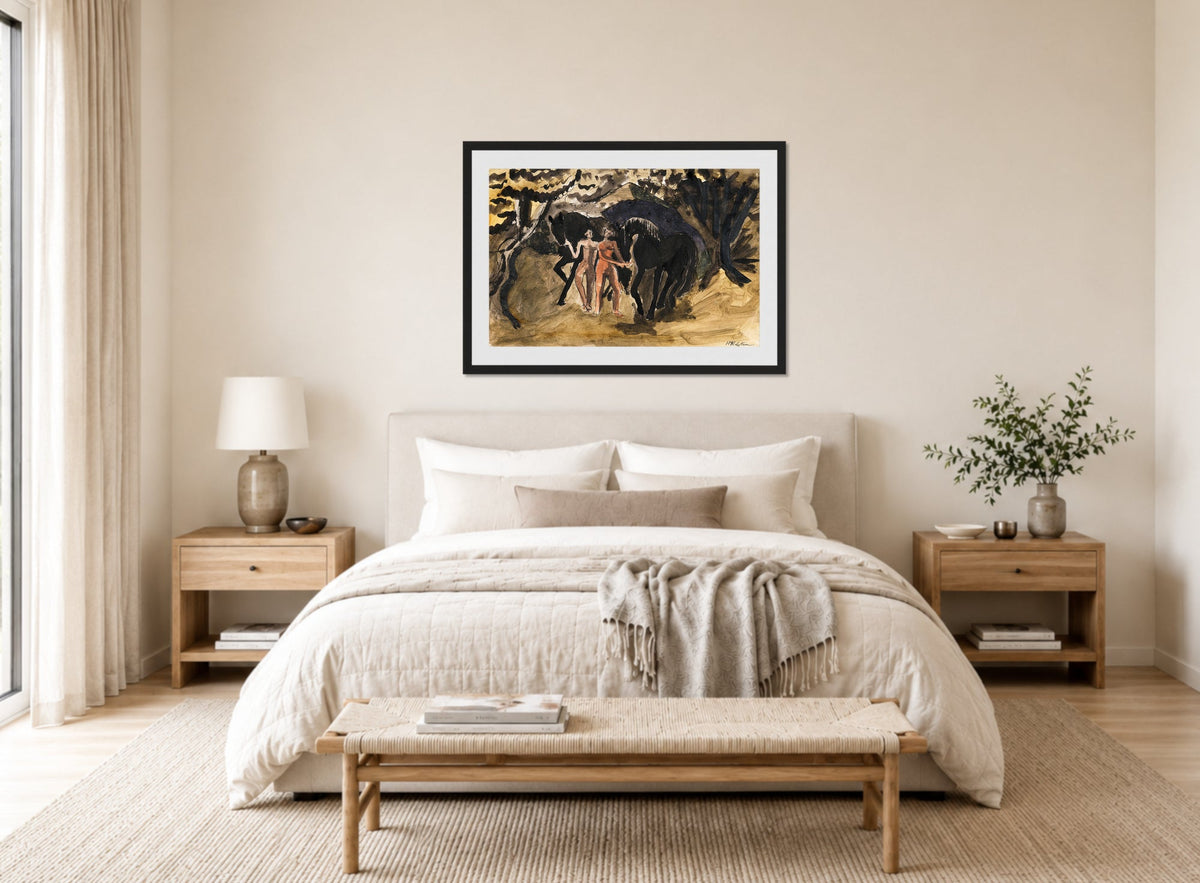
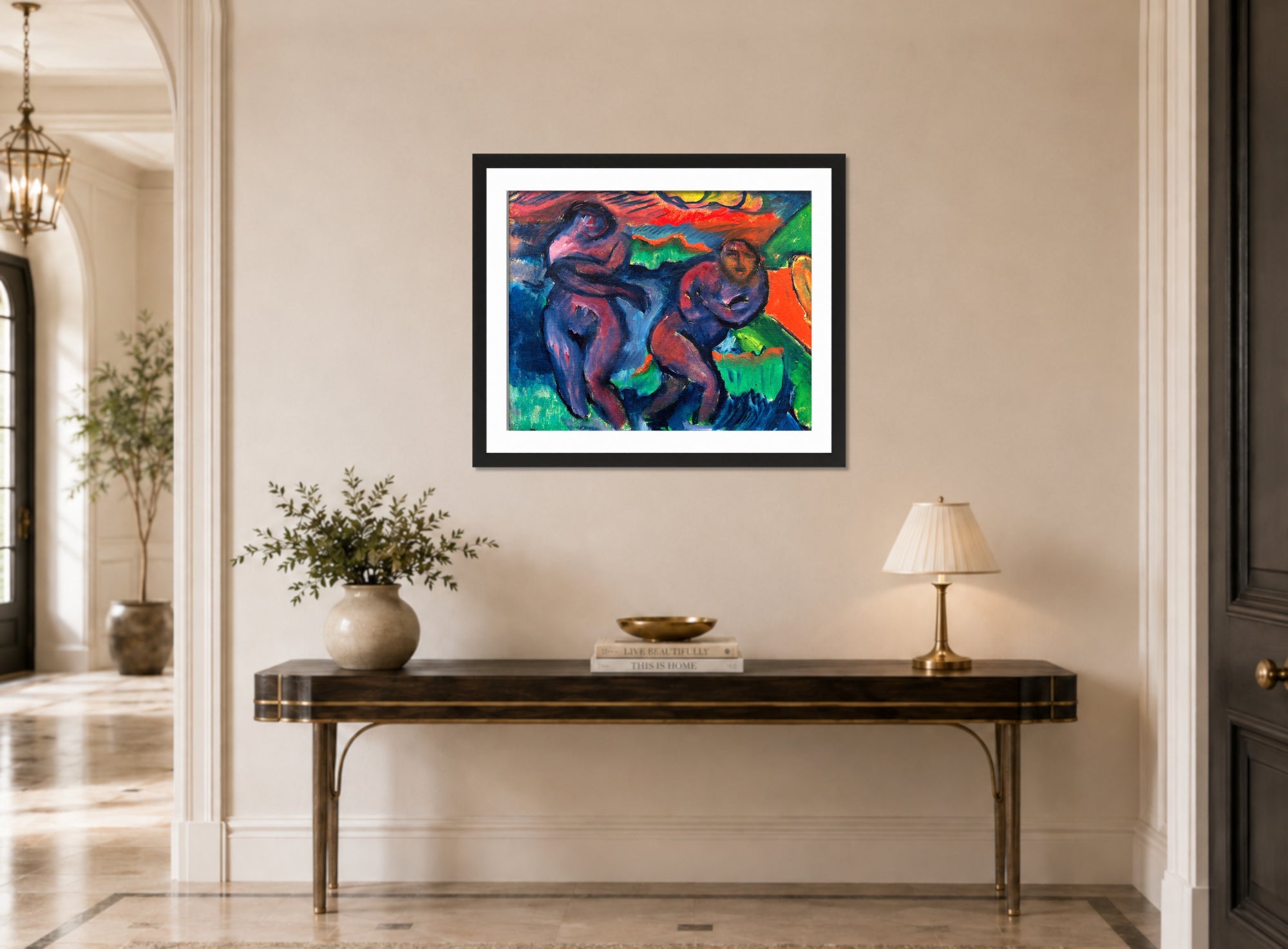
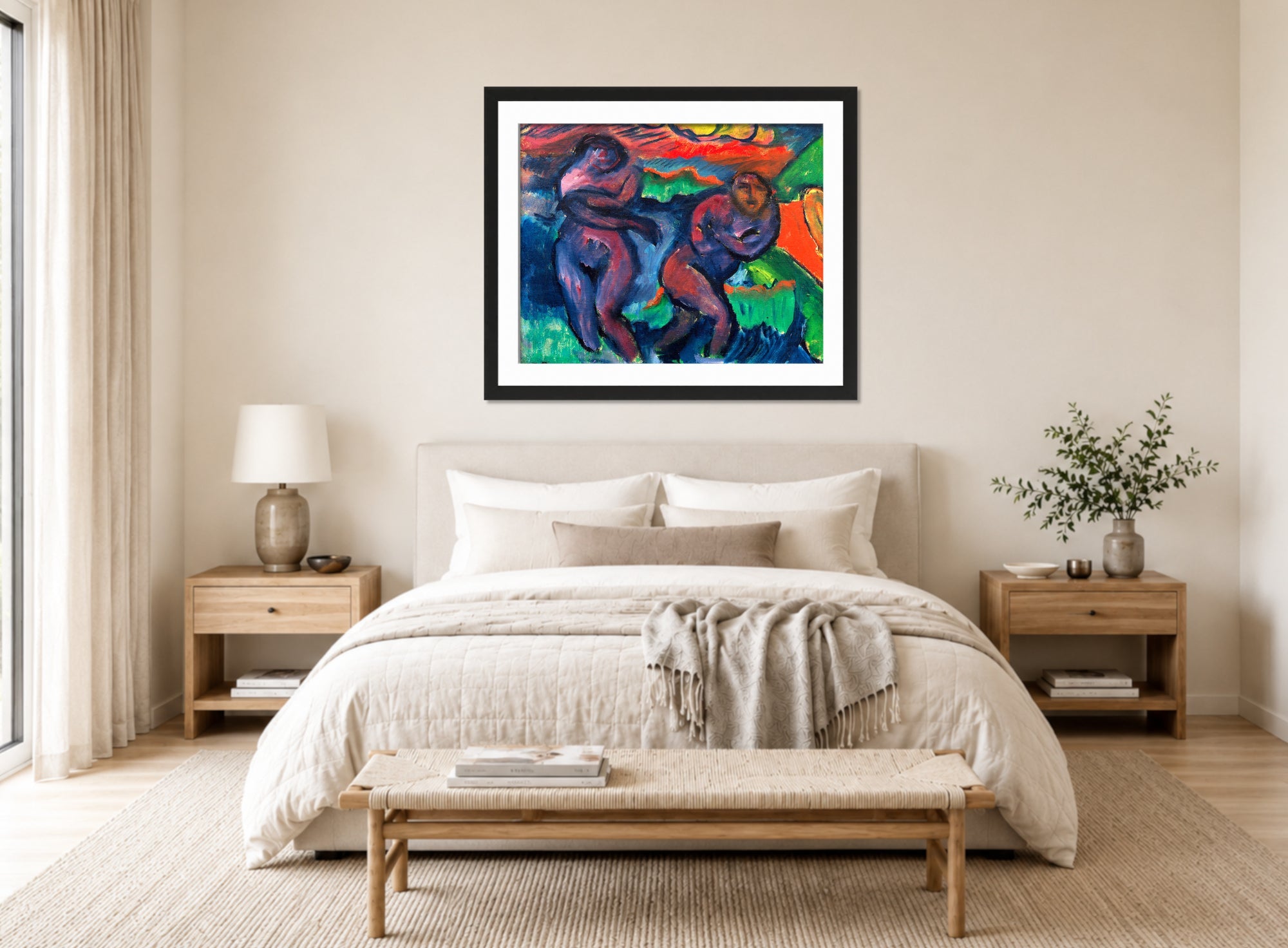
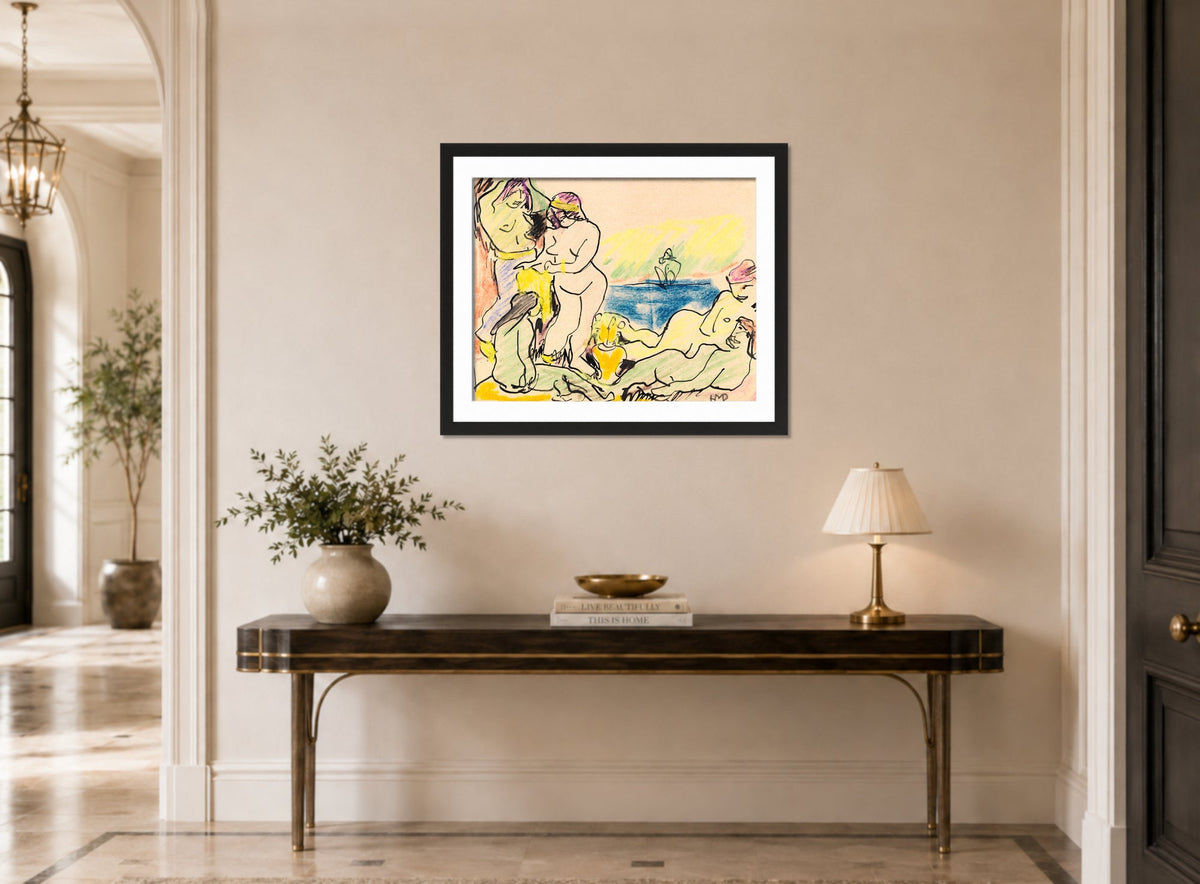
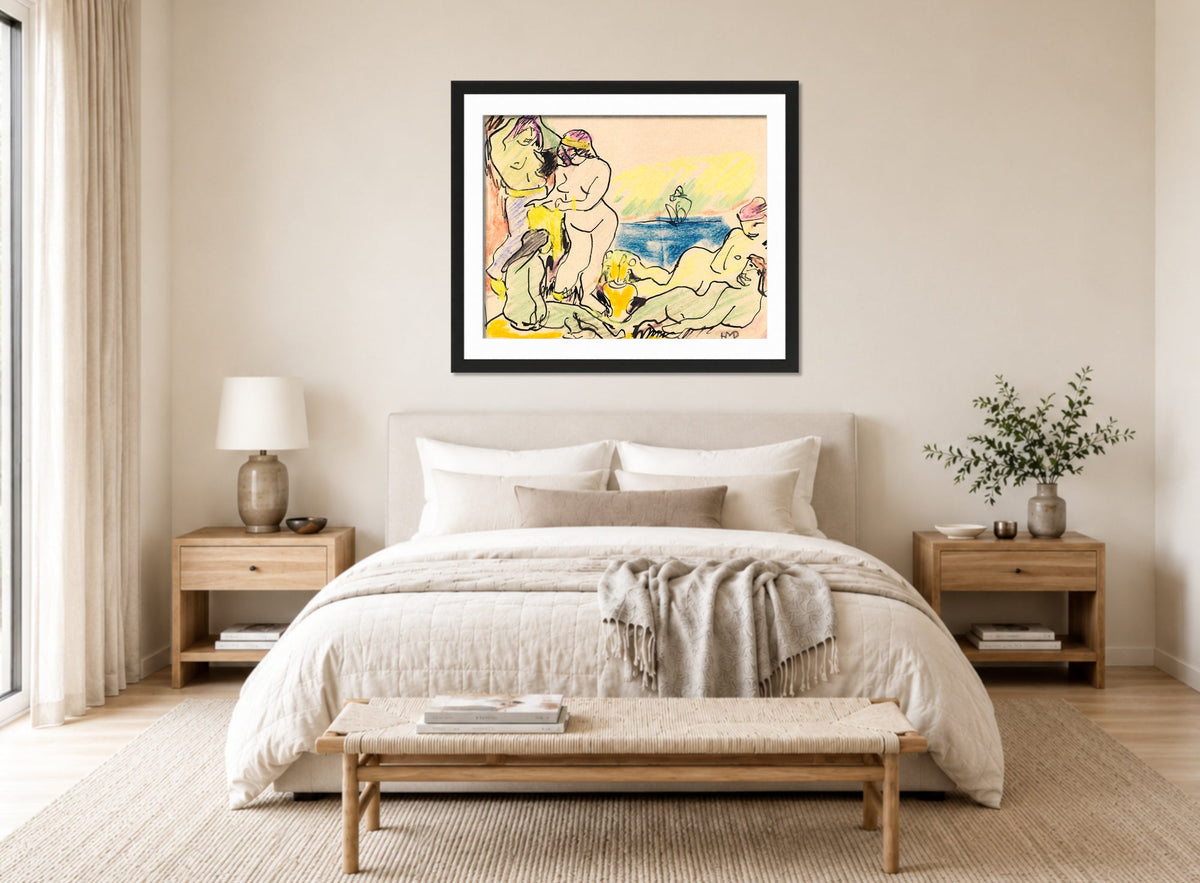
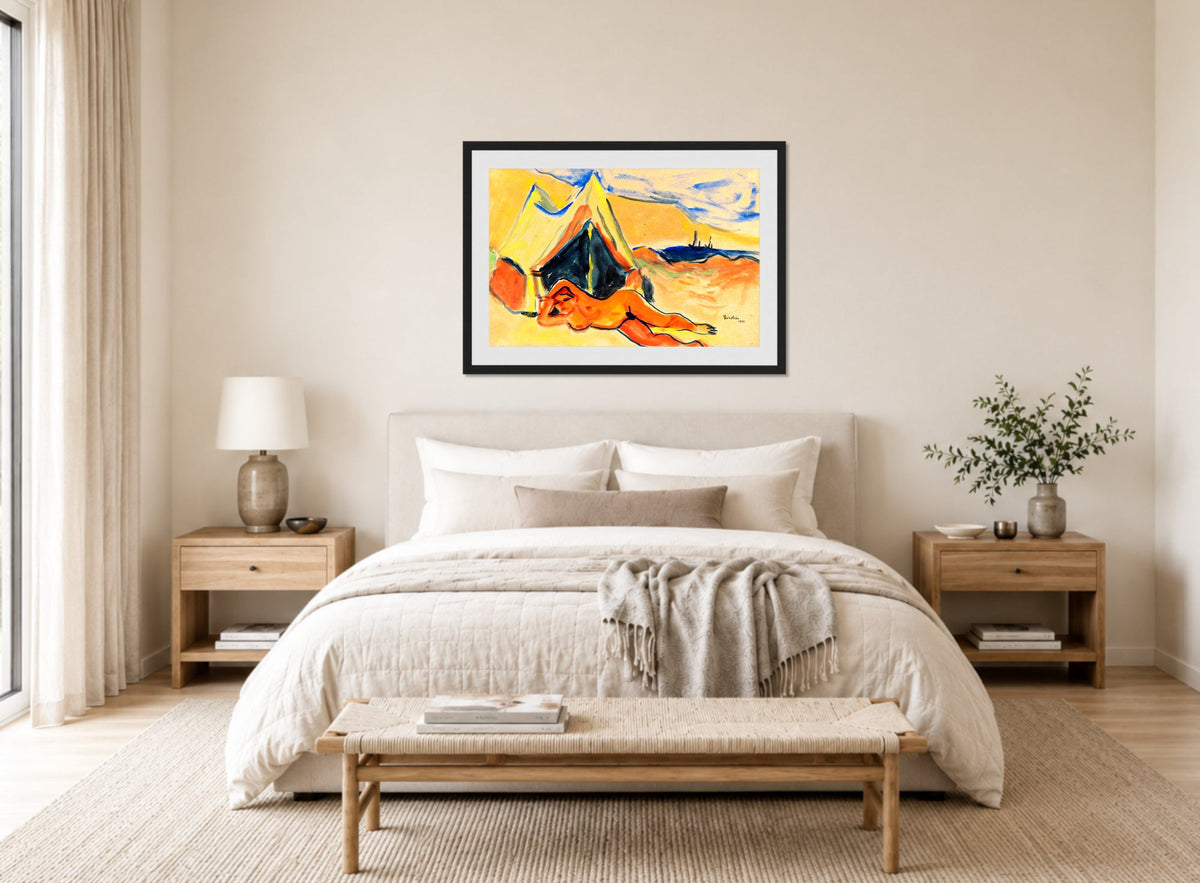
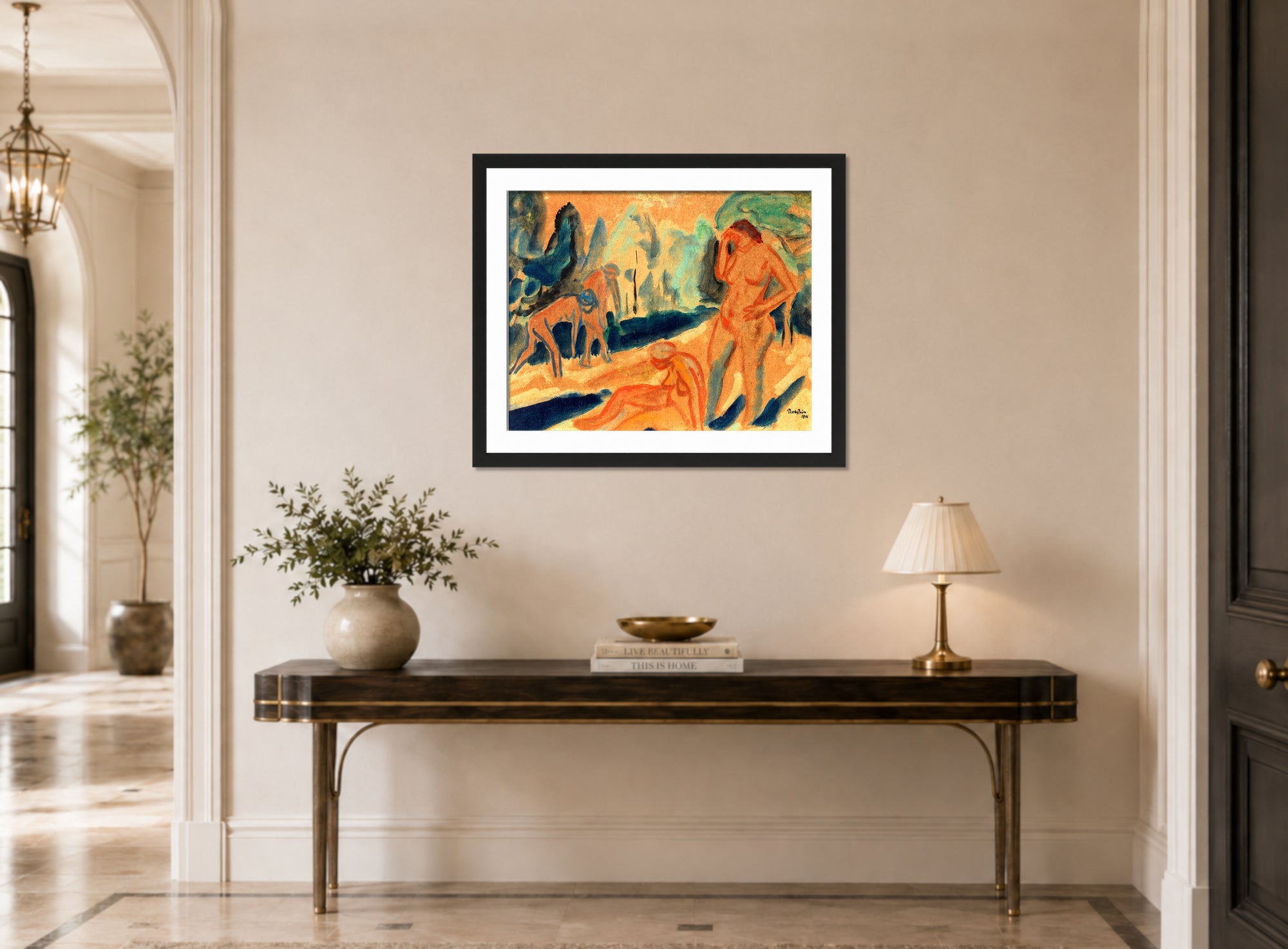
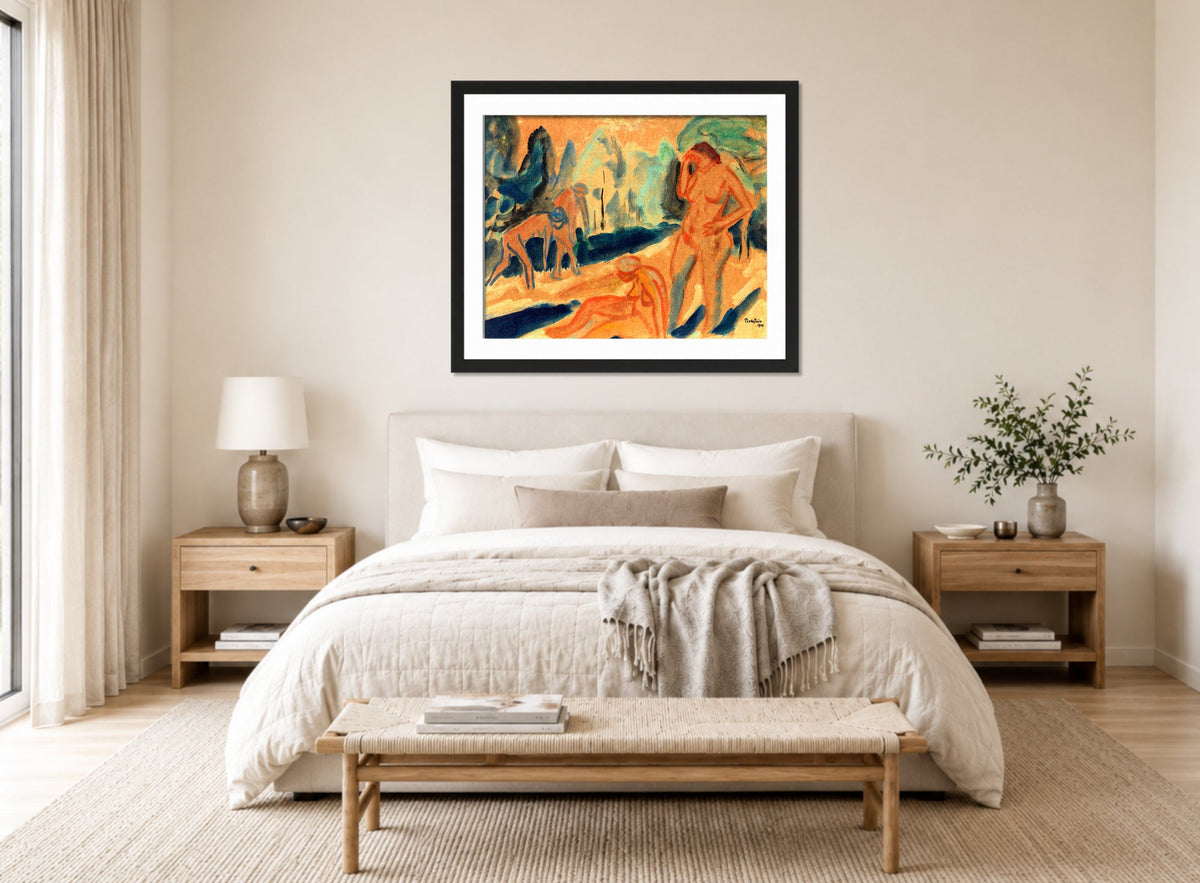
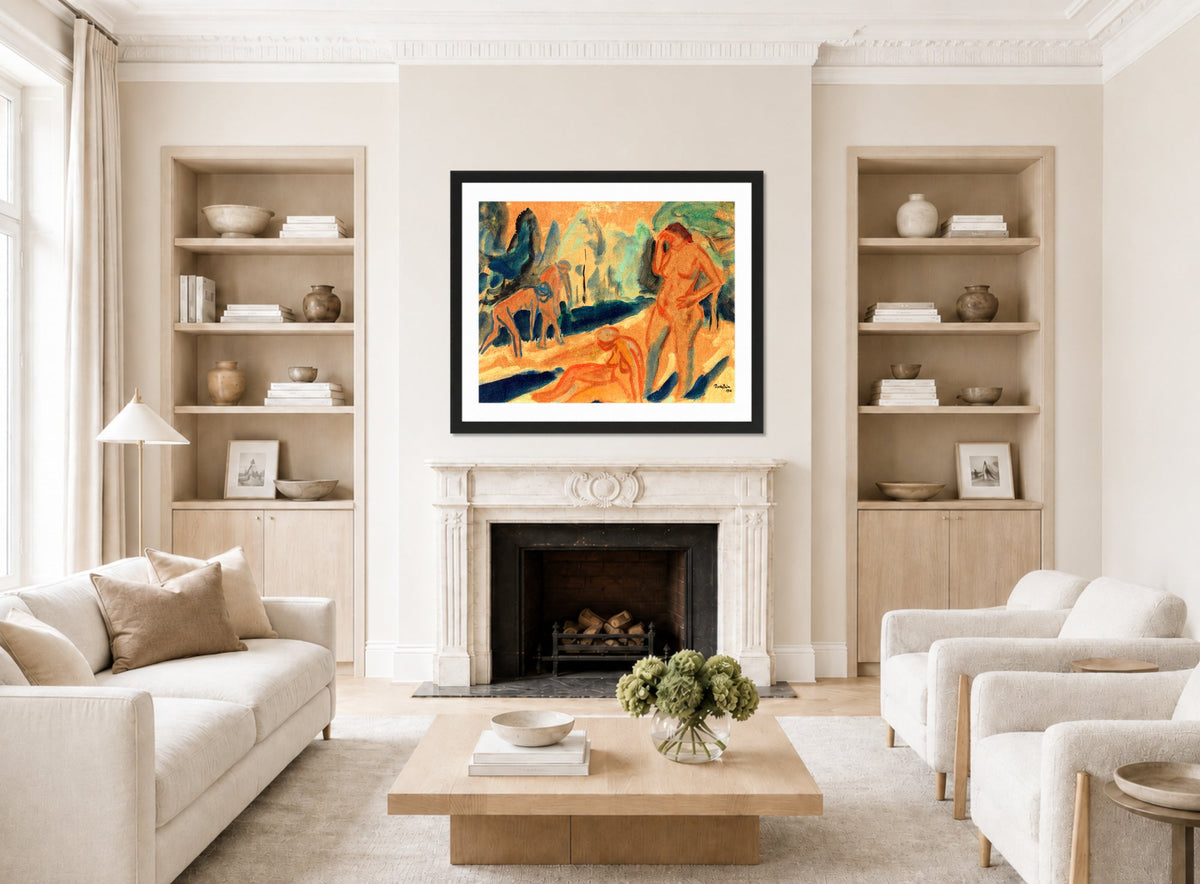
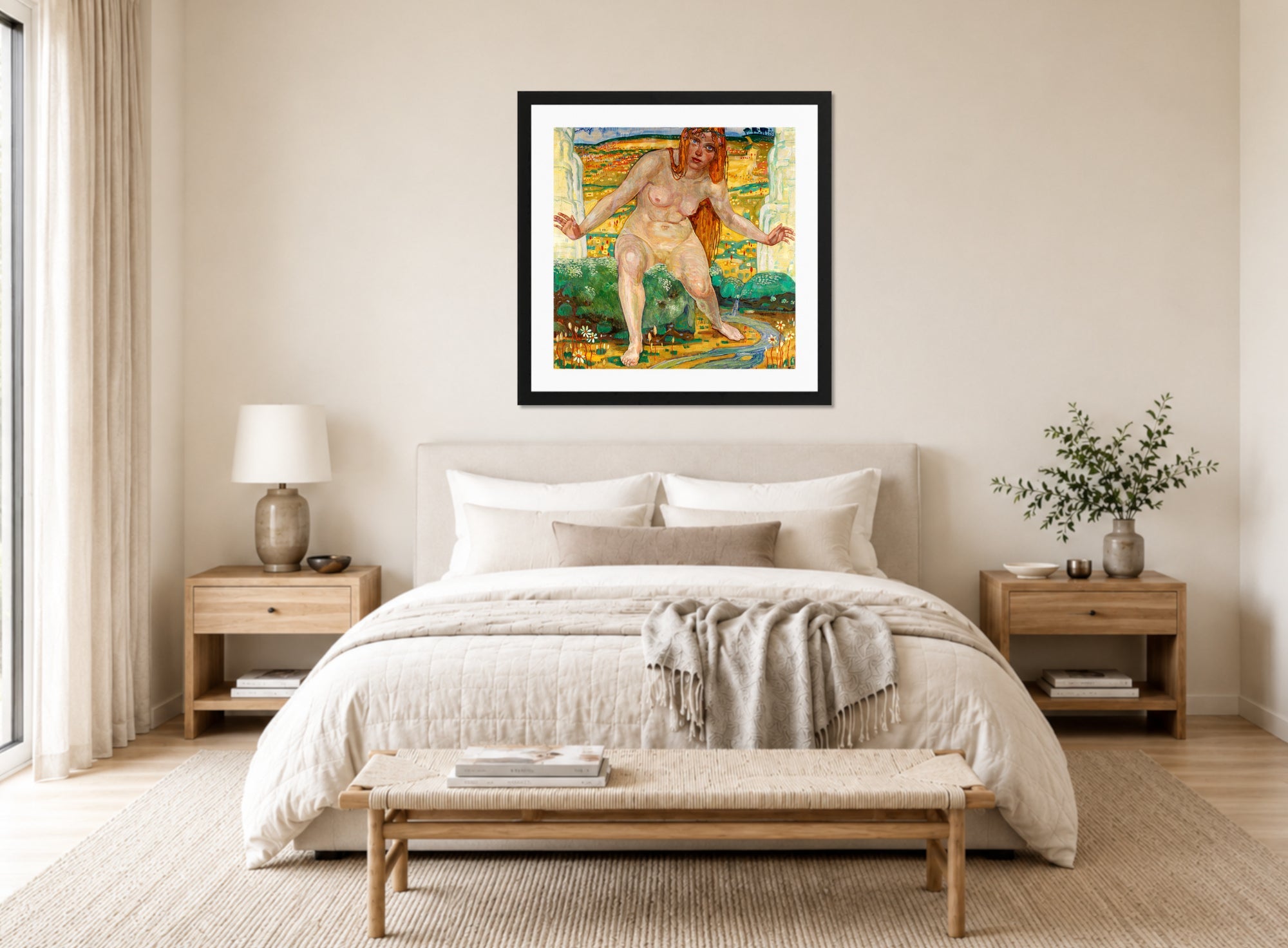
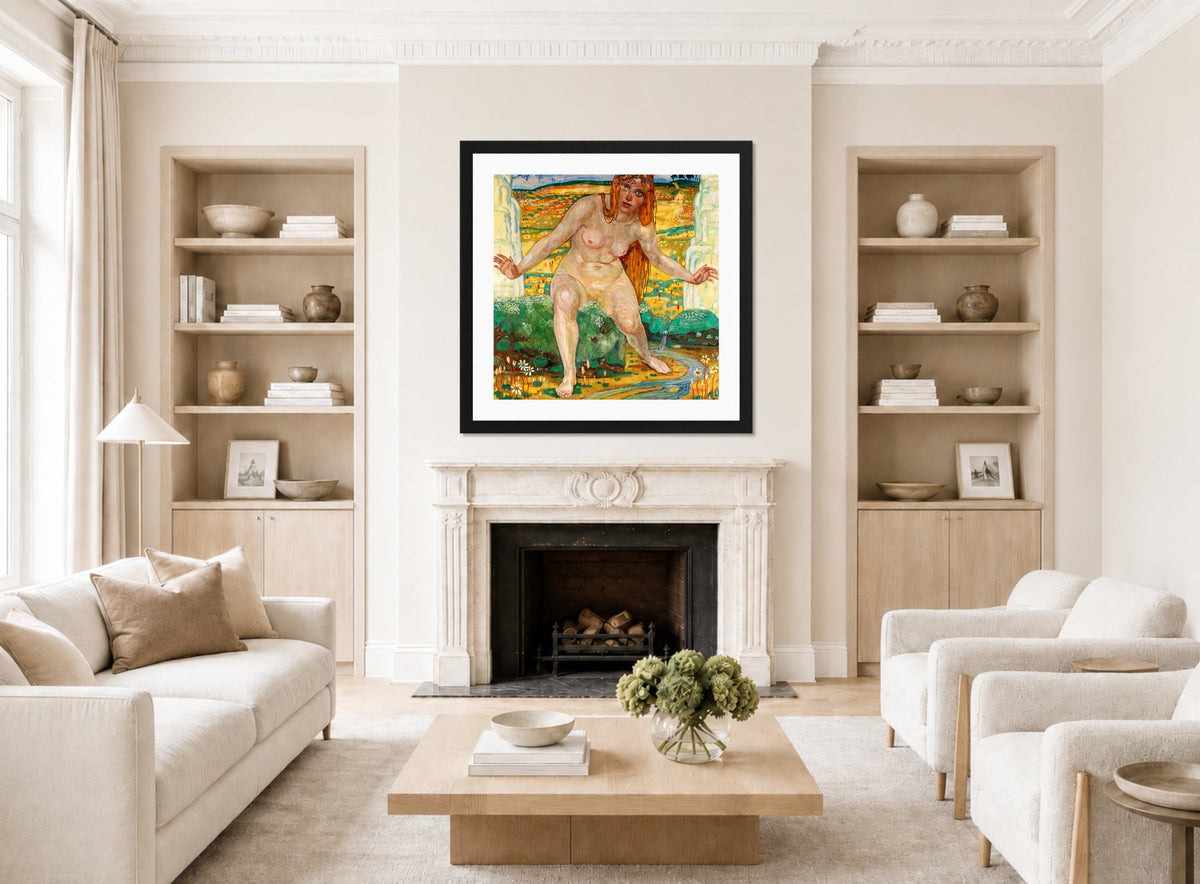
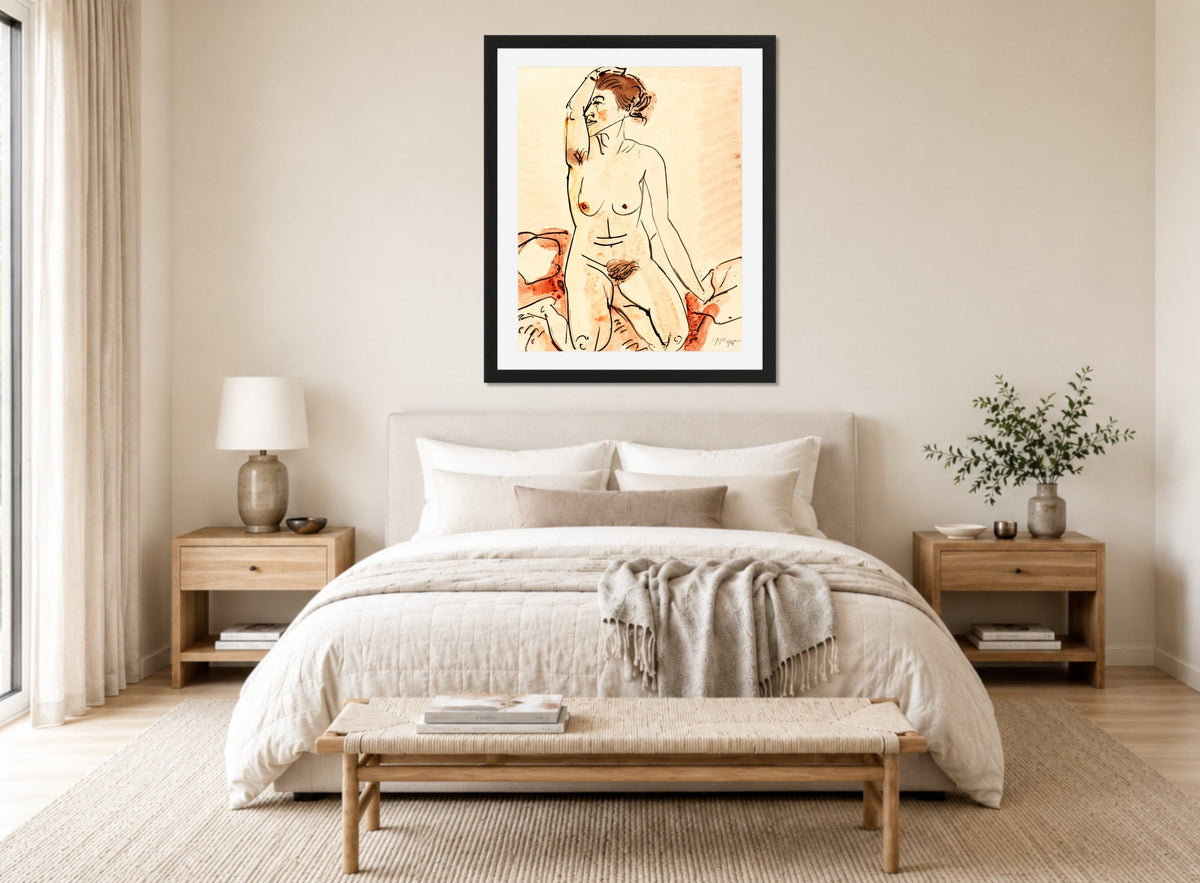
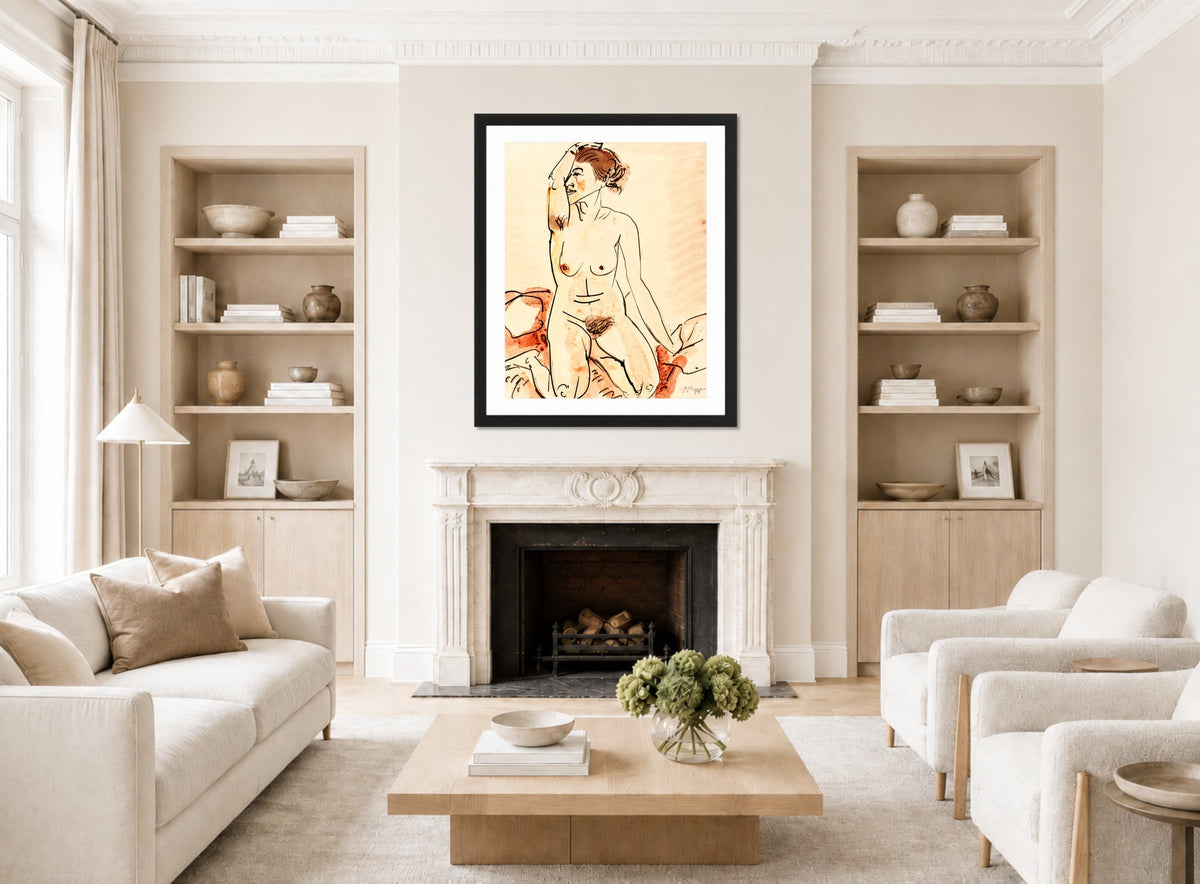
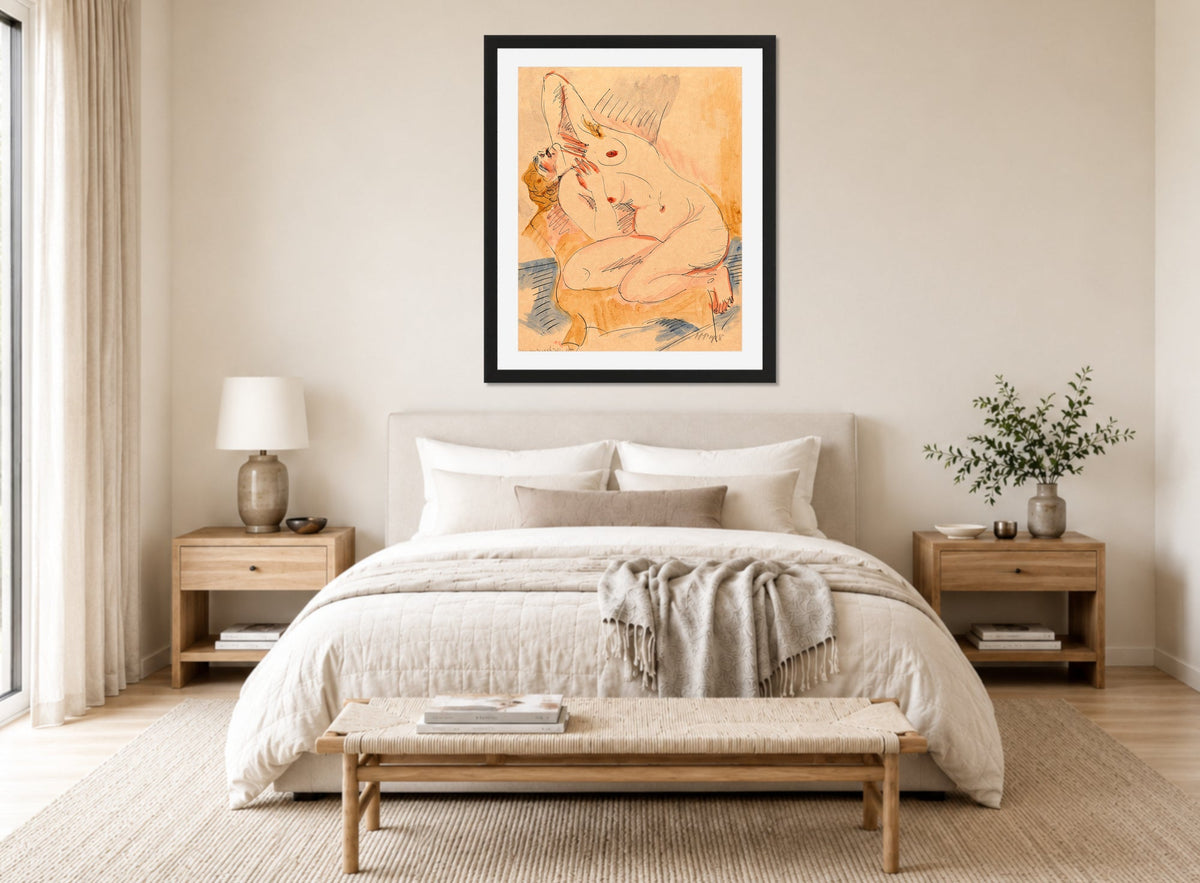
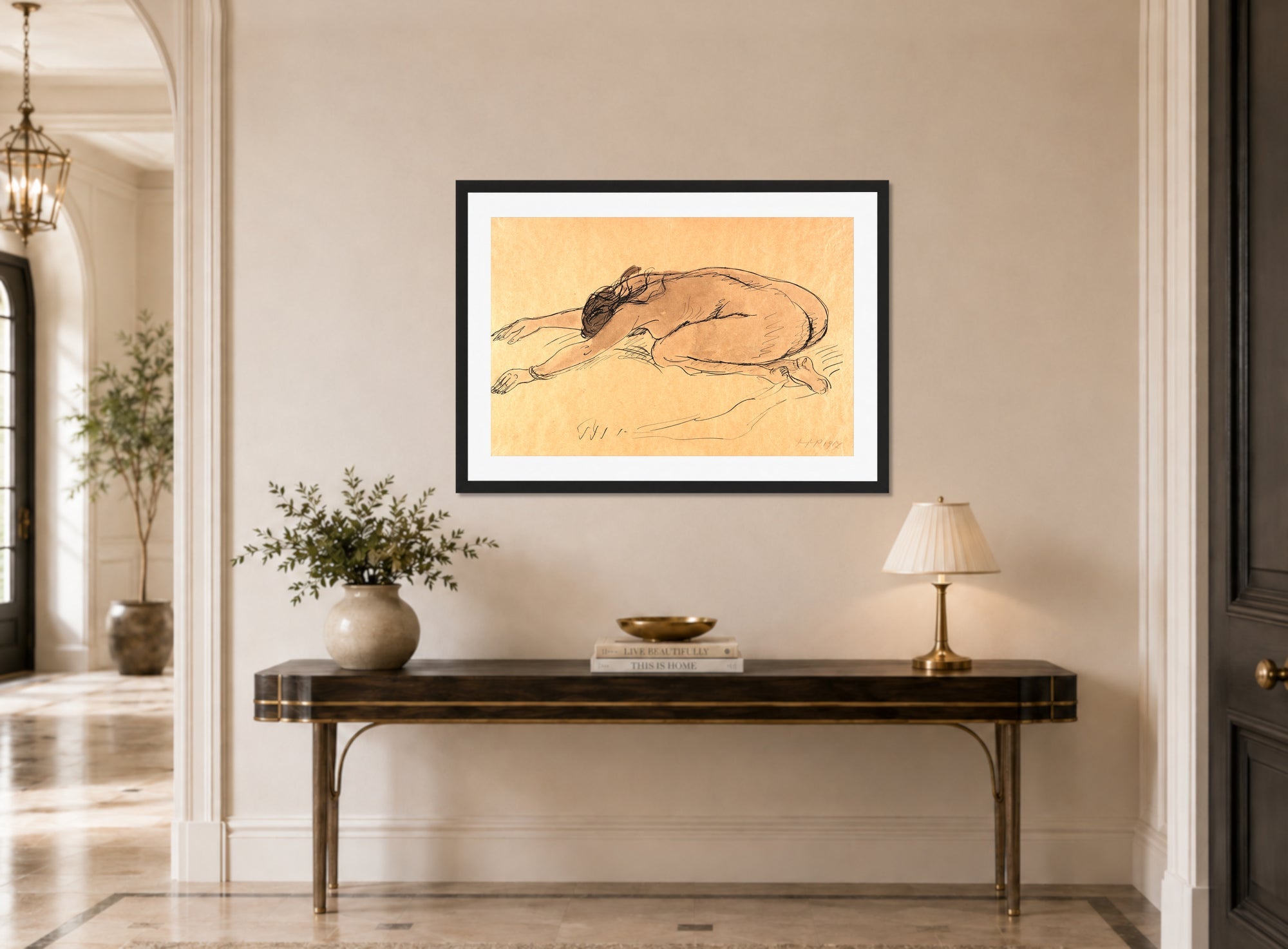
Portrait-format figure studies are well suited to bedrooms, hallways, dressing areas and narrower walls, while horizontal bathing scenes can work effectively above beds, sofas and sideboards.
The strength of Pechstein's colour also means these works can interact strongly with surrounding décor.
Images dominated by warm reds, oranges and ochres can introduce warmth into neutral rooms, while compositions combining skin tones with blue or green landscape can produce a more balanced palette.
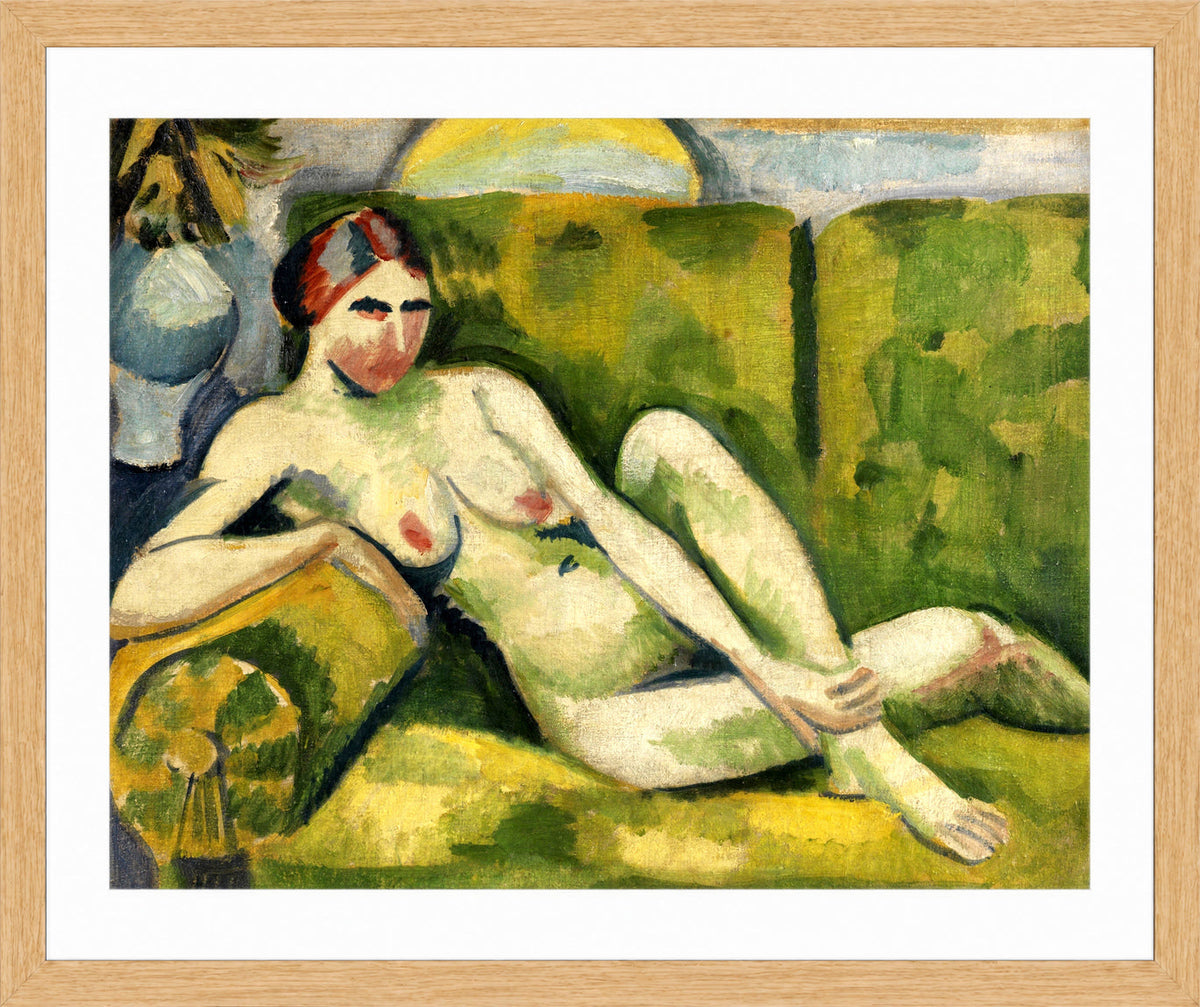
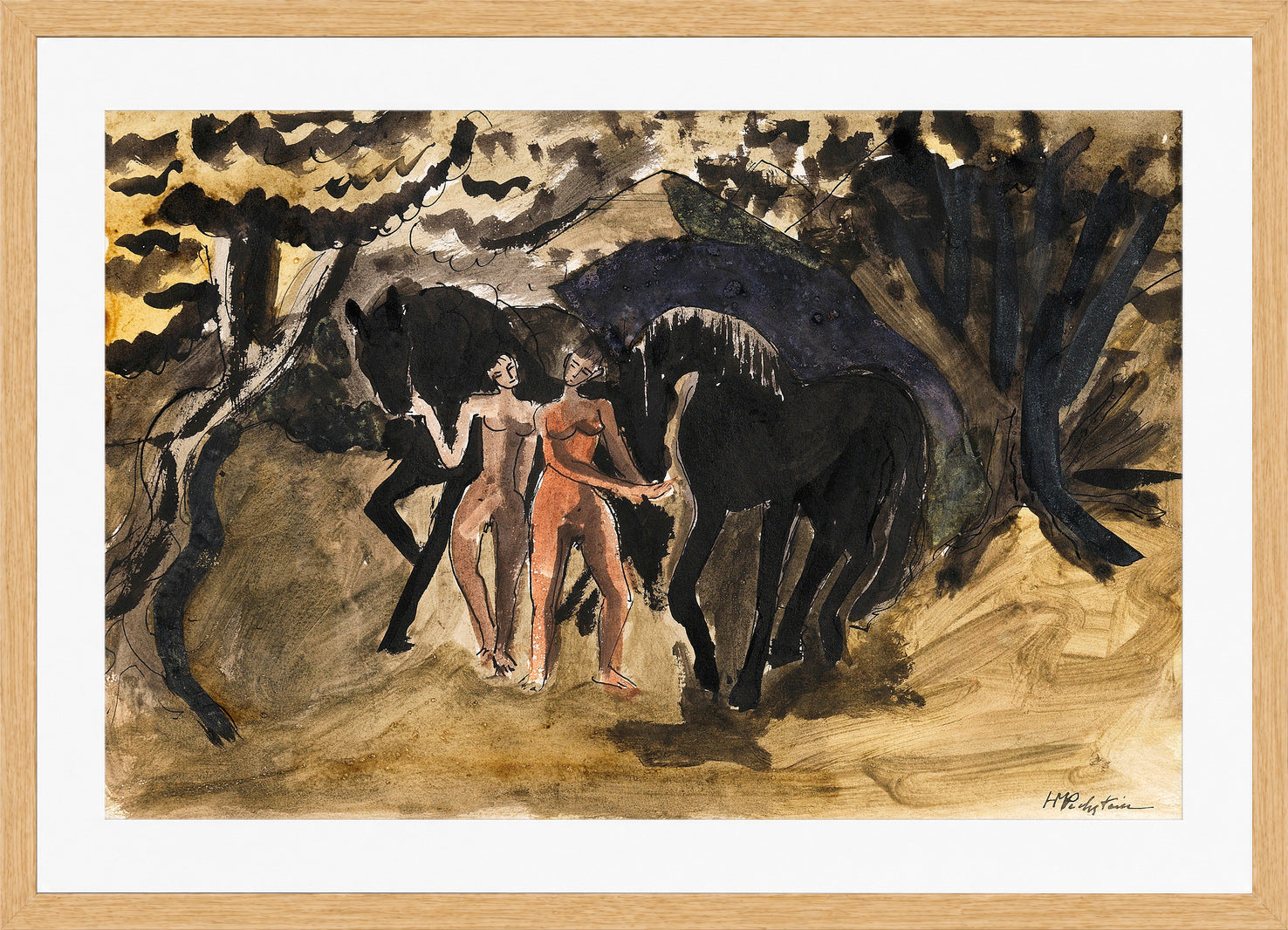
Black frames emphasise Pechstein's characteristic contours and graphic structure, while light wood frames can soften the contrast and work particularly well with natural materials and Scandinavian-inspired interiors.
GalleryThane's Max Pechstein nude artworks are available across selected sizes as fine art prints, handmade framed prints and canvas panels.
Frequently Asked Questions
Did Max Pechstein paint nude figures?
Yes. Nude figures and bathers were important recurring subjects throughout Pechstein's career and appear in his paintings, drawings and prints.
Why did Max Pechstein paint bathers?
Bathing scenes allowed Pechstein to combine the human figure with landscape and water. They also reflected the broader Die Brücke interest in representing the body outside the formal conventions of academic studio art.
What style are Max Pechstein's nudes?
Pechstein's nude works are principally associated with German Expressionism. They typically feature simplified anatomy, strong outlines, heightened colour and reduced modelling rather than conventional academic naturalism.
Was the nude important to Die Brücke?
Yes. The nude was a major subject for Die Brücke artists. Rapid figure drawing, bathers and figures placed within natural environments allowed members of the group to experiment with freer and more immediate methods of representation.
Did Pechstein paint bathers outdoors?
Yes. Many of Pechstein's nude and bather compositions place figures beside beaches, lakes, pools or woodland, allowing him to integrate the body closely with landscape.
How does Pechstein use colour in his nude paintings?
Pechstein often uses colour expressively rather than naturalistically. Skin may become orange, pink or red and can be contrasted strongly with blue, green, yellow or violet surroundings.
Are Max Pechstein nude prints available framed?
Yes. GalleryThane offers selected Max Pechstein nude and bather works as fine art prints, handmade framed prints and canvas panels in a range of sizes.
Where can I learn more about Max Pechstein?
Read GalleryThane's complete Max Pechstein biography, paintings and prints guide for his Die Brücke period, landscapes, coastal work, Palau journey, printmaking and later career.