


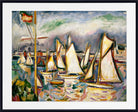
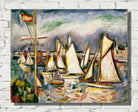
The Regatta at Antwerp (1906) by Othon Friesz
Couldn't load pickup availability
BUY WITH CONFIDENCE
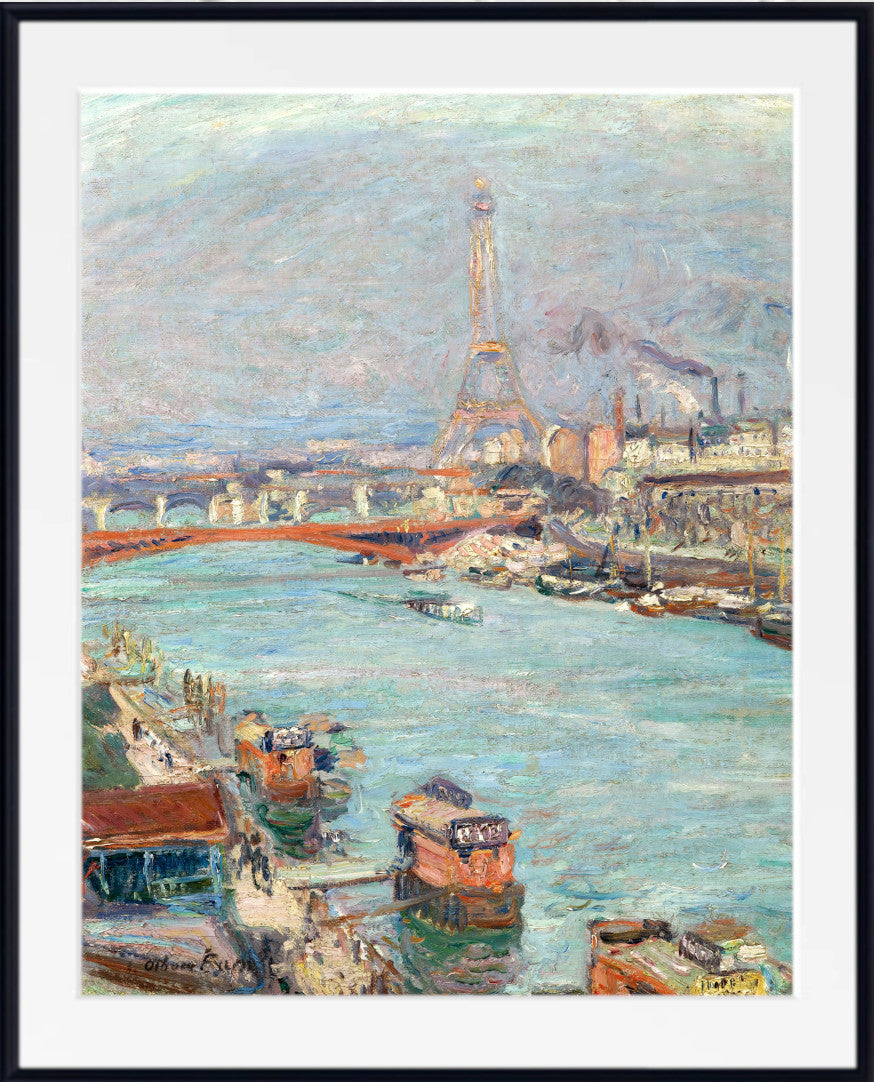
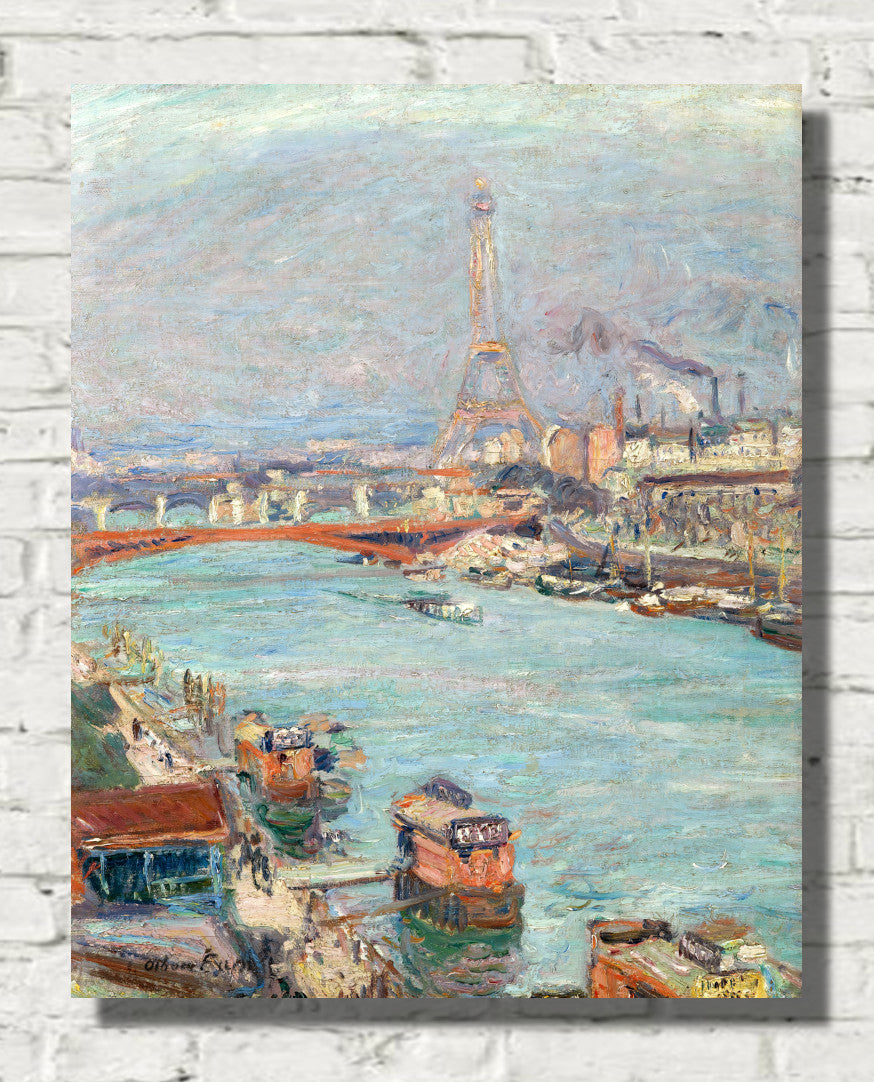
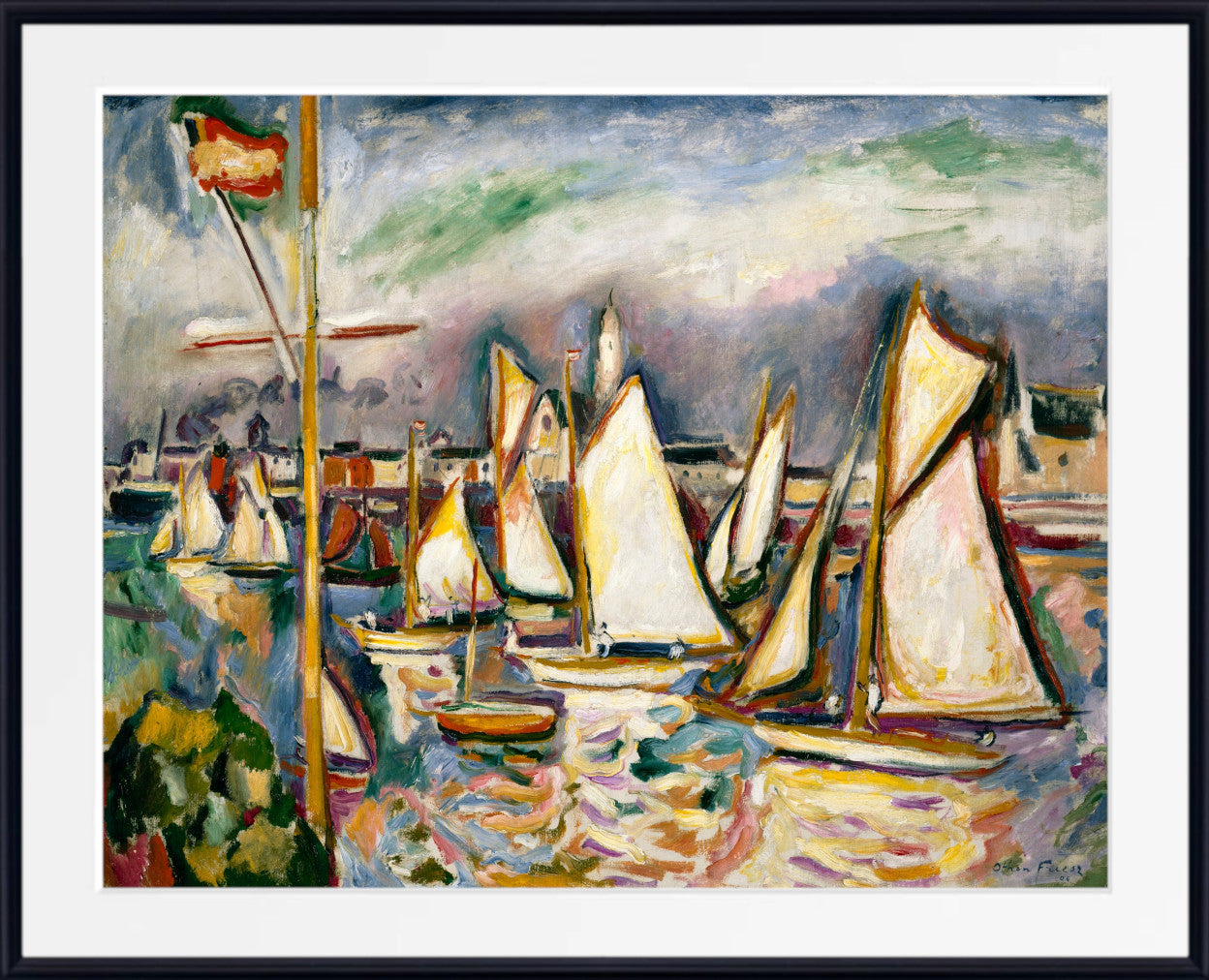
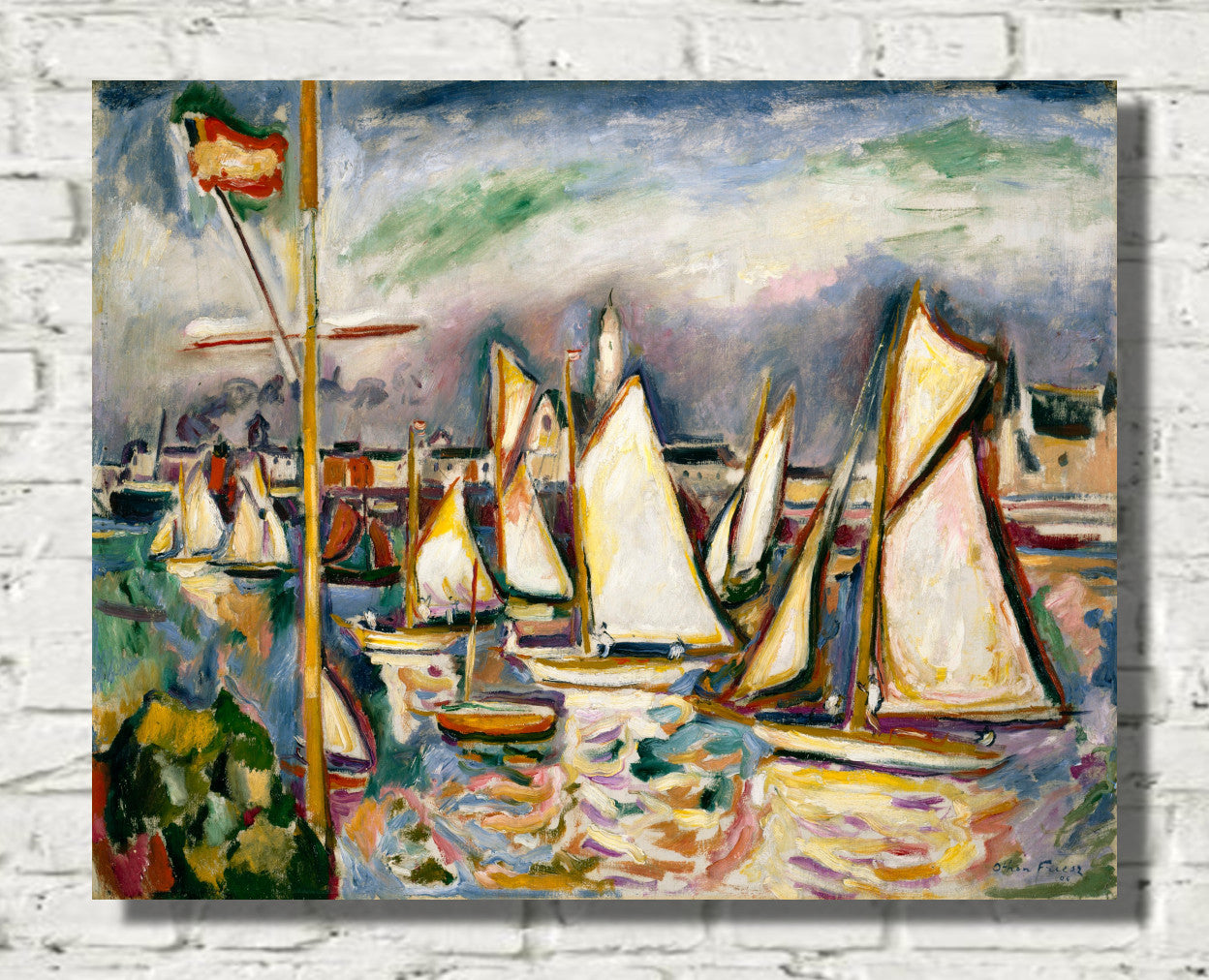
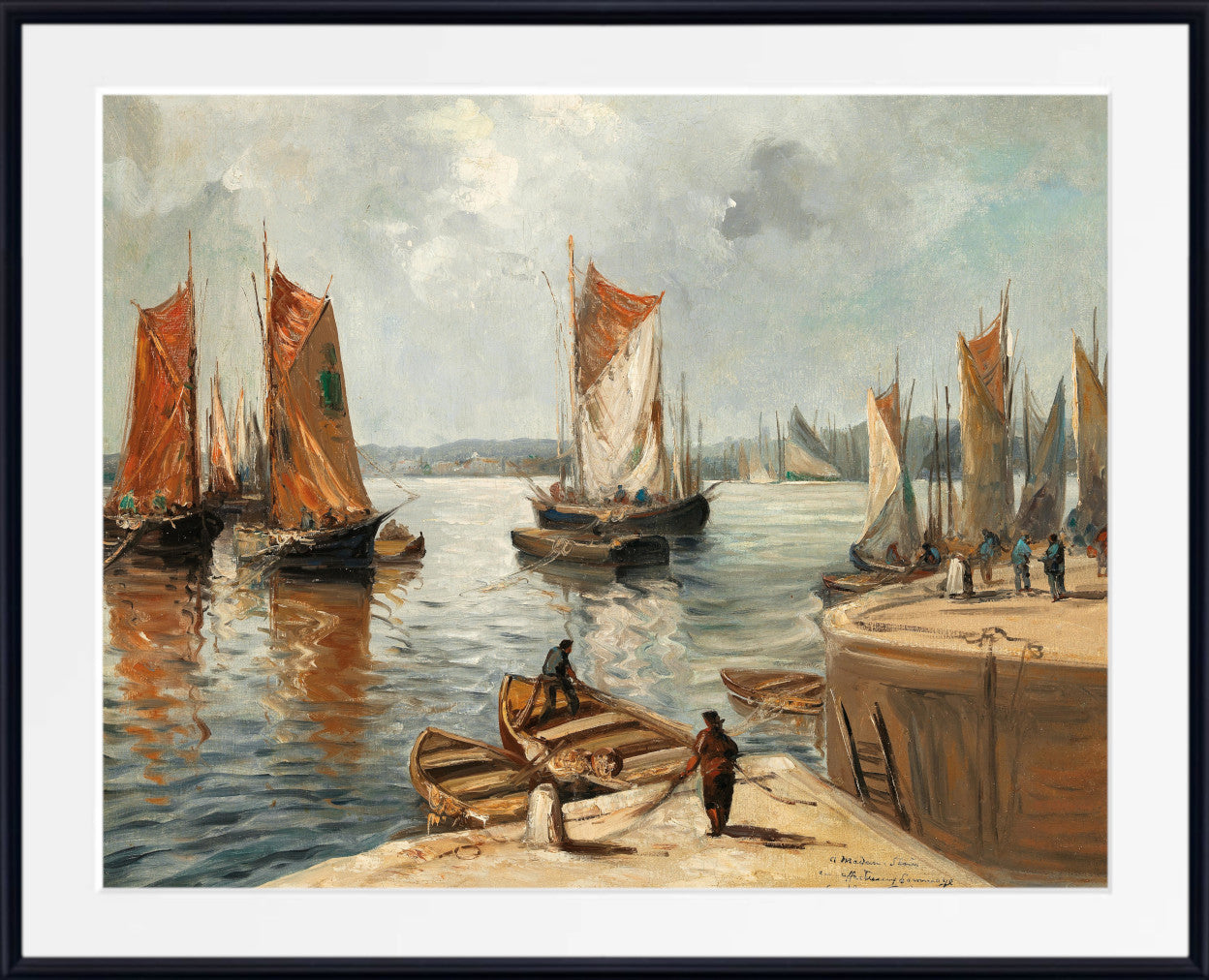
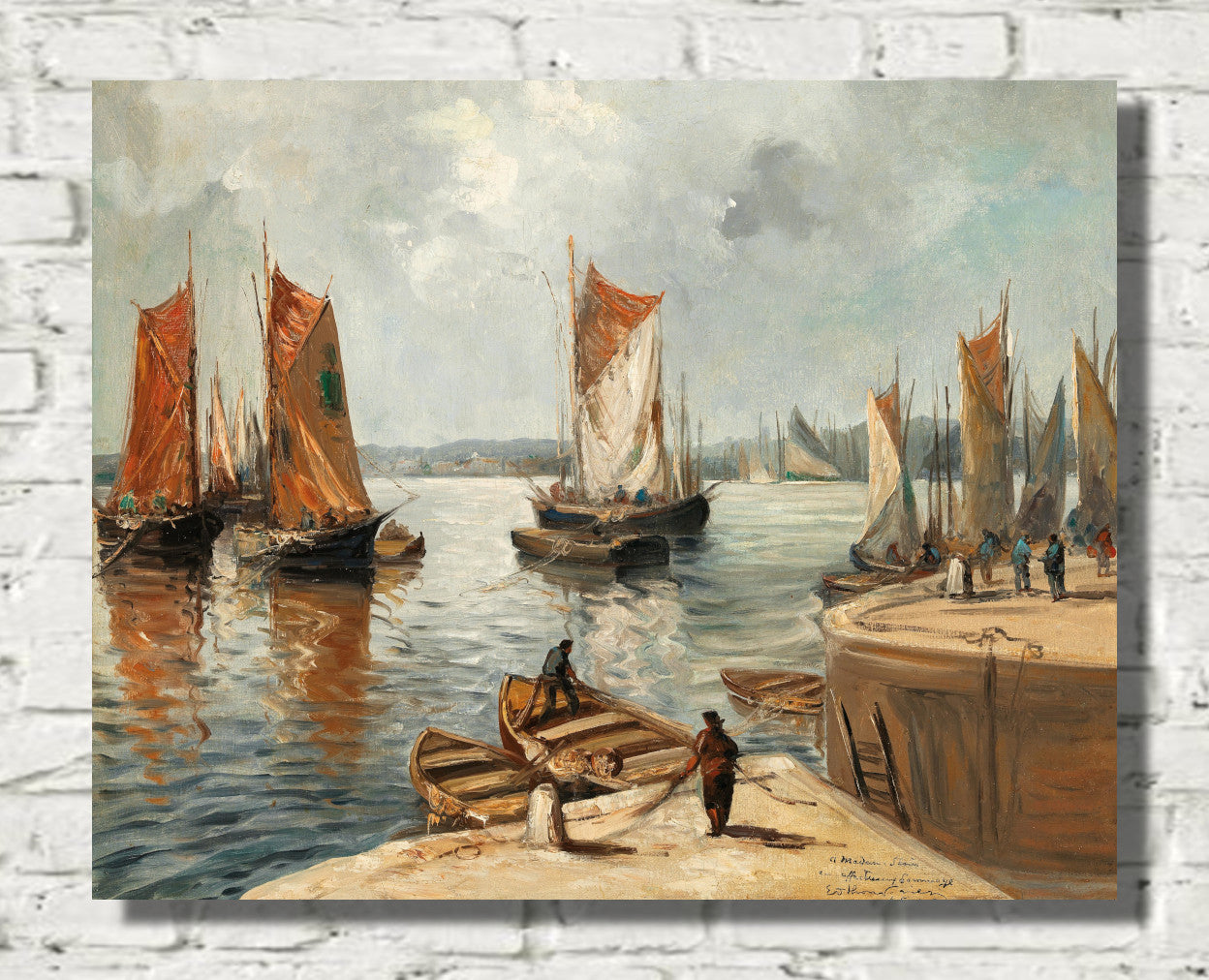
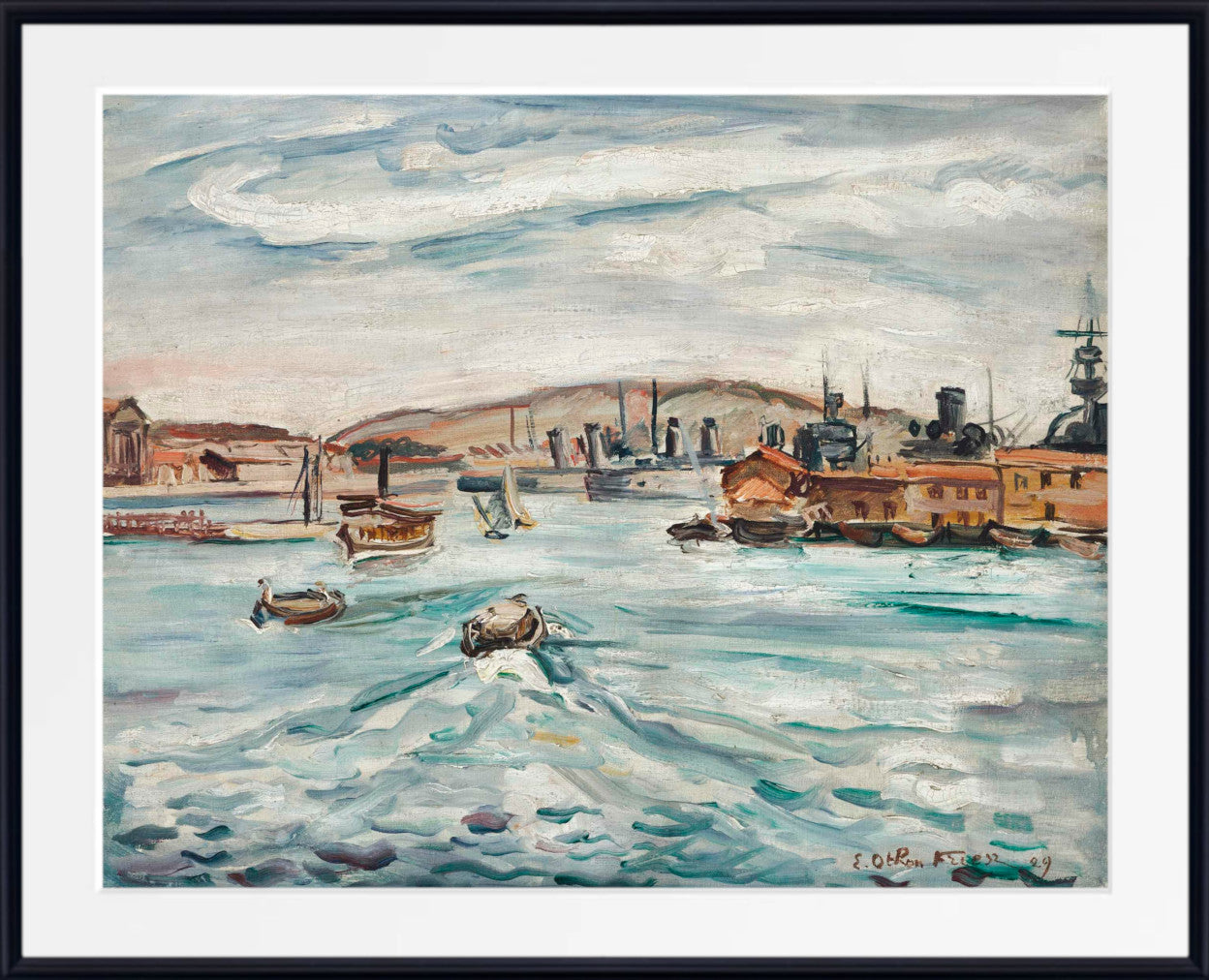
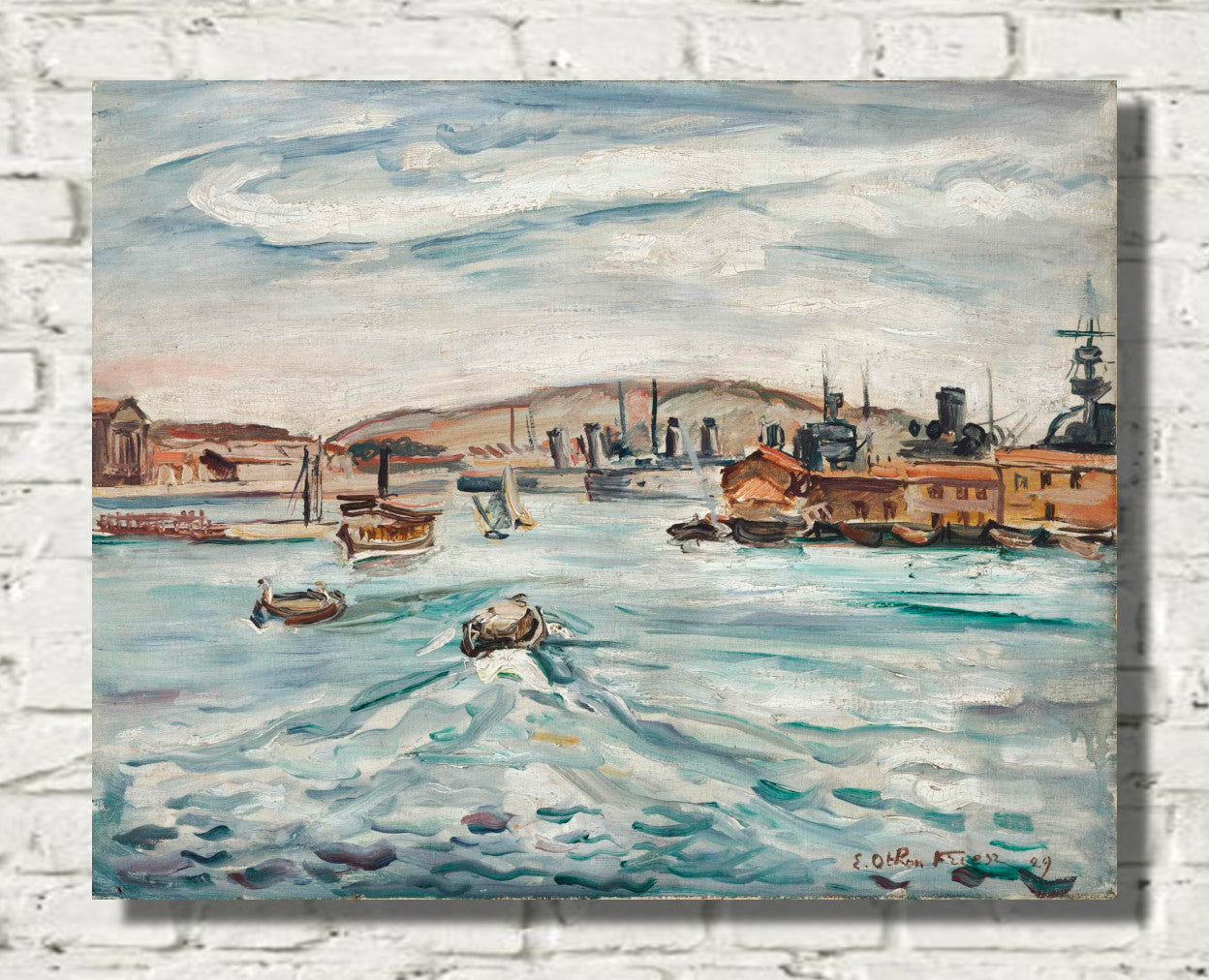
The Regatta at Antwerp (1906) by Othon Friesz transforms a busy sailing scene into a vivid display of colour, movement and simplified form. Painted during Friesz's important Fauvist period, the work captures yachts and boats gathered on the water at Antwerp through energetic brushwork and a palette liberated from strict naturalism.
This Othon Friesz Regatta at Antwerp print is an excellent example of the maritime side of Fauvism. Boats, sails, water and the distant shoreline become part of a rhythmic composition in which colour is used as much for expression as description. Available as a fine art print, framed print or canvas panel, The Regatta at Antwerp is particularly appealing for admirers of Fauvist art, colourful seascapes and early twentieth-century modern painting.
The Regatta at Antwerp – A Fauvist Maritime Scene
Friesz painted The Regatta at Antwerp in 1906, at a time when his work was moving decisively towards the brilliant colour and simplified forms associated with Fauvism.
The subject provided ideal material for this new approach. A regatta brings together boats, sails, reflections, open water and constant movement, allowing the artist to organise the scene through repeated shapes and strong contrasts rather than precise nautical detail.
Friesz does not attempt to identify every vessel or reproduce the harbour with photographic accuracy. Instead, he simplifies the boats into broad forms and allows their sails and hulls to create a pattern across the water.
The eye moves between foreground boats and the more distant activity of the regatta, while the broad horizontal expanse of water gives the composition a sense of openness. The scene remains clearly recognisable as a harbour and sailing event, yet its visual impact comes primarily from the interaction of colour, line and shape.
Colour and Movement on the Water
Colour is central to the power of The Regatta at Antwerp. Friesz uses strong blues, greens and warmer contrasting tones to distinguish water, boats and surrounding landscape without relying on conventional tonal modelling.
The surface of the water is treated as an active field rather than a passive background. Brushstrokes suggest reflections and movement, while the boats interrupt the horizontal plane with masts, hulls and sails.
This relationship between horizontal water and vertical masts creates a strong visual rhythm. The vessels appear to move through the composition rather than sit motionless within it.
Friesz's brushwork also remains deliberately visible. Instead of polishing the surface into a seamless illusion, he allows the physical act of painting to contribute to the energy of the scene.
The result reflects one of Fauvism's central ideas: a painting could communicate the experience of a place through intensified colour and direct handling rather than precise imitation.
Othon Friesz and Fauvism
Othon Friesz was one of the artists who joined the Fauvist movement during its brief but influential period in the opening years of the twentieth century.
Born in Le Havre in 1879, Friesz belonged to the Normandy circle that also included Raoul Dufy. Both artists had early connections with the port city and initially worked within traditions shaped by Impressionism before encountering the more radical developments taking place in Paris.
By 1906, Friesz had embraced the stronger colour and simplified forms associated with the Fauves. His landscapes, harbour scenes and figure paintings from approximately 1906–08 belong to the most adventurous period of his career.
Friesz's version of Fauvism was often more structurally controlled than the most explosive works of Maurice de Vlaminck or André Derain. Strong colour remained important, but it was frequently balanced by clear organisation of landscape and form.
The Regatta at Antwerp demonstrates that balance particularly well. Its colour is vivid and expressive, yet the boats and harbour remain arranged within a carefully controlled composition.
Antwerp and the Fauvist Harbour
Antwerp was one of Europe's great port cities and offered Friesz a subject that combined urban activity with the open character of water and sailing.
Harbours were especially attractive to early modern painters because they brought together architecture, vessels, reflections and constantly changing light. For a Fauvist painter, they also provided opportunities for strong contrasts between water, sky, sails and shoreline.
Friesz's treatment of Antwerp emphasises the visual excitement of the regatta rather than the industrial character of the port. Sailing boats dominate the scene, turning the harbour into a setting for colour and movement.
This makes the painting particularly interesting within Fauvism. While the movement is often associated with the Mediterranean landscapes of Collioure or L'Estaque, artists such as Friesz and Dufy demonstrated that northern European harbours could provide equally effective settings for expressive colour.
Othon Friesz's Painting Style
Friesz's early paintings were influenced by Impressionism, but during the middle years of the 1900s he became increasingly interested in the freedom of colour being explored by Henri Matisse, André Derain and the other Fauves.
Fauvism rejected the requirement that colours correspond precisely to the natural world. Water did not have to be rendered in subtle observed tones, and landscapes did not need to be built through traditional perspective and modelling.
Instead, colour could be intensified, simplified and organised according to the needs of the composition.
Friesz combined this freedom with a strong interest in underlying structure. In The Regatta at Antwerp, the boats are simplified but still possess weight and position. The water remains open and animated, while repeated masts and hulls organise the composition.
By around 1908, Friesz began moving away from the most radical aspects of Fauvism and towards a more structured style influenced by Paul Cézanne. His Fauvist period was therefore relatively short, making works from 1906 especially important within his artistic development.
About Othon Friesz
Achille-Émile Othon Friesz (1879–1949), generally known as Othon Friesz, was a French painter born in Le Havre, Normandy.
He studied art in Le Havre before continuing his training in Paris, where he became part of the rapidly changing artistic environment of the early twentieth century. His friendships and associations brought him into contact with painters experimenting with increasingly expressive approaches to colour.
Friesz became associated with Fauvism and participated in the movement during its most important years. Harbour scenes, landscapes, bathers and figure compositions provided subjects through which he explored stronger colour, simplified forms and increasingly direct brushwork.
Unlike Henri Matisse, who continued to develop the expressive possibilities of colour throughout his career, Friesz moved away from Fauvism relatively quickly. His later work became more restrained and structurally organised, but his paintings from the Fauvist years remain among the most distinctive works he produced.
The Original The Regatta at Antwerp
The original The Regatta at Antwerp was painted in 1906 in Antwerp, Belgium.
Friesz created the work in oil on canvas. It measures approximately 57.8 × 79.4 cm.
The painting is now held by the Museum of Fine Arts, Houston as part of the John A. and Audrey Jones Beck Collection.
Its horizontal format is especially appropriate to the maritime subject, allowing the boats and open water to spread naturally across the composition while the repeated verticals of the masts provide contrast.
An Othon Friesz Regatta Print for Your Interior
An Othon Friesz The Regatta at Antwerp print combines the appeal of maritime art with the colour and energy of Fauvism. It is therefore an attractive alternative to more conventional sailing or harbour pictures.
The predominance of water and boats gives the work a natural connection with coastal and nautical interiors, while its modern colour and simplified forms make it equally suitable for contemporary spaces.
The painting can work particularly well in living rooms, dining rooms, bedrooms, hallways and home offices. Its horizontal proportions also make it effective above sofas, sideboards, console tables and beds.
Against white, cream, putty or pale grey walls, the stronger colours can provide a clear focal point without the visual heaviness of a darker traditional marine painting.
For collectors of Fauvist art, sailing subjects or early modern French painting, The Regatta at Antwerp also represents an important work from the brief period when Friesz was experimenting most boldly with colour.
Frequently Asked Questions
When did Othon Friesz paint The Regatta at Antwerp?
Friesz painted The Regatta at Antwerp in 1906, during the period in which he was closely associated with Fauvism.
Where is the painting set?
The work depicts a regatta at Antwerp in Belgium, one of Europe's major historic port cities.
What does The Regatta at Antwerp depict?
The painting shows sailing boats gathered on the water during a regatta. Friesz emphasises the shapes of boats, masts, reflections and surrounding colour rather than detailed nautical description.
Is The Regatta at Antwerp a Fauvist painting?
Yes. The 1906 work belongs to Friesz's important Fauvist period and displays the movement's characteristic use of vivid colour, simplified forms and expressive brushwork.
What medium did Othon Friesz use?
The original painting was created in oil on canvas.
What size is the original The Regatta at Antwerp?
The original measures approximately 57.8 × 79.4 cm.
Where is the original painting?
The Regatta at Antwerp is held by the Museum of Fine Arts, Houston in the John A. and Audrey Jones Beck Collection.
Why did Fauvist artists paint harbours and regattas?
Harbours provided a rich combination of water, boats, sails, reflections and changing light. These elements gave Fauvist painters opportunities to experiment with strong colour, simplified forms and rhythmic compositions.
Was Othon Friesz a Fauvist artist?
Yes. Friesz participated in Fauvism during the movement's crucial early years, particularly around 1906–08, before gradually returning to a more structured and restrained style.
Did Othon Friesz know Raoul Dufy?
Yes. Friesz and Dufy both came from Le Havre and belonged to the group of Normandy artists who became involved with Fauvism during the early twentieth century.
Is The Regatta at Antwerp available as a framed Othon Friesz print?
Yes. GalleryThane offers The Regatta at Antwerp (1906) in a choice of sizes and formats, including fine art paper prints, framed prints and canvas options.
Where would an Othon Friesz regatta print work well?
The horizontal composition and colourful maritime subject make it particularly suitable for living rooms, dining rooms, bedrooms, studies and coastal interiors. It also works well in contemporary and Scandinavian-inspired spaces.
All orders for unframed fine art prints and original paintings are dispatched within 2 working days of receipt of payment.
Orders for custom framed prints are dispatched within 4 working days.
All orders are fully tracked from dispatch to delivery at your home or business.
All print and original painting orders are fully insured against loss or damage in transit. We refund or replace any damaged or lost orders.
Buy with confidence - read what our satisfied customers have to say - Reviews
Fine art papers are printed without any additional white border Please let us know at the time of ordering if you would like a small additional white border.
Rolled canvas options have an additional white border of approximately 2.5 inches (7cm) on all 4 sides to aid stretching.
Ready to hang canvas panels are stretched on 1.5 inch deep solid pine frames from sustainable forestry sources. The image is mirrored on all 4 sides to give an aesthetically pleasing finish.
Why not have us gift wrap your order and attach a personalised message to the recipient. Available for all orders. Each order is hand wrapped in high quality gift wrap with meatllic ribbon and bow. Your personalised message is printed on a card which is included with your order.
Have your hand wrapped gift delivered directly to the recipient.
Full tracking and insurance included with every order.
Please note design may vary depending upon availability
Just purchase the gift wrap option HERE
We have a wide range of frames in standard sizes and we also make custom size frames.
To order a framed print:
1. select the print size you would like along with the print materials (matte paper, fine art paper).
2. Add your print choice to the basket.
3. Choose from our range of frames
4. Select the same size as the print you have added to your basket. If the frame size you want is not listed please contact us
5. Choose from the mount or no-mount option
6. Add your frame choice to the basket
7. Proceed to checkout.
Why Choose GalleryThane?
- Printed and framed in-house
- Free UK delivery
- Free EU and USA delivery on orders over £200
- Tracking and insurance included in every order
- Fast 1-3 day dispatch
- Gift wrapping service available
- Gallery quality materials
- Sustainable, eco-friendly packaging
- Great customer support
Explore related collections
What makes our Prints and Canvas Panels so special

Latest Giclee Printing Technology
We have invested in the latest wide format print technology to produce museum quality giclee prints utilising the highest quality pigment inks to give outstanding colour reproduction.

Museum Quality Archival Fine Art Papers
We print on the finest quality fine art papers with textured, smooth and lustre finishes for prints which last a lifetime.
From aceo miniatures to 40x80 inch large format, every print has our lifetime quality guaranteee.

Solid Wood Frames, Cotton Canvas
All of the wood for our canvas panels and frames is responsibly sourced from manages forests. Our cotton canvas is completely seedless for the highest quality reproduction possible.

Have Your Gift Wrapped


