
Umberto Boccioni Prints – Movement, Modern Life & Divided Forms
Umberto Boccioni prints give bodies, streets and surrounding space a shared sense of direction. Curves, diagonals and repeated divisions can make the subject difficult to separate from its environment. Explore the collection alongside abstract art, Cubist prints and figurative work, comparing energetic colour with more subdued, closely repeated marks.


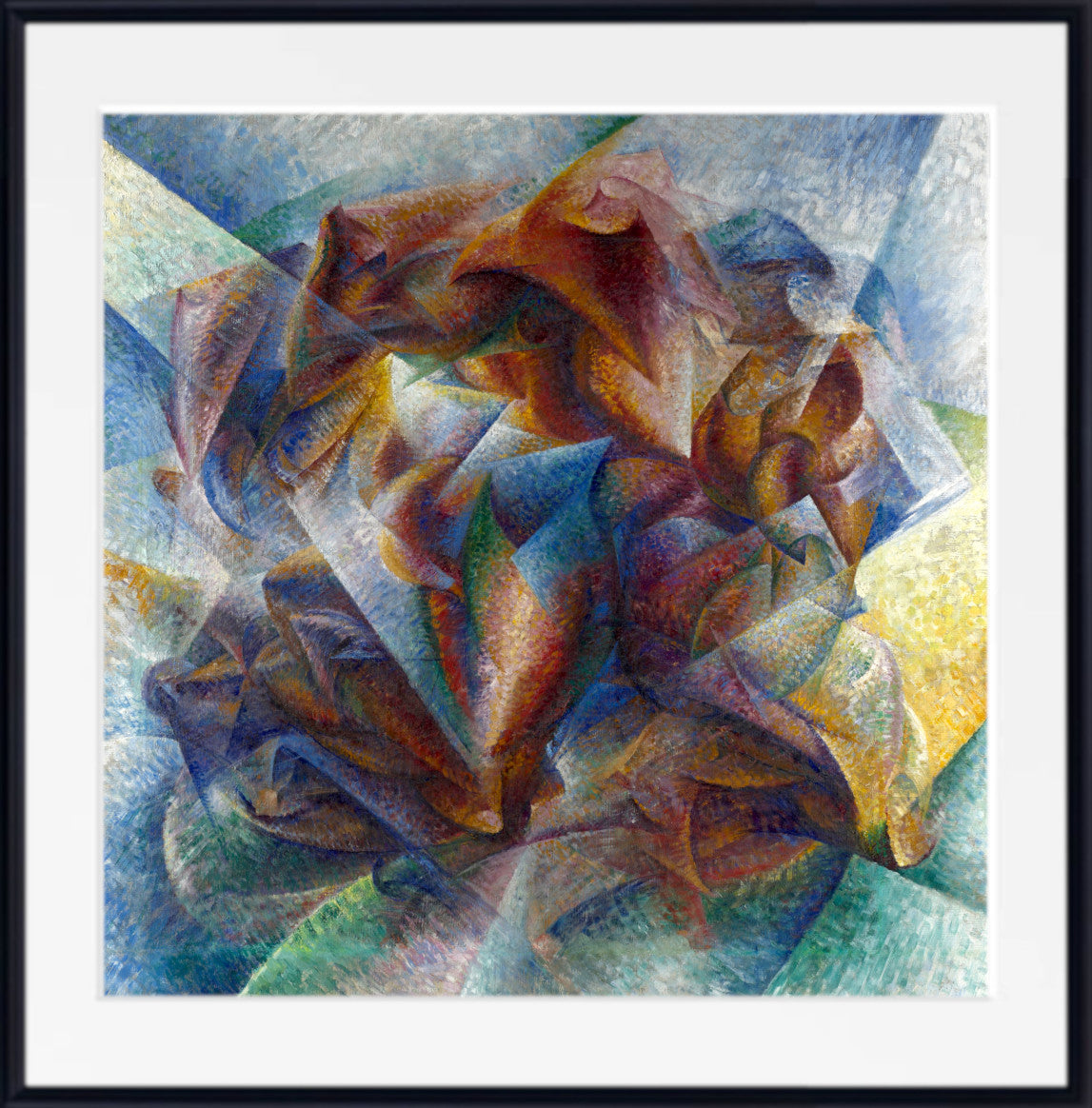




A moving body within intersecting shapes
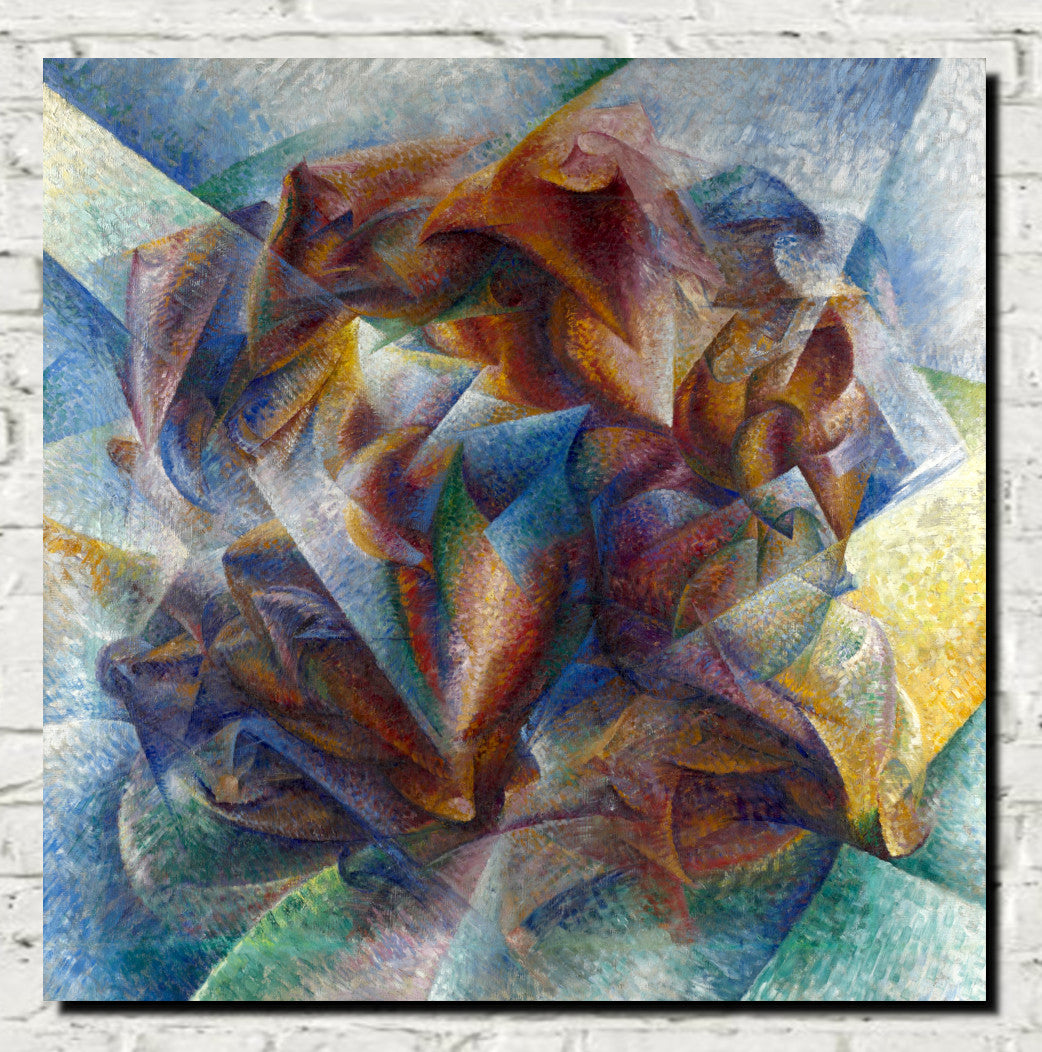
Dynamism of a Cyclist compresses curved blue, green and yellow forms into a dense central arrangement. Parts of a rider and bicycle are suggested among the overlapping planes rather than isolated against a background. Repeated diagonals extend the sense of motion across much of the surrounding surface.
Figures beneath repeated vertical marks
States of Mind III, Those Who Stay sets bowed or lowered heads among dark green forms and long descending strokes. The close tones make bodies and surroundings merge into a continuous field. Compared with the brighter cyclist, the movement feels more downward and restrained, with repetition holding the figures within the same narrow rhythm.
A working scene broken into forceful colour
The City Rises places a large red horse and surrounding figures within a network of pale and warm diagonal marks. Built structures rise in the distance. The overlapping activity makes the city setting and the foreground bodies feel connected, with few quiet gaps separating one part of the image from another.
Related artists and collections
Compare modern colour in Robert Delaunay, bodies and machinery in Fernand Léger, and intersecting rhythms in František Kupka. The abstract collection develops the movement through colour and shape, while Cubist art offers other ways of dividing figures, objects and their surrounding space.
Read more in our guide to Umberto Boccioni.