Georges Braque Prints and the Development of Cubism
Georges Braque played a central role in the formation of Cubism. Working closely with Pablo Picasso during the years before the First World War, he helped replace conventional perspective with an approach based on intersecting planes, shifting viewpoints and the structural analysis of familiar objects.
Braque’s route towards Cubism can be followed through the five works in this collection. They range from the compressed landscape of Houses at L’Estaque and the monumental figure of Le Grand Nu to the fractured musical instruments and tabletop objects of his mature Cubist paintings.
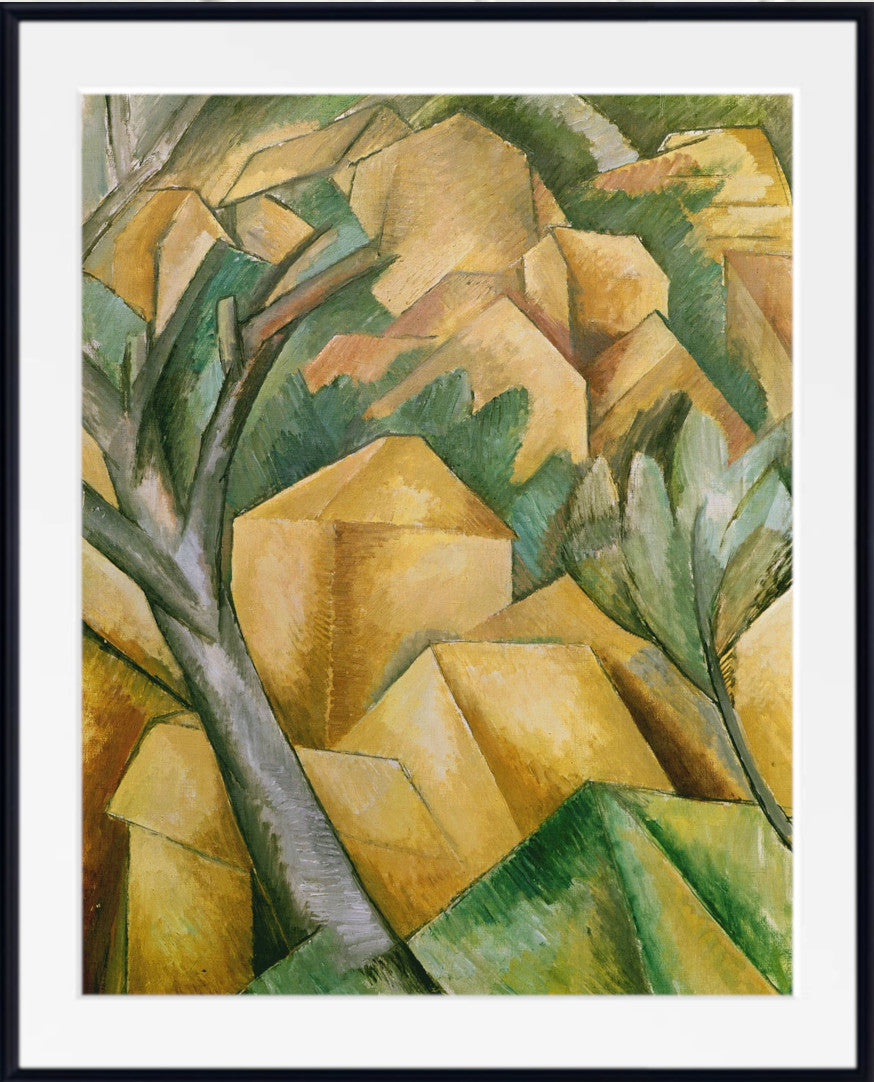
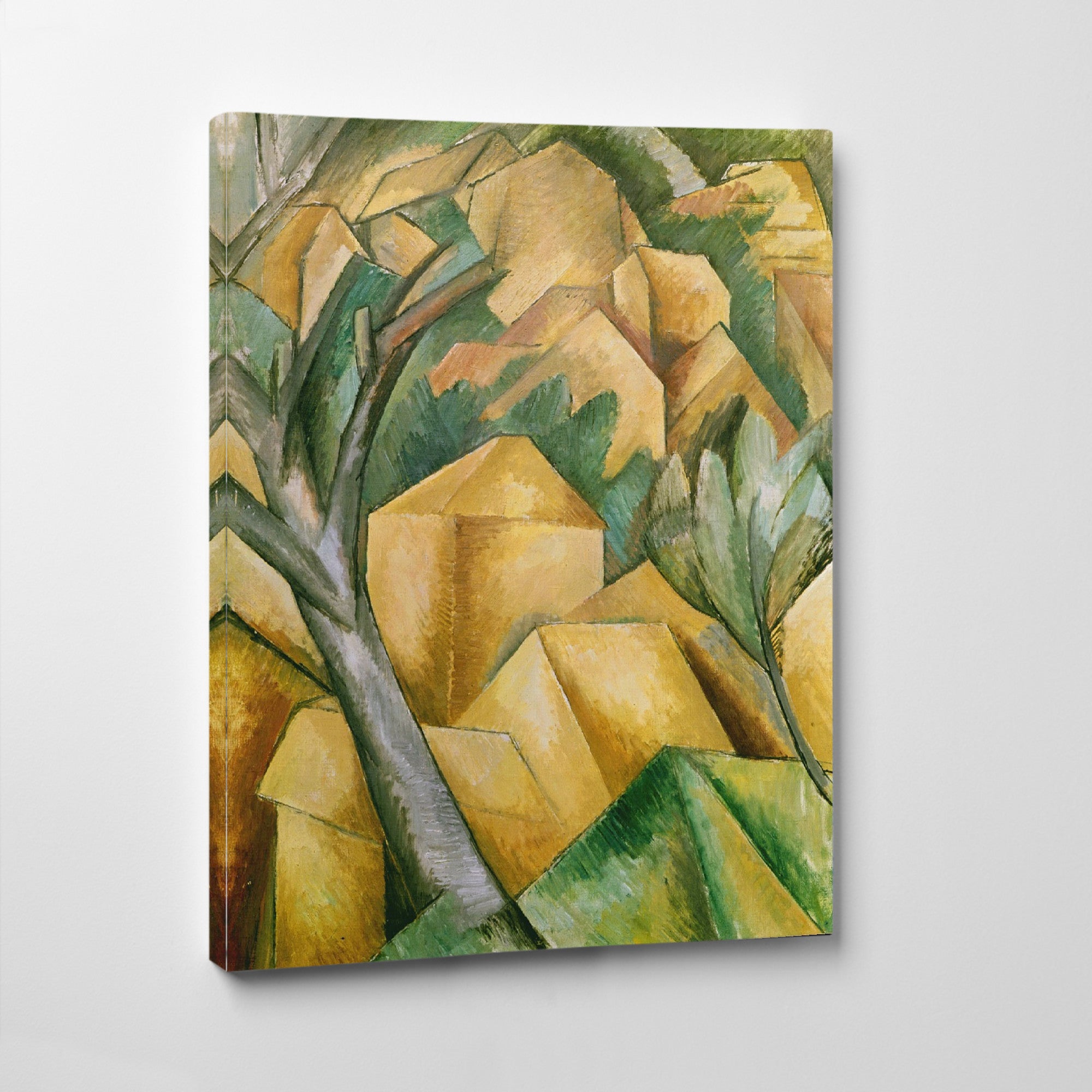
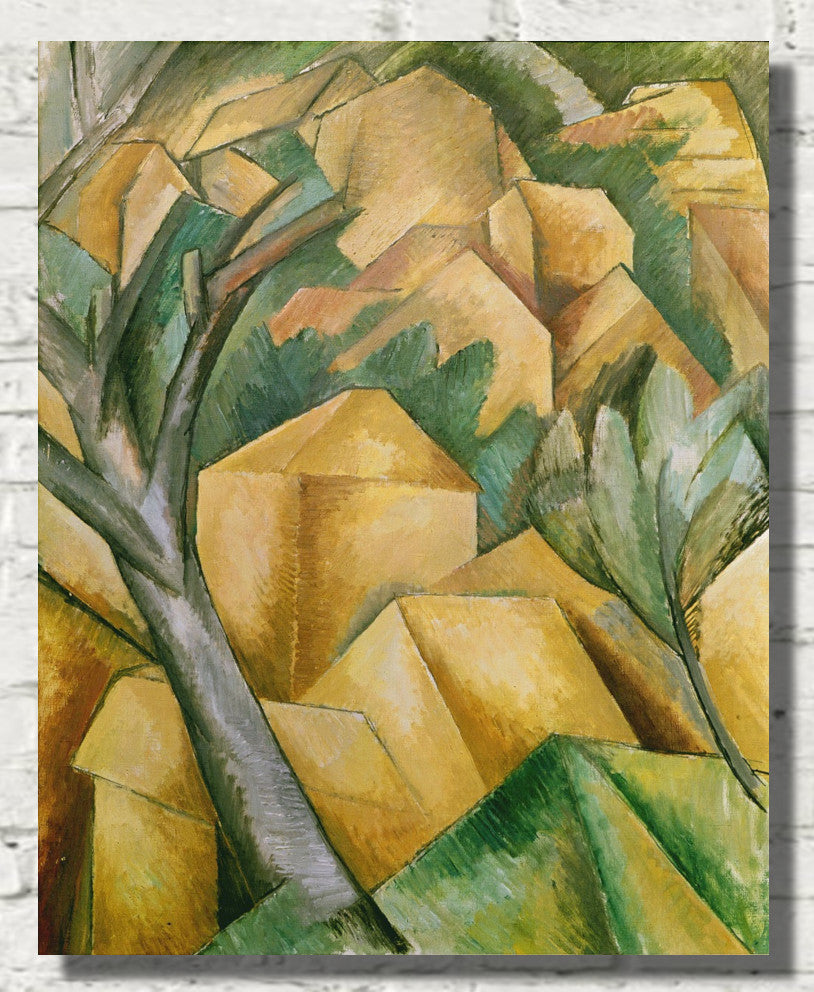
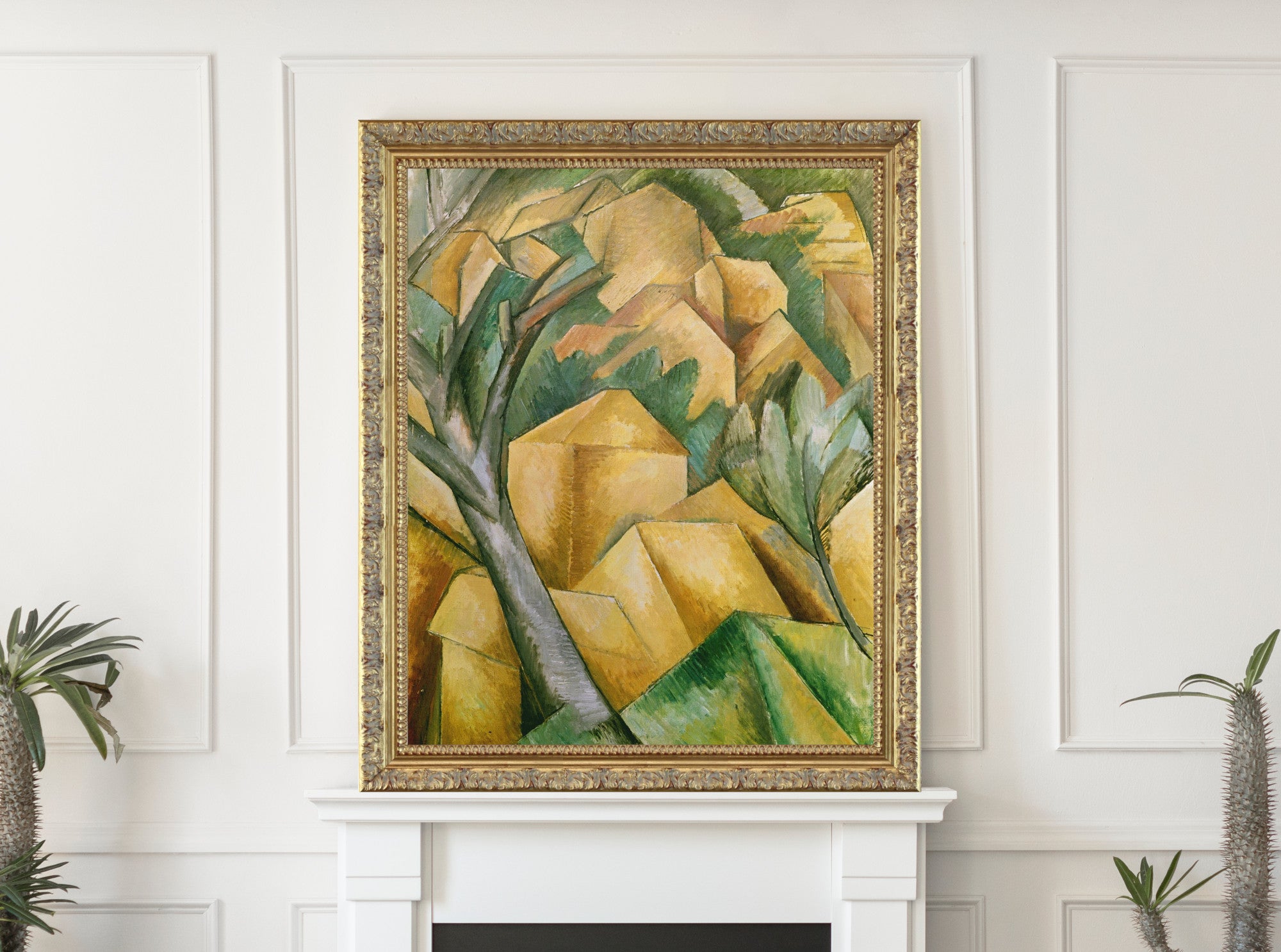
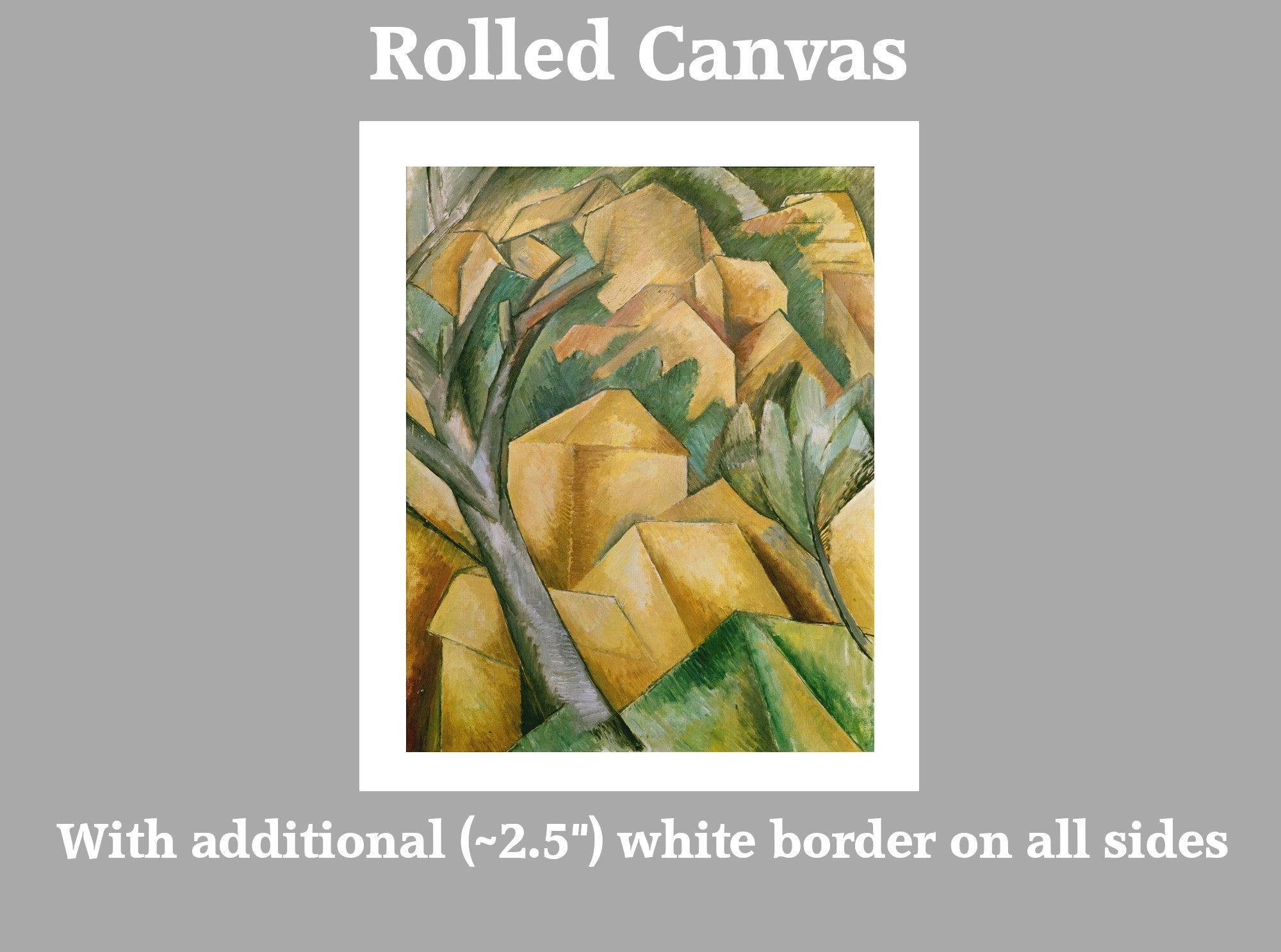
Houses at L’Estaque
Braque painted at L’Estaque in southern France after encountering the work of Paul Cézanne. In Houses at L’Estaque, trees, buildings and hills are reduced to compact geometric forms. Conventional atmospheric depth gives way to overlapping volumes, while the restrained greens, browns and ochres reinforce the underlying construction of the landscape.
The painting occupies an important point between Braque’s earlier Fauvist landscapes and the development of Cubism. Its buildings remain recognisable, but they no longer sit within a traditionally organised view. Instead, the landscape feels compressed and built from interlocking shapes.
Le Grand Nu
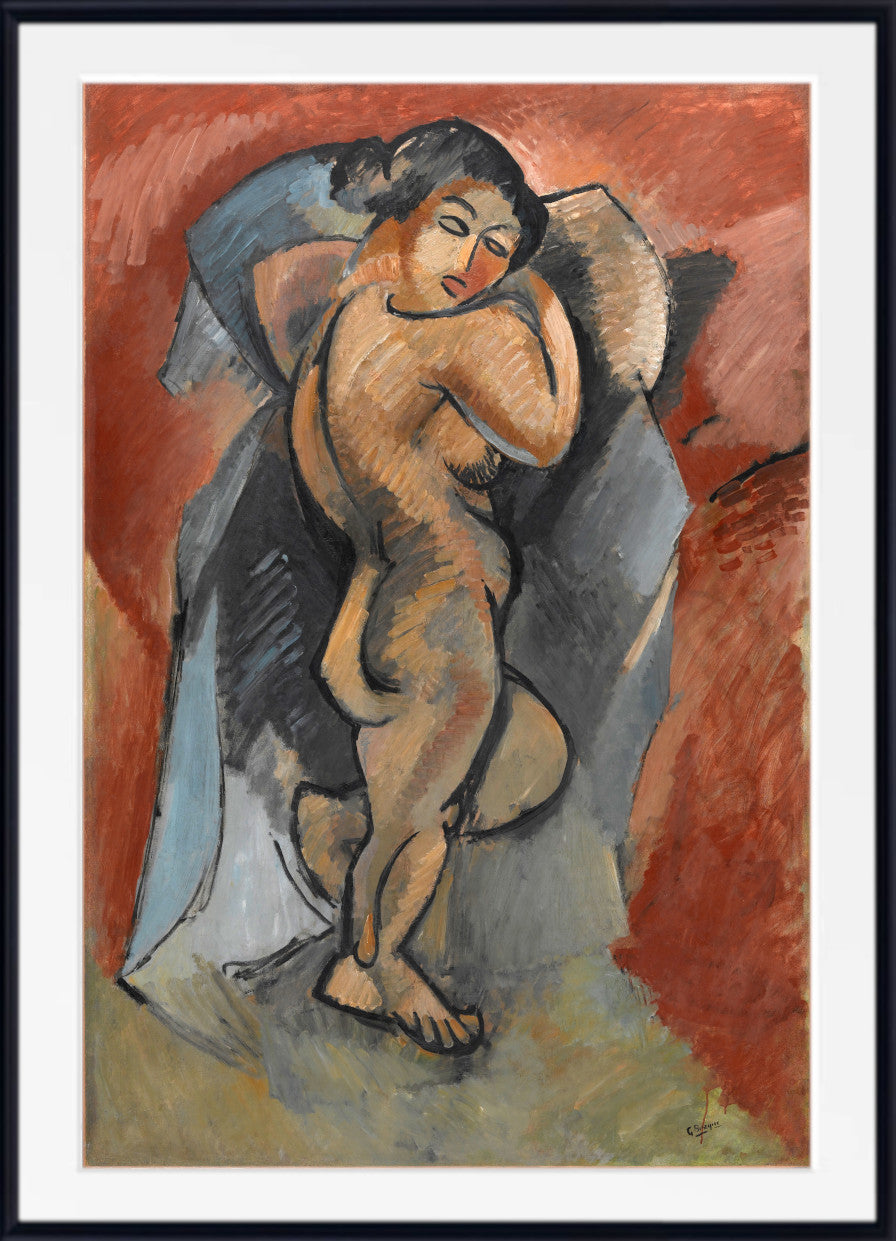
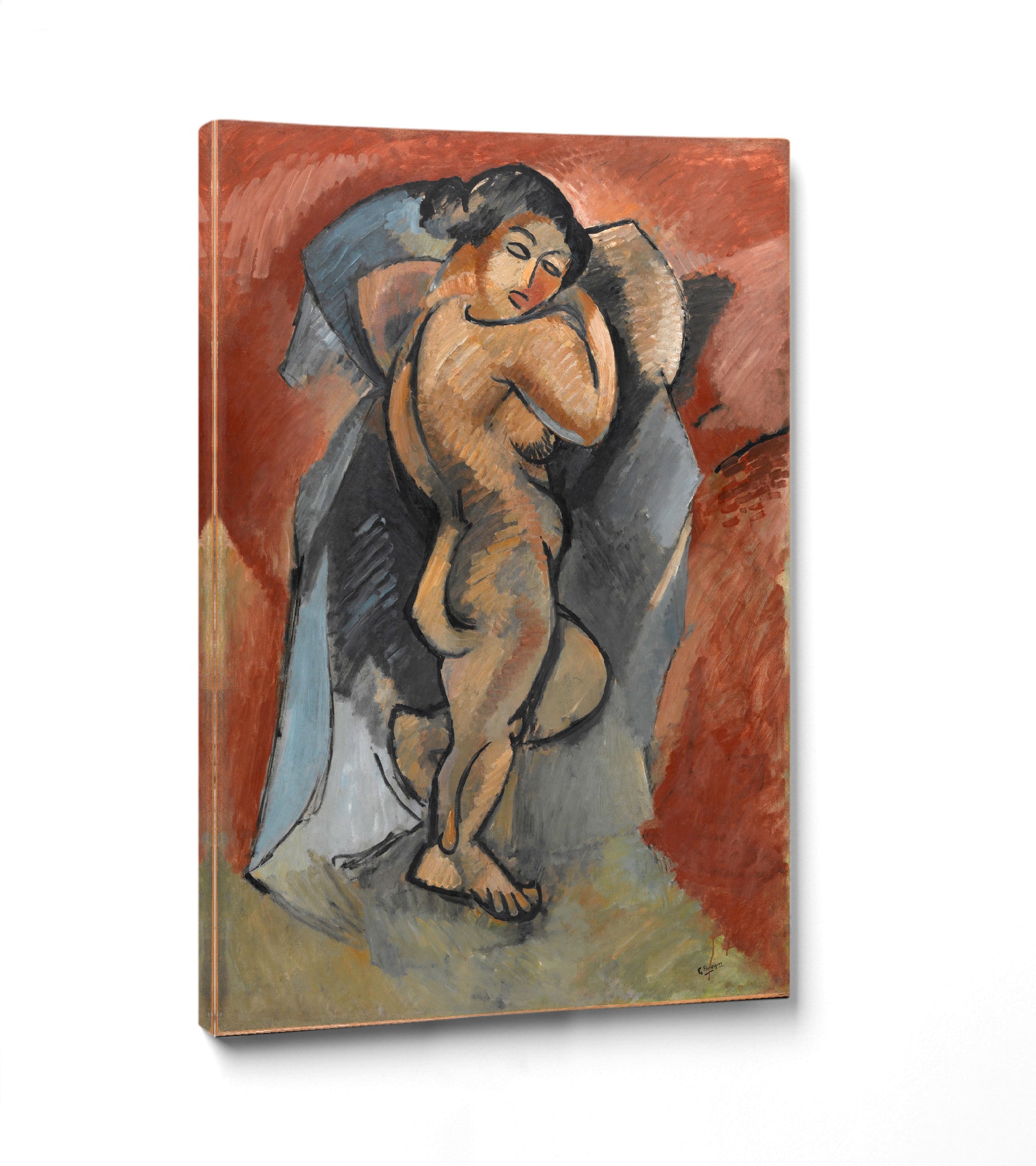
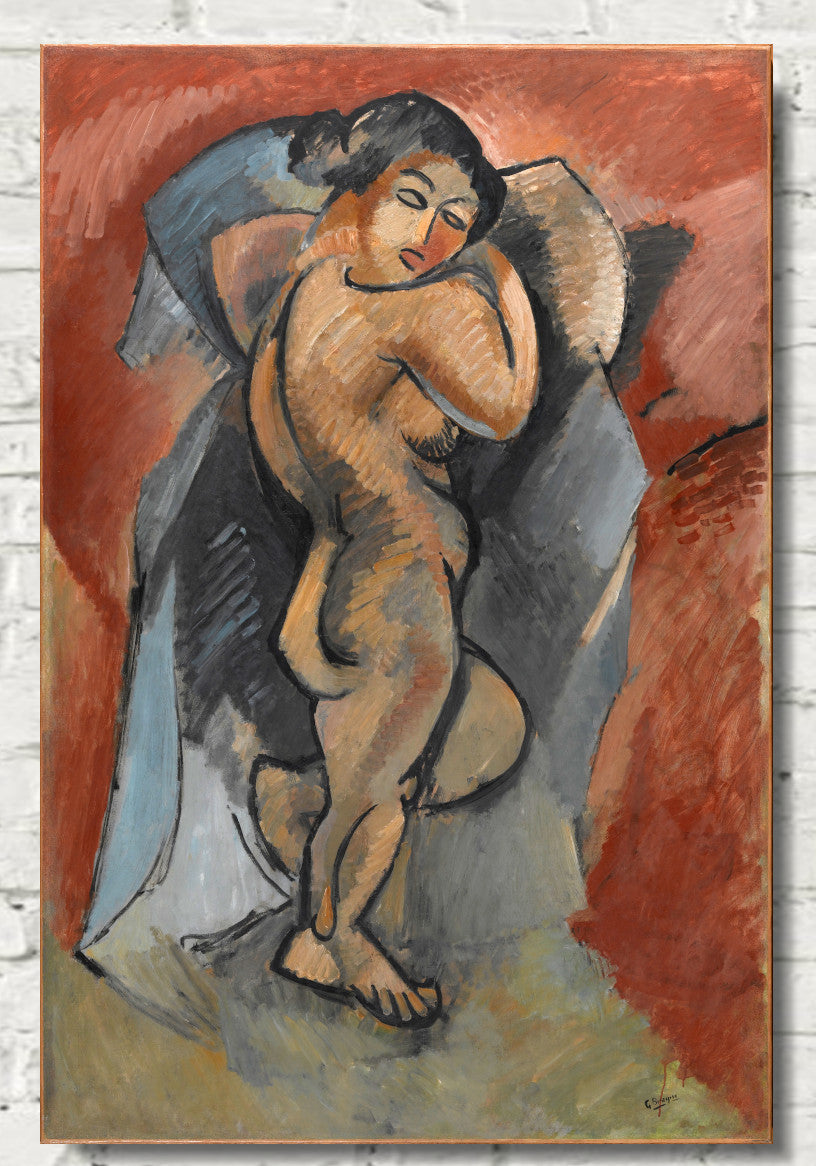
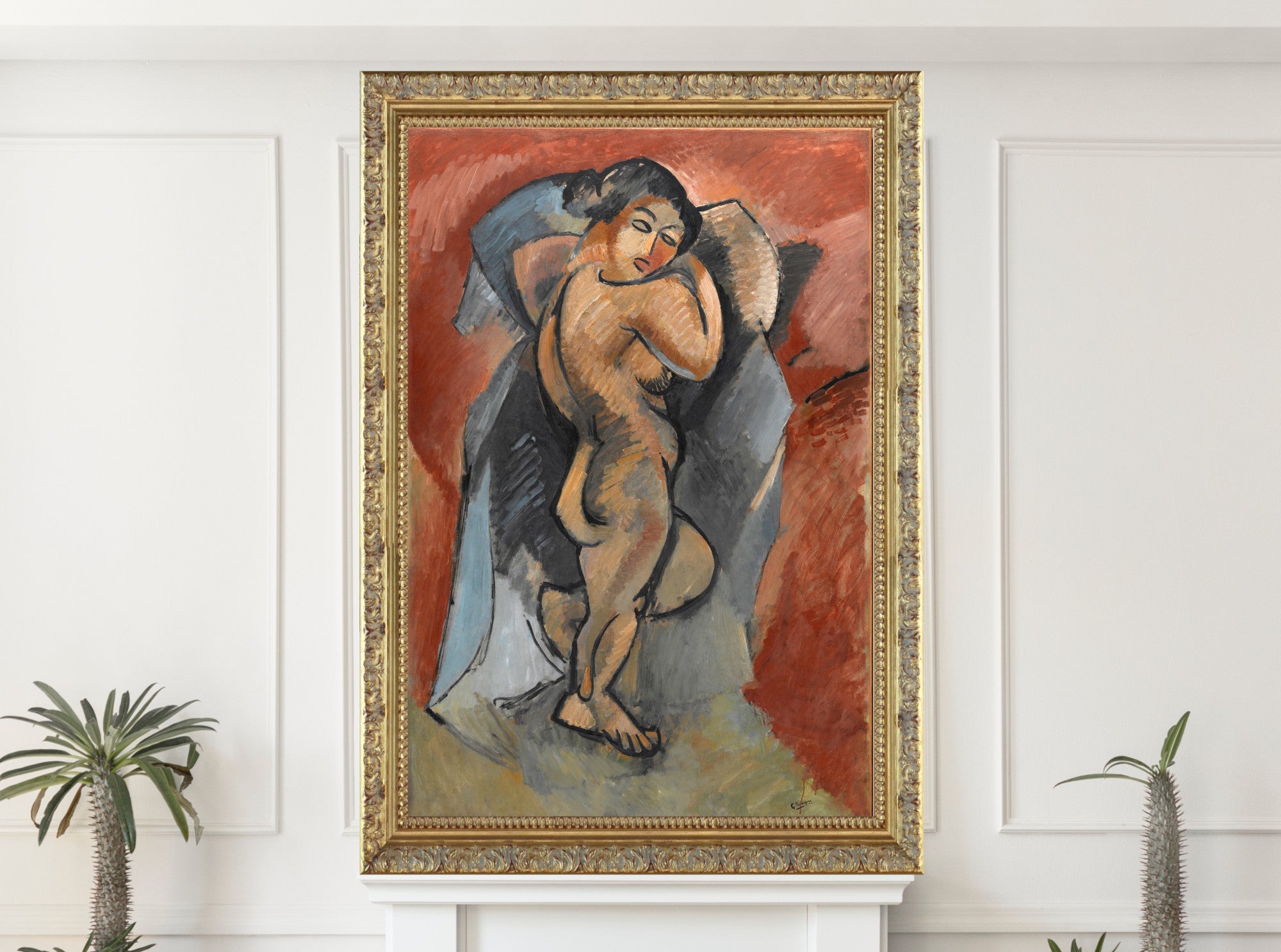
Le Grand Nu was painted during Braque’s transition towards Cubism. The figure is recognisable, yet the body has been simplified, enlarged and organised through heavy contours and angular planes.
Braque was responding to Cézanne’s treatment of the human figure as well as the wider reassessment of form taking place in Parisian modern art. The result is neither a conventional academic nude nor a fully developed Cubist composition. Its importance lies in the way it shows Braque actively dismantling established methods of representing the body.
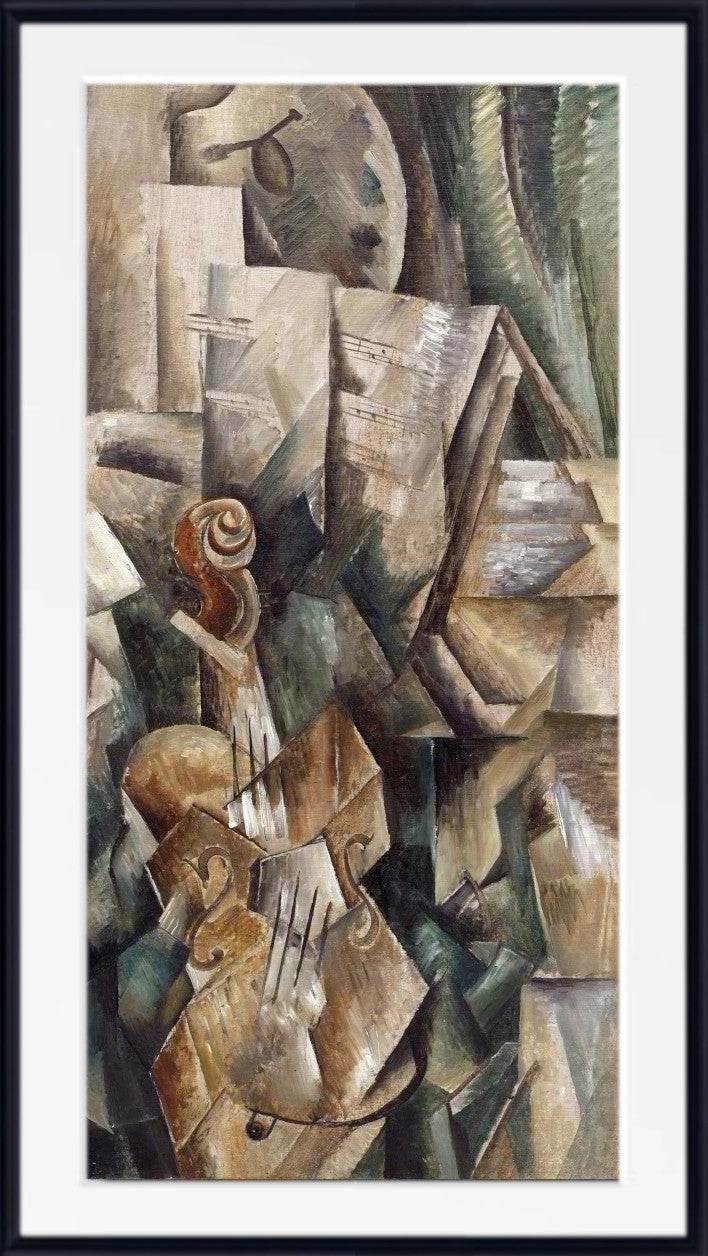
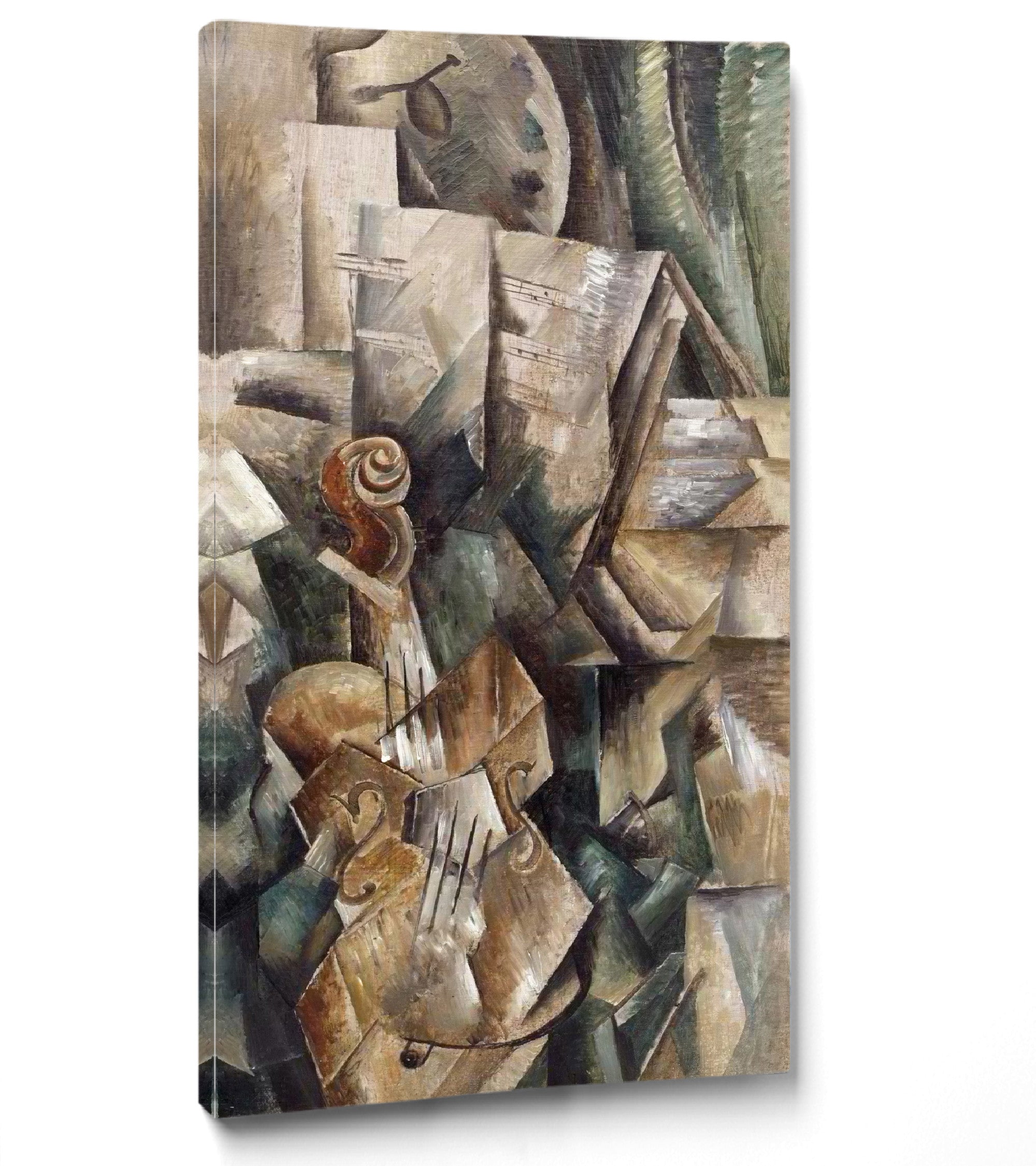
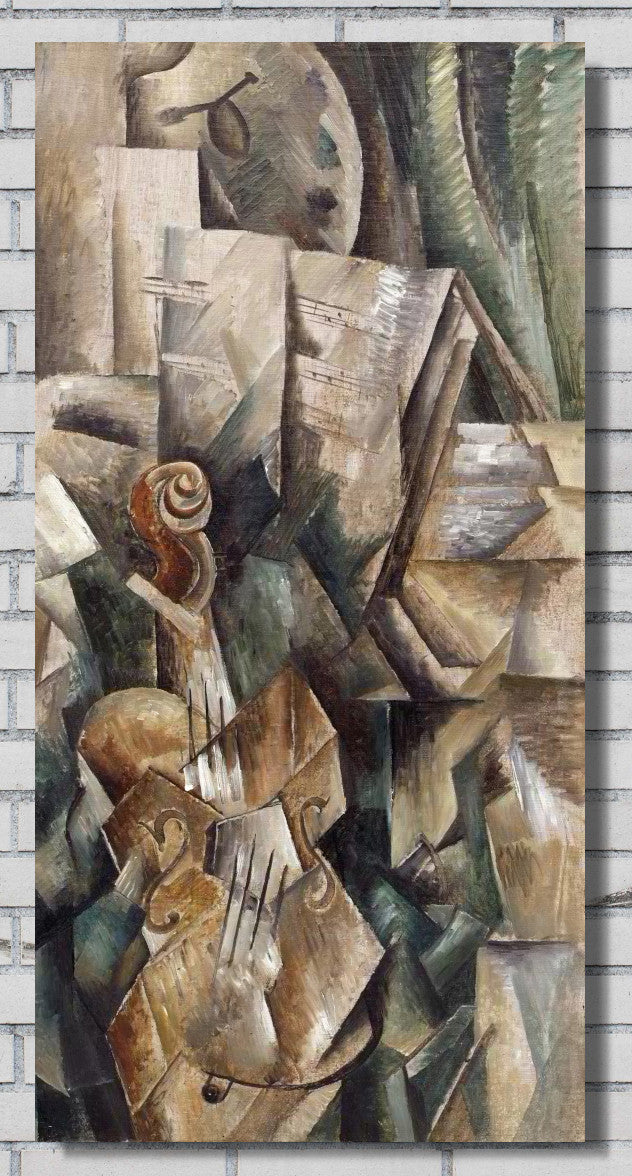
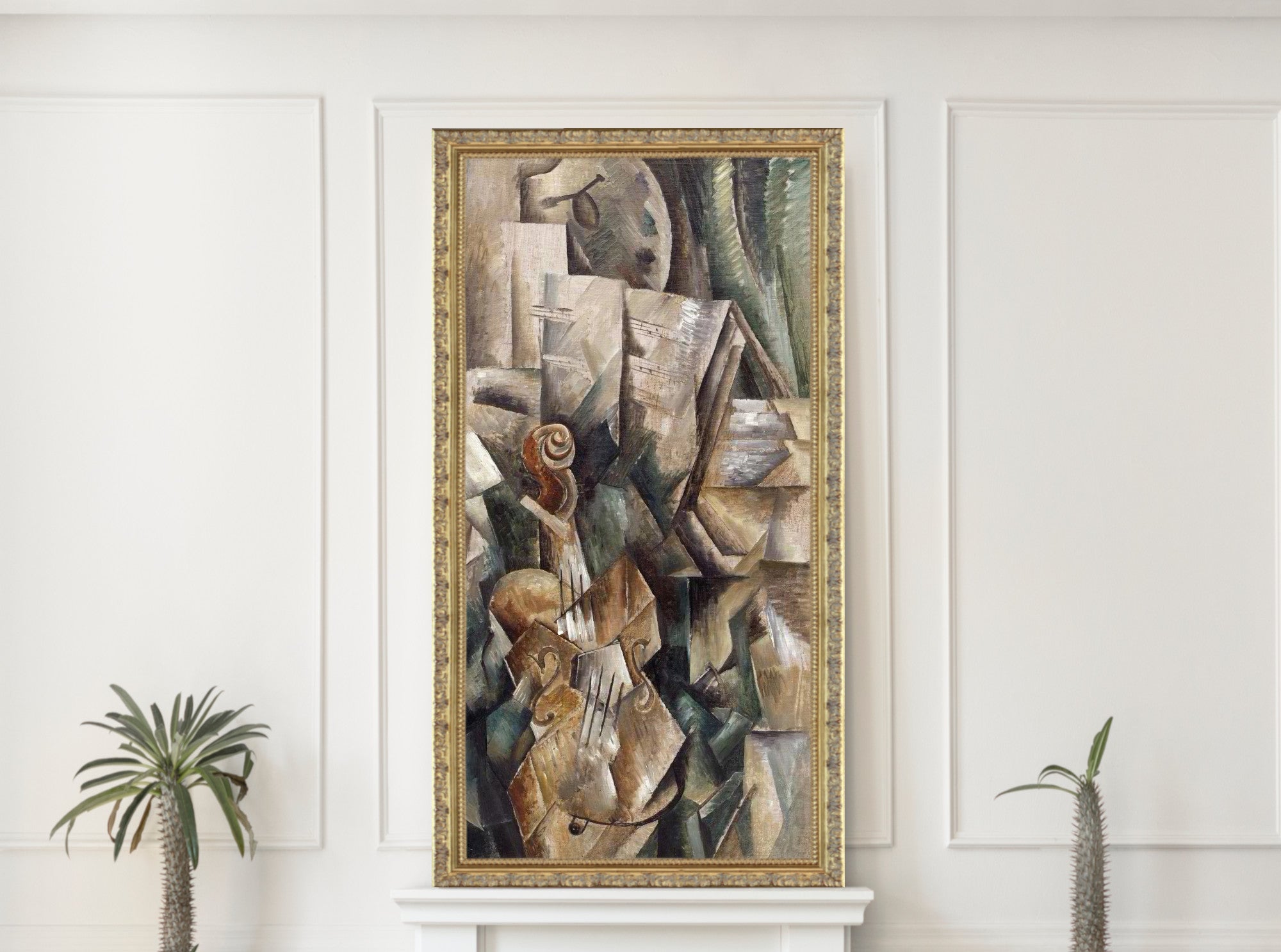
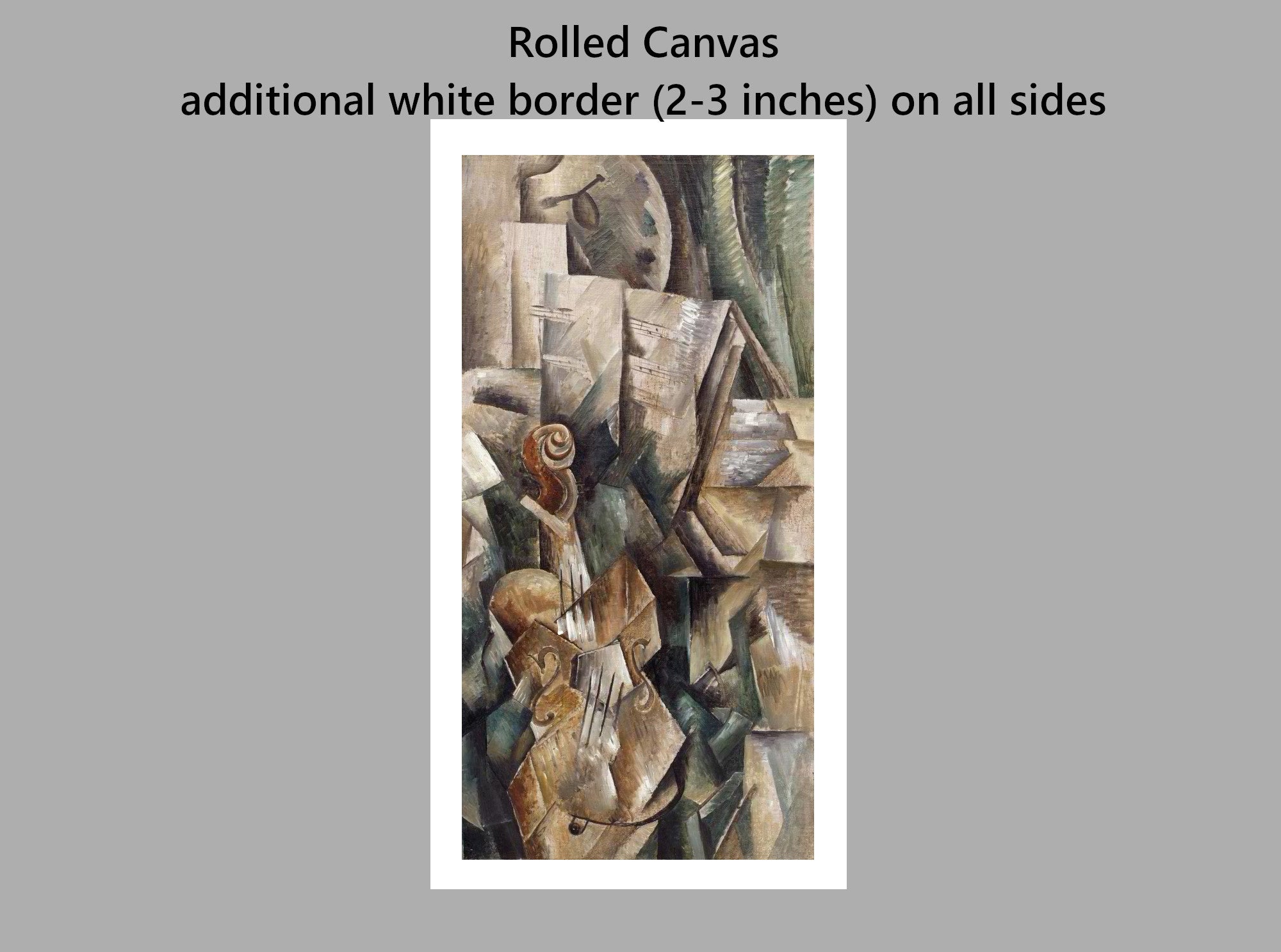
Violin and Palette
Musical instruments became recurring subjects in Braque’s Cubist still lifes. Violin and Palette retains enough detail for the violin, strings and artist’s palette to be identified, but these objects are integrated into a shallow field of overlapping planes.
The trompe-l’œil nail near the top of the composition provides a small piece of convincing illusion within an otherwise fractured image. This contrast draws attention to the difference between a painted object and the physical surface of the painting.
Its tall, narrow proportions and restrained palette make Violin and Palette particularly well suited to spaces beside a bookcase, doorway, desk or sideboard.
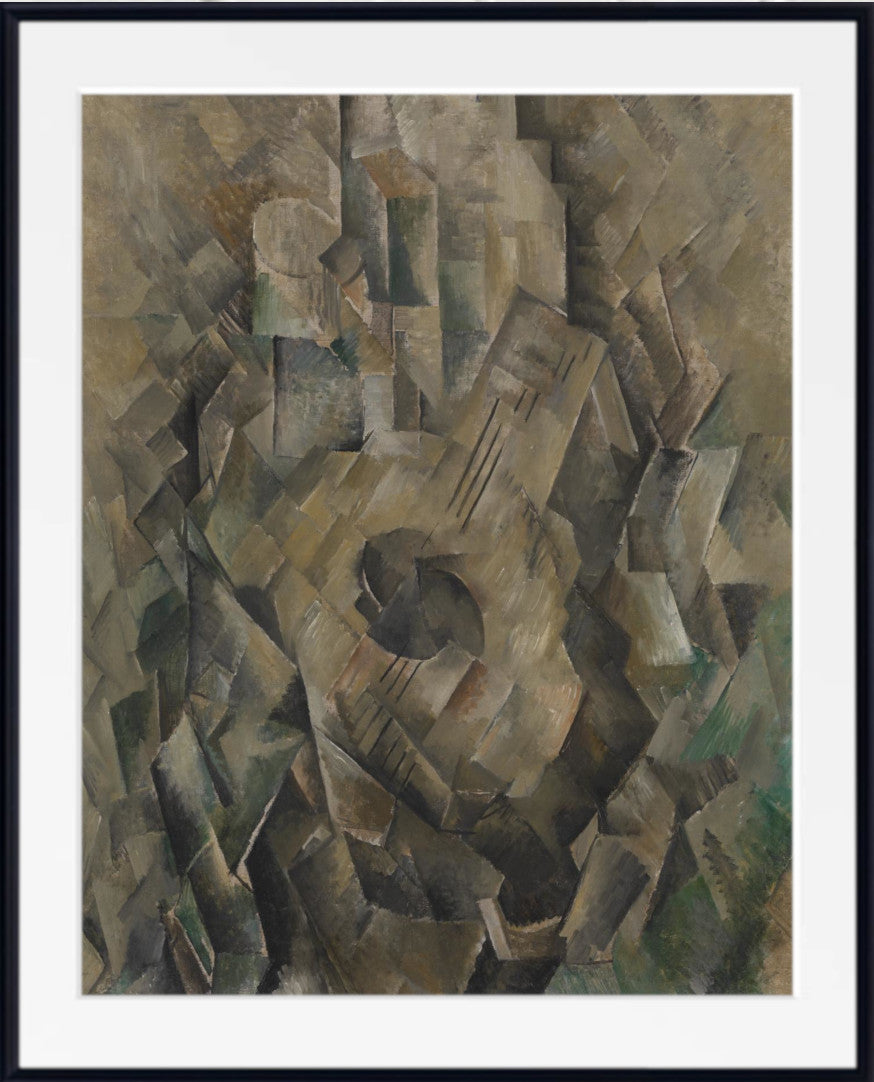
La Mandore and Cubist Still Life
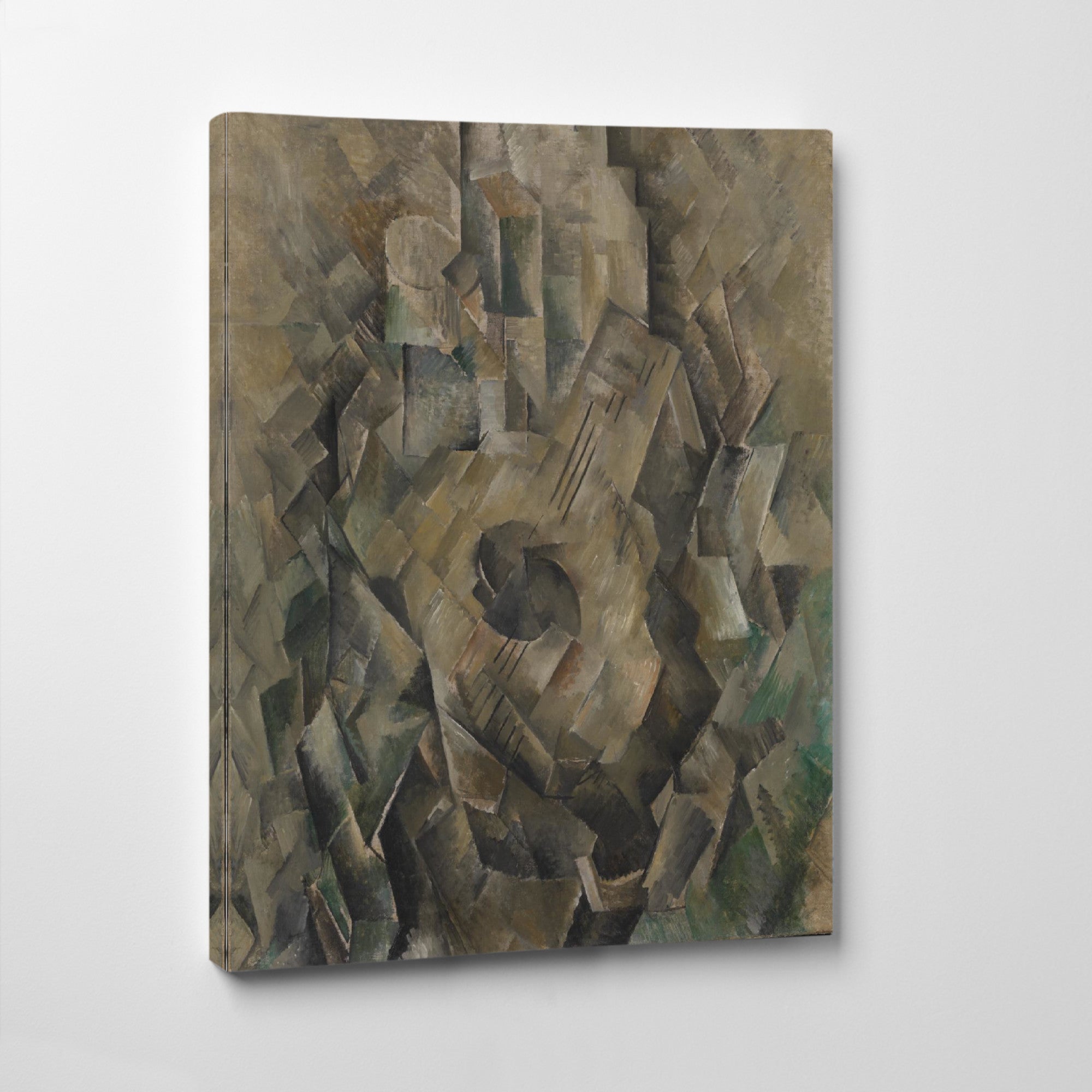
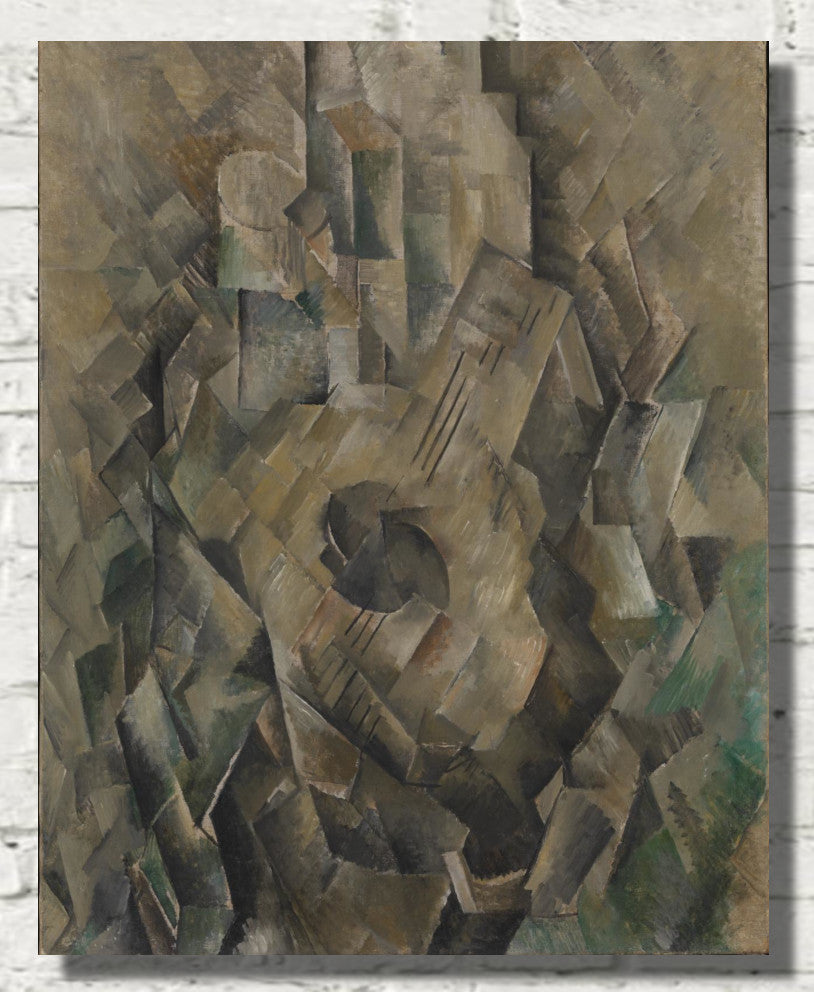
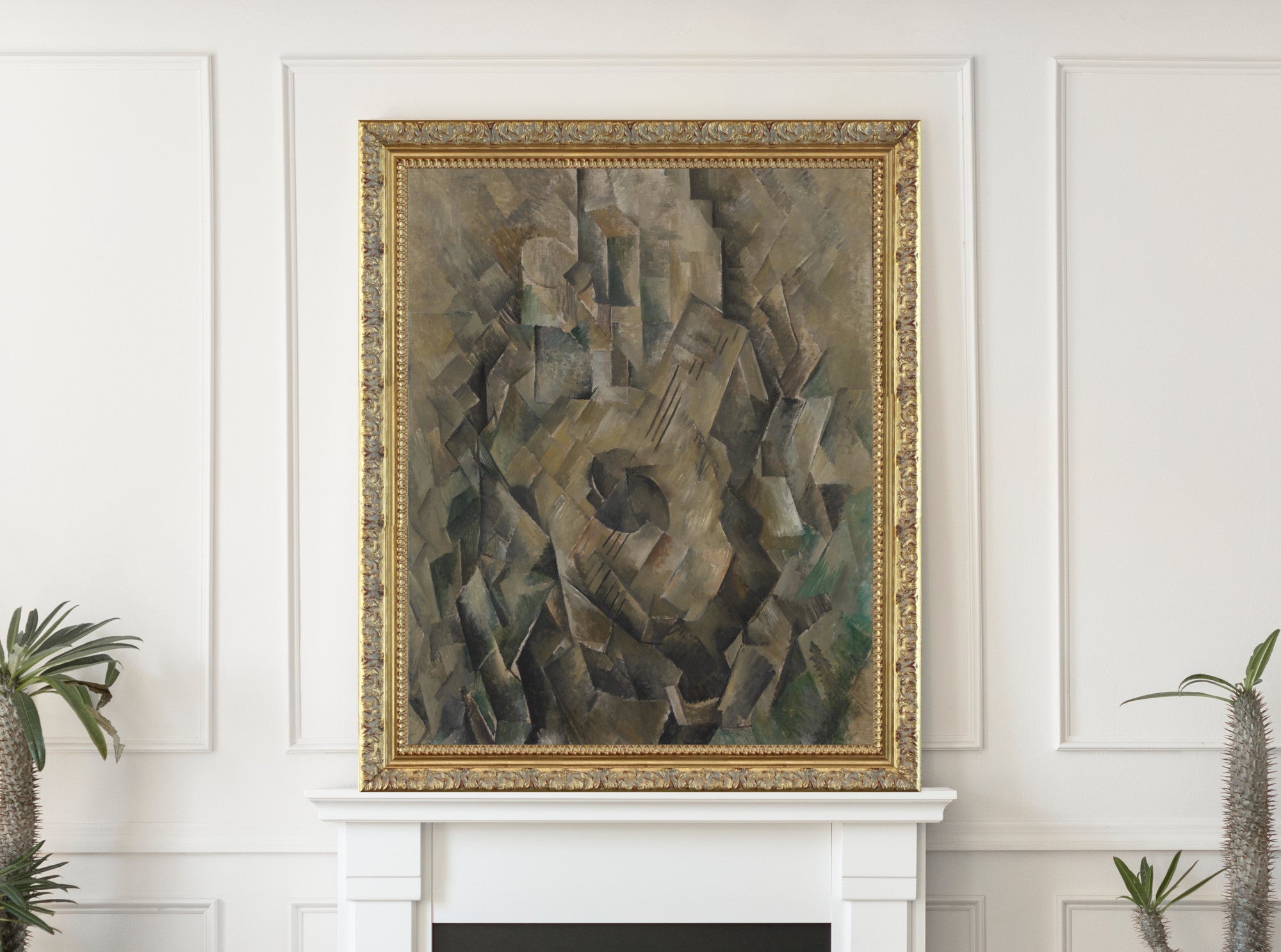
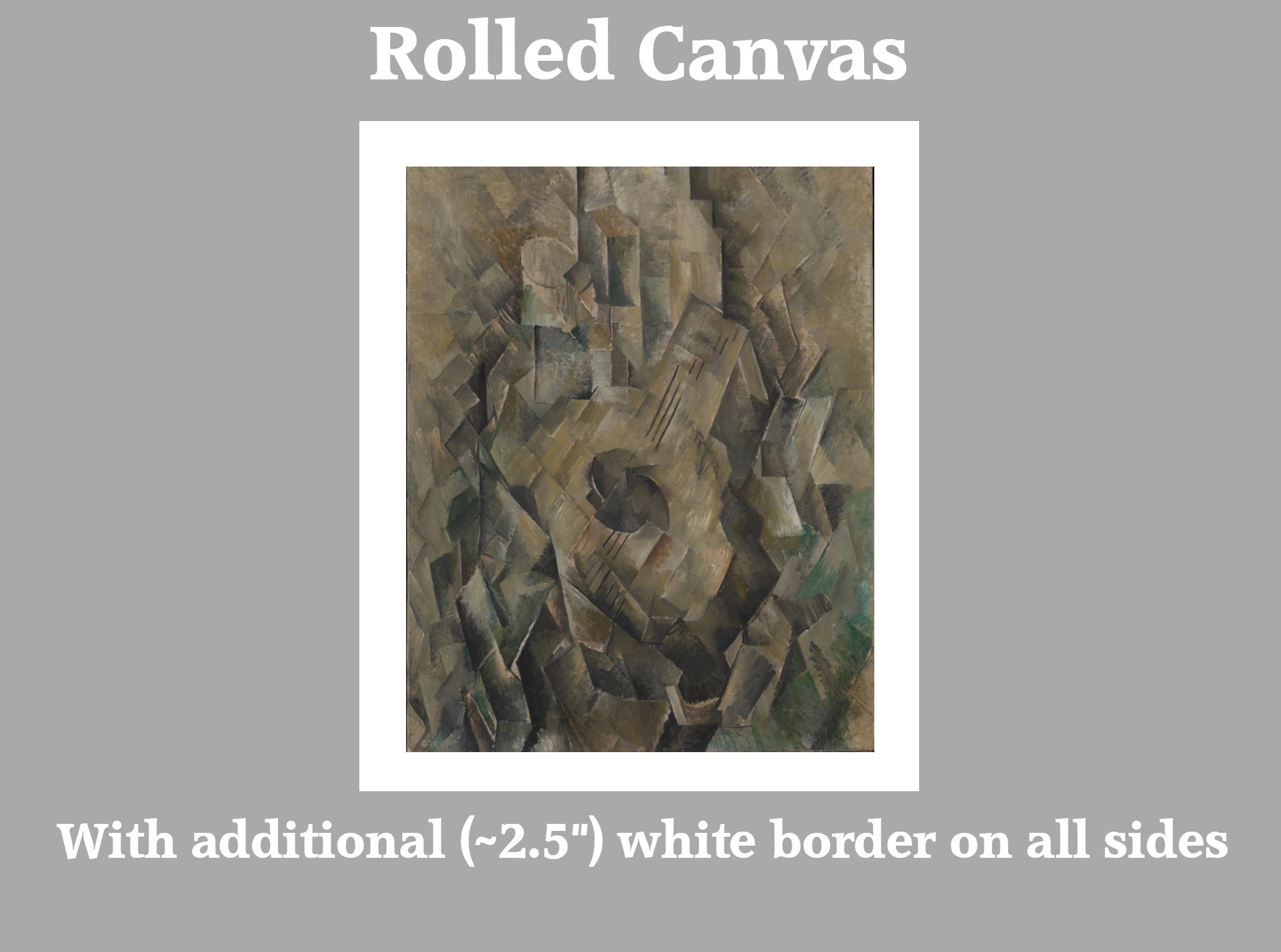
La Mandore takes another stringed instrument as its subject. Braque breaks the mandora into curved and angular sections while allowing parts of its body and strings to remain visible.
Browns, greys and muted greens keep attention on the organisation of form rather than dramatic colour. The instrument and its surroundings seem to occupy the same compressed space, making it difficult to separate the object from the room around it.
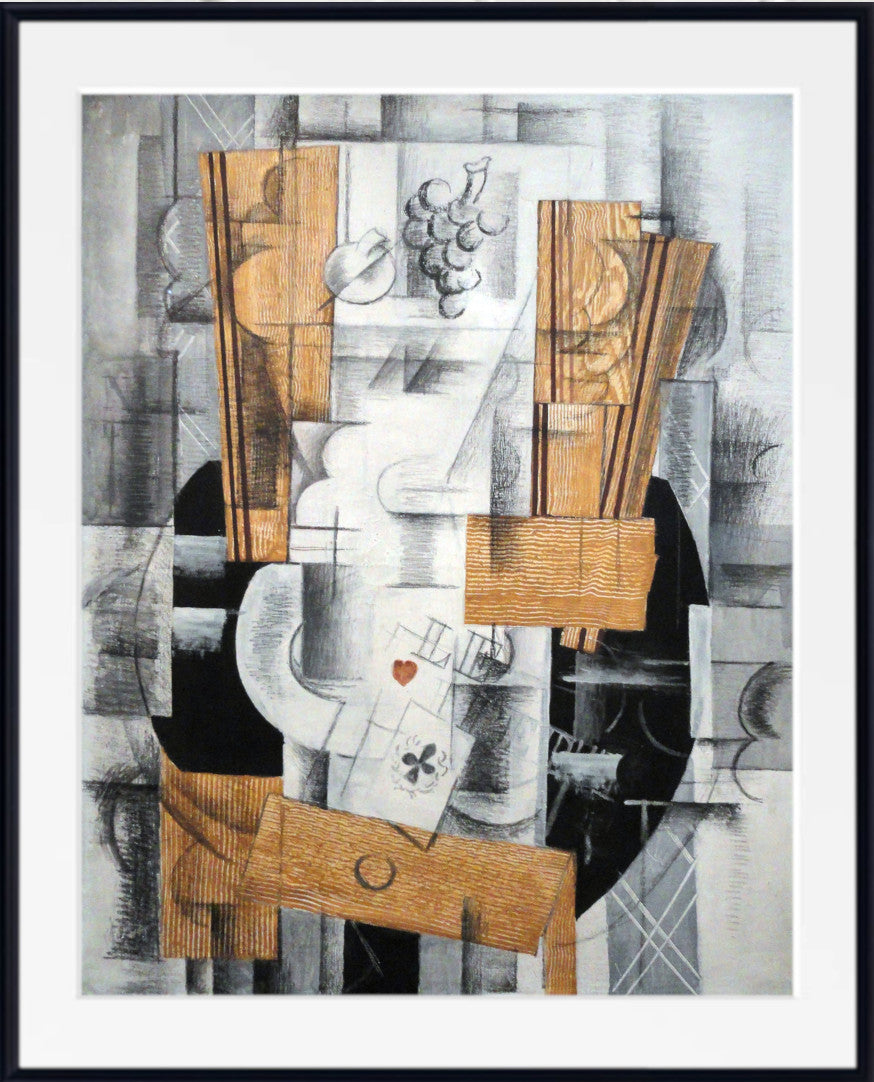
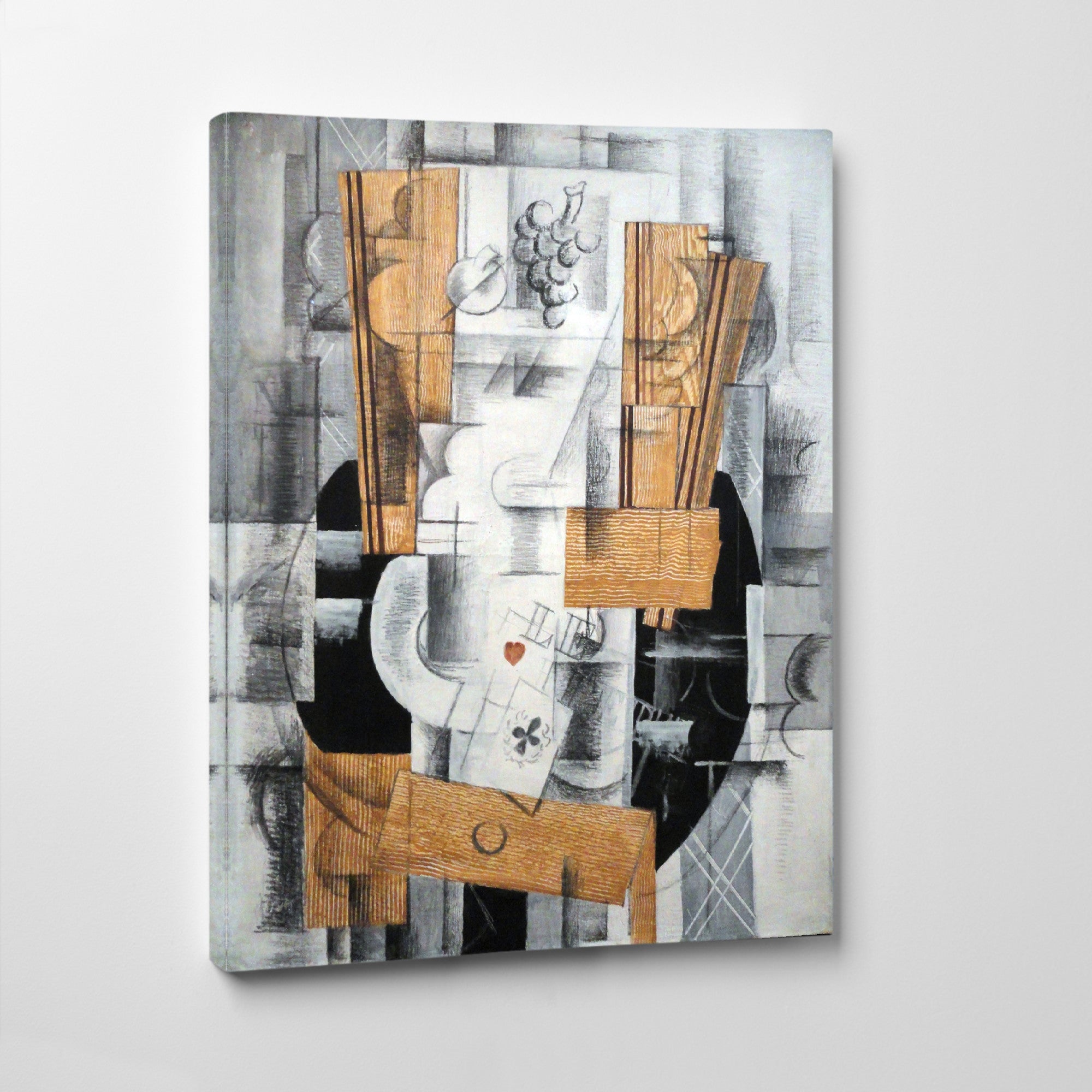
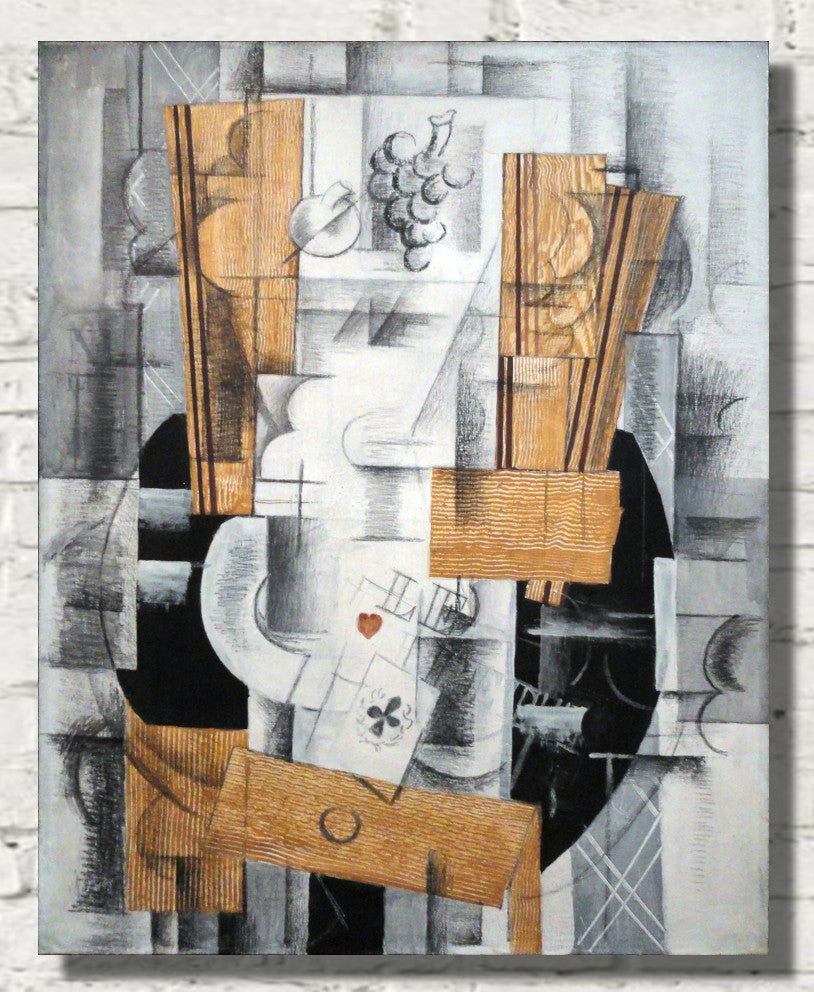
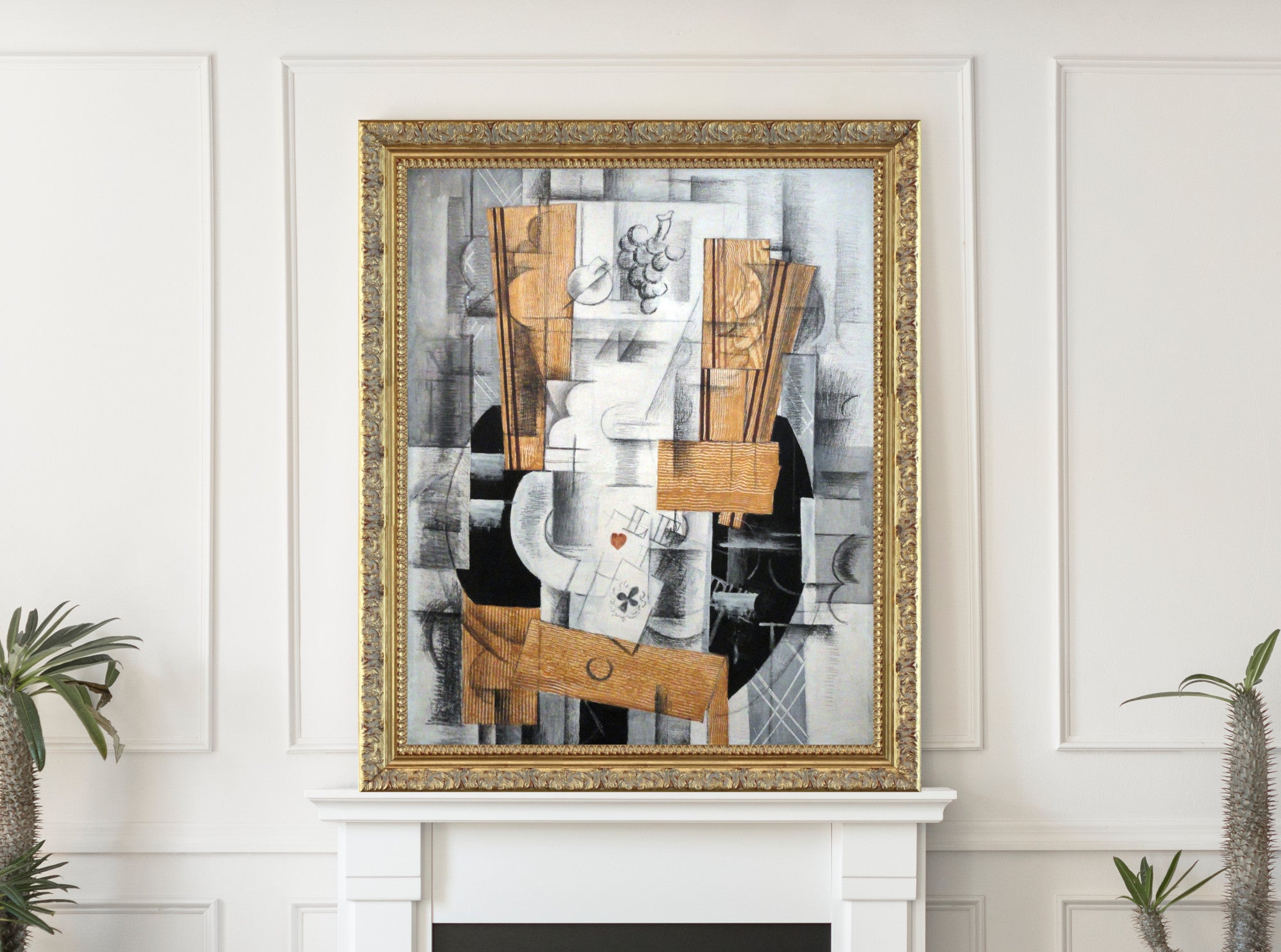
Nature morte (Fruit Dish, Ace of Clubs) demonstrates Braque’s continued interest in ordinary tabletop objects. Playing cards, fruit dishes, musical instruments and fragments of printed material gave Cubist artists recognisable shapes that could be rearranged without losing every connection to daily life.
Choosing a Georges Braque Print
Violin and Palette and La Mandore are strong choices for interiors that suit neutral colour, fine detail and pronounced geometric structure. Their musical subjects work naturally in living rooms, studies, music rooms and dining spaces.
Houses at L’Estaque offers a warmer landscape-based route into Braque’s work, while Le Grand Nu provides a bolder figurative image. Nature morte introduces the familiar tabletop imagery that became central to Cubist painting.
Braque’s muted browns, greys, greens and ochres complement natural wood, stone, cream and charcoal interiors. A black or dark-wood frame with a pale mount gives the intricate forms a clear boundary, while a canvas panel can emphasise the paintings’ surface and structure.
For a wider selection of fragmented landscapes, figures, musical instruments and still lifes, explore GalleryThane’s Cubist art prints and Cubism wall art.
GalleryThane Georges Braque artworks are available in a range of sizes as fine art paper prints, custom-framed prints and ready-to-hang canvas panels.