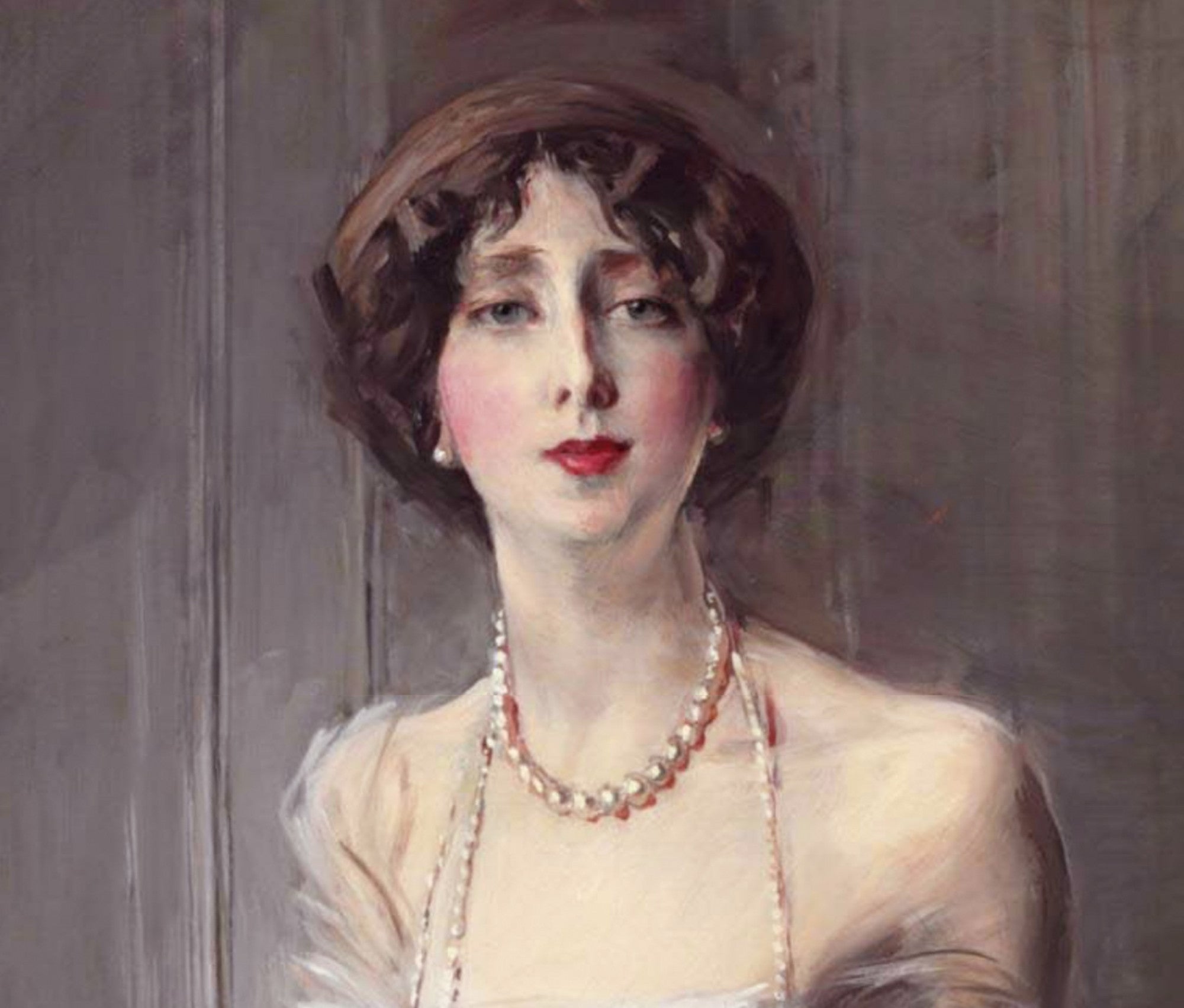
Giovanni Boldini Prints and Belle Époque Portraits
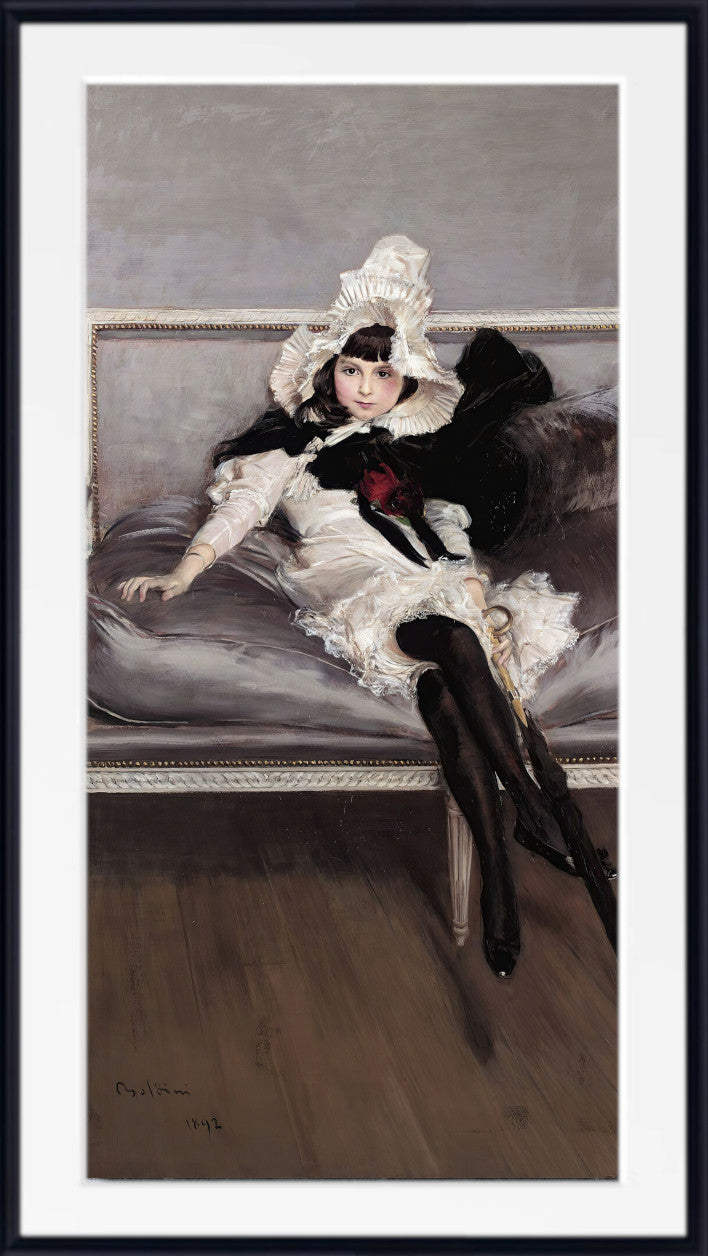
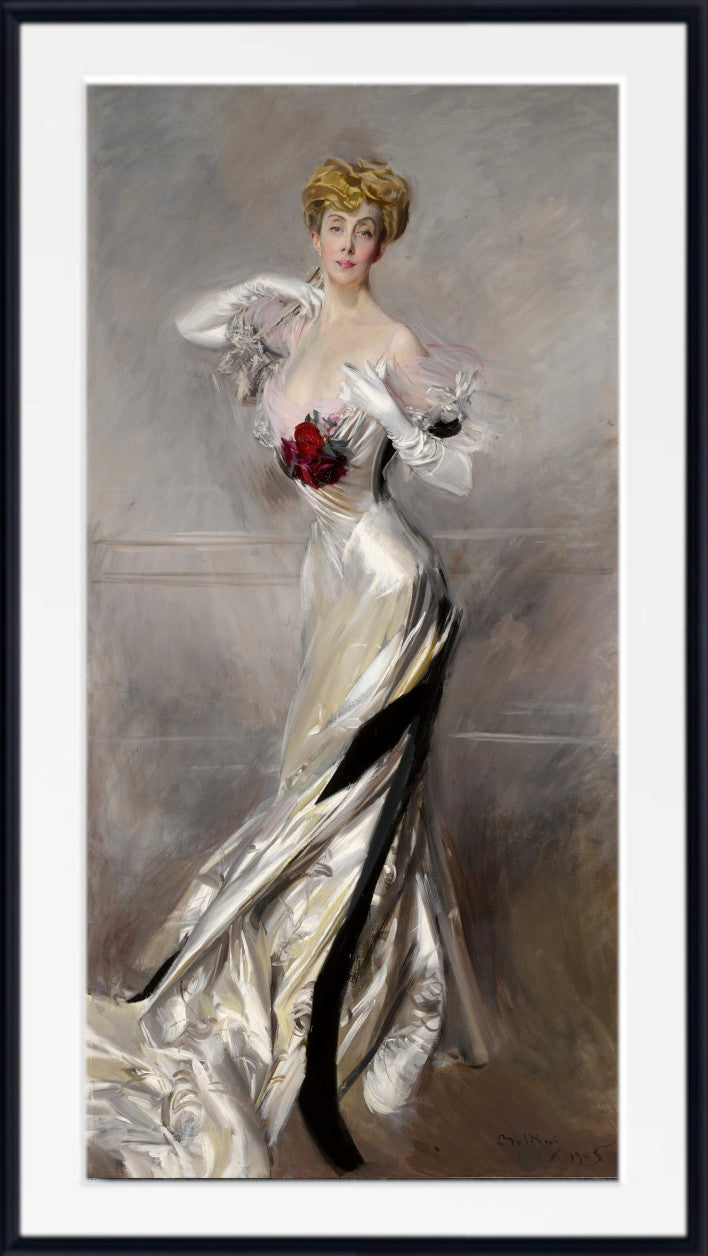
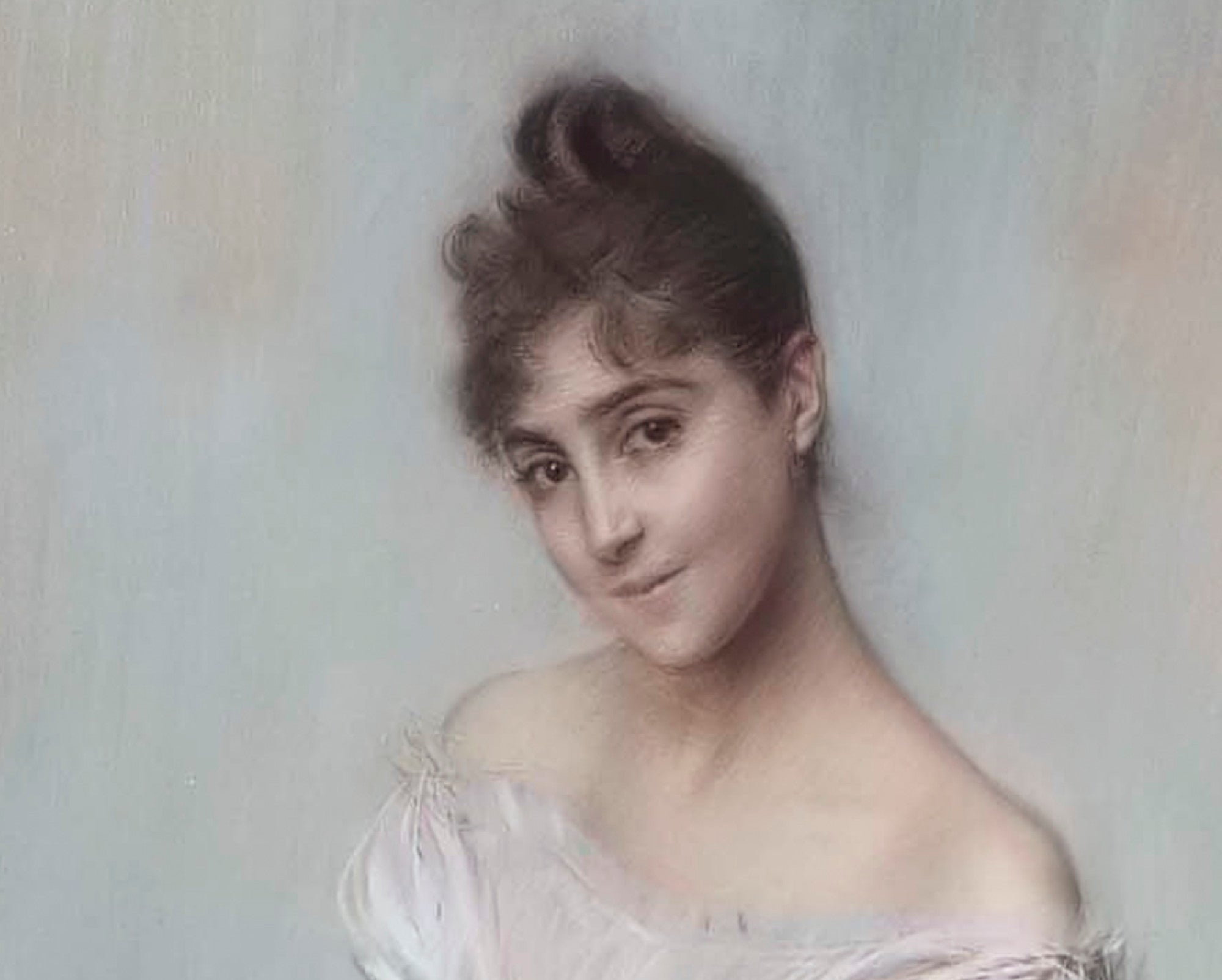
Giovanni Boldini became one of the defining painters of fashionable Paris at the end of the nineteenth century. His portraits are immediately recognisable for their elegance, rapid brushwork and remarkable sense of movement. Dresses seem to shimmer, sitters twist or turn within the composition, and apparently spontaneous strokes give even formal portraits an energy that feels strikingly modern.
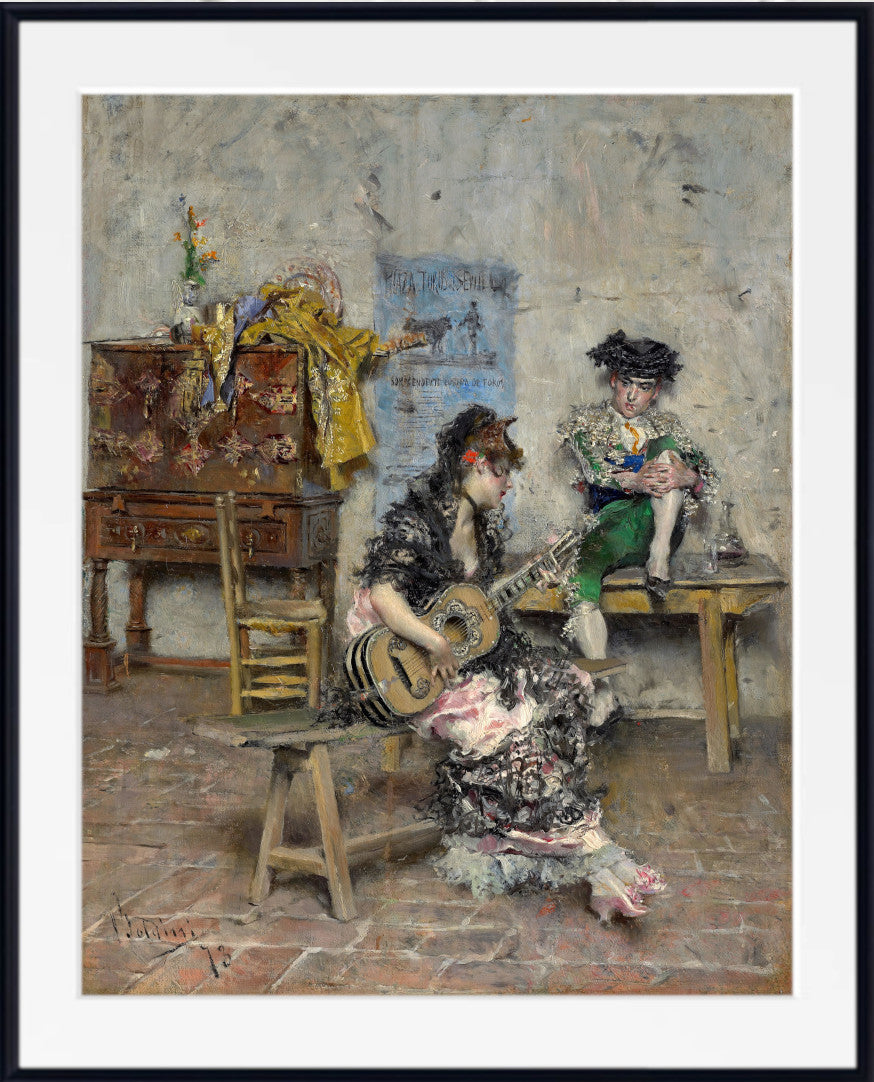
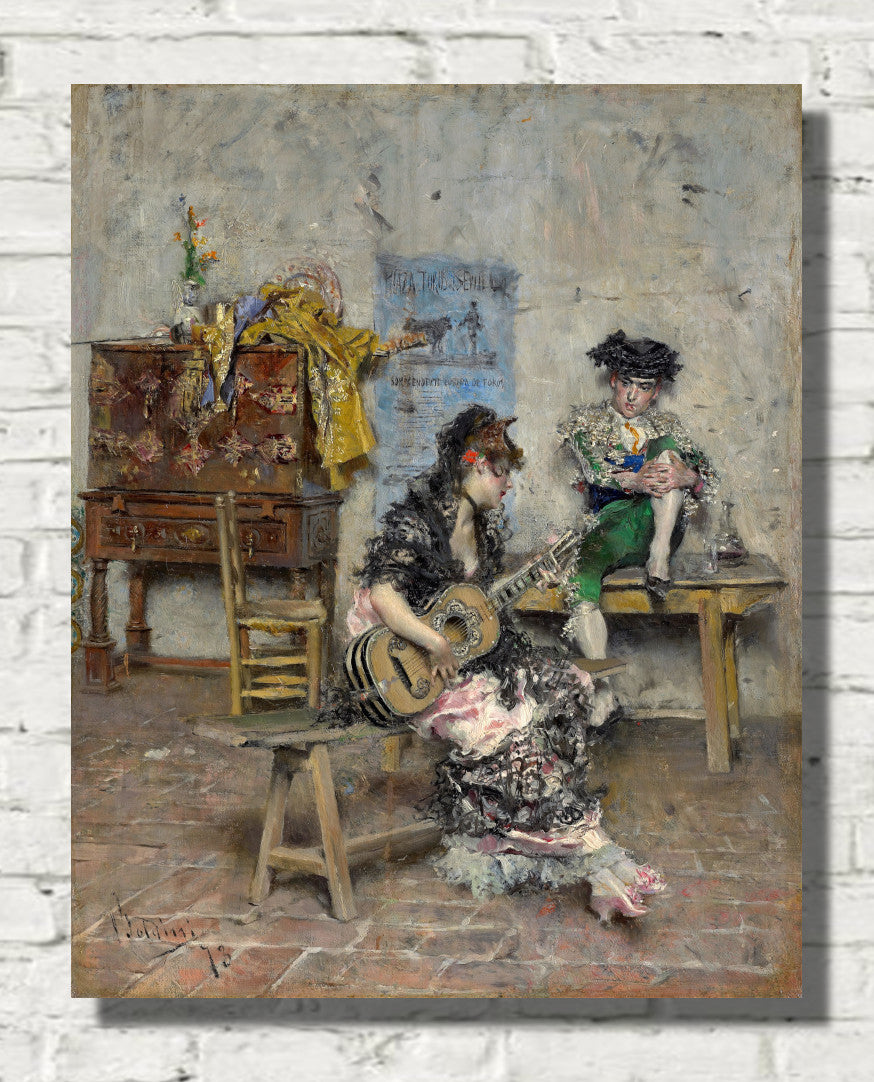
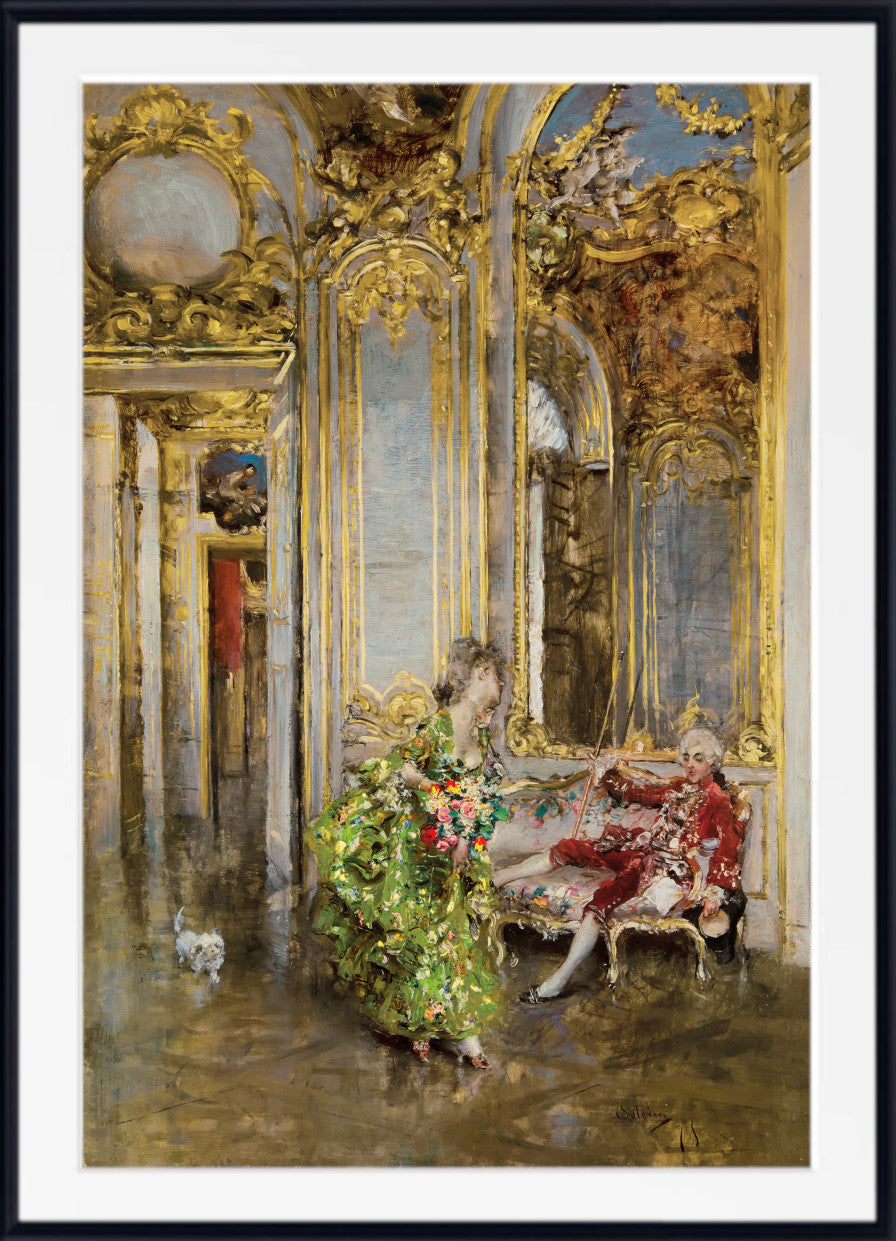
This collection brings together Giovanni Boldini prints ranging from celebrated society portraits to dancers, Parisian street scenes, interiors, nudes and quieter moments from everyday life.
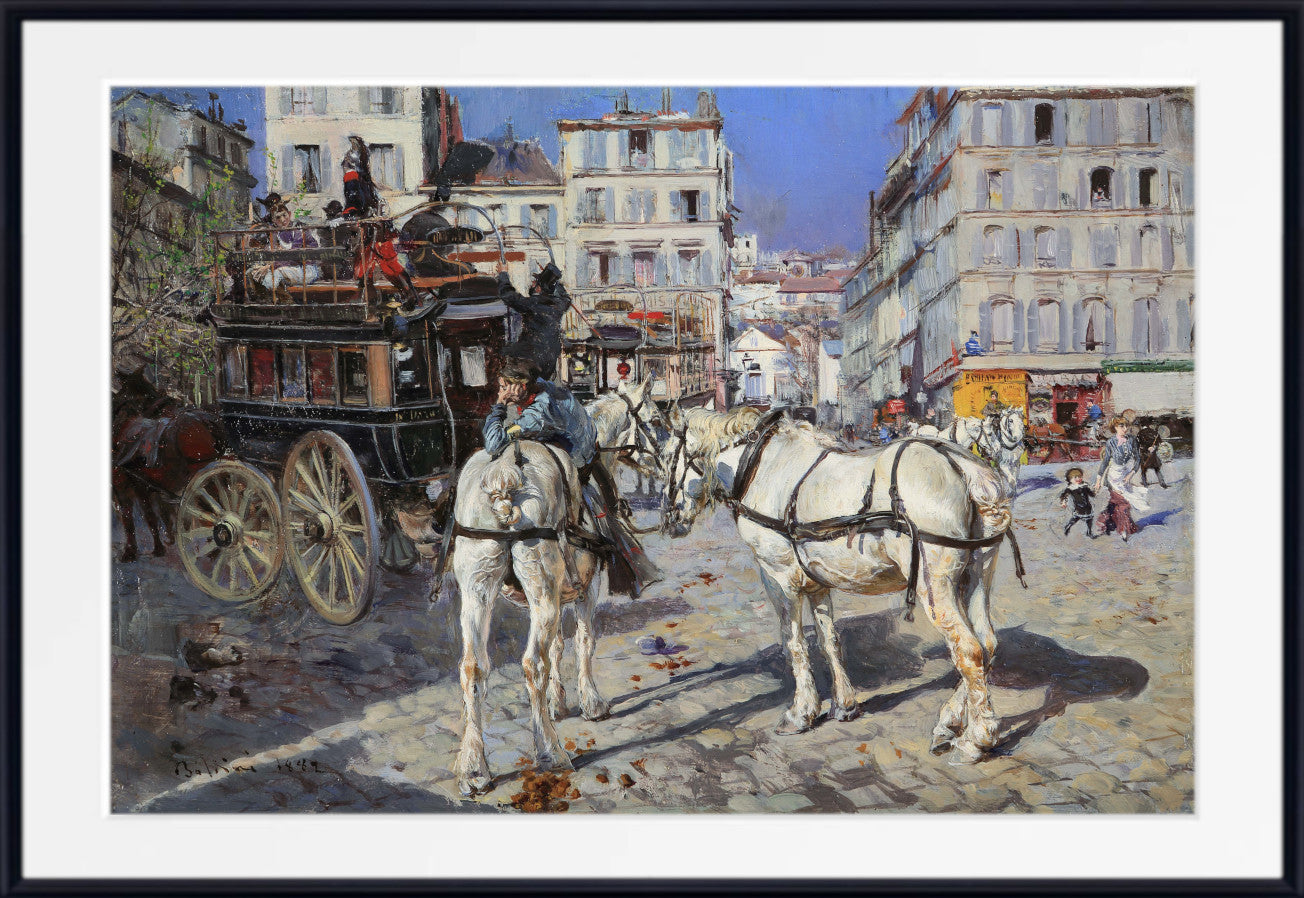
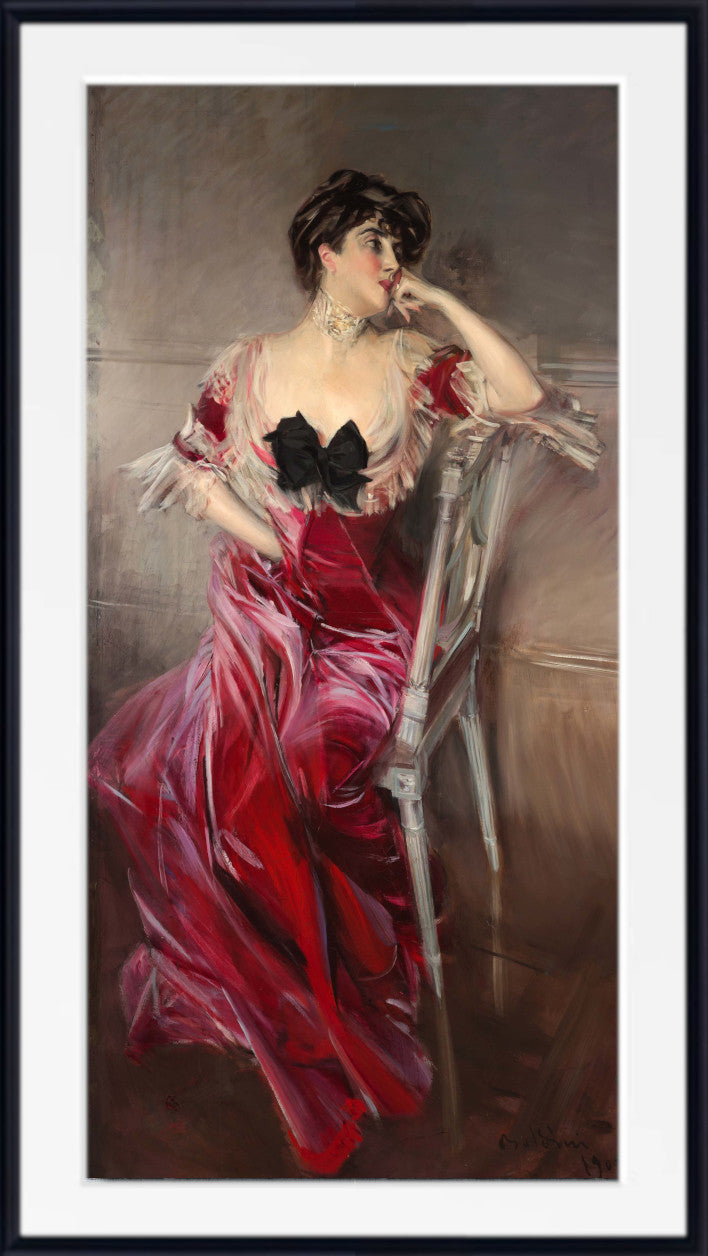
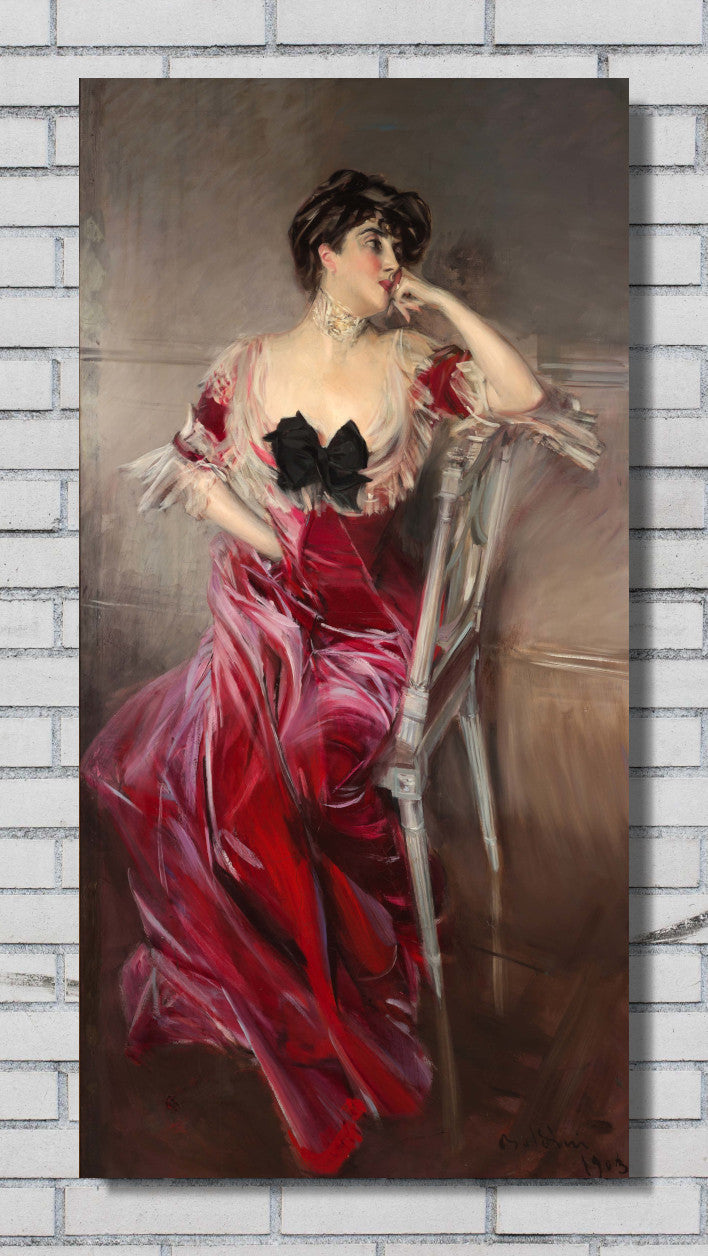
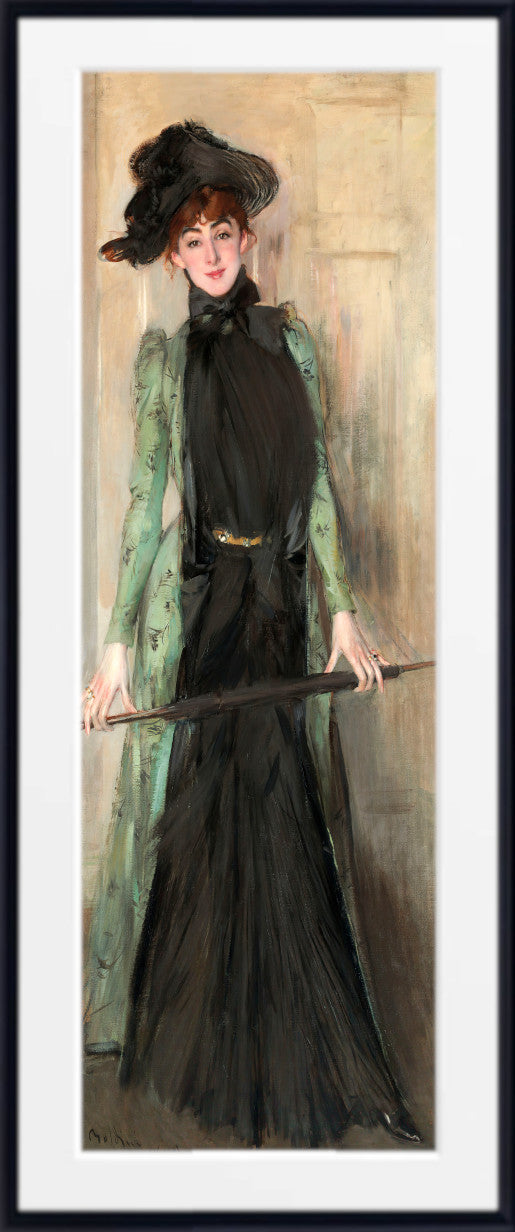
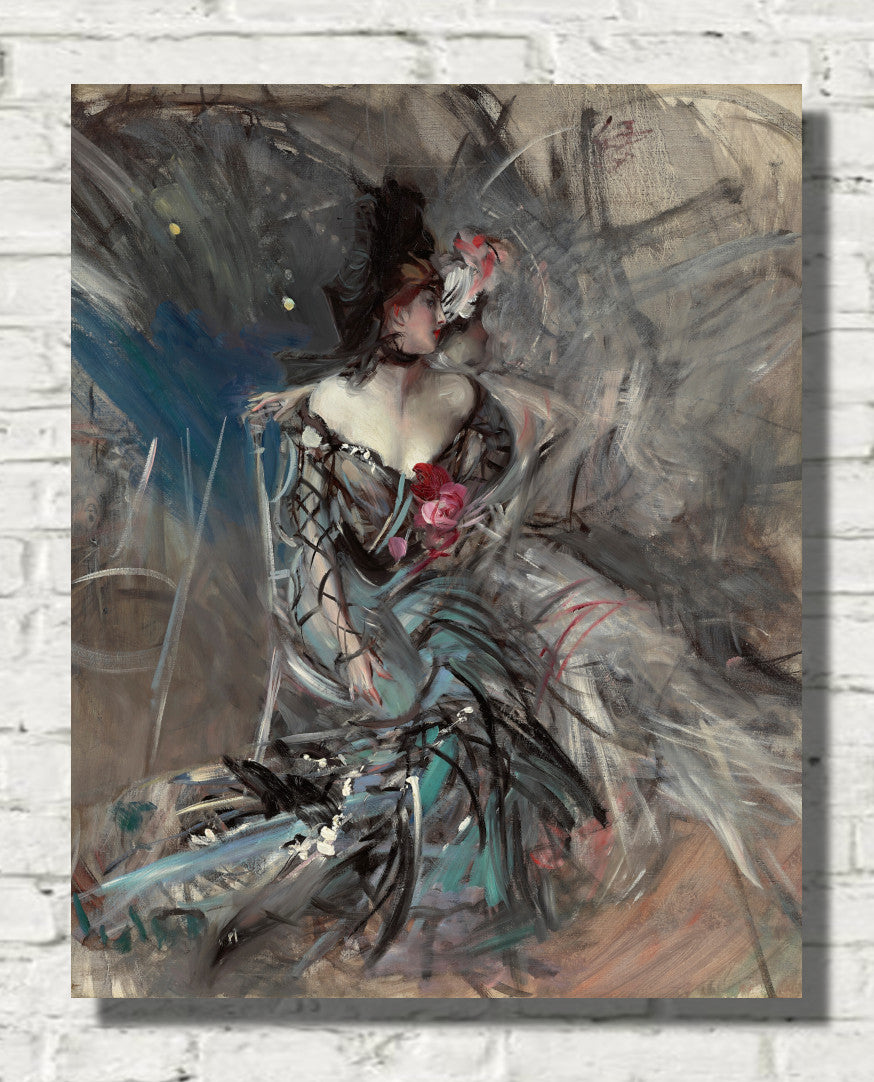
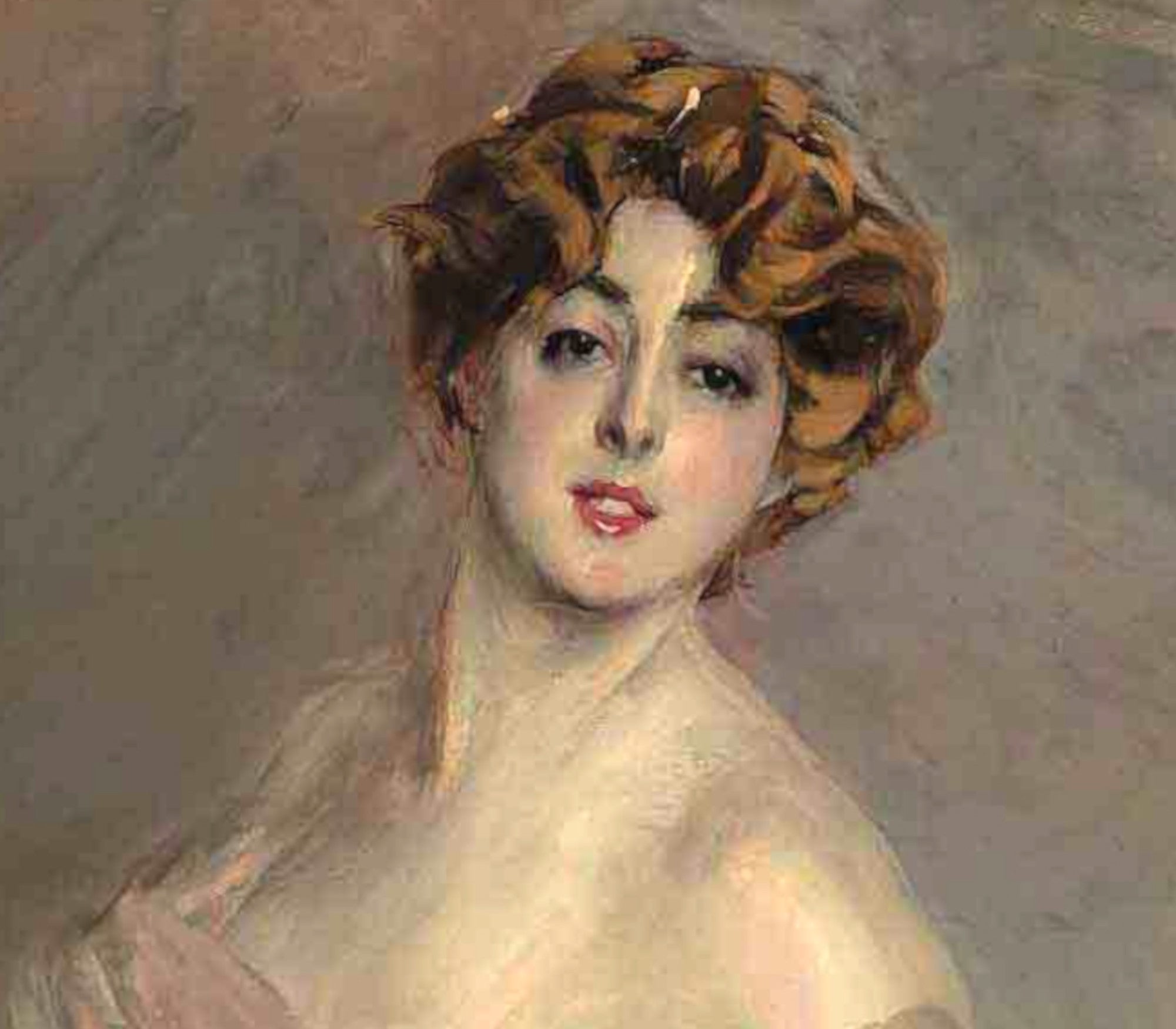
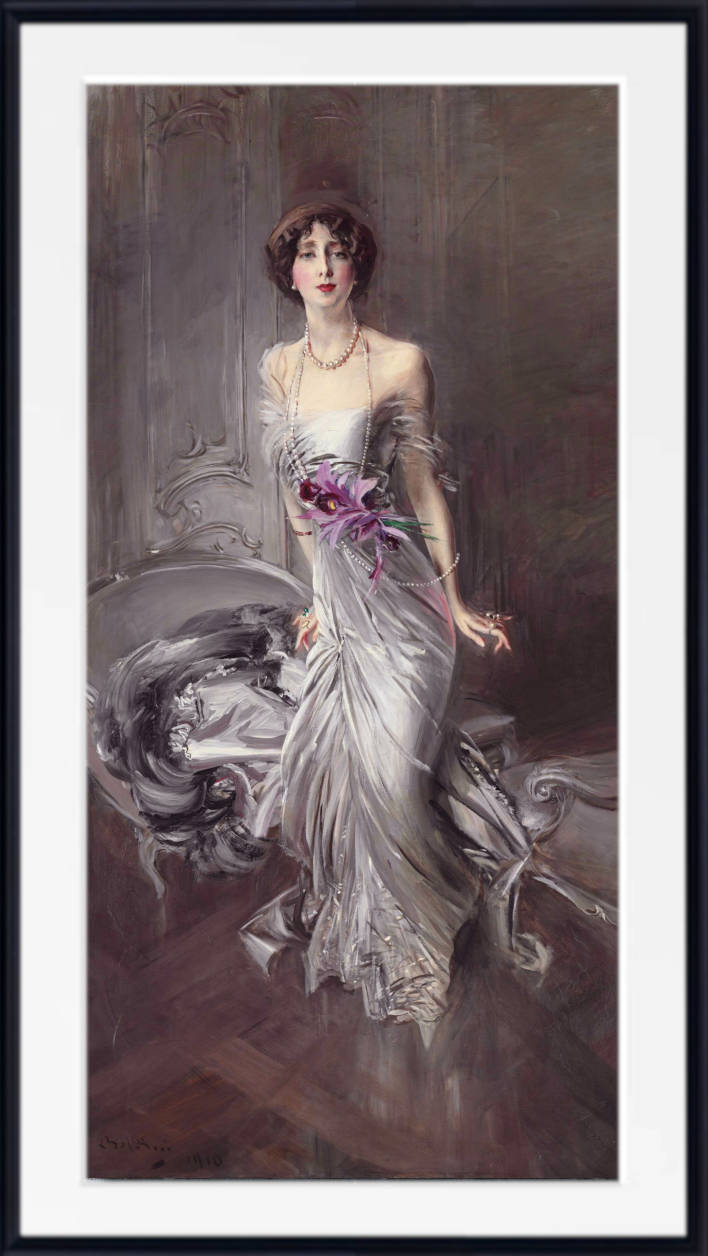
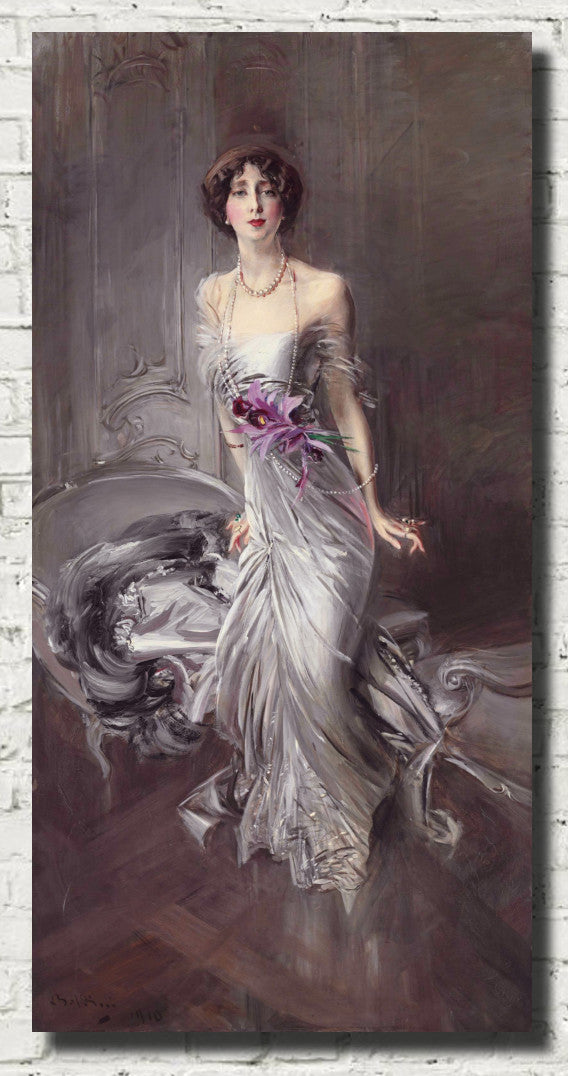
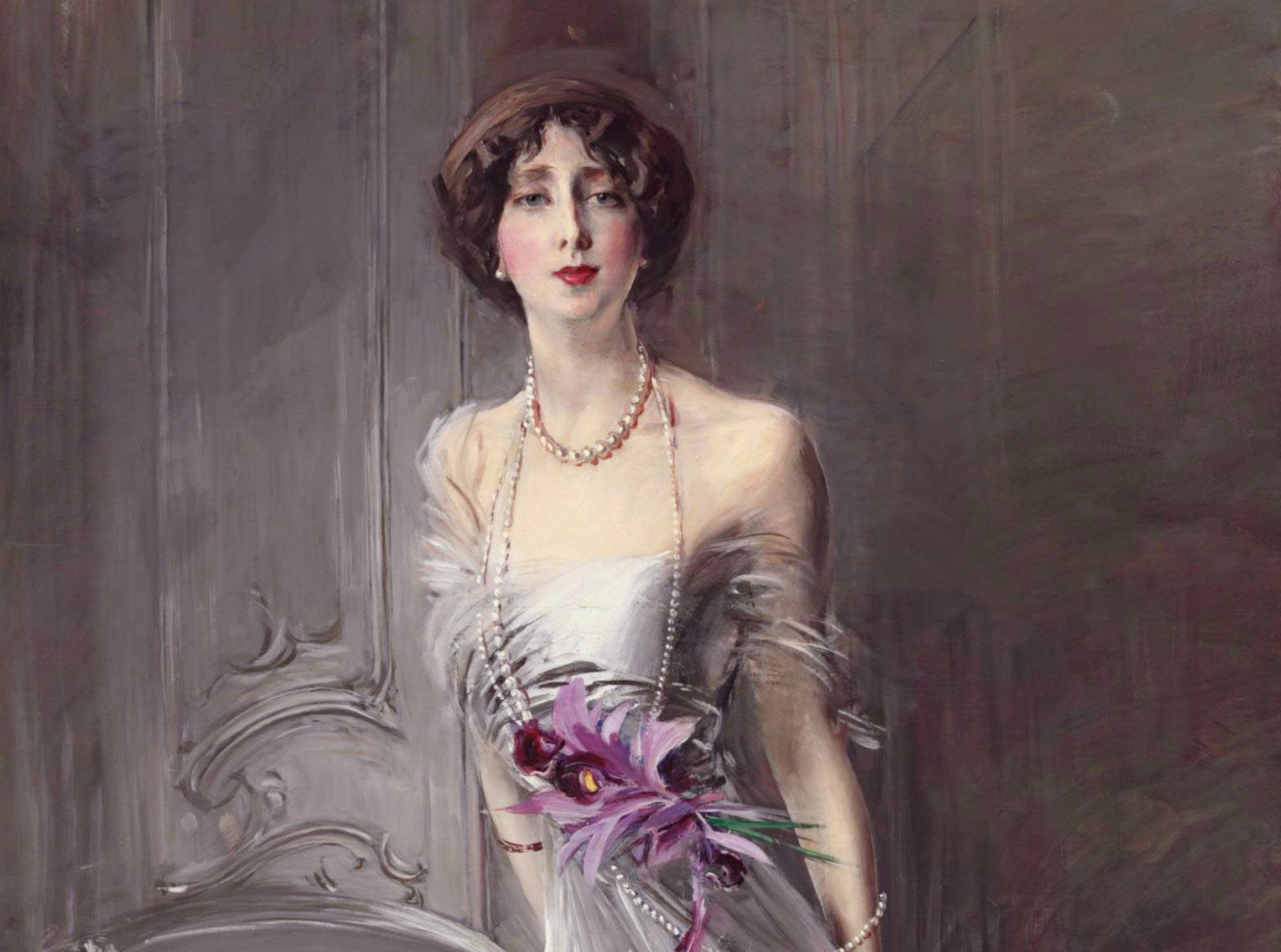
Among the most distinctive works are Portrait of Miss Bell, Portrait of Madame Roger-Jourdain, Spanish Ballerina at the Moulin Rouge and Place Pigalle and the Place de l’Etoile La Villette Omnibus.
Boldini and the Belle Époque
Born in Ferrara in 1842, Boldini first trained with his father before moving to Florence, where he came into contact with artists associated with the Macchiaioli. After visits to Paris and a period working successfully in London, he settled permanently in Paris in the early 1870s.
Paris transformed both his career and his painting. He knew artists including Edgar Degas and Édouard Manet and became increasingly interested in modern city life. Over time, wealthy patrons, aristocrats and international social figures sought him out for portraits.
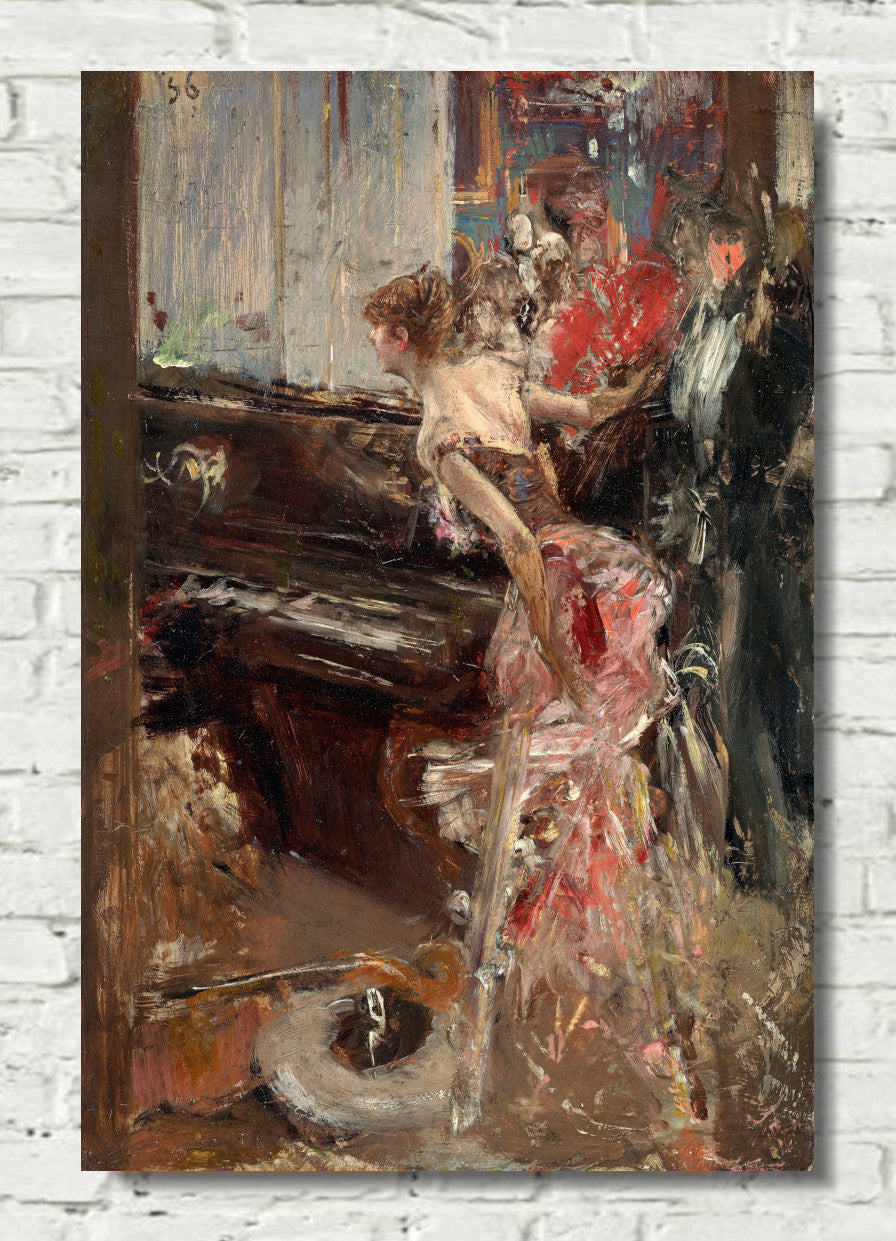
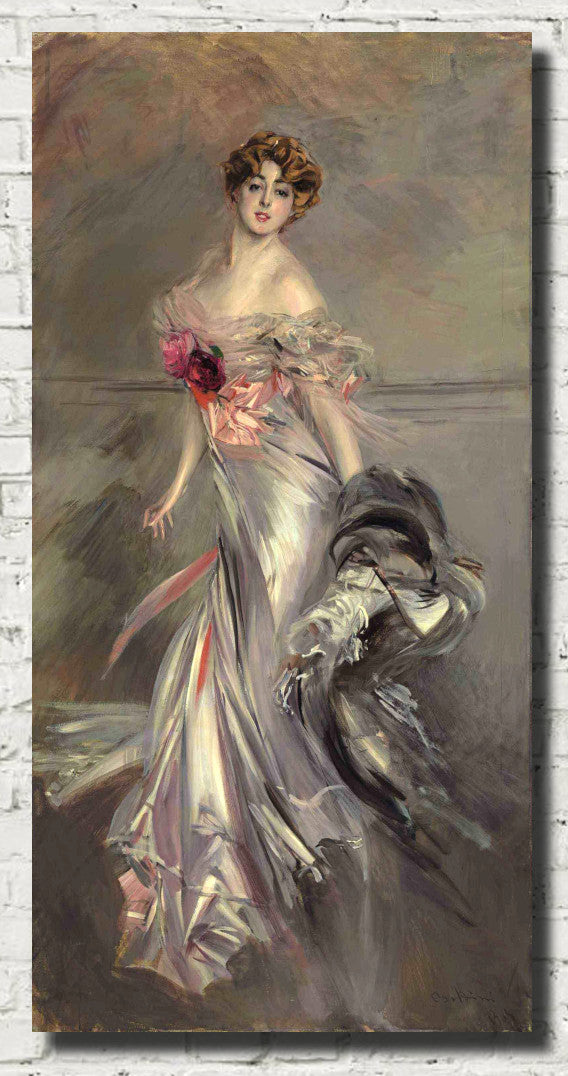
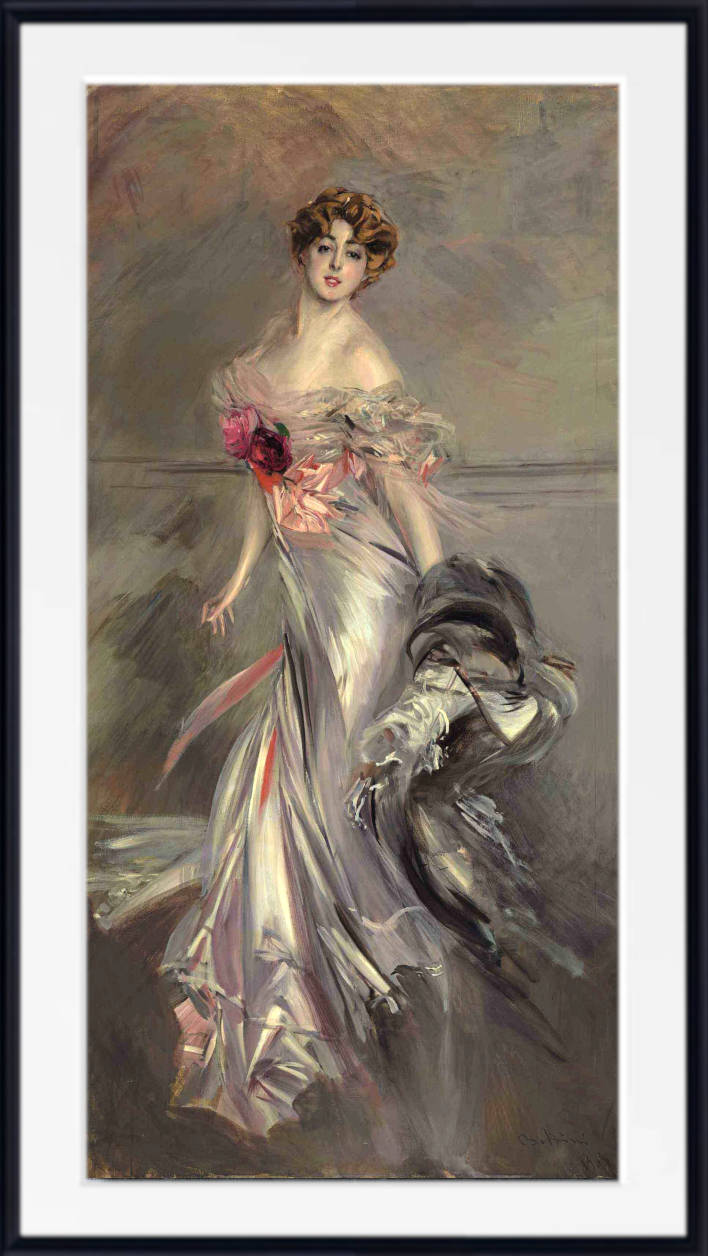
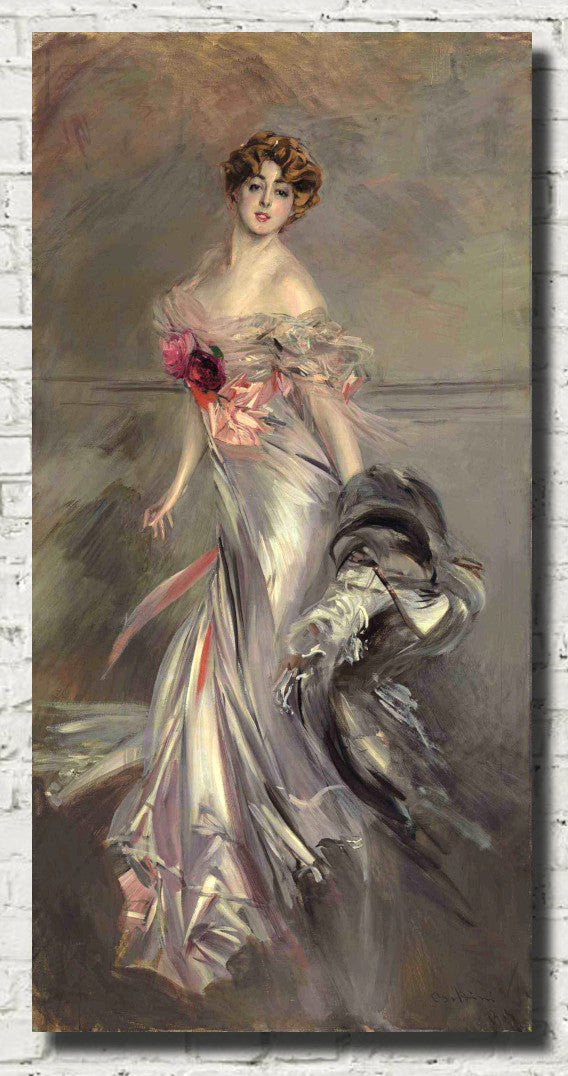
His success was not simply the result of flattering his sitters. Boldini developed a highly individual way of painting them: elongated figures, sweeping dresses, sudden turns of the head and rapid strokes that seem to continue beyond the figure itself.
Fashionable Women and Society Portraits
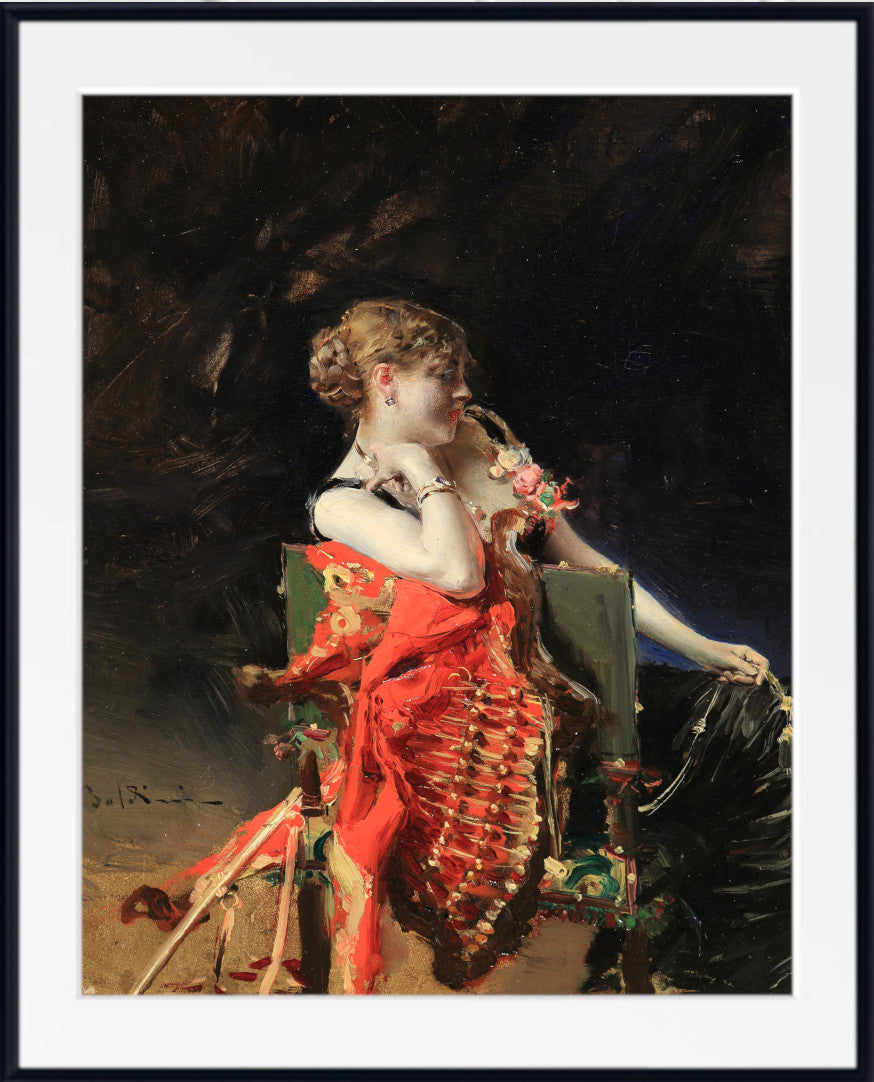
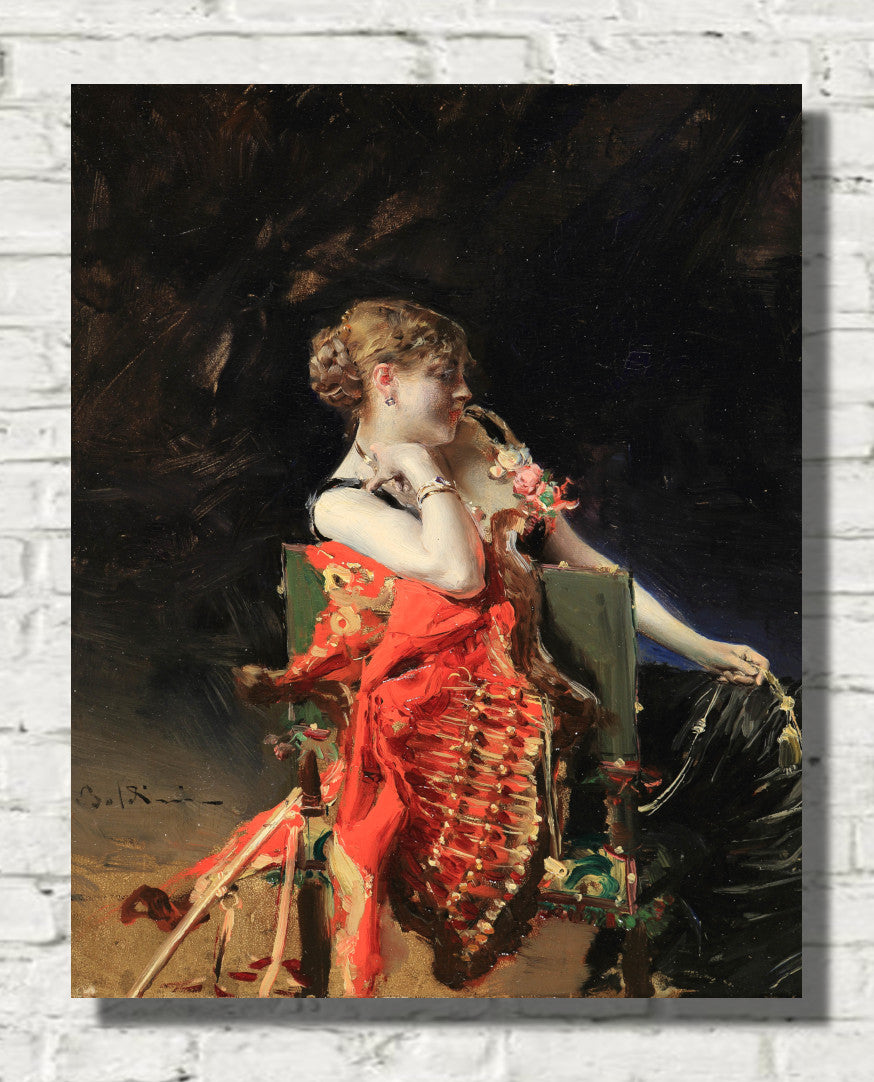
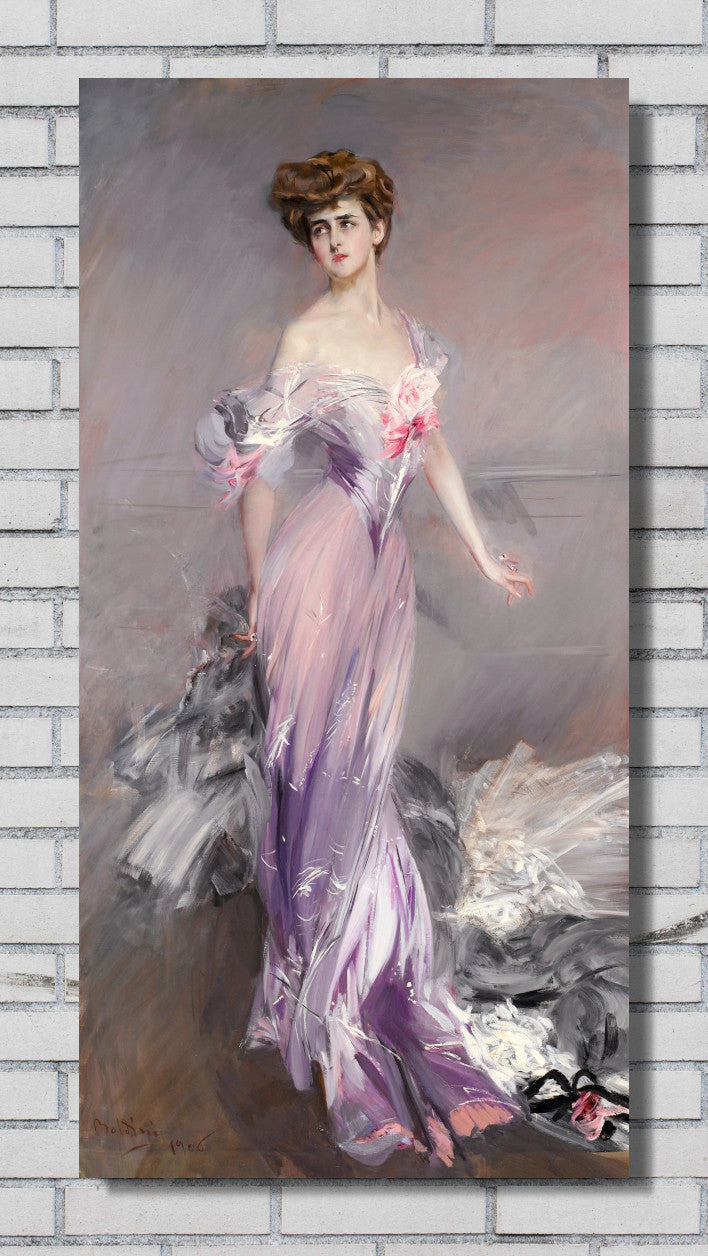
Boldini was particularly admired for portraits of women dressed in the fashions of late nineteenth- and early twentieth-century Paris.
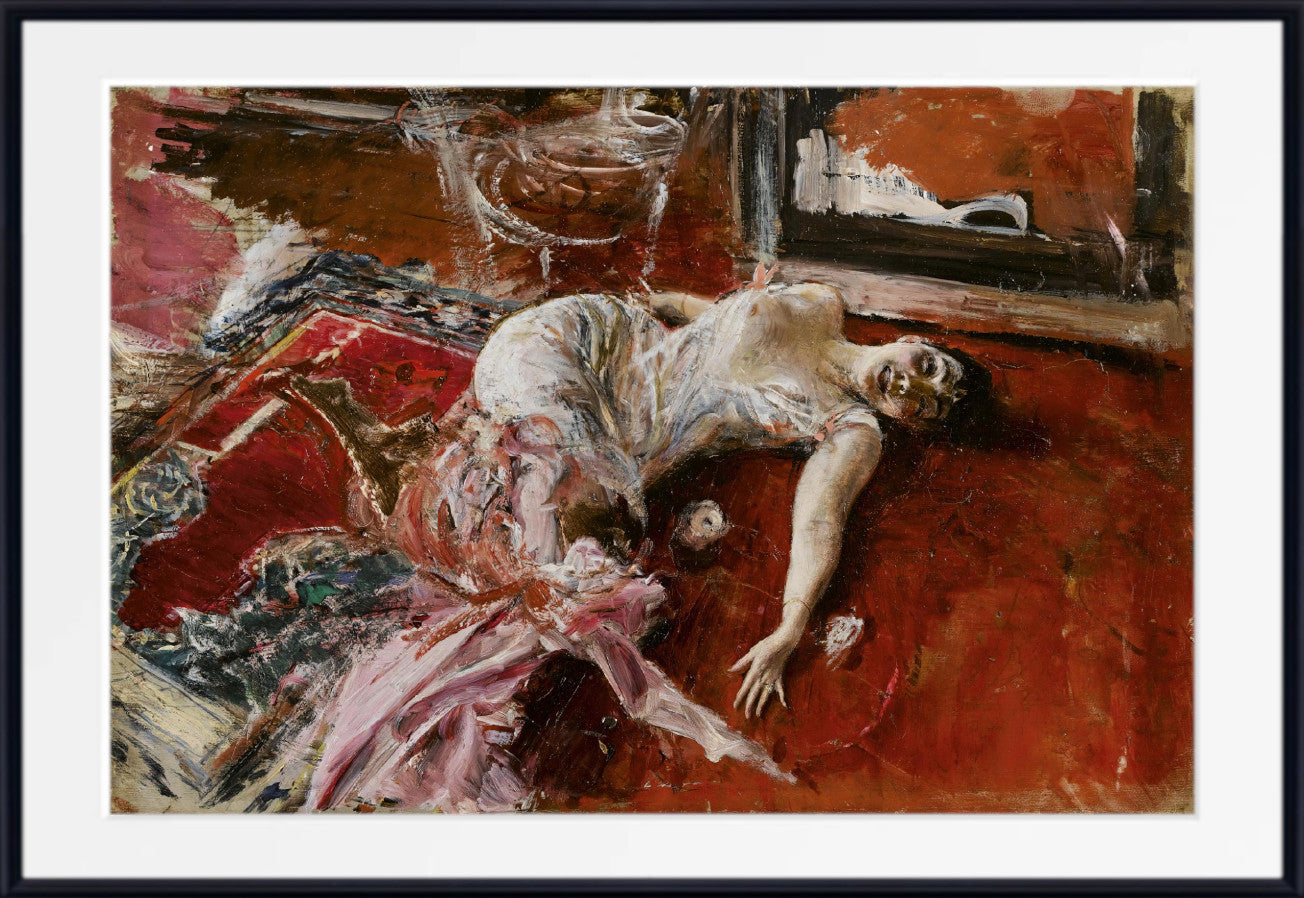
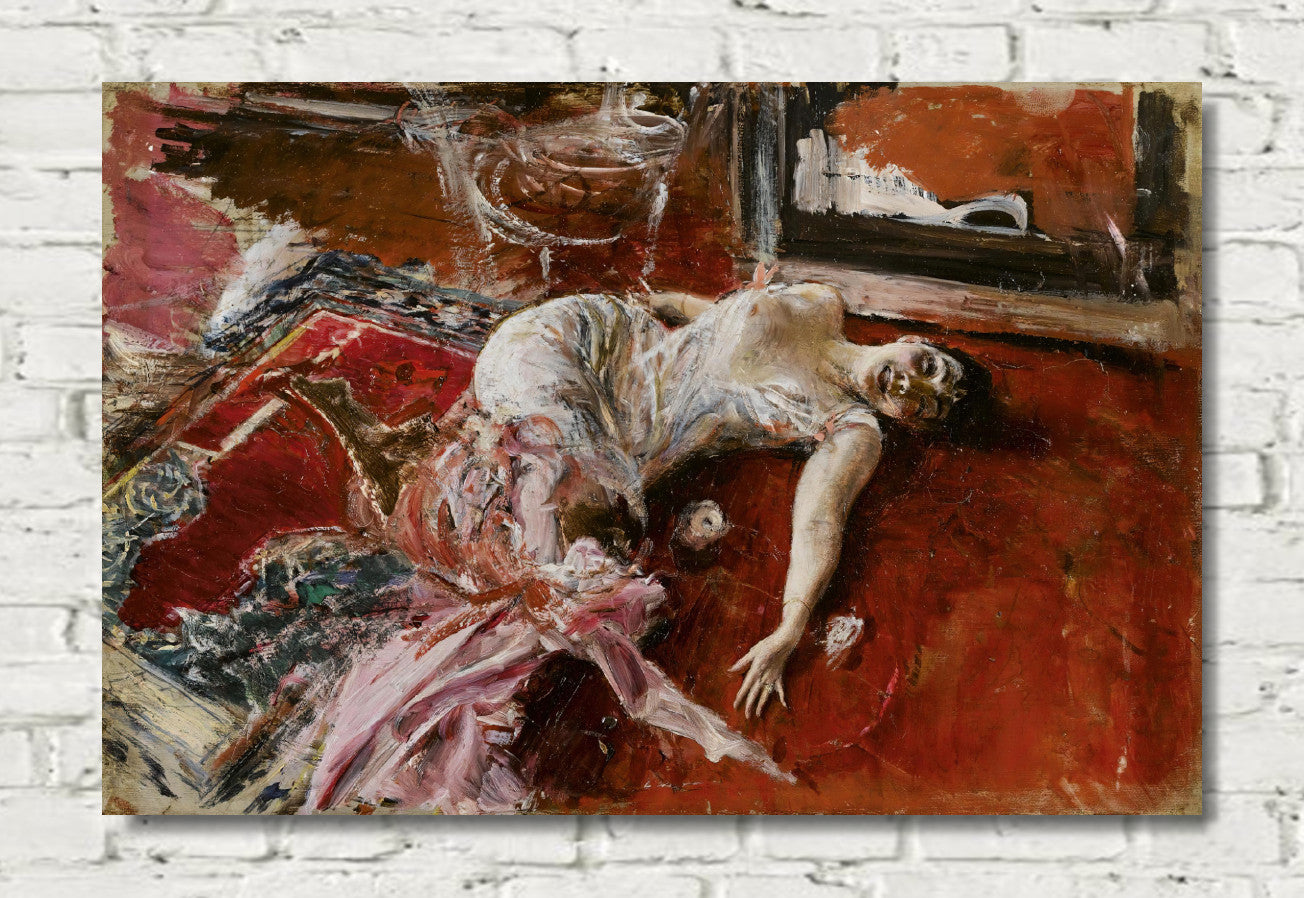
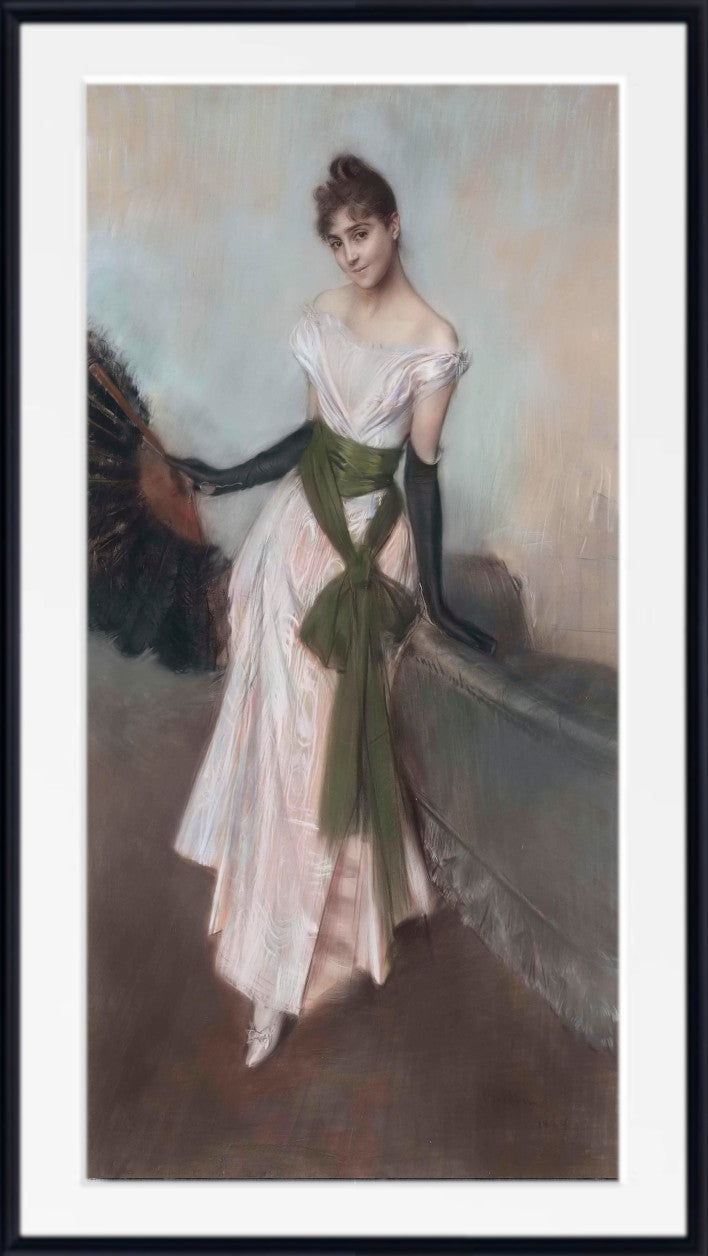
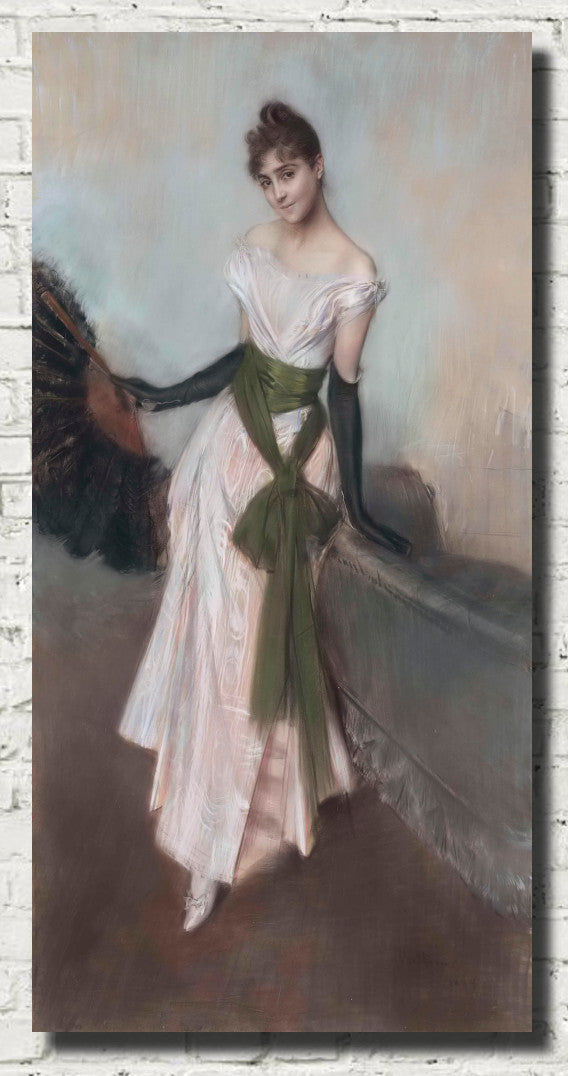
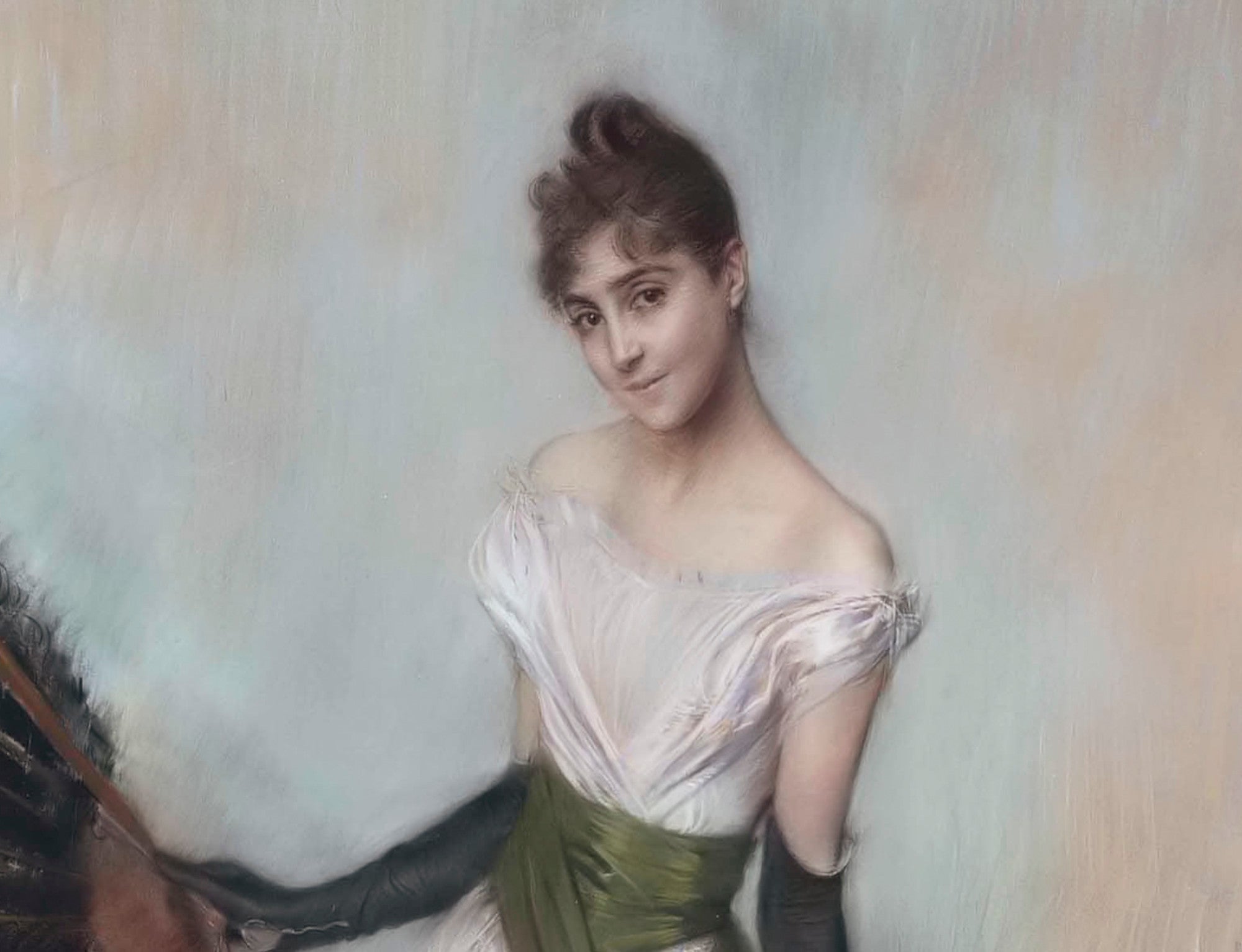
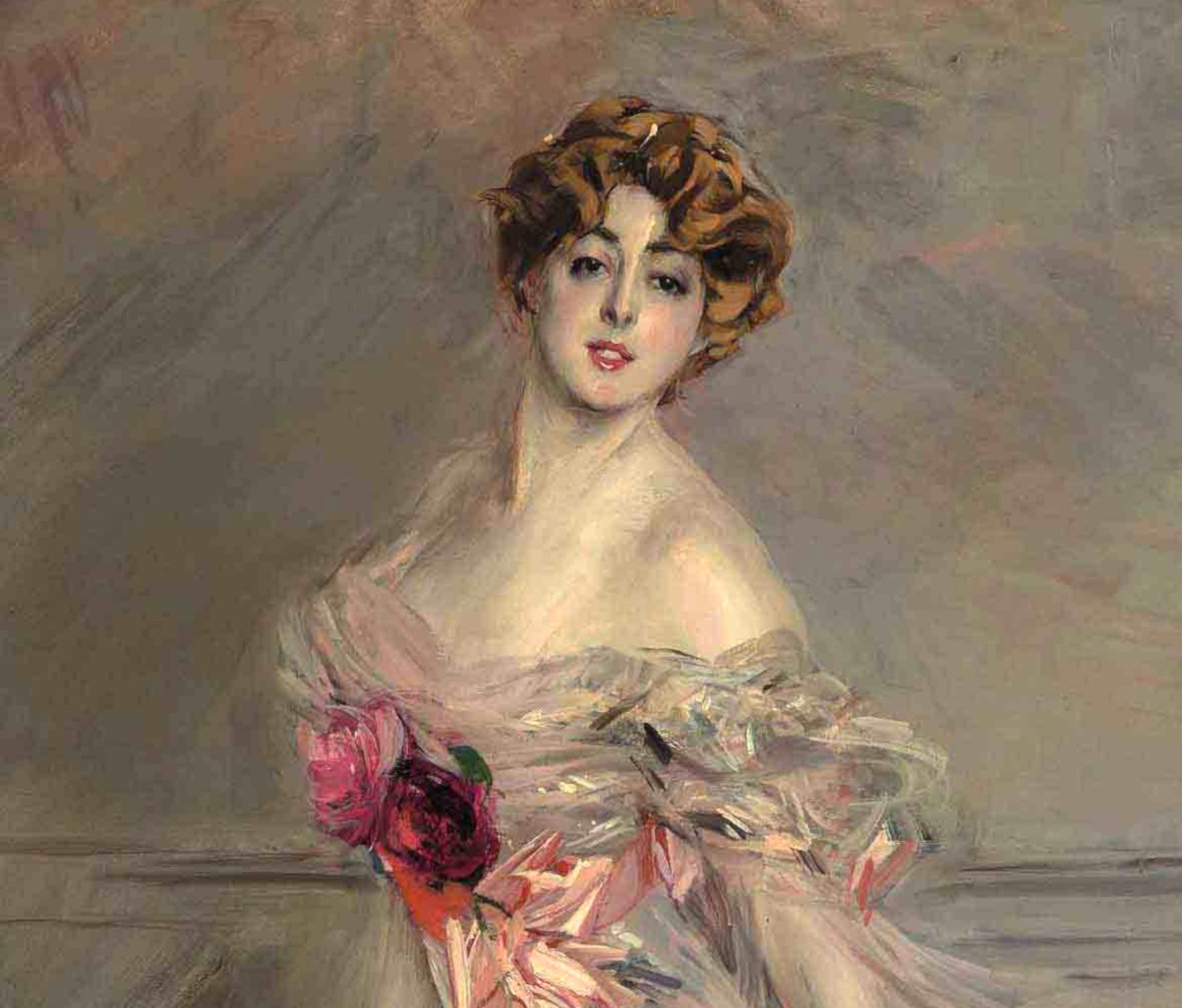
Rather than treating elaborate gowns as static costume, he made fabric appear to move around the sitter. Satin, lace and feathers dissolve into long strokes of paint, while faces and hands often remain more carefully observed.
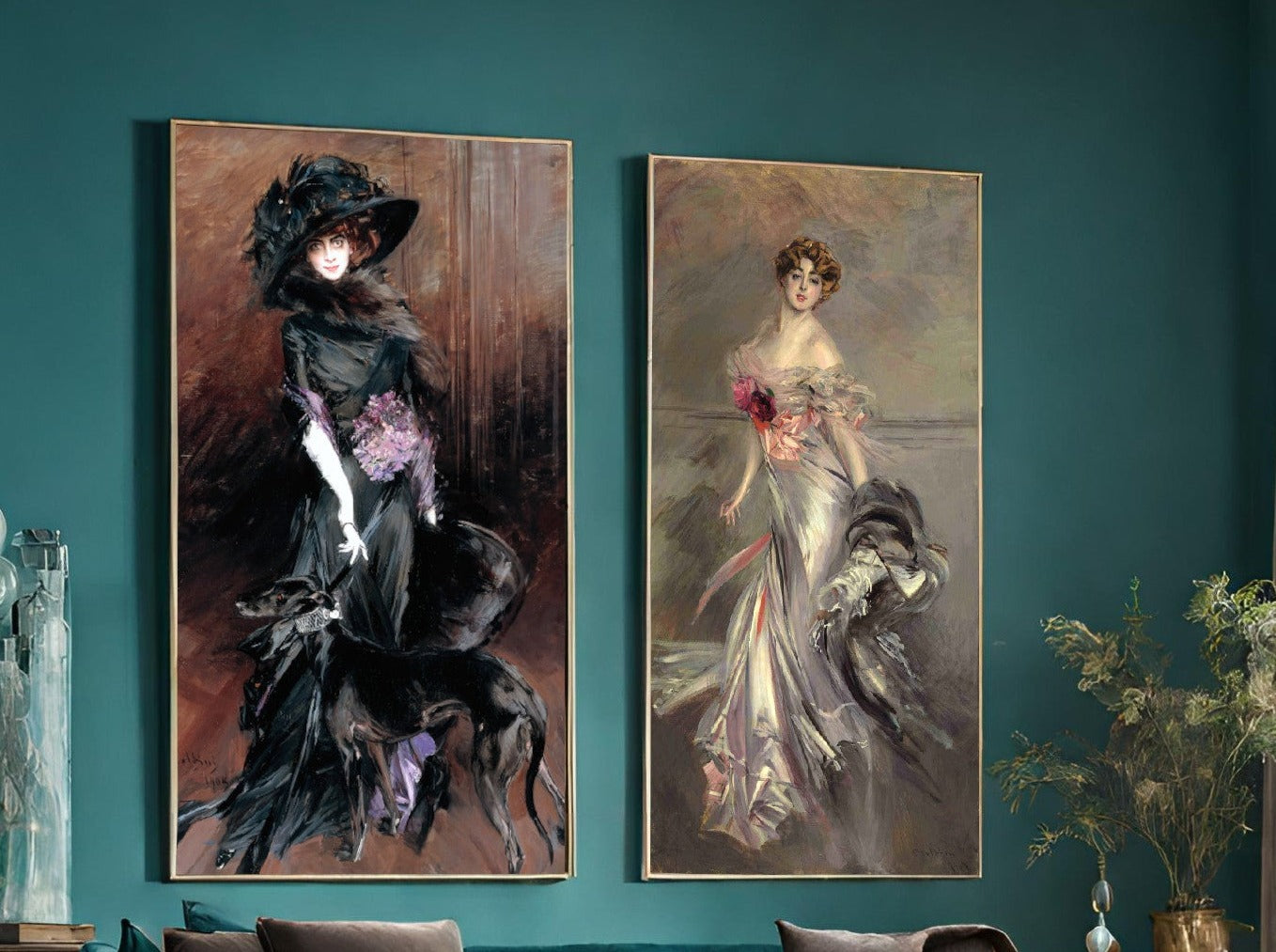
Portrait of Miss Bell is a superb example of this combination of refinement and movement. Boldini stretches the figure vertically and allows the dress to sweep through the composition, creating an impression that is almost as much about personality and movement as physical likeness.
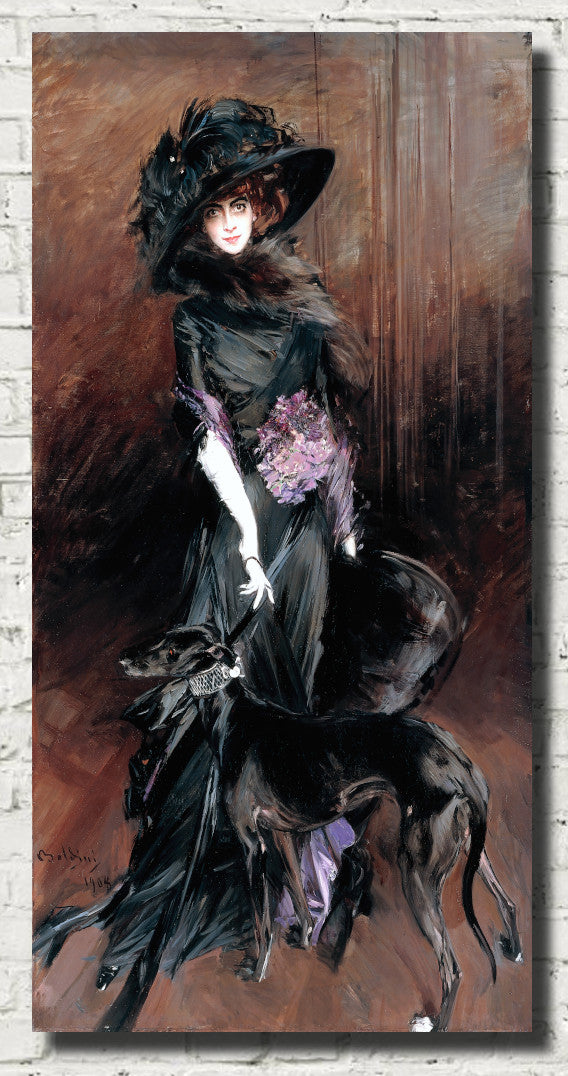
Portrait of Madame Roger-Jourdain similarly demonstrates his ability to make a formal portrait feel spontaneous.
Explore further figurative works in the Portraits and People Fine Art Prints collection.
Movement and Boldini’s Brushwork
Boldini’s paintings often appear to be moving even when the subject is seated.
Long, fluid strokes race through clothing and backgrounds. Edges disappear and reappear. A dress may be described with only a handful of apparently effortless marks before suddenly resolving into a recognisable form.
This lively technique gave his portraits a very different character from more conventional academic portraiture. It also helps explain why his work can feel surprisingly contemporary despite depicting a society that disappeared more than a century ago.
Dancers and Parisian Nightlife
Boldini’s interest in movement made dancers natural subjects.
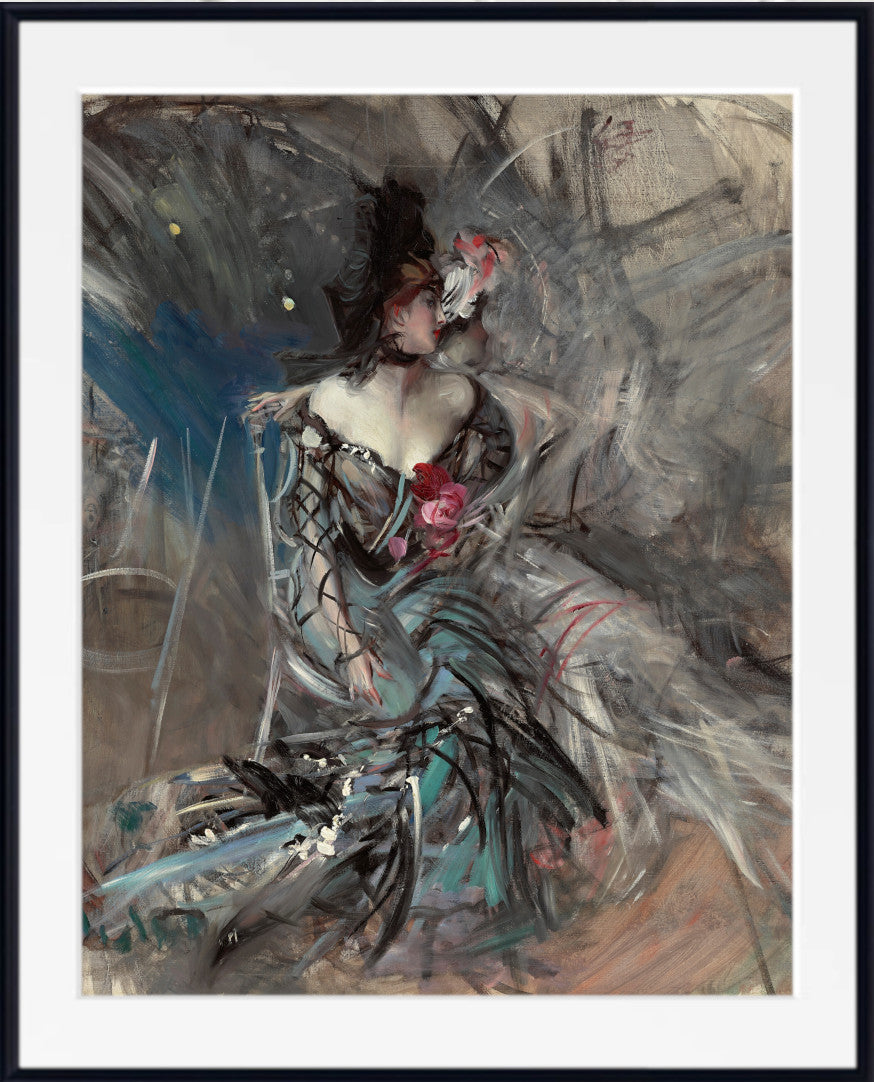
Spanish Ballerina at the Moulin Rouge combines performance, fashion and the restless energy associated with Parisian nightlife. Instead of freezing the dancer into a carefully posed figure, Boldini allows the body and costume to seem caught in motion.
Works such as these show another side of Belle Époque Paris beyond formal drawing rooms: theatres, cafés, music halls and the entertainment culture that drew artists, writers and visitors to the city.
Paris Street Scenes
Boldini was also fascinated by modern Paris itself.
Before his reputation became dominated by society portraits, he painted streets, squares, cafés and scenes of contemporary urban life. These works share some interests with the Impressionists he encountered in Paris, particularly their attention to modern experience rather than historical subjects.
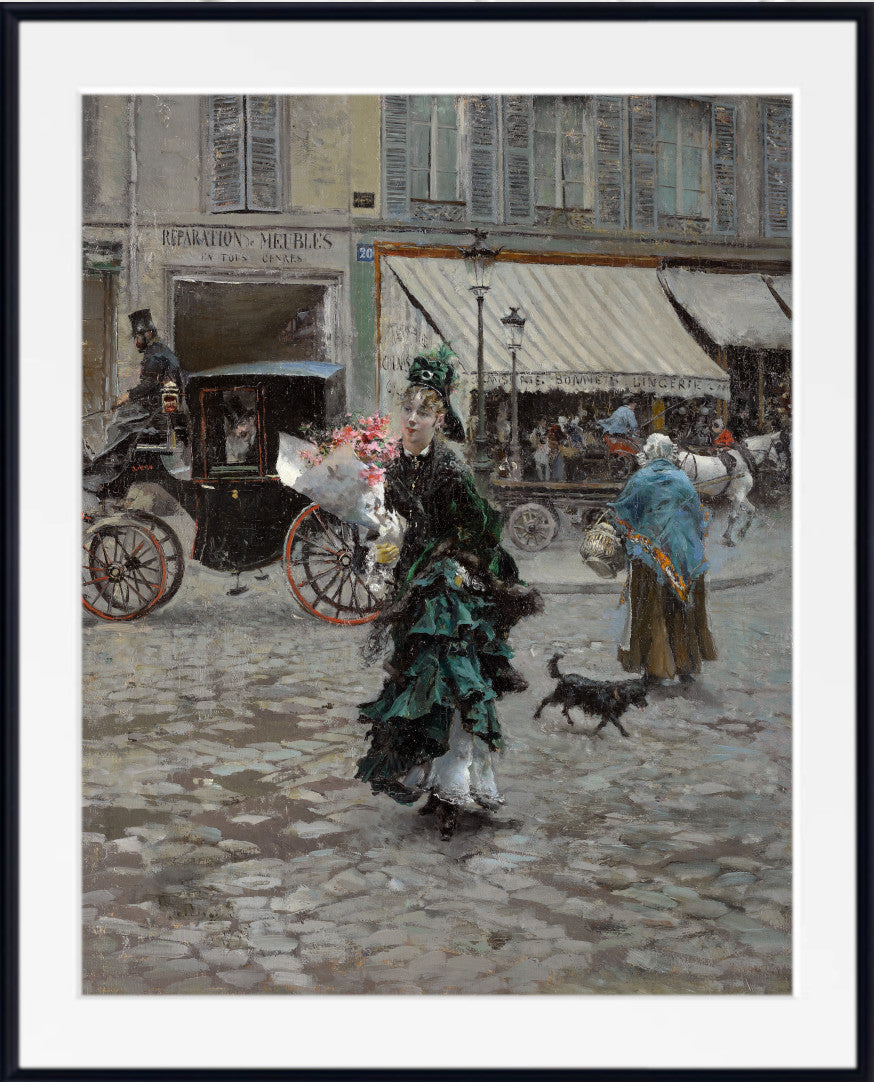
Place Pigalle and the Place de l’Etoile La Villette Omnibus captures the bustle of the area around Place Pigalle, close to where Boldini lived. Carriages, pedestrians and architecture become part of a rapidly observed city rather than a carefully arranged stage.
Browse more urban subjects in the Architecture and Cityscape Art Prints collection.
Boldini’s Interiors and Informal Paintings
Not every Boldini painting depicts aristocratic glamour.
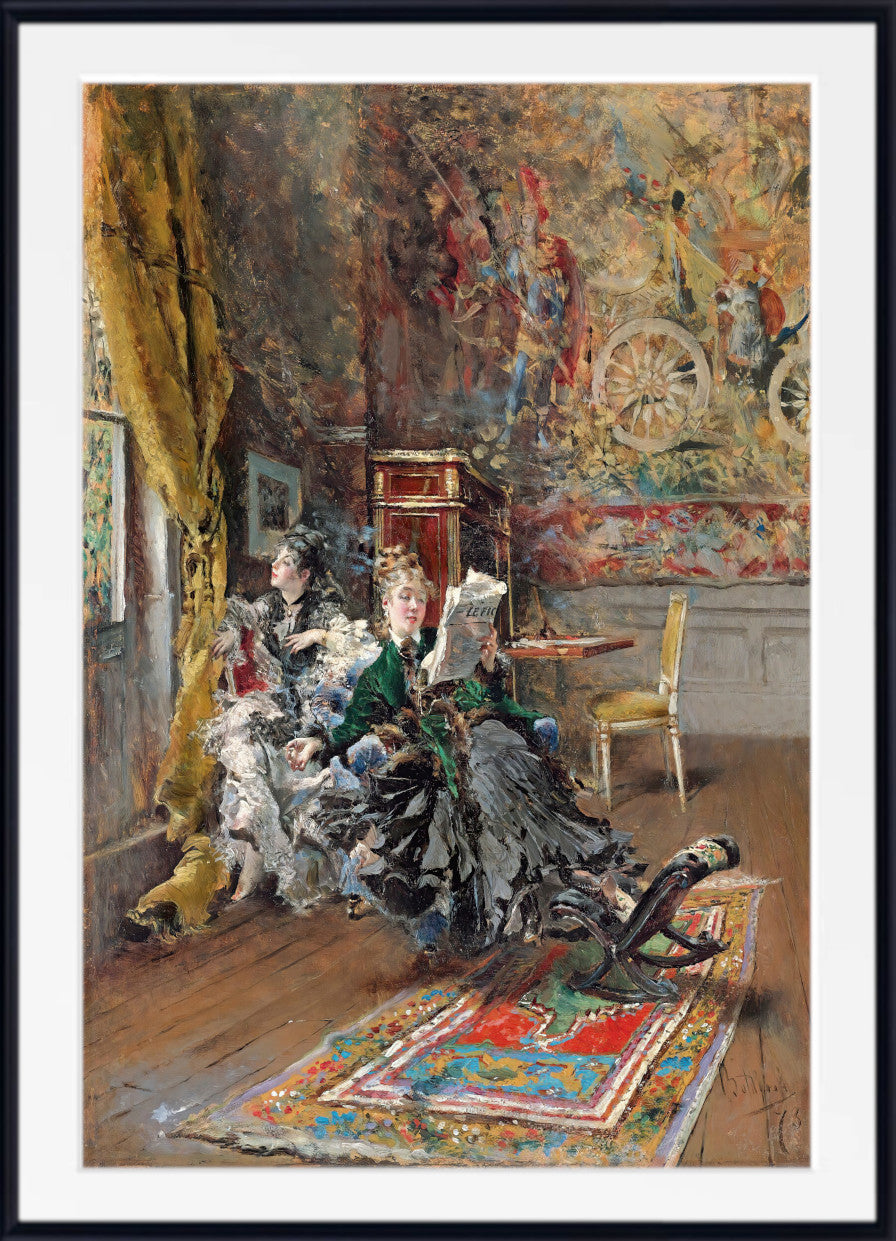
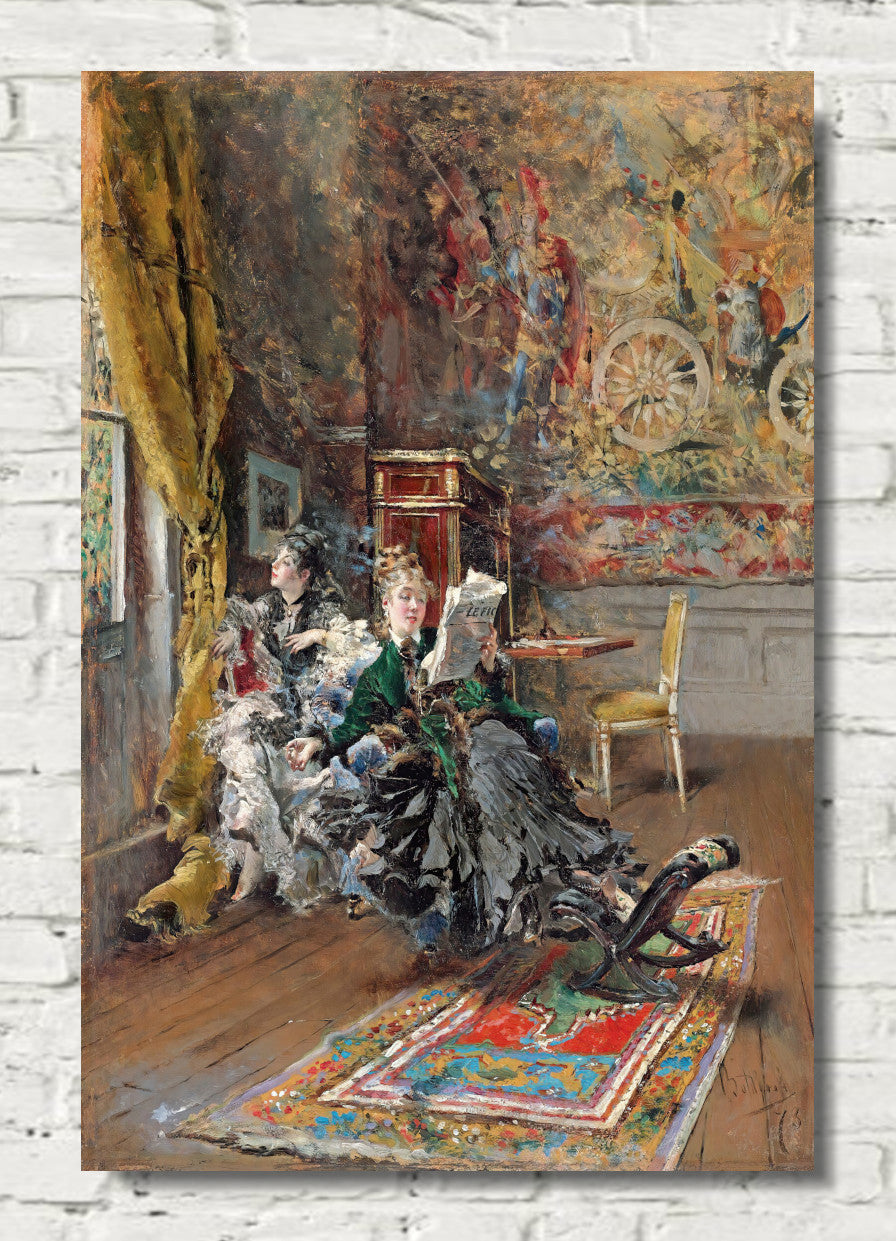
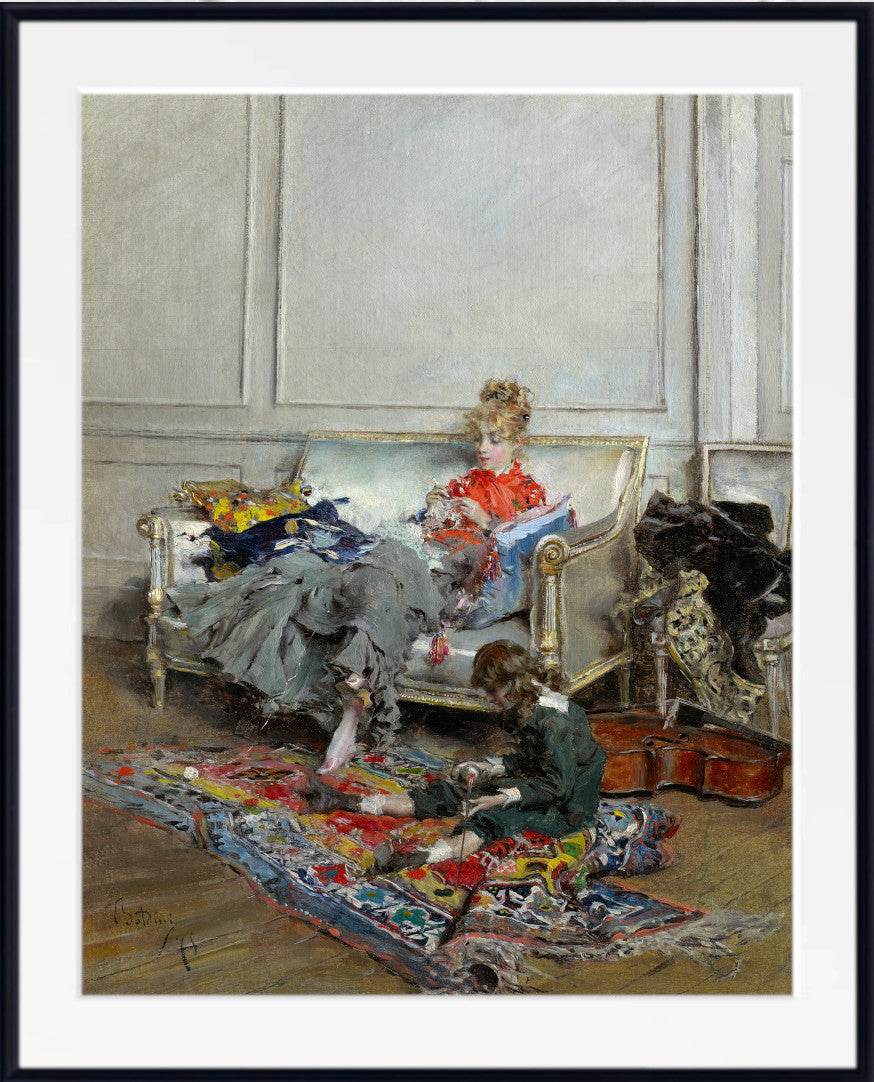
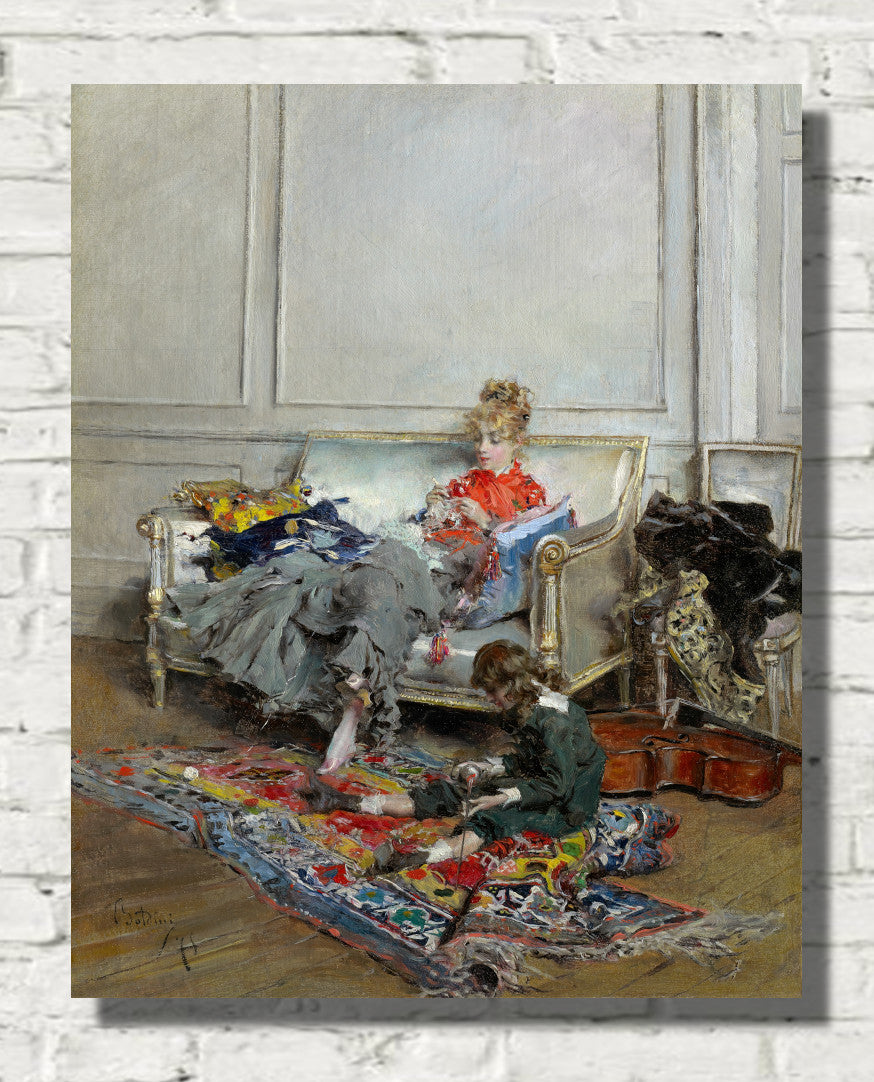
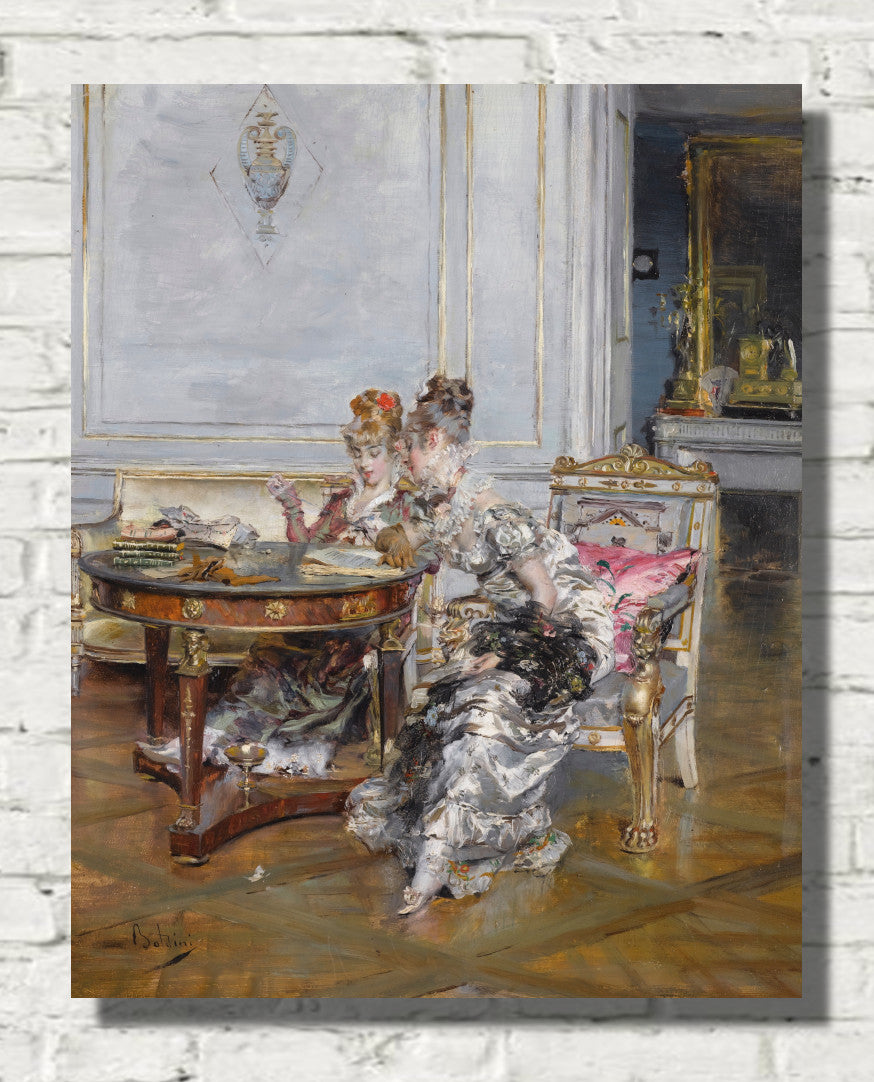
His interiors and smaller figure studies can feel much quieter and more personal. Works such as In the Artist’s Studio, Young Woman Crocheting and Confidences reveal his interest in ordinary gestures and private moments.
Without the elaborate gowns and formal presentation of his major portraits, these paintings allow the viewer to concentrate on Boldini’s observation of posture, expression and atmosphere.
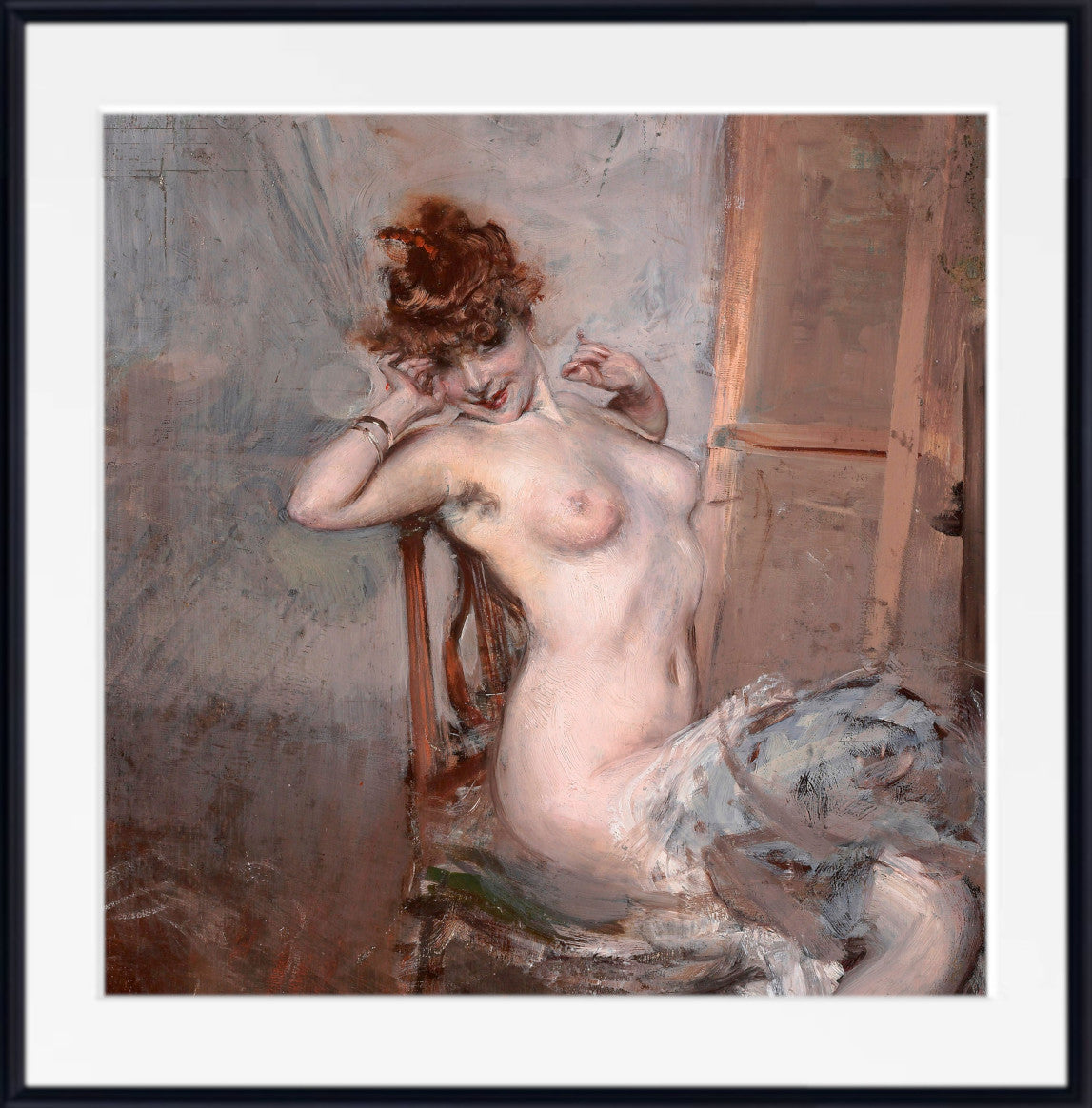
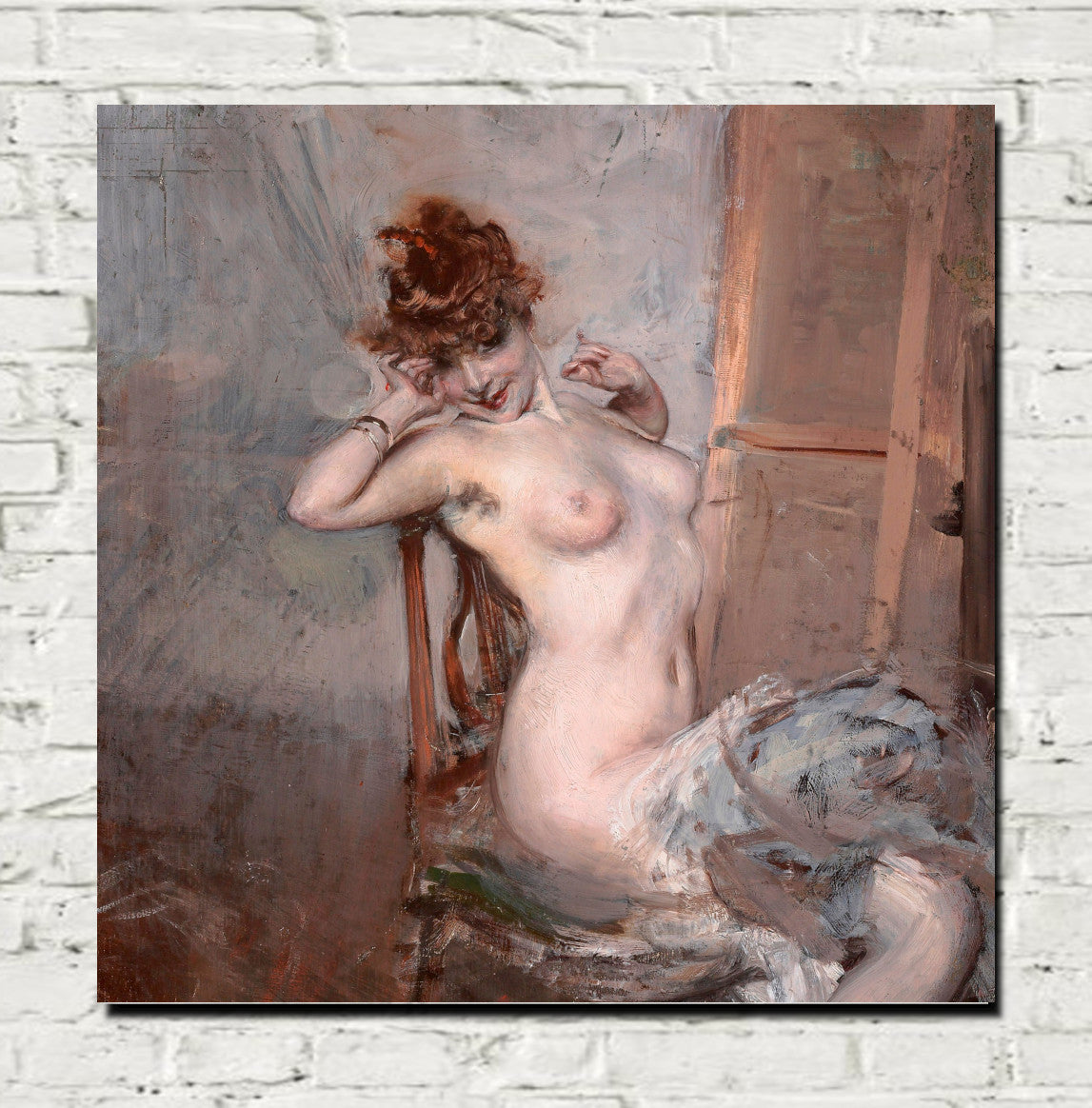
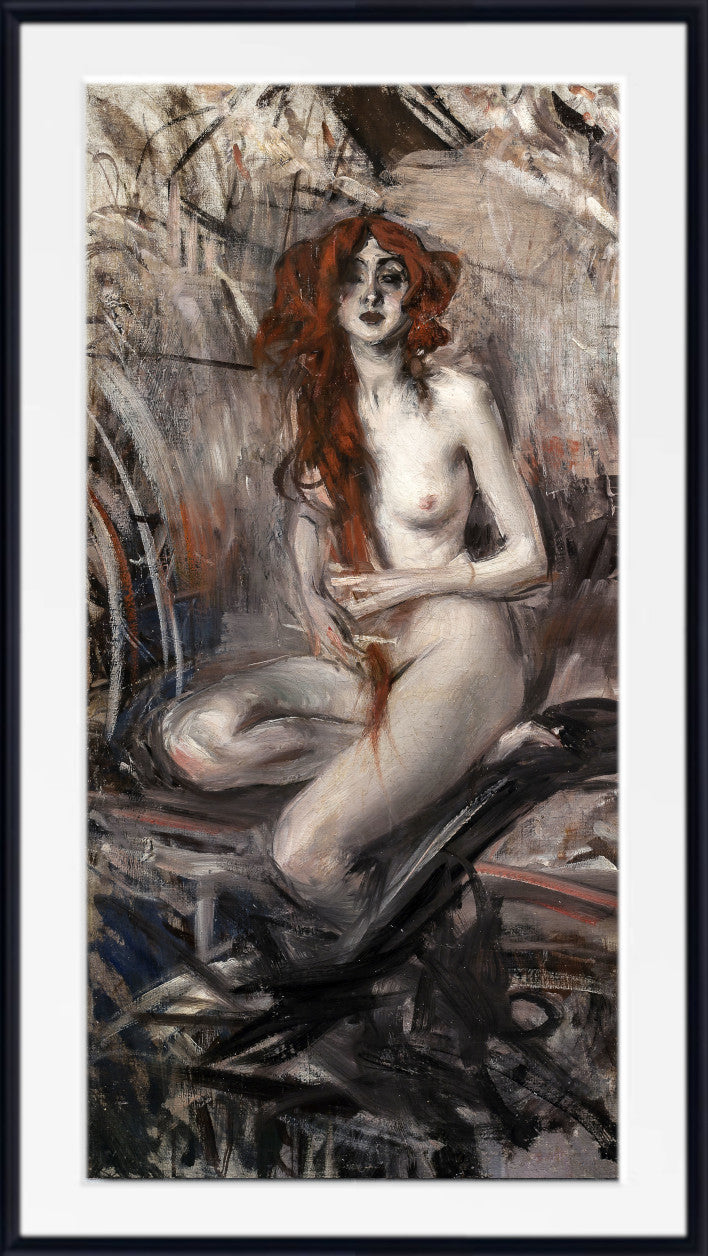
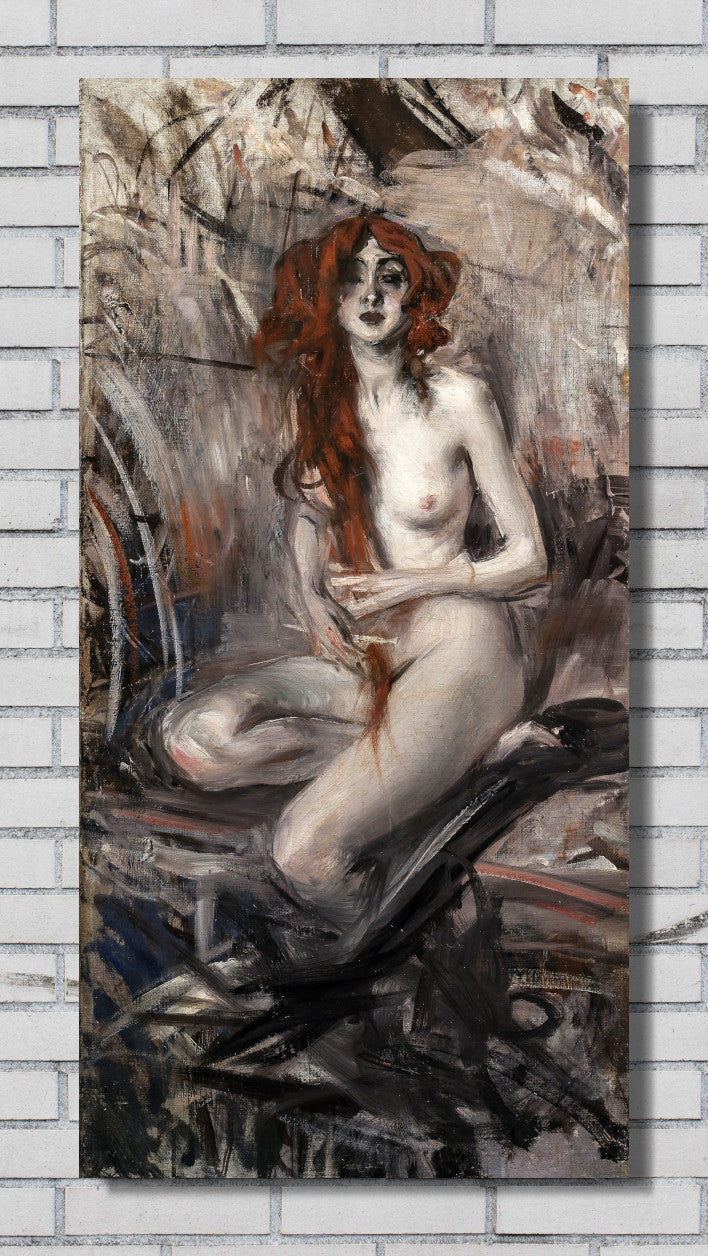
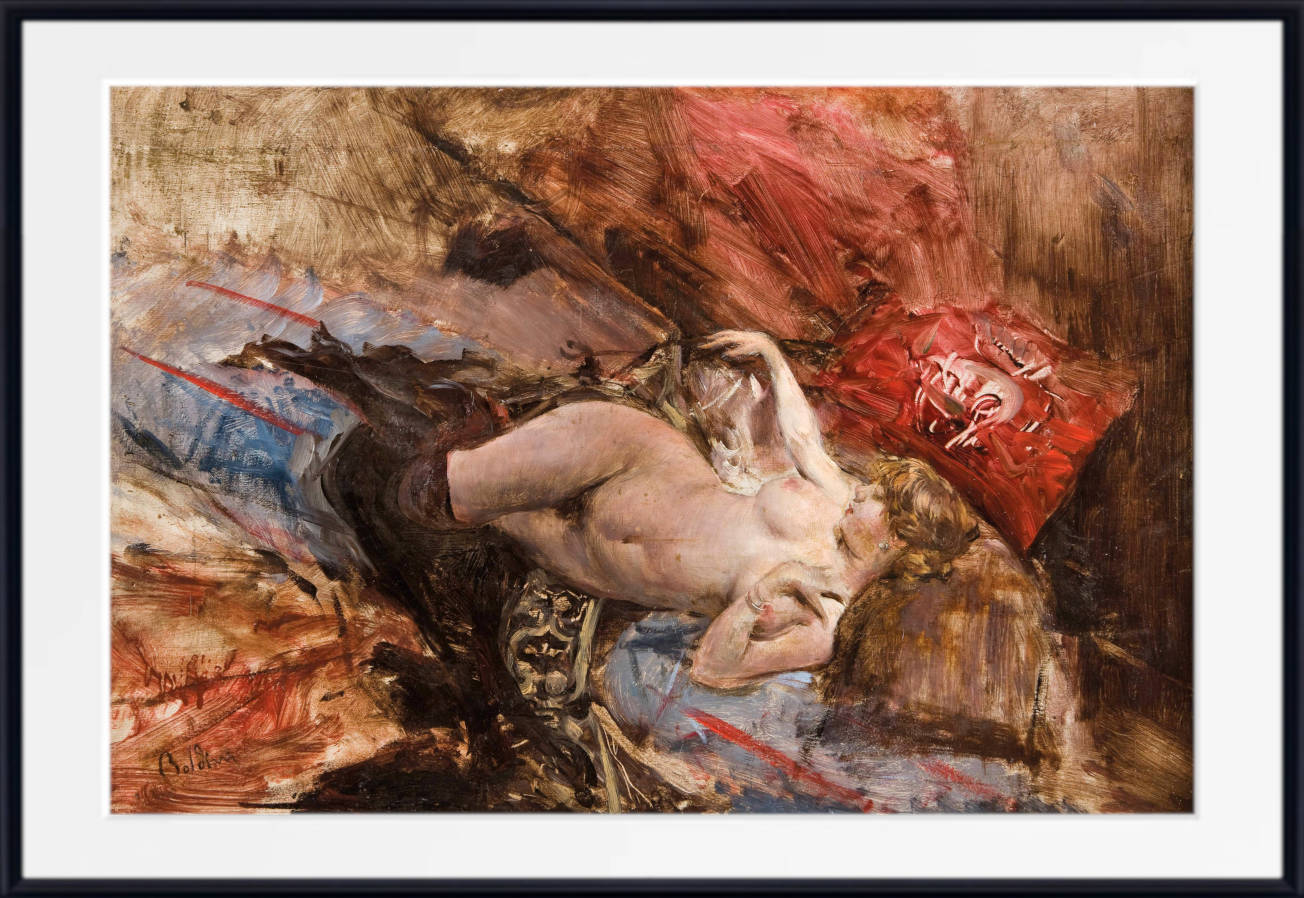
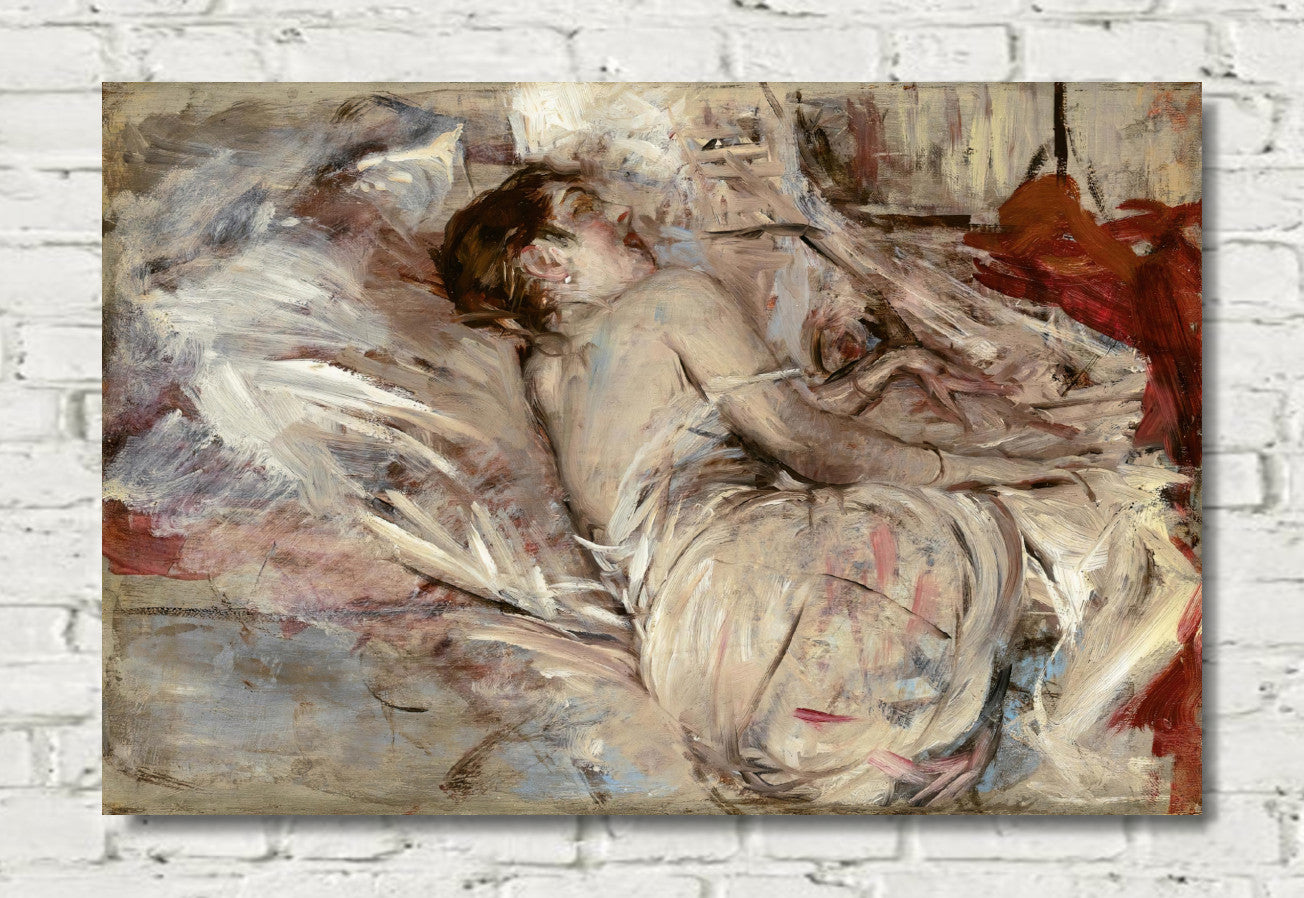
Boldini’s Nude Studies
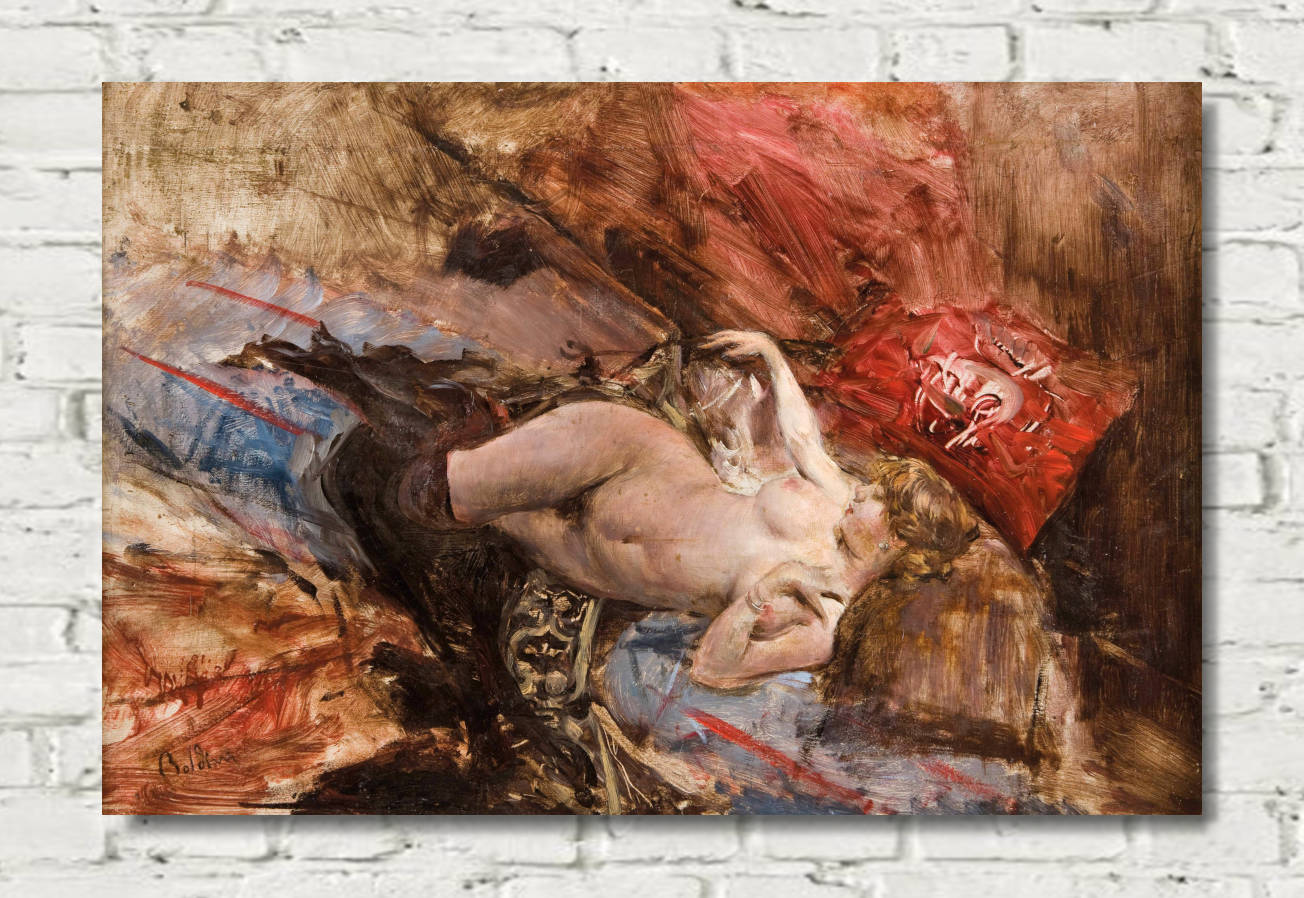
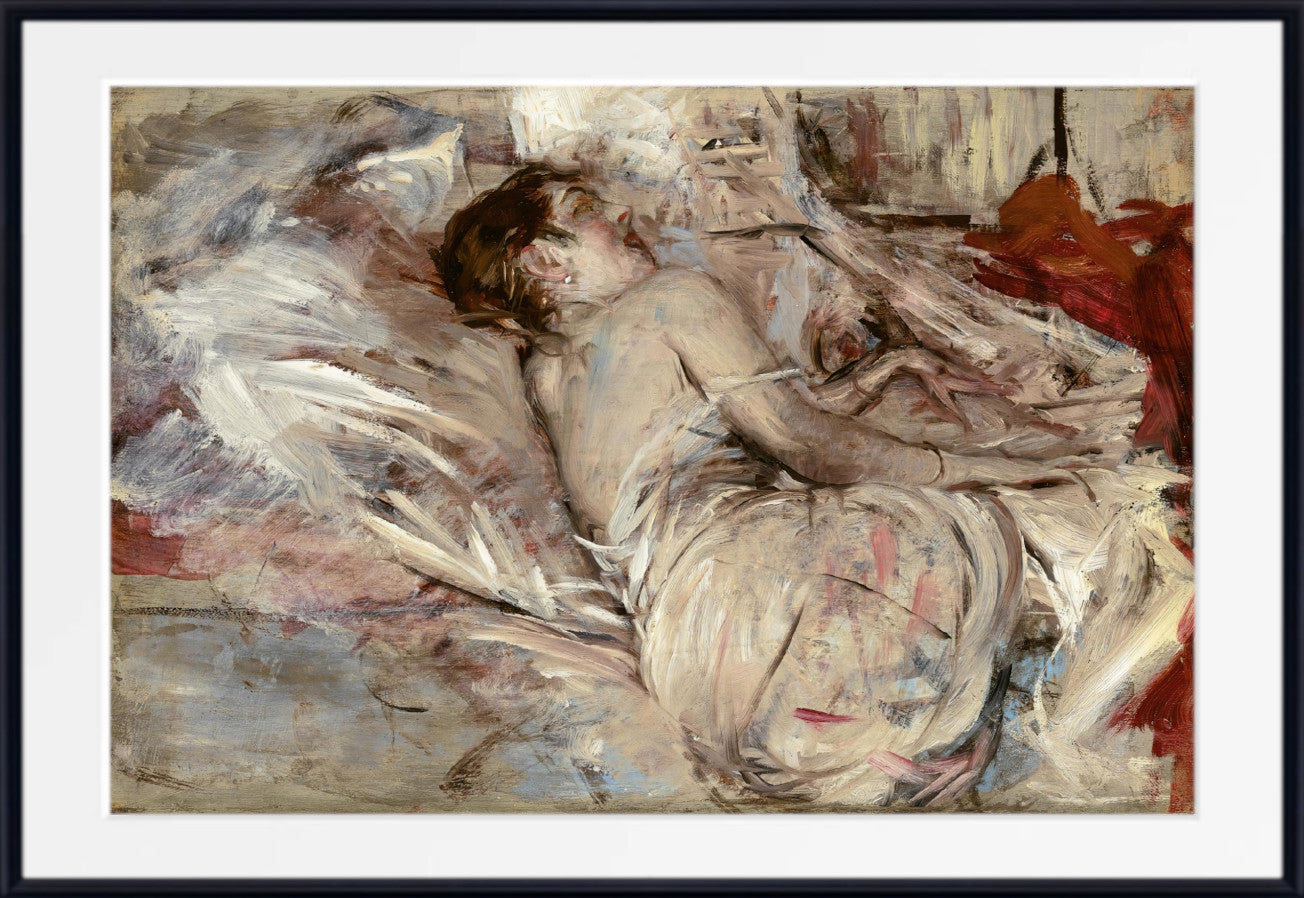
Boldini also produced nude drawings and paintings throughout his career.
These works tend to feel freer and less formal than his commissioned portraits. Rapid lines describe the body without excessive finish, while poses often retain the spontaneity of a studio study.
GalleryThane’s Boldini collection includes several nude subjects alongside the society portraits for which he is best known.
Explore related works in the Nude Art Prints collection.
Choosing a Giovanni Boldini Print
Boldini prints can create very different moods depending on the subject.
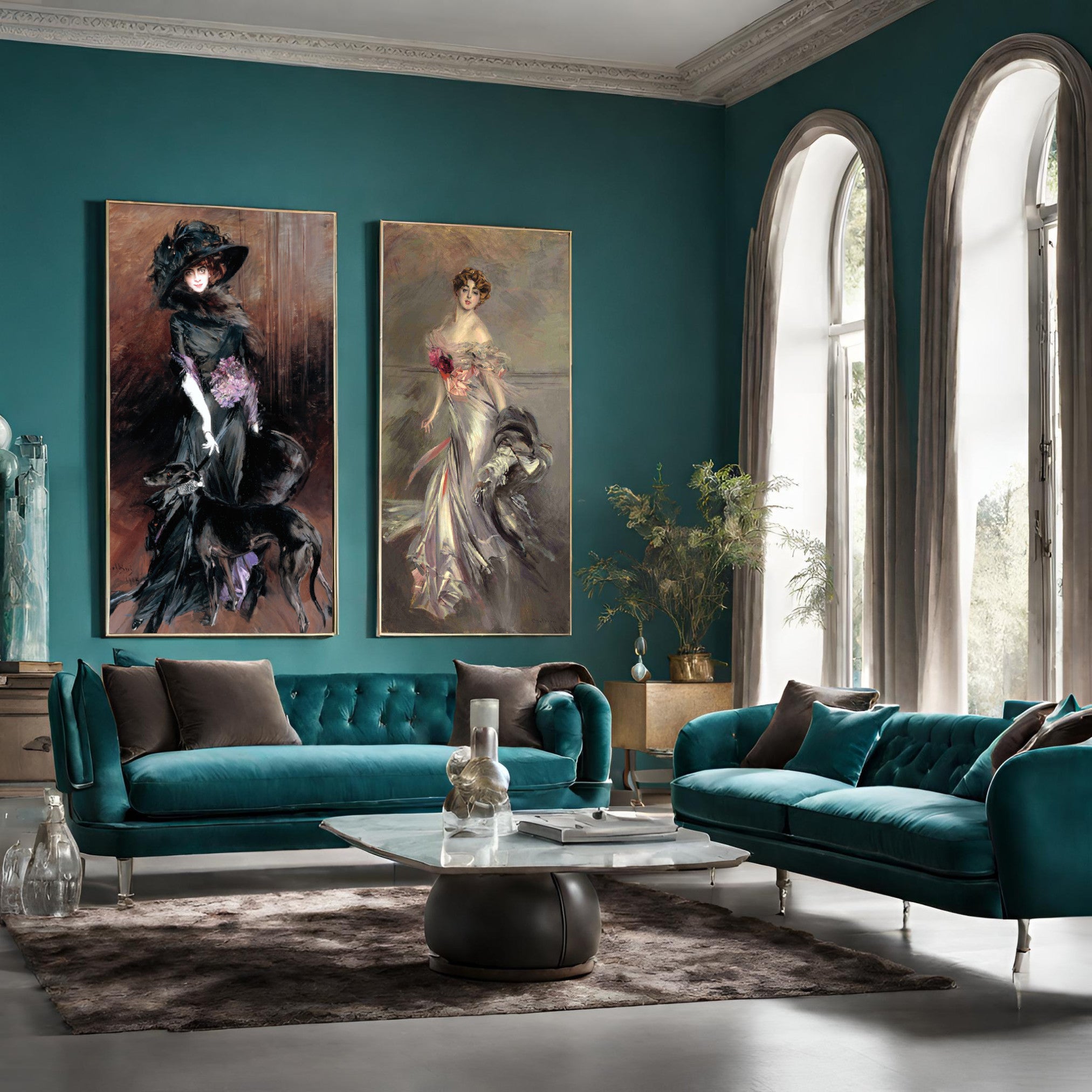
Full-length society portraits make dramatic statement pieces, particularly on tall walls, beside fireplaces or in entrance halls. Their elongated vertical compositions can also work particularly well on narrower wall spaces.
Paris street scenes bring more architectural detail and movement, while interiors and informal figure paintings offer a quieter alternative.
Boldini’s palette ranges from restrained blacks, creams and browns to vivid blues, pinks, reds and golds, making it possible to choose a work that either complements an existing colour scheme or provides a stronger focal point.
Framed Giovanni Boldini Prints and Canvas Art
GalleryThane Giovanni Boldini works are available across a wide range of sizes as fine art prints, framed prints and canvas panels.
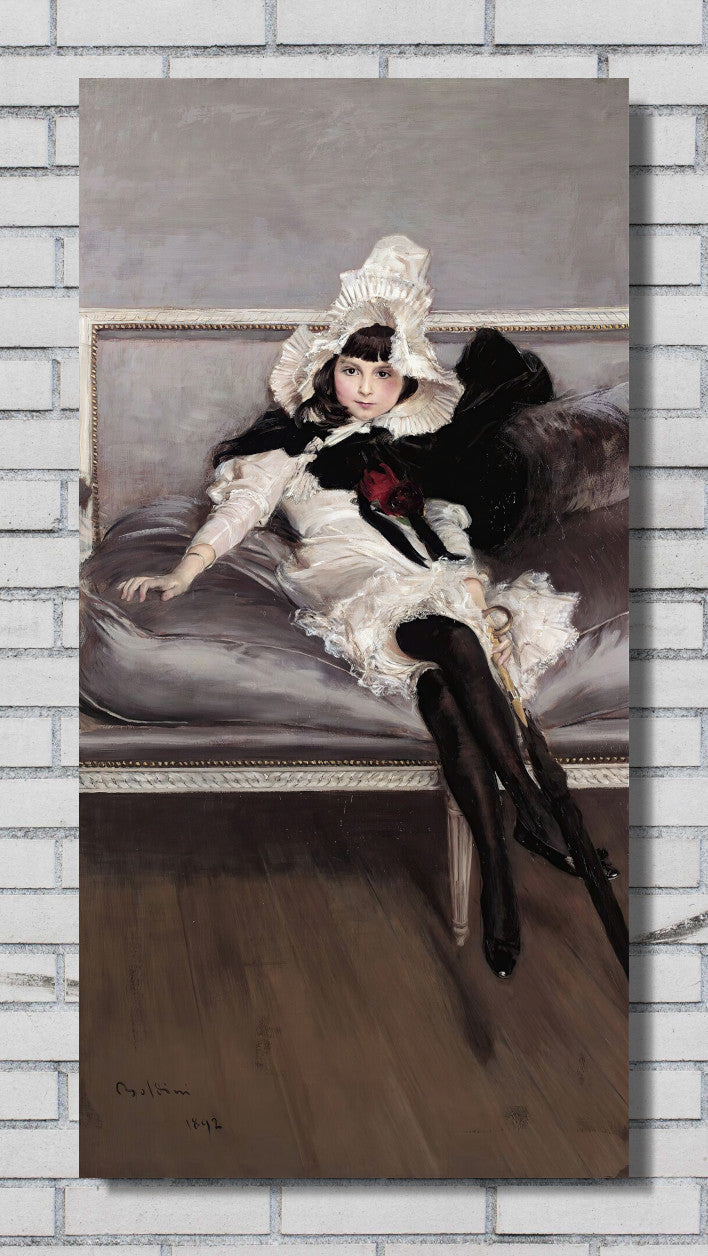
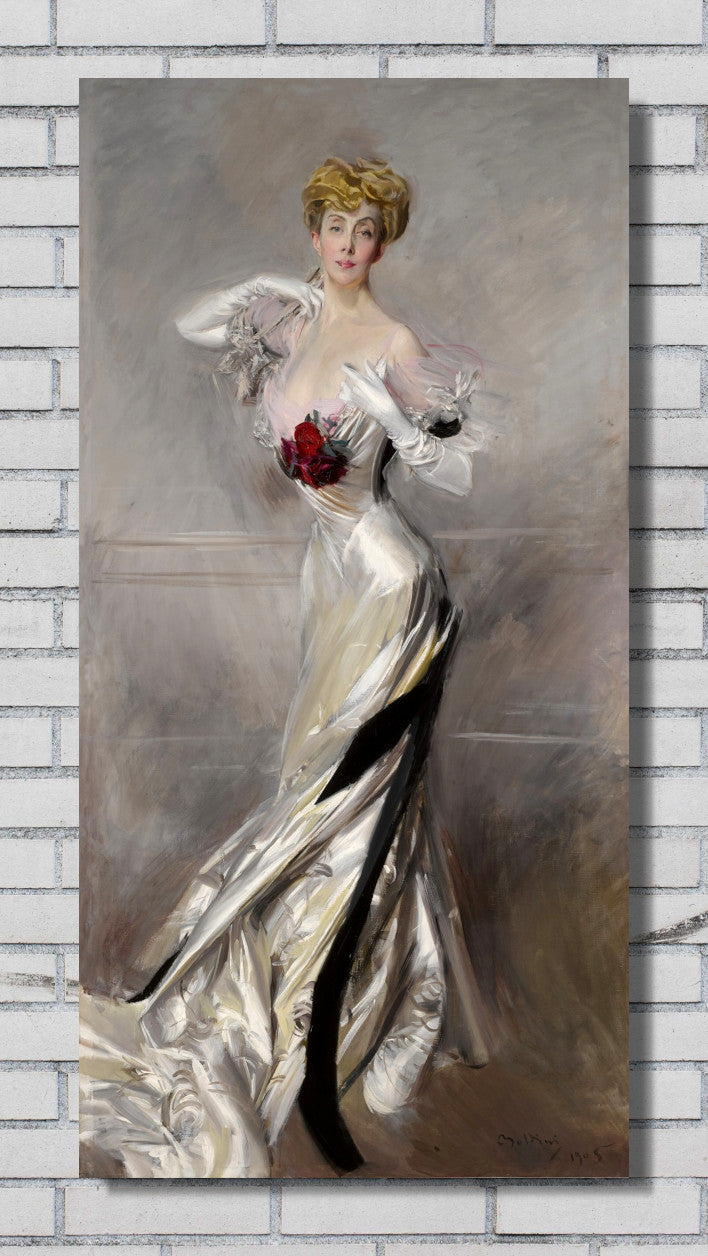
A black frame with a white mount can give Boldini’s portraits a clean, gallery-style presentation and emphasise the sweeping lines of the figure. Larger canvas panels can work particularly well with full-length portraits where the scale and movement of the composition are important.
GalleryThane prints and frames are produced in our Nottinghamshire workshop using archival-quality materials, with free UK delivery on all orders.
About Giovanni Boldini
Giovanni Boldini was born in Ferrara in 1842 and established an early reputation as a portrait painter before moving through Florence and London and eventually settling in Paris.
There he became closely associated with the cosmopolitan society of the Belle Époque. His circle included artists such as Degas, Manet, Whistler and John Singer Sargent, while his sitters came from wealthy, fashionable and international society.
Although the great portraits brought him fame, his career also encompassed landscapes, city views, interiors, watercolours, drawings and more intimate figure studies.
For a broader look at his life and career, read the GalleryThane article Giovanni Boldini: Master of Swish.