
Anton Kolig Prints – Expressive Figures, Families & Colour
Anton Kolig prints build bodies through active strokes and contrasting areas of colour. A solitary figure can become part of its green and blue surroundings, while a family group fills the space with interlocking poses. Explore these subjects alongside Expressionist art, figurative prints and Post-Impressionist painting.
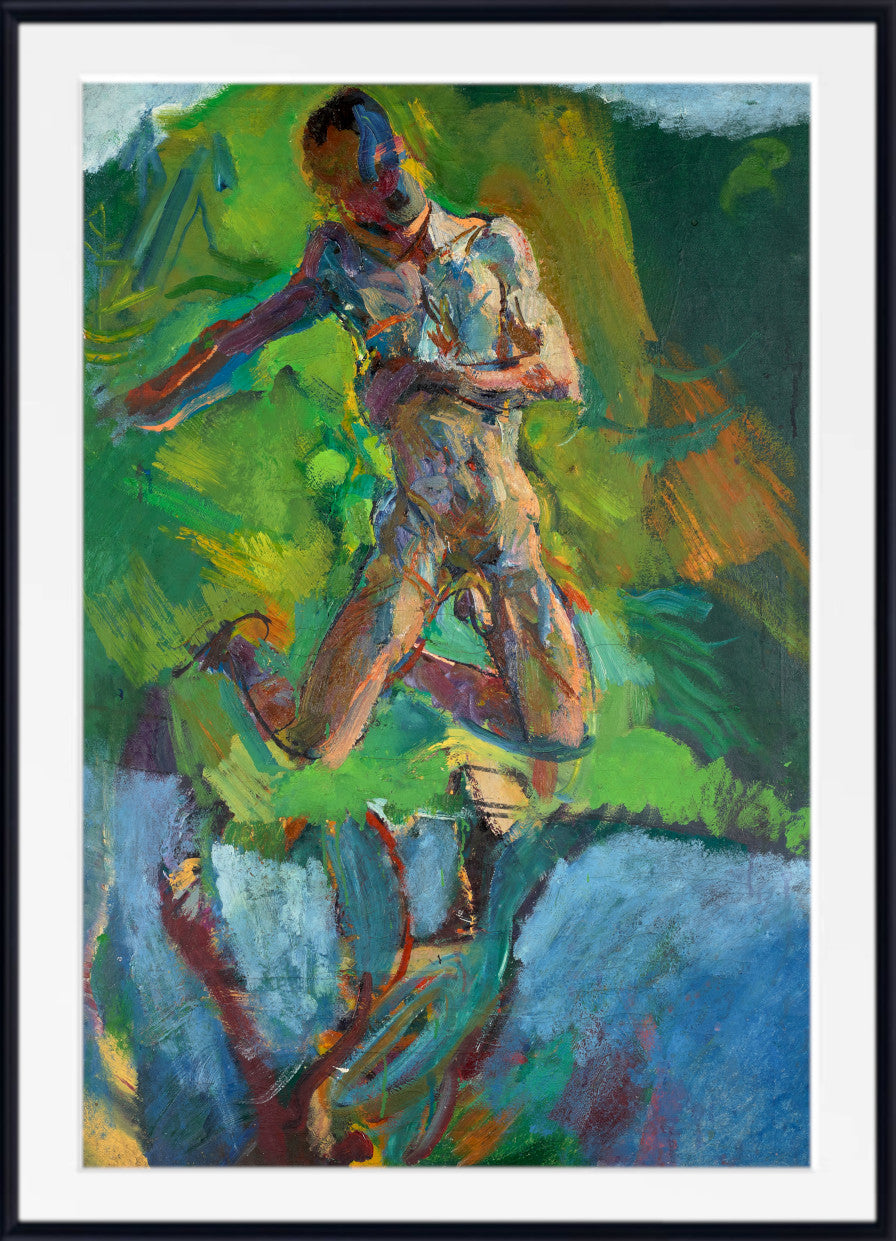
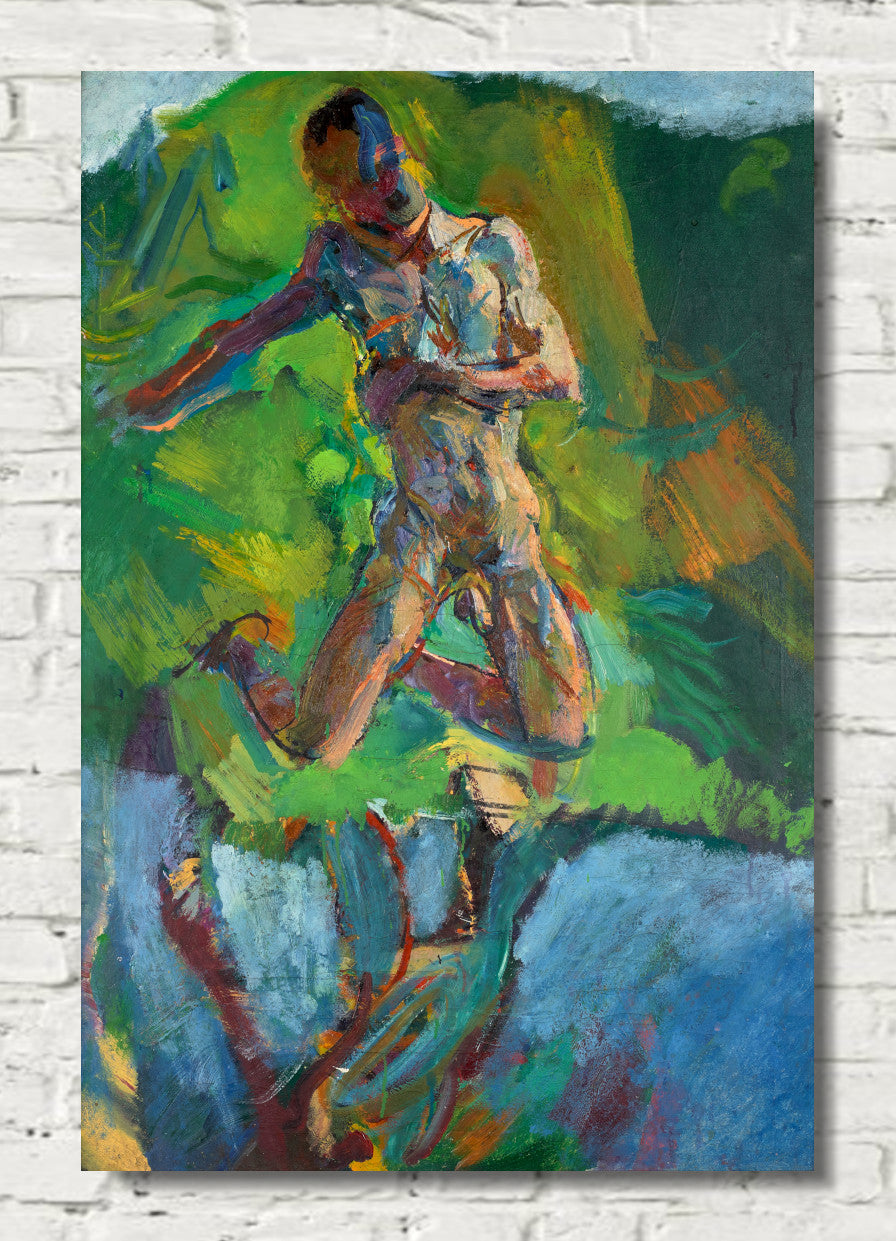
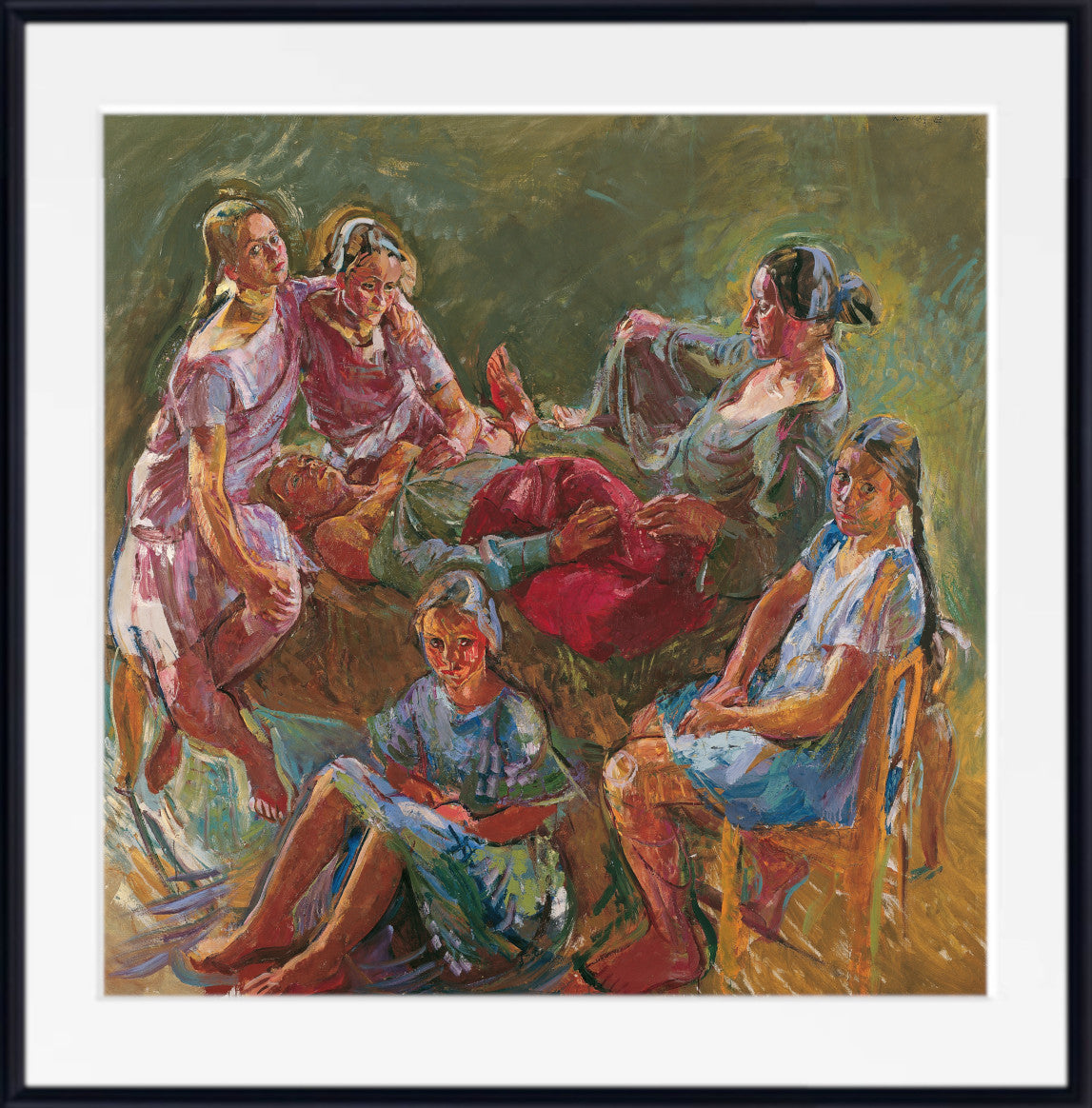
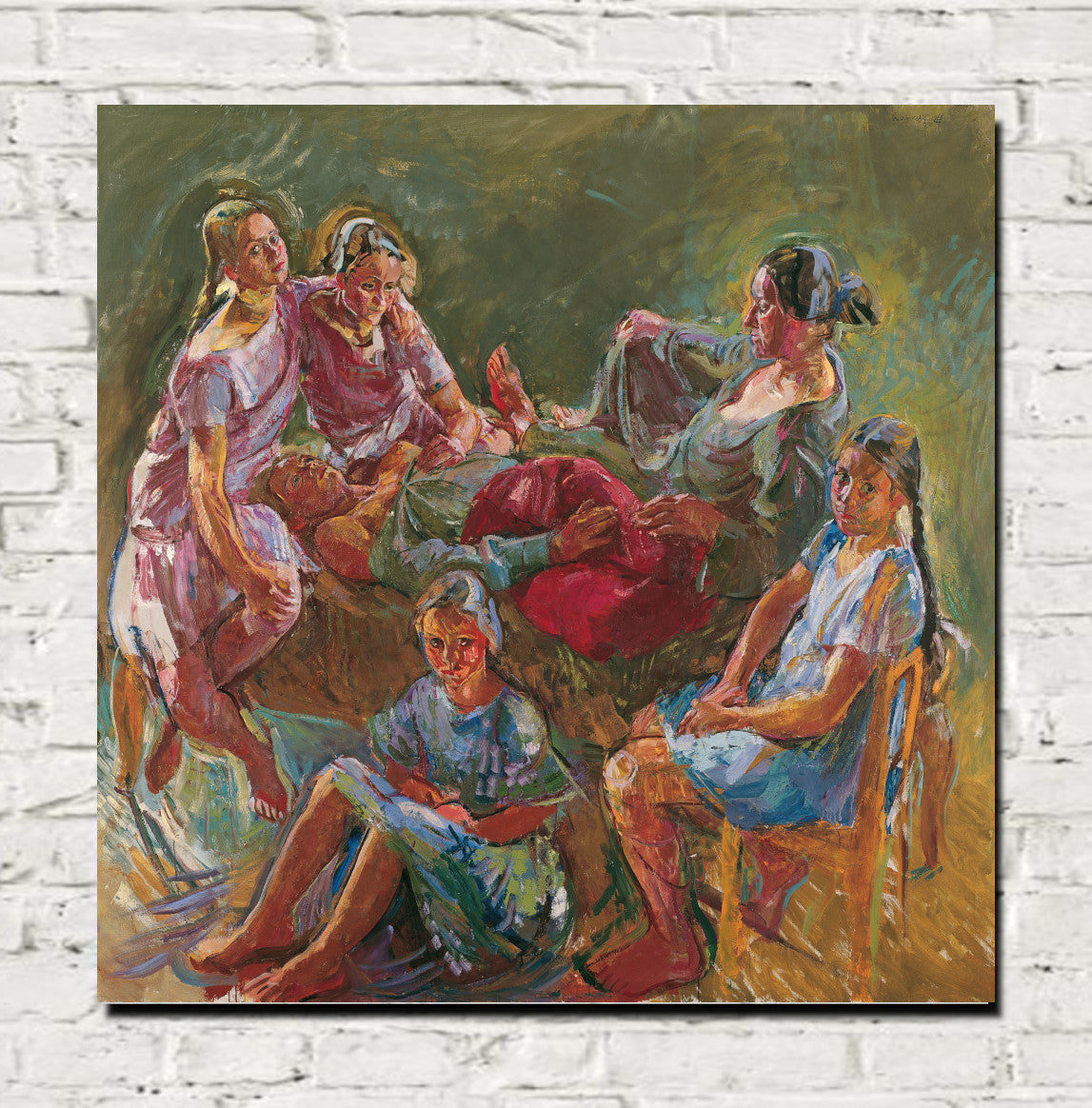
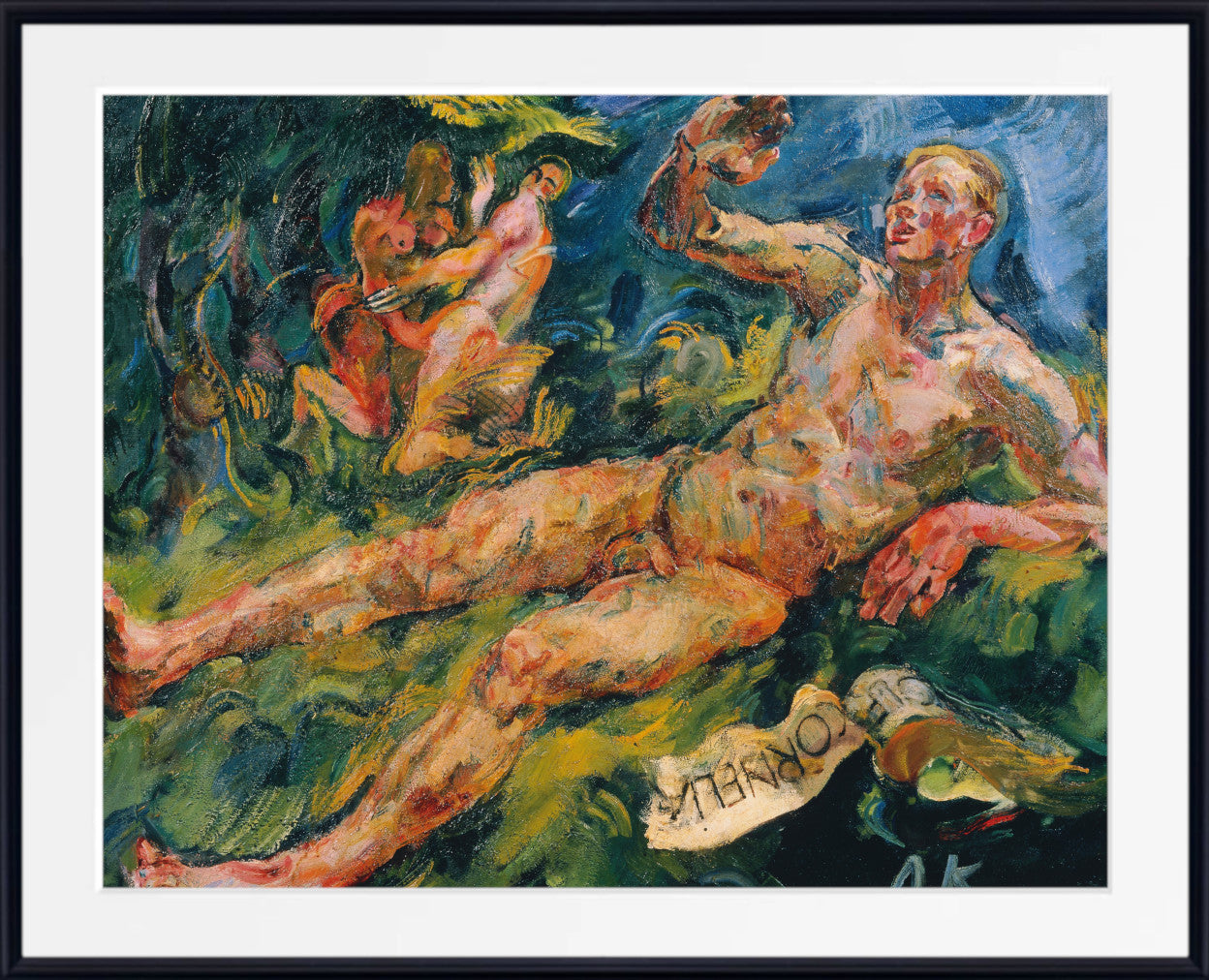
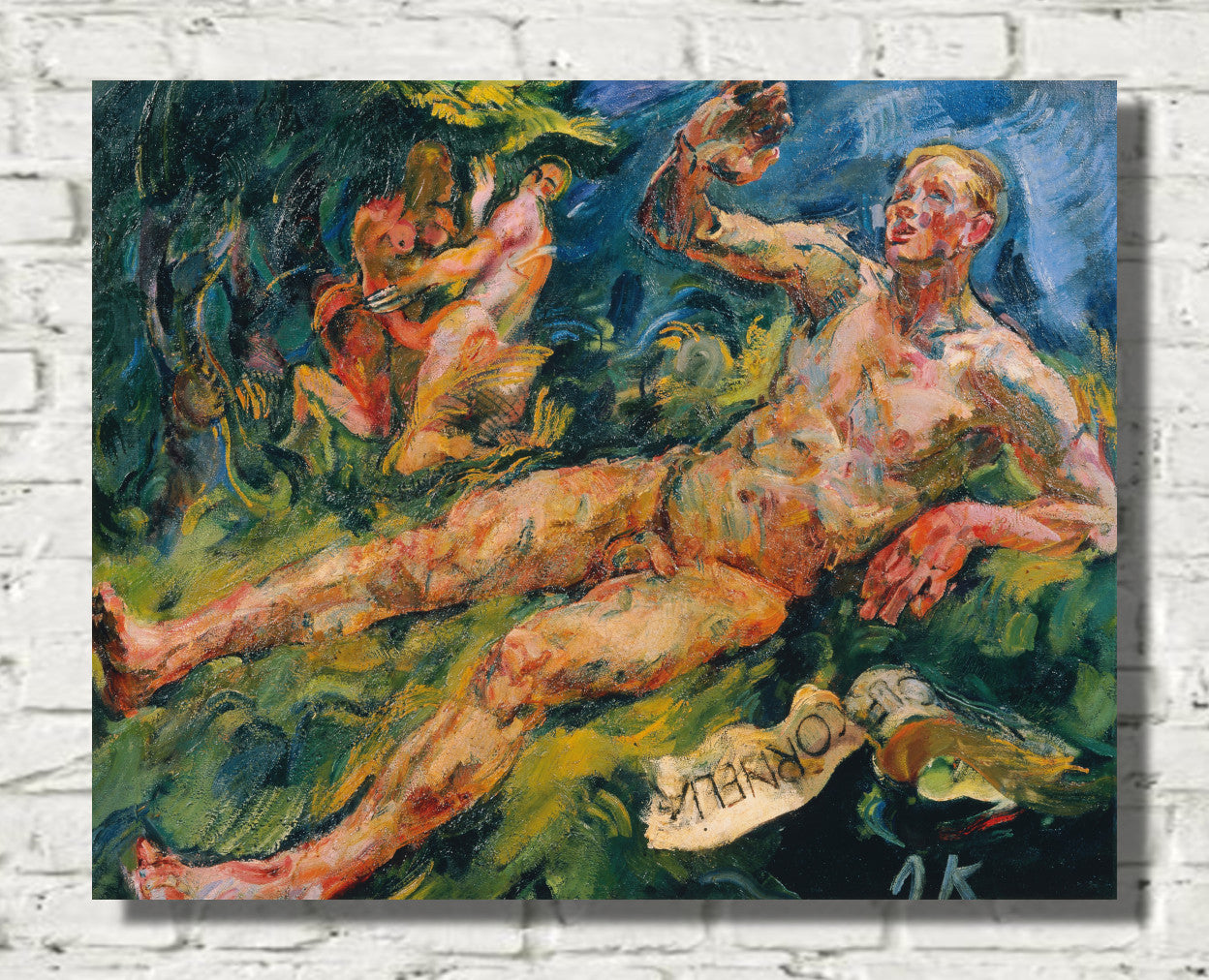
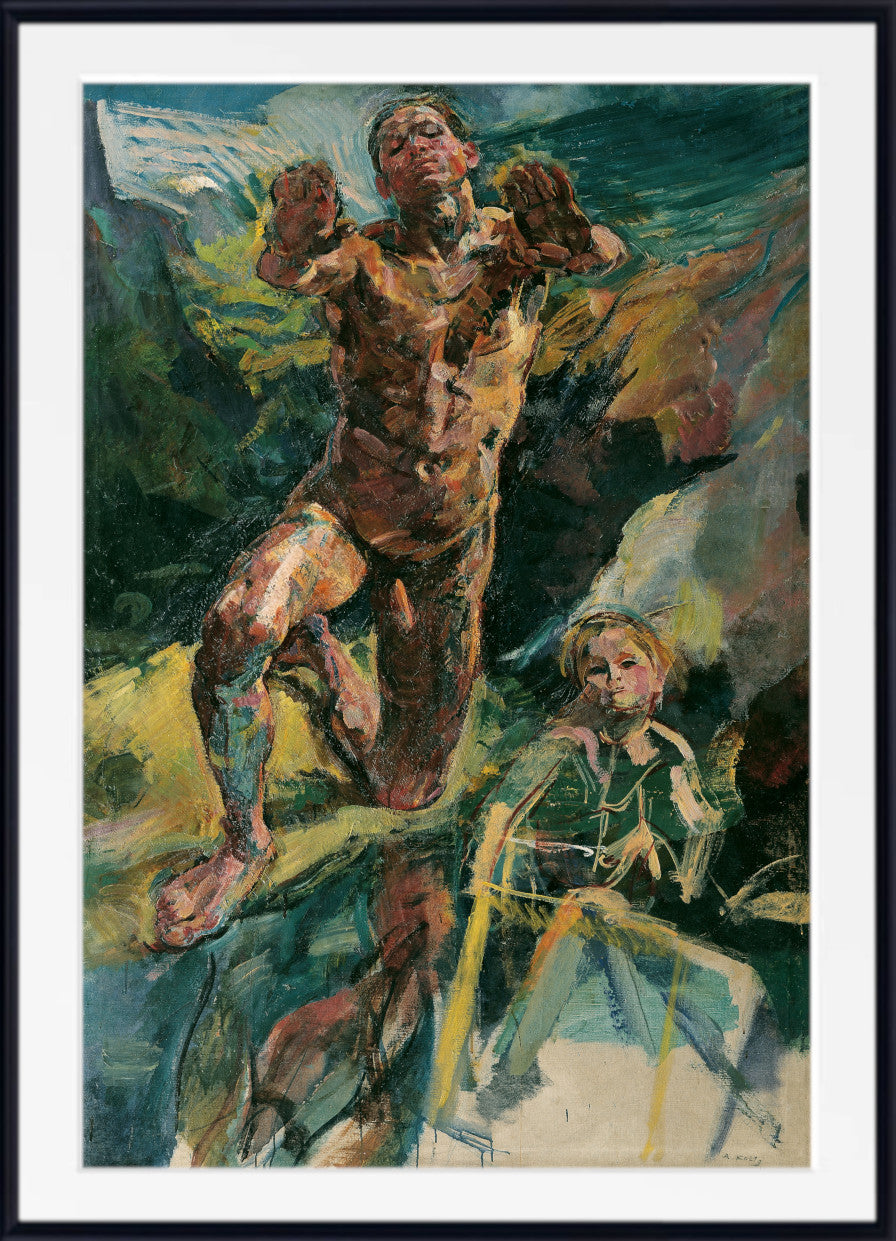
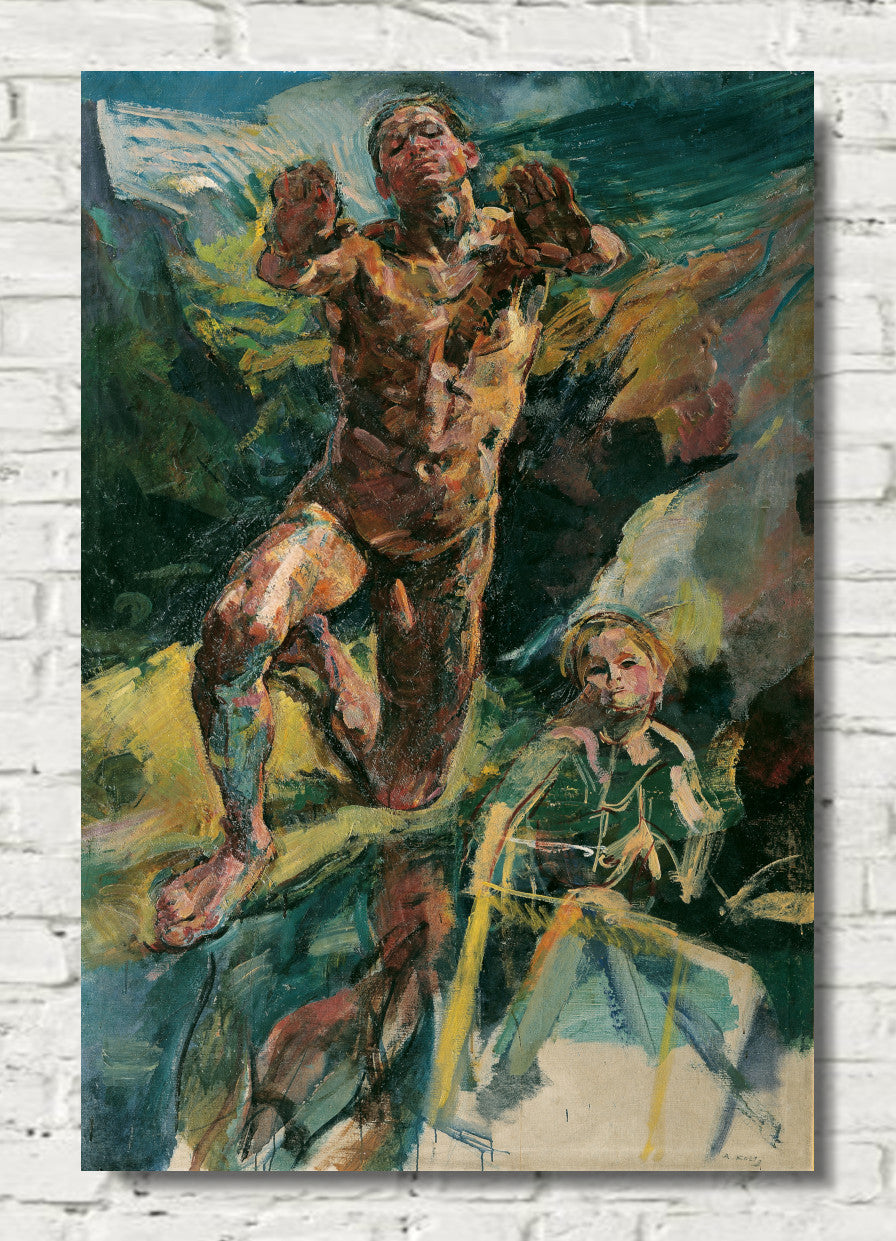
A figure within saturated green and blue
Kneeling Narcissus places warm bodily colours against broad, strongly contrasting surroundings. Broken strokes and shifting edges link the figure to the field around it, with darker shapes below. The scene depends on the relationships between these colour areas rather than on a tightly described architectural setting.
A close group linked by coloured fabric
The Artist’s Family gathers figures at different heights, their bodies and clothing overlapping across the picture. Reds, pinks and blues distinguish parts of the group without isolating each sitter completely. The tilted heads and varied arm positions give the crowded arrangement a sense of exchange and shared space.
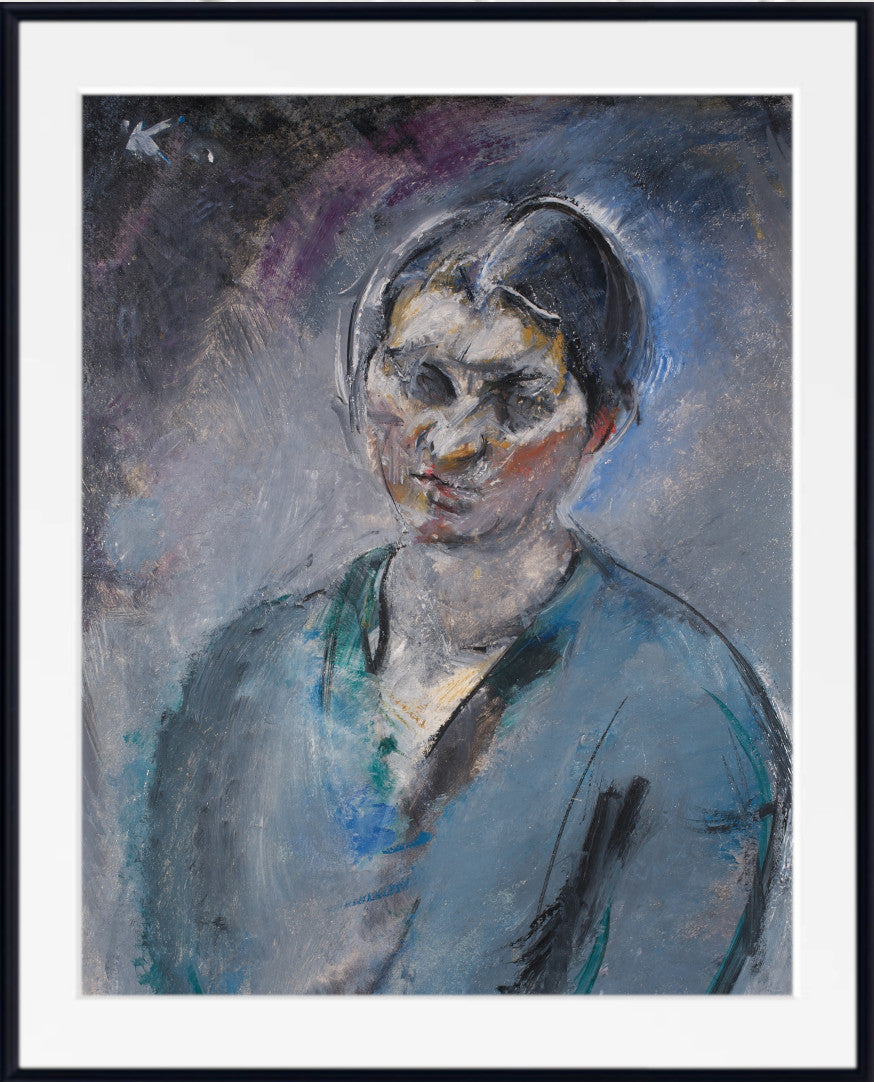
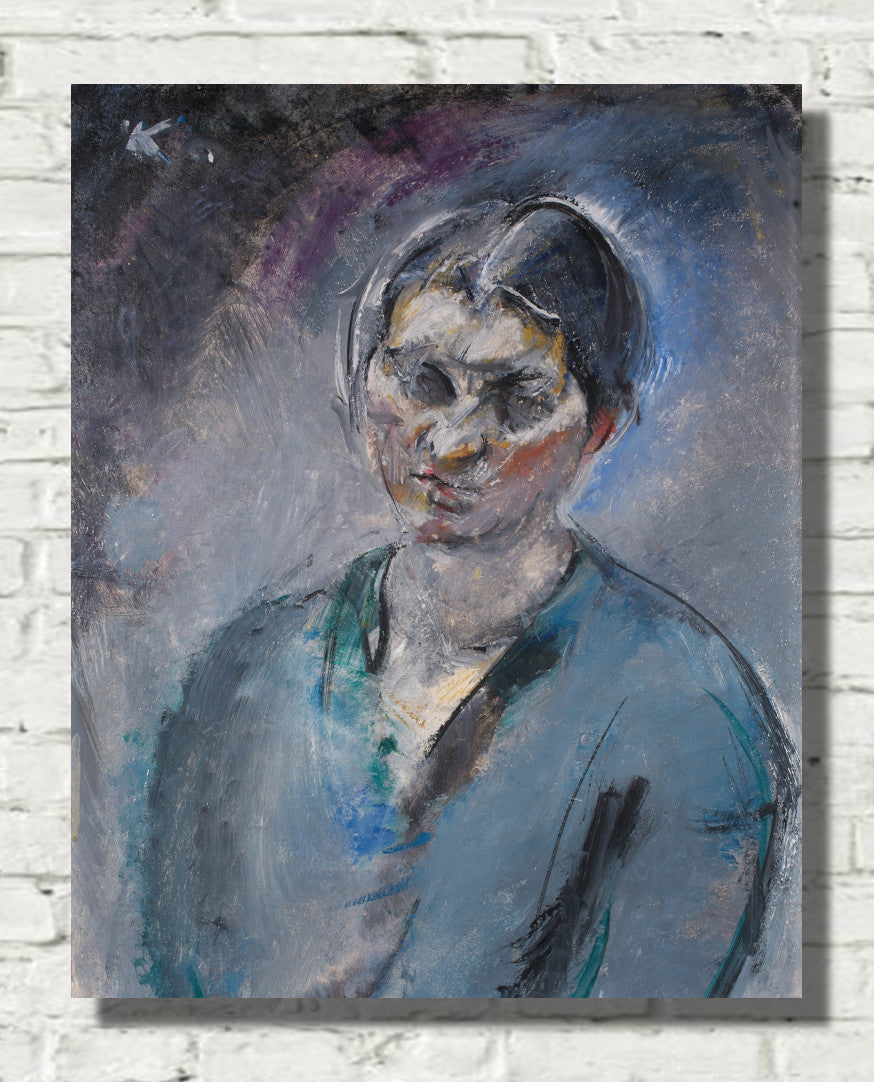
A portrait emerging through cool marks
The Artist’s Wife sets the dark-haired sitter against a blue-grey background, with lighter strokes around the face. The clothing and surrounding ground share related colours. Darker lines define the features and shoulders, allowing the head to remain distinct within the more freely handled surface.
Related artists and collections
Compare expressive portraits in Edvard Munch, angular figures in Egon Schiele and charged colour in Lovis Corinth. Further Expressionist prints extends the active brushwork, while portrait and figure art follows the differences between solitary sitters and shared family space.
Read more in our guide to Expressionism.