
William Callow Prints
Explore William Callow prints featuring Venetian canals, European towns, historic architecture and coastal scenes. An English watercolour painter working within the British landscape tradition, Callow (1812–1908) found subjects in both familiar countryside and places encountered on his travels.
Browse views of Venice, the Rhine and France alongside harbours, gardens and rural landscapes, with a choice of fine art prints, framed prints and canvas options.


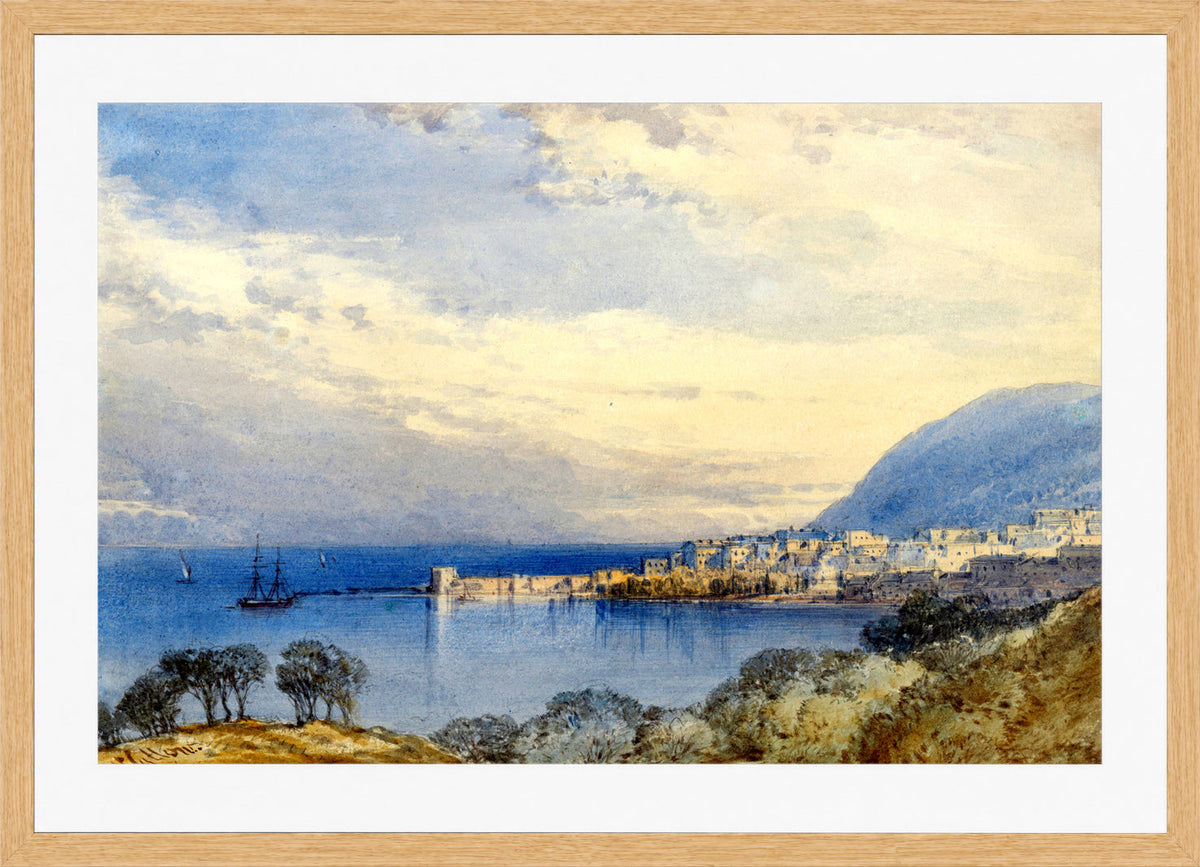


William Callow: British Watercolour and European Views
William Callow (1812–1908) was an English landscape painter and watercolourist born in Greenwich. After training in engraving and watercolour, he worked in Paris between 1829 and 1841, developing a reputation for picturesque views and teaching pupils who included members of the French royal family. He subsequently returned to London and became a full member of the Royal Society of Painters in Water Colour in 1848.
His work belongs to the British watercolour tradition, combining recognisable places with an interest in atmosphere and the picturesque. Architectural views, riverside towns and coastal subjects recur throughout his long career, making this collection a varied record of nineteenth-century places.
Venice, Architecture and Travel
Venice was an especially popular subject in Callow’s work. The Grand Canal, Venice (1897), The Doge’s Palace, Venice (1874) and The Rialto (1846) offer different starting points for exploring his Venetian subjects.
Beyond Venice, Blois on the Loire (1856) and The Rhine at Assmannshausen (1863) extend the collection into France and Germany. For more streets, buildings and historic destinations, browse our architecture and cityscape prints.
Harbours, Coastlines and Quieter Places
Callow’s subjects also reach beyond the European city. Entering Harbour (1842) and Fishing Boats off a Rocky Coast (1833) introduce maritime themes, while Garden Stair, Haddon Hall (1849) offers a more intimate architectural subject.
Explore Related Artists and Collections
For another approach to British landscape watercolour, explore David Cox prints. Callow’s Venetian subjects can also be considered alongside J. M. W. Turner’s paintings of Venice, which provide a connection to Romantic landscape painting. For the earlier Venetian tradition of detailed city views, or vedute, browse Canaletto prints.